S.Amdt. 667Senate109th Congress (2005-2007)2nd degree
S.Amdt. 667
Sponsored by 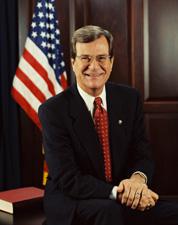 Sen. Trent Lott (R-MS)
Sen. Trent Lott (R-MS)Submitted May 11, 2005
Legislative Activity
Stay on top of the latest movement without scrolling through every action
Floor
Latest Action
Senate amendment submitted
May 11, 2005
Text
Submitted
SA 667. Mr. LOTT submitted an amendment intended to be proposed to
amendment SA 605 proposed by Mr. Inhofe to the bill H.R. 3, to
authorize funds for Federal-aid highways, highway safety programs, and
transit programs, and for other purposes; which was ordered to lie on
the table; as follows:

On page 1234, beginning with line 8, strike through line 6
on page 1235 and insert the following:
``(b) Notice.--The State shall serve written notice to the
Secretary or the Board, as the case may be, of any civil
action under subsection (a) prior to initiating such civil
action. The notice shall include a copy of the complaint to
be filed to initiate such civil action.
``(c) Authority To Intervene.--
``(1) In general.--Upon receiving the notice required by
subsection (b), the Secretary or Board may intervene in such
civil action and upon intervening--
``(A) be heard on all matters arising in such civil action;
``(B) file petitions for appeal of a decision in such civil
action; and
``(C) be substituted, upon the filing of a motion with the
court, for the State as parens patriae in the action.
``(2) Substitution.--If the Secretary or the Board files a
motion under paragraph (1)(C), the court shall--
``(A) grant the motion without further hearing or
procedure;
``(B) substitute the Secretary or the Board, as
appropriate, for the State as plaintiff; and

[[Page S4980]]

``(C) if requested by the Secretary or the Board, dismiss
the State as a party to the action.
``(d) Construction.--For purposes of bringing any civil
action under subsection (a), nothing in this section shall--
``(1) operate to convey a right to initiate or maintain a
class action lawsuit in the enforcement of a Federal law or
regulation; or
``(2) prevent the attorney general of a State from
exercising the powers conferred on the attorney general by
the laws of such State to conduct investigations or to
administer oaths or affirmations or to compel the attendance
of witnesses or the production of documentary and other
evidence.
______