An amendment numbered 1 printed in House Report 110-758 to remove from the bill the designation as a recreational river of a 9-mile segment of the Taunton River from Muddy Cove to the confluence with the Quequechan River at the Route 195 Bridge in Fall River.
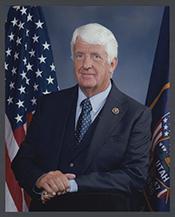 Rep. Rob Bishop (R-UT)
Description
Amendment sought to remove from the bill the designation as a recreational river, the 9-mile segment of the Taunton River from Muddy Cove to the confluence with the Quequechan River at the Route 195 Bridge in Fall River.
Legislative Activity
Stay on top of the latest movement without scrolling through every action
House amendment offered
July 16, 2008
View full timeline
House amendment offered
July 16, 2008
Roll call votes on amendments in House
July 16, 2008 • 7:00 PM
House amendment not agreed to: On agreeing to the Bishop (UT) amendment (A004) Failed by recorded vote: 189 - 235 (Roll no. 503).
July 16, 2008 • 7:00 PM
House amendment offered/reported by : Amendment (A004) offered by Mr. Bishop (UT).(consideration: CR H6640-6641, H6643-6644; text: CR H6640)
July 16, 2008 • 6:03 PM
Amendment failed in Committee of the Whole
July 16, 2008 • 7:00 PM
Amendment (A004) offered by Mr. Bishop (UT). (consideration: CR H6640-6641, H6643-6644; text: CR H6640)
July 16, 2008 • 6:03 PM
On agreeing to the Bishop (UT) amendment (A004) Failed by recorded vote: 189 - 235 (Roll no. 503).
July 16, 2008 • 7:00 PM
Votes
1 roll call on this amendment
Text
Offered
TAUNTON RIVER WILD AND SCENIC DESIGNATION

The SPEAKER pro tempore. Pursuant to House Resolution 1339 and rule
XVIII, the Chair declares the House in the Committee of the Whole House
on the state of the Union for the consideration of the bill, H.R. 415.

{time}  1703

In the Committee of the Whole

Accordingly, the House resolved itself into the Committee of the
Whole House on the state of the Union for the consideration of the bill
(H.R. 415) to amend the Wild and Scenic Rivers Act to designate
segments of the Taunton River in the Commonwealth of Massachusetts as a
component of the National Wild and Scenic Rivers System, with Mr.
McNulty in the chair.
The Clerk read the title of the bill.
The CHAIRMAN. Pursuant to the rule, the bill is considered read the
first time.
The gentleman from Arizona (Mr. Grijalva) and the gentleman from Utah
(Mr. Bishop) each will control 30 minutes.
The Chair recognizes the gentleman from Arizona.
Mr. GRIJALVA. Mr. Chairman, I yield myself such time as I may
consume.
H.R. 415 would add a 40-mile segment of the Taunton River in
Massachusetts to the Wild and Scenic Rivers System.
Back in 1999, local residents approached their congressman, our late
colleague Representative Joe Moakley, about securing a wild and scenic
designation for the Taunton. Representative Moakley supported the idea
and introduced legislation in the 106th Congress to formally study the
river. The study was released last year and found the following:
All 40 miles of the main stem of the Taunton River have been found
eligible for Wild and Scenic River designation based upon free-flowing
condition and the presence of one or more outstanding remarkable
natural or cultural resource values . . . Outstandingly remarkable
values including fisheries, history and archeology, ecology and
biodiversity, and scenery and recreation.
Specifically, the study recommended 26 miles of the river for scenic
designation and 14 miles, including the lower Taunton, for recreational
designation.

[[Page H6630]]

Between November of 2004 and July of 2005, all 10 communities
abutting the river adopted resolutions supporting the Federal
designation. The Taunton Wild and Scenic River Study Advisory
Committee, representing the local communities and State and
nongovernmental partners, also voted unanimously to support the
designation.
So based on years of study and nearly unanimous local support and
collaboration, Representative Frank introduced H.R. 415 in January of
last year. The legislation is cosponsored by the entire Commonwealth
delegation in the House, and the companion bill, which passed out of
committee in the other body by voice vote, is sponsored by both
Commonwealth Senators. H.R. 415 was favorably reported by the Natural
Resources Committee by voice vote.
In short, Mr. Chairman, this proposal has cleared every single
procedural hurdle placed in its path, and I believe it's high time we
approve the legislation.
Finally, Mr. Chairman, a word about the proposed Weaver's Cove LNG
plant. If the need arises, we can provide more detail, but for now let
me simply enter the following facts into the Record: The Coast Guard
captain of the Port for Southeastern New England denied approval for
the proposed plant based on safety concerns in December of last year.
In May of this year, the First District Coast Guard commander, Rear
Admiral Timothy Sullivan, upheld that decision on appeal with a
thorough review that included more than 50 pages.
In addition, the Commerce Department issued a decision last month
finding that ``the national interest furthered by the project does not
outweigh the project's adverse coastal effects. Of greatest concern are
the effects on navigational safety resulting from LNG tanker traffic
called for by the vessel transit plan for the project.''
These decisions by the Coast Guard and Commerce Department prohibit
the Weaver's Cove proposal from moving forward for one simple reason:
The proposal is unsafe.
The bottom line is this, Mr. Chairman: The Taunton is deserving of
this designation and this has nothing to do with the safety concerns
that killed the proposed LNG facility in the area.
I urge my colleagues to support H.R. 415.
Mr. Chairman, I reserve the balance of my time.
Mr. BISHOP of Utah. Mr. Chairman, I yield myself such time as I may
consume.
If this body were a debating society or we were involved in a high
school forensics tournament and this bill were the topic of the
tournament, I would be giddy with happiness every time one of my teams
was given the negative side of the debate because there are so many
reasons why this bill is a bad bill for policy reasons that it would
almost be a rhetorical feast for even the most inexperienced and naive
of my high school debaters.
Let me at least start by addressing three of the main problems with
this particular bill.
First, this bill is very clearly an abuse of the Wild and Scenic
River language. In 1968 when this bill was passed, its purpose was to
inhibit dams and locks along rivers so that there could be a free flow
of water on rustic rivers. The verb used in that act was
``preservation.'' The goal and purpose was preservation. Not
rehabilitation, not restoration, certainly not economic advantage or
economic development, but simply preservation. There are some elements
of this particular river which have the qualities of a wild and scenic
river, specifically the upper parts of the Taunton River. But the lower
parts of the Taunton River, what is sometimes called segment 4, are the
elements of this river which provide major problems. They are not and
do not have the qualities of a wild and scenic river.
You've seen the pictures before. All you need to do is look at the
pictures and you recognize this is not the design of a wild and scenic
river as envisioned in the 1968 legislation. In fact, the only part of
this river that's scenic is the graffiti that's found on the bridges
and the human embankments that are part of this river system. The only
thing that's wild about this river are the gangs that wrote this
graffiti in the first place. These are not the qualities of which we
are looking for. In fact, it doesn't take a rocket scientist to realize
that if you are floating down this river, it is not a wild and scenic
if you can look over and see the local McDonald's right there on the
bank.
What we also have is the understanding that this lower portion is
supposed to be for recreation. We could believe it would be for
recreation if you believe that tugboat races or barge surfing would be
considered recreational activities. This is not the kind of material
that one would want to find floating in a river for Boy Scout troops to
try to paddle their canoes around or by.
This bill simply violates the concept of the wild and scenic river.
The wild and scenic river was never intended to go through an
industrial park. It was always intended to be water that was surrounded
by public lands so that you could control and preserve both the water
and the embankment of those public lands, not something that goes
through a privatized residential/industrial park.
Also, if you look at section 1 of the act that it specifically talks
not only about preservation of the water but the embankment as well,
that actually in a real wild and scenic river, the National Park
Service is required to take the embankment as well up to a quarter of a
mile away and put that aside. Obviously, you can't do this because
there is no public land on this lower Taunton River, although the
National Park Service does have eminent domain power; so if you really
wanted to create a true wild and scenic river, we could probably
accomplish that deal if that was really what you are after.
This bill provides economic advantages to some elements but not to
others. In 2002 the sponsor and other members of the Massachusetts
delegation received an earmark to try to dredge this river, a fact
which should disqualify it within the National Park Service criteria in
the first place. Yet what it does now when we want to make this a wild
and scenic river is simply take the law and turn it on its head. This
bill gives current businesses disadvantages and some current businesses
advantages, as is clearly illustrated in the newspaper articles that
are coming from this area already where people are wanting to know what
we do to see how it impacts, positively or negatively, their business
operation. And that was never, never, never the intent of the National
Wild and Scenic Rivers Act.
Secondly, this is simply an abuse of the system, an abuse of power.
In the year 2000, this Congress authorized a study of the Taunton
River, the upper Taunton River. The authorization was for the upper
Taunton River. The appropriation was to study the upper Taunton River.
And yet mysteriously the National Park Service, a system that has
millions of dollars of backlog, a system that has 37 studies still in
backlog for Wild and Scenic River projects, a system that is always
talking about how pressed they are for cash, volunteered in actual
disregard to the legislative direction and legislative intent to study
something never intended to be studied, never directed to be studied,
and spent roughly $400,000 to do it, in total violation to the aspect
of Congress and the requirements of Congress.
One low-level employee within the National Park Service felt in some
way compelled to violate Federal law to study the wrong part of the
river and to spend money illegally to study the wrong part of the river
and then in his report had the audacity to say, well, this would be the
most developed river we would ever have in this kind of status. When
asked why he did that, his response was very simple to us in committee:
He did what the river would choose to do if it could speak.

{time}  1715

He said that twice. Not only do we have a mid-level bureaucrat who is
talking to water, but he is now interpreting the will of water. And if
in 2002 it wished to be dredged and in 2008 it wishes to be wild and
scenic, this must be schizophrenic water at the same time.
Here is the problem: When the National Park Service came up with
their report, they did not come up with one alternative. The sponsor
has chosen one of the alternatives to make part of this bill. They call
that the ``environmentally preferred'' alternative. But there were two
other alternatives

[[Page H6631]]

which I compare to the rational and the intelligent alternatives that
did not include the lower Taunton River. And, in fact, in this so-
called second version that has now become part of this bill, the report
said it was problematic that there is no precedent for this kind of
action, no precedent for this kind of action, but it does meet
political expectations.
Let me give a third reason, and yes indeed, this is an energy reason.
The potential LNG port which would be put in Weaver's Cove would have
been the largest taxpaying entity. And it was not agreed to to move on
so far, but it has not been stopped. This project is still viable until
the year 2015. This bill, if passed, is the only way to permanently
make this a moot issue.
This language is the language of the report, which simply meant that
the current proposal was to be rejected but that they encouraged an
additional proposal to try and work out the situational problems to be
encouraged. And they gave them the time to do that. The actual report
encourages them to review this issue one more time. So it is true that
this issue of an LNG port is still on the table. And the only way it
can be permanently taken off the table is by passage of this type of
bill.
Now why would that impact me because I live in Utah and I really
don't care about this river all that much? It is simply because one of
the members of the delegation came down on the floor this morning and
said that last year 350,000, according to his numbers, individuals in
the State of Massachusetts had to be given subsidies under LIHEAP, paid
by all the taxpayers of the Nation, because they did not have the
ability to handle the energy crisis within their State and that,
indeed, heat was not something that was negotiable. However, the
problem is, why don't we simply solve the problem by providing the
energy there so that you don't have to tell the citizens of
Massachusetts to freeze in the dark but solve the problem yourselves?
There was an interesting discussion on the floor during the rule
which the gentleman, Mr. Hastings of Washington, was criticized for not
having LNG ports in his home State. I wish to simply respond that it
was a factual accuracy that has total irrelevance to the issue, because
Washington State does not need LNG ports. It has gas pipelines. The
entire West is provided by gas pipelines that do not reach to the
eastern coast. The only way Massachusetts can step up and solve their
own problem is by having not fewer but more LNG ports. That is the only
option that is left to them. And this bill does inhibit that particular
option.
Now with that are only three of the many reasons why this bill should
not be passed, why this bill is poor public policy, why this bill does
abuse the statute and change the meaning of the words that were
intended for a wild and scenic river, why this bill does disrespect to
this body and how we decided to try and do this study in the first
place by ignoring the will of Congress and ignoring the authorization
and appropriation of Congress and going off on some other particular
way. And it does stop any potential improvements of an LNG port on this
river which is desperately needed in that part of the country.
Those are only three of the possible reasons. There are others. I'm
sure we will hear from those others as this discussion continues on.
I reserve the balance of my time.
Mr. GRIJALVA. Just one point of clarification before I recognize the
sponsor of the legislation is the issue with the LIHEAP reference.
LIHEAP doesn't address the ability to get energy. It creates a
situation where people can afford to buy energy.
With that, let me introduce the distinguished Congressman from the
Commonwealth, Mr. Frank, the sponsor of the legislation, for as much
time as he may consume.
Mr. FRANK of Massachusetts. Mr. Chairman, I want to begin by
regretting the animus toward the people we represent that we've just
heard. The gentleman from Utah said, ``Wild and scenic. The only thing
wild about this are the gangs there.'' The city of Fall River, the
gentleman has an amendment that would exempt from this bill the city of
Fall River, Massachusetts, a city full of working people, many of them
immigrants who became American citizens, and their descendants, from
Portugal and elsewhere, people who worked in the garment industry and
the textile industry, a city which has suffered economically the fate
of de-industrialization.
Characterizing them and saying ``The only thing scenic about them is
their graffiti, the only thing wild about them is their gangs,'' they
don't deserve that denigration, no matter what political points people
want to score. If you want to come after me, if you want to come after
Mr. Kennedy of Rhode Island or Mr. McGovern of Massachusetts, we'll
deal with it. But please don't denigrate these hardworking people.
Don't impute to them gang activity that doesn't exist. The gentleman
who accused them of gang activity has no idea of what goes on there and
he makes an inaccurate statement.
The only thing scenic is the graffiti? Is that not scenic? This is
the Battleship Massachusetts. It's part of a national park. It's one of
the few battleships that comes with a Patriot missile, because I got
Raytheon to put it up there. It's a park, a park for patriotic people.
Do you see any graffiti on the Battleship Massachusetts?
In fact, that is part of the problem here. Apparently we're told it's
okay to have a wild and scenic river. And of course we're not saying it
should be wild and scenic. We are talking about a part of the statute
that says you can have recreation. And these are people who have
decided that in part because they have lost their industrial base that
they had for a variety of reasons, they will develop new economic
activity that is based on their river.
By the way, one of the bridges that is talked about, one of these
structures, we have gotten money to take down. Like a number of cities
that walled themselves off from the river, Fall River has appreciated
the great beauty and attractiveness of that waterfront. And they would
like to tear it down.
But here is the issue. Is environmentalism only for suburbanites? Do
working people who have found themselves in economic distress have no
right to try and enhance the quality of their environment?
Let me have some more of those pictures down here. Let me have some
more to show people what we are talking about. We are not talking about
only what was pictured.
This is part of the area that would be banned from the bill under the
gentleman from Utah's amendment. So is this. Part of it is Mr.
McGovern's district. Part of it is my district. It impacts the other
districts. Yes, it is not everywhere beautiful. These are people who
haven't had the good fortune to live always in land that was so
attractive. But they would like to try and improve their situation.
They would like to be able to enhance the quality of their environment
without being denigrated as gang members or graffitists. Yes, there are
a few people who do graffiti. The overwhelming majority in every single
community along this river on both sides has asked for this
designation. It was begun by our late and beloved colleague Joe Moakley
before anybody heard of LNG. By the way, on LNG, there is an LNG plant
in the district of our colleague, Mr. Markey. We in the Massachusetts
delegation overwhelmingly supported a second LNG plant just a little
bit offshore, just north of Boston that has been approved. Many of us
support a third one. It is not a case of rejecting LNG. And I notice
that people on the other side, those who think Fall River is just full
of graffiti artists and gang members and don't know that wonderful city
and the decent, patriotic people who live there, they circulated an
editorial from the Boston Herald saying this isn't needed. And the
Herald editorial, the op-ed piece that they circulated, concluded by
saying, of course, it's not necessary because the LNG plant is dead.
It's not simply the current LNG plant that has been rejected. It was
the Coast Guard saying that in that narrow waterway, with the bridges
that have to be traversed, you can't do it.
Carlos Gutierrez said ``no,'' the Secretary of Commerce. I've got to
say, I didn't know that I would be defending the Bush administration so
much here. I know I will be defending them against the Republicans on
the questions of the housing bill. But we were also told there was this
terrible conspiracy with the Park Service under George Bush. I don't
think the Interior Department

[[Page H6632]]

under President Bush was engaged in this kind of chicanery that has
been imputed to them.
We are talking about the desire of people who live in an area that
has some industrial activity, but some residential and recreational
areas, who want to protect what they have and make it better. They have
asked us, and we have worked with them, to tear down an elevated
highway. We are working with them to enhance the quality of their
environment in a way that will also improve things economically. Every
Member of Congress whose district is remotely near here strongly
supports this bill. Every city and town along the way supports this.
Every elected legislator and local official supports it. For them to be
told essentially that ``it's too gritty, it's too grubby, you aren't
people who we had in mind when we talked about the beauties of the
environment, you don't deserve this because you've had graffiti and
some of you belong to gangs''--an inaccurate characterization of the
whole city--to deny them that is I think a degree of cruelty, frankly,
that I hope this House does not encompass.
I and others have tried very hard to take into account what other
Members think about their districts. To repudiate what all of the
Members of Congress, five of us very directly involved here, think
would be important for this particular area because an LNG plant that
has been rejected by the Department of Commerce and by the Coast Guard
and cannot be resuscitated, might some day in 10 years be resuscitated,
and by then we will have had enough other LNG plants that it wouldn't
even have any demand probably, that these people should be told, just
the 9 miles, conveniently, the city of Fall River, the urban area, the
area of hardworking immigrants who became American citizens, that they
should be told that they don't qualify for environmental protection is
a decision that I hope this House would not make.
I thank the gentleman from Arizona and the gentleman from West
Virginia for the consideration they have given. It may in part be
relevant that these are Members who themselves understand the desire of
working people, of people who have lived in these kinds of areas, to
get the same kind of consideration for their environmental needs as
wealthy suburbanites.
I hope that the bill is passed without amendments that would cripple
it.
Mr. BISHOP of Utah. I appreciate very much the gentleman from
Massachusetts standing up to defend his constituency. It is the right
thing to do. It is the proper thing for him to do. It is his job and
purpose. But once again, I want him to focus in on the reality of the
situation, which is not the quality of the individuals in
Massachusetts. It is simply the issue at hand. This, by the way, is
that same battleship--assuming there should be a battleship in a wild
and scenic river zone--this is the same battleship from the other angle
which is decidedly less pristine and much more urbanized.
But the issue at hand that the gentlemen on the other side need to
deal with is that the purpose of the act is for preservation, not
rehabilitation, not for economic development, which are the very words
that were just used. That is not what the Wild and Scenic River Act was
ever intended to do. And that is what is going to be done in this
particular bill. That is why we are abusing the vocabulary of the Wild
and Scenic River Act. And we must focus back in on what we are doing.
Indeed, the proposed LNG port is in an existing brownfield, zoned for
maritime industrial use. But the issue is for what purpose are the
verbs and the nouns in the Wild and Scenic River Act supposed to be
implied? And does it apply to the lower Taunton? And the answer is
simply ``no.'' It doesn't meet the definition.
With that, I yield 4 minutes to the gentleman from Georgia, unless,
Mr. Chairman, you would like us to reserve and then come back.
The CHAIRMAN. The gentleman from Georgia is recognized for 4 minutes.
Mr. GINGREY. Mr. Chairman, I thank the gentleman for yielding.
I do rise in strong opposition to this bill, H.R. 415, a bill to
designate parts of the lower Taunton River in Massachusetts as part of
the National Wild and Scenic River system, especially, Mr. Chairman, in
a time when American families are paying $4.11 for a gallon of
gasoline.
The gentleman, the author of the bill that just spoke and his
colleagues from the Bay State, I will give them the fact that they want
to do things for the lower Taunton and the citizens of their district
that live on either side of that river. But this really, in my opinion,
doesn't quite pass the smell test.
Mr. McGOVERN. Would the gentleman yield?
Mr. GINGREY. I yield to my friend from Massachusetts.

{time}  1730

Mr. McGOVERN. Two questions. One is how does LNG reduce the price of
gasoline at the pump for the average citizen? And two, how many LNG
facilities do you have in Georgia? I think it is one. We have two up
and running in Massachusetts and a third one permitted, so don't
lecture us about not doing our part in addressing the energy crisis.
Mr. GINGREY. Reclaiming my time, basically in response to my friend
from Massachusetts, it is the same response that my colleague from Utah
made in reference to the gentleman from Washington State when this same
argument came up during the discussion of the rule.
But as the gentleman from Utah points out, the whole purpose of this
act, the Wild and Scenic Rivers Act, was not for redevelopment. And I
heard the gentleman from Massachusetts (Mr. Frank) just talk about
tearing down a highway, an elevated highway to make this area more
scenic. I would like my colleagues to focus in on this poster of the
lower Taunton River and see how unscenic it is. It may be wild, but it
is certainly not scenic.
This act was never designed for redevelopment and for tearing down
bridges and highways. This is not the time to do that. Clearly, this is
not a wild and scenic river and doesn't meet that designation.
I would like to continue, Mr. Chairman, and say that when the Natural
Resources Committee held hearings on this bill, representatives from
the National Park Service testified that this area would be the most
industrialized river ever to be given this designation.
Along the shoreline of the Taunton River, you can find a hair salon,
a shipyard, a port area, and yes, even a McDonald's. Now, Mr. Chairman,
I don't know about you, but I don't see anything that is scenic about
this industrialized area.
Furthermore, as a result of this designation, this Congress would
prevent future development along the river and would therefore prohibit
the proposed use of the Taunton River as a terminal for liquefied
natural gas storage and distribution facility.
Again I reference this poster, right here, this is 73 acres of that
proposed LNG facility that I am talking about. When brought online,
this facility would have the capacity to provide the needed heating oil
for up to 35 percent of all New England households. Let me repeat that,
the needed heating for up to 35 percent of all New England households.
It seems to me that this majority seems perfectly content to continue
with flawed energy policy that prevents a major liquefied natural gas
plant from being brought online, inevitably forcing them to later
expand the Low Income Home Energy Assistance Program, LIHEAP, to make
up for New England's lost home heating ability. At a time when the
domestic supply of energy sources is the most important issue in this
country, the Democratic majority would rather stymie the growth of
supply.
The CHAIRMAN. The gentleman's time has expired.
Mr. BISHOP of Utah. I yield the gentleman an additional 30 seconds.
Mr. GINGREY. The Democratic majority would rather stymie the growth
of supply through this bill than to allow us to debate meaningful
legislation that would help hardworking American families out of this
energy crisis.
I urge all of my colleagues to oppose H.R. 415.
Mr. GRIJALVA. Mr. Chairman, I think it is important to reaffirm that
the United States Coast Guard has found that the Weaver's Cove LNG
proposal was unsafe. The Department of Commerce came to that same
conclusion. On appeal, it came to that same

[[Page H6633]]

conclusion. As a result, the Weaver's Cove LNG proposal is already
dead. Decisions have already been made on that subject, and have
absolutely nothing to do with the Wild and Scenic Rivers Act or
designation.
Mr. Chairman, with that, I yield 2 minutes to the gentleman from the
Commonwealth of Massachusetts and also cosponsor of this legislation,
Mr. McGovern.
Mr. McGOVERN. Mr. Chairman, I thank the gentleman. I have spoken at
length about this issue this morning, but this debate is absurd. I
mean, we have people holding up pictures that aren't even the right
picture. The picture that the gentleman from Georgia held up, I should
tell him everything south of that bridge is not covered by this
designation. This is fiction that is being brought to the floor today.
The gentleman talks about LIHEAP. Yes, we do need emergency fuel
assistance in New England. We have cold winters. But LNG doesn't
translate into LIHEAP. And in terms of what we are doing to promote
liquefied natural gas measures, we are doing much more than you are in
Georgia. We have two facilities already up and running, and we have
another one licensed. You know, Mr. Gingrey, help us out, do a little
more in your State. Join in this cause to help us become more energy
independent. Take your responsibility. We are doing it in
Massachusetts. So please do not lecture us on the fact that we are not
living up to our responsibility. We are.
The bottom line is, as Mr. Frank pointed out, this is a debate about
whether the hardworking people of Fall River and Somerset and other
communities deserve to get this designation on the lower Taunton River.
And they do.
And it really is offensive to hear the way these people have been
characterized, the way these hardworking citizens have been
characterized. I am proud to represent Fall River along with
Congressman Frank. These are good people and they don't deserve this
and this bill, quite frankly, should not be subject to petty politics,
and that is what is happening here.
Mr. FRANK of Massachusetts. Would the gentleman yield?
Mr. GRIJALVA. I yield to the gentleman.
Mr. FRANK of Massachusetts. I just want to point out, this is a park
that would be excluded. Behind it you do see a superstructure. It walls
off the city. That is what Mr. McGovern and I have gotten money to take
down, without regard to the wild and scenic, but we want to take this
down and open up this waterfront even more. That is what you will deny
us by killing this bill.
The CHAIRMAN. The gentleman's time has expired.
Mr. GRIJALVA. I yield an additional 1 minute to Mr. McGovern.
Mr. McGOVERN. Mr. Chairman, I think we need to have a course in basic
energy policy here so my colleagues know the difference between
liquefied natural gas and the gasoline you put in your automobile and
the oil people use to heat their homes. I mean, listening to this
debate here, it seems like you have no clue about the energy that our
country relies on. So let's get our facts straight here. Let's stop the
fiction and let's do the right thing. Let's pass this bill. The people
of Fall River deserve it.
Mr. BISHOP of Utah. Mr. Chairman, I yield myself such time as I may
consume.
I appreciate once again the comments that have been made here. I
appreciate the defense of constituencies. I appreciate that there is a
difference between gasoline that goes in a car and gasoline that heats
a home, and LIHEAP does deal with gas that does heat homes.
But once again, the issue is not the same. I want to focus on the
issue. The beautiful picture you had here of the park does not qualify
for the purpose of a wild and scenic river designation. That is why
under the law, you are supposed to take a quarter mile on either side
of the river and stop everything from that area. It is already
developed. Development does not qualify even under the concept of
recreation under the letter of the law.
This bill is bad because the study itself violated the law. Congress
told the National Park Service to study the upper river and paid for a
study of the upper river which has legitimate merits to it, and instead
they studied the lower river in violation of the congressional
directive.
Once they wrote their report, they still said it was problematic.
There is no precedent for the lower river. It is still the problem of
the details of what the river is supposed to be.
The department still recommends not doing this. The National Park
Service recommends not doing this until the entire study has been
totally completed. So once again we are back to this issue of what does
it mean to have a wild and scenic designation?
The upper Taunton River has those qualities. The lower Taunton River
does not because the purpose is for preservation, not for economic
development, not for creating more urban parks, not for changing the
landscape on the sides. It is for the purpose of preserving a river in
its native state. That was the purpose of, and that is the intent, and
there has never been a proposal to this date that is this far afield
from the purpose of the 1968 act. Never. That is why there is no
precedent ever for this type of action. That's why this bill should not
go forward.
I reserve the balance of my time.
Mr. GRIJALVA. Mr. Chairman, how much time remains at this point?
The CHAIRMAN. The gentleman from Arizona has 15 minutes remaining.
The gentleman from Utah has 10\1/2\ minutes remaining.
Mr. GRIJALVA. Mr. Chairman, I yield such time as he may consume to
the gentleman from Rhode Island (Mr. Kennedy).
Mr. KENNEDY. Mr. Chairman, I thank Chairman Grijalva for offering me
the time, and Chairman Frank for sponsoring this legislation, H.R. 415,
the Taunton River Wild and Scenic Act, and let me just say as a Member
of Congress from an adjoining district in Rhode Island, I want to
repudiate the comments to the effect that these urban rivers are not
wild and scenic just because they are in an urban area.
We have the Blackstone River Valley Heritage Corridor which is the
Woonasquatucket River which runs right into Providence, Rhode Island,
and you have a very urban river. Well, I will tell you, it is right in
downtown Providence. And every weekend you have roughly 250,000 people
from my State descend on downtown Providence during the weekend in
order to watch the water fire because it is one of the great activities
along the riverfront that takes place that draws people down to the
riverfront every weekend during the summer months, and the spring
months and fall months.
We also have children from Central Falls and Providence who wouldn't
otherwise know that they live near a river because most of it is
overgrown and yet they live merely 20 yards from the river. And now a
lot of that is being opened up and they are gaining access to it, and
because of the Clean Water Act that was passed in the late 1970s, we
are seeing some of the indigenous fish come back and we are able to see
these children go out and go fishing on the river and be able to catch
fish and go canoeing and see that they can enjoy the environment as
well.
The fact of the matter is I for one cannot understand why just
because a river is running through a city-like environment, why
children and the people who live in that urban environment cannot enjoy
that river any differently than someone who lives in a real suburban
and rural area, and that is something I want to disabuse everyone from.
I certainly think that the people who live in our inner cities of
America deserve just as much of an opportunity to go out and enjoy the
water. Frankly, it is the only open space that many of them ever gain
access to. When you look at Heritage Harbor that you have seen these
pictures of where the battleship Massachusetts is, we have Boys & Girls
Clubs and we have the Boy Scouts and so forth use that battleship
Massachusetts every single weekend over the course of the summertime.
They are down there in that battleship cove, and they come from Rhode
Island and Massachusetts.
This is a very active park. I think this designation fits very
handsomely into what the activities of that area are. We need to
preserve that area, and I think it would be disastrous to have further
development that would spoil what is going on there.
The urban centers of New England are coming back alive. We lost the

[[Page H6634]]

manufacturing. We've lost so many of the areas that were keeping the
industrial revolution alive. What is bringing these areas back is the
tourism and the creative arts. People want to come back to these areas
for those reasons, and that's why we want to preserve them.
The last thing we want to do is destroy what we have here which is
unique to New England and that is the aesthetic value of these
communities by bringing in more new construction, and that's why we
want to set back the clock and keep these communities the way they were
when they were originally built.
So you're right, we want to keep them historically accurate, and
that's why we want them preserved time immemorial and for our children
and down the line.
So that's why I think the Coast Guard was right, the National Park
Service was right, and I hope my colleagues join me and all of my
colleagues in the surrounding area and every single community who has
voted in favor of this designation from the surrounding area in
supporting H.R. 415 and making this historic Taunton Wild and Scenic
Rivers Act a reality.

{time}  1745

Mr. BISHOP of Utah. Once again I appreciate the comments from the
gentleman, and I would like once again to try and focus on what is
indeed the issue. The State of Rhode Island, the State of Massachusetts
do, indeed, have coastal zone management acts in which they get Federal
money to help maintain the quality of their coastal zones and rivers.
The fact that they are cool rivers running in urban areas is wonderful.
You can do it, it's great, but not under the definition of this act.
When the gentleman from Rhode Island says you want to put it back to
the way it were, it disqualifies it from the concept of preservation of
existing facilities and preservation of existing embankments. That's
why you have struck too far when you go into the lower Taunton River.
Mr. Chairman, I have letters in opposition to this bill from the
Shipbuilders Council of America, as well as from three companies who
actually do business on the lower Taunton River who are worried about
the kind of economic disadvantage they may be facing that I would like
to be placed in the Record.

Shipbuilders Council of America,

Washington, DC, October 29, 2007.
Hon. Bob Bishop,
Ranking Member, Subcommittee on National Parks, Forests, and
Public Lands, Natural Resources Committee, 1329 Longworth
House Office Building, Washington, DC.
Dear Chairman Grijalva: I am writing to express the
opposition of the Shipbuilders Council of America (SCA) to
H.R. 415, legislation to amend the Wild and Scenic Rivers Act
(WSRA) to designate segments of the Taunton River as a
component of the National Wild and Scenic Rivers System.
Specifically, SCA is strongly opposed to the inclusion under
the WRSA of the Lower Taunton River (Segment 4).
The Lower Taunton River does not meet designation criteria
for inclusion in the WSRA. The WSRA requires that a river be
``free flowing'' defined as ``existing or flowing in a
natural condition without impoundment, diversion,
straightening, rip-rapping, or other modifications of the
waterway''. There is today significant industrialization
along Segment 4 of the Taunton River including bridges, a
power plant, sewage plants, marinas and shipyards, and
granite bulkheads. In addition, this portion of the Taunton
has been federally dredged for more than 125 years.
The SCA does not oppose designation under the WSRA of the
upper portions of the Taunton River. However, inclusion of
the Lower Taunton will harm existing businesses and
jeopardize crucial industrial jobs.
SCA is the national association representing U.S.
commercial shipyards. SCA represents approximately 40
shipyard companies that own and operate more than 100
shipyards on all three U.S. coasts, the Great Lakes and
Hawaii. SCA member yards employ more than 30,000 shipyard
workers. Our companies build, repair and maintain America's
commercial fleet as well as small and mid-sized vessels for
the U.S. military and other government agencies. SCA member
yards also repair and maintain Navy combatant ships.
Sincerely,
Allen Walker,
President.
____

Gladding-Hearn Shipbuilding,

October 25, 2007.
Hon. Jeff Bingaman,
Chairman, Energy and Natural Resources Committee, U.S.
Senate, 304 Dirksen Senate Building, Washington, DC.
Hon. Pete Domenici,
Ranking Member, Energy and Natural Resources Committee, U.S.
Senate, 304 Dirksen Senate Building, Washington, DC.

Subject: Opposition to Bill S868.

Reference: Bill S868, To amend the Wild and Scenic Rivers Act
to include segments of the Taunton River in the
Commonwealth of Massachusetts as a component of the
National Wild and Scenic Rivers Systems.

Dear Chairman Bingaman and Senator Domenici: Please accept
this letter expressing our concern about and objection to the
above reference Bill S868, to amend the Wild and Scenic
Rivers Act (WSRA) to include segments of the Taunton River.
If passed, this designation will prevent our company from
maintaining and expanding our commercial waterfront facility
and will cost the Commonwealth of Massachusetts much needed
jobs in manufacturing.
Since 1955 Gladding-Hearn Shipbuilding, Duclos Corporation
(
www.gladding-hearn.com
) has been located on the western
shore of the Taunton River in Somerset, on a site where ships
have been built for more than 150 years. In our 52 years, we
have built more than 360 commercial vessels for service
throughout the world. We also provide regular service and
maintenance for vessels operating on the east coast.
With annual revenues of about $18 million, we provide
employment to more than 100 skilled shipbuilders of all
trades and maintain active accounts with more than 800
vendors. We currently have 22 vessels under contract with a
backlog extending into early 2010. These contracts include
passenger vessels, pilot boats, ship docking tugs and patrol
boats for the US Navy. In September of 2006 we were awarded a
GSA Multiple Award Schedule on which we now have 8 standard
vessels listed.
In order to meet our current contractual commitments and
anticipated growing demands we are investing about $1,800,000
in new fabrication and storage facilities that will create
the capacity for about 50 new skilled manufacturing jobs.
We are most concerned that the designation of the Taunton
River under the WSRA will prevent us from maintaining and
expanding our marine railway launching facility and our deep
draft dock. In the last six months alone we have turned away
several large new build vessel contracts because we do not
currently have the railway capacity or draft to launch these
vessels. As a result, we have submitted the first phase of
our plan to the Army Corps of Engineers to increase the
capacity of our marine railway. In the absence of the WSRA,
we would not be required to apply for a permit for this
project as it would be considered a maintenance project. But
even though the Taunton River is only under consideration for
the WSRA designation, we are subject the additional expense,
time and scrutiny of the Army Corp and the National Park
Service (NPS) under what appears to be very loose and
subjective WSRA review process.
We applaud the NPS and the Taunton River Study Committee
for their efforts toward designating the Upper Segments 1, 2
and 3 but strenuously oppose the inclusion of the Lower
Taunton River (Segment 4) because it does not meet any of the
``outstandingly remarkable resource value'' criteria required
by the WSRA. The WSRA requires that a river is ``free
flowing'' which is defined as ``existing or flowing in a
natural condition without impoundment, diversion,
straightening, rip-rapping, or other modifications of the
waterway''. By contrast Segment 4 can be mostly characterize
by two bridges, a power plant, two sewage plants, several
marinas and boat builders, a former oil tank farm, granite
bulkheads, and a federally dredged channel since 1870. The
Port of Fall River is the second largest port in the
Commonwealth and is classified under the Massachusetts
Coastal Zone Management Program as a ``Designated Port
Area'', This policy ``protects and promotes appropriate
marine industrial development in port areas with key
industrial attributes''.
The NPS Taunton Wild and Scenic River Study fails to
consider potential impacts on businesses and property owners
along the river as it is required to do. We have no record of
any attempt by the NPS or the Taunton Wild and Scenic River
Study Committee to solicit our participation in the process
of developing the Stewardship Plan and Draft Study.
If the ``standards'' to designate a river under the WRSA
can be so distorted then what hope do we have to maintain and
expand our waterfront facilities to accommodate the future
growth of our business. Including Segment 4 of the Taunton
River in the WSRA program is not what Congress intended for
this noble legislation.
Very truly yours,
Peter J. Duclos,
President, Director of Business Development.
____

From: Donald V. Church, Owner, Seaboats, Inc.
Date: October 30, 2007
Subject: Act to Designate the Taunton Wild and Scenic River.
To: Subcommittee on National Parks, Forests and Public Lands
of the House Natural Resources Committee
I have reviewed the most recent studies of the ``Taunton
Wild and Scenic River Study'' as compiled by the Park
Service. In my opinion, their report is totally out of
context with the lower part of the river as I know it.
The upper reaches of this river are as described ``wild and
scenic'', however, the lower segment 4 could not under any
stretch

[[Page H6635]]

of the imagination be classified this way. The lower segment
has power plants, old oil refineries, vessel repair docks,
shipyards, bridges that should be removed, Battleship Cove
Museum, yacht clubs, night spots and a designated port area.
Fall River is the second deepest harbor in Massachusetts,
as such it should have been on a regular dredge maintenance
schedule. Dredging has not even been discussed since the
1950s.
A few years ago, a rumor from the Newport, RI pilot office
indicated that the Brightman Street Bridge would be removed.
If this were to happen, I believe that the river from there
north, would be open to economic development. The rumor,
however, was unfounded. As a result of not dredging and the
hardship of the restrictions of the bridge, Shell Oil was
closed and the only gasoline terminal left in South Eastern
Massachusetts is in Braintree, a loss for the area east of
Fall River and South of Boston. Instead of economic
development, it created an economic hardship.
Our company began in 1977 in Rhode Island as a very small
organization. However, in Rhode Island we did not own our
facility but were on leased land. Our company became
concerned about the future as the mayor of Providence was
repeatedly suggesting a complete revitalization of the harbor
with the usual hotels, restaurants, aquariums, etc. with no
room for commercial marine ventures.
With an uncertain future, we started looking for a more
business-friendly city and were able to purchase our land and
dock in Fall River, MA. The company relocated in 1991 and
from a small start-up company, we have grown steadily and now
have contributed over 24 million dollars to the economy each
year, with a payroll over 5 million.
Seaboats is continuing to grow. We are obligated to an
expenditure of another $25,000,000 this year with a payroll
of over $5,000,000 and the possibility of an additional
$30,000,000 in equipment investment.
As with any business, if you do not continue to grow,
eventually you fade away. If the lower Taunton River is
designated as a ``wild and scenic river'', it will give the
NPS the authority to review certain construction activities
that require a federal permit or other federal assistance.
Specifically, Section 7(a) of the WSR act stipulates that
``No department or agency of the U.S. shall assist by loan,
grant, license, or otherwise in the construction of any water
resource project that would have a direct and adverse effect
on the values of which such river was established or
determined by the Secretary charged with its
administration''.
What this would mean in the case of the entire Taunton
River is that any ``water resources project'' that requires a
federal permit (such as a U.S. Army Corps dredging permit),
and that involves construction activity that would affect the
flow of the river, could be subject to review by, and require
approval from, the NPS. The NPS has very broad discretion to
consider whether a project will have an impact on the values
for which the river has been designated as a Wild and Scenic
River--for example, impacts on water quality or fisheries
resources. If it is determined by the NPS that the project
will have a ``direct and adverse effect,'' the federal permit
or other assistance to the project cannot be issued.
In conclusion, I cannot see any benefit to the economy by
designating the lower portion of the Taunton River ``Wild and
Scenic'' nor can I see any benefit to the environment. The
only possible effect would be to stop economic development.
____

Fortier Boats, Inc.,

Somerset, MA, October 25, 2007.
Hon. Jeff Bingaman,
Chairman, Energy and Natural Resources Committee, U.S.
Senate, 304 Dirksen Senate Building, Washington, DC.
Hon. Pete Domenici,
Ranking Member, Energy and Natural Resources Committee, U.S.
Senate, 304 Dirksen Senate Building, Washington, DC.

Subject: Opposition to Bill S868.
Reference: Bill S868, To amend the Wild and Scenic Rivers Act
to include segments of the Taunton River in the
Commonwealth of Massachusetts as a component of the
National Wild and Scenic Rivers Systems.

Dear Chairman Bingaman and Senator Domenici: Please accept
this letter expressing our concern about and objection to the
above reference Bill S868, to amend the Wild and Scenic
Rivers Act (WSRA) to include segments of the Taunton River.
If passed, this legislation will prevent our company from
maintaining and expanding our commercial waterfront facility
and cost the Commonwealth of Massachusetts much needed jobs
in manufacturing.
Since the 1940s, the site now occupied by Fortier Boats,
Inc. (
www.fortierboats.com
) has been located on the western
shore of the Taunton River in Somerset. It has always been a
marina facility. In our 30 years, we have built more than 500
boats for commercial and recreational use for service
throughout the world. We also provide regular service and
maintenance for vessels operating on the east coast.
With annual revenues of about $1.8 million, we provide
employment to 10 skilled boat builders of all trades and
maintain active accounts with more than 300 vendors, We
currently have a backlog of one year. We have just completed
a new building adjacent to our existing building at the cost
of $1,000,000 in order to keep up with the growing needs of
our present and future customers.
We are most concerned that the designation of the Taunton
River under the WSRA will prevent us from maintaining and
expanding our marine travel lift facility and our deep draft
dock. We are now in the present stages of changing our
facility to meet the needs of the Storm Water Prevention Act.
In the absence of the WSRA, we would not be required to apply
for a permit for this project, as it would be considered a
maintenance project. But even though the Taunton River is
only under consideration for the WSRA designation, we are
subject to the additional expense, time and scrutiny of the
Army Corp and the National Park Service (NPS) under what
appears to be a very loose and subjective WSRA review
process.
We applaud the NPS and the Taunton River Study Committee
for their efforts toward designating the Upper Segments 1, 2
and 3 but strenuously oppose the inclusion of the Lower
Taunton River (Segment 4) because it does not meet any of the
``outstandingly remarkable resource value'' criteria required
by the WSRA. The WSRA requires that a river is ``free
flowing'' which is defined as ``existing or flowing in a
natural condition without impoundment, diversion,
straightening, rip-rapping, or other modifications of the
waterway''. By contrast Segment 4 can be mostly characterized
by two bridges, a power plant, two sewage plants, several
marinas and boat builders, a former oil tank farm, granite
bulkheads, and a federally dredged channel since 1870. The
Port of Fall River is the second largest port in the
Commonwealth and is classified under the Massachusetts
Coastal Zone Management Program as a ``Designated Port
Area''. This policy ``protects and promotes appropriate
marine industrial development in port areas with key
industrial attributes''.
The NPS Taunton Wild and Scenic River Study fails to
consider potential impacts on businesses and property owners
along the river as it is required to do. We have no record of
any attempt by the NPS or the Taunton Wild and Scenic River
Study Committee to solicit our participation in the process
of developing the Stewardship Plan and Draft Study.
If the ``standards'' to designate a river under the WRSA
can be so distorted then what hope do we have to maintain and
expand our waterfront facilities to accommodate the future
growth of our business? Including Segment 4 of the Taunton
River in the WSRA program is not what Congress intended for
this noble legislation.
Very truly yours,
Roger W. Fortier,
President, Fortier Boats, Inc.

I reserve the balance of my time.
Mr. GRIJALVA. Mr. Chairman, let me yield to the sponsor of the
legislation, Mr. Frank, for such time as he may consume.
Mr. FRANK of Massachusetts. Mr. Chairman, I concede three business
people out of this whole area opposed it. So we did not pass this by
unanimous consent. Three people were there. Fortunately, my area that I
represent is not the Senate. You don't need unanimous consent. If you
get 98.9 percent, that's good enough.
What particularly puzzles me, though, is the gentleman from Utah
apparently thinks that Congress in 1968 reached the ultimate in wisdom
and that because something was passed in 1968 it can never be changed.
We're not talking about interpreting the statute, we're talking about
passing one. And, in fact, our views of the environment have evolved.
As my colleague from Rhode Island eloquently put it, the nature of
the economy of New England has evolved. Back then it was a very
industrial economy. We have lost that industrial base for reasons not,
I think, largely the fault of the people there, and they are trying now
to go in a new direction.
So here is where it is. If you were ever industrialized, according to
the gentleman from Utah, that's it. The environment is not for you. He
says, well, why doesn't the State do it? Probably because we are
talking about navigable waterways, and as there are limits to what the
State can impose on navigable waterways. This is a navigable waterway.
There is Federal responsibility. So we are coming here to the Federal
Government to empower the State. Every single community there.
Governors. The previous Governor of Massachusetts, Mitt Romney, was for
this. The current Governor is for it. But again the gentleman says,
well, because it didn't meet this definition of 1968 you can never do
it again.
We are talking about recreation, recreation for the people there,
and, yes, we are saying that there is an act of Congress. We look at
the 1968 act, we look at our current views of the environment, we look
at the needs of the people, and this is the question. This isn't a test
on what was in the minds of

[[Page H6636]]

people 40 years ago who passed the bill. We are the Congress. We are
now passing the bill.
The gentleman's amendment excludes 9 miles, the City of Fall River,
whom, again, he characterizes, as, well, the only thing that's wild
there are the gangs, the only thing scenic is the graffiti. That is a
very unfortunate thing to say about a city of hardworking people in
which there are a number of very attractive and useful institutions and
places.
But the question is, do the people who live in that 9 miles--by the
way, that's on both sides of the river, and there is a less-developed
town across that my colleague Mr. McGovern represents--are they to be
denied the chance to maximize the quality of their environment? Are
they to be denied this planning tool, overwhelmingly supported by the
city, so that as we tear down this elevated highway, as they expand the
open space, as they take advantage of the river, they can do it in a
rational way.
The gentleman keeps saying, well, but what about 1968? What about
1968? Maybe it was a good year for wine.
But the notion that because a bill was passed in 1968, this Congress
has lost the ability to make subsequent decisions, makes no sense.
We are asking you, all of us who represent the affected area, all of
the elected officials in the area, the overwhelming majority of people
in the area, give us this tool so that we can enhance the recreational
character, improve our environment, and don't say that because we once
had this industrialization, we don't qualify for environmental
concerns.
Executive Department,

City of Fall River,

Fall River, MA, July 15, 2008.
Hon. Barney Frank,
House of Representatives,
Washington, DC.
Dear Congressman Frank: I am writing to express my full
support of the bill you recently sponsored, which is
currently awaiting a vote by the House, to designate the
Taunton River as a Wild and Scenic River under the federal
Wild and Scenic Rivers Act. As the Mayor of the City of Fall
River, which is situated on Mount Hope Bay at the mouth of
the Taunton River, I recognize the river's value and am
pleased to join you and other legislators (Representative
James McGovern and Senators John Kerry and Edward Kennedy) in
support of legislation that will protect this integral
resource from further development.
As a sign of Fall River's commitment the City Council of
Fall River passed a resolution on May 20, 2005, in support of
the recommendation for designation of the Taunton River as a
Wild and Scenic River. In addition, at that same time the
City Council endorsed the Taunton River Stewardship Plan
developed by the Taunton Wild and Scenic River Study
Committee.
Thank you for recognizing the Taunton River's remarkable
value and for introducing legislation that will protect it
from development and industrial use. The City of Fall River
appreciates and fully supports your advocacy efforts in this
matter.
Sincerely.
Robert Correia,
Mayor.
____

Conservation Commission,

Town of Somerset,

July 11, 2005.
Taunton River Wild & Scenic Designation Committee,
Taunton, MA.
Dear Committee Members: I am pleased to inform you that on
May 16, 2005 the annual town meeting for the Town of Somerset
was held, at which time article 28, to see if the Town would
endorse the Taunton River Stewardship Plan and seek a Wild
and Scenic River Designation of the Taunton River by the
United States Congress, was unanimously passed.
Sincerely,
Christina A. Wordell,
Secretary.
____

Office of the Town Clerk,

Town of Freetown,

Assonet, MA, July 6, 2005.
Bill Napolitano,
Taunton, MA.
Dear Mr. Napolitano: This is to certify that the following
vote was taken at the Freetown Annual Town Meeting held on
June 6, 2005:
ARTICLE 28: To see if the Town will vote to endorse the
Taunton River Stewardship Plan developed by the Taunton River
Wild and Scenic River Study Committee, together with its
recommendation to seek Wild and Scenic River designation
through act of the United States Congress. Submitted by the
Board of Selectmen. Requires Majority Vote. Finance Committee
recommends. Motion made and seconded to accept the article.
So voted unanimously.
Sincerely,
Jacqueline A. Brown,
Town Clerk.
____

Office of the Town Clerk,

Town of Middleborough,

Middleborough, MA, August 8, 2005.
To Whom It May Concern: I do hereby certify that the
following vote was taken at the July 11, 2005, adjourned
session of the June 6, 2005, Annual Town Meeting, at which a
quorum was declared by the Moderator:
ARTICLE 30: Voted by a majority vote to endorse the Taunton
River Stewardship Plan developed by the Taunton River Wild
and Scenic River Committee, together with the recommendation
to seek Wild & Scenic River designation through an act of the
United States Congress.
Very truly yours,
Eileen Gates,
Town Clerk.
____

Office of the Town Clerk,

Town of Bridgewater,

Taunton, MA, June 22, 2005.
William Napolitano,
Principal Environment Planner, Southeastern Regional Planning
& Economic Dev., Taunton, MA.
Dear Mr. Napolitano: This is to certify that the following
article was unanimously voted at the Annual Town Meeting held
on Monday, May 2, 2005:
ARTICLE 8. It was unanimously voted that the Town endorse
the Taunton River Stewardship Plan developed by the Taunton
River Wild and Scenic Study Committee, together with its
recommendation to seek Wild and Scenic River designation
through act of the United States Congress.
Ronald Adams,
Town Clerk.
____

Board of Selectmen,

Somerset, MA, March 30, 2005.
Taunton River Wild & Scenic River Study Committee,
c/o Bill Napolitano, SRPEDD
Taunton, MA.
Dear Members: The Somerset Board of Selectmen would like to
commend and congratulate you on your efforts to designate the
Taunton River as a Wild and Scenic River under the Wild and
Scenic Rivers Act. Because the Taunton River is one of the
most intact ecosystems in all of New England, the
unfragmented habitat and natural estuary are regionally
significant. It is imperative to protect this outstanding
resource.
The Taunton River has the second largest watershed in
Massachusetts. Funding generated from this designation would
benefit the entire region. Fragmentation of riparian
corridors, floodplains, and continuous upland habitat blocks
must be prevented, as well as the spread of invasive species
which could displace our native communities of plants and
animals. Funds could be used to ensure water quality, protect
cold water habitats and restore species and anadromous fish
populations.
As a result of this study, we are addressing tidal
restrictions in Somerset along the Taunton River at Labor in
Vain Brook to improve the biodiversity of our unique marsh
system.
The Somerset Board of Selectmen is pleased to endorse the
Taunton River Stewardship Plan.
Sincerely,
Patrick B. O'Neil,
Chairman.
Eleanor L. Gagnon.
Steven Moniz.
____

City Clerk's Office,

Taunton, MA, May 27, 2005.
Congressman Barney Frank,
Jones Building,
29 Broadway, Taunton, MA.
Dear Congressman Frank: At a regular meeting of the
Municipal Council held on May 24, 2005, the Municipal Council
went on record endorsing the Taunton River Stewardship Plan
by the Taunton Wild & Scenic River Study Committee together
with its recommendation seeking wild & scenic river
designation through the enactment of the United State
Congress.
Your attention to this matter is appreciated.
Respectfully,
Rose Marie Blackwell.
____

Selectmen and Board of Health,

Raynham, MA, June 13, 2005.
Re Taunton River Stewardship Plan
Jim Ross,
Chairman, Taunton River Wild & Scenic Committee, c/o SRPEDD,
Taunton, MA.
Dear Mr. Ross: At the November 16, 2004 Town Meeting,
residents of Raynham voted unanimously to adopt the Taunton
River Stewardship Plan and recommend to Congress that the
Taunton River be included in Federal Wild & Scenic Riverway
Program.
The Taunton River is and has always been vital to the Town
of Raynham in so many ways. From an historical, agricultural
and biological perspective, the Taunton River is of unequaled
value to Raynham. It has important biodiversity and
ecological value. It is a source of recreation of boaters,
birders, fishermen and others. And it has great scenic value.

[[Page H6637]]

We are hopeful that Congress will designate the Taunton
River as Wild and Scenic.
Very truly yours,
Randall A. Buckner,
Town Administrator.
____

City of Fall River, In City Council.
Be it resolved, that the City Council of Fall River hereby
supports the recommendation for designation of the Taunton
River as a Wild and Scenic River through act of the United
States Congress, with the southern boundary of this
designation defined as the south side of the Braga Bridge,
and
Be it further resolved, that the City Council endorses the
Taunton River Stewardship Plan developed by the Taunton Wild
and Scenic River Study Committee.
In City Council May 10, 2005
Adopted. 9 yeas.
Approved May 20, 2005, Edward M. Lambert, Jr., Mayor.
____

Town Clerk, Treasurer

and Collector,

Dighton, MA.
I, Susana Medeiros, duly appointed Clerk of the Town of
Dighton, Massachusetts, hereby certify that the following is
a true copy of an extract from the minutes of the Annual Town
Meeting duly called and held on June 6, 2005:
Article 18. Voted: On motion of James Digits that the Town
will endorse the Taunton River Stewardship Plan developed by
the Taunton River Wild and Scenic Study Committee, together
with its recommendation to seek Wild and Scenic River
designation through act of the United States Congress.
Witness my hand and the seal of the Town of Dighton this
6th day of July 2005.
Susana Medeiros.
____

Town of Berkley,

Office of Town Clerk, Treasurer,

Berkley, MA, July 6, 2005.
Bill Napolitano,
SRPEDD,
Taunton, MA.
Dear Mr. Napolitano: As duly qualified Town Clerk of the
Town Of Berkley, I hereby certify the following action taken
June 6, 2005 at the annual Town Meeting.
Article 32: Voted: That the Town endorse the Taunton River
Stewardship Plan developed by the Taunton River Wild and
Scenic Study Committee together with its recommendation to
seek Wild and Scenic River designation through act of the
United States Congress.
A true copy of record.
ATTEST:
Carolyn Awalt,
Town Clerk.
____

Town of Halifax,

Office of the Town Clerk,

Halifax, MA.
As Town Clerk for the Town of Halifax, I certify that the
following Article was voted upon at the duly notified Annual
Town Meeting held on May 9, 2005.
Article 28: Voted to endorse the Taunton River Stewardship
Plan developed by the Taunton River Wild & Scenic Study
Committee together with its recommendations to seek Wild &
Scenic River designations through an act of the United States
Congress.
Proposed by the Board of Selectmen (T. Garron).
Passed Unanimously.
ATTEST:
Marcie K. Cole,
Town Clerk.
____

Town of Lakeville,

Town Office Building

Lakeville, MA, December 2, 2004.
Taunton Wild & Scenic River Study Committee,
c/o Bill Napolitano,
SRPEDD, Taunton, MA.
Dear Members: The Lakeville Board of Selectmen would like
to commend and congratulate you on your efforts to designate
the Taunton River as a Wild & Scenic River under the Wild &
Scenic River Act. Because the Taunton River is one of the
most intact ecosystems in all of New England, the
unfragmented habitat and natural estuary are regionally
significant. It is imperative to protect this outstanding
resource.
The Taunton River has the second largest watershed in
Massachusetts. Funding generated from this designation would
benefit the entire region. Fragmentation of riparian
corridors, floodplains, and contiguous upland habitat blocks
must be prevented, as well as, the spread of invasive species
which could displace our native communities of plants and
animals. Funds could be used to ensure water quality, protect
cold water habitats and restore rare species and anadromous
fish populations.
We were especially impressed with the Action Strategy.
Recognizing that public awareness is vital as we struggle to
protect our water resources, Lakeville held its first
Biodiversity Day event this year at Ted Williams Camp. We
hope to expand the event and continue to celebrate
biodiversity every year.
The Lakeville Board of Selectmen is pleased to endorse the
Taunton River Stewardship Plan.
Sincerely,
Gerald R. White,
Chairman.
Chawner Hurd.
Richard F. LaCamera.
____

Town of Somerset,

Historical Commission,

Somerset, MA, April 23, 2005.
Sheila Weinberg,
Virginia Jackson,
Co-Chairwomen, Somerset, MA.
Board of Selectmen: This letter is to inform the board of
selectmen of the Historical Commission's support of the
Taunton River Wild and Scenic River project.
We would ask that the board of selectmen and Congress
endorse the Taunton River Stewardship Plan developed by the
Taunton River Wild and Scenic Study Committee, in their
efforts to secure a designation for the Taunton River as a
National Wild and Scenic River.
We believe this designation would insure the preservation
of the Taunton River corridor as an intact river ecosystem
and regional resource.
Thank you for your attention to this matter and your
support of this project.
Respectfully submitted,

Sherry L. Gallipeau,

Recording Secretary, Somerset Historical
Commission.
____

Town of Somerset,

Conservation Commission,

Somerset, MA, March 25, 2005.
Re Congressional Designation of the Taunton River of
Massachusetts as a ``Wild and Scenic River''
Hon. Speaker of the House of Representatives,
Washington, DC.
Dear Mr. Speaker: The town of Somerset Massachusetts
Conservation Commission hereby respectfully requests that the
Congress of the United States designate the Taunton River as
a ``Wild and Scenic River'' of the United States.
Sincerely yours,

Timothy Turner,

Chairman, Somerset Conservation Commission.

Mr. BISHOP of Utah. Mr. Chairman, once again, I appreciate the fact
that the gentleman from Massachusetts, his views may have evolved. The
law has not. We are a nation of laws, not what we wish it to be, but
what the law is.
I reserve the balance of my time.
Mr. GRIJALVA. Let me yield 1 minute to the gentleman from
Massachusetts (Mr. Frank).
Mr. FRANK of Massachusetts. That is a most extraordinary
misunderstanding of the law. Yes, there was a law in 1968. Guess what
this will be if we pass it--a new law. The notion that a law passed in
1968 somehow defies this Congress of the ability to pass a subsequent
law incorporating current judgment doesn't make any sense to me.
You're not in court here arguing. The question is, does this Congress
have the right to take into account evolved views to amend the law?
Yes, there is a law on the books. If the law on the books, I would say
to the gentleman, covered this, we wouldn't need this law, but this is
a law that we would pass. So the notion that there was a prior law
really makes less sense than a lot of other things I have heard today,
which says a lot.
Mr. BISHOP of Utah. Mr. Chairman, I reserve the balance of my time.
Mr. GRIJALVA. Mr. Chairman, we are prepared to close. Let me inquire
of my colleague how many speakers he has.
Mr. BISHOP of Utah. I will be happy to close when you are ready.
Mr. GRIJALVA. I will reserve the balance of my time.
Mr. BISHOP of Utah. Mr. Chairman, I appreciate once again the
discussion that we have had here today.
The gentleman from Massachusetts, who is the chairman of a very
important committee, does a great job, charming, witty, one of the
funniest Members we have in Congress, actually said what my close was
going to be. Someone once asked me, why do I care about this? I'm from
Utah. I don't care about this river in Massachusetts.
And you're right. I really don't. I didn't get involved in this issue
by choice. The gentleman introduced a bill that had to come to my
committee.
But the reason that I do care is because exactly what the gentleman
from Massachusetts said. We are attempting, in a vote, by a majority
vote, to change the definition of law.
When I was in college, I had a professor that told me that all those
men that went to the Constitutional Convention had baggage that they
took, which meant they had a common educational, classic educational
system. They understood what they were talking about. They went back to
the concepts of Aristotle, who loved to make

[[Page H6638]]

definitions of everything. He said government was of the one, the few,
and the many, and it could be either good or bad depending upon the
attitude of those who were empowered to govern.
Government that was good is a government where the people, the
leaders of that government, cared about the individuals and were self-
sacrificing. Government that was bad is where the people didn't care
and they tried to make things for themselves.
Then he gave definitions to that. So a government of one that was
good was a monarchy, called a monarch back then, that's positive.
Government of one that was bad was a tyranny. It is no coincidence that
Thomas Jefferson, when he wrote the Declaration of Independence, of all
the terms he could use to describe King George called him a tyrant,
because it harkened back to their common understanding of classical
literature and everything that Aristotle wrote.
The government of the many that was good, he called a polity. The
government of the many that was bad, bad intentions, bad mindset, he
called a democracy.
That's one of the reasons why we very seldom used the term
``democracy'' for the first 150-plus years of this country. The idea
was that the worst form of government is one in which by a majority
vote you can either take property from someone else and redistribute it
or you can change the definition of the law--by a majority vote.
And that's why I object to this bill, because that is exactly what we
are trying to do. The language of the original act is still clear and
has not been changed. The language is clear, and that's why the Park
Service did say that this proposal for the lower Taunton is without
precedent, that it is problematic, that it does have its problems,
because the law and the words of the law need to have a meaning. The
law gives us guidelines. It gives us parameters. It protects the
minority at the same time it directs the majority.
It's just like if we ever come to a point of time where by a majority
vote we can come in here and change the meaning of the law, we have
moved to the time where we are back with Petrucchio and Bianca, where
the sun is the moon and night is day and by a majority vote we can
accomplish it, and that is why I am so opposed to this bill because it
is exactly what the gentleman said and exactly what we are doing.
By a majority vote, we are going to change the definition of wild and
scenic rivers. By a majority vote. So I really don't care if you want
to do this, if it's nice, if it enhances the attitude of any kind of
urban area, it is not explicit with the letter of the law and with the
spirit of the law, with the understanding of the law, which is why you
are supposed to take a quarter mile of an embankment on either side of
the designation and keep it free from development, for preservation
purposes, not economic discovery and not economic development.
I have great concerns, and I have expressed this many times, with the
process that we have. At no time in the debate on this floor have we
had more than perhaps a half dozen Members who have heard the debate
and participated in it, perhaps a larger number are listening, but what
will soon happen is we will call for the vote on this bill, and through
those doors will come 300 Members who have not heard the debate and do
not understand the issue of this bill. They will look up on the screen
and say, it's an issue, it's a bill for Mr. Frank, and they will say, I
like him. He may be of my party. I'll vote for him. He's an influential
chairman. I'll support him. He is a very nice person. He is a very
funny person. He is probably the best debater we have on the floor, and
I'll vote for it.
But that is not the reason, and that is not a rationale for changing
law by vote instead of changing the words. Words have meaning.
And if we ever deny that words have meaning, we no longer have the
rule of law. All we have is what Aristotle warned and threatened and
criticized that our attitude is going to be what drives us in the
future, not what we should do, but what we want to do at the time.
So, yes, it is important what the 1968 bill says. Yes, it is
important. Yes, the upper Taunton River has all the qualities for which
the gentleman wants. And, yes, the lower Taunton River does not. I
don't care whether you are talking about LNG ports or not, it doesn't
meet the qualifications of a wild and scenic river.
Until we change the law, we should not, by a simple majority vote on
this bill, try and change the definitions of those words. That is why
I, from Utah, care about this river.
Because if we can change the meaning of the Wild and Scenic Rivers
Act by this vote, there is no river in America that is not in danger of
being made wild and scenic if you have enough votes to do it. There is
no law that can stand if you have enough votes to do it, which is why
this is supposed to be a republic, why the words have meaning and the
words of the law are significant and important.
That's why I beseech the handful of Members of this floor who
actually are listening to this debate to please understand the
rudiments of this debate and the significant issue that we are doing
right here. That's why we are making this significant. That's why we
are putting this. That's why I am opposed to this bill.
Mr. Chairman, I yield back the balance of my time.
Mr. GRIJALVA. Mr. Chairman, notwithstanding the wonderful personal
attributes of Mr. Frank, this bill, in and of itself, has tremendous
merit, and that is why we brought it here for support by our
colleagues. I should remind all our colleagues that this particular
scenic river, the Taunton, was studied under the 1968 law, met the
criteria for designation and, consequently, that is what the study
recommended after 7 years of study.
Another point I think is important, as I pointed it out in the
opening statement, the lower portion of the Taunton River from Muddy
Cove to the Route 195 bridge in Fall River is being designated a
recreational river, rather than a wild and scenic designation.
This designation is reserved for river stretches that are accessible
by road or railroad, may have development, may have undergone some
impoundment or diversion, but that offer outstanding opportunity for
recreation.

{time}  1800

The lower Taunton fits that description perfectly. The National Park
Service, as I mentioned, spent 7 years studying this river, working
with local communities. And I mention that because if we are going to
value opinions, as my colleague from Utah was speaking, then I think a
very democratic response needs to be a supportive response as well to
the near unanimity of support for this designation by local
communities, the elected officials, and the delegation from the State.
I think that merits a value, and that value should be to extend support
and credibility to their desires to have this designation occur.
I would also caution, on that note, caution my colleagues against
substituting our own judgment when we do not represent the area, have
not participated in or reviewed the study. This is an 80-page study
that found this designation appropriate and recommended that
designation.
Further, we were talking about precedent. There are several examples
of other rivers, the Lower Delaware in New Jersey, the Allegheny in
Pennsylvania, the Sudbury, Assabet and Concord Rivers in Massachusetts,
which have similar levels of nearby development and represent very
successful designations under the Wild and Scenic Rivers Act. At least,
I might mention, at least two of these rivers I just mentioned, by the
way, passed the House under Republican rule on suspension.
H.R. 415 is an important piece of legislation. It incorporates the
designation, it incorporates the use by urban communities of the
designation. It is fitting and it has been verified through study and
through the cooperative work of all the communities and the delegation.
I ask for its support and urge a ``yes'' vote.
Mr. RAHALL. Mr. Chairman, I rise as the chairman of the Committee on
Natural Resources, which reported the pending legislation sponsored by
the gentleman from Massachusetts, Chairman Barney Frank, in support of
this measure.
The 106th Congress authorized a study of the river to determine
whether it is eligible for such designation. The National Park Service
released a report in June of last year, finding that the river is
eligible and identifying designation of the entire 40-mile segment as
the environmentally preferred alternative.

[[Page H6639]]

H.R. 415 implements the study's findings by amending the Wild and
Scenic Rivers Act to add the Taunton River.
Some apparently feel that, in their opinion, the lower portion of the
Taunton River is not deserving of designation. I would first point out
that the bill designates this portion of the river as a recreational
river--not as a wild or scenic river. This is a designation intended
for river segments just like the lower Taunton.
More important, the experts at the National Park Service, the entire
Massachusetts congressional delegation, and the 10 local communities
along the banks, all think the river does qualify for designation and,
with all due respect, their opinions are more informed. Opponents of
this river designation have attempted to Iink this legislation to the
apparent demise of a liquefied natural gas facility that had once been
proposed along the banks of the Taunton.
Approval for the LNG facility was denied--twice--by the United States
Coast Guard for reasons having nothing to do with the wild and scenic
designation. In fact, the designation was proposed long before the LNG
facility was announced.
This is a good piece of legislation, the river is worthy of
designation, and I urge the adoption of this measure.
Mr. MARKEY. Mr. Chairman, I rise in support of this bill.
Many of my Republican friends seem to think that they know better
than the Commonwealth of Massachusetts and its elected representatives
when it comes to meeting our state's energy needs. They claim to know
not only how much LNG we need in our region, but also where these LNG
terminals should be located.
I have some news for my Republican friends: you have been sold a bill
of goods by the developer of the failed Weaver's Cove project, a
project that was rejected by the Coast Guard which will never be built.
Before you shed another crocodile tear about our need for LNG, I would
like to share with you some facts about LNG in Massachusetts.
The fact is that the Commonwealth of Massachusetts has more LNG
terminals in operation or approved by both Federal and State regulators
than any other State in the Union! We already have two LNG importation
terminals in operation, and we also have a third terminal that will
become operational by next year.
Now that is a larger number of LNG terminals than is currently in
place in any other State of the Union. In fact--when all three
terminals are in place, we will have more LNG terminals in
Massachusetts than Texas and Louisiana have today.
So, my Republican friends should stop shedding those crocodile tears
about the need for more LNG in Massachusetts. Our State has already
seen that need, and we have already responded to it.
Since 1971, there has been an LNG terminal in my district in Everett,
Massachusetts. That terminal has been in operation longer than any
other LNG importation terminal in the country. In fact, between 1971
and 2003, the Everett terminal has received about half of all of the
LNG imported into the United States. The Everett terminal has two LNG
storage tanks that have a combined storage capacity of 3.4 billion
cubic feet, and the terminal can vaporize this LNG into natural gas at
a rate of approximately 1 billion cubic feet each day. Now, this is a
facility that is located right in the middle of a densely populated
urban area, and never could be built there today due to safety and
security concerns.
But we need the gas that this facility produces, so we are forced to
continue operating it. The Everett LNG terminal, currently operated by
the Suez company, today meets 20 percent of New England's annual
natural gas demand. The local natural gas distribution companies served
by this terminal store the LNG that they receive from the Everett
terminal in satellite terminals all around New England. That allows
this LNG to meet an additional 15 percent of New England's peak natural
gas demand. So, nearly 40 percent of New England's peak demand for
natural gas is served by the existing Everett facility.
Now, in addition to the Everett LNG terminal, the Commonwealth of
Massachusetts has also approved two additional offshore LNG terminals
to meet our future demand. We learned from the lesson of Everett with
these facilities, and wisely chose to locate them offshore, away from
any populated areas where they could be an attractive target to
terrorists.

The first offshore LNG terminal is called the Northeast Gateway. It
is owned by a company called Excelerate, and it is located about 13
miles off the coast north of Boston in Massachusetts Bay. This offshore
facility re-gasifies the LNG on the tanker ship, turning it back into
natural gas, and then sends that gas into the existing HUB line, which
is a natural gas pipeline off our coast. The Excelerate LNG facility
received 1 billion cubic feet of natural gas in March, but has received
no additional LNG deliveries since then because of low demand.
According to Excelerate, this offshore terminal is capable of
accommodating up to 800 million cubic feet of natural gas each day
future growth, though they initially are projecting that it would
operate at a rate of 500 million cubic feet per day and a peak
capability to 600 million cubic feet per day.
In addition to this first offshore LNG terminal, there is also a
second LNG terminal, which is being built by Suez, the owner of the
Everett LNG terminal. Neptune, a liquefied natural gas, LNG, offshore
deepwater port, is also being built approximately 10 miles off the
coast of Gloucester. Neptune has received all Federal, State and local
permits and approvals to proceed with construction. Pipeline
construction and testing are planned for mid-July through September
2008. Work on the pipeline connection to HubLine and the buoy
installation are scheduled to begin in May and end in September 2009.
Neptune will be prepared to receive LNG shipments by late 2009.
When completed, the Neptune LNG project will be capable of delivering
approximately 400 million cubic feet per day of natural gas to the
region, or enough to heat 1.5 million homes, and 750 million cubic feet
per day a peak winter day.
So, the bottom line is that with these two new facilities, we will be
going from an LNG capacity of 750 million metric cubic feet per day of
natural gas, and 1 billion cubic feet per day in peak periods, up to
1.65 billion cubic feet per day routine delivery capacity, and 2.45
billion peak delivery capacity.
The proposed LNG terminal at Weaver's Cove has been rejected by the
Coast Guard. It is opposed by virtually every elected official in
Massachusetts. It would be located right in the middle of an urban
area, just like Everett. It makes no sense from a security standpoint
in a post-9/11 world. The Coast Guard has already said no to Weaver's
Cove. The Commonwealth of Massachusetts has already said no. The
developer doesn't like that, but his proposal has been rejected. It is
going nowhere. It's not going to happen.
It also makes little economic sense to build this facility, at this
location, at this time. There is not sufficient economic justification
for this facility in light of the three existing or planned LNG
terminals in our State. These three existing LNG facilities can meet
our State's needs for natural gas for many, many years, and if we need
to build another LNG terminal in the future, our State has already
demonstrated that we are willing to move quickly to approve the siting
of offshore LNG terminals that allow LNG to be imported into our State
without any of the safety or terrorism risks associated with the siting
of another urban LNG terminal.
So, don't pretend that this bill to designate the Taunton River as a
wild and scenic river has anything to do with LNG. The Commonwealth of
Massachusetts does not need this facility. Federal regulators have
already rejected it. We already have two LNG terminals in our State,
with a third on the way, and if we need more LNG in the future we can
build more offshore terminals. We've demonstrated a willingness and
ability to do so.
I urge the adoption of the bill.
Mr. GRIJALVA. I yield back the balance of my time.
The CHAIRMAN. All time for general debate has now expired. Pursuant
to the rule, the amendment in the nature of a substitute printed in the
bill shall be considered as an original bill for the purpose of
amendment under the 5-minute rule and shall be considered read.
The text of the committee amendment is as follows:

H.R. 415

Be it enacted by the Senate and House of Representatives of
the United States of America in Congress assembled,

SECTION 1. DESIGNATION OF TAUNTON RIVER, MASSACHUSETTS.

Section 3(a) of the Wild and Scenic Rivers Act (16 U.S.C.
1274(a)) is amended by adding at the end the following:
``(__) Taunton River, Massachusetts.--The main stem of the
Taunton River from its headwaters at the confluence of the
Town and Matfield Rivers in the Town of Bridgewater
downstream 40 miles to the confluence with the Quequechan
River at the Route 195 Bridge in the City of Fall River, to
be administered by the Secretary of the Interior in
cooperation with the Taunton River Stewardship Council as
follows:
``(A) The 18-mile segment from the confluence of the Town
and Matfield Rivers to Route 24 in the Town of Raynham, as a
scenic river.
``(B) The 5-mile segment from Route 24 to 0.5 miles below
Weir Bridge in the City of Taunton, as a recreational river.
``(C) The 8-mile segment from 0.5 miles below Weir Bridge
to Muddy Cove in the Town of Dighton, as a scenic river.
``(D) The 9-mile segment from Muddy Cove to the confluence
with the Quequechan River at the Route 195 Bridge in the City
of Fall River, as a recreational river.''.

SEC. 2. MANAGEMENT OF TAUNTON RIVER, MASSACHUSETTS.

(a) Taunton River Stewardship Plan.--
(1) In general.--Each river segment added to section 3(a)
of the Wild and Scenic Rivers Act

[[Page H6640]]

by section 1 of this Act shall be managed in accordance with
the Taunton River Stewardship Plan, dated July 2005
(including any amendment to the Taunton River Stewardship
Plan that the Secretary of the Interior (referred to in this
section as the ``Secretary'') determines to be consistent
with this Act).
(2) Effect.--The Taunton River Stewardship Plan described
in paragraph (1) shall be considered to satisfy each
requirement relating to the comprehensive management plan
required under section 3(d) of the Wild and Scenic Rivers Act
(16 U.S.C. 1274(d)).
(b) Cooperative Agreements.--To provide for the long-term
protection, preservation, and enhancement of each river
segment added to section 3(a) of the Wild and Scenic Rivers
Act by section 1 of this Act, pursuant to sections 10(e) and
11(b)(1) of the Wild and Scenic Rivers Act (16 U.S.C. 1281(e)
and 1282(b)(1)), the Secretary may enter into cooperative
agreements (which may include provisions for financial and
other assistance) with--
(1) the Commonwealth of Massachusetts (including political
subdivisions of the Commonwealth of Massachusetts);
(2) the Taunton River Stewardship Council; and
(3) any appropriate nonprofit organization, as determined
by the Secretary.
(c) Relation to National Park System.--Notwithstanding
section 10(c) of the Wild and Scenic Rivers Act (16 U.S.C.
1281(c)), each river segment added to section 3(a) of the
Wild and Scenic Rivers Act by section 1 of this Act shall not
be--
(1) administered as a unit of the National Park System; or
(2) subject to the laws (including regulations) that govern
the administration of the National Park System.
(d) Land Management.--
(1) Zoning ordinances.--The zoning ordinances adopted by
the Towns of Bridgewater, Halifax, Middleborough, Raynham,
Berkley, Dighton, Freetown, and Somerset, and the Cities of
Taunton and Fall River, Massachusetts (including any
provision of the zoning ordinances relating to the
conservation of floodplains, wetlands, and watercourses
associated with any river segment added to section 3(a) of
the Wild and Scenic Rivers Act by section 1 of this Act),
shall be considered to satisfy each standard and requirement
described in section 6(c) of the Wild and Scenic Rivers Act
(16 U.S.C. 1277(c)).
(2) Villages.--For the purpose of section 6(c) of the Wild
and Scenic Rivers Act (16 U.S.C. 1277(c)), each town
described in paragraph (1) shall be considered to be a
village.
(3) Acquisition of land.--
(A) Limitation of authority of secretary.--With respect to
each river segment added to section 3(a) of the Wild and
Scenic Rivers Act by section 1 of this Act, the Secretary may
only acquire parcels of land--
(i) by donation; or
(ii) with the consent of the owner of the parcel of land.
(B) Prohibition relating to acquisition of land by
condemnation.--In accordance with section 6(c) of the Wild
and Scenic Rivers Act (16 U.S.C. 1277(c)), with respect to
each river segment added to section 3(a) of the Wild and
Scenic Rivers Act by section 1 of this Act, the Secretary may
not acquire any parcel of land by condemnation.

The CHAIRMAN. No amendment to the committee amendment is in order
except those printed in House Report 110-758. Each amendment may be
offered only in the order printed in the report by a Member designated
in the report, shall be considered read, shall be debatable for the
time specified in the report, equally divided and controlled by a
proponent and an opponent of the amendment, shall not be subject to
amendment, and shall not be subject to a demand for division of the
question.

Amendment No. 1 Offered by Mr. Bishop of Utah

The CHAIRMAN. It is now in order to consider amendment No. 1 printed
in House Report 110-758.
Mr. BISHOP of Utah. Mr. Chairman, I have an amendment made in order
under the rule.
The CHAIRMAN. The Clerk will designate the amendment.
The text of the amendment is as follows:

Amendment No. 1 offered by Mr. Bishop of Utah:
Page 2, line 24, insert a close quotation mark and period
after ``river.''.
Page 3, strike lines 1 through 4.

The CHAIRMAN. Pursuant to House Resolution 1339, the gentleman from
Utah (Mr. Bishop) and a Member opposed each will control 5 minutes.
The Chair now recognizes the gentleman from Utah.
Mr. BISHOP of Utah. Once again, I appreciate the discussion we have
had on this bill. I think that is perfunctory. We have to say that. But
let's once again make common the facts of this particular bill.
The Department, the National Park Service, has not supported this
bill. They have asked that we refrain from it until the study is final.
They have also, though, in that study, given options, three different
options of what to do with this river. This bill happens to take the
worst of the options, an option that has no precedent, an option that
is problematic.
My amendment makes this a legitimate bill. The area to which I
object, the area that does not meet the standards of a wild and scenic
river, those areas I am asking to be removed. The Upper Taunton River,
that is the area this Congress, in the Year 2000, mandated the study
and paid for a study, and that what the study should have done, has
those wild and scenic qualifications that match the law.
That is my amendment, to remove the offending sections of this bill
and limit just to those which meet the meaning of the words in the law.
I reserve the balance of my time.
Mr. FRANK of Massachusetts. I claim the time in opposition.
The CHAIRMAN. The gentleman from Massachusetts is recognized for 5
minutes.
Mr. FRANK of Massachusetts. I yield myself 2 minutes.
Mr. Chairman, who has the right to close?
The CHAIRMAN. The gentleman from Utah has the right to close.
Mr. FRANK of Massachusetts. I yield myself 2 minutes.
These are the portions of the river bank that would be excluded by
the gentleman's amendment. These would not be protected. The historic
park enshrining the battleship Massachusetts would not be protected.
The gentleman made an argument I found hard to follow. It was because
the 1968 Act said one thing, it would be a violation of the rule of law
to pass a law. I have never heard that. We are here in the House of
Representatives debating a law. If it gets a majority and is passed by
the Senate, never to be taken for granted, it will become an addition
to the law. The notion that a law being passed somehow distorts the law
is a grave error.
The gentleman talked about the will of the people. The overwhelming
will of the people in this area is to have this designation. No, it is
not wild and scenic in the dictionary definition. It is recreational,
which is one of the provisions that the law calls for.
And the question is today, 40 years after the original passage of the
law, do we, as a Democratically elected House--the gentleman will
forgive me for using the word ``democratic'' affirmatively. Unlike
Aristotle, I don't think ``democracy'' is a bad word. Do we have the
right to say to urban dwellers, the people in the city of Fall River
who are targeted by the gentleman's amendment, the people in the city
of Fall River, an industrial area. They are the ones that are being
told the environment is not for you. Environmental enhancement, the
ability to use this law to get the planning right, you don't get that.
You are not entitled to it because you have been an industrial area.
I don't think the House wants to deny the right to environmental
improvement and enhancement to working people who live in an urban
area.
I reserve the balance of my time.
Mr. BISHOP of Utah. Let me continue to reserve until we are done.
Mr. FRANK of Massachusetts. While the gentleman from Utah is thinking
of something to say, I will yield to the gentleman from Arizona (Mr.
Grijalva) such time as he may consume.
Mr. GRIJALVA. Let me state my opposition to the amendment offered by
my colleague from Utah.
As I stated before, the portion of the Taunton River which will be
struck out by this amendment is deserving of this designation and has
nothing to do with the decisions that have already stopped the Weaver's
Cove LNG facility. As we pointed out, the lower portion of the Taunton
River is being designated as a recreational river, rather than a wild
or scenic designation.
The designation is actually intended for river stretches that look
like the Lower Taunton because they are accessible and may have some
development and undergone some impoundment or diversion.
The designation is similar, as I mentioned before, to other urbanized
river segments in Pennsylvania, New Jersey and Massachusetts.
There has been 7 years of study. The National Park Service thinks
this segment qualifies for this designation. The towns along the river
think it qualifies, and the Members of Congress from the State think it
qualifies.

[[Page H6641]]

And I would urge my colleagues to oppose this amendment and preserve
the integrity of the legislation that is before us.
Mr. BISHOP of Utah. I am prepared to close whenever the gentleman
from Massachusetts is.
Mr. FRANK of Massachusetts. How much time do I have remaining?
The CHAIRMAN. The gentleman from Massachusetts has 2 minutes
remaining. The gentleman from Utah has 3\1/2\ minutes remaining.
Mr. FRANK of Massachusetts. I will close.
I appreciated the kind words the gentleman from Utah had to say about
me. I only wish he would extend those courtesies to my constituents who
have, I think, been unfairly denigrated.
And I again want to stress there was nothing inappropriate about 40
years later the Congress deciding, by a vote, this is no fiat here, to
look at the law and say, we now believe that this is an appropriate
designation. It is to say to an area that has been subjected to de-
industrialization, you get the support of this planning mechanism,
which is necessary because it is on a navigable waterway, so it can't
be entirely done by State authorities. It is supported by all of the
locally elected officials, overwhelmingly by the people there, by all
of the Members of Congress nearby, by the four United States Senators
who would be affected. You get this ability to enhance the quality of
your life and, at the same time, to find, as my colleague from Rhode
Island said, a new economic pattern. And that is engaging in self-help.
We are trying to help them tear down an elevated highway that is a
barrier to this river. There is a coordinated set of planning
activities to improve it.
And I have to say, the gentleman, I think, has helped me prove the
point. In his diligent search to defeat this bill, he came up with
three people in the area who were against it. Well, I don't think three
people in an area of hundreds of thousands gives you, even under
Aristotle's definition, the right to impugn the legitimacy of this,
particularly since we are following the regular order.
I would say to my colleagues, Mr. Chairman, please don't tell the
people, the hardworking people of an industrial area who are trying to
improve the quality of their lives for themselves and the lives of
their children, don't tell them that this environmental designation
stops where they live, and that they are to be, by a specific vote of
the Congress of the United States, excluded from this set of benefits.
Mr. BISHOP of Utah. I appreciate that. And to be honest, I
anticipated going first in the closing of this, so the gentleman from
Massachusetts could have had the last word. So I will try and be kind
with that.
But to be very honest with you, Mr. Chairman, it doesn't matter how
many property owners may or may not object to it. Under our
constitutional system of laws, if there are three people with property
rights, they must be respected. It doesn't matter how many dislike it.
They must be respected.
The gentleman has very nice people in his district. I am positive.
Look who they elected. But that is not the issue. The issue is the
language of the law. The language in section 16 talks about free-
flowing rivers, natural waterways, existing and flowing in a natural
condition. There should not be low dams, diversion works or other minor
structures at the time the river is proposed.
This ain't minor structures. This is a large urban development. It
does not meet the definition of those terms. We say it over and over
again.
It is not the House that is denying the constituents the right to
have this designation. The State of Massachusetts could do the same
thing if you just used local ordinances and State authority. It is not
the House that will be denying them. It is the law that denies them. It
is the law that does not allow this lower river to meet definition of
wild and scenic rivers. Period.
Pass the amendment, and I can easily and happily support the bill
because if you pass the amendment, the parts that do qualify as wild
and scenic rivers will be included as wild and scenic rivers, and the
parts that do not qualify will be exempt.
I yield back.
The CHAIRMAN. The question is on the amendment offered by the
gentleman from Utah (Mr. Bishop).
The question was taken; and the Chairman announced that the noes
appeared to have it.
Mr. BISHOP of Utah. Mr. Chairman, I demand a recorded vote.
The CHAIRMAN. Pursuant to clause 6 of rule XVIII, further proceedings
on the amendment offered by the gentleman from Utah will be postponed.

Amendment No. 2 Offered by Mr. Shuler

The CHAIRMAN. It is now in order to consider amendment No. 2 printed
in House Report 110-758.
Mr. SHULER. Mr. Chairman, I have an amendment at the desk.
The CHAIRMAN. The Clerk will designate the amendment.
The text of the amendment is as follows:

Amendment No. 2 offered by Mr. Shuler:
At the end of the bill, add the following:

SEC. 3. HUNTING, FISHING, TRAPPING, AND RECREATIONAL
SHOOTING.

Nothing in this Act shall be construed as affecting the
authority, jurisdiction, or responsibility of the
Commonwealth of Massachusetts to manage, control, or regulate
fish and resident wildlife under State law or regulations,
including the regulation of hunting, fishing, trapping, and
recreational shooting. Nothing in this Act shall be construed
as limiting access for hunting, fishing, trapping, or
recreational shooting.

The CHAIRMAN. Pursuant to House Resolution 1339, the gentleman from
North Carolina (Mr. Shuler) and a Member opposed each will control 5
minutes.
The Chair now recognizes the gentleman from North Carolina.
Mr. SHULER. Mr. Chairman, I yield myself as much time as I may
consume.
Mr. Chairman, I commend the gentleman from Massachusetts for
introducing this bill to protect the Taunton River. I have the
privilege of representing the mountains of western North Carolina, and
I have seen the positive impact that sensible resource management has
on a community.

{time}  1815

I share the gentleman's commitment to protect America's wild and
scenic rivers. However, I feel that additional clarification is needed
to ensure that sportsmen will continue to enjoy the river and its
surroundings. My amendment makes it clear that H.R. 415 does nothing to
eliminate the access of the Taunton River for the purposes of hunting,
fishing, trapping, or recreational shooting. These activities are an
important element of the outdoor lifestyles enjoyed by thousands of
families in this area.
The management and regulations of these activities traditionally have
been the responsibilities of the States. This amendment makes it clear
that this practice will not be interrupted by the Federal designation.
I urge my colleagues to join me in supporting the amendment and the
underlying legislation.
I reserve the balance of my time.
Mr. BISHOP of Utah. Mr. Chairman, I claim time in opposition, though
to be honest, I'm not in opposition to this amendment.
The CHAIRMAN. Without objection, the gentleman is recognized for 5
minutes.
There was no objection.
Mr. BISHOP of Utah. The words of this amendment are hauntingly
familiar. As Yogi Berra would say, ``It's deja vu all over again,'' but
I don't like to use cliches that are that old. However, this amendment
is a wonderful, positive, good amendment. It's been mine up until the
last couple of bills.
I like this amendment. I am proud that the gentleman from North
Carolina has seen conversion to this point of view. To be honest, in
our committee, on H.R. 1528, this same amendment, you voted against.
I'm happy for your conversion. I welcome you over to the side of truth,
right, and justice and where words have meaning.
For that reason, we are more than happy to accept this amendment. We
will be supportive of this amendment. It's the right thing to do. It's
the positive thing to do. It's brilliant verbiage because, to be
honest, we wrote it a long time ago.
I yield back the balance of my time.
Mr. SHULER. Mr. Chairman, once again, I urge a ``yes'' vote on this
amendment.
I yield back the balance of my time.
The CHAIRMAN. The question is on the amendment offered by the
gentleman from North Carolina (Mr. Shuler).

[[Page H6642]]

The question was taken; and the Chairman announced that the ayes
appeared to have it.
Mr. SHULER. Mr. Chairman, I demand a recorded vote.
The CHAIRMAN. Pursuant to clause 6 of rule XVIII, further proceedings
on the amendment offered by the gentleman from North Carolina will be
postponed.

Amendment No. 3 Offered by Mr. Bishop of Utah

The CHAIRMAN. It is now in order to consider amendment No. 3 printed
in House Report 110-758.
Mr. BISHOP of Utah. Mr. Chairman, as Mr. Pearce's designee, I offer
amendment No. 3 made in order under the rule.
The CHAIRMAN. The Clerk will designate the amendment.
The text of the amendment is as follows:

Amendment No. 3 offered by Mr. Bishop of Utah:
At the end of the bill, add the following:

SEC. 3. ENERGY AND CONGRESSIONAL REVIEW.

The Secretary of the Interior, in consultation with the
Secretary of Energy and private industry, shall complete and
submit to the Committee on Natural Resources of the House of
Representatives, the Committee on Energy and Natural
Resources of the Senate, and Senators and Representatives
from the States affected by the designation, a report using
the best available data and regarding the energy resources
available on the lands and waters included in the segments of
the Taunton River designated under section 2 of this Act. The
report shall--
(1) contain the best available description of the energy
resources available on the land and report on the specific
amount of energy withdrawn from possible development; and
(2) identify cubic feet of natural gas, natural gas
transmission and storage potential, megawatts of geothermal,
wind and solar energy that could be commercially produced,
annual available biomass for energy production, and any
megawatts of hydropower resources available, including tidal,
traditional dams, and in-stream flow turbines.

The CHAIRMAN. Pursuant to House Resolution 1339, the gentleman from
Utah (Mr. Bishop) and a Member opposed each will control 5 minutes.
The Chair recognizes the gentleman from Utah.
Mr. BISHOP of Utah. Thank you, sir. If I had known we were having a
vote on the last one, I might not have fished for the first one.
It's a wonderful opportunity for me to introduce this particular
amendment from the gentleman of New Mexico who spends so much time in
this area and understands it so well. We're facing, obviously, an
energy crisis in the United States, and we do have a dearth of
solutions that have been forthcoming in this particular body. And we
have repeatedly passed legislation that actually has, over the last 30
years, restricted access, limited our resources.
This amendment is once again simple. It calls upon the Secretary of
Interior to provide us the full accounting of the resources this bill
may take away from the American people. Simply, the Secretary of the
Interior, in consultation with the Secretary of Energy and private
industry, if it remains, shall complete and submit a report accounting
for the energy resources withdrawn from future development by
designation of this land and waters included in the Taunton River bill.
Specifically, the report shall identify, among other sources, the
amount of geothermal, wind, solar, biomass energy and any impact on
electrical transmission.
The amendment is simple. If Congress is acting to take energy
resources away from the people, we should know if there is a true
impact by these actions.
I would urge your support of Mr. Pearce's well-thought-out and
significant amendment.
I reserve the balance of my time.
Mr. GRIJALVA. Mr. Chairman, I rise to claim the time in opposition to
the amendment.
The CHAIRMAN. The gentleman from Arizona is recognized for 5 minutes.
Mr. GRIJALVA. The amendment offered by Mr. Bishop for Mr. Pearce is
unnecessary because the designation of the Taunton River is not going
to have any impact whatsoever on energy resources in the country. As a
result, this amendment requires a report that will likely be only a
sentence or two long.
The energy debate is ongoing in this country and here in Congress,
and I can assure you that no matter where you come down on the issues
raised by the debate, the Wild and Scenic Rivers Act does not even make
the top 100 list of the reasons we're paying so much for gas at the
pump. Reports on the impact of the Bush-Cheney energy policies or the
energy policies enacted by the former Republican majority would provide
significantly more insight into the problems we now face than a report
on one wild and scenic river designation.
To go even further, we will debate, and I hope adopt, an amendment
sponsored by Representative Boyda making it absolutely clear that H.R.
415 will have no impact on the supply of domestically produced energy.
However, Mr. Chairman, as with most amendments that are completely
unnecessary, this amendment does no harm to this legislation, so we
will not oppose it.
I yield back the balance of our time.
Mr. BISHOP of Utah. Mr. Chairman, I would suggest a wise choice of
action, and I will yield back my time.
The CHAIRMAN. The question is on the amendment offered by the
gentleman from Utah (Mr. Bishop).
The amendment was agreed to.

Amendment No. 4 Offered by Mrs. Boyda of Kansas

The CHAIRMAN. It is now in order to consider amendment No. 4 printed
in House Report 110-758.
Mrs. BOYDA of Kansas. Mr. Chairman, I have an amendment at the desk.
The CHAIRMAN. The Clerk will designate the amendment.
The text of the amendment is as follows:

Amendment No. 4 offered by Mrs. Boyda of Kansas:
At the end of the bill, add the following:

SEC. 3. DOMESTICALLY-PRODUCED ENERGY RESOURCES.

Nothing in this Act shall impact the supply of
domestically-produced energy resources.

The CHAIRMAN. Pursuant to House Resolution 1339, the gentlewoman from
Kansas (Mrs. Boyda) and a Member opposed each will control 5 minutes.
The Chair recognizes the gentlewoman from Kansas.
Mrs. BOYDA of Kansas. Mr. Chairman, I rise today to offer an
amendment to H.R. 415, and I offer it to clear up any misconceptions
there may be about the impact of this bill.
As the amendment states, ``nothing in this act shall impact the
supply of domestically produced energy resources.'' Those on the other
side of the aisle have held up designating the Taunton River as a
national scenic and recreational river because of supposed energy
concerns.
I support domestic drilling, and I believe domestic oil production is
important to our energy supply. This amendment makes it clear that we
are not going to stop energy development in this bill, and we're not
going to impede exploration of domestic resources. We're simply taking
steps to protect the Taunton River.
We must drop the rhetoric and have a national debate about our real
energy priorities by finding real solutions for the rising price of oil
and gas. From the cost of fuel to increased fertilizers that are
killing our farmers back in Kansas, everyone is hurting. We all know
that our country needs a comprehensive energy plan to address our
future.
The plan that was developed by Big Oil in the White House 8 years ago
has brought us nothing but higher fuel prices, and we've sent trillions
of our dollars to unfriendly governments overseas.
If you have heard me talk about the energy policy, then you have
heard me talk about the three-legged stool. First and foremost, it's
conservation. It's the cheapest, most fastest, and easiest piece of
this puzzle. Second is an absolute determination by this country to
finally break our addiction to oil through new technologies like plug-
in hybrid vehicles that rely on wind or solar or nuclear or alternative
sources.
Energy prices are driven by supply and demand, and we have to
increase the supply of not only oil, but certainly of alternative
fuels.
Third, even with these alternatives and with conservation, we must
continue to have oil and gas to play a significant role in our energy
policy. But we can use the lands, and we must use the lands that are
currently open to drilling, like the National Petroleum Reserve in
Alaska, and we need to invest in technologies that make it easier and
more environmentally friendly to access.
My home State of Kansas holds wind, solar, biofuels, and yes, even
nuclear

[[Page H6643]]

potential. If we take the simple step of just making a plug-in hybrid
vehicle common and affordable, we can turn off the oil spigot and turn
on the energy grid that's powered by alternatives to oil.
Today I think we've said it over and over and over again, Mr.
Chairman. There are 68 million acres that are currently leased and are
not being drilled. Today the leases are in place, the environmental
hurdles have been cleared, but there's not drilling going on. And the
American people, certainly the people of Kansas, they want to know why
and so do I.
So let's talk about Big Oil's dirty little secret. They don't have
the equipment necessary to drill. Eighty percent of the oil that's
available on the Outer Continental Shelf is already available for
offshore leasing and for drilling. But here is their little secret.
There won't be any new rigs available for 1 to 2 years. According to
the American Petroleum Institute, the API, that in time of increasing
demand when they should have been keeping up with supply, they've been
making an enormously high profit. The oil companies haven't even been
growing their own stock of drilling equipment even for the lands they
currently hold leases on. Mr. Chairman, I find it, and I think the good
people of Kansas, as well as America, finds it just simply
unbelievable.
My mom always taught me to clean up my plate before I asked for more.
But the oil companies aren't following my mom's advice. They've been
collecting lease after lease after lease, but they're not drilling on
these lands. And it's time they get started.
The high price of oil, it's very clear that it certainly helps the
big oil industry. And I don't debate that it's a very good decision to
them to limit supply. But it's killing American families. It is hurting
our farmers, and it is hurting our businesses.
Congress can't force these oil companies to go out and drill, but we
can pass legislation that stops the hoarding of these leases on Federal
lands. And we voted to do that here just 3 weeks ago. But like other
important energy bills, it's gone right down partisan lines, and it's
been opposed by the President.
As important as it is that we get this right, Mr. Chairman, let me go
back and say, again, the people of Kansas are too smart to buy all of
this. They know that ultimately, though we need that oil to bridge to
the new alternative future that we're talking about in energy, we
cannot drill our way out of this mess.
America uses 24 percent of the world's oil, yet we only have 2
percent of the world's reserves.
The CHAIRMAN. The time of the gentlewoman has expired.
Mrs. BOYDA of Kansas. Mr. Chairman, I appreciate the time.
Mr. BISHOP of Utah. Mr. Chairman, I rise to claim time in opposition,
kind of.
The CHAIRMAN. The gentleman is recognized for 5 minutes.
Mr. BISHOP of Utah. I think the other side of the aisle will be happy
to know that this amendment does nothing to prevent a proposed LNG port
in the Taunton River. The legislation does, but the amendment does not.
I'm not really sure exactly what the amendment does. About the most you
can say is it doesn't appear to do anything negative, and for that
purpose I will be happy to support this amendment, because at least it
recognizes that energy is important, and that's an excellent first
step. A curious one, I admit, but an excellent first step, especially
if it's accepted by those who are supporting the underlying legislation
without the first Bishop amendment to be added to it.
It is curious also to understand what domestically produced energy
source will come in this particular area unless maybe you actually do
have the Park Service use their eminent domain power and actually
condemn all of the land a quarter mile from either side of the river in
the way a real wild and scenic river should be done. But let's see what
happens.
An LNG port, if it was actually produced there, would be able within
3 years, according to best estimates, to reduce the amount of energy
needs for the people that live in this area by 10 percent or more, just
from this one port. But the issue at hand is not domestically produced
energy because an LNG port does not bring in domestically produced
energy. It's all coming from abroad.

{time}  1830

The countries that produce LNG are Australia, Trinidad, Malaysia,
Algeria, Nigeria, Oman, Brunei, Qatar, with other developments in
Norway, Venezuela, Egypt, Bolivia, Peru, Angola, Equatorial Guinea, and
Russia.
It is true that some is produced in Alaska, which I don't know if the
gentlelady actually accepts that as part of the United States, but that
doesn't go all the way around to the east coast. That stays up here in
the West.
That's the issue. So I accept this amendment, but we're actually
talking not about domestic production. The LNG port was about foreign
production coming in to the country, but because it at least addresses
the issue that energy is important, I'm happy to accept it.
I yield back.
The CHAIRMAN. The question is on the amendment offered by the
gentlewoman from Kansas (Mrs. Boyda).
The question was taken; and the Chairman announced that the ayes
appeared to have it.
Mrs. BOYDA of Kansas. Mr. Chairman, I demand a recorded vote.
The CHAIRMAN. Pursuant to clause 6 of rule XVIII, further proceedings
on the amendment offered by the gentlewoman from Kansas will be
postponed.

Announcement by the Chairman

The CHAIRMAN. Pursuant to clause 6 of rule XVIII, proceedings will
now resume on those amendments printed in House Report 110-758 on which
further proceedings were postponed, in the following order:
Amendment No. 1 by Mr. Bishop of Utah.
Amendment No. 2 by Mr. Shuler of North Carolina.
Amendment No. 4 by Mrs. Boyda of Kansas.
The Chair will reduce to 5 minutes the time for any electronic vote
after the first vote in this series.

Amendment No. 1 Offered by Mr. Bishop of Utah

The CHAIRMAN. The unfinished business is the demand for a recorded
vote on the amendment offered by the gentleman from Utah (Mr. Bishop)
on which further proceedings were postponed and on which the noes
prevailed by voice vote.
The Clerk will redesignate the amendment.
The Clerk redesignated the amendment.

Recorded Vote

The CHAIRMAN. A recorded vote has been demanded.
A recorded vote was ordered.
The vote was taken by electronic device, and there were--ayes 189,
noes 235, not voting 15, as follows:

[Roll No. 503]

AYES--189

Aderholt
Akin
Alexander
Bachmann
Bachus
Barrett (SC)
Bartlett (MD)
Barton (TX)
Biggert
Bilbray
Bilirakis
Bishop (UT)
Blackburn
Boehner
Bonner
Bono Mack
Boozman
Boustany
Brady (TX)
Broun (GA)
Brown (SC)
Brown-Waite, Ginny
Buchanan
Burgess
Burton (IN)
Buyer
Calvert
Camp (MI)
Campbell (CA)
Cannon
Cantor
Capito
Carter
Castle
Chabot
Coble
Cole (OK)
Conaway
Crenshaw
Culberson
Davis (KY)
Davis, David
Davis, Tom
Deal (GA)
Dent
Diaz-Balart, L.
Diaz-Balart, M.
Doolittle
Drake
Dreier
Duncan
Ehlers
Emerson
English (PA)
Everett
Fallin
Feeney
Ferguson
Flake
Forbes
Fortenberry
Fossella
Foxx
Franks (AZ)
Frelinghuysen
Gallegly
Garrett (NJ)
Gerlach
Gingrey
Gohmert
Goode
Goodlatte
Granger
Graves
Hall (TX)
Hastings (WA)
Hayes
Heller
Hensarling
Herger
Hobson
Hoekstra
Hulshof
Inglis (SC)
Issa
Johnson (IL)
Johnson, Sam
Jordan
Keller
King (IA)
King (NY)
Kingston
Kirk
Kline (MN)
Knollenberg
Kuhl (NY)
LaHood
Lamborn
Lampson
Latham
LaTourette
Latta
Lewis (CA)
Lewis (KY)
Linder
LoBiondo
Lungren, Daniel E.
Mack
Manzullo
Marchant
McCarthy (CA)
McCaul (TX)
McCotter
McCrery
McHenry
McHugh
McKeon
McMorris Rodgers
Mica
Miller (FL)
Miller (MI)
Moran (KS)
Murphy, Tim
Musgrave
Myrick
Neugebauer
Nunes
Paul
Pearce
Pence
Peterson (PA)
Petri
Pickering
Pitts
Platts
Poe
Porter
Price (GA)
Pryce (OH)
Putnam
Radanovich
Ramstad
Regula
Rehberg
Reichert
Renzi
Reynolds
Rogers (AL)
Rogers (KY)
Rogers (MI)
Rohrabacher
Roskam
Royce
Ryan (WI)
Sali
Saxton

[[Page H6644]]

Scalise
Schmidt
Sensenbrenner
Sessions
Shadegg
Shuster
Simpson
Smith (NE)
Smith (NJ)
Souder
Stearns
Sullivan
Tancredo
Terry
Thornberry
Tiahrt
Tiberi
Turner
Upton
Walberg
Walden (OR)
Walsh (NY)
Wamp
Weldon (FL)
Weller
Westmoreland
Whitfield (KY)
Wilson (NM)
Wilson (SC)
Wittman (VA)
Wolf
Young (AK)
Young (FL)

NOES--235

Abercrombie
Ackerman
Allen
Altmire
Andrews
Arcuri
Baca
Baird
Baldwin
Barrow
Bean
Becerra
Berkley
Berman
Berry
Bishop (GA)
Bishop (NY)
Blumenauer
Bordallo
Boren
Boucher
Boyd (FL)
Boyda (KS)
Brady (PA)
Braley (IA)
Brown, Corrine
Butterfield
Capps
Capuano
Cardoza
Carnahan
Carney
Carson
Castor
Cazayoux
Chandler
Childers
Christensen
Clarke
Clay
Cleaver
Clyburn
Cohen
Conyers
Cooper
Costa
Costello
Courtney
Cramer
Crowley
Cuellar
Cummings
Davis (AL)
Davis (CA)
Davis (IL)
Davis, Lincoln
DeFazio
DeGette
Delahunt
DeLauro
Dicks
Dingell
Doggett
Donnelly
Doyle
Edwards (MD)
Edwards (TX)
Ellison
Ellsworth
Emanuel
Engel
Eshoo
Etheridge
Faleomavaega
Farr
Fattah
Filner
Foster
Frank (MA)
Giffords
Gillibrand
Gonzalez
Gordon
Green, Gene
Grijalva
Gutierrez
Hall (NY)
Hare
Harman
Hastings (FL)
Herseth Sandlin
Higgins
Hill
Hinchey
Hinojosa
Hirono
Hodes
Holden
Holt
Honda
Hooley
Hoyer
Inslee
Israel
Jackson (IL)
Jackson-Lee (TX)
Jefferson
Johnson (GA)
Jones (NC)
Jones (OH)
Kagen
Kanjorski
Kaptur
Kennedy
Kildee
Kilpatrick
Kind
Klein (FL)
Kucinich
Langevin
Larsen (WA)
Larson (CT)
Lee
Levin
Lewis (GA)
Lipinski
Loebsack
Lofgren, Zoe
Lowey
Lynch
Mahoney (FL)
Maloney (NY)
Markey
Marshall
Matheson
Matsui
McCarthy (NY)
McCollum (MN)
McDermott
McGovern
McIntyre
McNerney
McNulty
Meek (FL)
Meeks (NY)
Melancon
Michaud
Miller (NC)
Miller, George
Mitchell
Mollohan
Moore (KS)
Moore (WI)
Moran (VA)
Murphy (CT)
Murphy, Patrick
Murtha
Nadler
Napolitano
Neal (MA)
Norton
Oberstar
Obey
Olver
Ortiz
Pallone
Pascrell
Pastor
Payne
Perlmutter
Peterson (MN)
Pomeroy
Price (NC)
Rahall
Rangel
Reyes
Richardson
Rodriguez
Ros-Lehtinen
Ross
Rothman
Roybal-Allard
Ruppersberger
Ryan (OH)
Salazar
Sanchez, Linda T.
Sanchez, Loretta
Sarbanes
Schakowsky
Schiff
Schwartz
Scott (GA)
Scott (VA)
Serrano
Sestak
Shays
Shea-Porter
Sherman
Shuler
Sires
Skelton
Slaughter
Smith (WA)
Snyder
Space
Speier
Spratt
Stark
Stupak
Sutton
Tanner
Tauscher
Taylor
Thompson (CA)
Thompson (MS)
Tierney
Towns
Tsongas
Udall (CO)
Udall (NM)
Van Hollen
Velazquez
Visclosky
Walz (MN)
Wasserman Schultz
Waters
Watson
Watt
Waxman
Welch (VT)
Wexler
Wilson (OH)
Woolsey
Wu
Yarmuth

NOT VOTING--15

Blunt
Boswell
Cubin
Fortuno
Gilchrest
Green, Al
Hunter
Johnson, E. B.
Lucas
Miller, Gary
Rush
Shimkus
Smith (TX)
Solis
Weiner

{time}  1900

Mr. CLEAVER, Mrs. MALONEY of New York, Mr. DAVIS of Illinois, Mrs.
GILLIBRAND, Mr. CHANDLER, Ms. HIRONO, and Messrs. GUTIERREZ and WELCH
of Vermont changed their vote from ``aye'' to ``no.''
Mr. LaHOOD and Ms. GINNY BROWN-WAITE of Florida changed their vote
from ``no'' to ``aye.''
So the amendment was rejected.
The result of the vote was announced as above recorded.

Amendment No. 2 Offered by Mr. Shuler

The CHAIRMAN. The unfinished business is the demand for a recorded
vote on the amendment offered by the gentleman from North Carolina (Mr.
Shuler) on which further proceedings were postponed and on which the
ayes prevailed by voice vote.
The Clerk will redesignate the amendment.
The Clerk redesignated the amendment.

Recorded Vote

The CHAIRMAN. A recorded vote has been demanded.
A recorded vote was ordered.
The CHAIRMAN. This will be a 5-minute vote.
The vote was taken by electronic device, and there were--ayes 425,
noes 0, not voting 14, as follows:

[Roll No. 504]

AYES--425

Abercrombie
Ackerman
Aderholt
Akin
Alexander
Allen
Altmire
Andrews
Arcuri
Baca
Bachmann
Bachus
Baird
Baldwin
Barrett (SC)
Barrow
Bartlett (MD)
Bean
Becerra
Berkley
Berman
Berry
Biggert
Bilbray
Bilirakis
Bishop (GA)
Bishop (NY)
Bishop (UT)
Blackburn
Blumenauer
Boehner
Bonner
Bono Mack
Boozman
Bordallo
Boren
Boucher
Boustany
Boyd (FL)
Boyda (KS)
Brady (PA)
Brady (TX)
Braley (IA)
Broun (GA)
Brown (SC)
Brown, Corrine
Brown-Waite, Ginny
Buchanan
Burgess
Burton (IN)
Butterfield
Buyer
Calvert
Camp (MI)
Campbell (CA)
Cannon
Cantor
Capito
Capps
Capuano
Cardoza
Carnahan
Carney
Carson
Carter
Castle
Castor
Cazayoux
Chabot
Chandler
Childers
Christensen
Clarke
Clay
Cleaver
Clyburn
Coble
Cohen
Cole (OK)
Conaway
Conyers
Cooper
Costa
Costello
Courtney
Cramer
Crenshaw
Crowley
Cuellar
Culberson
Cummings
Davis (AL)
Davis (CA)
Davis (IL)
Davis (KY)
Davis, David
Davis, Lincoln
Davis, Tom
Deal (GA)
DeFazio
DeGette
Delahunt
DeLauro
Dent
Diaz-Balart, L.
Diaz-Balart, M.
Dicks
Dingell
Doggett
Donnelly
Doolittle
Doyle
Drake
Dreier
Duncan
Edwards (MD)
Edwards (TX)
Ehlers
Ellison
Ellsworth
Emanuel
Emerson
Engel
English (PA)
Eshoo
Etheridge
Everett
Faleomavaega
Fallin
Farr
Fattah
Feeney
Ferguson
Filner
Flake
Forbes
Fortenberry
Fossella
Foster
Foxx
Frank (MA)
Franks (AZ)
Frelinghuysen
Gallegly
Garrett (NJ)
Gerlach
Giffords
Gillibrand
Gingrey
Gohmert
Gonzalez
Goode
Goodlatte
Gordon
Granger
Graves
Green, Gene
Grijalva
Gutierrez
Hall (NY)
Hall (TX)
Hare
Harman
Hastings (FL)
Hastings (WA)
Hayes
Heller
Hensarling
Herger
Herseth Sandlin
Higgins
Hill
Hinchey
Hinojosa
Hirono
Hobson
Hodes
Hoekstra
Holden
Holt
Honda
Hooley
Hoyer
Hulshof
Inglis (SC)
Inslee
Israel
Issa
Jackson (IL)
Jackson-Lee (TX)
Jefferson
Johnson (GA)
Johnson (IL)
Johnson, Sam
Jones (NC)
Jones (OH)
Jordan
Kagen
Kanjorski
Kaptur
Keller
Kennedy
Kildee
Kilpatrick
Kind
King (IA)
King (NY)
Kingston
Kirk
Klein (FL)
Kline (MN)
Knollenberg
Kucinich
Kuhl (NY)
LaHood
Lamborn
Lampson
Langevin
Larsen (WA)
Larson (CT)
Latham
LaTourette
Latta
Lee
Levin
Lewis (CA)
Lewis (GA)
Lewis (KY)
Linder
Lipinski
LoBiondo
Loebsack
Lofgren, Zoe
Lowey
Lungren, Daniel E.
Lynch
Mack
Mahoney (FL)
Maloney (NY)
Manzullo
Marchant
Markey
Marshall
Matheson
Matsui
McCarthy (CA)
McCarthy (NY)
McCaul (TX)
McCollum (MN)
McCotter
McCrery
McDermott
McGovern
McHenry
McHugh
McIntyre
McKeon
McMorris Rodgers
McNerney
McNulty
Meek (FL)
Meeks (NY)
Melancon
Mica
Michaud
Miller (FL)
Miller (MI)
Miller (NC)
Miller, George
Mitchell
Mollohan
Moore (KS)
Moore (WI)
Moran (KS)
Moran (VA)
Murphy (CT)
Murphy, Patrick
Murphy, Tim
Murtha
Musgrave
Myrick
Nadler
Napolitano
Neal (MA)
Neugebauer
Norton
Nunes
Oberstar
Obey
Olver
Ortiz
Pallone
Pascrell
Pastor
Paul
Payne
Pearce
Pence
Perlmutter
Peterson (MN)
Peterson (PA)
Petri
Pickering
Pitts
Platts
Poe
Pomeroy
Porter
Price (GA)
Price (NC)
Pryce (OH)
Putnam
Radanovich
Rahall
Ramstad
Rangel
Regula
Rehberg
Reichert
Renzi
Reyes
Reynolds
Richardson
Rodriguez
Rogers (AL)
Rogers (KY)
Rogers (MI)
Rohrabacher
Roskam
Ros-Lehtinen
Ross
Rothman
Roybal-Allard
Royce
Ruppersberger
Ryan (OH)
Ryan (WI)
Salazar
Sali
Sanchez, Linda T.
Sanchez, Loretta
Sarbanes
Saxton
Scalise
Schakowsky
Schiff
Schmidt
Schwartz
Scott (GA)
Scott (VA)
Sensenbrenner
Serrano
Sessions
Sestak
Shadegg
Shays
Shea-Porter
Sherman
Shuler
Shuster
Simpson
Sires
Skelton
Slaughter
Smith (NE)
Smith (NJ)
Smith (TX)
Smith (WA)
Snyder
Souder
Space
Speier
Spratt
Stark
Stearns
Stupak
Sullivan
Sutton
Tancredo
Tanner
Tauscher
Taylor
Terry
Thompson (CA)
Thompson (MS)
Thornberry
Tiahrt
Tiberi
Tierney
Towns
Tsongas
Turner
Udall (CO)
Udall (NM)
Upton
Van Hollen
Velazquez
Visclosky
Walberg
Walden (OR)
Walsh (NY)
Walz (MN)
Wamp
Wasserman Schultz
Waters
Watson
Watt
Waxman
Weiner
Welch (VT)
Weldon (FL)
Weller
Westmoreland
Wexler
Whitfield (KY)
Wilson (NM)
Wilson (OH)
Wilson (SC)
Wittman (VA)
Wolf
Woolsey
Wu
Yarmuth
Young (AK)
Young (FL)

NOT VOTING--14

Barton (TX)
Blunt
Boswell
Cubin
Fortuno
Gilchrest

[[Page H6645]]

Green, Al
Hunter
Johnson, E. B.
Lucas
Miller, Gary
Rush
Shimkus
Solis

Announcement by the Chairman

The CHAIRMAN (during the vote). There are 2 minutes remaining in this
vote.

{time}  1908

So the amendment was agreed to.
The result of the vote was announced as above recorded.

Amendment No. 4 Offered by Mrs. Boyda of Kansas

The CHAIRMAN. The unfinished business is the demand for a recorded
vote on the amendment offered by the gentlewoman from Kansas (Mrs.
Boyda) on which further proceedings were postponed and on which the
ayes prevailed by voice vote.
The Clerk will redesignate the amendment.
The Clerk redesignated the amendment.

Recorded Vote

The CHAIRMAN. A recorded vote has been demanded.
A recorded vote was ordered.
The CHAIRMAN. This will be a 5-minute vote.
The vote was taken by electronic device, and there were--ayes 421,
noes 0, not voting 18, as follows:

[Roll No. 505]

AYES--421

Abercrombie
Ackerman
Aderholt
Akin
Alexander
Allen
Altmire
Andrews
Arcuri
Baca
Bachmann
Bachus
Baird
Baldwin
Barrett (SC)
Barrow
Bartlett (MD)
Bean
Becerra
Berkley
Berman
Berry
Biggert
Bilbray
Bilirakis
Bishop (GA)
Bishop (NY)
Bishop (UT)
Blackburn
Blumenauer
Boehner
Bonner
Bono Mack
Boozman
Bordallo
Boren
Boucher
Boustany
Boyd (FL)
Boyda (KS)
Brady (PA)
Brady (TX)
Braley (IA)
Broun (GA)
Brown (SC)
Brown, Corrine
Brown-Waite, Ginny
Buchanan
Burgess
Burton (IN)
Butterfield
Buyer
Calvert
Camp (MI)
Campbell (CA)
Cannon
Cantor
Capito
Capps
Capuano
Cardoza
Carnahan
Carney
Carson
Carter
Castle
Castor
Cazayoux
Chabot
Chandler
Childers
Christensen
Clarke
Clay
Cleaver
Clyburn
Coble
Cohen
Cole (OK)
Conaway
Conyers
Cooper
Costa
Costello
Courtney
Cramer
Crenshaw
Crowley
Cuellar
Culberson
Cummings
Davis (AL)
Davis (CA)
Davis (IL)
Davis (KY)
Davis, David
Davis, Lincoln
Davis, Tom
Deal (GA)
DeFazio
DeGette
Delahunt
DeLauro
Dent
Diaz-Balart, L.
Diaz-Balart, M.
Dicks
Dingell
Doggett
Donnelly
Doolittle
Doyle
Drake
Dreier
Duncan
Edwards (MD)
Edwards (TX)
Ehlers
Ellison
Ellsworth
Emanuel
Emerson
Engel
English (PA)
Eshoo
Etheridge
Everett
Faleomavaega
Fallin
Farr
Fattah
Feeney
Ferguson
Filner
Flake
Forbes
Fortenberry
Fossella
Foster
Foxx
Frank (MA)
Franks (AZ)
Frelinghuysen
Gallegly
Garrett (NJ)
Gerlach
Giffords
Gillibrand
Gingrey
Gohmert
Gonzalez
Goode
Goodlatte
Gordon
Granger
Green, Gene
Grijalva
Gutierrez
Hall (NY)
Hall (TX)
Hare
Harman
Hastings (FL)
Hastings (WA)
Hayes
Heller
Hensarling
Herger
Herseth Sandlin
Higgins
Hill
Hinchey
Hinojosa
Hirono
Hobson
Hodes
Hoekstra
Holden
Holt
Honda
Hooley
Hoyer
Hulshof
Hunter
Inglis (SC)
Inslee
Israel
Issa
Jackson (IL)
Jackson-Lee (TX)
Jefferson
Johnson (GA)
Johnson (IL)
Johnson, Sam
Jones (NC)
Jones (OH)
Jordan
Kagen
Kanjorski
Kaptur
Keller
Kennedy
Kildee
Kilpatrick
Kind
King (IA)
King (NY)
Kingston
Kirk
Klein (FL)
Kline (MN)
Knollenberg
Kucinich
Kuhl (NY)
LaHood
Lamborn
Lampson
Langevin
Larsen (WA)
Larson (CT)
Latham
LaTourette
Latta
Lee
Levin
Lewis (CA)
Lewis (GA)
Lewis (KY)
Linder
Lipinski
LoBiondo
Loebsack
Lofgren, Zoe
Lowey
Lungren, Daniel E.
Lynch
Mack
Mahoney (FL)
Maloney (NY)
Manzullo
Marchant
Markey
Marshall
Matheson
Matsui
McCarthy (CA)
McCarthy (NY)
McCaul (TX)
McCollum (MN)
McCotter
McCrery
McGovern
McHenry
McHugh
McIntyre
McKeon
McMorris Rodgers
McNerney
McNulty
Meek (FL)
Meeks (NY)
Melancon
Mica
Michaud
Miller (FL)
Miller (MI)
Miller (NC)
Miller, George
Mitchell
Mollohan
Moore (KS)
Moore (WI)
Moran (KS)
Moran (VA)
Murphy (CT)
Murphy, Patrick
Murphy, Tim
Murtha
Musgrave
Myrick
Nadler
Napolitano
Neal (MA)
Neugebauer
Norton
Nunes
Oberstar
Obey
Olver
Ortiz
Pallone
Pascrell
Pastor
Paul
Payne
Pearce
Pence
Perlmutter
Peterson (MN)
Petri
Pickering
Pitts
Platts
Poe
Pomeroy
Porter
Price (GA)
Price (NC)
Pryce (OH)
Putnam
Radanovich
Rahall
Ramstad
Rangel
Regula
Rehberg
Reichert
Renzi
Reyes
Reynolds
Richardson
Rodriguez
Rogers (AL)
Rogers (KY)
Rogers (MI)
Rohrabacher
Roskam
Ros-Lehtinen
Ross
Rothman
Roybal-Allard
Royce
Ruppersberger
Ryan (OH)
Ryan (WI)
Salazar
Sali
Sanchez, Linda T.
Sanchez, Loretta
Sarbanes
Saxton
Scalise
Schakowsky
Schiff
Schmidt
Schwartz
Scott (VA)
Sensenbrenner
Serrano
Sessions
Sestak
Shadegg
Shays
Shea-Porter
Sherman
Shuler
Shuster
Simpson
Sires
Skelton
Slaughter
Smith (NJ)
Smith (TX)
Smith (WA)
Snyder
Solis
Souder
Space
Speier
Spratt
Stark
Stupak
Sullivan
Sutton
Tancredo
Tanner
Tauscher
Taylor
Terry
Thompson (CA)
Thompson (MS)
Thornberry
Tiahrt
Tiberi
Tierney
Towns
Tsongas
Turner
Udall (CO)
Udall (NM)
Upton
Van Hollen
Velazquez
Visclosky
Walberg
Walden (OR)
Walsh (NY)
Walz (MN)
Wamp
Wasserman Schultz
Waters
Watson
Watt
Waxman
Weiner
Welch (VT)
Weldon (FL)
Weller
Westmoreland
Wexler
Whitfield (KY)
Wilson (NM)
Wilson (OH)
Wilson (SC)
Wittman (VA)
Wolf
Woolsey
Wu
Yarmuth
Young (AK)
Young (FL)

NOT VOTING--18

Barton (TX)
Blunt
Boswell
Cubin
Fortuno
Gilchrest
Graves
Green, Al
Johnson, E. B.
Lucas
McDermott
Miller, Gary
Peterson (PA)
Rush
Scott (GA)
Shimkus
Smith (NE)
Stearns

Announcement by the Chairman

The CHAIRMAN (during the vote). Members have 2 minutes remaining in
the vote.

{time}  1915

So the amendment was agreed to.
The result of the vote was announced as above recorded.
Stated for:
Mr. SMITH of Nebraska. Mr. Chairman, on rollcall No. 505, I was
unavoidably detained. Had I been present, I would have voted ``aye.''
The CHAIRMAN. The question is on the committee amendment in the
nature of a substitute, as amended.
The committee amendment in the nature of a substitute, as amended,
was agreed to.
The CHAIRMAN. Under the rule, the Committee rises.
Accordingly, the Committee rose; and the Speaker pro tempore (Mr.
Capuano) having assumed the chair, Mr. McNulty, Chairman of the
Committee of the Whole House on the state of the Union, reported that
that Committee, having had under consideration the bill (H.R. 415) to
amend the Wild and Scenic Rivers Act to designate segments of the
Taunton River in the Commonwealth of Massachusetts as a component of
the National Wild and Scenic Rivers System, pursuant to House
Resolution 1339, he reported the bill back to the House with an
amendment adopted by the Committee of the Whole.
The SPEAKER pro tempore. Under the rule, the previous question is
ordered.
Is a separate vote demanded on any amendment to the amendment
reported from the Committee of the Whole? If not, the question is on
the amendment.
The amendment was agreed to.
The SPEAKER pro tempore. The question is on the engrossment and third
reading of the bill.
The bill was ordered to be engrossed and read a third time, and was
read the third time.

Motion to Recommit Offered by Mr. Wittman of Virginia

Mr. WITTMAN of Virginia. Mr. Speaker, I have a motion to recommit at
the desk.
The SPEAKER pro tempore. Is the gentleman opposed to the bill?
Mr. WITTMAN of Virginia. I am, in its current form.
The SPEAKER pro tempore. The Clerk will report the motion to
recommit.
The Clerk read as follows:

Mr. Wittman of Virginia, moves to recommit the bill H.R.
415 to the Committee on Natural Resources with instructions
to report the same back to the House promptly in the form to
which perfected at the time of this motion, with the
following amendment:
At the end of the bill, add the following new section:

SEC. 3. SAVINGS CLAUSE.

Nothing in this Act or the stewardship plan referred to in
section 2 shall be used as a basis to restrict current and
future--
(1) development and management of energy infrastructure;

[[Page H6646]]

(2) easements and environmental mitigation related to
paragraph (1); or
(3) business and economic activities or expansion of such
activities.

The SPEAKER pro tempore. The gentleman is recognized for 5 minutes.
Mr. WITTMAN of Virginia. Mr. Speaker, Americans are facing an energy
crisis. High fuel costs are cutting short summer vacations, impacting
family budgets, shuttering small businesses, increasing food costs and
threatening the economic well-being of this country.
Recently, I learned of a small business in the rural part of my
district that can't even receive shipments because the delivery trucks
can no longer afford to drive all the way down to his shop.
This small shop owner, who operates on already tight margins, has to
incur extra costs to meet the delivery truck closer into town. And this
is just one of countless similar stories throughout America and
throughout Virginia's First District.
The majority's response to this crisis has been to repeatedly deny
the American people relief from skyrocketing fuel prices. Defying basic
economics, they refuse to increase supply and encourage production of
American-made energy.
The majority party decries the timeline of domestic drilling as too
long, saying the American people won't see any relief for at least 5 to
10 years, as if it is somehow a bad thing for Congress to act with
foresight in order to avert a deeper energy catastrophe in the near
future.
In the face of ``all of the above'' energy policy offered by
Republicans, one that includes American-made energy, encourages
aggressive conservation and invests in and incentivizes clean,
renewable energy, Democrats offer misdirected solutions like ``use it
or lose it'' and recycle failed ideas of the past, like the windfall
profits tax.
Today's consideration of H.R. 415 is another such mistake. Instead of
restricting energy development in the name of political partisanship,
we need to throw every option on the table. And I'm reminded of a story
that a constituent told me about the Apollo 13 astronauts and how they
solved problems where Mission Control took everything they had at their
avail, every tool, every piece of equipment at their disposal, to
survive and get those astronauts back to Earth. Today, Mr. Speaker,
Congress is Mission Control, and we have an energy problem.
This bill abuses the definition of Wild and Scenic Rivers by
designating the urban and heavily developed lower section of the
Taunton River as wild and scenic. Not coincidentally it's on this lower
section of the Taunton River that a liquefied natural gas facility has
been proposed. And thus this bill is yet another roadblock to
increasing our energy supply. Not only could this legislation encourage
budget-busting heating bills, but it will also bury local shipbuilders
in an avalanche of bureaucratic red tape. Shipbuilding facilities often
need to be modified to meet job specifications. By further complicating
the permitting process, this bill stymies these business' ability to
meet their customers' needs.
Additionally, Mr. Speaker, the headline in the Fall River Herald News
also reads about the impact on businesses where it says, ``scenic river
designation could sink waterfront businesses,'' again, another negative
impact on businesses.
Congress cannot afford to remain tone deaf to the suffering of our
country. This motion to recommit returns our focus on what is truly
important to the American people: Relief of skyrocketing energy prices.
It prohibits restrictions on the development or management of energy
infrastructure. And more importantly, it expands on the language
offered by Representative Boyda to include sources of energy like
clean-burning natural gas, which will play a critical role in our
development of an ``all of the above'' energy policy.
I urge all Members to support this motion to recommit H.R. 415.
Mr. GRIJALVA. I rise to claim time in opposition to the motion to
recommit.
The SPEAKER pro tempore. The gentleman is recognized for 5 minutes.
Mr. GRIJALVA. Mr. Speaker, let me just read an amendment that passed
this House unanimously just previous to this discussion, the amendment
to H.R. 415 offered by Mrs. Boyda of Kansas, ``section 3, domestically-
reproduced energy resources. Nothing in this Act shall impact the
supply of domestically-produced energy resources.''
The point being that this motion to recommit has nothing to do with
the protection of domestic energy resources. It has to do with the
ability by putting promptly in the motion to recommit to effectively
kill this legislation.
This legislation has the support, almost unanimous support, of
communities, elected officials, the delegation of the State, the
Governor, and has had 7 years of study in order to receive the
recommendation for the designations that are before us in this
legislation.
I understand the need to talk about energy on any topic. This
particular legislation has nothing to do with the high cost of gas. It
has nothing to do with domestic energy supply. If we are looking for
reasons, perhaps we could walk over the last 8 years of this
administration and a Republican-controlled Congress and look at the
failed efforts at really bringing an energy policy to the American
people. That is the root cause of our problem. The root cause is not
this designation today.
Let me yield now to the sponsor of the legislation, the gentleman
from Massachusetts (Mr. Frank).
Mr. FRANK of Massachusetts. Mr. Speaker, first, let's note the
nonseriousness of this. It says ``promptly.'' It kills the bill. If you
want to vote against the bill, you can vote against the bill. This says
``promptly.'' If it were seriously intended to be a legislative act, it
would have said ``forthwith.''
Beyond that, it is not simply about energy. The last two lines say
``nothing shall be used as a basis to restrict current and future
business and economic activities.'' This is a license to do any
business whatsoever. Now I know a couple of businesses down there that
I didn't think the Republican Party would be all in favor of. They
would love to have this. They will expand it and invite you down and
give you a discount.
This isn't just about energy. First of all, it's about killing the
bill. But what does it say? The gentleman from Arizona read the
amendment we have adopted about energy. ``Nothing shall be used as a
basis to restrict current and future business and economic activities
or expansion of such activities.'' It is hardly about energy.
The LNG plant has been rejected twice by the Coast Guard and once by
that radical environmentalist, the Secretary of Commerce, Carlos
Gutierrez, appointed by George Bush.
I'm about to yield to my colleague from Massachusetts. He and I
represent hardworking people, working class people. Many of them are
Portuguese immigrants and others who became American citizens who have
lost their industrial base. They are trying to enhance the quality of
their environment and at the same time offer an alternative economic
mode.
Mr. Speaker, I urge my colleagues, don't take it out on them. If
we've got a political fight over energy, let's carry it out among the
big boys and girls. Don't turn to these working people and say, do you
know what? You're not classy enough. You don't deserve environmental
protection. That is for the elite. That is for the wealthy.
I yield, finally, to my colleague from Massachusetts.
Mr. McGOVERN. I thank the gentleman.
Mr. Speaker, this debate has been, to say the least, strange. My
friends on the other side of the aisle have come to the floor with
pictures of the Taunton River that are not even part of the designation
that we're talking about. They have said that this is about LNG and
that Massachusetts doesn't want to do its fair share. Yet we have three
LNG facilities up and running, and a third that has already been
permitted. They have confused their energies. They don't know the
difference between liquefied natural gas, oil and the gasoline you put
in your automobile. I mean their ignorance on energy is stunning. No
wonder why they lost the last election.
And finally, they have tried to make political points at the expense
of the constituents that I represent and that Barney represents. As
Barney said, these are hardworking people. The tone

[[Page H6647]]

of this debate and the way my constituents have been characterized is
insulting. It's a new low even for some of the people on the other side
of the aisle.
Mr. Speaker, in closing, let me just say that the Bush
administration's National Park Service says that this is a good idea.
It was good enough for them. It should be good enough for you. Defeat
this motion and vote for the bill.

Parliamentary Inquiries

Mr. WESTMORELAND. Mr. Speaker, parliamentary inquiry.
The SPEAKER pro tempore. The gentleman will state his parliamentary
inquiry.
Mr. WESTMORELAND. Mr. Speaker, isn't it true that the majority leader
and the Speaker of this House could call a vote at any time on
increasing U.S. oil production to lower the gas prices for Americans?
The SPEAKER pro tempore. The gentleman has not stated a parliamentary
inquiry.
Mr. WESTMORELAND. Further parliamentary inquiry, Mr. Speaker.
The SPEAKER pro tempore. The gentleman may state his first
parliamentary inquiry.
Mr. WESTMORELAND. Mr. Speaker, if this motion did pass, it could be
recommitted back to the--and I doubt it will--it could be recommitted
back to the committee from which it came and brought forth on the next
legislative day.
The SPEAKER pro tempore. As the Chair reaffirmed on November 15,
2007, at some subsequent time, the committee could meet and report the
bill back to the House.

{time}  1930

Mr. FRANK of Massachusetts. Mr. Speaker, parliamentary inquiry.
The SPEAKER pro tempore. The gentleman may state his parliamentary
inquiry.
Mr. FRANK of Massachusetts. Mr. Speaker, is asking the same unfounded
inquiry repeatedly a violation of the House under dilatory tactics?
The SPEAKER pro tempore. Recognition for parliamentary inquiries is
within the discretion of the Chair.
Without objection, the previous question is ordered on the motion to
recommit.
There was no objection.
The SPEAKER pro tempore. The question is on the motion to recommit.
The question was taken; and the Speaker pro tempore announced that
the noes appeared to have it.
Mr. WITTMAN of Virginia. Mr. Speaker, on that I demand the yeas and
nays.
The yeas and nays were ordered.
The SPEAKER pro tempore. Pursuant to clause 8 and clause 9 of rule
XX, this 15-minute vote on the motion to recommit will be followed by
5-minute votes on the passage of the bill, if ordered, and the motion
to suspend with regard to House Concurrent Resolution 295.
The vote was taken by electronic device, and there were--yeas 188,
nays 227, not voting 19, as follows:

[Roll No. 506]

YEAS--188

Aderholt
Akin
Alexander
Altmire
Bachmann
Bachus
Barrett (SC)
Barrow
Bartlett (MD)
Biggert
Bilbray
Bilirakis
Bishop (UT)
Blackburn
Blunt
Boehner
Bonner
Bono Mack
Boozman
Boustany
Brady (TX)
Broun (GA)
Brown (SC)
Brown-Waite, Ginny
Buchanan
Burgess
Burton (IN)
Buyer
Calvert
Camp (MI)
Campbell (CA)
Cannon
Cantor
Capito
Carter
Castle
Chabot
Coble
Cole (OK)
Conaway
Crenshaw
Culberson
Davis (KY)
Davis, David
Davis, Tom
Deal (GA)
Dent
Diaz-Balart, L.
Diaz-Balart, M.
Doolittle
Drake
Dreier
Duncan
Ehlers
Emerson
English (PA)
Everett
Fallin
Feeney
Ferguson
Flake
Forbes
Fortenberry
Fossella
Foxx
Franks (AZ)
Frelinghuysen
Gallegly
Garrett (NJ)
Gerlach
Gingrey
Gohmert
Goode
Goodlatte
Granger
Graves
Hall (TX)
Hastings (WA)
Hayes
Heller
Hensarling
Herger
Hobson
Hoekstra
Hulshof
Hunter
Inglis (SC)
Johnson (IL)
Johnson, Sam
Jordan
Keller
King (IA)
King (NY)
Kingston
Kirk
Kline (MN)
Knollenberg
Kuhl (NY)
LaHood
Lamborn
Lampson
Latham
LaTourette
Latta
Lewis (CA)
Lewis (KY)
Linder
LoBiondo
Lungren, Daniel E.
Mack
Manzullo
Marchant
McCarthy (CA)
McCaul (TX)
McCotter
McCrery
McHenry
McHugh
McIntyre
McKeon
McMorris Rodgers
Mica
Miller (FL)
Miller (MI)
Moran (KS)
Musgrave
Myrick
Neugebauer
Nunes
Paul
Pearce
Pence
Petri
Pickering
Pitts
Platts
Poe
Porter
Price (GA)
Pryce (OH)
Putnam
Radanovich
Ramstad
Regula
Rehberg
Renzi
Reynolds
Rogers (AL)
Rogers (KY)
Rogers (MI)
Rohrabacher
Ros-Lehtinen
Roskam
Royce
Ryan (WI)
Sali
Scalise
Schmidt
Sensenbrenner
Sessions
Shadegg
Shuster
Simpson
Smith (NE)
Smith (NJ)
Souder
Sullivan
Tancredo
Terry
Thornberry
Tiahrt
Tiberi
Turner
Upton
Walberg
Walden (OR)
Walsh (NY)
Wamp
Weldon (FL)
Weller
Westmoreland
Whitfield (KY)
Wilson (NM)
Wilson (SC)
Wittman (VA)
Wolf
Young (AK)
Young (FL)

NAYS--227

Abercrombie
Ackerman
Allen
Andrews
Arcuri
Baca
Baird
Baldwin
Bean
Becerra
Berkley
Berman
Berry
Bishop (GA)
Bishop (NY)
Blumenauer
Boren
Boucher
Boyd (FL)
Boyda (KS)
Brady (PA)
Braley (IA)
Brown, Corrine
Butterfield
Capuano
Cardoza
Carnahan
Carney
Carson
Castor
Cazayoux
Chandler
Childers
Clarke
Clay
Cleaver
Clyburn
Cohen
Conyers
Cooper
Costa
Costello
Courtney
Cramer
Crowley
Cuellar
Cummings
Davis (AL)
Davis (CA)
Davis (IL)
Davis, Lincoln
DeFazio
DeGette
Delahunt
DeLauro
Dicks
Dingell
Doggett
Donnelly
Doyle
Edwards (MD)
Edwards (TX)
Ellison
Ellsworth
Emanuel
Engel
Eshoo
Etheridge
Farr
Fattah
Filner
Foster
Frank (MA)
Giffords
Gillibrand
Gonzalez
Gordon
Green, Gene
Grijalva
Gutierrez
Hall (NY)
Hare
Harman
Hastings (FL)
Herseth Sandlin
Higgins
Hill
Hinchey
Hinojosa
Hirono
Hodes
Holden
Holt
Honda
Hooley
Hoyer
Inslee
Israel
Jackson (IL)
Jackson-Lee (TX)
Jefferson
Johnson (GA)
Jones (NC)
Jones (OH)
Kagen
Kanjorski
Kaptur
Kennedy
Kildee
Kilpatrick
Kind
Klein (FL)
Kucinich
Langevin
Larsen (WA)
Larson (CT)
Lee
Levin
Lewis (GA)
Lipinski
Loebsack
Lofgren, Zoe
Lowey
Lynch
Mahoney (FL)
Maloney (NY)
Markey
Marshall
Matheson
Matsui
McCarthy (NY)
McCollum (MN)
McDermott
McGovern
McNerney
McNulty
Meek (FL)
Meeks (NY)
Melancon
Michaud
Miller (NC)
Miller, George
Mitchell
Mollohan
Moore (KS)
Moore (WI)
Moran (VA)
Murphy (CT)
Murphy, Patrick
Murtha
Nadler
Napolitano
Neal (MA)
Oberstar
Obey
Olver
Ortiz
Pallone
Pascrell
Pastor
Payne
Perlmutter
Peterson (MN)
Pomeroy
Price (NC)
Rahall
Rangel
Reichert
Reyes
Richardson
Rodriguez
Ross
Rothman
Roybal-Allard
Ruppersberger
Ryan (OH)
Salazar
Sanchez, Linda T.
Sanchez, Loretta
Sarbanes
Schakowsky
Schiff
Schwartz
Scott (VA)
Serrano
Sestak
Shays
Shea-Porter
Sherman
Shuler
Sires
Skelton
Slaughter
Smith (WA)
Snyder
Solis
Space
Speier
Spratt
Stark
Stupak
Sutton
Tanner
Tauscher
Taylor
Thompson (CA)
Thompson (MS)
Tierney
Towns
Tsongas
Udall (CO)
Udall (NM)
Van Hollen
Velazquez
Visclosky
Walz (MN)
Wasserman Schultz
Waters
Watson
Watt
Waxman
Weiner
Welch (VT)
Wexler
Woolsey
Wu
Yarmuth

NOT VOTING--19

Barton (TX)
Boswell
Capps
Cubin
Gilchrest
Green, Al
Issa
Johnson, E. B.
Lucas
Miller, Gary
Murphy, Tim
Peterson (PA)
Rush
Saxton
Scott (GA)
Shimkus
Smith (TX)
Stearns
Wilson (OH)

{time}  1947

Messrs. STUPAK, NADLER and HOYER changed their vote from ``yea'' to
``nay.''
So the motion to recommit was rejected.
The result of the vote was announced as above recorded.
Stated against:
Mrs. CAPPS. Mr. Speaker, on rollcall No. 506, had I been present, I
would have voted ``no.''
The SPEAKER pro tempore. The question is on the passage of the bill.
The question was taken; and the Speaker pro tempore announced that
the ayes appeared to have it.
Mr. SALI. Mr. Speaker, on that I demand the yeas and nays.
The yeas and nays were ordered.
The SPEAKER pro tempore. This will be a 5-minute vote.
The vote was taken by electronic device, and there were--yeas 242,
nays 175, not voting 18, as follows:

[Roll No. 507]

YEAS--242

Abercrombie
Ackerman
Allen
Altmire
Andrews
Arcuri
Baca
Baird
Baldwin

[[Page H6648]]

Barrow
Bean
Becerra
Berkley
Berman
Berry
Bishop (GA)
Bishop (NY)
Blumenauer
Boren
Boucher
Boyd (FL)
Boyda (KS)
Brady (PA)
Braley (IA)
Brown, Corrine
Butterfield
Capps
Capuano
Cardoza
Carnahan
Carney
Carson
Castle
Castor
Cazayoux
Chandler
Childers
Clarke
Clay
Cleaver
Clyburn
Cohen
Conyers
Cooper
Costa
Costello
Courtney
Cramer
Crowley
Cuellar
Cummings
Davis (AL)
Davis (CA)
Davis (IL)
Davis, Lincoln
DeFazio
DeGette
Delahunt
DeLauro
Dicks
Dingell
Doggett
Donnelly
Doyle
Edwards (MD)
Edwards (TX)
Ehlers
Ellison
Ellsworth
Emanuel
Engel
Eshoo
Etheridge
Farr
Fattah
Filner
Fossella
Foster
Frank (MA)
Frelinghuysen
Giffords
Gillibrand
Gonzalez
Gordon
Green, Gene
Grijalva
Gutierrez
Hall (NY)
Hare
Harman
Hastings (FL)
Herseth Sandlin
Higgins
Hill
Hinchey
Hinojosa
Hirono
Hodes
Hoekstra
Holden
Holt
Honda
Hooley
Hoyer
Inslee
Israel
Jackson (IL)
Jackson-Lee (TX)
Jefferson
Johnson (GA)
Jones (NC)
Jones (OH)
Kagen
Kanjorski
Kaptur
Kennedy
Kildee
Kilpatrick
Kind
Klein (FL)
Kucinich
Lampson
Langevin
Larsen (WA)
Larson (CT)
Lee
Levin
Lewis (GA)
Lipinski
Loebsack
Lofgren, Zoe
Lowey
Lynch
Mahoney (FL)
Maloney (NY)
Markey
Marshall
Matheson
Matsui
McCarthy (NY)
McCollum (MN)
McDermott
McGovern
McIntyre
McNerney
McNulty
Meek (FL)
Meeks (NY)
Melancon
Michaud
Miller (NC)
Miller, George
Mitchell
Mollohan
Moore (KS)
Moore (WI)
Moran (VA)
Murphy (CT)
Murphy, Patrick
Murtha
Nadler
Napolitano
Neal (MA)
Oberstar
Obey
Olver
Ortiz
Pallone
Pascrell
Pastor
Payne
Pelosi
Perlmutter
Peterson (MN)
Pomeroy
Price (NC)
Pryce (OH)
Rahall
Ramstad
Rangel
Reichert
Reyes
Richardson
Rodriguez
Ros-Lehtinen
Ross
Rothman
Roybal-Allard
Ruppersberger
Ryan (OH)
Salazar
Sanchez, Linda T.
Sanchez, Loretta
Sarbanes
Schakowsky
Schiff
Schwartz
Scott (VA)
Serrano
Sestak
Shays
Shea-Porter
Sherman
Shuler
Sires
Skelton
Slaughter
Smith (WA)
Snyder
Solis
Space
Speier
Spratt
Stark
Stupak
Sutton
Tanner
Tauscher
Taylor
Thompson (CA)
Thompson (MS)
Tierney
Towns
Tsongas
Udall (CO)
Udall (NM)
Van Hollen
Velazquez
Visclosky
Walz (MN)
Wasserman Schultz
Waters
Watson
Watt
Waxman
Weiner
Welch (VT)
Wexler
Wilson (OH)
Woolsey
Wu
Yarmuth

NAYS--175

Aderholt
Akin
Alexander
Bachmann
Bachus
Barrett (SC)
Bartlett (MD)
Biggert
Bilbray
Bilirakis
Bishop (UT)
Blackburn
Blunt
Boehner
Bonner
Bono Mack
Boozman
Boustany
Brady (TX)
Broun (GA)
Brown (SC)
Brown-Waite, Ginny
Buchanan
Burgess
Burton (IN)
Buyer
Calvert
Camp (MI)
Campbell (CA)
Cannon
Cantor
Capito
Carter
Chabot
Coble
Conaway
Crenshaw
Culberson
Davis (KY)
Davis, David
Davis, Tom
Deal (GA)
Dent
Diaz-Balart, L.
Diaz-Balart, M.
Doolittle
Drake
Dreier
Duncan
Emerson
English (PA)
Everett
Fallin
Feeney
Ferguson
Flake
Forbes
Fortenberry
Foxx
Franks (AZ)
Gallegly
Garrett (NJ)
Gerlach
Gingrey
Gohmert
Goode
Goodlatte
Granger
Graves
Hall (TX)
Hastings (WA)
Hayes
Heller
Hensarling
Herger
Hobson
Hulshof
Hunter
Inglis (SC)
Issa
Johnson (IL)
Johnson, Sam
Jordan
Keller
King (IA)
King (NY)
Kingston
Kirk
Kline (MN)
Knollenberg
Kuhl (NY)
LaHood
Lamborn
Latham
LaTourette
Latta
Lewis (CA)
Lewis (KY)
Linder
LoBiondo
Lungren, Daniel E.
Mack
Manzullo
Marchant
McCarthy (CA)
McCaul (TX)
McCotter
McCrery
McHenry
McHugh
McKeon
McMorris Rodgers
Mica
Miller (FL)
Miller (MI)
Moran (KS)
Murphy, Tim
Musgrave
Myrick
Neugebauer
Nunes
Paul
Pearce
Pence
Petri
Pickering
Pitts
Platts
Poe
Porter
Price (GA)
Putnam
Radanovich
Regula
Rehberg
Renzi
Reynolds
Rogers (AL)
Rogers (KY)
Rogers (MI)
Rohrabacher
Roskam
Ryan (WI)
Sali
Scalise
Schmidt
Sensenbrenner
Sessions
Shadegg
Shuster
Simpson
Smith (NE)
Smith (NJ)
Sullivan
Tancredo
Terry
Thornberry
Tiahrt
Tiberi
Turner
Upton
Walberg
Walden (OR)
Walsh (NY)
Wamp
Weldon (FL)
Weller
Westmoreland
Whitfield (KY)
Wilson (NM)
Wilson (SC)
Wittman (VA)
Wolf
Young (AK)
Young (FL)

NOT VOTING--18

Barton (TX)
Boswell
Cole (OK)
Cubin
Gilchrest
Green, Al
Johnson, E. B.
Lucas
Miller, Gary
Peterson (PA)
Royce
Rush
Saxton
Scott (GA)
Shimkus
Smith (TX)
Souder
Stearns

{time}  1954

Mr. INGLIS of South Carolina changed his vote from ``yea'' to
``nay.''
So the bill was passed.
The result of the vote was announced as above recorded.
A motion to reconsider was laid on the table.

____________________