An amendment numbered 10 printed in part B of House Report 110-760 to provide that none of the funds may be used to employ workers in violation of section 274A of the Immigration and Nationality Act.
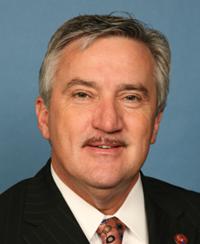 Rep. Travis Childers (D-MS)
Description
Amendment to provide that none of the funds may be used to employ workers in violation of section 274A of the Immigration and Nationality Act.
Legislative Activity
Stay on top of the latest movement without scrolling through every action
Amendment agreed to Committee of the Whole
July 24, 2008 • 3:03 PM
View full timeline
Amendment agreed to Committee of the Whole
July 24, 2008 • 3:03 PM
Roll call votes on amendments in House
July 24, 2008 • 3:03 PM
House amendment agreed to: On agreeing to the Childers amendment (A010) Agreed to by recorded vote: 416 - 1, 6 Present ) (Roll No. 528).(consideration: CR H7093; text: CR H7093)
July 24, 2008 • 3:03 PM
On agreeing to the Childers amendment (A010) Agreed to by recorded vote: 416 - 1, 6 Present ) (Roll No. 528). (consideration: CR H7093; text: CR H7093)
July 24, 2008 • 3:03 PM
House amendment offered
July 23, 2008
House amendment offered/reported by : Amendment (A010) offered by Mr. Childers.(consideration: CR H7035; text: CR H7035)
July 23, 2008 • 8:18 PM
Amendment (A010) offered by Mr. Childers. (consideration: CR H7035; text: CR H7035)
July 23, 2008 • 8:18 PM
Votes
1 roll call on this amendment
Text
Offered
NATIONAL HIGHWAY BRIDGE RECONSTRUCTION AND INSPECTION ACT OF 2008

The SPEAKER pro tempore. Pursuant to House Resolution 1344 and rule
XVIII, the Chair declares the House in the Committee of the Whole House
on the State of the Union for the consideration of the bill, H.R. 3999.

{time}  1822

In the Committee of the Whole

Accordingly, the House resolved itself into the Committee of the
Whole House on the State of the Union for the consideration of the bill
(H.R. 3999) to amend title 23, United States Code, to improve the
safety of Federal-aid highway bridges, to strengthen bridge inspection
standards and processes, to increase investment in the reconstruction
of structurally deficient bridges on the National Highway System, and
for other purposes, with Mrs. Christensen in the chair.
The Clerk read the title of the bill.
The CHAIRMAN. Pursuant to the rule, the bill is considered read the
first time.
The gentleman from Minnesota (Mr. Oberstar) and the gentleman from
Tennessee (Mr. Duncan) each will control 30 minutes.
The Chair recognizes the gentleman from Minnesota.
Mr. OBERSTAR. Madam Chairman, on August 1 of last year, I was at this
microphone managing the conference report, with our colleague, Mr. Mica
from Florida, ranking member on the committee, the conference report on
the Water Resources Development Act when my BlackBerry buzzed. I looked
to see what message was coming in, and I saw an announcement that a
bridge had collapsed and there was an ``M'' alongside it. I thought, a
Third World country? Then I looked closer. That M was Minnesota. That
bridge was I-35W. It carries, or had carried, an average of 140,000
vehicles a day. Thirteen people were victims, 88 to 100 other people
were injured, a dramatic collapse.
Twenty years ago, on December 1, 1987, 20 years ago, I opened
hearings as Chair of the Subcommittee on Investigations and Oversight
on Bridge Safety. I said, ``There are an estimated 376,000 bridges . .
. of that number, 217,000 are Federal-aid Interstate, primary,
secondary and urban bridges.
``They carry 85 percent of the Nation's traffic, yet 76,000 of these
bridges are deficient and that number has been gradually increasing
over the last four years.''
That was 20 years ago. Today, we have 153,000 structurally and
functionally deficient bridges.

[[Page H7019]]

``We know there are elements of bridge design of particular concern
to bridge inspectors; that is, bridges without redundant members to
prevent a tragic collapse if that one critical member should fail.''
I-35W was one of those fracture critical bridges. One essential
element failed. The whole bridge could collapse and it did. There were
multiple causes, and we await the determination of the National
Transportation Safety Board.
I said further, ``We have to ensure that inspection personnel are
keenly aware of the problems involved with bridges whose supporting
members are set in the floor of the body of water as compared to those
that are set up on pilings driven into the subsoil and deeper.''
We're hoping in these hearings ``to find out how many of these types
of bridges are in the Nation's bridge inventory. Right now that
information appears to be scarce and perhaps in many States not
maintained at all.''
A key witness at that hearing, professor of bridge engineering Dr.
Gerald Donaldson, said that in his estimation, ``Bridge maintenance was
in the Stone Age. We have no good, logical way of selecting the proper
bridges to repair, rehabilitate or replace other than our memory and
manual review.
``Most States have virtually no bridge maintenance programs with
specific, qualified maintenance goals; no documented maintenance
processes; no rationally planned aggressive strategies to arrest or
slow bridge deterioration. Many States address maintenance deficiencies
on an ad hoc basis.''
He said, ``There are many States out there who are not even using the
easily available technology'' to assess bridge conditions.
``In terms of more sophisticated technology, many of the States
basically are only dimly aware of what that technology is.''
Well, I can say that in 20 years, not much has changed. Despite
efforts to increase funding for bridge inspection, bridge safety,
personnel, train those personnel better, train Federal and State
inspectors to higher standards over the last 20 years, we have failed,
and a bridge failed.
We bring to the House floor today legislation that will put the
Nation on the right track to raising the standards by which we build
bridges in the first place, raising the standards by which we determine
which bridges are structurally deficient and which among those are the
most critical bridges to repair and a categorizing and prioritizing of
those bridges to increase the standards by which we train bridge
inspectors at the Federal and State level and increase the funding for
States and the Federal Government to hire the necessary number of
bridge inspectors to raise the standards, make those bridges safer,
prevent future loss and future collapse as happened in Minnesota.

{time}  1830

This legislation will move us in that direction. There may be some
little differences about the structure of this proposal, but we in the
committee are agreed on the path, on the direction, on the goal, on the
objectives.
The funding issues we will address next year in the surface
transportation authorization bill. For now, we need to put in place
this structure raising the standards by which we determine structural
deficiency of bridges, categorizing them, establishing a yardstick of
measurement, having it vetted by the National Academy of Sciences so
that we have an absolutely transparent and reliable means of
determining the prioritization for investment in and addressing the
needs of structurally deficient bridges.
Madam Chairman, I reserve the balance of my time.
Mr. DUNCAN. Madam Chairman, I yield myself such time as I may
consume.
I rise in support of H.R. 3999 and encourage all of my colleagues to
vote for this bill. It has been an honor and privilege for me to serve
now 20 years on the Transportation and Infrastructure Committee. In
significant part, it has been an honor and privilege because of the
opportunity to serve with a man like Chairman Oberstar, who certainly
is the most knowledgeable person on these issues of anybody in the
entire Congress.
I can confirm that he has been speaking out on the need to do bridge
maintenance and construction and repairs for all of that time, and not
just after the terrible tragedy in his home State of Minnesota.
It's also a privilege to serve with my boss, my ranking member, the
gentleman from Florida (Mr. Mica) to whom I owe the privilege of
serving as the ranking member of the Highways and Transit Subcommittee.
This bill makes much-needed improvements to the existing Federal
highway bridge program and to the regulations pertaining to bridge
inspections. The bill incorporates a risk-based priority system for the
replacement and rehabilitation of bridges to ensure that States are
addressing their most urgent bridge needs in a timely manner. We
haven't had this up until now.
The bill also requires more frequent inspections of bridges that are
classified as structurally deficient and strengthens the training and
certification requirements for bridge inspectors. These changes to the
existing Federal highway bridge program are designed to improve the
program and should benefit all States.
The bill also provides $1 billion for States to replace and
rehabilitate highway bridges. This is a substantial sum of money, but
the Federal Highway Administration estimates that it will cost more
than $65 billion to address existing bridge deficiencies. This $1
billion is merely a start. It will only provide an average of about $20
million to each State to address bridge-related needs, barely making a
dent in this problem.
But I do have some concerns with a few aspects of this bill. I am
concerned that the formula through which the funding in this bill will
be distributed does not reward States for placing a priority on
maintaining their bridges. Since funding is distributed based on the
number of deficient bridges in each State, States that put an emphasis
on maintaining their existing bridge inventory may get less under this
formula than a State that has neglected their bridge needs.
My home State of Tennessee has placed a priority on maintaining their
bridges and as a result the number of structurally deficient bridges in
Tennessee is about half of the national average. But instead of being
rewarded for their responsible approach to maintaining their highway
infrastructure, the State in a way will be penalized and will receive
less than their fair share in funding from this program. I think we
should have rewarded the States who have worked harder at this.
I am also concerned that this bill practically eliminates any
flexibility a State has to transfer funding from the bridge program to
other Federal highway programs when there are urgent needs to do so. We
are concerned about that. The flexibility provision in this bill
eliminates flexibility for every State except for one, the State of
Delaware.
Despite these concerns, I do strongly support this bill, and I
encourage my colleagues to do the same.
Madam Chairman, I reserve the balance of my time.
Mr. OBERSTAR. Madam Chairman, I yield 2 minutes to the distinguished
gentleman from Minnesota (Mr. Ellison) in whose district I-35W
collapsed.
Mr. ELLISON. Madam Chairman, I rise today to strongly urge my
colleagues to support H.R. 3999, the National Highway Bridge
Reconstruction and Inspection Act. But let me start by thanking my
fellow Minnesotan, Chairman Oberstar, for his vision. It would be much
better if we had listened to him so long ago. We wouldn't be in this
critical infrastructure crisis that we have today.
But, unfortunately, we have events that have focused our attention,
and we cannot dare to take our eyes off the tragedy before us. I heard
Chairman Oberstar quote a famous American who said, it's a tragedy to
lose the opportunity----
Mr. OBERSTAR. If the gentleman would yield, paraphrasing Benjamin
Banneker, a brilliant man, who said, ``A mind is a terrible thing to
waste.'' And I said, paraphrasing it, a tragedy is a terrible thing to
waste.
Mr. ELLISON. A tragedy is indeed a terrible thing to waste. Whenever
a tragedy befalls us, it does not do proper justice and honor to the
victims of that tragedy to not learn from it and to do better into the
future.

[[Page H7020]]

As the world knows, the tragic collapse of the Interstate 35 bridge
occurred in the Fifth Congressional District, my home district, less
than a year ago on August 1, 2007. During the evening rush hour, the
Interstate 35 bridge collapsed, 13 Minnesotans lost their lives and
over 100 individuals were injured.
It has been widely reported that the 35W bridge was ``structurally
deficient.'' Even more disturbing is that according to the U.S.
Department of Transportation, one of every eight bridges across the
Nation is structurally deficient.
In my home State of Minnesota, about 10 percent of our 13,000 bridges
are rated structurally deficient, so the problem of structurally
deficient bridges and deficient bridges is a real issue to me and my
constituents. It could and should be yours as well.
Investing in our infrastructure and fixing our Nation's bridges
demands our attention today so that our communities across the Nation
can be spared the trauma that my district and my State had to bear last
August.
I am proud to be a cosponsor of H.R. 3999. This legislation
strengthens the inspection requirements and standards on our Nation's
bridges. It requires that all Americans involved in bridge inspections
receive appropriate training.
The CHAIRMAN. The time of the gentleman from Minnesota has expired.
Mr. OBERSTAR. I yield the gentleman an additional minute.
Mr. ELLISON. The bill also requires bridge inspections every 2 years
and even more frequently for structurally deficient bridges. There will
be some critics who will say that we cannot afford to meet our
infrastructure needs.
In reality, Mr. Chairman, as you understand, we cannot afford to not
meet our infrastructure needs.
Mr. DUNCAN. Madam Chairman, I yield for such time as he may consume
to the gentleman from Florida (Mr. Mica), the ranking Republican member
of the Transportation and Infrastructure Committee.
Mr. MICA. Madam Chairman and my colleagues, I am pleased to be with
you tonight to discuss an important piece of legislation that has been
brought forth by the Transportation and Infrastructure Committee.
First of all I have to compliment the ranking member of the Highway
Subcommittee, Mr. Duncan, the gentleman from Tennessee, for his
leadership and his efforts in working together with his counterpart,
Mr. DeFazio, and also my counterpart, Mr. Oberstar, to try to bring
legislation to the floor that will make our bridges safer, that we have
seen problems with our infrastructure in this Nation.
We have a responsibility from the Federal Government. We can't fix
every bridge in every county, every city across every road in the
country, but we do have an obligation where we have Federal funds,
where we have interstate, where we have bridges and infrastructure
that's so important for the commerce of this Nation to make certain
that they are sound, that we have adequate protocols and procedures for
inspection of those bridges, and that we try to make certain that those
bridges are inspected on an appropriate basis and that there is
remediation. It's one thing to make demands of local State government
from the Federal level, but what we want to do is ask reasonable people
to take reasonable actions and take corrective actions where they are
needed, rather than dictate from on high.
First of all, let me say my sympathy goes out to everyone and all
those who lost their loved ones in the tragedy that struck Minnesota. I
was on the floor with Chairman Oberstar when we learned of the collapse
of the I-35 bridge, and Congress acted immediately to replace that
structure. That structure's replacement is actually an example I am
going to use in the future for replacement of any infrastructure in
this country.
In 437 days that bridge will be replaced, and if we could do that
with other projects across the Nation, we would save so much time,
money and hassle and red tape, but it shows that we can, if we want to
take action, in replacing our infrastructure.
But, again, we had a tragedy. We weren't sure the day that it
happened what the cause was, and we are still having information
gathered by the National Safety Transportation Board, and they will
file a final report. But I might also say that the loss of even one
life in the collapse of a bridge is too much, and we have to act again
to ensure bridge safety, but we have to also look at some of the
conditions.
Even if we take the Minnesota bridge collapse, we do know now, and I
have seen pictures of a design flaw of problems with the gusset plate,
one of the structural support systems. That flaw was identified over
several terms of different administrations in Minnesota. I have seen
pictures that transcend, again, the flaw that was found, and not a lot
was done about it.
We also have learned that the bridge was underdesigned, really, for
the kind of traffic that it has today, and that's another problem we
have with larger trucks and vehicles on our bridges, and we also know
that bridge was under construction and a contractor had put a
significant amount of weight which may have led to the collapse. We
don't know that. There were other vehicles too, we know, on the bridge.
All of that will give us a final determination of why that bridge went
down.
But what we have got to do is not base our policy for the future, and
this legislation, on presuming that certain things took place. We have
got to deal with facts, and, again, in an appropriate and logical
manner in which we proceed to ensure safety of bridges.
One of the things that I learned from all of this is that the trucks
and vehicles that we have running over our bridges today, I think
anyone who goes down the interstate, or down a major highway, sees a
sign, a weight limit for bridges that's usually posted.
The amazing thing I found about today is that while we limit the
weight of those vehicles, the violations of people going over those
bridges with excessive weights is just mind-popping. It is happening
across the country. So, many bridges like the Minnesota bridge that
were built to a certain design for a certain era and certain weights,
even though that weight limit is posted, one of the problems is that
people drive vehicles that weigh far in excess, many times over. In
fact, the Department of Transportation even publishes statistics on the
estimates and the incidence of some of these violations. So that's
something that we have got to address, too.
Again, I have a number of areas in this bill I think we have worked
on that are good provisions, the training and certification of bridge
inspectors, the requirement that States adopt a risk-based list and
prioritization of the bridges that do need attention. There are good
provisions in here. I do have a couple of things that give me hiccups,
and I have expressed my concern about. I had attempted to go before the
Rules Committee and offer an amendment that would have corrected two of
the major flaws that I see in the approach we are taking here.

{time}  1845

That was, unfortunately, rejected.
People have come and asked me how I'm going to vote on this measure.
Quite frankly, I don't know. And I won't know until tomorrow, until
I've heard the rest of the debate because, again, there are two flaws
in this that concern me. Mr. Duncan mentioned them, and again I'll
repeat them. One is lack of flexibility that allows our States that
have been responsible to move money around. And I will submit for the
Record a list of some of those States.
But States like California will be impacted here that in the past
have asked to transfer funds. I mentioned to a Member from California
that, even though I think that California has acted responsibly,
California has also been the victim of natural disasters or
earthquakes. Sometimes their bridges have collapsed. Sometimes their
roads have collapsed. Sometimes they need to move money around. This
bill does, unfortunately, set up some inflexibility that I think will
harm some States that have had to use that mechanism in the past, but
yet have been responsible in the manner in which they have expended
their money, both Federal and State money, for bridge projects.
My State of Florida also is a responsible State and will be penalized
by the terms of this. I have a very strong statement from our Secretary
of Transportation, Stephanie Kopelousos, in opposition to the terms
that were provided in this bill.

[[Page H7021]]

Now, I know that the chairman has tried to make some accommodations
in this. I'm sorry that the Rules Committee did not see fit to take an
amendment that would have provided a corrective remedy to help Florida,
California, Tennessee--I've got a long list that I will submit in the
Record of States who may be penalized, and some of them penalized for
doing the right thing.
The other thing, too, is it does penalize States who have done the
right thing, and that's unfortunate. I don't think we should put our
States that act in good faith at a disadvantage for legislation that
we've passed here.
So while there are some good provisions, I have some questions about
what we're doing. This isn't the final say on this bill, it will have
to go through the other body. And we want it to be good and thoughtful
and productive and effective legislation as it is finalized.
So those are some of the comments that I wanted to provide as we
speak here now in general debate. And I appreciate the gentleman
yielding.

U.S. DEPARTMENT OF TRANSPORTATION, FEDERAL HIGHWAY ADMINISTRATION, BRIDGE TRANSFERS WITHIN FUNDS (TO/FROM OTHER
PROGRAMS), CURRENT YEAR PLUS SEVEN AS OF AUGUST 8, 2007
----------------------------------------------------------------------------------------------------------------
State                        FY 2007           FY 2006           FY 2005           FY 2004
----------------------------------------------------------------------------------------------------------------
Alabama.................................  ................  ................  ................    58,275,000,000
Alaska..................................  ................      2,301,353.89  ................     53,265,174.92
California..............................  ................    305,586,671.00  ................  ................
District of Columbia....................  ................        -76,008.00  ................  ................
Florida.................................  ................  ................  ................       -644,617.00
Hawaii..................................  ................  ................      2,000,000.00       -553,215.00
Iowa....................................  ................  ................  ................  ................
Kansas..................................  ................     30,000,000.00           -145.00  ................
Maryland................................  ................     32,520,170.00  ................  ................
Massachusetts...........................  ................  ................  ................  ................
Minnesota...............................  ................     41,615,022.50      8,955,000.00  ................
Nevada..................................  ................      1,871,425.00  ................  ................
Ohio....................................     76,686,875.50     10,000,000.00  ................  ................
Oklahoma................................  ................       -168,790.00        -14,396.00     40,434,170.00
Oregon..................................  ................      8,000,000.00  ................       -117,285.00
Pennsylvania............................    236,000,000.00    185,000,000.00    184,990,000.00    191,800,000.00
Rhode Island............................     25,000,000.00     15,000,000.00  ................     10,000,000.00
Utah....................................  ................  ................  ................  ................
Vermont.................................  ................      2,694,983.00        -23,051.00  ................
Virginia................................  ................  ................  ................     35,234,226.00
Washington..............................  ................  ................  ................              1.00
Wisconsin...............................  ................  ................  ................  ................
-----------------------------------------------------------------------
Grand total.......................    337,686,875.50    634,344,827.39    195,907,408.00    387,693,454.92
----------------------------------------------------------------------------------------------------------------
(Note: negative numbers reflect transfers of funds to the bridge program; positive numbers represent transfers
of funds of the bridge program)
Source: FHWA-FMIS L11A-dlj.

Mr. OBERSTAR. Madam Chairman, I yield 2 minutes to the distinguished
gentlewoman from the State of Minnesota (Ms. McCollum), whose district
borders on the I-35W Bridge.
Ms. McCOLLUM of Minnesota. Madam Chairman, I rise in support of H.R.
3999, the National Highway Reconstruction and Inspection Act.
Nearly 1 year ago, Minnesota made the national news when the Twin
Cities lost a bridge, and so much more. In the wake of heroic rescue
efforts in Minneapolis, this Congress responded with an emergency
Federal appropriation to rebuild the bridge.
Today, our community is healing and a new bridge is nearly complete.
But August 1, 2007 must not be about one bridge in Minnesota. Our
State's tragedy was evidence of America's desperate problem.
Today, the Congress is rightly and responsibly turning to the task of
repairing and maintaining thousands of deficient bridges across this
country. We are making a commitment to remove one unnecessary worry
from the everyday lives of American families. This vote will be about
investing in the public good. This vote will be about protecting public
safety. And this vote is about restoring public trust that remains
badly broken.
I commend Chairman Oberstar, the Dean of the Minnesota delegation,
for bringing this bill to the floor and for his strong leadership on
transportation policies. I look forward to continuing to work with the
chairman during the reauthorization next year, when we begin to build a
21st century transportation system for America.
Mr. DUNCAN. Madam Chairman, I yield such time as he may consume to
the gentleman from Pennsylvania (Mr. Shuster), a member of the
committee.
Mr. SHUSTER. I thank the gentleman for yielding time.
I agree with much of what my colleagues on this side of the aisle
have said this evening. I first and foremost commend the chairman for
putting forth a bill that is going to increase funding for bridges.
Certainly it's a tragedy what happened in Minnesota on I-35, and we
have to be concerned in America. But our bridges are in grave danger of
those types of incidents occurring. Pennsylvania has thousands of
bridges that are in a deficient state, and we need to address that.
This bill, though, in talking to leadership at Penn DOT, Pennsylvania
Department of Transportation, today, they have grave concern, as I do,
that in this bill--I'm not clear how extensively it reduces the
flexibility for our States to be able to move money around where they
need to do it. I know Pennsylvania, in the past, has been criticized,
saying we don't spend as much as we are authorized and appropriated for
bridges. But, in fact, because of the flexibility in the past,
Pennsylvania spends almost double on fixing new bridges because they're
able to move money around in a commonsense way to rebuild bridges that
need attention. So I'm concerned that this bill is going to restrict
the flexibility.
I'm not quite sure, as we're reading the language and we're trying to
work through this to try to understand it, if this legislation is going
to reduce the flexibility in the nearly billion dollars that's out
there, or if it's going to reach back into our highway funds that we
have now, it's going to create stringent requirements on them.
The second thing that concerns me is that there appears to be a new
certification program for bridge inspectors. And Pennsylvania, I
believe, leads the Nation in training and certifying people to go out
and inspect bridges. In fact, in Pennsylvania, it's not always an
engineer who's an inspector, but it's somebody who has a tremendous
amount of experience building bridges, working around bridges that has
gone out and certified these bridges.
And in talking to Pennsylvania today, the Penn DOT, they expressed to
me that if this certification program moves forward, it's going to
hamper their ability to continue to go out and inspect bridges and
decide which bridges need to be dealt with.
In addition to that, the certification program, Penn DOT expressed to
me today that it could cost as much as $30 million to recertify bridges
under a Federal regime. And as I said, Pennsylvania is a State where we
have several thousand bridges that are in desperate need. Pennsylvania
is a leader in moving forward, trying to rehab these bridges, making
sure they're safe so we don't see tragedies occurring.
And then finally, the risk-based priority regulations in this bill.
Pennsylvania doesn't have hurricanes, Pennsylvania doesn't face those
kinds of risks. And it's a concern that, with this type of Federal
regulation, are we in Pennsylvania going to be hurt by this mandate
that's put in place or this type of risk-based priority? Because we do
have, as I said, several thousand--I

[[Page H7022]]

believe the number is 9,000--bridges that need attention today.
So I have grave reservations about this. I'm trying to work through
the bill and trying to understand all that it puts forward, but these
are some of the concerns that I've had, not just from me working
through the legislation, but in talking to the experts in Pennsylvania.
So there are grave concerns here. And again, at this point, I'm going
to hold my judgment until I continue to work through the bill and try
to understand it.
Mr. OBERSTAR. Does the gentleman have time to yield?
Mr. SHUSTER. I certainly would yield to the gentleman.
Mr. OBERSTAR. Those are valid concerns.
First of all, on the bridge inspection standards, the Federal Highway
Administration is directed by the legislation to raise the standards.
They will do this in consultation with the States. Pennsylvania is
recognized as having very high standards for its bridge inspectors, and
the country can benefit from Pennsylvania in that process. So
Pennsylvania will be one of the leaders.
Secondly, the matter of transfer of funds, of flexibility, we, for
years, when we first established the bridge category, gave States
flexibility to transfer funds out of that account up to 50 percent. In
the SAFETEA legislation, SAFETEA-LU current law, the language was
further refined to distribute funds on a needs basis. If that formula
is wrong, if that's the wrong way to do it, then we will correct it in
the next legislation. This legislation deals only with current law. And
that needs formula is based on the question to be determined by each
State, in cooperation with the Federal Highway Administration, on how
much it costs to maintain, to replace bridges in a State, and then,
under those factors, the allocation is made by the Federal Highway
Administration to the States.
Maybe we need to change that altogether in the next legislation. I'm
only dealing with current law, again, in this bill. And since we have
seen in my State, Minnesota, they transferred 49 percent of their
money--just to the limit of the law--out of the bridge account to other
purposes, and then said, when the bridge collapsed, that, oh, well,
there was so much money spent on bicycle paths, we didn't have money
for bridges. They transferred the money out. They made the decision to
do that. We're saying in this legislation, fix your bridge, your most
critical bridge issues first. Certify you've done that. Then you can
transfer those remaining dollars out elsewhere. But I think we want
accountability for the States.
Now, the gentleman from Tennessee raised a very important issue--if
the gentleman would continue to yield--about this category for bridges.
Another issue for consideration next year is whether we should have a
bridge category at all. That's something we can make a determination
on. Maybe we shouldn't have this at all. Maybe we should just simply
have a bridge inspection program and require States to act on the
results of their own bridge inspections made to these new higher
standards and verified by the National Academy of Sciences.
And I thank the gentleman for yielding.
Mr. SHUSTER. I appreciate the gentleman's comments. And those are
certainly all things we need to consider.
And I raise these issues not because I have a deep understanding of
this law, but when I talk to the experts back in Pennsylvania, they
raised the concerns that--we have good intentions down here sometimes
in the Federal Government in Washington, but when the language comes
out, it doesn't exactly meet up to our expectations, and certainly not
back to the professionals back in Pennsylvania that are working hard
day and night trying to make sure these bridges are taken care of.
But they've expressed to me--and again, I'm going to be in
consultation with them tomorrow and hopefully committee staff to make
sure that we understand that these aren't putting impediments in place
to the State of Pennsylvania, in particular, because we have a
tremendous need to fix, repair and replace these bridges that are in
very, very bad condition. So I appreciate the gentleman's words and
will certainly be talking with the staff.
Mr. OBERSTAR. If the gentleman would yield further, ask them that
question about whether we ought to have a category for bridges at all.
Mr. SHUSTER. Absolutely.
Mr. OBERSTAR. And that's something we must consider in the broader
policy considerations next year.
Mr. SHUSTER. I thank the gentleman.
Mr. OBERSTAR. Madam Chairman, I yield 2 minutes to the distinguished
gentleman from Wisconsin (Mr. Kagen).
Mr. KAGEN. Madam Chairman, I rise to engage in a colloquy with
Chairman Oberstar.
Mr. Chairman, I wish to congratulate you on your ongoing efforts to
improve the safety of our Nation's highway bridges. And I'm pleased
that H.R. 3999, the National Highway Bridge Reconstruction and
Inspection Act, would provide an additional $1 billion in fiscal year
2009 for States to address their structurally-deficient national
highway system bridges. I'm concerned, however, that this funding would
be distributed through the current bridge program formula.
Traditionally, Wisconsin does not fare well under the current bridge
formula, which is based on the number and percentage of structurally
deficient and functionally obsolete bridges. While I recognize that the
funding apportionment for the Highway Bridge Program is needs-based, I
am concerned that the current program does not recognize the commitment
States like Wisconsin make toward addressing their deficient bridges.
Under the current formula, States such as Wisconsin are penalized
because they commit significant resources towards addressing their
bridge needs.
This situation is exasperated by the fact that States are permitted
to transfer bridge program funds to other Federal highway programs with
little or no impact under future apportionment of Highway Bridge
Program funds.
Under this current formula, there is little or no incentive to invest
in bridge maintenance. More importantly, States that achieve this
objective are not rewarded. To address this problem and ensure that
bridge program resources are invested in bridge maintenance, I believe
that the funding formula should consider a State's level of efforts and
performance in addressing its bridge needs.
While I recognize that this legislation does not rewrite the Federal
Highway Bridge Program formula, I would greatly appreciate it if the
chairman would be willing to assure me as that, as the committee begins
to develop the next surface transportation authorization, we will
review the formula to accommodate and recognize that States have made
these efforts.
And I yield to the chairman.

{time}  1900

Mr. OBERSTAR. I thank the gentleman for yielding and for raising this
issue as members of the committee on the other side of the aisle have
done. And the needs-based formula I think has served us well. It has
been a good principle.
The CHAIRMAN. The time of the gentleman from Wisconsin has expired.
Mr. OBERSTAR. I yield the gentleman 30 additional seconds.
We ought to revisit the needs formula in the upcoming legislation for
the new authorization and revamp, if necessary, that needs-based
formula so that it more equitably reflects the needs of the States and
their commitment to and actions taken on maintenance replacement of
their bridges on the national highway system.
Mr. KAGEN. I thank you, Mr. Chairman, and look forward to working
with you on this important aspect of the bill.
Mr. OBERSTAR. I think we will have lots of help on that next year.
Mr. KAGEN. It looks like it.
Mr. DUNCAN. Madam Chairman, I have no other speakers at this point
for our side and so I will reserve our time until Chairman Oberstar is
ready to close from his side.
Mr. OBERSTAR. I would inquire of the Chair how much time remains on
both sides.
The CHAIRMAN. The gentleman from Minnesota has 18 minutes remaining,
and the gentleman from Tennessee has 9 minutes remaining.
Mr. OBERSTAR. I yield 2 minutes to the distinguished gentleman from
Maryland, the Chair of the Coast Guard Subcommittee.

[[Page H7023]]

Mr. CUMMINGS. I thank Chairman Oberstar for yielding. I also thank
him for his leadership on the Committee on Transportation and
Infrastructure and for his unwavering commitment to the value of
investing in our Nation's infrastructure. I also thank Congressman
DeFazio for his leadership of the Subcommittee on Highways and Transit
and for his work on this legislation.
As a senior member of the Transportation Committee, I rise today in
strong support of the National Highway Bridge Reconstruction and
Inspection Act and the amendment in the nature of a substitute offered
by Mr. Oberstar.
One out of eight bridges in the richest land in the world is now
structurally deficient. In my own State of Maryland, the State Highway
Administration maintains 2,578 bridges and overpasses at an annual cost
of $110 million. A total of 129 of these bridges are structurally
deficient, while an additional 410 are functionally obsolete. The
drivers in this Nation should not have to worry as they cross bridges
that the bridge will give way beneath them. But they do now.
To begin to meet our Nation's backlog on bridge maintenance needs,
H.R. 3999 authorizes the appropriation from the general fund of $1
billion. Unfortunately, that is just a down payment. And as we work to
bring our infrastructure into a state of good repair, the safety of the
traveling public will rest on the effectiveness of our bridge
inspection regime.
To strengthen that regime, this bill requires the Secretary of
Transportation to develop a reliable national bridge inventory, to
develop a risk-based method for assigning repair and replacement
priorities, and to develop uniform bridge inspection processes. These
are commonsense measures that will enable us to manage the resolution
of our bridge maintenance needs effectively and efficiently.
Mr. Chairman, our Nation's highway infrastructure is a pillar of our
economic success. And by passing this bill today, we can make a modest
investment in the maintenance of that infrastructure to ensure that it
can continue to carry our Nation's to new successes.
With that, I urge my colleagues to vote in favor of the bill.
Mr. DUNCAN. I have just a couple of additional comments, Madam
Chairman, and I recognize myself for such time as I may consume before
Chairman Oberstar closes. I do want to, once again, commend him for his
work on this important legislation.
I think everyone agrees that to have a vibrant national economy, we
have to have an effective, efficient and first-class system of
transportation. Certainly our local governments have an important role
in that process and our State governments have an important role. But
there is a very important and legitimate national role in our
transportation system in this country.
People in Minnesota, Pennsylvania, Ohio and Florida use the highways
and bridges in Tennessee and vice versa. And now under SAFETEA-LU, we
are providing an average of $4.5 billion a year for our bridge system.
But as so often is the case, terrible tragedies sometimes call our
attention to shortcomings or to needs that exist in this country. And
the tragedy of the bridge collapse in Minnesota certainly did that and
called our attention to the fact that we need to do a great deal of
work on our bridges.
This is a one-time, 1-year, $1 billion supplemental authorization for
some additional funding for our bridges. As I said earlier, it averages
out to about $20 million a State. It will barely put a dent in our
problem, but it's a legitimate thing for this Congress to do.
I urge support for this legislation.
I yield back the balance of my time.
Mr. OBERSTAR. Madam Chairman, I yield myself 6 minutes.
Here is, in the well of the House, a chart listing the status of the
structurally deficient bridges eligible for replacement State by State.
We also have a smaller document at the committee table that Members can
take with them. But this shows 589 bridges on the interstate system and
2,067 bridges overall on the national highway system that are in the
structurally deficient category, eligible for replacement, and that is
the standard by which we, in this legislation, determine whether a
State qualifies for moving money out of its bridge account. We're just
saying, once you have determined that you have structurally deficient
bridges, fix them first, and we're saying just those that need to be
replaced, not those that just need adjustments, but those that need to
be replaced, do that first, then transfer money out of your bridge
account.
States have transferred the money out of their bridge account, as I
said earlier, and the State of Minnesota didn't address their bridge
needs, and then the bridge collapsed. And they're looking for a
handout. Well, if we're going to continue in the future with a category
for bridge maintenance and replacement, then this is the standard we
should have. We can make the determination in the next legislation.
I will rely heavily on the gentleman from Tennessee, the gentleman
from Florida (Mr. Mica), the gentleman from Oregon (Mr. DeFazio), Chair
of the Surface Subcommittee, who has one of the most severe bridge
problems on Interstate 5 in the State of Oregon, on whether we should
continue with the idea of a category for bridge funding. If we do, then
we have to have better standards by which bridges are built, maintained
and inspected. And this legislation puts us on course toward that goal.
Now I want to show what has happened. The gentleman from Florida (Mr.
Mica) cited the speed with which the State of Minnesota has responded
in rebuilding the bridge. These two photographs show the bridge
replacement in two phases, the top portion showing where it was just
about 3 weeks ago, and the bottom portion with only 2\1/2\ feet
separating the two segments, the north and south segments of the
bridge. I was on that bridge on Sunday afternoon, observed the
extraordinary work, the speed with which the bridge was constructed.
This is the way we should build bridges for the future, with sensors
embedded in the structure itself, sensors that tell the temperature of
the bridge, the coefficient of expansion and contraction. The wind
velocity pressures on the bridge will be detected by sensors in that
structure. There are also long-in-use rollers on the bridge so they can
move north and south, expansion and contraction, but much higher
quality than ever before built into those rollers. There is also an ice
detection system operated by temperature, so that before freezing
conditions are encountered, de-icing may be sprayed onto the bridge
structure to prevent icing conditions. These are highly advanced
technology systems that have not been built into bridges previously,
and as many sensors as are going into this bridge, there are also
sensors that detect minute cracks that can develop in a bridge and
alert bridge engineers before something serious happens. That is the
kind of quality that we need to build into future bridge construction
and maintenance and replacement.
Now the questions that have been raised about the transferability,
frankly, I am really troubled that in the last 5 years, States have
transferred $5 billion out of their bridge account and then turn around
and complain that they don't have flexibility. We give them flexibility
to transfer up to 50 percent of their bridge account into other
programs. But then they turn around and complain that this legislation
will restrain their flexibility. I'm saying, as long as we have this
bridge category, as long as there is a definition of structural
deficiency, that States should address those structure deficiency
issues, those structurally deficient bridges and if they are candidates
for replacement, replace them. Use your bridge formula funds to replace
those bridges. And then when you have done that and certified to the
Federal Highway Administration you have addressed this, then you can
transfer those funds elsewhere.
The CHAIRMAN. The time of the gentleman from Minnesota has expired.
Mr. OBERSTAR. How much time do we have on our side?
The CHAIRMAN. The gentleman from Minnesota has 10 minutes remaining.
Mr. OBERSTAR. I yield myself such time as I may consume.
There is no limitation on the flexibility of States to use their
bridge formula funds so long as they comply with one issue, and that
is, certify that where you have structurally deficient

[[Page H7024]]

bridges that are on the national highway system that should be replaced
that you have addressed the replacement issue.
The Commonwealth of Pennsylvania has the highest number of
structurally deficient bridges in the Nation. Yet they transferred $2.2
billion of their Federal highway bridge funds out of that program into
other needs of the State. Well, over that same period of time, since
2003, they transferred those dollars, and the number of structurally
deficient bridges in the Commonwealth of Pennsylvania increased by 500.
You can't have it both ways, I'm saying. We have a category for bridge
construction, maintenance and replacement, and if you transfer money
out of it, then you can't complain that you don't have flexibility. You
can't complain that a bridge fell down because there are other needs.
Address those needs first.
The highway bridge program represents about 11 percent of the overall
funding level of the current law, SAFETEA-LU, but as the Office of
Management and Budget has issued rescission orders cutting funds from
the overall surface transportation program, $3.4 billion in rescission
of contract authority have come out of the bridge program.

{time}  1915

So States are victimizing their bridge formula program when the
rescissions come. Now maybe we should make the whole thing a block
grant program and not have categories. If we do, then States will have
all the authority they need to shift dollars around.
But I think that over the years, successive Congresses in the 50
years of the interstate highway system and the highway trust fund have
concurred in the categories of funding. They serve a useful purpose,
and we should maintain those categories, and make some adjustments in
them. I think we should revisit the needs formula as the gentleman from
Tennessee has suggested, and other Members have suggested. We should
perhaps rewrite the entire needs formula. But that is a matter for next
year, not in this bill.
I thought we should have a down payment of a billion dollars to get
States started on addressing their structurally deficient bridge
problem and expand that funding next year when we get into the
authorization period. For the moment, I think this legislation
represents what we can do and should be doing in the short term to set
the stage for a longer-haul revision of the bridge program.
Again I compliment the State of Minnesota Department of
Transportation for moving ahead so vigorously on I-35W and leaving a
great legacy for the future.
I also once again express my great appreciation to the gentleman from
Oregon (Mr. DeFazio) the chairman of our Surface Subcommittee, and the
gentleman from Tennessee, the ranking member on the subcommittee, and
my good friend and partner, the ranking member on the committee, Mr.
Mica, for participating and for their thoughtful observations about the
legislation before us, for the many suggestions that we have
incorporated, and look forward to continuing this work as we move
towards the reauthorization next year.
Mr. SIRES. Mr. Speaker, I rise today in support of H.R. 3999, the
National Highway Bridge Reconstruction and Inspection Act. Maintaining
our infrastructure, especially our bridges, is vital to enhancing our
economy, improving our quality of life, and most importantly protecting
the safety of our constituents. I thank Chairman Oberstar for
introducing this important legislation and for his leadership in
maintaining our Nation's infrastructure.
My district is highly impacted by the structural integrity of our
bridges. They provide the necessary infrastructure to support one of
the largest ports in the U.S. with more than 25 million tons of cargo
moving through the port each year. Most importantly, these bridges
serve millions of people who travel on them to and from New York City
each year.
In response to the tragic 1-35-W bridge collapse in Minneapolis,
Minnesota, New Jersey undertook an extensive review of bridges and
identified the improvements required to bring all of the State's
structurally deficient bridges to a state of good repair. This bill
will help to further that initiative and increase the safety of our
bridges.
I urge my colleagues to support this bill.
Ms. EDDIE BERNICE JOHNSON of Texas. Madam Chairman, I rise today in
support of H.R. 3999, the National Highway Bridge Reconstruction and
Inspection Act.
Madam Chairman, I believe it goes without saying that not only the
State of Texas, but all of America stood in solidarity with Minnesota
on August 1, 2007, after the tragic 1-35 bridge collapse.
Since this unfortunate tragedy, our Chairman, Mr. Oberstar, has
worked tirelessly to aid his State and the Nation to ensure that
priority attention is given to the state of our country's aging
transportation infrastructure.
Texans are intimately familiar with Interstate 35, as roughly one-
third of the overall length of the interstate exists within Texas'
borders.
The State of Texas--with roughly fifty-thousand bridges--has roughly
forty percent more bridges than any other State in the nation.
To its credit, the State of Texas has one of the most aggressive
bridge programs in the country. As a testament to this aggressiveness,
only four percent of the State's bridges are categorized as
structurally deficient. In spite of this success, Texas is facing
enormous and rapidly increasing transportation needs.
Increases in population, trade growth, and travel in state have
placed unprecedented demands on an under invested system.
Based on Texas's annual Report on Texas Bridges for 2006, Texas has
approximately thirty-three thousand on-system bridges. Twenty-one
percent of these were built before 1950 and fifty-four percent have
been in service for more than three decades.
The bridges that are, or will be, structurally deficient,
functionally obsolete, or sub-standard for load only in the coming
years must also be improved to ensure design standards are current and
up to date.
According my State Department of Transportation, 282 bridges
categorized as structurally deficient are currently being rehabilitated
or replaced. Another 1,303 bridges classified as structurally deficient
are under development as part of the State's ten-year Unified
Transportation Plan. The State's remaining 439 bridges classified as
structurally deficient are not currently scheduled for rehabilitation
or replacement, and no funding has been identified for them.
The need for additional funds and resources for inspections,
maintenance, rehabilitation, and replacement of bridges is desperately
needed in Texas and it is my hope this bill is able to assist my State
in a measurable way.
Recently in my congressional district a 2-foot-by-2-foot hole emerged
in an eastern span of the Interstate-30 Bridge in Dallas. According to
my State DOT, in addition to the disruption to commuters, the bill just
to rectify a 2-foot-by-2-foot hole will cost upwards of $1.4 million
dollars.
As a country we are falling behind other industrialized nations
tremendously in upgrading our Nation's infrastructure. It is imperative
that government at all levels begin to make transportation investment
an urgent priority.
Madam Chairman, I urge my colleagues to support this important piece
of legislation and yield back the balance of my time.
Mr. HOLT. Madam Chairman, I rise today in support of H.R. 3999, the
National Bridge Construction Act.
When the National Highway System was created in 1955, President
Eisenhower said ``Our unity as a nation is sustained by the free
communication of thought and by the easy transportation of goods . . .
[T]ogether the unifying forces of our communication and transportation
systems are dynamic elements in the very name we bear-United States.''
However, since the creation of the Interstate Highway System in the
1950s, the Federal Government has failed to fulfill its commitment to
maintain our Nation's infrastructure. Conditions on America's surface
transportation systems--our roads, bridges and highways, our passenger
and freight rail facilities, our public transit networks--are
deteriorating. The physical infrastructure itself is showing the signs
of age. In almost all cases, the operational efficiency of our key
transportation assets is slipping.
The catastrophic collapse of the I-35W bridge in Minnesota last year
was a reminder that a lack of funding for proper maintenance of our
bridges and roadways is more than an inconvenience, it can be deadly.
The legislation before us today would provide a short term solution to
this problem by increasing funding for bridge construction over the
next fiscal year by $1 billion. H.R. 3999 would also require the
Department of Transportation to create a better system for inspecting
our bridges so they can ensure their safety. It would also ensure that
the bridges most in need of repairs are given the funding necessary for
safety retrofits.
In my home State of New Jersey there are over 6,000 bridges, nearly a
third of which the Department of Transportation has determined either
structurally deficient or functionally obsolete, including 12 in my
central New Jersey district. This legislation would provide the State
of New Jersey with over $42 million in

[[Page H7025]]

much needed grants for rebuilding these bridges, and I urge my
colleagues to support it.
Unfortunately, this funding is little more than a drop in the bucket
when considering our long term transportation needs. Our transportation
programs are drastically underfunded and require immediate attention in
order to be corrected. Today the House of Representatives will consider
emergency legislation that would authorize the transfer of $8 billion
to the highway trust fund which is expected to experience a $14 billion
shortfall in Fiscal Year 2009. However, this is still not enough.
When we passed the Safe, Accountable, Flexible, Efficient
Transportation Equity Act: A Legacy For Users (SAFETEA-LU) back in
2005, we authorized the National Surface Transportation Policy and
Revenue Study Commission to undertake a thorough review of the state of
our national transportation system. This study found that we would need
to invest $225 billion annually over the next 50 years in order to
ensure that our transportation infrastructure is in a good state of
repair. I look forward to working with my colleagues on both sides of
the aisle to address our pressing transportation needs.
Mr. COSTELLO. Madam Chairman, I rise today in strong support of H.R.
3999, National Highway Bridge Reconstruction and Inspection Act. This
legislation is in response to the bridge collapse that occurred on
August 1, 2007, in Minneapolis, MN. That incident was a tragedy and
serves as a reminder to all that we must properly invest in our
infrastructure.
The United States transportation system is the envy of the world. We
have an extensive system of highways, ports, locks and dams, and
airports. Yet, we have neglected to upgrade and modernize our
infrastructure over the years.
For example, currently, the National Bridge Inventory contains
information on 594,101 bridges. Of the bridges in the inventory, 73,784
bridges were structurally deficient and over 80,000 were functionally
obsolete. Those numbers are astounding and troublesome.
We should not build our infrastructure and then walk away without
maintaining it and modernizing it as it becomes antiquated. HR 3999
authorizes an additional $1 billion in FY09 for the Highway Bridge
Program and requires updates and changes to be made to the inspection
program.
Madam Chairman, we must find a way to make the necessary improvements
to our roads and bridges to make sure the highest level of safety is
maintained and that the U.S. economy remains strong. That is why I
support H.R. 3999 and urge my colleagues to do the same.
Mr. OBERSTAR. Madam Chairman, I yield back the balance of my time.
The CHAIRMAN. All time for general debate has expired.
Pursuant to the rule, the amendment in the nature of a substitute
printed in part A of House Report 110-760 shall be considered as an
original bill for the purpose of amendment under the 5-minute rule and
shall be considered read.
The text of the committee amendment is as follows:
Strike all after the enacting clause and insert the
following:

SECTION 1. SHORT TITLE.

This Act may be cited as the ``National Highway Bridge
Reconstruction and Inspection Act of 2008''.

SEC. 2. HIGHWAY BRIDGE PROGRAM.

(a) Bridges on Federal-Aid Highways.--
(1) Risk-based prioritization for replacement and
rehabilitation of deficient bridges.--Section 144 of title
23, United States Code, is amended by striking subsections
(b) and (c) and inserting the following:
``(b) Bridges on Federal-Aid Highways.--The Secretary, in
consultation with the States, shall--
``(1) inventory all bridges on Federal-aid highways that
are bridges over waterways, other topographical barriers,
other highways, and railroads;
``(2) identify each bridge inventoried under paragraph (1)
that is structurally deficient or functionally obsolete;
``(3) assign a risk-based priority for replacement or
rehabilitation of each such bridge after consideration of
safety, serviceability, and essentiality for public use,
including the potential impacts to regional and national
freight and passenger mobility if the serviceability of the
bridge is restricted or diminished; and
``(4) determine the cost of replacing each such bridge with
a comparable facility or of rehabilitating such bridge.
``(c) Bridges on Other Public Roads.--
``(1) Inventory of bridges.--The Secretary, in consultation
with the States, shall--
``(A) inventory all those highway bridges on public roads,
other than those on any Federal-aid highway, which are
bridges over waterways, other topographical barriers, other
highways, and railroads;
``(B) identify each bridge inventoried under subparagraph
(A) that is structurally deficient or functionally obsolete;
``(C) assign a risk-based priority for replacement or
rehabilitation of each such bridge after consideration of
safety, serviceability, and essentiality for public use,
including the potential impacts to regional and national
freight and passenger mobility if the serviceability of the
bridge is restricted or diminished; and
``(D) determine the cost of replacing each such bridge with
a comparable facility or of rehabilitating such bridge.
``(2) Inventory of bridges for historic significance.--The
Secretary may, at the request of a State, inventory bridges,
on and off Federal-aid highways, for historic significance.
``(3) Inventory of indian reservation and park bridges.--As
part of the activities carried out under paragraph (1), the
Secretary, in consultation with the Secretary of the
Interior, shall--
``(A) inventory all those highway bridges on Indian
reservation roads and park roads which are bridges over
waterways, other topographical barriers, other highways, and
railroads;
``(B) identify each bridge inventoried under subparagraph
(A) that is structurally deficient or functionally obsolete;
``(C) assign a risk-based priority for replacement or
rehabilitation of each such bridge after consideration of
safety, serviceability, and essentiality for public use,
including the potential impacts to regional and national
freight and passenger mobility if the serviceability of the
bridge is restricted or diminished; and
``(D) determine the cost of replacing each such bridge with
a comparable facility or of rehabilitating such bridge.''.
(2) Process for assigning risk-based priorities.--
(A) Deadline for establishment.--After modifying national
bridge inspection standards in accordance with the amendments
made by section 3 and not later than 18 months after the date
of enactment of this Act, the Secretary shall establish a
process for assigning risk-based priorities under sections
144(b)(3), 144(c)(1)(C), and 144(c)(3)(C) of title 23, United
States Code, as amended by paragraph (1) of this subsection.
(B) Report to congress.--Not later than 18 months after the
date of enactment of this Act, the Secretary shall submit to
the Committee on Transportation and Infrastructure of the
House of Representatives and the Committee on Environment and
Public Works of the Senate a report containing a description
of the process for assigning risk-based priorities
established under subparagraph (A).
(C) Independent review.--
(i) Participation of national academy of sciences.--Not
later than 18 months after the date of enactment of this Act,
the Secretary shall enter into appropriate arrangements with
the National Academy of Sciences to permit the Academy to
conduct an independent review of the process for assigning
risk-based priorities established under subparagraph (A).
(ii) Report to congress.--Not later than 2 years after the
date of enactment of this Act, the Academy shall submit a
report on the results of the review to the Secretary, the
Committee on Transportation and Infrastructure of the House
of Representatives, and the Committee on Environment and
Public Works of the Senate.
(iii) Authorization of appropriations.--There is authorized
to be appropriated to carry out this subparagraph $2,000,000
for fiscal year 2009. Such sums shall remain available until
expended.
(b) Apportionment.--Section 144(e) of such title is amended
by adding at the end the following: ``In this subsection, the
term `deficient bridge' means a bridge that is structurally
deficient or functionally obsolete.''.
(c) Participation.--Section 144(d) of such title is amended
by adding at the end the following:
``(5) Requirements for state participation.--
``(A) In general.--As a condition for providing assistance
to a State under this section, the Secretary shall require
the State to take the following actions:
``(i) Inspections.--Not later than 24 months after the date
of enactment of this paragraph, and at least once every 24
months thereafter (except as otherwise provided by section
151(d)), the State shall inspect all highway bridges
described in subsections (b) and (c) that are located in the
State in accordance with the standards established under
section 151 and provide updated information on such bridges
to the Secretary for inclusion in the national bridge
inventory.
``(ii) Calculation of load ratings.--The State shall--

``(I) not later than 24 months after the date of enactment
of this paragraph, calculate the load rating for all highway
bridges described in subsections (b) and (c) that are located
in the State;
``(II) at least once every 24 months thereafter, reevaluate
and, as appropriate, recalculate the load rating for each
such bridge; and
``(III) ensure that the safe load-carrying capacities for
such bridges are properly posted.

``(iii) Performance plan.--The State shall develop, not
later than 24 months after the date of enactment of this
paragraph, update annually, and implement a 5-year
performance plan for--

[[Page H7026]]

``(I) the inspection of highway bridges described in
subsections (b) and (c) that are located in the State; and
``(II) the rehabilitation and replacement of any of such
bridges that are structurally deficient or functionally
obsolete.

``(iv) Bridge management system.--Notwithstanding section
303(c), the State shall develop and implement a bridge
management system that meets the requirements of section 303.
``(B) Approval of performance plans.--
``(i) Submission to the secretary.--A State that
establishes a 5-year performance plan under subparagraph
(A)(iii) shall submit the plan and each update of the plan to
the Secretary for approval.
``(ii) Criteria for approval.--Not later than one year
after the date of enactment of this paragraph, the Secretary
shall establish criteria for the approval of performance
plans and updates submitted under clause (i).
``(iii) Approval and disapproval.--The Secretary shall
approve or disapprove each 5-year performance plan and update
submitted by a State under this subparagraph. If the
Secretary disapproves a plan or update, the Secretary shall
inform the State of the reasons for the disapproval and shall
require the State to resubmit the plan or update with such
modifications as the Secretary determines necessary.''.
(d) Information and Reports.--Section 144(h) of such title
(as redesignated by subsection (g)(1)(G) of this section) is
amended to read as follows:
``(h) Information and Reports.--
``(1) Updates of information.--The Secretary shall annually
revise, as necessary, the information required under
subsections (b) and (c).
``(2) Reports to congress.--Concurrently with the
President's annual budget submission to Congress under
section 1105(a) of title 31, the Secretary shall submit to
the Committee on Transportation and Infrastructure of the
House of Representatives and the Committee on Environment and
Public Works of the Senate a report containing--
``(A) a description of projects and activities approved
under this section;
``(B) the information updated under paragraph (1),
including a description of the priority assigned, on a
national basis and by State, for the replacement or
rehabilitation of each structurally deficient or functionally
obsolete bridge on a Federal-aid highway;
``(C) a description of any project or activity carried out
by a State under this section in the preceding fiscal year
that is inconsistent with the priorities assigned by the
Secretary under subsection (b)(3), (c)(1)(C), and (c)(3)(C);
and
``(D) such recommendations as the Secretary may have for
improvements of the program authorized by this section.''.
(e) Transferability of Funding.--Section 144 of such title
is amended by inserting after subsection (r) (as redesignated
by subsection (g)(1)(G) of this section) the following:
``(s) Transferability of Funding.--Notwithstanding section
126 or any other provision of law, a State may transfer funds
apportioned to the State under this section for a fiscal year
to another apportionment of funds to the State under this
title only if the State demonstrates to the satisfaction of
the Secretary that there are not any bridges on the National
Highway System located in the State that are eligible for
replacement.''.
(f) Definitions.--Section 144 of such title is further
amended by adding at the end the following:
``(t) Definitions.--In this section, the following
definitions apply:
``(1) Functionally obsolete.--The term `functionally
obsolete' as used with respect to a bridge means a bridge
that no longer meets current design standards relating to
geometrics, including roadway width, shoulder width, and
approach alignment, for the traffic demands on the bridge.
``(2) Structurally deficient.--The term `structurally
deficient' as used with respect to a bridge means a bridge
that has--
``(A) significant load-carrying elements that are in poor
or worse condition due to deterioration or damage, or both;
``(B) a load capacity that is significantly below current
truckloads and that requires replacement; or
``(C) a waterway opening causing frequent flooding of the
bridge deck and approaches resulting in significant traffic
interruptions.
``(3) Rehabilitation.--The term `rehabilitation' means
major work necessary to restore the structural integrity of a
bridge and work necessary to correct a major safety defect.
``(4) Replacement.--The term `replacement' as used with
respect to a structurally deficient or functionally obsolete
bridge means a new facility constructed in the same general
traffic corridor that meets the geometric, construction, and
structural standards, in effect at the time of such
construction, required for the types and volume of projected
traffic of the facility over its design life.''.
(g) National Bridge Inventory.--
(1) In general.--Not later than one year after the date of
enactment of this Act, the Secretary shall take necessary
actions to make information contained in the national bridge
inventory established under section 144 of title 23, United
States Code, more readily available to the public, including
actions to make the information easier to understand.
(2) Authorization of appropriations.--There is authorized
to be appropriated to carry out this subsection $2,000,000
for fiscal year 2009. Such sums shall remain available until
expended.

SEC. 3. NATIONAL BRIDGE INSPECTION PROGRAM.

(a) National Bridge Inspection Standards.--Section 151(a)
of title 23, United States Code, is amended by adding at the
end the following: ``The standards established under this
subsection shall be designed to ensure uniformity among the
States in the conduct of such inspections and evaluations.''.
(b) Minimum Requirements of Inspection Standards.--Section
151(b) of title 23, United States Code, is amended--
(1) in paragraph (4) by striking ``and'' at the end;
(2) in paragraph (5) by striking the period at the end and
inserting a semicolon; and
(3) by adding at the end the following:
``(6) establish procedures for conducting annual compliance
reviews of State inspections, quality control and quality
assurance procedures, load ratings, and weight limit postings
of structurally deficient highway bridges;
``(7) establish procedures for States to follow in
reporting to the Secretary--
``(A) critical findings relating to structural or safety-
related deficiencies of highway bridges; and
``(B) monitoring activities and corrective actions taken in
response to such a finding; and
``(8) provide for testing with a state-of-the-art
technology that detects growth activity of fatigue cracks as
small as 0.01 inches on steel bridges exhibiting fatigue
damage or bridges with fatigue susceptible members.''.
(c) Regulations on Critical Findings of Bridge
Deficiencies.--
(1) In general.--Not later than 2 years after the date of
enactment of this Act, the Secretary of Transportation shall
issue regulations establishing procedures to be used by
States in reporting critical findings of bridge deficiencies,
and subsequent monitoring activities and corrective actions,
to the Secretary in accordance with the standards to be
established under section 151(b)(7) of title 23, United
States Code, as added by subsection (b)(3) of this section.
(2) Contents.--Regulations to be issued under paragraph (1)
shall--
(A) establish a uniform definition of the term ``critical
finding'';
(B) establish deadlines for State reporting of critical
finding determinations to the Secretary;
(C) establish requirements for monitoring and follow-up
actions and reporting following a critical finding
determination; and
(D) provide for enhanced training of bridge inspectors
relating to critical findings.
(d) Training Program for All Bridge Inspectors.--Section
151(c) of such title is amended by adding at the end the
following: ``The Secretary shall expand the scope of the
training program to ensure that all persons conducting
highway bridge inspections receive appropriate training and
certification under the program.''.
(e) Frequency of Bridge Inspections.--Section 151 of such
title is amended----
(1) in subsection (b)(2) by inserting ``in accordance with
subsection (d)'' before the semicolon;
(2) by redesignating subsection (d) as subsection (e); and
(3) by inserting after subsection (c) the following:
``(d) Frequency of Bridge Inspections.--
``(1) In general.--Subject to paragraph (2), the standards
established under subsection (a), at a minimum, shall provide
for--
``(A) annual inspections of structurally deficient highway
bridges using the best practicable technologies and methods;
``(B) annual in depth inspections of fracture critical
members, as such terms are defined in section 650.305 of
title 23, Code of Federal Regulations (as in effect on the
date of enactment of this paragraph); and
``(C) biennial inspections of highway bridges that have not
been determined to be structurally deficient.
``(2) Extensions.--Upon the request of a State, the
Secretary may extend, to a maximum period of 48 months, the
time between required inspections of a highway bridge that
has not been determined to be structurally deficient if the
Secretary determines that--
``(A) the extension is appropriate based on the age,
design, traffic characteristics, and any known deficiency of
the bridge;
``(B) the extension is consistent with the 5-year
performance plan of the State approved under section
144(d)(5)(B); and
``(C) granting the extension will increase the overall
safety of the State's bridge inventory.''.
(f) Qualifications of Program Managers and Team Leaders.--
(1) Revision of regulations.--Not later than one year after
the date of enactment of this Act, the Secretary of
Transportation shall revise regulations contained in section
650.309 of title 23, Code of Federal Regulations, relating to
the qualifications of highway bridge inspection personnel, to
require that, in addition to meeting the qualifications
identified in such section (as in effect on the date of
enactment of this Act)--
(A) an individual serving as the program manager of a State
be a professional engineer licensed under the laws of that
State;
(B) an individual serving as a team leader for a State for
the inspection of complex bridges or follow-up inspections of
bridges

[[Page H7027]]

for which there has been a critical finding be a licensed
professional engineer; and
(C) an individual serving as a team leader for a State for
the inspection of all other bridges be a licensed
professional engineer or have at least 10 years of bridge
inspection experience.
(2) Applicability.--The additional qualification
requirements specified in paragraphs (1)(A), (1)(B), and
(1)(C) shall apply only to an individual selected by a State
to serve as the program manager or a team leader after the
date of issuance of revised regulations under paragraph (1).
(g) Effective Date.--Not later than one year after the date
of enactment of this Act, the Secretary shall modify national
bridge inspection standards and modify the training program
for bridge inspectors in accordance with the amendments made
by this section.

SEC. 4. SURFACE TRANSPORTATION RESEARCH.

Section 502(d) of title 23, United States Code, is
amended--
(1) in paragraph (2) in the matter preceding subparagraph
(A) by inserting ``and enhance the safety'' before ``of
bridge structures''; and
(2) in paragraph (4) by striking ``for use with existing
infrastructure facilities and with next-generation
infrastructure facilities'' and inserting ``for assessing the
structural integrity of existing infrastructure facilities
and next-generation infrastructure facilities''.

SEC. 5. AUTHORIZATION OF APPROPRIATIONS.

(a) In General.--There is authorized to be appropriated to
carry out section 144 of title 23, United States Code,
$1,000,000,000 for fiscal year 2009.
(b) Apportionment and Use of Funds.--Funds appropriated
pursuant to subsection (a)--
(1) shall be apportioned among the States under paragraphs
(1) and (2) of section 144(e) of such title;
(2) shall be used for the replacement and rehabilitation of
structurally deficient highway bridges on the National
Highway System; and
(3) shall be available for obligation in the same manner as
other funds apportioned under chapter 1 of such title, except
that such funds shall not be transferable and shall remain
available until expended.
(c) Limitation.--None of the funds appropriated pursuant to
subsection (a) may be earmarked by Congress or any Federal
department or agency for a specific project or activity.

SEC. 6. BRIDGE ADVANCED CONDITION ASSESSMENT PILOT PROGRAM.

(a) In General.--Not later than 180 days after the date of
enactment of this Act, the Secretary of Transportation shall
establish and implement a pilot program to evaluate the
effectiveness, accuracy, and reliability of the use of
advanced condition assessment inspection processes and
technologies (including fiber optic, vibrating wire,
acoustical emissions, and peak strain displacement
technologies) in monitoring and evaluating the structural
health of a highway bridge. Technologies evaluated under the
pilot program shall be real-time sensing technologies that
record objective data to determine accurate conditions
assessments of critical bridge elements.
(b) Grants.--
(1) In general.--The Secretary may make grants to States to
conduct projects under the pilot program.
(2) Applications.--A State seeking a grant under the pilot
program shall submit an application to the Secretary in such
form and containing such information as the Secretary may
require by regulation.
(c) Eligibility.--
(1) Selection of highway bridges.--
(A) In general.--In awarding grants under the pilot
program, the Secretary shall select not more than 15 highway
bridges in not more than 5 States for participation in the
program.
(B) Bridge requirements.--The Secretary may select a
highway bridge under subparagraph (A) only if the bridge is--
(i) as of the date of enactment of this Act, classified as
structurally deficient under section 144 of title 23, United
States Code;
(ii) a nonredundant, fractural critical structure; and
(iii) greater than 200 feet in length.
(2) Selection and use of technologies.--
(A) In general.--The Secretary shall select no fewer than 2
types of real-time, in-service, sensor-based, commercially-
available, advanced-condition assessment technologies to be
used in the pilot program.
(B) Duration of real-time data collection.--The duration of
real-time data collection from each highway bridge selected
for participation in the pilot program shall be not less than
one year.
(C) Use of calibrated finite element analysis model.--At
least one-half of the highway bridges selected for
participation in the pilot program shall also be evaluated
using a calibrated finite element analysis model of the
bridge, based upon data from the advanced condition
assessment technologies.
(d) Federal Share.--The Federal share payable on account of
a project carried out under the pilot program shall be 80
percent of the cost of the project.
(e) Duration of the Pilot Program.--The Secretary shall
carry out the pilot program for a period of 2 fiscal years.
(f) Final Report.--
(1) In general.--Not later than 6 months after the last day
of the pilot program, the Secretary shall submit to the
Committee on Transportation and Infrastructure of the House
of Representatives and the Committee on Environment and
Public Works of the Senate a report that describes the
effectiveness and benefits of the pilot program carried out
under this section.
(2) Contents.--The report shall describe, at a minimum--
(A) the cost effectiveness of the technologies and
processes selected;
(B) the objectivity, reliability, and accuracy of the
technologies and processes employed in providing condition
assessments of the highway bridge;
(C) the quality of the data collected and measured; and
(D) any recommendations for improving or expanding the
pilot program or the use of structural health monitoring
technologies or processes, including a suggested plan for
wider adoption based on potential highway bridge repair and
replacement savings by the Federal Government and State
governments.
(g) Authorization of Appropriations.--There is authorized
to be appropriated to carry out this section $5,000,000.
(h) Availability of Amounts.--Amounts appropriated to carry
out this section shall be available for obligation in the
same manner as funds apportioned under chapter 1 of title 23,
United States Code, except that such funds shall not be
transferable and shall remain available until expended.

The CHAIRMAN. No amendment to that amendment is in order except those
printed in part B of the report. Each amendment shall be considered
only in the order printed in the report; by a Member designated in the
report; shall be considered read; shall be debatable for the time
specified in the report, equally divided and controlled by the
proponent and an opponent of the amendment; shall not be subject to
amendment; and shall not be subject to a demand for division of the
question.

Amendment No. 1 Offered by Mr. Oberstar

The CHAIRMAN. It is now in order to consider amendment No. 1 printed
in part B of House Report 110-760.
Mr. OBERSTAR. Madam Chairman, I offer an amendment.
The CHAIRMAN. The Clerk will designate the amendment.
The text of the amendment is as follows:

Amendment No. 1 offered by Mr. Oberstar:
In section 2(a)(2)(A), after ``the Secretary'' insert ``,
in consultation with the States,''.
In section 2(d), strike ``(as redesignated by subsection
(g)(1)(G) of this section)''.
In section 2(e), strike ``(as redesignated by subsection
(g)(1)(G) of this section)''.
At the end of section 3(f), add the following:
(3) Complex bridge defined.--In this subsection, the term
``complex bridge'' means a highway bridge with unusual
characteristics, including movable, suspension, and cable-
stayed highway bridges.
In section 6(c)(1)(B)(ii), strike ``fractural'' and insert
``fracture''.

The CHAIRMAN. Pursuant to House Resolution 1344, the gentleman from
Minnesota (Mr. Oberstar) and a Member opposed each will control 5
minutes.
The Chair recognizes the gentleman from Minnesota.
Mr. OBERSTAR. Madam Chairman, I yield myself such time as I may
consume.
The amendment makes technical corrections to the bill. It clarifies
that the Department of Transportation should consult with States when
establishing a process for assigning risk-based priorities for bridge
reconstruction and rehabilitation. We want to make sure that the
Federal Government is consulting with, taking the best advice and best
ideas from all of the States in crafting the risk-based program for
evaluation of bridges.
The Federal Government should not be doing this on its own. Our
intention from the very outset was that this should be a cooperative
program as the Federal aid highway program always has been, and this
language makes it very clear that the department must consult with the
States. It defines complex bridges for purposes of addressing
qualifications for managers and team leaders.
I reserve the balance of my time.
Mr. DUNCAN. Madam Chairman, the minority supports this amendment. We
accept this amendment.
Mr. OBERSTAR. Madam Chairman, I yield back the balance of my time.
The CHAIRMAN. The question is on the amendment offered by the
gentleman from Minnesota (Mr. Oberstar).
The amendment was agreed to.

Amendment No. 2 Offered by Mr. Mica

The CHAIRMAN. It is now in order to consider amendment No. 2 printed
in part B of House Report 110-760.

[[Page H7028]]

Mr. MICA. Madam Chairman, I offer an amendment.
The CHAIRMAN. The Clerk will designate the amendment.
The text of the amendment is as follows:

Amendment No. 2 offered by Mr. Mica:
At the end of the amendment, add the following:

SEC. 7. EFFECTIVENESS OF BRIDGE RATING SYSTEM.

(a) Study.--The Comptroller General shall conduct a study
of the effectiveness of the bridge rating system of the
Federal Highway Administration, including the use of the
terms ``structurally deficient'' and ``functionally
obsolete'' to describe the condition of highway bridges in
the United States.
(b) Evaluation of State Systems.--In conducting the study,
the Comptroller General shall evaluate bridge rating systems
used by State departments of transportation and provide
recommendations on how successful aspects of such bridge
rating systems may be incorporated into the bridge rating
system of the Federal Highway Administration.
(c) Report.--Not later than February 1, 2009, the
Comptroller General shall submit to the Committee on
Transportation and Infrastructure of the House of
Representatives and the Committee on the Environment and
Public Works of the Senate a report on the results of the
study.

The CHAIRMAN. Pursuant to House Resolution 1344, the gentleman from
Florida (Mr. Mica) and a Member opposed each will control 5 minutes.
The Chair recognizes the gentleman from Florida.
Mr. MICA. Madam Chairman, this amendment is an amendment that deals
with what I spoke of during general debate. It is nice that we consider
adding additional authorization for money to repair our bridges. It is
nice that we institute some corrective measures that will require
States to prioritize bridges that are at risk. But I think that we need
to go further in trying to look at some of the issues that have brought
about the problems we have seen with maintaining some of our bridges,
and also pinpointing the bridges that pose a risk that deserve our
attention and that warrant action.
So the amendment that I am offering today requires that the
Government Accountability Office, GAO, conduct a study on the
effectiveness of the bridge-rating system used by the Federal Highway
Administration.
Since the collapse of the I-35 bridge in Minneapolis, the terms
``structurally deficient'' bridge and ``functionally obsolete'' bridge
have been commonly used and intertwined in describing the condition of
highway bridges across the country. I think that is one of the problems
that we've had in the whole bridge inspection system is the basic
definition.
However, the general public has little understanding of what the
terms actually mean. Most people, even Members of Congress, would
assume that if a bridge is classified as structurally deficient or
functionally obsolete, that the bridge is immediately in danger of
collapsing. That's not the case, and we need to differentiate, again a
definition that makes sense, on the actual condition of the bridge.
According to the Federal Highway Administration, a rating of
structurally deficient means that there are elements of the bridge that
need to be monitored and/or repaired. The fact that a bridge is
deficient does not imply that it is likely to collapse or that it is in
fact unsafe. It means that the bridge must be monitored, inspected, and
properly maintained.
In reality, there are structurally deficient bridges at the top end
of the current bridge-rating scale that can safely remain in service
for 20 years or more if the owner of the bridge, the State or whatever
entity, performs the necessary maintenance to keep the bridge
structurally sound.
At the same time, there are structurally deficient bridges at the
bottom of the rating scale that are closed to all traffic because the
bridge may collapse at any moment.
I believe it is a disservice to the American people to have a bridge-
rating system that does very little to actually distinguish between the
bridges that can stay open and are safe for 20 years or more with a
comprehensive maintenance plan, and a 100-year-old bridge that may
collapse tomorrow if it remains open to traffic.
So to get to the heart of the issue that we are discussing, to try to
approach this on a reasonable basis, if we are going to put money into
these programs, repair these bridges and repair bridges that need
repair, we need an amendment like this that will require GAO to
evaluate the existing bridge-rating system, which is deficient, and it
will also evaluate the rating systems used by the State Departments of
Transportation and make recommendations on how the existing rating
system can be improved to more accurately convey the condition of
bridges throughout the United States.
So that's the purpose of this amendment. It is a simple amendment
trying to get to the heart of the problem.
I reserve the balance of my time.
Mr. OBERSTAR. Madam Chairman, I ask unanimous consent to claim the
time in opposition to the amendment, although I do not oppose the
amendment.
The CHAIRMAN. Without objection, the gentleman is recognized for 5
minutes.
There was no objection.
Mr. OBERSTAR. The gentleman's amendment is a very good one, and an
important outcome to the endeavor to raise the standards to evaluate
bridges and maintain bridges and replace bridges. I think it is
important for us to adopt this amendment and to direct the Government
Accountability Office to provide recommendations on how successful
aspects of bridge-rating systems can be incorporated into the bridge-
rating program and be a valuable asset for us next year as we go into
the authorization process.
Bridge rating is a very complex process. It will be very useful for
us to have GAO's input on better ways of rating bridges, ensuring that
the traveling public has a complete understanding of the condition of
the bridges on which they are traveling. This does not mean that we can
define away the condition of bridges, but rather that we better
understand the condition of bridges.
Under current Federal law, long-standing law, States are required to
inspect all bridges longer than 20 feet at least once every 2 years and
then to report those findings to the Federal Highway Administration. In
the course of the inspection, conditions on various elements of the
bridge are rated on a scale of zero, failure, to nine, excellent.
``Structurally deficient'' bridge means there are elements that need to
be monitored or repaired or that the bridge entirely needs to be
replaced.
Now this current rating system, as the gentleman from Florida said,
when a bridge is rated structurally deficient doesn't mean it is going
to fall down tomorrow or the next day, but that under various
conditions it could well be unsafe. And if it is ultimately determined
to be unsafe, that structure should be closed. We should have a rating
system, but that rating system has not been evaluated in probably 25
years, certainly not since I held those hearings in 1987.
I think the amendment before us will put GAO on the course of doing
that evaluation and giving us a better yardstick of measurement for
determining various conditions of bridges. I look forward to the work
to be done by GAO on both structural and functional deficiency rating
systems for our Nation's bridges.
Madam Chairman, I yield back the balance of my time.
Mr. MICA. Madam Chairman, I yield myself the balance of my time.
In conclusion, the intent of this legislation is excellent to
identify bridges that are deficient, that are obsolete, that need
repair, that need attention, and provide the resources to do that.

{time}  1930

But, again, the rating system by which we determine whether a bridge
is structurally deficient or structurally obsolete, that rating system
is out of date. We need the General Accounting Office to come up with a
better rating system, one that makes sense in the 21st century, so that
we can do a better job in assessing those bridges that do need repair,
targeting the money to those bridges, but having a good rating system,
and that's what this simple amendment does.
Madam Chairman, I yield back the balance of my time.
The CHAIRMAN. The question is on the amendment offered by the
gentleman from Florida (Mr. Mica).
The amendment was agreed to.

Amendment No. 3 Offered by Mr. Mario Diaz-Balart of Florida

The CHAIRMAN. It is now in order to consider amendment No. 3 printed
in part B of House Report 110-760.

[[Page H7029]]

Mr. MARIO DIAZ-BALART of Florida. Madam Chairman, I have an amendment
at the desk.
The CHAIRMAN. The Clerk will designate the amendment.
The text of the amendment is as follows:

Amendment No. 3 offered by Mr. Mario Diaz-Balart of
Florida:
In section 2(a)(1), in the matter proposed to be inserted
as section 144(b)(3) of title 23, United States Code, after
``public use'' insert ``and public safety'' and after
``impacts'' insert ``to emergency evacuation routes and''.
In section 2(a)(1), in the matter proposed to be inserted
as section 144(c)(1)(C) of title 23, United States Code,
after ``public use'' insert ``and public safety'' and after
``impacts'' insert ``to emergency evacuation routes and''.
In section 2(a)(1), in the matter proposed to be inserted
as section 144(c)(3)(C) of title 23, United States Code,
after ``public use'' insert ``and public safety'' and after
``impacts'' insert ``to emergency evacuation routes and''.

The CHAIRMAN. Pursuant to House Resolution 1344, the gentleman from
Florida (Mr. Mario Diaz-Balart) and a Member opposed each will control
5 minutes.
The Chair recognizes the gentleman from Florida.
Mr. MARIO DIAZ-BALART of Florida. Madam Chairman, I yield myself such
time as I may consume.
I rise today to offer a very straightforward amendment, but first I
would like to thank Chairman Oberstar not only for this amendment but
for always working with me on issues of importance to my constituents.
Also, the Transportation Committee staff has been very easy to work
with, especially Jim Tymon, who is here, for working with me and my
staff, Lauren Robutaille, to help draft this important amendment. And,
of course, I always have to thank Ranking Member Mica. The State of
Florida is truly fortunate to have such a passionate champion and such
a passionate advocate for issues that are important to our State.
My amendment simply seeks to emphasize the importance of public
safety in prioritizing new highway bridge funding as well as place
risk-based priority for rehab and repair on deficient or obsolete
bridges that serve as emergency evacuation routes.
Transportation infrastructure, especially bridges, obviously, play a
vital role during emergency situations, during natural disasters. And
we've all seen that from time to time in many coastal areas, and I
refer to especially obviously to Southern Florida. Bridges, frankly,
sometimes provide the only mainland access for millions of residents
and visitors, and during times of emergency, these bridges provide
sometimes, again, the only emergency evacuation options, period. And as
I said a little while ago, in the 2004 and 2005 hurricane seasons,
unfortunately, that emphasized the need for safe emergency evacuation
routes when millions of Americans, millions of Americans, faced
mandatory evacuations.
Now, Florida bridges--as you all know, we are a peninsula surrounded
by oceans. Florida bridges sustain additional wear and tear to frequent
storms and saltwater corrosion.
My amendment, Madam Chairman, simply emphasizes the importance of
ensuring public safety as well as ensuring that Americans have access
to safe evacuation routes during times of disaster, during times of
danger.
I again urge my colleagues to support this straightforward amendment.
Once again I want to thank the chairman for his great work and for
always allowing me to go to him and his staff and the committee staff
on issues that are important to my constituents, my State, and, I
think, the country.
With that, Madam Chairman, I reserve the balance of my time.
Mr. OBERSTAR. Madam Chairman, I ask unanimous consent to claim time
in opposition, though I do not oppose the amendment.
The CHAIRMAN. Without objection, the gentleman from Minnesota is
recognized for 5 minutes.
There was no objection.
Mr. OBERSTAR. I want to thank the gentleman for his kind remarks but
especially for bringing forth this amendment. In the course of
consideration of legislation, we can't think of all the circumstances
that legislation should cover; so it's useful and important for us to
have Members such as Mr. Diaz-Balart to bring to the committee's
attention unique circumstances in discrete regions of the country.
This amendment will add the consideration of public safety and
availability of evacuation routes as further elements in consideration
of the prioritization of bridges that are structurally deficient or
functionally obsolete. And we need look no further than the television
pictures of the evacuation in the aftermath of Hurricane Katrina and
Rita and Wilma that flashed across our screen day and night to see the
congestion and the confusion and the problems and even the question of
whether one or another bridge that was on the screen could hold all
those vehicles and all the people on those bridges.
The gentleman from Florida, whose State is in the path of nature's
fury so often, brings to us a very valuable contribution and one that
must be included. And I am delighted that we are able to accept this
amendment, and I thank the gentleman for bringing it forth.
Madam Chairman, I yield back the balance of my time.
Mr. MARIO DIAZ-BALART of Florida. Madam Chairman, I once again want
to thank the chairman and the ranking member, and I thank Ranking
Member Duncan as well.
Madam Chairman, I yield back the balance of my time.
The CHAIRMAN. The question is on the amendment offered by the
gentleman from Florida (Mr. Mario Diaz-Balart).
The amendment was agreed to.

Amendment No. 4 Offered by Mr. Walz of Minnesota

The CHAIRMAN. It is now in order to consider amendment No. 4 printed
in part B of House Report 110-760.
Mr. WALZ of Minnesota. Madam Chairman, I have an amendment at the
desk.
The CHAIRMAN. The Clerk will designate the amendment.
The text of the amendment is as follows:

Amendment No. 4 offered by Mr. Walz of Minnesota:
At the end of section 3, add the following:
(h) Report to Congress.--Not later than 15 days after a
critical finding determination is made by a State which
results in the closure of a bridge, the Secretary of
Transportation shall report to the appropriate Committees of
Congress regarding the impact, including the economic impact,
on regional transportation and transit that will result from
the such bridge closure and recommend solutions to mitigate
such impact.

The CHAIRMAN. Pursuant to House Resolution 1344, the gentleman from
Minnesota (Mr. Walz) and a Member opposed each will control 5 minutes.
The Chair recognizes the gentleman from Minnesota.
Mr. WALZ of Minnesota. I thank the ranking member and the chairman of
the committee, not just for this very good piece of legislation, which
I stand in support of and offer this amendment to, but I would like to
thank the chairman for his leadership.
Madam Chairman, August 1 of last year was a tragic day for the
country but especially for those of us in Minnesota, as you've heard
the chairman talk about the stunning nature that a bridge could fall in
Minnesota. And I've heard many people afterwards refer to it as a wake-
up call for many people. If that's true, one person has never slept on
this issue, and that's the chairman. He has spoken about this. He has
talked about the need for infrastructure rehabilitation and
improvements for decades. And leadership is not reacting to a
situation, it's being proactive and anticipating and doing the things
necessary. So I thank the chairman for that.
Madam Chairman, we in Minnesota this year are celebrating our
sesquicentennial. One hundred and fifty years ago this year, our great
State joined this great union. And of all the beautiful places across
the expanses of the Land of 10,000 Lakes, the North Star State, the
U.S. Postal Service issued their stamp, their commemorative stamp, and
it came out on May 17 of this year. This stamp highlights one of the
most beautiful parts and one of the most recognizable icons of this
country, the winding Mississippi River near Winona, Minnesota, as it
separates the Minnesota side from the Wisconsin side.
This bridge in the foreground is the Highway 43 Bridge. This was
issued on May 17. And less than 3 weeks later, on the evening of June
3, the Minnesota Department of Transportation issued

[[Page H7030]]

an immediate critical warning on the bridge and closed the bridge to
all traffic. Because of the tragedy of August 1 of last year and
because of Chairman Oberstar and the changes that happened in the
Minnesota Department of Transportation, an accelerated inspection,
critical inspection, of these bridges happened, and it was found that
the gusset plates had eroded on the Minnesota 43 Bridge. This iconic
photo that just came out, it was also eroding in the same manner that
led to the collapse of the 35-W Bridge.
This bridge closure was done with caution. It was done with
professionalism. It was exactly the right decision to make. But when
thousands and thousands of commuters woke up on the morning of June 4,
they were stuck in a pretty difficult situation. There are 11,000
vehicles a day that cross this bridge. Over 3,000 people depend on
their livelihood for jobs that were literally minutes across, and
because of the closure now, they had to travel between 25 and 35 miles
to the alternative crossing and then back over again, adding between
100 and 140 miles a day and hours to their commute time. It basically
shut down all commerce in one of the larger cities in our district and
shut down a major corridor between our two great States of Wisconsin
and Minnesota. Other problems were emergency vehicles and response
times were dependent on this bridge being open that were no longer
there.
And while commuters were dealing with high gas pries, the city was
dealing with emergency vehicles, commerce was being shut down to a
crawl or to nothing, I do commend the City of Winona, the County, the
State officials under Commissioner Sorel for responding as quickly as
they possibly could.
What they needed to come up with was they needed to figure out a
mitigation plan in very short order. They needed to figure out what
they were going to do, determine how long they were going to have to
set that up, and this was a situation that fell under very little
Federal control and very little Federal help could be offered to the
people that were there. And we ended up bringing in ferries and barges
and different things, buses, and people worked through it and got it
done.
What my amendment says is let's be more proactive on this. This is
going to happen in the future. There are going to be emergency
shutdowns. We hope that we get to the point where we don't end up
inspecting a bridge when we almost see it at a point where it can't be
driven on. But the case needs to be we need to proactively plan,
especially on these federally aided highways.
This amendment asks the Secretary of Transportation to report to
Congress within 15 days of the issuance of a critical finding the
results of a bridge closure. The report from the Secretary will include
an assessment of the economic impact of the closure as well as the
impact on regional transportation and transit patterns. The amendment
requires the Secretary to recommend solutions to mitigate these
impacts.
The State and the City were able to do this, but it was really a big
reach, especially where there were Federal funds involved. It was a
Federal aid highway.
So I'm hopeful that we will never use this. I'm hopeful that no other
locality will be stuck in this situation. I am pleased to tell you that
because within hours of this happening, Chairman Oberstar was on the
site, standing on the bridge, inspecting it. The community and the
State pulled together, and the bridge is now open for limited traffic
again and is getting back on. It's scheduled for repair as we speak and
should be finished by the end of summer.
But I thank the chairman and the ranking member, and I would ask that
the diligence be done to make sure this doesn't happen to another
locale.
The CHAIRMAN. The time of the gentleman has expired.
Mr. DUNCAN. Madam Chairman, I rise simply to state that the minority
accepts this amendment.
Mr. OBERSTAR. Would the gentleman claim time in opposition?
Mr. DUNCAN. Madam Chairman, I ask unanimous consent to claim the time
in opposition to this amendment, but I will not oppose the amendment
and will state, once again, that the minority accepts the amendment.
The CHAIRMAN. Without objection, the gentleman from Tennessee is
recognized for 5 minutes.
There was no objection.
Mr. OBERSTAR. Will the gentleman yield?
Mr. DUNCAN. Yes.
Mr. OBERSTAR. I too concur and I join the gentleman from Minnesota
and the local government officials in a review of the Winona Bridge.
As the gentleman pointed out, Madam Chairman, it's such a terrible
irony that we're highlighting this bridge on a stamp celebrating
Minnesota's sesquicentennial and then the bridge is found to be
deficient, so deficient that it had to be closed.
The gentleman's amendment requiring that a report within 15 days of a
finding that results in closure of a bridge should also report on the
economic impact and the effect on regional transportation, this will
benefit all of America, not just Winona or the recent situation at
Hastings in Minnesota close by. It will benefit all of America.
I rise in support of the amendment offered by the gentleman from
Minnesota (Mr. Walz).
This amendment requires the Secretary of Transportation to report to
Congress, within 15 days of issuing a critical finding that results in
the closure of a bridge, on the economic impact and effect on regional
transportation that will result from the bridge closure.
This amendment also requires the Secretary to recommend solutions to
mitigate such hardships.
The gentleman's district was recently hit with one such closure in
the City of Winona. In early June, the Minnesota Department of
Transportation ordered the closure of the Highway 43 bridge over the
Mississippi River.
The closure was triggered when inspectors raised concerns about steel
plates that help to hold the bridge together. One plate was so riddled
with corrosion that an inspector's hammer went right through it.
The 2,289-foot-long bridge is the main artery between Winona,
Minnesota, a town of about 30,000 people, and the Wisconsin communities
of Fountain City and Arcadia. Roughly 11,600 vehicles crossed the
bridge daily before it was closed.
Commuters to and from Winona are now burdened with a significant
detour on their trip to work. To access the nearest river crossings at
Wabasha and La Crosse, they have to drive an additional 60 to 70 miles
each way, adding well over an hour to their commutes and forcing them
to bear extreme financial burdens given the current skyrocketing price
of gas.
To help mitigate this added inconvenience, the City of Winona has
been forced to spend almost $85,000 a week to ferry commuters across
the Mississippi River. Once across the river, shuttle buses and vans
drive commuters to various points in the city.
Many businesses in Winona have also experienced economic difficulties
as a result of the bridge closure and employers worry about their
employees' ability to arrive at work on time.
We have seen similar hardships in St. Cloud and Duluth, Minnesota,
where bridges were closed because of safety concerns.
The flow of goods and people on our nation's interconnected surface
transportation system are greatly inconvenienced by disruption to
bridges anywhere on the system.
This amendment ensures that we take the necessary steps to consider,
at the Federal level, what can be done to minimize the economic impact
of bridge closures on our nation's roadways.
To assist cities and States impacted by bridge closures, I urge my
colleagues to join me in supporting this amendment.
Mr. DUNCAN. Madam Chairman, I yield back the balance of my time.
The CHAIRMAN. The question is on the amendment offered by the
gentleman from Minnesota (Mr. Walz).
The amendment was agreed to.

Amendment No. 5 Offered by Mrs. Miller of Michigan

The CHAIRMAN. It is now in order to consider amendment No. 5 printed
in part B of House Report 110-760.
Mrs. MILLER of Michigan. Madam Chairman, I have an amendment at the
desk made in order under the rule.
The CHAIRMAN. The Clerk will designate the amendment.
The text of the amendment is as follows:

Amendment No. 5 offered by Mrs. Miller of Michigan:
At the end of the amendment, add the following:

SEC. 7. USE OF CARBON FIBER COMPOSITE MATERIALS IN BRIDGE
REPLACEMENT AND REHABILITATION PROJECTS.

(a) Study.--The Secretary of Transportation shall conduct a
study of the cost benefits of using carbon fiber composite
materials in bridge replacement and rehabilitation projects
instead of traditional construction materials.

[[Page H7031]]

(b) Report.--Not later than 180 days after the date of
enactment of this Act, the Secretary shall transmit to the
Committee on Transportation and Infrastructure of the House
of Representatives and the Committee on Environment and
Public Works of the Senate a report on the results of the
study conducted under this section.
The CHAIRMAN. Pursuant to House Resolution 1344, the gentlewoman from
Michigan (Mrs. Miller) and a Member opposed each will control 5
minutes.
The Chair recognizes the gentlewoman from Michigan.

{time}  1945

Mrs. MILLER of Michigan. Madam Chairman, my amendment is very simple,
very straightforward. I will just take a few minutes to explain it. But
it deals with the issue of how, as our Nation undertakes critical
bridge reconstruction, that we make sure to use the very newest and the
best technology available in our construction methods.
Specifically, I am talking about carbon fiber, which is a very, very
lightweight material. It is sturdier. It is less susceptible to
corrosion, and it actually is more durable than steel.
Right now we use steel rerods in bridge construction, and regular
steel rerods can take up to 60,000 pounds per square inch. But carbon
fiber rods, like this one that I hold in my hand, can actually take up
to 240,000 pounds per square inch. That makes it actually four to five
times stronger than steel. As well, it is 8 times lighter than steel,
making it very much, much easier to transport and install as well.
Also, steel fatigues from the pressure of repetitive use, and carbon
fiber does not. By using carbon fiber, in addition to some of the new
strength concretes that are out there, I think we could conceivably
build a 100-year sustainable structure.
In my home State of Michigan, we have already built one bridge using
carbon fiber technology, and we are planning on building and
reconstruction of three more bridges during the next 2 years.
Madam Chairman, my amendment directs the Secretary of Transportation
to study the cost benefits of using carbon fiber composite materials
and that technology. And then it would require the findings of the
study to be returned to the House Transportation and Infrastructure
Committee, as well as to the Senate Environment and Public Works
Committee within 180 days of the bill that we are discussing tonight,
within 180 days of the enactment of this bill. This would give Congress
adequate time to review those findings and to determine if it would be
appropriate to incorporate any action related to the findings into next
year's highway reauthorization bill.
So I would ask my colleagues to support this amendment.
I reserve the balance of my time.
Mr. OBERSTAR. Madam Chairman, I ask unanimous consent to claim time
in opposition to the amendment, though I do not oppose the amendment.
The CHAIRMAN. Without objection, the gentleman from Minnesota is
recognized for 5 minutes.
There was no objection.
Mr. OBERSTAR. The gentlewoman from Michigan has brought us a very
important technical consideration for bridge construction. The idea of
carbon fiber use in bridge construction is a novel but a very important
one.
Carbon fiber technology has proven itself in the aircraft industry
and manufacturing of critical parts of the fuselage or hull of
aircraft, tail sections, the ailerons.
We have seen wide use of carbon fiber technology in the bicycle
manufacturing. I have several of those carbon fiber bikes that are
extraordinarily durable, flexible, but strong.
And the item that the gentlewoman showed the House Chamber a moment
ago, I have seen firsthand as she demonstrated it in the committee and
at the Rules Committee. I think this is a great suggestion.
Resistance to corrosion, avoiding costly repairs, longevity and
strength all are great qualities. I am delighted the gentlewoman has
brought this consideration to the bill that is before us.
And I would also point out that the bridge in Southfield, Michigan,
Bridge Street Bridge was the first all carbon fiber reinforced bridge
in the Nation. We ought to learn from this experience and adopt this
amendment and apply the lessons of Michigan and of the gentlewoman from
Michigan.
And we accept, of course the amendment. Having said all these good
things about it, I must say we accept the amendment and are delighted
she has brought it to us.
I yield back the balance of my time.
Mrs. MILLER of Michigan. Madam Chairman, I certainly appreciate the
chairman's words.
And in Michigan we like to think we are on the leading edge of all
kinds of technology. And carbon fiber is one thing, but as the chairman
knows, we also have the first mile of concrete ever laid in the United
States, in the city limits of Detroit, about Six Mile Road. So we like
to think of ourselves as ahead of the curve.
But I will close by saying that I certainly enjoy serving on the
Transportation and Infrastructure Committee. And one of the principal
reasons I enjoy the work so much is because of the leadership and the
vision of our chairman. He is certainly internationally recognized as a
leader on transportation and infrastructure issues, as well as our
ranking member. And so I appreciate that.
Mr. LEVIN. Madam Chairman. I rise in strong support of the amendment
offered by my colleague from Michigan, Mrs. Miller.
Carbon fiber, which is a very lightweight material, is sturdier, less
susceptible to corrosion, and more durable than steel. The Michigan DOT
has constructed a bridge featuring carbon fiber technology in 2001, and
is planning to build 3 more bridges in the next two years. The use of
carbon fibers and a new ultra high strength concrete could result in a
100-year sustainable bridge.
The institution pioneering this technology is Lawrence Technological
University, which is located in my district, but is very much a
regional asset in southeast Michigan.
This amendment requires the Secretary of Transportation to study the
costs and benefits of using carbon fiber composite materials in bridge
projects and report back to Congress within 180 days of the bill's
enactment. This will allow us to review those findings in time for next
year's reauthorization of federal transportation programs.
Madam Chairman, using advanced technologies like carbon fiber in
bridge construction is a classic investment decision: if we pay a bit
more today, we can save money ``down the road'' on maintenance and
repairs.
A cost-benefit analysis of this investment from the Department of
Transportation will help us determine how good an investment this will
be, and I urge all my colleagues to support the amendment.
Mrs. MILLER of Michigan. I yield back the balance of my time.
The CHAIRMAN. The question is on the amendment offered by the
gentlewoman from Michigan (Mrs. Miller).
The amendment was agreed to.

Amendment No. 6 Offered by Mr. Conaway

The CHAIRMAN. It is now in order to consider amendment No. 6 printed
in part B of House Report 110-760.
Mr. CONAWAY. Madam Chairman, I offer an amendment.
The CHAIRMAN. The Clerk will designate the amendment.
The text of the amendment is as follows:

Amendment No. 6 offered by Mr. Conaway:
At the end of the bill, add the following:

SEC. 7. SENSE OF CONGRESS.

It is the sense of Congress that each State should prepare
a corrosion mitigation and prevention plan, for a project for
construction, replacement, or rehabilitation of a bridge,
that includes the following:
(1) An estimate of the expected useful life of the bridge.
(2) An estimate of environmental exposure of the bridge,
including marine, deicer application, industrial, rural,
rainfall, temperature, freeze-thaw, and other factors that
influence corrosion prevention and corrosion mitigation
strategies.
(3) An identification of the functional classification of
the bridge.
(4) Details of corrosion mitigation and prevention methods
that will be used with respect to the bridge, taking into
account--
(A) material selection;
(B) coating considerations;
(C) cathodic protection considerations;
(D) design considerations for corrosion; and
(E) concrete requirements.
(5) Details of a project maintenance program for the life
of the bridge.
(6) A certification that the plan was developed by the
State or States and approved by a corrosion expert.
(7) A certification that each individual conducting
inspections of Federal-aid highway bridges in the State or
States receives training from a corrosion expert.

The CHAIRMAN. Pursuant to House Resolution 1344, the gentleman from
Texas (Mr. Conaway) and a Member opposed each will control 5 minutes.
The Chair recognizes the gentleman from Texas.

[[Page H7032]]

Mr. CONAWAY. Madam Chairman, I offer a bipartisan amendment in that
it is cosponsored by Mr. Arcuri and Ms. Sutton.
This amendment is an effort to encourage States seeking Federal
funding to develop plans that will alleviate or avert corrosion on all
new bridge construction, as well as major rehabilitation projects. It
is a commonsense approach to dealing with an issue, one of the issues
that faces our Nation's infrastructure and that is corrosion on
bridges. It is perfectly reasonable to ask States seeking Federal funds
that build or rehabilitate a bridge to submit a plan for how that State
plans to maintain it, specifically the State's plan for preventing and
mitigating corrosion.
Each year corrosion of our Nation's highway bridges hits the U.S.
economy with a hefty price tag. According to the U.S. Department of
Transportation Highway Administration report, corrosion costs and
preventive strategies in the United States presented to Congress in
2002, corrosion of highway bridges cost the U.S. economy about $8.3
billion annually, with an outlay of repairs of about $3.8 billion over
the next 10 years to replace structurally deficient bridges.
The bill, this sense of Congress amendment, would seek that, in order
to get approval, to have an approved bridge corrosion mitigation and
prevention plan, that it would include the minimum items, such as the
estimated useful life of the bridge, an estimate of the environmental
exposure that would influence corrosion and corrosion mitigation
strategies for the bridge, such as environmental type, marine,
industrial and rural, rainfall, temperature, freeze-thaw cycles, deicer
applications, and other factors that influence corrosion prevention and
corrosion mitigation strategies. An identification of the functional
classification of the bridge, details of corrosion mitigation and
prevention methods that will be used to protect the bridge, including
material selection, coating, cathodic protection, design considerations
for corrosion, and concrete requirements, details of a project
maintenance program for the life of the bridge, a certification that
the plan was developed by the State and approved by a corrosion expert,
and a certification that each individual conducting inspections of a
Federal-aid highway bridge in the State receive training from a
corrosion expert.
Madam Chairman, this is a sense of Congress in a stand-alone version
that a couple of other Members and I have in Congress that will be an
actual requirement, and I hope that at some point in the future we can
work with the chairman and the committee to look at the idea of whether
or not this makes sense; that when you build a bridge, one of the
factors ought to be how do you protect it from corrosion, how do we
taxpayers get the maximum amount of useful life out of a bridge by
protecting it from corrosion, and that this plan be in place so that
the builders of the bridge not only will know what the cost of the
front end of the bridge is, but what the maintenance costs and
protective costs, corrosion protection costs for this bridge would be
over its life so that they can budget for that cost and make sure that
we have those plans in place.
Madam Chairman, I encourage adoption of what I believe is a pretty
straightforward commonsense approach to an issue that affects every
single bridge of the United States. Whether it is a rural bridge, an
urban bridge, a bridge on the ocean or a bridge on the inland seas, has
corrosion issues.
I reserve the balance of my time.
Mr. OBERSTAR. Mr. Chairman, I ask unanimous consent to claim time in
opposition to the amendment, though I do not oppose it.
The Acting CHAIRMAN (Mr. Donnelly). Without objection, the gentleman
is recognized for 5 minutes.
There was no objection.
Mr. OBERSTAR. I thank the gentleman from Texas for bringing this
very, very valuable amendment to our attention and to the floor today.
And we will accept this amendment.
Corrosion is the enemy of all structures. We saw that so repeatedly
in aviation, where corrosion from condensation, moisture on the
internal structure of hull and movable structures on aircraft are
fatal.
We see every time we drive across the country, just looking under a
bridge, you see the corrosion at work. It is the enemy of stability in
our surface transportation system.
I showed a moment ago the work nearing completion on the replacement
of the I-35W bridge. And exactly what the gentleman from Texas has
said, Mr. Chairman, the State of Minnesota and the contractor are
doing. They are, they have embedded in this structure corrosion-
resistant materials. They have also embedded in the structure itself
detection systems that can determine corrosion, that can determine
deterioration of the bridge before it becomes a critical factor.
So the notion that we should have a corrosion management plan is
extremely important to the funding of the program, to maintenance of
bridges. And had we had, had there been such a farsighted provision, a
requirement in Federal and State law, the Silver River Bridge between
Ohio and West Virginia in 1967 might not have collapsed. I would say
would not have collapsed.
Now, it is the 20th anniversary of that tragedy in which I held
hearings which I referred to at the outset of my remarks in general
debate. 20 years later, came back to look at what is the status of
bridge inspection, maintenance and construction, and a distinguished
bridge engineer, professor of bridge engineers said it is in the Stone
Age. The gentleman's amendment will left us out of the stone age and
address the issue of stress corrosion cracking. 46 people died, perhaps
needlessly. That could have been prevented.
In 1983, the collapse of the Mianus River Bridge in Connecticut. I
see the gentleman from Connecticut (Mr. Shays) on the floor. Collapse
of its bridge bearings rusted internally, pushed a corner of the slab
off the support, killing three people.
In the Minnesota, I-35W replacement bridge, those bridge bearings are
now enclosed, protected from the elements, and a sensor internally to
determine whether there is moisture and whether there might be
corrosion. So the gentleman's amendment really is important for the
future of sound bridge construction and maintenance, and we are happy
to accept it, and thank you for bringing the issue to our attention.
I yield back the balance of my time.
Mr. CONAWAY. Mr. Chairman, I appreciate the Chairman's kind words,
and look forward to working with him.
This is a sense of Congress. I hope at some point in time we can
actually make it a requirement that the Departments of transportation
throughout the United States seriously consider the impact.
Mr. OBERSTAR. If the gentleman would yield, in the authorization next
year, I invite the gentleman to the committee to present this concept
again as we fashion the long-term legislation, and invite him to make
that proposal that we incorporate it in permanent law.
Mr. CONAWAY. Well, I thank the chairman. I appreciate that.
I had the opportunity to be in Ireland in May and drove on some
bridges that the Romans built. Bridges can last a long time. Properly
maintained and properly cared for, they can last a long time. The
taxpayers can get all of the money out of them, all of the benefit out
of them that they should have gotten when they were originally built.
This corrosion effort, I think, is a good part of that.
Also want to thank my cosponsors, Mr. Arcuri, Ms. Sutton for their
sponsorship of this and look forward to working with the chairman next
year. I urge adoption of my amendment.
I yield back.
The Acting CHAIRMAN. The question is on the amendment offered by the
gentleman from Texas (Mr. Conaway).
The amendment was agreed to.

{time}  2000

Amendment No. 7 Offered by Mr. Shays

The Acting CHAIRMAN. It is now in order to consider amendment No. 7
printed in part B of House Report 110-760.
Mr. SHAYS. Mr. Chairman, I have an amendment at the desk.
The Acting CHAIRMAN. The Clerk will designate the amendment.
The text of the amendment is as follows:

Amendment No. 7 offered by Mr. Shays:
Redesignate sections 4 through 6 as sections 5 through 7,
respectively.

[[Page H7033]]

After section 3, insert the following:

SEC. 4. GAO STUDY.

Not later than one year after the date of enactment of this
Act, the Comptroller General shall conduct a study and report
its findings to the Secretary of Transportation regarding--
(1) the identification of factors that contribute to
construction delays of bridge rehabilitation; and
(2) any recommendations the Comptroller General may have to
simplify and expedite the construction of bridges that are to
be rehabilitated.

The Acting CHAIRMAN. Pursuant to House Resolution 1344, the gentleman
from Connecticut (Mr. Shays) and a Member opposed each will control 5
minutes.
The Chair recognizes the gentleman from Connecticut.
Mr. SHAYS. Mr. Chairman, I yield myself as much time as I may
consume.
The amendment would direct the Government Accountability Office (GAO)
to determine factors that contribute to bridge construction and
rehabilitation delays and make recommendations about how to reduce or
mitigate these delays.
The Federal Highway Administration (FHWA) estimated major highway
projects take an average of 13 years to complete. The bottom line is it
takes too long for transportation projects to go from concept to
reality.
As our infrastructure continues to age and our growing population
puts additional strain on our bridges, projects will need to be
completed faster to ensure bridge safety and efficiency and to reduce
costs.
The study's findings will tell us where we need to encourage better
efficiency in bridge rehabilitation and construction.
Information provided by this GAO report will also be useful in the
larger context of the Federal transportation spending bill, which is
due for reauthorization next year.
I held a transportation forum in Connecticut's Fourth Congressional
District on June 16, 2008 where I convened local, State, regional, and
national transportation stakeholders to discuss key transportation
needs.
At the forum, several stakeholders, including the Connecticut
Department of Transportation, the Regional Planning Association and the
Fairfield County Business Council, agreed that infrastructure
construction often takes an unnecessarily long time to complete, and
given the rising cost of construction materials, it often winds up
reducing the value of Federal funding for a project.
The American Road and Transportation Builders Association reported
the purchasing power of the Federal gas tax has fallen significantly
due to the rising cost of materials used in highway and bridge
construction.
By 2010, the purchasing power of the 18.4-cent-per-gallon Federal gas
tax will be 10.8 cents per gallon. By 2015, this purchasing power is
estimated to fall to 9.6 cents per gallon.
Additionally, the cost of highway and street construction materials
was up 15 percent in May 2008, compared to May of 2007. Between 2003
and 2008, the price of street and highway construction has increased 70
percent.
Some factors contributing to the high expense of construction
projects, besides overly lengthy project planning and implementation,
are lengthy environmental impact assessments. Environmental impact
assessments of bridge construction and rehabilitation are essential,
but do they need to take so long?
The Federal Highway Administration has estimated the average time to
complete environmental impact statements varies between 54 and 80
months. In 2007, the Federal Highway Administration set a target of 36
months for the completion of these assessments. I mean, good grief,
that's 3 years. I'm interested to see what factors the GAO determines
present significant delays for these assessments.
We need to get a hold of this problem now. By identifying barriers to
more timely completion of these projects, we will be able to more
effectively use Federal money to rehabilitate and maintain current
infrastructure and build new to accommodate increased capacity.
I reserve the balance of my time.
Mr. OBERSTAR. Mr. Chairman, I ask unanimous consent to claim time in
opposition to the amendment, though I do not intend to oppose it.
The Acting CHAIRMAN. Without objection, the gentleman from Minnesota
is recognized for 5 minutes.
There was no objection.
Mr. OBERSTAR. Over half of the bridges of this country were built
before 1964, within the first 8 years of the Interstate Highway System
and of the establishment of the highway trust fund. Since then, trucks
have gotten 20 percent longer and 10,000 pounds heavier. Cars have
expanded in size and now have shrunk in size. More pressure is being
exerted on the Nation's road and bridge structures and especially on
bridges where even the bridge formula has been modified in the
manufacture of trucks and engines.
The gentleman's amendment to direct the GAO to study the factors that
play a role in delaying the construction of bridge rehabilitation
projects or bridge repair projects is very, very important and
thoughtful, especially coming from the State with the Mianus bridge
collapse that result in fatalities. So I'm happy to accept the
amendment.
Mr. SHAYS. Thank you for all of your good work on these issues. We're
very grateful that you would accept the amendment.
Mr. OBERSTAR. I yield to the gentleman from Tennessee.
Mr. DUNCAN. I thank the gentleman for yielding.
I will simply say that I, too, urge support for this amendment. We do
need to speed up bridge construction and do everything that Mr. Shays
has just mentioned.
Mr. OBERSTAR. I yield back the balance of my time.
Mr. SHAYS. Mr. Chairman, I yield back the balance of my time.
The Acting CHAIRMAN. The question is on the amendment offered by the
gentleman from Connecticut (Mr. Shays).
The amendment was agreed to.

Amendment No. 8 Offered by Mr. Loebsack

The Acting CHAIRMAN. It is now in order to consider amendment No. 8
printed in part B of House Report 110-760.
Mr. LOEBSACK. Mr. Chairman, I have an amendment at the desk.
The Acting CHAIRMAN. The Clerk will designate the amendment.
The text of the amendment is as follows:

Amendment No. 8 offered by Mr. Loebsack:
At the end of the bill, add the following:

SEC. 7. FLOOD RISKS TO BRIDGES.

(a) Study.--The Secretary of Transportation, in
consultation with the States, shall conduct a study of the
risks posed by floods to bridges on Federal-aid highways,
bridges on other public roads, bridges on Indian
reservations, and park bridges that are located in a 500-year
floodplain.
(b) Considerations.--In conducting the study, the Secretary
shall give consideration to safety, serviceability,
essentiality for public use, and public safety, including the
potential impacts to regional and national freight and
passenger mobility if the serviceability of a bridge is
restricted or diminished.
(c) Report.--Not later than 2 years after the date of
enactment of this Act, the Secretary shall submit to the
Committee on Transportation and Infrastructure of the House
of Representatives and the Committee on Environment and
Public Works of the Senate a report on the results of the
study.

The Acting CHAIRMAN. Pursuant to House Resolution 1344, the gentleman
from Iowa (Mr. Loebsack) and a Member opposed each will control 5
minutes.
The Chair recognizes the gentleman from Iowa.
Mr. LOEBSACK. Mr. Chairman, I yield myself as much time as I may
consume.
My amendment to this bill is simple. It requires the Secretary, in
consultation with States, to study the risk to bridges posed by a 500-
year flood and to report the results to Congress not later than 2 years
after the enactment of this legislation.
In this study, consideration is to be given to safety,
serviceability, essentiality for public use and for public safety,
including the potential impacts to regional and national freight and
passenger mobility if the serviceability of the bridge is restricted or
diminished.
As the Nation became aware after the tragedy in the State of
Minnesota in August of last year, our transportation infrastructure and
especially our bridges are deteriorating.
The State of Iowa, among others, has experienced devastating flooding
these past 2 months, which in portions of my

[[Page H7034]]

district continues even today. Numerous cities in my district
experienced flooding well beyond the predicted 500-year flood level,
leading to what will be the worst natural disaster in the State's
recorded history.
As of Friday of last week, one bridge in my district was still
closed, and even today, eastbound traffic on a major bridge in one city
remains closed because of a sinkhole. It is likely that these bridges
have sustained damage that could endanger individuals and families in
my district. These risks are real, and I commend Chairman Oberstar and
the ranking member for crafting this legislation and also for creating
a risk-based prioritization system for the replacement and for the
rehabilitation of deficient bridges.
One very real risk to bridges is a major flood event. It is essential
that we authorize the study to further examine the danger to bridges
from a devastating flood like Midwestern States have experienced in
recent months.
It is my hope with this study that the more information we have to
identify safety issues which may endanger people's lives the better
prepared Federal, State and local governments will be to cope with
flood disasters and to make adjustments to transportation policy to
further ensure the public's safety.
I reserve the balance of my time.
Mr. DUNCAN. Mr. Chairman, I rise to ask unanimous consent to claim
the time in opposition to this amendment, but I will not oppose the
amendment.
The Acting CHAIRMAN. Without objection, the gentleman from Tennessee
is recognized for 5 minutes.
There was no objection.
Mr. DUNCAN. I will simply say that this seems to be a commonsense
amendment.
My mother was from Iowa City and moved to Tennessee after college,
and I still have many relatives in Iowa, so I watched with great
interest the troubles and flooding that occurred in that State. I know
that the gentleman from Iowa is trying to do what he can about that,
and so the minority will accept this amendment.
Mr. OBERSTAR. Before the gentleman yields back, would he yield to me?
Mr. DUNCAN. Yes, I'd be glad to yield.
Mr. OBERSTAR. I thank the distinguished gentleman.
In the hearing I referenced at the outset of my remarks today, 1987
was the time when the gentleman from Pennsylvania (Mr. Clinger) was the
ranking member of the Subcommittee on Investigations and Oversight.
Together, we conducted this hearing and long-term investigation of
issues, but I observed that there were two bridge designs that raised
questions--the pin and hanger design that was used in the Mianus River
Bridge that collapsed and the bridge design using spread footings in
which the bridge piers are set on the bottom of a river or of a body of
water but not on pilings that go into the subsoil and down to bedrock.
That was the structure used in the construction of the Schoharie Creek
Bridge in New York State that collapsed in the aftermath or in the
course of, I should say, a swirling flood.
Bridges of that nature were not being properly inspected. Bridges
that were set in the water were not properly being reviewed by
underwater devices or by scuba divers' going down to the base in the
aftermath of a flood to inspect the condition of the bridge footing,
itself.
So the concern of the gentleman from Iowa of bridges that are located
in a 500-year floodplain is supported by the history of bridge collapse
in the aftermath of floods. So I think the gentleman's amendment is
entirely relevant and appropriate, and I appreciate the remarks of the
distinguished ranking member for his support. I support, of course, the
amendment.
Mr. DUNCAN. I thank the chairman of the committee, and I will say,
once again, that the minority accepts this amendment.
I yield back the balance of my time.
Mr. LOEBSACK. Mr. Chairman, I'd like to yield now to the gentleman
from Illinois (Mr. Hare) for 2 minutes.
Mr. HARE. Mr. Chairman, I rise today in strong support of this
amendment, and I commend my friend and colleague, Representative Dave
Loebsack, for offering it during today's discussion on the National
Bridge Reconstruction and Inspection Act.
Mr. Loebsack's district in Iowa and my district in Illinois both
suffered major flooding in May and June with crests on the Mississippi
River of over 500-year levels. As you can imagine, this caused great
damage not only to our constituents' homes, farms and schools but also
to bridges, roads and to other infrastructure in the flood impacted
communities. This is the second 500-year flood to hit our region in the
past 15 years.
Something must be done to improve public safety and to ensure minimal
devastation from floods in the future. Mr. Loebsack's amendment would
do just that by requiring the Transportation Secretary, in consultation
with the States, to study the risks proposed by a 500-year flood to
bridges on Federal-aid highways, on other public roads and on Indian
reservations.
I believe the information we gather from this study will result in
significant improvement to bridge safety and will help our river
communities better prepare for flood disasters in the future. Examining
more factors affecting public safety is the role of government, and
it's good for our constituents.
I urge my colleagues to support this amendment and the underlying
bill. Again, I thank my friend Mr. Loebsack for his leadership on this
issue.
Mr. LOEBSACK. Mr. Chairman, I want to thank my colleagues for their
consideration of this amendment today, and I want to thank them for
their support of this amendment. I urge its passage.
I yield back the balance of my time.
The Acting CHAIRMAN. The question is on the amendment offered by the
gentleman from Iowa (Mr. Loebsack).
The amendment was agreed to.

{time}  2015

Amendment No. 9 Offered by Ms. Shea-Porter

The Acting CHAIRMAN. It is now in order to consider amendment No. 9
printed in part B of House Report 110-760.
Ms. SHEA-PORTER. Mr. Chairman, I offer an amendment.
The Acting CHAIRMAN. The Clerk will designate the amendment.
The text of the amendment is as follows:

Amendment No. 9 offered by Ms. Shea-Porter:
In section 2(c), before the closing quotation marks at the
end of the matter proposed to be inserted as section
144(d)(5) of title 23, United States Code, insert the
following:
``(C) Historic bridges.--
``(i) In general.--A 5-year performance plan of a State
under subparagraph (A)(iii) may provide for more frequent,
in-depth inspection of a historic bridge located in the State
in lieu of replacement of the bridge if the Secretary
determines that--

``(I) it is appropriate based on the age, design, traffic
characteristics, and any known deficiency of the bridge; and
``(II) granting the exception will increase the overall
safety of the State's bridge inventory.

``(ii) Historic bridge defined.--In this subparagraph, the
term `historic bridge' means any bridge that is listed on the
National Register of Historic Places.

The Acting CHAIRMAN. Pursuant to House Resolution 1344, the
gentlewoman from New Hampshire (Ms. Shea-Porter) and a Member opposed
each will control 5 minutes.
The Chair recognizes the gentlewoman from New Hampshire.
Ms. SHEA-PORTER. Mr. Chairman, I yield myself such time as I may
consume.
I'd like to thank Chairman Oberstar and Subcommittee Chairman DeFazio
for working with me on this amendment.
Mr. Chairman, it is critical that we take a serious look at our
Nation's bridge infrastructure and take the necessary steps to ensure
that we invest in the maintenance and modernization of that
infrastructure. The underlying legislation accomplishes this, and I
applaud the chairman for his work on this and look forward to voting
for this bill when the time comes.
However, whenever possible, we must take care to protect our Nation's
historic bridges, while ensuring their safety. My amendment
accomplishes this by allowing States the option to provide for more
frequent and in-depth inspection of historic bridges, in lieu of their
replacement under the 5-year performance plan outlined in this
underlying legislation.

[[Page H7035]]

Under my amendment, the safety of these historic bridges is ensured
by requiring that States choosing to take advantage of this exception
subject these bridges to more vigorous inspections. At the same time it
also makes approval of the exception contingent upon the Secretary's
determination that the overall safety of the State's bridge inventory
will be increased by granting the exception.
Mr. Chairman, this is by no means a blanket exception for historic
bridges, as it rightfully puts safety first. But it does provide the
necessary flexibility for those States that wish to preserve their
historic bridges.
I urge my colleagues to support my amendment and the underlying
legislation.
I reserve the balance of my time.
Mr. DUNCAN. Mr. Chairman, I ask unanimous consent to claim the time
in opposition to this amendment, but I will say that the minority will
not oppose the amendment.
The Acting CHAIRMAN. Without objection, the gentleman from Tennessee
is recognized for 5 minutes.
There was no objection.
Mr. DUNCAN. The minority has reviewed this amendment, and we will
accept it.
Mr. OBERSTAR. Would the gentleman yield?
Mr. DUNCAN. I'd be glad to yield to the chairman.
Mr. OBERSTAR. I concur with the gentleman's remarks.
The amendment ensures that the 5-year performance plans required
under the bill will account for historic bridges located within the
State.
The gentlewoman has described the limitation on that approval and the
requirements expected of the Department of Transportation of the State,
and I include in the Record at this point my further evaluation of the
amendment, which we do accept on our side.
I rise in support of the amendment offered by the gentlewoman from
New Hampshire (Ms. Shea-Porter).
This amendment ensures that the five-year performance plans required
under this bill account for historic bridges located within the State.
H.R. 3999 ensures that States develop a risk-based prioritization of
their bridge inventory, and lay out a strategy for addressing their
bridge deficiencies.
This amendment recognizes that there are some States with bridges
listed in the National Register of Historic Places, and ensures that
the performance plans allow for States to institute more frequent, in-
depth inspection of these facilities in lieu of replacement of these
facilities.
The amendment requires the exemption to be allowed only if the
Secretary determines that increased inspection frequency and intensity
is appropriate given the condition and usage of the bridge, and will
increase the overall safety of the State's bridge inventory.
This amendment ensures that States with these historically
significant facilities are not aversely impacted in developing and
implementing their performance plans.
I urge my colleagues to join me in supporting this amendment.
Mr. DUNCAN. Mr. Chairman, I yield back the balance of my time.
Ms. SHEA-PORTER. I yield back the balance of my time.
The Acting CHAIRMAN. The question is on the amendment offered by the
gentlewoman from New Hampshire (Ms. Shea-Porter).
The amendment was agreed to.

Amendment No. 10 Offered by Mr. Childers

The Acting CHAIRMAN. It is now in order to consider amendment No. 10
printed in part B of House Report 110-760.
Mr. CHILDERS. Mr. Chairman, I offer an amendment.
The Acting CHAIRMAN. The Clerk will designate the amendment.
The text of the amendment is as follows:

Amendment No. 10 offered by Mr. Childers:
At the end of section 5, add the following:
(d) Compliance With Immigration and Nationality Act.--None
of the funds appropriated pursuant to subsection (a) may be
used to employ workers in violation of section 274A of the
Immigration and Nationality Act (8 U.S.C. 1324a).

The Acting CHAIRMAN. Pursuant to House Resolution 1344, the gentleman
from Mississippi (Mr. Childers) and a Member opposed each will control
5 minutes.
The Chair recognizes the gentleman from Mississippi.
Mr. CHILDERS. Mr. Chairman, I yield myself as much time as I may
consume.
Mr. Chairman, I rise today in support of my amendment to H.R. 3999,
the National Bridge Reconstruction and Inspection Act of 2008. My
amendment is very straightforward, simply stating that ``none of funds
appropriated to H.R. 3999 may be used to employ workers in violation of
section 274A of the Immigration and Nationality Act.''
The First Congressional District of Mississippi is currently
staggering under the prevailing economic situation. On a daily basis,
my constituents express their concerns of keeping their jobs despite
the influx of foreign illegal labor into Mississippi. Portions of north
Mississippi have unemployment rates that are nearly double the national
average, a fact that motivated me personally come to Congress to stand
up for the hardworking families of the First Congressional District.
I certainly support and am encouraged by the underlying legislation
Chairman Oberstar brought to the House today, because north Mississippi
desperately needs many of the infrastructure improvements included in
H.R. 3999 in order to spur economic and community development. However,
I am committed to ensuring that every Federal dollar that is allocated
to the National Bridge Reconstruction and Inspection Act for employment
purposes will specifically go towards employing hardworking American
citizens who desperately need a consistent paycheck.
I urge all of my colleagues to join me in supporting this
straightforward amendment.
Mr. Chairman, I reserve the balance of my time.
Mr. DUNCAN. Mr. Chairman, I ask unanimous consent that I be granted
the time in opposition to this amendment, but I will not oppose this
amendment.
The Acting CHAIRMAN. Without objection, the gentleman from Tennessee
is recognized for 5 minutes.
There was no objection.
Mr. DUNCAN. I rise simply to say that the minority will accept this
amendment. No other country in this world has welcomed as many people
from other nations as has the United States of America, and we're all
proud of that. But certainly, the jobs that will be produced by this
bill should go to American workers and certainly, above all, to people
who are here legally, and not be given to people who are here
illegally.
And so the minority will very enthusiastically support this
amendment.
Mr. OBERSTAR. Will the gentleman yield?
Mr. DUNCAN. Yes, I'll be glad to yield.
Mr. OBERSTAR. The gentleman has stated the case very well. I think
his recitation of the history of the United States accepting people
from many nationalities is well-said, and I also support the amendment.
Mr. DUNCAN. Thank you.
I yield back the balance of my time.
Mr. CHILDERS. Mr. Chairman, I just would like to acknowledge my
colleagues who support this, and I appreciate that. And I also would
like to commend Chairman Oberstar not only for his work on this
legislation but for his very dedicated service to this committee and to
this body.
I yield back the balance of my time.
The Acting CHAIRMAN. The question is on the amendment offered by the
gentleman from Mississippi (Mr. Childers).
The question was taken; and the Acting Chairman announced that the
ayes appeared to have it.
Mr. CHILDERS. Mr. Chairman, I demand a recorded vote.
The Acting CHAIRMAN. Pursuant to clause 6 of rule XVIII, further
proceedings on the amendment offered by the gentleman from Mississippi
will be postponed.

Amendment No. 11 Offered by Mr. Oberstar

The Acting CHAIRMAN. It is now in order to consider amendment No. 11
printed in part B of House Report 110-760.
Mr. OBERSTAR. Mr. Chairman, as the designee of Mr. Capuano, I offer
an amendment.
The Acting CHAIRMAN. The Clerk will designate the amendment.
The text of the amendment is as follows:

Amendment No. 11 offered by Mr. Oberstar:
At the end of the bill, add the following:

[[Page H7036]]

SEC. 7. NATIONAL TUNNEL INSPECTION PROGRAM.

(a) In General.--Title 23, United States Code, is amended
by inserting after section 149 the following:

``Sec. 150. National tunnel inspection program

``(a) National Tunnel Inspection Standards.--The Secretary,
in consultation with State transportation departments and
interested and knowledgeable private organizations and
individuals, shall establish national tunnel inspection
standards for the proper safety inspection and evaluation of
all highway tunnels. The standards established under this
subsection shall be designed to ensure uniformity among the
States in the conduct of such inspections and evaluations.
``(b) Minimum Requirements for Inspection Standards.--The
standards established under subsection (a) shall, at a
minimum--
``(1) specify, in detail, the method by which highway
tunnel inspections shall be carried out by the States;
``(2) establish the maximum time period between the
inspections based on a risk-management approach;
``(3) establish the qualifications for those charged with
carrying out the inspections;
``(4) require each State to maintain and make available to
the Secretary upon request--
``(A) written reports on the results of the inspections
together with notations of any action taken pursuant to the
findings of the inspections; and
``(B) current inventory data for all highway tunnels
located in the State reflecting the findings of the most
recent highway tunnel inspections conducted;
``(5) establish procedures for national certification of
highway tunnel inspectors;
``(6) establish procedures for conducting annual compliance
reviews of State inspections and State implementation of
quality control and quality assurance procedures; and
``(7) establish standards for State tunnel management
systems to improve the tunnel inspection process and the
quality of data collected and reported by the States to the
Secretary for inclusion in the national tunnel inventory to
be established under this section.
``(c) Training and Certification Program for Tunnel
Inspectors.--The Secretary, in cooperation with State
transportation departments, shall establish a program
designed to ensure that all individuals carrying out highway
tunnel inspections receive appropriate training and
certification. Such program shall be revised from time to
time to take into account new and improved techniques.
``(d) National Tunnel Inventory.--The Secretary shall
establish a national inventory of highway tunnels reflecting
the findings of the most recent highway tunnel inspections
conducted by States under this section.
``(e) Availability of Funds.--To carry out this section,
the Secretary may use funds made available pursuant to the
provisions of sections 104(a) and 502.''.
(b) Surface Transportation Program.--Section 133(b)(1) of
such title is amended by inserting ``, tunnels that are
eligible for assistance under this title (including safety
inspection of such tunnels),'' after ``highways)''.
(c) Conforming Amendment.--The analysis for chapter 1 of
such title is amended by inserting after the item relating to
section 149 the following:

``150. National tunnel inspection program.''.

The Acting CHAIRMAN. Pursuant to House Resolution 1344, the gentleman
from Minnesota (Mr. Oberstar) and a Member opposed each will control 5
minutes.
The Chair recognizes the gentleman from Minnesota.
Mr. OBERSTAR. I yield myself such time as I may consume.
The gentleman from Massachusetts (Mr. Capuano) raised this issue of a
National Tunnel Inspection Program, of course, from very firsthand
experience in the City of Boston, with the collapse of the roof and
several sections that collapsed resulting in at least one fatality and
many injuries.
At the time, the gentleman offered the amendment on a previous piece
of legislation. It was not the appropriate vehicle, and I counseled the
gentleman to wait until we would have an appropriate bill from the
committee with which we could consider his proposal. This was way last
year. I didn't know at the time that we were going to have a bridge
collapse in Minnesota and that we might have this very appropriate
vehicle.
The amendment creates a National Tunnel Inspection Program at the
Federal Highway Administration to develop national inspection standards
for proper safety inspection and evaluation of highway tunnels.
National standards would be designed to ensure uniformity throughout
the States in inspection and evaluation of highway tunnels.
And the tragedy of the tunnel in the Boston harbor tunnel in that
city is adequate reminder that we need to raise the standards, do a
more vigorous and effective job of inspecting tunnels throughout the
United States, and I ask for adoption of the amendment.
I rise in support of the amendment offered by the gentleman from
Massachusetts (Mr. Capuano).
This amendment creates a National Tunnel Inspection Program that
would establish national tunnel inspection standards and ensure
uniformity among the States in the conduct of such inspections.
The substance of this amendment was approved by the House in January
by a voice vote.
While the need for these improvements to our surface transportation
program has long existed, the tragic tunnel collapse in Boston,
Massachusetts, two years ago brought about the catalyst for its
implementation.
On Monday, July 10, 2006, at approximately 11:00 p.m., a section of
the suspended concrete ceiling above the eastbound lanes of the
Interstate 90 connector tunnel in Boston, Massachusetts, fell onto a
vehicle traveling to Logan International Airport. A passenger, riding
in the right front seat of the vehicle, was killed, while the driver
escaped with minor injuries.
The National Transportation Safety Board (``NTSB'') immediately
launched an investigation into the cause of the ceiling panel collapse.
The NTSB report observed that had the Massachusetts Turnpike
Authority inspected the area above the suspended ceilings at regular
intervals, the anchor creep that led to this accident would likely have
been detected, and this tragedy could have been prevented.
While we cannot undo the damage caused by this accident, we can, and
we must, take the necessary actions to prevent future tunnel collapses.
The NTSB report also found that the Federal Highway Administration
(``FHWA'') lacked the regulatory authority to conduct tunnel
inspections, and recommended that the FHWA seek legislation authorizing
the agency to establish a mandatory tunnel inspection program similar
to the National Bridge Inspection Program.
That is exactly what this amendment will do--establish a national
program to inspect highway tunnels.
The Secretary of Transportation, in consultation with State
Departments of Transportation, private organizations and individuals,
will establish national tunnel inspection standards for safety
inspections and evaluations of all public highway tunnels.
The program also establishes criteria for certification and training
of tunnel inspectors, and requires States to prepare and maintain an
inventory of public highway tunnels.
The NTSB report made clear that the death that occurred on that July
evening could have been prevented had this tunnel been inspected at
regular intervals. This legislation will establish a framework to
address this serious safety concern, and ensure that tragedies like
that of July 10, 2006, will not occur again.
To address the absence of comprehensive inspections standards for our
nation's highway tunnels, I urge my colleagues to join me in supporting
this amendment.
I yield back the balance of my time.
Mr. DUNCAN. Mr. Chairman, I ask unanimous consent to be given the
time in opposition to this amendment; however, I will not oppose this
amendment.
The Acting CHAIRMAN. Without objection, the gentleman from Tennessee
is recognized for 5 minutes.
There was no objection.
Mr. DUNCAN. I will say simply this, Mr. Chairman, that I was present
in committee when Mr. Capuano first brought up his concerns and his
desire to bring this type of legislation to the floor of the House, and
the minority has no objection to this, and we support this.
And I would be glad to, at this time, yield back the balance of our
time.
The Acting CHAIRMAN (Mr. Childers). The question is on the amendment
offered by the gentleman from Minnesota (Mr. Oberstar).
The amendment was agreed to.
Mr. OBERSTAR. Mr. Chairman, I move that the Committee do now rise.
The motion was agreed to.
Accordingly, the Committee rose; and the Speaker pro tempore (Mr.
Donnelly) having assumed the chair, Mr. Childers, Acting Chairman of
the Committee of the Whole House on the state of the Union, reported
that that Committee, having had under consideration the bill (H.R.
3999) to amend title 23, United States Code, to improve the safety of
Federal-aid highway bridges, to strengthen bridge inspection standards
and processes, to increase investment in the reconstruction of
structurally deficient bridges on the National Highway System, and for
other

[[Page H7037]]

purposes, had come to no resolution thereon.

____________________