An amendment numbered 6 printed in the Congressional Record to prohibit the use of funds for a project or program named for an individual then serving as a Member, Delegate, Resident Commissioner, or Senator of the United States Congress.
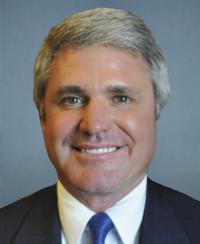 Rep. Michael T. McCaul (R-TX)
Description
Amendment prohibited funds in the bill from being used for any projects named after a sitting Member of Congress.
Legislative Activity
Stay on top of the latest movement without scrolling through every action
Roll call votes on amendments in House
August 1, 2008 • 9:58 AM
View full timeline
Roll call votes on amendments in House
August 1, 2008 • 9:58 AM
Amendment agreed to Committee of the Whole
August 1, 2008 • 9:58 AM
House amendment agreed to: On agreeing to the McCaul (TX) amendment (A012) Agreed to by recorded vote: 329 - 86 (Roll no. 559).(consideration: CR H7794)
August 1, 2008 • 9:58 AM
On agreeing to the McCaul (TX) amendment (A012) Agreed to by recorded vote: 329 - 86 (Roll no. 559). (consideration: CR H7794)
August 1, 2008 • 9:58 AM
House amendment offered
July 31, 2008
House amendment offered/reported by : Amendment (A012) offered by Mr. McCaul (TX).(consideration: CR 8/1/2008 H7764; text: CR 8/1/2008 H7764)
July 31, 2008 • 11:43 PM
Amendment (A012) offered by Mr. McCaul (TX). (consideration: CR 8/1/2008 H7764; text: CR 8/1/2008 H7764)
July 31, 2008 • 11:43 PM
Votes
1 roll call on this amendment
Text
Offered
MILITARY CONSTRUCTION AND VETERANS AFFAIRS APPROPRIATIONS ACT, 2009

The Committee resumed its sitting.

{time}  2200

The Acting CHAIRMAN. The Clerk will read.
The Clerk read as follows:

Departmental Administration

general operating expenses

For necessary operating expenses of the Department of
Veterans Affairs, not otherwise provided for, including
administrative expenses in support of Department-Wide capital
planning, management and policy activities, uniforms, or
allowances therefor; not to exceed $25,000 for official
reception and representation expenses; hire of passenger
motor vehicles; and reimbursement of the General Services
Administration for security guard services, and the
Department of Defense for the cost of overseas employee mail,
$1,801,867,000: Provided, That expenses for services and
assistance authorized under paragraphs (1), (2), (5), and
(11) of section 3104(a) of title 38, United States Code, that
the Secretary of Veterans Affairs determines are necessary to
enable entitled veterans: (1) to the maximum extent feasible,
to become employable and to obtain and maintain suitable
employment; or (2) to achieve maximum independence in daily
living, shall be charged to this account: Provided further,
That the Veterans Benefits Administration shall be funded at
not less than $1,473,753,000: Provided further, That of the
funds made available under this heading, not to exceed
$75,000,000 shall be available for obligation until September
30, 2010: Provided further, That from the funds made
available under this heading, the Veterans Benefits
Administration may purchase (on a one-for-one replacement
basis only) up to two passenger motor vehicles for use in
operations of that Administration in Manila, Philippines.

information technology systems

For necessary expenses for information technology systems
and telecommunications support, including developmental
information systems and operational information systems;
including pay and associated cost; for the capital asset
acquisition of information technology systems, including
management and related contractual costs of said
acquisitions, including contractual costs associated with
operations authorized by section 3109 of title 5, United
States Code, $2,492,066,000, plus reimbursements, to be
available until September 30, 2010: Provided, That none of
these funds may be obligated until the Department of Veterans
Affairs submits to the Committees on Appropriations of both
Houses of Congress, and such Committees approve, a plan for
expenditure that: (1) meets the capital planning and
investment control review requirements established by the
Office of Management and Budget; (2) complies with the
Department of Veterans Affairs enterprise architecture; (3)
conforms with an established enterprise life cycle
methodology; and (4) complies with the acquisition rules,
requirements, guidelines, and systems acquisition management
practices of the Federal Government: Provided further, That
within 30 days of enactment of this Act, the Secretary of
Veterans Affairs shall submit to the Committees on
Appropriations of both Houses of Congress a reprogramming
base letter which provides, by project, the costs included in
this appropriation.

Amendment No. 11 Offered by Mr. Garrett of New Jersey

Mr. GARRETT of New Jersey. Mr. Chairman, I have an amendment at the
desk.
The Acting CHAIRMAN. Is there objection to returning to that point in
the reading?
There was no objection.
The Acting CHAIRMAN. The Clerk will designate the amendment.
The text of the amendment is as follows:

Amendment No. 11 offered by Mr. Garrett of New Jersey:
Page 36, line 5, after the dollar amount, insert ``(reduced
by $18,018,000)''.
Page 41, line 22, after the dollar amount, insert
``(increased by $18,018,000)''.

The Acting CHAIRMAN. The gentleman is recognized for 5 minutes.
Mr. GARRETT of New Jersey. Mr. Chairman, I often come to the floor,
and I often preface my remarks when I have an amendment, saying that I
come to the floor tonight with a commonsense amendment. Quite candidly,
I think that is more than apropos when I speak about what I'm here to
speak about tonight.
My amendment simply does this: It seeks to increase the funds for
State veterans homes, and it does so in the amount of $18 million. From
where does it get the money? Well, it does so by reducing the
administrative expenses by a mere less than 1 percent, and that's a
critical number, less than 1 percent. We believe that within that over
billion dollar line that there is more than enough aptitude for going
in and for finding less than 1 percent of additional funds that we
could take out and put to a worthy cause such as toward our State
veterans homes.
Today, there are 126 State extended care facilities. They're extended
across all 50 States and in Puerto Rico as well. These veterans homes
care for nearly 30,000 of our Nation's heroes. The number of veterans
requiring care will continue to increase as servicemembers return from
Iraq and Afghanistan.
Currently, there is a backlog, a huge, extensive backlog of projects
waiting for funds. Now, many of these projects on this waiting list are
critical for providing veterans with a healthy and secure environment.
In fact, of the almost 200 projects waiting for Federal funds, nearly
half of them are classified as priority 1.

[[Page H7750]]

I believe it is our duty to see that these facilities are able to
provide the highest quality of care for the lives of those who have
made the sacrifices for our Nation. After all, you can't really just
call these things ``institutions'' anymore. These really are the homes
where our veterans will spend out the days of their lives.
The staffs of these homes work hard to honor our veterans and to
ensure that their last years are spent in comfort. I've had the
pleasure now of working with folks back at the Paramus Veterans Home in
my district in Bergen County, New Jersey. I've frequently visited with
them and with their relatives who would come and visit, and local
veterans organizations around the area would also come in, and they
would work with them. These service organizations have worked hard to
raise matching funds for these types of essential projects at these
facilities. Likewise, they do across the Nation and, I'm sure, in each
of your districts as well.
I would also like to make one other point. That is, in the Senate
bill, in the Senate MilCon-VA Appropriations bill, they designate
$1.779 billion for general operating expenses while the House version
designates $1.801 billion. So we appropriate a little bit more than the
Senate does. So that 1 percent cut from the appropriations line for the
general operating expenses would still leave more money in the final
version of the bill than the Senate version currently has. We know we
have different numbers here so that, when it gets to conference, those
numbers have to come into an equilibrium of some sense. We're up here.
The Senate is over here. This will bring us closer to that equilibrium.
In addition, our colleagues over on the Senate Appropriations
Committee have approved $250 million for the State veterans homes while
the House budget only puts in $165 million. So my amendment would
simply reduce this discrepancy by increasing the funding for State
veterans homes by $18 million. In other words, we're in the House at
$165 million. The Senate is at $250 million. We're just trying to bring
the House number up a little bit closer to where the Senate is, which
probably will happen once it gets into conference committee, because
those numbers have to work together.
So I'm just suggesting that a tiny, less than 1 percent cut in the
administrative operations would allow us to provide our country's
heroes with a better quality of life, and I think that's what we owe
all of them. I hope that we can find a way to work together across the
aisle to honor our vets and to make sure that they receive excellent
care in all of their facilities.
I yield back the balance of my time.
Mr. EDWARDS of Texas. Mr. Chairman, I rise in opposition to this
amendment.
The Acting CHAIRMAN. The gentleman is recognized for 5 minutes.
Mr. EDWARDS of Texas. Let me begin by saying to my colleague from New
Jersey (Mr. Garrett) that I salute his focus on the importance of
increasing the funding for State extended care facilities, long-term
care for America's veterans. That is exactly why, as the chairman of
this subcommittee, I have worked on a bipartisan basis with our other
subcommittee members and with Mr. Wamp, the ranking member, to increase
by 94 percent above President Bush's request of funding for this
program, 94 percent above the President's request. So I have no problem
with the intent of what he is trying to accomplish, because we've been
working on this very issue for months this year, and the bill product
is proof of the success of that effort.
The reason I strongly oppose the gentleman's amendment is that it
would take funding out of the very account that is needed to address
one of our veterans' and veterans service organizations' highest
priorities in the entire VA budget, and that is to reduce the
unconscionable backlog of veterans who are waiting to have their claims
processed, including a backlog for combat wounded veterans to have
their benefit cases considered.
Right now, there are nearly 400,000 veterans waiting to get their
claims processed. What this amendment would do is take enough money out
of that budget that would require the VA to cut 250 claims processors.
Maybe that sounds like a rounding error to some, but to America's
veterans, to 390,000 of them to be exact who are waiting for the
processing of their benefits they earned by service and even by their
sacrifice to our country, that's a significant cut, and it would do
great harm to one of the highest priorities of our veterans service
organizations.
Mr. GARRETT of New Jersey. Would the gentleman yield at this point?
Mr. EDWARDS of Texas. I'd like to finish first.
So I wish the gentleman would withdraw the amendment and that we
would continue to work in good faith as we already have this year, and
that's evidenced by the 94 percent increase above the President's
request for these.
I cannot go along with cutting funding that could lead to the loss of
250 claims processors that would link them to an already 6-month delay.
For 6 months our veterans are having to wait to get their claims
considered.
Our servicemen and -women, Mr. Chairman, didn't delay when Uncle Sam
sent them to combat. They went to all parts of the Earth and into
harm's way when our country asked them to do so. They didn't ask for a
6-month delay. For the National Guardsmen, the 500 I met last Sunday
afternoon in my hometown of Waco, many of whom are going back to Iraq
for their second and third tours of duty, they didn't wait 6 months
when their country called on them to duty, and I don't think it's right
to ask 390,000 veterans to wait 6 months.
We desperately need to get that waiting time down, and I think,
though well intended and for a good cause--and it is well intended and
it is a good cause--that this amendment that I have strongly supported
could do harm to 390,000 veterans. That's why I rise in strong
opposition to this amendment.
If I have some time remaining, I'd be glad to yield to the gentleman.
Mr. GARRETT of New Jersey. I thank the gentleman for yielding.
It appears that we're on the same page on this, but let me just make
this one suggestion:
While the 250 positions are out there and while there's a waiting
list out there for that group, there's also, as I've suggested, around
200-some-odd projects or more, actually, over half of which are on a
critical category 1 list. So we have two important lists that have long
waiting lists that have to be addressed.
My suggestion is that, if this were to pass and if we were to reduce
the funds by $18 million, there's nothing in the amendment that says to
the administration take the $18 million out of this over $1.4 billion
line and take it from the 250. You and I would have to agree that they
must be able to find some other area to take it from than these 250.
Mr. EDWARDS of Texas. I would point out, Mr. Chairman, the gentleman
never identified where he would cut the money from specifically, and
this is the account that funds our claims processors that are
desperately needed. I'd be happy to continue to work with the gentleman
in a good faith, bipartisan effort to look for every dollar we can find
for extended care facilities, but let's not take that out of the hide
of nearly 400,000 veterans who have been waiting 6 months to get their
benefits started.
I yield back the balance of my time.
The Acting CHAIRMAN. The question is on the amendment offered by the
gentleman from New Jersey (Mr. Garrett).
The question was taken; and the Acting Chairman announced that the
noes appeared to have it.
Mr. GARRETT of New Jersey. Mr. Chairman, I demand a recorded vote.
The Acting CHAIRMAN. Pursuant to clause 6 of rule XVIII, further
proceedings on the amendment offered by the gentleman from New Jersey
will be postponed.
The Acting CHAIRMAN. The Clerk will read.
The Clerk read as follows:

office of inspector general

For necessary expenses of the Office of Inspector General,
to include information technology, in carrying out the
provisions of the Inspector General Act of 1978 (5 U.S.C.
App.), $87,818,000, of which $5,000,000 shall be available
until September 30, 2010.

construction, major projects

For constructing, altering, extending, and improving any of
the facilities, including parking projects, under the
jurisdiction or for the use of the Department of Veterans

[[Page H7751]]

Affairs, or for any of the purposes set forth in sections
316, 2404, 2406, 8102, 8103, 8106, 8108, 8109, 8110, and 8122
of title 38, United States Code, including planning,
architectural and engineering services, construction
management services, maintenance or guarantee period services
costs associated with equipment guarantees provided under the
project, services of claims analysts, offsite utility and
storm drainage system construction costs, and site
acquisition, where the estimated cost of a project is more
than the amount set forth in section 8104(a)(3)(A) of title
38, United States Code, or where funds for a project were
made available in a previous major project appropriation,
$923,382,000, to remain available until expended, of which
$10,000,000 shall be to make reimbursements as provided in
section 13 of the Contract Disputes Act of 1978 (41 U.S.C.
612) for claims paid for contract disputes: Provided, That
except for advance planning activities, including needs
assessments which may or may not lead to capital investments,
and other capital asset management related activities,
including portfolio development and management activities,
and investment strategy studies funded through the advance
planning fund and the planning and design activities funded
through the design fund, including needs assessments which
may or may not lead to capital investments, and funds
provided for the purchase of land for the National Cemetery
Administration through the land acquisition line item, none
of the funds appropriated under this heading shall be used
for any project which has not been approved by the Congress
in the budgetary process: Provided further, That funds
provided in this appropriation for fiscal year 2009, for each
approved project shall be obligated: (1) by the awarding of a
construction documents contract by September 30, 2009; and
(2) by the awarding of a construction contract by September
30, 2010: Provided further, That the Secretary of Veterans
Affairs shall promptly submit to the Committees on
Appropriations of both Houses of Congress a written report on
any approved major construction project for which obligations
are not incurred within the time limitations established
above: Provided further, That none of the funds appropriated
in this or any other Act may be used to reduce the mission,
services, or infrastructure, including land, of the 18
facilities on the Capital Asset Realignment for Enhanced
Services (CARES) list requiring further study, as specified
by the Secretary of Veterans Affairs, without prior approval
of the Committees on Appropriations of both Houses of
Congress:  Provided further, That of the amount appropriated
in this paragraph, $798,852,000 shall be for the site
specific projects, and in the amounts, specified under this
heading in the report of the Committee on Appropriations of
the House of Representatives to accompany this bill.

construction, minor projects

For constructing, altering, extending, and improving any of
the facilities, including parking projects, under the
jurisdiction or for the use of the Department of Veterans
Affairs, including planning and assessments of needs which
may lead to capital investments, architectural and
engineering services, maintenance or guarantee period
services costs associated with equipment guarantees provided
under the project, services of claims analysts, offsite
utility and storm drainage system construction costs, and
site acquisition, or for any of the purposes set forth in
sections 316, 2404, 2406, 8102, 8103, 8106, 8108, 8109, 8110,
8122, and 8162 of title 38, United States Code, where the
estimated cost of a project is equal to or less than the
amount set forth in section 8104(a)(3)(A) of title 38, United
States Code, $991,492,000, to remain available until
expended, along with unobligated balances of previous
``Construction, minor projects'' appropriations which are
hereby made available for any project where the estimated
cost is equal to or less than the amount set forth in such
section: Provided, That funds in this account shall be
available for: (1) repairs to any of the nonmedical
facilities under the jurisdiction or for the use of the
Department which are necessary because of loss or damage
caused by any natural disaster or catastrophe; and (2)
temporary measures necessary to prevent or to minimize
further loss by such causes.

Amendment No. 28 Offered by Mr. Buyer

Mr. BUYER. Mr. Chairman, I have an amendment at the desk.
The Acting CHAIRMAN. The Clerk will designate the amendment.
The text of the amendment is as follows:

Amendment No. 28 offered by Mr. Buyer:

Page 41, line 14, before the period insert ``: Provided
further: That $7,000,000 of the amount appropriated in this
paragraph shall be for the installation of alternative
fueling stations at 35 medical facility campuses''.
The Acting CHAIRMAN. The gentleman from Indiana is recognized for 5
minutes.
Mr. BUYER. Mr. Chairman, I have an amendment that would provide $7
million of the amount appropriated in the Department of Veterans
Affairs' VA Minor Construction account. These moneys shall be used for
the VA to install alternative fueling stations at 35 of its medical
facility campuses across the country. This is one of many measures that
can be taken to address the impact of the rising energy prices and to
alleviate our Nation's dependence on foreign oil.
We have an energy crisis in this country, and unfortunately, some are
not taking action before we leave on this August break. The House will
recess, and we'll go 5 weeks, and we'll not be taking up meaningful
energy legislation, but we have an opportunity tonight.
It was in 2007 that President Bush issued executive order 13423,
``strengthening Federal environment, energy and transportation
management,'' mandating a reduction of the amount of petroleum
consumption for Federal transportation.
In compliance with the President's order, the VA has taken steps to
install E-85, ethanol fueling stations, at six VA medical centers--in
Altoona, Pennsylvania, in Augusta, Georgia, in Cleveland, Ohio, in
Danville, Illinois, in Little Rock, Arkansas, and most recently in San
Francisco, California.
I would think that Speaker Pelosi would want other VA facilities in
other States and members' districts to have the very same fueling
stations that are available at the San Francisco VA medical center in
her own congressional district.
According to the VA, it has nearly 11,000 vehicles that collectively
travel more than 100 million miles a year. The VA acquired over 1,000
Alternative Fuel Vehicles in FY 2007, and 99 percent of these are
flexible fuel vehicles that can use E-85. The installation of
alternative fuel stations at more VA sites would have a huge impact on
the reduction of greenhouse gases and in the amount of petroleum
consumed. Based on recent discussions with the Department, I am
confident that, if funding is provided, the VA could install
alternative fueling stations at the 35 additional sites.
Mr. Edwards knows full well that he is about $662 million above the
President's request and nearly $361 million more than in FY 2008.
So, again, in facing the tremendous energy challenge in this Nation,
we must act collectively in a bipartisan fashion to reduce our
dependence on bad actors around the world that control our energy
supplies. There are more than a dozen alternative and advanced fuels in
production and that used today, one of which is E-85, an 85 percent
ethanol mixture, which in the United States is based primarily on corn.
Investing in the use of alternative transportation fuel services is one
way to help increase the supply of American-made fuel.
I think Mr. Edwards and I would agree we're anxious to get to
nonedible fiber--cellulosic ethanol.
This use of renewable domestic energy sources will contribute to an
enhancement of energy security, and it will reduce the reliance on
foreign oil. The installation of alternative fueling stations on VA
campuses will reduce greenhouse emissions and the VA's gasoline costs,
and it will provide funds for direct health care services for the men
and women who have taken the oath to defend the freedoms and our way of
life.
I urge my colleagues to support the amendment.
I yield to the gentleman.
Mr. EDWARDS of Texas. Let me just commend Mr. Buyer for not only his
leadership on veterans affairs over the years but for this amendment. I
think this is a reasonable, responsible amendment, and I'll be glad to
support it.
Mr. BUYER. I thank the gentleman.
I yield back the balance of my time.

{time}  2215

The Acting CHAIRMAN. The question is on the amendment offered by the
gentleman from Indiana (Mr. Buyer).
The amendment was agreed to.
Mr. WAMP. Mr. Chairman, I move to strike the last word.
The Acting CHAIRMAN. The gentleman from Tennessee is recognized for 5
minutes.
Mr. WAMP. I do want to point out, in follow-up support to the
gentleman's amendment, about how important it is for us to advance
alternative sources just across the board throughout the military. The
Military Construction bill is kind of a small piece, frankly, of the
energy utilization across the entire Department of Defense, but it is
something that we clearly should come together on.

[[Page H7752]]

The military is a tremendous user of energy, we all know that. There
is no question that we can do better there. And this was an excellent
amendment offered by a gentleman who's got just tremendous history here
with the Veterans Committee and a great patriot. So I think we want to
encourage all of those type uses as we move forward.
We're coming together here on the bill tonight, I think we're making
great progress. Over the next 2 to 3 hours I think we can get through
the rest of the sections of this bill. Certain Members are working out
agreements as I speak right now, and so we're trying to draft this
language. And I'm kind of keeping the ball rolling now, as you can
tell, so that we can get this language drafted. I think we're making
the progress that we need tonight.
Mr. Chairman, I yield back the balance of my time.
Mr. BUYER. Mr. Chairman, I move to strike the last word.
The Acting CHAIRMAN. The gentleman from Indiana is recognized for 5
minutes.
Mr. BUYER. I would like to thank Chairman Chet Edwards. I would like
to thank Zach Wamp. And to my good friend from Texas that I've worked
with for many years, we have a challenge in front of us with regard to
an amendment. And the challenge is that I've prepared an amendment that
$150 million, Mr. Chairman, would be dedicated under the minor
construction account--for which there's a lot of dollars here--for the
installation of appropriate solar electric energy roof applications.
Now, we had several meetings, Chairman Edwards, with a lot of
lawyers, and the lawyers were looking at the applications of the rules
and the processes. The interesting thing is, when we drafted the
amendment--we're having the conversation that you said we didn't have
time to do in private, so we're having to do it in public. So I have to
do it now before we actually get into the details of the amendment.
So when I did the amendment, we put it at the end, on page 41 here,
line 14. Now, when I put it there on the applications of solar, my
assumption is that when you then look at all the general authorities,
section 316, that's about colocation authority; section 2404, that's
administration; 2406 is acquisition; 8102 is also acquisition--one is
acquisition of land, 2406; 8102 is acquisition of medical facilities;
8103, that's minor construction. All these other sections have nothing
to do with solar.
So my assumption, Mr. Chairman, when I put this in here, I did not
put at the end of the amendment ``at VA medical facilities.'' My
assumption is that, well, we're not going to put it on tombstones,
we're not going to put it in a parking lot, and it doesn't apply
anywhere else.
But when I talked with the lawyers, they're like, you know, Steve,
you just can't do it like that. And you need to actually have at the
end the words ``at VA medical facilities.'' So now I've got myself in a
bit of a jam.
Now, Mr. Edwards, we can do this several ways: I could offer the
amendment. I could then present all the arguments of solar and what the
VA is presently doing in the 16 sites that they're proceeding with. And
if you say, well, but I don't like the amount, I could do a UC, we
could agree to a particular amount, we could add the language. We go to
conference. If you say, nope, we're not going to have anything, okay.
Well, what could I do? I could look at your language--which is general
language--and say, well, that's fine; whatever you do at conference,
that's fine with me. I'll just go down and I'll work with the
Secretary. I'll negotiate with the Secretary and I'll take whatever
those monies are and we'll do it that way.
But what I want to do with you, Chairman Edwards, is that you and I
have worked together a lot over the years. And you and I are in
agreement when it comes to alternative sources of energy. So let's be
practical. If you want to say to me, Steve, don't do $150 million;
lower the amount, add the language, we'll work this out in conference
and we'll work with the Secretary, that's how we work these things out.
I yield to the gentleman from Tennessee.
Mr. WAMP. Well, I was prepared to perfect your amendment, if it's
ruled in order, with the words ``at VA medical facilities'' to make
sure that it complied with the letter of the law. But I think it's an
outstanding amendment. And I would like to see it see the light of day,
but I understand there may be a point of order reserved.
Mr. BUYER. I would like to reclaim my time and now have a
conversation with the chairman. You said you wanted to have one.
I'm going to give great deference here, which way do you want me to
go?
Mr. EDWARDS of Texas. Well, the gentleman talked a few minutes ago
about how we've worked together; and I think 10 minutes ago was an
example of that where I accepted the gentleman's $7 million amendment.
On this one, I think the gentleman's explanation about all the
problems that have occurred are the perfect reason why I have real
concerns about an amendment that already has technical problems in it,
an amendment that could deal with up to $150 million coming out of
minor construction projects, which are so important for our VA
hospitals and clinics, I think this just isn't the right way to handle
an amendment of that magnitude.
I think the gentleman knows me well; and I will work with him and Mr.
Wamp in all good faith and see, as we go to conference, if there are
places we can find reasonable funding sources for solar applications.
But taking $150 million, for example, would be 15 percent of the VA's
minor construction project. And the very intent of that funding is to
prevent in the VA system what Americans were outraged at in the Army
hospital system at Walter Reed.
Mr. BUYER. Reclaiming my time, when I make the UC to add ``at VA
medical facilities,'' what amount do you feel is reasonable?
The Acting CHAIRMAN. The time of the gentleman from Indiana has
expired.
(By unanimous consent, Mr. Buyer was allowed to proceed for 1
additional minute.)
Mr. BUYER. I yield to the chairman.
Mr. EDWARDS of Texas. And the gentleman's question is what amount is
reasonable?
Mr. BUYER. What amount do you think is reasonable?
Mr. EDWARDS of Texas. Well, what's not reasonable, I would say to the
gentleman, is trying to decide at 10:25 at night an amendment that has
already had technical difficulties, an amendment we haven't had a
hearing on in our subcommittee--we had 20 hearings over 100 hours, this
issue never came up.
So my intention is to object to the unanimous consent request, but in
good faith, just as I showed a few minutes ago on the $7 million
amendment, let's continue to work together and see if we can find a
way. I think having solar panels at VA facilities is something that can
be an excellent idea, but this isn't the way to bring about that
policy.
Mr. BUYER. I reclaim my time. I will offer the amendment, we'll go
through the procedures, we'll talk about solar, and we'll work with you
as we go to conference. If it's not there, I'll just go right down
Pennsylvania Avenue and I'll work with the administration and we'll get
the number necessary to fund the 16 sites. That's how the town works.
The Acting CHAIRMAN. The time of the gentleman has expired.

Amendment No. 29 Offered by Mr. Buyer

Mr. BUYER. Mr. Chairman, I have an amendment at the desk.
The Acting CHAIRMAN. The Clerk will designate the amendment.
The text of the amendment is as follows:

Amendment No. 29 offered by Mr. Buyer:
Page 41, line 14, before the period insert ``: Provided
further: That $150,000,000 of the amount appropriated in this
paragraph shall be for the installation of appropriate solar
electric energy roof applications''.
Mr. EDWARDS of Texas. Mr. Chairman, I reserve a point of order on the
gentleman's amendment.
The Acting CHAIRMAN. A point of order is reserved.
The gentleman from Indiana is recognized for 5 minutes.
Mr. BUYER. Mr. Chairman, my amendment would provide $150 million of
the amount appropriated in the Department of Veterans Affairs minor
construction account for the installation of solar electronic roof
applications.
Qualified solar technologies to be considered included, but not
limited to,

[[Page H7753]]

distributed thin-film solar, amorphous crystalline, nano photovoltaic,
and technology systems. What we're trying to do is harness the energy
of the sun.
Alternative and renewable sources, such as solar power--whether it's
wind, geothermal, hydrogen, biomass--all of these are extremely
important. They play an important role in addressing rising energy
prices and alleviate our Nation's dependence on foreign oil.
We have an energy crisis in this country. Peak oil is approaching
year 2037. We need to rebalance the Nation's portfolio. And in order to
do that, we increase our Nation's energy supply to bridge ourselves
beyond the alternative energy future in which we seek. We must begin to
act and to take decisive measures to address the impact of high energy
costs on the Department of Veterans Affairs.
VA medical centers consume large amounts of energy, especially for
advanced technologies such as CAT scans, MRIs, that are necessary to
provide state-of-the-art medical technologies.
Between 2005 and 2007, VA's energy costs increased by 20 percent.
Last year, the VA identified 16 potential sites for solar projects.
It's in Calverton, New York; Gustine, California; Phoenix, Arizona;
Fresno, California; West Los Angeles, California; Loma Linda,
California; Long Beach, California; Dallas, Texas; Palo Alto,
California; Sheridan, Wyoming; Reno, Nevada; Tucson, Arizona; Syracuse,
New York; Buffalo, New York; West Haven, Connecticut; and Albany, New
York. Yes, I am on the floor asking that we fund 11 Democrat districts
and five Republican.
Last year, when they identified these, they did feasibility studies
with regard to these 16 sites. This summer, the VA plans to move
forward to install rooftop solar systems at two sites, Loma Linda and
Dallas.
Solar technologies, they diversify our energy supply, they reduce our
dependence on imported fuels, improve our air quality, and offset
greenhouse gases.
And I'm also interested that, as we move toward American-made energy
solutions, that we buy solar systems that are made in America, not ones
that are made in China or in Germany or in other places. We should do
it here.
At this point, I would like to clarify the amendment. I ask unanimous
consent that at the end of my amendment, after the word
``applications,'' insert the following: ``At VA medical facilities.''
The Acting CHAIRMAN. Is there objection to the request of the
gentleman from Indiana?
Mr. EDWARDS of Texas. Mr. Chairman, I object.
The Acting CHAIRMAN. Objection is heard.
Mr. BUYER. Mr. Chairman, I ask unanimous consent to strike the amount
of $150 million and insert the amount of $75 million.
The Acting CHAIRMAN. Is there objection to the request of the
gentleman from Indiana?
Mr. EDWARDS of Texas. Yes, I object.
The Acting CHAIRMAN. Objection is heard.
Mr. BUYER. Mr. Chairman, it is important that we continue to invest
now to reduce the energy costs into the future. The opportunity to
employ this technology at the VA, the second largest department within
the Federal Government, is now.
Now, I had hoped that we could have done this tonight. I'll continue
to work with you, Mr. Chairman.
To the country, this isn't a good message to send. I will speak with
the Secretary in the morning. I will work with him. I will let him know
that you're sending down $662 million above the President's request,
$361 million more than FY08. And because he has, right now, these 16
projects, I believe there's more than sufficient funds here to move on
solar applications.
I would have hoped that we could have done this in a bipartisan
fashion; that is really unfortunate. And I will work with the Secretary
to ensure that alternative sources of energy are used in the VA.
With that, I yield back my time.

{time}  2230

Mr. EDWARDS of Texas. Mr. Chairman, I move to strike the last word.
The Acting CHAIRMAN. Does the gentleman continue to reserve his point
of order?
Mr. EDWARDS of Texas. Yes, I do.
The Acting CHAIRMAN. The gentleman is recognized for 5 minutes.
Mr. EDWARDS of Texas. Mr. Chairman, I think anyone who has listened
to this debate over the last few minutes at 10:30 at night understands
this isn't about partisanship at all. But I think what the American
people would object to is going from $150 million to $75 million to
whatever other number that we might pull out of our hat this late in
the evening on a measure that wasn't considered for 1 minute in the 19
hearings we held covering over 100 hours.
I salute the gentleman, my friend and colleague. I salute the
gentleman for his goal of trying to encourage the VA, and I want to
encourage the Department of Defense as well, to use solar energy, to
lessen our energy costs and our dependence upon foreign energy
supplies. That is a worthwhile goal.
But, Mr. Chairman, appropriation bills are about setting priorities.
And let me tell you my priority, and I'm proud to defend this priority.
My priority is that I never want one American veteran to ever have to
live in the unconscionable conditions that Army soldiers had to live in
at Walter Reed Annex 18 last year. The American people were deeply
offended by what they saw.
So our committee has worked on a bipartisan basis in good faith to
see that we plus-up the minor construction accounts in the VA to
provide the kind of renovation so that we don't see that kind of
nightmare occurring in the VA system that occurred in the Army medical
system. And despite the worthiness of the gentleman's goals, even
though it's so late at night and talking about sums such as $150
million, the fact is that loss of money for minor construction could
cause the VA to have to cancel 25 to 30 significant construction
projects to help provide better care, more modernized facilities for
our veterans. So that is why I object to this amendment.
And I do look forward to working with the gentleman. If he wants to
work in good faith, that will be my commitment to him. But it ought to
be on a carefully thought-out process, weighing not only the pluses of
his laudable goals but the minuses of where he would take that money
from. That's the right way to handle the American taxpayers' dollars.
Mr. WAMP. Will the chairman yield?
Mr. EDWARDS of Texas. I yield.
Mr. WAMP. Thank you, Mr. Chairman. I want to compliment you on your
statement. And, again, we are bipartisan partners here. But I would
point out that had we not had the preprinting requirement that was
talked about earlier that we're living under, the fluidity of modifying
amendments or amounts on the floor is part of the way that the
appropriations process works.
We do have a great bill. But the neat thing about appropriations is
when you bring a great bill to the floor, the Members of the House, all
of them, do have the ability to make changes or make improvements or
make suggestions, and, frankly, that is what the gentleman is trying to
do. So I want to make that point, and to say that it's not late. We can
start talking about how late it is, but this bill has been ready for
the floor for 35 days. So as far as I'm concerned, we are not late
tonight. We have got plenty of time to debate these things. So I don't
want to--especially these gentlemen, the chairman and ranking member
from the Veterans Affairs Committee who want to bring these ideas to
the floor on an appropriation bill, that's kind of the nature of an
appropriations process. It is an open process. We do have a great bill.
I don't think it's a perfect bill not subject to amendment by the
Members of the House.
Mr. EDWARDS of Texas. Mr. Chairman, let me just point out that the
Rules Committee allowed any Member to offer any amendment to this bill
with the only request that it be preprinted in the Congressional Record
so the public and veterans organizations could see what those
amendments would be. And this kind of confusion at this time of night
is probably a good example of why that was a smart rule to require that
kind of preprinting.
With that, I yield to the gentleman from Wisconsin.

[[Page H7754]]

Mr. OBEY. I thank the gentleman. Let me simply say I would never
apologize for having a rule which requires all Members of the House to
be aware ahead of time what amendments they will be asked to consider.
It seems to me that the proper time to raise the questions raised by
the gentleman who seeks to offer the amendment is before the bill ever
hits the floor. It seems to me that if the authorizing committee or any
member thereof has some ideas that they would like to see included in
the appropriation bill that the best way to work in the legislative
body is to talk to people ahead of time about it so that we don't have
to make these horseback, half-baked judgments at 10:30 in the evening.
Mr. BUYER. Will the gentleman yield?
Mr. EDWARDS of Texas. Surely.
The Acting CHAIRMAN. The time of the gentleman has expired.

Point of Order

Mr. EDWARDS of Texas. Mr. Chairman, I make a point of order against
the amendment because it provides an appropriation for an unauthorized
program and therefore violates clause 2 of rule XXI.
Clause 2 of rule XXI states in pertinent part:
``An appropriation may not be in order as an amendment for an
expenditure not previously authorized by law.''
Mr. Chairman, the amendment proposes to appropriate funds for a
program that is not authorized. The amendment therefore violates clause
2 of rule XXI, and I ask for a ruling from the Chair.
The Acting CHAIRMAN. Does anyone wish to be heard on the point of
order?
Mr. BUYER. I would like to speak on the point of order.
The Acting CHAIRMAN. The gentleman is recognized.
Mr. BUYER. First, it's very unfortunate that solar would be kicked
out on an attempt of a technicality. Let me go right to the point of
order.
The amendment refers to title 38, U.S. Code, Section 8103. It
provides VA the authority to ``construct'' and ``alter.'' So you can
see that in the very first line; so 8103(a)(1) ``may construct or alter
any medical facility.'' Now, it's any medical facility as the Secretary
considers necessary for use of the site. Section 8101 of title 38,
United States Code, defines the term ``alter'' with respect to medical
facility means to repair, remodel, improve, or extend. So this section
8103 is general authority. Specific authority would come under--and
this is minor construction. So under general authority, the Secretary
has great discretion. With regard to specific authority, it would come
under Section 8104. That would be designations of CBOCs, anything above
$10 million comes under Section 8104.
What I refer to, and this is what the Parliamentarians make sure
everybody has, it's the House Practice guide, the Guide to the Rules,
Precedents, and Procedures of the House. So when I go to page 84, the
authorization from specific statutes in this paragraph, Mr. Chairman,
so this was page 84, and it's entitled under Authorization From
Specific Statutes Or General Existing Law; so what I have done is refer
to the general law, not the specific. This is the general law.
``Authorization for a program may be derived from a specific law
providing authority for that particular program or from a more general
existing law,'' which means organic law, or ``authorizing
appropriations for such programs.''
So what's happened over the years, it's not like the Armed Services
Committee, Chairman Edwards.
Mr. Chairman, we don't bring that annual VA authorization bill. So
what has happened over the decades, Mr. Chairman, is that we have
always relied on the 8103 as the general authority provision.
Now, if you say, well, Steve, when you look at this amendment, when
you look at the amendment, because you don't put ``VA facility'' at the
end, well, then we might interpret that as applications to all other
sections. Mr. Chairman, that's why I said the mistake that was made
was, was that all of these other sections don't even apply to solar.
There's only one of these sections that would apply to solar, and that
is the medical facilities section, and that is the 8103.
So my appeal to you is that by putting this solar amendment here at
the end of the paragraph, there is only one section here in which it
applies to, and that's section 8103.
So when the chairman said you don't have the authorization, I would
appeal to the Chair that general authority exists within the minor
construction statute for us to do this, and that would be my argument
on the point of order.
The Acting CHAIRMAN. Does any other Member wish to be heard?
Mr. EDWARDS of Texas. Mr. Chairman, I would just say briefly I think
the Chair has received plenty of advice on this point of order, and now
I would like to ask for a ruling from the Chair.
The Acting CHAIRMAN. The Chair is prepared to rule.
The proponent of an item of appropriation carries the burden of
persuasion on the question of whether it is supported by an
authorization in law.
Having reviewed the amendment and entertained argument from both
parties on the point of order, the Chair is unable to conclude that the
item of appropriation in question is authorized in law. Specifically,
the amendment is not confined to medical facilities.
The Chair is therefore constrained to sustain the point of order
raised by the gentleman from Texas under clause 2(a) of rule XXI.
Mr. BUYER. I move to appeal the ruling of the Chair.
Mr. Chairman, I will withdraw my motion to appeal the ruling.
The Acting CHAIRMAN. The appeal is withdrawn.
The Clerk will read.
The Clerk read as follows:

grants for construction of state extended care facilities

For grants to assist States to acquire or construct State
nursing home and domiciliary facilities and to remodel,
modify, or alter existing hospital, nursing home, and
domiciliary facilities in State homes, for furnishing care to
veterans as authorized by sections 8131 through 8137 of title
38, United States Code, $165,000,000, to remain available
until expended.

grants for construction of state veterans cemeteries

For grants to assist States in establishing, expanding, or
improving State veterans cemeteries as authorized by section
2408 of title 38, United States Code, $45,000,000, to remain
available until expended.

Administrative Provisions

(including transfer of funds)

Sec. 201.  Any appropriation for fiscal year 2009 for
``Compensation and pensions'', ``Readjustment benefits'', and
``Veterans insurance and indemnities'' may be transferred as
necessary to any other of the mentioned appropriations:
Provided, That before a transfer may take place, the
Secretary of Veterans Affairs shall request from the
Committees on Appropriations of both Houses of Congress the
authority to make the transfer and such Committees issue an
approval, or absent a response, a period of 30 days has
elapsed.

(including transfer of funds)

Sec. 202.  Amounts made available for fiscal year 2009, in
this Act or any other Act, under the ``Medical services'',
``Medical support and compliance'', and ``Medical
facilities'' accounts may be transferred among the accounts
to the extent necessary to implement the restructuring of the
Veterans Health Administration accounts: Provided, That
before a transfer may take place, the Secretary of Veterans
Affairs shall request from the Committees on Appropriations
of both Houses of Congress the authority to make the transfer
and an approval is issued.
Sec. 203.  Appropriations available in this title for
salaries and expenses shall be available for services
authorized by section 3109 of title 5, United States Code,
hire of passenger motor vehicles; lease of a facility or land
or both; and uniforms or allowances therefore, as authorized
by sections 5901 through 5902 of title 5, United States Code.
Sec. 204.  No appropriations in this title (except the
appropriations for ``Construction, major projects'', and
``Construction, minor projects'') shall be available for the
purchase of any site for or toward the construction of any
new hospital or home.
Sec. 205.  No appropriations in this title shall be
available for hospitalization or examination of any persons
(except beneficiaries entitled to such hospitalization or
examination under the laws providing such benefits to
veterans, and persons receiving such treatment under sections
7901 through 7904 of title 5, United States Code, or the
Robert T. Stafford Disaster Relief and Emergency Assistance
Act (42 U.S.C. 5121 et seq.)), unless reimbursement of the
cost of such hospitalization or examination is made to the
``Medical services'' account at such rates as may be fixed by
the Secretary of Veterans Affairs.
Sec. 206.  Appropriations available in this title for
``Compensation and pensions'', ``Readjustment benefits'', and
``Veterans insurance and indemnities'' shall be available for
payment of prior year accrued obligations required to be
recorded by law against the corresponding prior year accounts
within the last quarter of fiscal year 2008.

[[Page H7755]]

Sec. 207.  Appropriations available in this title shall be
available to pay prior year obligations of corresponding
prior year appropriations accounts resulting from sections
3328(a), 3334, and 3712(a) of title 31, United States Code,
except that if such obligations are from trust fund accounts
they shall be payable only from ``Compensation and
pensions''.

(including transfer of funds)

Sec. 208.  Notwithstanding any other provision of law,
during fiscal year 2009, the Secretary of Veterans Affairs
shall, from the National Service Life Insurance Fund (38
U.S.C. 1920), the Veterans' Special Life Insurance Fund (38
U.S.C. 1923), and the United States Government Life Insurance
Fund (38 U.S.C. 1955), reimburse the ``General operating
expenses'' and ``Information technology systems'' account for
the cost of administration of the insurance programs financed
through those accounts: Provided, That reimbursement shall be
made only from the surplus earnings accumulated in such an
insurance program during fiscal year 2009 that are available
for dividends in that program after claims have been paid and
actuarially determined reserves have been set aside: Provided
further, That if the cost of administration of such an
insurance program exceeds the amount of surplus earnings
accumulated in that program, reimbursement shall be made only
to the extent of such surplus earnings: Provided further,
That the Secretary shall determine the cost of administration
for fiscal year 2009 which is properly allocable to the
provision of each such insurance program and to the provision
of any total disability income insurance included in that
insurance program.
Sec. 209.  Amounts deducted from enhanced-use lease
proceeds to reimburse an account for expenses incurred by
that account during a prior fiscal year for providing
enhanced-use lease services, may be obligated during the
fiscal year in which the proceeds are received.

(including transfer of funds)

Sec. 210.  Funds available in this title or funds for
salaries and other administrative expenses shall also be
available to reimburse the Office of Resolution Management of
the Department of Veterans Affairs and the Office of
Employment Discrimination Complaint Adjudication under
section 319 of title 38, United States Code, for all services
provided at rates which will recover actual costs but not
exceed $34,158,000 for the Office of Resolution Management
and $3,278,000 for the Office of Employment and
Discrimination Complaint Adjudication: Provided, That
payments may be made in advance for services to be furnished
based on estimated costs: Provided further, That amounts
received shall be credited to ``General operating expenses''
and ``Information technology systems'' for use by the office
that provided the service.
Sec. 211.  No appropriations in this title shall be
available to enter into any new lease of real property if the
estimated annual rental is more than $300,000 unless the
Secretary submits a report which the Committees on
Appropriations of both Houses of Congress approve within 30
days following the date on which the report is received.
Sec. 212.  No funds of the Department of Veterans Affairs
shall be available for hospital care, nursing home care, or
medical services provided to any person under chapter 17 of
title 38, United States Code, for a non-service-connected
disability described in section 1729(a)(2) of such title,
unless that person has disclosed to the Secretary of Veterans
Affairs, in such form as the Secretary may require, current,
accurate third-party reimbursement information for purposes
of section 1729 of such title: Provided, That the Secretary
may recover, in the same manner as any other debt due the
United States, the reasonable charges for such care or
services from any person who does not make such disclosure as
required: Provided further, That any amounts so recovered for
care or services provided in a prior fiscal year may be
obligated by the Secretary during the fiscal year in which
amounts are received.

(including transfer of funds)

Sec. 213.  Notwithstanding any other provision of law, at
the discretion of the Secretary of Veterans Affairs, proceeds
or revenues derived from enhanced-use leasing activities
(including disposal) may be deposited into the
``Construction, major projects'' and ``Construction, minor
projects'' accounts and be used for construction (including
site acquisition and disposition), alterations, and
improvements of any medical facility under the jurisdiction
or for the use of the Department of Veterans Affairs. Such
sums as realized are in addition to the amount provided for
in ``Construction, major projects'' and ``Construction, minor
projects''.
Sec. 214.  Amounts made available under ``Medical
services'' are available--
(1) for furnishing recreational facilities, supplies, and
equipment; and
(2) for funeral expenses, burial expenses, and other
expenses incidental to funerals and burials for beneficiaries
receiving care in the Department.

(including transfer of funds)

Sec. 215.  Such sums as may be deposited to the Medical
Care Collections Fund pursuant to section 1729A of title 38,
United States Code, may be transferred to ``Medical
services'', to remain available until expended for the
purposes of that account.
Sec. 216.  Notwithstanding any other provision of law, the
Secretary of Veterans Affairs shall allow veterans who are
eligible under existing Department of Veterans Affairs
medical care requirements and who reside in Alaska to obtain
medical care services from medical facilities supported by
the Indian Health Service or tribal organizations. The
Secretary shall: (1) limit the application of this provision
to rural Alaskan veterans in areas where an existing
Department of Veterans Affairs facility or Veterans Affairs-
contracted service is unavailable; (2) require participating
veterans and facilities to comply with all appropriate rules
and regulations, as established by the Secretary; (3) require
this provision to be consistent with Capital Asset
Realignment for Enhanced Services activities; and (4) result
in no additional cost to the Department of Veterans Affairs
or the Indian Health Service.

(including transfer of funds)

Sec. 217.  Such sums as may be deposited to the Department
of Veterans Affairs Capital Asset Fund pursuant to section
8118 of title 38, United States Code, may be transferred to
the ``Construction, major projects'' and ``Construction,
minor projects'' accounts, to remain available until expended
for the purposes of these accounts.
Sec. 218.  None of the funds available to the Department of
Veterans Affairs, in this Act, or any other Act, may be used
to replace the current system by which the Veterans
Integrated Services Networks select and contract for diabetes
monitoring supplies and equipment.
Sec. 219.  None of the funds made available in this title
may be used to implement any policy prohibiting the Directors
of the Veterans Integrated Services Networks from conducting
outreach or marketing to enroll new veterans within their
respective Networks.
Sec. 220.  The Secretary of Veterans Affairs shall submit
to the Committees on Appropriations of both Houses of
Congress a quarterly report on the financial status of the
Veterans Health Administration.

(including transfer of funds)

Sec. 221.  Amounts made available under the ``Medical
services'', ``Medical support and compliance'', ``Medical
facilities'', ``General operating expenses'', and ``National
Cemetery Administration'' accounts for fiscal year 2009, may
be transferred to or from the ``Information technology
systems'' account: Provided, That before a transfer may take
place, the Secretary of Veterans Affairs shall request from
the Committees on Appropriations of both Houses of Congress
the authority to make the transfer and an approval is issued.
Sec. 222.  Amounts made available for the ``Information
technology systems'' account may be transferred between
projects: Provided, That no project may be increased or
decreased by more than $1,000,000 of cost prior to submitting
a request to the Committees on Appropriations of both Houses
of Congress to make the transfer and an approval is issued,
or absent a response, a period of 30 days has elapsed.

(including transfer of funds)

Sec. 223.  Any balances in prior year accounts established
for the payment of benefits under the Reinstated Entitlement
Program for Survivors shall be transferred to and merged with
amounts available under the ``Compensation and pensions''
account, and, hereinafter, receipts that would otherwise be
credited to the accounts established for the payment of
benefits under the Reinstated Entitlement Program for
Survivors program shall be credited to amounts available
under the ``Compensation and pensions'' account.
Sec. 224.  Section 1710(f)(2)(B) of title 38, United States
Code, is amended by striking ``September 30, 2008,'' and
inserting ``September 30, 2009,''.
Sec. 225.  Section 1729(a)(2)(E) of title 38, United States
Code, is amended by striking ``October 1, 2008,'' and
inserting ``October 1, 2009,''.

Mr. EDWARDS of Texas (during the reading). Mr. Chairman, I ask
unanimous consent that the remainder of title II be considered as read,
printed in the Record, and open to amendment at any point.
The CHAIRMAN. Is there objection to the request of the gentleman from
Texas?
There was no objection.

Parliamentary Inquiry

Mr. WAMP. Mr. Chairman, point of parliamentary inquiry.
The Acting CHAIRMAN. The gentleman will state his point of inquiry.
Mr. WAMP. Will you restate how far you've read?
The Acting CHAIRMAN. Page 51, line 11.
Mr. WAMP. No objection.
The Acting CHAIRMAN. Are there any amendments?

Amendment No. 9 Offered by Ms. Jackson-Lee of Texas

Ms. JACKSON-LEE of Texas. Mr. Chairman, I have an amendment at the
desk.
The Acting CHAIRMAN. The Clerk will designate the amendment.
The text of the amendment is as follows:

Amendment No. 9 offered by Ms. Jackson-Lee of Texas:

[[Page H7756]]

At the end of title II (page 51, after line 11), insert the
following new section:
Sec. 226. (a) The Secretary of Veterans Affairs shall
increase the number of medical centers specializing in post-
traumatic stress disorder in underserved urban areas, which
shall include using the services of existing health care
entities, pursuant to the authority in section 1703 of title
38, United States Code.
(b) At least one of the existing health care institutions
used by the Secretary pursuant to subsection (a) shall be--
(1) located in an area defined as a HUBzone (as that term
is defined in section 3(p) of the Small Business Act (15
U.S.C. 632(p)) on the basis of one or more qualified census
tracts;
(2) located within a State that has sustained more than
five percent of the total casualties suffered by the United
States Armed Forces in Operation Enduring Freedom and
Operation Iraqi Freedom; and
(3) have at least 7 years experience and significant
expertise in providing treatment and counseling services with
respect to substance abuse, alcohol addiction, and
psychiatric or stress-related disorders to populations with
special needs, including veterans and members of the Armed
Forces serving on active duty.

Mr. EDWARDS of Texas. Mr. Chairman, I reserve a point of order on the
gentlewoman's amendment.
The Acting CHAIRMAN. The point of order is reserved.
The gentlewoman from Texas is recognized for 5 minutes.
Ms. JACKSON-LEE of Texas. Mr. Chairman, I rise to offer and withdraw
an amendment on this particular bill.
The amendment has to do with the Secretary of Veterans Affairs,
calling upon them to increase the number of medical centers
specializing in posttraumatic stress disorder in underserved urban
areas, which shall include using the services of existing health care
entities pursuant to the authority in section 1703.
This particular amendment has to do with ensuring the cooperation
with existing health care institutions used by the Secretary pursuant
to subsection (a).
I would like to see these facilities located in an area defined as a
HUBZone and as well in an area that covers rural areas. I would like to
see, according to my amendment, that these facilities would be located
within a State that has sustained more than 5 percent of the total
casualties suffered by the United States Armed Forces in Operation
Enduring Freedom and Operation Iraqi Freedom.

{time}  2245

I am very pleased that, under the leadership of Chairman Edwards,
longstanding leadership, that the legislation that we have before us
includes more dollars for mental health and substance abuse, and as
well some $3.8 billion, and also it includes $200 million to address
the question of fee-based services in the Veterans' Affairs medical
system. It also has additional money, $5 billion, for medical
facilities and $165 million for extended care.
My amendment was to recognize the plain facts of combat, as we have
seen more and more soldiers coming back from Iraq and Afghanistan
wounded not only physically but mentally. Most of these soldiers have
seen--94 percent of the soldiers in Iraq have reported receiving small
arms fire, 86 percent of soldiers in Iraq reported knowing someone who
was seriously injured. Some similar numbers we are finding in
Afghanistan because we have seen an increased amount of combat in
Afghanistan.
And so, Mr. Chairman, my concern is to ensure that we have the right
kind of facilities for our soldiers that are returning. So I offer this
amendment because I thought it was very important to include hospitals
like Riverside General Hospital, the only historically black hospital I
believe remaining in the United States, founded and organized by a
World War II veteran, or family of a World War II soldier.
I would hope that as we move toward the conference, since this
amendment is now being withdrawn as I conclude my remarks, I am hoping
that we will be able to work with the committee and ensure that we have
the opportunity to make this work.
I'd like to yield to the chairman, if I could. I'd like to yield to
the gentleman about the amendment that I have that has to do with
providing post-traumatic stress disorder facilities in collaboration
with existing facilities.
I think this is a good amendment. I am offering and withdrawing it in
cooperation with the committee. I won't go down to 1600 Pennsylvania
and work with the White House, but I would like to work with this
committee and this chairman, and thank him for his leadership, as well
as Chairman Filner, who has been more than powerful, if you will, on
the issues of veterans.
This has to do with putting these facilities in historically
underserved areas and, as I indicated to you, Riverside Hospital has an
initial grant. We are having some difficulty in making sure they get
their moneys from the last time. But I think we need more of these
facilities.
I yield to the gentleman.
Mr. EDWARDS of Texas. I want to thank the gentlewoman from Texas, my
colleague. She has been a champion for fighting for more funding in the
VA for mental health care services for our veterans. Because of that,
and the support of others in this House, which she has been a real
leader in this effort, we will have added $900 million above the last
year funding level for specialty mental health care services for our
veterans.
The VA will have a great deal of discretion in how to spend that
money. I would imagine the importance of the VA health care center in
Houston and the number of veterans there, that it should be one of the
beneficiaries of this funding.
I know because of this being an appropriation bill, there were
technical reasons why there was a point of order that potentially
lodged against this amendment. But that point of order will not keep us
from working closely together to fulfill your goal of seeing that we
have first-class quality mental health care services for veterans in
underserved areas and urban areas across our country.
Ms. JACKSON-LEE of Texas. If I could reclaim my time and say that the
underpinnings of this amendment has to do with existing satellite
facilities such as Riverside Hospital that could be in collaboration. I
would be very grateful if I could work with the chairman and full
committee, and I want to acknowledge the chairman of the full committee
in looking at that as we go into conference, as to whether or not we
can at least ensure that those facilities will be looked at.
Mr. EDWARDS of Texas. We look forward to that.
Ms. JACKSON-LEE of Texas. Thank you very much.
Mr. Chairman, I rise to speak in support of the bill and in favor of
my amendment. I also rise to express my sincere appreciation to Mr.
Edwards, the chairman of the Appropriations Subcommittee on Veterans
Affairs and Military Construction, and the Chairman of the Veterans
Affairs Committee, Mr. Filner, for all they have done and continue to
do to make real President Lincoln's admonition that ``we care for him
who has borne the battle, and for his widow and orphan.''
In particular, I wish to commend Chairman Edwards, for the
leadership, commitment, and foresight he has demonstrated on the issue
of PTSD and the overall mental health of our nation's veterans. Like
Mr. Edwards and Mr. Filner, I am committed to improving the lives of
thousands of veterans who have risked their lives for our nation, and I
believe my amendment plays a crucial role in ensuring that veterans
suffering from PTSD receive the medical treatment they desperately
need.
Mr. Chairman, thank you for this opportunity to explain my amendment
to H.R. 6599, the ``Veterans Affairs and Military Construction
Appropriations Act for Fiscal Year of 2009.'' As a Member of Congress
from Texas, a state which has sustained more casualties in the ongoing
conflicts in Afghanistan and Iraq than all but one other, I am pleased
to offer this amendment. This amendment is intended to address the
urgent need for more post-traumatic stress disorder (PTSD) treatment
and counseling facilities servicing veterans living in some of the more
distressed areas of our country.
Mr. Chairman, according to Webster's, dignity is ``the quality or
condition of being esteemed, honored or worthy.'' We can never do
enough to honor our wounded veterans. Studies have shown that 30
percent of troops deployed to Iraq suffer from depression, anxiety, or
post-traumatic stress disorder (PTSD). However, when wounded troops
return home, the treatment they receive is more befitting a second
class citizen than a hero. This is a shame and a great stain on our
nation.
How these problems could be overlooked or neglected by this
Administration is unfathomable. The very leaders that these brave young
men and women rely let them down. The message that incidents like
Walter Reed Medical Center sends to our troops is

[[Page H7757]]

that we do not care enough. But that is not the message we wish to
send. The Veterans Administration and Military Construction
Appropriations Act of 2009, H.R. 6599, will go a long away toward
correcting this misapprehension. All Members of the House are indebted
to our colleague, Mr. Edwards of Texas, for his masterful leadership in
shepherding this landmark legislation to the House floor. For the more
than 29,000 brave men and women who have been wounded in Iraq and
Afghanistan, help is on the way. And the over 4,000 heroes who have
given the last full measure of devotion will always be in our hearts
and prayers.

Mr. Chairman, my amendment requires the Secretary of Veterans Affairs
to increase the number of medical facilities specializing in post-
traumatic stress disorder located in underserved urban areas. Access to
post-traumatic stress disorder treatment is especially important since
veterans living in such areas are less likely to be diagnosed and
treated for post-traumatic stress disorder.
Mr. Chairman, PTSD is one of the most prevalent and devastating
psychological wounds suffered by the brave men and women fighting in
far off lands to defend the values and freedom we hold dear.
For those of us whose daily existence is not lived in harm's way, it
is difficult to imagine the horrific images that American servicemen
and women deployed in Iraq, Afghanistan, and other theaters of war see
on a daily basis. In an instant a suicide bomber, an IED, or an
insurgent can obliterate your best friend and right in front of your
face. Yet, you are trained and expected to continue on with the
mission, and you do, even though you may not even have reached your
20th birthday.
But there always comes a reckoning. And it usually comes after the
stress and trauma of battle is over and you are alone with your
thoughts and memories. And the horror of those desperate and dangerous
encounters with the enemy and your own mortality come flooding back.
PTSD was first brought to public attention in relation to war
veterans, but it can result from a variety of traumatic incidents, such
as mugging, rape, torture, being kidnapped or held captive, child
abuse, car accidents, train wrecks, plane crashes, bombings, or natural
disasters such as floods or earthquakes.
People with PTSD may startle easily, become emotionally numb
(especially in relation to people with whom they used to be close),
lose interest in things they used to enjoy, have trouble feeling
affectionate, be irritable, become more aggressive, or even become
violent. They avoid situations that remind them of the original
incident, and anniversaries of the incident are often very difficult.
PTSD symptoms seem to be worse if the event that triggered them was
deliberately initiated by another person, as in a mugging or a
kidnapping. Most people with PTSD repeatedly relive the trauma in their
thoughts during the day and in nightmares when they sleep. These are
called flashbacks. Flashbacks may consist of images, sounds, smells, or
feelings, and are often triggered by ordinary occurrences, such as a
door slamming or a car backfiring on the street. A person having a
flashback may lose touch with reality and believe that the traumatic
incident is happening all over again.
Mr. Chairman, the fact of the matter is that most veterans with PTSD
also have other psychiatric disorders, which are a consequence of PTSD.
These veterans have co-occurring disorders, which include depression,
alcohol and/or drug abuse problems, panic, and/or other anxiety
disorders.
The current conflicts in Afghanistan and Iraq are the most continuous
combat operations since Vietnam. Soldiers in Iraq are at risk for being
killed or wounded themselves, are likely to have witnessed the
suffering of others, and may have participated in killing or wounding
others as part of combat operations. All of these activities have a
demonstrated association with the development of PTSD. One study
indicated that 94 percent of soldiers in Iraq reported receiving small-
arms fire. In addition, 86 percent of soldiers in Iraq reported knowing
someone who was seriously injured or killed, 68 percent reported seeing
dead or seriously injured Americans, and 51 percent reported handling
or uncovering human remains. The majority, 77 percent of soldiers
deployed to Iraq reported shooting or directing fire at the enemy, 48
percent reported being responsible for the death of an enemy combatant,
and 28 percent reported being responsible for the death of a
noncombatant.
My amendment recognizes that these soldiers are first and foremost,
human. They carry their experiences with them. Ask a Vietnam Veteran
about the frequency of nightmares they experience, and one will realize
that serving in the Armed Forces leaves a lasting impression, whether
good or bad. My amendment ensures that ``no soldier is left behind.''
By directing the Secretary of Veterans Affairs to increase the number
of medical facilities specializing in PTSD that are located in
underserved urban areas, and conducting a concurrent study on
increasing access to PTSD treatment at these facilities those soldiers
will never feel forgotten or taken for granted. These soldiers can be
certain that Members of Congress will ensure that they receive the
necessary treatment to guarantee that their adjustment back into
society is a successful one.
As the war in Iraq continues to drag on, and with our country
continuing to send military personnel to Afghanistan, the military has
been overwhelmed with returning soldiers suffering from mental health
problems. Earlier this month, Col. Elspeth Ritchie, psychiatry
consultant to the Army surgeon general, stated ``as the war has gone
on, PTSD and other psychological effects of war have increased. The
number of (mental health workers) that was adequate for a peacetime
military is not adequate for a nation that's been at war.''
Mr. Chairman, according to surveys conducted of troops in Iraq, 15-20
percent of Army soldiers have demonstrated signs of post-traumatic
stress. Symptoms of this serious disorder include nightmares,
flashbacks, emotional detachment, dissociation, insomnia, loss of
appetite, memory loss, clinical depression, and anxiety. One year after
returning from combat, approximately 35 percent of soldiers are seeking
some kind of mental health treatment. Among soldiers still stationed in
Iraq and Afghanistan, many incidents of abuse, including killings and
rapes by U.S. soldiers, have been attributed to ethics lapses caused by
the strain of combat.
Mr. Chairman, last Thursday, the Department of Defense released a
report that stated ``current efforts fall significantly short'' in
providing help for troops. Further, this report found that ``[t]he
psychological health needs of America's military service members, their
families and their survivors pose a daunting and growing challenge to
the Department of Defense.''
I urge adoption of my amendment. And I thank the Chairman for his
fine work in bringing this exceptional legislation to the House floor
where it should receive an overwhelmingly favorable vote.
Ms. JACKSON-LEE of Texas. I ask again, Mr. Chairman, unanimous
consent at this time to withdraw the amendment, but keeping in mind
that veterans and returning soldiers need service and they need to have
the kind of service for PTSD. And I hope that we will be able to
accomplish that.
The Acting CHAIRMAN. Without objection, the amendment is withdrawn.
There was no objection.

Amendments No. 18 and 19 Offered by Mr. Filner

Mr. FILNER. Mr. Chairman, I ask unanimous consent to consider my
amendments 18 and 19 en bloc for the purpose of debate.
The Acting CHAIRMAN. Without objection, the Clerk will designate the
amendments.
There was no objection.
The text of the amendments is as follows:

Amendment No. 18 offered by Mr. Filner:
At the end of title II of the bill, (page 51, after line
11), add the following new section:
Sec. 226.  Appropriations made available in this title for
``Medical services'' shall be used by the Secretary of
Veterans Affairs, in an amount not to exceed $250,000,000, to
establish a community grant program to provide rehabilitative
services to veterans and servicemembers with post-traumatic
stress disorder or traumatic brain injury. The Secretary of
Veterans Affairs may enter into cooperative agreements with
States and localities in order to inform veterans and
servicemembers of programs and benefits under this grant
program.
Amendment No. 19 offered by Mr. Filner:
At the end of title II of the bill (page 51, after line
11), add the following new section:
Sec. 226.  Appropriations made available in this title for
``Medical services'' shall be used by the Secretary of
Veterans Affairs, in an amount not to exceed $10,000,000, to
establish, in cooperation with the Secretary of Defense, a
heroes' homecoming pilot program to evaluate the
effectiveness of offering compulsory screening, evaluation,
and when indicated, treatment for mental health conditions
such as post-traumatic stress disorder, and traumatic brain
injury, to servicemembers (and immediate family members)
returning from deployment and those recently discharged.
Mr. EDWARDS of Texas. Mr. Chairman, I reserve a point of order.
The Acting CHAIRMAN. The point of order is reserved.
The gentlemen from California is recognized for 5 minutes.
Mr. FILNER. Mr. Chairman, as the chairman of the Authorizing
Committee, the House Veterans' Affairs Committee, I want to thank
Chairman Edwards, Chairman Obey, and his ranking members, for giving us
this bill and a whole series of bills that preceded this since our
party has taken over the majority of this body.
Not only have we for the first time with fiscal years 2008 and 2009
exceeded

[[Page H7758]]

the budget requests in the so-called independent budget, which is put
together by veterans' groups for veterans, and for the first time we
exceeded them 2 years in a row. Not only that, but with the fiscal year
2007, which we had to pick up, and several supplemental bills which we
had to pass, we have added, in my calculation, over $17 million worth
of new money for the health care of our veterans, which is an
unprecedented 40 percent increase since Chairman Edwards and Chairman
Obey have been chairmen of those committees. That is incredible.
We have put resources in place to do the job for our veterans, but
the Veterans Administration doesn't always do what we intend, or do it
with the efficiency that we would like. Many of you have heard the
horror stories of young people going to medical centers, asking for
PTSD help, post-traumatic stress disorder, being told that they can't
get an appointment for 5 or 6 weeks, going home and committing suicide.
We have had the Secretary of the VA tell me, when I said, Aren't a
thousand suicide attempts per month by our veterans a concern? He said,
No. It's consistent with the literature. We have had a Secretary, Under
Secretary of Defense say that 300,000 PTSD victims of our forces in
Iraq and 320,000 victims of brain injury were not a problem because
those were just symptoms of those injuries. They didn't really exhibit
full-blown PTSD or full-blown traumatic brain injury and therefore they
weren't concerned about it. So their concern, Mr. Chairman, has not
always equaled our commitment here.
My two amendments would try to have dealt with that in a way that I
hope and I know the chairman will work with me in the future.
Do you know that tens of thousands of our young people leave Iraq and
Afghanistan, whether they are in the active duty or the Reserves or the
National Guard, without any evaluation by medical personnel for either
PTSD or brain injury?
We have to do something about that, Mr. Chairman. I have proposed,
and we will work with you as we authorize what I am calling a Hero's
Homecoming camp, to say that every soldier with his or her company,
with his or her family, will be evaluated by medical personnel for
brain injury and PTSD, and before they are discharged from the service.
I had asked for $10 million to cooperate with the DOD to do that.
In addition, one of the chief weaknesses of the Veterans
Administration is they don't like outside help. They don't ask for
community support. All over this country, people want to help our
troops. So I have asked at some point for $250 million for community
grants to help our soldiers in their own communities who have mental
health and other injuries for their treatment and rehabilitation.
This is something I think we have to do, Mr. Chairman. I know you
agree with me in principle. I know this is not the time and place to
debate that or put that in the bill. Your commitment to our soldiers,
sailors airmen, and marines is well known. Just putting that out there,
that we have to do this community support, mandatory evaluations, that
I know that we can work together.
I will withdraw the amendment.
Mr. EDWARDS of Texas. Will the gentleman yield first?
Mr. FILNER. I will yield to you first.
Mr. EDWARDS of Texas. Let me just take this opportunity, Mr.
Chairman, to thank Mr. Filner. While I chair the appropriations
subcommittee for veterans, he is the chairman of the full Committee on
Veterans' Affairs. He has been a leading voice in fighting for mental
health care services for our veterans and a broad range of services and
benefits for our veterans. Without his leadership, we would not have
$3.8 billion in specialty mental health care mandated in this bill, a
$900 million increase over the year before.
I certainly look forward to working with the chairman of the
authorizing committee in the months ahead on the programs that he has
fought so hard for.
Mr. FILNER. Mr. Chairman, I would ask unanimous consent to withdraw
the amendments en bloc.
The Acting CHAIRMAN. Without objection, the gentleman's amendments en
bloc are withdrawn.
There was no objection.

Amendment No. 22 Offered by Mr. Filner

Mr. FILNER. Mr. Chairman, I have an amendment at the desk.
The Acting CHAIRMAN. The Clerk will designate the amendment.
The text of the amendment is as follows:

Amendment No. 22 offered by Mr. Filner:
At the end of title II (page 51, after line 11), add the
following new section:
Sec. 226. (a) Payments to Veterans Who Served in
Philippines During World War II.--During the one-year period
beginning on the date of the enactment of this Act, the
Secretary of Veterans Affairs (in this section referred to as
the ``Secretary'') shall make a payment to a person described
in subsection (e) who, during such period, submits to the
Secretary an application containing such information and
assurances as the Secretary may require.
(b) Payment Amounts.--Each payment under this section shall
be--
(1) in the case of a person described in subsection (e) who
is not a citizen of the United States, in the amount of
$9,000; and
(2) in the case of a person described in subsection (e) who
is a citizen of the United States, in the amount of $15,000.
(c) Limitation.--The Secretary may not make more than one
payment under this section for each person described in
subsection (d).
(d) Eligibility of Individuals Living Outside the United
States Entitled to Certain Social Security Benefits.--Receipt
of a payment under this section shall not affect the
eligibility of an individual residing outside the United
States to receive benefits under title VIII of the Social
Security Act (42 U.S.C. 1001 et seq.) or the amount of such
benefits.
(e) Eligible Persons.--A person covered by this section is
any person who served--
(1) before July 1, 1946, in the organized military forces
of the Government of the Commonwealth of the Philippines,
while such forces were in the service of the Armed Forces of
the United States pursuant to the military order of the
President dated July 26, 1941, including among such military
forces organized guerrilla forces under commanders appointed,
designated, or subsequently recognized by the Commander in
Chief, Southwest Pacific Area, or other competent authority
in the Army of the United States; or
(2) in the Philippine Scouts under section 14 of the Armed
Forces Voluntary Recruitment Act of 1945 (59 Stat. 538).
(f) Offsetting Reduction.--The amount otherwise provided by
this title for ``information technology systems'' is revised
by reducing the amount by $198,000,000.
Mr. EDWARDS of Texas. Mr. Chairman, I reserve a point of order on the
gentleman's amendment.
The Acting CHAIRMAN. The point of order is reserved.
The gentleman from California is recognized for 5 minutes.
Mr. FILNER. Mr. Chairman, I thank the chairman for allowing me to
take a few minutes on this amendment. As we are very much concerned
with our Iraqi and Afghanistan young men and women who are returning
with grave injuries, we cannot forget our older veterans and the
justices that we have to make up for.
We can go back to World War II where we have atomic veterans who have
not yet received compensation for being in testing areas without being
told. We have merchant mariners who never got benefits of our GI Bill,
who are in their eighties and we need to say thank you to.
We have a group of veterans who were drafted into the Army in 1941,
all the Filipinos who were in the Filipino army and various units and
various irregular areas defending that territory. That was a territory
of ours. And we drafted all the soldiers into our Army with the promise
that they would have benefits later.
Those Filipino soldiers, over a quarter million of them, held up the
Japanese advance for weeks and weeks and weeks beyond their scheduled
advance. It allowed us back home to prepare better and for MacArthur to
return. And though the Japanese overran the Philippines in the terrible
battles of Corregidor and the famous death march of Bataan, the
surviving soldiers were able to harass the Japanese through guerilla
work, and they were not strong enough to resist MacArthur when he
returned. In fact, it was the Filipinos, bravely alongside their
American counterparts, who helped to win the war in the Pacific.
After the war was over, after we had won in both the Atlantic and
Pacific, the Philippines were granted their independence, and the
Congress of 1946 said, You got your independence. You take care of your
veterans. Yes, you saved America, but that is your problem, not ours
anymore.

[[Page H7759]]

Although President Truman signed the legislation which embodied that
in law, he said, We must repair this important travesty. We promised
those veterans full benefits. We have taken them away. We have to go
and give them back. That was 62 years ago, Mr. Chairman, and that
travesty still burns in the hearts of the Filipinos who are alive, and
their family members.
The amendment I have in front of the body says that, basically, We
are sorry, but thank you.

{time}  2300

It provides a pension for those brave Filipino veterans. This is a
moral necessity for America to close the chapter on World War II. This
is a moral necessity for this Congress to make up for a mistake that
was made 62 years ago.
I know many Members of this body agree with remedying this moral
disaster, and yet we have had problems of how we pay for that and how
we somehow use the budget to make sure that we are helping these
deserving veterans, while not taking away from our brave young men and
women from either World War II, Vietnam, Korea, the Persian Gulf war 1
or the present conflicts.
So, Mr. Chairman, I am trying to figure out a way to do that. I know
the vast majority of this body agrees with me, and I look forward to
working with you to find a way to do that.
I know there are other speakers on this amendment. I would hope that
we have a colloquy with the chairman on his time in a few minutes.
I yield back the balance of my time.
The Acting CHAIRMAN. Does the gentleman from Texas continue to
reserve his point of order?
Mr. EDWARDS of Texas. Yes, I do, Mr. Chairman.
Mr. HONDA. Mr. Chairman, I move to strike the last word.
The Acting CHAIRMAN. The gentleman from California is recognized for
5 minutes.
Mr. HONDA. Mr. Chairman, before I start, I want to thank the chairmen
of the Appropriations Committee and the subcommittee, the ranking
members on the other side, and Chairman Filner for the underlying bill
that we are looking at, and also I want to commend Chairman Filner for
his unceasing advocacy on behalf of the Filipino-American veterans.
Mr. Chairman, I am glad to have the opportunity today to speak about
this important issue and to draw attention to the plight of the World
War II Filipino veterans. I rise today to strongly urge my colleagues
to support the Filipino veterans.
These brave men fought alongside American soldiers under our flag
throughout the Pacific Theater in World War II, and the United States
made a promise to grant them veterans benefits as they were drafted
into the U.S. service under President Roosevelt. Subsequently, after
the war, Congress shamefully and unjustly legislated this promise away
in two Rescissions Acts of 1946.
Nearly 1 million Filipinos who were conscripted into service by
President Roosevelt were killed in action in defense of our country,
and many of them died as they protected the POWs, who were our
soldiers, against the Japanese brutality during the Bataan Death March.
I support legislation, S. 1315, which will expand benefits, such as
life insurance, education and disability assistance for tens of
thousands of current veterans and hundreds of thousands in the coming
years. Senate 1315 also restores the promise in our words we made in
1942 to the Filipino World War II veterans who bled and died for our
country. Today there are only 18,000 World War II Filipino veterans
living, most of them in their eighties, and they are dying every day,
and this cannot wait.
The Senate has already passed S. 1315 by a vote of 96-1 on April 24,
2008, and I urge my colleagues to follow in the Senate's footsteps.
This is the right thing to do.
There has been some controversy and confusion about the offset to pay
for the benefits in S. 1315. I would like to set the record straight
today. This bill will close a loophole created by a case known as
Hartness v. Nicholson which gave some veterans double benefits that
Congress never intended for them to receive. The bill will return the
law to what it was originally intended for all future veterans. It will
not take any benefits away from veterans who are already receiving them
under Hartness-Nicholson.
This all seems a bit technical. I know some Members are having a hard
time supporting S. 1315. But what it boils down to is that this is the
right thing to do, and we need to do it very quickly.
Each year I meet with the Filipino community, and each year I read
the roll call of those who have passed away. These are men who are
courageous and still loyal to the United States and to the flag, and
they hold this wonderful spirit and expectation that we will finally
keep our word. You know in your hearts that these veteran soldiers who
fought under our flag deserve the promise we made them six decades ago.
America's greatness is in her strength of character. When Congress
makes a mistake, we have the courage to correct that mistake. We have
the guts to apologize and make it right. Let's do the right thing and
give the Filipino veterans their due. Let's have a vote on this when we
come back from recess this September.
I yield back my time.
The Acting CHAIRMAN. Does the gentleman from Texas continue to
reserve his point of order?
Mr. EDWARDS of Texas. Yes, I do. I would also like to move to strike
the last word.
The Acting CHAIRMAN. The gentleman is recognized for 5 minutes.
Mr. EDWARDS of Texas. Mr. Chairman, my father was a naval aviator in
World War II. My father passed away 4 months ago. Had it not been for
the courage of Filipino veterans, my father might have been killed,
because instead of the war ending before he was deployed, had it not
been for their heroism in the Pacific, my father might have been
deployed, and like so many other Americans in that war, he might have
ended up giving his life to the country.
I have been deeply moved by Mr. Honda and Mr. Filner's passionate
dedication on behalf of these great citizens of the world who
sacrificed, many of them giving the ultimate sacrifice, on behalf of
our country and our victory in World War II. Because of the legislative
process, there are times when we simply, despite all of our intentions,
cannot solve every problem on an appropriations bill, because the rules
of this Congress require an authorization process as well.
We can't solve this problem tonight, but because of Mr. Filner and
because of Mr. Honda, I think we are a giant step closer to addressing
this injustice that has existed for so long.
My commitment to Mr. Filner and Mr. Honda is to work as the chairman
of the appropriations subcommittee with the chairman of the authorizing
committee and on a bipartisan basis to find appropriations available so
that if we can get an authorization for those appropriations, we can
finally bring about justice for these people who did so much for our
country and for the world.
With that, I would like to yield, Mr. Chairman, to Chairman Filner.
Mr. FILNER. I see our Speaker on the floor. The only one I think who
knows more about this issue than me is Speaker Pelosi, who has dealt
with this in the 20 years that she has been in the Congress. I would
ask the chairman to yield to her.
Mr. EDWARDS of Texas. I will be honored to yield to the Speaker, who
has been such an eloquent voice on this issue.
Ms. PELOSI. I thank the gentleman.
I have watched with interest the debate this evening, and I am so
proud of the work that you, Mr. Edwards, are doing on this issue to
honor America's vets and, Congressman Wamp, you as well.
I thank the chairman of the Veterans' Committee for bringing up this
important issue of our Filipino vets. For years we have been pleading
our case. Mr. Obey has listened patiently and tried to find a way for
us to meet the needs of these people who served our country so well,
who helped achieve the victory.
Promises were made; promises were not kept. And I know it is not
possible to do something this evening, but I wanted to come to the
floor to associate myself with the remarks of our

[[Page H7760]]

distinguished chairman, Bob Filner, who has worked relentlessly, as we
all know, persistently, on this important issue.
We recently had a visit from the President of the Philippines, where
she was very interested in the progress of this issue.
So, again, I associate myself with Mr. Filner's impassioned plea on
this subject. Thank you for your leadership for our veterans on an
ongoing basis. I am very proud of the leadership of this subcommittee.
Under the chairman's leadership, we have been able to give the biggest
increase in veterans' health funding in the 77-year history of the
Veterans Administration, and just recently in the supplemental we were
able to have the GI Bill for our veterans, thank you to our veterans,
and when they come home we send them to college. Now this bill goes
even further.
So I thank you and Mr. Wamp, both of you, for your leadership on this
subject, and yield back the time to the distinguished chairman of the
Veterans' Affairs Committee, and thank him for his leadership on behalf
of our veterans, all of our veterans, and in this case at this moment
our Filipino vets.
Mr. EDWARDS of Texas. If I could reclaim my time, let me just say,
Mr. Chairman, in the presence of Speaker Pelosi, what I said earlier
this evening. While she has been gracious in commending others for
working for veterans over the last 2 years, she made a commitment to
America's veterans 4 years ago and said if she became Speaker, we would
have unprecedented increases in funding for veterans health care and
veterans benefits. $16.8 billion later and a 21st century bill of
rights, we can all stand, and I say gratefully, Speaker Pelosi has kept
her promise to those great Americans who have kept their promise to
serve, and I thank her deeply for that.
With that, I yield to Mr. Filner.
Mr. FILNER. I, too, want to thank the Speaker for her commitment over
a long period of time to not only the Filipino veterans, but all
veterans.
Your comments tonight, Mr. Edwards, were very moving. They show
complete understanding of the issue. I have confidence that, working
together and with the support of the Speaker, we will be able to deal
with this issue.
Ms. HIRONO. Mr. Chairman, I rise today in support of amendment number
22, offered by Veterans' Affairs Committee Chairman Bob Filner, which
would provide a one time payment to the courageous Filipino veterans of
World War II.
Filipino veterans are those that honorably answered the call of
President Franklin D. Roosevelt and served alongside our armed forces
during World War II. They fought shoulder to shoulder with American
servicemen; they sacrificed for the same just cause. We made a promise
to provide full veterans' benefits to those who served with our troops.
And while we have made appreciable progress toward fulfilling that
promise, we have not yet achieved the full equity that the Filipino
veterans deserve.
I am proud to be an original cosponsor of H.R. 760, The Filipino
Veterans Equity Act of 2007, which was introduced by the Chairman to
provide the necessary reclassification of the service of Filipino
veterans to make them eligible for all the veterans' benefits programs
administered by the U.S. Department of Veterans' Affairs. In essence,
H.R. 760 makes good on the promise our government made to these brave
men over sixty years ago.
Today, out of the 250,000 Filipino World War II veterans, only 18,000
are left. Of that number some 2,000 reside in my home state of Hawaii.
As Filipino veterans are entering the sunset years of their lives,
Congress is running out of time to fulfill our obligations to them.
While there is no question in my mind that the appropriate action for
Congress is to provide full veterans' benefits to the Filipino World
War II veterans, this one time payment of $15,000 to those veterans who
are now American citizens and a $9,000 payment to those veterans that
remain Philippine nationals is a gesture that is a step forward in the
little time we have left to thank and respect the promises made to
these brave soldiers for their service to our country.
Mr. FILNER. Mr. Chairman, I would ask unanimous consent to withdraw
the amendment.
The Acting CHAIRMAN (Mr. Altmire). Without objection, the amendment
is withdrawn.
There was no objection.
Mr. BUYER. Mr. Chairman, I move to strike the last word.
The Acting CHAIRMAN. The gentleman is recognized for 5 minutes.
Mr. BUYER. Part of the challenges that we have been dealing with,
some have to do with fiction. The Speaker was just on the floor and
referred to promises. If the Speaker would not leave the floor--Madam
Speaker?
How fascinating. You see, the Speaker was just on the floor, Mr.
Chairman, and spoke fiction. While there had been anecdotal accounts of
such promises which she has referred to, there have been no official
written accounts of these promises. CRS has done an extensive research
of the papers and writings of both President Roosevelt and General
MacArthur and have not found any written proof that these promises were
made.
It is very unfortunate that the Speaker would not have stuck around
to listen to that. Several requests for her to stay on the floor, she
turns and just walked on out. Now, why would she do that? She doesn't
want to hear the truth. It is better to stand on the floor and just say
this.
Mr. OBEY. I ask that the gentleman's words be taken down.
The Acting CHAIRMAN. The gentleman will suspend.
The Clerk will report the words.
Mr. OBEY. Mr. Chairman, in the interest of the House finishing its
work tonight, I withdraw my request that the gentleman's words be taken
down.
The Acting CHAIRMAN. The request is withdrawn. The gentleman from
Indiana is recognized.
Mr. BUYER. I appreciate the chairman having withdrawn the amendment
since the Parliamentarians were about to rule in my favor, so I
appreciate that, that the comments were parliamentary and permissible
on the floor.
Let me say, the challenge that we have had here in the committee is
that when Mr. Filner brought his bill he needed an offset, and the
offset is that in order to come up with $1 billion, he used the
Hartness decision. And that would take $1 billion from American
veterans. Now, that is what got us all into this.
Now, the gentleman brings an amendment and tries to say, oh, no, I
don't want to use the Hartness decision. The Hartness decision is
extremely important, Mr. Chairman, and I want to address it here for a
moment. Because in the committee itself, when I tried to strike the
offset, I was defeated on a party-line vote. And there would be a tough
vote here on the floor if we were going to vote to repeal Hartness.
The Hartness decision is that we give a pension to individuals who
served during a period of war, are elderly, severely disabled, and
indigent. It is bothersome to me that we would deny these individuals
that pension to then give to someone else. Therein lies the challenge.
Chairman Edwards and I had a good conversation, and it is the offset
with which many of us are uncomfortable about, and we are trying to
figure out how best to navigate our way through this issue. And in the
same spirit in which we are going to work on solar, we are going to
work on this issue. But we are not going to repeal Hartness.
Hartness comes from a 2006 United States Court of Appeals veterans
claims decision that overturned the Department of Veterans Affairs
decision that denied an 86-year-old legally blind World War II veteran,
Robert A. Hartness, a VA benefit called a special monthly pension. That
is what they wanted to overturn.
The court reversed the VA's denial of benefits to Mr. Hartness, and
required the VA to begin making those payments. The court held that the
U.S. law requires an award of the special monthly pension to a veteran
eligible for VA nonservice-connected disability pension if, in addition
to being at least 65 years of age, he or she has a minimum disability
rating of 60 percent or more, or is considered permanently housebound.
The VA determined Mr. Hartness to be 70 percent disabled due to loss
of vision, and the VA has also determined that this offset would affect
about 20,000 who would file for this type of decision.
So I am most hopeful, I know there is some agreement among myself and
other members on both sides of the aisle that if we want to address the
issue regarding the Filipino War Veterans of World War II issue, that
should be addressed as a standalone. Let's do not repeal or overturn
the

[[Page H7761]]

Hartness decision because you need $1 billion and so we are going to
take it from World War II elderly, disabled, housebound veterans. That
is a little bizarre and disturbing to me.
I yield back the balance of my time.
Mr. OBEY. Mr. Chairman, I move to strike the last word.
The Acting CHAIRMAN. The gentleman from Wisconsin is recognized for 5
minutes.
Mr. OBEY. Mr. Chairman, I have just one observation to make about the
remarks of the previous speaker when he indicated that the Speaker did
not want to hear the truth.
I would simply observe that when the VA several years ago was
insisting that the administration's budget for veterans' health care
was insufficient to meet the needs, the Speaker heard the truth and
acted on it. And as a result, even in the teeth of fierce opposition
from the administration, she insisted that we provide another $1
billion to the veterans' health care budget. And eventually, even the
VA came to admit that that money was needed.
When veterans' organizations after our party took control of the
Congress 1.5 years ago, when those veterans' organizations told us that
we needed to provide at least $3.5 billion more than the President's
budget had provided for veterans' health care, she heard the truth and
she acted on it.
The Speaker need never take a back seat to the gentleman from Indiana
or anyone else in this chamber when it comes to hearing the truth and
acting on it when it concerns America's veterans. She made quite clear
that the welfare of American veterans was going to be her number one
budget priority when she became Speaker, because she was objecting to
the fact that the only families in America who ever had to make any
sacrifice because of the Iraq war were military families. That was
indeed a truth which she not only heard but saw and acted upon, and
this House can be proud of that on both sides of the aisle.
I yield back the balance of my time.
The Acting CHAIRMAN. The Clerk will read.
The Clerk read as follows:

TITLE III

RELATED AGENCIES

American Battle Monuments Commission

salaries and expenses

For necessary expenses, not otherwise provided for, of the
American Battle Monuments Commission, including the
acquisition of land or interest in land in foreign countries;
purchases and repair of uniforms for caretakers of national
cemeteries and monuments outside of the United States and its
territories and possessions; rent of office and garage space
in foreign countries; purchase (one-for-one replacement basis
only) and hire of passenger motor vehicles; not to exceed
$7,500 for official reception and representation expenses;
and insurance of official motor vehicles in foreign
countries, when required by law of such countries,
$55,470,000, to remain available until expended.

foreign currency fluctuations account

For necessary expenses, not otherwise provided for, of the
American Battle Monuments Commission, such sums as may be
necessary, to remain available until expended, for purposes
authorized by section 2109 of title 36, United States Code.

United States Court of Appeals for Veterans Claims

salaries and expenses

For necessary expenses for the operation of the United
States Court of Appeals for Veterans Claims as authorized by
sections 7251 through 7298 of title 38, United States Code,
$73,975,000, of which $1,700,000 shall be available for the
purpose of providing financial assistance as described, and
in accordance with the process and reporting procedures set
forth, under this heading in Public Law 102-229.

Department of Defense--civil

Cemeterial Expenses

salaries and expenses

For necessary expenses, as authorized by law, for
maintenance, operation, and improvement of Arlington National
Cemetery and Soldiers' and Airmen's Home National Cemetery,
including the purchase of two passenger motor vehicles for
replacement only, and not to exceed $1,000 for official
reception and representation expenses, $31,230,000, to remain
available until expended. In addition, such sums as may be
necessary for parking maintenance, repairs and replacement,
to be derived from the Lease of Department of Defense Real
Property for Defense Agencies account.
Funds appropriated under this Act may be provided to
Arlington County, Virginia, for the relocation of the
federally-owned water main at Arlington National Cemetery
making additional land available for ground burials.

Armed Forces Retirement Home

trust fund

For expenses necessary for the Armed Forces Retirement Home
to operate and maintain the Armed Forces Retirement Home--
Washington, District of Columbia and the Armed Forces
Retirement Home--Gulfport, Mississippi, to be paid from funds
available in the Armed Forces Retirement Home Trust Fund,
$63,010,000, of which $8,025,000 shall remain available until
expended for construction and renovation of the physical
plants at the Armed Forces Retirement Home--Washington.

TITLE IV

GENERAL PROVISIONS

Sec. 401.  No part of any appropriation contained in this
Act shall remain available for obligation beyond the current
fiscal year unless expressly so provided herein.
Sec. 402.  Such sums as may be necessary for fiscal year
2009 for pay raises for programs funded by this Act shall be
absorbed within the levels appropriated in this Act.
Sec. 403.  None of the funds made available in this Act may
be used for any program, project, or activity, when it is
made known to the Federal entity or official to which the
funds are made available that the program, project, or
activity is not in compliance with any Federal law relating
to risk assessment, the protection of private property
rights, or unfunded mandates.
Sec. 404.  No part of any funds appropriated in this Act
shall be used by an agency of the executive branch, other
than for normal and recognized executive-legislative
relationships, for publicity or propaganda purposes, and for
the preparation, distribution, or use of any kit, pamphlet,
booklet, publication, radio, television, or film presentation
designed to support or defeat legislation pending before
Congress, except in presentation to Congress itself.
Sec. 405.  All departments and agencies funded under this
Act are encouraged, within the limits of the existing
statutory authorities and funding, to expand their use of
``E-Commerce'' technologies and procedures in the conduct of
their business practices and public service activities.
Sec. 406.  None of the funds made available in this Act may
be transferred to any department, agency, or instrumentality
of the United States Government except pursuant to a transfer
made by, or transfer authority provided in, this or any other
appropriations Act.
Sec. 407.  Unless stated otherwise, all reports and
notifications required by this Act shall be submitted to the
Subcommittee on Military Construction, Veterans Affairs, and
Related Agencies of the Committee on Appropriations of the
House of Representatives and the Subcommittee on Military
Construction, Veterans Affairs, and Related Agencies of the
Committee on Appropriations of the Senate.

Amendment No. 33 Offered by Mr. Terry

Mr. TERRY. Mr. Chairman, I have an amendment at the desk.
The Acting CHAIRMAN. The Clerk will designate the amendment.
The text of the amendment is as follows:

Amendment No. 33 offered by Mr. Terry:
At the end of the bill (before the short title), insert the
following:
Sec. ___.  None of the funds made available in this Act may
be used to carry out the construction of any new national
veterans' cemetery, unless the Secretary of Veterans Affairs
provides to Congress, within 180 days after the date of the
enactment of this Act, a list of the six new locations for
establishment of national cemeteries that includes Omaha,
Nebraska, notwithstanding the current veteran population
threshold for the appropriate service area standard of the
Department of Veterans Affairs
Mr. EDWARDS of Texas. Mr. Chairman, I reserve a point of order on the
gentleman's amendment.
The Acting CHAIRMAN. A point of order is reserved.
The gentleman from Nebraska is recognized for 5 minutes.
Mr. TERRY. Mr. Chairman, in 2002, over 6 years ago, the U.S.
Department of Veterans Affairs completed an independent study
recommending that the Omaha, Nebraska general area of Eastern Nebraska
be selected as the site for a new national veterans' cemetery. That
cemetery was to be built no later than 2005. As we stand here today,
there has been no decision or authorization for a national veterans'
cemetery in Eastern Nebraska.
The State of Nebraska, the Governor and the legislature has
determined a site in Sarpy County right next to Offutt Air Force Base
as the site for this national veterans' cemetery. One of the issues
supposedly that is delaying this cemetery is that, pursuant to the last
census, we are a few thousand short of the requisite 170,000 that
reside in a 75-mile radius, although Nebraska statistics differ with
that census agreement, showing that we more than amply exceed that
170,000 within a 75-mile radius.
What this amendment does is allows us to include some contiguous
counties, because what you have is a mass

[[Page H7762]]

populace within a small area around Offutt Air Force Base. But then, as
you spread out, the population becomes far less dense.
So in order here to comply, this amendment includes contiguous
counties to get within the U.S. Census that the Veterans Administration
is using to block the building of this national cemetery. So I am here
tonight to make sure that the promise is kept to the veterans of the
Eastern Nebraska, Western Iowa, Northwest Missouri area.
As we know, our veterans population is aging. They are passing away.
And I hear from their families quite often that they would prefer to be
buried in a veterans' cemetery without having to travel 6 hours to the
nearest Nebraska State veterans' cemetery.
So that is the purpose of this amendment, is to keep a promise by the
VA and, frankly, the entire delegation, that we are going to fight for
a veterans' cemetery that has been promised them. This has been the way
that has been recommended. I think it is probably the best way,
recognizing the geography of Nebraska.

{time}  2330

At this point, I will ask unanimous consent to withdraw my amendment.
But I would like to work with the people, the appropriations and the
veterans' committee to make sure that this promise is kept.
The Acting CHAIRMAN. Without objection, the amendment is withdrawn.
There was no objection.
Mr. EDWARDS of Texas. Mr. Chairman, I move to strike the last word.
The Acting CHAIRMAN. The gentleman is recognized for 5 minutes.
Mr. EDWARDS of Texas. Mr. Chairman, I will be very brief. But let me
just salute the gentleman for his focus on the importance of providing
cemeteries of honor, hallowed ground for our servicemen and women who
served in uniform.
For the record, let me say that for that very reason, in this bill we
provided $83 million for the expansion of existing national cemeteries.
We increased by 41 percent funding for our State veterans cemetery
program, from $32 million to $45 million, and based on appropriations
from our subcommittee in recent years, the Arlington National Cemetery,
the most hallowed of hallowed grounds is being expanded as well.
I thank the gentleman for withdrawing his amendment. I think the
proper way to make these decisions is careful analysis, looking at the
numbers of veterans, how far they have to go to various national and
State cemeteries, and I look forward to working with him and other
Members of this House in the months ahead to see how we can do this in
a proper way so that we can honor our veterans.
I yield back the balance of my time.

Amendment No. 5 Offered by Mr. Hensarling

Mr. HENSARLING. Mr. Chairman, I have an amendment at the desk.
The Acting CHAIRMAN. The Clerk will designate the amendment.
The text of the amendment is as follows:

Amendment No. 5 offered by Mr. Hensarling:
At the end of the bill (before the short title), add the
following new section:
Sec. 408.  None of the funds provided by this Act shall be
available to enforce section 526 of the Energy Independence
and Security Act of 2007 (Public Law 110-140; 42 U.S.C.
17142).
The Acting CHAIRMAN. The gentleman from Texas is recognized for 5
minutes.
Mr. HENSARLING. Mr. Chairman, the amendment is a simple one. Earlier
this year, in one of the occasionally non-energy energy bills that we
see in the House, we had a section 526 added to something called the
Energy Independence and Security Act of 2007. In part, this section of
the bill says that no Federal agencies shall enter into a contract for
procurement of an alternative fuel if the ``life cycle greenhouse gas
emissions,'' a phrase that has yet to be legally defined, that they
must be less or equal to such emissions from an equivalent conventional
fuel produced from conventional petroleum sources.
Mr. Chairman, that is very problematic language to our Defense
Department. It is very problematic language to our veterans. And in
specific, the author of that provision, the distinguished gentleman
from California, who is the Chairman of the House Oversight and
Government Reform Committee, told us what his purpose was by putting
this section into the bill. And I have in my hand, Mr. Chairman,
correspondence dated March 17 from the distinguished gentleman from
California to the Chairman of the Senate Committee on Energy and
Natural Resources.
It reads, in part, ``It was developed,'' it, referring to section
526, ``it was included in the legislation in response to proposals
under consideration by the Air Force to develop coal-to-liquid fuels.''
That was the purpose of this section. And so, Mr. Chairman, what we
have is a portion of a bill that makes it more difficult for our
Defense Department to become more energy independent, to rely more on
North American and specifically, American fuels than Middle Eastern
fuels. This is very problematic for our Defense Department.
I also, Mr. Chairman, have in my hand correspondence dated July 9
from the Defense Department, written to the Honorable James Inhofe,
ranking member of the Committee on Environment and Public Works.
In part, the letter reads, ``it,'' referring to 526, ``creates
uncertainty about what fuels DOD can procure and will discourage the
development of new sources, particularly reliable domestic sources of
energy supplies for the Armed Forces.''
This is the Pentagon, Mr. Chairman.
It also goes on to say, ``As written, section 526 could apply to
alternative and synthetic fuels, including E85, fuel that is 85 percent
ethanol, and B20, diesel fuel that contains 20 percent bio fuels, that
the department is encouraged or required to use under other statutes.''
The letter from the Pentagon continues to say, ``The provision opens
the Department up to court or administrative challenges to every fuel
purchase it makes.'' And this is a very important provision of this
letter, Mr. Chairman.
``It could cause significant harm to the readiness of the Armed
Forces because these fuels may be widely used and particularly
important in certain geographic areas.''
Now, Mr. Chairman, we have got an opportunity in this legislation,
and my amendment is a very simple one. It simply says that none of the
funds provided in this act that we are debating tonight, shall be
available to enforce section 526, this problematic language that the
Pentagon says can have an adverse effect on the readiness of our Armed
Forces.
So, I would hope, Mr. Chairman, that we would pay very careful
attention when we are dealing with a bill dealing with our Army, our
veterans, our Nation's veterans, with military construction. I would
hope that we would pay very, very careful attention and do everything
we can to get rid of this section of this law that is hampering our
national defense at this time.
House of Representatives, Committee on Oversight and
Government Reform,
Washington, DC, March 17, 2008.
Hon. Jeff Bingaman,
Chairman, Senate Committee on Energy and Natural Resources,
Dirksen Senate Office Building, Washington, DC.
Dear Chairman Bingaman: I am writing regarding questions
that have arisen with respect to the interpretation of
section 526 of the Energy Independence and Security Act of
2007. Section 526 addresses government contracts to purchase
alternative fuels. As the author of this provision and
Chairman of the committee of jurisdiction in the House, I
would like to share my views as to how the language should be
interpreted.
Section 526 provides:
``No Federal agency shall enter into a contract for
procurement of an alternative or synthetic fuel, including a
fuel produced from nonconventional petroleum sources, for any
mobility-related use, other than for research or testing,
unless the contract specifies that the lifecycle greenhouse
gas emissions associated with the production and combustion
of the fuel supplied under the contract must, on an ongoing
basis, be less than or equal to such emissions from the
equivalent conventional fuel produced from conventional
petroleum sources.''
This provision ensures that Federal agencies are not
spending taxpayer dollars on new fuel sources that will
exacerbate global warming. It was included in the legislation
in response to proposals under consideration by the Air Force
to develop coal-to-liquid fuels. As you may know, coal-to-
liquid fuels are estimated to produce almost double the
greenhouse gas emissions of the comparable conventional fuel.
The provision is also applicable to fuels derived from tar
sands, which produce significantly higher greenhouse gas
emissions than are produced by comparable fuel from
conventional petroleum sources.

[[Page H7763]]

The development and expanded use of these fuels could
significantly exacerbate global warming, with highly
dangerous effects. Thus, it is important to ensure that the
Federal government does not subsidize or otherwise support
the expanded use of these fuels through government purchasing
decisions.
Section 526 applies specifically to contracts to purchase
fuels, and it must be interpreted in a manner that makes
sense in light of Federal contracting practices. The purpose
of the provision is to bar federal agencies from spending
taxpayer dollars to support the development and expansion of
alternative fuels and fuels from unconventional sources, if
those fuels have higher lifecycle greenhouse gas emissions
than the comparable conventional fuels. It was not intended
to bar federal agencies from entering into contracts to
purchase fuels that are generally available in the market,
such as diesel or jet fuel, that may contain incidental
amounts of fuel produced from nonconventional petroleum
sources.
Thus, section 526 would clearly apply to a contract that
specifically requires the contractor to provide an
alternative fuel, such as coal-to-liquids fuel, or a fuel
produced from a nonconventional petroleum source, such as
fuel from tar sands. The provision also would apply to such a
contract where the purpose of the contract is to obtain such
an alternative fuel or fuel from a nonconventional petroleum
source, even if the source of the fuel is not explicitly
identified in the contract. Similarly, a contract that
supports or provides incentives for a refinery upgrade or
expansion to allow a refinery to use or increase its use of
tar sands oils would also be subject to section 526. This
provision would not apply to contracts to purchase a
generally available fuel, such as a specific diesel or jet
fuel blend, if that fuel is not an alternative fuel or
predominantly produced from an unconventional fuel source.
Questions have also been raised as to whether the
implementation of this provision must await the development
of specific lifecycle greenhouse gas emissions profiles for
each fuel type. The language of section 526 requires only a
determination of whether a fuel has higher lifecycle
greenhouse gas emissions than the comparable conventional
fuel, not a precise estimate of each fuel's specific
greenhouse gas emissions. While there is a range of numeric
estimates of the lifecycle greenhouse gas emissions of coal-
to-liquids fuels produced without carbon capture and
sequestration and fuels derived from tar sands, there is no
debate over the fact that both of these fuels have
substantially higher lifecycle greenhouse gas emissions than
the comparable conventional fuels. There is no barrier to the
immediate implementation of section 526 with respect to these
fuels.
I hope this clarification of my understanding of section
526 is helpful as your Committee oversees federal agencies'
implementation of the Energy Independence and Security Act of
2007.
Sincerely,
Henry A. Waxman,
Chairman.
____

General Counsel of the

Department of Defense,

Washington, DC, July 9, 2008.
Hon. James M. Inhofe,
Ranking Member, Committee on Environment & Public Works, U.S.
Senate, Washington, DC.
Dear Senator Inhofe: The Department of Defense (DoD)
supports S. 2827, a bill ``to repeal a requirement with
respect to the procurement and acquisition of alternative
fuels.'' The bill would repeal section 526 of the Energy
Independence and Security Act of 2007. Section 526 has the
potential to generate significant problems for DoD in its
procurement of fuels for the national defense. It creates
uncertainty about what fuels DoD can procure and will
discourage the development of new sources, particularly
reliable domestic sources, of energy supplies for the Armed
Forces. The following is representative of the Department's
concerns.
The Department believes section 526 is overly broad both in
design and application. The law's terms are not defined and
some may argue that it covers a very broad range of fuels
commonly purchased by DoD. As written, section 526 could
apply to alternative and synthetic fuels, including E85 (fuel
that is 85 percent ethanol) and B20 (diesel fuel that
contains 20 percent biofuels), that the Department is
encouraged or required to use under other statutes.
Section 526 applies to ``an alternative or synthetic fuel,
including a fuel produced from nonconventional petroleum
sources.'' The provision opens the Department up to court or
administrative challenges to every fuel purchase it makes,
with the inherent potential for an adverse decision that
would cover fuels the military already relies on as well as
potential reliable sources of fuel that could be developed in
the future. Such a decision could cause significant harm to
the readiness of the Armed Forces because these fuels may be
widely used and particularly important in certain geographic
areas.
Section 526 applies worldwide, not just to purchases within
the United States. There are no means to accurately and
authoritatively determine the lifecycle greenhouse gas
emissions from non-domestically produced fuels because we do
not track all of the fuel inputs in other countries and many
producing countries lack the infrastructure or institutional
control necessary to reliably track these inputs. For
example, our military aircraft used over 6 million gallons of
Canadian jet fuel in 2007 while exercising with the Canadian
Armed Forces, conducting joint operations along the Distant
Early Warning Line, and refueling at Canadian commercial
airports. Canadian fuels include a mix of fuels including
those produced from tar sands crude at various percentages.
If these fuels were subject to section 526, and fuel
suppliers were unable to authoritatively certify the
lifecycle greenhouse gas emissions associated with the fuel,
our military aircraft may be required to stop refueling in
Canada, potentially affecting our national security.
Section 526 requires an analysis that may never be
possible. The source of a fuel informs the greenhouse gas
emissions footprint. Fuels, including conventional petroleum,
are produced from numerous sources and often mixed together.
Current standards for determining emissions of fuels from
various origins are determined on averages. However, section
526 could be interpreted to require an analysis of individual
fuel purchases for lifecycle greenhouse gas emissions, even
though determining the emissions footprint for any individual
batch of fuel may be impossible. For example, conventional
fuel derived from oil produced in Venezuela or Nigeria is
more likely to have a larger footprint than domestic oil
because of the energy used transporting the oil to the United
States. Foreign and domestic oil may be mixed together at a
refinery. Once foreign and domestic oils are mixed together,
the oils cannot be differentiated from one another.
Therefore, the footprint of the resulting fuel cannot be
determined accurately or authoritatively.
Finally, even a narrow interpretation of section 526 in an
effort to reduce the uncertainty and the scope of section 526
still could limit the Department's flexibility in making
emergency fuel purchases, overseas fuel purchases, and
purchases at commercial stations and airports. Currently,
there is no method for determining whether fuel purchased at
these locations meets the requirements of section 526.
The Office of Management and Budget advises that, from the
standpoint of the Administration's program, there is no
objection to the presentation of this report for the
consideration of the committee.
Sincerely,
------ ------
(for Daniel J. Dell'Orto, Acting).

With whatever time I have remaining, I would be happy to yield to my
friend from Texas, the chairman of the committee.
Mr. EDWARDS of Texas. I thank my colleague from Texas. I will not
object to this amendment.
Mr. HENSARLING. I thank the chairman for agreeing to the amendment. I
know how to take yes for an answer.
I am happy to yield back the balance of my time.
The Acting CHAIRMAN. The question is on the amendment offered by the
gentleman from Texas (Mr. Hensarling).
The amendment was agreed to.

Amendment No. 30 Offered by Mr. Taylor

Mr. TAYLOR. I have an amendment at the desk.
The Acting CHAIRMAN. The Clerk will designate the amendment.
The text of the amendment is as follows:

Amendment No. 30 offered by Mr. Taylor:
At the end of title IV of the bill, before the short title,
insert the following:
Sec. 408.  None of the funds made available in this Act may
be used to implement section 2703 of Public Law 109-234.

The Acting CHAIRMAN. The gentleman from Mississippi is recognized for
5 minutes.
Mr. TAYLOR. Mr. Chairman, in the immediate aftermath of Hurricane
Katrina, the Congress of the United States showed incredible generosity
to the people of south Mississippi. One of those acts of generosity was
the transfer of approximately 100 acres of very valuable waterfront
property along Highway 90 in Gulfport, Mississippi, that had, and is
still owned by the Veterans Administration to the City of Gulfport. We
are very grateful for that. It had been my desire that that remain a
veterans hospital, but because of the decision by the CARES Commission,
the initial plan was for the Nation to sell that property and plow the
proceeds of that sale into other Veterans Administration facilities in
south Mississippi for upgrades.
In the aftermath of the storm, our very capable Senators drafted some
legislation that allowed the city of Gulfport to receive this property
free from our Nation. And again we are grateful for that.
What I regret is that there were no safeguards to ensure that this
transfer, that this property continues to serve a public purpose. And
this piece of property has been a public asset for over 80 years. For
80 years veterans with psychological, traumatic mental illnesses

[[Page H7764]]

have been treated there. And I think it would serve our Nation well to
delay this process, go to conference and make sure that there are
adequate safeguards so that the funds received from the lease of this
property, any future use of this property, serves a public purpose.
And so I have brought this to the attention of Mr. Filner. I brought
this to the attention of Mr. Edwards.
I would hope that, given, again, we respect the fact that Congress
acted very quickly in the aftermath of Katrina to do something to help
the people of south Mississippi in their efforts to act quickly. I
regret that I don't think there were adequate safeguards to protect the
public. This is an effort to slow this down just long enough to put
those safeguards in there. I believe I have the support of Chairman
Filner. I would hope I have the support of Chairman Edwards. I would
hope Ranking Member Wamp would agree to this.
I yield back the remainder of my time.
The Acting CHAIRMAN. The question is on the amendment offered by the
gentleman from Mississippi (Mr. Taylor).
The amendment was agreed to.

Amendment No. 6 Offered by Mr. McCaul of Texas

Mr. McCAUL of Texas. I have an amendment at the desk.
The Acting CHAIRMAN. The Clerk will designate the amendment.
The text of the amendment is as follows:

Amendment No. 6 offered by Mr. McCaul of Texas:
At the end of the bill (before the short title), insert the
following:
Sec. _____.  None of the funds made available in this Act
may be used for a project or program named for an individual
then serving as a Member, Delegate, Resident Commissioner, or
Senator of the United States Congress.
The Acting CHAIRMAN. The gentleman is recognized for 5 minutes.
Mr. McCAUL of Texas. Mr. Chairman, my amendment is a simple one. It
would prohibit any funds appropriated in this bill from going to any
projects named after a sitting Member of Congress. The amendment is
based on my bill, H.R. 5771, which I introduced earlier this year, and
has been cosponsored by 27 other Members.
One of the most egregious examples of pure vanity and arrogance that
we see in Washington is the practice of naming projects after current
Members of Congress, or, as I call them, monuments to me.
According to the latest polls, only 12 percent of the American public
approves of the job we are doing in the Congress, and that sentiment is
due, in no small measure, to the fact that the American public thinks
that we care less about them than we do ourselves. That is really what
is wrong with Washington today.
And a few examples I think illustrate this problem that we have with
ethics today in the Congress. The Robert Byrd Center for Hospitality
and Tourism, the Robert Byrd Lodge, office complex, the Ted Stevens
International Airport, the Harkin Grants, the Harkin Wellness Grant
Program, the Harkin Global Communication Center, the Arlen Specter
Headquarters and Emergency Operations Center, the John Dingell Drive,
the Cynthia McKinney Parkway, the Jack Murtha Highway, the James
Clyburn Golf Center, the James Clyburn Pedestrian Overpass, the James
Clyburn Intermodal Transportation Center, and the Charlie Rangel Center
For Public Service.
I submit to you, Mr. Chairman, that this bill is not about us. This
bill is about our military and our veterans, as it should be.
I yield back the balance of my time.
Mr. EDWARDS of Texas. Mr. Chairman, I move to strike the last word.
The Acting CHAIRMAN. The gentleman is recognized for 5 minutes.
Mr. EDWARDS of Texas. Mr. Chairman, I won't take 5 minutes. Let me
just clarify for the record, we have no projects or programs in this
bill, the VA and military construction bill, named after anyone
currently serving in Congress. And so for that reason, I am glad to
accept the gentleman's amendment.

{time}  2345

The Acting CHAIRMAN. The question is on the amendment offered by the
gentleman from Texas (Mr. McCaul).
The question was taken; and the Acting Chairman announced that the
ayes appeared to have it.
Mr. McCAUL. Mr. Chairman, I demand a recorded vote.
The Acting CHAIRMAN. Pursuant to clause 6 of rule XVIII, further
proceedings on the amendment offered by the gentleman from Texas will
be postponed.

Amendment No. 16 Offered by Mr. Stupak

Mr. STUPAK. Mr. Chairman, I have an amendment at the desk.
The Acting CHAIRMAN. The Clerk will designate the amendment.
The text of the amendment is as follows:

Amendment No. 16 offered by Mr. Stupak:
At the end of the bill (before the short title), insert the
following:
Sec. 408.  None of the funds made available in this Act may
be used to carry out section 111(c)(5) of title 38, United
States Code, during fiscal year 2009.
THE Acting CHAIRMAN. The gentleman from Michigan is recognized for 5
minutes.
Mr. STUPAK. Thank you, Mr. Chairman.
Mr. Chairman, the Stupak/Barrow amendment No. 16 would prevent any
funds appropriated or made available under this Act from being used to
increase the deductible veterans must pay to receive their mileage
reimbursement.
Currently, veterans driving to a Veterans Affairs facility for an
examination, treatment, or other medical care receive a mileage
reimbursement rate of 28.5 cents per mile. However, the 28.5 cents per
mile benefit is subject to a $7.77 deductible for each one-way trip and
$15.54 for a round trip with a maximum deductible of $46.62 per
calendar month.
Now, in a vast rural area where I live, many of my veterans drive
more than 100 miles for an examination or treatment. So if a veteran
lives 70 miles round trip from a VA facility, they would file a request
for reimbursement for $19.95 minus the $15.54 deductible. This would
mean a veteran would receive a mere $4.41. Even today's most efficient
vehicles cannot make a 17-mile round trip on $4.41 when the national
average price for a gallon of gasoline is $3.96.
The Military Construction and Veterans Affairs bill, as it is
currently written, would increase the mileage, and I'm appreciative of
that. It would increase the reimbursement rate from 28.5 cents up to
41.5 cents per mile. And I support this increase, but the Act does not
address the subsequent required increase in the deductible.
Under law, each time the mileage reimbursement rate is increased, the
Secretary of Veterans Affairs is required to proportionately increase
the deductible veterans must pay to receive this benefit. The amendment
offered by myself and the gentleman from Georgia would freeze the
deductible and prevent the secretary from increasing it when mileage
reimbursement is increased.
In these times of rising gas prices, it's hard to justify an increase
in the deductible veterans are required to pay for mileage
reimbursement they receive. While I support the mileage reimbursement
included in the bill, we need to make sure that the required increase
in the deductible doesn't eliminate the benefit the veteran would
receive from this policy.
Mr. Chairman, I would like to give the balance of my time to the
gentleman from Georgia (Mr. Barrow), the co-author of this amendment.
Mr. BARROW. I thank the gentleman for yielding.
Mr. Chairman, first of all, I want to commend Mr. Stupak for his work
on this issue over the years. Like Mr. Stupak, I have been working to
restore the full veteran mileage reimbursement benefits since I got to
Congress, and the deductible is a big part of the problem. I won't be
satisfied until we get rid of the deductible altogether, and this is a
big step in the right direction.
Last year the House adopted my bill, the Disabled Veterans Fairness
Act, as an amendment to the Wounded Warriors Assistance Act. My bill
would completely eliminate the deductible and fully restore the
reimbursement rate to the level paid to Federal civil servants. But the
other body wouldn't go along. As a result, the reimbursement rate was
raised from 11 cents per

[[Page H7765]]

mile to 28.5 cents per mile, the first increase in 30 years. However,
the secretary of the VA increased the deductible from $6 a round trip
to $15 a round trip.
Under this bill, all veterans who currently get a travel expense
reimbursement will get an increase from 28.5 cents per mile to 41.5
cents per mile. This amendment will prevent the secretary of the VA
from taking any of that back by increasing the deductible. We ought to
do a better job taking care of those who gave us the best years of
their lives taking care of us.
This change won't completely close the gap between what has been
promised and what has been delivered, but it will definitely help.
That's what our amendment will do, that's why it's a good idea, and
that's why I urge all of my colleagues to vote for it.
Mr. STUPAK. With that, I would yield back the balance of our time.
Mr. EDWARDS of Texas. Mr. Chairman, I move to strike the last word.
The Acting CHAIRMAN. The gentleman is recognized for 5 minutes.
Mr. EDWARDS of Texas. Mr. Chairman, I want to thank Mr. Stupak and
Mr. Barrow. This is a glitch in the writing of the law done in years
past that causes a problem when we increase the miles reimbursement
rate for veterans who need to travel, in some cases, hundreds of miles
to get to a VA hospital. It actually increases the deductible. That is
not the intention of the VA. That is not the intention of the Congress.
This amendment corrects that.
I hope we can take this principle and talk about it as we go into
conference committee, and I have even had some brief conversations with
the VA. My hope is that we could actually address this issue, fix it,
so that we don't have veterans who, in effect, even though we have a
41.5 cent reimbursement rate, after deductible is considered, some of
them might have a 10 cent-per-mile rate or a 20 cent-per-mile rate.
The reason we need to fix that completely is that for many veterans--
while this may not sound like a lot of money to others, for veterans
this is a difference truly between being able to afford to drive to a
clinic or drive to a hospital and get the health care they desperately
need and deserve.
So I know Mr. Wamp, who takes a back seat to no one in his caring for
veterans, and anyone who's heard him speak tonight on the floor knows
why I have such great respect for his commitment to our veterans, I
know that he and I can work closely together with Mr. Stupak, with Mr.
Barrow, with the VA and see if we can't take the principle embodied in
this amendment and move it even further.
The gentlemen have done a great benefit for hundreds of thousands of
veterans out there.
Mr. WAMP. Will the gentleman yield?
Mr. EDWARDS of Texas. I'd be glad to.
Mr. WAMP. I, too, want to commend Mr. Stupak and Mr. Barrow, two of
the finest Members in this House, outstanding, a perfect example of how
Members that aren't on our committee can bring improvements to the
floor for the bill. Certainly we'll work with you the whole way. We'll
support your amendment subject to the chairman and his call tonight.
But we will work together with you either way.
Mr. EDWARDS of Texas. Thank you, Mr. Stupak. Thank you, Mr. Barrow.
I yield back.
The Acting CHAIRMAN. The question is on the amendment offered by the
gentleman from Michigan (Mr. Stupak).
The amendment was agreed to.

Amendment 36 Offered by Mr. Wamp

Mr. WAMP. Mr. Chairman, I have an amendment at the desk.
The Acting CHAIRMAN. The Clerk will designate the amendment.
The text of the amendment is as follows:

Amendment 36 offered by Mr. Wamp:
At the end of the bill (before the short title), insert the
following:
Sec. __.  None of the funds made available in this Act may
be used to modify the standards applicable to the
determination of the entitlement of veterans to special
monthly pensions under sections 1513(a) and 1521(e) of title
38, United States Code, as in effect pursuant to the opinion
of the United States Court of Appeals for Veterans Claims in
the case of Hartness v. Nicholson (No. 04-0888, July 21,
2006).

The Acting CHAIRMAN. The gentleman from Tennessee is recognized for 5
minutes.
Mr. WAMP. Mr. Chairman, I will be very brief.
My amendment is very simple. It says that the VA can not modify
current standards that are used to make special monthly benefit
payments and therefore protects that benefit payment for U.S. veterans
who are eligible for it.
Earlier tonight the chairman of the House Veterans' Affairs Committee
offered and withdrew two amendments that would have decimated the
information technology budget at the VA to fund a new entitlement
program for Filipino veterans. Had those amendments passed, it would
have stopped key VA initiatives dead in their tracks.
We're trying to get the VA to streamline operations, reduce the time
it takes to process claims, and increase interoperability between VA
and DOD medical records, not to mention that the VA is going to need
all of the $2.4 billion that the President requested to help it roll
out or new GI Bill.
Earlier in the year the chairman of the authorizing committee tried
to pay for this bill by proposing to cut special monthly pension
benefits to U.S. veterans currently receiving these benefits. Now,
let's be clear here. We support those Filipino veterans who fell
alongside U.S. forces in World War II. But to provide them with a new
benefit to be paid for out of an account that our veterans will
immediately feel the impact of is wrong.
An ``aye'' vote on my amendment will tell our veterans that their
benefits will not be cut and let them know we are trying to do
everything we can to get their claims processed as quickly as possible.
I yield back.
Mr. EDWARDS of Texas. Mr. Chairman, I move to strike the last word.
The Acting CHAIRMAN. The gentleman from Texas is recognized for 5
minutes.
Mr. EDWARDS of Texas. I'm glad to support this amendment and thank
Mr. Wamp for bringing it to the floor.
I yield back the balance of my time.
The Acting CHAIRMAN. The question is on the amendment offered by the
gentleman from Tennessee (Mr. Wamp).
The amendment was agreed to.

Amendment No. 37 Offered by Mr. Murphy of Connecticut

Mr. MURPHY of Connecticut. Mr. Chairman, I have an amendment at the
desk.
The Acting CHAIRMAN. The Clerk will designate the amendment.
The text of the amendment is as follows:

Amendment 37 offered by Mr. Murphy of Connecticut:
Add at the end of the bill (before the short title) the
following:
Sec. __.  None of the funds made available in this Act may
be used to enforce section 3, Policy of VHA Directive 2008-
25.

The Acting CHAIRMAN. The gentleman is recognized for 5 minutes.
Mr. MURPHY of Connecticut. Thank you, Mr. Chairman.
I rise to offer this amendment along with my good friend from
Pennsylvania (Mr. Murphy) that will help restore access to voter
registration for America's veterans.
You see, Mr. Chairman, on April 25, 2008, the Veterans Health
Administration issued a directive stating the VA's clear policy to
assist veterans, patients of VA facilities who seek to exercise their
right to register and vote. And I believe all of us would agree here
that such a policy is extraordinarily appropriate given that these men
and women served by the VA are the very people who put their lives on
the line to protect that right to vote.
Inexplicably though, on May 5, 2008, the VA withdrew this directive
and issued a contrary directive. This new instruction made a similar
commitment regarding voter assistance but it included a policy
statement which prohibits nonpartisan voter registration drives on VA
property.
Mr. Chairman, the mission of the VA is, in its own words, to ``care
for him who shall have borne the battle and for his widow and orphan''
by functioning ``as a single, comprehensive provider of seamless
service to the men and women who have served our nation.''
It's disappointing that the VA would not consider assistance with
voter registration as one of the fundamental components of offering
this seamless service to veterans. Many of these soldiers have been
wounded in combat and

[[Page H7766]]

have disabilities that make traditional voting difficult. The VA should
be ready to provide these men and women with any and all assistance
that they might need to make their voices heard in this democracy,
whether that be delivering an absentee ballot to an amputee or filling
out a ballot for a soldier who has lost his sight.
Secretaries of States and election officials all over the country
will tell you that the registration drives that historically have been
a critical portion of this outreach for veterans in these facilities
has done a great service for our veterans. Over 20 bipartisan
secretaries of State have joined us in expressing their disappointment
over this policy.
We're not here today, of course, to restrict the VA's ability to
manage their facilities and the care of their patients. On the
contrary, they need that ability, and nothing in this amendment would
diminish it. However, we believe it's the duty of the VA to work
closely with nonpartisan veterans groups and elections officials to
ensure that veterans have the ability to exercise that basic
fundamental right to vote.
So our amendment is simple. It would not allow the VA to use any
funds appropriated through this legislation to carry out that policy
section of the May Directive. And while we hope the VA will still
reverse this decision on its own, with this congressional action today
we are sending a clear signal that this House believes that all
veterans should have access to and the right the vote.
Mr. Chairman, I would like to thank the chairman for his assistance
in putting this amendment before the House. I would also like to thank
Robert Brady and Congresswoman Watson for their persistence and
advocacy on this issue which has brought it to the floor today.
Mr. Chairman, I urge the amendment's adoption, and I yield back the
balance of my time.
Mr. EDWARDS of Texas. Mr. Chairman, I move to strike the last word.
The Acting CHAIRMAN. The gentleman from Texas is recognized for 5
minutes.
Mr. EDWARDS of Texas. Thank you, Mr. Chairman.
I want to express gratitude to Mr. Murphy and also to Mr. Murphy of
Pennsylvania.
I think what he just said was so important. Our veterans have given
their lives to protect our right to vote as citizens of this country.
Many others have made sacrifices, have physical and mental wounds that
they will pay for to the last days of their lives. And I just don't
think it is right or proper for the VA to be making it more difficult
for veterans who've done so much to protect our right to vote to make
it more difficult for them to vote.
Many of our veterans in our VA hospitals are long-term patients there
with significant disabilities. Our country ought to be doing outreach
to make it possible for them to cast the vote that they fought for in
combat.
So for all of those reasons, I salute the gentleman for this
amendment. I strongly support it.
I yield back the balance of my time.
The Acting CHAIRMAN. The question is on the amendment offered by the
gentleman from Connecticut (Mr. Murphy).
The amendment was agreed to.

{time}  0000

Amendment No. 4 Offered by Mr. Flake

Mr. FLAKE. I have an amendment at the desk.
The Acting CHAIRMAN. The Clerk will designate the amendment.
The text of the amendment is as follows:

Amendment No. 4 offered by Mr. Flake:
At the end of the bill (before the short title), insert the
following:
Sec. __. (a) Elimination of Military Construction
Congressional Earmarks.--None of the funds provided in this
Act shall be available from the following Department of
Defense military construction accounts for the following
projects, and the amount otherwise provided in this Act for
each such account is hereby reduced by the sum of the amounts
specified for such projects from such account:

----------------------------------------------------------------------------------------------------------------
Amount (in
Account                       State               Location            Project Title      thousands)
----------------------------------------------------------------------------------------------------------------
Army.............................  Alabama.............  Anniston Army Depot.  Lake Yard Railroad         $1,400
Interchange.
Army.............................  Alabama.............  Fort Rucker.........  Chapel Center.......       $6,800
Air Force........................  Arizona.............  Luke AFB............  Repair Runway              $1,755
Pavement.
Army.............................  Arizona.............  Fort Huachuca.......  ATC Radar Operations       $2,000
Building.
Army NG..........................  Arkansas............  Cabot...............  Readiness Center....      $10,868
Air NG...........................  Arkansas............  Little Rock AFB.....  Replace Engine Shop.       $4,000
Navy.............................  California..........  Monterey............  Education Facility..       $9,990
Air Force........................  California..........  Edwards AFB.........  Main Base Runway Ph        $6,000
4.
Navy.............................  California..........  North Island........  Training Pool              $6,890
Replacement.
Navy.............................  California..........  Twentynine Palms....  Lifelong Learning          $9,760
Center Ph 1.
Air NG...........................  Connecticut.........  Bradley IAP.........  TFI Upgrade Engine         $7,200
Shop.
Air Force........................  Florida.............  Tyndall AFB.........  325 ACS Ops Training      $11,600
Complex.
Army NG..........................  Florida.............  Camp Blanding.......  Regional Training         $20,907
Institute Ph 4.
Air Force........................  Florida.............  MacDill AFB.........  Combat Training            $5,000
Facility.
Navy.............................  Florida.............  Mayport.............  Aircraft Refueling..       $3,380
Air NG...........................  Georgia.............  Savannah CRTC.......  Troop Training             $7,500
Quarters.
Navy.............................  Georgia.............  Kings Bay...........  Add to Limited Area        $6,130
Reaction Force
Facility.
Air Force........................  Georgia.............  Robins AFB..........  Avionics Facility...       $5,250
Army.............................  Hawaii..............  Pohakuloa TA........  Access Road, Ph 1...       $9,000
Air NG...........................  Illinois............  Greater Peoria RAP..  C-130 Squadron               $400
Operations Center.
Army NG..........................  Indiana.............  Muscatatuck.........  Combined Arms              $6,000
Collective Training
Facility Ph 1.
Air NG...........................  Indiana.............  Fort Wayne IAP......  Aircraft Ready             $5,600
Shelters/Fuel Fill
Stands.
Army NG..........................  Iowa................  Camp Dodge..........  MOUT Site Add/Alt...       $1,500
Army NG..........................  Iowa................  Davenport...........  Readiness Center Add/      $1,550
Alt.
Air NG...........................  Iowa................  Fort Dodge..........  Vehicle Maintenance        $5,600
& Comm. Training
Complex.
Army NG..........................  Iowa................  Mount Pleasant......  Readiness Center Add/      $1,500
Alt.
Army.............................  Kansas..............  Fort Leavenworth....  Chapel Complex Ph 2.       $4,200
Army.............................  Kansas..............  Fort Riley..........  Fire Station........       $3,000
Air Force........................  Kansas..............  McConnell AFB.......  MXG Consolidation &        $6,800
Forward Logistics
Center Ph 2.
Army NG..........................  Kentucky............  London..............  Aviation Operations        $7,191
Facility Ph III.
Navy.............................  Maine...............  Portsmouth NSY......  Dry Dock 3                 $1,450
Waterfront Support
Facility.

[[Page H7767]]

Navy.............................  Maine...............  Portsmouth NSY......  Consolidated Global        $9,980
Sub Component Ph 1.
Navy.............................  Maryland............  Carderock...........  RDTE Support               $6,980
Facility Ph 1.
Army NG..........................  Maryland............  Dundalk.............  Readiness Center....         $579
Navy.............................  Maryland............  Indian Head.........  Energetics Systems &      $12,050
Tech Lab Complex Ph
1.
Air NG...........................  Maryland............  Martin State Airport  Replace Fire Station       $7,900
Air NG...........................  Massachusetts.......  Otis ANGB...........  TFI Digital Ground         $1,700
Station FOC Beddown.
Air Reserve......................  Massachusetts.......  Westover ARB........  Joint Service                $943
Lodging Facility.
Army NG..........................  Michigan............  Camp Grayling.......  Live Fire Shoot            $2,000
House.
Army NG..........................  Michigan............  Camp Grayling.......  Urban Assault Course       $2,000
Army NG..........................  Minnesota...........  Arden Hills.........  Infrastructure             $1,005
Improvements.
Air NG...........................  Minnesota...........  Duluth..............  Replace Fuel Cell          $4,500
Hangar.
Air NG...........................  Minnesota...........  Minneapolis-St. Paul  Aircraft Deicing           $1,500
IAP.                  Apron.
Navy.............................  Mississippi.........  Gulfport............  Battalion                  $5,870
Maintenance
Facility.
Army.............................  Missouri............  Fort Leonard Wood...  Vehicle Maintenance        $9,500
Shop.
Air Force........................  Missouri............  Whiteman AFB........  Security Forces            $4,200
Animal Clinic.
Army.............................  Missouri............  Fort Leonard Wood...  Chapel Complex......       $3,500
Air NG...........................  New Jersey..........  Atlantic City IAP...  Operations and             $8,400
Training Facility.
Air Force........................  New Jersey..........  McGuire AFB.........  Security Forces            $7,200
Operations Facility
Ph 1.
Army.............................  New Jersey..........  Picatinny Arsenal...  Ballistic Evaluation       $9,900
Facility Ph 1.
Air Force........................  New Mexico..........  Cannon AFB..........  CV-22 Flight               $8,300
Simulator Facility.
Air NG...........................  New York............  Gabreski Airport....  Replace Pararescue         $7,500
Ops Facility Ph 2.
Army.............................  New York............  Fort Drum...........  Replace Fire Station       $6,900
Air Reserve......................  New York............  Niagara Falls ARS...  Dining Facility/           $9,000
Community Center.
Air NG...........................  New York............  Hancock Field.......  Upgrade ASOS               $5,400
Facilities.
Army.............................  North Carolina......  Fort Bragg..........  Access Roads Ph 1          $8,600
(Additional Funds).
Army NG..........................  North Carolina......  Camp Butner.........  Training Complex....       $1,376
Army.............................  North Carolina......  Fort Bragg..........  Mass Casualty              $1,300
Facility.
Army.............................  North Carolina......  Fort Bragg..........  Chapel..............      $11,600
Army NG..........................  Ohio................  Camp Perry..........  Barracks............       $2,000
Army NG..........................  Ohio................  Ravenna.............  Barracks............       $2,000
Air NG...........................  Ohio................  Springfield ANGB....  Combat                    $12,800
Communications
Training Complex.
Air Force........................  Ohio................  Wright-Patterson AFB  Security Forces           $14,000
Operations Facility.
Army.............................  Oklahoma............  McAlester AAP.......  AP3 Connecting Rail.       $5,800
Air Force........................  Oklahoma............  Tinker AFB..........  Realign Air Depot          $5,400
Street.
Army NG..........................  Pennsylvania........  Honesdale...........  Readiness Center Add/      $6,117
Alt.
Army NG..........................  Pennsylvania........  Honesdale...........  Readiness Center Add/        $504
Alt.
Army NG..........................  Pennsylvania........  Pittsburgh..........  Combined Support           $3,250
Maintenance Shop.
Army.............................  Pennsylvania........  Letterkenny Depot...  Upgrade Munition           $7,500
Igloos Phase 2.
Navy.............................  Rhode Island........  Newport.............  Unmanned ASW Support       $9,900
Facility.
Air NG...........................  Rhode Island........  Quonset State         Replace Control              $600
Airport.              Tower.
Army NG..........................  South Carolina......  Hemingway...........  Field Maintenance          $4,600
Shop Ph 1.
Army NG..........................  South Carolina......  Sumter..............  Readiness Center....         $382
Air Force........................  South Carolina......  Shaw AFB............  Physical Fitness           $9,900
Center.
Air NG...........................  South Dakota........  Joe Foss Field......  Aircraft Ready             $4,500
Shelters/AMU.
Army NG..........................  Tennessee...........  Tullahoma...........  Readiness Center....      $10,372
Army Reserve.....................  Texas...............  Bryan...............  Army Reserve Center.         $920
Army.............................  Texas...............  Camp Bullis.........  Live Fire Shoot            $4,200
House.
Air NG...........................  Texas...............  Ellington Field.....  ASOS Facility.......       $7,600
Army.............................  Texas...............  Fort Hood...........  Chapel with               $17,500
Education Center.
Air Force........................  Texas...............  Lackland AFB........  Security Forces              $900
Building Ph 1.
Air Force........................  Texas...............  Laughlin AFB........  Student Officer            $1,440
Quarters Ph 2.
Air Force........................  Texas...............  Randolph AFB........  Fire and Rescue              $972
Station.
Navy.............................  Texas...............  Corpus Christi......  Parking Apron              $3,500
Recapitalization Ph
1.
Army.............................  Texas...............  Fort Bliss..........  Medical Parking           $12,500
Garage Ph 1.
Air NG...........................  Texas...............  Fort Worth NAS JRB..  Security Forces            $5,000
Training Facility.
Navy.............................  Texas...............  Kingsville..........  Fitness Center......      $11,580
Air Force........................  Utah................  Hill AFB............  Three-Bay Fire             $5,400
Station.
Army NG..........................  Vermont.............  Ethan Allen Range...  Readiness Center....         $323
Army NG..........................  Virginia............  Fort Belvoir........  Readiness Center and       $1,085
NGB Conference
Center.
Army.............................  Virginia............  Fort Myer...........  Hatfield Gate                $300
Expansion.
Army.............................  Virginia............  Fort Eustis.........  Vehicle Paint              $3,900
Facility.
Navy.............................  Virginia............  Norfolk NS..........  Fire and Emergency         $9,960
Services Station.
Navy.............................  Virginia............  Norfolk NSY.........  Industrial Access          $9,990
Improvements, Main
Gate 15.

[[Page H7768]]

Navy.............................  Virginia............  Quantico............  OCS Headquarters           $5,980
Facility.
Navy.............................  Washington..........  Kitsap NB...........  Saltwater Cooling &        $5,110
Fire Protection
Improvements.
Air NG...........................  Washington..........  McChord AFB.........  262 Info Warfare           $8,600
Aggressor Squadron
Facility.
Navy.............................  Washington..........  Whidbey Island......  Firefighting               $6,160
Facility.
Army NG..........................  West Virginia.......  Camp Dawson.........  Shoot House.........       $2,000
Army NG..........................  West Virginia.......  Camp Dawson.........  Access Control Point       $2,000
Army NG..........................  West Virginia.......  Camp Dawson.........  Multi-Purpose              $5,000
Building Ph 2.
Air Force........................  Guam................  Andersen AFB........  ISR/STF Realign Arc        $5,400
Light Boulevard.
----------------------------------------------------------------------------------------------------------------

(b) Elimination of VA Congressional Earmark.--None of the
funds provided in this Act shall be available from the
following Department of Veterans Affairs account for the
following project, and the amount otherwise provided in this
Act for such account is hereby reduced by the amount
specified for such project from such account:

----------------------------------------------------------------------------------------------------------------
Amount (in
Account                       State               Location            Project Title      thousands)
----------------------------------------------------------------------------------------------------------------
Major Construction...............  Kentucky............  Louisville..........  Site Acquisition and      $45,000
Prep.
----------------------------------------------------------------------------------------------------------------

The Acting CHAIRMAN. The gentleman from Arizona is recognized for 5
minutes.
Mr. FLAKE. Mr. Chairman, this is really a simple amendment. It simply
says that all earmarks in this bill will be taken out. This is
consistent with the Republican budget that was passed. So I'd remind my
colleagues on this side of the aisle that you have already voted, in
essence, for this amendment. We passed a budget which said that we
should have a moratorium on earmarks this year. That's what this
amendment would do with regard to this bill. It would simply say that
there would be no earmarks, Republican or Democratic, for this
legislation. Now, supporters of earmarks will often say that this will
lead to a more Democratic allocation of Federal resources and funds,
but I'd like to draw your attention to a chart here.
This is the MilCon bill that we're looking at right here. If you took
the dollar amount of the earmarks in this legislation, which is just
north of $600 million, and spread it evenly across all House districts,
it would mean about $1.4 million across each district in this country,
but that, obviously, is not what we have in this legislation.
If you'll look, the majority leadership is associated with an average
of $6.2 million in earmarks in this legislation. That's about four
times the average of rank-and-file Members in the House. Vulnerable
Members, so-called vulnerables, identified by each party receive $7.7
million, or associated with that much, in earmarks. That is, I think,
four or five times more than the rank-and-file Member. If you're on the
Appropriations Committee, you get about $10.5 million. Now, that's
about, I think, seven times as much as a rank-and-file Member in this
body will get.
So I guess you could make the argument or try to make the argument
that those military installations or those facilities across this
country that happen to be in districts represented by an appropriator
are more needy or are somehow in greater need of Federal funds than
those facilities located in rank-and-file Members' districts. I don't
think you could make that argument with a straight face. You simply
can't. This is consistent with bill after bill after bill.
Unfortunately, this is likely to be the only appropriations bill that
we have this session. We're not likely to get to the others, so this is
our only chance to actually speak up and say that we know that this
process isn't working very well and that we have to fix it.
There has been a lot of talk about earmark reform over the last
couple of years, as well there should have been, both when we have
controlled this body and when those across the aisle have controlled
it, but very little has changed, and this chart shows it. Very little
has changed. It is very much a spoil system. It's not a system where--
I'm sure we'll be told in just a few minutes--these earmarks were
vetted by the Pentagon and that this is a different process than we
have for other bills, but let me tell you:
Did the Pentagon vet this process and say, ``You know, we think that
those who are in appropriators' districts deserve seven times more than
those who are in a rank-and-file district''? I don't think the Pentagon
went through that vetting process.
Now, if we don't like the way that the administration and the
Pentagon award Federal grants--and I agree there may be problems with
it--let's exercise the oversight that we're supposed to exercise in
this body. Under article I, we have the power of the purse, and we
should conduct oversight, but simply saying ``we don't like the way the
administration allocates funds, so we're going to pile on 130 earmarks
in this bill, as skewed as the allocation will be, and somehow we'll
fix it'' is not an appropriate way to do it, and we know it. We know
that this process is broken. Yet we're continuing this year, just like
in other years, and we can't continue to go on.
Let me just bring that chart out again. Again, what we have is, if
the money were to be spread out among districts, it would be about an
allocation of $1.4 million. Instead, we have up here those facilities
in appropriators' districts that receive seven times more than others.
That's simply not right. There is no way you can make with a straight
face an argument that those districts, that those facilities in those
districts, somehow need more Federal funds. There is no way with a
straight face you can make the argument that this hasn't become a spoil
system where we're doling out by favor to just those who are in a
powerful position. That's what this process has become, and we should
stand up today and say, by golly, we're going to fix it, that we're
going to do something different for a change, that we're going to vote
until we can fix this process, until we can say we have a sound process
where these earmarks are vetted either in the Appropriations Committee
or elsewhere, and that we're just not going to continue with this
anymore.
Let me tell you that this institution has had as its hallmark over
the centuries the process of authorization, appropriation and
oversight. We have short-circuited that process with earmarking, the
contemporary practice of earmarking in particular. So we do too little
authorizing, very little oversight and simply too much appropriating.
When you deal with, as the Appropriations Committee did last year, I
think, 36,000 earmark requests, there is absolutely no way that this
body can adequately vet those earmark requests, let alone exercise
oversight over the rest of the Federal budget as is our purview and as
we should be doing.
So I would appeal to the Members both on this side and on the other
side of the aisle. Let's fix this system before we go on. A great way
to do it is to say let's adopt this amendment and say we'll have no
earmarks in this bill this year until we can come up with a better
process.
With that, I yield back the balance of my time.
Mr. OBEY. Mr. Chairman, I rise to oppose the amendment.

[[Page H7769]]

The Acting CHAIRMAN. The gentleman from Wisconsin is recognized for 5
minutes.
Mr. OBEY. Mr. Chairman, the gentleman said that projects in this bill
are allocated on the basis of one's power and influence. Well, I think,
when it comes to the appropriations process and since I'm the chairman
of the committee--and I'm a fairly powerful or influential person
except when I'm at home with my wife--I would, nonetheless, say that I
have no projects whatsoever in this bill--none, zip. I would also say
that, whether you like the reforms that have been instituted in the
last 2 years or not, just about the only reforms that have been
instituted on the earmarking process have been sponsored by me, and I
think the House knows what they are. We wouldn't even be on the floor
tonight, dealing with these in this way, had it not been for those
reforms.
I want to make a point: Regardless of what individual Members think
about earmarking, there are certain appropriations which by their very
nature require earmarking. There are other bills that by their very
nature do not. This is one of the three that does. You've got the
Military Construction bill; you've got the energy and water bill, and
you've got the interior bill. Large portions, if not all of those
bills, are simply construction accounts. When it comes to construction
accounts, those projects are in the main, requested and defined by the
administration. The overwhelming majority of projects in this bill are
selected by the executive branch.
This bill includes 518 total earmarks: 408 earmarks, 79 percent of
them, were included at the request of the administration. Of the 110
other earmarks, on its own initiative, the committee added seven
earmarks to improve better training barracks and medical facilities for
soldiers, marines and their families. They were not added at the
request of particular Members, but they are in this bill, nonetheless,
and the committee makes no apology for them.
I would also point out that 103 of these projects were added at the
request of a Member. One hundred two of them are military construction
projects, and one is a VA project. All of the military construction
earmarks, including the quality of life projects, were also included in
the authorization bill, and the VA earmark is included subject to
authorization.
There is no difference between what the Congress does in earmarking
military construction and what the White House does when it requests
earmarks for military construction. For example, five different
Members, Democrats and Republicans alike, asked the committee to
provide the second phase of a facility, $7.5 million, to support a
facility for a pararescue unit at the Gabreski Air National Guard base
in New York. Now, the sponsors of this amendment, evidently, are going
to crow about cutting 103 earmarks. Let's look at what they will
actually be cutting.
They will be cutting Air Force runways, aircraft refueling stations,
training facilities, maintenance facilities, fire stations, chapels,
barracks, control towers, firing ranges, and so on. You would be hard-
pressed to find a substantive difference between these projects and the
other 408 contained in the bill. The only difference is that they have
not been blessed by the White House.
Now, apparently, the sponsors of this amendment believe that the only
spending that is legitimate is that which is blessed by the executive
branch. Well, this document, the Constitution, reads as follows: ``No
money shall be drawn from the Treasury but in consequence of
appropriations made by law.'' It doesn't say, ``only in consequence of
funds requested by the executive.'' It doesn't say, ``Only spending by
the executive is sacrosanct.'' It says that Congress has the
responsibility of making these decisions.
Now, Congress may make some wise choices. It may make some bad
choices. So may the executive branch. I would submit that, regardless
of your attitude about earmarks in general, it is ludicrous to say that
you cannot have the Congress using its judgment on occasion to decide
where money ought to go in the development of facilities on military
bases, just as it would be ludicrous to say that, for the Army Corps of
Engineers in the energy and water bill, the only projects that are
worthwhile proceeding with are those which are requested by the
executive branch.
I invite you to take a look at the way a number of accounts in the
executive branch have been turned into political slush funds. Take the
Reading First program. Look at the major job training program in the
Department of Labor. There are ample examples of abuse of the
earmarking process in the executive branch and in the legislative
branch. Our obligation, in my view, is not within the process of trying
to dig those out to throw the baby out with the bath water.
I think this committee has done a responsible job in making its
judgments about what those projects ought to be. If the gentleman is
concerned about members of the Appropriations Committee who he feels
have an inordinate number of earmarks, well, I have none. Yet I stand
here tonight, defending this process, because at least, on this bill, I
think there is very little to be said for the idea that only the
executive branch may make choices about whether barracks or hospitals
or daycare centers are built to facilitate the convenience of military
families. This bill is an example of Congress' meeting its
responsibilities and controlling the power of the purse.

{time}  0015

Mr. EDWARDS of Texas. Mr. Chairman, I move to strike the last word.
The Acting CHAIRMAN. The gentleman is recognized for 5 minutes.
Mr. EDWARDS of Texas. Mr. Chairman, I strongly oppose this amendment
for one fundamental reason, it would do harm to America's service men
and women and our military families during a time of war.
I would not, at any time, question the motives of the gentleman from
Arizona. He is a person of integrity, he has been consistent in his
principled position on the issue of earmarks, but the best of
intentions can't stop the worst of results. And the worst of the worst
would be to undermine our military readiness and the quality of life
for our troops and their families at any time, but especially so during
a time of war.
Let me list some of the harm that would be done. And this isn't a
full list, but just some:
Nine quality of life facilities, such as chapels and community
centers in our military bases, bases from which forces are being
deployed for the second and third time to Iraq and Afghanistan, those
would be eliminated.
Fifteen Guard and Reserve training facilities would be eliminated.
Seven active duty training facilities would be eliminated. These are
facilities that, on a bipartisan basis, after careful thought, this
subcommittee worked with the Department of Defense to say that, you
know what, we have been dishonoring our 18- and 19-year-old military
recruits. Because when they come in, instead of thanking them, we put
them in barracks that we would be ashamed to have our sons and
daughters living in. This amendment would stop those new barracks from
being built.
Seven fire stations would be eliminated. Isn't it enough that our men
and women have to be in harm's way in Iraq and Afghanistan? Must they
and their families also be put in greater harm's way back at home
because we can't build fire stations that are desperately needed?
And I know something about this because at one time I represented the
largest Army installation in the world, Fort Hood, Texas. It has had
one division continually in Iraq since this war began. And their base
commander came to me and said, you know what, the bureaucratic process
at the Pentagon and OMB killed our desperate need for a new fire
station. I'm glad Congress, in that case, exercised its constitutional
authority to do what was right to protect those great Americans and
their families.
Let me give you some more specifics of what harm this amendment would
do.
It would kill a new communications facility at a naval base for a
security force unit that is in charge of safeguarding nuclear weapons.
It would kill funds to expand and upgrade a readiness center for a
National Guard engineer battalion that has deployed soldiers to Iraq to
disarm IEDs.
It would kill new housing for an Air and National Guard unit. The
current

[[Page H7770]]

housing has mold, leaking roofs, poor ventilation, and numerous code
violations.
I reject the notion outright that some unelected, unaccountable
bureaucrat sitting in an office in the basement of the White House
Budget Office has a monopoly on wisdom because they do not. And many
times, even despite their good efforts, the fact is administration
budgets, Mr. Chairman, are often started and put together a year or
year and a half before we come to this floor. I think it would be wrong
to deny us, this Congress, with our constitutional duty to fund
appropriations bills, to say that we can't benefit from the judgment of
time and changing needs during a time of war to provide for training
facilities and quality of life facilities for our troops.
This is a bad amendment. But worse than that, it is an amendment that
would do great harm to our service men and women, the quality of their
housing, the quality of their training. And for that reason, I ask my
colleagues on both sides of the aisle--in all due respect to the author
of this amendment, who is a decent and honorable man who cares about
our military and our armed forces--I ask Members on both sides of the
aisle to soundly reject this ill-advised, dangerous amendment.
Mr. Chairman, I yield back the balance of my time.
Mr. CAMPBELL of California. Mr. Chairman, I move to strike the last
word.
The Acting CHAIRMAN. The gentleman is recognized for 5 minutes.
Mr. CAMPBELL of California. Mr. Chairman, I've heard the
distinguished chairman of the Appropriations Committee talk about that
the appropriations process is about allocation of resources. Because
resources, even in the United States Federal Government, are not
unlimited, and so we always have to make choices of where money goes
and where money doesn't go. And that's what this discussion and that's
what this particular amendment are about.
There are, in the United States, excluding the territories, excluding
overseas, there are 4,402 military sites, 4,402. Here we have, in this
bill, Member earmarks that picked 103 of these sites--excluding the
other, roughly, 4,300--and send those $622 million of taxpayers' money.
And the question before us really is, why those 103? Why not the other
4,300?
Now, as much as the speakers before me have criticized the executive
branch or the Department of Defense or, in fact, military leaders,
Department of Defense and the Department of the Army, Department of the
Navy, Department of the Air Force have a responsibility for their share
of all of these. Department of the Army has 1,768 sites. So they have
responsibility for all of those.
When left the construction budget for them, they will, we presume,
try and put the money where they believe it is most needed, where they
believe it is the greatest warranted use. You might disagree with that,
but they have a perspective over the entire country.
We are each elected to represent our individual districts. And
although all of us are here and care about the entire country, clearly,
our first responsibility is often to our individual districts.
So I would argue that those who have a perspective of the entire
country are perhaps in a better position to look at the proper
allocation than this. And if these 103 were fairly allocated, then I
would ask, why does Mr. Flake's chart come out the way it is? Is that
simply coincidence that the greatest need of these facilities happens
to be in districts that are represented by appropriators? Is that
purely coincidence? I think not.
And when we examine how and where all this money will go, the other
thing is, what does the Defense Department think? Well, we didn't call
all 103, but we did call a few. We called up the Defense Department and
asked them about a few of these; did you request this? Did you think
this was a need? Did you think this was important for the military to
spend this on this particular site, this particular facility, this
particular area? And the answer we got was no in all the cases in which
we asked.
So I think, Mr. Chairman, what we have before us is a process that
does not work, that is not fair, that is not the best allocation of
what are always limited resources. And that is why, Mr. Chairman--I am
a cosponsor with Mr. Flake of this amendment--and that is why I hope
our colleagues will look at this and remember, as he said, this is
likely the only chance anyone in this Chamber is going to have to
express their opinion on earmarks. And if you think the earmark process
is broken, if you think there are problems with it, if you think there
are abuses, if you think we need to reform it, this is your
opportunity; this is the opportunity for Members to send a message and
vote for this amendment.
Mr. Chairman, I yield back the balance of my time.
Mr. FARR. Mr. Chairman, I move to strike the last word.
The Acting CHAIRMAN. The gentleman from California is recognized for
5 minutes.
Mr. FARR. Mr. Chairman, I want to yield some time to my chair, Mr.
Edwards. But I just want to say how bothered I am by the attacks on
this particular bill.
This is about military construction. And there are construction
projects in here--and not many--but when you're dealing with a lot of
construction, there's a lot of slippage. And what happens, if you have
an opportunity to move one project ahead of another, it makes a lot of
sense. And these aren't projects that are invented by Members of
Congress that come here and know the specifics, these are projects that
come from the military itself.
For example, Mr. Flake's amendment would cut out, in Arizona, the
State that he comes from, in Fort Huachuca, the Air Tactical Command
Radar Operations Building. Now, I don't think a Member of Congress
thought that we have to go and add this in here. What happens is the
opportunity, Fort Huachuca that's seeking this, comes and says if there
is an opportunity buy, let's be able to use it. That's what strikes me,
that there's some kind of devious action going on here, and it's just
not true.
And the other gentleman's discussion in California alone, Edwards Air
Force Base near his district, to strike out a main base runway repair
that's in this bill. And that wasn't some legislator coming along and
thinking about, we've got to add this in as an earmark. No, this came
out of the Air Force saying, we need this; if it's possible, can we put
it in the bill? That's how we discuss these things in committee.
These are priority opportunity buys. And I resent the fact that this
amendment is a reckless amendment and just strikes it across the board,
regardless of the impact.
And so as Mr. Edwards so eloquently said, it does a lot of havoc to
the men and women who are serving our country in uniform and to the
bases that they operate out of.
I would like to yield the remainder of my time to my chairman, Mr.
Edwards.
Mr. EDWARDS of Texas. I thank the gentleman.
I heard a few minutes ago a description of an ideal world where every
decision made by the executive branch is perfectly motivated. I wish
that were the real world, but I certainly wouldn't want to bet the
family nest egg on it.
Let me explain, Mr. Chairman, some of my colleagues, how the real
world works. And I did represent the largest Army installation for 14
years; I worked closely with them. And what would happen is some
bureaucrat at OMB would turn down a high-priority project requested by
the top military commander--at Fort Hood, that was a Three Star
General. So when I would meet with that Three Star General at Fort
Hood, I would say, what are your greatest unmet needs? One year it was
a fire station. This year it was a chapel that Congressman Carter and I
worked on. We responded to the highest priority needs of the military
commanders with their boots on the ground. I put a lot more faith in
that commander's judgment than in some unaccountable, unnamed
bureaucrat. I would like to hear the names of these bureaucrats at OMB
that are so perfect in their knowledge, in their wisdom, in their
homework.
Let me give you a specific real world example where this committee,
on a bipartisan basis, took an initiative. We hear in our hearings each
year from the top noncommissioned officers. We

[[Page H7771]]

ask, what are your top quality of life needs? For 3 years in a row our
top noncommissioned officers testified before Mr. Wamp and me and said,
it is day care centers. We have spouses who are deployed one, two,
three times to Iraq and Afghanistan. The remaining spouse is left at
home with small children and desperately needs affordable, accessible
day care for their kids.
But you know what? There weren't a lot of lobbyists over there at OMB
fighting for young mothers that are, in effect, single mothers while
their husbands are in Iraq, or young, single dads while their wives
were serving in Afghanistan. And our committee exercised its authority
under the Constitution to say that that's not right, we're going to
support these military families.
I reject this amendment, again, as I said, as being harmful to our
military families. In this case, you know what happened on day care
centers? After we added $134 million in a congressional initiative in
the FY08 supplemental bill, the Pentagon came back and said, you're
right, we made a mistake, we want to add to that.
We should reject this amendment and support our troops.
Mr. WAMP. Mr. Chairman, I move to strike the last word.
The Acting CHAIRMAN. The gentleman from Tennessee is recognized for 5
minutes.
Mr. WAMP. I, too, rise in opposition to this amendment. And Mr.
Chairman, now it is late. It's 12:30, we've got two more amendments. I
will speak, and then I assume Mr. Hensarling will speak.
But let me say briefly why three senior members of the Appropriations
Committee from our side--Mr. Wolf, Mr. Kingston and myself, people I
believe have very high integrity--offered a proposal to have a 6-month
moratorium, no earmarks from either side, while we establish a select
committee to reform the way that earmarks are carried out because the
earmark system is broken, and there have been abuses on both sides. And
I do think that job one is to define what is an earmark. Because under
article I, section 9 of the United States Constitution, the Congress
does have the authority and the responsibility to direct the funding on
behalf of the taxpayers, not the unelected bureaucrats in the executive
branch. And this is now way out of kilter, but there have been abuses
and it needs to be cleaned up. So we said we should have a time out,
let's redo this.
I'm hopeful that this still happens because both major Presidential
candidates have indicated they would like to see sweeping reforms in
this process. But you've got to define what is it and then go from
there, and then change the rules for everybody--authorization
committee, tax, trade, earmarks from the executive branch, anywhere
would all come under the same rules, both bodies, bicameral, sweeping
reforms. Let's start over and define what is a congressional direction
that's acceptable.

{time}  0030

But I think these gentlemen tonight have picked the wrong bill to
come and attack on earmarks. Let me tell you why. One of the problems
with earmarks out there is there's a cottage industry of lobbyists
bringing requests to the Congress on behalf of clients. Are there
lobbyists on MilCon earmarks? There is no lobbyist for a National Guard
or a Reserve or a military base asking for money from the Congress. Are
there campaign contributions flowing based on earmark requests from the
National Guard, the Reserve, or military bases? No.
Now, I don't know where you get your numbers, but let me tell you
that there's not a request in this bill in my district, but there's one
in my State, and it's in a Democratic Member's district, Mr. Davis. He
may be on that vulnerable list, but he ain't vulnerable. I would say at
9 percent approval we are all vulnerable. What kind of a rating is
that, vulnerable?
Now, my name was also on that request because it was my State and
protocol is we put our names on it. But it's not in my district. So
facts are whatever you present them to be, but the military
construction bill is a perfect example of where the Congress has the
right and the responsibility to say this needs to be done.
We are the ones who had the 19 hearings about quality of life in
child care centers, not the executive branch. They don't have any
hearings. Why do we even exist to have hearings if we're not going to
say these need to be funded?
Let me tell you I was born at Fort Benning. My dad was on active
duty. They needed a new hospital. Mr. Bishop is going to get nailed for
getting an earmark because he represents Fort Benning, and he probably
went to this subcommittee of Appropriations because he represented Fort
Benning, Mr. Flake. Duh. That's how the numbers work that way. Good
gracious.
Defeat this, but then reform the process. Clean up the mess. But
coming through here with a chainsaw on everything, treating them all
like they're the same thing is no way to run a train.
Mr. Chairman, I yield back the balance of my time.
Mr. HENSARLING. Mr. Chairman, I move to strike the last word.
The Acting CHAIRMAN. The gentleman from Texas is recognized for 5
minutes.
Mr. HENSARLING. Mr. Chairman, I have listened very carefully to all
the speakers on both sides of the aisle, and I have no doubt that those
who may still be viewing this at 12:30 a.m. east coast time may be a
little bit confused.
We have heard a couple of speakers say that bureaucrats have no
monopoly on wisdom and that we as Members ought to be exercising our
prerogatives, and, certainly, Mr. Chairman, we have that right.
But at the same time, we have heard other speakers say, well, Members
of that same bureaucracy are actually requesting these particular
earmarks. So I could see how some might be confused. On the one hand,
if they're requesting it, I am kind of curious why it wasn't in their
budget in the first place.
So I am not really sure who has the monopoly on wisdom. My assumption
is that each and every one of these earmarks is probably a very good
expenditure of the taxpayers' money. I don't necessarily know if it's
the best expenditure of the taxpayers' money. But I know the Members
who serve. They're very serious. They're very diligent. I have no doubt
that they have done very good work.
I also heard my friend the gentleman from Texas say that this
particular amendment would harm our troops or military readiness, harm
our veterans, families, and a very long laundry list of others who
might be harmed. The underlying assumption is that I believe that this
money would somehow disappear. Well, I find that interesting because
usually when we debate somebody on the point of earmarks, they tell us
don't you realize you're not saving any money? That money stays in the
bill, and it's going to get used for some other purpose. So, again, I
could see, Mr. Chairman, how people who are watching this debate might
be a little bit confused. Which is it? Does the money disappear or does
the money stay and maybe fund other readiness centers, other barracks,
other military projects? Which is it? We seemingly hear speakers on
both sides or several sides on that issue.
But if the money does disappear, I would say to my friends on the
other side of the aisle you had an opportunity to support the
Republican budget on which, last I looked, had a billion extra dollars
more to help our veterans than the Democrat budget did. I know that in
the Budget Committee there were amendments to strike earmarks and add
to the veterans funding. So if you spent less money, maybe the
gentlemen on the other side of the aisle harmed our veterans or their
families or their military readiness.
I think at some point, Mr. Chairman, you have to lead by example. And
although I have no doubt, again, that these earmarks are good
expenditures of the taxpayers' funds, the system is broken. It's not
just that there are a few bad apples in the barrel. The barrel is full
of rotten apples. And all too often--and maybe not in this bill, and I
certainly accept the passion with which the gentleman from Tennessee
spoke, and I know his sincerity in wanting to reform this process, and
I regret the fact that under the Democrat majority this appears to be
the only bill that we can debate earmarks. But what I know about the
system and what the American people know about

[[Page H7772]]

the system is that it's broken and that all too often it represents the
triumph of secrecy over transparency. All too often it represents a
triumph of the special interests over the national interests. All too
often it represents the triumph of seniority and privilege over merit.
Mr. Chairman, when my party was in the majority, there were a lot of
abuses in earmarks. But when the Democrats took over, they said they
would do it different. They said they would cut the earmarks in half,
and yet last year we had the second highest number of earmarks we've
ever had. They claimed there would be no more secrecy in the process,
but if we look to the New York Times recently, if I can quote from an
August, 2007, news clip: ``Despite promises by Congress to end the
secrecy of earmarks and other pet projects, the House of
Representatives has quietly funneled hundreds of millions of dollars to
specific hospitals and health care providers.''
The Democrats said that there would be across-the-board reform, and
yet we had bills initially come to the floor that we were expected to
vote on and the earmarks were to come later. The Speaker of the House
said she would just as soon do without them, and yet she is on the top
20 list of those who request them.
The American people want something different. It is time to join the
Republican proposal that the gentleman from Tennessee spoke about and
have a moratorium on earmarks, reform this process, start it tonight.
With that, Mr. Chairman, I yield back the balance of my time.
Mr. KING of Iowa. Mr. Chairman, I move to strike the last word.
The Acting CHAIRMAN. The gentleman is recognized for 5 minutes.
Mr. KING of Iowa. Mr. Chairman, in deference to the passion and
conviction that the gentleman from Arizona brings to the floor, I would
yield to the gentleman from Arizona (Mr. Flake).
Mr. FLAKE. I thank the gentleman for yielding.
Mr. Chairman, I appreciate the words that have been spoken. I
appreciate the passion of those who are defending the bill as it is.
And let me just say this is not my favorite bill to come and propose
earmark amendments to. Not at all. But this is the only chance we have
got. I'd love to come here with Labor-HHS. I'm glad that the chairman
of the Appropriations Committee mentioned that there are a couple of
bills where earmarks are legitimate, but maybe for the rest they're
not. I have heard him say before that when he left as chairman in 1994,
there were no earmarks in the Labor-HHS bill; yet today I think last
year there were close to 2,000. There were a couple of years, I know,
and we are not breaking that trend very much. And we are likely to see
that again later this year, but we won't have an opportunity to come to
the floor and debate that. It's likely to be stuffed into an omnibus
bill and we take it or leave it with no vetting whatsoever. At least
here we have a chance on one bill to point out the flaws in the system,
and the flaws I pointed out.
The gentleman from Texas made a great point. He said that not all
wisdom resides with the executive, that somebody in a basement
somewhere in some Federal office hasn't had some epiphany about how to
spend money. I accept that completely. But it stands to reason as well
that some lowly rank-and-file Member who is getting an average of $1.4
million in this bill doesn't have any less knowledge than a vulnerable
Member, a Member who is in a swing district, in a tough district, in a
tough race. Does that somehow imbue you with some knowledge about how
much money would be spent in the MilCon bill or if you're on the
Appropriations Committee? And it may not be. These numbers may be off a
little. I accept that. It's not perfect. But how in the world with a
straight face can you say this is not a spoils system, this has not
become a spoils system?
Mr. EDWARDS of Texas. Will the gentleman yield?
Mr. FLAKE. I yield to the gentleman.
Mr. EDWARDS of Texas. Does the gentleman know that less than one-half
of 1 percent of this bill is made up of earmarks, less than one-half of
1 percent of the funding in this bill is made up of earmarks?
Mr. FLAKE. I am so glad he mentioned that. That may be the case. I'm
not sure. That may well be.
Mr. EDWARDS of Texas. For the record, that is correct.
Mr. FLAKE. My largest complaint with the earmark process is not what
we spent in the waste in some bills, maybe not in this one, maybe in
others, a lot in others. My biggest complaint has always been with the
earmark process; that we, as Members of Congress, give up our authority
under article I because we ignore, with our zeal to earmark 2 percent
or 1 percent of the Federal budget, we have basically called a truce
with the administration saying we will ignore your willy-nilly spending
if you ignore ours.
So we let bills like the Department of Homeland Security bill, $32
billion, very little of it earmarked, but so much of it wasted because
we are so intent on earmarking our little portion that we just don't do
the oversight that we're supposed to do under article I, and you can
look at empirically, anecdotally, any way you look at it.
I commissioned the GAO awhile ago to look at the Appropriations
Committee, since 1994, since the contemporary practice of earmarking
really got started, under Republicans. I concede that. And if you look
at the number of witnesses called, the number of hearings held, any way
you slice it or dice it, we aren't doing the oversight that we once
did, since the contemporary practice of earmarking started. And I would
submit that that's true across the board. But if you look specifically
at this bill, there is no way that you can say that this isn't a spoils
system.
When facilities residing in appropriators' districts get about seven
times as much. Maybe it's six. Maybe it's five. Maybe it's eight. But
with that kind of average, something is wrong. And that's what we are
saying here. We have got to fix this system. We should fix it before we
move on.
I appreciate the gentleman from California (Mr. Campbell) for the
work that he has done and for cosponsoring this amendment and for those
who have spoken on it. And I would just say again this is our only
chance. This looks like this is it for the year to actually have a
voice on earmarks and to say enough is enough, it's time to change the
process.
So I urge my colleagues to accept the amendment, and I appreciate the
gentleman for yielding.
Mr. KING of Iowa. I thank the gentleman for his commitment to fiscal
responsibility of this Congress.
Mr. Chairman, I yield back the balance of my time.
The Acting CHAIRMAN. The question is on the amendment offered by the
gentleman from Arizona (Mr. Flake).
The question was taken; and the Acting Chairman announced that the
noes appeared to have it.
Mr. FLAKE. Mr. Chairman, I demand a recorded vote.
The Acting CHAIRMAN. Pursuant to clause 6 of rule XVIII, further
proceedings on the amendment offered by the gentleman from Arizona will
be postponed.

Amendment No. 20 Offered by Mr. Gingrey

Mr. GINGREY. I have an amendment at the desk.
The Acting CHAIRMAN. The Clerk will designate the amendment.
The text of the amendment is as follows:

Amendment No. 20 offered by Mr. Gingrey:
At the end of the bill (before the short title), add the
following new section:
Sec. 408.  None of the funds appropriated or otherwise made
available in this Act may be used to take private property
for public use without just compensation.
The Acting CHAIRMAN. The gentleman from Georgia is recognized for 5
minutes.
Mr. GINGREY. Mr. Chairman, I rise tonight to offer an amendment to
H.R. 6599, the Military Construction and Veterans Affairs
Appropriations Act for fiscal year 2009, and to ask my colleagues to
support the amendment.
A little over a month ago, property rights advocates across the
country spoke out on the third anniversary of the now infamous Kelo
decision by the Supreme Court.

{time}  0045

I, along with Representative Maxine Waters of California, Jim
Sensenbrenner of Wisconsin, mark the date

[[Page H7773]]

by introducing a resolution that expresses congressional support for
the private property rights protections guaranteed by the fifth
amendment to the Constitution.
Today, we in the Congress have an opportunity to demonstrate our
commitment to the preservation of these rights. My amendment would
ensure that none of the Federal funds appropriated by this act can be
used in the taking of private property without just compensation.
Ideally, Mr. Chairman, eminent domain should never have to be used,
but even the Constitution provides for its application in instances
involving public use, such as construction of a road or a public
school. Public use also includes the common defense, which is a central
focus of the Military Construction and Veterans' Affairs Appropriations
bill. Accordingly, from time to time the needs of our military may
require the use of eminent domain. However, even when the Federal
Government exercises the power of eminent domain on behalf of the
military, private property owners must always receive just
compensation.
The taking of private property is among the toughest decisions a
government should ever have to make. A government should only make that
decision when it is absolutely necessary and only after working with
property owners to try to reach a mutual agreement.
The sanctity of private property rights and the security they afford
are among the greatest blessings this country offers its citizens.
Individual liberty and freedom are at the very root of our property
rights and therefore we must ensure that these rights are never abused
and they are always protected.
Unfortunately, Mr. Chairman, it seems the protections of the fifth
amendment do not apply to the wallets of hardworking Americans who are
now struggling at the gas pump. The inaction of this Congress to
address in a real way these historically high gas prices, I believe,
also constitutes unjustified taking, but it seems that this Congress
has little interest in justly compensating the American consumer by
increasing domestic energy production, creating new American jobs, and
lowering the price of gasoline. In fact, it seems to me the fear of
even a vote on domestic energy production has led the Democratic
majority to essentially shut down the appropriations process, the
process with which we fund the entirety of our Federal Government, from
the Pentagon to the schoolhouses across the country.
With only 17 legislative days left until the next fiscal year, seven
of the 12 appropriations bills have not even been considered by the
full Appropriations Committee, and this is the first appropriations
bill considered on the House floor. So while Speaker Pelosi and the
Democratic leadership continue to refuse pleas for at least a vote on
increasing domestic supply and lowering the price of gasoline, House
Republicans will continue to fight to open up American energy and to
prevent the unjust taking occurring every day at the gas pump.
From wallets to homesteads to family businesses, this Congress has an
obligation to protect the property rights of all Americans. So I again
call upon my colleagues to support this amendment.
Mr. Chairman, I yield back my time.
Mr. EDWARDS of Texas. I move to strike the last word.
The Acting CHAIRMAN. The gentleman is recognized for 5 minutes.
Mr. EDWARDS of Texas. Mr. Chairman, let me just say I support this
amendment. It does state the obvious: We should not take private
property for private use without just compensation.
Also, Mr. Chairman, because we had no other Members on our side to
finish our discussion on the previous debate, let me just say briefly
in response to my colleague from Texas (Mr. Hensarling), his comments,
there was no confusion about that amendment. It was very clear that the
direct impact of that amendment would have been to hurt our troops. It
would have killed fire stations designed to protect our soldiers, our
sailors, our airmen, and marines and their families.
It would have cut out training facilities, it would have cut out
daycare centers, it would have cut out all sorts of important
facilities to help our troops have a better quality of life and to
train effectively during a time of war, and it's because of that and
because of the responsible process that our subcommittee has gone
through to vet these projects carefully, that I am confident that later
this morning when the House votes on that amendment, that that
amendment will be soundly defeated for all the right reasons.
This process in this subcommittee has been a good one, a solid one,
and I think the protest to the contrary will be made clear tomorrow
when Republicans and Democrats alike join to overwhelmingly reject the
Flake amendment.
I yield back the balance of my time.
The Acting CHAIRMAN. The question is on the amendment offered by the
gentleman from Georgia (Mr. Gingrey).
The amendment was agreed to.

Amendment No. 3 Offered by Mr. King of Iowa

Mr. KING of Iowa. Mr. Chairman, I have an amendment at the desk.
The Acting CHAIRMAN. The Clerk will designate the amendment.
The text of the amendment is as follows:

Amendment No. 3 offered by Mr. King of Iowa:
Insert after section 407 the following:
Sec. 408.  None of the funds made available in this Act may
be used to enforce subchapter IV of Chapter 31 of title 40,
United States Code (commonly referred to as the Davis-Bacon
Act).
The Acting CHAIRMAN. The gentleman is recognized for 5 minutes.
Mr. KING of Iowa. Mr. Chairman, my amendment is an amendment that has
come to this floor in different fashions in the past, and it deals with
the Davis-Bacon federally mandated wage scale. The amendment simply
says none of the funds made available in this act may be used to
enforce the Davis-Bacon Act.
Davis-Bacon is a federally mandated wage scale that was established
in about 1932, and the motivation for it was New York contractors that
wanted to keep black American workers out of the trade unions as they
began to bid projects such as Federal buildings in New York and reach
down to places like Alabama to get cheaper labor, bring that labor in,
and undercut the trade unions in New York. Congressman Davis and I
believe it was Senator Bacon, or vice versa, came forward with this
legislation.
It is, Mr. Chairman, the last vestige of the Jim Crow laws we have
had in this country designed to keep African Americans out of this
work. That is the legacy of it. The fact of it is that it's a federally
mandated union wage scale. It is not prevailing wage. I worked under it
all of my life, and the people that report these wage scales to the
survey are people that report union scale. Merit shop employers do not
report those wage scales very often because they know that the union
will show up to organize them, and there is a penalty for filing those
report that has to do with fight off union organizations.
The effect of it is a high cost to taxpayers, Mr. Chairman. A high
cost to the taxpayers, by my calculations of being 28 years in
construction business and dealing with these wage scales on a regular
basis, that ranges, depending on how much of your project is labor
versus how much is material, my own calculations range between 8
percent on the low side of inflated price, to 35 percent on the higher
side.
It inflates wages by about the 22 percent, according to a Beacon Hill
study of 2008. Their studies shows a 9.91 percent increase in the
overall cost of the projects that is anchored to this federally
mandated union scale.
It raises public constructions costs by about $8.6 billion a year.
According to a CBO estimate, the Federal Government could save $10.5
billion in construction costs if Davis-Bacon were repealed. I am
committed to the overall repeal of Davis-Bacon, and taking a bite at it
every chance I get.
The small business burden is another component. Small employers avoid
Davis-Bacon wage scale jobs, and I know and those of us in the business
know that if there are federally mandated wage scales on projects,
there are fewer bidders. Larger contractors that are union contractors
bid those jobs without much competition from smaller contractors
because the bureaucracy is so heavy, the reporting is so heavy. In
fact, I myself have sat in there hours and hours, way into the night,

[[Page H7774]]

filling out minute paperwork so that it can go gather dust in some
bureaucrat's desk until something comes wrong and then they come back
and bring charges against you. I put it all on an Excel spreadsheet and
track every motion of every man, every machine that operates or
maintain or moves the machine so that we can file a report that will be
full and complete. In fact, that strategy was adopted by the
regulators.
The small business burden is too great, the taxpayer burden is too
great. This is a union-mandated scale. We don't need to be building
less projects or less work on our bases for military. We need to build
more. We don't needless bang for the taxpayers' buck, we need more, Mr.
Chairman.
So imposing a Davis-Bacon wage scale in the MilCon appropriations
bill here moves us backwards from a progress standpoint. It will make
sure that we produce fewer projects and it will mean that it will
inflate the cost of the projects that we do some place between 8 and 35
percent. My number that I use is 20 percent, to pick an average. The
number that Beacon Hill uses 9.91 percent increase in prices. Why would
anybody buy into that?
By the way, their measurements measure a calculation compared to
today's merit shop employers, but today's merit shop employers, and the
union scale employers, but those wages do not reflect the actual supply
and demand, like labor is a commodity like any other commodity. They
reflect already the impact of federally imposed wage scales in the
neighborhood. So there is no real measure of those wages from a
competitive standpoint.
I want to get back to free market. I want the merit shop employees,
who do a great job, to receive their reward for the work they do. It
also is an impediment to an employer, like I have been for most of my
adult life, because under the scale that you pay in the merit shop, you
can put people on payroll for all 12 months of the year, and I put them
in the shop when I need them, hand them a shovel, or put them on a
crane or excavator when I need them there and I don't have to dance
through all this paperwork. It's an impediment to bring people in that
are low skilled because you can't afford to pay them those imposed wage
scales it.
It keeps us from bringing people up through the process. It is
inflationary. It's unjust, it's un-American, and it's the last vestige
of Jim Crow.
I urge adoption of my amendment and I yield back the balance of my
time.
Mr. EDWARDS of Texas. Mr. Chairman, I'd like to move to strike the
last word.
The Acting CHAIRMAN. The gentleman from Texas is recognized for 5
minutes.
Mr. EDWARDS of Texas. I rise in opposition to this amendment. In my
opinion, the gentleman's amendment would weaken the protections that
the Davis-Bacon Act provides to American workers. For myself, I'd like
to ensure that construction workers who are building barracks for our
troops or hospitals for our veterans are there because they are
motivated and skilled at their trade, not because think were the
cheapest workers that a contractor could find somewhere.
I heard the gentleman offer some estimates that he came up with. I
don't know the source of all of those. I am sure there are differences
of opinion, but I do know the Economic Policy Institute has done a
study that found a growing body of evidence suggesting that ending
Davis-Bacon will not reduce costs on government contracts.
I guess one could make the argument that if we could mandate--this is
government money--we mandate that these jobs all be paying minimum
wage, perhaps we could save some money. I don't think that would be
very good policy for our Veterans Administration, for our Department of
Defense, or for our country.
Finally, on I think a broader point, there may be some that think
that our country's present day economic problems are that the middle
class is just making too much money. I couldn't disagree more. The
problem with our economy today is that men and women who are willing to
get up and go work hard every single day are struggling to just make
enough money to help educate their children, buy clothes for their
family, and put food on the family table.
I don't see an amendment that would take money out of the pockets of
a lot of these hardworking middle class families that are the backbone
and heart and soul of our American economy and our private market
system. I don't see taking money out of their pockets helping them or
our economy.
So, with great respect for the gentleman, who has been consistent in
this arena, I must strongly oppose this amendment.
Mr. KING of Iowa. Would the gentleman yield?
Mr. EDWARDS of Texas. Briefly.
Mr. KING of Iowa. Just one point, and not to belabor this at all. But
a thought occurred on the study, the Economic Policy Institute. If
Davis-Bacon didn't increase the cost of projects, then what would be
the point in Davis-Bacon?
Mr. EDWARDS of Texas. Well, the point of Davis-Bacon, reclaiming my
time, is to see that the workers, American workers, who build our VA
hospitals, renovate our Department of Defense facilities, build new
barracks and housing for our troops that are serving in Iraq and
Afghanistan today, that they are paid a fair wage, a livable wage.
We can have honest differences on this. I tend to believe from my
vantage point that providing that kind of honest wage brings in better
workers and more quality work.

{time}  0100

The gentleman might disagree with that, but we will agree to disagree
on that.
The bottom line is I think the middle class is the strength of our
Nation's economy, and the sooner we put dollars back into the pockets
of those families willing to work hard for that living, the sooner we
will get this economy off the wrong track and back on the right track.
For all of those reasons, I again oppose this amendment.
I yield back the balance of my time.
Mr. FARR. Mr. Chairman, I move to strike the last word.
The Acting CHAIRMAN. The gentleman is recognized for 5 minutes.
Mr. FARR. I rise in opposition to this amendment. I am not going to
take the 5 minutes, but I just want to point out that Davis-Bacon has
been part of Federal law for almost 80 years, and what that law has
done is every public project, all the roads in America, schools,
courthouses, buildings, harbors, airports, train stations, libraries,
Smithsonian buildings, you look around America, the entire
infrastructure in this country built in the last 80 years has been
built under the provisions of a prevailing wage paid to the employees,
prevailing for the area in which the buildings are being constructed.
What is wrong? What is broken that needs fixing? I have never had a
constituent in the 32 years that I have been in elective office come up
and say, you know what? This library or this road or this school was
built wrong because it was built under Davis-Bacon.
This is an annual thing, people coming up and complaining about it,
because the prevailing wage oftentimes is what the unions pay, and that
can get the union contract. And what is wrong with union labor? This
effort to amend this is essentially just another strike against
organized labor in America, against a fair, decent wage, at a time when
the cost of living is almost at an all-time high. It is always tried,
it always fails, because there is no need to fix it, because it ain't
broken.
Reject this amendment.
I yield back the balance of my time.
The Acting CHAIRMAN. The question is on the amendment offered by the
gentleman from Iowa (Mr. King).
The question was taken; and the Acting Chairman announced that the
noes appeared to have it.
Mr. KING of Iowa. Mr. Chairman, I demand a recorded vote.
The Acting CHAIRMAN. Pursuant to clause 6 of rule XVIII, further
proceedings on the amendment offered by the gentleman from Iowa will be
postponed.
Mr. EDWARDS of Texas. Mr. Chairman, I move to strike the last word.
The Acting CHAIRMAN. The gentleman is recognized for 5 minutes.
Mr. EDWARDS of Texas. Mr. Chairman, it is late at night, now early in
the morning actually, so I am going to

[[Page H7775]]

be brief. But I want to end as I began, by thanking Mr. Wamp, the
ranking member of this VA Appropriations and Military Construction
Subcommittee.
There are a lot of people in Washington and a lot of people in
America who think that bipartisanship is not only an endangered
species, but an extinct species in Washington. I think this process,
over 100 hours of hearings, 19 different hearings, the product tonight,
a good product, is perfect proof that bipartisanship for the most
important of causes is still alive and well in Washington, D.C.
I want to again salute Speaker Pelosi and Mr. Obey and Mr. Spratt, as
well as the second ranking Democrat on our subcommittee, Mr. Farr of
California, who has been there every step of the way for our veterans,
our troops and their families. He has made a great contribution to this
bill.
Finally, I would just finish by saying my hope and prayer is that
what we have before this House is a bill that is worthy of the
sacrifice of our service men and women and their families.
Mr. Chairman, I move that the Committee do now rise.
The motion was agreed to.
Accordingly, the Committee rose; and the Speaker pro tempore (Mr.
Farr) having assumed the chair, Mr. Altmire, Acting Chairman of the
Committee of the Whole House on the state of the Union, reported that
that Committee, having had under consideration the bill (H.R. 6599)
making appropriations for military construction, the Department of
Veterans Affairs, and related agencies for the fiscal year ending
September 30, 2009, and for other purposes, had come to no resolution
thereon.

____________________