An amendment numbered 1 printed in House Report 110-834 to amend the bill by requiring that the proposed study analyze any potential impacts on the possession or use of a weapon, trap, or net, including a concealed weapon.
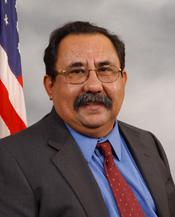 Rep. Raúl M. Grijalva (D-AZ)
Description
Amendment required that the proposed study analyze any potential impacts on the possession or use of a weapon, trap, or net, including a concealed weapon.
Legislative Activity
Stay on top of the latest movement without scrolling through every action
House amendment offered
September 10, 2008
View full timeline
House amendment offered
September 10, 2008
Roll call votes on amendments in House
September 10, 2008 • 5:53 PM
House amendment agreed to: On agreeing to the Grijalva amendment (A001) Agreed to by recorded vote: 418 - 0 (Roll no. 581).
September 10, 2008 • 5:53 PM
Amendment agreed to Committee of the Whole
September 10, 2008 • 5:53 PM
House amendment offered/reported by : Amendment (A001) offered by Mr. Grijalva.(consideration: CR H7977-7978, H7981; text: CR H7977)
September 10, 2008 • 3:00 PM
Amendment (A001) offered by Mr. Grijalva. (consideration: CR H7977-7978, H7981; text: CR H7977)
September 10, 2008 • 3:00 PM
On agreeing to the Grijalva amendment (A001) Agreed to by recorded vote: 418 - 0 (Roll no. 581).
September 10, 2008 • 5:53 PM
Votes
1 roll call on this amendment
Text
Offered
MISSISQUOI AND TROUT RIVERS WILD AND SCENIC RIVER STUDY ACT OF 2008

The SPEAKER pro tempore. Pursuant to House Resolution 1419 and rule
XVIII, the Chair declares the House in the Committee of the Whole House
on the State of the Union for the consideration of the bill, H.R. 3667.

{time}  1354

In the Committee of the Whole

Accordingly, the House resolved itself into the Committee of the
Whole House on the State of the Union for the consideration of the bill
(H.R. 3667) to amend the Wild and Scenic Rivers Act to designate a
segment of the Missisquoi and Trout Rivers in the State of Vermont for
study for potential addition to the National Wild and Scenic Rivers
System, with Mr. Salazar in the chair.
The Clerk read the title of the bill.
The CHAIRMAN. Pursuant to the rule, the bill is considered read the
first time.
The gentleman from Arizona (Mr. Grijalva) and the gentleman from Utah
(Mr. Bishop) each will control 30 minutes.
The Chair recognizes the gentleman from Arizona.
Mr. GRIJALVA. Mr. Chairman, I yield myself as much time as I may
consume.
H.R. 3667, the Missisquoi and Trout Rivers Wild and Scenic River
Study Act, was introduced by our colleague from Vermont, Representative
Welch. This bill would amend the Wild and Scenic Rivers Act to
authorize the National Park Service to study specific sections of the
Missisquoi and Trout Rivers in Vermont for their potential inclusion
into the National Wild and Scenic Rivers System.
I want to thank our colleague from Vermont, Congressman Welch, for
his hard work on this measure. This is a good piece of legislation,
which will help showcase the natural heritage of Vermont.
We are coming upon the 40th anniversary of the Wild and Scenic Rivers
Act in October. It's important to celebrate the legacy of this act, the
preservation of some of our wildest rivers and the safeguarding of our
scenic waterways for generations to come, and to acknowledge the
essential role that stewardship and a conservation ethic play in the
management of our Nation's rivers and streams.
The Missisquoi is a tributary of Lake Champlain, located in northern
Vermont. The Trout is a tributary of the Missisquoi. With its
headwaters in Lowell, Vermont, the Missisquoi extends almost 100 miles,
flowing north into Quebec, then returning to Vermont to flow west
before finally ending its journey at Lake Champlain.
As it runs its course through open pastoral fields, scenic gorges and
native hardwood forests, the river is a remarkable example of a
northeastern ecosystem. It is bordered by the largest and perhaps
highest quality silver maple floodplain forest remaining in the State
of Vermont. American elm, white ash, white oak, and red maple are found
along its banks.
The river is home to diverse fish and wildlife, including native
rainbow and brown trout, rare freshwater mussels, spiny soft-shell
turtles and river otter. While on the river's banks, bobcat, white-
tailed deer, and moose can sometimes be spotted, and the surrounding
marshes host large flocks of migratory birds.
In addition to these natural qualities, there are numerous Abenaki
Indian archeological sites along the floodplain.
And the river is well-known for its outstanding recreational
opportunities as well. It is part of the Northern Forest Canoe Trail--a
historic 740-mile water trail through New York, Vermont, Quebec, New
Hampshire, and Maine--and outfitters consider the northern part of the
river to be the preeminent flat-water paddling spot in Vermont.
It is also renowned for its waterfalls, and the Great Falls on the
upper river is recognized as Vermont's largest undammed waterfall.
Simply put, this river is a superb illustration of Vermont's postcard
perfect national scenery.
During a hearing on this bill, the administration testified in
support of the bill, but recommended that changes be made to clearly
specify which segments should be included in the study, as not all of
the sections of the river in the original bill were appropriate for
consideration. They recommended other technical changes as well.
The Natural Resources Committee amended the bill to respond to those
recommendations and clarified which sections of the river would be
studied for the wild and scenic attributes.
Mr. Chairman, H.R. 3667 simply authorizes a study of this river. It
is a preliminary step, not a final designation.
Its enactment would simply trigger a process which will allow the
National Park Service the opportunity to gather information from,
listen to, and coordinate with State officials and local communities;
with farmers, business owners, and river outfitters; and with hunters,
anglers, birders, paddlers, and hikers--all those who value this river.
Only then, after careful consideration and with input from all the
stakeholders, will the National Park Service provide recommendations to
Congress about the potential of this river.
That is all the legislation does. It is that simple. Let's not lose
sight of what this bill is about.
I urge my colleagues to support H.R. 3667.
I reserve the balance of my time.

{time}  1400

Mr. BISHOP of Utah. Mr. Chairman, I yield myself such time as I may
consume, and it will be quite awhile.
Well, Mr. Chairman, here we are in a 15-day session. We're now one-
fifth of the way through our final session before we end. The Democrat
leaders, who have set the agenda and run this floor for almost 2 years
now, have had 5 weeks in preparation for this day. So the first issue
of significance, the only issue we may have this week that has a rule,
the most significant piece of

[[Page H7971]]

legislation we're talking about today is a study that, if passed, may
perhaps someday, if conditions allow and the elements are conducive,
possibly create a compromise that would might possibly pass an
additional 70 miles being added to the inventory of the national
government, and only costing the taxpayers $300,000 to do it. That's
what we're doing today.
I would like to make a couple of points about this particular bill,
not necessarily in opposition to it. But one point that is significant;
we talk a great deal in government about transparency. It's important
to government to be transparent. It's good to be transparent--until it
deals with how we treat people.
One of the things that the Republican Party has tried to do on almost
every bill that has come either to committee or to the floor that deals
with a trail, a heritage area, an historic area or a scenic river is to
ensure that the people who will be involved in that area are informed
up front about what may or may not happen to them. Because once we go
to the next step and actually create this wild and scenic river, the
Federal Government is given--not in this bill, but is given in the
existing powers they have--the right of condemnation of any of that
land that will be in that area. They have almost unlimited rights of
easement. They always have the ability of dealing with local officials
to create zoning ordinances that have a huge impact on the people in
those areas.
Almost always these studies are done with small groups. And then
citizens will come back to us afterwards and say we were unaware of
what was actually happening at this time. The dairy farmers along this
river--who may or may not need protection and may or may not be happy
and satisfied with what will result to them--may or may not have any
idea what will happen as they go through this study.
The first year I was here in Congress I passed a wilderness bill. I
made sure that I went to every single property owner in that area that
would be impacted by that wilderness bill, even the guy who was dead
and had no heirs, which was a neat trick. But we went to every one of
them to make sure they were well aware in advance of what was to take
place. And yet when we tried to add an amendment, both in committee and
once again before the Rules Committee, to make sure that everyone who
may be impacted by this new designation and this study was made aware
and they had to respond affirmatively that they wished to be part of
the study, it was again rejected.
Why do we not treat Americans with respect? We will pass these types
of provisions to empower government, but we will not ask the citizens
who will be impacted by our decisions to be part of this particular
process. It's something that used to be standard language that we would
add to these types of provisions, and it should be added again. That's
a flaw.
For 2 years Speaker Pelosi has been the one who was to set the agenda
for our discussions here on the floor. One of those issues that I think
people would like us to talk about is obviously energy. We have been
talking about that for a long time. When this new leadership took over
the House, on day one, when the energy prices started to climb and it
was $2.22, the topic of discussion we had on this floor was
congratulating the University of California-Santa Barbara soccer team.
When energy reached $4 at the pump, I was here to spend a rollicking
hour and a half talking about monkey bites. And today, after our 5-week
adjournment, after people have been talking to us, after our
constituents have said what is affecting them, after 5 weeks of
preparation, what we are proposing to talk about today as the
significant issue on the agenda is to study two rivers in Vermont. The
only bill we will have with a rule, to study two rivers in Vermont.
And I hate to say this; I'm not opposed to it. There's no reason to
be. It's fine. The bill is a nice bill. It can be improved
significantly, but there's nothing wrong with it. The question is, why
are we here talking about that after 5 weeks of getting prepared to
talk about significant issues?
I had a couple of my constituents come to me. They said what they
wanted to see Congress do is something in a bipartisan way; that we
should come back here and show that we can work together. Indeed, the
Senators have already told us that there is only a bipartisan energy
plan of theirs, that's the only thing that can be passed, therefore, we
should come together and support what they are trying to do in the
spirit of bipartisanship, not only between two political parties, but
between two branches of Congress. I am sure maybe someday this week we
might even have another energy bill proposed for discussion on this
floor, and I'm sure somebody will say this is the only thing we can
pass; let us now embrace this in a spirit of bipartisanship so that we
can show that we can work together.
Sometimes I have the feeling that we on this floor believe that if we
toast one another or we slap one another on the back or we have
congratulatory comity, that that, indeed, is the end of the discussion;
that is the goal, not the means to reach some kind of discussion; when
the end should be, have we solved the problem?
We have now had eight votes over 3 days on this floor, each of them
getting around 400 plus votes. That is bipartisanship, that is comity,
that is coming together. But have we solved what the needs of the
American people are? Those eight votes, we've named three post offices,
we said we're against hunger and we're for the Red Cross. That's good.
But that does not solve the problems plaguing Americans.
If I was to go to a hospital and I was on the gurney being rushed
into the surgery room, is it logical that I would look up at the
assembled doctors and nurses and say, ``Look, when you open me up, I
don't really care what you do inside just as long as you do it together
in harmony, in a bipartisan way''? Or would it be much more logical for
me to say, ``Ladies and gentlemen, when you open me up, solve the
problem''? And that is, indeed, what the American people are looking at
us to do here today is not necessarily find out how many bills we can
pass on suspension, how much comity we can have, but how we can solve
the problem.
To simply pass a political statement does not make a difference to
individuals. We are supposed to be here to try and solve the problem.
And it is very clear that the problem has to be some way in which we
have an overarching, comprehensive energy proposal. That is the problem
that we're facing. We need to come to this floor and actually encourage
people to conserve, not by mandating conservation efforts, but by
rewarding Americans for conservation efforts and they will take it from
there.
We must come to the floor and finally realize that our problem is
supply and demand, and that we have to increase production of that
supply, that we do not have a logical pattern of funding alternative
energy sources. But if we could actually increase the amount of oil and
coal and oil shale and natural gas, that we could use the royalties
this government would then create to actually fund a comprehensive
energy program for alternative energies--for solar, for wind power, for
anything else that happens to be there--if we simply decided to use an
``all of the above'' approach. We can solve our problem in the
emergency, for the beginning, for the present time, as well as coming
up with a long-term strategy for the future that actually would be
funded.

We could finally realize that this country does not have an
infrastructure that will allow energy to be moved from one part of the
country to the other. There are good friends in New England who will
face high costs of heating their homes this fall. We have a good
pipeline that goes, but it stops before it ever gets to their part of
the country.
We need to solve those problems. We need to make sure we have more
refineries. We need to make sure we do something on the electric grid.
And we are not. That is the solution to the problem for the American
people.
We need to finally realize that the future of this country is not
going to be solved by bringing experts into Washington to sit around a
room and come up with an idea, but the ability of America to solve its
problem rests with the people out there. Because within the American
people, without their soul and heart, is the ability and the creativity
to come up with real solutions if we just empower them to find those
solutions and then reward them

[[Page H7972]]

for the creativity that they can expound.
We need to realize that the solution to our problem is that the next
time we lose 84,000 jobs it is not exacerbated by the lack of energy;
that the next time an airline doesn't have enough energy to run 100
planes, they don't have to fire 1,100 people because of it; that the
cab driver in Washington, D.C. who now drives 2 hours extra every day
because he needs that to provide enough funds for the new energy he has
to provide could actually be back at home meeting his kids after school
the way he used to; or that we provide enough energy in here so the
father in Virginia can finally go with his son to a father and son
outing; or the family in Maryland can finally have enough energy so
they can re-enroll their daughters in dance and gymnastics; so that
school kids in the middle of this country can finally make it to field
trips this year; or the teachers in our districts throughout this
country will not find their salaries to be depressed or in some cases
slashed because of unusual and unexpected energy costs in their
districts; so that home heating oil will not drive people out of
existence; so the farmer in the field will have enough energy to put in
diesel in his tractors to produce the food so that truckers will have
enough energy to drive them to market so that the prices of food that
we have to pick up at those markets will not be spiraling this winter
and this next year. And all of those is what we should be talking
about.
The river is nice; it's okay. The study is okay. But it is not where
we should be at this particular time because it doesn't solve the
problem.
There are a lot of rich people in this body. For them, this energy
crisis is an annoyance. But for those people on fixed incomes, those
people at the bottom of the scale, those people in the middle class,
we're not talking to them about energy policy. We're talking about the
way they cook their food, the way they heat their homes, whether they
have a job or not.
Three days into the last 15 days of this session, and the most
significant issue is a study bill on two rivers in Vermont. This
country is aching for legislation that will nourish the body politic,
and yet we continue to put up, day after day on this body, pieces of
legislation that are as nutritional as cotton candy. We need to do it
differently.
But, on the plus side, we will probably do this bill in a bipartisan
way. Doesn't it make you feel proud?
Mr. Chairman, I reserve the balance of my time.
Mr. GRIJALVA. Mr. Chairman, I'm encouraged by the newfound populism
of my good friend from Utah. And I agree that a comprehensive approach
to energy has to be something that this Congress accomplishes within
the week. This does not negate what I believe to be a good piece of
legislation that is before us.
And it is considerable work. We have to unravel 8 years of failed
energy policies. We have to unravel the relationship between Big Oil
and the administration so that the consumer, the average Joe out there,
will get the kind of break and attention that he needs and she needs
with regard to energy costs and the rising cost all around us.
Having said that, let me now turn to the sponsor of this good piece
of legislation, the gentleman from Vermont, Congressman Welch, for as
much time as he may consume.
Mr. WELCH of Vermont. Thank you, Mr. Chairman. I very much appreciate
the excellent work you did and your eloquent description of a beautiful
river. If I have any say about it, we're going to make you an honorary
Vermonter and bring you down that river and make you paddle your way
from one end to the other and have you see for yourself how beautiful
what you described really is. Thank you.
I want to respond to some of the comments.
Mr. Chairman, my opinion is that one of the greatest Presidents of
the United States was Theodore Roosevelt. He came to the Presidency
when his predecessor was assassinated. It was a time of great turmoil,
social and labor unrest, a need for corporate reform, trust busting.
President Roosevelt had his hands full taking on those economic
challenges.
He was a war President. The skirmish in Cuba and the Philippines were
still very much alive, and he had to deal with that as President. Very
serious issues with the Supreme Court. And in the midst of all of that
he still found time to be a peacemaker and was the winner of the Nobel
Prize for the work that he did in bringing together the Soviet and
Japanese conflict and helping those folks resolve the end of that war.
But Theodore Roosevelt was also a person who respected and did more,
perhaps, than anyone else to protect our environment. And amidst his
responsibilities, where he had to simultaneously deal with enormous
economic anxiety in this country, when he had to deal with foreign
affairs that involved making America a strong country and bringing
together peace in other countries, he would never, ever, busy as he
was, urgent as his demands were, belittle the work of the House of
Representatives when they were taking up what is now being
characterized as a ``waste-of-time bill'' because it involves two
rivers in the State of Vermont. He wouldn't do it. He's a bigger man
than that.
He reflects the leadership that we can provide to the American people
where we simultaneously take on the challenges, as President Roosevelt
did, but also pay attention to the posterity that is our responsibility
to leave behind.
I just want to say as a Vermonter, I want to say as a Member of the
House of Representatives that if we can't find time to do those things
that are going to allow us in Utah, in Arkansas, in Arizona and in
Vermont to save our rivers and to do what is going to preserve our
country and leave behind legacies like President Teddy Roosevelt did
with the National Park Service that we revere and enjoy, then we don't
deserve the vote of confidence that we get from the folks who send us
here. We can do both.
Now my friend from Utah has essentially made an argument that there
is more important business to be done, as if that suggests we don't
have time to do other important business about protecting and
preserving our environment and having mutual respect for the particular
concerns, in this case, of Vermont.

{time}  1415

But it's that same comity that has allowed us to come forward and
step up as Vermonters and Arizonans to help the folks in the Midwest
from their flood and to respond to the gulf coast with the damage that
they sustained. It's political. That's what we know.
The reality is our friends on the other side had 12 years in control
here and their energy policy was one thing: give tax breaks to oil
companies. You can't make that up. Oil companies are doing well. I
don't begrudge them their profits. But why do you reach into the
taxpayers' pocket and ask taxpayers to give the most profitable
corporations in the world, running a mature industry, doing well, why
do we ask the taxpayers to give them $13 billion? When you reveal that
fact, they don't even know how to respond because you can't make that
kind of stuff up.
So this House of Representatives, under the leadership that now is
being castigated for a failure of leadership, has repeatedly passed
legislation against the objections, almost unanimous, of our friends on
the other side, to stop filling up the Strategic Petroleum Reserve, to
squeeze out the speculative premium in the price of a gallon of gas at
the pump. That can provide some short-term relief. We did that. We
passed comprehensive energy reform, again, against the objections of
our friends on the other side. We took away the tax breaks from the oil
companies, not because oil companies are a target. They're doing
important work. They know how to do their work and they know how to do
it well. But why in the world would our friends on the other side want
to give $13 billion in tax breaks to a mature and profitable industry
when that money comes directly out of the pockets of American consumers
who need that money in their pocket to pay the price at the pump?
They've resisted that. They opposed it.
Our friends on the other side are also aware that even though we have
passed legislation against their objection, it has gotten stalled in
the other body, threatened with veto by the President, we're ready to
do it again. Our motto is

[[Page H7973]]

try again, try again, and keep going because, bottom line, we want to
address that problem. And we have actually been doing things in our 2
years on the watch despite their resistance when they had 12 years to
get the job done and essentially caved into the interests of the oil
companies.
So, Mr. Chairman, as a Vermonter and the sponsor of this bill, I want
to object to what is really a rhetorical and political device, and that
is ridiculing the importance of these two rivers to the people of my
State for a partisan political argument. Energy is incredibly important
and we have delivered. We've put substantive proposals on the floor.
They have been debated and they have been passed. They've been stalled
in the Senate or threatened with veto by the President. We're prepared
to do it again. We're also prepared to reach out to the other side
because we all know that in the end if we are going to be successful,
we do have to work together, particularly where we have divided
government. But it takes two sides, two bodies, and a President to be
willing to do that, and it has not been forthcoming.
So I want to go back to a very simple fact. This legislation is about
allowing Vermonters to have a study for scenic status on two rivers
that are very precious to us, places where moms and dads have taken
they are kids, taught them how to hunt, taught them how to fish, taught
them how to be families, taught them responsibility. And there is a
place for us and a time for us to do that as well as face these large
issues like energy, like the war in Iraq, like redefining our foreign
policy. So this is a very important piece of legislation to us, and I,
as one Member of Congress, object to having it be held hostage to what
is essentially a political game that's been going on far too long.
And I want to thank the chairman for the tremendous work that he's
done. And, Vermonters, thank you as well.
Mr. BISHOP of Utah. Mr. Chairman, I appreciate the discussion
especially about Teddy Roosevelt, a famous President. But I would
remind my friend that William Howard Taft, who came after him, created
more national parks, created more land in the national forests, and
busted more trusts in 4 years than Roosevelt did in 8. The difference
was he didn't use public relations.
Our issue is still the same. Talk about these issues after we have
had a debate on real issues for a real solution on the real problem of
energy that affects real Americans here on the floor. That should be
our priority.
With that, Mr. Chairman, I yield such time as he may consume to the
gentleman from Louisiana (Mr. Boustany).
Mr. BOUSTANY. Mr. Chairman, I thank my colleague from Utah for
yielding, and I stand with him on these issues.
Mr. Chairman, this is a matter of setting priorities. I just got back
Monday evening for votes. I left my home State of Louisiana, my
district of southwest Louisiana, that was just hit by Hurricane Gustav.
Folks are suffering. Seniors are suffering back home. Seniors are
suffering all over the country. Seniors in Vermont are suffering and
they're going to suffer with high prices of heating oil this coming
winter. Farmers, I have got farmers that lost their crops just last
week, and they're faced with high diesel costs and high gasoline costs
and high fertilizer costs because this country doesn't have an energy
policy. What are our priorities? This is the most important bill we
have done so far this week, and it's a study and it's a study based on
what the subcommittee found there to be no risk involved. So I have to
question what are the priorities of this Democratically led Congress.
We in Louisiana have been bearing the burden of providing energy in
this country for quite a long time, and we have seen our coasts, our
precious wetlands devastated, and now we are trying to rebuild those
wetlands. Is that a priority? It's certainly a priority to me. But
clearly getting an energy policy has to be one of the top priorities
for this country. We should all recognize that. And I think my
colleagues across the aisle, after spending August back home hearing
from folks in their districts, would understand that.
We in Louisiana know that energy policy and environmental policy and
economic policy all march together. That's good policy. We're also
talking about jobs. Mr. Chairman, every time I fly home on the little
stretch between Houston and Lafayette, Louisiana, I run into folks from
Louisiana who are coming back or going to countries all over the globe,
Equatorial Guinea, Angola, Thailand, Vietnam, countries throughout the
Middle East, Louisianians with oil and gas expertise who wish they
could be back in this country closer to their families. No, they're
having to travel all over the globe and be away from their families for
months on end to make a living in the energy industry. These are jobs
that were lost to this country. These were manufacturing jobs that were
lost to this country in the 1980s when a Democratically controlled
Congress imposed a windfall profits tax on the oil and gas industry.
And what's their answer today? Well, let's get rid of the manufacturing
tax credit on oil and gas companies. Let's single out the oil and gas
companies. Well, on one hand you say you want good jobs and good
manufacturing jobs, but then you propose policies that drive these jobs
out of this country. I don't get it. I just don't get it, and the folks
back home in Louisiana don't get it.
I talked about the environment. Down in my district we've got a
beautiful stretch of wetlands and marsh. It's a bird habitat for ducks,
a breeding ground for ducks. White Lake, a beautiful lake, a pristine
lake, is down there in Vermilion Parish. That land is managed by BP
Amoco, and they have done an outstanding job with the environment. Just
yet another example of good environmental policy working hand in hand
with energy policy because what does it mean? Jobs, good American jobs.
Explain that to the folks in Michigan. Explain that to the folks in
Ohio who are struggling right now. If you want good American jobs, you
get a good energy policy, an all-of-the-above energy policy. An energy
policy that looks at oil exploration in the Outer Continental Shelf and
Alaska, shale oil, nuclear energy, looks at building refining capacity,
and also invests in renewables and alternatives. That's what we're
advocating over here. We want to work in a bipartisan fashion.
But, no, the other side, our friends across the aisle are finding
ways to avoid the issue. That's not what the American public wants
today. Everybody knows what the polls are showing. Seven out of ten
Americans want a comprehensive energy policy. How can you go home and
explain to the seniors, an elderly woman back in your district who
can't afford gasoline for her car to go to the grocery store to pick up
a few essential items, so then she has to carpool with three others and
now they can't afford it?
I'm all for conservation. I believe conservation is a critical part
of our energy policy, but yet conservation is not enough. We need a
real energy policy, an all-of-the-above approach.
Our friends across the aisle are proposing all kinds of things that
we're hearing about. They're proposing a policy that permanently locks
up 80 percent, 80 percent of American energy on the Outer Continental
Shelf. Our friends are proposing permanently locking up 1 trillion
barrels of oil from oil shale in the inner-mountain west. How can you
explain that to the American public? What's your explanation? How can
you say we want to permanently lock up more than 10 billion barrels of
oil on Alaska's remote North Slope? And how do you explain no to
nuclear power when countries like France rely on nuclear power for 80
percent of their electricity? People around this country are struggling
with high utility bills.
We ought to be looking at ways to diversify our sources of energy and
putting this country on a sound footing, putting America first. How can
our friends across the aisle do nothing about constructing clean coal
and looking at that type of new technology? This is critical. And yet
again they propose additional tax increases on the energy companies
that are trying to provide energy for this country. I just don't get
it. I don't get it.
Mr. Chairman, I think everybody in this Chamber ought to look at that
plaque up there. Look at that plaque. It quotes from Daniel Webster,
who says, ``Let us develop the resources of our land.'' The resources
of our land. We shouldn't be holding back. This is

[[Page H7974]]

the only country holding back on this. Let us develop the resources of
our land. Let us call forth its power and build its institutions.
That's what this Congress should be doing. Not wasting time. I have got
to go back home and explain why I spent a week up here while folks back
in Louisiana are struggling after another hurricane and I have got to
explain to those folks that I came up here and we didn't do anything
substantively in this Congress and we didn't do anything that they care
most about: getting an energy policy.
Read that plaque again: ``Let us develop the resources of our land.''
Mr. GRIJALVA. Mr. Chairman, I realize the political statements that
are being made by my friends on the other side of the aisle. I
understand them. I think relative to this bill I don't appreciate them,
but I really believe that there has to be an understanding that our
leadership and the Democrats on this side of the aisle can actually
walk and chew gum at the same time, that we can deal with an issue that
we are dealing with here today that affects the State of Vermont and
deal with the very pertinent issue which is the energy policy for this
country.
With that, Mr. Chairman, let me yield to the gentlewoman from New
Hampshire (Ms. Shea-Porter) for such time as she may consume.
Ms. SHEA-PORTER. Mr. Chairman, first let me say that I support the
bill in front of us, for these two rivers in Vermont. And I think that
it's unfortunate that we can't seem to work on the particular bills in
front of us because of the issue that the friends on the other side of
the aisle keep bringing up.
What I find particularly disturbing is that for 8 years we have had
two oilmen in the White House with no energy policy and my colleagues
on the other side have sat silent for 2 long years, nothing since I
have been here talking about it, 8 years since President Bush has come
into office, and suddenly in the waning hours of this session, they are
now talking about an energy policy.
I certainly welcome them to this. I think we do need an energy
policy. I wish they had started talking about an energy policy 8 long
years ago. What they allowed to happen in the past 8 years is for us to
lose ground on an Apollo-type project to bring a real energy policy to
the United States. They have allowed the oil companies to reap the
greatest profits in history while they have allowed the American
taxpayer to suffer while they subsidize these oil companies. That's
just outrageous that they are now at this point 8 long years into it
and getting near an election and they're suddenly talking about the
lack of an energy policy.

{time}  1430

Thank you, gentlemen, for bringing this to our attention. We have
been speaking about this lack of an energy policy for a long time.
I would like to say that their idea of drill, just drill, drill,
drill, and we heard it at their convention, drill, baby drill. That is
a Fred Flintstone policy. Drill, baby drill, I heard a reporter say, is
like people standing there at the edge of the technology revolution
yelling, Electric typewriters, electric typewriters.
We are now right at the edge of this wonderful, wonderful future for
our country. If you decide to join us and invest in an Apollo-type
program, a program for energy independence, a program that would allow
us to be independent of these nations, to have an economic base here in
this country, to create jobs in a green technology, and to have
renewables.
One of your own party, T. Boone Pickens, who has talked often about,
and has run ads, by the way, about the fact that we can't drill our way
out of this, that we only hold 2 to 3 percent of the oil and that we
are consuming 25 percent. Yet I haven't heard the word ``conserve''
over there until just now. I heard one mention it.
We've ignored conservation, we've ignored wind, we've ignored solar,
we've ignored all kinds of renewables. And when we have the drill, baby
drill plan and drill baby, drill only. Well, you know what? We have
simply got to face these issues. We should have faced them 8 long years
ago, and we should have faced them when I got here in this 110th
Congress. But I certainly welcome you to the debate now.
So why don't we do this? Why don't we first take away the subsidies
from the oil company and invest in renewables? I think that would be a
good start to show Americans that we hear them. Why don't we take the
speculators out of the market, since we are all very concerned about
the price of energy. I am particularly concerned about what is
happening in New Hampshire, where the oil is so high and the winter is
coming on us. I am concerned that the President of the United States
put in his budget a cut in the Low Income Heating Energy Assistance
Program.
So why don't we do this? Why don't we take the speculators out of the
market? Why don't we say Drill now, drill, to the oil companies who had
68 million acres and they would not drill on. That would be helpful.
There's a number of things that we could have done, and I agree with
you that we are at the last moments here, and it's outrageous. But we
have the future of America in our hands. We have the ability, as T.
Boone Pickens said, to take the wind from--he named Sweetwater, Texas
to Hastings, Nebraska--we have great wind capacity, and to take solar
from Sweetwater, Texas to California, and catch that. And biomass. And,
yes, drilling. Drilling on land and leases that we have.
Why didn't you agree to take the leases away if the oil companies
wouldn't drill? Why not? Why not do something except stand there with
the same, tired drill, baby drill.
We are on the eve of this wonderful technology. We have so many
people and businesses ready to invest in it. Oil companies certainly
have their role. And we are dependent on oil. We are more dependent on
oil than we were when George Bush came into office. That's true. But
where have you been for 8 long years?
I welcome you to this discussion. But I think we should have the
discussion in the appropriate place and not block every piece of
legislation that is coming through right now, and let's have a
comprehensive energy plan. And the first thing the other side could do
to show their good faith in this would be to vote against the tax
subsidies for the oil companies. If we really want to protect the
American taxpayer, why don't we stop forcing them to subsidize oil
companies? That would be my first question. Thank you.
Mr. BISHOP of Utah. In my 6 long years of being here on this floor,
and I welcome my freshman colleague from New Hampshire, we have been
involved in many issues that deal with energy, and I found that what
was not stopped by filibuster in the Senate, was stopped by litigation
in the court, and that is part of the overall reform we are talking
about, which is why we desperately need a real vote on a real solution,
the American Energy Act.
May I just inquire how much time we have remaining.
The Acting CHAIRMAN (Mr. Ross). The gentleman from Utah has 10\1/2\
minutes remaining.
Mr. BISHOP of Utah. With that, I yield such time as he may consume to
the gentleman from Georgia (Mr. Westmoreland).
Mr. WESTMORELAND. I want to thank my friend from Utah for giving me
this opportunity to come and to speak. As I was listening to the
gentlelady from New Hampshire speak, she must not have read the
American Energy Act. My colleagues and I, at least about 135 of my
Republican colleagues and I, have been coming back to this floor ever
since August 1, when Speaker Pelosi decided to adjourn this Congress
and go on a 5-week vacation rather than address the energy crisis that
we have in this country.
Mr. Chairman, it's awfully strange that all of the debate, most all
of the debate that I have heard on the floor today, has dealt with
energy. Yet we refuse to bring an energy bill to the floor under
regular order.
I think what also needs to be said, Mr. Chairman, and I hope the
American people are picking up on this, is that the Democrats have been
in control of this Congress for the last 20 months. The Democrats have
been the majority, the controlling party in this Congress for the last
20 months. In the House, they have 236 Members, I believe. Close to it.
I think the Republicans have 199. It only takes 218 to pass any
legislation in this body. In fact, you can have a good idea, you can
have a great idea, you can have a lifesaving, wonderful, world-changing
idea,

[[Page H7975]]

but if you don't have 218 votes, you don't have anything except an
idea. If you have the worst bill in the world, or something that really
hurts the American people and hurts our economy and our future and
future generations, if you have 218 votes, you can pass that.
So I guess my question to the majority is that rather than
continually laying the blame on the executive branch of our government,
and most all Americans know that we do have three branches of
government. We have got the executive branch, we have got the judicial
branch, and we have got the legislative branch. The legislative branch,
who the Democrats are in control of, have the responsibility for
passing laws. So we can't help it. It's not our fault. If the
unemployment was 4.2 percent, Mr. Chairman, when your party took the
majority, and now it's 6.1, we can't help that. This comes from the
legislation that you had 218 votes for to pass.
Now we can't help it because gas was $2.06 a gallon when you took
over, and that it's over $4, or close to $4 a gallon now. It's been as
high as $4.50. We can't help that. You were in control. You had the 218
votes to do anything you wanted to do.
But what has happened? The Democratic majority decided that rather
than have a bill that would go through regular order and have
subcommittee hearings and committee hearings and be brought to the
floor under a rule that would be an open rule that would allow input
for all 435 Members and the seven delegates from U.S. territories to be
able to have amendments on the floor to speak to what their
constituents had felt and what they had been told at home, they have
been brought under a suspension rule.
Mr. Chairman, a suspension does not have to go through committee. It
does not have a rule. There's 20 minutes of debate for each side. And
then you have to have two-thirds of the vote. Well, these have been
snake oil or shams or, I guess, covers to hide under, maybe, that you
could go home and say that you had voted for an energy bill.
I say let's bring it under regular order. If you bring it under
regular order, let's give us an opportunity to have a motion to
recommit, or an alternative. But the best thing to do, the thing that I
think the American people want to happen, is an open rule come to the
floor, where we can all--this is a House where we are supposed to come
and debate and share ideas. Let this House work its will. Let's vote on
every amendment that comes to the floor. Limit it to one amendment per
person.
If we have to stay here over the weekend, let's hear all the good
ideas that will come out of this place. There's not just a certain
number of people in this body that have good ideas, there's a lot of
good ideas that come from a lot of people, and there's a lot of people
here who have good ideas that never get to share them.
With that, Mr. Chairman, I encourage, I encourage the majority to
bring out of mothballs that commonsense energy plan that in April of
2006 Minority Leader Nancy Pelosi said that she had. I hope that she
will bring it out soon because not just my constituents in the Third
District of Georgia, but constituents, people, citizens all over this
country are hurting. So, hopefully, we will get to see this commonsense
plan at some point in the near future.
Mr. GRIJALVA. I yield 3 minutes to the gentleman from Colorado (Mr.
Perlmutter).
Mr. PERLMUTTER. I thank the gentleman from Arizona for allotting me
this time. I just want to bring us back to basics, for one thing.
Whether it's the Kiwanis or the Cub Scouts or the PTA, ordinarily you
talk about the issue that is at hand. And the issue that is at hand,
ladies and gentlemen, and to my friends on the other side of the aisle,
is we are talking about the Missisquoi and the Trout Rivers, the Wild
and Scenic Rivers.
I want to thank my friend, Mr. Welch, for bringing this matter before
the House of Representatives as to trying to maintain wild and scenic
streams in Vermont. That is what is being debated. That is the bill on
the floor, although our friends would like to completely change the
subject.
Whether it's the Kiwanis or the PTA or the boardroom or the Cub
Scouts, you try to have a relevant conversation. But they decided that
is not the issue. They must love this bill. They would rather talk
about something else. So let's talk about the something else, which is
energy.
Now my friends on the other side of the aisle, the GOP, the
Republicans, in 2005 passed what they said was a landmark energy bill.
I want to quote the former Speaker of the House, Dennis Hastert, on
July 28, 2005:
``Americans need this (GOP energy) legislation to lower their energy
costs, to drive economic growth and job creation, and to promote
greater energy independence.''
The minority whip, Mr. Blunt, said on that same day:
``This (GOP energy) plan relies on simple economics. If we create a
larger market for a greater amount of gasoline, we'll help drive prices
down. This proposal moves the country one step closer to lowering the
sky-high price of gas for consumers.''
The President, a few days later, said, ``I am confident that one day
Americans will look back on this (GOP energy) plan as a vital step
toward a more secure and more prosperous Nation that is less dependent
on foreign sources of energy.''
Well, ladies and gentlemen, that energy plan that was promoted by the
Republicans and supported by the President back in 2005 I think now
turns out to be a really bad joke on the American people. We have had
our prices of oil and gas going up by almost double, sometimes during
this summer they almost tripled after that plan was implemented by a
Republican Congress and a Republican President.
But that shouldn't surprise us. With two oilmen in the White House,
what did you expect? This is exactly what we have gotten. Skyrocketing
energy prices.
Now what we have got to do, and I can't believe that my friend from
Utah, when he says that what we need to be doing is drilling here, and
drilling now, really wants to drill in the middle of Salt Lake City or
in any of the glorious places in Utah. This is something where it has
got to be sensible energy policy. It's a comprehensive energy policy,
which includes oil and gas.
The Acting CHAIRMAN. The time of the gentleman has expired.
Mr. GRIJALVA. I yield the gentleman 30 additional seconds.
Mr. PERLMUTTER. It includes oil and gas, it includes coal, it
includes nuclear, it includes renewable energy, and it includes overall
energy efficiency, because a barrel of oil saved is a barrel of oil
earned. A Btu saved is a Btu earned.
We need a comprehensive plan. And to pull a bad joke on the American
public of drilling here, drilling now, drill, baby drill, is simply a
sham, and we cannot go forward with that alone. We need a comprehensive
energy plan, and that is what the Democrats are going to provide.
Mr. BISHOP of Utah. Mr. Chairman, I reserve the balance of my time.
Mr. GRIJALVA. Let me yield 3 minutes to my colleague from Ohio,
Congresswoman Marcy Kaptur.
Ms. KAPTUR. I thank the gentleman for yielding, and also rise in
support of the National Wild and Scenic Rivers measure related to
including Vermont's Missisquoi and Trout Rivers for further assessment.
Let me also say I think it's really sad that our GOP colleagues here
are trying to divert attention from this bill and trying to change the
subject to something that they have a pretty dismal record on.

{time}  1445

In fact, since the Bush administration took office, our country is
now importing over 1 billion more barrels of oil a year, the price of
gasoline has doubled, as every American knows, and oil company profits
are through the roof. Exxon alone, Exxon alone last year, made $40.6
billion in profits, one company; BP, $20 billion; Shell, $31 billion in
profits; Conoco, $15.5 billion; Chevron, $17.1 billion. That is a
total, just of those companies, of $125.3 billion.
They are loving every minute of this, friends. And the question for
America is, do we want our people to be dependent on a diminishing
global resource that becomes more precious every day, where blood for
oil is now shed around the world? That is the real question. Are we
going to grow up and live in the 21st century? It is a real choice.

[[Page H7976]]

One of the fellows over there on the other side of the aisle said,
well, we got enough votes in the House. We sure do. We passed a couple
of bills and sent them over to the Senate, where they sit unpassed. For
example, our bills for extension of our renewable energy credits for
solar and for wind, they are sitting over in the Senate. Do you know
why? There isn't a majority of Democratic votes over there. The Senate
is divided. It is 49D-49R. Our Senators are sitting on their hands over
there, half of them. I would say to the gentleman who says we have got
enough votes here, go get your friends over there to put their blood on
the line over on the other side for the American people. They are
wasting an awful lot of time.
I want to say too that the President has to sign these bills. Look
what he did to the agriculture bill, one of the most important bills we
have brought to this floor to try to create a new biofuels industry for
this country, which rural America wanted and wants and is leading into
an energy independent future for this country. What did the President
of the United States do? He vetoed it. We had to override the veto here
and in the other body. That is the kind of mess we have got here in
Washington.
Boy, do we ever need a working majority in the Senate. And we need a
bigger working majority here in the House to do what the American
people sent us here to do, and that is to help our children have a
better future, to have an independent energy future for this country,
and not to try to say that ``business as usual'' is the course of the
hour. Oh, no. Our people expect us to play the piano on all keys.
Where have you been for the last 8 years and where has the President
of the United States been for the last 8 years?
The Acting CHAIRMAN. The time of the gentlewoman has expired.
Mr. GRIJALVA. I yield the gentlewoman an additional 30 seconds.
The Acting CHAIRMAN. The gentlewoman from Ohio is recognized for 30
seconds.
Ms. KAPTUR. I thank you very much for yielding.
Let me just say that I represent one of the solar centers of this
country, one of the three top places that are inventing the future for
our people. We need the help of the President of the United States. We
don't need him to hold up renewable energy credits in this body or over
in the Senate. Our people have seen the future, and they are building
it. We don't need to have this administration produce an energy plan
back in their first year that didn't even include agriculture, not even
a mention of it, and renewables, and then defunded renewables for most
of the years that they sat over there on Pennsylvania Avenue.
We do need new leadership. We need a working majority in the Senate.
And we need a greater working majority here and a President who will
stand at the side of the American people.
Mr. BISHOP of Utah. Mr. Chairman, I was about to be critical of the
remarks of the gentlewoman from Ohio, but once she said the Senate is a
problem that should be working, how can I reject that?
I would, though, remind you, if you really want to help Exxon, don't
do anything. Sixty-eight percent of all the oil and 87 percent of all
the natural gas is being drilled by small entrepreneurial companies. If
you want competition, allow those to be successful.
Mr. Chairman, I yield 4 minutes to the gentlewoman from North
Carolina (Ms. Foxx).
Ms. FOXX. Mr. Chairman, I thank my colleague from Utah for his great
comments.
You know, I like Congressman Peter Welch. We are on opposite ends of
the aisle philosophically, but he is a nice guy. But I will tell you, I
would like to be able to support this issue of the Wild and Scenic
Rivers Act. However, what the American people want are lower gas
prices, so they will have a chance to go and visit wild and scenic
rivers. Right now, the Democrats have let the gas prices get so high,
nobody can go on vacation, nobody can visit these rivers, nobody can do
the kinds of things they want to do.
But the good news is during the month of August, when Republicans
stayed here working while the Democrats went on vacation, we alerted
the American people to the fact that we are here trying to bring down
prices and that the Democrats are in charge of this Congress. It is not
the President of the United States who can take action. He has already
taken action. He lifted the moratorium on Outer Continental Shelf
drilling.
Let me tell you, my colleague just before my colleague from Ohio was
giving quotes, but let me give you a quote. Here is the best one, and
the one that we are going to come back to over and over and over again.
Speaker Pelosi, when she was asking for the majority in this House:
``Democrats have a plan to lower gas prices. Join Democrats, who are
working to lower gas prices now.''
What happened? Gas prices have doubled under the Democrats. They can
do their best to blame this on the Republicans. But they are in charge,
and we are going to continue to inform the American people that
Democrats are in charge of the Congress, that they have the ability to
do something.
Republicans believe in alternatives. Certainly we want solar, wind,
hydro, all the alternatives. We believe in conservation. Republicans
are the original conservationists. But we cannot get to those places
immediately, and we can bring down the price of gasoline by providing
additional supply.
Democrats think they can ignore and maybe even repeal the basic law
of economics, supply and demand. We have to have more supply. They are
preventing that. They do not want us to bring down the price of
gasoline. Why, is difficult to understand.
But I say it is a simple choice for the American people this fall:
Are you going to believe the people who are pro-American energy, or are
you going to believe the people who are anti-American energy? The
Democrats want us to remain dependent on foreign oil. They are not
interested in creating additional American energy. And you can see
that.
Let's talk some more about quotes. Here is another one: ``This
leadership team will create the most honest, most open, most ethical
Congress in history.'' Speaker-elect Nancy Pelosi.
What have we had? Closed rules. The appropriations committees aren't
even meeting, because they are scared to death that we will bring up
bills that they will have to vote on that they know will pass because
their Members are feeling the heat in their districts. Their
constituents are hurting too.
This is not a Republican issue. It is not a Democratic issue. It is
an American issue. We begged our Democratic colleagues to come and join
us, vote with us, speak to the American people about this. She knows
they will vote for additional American energy. There is no bill on the
floor this week. Why? Because her caucus is so divided. The pro-
American energy Democrats want to vote on increasing supply. They are
not being allowed to do that.
Let me speak about the farm bill just a little bit. Ethanol is
creating a major problem for us in this country. We are not allowing
ethanol to come in here from other countries. We could get it in here
cheaper than we are producing it in this country. They will not allow
that. That was part of that farm bill that the President vetoed.
Mr. GRIJALVA. Mr. Chairman, I yield 3 minutes to the chairman of our
full Resources Committee, the gentleman from West Virginia (Mr.
Rahall).
Mr. RAHALL. Mr. Chairman, I want to express my appreciation to the
distinguished subcommittee chairman, Mr. Grijalva, for bringing this
bill forward, and the ranking member, Mr. Bishop. Also I want to thank
Mr. Peter Welch for the tremendous leadership he has provided.
Certainly I am in support of the legislation. I recognize that much
of the debate that has occurred thus far has not really been on the
legislation itself, but rather has surrounded the energy issue. As all
of my colleagues on both sides of the aisle know, we are working toward
bringing an energy bill to the floor of the House of Representatives in
the very near future.
I have heard a lot of finger pointing. We all have been doing that,
are guilty of that, for the last several months on this issue. Each
side is trying to blame the other for the high price of gas today,
ignoring the fact that the price of gas when President Bush took office
was $1.47, both houses of Congress were

[[Page H7977]]

in Republican hands, and the price of gas is where it is today.
But that is the past. We must look forward. Now we are all talking
about using all of our domestic sources of energy in order to free
ourselves from that dangerous reliance upon foreign oil. And certainly
I am one of those in the category, if not 99.9 percent of my
colleagues, that want to see all of our domestic sources of energy
used. I dare say that in the not-too-distant future, when we do address
the energy bill, if not in the next several days on the floor of this
body, that we will see the most broad-ranging, most comprehensive
energy bill come to this floor that we have had in several years. It
will be an all-of-the-above. It will be a start toward progressive,
comprehensive energy legislation.
In that, it will be a pro-drilling bill as well, although it will not
be all-drilling. It will not be all my-way-or-the-highway, as some on
the other side continually preach, but rather it will be a bill that
will show the sacrifices that will be necessary, the compromises that
are always necessary in the legislative process if we are going to
address the common good of this country. So that is what we are going
to see.
One important factor of that bill that we have not seen in previous
energy bills is accountability and transparency. After all, these are
the American people's resources, our public resources we are talking
about on the OCS or with Federal leasing on on-shore Federal lands.
That means the American people have the right to receive a fair
dispensation for the use of their resources, as well as an
accountability of royalties and fees collected thereupon.
One of the areas in which we will seek to provide much-needed reform
and more oversight is in the area of royalty collection and the
royalty-in-kind program specifically.
The Acting CHAIRMAN. The time of the gentleman has expired.
Mr. GRIJALVA. Mr. Chairman, I yield an additional 30 seconds.
Mr. RAHALL. Thank you. And I say we will provide that additional
oversight, because the Interior Department's own Inspector General, Mr.
Devaney, is today coming out with a report of his investigation of the
royalty-in-kind program in which he says we have also discovered a
culture of substance abuse and promiscuity in the RIK program, both
within the program, including the supervisor, who engaged in illegal
drug use, had sexual relations with subordinates, and is in consort
with industry. Internally, several staff admitted to illegal drug use
as well as elicit sexual encounters, and it goes on and on about what
has been happening with this oversight program. We will strengthen this
program and make the reforms necessary.
Mr. BISHOP of Utah. Mr. Chairman, I certainly hope when my chairman
rolls me into the surgery room and opens me up, he will solve the
problem.
May I inquire of the other side if they have additional speakers left
up and how much time remains.
Mr. GRIJALVA. We have no additional speakers.
The Acting CHAIRMAN. Each side has 30 seconds remaining.
Mr. BISHOP of Utah. With that, Mr. Chairman, I will yield back my
last 30 seconds.
Mr. GRIJALVA. Mr. Chairman, I yield myself the balance of my time.
Mr. Chairman, in conclusion let me say I associate myself with the
comments that our chairman, Mr. Rahall, made about transparency and
about the deeply needed reform in that agency, given the disclosure and
the investigation by the Inspector General. This is a good piece of
legislation. I urge its approval.
Mr. Chairman, I yield back the balance of my time.
The Acting CHAIRMAN. All time for general debate has expired.
Pursuant to the rule, the amendment in the nature of a substitute
printed in the bill pursuant to part 2 of House Report 110-668 shall be
considered as an original bill for the purpose of amendment under the
5-minute rule and shall be considered read.
The text of the committee amendment is as follows:

H.R. 3667

Be it enacted by the Senate and House of Representatives of
the United States of America in Congress assembled,

SECTION 1. SHORT TITLE.

This Act may be cited as the ``Missisquoi and Trout Rivers
Wild and Scenic River Study Act of 2008''.

SEC. 2. DESIGNATION FOR STUDY.

Section 5(a) of the Wild and Scenic Rivers Act (16 U.S.C.
1276(a)) is amended by adding at the end the following:
``(__) Missisquoi and trout rivers, vermont.--The
approximately 25-mile segment of the upper Missisquoi from
its headwaters in Lowell to the Canadian border in North
Troy; the approximately 25-mile segment from the Canadian
border in East Richford to Enosburg Falls; and approximately
20 miles of the Trout River from its headwaters to its
confluence with the Missisquoi River.''.

SEC. 3. STUDY AND REPORT.

Section 5(b) of the Wild and Scenic Rivers Act (16 U.S.C.
1276(b)) is amended by adding at the end the following:
``(19) Missisquoi and trout rivers, vermont.--Not later
than 3 years after funds are made available to carry out this
paragraph, the Secretary of the Interior shall--
``(A) analyze the potential impact of the designation on
private lands within the Missisquoi and Trout Rivers,
Vermont, described in subsection (a)(__) or adjacent to that
area;
``(B) complete the study of the Missisquoi and Trout
Rivers, Vermont, described in subsection (a)(__); and
``(C) submit a report describing the results of that study
to the appropriate committees of Congress.''.

The Acting CHAIRMAN. No amendment to that amendment is in order
except those printed in House Report 110-834. Each amendment shall be
considered only in the order printed in the report; by a Member
designated in the report; shall be considered read; shall be debatable
for the time specified in the report, equally divided and controlled by
the proponent and an opponent of the amendment; and shall be not
subject to amendment; and shall not be subject to a demand for division
of the question.

{time}  1500

Amendment No. 1 Offered by Mr. Grijalva

The Acting CHAIRMAN. It is now in order to consider amendment No. 1
printed in House Report 110-834.
Mr. GRIJALVA. Mr. Chairman, I rise to offer the amendment as the
designee for Mr. Rahall.
The Acting CHAIRMAN. The Clerk will designate the amendment.
The text of the amendment is as follows:

Amendment No. 1 offered by Mr. Grijalva:
Before subparagraph (A) in the quoted material adding a new
paragraph (19) to section 5(b) of the Wild and Scenic Rivers
Act, insert the following and redesignate the subsequent
provisions accordingly:
``(A) analyze any potential impacts on the possession or
use of a weapon, trap, or net, including a concealed weapon,
on the Missisquoi and Trout Rivers, Vermont, described in
subsection (a)(__) or on lands adjacent to that area;''.

The Acting CHAIRMAN. Pursuant to House Resolution 1419, the gentleman
from Arizona (Mr. Grijalva) and a Member opposed each will control 5
minutes.
The Chair recognizes the gentleman from Arizona.
Mr. GRIJALVA. Mr. Chairman, this amendment would require that the
study authorized by H.R. 3667 analyze any potential impacts a wild and
scenic river designation for this river might have on the possession or
use of a weapon, trap or net, including a concealed weapon.
As with many of the amendments offered today, I do not believe this
amendment is necessary. The underlying legislation already is more than
sufficient in what it directs the Secretary to study when considering a
wild and scenic river designation. Further, the Wild and Scenic Rivers
Act already makes perfectly clear that these river designations are not
intended to infringe upon existing State authority to manage hunting or
fishing.
Nevertheless, Chairman Rahall has filed this amendment in an
overabundance of caution, and as a good-faith effort to dispel any
rumors that this bill will impact existing policies on hunting and
fishing. I urge my colleagues to support the amendment.
I reserve the balance of my time.
Mr. BISHOP of Utah. Mr. Chairman, though not in opposition, I claim
the time in opposition on this amendment.
The Acting CHAIRMAN. Without objection, the gentleman is recognized
for 5 minutes.
There was no objection.
Mr. BISHOP of Utah. Mr. Chairman, we find ourselves in a unique
situation on this particular amendment. The gentleman who proposed it
thinks it is unnecessary. I think this is a wonderful amendment. It was
great when

[[Page H7978]]

somebody first wrote it, and now that you have incorporated it into the
general discussion on these bills, I am equally as enthralled with that
amendment.
Mr. Chairman, at this time I wish to yield such time as he may
consume to the gentleman from Georgia (Mr. Gingrey).
Mr. GINGREY. Mr. Chairman, I thank the gentleman from Utah for
yielding.
I, too, want to rise in support of the amendment of Mr. Grijalva and
Mr. Bishop in regard to this amendment. But, Mr. Chairman, I want to
state rather emphatically that I rise to express concern that this
committee, the Resources Committee, which has jurisdiction over the
Arctic National Wildlife Refuge, has jurisdiction over the miles and
miles and hundreds if not thousands of miles of Outer Continental Shelf
on both coasts of this country and also the Gulf of Mexico, this
committee, the Natural Resources Committee chaired by Mr. Rahall, has
jurisdiction, and yet here we are, Mr. Chairman, taking up the time of
this body to delay the work that we clearly need to do in regard to a
sound energy policy. And to think that we have 2 more weeks left before
the majority leadership has decided that we are going to leave this
place and not come back until the 111th Congress, ladies and gentlemen,
that is next January. So starting from August 1 until the end of the
year, that means we will have worked, what, 13 days in 5 months. That
makes this congressional job, Mr. Chairman, a part-time job. If I had
known that, I would go back home and deliver babies for 6 months out of
the year.
We ought to be doing an energy bill right now, this week. There is no
excuse for it. And there was really no excuse, Mr. Chairman, for us
adjourning and going home to our districts for whatever reason for 5
weeks. We could have stayed here and in 3 days, 5 days at the most,
done exactly what Mr. Rahall just a few minutes ago on the floor of
this Chamber said that you were going to do; you, the majority, were
going to introduce a comprehensive bill allowing 99 percent of all
United States energy resources to be utilized.
What I have seen, Mr. Chairman, of this proposal, if it looks
anything like what has been suggested on the Senate side, doesn't even
come close to that. This is certainly not an all-of-the-above energy
bill; it is almost none of the above. And, quite honestly, the acronym
for that is the NOT-A bill, none-of-the-above act. It is a NOT-A energy
act.
But if the chairman is right in what he said, Mr. Chairman, that we
are going to see an all-of-the-above energy bill, let's get with it.
Let's get with it. There is no reason why the Committee on Energy and
Commerce, with Chairman Dingell and Ranking Member Barton who work very
well together, very respected members on both sides of the aisle in
this Chamber, we could not in a regular order go through the regular
process, have an open rule, and give and take on both sides.
Put the politics aside, and let's do what we should have done 6 weeks
ago to bring relief to the American people in regard to these high
gasoline prices.
Mr. GRIJALVA. Mr. Chairman, just as a friendly correction for the
gentleman from Georgia, nada is spelled N-A-D-A. So none of the above
doesn't quite fit the acronym, so there might need to be a search for
an appropriate balance.
The other thing, and he mentioned a good point. Under the
jurisdiction of the Natural Resources Committee are 68 million acres
under lease and not in production under the public lands of this
country. So under that jurisdiction, I think the committee has made
that effort to try to extend the public lands as a source for energy.
I reserve the balance of my time.
Mr. BISHOP of Utah. Mr. Chairman, I wish to defend my good friend
from Georgia. Actually he said NOT-A, which is N-O-T-A. It is just that
Georgian accent, it's hard to get the letters straight there. That's
something we don't face in Arizona or Utah, I realize that.
Mr. Chairman, in all sincerity, we support this particular amendment.
I yield back the balance of my time.
Mr. GRIJALVA. Mr. Chairman, I yield back the balance of my time.
The Acting CHAIRMAN. The question is on the amendment offered by the
gentleman from Arizona (Mr. Grijalva).
The question was taken; and the Acting Chairman announced that the
ayes appeared to have it.
Mr. GRIJALVA. Mr. Chairman, I demand a recorded vote.
The Acting CHAIRMAN. Pursuant to clause 6 of rule XVIII, further
proceedings on the amendment offered by the gentleman from Arizona will
be postponed.

Amendment No. 2 Offered by Mr. Bishop of Utah

The Acting CHAIRMAN. It is now in order to consider amendment No. 2
printed in House Report 110-834.
Mr. BISHOP of Utah. Mr. Chairman, I have an amendment at the desk.
The Acting CHAIRMAN. The Clerk will designate the amendment.
The text of the amendment is as follows:

Amendment No. 2 offered by Mr. Bishop of Utah:
After the new paragraph (19)(A) added to section 5(b) of
the Wild and Scenic Rivers Act, insert the following (and
redesignate the subsequent subparagraphs accordingly):

``(B) include in the study completed under this paragraph
an assessment of any effect a wild and scenic designation in
the study area is likely to have on energy production,
transmission, or conveyance;''.

The Acting CHAIRMAN. Pursuant to House Resolution 1419, the gentleman
from Utah (Mr. Bishop) and a Member opposed each will control 5
minutes.
The Chair recognizes the gentleman from Utah.
Mr. BISHOP of Utah. Mr. Chairman, I appreciate the opportunity of
talking about a bill that asks us to review energy issues with this
particular piece of legislation.
When the Wild and Scenic Rivers Act was originally established, it
was designed specifically to inhibit, if not stop, the production of
dams across rivers where electricity could be the result. It is fitting
and proper to see what kind of impact this wild and scenic river would
have in that area, as well as the fact that this river, the Missisquoi
River, translated means the great grassy meadow. It could possibly be
the ``great gassy meadow'' if we find some kind of minerals down there,
which, once again, a review of that I think would be appropriate.
Mr. Chairman, I wish to yield the remainder of my time to the
gentleman from Illinois (Mr. Shimkus).
The Acting CHAIRMAN. The gentleman from Illinois is recognized for up
to 4 minutes.
(Mr. SHIMKUS asked and was given permission to revise and extend his
remarks.)
Mr. SHIMKUS. Mr. Chairman, it is great to have a chance to be on the
floor to talk about energy and the lack of movement from my colleagues
on the other side. It's not the first time I've been down here, it's
not going to be the last, and I seriously doubt that the provision that
will be brought to the floor will be an all-of-the-above, comprehensive
plan.
It will be a smoke screen, it will try to have some cover for votes
for November, but it will not be the all-the-above strategy that we are
demanding on the floor of the House.
There will not be a provision on coal in this bill. Coal is our most
valuable resource we have in this country. There will not be a
provision on oil shale. More energy than any other country in oil
shale. We will not deal with opening up the entire Outer Continental
Shelf. We will not use the revenues to fully expand the grid or go into
all the renewables.
We would like regular order. We would like the chance to move a bill
through the committee. I serve on the Energy and Air Quality
subcommittee; I serve on the Energy and Commerce full committee. The
2005 energy bill that you all had attacked went through regular order.
It went through your committee, it went through my committee, it went
through the Science Committee. It went through all the committees; it
was cobbled together on the floor; we had amendments on the floor, and
we voted.
Democrats attacked us for the majority of the majority rule of the
floor of the House. Well, we're going to turn that around, because now
it's just a majority of one: It's whatever Speaker Pelosi decides, that
will be the bill on the floor. And she is dissing you all. She's not
allowing you all to have any

[[Page H7979]]

input into the legislative process. It's whatever she says goes. And
you just can't deny that fact, because it is not going through any
regular order.
So when you attacked the 2005 energy bill that went through the
subcommittee, went through the full committee as being written behind
closed doors, there is no more closed doors than what you are doing and
proposing to do in this bill, and it is a shame and it is an insult on
the legislative process.
Let's see if we address coal-to-liquid. There are two provisions you
all could put in the bill right now to make us more energy independent.
You could put long-term contracting Department of Defense, who are
asking for coal-to-liquid applications for jet fuel, long-term
contracting, and we would have coal-to-liquid refineries being built
with American jobs today.
You could take a Democrat bill, the Boucher coal-to-liquid bill. You
could put Rick Boucher's bill in this, quote/unquote, comprehensive
energy bill, and we would have coal-to-liquid refineries being built in
this country within a year.
But it won't be comprehensive because you're going to not address
coal, the greatest resource. We have more coal reserves than any
country on this planet. So you can't really say you are going to have a
comprehensive energy plan when you don't address coal.
The other thing that you will not do is open up the Outer Continental
Shelf. You may open up 5 percent more. This whole red area, you have
seen it numerous times, off-limits.
We're going to call your bluff. We're going to shut down this
government on the CR because we're going to defeat the moratorium. So
you can pass all these energy bills you want. You know you can't
conference it with the Senate. You know it's not going to go to the
President's desk. It's a fig leaf. It's a farce. You ought to be
ashamed of yourselves.
What we're going to do is we're going to wait till the spending bill
comes to fund government, and then we're going to call your bluff. Are
you willing to shut the government down and keep off-limits billions of
barrels of oil, trillions of cubic feet of natural gas? And if you're
willing to do that, fine. We'll do that before the election. We'll go
back and we'll hold you accountable at the polls.
Do you know why you can't bring a comprehensive bill that comes
through regular order? Because Nancy Pelosi loses, and it's her bill.
The Acting CHAIRMAN. The gentleman's time has expired.
Mr. GRIJALVA. Mr. Chairman, I rise to claim the time in opposition to
the amendment.
The Acting CHAIRMAN. The gentleman from Arizona is recognized for 5
minutes.
Mr. GRIJALVA. Mr. Chairman, I just want a point of clarification,
that we didn't attack the 2005 Republican energy bill because it was
done behind closed doors. I think the point on the attack is relative
to the fact that it was shortsighted, Big Oil driven, and an utter
failure.
Mr. SHIMKUS. Will the gentleman yield?
The Acting CHAIRMAN. The gentleman from Arizona controls the time.
Mr. GRIJALVA. I thank the Chairman.
With regard to the Bishop amendment, we have no opposition after
reviewing it, and we would accept this amendment.
I yield back the balance of my time.
The Acting CHAIRMAN. The question is on the amendment offered by the
gentleman from Utah (Mr. Bishop).
The amendment was agreed to.

{time}  1515

Amendment No. 3 Offered by Mr. Flake

The Acting CHAIRMAN. It is now in order to consider amendment No. 3
printed in House Report 110-834.
Mr. FLAKE. Mr. Chairman, I have an amendment at the desk.
The Acting CHAIRMAN. The Clerk will designate the amendment.
The text of the amendment is as follows:

Amendment No. 3 offered by Mr. Flake:
At the end of the bill, add the following:

SEC. 4. FUNDING.

Nothing in this Act or the amendments made by this Act
shall be construed as authorizing appropriations to designate
or otherwise create a new component of the national wild and
scenic rivers system.

The Acting CHAIRMAN. Pursuant to House Resolution 1419, the gentleman
from Arizona (Mr. Flake) and a Member opposed each will control 5
minutes.
The Chair recognizes the gentleman from Arizona.
Mr. FLAKE. Mr. Chairman, we'll actually hear about this bill for just
a minute at least before I talk about energy. But, no, I do have a
serious amendment here that simply clarifies that nothing in this bill
is meant to authorize appropriations for the new unit of the Wild and
Scenic Rivers System.
The bill before us today authorizes a study to determine if the
Missisquoi and Trout Rivers in Vermont are eligible to be designated
wild and scenic rivers. Now, rivers designated as wild and scenic are
managed by a number of Department of the Interior agencies, including
the National Park Service, Forest Service, Bureau of Land Management
and the Fish and Wildlife Service.
However, if you ask CRS about this, these four agencies have a
combined maintenance backlog of between 14 and $22 billion. That is
between 14 and $22 billion. And so we are going to be doing a study of
another river, a study that often precedes designation. I think that is
the purpose of this study, that will then put this river under the Park
Service's jurisdiction or the Interior Department, and these agencies
will have to manage it. We're adding to a backlog of between 14 and $22
billion. We shouldn't continue to do this. We can't continue to do
this. We have parks in my State and everywhere else that have
maintenance needs, that have staffing needs, that have needs that are
going unmet, and we're going about just adding more to it, without
seeking a funding source or anything else. We're simply adding more
obligations to the Park Service, and we can't do that.
This amendment simply says that nothing in this authorization implies
this appropriation will follow. Again, if an appropriation does follow,
we are taking from the existing wild and scenic rivers or other
designations that our Interior Department has to manage.
I reserve the balance of my time.
Mr. GRIJALVA. Mr. Chairman, I rise to claim time in opposition to the
Flake amendment.
The Acting CHAIRMAN. The gentleman from Arizona (Mr. Grijalva) is
recognized for 5 minutes.
Mr. GRIJALVA. Upon review of the amendment of my good friend from
Arizona (Mr. Flake), we are prepared to accept it and will not oppose
the amendment.
I reserve.
Mr. FLAKE. I thank the gentleman for accepting the amendment, and I
thank the Chair.
Now, let me say a few words about energy, since everybody else has. I
didn't plan to when I came down here, but I have to say that
Republicans will charge, with some justification, that the Democrats
have been in charge for the last 2 years and have failed to pass
significant substantial energy legislation. Democrats will charge, with
some justification, that the Republicans have been in charge for a
number of years and failed to do so.
We blamed the Senate. We didn't have 60 votes in the Senate. The
Democrats can do the same at this point.
But here we are today, and we can't continue to look back and say we
should have done something before, because we are here today and people
are asking, why aren't you passing something? With justification, I
might add.
Now, one of the speakers mentioned that what the Republicans were
proposing was more like a Fred Flintstone bill of some type. And I
would have to ask that same speaker how she plans to get home tonight.
Unless she has a Flintstone mobile, she's probably riding in something
that is powered by gas, maybe a hybrid, unlikely that it's electricity.
In fact, less than 1 percent of our current energy needs in this
country are produced by solar, which she talked about. Less than 1
percent is produced by wind.
Now, in our plan it has plans for increased solar and wind. But if
you doubled, if you tripled, if you quadrupled, quintupled, do whatever
you want, to solar and wind for a number of years, we are going to rely
on our traditional

[[Page H7980]]

energy sources. And so it makes sense that, while we are searching for
the next big thing, while we wait for a hydrogen economy, or while we
wait for wind and solar to really come on-line, or something else that
we may not even know of, we have to use the resources that we have.
So nobody on this side is really saying drill and drill only. We're
saying it has to be part of the mix and it has to be all of the above.
So there's plenty of blame to go around. I myself have not voted for
one energy bill since I've been here in the past 8 years because I
thought that some of them were too subsidy-laden. I didn't think that
they really, really allowed us, in a free market way, to go out and use
our resources.
But going forward, this is what we've got to look at; what are we
going to do going forward. It doesn't do anybody any good to say well,
the Democrats didn't do anything, or the Republicans didn't. We're here
today, and it's time to do something on this.
Again, I thank the chairman of the subcommittee and appreciate him
accepting this amendment.
I yield back the balance of my time.
Mr. GRIJALVA. I yield back.
The Acting CHAIRMAN. The question is on the amendment offered by the
gentleman from Arizona (Mr. Flake).
The amendment was agreed to.
Mr. GRIJALVA. Mr. Chairman, I move that the committee do now rise.
The Acting CHAIRMAN. The question is on the motion to rise.
The question was taken; and the Acting Chairman announced that the
ayes appeared to have it.

Recorded Vote

Mr. WESTMORELAND. Mr. Chairman, I demand a recorded vote.
A recorded vote was ordered.
The vote was taken by electronic device, and there were--ayes 221,
noes 193, not voting 24, as follows:

[Roll No. 580]

AYES--221

Ackerman
Allen
Altmire
Andrews
Arcuri
Baca
Baird
Baldwin
Barrow
Bean
Becerra
Berkley
Berman
Berry
Bishop (GA)
Bishop (NY)
Blumenauer
Bordallo
Boren
Boswell
Boucher
Boyd (FL)
Boyda (KS)
Brady (PA)
Braley (IA)
Brown, Corrine
Butterfield
Capps
Capuano
Cardoza
Carnahan
Carney
Carson
Castor
Chandler
Childers
Clarke
Clay
Cleaver
Clyburn
Cohen
Conyers
Cooper
Costa
Costello
Courtney
Cramer
Crowley
Cuellar
Cummings
Davis (AL)
Davis (CA)
Davis (IL)
Davis, Lincoln
DeFazio
DeGette
Delahunt
DeLauro
Dicks
Dingell
Doggett
Donnelly
Doyle
Edwards (MD)
Ellison
Ellsworth
Emanuel
Engel
Eshoo
Etheridge
Faleomavaega
Farr
Fattah
Filner
Foster
Frank (MA)
Giffords
Gillibrand
Gordon
Green, Al
Green, Gene
Grijalva
Gutierrez
Hall (NY)
Hare
Harman
Hastings (FL)
Herseth Sandlin
Higgins
Hill
Hinchey
Hinojosa
Hirono
Holden
Holt
Honda
Hooley
Hoyer
Inslee
Israel
Jackson (IL)
Jefferson
Johnson (GA)
Johnson, E. B.
Kagen
Kanjorski
Kaptur
Kennedy
Kildee
Kilpatrick
Kind
Klein (FL)
Kucinich
Lampson
Langevin
Larsen (WA)
Larson (CT)
LaTourette
Lewis (GA)
Lipinski
Loebsack
Lofgren, Zoe
Lowey
Lynch
Mahoney (FL)
Maloney (NY)
Markey
Marshall
Matheson
Matsui
McCarthy (NY)
McCollum (MN)
McDermott
McGovern
McIntyre
McNerney
McNulty
Meek (FL)
Meeks (NY)
Melancon
Michaud
Miller (NC)
Miller, George
Mitchell
Mollohan
Moore (KS)
Moore (WI)
Murphy (CT)
Murphy, Patrick
Murtha
Nadler
Napolitano
Neal (MA)
Oberstar
Obey
Olver
Ortiz
Pallone
Pascrell
Pastor
Perlmutter
Pomeroy
Price (NC)
Rangel
Reyes
Richardson
Rodriguez
Ross
Rothman
Roybal-Allard
Ruppersberger
Ryan (OH)
Salazar
Sanchez, Linda T.
Sanchez, Loretta
Sarbanes
Schakowsky
Schiff
Schwartz
Scott (GA)
Scott (VA)
Serrano
Sestak
Shea-Porter
Sherman
Shuler
Sires
Skelton
Slaughter
Smith (WA)
Snyder
Solis
Space
Speier
Spratt
Stupak
Sutton
Tanner
Tauscher
Taylor
Thompson (CA)
Thompson (MS)
Tierney
Towns
Tsongas
Van Hollen
Velazquez
Visclosky
Walz (MN)
Wasserman Schultz
Waters
Watson
Watt
Waxman
Weiner
Welch (VT)
Wexler
Wilson (OH)
Woolsey
Wu
Yarmuth

NOES--193

Abercrombie
Aderholt
Akin
Alexander
Bachmann
Bachus
Barrett (SC)
Bartlett (MD)
Barton (TX)
Biggert
Bilirakis
Bishop (UT)
Blackburn
Blunt
Boehner
Bonner
Bono Mack
Boozman
Brady (TX)
Broun (GA)
Brown (SC)
Brown-Waite, Ginny
Buchanan
Burgess
Burton (IN)
Buyer
Calvert
Camp (MI)
Campbell (CA)
Cantor
Capito
Carter
Castle
Chabot
Coble
Cole (OK)
Conaway
Crenshaw
Cubin
Culberson
Davis (KY)
Davis, David
Davis, Tom
Deal (GA)
Dent
Diaz-Balart, L.
Diaz-Balart, M.
Doolittle
Drake
Dreier
Duncan
Ehlers
Emerson
Everett
Fallin
Feeney
Ferguson
Flake
Forbes
Fortenberry
Fossella
Foxx
Franks (AZ)
Frelinghuysen
Gallegly
Garrett (NJ)
Gerlach
Gilchrest
Gingrey
Gohmert
Goode
Goodlatte
Granger
Graves
Hall (TX)
Hastings (WA)
Hayes
Heller
Hensarling
Herger
Hobson
Hoekstra
Hunter
Inglis (SC)
Issa
Jackson-Lee (TX)
Johnson (IL)
Johnson, Sam
Jones (NC)
Jordan
Keller
King (IA)
King (NY)
Kingston
Kirk
Kline (MN)
Knollenberg
Kuhl (NY)
LaHood
Lamborn
Latham
Latta
Lewis (CA)
Lewis (KY)
Linder
LoBiondo
Lucas
Lungren, Daniel E.
Mack
Manzullo
Marchant
McCarthy (CA)
McCaul (TX)
McCotter
McCrery
McHenry
McHugh
McKeon
McMorris Rodgers
Mica
Miller (FL)
Miller (MI)
Miller, Gary
Moran (VA)
Murphy, Tim
Musgrave
Myrick
Neugebauer
Nunes
Pearce
Pence
Peterson (PA)
Petri
Pickering
Platts
Poe
Porter
Price (GA)
Pryce (OH)
Putnam
Radanovich
Rahall
Ramstad
Regula
Rehberg
Reichert
Renzi
Rogers (AL)
Rogers (KY)
Rogers (MI)
Rohrabacher
Ros-Lehtinen
Roskam
Royce
Ryan (WI)
Sali
Saxton
Scalise
Schmidt
Sensenbrenner
Sessions
Shadegg
Shays
Shimkus
Shuster
Simpson
Smith (NE)
Smith (NJ)
Smith (TX)
Souder
Stark
Stearns
Sullivan
Tancredo
Terry
Thornberry
Tiahrt
Tiberi
Turner
Upton
Walberg
Walden (OR)
Walsh (NY)
Wamp
Weller
Westmoreland
Whitfield (KY)
Wilson (NM)
Wilson (SC)
Wittman (VA)
Wolf
Young (AK)
Young (FL)

NOT VOTING--24

Bilbray
Boustany
Cannon
Cazayoux
Christensen
Edwards (TX)
English (PA)
Fortuno
Gonzalez
Hodes
Hulshof
Lee
Levin
Moran (KS)
Norton
Paul
Payne
Peterson (MN)
Pitts
Reynolds
Rush
Udall (CO)
Udall (NM)
Weldon (FL)

{time}  1552

Messrs. WELLER of Illinois, BRADY of Texas and BURTON of Indiana
changed their vote from ``aye'' to ``no.''
Mr. SMITH of Washington, Ms. ZOE LOFGREN of California, Messrs.
WEINER, SNYDER, COOPER, KLEIN of Florida, CHANDLER, LYNCH, Ms.
KILPATRICK, Messrs. FARR, McDERMOTT, ENGEL, ETHERIDGE, BOYD of Florida,
ACKERMAN, HINOJOSA, BLUMENAUER, WELCH of Vermont, BISHOP of Georgia,
COSTELLO, and LAMPSON changed their vote from ``no'' to ``aye.''
So the motion was agreed to.
The result of the vote was announced as above recorded.
Accordingly, the Committee rose; and the Speaker pro tempore (Mr.
Capuano) having assumed the chair, Mr. Ross, Acting Chairman of the
Committee of the Whole House on the State of the Union, reported that
that Committee, having had under consideration the bill (H.R. 3667) to
amend the Wild and Scenic Rivers Act to designate a segment of the
Missisquoi and Trout Rivers in the State of Vermont for study for
potential addition to the National Wild and Scenic Rivers System, had
come to no resolution thereon.

____________________