An amendment numbered 38 printed in House Report 110-151 to express the Sense of Congress that the U.S. and the Government of Chad should upgrade the Abeche Airfield in Chad in order to support potential NATO operations, facilitate a future U.N. deployment to Chad and the Darfur region of Sudan and to support humanitarian operations. Also requests the Pentagon study what specific airfield improvements should be made and report to Congress.
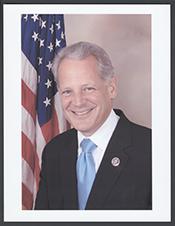 Rep. Steve Israel (D-NY)
Description
Amendment requires the Secretary of Defense to submit to Congress a report on the current operational status of the airfield located in Abeche, Chad and recommendations for upgrades to the Abeche airfield to support enhanced operations and a large increase in air traffic, including a cost-estimate for such upgrades.
Text
Offered
This amendment's own text couldn't be picked out of its Congressional Record passage, so the passage is shown in full.
PERSONAL EXPLANATION
Mr. GENE GREEN of Texas. Madam Chairman, on rollcall No. 356, had I
been present, I would have voted ``present.''
Recorded Vote
The Acting CHAIRMAN. Pending is the demand of the gentleman from
Georgia for a recorded vote.
A recorded vote was ordered.
The Acting CHAIRMAN. This will be a 5-minute vote.
The vote was taken by electronic device, and there were--ayes 184,
noes 222, not voting 31, as follows:
[Roll No. 357]
AYES--184
Aderholt
Akin
Alexander
Bachmann
Bachus
Baker
Barrett (SC)
Bartlett (MD)
Barton (TX)
Biggert
Bilbray
Bilirakis
Bishop (UT)
Blackburn
Blunt
Boehner
Bonner
Bono
Boozman
Boustany
Brady (TX)
Brown (SC)
Brown-Waite, Ginny
Buchanan
Burgess
Burton (IN)
Buyer
Calvert
Campbell (CA)
Cannon
Cantor
Capito
Carter
Chabot
Coble
Cole (OK)
Conaway
Crenshaw
Culberson
Davis (KY)
Davis, David
Davis, Tom
Deal (GA)
Dent
Diaz-Balart, L.
Diaz-Balart, M.
Doolittle
Drake
Dreier
Duncan
Ehlers
Emerson
Everett
Fallin
Feeney
Ferguson
Flake
Forbes
Fortenberry
Fortuno
Fossella
Foxx
Franks (AZ)
Frelinghuysen
Gallegly
Garrett (NJ)
Gerlach
Gillmor
Gingrey
Gohmert
Goode
Goodlatte
Granger
Graves
Hall (TX)
Hastings (WA)
Hayes
Heller
Hensarling
Herger
Hobson
Hoekstra
Hulshof
Inglis (SC)
Issa
Jindal
Johnson (IL)
Johnson, Sam
Jones (NC)
Jordan
Keller
King (IA)
King (NY)
Kingston
Kirk
Kline (MN)
Knollenberg
Kuhl (NY)
LaHood
Lamborn
Latham
LaTourette
Lewis (CA)
Lewis (KY)
Linder
LoBiondo
Lucas
Lungren, Daniel E.
Mack
Manzullo
Marchant
McCarthy (CA)
McCaul (TX)
McCotter
McHenry
McHugh
McKeon
Mica
Miller (MI)
Miller, Gary
Mollohan
Moran (KS)
Musgrave
Neugebauer
Nunes
Paul
Pearce
Pence
Petri
Pickering
Pitts
Porter
Price (GA)
Pryce (OH)
Putnam
Radanovich
Ramstad
Regula
Rehberg
Reichert
Renzi
Rogers (AL)
Rogers (KY)
Rogers (MI)
Rohrabacher
Ros-Lehtinen
Roskam
Royce
Ryan (WI)
Sali
Saxton
Schmidt
Sensenbrenner
Sessions
Shadegg
Shays
Shimkus
Shuster
Simpson
Smith (NE)
Smith (NJ)
Smith (TX)
Souder
Stearns
Sullivan
Tancredo
Terry
Thornberry
Tiahrt
Tiberi
Turner
Upton
Walberg
Walden (OR)
Walsh (NY)
Wamp
Weldon (FL)
Weller
Westmoreland
Wicker
Wilson (NM)
Wilson (SC)
Young (AK)
Young (FL)
NOES--222
Abercrombie
Ackerman
Allen
Altmire
Andrews
Arcuri
Baca
Baird
Baldwin
Bean
Becerra
Berkley
Berman
Berry
Bishop (GA)
Bishop (NY)
Blumenauer
Boren
Boswell
Boucher
Boyd (FL)
Boyda (KS)
Brady (PA)
Braley (IA)
Brown, Corrine
Butterfield
Capps
Capuano
Carnahan
Carney
Carson
Castle
Castor
Chandler
Clarke
Clay
Cleaver
Clyburn
Cohen
Conyers
Cooper
Costa
Costello
Courtney
Cramer
Crowley
Cuellar
Cummings
Davis (AL)
Davis (CA)
Davis (IL)
Davis, Lincoln
DeFazio
DeGette
Dicks
Dingell
Doggett
Donnelly
Doyle
Edwards
Ellison
Ellsworth
Emanuel
Eshoo
Etheridge
Farr
Fattah
Filner
Frank (MA)
Giffords
Gilchrest
Gillibrand
Gonzalez
Gordon
Green, Al
Green, Gene
Grijalva
Gutierrez
Hall (NY)
Hare
Harman
Hastings (FL)
Herseth Sandlin
Higgins
Hill
Hinchey
Hinojosa
Hirono
Hodes
Holden
Holt
Honda
Hooley
Hunter
Inslee
Israel
[[Page H5133]]
Jackson (IL)
Jackson-Lee (TX)
Jefferson
Johnson (GA)
Johnson, E. B.
Jones (OH)
Kagen
Kanjorski
Kaptur
Kennedy
Kildee
Kilpatrick
Kind
Klein (FL)
Kucinich
Lampson
Langevin
Lantos
Larsen (WA)
Larson (CT)
Lee
Levin
Lewis (GA)
Lipinski
Loebsack
Lofgren, Zoe
Lowey
Lynch
Mahoney (FL)
Maloney (NY)
Markey
Marshall
Matheson
Matsui
McCarthy (NY)
McCollum (MN)
McDermott
McGovern
McIntyre
McNerney
McNulty
Meehan
Meek (FL)
Meeks (NY)
Michaud
Miller (NC)
Mitchell
Moore (KS)
Moore (WI)
Murphy (CT)
Murphy, Patrick
Murphy, Tim
Murtha
Napolitano
Neal (MA)
Oberstar
Obey
Olver
Ortiz
Pallone
Pascrell
Pastor
Payne
Perlmutter
Peterson (MN)
Pomeroy
Price (NC)
Rahall
Rangel
Reyes
Rodriguez
Ross
Rothman
Roybal-Allard
Ruppersberger
Rush
Ryan (OH)
Salazar
Sanchez, Linda T.
Sanchez, Loretta
Sarbanes
Schakowsky
Schiff
Schwartz
Scott (GA)
Scott (VA)
Serrano
Sestak
Shea-Porter
Sherman
Shuler
Sires
Skelton
Slaughter
Smith (WA)
Snyder
Solis
Space
Spratt
Sutton
Tanner
Tauscher
Taylor
Thompson (CA)
Thompson (MS)
Tierney
Towns
Udall (CO)
Udall (NM)
Van Hollen
Velazquez
Visclosky
Walz (MN)
Wasserman Schultz
Waters
Watson
Watt
Waxman
Weiner
Welch (VT)
Wexler
Wilson (OH)
Woolsey
Wu
Wynn
Yarmuth
NOT VOTING--31
Barrow
Bordallo
Camp (MI)
Cardoza
Christensen
Cubin
Davis, Jo Ann
Delahunt
DeLauro
Engel
English (PA)
Faleomavaega
Hastert
Hoyer
McCrery
McMorris Rodgers
Melancon
Miller (FL)
Miller, George
Moran (VA)
Myrick
Nadler
Norton
Peterson (PA)
Platts
Poe
Reynolds
Stark
Stupak
Whitfield
Wolf
Announcement by the Acting Chairman
The Acting CHAIRMAN (during the vote). Members are advised 2 minutes
remain in this vote.
{time} 1442
So the motion was rejected.
The result of the vote was announced as above recorded.
Mr. SKELTON. Madam Chairman, I yield to the gentleman from Hawaii
(Mr. Abercrombie) for the purpose of making a unanimous consent
request.
(Mr. ABERCROMBIE asked and was given permission to revise and extend
his remarks.)
Mr. ABERCROMBIE. Madam Chairman, as disappointing as it may be for
all the Members that I will not now deliver an oration, I will submit a
formal statement on the work of the Air and Land Forces Subcommittee. I
thank my good friend, colleague and mentor, Mr. Saxton, and all the
Members, Republican and Democratic alike, on the Air and Land Forces
Subcommittee.
Mr. SKELTON. Madam Chairman, I yield 4 minutes to my colleague and
friend, the gentleman from Mississippi (Mr. Taylor), who is the
chairman of the Subcommittee on Seapower and Expeditionary Forces.
Mr. TAYLOR. Madam Chairman, I want to thank all of the Members of the
Seapower and Expeditionary Forces Subcommittee for their cooperation on
this. I want to thank in particular Ranking Member Saxton and Chairman
Abercrombie for the funds that were transferred from their portions of
the bill to address the immediate warfighter needs in Iraq.
Madam Chairman, a disproportionately high number of Americans are
dying in Iraq in explosions that involve Humvees. We as a Nation have
spent a lot of money to protect the troops that ride in them.
Unfortunately, the enemy has discovered that Humvees are vulnerable
from the bottom. This bill includes $4.1 billion, ten times more than
the President's request, to field a new generation of vehicles, a mine
resistant ambush-protected vehicle, to protect the troops in Iraq. This
could only be done with the cooperation of the Air and Land Forces
Subcommittee and the Seapower and Expeditionary Forces Subcommittee.
Keep in mind that the President's budget request was actually written
about a year ago. It is responding to the needs as we see them in the
field, and I think a very good move. We also want to thank the great
staff of the Seapower and Expeditionary Forces Subcommittee for the
work that they have done.
The President asked for seven ships in this year's budget: a Gerald
Ford class aircraft carrier; a Virginia-class submarine; an LPD 17; two
LCSs; a T-AKE cargo ship; and a Joint High Speed Vessel. Because of the
good work of the subcommittee and the cooperation of the other
subcommittees of the Committee on Armed Services, this committee has
added an additional LPD 17, an additional T-AKE cargo ship, and the
forward funding for an additional submarine.
The Bush administration's Defense budgets have grown by well over
$100 billion during their tenure. Unfortunately, the Navy fleet has
shrunk by 50 ships during the same time. This marks the first attempt
on the part of the committee in a long time to reverse that trend and
get our Nation back on course for a 313-ship Navy, and I want to thank
all those who helped make that possible.
{time} 1445
Additionally, the bill funds a competitive engine program for the
Joint Strike Fighter. It fully funds the administration's request for
ship and aviation construction and procurement. It fully funds the
administration's request for the operation of the Maritime
Administration.
The bill would allow the Secretary of the Navy to come up with a
program for capital expenditure in shipbuilding to help modernize our
shipyard infrastructure and reduce the cost of our Navy ships to the
taxpayers.
It will allow for the multi-year procurement for Virginia-class
submarines, and it will direct the Secretary of the Navy to design and
construct the next generation of surface warships with integrated
nuclear power systems.
Madam Chairman, it makes no sense at all to have aircraft carriers
that carry 30 years' worth of fuel on board when the vessels that are
necessary to protect them have to refuel every 5 days. We are
addressing this vulnerability to our fleet and, more importantly, we
are taking a huge step on behalf of the Department of Defense to make
our Nation less dependent on foreign sources of fuel.
I would like to acknowledge that none of these initiatives could have
taken place without the great cooperation and leadership on the part of
the former chairman, Mr. Bartlett. Addressing the nuclear power issue
is a direct result of his making the committee aware of our
vulnerabilities to fuel, and the need for shipyard modernization again
is a direct result of his efforts while he was chairman. It is also
with the great cooperation of the minority and the members of our staff
that we present this portion of the bill to the Congress and ask for
its approval.
Notice to Alter Order of Consideration of Amendments
Mr. SKELTON. Madam Chairman, pursuant to sections 3 and 4 of House
Resolution 403, and as the chairman of the Armed Services Committee, I
request that during further consideration of H.R. 1585 in the Committee
of the Whole and following general debate, the following amendments be
considered in this order: amendment No. 33, amendment No. 29, amendment
No. 49, the en bloc package, and amendment No. 8, amendment No. 14,
amendment No. 21, and amendment No. 38.
I reserve the balance of my time.
Mr. SAXTON. Madam Chairman, I yield 3 minutes to the ranking member
of the Military Personnel Subcommittee, the gentleman from New York
(Mr. McHugh).
Mr. McHUGH. Madam Chair, I thank the gentleman for yielding.
Madam Chair, I rise simply to say, as we have heard from previous
speakers, and perhaps to state the obvious, this piece of legislation,
H.R. 1585, is a strong bill.
More importantly, in my judgment it is a bill that was put together
in a collaborative and bipartisan manner. I want to pay my respects, my
words of appreciation to the full committee Chair, the gentleman from
Missouri (Mr. Skelton), who came through this, his first trial by fire,
I think, with great efficiency; as well as, of course, the gentleman
from California (Mr. Hunter), the former chairman, now ranking member.
But most importantly, I want to thank the new chairman of the Personnel
Subcommittee, a gentleman who I had the honor and opportunity to serve
with as the ranking member when I had the opportunity to serve as
Chair, Dr. Vic Snyder, who worked together again in a bipartisan
manner, and in that way has produced
[[Page H5134]]
a product which I think overall we can all support with not just a
great deal of enthusiasm but a great deal of pride.
All of us feel very strongly on the Personnel Subcommittee that when
the Members come to the floor, it is good that they talk about the
broad range of effects and benefits in this bill. But it makes us feel
proud, Madam Chair, when we note that those things that the Members
take most pride in and cite most often are a product of the work of the
Personnel Subcommittee. The reason for that is very, very simple.
The success of the United States military is today, as it has always
been, not in high weapons systems, as important as they are, not in
sophisticated platforms, not in all of those things that give our
fighting men and women an edge, but the true edge is in the fighting
men and women themselves. And this bill contains many benefits, many
added advantages that they so richly deserve.
It provides an increase in end strength, something we have taken up
and we need to continue, is embodied in this bill. A basic pay raise
that will continue the 8-year effort we have had to increase the pay of
our men and women in uniform, drawing down that pay gap between the
civilian and military forces, drawing it down currently under the ramp
to 2012 when it will be as little as 1.5 percent, resisting so-called
efficiency wedges and savings in the TRICARE and other military health
care programs, saving money for those hardworking men and women
protecting our interests wherever they may be, here at home, and their
families.
The Wounded Warrior Assistance Program that I had the honor of
working with, along with Dr. Snyder, and along with the chairman and
the ranking member to address those challenges that we saw so very
dishearteningly at places like Walter Reed and others.
All of this combined is a good bill that works on a bipartisan basis.
I urge all of my colleagues to support the bill.
Mr. SKELTON. Madam Chairman, I yield 2 minutes to my friend and
colleague, the gentleman from Washington (Mr. Smith), who is the
chairman of the Subcommittee on Terrorism and Unconventional Threats
and Capabilities.
Mr. SMITH of Washington. Thank you, Madam Chair.
First of all, I want to thank the chairman of the Armed Services
Committee, Ike Skelton, for the fantastic job he has done on this mark.
He has done it in a bipartisan fashion. And also, of greatest
importance, this mark funds the war that we are fighting.
We have troops in the field in harm's way. We fund the priorities
that they need right now. And given all of the demands on the Armed
Services Committee, that is no easy feat. The chairman and all members
of the committee have made that a priority, and I want to thank him for
that.
I also believe that we have well-funded the broader war on terrorism
that my subcommittee has a significant part of, Subcommittee on
Terrorism.
The fight against al Qaeda and the ideology they espouse and those
who would support al Qaeda or that ideology is not just in one place.
It is in many places in the world. It is in Africa, Southeast Asia,
certainly in the Middle East and elsewhere. To combat that ideology, we
need a force that is trained in unconventional warfare, that is trained
in asymmetric warfare, and we need the Special Operations Forces who
are trained to go into parts of the world, to understand the culture
and work with the local communities and stop al Qaeda-like insurgencies
before they start. That training is critical.
It is much easier to fight that type of battle than to get dragged
into a larger war. We have had incredible success in places like the
Philippines and Chad and Kenya and elsewhere because our Special
Operations Forces understand irregular warfare, get in there and work
with the local communities to stop insurgencies before they start. I
believe this mark reflects that priority. It is certainly one of the
highest priorities for our subcommittee.
I want to thank the ranking member, the gentleman from Texas (Mr.
Thornberry), for his leadership on this issue as well. We have put
language, money and report language in the bill that will prioritize
irregular warfare, unconventional fights, so that we can defeat al
Qaeda globally and understand all of the different challenges that go
into that.
Again, I thank the gentleman from Missouri (Mr. Skelton) for his
outstanding leadership of this committee. It is a privilege and honor
to serve with him, and to thank him for this mark and this bill that I
think adequately prepares our military to fight the battles we face.
Mr. SAXTON. Madam Chair, I would like to yield such time as he may
consume to the ranking member of the Seapower Subcommittee, Mr.
Bartlett.
Mr. BARTLETT of Maryland. Madam Chair, I rise in strong support of
H.R. 1585.
First, I would like to take this opportunity to recognize the
outstanding service rendered to the Nation by our men and women in
uniform, who, like their forebears, are meeting today's security
challenges with true dedication and professionalism.
I would also like to thank the gentleman from Mississippi (Mr.
Taylor), chairman of the Seapower and Expeditionary Forces Subcommittee
on which I serve as ranking member, for his leadership, for his
friendship which I really appreciate, and unwavering commitment to our
servicemembers. I also want to thank our very capable staff.
Madam Chair, I think our colleagues will find that this bill reflects
a fair and balanced treatment of the issues facing the United States
Navy and Marine Corps. In collaboration with the Air and Land Forces
Subcommittee and Chairman Skelton and Ranking Member Hunter, we
provided full funding for the Mine Resistant Ambush Protected Vehicle,
or MRAP, which is protecting our troops against IEDs.
By strengthening the shipbuilding program and authorizing eight new
ships, we addressed the Navy's number one and number two unfunded
priorities. We must reverse the steady decline in the number of battle
force ships we have seen for nearly two decades.
Nevertheless, in order to provide the number of ships our warfighters
say they need, we must inject fiscal discipline into our shipbuilding
program. To that end, H.R. 1585 includes a provision that would limit
the practice of design and build concurrency, a practice which has
delayed and increased costs for a number of shipbuilding programs.
Continuing efforts from prior years' Defense authorization bills, we
have included a provision to push for modernization in shipyards
through process, infrastructure improvements, and workforce training.
An April 2007 study commissioned by the Department of Defense found
that the risks associated with the cost and supply of oil will make the
U.S. military's ability to rapidly deploy on demand ``unsustainable in
the long term.''
H.R. 1585 also forges new ground by requiring that future major
combatant vessels have integrated nuclear propulsion.
I conclude by applauding the remaining provisions in the bill
supporting the Navy and Marine Corps and authorizing appropriations and
authorities for the Maritime Administration. I urge full support of
H.R. 1585.
Mr. SKELTON. Madam Chair, I yield 3 minutes to the gentlewoman from
California (Mrs. Tauscher) who is the chairwoman of the Subcommittee on
Strategic Forces.
Mrs. TAUSCHER. Madam Chairman, first I would like to congratulate the
gentleman from Missouri, the distinguished chairman of the committee,
on his first mark of the national security defense bill. He is a
fabulous member and a great leader. I appreciate all of the hard work
that has been put into this bill.
I also want to thank my ranking member, the gentleman from Alabama
(Mr. Everett), for his hard work and his willingness to work in a
bipartisan way to achieve what I consider to be a very significant mark
for the Strategic Forces Subcommittee; also, the members of the
subcommittee and our fabulous staff.
Madam Chairman, this bill is a bill that I have worked on with my
colleagues to incorporate four priorities into the bill before the
House.
First, this bill aims to create a public discussion about nuclear
weapons by
[[Page H5135]]
establishing a congressionally appointed bipartisan commission designed
to reevaluate U.S. strategic posture. This commission would provide
valuable recommendations to Congress regarding the proper mix of
conventional and nuclear weapons needed to meet new and emerging
threats.
Second, the bill slows the Department of Energy nuclear weapons
initiatives. We limit reliable replacement warhead funds to design and
cost study activities and eliminate funding for the proposed
Consolidated Plutonium Center. Instead, we increase funding to
strengthen the Stockpile Stewardship Program, as well as the weapons
complex.
Third, the bill funds ballistic missile defense systems that will
protect the American people, our deployed troops, and allies against
real threats while shifting resources away from longer term, high-risk
efforts.
It fully funds the Army missile defense budget request for the
Patriot PAC-3 missile, including funding for the Patriot ``Pure Fleet''
initiative.
It fully funds the Ground Based Missile Defense System to protect the
United States against a potential threat from North Korea or Iran.
It includes funding for Aegis BMD and fully funds THAAD development
and deployment.
Finally, we are boosting funding for space capabilities that deliver
near-term benefits to the warfighter and improve space situational
awareness and survivability.
Madam Chair, this bill strikes a balance between near-term needs and
long-term investment, and it creates the means to help bring our
nuclear weapons policies into the 21st century. I urge my colleagues to
support this bill.
Mr. SAXTON. Madam Chairman, I yield 4 minutes to the ranking member
of the Terrorism Subcommittee, the gentleman from Texas (Mr.
Thornberry).
{time} 1500
Mr. THORNBERRY. Madam Chairman, I thank the gentleman for yielding.
Madam Chair, I want to express my strong support for that section of
the bill which was produced by the Terrorism and Unconventional Threats
and Capabilities Subcommittee. I especially appreciate the efforts and
cooperative spirit of the chairman, Adam Smith, and the work of the
subcommittee members and the staff.
As he mentioned a few moments ago, that section of the bill supports
the 5-year growth plan for the Special Operations Forces, which was
recommended by the 2005 QDR. It also improves the Department's ability
to harness technological innovation and funds the Defense Advanced
Research Projects Agency, DARPA, as well as other basic research in the
Department.
Madam Chair, as we discuss the various sections of this very large
bill, I also think it is important that we step back and remember the
broader context in which we operate. One is that we face a ruthless,
determined, adaptable adversary who at this moment is concentrating
their efforts in Afghanistan and Iraq, but poses a threat to us and our
allies all over the world. We live in a world where technology that can
destroy massive numbers of human lives is spreading around the world,
and some of the places where that technology exists are not as
politically stable as we would like.
We face threats to our country using some of the very technology we
rely upon, whether it's satellites or whether it's the Internet; and in
the face of all that, we have national security structures that were
developed during the Cold War. And as with all large organizations, the
Department of Defense and other government agencies have a difficult
time adapting.
It may be that the most important part of this bill is the funding of
a study to recommend changes in the National Security Act of 1947,
which will help us be better organized and better adaptable for the
security challenges in the future.
Madam Chair, I'd like to make one other point that concerns me about
the broader national security context in which we operate. There is
much that is in this bill that is very good. We will debate some
important amendments and a lot of amendments that are not that deal
with smaller issues, and then I expect that this bill will pass by a
very large vote.
And then next week or the week thereafter, we are going to have
another vote that will undercut much of the good that is in this bill
by giving hope to our enemies and discouragement to our friends. This
Congress will pat itself on the back for passing a pay raise for the
troops, but then it will tie the hands of the commanders who are sent
to implement the Nation's strategy.
This Congress will make the job of the military in fighting
terrorists in key places harder by the political debate and by the
actions we take; and so I would encourage Members to read and study
``Unconventional Warfare,'' and I think they will find, as one writer
put it, that it uses all available networks, political, economic,
social and military, to convince the enemy's political decision-makers
that their goals are unachievable or too costly.
And so, Madam Chair, it would seem to me to be a sad day if this
Congress takes action that undoes the good that our military does every
day on the ground, the achievements that they win in the field; and yet
I fear, by some of the votes that we've taken, that may be dangerously
the direction we may be headed.
Mr. SAXTON. Madam Chairwoman, I yield the remainder of this minute to
the gentleman from Georgia (Mr. Westmoreland) for purposes of a motion.
motion to rise by mr. westmoreland
Mr. WESTMORELAND. Madam Chairman, I move that the Committee do now
rise.
The Acting CHAIRMAN (Ms. Eshoo). The question is on the motion
offered by the gentleman from Georgia (Mr. Westmoreland).
The question was taken; and the Acting Chairman announced that the
noes appeared to have it.
Mr. WESTMORELAND. Madam Chairman, I demand a recorded vote, and
pending that, I make the point of order that a quorum is not present.
The Acting CHAIRMAN. The Chair will count for a quorum. Does the
gentleman withdraw his point of order?
Mr. WESTMORELAND. No, Madam Chairman, I do not.
The Acting CHAIRMAN. Evidently a quorum is not present.
Pursuant to clause 6 of rule XVIII, the Chair will reduce to 5
minutes the minimum time for an electronic vote, if ordered, on the
pending question following this quorum call. Members will record their
presence by electronic device.
The following Members responded to their names:
[Roll No. 358]
Abercrombie
Ackerman
Aderholt
Akin
Alexander
Allen
Altmire
Andrews
Arcuri
Baca
Bachmann
Bachus
Baird
Baker
Baldwin
Barrett (SC)
Barrow
Bartlett (MD)
Barton (TX)
Bean
Becerra
Berkley
Berman
Berry
Biggert
Bilbray
Bilirakis
Bishop (GA)
Bishop (NY)
Bishop (UT)
Blackburn
Blumenauer
Blunt
Boehner
Bonner
Bono
Boozman
Boren
Boswell
Boucher
Boustany
Boyd (FL)
Boyda (KS)
Brady (PA)
Brady (TX)
Braley (IA)
Brown (SC)
Brown, Corrine
Brown-Waite, Ginny
Buchanan
Burgess
Burton (IN)
Butterfield
Buyer
Calvert
Camp (MI)
Campbell (CA)
Cannon
Cantor
Capito
Capuano
Cardoza
Carnahan
Carney
Carson
Carter
Castle
Castor
Chabot
Chandler
Christensen
Clarke
Clay
Cleaver
Clyburn
Coble
Cohen
Cole (OK)
Conaway
Conyers
Cooper
Costa
Costello
Courtney
Cramer
Crenshaw
Crowley
Culberson
Cummings
Davis (AL)
Davis (CA)
Davis (IL)
Davis (KY)
Davis, David
Davis, Lincoln
Davis, Tom
Deal (GA)
DeFazio
DeGette
DeLauro
Dent
Diaz-Balart, L.
Diaz-Balart, M.
Dingell
Doggett
Donnelly
Doolittle
Doyle
Drake
Dreier
Duncan
Edwards
Ehlers
Ellison
Ellsworth
Emanuel
Emerson
English (PA)
Eshoo
Etheridge
Everett
Fallin
Fattah
Feeney
Ferguson
Filner
Flake
Forbes
Fortenberry
Fortuno
Fossella
Foxx
Franks (AZ)
Frelinghuysen
Gallegly
Garrett (NJ)
Gerlach
Giffords
Gilchrest
Gillibrand
Gillmor
Gingrey
Gohmert
Gonzalez
Goode
Goodlatte
Gordon
Granger
Graves
Green, Al
Green, Gene
Grijalva
Gutierrez
Hall (NY)
Hall (TX)
Hare
Harman
Hastert
Hastings (FL)
Hastings (WA)
Hayes
Heller
Hensarling
Herger
Herseth Sandlin
Higgins
Hill
Hinchey
Hinojosa
Hirono
Hobson
Hodes
Hoekstra
[[Page H5136]]
Holden
Holt
Hooley
Hoyer
Hulshof
Hunter
Inglis (SC)
Inslee
Israel
Issa
Jackson (IL)
Jackson-Lee (TX)
Jindal
Johnson (GA)
Johnson (IL)
Johnson, E. B.
Johnson, Sam
Jones (NC)
Jones (OH)
Jordan
Kagen
Kanjorski
Kaptur
Kennedy
Kildee
Kind
King (IA)
King (NY)
Kingston
Kirk
Klein (FL)
Kline (MN)
Knollenberg
Kucinich
Kuhl (NY)
LaHood
Lamborn
Lampson
Langevin
Lantos
Larsen (WA)
Latham
LaTourette
Lee
Levin
Lewis (CA)
Lewis (GA)
Lewis (KY)
Linder
Lipinski
LoBiondo
Loebsack
Lowey
Lucas
Lungren, Daniel E.
Lynch
Mack
Mahoney (FL)
Maloney (NY)
Manzullo
Marchant
Markey
Marshall
Matheson
Matsui
McCarthy (CA)
McCarthy (NY)
McCaul (TX)
McCollum (MN)
McCotter
McDermott
McGovern
McHenry
McHugh
McIntyre
McKeon
McNerney
McNulty
Meehan
Meek (FL)
Meeks (NY)
Melancon
Mica
Michaud
Miller (MI)
Miller (NC)
Miller, Gary
Mitchell
Mollohan
Moore (KS)
Moore (WI)
Moran (KS)
Moran (VA)
Murphy (CT)
Murphy, Patrick
Murphy, Tim
Murtha
Musgrave
Myrick
Napolitano
Neal (MA)
Neugebauer
Nunes
Oberstar
Obey
Ortiz
Pallone
Pascrell
Pastor
Paul
Payne
Pearce
Pence
Perlmutter
Peterson (MN)
Peterson (PA)
Petri
Pickering
Pitts
Platts
Poe
Pomeroy
Porter
Price (GA)
Price (NC)
Pryce (OH)
Putnam
Radanovich
Rahall
Ramstad
Rangel
Regula
Rehberg
Reichert
Renzi
Reyes
Reynolds
Rodriguez
Rogers (AL)
Rogers (KY)
Rogers (MI)
Rohrabacher
Ros-Lehtinen
Roskam
Ross
Rothman
Roybal-Allard
Royce
Ruppersberger
Rush
Ryan (OH)
Ryan (WI)
Salazar
Sali
Sanchez, Linda T.
Sanchez, Loretta
Sarbanes
Saxton
Schiff
Schmidt
Schwartz
Scott (GA)
Scott (VA)
Sensenbrenner
Serrano
Sessions
Sestak
Shadegg
Shays
Shea-Porter
Sherman
Shimkus
Shuler
Shuster
Simpson
Sires
Skelton
Slaughter
Smith (NE)
Smith (NJ)
Smith (TX)
Snyder
Solis
Souder
Space
Spratt
Stearns
Stupak
Sullivan
Sutton
Tancredo
Tanner
Tauscher
Taylor
Terry
Thompson (CA)
Thompson (MS)
Thornberry
Tiahrt
Tiberi
Tierney
Towns
Turner
Udall (CO)
Udall (NM)
Upton
Van Hollen
Velazquez
Visclosky
Walberg
Walden (OR)
Walsh (NY)
Walz (MN)
Wamp
Wasserman Schultz
Waters
Watson
Watt
Waxman
Weiner
Welch (VT)
Weller
Westmoreland
Wexler
Whitfield
Wicker
Wilson (NM)
Wilson (OH)
Wilson (SC)
Wolf
Wu
Wynn
Young (AK)
Young (FL)
{time} 1528
The Acting CHAIRMAN. On this quorum call, 407 have responded, a
quorum.
Recorded Vote
The Acting CHAIRMAN. Pending is the demand of the gentleman from
Georgia for a recorded vote.
A recorded vote was ordered.
The Acting CHAIRMAN. This is a 5-minute vote.
The vote was taken by electronic device, and there were--ayes 186,
noes 213, answered ``present'' 1, not voting 37, as follows:
[Roll No. 359]
AYES--186
Aderholt
Akin
Alexander
Bachmann
Bachus
Baker
Barrett (SC)
Bartlett (MD)
Barton (TX)
Biggert
Bilbray
Bilirakis
Bishop (UT)
Blackburn
Blunt
Boehner
Bonner
Bono
Boozman
Boustany
Brady (TX)
Brown (SC)
Buchanan
Burgess
Burton (IN)
Buyer
Calvert
Camp (MI)
Campbell (CA)
Cannon
Capito
Carter
Chabot
Cole (OK)
Conaway
Crenshaw
Culberson
Davis (KY)
Davis, David
Davis, Tom
Deal (GA)
Dent
Diaz-Balart, L.
Diaz-Balart, M.
Doolittle
Drake
Dreier
Duncan
Ehlers
Emerson
English (PA)
Everett
Fallin
Feeney
Ferguson
Flake
Forbes
Fortenberry
Fortuno
Fossella
Foxx
Franks (AZ)
Frelinghuysen
Gallegly
Garrett (NJ)
Gerlach
Gillmor
Gingrey
Gohmert
Goode
Goodlatte
Granger
Graves
Hall (TX)
Hastert
Hastings (WA)
Hayes
Heller
Hensarling
Hobson
Hoekstra
Hulshof
Inglis (SC)
Issa
Jindal
Johnson (IL)
Johnson, Sam
Jordan
Keller
King (IA)
King (NY)
Kingston
Kirk
Kline (MN)
Knollenberg
Kuhl (NY)
LaHood
Lamborn
Latham
LaTourette
Lewis (CA)
Lewis (KY)
Linder
LoBiondo
Lucas
Lungren, Daniel E.
Mack
Manzullo
Marchant
McCarthy (CA)
McCaul (TX)
McCotter
McHenry
McHugh
McKeon
Mica
Miller (MI)
Miller, Gary
Moran (KS)
Musgrave
Myrick
Neugebauer
Nunes
Paul
Pearce
Pence
Petri
Pickering
Pitts
Platts
Poe
Porter
Price (GA)
Pryce (OH)
Putnam
Radanovich
Ramstad
Regula
Rehberg
Reichert
Renzi
Reynolds
Rogers (AL)
Rogers (KY)
Rogers (MI)
Rohrabacher
Ros-Lehtinen
Roskam
Royce
Ryan (WI)
Sali
Saxton
Schmidt
Sensenbrenner
Sessions
Shadegg
Shays
Shimkus
Shuler
Shuster
Simpson
Smith (NE)
Smith (NJ)
Smith (TX)
Souder
Stearns
Tancredo
Terry
Thornberry
Tiahrt
Tiberi
Turner
Upton
Walberg
Walden (OR)
Walsh (NY)
Wamp
Weller
Westmoreland
Whitfield
Wicker
Wilson (NM)
Wilson (SC)
Wolf
Young (AK)
Young (FL)
NOES--213
Ackerman
Allen
Altmire
Andrews
Arcuri
Baca
Baird
Baldwin
Barrow
Bean
Becerra
Berkley
Berman
Berry
Bishop (GA)
Bishop (NY)
Blumenauer
Boren
Boswell
Boucher
Boyd (FL)
Boyda (KS)
Brady (PA)
Braley (IA)
Brown, Corrine
Butterfield
Capuano
Cardoza
Carnahan
Carney
Carson
Castle
Castor
Chandler
Christensen
Clarke
Clay
Cleaver
Clyburn
Cohen
Conyers
Cooper
Costa
Costello
Courtney
Cramer
Crowley
Cuellar
Cummings
Davis (AL)
Davis (CA)
Davis (IL)
Davis, Lincoln
DeFazio
DeGette
DeLauro
Dingell
Doggett
Donnelly
Doyle
Edwards
Ellison
Ellsworth
Emanuel
Eshoo
Etheridge
Fattah
Filner
Frank (MA)
Giffords
Gilchrest
Gillibrand
Gonzalez
Gordon
Green, Al
Green, Gene
Grijalva
Gutierrez
Hall (NY)
Hare
Harman
Hastings (FL)
Herseth Sandlin
Higgins
Hill
Hinchey
Hinojosa
Hirono
Hodes
Holden
Holt
Honda
Hooley
Hoyer
Hunter
Inslee
Israel
Jackson (IL)
Jackson-Lee (TX)
Johnson (GA)
Johnson, E. B.
Jones (NC)
Jones (OH)
Kagen
Kanjorski
Kaptur
Kennedy
Kildee
Kind
Klein (FL)
Kucinich
Langevin
Lantos
Larsen (WA)
Lee
Levin
Lewis (GA)
Lipinski
Loebsack
Lowey
Lynch
Mahoney (FL)
Maloney (NY)
Markey
Marshall
Matheson
Matsui
McCarthy (NY)
McCollum (MN)
McDermott
McGovern
McIntyre
McNerney
McNulty
Meehan
Meek (FL)
Melancon
Michaud
Miller (NC)
Mitchell
Mollohan
Moore (KS)
Moore (WI)
Moran (VA)
Murphy (CT)
Murphy, Patrick
Murphy, Tim
Murtha
Napolitano
Neal (MA)
Oberstar
Obey
Ortiz
Pallone
Pascrell
Pastor
Payne
Peterson (MN)
Pomeroy
Price (NC)
Rahall
Rangel
Reyes
Rodriguez
Ross
Rothman
Roybal-Allard
Ruppersberger
Rush
Ryan (OH)
Salazar
Sanchez, Linda T.
Sanchez, Loretta
Sarbanes
Schiff
Schwartz
Scott (GA)
Scott (VA)
Serrano
Sestak
Shea-Porter
Sherman
Sires
Skelton
Slaughter
Snyder
Solis
Space
Stark
Stupak
Sutton
Tanner
Tauscher
Taylor
Thompson (CA)
Tierney
Towns
Udall (CO)
Udall (NM)
Velazquez
Visclosky
Walz (MN)
Wasserman Schultz
Waters
Watson
Watt
Waxman
Weiner
Welch (VT)
Wexler
Wilson (OH)
Wu
Wynn
ANSWERED ``PRESENT''--1
Spratt
NOT VOTING--37
Abercrombie
Bordallo
Brown-Waite, Ginny
Cantor
Capps
Coble
Cubin
Davis, Jo Ann
Delahunt
Dicks
Engel
Faleomavaega
Farr
Herger
Jefferson
Kilpatrick
Lampson
Larson (CT)
Lofgren, Zoe
McCrery
McMorris Rodgers
Meeks (NY)
Miller (FL)
Miller, George
Nadler
Norton
Olver
Perlmutter
Peterson (PA)
Schakowsky
Smith (WA)
Sullivan
Thompson (MS)
Van Hollen
Weldon (FL)
Woolsey
Yarmuth
Announcement by the Acting Chairman
The Acting CHAIRMAN (during the vote). Members are advised that there
are 2 minutes remaining in this vote.
{time} 1538
So the motion to rise was rejected.
The result of the vote was announced as above recorded.
Mr. SKELTON. Madam Chairman, may I inquire as to the time remaining
on each side on general debate, please.
The Acting CHAIRMAN. The gentleman from Missouri has 24\1/2\ minutes
remaining. The gentleman from New Jersey has 21 minutes remaining.
Mr. SKELTON. I yield myself such time as I may consume.
This is deadly serious business, Madam Chairwoman. I have witnessed
here the number of procedural motions, which I have refrained from
commenting upon, but this is deadly serious business.
This is a bill to authorize funds for the United States military.
That is our constitutional job to do. And procedural motions are fine,
but let's get on with taking care of the troops and giving them their
pay raise and the medical care and the equipment that they need.
[[Page H5137]]
As we say back in Missouri, ``'nough said.''
I yield 4 minutes to the gentleman from Texas (Mr. Reyes).
Mr. REYES. Madam Chair, I thank the gentleman for yielding, and
couldn't agree more with his comments on how serious this authorization
is and our duty to do what we have been sent here to do, especially
today for our military.
So with that, Madam Chair, I rise to express strong support for H.R.
1585. And I want to thank the gentleman from Missouri (Mr. Skelton),
our chairman, and the ranking member, Mr. Hunter, for the great job
that they have done on crafting together a piece of legislation that is
so vital and important.
Having said that, Madam Chair, in July of 2008, the Army will conduct
a limited user test with soldiers from the Army Evaluation Task Force
based at Fort Bliss using the first spinout of the FCS technologies. I
know that the gentleman from Missouri understands how critical the
first spinout of FCS technologies is for our Nation's warfighters, our
warfighters that are currently at war in Iraq and Afghanistan.
So I would now like to yield to the chairman of the Armed Services
Committee in the hope of entering into a colloquy so that he can
discuss how the bill addresses this very important and vital issue.
I yield to the chairman.
Mr. SKELTON. Madam Chairwoman, I thank the gentleman for yielding.
And first I want the gentleman from Texas to know how much the
committee appreciates his strong support for our Nation's Armed Forces,
particularly for the United States Army. He is just superb. The Army is
bearing the brunt of the burden of military operations in Iraq, as well
as Afghanistan, and our committee has worked to ensure that soldiers on
the ground have the equipment they need to accomplish their mission and
come home safely.
Beyond taking care of the needs of the warfighters in the field
today, we must address the Army's long-term modernization and readiness
requirements. That is why the bill before us here today fully funds the
most critical elements of the Future Combat Systems program, which will
keep the program on track to conduct the limited user test next summer.
While the bill cuts some funding for some redundant programs and
overhead costs, along with parts of the program which are not scheduled
to be fielded until 2015, the $2.8 billion in the bill includes full
funding for all Spinout 1 activities, allowing them to continue as
planned.
I want to assure the gentleman from Texas that we will continue our
efforts to balance the Army's immediate near-term as well as long-term
needs as we work through the conference process. As Congressman
Abercrombie said last week during consideration of the bill in the
committee, finding that balance is a work in progress.
To the gentleman from Texas, you have my assurance that we will
provide funding for the FCS program so that the Army can move forward
with modernizing its equipment and its networks.
As we focus our efforts, as we focus our dollars on today's soldiers,
we can't shortchange our future forces.
Mr. REYES. Reclaiming my time. I thank the gentleman for his efforts
in support of our military forces. Our soldiers, sailors, airmen, and
marines have no better friend in Congress than Ike Skelton; and on
behalf of the Fifth Brigade of the First Armored Division at Fort
Bliss, I want to thank the chairman for his assurance that their work
in support of FCS and Army modernization, as they prepare for the test
event next summer, will not be affected by the bill that we are
debating today.
FCS represents the cornerstone of the Army's modernization plans, and
I appreciate the chairman's understanding of the need to continue
investing in the Army's future even as we face the challenges of
today's wars in Iraq and Afghanistan.
Mr. SKELTON. Madam Chair, I reserve the balance of my time.
Mr. SAXTON. Madam Chair, I yield 3 minutes to the gentleman from
Missouri (Mr. Akin), the ranking member of the Oversight Subcommittee.
Mr. AKIN. Madam Chair, one of the things that you can be only an
amateur student of are various battles, or military history, and it
becomes immediately obvious, the importance of information. Just
randomly, you can think of Pearl Harbor, knowing whether the Japanese
are coming. Or, particularly, the Battle of Midway, where you have the
Japanese force, far superior to the American force, but the Americans
knew where the Japanese aircraft carriers were and the Japanese only
knew where one of the American aircraft carriers was. As a result,
America won that significant Battle of Midway, even though we had an
inferior force, based on information.
Now, I have heard discussion about how proud we are of Future Combat
Systems, which is a fancy word for a computerized system to help our
warfighters have the information that they need in order to do their
job. That program is the first major Army modernization program in 40
years, and under this bill, it is being cut by 25 percent.
{time} 1545
This was not a feel good kind of vote. This was a strict party-line
vote, the Democrats voting to cut it by 25 percent, the Republicans
trying to restore funds and being turned down in that request.
Now, when you cut a program by 25 percent, particularly as
complicated as this is with all the computers that are talking to each
other, the software, the communications disciplines and the platforms
involved, that is a significant change and a significant slowdown to a
very important part of our future, and that is the ability to have
real-time, online information for our warfighters.
This is not just important to the Army, as important as it is to the
Army, because the Marines and the Navy are going to be waiting also for
perhaps a lot of this software to be the prototype for their systems
that they develop later. So what we are doing is basically pushing
back, slowing and delaying and cutting down 25 percent, or $867
million, from this program. We have tried to replace those funds some,
with some things that are completely not necessary, such as a high
speed boat for the Army, which hasn't even been designed, and have been
turned down and not even allowed to offer that amendment here on the
floor.
Now, who is it who is going to pay for this degradation of the
modernization of our Army? It is going to be our sons and daughters, my
own sons that are involved, and this is not a good thing. This is not a
good trade-off. We must advance the modernization. Information has
always throughout history been critical to warfare. It is all the more
so now.
And so I am strongly opposed to this significant cut and the hurting
of our ability to get information to our warfighter.
Mr. REYES. Madam Chair, I now would like to yield 2 minutes to our
friend and colleague from California, the gentlelady, Ms. Sanchez.
Ms. LORETTA SANCHEZ of California. Madam Chairman, I rise today in
support of H.R. 1585, the National Defense Authorization Act for Fiscal
Year 2008.
I would like to thank my chairman, Mr. Skelton, for his really great
work in producing a Defense bill with support from both sides of the
aisle. It is commendable that Chairman Skelton was able to pass this
bill on a vote of 58-0, given the heated and the very polarized debates
that we were having in the House Armed Services Committee, especially
with respect to the war in Iraq.
And as Chairman Skelton has repeatedly said, the purpose of this bill
is to provide our troops with the equipment and the support that they
need to carry out their mission.
I, for example, voted against granting the President the authority to
use force in Iraq, and I have continued to question his repeated surges
and his failing policies in Iraq. I have repeatedly asked the President
to provide a plan to safely redeploy our troops to come home from Iraq.
But, having said this, until we can get our brave men and women home
from Iraq, we must provide them with what they need to perform their
mission. And that is what this bill does. At the same time, it asks the
tough questions of the Defense Department and of this President.
[[Page H5138]]
One question, for example, that I have for the Department of Defense
that I have been asking over and over for the last 4 years, what
happened to the approximately 329,000 Iraqi security forces that had
been trained? Specifically, where are they assigned? Are they reporting
for duty? Or are they now working for the insurgency? And this bill
asks that question.
The Defense authorization bill as a whole asks for accountability and
for oversight from the President and from the Department of Defense.
And I ask my colleagues to stand together and to pass this bill.
Mr. SAXTON. Madam Chairlady, I'd like to yield 3 minutes to the
gentleman from Minnesota, who joined this House several years ago after
having spent 25 years in the Marine Corps, Congressman John Kline.
Mr. KLINE of Minnesota. Madam Chair, I'd like to take this
opportunity to thank the committee members and Chairmen Skelton and
Snyder for their support of the Yellow Ribbon Reintegration Program in
this year's Defense authorization bill in the en bloc amendment.
Inclusion of this program in the bill will move us forward as we seek
to fill a gap that has only widened as our Nation has come to rely
increasingly on the National Guard and Reserves to assist in combat
operations.
Based upon his experiences as a returning Vietnam War veteran,
Minnesota National Guard Adjutant General Larry Shellito took the lead
to build a reintegration program for returning Guardsmen who lack the
established support infrastructure of their active duty counterparts.
General Shellito and the Minnesota National Guard leadership have
developed an innovative program to change how returning soldiers and
airmen are reintegrated back into their communities.
Through experiences drawn from the deployments of smaller units to
Iraq and Afghanistan and Kosovo, they developed a unique combat veteran
reintegration program with a focus on supporting soldiers and their
families throughout the entire deployment cycle. This multifaceted
program includes workshops for families and communities to help them
for their servicemember's return and training events at 30, 60 and 90-
day intervals for servicemembers following their demobilization.
The training events have given Guardsmen and Reservists the
opportunity to engage VA and health care representatives, while also
allowing platoon sergeants and commanders to check in with their
troops. Experience has shown that catching signs of post-traumatic
stress disorder, substance abuse, or even marital problems early can
prevent even more severe problems in the future.
I believe the Yellow Ribbon Reintegration Program represents the best
ideas of not only Minnesota but also States and territories throughout
the Nation that have stepped in to provide reintegration services to
their troops.
As envisioned, the Yellow Ribbon program included members of the
other Reserve components in only a voluntary, unpaid status due to
financial constraints. So I would like to thank Chairmen Skelton and
Snyder for their support in finding the additional funding necessary to
expand this program beyond the National Guard to all Reservists.
Let me just close by saying that this program has the support of
Lieutenant General Blum, the chief of the National Guard Bureau and
many other organizations, the National Guard Association of the United
States, the Enlisted Association of the National Guard of the United
States, the Naval Reserve Association, the Noncommissioned Officers
Association, and the Retired Enlisted Association. I will submit those
letters for the Record.
Again, I would like to thank Chairmen Skelton and Snyder for their
hard work in making this possible.
Departments of the Army
and the Air Force,
Arlington, VA, May 4, 2007.
Hon. John Kline,
House of Representatives,
Washington, DC.
Dear Congressman Kline: As you describe in your letter, the
Minnesota National Guard's ``Beyond the Yellow Ribbon
Reintegration'' program does a great job filling the gap in
transition assistance services experienced by all Reserve
Component members returning from a combat deployment. I
consistently hear from Adjutants General, our troops and
their families that the current transition program conducted
at the active component demobilization station doesn't well
serve the needs of the National Guard and the other Reserve
components.
We see, for example, that many DD Form 214, Certificate of
Release or Discharge from Active Duty, prepared at the active
duty demobilization station contain significant errors and
require correction at the home station. As you know from your
own military experience, the DD 214 is an essential ticket to
access veteran's benefits. The time required to correct these
forms is a burden on our veterans. Like the rest of the
transition assistance program of health care, education, VA
and employment counseling, Minnesota, among other states, has
demonstrated that it can be provided better at the home
station.
Several states participated in a National Guard-wide
working group convened last fall to capture the best
practices nationwide. The recommendations of that working
group echo the results of previous twenty-four months of DoD
working groups in which my staff has participated. We have
just begun another DoD working group, this one chartered by
Congress on the subject of Guard and Reserve transition to
civilian employment. That report is due to Congress in
October 2007. There are several very effective programs in
our States to model--the solution set to this issue is well
defined. The National Guard Bureau has well documented
lessons learned from studying this issue. The need for more
time to accomplish transition assistance at the home station
is clear.
Providing a better transition and reintegration experience
for our Guardsmen is a top priority for me and Lieutenant
General Clyde Vaughn, the director of the Army National
Guard. There are currently 37,000 Guardsmen deployed to fight
the war on terror. It's expected that another 60,000 will
deploy within the next 18 months. Almost a full third of the
National Guard and their families will require transition
assistance in the near term. A national program, implemented
swiftly, would arrive just in time for them. I salute and
appreciate your continuing interest in the welfare of our
National Guardsmen.
Sincerely,
H. Steven Blum,
Lieutenant General, U.S. Army,
Chief, National Guard Bureau.
____
National Guard Association
of the United States, Inc.,
Washington, DC, May 8, 2007.
Hon. John Kline,
Longworth House Office Building,
Washington, DC.
Dear Representative Kline: Since the first militia units
were formed in Massachusetts on December 13, 1636, the
National Guard has been an indispensable part of our nation's
Armed Forces. Members of the National Guard have performed
their ``federal'' mission with distinction in every major
conflict.
Until recently, the National Guard was considered a
``Strategic Reserve.'' However, as the Cold War ended, troop
levels in all of our Armed Services were reduced, resulting
in the Guard representing a higher percentage of the Total
Force. Terrorist attacks by Muslim extremists and other
conflicts such as the Balkans, Afghanistan and Iraq have
required the United States to take military actions,
resulting in significant Guard ``call ups.'' The National
Guard is now an ``Operational Force,'' a fact clearly
articulated by all senior Pentagon leaders.
After risking their lives during deployments, our returning
National Guard members often return to civilian life
confronting health care issues, legal uncertainties, strained
relationships, unemployment, depression, and Post Traumatic
Stress Disorders requiring follow-on assistance.
NGAUS strongly supports H.R. 2090 now before the 110th
Congress which seeks to strengthen and coordinate the
programs and benefits available to National Guard members in
the critical reintegration process.
We owe the young men and women, who are selflessly serving
our states and nation, the tools and resources they need to
reintegrate with their families and communities upon their
return. Anything less is an abrogation of our
responsibilities.
Sincerely,
Stephen M. Koper,
Brigadier General, USAF, (ret.),
President.
____
Enlisted Association of the National Guard of the United
States,
Alexandria, VA, May 8, 2007.
Hon. John Kline,
House of Representatives,
Washington, DC.
The Enlisted Association of the National Guard of the
United States (EANGUS) is the only military service
association that represents the interests of every enlisted
soldier and airmen in the Army and Air National Guard. With a
constituency base of over 414,000 men and women, their
families, and a large retiree membership, EANGUS engages
Capitol Hill on behalf of courageous Guard persons across
this nation.
On behalf of EANGUS, I'd like to offer our letter of
support for H.R. 2090, the Yellow Ribbon Reintegration
Program Act of 2007. Your legislation will establish a
national combat veteran reintegration program to
[[Page H5139]]
provide National Guard members and their families with
sufficient information, services, referrals, and proactive
outreach opportunities throughout the entire deployment
cycle.
The model of excellence which began in Minnesota will be a
beacon of what right looks like for the rest of the nation.
This legislation outlines the program and designates the
resources that the National Guard will use to provide
assistance where it is most needed.
Thank you for your continued support of our military and
veterans. If our association can be of further help, feel
free to contact our Legislative Director, SGM (Ret) Frank
Yoakum.
Working for America's Best!
Michael P. Cline,
Executive Director.
____
Military Officers
Association of America,
Alexandria, VA, May 8, 2007.
Hon. John Kline,
House of Representatives,
Washington, DC.
Dear Representative Kline: On behalf of the nearly 362,000
members of the Military Officers Association of America
(MOAA), I am writing to express our support for your bill,
H.R. 2090, to improve transition services for returning
National Guard and reserve veterans of the war on terror.
Nearly six hundred thousand of our nation's citizen-
warriors have served on active duty since 9/11 and many
thousands more are in the deployment pipeline for second or
third tours. The special challenges of reintegrating them
back into their communities are addressed in your
legislation.
H.R. 2090 would establish a national combat veteran
reintegration program that models the best practices of state
programs to provide reserve component combat veterans and
their families the information, outreach support and services
they need throughout the entire deployment cycle.
Traditional transition assistance programs (TAP) are not
meeting the unique needs of our Guard and Reserve troops and
their families. Your bill provides a funding network of
support that will have a direct impact on the reenlistment
and continuation decisions of overstressed citizen-warriors.
Your bill supports military personnel readiness in the long
war on terror.
MOAA strongly supports integrating your bill as an
amendment to the House version of the National Defense
Authorization Act for FY 2008 and expanding the program as
quickly as possible to meet the needs of other mobilized
reserve component troops.
Sincerely,
Norbert Ryan, Jr.,
President.
____
Naval Reserve Association,
Alexandria, VA, May 8, 2007.
Hon. John Kline,
House of Representatives,
Washington, DC.
Dear Representative Kline: On behalf of the 23,000 members
of the Naval Reserve Association and 73,000 members of the
Navy Reserve, I am writing to express our support for your
bill, H.R. 2090, to improve transition services for returning
Navy Reservist, and Reserve Component veterans of the war on
terror.
Nearly six hundred thousand of our Nation's citizen-
warriors have served on active duty since 9/11 and many
thousands more are in the deployment pipeline for second or
third tours. The special challenges of reintegrating them
back into their communities are addressed in your
legislation.
H.R. 2090 would establish a national combat veteran
reintegration program that models the best practices of state
programs to provide reserve component combat veterans and
their families the information, outreach support and services
they need throughout the entire deployment cycle.
Traditional transition assistance programs (TAP) are not
meeting the unique needs of our Guard and Reserve troops and
their families. Your bill provides a funding network of
support that will have a direct impact on the reenlistment
and continuation decisions of overstressed citizen-warriors.
Your bill supports military personnel readiness in the long
war on terror.
The Naval Reserve Association strongly supports integrating
your bill as an amendment to the House version of the
National Defense Authoriztion Act for FY 2008 and expanding
the program as quickly as possible to meet the needs of other
mobilized reserve component troops.
Sincerely,
C. Williams Coane,
RADM, USNR (Ret.),
Executive Director.
____
Non-Commissioned Officers Association of the United
States of America,
Alexandria, VA, May 8, 2007.
Hon. John Kline,
House of Representatives,
Washington, DC.
Dear Representative Kline: I write on behalf of the Members
of the Non Commissioned Officers Association to express our
support of your bill, H.R. 2090, to improve transition
services for returning members of the National Guard and
Reserve veterans from America's war on terror.
H.R. 2090 would establish a national combat veteran
reintegration program that models the best practices of state
programs to serve reserve component combat veterans, their
families, and survivors with information, outreach support,
and vital services they need throughout the entire deployment
cycle.
Approximately six hundred thousand of our nation's citizen-
soldiers have served on active duty since 9/11. Many of these
members of the Guard and Reserve and thousands more are in
the rotational deployment schedule for a second or third
tour. Your legislation is a remarkable step forward to
address the transitional needs as they return to their
communities.
Traditional transition assistance programs (TAP) do not
meet the unique needs of members of the Guard and Reserve and
their families. The funding network of support proposed in
your legislation will directly impact reenlistment and
continuation decisions of personnel overcome by the rigors of
involvement in the nation's extended war on terror.
The NCOA would strongly advocate that your bill be
integrated as an amendment in the House version of the
National Defense Authorization Act for FY 2008. We need to
ramp up programs to meet the needs of all mobilized reserve
component personnel.
Sincerely,
Richard C. Schneider,
Executive Director for Government Affairs.
____
The Retired Enlisted Association,
Alexandria, VA, May 8, 2007.
Hon. John Kline,
House of Representatives,
Washington, DC.
Dear Congressman Kline: On behalf of the more than 100,000
members of The Retired Enlisted Association (TREA), their
spouses and families, I am writing in support of your
legislation, H.R. 2090, the Yellow Ribbon Reintegration
Program Act of 2007. It has been obvious for quite some time
that members of the Reserve Component of America's Armed
Forces lack the same kinds of support programs when they
return from overseas combat theaters that active duty
personnel have. Your bill will go far in rectifying that lack
of support and we whole-heartedly and enthusiastically
support its passage.
Many of our members are retired from the Guard and Reserve
components and they still care deeply about those who
continue to serve. While the situation has changed
dramatically in recent years, you may recall that in the past
Guard and Reserve personnel were often treated as ``poor
stepchildren'' when it came to benefits afforded them in
return for their service to our nation. Now that they have
become full operational partners of our nation Armed Forces,
they must receive the benefits and services they need and
deserve and your bill to establish a national combat veteran
reintegration program will help accomplish that goal.
TREA strongly supports integration of your bill as an
amendment to the House version of the FY 2008 National
Defense Authorization Act and we look forward to its
enactment into law in the coming months.
Sincerely,
Larry Madison,
Legislative Director.
____
Mr. REYES. Madam Chair, I now yield 2 minutes to my good friend and
colleague, the gentleman from New Jersey (Mr. Andrews).
(Mr. ANDREWS asked and was given permission to revise and extend his
remarks.)
Mr. ANDREWS. Madam Chair, I rise in support of this bill which I
believe merits the support of Members of both parties because it makes
three strategic judgements that are very sound and very right.
First, it makes the judgment that the highest priority of the
Congress should be the pay, the benefits and the well-being of the
families of the men and women who wear the uniform of the country.
Together, as Republicans and Democrats, we're doing more in this bill
than we've ever done before to serve those needs.
Second, this bill makes the right strategic judgment to deal with the
urgent present needs of men and women in theater in the field. Yes,
this is at the expense of future systems that will some day aid our
competitive edge. And I believe in funding those systems. But the
choice we need to make today is the up-armored vehicles, the weaponry,
the training, the support for men and women in Iraq, in Afghanistan, in
the heat of battle today. This is the right strategic judgment.
Finally, this bill decides to take $764 million out of strategic
missile defense, still giving the President 91.5 percent of what he
asked for, and spending the money on securing loose nuclear material in
the former Soviet Union, spending the money on converting reactors that
could be turned into bomb material in the former Soviet Union. These
threats were identified as the principal threat to the national
security by the 9/11 Commission. This is the right strategic judgment.
For these and many other reasons, I would urge both Democrats and
Republicans to vote ``yes'' on this very fine bill.
[[Page H5140]]
Mr. SAXTON. Madam Chairlady, I'd like to yield 4 minutes to the
ranking member of the Veterans' Affairs Committee, the gentleman from
Indiana (Mr. Buyer).
Mr. BUYER. Madam Chair, I come to the floor once again to defend
veterans and the country. And I'm also equally disappointed that there
are not many veterans willing to stand in the well against provisions
in the Defense bill that would increase the price of prescription drugs
in the VA.
Now, why don't I have enough friends in the well? Well, they're going
to have to answer for themselves for that question.
But what is occurring here in the House is an assault upon drug
manufacturers in the country. There is this quest and design that,
let's get what available drug there is out there to everyone at the
lowest price. How wonderful that would be.
We, in this country, have a unique system. It's called the free
market. It's called capitalism. We say unto the world, bring your
greatest minds to America. You can go to the capital market, you can
make an investment at risk to press the bounds of science that will
increase the quality of life of our people and those around the world.
Yet, there's an assault upon that system. The assault continues. It
began in January whereby the Democrat majority wanted to extend
Medicare drug pricing by saying, let's take the VA Federal Supply
Schedule and extend that into the Medicare. Bad idea. Democrats tried
that back in 1990 and found out that, whoa, that increased drug prices
to veterans, and repealed it. But they passed it again in January.
Now, what did they do in the Defense bill? In this Defense bill
they've now taken the extension of the Federal Supply Schedule and
extended it into the retail drug pharmacy benefit.
When I did the redesign of the TRICARE pharmacy benefit in the
Department of Defense, I created not only the retail network pharmacy
benefit, I created the out of retail network pharmacy benefit, and at
no time did I ever, ever, believe that we would extend Federal Supply
Schedule into the TRICARE pharmacy.
So what is about to happen? When you take the system in the VA and
you extend that, and you create the pool and make it larger, you are
cost shifting. And when you cost shift, you're going to increase these
prices in the VA.
Now, in the VA that's about 7 million veterans. It's about 1 percent
of the market. You say, oh, Steve, that's not a big number. Well, it is
ironic to me how Members will pound their chests and say, well, you
know, I said no to an increase in a pharmacy copay, but they're about
to vote ``yes'' to increase drug prices for veterans when they vote for
this Defense bill. This is wrong, and it should not be done, and I'm
appealing to Members not to do this.
And I am disturbed, disturbed that my good friend, Ike Skelton,
denied two of my amendments. I've worked for 15 years with Chairman
Skelton on many, many different issues, and I am stunned that he would
deny my opportunity to offer two amendments.
One was very simple. It would be to have the Secretary certify that
before he could implement this program you have to certify it will not
increase prices on the VA. Why would you deny that amendment?
They are going to deny the amendment because they know, going into
this, that the creation of this program is going to increase prices on
veterans. I just cannot believe we're about to do that here.
Secondly, we should listen to the experts. If you're about to deny a
particular drug under the formulary on TRICARE, you'd better have a
pretty good reason, and we ought to be able to go to the committee to
do that. But they're not going to do that. At this point I am pretty
disturbed.
{time} 1600
Mr. SAXTON. Madam Chairman, I reserve the balance of my time.
Mr. SNYDER. Madam Chairman, I yield 1\1/2\ minutes to my colleague
the gentlewoman from California (Mrs. Davis).
Mrs. DAVIS of California. Madam Chairman, I rise today in support of
H.R. 1585.
This legislation recognizes the extraordinary efforts by our
servicemembers and makes great strides towards resetting our force and
ensuring our overall readiness. However, it is only the beginning.
We know that part of readiness is having a military health care
system that understands the strains on our force and is capable of
handling the mental health needs of our servicemembers both at home and
abroad. If we are going to deploy our men and women at the current
pace, we must, we must, make sure we understand the consequences of our
policy decisions. We must prepare our troops for the stress of service
in theater.
I agree with General Petraeus, who recently spoke in favor of
redoubling our education efforts to identify potentials for abuse among
our servicemembers. The recent Army study indicating tolerance of
torture among some of our troops shows why we need to do more.
Through mental health provisions in this bill, Congress has begun to
ask important questions, important questions about the results of war
and developing best practices for identifying and treating combat-
related stress disorders.
I strongly urge my colleagues to vote in favor of this legislation.
Mr. KLINE of Minnesota. Madam Chairman, at this time I am pleased to
yield 3\1/2\ minutes to my friend and colleague, the gentleman from
Georgia, Dr. Gingrey, a member of the Armed Services Committee.
Mr. GINGREY. Madam Chairman, I thank the gentleman from Minnesota for
yielding.
I rise today in support of H.R. 1585, the National Defense
Authorization Act for Fiscal Year 2008.
I would like to say a special thanks to Chairman Skelton, my good
friend, and also to Ranking Member Hunter, as well as Subcommittee
Chairman Abercrombie and Ranking Member Saxton, for their tireless
efforts in support of our soldiers, our sailors, our airmen, and
marines who are bravely defending us both at home and abroad.
Madam Chairman, while not a perfect bill, this legislation covers a
wide scope of issues that are vitally important to our armed services,
both active and reserve components, and clearly meets the immediate
needs of the warfighter.
From a 3.5 percent across-the-board pay raise to an additional $4.1
billion for the MRAP, Mine Resistant Ambush Protected vehicles, this
legislation addresses the most pressing needs of our troops during a
very, very trying time for this country. I am further pleased that the
bill provides for an increase of 13,000 Army and 9,000 Marine Corps
active-duty personnel, as well as $1 billion for National Guard
equipment.
While I applaud the work of the committee in addressing pressing
readiness issues, I am very concerned, Madam Chairman, about the deep
cuts to missile defense and, of course, the Army Future Combat Systems.
A viable missile defense system is critical to deterring and countering
emerging threats to our national security, especially as Iran and North
Korea develop their nuclear capabilities. I look forward to working
with Chairman Skelton and Ranking Member Hunter and the rest of the
committee as this bill moves forward to address these program needs.
I am pleased, however, that the Armed Services Committee voted
unanimously on a bipartisan basis to support another program critical
to our national security. Madam Chairman, that is section 1243 of this
bill. It affirms that WHINSEC, the Western Hemisphere Institute for
Security Cooperation, is effectively accomplishing its mission and
expresses that because of this success, the Department of Defense
should continue utilizing this program to promote security cooperation
with Latin American countries.
Those who have been taking the time to visit WHINSEC at Fort Benning
in Columbus understand the critical importance of this program. By
virtue of WHINSEC, the United States is able to engage the military and
the security forces of Central and South American countries in a forum
where they will be able to learn our values regarding democracy and
human rights, especially now human rights, while also being trained in
counter-narcotics and counter-terrorism tactics.
It is so important to remember that this may be the only medium we
ever have to engage the future military and political leaders of these
Latin American countries, who are America's closest neighbors; and they
can serve as
[[Page H5141]]
our closest allies. If we were not to engage with these nations, we
would be abandoning our most effective means of developing
relationships with the security forces of Central and South America.
The void created would be filled by countries with different values
than our own regarding democracy and human rights, countries, Madam
Chairman, such as Venezuela and China, whose influence in the region is
growing. And, therefore, I am glad that the Armed Services Committee
stands behind WHINSEC.
Madam Chairman, there is much to be proud of in this bill, and I
again commend Chairman Skelton and Ranking Member Hunter for their
efforts to keep this bill focused on the needs of the warfighter, a
fact I hope is not lost as we progress through the amendment process.
I urge all my colleagues to remember the importance of a strong
national defense and to prioritize that over partisan issues which
divide us.
Mr. KLINE of Minnesota. Madam Chairman, I yield to the gentleman from
Indiana (Mr. Buyer) for the purposes of making a motion.
motion to rise offered by mr. buyer
Mr. BUYER. Madam Chairman, I move that the Committee do now rise.
The Acting CHAIRMAN. The question is on the motion to rise.
The question was taken; and the Chairman announced that the noes
appeared to have it.
Mr. BUYER. Madam Chairman, I demand a recorded vote, and pending
that, I make the point of order that a quorum is not present.
The Acting CHAIRMAN. The Chair will count for a quorum. Does the
gentleman from Indiana withdraw his point of order?
Mr. BUYER. I do not.
The Acting CHAIRMAN. Evidently a quorum is not present.
Pursuant to clause 6 of rule XVIII, the Chair will reduce to 5
minutes the minimum time for an electronic vote, if ordered, on the
pending question following this quorum call. Members will record their
presence by electronic device.
The following Members responded to their names:
[Roll No. 360]
Ackerman
Aderholt
Akin
Alexander
Allen
Altmire
Andrews
Arcuri
Baca
Bachmann
Bachus
Baird
Baker
Baldwin
Barrett (SC)
Barrow
Bartlett (MD)
Barton (TX)
Bean
Becerra
Berkley
Berry
Biggert
Bilbray
Bilirakis
Bishop (GA)
Bishop (NY)
Blackburn
Blumenauer
Boehner
Bonner
Bono
Boozman
Boren
Boswell
Boucher
Boustany
Boyd (FL)
Boyda (KS)
Brady (PA)
Brady (TX)
Braley (IA)
Brown (SC)
Brown, Corrine
Brown-Waite, Ginny
Buchanan
Burgess
Burton (IN)
Butterfield
Buyer
Camp (MI)
Campbell (CA)
Cannon
Cantor
Capito
Capps
Capuano
Cardoza
Carnahan
Carney
Carson
Carter
Castle
Castor
Chabot
Chandler
Clarke
Clay
Cleaver
Clyburn
Coble
Cohen
Cole (OK)
Conaway
Conyers
Cooper
Costa
Costello
Courtney
Cramer
Crenshaw
Crowley
Cuellar
Cummings
Davis (AL)
Davis (CA)
Davis (IL)
Davis (KY)
Davis, David
Davis, Tom
Deal (GA)
DeFazio
DeGette
Delahunt
DeLauro
Dent
Diaz-Balart, L.
Diaz-Balart, M.
Dicks
Dingell
Doggett
Donnelly
Doolittle
Drake
Dreier
Duncan
Edwards
Ehlers
Ellison
Ellsworth
Emanuel
Emerson
English (PA)
Eshoo
Etheridge
Everett
Fallin
Farr
Fattah
Feeney
Ferguson
Filner
Flake
Forbes
Fortenberry
Fortuno
Fossella
Foxx
Franks (AZ)
Frelinghuysen
Gallegly
Garrett (NJ)
Gerlach
Giffords
Gilchrest
Gillibrand
Gillmor
Gingrey
Gohmert
Gonzalez
Goode
Goodlatte
Gordon
Granger
Graves
Green, Al
Green, Gene
Grijalva
Gutierrez
Hall (NY)
Hall (TX)
Hare
Hastings (FL)
Hastings (WA)
Hayes
Heller
Hensarling
Herger
Herseth Sandlin
Higgins
Hill
Hinchey
Hinojosa
Hirono
Hobson
Hodes
Hoekstra
Holt
Honda
Hooley
Hoyer
Hulshof
Hunter
Inglis (SC)
Inslee
Israel
Issa
Jackson (IL)
Jackson-Lee (TX)
Jefferson
Jindal
Johnson (GA)
Johnson (IL)
Johnson, Sam
Jones (NC)
Jones (OH)
Jordan
Kagen
Kanjorski
Kaptur
Keller
Kennedy
Kildee
Kilpatrick
Kind
King (IA)
King (NY)
Kingston
Kirk
Klein (FL)
Kline (MN)
Knollenberg
Kucinich
Kuhl (NY)
LaHood
Lamborn
Lampson
Langevin
Lantos
Larsen (WA)
Latham
LaTourette
Lee
Levin
Lewis (CA)
Lewis (GA)
Lewis (KY)
Linder
Lipinski
LoBiondo
Loebsack
Lofgren, Zoe
Lowey
Lucas
Lungren, Daniel E.
Lynch
Mack
Mahoney (FL)
Maloney (NY)
Manzullo
Marchant
Markey
Marshall
Matheson
Matsui
McCarthy (CA)
McCarthy (NY)
McCaul (TX)
McCollum (MN)
McCotter
McCrery
McDermott
McGovern
McHenry
McHugh
McIntyre
McKeon
McNerney
McNulty
Meehan
Meek (FL)
Meeks (NY)
Melancon
Mica
Michaud
Miller (MI)
Miller (NC)
Miller, Gary
Mitchell
Mollohan
Moore (KS)
Moore (WI)
Moran (KS)
Moran (VA)
Murphy (CT)
Murphy, Patrick
Murphy, Tim
Murtha
Musgrave
Myrick
Napolitano
Neal (MA)
Neugebauer
Nunes
Oberstar
Obey
Olver
Ortiz
Pallone
Pascrell
Pastor
Paul
Pearce
Pence
Perlmutter
Peterson (MN)
Petri
Pickering
Pitts
Poe
Pomeroy
Porter
Price (GA)
Price (NC)
Pryce (OH)
Putnam
Radanovich
Rahall
Ramstad
Rangel
Regula
Rehberg
Reichert
Renzi
Reyes
Rodriguez
Rogers (AL)
Rogers (KY)
Rogers (MI)
Rohrabacher
Ros-Lehtinen
Ross
Rothman
Roybal-Allard
Royce
Ruppersberger
Rush
Ryan (OH)
Ryan (WI)
Salazar
Sali
Sanchez, Linda T.
Sanchez, Loretta
Sarbanes
Saxton
Schakowsky
Schiff
Schmidt
Schwartz
Scott (GA)
Scott (VA)
Sensenbrenner
Serrano
Sessions
Sestak
Shadegg
Shays
Shea-Porter
Sherman
Shimkus
Shuler
Shuster
Simpson
Sires
Skelton
Slaughter
Smith (NE)
Smith (NJ)
Smith (TX)
Smith (WA)
Snyder
Solis
Space
Spratt
Stearns
Stupak
Sullivan
Sutton
Tancredo
Tanner
Tauscher
Taylor
Terry
Thompson (CA)
Thompson (MS)
Thornberry
Tiahrt
Tiberi
Tierney
Towns
Turner
Udall (CO)
Udall (NM)
Upton
Van Hollen
Velazquez
Visclosky
Walberg
Walden (OR)
Walsh (NY)
Walz (MN)
Wamp
Wasserman Schultz
Waters
Watson
Watt
Weiner
Welch (VT)
Weldon (FL)
Weller
Westmoreland
Wexler
Whitfield
Wicker
Wilson (NM)
Wilson (OH)
Wilson (SC)
Wolf
Wu
Wynn
Yarmuth
Young (AK)
Young (FL)
Announcement by the Acting Chairman
The Acting CHAIRMAN (during the vote). Members are advised they have
2 minutes remaining to register their vote.
{time} 1629
The Acting CHAIRMAN (Mrs. Jones of Ohio). On this quorum call, 403
have responded, a quorum.
Recorded Vote
The Acting CHAIRMAN. Pending is the demand of the gentleman from
Indiana for a recorded vote.
A recorded vote was ordered.
The Acting CHAIRMAN. This is a 5-minute vote.
The vote was taken by electronic device, and there were--ayes 178,
noes 217, not voting 42, as follows:
[Roll No. 361]
AYES--178
Aderholt
Akin
Alexander
Bachus
Baker
Barrett (SC)
Bartlett (MD)
Barton (TX)
Biggert
Bilbray
Bilirakis
Bishop (UT)
Blackburn
Blunt
Bonner
Bono
Boozman
Boustany
Brady (TX)
Brown (SC)
Brown-Waite, Ginny
Buchanan
Burgess
Burton (IN)
Camp (MI)
Campbell (CA)
Cannon
Capito
Carter
Chabot
Coble
Cole (OK)
Conaway
Culberson
Davis (KY)
Davis, David
Davis, Tom
Deal (GA)
Dent
Diaz-Balart, L.
Diaz-Balart, M.
Doolittle
Drake
Dreier
Duncan
Ehlers
Emerson
English (PA)
Everett
Fallin
Feeney
Ferguson
Flake
Forbes
Fortenberry
Fortuno
Fossella
Foxx
Franks (AZ)
Frelinghuysen
Gallegly
Garrett (NJ)
Gerlach
Gillmor
Gingrey
Gohmert
Goode
Granger
Graves
Hall (TX)
Hastings (WA)
Hayes
Heller
Hensarling
Hobson
Hoekstra
Hulshof
Inglis (SC)
Issa
Jindal
Johnson (IL)
Johnson, Sam
Jones (NC)
Jordan
Keller
King (IA)
King (NY)
Kingston
Kirk
Kline (MN)
Knollenberg
Kuhl (NY)
LaHood
Lamborn
Latham
LaTourette
Lewis (CA)
Lewis (KY)
Linder
LoBiondo
Lucas
Lungren, Daniel E.
Mack
Manzullo
Marchant
McCarthy (CA)
McCaul (TX)
McCotter
McCrery
McHenry
McHugh
McKeon
Mica
Miller (MI)
Miller, Gary
Moran (KS)
Musgrave
Myrick
Neugebauer
Nunes
Paul
Pearce
Pence
Petri
Pickering
Pitts
Platts
Poe
Porter
Price (GA)
Pryce (OH)
Radanovich
Ramstad
Regula
Rehberg
Reichert
Renzi
Rogers (AL)
Rogers (KY)
Rogers (MI)
Rohrabacher
Ros-Lehtinen
Royce
Sali
Saxton
Schmidt
Sensenbrenner
Sessions
Shadegg
Shays
Shimkus
Shuler
Shuster
Simpson
Smith (NE)
Smith (NJ)
Smith (TX)
Souder
Stearns
Sullivan
Tancredo
Terry
Thornberry
Tiahrt
Tiberi
Turner
[[Page H5142]]
Upton
Walberg
Walden (OR)
Wamp
Weldon (FL)
Weller
Westmoreland
Wicker
Wilson (NM)
Wilson (SC)
Wolf
Young (AK)
NOES--217
Ackerman
Allen
Altmire
Andrews
Arcuri
Baca
Baird
Baldwin
Barrow
Bean
Becerra
Berkley
Berman
Berry
Bishop (GA)
Bishop (NY)
Boren
Boswell
Boucher
Boyd (FL)
Boyda (KS)
Brady (PA)
Braley (IA)
Brown, Corrine
Butterfield
Capps
Capuano
Cardoza
Carnahan
Carney
Carson
Castle
Castor
Chandler
Clarke
Clay
Cleaver
Clyburn
Cohen
Conyers
Cooper
Costa
Costello
Courtney
Cramer
Crenshaw
Crowley
Cuellar
Cummings
Davis (AL)
Davis (CA)
Davis (IL)
Davis, Lincoln
DeFazio
DeGette
Delahunt
DeLauro
Dicks
Doggett
Donnelly
Edwards
Ellison
Ellsworth
Emanuel
Eshoo
Etheridge
Farr
Fattah
Filner
Frank (MA)
Giffords
Gillibrand
Gonzalez
Gordon
Green, Al
Green, Gene
Grijalva
Gutierrez
Hall (NY)
Hare
Hastings (FL)
Herseth Sandlin
Higgins
Hill
Hinchey
Hinojosa
Hirono
Hodes
Holt
Honda
Hooley
Hoyer
Inslee
Israel
Jackson (IL)
Jackson-Lee (TX)
Jefferson
Johnson (GA)
Jones (OH)
Kagen
Kanjorski
Kaptur
Kennedy
Kildee
Kilpatrick
Kind
Klein (FL)
Kucinich
Lampson
Langevin
Lantos
Larsen (WA)
Lee
Levin
Lipinski
Loebsack
Lofgren, Zoe
Lowey
Lynch
Mahoney (FL)
Maloney (NY)
Markey
Marshall
Matheson
Matsui
McCarthy (NY)
McCollum (MN)
McDermott
McGovern
McIntyre
McNerney
McNulty
Meehan
Meek (FL)
Meeks (NY)
Melancon
Michaud
Mitchell
Mollohan
Moore (KS)
Moore (WI)
Moran (VA)
Murphy (CT)
Murphy, Patrick
Murphy, Tim
Murtha
Napolitano
Neal (MA)
Oberstar
Obey
Olver
Ortiz
Pallone
Pascrell
Pastor
Perlmutter
Peterson (MN)
Pomeroy
Price (NC)
Rahall
Rangel
Reyes
Rodriguez
Ross
Rothman
Roybal-Allard
Ruppersberger
Rush
Ryan (OH)
Salazar
Sanchez, Linda T.
Sanchez, Loretta
Sarbanes
Schakowsky
Schiff
Schwartz
Scott (GA)
Scott (VA)
Serrano
Sestak
Shea-Porter
Sherman
Sires
Slaughter
Smith (WA)
Snyder
Solis
Space
Spratt
Stupak
Sutton
Tanner
Tauscher
Taylor
Thompson (CA)
Thompson (MS)
Tierney
Towns
Udall (CO)
Udall (NM)
Van Hollen
Velazquez
Visclosky
Walsh (NY)
Walz (MN)
Wasserman Schultz
Waters
Watson
Watt
Waxman
Weiner
Welch (VT)
Wexler
Wilson (OH)
Wu
Wynn
Yarmuth
NOT VOTING--42
Abercrombie
Bachmann
Blumenauer
Boehner
Bordallo
Buyer
Calvert
Cantor
Christensen
Cubin
Davis, Jo Ann
Dingell
Doyle
Engel
Faleomavaega
Gilchrest
Goodlatte
Harman
Hastert
Herger
Holden
Hunter
Johnson, E. B.
Larson (CT)
Lewis (GA)
McMorris Rodgers
Miller (FL)
Miller (NC)
Miller, George
Nadler
Norton
Payne
Peterson (PA)
Putnam
Reynolds
Roskam
Ryan (WI)
Skelton
Stark
Whitfield
Woolsey
Young (FL)
Announcement by the Acting Chairman
The Acting CHAIRMAN (during the vote). Members are advised 2 minutes
remain in this vote.
{time} 1638
So the motion to rise was rejected.
The result of the vote was announced as above recorded.
Mr. SKELTON. Madam Chairman, I yield 1 minute to the gentleman from
Connecticut (Mr. Courtney), a member of the Armed Services Committee.
Mr. COURTNEY. Madam Speaker, in 2001, when President George Bush took
office, the size of the United States Navy consisted of 315 ships and
submarines. Today, the size of that Navy has fallen to 276 ships and
submarines. Despite this shocking decline and the damage, the damage,
that it has done to our shipbuilding base in this country, the
President continued to propose a shipbuilding budget this year which
will continue that deterioration.
If his shipbuilding plan continues, for example, the size of our
Virginia-class attack submarine fleet will fall below 40 submarines,
starting 7 years from now, and will stay there for 15 years. That is
far below what the Navy has warned us is an acceptable level for a
submarine fleet to meet its mission request.
I rise in support of this Defense bill because it will stop the
decline that has occurred over the last 6 years of America's Navy and
will invest $588 million in an advanced procurement for a Virginia-
class attack submarine and stop the bathtub effect of the decline of
the submarine production schedule which the President proposed.
Madam Chairman, I applaud Chairman Skelton and Chairman Taylor for
their efforts to restore the size of our Navy.
Mr. KLINE of Minnesota. Mr. Chairman, I am pleased to yield 3 minutes
to the gentleman from South Carolina (Mr. Wilson).
Mr. WILSON of South Carolina. Thank you, Congressman Kline. Thank you
for your leadership and your service in the Marine Corps of the United
States. Thank you for your family's participation, serving today as
part of our effort overseas. I am very proud of your son's service. We
are very grateful to the Kline family of Minnesota.
I rise today in support of H.R. 1585, the National Defense
Authorization Act for Fiscal Year 2008, and its provision for
authorizing additional troop strength for both the United States Army
and Marine Corps. I appreciate Chairman Ike Skelton and Ranking Member
Duncan Hunter's work in crafting this legislation.
As directed by the House Committee on Armed Services, in fiscal year
2008 the Army's end strength will be 525,400, a 13,000-person increase,
and the Marine Corps' end strength will be 189,000, 9,000 more than
last year.
As a member of the Armed Services Committee, as a 31-year veteran of
the Army Reserves and Guard, and, most importantly, as the proud
parents of four sons who are serving in the military today, I know
firsthand of the extraordinary opportunities of military service.
Increasing the size of our military is imperative in our fight to win
the global war on terrorism. By ensuring we have an adequate number of
soldiers, we can decrease troop deployment time and increase training
and readiness, thus improving our military's capability and
effectiveness.
The bases I directly represent, Fort Jackson for the Army and Parris
Island for the Marines, are producing the best professionals to protect
American families in the world. I am particularly pleased that the
effort to increase troop strength is bipartisan. I have been impressed
that last year Congresswoman Ellen Tauscher of California introduced
legislation for troop strength increase.
In conclusion, God bless our troops, and we will never forget
September 11.
Mr. SKELTON. Madam Chairman, I yield 1 minute to my friend, the
gentlewoman from New Hampshire, Ms. Shea-Porter.
Ms. SHEA-PORTER. Madam Chairman, I was honored to be a military
spouse, and I am now honored to be in the House of Representatives and
on the Armed Services Committee.
I stand here today in support of this bill. This bill takes care of
our military men and women and it also takes care of their families. It
provides a raise for the military that is long overdue. It provides for
their housing. It takes care of our military and our families. And it
cares for those who are injured, especially brain injuries, which we
are concentrating on now.
It helps rebuild the military. Our military has been weakened by the
war in Iraq, and it is now time to support these people. So I am very
proud to stand here.
It also takes care of the National Guard. It will provide a fourth
star for the National Guard so they will have a seat at the table to
talk about the policy in the United States. The National Guard deserves
this. They also have an increase in the budget of $1 billion.
So I am proud here as a member of the Armed Services Committee to
lend my support to this and to urge my colleagues to vote for this.
{time} 1645
Mr. KLINE of Minnesota. Madam Chair, I yield 3\1/2\ minutes to the
gentleman from Indiana (Mr. Buyer).
Mr. BUYER. Thank you very much for yielding.
I am back on the floor, and I am here to make an appeal to my good
friend, Ike Skelton. I am here to make an appeal, Mr. Chairman, because
I need you to help me. Help me understand why I shouldn't be so upset
here today. You have a provision in the bill that is going to open up
the Federal Supply Schedule and extend that pricing into DOD whereby
when you do that we expand the pool. When you expand the
[[Page H5143]]
pool, you cost shift. Not only do you cost shift, you are going to
increase pharmaceutical costs onto 7 million veterans.
So our history here is that it was a Democrat-controlled Congress
back in 1992 that said we are going to create the Federal Supply
Schedule and we are going to do this cost control. Why? Because if
anyone is entitled in our society to have this benefit, it is our
disabled veterans. Then what happened? Then in the 1990s we sort of
reformed eligibility with regard to the VA and expanded that criteria
so the Federal Supply Schedule expanded beyond the disabled veterans
now to all veterans.
And now what has happened, you want to expand it, Chairman Skelton,
into the DOD TRICARE pharmacy benefit program. When you do that, we are
going to increase the price of prescription drugs for veterans.
Do not go home and pound your chest and say I am denying increase in
copays when you are about to vote for increases in drug prices for 7
million veterans.
Chairman Skelton, I offered two amendments before the committee, and
they were both denied.
Announcement by the Acting Chairman
The Acting CHAIRMAN. Members are reminded to direct their comments to
the Chair, not to another Member in the second person.
Mr. BUYER. Madam Chairman, I offered two amendments directly to the
Rules Committee asking one of my colleagues, who is the chairman of the
Armed Services Committee, to do these amendments, and they were denied.
It was dumbfounding to me.
Mr. KENNEDY. If the gentleman would yield and answer how it would
raise the cost to veterans and explain how it would, that would be
helpful.
Mr. BUYER. Sure. If Federal discounts expand, price levels would be
pushed up, the VA would pay a higher price for the drugs it provides to
veterans. So this would place an increased pressure on the funding of
veterans health care.
Mr. KENNEDY. According to whom?
Mr. BUYER. GAO even did an analysis of the expansion.
We asked them to look at it with regard to Medicare, when you tried
to do it on Medicare, and pass the House. We know that any time you
expand Federal pricing and you increase the pool, drug prices in fact
will go up.
As a matter of fact in 1990, talk to Chairman John Dingell because he
passed that back in 1990, and they realized they made a mistake and it
increased the price on veterans, and we had to repeal it. I ask you to
talk to Chairman Dingell.
Mr. KENNEDY. Well, I am sure the pharmaceutical industry would tell
you that because they have a lot to lose by expanding it.
Mr. BUYER. I reclaim my time. Who has a lot to lose? We all have a
lot to lose. If you want to open up and do price controls in
pharmaceutical manufacturing, we all lose as a society. We will all
lose.
Motion to Rise Offered by Mr. Buyer
Mr. BUYER. Madam Chairman, I move that the Committee do now rise.
The Acting CHAIRMAN. Does the gentleman from Minnesota yield for
purposes of that motion?
Mr. KLINE of Minnesota. Yes, I yield for purposes of the motion.
The Acting CHAIRMAN. The question is on the motion to rise.
The question was taken; and the Acting Chairman announced that the
noes appeared to have it.
Mr. BUYER. Madam Chairman, I demand a recorded vote, and pending
that, I make the point of order that a quorum is not present.
The Acting CHAIRMAN. The Chair will count for a quorum. Does the
gentleman from Indiana withdraw his point of order?
Mr. BUYER. I do not.
The Acting CHAIRMAN. Evidently a quorum is not present.
Pursuant to clause 6 of rule XVIII, the Chair will reduce to 5
minutes the minimum time for an electronic vote, if ordered, on the
pending question following this quorum call. Members will record their
presence by electronic device.
The following Members responded to their names:
[Roll No. 362]
Ackerman
Aderholt
Akin
Alexander
Allen
Altmire
Andrews
Arcuri
Baca
Bachmann
Baker
Baldwin
Barrett (SC)
Barrow
Bartlett (MD)
Barton (TX)
Becerra
Berkley
Berman
Berry
Biggert
Bilbray
Bilirakis
Bishop (GA)
Bishop (NY)
Bishop (UT)
Blackburn
Blumenauer
Blunt
Boehner
Bonner
Bono
Boozman
Boren
Boswell
Boucher
Boustany
Boyd (FL)
Boyda (KS)
Brady (PA)
Brady (TX)
Braley (IA)
Brown (SC)
Brown-Waite, Ginny
Buchanan
Burgess
Burton (IN)
Butterfield
Calvert
Camp (MI)
Campbell (CA)
Cannon
Cantor
Capito
Capuano
Cardoza
Carnahan
Carney
Carson
Carter
Castle
Castor
Chabot
Chandler
Clarke
Clay
Cleaver
Clyburn
Coble
Cohen
Cole (OK)
Conaway
Conyers
Cooper
Costello
Courtney
Cramer
Crenshaw
Crowley
Cuellar
Culberson
Cummings
Davis (CA)
Davis (IL)
Davis (KY)
Davis, David
Davis, Lincoln
Davis, Tom
Deal (GA)
DeFazio
DeGette
Delahunt
DeLauro
Dent
Diaz-Balart, L.
Diaz-Balart, M.
Dicks
Dingell
Doggett
Donnelly
Doolittle
Dreier
Duncan
Edwards
Ehlers
Ellison
Ellsworth
Emanuel
Emerson
English (PA)
Eshoo
Etheridge
Everett
Fallin
Farr
Fattah
Feeney
Ferguson
Filner
Flake
Forbes
Fortenberry
Fortuno
Fossella
Foxx
Franks (AZ)
Frelinghuysen
Gallegly
Garrett (NJ)
Gerlach
Giffords
Gilchrest
Gillibrand
Gillmor
Gingrey
Gohmert
Gonzalez
Goode
Goodlatte
Gordon
Granger
Graves
Green, Al
Green, Gene
Grijalva
Gutierrez
Hall (NY)
Hall (TX)
Hare
Harman
Hastert
Hastings (FL)
Hastings (WA)
Hayes
Heller
Hensarling
Herger
Herseth Sandlin
Higgins
Hill
Hinchey
Hinojosa
Hirono
Hobson
Hodes
Hoekstra
Holden
Holt
Hooley
Hoyer
Hunter
Inglis (SC)
Inslee
Israel
Issa
Jackson (IL)
Jackson-Lee (TX)
Jefferson
Jindal
Johnson (GA)
Johnson (IL)
Johnson, E. B.
Johnson, Sam
Jones (NC)
Jones (OH)
Jordan
Kagen
Kanjorski
Kaptur
Keller
Kennedy
Kildee
Kilpatrick
Kind
King (IA)
King (NY)
Kingston
Kirk
Klein (FL)
Kline (MN)
Knollenberg
Kucinich
Kuhl (NY)
LaHood
Lamborn
Lampson
Langevin
Lantos
Larsen (WA)
Larson (CT)
Latham
LaTourette
Lee
Levin
Lewis (CA)
Lewis (GA)
Lewis (KY)
Linder
Lipinski
LoBiondo
Loebsack
Lofgren, Zoe
Lowey
Lucas
Lungren, Daniel E.
Mack
Mahoney (FL)
Maloney (NY)
Manzullo
Marchant
Markey
Marshall
Matheson
Matsui
McCarthy (CA)
McCarthy (NY)
McCaul (TX)
McCotter
McCrery
McDermott
McGovern
McHenry
McHugh
McIntyre
McKeon
McNerney
McNulty
Meehan
Meek (FL)
Melancon
Mica
Michaud
Miller (MI)
Miller, Gary
Mitchell
Mollohan
Moore (KS)
Moore (WI)
Moran (KS)
Moran (VA)
Murphy (CT)
Murphy, Patrick
Murtha
Musgrave
Myrick
Napolitano
Neal (MA)
Neugebauer
Nunes
Oberstar
Obey
Ortiz
Pallone
Pascrell
Pastor
Paul
Pearce
Pence
Peterson (MN)
Petri
Pickering
Pitts
Platts
Poe
Pomeroy
Porter
Price (GA)
Price (NC)
Pryce (OH)
Putnam
Radanovich
Rahall
Ramstad
Rangel
Regula
Rehberg
Reichert
Renzi
Reyes
Reynolds
Rodriguez
Rogers (AL)
Rogers (KY)
Rogers (MI)
Rohrabacher
Ros-Lehtinen
Roskam
Ross
Rothman
Roybal-Allard
Royce
Ruppersberger
Rush
Ryan (OH)
Ryan (WI)
Salazar
Sali
Sanchez, Linda T.
Sanchez, Loretta
Saxton
Schakowsky
Schiff
Schmidt
Schwartz
Scott (GA)
Scott (VA)
Sensenbrenner
Serrano
Sessions
Sestak
Shadegg
Shays
Shea-Porter
Sherman
Shimkus
Shuler
Shuster
Simpson
Sires
Skelton
Slaughter
Smith (NE)
Smith (NJ)
Smith (TX)
Smith (WA)
Snyder
Solis
Souder
Space
Spratt
Stearns
Stupak
Sullivan
Sutton
Tancredo
Tanner
Tauscher
Taylor
Terry
Thompson (CA)
Thompson (MS)
Thornberry
Tiahrt
Tiberi
Tierney
Towns
Turner
Udall (CO)
Udall (NM)
Upton
Van Hollen
Velazquez
Visclosky
Walberg
Walden (OR)
Walsh (NY)
Walz (MN)
Wamp
Wasserman Schultz
Waters
Watson
Watt
Waxman
Weiner
Welch (VT)
Weldon (FL)
Weller
Westmoreland
Wexler
Wicker
Wilson (NM)
Wilson (OH)
Wilson (SC)
Wolf
Wu
Yarmuth
Young (AK)
Young (FL)
{time} 1713
The Acting CHAIRMAN. On this quorum call, 398 have responded, a
quorum.
Recorded Vote
The Acting CHAIRMAN. Pending is the demand of the gentleman from
Indiana for a recorded vote.
A recorded vote was ordered.
The Acting CHAIRMAN. This is a 5-minute vote.
[[Page H5144]]
The vote was taken by electronic device, and there were--ayes 188,
noes 221, not voting 28, as follows:
[Roll No. 363]
AYES--188
Aderholt
Akin
Alexander
Bachmann
Baker
Barrett (SC)
Bartlett (MD)
Barton (TX)
Berman
Biggert
Bilbray
Bilirakis
Bishop (UT)
Blackburn
Blunt
Boehner
Bonner
Bono
Boozman
Boustany
Brady (TX)
Brown (SC)
Brown-Waite, Ginny
Buchanan
Burton (IN)
Buyer
Calvert
Camp (MI)
Campbell (CA)
Cannon
Cantor
Capito
Carter
Chabot
Coble
Cole (OK)
Conaway
Crenshaw
Culberson
Davis (KY)
Davis, David
Deal (GA)
Dent
Diaz-Balart, L.
Diaz-Balart, M.
Doolittle
Drake
Dreier
Duncan
Ehlers
Emerson
English (PA)
Everett
Fallin
Feeney
Ferguson
Forbes
Fortenberry
Fortuno
Fossella
Foxx
Franks (AZ)
Frelinghuysen
Gallegly
Garrett (NJ)
Gerlach
Giffords
Gillmor
Gingrey
Goode
Goodlatte
Granger
Graves
Hall (TX)
Hastert
Hastings (WA)
Hayes
Heller
Hensarling
Herger
Hobson
Hoekstra
Inglis (SC)
Issa
Jindal
Johnson (IL)
Johnson, Sam
Jordan
Keller
King (IA)
King (NY)
Kingston
Kirk
Kline (MN)
Knollenberg
Kuhl (NY)
LaHood
Lamborn
Latham
LaTourette
Lewis (CA)
Lewis (KY)
Linder
LoBiondo
Lucas
Lungren, Daniel E.
Mack
Manzullo
Marchant
McCarthy (CA)
McCaul (TX)
McCotter
McCrery
McHenry
McHugh
McKeon
Mica
Miller (MI)
Miller, Gary
Moran (KS)
Musgrave
Myrick
Neugebauer
Nunes
Paul
Pearce
Pence
Petri
Pickering
Pitts
Platts
Poe
Porter
Price (GA)
Pryce (OH)
Putnam
Radanovich
Regula
Rehberg
Reichert
Renzi
Reynolds
Rogers (AL)
Rogers (KY)
Rogers (MI)
Rohrabacher
Ros-Lehtinen
Roskam
Royce
Ryan (WI)
Sali
Saxton
Schmidt
Sensenbrenner
Sessions
Shadegg
Shays
Shimkus
Shuler
Shuster
Simpson
Smith (NE)
Smith (NJ)
Smith (TX)
Souder
Stearns
Sullivan
Tancredo
Terry
Thornberry
Tiahrt
Tiberi
Turner
Upton
Van Hollen
Walberg
Walden (OR)
Walsh (NY)
Wamp
Weldon (FL)
Weller
Westmoreland
Whitfield
Wilson (NM)
Wilson (SC)
Wolf
Young (AK)
Young (FL)
NOES--221
Ackerman
Allen
Altmire
Andrews
Arcuri
Baca
Baldwin
Barrow
Bean
Becerra
Berkley
Berry
Bishop (GA)
Bishop (NY)
Blumenauer
Boren
Boswell
Boucher
Boyd (FL)
Boyda (KS)
Brady (PA)
Braley (IA)
Burgess
Butterfield
Capuano
Cardoza
Carnahan
Carney
Carson
Castle
Castor
Chandler
Clarke
Clay
Cleaver
Clyburn
Cohen
Conyers
Cooper
Costa
Costello
Courtney
Cramer
Crowley
Cuellar
Cummings
Davis (CA)
Davis (IL)
Davis, Lincoln
Davis, Tom
DeFazio
DeGette
Delahunt
DeLauro
Dicks
Dingell
Doggett
Donnelly
Edwards
Ellison
Ellsworth
Emanuel
Eshoo
Etheridge
Farr
Fattah
Filner
Frank (MA)
Gilchrest
Gillibrand
Gonzalez
Gordon
Green, Al
Green, Gene
Grijalva
Gutierrez
Hall (NY)
Hare
Harman
Herseth Sandlin
Higgins
Hill
Hinchey
Hinojosa
Hirono
Hodes
Holden
Holt
Hooley
Hoyer
Hunter
Inslee
Israel
Jackson (IL)
Jackson-Lee (TX)
Jefferson
Johnson (GA)
Johnson, E. B.
Jones (NC)
Jones (OH)
Kagen
Kanjorski
Kaptur
Kennedy
Kildee
Kilpatrick
Kind
Klein (FL)
Kucinich
Lampson
Langevin
Lantos
Larsen (WA)
Larson (CT)
Lee
Levin
Lewis (GA)
Lipinski
Loebsack
Lofgren, Zoe
Lowey
Lynch
Mahoney (FL)
Maloney (NY)
Markey
Marshall
Matheson
Matsui
McCarthy (NY)
McCollum (MN)
McDermott
McGovern
McIntyre
McNerney
McNulty
Meehan
Meek (FL)
Meeks (NY)
Melancon
Michaud
Mitchell
Mollohan
Moore (KS)
Moore (WI)
Moran (VA)
Murphy (CT)
Murphy, Patrick
Murphy, Tim
Murtha
Napolitano
Neal (MA)
Oberstar
Obey
Olver
Ortiz
Pallone
Pascrell
Pastor
Perlmutter
Peterson (MN)
Pomeroy
Price (NC)
Rahall
Ramstad
Rangel
Reyes
Rodriguez
Ross
Rothman
Roybal-Allard
Ruppersberger
Rush
Ryan (OH)
Salazar
Sanchez, Linda T.
Sanchez, Loretta
Sarbanes
Schakowsky
Schiff
Schwartz
Scott (GA)
Scott (VA)
Serrano
Sestak
Shea-Porter
Sherman
Sires
Skelton
Slaughter
Smith (WA)
Snyder
Solis
Space
Spratt
Stark
Stupak
Sutton
Tanner
Tauscher
Taylor
Thompson (CA)
Thompson (MS)
Tierney
Towns
Udall (CO)
Udall (NM)
Velazquez
Visclosky
Walz (MN)
Wasserman Schultz
Waters
Watt
Waxman
Weiner
Welch (VT)
Wexler
Wicker
Wilson (OH)
Woolsey
Wu
Yarmuth
NOT VOTING--28
Abercrombie
Bachus
Baird
Bordallo
Brown, Corrine
Capps
Christensen
Cubin
Davis (AL)
Davis, Jo Ann
Doyle
Engel
Faleomavaega
Flake
Gohmert
Hastings (FL)
Honda
Hulshof
McMorris Rodgers
Miller (FL)
Miller (NC)
Miller, George
Nadler
Norton
Payne
Peterson (PA)
Watson
Wynn
Announcement by the Acting Chairman
The Acting CHAIRMAN (during the vote). Members are advised there are
2 minutes remaining in this vote.
{time} 1723
Mr. OBEY changed his vote from ``present'' to ``no.''
So the motion to rise was rejected.
The result of the vote was announced as above recorded.
Mr. SKELTON. Madam Chairman, I yield 2 minutes at this time to the
gentleman from Georgia, my friend, Mr. Marshall, who is also a member
of the Armed Services Committee.
Mr. MARSHALL. Mr. Chairman, I very much appreciate the job that you
and the ranking member and the staff and members of the committee have
done in putting this bill together. It is an appropriate balance.
Madam Chairman, the bill appropriately balances the needs of all of
our branches and all of the different defense needs that we have, both
present and future, whether it's in space or land or air or on the
water. What I want to particularly mention is that part of the bill
that contemplates the kinds of conflicts that we are likely to have in
the future and how we need to organize ourselves to better address
those conflicts.
We have found, with our experience in Afghanistan and Iraq most
recently, but historically with our experience in Vietnam, that our
conventional force has a very difficult time dealing with the kind of
conflicts that we are seeing in Iraq, Afghanistan, and the kind of
conflict that we saw in Vietnam.
In Vietnam and today, we learned lessons, and those lessons are
reflected in some of the things that we have in the committee's report
and in the bill itself. We contemplate, for example, that in the
Special Operations Command, more emphasis will be placed upon special
forces and building partner capacity and developing partnerships
globally that can enable us to work effectively with indigenous
populations since, frankly, those indigenous populations are the ones
that are going to have to be principally responsible for security
issues within those countries.
We are in a new era here across the globe. Angry individuals have
access to information that can enable them to develop very lethal
weapons. Robert Wright describes this as the ``growing lethality of
hatred.'' It's a new era. It requires a new approach.
I think this bill heads in that direction, and I expect over the
future years will head even more in that direction. That approach has
to involve effective partnerships with security forces worldwide to
keep an eye out for the kinds of threats that can be brought home to
the United States.
I thank the gentleman for his leadership.
Mr. HUNTER. Madam Chairman, I think we only have about 2\1/2\ minutes
left on this side. I would continue to reserve and ask my good friend
from Missouri to recognize some more of his speakers.
Mr. SKELTON. Madam Chairman, I yield 1\1/2\ minutes to the gentleman,
my friend and colleague, the gentleman from Maryland (Mr. Cummings),
who is also a member of the Armed Services Committee.
Mr. CUMMINGS. Madam Chairman, I rise today in support of the National
Defense Authorization Act. This legislation is of vital importance,
because it ensures that the Department of Defense has the funding
necessary to replenish the depleted resources of the U.S. military and
provides accountability standards as our military operations continue
in Iraq. One of the critical issues we addressed in the House Armed
Services Committee was the need to support our troops in combat
operations.
We accomplish this task by providing $141.8 billion in emergency
supplemental spending, which will provide for new combat vehicles and
armor that will protect our men and women in uniform from traumatic
brain injuries and
[[Page H5145]]
increase their overall survival rate. Additionally, this bill
safeguards and enhances access to care and treatment programs for our
injured servicemembers under the auspices of the Wounded Warriors
Assistance Act.
Finally, we address the need for oversight and accountability
standards for our military operations in Iraq. Congressman David
Loebsack and I have an amendment included in the bill that requires
Secretary Gates, General Petraeus and Ambassador Crocker to submit
reports to the Congress on the status of the implementation of the
Joint Campaign Plan.
I urge my colleagues to vote in favor of this critical defense bill.
Mr. SKELTON. Madam Chairman, I yield 2 minutes to the gentleman from
Iowa (Mr. Boswell).
Mr. BOSWELL. First, I, too, would like to join with others in our
appreciation of Chairman Skelton and Mr. Duncan for their good work, 58
unanimous votes coming out of committee. That says a lot.
Madam Chairman, I think it's important for us to realize some things
in the future that are going on with our forces that many of us who
participated over the years, you and I, have got some concern about,
that's readiness.
If you haven't talked to your adjutant generals back in your home
State, you ought to do that. You ought to have a talk with them,
because it's something we ought to address. I know the ranking member
and chairman understand this, but we have to do it. You have got a good
bill. You have done what we ought to do.
We have to think about what happens next. I think we have to realize
that there is some disparity about what is going on, even in the Iraq
operation, because we have to figure out what we want to do in the
future. What do we want as the policy, as the structure, as we think
about the added forces that we are going to have to do.
We think about deployment. You know, they tell me that about 80
percent of the casualties over there, and probably some of you have
more accurate information, are from the infantry. But they are only
about 20 percent of the force.
You think about that, there's something going on here that's evolved
in all of this that we haven't really addressed. We are thinking about
the dearth of those who are reenlisting in the very important rank, the
backbone of the Army, and I would guess the Marines as well, and that's
the E-6. There are more of those that are doing the leadership
positions throughout a various variety of things, as well as the O-2s
and O-3s.
{time} 1730
And those are young people, younger people, who have got some amount
of service, but they have got to talk to their families about
reenlisting and continuing on. They are not staying, and this ought to
be a concern. We have got to address that, and we have got to do that
in the very, very near future.
So we have to sit down and say, what is our structure, what is our
policy, before we go ahead and do the things that we have to do.
Mr. SKELTON. I yield 2 minutes to my friend, the gentleman from Rhode
Island (Mr. Kennedy).
Mr. KENNEDY. Madam Chair, I want to acknowledge Chairman Skelton and
Ranking Member Hunter for their good work on this bill.
This authorization has very strong provisions on mental health, a
number of them addressing the stigma issues regarding mental health,
identifying the reintegration needs of our Reservists. Our Reservists
make up nearly half of those fighting on behalf of the war on terror.
Mental health nurse practitioners: It establishes a nurse
practitioner graduate education program in the Uniformed Services
University of Health Sciences program that includes psychiatric mental
health practices.
It has mental health counselors who can now be reimbursed by TRICARE
for services provided to our troops and their families. These
counselors are cost-effective and ready to serve the families of our
servicemembers as well as our servicemembers themselves.
Also, we have the Mental Health Initiative that will coordinate the
Department of Defense's research and development programs and provide
opportunities for researchers to better improve identification and
diagnosis of mental health problems.
Finally, we have the Psychological Kevlar, which will help us begin
to prevent the post-traumatic stress disorder problems that we are
seeing many of our soldiers come back from Iraq suffering from. It is
important that we include in our basic training, before our soldiers go
abroad, not only physical resiliency and training but mental resiliency
and training, so that they are as prepared to defend themselves
mentally as they are physically before it is too late, before they
suffer the terrible psychological wounds that yield them so disabled in
many respects after the war, when it is too late.
Finally, Madam Chairman, this bill includes provisions that will take
account of measuring the quality and satisfaction of our military men
and women in our military hospitals. We cannot wait for more of the
kinds of Walter Reed anecdotal stories to rise to the surface before we
begin to measure the quality and satisfaction in our military
hospitals, and I am pleased to see this amendment adopted in the bill.
The authorization has very strong mental health provisions that will
help address the stigma our troops confront in seeking mental health
care, increase the number of mental health professionals to serve the
mental health needs of our troops and their families, and advance
research developed from the nation's academic and medical base to
better improve DoD's mental health research and treatment programs.
Addressing stigma issues among reservists: The Secretary of Defense
will establish a working group to identify the reintegration needs of
our reservists. The working group will examine different programs
operated by different services, States, and commands to help
reservists. From there, it can identify best practices and develop
plans to incorporate these practices across the military.
Mental health nurse practitioners: The establishment of a nurse
practitioner graduate education program at the Uniformed Services
University of Health Sciences. The program's specialties would include
psychiatric mental health practice.
Mental health counselors: Mental health counselors can now be
reimbursed by TRICARE for services provided to our troops and their
families. The counselors are a cost-effective force ready to serve and
help our service-members and their families.
Military mental health initiative: This initiative would coordinate
the Department of Defense's mental health research and development
programs and provide an opportunity for researchers to better improve
the identification diagnosis, and treatment of mental health issues.
This plan will help incorporate evidence-based preventive and early
intervention strategies into pre-deployment training, combat theater
operations, and post-deployment service to strengthen our warfighters'
psychological resiliency.
Introducing our soldiers to mental health care only after they have
been exposed to combat is far too late. We need to familiarize our
soldiers and their families with how to recognize and deal with the
symptoms of combat stress and trauma--and the benefits of mental health
care--from early on in their military career.
Our soldiers are trained from the moment they enter basic training or
boot camp on how to physically protect themselves from harm.
We need to ensure that they are just as well trained in protecting
themselves psychologically as well.
Mr. SKELTON. At this time I yield 2 minutes to my colleague, the
gentleman from Pennsylvania (Mr. Carney).
Mr. CARNEY. Madam Speaker, Mr. Chairman, I am here today in support
of our Nation's veterans. The GI bill has provided education to many of
our Nation's finest honorable men and women. But, unfortunately, there
is a provision that excludes our National Guard and Reserve from
receiving their GI benefits after they have left the military.
This amendment, which comes from bipartisan legislation that I have
introduced on the same topic, will express the sense of Congress that
we need to lengthen the period of time that a Guard or Reserve member
has to take advantage of the GI bill after he or she completes their
service to 10 years. Right now, when they leave the service they lose
their educational benefits. If they are deployed, they lose those
benefits shortly after they return.
We owe it to our National Guard and Reserve members to have up to 10
[[Page H5146]]
years to take advantage of the GI bill of education. This is similar to
the benefits extended to active duty members of the military, and our
National Guard and Reserve deserve the same benefit because the
National Guard and Reserve are playing an ever-increasing role in
combat. They are finding it harder and harder to achieve their degrees
while enlisted.
Madam Chair, as a lieutenant commander in the U.S. Naval Reserve, I
have witnessed firsthand the critical role the National Guard and
Reserve play in our Nation's security. It saddens me to learn that the
National Guard and Reserves have missed their recruiting goals for 2005
and 2006. The military provides immense benefits to those that sign up,
but it cuts off the Guard and Reserve when it comes to education
benefits. What better way to ensure our military remains an all-
volunteer force by encouraging more people to join the Guard and
Reserve?
As a former professor at Penn State, I understand the value of
education and believe that an educated workforce is a better workforce
for all of America. We want our brave men and women who risk their
lives for our country to have access to education. Denying our National
Guard and Reserve their education benefits is unfair to our troops,
unfair to their families, and hurts our entire country. We should allow
our troops to serve their country honorably, and then reward them with
higher education when they are finished.
The National Guard and Reserve are becoming indistinguishable from
active duty now, and they need this benefit. We owe it to our troops
and their military families back home. I urge all Members to support
it.
Madam Chairman, I am here today in support of our Nation's Veterans.
The GI bill has provided education to many of our Nation's fine and
honorable men and women. Unfortunately, there is a provision which
excludes our National Guard and Reserves from receiving their GI bill
benefits after they have left the military.
This amendment, which comes from the bipartisan legislation that I
have introduced on the same topic, will express the sense of Congress
that we need to lengthen the period of time that a Guard or Reserve
member has to take advantage of the GI bill after he or she completes
their service to 10 years. Right now, when they leave the service, they
lose their education benefits. If they are deployed, they lose the
benefits shortly after.
We owe it to our National Guard and Reserve members to have up to 10
years to take advantage of their GI bill education benefits. This is
similar to the benefits extended to active duty members of the
military. Our National Guard and Reserves deserve this same benefit.
Because the National Guard and Reserves are playing an ever-increasing
role in combat operations, they are finding it harder to achieve their
degree while enlisted.
As a lieutenant commander in the U.S. Navy Reserve, I have witnessed
firsthand the critical role that National Guard and Reserves play in
our Nation's security. It saddens me to learn that the National Guard
and Reserves missed their recruiting goals in both 2005 and 2006. The
military provides immense benefits to those that sign up, but it cuts
off the Guard and Reserves when it comes to education benefits. What
better way to ensure our military remains an all volunteer force by
encouraging more people to join the Guard or Reserves?
As a former professor at Penn State Worthington, I understand the
value of education and believe that an educated workforce is a better
workforce for all of America. We want our brave men and women who risk
their lives for our country to have access to education. Denying our
National Guard and Reserves their education benefit is unfair to our
troops, unfair to their families, and hurts the entire country.
We should allow our troops to serve their country honorably and
reward them with a higher education when finished. The National Guard
and Reserves are becoming indistinguishable from active duty now. They
need this benefit.
We owe this to our troops and our military families back home. I urge
all Members of Congress who care about our troops and military families
back home to vote in favor of this amendment.
Mr. SKELTON. Madam Chair, may I inquire on the time, and may I also
inquire if the gentleman from California has additional speakers.
The Acting CHAIRMAN. The gentleman from Missouri has 2\1/2\ minutes.
The gentleman from California has 2\3/4\ minutes.
Mr. HUNTER. I want to thank all Members who participated in the
general debate, and all the great subcommittee chairmen and ranking
members, and the chairman of the committee for putting together this
great bill, and will now enter the amendment process.
There is just one point that I wanted to make in listening to my
colleague finish up in talking about the mental health of America's
soldiers, sailors, airmen, and marines.
One observation that I have made over the years in being around
people that wear the uniform is that while a number of the stresses and
the difficulties that have been spoken of are real, it is also real
that the coolest, calmest, most balanced, most stable American
citizens, I believe, are the folks that wear the uniform in Iraq and
Afghanistan. And while it is true that enemy fire can hurt you and
damage you mentally as well as physically, it is also true that that
fire can make you stronger.
Having spent time with guys like Chuck Yeager, guys like the great
Vic Taylor, many others who have been under fire and in various
situations in real combat in the world's wars, it has always occurred
to me that the people who have the greatest mental stability are people
that come out of the combat zones.
So I want to make sure that this debate doesn't send the message that
somehow Americans who wear the uniform are victims, and that the
inevitable result of their wearing the uniform and serving in combat is
that they are going to somehow be damaged mentally, because that is not
the case.
And I would just conclude by reflecting on the fact that I take a
number of folks who are wounded in Iraq and Afghanistan hunting, which
the Hunter family likes to do, and I take them hunting with my
grandchildren. And there are few people that I will trust my
grandchildren with, but the people I will trust my grandchildren with
out in the great outdoors, with loaded weapons, are members of the
United States Army and the United States Marine Corps who have been to
combat. Those people have the greatest sense of balance and sense of
judgment.
And, again, in my mind, America's citizens who are the coolest and
the calmest under fire and have the greatest sense of balance and
judgment are people that wear the uniform and have been in combat.
Madam Chair, I yield back the balance of my time.
Mr. SKELTON. Madam Chair, I yield 1 minute to the gentleman from
Rhode Island (Mr. Kennedy).
Mr. KENNEDY. Madam Chair, when speaking about mental health, we
should be speaking about it in terms of a positive. That is what makes
us stronger. I think when the gentleman says that when we speak about
mental health, we want to be careful so as not to make people feel like
they are victims, looks at it in a negative way.
Frankly, I am proud that at John F. Kennedy Special Warfare Center at
Fort Bragg the Green Berets have insisted that they have psychiatrists
on call 24 hours, 7 days a week, not because they are the weakest
branch of the military, but because they are the strongest and they
want to remain the strongest. And they know that if they are to remain
the strongest, they don't want to be thinking about anything else in
their mind when they use their sharpshooter and they are called to duty
for this country, where they are going to parachute in and use their
technical expertise they have been trained to do. They know that they
want to be able to do that job sufficiently, and that is why they have
had this important mental health allowed for them, and that is why I
think it is so important to have these facilities available for them.
Mr. SKELTON. Madam Chair, we are nearing the end of the general
debate portion of the consideration of this bill.
I want to thank my ranking member, my friend, Duncan Hunter, for his
hard work and for his cooperation in getting us to this point. And it
was difficult at times, but we have gotten here. So I just want him to
know that I am appreciative.
And I also want to say that the purpose of our affection and
attention is the young men and young women in uniform. Despite all of
the procedural motions that we have had, out of all of this at the end
of the day, and maybe
[[Page H5147]]
at the end of tomorrow, we will have done an excellent job, because
this bill is basically a very good bill for the defense and for the
young people of our Nation in uniform.
So let's not forget the purpose of what we are doing here. Let's not
forget that we are doing this in a bipartisan effort. Let's not forget
that, at the end of the day, we will make America one major step safer
by passing a good piece of legislation for our country.
Ms. SLAUGHTER. Madam Chairman, I am proud today to offer an amendment
to H.R. 1585, the Fiscal Year 2008 National Defense Authorization Act,
that will make certain the Niagara Falls Air Reserve base continues to
play an integral role in our homeland defense.
The Niagara airbase is home to the 914th Air Reserve and the 107th
Air Guard. Both units have been deployed to Iraq and Afghanistan, and
are responsible for patrols over large metropolitan areas and key
infrastructure throughout the Northeast and Midwest.
The value of the men and women serving at Niagara was clearly
demonstrated during the tragic events of September 11th. The 107th was
the first Refueling Wing to fly Combat Air patrols over New York City.
In addition, a specialized unit of the 914th, trained in identifying
and preparing the remains of disaster victims, was instrumental in the
9/11 recovery mission.
The 2005 Base Realignment and Closure Commission determined that the
airbase would better serve our Nation if the 107th Guard unit became an
Associate Air Wing of the 914th Reserve.
This is the first time in Air Force history that a Guard unit will
associate with a Reserve unit. Predictably, the Air Force is facing a
number of unprecedented challenges in attempting to shift assets around
in order to meet the BRAC mandate.
I and the Western New York Congressional delegation have been working
with the Air Reserve and the Air Guard for over a year and a half to
determine the optimal allocation of aircraft at the base to ensure that
both units can adequately complete their missions. The uncertainty
surrounding what comes next at Niagara has created a lot of anxiety for
the service members at the airbase and the Western New York community.
The Air Force must determine a way forward with Niagara this year to
ensure that the base continues to play a key role in protecting our
Nation.
Accordingly, my amendment simply directs the Secretary of the Air
Force to submit a report to the House and Senate Committees on Armed
Services detailing the Air Force's plan for future aviation assets at
the Niagara airbase. I want to thank Chairman Skelton and his staff for
working with me to draft this amendment, and I urge the House to adopt
it.
Mr. ABERCROMBIE. Madam Chairman, I have the honor of serving as the
Chairman of the Air and Land Forces Subcommittee.
This bill is about balancing the capabilities and readiness of our
current military forces with future required military capabilities.
Our military personnel are at risk each and every day. Our first
priority is to make sure our men and women in uniform are properly
supported by ensuring our acquisition programs adequately support
current military requirements.
We cannot shortchange the current force for promised future
capabilities when we are losing people everyday in Iraq and
Afghanistan.
The Air and Land Forces subcommittee's jurisdiction in this bill
includes approximately $100 billion in Army and Air Force programs.
Our priorities do not always agree with those of the Pentagon, but
our objective is clear--to do our very best to ensure our military
personnel get the best available equipment as soon as it can be
properly tested--armored vehicles; body and vehicle armor; improvised
explosive device jammers, unmanned aerial vehicles, small arms, night
vision equipment, and related equipment.
The bill addresses a number of key requirements:
H.R. 1585 provides $4.1 billion in additional funds to fully fund a
tactical vehicle referred to as M-RAP, or Mine Resistant Ambush
Protected vehicle, to better protect our personnel against mines and
improvised explosive devices. The budget request included less than
$500 million to meet this $4.6 billion requirement which, as of last
week, is now Secretary Gates' number one priority.
Over a billion dollars is provided for Stryker combat vehicles.
The bill fully funds body armor, Up-Armored Humvees, Armored Security
vehicles, and vehicle add armor kits at $5.4 billion.
The bill also provides $4.5 billion for programs established to
counter improvised explosive devices.
An additional billion dollars is provided for funding of National
Guard and Reserve Equipment.
Overall, the bill represents an increase of 40 percent for Army
procurement accounts over last year's budget request.
Ten C-17 strategic airlift aircraft have been added to the bill at a
cost of over $2.4 billion, to maintain the C-17 production line and
sustain the strategic airlift fleet.
The Joint Strike Fighter competitive engine program has been funded
at $480 million to provide two producers of engines for that program.
We have had to make some difficult choices to fund the highest
priority programs and stay within the budget top-line. Some programs
will have to make adjustments. We understand that, and will work
together as the process evolves to ensure that these adjustments can be
accommodated as best as possible. In closing, I again want to thank my
distinguished chairman and ranking members of the full committee and
our subcommittee.
This bill is deserving of a ``yes'' vote from every Member of this
body.
Mr. McKEON. Madam Chairman, I rise in support of H.R. 1585, the
National Defense Authorization Act.
First, let me extend my thanks to Armed Services Committee Chairman
Skelton and Ranking Republican Duncan Hunter for bringing this partisan
legislation to the Floor today. The bill before us authorizes funding
for our national defense programs in the coming year, including our
military operations in Iraq and Afghanistan. It enjoys the support of
both Republicans and Democrats on the Armed Services Committee, and in
fact was reported out of committee by a unanimous vote. I am very
pleased to note that while some circumstances have changed in this
Congress, the Armed Services Committee remains one in which Members on
both sides of the aisle remain committed to comity, bipartisanship, and
the best interests of our Nation's defense and our brave men and women
in uniform. I congratulate both Chairman Skelton and Mr. Hunter on
their successful efforts, and intend to vote in support of this bill
later today.
I would take this opportunity to raise concern with one of the
amendments made in order under the rule, specifically, the Altmire/
Udall Amendment, which would expand employer mandates under the Family
and Medical Leave Act. Let me state at the outset that I will not
oppose this amendment, nor will I urge my Republican colleagues to do
so. I do, however, for the record and for the good of this legislation
going forward, want to note my strong concerns with this amendment.
First, let me say that as a matter of procedure and responsible
legislative process, I am deeply troubled that this amendment comes to
the Floor today without so much as a cursory examination by the only
committee of jurisdiction in the House, the Committee on Education and
Labor, on which I serve as Senior Republican Member. The Altmire/Udall
Amendment represents a significant expansion of the Family and Medical
Leave Act, and would be the first such expansion in the 14-year history
of the Act. Yet it has not been the subject of a single hearing in the
Committee on Education and Labor, nor has any Member of the House or my
Committee had the opportunity to examine the impact of this amendment
in even the broadest sense. Where, as under this amendment, we are
talking about expanding a federal mandate that potentially impacts
large and small employers in every industry and every state in the
union, I think we owe more to our constituents.
I do not want my concern and my remarks to be construed as simply
procedural, or solely a function of marking jurisdictional turf. While
I do believe that respect for the committee legislative process is
important, I want to make clear that I have substantive concerns as a
matter of policy with the Altmire/Udall Amendment. The Amendment would
appear to broadly expand the Family and Medical Leave Act, allowing any
covered employee to make use of leave for ``any exigency'' that arises
out of the fact that a family member is called to active duty. Now I am
certain that Members on both sides of the aisle would agree that the
question of whether and how we ensure that workers whose families have
been impacted by a call-up to active duty are able to address
legitimate needs is a valid question. I am concerned, however, that the
language of the Altmire/Udall Amendment may go much further than
intended, and potentially create an overly broad use of leave.
Similarly, under the Amendment, an employee could use this leave
intermittently, in very small increments, and in many instances, with
potentially little or no advance notice to an employer.
Earlier this year, the Department of Labor set forth a Request for
Information seeking detailed evidence and recommendations for both
regulatory and legislative changes to the Family and Medical Leave Act.
That process is ongoing as we speak. Members on both sides of the aisle
and various stakeholders have made clear that the Act deserves serious
examination--particularly with respect to questions as to when and how
leave can be taken, and what sorts of leave and notice are appropriate.
In light of these facts, to embark on piecemeal expansion of one of the
most significant federal labor laws adopted in the last 20 years,
strikes me as irresponsible, and setting a very bad precedent.
[[Page H5148]]
As I indicated, I think I understand the concerns of the sponsor that
this amendment is intended to address, and I think those are concerns
that many might share. For that reason, I will not oppose the
amendment. I've made my concerns with both the substance and procedure
of this amendment clear. I would hope that as this bill moves forward,
and if we find ourselves in conference with the other body, we will
take the necessary time to examine this amendment in detail, and work
towards ensuring that it accomplishes its goals in a reasonable,
responsible, and targeted way.
Mr. PENCE. Madam Chairman, on Monday I was proud to visit with
sailors at Naval Station Norfolk, the largest military station in the
world. When the 78 ships and 133 aircraft home ported at Norfolk are
not at sea, they are alongside one of the 14 piers or inside one of the
15 aircraft hangars for repair, refit, training and to provide the
ship's or squadron's crew an opportunity to be with their families.
As I looked into the eyes of our brave men and women in uniform, I
felt sick knowing that instead of getting the support they need in this
fight, this Democratic Congress is pulling the rug out from under them.
Democrats on the House Armed Services Committee rejected Republican
efforts to adopt an amendment to H.R. 1585 that would have authorized
emergency supplemental appropriations for Fiscal Year 2007.
Madam Chairman, I rise today to condemn the Democratic plan to fund
the war on the installment plan. Failure to pass an acceptable long-
term supplemental appropriations bill for FY07 is a clear and present
danger to our troops in Iraq and Afghanistan, to the Department of
Defense institutionally, and to its national security mission to defend
the homeland.
Tomorrow marks the 100th day since the administration asked Congress
to provide funding for our troops. Because Congress has not sent the
President an acceptable supplemental funding bill, DoD will notify
Congress today of its intent again to transfer an additional $1.4
billion from Navy and Air Force personnel accounts to fund on-going
Army operations in the War on Terror. This funding will last about a
week.
This latest transfer request is the fifth one necessitated by the
lack of supplemental funding. In sum, two have been necessary to fund
Army operations, one to fund procurement of Mine Resistant Ambush
Protected vehicles, one to bolster the Iraqi Security Forces, and one
to counter improvised explosive devices.
In addition to these transfers, the Army has moved funding originally
allocated for fourth quarter expenses into the third quarter. The Army
Operations and Maintenance account--the principal account that covers
day-to-day Army operations--no longer has any funding available for the
fourth quarter operations.
Moving money around like this creates uncertainty and inefficiency,
ultimately costing the taxpayers more money in the long run and
wreaking havoc on existing contracts.
The funding delay has already caused disruptions. Delays have limited
DoD's ability to properly contract for the reconstitution of equipment
for active and reserve forces. This increases the readiness risk of our
military with each passing day. Needless delays in accelerated fielding
of new force protection capabilities such as the Mine Resistant Ambush
Protected vehicle and counter-lED technologies. Depletion of funds
necessary to accelerate the training of Iraqi security forces.
Without relief soon, the Department of Defense will be forced to take
further drastic steps like halting training, delaying deployments and
re-deployments, and/or resorting to the use of the Feed and Forage Act,
which permits obligation of funds prior to appropriation in emergency
situations, an extremely poor and disruptive way of waging a war on
terror.
Madam Chairman, our troops need funding and they need it now.
2007 Reprogrammed funds for the Department of Defense
DoD has $4.5 billion in General Transfer Authority. All
transfers in excess must come from other sources. War-related
reprogramming includes: Mine Resistant Ambush Protected
(MRAP) Vehicles: $32 million from emergency funding for
Humvees and radios; Iraq Security Forces Fund: $800 million
Under General Transfer Authority as well as various Army
military personnel, procurement, and research and development
programs (includes helicopter modifications, ammunition, and
communications equipment); IED Defeat: $825 million Under
General Transfer Authority from 4th quarter Navy and Air
Force personnel accounts funding; and Army Operations: $3
billion under General Transfer Authority from 4th quarter
Navy and Air Force personnel accounts funding.
Total Requested Transfers: $4.918 billion.
Total General Transfer Authority Remaining: $342 million.
Letter from Defense Secretary Robert Gates to Congressional leadership
on incremental funding proposals:
Delays have limited DoD's ability to properly contract for
the reconstitution of equipment for active and reserve
forces. The readiness risk of our military increases with
each passing day. The funding delay has caused needless
delays in accelerating fielding of new force protection
capabilities such as the Mine Resistant Ambush Protected
(MRAP) vehicles and counter-IED technologies.
The delay has caused a depletion of funds necessary to
accelerate the training of Iraqi security forces. ``The
prospect of segmenting and further delaying funding that is
urgently needed can only result in additional disruption and
uncertainty in department operations . . . An organization
the size and complexity of the Department of Defense needs a
certain measure of funding stability and predictability.
Without it, compensatory measures are required that cause, at
best inefficiency and at worst a reduction in the
Department's ability to carry out its national security
mission.''
Secretary of Defense Talkers (we received these from a friend that
asked we not identify the source):
Because Congress hasn't sent Congress an acceptable
supplemental funding bill, DoD will notify Congress of its
intent again to transfer an additional $1.4 billion. This
funding will only last about a week. The latest transfer
request is the 5th one necessitated by the lack of
supplemental funding. The Army has moved funding originally
allocated for fourth quarter expenses into the third quarter.
The Army Operations and Maintenance account--the principal
account that covers day-to-day Army operations--no longer has
any funding available for fourth quarter operations. Without
relief soon, DoD will be forced to take further drastic steps
like halting training, delaying deployments and re-
deployments, and/or resorting to the use of the Feed and
Forage Act, which permits obligation of funds prior to
appropriation in emergency situations, an extremely poor and
disruptive way of waging a war on terror.
From April 16 Heritage Memo titled, ``Funding Needs Prompt Army
Spending Constraints.''
Beginning in mid-April, the Army will slow the purchase of
repair parts and other supplies, relying instead on existing
inventory to keep equipment operational. Joint Letter to
Chairman Obey from Gen. Peter J. Schoomaker, Adm. Michael G.
Mullen, Gen. T. Michael Moseley, and Gen. James T. Conway:
``Without approval of the supplemental funds in April, the
Armed Services will be forced to take increasingly disruptive
measures in order to sustain combat operations. The impacts
on readiness and quality of life could be profound.''
Gen. Peter Pace: After mid-April, ``the army has told us
that they will have to begin curtailing some training here at
home for Guard, Reserve, and for units, which means that the
baseline for those units will be reduced as far as their
capability, and when they're called, it will take them longer
to be ready and could, over time, delay their availability to
go back into combat.''
Defense Secretary Robert Gates: ``This kind of disruption
to key programs will have a genuinely adverse effect on the
readiness of the Army and the quality of life for soldiers
and their families. I urge the Congress to pass the
supplemental as quickly as possible.''
Mrs. JOANN DAVIS of Virginia. Madam Chairman, H.R. 1585 clearly
focuses on the readiness of our troops.
As a first step to improving the readiness of our forces, the bill
requires the Secretary of Defense to include status of the National
Guard in the quarterly readiness reports to Congress. Not only will
this provide visibility on the status of our guard units to support the
Federal mission, but will also provide updates to the Governors and to
the Congress on the ability of these units to accomplish their civil
support missions. The bill goes on to require the Secretary of Defense
to report annually to Congress on the status of prepositioned stocks
and to establish a timeline for reconstituting those prepositioned
stocks in the event they are downloaded for use by our deployed troops.
While these reporting requirements seem small, they will do a great
deal to ensure that priority and necessary funding is applied to areas
that need it the most.
I would also like to highlight that this bill authorizes $250 million
to address training shortfalls throughout the services and recommends
$165 million above the President's budget request for depot
maintenance. Properly funding depot maintenance ensures that the
equipment our troops need to not only engage in combat operations, but
to also train and prepare for deployment, is available and ready for
them when they need it.
Once again, I would like to state that I am proud of this legislation
and I encourage all members to support it for the steps it takes to
ensure our troops are ready to meet the needs of our nation.
Mr. THOMPSON of Mississippi. Madam Chairman, I rise today to commend
Chairman Ike Skelton and the staff of the Armed Services Committee for
working to strengthen the National Guard. Support of the men and women
who so bravely serve our Nation as citizen-soldiers is critical to our
nation's security.
[[Page H5149]]
Inclusion of several National Guard provisions in H.R. 1585, the
National Defense Authorization Act for Fiscal Year 2008, sends a
powerful message to our first military responders around the nation
that we recognize their numerous contributions, many of which extend
far beyond war fighting. As chairman of the Committee on Homeland
Security, I am heartened that this legislation provides resources to
the Guard's needs here at home for missions relevant to homeland
security and sustainability in our States.
Over the last 5 years, the Guard has nobly accepted and completed
missions in Iraq, Afghanistan and elsewhere abroad. True to form,
Guardsmen and women from almost every State have sacrificed a great
deal, including in some instances their lives, to stay true to the
motto of ``always ready, always there.''
Provisions in this legislation will provide $1 billion to address the
strain on Guard and Reserve units in the States who are facing critical
equipment shortages. For the first time, we will ensure that State
Guard units are prepared for homeland security missions such as
disaster response. Equally important is language in this bill that will
encourage integration between the National Guard Bureau and other
Defense components, such as Northern Command, who share responsibility
for protecting the homeland.
In short, this legislation incorporates key recommendations from the
Commission on the National Guard and Reserve. It takes us a step closer
toward closing the gap between Guard units categorized as ready and
Guard units resourced to be ready.
Mr. LoBIONDO. Madam Chairman, I rise today in strong support of the
Saxton-LoBiondo-Smith-Andrews amendment which will provide members of
the Armed Services and their families living on military bases with
more security. It would require a federal background check for
unescorted civilians, including contractors and vendors.
The security gap that exists at our Nation's military bases was
highlighted by the recent plot against Fort Dix by terrorists.
Fortunately due to the intervention of an ordinary citizen and the
professionalism of the FBI, this plot to attack was thwarted. Next
time, we might not be so fortunate.
It is simply common sense that we should know who is entering our
military bases and why they are there. Background checks on all
contractors and vendors will help secure these sensitive facilities and
ensure an additional layer of security for our servicemen and women who
live and work on our military bases.
I strongly urge that all Members vote for this amendment to protect
our military bases and our military personnel and their families.
The Acting CHAIRMAN. All time for general debate has expired.
Pursuant to the rule, the amendment in the nature of a substitute
printed in the bill is considered as an original bill for the purpose
of amendment and is considered read.
The text of the amendment in the nature of a substitute is as
follows:
H.R. 1585
Be it enacted by the Senate and House of Representatives of
the United States of America in Congress assembled,
SECTION 1. SHORT TITLE.
This Act may be cited as the ``National Defense
Authorization Act for Fiscal Year 2008''.
SEC. 2. ORGANIZATION OF ACT INTO DIVISIONS; TABLE OF
CONTENTS.
(a) Divisions.--This Act is organized into three divisions
as follows:
(1) Division A--Department of Defense Authorizations.
(2) Division B--Military Construction Authorizations.
(3) Division C--Department of Energy National Security
Authorizations and Other Authorizations.
(b) Table of Contents.--The table of contents for this Act
is as follows:
Sec. 1. Short title.
Sec. 2. Organization of Act into divisions; table of contents.
Sec. 3. Congressional defense committees.
DIVISION A--DEPARTMENT OF DEFENSE AUTHORIZATIONS
TITLE I--PROCUREMENT
Subtitle A--Authorization of Appropriations
Sec. 101. Army.
Sec. 102. Navy and Marine Corps.
Sec. 103. Air Force.
Sec. 104. Defense-wide activities.
Sec. 105. National Guard and Reserve equipment.
Subtitle B--Army Programs
Sec. 111. Multiyear procurement authority for M1A2 Abrams System
Enhancement Package vehicles.
Sec. 112. Multiyear procurement authority for M2A3 Bradley Fighting
Vehicles, M3A3 Cavalry Fighting Vehicles, and M2A3
Bradley Fire Support Team Vehicles.
Sec. 113. Multiyear procurement authority for conversion of CH-47D
helicopters to CH-47F configuration.
Sec. 114. Multiyear procurement authority for CH-47F helicopters.
Sec. 115. Limitation on use of funds for Joint Network Node program
pending certification to Congress.
Sec. 116. Prohibition on closure of Army Tactical Missile System
production line pending report.
Subtitle C--Navy Programs
Sec. 121. Authority to transfer funds for submarine engineered
refueling overhauls and conversions and for aircraft
carrier refueling complex overhauls.
Sec. 122. Multiyear procurement authority for Virginia-class submarine
program.
Sec. 123. Limitation on final assembly of VH-71 Presidential transport
helicopters.
Sec. 124. Limitation on operational deployment of weapons system that
uses Trident missiles converted to carry conventional
payloads.
Sec. 125. Program to provide contractors with capital expenditure
incentives.
Sec. 126. Limitation on use of shipbuilding and conversion, Navy, funds
for employment of nonimmigrant workers.
Sec. 127. Limitation on concurrent design and construction on first
ship of a shipbuilding program.
Subtitle D--Air Force Programs
Sec. 131. Limitation on retiring C-5 aircraft.
Sec. 132. Limitation on Joint Cargo Aircraft.
Sec. 133. Clarification of limitation on retirement of U-2 aircraft.
Sec. 134. Repeal of requirement to maintain retired C-130E tactical
airlift aircraft.
TITLE II--RESEARCH, DEVELOPMENT, TEST, AND EVALUATION
Subtitle A--Authorization of Appropriations
Sec. 201. Authorization of appropriations.
Sec. 202. Amount for defense science and technology.
Subtitle B--Program Requirements, Restrictions, and Limitations
Sec. 211. Operational test and evaluation of Future Combat Systems
network.
Sec. 212. Limitation on systems development and demonstration of Joint
Light Tactical Vehicle program.
Sec. 213. Requirement to obligate funds for development and procurement
of a competitive propulsion system for the Joint Strike
Fighter.
Sec. 214. Limitation on use of funds for manufacturing science and
technology program.
Subtitle C--Ballistic Missile Defense
Sec. 221. Oversight of Missile Defense Agency programs by Director of
Operational Test and Evaluation.
Sec. 222. Fielding of ballistic missile defense capabilities and future
roles and missions of Missile Defense Agency.
Sec. 223. Limitation on use of funds for replacing warhead on SM-3
Block IIA missile.
Sec. 224. Two-year extension of Comptroller General assessments of
ballistic missile defense programs.
Sec. 225. Independent study on deploying missile defense system in
Europe.
Sec. 226. Sense of Congress concerning full support for development and
fielding of a layered ballistic missile defense.
Subtitle D--Other Matters
Sec. 231. Responsibility for human systems integration activities.
Sec. 232. Expansion of authority for encouragement of technology
transfer.
Sec. 233. Army Venture Capital Fund demonstration.
Sec. 234. Independent tests for combat helmet pad suspension systems.
Sec. 235. Report on implementation of Manufacturing Technology Program.
Sec. 236. Assessment of sufficiency of test and evaluation personnel.
Sec. 237. Repeal of requirement for separate reports on technology area
review and assessment summaries.
TITLE III--OPERATION AND MAINTENANCE
Subtitle A--Authorization of Appropriations
Sec. 301. Operation and maintenance funding.
Sec. 302. Working capital funds.
Sec. 303. Other Department of Defense Programs.
Subtitle B--Environmental Provisions
Sec. 311. Reimbursement of Environmental Protection Agency for certain
costs in connection with Moses Lake Wellfield Superfund
Site, Moses Lake, Washington.
Sec. 312. Reimbursement of Environmental Protection Agency for certain
costs in connection with Arctic Surplus Superfund Site,
Fairbanks, Alaska.
Sec. 313. Payment to Environmental Protection Agency of stipulated
penalty in connection with Jackson Park Housing Complex,
Washington.
Subtitle C--Workplace and Depot Issues
Sec. 321. Increase in threshold amount for contracts for procurement of
capital assets in advance of availability of working-
capital funds for the procurement.
Sec. 322. Authorization of availability of working-capital funds for
certain product improvements.
Sec. 323. Authorization of use of working-capital funds for acquisition
of certain items.
Sec. 324. Modification to public-private competition requirements
before conversion to contractor performance.
[[Page H5150]]
Sec. 325. Public-private competition at end of period specified in
performance agreement not required.
Sec. 326. Guidelines on insourcing new and contracted out functions.
Sec. 327. Additional requirements for annual report on public-private
competitions.
Sec. 328. Restriction on Office of Management and Budget influence over
Department of Defense public-private competitions.
Sec. 329. Bid Protests by Federal Employees in actions under Office of
Management Budget Circular A-76.
Sec. 330. Public-private competition required before conversion to
contractor performance.
Subtitle D--Extension of Program Authorities
Sec. 331. Extension of Arsenal Support Program Initiative.
Sec. 332. Extension of period for reimbursement for helmet pads
purchased by members of the Armed Forces deployed in
contingency operations.
Subtitle E--Reports
Sec. 341. Inclusion of National Guard readiness for civil support
missions in quarterly personnel and unit readiness
report.
Sec. 342. Plan to improve readiness of active and reserve component
ground forces.
Sec. 343. Plan for optimal use of strategic ports by commander of
Surface Distribution and Deployment Command.
Sec. 344. Independent assessment of Civil Reserve Air Fleet viability.
Sec. 345. Annual report on prepositioned materiel and equipment.
Sec. 346. Conditions on relocation of North American Aerospace Defense
command center and related functions from Cheyenne
Mountain to Peterson Air Force Base.
Sec. 347. Report on public-private partnerships.
Subtitle F--Other Matters
Sec. 351. Increase in threshold amount for contracts for procurement of
capital assets in advance of availability of working-
capital funds for the procurement.
Sec. 352. Authority for Department of Defense to provide support for
certain sporting events.
Sec. 353. Reasonable restrictions on payment of full replacement value
for lost or damaged personal property transported at
Government expense.
Sec. 354. Priority transportation on Department of Defense aircraft of
retired members residing in Commonwealths and possessions
of the United States for certain health care services.
Sec. 355. Recovery of missing military property.
Sec. 356. Retention of Army combat uniforms by members of Army deployed
in support of contingency operations.
Sec. 357. Issue of serviceable material other than to Armed Forces.
Sec. 358. Prohibition on deactivation of 36th Rescue Flight.
Sec. 359. Limitation on expenditure of funds for initial flight
screening at Pueblo Memorial Airport.
Sec. 360. Reauthorization and modification of multi-trades
demonstration project.
TITLE IV--MILITARY PERSONNEL AUTHORIZATIONS
Subtitle A--Active Forces
Sec. 401. End strengths for active forces.
Sec. 402. Revision in permanent active duty end strength minimum
levels.
Sec. 403. Additional authority for increases of Army and Marine Corps
active duty end strengths for fiscal years 2009 and 2010.
Sec. 404. Increase in authorized strengths for Army officers on active
duty in the grade of major.
Sec. 405. Increase in authorized strengths for Navy officers on active
duty in the grades of lieutenant commander, commander,
and captain.
Subtitle B--Reserve Forces
Sec. 411. End strengths for Selected Reserve.
Sec. 412. End strengths for Reserves on active duty in support of the
reserves.
Sec. 413. End strengths for military technicians (dual status).
Sec. 414. Fiscal year 2008 limitation on number of non-dual status
technicians.
Sec. 415. Maximum number of reserve personnel authorized to be on
active duty for operational support.
Sec. 416. Future authorizations and accounting for certain reserve
component personnel authorized to be on active duty or
full-time National Guard duty to provide operational
support.
Sec. 417. Revision of variances authorized for Selected Reserve end
strengths.
Subtitle C--Authorization of Appropriations
Sec. 421. Military personnel.
Sec. 422. Armed Forces Retirement Home.
Sec. 423. Offsetting transfers from National Defense Stockpile
Transaction Fund.
TITLE V--MILITARY PERSONNEL POLICY
Subtitle A--Officer Personnel Policy
Sec. 501. Assignment of officers to designated positions of importance
and responsibility.
Sec. 502. Increase in years of commissioned service threshold for
discharge of probationary officers and for use of force
shaping authority.
Sec. 503. Special promotion authority for Navy career military
professors.
Subtitle B--Reserve Component Matters
Sec. 511. Mandatory separation of Reserve officers in the grade of
lieutenant general or vice admiral after completion of 38
years of commissioned service.
Sec. 512. Constructive service credit upon original appointment of
reserve officers in certain health care professions.
Sec. 513. Maximum period of temporary Federal recognition of person as
Army National Guard officer or Air Force Reserve officer.
Sec. 514. Military technicians (dual status) in the Selected Reserve.
Sec. 515. Working group on reintegration of reserve component members
returning from deployment.
Sec. 516. National Guard yellow ribbon reintegration program.
Sec. 517. Advance notice to members of reserve components of deployment
in support of contingency operations.
Subtitle C--Education and Training
Sec. 521. Reduction or elimination of service obligation in an Army
Reserve or Army National Guard troop program unit for
certain persons selected as medical students at Uniformed
Services University of the Health Sciences.
Sec. 522. Increase in annual limit on number of ROTC scholarships under
Army Reserve and Army National Guard program.
Sec. 523. Revisions to authority to pay tuition for off-duty training
or education.
Sec. 524. National Defense University master's degree programs.
Sec. 525. Recodification in title 38, United States Code, of certain
educational assistance programs for members of the
reserve components.
Sec. 526. Secretary of Defense evaluation of the adequacy of the
degree-granting authorities of certain military
universities and educational institutions.
Sec. 527. Navy Junior Reserve Officers' Training Corps unit for
Southold, Mattituck, and Greenport high schools.
Subtitle D--General Service Authorities
Sec. 531. Authority to reduce required service obligation for initial
appointment of qualified health professionals as officers
in critical specialties.
Sec. 532. Reenlistment in former enlisted grade after service as an
officer.
Subtitle E--Military Justice and Legal Assistance Matters
Sec. 541. Authority to designate certain civilian employees of the
Federal Government as eligible for legal assistance from
Department of Defense legal staff resources.
Subtitle F--Decorations and Awards
Sec. 551. Authorization and request for award of Medal of Honor to
Leslie H. Sabo, Jr., for acts of valor during the Vietnam
War.
Sec. 552. Authorization and request for award of Medal of Honor to
Henry Svehla for acts of valor during the Korean War.
Sec. 553. Authorization and request for award of Medal of Honor to
Woodrow W. Keeble for acts of valor during the Korean
War.
Sec. 554. Authorization and request for award of Medal of Honor to
Private Philip G. Shadrach for acts of valor during the
Civil War.
Sec. 555. Authorization and request for award of Medal of Honor to
Private George D. Wilson for acts of valor as one of
Andrews Raiders during the Civil War.
Sec. 556. Cold War Victory Medal.
Subtitle G--Impact Aid and Defense Dependents Education System
Sec. 561. Tuition assistance for military dependents in overseas areas
where schools operated by Defense Dependents' Education
System are not reasonably available.
Sec. 562. Continuation of authority to assist local educational
agencies that benefit dependents of members of the Armed
Forces and Department of Defense civilian employees.
Subtitle H--Other Matters
Sec. 571. Extension of authority to accept gifts, devises, or bequests
to benefit members of the Armed Forces, dependents, and
civilian employees of the Department of Defense.
Sec. 572. Uniform performance policies for military bands and other
musical units.
Sec. 573. Repeal of limitation on number of academies of Department of
Defense STARBASE Program in a single State.
Sec. 574. Combat veterans mentoring program for current members of the
Armed Forces.
Sec. 575. Recognition of members of the Monuments, Fine Arts, and
Archives program of the Civil Affairs and Military
Government Sections of the Armed Forces during and
following World War II.
[[Page H5151]]
Sec. 576. Program to commemorate 50th anniversary of the Vietnam War.
TITLE VI--COMPENSATION AND OTHER PERSONNEL BENEFITS
Subtitle A--Pay and Allowances
Sec. 601. Fiscal year 2008 increase in military basic pay.
Sec. 602. Basic allowance for housing for reserve component members
without dependents who attend accession training while
maintaining a primary residence.
Sec. 603. Income replacement payments for reserve component members
experiencing extended and frequent mobilization for
active duty service.
Sec. 604. Participation of members of the uniformed services in Thrift
Savings Plan.
Sec. 605. Enhancement of referral bonus to encourage service in the
Army.
Sec. 606. Guaranteed pay increase for members of the Armed Forces of
one-half of one percentage point higher than Employment
Cost Index.
Subtitle B--Bonuses and Special and Incentive Pays
Sec. 611. Extension of certain bonus and special pay authorities for
reserve forces.
Sec. 612. Extension of certain bonus and special pay authorities for
health care professionals.
Sec. 613. Extension of special pay and bonus authorities for nuclear
officers.
Sec. 614. Extension of authorities relating to payment of other bonuses
and special pays.
Sec. 615. Increase in incentive special pay and multiyear retention
bonus for medical officers.
Sec. 616. Increase in dental officer additional special pay.
Sec. 617. Definition of sea duty for career sea pay to include multi-
crew ships.
Sec. 618. Reenlistment bonus for members of the Selected Reserve.
Sec. 619. Availability of Selected Reserve accession bonus for persons
who previously served in the Armed Forces for a short
period.
Sec. 620. Availability of nuclear officer continuation pay for officers
with more than 26 years of commissioned service.
Sec. 621. Waiver of years-of-service limitation on receipt of critical
skills retention bonus.
Sec. 622. Accession bonus for participants in the Armed Forces Health
Professional Scholarship and Financial Assistance
Program.
Sec. 623. Payment of assignment incentive pay for Reserve members
serving in combat zone for more than 22 months.
Sec. 624. Increase in maximum monthly rate of hardship duty pay.
Subtitle C--Travel and Transportation Allowances
Sec. 631. Allowance for participation in Reserve screening conducted
through electronic means.
Sec. 632. Allowance for civilian clothing for members of the Armed
Forces traveling in connection with medical evacuation.
Sec. 633. Moving expenses for JROTC instructors who agree to serve in
hard-to-fill positions.
Sec. 634. Transportation of additional motor vehicle of members on
change of permanent station to or from nonforeign areas
outside the continental United States.
Sec. 635. Payment of inactive duty training travel costs for certain
Selected Reserve members.
Subtitle D--Retired Pay and Survivor Benefits
Sec. 641. Disregarding periods of confinement of member in determining
benefits for dependents who are victims of abuse by the
member.
Sec. 642. Continuation of authority for members of the Armed Forces to
designate a recipient for a portion of the death
gratuity.
Sec. 643. Recoupment of annuity amounts previously paid, but subject to
offset for dependency and indemnity compensation.
Sec. 644. Special survivor indemnity allowance for persons affected by
required Survivor Benefit Plan annuity offset for
dependency and indemnity compensation.
Sec. 645. Expansion of combat-related special compensation eligibility
for chapter 61 military retirees with fewer than 20 years
of creditable service.
Subtitle E--Commissary and Nonappropriated Fund Instrumentality
Benefits
Sec. 651. Access to Defense Commissary and Exchange System by surviving
spouse and dependents of certain disabled veterans.
Sec. 652. Authority to continue commissary and exchange benefits for
certain involuntarily separated members of the Armed
Forces.
Sec. 653. Authorization of installment deductions from pay of employees
of executive branch instrumentalities to collect
indebtedness to the United States.
Subtitle F--Consolidation of Special Pay, Incentive Pay, and Bonus
Authorities
Sec. 661. Consolidation of special pay, incentive pay, and bonus
authorities of the uniformed services.
Sec. 662. Transitional provisions.
Subtitle G--Other Matters
Sec. 671. Expansion of education loan repayment program for members of
the Selected Reserve.
Sec. 672. Ensuring entry into United States after time abroad for
permanent resident alien military spouses and children.
Sec. 673. Overseas naturalization for military spouses and children.
TITLE VII--HEALTH CARE PROVISIONS
Sec. 701. Extension of prohibition on increases in certain health care
costs for members of the uniformed services.
Sec. 702. Temporary prohibition on increase in copayments under retail
pharmacy system of pharmacy benefits program.
Sec. 703. Fair pricing under pharmacy benefits program.
Sec. 704. Prohibition on conversion of military medical and dental
positions to civilian medical and dental positions.
Sec. 705. Establishment of Nurse Practitioner Program.
Sec. 706. Services of mental health counselors.
Sec. 707. Extension of pilot program for health care delivery.
Sec. 708. Stipend for members of Reserve Components for health care for
certain dependents.
Sec. 709. Joint Pathology Center.
Sec. 710. Report on training in preservation of remains under combat or
combat-related conditions.
Sec. 711. Pre- and post-deployment assessments for the purpose of
determining the cognitive functioning and brain health of
deployed members of the Armed Forces.
Sec. 712. Guaranteed funding for Walter Reed Army Medical Center.
TITLE VIII--ACQUISITION POLICY, ACQUISITION MANAGEMENT, AND RELATED
MATTERS
Subtitle A--Acquisition Policy and Management
Sec. 801. Definition of commercial services.
Sec. 802. Acquisition workforce provisions.
Sec. 803. Guidance on defense procurements made through contracts of
other agencies.
Sec. 804. Prohibition on procurement from beneficiaries of foreign
subsidies.
Sec. 805. Prohibition on procurement from companies in violation of the
Iran and Syria Nonproliferation Act.
Sec. 806. Lead systems integrators.
Sec. 807. Procurement goal for Native Hawaiian-serving institutions and
Alaska Native-serving institutions.
Sec. 808. Reinvestment in domestic sources of strategic materials.
Sec. 809. Clarification of the protection of strategic materials
critical to national security.
Sec. 810. Debarment of contractors convicted of criminal violations of
the Arms Export Control Act.
Subtitle B--Amendments to General Contracting Authorities, Procedures,
and Limitations
Sec. 811. Change to the Truth in Negotiations Act exception for the
acquisition of a commercial item.
Sec. 812. Clarification of submission of cost or pricing data on
noncommercial modifications of commercial items.
Sec. 813. Plan for restricting Government-unique contract clauses on
commercial contracts.
Sec. 814. Extension of authority for use of simplified acquisition
procedures for certain commercial items.
Sec. 815. Extension of authority to fill shortage category positions
for certain federal acquisition positions.
Sec. 816. Extension of authority to carry out certain prototype
projects.
Sec. 817. Clarification of limited acquisition authority for special
operations command.
Sec. 818. Exemption of special operations command from certain
requirements for contracts relating to vessels, aircraft,
and combat vehicles.
Sec. 819. Provision of authority to maintain equipment to unified
combatant command for joint warfighting.
Subtitle C--Accountability in Contracting
Sec. 821. Limitation on length of noncompetitive contracts.
Sec. 822. Maximizing fixed-price procurement contracts.
Sec. 823. Public disclosure of justification and approval documents for
noncompetitive contracts.
Sec. 824. Disclosure of Government contractor audit findings.
Sec. 825. Study of acquisition workforce.
Sec. 826. Report to Congress.
Subtitle D--Contracts Relating to Iraq and Afghanistan
Sec. 831. Memorandum of understanding on matters relating to
contracting.
Sec. 832. Comptroller General reviews and reports on contracting in
Iraq and Afghanistan.
Sec. 833. Definitions.
Sec. 834. Competition for equipment supplied to Iraq and Afghanistan.
Subtitle E--Other Matters
Sec. 841. Rapid Commercial Information Technology Identification
Demonstration Project.
Sec. 842. Report to Congress required on delays in major phases of
acquisition process for major automated information
system programs.
[[Page H5152]]
Sec. 843. Requirement for licensing of certain military designations
and likenesses of weapons systems to toy and hobby
manufacturers.
Sec. 844. Change in grounds for waiver of limitation on service
contract to acquire military flight simulator.
Sec. 845. Evaluation of cost of compliance with requirement to buy
certain articles from American sources.
Sec. 846. Requirements relating to waivers of certain domestic source
limitations.
Sec. 847. Multiple cost threshold breaches.
Sec. 848. Phone cards.
Sec. 849. Jurisdiction under Contract Disputes Act of 1978 over claims,
disputes, and appeals arising out of maritime contracts.
Sec. 850. Clarification of jurisdiction of the United States district
courts to hear bid protest disputes involving maritime
contracts.
TITLE IX--DEPARTMENT OF DEFENSE ORGANIZATION AND MANAGEMENT
Subtitle A--Department of Defense Management
Sec. 901. Additional requirements relating to limitation on major
Department of Defense headquarters activities personnel.
Sec. 902. Flexibility to adjust the number of deputy chiefs and
assistant chiefs.
Sec. 903. Change in eligibility requirements for appointment to
Department of Defense leadership positions.
Sec. 904. Revisions in functions and activities of special operations
command.
Sec. 905. Redesignation of the Department of the Navy as the Department
of the Navy and Marine Corps.
Sec. 906. Management system of the Department of Defense.
Sec. 907. Acquisition parity for Special Operations Command.
Sec. 908. Department of Defense Board of Actuaries.
Subtitle B--Space Activities
Sec. 911. Space protection policy and strategy.
Sec. 912. Biennial report on management of space cadre within the
Department of Defense.
Subtitle C--Chemical Demilitarization Program
Sec. 921. Chemical demilitarization citizens advisory commissions.
Sec. 922. Sense of Congress on completion of destruction of United
States chemical weapons stockpile.
Subtitle D--Intelligence-Related Matters
Sec. 931. Reports on foreign language proficiency.
Sec. 932. Technical amendments to title 10, United States Code, arising
from enactment of the Intelligence Reform and Terrorism
Prevention Act of 2004.
Subtitle E--Roles and Missions Analysis
Sec. 941. Analysis and organization of roles and missions of Department
of Defense.
Sec. 942. Identification of core competencies of the military
departments and other entities within the Department of
Defense.
Sec. 943. Review of capabilities of the military departments and other
entities.
Sec. 944. Joint Requirements Oversight Council additional duties
relating to core mission areas.
Sec. 945. Requirement for certification of major systems prior to
technology development.
Sec. 946. Presentation of future-years mission budget by core mission
area.
Sec. 947. Future capability planning by Joint Requirements Oversight
Council.
Subtitle F--Other Matters
Sec. 951. Department of Defense consideration of effect of climate
change on Department facilities, capabilities, and
missions.
Sec. 952. Interagency policy coordination.
Sec. 953. Expansion of employment creditable under service agreements
under National Security Education Program.
TITLE X--GENERAL PROVISIONS
Subtitle A--Financial Matters
Sec. 1001. General transfer authority.
Sec. 1002. United States contribution to NATO common-funded budgets in
fiscal year 2008.
Subtitle B--Policy Relating to Vessels and Shipyards
Sec. 1011. Limitation on leasing of foreign-built vessels.
Sec. 1012. Policy relating to major combatant vessels of the strike
forces of the United States Navy.
Subtitle C--Counter-Drug Activities
Sec. 1021. Extension of authority for joint task forces to provide
support to law enforcement agencies conducting counter-
terrorism activities.
Subtitle D--Reports
Sec. 1031. Extension and modification of report relating to hardened
and deeply buried targets.
Sec. 1032. Comptroller General review of the Joint Improvised Explosive
Device Defeat Organization.
Sec. 1033. Report on a national joint modeling and simulation
development strategy.
Subtitle E--Other Matters
Sec. 1041. Enhancement of corrosion control and prevention functions
within Department of Defense.
Sec. 1042. Support by National Guard for national special security
events and other critical national security activities.
Sec. 1043. Improved authority to provide rewards for assistance in
combating terrorism.
Sec. 1044. Revision of proficiency flying definition.
Sec. 1045. Support for non-Federal development and testing of material
for chemical agent defense.
Sec. 1046. Congressional Commission on the Strategic Posture of the
United States.
Sec. 1047. Technical and clerical amendments.
Sec. 1048. Repeal of certification requirement.
Sec. 1049. Prohibition on sale by Department of Defense of parts for F-
14 fighter aircraft.
Sec. 1050. Maintenance of capability for space-based nuclear detection.
Sec. 1051. Additional weapons of mass destruction civil support teams.
Sec. 1052. Sense of Congress regarding need to replace Army M109 155mm
self-propelled howitzer.
Sec. 1053. Sense of Congress regarding detainees at Naval Station,
Guantanamo Bay, Cuba.
Sec. 1054. Repeal of provisions in section 1076 of Public Law 109-364
relating to use of Armed Forces in major public
emergencies.
TITLE XI--CIVILIAN PERSONNEL MATTERS
Sec. 1101. Compensation for Federal wage system employees for certain
travel hours.
Sec. 1102. Special benefits for civilian employees assigned on
deployment temporary change of station.
Sec. 1103. Accumulation of annual leave by senior level employees.
Sec. 1104. Travel compensation for wage grade personnel.
Sec. 1105. Death gratuity authorized for Federal employees.
Sec. 1106. Modifications to the National Security Personnel System.
Sec. 1107. Annuity commencing dates.
Sec. 1108. Flexibility in setting pay for employees who move from a
Department of Defense or Coast Guard nonappropriated fund
instrumentality position to a position in the General
Schedule pay system.
Sec. 1109. Transportation of dependents, household effects, and
personal property to former home following death of
Federal employee where death resulted from disease or
injury incurred in a combat zone.
Sec. 1110. Use of leave transfer program by wounded veterans who are
Federal employees.
Sec. 1111. Requirement for full implementation of personnel
demonstration project.
TITLE XII--MATTERS RELATING TO FOREIGN NATIONS
Subtitle A--Assistance and Training
Sec. 1201. Military-to-military contacts and comparable activities.
Sec. 1202. Authority for support of military operations to combat
terrorism.
Sec. 1203. Medical care and temporary duty travel expenses for liaison
officers of certain foreign nations.
Sec. 1204. Extension and expansion of Department of Defense authority
to participate in multinational military centers of
excellence.
Sec. 1205. Reauthorization of Commanders' Emergency Response Program.
Sec. 1206. Expansion of program to build the capacity of foreign
military forces to include Pakistan's other security
forces.
Sec. 1207. Authority to provide assistance to foreign nations to assist
in recovery and accounting activities for missing United
States Government personnel.
Sec. 1208. Authority to provide automatic identification system data on
maritime shipping to foreign countries and international
organizations.
Sec. 1209. Report on foreign assistance-related programs, projects, and
activities carried out by the Department of Defense.
Subtitle B--Matters Relating to Iraq
Sec. 1221. Modification of authorities relating to the Special
Inspector General for Iraq Reconstruction.
Sec. 1222. Continuation of prohibition on establishment of permanent
military installations in Iraq or United States control
over oil resources of Iraq.
Sec. 1223. Report on Department of Defense efforts to build the
capacity of the Government of Iraq to carry out
reconstruction activities in Iraq.
Sec. 1224. Report on implementation of Multi-National Forces-Iraq/
United States Embassy Baghdad Joint Campaign Plan and
efforts to achieve political reform in Iraq.
Sec. 1225. Report on training of the Iraqi Security Forces.
Sec. 1226. Sense of Congress on responsibilities of the Iraqi Council
of Representatives to enact laws to achieve political
reform and diminish support for the insurgency in Iraq.
Subtitle C--Matters Relating to Afghanistan
Sec. 1231. Special Inspector General for Afghanistan Reconstruction.
[[Page H5153]]
Sec. 1232. Report on progress toward security and stability in
Afghanistan.
Sec. 1233. Report on progress of the Department of Defense's counter-
narcotics program for Afghanistan.
Sec. 1234. United States plan for sustaining the Afghanistan National
Security Forces.
Subtitle D--Other Matters
Sec. 1241. Cooperative research and development agreements: NATO
organizations; allied and friendly foreign countries.
Sec. 1242. Extension of Counterproliferation Program Review Committee.
Sec. 1243. Sense of Congress concerning the Western Hemisphere
Institute for Security Cooperation.
Sec. 1244. Sense of Congress concerning the strategic military
capabilities and intentions of the People's Republic of
China.
TITLE XIII--COOPERATIVE THREAT REDUCTION WITH STATES OF THE FORMER
SOVIET UNION
Sec. 1301. Specification of Cooperative Threat Reduction programs and
funds.
Sec. 1302. Funding allocations.
Sec. 1303. New initiatives for the Cooperative Threat Reduction
Program.
Sec. 1304. Requirements relating to chemical weapons destruction at
Shchuch'ye, Russia.
Sec. 1305. Repeal of restrictions on Cooperative Threat Reduction
Program.
Sec. 1306. Authority to use Cooperative Threat Reduction funds outside
the former Soviet Union.
TITLE XIV--WOUNDED WARRIOR ASSISTANCE
Sec. 1401. Definitions.
Subtitle A--Improved Assistance for Wounded Warriors
Sec. 1411. Improvements to medical and dental care for members of the
Armed Forces assigned to hospitals in an outpatient
status.
Sec. 1412. Establishment of a Department of Defense-wide Ombudsman
Office.
Sec. 1413. Establishment of toll-free hot line for reporting
deficiencies in medical-related support facilities and
expedited response to reports of deficiencies.
Sec. 1414. Notification to Congress of hospitalization of combat
wounded service members.
Sec. 1415. Independent medical advocate for members before medical
evaluation boards.
Sec. 1416. Training and workload for physical evaluation board liaison
officers.
Sec. 1417. Standardized training program and curriculum for Department
of Defense disability evaluation system.
Sec. 1418. Improved training for health care professionals, medical
care case managers, and service member advocates on
particular conditions of recovering service members.
Sec. 1419. Pilot program to establish an Army Wounded Warrior Battalion
at an appropriate active duty base.
Sec. 1420. Criteria for removal of member from temporary disability
retired list.
Sec. 1421. Improved transition of members of the Armed Forces to
Department of Veterans Affairs upon retirement or
separation.
Sec. 1422. Establishment of Medical Support Fund for support of members
of the Armed Forces returning to military service or
civilian life.
Sec. 1423. Oversight Board for Wounded Warriors.
Sec. 1424. Option for members of reserve components to use military
medical treatment facilities closest to home for certain
injuries.
Sec. 1425. Plans and research for reducing post traumatic stress
disorder.
Subtitle B--Studies and Reports
Sec. 1431. Annual report on military medical facilities.
Sec. 1432. Access of recovering service members to adequate outpatient
residential facilities.
Sec. 1433. Evaluation and report on Department of Defense and
Department of Veterans Affairs disability evaluation
systems.
Sec. 1434. Study and report on support services for families of
recovering service members.
Sec. 1435. Report on traumatic brain injury classifications.
Sec. 1436. Evaluation of the Polytrauma Liaison Officer/Non-
Commissioned Officer Program.
Sec. 1437. Study and report on standard soldier patient tracking
system.
Sec. 1438. Study and report on waiting periods for appointments at
Department of Veterans Affairs medical facilities.
Subtitle C--General Provisions
Sec. 1451. Moratorium on conversion to contractor performance of
Department of Defense functions at military medical
facilities.
Sec. 1452. Prohibition on transfer of resources from medical care.
Sec. 1453. Increase in physicians at hospitals of the Department of
Veterans Affairs.
TITLE XV--AUTHORIZATION OF ADDITIONAL APPROPRIATIONS FOR OPERATION
IRAQI FREEDOM AND OPERATION ENDURING FREEDOM
Sec. 1501. Purpose and statement of congressional policy.
Sec. 1502. Army procurement.
Sec. 1503. Navy and Marine Corps procurement.
Sec. 1504. Air Force procurement.
Sec. 1505. Joint Improvised Explosive Device Defeat Fund.
Sec. 1506. Defense-wide activities procurement.
Sec. 1507. Research, development, test, and evaluation.
Sec. 1508. Operation and maintenance.
Sec. 1509. Working capital funds.
Sec. 1510. Other Department of Defense programs.
Sec. 1511. Iraq Freedom Fund.
Sec. 1512. Iraq Security Forces Fund.
Sec. 1513. Afghanistan Security Forces Fund.
Sec. 1514. Military personnel.
Sec. 1515. Authorized Army construction and land acquisition projects.
Sec. 1516. Authorized Navy construction and land acquisition projects.
Sec. 1517. Treatment as additional authorizations.
TITLE XVI--NATIONAL GUARD ENHANCEMENT
Sec. 1601. Short title.
Subtitle A--National Guard Bureau
Sec. 1611. Enhancement of duties and position of Chief of the National
Guard Bureau.
Sec. 1612. Establishment of National Guard Bureau as joint activity of
Department of Defense.
Sec. 1613. Enhancement of functions of National Guard Bureau.
Sec. 1614. Requirement for Secretary of Defense to prepare annual plan
for response to natural disasters and terrorist events.
Sec. 1615. Determination of Department of Defense civil support
requirements.
Sec. 1616. Conforming and clerical amendments.
Subtitle B--Additional Reserve Component Enhancement
Sec. 1621. United States Northern Command.
Sec. 1622. Council of Governors.
Sec. 1623. Reserve Policy Board.
Sec. 1624. Requirements for certain high-level positions to be held by
reserve component general or flag officers.
Sec. 1625. Retirement age and years of service limitations on certain
reserve general and flag officers.
Sec. 1626. Additional reporting requirements relating to National Guard
equipment.
TITLE XVII--DEFENSE READINESS PRODUCTION BOARD
Sec. 1701. Purpose.
Sec. 1702. Establishment of Defense Readiness Production Board.
Sec. 1703. Defense Production Industry Advisory Council.
Sec. 1704. Role of Chairman of Board in certain reporting processes.
Sec. 1705. Authority to use multiyear contracts.
Sec. 1706. Transfer authority.
Sec. 1707. Special authority for use of working capital funds for
critical readiness requirements.
Sec. 1708. Strategic Readiness Fund.
DIVISION B--MILITARY CONSTRUCTION AUTHORIZATIONS
Sec. 2001. Short title.
TITLE XXI--ARMY
Sec. 2101. Authorized Army construction and land acquisition projects.
Sec. 2102. Family housing.
Sec. 2103. Improvements to military family housing units.
Sec. 2104. Authorization of appropriations, Army.
Sec. 2105. Modification of authority to carry out certain fiscal year
2006 project.
TITLE XXII--NAVY
Sec. 2201. Authorized Navy construction and land acquisition projects.
Sec. 2202. Family housing.
Sec. 2203. Improvements to military family housing units.
Sec. 2204. Authorization of appropriations, Navy.
Sec. 2205. Repeal of authorization for construction of Navy Outlying
Landing Field, Washington County, North Carolina.
TITLE XXIII--AIR FORCE
Sec. 2301. Authorized Air Force construction and land acquisition
projects.
Sec. 2302. Family housing.
Sec. 2303. Improvements to military family housing units.
Sec. 2304. Authorization of appropriations, Air Force.
Sec. 2305. Modification of authority to carry out certain fiscal year
2006 project.
TITLE XXIV--DEFENSE AGENCIES
Sec. 2401. Authorized Defense Agencies construction and land
acquisition projects.
Sec. 2402. Energy conservation projects.
Sec. 2403. Authorized base closure and realignment activities funded
through Department of Defense Base Closure Account 2005.
Sec. 2404. Authorization of appropriations, Defense Agencies.
TITLE XXV--NORTH ATLANTIC TREATY ORGANIZATION SECURITY INVESTMENT
PROGRAM
Sec. 2501. Authorized NATO construction and land acquisition projects.
Sec. 2502. Authorization of appropriations, NATO.
[[Page H5154]]
TITLE XXVI--GUARD AND RESERVE FORCES FACILITIES
Sec. 2601. Authorized Guard and Reserve construction and land
acquisition projects.
TITLE XXVII--EXPIRATION AND EXTENSION OF AUTHORIZATIONS
Sec. 2701. Expiration of authorizations and amounts required to be
specified by law.
Sec. 2702. Extension of authorizations of certain fiscal year 2005
projects.
Sec. 2703. Extension of authorizations of certain fiscal year 2004
projects.
Sec. 2704. Effective date.
TITLE XXVIII--MILITARY CONSTRUCTION GENERAL PROVISIONS
Subtitle A--Military Construction Program and Military Family Housing
Changes
Sec. 2801. Temporary authority to support revitalization of Department
of Defense laboratories through unspecified minor
military construction projects.
Sec. 2802. Increased threshold for congressional notification of leases
for military family housing facilities in foreign
countries.
Sec. 2803. Limitation on use of alternative authority for acquisition
and improvement of military housing for privatization of
temporary lodging facilities.
Sec. 2804. Expansion of authority to exchange reserve component
facilities.
Sec. 2805. Extension of authority to accept cash equalization payments
for reserve component facility exchanges.
Sec. 2806. Authority to use operation and maintenance funds for
construction projects outside the United States.
Subtitle B--Real Property and Facilities Administration
Sec. 2811. Continued consolidation of real property provisions without
substantive change.
Sec. 2812. Cooperative agreement authority for management of cultural
resources on certain sites outside military
installations.
Sec. 2813. Agreements to limit encroachments and other constraints on
military training, testing, and operations.
Sec. 2814. Expansion to all military departments of Army pilot program
for purchase of certain municipal services for military
installations.
Sec. 2815. Retention of proceeds from enhanced use leases at Selfridge
Air National Guard Base.
Sec. 2816. Prohibition on commercial flights into Selfridge Air
National Guard Base.
Subtitle C--Base Closure and Realignment
Sec. 2821. Transfer of funds from Department of Defense Base Closure
Account 2005 to Department of Defense Housing Funds.
Subtitle D--Land Conveyances
Sec. 2831. Conditions on acquisition of land for expansion of Pinon
Canyon Maneuver Site, Colorado.
Sec. 2832. Grant of easement, Eglin Air Force Base, Florida.
Sec. 2833. Land conveyance, Lynn Haven Fuel Depot, Lynn Haven, Florida.
Sec. 2834. Additional conditions on lease of property for headquarters
facility for United States Southern Command, Florida.
Sec. 2835. Transfer of jurisdiction, former Nike missile site, Grosse
Isle, Michigan.
Sec. 2836. Land Exchange, Fort Hood, Texas.
Sec. 2837. Exchange of jurisdiction over real property involving Fort
Belvoir, Virginia.
Sec. 2838. Modification of conveyance authority, Marine Corps Base,
Camp Pendleton, California.
Subtitle E--Energy Security
Sec. 2851. Repeal of congressional notification requirement regarding
cancellation ceiling for Department of Defense energy
savings performance contracts.
Sec. 2852. Report on opportunities for leveraging funds of the
Department of Defense and States to prevent disruption in
event of electric grid or pipeline failures.
Subtitle F--Other Matters
Sec. 2861. Revised deadline for transfer of Arlington Naval Annex to
Arlington National Cemetery.
Sec. 2862. Transfer of jurisdiction over Air Force Memorial to
Department of the Air Force.
Sec. 2863. Establishment of national military working dog teams
monument on suitable military installation.
Sec. 2864. Naming housing facility at Fort Carson, Colorado, in honor
of the Honorable Joel Hefley, a former member of the
United States House of Representatives.
Sec. 2865. Naming Navy and Marine Corps Reserve Center at Rock Island,
Illinois, in honor of the Honorable Lane Evans, a former
member of the United States House of Representatives.
Sec. 2866. Naming of research laboratory at Air Force Rome Research
Site, Rome, New York, in honor of the Honorable Sherwood
L. Boehlert, a former member of the United States House
of Representatives.
Sec. 2867. Naming of administration building at Joint Systems
Manufacturing Center, Lima, Ohio, in honor of the
Honorable Michael G. Oxley, a former member of the United
States House of Representatives.
Sec. 2868. Naming of Logistics Automation Training Facility, Army
Quartermaster Center and School, Fort Lee, Virginia, in
honor of General Richard H. Thompson.
DIVISION C--DEPARTMENT OF ENERGY NATIONAL SECURITY AUTHORIZATIONS AND
OTHER AUTHORIZATIONS
TITLE XXXI--DEPARTMENT OF ENERGY NATIONAL SECURITY PROGRAMS
Subtitle A--National Security Programs Authorizations
Sec. 3101. National Nuclear Security Administration.
Sec. 3102. Defense environmental cleanup.
Sec. 3103. Other defense activities.
Sec. 3104. Defense nuclear waste disposal.
Subtitle B--Program Authorizations, Restrictions, and Limitations
Sec. 3111. Study on using existing pits for the Reliable Replacement
Warhead program.
Sec. 3112. National Nuclear Security Administration study on nuclear
weapons complex protective forces.
Sec. 3113. Report on retirement and dismantlement of nuclear warheads.
Sec. 3114. Assessment of security risks posed to nuclear weapons
complex.
Sec. 3115. Department of Energy report on plan to strengthen and expand
International Radiological Threat Reduction program.
Sec. 3116. Department of Energy report on plan to strengthen and expand
Materials Protection, Control, and Accounting program.
Sec. 3117. Authority to use International Nuclear Materials Protection
and Cooperation program funds outside the former Soviet
Union.
Sec. 3118. Increased authority for ombudsman under Energy Employees
Occupational Illness Compensation Program.
TITLE XXXII--DEFENSE NUCLEAR FACILITIES SAFETY BOARD
Sec. 3201. Authorization.
TITLE XXXIII--NATIONAL DEFENSE STOCKPILE
Sec. 3301. Authorized uses of National Defense Stockpile funds.
Sec. 3302. Revisions to required receipt objectives for previously
authorized disposals from the national defense stockpile.
TITLE XXXIV--NAVAL PETROLEUM RESERVES
Sec. 3401. Authorization of appropriations.
TITLE XXXV--MARITIME ADMINISTRATION
Sec. 3501. Authorization of appropriations for fiscal year 2008.
Sec. 3502. Temporary authority to transfer obsolete combatant vessels
to Navy for disposal.
SEC. 3. CONGRESSIONAL DEFENSE COMMITTEES.
For purposes of this Act, the term ``congressional defense
committees'' has the meaning given that term in section
101(a)(16) of title 10, United States Code.
DIVISION A--DEPARTMENT OF DEFENSE AUTHORIZATIONS
TITLE I--PROCUREMENT
Subtitle A--Authorization of Appropriations
Sec. 101. Army.
Sec. 102. Navy and Marine Corps.
Sec. 103. Air Force.
Sec. 104. Defense-wide activities.
Sec. 105. National Guard and Reserve equipment.
Subtitle B--Army Programs
Sec. 111. Multiyear procurement authority for M1A2 Abrams System
Enhancement Package vehicles.
Sec. 112. Multiyear procurement authority for M2A3 Bradley Fighting
Vehicles, M3A3 Cavalry Fighting Vehicles, and M2A3
Bradley Fire Support Team Vehicles.
Sec. 113. Multiyear procurement authority for conversion of CH-47D
helicopters to CH-47F configuration.
Sec. 114. Multiyear procurement authority for CH-47F helicopters.
Sec. 115. Limitation on use of funds for Joint Network Node program
pending certification to Congress.
Sec. 116. Prohibition on closure of Army Tactical Missile System
production line pending report.
Subtitle C--Navy Programs
Sec. 121. Authority to transfer funds for submarine engineered
refueling overhauls and conversions and for aircraft
carrier refueling complex overhauls.
Sec. 122. Multiyear procurement authority for Virginia-class submarine
program.
Sec. 123. Limitation on final assembly of VH-71 Presidential transport
helicopters.
Sec. 124. Limitation on operational deployment of weapons system that
uses Trident missiles converted to carry conventional
payloads.
Sec. 125. Program to provide contractors with capital expenditure
incentives.
Sec. 126. Limitation on use of shipbuilding and conversion, Navy, funds
for employment of nonimmigrant workers.
[[Page H5155]]
Sec. 127. Limitation on concurrent design and construction on first
ship of a shipbuilding program.
Subtitle D--Air Force Programs
Sec. 131. Limitation on retiring C-5 aircraft.
Sec. 132. Limitation on Joint Cargo Aircraft.
Sec. 133. Clarification of limitation on retirement of U-2 aircraft.
Sec. 134. Repeal of requirement to maintain retired C-130E tactical
airlift aircraft.
Subtitle A--Authorization of Appropriations
SEC. 101. ARMY.
Funds are hereby authorized to be appropriated for fiscal
year 2008 for procurement for the Army as follows:
(1) For aircraft, $3,928,139,000.
(2) For missiles, $2,114,902,000.
(3) For weapons and tracked combat vehicles,
$3,311,117,000.
(4) For ammunition, $2,238,176,000.
(5) For other procurement, $11,465,456,000.
(6) For the Joint Improvised Explosive Device Defeat Fund,
$500,000,000.
SEC. 102. NAVY AND MARINE CORPS.
(a) Navy.--Funds are hereby authorized to be appropriated
for fiscal year 2008 for procurement for the Navy as follows:
(1) For aircraft, $12,750,767,000.
(2) For weapons, including missiles and torpedoes,
$3,058,387,000.
(3) For shipbuilding and conversion, $15,744,120,000.
(4) For other procurement, $5,443,612,000.
(b) Marine Corps.--Funds are hereby authorized to be
appropriated for fiscal year 2008 for procurement for the
Marine Corps in the amount of $2,580,257,000.
(c) Navy and Marine Corps Ammunition.--Funds are hereby
authorized to be appropriated for fiscal year 2008 for
procurement of ammunition for the Navy and the Marine Corps
in the amount of $1,060,484,000.
SEC. 103. AIR FORCE.
Funds are hereby authorized to be appropriated for fiscal
year 2008 for procurement for the Air Force as follows:
(1) For aircraft, $12,356,270,000.
(2) For ammunition, $868,917,000.
(3) For missiles, $5,138,002,000.
(4) For other procurement, $15,441,762,000.
SEC. 104. DEFENSE-WIDE ACTIVITIES.
Funds are hereby authorized to be appropriated for fiscal
year 2008 for Defense-wide procurement in the amount of
$3,537,834,000.
SEC. 105. NATIONAL GUARD AND RESERVE EQUIPMENT.
Funds are hereby authorized to be appropriated for fiscal
year 2008 for the procurement of aircraft, missiles, wheeled
and tracked combat vehicles, tactical wheeled vehicles,
ammunition, other weapons, and other procurement for the
reserve components of the Armed Forces in the amount of
$1,131,850,000.
Subtitle B--Army Programs
SEC. 111. MULTIYEAR PROCUREMENT AUTHORITY FOR M1A2 ABRAMS
SYSTEM ENHANCEMENT PACKAGE VEHICLES.
(a) Authority.--The Secretary of the Army may, in
accordance with section 2306b of title 10, United States
Code, enter into a multiyear contract, beginning with the
fiscal year 2008 program year, for procurement of M1A2 Abrams
System Enhancement Package vehicles.
(b) Limitation on Term of Contract.--Notwithstanding
subsection (k) of section 2306b of title 10, United States
Code, a contract under this section may not be for a period
in excess of five program years.
SEC. 112. MULTIYEAR PROCUREMENT AUTHORITY FOR M2A3 BRADLEY
FIGHTING VEHICLES, M3A3 CAVALRY FIGHTING
VEHICLES, AND M2A3 BRADLEY FIRE SUPPORT TEAM
VEHICLES.
(a) Authority.--The Secretary of the Army may, in
accordance with section 2306b of title 10, United States
Code, enter into a multiyear contract, beginning with the
fiscal year 2008 program year, for procurement of M2A3
Bradley Fighting Vehicles, M3A3 Cavalry Fighting Vehicles,
and M2A3 Bradley Fire Support Team Vehicles.
(b) Limitation on Term of Contract.--Notwithstanding
subsection (k) of section 2306b of title 10, United States
Code, a contract under this section may not be for a period
in excess of four program years.
SEC. 113. MULTIYEAR PROCUREMENT AUTHORITY FOR CONVERSION OF
CH-47D HELICOPTERS TO CH-47F CONFIGURATION.
(a) Authority.--The Secretary of the Army may, in
accordance with section 2306b of title 10, United States
Code, enter into a multiyear contract, beginning with the
fiscal year 2008 program year, for conversion of CH-47D
helicopters to the CH-47F configuration.
(b) Limitation on Term of Contract.--Notwithstanding
subsection (k) of section 2306b of title 10, United States
Code, a contract under this section may not be for a period
in excess of five program years.
SEC. 114. MULTIYEAR PROCUREMENT AUTHORITY FOR CH-47F
HELICOPTERS.
(a) Authority.--The Secretary of the Army may, in
accordance with section 2306b of title 10, United States
Code, enter into a multiyear contract, beginning with the
fiscal year 2008 program year, for procurement of CH-47F
helicopters.
(b) Limitation on Term of Contract.--Notwithstanding
subsection (k) of section 2306b of title 10, United States
Code, a contract under this section may not be for a period
in excess of five program years.
SEC. 115. LIMITATION ON USE OF FUNDS FOR JOINT NETWORK NODE
PROGRAM PENDING CERTIFICATION TO CONGRESS.
Of the amounts authorized to be appropriated for fiscal
year 2008 for Other Procurement, Army, that are available for
the Joint Network Node program, not more than 50 percent may
be obligated or expended until the Secretary of the Army
submits to the congressional defense committees the
Secretary's certification, in writing, that--
(1) the Joint Network Node program is a program of record
in accordance with Department of Defense Instruction 5000.2,
``Operation of the Defense Acquisition System'', dated May
12, 2003;
(2) the Director of Operational Test and Evaluation has
approved a plan for an operational test and evaluation of the
Joint Network Node system; and
(3) the Army plans to procure all future lots of equipment
for the Joint Network Node program through a competitive bid
process.
SEC. 116. PROHIBITION ON CLOSURE OF ARMY TACTICAL MISSILE
SYSTEM PRODUCTION LINE PENDING REPORT.
(a) Prohibition.--Amounts appropriated pursuant to the
authorization of appropriations in section 101(2) for
missiles, Army, and in section 1502(4) for missile
procurement, Army, and any other appropriated funds available
to the Secretary of the Army may not be used to commence,
continue, or complete the closure of the production line for
the Army Tactical Missile System program until at least 120
days after the date on which the Secretary of the Army
submits to the congressional defense committees a report that
contains--
(1) the certification of the Secretary that the long range
surface-to-surface strike and counter battery mission of the
Army can be adequately performed by other elements of the
Armed Forces;
(2) a plan to mitigate any shortfalls in the industrial
base that would be created by the closure of the production
line; and
(3) a plan to replace the Army's capability to perform long
range surface-to-surface strike and counter battery missions.
(b) Submission of Report.--The report referred to in
subsection (a) is required not later than April 1, 2008.
Subtitle C--Navy Programs
SEC. 121. AUTHORITY TO TRANSFER FUNDS FOR SUBMARINE
ENGINEERED REFUELING OVERHAULS AND CONVERSIONS
AND FOR AIRCRAFT CARRIER REFUELING COMPLEX
OVERHAULS.
(a) In General.--Chapter 633 of title 10, United States
Code, is amended by adding at the end the following:
``Sec. 7317. Transfer of funds for submarine engineered
refueling overhauls and conversions and for aircraft
carrier refueling complex overhauls
``(a) Authority.--From amounts made available to the
Department of Defense for fiscal year 2008 or any fiscal year
thereafter, the Secretary of Defense may transfer, to the
account for procurement, Navy, for shipbuilding and
conversion, such amounts as the Secretary determines
necessary to cover the costs of submarine engineered
refueling overhauls and conversions or aircraft carrier
refueling complex overhauls. Amounts so transferred shall be
merged with and be available for the same purposes and for
the same time period as the appropriation to which
transferred. This transfer authority is in addition to any
other transfer authority available to the Secretary.
``(b) Determination.--The authority under this section may
be exercised only where the Secretary determines that the
transfer of funds is required because of the discovery,
during the overhaul or conversion concerned, of unanticipated
and emergent maintenance or repair.
``(c) Notification.--A transfer may be made under this
section if--
``(1) the Secretary determines that the overhaul or
conversion concerned can be completed, so as to return the
submarine or aircraft carrier to a full operational status,
with that transfer; and
``(2) the Secretary submits to the congressional defense
committees a written notification of the determination
required by subsection (b) and the determination required by
paragraph (1), together with explanations of the basis for
each such determination.
``(d) Limitation of $20,000,000.--An overhaul or conversion
may receive one or more transfers under this section, but may
not receive more than $20,000,000 in such transfers,
regardless of fiscal year.''.
(b) Clerical Amendment.--The table of sections at the
beginning of such chapter is amended by adding at the end the
following new item:
``7317. Transfer of funds for submarine engineered refueling overhauls
and conversions and for aircraft carrier refueling
complex overhauls.''.
SEC. 122. MULTIYEAR PROCUREMENT AUTHORITY FOR VIRGINIA-CLASS
SUBMARINE PROGRAM.
(a) Authority.--The Secretary of the Navy may, in
accordance with section 2306b of title 10, United States
Code, enter into multiyear contracts, beginning with the
fiscal year 2008 program year, for the procurement of
Virginia-class submarines and Government-furnished equipment
associated with the Virginia-class submarine program.
(b) Limitation.--The Secretary may not enter into a
contract authorized by subsection (a) until--
(1) the Secretary submits to the congressional defense
committees a certification that the Secretary has made, with
respect to that contract, each of the findings required by
subsection (a) of section 2306(b) of title 10, United States
Code; and
(2) a period of 30 days has elapsed after the date of the
transmission of such certification.
[[Page H5156]]
SEC. 123. LIMITATION ON FINAL ASSEMBLY OF VH-71 PRESIDENTIAL
TRANSPORT HELICOPTERS.
(a) In General.--No funds appropriated pursuant to an
authorization of appropriations or otherwise made available
for aircraft procurement, Navy, may be obligated or expended
for the final assembly of more than five VH-71 Presidential
transport helicopters.
(b) Exception.--The limitation in subsection (a) does not
apply to a helicopter if the final assembly of the helicopter
is carried out in the United States.
SEC. 124. LIMITATION ON OPERATIONAL DEPLOYMENT OF WEAPONS
SYSTEM THAT USES TRIDENT MISSILES CONVERTED TO
CARRY CONVENTIONAL PAYLOADS.
(a) Limitation.--No funds appropriated or otherwise
available to the Department of Defense for fiscal year 2008
may be obligated or expended for operational deployment of a
weapons system that uses Trident missiles converted to carry
conventional payloads.
(b) Notification.--Within 30 days after the date on which
the Secretary of Defense determines that the weapons system
referred to in subsection (a) is fully functional and that
fielding the weapons system is necessary to meet military
requirements, the Secretary shall submit to the congressional
defense committees notification, in writing, of that
determination.
SEC. 125. PROGRAM TO PROVIDE CONTRACTORS WITH CAPITAL
EXPENDITURE INCENTIVES.
(a) In General.--From amounts made available for
procurement, Navy, for shipbuilding and conversion, for
fiscal year 2008 or any fiscal year thereafter, the Secretary
of the Navy may carry out a program under which the Secretary
provides contractors with capital expenditure incentives to
support investment in facilities and process improvements for
current and future Navy vessel construction contracts.
(b) Use of Funds.--Amounts provided to a contractor under
the program may be used for improvements that benefit any one
or more of the shipbuilding programs in the contractor's
facilities.
(c) Analysis Required.--Amounts may be provided to a
contractor under the program only if the contractor presents
a proposal containing a fully supported analysis that
demonstrates that the investment would lead to ship
construction or life cycle savings to the Federal Government
by--
(1) improvements in design, material, technology, or
manufacturing process;
(2) investing in shipyard infrastructure that would support
construction process improvement;
(3) investing in specialized workforce training, including
apprenticeship training programs; or
(4) investing in construction process that would reduce
life cycle maintenance costs of the vessels under
construction at the contractor's facilities.
(d) Approval.--The Secretary shall not provide amounts to a
contractor under the program unless the Secretary determines
that--
(1) the analysis contained in the proposal is sound; and
(2) providing those amounts is in the best interests of the
United States.
(e) Demonstration of Savings to the Federal Government.--
The Secretary shall not provide amounts to a contractor under
the program unless the Secretary and the contractor, as part
of the approval process for a proposal, agree to measures,
benchmarks, and recoupment provisions in the event the
investment fails to demonstrate savings to the Federal
Government.
(f) Report.--At the end of each fiscal year, beginning with
fiscal year 2008, the Secretary shall submit to the
congressional defense committees a report on the activities
carried out under this section during that fiscal year. The
report shall describe each incentive approved during that
fiscal year and, for each such incentive, include an estimate
of the costs of providing the incentive and an analysis of
the potential savings to the Federal Government from the
investment.
(g) Regulations.--The Secretary shall prescribe regulations
to carry out this section. The initial regulations shall be
prescribed not later than 180 days after the date of the
enactment of this Act.
SEC. 126. LIMITATION ON USE OF SHIPBUILDING AND CONVERSION,
NAVY, FUNDS FOR EMPLOYMENT OF NONIMMIGRANT
WORKERS.
(a) Limitation on the Use of Funds.--
(1) In general.--Except as provided in subsection (c),
funds appropriated or otherwise available to the Department
of Defense for Shipbuilding and Conversion, Navy, for fiscal
year 2008 or any fiscal year thereafter may not be used for
the purpose of ship construction at the facility of a
contractor who, for the purposes of United States Navy ship
construction, employs or contracts for foreign workers who
are legally present in the United States under a H2B visa.
(2) Contractors covered.--Paragraph (1) applies to prime
contractors and subcontracts at any tier under such
contracts.
(b) Analysis of Shipyard Labor.--
(1) In general.--The Assistant Secretary of the Navy for
Research, Development, and Acquisition shall maintain a five-
year forecast of potential labor surplus, by shipyard, for
each of the shipyards that construct ships for the Navy based
on the Navy's annual naval vessel construction plan required
by section 231 of title 10, United States Code.
(2) Inclusion in plan.--The forecast required by paragraph
(1) shall be included in each plan submitted in accordance
with section 231 of title 10, United States Code.
(c) Exception for Shortage of United States Workers.--The
Secretary of the Navy may waive the restriction in subsection
(a) for a contractor for a fiscal year if the contractor
certifies to the Secretary for that fiscal year that--
(1) the contractor has fully complied with all existing
laws and regulations regarding labor certifications in
support of an application for alien employment via the H2B
visa process;
(2) a Department of Labor regional certifying officer has
issued a determination approving such an application, in
accordance with existing laws and regulations; and
(3) the contractor has attempted to recruit United States
shipyard workers in the geographical area surrounding
shipyards identified in the most recent Navy annual naval
vessel construction plan as having potential labor surpluses,
in a manner that is consistent with procedures which shall be
prescribed by the Secretary and that--
(A) is appropriate for the occupation;
(B) offers, at a minimum, the same transportation and
housing benefits to be offered to alien employees; and
(C) is most likely to bring responses.
SEC. 127. LIMITATION ON CONCURRENT DESIGN AND CONSTRUCTION ON
FIRST SHIP OF A SHIPBUILDING PROGRAM.
(a) In General.--For any shipbuilding program that is a
major defense acquisition program under section 2430 of title
10, United States Code, the start of construction of a first
ship (as defined in subsection (b)) may not occur until the
Secretary of the Navy certifies to the congressional defense
committees that the detailed design of the ship is completed
and approved by the relevant design certification agents, to
a level determined by the Secretary to be acceptable for
commencement of construction, via a report described in
subsection (d).
(b) First Ship.--For purposes of subsection (a), a ship is
a first ship if--
(1) the ship is the first ship to be constructed under that
shipbuilding program;
(2) the shipyard at which the ship is to be constructed has
not previously started construction on a ship under that
shipbuilding program; or
(3) the ship is the first ship to be constructed following
a major design change, characterized as a change in flight,
under that shipbuilding program.
(c) Start of Construction.--For purposes of subsection (a),
start of construction means the beginning of fabrication of
the hull and superstructure of the ship.
(d) Report.--The Secretary of the Navy shall provide the
certification required by subsection (a) in a report that
provides an assessment of each of the following:
(1) The degree of completion of the detailed design
drawings and specifications for the ship.
(2) The readiness of the shipyard facilities and workforce
to begin construction.
(3) The maturity level of research and development efforts
of any new technologies that will be used in the ship's
command and control systems, weapons systems, sensor systems,
mechanical or electrical systems, or hull.
(4) The ability to meet cost and schedule estimates within
the applicable program baseline.
(e) Applicability.--
(1) New shipbuilding programs.--This section applies to
each shipbuilding program beginning after the date of the
enactment of this Act.
(2) Major design changes for existing shipbuilding
programs.--In addition, subsection (b)(3) applies to any
major design change occurring after the date of the enactment
of this Act to any shipbuilding program in existence as of
the date of the enactment of this Act.
Subtitle D--Air Force Programs
SEC. 131. LIMITATION ON RETIRING C-5 AIRCRAFT.
(a) Certification and Cost Analysis Required.--The
Secretary of the Air Force may not proceed with a decision to
retire C-5A aircraft from the inventory of the Air Force in
any number that would reduce the total number of such
aircraft in the inventory below 111 until 45 days after the
Secretary of the Air Force submits to the congressional
defense committees the following:
(1) The Secretary's certification that--
(A) the Secretary is able to comply with subsection (g) of
section 8062 of title 10, United States Code; and
(B) retiring the aircraft will not significantly increase
operational risk of not meeting the National Military
Strategy.
(2) A cost analysis with respect to the aircraft to be
retired that--
(A) evaluates which alternative is more prudent in meeting
strategic airlift mobility requirements--
(i) to retire the aircraft; or
(ii) to perform the Avionics Modernization Program (AMP)
and the Reliability Enhancement and Re-engining Program
(RERP) on the aircraft; and
(B) evaluates the cost of C-17 aircraft to replace the
capability of the aircraft to be retired.
(b) Additional Requirements for Cost Analysis.--The cost
analysis required by subsection (a)(2) shall be performed by
a Federally Funded Research and Development Center selected
by the Air Force and shall conform to the following
requirements:
(1) The cost analysis shall include one analysis that uses
``constant year dollars'' and one analysis that uses ``then
year dollars''.
(2) For each such analysis, the time period covered by the
analysis shall be the expected service life of the aircraft
concerned.
(3) For each such analysis, the ownership costs evaluated
shall include costs for--
(A) planned technology insertions or upgrades over the
service life of the aircraft to meet emerging requirements;
(B) research and development;
(C) testing;
(D) procurement;
(E) production;
[[Page H5157]]
(F) production termination;
(G) operations;
(H) training;
(I) maintenance;
(J) sustainment;
(K) military construction;
(L) personnel;
(M) cost of replacement due to attrition; and
(N) disposal.
(4) The cost analysis shall include each of the following:
(A) An assessment of the quality of each cost analysis.
(B) A discussion of each of the following:
(i) The assumptions used.
(ii) The benefits to be realized from each alternative.
(iii) Adverse impacts to be realized from each alternative.
(iv) Cargo capacity, operational availability, departure
reliability, and mission capability.
(v) Aircraft basing.
(vi) Aircrew ratios and associated training requirements.
(vii) Performing AMP and RERP on only C-5B and C5C
aircraft.
(C) A summary table that compares and contrasts each
alternative with respect to each of the requirements of this
subsection.
(c) Conforming Repeal.--Section 132 of the National Defense
Authorization Act for Fiscal Year 2004 (Public Law 108-136;
117 Stat. 1411) is repealed.
SEC. 132. LIMITATION ON JOINT CARGO AIRCRAFT.
No funds appropriated pursuant to an authorization of
appropriations or otherwise made available for procurement,
or for research, development, test, and evaluation, may be
obligated or expended for the Joint Cargo Aircraft until 30
days after the Secretary of Defense submits to the
congressional defense committees each of the following:
(1) The Air Force Air Mobility Command's Airlift Mobility
Roadmap.
(2) The Department of Defense Intra-Theater Airlift
Capabilities Study.
(3) The Department of Defense Joint Intra-Theater
Distribution Assessment.
(4) The Joint Cargo Aircraft Functional Area Series
Analysis.
(5) The Joint Cargo Aircraft Analysis of Alternatives.
(6) The Secretary's certification that--
(A) there is, within the Department of the Army, Department
of the Air Force, Army National Guard, or Air National Guard,
a capability gap or shortfall with respect to intra-theater
airlift; and
(B) validated requirements exist to fill that gap or
shortfall through procurement of the Joint Cargo Aircraft.
SEC. 133. CLARIFICATION OF LIMITATION ON RETIREMENT OF U-2
AIRCRAFT.
Section 133(b) of the John Warner National Defense
Authorization Act for Fiscal Year 2007 (Public Law 109-364;
120 Stat. 2112) is amended--
(1) in paragraph (1)--
(A) by striking ``After fiscal year 2007'' and inserting
``For each fiscal year after fiscal year 2007''; and
(B) by inserting after ``Secretary of Defense'' the
following: ``, in that fiscal year,''; and
(2) in paragraph (2)--
(A) by inserting after ``Department of Defense'' the
following: ``in a fiscal year''; and
(B) by inserting after ``Congress'' the following: ``in
that fiscal year''.
SEC. 134. REPEAL OF REQUIREMENT TO MAINTAIN RETIRED C-130E
TACTICAL AIRLIFT AIRCRAFT.
Section 137(b) of the John Warner National Defense
Authorization Act for Fiscal Year 2007 (Public Law 109-364;
120 Stat. 2114) is repealed.
TITLE II--RESEARCH, DEVELOPMENT, TEST, AND EVALUATION
Subtitle A--Authorization of Appropriations
Sec. 201. Authorization of appropriations.
Sec. 202. Amount for defense science and technology.
Subtitle B--Program Requirements, Restrictions, and Limitations
Sec. 211. Operational test and evaluation of Future Combat Systems
network.
Sec. 212. Limitation on systems development and demonstration of Joint
Light Tactical Vehicle program.
Sec. 213. Requirement to obligate funds for development and procurement
of a competitive propulsion system for the Joint Strike
Fighter.
Sec. 214. Limitation on use of funds for manufacturing science and
technology program.
Subtitle C--Ballistic Missile Defense
Sec. 221. Oversight of Missile Defense Agency programs by Director of
Operational Test and Evaluation.
Sec. 222. Fielding of ballistic missile defense capabilities and future
roles and missions of Missile Defense Agency.
Sec. 223. Limitation on use of funds for replacing warhead on SM-3
Block IIA missile.
Sec. 224. Two-year extension of Comptroller General assessments of
ballistic missile defense programs.
Sec. 225. Independent study on deploying missile defense system in
Europe.
Sec. 226. Sense of Congress concerning full support for development and
fielding of a layered ballistic missile defense.
Subtitle D--Other Matters
Sec. 231. Responsibility for human systems integration activities.
Sec. 232. Expansion of authority for encouragement of technology
transfer.
Sec. 233. Army Venture Capital Fund demonstration.
Sec. 234. Independent tests for combat helmet pad suspension systems.
Sec. 235. Report on implementation of Manufacturing Technology Program.
Sec. 236. Assessment of sufficiency of test and evaluation personnel.
Sec. 237. Repeal of requirement for separate reports on technology area
review and assessment summaries.
Subtitle A--Authorization of Appropriations
SEC. 201. AUTHORIZATION OF APPROPRIATIONS.
Funds are hereby authorized to be appropriated for fiscal
year 2008 for the use of the Department of Defense for
research, development, test, and evaluation as follows:
(1) For the Army, $10,082,498,000.
(2) For the Navy, $17,333,601,000.
(3) For the Air Force, $25,738,960,000.
(4) For Defense-wide activities, $20,141,264,000, of which
$180,264,000 is authorized for the Director of Operational
Test and Evaluation.
SEC. 202. AMOUNT FOR DEFENSE SCIENCE AND TECHNOLOGY.
(a) Fiscal Year 2008.--Of the amounts authorized to be
appropriated by section 201, $11,504,291,000 shall be
available for the Defense Science and Technology Program,
including basic research, applied research, and advanced
technology development projects.
(b) Basic Research, Applied Research, and Advanced
Technology Development Defined.--For purposes of this
section, the term ``basic research, applied research, and
advanced technology development'' means work funded in
program elements for defense research and development under
Department of Defense budget activity 1, 2, or 3.
Subtitle B--Program Requirements, Restrictions, and Limitations
SEC. 211. OPERATIONAL TEST AND EVALUATION OF FUTURE COMBAT
SYSTEMS NETWORK.
(a) Operational Test and Evaluation Required.--The
Secretary of the Army, in cooperation with the Director,
Operational Test and Evaluation, shall complete an
operational test and evaluation (as defined in section
139(a)(2)(A) of title 10, United States Code), of the FCS
network in a realistic environment simulating operational
conditions. The operational test and evaluation shall--
(1) be conducted and approved by the Director, Operational
Test and Evaluation;
(2) be conducted using production representative equipment,
sensors, and software for the FCS network;
(3) be conducted in a manner that simulates a full Future
Combat Systems brigade;
(4) be conducted, to the maximum extent possible, using
actual communications equipment instead of computer
simulations;
(5) be conducted in a realistic operational electronic
warfare environment, including enemy electronic warfare and
network attacks; and
(6) include, to the maximum extent possible, all sensor
information feeds the FCS network is designed to incorporate.
(b) FCS Network Defined.--In this section, the term ``FCS
network'' includes all sensors, information systems,
computers, and communications systems necessary to support
Future Combat Systems brigade operations.
(c) Report.--Not later than 120 days after completing the
operational test and evaluation required by subsection (a),
the Director, Operational Test and Evaluation shall submit to
the congressional defense committees a report on the outcome
of the operational test and evaluation. The report shall
include, at a minimum--
(1) an evaluation of the overall operational effectiveness
of the FCS network, including--
(A) an evaluation of the FCS network's capability to
transmit the volume and classes of data required by Future
Combat Systems approved requirements; and
(B) an evaluation of the FCS network's performance in a
degraded condition due to enemy network attack, sophisticated
enemy electronic warfare, adverse weather conditions, and
terrain variability;
(2) an evaluation of the FCS network's ability to improve
friendly force knowledge of the location and capability of
enemy forces and combat systems; and
(3) an evaluation of the overall operational suitability of
the FCS network.
(d) Limitation Pending Submission of Report.--
(1) In general.--No funds appropriated pursuant to an
authorization of appropriations or otherwise made available
to the Department of the Army for any fiscal year may be
obligated for low-rate initial production or full-rate
production of Future Combat Systems manned ground vehicles
until 60 days after the date on which the report is submitted
under subsection (c).
(2) Waiver authority.--The Secretary of Defense may waive
the limitation in paragraph (1) if the Secretary determines
that such a waiver is critical for national security. Such a
waiver shall not become effective until 14 days after the
date on which the Secretary submits to the congressional
defense committees a written notice of the waiver.
(3) Inapplicability to the non line of sight cannon
vehicle.--The limitation in paragraph (1) does not apply to
the Non Line of Sight Cannon vehicle.
SEC. 212. LIMITATION ON SYSTEMS DEVELOPMENT AND DEMONSTRATION
OF JOINT LIGHT TACTICAL VEHICLE PROGRAM.
No funds appropriated pursuant to an authorization of
appropriations or otherwise made available for any fiscal
year may be obligated or expended for the Joint Light
Tactical Vehicle program beyond the Design Readiness Review
for the acquisition program phase of systems development and
demonstration until after the certification for the Joint
Light Tactical Vehicle
[[Page H5158]]
program is made and submitted as required by section 2366a of
title 10, United States Code, and a progress report is
received for review by the congressional defense committees.
SEC. 213. REQUIREMENT TO OBLIGATE FUNDS FOR DEVELOPMENT AND
PROCUREMENT OF A COMPETITIVE PROPULSION SYSTEM
FOR THE JOINT STRIKE FIGHTER.
Of the funds appropriated pursuant to an authorization of
appropriations or otherwise made available, for fiscal year
2008 or any fiscal year thereafter, for research,
development, test, and evaluation and procurement for the
Joint Strike Fighter program, the Secretary of Defense shall
obligate sufficient annual amounts to develop and procure a
competitive propulsion system for the Joint Strike Fighter in
order to conduct a competitive propulsion source selection.
SEC. 214. LIMITATION ON USE OF FUNDS FOR MANUFACTURING
SCIENCE AND TECHNOLOGY PROGRAM.
(a) In General.--No funds available to the Office of the
Secretary of Defense for any fiscal year may be obligated or
expended for a manufacturing science and technology project
unless the Director, Defense Research and Engineering,
ensures that--
(1) the project is awarded using competitive procedures in
accordance with section 2304 of title 10, United States Code;
(2) the project is carried out--
(A) under the Manufacturing Technology Program established
by section 2521 of title 10, United States Code; and
(B) in compliance with all requirements of any directive
that applies to manufacturing technology; and
(3) a technology transition agreement has been fully
executed between the Director and a prospective technology
user.
(b) Definitions.--In this subsection:
(1) The term ``technology transition agreement'' means an
agreement signed by officials of the Department of Defense
that includes--
(A) a description of the prospective technology user's
relevant technology needs in priority order;
(B) a description of the minimum increment of capability
that must be developed in order for the prospective
technology user to consider implementing the technology;
(C) a schedule of technology transition windows for each
technology need;
(D) a description of discrete technology deliverables that
specifically identifies which user need would be fulfilled by
each deliverable;
(E) a schedule for technology deliverables that aligns with
user defined technology transition opportunities; and
(F) a commitment by the prospective technology user to
program for advanced development or procurement funding, as
appropriate, upon successful delivery of the technology, in
accordance with the other terms of the agreement.
(2) The term ``prospective technology user'' has the
meaning given that term in section 2521(c)(6) of title 10,
United States Code.
Subtitle C--Ballistic Missile Defense
SEC. 221. OVERSIGHT OF MISSILE DEFENSE AGENCY PROGRAMS BY
DIRECTOR OF OPERATIONAL TEST AND EVALUATION.
(a) MDA To Report to OT&E.--The Director of the Missile
Defense Agency shall report promptly to the Director of
Operational Test and Evaluation the results of--
(1) all operational test and evaluation conducted by the
Missile Defense Agency with respect to any major defense
acquisition program; and
(2) all studies conducted in connection with such
operational test and evaluation.
(b) OT&E Observers at MDA Tests.--The Director of
Operational Test and Evaluation may require that such
observers as the Director of Operational Test and Evaluation
may designate are present during the preparation for, and the
conduct of, the test part of any test and evaluation
conducted by the Missile Defense Agency with respect to any
major defense acquisition program.
(c) OT&E Access to Information.--The Director of
Operational Test and Evaluation shall have access to all
information of the Department of Defense (including
information of the Missile Defense Agency) that the Director
considers necessary to review in order to carry out this
section.
SEC. 222. FIELDING OF BALLISTIC MISSILE DEFENSE CAPABILITIES
AND FUTURE ROLES AND MISSIONS OF MISSILE
DEFENSE AGENCY.
(a) Availability of RDT&E Funds for Fiscal 2009.--Upon
approval by the Secretary of Defense, funds appropriated
pursuant to an authorization of appropriations or otherwise
made available for fiscal year 2009 for research,
development, test, and evaluation for the Missile Defense
Agency--
(1) may be used for the development and fielding of
ballistic missile defense capabilities; and
(2) may not be used for operations and support activities.
(b) Budgeting for Operations and Support for Fiscal 2009.--
For fiscal year 2009, any amount in the budget submitted to
Congress under section 1105(a) of title 31, United States
Code, for operations and support activities for the Missile
Defense Agency shall be set forth under the account of the
Department of Defense for operation and maintenance, Defense-
wide, and, within that account, under the subaccount (or
other budget activity level) for the Missile Defense Agency.
(c) Plan Required.--Not later than March 1, 2008, the
Director of the Missile Defense Agency shall submit to the
Committee on Armed Services of the Senate and the Committee
on Armed Services of the House of Representatives a plan for
transitioning the Missile Defense Agency from using research,
development, test, and evaluation funds for missile defense
fielding activities to using procurement funds for those
activities where practicable.
(d) Study Required.--
(1) In general.--The Secretary of Defense shall enter into
an agreement with one of the Federally Funded Research and
Development Centers under which the Center will carry out a
study to examine, and make recommendations with respect to,
the long-term structure, roles, and missions of the Missile
Defense Agency.
(2) Matters included.--
(A) Review.--The study shall include a full review of the
structure, roles, and missions of the Missile Defense Agency.
(B) Assessments.--The study shall include an examination
and assessment of the current and future--
(i) structure, roles, and missions of the Missile Defense
Agency; and
(ii) relationship of the Missile Defense Agency with--
(I) the Office of the Under Secretary of Defense for
Acquisition, Technology, and Logistics;
(II) the Office of the Under Secretary of Defense for
Policy;
(III) the Director of Operational Test and Evaluation;
(IV) the Commander of the United States Strategic Command
and other combatant commanders; and
(V) the military departments.
(C) Recommendations.--The study shall include
recommendations as to how the Missile Defense Agency can be
made more effective to support the needs of the warfighter.
The recommendations shall include specific recommendations as
to whether--
(i) the Missile Defense Agency should be maintained in its
current configuration;
(ii) the scope and nature of the Missile Defense Agency
should be changed from an organization focused on research
and development to an organization focused on combat support;
and
(iii) the Missile Defense Agency should be abolished and
its responsibilities transferred to the United States
Strategic Command and the military departments.
(3) Cooperation from government.--In carrying out the
study, the Federally Funded Research and Development Center
shall receive the full and timely cooperation of the
Secretary of Defense and any other United States Government
official in providing the Center with analyses, briefings,
and other information necessary for the fulfillment of its
responsibilities.
(4) Report.--Not later than September 1, 2008, the
Federally Funded Research and Development Center shall submit
to the Committees on Armed Services of the Senate and House
of Representatives a report on its findings, conclusions, and
recommendations.
(5) Funding.--Funds for the study shall be provided from
amounts appropriated for the Department of Defense.
SEC. 223. LIMITATION ON USE OF FUNDS FOR REPLACING WARHEAD ON
SM-3 BLOCK IIA MISSILE.
None of the funds appropriated or otherwise made available
pursuant to an authorization of appropriations in this Act
may be obligated or expended to replace the unitary warhead
on the SM-3 Block IIA missile with the Multiple Kill Vehicle
until after the Secretary of Defense certifies to Congress
that--
(1) the United States and Japan have reached an agreement
to replace the unitary warhead on the SM-3 Block IIA missile;
and
(2) replacing the unitary warhead on the SM-3 Block IIA
missile with the Multiple Kill Vehicle will not delay the
expected deployment date of 2014-2015 for that missile.
SEC. 224. TWO-YEAR EXTENSION OF COMPTROLLER GENERAL
ASSESSMENTS OF BALLISTIC MISSILE DEFENSE
PROGRAMS.
Section 232(g) of the National Defense Authorization Act
for Fiscal Year 2002 (10 U.S.C. 2431 note) is amended--
(1) in paragraph (1), by striking ``through 2008'' and
inserting ``through 2010''; and
(2) in paragraph (2), by striking ``through 2009'' and
inserting ``through 2011''.
SEC. 225. INDEPENDENT STUDY ON DEPLOYING MISSILE DEFENSE
SYSTEM IN EUROPE.
(a) Study Required.--The Secretary of Defense shall enter
into an agreement with one of the Federally Funded Research
and Development Centers under which the Center will carry out
a study on the political, technical, operational, force
structure, and budgetary implications of deploying a long-
range missile defense system in Europe.
(b) Analysis of Administration Proposal.--The study shall
provide a full analysis of the Administration's proposal to
protect forward-deployed radars, Europe, and the United
States by deploying, in Europe, interceptors and radars of
the Ground-Based Midcourse Defense (GMD) system. In providing
the analysis, the study shall examine each of the following:
(1) The technical capabilities of the GMD system, as so
deployed, to effectively protect forward-deployed radars,
Europe, and the United States.
(2) The political implications of such a deployment on the
United States, the North Atlantic Treaty Organization, and
other interested parties.
(3) The operational issues associated with such a
deployment.
(4) The force structure implications of such a deployment.
(5) The budgetary implications of such a deployment.
(c) Analysis of Alternatives.--The study shall also provide
a full analysis of alternative systems that could be deployed
to fulfill, in
[[Page H5159]]
whole or in part, the protective purposes of the
Administration's proposal. The alternative systems shall
include a range of feasible combinations of other missile
defense systems that are available or are expected to be
available as of 2020. In providing the analysis, the study
shall examine, for each alternative system included, the
following:
(1) The technical capabilities of the alternative system,
as so deployed, to effectively protect forward-deployed
radars, Europe, and the United States.
(2) The political implications of such a deployment on the
United States, the North Atlantic Treaty Organization, and
other interested parties.
(3) The operational issues associated with such a
deployment.
(4) The force structure implications of such a deployment.
(5) The budgetary implications of such a deployment.
(d) Cooperation Required.--In carrying out the study, the
Federally Funded Research and Development Center shall
receive the cooperation of the Secretary of Defense, the
Secretary of State, the Director of National Intelligence,
and any other United States Government official in providing
the Center with analyses, briefings, and other information
necessary for the fulfillment of its responsibilities.
(e) Report.--Not later than 180 days after the date of the
enactment of this Act, the Federally Funded Research and
Development Center shall submit to the congressional defense
committees and the Secretary of Defense a report on the
results of the study. The report shall be in unclassified
form, but may include a classified annex.
(f) Funding.--Of the amounts appropriated or otherwise made
available pursuant to the authorization of appropriations in
section 201(4), $1,000,000 is available to carry out the
study required by this section.
SEC. 226. SENSE OF CONGRESS CONCERNING FULL SUPPORT FOR
DEVELOPMENT AND FIELDING OF A LAYERED BALLISTIC
MISSILE DEFENSE.
It is the sense of Congress that--
(1) the development and proliferation of ballistic missile
and nuclear capabilities by rogue nations continues to grow,
posing a serious threat to the national security of the
United States, United States military forces deployed, and
United States national security interests more broadly, as
demonstrated by--
(A) the July 2006 test by North Korea of six short-range
missiles and one longer-range Taepo Dong-2 missile, and the
October 2006 test by North Korea of a nuclear device;
(B) the November 2006 and January 2007 test by Iran of
nearly a dozen missiles and an ongoing effort by Iran to
enrich uranium;
(C) the reported proliferation of BM-25 intermediate range
ballistic missiles from North Korea to Iran; and
(D) the reported January 2007 test by Syria of Scud-D
short-range ballistic missiles;
(2) the United States must have the capability to defend
its homeland and forward-deployed military forces against the
threats highlighted in paragraph (1);
(3) the United States is committed to working with its
allies to obtain the capability to defend our broader
national security interests against ballistic missile threats
highlighted in paragraph (1);
(4) as specified in the John Warner National Defense
Authorization Act for Fiscal Year 2007, ``It is the policy of
the United States that the Department of Defense accord
priority within the missile defense program to the
development, testing, fielding, and improvement of effective
near-term missile defense capabilities, including the ground-
based midcourse defense system, the Aegis ballistic missile
defense system, the Patriot PAC-3 system, the Terminal High
Altitude Area Defense system, and the sensors necessary to
support such systems.'';
(5) the Congress fully supports efforts by the Department
of Defense to continue development, testing, and fielding of
an effective, integrated, robust, layered ballistic missile
defense system that is capable of intercepting ballistic
missiles as described in paragraph (1) in various phases of
flight;
(6) a layered defense requires fielding components on land
and sea, space-based and other sensors, along with the
command and control capability that ties the various
components together; and
(7) it is in the national security interest of the United
States to continue development, testing, and operations of
the United States ballistic missile defense system to hedge
against uncertainty in the development, test, and fielding of
ballistic missile capabilities by rogue nations.
Subtitle D--Other Matters
SEC. 231. RESPONSIBILITY FOR HUMAN SYSTEMS INTEGRATION
ACTIVITIES.
(a) In General.--The Secretary of Defense, acting through
the Under Secretary of Defense for Acquisition, Technology,
and Logistics, shall coordinate and manage human systems
integration activities throughout the acquisition programs of
the Department of Defense.
(b) Administration.--In carrying out subsection (a), the
Secretary shall--
(1) designate a senior official to be responsible for the
effort; and
(2) supervise the planning, management, and coordination of
such activities.
(c) Responsibilities.--In carrying out this section, the
Secretary shall--
(1) develop a Department of Defense Instruction, and as
necessary a Department of Defense Directive, specific to
human systems integration activities; and
(2) identify and recommend, as appropriate, resource
requirements for human systems integration activities.
(d) Designation.--The designation required by subsection
(b)(2) shall be made not later than 60 days after the date of
the enactment of this Act.
SEC. 232. EXPANSION OF AUTHORITY FOR ENCOURAGEMENT OF
TECHNOLOGY TRANSFER.
Section 2514(c) of title 10, United States Code, is
amended--
(1) by redesignating paragraphs (3) and (4) as paragraphs
(4) and (5), respectively; and
(2) by inserting after paragraph (2) the following:
``(3)(A) Under the Program, the defense laboratories and
research centers may, through leases, contracts, or other
appropriate arrangements, provide facilities, services, and
equipment to private industry in order to promote accelerated
development of critical technologies and technology transfer
initiatives that support the Department of Defense.
``(B) The facilities, services, and equipment provided
under this paragraph shall be provided on a non-interference
basis.
``(C) The defense laboratory or research center--
``(i) shall charge, accept, and retain fees in amounts
necessary to recover the full costs of the facilities,
services, and equipment provided, including capital
improvement costs, utility and service costs, and equipment
depreciation costs; and
``(ii) may charge, accept, and retain fees for providing
the facilities, services, and equipment.
``(D) The defense laboratory or research center may accept
payment in cash or in kind for fees charged under
subparagraph (C).
``(E) Fees accepted under subparagraph (C) shall be
credited to the account that was used to cover the costs for
which the payment was provided. Amounts so credited shall be
merged with amounts in that account, and shall be available
for the same purposes, and subject to the same conditions and
limitations, as other amounts in that account.''.
SEC. 233. ARMY VENTURE CAPITAL FUND DEMONSTRATION.
(a) In General.--Of the amounts appropriated pursuant to
the authorization of appropriations in section 201(1) or
otherwise made available for research, development, test, and
evaluation, Army, $10,000,000 is available for the Army
Venture Capital Fund demonstration, to be used only for
investment in renewable energy technologies.
(b) Definition.--For purposes of this section, the Army
Venture Capital Fund demonstration is the program for which
funds were initially provided in section 8150 of the
Department of Defense Appropriations Act, 2002 (division A of
Public Law 107-117; 115 Stat. 2281), as extended and revised
in section 8105 of Department of Defense Appropriations Act,
2003 (Public Law 107-248; 116 Stat. 1562).
SEC. 234. INDEPENDENT TESTS FOR COMBAT HELMET PAD SUSPENSION
SYSTEMS.
(a) In General.--From amounts made available pursuant to
the authorization of appropriations in section 201(4) for
research, development, test, and evaluation, Defense-wide,
the Secretary of Defense shall carry out a test and
evaluation of combat helmet pad suspension systems. The test
and evaluation shall be carried out using verified product
representative samples from the five producers of combat
helmet pad suspension systems that are qualified as of the
date of the enactment of this Act. The test and evaluation
shall include an operational assessment of the pad suspension
systems, including a field user evaluation.
(b) Independent Laboratory.--The test and evaluation shall
be carried out in an objective and transparent manner by a
certified and qualified laboratory that is independent of the
Federal Government.
(c) Report.--Not later than September 30, 2008, the
Secretary shall submit to the congressional defense
committees a report on the results of the test and
evaluation.
SEC. 235. REPORT ON IMPLEMENTATION OF MANUFACTURING
TECHNOLOGY PROGRAM.
(a) Report Required.--Not later than March 1, 2008, the
Secretary of Defense shall submit to the Committee on Armed
Services of the Senate and the Committee on Armed Services of
the House of Representatives a report on the implementation
of the technologies and processes developed under the
Manufacturing Technology Program required by section 2521 of
title 10, United States Code.
(b) Elements.--The report shall identify each technology or
process implemented and, for each such technology or process,
shall identify--
(1) the project of the Manufacturing Technology Program
through which the technology or process was developed, the
Federal and non-Federal participants in that project, and the
duration of the project;
(2) the organization or program implementing the technology
or process, and the type of implementation;
(3) the total Federal funding required to implement the
technology or process, including--
(A) funds provided by military departments and Defense
Agencies under the Manufacturing Technology Program;
(B) funds provided by the Department of Defense, or any
element of the Department, to co-develop the technology or
process;
(C) to the maximum extent possible, funds provided by the
Department of Defense, or any element of the Department, to--
(i) mature the technology or process prior to transition to
the Manufacturing Technology Program; and
(ii) fully implement the technology or process;
(4) the total value of industry cost share, if applicable;
and
(5) the total value of cost avoidance or cost savings
directly attributable to the implementation of the technology
or process.
(c) Definition.--For purposes of this section, the term
``implementation'' refers to--
[[Page H5160]]
(1) the use of a technology or process in the manufacture
of defense materiel;
(2) the identification of a technology or process in the
manufacturing baseline for a program of record that has not
yet achieved full rate production; or
(3) the use of a technology or process for the manufacture
of commercial items.
(d) Scope.--The report shall include technologies or
processes developed with funds appropriated or otherwise made
available for Manufacturing Technology for fiscal years 2002
through 2007.
SEC. 236. ASSESSMENT OF SUFFICIENCY OF TEST AND EVALUATION
PERSONNEL.
(a) Assessment Required.--The Director of Operational Test
and Evaluation shall assess whether the Director's
professional staff meets the requirement of section 139(j) of
title 10, United States Code, that the staff be sufficient to
carry out the Director's duties and responsibilities.
(b) Inclusion in Report.--The Director shall include the
results of the assessment in the report, required by section
139(g) of title 10, United States Code, summarizing the
operational test and evaluation activities during fiscal year
2007.
SEC. 237. REPEAL OF REQUIREMENT FOR SEPARATE REPORTS ON
TECHNOLOGY AREA REVIEW AND ASSESSMENT
SUMMARIES.
Subsection (c) of section 253 of the National Defense
Authorization Act for Fiscal Year 2006 (Public Law 109-163;
119 Stat. 3179; 10 U.S.C. 2501 note) is repealed.
TITLE III--OPERATION AND MAINTENANCE
Subtitle A--Authorization of Appropriations
Sec. 301. Operation and maintenance funding.
Sec. 302. Working capital funds.
Sec. 303. Other Department of Defense Programs.
Subtitle B--Environmental Provisions
Sec. 311. Reimbursement of Environmental Protection Agency for certain
costs in connection with Moses Lake Wellfield Superfund
Site, Moses Lake, Washington.
Sec. 312. Reimbursement of Environmental Protection Agency for certain
costs in connection with Arctic Surplus Superfund Site,
Fairbanks, Alaska.
Sec. 313. Payment to Environmental Protection Agency of stipulated
penalty in connection with Jackson Park Housing Complex,
Washington.
Subtitle C--Workplace and Depot Issues
Sec. 321. Increase in threshold amount for contracts for procurement of
capital assets in advance of availability of working-
capital funds for the procurement.
Sec. 322. Authorization of availability of working-capital funds for
certain product improvements.
Sec. 323. Authorization of use of working-capital funds for acquisition
of certain items.
Sec. 324. Modification to public-private competition requirements
before conversion to contractor performance.
Sec. 325. Public-private competition at end of period specified in
performance agreement not required.
Sec. 326. Guidelines on insourcing new and contracted out functions.
Sec. 327. Additional requirements for annual report on public-private
competitions.
Sec. 328. Restriction on Office of Management and Budget influence over
Department of Defense public-private competitions.
Sec. 329. Bid Protests by Federal Employees in actions under Office of
Management Budget Circular A-76.
Sec. 330. Public-private competition required before conversion to
contractor performance.
Sec. 331. Reauthorization and modification of multi-trades
demonstration project.
Subtitle D--Extension of Program Authorities
Sec. 341. Extension of Arsenal Support Program Initiative.
Sec. 342. Extension of period for reimbursement for helmet pads
purchased by members of the Armed Forces deployed in
contingency operations.
Subtitle E--Reports
Sec. 351. Inclusion of National Guard readiness for civil support
missions in quarterly personnel and unit readiness
report.
Sec. 352. Plan to improve readiness of active and reserve component
ground forces.
Sec. 353. Plan for optimal use of strategic ports by commander of
Surface Distribution and Deployment Command.
Sec. 354. Independent assessment of Civil Reserve Air Fleet viability.
Sec. 355. Annual report on prepositioned materiel and equipment.
Sec. 356. Conditions on relocation of North American Aerospace Defense
command center and related functions from Cheyenne
Mountain to Peterson Air Force Base.
Sec. 357. Report on public-private partnerships.
Subtitle F--Other Matters
Sec. 361. Authority for Department of Defense to provide support for
certain sporting events.
Sec. 362. Reasonable restrictions on payment of full replacement value
for lost or damaged personal property transported at
Government expense.
Sec. 363. Priority transportation on Department of Defense aircraft of
retired members residing in Commonwealths and possessions
of the United States for certain health care services.
Sec. 364. Recovery of missing military property.
Sec. 365. Retention of Army combat uniforms by members of Army deployed
in support of contingency operations.
Sec. 366. Issue of serviceable material other than to Armed Forces.
Sec. 367. Prohibition on deactivation of 36th Rescue Flight.
Sec. 368. Limitation on expenditure of funds for initial flight
screening at Pueblo Memorial Airport.
Subtitle A--Authorization of Appropriations
SEC. 301. OPERATION AND MAINTENANCE FUNDING.
Funds are hereby authorized to be appropriated for fiscal
year 2008 for the use of the Armed Forces and other
activities and agencies of the Department of Defense for
expenses, not otherwise provided for, for operation and
maintenance, in amounts as follows:
(1) For the Army, $28,868,671,000.
(2) For the Navy, $33,138,090,000.
(3) For the Marine Corps, $4,923,993,000.
(4) For the Air Force, $33,393,333,000.
(5) For Defense-wide activities, $22,732,978,000.
(6) For the Army Reserve, $2,508,062,000.
(7) For the Naval Reserve, $1,182,883,000.
(8) For the Marine Corps Reserve, $208,637,000.
(9) For the Air Force Reserve, $2,692,077,000.
(10) For the Army National Guard, $5,845,809,000.
(11) For the Air National Guard, $5,044,365,000.
(12) For the United States Court of Appeals for the Armed
Forces, $11,971,000.
(13) For Environmental Restoration, Army, $434,879,000.
(14) For Environmental Restoration, Navy, $300,591,000.
(15) For Environmental Restoration, Air Force,
$458,428,000.
(16) For Environmental Restoration, Defense-wide,
$12,751,000.
(17) For Environmental Restoration, Formerly Used Defense
Sites, $250,249,000.
(18) For Overseas Humanitarian, Disaster, and Civic Aid
programs, $103,300,000.
(19) For Cooperative Threat Reduction programs,
$398,000,000.
(20) For the Overseas Contingency Operations Transfer Fund,
$5,000,000.
SEC. 302. WORKING CAPITAL FUNDS.
Funds are hereby authorized to be appropriated for fiscal
year 2008 for the use of the Armed Forces and other
activities and agencies of the Department of Defense for
providing capital for working capital and revolving funds in
amounts as follows:
(1) For the Defense Working Capital Funds, $102,000,000.
(2) For the National Defense Sealift Fund, $1,535,194,000.
(3) For the Defense Working Capital Fund, Defense
Commissary, $1,250,000,000.
SEC. 303. OTHER DEPARTMENT OF DEFENSE PROGRAMS.
(a) Defense Health Program.--Funds are hereby authorized to
be appropriated for the Department of Defense for fiscal year
2008 for expenses, not otherwise provided for, for the
Defense Health Program, in the amount of $22,471,047,000, of
which--
(1) $21,974,304,000 is for Operation and Maintenance;
(2) $134,482,000 is for Research, Development, Test, and
Evaluation; and
(3) $362,261,000 is for Procurement.
(b) Chemical Agents and Munitions Destruction, Defense.--
(1) Funds are hereby authorized to be appropriated for the
Department of Defense for fiscal year 2008 for expenses, not
otherwise provided for, for Chemical Agents and Munitions
Destruction, Defense, in the amount of $1,455,724,000, of
which--
(A) $1,162,452,000 is for Operation and Maintenance;
(B) $274,846,000 is for Research, Development, Test, and
Evaluation; and
(C) $18,426,000 is for Procurement.
(2) Amounts authorized to be appropriated under paragraph
(1) are authorized for--
(A) the destruction of lethal chemical agents and munitions
in accordance with section 1412 of the Department of Defense
Authorization Act, 1986 (50 U.S.C. 1521); and
(B) the destruction of chemical warfare materiel of the
United States that is not covered by section 1412 of such
Act.
(c) Drug Interdiction and Counter-Drug Activities, Defense-
Wide.--Funds are hereby authorized to be appropriated for the
Department of Defense for fiscal year 2008 for expenses, not
otherwise provided for, for Drug Interdiction and Counter-
Drug Activities, Defense-wide, in the amount of $936,822,000.
(d) Defense Inspector General.--Funds are hereby authorized
to be appropriated for the Department of Defense for fiscal
year 2008 for expenses, not otherwise provided for, for the
Office of the Inspector General of the Department of Defense,
in the amount of $215,995,000, of which--
(1) $214,995,000 is for Operation and Maintenance; and
(2) $1,000,000 is for Procurement.
Subtitle B--Environmental Provisions
SEC. 311. REIMBURSEMENT OF ENVIRONMENTAL PROTECTION AGENCY
FOR CERTAIN COSTS IN CONNECTION WITH MOSES LAKE
WELLFIELD SUPERFUND SITE, MOSES LAKE,
WASHINGTON.
(a) Authority to Reimburse.--Notwithstanding section 2215
of title 10, United States Code, the Secretary of Defense may
transfer not
[[Page H5161]]
more than $91,588.51 to the Moses Lake Wellfield Superfund
Site 10-6J Special Account for the purpose described in
section 315(a)(2) of the John Warner National Defense
Authorization Act for Fiscal Year 2007 (Public Law 110-364;
120 Stat. 2141).
(b) Source of Funds.--Any payment under subsection (a)
shall be made using funds authorized to be appropriated by
section 301(16) for environmental restoration, defense-wide.
SEC. 312. REIMBURSEMENT OF ENVIRONMENTAL PROTECTION AGENCY
FOR CERTAIN COSTS IN CONNECTION WITH ARCTIC
SURPLUS SUPERFUND SITE, FAIRBANKS, ALASKA.
(a) Authority to Reimburse.--Notwithstanding section 2215
of title 10, United States Code, the Secretary of Defense may
transfer not more than $186,625.38 to the Hazardous Substance
Superfund to reimburse the Environmental Protection Agency
for costs incurred pursuant to the agreement known as ``In
the Matter of Arctic Surplus Superfund Site, U.S. EPA Docket
Number CERCLA-10-2003-0114: Administrative Order on Consent
for Remedial Design and Remedial Action'' and entered into by
the Department of Defense and the Environmental Protection
Agency on December 11, 2003.
(b) Source of Funds.--Any payment under subsection (a)
shall be made using funds authorized to be appropriated by
section 301(16) for environmental restoration, defense-wide.
SEC. 313. PAYMENT TO ENVIRONMENTAL PROTECTION AGENCY OF
STIPULATED PENALTY IN CONNECTION WITH JACKSON
PARK HOUSING COMPLEX, WASHINGTON.
(a) Payment Required.--Notwithstanding section 2215 of
title 10, United States Code, the Secretary of the Navy may
transfer not more than $40,000.00 to the Hazardous Substance
Superfund to pay a stipulated penalty assessed by the
Environmental Protection Agency on October 25, 2005, against
the Jackson Park Housing Complex, Washington, for the failure
of the Department of the Navy to timely submit a draft final
Phase II Remedial Investigation Work Plan for the Jackson
Park Housing Complex Operable Unit (OU-3T-JPHC) pursuant to a
schedule included in an agreement entered into by the
Department of the Navy and the Environmental Protection
Agency (U.S. EPA Docket Number CERCLA-10-2005-0023).
(b) Source of Funds.--Any payment under subsection (a)
shall be made using funds authorized to be appropriated by
section 301(14) for environmental restoration, Navy.
Subtitle C--Workplace and Depot Issues
SEC. 321. INCREASE IN THRESHOLD AMOUNT FOR CONTRACTS FOR
PROCUREMENT OF CAPITAL ASSETS IN ADVANCE OF
AVAILABILITY OF WORKING-CAPITAL FUNDS FOR THE
PROCUREMENT.
Section 2208(k)(2) of title 10, United States Code, is
amended by striking ``$100,000'' and inserting ``$250,000''.
SEC. 322. AUTHORIZATION OF AVAILABILITY OF WORKING-CAPITAL
FUNDS FOR CERTAIN PRODUCT IMPROVEMENTS.
Section 2208 of title 10, United States Code, is amended by
adding at the end the following new subsection:
``(s) Product Improvement.--(1) An engineering service,
manufacturing effort, developmental testing, or operational
test and evaluation effort for product improvement of a
weapon system platform, major end item, component of a major
end item, or article that is financed by a working-capital
fund may be performed or acquired, if--
``(A) the combined cost of the engineering services,
manufacturing efforts, development testings, and operational
test and evaluation efforts for the product improvements that
are financed by the working-capital fund is less than
$15,000,000;
``(B) the unit cost of the platform, item, component, or
article is less than $1,000,000; and
``(C) the product improvement would improve the reliability
and maintainability, extend the useful life, enhance safety,
lower maintenance costs, provide performance enhancement, or
expand the performance capability of the weapon system
platform or major end item.
``(2) Funds described in paragraph (1) may be used in
accordance with that paragraph for a commercial or industrial
type function performed as part of a public-private
partnership at the Center of Industrial and Technical
Excellence designated under section 2474 of this title.
``(3) Each report submitted under subsection (q) for a
working-capital fund shall include a description of any use
of funds described in paragraph (1) that is financed by that
working-capital fund and a description of the anticipated
product improvement under subparagraph (C) of that
paragraph.''.
SEC. 323. AUTHORIZATION OF USE OF WORKING-CAPITAL FUNDS FOR
ACQUISITION OF CERTAIN ITEMS.
Section 2208 of title 10, United States Code, as amended by
section 332, is further amended by adding at the end the
following new subsection:
``(t) Acquisition Threshold for Weapons System
Modification, Improvement and Lifecycle Extension.-- (1) Any
of the following items may be provided through working-
capital funds, if the item has a unit cost of not more than
$500,000:
``(A) An item that is materiel for supplies or supply chain
management, assemblies, spare or repair parts, modification
kits, or any other item of equipment to provide maintenance,
repair, or overhaul and rework.
``(B) An item for continuous technology refreshment to
provide newer technologies that improve reliability and
maintainability, extend the useful life, enhance safety,
lower maintenance costs, provide performance enhancement, or
expand the performance capability of a weapons system
platform.
``(2) With respect to an item described in paragraph (1),
the Secretary of each military department may increase the
acquisition threshold under paragraph (1) to an amount that
does not exceed $1,000,000, if the Secretary--
``(A) determines the increase is necessary to maintain core
logistics capabilities required by section 2464 of this
title; and
``(B) not later than 30 days after such an increase,
notifies Congress of the increase and the reasons for the
increase.
``(3) An item described in paragraph (1) may be an item
used for a commercial- or industrial-type function performed
at a Center of Industrial and Technical Excellence designated
under section 2474 of this title.''.
SEC. 324. MODIFICATION TO PUBLIC-PRIVATE COMPETITION
REQUIREMENTS BEFORE CONVERSION TO CONTRACTOR
PERFORMANCE.
(a) Comparison of Retirement System Costs.--Section
2461(a)(1) of title 10, United States Code is amended--
(1) in subparagraph (F), by striking ``and'' at the end;
(2) by redesignating subparagraph (G) as subparagraph (H);
and
(3) by inserting after subparagraph (F) the following new
subparagraph (G):
``(G) requires that the contractor shall not receive an
advantage for a proposal that would reduce costs for the
Department of Defense by--
``(i) not making an employer-sponsored health insurance
plan (or payment that could be used in lieu of such a plan),
health savings account, or medical savings account, available
to the workers who are to be employed to perform the function
under the contract;
``(ii) offering to such workers an employer-sponsored
health benefits plan that requires the employer to contribute
less towards the premium or subscription share than the
amount that is paid by the Department of Defense for health
benefits for civilian employees of the Department under
chapter 89 of title 5; or
``(iii) offering to such workers a retirement benefit that,
in any year, costs less than the annual retirement cost
factor applicable to civilian employees of the Department of
Defense under chapter 84 of title 5; and''.
(b) Conforming Amendments.--Such title is further amended--
(1) by striking section 2467; and
(2) in section 2461--
(A) by redesignating subsections (b) through (d) as
subsections (c) through (e); and
(B) by inserting after subsection (a) the following new
subsection (b):
``(b) Requirement to Consult DOD Employees.--(1) Each
officer or employee of the Department of Defense responsible
for determining under Office of Management and Budget
Circular A-76 whether to convert to contractor performance
any function of the Department of Defense--
``(A) shall, at least monthly during the development and
preparation of the performance work statement and the
management efficiency study used in making that
determination, consult with civilian employees who will be
affected by that determination and consider the views of such
employees on the development and preparation of that
statement and that study; and
``(B) may consult with such employees on other matters
relating to that determination.
``(2)(A) In the case of employees represented by a labor
organization accorded exclusive recognition under section
7111 of title 5, consultation with representatives of that
labor organization shall satisfy the consultation requirement
in paragraph (1).
``(B) In the case of employees other than employees
referred to in subparagraph (A), consultation with
appropriate representatives of those employees shall satisfy
the consultation requirement in paragraph (1).
``(C) The Secretary of Defense shall prescribe regulations
to carry out this subsection. The regulations shall include
provisions for the selection or designation of appropriate
representatives of employees referred to in paragraph (2)(B)
for purposes of consultation required by paragraph (1)''.
(c) Technical Amendments.--Section 2461 of such title, as
amended by subsection (a) is further amended--
(1) in subsection (a)(1)--
(A) in subparagraph (B), by inserting after ``2003'' the
following: ``, or any successor circular''; and
(B) in subparagraph (D), by striking ``and reliability''
and inserting ``, reliability, and timeliness''; and
(2) in subsection (c)(2), as redesignated under subsection
(b)(2), by inserting ``of'' after ``examination''.
SEC. 325. PUBLIC-PRIVATE COMPETITION AT END OF PERIOD
SPECIFIED IN PERFORMANCE AGREEMENT NOT
REQUIRED.
Section 2461(a) of title 10, United States Code, is amended
by adding at the end the following new paragraph:
``(4) A public-private competition may not be required
under Office of Management and Budget Circular A-76 or any
other provision of law at the end of the period specified in
the performance agreement for any function of the Department
of Defense performed by Department of Defense civilian
employees.''.
SEC. 326. GUIDELINES ON INSOURCING NEW AND CONTRACTED OUT
FUNCTIONS.
(a) Codification and Revision of Requirement for
Guidelines.--
(1) In general.--Chapter 146 of title 10, United States
Code, is amended by inserting after section 2462 the
following new section:
``Sec. 2463. Guidelines for use of civilian employees to
perform Department of Defense functions
``(a) Guidelines Required.--The Under Secretary of Defense
for Personnel and Readiness shall devise and implement
guidelines to ensure
[[Page H5162]]
that consideration is given to using, on a regular basis,
civilian employees of the Department of Defense to perform
new functions and functions that are performed by contractors
and could be performed by such civilian employees. The
Secretary of a military department may prescribe regulations,
if the Secretary determines such regulations are necessary
for implementing such guidelines within that military
department.
``(b) Special Consideration for Certain Functions.--The
guidelines implemented under subsection (a) shall provide for
special consideration to be given to using civilian employees
of the Department of Defense to perform any function that--
``(1) was performed by a civilian employee of the
Department of Defense at any time on or after October 1,
1980;
``(2) is associated with the performance of an inherently
governmental function (as that term is defined in section 5
of the Federal Activities Inventory Reform Act of 1998 (31
U.S.C. 501 note));
``(3) has been performed by a contractor pursuant to a
contract awarded on a non-competitive basis; or
``(4) has been performed poorly by a contractor because of
excessive costs or inferior quality, as determined by a
contracting officer.
``(c) Exclusion of Certain Functions From Competitions.--No
public-private competition may be required under this chapter
for any function of the Department of Defense that--
``(1) is associated with the performance of an inherently
governmental function;
``(2) has been performed by a contractor pursuant to a
contract that was awarded on a noncompetitive basis,
including a contract awarded without the conduct of a public-
private competition under this section; or
``(3) has been performed poorly by a contractor because of
excessive costs or inferior quality, as determined by a
contracting officer.
``(d) Limitation on Competitions for New and Expanded
Functions.--(1) A public-private competition may not be
conducted under this section for any Department of Defense
function before--
``(A) the commencement of the performance by civilian
employees of the Department of Defense of a new Department of
Defense function;
``(B) the commencement of the performance by civilian
employees of the Department of Defense of any Department of
Defense function pursuant to the guidelines implemented under
subsection (a);
``(C) the expansion of the scope of any Department of
Defense function performed by civilian employees of the
Department of Defense.
``(2) The Secretary may use the flexible hiring authority
available to the Secretary under the National Security
Personnel System, as established pursuant to section 9902 of
title 5 to facilitate the performance by civilian employees
of the Department of Defense of functions described in
subsection (b).''.
(2) Clerical amendment.--The table of sections at the
beginning of such chapter is amended by inserting after the
item relating to section 2462 the following new item:
``2463. Guidelines for use of civilian employees to perform Department
of Defense functions.''.
(3) Deadline for issuance of guidelines.--
(A) Deadline.--The Secretary of Defense shall implement the
guidelines required under section 2463 of title 10, United
States Code, as added by paragraph (1), by not later than 60
days after the date of the enactment of this Act.
(B) Moratorium on competitions until guidelines are
implemented.--No study or competition may be begun or
announced pursuant to section 2461 of title 10, United States
Code, or otherwise pursuant to Office of Management and
Budget Circular A-76 relating to the possible conversion to
performance by a contractor of any Department of Defense
function until the guidelines required under section 2463 of
such title, as added by paragraph (1) are implemented.
(b) Establishment of Inventory of Work Performed by
Contractors.--Section 115a of title 10, United States Code is
amended--
(1) in subsection (a)--
(A) by striking ``and'' at the end of paragraph (1);
(B) by striking the period at the end of paragraph (2) and
inserting ``; and'';
(C) by adding at the end the following new paragraph:
``(3) the estimated manpower requirements of each component
of the Department of Defense projected to be met by
contractor performance of Department of Defense functions and
the estimated funding requirements associated with such
contractor performance for the next fiscal year.''.
(2) by adding at the end the following new subsection:
``(i) In each report, the Secretary shall include for each
military department, combatant command, and major defense
organization, a separate report describing contractor
performance of Department of Defense functions during the
preceding fiscal year. Chapter 35 of title 44 shall not apply
to such report. In each such report, the Secretary shall--
``(1) specify the number of work-year equivalents performed
by contractors in performing functions for each Department;
``(2) identify the contracting organization, the component
of the Department of Defense administering the contract, and
the organization whose requirements are being met through the
contractor performance of the function, with an explanation
in the event these organizational elements are distinct.
``(3) identify each organization specified under paragraph
(2) at the unit level of detail, as maintained in the
Department's manpower documentation systems;
``(4) identify the funding source for the contract under
which the function is performed by appropriation and
operating agency, and the associated funding levels obligated
and disbursed for the reported work-year equivalents;
``(5) identify the functions and missions performed by the
contractor;
``(6) specify whether the contract for the function was
entered into pursuant to a public-private competition; and
``(7) describe the process by which the Department of
Defense validates the contractor performance of such
functions under section 2463 of this title.''.
(c) Conforming Repeal.--The National Defense Authorization
Act for Fiscal Year 2006 (Public Law 109-163) is amended by
striking section 343.
(d) Inspector General Report.--Not later than 90 days after
the date of the enactment of this Act, the Inspector General
of the Department of Defense shall submit to the
congressional defense committees a report on the
implementation of this section and the amendments made by
this section. The report shall contain the assessment of the
Inspector General of whether--
(1) the guidelines required under section 2463(a) of title
10, United States Code, as added by subsection (a), have been
implemented;
(2) such guidelines, if developed, conform to the
requirements of that section;
(3) a contractor inventory has been established pursuant to
subsections (a)(3) and (i) of section 115a of such title, as
added by subsection (b);
(4) functions for which the performance of which the
Secretary of Defense has entered into a contract are being
reviewed on a regular basis for possible conversion to
performance by civilian employees of the Department of
Defense; and
(5) performance by civilian employees of the Department of
Defense is being considered to the maximum extent practicable
for all new functions of the Department of Defense.
SEC. 327. ADDITIONAL REQUIREMENTS FOR ANNUAL REPORT ON
PUBLIC-PRIVATE COMPETITIONS.
Paragraph (1) of subsection (b) of section 2462 is amended
by adding at the end the following new paragraphs:
``(4) For any function converted to performance by a
contractor, the effect of such conversion on the quality of
the performance of the function.
``(5) For any function for which a public-private
competition is anticipated during any subsequent fiscal year,
an assessment of whether any method of business reform or
reengineering other than a public-private competition,
including a decision to consolidate, restructure, or
reengineer an organization, function, or activity covered
under section 2475 of this title, could, if implemented in
the future, achieve any anticipated or budgeted savings.''.
SEC. 328. RESTRICTION ON OFFICE OF MANAGEMENT AND BUDGET
INFLUENCE OVER DEPARTMENT OF DEFENSE PUBLIC-
PRIVATE COMPETITIONS.
(a) Restriction on Office of Management and Budget.--The
Office of Management and Budget may not direct or require the
Secretary of Defense or the Secretary of a military
department to prepare for, undertake, continue, or complete a
public-private competition or direct conversion of a
Department of Defense function to performance by a contractor
under Office of Management and Budget Circular A-76, or any
other successor regulation, directive, or policy.
(b) Restriction on Secretary of Defense.--The Secretary of
Defense or the Secretary of a military department may not
prepare for, undertake, continue, or complete a public-
private competition or direct conversion of a Department of
Defense function to performance by a contractor under Office
of Management and Budget Circular A-76, or any other
successor regulation, directive, or policy by reason of any
direction or requirement provided by the Office of Management
and Budget.
(c) Suspension and Review of Ongoing Public-Private
Competitions.--
(1) Suspension.--During the 90-day period that begins on
the date of the enactment of this Act, the Secretary of
Defense shall suspend any review or public-private
competition pursuant to Office of Management and Budget
Circular A-76 that is being carried out on the date of the
enactment of this Act.
(2) Review.--During the 90-day period described in
paragraph (1), the Secretary of Defense shall review each
suspended review and public-private competition and shall
determine, wholly independently and without regard to
direction, guidance, encouragement, or requirement from the
Office of Management and Budget, whether to cancel or
continue each review or public-private competition.
(3) Criteria for continuation.--The Secretary of Defense
may not continue a review or public-private competition
pursuant to a determination under paragraph (2) unless the
official responsible for the performance of the function and
the Secretary of the military department concerned or agency
head submits to the congressional defense committees a
certification that the determination was made wholly
independently and without regard to direction, guidance,
encouragement, or requirement from the Office of Management
and Budget and after considering less costly and
controversial alternatives to such review or public-private
competition.
SEC. 329. BID PROTESTS BY FEDERAL EMPLOYEES IN ACTIONS UNDER
OFFICE OF MANAGEMENT BUDGET CIRCULAR A-76.
(a) Eligibility to Protest Public-Private Competitions.--
Section 3551(2) of title 31, United States Code, is amended
to read as follows:
``(2) The term `interested party'--
[[Page H5163]]
``(A) with respect to a contract or a solicitation or other
request for offers described in paragraph (1), means an
actual or prospective bidder or offeror whose direct economic
interest would be affected by the award of the contract or by
failure to award the contract; and
``(B) with respect to a public-private competition
conducted under Office of Management and Budget Circular A-76
with respect to the performance of an activity or function of
a Federal agency, or a decision to convert a function
performed by Federal employees to private sector performance
without a competition under Office of Management and Budget
Circular A-76, includes--
``(i) any official who submitted the agency tender in such
competition; and
``(ii) any one individual who, for the purpose of
representing the Federal employees engaged in the performance
of the activity or function for which the public-private
competition is conducted in a protest under this subchapter
that relates to such public-private competition, has been
designated as the agent of the Federal employees by a
majority of such employees.''.
(b) Expedited Action.--
(1) In general.--Subchapter V of chapter 35 of such title
is amended by adding at the end the following new section:
``SEC. 3557. EXPEDITED ACTION IN PROTESTS OF PUBLIC-PRIVATE
COMPETITIONS.
``For any protest of a public-private competition conducted
under Office of Management and Budget Circular A-76 with
respect to the performance of an activity or function of a
Federal agency, the Comptroller General shall administer the
provisions of this subchapter in the manner best suited for
expediting the final resolution of the protest and the final
action in the public-private competition.''.
(2) Clerical amendment.--The chapter analysis at the
beginning of such chapter is amended by inserting after the
item relating to section 3556 the following new item:
``3557. Expedited action in protests of public-private competitions.''.
(b) Right to Intervene in Civil Action.--Section 1491(b) of
title 28, United States Code, is amended by adding at the end
the following new paragraph:
``(5) If an interested party who is a member of the private
sector commences an action described in paragraph (1) with
respect to a public-private competition conducted under
Office of Management and Budget Circular A-76 regarding the
performance of an activity or function of a Federal agency,
or a decision to convert a function performed by Federal
employees to private sector performance without a competition
under Office of Management and Budget Circular A-76, then an
interested party described in section 3551(2)(B) of title 31
shall be entitled to intervene in that action.''.
(c) Applicability.--Subparagraph (B) of section 3551(2) of
title 31, United States Code (as added by subsection (a)),
and paragraph (5) of section 1491(b) of title 28, United
States Code (as added by subsection (c)), shall apply to--
(1) a protest or civil action that challenges final
selection of the source of performance of an activity or
function of a Federal agency that is made pursuant to a study
initiated under Office of Management and Budget Circular A-76
on or after January 1, 2004; and
(2) any other protest or civil action that relates to a
public-private competition initiated under Office of
Management and Budget Circular A-76, or to a decision to
convert a function performed by Federal employees to private
sector performance without a competition under Office of
Management and Budget Circular A-76, on or after the date of
the enactment of this Act.
SEC. 330. PUBLIC-PRIVATE COMPETITION REQUIRED BEFORE
CONVERSION TO CONTRACTOR PERFORMANCE.
(a) In General.--The Office of Federal Procurement Policy
Act (41 U.S.C. 403 et seq.) is amended by adding at the end
the following new section:
``SEC. 43. PUBLIC-PRIVATE COMPETITION REQUIRED BEFORE
CONVERSION TO CONTRACTOR PERFORMANCE.
``(a) Public-Private Competition.--(1) A function of an
executive agency performed by 10 or more agency civilian
employees may not be converted, in whole or in part, to
performance by a contractor unless the conversion is based on
the results of a public-private competition that--
``(A) formally compares the cost of performance of the
function by agency civilian employees with the cost of
performance by a contractor;
``(B) creates an agency tender, including a most efficient
organization plan, in accordance with Office of Management
and Budget Circular A-76, as implemented on May 29, 2003, or
any successor circular;
``(C) includes the issuance of a solicitation;
``(D) determines whether the submitted offers meet the
needs of the executive agency with respect to factors other
than cost, including quality, reliability, and timeliness;
``(E) examines the cost of performance of the function by
agency civilian employees and the cost of performance of the
function by one or more contractors to demonstrate whether
converting to performance by a contractor will result in
savings to the Government over the life of the contract,
including--
``(i) the estimated cost to the Government (based on offers
received) for performance of the function by a contractor;
``(ii) the estimated cost to the Government for performance
of the function by agency civilian employees; and
``(iii) an estimate of all other costs and expenditures
that the Government would incur because of the award of such
a contract;
``(F) requires continued performance of the function by
agency civilian employees unless the difference in the cost
of performance of the function by a contractor compared to
the cost of performance of the function by agency civilian
employees would, over all performance periods required by the
solicitation, be equal to or exceed the lesser of--
``(i) 10 percent of the personnel-related costs for
performance of that function in the agency tender; or
``(ii) $10,000,000; and
``(G) examines the effect of performance of the function by
a contractor on the agency mission associated with the
performance of the function.
``(2) A function that is performed by the executive agency
and is reengineered, reorganized, modernized, upgraded,
expanded, or changed to become more efficient, but still
essentially provides the same service, shall not be
considered a new requirement.
``(3) In no case may a function being performed by
executive agency personnel be--
``(A) modified, reorganized, divided, or in any way changed
for the purpose of exempting the conversion of the function
from the requirements of this section; or
``(B) converted to performance by a contractor to
circumvent a civilian personnel ceiling.
``(b) Requirement to Consult Employees.--(1) Each civilian
employee of an executive agency responsible for determining
under Office of Management and Budget Circular A-76 whether
to convert to contractor performance any function of the
executive agency--
``(A) shall, at least monthly during the development and
preparation of the performance work statement and the
management efficiency study used in making that
determination, consult with civilian employees who will be
affected by that determination and consider the views of such
employees on the development and preparation of that
statement and that study; and
``(B) may consult with such employees on other matters
relating to that determination.
``(2)(A) In the case of employees represented by a labor
organization accorded exclusive recognition under section
7111 of title 5, consultation with representatives of that
labor organization shall satisfy the consultation requirement
in paragraph (1).
``(B) In the case of employees other than employees
referred to in subparagraph (A), consultation with
appropriate representatives of those employees shall satisfy
the consultation requirement in paragraph (1).
``(C) The head of each executive agency shall prescribe
regulations to carry out this subsection. The regulations
shall include provisions for the selection or designation of
appropriate representatives of employees referred to in
paragraph (2)(B) for purposes of consultation required by
paragraph (1).
``(c) Congressional Notification.--(1) Before commencing a
public-private competition under subsection (a), the head of
an executive agency shall submit to Congress a report
containing the following:
``(A) The function for which such public-private
competition is to be conducted.
``(B) The location at which the function is performed by
agency civilian employees.
``(C) The number of agency civilian employee positions
potentially affected.
``(D) The anticipated length and cost of the public-private
competition, and a specific identification of the budgetary
line item from which funds will be used to cover the cost of
the public-private competition.
``(E) A certification that a proposed performance of the
function by a contractor is not a result of a decision by an
official of an executive agency to impose predetermined
constraints or limitations on such employees in terms of man
years, end strengths, full-time equivalent positions, or
maximum number of employees.
``(2) The report required under paragraph (1) shall include
an examination of the potential economic effect of
performance of the function by a contractor on--
``(A) agency civilian employees who would be affected by
such a conversion in performance; and
``(B) the local community and the Government, if more than
50 agency civilian employees perform the function.
``(3)(A) A representative individual or entity at a
facility where a public-private competition is conducted may
submit to the head of the executive agency an objection to
the public private competition on the grounds that the report
required by paragraph (1) has not been submitted or that the
certification required by paragraph (1)(E) is not included in
the report submitted as a condition for the public private
competition. The objection shall be in writing and shall be
submitted within 90 days after the following date:
``(i) In the case of a failure to submit the report when
required, the date on which the representative individual or
an official of the representative entity authorized to pose
the objection first knew or should have known of that
failure.
``(ii) In the case of a failure to include the
certification in a submitted report, the date on which the
report was submitted to Congress.
``(B) If the head of the executive agency determines that
the report required by paragraph (1) was not submitted or
that the required certification was not included in the
submitted report, the function for which the public-private
competition was conducted for which the objection was
submitted may not be the subject of a solicitation of offers
for, or award of, a contract until, respectively, the report
is submitted or a report containing the certification in full
compliance with the certification requirement is submitted.
``(d) Exemption for the Purchase of Products and Services
of the Blind and Other Severely Handicapped Persons.--This
section shall not apply to a commercial or industrial type
function of an executive agency that--
[[Page H5164]]
``(1) is included on the procurement list established
pursuant to section 2 of the Javits-Wagner-O'Day Act (41
U.S.C. 47); or
``(2) is planned to be changed to performance by a
qualified nonprofit agency for the blind or by a qualified
nonprofit agency for other severely handicapped persons in
accordance with that Act.
``(e) Inapplicability During War or Emergency.--The
provisions of this section shall not apply during war or
during a period of national emergency declared by the
President or Congress.''.
(b) Clerical Amendment.--The table of sections in section
1(b) of such Act is amended by adding at the end the
following new item:
``Sec. 43. Public-private competition required before conversion to
contractor performance.''.
SEC. 331. REAUTHORIZATION AND MODIFICATION OF MULTI-TRADES
DEMONSTRATION PROJECT.
(a) Reauthorization and Expansion.--Section 338 of the
National Defense Authorization Act for Fiscal Year 2004 (10
U.S.C. 5013 note) is amended--
(1) in subsection (a)--
(A) by striking ``shall'' and inserting ``may''; and
(B) by striking ``three Naval Aviation Depots'' and
inserting ``the Air Force Air Logistics Centers and the Navy
Fleet Readiness Centers'';
(2) in subsection (b), by striking ``a Naval Aviation
Depot'' and inserting ``an Air Force Air Logistics Center or
Navy Fleet Readiness Center'';
(3) by striking subsection (d) and redesignating
subsections (e) through (g) as subsections (d) through (f),
respectively;
(4) in subsection (d), as so redesignated, by striking
``2004 through 2006'' and inserting ``2008 through 2013'';
(5) in subsection (e), as so redesignated, by striking
``2007'' and inserting ``2014''; and
(6) by amending subsection (f), as so redesignated, to read
as follows:
``(f) Annual GAO Report.--By not later than 30 days after
the last day of a fiscal year, the Comptroller General shall
submit to the congressional defense committees a report on
the demonstration project under this section.''.
(b) Clerical Amendments.--
(1) Heading.--The heading for such section is amended to
read as follows: ``AIR FORCE AIR LOGISTICS CENTER AND NAVY
FLEET READINESS CENTER MULTI-TRADES DEMONSTRATION PROJECT''.
(2) Table of contents.--The items relating to such section
in the table of contents in section 2(b) of such Act and in
the table of contents at the beginning of title III of such
Act are each amended to read as follows:
``Sec. 338. Air Force Logistics Center and Navy Fleet Readiness Center
multi-trades demonstration project.''.
Subtitle D--Extension of Program Authorities
SEC. 341. EXTENSION OF ARSENAL SUPPORT PROGRAM INITIATIVE.
Section 343 of the Floyd D. Spence National Defense
Authorization Act for Fiscal Year 2001 (Public Law 106-398;
10 U.S.C. 4551 note) is amended--
(1) in subsection (a), by striking ``2008'' and inserting
``2010''; and
(2) in subsection (g)(1), by striking ``2008'' and
inserting ``2010''.
SEC. 342. EXTENSION OF PERIOD FOR REIMBURSEMENT FOR HELMET
PADS PURCHASED BY MEMBERS OF THE ARMED FORCES
DEPLOYED IN CONTINGENCY OPERATIONS.
(a) Extension.--Section 351 of the Ronald W. Reagan
National Defense Authorization Act for Fiscal Year 2005
(Public Law 108-375; 118 Stat. 1857) is amended--
(1) in subsection (a)(3), by inserting before the period at
the end the following: ``, or in the case of protective
helmet pads purchased by a member from a qualified vendor for
that member's personal use, on September 30, 2007'';
(2) in subsection (c)--
(A) by inserting after ``Armed Forces'' the following:
``shall comply with regular Department of Defense procedures
for the submission of claims and''; and
(B) by inserting before the period at the end the
following: ``or one year after the date on which the purchase
of the protective, safety, or health equipment was made,
whichever occurs last''; and
(3) in subsection (d), by adding at the end the following
new sentence: ``Subsection (a)(1) shall not apply in the case
of the purchase of protective helmet pads by or on behalf of
a member.''.
(b) Funding.--Amounts for reimbursements made under section
351 of the Ronald W. Reagan National Defense Authorization
Act for Fiscal Year 2005 after the date of the enactment of
this Act shall be derived from supplemental appropriations
for the Department of Defense for fiscal year 2008,
contingent upon such appropriations being enacted.
Subtitle E--Reports
SEC. 351. INCLUSION OF NATIONAL GUARD READINESS FOR CIVIL
SUPPORT MISSIONS IN QUARTERLY PERSONNEL AND
UNIT READINESS REPORT.
(a) Inclusion.--Section 482 of title 10, United States
Code, is amended--
(1) by redesignating subsection (f) as subsection (h);
(2) by inserting after subsection (e) the following new
subsections (f) and (g):
``(f) Readiness of National Guard to Perform Civil Support
Missions.--Each report shall also include an assessment of
the readiness of the National Guard to perform tasks required
to support the National Response Plan for support to civil
authorities.
``(g) Availability of National Guard Readiness Information
to States.--With respect to the information required to be
included in a report under subsection (f) that is relevant to
the National Guard of a State, the Secretary of Defense shall
make that information available to the Governor of the
State.''; and
(3) in subsection (a), by striking ``subsections (b), (d),
and (e)'' and inserting ``subsections (b), (d), (e), and
(f)''.
(b) Effective Date.--The amendments made by subsection (a)
shall apply with respect to a report submitted after the date
of the enactment of this Act.
(c) Report to Congress.--As part of the budget
justification materials submitted to Congress in support of
the President's budget for fiscal year 2009, the Secretary of
Defense shall submit to the congressional defense committees
a report on any steps the Secretary has taken to prepare to
implement the requirement under subsection (f) of section 482
of title 10, United States Code, as added by subsection (a).
The report shall include a description of the Secretary's
plans for assessing the personnel, equipment, and training
readiness of the National Guard, including the standards and
measures that will be applied and mechanisms for sharing
information with State Governors.
SEC. 352. PLAN TO IMPROVE READINESS OF ACTIVE AND RESERVE
COMPONENT GROUND FORCES.
(a) Report Required.--At the same time that the budget is
submitted under section 1105(a) of title 31, United States
Code, for a fiscal year, the Secretary of Defense shall
submit to the congressional defense committees a report on
improving the readiness of the active and reserve components
of the ground forces of the United States Armed Forces. Each
such report shall include--
(1) a summary of the readiness of each reporting unit of
the active and reserve components of the ground forces and a
summary of the readiness of each major combat unit of each
military department by readiness level, as reflected in the
Department of Defense status of resources and training
system;
(2) an identification of the extent to which the actual
readiness ratings of the active and reserve components of the
United States Armed Forces have been upgraded based on the
judgment of commanders and any efforts of the Secretary of
Defense to analyze the trends and implications of such
upgrades;
(3) the goals of the Secretary of Defense for managing the
readiness of the active and reserve components of the ground
forces, expressed in terms of the number of units or
percentage of the force that the Secretary plans to maintain
at each level of readiness, and the Secretary's projected
timeframe for achieving each such goal;
(4) a prioritized list of items and actions to be
accomplished during the fiscal year during which the report
is submitted and during the fiscal years covered by the
future years defense program that the Secretary of Defense
believes are necessary to significantly improve the readiness
of the active and reserve components of the ground forces and
achieve the goals and timeframes described in paragraph (3);
and
(5) a detailed investment strategy and plan for each fiscal
year covered by the future years defense program under
section 221 of title 10, United States Code, that outlines
the resources required to improve the readiness of the active
and reserve components of the ground forces, including a
description of how each resource identified in such plan
relates to funding requested by the Secretary in the
Secretary's annual budget, and how each such resource will
specifically enable the Secretary to achieve the readiness
goals described in paragraph (3) within the projected
timeframes.
(b) Comptroller General Review.--By not later than 60 days
after the date on which the report is submitted under
subsection (a), the Comptroller General shall review the
report and, as the Comptroller General determines
appropriate, submit to the congressional defense committees
any additional information that the Comptroller General
determines will further inform the congressional defense
committees on issues relating to the readiness of the active
and reserve components of the ground forces of the United
States Armed Forces.
SEC. 353. PLAN FOR OPTIMAL USE OF STRATEGIC PORTS BY
COMMANDER OF SURFACE DISTRIBUTION AND
DEPLOYMENT COMMAND.
By not later than January 30, 2008, the Secretary of
Defense shall develop and implement a plan to optimize the
use of strategic ports by the Surface Distribution and
Deployment Command. Such plan shall--
(1) address cost effectiveness, manning requirements,
location, and maximization of utilization of resources for
each strategic port; and
(2) include--
(A) an analysis of how each Surface Distribution and
Deployment Command strategic port is chosen for the worldwide
deployment and distribution of Department of Defense
supplies, personal property, and personnel; and
(B) provisions for consultation with the local port
authority for any strategic port at which there is no
permanent Surface Distribution and Deployment Command
presence.
SEC. 354. INDEPENDENT ASSESSMENT OF CIVIL RESERVE AIR FLEET
VIABILITY.
(a) Independent Assessment Required.--The Secretary of
Defense shall provide for an independent assessment of the
viability of the Civil Reserve Air Fleet to be conducted by a
federally-funded research and development center selected by
the Secretary.
(b) Contents of Assessment.--The assessment required by
subsection (a) shall include each of the following:
(1) An assessment of the Civil Reserve Air Fleet as of the
date of the enactment of this Act, including an assessment
of--
[[Page H5165]]
(A) the level of increased use of commercial assets to
fulfill Department of Defense transportation requirements as
a result of the increased global mobility requirements in
response to the terrorist attacks of September 11, 2001;
(B) the extent of charter air carrier participation in
fulfilling increased Department of Defense transportation
requirements as a result of the increased global mobility
requirements in response to the terrorist attacks of
September 11, 2001;
(C) any policy of the Secretary of Defense to limit the
percentage of income a single air carrier participating in
the Civil Reserve Air Fleet may earn under contracts with the
Secretary during any calendar year and the effects of such
policy on the air carrier industry in peacetime and during
periods during which the armed forces are deployed in support
of a contingency operation for which the Civil Reserve Air
Fleet is not activated; and
(D) any risks to the charter air carrier industry as a
result of the expansion of the industry in response to
contingency operations resulting in increased demand by the
Department of Defense.
(2) A strategic assessment of the viability of the Civil
Reserve Air Fleet that compares such viability as of the date
of the enactment of this Act with the projected viability of
the Civil Reserve Air Fleet five, ten, and 15 years after the
date of the enactment of this Act, including for activations
at each of stages 1, 2, and 3--
(A) an examination of the requirements of the Department of
Defense for Civil Reserve Air Fleet for the support of
operational and contingency plans, including any anticipated
changes in the Department's organic airlift capacity,
logistics concepts, and personnel and training requirements;
(B) an assessment of air carrier participation in the Civil
Reserve Air Fleet; and
(C) a comparison between the requirements of the Department
needs described in subparagraph (A) and air carrier
participation described in subparagraph (B).
(3) An examination of any perceived barriers to Civil
Reserve Air Fleet viability, including--
(A) the operational planning system of the Civil Reserve
Air Fleet;
(B) the reward system of the Civil Reserve Air Fleet;
(C) the long-term affordability of the Aviation War Risk
Insurance Program;
(D) the effect on United States air carriers operating
overseas routes during periods of Civil Reserve Air Fleet
Activation;
(E) increased foreign ownership of United States air
carriers;
(F) increased operational costs during activation as a
result of hazardous duty pay, routing delays, and
inefficiencies in cargo handling by the Department of
Defense;
(G) the effect of policy initiatives by the Secretary of
Transportation to encourage international code sharing and
alliances; and
(H) the effect of limitations imposed by the Secretary of
Defense to limit commercial shipping options for certain
routes and package sizes.
(4) Recommendations for improving the Civil Reserve Air
Fleet program.
(c) Submission to Congress.--Upon the completion of the
assessment required under subsection (a) and by not later
than April 1, 2008, the Secretary shall submit to the
congressional defense committees a report on the assessment.
(d) Comptroller General Report.--Not later than 90 days
after the report is submitted under subsection (c), the
Comptroller General shall conduct a review of the assessment
required under subsection (a).
SEC. 355. ANNUAL REPORT ON PREPOSITIONED MATERIEL AND
EQUIPMENT.
(a) Annual Report Required.--Chapter 131 of title 10,
United States Code, is amended by adding at the end the
following new section:
``Sec. 2229a. Annual report on prepositioned materiel and
equipment
``(a) Annual Report Required.--Not later than the date of
the submission of the President's budget request for a fiscal
year under section 1105 of title 31, the Secretary of Defense
shall submit to the congressional defense committees a report
on the status of the materiel in the prepositioned stocks as
of the end of the fiscal year preceding the fiscal year
during which the report is submitted. Each report shall be
unclassified and may contain a classified annex. Each report
shall include the following information:
``(1) The level of fill for major end items of equipment
and spare parts in each prepositioned set as of the end of
the fiscal year covered by the report.
``(2) The material condition of equipment in the
prepositioned stocks as of the end of such fiscal year, rated
based on the Department of Defense Status of Resources and
Training system and grouped by category or major end item.
``(3) A list of major end items of equipment drawn from the
prepositioned stocks during such fiscal year and a
description of how that equipment was used and whether it was
returned to the stocks after being used.
``(4) A timeline for completely reconstituting any
shortfall in the prepositioned stocks.
``(5) An estimate of the amount of funds required to
completely reconstitute any shortfall in the prepositioned
stocks and a description of the Secretary's plan for carrying
out such complete reconstitution.
``(6) A list of any operations plan affected by any
shortfall in the prepositioned stocks and a description of
any action taken to mitigate any risk that such a shortfall
may create.
``(b) Comptroller General Review.--By not later than 60
days after the date on which the report is submitted under
subsection (a), the Comptroller General shall review the
report and, as the Comptroller General determines
appropriate, submit to the congressional defense committees
any additional information that the Comptroller General
determines will further inform the congressional defense on
issues relating to the status of the materiel in the
prepositioned stocks.''.
(b) Clerical Amendment.--The table of sections at the
beginning of such chapter is amended by adding at the end the
following new item:
``2229a. Annual report on prepositioned materiel and equipment.''.
SEC. 356. CONDITIONS ON RELOCATION OF NORTH AMERICAN
AEROSPACE DEFENSE COMMAND CENTER AND RELATED
FUNCTIONS FROM CHEYENNE MOUNTAIN TO PETERSON
AIR FORCE BASE.
(a) Submission of Cost-Benefit Analysis and Relocation
Plan.--The Secretary of Defense may not commence the
relocation of or, if previously commenced, continue the
relocation of the North American Aerospace Defense command
center and related functions from Cheyenne Mountain to
Peterson Air Force Base, Colorado, until after the end of the
180-day period beginning on the date on which the Secretary
submits to Congress a report containing--
(1) an analysis comparing the total costs associated with
the relocation, including costs determined as part of ongoing
security-related studies of the relocation, to anticipated
operational benefits from the relocation; and
(2) the final plans for the relocation of the North
American Aerospace Defense command center and related
functions.
(b) Comptroller General Review.--Not later than 60 days
after the date on which the Secretary of Defense submits the
report required by subsection (a), the Comptroller General
shall submit to Congress a review of the report and the final
plans of the Secretary for relocation of the North American
Aerospace Defense command center and related functions.
SEC. 357. REPORT ON PUBLIC-PRIVATE PARTNERSHIPS.
(a) Report Required.--Not later than April 1, 2008, the
Secretary of Defense shall submit to the Committee on Armed
Services of the House of Representatives and the Committee of
Armed Services of the Senate a report regarding public-
private partnerships at Centers of Industrial and Technical
Excellence designated under section 2474 of title 10, United
States Code.
(b) Contents of Report.--The report required under
paragraph (1) shall include a description of each of the
following:
(1) Common approaches and procedures for the military
departments regarding implementation of public-private
partnerships.
(2) Consistent cost methodologies and reimbursement
guidance applicable to maintenance and repair workload
performed by Federal Government personnel.
(3) Implementation procedures for completing contract
negotiations for public-private partnerships within 12
months.
(4) The Secretary's utilization of commercial practices to
replace existing inventory and component management,
technical publication data, document management, and
equipment maintenance, and calibration requirements of the
Department of Defense.
(5) Delegation of Class 2 Design authority based on
commercial practices to maintain the form, fit, and function
of a weapon system platform, major end item, component of a
major end item, or article.
(6) The Secretary's plan to expand Department of Defense
core capabilities, as defined in section 2464 of such title.
Subtitle F--Other Matters
SEC. 361. AUTHORITY FOR DEPARTMENT OF DEFENSE TO PROVIDE
SUPPORT FOR CERTAIN SPORTING EVENTS.
(a) Provision of Support.--Section 2564 of title 10, United
States Code, is amended--
(1) in subsection (c), by adding at the end the following
new paragraphs:
``(4) A sporting event sanctioned by the United States
Olympic Committee through the Paralympic Military Program.
``(5) Any national or international paralympic sporting
event (other than a sporting event described in paragraph (1)
through (4))--
``(A) that--
``(i) is held in the United States or any of its
territories or commonwealths;
``(ii) is governed by the International Paralympic
Committee; and
``(iii) is sanctioned by the United States Olympic
Committee; and
``(B) for which participation exceeds 100 amateur
athletes.''; and
(2) by adding at the end the following new subsection:
``(g) Funding for Support of Certain Events.--(1) Amounts
for the provision of support for a sporting event described
in paragraph (4) or (5) of subsection (c) shall be derived
from the Support for International Sporting Competitions,
Defense account established by section 5802 of the Omnibus
Consolidated Appropriations Act, 1997 (10 U.S.C. 2564 note),
notwithstanding any limitation under that section relating to
the availability of funds in such account for the provision
of support for international sporting competitions.
``(2) The total amount expended for any fiscal year to
provide support for sporting events described in subsection
(c)(5) may not exceed $1,000,000.''.
(b) Source of Funds.--Section 5802 of the Omnibus
Consolidated Appropriations Act, 1997 (10 U.S.C. 2564 note)
is amended--
(1) by inserting after ``international sporting
competitions'' the following: ``and for support of sporting
competitions authorized under section 2564(c)(4) and (5), of
title 10, United States Code,''; and
(2) by striking ``45 days'' and inserting ``15 days''.
[[Page H5166]]
SEC. 362. REASONABLE RESTRICTIONS ON PAYMENT OF FULL
REPLACEMENT VALUE FOR LOST OR DAMAGED PERSONAL
PROPERTY TRANSPORTED AT GOVERNMENT EXPENSE.
Section 2636a(d) of title 10, United States Code, is
amended by adding at the end the following new sentence:
``The regulations may include a requirement that a member of
the armed forces or civilian employee comply with reasonable
restrictions prescribed by the Secretary in order to receive
the full amount deducted under subsection (b).''.
SEC. 363. PRIORITY TRANSPORTATION ON DEPARTMENT OF DEFENSE
AIRCRAFT OF RETIRED MEMBERS RESIDING IN
COMMONWEALTHS AND POSSESSIONS OF THE UNITED
STATES FOR CERTAIN HEALTH CARE SERVICES.
(a) Availability of Transportation.--Chapter 157 of title
10, United States Code, is amended by inserting after section
2641a the following new section:
``Sec. 2641b. Space-available travel on Department of Defense
aircraft: retired members residing in Commonwealths and
possessions of the United States for certain health care
services
``(a) Priority Transportation.--The Secretary of Defense
shall provide transportation on Department of Defense
aircraft on a space-available basis for any member or former
member of the uniformed services described in subsection (b),
and a single dependent of the member if needed to accompany
the member, at a priority level in the same category as the
priority level for an unaccompanied dependent over the age of
18 traveling on environmental and morale leave.
``(b) Eligible Members and Former Members.--A member or
former member eligible for priority transport under
subsection (a) is a covered beneficiary under chapter 55 of
this title who--
``(1) is entitled to retired or retainer pay or, but for
age, would be eligible for retired pay under chapter 1223 of
this title;
``(2) resides in or is located in a Commonwealth or
possession of the United States; and
``(3) is referred by a primary care physician located in
that Commonwealth or possession to a specialty care provider
for services to be provided outside of that Commonwealth or
possession.
``(c) Scope of Priority.--The increased priority for space-
available transportation required by subsection (a) applies
with respect to both--
``(1) the travel from the Commonwealth or possession of the
United States to receive the specialty care services; and
``(2) the return travel.
``(d) Definitions.--In this section, the term `specialty
care provider' has the meaning given that term in section
1074i(b) of this title.''.
(b) Clerical Amendment.--The table of sections at the
beginning of such chapter is amended by inserting after the
item relating to section 2641a the following new item:
``2641b. Space-available travel on Department of Defense aircraft:
retired members residing in Commonwealths and possessions
of the United States for certain health care services.''.
SEC. 364. RECOVERY OF MISSING MILITARY PROPERTY.
(a) In General.--Chapter 165 of title 10, United States
Code, is amended by adding at the end the following new
sections:
``Sec. 2788. Property accountability: regulations
``The Secretary of a military department may prescribe
regulations for the accounting for the property of that
department and the fixing of responsibility for that
property.
``Sec. 2789. Individual equipment: unauthorized disposition
``(a) Prohibition.--No member of the armed forces may sell,
lend, pledge, barter, or give any clothing, arms, or
equipment furnished to such member by the United States to
any person other than a member of the armed forces under the
jurisdiction of the Secretary of the same military department
as the member to which it is furnished, or an officer of the
United States who is authorized to receive it.
``(b) Seizure of Improperly Disposed Property.--If a member
of the armed forces has disposed of property in violation of
subsection (a) and the property is in the possession of a
person who is neither a member of the armed forces under the
jurisdiction of the Secretary of the same military department
as the member who disposed of the property, nor an officer of
the United States who is authorized to receive it, that
person has no right to or interest in the property, and any
civil or military officer of the United States may seize the
property, wherever found. Possession of such property
furnished by the United States to a member of the armed
forces by a person who is neither a member of the armed
forces, nor an officer of the United States, is prima facie
evidence that the property has been disposed of in violation
of subsection (a).
``(c) Delivery of Seized Property.--If an officer who
seizes property under subsection (b) is not authorized to
retain it for the United States, the officer shall deliver
the property to a person who is authorized to retain it.''.
(b) Clerical Amendment.--The table of sections at the
beginning of such chapter is amended by adding at the end the
following new items:
``2788. Property accountability: regulations.
``2789. Individual equipment: unauthorized disposition.''.
(c) Conforming Amendments.--
(1) In general.--Such title is further amended by striking
the following sections:
(A) Section 4832.
(B) Section 4836.
(C) Section 9832.
(D) Section 9836.
(2) Clerical amendments.--
(A) Chapter 453.--The table of sections at the beginning of
chapter 453 of such title is amended by striking the items
relating to sections 4832 and 4836.
(B) Chapter 953.--The table of sections at the beginning of
chapter 953 of such title is amended by striking the items
relating to sections 9832 and 9836.
SEC. 365. RETENTION OF ARMY COMBAT UNIFORMS BY MEMBERS OF
ARMY DEPLOYED IN SUPPORT OF CONTINGENCY
OPERATIONS.
(a) Retention of Combat Uniforms.--Chapter 435 of title 10,
United States Code, is amended by adding at the end the
following new section:
``Sec. 4566. Retention of Army combat uniforms by members
deployed in support of contingency operations
``The Secretary of the Army may authorize a member of the
Army who has been deployed in support of a contingency
operation for at least 30 days to retain, after that member
is no longer so deployed, the exterior articles of uniform
that were issued to that member as part of an Army combat
uniform.''.
(b) Clerical Amendment.--The table of sections at the
beginning of such chapter is amended by adding at the end the
following new item:
``4566. Retention of Army combat uniforms by members deployed in
support of contingency operations.''.
(c) Effective Date.--Section 4566 of title 10, United
States Code, as added by subsection (a), shall apply with
respect to a member of the Army who completes a deployment on
or after October 1, 2007.
SEC. 366. ISSUE OF SERVICEABLE MATERIAL OTHER THAN TO ARMED
FORCES.
(a) In General.--Part IV of subtitle C of title 10, United
States Code, is amended by adding at the end the following
new chapter:
``CHAPTER 667--ISSUE OF SERVICEABLE MATERIAL OTHER THAN TO ARMED FORCES
``Sec.
``7911. Arms, tentage, and equipment: educational institutions not
maintaining units of R.O.T.C.
``7912. Rifles and ammunition for target practice: educational
institutions having corps of midshipmen.
``7913. Supplies: military instruction camps.
``Sec. 7911. Arms, tentage, and equipment: educational
institutions not maintaining units of R.O.T.C
``Under such conditions as he may prescribe, the Secretary
of the Navy may issue arms, tentage, and equipment that he
considers necessary for proper military training, to any
educational institution at which no unit of the Reserve
Officers' Training Corps is maintained, but which has a
course in military training prescribed by the Secretary and
which has at least 50 physically fit students over 14 years
of age.
``Sec. 7912. Rifles and ammunition for target practice:
educational institutions having corps of midshipmen
``(a) Authority To Lend.--The Secretary of the Navy may
lend, without expense to the United States, magazine rifles
and appendages that are not of the existing service models in
use at the time and that are not necessary for a proper
reserve supply, to any educational institution having a
uniformed corps of midshipmen of sufficient number for target
practice. He may also issue 40 rounds of ball cartridges for
each midshipman for each range at which target practice is
held, but not more than 120 rounds each year for each
midshipman participating in target practice.
``(b) Responsibilities of Institutions.--The institutions
to which property is lent under subsection (a) shall--
``(1) use the property for target practice;
``(2) take proper care of the property; and
``(3) return the property when required.
``(c) Regulations.--The Secretary shall prescribe
regulations to carry out this section, containing such other
requirements as he considers necessary to safeguard the
interests of the United States.
``Sec. 7913. Supplies: military instruction camps
``Under such conditions as he may prescribe, the Secretary
of the Navy may issue, to any educational institution at
which an officer of the naval service is detailed as
professor of naval science, such supplies as are necessary to
establish and maintain a camp for the military instruction of
its students. The Secretary shall require a bond in the value
of the property issued under this section, for the care and
safekeeping of that property and except for property properly
expended, for its return when required.''.
(b) Clerical Amendment.--The table of chapters at the
beginning of subtitle C of such title, and the table of
chapters at the beginning of part IV of such subtitle, are
each amended by inserting after the item relating to chapter
665 the following new item:
``667. Issue of Serviceable Material Other Than to Armed Force 7910.''.
SEC. 367. PROHIBITION ON DEACTIVATION OF 36TH RESCUE FLIGHT.
The Secretary of Defense shall ensure that no action is
taken to deactivate the Air Force unit known as the 36th
Rescue Flight that is assigned to Fairchild Air Force Base in
Spokane, Washington, or to reassign or reorganize any of the
search and rescue capabilities of that unit.
SEC. 368. LIMITATION ON EXPENDITURE OF FUNDS FOR INITIAL
FLIGHT SCREENING AT PUEBLO MEMORIAL AIRPORT.
Of the amounts authorized to be appropriated for initial
flight screening at Pueblo Memorial Airport, not more than 50
percent shall be expended until the Secretary of the Air
Force submits to the congressional defense committees a
[[Page H5167]]
certification that the Secretary has developed a plan,
together with the City of Pueblo, Colorado, to meet Air Force
crash, fire, and rescue requirements to support Air Force
flight operations at Pueblo Memorial Airport.
TITLE IV--MILITARY PERSONNEL AUTHORIZATIONS
Subtitle A--Active Forces
Sec. 401. End strengths for active forces.
Sec. 402. Revision in permanent active duty end strength minimum
levels.
Sec. 403. Additional authority for increases of Army and Marine Corps
active duty end strengths for fiscal years 2009 and 2010.
Sec. 404. Increase in authorized strengths for Army officers on active
duty in the grade of major.
Sec. 405. Increase in authorized strengths for Navy officers on active
duty in the grades of lieutenant commander, commander,
and captain.
Subtitle B--Reserve Forces
Sec. 411. End strengths for Selected Reserve.
Sec. 412. End strengths for Reserves on active duty in support of the
reserves.
Sec. 413. End strengths for military technicians (dual status).
Sec. 414. Fiscal year 2008 limitation on number of non-dual status
technicians.
Sec. 415. Maximum number of reserve personnel authorized to be on
active duty for operational support.
Sec. 416. Future authorizations and accounting for certain reserve
component personnel authorized to be on active duty or
full-time National Guard duty to provide operational
support.
Sec. 417. Revision of variances authorized for Selected Reserve end
strengths.
Subtitle C--Authorization of Appropriations
Sec. 421. Military personnel.
Sec. 422. Armed Forces Retirement Home.
Sec. 423. Offsetting transfers from National Defense Stockpile
Transaction Fund.
Subtitle A--Active Forces
SEC. 401. END STRENGTHS FOR ACTIVE FORCES.
(a) In General.--The Armed Forces are authorized strengths
for active duty personnel as of September 30, 2008, as
follows:
(1) The Army, 525,400.
(2) The Navy, 329,098.
(3) The Marine Corps, 189,000.
(4) The Air Force, 329,651.
(b) Limitation.--
(1) Army.--The authorized strength for the Army provided in
paragraph (1) of subsection (a) for active duty personnel for
fiscal year 2008 is subject to the condition that costs of
active duty personnel of the Army for that fiscal year in
excess of 489,400 shall be paid out of funds authorized to be
appropriated for that fiscal year by section 1514.
(2) Marine corps.--The authorized strength for the Marine
Corps provided in paragraph (3) of subsection (a) for active
duty personnel for fiscal year 2008 is subject to the
condition that costs of active duty personnel of the Marine
Corps for that fiscal year in excess of 180,000 shall be paid
out of funds authorized to be appropriated for that fiscal
year by section 1514.
SEC. 402. REVISION IN PERMANENT ACTIVE DUTY END STRENGTH
MINIMUM LEVELS.
Section 691(b) of title 10, United States Code, is amended
by striking paragraphs (1) through (4) and inserting the
following new paragraphs:
``(1) For the Army, 525,400.
``(2) For the Navy, 329,098.
``(3) For the Marine Corps, 189,000.
``(4) For the Air Force, 329,563.''.
SEC. 403. ADDITIONAL AUTHORITY FOR INCREASES OF ARMY AND
MARINE CORPS ACTIVE DUTY END STRENGTHS FOR
FISCAL YEARS 2009 AND 2010.
(a) Authority to Increase Army Active Duty End Strengths.--
For each of fiscal years 2009 and 2010, the Secretary of
Defense may, as the Secretary determines necessary for the
purposes described in subsection (c), establish the active-
duty end strength for the Army at a number greater than the
number otherwise authorized by law up to the number equal to
the fiscal-year 2008 baseline plus 22,000.
(b) Marine Corps.--For each of fiscal years 2009 and 2010,
the Secretary of Defense may, as the Secretary determines
necessary for the purposes described in subsection (c),
establish the active-duty end strength for the Marine Corps
at a number greater than the number otherwise authorized by
law up to the number equal to the fiscal-year 2008 baseline
plus 13,000.
(c) Purpose of Increases.--The purposes for which increases
may be made in Army and Marine Corps active duty end
strengths under this section are--
(1) to support operational missions; and
(2) to achieve transformational reorganization objectives,
including objectives for increased numbers of combat brigades
and battalions, increased unit manning, force stabilization
and shaping, and rebalancing of the active and reserve
component forces.
(d) Relationship to Presidential Waiver Authority.--Nothing
in this section shall be construed to limit the President's
authority under section 123a of title 10, United States Code,
to waive any statutory end strength in a time of war or
national emergency.
(e) Relationship to Other Variance Authority.--The
authority under this section is in addition to the authority
to vary authorized end strengths that is provided in
subsections (e) and (f) of section 115 of title 10, United
States Code.
(f) Budget Treatment.--
(1) Fiscal years 2009 and 2010 budgets.--The budget for the
Department of Defense for fiscal years 2009 and 2010 as
submitted to Congress shall comply, with respect to funding,
with subsections (c) and (d) of section 691 of title 10,
United States Code.
(2) Other increases.--If the Secretary of Defense plans to
increase the Army or Marine Corps active duty end strength
for a fiscal year under this section, then the budget for the
Department of Defense for that fiscal year as submitted to
Congress shall include the amounts necessary for funding that
active duty end strength in excess of the fiscal year 2008
active duty end strength authorized for that service under
section 401.
(g) Definitions.--In this section:
(1) Fiscal-year 2008 baseline.--The term ``fiscal-year 2008
baseline'', with respect to the Army and Marine Corps, means
the active-duty end strength authorized for those services in
section 401.
(2) Active-duty end strength.--In this subsection, the term
``active-duty end strength'' means the strength for active-
duty personnel of one of the Armed Forces as of the last day
of a fiscal year.
(h) Repeal of Other Discretionary Authority to Temporarily
Increase Army and Marine Corps Active Duty End Strengths.--
(1) Base law.--Section 403 of the Ronald W. Reagan National
Defense Authorization Act for Fiscal Year 2005 (Public Law
108-375; 10 U.S.C. 115 note) is repealed.
(2) Delayed amendment.--Section 403 of the John Warner
National Defense Authorization Act for Fiscal Year 2007
(Public Law 109-364; 120 Stat. 2169) is repealed.
SEC. 404. INCREASE IN AUTHORIZED STRENGTHS FOR ARMY OFFICERS
ON ACTIVE DUTY IN THE GRADE OF MAJOR.
The portion of the table in section 523(a)(1) of title 10,
United States Code, relating to the Army is amended to read
as follows:
------------------------------------------------------------------------
Number of officers who may be serving
Total number of commissioned on active duty in grade of:
officers (excluding officers in --------------------------------------
categories specified in Lieutenant
subsection (b)) on active duty Major Colonel Colonel
------------------------------------------------------------------------
Army:
20,000........................... 7,768 5,253 1,613
25,000........................... 8,689 5,642 1,796
30,000........................... 9,611 6,030 1,980
35,000........................... 10,532 6,419 2,163
40,000........................... 11,454 6,807 2,347
45,000........................... 12,375 7,196 2,530
50,000........................... 13,297 7,584 2,713
55,000........................... 14,218 7,973 2,897
60,000........................... 15,140 8,361 3,080
65,000........................... 16,061 8,750 3,264
70,000........................... 16,983 9,138 3,447
75,000........................... 17,903 9,527 3,631
80,000........................... 18,825 9,915 3,814
85,000........................... 19,746 10,304 3,997
90,000........................... 20,668 10,692 4,181
95,000........................... 21,589 11,081 4,364
100,000.......................... 22,511 11,469 4,548
110,000.......................... 24,354 12,246 4,915
120,000.......................... 26,197 13,023 5,281
130,000.......................... 28,040 13,800 5,648
170,000.......................... 35,412 16,908 7,116''.
------------------------------------------------------------------
[[Page H5168]]
SEC. 405. INCREASE IN AUTHORIZED STRENGTHS FOR NAVY OFFICERS
ON ACTIVE DUTY IN THE GRADES OF LIEUTENANT
COMMANDER, COMMANDER, AND CAPTAIN.
The table in section 523(a)(2) of title 10, United States
Code, is amended to read as follows:
------------------------------------------------------------------------
Number of officers who may be serving
Total number of commissioned on active duty in grade of:
officers (excluding officers in --------------------------------------
categories specified in Lieutenant
subsection (b)) on active duty Commander Commander Captain
------------------------------------------------------------------------
Navy:
30,000........................... 7,698 5,269 2,222
33,000........................... 8,189 5,501 2,334
36,000........................... 8,680 5,733 2,447
39,000........................... 9,172 5,965 2,559
42,000........................... 9,663 6,197 2,671
45,000........................... 10,155 6,429 2,784
48,000........................... 10,646 6,660 2,896
51,000........................... 11,136 6,889 3,007
54,000........................... 11,628 7,121 3,120
57,000........................... 12,118 7,352 3,232
60,000........................... 12,609 7,583 3,344
63,000........................... 13,100 7,813 3,457
66,000........................... 13,591 8,044 3,568
69,000........................... 14,245 8,352 3,718
72,000........................... 17,517 9,890 4,467''.
------------------------------------------------------------------------
Subtitle B--Reserve Forces
SEC. 411. END STRENGTHS FOR SELECTED RESERVE.
(a) In General.--The Armed Forces are authorized strengths
for Selected Reserve personnel of the reserve components as
of September 30, 2008, as follows:
(1) The Army National Guard of the United States, 351,300.
(2) The Army Reserve, 205,000.
(3) The Navy Reserve, 67,800.
(4) The Marine Corps Reserve, 39,600.
(5) The Air National Guard of the United States, 106,700.
(6) The Air Force Reserve, 67,500.
(7) The Coast Guard Reserve, 10,000.
(b) End Strength Reductions.--The end strengths prescribed
by subsection (a) for the Selected Reserve of any reserve
component shall be proportionately reduced by--
(1) the total authorized strength of units organized to
serve as units of the Selected Reserve of such component
which are on active duty (other than for training) at the end
of the fiscal year; and
(2) the total number of individual members not in units
organized to serve as units of the Selected Reserve of such
component who are on active duty (other than for training or
for unsatisfactory participation in training) without their
consent at the end of the fiscal year.
(c) End Strength Increases.--Whenever units or individual
members of the Selected Reserve of any reserve component are
released from active duty during any fiscal year, the end
strength prescribed for such fiscal year for the Selected
Reserve of such reserve component shall be increased
proportionately by the total authorized strengths of such
units and by the total number of such individual members.
SEC. 412. END STRENGTHS FOR RESERVES ON ACTIVE DUTY IN
SUPPORT OF THE RESERVES.
Within the end strengths prescribed in section 411(a), the
reserve components of the Armed Forces are authorized, as of
September 30, 2008, the following number of Reserves to be
serving on full-time active duty or full-time duty, in the
case of members of the National Guard, for the purpose of
organizing, administering, recruiting, instructing, or
training the reserve components:
(1) The Army National Guard of the United States, 29,240.
(2) The Army Reserve, 15,870.
(3) The Navy Reserve, 11,579.
(4) The Marine Corps Reserve, 2,261.
(5) The Air National Guard of the United States, 13,944.
(6) The Air Force Reserve, 2,721.
SEC. 413. END STRENGTHS FOR MILITARY TECHNICIANS (DUAL
STATUS).
The minimum number of military technicians (dual status) as
of the last day of fiscal year 2008 for the reserve
components of the Army and the Air Force (notwithstanding
section 129 of title 10, United States Code) shall be the
following:
(1) For the Army Reserve, 8,249.
(2) For the Army National Guard of the United States,
26,502.
(3) For the Air Force Reserve, 9,909.
(4) For the Air National Guard of the United States,
22,553.
SEC. 414. FISCAL YEAR 2008 LIMITATION ON NUMBER OF NON-DUAL
STATUS TECHNICIANS.
(a) Limitations.--
(1) National guard.--Within the limitation provided in
section 10217(c)(2) of title 10, United States Code, the
number of non-dual status technicians employed by the
National Guard as of September 30, 2008, may not exceed the
following:
(A) For the Army National Guard of the United States,
1,600.
(B) For the Air National Guard of the United States, 350.
(2) Army reserve.--The number of non-dual status
technicians employed by the Army Reserve as of September 30,
2008, may not exceed 595.
(3) Air force reserve.--The number of non-dual status
technicians employed by the Air Force Reserve as of September
30, 2008, may not exceed 90.
(b) Non-Dual Status Technicians Defined.--In this section,
the term ``non-dual status technician'' has the meaning given
that term in section 10217(a) of title 10, United States
Code.
SEC. 415. MAXIMUM NUMBER OF RESERVE PERSONNEL AUTHORIZED TO
BE ON ACTIVE DUTY FOR OPERATIONAL SUPPORT.
During fiscal year 2008, the maximum number of members of
the reserve components of the Armed Forces who may be serving
at any time on full-time operational support duty under
section 115(b) of title 10, United States Code, is the
following:
(1) The Army National Guard of the United States, 17,000.
(2) The Army Reserve, 13,000.
(3) The Navy Reserve, 6,200.
(4) The Marine Corps Reserve, 3,000.
(5) The Air National Guard of the United States, 16,000.
(6) The Air Force Reserve, 14,000.
SEC. 416. FUTURE AUTHORIZATIONS AND ACCOUNTING FOR CERTAIN
RESERVE COMPONENT PERSONNEL AUTHORIZED TO BE ON
ACTIVE DUTY OR FULL-TIME NATIONAL GUARD DUTY TO
PROVIDE OPERATIONAL SUPPORT.
(a) Review of Operational Support Missions Performed by
Certain Reserve Component Personnel.--
(1) Review required.--The Secretary of Defense shall
conduct a review of the long-term operational support
missions performed by members of the reserve components
authorized under section 115(b) of title 10 United States
Code to be on active duty or full-time National Guard duty
for the purpose of providing operational support, with the
objectives of such review being--
(A) minimizing the number of reserve component members who
perform such service for a period greater than 1095
consecutive days, or cumulatively for 1095 days out of the
previous 1460 days; and
(B) determining which long-term operational support
missions being performed by such members would more
appropriately be performed by members of the Armed Forces on
active duty under other provisions of title 10, United States
Code, or by full-time support personnel of reserve
components.
(2) Submission of results.--Not later than March 1, 2008,
the Secretary shall submit to Congress the results of the
review, including a description of the adjustments in
Department of Defense policy to be implemented as a result of
the review and such recommendations for changes in statute,
as the Secretary considers to be appropriate.
(b) Improved Accounting for Reserve Component Personnel
Providing Operational Support.--Section 115(b) of title 10,
United States Code, is amended by adding at the end the
following new paragraph:
``(4) As part of the budget justification materials
submitted by the Secretary of Defense to Congress in support
of the end strength authorizations required under
subparagraphs (A) and (B) of subsection (a)(1) for fiscal
year 2009 and each fiscal year thereafter, the Secretary
shall provide the following:
``(A) The number of members, specified by reserve
component, authorized under subparagraphs (A) and (B) of
paragraph (1) who were serving on active duty or full-time
National Guard duty for operational support beyond each of
the limits specified under subparagraphs (A) and (B) of
paragraph (2) at the end of the fiscal year preceding the
fiscal year for which the budget justification materials are
submitted.
``(B) The number of members, specified by reserve
component, on active duty for operational support who, at the
end of the fiscal year for
[[Page H5169]]
which the budget justification materials are submitted, are
projected to be serving on active duty or full-time National
Guard duty for operational support beyond such limits.
``(C) The number of members, specified by reserve
component, on active duty or full-time National Guard duty
for operational support who are included in, and counted
against, the end strength authorizations requested under
subparagraphs (A) and (B) of subsection (a)(1).
``(D) A summary of the missions being performed by members
identified under subparagraphs (A) and (B).''.
SEC. 417. REVISION OF VARIANCES AUTHORIZED FOR SELECTED
RESERVE END STRENGTHS.
Section 115(f)(3) of title 10, United States Code, is
amended by striking ``2 percent'' and inserting ``3
percent''.
Subtitle C--Authorization of Appropriations
SEC. 421. MILITARY PERSONNEL.
There is hereby authorized to be appropriated to the
Department of Defense for military personnel for fiscal year
2008 a total of $115,439,889,000. The authorization in the
preceding sentence supersedes any other authorization of
appropriations (definite or indefinite) for such purpose for
fiscal year 2008.
SEC. 422. ARMED FORCES RETIREMENT HOME.
There is authorized to be appropriated for fiscal year 2008
from the Armed Forces Retirement Home Trust Fund the sum of
$61,624,000 for the operation of the Armed Forces Retirement
Home.
SEC. 423. OFFSETTING TRANSFERS FROM NATIONAL DEFENSE
STOCKPILE TRANSACTION FUND.
Not later than 60 days after the date of the enactment of
this Act, the Secretary of Defense shall transfer
$150,000,000 from the unobligated balances of the National
Defense Stockpile Transaction Fund to the Miscellaneous
Receipts Fund of the United States Treasury to offset
estimated costs arising from section 702 and the amendments
made by such section.
TITLE V--MILITARY PERSONNEL POLICY
Subtitle A--Officer Personnel Policy
Sec. 501. Assignment of officers to designated positions of importance
and responsibility.
Sec. 502. Increase in years of commissioned service threshold for
discharge of probationary officers and for use of force
shaping authority.
Sec. 503. Special promotion authority for Navy career military
professors.
Subtitle B--Reserve Component Matters
Sec. 511. Mandatory separation of Reserve officers in the grade of
lieutenant general or vice admiral after completion of 38
years of commissioned service.
Sec. 512. Constructive service credit upon original appointment of
reserve officers in certain health care professions.
Sec. 513. Maximum period of temporary Federal recognition of person as
Army National Guard officer or Air Force Reserve officer.
Sec. 514. Military technicians (dual status) in the Selected Reserve.
Sec. 515. Working group on reintegration of reserve component members
returning from deployment.
Sec. 516. National Guard yellow ribbon reintegration program.
Sec. 517. Advance notice to members of reserve components of deployment
in support of contingency operations.
Subtitle C--Education and Training
Sec. 521. Reduction or elimination of service obligation in an Army
Reserve or Army National Guard troop program unit for
certain persons selected as medical students at Uniformed
Services University of the Health Sciences.
Sec. 522. Increase in annual limit on number of ROTC scholarships under
Army Reserve and Army National Guard program.
Sec. 523. Revisions to authority to pay tuition for off-duty training
or education.
Sec. 524. National Defense University master's degree programs.
Sec. 525. Recodification in title 38, United States Code, of certain
educational assistance programs for members of the
reserve components.
Sec. 526. Secretary of Defense evaluation of the adequacy of the
degree-granting authorities of certain military
universities and educational institutions.
Sec. 527. Navy Junior Reserve Officers' Training Corps unit for
Southold, Mattituck, and Greenport high schools.
Subtitle D--General Service Authorities
Sec. 531. Authority to reduce required service obligation for initial
appointment of qualified health professionals as officers
in critical specialties.
Sec. 532. Reenlistment in former enlisted grade after service as an
officer.
Subtitle E--Military Justice and Legal Assistance Matters
Sec. 541. Authority to designate certain civilian employees of the
Federal Government as eligible for legal assistance from
Department of Defense legal staff resources.
Subtitle F--Decorations and Awards
Sec. 551. Authorization and request for award of Medal of Honor to
Leslie H. Sabo, Jr., for acts of valor during the Vietnam
War.
Sec. 552. Authorization and request for award of Medal of Honor to
Henry Svehla for acts of valor during the Korean War.
Sec. 553. Authorization and request for award of Medal of Honor to
Woodrow W. Keeble for acts of valor during the Korean
War.
Sec. 554. Authorization and request for award of Medal of Honor to
Private Philip G. Shadrach for acts of valor during the
Civil War.
Sec. 555. Authorization and request for award of Medal of Honor to
Private George D. Wilson for acts of valor as one of
Andrews Raiders during the Civil War.
Sec. 556. Cold War Victory Medal.
Subtitle G--Impact Aid and Defense Dependents Education System
Sec. 561. Tuition assistance for military dependents in overseas areas
where schools operated by Defense Dependents' Education
System are not reasonably available.
Sec. 562. Continuation of authority to assist local educational
agencies that benefit dependents of members of the Armed
Forces and Department of Defense civilian employees.
Subtitle H--Other Matters
Sec. 571. Extension of authority to accept gifts, devises, or bequests
to benefit members of the Armed Forces, dependents, and
civilian employees of the Department of Defense.
Sec. 572. Uniform performance policies for military bands and other
musical units.
Sec. 573. Repeal of limitation on number of academies of Department of
Defense STARBASE Program in a single State.
Sec. 574. Combat veterans mentoring program for current members of the
Armed Forces.
Sec. 575. Recognition of members of the Monuments, Fine Arts, and
Archives program of the Civil Affairs and Military
Government Sections of the Armed Forces during and
following World War II.
Sec. 576. Program to commemorate 50th anniversary of the Vietnam War.
Subtitle A--Officer Personnel Policy
SEC. 501. ASSIGNMENT OF OFFICERS TO DESIGNATED POSITIONS OF
IMPORTANCE AND RESPONSIBILITY.
(a) Continuation in Grade While Awaiting Orders.--Section
601(b) of title 10, United States Code, is amended by
striking paragraph (4) and inserting the following new
paragraph:
``(4) at the discretion of the Secretary of Defense, while
the officer is awaiting orders after being relieved from the
position designated under subsection (a) or by law to carry
one of those grades, but not for more than 60 days beginning
on the day the officer is relieved from the position, unless,
during such period, the officer is placed under orders to
another position designated under subsection (a) or by law to
carry one of those grades, in which case paragraph (2) will
also apply to the officer.''.
(b) Conforming Amendment Regarding General and Flag Officer
Ceilings.--Section 525(e) of such title is amended by
striking paragraph (2) and inserting the following new
paragraph:
``(2) At the discretion of the Secretary of Defense, an
officer of that armed force who has been relieved from a
position designated under section 601(a) of this title or by
law to carry one of the grades specified in such section, but
only during the 60-day period beginning on the date on which
the assignment of the officer to the first position is
terminated or until the officer is assigned to a second such
position, whichever occurs first.''.
SEC. 502. INCREASE IN YEARS OF COMMISSIONED SERVICE THRESHOLD
FOR DISCHARGE OF PROBATIONARY OFFICERS AND FOR
USE OF FORCE SHAPING AUTHORITY.
(a) Active-Duty List Officers.--
(1) Extended probationary period.--Paragraph (1)(A) of
section 630 of title 10, United States Code, is amended by
striking ``five years'' and inserting ``six years''.
(2) Section heading.--The heading of such section is
amended by striking ``five years'' and inserting ``six
years''.
(3) Table of sections.--The item relating to such section
in the table of sections at the beginning of subchapter III
of chapter 36 of such title is amended to read as follows:
``630. Discharge of commissioned officers with less than six years of
active commissioned service or found not qualified for
promotion for first lieutenant or lieutenant (junior
grade).''.
(b) Officer Force Shaping Authority.--Section 647(b)(1) of
such title is amended by striking ``5 years'' both places it
appears and inserting ``six years''.
(c) Reserve Officers.--
(1) Extended probationary period.--Subsection (a)(1)(A) of
section 14503 of such title is amended by striking ``five
years'' and inserting ``six years''.
(2) Section heading.--The heading of such section is
amended by striking ``five years'' and inserting ``six
years''.
(3) Table of sections.--The item relating to such section
in the table of sections at the beginning of chapter 1407 of
such title is amended to read as follows:
``14503. Discharge of officers with less than six years of commissioned
service or found not qualified for promotion to first
lieutenant or lieutenant (junior grade).''.
[[Page H5170]]
SEC. 503. SPECIAL PROMOTION AUTHORITY FOR NAVY CAREER
MILITARY PROFESSORS.
(a) Removal From Chapter 36 Promotion Process.--Paragraph
(2) of section 641 of title 10, United States Code, is
amended to read as follows:
``(2) The director of admissions, dean, and permanent
professors at the United States Military Academy, the
registrar, dean, and permanent professors at the United
States Air Force Academy, and permanent professors at the
United States Naval Academy.''.
(b) Establishment of Special Promotion Process.--Chapter
603 of such title is amended by inserting after section 6970
the following new section:
``Sec. 6970a. Permanent professors: promotion
``(a) Promotion Authority.--An officer of the Navy or
Marine Corps serving as a permanent professor at the Naval
Academy in the grade of commander or lieutenant colonel may
be recommended for promotion to the grade of captain or
colonel, as the case may be.
``(b) Eligibility for Promotion.--An officer described in
subsection (a) is not eligible for promotion under this
section until after the date on which the officer completes
six years of service as a permanent professor or career
military professor.
``(c) Actual Promotion.--The promotion of an officer
recommended for promotion under this section is subject to
appointment of the officer to the higher grade by the
President, by and with the advice and consent of the
Senate.''.
(c) Clerical Amendment.--The table of sections at the
beginning of such chapter is amended by inserting after the
item relating to section 6970 the following new item:
``6970a. Permanent professors: promotion.''.
Subtitle B--Reserve Component Matters
SEC. 511. MANDATORY SEPARATION OF RESERVE OFFICERS IN THE
GRADE OF LIEUTENANT GENERAL OR VICE ADMIRAL
AFTER COMPLETION OF 38 YEARS OF COMMISSIONED
SERVICE.
(a) Mandatory Separation.--Section 14508 of title 10,
United States Code, is amended--
(1) by redesignating subsections (c), (d), and (e) as
subsections (e), (f), and (g), respectively; and
(2) by inserting after subsection (b) the following new
subsection (c):
``(c) Thirty-Eight Years of Service for Lieutenant Generals
and Vice Admirals.--Unless retired, transferred to the
Retired Reserve, or discharged at an earlier date, each
reserve officer of the Army, Air Force, or Marine Corps in
the grade of lieutenant general and each reserve officer of
the Navy in the grade of vice admiral shall, 30 days after
completion of 38 years of commissioned service, be separated
in accordance with section 14514 of this title.''.
(b) Clerical Amendments.--Such section is further amended--
(1) in subsection (a), by inserting ``for Brigadier
Generals and Rear Admirals (Lower Half)'' after ``Grade'' in
the subsection heading; and
(2) in subsection (b), by inserting ``for Major Generals
and Rear Admirals'' after ``Grade'' in the subsection
heading.
SEC. 512. CONSTRUCTIVE SERVICE CREDIT UPON ORIGINAL
APPOINTMENT OF RESERVE OFFICERS IN CERTAIN
HEALTH CARE PROFESSIONS.
(a) Inclusion of Additional Health Care Professions.--
Paragraph (2) of section 12207(b) of title 10, United States
Code, is amended to read as follows:
``(2)(A) If the Secretary of Defense determines that the
number of officers in a health profession described in
subparagraph (B) who are serving in an active status in a
reserve component of the Army, Navy, or Air Force in grades
below major or lieutenant commander is critically below the
number needed in such health profession by such reserve
component in such grades, the Secretary of Defense may
authorize the Secretary of the military department concerned
to credit any person who is receiving an original appointment
as an officer for service in such health profession with a
period of constructive credit in such amount (in addition to
any amount credited such person under paragraph (1)) as will
result in the grade of such person being that of captain or,
in the case of the Navy Reserve, lieutenant.
``(B) The types of health professions referred to in
subparagraph (A) include the following:
``(i) Any health profession performed by officers in the
Medical Corps of the Army or the Navy or by officers of the
Air Force designated as a medical officer.
``(ii) Any health profession performed by officers in the
Dental Corps of the Army or the Navy or by officers of the
Air Force designated as a dental officer.
``(iii) Any health profession performed by officers in the
Medical Service Corps of the Army or the Navy or by officers
of the Air Force designated as a medical service officer or
biomedical sciences officer.
``(iv) Any health profession performed by officers in the
Army Medical Specialist Corps.
``(v) Any health profession performed by officers of the
Nurse Corps of the Army or the Navy or by officers of the Air
Force designated as a nurse.
``(vi) Any health profession performed by officers in the
Veterinary Corps of the Army or by officers designated as a
veterinary officer.''.
(b) Conforming Amendment.--Paragraph (3) of such section is
amended by striking ``a medical or dental officer'' and
inserting ``officers covered by paragraph (2)''.
SEC. 513. MAXIMUM PERIOD OF TEMPORARY FEDERAL RECOGNITION OF
PERSON AS ARMY NATIONAL GUARD OFFICER OR AIR
FORCE RESERVE OFFICER.
Section 308(a) of title 32, United States Code, is amended
in the last sentence by striking ``six months'' and inserting
``one year''.
SEC. 514. MILITARY TECHNICIANS (DUAL STATUS) IN THE SELECTED
RESERVE.
(a) Retention of Military Technicians Who Lose Dual Status
Due to Combat-Related Disability.--Section 10216 of title 10,
United States Code, is amended by inserting after subsection
(f) the following new subsection:
``(g) Retention of Military Technicians Who Lose Dual
Status Due to Combat-Related Disability.--(1) Notwithstanding
subsection (d) of this section or subsections (a)(3) and (b)
of section 10218 of this title, if a military technician
(dual status) loses such dual status as the result of a
combat-related disability (as defined in section 1413a of
this title), the person may be retained as a non-dual status
technician so long as--
``(A) the combat-related disability does not prevent the
person from performing the non-dual status functions or
position; and
``(B) the person, while a non-dual status technician, is
not disqualified from performing the non-dual status
functions or position because of performance, medical, or
other reasons.
``(2) A person so retained shall be removed not later than
30 days after becoming eligible for an unreduced annuity and
becoming 60 years of age.
``(3) Persons retained under the authority of this
subsection do not count against the limitations of section
10217(c) of this title.''.
(b) Temporary Employment Authority.--Subsection (a) of such
section is amended by adding at the end the following new
paragraph:
``(4) The secretary of a military department may
temporarily waive the requirements of subsection (a)(1)(B) in
order to fill a military technician (dual status) position
while that position is vacant as a result of the mobilization
of the technician normally assigned to that position under a
call to active duty for a period of more than 30 days under
section 12301, 12302, or 12304 of this title in support of a
contingency operation. In no case may the waiver authority be
used in connection with any position for more than two years.
The Secretary of Defense shall prescribe regulations to carry
out this paragraph.''.
(c) Deferral of Mandatory Separation.--Subsection (f) of
such section is amended--
(1) by striking ``The Secretary of the Army'' and inserting
``(1) The Secretary of the Army and the Secretary of the Air
Force'';
(2) by striking ``the military technician (dual status)
reaches age 60 and attains eligibility for an unreduced
annuity (as defined in section 10218(c) of this title).'' and
inserting the following: ``the military technician (dual
status)--
``(A) reaches age 60 and attains eligibility for an
unreduced annuity; or
``(B) attains eligibility for an unreduced annuity after
age 60, but in no case may the separation be deferred for
more than 30 days after the person reaches age 62.''; and
(3) by adding at the end the following new paragraph:
``(2) For purposes of this subsection, the determination of
whether a technician is eligible for an unreduced annuity
shall be made in the manner provided by section 10218(d) of
this title.''.
SEC. 515. WORKING GROUP ON REINTEGRATION OF RESERVE COMPONENT
MEMBERS RETURNING FROM DEPLOYMENT.
(a) Working Group Required.--The Secretary of Defense shall
establish within the Department of Defense a working group to
identify and assess the reintegration needs of members of the
reserve components who return from overseas operational
deployment.
(b) Members.--The working group shall consist of 16
members, to be appointed by the Secretary of Defense. The
Secretary shall attempt to achieve a balance of members on
the working group from, at a minimum, the following:
(1) The Department of Defense.
(2) The Department of Veterans Affairs.
(3) One member each from the Army National Guard of the
United States, the Army Reserve, the Navy Reserve, the Marine
Corps Reserve, the Air National Guard of the United States,
and the Air Force Reserve.
(4) At least one dependent of a member of the Army National
Guard or Air National Guard who has been deployed overseas.
(5) At least one dependent of a member of the Army Reserve,
Navy Reserve, Marine Corps Reserve, or Air Force Reserve who
has been deployed overseas.
(6) One State adjutant general.
(7) Representatives of other Federal agencies and non-
Federal members, as considered appropriate by the Secretary.
(c) Responsibilities.--The working group shall--
(1) identify and assess the needs of members of the reserve
components returning from deployment in making the transition
to civilian life, including members who have experienced
multiple recent deployments and members who have been wounded
or injured during deployment, and identify and assess the
needs of the families of such members;
(2) develop recommendations on means of improving
assistance to such members in meeting the needs identified in
paragraph (1) on their return from deployment and in meeting
the need of their families identified in paragraph (1); and
(3) assess the current transition and reintegration
programs employed by the reserve components for members and
their families following redeployment.
(d) Elements of Assessment.--The assessment required by
subsection (c)(3) shall include--
(1) a comparison of existing reintegration programs by
service, State, or command;
(2) an analysis of participation of other Federal agencies
in current programs;
[[Page H5171]]
(3) the costs associated with different programs;
(4) identification of best practices from existing
programs; and
(5) a recommended plan for incorporating the best practices
into current reserve component demobilization activities.
(e) Consultation.--In carrying out its responsibilities
under subsection (c), the working group shall consult with
the following:
(1) Representatives of organizations that assist wounded or
injured members of the reserve components.
(2) Representatives of organizations that assist family
members of members of the reserve components.
(3) Representatives of such other public or private
organizations and entities as the working group considers
appropriate.
(f) Report.--
(1) Report required.--Not later than 180 days after the
date of the enactment of this Act, the working group shall
submit to the Secretary of Defense and Congress a report on
its activities under subsection (c).
(2) Elements.--The report shall include the following:
(A) The results of the identifications and assessments
required under subsection (c).
(B) The recommendations developed under subsection (c)(2),
including recommendations regarding the following:
(i) The provision of outreach and assistance to members of
the reserve components returning from deployment and the
provision of outreach and assistance to their families.
(ii) The improvement of collaboration between the public
and private sectors in order to ensure the successful
transition of such members and their families upon the return
of such members from deployment.
(3) Availability to public.--The Secretary shall take
appropriate actions to make the report available to the
public, including through the internet web site of the
Department of Defense.
SEC. 516. NATIONAL GUARD YELLOW RIBBON REINTEGRATION PROGRAM.
(a) Establishment.--The Secretary of Defense, in
coordination with the Chief of the National Guard Bureau,
shall establish a national combat veteran reintegration
program to provide National Guard members and their families
with sufficient information, services, referral, and
proactive outreach opportunities throughout the entire
deployment cycle. This program shall be known as the Yellow
Ribbon Reintegration Program. The Secretary may also use
funds made available to carry out this section to support
reintegration programs for members of the Army Reserve,
Marine Corps Reserve, Navy Reserve, and Air Force Reserve and
their families.
(b) Purpose.--The Yellow Ribbon Reintegration Program shall
consist of informational events and activities for reserve
component members, their families, and community members
through the four phases of the deployment cycle:
(1) Pre-deployment.
(2) Deployment.
(3) Demobilization.
(4) Post-deployment-reconstitution.
(c) Consultation.--The National Guard Bureau Chief shall
consult with the following parties during establishment of
the program:
(1) The Adjutant General of the Minnesota National Guard
and officials associated with the State's ``Beyond the Yellow
Ribbon'' Reintegration Program, the Adjutant General of New
Hampshire, the Adjutant General of Oregon, and the Adjutant
General of Washington.
(2) Adjutants General of the remaining States and
territories.
(d) Organization.--
(1) Executive agent.--The Secretary shall designate the
National Guard Bureau as the Department of Defense executive
agent for the Yellow Ribbon Reintegration Program.
(2) Establishment of the office for reintegration
programs.--
(A) In general.--The National Guard Bureau shall establish
the Office for Reintegration Programs within the National
Guard Bureau Joint Staff. This office shall administer all
reintegration programs in coordination with State National
Guard organizations. The office shall be responsible for
coordination with existing National Guard family and support
programs. The Directors of the Army National Guard and Air
National Guard may appoint liaison officers to work with the
permanent office staff. The office shall closely coordinate
with the Army National Guard and Air National Guard
Directorates for Manpower and Personnel with respect to
existing family support structure, mobilization schedules,
training schedules, training plans and programs, and any
other personnel issues.
(B) Establishment of a center for excellence in
reintegration.--The Office for Reintegration Programs shall
establish a Center for Excellence in Reintegration within the
office. The Center shall collect and analyze ``lessons
learned'' and suggestions from State National Guard
organizations with existing or developing reintegration
programs. The Center shall also assist in developing training
aids and briefing materials and training representatives from
State National Guard organizations. Representatives from
State National Guard organizations with successful
reintegration programs may augment the Office staff.
(3) Advisory board.--
(A) Appointment.--The Chief of the National Guard Bureau
shall appoint an advisory board to analyze and report areas
of success and areas for necessary improvements. The advisory
board shall include, but is not limited to, the Director of
the Army National Guard, the Director of the Air National
Guard, the Assistant Secretary of Defense for Reserve
Affairs, an Adjutant General on a rotational basis as
determined by the Chief of the National Guard Bureau, the
Director of the National Guard Bureau Manpower and Personnel
Directorate (J-1), and any other Department of Defense,
Federal Government agency, or outside organization as
determined by the Chief of the National Guard Bureau. The
members of the advisory board may designate representatives
in their stead.
(B) Schedule.--The advisory board shall meet on a schedule
as determined by the Chief of the National Guard Bureau.
(C) Initial reporting requirement.--The advisory board
shall issue internal reports as necessary and shall submit an
initial report to the Committees on Armed Services not later
than 180 days after the end of a one-year period from
establishment of the Office for Reintegration Programs. This
report shall contain--
(i) an evaluation of the reintegration program's
implementation by State National Guard organizations;
(ii) an assessment of any unmet resource requirements;
(iii) an assessment of the reintegration program's further
inclusion of other reserve component members and the
necessity for further expansion to incorporate all the
reserve components; and
(iv) recommendations regarding closer coordination between
the Office of Reintegration Programs and State National Guard
organizations.
(D) Annual reports.--The advisory board shall submit annual
reports to the Committees on Armed Services of the Senate and
House of Representatives following the initial report by the
first week in March of subsequent years following the initial
report.
(4) State deployment cycle support teams.--The Office for
Reintegration Programs shall employ personnel to administer
the Yellow Ribbon Reintegration Program at the State level.
The Chief of the National Guard Bureau shall assign State
Deployment Cycle Support Team members based on State need,
geographical dispersion, and military population. The Office
for Reintegration Programs is encouraged to employ wounded
service members and returning combat veterans whenever
possible. The primary function of team members shall be--
(A) developing and managing the reintegration curriculum;
(B) contracting and recruiting for necessary service
providers; and
(C) ensuring that providers' skills adapt to the unique
military nature of the reintegration program.
(e) Program.--
(1) In general.--The Office for Reintegration Programs
shall analyze the demographics, placement of State Family
Assistance Centers (FAC), and FAC resources before a
mobilization alert is issued to affected State National Guard
organizations. The Office of Reintegration Programs shall
consult with affected State National Guard organizations
following the issuance of a mobilization alert and implement
the reintegration events in accordance with the Reintegration
Program phase model.
(2) Pre-deployment phase.--The pre-deployment phase shall
constitute the time from first notification of mobilization
until deployment of the mobilized National Guard unit. Events
and activities shall focus on providing education and
ensuring the readiness of service members, families, and
communities for the rigors of a combat deployment.
(3) Deployment phase.--The deployment phase shall
constitute the period from deployment of the mobilized
National Guard unit until the unit arrives at a
demobilization station inside the continental United States.
Events and services provided shall focus on the challenges
and stress associated with separation and having a member in
a combat zone. Information sessions shall utilize State
National Guard resources in coordination with the Employer
Support of Guard and Reserve Office, Transition Assistance
Advisors, and the State Family Programs Director.
(4) Demobilization phase.--
(A) In general.--The demobilization phase shall constitute
the period from arrival of the National Guard unit at the
demobilization station until its departure for home station.
In the interest of returning members as soon as possible to
their home stations, reintegration briefings during the
demobilization phase shall be minimized. State Deployment
Cycle Support Teams are encouraged, however, to assist
demobilizing members in enrolling in the Department of
Veterans Affairs system using form 1010EZ during the
Demobilization Phase. State Deployment Cycle Support Teams
may provide other events from the initial reintegration
activity as determined by the State National Guard
organizations. Remaining events shall be conducted during the
post-deployment-reconstitution phase.
(B) Initial reintegration activity.--The purpose of this
reintegration program is to educate service members about the
resources that are available to them and to connect members
to service providers who can assist them in overcoming the
challenges of reintegration.
(5) Post-deployment-reconstitution phase.--
(A) In general.--The post-deployment-reconstitution phase
shall constitute the period from arrival at home station
until 180 days following demobilization. Activities and
services provided shall focus on reconnecting service members
with their families and communities and providing resources
and information necessary for successful reintegration.
Reintegration events shall begin with elements of the Initial
Reintegration Activity program that were not completed during
the demobilization phase.
(B) 30-day, 60-day, and 90-day reintegration activities.--
The State National Guard organizations shall hold
reintegration activities at the 30-day, 60-day, and 90-day
interval following demobilization. These activities shall
focus on
[[Page H5172]]
reconnecting service members and family members with the
service providers from initial reintegration activity to
ensure service members and their families understand what
benefits they are entitled to and what resources are
available to help them overcome the challenges of
reintegration. The reintegration activities shall also
provide a forum for service members and families to address
negative behaviors related to combat stress and transition.
(C) Service member pay.--Service members shall receive
appropriate pay for days spent attending the Reintegration
Activities at the 30-day, 60-day, and 90-day interval.
(D) Monthly individual reintegration program.--The Office
for Reintegration Programs, in coordination with State
National Guard organizations, shall offer a monthly
reintegration program for individual service members released
from active duty or formerly in a medical hold status. The
program shall focus on the special needs of this service
member subset and the Office for Reintegration Programs shall
develop an appropriate program of services and information.
SEC. 517. ADVANCE NOTICE TO MEMBERS OF RESERVE COMPONENTS OF
DEPLOYMENT IN SUPPORT OF CONTINGENCY
OPERATIONS.
(a) Advance Notice Required.--The Secretary of Defense
shall ensure that a member of a reserve component who will be
called or ordered to active duty for a period of more than 30
days in support of a contingency operation (as defined in
section 101(a)(13) of title 10, United States Code) receives
notice in advance of the mobilization date. At a minimum the
notice shall be provided not less than 30 days before the
mobilization date, but with a goal of 90 days before the
mobilization date.
(b) Reduction or Waiver of Notice Requirement.--The
Secretary of Defense may waive the requirement of subsection
(a), or authorize shorter notice than the minimum specified
in such subsection, during a war or national emergency
declared by the President or Congress or to meet mission
requirements. If the waiver or reduction is made on account
of mission requirements, the Secretary shall submit to
Congress a report detailing the reasons for the waiver or
reduction and the mission requirements at issue.
Subtitle C--Education and Training
SEC. 521. REDUCTION OR ELIMINATION OF SERVICE OBLIGATION IN
AN ARMY RESERVE OR ARMY NATIONAL GUARD TROOP
PROGRAM UNIT FOR CERTAIN PERSONS SELECTED AS
MEDICAL STUDENTS AT UNIFORMED SERVICES
UNIVERSITY OF THE HEALTH SCIENCES.
Paragraph (3) of section 2107a(b) of title 10, United
States Code, is amended to read as follows:
``(3)(A) Subject to subparagraph (C), in the case of a
person described in subparagraph (B), the Secretary may, at
any time and with the consent of the person, modify an
agreement described in paragraph (1)(F) submitted by the
person for the purpose of reducing or eliminating the troop
program unit service obligation specified in the agreement
and to establish, in lieu of that obligation, an active duty
service obligation.
``(B) Subparagraph (A) applies with respect to the
following persons:
``(i) A cadet under this section at a military junior
college.
``(ii) A cadet or former cadet under this section who is
selected under section 2114 of this title to be a medical
student at the Uniformed Services University of the Health
Sciences.
``(iii) A cadet or former cadet under this section who
signs an agreement under section 2122 of this title for
participation in the Armed Forces Health Professions
Scholarship and Financial Assistance program.
``(C) The modification of an agreement described in
paragraph (1)(F) may be made only if the Secretary determines
that it is in the best interests of the United States to do
so.''.
SEC. 522. INCREASE IN ANNUAL LIMIT ON NUMBER OF ROTC
SCHOLARSHIPS UNDER ARMY RESERVE AND ARMY
NATIONAL GUARD PROGRAM.
Subsection (h) of section 2107a of title 10, United States
Code, is amended by striking ``416'' and inserting ``424''.
SEC. 523. REVISIONS TO AUTHORITY TO PAY TUITION FOR OFF-DUTY
TRAINING OR EDUCATION.
(a) Inclusion of Coast Guard.--Section 2007(a) of title 10,
United States Code, is amended by striking ``Subject to
subsection (b), the Secretary of a military department'' and
inserting ``Subject to subsections (b) and (c), the Secretary
concerned''.
(b) Commissioned Officers on Active Duty.--Section 2007(b)
of title 10, United States Code, is amended--
(1) in paragraph (1)--
(A) by inserting after ``commissioned officer on active
duty'' the following: ``(other than a member of the Ready
Reserve)'';
(B) by striking ``the Secretary of the military department
concerned'' and inserting ``the Secretary concerned''; and
(C) by striking ``or full-time National Guard duty'' both
places it appears; and
(2) in paragraph (2)--
(A) in the matter preceding subparagraph (A), by striking
``the Secretary of the military department'' and inserting
``the Secretary concerned'';
(B) in subparagraph (B), by inserting after ``active duty
service'' the following: ``for which the officer was ordered
to active duty''; and
(C) in subparagraph (C), by striking ``Secretary'' and
inserting ``Secretary concerned''.
(c) Authority to Pay Tuition Assistance to Members of the
Ready Reserve.--Section 2007(c) of title 10, United States
Code, is amended to read as follows:
``(c) In the case of a member of the Ready Reserve, the
following provisions apply:
``(1) If the member is an officer of the Selected Reserve,
or of the Ready Reserve but not of the Selected Reserve, the
Secretary concerned may not pay charges under subsection (a)
unless the officer agrees to remain a member of the Selected
Reserve or of the Ready Reserve (as applicable) for at least
four years after completion of the education or training for
which the charges are paid.
``(2) If the member is an enlisted member in the Selected
Reserve, or in the Ready Reserve but not in the Selected
Reserve, the Secretary concerned may order the member to
serve, after completion of the education or training for
which the charges are paid, in the Selected Reserve or in the
Ready Reserve (as applicable) for such period of time as the
Secretary concerned prescribes, but not for more than four
years.
``(3) In addition, if the member is a member of the
Individual Ready Reserve, the Secretary concerned may not pay
charges under subsection (a) unless the Secretary concerned,
based upon the needs of the service and the military skills
or specialties of the member, selects the member for
participation under this section. The Secretary concerned
shall designate the military skills or specialties of members
to be eligible for selection under this section.''.
(d) Conforming Amendment.--Section 2007 of title 10, United
States Code, is further amended--
(1) by striking subsection (d); and
(2) by redesignating subsections (e) and (f) as subsections
(d) and (e), respectively.
(e) Repayment.--Subsection (e) of such section, as so
redesignated by subsection (d), is amended--
(1) by striking ``an officer'' and inserting ``a member'';
(2) by striking ``subsection (b)'' and inserting ``this
section'';
(3) by striking ``of active duty''; and
(4) by striking ``the officer'' and inserting ``the
member''.
(f) Regulations.--Such section is further amended by adding
at the end the following new subsection:
``(f) This section shall be administered under regulations
prescribed by the Secretary of Defense or, with respect to
the Coast Guard when it is not operating as a service in the
Navy, the Secretary of Homeland Security.''.
SEC. 524. NATIONAL DEFENSE UNIVERSITY MASTER'S DEGREE
PROGRAMS.
(a) In General.--Section 2163 of title 10, United States
Code, is amended--
(1) by striking the heading and inserting the following:
``Sec. 2163. National Defense University: master's degree
programs'';
(2) in subsection (a), by inserting after ``master of
science'' the following: ``or master of arts''; and
(3) in subsection (b), by adding at the end the following
new paragraph:
``(4) Master of arts in strategic security studies.--The
degree of master of arts in strategic security studies, to
graduates of the University who fulfill the requirements of
the program at the School for National Security Executive
Education.''.
(b) Clerical Amendment.--The table of sections at the
beginning of chapter 108 of such title is amended by striking
the item relating to section 2163 and inserting the following
new item:
``2163. National Defense University: master's degree programs.''.
(c) Applicability to 2006-2007 Graduates.--Paragraph (4) of
section 2163(b) of title 10, United States Code (as added by
subsection (a) of this section), applies to any person who
becomes a graduate on or after September 6, 2006.
SEC. 525. RECODIFICATION IN TITLE 38, UNITED STATES CODE, OF
CERTAIN EDUCATIONAL ASSISTANCE PROGRAMS FOR
MEMBERS OF THE RESERVE COMPONENTS.
(a) In General.--Part III of title 38, United States Code,
is amended by inserting after chapter 32 the following new
chapter:
``CHAPTER 33--EDUCATIONAL ASSISTANCE FOR MEMBERS OF THE RESERVE
COMPONENTS
``subchapter i--members of the selected reserve
``Sec.
``3301. Educational assistance program: establishment; amount.
``3302. Eligibility for educational assistance.
``3303. Time limitation for use of entitlement.
``3304. Termination of assistance.
``3305. Failure to participate satisfactorily; penalties.
``3306. Administration of program
``3307. Reports to Congress.
``subchapter ii--reserve component members supporting contingency
operations and certain other operations
``3321. Purpose.
``3322. Educational assistance program.
``3323. Eligibility for educational assistance.
``3324. Time limitation for use of entitlement.
``3325. Termination of assistance.
``3326. Administration of program.
``SUBCHAPTER I--MEMBERS OF THE SELECTED RESERVE
``Sec. 3301. Educational assistance program: establishment;
amount
``(a) Establishment.--To encourage membership in units of
the Selected Reserve of the Ready Reserve, the Secretary of
Veterans Affairs, shall establish and maintain a program to
provide educational assistance to members of the Selected
Reserve of the Ready Reserve of the Armed Forces. The
Secretary of each military department shall, under
regulations prescribed
[[Page H5173]]
by the Secretary of Defense, provide to individuals who meet
the eligibility requirements under section 3302 of this title
the opportunity to receive educational assistance under this
subchapter and shall maintain a program to increase the rate
of educational assistance under this subchapter in accordance
with subsection (i).
``(b) Amount of Payment.--(1) Each educational assistance
program established under subsection (a) shall provide for
payment by the Secretary of Veterans Affairs of an
educational assistance allowance to each person entitled to
educational assistance under this subchapter who is pursuing
a program of education. Except as provided in subsections (d)
through (f), the educational assistance allowance shall be
paid at the rates in effect under the former chapter 1606 of
title 10, as in effect immediately before the date of the
enactment of the National Defense Authorization Act for
Fiscal Year 2008, as increased under paragraph (3).
``(2) For each month of less than half-time pursuit of a
program of education, educational assistance under this
subchapter shall be paid at a rate of 25 percent of the
amount payable for a month of full-time pursuit of a program
of education, except that no payment may be made to a person
for less than half-time pursuit if tuition assistance is
otherwise available to the person for such pursuit from the
military department concerned.
``(3) With respect to any fiscal year, the Secretary shall
provide a percentage increase (rounded to the nearest dollar)
in the rates payable under subparagraphs (A), (B), and (C) of
paragraph (1) equal to the percentage by which--
``(A) the Consumer Price Index (all items, United States
city average) for the 12-month period ending on the June 30
preceding the beginning of the fiscal year for which the
increase is made, exceeds
``(B) such Consumer Price Index for the 12-month period
preceding the 12-month period described in subparagraph (A).
``(c) Approved Programs of Education; Maximum Months of
Assistance.--(1) Educational assistance may be provided under
this subchapter for pursuit of any program of education that
is an approved program of education for purposes of chapter
30 of this title.
``(2) Subject to section 3695 of this title, the maximum
number of months of educational assistance that may be
provided to any person under this subchapter is 36 (or the
equivalent thereof in part-time educational assistance).
``(3)(A) Notwithstanding any other provision of this
subchapter or chapter 36 of this title, any payment of an
educational assistance allowance described in subparagraph
(B) of this paragraph shall not--
``(i) be charged against the entitlement of any individual
under this subchapter; or
``(ii) be counted toward the aggregate period for which
section 3695 of this title limits an individual's receipt of
assistance.
``(B) The payment of the educational assistance allowance
referred to in subparagraph (A) of this paragraph is the
payment of such an allowance to the individual for pursuit of
a course or courses under this subchapter if the Secretary of
Veterans Affairs finds that the individual--
``(i) had to discontinue such course pursuit as a result of
being ordered to serve on active duty under section 12301(a),
12301(d), 12301(g), 12302, or 12304 of title 10; and
``(ii) failed to receive credit or training time toward
completion of the individual's approved educational,
professional, or vocational objective as a result of having
to discontinue, as described in clause (i), the individual's
course pursuit.
``(C) The period for which, by reason of this subsection,
an educational assistance allowance is not charged against
entitlement or counted toward the applicable aggregate period
under section 3695 of this title shall not exceed the portion
of the period of enrollment in the course or courses for
which the individual failed to receive credit or with respect
to which the individual lost training time, as determined
under subparagraph (B)(ii).
``(d) Programs of Apprenticeship.--(1) Except as provided
in paragraph (2), the amount of the monthly educational
assistance allowance payable to a person pursuing a full-time
program of apprenticeship or other on-the-job training under
this subchapter is--
``(A) for each of the first six months of the person's
pursuit of such program, 75 percent of the monthly
educational assistance allowance otherwise payable to such
person under this subchapter;
``(B) for each of the second six months of the person's
pursuit of such program, 55 percent of such monthly
educational assistance allowance; and
``(C) for each of the months following the first 12 months
of the person's pursuit of such program, 35 percent of such
monthly educational assistance allowance.
``(2) In any month in which any person pursuing a program
of education consisting of a program of apprenticeship or
other on-the-job training fails to complete 120 hours of
training, the amount of the monthly educational assistance
allowance payable under this subchapter to the person shall
be limited to the same proportion of the applicable full-time
rate as the number of hours worked during such month, rounded
to the nearest 8 hours, bears to 120 hours.
``(3)(A) Except as provided in subparagraph (B), for each
month that such person is paid a monthly educational
assistance allowance under this subchapter, the person's
entitlement under this subchapter shall be charged at the
rate of--
``(i) 75 percent of a month in the case of payments made in
accordance with paragraph (1)(A);
``(ii) 55 percent of a month in the case of payments made
in accordance with paragraph (1)(B); and
``(iii) 35 percent of a month in the case of payments made
in accordance with paragraph (1)(C).
``(B) Any such charge to the entitlement shall be reduced
proportionately in accordance with the reduction in payment
under paragraph (2).
``(e) Correspondence Courses.--(1)(A) The amount of the
educational assistance allowance payable under this
subchapter to a person who enters into an agreement to
pursue, and is pursuing, a program of education exclusively
by correspondence is an amount equal to 55 percent of the
established charge which the institution requires nonveterans
to pay for the course or courses pursued by such person.
``(B) For purposes of subparagraph (A), the term
`established charge' means the lesser of--
``(i) the charge for the course or courses determined on
the basis of the lowest extended time payment plan offered by
the institution and approved by the appropriate State
approving agency; or
``(ii) the actual charge to the person for such course or
courses.
``(C) Such allowance shall be paid quarterly on a pro rata
basis for the lessons completed by the person and serviced by
the institution.
``(2) In each case in which the amount of educational
assistance is determined under paragraph (1), the period of
entitlement of the person concerned shall be charged with one
month for each amount equal to the amount of the monthly rate
payable under subsection (b)(1)(A) for the fiscal year
concerned which is paid to the individual as an educational
assistance allowance.
``(f) Flight Training.--(1) The Secretary of Veterans
Affairs may approve the pursuit of flight training (in
addition to a course of flight training that may be approved
under section 3680A(b) of this title) by an individual
entitled to educational assistance under this subchapter if--
``(A) such training is generally accepted as necessary for
the attainment of a recognized vocational objective in the
field of aviation;
``(B) the individual possesses a valid private pilot
certificate and meets, on the day the individual begins a
course of flight training, the medical requirements necessary
for a commercial pilot certificate; and
``(C) the flight school courses meet Federal Aviation
Administration standards for such courses and are approved by
the Federal Aviation Administration and the State approving
agency.
``(2) Each individual who is pursuing a program of
education consisting exclusively of flight training approved
as meeting the requirements of paragraph (1) shall be paid an
educational assistance allowance under this subchapter in the
amount equal to 60 percent of the established charges for
tuition and fees which similarly circumstanced nonveterans
enrolled in the same flight course are required to pay.
``(3) No educational assistance allowance may be paid under
this subchapter to an individual for any month during which
such individual is pursuing a program of education consisting
exclusively of flight training until the Secretary has
received from that individual and the institution providing
such training a certification of the flight training received
by the individual during that month and the tuition and other
fees charged for that training.
``(4) The period of entitlement of an individual pursuing a
program of education described in paragraph (1) shall be
charged with one month for each amount equal to the amount of
the monthly rate payable under subsection (b)(1)(A) for the
fiscal year concerned which is paid to that individual as an
educational assistance allowance for such program.
``(5) The number of solo flying hours for which an
individual may be paid an educational assistance allowance
under this subsection may not exceed the minimum number of
solo flying hours required by the Federal Aviation
Administration for the flight rating or certification which
is the goal of the individual's flight training.
``(g) Individualized Tutorial Assistance.--(1)(A) Subject
to subparagraph (B), the Secretary of Veterans Affairs shall
approve individualized tutorial assistance for any person
entitled to educational assistance under this subchapter
who--
``(i) is enrolled in and pursuing a postsecondary course of
education on a half-time or more basis at an educational
institution; and
``(ii) has a deficiency in a subject required as a part of,
or which is prerequisite to, or which is indispensable to the
satisfactory pursuit of, the program of education.
``(B) The Secretary of Veterans Affairs shall not approve
individualized tutorial assistance for a person pursuing a
program of education under this paragraph unless such
assistance is necessary for the person to successfully
complete the program of education.
``(2)(A) Subject to subparagraph (B), the Secretary of
Veterans Affairs shall pay to a person receiving
individualized tutorial assistance pursuant to paragraph (1)
a tutorial assistance allowance. The amount of the allowance
payable under this paragraph may not exceed $100 for any
month, nor aggregate more than $1,200. The amount of the
allowance paid under this paragraph shall be in addition to
the amount of educational assistance allowance payable to a
person under this subchapter.
``(B) A tutorial assistance allowance may not be paid to a
person under this paragraph until the educational institution
at which the person is enrolled certifies that--
``(i) the individualized tutorial assistance is essential
to correct a deficiency of the person in
[[Page H5174]]
a subject required as a part of, or which is prerequisite to,
or which is indispensable to the satisfactory pursuit of, an
approved program of education;
``(ii) the tutor chosen to perform such assistance is
qualified to provide such assistance and is not the person's
parent, spouse, child (whether or not married or over
eighteen years of age), brother, or sister; and
``(iii) the charges for such assistance do not exceed the
customary charges for such tutorial assistance.
``(3)(A) A person's period of entitlement to educational
assistance under this subchapter shall be charged only with
respect to the amount of tutorial assistance paid to the
person under this subsection in excess of $600.
``(B) A person's period of entitlement to educational
assistance under this subchapter shall be charged at the rate
of one month for each amount of assistance paid to the
individual under this section in excess of $600 that is equal
to the amount of the monthly educational assistance allowance
which the person is otherwise eligible to receive for full-
time pursuit of an institutional course under this
subchapter.
``(h) Courses Beyond Baccalaureate Degree.--A program of
education in a course of instruction beyond the baccalaureate
degree level shall be provided under this subchapter, subject
to the availability of appropriations.
``(i) Special Skills.--(1) In the case of a person who has
a skill or specialty designated by the Secretary of the
military department concerned as a skill or specialty in
which there is a critical shortage of personnel or for which
it is difficult to recruit or, in the case of critical units,
retain personnel, the Secretary of the military department
concerned may increase the rate of the educational assistance
allowance applicable to that person to such rate in excess of
the rate prescribed under subparagraphs (A) through (D) of
subsection (b)(1) as the Secretary of Defense considers
appropriate, but the amount of any such increase may not
exceed $350 per month.
``(2) In the case of a person who has a skill or specialty
designated by the Secretary of the military department
concerned as a skill or specialty in which there is a
critical shortage of personnel or for which it is difficult
to recruit or, in the case of critical units, retain
personnel, who is eligible for educational benefits under
chapter 30 (other than section 3012) of this title and who
meets the eligibility criteria specified in subparagraphs (A)
and (B) of section 3302(a)(1) of this title, the Secretary of
the military department concerned may increase the rate of
the educational assistance allowance applicable to that
person to such rate in excess of the rate prescribed under
section 3015 of this title as the Secretary of Defense
considers appropriate, but the amount of any such increase
may not exceed $350 per month.
``(3) The authority provided by paragraphs (1) and (2)
shall be exercised by the Secretaries of the military
departments under regulations prescribed by the Secretary of
Defense.
``(j) Licensing and Certification.--(1) Subject to
paragraph (3), the amount of educational assistance payable
under this subchapter for a licensing or certification test
described in section 3452(b) of this title is the lesser of
$2,000 or the fee charged for the test.
``(2) The number of months of entitlement charged in the
case of any individual for such licensing or certification
test is equal to the number (including any fraction)
determined by dividing the total amount of educational
assistance paid such individual for such test by the full-
time monthly institutional rate of educational assistance
which, but for paragraph (1), such individual would otherwise
be paid under subsection (b).
``(3) In no event shall payment of educational assistance
under this subsection for such a test exceed the amount of
the individual's available entitlement under this subchapter.
``Sec. 3302. Eligibility for educational assistance
``(a) Eligibility.--A person who--
``(1) after June 30, 1985--
``(A) enlists, reenlists, or extends an enlistment as a
Reserve for service in the Selected Reserve for a period of
not less than six years; or
``(B) is appointed as, or is serving as, a reserve officer
and agrees to serve in the Selected Reserve for a period of
not less than six years in addition to any other period of
obligated service in the Selected Reserve to which the person
may be subject; and
``(2) before applying for benefits under this section, has
completed the requirements of a secondary school diploma (or
an equivalency certificate);
is entitled to educational assistance under section 3301 of
this title.
``(b) Active Duty for Training Required.--Educational
assistance may not be provided to a member under this
subchapter until the member has completed the initial period
of active duty for training required of the member.
``(c) Notification.--Each person who becomes entitled to
educational assistance under subsection (a) shall at the time
the person becomes so entitled be given a statement in
writing summarizing the provisions of this subchapter and
stating clearly and prominently the substance of sections
3304 and 3305 of this title as such sections may apply to the
person. At the request of the Secretary of Veterans Affairs,
the Secretary of Defense shall transmit a notice of
entitlement for each such person to that Secretary.
``(d) Bar From Dual Eligibility.--A person who serves in
the Selected Reserve may not receive credit for such service
under both the program established by chapter 30 of this
title and the program established by this subchapter but
shall elect (in such form and manner as the Secretary of
Veterans Affairs may prescribe) the program to which such
service is to be credited. However, a person may not receive
credit under the program established by this subchapter for
service (in any grade) on full-time active duty or full-time
National Guard duty for the purpose of organizing,
administering, recruiting, instructing, or training the
reserve components in a position which is included in the end
strength required to be authorized each year by section
115(a)(1)(B) of title 10.
``Sec. 3303. Time limitation for use of entitlement
``(a) Time Limitation.--Except as provided in subsection
(b), the period during which a person entitled to educational
assistance under this subchapter may use such person's
entitlement expires (1) at the end of the 14-year period
beginning on the date on which such person becomes entitled
to such assistance, or (2) on the date the person is
separated from the Selected Reserve, whichever occurs first.
``(b) Exceptions.--(1) In the case of a person--
``(A) who is separated from the Selected Reserve because of
a disability which was not the result of the individual's own
willful misconduct incurred on or after the date on which
such person became entitled to educational assistance under
this subchapter; or
``(B) who, on or after the date on which such person became
entitled to educational assistance under this subchapter
ceases to be a member of the Selected Reserve during the
period beginning on October 1, 1991, and ending on December
31, 2001, by reason of the inactivation of the person's unit
of assignment or by reason of involuntarily ceasing to be
designated as a member of the Selected Reserve pursuant to
section 10143(a) of title 10,
the period for using entitlement prescribed by subsection (a)
shall be determined without regard to clause (2) of such
subsection.
``(2) The provisions of section 3031(f) of this title shall
apply to the period of entitlement prescribed by subsection
(a).
``(3) The provisions of section 3031(d) of this title shall
apply to the period of entitlement prescribed by subsection
(a) in the case of a disability incurred in or aggravated by
service in the Selected Reserve.
``(4) In the case of a member of the Selected Reserve of
the Ready Reserve who serves on active duty pursuant to an
order to active duty issued under section 12301(a), 12301(d),
12301(g), 12302, or 12304 of title 10--
``(A) the period of such active duty service plus four
months shall not be considered in determining the expiration
date applicable to such member under subsection (a); and
``(B) the member may not be considered to have been
separated from the Selected Reserve for the purposes of
clause (2) of such subsection by reason of the commencement
of such active duty service.
``Sec. 3304. Termination of assistance
``Educational assistance may not be provided under this
subchapter--
``(1) to a member receiving financial assistance under
section 2107 of title 10 as a member of the Senior Reserve
Officers' Training Corps program; or
``(2) to a member who fails to participate satisfactorily
in required training as a member of the Selected Reserve.
``Sec. 3305. Failure to participate satisfactorily; penalties
``(a) Penalties.--At the option of the Secretary of the
military department concerned, in consultation with the
Secretary of Veterans Affairs, a member of the Selected
Reserve of an armed force who does not participate
satisfactorily in required training as a member of the
Selected Reserve during a term of enlistment or other period
of obligated service that created entitlement of the member
to educational assistance under this subchapter, and during
which the member has received such assistance, may--
``(1) be ordered to active duty for a period of two years
or the period of obligated service the person has remaining
under section 3302 of this title, whichever is less; or
``(2) be subject to repayment requirements prescribed by
the Secretary of Veterans Affairs that are similar to the
repayment provisions under section 303a(e) of title 37.
``(b) Collection of Funds.--The Secretary of Veterans
Affairs shall collect any amount required to be repaid under
subsection (a)(2).
``(c) Effect of Repayment.--Any repayment under subsection
(a)(2) shall not affect the period of obligation of a member
to serve as a Reserve in the Selected Reserve.
``Sec. 3306. Administration of program
``(a) Payments.--(1) Except as provided under paragraph
(2), payments for educational assistance under this
subchapter shall be made from funds appropriated or otherwise
made available to the Department of Veterans Affairs for
fiscal year 2009 or any subsequent fiscal year for the
payment of readjustment benefits.
``(2) Payments for increases in rates of educational
assistance under section 3301(i) shall be made from amounts
in the Department of Defense Education Benefits Fund under
section 2006 of title 10. Amounts for such payments shall be
made available to the Secretary in accordance with the
provisions of section 2006(d) of title 10.
``(b) Program Management.--Except as otherwise provided in
this subchapter, the provisions of sections 3470, 3471, 3474,
3476, 3482(g), 3483, and 3485 of this title and the
provisions of subchapters I and II of chapter 36 of this
title (with the exception of sections 3686(a) and 3687) shall
be applicable to the provision of educational assistance
under this subchapter. The term `eligible veteran' and the
term `person', as used in those provisions, shall be deemed
for the purpose of the application of those provisions to
this subchapter to refer to a person eligible for educational
assistance under this subchapter.
``(c) Application of Benefits.--The Secretary of Veterans
Affairs may not make a distinction in the application of
educational assistance benefits under this subchapter on the
basis
[[Page H5175]]
of whether a person who is eligible for educational
assistance under this subchapter first became so eligible
under former chapter 1606 of title 10, as in effect
immediately on September 30, 2008.
``Sec. 3307. Biennial report to Congress
``The Secretary of Veterans Affairs, in coordination with
the Secretary of Defense, shall submit to Congress a report
not later than March 1 of each odd-numbered year concerning
the operation of the educational assistance program
established by this subchapter during the preceding two
fiscal years. Each such report shall include the number of
members of the Selected Reserve of the Ready Reserve of each
armed force receiving, and the number entitled to receive,
educational assistance under this subchapter during those
fiscal years. The Secretary may submit the report more
frequently and adjust the period covered by the report
accordingly.
``SUBCHAPTER II--RESERVE COMPONENT MEMBERS SUPPORTING CONTINGENCY
OPERATIONS AND CERTAIN OTHER OPERATIONS
``Sec. 3321. Purpose
``The purpose of this subchapter is to provide educational
assistance to members of the reserve components called or
ordered to active service in response to a war or national
emergency declared by the President or Congress, in
recognition of the sacrifices that those members make in
answering the call to duty.
``Sec. 3322. Educational assistance program
``(a) Program Establishment.--The Secretary of Veterans
Affairs, shall establish and maintain a program as prescribed
in this subchapter to provide educational assistance to
members of the Ready Reserve of the Armed Forces. The
Secretary of each military department shall, under
regulations prescribed by the Secretary of Defense, provide
to individuals who meet the eligibility requirements under
section 3323 of this title the opportunity to receive
educational assistance under this subchapter.
``(b) Authorized Education Programs.--Educational
assistance may be provided under this subchapter for pursuit
of any program of education that is an approved program of
education for purposes of chapter 30 of this title.
``(c) Benefit Amount.--(1) The educational assistance
program established under subsection (a) shall provide for
payment by the Secretary of Veterans Affairs of an
educational assistance allowance to each member entitled to
educational assistance under this subchapter who is pursuing
a program of education authorized under subsection (b).
``(2) The educational assistance allowance provided under
this subchapter shall be based on the applicable percent
under paragraph (4) to the applicable rate provided under
section 3015 of this title for a member whose entitlement is
based on completion of an obligated period of active duty of
three years.
``(3) The educational assistance allowance provided under
this section for a person who is undertaking a program for
which a reduced rate is specified in chapter 30 of this
title, that rate shall be further adjusted by the applicable
percent specified in paragraph (4).
``(4) The adjusted educational assistance allowance under
paragraph (2) or (3), as applicable, shall be--
``(A) 40 percent in the case of a member of a reserve
component who performed active service for 90 consecutive
days but less than one continuous year;
``(B) 60 percent in the case of a member of a reserve
component who performed active service for one continuous
year but less than two continuous years; or
``(C) 80 percent in the case of a member of a reserve
component who performed active service for two continuous
years or more.
``(d) Maximum Months of Assistance.--(1) Subject to section
3695 of this title, the maximum number of months of
educational assistance that may be provided to any member
under this subchapter is 36 (or the equivalent thereof in
part-time educational assistance).
``(2)(A) Notwithstanding any other provision of this
subchapter or chapter 36 of this title, any payment of an
educational assistance allowance described in subparagraph
(B) shall not--
``(i) be charged against the entitlement of any individual
under this subchapter; or
``(ii) be counted toward the aggregate period for which
section 3695 of this title limits an individual's receipt of
assistance.
``(B) The payment of the educational assistance allowance
referred to in subparagraph (A) is the payment of such an
allowance to the individual for pursuit of a course or
courses under this subchapter if the Secretary of Veterans
Affairs finds that the individual--
``(i) had to discontinue such course pursuit as a result of
being ordered to serve on active duty under section 12301(a),
12301(d), 12301(g), 12302, or 12304 of title 10; and
``(ii) failed to receive credit or training time toward
completion of the individual's approved educational,
professional, or vocational objective as a result of having
to discontinue, as described in clause (i), the individual's
course pursuit.
``(C) The period for which, by reason of this subsection,
an educational assistance allowance is not charged against
entitlement or counted toward the applicable aggregate period
under section 3695 of this title shall not exceed the portion
of the period of enrollment in the course or courses for
which the individual failed to receive credit or with respect
to which the individual lost training time, as determined
under subparagraph (B)(ii).
``(e) Availability of Assistance for Licensing and
Certification Tests.--The provisions of section 3301(j) of
this title shall apply to the provision of educational
assistance under this subchapter, except that, in applying
such section under this subchapter, the reference to
subsection (b) in paragraph (2) of such section is deemed to
be a reference to subsection (c) of this section.
``(f) Flight Training.--The Secretary of Veterans Affairs
may approve the pursuit of flight training (in addition to a
course of flight training that may be approved under section
3680A(b) of this title) by an individual entitled to
educational assistance under this subchapter if--
``(1) such training is generally accepted as necessary for
the attainment of a recognized vocational objective in the
field of aviation;
``(2) the individual possesses a valid private pilot
certificate and meets, on the day the member begins a course
of flight training, the medical requirements necessary for a
commercial pilot certificate; and
``(3) the flight school courses meet Federal Aviation
Administration standards for such courses and are approved by
the Federal Aviation Administration and the State approving
agency.
``Sec. 3323. Eligibility for educational assistance
``(a) Eligibility.--On or after September 11, 2001, a
member of a reserve component is entitled to educational
assistance under this subchapter if the member--
``(1) served on active duty in support of a contingency
operation for 90 consecutive days or more; or
``(2) in the case of a member of the Army National Guard of
the United States or Air National Guard of the United States,
performed full time National Guard duty under section 502(f)
of title 32 for 90 consecutive days or more when authorized
by the President or Secretary of Defense for the purpose of
responding to a national emergency declared by the President
and supported by Federal funds.
``(b) Disabled Members.--Notwithstanding the eligibility
requirements in subsection (a), a member who was ordered to
active service as prescribed under subsection (a)(1) or
(a)(2) but is released from duty before completing 90
consecutive days because of an injury, illness or disease
incurred or aggravated in the line of duty shall be entitled
to educational assistance under this subchapter at the rate
prescribed in section 3322(c)(4)(A) of this title.
``(c) Written Notification.--(1) Each member who becomes
entitled to educational assistance under subsection (a) shall
be given a statement in writing prior to release from active
service that summarizes the provisions of this subchapter and
stating clearly and prominently the substance of section 3325
of this title as such section may apply to the member.
``(2) At the request of the Secretary of Veterans Affairs,
the Secretary of the military department concerned shall
transmit a notice of entitlement for each such member to that
Secretary.
``(d) Bar From Dual Eligibility.--A member who qualifies
for educational assistance under this subchapter may not
receive credit for such service under both the program
established by chapter 30 of this title and the program
established by this subchapter but shall make an irrevocable
election (in such form and manner as the Secretary of
Veterans Affairs may prescribe) as to the program to which
such service is to be credited.
``(e) Bar From Duplication of Educational Assistance
Allowance.--(1) Except as provided in paragraph (2), an
individual entitled to educational assistance under this
subchapter who is also eligible for educational assistance
under subchapter I of this chapter, chapter 30, 31, 32, or 35
of this title, or under the Hostage Relief Act of 1980
(Public Law 96-449; 5 U.S.C. 5561 note) may not receive
assistance under more than one such programs and shall elect
(in such form and manner as the Secretary of Veterans Affairs
may prescribe) under which program the member elects to
receive educational assistance.
``(2) The restriction on duplication of educational
assistance under paragraph (1) does not apply to the
entitlement of educational assistance under section 3301(i)
of this title.
``Sec. 3324. Time limit for use of entitlement
``(a) Duration of Entitlement.--Except as provided in
subsection (b), a member remains entitled to educational
assistance under this subchapter while serving--
``(1) in the Selected Reserve of the Ready Reserve, in the
case of a member called or ordered to active service while
serving in the Selected Reserve; or
``(2) in the Ready Reserve, in the case of a member ordered
to active duty while serving in the Ready Reserve (other than
the Selected Reserve).
``(b) Duration of Entitlement for Disabled Members.--(1) In
the case of a person who is separated from the Ready Reserve
because of a disability which was not the result of the
individual's own willful misconduct incurred on or after the
date on which such person became entitled to educational
assistance under this subchapter, such person's entitlement
to educational assistance expires at the end of the 10-year
period beginning on the date on which such person became
entitled to such assistance.
``(2) The provisions of subsections (d) and (f) of section
3031 of this title shall apply to the period of entitlement
prescribed by paragraph (1).
``Sec. 3325. Termination of assistance
``(a) In General.--Except as provided in subsection (b),
educational assistance may not be provided under this
subchapter, or if being provided under this subchapter, shall
be terminated--
``(1) if the member is receiving financial assistance under
section 2107 of title 10 as a member of the Senior Reserve
Officers' Training Corps program; or
[[Page H5176]]
``(2) when the member separates from the Ready Reserve, as
provided for under section 3324(a)(1) or section 3324(a)(2),
as applicable, of this title.
``(b) Exception.--Under regulations prescribed by the
Secretary of Defense, educational assistance may be provided
under this subchapter to a member of the Selected Reserve of
the Ready Reserve who incurs a break in service in the
Selected Reserve of not more than 90 days if the member
continues to serve in the Ready Reserve during and after such
break in service.
``Sec. 3326. Administration of program
``(a) Payments.--Payments for educational assistance under
this subchapter shall be made from funds appropriated or
otherwise made available to the Department of Veterans
Affairs for fiscal year 2009 or any subsequent fiscal year
for the payment of readjustment benefits.
``(b) Program Management.--Except as otherwise provided in
this subchapter, the provisions of sections 3470, 3471, 3474,
3476, 3482(g), 3483, and 3485 of this title and the
provisions of subchapters I and II of chapter 36 of this
title (with the exception of sections 3686(a) and 3687) shall
be applicable to the provision of educational assistance
under this subchapter. The term `eligible veteran' and the
term `person', as used in those provisions, shall be deemed
for the purpose of the application of those provisions to
this subchapter to refer to a person eligible for educational
assistance under this subchapter.
``(c) Application of Benefits.--The Secretary of Veterans
Affairs may not make a distinction in the application of
educational assistance benefits under this subchapter on the
basis of whether a person who is eligible for educational
assistance under this subchapter first became so eligible
under former chapter 1607 of title 10, as in effect
immediately on September 30, 2008.''.
(b) Transfer of Amounts for Benefits Accrued Before October
1, 2008.--
(1) Fiscal year 2009.--By not later than October 1, 2008,
the Secretary of Defense shall transfer to the Secretary of
Veterans Affairs from the funds in the Department of Defense
Education Benefits Fund under section 2006 of title 10,
United States Code, that are attributable to armed forces
education liabilities under chapters 1606 and 1607 of such
title (other than such liabilities under section 16131(i) of
such title) that accrue before such date, such funds as may
be required by the Secretary of Veterans Affairs to make
payments with respect to such liabilities during fiscal year
2009. Such amounts shall be deposited into the Readjustment
Benefits Account of the Department of Veterans Affairs and
shall be used only by the Secretary of Veterans Affairs to
make payments of educational assistance under chapter 33 of
title 38, United States Code, as added by subsection (a).
Funds deposited in the Readjustment Benefits Account under
this paragraph may not be used to pay any benefit that is
payable from the Readjustment Benefits Account other than a
payment of educational assistance under chapter 33 of title
38, United States Code, as added by subsection (a).
(2) Treatment of receipts.--Receipts that would otherwise
be credited to the account established for the payment of
benefits under the Department of Defense Education Benefits
Fund under section 2006 of title 10, United States Code, for
the payment of benefits under the chapters 1606 and 1607 of
such title (other than such benefits under section 16131(i)
of such title), shall be credited to the Readjustment
Benefits Account of the Department of Veterans Affairs and
merged with funds deposited in that account under paragraph
(1), to be available for the same purposes and subject to the
same limitations as such funds.
(3) Agreement for subsequent fiscal years.--By not later
than October 1, 2008, the Secretary of Defense and the
Secretary of Veterans Affairs shall enter into an agreement
under which the Secretary of Defense shall transfer to the
Secretary of Veterans Affairs all remaining funds in the
Department of Defense Education Benefits Fund under section
2006 of title 10, United States Code, that are attributable
to armed forces liabilities under the former chapters 1606
and 1607 of such title (other than such liabilities under
section 16131(i) of such title) that accrue before such date.
Such amounts shall be deposited into the education account of
the Readjustment Benefits Account of the Department of
Veterans Affairs and shall be available to the Secretary of
Veterans Affairs to make payments of educational assistance
under chapter 33 of title 38, United States Code, as added by
subsection (a).
(4) Report.--By not later than October 1, 2008, the
Secretary of Defense shall submit to the congressional
defense committees, the Committee on Veterans Affairs of the
Senate, and the Committee on Veterans Affairs of the House of
Representatives a detailed report on the agreement between
the Secretary of Defense and the Secretary of Veterans
Affairs and the status of the transfer of funds described in
paragraph (2). Such report shall include the date on which
the Secretary of Defense has agreed to complete such
transfer.
(c) Clerical Amendments.--The tables of chapters at the
beginning of title 38, United States Code, and at the
beginning of part III of such title, are each amended by
inserting after the item relating to chapter 32 the following
new item:
``33. Educational Assistance for Members of the Reserve Comp3301''.....
(d) Technical and Conforming Amendments.--
(1) Conforming amendments on bar on dual eligibility for
benefits.--
(A) Section 3033 of title 38, United States Code, is
amended--
(i) in subsection (a)(1), by striking ``chapter 106 or 107
of title 10'' and inserting ``under subchapter I or
subchapter II of chapter 33 of this title, under chapter 107
of title 10''; and
(ii) in subsection (c), by striking ``chapter 106 of title
10'' and inserting ``subchapter I of chapter 33 of this
title''.
(B) Section 3221(f) of such title is amended by striking
``chapter 106 of title 10'' and inserting ``subchapter I of
chapter 33 of this title''.
(C) Section 3681 of such title is amended--
(i) in subsection (a), by striking ``34, 35, or 36 of this
title or 106 or 107 of title 10,'' and inserting ``33, 34,
35, or 36 of this title''; and
(ii) in subsection (b)--
(I) in paragraph (1), by inserting before the period the
following: ``, and subchapters I and II of chapter 33 of this
title''; and
(II) in paragraph (2), by striking ``Chapters 106 and'' and
inserting ``Chapter''.
(2) Conforming amendments relating to department of defense
education benefits fund.--
(A) Definition of armed forces education liabilities.--
Paragraph (1) of section 2006(b) of title 10, United States
Code, is amended to read as follows:
``(1) The term `armed forces education liabilities' means
liabilities of the armed forces for benefits under chapter 30
and section 3301(i) of title 38 and for Department of Defense
benefits under paragraphs (3) and (4) of section 510(e) of
this title, including funds provided by the Secretary of
Homeland Security for education liabilities for the Coast
Guard when it is not operating as a service in the Department
of the Navy.''.
(B) Definition of normal cost.--Paragraph (2) of such
section is amended by striking subparagraph (C) and inserting
the following new subparagraph:
``(C) The present value of the future Department of Defense
benefits payable from the Fund (including funds from the
Department in which the Coast Guard is operating) for
educational assistance under section 3301(i) of title 38 to
persons who during such period become entitled to such
assistance.''.
(3) Cross-reference amendments.--
(A) Chapter 106 of title 10, united states code.--
(i) Section 2131 of title 10, United States Code, is
amended to read as follows:
``Sec. 2131. Reference to subchapter I of chapter 33 of title
38
``Provisions of law related to educational assistance for
members of the Selected Reserve under the Montgomery GI Bill
program, as formerly set forth in this chapter and chapter
1606 of this title, are set forth in subchapter I of chapter
33 of title 38 (beginning with section 3301 of title 38).''.
(ii) The table of sections at the beginning of chapter 106
of such title is amended by striking the item relating to
section 2131 and inserting the following new item:
``2131. Reference to subchapter I of chapter 33 of title 38.''.
(B) Chapter 1606 of title 10, united states code.--Chapter
1606 of such title is amended by striking all after the
chapter heading and inserting the following:
``Sec.
``16131. Reference to subchapter I of chapter 33 of title 38.
``Sec. 16131. Reference to subchapter I of chapter 33 of
title 38
``Provisions of law related to educational assistance for
members of the Selected Reserve under the Montgomery GI Bill
program, as formerly set forth in this chapter, are set forth
in subchapter I of chapter 33 of title 38 (beginning with
section 3301 of that title).''.
(C) Chapter 1607 of title 10, united states code.--Chapter
1607 of such title is amended by striking all after the
chapter heading and inserting the following:
``Sec.
``16161. Reference to subchapter II of chapter 33 of title 38.
``Sec. 16161. Reference to subchapter II of chapter 33 of
title 38
``Provisions of law related to educational assistance for
members of the reserve components of the Armed Forces
supporting contingency operations and certain other
operations, as formerly set forth in this chapter, are set
forth in subchapter II of chapter 33 of title 38 (beginning
with section 3321 of that title).''.
(4) Additional conforming amendments.--
(A) Title 38, united states code.--
(i) Section 3485 of title 38, United States Code, is
amended--
(I) in subsection (a)(4)(E), by striking ``chapter 1606 or
1607 of title 10'' and inserting ``chapter 33 of this
title'';
(II) in subsection (b), by striking ``chapter 30, 31, 32,
or 34 of this title or chapter 1606 or 1607 of title 10,''
and inserting ``chapter 30, 31, 32, 33, or 34 of this
title''; and
(III) in subsection (e)(1)--
(aa) by striking ``, chapter 30, 31, 32, 35, or 36 of this
title, or chapter 1606 or 1607 of title 10'' and inserting
``or chapter 30, 31, 32, 33, 35, or 36 of this title''; and
(bb) by striking ``section 2135 of such title'' and
inserting ``section 3305 of this title''.
(ii) Section 3672(c) of such title is amended--
(I) in paragraph (3)(A), by striking ``chapters 30 and 35
of this title and chapter 1606 of title 10'' and inserting
``chapters 30, 33, and 35 of this title''; and
(II) in paragraph (4), by striking ``chapter 30 or 35 of
this title, or chapter 1606 of title 10, as the case may be''
and inserting ``chapter 30, 33, or 35 of this title''.
(iii) Section 3674 of such title is amended--
(I) in subsection (a)(1), by striking ``and chapter 106 of
title 10''; and
(II) in subsection (c), by inserting ``33,'' after ``32,''.
[[Page H5177]]
(iv) Section 3680A(d)(1) of such title is amended--
(I) by striking ``or under chapter 106 of title 10'' the
first place it appears; and
(II) by striking ``or chapter 30, 31, 32, or 35 of this
title or under chapter 106 of title 10'' and inserting ``or
chapter 30, 31, 32, 33, or 35 of this title''.
(v) Section 3684A(a)(1) of such title is amended by
striking ``chapter 30 or 32 of this title or in chapter 106
of title 10'' and inserting ``chapter 30, 32, or 33 of this
title''.
(vi) Section 3688(b) of such title is amended by striking
``, chapter 30, 32, or 35 of this title, or chapter 106 of
title 10'' and inserting ``or chapter 30, 32, 33, or 35 of
this title''.
(vii) Section 3689 of such title is amended by inserting
``33,'' after ``32,'' each place it appears.
(viii) Section 3692 of such title is amended--
(I) in subsection (a), by striking ``or 35 of this title
and chapter 1606 of title 10'' and inserting ``33, or 35 of
this title''; and
(II) in subsection (b), by striking ``, chapters 30, 32,
and 35 of this title, and chapter 1606 of title 10'' and
inserting ``and chapters 30, 32, 33, and 35 of this title''.
(ix) Section 3695(a) of such title is amended--
(I) by striking paragraph (4) and inserting the following
new paragraph (4):
``(4) Chapters 30, 32, 34, 35, and 36 of this title and
subchapters I and II of chapter 33 of this title.''; and
(II) in paragraph (5), by striking ``, 1606, 1607,''.
(x) Section 3697(a) of such title is amended by striking
``chapter 30, 32, 34, or 35 of this title, or chapter 106 of
title 10,'' and inserting ``chapter 30, 32, 33, 34, or 35 of
this title''.
(xi) Section 3697A(b)(1) of such title is amended by
striking ``or 32 of this title or chapter 106'' and inserting
``32, or 33 of this title or chapter''.
(B) Title 10, united states code.--Section 510(h) of title
10, United States Code, is amended--
(i) in paragraph (1)--
(I) in subparagraph (A), by striking ``additional
educational assistance under chapter 1606 of this title or to
basic educational assistance under subchapter II of chapter
30 of title 38'' and inserting ``basic educational assistance
under subchapter II of chapter 30 of title 38 or educational
assistance under subchapter I of chapter 33 of that title'';
and
(II) in subparagraph (B)--
(aa) by striking ``chapter 1606 of this title or chapter 30
of title 38'' and inserting ``chapter 30 or subchapter I of
chapter 33 of title 38''; and
(bb) by striking ``either such chapter'' each place it
appears and inserting ``either such provisions''; and
(ii) in paragraph (3)(A), by striking ``educational
assistance under chapter 1606 of this title'' and all that
follows through ``as the case may be'' and inserting ``basic
educational assistance under chapter 30 of title 38 or
educational assistance under subchapter I of chapter 33 of
that title from an entitlement to such basic educational
assistance under chapter 30 of that title or educational
assistance under subchapter I of chapter 33 of that title, as
the case may be''.
(C) Elementary and secondary education act of 1965.--
Section 2304(g) of the Elementary and Secondary Education Act
of 1965 (20 U.S.C. 6674(g)) is amended by striking ``chapter
30 of title 38 or chapter 1606 of title 10'' and inserting
``chapter 30 or 33 of title 38''.
(D) Internal revenue code of 1986.--Section 25A(g)(2)(B) of
the Internal Revenue Code of 1986 is amended by striking
``chapter 30, 31, 32, 34, or 35 of title 38, United States
Code, or under chapter 1606 of title 10, United States Code''
and inserting ``chapter 30, 31, 32, 33, 34, or 35 of title
38, United States Code''.
(e) Effective Date.--This section and the amendments made
by this section shall take effect on October 1, 2008.
SEC. 526. SECRETARY OF DEFENSE EVALUATION OF THE ADEQUACY OF
THE DEGREE-GRANTING AUTHORITIES OF CERTAIN
MILITARY UNIVERSITIES AND EDUCATIONAL
INSTITUTIONS.
(a) Evaluation Required.--The Secretary of Defense shall
carry out an evaluation of the degree-granting authorities
provided by title 10, United States Code, to the academic
institutions specified in subsection (b). The evaluation
shall assess whether the current process, under which each
degree conferred by each institution must have a statutory
authorization, remains adequate, appropriate, and responsive
enough to meet emerging military service education
requirements.
(b) Specified Institutions.--The academic institutions
covered by subsection (a) are the following:
(1) The National Defense University.
(2) The Army War College and the United States Army Command
and General Staff College.
(3) The College of Naval Warfare and the College of Naval
Command and Staff.
(4) The United States Naval Postgraduate School.
(5) Air University and the United States Air Force
Institute of Technology.
(6) The Marine Corps University.
(c) Report.--Not later than April 1, 2008, the Secretary
shall submit to the Committee on Armed Services of the Senate
and the Committee on Armed Services of the House of
Representatives a report on the evaluation. The report shall
include the results of the evaluation and any recommendations
for changes to policy or law that the Secretary considers
appropriate.
SEC. 527. NAVY JUNIOR RESERVE OFFICERS' TRAINING CORPS UNIT
FOR SOUTHOLD, MATTITUCK, AND GREENPORT HIGH
SCHOOLS.
For purposes of meeting the requirements of section 2031(b)
of title 10, United States Code, the Secretary of the Navy
may, and to the extent the schools request shall, treat any
two or more of the following schools (all in Southold,
Suffolk County, New York) as a single institution:
(1) Southold High School.
(2) Mattituck High School.
(3) Greenport High School.
Subtitle D--General Service Authorities
SEC. 531. AUTHORITY TO REDUCE REQUIRED SERVICE OBLIGATION FOR
INITIAL APPOINTMENT OF QUALIFIED HEALTH
PROFESSIONALS AS OFFICERS IN CRITICAL
SPECIALTIES.
Section 651 of title 10, United States Code, is amended by
adding at the end the following new subsection:
``(c) For the armed forces under the jurisdiction of the
Secretary of Defense, the Secretary may reduce the total
initial period of required service to less than the minimum
otherwise established pursuant to subsection (a) in the case
of the initial appointment of a commissioned officer in a
critically short health professional specialty, as determined
by the Secretary. The period of required service may not be
reduced to less than two years.''.
SEC. 532. REENLISTMENT IN FORMER ENLISTED GRADE AFTER SERVICE
AS AN OFFICER.
(a) Regular Army.--Section 3258 of title 10, United States
Code, is amended--
(1) in subsection (a)--
(A) by striking ``a Reserve officer'' and inserting ``an
officer''; and
(B) by striking ``a temporary appointment'' and inserting
``an appointment''; and
(2) in subsection (b)--
(A) in paragraph (1), by striking ``a Reserve officer'' and
inserting ``an officer''; and
(B) in paragraph (2), by striking ``Reserve''.
(b) Regular Air Force.--Section 8258 of such title is
amended--
(1) in subsection (a)--
(A) by striking ``a reserve officer'' and inserting ``an
officer''; and
(B) by striking ``a temporary appointment'' and inserting
``an appointment''; and
(2) in subsection (b)--
(A) in paragraph (1), by striking ``a Reserve officer'' and
inserting ``an officer''; and
(B) in paragraph (2), by striking ``Reserve''.
Subtitle E--Military Justice and Legal Assistance Matters
SEC. 541. AUTHORITY TO DESIGNATE CERTAIN CIVILIAN EMPLOYEES
OF THE FEDERAL GOVERNMENT AS ELIGIBLE FOR LEGAL
ASSISTANCE FROM DEPARTMENT OF DEFENSE LEGAL
STAFF RESOURCES.
Section 1044(a) of title 10, United States Code, is amended
by adding at the end the following new paragraph:
``(6) Civilian employees of the Federal Government serving
with, or preparing to serve with, an armed force in support
of a contingency operation, as designated in regulations
prescribed by the Secretary concerned.''.
Subtitle F--Decorations and Awards
SEC. 551. AUTHORIZATION AND REQUEST FOR AWARD OF MEDAL OF
HONOR TO LESLIE H. SABO, JR., FOR ACTS OF VALOR
DURING THE VIETNAM WAR.
(a) Authorization.--Notwithstanding the time limitations
specified in section 3744 of title 10, United States Code, or
any other time limitation with respect to the awarding of
certain medals to persons who served in the Armed Forces, the
President is authorized and requested to award the Medal of
Honor under section 3741 of such title to Leslie H. Sabo,
Jr., for the acts of valor during the Vietnam War described
in subsection (b).
(b) Acts of Valor Described.--The acts of valor referred to
in subsection (a) are the actions of Leslie H. Sabo, Jr., on
May 10, 1970, as a member of the United States Army serving
in the grade of Specialist Four in the Republic of Vietnam
with Company B of the 3d Battalion, 506th Infantry Regiment,
101st Airborne Division.
SEC. 552. AUTHORIZATION AND REQUEST FOR AWARD OF MEDAL OF
HONOR TO HENRY SVEHLA FOR ACTS OF VALOR DURING
THE KOREAN WAR.
(a) Authorization.--Notwithstanding the time limitations
specified in section 3744 of title 10, United States Code, or
any other time limitation with respect to the awarding of
certain medals to persons who served in the Armed Forces, the
President is authorized and requested to award the Medal of
Honor under section 3741 of such title to Henry Svehla for
the acts of valor described in subsection (b).
(b) Acts of Valor Described.--The acts of valor referred to
in subsection (a) are the actions of Henry Svehla on June 12,
1952, as a member of the United States Army serving in the
grade of Private First Class in Korea with Company F of the
32d Infantry Regiment, 7th Infantry Division.
SEC. 553. AUTHORIZATION AND REQUEST FOR AWARD OF MEDAL OF
HONOR TO WOODROW W. KEEBLE FOR ACTS OF VALOR
DURING THE KOREAN WAR.
(a) Waiver of Time Limitations.--Notwithstanding the time
limitations specified in section 3744 of title 10, United
States Code, or any other time limitation with respect to the
awarding of certain medals to persons who served in the Armed
Forces, the President is authorized and requested to award
the Medal of Honor under section 3741 of such title to
Woodrow W. Keeble for the acts of valor described in
subsection (b).
(b) Acts of Valor Described.--The acts of valor referred to
in subsection (a) are the actions of Woodrow W. Keeble of the
United States Army as an acting platoon leader on October 20,
1950, during the Korean War.
[[Page H5178]]
SEC. 554. AUTHORIZATION AND REQUEST FOR AWARD OF MEDAL OF
HONOR TO PRIVATE PHILIP G. SHADRACH FOR ACTS OF
VALOR DURING THE CIVIL WAR.
(a) Authorization.--Notwithstanding the time limitations
specified in section 3744 of title 10, United States Code, or
any other time limitation with respect to the awarding of
certain medals to persons who served in the Armed Forces, the
President is authorized and requested to award the Medal of
Honor under section 3741 of title 10, United States Code,
posthumously to Private Philip G. Shadrach of Company K, 2nd
Ohio Volunteer Infantry Regiment for the acts of valor
described in subsection (b).
(b) Acts of Valor Described.--The acts of valor referred to
in subsection (a) are the actions of Philip G. Shadrach as
one of Andrews Raiders during the Civil War on April 12,
1862.
SEC. 555. AUTHORIZATION AND REQUEST FOR AWARD OF MEDAL OF
HONOR TO PRIVATE GEORGE D. WILSON FOR ACTS OF
VALOR AS ONE OF ANDREWS RAIDERS DURING THE
CIVIL WAR.
(a) Authorization.--The President is authorized and
requested to award the Medal of Honor under section 3741 of
title 10, United States Code, posthumously to Private George
D. Wilson of Company B, 2nd Ohio Volunteer Infantry Regiment
for the acts of valor described in subsection (b).
(b) Acts of Valor Described.--The acts of valor referred to
in subsection (a) are the actions of George D. Wilson as one
of Andrews Raiders during the Civil War on April 12, 1862.
SEC. 556. COLD WAR VICTORY MEDAL.
(a) Authority.--Chapter 57 of title 10, United States Code,
is amended by adding at the end the following new section:
``Sec. 1135. Cold War Victory Medal
``(a) Medal Authorized.--The Secretary concerned shall
issue a service medal, to be known as the `Cold War Victory
Medal', to persons eligible to receive the medal under
subsection (b). The Cold War Victory Medal shall be of an
appropriate design approved by the Secretary of Defense, with
ribbons, lapel pins, and other appurtenances.
``(b) Eligible Persons.--The following persons are eligible
to receive the Cold War Victory Medal:
``(1) A person who--
``(A) performed active duty or inactive duty training as an
enlisted member during the Cold War;
``(B) completed the person's initial term of enlistment or,
if discharged before completion of such initial term of
enlistment, was honorably discharged after completion of not
less than 180 days of service on active duty; and
``(C) has not received a discharge less favorable than an
honorable discharge or a release from active duty with a
characterization of service less favorable than honorable.
``(2) A person who--
``(A) performed active duty or inactive duty training as a
commissioned officer or warrant officer during the Cold War;
``(B) completed the person's initial service obligation as
an officer or, if discharged or separated before completion
of such initial service obligation, was honorably discharged
after completion of not less than 180 days of service on
active duty; and
``(C) has not been released from active duty with a
characterization of service less favorable than honorable and
has not received a discharge or separation less favorable
than an honorable discharge.
``(c) One Award Authorized.--Not more than one Cold War
Victory Medal may be issued to any person.
``(d) Issuance to Representative of Deceased.--If a person
described in subsection (b) dies before being issued the Cold
War Victory Medal, the medal shall be issued to the person's
representative, as designated by the Secretary concerned.
``(e) Replacement.--Under regulations prescribed by the
Secretary concerned, a Cold War Victory Medal that is lost,
destroyed, or rendered unfit for use without fault or neglect
on the part of the person to whom it was issued may be
replaced without charge.
``(f) Application for Medal.--The Cold War Victory Medal
shall be issued upon receipt by the Secretary concerned of an
application for such medal, submitted in accordance with such
regulations as the Secretary prescribes.
``(g) Uniform Regulations.--The Secretary of Defense shall
ensure that regulations prescribed by the Secretaries of the
military departments under this section are uniform so far as
is practicable.
``(h) Definition.--In this section, the term `Cold War'
means the period beginning on September 2, 1945, and ending
at the end of December 26, 1991.''.
(b) Clerical Amendment.--The table of sections at the
beginning of such chapter is amended by adding at the end the
following new item:
``1135. Cold War Victory Medal.''.
Subtitle G--Impact Aid and Defense Dependents Education System
SEC. 561. TUITION ASSISTANCE FOR MILITARY DEPENDENTS IN
OVERSEAS AREAS WHERE SCHOOLS OPERATED BY
DEFENSE DEPENDENTS' EDUCATION SYSTEM ARE NOT
REASONABLY AVAILABLE.
Section 1407(b)(1) of the Defense Dependents' Education Act
of 1978 (20 U.S.C. 926(b)(1)) is amended in the first
sentence by inserting ``, including private boarding schools
in the United States,'' after ``attend schools''.
SEC. 562. CONTINUATION OF AUTHORITY TO ASSIST LOCAL
EDUCATIONAL AGENCIES THAT BENEFIT DEPENDENTS OF
MEMBERS OF THE ARMED FORCES AND DEPARTMENT OF
DEFENSE CIVILIAN EMPLOYEES.
(a) Assistance to Schools With Significant Numbers of
Military Dependent Students.--Of the amount authorized to be
appropriated pursuant to section 301(5) for operation and
maintenance for Defense-wide activities, $50,000,000 shall be
available only for the purpose of providing assistance to
local educational agencies under subsection (a) of section
572 of the National Defense Authorization Act for Fiscal Year
2006 (Public Law 109-163; 119 Stat. 3271; 20 U.S.C. 7703b).
(b) Assistance to Schools With Enrollment Changes Due to
Base Closures, Force Structure Changes, or Force
Relocations.--Of the amount authorized to be appropriated
pursuant to section 301(5) for operation and maintenance for
Defense-wide activities, $15,000,000 shall be available only
for the purpose of providing assistance to local educational
agencies under subsection (b) of such section 572.
(c) Local Educational Agency Defined.--In this section, the
term ``local educational agency'' has the meaning given that
term in section 8013(9) of the Elementary and Secondary
Education Act of 1965 (20 U.S.C. 7713(9)).
Subtitle H--Other Matters
SEC. 571. EXTENSION OF AUTHORITY TO ACCEPT GIFTS, DEVISES, OR
BEQUESTS TO BENEFIT MEMBERS OF THE ARMED
FORCES, DEPENDENTS, AND CIVILIAN EMPLOYEES OF
THE DEPARTMENT OF DEFENSE.
Section 2601(b)(4) of title 10, United States Code, is
amended by striking ``December 31, 2007'' and inserting
``December 31, 2010''.
SEC. 572. UNIFORM PERFORMANCE POLICIES FOR MILITARY BANDS AND
OTHER MUSICAL UNITS.
(a) In General.--
(1) Consolidation of separate authorities.--Chapter 49 of
title 10, United States Code, is amended by inserting after
section 973 the following new section:
``Sec. 974. Uniform performance policies for military bands
and other musical units
``(a) Restrictions on Competition and Remuneration.--Bands,
ensembles, choruses, or similar musical units of the armed
forces, including individual members of such a unit
performing in an official capacity, may not--
``(1) perform music in competition with local civilian
musicians; or
``(2) receive remuneration for official performances.
``(b) Members.--A member of a band, ensemble, chorus, or
similar musical unit of the armed forces may perform music in
the member's personal capacity, as an individual or part of a
group, for remuneration or otherwise, if the member does not
wear a military uniform for the performance, does not
identify himself or herself as a member of the armed forces
in connection with the performance, and complies with all
applicable regulations and standards of conduct.
``(c) Recordings.--Bands, ensembles, choruses, or similar
musical units of the armed forces, when authorized pursuant
to Department of Defense regulations, may produce recordings
for distribution to the public at a cost not to exceed
production and distribution expenses. The proceeds from such
recordings shall be credited to the appropriation used to
cover production and distribution expenses.
``(d) Competition Defined.--(1) In this section, the term
`perform music in competition with local civilian musicians'
includes performances--
``(A) that are more than incidental to events that are not
supported solely by appropriated funds and are not free to
the public; and
``(B) of background, dinner, dance, or other social music
at events, regardless of location, that are not supported
solely by appropriated funds.
``(2) The term does not include performances--
``(A) at official Federal Government events that are
supported solely by appropriated funds;
``(B) at concerts, parades, and other events that are
patriotic events or celebrations of national holidays and are
free to the public; or
``(C) that are incidental, such as short performances of
military or patriotic music to open or close events, to
events that are not supported solely by appropriated funds,
in compliance with applicable rules and regulations.''.
(2) Clerical amendment.--The table of sections at the
beginning of such chapter is amended by inserting after the
item relating to section 973 the following new item:
``974. Uniform performance policies for military bands and other
musical units.''.
(b) Repeal of Separate Service Authorities.--
(1) Repeal.--Sections 3634, 6223, and 8634 of such title
are repealed.
(2) Table of sections.--(A) The table of sections at the
beginning of chapter 349 of such title is amended by striking
the item relating to section 3634.
(B) The table of sections at the beginning of chapter 565
of such title is amended by striking the item relating to
section 6223.
(C) The table of sections at the beginning of chapter 849
of such title is amended by striking the item relating to
section 8634.
SEC. 573. REPEAL OF LIMITATION ON NUMBER OF ACADEMIES OF
DEPARTMENT OF DEFENSE STARBASE PROGRAM IN A
SINGLE STATE.
Section 2193b(c) of title 10, United States Code, is
amended by striking paragraph (3).
SEC. 574. COMBAT VETERANS MENTORING PROGRAM FOR CURRENT
MEMBERS OF THE ARMED FORCES.
(a) Program Required.--The Secretary of Defense, in
coordination with the Secretaries of the military
departments, shall institute a program to give veterans of
the Armed Forces who have served in combat the opportunity to
meet on a regular basis with, to inform, to exchange
[[Page H5179]]
ideas with, and to mentor current members of the Armed
Forces.
(b) Elements of Program.--The program may build on existing
programs within the military departments, where they exist,
and shall focus on providing members of the Armed Forces,
particularly military personnel and leaders at the small unit
level, varied perspectives on both the human and military
aspects of war from those who have experienced it. In
carrying out the program, the Secretary shall seek to provide
opportunities for the combat veterans not only to meet with
current members of the Armed Forces before and after their
deployment to combat zones, but also during deployments.
SEC. 575. RECOGNITION OF MEMBERS OF THE MONUMENTS, FINE ARTS,
AND ARCHIVES PROGRAM OF THE CIVIL AFFAIRS AND
MILITARY GOVERNMENT SECTIONS OF THE ARMED
FORCES DURING AND FOLLOWING WORLD WAR II.
Congress hereby--
(1) recognizes the men and women who served in the
Monuments, Fine Arts, and Archives program (MFAA) under the
Civil Affairs and Military Government Sections of the United
States Armed Forces for their heroic role in the
preservation, protection, and restitution of monuments, works
of art, and other artifacts of inestimable cultural
importance in Europe and Asia during and following World War
II;
(2) recognizes that without their dedication and service,
many more of the world's artistic and historic treasures
would have been destroyed or lost forever amidst the chaos
and destruction of World War II;
(3) acknowledges that the detailed catalogues,
documentation, inventories, and photographs developed and
compiled by MFAA personnel during and following World War II,
have made, and continue to make, possible the restitution of
stolen works of art to their rightful owners; and
(4) commends and extols the members of the MFAA for
establishing a precedent for action to protect cultural
property in the event of armed conflict, and by their action
setting a standard not just for one country, but for people
of all nations to acknowledge and uphold.
SEC. 576. PROGRAM TO COMMEMORATE 50TH ANNIVERSARY OF THE
VIETNAM WAR.
(a) Commemorative Program.--The Secretary of Defense shall
conduct a program to commemorate the 50th anniversary of the
Vietnam War. In conducting the commemorative program, the
Secretary shall coordinate, support, and facilitate other
programs and activities of the Federal Government, State and
local governments, and other persons and organizations in
commemoration of the Vietnam War.
(b) Commencement and Duration of Program.--The
commemorative program shall commence not later than 180 days
after the date of the enactment of this Act and continue
through December 31, 2025. The Secretary of Defense shall
determine the schedule of major events and priority of
efforts during that period in order to ensure achievement of
the objectives specified in subsection (c).
(c) Commemorative Activities and Objectives.--The
commemorative program may include activities and ceremonies
to achieve the following objectives:
(1) To thank and honor veterans of the Vietnam War,
including personnel who were held as prisoners of war or
listed as missing in action, for their service and sacrifice
on behalf of the United States and to thank and honor the
families of these veterans.
(2) To highlight the service of the Armed Forces during the
Vietnam War and the contributions of Federal agencies and
governmental and non-governmental organizations that served
with, or in support of, the Armed Forces.
(3) To pay tribute to the contributions made on the home
front by the people of the United States during the Vietnam
War.
(4) To highlight the advances in technology, science, and
medicine related to military research conducted during the
Vietnam War.
(5) To recognize the contributions and sacrifices made by
the allies of the United States during the Vietnam War.
(d) Names and Symbols.--The Secretary of Defense shall have
the sole and exclusive right to use the name ``The United
States of America Vietnam War Commemoration'', and such seal,
emblems, and badges incorporating such name as the Secretary
may lawfully adopt. Nothing in this section may be construed
to supersede rights that are established or vested before the
date of the enactment of this Act.
(e) Commemorative Fund.--
(1) Establishment and administration.--There is established
in the Treasury of the United States an account to be known
as the ``Department of Defense Vietnam War Commemoration
Fund'' (in this section referred to as the ``Fund''). The
Fund shall be administered by the Secretary of Defense.
(2) Use of fund.--The Secretary shall use the assets of the
Fund only for the purpose of conducting the commemorative
program and shall prescribe such regulations regarding the
use of the Fund as the Secretary considers to be necessary.
(3) Deposits.--There shall be deposited into the Fund--
(A) amounts appropriated to the Fund;
(B) proceeds derived from the Secretary's use of the
exclusive rights described in subsection (d);
(C) donations made in support of the commemorative program
by private and corporate donors; and
(D) funds transferred to the Fund by the Secretary from
funds appropriated for fiscal year 2008 and subsequent years
for the Department of Defense.
(4) Availability.--Subject to subsection (g)(2), amounts
deposited under paragraph (3) shall constitute the assets of
the Fund and remain available until expended.
(5) Budget request.--Beginning with the budget
justification materials submitted by the Secretary in support
of the budget of the President for fiscal year 2009, the
Secretary shall establish a separate budget line for the
commemorative program. In the budget justification materials,
the Secretary shall--
(A) identify and explain the amounts expended for the
commemorative program in the year preceding the budget
request;
(B) identify and explain the amounts being requested to
support the commemorative program for the fiscal year of the
budget request and two subsequent years; and
(C) present a summary of the fiscal status of the Fund.
(f) Acceptance of Voluntary Services.--
(1) Authority to accept services.--Notwithstanding section
1342 of title 31, United States Code, the Secretary of
Defense may accept from any person voluntary services to be
provided in furtherance of the commemorative program.
(2) Treatment of volunteers.--A person providing voluntary
services under this subsection shall be considered to be a
Federal employee for purposes of chapter 81 of title 5,
United States Code, relating to compensation for work-related
injuries. The person shall also be considered a special
governmental employee for purposes of standards of conduct
and sections 202, 203, 205, 207, 208, and 209 of title 18,
United States Code. A person who is not otherwise employed by
the Federal Government shall not be considered to be a
Federal employee for any other purpose by reason of the
provision of voluntary services under this subsection.
(3) Reimbursement of incidental expenses.--The Secretary
may provide for reimbursement of incidental expenses incurred
by a person providing voluntary services under this
subsection. The Secretary shall determine which expenses are
eligible for reimbursement under this paragraph.
(g) Final Report.--
(1) Report required.--Not later than 60 days after the end
of the commemorative period specified in subsection (b), the
Secretary of Defense shall submit to Congress a report
containing an accounting of--
(A) all of the funds deposited into and expended from the
Fund;
(B) any other funds expended under this section; and
(C) any unobligated funds remaining in the Fund.
(2) Treatment of unobligated funds.--Unobligated amounts
remaining in the Fund as of the end of the commemorative
period specified in subsection (b) shall be held in the Fund
until transferred by law.
(h) Limitation on Expenditures.--Total expenditures from
the Fund, using amounts appropriated to the Department of
Defense, may not exceed $5,000,000 for fiscal year 2008 or
for any subsequent fiscal year to carry out the commemorative
program.
(i) Authorization of Appropriations.--There is authorized
to be appropriated $3,000,000 to the Fund for fiscal year
2008.
TITLE VI--COMPENSATION AND OTHER PERSONNEL BENEFITS
Subtitle A--Pay and Allowances
Sec. 601. Fiscal year 2008 increase in military basic pay.
Sec. 602. Basic allowance for housing for reserve component members
without dependents who attend accession training while
maintaining a primary residence.
Sec. 603. Income replacement payments for reserve component members
experiencing extended and frequent mobilization for
active duty service.
Sec. 604. Participation of members of the uniformed services in Thrift
Savings Plan.
Sec. 605. Enhancement of referral bonus to encourage service in the
Army.
Sec. 606. Guaranteed pay increase for members of the Armed Forces of
one-half of one percentage point higher than Employment
Cost Index.
Subtitle B--Bonuses and Special and Incentive Pays
Sec. 611. Extension of certain bonus and special pay authorities for
reserve forces.
Sec. 612. Extension of certain bonus and special pay authorities for
health care professionals.
Sec. 613. Extension of special pay and bonus authorities for nuclear
officers.
Sec. 614. Extension of authorities relating to payment of other bonuses
and special pays.
Sec. 615. Increase in incentive special pay and multiyear retention
bonus for medical officers.
Sec. 616. Increase in dental officer additional special pay.
Sec. 617. Definition of sea duty for career sea pay to include multi-
crew ships.
Sec. 618. Reenlistment bonus for members of the Selected Reserve.
Sec. 619. Availability of Selected Reserve accession bonus for persons
who previously served in the Armed Forces for a short
period.
Sec. 620. Availability of nuclear officer continuation pay for officers
with more than 26 years of commissioned service.
Sec. 621. Waiver of years-of-service limitation on receipt of critical
skills retention bonus.
Sec. 622. Accession bonus for participants in the Armed Forces Health
Professional Scholarship and Financial Assistance
Program.
Sec. 623. Payment of assignment incentive pay for Reserve members
serving in combat zone for more than 22 months.
[[Page H5180]]
Sec. 624. Increase in maximum monthly rate of hardship duty pay.
Subtitle C--Travel and Transportation Allowances
Sec. 631. Allowance for participation in Reserve screening conducted
through electronic means.
Sec. 632. Allowance for civilian clothing for members of the Armed
Forces traveling in connection with medical evacuation.
Sec. 633. Moving expenses for JROTC instructors who agree to serve in
hard-to-fill positions.
Sec. 634. Transportation of additional motor vehicle of members on
change of permanent station to or from nonforeign areas
outside the continental United States.
Sec. 635. Payment of inactive duty training travel costs for certain
Selected Reserve members.
Subtitle D--Retired Pay and Survivor Benefits
Sec. 641. Disregarding periods of confinement of member in determining
benefits for dependents who are victims of abuse by the
member.
Sec. 642. Continuation of authority for members of the Armed Forces to
designate a recipient for a portion of the death
gratuity.
Sec. 643. Recoupment of annuity amounts previously paid, but subject to
offset for dependency and indemnity compensation.
Sec. 644. Special survivor indemnity allowance for persons affected by
required Survivor Benefit Plan annuity offset for
dependency and indemnity compensation.
Sec. 645. Expansion of combat-related special compensation eligibility
for chapter 61 military retirees with fewer than 20 years
of creditable service.
Subtitle E--Commissary and Nonappropriated Fund Instrumentality
Benefits
Sec. 651. Access to Defense Commissary and Exchange System by surviving
spouse and dependents of certain disabled veterans.
Sec. 652. Authority to continue commissary and exchange benefits for
certain involuntarily separated members of the Armed
Forces.
Sec. 653. Authorization of installment deductions from pay of employees
of executive branch instrumentalities to collect
indebtedness to the United States.
Subtitle F--Consolidation of Special Pay, Incentive Pay, and Bonus
Authorities
Sec. 661. Consolidation of special pay, incentive pay, and bonus
authorities of the uniformed services.
Sec. 662. Transitional provisions.
Subtitle G--Other Matters
Sec. 671. Expansion of education loan repayment program for members of
the Selected Reserve.
Sec. 672. Ensuring entry into United States after time abroad for
permanent resident alien military spouses and children.
Sec. 673. Overseas naturalization for military spouses and children.
Subtitle A--Pay and Allowances
SEC. 601. FISCAL YEAR 2008 INCREASE IN MILITARY BASIC PAY.
(a) Waiver of Section 1009 Adjustment.--The adjustment to
become effective during fiscal year 2008 required by section
1009 of title 37, United States Code, in the rates of monthly
basic pay authorized members of the uniformed services shall
not be made.
(b) Increase in Basic Pay.--Effective on January 1, 2008,
the rates of monthly basic pay for members of the uniformed
services are increased by 3.5 percent.
(c) Source of Funds for Portion of Fiscal Year 2008
Obligations.--During fiscal year 2008, the funds necessary to
satisfy the obligations incurred by the Department of Defense
to provide the increase under subsection (b) in the rates of
monthly basic pay for members of the Army, Navy, Air Force,
and Marine Corps in excess of 3 percent shall be derived from
amounts appropriated pursuant to the authorization of
appropriations in section 1514 for military personnel
accounts of the Department.
SEC. 602. BASIC ALLOWANCE FOR HOUSING FOR RESERVE COMPONENT
MEMBERS WITHOUT DEPENDENTS WHO ATTEND ACCESSION
TRAINING WHILE MAINTAINING A PRIMARY RESIDENCE.
(a) Availability of Allowance.--Section 403(g)(1) of title
37, United States Code, is amended--
(1) by inserting ``to attend accession training,'' after
``active duty'' the first place it appears; and
(2) by inserting a comma after ``contingency operation''
the first place it appears.
(b) Source of Funds for Portion of Fiscal Year 2008
Obligations.--During fiscal year 2008, the funds necessary to
satisfy the obligations incurred by the Department of Defense
as a result of the amendment made by subsection (a)(1) to
provide a basic allowance for housing for reserve component
members without dependents who attend accession training
while maintaining a primary residence shall be derived from
amounts appropriated pursuant to the authorization of
appropriations in section 1514 for military personnel
accounts of the Department.
(c) Effective Date.--The amendments made by subsection (a)
shall apply with respect to months beginning on or after
October 1, 2007.
SEC. 603. INCOME REPLACEMENT PAYMENTS FOR RESERVE COMPONENT
MEMBERS EXPERIENCING EXTENDED AND FREQUENT
MOBILIZATION FOR ACTIVE DUTY SERVICE.
(a) Clarification Regarding When Payments Required.--
Subsection (a) of section 910 of title 37, United States
Code, is amended by inserting before the period at the end of
the first sentence the following: ``, when the total monthly
military compensation of the member is less than the average
monthly civilian income of the member''.
(b) Eligibility.--Subsection (b) of such section is amended
to read as follows:
``(b) Eligibility.--(1) A member of a reserve component is
entitled to a payment under this section for any full month
of active duty of the member, when the total monthly military
compensation of the member is less than the average monthly
civilian income of the member, while the member is on active
duty under an involuntary mobilization order, following the
date on which the member--
``(A) completes 540 continuous days of service on active
duty under an involuntary mobilization order;
``(B) completes 720 cumulative days on active duty under an
involuntary mobilization order during the previous 1,800
days; or
``(C) is involuntarily mobilized for service on active duty
for a period of 180 days or more within 180 days after the
date of the member's separation from a previous period of
active duty for a period of 180 days or more.
``(2) The entitlement of a member of a reserve component to
a payment under this section also shall commence or, if
previously commenced under paragraph (1), shall continue if
the member--
``(A) satisfies the required number of days on active duty
specified in subparagraph (A) or (B) of paragraph (1) or was
involuntarily mobilized as provided in subparagraph (C) of
such paragraph; and
``(B) is retained on active duty under subparagraph (A) or
(B) of section 12301(h)(1) of title 10 because of an injury
or illness incurred or aggravated while the member was
assigned to duty in an area for which special pay under
section 310 of this title is available.''.
(c) Termination of Authority.--Subsection (g) of such
section is amended to read as follows:
``(g) Termination.--No payment shall be made to a member
under this section for months beginning after December 31,
2008, unless the entitlement of the member to payments under
this section commenced on or before that date.''.
SEC. 604. PARTICIPATION OF MEMBERS OF THE UNIFORMED SERVICES
IN THRIFT SAVINGS PLAN.
(a) Semi-Monthly Deposit of Member's Contributions.--
Section 1014 of title 37, United States Code, is amended by
adding at the end the following new subsection:
``(c) Notwithstanding subsection (a), in the case of a
member of the uniformed services who has elected to
participate in the Thrift Savings Plan under section 211 of
this title, one-half of the monthly contribution of the
member to the Plan shall be made in midmonth.''.
(b) Semi-Monthly Repayment of Borrowed Amounts.--Section
211 of such title is amended by adding at the end the
following new subsection:
``(e) Repayment of Amounts Borrowed From Member Account.--
If a loan is issued to a member under section 8433(g) of
title 5 from funds in the member's account in the Thrift
Savings Plan, repayment of the loan shall be required on the
same semi-monthly basis as authorized for contributions to
the Fund under section 1014(c) of this title.''.
SEC. 605. ENHANCEMENT OF REFERRAL BONUS TO ENCOURAGE SERVICE
IN THE ARMY.
(a) Individuals Eligible for Bonus.--Section 645 of the
National Defense Authorization Act for Fiscal Year 2006
(Public Law 109-163; 119 Stat. 3310) is amended--
(1) in subsection (a)(1), by striking ``enlists'' and
inserting ``enlists, or is appointed as an officer to serve
in a health profession designated by the Secretary,''; and
(2) in subsection (b), by inserting ``or appointment''
after ``enlisting'' both places it appears.
(b) Effective Date.--The amendments made by this section
shall apply with respect to bonuses payable under section 645
of the National Defense Authorization Act for Fiscal Year
2006 on or after the date of the enactment of this Act.
SEC. 606. GUARANTEED PAY INCREASE FOR MEMBERS OF THE ARMED
FORCES OF ONE-HALF OF ONE PERCENTAGE POINT
HIGHER THAN EMPLOYMENT COST INDEX.
(a) Increase.--Section 1009(c)(2) of title 37, United
States Code, is amended ``fiscal years 2004, 2005, and 2006''
and inserting ``fiscal years 2009 through 2012''.
(b) Applicability.--The amendment made by subsection (a)
shall only apply with respect to the Army, Navy, Air Force
and Marine Corps, including reserve components thereof.
Subtitle B--Bonuses and Special and Incentive Pays
SEC. 611. EXTENSION OF CERTAIN BONUS AND SPECIAL PAY
AUTHORITIES FOR RESERVE FORCES.
(a) Selected Reserve Reenlistment Bonus.--Section 308b(g)
of title 37, United States Code, is amended by striking
``December 31, 2007'' and inserting ``December 31, 2009''.
(b) Selected Reserve Affiliation or Enlistment Bonus.--
Section 308c(i) of such title is amended by striking
``December 31, 2007'' and inserting ``December 31, 2009''.
(c) Special Pay for Enlisted Members Assigned to Certain
High Priority Units.--Section 308d(c) of such title is
amended by striking ``December 31, 2007'' and inserting
``December 31, 2009''.
(d) Ready Reserve Enlistment Bonus for Persons Without
Prior Service.--Section
[[Page H5181]]
308g(f)(2) of such title is amended by striking ``December
31, 2007'' and inserting ``December 31, 2009''.
(e) Ready Reserve Enlistment and Reenlistment Bonus for
Persons With Prior Service.--Section 308h(e) of such title is
amended by striking ``December 31, 2007'' and inserting
``December 31, 2009''.
(f) Selected Reserve Enlistment Bonus for Persons With
Prior Service.--Section 308i(f) of such title is amended by
striking ``December 31, 2007'' and inserting ``December 31,
2009''.
SEC. 612. EXTENSION OF CERTAIN BONUS AND SPECIAL PAY
AUTHORITIES FOR HEALTH CARE PROFESSIONALS.
(a) Nurse Officer Candidate Accession Program.--Section
2130a(a)(1) of title 10, United States Code, is amended by
striking ``December 31, 2007'' and inserting ``December 31,
2009''.
(b) Repayment of Education Loans for Certain Health
Professionals Who Serve in the Selected Reserve.--Section
16302(d) of such title is amended by striking ``January 1,
2008'' and inserting ``January 1, 2010''.
(c) Accession Bonus for Registered Nurses.--Section
302d(a)(1) of title 37, United States Code, is amended by
striking ``December 31, 2007'' and inserting ``December 31,
2009''.
(d) Incentive Special Pay for Nurse Anesthetists.--Section
302e(a)(1) of such title is amended by striking ``December
31, 2007'' and inserting ``December 31, 2009''.
(e) Special Pay for Selected Reserve Health Professionals
in Critically Short Wartime Specialties.--Section 302g(e) of
such title is amended by striking ``December 31, 2007'' and
inserting ``December 31, 2009''.
(f) Accession Bonus for Dental Officers.--Section
302h(a)(1) of such title is amended by striking ``December
31, 2007'' and inserting ``December 31, 2009''.
(g) Accession Bonus for Pharmacy Officers.--Section 302j(a)
of such title is amended by striking ``December 31, 2007''
and inserting ``December 31, 2009''.
(h) Accession Bonus for Medical Officers in Critically
Short Wartime Specialties.--Section 302k(f) of such title is
amended by striking ``December 31, 2007'' and inserting
``December 31, 2009''.
(i) Accession Bonus for Dental Specialist Officers in
Critically Short Wartime Specialties.--Section 302l(g) of
such title is amended by striking ``December 31, 2007'' and
inserting ``December 31, 2009''.
SEC. 613. EXTENSION OF SPECIAL PAY AND BONUS AUTHORITIES FOR
NUCLEAR OFFICERS.
(a) Special Pay for Nuclear-Qualified Officers Extending
Period of Active Service.--Section 312(f) of title 37, United
States Code, is amended by striking ``December 31, 2007'' and
inserting ``December 31, 2009''.
(b) Nuclear Career Accession Bonus.--Section 312b(c) of
such title is amended by striking ``December 31, 2007'' and
inserting ``December 31, 2009''.
(c) Nuclear Career Annual Incentive Bonus.--Section 312c(d)
of such title is amended by striking ``December 31, 2007''
and inserting ``December 31, 2009''.
SEC. 614. EXTENSION OF AUTHORITIES RELATING TO PAYMENT OF
OTHER BONUSES AND SPECIAL PAYS.
(a) Aviation Officer Retention Bonus.--Section 301b(a) of
title 37, United States Code, is amended by striking
``December 31, 2007'' and inserting ``December 31, 2009''.
(b) Assignment Incentive Pay.--Section 307a(g) of such
title is amended by striking ``December 31, 2008'' and
inserting ``December 31, 2009''.
(c) Reenlistment Bonus for Active Members.--Section 308(g)
of such title is amended by striking ``December 31, 2007''
and inserting ``December 31, 2009''.
(d) Enlistment Bonus.--Section 309(e) of such title is
amended by striking ``December 31, 2007'' and inserting
``December 31, 2009''.
(e) Retention Bonus for Members With Critical Military
Skills or Assigned to High Priority Units.--Section 323(i) of
such title is amended by striking ``December 31, 2007'' and
inserting ``December 31, 2009''.
(f) Accession Bonus for New Officers in Critical Skills.--
Section 324(g) of such title is amended by striking
``December 31, 2007'' and inserting ``December 31, 2009''.
(g) Incentive Bonus for Conversion to Military Occupational
Specialty to Ease Personnel Shortage.--Section 326(g) of such
title is amended by striking ``December 31, 2007'' and
inserting ``December 31, 2009''.
(h) Incentive Bonus for Transfer Between the Armed
Forces.--Section 327(h) of such title is amended by striking
``December 31, 2009'' and inserting ``December 31, 2010''.
(i) Accession Bonus for Officer Candidates.--Section 330(f)
of such title is amended by striking ``December 31, 2007''
and inserting ``December 31, 2009''.
(j) Army Referral Bonus.--Subsection (h) of section 645 of
the National Defense Authorization Act for Fiscal Year 2006
(Public Law 109-163; 119 Stat. 3310), as redesignated by
section 624(e) of the John Warner National Defense
Authorization Act for Fiscal Year 2007 (Public Law 109-364;
120 Stat. 2258), is amended by striking ``December 31, 2007''
and inserting ``December 31, 2009''.
SEC. 615. INCREASE IN INCENTIVE SPECIAL PAY AND MULTIYEAR
RETENTION BONUS FOR MEDICAL OFFICERS.
(a) Incentive Special Pay.--Section 302(b)(1) of title 37,
United States Code, is amended by striking ``$50,000'' and
inserting ``$75,000''.
(b) Multiyear Retention Bonus.--Section 301d(a)(2) of such
title is amended by striking ``$50,000'' and inserting
``$75,000''.
SEC. 616. INCREASE IN DENTAL OFFICER ADDITIONAL SPECIAL PAY.
Section 302b(a)(4) of title 37, United States Code, is
amended--
(1) by striking ``shall be paid at the following rates'' in
the matter preceding subparagraph (A) and inserting ``shall
not exceed the following:'';
(2) in subparagraph (A), by striking ``$4,000'' and
inserting ``$10,000''; and
(3) in subparagraph (B), by striking ``$6,000'' and
inserting ``$12,000''.
SEC. 617. DEFINITION OF SEA DUTY FOR CAREER SEA PAY TO
INCLUDE MULTI-CREW SHIPS.
Section 305a(e)(1)(A) of title 37, United States Code, is
amended--
(1) by striking ``or'' at the end of clause (ii); and
(2) by adding at the end the following new clause:
``(iv) while serving as an off-cycle crewmember of a multi-
crewed ship; or''.
SEC. 618. REENLISTMENT BONUS FOR MEMBERS OF THE SELECTED
RESERVE.
(a) Minimum Term of Reenlistment or Enlistment Extension.--
Subsection (a)(2) of 308b of title 37, United States Code, is
amended by striking ``his enlistment for a period of three
years or for a period of six years'' and inserting ``an
enlistment for a period of at least three years''.
(b) Maximum Bonus Amount.--Subsection (b)(1) of such
section is amended by striking ``may not exceed'' and all
that follows through the end of the paragraph and inserting
``may not exceed $15,000.''.
(c) Conforming Amendment Regarding Eligibility
Requirements.--Subsection (c) of such section is amended--
(1) by striking the subsection heading and paragraph (1)
and inserting ``Waiver of Condition on Eligibility.--''; and
(2) by striking ``paragraph (1)(B) or''.
SEC. 619. AVAILABILITY OF SELECTED RESERVE ACCESSION BONUS
FOR PERSONS WHO PREVIOUSLY SERVED IN THE ARMED
FORCES FOR A SHORT PERIOD.
Section 308c(c)(1) of title 37, United States Code, is
amended by inserting before the semicolon the following: ``or
has served in the armed forces, but was released from such
service before completing the basic training requirements of
the armed force of which the person was a member and the
service was characterized as either honorable or
uncharacterized''.
SEC. 620. AVAILABILITY OF NUCLEAR OFFICER CONTINUATION PAY
FOR OFFICERS WITH MORE THAN 26 YEARS OF
COMMISSIONED SERVICE.
Section 312 of title 37, United States Code, is amended--
(1) in subsection (a)(3), by striking ``26 years'' and
inserting ``30 years''; and
(2) in subsection (e)(1), by striking ``26 years'' and
inserting ``30 years''.
SEC. 621. WAIVER OF YEARS-OF-SERVICE LIMITATION ON RECEIPT OF
CRITICAL SKILLS RETENTION BONUS.
Section 323(e) of title 37, United States Code, is amended
by adding at the end the following new paragraph:
``(4) The Secretary of Defense, or the Secretary of
Homeland Security with respect to the Coast Guard when it is
not operating as a service in the Navy, may waive the
limitations in paragraph (1) with respect to a member who,
during the period of active duty or service in an active
status in a reserve component for which the bonus is being
offered, is assigned duties in a skill designated as critical
under subsection (b)(1). The authority to grant a waiver
under this paragraph may not be delegated below the
Undersecretary of Defense for Personnel and Readiness or the
Deputy Secretary of the Department of Homeland Security.''.
SEC. 622. ACCESSION BONUS FOR PARTICIPANTS IN THE ARMED
FORCES HEALTH PROFESSIONAL SCHOLARSHIP AND
FINANCIAL ASSISTANCE PROGRAM.
(a) Accession Bonus Authorized.--Subchapter I of chapter
105 of title 10, United States Code, is amended by adding at
the end the following new section:
``Sec. 2128. Accession bonus for members of the program
``(a) Availability of Bonus.--The Secretary of Defense may
offer a person who enters into an agreement under section
2122(a)(2) of this title an accession bonus of not more than
$20,000 as part of the agreement.
``(b) Repayment.--A person who receives an accession bonus
under this section, but fails to comply with the agreement
under section 2122(a)(2) of this title or to commence or
complete the active duty obligation imposed by section 2123
of this title, shall be subject to the repayment provisions
of section 303a(e) of title 37.''.
(b) Clerical Amendment.--The table of sections at the
beginning of such subchapter is amended by adding at the end
the following new item:
``2128. Accession bonus for members of the program.''.
SEC. 623. PAYMENT OF ASSIGNMENT INCENTIVE PAY FOR RESERVE
MEMBERS SERVING IN COMBAT ZONE FOR MORE THAN 22
MONTHS.
(a) Payment.--The Secretary of a military department may
pay assignment incentive pay under section 307a of title 37,
United States Code, to a member of a reserve component under
the jurisdiction of the Secretary for each month during the
eligibility period of the member determined under subsection
(b) during which the member served for any portion of the
month in a combat zone associated with Operating Enduring
Freedom or Operation Iraqi Freedom in excess of 22 months of
qualifying service.
(b) Eligibility Period.--The eligibility period for a
member extends from January 1, 2005, through the end of the
active duty service of the member in a combat zone associated
with Operating Enduring Freedom or Operation Iraqi Freedom if
the service on active duty during the member's most recent
period of mobilization to active duty began before January
19, 2007.
[[Page H5182]]
(c) Amount of Payment.--The monthly rate of incentive pay
payable to a member under this section is $1,000.
(d) Qualifying Service.--For purposes of this section,
qualifying service includes cumulative mobilized service on
active duty under sections 12301(d), 12302, and 12304 of
title 10, United States Code, during the period beginning on
January 1, 2003, through the end of the member's active duty
service during the member's most recent period of
mobilization to active duty beginning before January 19,
2007.
SEC. 624. INCREASE IN MAXIMUM MONTHLY RATE OF HARDSHIP DUTY
PAY.
(a) Increase.--Effective October 1, 2007, section 305(a) of
title 37, United States Code, is amended by striking ``$750''
and inserting ``$1,500''.
(b) Funding Source.--Of the amounts authorized to be
appropriated to the Department of Defense for military
personnel accounts for fiscal year 2008, not more than
$79,000,000 shall be available to cover the additional costs
incurred to implement the amendment made by subsection (a).
Subtitle C--Travel and Transportation Allowances
SEC. 631. ALLOWANCE FOR PARTICIPATION IN RESERVE SCREENING
CONDUCTED THROUGH ELECTRONIC MEANS.
(a) Allowance for Electronic Reserve Screening.--Section
433 of title 37, United States Code, is amended--
(1) in subsection (a), by inserting ``Allowance for Muster
Duty.--(1)'' before ``Under'';
(2) by redesignating subsection (b) as paragraph (2) of
subsection (a), and in such paragraph, as so redesignated, by
striking ``this section'' and inserting ``paragraph (1)'';
and
(3) by inserting before subsection (c) the following new
subsection (b):
``(b) Allowance for Electronic Screening.--(1) Under
uniform regulations prescribed by the Secretaries concerned,
a member of the Individual Ready Reserve may be paid a
stipend when the member participates, through electronic
means, in the screening performed pursuant to section 10149
of title 10, in lieu of muster duty performed under section
12319 of such title.
``(2) The amount of the stipend paid to a member under
paragraph (1) may not exceed $50 in any calendar year.''.
(b) Payment Requirements.--Subsection (c) of such section
is amended--
(1) by inserting ``Payment Requirements.--'' before the
first sentence;
(2) by striking ``allowance'' each place it appears and
inserting ``allowances'';
(3) by inserting ``or screening'' after ``muster duty''
both places it appears; and
(4) by striking ``serving, as commutation'' and inserting
``serving. The allowance under subsection (a) is provided as
commutation''.
(c) Prohibitions.--Such section is further amended--
(1) in subsection (d)--
(A) by inserting ``Bar to Inactive Duty Compensation.--''
before ``A member''; and
(B) by inserting ``or screening through electronic means''
after ``muster duty''; and
(2) by adding at the end the following new subsection:
``(e) Bar to Retirement Credit.--The participation by a
member in screening for which a stipend is paid under
subsection (b) shall not be credited in determining
entitlement to, or in computing, retired pay under chapter
1223 of title 10.''.
(d) Clerical Amendments.--
(1) Section heading.--The heading of such section is
amended to read as follows:
``Sec. 433. Allowance for muster duty or for participation in
Reserve screening''.
(2) Table of sections.--The table of sections at the
beginning of chapter 7 of title 37, United States Code, is
amended by striking the item relating to section 433 and
inserting the following new item:
``433. Allowance for muster duty or for participation in Reserve
screening.''.
(e) Conforming Amendments to Other Laws.--
(1) Bar to dual compensation for inactive-duty training.--
Section 206 of such title is amended by adding at the end the
following new subsection:
``(f) A member of the National Guard or of a reserve
component of a uniformed service may not be paid under this
section if the member receives a stipend under section 433(b)
of this title for the same period.''.
(2) Bar to retirement credit.--Section 12732(b) of title
10, United States Code, is amended by inserting after
paragraph (7) the following new paragraph:
``(8) Participation, through electronic means, in the
screening performed pursuant to section 10149 of this title,
regardless of whether or not a stipend is paid under section
433(b) of title 37 for such participation.''.
SEC. 632. ALLOWANCE FOR CIVILIAN CLOTHING FOR MEMBERS OF THE
ARMED FORCES TRAVELING IN CONNECTION WITH
MEDICAL EVACUATION.
Section 1047(a) of title 10, United States Code, is amended
by inserting ``and luggage'' after ``civilian clothing'' both
places it appears.
SEC. 633. MOVING EXPENSES FOR JROTC INSTRUCTORS WHO AGREE TO
SERVE IN HARD-TO-FILL POSITIONS.
Section 2031(d) of title 10, United States Code, is
amended--
(1) by redesignating paragraph (2) as paragraph (3); and
(2) by inserting after paragraph (1) the following new
paragraph (2):
``(2)(A) An individual so employed may, if the institution
concerned so agrees, be reimbursed by the institution for the
moving expenses incurred by the individual to fill the
position concerned, separate from any other amount paid to
the individual. Subject to subparagraph (B), the Secretary
concerned may enter into an agreement with such an
institution under which the Secretary reimburses the
institution for the amount the institution reimburses the
individual. Reimbursements by the Secretary concerned under
this paragraph shall be made from funds appropriated for that
purpose.
``(B) Such a reimbursement by the Secretary concerned may
be made only if, as determined by the Secretary concerned--
``(i) the position to be filled by the individual is a
hard-to-fill position, based on geographic or economic
factors;
``(ii) the individual has entered into a written agreement
with the institution to serve in that position for at least
two years; and
``(iii) making the reimbursement is in the national
interest.''.
SEC. 634. TRANSPORTATION OF ADDITIONAL MOTOR VEHICLE OF
MEMBERS ON CHANGE OF PERMANENT STATION TO OR
FROM NONFOREIGN AREAS OUTSIDE THE CONTINENTAL
UNITED STATES.
(a) Authority to Transport Additional Motor Vehicle.--
Subsection (a) of section 2634 of title 10, United States
Code, is amended--
(1) by striking the sentence following paragraph (4);
(2) by redesignating paragraphs (1), (2), (3), and (4) as
subparagraphs (A), (B), (C), and (D), respectively;
(3) by inserting ``(1)'' after ``(a)''; and
(4) by adding at the end the following new paragraph:
``(2) One additional motor vehicle of a member (or a
dependent of the member) may be transported as provided in
paragraph (1) if--
``(A) the member is ordered to make a change of permanent
station to or from a nonforeign area outside the continental
United States and the member has at least one dependent of
driving age who will use the motor vehicle; or
``(B) the Secretary concerned determines that a replacement
for the motor vehicle transported under paragraph (1) is
necessary for reasons beyond the control of the member and is
in the interest of the United States and the Secretary
approves the transportation in advance.''.
(b) Technical and Conforming Amendments.--Such subsection
is further amended--
(1) by striking ``his dependents'' and inserting ``a
dependent of the member'';
(2) by striking ``him'' and inserting ``the member'';
(3) by striking ``his)'' and inserting ``the member)'';
(4) by striking ``his new'' and inserting ``the member's
new''; and
(5) in paragraph (1)(C), as redesignated by subsection (a),
by striking ``clauses (1) and (2)'' and inserting
``subparagraphs (A) and (B)''.
(c) Effective Date.--Paragraph (2)(A) of subsection (a) of
section 2634 of title 10, United States Code, as added by
subsection (a)(4), shall apply with respect to orders issued
on or after the date of the enactment of this Act for members
of the Armed Forces to make a change of permanent station to
or from nonforeign areas outside the continental United
States.
SEC. 635. PAYMENT OF INACTIVE DUTY TRAINING TRAVEL COSTS FOR
CERTAIN SELECTED RESERVE MEMBERS.
(a) Payment of Travel Costs Authorized.--Chapter 7 of title
37, United States Code, is amended by inserting after section
408 the following new section:
``Sec. 408a. Travel and transportation allowances: inactive
duty training or unit training assembly outside of
commuting distance of duty station
``(a) Allowance Authorized.--Under regulations prescribed
by the Secretary concerned, if a member of the Selected
Reserve who occupies a specialty designated by the Secretary
for purposes of this section performs inactive duty training
or attends a unit training assembly outside of the commuting
limits of the member's station for the purpose of maintaining
mission readiness, the Secretary may reimburse the member for
travel expenses in an amount not to exceed $300 for the
training or assembly.
``(b) Duration of Authority.--Reimbursement may not be
provided under this section for travel costs incurred before
October 1, 2008, or after December 31, 2014.''.
(b) Clerical Amendment.--The table of sections at the
beginning of such chapter is amended by inserting after the
item relating to section 408 the following new item:
``408a. Travel and transportation allowances: inactive duty training or
unit training assembly outside of commuting distance of
duty station.''.
Subtitle D--Retired Pay and Survivor Benefits
SEC. 641. DISREGARDING PERIODS OF CONFINEMENT OF MEMBER IN
DETERMINING BENEFITS FOR DEPENDENTS WHO ARE
VICTIMS OF ABUSE BY THE MEMBER.
Section 1408(h)(10) of title 10, United States Code, is
amended by adding at the end the following new subparagraph:
``(C) In determining under paragraph (2)(A) whether a
member of the armed forces became eligible to be retired from
the armed forces on the basis of years of service so that a
spouse or dependent child of the member is eligible to
receive payment under this subsection, the Secretary
concerned shall consider as creditable service by the member
any periods of confinement served by the member before
convening authority action on the record of trial related to
the misconduct that resulted in the termination of the
eligibility of the member to receive retired pay.''.
SEC. 642. CONTINUATION OF AUTHORITY FOR MEMBERS OF THE ARMED
FORCES TO DESIGNATE A RECIPIENT FOR A PORTION
OF THE DEATH GRATUITY.
Effective as of October 1, 2007, subsection (d) of section
1477 of title 10, United States Code, as
[[Page H5183]]
amended by section 1316 of the U.S. Troop Readiness,
Veterans' Care, Katrina Recovery, and Iraq Accountability
Appropriations Act, 2007, is amended by striking ``During the
period beginning on the date of the enactment of this
subsection and ending on September 30, 2007, a person'' and
inserting ``A person''.
SEC. 643. RECOUPMENT OF ANNUITY AMOUNTS PREVIOUSLY PAID, BUT
SUBJECT TO OFFSET FOR DEPENDENCY AND INDEMNITY
COMPENSATION.
(a) Limitation on Recoupment; Notification Requirements.--
Section 1450(c) of title 10, United States Code, is amended
by adding at the end the following new paragraph:
``(3) Limitation on recoupment of offset amount.--Any
amount subject to offset under this subsection that was
previously paid to the surviving spouse or former spouse
shall be recouped only to the extent that the amount paid
exceeds any amount to be refunded under subsection (e). In
notifying a surviving spouse or former spouse of the
recoupment requirement, the Secretary shall provide the
spouse or former spouse--
``(A) a single notice of the net amount to be recouped or
the net amount to be refunded, as applicable, under this
subsection or subsection (e);
``(B) a written explanation of the statutory requirements
for recoupment of the offset amount and for refund of any
applicable amount deducted from retired pay;
``(C) a detailed accounting of how the offset amount being
recouped and retired pay deduction amount being refunded were
calculated; and
``(D) contact information for a person who can provide
information about the offset recoupment and retired pay
deduction refund processes and answer questions the surviving
spouse or former spouse may have about the requirements,
processes, or amounts.''.
(b) Application.--Paragraph (3) of subsection (c) of
section 1450 of title 10, United States Code, as added by
subsection (a), shall apply with respect to the recoupment on
or after April 1, 2008, of amounts subject to offset under
such subsection.
SEC. 644. SPECIAL SURVIVOR INDEMNITY ALLOWANCE FOR PERSONS
AFFECTED BY REQUIRED SURVIVOR BENEFIT PLAN
ANNUITY OFFSET FOR DEPENDENCY AND INDEMNITY
COMPENSATION.
(a) Provision of Allowance.--Section 1450 of title 10,
United States Code, is amended by adding at the end the
following new subsection:
``(m) Special Survivor Indemnity Allowance.--
``(1) Provision of allowance.--The Secretary concerned
shall pay a monthly special survivor indemnity allowance
under this subsection to the surviving spouse or former
spouse of a member of the uniformed services to whom section
1448 of this title applies if--
``(A) the surviving spouse or former spouse is entitled to
dependency and indemnity compensation under section 1311(a)
of title 38; and
``(B) the eligibility of the surviving spouse or former
spouse for an annuity under section 1448 of this title is
affected by subsection (c) of this section.
``(2) Amount of payment.--The amount of the allowance paid
to an eligible survivor under paragraph (1) for a month shall
be equal to the lesser of--
``(A) $40; or
``(B) the amount of the annuity for that month subject to
offset under subsection (c).
``(3) Status of payments.--An allowance paid under this
subsection does not constitute an annuity, and amounts so
paid are not subject to adjustment under any other provision
of law.
``(4) Source of funds.--The special survivor indemnity
allowance shall be paid from amounts in the Department of
Defense Military Retirement Fund established under section
1461 of this title.''.
(b) Effective Date.--Subsection (m) of section 1450 of
title 10, United States Code, as added by subsection (a),
shall take effect on October 1, 2008, and shall apply to the
month beginning on that date and subsequent months through
the month ending on February 28, 2016. Effective on March 1,
2016, such subsection shall terminate. No special survivor
indemnity allowance may be paid to any person by reason of
such subsection for any period before October 1, 2008.
SEC. 645. EXPANSION OF COMBAT-RELATED SPECIAL COMPENSATION
ELIGIBILITY FOR CHAPTER 61 MILITARY RETIREES
WITH FEWER THAN 20 YEARS OF CREDITABLE SERVICE.
(a) Eligibility.--Subsection (c) of section 1413a of title
10, United States Code, is amended by striking ``entitled to
retired pay who--'' and all that follows through the end of
paragraph (1) and inserting the following: ``who--
``(1) is entitled to retired pay (other than by reason of
section 12731b of this title); and''.
(b) Computation.--Subsection (b) of such section is
amended--
(1) in paragraph (1), by striking ``In the case of'' and
inserting ``Subject to paragraph (4), in the case of''; and
(2) by adding at the end the following new paragraph:
``(4) Chapter 61 disability retirees with fewer than 20
years of service.--In the case of an eligible combat-related
disabled uniformed services retiree who is retired under
chapter 61 of this title with at least 15 years of creditable
service, but fewer than 20 years of creditable service, and
who receives veterans disability compensation for a
disability rated at least 60 percent, the amount of the
payment under paragraph (1) for any month shall be reduced by
the amount (if any) by which--
``(A) the amount of the member's retired pay under chapter
61 of this title; exceeds
``(B) the amount equal to 2\1/2\ percent of the member's
years of creditable service multiplied by the member's
retired pay base under section 1406(b)(1) or 1407 of this
title, whichever is applicable to the member.''.
(c) Effective Date.--The amendments made by this section
shall take effect on October 1, 2008, and shall apply to
payments for the month beginning on that date and subsequent
months through the month ending on September 30, 2015.
Effective on October 1, 2015, the amendments made by this
section shall terminate and subsection (c) of section 1413a
of title 10, United States Code, shall be amended to appear
as it did on September 30, 2008.
Subtitle E--Commissary and Nonappropriated Fund Instrumentality
Benefits
SEC. 651. ACCESS TO DEFENSE COMMISSARY AND EXCHANGE SYSTEM BY
SURVIVING SPOUSE AND DEPENDENTS OF CERTAIN
DISABLED VETERANS.
(a) Revision of Regulations and Instructions.--The
Secretary of Defense shall revise the regulations and
instructions described in subsection (b) as necessary to
ensure access to the Defense Commissary and Exchange System
by the surviving spouse and dependents of a veteran who had a
service-connected disability rated at 100 percent (total),
based on an application submitted by the veteran, although
the disability rating was awarded posthumously. Such access
shall be provided in the same manner and to the same extent
as other surviving spouses and dependents covered by such
regulations and instructions.
(b) Covered Regulations and Instructions.--The regulations
and instructions referred to in subsection (a) are the
following:
(1) Armed Services Commissary Regulations (DoD Regulations
1330.17-R, April 1987).
(2) Armed Services Exchange Regulations (DoD Instruction
1330.21, July, 14, 2005).
(3) The instruction pertaining to identification cards (ID)
cards for members of the uniformed services, their
dependents, and other eligible individuals (DoD Instruction
1000.13, December 5, 1997).
SEC. 652. AUTHORITY TO CONTINUE COMMISSARY AND EXCHANGE
BENEFITS FOR CERTAIN INVOLUNTARILY SEPARATED
MEMBERS OF THE ARMED FORCES.
(a) Resumption for Members Involuntarily Separated From
Active Duty.--Section 1146 of title 10, United States Code,
is amended--
(1) by inserting ``(a) Members Involuntarily Separated From
Active Duty.--'' before ``The Secretary of Defense'';
(2) in the first sentence, by striking ``October 1, 1990,
and ending on December 31, 2001'' and inserting ``October 1,
2007, and ending on December 31, 2012''; and
(3) in the second sentence, by striking ``the period
beginning on October 1, 1994, and ending on December 31,
2001'' and inserting ``the same period''.
(b) Extension to Members Involuntarily Separated From
Selected Reserve.--Such section is further amended by adding
at the end the following new subsection:
``(b) Members Involuntarily Separated From Selected
Reserve.--The Secretary of Defense shall prescribe
regulations to allow a member of the Selected Reserve of the
Ready Reserve who is involuntarily separated from the
Selected Reserve as a result of the exercise of the force
shaping authority of the Secretary concerned under section
647 of this title or other force shaping authority during the
period beginning on October 1, 2007, and ending on December
31, 2012, to continue to use commissary and exchange stores
during the two-year period beginning on the date of the
involuntary separation of the member in the same manner as a
member on active duty. The Secretary of Homeland Security
shall implement this provision for Coast Guard members
involuntarily separated during the same period.''.
SEC. 653. AUTHORIZATION OF INSTALLMENT DEDUCTIONS FROM PAY OF
EMPLOYEES OF EXECUTIVE BRANCH INSTRUMENTALITIES
TO COLLECT INDEBTEDNESS TO THE UNITED STATES.
(a) Coverage of Executive Branch Instrumentalities.--
Section 5514(a)(5)(B) of title 5, United States Code, is
amended by striking ``judicial'' and inserting ``executive,
judicial,''
(b) Effective Date.--The amendment made by subsection (a)
shall take effect on the date of the enactment of this Act
and apply with respect to debt incurred before, on, or after
that date.
Subtitle F--Consolidation of Special Pay, Incentive Pay, and Bonus
Authorities
SEC. 661. CONSOLIDATION OF SPECIAL PAY, INCENTIVE PAY, AND
BONUS AUTHORITIES OF THE UNIFORMED SERVICES.
(a) Consolidation.--Chapter 5 of title 37, United States
Code, is amended--
(1) by inserting before section 301 the following
subchapter heading:
``SUBCHAPTER I--EXISTING SPECIAL PAY, INCENTIVE PAY, AND BONUS
AUTHORITIES''; and
(2) by adding at the end the following new subchapters:
``SUBCHAPTER II--CONSOLIDATION OF SPECIAL PAY, INCENTIVE PAY, AND BONUS
AUTHORITIES
``Sec. 331. General bonus authority for enlisted members
``(a) Authority to Provide Bonus.--The Secretary concerned
may pay a bonus under this section to a person, including a
member of the armed forces, who--
``(1) enlists in an armed force;
``(2) enlists in or affiliates with a reserve component of
an armed force;
``(3) reenlists, voluntarily extends an enlistment, or
otherwise agrees to serve--
``(A) for a specified period in a designated career field,
skill, or unit of an armed force; or
[[Page H5184]]
``(B) under other conditions of service in an armed force;
``(4) transfers from a regular component of an armed force
to a reserve component of that same armed force or from a
reserve component of an armed force to the regular component
of that same armed force; or
``(5) transfers from a regular component or reserve
component of an armed force to a regular component or reserve
component of another armed force, subject to the approval of
the Secretary with jurisdiction over the armed force to which
the member is transferring.
``(b) Service Eligibility.--A bonus authorized by
subsection (a) may be paid to a person or member only if the
person or member agrees under subsection (d)--
``(1) to serve for a specified period in a designated
career field, skill, unit, or grade; or
``(2) to meet some other condition of service imposed by
the Secretary concerned.
``(c) Maximum Amount and Method of Payment.--
``(1) Maximum amount.--The Secretary concerned shall
determine the amount of a bonus to be paid under this
section, except that--
``(A) a bonus paid under paragraph (1) or (2) of subsection
(a) may not exceed $50,000 for a minimum two-year period of
obligated service agreed to under subsection (d); and
``(B) a bonus paid under paragraph (3), (4), or (5) of
subsection (a) may not exceed $40,000 for a minimum one-year
period of obligated service agreed to under subsection (d).
``(2) Lump sum or installments.--A bonus under this section
may be paid in a lump sum or in periodic installments, as
determined by the Secretary concerned.
``(3) Fixing bonus amount.--Upon acceptance by the
Secretary concerned of the written agreement required by
subsection (d), the total amount of the bonus to be paid
under the agreement shall be fixed.
``(d) Written Agreement.--To receive a bonus under this
section, a person or member determined to be eligible for the
bonus shall enter into a written agreement with the Secretary
concerned that specifies--
``(1) the amount of the bonus;
``(2) the method of payment of the bonus under subsection
(c)(2);
``(3) the period of obligated service; and
``(4) the type or conditions of the service.
``(e) Relationship to Other Pay and Allowances.--A bonus
paid to a person or member under this section is in addition
to any other pay and allowance to which a member is entitled.
``(f) Relationship to Prohibition on Bounties.--A bonus
authorized under this section is not a bounty for purposes of
section 514(a) of title 10.
``(g) Repayment.--A person or member who receives a bonus
under this section and who fails to complete the period of
service, or meet the conditions of service, for which the
bonus is paid, as specified in the written agreement under
subsection (d), shall be subject to the repayment provisions
of section 373 of this title.
``(h) Regulations.--This section shall be administered
under regulations prescribed by--
``(1) the Secretary of Defense, with respect to the armed
forces under the jurisdiction of the Secretary of Defense;
and
``(2) the Secretary of Homeland Security, with respect to
the Coast Guard when it is not operating as a service in the
Navy.
``Sec. 332. General bonus authority for officers
``(a) Authority to Provide Bonus.--The Secretary concerned
may pay a bonus under this section to a person, including an
officer in the uniformed services, who--
``(1) accepts a commission or appointment as an officer in
a uniformed service;
``(2) affiliates with a reserve component of a uniformed
service;
``(3) agrees to remain on active duty or to serve in an
active status for a specific period as an officer in a
uniformed service;
``(4) transfers from a regular component of a uniformed
service to a reserve component of that same uniformed service
or from a reserve component of a uniformed service to the
regular component of that same uniformed service; or
``(5) transfers from a regular component or reserve
component of a uniformed service to a regular component or
reserve component of another uniformed service, subject to
the approval of the Secretary with jurisdiction over the
uniformed service to which the member is transferring.
``(b) Service Eligibility.--A bonus authorized by
subsection (a) may be paid to a person or officer only if the
person or officer agrees under subsection (d)--
``(1) to serve for a specified period in a designated
career field, skill, unit, or grade; or
``(2) to meet some other condition of service imposed by
the Secretary concerned.
``(c) Maximum Amount and Method of Payment.--
``(1) Maximum amount.--The Secretary concerned shall
determine the amount of a bonus to be paid under this
section, except that--
``(A) a bonus paid under paragraph (1) or (2) of subsection
(a) may not exceed $60,000 for a minimum three-year period of
obligated service agreed to under subsection (d); and
``(B) a bonus paid under paragraph (3), (4), or (5) of
subsection (a) may not exceed $50,000 for each year of
obligated service agreed to under subsection (d).
``(2) Lump sum or installments.--A bonus under this section
may be paid in a lump sum or in periodic installments, as
determined by the Secretary concerned.
``(3) Fixing bonus amount.--Upon acceptance by the
Secretary concerned of the written agreement required by
subsection (d), the total amount of the bonus to be paid
under the agreement shall be fixed.
``(d) Written Agreement.--To receive a bonus under this
section, a person or officer determined to be eligible for
the bonus shall enter into a written agreement with the
Secretary concerned that specifies--
``(1) the amount of the bonus;
``(2) the method of payment of the bonus under subsection
(c)(2);
``(3) the period of obligated service; and
``(4) the type or conditions of the service.
``(e) Relationship to Other Pay and Allowances.--The bonus
paid to a person or officer under this section is in addition
to any other pay and allowance to which an officer is
entitled.
``(f) Repayment.--A person or officer who receives a bonus
under this section who fails to complete the period of
service, or meet the conditions of service, for which the
bonus is paid, as specified in the written agreement under
subsection (d), shall be subject to the repayment provisions
of section 373 of this title.
``(g) Regulations.--This section shall be administered
under regulations prescribed by--
``(1) the Secretary of Defense, with respect to the armed
forces under the jurisdiction of the Secretary of Defense;
``(2) the Secretary of Homeland Security, with respect to
the Coast Guard when it is not operating as a service in the
Navy;
``(3) the Secretary of Health and Human Services, with
respect to the commissioned corps of the Public Health
Service; and
``(4) the Secretary of Commerce, with respect to the
National Oceanic and Atmospheric Administration.
``Sec. 333. Special bonus and incentive pay authorities for
nuclear officers
``(a) Nuclear Officer Bonus.--The Secretary of the Navy may
pay a nuclear officer bonus under this section to a person,
including an officer in the Navy, who--
``(1) is selected for the officer naval nuclear power
training program in connection with the supervision,
operation, and maintenance of naval nuclear propulsion plants
and agrees to serve, upon completion of such training, on
active duty in connection with the supervision, operation,
and maintenance of naval nuclear propulsion plants; or
``(2) has the current technical and operational
qualification for duty in connection with the supervision,
operation, and maintenance of naval nuclear propulsion plants
and agrees to remain on active duty in connection with the
supervision, operation, and maintenance of naval nuclear
propulsion plants.
``(b) Nuclear Officer Incentive Pay.--The Secretary of the
Navy may pay nuclear officer incentive pay under this section
to an officer in the Navy who--
``(1) is entitled to basic pay under section 204 of this
title; and
``(2) remains on active duty for a specified period while
maintaining current technical and operational qualifications,
as approved by the Secretary, for duty in connection with the
supervision, operation, and maintenance of naval nuclear
propulsion plants.
``(c) Additional Eligibility Criteria.--The Secretary of
the Navy may impose such additional criteria for the receipt
of a nuclear officer bonus or nuclear officer incentive pay
as the Secretary determines to be appropriate.
``(d) Maximum Amount and Method of Payment.--
``(1) Maximum amount.--The Secretary of the Navy shall
determine the amounts of a nuclear officer bonus or incentive
pay to be paid under this section, except that such payments
may not exceed $60,000 for each 12-month period of the
agreement or 12-month period of qualifying service.
``(2) Lump sum or installments.--A nuclear officer bonus or
incentive pay under this section may be paid in a lump sum or
in periodic installments.
``(e) Written Agreement for Bonus.--
``(1) Agreement required.--To receive a nuclear officer
bonus under this section, a person or officer determined to
be eligible for the bonus shall enter into a written
agreement with the Secretary of the Navy that specifies--
``(A) the amount of the bonus;
``(B) the method of payment of the bonus under subsection
(d)(2);
``(C) the period of obligated service; and
``(D) the type or conditions of the service.
``(2) Replacement agreement.--An officer who is performing
obligated service under an agreement for a nuclear officer
bonus may execute a new agreement to replace the existing
agreement, if the amount to be paid under the new agreement
will be higher than the amount to be paid under the existing
agreement. The period of the new agreement shall be equal to
or exceed the remaining term of the period of the officer's
existing agreement. If a new agreement is executed under this
paragraph, the existing agreement shall be cancelled,
effective on the day before an anniversary date of the
existing agreement occurring after the date on which the
amount to be paid under this paragraph is increased.
``(f) Relationship to Other Pay and Allowances.--A nuclear
officer bonus or incentive pay paid to a person or officer
under this section is in addition to any other pay and
allowance to which an officer is entitled, except that an
officer may not receive a payment under this section and
section 332 or 353 of this title for the same skill and
period of service.
``(g) Repayment.--The person or officer who receives a
nuclear officer bonus or incentive pay under this section who
fails to complete the officer naval nuclear power training
program, maintain required technical and operational
qualifications, complete the period of service, or meet the
types or conditions of service, for which the bonus or
incentive pay is paid, as specified in the written agreement
under subsection (e) in the case of a bonus, shall be subject
to the repayment provisions of section 373 of this title.
[[Page H5185]]
``(h) Regulations.--This section shall be administered
under regulations prescribed by the Secretary of the Navy.
``Sec. 334. Special aviation incentive pay and bonus
authorities for officers
``(a) Aviation Incentive Pay.--The Secretary concerned may
pay aviation incentive pay under this section to a regular or
reserve component officer of a uniformed service who--
``(1) is entitled to basic pay under section 204 of this
title or compensation under section 206 of this title;
``(2) maintains, or is in training leading to, an
aeronautical rating or designation that qualifies the officer
to engage in operational flying duty or proficiency flying
duty;
``(3) engages in, or is in training leading to, frequent
and regular performance of operational flying duty or
proficiency flying duty;
``(4) engages in or remains in aviation service for a
specified period; and
``(5) meets such other criteria as the Secretary concerned
determines appropriate.
``(b) Aviation Bonus.--The Secretary concerned may pay an
aviation bonus under this section to a regular or reserve
component officer of a uniformed service who--
``(1) is entitled to aviation incentive pay under
subsection (a);
``(2) has completed any active duty service commitment
incurred for undergraduate aviator training or is within one
year of completing such commitment;
``(3) executes a written agreement to remain on active duty
in a regular component or to serve in an active status in a
reserve component in aviation service for at least one year;
and
``(4) meets such other criteria as the Secretary concerned
determines appropriate.
``(c) Maximum Amount and Method of Payment.--
``(1) Maximum amount.--The Secretary concerned shall
determine the amounts of a bonus or incentive pay to be paid
under this section, except that--
``(A) aviation incentive pay shall be paid at a monthly
rate, not to exceed $850 per month; and
``(B) an aviation bonus may not exceed $25,000 for each 12-
month period of obligated service agreed to under subsection
(d).
``(2) Lump sum or installments.--A bonus under this section
may be paid in a lump sum or in periodic installments, as
determined by the Secretary concerned.
``(3) Fixing bonus amount.--Upon acceptance by the
Secretary concerned of the written agreement required by
subsection (d), the total amount of the bonus to be paid
under the agreement shall be fixed.
``(d) Written Agreement for Bonus.--To receive an aviation
officer bonus under this section, an officer determined to be
eligible for the bonus shall enter into a written agreement
with the Secretary concerned that specifies--
``(1) the amount of the bonus;
``(2) the method of payment of the bonus under subsection
(c)(2);
``(3) the period of obligated service; and
``(4) the type or conditions of the service.
``(e) Reserve Component Officers Performing Inactive Duty
Training.--A reserve component officer who is entitled to
compensation under section 206 of this title and who is
authorized aviation incentive pay under this section may be
paid an amount of incentive pay that is proportionate to the
compensation received under section 206 for inactive-duty
training.
``(f) Relationship to Other Pay and Allowances.--
``(1) Aviation incentive pay.--Aviation incentive pay paid
to an officer under subsection (a) shall be in addition to
any other pay and allowance to which an officer is entitled,
except that an officer may not receive a payment under such
subsection and section 351(a)(4) or 353 of this title for the
same skill and period of service.
``(2) Aviation bonus.--An aviation bonus paid to an officer
under subsection (b) shall be in addition to any other pay
and allowance to which the officer is entitled, except that
an officer may not receive a payment under such subsection
and section 332 or 353 of this title for the same skill and
period of service.
``(g) Repayment.--An officer who receives aviation
incentive pay or an aviation bonus under this section and who
fails to fulfill the eligibility requirements for the receipt
of the incentive pay or bonus or complete the period of
service for which the incentive pay or bonus is paid, as
specified in the written agreement under subsection (d) in
the case of a bonus, shall be subject to the repayment
provisions of section 373 of this title.
``(h) Definitions.--In this section:
``(1) The term `aviation service' means service performed
by a regular or reserve component officer (except a flight
surgeon or other medical officer) while holding an
aeronautical rating or designation or while in training to
receive an aeronautical rating or designation.
``(2) The term `operational flying duty' means flying
performed under competent orders by rated or designated
regular or reserve component officers while serving in
assignments in which basic flying skills normally are
maintained in the performance of assigned duties as
determined by the Secretary concerned, and flying performed
by members in training that leads to the award of an
aeronautical rating or designation.
``(3) The term `proficiency flying duty' means flying
performed under competent orders by rated or designated
regular or reserve component officers while serving in
assignments in which such skills would normally not be
maintained in the performance of assigned duties.
``(4) The term `officer' includes an individual enlisted
and designated as an aviation cadet under section 6911 of
title 10, United States Code.
``(i) Regulations.--This section shall be administered
under regulations prescribed by--
``(1) the Secretary of Defense, with respect to the armed
forces under the jurisdiction of the Secretary of Defense;
``(2) the Secretary of Homeland Security, with respect to
the Coast Guard when it is not operating as a service in the
Navy; and
``(3) the Secretary of Commerce, with respect to the
National Oceanic and Atmospheric Administration.
``Sec. 335. Special bonus and incentive pay authorities for
officers in health professions
``(a) Health Professions Bonus.--The Secretary concerned
may pay a health professions bonus under this section to a
person, including an officer in the uniformed services, who
is a graduate of an accredited school in a health profession
and who--
``(1) accepts a commission or appointment as a regular or
reserve component officer in a uniformed service, or
affiliates with a reserve component of a uniformed service,
and agrees to serve on active duty in a regular component or
in an active status in a reserve component in a health
profession; or
``(2) agrees to remain on active duty or continue serving
in an active status in a reserve component in a health
profession.
``(b) Health Professions Incentive Pay.--The Secretary
concerned may pay incentive pay under this section to an
officer in a regular or reserve component of a uniformed
service who--
``(1) is entitled to basic pay under section 204 of this
title or compensation under section 206 of this title; and
``(2) is serving on active duty or in an active status in a
designated health profession specialty or skill.
``(c) Board Certification Incentive Pay.--The Secretary
concerned may pay board certification incentive pay under
this section to an officer in a regular or reserve component
of a uniformed service who--
``(1) is entitled to basic pay under section 204 of this
title or compensation under section 206 of this title; and
``(2) is board certified in a designated health profession
specialty or skill; and
``(3) is serving on active duty or in an active status in
such designated health profession specialty or skill.
``(d) Additional Eligibility Criteria.--The Secretary
concerned may impose such additional criteria for the receipt
of a bonus or incentive pay under this section as the
Secretary determines to be appropriate.
``(e) Maximum Amount and Method of Payment.--
``(1) Maximum amount.--The Secretary concerned shall
determine the amounts of a bonus or incentive pay to be paid
under this section, except that--
``(A) a health professions bonus may not exceed $100,000
for each 12-month period of obligated service agreed to under
subsection (f);
``(B) health professions incentive pay may not exceed
$100,000 in any 12-month period, and it may be paid monthly;
and
``(C) board certification incentive pay may not exceed
$25,000 per 12-month period an officer remains certified in
the designated health profession specialty or skill.
``(2) Lump sum or installments.--A bonus under subsection
(a) may be paid in a lump sum or in periodic installments, as
determined by the Secretary concerned. Board certification
incentive pay may be paid monthly, in a lump sum at the
beginning of the certification period, or in periodic
installments during the certification period, as determined
by the Secretary concerned.
``(3) Fixing bonus amount.--Upon acceptance by the
Secretary concerned of the written agreement required by
subsection (f), the total amount of the bonus to be paid
under the agreement shall be fixed.
``(f) Written Agreement for Bonus.--To receive a bonus
under this section, an officer determined to be eligible for
the bonus shall enter into a written agreement with the
Secretary concerned that specifies--
``(1) the amount of the bonus;
``(2) the method of payment of the bonus under subsection
(e)(2);
``(3) the period of obligated service;
``(4) whether the service will be performed on active duty
or in an active status in a reserve component; and
``(5) the type or conditions of the service.
``(g) Reserve Component Officers.--An officer in a reserve
component authorized incentive pay under subsection (b) or
(c) who is not serving on continuous active duty and is
entitled to compensation under sections 204 of this title or
compensation under section 206 of this title may be paid a
monthly amount of incentive pay that is proportionate to the
basic pay or compensation received under this title.
``(h) Relationship to Other Pay and Allowances.--
``(1) Health professions bonus.--A bonus paid to a person
or officer under subsection (a) shall be in addition to any
other pay and allowance to which an officer is entitled,
except that an officer may not receive a payment under such
subsection and section 332 of this title for the same period
of obligated service.
``(2) Health professions incentive pay.--Incentive pay paid
to an officer under subsection (b) shall be in addition to
any other pay and allowance to which an officer is entitled,
except that an officer may not receive a payment under such
subsection and section 353 of this title for the same skill
and period of service.
``(3) Board certification incentive pay.--Incentive pay
paid to an officer under subsection (c) shall be in addition
to any other pay and allowance to which an officer is
entitled, except that an officer may not receive a payment
under such subsection and section 353(b) of this title for
the same skill and period of service covered by the
certification.
[[Page H5186]]
``(i) Repayment.--An officer who receives a bonus or
incentive pay under this section and who fails to fulfill the
eligibility requirements for the receipt of the bonus or
incentive pay or complete the period of service for which the
bonus or incentive pay is paid, as specified in the written
agreement under subsection (f) in the case of a bonus, shall
be subject to the repayment provisions of section 373 of this
title.
``(j) Health Profession Defined.--In this section, the term
`health profession' means:
``(1) Any health profession performed by officers in the
Medical Corps of a uniformed service or by officers
designated as a medical officer.
``(2) Any health profession performed by officers in the
Dental Corps of a uniformed service or by officers designated
as a dental officer.
``(3) Any health profession performed by officers in the
Medical Service Corps of a uniformed service or by officers
designated as a medical service officer or biomedical
sciences officer.
``(4) Any health profession performed by officers in the
Medical Specialist Corps of a uniformed service or by
officers designated as a medical specialist.
``(5) Any health profession performed by officers of the
Nurse Corps of a uniformed service or by officers designated
as a nurse.
``(6) Any health profession performed by officers in the
Veterinary Corps of a uniformed service or by officers
designated as a veterinary officer.
``(7) Any health profession performed by officers
designated as a physician assistant.
``(8) Any health profession performed by officers in the
regular or reserve corps of the Public Health Service.
``(k) Regulations.--This section shall be administered
under regulations prescribed by--
``(1) the Secretary of Defense, with respect to the armed
forces under the jurisdiction of the Secretary of Defense;
``(2) the Secretary of Homeland Security, with respect to
the Coast Guard when it is not operating as a service in the
Navy; and
``(3) the Secretary of Health and Human Services, with
respect to the commissioned corps of the Public Health
Service.
``Sec. 351. Hazardous duty pay
``(a) Hazardous Duty Pay.--The Secretary concerned may pay
hazardous duty pay under this section to a member of a
regular or reserve component of the uniformed services
entitled to basic pay under section 204 of this title or
compensation under section 206 of this title who--
``(1) performs duty in a hostile fire area designated by
the Secretary concerned;
``(2) is exposed to a hostile fire event, explosion of a
hostile explosive device, or any other hostile action;
``(3) is on duty during a month in an area in which an
event described in paragraph (2) occurred which placed the
member in grave danger of physical injury;
``(4) performs duty the Secretary concerned has designated
as hazardous duty based upon the inherent dangers of that
duty and risks of physical injury; or
``(5) performs duty in a foreign area designated by the
Secretary concerned as an area in which the member is subject
to imminent danger of physical injury due to threat
conditions.
``(b) Maximum Amount.--The amount of hazardous duty pay
paid to a member under subsection (a) shall be based on the
type of duty and the area in which the duty is performed, as
follows:
``(1) In the case of a member who performs duty in a
designated hostile fire area, as described in paragraph (1)
of such subsection, hazardous duty pay may not exceed $450
per month.
``(2) In the case of a member who is exposed to a hostile
fire event or is on duty in an area in which such an event
occurred which placed the member in grave danger of physical
injury, as described in paragraph (2) or (3) of such
subsection, hazardous duty pay may not exceed $450 per month.
``(3) In the case of a member who performs a designated
hazardous duty, as described in paragraph (4) of such
subsection, hazardous duty pay may not exceed $250 per month.
``(4) In the case of a member who performs duty in a
foreign area designated as an imminent danger area, as
described in paragraph (5) of such subsection, hazardous duty
pay may not exceed $250 per month.
``(c) Method of Payment.--Hazardous duty pay shall be paid
on a monthly basis. A member who is eligible for hazardous
duty pay by reason of paragraph (1), (2), or (3) of
subsection (a) shall receive the full monthly rate of
hazardous duty pay authorized by the Secretary concerned
under such paragraph, notwithstanding subsection (d).
``(d) Reserve Component Members Performing Inactive Duty
Training.--A member of a reserve component entitled to
compensation under section 206 of this title who is
authorized hazardous duty pay under this section may be paid
an amount of hazardous duty pay that is proportionate to the
compensation received by the member under section 206 of this
title for inactive-duty training.
``(e) Administration and Retroactive Payments.--The
effective date for a hostile fire area designation, as
described in paragraph (1) of subsection (a), and for the
designation of a foreign area as an imminent danger area, as
described in paragraph (5) of such subsection, may be a date
that occurs before, on, or after the actual date of the
designation by the Secretary concerned.
``(f) Determination of Fact.--Any determination of fact
that is made in administering paragraph (2) or (3) of
subsection (a) is conclusive. The determination may not be
reviewed by any other officer or agency of the United States
unless there has been fraud or gross negligence. However, the
Secretary concerned may change the determination on the basis
of new evidence or for other good cause.
``(g) Relationship to Other Pay and Allowances.--A member
may be paid hazardous duty pay under this section in addition
to any other pay and allowances to which the member is
entitled. The regulations prescribed under subsection (j)
shall address dual compensation under this section for
multiple circumstances involving performance of a designated
hazardous duty, as described in paragraph (4) of subsection
(a), or for duty in certain designated areas, as described in
paragraph (1) or 5 of such subsection, that is performed by a
member during a single month of service.
``(h) Prohibition on Variable Rates.--The regulations
prescribed under subsection (j) may not include varied
criteria or rates for payment of hazardous duty for officers
and enlisted members.
``(i) Repayment.--A member who receives the hazardous duty
pay authorized under this section and who fails to meet the
eligibility requirements under subsection (a) shall be
subject to the repayment provisions of section 373 of this
title.
``(j) Regulations.--This section shall be administered
under regulations prescribed by--
``(1) the Secretary of Defense, with respect to the armed
forces under the jurisdiction of the Secretary of Defense;
``(2) the Secretary of Homeland Security, with respect to
the Coast Guard when it is not operating as a service in the
Navy;
``(3) the Secretary of Health and Human Services, with
respect to the commissioned corps of the Public Health
Service; and
``(4) the Secretary of Commerce, with respect to the
National Oceanic and Atmospheric Administration.
``Sec. 352. Assignment pay or special duty pay
``(a) Assignment or Special Duty Pay Authorized.--The
Secretary concerned may pay assignment or special duty pay
under this section to a member of a regular or reserve
component of the uniformed services who--
``(1) is entitled to basic pay under section 204 of this
title or compensation under section 206 of this title; and
``(2) performs duties in an assignment, location, or unit
designated by, and under the conditions of service specified
by, the Secretary concerned.
``(b) Maximum Amount and Method of Payment.--
``(1) Lump sum or installments.--Assignment or special duty
pay under subsection (a) may be paid monthly, in a lump sum,
or in periodic installments other than monthly, as determined
by the Secretary concerned.
``(2) Maximum monthly amount.--The maximum monthly amount
of assignment or special duty pay may not exceed $5,000.
``(3) Maximum lump sum amount.--The amount of a lump sum
payment of assignment or special duty pay payable to a member
may not exceed the amount equal to the product of--
``(A) the maximum monthly rate authorized under paragraph
(2) at the time the member enters into a written agreement
under subsection (c); and
``(B) the number of continuous months in the period for
which assignment or special duty pay will be paid pursuant to
the agreement.
``(4) Maximum installment amount.--The amount of each
installment payment of assignment or special duty pay payable
to a member on an installment basis may not exceed the amount
equal to--
``(A) the product of--
``(i) a monthly rate specified in the written agreement
entered into under subsection (c), which monthly rate may not
exceed the maximum monthly rate authorized under paragraph
(2) at the time the member enters into the agreement; and
``(ii) the number of continuous months in the period for
which the assignment or special duty pay will be paid;
divided by
``(B) the number of installments over such period.
``(5) Effect of extension.--If a member extends an
assignment or performance of duty specified in an agreement
with the Secretary concerned under subsection (c), assignment
or special duty pay for the period of the extension may be
paid on a monthly basis, in a lump sum, or in installments,
consistent with this subsection.
``(c) Written Agreement.--
``(1) Discretionary for monthly payments.--The Secretary
concerned may require a member to enter into a written
agreement with the Secretary in order to qualify for the
payment of assignment or special duty pay on a monthly basis.
The written agreement shall specify the period for which the
assignment or special duty pay will be paid to the member and
the monthly rate of the assignment or special duty pay.
``(2) Required for lump sum or installment payments.--The
Secretary concerned shall require a member to enter into a
written agreement with the Secretary in order to qualify for
payment of assignment or special duty pay on a lump sum or
installment basis. The written agreement shall specify the
period for which the assignment or special duty pay will be
paid to the member and the amount of the lump sum or each
periodic installment.
``(d) Reserve Component Members Performing Inactive Duty
Training.--A member of a reserve component entitled to
compensation under section 206 of this title who is
authorized assignment or special duty pay under this section
may be paid an amount of assignment or special duty pay that
is proportionate to the compensation received by the member
under section 206 of this title for inactive-duty training.
``(e) Relationship to Other Pay and Allowances.--Assignment
or special duty pay
[[Page H5187]]
paid to a member under this section is in addition to any
other pay and allowances to which a member is entitled.
``(f) Repayment.--A member who receives assignment or
special duty pay under this section and who fails to fulfill
the eligibility requirements under subsection (a) shall be
subject to the repayment provisions of section 373 of this
title.
``(g) Regulations.--This section shall be administered
under regulations prescribed by--
``(1) the Secretary of Defense, with respect to the armed
forces under the jurisdiction of the Secretary of Defense;
``(2) the Secretary of Homeland Security, with respect to
the Coast Guard when it is not operating as a service in the
Navy;
``(3) the Secretary of Health and Human Services, with
respect to the commissioned corps of the Public Health
Service; and
``(4) the Secretary of Commerce, with respect to the
National Oceanic and Atmospheric Administration.
``Sec. 353. Skill incentive pay or proficiency bonus
``(a) Skill Incentive Pay.--The Secretary concerned may pay
a monthly skill incentive pay to a member of a regular or
reserve component of the uniformed services who--
``(1) is entitled to basic pay under section 204 of this
title or compensation under section 206 of this title; and
``(2) serves in a career field or skill designated as
critical by the Secretary concerned.
``(b) Skill Proficiency Bonus.--The Secretary concerned may
pay a proficiency bonus to a member of a regular or reserve
component of the uniformed services who--
``(1) is entitled to basic pay under section 204 of this
title or compensation under section 206 of this title; and
``(2) is determined to have, and maintains, certified
proficiency under subsection (d) in a skill designated as
critical by the Secretary concerned.
``(c) Maximum Amounts and Methods of Payment.--
``(1) Skill incentive pay.--Skill incentive pay shall be in
paid monthly in an amount not exceed $1,000 per month.
``(2) Proficiency bonus.--A proficiency bonus may be paid
in a lump sum at the beginning of the proficiency
certification period or in periodic installments during the
proficiency certification period. The amount of the bonus may
not exceed $12,000 per 12-month period of certification. The
Secretary concerned may not vary the criteria or rates for
the proficiency bonus paid for officers and enlisted members.
``(d) Certified Proficiency for Proficiency Bonus.--
``(1) Certification required.--Proficiency in a designated
critical skill shall be subject to annual certification by
the Secretary concerned.
``(2) Duration of certification.--A certification period
shall expire at the end of the one-year period beginning on
the first day of the first month beginning on or after the
certification date.
``(3) Waiver.--Notwithstanding paragraphs (1) and (2), the
regulations prescribed under subsection (i) shall address the
circumstances under which the Secretary concerned may waive
the certification requirement under paragraph (1) or extend a
certification period under paragraph (2).
``(e) Written Agreement.--
``(1) Discretionary for skill incentive pay.--The Secretary
concerned may require a member to enter into a written
agreement with the Secretary in order to qualify for the
payment of skill incentive pay. The written agreement shall
specify the period for which the skill incentive pay will be
paid to the member and the monthly rate of the pay.
``(2) Required for proficiency bonus.--The Secretary
concerned shall require a member to enter into a written
agreement with the Secretary in order to qualify for payment
of a proficiency bonus. The written agreement shall specify
the amount of the proficiency bonus, the period for which the
bonus will be paid, and the initial certification or
recertification necessary for payment of the proficiency
bonus.
``(f) Reserve Component Members Performing Inactive Duty
Training.--
``(1) Proration.--A member of a reserve component entitled
to compensation under section 206 of this title who is
authorized skill incentive pay under subsection (a) may be
paid an amount of skill incentive pay that is proportionate
to the compensation received by the member under section 206
of this title for inactive-duty training.
``(2) Exception for foreign language proficiency.--No
reduction in the amount of skill incentive pay may be made
under paragraph (1) in the case of a member of a reserve
component who is authorized skill incentive pay because of
the member's proficiency in a foreign language.
``(g) Repayment.--A member who receives skill incentive pay
or a proficiency bonus under this section and who fails to
fulfill the eligibility requirement for receipt of the pay or
bonus shall be subject to the repayment provisions of section
373 of this title.
``(h) Relationship to Other Pays and Allowances.--A member
may not be paid more than one pay under this section in any
month for the same period of service and skill. A member may
be paid skill incentive pay or the proficiency bonus under
this section in addition to any other pay and allowances to
which the member is entitled, except that the member may not
be paid skill incentive pay or a proficiency bonus under this
section and hazardous duty pay under section 351(a)(4) of
this title for the same period of service in the same career
field or skill.
``(i) Regulations.--This section shall be administered
under regulations prescribed by--
``(1) the Secretary of Defense, with respect to the armed
forces under the jurisdiction of the Secretary of Defense;
``(2) the Secretary of Homeland Security, with respect to
the Coast Guard when it is not operating as a service in the
Navy;
``(3) the Secretary of Health and Human Services, with
respect to the commissioned corps of the Public Health
Service; and
``(4) the Secretary of Commerce, with respect to the
National Oceanic and Atmospheric Administration.
``SUBCHAPTER III--GENERAL PROVISIONS
``Sec. 371. Relationship to other incentives and pays
``(a) Treatment.--A bonus or incentive pay paid to a member
of the uniformed services under subchapter II is in addition
to any other pay and allowance to which a member is entitled,
unless otherwise provided under this chapter.
``(b) Exception.--A member may not receive a bonus or
incentive pay under both subchapter I and subchapter II for
the same activity, skill, or period of service.
``(c) Relationship to Other Computations.--The amount of a
bonus or incentive pay to which a member is entitled under
subchapter II may not be included in computing the amount
of--
``(1) any increase in pay authorized by any other provision
of this title; or
``(2) any retired pay, retainer pay, separation pay, or
disability severance pay.
``Sec. 372. Continuation of pays during hospitalization for
wounds, injury, or illness incurred while on duty in a
hostile fire area or exposed to an event of hostile fire or
other hostile action
``(a) Continuation of Pays.--Notwithstanding any other
provision of law, the Secretary concerned may continue to pay
all pay and allowances to a member of a regular or reserve
component of a uniformed service, including any bonus,
incentive pay, or similar benefit, if the member--
``(1) incurs a wound, injury, or illness in the line of
duty while serving in a combat operation or a combat zone,
while serving in a hostile fire area, or while exposed to a
hostile fire event, as described under section 351 of this
title; and
``(2) is hospitalized for treatment of such wound, injury,
or illness.
``(b) Duration.--The continuation of pay and allowances of
a member under subsection (a) shall expire at the end of the
first month during which the member is no longer hospitalized
for treatment.
``(c) Definitions.--In this section:
``(1) The term `hospitalized for treatment', with respect
to a member, means the member--
``(A) is admitted as an inpatient in a military treatment
facility; or
``(B) is residing in quarters or in a facility affiliated
with the military health care system for the purposes of
receiving extensive outpatient rehabilitation or other
medical care.
``(2) The term `bonus, incentive pay, or similar benefit'
means a bonus, incentive pay, special pay, or similar
payment, or an educational benefit or stipend, paid to a
member of the uniformed services under this title or title
10.
``Sec. 373. Repayment of unearned portion of bonus, incentive
pay, or similar benefit when conditions of payment not met
``(a) Repayment.--Except as provided in subsection (b), a
member of the uniformed services who is paid a bonus,
incentive pay, or similar benefit, the receipt of which is
contingent upon the member's satisfaction of certain service
or eligibility requirements, shall repay to the United States
any unearned portion of the bonus, incentive pay, or similar
benefit if the member fails to satisfy any such service or
eligibility requirement.
``(b) Exceptions.--The regulations prescribed to administer
this section may specify procedures for determining the
circumstances under which an exception to the required
repayment may be granted.
``(c) Effect of Bankruptcy.--An obligation to repay the
United States under this section is, for all purposes, a debt
owed the United States. A discharge in bankruptcy under title
11 does not discharge a person from such debt if the
discharge order is entered less than five years after--
``(1) the date of the termination of the agreement or
contract on which the debt is based; or
``(2) in the absence of such an agreement or contract, the
date of the termination of the service on which the debt is
based.
``(d) Definitions.--In this section:
``(1) The term `bonus, incentive pay, or similar benefit'
means a bonus, incentive pay, special pay, or similar
payment, or an educational benefit or stipend, paid to a
member of the uniformed services under a provision of law
that refers to the repayment requirements of this section or
section 303a(e) of this title.
``(2) The term `service' refers to an obligation willingly
undertaken by a member of the uniformed services, in exchange
for a bonus, incentive pay, or similar benefit offered by the
Secretary concerned--
``(A) to a regular or reserve component member who remains
on active duty or in an active status;
``(B) to perform duty in a specified skill, with or without
a specified qualification or credential;
``(C) to perform duty in a specified assignment, location
or unit; or
``(D) to perform duty for a specified period of time.
``Sec. 374. Regulations
``This subchapter shall be administered under regulations
prescribed by--
``(1) the Secretary of Defense, with respect to the armed
forces under the jurisdiction of the Secretary of Defense;
[[Page H5188]]
``(2) the Secretary of Homeland Security, with respect to
the Coast Guard when it is not operating as a service in the
Navy;
``(3) the Secretary of Health and Human Services, with
respect to the commissioned corps of the Public Health
Service; and
``(4) the Secretary of Commerce, with respect to the
National Oceanic and Atmospheric Administration.''.
(b) Transfer of 15-Year Career Status Bonus to Subchapter
II.--
(1) Transfer.--Section 322 of title 37, United States Code,
is transferred to appear after section 353 of subchapter II
of chapter 5 of such title, as added by subsection (a), and
is redesignated as section 354.
(2) Conforming amendment.--Subsection (f) of such section,
as so transferred and redesignated, is amended by striking
``section 303a(e)'' and inserting ``section 373''.
(3) Cross references.--Sections 1401a, 1409(b)(2), and 1410
of title 10, United States Code, are amended by striking
``section 322'' each place it appears and inserting ``section
322 or 354''.
(c) Transfer of Retention Incentives for Members Qualified
in Critical Military Skills or Assigned to High Priority
Units.--
(1) Transfer.--Section 323 of title 37, United States Code,
as amended by sections 614(e) and 621, is transferred to
appear after section 354 of subchapter II of chapter 5 of
such title, as transferred and redesignated by subsection
(b)(1), and is redesignated as section 355.
(2) Conforming amendment.--Subsection (g) of such section,
as so transferred and redesignated, is amended by striking
``section 303a(e)'' and inserting ``section 373''.
(d) Clerical Amendments.--The table of sections at the
beginning of chapter 5 of title 37, United States Code, is
amended to read as follows:
``subchapter i--existing special pay, incentive pay, and bonus
authorities
``Sec.
``301. Incentive pay: hazardous duty.
``301a. Incentive pay: aviation career.
``301b. Special pay: aviation career officers extending period of
active duty.
``301c. Incentive pay: submarine duty.
``301d. Multiyear retention bonus: medical officers of the armed
forces.
``301e. Multiyear retention bonus: dental officers of the armed forces.
``302. Special pay: medical officers of the armed forces.
``302a. Special pay: optometrists.
``302b. Special pay: dental officers of the armed forces.
``302c. Special pay: psychologists and nonphysician health care
providers.
``302d. Special pay: accession bonus for registered nurses.
``302e. Special pay: nurse anesthetists.
``302f. Special pay: reserve, recalled, or retained health care
officers.
``302g. Special pay: Selected Reserve health care professionals in
critically short wartime specialties.
``302h. Special pay: accession bonus for dental officers.
``302i. Special pay: pharmacy officers.
``302j. Special pay: accession bonus for pharmacy officers.
``302k. Special pay: accession bonus for medical officers in critically
short wartime specialties.
``302l. Special pay: accession bonus for dental specialist officers in
critically short wartime specialties.
``303. Special pay: veterinarians.
``303a. Special pay: general provisions.
``303b. Waiver of board certification requirements.
``304. Special pay: diving duty.
``305. Special pay: hardship duty pay.
``305a. Special pay: career sea pay.
``305b. Special pay: service as member of Weapons of Mass Destruction
Civil Support Team.
``306. Special pay: officers holding positions of unusual
responsibility and of critical nature.
``306a. Special pay: members assigned to international military
headquarters.
``307. Special pay: special duty assignment pay for enlisted members.
``307a. Special pay: assignment incentive pay.
``308. Special pay: reenlistment bonus.
``308b. Special pay: reenlistment bonus for members of the Selected
Reserve.
``308c. Special pay: bonus for affiliation or enlistment in the
Selected Reserve.
``308d. Special pay: members of the Selected Reserve assigned to
certain high priority units.
``308g. Special pay: bonus for enlistment in elements of the Ready
Reserve other than the Selected Reserve.
``308h. Special pay: bonus for reenlistment, enlistment, or voluntary
extension of enlistment in elements of the Ready Reserve
other than the Selected Reserve.
``308i. Special pay: prior service enlistment bonus.
``308j. Special pay: affiliation bonus for officers in the Selected
Reserve.
``309. Special pay: enlistment bonus.
``310. Special pay: duty subject to hostile fire or imminent danger.
``312. Special pay: nuclear-qualified officers extending period of
active duty.
``312b. Special pay: nuclear career accession bonus.
``312c. Special pay: nuclear career annual incentive bonus.
``314. Special pay or bonus: qualified members extending duty at
designated locations overseas.
``315. Special pay: engineering and scientific career continuation pay.
``316. Special pay: bonus for members with foreign language
proficiency.
``317. Special pay: officers in critical acquisition positions
extending period of active duty.
``318. Special pay: special warfare officers extending period of active
duty.
``319. Special pay: surface warfare officer continuation pay.
``320. Incentive pay: career enlisted flyers.
``321. Special pay: judge advocate continuation pay.
``324. Special pay: accession bonus for new officers in critical
skills.
``325. Incentive bonus: savings plan for education expenses and other
contingencies.
``326. Incentive bonus: conversion to military occupational specialty
to ease personnel shortage.
``327. Incentive bonus: transfer between armed forces.
``328. Combat-related injury rehabilitation pay.
``329. Incentive bonus: retired members and reserve component members
volunteering for high-demand, low-density assignments.
``330. Special pay: accession bonus for officer candidates.
``subchapter ii--consolidation of special pay, incentive pay, and
bonus authorities
``331. General bonus authority for enlisted members.
``332. General bonus authority for officers.
``333. Special bonus and incentive pay authorities for nuclear
officers.
``334. Special aviation incentive pay and bonus authorities for
officers.
``335. Special bonus and incentive pay authorities for officers in
health professions.
``351. Hazardous duty pay.
``352. Assignment pay or special duty pay.
``353. Skill incentive pay or proficiency bonus.
``354. Special pay: 15-year career status bonus for members entering
service on or after August 1, 1986.
``355. Special pay: retention incentives for members qualified in
critical military skills or assigned to high priority
units.
``subchapter iii--general provisions
``371. Relationship to other incentives and pays.
``372. Continuation of pays during hospitalization for wounds, injury,
or illness incurred while on duty in a hostile fire area
or exposed to an event of hostile fire or other hostile
action.
``373. Repayment of unearned portion of bonus, incentive pay, or
similar benefit when conditions of payment not met.
``374. Regulations.''.
SEC. 662. TRANSITIONAL PROVISIONS.
(a) Implementation Plan.--
(1) Development.--The Secretary of Defense shall develop a
plan to implement subchapters II and III of chapter 5 of
title 37, United States Code, as added by section 661(a), and
to correspondingly transition all of the special and
incentive pay programs for members of the uniformed services
solely to provisions of such subchapters.
(2) Submission.--Not later than one year after the date of
the enactment of this Act, the Secretary shall submit the
implementation plan to the congressional defense committees.
(b) Transition Period.--During a transition period of not
more than 10 years beginning on the date of the enactment of
this Act, the Secretary of Defense, the Secretary of a
military department, and the Secretaries referred to in
subsection (c) may continue to use the authorities in
provisions in subchapter I of chapter 5 of title 37, United
States Code, as designated by section 661(a), but subject to
the terms of such provisions and such modifications as the
Secretary of Defense may include in the implementation plan,
to provide bonuses and special and incentive pays for members
of the uniformed services.
(c) Coordination.--The Secretary of Defense shall prepare
the implementation plan in coordination with--
(1) the Secretary of Homeland Security, with respect to the
Coast Guard;
(2) the Secretary of Health and Human Services, with
respect to the commissioned corps of the Public Health
Service; and
(3) the Secretary of Commerce, with respect to the National
Oceanic and Atmospheric Administration.
(d) No Effect on Fiscal Year 2008 Obligations.--During
fiscal year 2008, obligations incurred under subchapters I,
II, and III of chapter 5 of title 37, United States Code, as
amended by section 661, to provide bonuses, incentive pays,
special pays, and similar payments to members of the
uniformed services under such subchapters may not exceed the
obligations that would be incurred in the absence of the
amendments made by such section.
Subtitle G--Other Matters
SEC. 671. EXPANSION OF EDUCATION LOAN REPAYMENT PROGRAM FOR
MEMBERS OF THE SELECTED RESERVE.
(a) Additional Educational Loans Eligible for Repayment.--
Paragraph (1) of subsection (a) of section 16301 of title 10,
United States Code, is amended--
(1) by striking ``or'' at the end of subparagraph (B);
(2) by striking the period at the end of subparagraph (C)
and inserting ``; or''; and
(3) by adding at the end the following new subparagraph:
``(D) any loan incurred for educational purposes made by a
lender that is--
``(i) an agency or instrumentality of a State;
[[Page H5189]]
``(ii) a financial or credit institution (including an
insurance company) that is subject to examination and
supervision by an agency of the United States or any State;
``(iii) a pension fund approved by the Secretary for
purposes of this section; or
``(iv) a nonprofit private entity designated by a State,
regulated by that State, and approved by the Secretary for
purposes of this section.''.
(b) Participation of Officers in Program.--Such subsection
is further amended--
(1) in paragraph (2)--
(A) by striking ``Except as provided in paragraph (3), the
Secretary'' and inserting ``The Secretary''; and
(B) by striking ``an enlisted member of the Selected
Reserve of the Ready Reserve of an armed force in a reserve
component and military specialty'' and inserting ``a member
of the Selected Reserve of the Ready Reserve of an armed
force in a reserve component and in an officer program or
military specialty''; and
(2) by striking paragraph (3).
(c) Clerical Amendments.--
(1) Section heading.--The heading of such section is
amended to read as follows:
``Sec. 16301. Education loan repayment program: members of
Selected Reserve''.
(2) Table of sections.--The table of sections at the
beginning of chapter 1609 of such title is amended by
striking the item relating to section 16301 and inserting the
following new item:
``16301. Education loan repayment program: members of Selected
Reserve.''.
SEC. 672. ENSURING ENTRY INTO UNITED STATES AFTER TIME ABROAD
FOR PERMANENT RESIDENT ALIEN MILITARY SPOUSES
AND CHILDREN.
Section 284 of the Immigration and Nationality Act (8
U.S.C. 1354) is amended--
(1) by striking ``Nothing'' and inserting ``(a) Nothing'';
and
(2) by adding at the end the following new subsection:
``(b) In the case of a person lawfully admitted for
permanent residence who is the spouse or child of a member of
the Armed Forces of the United States, is authorized to
accompany such member and reside abroad with the member
pursuant to the member's official orders, and is so
accompanying and residing with the member (in marital union
if a spouse), such residence and physical presence abroad
shall not be treated as--
``(1) an abandonment or relinquishment of lawful permanent
resident status for purposes of section 101(a)(13)(C)(i); or
``(2) an absence from the United States for purposes of
section 101(a)(13)(C)(ii).''.
SEC. 673. OVERSEAS NATURALIZATION FOR MILITARY SPOUSES AND
CHILDREN.
(a) Spouses.--Section 319 of the Immigration and
Nationality Act (8 U.S.C. 1430) is amended by adding at the
end the following new subsection:
``(e)(1) In the case of a person lawfully admitted for
permanent residence in the United States who is the spouse of
a member of the Armed Forces of the United States, is
authorized to accompany such member and reside abroad with
the member pursuant to the member's official orders, and is
so accompanying and residing with the member in marital
union, such residence and physical presence abroad shall be
treated, for purposes of subsection (a) and section 316(a),
as residence and physical presence in--
``(A) the United States; and
``(B) any State or district of the Department of Homeland
Security in the United States.
``(2) Notwithstanding any other provision of law, a spouse
described in paragraph (1) shall be eligible for
naturalization proceedings oversees pursuant to section
1701(d) of the National Defense Authorization Act for Fiscal
Year 2004 (Public Law 108-136; 8 U.S.C. 1443a).''.
(b) Children.--Section 322 of the Immigration and
Nationality Act (8 U.S.C. 1433) is amended by adding at the
end the following new subsection:
``(d) In the case of a child of a member of the Armed
Forces of the United States who is authorized to accompany
such member and reside abroad with the member pursuant to the
member's official orders, and is so accompanying and residing
with the member--
``(1) any period of time during which the member of the
Armed Forces is residing abroad pursuant to official orders
shall be treated, for purposes of subsection (a)(2)(A), as
physical presence in the United States;
``(2) subsection (a)(5) shall not apply; and
``(3) the oath of allegiance described in subsection (b)
may be subscribed to abroad pursuant to section 1701(d) of
the National Defense Authorization Act for Fiscal Year 2004
(Public Law 108-136; 8 U.S.C. 1443a).''.
(c) Overseas Naturalization Authority.--Section 1701(d) of
the National Defense Authorization Act for Fiscal Year 2004
(Public Law 108-136; 8 U.S.C. 1443a) is amended--
(1) in the subsection heading, by inserting ``and Their
Spouses and Children'' after ``Forces''; and
(2) by inserting ``, and persons made eligible for
naturalization by section 319(e) or 322(d) of such Act,''
after ``Armed Forces''.
(d) Effective Date.--The amendments made by this section
shall take effect on the date of enactment of this Act and
apply to any application for naturalization or issuance of a
certificate of citizenship pending on or after such date.
TITLE VII--HEALTH CARE PROVISIONS
Sec. 701. Extension of prohibition on increases in certain health care
costs for members of the uniformed services.
Sec. 702. Temporary prohibition on increase in copayments under retail
pharmacy system of pharmacy benefits program.
Sec. 703. Fair pricing under pharmacy benefits program.
Sec. 704. Prohibition on conversion of military medical and dental
positions to civilian medical and dental positions.
Sec. 705. Establishment of Nurse Practitioner Program.
Sec. 706. Services of mental health counselors.
Sec. 707. Extension of pilot program for health care delivery.
Sec. 708. Stipend for members of Reserve Components for health care for
certain dependents.
Sec. 709. Joint Pathology Center.
Sec. 710. Report on training in preservation of remains under combat or
combat-related conditions.
Sec. 711. Pre- and post-deployment assessments for the purpose of
determining the cognitive functioning and brain health of
deployed members of the Armed Forces.
Sec. 712. Guaranteed funding for Walter Reed Army Medical Center.
SEC. 701. EXTENSION OF PROHIBITION ON INCREASES IN CERTAIN
HEALTH CARE COSTS FOR MEMBERS OF THE UNIFORMED
SERVICES.
(a) Extension of Prohibition on Increase in Charges Under
Contracts for Medical Care.--Section 1097(e) of title 10,
United States Code, is amended by striking ``2007'' and
inserting ``2008''.
(b) Extension of Prohibition in Increase in Charges for
Inpatient Care.--Section 1086(b)(3) of title 10, United
States Code, is amended by striking ``2007.'' and inserting
``2008''.
(c) Extension of Prohibition on Increase in Premiums Under
TRICARE Coverage for Certain Members in the Selected
Reserve.--Section 1076d(d)(3) of title 10, United States
Code, is amended by striking ``2007'' and inserting ``2008''.
(d) Extension of Prohibition on Increase in Premiums Under
TRICARE Coverage for Members of the Ready Reserve.--Section
1076b(e)(3) of title 10, United States Code, is amended by
striking ``2007'' and inserting ``2008''.
SEC. 702. TEMPORARY PROHIBITION ON INCREASE IN COPAYMENTS
UNDER RETAIL PHARMACY SYSTEM OF PHARMACY
BENEFITS PROGRAM.
During the period beginning on October 1, 2007, and ending
on September 30, 2008, the cost sharing requirements
established under paragraph (6) of section 1074g(a) of title
10, United States Code, for pharmaceutical agents available
through retail pharmacies covered by paragraph (2)(E)(ii) of
such section may not exceed amounts as follows:
(1) In the case of generic agents, $3.
(2) In the case of formulary agents, $9.
(3) In the case of nonformulary agents, $22.
SEC. 703. FAIR PRICING UNDER PHARMACY BENEFITS PROGRAM.
Section 1074g(a) of title 10, United States Code, is
amended by adding at the end the following new paragraph:
``(9)(A) In carrying out this subsection, the Secretary
may, to the extent recommended by the Pharmacy and
Therapeutics Committee in the course of reviewing any
therapeutic class of pharmaceutical agents, exclude from the
pharmacy benefits program any pharmaceutical agent that is
not provided to the Secretary consistent with the pricing
standard set forth subparagraph (B).
``(B) The pricing standard referred to in subparagraph (A)
is that the price of any pharmaceutical agent made available
to beneficiaries through all the means described in paragraph
(2)(E) shall be the same as, or lower than, the price of the
agent under section 8126 of title 38, United States Code.''.
SEC. 704. PROHIBITION ON CONVERSION OF MILITARY MEDICAL AND
DENTAL POSITIONS TO CIVILIAN MEDICAL AND DENTAL
POSITIONS.
(a) Prohibition.--The Secretary of a military department
may not convert any military medical or dental position to a
civilian medical or dental position on or after October 1,
2007.
(b) Report.--
(1) Requirement.--The Secretary of Defense shall submit to
the congressional defense committees a report on conversions
made during fiscal year 2007 not later than 180 days after
the enactment of this Act.
(2) Matters covered.--The report shall include the
following:
(A) The number of military medical or dental positions, by
grade or band and specialty, converted to civilian medical or
dental positions.
(B) The results of a market survey in each affected area of
the availability of civilian medical and dental care
providers in such area in order to determine whether there
were civilian medical and dental care providers available in
such area adequate to fill the civilian positions created by
the conversion of military medical and dental positions to
civilian positions in such area.
(C) An analysis, by affected area, showing the extent to
which access to health care and cost of health care was
affected in both the direct care and purchased care systems,
including an assessment of the effect of any increased shifts
in patient load from the direct care to the purchased care
system, or any delays in receipt of care in either the direct
or purchased care system because of the conversions.
(D) The extent to which military medical and dental
positions converted to civilian medical or dental positions
affected recruiting and retention of uniformed medical and
dental personnel.
(E) A comparison of the full costs for the military medical
and dental positions converted with the full costs for
civilian medical and dental positions, including expenses
such as recruiting, salary, benefits, training, and any other
costs the Department identifies.
[[Page H5190]]
(F) An assessment showing that the military medical or
dental positions converted were in excess of the military
medical and dental positions needed to meet medical and
dental readiness requirements of the uniformed services, as
determined jointly by all the uniformed services.
(c) Definitions.--In this section:
(1) The term ``military medical or dental position'' means
a position for the performance of health care functions
within the Armed Forces held by a member of the Armed Forces.
(2) The term ``civilian medical or dental position'' means
a position for the performance of health care functions
within the Department of Defense held by an employee of the
Department or of a contractor of the Department.
(3) The term ``uniformed services'' has the meaning given
that term in section 1072(1) of title 10, United States Code.
(4) The term ``conversion,'' with respect to a military
medical or dental position, means a change of the position to
a civilian medical or dental position, effective as of the
date of the manning authorization document of the military
department making the change (through a change in designation
from military to civilian in the document, the elimination of
the listing of the position as a military position in the
document, or through any other means indicating the change in
the document or otherwise).
(d) Repeal.--Section 742 of the John Warner National
Defense Authorization Act for Fiscal Year 2007 (Public Law
109-364; 120 Stat. 2306) is repealed.
SEC. 705. ESTABLISHMENT OF NURSE PRACTITIONER PROGRAM.
The Secretary of Defense shall establish at the Uniformed
Services University of the Health Sciences a graduate
education program for advanced-practice nursing. The
Secretary shall, in consultation with the Secretaries of the
military departments, determine programs of instruction
leading to designation as a Nurse Practitioner, which shall
include, at a minimum, family practice and psychiatric or
mental health. The program shall be designed to ensure that
graduates of the program are fully eligible to meet
credentialing requirements of the military departments and at
least one State.
SEC. 706. SERVICES OF MENTAL HEALTH COUNSELORS.
(a) Reimbursement of Mental Health Counselors Under
TRICARE.--
(1) Reimbursement under tricare.--Section 1079(a)(8) of
title 10, United States Code, is amended--
(A) by inserting ``or licensed or certified mental health
counselors'' after ``certified marriage and family
therapists'' both places it appears; and
(B) by inserting ``or licensed or certified mental health
counselors'' after ``that the therapists.''
(2) Authority to assess medical or psychological necessity
of service or supply.--Section 1079(a)(13) of such title is
amended by inserting ``, licensed or certified mental health
counselor,'' after ``certified marriage and family
therapist''.
(b) Services of Mental Health Counselors.--
(1) Authority to enter into personal services contracts.--
Section 704(c)(2) of the National Defense Authorization Act
for Fiscal Year 1995 (Public Law 103-337; 108 Stat. 2799; 10
U.S.C. 1091 note) is amended by inserting ``mental health
counselors,'' after ``psychologists,''.
(2) Applicability of licensure requirement for health-care
professionals.--Section 1094 (e)(2) of title 10, United
States Code, is amended by inserting ``mental health
counselor,'' after ``psychologist,''.
SEC. 707. EXTENSION OF PILOT PROGRAM FOR HEALTH CARE
DELIVERY.
(a) Extension of Duration of Pilot Program.--Section 721(e)
of the Ronald W. Reagan National Defense Authorization Act
for Fiscal Year 2005 (Public Law 108-375; 10 U.S.C. 1092
note) is amended by striking ``and 2007'' and inserting ``,
2007, 2008, 2009, and 2010''.
(b) Extension of Report Deadline.--Section 721(f) of such
Act is amended by striking ``July 1, 2007'' and inserting
``July 1, 2010''.
(c) Revision in Selection Criteria.--Section 721(d)(2) of
such Act is amended by striking ``expected to increase over
the next five years'' and inserting ``has increased over the
five years preceding 2008''.
(d) Addition to Requirements of Pilot Program.--Section
721(b) of such Act is amended--
(1) by striking ``and'' at the end of paragraph (3);
(2) by striking the period and inserting ``; and'' at the
end of paragraph (4); and
(3) by adding at the end the following:
``(5) collaborate with State and local authorities to
create an arrangement to share and exchange, between the
Department of Defense and non-military health care systems,
personal health information and data of military personnel
and their families.''.
SEC. 708. STIPEND FOR MEMBERS OF RESERVE COMPONENTS FOR
HEALTH CARE FOR CERTAIN DEPENDENTS.
The Secretary of Defense may pay a stipend to a member of a
reserve component who is called or ordered to active duty for
a period of more than 30 days for purposes of maintaining
civilian health care coverage for a dependant whom the
Secretary determines to possess a special health care need
that would be best met by remaining in the member's civilian
health plan. In making such determination, the Secretary
shall consider whether--
(1) the dependent of the member was receiving treatment for
the special health care need before the call or order to
active duty of the member; and
(2) the call or order to active duty would result in an
interruption in treatment or a change in health care provider
for such treatment.
SEC. 709. JOINT PATHOLOGY CENTER.
(a) Establishment.--The Secretary of Defense shall
establish a Joint Pathology Center located on the National
Naval Medical Center in Bethesda, Maryland, that shall
function as the reference center in pathology for the
Department of Defense.
(b) Services.--The Joint Pathology Center shall provide, at
a minimum, the following services:
(1) Diagnostic pathology consultation in medicine,
dentistry, and veterinary sciences.
(2) Pathology education, to include graduate medical
education, including residency and fellowship programs, and
continuing medical education.
(3) Diagnostic pathology research.
SEC. 710. REPORT ON TRAINING IN PRESERVATION OF REMAINS UNDER
COMBAT OR COMBAT-RELATED CONDITIONS.
(a) Report Required.--The Secretary of Defense shall submit
to the Committees on Armed Services of the Senate and the
House of Representatives a report on the requirements of
section 567 of the John Warner National Defense Authorization
Act for Fiscal Year 2007 (Public Law 109-364; 120 Stat. 2224;
10 U.S.C. 1481 note).
(b) Matters Covered.--The report shall include a detailed
description of the implementation of such section,
including--
(1) where the training program is taking place;
(2) who is providing the training;
(3) the number of each type of military health care
professional trained to date; and
(4) what the training covers.
(c) Deadline.--The report required by this section shall be
submitted not later than 180 days after the date of the
enactment of this Act.
SEC. 711. PRE- AND POST-DEPLOYMENT ASSESSMENTS FOR THE
PURPOSE OF DETERMINING THE COGNITIVE
FUNCTIONING AND BRAIN HEALTH OF DEPLOYED
MEMBERS OF THE ARMED FORCES.
(a) Establishment.--The Secretary of Defense, in
collaboration with the Secretaries of the military
departments, shall establish a computer-based program that
assesses the cognitive functioning, in a pre- and post-
deployment environment, of all members of the armed forces
who are deployed in support of the Global War on Terror,
including Operation Iraqi Freedom and Operation Enduring
Freedom.
(b) Minimum Protocol Requirements.--
(1) In general.--The program required by subsection (a)
shall include--
(A) administration of computer-based neurocognitive
assessments;
(B) pre-deployment assessments to establish a
neurocognitive baseline for members of the Armed Forces for
future treatment;
(C) a tool to assess mood states associated with post-
traumatic stress syndrome; and
(D) a standardized battery of tests to assess traumatic
brain injury.
(c) Assessments.--
(1) Frequency.--The predeployment assessment to baseline
neurocognitive functioning shall be administered within 90
days prior to deployment. The post-deployment assessment
shall be administered within 45 days of return from theater.
(2) Requirements of assessment.--The computer-based
neurocognitive assessments required by subsection (a) shall
include the capability to be archived and stored on
Department of Defense-based servers for future medical use.
(d) Report.--Not later than 9 months after the date of
enactment of this Act, the Secretary of Defense shall submit
to the Committees on Armed Services of the Senate and the
House of Representatives a report on the implementation of
this section.
SEC. 712. GUARANTEED FUNDING FOR WALTER REED ARMY MEDICAL
CENTER.
The amount of funds available for the commander of Walter
Reed Army Medical Center for a fiscal year shall be not less
than the amount expended by the commander of Walter Reed Army
Medical Center in fiscal year 2006 until the first fiscal
year beginning after the date on which the Secretary of
Defense certifies to the Committee on Armed Services of the
Senate and the Committee on Armed Services of the House of
Representatives that the expanded facilities at the National
Naval Medical Center, Bethesda, Maryland, and DeWitt Army
Community Hospital, Fort Belvoir, Virginia, as described in
section 304(a), are completed, equipped, and staffed with
sufficient capacity to accept and provide at least the same
level of care as patients received at Walter Reed Army
Medical Center during fiscal year 2006.
TITLE VIII--ACQUISITION POLICY, ACQUISITION MANAGEMENT, AND RELATED
MATTERS
Subtitle A--Acquisition Policy and Management
Sec. 801. Definition of commercial services.
Sec. 802. Acquisition workforce provisions.
Sec. 803. Guidance on defense procurements made through contracts of
other agencies.
Sec. 804. Prohibition on procurement from beneficiaries of foreign
subsidies.
Sec. 805. Prohibition on procurement from companies in violation of the
Iran and Syria Nonproliferation Act.
Sec. 806. Lead systems integrators.
Sec. 807. Procurement goal for Native Hawaiian-serving institutions and
Alaska Native-serving institutions.
Sec. 808. Reinvestment in domestic sources of strategic materials.
Sec. 809. Clarification of the protection of strategic materials
critical to national security.
[[Page H5191]]
Sec. 810. Debarment of contractors convicted of criminal violations of
the Arms Export Control Act.
Subtitle B--Amendments to General Contracting Authorities, Procedures,
and Limitations
Sec. 811. Change to the Truth in Negotiations Act exception for the
acquisition of a commercial item.
Sec. 812. Clarification of submission of cost or pricing data on
noncommercial modifications of commercial items.
Sec. 813. Plan for restricting Government-unique contract clauses on
commercial contracts.
Sec. 814. Extension of authority for use of simplified acquisition
procedures for certain commercial items.
Sec. 815. Extension of authority to fill shortage category positions
for certain federal acquisition positions.
Sec. 816. Extension of authority to carry out certain prototype
projects.
Sec. 817. Clarification of limited acquisition authority for special
operations command.
Sec. 818. Exemption of special operations command from certain
requirements for contracts relating to vessels, aircraft,
and combat vehicles.
Sec. 819. Provision of authority to maintain equipment to unified
combatant command for joint warfighting.
Sec. 820. Market research.
Subtitle C--Accountability in Contracting
Sec. 821. Limitation on length of noncompetitive contracts.
Sec. 822. Maximizing fixed-price procurement contracts.
Sec. 823. Public disclosure of justification and approval documents for
noncompetitive contracts.
Sec. 824. Disclosure of Government contractor audit findings.
Sec. 825. Study of acquisition workforce.
Sec. 826. Report to Congress.
Subtitle D--Contracts Relating to Iraq and Afghanistan
Sec. 831. Memorandum of understanding on matters relating to
contracting.
Sec. 832. Comptroller General reviews and reports on contracting in
Iraq and Afghanistan.
Sec. 833. Definitions.
Sec. 834. Competition for equipment supplied to Iraq and Afghanistan.
Subtitle E--Other Matters
Sec. 841. Rapid Commercial Information Technology Identification
Demonstration Project.
Sec. 842. Report to Congress required on delays in major phases of
acquisition process for major automated information
system programs.
Sec. 843. Requirement for licensing of certain military designations
and likenesses of weapons systems to toy and hobby
manufacturers.
Sec. 844. Change in grounds for waiver of limitation on service
contract to acquire military flight simulator.
Sec. 845. Evaluation of cost of compliance with requirement to buy
certain articles from American sources.
Sec. 846. Requirements relating to waivers of certain domestic source
limitations.
Sec. 847. Multiple cost threshold breaches.
Sec. 848. Phone cards.
Sec. 849. Jurisdiction under Contract Disputes Act of 1978 over claims,
disputes, and appeals arising out of maritime contracts.
Sec. 850. Clarification of jurisdiction of the United States district
courts to hear bid protest disputes involving maritime
contracts.
Subtitle A--Acquisition Policy and Management
SEC. 801. DEFINITION OF COMMERCIAL SERVICES.
(a) Commercial Item Regulations to Be Used Only for
Commercial Services Meeting Statutory Definition.--The
Administrator for Federal Procurement Policy shall revise the
Federal Acquisition Regulation to ensure that only commercial
services as defined in section 4(12)(F) of the Office of
Federal Procurement Policy Act (41 U.S.C. 403(12)(F)) are
procured under procedures set forth in Part 12 of the Federal
Acquisition Regulation. In carrying out the revision, the
Administrator shall remove the words ``of a type'' from the
definition of commercial services to be procured under such
Part 12.
(b) Requirement to Analyze Two Options for Procurement of
Services Similar to Commercial Services.--The Administrator
for Federal Procurement Policy shall analyze the two options
described in subsection (c) to determine which regulations
would be in the best interest of the Government for the
procurement of services similar to commercial services. After
completing the analysis, the Administrator shall revise the
Federal Acquisition Regulation to include the option that the
Administrator has determined to be in the best interest of
the Government.
(c) Options for Analysis.--The two options are as follows:
(1) Option 1.--Part 12 of the Federal Acquisition, relating
to acquisition of commercial items, with the following
additional provisions:
(A) Subject to subparagraph (B), the contracting officer
may request the following information from the offeror:
(i) Prices paid for the same or similar commercial items
under comparable terms and conditions by both government and
commercial customers.
(ii) Information regarding price or cost that may support
the price offered, such as wages, subcontracts, or material
costs.
(iii) Such other information as the Administrator considers
appropriate.
(B) The contracting officer should not request more
information than is necessary to determine that an offered
price is reasonable.
(2) Option 2.--Part 15 of the Federal Acquisition
Regulation, relating to contracting by negotiation, as in
effect on the date of the enactment of this Act.
SEC. 802. ACQUISITION WORKFORCE PROVISIONS.
(a) Repeal of Sunset of Acquisition Workforce Training
Fund.--Section 37(h)(3) of the Office of Federal Procurement
Policy Act (41 U.S.C. 433(h)(3)) is amended by striking
subparagraph (H).
(b) Requirement for Section on Acquisition Workforce in
Strategic Human Capital Plan.--
(1) In general.--In the update of the strategic human
capital plan for 2008, and in each subsequent update, the
Secretary of Defense shall include a separate section focused
on the defense acquisition workforce, including both military
and civilian personnel.
(2) Funding.--The section shall contain--
(A) an identification of the funding programmed for
acquisition workforce training in the future years defense
program;
(B) a determination by the Secretary of whether such
funding is adequate; and
(C) an evaluation of how such funding can be protected from
being diverted to other uses.
(3) Areas of need.--The section also shall identify any
areas of need in the acquisition workforce, including--
(A) changes to the types of skills needed in the
acquisition workforce;
(B) incentives to retain in the acquisition workforce
qualified, experienced acquisition workforce personnel; and
(C) incentives for attracting new, high-quality personnel
to the acquisition workforce.
(c) Strategic Human Capital Plan Defined.--In this section,
the term ``strategic human capital plan'' means the strategic
human capital plan required under section 1122 of the
National Defense Authorization Act for Fiscal Year 2006
(Public Law 109-163; 119 Stat. 3452; 10 U.S.C. prec. 1580
note).
SEC. 803. GUIDANCE ON DEFENSE PROCUREMENTS MADE THROUGH
CONTRACTS OF OTHER AGENCIES.
(a) Guidance.--The Under Secretary of Defense for
Acquisition, Technology, and Logistics shall issue guidance
on the use of interagency contracting by the Department of
Defense.
(b) Matters Covered.--The guidance shall include, at a
minimum, the following provisions:
(1) Items unique to the Department of Defense may not be
acquired by interagency contracting.
(2) Acquisition officials should make a good faith effort,
including through the conduct of market research, if
appropriate, to identify whether an item considered for
interagency contracting is already being provided under a
contract awarded by the Department of Defense.
(3) Acquisition officials shall ensure that, with respect
to the outside agency involved in any procurement through
interagency contracting, any requirements related to the
procurement that are specific to the Department of Defense
shall be identified and communicated to the agency, including
relevant requirements of the following:
(A) The Federal Acquisition Regulation.
(B) The Department of Defense Supplement to the Federal
Acquisition Regulation.
(C) Appropriations laws.
(D) Provisions in law or regulation that are unique to
defense procurement and that apply to the specific contract
under consideration, but that may not be included under
subparagraph (A), (B), or (C).
(c) Definitions.--In this section:
(1) Interagency contracting.--The term ``interagency
contracting'' means the procurement of goods or services
(under section 1535 of title 31, United States Code) through
a contract entered into by an agency outside the Department
of Defense.
(2) Acquisition official.--The term ``acquisition
official'' means--
(A) in the case of a direct acquisition, the contracting
officer for the acquisition; and
(B) in the case of an assisted acquisition, the program
manager coordinating the acquisition for the Department of
Defense.
(3) Direct acquisition.--The term ``direct acquisition''
means the type of interagency contracting through which the
Department of Defense orders an item or service from a
government-wide acquisition contract maintained by an agency
outside the Department.
(4) Assisted acquisition.--The term ``assisted
acquisition'' means the type of interagency contracting
through which an agency outside the Department of Defense
awards a contract for the procurement of goods or services.
SEC. 804. PROHIBITION ON PROCUREMENT FROM BENEFICIARIES OF
FOREIGN SUBSIDIES.
(a) Prohibition.--The Secretary of Defense may not enter
into a contract for the procurement of goods or services from
any foreign person to which the government of a foreign
country that is a member of the World Trade Organization has
provided a subsidy if--
(1) the United States has requested consultations with that
foreign country under the Agreement on Subsidies and
Countervailing Measures on the basis that the subsidy is a
prohibited subsidy under that Agreement; and
(2) either--
(A) the issue before the World Trade Organization has not
been resolved; or
(B) the World Trade Organization has ruled that the subsidy
provided by the foreign country is a prohibited subsidy under
the Agreement on Subsidies and Countervailing Measures.
(b) Joint Ventures.--The prohibition under subsection (a)
with respect to a foreign person
[[Page H5192]]
also applies to any joint venture, cooperative organization,
partnership, or contracting team of which that foreign person
is a member.
(c) Subcontracts and Task Orders.--The prohibition under
subsection (a) with respect to a contract also applies to any
subcontracts at any tier entered into under the contract and
any task orders at any tier issued under the contract.
(d) Definitions.--In this section:
(1) The term ``Agreement on Subsidies and Countervailing
Measures'' means the agreement described in section
101(d)(12) of the Uruguay Round Agreements Act (19 U.S.C.
3501(d)(12)).
(2) The term ``foreign person'' means--
(A) an individual who is not a United States person or an
alien lawfully admitted for permanent residence into the
United States; or
(B) a corporation, partnership, or other nongovernmental
entity which is not a United States person.
(3) The term ``United States person'' means--
(A) a natural person who is a citizen of the United States
or who owes permanent allegiance to the United States; and
(B) a corporation or other legal entity which is organized
under the laws of the United States, any State or territory
thereof, or the District of Columbia, if natural persons
described in subparagraph (A) own, directly or indirectly,
more than 50 percent of the outstanding capital stock or
other beneficial interest in such legal entity.
(e) Applicability.--
(1) Programs with milestone b approval not covered.--The
prohibition under subsection (a) shall not apply to any
contract under a major defense acquisition program that has
received Milestone B approval as of the date of the enactment
of this Act.
(2) Definitions.--In this subsection:
(A) The term ``major defense acquisition program'' means a
Department of Defense acquisition program that is a major
defense acquisition program for purposes of section 2430 of
title 10, United States Code.
(B) The term ``Milestone B approval'' has the meaning
provided that term in section 2366(e)(7) of such title.
SEC. 805. PROHIBITION ON PROCUREMENT FROM COMPANIES IN
VIOLATION OF THE IRAN AND SYRIA
NONPROLIFERATION ACT.
(a) Prohibition.--Except as provided in subsection (c),
funds appropriated or otherwise available to the Department
of Defense may not be used for the procurement of goods or
services from a source subject to sanctions for violations of
the Iran and Syria Nonproliferation Act (Public Law 106-178;
50 U.S.C. 1701 note) or from any source that is owned or
controlled by a sanctioned entity.
(b) Contracts Covered.--This section applies to prime
contracts and subcontracts at any tier under such contracts.
(c) Exception.--
(1) In general.--Subsection (a) does not apply in any case
in which the Secretary of Defense determines that there is a
compelling reason to solicit an offer from, award a contract
or subcontract to, or extend a contract or subcontract with a
source described in that subsection. The exception in the
preceding sentence may not be used if the same or reasonably
equivalent products or services are available from a non-
sanctioned source.
(2) Notice to congress.--The Secretary shall transmit to
the Committees on Armed Services of the Senate and the House
of Representatives a notice of any determination made under
paragraph (1) at the time of the determination.
SEC. 806. LEAD SYSTEMS INTEGRATORS.
(a) Prohibition on the Use of Lead Systems Integrators.--
The Department of Defense may not award any new contracts for
lead systems integrator functions in the acquisition of major
systems, effective October 1, 2011.
(b) Plan for Acquisition Workforce.--
(1) Requirement.--The Secretary of Defense shall develop a
plan for establishing the appropriate size of the acquisition
workforce to accomplish inherently governmental functions
related to acquisition of major weapons systems. In
developing the plan, the Secretary shall, at a minimum--
(A) identify the positions and skills, due to their
inherently governmental nature, that should be supplied by
Department of Defense personnel versus contractor personnel;
(B) identify the gaps in skills that exist within the
current defense workforce;
(C) create a plan for closing such skill gaps;
(D) create a plan for obtaining a proper match between the
level of acquisition expertise within each acquisition
program office and the level of risk associated with the
acquisition program that the program office is expected to
manage; and
(E) identify the additional personnel or hiring authorities
that may be required on an interim basis, until such time as
the Department of Defense has sufficient government personnel
to fill the positions designated as inherently governmental.
(2) Deadline.--The plan described in paragraph (1) shall be
submitted to the congressional defense committees no later
than October 1, 2008.
(c) Exception for Contracts for Other Management
Services.--The Department of Defense may continue to award
contracts for the procurement of services the primary purpose
of which is to perform acquisition support functions with
respect to the development or production of a major system,
if the following conditions are met:
(1) The contractor may not perform inherently governmental
functions, as may be prescribed by the Secretary of Defense,
including--
(A) determining courses of action to be taken in the best
interest of the government; and
(B) determining best technical performance for the
warfighter; and
(2) a prime contractor for such a contract may not award a
subcontract to an entity owned in whole or in part by the
prime contractor.
(d) Definitions.--In this section:
(1) Lead systems integrator.--The term ``lead systems
integrator'' means--
(A) a prime contractor for the development or production of
a major system, if the prime contractor is not expected at
the time of award to perform a substantial portion of the
work on the system and the major subsystems; or
(B) a prime contractor under a contract for the procurement
of services the primary purpose of which is to perform
acquisition functions closely associated with inherently
governmental functions with respect to the development or
production of a major system.
(2) Major system.--The term ``major system'' has the
meaning given such term in section 2302d of title 10, United
States Code.
SEC. 807. PROCUREMENT GOAL FOR NATIVE HAWAIIAN-SERVING
INSTITUTIONS AND ALASKA NATIVE-SERVING
INSTITUTIONS.
Section 2323 of title 10, United States Code, is amended--
(1) in subsection (a)(1)--
(A) by striking ``and'' at the end of subparagraph (C);
(B) by striking the period at the end of subparagraph (D)
and inserting ``; and''; and
(C) by adding at the end the following new subparagraph:
``(E) Native Hawaiian-serving institutions and Alaska
Native-serving institutions (as defined in section 317 of the
Higher Education Act of 1965).'';
(2) in subsection (a)(2) by inserting after ``Hispanic-
serving institutions,'' the following: ``Native Hawaiian-
serving institutions and Alaska Native-serving
institutions,'';
(3) in subsection (c)(1), by inserting after ``Hispanic-
serving institutions,'' the following: ``Native Hawaiian-
serving institutions and Alaska Native-serving
institutions,''; and
(4) in subsection (c)(3), by inserting after ``Hispanic-
serving institutions,'' the following: ``to Native Hawaiian-
serving institutions and Alaska Native -serving
institutions,''.
SEC. 808. REINVESTMENT IN DOMESTIC SOURCES OF STRATEGIC
MATERIALS.
(a) Reinvestment Required.--
(1) Proposal evaluation criteria.--The Under Secretary of
Defense for Acquisition, Technology, and Logistics shall
issue guidance requiring that all Department of Defense
solicitations for proposals for major systems that could
contain strategic materials clearly specify that an
evaluation criteria for such proposals will be the extent to
which each prospective strategic material supplier
demonstrates a record of sustained reinvestment in processes,
infrastructure, workforce training, and facilities for
domestic production of such a material, as well as a plan for
continued reinvestment.
(2) Flow down required.--Guidance issued under this
subsection shall require that the evaluation criteria be
incorporated by reference into any solicitation for sources
of strategic materials at any contractual tier.
(b) Review and Report.--
(1) Review Required.--The Strategic Materials Protection
Board, established under section 187 of title 10, United
States Code, shall, on an annual basis--
(A) review the number of proposals submitted for major
systems that could contain strategic materials; and
(B) as part of the Board's duties under paragraph (2) and
(3) of section 187(b) of such title, determine the following:
(i) The percentage of proposals that were found to be
responsive to the reinvestment evaluation criteria required
under subsection (a).
(ii) The percentage of responsive proposals that were
awarded.
(iii) The percentage of non-responsive proposals that were
awarded.
(iv) The long-term viability of strategic materials
suppliers, based upon the past and future reinvestment
planned by the suppliers.
(2) Inclusion in Board Report.--The Strategic Materials
Protection Board shall include its findings in the next
report submitted to Congress under section 187(d) of title
10, United States Code, after the date of the enactment of
this Act. The Board shall include the findings of subsequent
annual reviews in subsequent reports submitted under such
section.
(c) Definitions.--In this section:
(1) Strategic material.--The term ``strategic material''
means--
(A) a material designated as critical to national security
by the Strategic Materials Protection Board in accordance
with the section 187 of title 10, United States Code;
(B) a specialty metal as defined by section 2533b of title
10, United States Code; or
(C) steel.
(2) Major system.--The term ``major system'' has the
meaning provided in section 2302 of title 10, United States
Code.
SEC. 809. CLARIFICATION OF THE PROTECTION OF STRATEGIC
MATERIALS CRITICAL TO NATIONAL SECURITY.
(a) Definition of Required Form.--Subsection (b) of section
2533b of title 10, United States Code, is amended by striking
the period at the end and inserting the following: ``and the
term `required form' means mill products, such as slab, plate
and sheet, in the required form necessary. The term `required
form' shall not apply to end items or to their components at
any tier.''.
(b) Applicability to Procurements of Commercial Items.--
Subsection (h) of section 2533b of title 10, United States
Code, is amended by inserting ``or 35'' after ``This section
applies to procurements of commercial items notwithstanding
section 34.''
(c) Revision of Domestic Non-Availability Determinations.--
Any Domestic Non-Availability Determination made by the
Department
[[Page H5193]]
of Defense between December 6, 2006 and the date 60 days
after the date of the enactment of this Act shall be reviewed
and amended, if necessary, to comply with subsection (a) and
(b).
(d) Effective Date.--The amendments made by subsections (a)
and (b) shall apply with respect to contracts entered into 60
days after the date of the enactment of this Act.
SEC. 810. DEBARMENT OF CONTRACTORS CONVICTED OF CRIMINAL
VIOLATIONS OF THE ARMS EXPORT CONTROL ACT.
(a) Debarment.--Except as provided in subsection (b), if
the Secretary of Defense determines that a contractor or
prospective contractor has been convicted of a criminal
violation of any provision of the Arms Export Control Act (22
U.S.C. 2751 et seq.), the Secretary shall debar such
contractor or prospective contractor from contracting with
the Department of Defense for a period not to exceed 5 years,
not later than 90 days after determining that the contractor
has been so convicted.
(b) Exception.--
(1) In general.--Subsection (a) does not apply in any case
in which the Secretary determines that there is a compelling
reason to solicit an offer from, award a contract to, extend
a contract with, or approve a subcontract with such
contractor or prospective contractor.
(2) Public notice.--The Secretary shall transmit to the
Administrator of General Services a notice of any
determination made under paragraph (1) at the time of the
determination. The Administrator of General Services shall
maintain each such notice in a file available for public
inspection.
(c) Definition.--In this section, the term ``debar'' has
the meaning given that term by section 2393(c) of title 10,
United States Code.
Subtitle B--Amendments to General Contracting Authorities, Procedures,
and Limitations
SEC. 811. CHANGE TO THE TRUTH IN NEGOTIATIONS ACT EXCEPTION
FOR THE ACQUISITION OF A COMMERCIAL ITEM.
Section 2306a(b) of title 10, United States Code, is
amended by adding at the end the following new paragraph:
``(4) Certain sole source procurements.--The exception in
paragraph (1)(C) does not apply in the case of a contract,
subcontract, or modification of a contract or subcontract
that is for a commercial item to be procured using procedures
other than competitive procedures--
``(A) if the contracting officer determines that commercial
sales data are insufficient to determine a fair and
reasonable price; and
``(B) if the contractor's business segment has submitted
certified cost or pricing data in connection with at least
one contract award or contract modification.''.
SEC. 812. CLARIFICATION OF SUBMISSION OF COST OR PRICING DATA
ON NONCOMMERCIAL MODIFICATIONS OF COMMERCIAL
ITEMS.
(a) Measurement of Percentage at Contract Award.--Section
2306a(b)(3)(A) of title 10, United States Code, is amended by
inserting after ``total price of the contract'' the
following: ``(at the time of contract award)''.
(b) Adjustment of Dollar Amount.--Section 2306a(b)(3)(A) of
such title is amended by striking ``$500,000'' and inserting
``$650,000''.
SEC. 813. PLAN FOR RESTRICTING GOVERNMENT-UNIQUE CONTRACT
CLAUSES ON COMMERCIAL CONTRACTS.
(a) Plan.--The Under Secretary of Defense for Acquisition,
Technology, and Logistics shall develop and implement a plan
to minimize the number of Government-unique contract clauses
used in commercial contracts by restricting the clauses to
the following:
(1) Government-unique clauses authorized by law or
regulation.
(2) Any additional clauses that are relevant and necessary
to a specific contract.
(b) Commercial Contract.--In this section:
(1) The term ``commercial contract'' means a contract
awarded by the Federal Government for the procurement of a
commercial item.
(2) The term ``commercial item'' has the meaning provided
by section 4(12) of the Office of Federal Procurement Policy
Act (41 U.S.C. 403(12)).
SEC. 814. EXTENSION OF AUTHORITY FOR USE OF SIMPLIFIED
ACQUISITION PROCEDURES FOR CERTAIN COMMERCIAL
ITEMS.
Section 4202(e) of the Clinger-Cohen Act of 1996 (division
D of Public Law 104-106; 110 Stat. 652; 10 U.S.C. 2304 note)
is amended by striking ``January 1, 2008'' and inserting
``January 1, 2010''.
SEC. 815. EXTENSION OF AUTHORITY TO FILL SHORTAGE CATEGORY
POSITIONS FOR CERTAIN FEDERAL ACQUISITION
POSITIONS.
Section 1413(b) of the National Defense Authorization Act
for Fiscal Year 2004 (Public Law 108-136; 117 Stat. 1665) is
amended by striking ``September 30, 2007'' and inserting
``September 30, 2012''.
SEC. 816. EXTENSION OF AUTHORITY TO CARRY OUT CERTAIN
PROTOTYPE PROJECTS.
Section 845(i) of the National Defense Authorization Act
for Fiscal Year 1994 (10 U.S.C. 2371 note) is amended by
striking ``September 30, 2008'' and inserting ``September 30,
2013''.
SEC. 817. CLARIFICATION OF LIMITED ACQUISITION AUTHORITY FOR
SPECIAL OPERATIONS COMMAND.
Section 167(e)(4) of title 10, United States Code, is
amended--
(1) by redesignating subparagraph (C) as subparagraph (D);
and
(2) by inserting after subparagraph (B) the following new
subparagraph:
``(C)(i) The staff of the commander shall include an
acquisition executive, who shall be responsible for the same
functions and duties, and have the same authorities, as the
service acquisition executives for the military departments.
``(ii) The staff of the commander shall include a senior
procurement executive, who shall be responsible for providing
management direction of the procurement system of the
command, advising and assisting the commander and other
officials of the combatant command to ensure that activities
and missions of the command are achieved through the
management of the procurement system of the command, and
otherwise being responsible for the same functions and
duties, and having the same authorities, as the senior
procurement executive for the military departments.
``(iii) The commander of the special operations command may
designate the same individual to the position of acquisition
executive and the position of senior procurement executive.
``(iv) Any reference to service acquisition executive or
senior procurement executive of a military department in any
Federal law, Executive order, or regulation is deemed to
include the acquisition executive or senior procurement
executive of the special operations command unless such law,
order, or regulation explicitly excludes such positions by
reference to this section.''.
SEC. 818. EXEMPTION OF SPECIAL OPERATIONS COMMAND FROM
CERTAIN REQUIREMENTS FOR CONTRACTS RELATING TO
VESSELS, AIRCRAFT, AND COMBAT VEHICLES.
Subsection (e) of section 167 of title 10, United States
Code, is amended by adding at the end the following new
paragraph:
``(5) The commander of the command, in carrying out his
functions under this subsection, may carry out such functions
with respect to a contract covered by section 2401 of this
title without regard to subsection (b) of that section if--
``(A) the contract is for a term of not more than 5 years
(including all options to renew or extend the contract); and
``(B) funds are available and obligated for the full cost
of the contract (including termination costs) on or before
the date the contract is awarded.''.
SEC. 819. PROVISION OF AUTHORITY TO MAINTAIN EQUIPMENT TO
UNIFIED COMBATANT COMMAND FOR JOINT
WARFIGHTING.
Section 167a of title 10, United States Code, is amended--
(1) in subsection (a), by striking ``and acquire'' and
inserting ``, acquire, and maintain'';
(2) by redesignating subsection (f) as subsection (g); and
(3) by inserting after subsection (e) the following new
subsection:
``(f) Limitation on Authority to Maintain Equipment.--The
authority delegated under subsection (a) to maintain
equipment is subject to the availability of funds authorized
and appropriated specifically for that purpose.''.
SEC. 820. MARKET RESEARCH.
(a) Market Research.--Subsection (c) of section 2377 of
title 10, United States Code, is amended as follows:
(1) The subsection heading is amended by striking
``Preliminary''.
(2) Paragraph (1) is amended--
(A) by striking ``research appropriate to the
circumstances--'' and inserting ``research--'';
(B) by striking ``and'' at the end of subparagraph (A);
(C) by striking the period at the end of subparagraph (B)
and inserting ``; and''; and
(D) by adding at the end the following:
``(C) before awarding a task order in excess of the
simplified acquisition threshold.''.
(3) The subsection is amended by adding at the end the
following new paragraphs:
``(4) The Secretary of Defense shall ensure that market
research under this subsection includes use of an
appropriately tailored search engine to access the world wide
web in order to identify readily available capabilities in
the commercial market place.
``(5) For programs with a value in excess of $1,000,000,
the contracting officer must certify that market research was
performed before award of the contract or task order.''.
(b) Evaluation of Certain Incentives.--The Under Secretary
of Defense for Acquisition, Technology, and Logistics shall
evaluate options for preferences or economic incentives for
contractors that maximize the use of readily available and
proven capabilities in the commercial market place.
Subtitle C--Accountability in Contracting
SEC. 821. LIMITATION ON LENGTH OF NONCOMPETITIVE CONTRACTS.
(a) Revision of FAR.--Not later than one year after the
date of the enactment of this Act, the Federal Acquisition
Regulation shall be revised to restrict the contract period
of any contract described in subsection (c) to the minimum
contract period necessary--
(1) to meet the urgent and compelling requirements of the
work to be performed under the contract; and
(2) to enter into another contract for the required goods
or services through the use of competitive procedures.
(b) Contract Period.--The regulations promulgated under
subsection (a) shall require the contract period to not
exceed one year, unless the head of the executive agency
concerned determines that the Government would be seriously
injured by the limitation on the contract period.
(c) Covered Contracts.--This section applies to any
contract in an amount greater than $1,000,000 entered into by
an executive agency using procedures other than competitive
procedures pursuant to the exception provided in section
303(c)(2) of the Federal Property and Administrative Services
Act of 1949 (41 U.S.C. 253(c)(2)) or section 2304(c)(2) of
title 10, United States Code.
[[Page H5194]]
(d) Definitions.--In this section:
(1) The term ``executive agency'' has the meaning provided
in section 4(1) of the Office of Federal Procurement Policy
Act (41 U.S.C. 403(1)).
(2) The term ``head of the executive agency'' means the
head of an executive agency except that, in the case of the
Department of Defense, the term means--
(A) in the case of a military department, the Secretary of
the military department;
(B) in the case of a Defense Agency, the head of the
Defense Agency; and
(C) in the case of any part of the Department of Defense
other than a military department or Defense Agency, the Under
Secretary of Defense for Acquisition, Technology, and
Logistics.
SEC. 822. MAXIMIZING FIXED-PRICE PROCUREMENT CONTRACTS.
(a) Plans Required.--Subject to subsection (c), the head of
each executive agency covered by title III of the Federal
Property and Administrative Services Act of 1949 (41 U.S.C.
251 et seq.) or, in the case of the Department of Defense,
the Under Secretary of Defense for Acquisition, Technology,
and Logistics, shall develop and implement a plan to
maximize, to the fullest extent practicable, the use of
fixed-price type contracts for the procurement of goods and
services by the agency or department concerned. The plan
shall contain measurable goals and shall be completed and
submitted to the Committee on Oversight and Government Reform
of the House of Representatives, the Committee on Homeland
Security and Governmental Affairs of the Senate, and the
Committees on Appropriations of the House of Representatives
and the Senate and, in the case of the Department of Defense
and the Department of Energy, the Committees on Armed
Services of the Senate and the House of Representatives, with
a copy provided to the Comptroller General, not later than 1
year after the date of the enactment of this Act.
(b) Comptroller General Review.--The Comptroller General
shall review the plans provided under subsection (a) and
submit a report to Congress on the plans not later than 18
months after the date of the enactment of this Act.
(c) Requirement Limited to Certain Agencies.--The
requirement of subsection (a) shall apply only to those
agencies that awarded contracts in a total amount of at least
$1,000,000,000 in the fiscal year preceding the fiscal year
in which the report is submitted.
SEC. 823. PUBLIC DISCLOSURE OF JUSTIFICATION AND APPROVAL
DOCUMENTS FOR NONCOMPETITIVE CONTRACTS.
(a) Civilian Agency Contracts.--
(1) In general.--Section 303 of the Federal Property and
Administrative Services Act of 1949 (41 U.S.C. 253) is
amended by adding at the end the following new subsection:
``(j)(1)(A) Except as provided in subparagraph (B), in the
case of a procurement permitted by subsection (c), the head
of an executive agency shall make publicly available, within
14 days after the award of the contract, the documents
containing the justification and approval required by
subsection (f)(1) with respect to the procurement.
``(B) In the case of a procurement permitted by subsection
(c)(2), subparagraph (A) shall be applied by substituting `30
days' for `14 days'.
``(2) The documents shall be made available on the website
of the agency and through the Federal Procurement Data
System.
``(3) This subsection does not require the public
availability of information that is exempt from public
disclosure under section 552(b) of title 5, United States
Code.''.
(2) Conforming amendment.--Section 303(f) of such Act is
amended--
(A) by striking paragraph (4); and
(B) by redesignating paragraph (5) as paragraph (4).
(b) Defense Agency Contracts.--
(1) In general.--Section 2304 of title 10, United States
Code, is amended by adding at the end the following new
subsection:
``(l)(1)(A) Except as provided in subparagraph (B), in the
case of a procurement permitted by subsection (c), the head
of an agency shall make publicly available, within 14 days
after the award of the contract, the documents containing the
justification and approval required by subsection (f)(1) with
respect to the procurement.
``(B) In the case of a procurement permitted by subsection
(c)(2), subparagraph (A) shall be applied by substituting `30
days' for `14 days'.
``(2) The documents shall be made available on the website
of the agency and through the Federal Procurement Data
System.
``(3) This subsection does not require the public
availability of information that is exempt from public
disclosure under section 552(b) of title 5.''.
(2) Conforming amendment.--Section 2304(f) of such title is
amended--
(A) by striking paragraph (4); and
(B) by redesignating paragraphs (5) and (6) as paragraphs
(4) and (5), respectively.
SEC. 824. DISCLOSURE OF GOVERNMENT CONTRACTOR AUDIT FINDINGS.
(a) Quarterly Report to Congress.--
(1) Requirement.--The head of each Federal agency or
department or, in the case of the Department of Defense, the
Under Secretary of Defense for Acquisition, Technology, and
Logistics, shall submit to the chairman and ranking member of
each committee specified in paragraph (2) on a quarterly
basis a report that includes the following:
(A) A list of completed audits performed by such agency or
department issued during the applicable quarter that describe
contractor costs in excess of $10,000,000 that have been
identified as unjustified, unsupported, questioned, or
unreasonable under any contract, task or delivery order, or
subcontract.
(B) The specific amounts of costs identified as
unjustified, unsupported, questioned, or unreasonable and the
percentage of their total value of the contract, task or
delivery order, or subcontract.
(C) A list of completed audits performed by such agency or
department issued during the applicable quarter that identify
material deficiencies in the performance of any contractor or
in any business system of any contractor under any contract,
task or delivery order, or subcontract.
(2) Committees.--The report described in paragraph (1)
shall be submitted to--
(A) the Committee on Oversight and Government Reform of the
House of Representatives;
(B) the Committee on Homeland Security and Governmental
Affairs of the Senate;
(C) the Committees on Appropriations of the House of
Representatives and the Senate;
(D) in the case of reports from the Department of Defense
or the Department of Energy, the Committees on Armed Services
of the Senate and the House of Representatives; and
(E) the committees of primary jurisdiction over the agency
or department submitting the report.
(3) Exception.--Paragraph (1) shall not apply to an agency
or department with respect to a calendar quarter if no audits
described in paragraph (1) were issued during that quarter.
(b) Submission of Individual Audits.--
(1) Requirement.--The head of each Federal agency or
department shall provide, within 14 days after a request in
writing by the chairman or ranking member of any committee
listed in paragraph (2), a full and unredacted copy of any
audit described in subsection (a)(1). Such copy shall include
an identification of information in the audit exempt from
public disclosure under section 552(b) of title 5, United
States Code.
(2) Committees.--The committees listed in this paragraph
are the following:
(A) The Committee on Oversight and Government Reform of the
House of Representatives.
(B) The Committee on Homeland Security and Governmental
Affairs of the Senate.
(C) The Committees on Appropriations of the House of
Representatives and the Senate.
(D) In the case of the Department of Defense or the
Department of Energy, the Committees on Armed Services of the
Senate and House of Representatives.
(E) The committees of primary jurisdiction over the agency
or department to which the request is made.
SEC. 825. STUDY OF ACQUISITION WORKFORCE.
(a) Requirement for Study.--The Administrator for Federal
Procurement Policy shall conduct a study of the composition,
scope, and functions of the Government-wide acquisition
workforce and develop a comprehensive definition of, and
method of measuring the size of, such workforce.
(b) Report.--Not later than 1 year after the date of the
enactment of this Act, the Administrator shall submit to the
relevant congressional committees a report on the results of
the study required by subsection (a), with such findings and
recommendations as the Administrator determines appropriate.
SEC. 826. REPORT TO CONGRESS.
(a) Report.--Not later than 180 days after the date of the
enactment of this Act, the Director of the Office of
Government Ethics shall submit a report to Congress that
contains the Director's recommendations on requiring
Government contractors that advise one or more Federal
agencies on procurement policy, and requiring federally
funded research and development centers, to comply with
restrictions relating to personal financial interests, such
as those that apply to Federal employees.
(b) Definition.--In this section:
(1) Government contractor.--The term ``Government
contractor'' means any person (other than a Federal agency)
with which a Federal agency has entered into a contract to
acquire goods or services.
(2) Federal agency.--The term ``Federal agency'' means--
(A) any executive department or independent establishment
in the executive branch of the Government, including any
wholly owned Government corporation; and
(B) any establishment in the legislative or judicial branch
of the Government (except the Senate, the House of
Representatives, and the Architect of the Capitol and any
activities under the Architect's direction).
(3) Federally funded research and development center.--The
term ``federally funded research and development center''
means a federally funded research and development center as
identified by the National Science Foundation in accordance
with the Federal Acquisition Regulation.
Subtitle D--Contracts Relating to Iraq and Afghanistan
SEC. 831. MEMORANDUM OF UNDERSTANDING ON MATTERS RELATING TO
CONTRACTING.
(a) Memorandum of Understanding Required.--The Secretary of
Defense, the Secretary of State, and the Administrator of the
United States Agency for International Development shall
enter into a memorandum of understanding regarding matters
relating to contracting for contracts in Iraq or Afghanistan.
(b) Restrictions on Contracting Until Memorandum Signed.--
(1) Restriction.--Except as provided in paragraph (2), on
and after January 1, 2008, no contracts in Iraq or
Afghanistan may be awarded by the Department of Defense, the
Department of State, or the United States Agency for
International Development (A) unless the memorandum required
by subsection (a) has been signed by the Secretary of
Defense, the Secretary of State, or the Administrator of the
United States Agency for International Development,
respectively; and (B) the department or agency concerned has
initiated use of the common database identified in such
memorandum to track contracts in Iraq or Afghanistan.
[[Page H5195]]
(2) Waiver.--
(A) The restriction in paragraph (1) may be waived by the
President for a period of 30 days if the President submits to
the relevant committees of Congress a notification of the
waiver and the reasons for the waiver at least 15 days before
issuing the waiver.
(B) Such waiver may be renewed for any number of additional
30-day periods if the President submits to the relevant
committees of Congress a notification of the renewal of the
waiver and the reasons for renewing the waiver at least 15
days before issuing the renewal of the waiver.
(c) Matters Covered.--The memorandum of understanding
required by subsection (a) shall address, at a minimum, the
following:
(1) Identification of the major categories of contracts in
Iraq or Afghanistan being awarded by the Department of
Defense, the Department of State, or the United States Agency
for International Development.
(2) Identification of the roles and responsibilities of
each department or agency for matters relating to contracting
for contracts in Iraq or Afghanistan.
(3) Responsibility for authorizing the carrying of weapons
in performance of such contracts.
(4) Responsibility for establishing minimum qualifications,
including background checks, for personnel carrying weapons
in performance of such contracts.
(5) Responsibility for setting rules of engagement for
personnel carrying weapons in performance of such contracts.
(6) Responsibility for establishing procedures for, and the
coordination of, movement of contractor personnel in Iraq or
Afghanistan.
(7) Identification of a common database that will serve as
a repository of information on all contracts in Iraq or
Afghanistan, and agreement on the elements to be included in
the database, including, at a minimum, with respect to each
contract--
(A) a brief description of the contract;
(B) the value of the contract;
(C) the amount of cost ascribed to overhead for the
contract;
(D) the amount of cost ascribed to security for the
contract;
(E) the total number of personnel employed on the contract;
and
(F) the total number of personnel employed on the contract
who provide security in Iraq or Afghanistan.
(8) Responsibility for maintaining and updating information
in the common database identified under paragraph (7).
(9) Responsibility for the collection and referral to the
appropriate Government agency of any information relating to
offenses under chapter 47 of title 10, United States Code
(the Uniform Code of Military Justice), or chapter 212 of
title 18, United States Code (commonly referred to as the
Military Extraterritorial Jurisdiction Act).
(d) Copies Provided to Congress.--Copies of the memorandum
of understanding required by subsection (a) shall be provided
to the relevant committees of Congress within 30 days after
the memorandum is signed.
SEC. 832. COMPTROLLER GENERAL REVIEWS AND REPORTS ON
CONTRACTING IN IRAQ AND AFGHANISTAN.
(a) Reviews and Reports Required.--
(1) In general.--Every six months, the Comptroller General
shall review contracts in Iraq or Afghanistan and submit to
the relevant committees of Congress a report on such review.
(2) Matters covered.--A report under this subsection shall
cover the following with respect to the contracts in Iraq or
Afghanistan reviewed for the report:
(A) Total number of contracts awarded during the period
covered by the report.
(B) Total number of active contracts.
(C) Total value of all contracts awarded during the
reporting period.
(D) Total value of active contracts.
(E) Total number of contractor personnel working on
contracts during the reporting period.
(F) Total number of contractor personnel who have provided
security in Iraq or Afghanistan for contracts during the
reporting period.
(G) Categories of activities undertaken in reviewed
contracts.
(H) The extent to which such contracts have used
competitive procedures.
(I) The extent to which such contracts have achieved the
initial scope of requirements included in the contracts.
(J) The effect of costs for security on such contracts and
whether contracting for security on such contracts rather
than government-provided security is more effective,
efficient, and consistent with the United States policy
goals.
(K) Information on any specific contract or class of
contracts that the Comptroller General determines raises
issues of significant concern.
(3) Submission of reports.--The Comptroller General shall
submit an initial report under this subsection not later than
March 1, 2008, and shall submit an updated report every six
months thereafter until March 1, 2010.
(b) Access to Database on Contracts.--The Secretary of
Defense and the Secretary of State shall provide full access
to the database described in section 831(c)(7) to the
Comptroller General for purposes of the reviews carried out
under this section.
SEC. 833. DEFINITIONS.
In this subtitle:
(1) Matters relating to contracting.--The term ``matters
relating to contracting'', with respect to contracts in Iraq
and Afghanistan, means all matters relating to awarding,
funding, managing, tracking, monitoring, and providing
oversight to contracts and contractor personnel.
(2) Contracts in iraq or afghanistan.--The term ``contracts
in Iraq and Afghanistan'' means a contract with the
Department of Defense, the Department of State, or the United
States Agency for International Development, a subcontract at
any tier issued under such a contract, or a task order at any
tier issued under such a contract (including a contract,
subcontract, or task order issued by another Government
agency for the Department of Defense, the Department of
State, or the United States Agency for International
Development), if the contract, subcontract, or task order
involves worked performed in Iraq or Afghanistan for a period
longer than 14 days.
(3) Relevant committees of congress.--The term ``relevant
committees of Congress'' means each of the following
committees:
(A) The Committees on Armed Services of the Senate and the
House of Representatives.
(B) The Committee on Homeland Security and Governmental
Affairs of the Senate and the Committee on Oversight and
Government Reform of the House of Representatives.
(C) The Committee on Foreign Relations of the Senate and
the Committee on Foreign Affairs of the House of
Representatives.
SEC. 834. COMPETITION FOR EQUIPMENT SUPPLIED TO IRAQ AND
AFGHANISTAN.
(a) Competition Requirement.--For the procurement of
pistols and other weapons described in subsection (b), the
Secretary of Defense shall ensure, consistent with the
provisions of section 2304 of title 10, United States Code,
that--
(1) full and open competition is obtained to the maximum
extent practicable;
(2) no responsible United States manufacturer is excluded
from competing for such procurements; and
(3) products manufactured in the United States are not
excluded from the competition.
(b) Procurements Covered.--This section applies to the
procurement of the following:
(1) Pistols and other weapons less than 0.50 caliber for
assistance to the Army of Iraq, the Iraqi Police Forces, and
other Iraqi security organizations.
(2) Pistols and other weapons less than 0.50 caliber for
assistance to the Army of Afghanistan, the Afghani Police
Forces, and other Afghani security organizations.
Subtitle E--Other Matters
SEC. 841. RAPID COMMERCIAL INFORMATION TECHNOLOGY
IDENTIFICATION DEMONSTRATION PROJECT.
(a) Demonstration Project.--The Secretary of Defense,
acting through the Assistant Secretary of Defense for
Networks and Information Integration, shall establish a
demonstration project to develop, implement, and assess the
effectiveness of a comprehensive approach to identifying,
assessing, stimulating investment in, rapidly acquiring, and
coordinating the use of commercial information technologies
(with an emphasis on commercial off-the-shelf information
technologies). The demonstration project shall be known as
the ``Rapid Commercial Information Technology Identification
Demonstration Pilot.''
(b) Matters Covered.--The demonstration project shall
include the following:
(1) Developing a process to rapidly assess and set
priorities for significant needs of the Department of Defense
that could be met by commercial information technology,
including a process for--
(A) aligning needs with the requirements of the combatant
commanders; and
(B) evaluating commercial products of interest against
those needs.
(2) Providing for the hiring and support of employees
(including the ability to request detailees from other
military or Federal organizations) who can identify and
assess promising commercial information technologies and
serve as intermediaries to the Department.
(3) Enhancing internal Department data and communications
about promising or existing commercial information technology
or federally funded information technologies projects.
(4) Identifying key commercial information technologies and
using existing mechanisms to make them available to the Armed
Forces.
(5) Developing and operating a suitable Web portal or other
significant virtual environment to facilitate communications
with industry.
(6) Providing for acquisition guides for small information
technology companies with promising technologies, to help
them understand and navigate the funding and acquisition
processes of the Department of Defense.
(7) Developing methods to measure program performance and
collecting data on an ongoing basis to assess the effects of
the process being used by the demonstration program.
(c) Period of Demonstration Project.--The demonstration
project shall be conducted for a period of three years.
(d) Authorization of Appropriations.--There is authorized
to be appropriated to the Secretary of Defense $10,000,000
for fiscal year 2008 to carry out the demonstration project
under this section, to be derived from amounts provided in
section 201(4) for research, development, test, and
evaluation, Defense-wide activities.
(e) Report to Congress.--Not later than 12 months after the
date of the enactment of this Act, the Secretary of Defense
shall submit to the congressional defense committees a report
on the implementation of the demonstration project required
under this section.
SEC. 842. REPORT TO CONGRESS REQUIRED ON DELAYS IN MAJOR
PHASES OF ACQUISITION PROCESS FOR MAJOR
AUTOMATED INFORMATION SYSTEM PROGRAMS.
(a) Report Required for Certain Delays.--In the case of any
major automated information system program, if there is a
delay in meeting any deadline for a phase of the acquisition
process for the program specified in subsection (b), the
Secretary of Defense, acting through the Under Secretary of
Defense for Acquisition, Technology, and Logistics, shall
submit to the
[[Page H5196]]
congressional defense committees a report on the delay. The
report shall be submitted not later than 30 days after the
delay occurs.
(b) Deadlines.--The deadlines for a phase of the
acquisition process referred to in subsection (a) are the
following:
(1) With respect to approval of any analysis of
alternatives, within one year from the date each analysis
began.
(2) With respect to achieving Milestone B in accordance
with section 2366a of title 10, United States Code, within 18
months after the date of Milestone A approval.
(3) With respect to completion of any capability
development document, within six months from the time of
determined need to the time of approval.
(c) Matters Covered by Report.--The report required by
subsection (a)--
(1) shall set forth the reason or reasons the Department of
Defense was unable to complete the delayed process or
processes on time; and
(2) shall include a written certification with a supporting
explanation stating that--
(A) the program is necessary for the efficient management
of the Department; and
(B) the most current estimates of the costs, schedule, and
performance parameters with respect to the program and system
are reasonable; and the management structure for the program
is adequate to manage and control program costs.
SEC. 843. REQUIREMENT FOR LICENSING OF CERTAIN MILITARY
DESIGNATIONS AND LIKENESSES OF WEAPONS SYSTEMS
TO TOY AND HOBBY MANUFACTURERS.
(a) Requirement to License Certain Items.--Section 2260 of
title 10, United States Code, is amended--
(1) by redesignating subsections (c), (d), and (e) as
subsections (d), (e), and (f), respectively; and
(2) by adding after subsection (b) the following new
subsection:
``(c) Required Licenses.--(1) The Secretary concerned shall
license trademarks, service marks, certification marks, and
collective marks relating to military designations and
likenesses of military weapons systems to any qualifying
company upon receipt of a request from the company.
``(2) For purposes of paragraph (1), a qualifying company
is any United States company that is a small business concern
and that--
``(A) is a toy or hobby manufacturer, distributor, or
merchant; and
``(B) is determined by the Secretary concerned to be
qualified in accordance with such criteria as may be
prescribed by the Secretary of Defense.
``(3) The fee for a license under this subsection shall be
determined under regulations prescribed by the Secretary of
Defense. Any such fee shall be nominal and shall be an amount
not less than an amount needed to recover all costs of the
Department of Defense in processing the request for the
license and supplying the license.
``(4) A license under this subsection shall not be an
exclusive license.''.
(b) Effective Date.--The Secretary of Defense shall
prescribe regulations to implement the amendment made by this
section not later than 180 days after the date of the
enactment of this Act.
SEC. 844. CHANGE IN GROUNDS FOR WAIVER OF LIMITATION ON
SERVICE CONTRACT TO ACQUIRE MILITARY FLIGHT
SIMULATOR.
Section 832(b)(1) of the John Warner National Defense
Authorization Act for Fiscal Year 2007 (Public Law 109-364;
120 Stat. 2331) is amended by striking ``necessary for
national security purposes'' and inserting ``in the national
interest''.
SEC. 845. EVALUATION OF COST OF COMPLIANCE WITH REQUIREMENT
TO BUY CERTAIN ARTICLES FROM AMERICAN SOURCES.
(a) Exclusion From Price or Cost Comparison .--For all
Department of Defense prime contract awards and subcontract
awards at any tier, in the event that a price or cost
comparison is made as part of an evaluation of offers for
goods or services provided by a United States firm and by a
foreign source benefitting from the exception provided in
section 2533a(e)(1)(B) or 2533b(d)(1)(B) of title 10, United
States Code, the cost of compliance described in subsection
(c) shall not be considered in such an evaluation.
(b) Inclusion in Evaluation of Offers.--The cost of
compliance shall be considered in the evaluation of offers
provided by United States firms and by foreign sources
submitting compliant offers.
(c) Cost of Compliance.--The cost of compliance described
in this subsection is the cost of compliance for a United
States firm to procure items grown, reprocessed, reused, or
produced in the United States, in accordance with section
2533a of title 10, United States Code, or to procure
specialty metals melted or produced in the United States, in
accordance with section 2533b of such title 10.
SEC. 846. REQUIREMENTS RELATING TO WAIVERS OF CERTAIN
DOMESTIC SOURCE LIMITATIONS.
(a) Multi-Contract and Class Waivers.--A domestic non-
availability determination pursuant to section 2533b(b) of
title 10, United States Code, that would apply to more than
one prime contract of the Department of Defense shall be made
only if the determination--
(1) has been proposed and finalized under a formal
rulemaking;
(2) specifies that the determination will expire 30 days
after the Secretary concerned finds that the determination is
no longer justified; and
(3) requires an accounting of all end items, components, or
specialty metals that do not comply with the requirement in
section 2533b(a) of such title.
(b) Single Contract Waivers.--In making a domestic non-
availability determination pursuant to 2533b(b) of such title
that applies to a single prime contract of the Department of
Defense, the Secretary concerned shall ensure, after making
the determination, that--
(1) the information used as justification in making the
determination is made publicly available to the maximum
extent practicable; and
(2) the contracting officer for the contract concerned
receives an accounting of all end items, components, or
specialty metals that do not comply with the requirement in
section 2533b (a) of such title.
(c) Specialty Metal Defined.--In this section, the term
``specialty metal'' has the meaning provided in section
2533b(I) of title 10, United States Code.
(d) Effective Date.--This section shall be effective as of
February 1, 2007.
SEC. 847. MULTIPLE COST THRESHOLD BREACHES.
(a) Evaluation of Cost Threshold Breaches.--Within 30 days
following the end of a fiscal year, each component of the
Department of Defense shall evaluate, for the preceding
fiscal year--
(1) the number of acquisition programs within the component
that experienced significant and critical cost threshold
breaches, as defined in section 2433 of title 10, United
States Code; and
(2) the number of technology development programs within
the component that, prior to a Milestone B decision, required
recertification by the Joint Requirements Oversight Council.
(b) Identification and Report on Systemic Deficiencies.--
Within 90 days following the end of a fiscal year, each
component of the Department of Defense that has identified
more than two such programs under subsection (a), shall
identify systemic deficiencies in its acquisition policies or
practices that may have contributed to the cost growth in
such programs and provide a report to the Secretary of
Defense outlining corrective actions to be taken.
(c) Assessment of Corrective Actions.--Within 120 days
following the end of a fiscal year, the Secretary of Defense
shall provide an assessment of the adequacy of such
corrective actions, along with the details of the
deficiencies leading to such cost growth, to the
congressional defense committees.
(d) Definition of Component.--In this section, the term
``component'' means a military department, a combatant
command, a Defense Agency, and any part of the Office of the
Secretary of Defense that manages a major defense acquisition
program.
SEC. 848. PHONE CARDS.
(a) Competitive Procedures Required.--When the Secretary of
Defense considers it necessary to provide morale, welfare,
and recreation telephone services for military personnel
serving in combat zones, he shall use competitive procedures
when entering into a contract to provide those services. In
evaluating contract proposals for such services, the
Secretary shall require bid proposals to include options that
minimize the cost of the phone services to individual users
while providing individual users the flexibility of using
phone cards from other than the bidding entity.
(b) Effective Date.--This section shall apply to any new
contract to provide morale welfare and recreation phone
services in a combat theater that is entered into after the
date of enactment of this Act. With regard to the extension
of any contract to provide such services that is in existence
on such date of enactment, the Secretary shall examine with
the contractor whether it is possible to further reduce the
cost of the services to the soldier by allowing the use of
phone cards other than the contractor's. The Secretary shall
submit the results of his review to the Committees on Armed
Services of the Senate and the House of Representatives.
SEC. 849. JURISDICTION UNDER CONTRACT DISPUTES ACT OF 1978
OVER CLAIMS, DISPUTES, AND APPEALS ARISING OUT
OF MARITIME CONTRACTS.
Section 4 of the Contract Disputes Act of 1978 (41 U.S.C.
603) is amended by striking ``of maritime contracts,'' and
all that follows through the end of the section and inserting
``of maritime contracts, shall be governed exclusively by
this Act.''
SEC. 850. CLARIFICATION OF JURISDICTION OF THE UNITED STATES
DISTRICT COURTS TO HEAR BID PROTEST DISPUTES
INVOLVING MARITIME CONTRACTS.
Section 1491 of title 28, United States Code, is amended by
adding at the end the following:
``(d) Jurisdiction over any actions described under
subsection (b)(1) of this section arising out of a maritime
contract (as that term is used in the Contract Disputes Act
of 1978 (41 U.S.C. 601 et seq.)) or a proposed maritime
contract shall be governed by this section, and shall not be
subject to the jurisdiction of the district courts of the
United States under chapter 309 of title 46, popularly known
as the Suits in Admiralty Act, or chapter 311 of title 46,
popularly known as the Public Vessels Act.''.
TITLE IX--DEPARTMENT OF DEFENSE ORGANIZATION AND MANAGEMENT
Subtitle A--Department of Defense Management
Sec. 901. Additional requirements relating to limitation on major
Department of Defense headquarters activities personnel.
Sec. 902. Flexibility to adjust the number of deputy chiefs and
assistant chiefs.
Sec. 903. Change in eligibility requirements for appointment to
Department of Defense leadership positions.
Sec. 904. Revisions in functions and activities of special operations
command.
Sec. 905. Redesignation of the Department of the Navy as the Department
of the Navy and Marine Corps.
Sec. 906. Management system of the Department of Defense.
[[Page H5197]]
Sec. 907. Acquisition parity for Special Operations Command.
Sec. 908. Department of Defense Board of Actuaries.
Subtitle B--Space Activities
Sec. 911. Space protection policy and strategy.
Sec. 912. Biennial report on management of space cadre within the
Department of Defense.
Subtitle C--Chemical Demilitarization Program
Sec. 921. Chemical demilitarization citizens advisory commissions.
Sec. 922. Sense of Congress on completion of destruction of United
States chemical weapons stockpile.
Subtitle D--Intelligence-Related Matters
Sec. 931. Reports on foreign language proficiency.
Sec. 932. Technical amendments to title 10, United States Code, arising
from enactment of the Intelligence Reform and Terrorism
Prevention Act of 2004.
Subtitle E--Roles and Missions Analysis
Sec. 941. Analysis and organization of roles and missions of Department
of Defense.
Sec. 942. Identification of core competencies of the military
departments and other entities within the Department of
Defense.
Sec. 943. Review of capabilities of the military departments and other
entities.
Sec. 944. Joint Requirements Oversight Council additional duties
relating to core mission areas.
Sec. 945. Requirement for certification of major systems prior to
technology development.
Sec. 946. Presentation of future-years mission budget by core mission
area.
Sec. 947. Future capability planning by Joint Requirements Oversight
Council.
Subtitle F--Other Matters
Sec. 951. Department of Defense consideration of effect of climate
change on Department facilities, capabilities, and
missions.
Sec. 952. Interagency policy coordination.
Sec. 953. Expansion of employment creditable under service agreements
under National Security Education Program.
Sec. 954. Study of national security interagency system.
Subtitle A--Department of Defense Management
SEC. 901. ADDITIONAL REQUIREMENTS RELATING TO LIMITATION ON
MAJOR DEPARTMENT OF DEFENSE HEADQUARTERS
ACTIVITIES PERSONNEL.
Section 130a of title 10, United States Code, is amended--
(1) in subsection (c)(2), by striking ``may not be changed
except as provided by law.'' and inserting ``may be changed
only if the Secretary of Defense submits proposed changes to
Congress with the defense budget materials. Any such
submitted changes shall take effect on the January 1
following the submission.''; and
(2) by adding at the end the following new subsections:
``(e) Flexibility in Order to Achieve Cost Savings or
Eliminate Contracts Associated With Inherently Governmental
Functions.--(1) If the Secretary of a military department or
the commander of a combatant command certifies to the
Secretary of Defense that a waiver of the limitation in
subsection (a) or a reallocation among the military
departments or combatant commands of the number of personnel
permissible under subsection (a) either is expected to result
in a cost savings or is necessary to eliminate a contract
associated with an inherently governmental function
(including cost savings or the elimination of a contract
resulting from guidelines and procedures prescribed pursuant
to section 343 of the National Defense Authorization Act for
Fiscal Year 2006 (Public Law 109-163)), the Secretary of
Defense shall waive such limitation or make such reallocation
to the extent necessary to achieve the cost savings or to
eliminate the contract.
``(2) The Secretary of Defense shall include a report, with
the defense budget materials for a fiscal year, outlining the
uses of the waiver or reallocation authority provided in
paragraph (1) during the preceding fiscal year, including the
number of times the waiver or reallocation authority was
used, the purposes for which it was used, expected cost
savings, if any, and the number of personnel affected.
``(f) Defense Budget Materials.--In this section, the term
`defense budget materials', with respect to a fiscal year,
means the materials submitted to Congress by the Secretary of
Defense in support of the budget for that fiscal year that is
submitted to Congress by the President under section 1105(a)
of title 31.''.
SEC. 902. FLEXIBILITY TO ADJUST THE NUMBER OF DEPUTY CHIEFS
AND ASSISTANT CHIEFS.
(a) Army.--Section 3035(b) of title 10, United States Code,
is amended to read as follows:
``(b) The Secretary of the Army shall prescribe the number
of Deputy Chiefs of Staff and Assistant Chiefs of Staff, for
a total of not more than eight positions.''.
(b) Navy.--
(1) Deputy chiefs of naval operations.--Section 5036(a) of
title 10, United States Code, is amended--
(A) by striking ``There are in the Office of the Chief of
Naval Operations not more than five Deputy Chiefs of Naval
Operations,'' and inserting ``There are Deputy Chiefs of
Naval Operations in the Office of the Chief of Naval
Operations,'' ; and
(B) by adding at the end the following: ``The Secretary of
the Navy shall prescribe the number of Deputy Chiefs of Naval
Operations under this section and Assistant Chiefs of Naval
Operations under section 5037 of this title, for a total of
not more than eight positions.''.
(2) Assistant chiefs of naval operations.--Section 5037(a)
of such title is amended--
(A) by striking ``There are in the Office of the Chief of
Naval Operations not more than three Assistant Chiefs of
Naval Operations,'' and inserting ``There are Assistant
Chiefs of Naval Operations in the Office of the Chief of
Naval Operations,''; and
(B) by adding at the end the following: ``The Secretary of
the Navy shall prescribe the number of Assistant Chiefs of
Naval Operations in accordance with section 5036(a) of this
title.''.
(c) Air Force.--Section 8035(b) of title 10, United States
Code, is amended to read as follows:
``(b) The Secretary of the Air Force shall prescribe the
number of Deputy Chiefs of Staff and Assistant Chiefs of
Staff, for a total of not more than eight positions.''.
SEC. 903. CHANGE IN ELIGIBILITY REQUIREMENTS FOR APPOINTMENT
TO DEPARTMENT OF DEFENSE LEADERSHIP POSITIONS.
(a) Secretary of Defense.--Section 113(a) of title 10,
United States Code, is amended by striking ``10'' and
inserting ``five''.
(b) Deputy Secretary of Defense.--Section 132(a) of such
title is amended by striking ``ten'' and inserting ``five''.
(c) Under Secretary of Defense for Policy.--Section 134(a)
of such title is amended by striking ``10'' and inserting
``five''.
SEC. 904. REVISIONS IN FUNCTIONS AND ACTIVITIES OF SPECIAL
OPERATIONS COMMAND.
(a) Additional Principal Function.--Section 167(a) of title
10, United States Code, is amended--
(1) by inserting ``(1)'' before ``With the advice''; and
(2) by striking the sentence beginning with ``The principal
function'' and inserting the following new paragraph:
``(2) The principal functions of the command are--
``(A) to prepare special operations forces to carry out
assigned missions; and
``(B) if directed by the President or the Secretary of
Defense, to plan, synchronize, and carry out global missions
against terrorists.''.
(b) Report Requirements.--
(1) Report on unconventional warfare.--Not later than March
1, 2008, the Secretary of Defense shall submit to the
congressional defense committees a report containing a plan
to meet the future requirements of unconventional warfare.
(2) Annual report on personnel management.--Not later than
March 1, 2008, and not later than September 1 each year
thereafter, the Secretary of Defense shall submit to the
congressional defense committees a report on the adequacy of
Department of Defense personnel management programs to meet
the needs of the special operations command.
(c) Additional Special Operations Activities.--Subsection
(j) of section 167 of such title is amended to read as
follows:
``(j) Special Operations Activities.--For purposes of this
section, special operations activities include each of the
following insofar as it relates to special operations:
``(1) Unconventional warfare.
``(2) Counterterrorism.
``(3) Counterinsurgency.
``(4) Counterproliferation of weapons of mass destruction.
``(5) Direct action.
``(6) Strategic reconnaissance.
``(7) Foreign internal defense.
``(8) Civil-military operations.
``(9) Psychological and information operations.
``(10) Humanitarian assistance.
``(11) Theater search and rescue.
``(12) Such other activities as may be specified by the
President or the Secretary of Defense.''.
SEC. 905. REDESIGNATION OF THE DEPARTMENT OF THE NAVY AS THE
DEPARTMENT OF THE NAVY AND MARINE CORPS.
(a) Redesignation of Military Department.--The military
department designated as the Department of the Navy is
redesignated as the Department of the Navy and Marine Corps.
(b) Redesignation of Secretary and Other Statutory
Offices.--
(1) Secretary.--The position of the Secretary of the Navy
is redesignated as the Secretary of the Navy and Marine
Corps.
(2) Other statutory offices.--The positions of the Under
Secretary of the Navy, the four Assistant Secretaries of the
Navy, and the General Counsel of the Department of the Navy
are redesignated as the Under Secretary of the Navy and
Marine Corps, the Assistant Secretaries of the Navy and
Marine Corps, and the General Counsel of the Department of
the Navy and Marine Corps, respectively.
(c) Conforming Amendments to Title 10, United States
Code.--
(1) Definition of ``military department''.--Paragraph (8)
of section 101(a) of title 10, United States Code, is amended
to read as follows:
``(8) The term `military department' means the Department
of the Army, the Department of the Navy and Marine Corps, and
the Department of the Air Force.''.
(2) Organization of department.--The text of section 5011
of such title is amended to read as follows: ``The Department
of the Navy and Marine Corps is separately organized under
the Secretary of the Navy and Marine Corps.''.
(3) Position of secretary.--Section 5013(a)(1) of such
title is amended by striking ``There is a Secretary of the
Navy'' and inserting ``There is a Secretary of the Navy and
Marine Corps''.
[[Page H5198]]
(4) Chapter headings.--
(A) The heading of chapter 503 of such title is amended to
read as follows:
``CHAPTER 503--DEPARTMENT OF THE NAVY AND MARINE CORPS''.
(B) The heading of chapter 507 of such title is amended to
read as follows:
``CHAPTER 507--COMPOSITION OF THE DEPARTMENT OF THE NAVY AND MARINE
CORPS''.
(5) Other amendments.--
(A) Title 10, United States Code, is amended by striking
``Department of the Navy'' and ``Secretary of the Navy'' each
place they appear other than as specified in paragraphs (1),
(2), (3), and (4) (including in section headings, subsection
captions, tables of chapters, and tables of sections) and
inserting ``Department of the Navy and Marine Corps'' and
``Secretary of the Navy and Marine Corps'', respectively, in
each case with the matter inserted to be in the same typeface
and typestyle as the matter stricken.
(B)(i) Sections 5013(f), 5014(b)(2), 5016(a), 5017(2),
5032(a), and 5042(a) of such title are amended by striking
``Assistant Secretaries of the Navy'' and inserting
``Assistant Secretaries of the Navy and Marine Corps''.
(ii) The heading of section 5016 of such title, and the
item relating to such section in the table of sections at the
beginning of chapter 503 of such title, are each amended by
inserting ``and Marine Corps'' after ``of the Navy'', with
the matter inserted in each case to be in the same typeface
and typestyle as the matter amended.
(d) Title 37, United States Code.--Title 37, United States
Code, is amended by striking ``Department of the Navy'' and
``Secretary of the Navy'' each place they appear and
inserting ``Department of the Navy and Marine Corps'' and
``Secretary of the Navy and Marine Corps'', respectively.
(e) Other References.--Any reference in any law other than
in title 10 or title 37, United States Code, or in any
regulation, document, record, or other paper of the United
States, to the Department of the Navy shall be considered to
be a reference to the Department of the Navy and Marine
Corps. Any such reference to an office specified in
subsection (b)(2) shall be considered to be a reference to
that office as redesignated by that subsection.
(f) Effective Date.--This section and the amendments made
by this section shall take effect on the first day of the
first month beginning more than 60 days after the date of the
enactment of this Act.
SEC. 906. MANAGEMENT SYSTEM OF THE DEPARTMENT OF DEFENSE.
(a) Duties Relating to Management of the Department of
Defense.--The Secretary of Defense shall assign duties
relating to strategic level oversight of all significant
management issues of the Department of Defense to a senior
official of a rank not lower than an Under Secretary of
Defense.
(b) Management System.--The Secretary of Defense shall
adopt a management structure for the Department of Defense,
including business support areas, which shall define roles,
processes, and accountability for achieving the essential
management goals of the Department of Defense
(c) Essential Management Goals.--The Secretary of Defense
shall establish essential management goals of the Department
of Defense, including at a minimum, the following:
(1) A comprehensive business transformation plan, with
measurable performance goals and objectives, to achieve an
integrated management system for business support areas of
the Department of Defense.
(2) A well-defined enterprise-wide business systems
architecture capable of providing accurate and timely
information in support of major investment decisions.
(3) Financial statements for all elements of the Department
of Defense that receive clean audit opinions during
independent financial audits.
(d) Report.--Not later than 90 days after the date of the
enactment of this Act, the Secretary of Defense shall provide
to the Committee on Armed Services of the Senate and the
Committee on Armed Services of the House of Representatives a
report on the implementation of this section. Matters covered
in the report shall include the following:
(1) The assignment of duties relating to management as
required by subsection (a).
(2) Progress toward implementing a management structure for
the Department of Defense as required by subsection (b).
(3) A description of the essential management goals of the
Department of Defense established pursuant to subsection (c).
(4) A description of Department of Defense efforts to
achieve its essential management goals as described pursuant
to paragraph (3).
SEC. 907. ACQUISITION PARITY FOR SPECIAL OPERATIONS COMMAND.
(a) Revision in Guidance Regarding Exercise of Acquisition
Authority by Commanders of Combatant Commands.--Subparagraph
(B) of section 905(b)(1) of the John Warner National Defense
Authorization Act for Fiscal Year 2007 (Public Law 109-364;
120 Stat. 2353) is amended by striking ``and mutually
supportive of'' .
(b) Revision in Consultation Requirement.--Section 905(c)
of such Act is amended by striking ``and the heads of Defense
agencies referred to in that subsection'' and inserting the
following: ``, and ensure that the use of the acquisition
authority by the heads of Defense Agencies referred to in
that subsection is mutually supportive of acquisition
programs of the military departments''.
SEC. 908. DEPARTMENT OF DEFENSE BOARD OF ACTUARIES.
(a) Establishment.--There is established in the Department
of Defense a Department of Defense Board of Actuaries
(hereinafter in this section referred to as the ``Board'').
(b) Membership.--
(1) In general.--The Board shall consist of three members
who shall be appointed by the President from among qualified
professional actuaries who are members of the Society of
Actuaries.
(2) Terms.--(A) Except as provided in subparagraph (B), the
members of the Board shall serve for a term of 15 years,
except that a member of the Board appointed to fill a vacancy
occurring before the end of the term for which his
predecessor was appointed shall serve only until the end of
such term. A member may serve after the end of his term until
his successor has taken office. A member of the Board may be
removed by the President.
(B) The three current members of the Department of Defense
Retirement Board of Actuaries and the Department of Defense
Education Benefits Board of Actuaries shall serve the
remainder of their existing terms as members of the Board
pursuant to subparagraph (A).
(C) A member of the Board who is not otherwise an employee
of the United States is entitled to receive pay at the daily
equivalent of the annual rate of basic pay of the highest
rate of basic pay then currently being paid under the General
Schedule of subchapter III of chapter 53 of title 5, United
States Code, for each day the member is engaged in the
performance of duties vested in the Board and is entitled to
travel expenses, including a per diem allowance, in
accordance with section 5703 of title 5.
(c) Report.--The Board shall report to the Secretary of
Defense annually on the actuarial status of the Department of
Defense Military Retirement Fund established by section 1461
of title 10, United States Code, and the Department of
Defense Education Benefits Fund established by section 2006
of title 10, and shall furnish its advice and opinion on
matters referred to it by the Secretary.
(d) Records.--The Secretary shall keep, or cause to be
kept, such records as necessary for determining the actuarial
status of the Funds.
(e) DOD Education Benefits Fund.--The Board shall review
valuations of the Department of Defense Education Benefits
Fund under section 2006(f) of title 10, United States Code,
and shall recommend to the President and thereafter to
Congress such changes as in the Board's judgment are
appropriate and necessary to protect the public interest and
maintain the Department of Defense Education Benefits Fund on
a sound actuarial basis.
(f) DOD Military Retirement Fund.--The Board shall review
valuations of the Department of Defense Military Retirement
Fund under section 1465(c) of title 10, United States Code,
and shall report periodically, not less than once every four
years, to the President and thereafter to Congress on the
status of the Department of Defense Military Retirement Fund.
The Board shall include in such report recommendations for
such changes as in the Board's judgment are appropriate and
necessary to protect the public interest and maintain the
Department of Defense Military Retirement Fund on a sound
actuarial basis.
(g) Repeal of Superseded Provisions.--(1) Section 1464 of
title 10, United States Code, is repealed.
(2) Section 2006 of title 10 is amended by striking
subsection (e).
(h) Conforming Amendments.--
(1) The table of sections at the beginning of chapter 74 of
title 10, United States Code, is amended by striking the item
relating to section 1464.
(2) Section 1175(h)(4) of such title is amended by striking
``Retirement'' the first place it appears.
(3) Section 1460(b) of such title is amended by striking
``Retirement''.
(4) Section 1466(c)(3) of such title is amended by striking
``Retirement''.
(5) Section 12521(6) of such title is amended by striking
``Department of Defense Education Benefits Board of Actuaries
referred to in section 2006(e)(1) of this title'' and
inserting ``Department of Defense Board of Actuaries''.
Subtitle B--Space Activities
SEC. 911. SPACE PROTECTION POLICY AND STRATEGY.
(a) Policy.--It is the policy of the United States that the
Secretary of Defense accord, after the date of the enactment
of this Act, a greater priority within the Nation's space
programs to the protection of national security space systems
than the Secretary has accorded before the date of the
enactment of this Act.
(b) Strategy.--The Secretary of Defense shall develop a
strategy, to be known as the Space Protection Strategy, for
the development and fielding by the United States of the
space capabilities that are necessary to ensure freedom of
action in space for the United States.
(c) Matters Included.--The strategy required by subsection
(b) shall include each of the following:
(1) An identification of the threats to, and the
vulnerabilities of, the national security space systems of
the United States.
(2) A description of the systems currently contained in the
program of record of the Department of Defense that provide
space capabilities.
(3) For each period covered by the strategy, a description
of the space capabilities that are needed for the period, and
the space capabilities that are desired for the period,
including--
(A) the hardware, software, and other materials or services
to be developed or procured;
(B) the management and organizational changes to be
achieved; and
(C) concepts of operations, tactics, techniques, and
procedures to be employed.
(4) For each period covered by the strategy, an assessment
of the gaps and shortfalls between the space capabilities
that are needed for the period (and the space capabilities
that are desired for the period) and the space capabilities
currently contained in the program of record.
[[Page H5199]]
(5) For each period covered by the strategy, a
comprehensive plan for investment in space capabilities that
identifies specific program and technology investments to be
made in that period.
(6) A description of the current processes by which the
requirements of the Department of Defense for space systems
protection are addressed in space acquisition programs and
during key milestone decisions, an assessment of the adequacy
of those processes, and an identification of the actions of
the Department for addressing any inadequacies in those
processes.
(7) A description of the current processes by which the
Department of Defense program and budget for space systems
protection capabilities (including capabilities that are
incorporated into single programs and capabilities that span
multiple programs), an assessment of the adequacy of those
processes, and an identification of the actions of the
Department for addressing any inadequacies in those
processes.
(8) A description of the organizational and management
structure of the Department of Defense for addressing policy,
planning, acquisition, and operations with respect to space
capabilities, a description of the roles and responsibilities
of each organization, and an identification of the actions of
the Department for addressing any inadequacies in that
structure.
(d) Periods Covered.--The strategy required by subsection
(b) shall cover the following periods:
(1) Fiscal years 2008 through 2013.
(2) Fiscal years 2014 through 2019.
(3) Fiscal years 2020 through 2025.
(e) Space Capabilities Defined.--In this section, the term
``space capabilities'' means capabilities, consistent with
international law and treaties, for space situational
awareness and for space systems protection.
(f) Report; Biennial Update.--
(1) Report.--Not later than March 15, 2008, the Secretary
of Defense shall submit to the congressional defense
committees a report on the strategy required by subsection
(b), including each of the matters required by subsection
(c).
(2) Biennial update.--Not later than March 15 of each even-
numbered year after 2008, the Secretary shall submit to the
committees referred to in paragraph (1) an update to the
report required by paragraph (1).
(3) Classification.--The report required by paragraph (1),
and each update required by paragraph (2), shall be in
unclassified form, but may include a classified annex.
(g) Conforming Repeal.--Section 911 of the National Defense
Authorization Act for Fiscal Year 2006 (Public Law 109-163;
119 Stat. 3405; 10 U.S.C. 2271 note) is repealed.
SEC. 912. BIENNIAL REPORT ON MANAGEMENT OF SPACE CADRE WITHIN
THE DEPARTMENT OF DEFENSE.
(a) In General.--Chapter 23 of title 10, United States
Code, is amended by adding at the end the following new
section:
``Sec. 490. Space cadre management: biennial report
``(a) Requirement.--The Secretary of Defense and each
Secretary of a military department shall develop metrics and
use these metrics to identify, track, and manage space cadre
personnel within the Department of Defense to ensure the
Department has sufficient numbers of personnel with the
expertise, training, and experience to meet current and
future national security space needs.
``(b) Biennial Report Required.--
``(1) In general.--Not later than 180 days after the date
of the enactment of this section, and every even-numbered
year thereafter, the Secretary of Defense shall submit to the
congressional defense committees a report on the management
of the space cadre.
``(2) Matters included.--The report required by paragraph
(1) shall include--
``(A) the number of active duty, reserve duty, and
government civilian space-coded billets that--
``(i) are authorized or permitted to be maintained for each
military department and defense agency;
``(ii) are needed or required for each military department
and defense agency for the year in which the submission of
the report is required; and
``(iii) are needed or required for each military department
and defense agency for each of the five years following the
date of the submission of the report;
``(B) the actual number of active duty, reserve duty, and
government civilian personnel that are coded or classified as
space cadre personnel within the Department of Defense,
including the military departments and defense agencies;
``(C) the number of personnel recruited or hired as
accessions to serve in billets coded or classified as space
cadre personnel for each military department and defense
agency;
``(D) the number of personnel serving in billets coded or
classified as space cadre personnel that discontinued serving
each military department and defense agency during the
preceding calendar year, categorized by rationale provided
for discontinuing service;
``(E) for each of the reporting requirements in
subparagraphs (A) through (D), further classification of the
number of personnel by--
``(i) space operators, acquisition personnel, engineers,
scientists, program managers, and other space-related areas
identified by the Department;
``(ii) expertise or technical specialization area--
``(I) such as communications, missile warning, spacelift,
and any other space-related specialties identified by the
Department or classifications used by the Department; and
``(II) consistent with section 1721 of this title for
acquisition personnel;
``(iii) rank for active duty and reserve duty personnel and
grade for government civilian personnel;
``(iv) qualification, expertise, or proficiency level
consistent with service and agency-defined qualification,
expertise, or proficiency levels; and
``(v) any other such space-related classification
categories used by the Department or military departments;
and
``(F) any other metrics identified by the Department to
improve the identification, tracking, training, and
management of space cadre personnel.
``(3) Assessments.--The report required by paragraph (1)
shall also include the Secretary's assessment of the state of
the Department's space cadre, the Secretary's assessment of
the space cadres of the military departments, and a
description of efforts to ensure the Department has a space
cadre sufficient to meet current and future national security
space needs.''.
(b) Clerical Amendment.--The table of sections at the
beginning of such chapter is amended by adding at the end the
following new item:
``490. Space cadre management: biennial report.''.
Subtitle C--Chemical Demilitarization Program
SEC. 921. CHEMICAL DEMILITARIZATION CITIZENS ADVISORY
COMMISSIONS.
(a) Functions.--Section 172 of the National Defense
Authorization Act for Fiscal Year 1993 (50 U.S.C. 1521 note)
is amended--
(1) in each of subsections (b) and (f), by striking
``Assistant Secretary of the Army (Research, Development and
Acquisition)'' and inserting ``Assistant Secretary of the
Army (Acquisition, Logistics, and Technology)''; and
(2) in subsection (g), by striking ``Assistant Secretary of
the Army (Research, Development, and Acquisition)'' and
inserting ``Assistant Secretary of the Army (Acquisition,
Logistics, and Technology)''.
(b) Termination.--Such section is further amended in
subsection (h) by striking ``after the stockpile located in
that commission's State has been destroyed'' and inserting
``after the closure activities required pursuant to
regulations promulgated by the Administrator of the
Environmental Protection Agency pursuant to the Solid Waste
Disposal Act (42 U.S.C. 6901 et seq.) have been completed for
the chemical agent destruction facility in the commission's
State, or upon the request of the Governor of the
commission's State, whichever occurs first''.
SEC. 922. SENSE OF CONGRESS ON COMPLETION OF DESTRUCTION OF
UNITED STATES CHEMICAL WEAPONS STOCKPILE.
(a) Findings.--Congress makes the following findings:
(1) The Convention on the Prohibition of the Development,
Production, Stockpiling and Use of Chemical Weapons and on
Their Destruction, done at Paris on January 13, 1993
(commonly referred to as the ``Chemical Weapons
Convention''), originally required that destruction of the
entire United States chemical weapons stockpile be completed
by April 29, 2007, and then subsequently extended five years
to April 29, 2012.
(2) Destroying existing chemical weapons is a homeland
security imperative and an arms control priority and is
required by United States law.
(3) The program met its one percent and 20 percent
destruction deadlines early, and is working towards its 45
percent destruction milestone date of December 31, 2007, as
extended.
(4) The mission of the Assembled Chemical Weapons
Alternatives (ACWA) program, established in the Department of
Defense by Congress in 1997, is to safely destroy the
chemical weapons stockpiles located at Pueblo Chemical Depot,
Colorado, and Blue Grass Army Depot, Kentucky, through the
demonstration of systems employing alternative technologies
to the incineration process.
(5) Current ACWA plans call for the use of neutralization
followed by on-site biotreatment of aqueous secondary wastes
to destroy the Pueblo stockpile, and the use of
neutralization followed by on-site supercritical water
oxidation treatment of aqueous secondary wastes to destroy
the Blue Grass stockpile.
(6) Affected communities in Colorado and Kentucky,
represented respectively by the Colorado Chemical
Demilitarization Citizens' Advisory Commission (CO CAC) and
the Chemical Destruction Community Advisory Board (CDCAB),
have made clear their preference for on-site treatment of
aqueous secondary wastes over off-site treatment.
(7) Section 921(b)(3) of the John Warner National Defense
Authorization Act for Fiscal Year 2007 (Public Law 109-364;
120 Stat. 2359) contained a Sense of Congress urging the
Secretary of Defense to ensure the elimination of the United
States chemical weapons stockpile in the shortest time
possible, consistent with the requirement to protect public
health, safety, and the environment.
(8) Section 921(b)(4) of that Act contained a Sense of
Congress urging the Secretary of Defense to propose a
credible treatment and disposal process with the support of
affected communities.
(b) Sense of Congress.--It is the sense of Congress the
Department of Defense should--
(1) continue with its plan for on-site disposal of the
ACWA-managed stockpiles located at Pueblo Chemical Depot,
Colorado, and Blue Grass Army Depot, Kentucky; and
(2) ensure that extensive consultation and notification
processes exist between representatives of the Department of
Defense and representatives of the relevant States and local
communities.
Subtitle D--Intelligence-Related Matters
SEC. 931. REPORTS ON FOREIGN LANGUAGE PROFICIENCY.
(a) In General.--
[[Page H5200]]
(1) Foreign language proficiency reports.--Chapter 23 of
title 10, United States Code, as amended by this Act, is
further amended by adding at the end the following new
section:
``Sec. 491. Foreign language proficiency: annual reports
``(a) In General.--The Secretary of each military
department shall annually submit to the Secretary of Defense
a report on the foreign language proficiency of the personnel
of the military department concerned.
``(b) Contents.--Each report submitted under subsection (a)
shall include, for each foreign language and, where
appropriate, dialect of a foreign language--
``(1) the number of positions of the military department
concerned that require proficiency in the foreign language or
dialect;
``(2) the number of personnel of the military department
that are serving in a position that--
``(A) requires proficiency in the foreign language or
dialect to perform the primary duty of the position; and
``(B) does not require proficiency in the foreign language
or dialect to perform the primary duty of the position;
``(3) the number of personnel that are proficient in the
foreign language or dialect that--
``(A) are authorized for the military department for which
the report is submitted; and
``(B) the Secretary of the military department concerned
considers necessary for the military department concerned for
each of the five years following the date of the submission
of the report;
``(4) the number of personnel of the military department
concerned rated at each level of proficiency of the
Interagency Language Roundtable;
``(5) whether the number of personnel at each level of
proficiency of the Interagency Language Roundtable meets the
requirements of the military department concerned;
``(6) the number of personnel serving or hired to serve as
linguists for the military department concerned that are not
qualified as linguists under the standards of the Interagency
Language Roundtable;
``(7) the number of personnel hired to serve as linguists
for the military department concerned during the preceding
calendar year;
``(8) the number of personnel serving as linguists that
discontinued serving the military department concerned during
the preceding calendar year;
``(9) the percentage of work requiring linguistic skills
that is fulfilled by an ally of the United States;
``(10) the percentage of work requiring linguistic skills
that is fulfilled by contractors; and
``(11) the percentage of work requiring linguistic skills
that is fulfilled by personnel of the intelligence community
(as such term is defined in section 3(4) of the National
Security Act of 1947 (50 U.S.C. 401a(4))) that are not
members of the armed forces on active duty assigned to the
military department for which the report is submitted.
``(c) Secretary of Defense Report to Congress.--The
Secretary of Defense shall annually submit to the
congressional defense committees a report containing--
``(1) each report submitted to the Secretary of Defense for
a year under subsection (a);
``(2) for each foreign language and, where appropriate,
dialect of a foreign language--
``(A) the number of positions of the Department of Defense
that are not under the jurisdiction of the Secretary of a
military department that require proficiency in the foreign
language or dialect;
``(B) the number of personnel of the Department of Defense
that are not under the jurisdiction of the Secretary of a
military department that are serving in a position that--
``(i) requires proficiency in the foreign language or
dialect to perform the primary duty of the position; and
``(ii) does not require proficiency in the foreign language
or dialect to perform the primary duty of the position;
``(C) the number of personnel of the Department of Defense
that are not under the jurisdiction of the Secretary of a
military department that are proficient in the foreign
language or dialect that--
``(i) are authorized for the Department of Defense, but not
under the jurisdiction of the Secretary of a military
department; and
``(ii) the Secretary of Defense considers necessary for the
Department of Defense (excluding personnel under the
jurisdiction of the Secretary of a military department) for
each of the five years following the date of the submission
of the report;
``(D) the number of personnel of the Department of Defense
that are not under the jurisdiction of the Secretary of a
military department rated at each level of proficiency of the
Interagency Language Roundtable;
``(E) whether the number of personnel at each level of
proficiency of the Interagency Language Roundtable meets the
requirements of the Department of Defense;
``(F) the number of personnel serving or hired to serve as
linguists for the Department of Defense that are not under
the jurisdiction of the Secretary of a military department
that are not qualified as linguists under the standards of
the Interagency Language Roundtable;
``(G) the number of personnel hired during the preceding
calendar year to serve as linguists for the Department of
Defense that are not under the jurisdiction of the Secretary
of a military department;
``(H) the number of personnel not under the jurisdiction of
the Secretary of a military department serving as linguists
that discontinued serving the Department of Defense during
the preceding calendar year;
``(I) the percentage of work requiring linguistic skills
that is fulfilled by an ally of the United States;
``(J) the percentage of work requiring linguistic skills
that is fulfilled by contractors; and
``(K) the percentage of work requiring linguistic skills
that is fulfilled by personnel of the intelligence community
(as such term is defined in section 3(4) of the National
Security Act of 1947 (50 U.S.C. 401a(4))) that are not
members of the armed forces on active duty assigned to the
military department for which the report is submitted; and
``(3) an assessment of the foreign language capacity and
capabilities of the Department of Defense as a whole.
``(d) Non-Military Personnel.--
``(1) Secretary of military department reports.--Except as
provided in subsection (a)(11), a report submitted under
subsection (a) shall cover only members of the armed forces
on active duty assigned to the military department concerned.
``(2) Secretary of defense reports.--Except as provided in
subsection (c)(2)(K), a report submitted under subsection (c)
shall cover only members of the armed forces on active duty
assigned to the Department of Defense.''.
(2) Clerical amendment.--The table of sections at the
beginning of such chapter is amended by adding at the end the
following new item:
``491. Foreign language proficiency: annual reports.''.
(b) Effective Date.--
(1) Initial report by secretary of each military
department.--The first report required to be submitted by the
Secretary of each military department under section 491(a) of
title 10, United States Code, as added by subsection (a),
shall be submitted not later than 180 days after the date of
the enactment of this Act.
(2) Initial report by secretary of defense.--The first
report required to be submitted by the Secretary of Defense
under section 491(c) of title 10, United States Code, as
added by subsection (a), shall be submitted not later than
240 days after the date of the enactment of this Act.
SEC. 932. TECHNICAL AMENDMENTS TO TITLE 10, UNITED STATES
CODE, ARISING FROM ENACTMENT OF THE
INTELLIGENCE REFORM AND TERRORISM PREVENTION
ACT OF 2004.
(a) References to Head of Intelligence Community.--Title
10, United States Code, is amended by striking ``Director of
Central Intelligence'' each place it appears in the following
provisions and inserting ``Director of National
Intelligence'':
(1) Section 192(c)(2).
(2) Section 193(d)(2).
(3) Section 193(e).
(4) Section 201(a).
(5) Section 201(c)(1).
(6) Section 425(a).
(7) Section 426(a)(3).
(8) Section 426(b)(2).
(9) Section 441(c).
(10) Section 441(d).
(11) Section 443(d).
(12) Section 2273(b)(1).
(13) Section 2723(a).
(b) References to Head of Central Intelligence Agency.--
Such title is further amended by striking ``Director of
Central Intelligence'' each place it appears in the following
provisions and inserting ``Director of the Central
Intelligence Agency'':
(1) Section 431(b)(1).
(2) Section 444.
(3) Section 1089(g).
(c) Other Amendments.--
(1) Subsection headings.--
(A) Section 441(c).--The heading of subsection (c) of
section 441 of such title is amended by striking ``Director
of Central Intelligence'' and inserting ``Director of
National Intelligence''.
(B) Section 443(d).--The heading of subsection (d) of
section 443 of such title is amended by striking ``Director
of Central Intelligence'' and inserting ``Director of
National Intelligence''.
(2) Section 201.--Section 201 of such title is further
amended--
(A) in subsection (b)(1), to read as follows:
``(1) In the event of a vacancy in a position referred to
in paragraph (2), before appointing an individual to fill the
vacancy or recommending to the President an individual to be
nominated to fill the vacancy, the Secretary of Defense shall
obtain the concurrence of the Director of National
Intelligence as provided in section 106(b) of the National
Security Act of 1947 (50 U.S.C. 403-6(b)).''; and
(B) in subsection (c)(1), by striking ``National Foreign
Intelligence Program'' and inserting ``National Intelligence
Program''.
Subtitle E--Roles and Missions Analysis
SEC. 941. ANALYSIS AND ORGANIZATION OF ROLES AND MISSIONS OF
DEPARTMENT OF DEFENSE.
(a) Requirement for Quadrennial Roles and Missions
Review.--
(1) In general.--Chapter 2 of title 10, United States Code,
is amended by inserting after section 118a the following new
section:
``Sec. 118b. Quadrennial roles and missions review
``(a) Review Required.--(1) The Secretary of Defense shall
every four years conduct a comprehensive assessment (to be
known as the `quadrennial roles and missions review') of the
roles and missions of the Department of Defense. Each such
quadrennial roles and missions review shall be conducted in
consultation with the Chairman of the Joint Chiefs of Staff.
``(b) Conduct of Review.--Each quadrennial roles and
missions review shall be conducted so as--
``(1) to organize the significant missions of the
Department of Defense into core mission areas that cover
broad areas of military activity, such
[[Page H5201]]
as dominance of ground, air, maritime, and space
environments; expeditionary warfare; mobility; homeland
defense; and cyberoperations; and
``(2) to ensure that the core mission areas are defined so
that the areas are mutually supportive but with as little
overlap in functions as is necessary.
``(c) Submission to Congressional Committees.--(1) The
Secretary shall submit a report on each quadrennial roles and
missions review to the Committee on Armed Services of the
Senate and the Committee on Armed Services of the House of
Representatives.
``(2) The report shall be submitted in the year following
the year in which the review is conducted, but not later than
the date on which the President submits the budget for the
next fiscal year to Congress under section 1105(a) of title
31.''.
(2) Clerical amendment.--The table of sections at the
beginning of such chapter is amended by inserting after the
item relating to section 118a the following new item:
``118b. Quadrennial roles and missions review.''.
(b) Repeal of Superseded Provision.--Section 118(e) of
title 10, United States Code, is amended--
(1) by striking paragraph (2); and
(2) by redesignating paragraph (3) as paragraph (2).
(c) Deadline for First Roles and Missions Review.--The
first roles and missions review under section 118b of title
10, United States Code, as added by subsection (a), shall be
performed and completed during 2008.
SEC. 942. IDENTIFICATION OF CORE COMPETENCIES OF THE MILITARY
DEPARTMENTS AND OTHER ENTITIES WITHIN THE
DEPARTMENT OF DEFENSE.
(a) In General.--
(1) Requirement.--Chapter 3 of title 10, United States
Code, is amended by inserting after section 125 the following
new section:
``Sec. 125a. Core competencies
``(a) Requirement to Identify Core Competencies.--The
Secretary of Defense, in consultation with the Chairman of
the Joint Chiefs of Staff and the Secretaries of the military
departments, shall identify core competencies for each of the
following:
``(1) Each military department.
``(2) The Office of the Secretary of Defense.
``(3) Each Defense Agency.
``(4) Each Department of Defense Field Activity.
``(5) Each combatant command with acquisition authority.
``(b) Basis of Competencies.--In identifying the core
competencies of an entity listed in subsection (a), the
Secretary of Defense shall--
``(1) ensure that each core competency is clearly
associated with a core mission area of the Department of
Defense (as identified pursuant to the quadrennial roles and
missions review under section 118b of this title); and
``(2) base such identification on the ability of an entity
to provide doctrinal, organizational, training, materiel,
leadership, personnel, and facilities solutions to meet
requirements within a core mission area of the Department of
Defense.''.
(2) Clerical amendment.--The table of sections at the
beginning of such chapter is amended by adding at the end the
following new item:
``125a. Core competencies.''.
(b) Report on Core Competencies.--The Secretary of Defense
shall submit to the Committees on Armed Services of the
Senate and the House of Representatives a report on the core
competencies identified under section 125a of title 10,
United States Code, as added by subsection (a), not later
than the date on which the budget for fiscal year 2009 is
submitted to Congress by the President under section 1105(a)
of title 31, United States Code.
SEC. 943. REVIEW OF CAPABILITIES OF THE MILITARY DEPARTMENTS
AND OTHER ENTITIES.
(a) Review Required.--The Secretary of Defense shall
conduct a review of the capabilities that each of the
following entities is performing or developing:
(1) Each military department.
(2) The Office of the Secretary of Defense.
(3) Each Defense Agency.
(4) Each Department of Defense Field Activity.
(5) Each combatant command with acquisition authority.
(b) Matters Covered.--In conducting the review, the
Secretary of Defense--
(1) shall determine whether any such capabilities are
outside the entity's core competencies (as identified under
section 125a of this title) or outside a core mission area of
the Department of Defense (as identified pursuant to the
quadrennial roles and missions review under section 118b of
this title);
(2) shall determine whether any core competencies required
to effectively perform the core mission areas of the
Department of Defense are not being performed or developed in
any entity listed in subsection (a); and
(3) shall determine whether there is any duplication of a
capability within a core mission area, and provide a
justification for such duplication.
(c) Report to Congress; Limitation.--Not later than June 1,
2009, the Secretary shall submit to the Committees on Armed
Services of the Senate and the House of Representatives a
report on the review. No new major defense acquisition
programs may be started in the Department of Defense after
June 1, 2009, until the report has been submitted to such
committees.
SEC. 944. JOINT REQUIREMENTS OVERSIGHT COUNCIL ADDITIONAL
DUTIES RELATING TO CORE MISSION AREAS.
(a) Revisions in Mission.--
(1) Revisions.--Subsection (b) of section 181 of title 10,
United States Code, is amended to read as follows:
``(b) Mission.--In addition to other matters assigned to it
by the President or Secretary of Defense, the Joint
Requirements Oversight Council shall--
``(1) assist the Chairman of the Joint Chiefs of Staff--
``(A) in identifying, assessing, and approving joint
military requirements (including existing systems and
equipment) to meet the national military strategy; and
``(B) in identifying the core mission area associated with
each such requirement;
``(2) assist the Chairman in establishing and assigning
priority levels for joint military requirements;
``(3) assist the Chairman in estimating the level of
resources required in the fulfillment of each joint military
requirement and in ensuring that such resource level is
consistent with the level of priority assigned to such
requirement; and
``(4) assist the Chairman in considering alternatives to
any acquisition program that has been identified to meet
joint military requirements by evaluating the cost, schedule,
and performance criteria of each alternative and of the
identified program.''.
(2) Definitions.--Section 181 of such title is amended by
adding at the end the following new subsection:
``(e) Definitions.--In this section:
``(1) The term `joint military requirement' means a
capability necessary to fulfill a gap in a core mission area
of the Department of Defense.
``(2) The term `core mission area' means a core mission
area of the Department of Defense identified under the most
recent quadrennial roles and missions review pursuant to
section 118b of this title.''.
(b) Additional Members of Joint Requirements Oversight
Council.--Section 181(c) of title 10, United States Code, is
amended--
(1) by redesignating subparagraphs (B), (C), (D), and (E)
as subparagraphs (D), (E), (F), and (G), respectively; and
(2) by inserting after subparagraph (A) the following new
subparagraphs:
``(B) the Under Secretary of Defense for Acquisition,
Technology, and Logistics;
``(C) the Under Secretary of Defense (Comptroller);''.
(c) Organization.--Section 181 of such title is amended--
(1) by redesignating subsections (d) and (e) (as added by
subsection (a)) as subsections (e) and (f), respectively; and
(2) by inserting after subsection (c) the following new
subsection (d):
``(d) Organization.--The Joint Requirements Oversight
Council shall organize its activities according to the core
missions areas of the Department of Defense. In any review of
a core mission area, the officer or official assigned to lead
the review shall have a deputy from a different military
department.''.
(d) Deadlines.--Effective June 1, 2009, all joint military
requirements documents of the Joint Requirements Oversight
Council produced to carry out its mission under section
181(b)(1) of title 10, United States Code, shall conform to
the core mission areas organized and defined under section
118b of such title. Not later than October 1, 2009, all such
documents produced before June 1, 2009, shall conform to such
structure.
(e) Revised Function of Chairman of Joint Chiefs of
Staff.--Section 153(a)(4)(F) of title 10, United States Code,
is amended by striking ``Assessing military requirements for
defense acquisition programs.'' and inserting ``Advising the
Secretary on the effective and efficient coordination of all
military requirements for defense acquisition programs.''.
SEC. 945. REQUIREMENT FOR CERTIFICATION OF MAJOR SYSTEMS
PRIOR TO TECHNOLOGY DEVELOPMENT.
(a) Requirement for Certification.--
(1) In general.--Chapter 139 of title 10, United States
Code, is amended by inserting after section 2366a the
following new section:
``Sec. 2366b. Major systems: requirement for Joint
Requirements Oversight Council certification
``(a) Certification.--Before the start of technology
development for a major system, the Joint Requirements
Oversight Council shall certify--
``(1) that the system fulfills an approved initial
capabilities document;
``(2) that the system is being executed by an entity with a
relevant core competency as identified by the Secretary of
Defense under section 125a of this title;
``(3) if the system duplicates a capability already
provided by an existing system, the duplication provided by
such system is necessary and appropriate; and
``(4) that a cost estimate for the system has been
submitted and that the level of resources required to develop
and procure the system is consistent with the level of
resources estimated by the Joint Requirements Oversight
Council for the initial capabilities document identified
under paragraph (1).
``(b) Notification.--With respect to a major system
certified by the Joint Requirements Oversight Council under
subsection (a), if the projected cost of the system, at any
time prior to Milestone B approval, exceeds the cost estimate
for the system submitted to the Council at the time of the
certification by at least 25 percent, the Secretary of the
military department concerned, or in the case of Office of
the Secretary of Defense, a Defense Agency, or a Department
of Defense Field Activity, the Secretary of Defense, shall
notify the Joint Requirements Oversight Council. Upon receipt
of such notification, the Council shall consider whether to
recommend that the program be continued or that the program
be terminated.
[[Page H5202]]
`` (c) Definitions.--In this section:
``(1) The term `major system' has the meaning provided in
section 2302(5) of this title.
``(2) The term `initial capabilities document' means any
capabilities requirement document approved by the Joint
Requirements Oversight Council that establishes the need for
a materiel approach to resolve a capability gap.
``(3) The term `technology development program' means a
coordinated effort to assess technologies and refine user
performance parameters to fulfill a capability gap identified
in an initial capabilities document.
``(4) The term `entity' means an entity listed in section
125a(a) of this title.
``(5) The term `Milestone B approval' has the meaning
provided that term in section 2366(e)(7) of this title.''.
(2) Clerical amendment.--The table of sections at the
beginning of such chapter is amended by adding at the end the
following new item:
``2366b. Major systems: requirement for Joint Requirements Oversight
Council certification.''.
(b) Effective Date.--Section 2366b of title 10, United
States Code, as added by subsection (a), shall apply to major
systems on and after March 1, 2008.
SEC. 946. PRESENTATION OF FUTURE-YEARS MISSION BUDGET BY CORE
MISSION AREA.
(a) Time of Submission of Future-Years Mission Budget.--The
second sentence of section 222(a) of title 10, United States
Code, is amended to read as follows: ``That budget shall be
submitted for any fiscal year with the future-years defense
program submitted under section 221 of this title.''.
(b) Organization of Future-Years Mission Budget.--The
second sentence of section 222(b) of such title is amended by
striking ``on the basis'' and all that follows through the
end of the sentence and inserting the following: ``on the
basis of both major force programs and the core mission areas
identified under the most recent quadrennial roles and
missions review pursuant to section 118b of this title.''
(c) Effective Date.--The amendments made by this section
shall apply with respect to the future-years mission budget
for fiscal year 2010 and each fiscal year thereafter.
SEC. 947. FUTURE CAPABILITY PLANNING BY JOINT REQUIREMENTS
OVERSIGHT COUNCIL.
(a) Requirement for Extended Planning Annexes.--Section 181
of title 10, United States Code, as amended by this subtitle,
is further amended--
(1) by redesignating subsection (f) as subsection (g); and
(2) by inserting after subsection (e) the following new
subsection (f):
``(f) Future Capability Planning.--(1)(A) The Secretary of
Defense shall direct the commanders of combatant commands to
prepare extended planning annexes to all operational and
contingency plans. Each extended planning annex shall--
``(i) include the commander's assessment of the
capabilities needed to successfully accomplish the missions
for which the operational and contingency plans were created;
``(ii) use a 15-year planning horizon and take into account
expected changes in threats, the geopolitical environment,
and doctrine, training, and operational concepts; and
``(iii) provide capability assessments for the year in
which the annex is submitted and for the 5th, 10th, and 15th
years after such year.
``(B) The extended planning annexes shall be submitted to
the Secretary of Defense and the Chairman of the Joint Chiefs
of Staff biannually.
``(2) The Joint Requirements Oversight Council shall--
``(A) in consultation with the office responsible for
program analysis and evaluation within the Office of the
Secretary of Defense and the Office of the Under Secretary of
Defense for Acquisition, Technology, and Logistics, match--
``(i) the capabilities that are expected to be provided by
the acquisition programs in existence during the period
covered by the most recent extended planning annexes,
including classified and compartmentalized programs, and the
science and technology programs in existence during that
period, with
``(ii) capability needs identified in the extended planning
annexes prepared under paragraph (1);
``(B) in coordination with the commanders of the combatant
commands, and within 30 days after submission of the extended
planning annexes, identify gaps in capabilities not likely to
be closed by existing acquisition programs and science and
technology programs described in subparagraph (A)(i), assign
priorities for addressing such gaps, and identify areas where
such programs are expected to provide capability beyond that
which is required; and
``(C) develop a plan for the Department of Defense to
acquire needed joint capabilities and divest itself of
unneeded capabilities, based on the extended planning annexes
prepared under paragraph (1).
``(3) In this subsection, the term `operational and
contingency plans' means plans prepared by a commander of a
combatant command to carry out missions assigned to the
command under section 164 of this title.''.
(b) Deadline for First Extended Planning Annexes.--The
first extended planning annexes under section 181(f) of title
10, United States Code, as added by subsection (a), shall be
submitted under that section not later than 90 days after the
date of the enactment of this Act.
Subtitle F--Other Matters
SEC. 951. DEPARTMENT OF DEFENSE CONSIDERATION OF EFFECT OF
CLIMATE CHANGE ON DEPARTMENT FACILITIES,
CAPABILITIES, AND MISSIONS.
Section 118 of title 10, United States Code, is amended by
adding at the end the following new subsection:
``(g) Consideration of Effect of Climate Change on
Department Facilities, Capabilities, and Missions.--(1) The
first national security strategy and national defense
strategy prepared after the date of the enactment of this
subsection shall include guidance for military planners--
``(A) to assess the risks of projected climate change to
current and future missions of the armed forces;
``(B) to update defense plans based on these assessments,
including working with allies and partners to incorporate
climate mitigation strategies, capacity building, and
relevant research and development; and
``(C) to develop the capabilities needed to reduce future
impacts.
``(2) The first quadrennial defense review prepared after
the date of the enactment of this subsection shall also
examine the capabilities of the armed forces to respond to
the consequences of climate change, in particular,
preparedness for natural disasters from extreme weather
events and other missions the armed forces may be asked to
support inside the United States and overseas.
``(3) For planning purposes to comply with the requirements
of this subsection, the Secretary of Defense shall use--
``(A) the mid-range projections of the fourth assessment
report of the Intergovernmental Panel on Climate Change;
``(B) subsequent mid-range consensus climate projections if
more recent information is available when the next national
security strategy, national defense strategy, or quadrennial
defense review, as the case may be, is conducted; and
``(C) findings of appropriate and available estimations or
studies of the anticipated strategic, social, political, and
economic effects of global climate change and the
implications of such effects on the national security of the
United States.
``(4) In this subsection, the term `national security
strategy' means the annual national security strategy report
of the President under section 108 of the National Security
Act of 1947 (50 U.S.C. 404a).''.
SEC. 952. INTERAGENCY POLICY COORDINATION.
(a) Plan Required.--Not later than 180 days after the date
of the enactment of this Act, the Secretary of Defense shall
develop and submit to Congress a plan to to improve and
reform the interagency coordination process on national
security issues.
(b) Elements.--The elements of the plan shall include the
following:
(1) Assigning either the Under Secretary of Defense for
Policy or another official to be the lead policy official for
improving and reforming the interagency coordination process
on national security issues for the Department of Defense,
with an explanation of any decision to name an official other
than the Under Secretary and the relative advantages and
disadvantages of such decision.
(2) Giving the official assigned under paragraph (1) the
following responsibilities:
(A) To be the lead person at the Department of Defense for
the development of policy affecting the national security
interagency process.
(B) To serve, or designate a person to serve, as the
representative of the Department of Defense in Federal
Government forums established to address interagency policy,
planning, or reforms.
(C) To advocate, on behalf of the Secretary, for greater
interagency coordination and contributions in the execution
of the National Security Strategy and particularly specific
operational objectives undertaken pursuant to that strategy.
(D) To make recommendations to the Secretary of Defense on
changes to existing Department of Defense regulations or laws
to improve the interagency process.
(E) To serve as the coordinator for all planning and
training assistance that is--
(i) designed to improve the interagency process or the
capabilities of other agencies to work with the Department of
Defense; and
(ii) provided by the Department of Defense at the request
of other agencies.
(F) To serve as the lead official in Department of Defense
for the development of deployable joint interagency task
forces.
(c) Factors to Be Considered.--In drafting the plan, the
Secretary of Defense shall also consider the following
factors:
(1) How the official assigned under subsection (b)(1) shall
provide input to the Secretary of Defense on an ongoing basis
on how to incorporate the need to coordinate with other
agencies into the establishment and reform of combatant
commands.
(2) How such official shall develop and make
recommendations to the Secretary of Defense on a regular or
an ongoing basis on changes to military and civilian
personnel to improve interagency coordination.
(3) How such official shall work with the combatant command
that has the mission for joint warfighting experimentation
and other interested agencies to develop exercises to test
and validate interagency planning and capabilities.
(4) How such official shall lead, coordinate, or
participate in after-action reviews of operations, tests, and
exercises to capture lessons learned regarding the
functioning of the interagency process and how those lessons
learned will be disseminated.
(5) The role of such official in ensuring that future
defense planning guidance takes into account the capabilities
and needs of other agencies.
(d) Recommendation on Changes in Law.--The Secretary of
Defense may submit with the
[[Page H5203]]
plan or with any future budget submissions recommendations
for any changes to law that are required to enhance the
ability of the official assigned under subsection (b)(1) in
the Department of Defense to coordinate defense interagency
efforts or to improve the ability of the Department of
Defense to work with other agencies.
(e) Annual Report.--If an official is named by the
Secretary of Defense under subsection (b)(1), the official
shall annually submit to Congress a report, beginning in the
fiscal year following the naming of the official, on those
actions taken by the Department of Defense to enhance
national security interagency coordination, the views of the
Department of Defense on efforts and challenges in improving
the ability of agencies to work together, and suggestions on
changes needed to laws or regulations that would enhance the
coordination of efforts of agencies.
(f) Definition.--In this section, the term ``interagency
coordination'', within the context of Department of Defense
involvement, means the coordination that occurs between
elements of the Department of Defense and engaged Federal
Government agencies for the purpose of achieving an
objective.
(g) Construction.--Nothing in this provision shall be
construed as preventing the Secretary of Defense from naming
an official with the responsibilities listed in subsection
(b) before the submission of the report required under this
section.
SEC. 953. EXPANSION OF EMPLOYMENT CREDITABLE UNDER SERVICE
AGREEMENTS UNDER NATIONAL SECURITY EDUCATION
PROGRAM.
Paragraph (2) of subsection (b) of section 802 of the David
L. Boren National Security Education Act of 1991 (50 U.S.C.
1902), as most recently amended by section 945 of the John
Warner National Defense Authorization Act for Fiscal Year
2007 (Public Law 109-364; 120 Stat. 2367), is amended--
(1) in subparagraph (A)--
(A) in clause (i) by striking ``or'' at the end; and
(B) by adding at the end the following:
``(iii) for not less than one academic year in a position
in the field of education in a discipline related to the
study supported by the program if the recipient demonstrates
to the Secretary of Defense that no position is available in
the departments, agencies, and offices covered by clauses (i)
and (ii); or''; and
(2) in subparagraph (B)--
(A) in clause (i) by striking ``or'' at the end;
(B) in clause (ii) by striking ``and'' at the end and
inserting ``or''; and
(C) by adding at the end the following:
``(iii) for not less than one academic year in a position
in the field of education in a discipline related to the
study supported by the program if the recipient demonstrates
to the Secretary of Defense that no position is available in
the departments, agencies, and offices covered by clauses (i)
and (ii); and''.
SEC. 954. STUDY OF NATIONAL SECURITY INTERAGENCY SYSTEM.
(a) Study Required.--The Secretary of Defense may enter
into an agreement with an independent, nonprofit, nonpartisan
organization to conduct a study on the national security
interagency system.
(b) Report.--The agreement entered into under subsection
(a) shall require the organization to submit to Congress and
the President a report containing the results of the study
conducted pursuant to such agreement and any recommendations
for changes to the national security interagency system
(including legislative or regulatory changes).
(c) Submission Date.--The agreement entered into under
subsection (a) shall require the organization to submit the
report required under subsection (b) not later than 180 days
after the date on which the Secretary makes funds
appropriated pursuant to section 301(5) available to the
organization.
(d) National Security Interagency System Defined.--In this
section, the term ``national security interagency system''
means the structures, mechanisms, and processes by which the
departments, agencies, and elements of the Federal Government
that have national security missions integrate their
policies, capabilities, expertise, and activities to
accomplish such missions.
(e) Funding.--Of the amounts authorized to be appropriated
by section 301(5), not more than $4,000,000 shall be
available to carry out this section.
TITLE X--GENERAL PROVISIONS
Subtitle A--Financial Matters
Sec. 1001. General transfer authority.
Sec. 1002. United States contribution to NATO common-funded budgets in
fiscal year 2008.
Subtitle B--Policy Relating to Vessels and Shipyards
Sec. 1011. Limitation on leasing of foreign-built vessels.
Sec. 1012. Policy relating to major combatant vessels of the strike
forces of the United States Navy.
Subtitle C--Counter-Drug Activities
Sec. 1021. Extension of authority for joint task forces to provide
support to law enforcement agencies conducting counter-
terrorism activities.
Subtitle D--Reports
Sec. 1031. Extension and modification of report relating to hardened
and deeply buried targets.
Sec. 1032. Comptroller General review of the Joint Improvised Explosive
Device Defeat Organization.
Sec. 1033. Report on a national joint modeling and simulation
development strategy.
Subtitle E--Other Matters
Sec. 1041. Enhancement of corrosion control and prevention functions
within Department of Defense.
Sec. 1042. Support by National Guard for national special security
events and other critical national security activities.
Sec. 1043. Improved authority to provide rewards for assistance in
combating terrorism.
Sec. 1044. Revision of proficiency flying definition.
Sec. 1045. Support for non-Federal development and testing of material
for chemical agent defense.
Sec. 1046. Congressional Commission on the Strategic Posture of the
United States.
Sec. 1047. Technical and clerical amendments.
Sec. 1048. Repeal of certification requirement.
Sec. 1049. Prohibition on sale by Department of Defense of parts for F-
14 fighter aircraft.
Sec. 1050. Maintenance of capability for space-based nuclear detection.
Sec. 1051. Additional weapons of mass destruction civil support teams.
Sec. 1052. Sense of Congress regarding need to replace Army M109 155mm
self-propelled howitzer.
Sec. 1053. Sense of Congress regarding detainees at Naval Station,
Guantanamo Bay, Cuba.
Sec. 1054. Repeal of provisions in section 1076 of Public Law 109-364
relating to use of Armed Forces in major public
emergencies.
Subtitle A--Financial Matters
SEC. 1001. GENERAL TRANSFER AUTHORITY.
(a) Authority to Transfer Authorizations.--
(1) Authority.--Upon determination by the Secretary of
Defense that such action is necessary in the national
interest, the Secretary may transfer amounts of
authorizations made available to the Department of Defense in
this division for fiscal year 2008 between any such
authorizations for that fiscal year (or any subdivisions
thereof). Amounts of authorizations so transferred shall be
merged with and be available for the same purposes as the
authorization to which transferred.
(2) Limitation.--The total amount of authorizations that
the Secretary may transfer under the authority of this
section may not exceed $4,500,000,000.
(b) Limitations.--The authority provided by this section to
transfer authorizations--
(1) may only be used to provide authority for items that
have a higher priority than the items from which authority is
transferred; and
(2) may not be used to provide authority for an item that
has been denied authorization by Congress.
(c) Effect on Authorization Amounts.--A transfer made from
one account to another under the authority of this section
shall be deemed to increase the amount authorized for the
account to which the amount is transferred by an amount equal
to the amount transferred.
(d) Notice to Congress.--The Secretary shall promptly
notify Congress of each transfer made under subsection (a).
(e) Prohibition on Transfers From Guard and Reserve
Accounts.--Funds authorized in this division for an account
of the National Guard or other reserve components of the
Armed Forces may not be a source of funds for transfer to a
different account other than another account of the National
Guard or other reserve component.
SEC. 1002. UNITED STATES CONTRIBUTION TO NATO COMMON-FUNDED
BUDGETS IN FISCAL YEAR 2008.
(a) Fiscal Year 2008 Limitation.--The total amount
contributed by the Secretary of Defense in fiscal year 2008
for the common-funded budgets of NATO may be any amount up
to, but not in excess of, the amount specified in subsection
(b) (rather than the maximum amount that would otherwise be
applicable to those contributions under the fiscal year 1998
baseline limitation).
(b) Total Amount.--The amount of the limitation applicable
under subsection (a) is the sum of the following:
(1) The amounts of unexpended balances, as of the end of
fiscal year 2007, of funds appropriated for fiscal years
before fiscal year 2008 for payments for those budgets.
(2) The amount specified in subsection (c)(1).
(3) The amount specified in subsection (c)(2).
(4) The total amount of the contributions authorized to be
made under section 2501.
(c) Authorized Amounts.--Amounts authorized to be
appropriated by titles II and III of this Act are available
for contributions for the common-funded budgets of NATO as
follows:
(1) Of the amount provided in section 201(1), $1,031,000
for the Civil Budget.
(2) Of the amount provided in section 301(1), $362,159,000
for the Military Budget.
(d) Definitions.--For purposes of this section:
(1) Common-funded budgets of nato.--The term ``common-
funded budgets of NATO'' means the Military Budget, the
Security Investment Program, and the Civil Budget of the
North Atlantic Treaty Organization (and any successor or
additional account or program of NATO).
(2) Fiscal year 1998 baseline limitation.--The term
``fiscal year 1998 baseline limitation'' means the maximum
annual amount of Department of Defense contributions for
common-funded budgets of NATO that is set forth as the annual
limitation in section 3(2)(C)(ii) of the resolution of the
Senate giving the advice and consent of the Senate to the
ratification of the Protocols to the North Atlantic Treaty of
1949 on
[[Page H5204]]
the Accession of Poland, Hungary, and the Czech Republic (as
defined in section 4(7) of that resolution), approved by the
Senate on April 30, 1998.
Subtitle B--Policy Relating to Vessels and Shipyards
SEC. 1011. LIMITATION ON LEASING OF FOREIGN-BUILT VESSELS.
(a) In General.--
(1) Contracts for leases for more than 24 months.--Chapter
141 of title 10, United States Code, is amended by inserting
after section 2401a the following new section:
``Sec. 2401b. Limitation on lease of foreign-built vessels
``(a) Limitation.--The Secretary of a military department
may not make a contract for a lease or charter of a vessel
for a term of more than 24 months (including all options to
renew or extend the contract) if the hull, or a component of
the hull and superstructure of the vessel, is constructed in
a foreign shipyard.
``(b) Presidential Waiver for National Security Interest.--
(1) The President may authorize exceptions to the limitation
in subsection (a) when the President determines that it is in
the national security interest of the United States to do so.
``(2) The President shall transmit notice to Congress of
any such determination, and no contract may be made pursuant
to the exception authorized until the end of the 30-day
period beginning on the date on which the notice of the
determination is received by Congress.''.
(2) Clerical amendment.--The table of sections at the
beginning of such chapter is amended by inserting after the
item relating to section 2401a the following new item:
``2401b. Limitation on lease of foreign-built vessels.''.
(b) Effective Date.--Section 2401b of title 10, United
States Code, as added by subsection (a), shall apply with
respect to contracts entered into after the date of the
enactment of this Act.
SEC. 1012. POLICY RELATING TO MAJOR COMBATANT VESSELS OF THE
STRIKE FORCES OF THE UNITED STATES NAVY.
(a) Integrated Nuclear Power Systems.--It is the policy of
the United States to construct the major combatant vessels of
the strike forces of the United States Navy, including all
new classes of such vessels, with integrated nuclear power
systems.
(b) Requirement to Request Nuclear Vessels.--If a request
is submitted to Congress in the budget for a fiscal year for
construction of a new class of major combatant vessel for the
strike forces of the United States, the request shall be for
such a vessel with an integrated nuclear power system, unless
the Secretary of Defense submits with the request a
notification to Congress that the inclusion of an integrated
nuclear power system in such vessel is not in the national
interest.
(c) Definitions.--In this section:
(1) Major combatant vessels of the strike forces of the
united states navy.--The term ``major combatant vessels of
the strike forces of the United States Navy'' means the
following:
(A) Submarines.
(B) Aircraft carriers.
(C) Cruisers, battleships, or other large surface
combatants whose primary mission includes protection of
carrier strike groups, expeditionary strike groups, and
vessels comprising a sea base.
(2) Integrated nuclear power system.--The term ``integrated
nuclear power system'' means a ship engineering system that
uses a naval nuclear reactor as its energy source and
generates sufficient electric energy to provide power to the
ship's electrical loads, including its combat systems and
propulsion motors.
(3) Budget.--The term ``budget'' means the budget that is
submitted to Congress by the President under section 1105(a)
of title 31, United States Code.
Subtitle C--Counter-Drug Activities
SEC. 1021. EXTENSION OF AUTHORITY FOR JOINT TASK FORCES TO
PROVIDE SUPPORT TO LAW ENFORCEMENT AGENCIES
CONDUCTING COUNTER-TERRORISM ACTIVITIES.
Section 1022(b) of the National Defense Authorization Act
for Fiscal Year 2004 (Public Law 108-136; 10 U.S.C. 371 note)
is amended by striking ``and 2007'' and inserting ``through
2008''.
Subtitle D--Reports
SEC. 1031. EXTENSION AND MODIFICATION OF REPORT RELATING TO
HARDENED AND DEEPLY BURIED TARGETS.
Section 1032 of the Bob Stump National Defense
Authorization Act for Fiscal Year 2003 (Public Law 107-314;
116 Stat. 2643; 10 U.S.C. 2358 note) is amended--
(1) in the heading, by striking ``ANNUAL REPORT ON
WEAPONS'' and inserting ``REPORT ON CAPABILITIES'';
(2) in subsection (a)--
(A) in the heading, by striking ``Annual'';
(B) by striking ``April 1 of each year'' and inserting
``March 1, 2009, and every two years thereafter,'';
(C) by striking ``Director of Central Intelligence'' and
inserting ``Director of National Intelligence'';
(D) by striking ``the preceding fiscal year'' and inserting
``the preceding two fiscal years and planned for the current
fiscal year and the next fiscal year''; and
(E) by striking ``to develop weapons'' and inserting ``to
develop capabilities'';
(3) in subsection (b)--
(A) in the matter preceding paragraph (1), by striking
``The report for a fiscal year'' and inserting ``A report
submitted'';
(B) in paragraph (1), by striking ``were undertaken during
that fiscal year'' and inserting ``were or will be undertaken
during the four-fiscal-year period covered by the report'';
and
(C) in paragraph (2) in the matter preceding subparagraph
(A), by striking ``were undertaken during such fiscal year''
and inserting ``were or will be undertaken during the four-
fiscal-year period covered by the report''; and
(4) in subsection (d), by striking ``April 1, 2007'' and
inserting ``March 1, 2013''.
SEC. 1032. COMPTROLLER GENERAL REVIEW OF THE JOINT IMPROVISED
EXPLOSIVE DEVICE DEFEAT ORGANIZATION.
(a) Evaluation Required.--The Comptroller General of the
United States shall conduct a review of the Joint Improvised
Explosive Device Defeat Organization and its activities.
(b) Analyses Required.--The review required by subsection
(a) shall include an analysis of each of the following:
(1) The appropriateness and efficacy of the efforts of the
Organization to achieve its mission, including strategy,
plans, technologies developed, and programs funded.
(2) The process used by the Organization to select
appropriate and effective technologies and other solutions to
achieve its mission.
(3) The ability of the Organization to respond to rapidly
changing threats and to anticipate future threats.
(4) The performance of the Organization in leading,
advocating, and coordinating all of the activities of the
Department of Defense to defeat improvised explosive devices
and an assessment of the Organization's authority to do so.
(5) The appropriateness of the staff of the Organization,
including the number, qualifications, and functions of the
personnel of the Organization and the use of contractors in
the Organization.
(6) The efforts of the Organization to target enemy
networks and how the Organization is leveraging and
coordinating such efforts with the efforts of other elements
of the Department, and other elements of the United States
Government, that are also targeting enemy networks.
(7) The feedback from the warfighter with respect to the
efforts of the Organization.
(c) Report.--Not later than 180 days after the date of the
enactment of this Act, the Comptroller General shall submit
to the congressional defense committees a report on the
results of the review required by subsection (a). The report
shall contain a summary of the findings of the review.
SEC. 1033. REPORT ON A NATIONAL JOINT MODELING AND SIMULATION
DEVELOPMENT STRATEGY.
(a) Report Required.--The Secretary of Defense shall submit
to the congressional defense committees a report that would
provide for the development and implementation of a joint
modeling and simulation concept to support the full spectrum
of Department of Defense modeling and simulation requirements
and that outlines a plan that details the Department's
modeling and simulation coordination efforts. Such a plan
shall--
(1) identify the unique modeling and simulation
capabilities of the components of the Department and the
Combatant Commands;
(2) identify incentives to reduce duplicative modeling and
simulation capabilities of the components of the Department
and the Combatant Commands and recommend capabilities to be
divested where such duplication is not necessary;
(3) recommend capabilities to be leveraged from within
other Federal agencies, national laboratories, State and
local governments, academia, private industry, and United
States and international standards organizations; and
(4) be capable of supporting joint training,
experimentation, systems acquisition, test and evaluation,
assessment, and planning.
(b) Submission of Report.--Not later than nine months after
the date of the enactment of this Act, the Secretary shall
submit the report under subsection (a).
(c) Matters to Be Included.--The report under subsection
(a) shall include the following:
(1) An identification and description of the types of joint
training, experimentation, systems acquisition, test and
evaluation, assessment, and planning that would be conducted
using such a joint capability, together with a description of
how such a joint capability would enhance accomplishment of
the four priorities as focus of the 2006 Quadrennial Defense
Review (QDR) Report of the Secretary of Defense issued on
February 6, 2006.
(2) A discussion of how establishment of such a joint
capability would promote modeling and simulation innovation
and transformation throughout the Department of Defense to
improve operational capabilities and enhance national
security.
(3) A methodology, framework, and options that include
consideration of leveraging existing capabilities that would
accommodate requirements among all the Armed Forces,
including common infrastructure and data.
(4) A management plan for coordinating between functional
and organizational stakeholders, as well as a plan to
continuously introduce new modeling and simulation
technologies and divest outdated capabilities.
(5) Options to allow non-defense users to access such a
modeling and simulation capability, as appropriate, for
homeland security and consequence management for Federal,
State, and local requirements.
(6) Cost estimates and resource requirements to establish
and maintain such a strategy, including estimates of costs
and resource requirements for the use of government civilian
and military, and contract personnel for the performance of
management, operational, and logistics activities for such a
capability.
(7) An explanation of the relationship between and among
such a capability and the Office of the Secretary of Defense,
the Joint Staff, the military departments, commanders of
combatant commands, Federal agencies, national laboratories,
State and local governments, academia,
[[Page H5205]]
private industry, United States and international standards
organizations, and international partners with responsibility
to use modeling and simulation to meet their mission.
(8) A timeline for the establishment of such a capability
and for such a capability to achieve--
(A) initial operational capability; and
(B) full operational capability.
(9) At least two alternative modeling and simulation
coordination plans, including a Joint Modeling and Simulation
Development Strategy, provided that such plans include the
required matters in subsection (a) and subsection (c),
excluding subsection (c)(8), and provided that such reports
were submitted to the Secretary by a commander of a Unified
Combatant Command or Service Chief.
Subtitle E--Other Matters
SEC. 1041. ENHANCEMENT OF CORROSION CONTROL AND PREVENTION
FUNCTIONS WITHIN DEPARTMENT OF DEFENSE.
(a) Office of Corrosion Policy and Oversight.--(1) Section
2228 of title 10, United States Code, is amended by striking
the section heading and subsection (a) and inserting the
following:
``Sec. 2228. Office of Corrosion Policy and Oversight
``(a) Office and Director.--(1) There is an Office of
Corrosion Policy and Oversight within the Office of the Under
Secretary of Defense for Acquisition, Technology, and
Logistics.
``(2) The Office shall be headed by a Director of Corrosion
Policy and Oversight, who shall be assigned to such position
by the Under Secretary from among civilian employees of the
Department of Defense with the qualifications described in
paragraph (3). The Director is responsible in the Department
of Defense to the Secretary of Defense (after the Under
Secretary of Defense for Acquisition, Technology, and
Logistics) for the prevention and mitigation of corrosion of
the military equipment and infrastructure of the Department
of Defense. The Director shall report directly to the Under
Secretary.
``(3) In order to qualify to be assigned to the position of
Director, an individual shall--
``(A) have management expertise in, and professional
experience with, corrosion project and policy implementation,
including an understanding of the effects of corrosion
policies on infrastructure; research, development, test, and
evaluation; and maintenance; and
``(B) have an understanding of Department of Defense budget
formulation and execution, policy formulation, and planning
and program requirements.
``(4) The Secretary of Defense shall designate the position
of Director as a critical acquisition position under section
1733(b)(1)(C) of this title.''.
(2) Section 2228(b) of such title is amended--
(A) in paragraph (1), by striking ``official or
organization designated under subsection (a)'' and inserting
``Director of Corrosion Policy and Oversight (in this section
referred to as the `Director')''; and
(B) in paragraphs (2), (3), (4), and (5), by striking
``designated official or organization'' and inserting
``Director''.
(b) Additional Authority for Director of Office.--Section
2228 of such title is further amended--
(1) by redesignating subsections (c) and (d) as subsections
(d) and (f), respectively; and
(2) by inserting after subsection (b) the following new
subsection:
``(c) Additional Authorities for Director.--The Director is
authorized to--
``(1) develop, update, and coordinate corrosion training
with the Defense Acquisition University;
``(2) participate in the process within the Department of
Defense for the development of relevant directives and
instructions; and
``(3) interact directly with the corrosion prevention
industry, trade associations, and scientific organizations
engaged in corrosion prevention, including the National
Academy of Sciences.''.
(c) Report Requirement.--Section 2228 of such title is
further amended by inserting after subsection (d) (as
redesignated by subsection (b)) the following new subsection:
``(e) Report.--(1) For each budget for a fiscal year,
beginning with the budget for fiscal year 2009, the Secretary
of Defense shall submit, with the defense budget materials, a
report on the following:
``(A) Funding requirements for the long-term strategy
developed under subsection (d).
``(B) The return on investment that would be achieved by
implementing the strategy.
``(C) The funds requested in the budget compared to the
funding requirements.
``(D) A justification if the funding requirements are not
fully funded in the budget.
``(2) Within 60 days after submission of the budget for a
fiscal year, the Comptroller General shall provide to the
congressional defense committees--
``(A) an analysis of the budget submission for corrosion
control and prevention by the Department of Defense; and
``(B) an analysis of the report required under paragraph
(1).''.
(d) Definitions.--Subsection (f) of section 2228 of such
title, as redesignated by subsection (b), is amended by
adding at the end the following new paragraphs:
``(4) The term `budget', with respect to a fiscal year,
means the budget for that fiscal year that is submitted to
Congress by the President under section 1105(a) of title 31.
``(5) The term `defense budget materials', with respect to
a fiscal year, means the materials submitted to Congress by
the Secretary of Defense in support of the budget for that
fiscal year.''.
SEC. 1042. SUPPORT BY NATIONAL GUARD FOR NATIONAL SPECIAL
SECURITY EVENTS AND OTHER CRITICAL NATIONAL
SECURITY ACTIVITIES.
(a) In General.--Chapter 1 of title 32, United States Code,
is amended by adding at the end the following new section:
``Sec. 116. Defense support of civil authorities
``(a) In General.--At the request of a Federal department
or agency head in accordance with this section, and when
authorized by the Secretary of Defense, the Governor of a
State may employ under this title units or members of the
National Guard of that State to provide defense support of
civil authorities to the requesting Federal department or
agency.
``(b) Activities Included in Defense Support of Civil
Authorities.--Defense support of civil authorities activities
authorized by subsection (a) include support provided for
national special security events and other activities
determined by the Secretary of Defense as being critical to
national security, including--
``(1) ground reconnaissance activities;
``(2) airborne reconnaissance activities;
``(3) logistical support;
``(4) emergency medical assistance and services;
``(5) communications services;
``(6) security assistance and services; and
``(7) air and ground transportation.
``(c) Reimbursement.--(1) Subject to the exceptions in
paragraph (3), the costs incurred by the National Guard shall
be reimbursed to the Department of Defense from the
appropriations available to the Federal department or agency
to which the support is provided. The reimbursement shall
include the costs of--
``(A) the pay, allowances, clothing, subsistence,
gratuities, travel, and related expenses of personnel of the
National Guard of that State;
``(B) the operation and maintenance of the equipment and
facilities of the National Guard of that State; and
``(C) the procurement of services and equipment, and the
leasing of equipment, for the National Guard of that State.
``(2) Any funds received by the Department of Defense as
reimbursement for support provided by units or members of the
National Guard under this section shall be credited, at the
option of the Secretary of Defense, to--
``(A) the appropriation, fund, or account from which funds
were expended for the support; or
``(B) the appropriate appropriation, fund, or account
currently available for such purpose.
``(3) A Federal department or agency to which support is
provided under this section is not required to reimburse the
Department of Defense for such support if the Secretary of
Defense waives reimbursement. The Secretary of Defense may
waive the reimbursement requirement under this section if--
``(A) the support is provided in the normal course of
military training or operations; or
``(B) the support provided results in a benefit to units or
members of the National Guard providing the support that is
substantially equivalent to that which would otherwise be
obtained from military operations or training.
``(d) Requirements for Requests.--Requests for assistance
from Federal departments or agencies under this section shall
be submitted to the Secretary of Defense. Any such request
shall include the following:
``(1) The specific support capability requested.
``(2) The duration of the requested support activities.
``(3) A certification that the requested support activities
will be fully reimbursable.
``(4) A certification from the Governor of the State
concerned that the requested support will be provided at a
time when the personnel involved are not in Federal service.
``(e) Characterization of Service.--All duty performed
under this section shall be considered to be full-time
National Guard duty under section 502(f) of this title.
``(f) Duration of Support.--The period for which support
may be provided to a Federal department or agency under this
section shall be limited to 180 days. When requested by the
head of a Federal department or agency, the Secretary of
Defense may, with the concurrence of the Governor of the
State concerned, extend the period of time for an additional
90 days to meet extraordinary circumstances.
``(g) Training and Benefits.--(1) A member of the National
Guard performing duty under this section shall, in addition
to performing such duty, participate in the training required
under section 502(a) of this title. The pay, allowances, and
other benefits of the member while participating in the
training shall be the same as those to which the member is
entitled while performing the duty under this section. The
member is not entitled to additional pay, allowances, or
other benefits for participation in training required under
section 502(a)(1) of this title.
``(2) To ensure that the use of units and personnel of the
National Guard of a State for activities specified in
subsection (b) does not degrade the training and readiness of
such units and personnel, the following requirements shall
apply in determining the activities that units and personnel
of the National Guard of a State may perform:
``(A) The performance of the activities may not affect
adversely the quality of that training or otherwise interfere
with the ability of a member or unit of the National Guard to
perform the military functions of the member or unit.
``(B) The performance of the activities may not degrade the
military skills of the members of the National Guard
performing those activities.
``(h) Limitation on Provision of Support Activities.--
Defense support of civil authorities activities conducted
under authority of this section may not be provided if the
provision of such support will affect adversely the military
preparedness of the United States.
``(i) Relationship to Other Authorities.--Nothing in this
section shall be construed as a limitation on the authority
of any unit of the
[[Page H5206]]
National Guard of a State, when such unit is not in Federal
service, to perform functions authorized to be performed by
the National Guard by the laws of the State concerned.
``(j) Definitions.--For purposes of this section:
``(1) The term `State' means each of the several States,
the District of Columbia, the Commonwealth of Puerto Rico, or
a territory or possession of the United States.
``(2) The term `national special security event' means an
event designated as such as authorized by the President that,
by virtue of its political, economic, social, or religious
significance, may be the target of terrorism or other
criminal activity.''.
(b) Clerical and Conforming Amendments.--
(1) The table of sections at the beginning of such chapter
is amended by adding at the end the following new item:
``116. Defense support of civil authorities.''.
(2) Section 115(i)(13) of title 10, United States Code, is
amended by inserting ``or defense support of civil
authorities under section 116 of such title'' after ``title
32''.
SEC. 1043. IMPROVED AUTHORITY TO PROVIDE REWARDS FOR
ASSISTANCE IN COMBATING TERRORISM.
(a) Increased Amounts.--Section 127b of title 10, United
States Code, is amended--
(1) in subsection (b), by striking ``$200,000'' and
inserting ``$5,000,000'';
(2) in subsection (c)(1)(B), by striking ``$50,000'' and
inserting ``$1,000,000''; and
(3) in subsection (d)(2), by striking ``$100,000'' and
inserting ``$2,000,000''.
(b) Involvement of Allied Forces.--Such section is further
amended--
(1) in subsection (a)--
(A) in the matter preceding paragraph (1), by inserting
after ``United States Government personnel'' the following:
``, or government personnel of allied forces participating in
a combined operation with the armed forces,'';
(B) in paragraph (1), by inserting after ``armed forces''
the following: ``, or of allied forces participating in a
combined operation with the armed forces,''; and
(C) in paragraph (2), by inserting after ``armed forces''
the following: ``, or of allied forces participating in a
combined operation with the armed forces''; and
(2) in subsection (c), by adding at the end the following:
``(3)(A) Subject to subparagraphs (B) and (C), an official
who has authority delegated under paragraph (1) or (2) may
use that authority, acting through government personnel of
allied forces, to offer and make rewards.
``(B) The Secretary of Defense shall prescribe policies and
procedures for making rewards in the manner described in
subparagraph (A), which shall include guidance for the
accountability of funds used for making rewards in that
manner. The policies and procedures shall not take effect
until 30 days after the date on which the Secretary submits
the policies and procedures to the congressional defense
committees. Rewards may not be made in the manner described
in subparagraph (A) except under policies and procedures that
have taken effect.
``(C) Rewards may not be made in the manner described in
subparagraph (A) after September 30, 2010.
``(D) Not later than April 1, 2008, the Secretary of
Defense shall submit to the congressional defense committees
a report on the implementation of this paragraph. The report
shall identify each reward made in the manner described in
subparagraph (A) and, for each such reward--
``(i) identify the type, amount, and recipient of the
reward;
``(ii) explain the reason for making the reward; and
``(iii) assess the success of the reward in advancing the
effort to combat terrorism.''.
(c) Annual Report to Include Specific Information on
Additional Authority.--Section 127b of title 10, United
States Code, is further amended in subsection (f)(2) by
adding at the end the following new subparagraph:
``(D) Information on the implementation of paragraph (3) of
subsection (c).''.
SEC. 1044. REVISION OF PROFICIENCY FLYING DEFINITION.
Subsection (c) of section 2245 of title 10, United States
Code, is amended to read as follows:
``(c) In this section, the term `proficiency flying' means
flying performed under competent orders by a rated or
designated member of the armed forces while serving in a non-
aviation assignment or in an assignment in which skills would
normally not be maintained in the performance of assigned
duties.''.
SEC. 1045. SUPPORT FOR NON-FEDERAL DEVELOPMENT AND TESTING OF
MATERIAL FOR CHEMICAL AGENT DEFENSE.
(a) Authority to Provide Toxic Chemicals or Precursors.--
(1) In general.--The Secretary of Defense, in coordination
with the heads of other elements of the Federal Government,
may make available, to a State, a unit of local government,
or a private entity incorporated in the United States, small
quantities of a toxic chemical or precursor for the
development or testing, in the United States, of material
that is designed to be used for protective purposes.
(2) Terms and conditions.--Any use of the authority under
paragraph (1) shall be subject to such terms and conditions
as the Secretary considers appropriate.
(b) Payment of Costs and Disposition of Funds.--
(1) In general.--The Secretary shall ensure, through the
advance payment required by paragraph (2) and through any
other payments that may be required, that a recipient of
toxic chemicals or precursors under subsection (a) pays for
all actual costs, including direct and indirect costs,
associated with providing the toxic chemicals or precursors.
(2) Advance payment.--In carrying out paragraph (1), the
Secretary shall require each recipient to make an advance
payment in an amount that the Secretary determines will equal
all such actual costs.
(3) Credits.--A payment received under this subsection
shall be credited to the account that was used to cover the
costs for which the payment was provided. Amounts so credited
shall be merged with amounts in that account, and shall be
available for the same purposes, and subject to the same
conditions and limitations, as other amounts in that account.
(c) Chemical Weapons Convention.--The Secretary shall
ensure that toxic chemicals and precursors are made available
under this section for uses and in quantities that comply
with the Convention on the Prohibition of the Development,
Production, Stockpiling and Use of Chemical Weapons and on
Their Destruction, signed at Paris on January 13, 1993, and
entered into force with respect to the United States on April
29, 1997.
(d) Definitions.--In this section, the terms ``precursor'',
``protective purposes'', and ``toxic chemical'' have the
meanings given those terms in the convention referred to in
subsection (c), in paragraph 2, paragraph 9(b), and paragraph
1, respectively, of article II of that convention.
SEC. 1046. CONGRESSIONAL COMMISSION ON THE STRATEGIC POSTURE
OF THE UNITED STATES.
(a) Establishment.--There is hereby established a
commission to be known as the ``Congressional Commission on
the Strategic Posture of the United States''. The purpose of
the commission is to examine and make recommendations with
respect to the long-term strategic posture of the United
States.
(b) Composition.--
(1) Membership.--The commission shall be composed of 12
members appointed as follows:
(A) Three by the chairman of the Committee on Armed
Services of the House of Representatives.
(B) Three by the ranking minority member of the Committee
on Armed Services of the House of Representatives.
(C) Three by the chairman of the Committee on Armed
Services of the Senate.
(D) Three by the ranking minority member of the Committee
on Armed Services of the Senate.
(2) Chairman; vice chairman.--
(A) In general.--The chairman of the Committee on Armed
Services of the House of Representatives and the chairman of
the Committee on Armed Services of the Senate shall jointly
designate one member of the commission to serve as chairman
of the commission and one member to serve as vice chairman.
(B) Consultation.--The designations under subparagraph (A)
shall be made in consultation with the ranking minority
members of the committees described in that subparagraph.
(3) Period of appointment; vacancies.--Members shall be
appointed for the life of the commission. Any vacancy in the
commission shall be filled in the same manner as the original
appointment.
(c) Duties.--
(1) Review.--The commission shall conduct a review of the
strategic posture of the United States, including a strategic
threat assessment and a detailed review of nuclear weapons
policy, strategy, and force structure.
(2) Assessment and recommendations.--
(A) Assessment.--The commission shall assess the benefits
and risks associated with the current strategic posture and
nuclear weapons policies of the United States.
(B) Recommendations.--The commission shall make
recommendations as to the most appropriate strategic posture
and most effective nuclear weapons strategy.
(d) Cooperation From Government.--
(1) Cooperation.--In carrying out its duties, the
commission shall receive the full and timely cooperation of
the Secretary of Defense, the Secretary of Energy, the
Secretary of State, the Director of National Intelligence,
and any other United States Government official in providing
the commission with analyses, briefings, and other
information necessary for the fulfillment of its
responsibilities.
(2) Liaison.--The Secretary of Defense, the Secretary of
Energy, the Secretary of State, and the Director of National
Intelligence shall each designate at least one officer or
employee of the Department of Defense, the Department of
Energy, the Department of State, and the intelligence
community, respectively, to serve as a liaison officer
between the department (or the intelligence community, as the
case may be) and the commission.
(e) Report.--Not later than December 1, 2008, the
commission shall submit to the President, the Secretary of
Defense, the Secretary of Energy, the Secretary of State, the
Committee on Armed Services of the Senate, and the Committee
on Armed Services of the House of Representatives a report on
the commission's findings, conclusions, and recommendations.
The report shall identify the strategic posture and nuclear
weapons strategy recommended under subsection (c)(2)(B) and
shall include--
(1) the military capabilities and force structure necessary
to support the strategy, including conventional means of
providing global strike capabilities;
(2) the number of nuclear weapons required to support the
strategy, including the number of replacement warheads
required, if any;
(3) the appropriate qualitative analysis, including force-
on-force exchange modeling, to calculate the effectiveness of
the strategy under various scenarios;
(4) the nuclear infrastructure (that is, the size of the
nuclear complex) required to support the strategy;
(5) an assessment of the role of missile defenses in the
strategy;
[[Page H5207]]
(6) an assessment of the role of nonproliferation programs
in the strategy;
(7) the political and military implications of the strategy
for the United States and its allies; and
(8) any other information or recommendations relating to
the strategy (or to the strategic posture) that the
commission considers appropriate.
(f) Funding.--Of the amounts appropriated or otherwise made
available pursuant to this Act to the Department of Defense,
$5,000,000 is available to fund the activities of the
commission.
(g) Termination.--The commission shall terminate on June 1,
2009.
(h) Conforming Repeal.--Section 1051 of the National
Defense Authorization Act for Fiscal Year 2006 (Public Law
109-163; 119 Stat. 3431) is repealed.
SEC. 1047. TECHNICAL AND CLERICAL AMENDMENTS.
(a) Title 10, United States Code.--Title 10, United States
Code, is amended as follows:
(1) Chapter 3 is amended--
(A) by redesignating the section 127c added by section
1201(a) of the John Warner National Defense Authorization Act
for Fiscal Year 2007 (Public Law 109-364; 120 Stat. 2410) as
section 127d and transferring that section so as to appear
immediately after the section 127c added by section 1231(a)
of the National Defense Authorization Act for Fiscal Year
2006 (Public Law 109-163; 119 Stat. 3467); and
(B) by revising the table of sections at the beginning of
such chapter to reflect the redesignation and transfer made
by paragraph (1).
(2) Section 629(d)(1) is amended by inserting a comma after
``(a)''.
(3) Section 637(b)(3) is amended by striking ``section
1251(b)'' and inserting ``section 1253''.
(4) Section 662(b) is amended by striking ``paragraphs (1),
(2), and (3) of subsection (a)'' and inserting ``paragraphs
(1) and (2) of subsection (a)''.
(5) Section 1034(b)(2) is amended by inserting
``unfavorable'' before ``action'' the second place it
appears.
(6) Section 1076b(j) is amended--
(A) by striking ``section 205(9)'' and inserting
``205(10)''; and
(B) by striking ``1970)'' and inserting ``1970 (title II of
Public Law 91-373; 26 U.S.C. 3304 note))''.
(7) The table of sections at the beginning of chapter 137
is amended by striking the item relating to section 2333 and
inserting the following new item:
``2333. Joint policies on requirements definition, contingency program
management, and contingency contracting.''.
(8) The table of sections at the beginning of chapter 141
is amended by inserting a period at the end of the item
relating to section 2410p.
(9) The table of sections at the beginning of chapter 152
is amended by inserting a period at the end of the item
relating to section 2567.
(10) Section 2583(e) is amended by striking ``Dogs'' and
inserting ``Animals''.
(11) Section 2668(e) is amended by striking ``and (d)'' and
inserting ``and (e)''.
(12) Section 12304(a) is amended by striking the second
period at the end.
(13) Section 14310(d)(1) is amended by inserting a comma
after ``(a)''.
(b) Title 37, United States Code.--Section 302c(d)(1) of
title 37, United States Code, is amended by striking
``Services Corps'' and inserting ``Service Corps''.
(c) John Warner National Defense Authorization Act for
Fiscal Year 2007.--Effective as of October 17, 2006, and as
if included therein as enacted, the John Warner National
Defense Authorization Act for Fiscal Year 2007 (Public Law
109-364) is amended as follows:
(1) Section 333(a) (120 Stat. 2150) is amended--
(A) by striking ``Section 332(c)'' and inserting ``Section
332''; and
(B) in paragraph (1), by inserting ``in subsection (c),''
after ``(1)''.
(2) Section 348(2) (120 Stat. 2159) is amended by striking
``60 days of'' and inserting ``60 days after''.
(3) Section 511(a)(2)(D)(i) (120 Stat. 2182) is amended by
inserting a comma after ``title''.
(4) Section 591(b)(1) (120 Stat. 2233) is amended by
inserting a period after ``this title''.
(5) Section 606(b)(1)(A) (120 Stat. 2246) is amended by
striking ``in'' and inserting ``In''.
(6) Section 670(b) (120 Stat. 2269) is amended by striking
``such title'' and inserting ``such chapter''.
(7) Section 673 (120 Stat. 2271) is amended--
(A) in subsection (a)(1), by inserting ``the second place
it appears'' before ``and inserting'';
(B) in subsection (b)(1)--
(i) by striking ``Section'' and inserting ``Subsection (a)
of section''; and
(ii) by inserting ``the second place it appears'' before
``and inserting''; and
(C) in subsection (c)(1), by inserting ``the second place
it appears'' before ``and inserting''.
(8) Section 842(a)(2) (120 Stat. 2337) is amended by
striking ``adding at the end'' and inserting ``inserting
after the item relating to section 2533a''.
(9) Section 1017(b)(2) (120 Stat. 2379; 10 U.S.C. 2631
note) is amended by striking ``section 27'' and all that
follows through the period at the end and inserting
``sections 12112 and 50501 and chapter 551 of title 46,
United States Code.''.
(10) Section 1071(f) (120 Stat. 2402) is amended by
striking ``identical'' both places it appears.
(11) Section 1231(d) (120 Stat. 2430; 22 U.S.C. 2776a(d))
is amended by striking ``note''.
(12) Section 2404(b)(2)(A)(ii) (120 Stat. 2459) is amended
by striking ``2906 of such Act'' and inserting ``2906A of
such Act''.
(13) Section 2831 (120 Stat. 2480) is amended--
(A) by striking ``Section 2667(d)'' and inserting ``Section
2667(e)''; and
(B) by inserting ``as redesignated by section 662(b)(1) of
this Act,'' after ``Code,''.
(d) Public Law 109-366.--Effective as of October 17, 2006,
and as if included therein as enacted, Public Law 109-366 is
amended as follows:
(1) Section 8(a)(3) (120 Stat. 2636) is amended by
inserting a semicolon after ``subsection''.
(2) Section 9(1) (120 Stat. 2636) is amended by striking
``No. 1.'' and inserting ``No. 1,''.
(e) National Defense Authorization Act for Fiscal Year
2006.--Effective as of January 6, 2006, and as if included
therein as enacted, the National Defense Authorization Act
for Fiscal Year 2006 (Public Law 109-163) is amended as
follows:
(1) Section 571 (119 Stat. 3270) is amended by striking
``931 et seq.)'' and inserting ``921 et seq.)''.
(2) Section 1052(j) (119 Stat. 3435) is amended by striking
``Section 1049'' and inserting ``Section 1409''.
(f) National Defense Authorization Act for Fiscal Year
2004.--The National Defense Authorization Act for Fiscal Year
2004 (Public Law 108-136) is amended as follows:
(1) Section 706(a) (117 Stat. 1529; 10 U.S.C. 1076b note)
is amended by striking ``those program'' and inserting
``those programs''.
(2) Section 1413(a) (117 Stat. 1665; 41 U.S.C. 433 note) is
amended by striking ``(A))'' and inserting ``(A)))''.
(3) Section 1602(e)(3) (117 Stat. 1683; 10 U.S.C. 2302
note) is amended by inserting ``Security'' after ``Health''.
(g) National Defense Authorization Act for Fiscal Year
1994.--Section 845(a) of the National Defense Authorization
Act for Fiscal Year 1994 (10 U.S.C. 2371 note) is amended--
(1) in paragraph (2)(A), by inserting ``Research'' after
``Defense Advanced''; and
(2) in paragraph (3), by inserting ``Research'' after
``Defense Advanced''.
(h) National Defense Authorization Act for Fiscal Year
1993.--Section 722(a)(1) of the National Defense
Authorization Act for Fiscal Year 1993 (Public Law 102-484;
10 U.S.C. 1073 note) is amended by striking ``155 Stat.'' and
inserting ``115 Stat.''.
SEC. 1048. REPEAL OF CERTIFICATION REQUIREMENT.
Section 1063 of the National Defense Authorization Act for
Fiscal Year 2006 (Public Law 109-163; 119 Stat. 3445) is
repealed.
SEC. 1049. PROHIBITION ON SALE BY DEPARTMENT OF DEFENSE OF
PARTS FOR F-14 FIGHTER AIRCRAFT.
(a) Findings.--Congress makes the following findings:
(1) The Department of Defense is responsible for
demilitarizing and auctioning off sensitive surplus United
States military equipment.
(2) F-14 ``Tomcat'' fighter aircraft have recently been
retired, and their parts are being made available by auction
in large quantities.
(3) Iran is the only country, besides the United States,
flying F-14 fighter aircraft and is purchasing surplus parts
for such aircraft from brokers.
(4) The Government Accountability Office has, as a result
of undercover investigative work, declared the acquisition of
the surplus United States military equipment, including parts
for F-14 fighter aircraft, to be disturbingly effortless.
(5) Upon the seizure of such sensitive surplus military
equipment being sold to Iran, United States customs agents
have discovered these same items, having been resold by the
Department of Defense, being brokered illegally to Iran
again.
(6) Iran is pursuing a nuclear weapons capability, and the
Department of State has identified Iran as the most active
state sponsor of terrorism.
(7) Iran continues to provide funding, safe haven,
training, and weapons to known terrorist groups, including
Hizballah, HAMAS, the Palestine Islamic Jihad, and the
Popular Front for the Liberation of Palestine.
(8) The sale of spare parts for F-14 fighter aircraft could
make it more difficult to confront the nuclear weapons
capability of Iran and would strengthen the ground war
capability of Iran. To prevent these threats to regional and
global security, the sale of spare parts for F-14 fighter
aircraft should be prohibited.
(b) Prohibition on Sale by Department of Defense.--
(1) In general.--Notwithstanding any other provision of law
and except as provided in paragraph (2), the Department of
Defense may not sell (whether directly or indirectly) any
parts for F-14 fighter aircraft, whether through the Defense
Reutilization and Marketing Service or through another agency
or element of the Department.
(2) Exception.--Paragraph (1) shall not apply with respect
to the sale of parts for F-14 fighter aircraft to a museum or
similar organization located in the United States that is
involved in the preservation of F-14 fighter aircraft for
historical purposes.
(c) Prohibition on Export License.--No license for the
export of parts for F-14 fighter aircraft to a non-United
States person or entity may be issued by the United States
Government.
SEC. 1050. MAINTENANCE OF CAPABILITY FOR SPACE-BASED NUCLEAR
DETECTION.
The Secretary of Defense shall maintain the capability for
space-based nuclear detection at a level that meets or
exceeds the level of capability as of the date of the
enactment of this Act.
SEC. 1051. ADDITIONAL WEAPONS OF MASS DESTRUCTION CIVIL
SUPPORT TEAMS.
Section 1403(a) of the Bob Stump National Defense
Authorization Act for Fiscal Year 2003 (10 U.S.C. 12310 note)
is amended--
(1) in paragraph (1)--
(A) by striking ``23'' and inserting ``25''; and
(B) by striking ``55'' and inserting ``57''; and
(2) in paragraph (2), by striking ``55'' and inserting
``57''.
[[Page H5208]]
SEC. 1052. SENSE OF CONGRESS REGARDING NEED TO REPLACE ARMY
M109 155MM SELF-PROPELLED HOWITZER.
(a) Findings.--Congress finds the following:
(1) Military historians recognize the M109 155mm self-
propelled howitzer as a pioneer of the configuration of
modern mechanized artillery.
(2) The M109 was first used by the Army in combat during
the Vietnam War.
(3) The Marine Corps also made use of the M109 during the
Vietnam War, primarily in defensive ways similar to the Army.
(4) The Army adapted the M109 for use during the Gulf War,
adding capability for more lethal DPICM rounds.
(5) The M109 has most recently demonstrated its usefulness
in Operation Iraqi Freedom, dependably placing rounds
downrange about two minutes after obtaining its mission.
(b) Sense of Congress.--It is the sense of Congress that,
while the M109 155mm self-propelled howitzer has been a
dependable military weapon for 40 years and recognizing the
budgeting challenges facing the Armed Forces, the Army--
(1) has not been timely in procuring a replacement for the
M109; and
(2) should transition to the NLOS-C as the replacement for
the M109.
SEC. 1053. SENSE OF CONGRESS REGARDING DETAINEES AT NAVAL
STATION, GUANTANAMO BAY, CUBA.
It is the sense of Congress that--
(1) the Nation extends its gratitude to the military
personnel who guard and interrogate some of the world's most
dangerous men every day at Naval Station, Guantanamo Bay,
Cuba;
(2) the international community, in general, and in
particular, the home countries of the detainees who remain in
detention despite having been ordered released by a
Department of Defense administrative review board, should
work with the Department of Defense to facilitate and
expedite the repatriation of such detainees;
(3) detainees at Guantanamo Bay, to the maximum extent
possible, should be charged and expeditiously prosecuted for
crimes committed against the United States; and
(4) operations at Guantanamo Bay should be carried out in a
way that upholds the national interest and core values of the
American people.
SEC. 1054. REPEAL OF PROVISIONS IN SECTION 1076 OF PUBLIC LAW
109-364 RELATING TO USE OF ARMED FORCES IN
MAJOR PUBLIC EMERGENCIES.
(a) Interference With State and Federal Laws.--
(1) In general.--Section 333 of title 10, United States
Code, is amended to read as follows:
``Sec. 333. Interference with State and Federal law
``The President, by using the militia or the armed forces,
or both, or by any other means, shall take such measures as
he considers necessary to suppress, in a State, any
insurrection, domestic violence, unlawful combination, or
conspiracy, if it--
``(1) so hinders the execution of the laws of that State,
and of the United States within the State, that any part or
class of its people is deprived of a right, privilege,
immunity, or protection named in the Constitution and secured
by law, and the constituted authorities of that State are
unable, fail, or refuse to protect that right, privilege, or
immunity, or to give that protection; or
``(2) opposes or obstructs the execution of the laws of the
United States or impedes the course of justice under those
laws.
In any situation covered by clause (1), the State shall be
considered to have denied the equal protection of the laws
secured by the Constitution.''.
(2) Proclamation to disperse.--Section 334 of such title is
amended by striking ``or those obstructing the enforcement of
the laws'' after ``insurgents''.
(3) Heading amendment.--The heading of chapter 15 of such
title is amended to read as follows:
``CHAPTER 15--INSURRECTION''.
(4) Clerical amendments.--
(A) The table of sections at the beginning of chapter 15 of
such title is amended by striking the item relating to
section 333 and inserting the following new item:
``333. Interference with State and Federal law.''.
(B) The tables of chapters at the beginning of subtitle A
of title 10, United States Code, and at the beginning of part
I of such subtitle, are each amended by striking the item
relating to chapter 15 and inserting the following new item:
``15. Insurrection...........................................331''.....
(b) Repeal of Section Relating to Provision of Supplies,
Services, and Equipment.--
(1) In general.--Section 2567 of title 10, United States
Code, is repealed.
(2) Clerical amendment.--The table of sections at the
beginning of chapter 152 of such title is amended by striking
the item relating to section 2567.
(c) Conforming Amendment.--Section 12304(c) of such title
is amended by striking ``Except to perform'' and all that
follows through ``this section'' and inserting ``No unit or
member of a reserve component may be ordered to active duty
under this section to perform any of the functions authorized
by chapter 15 or section 12406 of this title or, except as
provided in subsection (b),''.
(d) Effective Date.--The amendments made by this section
shall take effect on the date of the enactment of this Act.
TITLE XI--CIVILIAN PERSONNEL MATTERS
Sec. 1101. Compensation for Federal wage system employees for certain
travel hours.
Sec. 1102. Special benefits for civilian employees assigned on
deployment temporary change of station.
Sec. 1103. Accumulation of annual leave by senior level employees.
Sec. 1104. Travel compensation for wage grade personnel.
Sec. 1105. Death gratuity authorized for Federal employees.
Sec. 1106. Modifications to the National Security Personnel System.
Sec. 1107. Annuity commencing dates.
Sec. 1108. Flexibility in setting pay for employees who move from a
Department of Defense or Coast Guard nonappropriated fund
instrumentality position to a position in the General
Schedule pay system.
Sec. 1109. Transportation of dependents, household effects, and
personal property to former home following death of
Federal employee where death resulted from disease or
injury incurred in a combat zone.
Sec. 1110. Use of leave transfer program by wounded veterans who are
Federal employees.
Sec. 1111. Requirement for full implementation of personnel
demonstration project.
SEC. 1101. COMPENSATION FOR FEDERAL WAGE SYSTEM EMPLOYEES FOR
CERTAIN TRAVEL HOURS.
Clause (iv) of section 5544(a) of title 5, United States
Code, is amended by striking ``administratively.'' and
inserting ``administratively (including travel by such
employee to such event and the return of such employee from
such event to his or her official duty station).''.
SEC. 1102. SPECIAL BENEFITS FOR CIVILIAN EMPLOYEES ASSIGNED
ON DEPLOYMENT TEMPORARY CHANGE OF STATION.
(a) Authority.--Subchapter II of chapter 57 of title 5,
United States Code, is amended by inserting after section
5737 the following:
``Sec. 5737a. Employees temporarily deployed in contingency
operations
``(a) Definitions.--For purposes of this section--
``(1) the term `covered employee' means an individual who--
``(A) is an employee of an Executive agency or a military
department, excluding a Government controlled corporation;
and
``(B) is assigned on a temporary change of station in
support of a contingency operation;
``(2) the term `temporary change of station', as used with
respect to an employee, means an assignment--
``(A) from the employee's official duty station to a
temporary duty station; and
``(B) for which such employee is eligible for expenses
under section 5737; and
``(3) the term `contingency operation' has the meaning
given such term by section 1482a(c) of title 10.
``(b) Quarters and Rations.--The head of an agency may
provide quarters and rations, without charge, to any covered
employee of such agency during the period of such employee's
temporary assignment (as described in subsection (a)(1)(B)).
``(c) Storage of Motor Vehicle.--The head of an agency may
provide for the storage, without charge, or for the
reimbursement of the cost of storage, of a motor vehicle that
is owned or leased by a covered employee of such agency (or
by a dependent of such an employee) and that is for the
personal use of the covered employee. This subsection shall
apply--
``(1) with respect to storage during the period of the
employee's temporary assignment (as described in subsection
(a)(1)(B)) and, notwithstanding section 5737(b), for such
additional period of time as the agency head may determine;
and
``(2) in the case of a covered employee, with respect to
not more than one motor vehicle as of any given time.
``(d) Relationship to Other Benefits.--Any benefits under
this section shall be in addition to (and not in lieu of) any
other benefits for which the covered employee is otherwise
eligible.''.
(b) Clerical Amendment.--The table of sections for chapter
57 of such title is amended by inserting after the item
relating to section 5737 the following:
``5737a. Employees temporarily deployed in contingency operations.''.
SEC. 1103. ACCUMULATION OF ANNUAL LEAVE BY SENIOR LEVEL
EMPLOYEES.
Section 6304(f)(1) of title 5, United States Code, is
amended--
(1) in the matter before subparagraph (A), by striking ``in
a position in--'' and inserting ``in--'';
(2) in subparagraphs (A) through (E), by inserting ``a
position in'' before ``the'';
(3) in subparagraph (D), by striking ``or'' at the end;
(4) in subparagraph (E), by striking the period at the end
and inserting a semicolon; and
(5) by adding after subparagraph (E) the following:
``(F) a position to which section 5376 applies; or
``(G) a position designated under section 1607(a) of title
10 as an Intelligence Senior Level position.''.
SEC. 1104. TRAVEL COMPENSATION FOR WAGE GRADE PERSONNEL.
(a) Eligibility for Compensatory Time Off for Travel.--
Section 5550b(a) of title 5, United States Code, is amended
by striking ``section 5542(b)(2),'' and inserting ``any
provision of section 5542(b)(2) or 5544(a),''.
(b) Conforming Amendment.--Section 5541(2)(xi) of such
title is amended by striking ``section 5544'' and inserting
``section 5544 or 5550b''.
(c) Effective Date.--The amendments made by this section
shall take effect on the earlier of--
[[Page H5209]]
(1) the effective date of any regulations prescribed to
carry out such amendments; or
(2) the 90th day after the date of the enactment of this
Act.
SEC. 1105. DEATH GRATUITY AUTHORIZED FOR FEDERAL EMPLOYEES.
(a) Death Gratuity Authorized.--Chapter 81 of title 5,
United States Code, is amended by inserting after section
8102 the following new section:
``Sec. 8102a. Death gratuity for injuries incurred in
connection with employee's service with an Armed Force
``(a) Death Gratuity Authorized.--The United States shall
pay a death gratuity of $100,000 to or for the survivor
prescribed by subsection (d) immediately upon receiving
official notification of the death of an employee who dies of
injuries incurred in connection with the employee's service
with an Armed Force in a contingency operation, or who dies
of injuries incurred in connection with a terrorist incident
occurring during the employee's service with an Armed Force.
``(b) Retroactive Payment in Certain Cases.--Subsection (a)
applies in the case of an employee who dies on or after
October 7, 2001, as a result of injuries incurred in
connection with the employee's service with an Armed Force in
the theater of operations of Operation Enduring Freedom or
Operation Iraqi Freedom.
``(c) Other Benefits.--The death gratuity payable under
this section is in addition to any death benefits otherwise
provided for in law.
``(d) Eligible Survivors.--
``(1) Subject to paragraph (5), a death gratuity payable
upon the death of a person covered by subsection (a) shall be
paid to or for the living survivor highest on the following
list:
``(A) The employee's surviving spouse.
``(B) The employee's children, as prescribed by paragraph
(2), in equal shares.
``(C) If designated by the employee, any one or more of the
following persons:
``(I) The employee's parents or persons in loco parentis,
as prescribed by paragraph (3).
``(ii) The employee's brothers.
``(iii) The employee's sisters.
``(D) The employee's parents or persons in loco parentis,
as prescribed by paragraph (3), in equal shares.
``(E) The employee's brothers and sisters in equal shares.
Subparagraphs (C) and (E) of this paragraph include brothers
and sisters of the half blood and those through adoption.
``(2) Paragraph (1)(B) applies, without regard to age or
marital status, to--
``(A) legitimate children;
``(B) adopted children;
``(C) stepchildren who were a part of the decedent's
household at the time of death;
``(D) illegitimate children of a female decedent; and
``(E) illegitimate children of a male decedent--
``(I) who have been acknowledged in writing signed by the
decedent;
``(ii) who have been judicially determined, before the
decedent's death, to be his children;
``(iii) who have been otherwise proved, by evidence
satisfactory to the employing agency, to be children of the
decedent; or
``(iv) to whose support the decedent had been judicially
ordered to contribute.
``(3) Subparagraphs (C) and (D) of paragraph (1), so far as
they apply to parents and persons in loco parentis, include
fathers and mothers through adoption, and persons who stood
in loco parentis to the decedent for a period of not less
than one year at any time before the decedent became an
employee. However, only one father and one mother, or their
counterparts in loco parentis, may be recognized in any case,
and preference shall be given to those who exercised a
parental relationship on the date, or most nearly before the
date, on which the decedent became an employee.
``(4) Beginning on the date of the enactment of this
paragraph, a person covered by this section may designate
another person to receive not more than 50 percent of the
amount payable under this section. The designation shall
indicate the percentage of the amount, to be specified only
in 10 percent increments up to the maximum of 50 percent,
that the designated person may receive. The balance of the
amount of the death gratuity shall be paid to or for the
living survivors of the person concerned in accordance with
subparagraphs (A) through (E) of paragraph (1).
``(5) If a person entitled to all or a portion of a death
gratuity under paragraph (1) or (4) dies before the person
receives the death gratuity, it shall be paid to the living
survivor next in the order prescribed by paragraph (1).
``(e) Definitions.--(1) The term `contingency operation'
has the meaning given to that term in section 1482a(c) of
title 10, United States Code.
``(2) The term `employee' has the meaning provided in
section 8101 of this title, but also includes a
nonappropriated fund instrumentality employee, as defined in
section 1587(a)(1) of title 10.''.
(b) Clerical Amendment.--The table of sections at the
beginning of chapter 81 of such title is amended by inserting
after the item relating to section 8102 the following new
item:
``8102a. Death gratuity for injuries incurred in connection with
employee's service with an Armed Force.''.
SEC. 1106. MODIFICATIONS TO THE NATIONAL SECURITY PERSONNEL
SYSTEM.
(a) In General.--Section 9902 of title 5, United States
Code, is amended--
(1) in subsection (a), by striking ``Notwithstanding any
other provision of this part, the'' and inserting ``The'';
(2) in subsection (b)(4)--
(A) by striking ``collectively as provided for in this
chapter,'' and inserting ``collectively,''; and
(B) by striking ``the provisions of this chapter and'';
(3) in subsection (b)(6), by striking subparagraph (I) and
inserting the following:
``(I) A pay-for-performance evaluation system to reward
individual or group performance. Any such system--
``(i) shall be based on an equitable method for appraising
and compensating employees;
``(ii) shall ensure that rates of pay (including those
described in subchapter IV of chapter 53 and those payable to
employees paid from nonappropriated funds) are adjusted at
the same time and by the same percentages as would be
required under sections 5303 through 5304a for rates subject
to those sections, except that no such adjustment may be made
if or to the extent that the resulting rate would exceed the
maximum rate allowable under such system;
``(iii) may not be implemented before the requirements
described in section 4703(b) have been met by the Secretary
and the Director jointly with respect to such system;
``(iv) may not provide for any waiver with respect to such
system that would not be allowable under any paragraph of
section 4703(c); and
``(v) shall be subject to the provisions of subsections (f)
and (g) of section 4703.'';
(4) in subsection (c)(1), by striking ``October 1, 2008''
each place it appears and inserting ``October 1, 2011'';
(5) in subsection (d)--
(A) in the matter before paragraph (1), by striking ``are
(to the extent not otherwise specified in this title)--'' and
inserting ``are--''; and
(B) in paragraph (2), by inserting ``43,'' after ``41,''
and by inserting ``75, 77,'' after ``73,'';
(6) in subsection (e)(3), by striking the period at the end
and inserting ``, except as provided in subsection
(b)(6)(I)(ii).'';
(7) in subsection (f)(4), strike ``The'' and insert
``Subject to subsection (d)(2), the'';
(8) in subsection (g)--
(A) by striking paragraph (2) and inserting the following:
``(2) The decision to bargain at a level above the level of
exclusive recognition shall be mutually agreed to by the
Secretary and the labor organization at an organizational
level above the level of exclusive recognition.'';
(B) in paragraph (3), by striking ``are excluded from'' and
inserting ``may be included in''; and
(C) by striking paragraph (4); and
(9) by striking subsections (h), (k), and (m) and
redesignating subsections (i), (j), and (l) as subsections
(h), (i), and (j), respectively.
(b) Savings Provision.--Any rate of pay which is in effect
with respect to an employee immediately before this section
takes effect, and which was determined under a performance
management system established under section 9902(b)(6) of
title 5, United States Code, shall remain in effect until--
(1) such rate is modified, superseded, or rendered
inapplicable--
(A) in accordance with such system, as last in effect
before this section takes effect; or
(B) in accordance with a system established under such
section 9902(b)(6), as amended by this section (hereinafter
referred to as a ``successor system''); or
(2) such employee otherwise ceases to be covered by such
system (as described in paragraph (1)(A)), whether by
transferring to a position not covered by the system (as so
described) or otherwise.
The performance management system (as described in paragraph
(1)(A)) shall remain in effect, in accordance with its terms,
until all employees who, immediately before this section
takes effect, are subject to the system (as so described)
have either become subject to a successor system or have
otherwise ceased to be covered by the system (as so
described). Such system (as so described) shall not apply in
the case of any employee, or during any period of time, not
described in the preceding sentence.
SEC. 1107. ANNUITY COMMENCING DATES.
(a) Civil Service Retirement System.--Section 8345(b)(1) of
title 5, United States Code, is amended by striking ``the
first day of the month after'' both places it appears and
inserting ``the day after''.
(b) Federal Employees' Retirement System.--Section 8464(a)
of such title is amended to read as follows:
``(a) Except as otherwise provided in this chapter--
``(1) an annuity payable from the Fund commences on the day
after--
``(A) separation from the service, in the case of an
employee or Member retiring under section 8412 or 8414; or
``(B) pay ceases, and the applicable age and service
requirements are met, in the case of an employee or Member
retiring under section 8413; and
``(2) an annuity payable from the Fund commences on the day
after separation from the service or the day after pay ceases
and the requirements for title to an annuity are met in the
case of an employee or Member retiring under section 8451.''.
SEC. 1108. FLEXIBILITY IN SETTING PAY FOR EMPLOYEES WHO MOVE
FROM A DEPARTMENT OF DEFENSE OR COAST GUARD
NONAPPROPRIATED FUND INSTRUMENTALITY POSITION
TO A POSITION IN THE GENERAL SCHEDULE PAY
SYSTEM.
The first sentence of section 5334(f) of title 5, United
States Code, is amended by striking ``any step of such grade
that does not exceed the highest previous rate of basic pay
received
[[Page H5210]]
by that employee during the employee's service described in
section 2105(c).'' and inserting ``any step of such grade
that does not exceed--
``(1) if the highest previous rate of basic pay received by
that employee during the employee's service described in
section 2105(c) is equal to a rate of the appropriate grade,
such rate of the appropriate grade;
``(2) if the employee's highest previous rate of basic pay
(as described in paragraph (1)) is between two rates of the
appropriate grade, the higher of those two rates; or
``(3) if the employee's highest previous rate of basic pay
(as described in paragraph (1)) exceeds the maximum rate of
the appropriate grade, the maximum rate of the appropriate
grade.''.
SEC. 1109. TRANSPORTATION OF DEPENDENTS, HOUSEHOLD EFFECTS,
AND PERSONAL PROPERTY TO FORMER HOME FOLLOWING
DEATH OF FEDERAL EMPLOYEE WHERE DEATH RESULTED
FROM DISEASE OR INJURY INCURRED IN A COMBAT
ZONE.
(a) In General.--Section 5742 of title 5, United States
Code, is amended by adding at the end the following:
``(f)(1) The benefits of subsection (b)(2) may not be
denied, solely because the dependents were residing within
the continental United States when the employee died, if such
employee died as a result of disease or injury incurred while
holding a position or performing one or more functions in
support of military operations of the United States in a
combat zone.
``(2) For purposes of paragraph (1)--
``(A) the term `continental United States' has the meaning
given such term by section 5721(3); and
``(B) the term `combat zone' has the meaning given such
term by section 1580 of title 10.''.
(b) Effective Date.--The amendment made by subsection (a)
shall apply with respect to deaths occurring on or after the
date of the enactment of this Act.
SEC. 1110. USE OF LEAVE TRANSFER PROGRAM BY WOUNDED VETERANS
WHO ARE FEDERAL EMPLOYEES.
(a) In General.--Section 6333(b) of title 5, United States
Code, is amended--
(1) by striking ``A leave'' and inserting ``(1) Except as
provided in paragraph (2), a leave''; and
(2) by adding at the end the following new paragraph:
``(2) The requirement to exhaust annual leave and sick
leave under paragraph (1) shall not apply in the case of a
leave recipient who, while a member of the Armed Forces,
including a member of the National Guard or a Reserve,
sustained a combat-related disability (as defined in section
1413a(e) of title 10) and is undergoing medical treatment (as
defined by the Office of Personnel Management) for that
combat-related disability. The preceding sentence shall apply
to a member described in that sentence only so long as the
member continues to undergo medical treatment for the
disability, but in no case for more than five years.''.
SEC. 1111. REQUIREMENT FOR FULL IMPLEMENTATION OF PERSONNEL
DEMONSTRATION PROJECT.
(a) Requirement.--The Secretary of Defense shall take all
necessary actions to fully implement and use the authorities
provided to the Secretary under section 342(b) of the
National Defense Authorization Act for Fiscal Year 1995
(Public Law 103-337; 108 Stat. 2721), as amended by section
1114 of the Floyd D. Spence National Defense Authorization
Act for Fiscal Year 2001 (as enacted into law by Public Law
106-398; 114 Stat. 1654A-315), to carry out personnel
management demonstration projects at Department of Defense
laboratories that are exempted by section 9902(c) of title 5,
United States Code, from inclusion in the Department of
Defense National Security Personnel System.
(b) Expanded Authority for Directors.--The Secretary of
Defense shall also implement a process and implementation
plan to expand the authorities provided to the laboratories
described in subsection (a) to provide the research
laboratory directors enhanced ability to make program,
funding, personnel, and other decisions that are necessary to
carry out the mission of the laboratory.
(c) Other Laboratories.--Any flexibility available to any
demonstration laboratory shall be available for use at any
other laboratory as enumerated in section 9902(c)(2) of title
5, United States Code.
(d) Submission of List and Description.--Not later than
March 1 of each year, beginning with March 1, 2008, the
Secretary of Defense shall submit to Congress a list and
description of the demonstration project notices, amendments,
and changes requested by the laboratories during the
preceding calendar year. The list shall include all approved
and disapproved notices, amendments, and changes, and the
reasons for disapproval or delay in approval.
TITLE XII--MATTERS RELATING TO FOREIGN NATIONS
Subtitle A--Assistance and Training
Sec. 1201. Military-to-military contacts and comparable activities.
Sec. 1202. Authority for support of military operations to combat
terrorism.
Sec. 1203. Medical care and temporary duty travel expenses for liaison
officers of certain foreign nations.
Sec. 1204. Extension and expansion of Department of Defense authority
to participate in multinational military centers of
excellence.
Sec. 1205. Reauthorization of Commanders' Emergency Response Program.
Sec. 1206. Expansion of program to build the capacity of foreign
military forces to include Pakistan's other security
forces.
Sec. 1207. Authority to provide assistance to foreign nations to assist
in recovery and accounting activities for missing United
States Government personnel.
Sec. 1208. Authority to provide automatic identification system data on
maritime shipping to foreign countries and international
organizations.
Sec. 1209. Report on foreign assistance-related programs, projects, and
activities carried out by the Department of Defense.
Subtitle B--Matters Relating to Iraq
Sec. 1221. Modification of authorities relating to the Special
Inspector General for Iraq Reconstruction.
Sec. 1222. Continuation of prohibition on establishment of permanent
military installations in Iraq or United States control
over oil resources of Iraq.
Sec. 1223. Report on Department of Defense efforts to build the
capacity of the Government of Iraq to carry out
reconstruction activities in Iraq.
Sec. 1224. Report on implementation of Multi-National Forces-Iraq/
United States Embassy Baghdad Joint Campaign Plan and
efforts to achieve political reform in Iraq.
Sec. 1225. Report on training of the Iraqi Security Forces.
Sec. 1226. Sense of Congress on responsibilities of the Iraqi Council
of Representatives to enact laws to achieve political
reform and diminish support for the insurgency in Iraq.
Subtitle C--Matters Relating to Afghanistan
Sec. 1231. Special Inspector General for Afghanistan Reconstruction.
Sec. 1232. Report on progress toward security and stability in
Afghanistan.
Sec. 1233. Report on progress of the Department of Defense's counter-
narcotics program for Afghanistan.
Sec. 1234. United States plan for sustaining the Afghanistan National
Security Forces.
Subtitle D--Other Matters
Sec. 1241. Cooperative research and development agreements: NATO
organizations; allied and friendly foreign countries.
Sec. 1242. Extension of Counterproliferation Program Review Committee.
Sec. 1243. Sense of Congress concerning the Western Hemisphere
Institute for Security Cooperation.
Sec. 1244. Sense of Congress concerning the strategic military
capabilities and intentions of the People's Republic of
China.
Subtitle A--Assistance and Training
SEC. 1201. MILITARY-TO-MILITARY CONTACTS AND COMPARABLE
ACTIVITIES.
Section 168(c) of title 10, United States Code, is amended
by adding at the end the following new paragraph:
``(9) The assignment of personnel described in paragraph
(3) or (4) on a non-reciprocal basis if the Secretary of
Defense determines that such an assignment, rather than an
exchange of personnel, is in the interests of the United
States.''.
SEC. 1202. AUTHORITY FOR SUPPORT OF MILITARY OPERATIONS TO
COMBAT TERRORISM.
(a) Modification of Reporting Requirement.--Subsection (f)
of section 1208 of the Ronald W. Reagan National Defense
Authorization Act for Fiscal Year 2005 (Public Law 108-375;
118 Stat. 2086-2087) is amended to read as follows:
``(f) Annual Report.--
``(1) Report required.--Not later than 120 days after the
close of each fiscal year during which subsection (a) is in
effect, the Secretary of Defense shall submit to the
congressional defense committees a report on support provided
under that subsection during that fiscal year.
``(2) Matters to be included.--Each report required by
paragraph (1) shall describe the support provided,
including--
``(A) the country involved in the activity, the individual
or force receiving the support, and, to the maximum extent
practicable, the specific region of each country involved in
the activity;
``(B) the respective dates and a summary of congressional
notifications for each activity;
``(C) the unified commander for each activity, as well as
the related objectives, as established by that commander;
``(D) the total amount obligated to provide the support;
``(E) for each activity that amounts to more than $500,000,
specific budget details that explain the overall funding
level for that activity; and
``(F) a statement providing a brief assessment of the
outcome of the support, including specific indications of how
the support furthered the mission objective of special
operations forces and the types of follow-on support, if any,
that may be necessary.''.
(b) Annual Limitation.--Subsection (g) of such section is
amended--
(1) in the heading, by striking ``Fiscal Year 2005'' and
inserting ``Annual''; and
(2) by striking ``fiscal year 2005'' and inserting ``each
fiscal year during which subsection (a) is in effect''.
(c) Extension of Period of Authority.--Subsection (h) of
such section is amended by striking ``2007'' and inserting
``2010''.
SEC. 1203. MEDICAL CARE AND TEMPORARY DUTY TRAVEL EXPENSES
FOR LIAISON OFFICERS OF CERTAIN FOREIGN
NATIONS.
(a) Authority.--Subsection (a) of section 1051a of title
10, United States Code, is amended--
(1) by striking ``involved in a coalition'' and inserting
``involved in a military operation''; and
[[Page H5211]]
(2) by striking ``coalition operation'' and inserting
``military operation''.
(b) Medical Care and Temporary Duty Travel Expenses.--
Subsection (b) of such section is amended--
(1) in the heading, by striking ``and Subsistence''
inserting ``, Subsistence, and Medical Care'';
(2) in paragraph (2), by adding at the end the following:
``(C) Expenses for medical care at a civilian medical
facility if--
``(i) adequate medical care is not available to the liaison
officer at a local military medical treatment facility;
``(ii) the Secretary determines that payment of such
medical expenses is necessary and in the best interests of
the United States; and
``(iii) medical care is not otherwise available to the
liaison officer pursuant to any treaty or other international
agreement.''; and
(3) by adding at the end the following:
``(3) The Secretary may pay the mission-related travel
expenses of a liaison officer described in subsection (a) if
such travel is in support of the national interests of the
United States and the commander of the headquarters to which
the liaison officer is temporarily assigned directs round-
trip travel from the assigned headquarters to one or more
locations.''.
(c) Definition.--Subsection (d) of such section is
amended--
(1) by striking ``(d) Definitions.--'' and all that follows
through ``(1) The term'' and inserting ``(d) Definition.--In
this section, the term''; and
(2) by striking paragraph (2).
(d) Expiration of Authority.--Such section is further
amended by striking subsection (e).
(e) Conforming and Clerical Amendments.--(1) The heading
for such section is amended to read as follows:
``Sec. 1051a. Liaison officers of certain foreign nations;
administrative services and support; travel, subsistence,
medical care, and other personal expenses''.
(2) The table of sections at the beginning of chapter 53 of
title 10, United States Code, is amended by striking the item
relating to section 1051a and inserting the following:
``1051a. Liaison officers of certain foreign nations; administrative
services and support; travel, subsistence, medical care,
and other personal expenses.''.
SEC. 1204. EXTENSION AND EXPANSION OF DEPARTMENT OF DEFENSE
AUTHORITY TO PARTICIPATE IN MULTINATIONAL
MILITARY CENTERS OF EXCELLENCE.
(a) Extension of Authority.--Subsection (a) of section 1205
of the John Warner National Defense Authorization Act for
Fiscal Year 2007 (Public Law 109-364; 1202 Stat. 2416) is
amended by striking ``fiscal year 2007'' and inserting
``fiscal years 2007 and 2008''.
(b) Approval of Centers.--Subsection (c)(1) of such section
is amended--
(1) by striking ``the Military Committee of the North
Atlantic Treaty Organization (NATO)'' and inserting ``the
Department of Defense''; and
(2) by striking ``for the benefit of NATO''.
(c) Limitation on Amounts Available for Participation.--
Subsection (e) of such section is amended by striking
paragraph (2) and inserting the following new paragraph:
``(2) Limitation on amount.--The amount available under
paragraph (1)(A) for the expenses referred to in that
paragraph may not exceed--
``(A) in fiscal year 2007, $3,000,000; and
``(B) in fiscal year 2008, $5,000,000.''.
(d) Reports.--Subsection (g) of such section is amended--
(1) in paragraph (1)--
(A) by inserting ``and October 31, 2008,'' after ``October
31, 2007,''; and
(B) by striking ``fiscal year 2007'' and inserting ``fiscal
years 2007 and 2008''; and
(2) in paragraph (2)(A), by striking ``during fiscal year
2007'' and inserting ``during the preceding fiscal year''.
SEC. 1205. REAUTHORIZATION OF COMMANDERS' EMERGENCY RESPONSE
PROGRAM.
(a) Authority.--Subsection (a) of section 1202 of the
National Defense Authorization Act for Fiscal Year 2006
(Public Law 109-163; 119 Stat. 3455-3456) is amended--
(1) in the heading, by striking ``Fiscal Years 2006 and
2007'' and inserting ``Fiscal Years 2008 and 2009''; and
(2) by striking ``fiscal years 2006 and 2007'' and
inserting ``fiscal years 2008 and 2009''.
(b) Quarterly Reports.--Subsection (b) of such section is
amended by striking ``fiscal years 2006 and 2007'' and
inserting ``fiscal years 2008 and 2009''.
(c) Effective Date.--The amendments made by this section
take effect on October 1, 2007.
SEC. 1206. EXPANSION OF PROGRAM TO BUILD THE CAPACITY OF
FOREIGN MILITARY FORCES TO INCLUDE PAKISTAN'S
OTHER SECURITY FORCES.
(a) Authority.--Subsection (a) of section 1206 of the
National Defense Authorization Act for Fiscal Year 2006
(Public Law 109-163; 119 Stat. 3456-3458), as amended by
section 1206 of the John Warner National Defense
Authorization Act of Fiscal Year 2007 (Public Law 109-364;
120 Stat. 2418), is amended--
(1) by striking ``The Secretary of Defense'' and inserting
the following:
``(1) In general.--The Secretary of Defense'';
(2) by redesignating paragraphs (1) and (2) as
subparagraphs (A) and (B), respectively; and
(3) by adding at the end the following:
``(2) Additional authority to build the capacity of
pakistan's other security forces.--The Secretary of Defense,
with the concurrence of the Secretary of State, may use the
authority in paragraph (1) to provide assistance to build the
capacity of a Pakistan's other security forces that are
critical to the success of counterterrorist operations, such
as forces responsible for border protection and interdiction
(including forces that guard coastal waters) and internal
security forces specifically responsible for counterterrorism
operations, in order for Pakistan to conduct the operations
described in paragraph (1)(A).''.
(b) Congressional Notification; Specified Congressional
Committees.--Subsection (e) of such section is amended--
(1) in paragraph (1)--
(A) by striking ``Whenever'' and inserting the following:
``(A) In general.--Whenever''; and
(B) by adding at the end the following new subparagraph:
``(B) Notification relating to authority to build the
capacity of pakistan's other security forces.--Not less than
30 days prior to the obligation or expenditure of funds to
carry out any activities under subsection (a)(2), the
Secretary of Defense shall notify the congressional
committees specified in paragraph (3) of such proposed
obligation or expenditure.''; and
(2) in paragraph (3)(B), by striking ``Committee on
International Relations'' and inserting ``Committee on
Foreign Affairs''.
(c) Report.--Paragraphs (1), (2), and (3) of subsection (f)
of such section are each amended by inserting ``or Pakistan's
other security forces'' after ``foreign military forces''.
(d) Conforming and Clerical Amendments.--(1) The heading
for such section is amended by adding at the end before the
period the following: ``AND PAKISTAN'S OTHER SECURITY
FORCES''.
(2) The table of contents in section 2(b) of the National
Defense Authorization Act for Fiscal Year 2006 and the table
of sections at the beginning of title XII of such Act are
each amended by striking the item relating to section 1206
and inserting the following:
``Sec. 1206. Authority to build the capacity of foreign military forces
and Pakistan's other security forces.''.
SEC. 1207. AUTHORITY TO PROVIDE ASSISTANCE TO FOREIGN NATIONS
TO ASSIST IN RECOVERY AND ACCOUNTING ACTIVITIES
FOR MISSING UNITED STATES GOVERNMENT PERSONNEL.
(a) Assistance Authorized.--The Secretary of Defense, with
the concurrence of the Secretary of State, is authorized to
provide assistance to foreign nations to assist the
Department of Defense in recovery and accounting activities
for missing United States Government personnel.
(b) Types of Assistance.--Assistance authorized under
subsection (a) may include the provision of equipment,
supplies, services, training, and funding to foreign nations
to assist in recovery and accounting activities described in
such subsection. The authority to provide assistance under
subsection (a) is in addition to any other authority to
provide assistance to foreign nations for such purposes.
(c) Limitation.--Assistance authorized under subsection (a)
may not exceed $1,000,000 in any fiscal year.
SEC. 1208. AUTHORITY TO PROVIDE AUTOMATIC IDENTIFICATION
SYSTEM DATA ON MARITIME SHIPPING TO FOREIGN
COUNTRIES AND INTERNATIONAL ORGANIZATIONS.
(a) Authority to Provide Data.--The Secretary of Defense,
with the concurrence of the Secretary of State, may authorize
the Secretary of a military department or a commander of a
combatant command to exchange or furnish automatic
identification system data broadcast by merchant or private
ships and collected by the United States to a foreign country
or international organization pursuant to an agreement for
the exchange or production of such data. Such data may be
transferred pursuant to this section without cost to the
recipient country or international organization.
(b) Definitions.--In this section:
(1) Automatic identification system.--The term ``automatic
identification system'' means a system that is used to
satisfy the requirements of the Automatic Identification
System under the International Convention for the Safety of
Life at Sea, signed at London on November 1, 1974 (TIAS
9700).
(2) Geographic combatant commander.--The term ``commander
of a combatant command'' means a commander of a combatant
command (as such term is defined in section 161(c) of title
10, United States Code) with a geographic area of
responsibility.
SEC. 1209. REPORT ON FOREIGN ASSISTANCE-RELATED PROGRAMS,
PROJECTS, AND ACTIVITIES CARRIED OUT BY THE
DEPARTMENT OF DEFENSE.
(a) Report Required.--Not later than 180 days after the
date of the enactment of this Act, the Secretary of Defense
shall submit to the appropriate congressional committees a
report that contains a description of all foreign assistance-
related programs, projects, and activities carried out by the
Department of Defense during the prior fiscal year pursuant
to any provision of law that authorizes or appropriates funds
for such programs, projects, and activities.
(b) Matters to Be Included.--The report required by
subsection (a) shall include information on a country-by-
country basis of each foreign assistance-related program,
project, or activity of the Department of Defense and each
foreign-assistance related program, project, or activity that
the Department of Defense undertakes or implements on behalf
of any other department or agency of the United States
Government, such as a program, project, or activity under the
Foreign Assistance Act of 1961 (22 U.S.C. 2151 et seq.) or
the Arms Export Control Act (22 U.S.C. 2751 et seq.).
(c) Definition.--In this section, the term ``appropriate
congressional committees'' means--
(1) the Committee on Appropriations, the Committee on Armed
Services, and the Committee on
[[Page H5212]]
Foreign Affairs of the House of Representatives; and
(2) the Committee on Appropriations, the Committee on Armed
Services, and the Committee on Foreign Relations of the
Senate.
Subtitle B--Matters Relating to Iraq
SEC. 1221. MODIFICATION OF AUTHORITIES RELATING TO THE
SPECIAL INSPECTOR GENERAL FOR IRAQ
RECONSTRUCTION.
(a) Purposes.--Subsection (a)(1) of section 3001 of the
Emergency Supplemental Appropriations Act for Defense and for
the Reconstruction of Iraq and Afghanistan, 2004 (Public Law
108-106; 117 Stat. 1234-1238; 5 U.S.C. App., note to section
8G of Public Law 95-452) is amended by striking ``to the Iraq
Relief and Reconstruction Fund'' and inserting ``for the
reconstruction of Iraq''.
(b) Assistant Inspectors General.--Subsection (d)(1) of
such section is amended by striking ``the Iraq Relief and
Reconstruction Fund'' and inserting ``amounts appropriated or
otherwise made available for the reconstruction of Iraq''.
(c) Supervision.--Subsection (e)(2) of such section is
amended by striking ``the Iraq Relief and Reconstruction
Fund'' and inserting ``amounts appropriated or otherwise made
available for the reconstruction of Iraq''.
(d) Duties.--Subsection (f)(1) of such section is amended
by striking ``to the Iraq Relief and Reconstruction Fund''
and inserting ``for the reconstruction of Iraq''.
(e) Personnel, Facilities, and Other Resources.--Subsection
(h)(3) of such section is amended by striking ``my enter''
and inserting ``may enter''.
(f) Reports.--Subsection (i) of such section is amended by
striking ``to the Iraq Relief and Reconstruction Fund'' each
place it appears and inserting ``for the reconstruction of
Iraq''.
(g) Definitions.--Subsection (m) of such section is
amended--
(1) in the heading, by striking ``Appropriate Committees of
Congress Defined'' and inserting ``Definitions'';
(2) by striking ``In this section, the term'' and inserting
the following: ``In this section--
``(1) the term'';
(3) by redesignating paragraphs (1) and (2) as
subparagraphs (A) and (B), respectively;
(4) by striking the period at the end and inserting ``;
and''; and
(5) by adding at the end the following:
``(2) the term `amounts appropriated or otherwise made
available for the reconstruction of Iraq' means amounts
appropriated or otherwise made available for any fiscal
year--
``(A) to the Iraq Relief and Reconstruction Fund, the Iraq
Security Forces Fund, and the Commanders' Emergency Response
Program authorized under section 1202 of the National Defense
Authorization for Fiscal Year 2006 (Public Law 109-163; 119
Stat. 3455-3456); or
``(B) for assistance for the reconstruction of Iraq under--
``(i) the Economic Support Fund authorized under chapter 4
of part II of the Foreign Assistance Act of 1961 (22 U.S.C.
2346 et seq.);
``(ii) the International Narcotics Control and Law
Enforcement account authorized under section 481 of the
Foreign Assistance Act of 1961 (22 U.S.C. 2291); or
``(iii) any other provision of law.''.
(h) Termination.--Subsection (o) of such section is
amended--
(1) in paragraph (1)--
(A) by striking ``(A)'';
(B) by striking ``to the Iraq Relief and Reconstruction
Fund'' the first place it appears and inserting ``for the
reconstruction of Iraq''; and
(C) by striking subparagraph (B); and
(2) in paragraph (2)--
(A) by striking ``funds deemed to be''; and
(B) by striking ``to the Iraq Relief and Reconstruction
Fund'' and inserting ``for the reconstruction of Iraq''.
SEC. 1222. CONTINUATION OF PROHIBITION ON ESTABLISHMENT OF
PERMANENT MILITARY INSTALLATIONS IN IRAQ OR
UNITED STATES CONTROL OVER OIL RESOURCES OF
IRAQ.
Section 1519 of the John Warner National Defense
Authorization Act for Fiscal Year 2007 (Public Law 109-364;
120 Stat. 2444) is amended by inserting after ``this Act''
the following: ``or any other Act for any fiscal year''.
SEC. 1223. REPORT ON DEPARTMENT OF DEFENSE EFFORTS TO BUILD
THE CAPACITY OF THE GOVERNMENT OF IRAQ TO CARRY
OUT RECONSTRUCTION ACTIVITIES IN IRAQ.
(a) Report Required.--Not later than 180 days after the
date of the enactment of this Act, and every six months
thereafter, the Secretary of Defense shall submit to Congress
a report on efforts of the Department of Defense to build the
capacity of the Government of Iraq to carry out
reconstruction activities in Iraq.
(b) Matters to Be Included.--The report required by
subsection (a) shall include a description of the following:
(1) Efforts to improve the ability of the Government of
Iraq--
(A) to assess the needs for the reconstruction of Iraq;
(B) to assess the sustainability of reconstruction projects
carried out by the Government of Iraq, on all levels; and
(C) to effectively budget and carry out the design and
implementation of reconstruction projects.
(2) Efforts to improve the ability of the Government of
Iraq--
(A) to enter into competitively-awarded contracts for the
reconstruction of Iraq; and
(B) to oversee that such contracts are properly and
effectively carried out in a cost-efficient manner.
(3) Such other matters as the Secretary of Defense
considers appropriate.
SEC. 1224. REPORT ON IMPLEMENTATION OF MULTI-NATIONAL FORCES-
IRAQ/UNITED STATES EMBASSY BAGHDAD JOINT
CAMPAIGN PLAN AND EFFORTS TO ACHIEVE POLITICAL
REFORM IN IRAQ.
(a) Report Required.--Not later than September 30, 2007,
the Secretary of Defense, in coordination with the Secretary
of State, shall submit to the appropriate congressional
committees a report detailing the status of implementation of
the Multi-National Forces-Iraq/United States Embassy Baghdad
Joint Campaign Plan (hereinafter in this section referred to
as the ``Joint Campaign Plan'') since January 1, 2007, and
efforts by the Government of Iraq to achieve political reform
in Iraq.
(b) Assessment Required.--The Commander, Multi-National
Forces-Iraq and the United States Ambassador to Iraq shall
jointly submit to the Secretary of Defense and the Secretary
of State an assessment of the situation in Iraq. The
assessment shall be submitted in time to be included in the
report required by subsection (a), and shall be included in
the report, together with any comments thereon by the
Secretary of Defense or the Secretary of State.
(c) Elements.--The assessment required by subsection (b)
shall include the following elements:
(1) A detailed description of the Joint Campaign Plan, or
any subsequent revisions, updates, or documents that replace
or supersede the Joint Campaign Plan, including goals,
phases, or other milestones contained in the Joint Campaign
Plan. Specifically, the description shall include the
following:
(A) An explanation of conditions required to move though
phases of the Joint Campaign Plan and the measurements used
to determine progress.
(B) An assessment of what conditions in the Joint Campaign
Plan have been achieved and what conditions have not been
achieved. The assessment of those conditions that have not
been achieved shall include a discussion of the factors that
have precluded such progress.
(C) A description of any companion or equivalent plan of
the Government of Iraq used to measure progress for Iraqi
Security Forces undertaking joint operations with Coalition
forces.
(2) Efforts by the Government of Iraq in taking the
following actions:
(A) Enacting a broadly-accepted hydrocarbon law that
equitably shares revenue among all Iraqis.
(B) Adopting laws necessary for the conduct of provincial
and local elections, taking steps to implement such laws, and
setting a schedule to conduct provincial and local elections.
(C) Reforming current laws governing the de-Baathification
process in a manner that encourages national reconciliation.
(D) Amending the Constitution of Iraq in a manner that
encourages national reconciliation.
(E) Allocating and beginning expenditure of $10 billion in
Iraqi revenues for reconstruction projects, including
delivery of essential services, and implementing such
reconstruction projects on an equitable basis.
(F) Making significant efforts to plan and implement
disarmament, demobilization, and reintegration programs
relating to Iraqi militias.
(3) An assessment of security in each region of Iraq and an
overall assessment of security for the country, to include
the following:
(A) Trends in casualties among Coalition forces, Iraqi
Security Forces, and civilians.
(B) Trends in weekly attacks on Coalition forces, Iraqi
Security Forces, and civilians.
(C) Trends in sectarian violence, including both the number
of incidents and the casualties that have resulted.
(D) Trends in high-profile attacks, including attacks
utilizing suicide bombings and vehicle-borne improvised
explosive devices.
(4) An assessment of the effectiveness of Iraqi Security
Forces, to include the following:
(A) The number of battalions in the Iraqi Army currently
conducting operations against insurgents, the level of
personnel strength of such battalions, and efforts by the
Iraqi or Coalition authorities to increase the number of such
battalions.
(B) The number of Iraqi Security Force units, at the
battalion level and above, that are operating independently
of Coalition forces or with only support of Coalition forces.
(C) The anticipated period of time remaining until the
Iraqi Security Forces are fully trained and capable of
providing security in Iraq without support of Coalition
forces.
(d) Further Assessment Required.--Based on the information
provided in subsection (c), the Secretary of Defense shall
include in the report required by subsection (a)--
(1) an assessment of the levels of United States Armed
Forces required in Iraq for the six-month period beginning on
October 1, 2007, the missions to be undertaken by the Armed
Forces, and the incremental costs of any proposed changes to
such levels or missions; and
(2) a description of the range of contingency plans under
consideration for changes to levels of United States Armed
Forces or missions during such period.
(e) Update of Report.--
(1) Update required.--Not later than 180 days after the
submission of the report required by subsection (a), and
every 180 days thereafter until United States combat forces
have been redeployed from Iraq, the Secretary of Defense
shall submit to the appropriate congressional committees an
update of the report required by subsection (a).
(2) Matters to be included.--Each update of the report
required by subsection (a) shall include an update of the
assessment and any comments thereon required by subsection
(b), an update of the elements described in subsection (c),
and an update of the further assessment required by paragraph
(1) of subsection (d) for the six-month period beginning on
the date of the
[[Page H5213]]
submission of the update and an update of the contingency
plans required by paragraph (2) of subsection (d) for such
six-month period.
(f) Form.--The report required by subsection (a) and each
update of the report required by subsection (e), including
assessments contained therein, shall be submitted in
unclassified form, to the maximum extent practicable, but may
contain a classified annex.
(g) Appropriate Congressional Committees Defined.--In this
section, the term ``appropriate congressional committees''
means--
(1) the Committee on Armed Services, the Committee on
Appropriations, and the Committee on Foreign Affairs of the
House of Representatives; and
(2) the Committee on Armed Services, the Committee on
Appropriations, and the Committee on Foreign Relations of the
Senate.
SEC. 1225. REPORT ON TRAINING OF THE IRAQI SECURITY FORCES.
(a) Report Required.--Not later than 90 days after the date
of the enactment of this Act, and every three months
thereafter, the Secretary of Defense shall submit to the
appropriate congressional committees an assessment of the
Iraqi Security Forces.
(b) Matters to Be Included.--The report required by
subsection (a) shall address the following matters:
(1) The level of training, readiness, operational
proficiency, and any other measures used to assess the
effectiveness of each battalion or larger formation or
equivalent of the Iraqi Army, Iraqi National Police, Iraqi
Police Service, and all other security and intelligence
forces under the control of the Ministry of Defense or the
Ministry of the Interior of Iraq.
(2) The number of battalions in the Iraqi Army currently
conducting operations, the type of operations conducted, and
efforts by Iraqi or Coalition authorities to increase the
number of such operations.
(3) The number of Iraqi Army battalions and Iraqi National
Police units that can operate without support from Coalition
forces.
(4) The amount and type of support from Coalition forces
required by the Iraqi Security Forces at each Transition
Readiness Assessment (TRA) level.
(5) The level of readiness and effectiveness of units of
the Iraqi Security Forces in provinces where the United
States has formally transferred responsibility for the
security of the province to the Iraqi Security Forces under
the Provincial Iraqi Control (PIC) process.
(6) The contribution each battalion or larger formation or
equivalent of the Iraqi Army, Iraqi National Police, Iraqi
Police Service, and all other security and intelligence
forces under the control of the Ministry of Defense or the
Ministry of the Interior of Iraq are making to overall
stability in their area of operation.
(7) Other measurements used by Iraqi and Coalition
authorities to assess the capability of the Iraqi Security
Forces.
(c) Form.--The report required by subsection (a) shall be
submitted in unclassified form, to the maximum extent
practicable, but may include a classified annex, as
appropriate.
(d) Definition.--In this section, the term ``appropriate
congressional committees'' means--
(1) the Committee on Armed Services and the Committee on
Foreign Affairs of the House of Representatives; and
(2) the Committee on Armed Services and the Committee on
Foreign Relations of the Senate.
SEC. 1226. SENSE OF CONGRESS ON RESPONSIBILITIES OF THE IRAQI
COUNCIL OF REPRESENTATIVES TO ENACT LAWS TO
ACHIEVE POLITICAL REFORM AND DIMINISH SUPPORT
FOR THE INSURGENCY IN IRAQ.
It is the sense of Congress that the Iraqi Council of
Representatives should not recess for an extended period of
time without first making substantial progress toward--
(1) enacting a broadly-accepted hydrocarbon law that
equitably shares revenue among all Iraqis;
(2) adopting laws necessary for the conduct of provincial
and local elections, taking steps to implement such laws, and
setting a schedule to conduct provincial and local elections;
(3) reforming current laws governing the de-Baathification
process in a manner that encourages national reconciliation;
(4) amending the Constitution of Iraq in a manner that
encourages national reconciliation; and
(5) enacting other legislation that helps to begin the
process of political reconciliation and reduce the support
for the insurgency in Iraq.
Subtitle C--Matters Relating to Afghanistan
SEC. 1231. SPECIAL INSPECTOR GENERAL FOR AFGHANISTAN
RECONSTRUCTION.
(a) Purposes.--The purposes of this section are as follows:
(1) To provide for the independent and objective conduct
and supervision of audits and investigations relating to the
programs and operations funded with amounts appropriated or
otherwise made available to the Department of Defense for the
reconstruction of Afghanistan.
(2) To provide for the independent and objective leadership
and coordination of, and recommendations on, policies
designed to--
(A) promote economy efficiency, and effectiveness in the
administration of the programs and operations described in
paragraph (1); and
(B) prevent and detect waste, fraud, and abuse in such
programs and operations.
(3) To provide for an independent and objective means of
keeping the Secretary of Defense fully and currently informed
about problems and deficiencies relating to the
administration of such programs and operations and the
necessity for and progress for corrective action.
(b) Office of Inspector General.--There is hereby
established the Office of the Special Inspector General for
Afghanistan Reconstruction to carry out the purposes of
subsection (a).
(c) Appointment of Inspector General; Removal.--(1) The
head of the Office of the Special Inspector General for
Afghanistan Reconstruction is the Special Inspector General
for Afghanistan Reconstruction (in this section referred to
as the ``Inspector General''), who shall be appointed by the
President.
(2) The appointment of Inspector General shall be made
solely on the basis of integrity and demonstrated ability in
accounting, auditing, financial analysis, law, management
analysis, public administration, or investigations.
(3) The nomination of an individual as Inspector General
shall be made not later than 30 days after the date of the
enactment of this Act.
(4) The annual rate of basic pay of the Inspector General
shall be the annual rate of basic pay provided for positions
at level IV of the Executive Schedule under section 5315 of
title 5, United States Code.
(5) The requirements described in paragraphs (4) and (5) of
section 3001(c) of the Emergency Supplemental Appropriations
Act for Defense and for the Reconstruction of Iraq and
Afghanistan, 2004 (Public Law 108-106; 117 Stat. 1234-1238; 5
U.S.C. App., note to section 8G of Public Law 95-452) shall
apply to the Inspector General in the same manner and to the
same extent as such requirements apply to the Special
Inspector General for Iraq Reconstruction.
(d) Assistant Inspectors General.--The Inspector General
shall, in accordance with applicable laws and regulations
governing the civil service--
(1) appoint an Assistant Inspector General for Auditing who
shall have the responsibility for supervising the performance
of auditing activities relating to programs and operations
supported by amounts appropriated or otherwise made available
to the Department of Defense for the reconstruction of
Afghanistan; and
(2) appoint an Assistant Inspector General for
Investigations who shall have the responsibility for
supervising the performance of investigative activities
relating to such programs and operations.
(e) Supervision.--(1) Except as provided in paragraph (2),
the Inspector General shall report directly to, and be under
the general supervision of, the Secretary of Defense.
(2) No officer of the Department of Defense shall prevent
or prohibit the Inspector General from initiating, carrying
out, or completing any audit or investigation related to
amounts appropriated or otherwise made available to the
Department of Defense for the reconstruction of Afghanistan
or from issuing any subpoena during the course of any such
audit or investigation.
(f) Duties.--(1) It shall be the duty of the Inspector
General to conduct, supervise, and coordinate audits and
investigations of the treatment, handling, and expenditure of
amounts appropriated or otherwise made available to the
Department of Defense for the reconstruction of Afghanistan,
and of the programs, operations, and contracts carried out
utilizing such funds, including--
(A) the oversight and accounting of the obligation and
expenditure of such funds;
(B) the monitoring and review of reconstruction activities
funded by such funds;
(C) the monitoring and review of contracts funded by such
funds;
(D) the monitoring and review of the transfer of such funds
and associated information between and among departments,
agencies, and entities of the United States and private and
nongovernmental entities; and
(E) the maintenance of records on the use of such funds to
facilitate future audits and investigations of the use of
such funds.
(2) The Inspector General shall establish, maintain, and
oversee such systems, procedures, and controls as the
Inspector General considers appropriate to discharge the duty
under paragraph (1).
(3) In addition to the duties specified in paragraphs (1)
and (2), the Inspector General shall also have the duties and
responsibilities of inspectors general under the Inspector
General Act of 1978.
(4) In carrying out the duties, responsibilities, and
authorities of the Inspector General under this section, the
Inspector General shall coordinate with, and receive the
cooperation of, the Inspector General of the Department of
Defense.
(g) Powers and Authorities.--(1) In carrying out the duties
specified in subsection (f), the Inspector General shall have
the authorities provided in section 6 of the Inspector
General Act of 1978, including the authorities under
subsection (e) of such section.
(2) The Inspector General shall carry out the duty
specified in subsection (f)(1) in accordance with section
4(b)(1) of the Inspector General Act of 1978.
(h) Personnel, Facilities, and Other Resources.--(1) The
powers and authorities described in paragraphs (1) through
(3) of section 3001(h) of the Emergency Supplemental
Appropriations Act for Defense and for the Reconstruction of
Iraq and Afghanistan, 2004 shall apply to the Inspector
General in the same manner and to the same extent as such
requirements apply to the Special Inspector General for Iraq
Reconstruction.
(2) Whenever information or assistance requested by the
Inspector General is, in the judgment of the Inspector
General, unreasonably refused or not provided from any
department, agency, or other entity of the Federal
Government, the Inspector General shall report the
circumstances to the Secretary of Defense and to the
congressional defense committees.
(3) The Secretary of Defense shall provide the Inspector
General with appropriate and adequate office space at
appropriate locations of the Department of Defense in
Afghanistan, together with such equipment, office supplies,
and communications facilities and services as may be
[[Page H5214]]
necessary for the operation of such offices, and shall
provide necessary maintenance services for such offices and
the equipment and facilities located therein.
(i) Reports.--(1) Not later than 30 days after the end of
each fiscal-year quarter, the Inspector General shall submit
to the congressional defense committees a report summarizing,
for the period of that quarter and, to the extent possible,
the period from the end of such quarter to the time of the
submission of the report, the activities during such period
of the Inspector General and the activities under programs
and operations funded with amounts appropriated or otherwise
made available to the Department of Defense for the
reconstruction of Afghanistan. Each report shall include, for
the period covered by such report, a detailed statement of
all obligations, expenditures, and revenues of the Department
of Defense associated with reconstruction and rehabilitation
activities in Afghanistan, including the following:
(A) Obligations and expenditures of appropriated funds by
the Department of Defense.
(B) A project-by-project and program-by-program accounting
of the costs incurred to date by the Department of Defense
for the reconstruction of Afghanistan, together with the
estimate of the Department of Defense of the costs to
complete each project and each program.
(C) Revenues attributable to or consisting of funds
provided by foreign nations or international organizations to
programs and projects funded by the Department of Defense,
and any obligations or expenditures of such revenues.
(D) Revenues attributable to or consisting of foreign
assets seized or frozen that contribute to programs and
projects funded by the Department of Defense, and any
obligations or expenditures of such revenues.
(E) Operating expenses of agencies or entities receiving
amounts appropriated or otherwise made available to the
Department of Defense for the reconstruction of Afghanistan.
(F) In the case of any contract described in paragraph
(2)--
(i) the amount of the contract or other agreement;
(ii) a brief discussion of the scope of the contract or
other agreement;
(iii) a discussion of how the Department of Defense
identified, and solicited offers from, potential contractors
to perform the contract, together with a list of the
potential contractors that were issued solicitations for the
offers; and
(iv) the justification and approval documents on which was
based the determination to use procedures other than
procedures that provide for full and open competition.
(2) A contract described in this paragraph is any major
contract or other agreement that is entered into by the
Department of Defense that involves the use of amounts
appropriated or otherwise made available to the Department of
Defense for the reconstruction of Afghanistan with any public
or private sector entity for any of the following purposes:
(A) To build or rebuild physical infrastructure of
Afghanistan.
(B) To establish or reestablish a political or societal
institution of Afghanistan.
(C) To provide products or services to the people of
Afghanistan.
(3) The Inspector General shall submit to the congressional
defense committees semiannual reports meeting the
requirements of section 5 of the Inspector General Act of
1978. The first such report for a year, covering the first
six months of the year, shall be submitted not later than
July 31 of that year, and the second such report, covering
the second six months of the year, shall be submitted not
later than January 31 of the following year.
(4) The Inspector General shall publish each report under
this subsection in both English and other languages, which
the Inspector General determines are widely used and
understood in Afghanistan, on the Internet website of the
Department of Defense.
(5) Each report under this subsection may include a
classified annex if the Inspector General considers it
necessary.
(6) Nothing in this subsection shall be construed to
authorize the public disclosure of information that is--
(A) specifically prohibited from disclosure by any other
provision of law;
(B) specifically required by Executive order to be
protected from disclosure in the interest of national defense
or national security or in the conduct of foreign affairs; or
(C) a part of an ongoing criminal investigation.
(j) Report Coordination.--(1) The Inspector General shall
also submit each report under subsection (i) to the Secretary
of Defense.
(2)(A) Not later than 30 days after receipt of a report
under paragraph (1), the Secretary of Defense may submit to
the congressional defense committees any comments on the
matters covered by the report as the Secretary of Defense
considers appropriate.
(B) A report under this paragraph may include a classified
annex if the Secretary of Defense considers it necessary.
(k) Transparency.--(1) Not later than 60 days after the
date of the submittal to Congress of a report under
subsection (i), the Secretary of Defense shall make copies of
such report available to the public upon request, and at a
reasonable cost.
(2) Not later than 60 days after the date of the submittal
to Congress under subsection (j)(2) of comments on a report
under subsection (i), the Secretary of Defense shall make
copies of such comments available to the public upon request,
and at a reasonable cost.
(l) Waiver.--(1) The President may waive the requirement
under paragraph (1) or (2) of subsection (k) with respect to
availability to the public of any element in a report under
subsection (i), or any comment under subsection (j)(2), if
the President determines that the waiver is justified for
national security reasons.
(2) The President shall publish a notice of each waiver
made under this subsection in the Federal Register no later
than the date on which a report required under paragraph (1)
or (3) of subsection (i), or any comment under subsection
(j)(2), is submitted to Congress. The reports required under
paragraph (1) or (3) of subsection (i), and the comments
required under subsection (j)(2), shall specify whether
waivers under this subsection were made and with respect to
which elements in the reports or which comments, as
appropriate.
(m) Definition.--In this section, the term ``amounts
appropriated or otherwise made available to the Department of
Defense for the reconstruction of Afghanistan'' means amounts
appropriated or otherwise made available for any fiscal
year--
(1) to the Afghanistan Security Forces Fund;
(2) to the program to assist the people of Afghanistan
established under subsection (a)(2) of section 1202 of the
National Defense Authorization for Fiscal Year 2006 (Public
Law 109-163; 119 Stat. 3455-3456); or
(3) to the Department of Defense for assistance for the
reconstruction of Afghanistan under any other provision of
law.
(n) Funding.--(1) Of the amounts appropriated for fiscal
year 2008 to the Afghanistan Security Forces Fund, such sums
as may be necessary shall be available to carry out this
section.
(2) The amount available under paragraph (1) shall remain
available until expended.
(o) Termination.--(1) The Office of the Inspector General
shall terminate 10 months after 80 percent of the funds
appropriated or otherwise made available to the Department of
Defense for the reconstruction of Afghanistan have been
expended.
(2) The Special Inspector General for Afghanistan
Reconstruction shall, prior to the termination of the Office
of the Special Inspector General under paragraph (1), prepare
and submit to the congressional defense committees a final
forensic audit report on all funds deemed to be amounts
appropriated or otherwise made available to the Department of
Defense for the reconstruction of Afghanistan.
SEC. 1232. REPORT ON PROGRESS TOWARD SECURITY AND STABILITY
IN AFGHANISTAN.
(a) Report Required.--Not later than 90 days after the date
of the enactment of this Act, the Secretary of Defense shall
submit to the appropriate congressional committees a report
on progress toward security and stability in Afghanistan.
(b) Coordination.--The report required by subsection (a)
shall be prepared in coordination with the Secretary of
State, the Attorney General, the Administrator of the Drug
Enforcement Administration, the Administrator of the United
States Agency for International Development, the Secretary of
Agriculture, and the head of any other department or agency
of the Government of the United States involved with
activities relating to security and stability in Afghanistan.
(c) Matters to Be Included: Strategic Direction of United
States Activities Relating to Security and Stability in
Afghanistan.--The report required by subsection (a) shall
include a description of the strategic direction of
activities of the United States relating to security and
stability in Afghanistan. Such description shall include a
general overview followed by a separate detailed section for
each of the following:
(1) Afghanistan national security forces capacity-
building.--A description of the following:
(A) A clear, comprehensive and effective long-term strategy
and budget, with defined objectives, for activities relating
to strengthening the resources, capabilities, and
effectiveness of the Afghanistan National Army (ANA) and the
Afghanistan National Police (ANP) of the Afghanistan National
Security Forces (ANSF), which ensure that a strong and fully-
capable ANSF is able to independently and effectively conduct
operations and maintain security and stability in Afghanistan
(hereinafter in this section referred to as ``ANSF capacity-
building'').
(B) Any actions to achieve the following goals with respect
to ANSF capacity-building, and the results of such actions:
(i) Improve coordination with all relevant departments and
agencies of the United States Government, as well as
countries participating in the North Atlantic Treaty
Organization International Assistance Force (NATO-ISAF) and
other international partners.
(ii) Improve ANSF recruitment and retention, including
through improved vetting and salaries for ANSF.
(iii) Increase and improve ANSF training and mentoring.
(iv) Strengthen the partnership between the Governments of
the United States and Afghanistan.
(2) Provincial reconstruction teams and other
reconstruction and development activities.--A description of
the following:
(A) A clear, comprehensive and effective long-term strategy
and budget, with defined objectives, for activities relating
to reconstruction and development in Afghanistan.
(B) Any actions to achieve the following goals with respect
to activities relating to reconstruction and development in
Afghanistan, and the results of such actions:
(i) Improve coordination with all relevant departments and
agencies of the United States Government, as well as NATO-
ISAF countries and other international partners.
(ii) Clarify a single chain of command and operations plans
for provincial reconstruction teams (PRTs) in Afghanistan.
(iii) Increase staffing, particularly staffing of civilian
specialists, and increase staff training for PRTs.
[[Page H5215]]
(iv) Expand the National Solidarity Program and other
efforts to develop the ability of the Afghan people to assume
greater responsibility for their own reconstruction and
development projects.
(v) Strengthen the partnership between the Governments of
the United States and Afghanistan.
(vi) Strengthen reconstruction and development oversight
activities, including implementation of any recommendations
of the Special Inspector General for Afghanistan
Reconstruction.
(3) Regional considerations.--A description of any actions
and the results of such actions to increase cooperation with
countries geographically located around Afghanistan's border,
with a particular focus on improving security and stability
in the Afghanistan-Pakistan border areas.
(d) Matters to Be Included: Performance Indicators and
Measures of Progress Toward Sustainable Long-Term Security
and Stability in Afghanistan.--
(1) In general.--The report required by subsection (a)
shall set forth, in a section separate from any other section
of the report, a comprehensive set of performance indicators
and measures of progress toward sustainable long-term
security and stability in Afghanistan, as specified in
paragraph (2), and shall include performance standards and
progress goals, together with a notional timetable for
achieving such goals.
(2) Performance indicators and measures of progress
specified.--The performance indicators and measures of
progress specified in this paragraph shall include, at a
minimum, the following:
(A) Key measures of political stability relating to both
central and local Afghan governance.
(B) An assessment of military operations of NATO-ISAF and
NATO-ISAF countries, and an assessment of separate military
operations by United States forces. Such assessments shall
include number of engagements per day, trends relating to the
numbers and types of hostile encounters, equipment used,
effect of national caveats that limit operations, geographic
location of operations, and number of civilian casualties.
(C) For the Afghanistan National Army (ANA), and separately
for the Afghanistan National Police (ANP), of the Afghanistan
National Security Forces (ANSF) an assessment of the
following:
(i) Recruitment and retention numbers; rates of
absenteeism; vetting procedures and mechanisms; salaries;
numbers trained and mentored; type of training and mentoring,
including training and mentoring providers and numbers
receiving classroom or field training; organizational force
structure; equipment used; operational performance, including
ANA and ANP that are (I) capable of conducting operations
independently, (II) capable of conducting operations with the
support of the United States, NATO-ISAF forces, or other
Coalition forces, or (III) not ready to conduct operations.
(ii) Effectiveness of ANA or ANP officers and the ANA and
ANP chain of command.
(iii) Extent to which insurgents have infiltrated the ANA
and ANP.
(iv) Number of United States and Coalition trainers,
mentors, and advisors needed to support the ANA and ANP and
associated ministries.
(v) Estimated number and capability level of ANA and ANP
needed to perform duties now undertaken by the United States,
NATO-ISAF forces, and other Coalition forces, including
securing Afghanistan's border with Pakistan and providing
adequate levels of law and order throughout Afghanistan.
(D) An assessment of the estimated strength of the
insurgency in Afghanistan and the extent to which it is
composed of non-Afghan fighters and utilizing weapons or
weapons-related materials from counties other than
Afghanistan.
(E) A description of all terrorist and insurgent groups
operating in Afghanistan, including the number, size,
equipment, strength, military effectiveness, sources of
support, legal status, and any efforts to disarm or
reintegrate each insurgent group.
(F) An assessment of security and stability, including
terrorist and insurgent activity, in Afghanistan-Pakistan
border areas and in Pakistan's Federally Administered Tribal
Areas (FATA).
(G) An assessment of United States military requirements,
including planned force rotations, through the end of
calendar year 2008.
(e) Update of Report.--Not later than 90 days after the
submission of the report required by subsection (a), and
every 90 days thereafter, the Secretary of Defense shall
submit to the appropriate congressional committees an update
of the report.
(f) Form.--The report required by subsection (a) and
updates of the report required by subsection (e) shall be
submitted in unclassified form, but may include a classified
annex, if necessary.
(g) Congressional Briefings.--The Secretary of Defense
shall supplement the report required by subsection (a) and
updates of the report required by subsection (e) with regular
briefings to the appropriate congressional committees on the
subject matter of the report or updates of the report.
(h) Appropriate Congressional Committees Defined.--In this
section, the term ``appropriate congressional committees''
means--
(1) the Committee on Armed Services, the Committee on
Appropriations, and the Committee on Foreign Affairs of the
House of Representatives; and
(2) the Committee on Armed Services, the Committee on
Appropriations, and the Committee on Foreign Relations of the
Senate.
SEC. 1233. REPORT ON PROGRESS OF THE DEPARTMENT OF DEFENSE'S
COUNTER-NARCOTICS PROGRAM FOR AFGHANISTAN.
(a) Report Required.--Not later than 90 days after the date
of the enactment of this Act, the Secretary of Defense shall
submit to Congress a report on--
(1) the counter-narcotics objectives of the Department of
Defense for Afghanistan; and
(2) the strategy for implementing such objectives.
(b) Matters to Be Included.--The report required by
subsection (a) shall--
(1) identify the role and responsibilities of the
Department of Defense in addressing any of the applicable
five pillars that comprise the counter-narcotics strategy and
implementation plan for Afghanistan: public information,
rural development (alternative livelihoods), elimination and
eradication activities, law enforcement and interdiction, and
law enforcement and justice reform;
(2) describe the strategic direction of activities of the
Department of Defense relating to counter-narcotics efforts
in Afghanistan, and specifically include a description of--
(A) a clear, comprehensive and effective long-term strategy
and any planned budget, with defined objectives; and
(B) actions that the Department of Defense has undertaken
and has planned, to--
(i) improve coordination with all relevant departments and
agencies of the United States Government;
(ii) strengthen significantly the Afghanistan National
Counter-Narcotics Police;
(iii) build the capacity of the Afghan Government to assume
greater responsibility for counter-narcotics related-
activities;
(iv) improve counter-narcotics intelligence capabilities;
(v) strengthen capabilities in support of narcotics-related
interdiction activities;
(vi) effectively address problems with any counter-
narcotics strategies involving the Department of Defense; and
(vii) address other elements of the applicable five pillars
that comprise the counter-narcotics strategy and
implementation plan for Afghanistan as described in paragraph
(1); and
(3) set forth, in a section separate from any other section
of the report, a comprehensive set of performance indicators
and measures of progress for the Department of Defense's
programs relating to counter-narcotics efforts in
Afghanistan, which shall include performance standards and
progress goals, together with a notional timetable for
achieving such goals.
(c) Update of Report.--Not later than 90 days after the
submission of the report required by subsection (a), and
every 90 days thereafter, the Secretary of Defense shall
submit to Congress an update of the report.
(d) Concurrent Submission of Report.--The report required
by subsection (a) and updates of the report required by
subsection (c) shall be submitted concurrently with the
report required by section 1232 of this Act (relating to
progress toward security and stability in Afghanistan).
(e) Form.--The report required by subsection (a) and
updates of the report required by subsection (c) shall be
submitted in unclassified form, but may include a classified
annex, if necessary.
SEC. 1234. UNITED STATES PLAN FOR SUSTAINING THE AFGHANISTAN
NATIONAL SECURITY FORCES.
(a) Plan Required.--Not later than 90 days after the date
of the enactment of this Act, the Secretary of Defense shall
submit to the appropriate congressional committees a long-
term detailed plan for sustaining the Afghanistan National
Army and the Afghanistan National Police of the Afghanistan
National Security Forces (ANSF). The plan required by this
subsection shall ensure that a strong and fully-capable ANSF
will be able to independently and effectively conduct
operations and maintain long-term security and stability in
Afghanistan.
(b) Coordination.--The plan required by subsection (a)
shall be prepared in coordination with the Secretary of State
and the Attorney General.
(c) Matters to Be Included.--The plan required by
subsection (a) shall include a description of the following
matters relating to sustainability of the ANSF:
(1) A clear, comprehensive and effective long-term strategy
and budget, with defined objectives.
(2) A mechanism for tracking funding, including obligations
and expenditures, as well as equipment, training, and
services provided for the ANSF by the United States,
countries participating in the North Atlantic Treaty
Organization International Security Assistance Force (NATO-
ISAF countries), and other international partners.
(3) A comprehensive set of performance indicators and
measures of progress related to sustaining the ANSF, which
shall include performance standards and progress goals,
together with a notional timetable for achieving such goals.
(4) Actions to achieve the following goals:
(A) Effective Afghan security institutions with fully-
capable leadership and staff, including a reformed Ministry
of Interior, a fully-established Ministry of Defense, and
logistics, intelligence, medical, and recruiting units (ANSF-
sustaining institutions).
(B) Fully-trained, equipped and capable ANSF in sufficient
numbers.
(C) Strong ANSF-readiness assessment tools and metrics.
(D) A strong core of senior-level ANSF officers.
(E) Strong ANSF communication and control between central
command and regions, provinces, and districts.
(F) A robust mentoring and advising program for the ANSF.
(G) A strong professional military training and education
program for all junior, mid-level, and senior ANSF officials.
[[Page H5216]]
(H) Effective merit-based salary, rank, promotion, and
incentive structures for the ANSF.
(I) An established code of professional standards for the
ANSF.
(J) A mechanism for incorporating lessons learned and best
practices into ANSF operations.
(K) An ANSF personnel accountability system with effective
internal discipline procedures and mechanisms.
(L) A system for addressing ANSF personnel complaints.
(M) A strong record-keeping system to track ANSF equipment
and personnel issues, and other ANSF oversight mechanisms.
(5) Coordination with all relevant United States Government
departments and agencies, as well as NATO-ISAF countries and
other international partners, including on--
(A) funding;
(B) reform and establishment of ANSF-sustaining
institutions; and
(C) efforts to ensure that progress on sustaining the ANSF
is reinforced with progress in other pillars of the Afghan
security sector, particularly progress on building an
effective judiciary, curbing production and trafficking of
illicit narcotics, and demobilizing, disarming, and
reintegrating militia fighters.
(d) Update of Plan.--Not later than 90 days after the
submission of the plan required by subsection (a), and every
90 days thereafter, the Secretary of Defense, in coordination
with the Secretary of State and the Attorney General, shall
submit to the appropriate congressional committees an update
of the plan required by subsection (a), as necessary.
(e) Concurrent Submission of Plan.--The plan required by
subsection (a), and any update of the plan required by
subsection (d), shall be submitted concurrently with the
report required by section 1232 of this Act (relating to
progress toward security and stability in Afghanistan).
(f) Appropriate Congressional Committees Defined.--In this
section, the term ``appropriate congressional committees''
means--
(1) the Committee on Armed Services, the Committee on
Appropriations, the Committee on Foreign Affairs, and the
Committee on the Judiciary of the House of Representatives;
and
(2) the Committee on Armed Services, the Committee on
Appropriations, the Committee on Foreign Relations, and the
Committee on the Judiciary of the Senate.
Subtitle D--Other Matters
SEC. 1241. COOPERATIVE RESEARCH AND DEVELOPMENT AGREEMENTS:
NATO ORGANIZATIONS; ALLIED AND FRIENDLY FOREIGN
COUNTRIES.
Subsection (e) of section 2350a of title 10, United States
Code, is amended--
(1) in paragraph (1)--
(A) by striking ``an arms cooperation opportunities
document'' each place it appears and inserting ``a
cooperative opportunities document''; and
(B) in subparagraph (B), by striking ``a Mission Need
Statement'' and inserting ``an analysis of alternatives
plan''; and
(2) in paragraph (2), by striking ``An arms cooperation
opportunities document'' and inserting ``A cooperative
opportunities document''.
SEC. 1242. EXTENSION OF COUNTERPROLIFERATION PROGRAM REVIEW
COMMITTEE.
(a) Members.--Section 1605 of the National Defense
Authorization Act for Fiscal Year 1994 (22 U.S.C. 2751 note)
is amended in subsection (a)(1)--
(1) in subparagraph (C) by striking ``Director of Central
Intelligence'' and inserting ``Director of National
Intelligence''; and
(2) by adding at the end the following:
``(E) The Secretary of State.
``(F) The Secretary of Homeland Security.
``(G) The Secretary of Health and Human Services.
``(H) The Administrator of the Environmental Protection
Agency.''.
(b) Access to Information.--Subsection (d) of such section
is amended by inserting after ``Department of Energy,'' the
following: ``the Department of State, the Department of
Homeland Security, the Department of Health and Human
Services, the Environmental Protection Agency,''.
(c) Termination.--Subsection (f) of such section is amended
by striking ``2008'' and inserting ``2013''.
(d) Submission of Report.--Section 1503 of the National
Defense Authorization Act for Fiscal Year 1995 (22 U.S.C.
2751 note) is amended--
(1) in subsection (a)--
(A) by striking ``Annual'' and inserting ``Biennial''; and
(B) by striking ``May 1 each year'' and inserting ``March 1
each odd-numbered year''; and
(2) in subsection (b)(5)--
(A) by striking ``fiscal year preceding'' and inserting
``two fiscal years preceding''; and
(B) by striking ``preceding fiscal year'' and inserting
``preceding fiscal years''.
SEC. 1243. SENSE OF CONGRESS CONCERNING THE WESTERN
HEMISPHERE INSTITUTE FOR SECURITY COOPERATION.
It is the sense of Congress that--
(1) the education and training facility of the Department
of Defense known as the Western Hemisphere Institute for
Security Cooperation is succeeding in meeting its stated
mission of providing professional education and training to
eligible military personnel, law enforcement officials, and
civilians of nations of the Western Hemisphere that support
the democratic principles set forth in the Charter of the
Organization of American States, while fostering mutual
knowledge, transparency, confidence, and cooperation among
the participating nations and promoting democratic values and
respect for human rights; and
(2) therefore, the Institute is an invaluable education and
training facility which the Department of Defense should
continue to utilize in order to help foster a spirit of
partnership and interoperability among the United States
military and the militaries of participating nations.
SEC. 1244. SENSE OF CONGRESS CONCERNING THE STRATEGIC
MILITARY CAPABILITIES AND INTENTIONS OF THE
PEOPLE'S REPUBLIC OF CHINA.
It is the sense of Congress that--
(1) United States military war-fighting capabilities are
potentially threatened by the strategic military capabilities
and intentions of the People's Republic of China, as
demonstrated by--
(A) the October 2006 undetected broach of a Chinese SONG-
class diesel-electric submarine in close proximity of the USS
Kitty Hawk in international waters; and
(B) the January 2007 test of a direct ascent anti-satellite
(ASAT) weapon, posing a potential threat to United States
military assets in space;
(2) it is in the national security interests of the United
States to make every effort to understand China's strategic
military capabilities and intentions; and
(3) as part of such an effort, the Secretary of Defense
should expand efforts to develop an accurate assessment of
China's strategic military modernization, particularly with
regard to its sea- and space-based strategic capabilities.
TITLE XIII--COOPERATIVE THREAT REDUCTION WITH STATES OF THE FORMER
SOVIET UNION
Sec. 1301. Specification of Cooperative Threat Reduction programs and
funds.
Sec. 1302. Funding allocations.
Sec. 1303. New initiatives for the Cooperative Threat Reduction
Program.
Sec. 1304. Requirements relating to chemical weapons destruction at
Shchuch'ye, Russia.
Sec. 1305. Repeal of restrictions on Cooperative Threat Reduction
Program.
Sec. 1306. Authority to use Cooperative Threat Reduction funds outside
the former Soviet Union.
SEC. 1301. SPECIFICATION OF COOPERATIVE THREAT REDUCTION
PROGRAMS AND FUNDS.
(a) Specification of CTR Programs.--For purposes of section
301 and other provisions of this Act, Cooperative Threat
Reduction programs are the programs specified in section
1501(b) of the National Defense Authorization Act for Fiscal
Year 1997 (Public Law 104-201; 110 Stat. 2731; 50 U.S.C. 2362
note).
(b) Fiscal Year 2008 Cooperative Threat Reduction Funds
Defined.--As used in this title, the term ``fiscal year 2008
Cooperative Threat Reduction funds'' means the funds
appropriated pursuant to the authorization of appropriations
in section 301 for Cooperative Threat Reduction programs.
(c) Availability of Funds.--Funds appropriated pursuant to
the authorization of appropriations in section 301 for
Cooperative Threat Reduction programs shall be available for
obligation for three fiscal years.
SEC. 1302. FUNDING ALLOCATIONS.
(a) Funding for Specific Purposes.--Of the $398,000,000
authorized to be appropriated to the Department of Defense
for fiscal year 2008 in section 301(19) for Cooperative
Threat Reduction programs, the following amounts may be
obligated for the purposes specified:
(1) For strategic offensive arms elimination in the Russian
Federation, $77,900,000.
(2) For nuclear weapons storage security in Russia,
$23,000,000.
(3) For nuclear weapons transportation security in Russia,
$37,700,000.
(4) For weapons of mass destruction proliferation
prevention in the states of the former Soviet Union,
$38,000,000.
(5) For biological weapons proliferation prevention in the
former Soviet Union, $144,400,000.
(6) For chemical weapons destruction in Russia,
$42,700,000.
(7) For defense and military contacts, $8,000,000.
(8) For new Cooperative Threat Reduction initiatives that
are outside the scope of existing Cooperative Threat
Reduction programs and projects, $7,000,000.
(9) For activities designated as Other Assessments/
Administration costs, $19,300,000, of which $300,000 is to
expand staff capacity, capabilities, and resources necessary
for activities related to new Cooperative Threat Reduction
initiatives authorized under paragraph (8).
(b) Report on Obligation or Expenditure of Funds for Other
Purposes.--No fiscal year 2008 Cooperative Threat Reduction
funds may be obligated or expended for a purpose other than a
purpose listed in paragraphs (1) through (9) of subsection
(a) until 30 days after the date that the Secretary of
Defense submits to Congress a report on the purpose for which
the funds will be obligated or expended and the amount of
funds to be obligated or expended. Nothing in the preceding
sentence shall be construed as authorizing the obligation or
expenditure of fiscal year 2008 Cooperative Threat Reduction
funds for a purpose for which the obligation or expenditure
of such funds is specifically prohibited under this title or
any other provision of law.
(c) Limited Authority to Vary Individual Amounts.--
(1) In general.--Subject to paragraphs (2) and (3), in any
case in which the Secretary of Defense determines that it is
necessary to do so in the national interest, the Secretary
may obligate amounts appropriated for fiscal year 2008 for a
purpose listed in any of the paragraphs in subsection (a) in
excess of the specific amount authorized for that purpose.
(2) Notice-and-wait required.--An obligation of funds for a
purpose stated in any of the
[[Page H5217]]
paragraphs in subsection (a) in excess of the specific amount
authorized for such purpose may be made using the authority
provided in paragraph (1) only after--
(A) the Secretary submits to Congress notification of the
intent to do so together with a complete discussion of the
justification for doing so; and
(B) 15 days have elapsed following the date of the
notification.
(3) Restriction.--The Secretary may not, under the
authority provided in paragraph (1), obligate amounts for a
purpose stated in any of paragraphs (6) through (9) of
subsection (a) in excess of 125 percent of the specific
amount authorized for such purpose.
SEC. 1303. NEW INITIATIVES FOR THE COOPERATIVE THREAT
REDUCTION PROGRAM.
(a) Sense of Congress.--It is the sense of Congress that--
(1) the Department of Defense Cooperative Threat Reduction
(CTR) Program should be strengthened and expanded, in part by
developing new CTR initiatives;
(2) such new initiatives should--
(A) increase international security and threat reduction
cooperation, capacity building, and security and elimination
of nuclear, chemical, and biological weapons and weapons-
related materials that pose a threat to United States
national security interests;
(B) be well-coordinated with the Department of Energy, the
Department of State, and any other relevant United States
Government agency or department;
(C) include robust transparency, accountability,
verification measures and mechanisms, and legal frameworks
between the United States and CTR partner countries;
(D) reflect engagement with non-governmental experts,
including the National Academy of Sciences, on possible
options for strengthening and expanding the CTR Program;
(E) include active work with the Russian Federation and
other countries to establish strong CTR partnerships that,
among other things--
(i) increase the role of scientists and government
officials from Russia and other partner countries in
designing CTR programs and projects; and
(ii) increase financial contributions and additional
commitments to CTR programs and projects from Russia and
other partner countries, as evidence that the programs and
projects reflect national priorities and will be sustainable;
(F) benefit from broad efforts to increase international
contributions, in addition to contributions from CTR partner
countries, for CTR programs and projects;
(G) incorporate a strong focus on national programs and
sustainability, which includes actions to address concerns
raised and recommendations made by the Government
Accountability Office, in its report of February 2007 titled
``Progress Made in Improving Security at Russian Nuclear
Sites, but the Long-Term Sustainability of U.S. Funded
Security Upgrades is Uncertain'', regarding safeguarding
nuclear warheads and materials;
(H) demonstrate an increased focus on and development of
CTR programs and projects that eliminate and secure nuclear,
chemical, and biological weapons and weapons-related
materials at the source; and
(I) include active efforts to expand the scope of existing
CTR programs and projects and develop new CTR programs and
projects in Russia and the former Soviet Union, and in
countries and regions outside the former Soviet Union, where
appropriate and in the interest of United States national
security; and
(3) such new initiatives could include--
(A) new CTR programs and projects in Asia and the Middle
East;
(B) activities relating to the denuclearization of the
Democratic People's Republic on Korea and security of the
Korean peninsula; and
(C) development of rapid-response and short-term
capabilities to respond to unforeseen contingencies or pursue
quickly emergent opportunities.
(b) National Academy of Sciences Study.--
(1) Study.--Not later than 30 days after the date of the
enactment of this Act, the Secretary of Defense shall enter
into an arrangement with the National Academy of Sciences
under which the Academy shall carry out a study to analyze
options for strengthening and expanding the CTR Program.
(2) Matters to be included in study.--The Secretary shall
provide for the study under paragraph (1) to include--
(A) an assessment of each new CTR initiative described in
subsection (a); and
(B) an identification of options and formulation of
recommendations for strengthening and expanding the CTR
Program.
(c) Secretary of Defense Report.--
(1) In general.--Not later than March 31, 2008, the
Secretary of Defense shall submit to the congressional
defense committees, and to the Committee on Foreign Relations
of the Senate and the Committee on Foreign Affairs of the
House of Representatives, a report on new CTR initiatives.
The report shall include--
(A) the results of the study carried out under subsection
(b), including any report or other document received from the
National Academy of Sciences with respect to such study;
(B) the Secretary's assessment of the study; and
(C) a specific action plan for the development and
implementation of new CTR initiatives and the use of any
funds authorized and appropriated for fiscal year 2008 for
such initiatives, which shall include a discussion of each
new CTR initiative described in subsection (a) and the action
plan for implementing the recommendations, if any, of the
study carried out under subsection (b) that the Secretary has
decided to pursue.
(2) Classification.--The report shall be in unclassified
form but may include a classified annex if necessary.
(d) Funding.--Of the amounts made available pursuant to the
authorization of appropriations in section 301(19) for new
CTR initiatives under the CTR Program, $1,000,000 shall be
available to carry out this section.
SEC. 1304. REQUIREMENTS RELATING TO CHEMICAL WEAPONS
DESTRUCTION AT SHCHUCH'YE, RUSSIA.
(a) Notice of Agreement Required.--
(1) In general.--Not later than 30 days after the
commencement of negotiations for, or the signing and
finalization of, an agreement described in paragraph (2), the
Secretary of Defense shall provide the congressional defense
committees with formal written notice of the commencement of
negotiations for that agreement or the signing or
finalization of that agreement, as the case may be.
(2) Agreement.--Paragraph (1) applies to any agreement with
the Russian Federation, the implementation of which would
have the effect of--
(A) transferring to Russia any responsibilities relating to
the scope of work for the Shchuch'ye project that are, as of
the date of the enactment of this Act, responsibilities of
the Department of Defense; or
(B) otherwise changing the implementation of the project in
any manner inconsistent with the purpose and intent of the
amounts authorized and appropriated for the project.
(b) Report Required.--Not later than 60 days after the date
of the enactment of this Act, the Secretary of Defense shall
submit to the congressional defense committees a report on
the Shchuch'ye project. The report shall include--
(1) a current and detailed cost estimate for completion of
the project; and
(2) a specific strategic and operating plan for completion
of the project, which includes--
(A) active engagement with Russia on securing appropriate
contractors and other matters relating to project completion;
(B) a comprehensive assessment of alternative contracting
options;
(C) robust Department project management and oversight,
including management and oversight with respect to the
performance of any contractors;
(D) project quality assurance and sustainability measures,
including measures to ensure security of the chemical weapons
stockpile at the project site;
(E) metrics for measuring project progress with a timetable
for achieving goals;
(F) coordination of the Department's efforts relating to
the project with the Department of Energy and other
departments or agencies of the United States Government,
international partners, and non-governmental experts who may
be helpful in facilitating the project; and
(G) a project completion date.
(c) Submissions Required Before Implementation of
Agreement.--The Secretary of Defense may not implement any
agreement described in subsection (a)(2) until 90 days after
the date on which the Secretary has submitted to the
congressional defense committees all of the following:
(1) The report required by subsection (b).
(2) A copy of the signed and finalized agreement.
(3) The Secretary's certification that the signed and
finalized agreement accomplishes each of the following:
(A) Describes the respective responsibilities of the
Department and Russia relating to completion of the
Shchuch'ye project, including in the areas of management,
oversight, implementation, security, quality assurance, and
sustainability.
(B) Specifies the date of project completion.
(C) Provides the safeguards needed to ensure timely and
effective project completion.
(D) Ensures that the chemical weapons stockpile at the
project site is secure.
(d) Congressional Briefings.--The Secretary of Defense
shall supplement the report required by subsection (b) with
regular briefings to the congressional defense committees on
the subject matter of the report.
(e) Definition.--In this section, the terms ``Shchuch'ye
project'' and ``project'' mean the Cooperative Threat
Reduction (CTR) Program chemical weapons destruction project
located in the area of Shchuch'ye in Russia.
SEC. 1305. REPEAL OF RESTRICTIONS ON COOPERATIVE THREAT
REDUCTION PROGRAM.
(a) Soviet Nuclear Threat Reduction Act of 1991.--Section
211(b) of the Soviet Nuclear Threat Reduction Act of 1991
(title II of Public Law 102-228; 22 U.S.C. 2551 note) is
repealed.
(b) Cooperative Threat Reduction Act of 1993.--Section
1203(d) of the Cooperative Threat Reduction Act of 1993
(title XII of Public Law 103-160; 22 U.S.C. 5952(d)) is
repealed.
(c) Russian Chemical Weapons Destruction Facilities.--
Section 1305 of the National Defense Authorization Act for
Fiscal Year 2000 (Public Law 106-65; 22 U.S.C. 5952 note) is
repealed.
SEC. 1306. AUTHORITY TO USE COOPERATIVE THREAT REDUCTION
FUNDS OUTSIDE THE FORMER SOVIET UNION.
(a) Modification of Certification Requirement.--Section
1308 of the National Defense Authorization Act for Fiscal
Year 2004 (Public Law 108-136; 22 U.S.C. 5963) is amended in
subsection (a)--
(1) by striking ``the President may'' and inserting ``the
Secretary of Defense may''; and
(2) by striking ``if the President'' and inserting ``if the
Secretary of Defense, with the concurrence of the Secretary
of State,''.
(b) Repeal of Funding Limitation.--Section 1308 of that Act
is further amended by striking subsection (c).
(c) Congressional Notice Requirement.--Section 1308 of that
Act is further amended in subsection (d)--
[[Page H5218]]
(1) in paragraph (1)--
(A) by striking ``The President may not'' and inserting
``The Secretary of Defense may not''; and
(B) by striking ``until the President'' and inserting
``until the Secretary of Defense'';
(2) in paragraph (2)--
(A) by striking ``Not later than 10 days after'' and
inserting ``Not later than 15 days prior to'';
(B) by striking ``the President shall'' and inserting ``the
Secretary of Defense shall''; and
(C) by striking ``Congress'' and inserting ``the Committee
on Armed Services and the Committee on Foreign Affairs of the
House of Representatives and the Committee on Armed Services
and Committee on Foreign Relations of the Senate''; and
(3) by adding at the end the following:
``(3) In the case of a situation that threatens human life
or safety or where a delay would severely undermine the
national security of the United States, notification under
paragraph (2) shall be made not later than 10 days after
obligating funds under the authority in subsection (a) for a
project or activity.''.
TITLE XIV--WOUNDED WARRIOR ASSISTANCE
Sec. 1401. Definitions.
Subtitle A--Improved Assistance for Wounded Warriors
Sec. 1411. Improvements to medical and dental care for members of the
Armed Forces assigned to hospitals in an outpatient
status.
Sec. 1412. Establishment of a Department of Defense-wide Ombudsman
Office.
Sec. 1413. Establishment of toll-free hot line for reporting
deficiencies in medical-related support facilities and
expedited response to reports of deficiencies.
Sec. 1414. Notification to Congress of hospitalization of combat
wounded service members.
Sec. 1415. Independent medical advocate for members before medical
evaluation boards.
Sec. 1416. Training and workload for physical evaluation board liaison
officers.
Sec. 1417. Standardized training program and curriculum for Department
of Defense disability evaluation system.
Sec. 1418. Improved training for health care professionals, medical
care case managers, and service member advocates on
particular conditions of recovering service members.
Sec. 1419. Pilot program to establish an Army Wounded Warrior Battalion
at an appropriate active duty base.
Sec. 1420. Criteria for removal of member from temporary disability
retired list.
Sec. 1421. Improved transition of members of the Armed Forces to
Department of Veterans Affairs upon retirement or
separation.
Sec. 1422. Establishment of Medical Support Fund for support of members
of the Armed Forces returning to military service or
civilian life.
Sec. 1423. Oversight Board for Wounded Warriors.
Sec. 1424. Option for members of reserve components to use military
medical treatment facilities closest to home for certain
injuries.
Sec. 1425. Plans and research for reducing post traumatic stress
disorder.
Subtitle B--Studies and Reports
Sec. 1431. Annual report on military medical facilities.
Sec. 1432. Access of recovering service members to adequate outpatient
residential facilities.
Sec. 1433. Evaluation and report on Department of Defense and
Department of Veterans Affairs disability evaluation
systems.
Sec. 1434. Study and report on support services for families of
recovering service members.
Sec. 1435. Report on traumatic brain injury classifications.
Sec. 1436. Evaluation of the Polytrauma Liaison Officer/Non-
Commissioned Officer Program.
Sec. 1437. Study and report on standard soldier patient tracking
system.
Sec. 1438. Study and report on waiting periods for appointments at
Department of Veterans Affairs medical facilities.
Subtitle C--General Provisions
Sec. 1451. Moratorium on conversion to contractor performance of
Department of Defense functions at military medical
facilities.
Sec. 1452. Prohibition on transfer of resources from medical care.
Sec. 1453. Increase in physicians at hospitals of the Department of
Veterans Affairs.
SEC. 1401. DEFINITIONS.
In this title:
(1) Congressional defense committees.--The term
``congressional defense committees'' has the meaning given
that term in section 101(a)(16) of title 10, United States
Code.
(2) Disability evaluation system.--The term ``disability
evaluation system'' means the Department of Defense system or
process for evaluating the nature of and extent of
disabilities affecting members of the armed forces (other
than the Coast Guard) and comprised of medical evaluation
boards, physical evaluation boards, counseling of members,
and final disposition by appropriate personnel authorities,
as operated by the Secretaries of the military departments,
and, in the case of the Coast Guard, a similar system or
process operated by the Secretary of Homeland Security.
(3) Family member.--The term ``family member'', with
respect to a recovering service member, has the meaning given
that term in section 411h(b) of title 37, United States Code.
(4) Recovering service member.--The term ``recovering
service member'' means a member of the Armed Forces,
including a member of the National Guard or a Reserve, who is
undergoing medical treatment, recuperation, or therapy, or is
otherwise in medical hold or holdover status, for an injury,
illness, or disease incurred or aggravated while on active
duty in the Armed Forces.
(5) Medical care.--The term ``medical care'' includes
mental health care.
Subtitle A--Improved Assistance for Wounded Warriors
SEC. 1411. IMPROVEMENTS TO MEDICAL AND DENTAL CARE FOR
MEMBERS OF THE ARMED FORCES ASSIGNED TO
HOSPITALS IN AN OUTPATIENT STATUS.
(a) Medical and Dental Care of Members Assigned to
Hospitals in an Outpatient Status.--
(1) In general.--Chapter 55 of title 10, United States
Code, is amended by inserting after section 1074k the
following new section:
``Sec. 1074l. Management of medical and dental care: members
assigned to receive care in an outpatient status
``(a) Medical Care Case Managers.--(1) A member in an
outpatient status at a military medical treatment facility
shall be assigned a medical care case manager.
``(2)(A) The duties of the medical care case manager shall
include the following with respect to the member (or the
member's immediate family if the member is incapable of
making judgments about personal medical care):
``(i) To assist in understanding the member's medical
status.
``(ii) To assist in receiving prescribed medical care.
``(iii) To conduct a review, at least once a week, of the
member's medical status.
``(B) The weekly medical status review described in
subparagraph (A)(iii) shall be conducted in person with the
member. If such a review is not practicable, the medical care
case manager shall provide a written statement to the case
manager's supervisor indicating why an in-person medical
status review was not possible.
``(3)(A) Except as provided in subparagraph (B), each
medical care case manager shall be assigned to manage not
more than 17 members in an outpatient status.
``(B) The Secretary concerned may waive for up to 120 days
the requirement of subparagraph (A) if required due to
unforeseen circumstances.
``(4)(A) The medical care case manager office at each
facility shall be headed by a commissioned officer of
appropriate rank and appropriate military occupation
specialty, designator, or specialty code.
``(B) For purposes of subparagraph (A), an appropriate
military occupation specialty, designator, or specialty code
includes membership in the Army Medical Corps, Army Medical
Service Corps, Army Nurse Corps, Navy Medical Corps, Navy
Medical Service Corps, Navy Nurse Corps, Air Force Medical
Service, or other corps comprised of health care
professionals at the discretion of the Secretary of Defense.
``(5) The Secretary of Defense shall establish a standard
training program and curriculum for medical care case
managers. Successful completion of the training program is
required before a person may assume the duties of a medical
care case manager.
``(6) The Secretary concerned shall ensure that medical
care case managers have the resources necessary to ensure
that they expeditiously carry out the responsibilities and
duties of their position.
``(b) Service Member Advocate.--(1) A member in an
outpatient status shall be assigned a service member
advocate.
``(2) The duties of the service member advocate shall
include--
``(A) communicating with the member and with the member's
family or other individuals designated by the member;
``(B) assisting with oversight of the member's welfare and
quality of life; and
``(C) assisting the member in resolving problems involving
financial, administrative, personnel, transitional, and other
matters.
``(3)(A) Except as provided in subparagraph (B), each
service member advocate shall be assigned to not more than 30
members in an outpatient status.
``(B) The Secretary concerned may waive for up to 120 days
the requirement of subparagraph (A) if required due to
unforeseen circumstances.
``(4) The service member advocate office at each facility
shall be headed by a commissioned officer of appropriate rank
and appropriate military occupation specialty, designator, or
specialty code in order to handle service-specific personnel
and financial issues.
``(5) The Secretary of Defense shall establish a standard
training program and curriculum for service member advocates.
Successful completion of the training program is required
before a person may assume the duties of a service member
advocate.
``(6) A service member advocate shall continue to perform
the duties described in paragraph (2) with respect to a
member until the member is returned to duty or separated or
retired from the armed forces.
``(7) The Secretary concerned shall ensure that service
member advocates have the resources necessary to ensure that
they expeditiously carry out the responsibilities and duties
of their position.
``(c) Outreach.--The Secretary of Defense shall make
available to each member in an outpatient status at a
military medical treatment facility, and to the family
members of all such
[[Page H5219]]
members, information on the availability of services provided
by the medical care case managers and service member
advocates, including information on how to contact such
managers and advocates and how to use their services.
``(d) Semiannual Surveys by Secretaries Concerned.--The
Secretary concerned shall conduct a semiannual survey of
members in an outpatient status at installations under the
Secretary's supervision. The survey shall include, at a
minimum, the members' assessment of the quality of medical
care at the facility, the timeliness of medical care at the
facility, the adequacy of living facilities and other quality
of life programs, the adequacy of case management support,
and the fairness and timeliness of the physical disability
evaluation system. The survey shall be conducted in
coordination with installation medical commanders and
authorities, and shall be coordinated with such commanders
and authorities before submission to the Secretary.
``(e) Definitions.--In this section:
``(1) The term `member in an outpatient status' means a
member of the armed forces assigned to a military medical
treatment facility as an outpatient or to a unit established
for the purpose of providing command and control of members
receiving medical care as outpatients.
``(2) The term `disability evaluation system' means the
Department of Defense system or process for evaluating the
nature of and extent of disabilities affecting members of the
armed forces (other than the Coast Guard) and comprised of
medical evaluation boards, physical evaluation boards,
counseling of members, and final disposition by appropriate
personnel authorities, as operated by the Secretaries of the
military departments, and, in the case of the Coast Guard, a
similar system or process operated by the Secretary of
Homeland Security.''.
(2) Clerical amendment.--The table of sections at the
beginning of such chapter is amended by adding at the end the
following new item:
``1074l. Management of medical and dental care: members assigned to
receive care in an outpatient status.''.
(b) Effective Date.--Section 1074l of title 10, United
States Code, as added by subsection (a), shall take effect
180 days after the date of the enactment of this Act.
SEC. 1412. ESTABLISHMENT OF A DEPARTMENT OF DEFENSE-WIDE
OMBUDSMAN OFFICE.
(a) Establishment.--The Secretary of Defense shall
establish a Department of Defense-wide Ombudsman Office (in
this section referred to as the ``Ombudsman Office'') within
the Office of the Secretary of Defense.
(b) Functions.--
(1) In general.--The functions of the Ombudsman Office are
to provide policy guidance to, and oversight of, the
ombudsman offices in the military departments.
(2) Policy guidance.--The Ombudsman Office shall develop
policy guidance with respect to the following:
(A) Providing assistance to and answering questions from
recovering service members and their families regarding--
(i) administrative processes, financial matters, and non-
military related services available to the members and their
families throughout the member's evaluation, treatment, and
recovery;
(ii) transfer to the care of the Department of Veterans
Affairs; and
(iii) support services available upon the member's return
home.
(B) Accountability standards, including--
(i) creating and maintaining case files for individual
specific questions received, and initiating inquiries and
tracking responses for all such questions;
(ii) setting standards for timeliness of responses; and
(iii) setting standards for accountability to recovering
service members and their families, including requirements
for daily updates to the members and their families about
steps being taken to alleviate problems and concerns until
problems are addressed.
(c) Status Reports.--The ombudsman office in each military
department shall submit status reports of actions taken to
address individual concerns to the Ombudsman Office, at such
times as the Ombudsman Office considers appropriate.
(d) Responses From Other Offices.--The Secretary of Defense
shall ensure that all other offices within the Department of
Defense and the military departments respond in a timely
manner to resolve questions and requests from the Ombudsman
Office on behalf of recovering service members and their
families, including offices responsible for medical matters
(including medical holdover processes), financial and
accounting matters, legal matters, human resources matters,
reserve component matters, installation and management
matters, and physical disability matters.
(e) Staff of the Office.--The staff of the Ombudsman Office
shall include representatives from each military department,
including persons with experience in medical holdover
processes and other medical matters.
SEC. 1413. ESTABLISHMENT OF TOLL-FREE HOT LINE FOR REPORTING
DEFICIENCIES IN MEDICAL-RELATED SUPPORT
FACILITIES AND EXPEDITED RESPONSE TO REPORTS OF
DEFICIENCIES.
(a) Establishment.--Chapter 80 of title 10, United States
Code, is amended by adding at the end the following new
section:
``Sec. 1567. Identification and investigation of deficiencies
in adequacy, quality, and state of repair of medical-
related support facilities
``(a) Toll-Free Hot Line.--The Secretary of Defense shall
establish and maintain a toll-free telephone number (commonly
referred to as a `hot line') at which personnel are
accessible at all times to collect, maintain, and update
information regarding possible deficiencies in the adequacy,
quality, and state of repair of medical-related support
facilities. The Secretary shall widely disseminate
information regarding the existence and availability of the
toll-free telephone number to members of the armed forces and
their dependents.
``(b) Confidentiality.--(1) Individuals who seek to provide
information through use of the toll-free telephone number
under subsection (a) shall be notified, immediately before
they provide such information, of their option to elect, at
their discretion, to have their identity remain confidential.
``(2) In the case of information provided through use of
the toll-free telephone number by an individual who elects to
maintain the confidentiality of his or her identity, any
individual who, by necessity, has had access to such
information for purposes of conducting the investigation or
executing the response plan required by subsection (c) may
not disclose the identity of the individual who provided the
information.
``(c) Investigation and Response Plan.--Not later than 96
hours after a report of deficiencies in the adequacy,
quality, or state of repair of a medical-related support
facility is received by way of the toll-free telephone number
or other source, the Secretary of Defense shall ensure that--
``(1) the deficiencies referred to in the report are
investigated; and
``(2) if substantiated, a plan of action for remediation of
the deficiencies is developed and implemented.
``(d) Relocation.--If the Secretary of Defense determines,
on the basis of the investigation conducted in response to a
report of deficiencies at a medical-related support facility,
that conditions at the facility violate health and safety
standards, the Secretary shall relocate the occupants of the
facility while the violations are corrected.
``(e) Medical-Related Support Facility Defined.--In this
section, the term `medical-related support facility' means
any facility of the Department of Defense that provides
support to any of the following:
``(1) Members of the armed forces admitted for treatment to
a military medical treatment facility.
``(2) Members of the armed forces assigned to a military
medical treatment facility as an outpatient.
``(3) Family members accompanying any member described in
paragraph (1) or (2) as a nonmedical attendant.''.
(b) Clerical Amendment.--The table of sections at the
beginning of such chapter is amended by adding at the end the
following new item:
``1567. Identification and investigation of deficiencies in adequacy,
quality, and state of repair of medical-related support
facilities.''.
(c) Effective Date.--The toll-free telephone number
required to be established by section 1567 of title 10,
United States Code, as added by subsection (a), shall be
fully operational not later than 180 days after the date of
the enactment of this Act.
SEC. 1414. NOTIFICATION TO CONGRESS OF HOSPITALIZATION OF
COMBAT WOUNDED SERVICE MEMBERS.
(a) Notification Required.--Chapter 55 of title 10, United
States Code, is further amended by inserting after section
1074l the following new section:
``Sec. 1074m. Notification to Congress of hospitalization of
combat wounded members
``(a) Notification Required.--The Secretary concerned shall
provide notification of the hospitalization of any member of
the armed forces evacuated from a theater of combat to the
appropriate Members of Congress.
``(b) Appropriate Members.--In this section, the term
`appropriate Members of Congress', with respect to the member
of the armed forces about whom notification is being made,
means the Senators and the Members of the House of
Representatives representing the States or districts,
respectively, that include the member's home of record and,
if different, the residence of the next of kin, or a
different location as provided by the member.
``(c) Consent of Member Required.--The notification under
subsection (a) may be provided only with the consent of the
member of the armed forces about whom notification is to be
made. In the case of a member who is unable to provide
consent, information and consent may be provided by next of
kin.''.
(b) Clerical Amendment.--The table of sections at the
beginning of such chapter is amended by adding at the end the
following new item:
``1074m. Notification to Congress of hospitalization of combat wounded
members.''.
SEC. 1415. INDEPENDENT MEDICAL ADVOCATE FOR MEMBERS BEFORE
MEDICAL EVALUATION BOARDS.
(a) Assignment of Independent Medical Advocate.--Section
1222 of title 10, United States Code, is amended by adding at
the end the following new subsection:
``(d) Independent Medical Advocate for Members Before
Medical Evaluation Boards.--(1) The Secretary of each
military department shall ensure, in the case of any member
of the armed forces being considered by a medical evaluation
board under that Secretary's supervision, that the member has
access to a physician or other appropriate health care
professional who is independent of the medical evaluation
board.
``(2) The physician or other health care professional
assigned to a member shall--
``(A) serve as an advocate for the best interests of the
member; and
``(B) provide the member with advice and counsel regarding
the medical condition of the
[[Page H5220]]
member and the findings and recommendations of the medical
evaluation board.''.
(b) Clerical Amendments.--
(1) Section heading.--The heading of such section is
amended to read as follows:
``Sec. 1222. Physical evaluation boards and medical
evaluation boards''.
(2) Table of sections.--The table of sections at the
beginning of chapter 61 of such title is amended by striking
the item relating to section 1222 and inserting the following
new item:
``1222. Physical evaluation boards and medical evaluation boards.''.
(c) Effective Date.--Subsection (d) of section 1222 of
title 10, United States Code, as added by subsection (a),
shall apply with respect to medical evaluation boards
convened after the end of the 180-day period beginning on the
date of the enactment of this Act.
SEC. 1416. TRAINING AND WORKLOAD FOR PHYSICAL EVALUATION
BOARD LIAISON OFFICERS.
(a) Requirements.--Section 1222(b) of title 10, United
States Code, is amended--
(1) in paragraph (1)--
(A) by striking ``establishing--'' and all that follows
through ``a requirement'' and inserting ``establishing a
requirement''; and
(B) by striking ``that Secretary; and'' and all that
follows through the end of subparagraph (B) and inserting
``that Secretary. A physical evaluation board liaison officer
may not be assigned more than 20 members at any one time,
except that the Secretary concerned may authorize the
assignment of additional members, for not more than 120 days,
if required due to unforeseen circumstances.'';
(2) in paragraph (2), by inserting after ``(2)'' the
following new sentences: ``The Secretary of Defense shall
establish a standardized training program and curriculum for
physical evaluation board liaison officers. Successful
completion of the training program is required before a
person may assume the duties of a physical evaluation board
liaison officer.''; and
(3) by adding at the end the following new paragraph:
``(3) In this subsection, the term `physical evaluation
board liaison officer' includes any person designated as, or
assigned the duties of, an assistant to a physical evaluation
board liaison officer.''.
(b) Effective Date.--The limitation on the maximum number
of members of the Armed Forces who may be assigned to a
physical evaluation board liaison officer shall take effect
180 days after the date of the enactment of this Act. The
training program and curriculum for physical evaluation board
liaison officers shall be implemented not later than 180 days
after the date of the enactment of this Act.
SEC. 1417. STANDARDIZED TRAINING PROGRAM AND CURRICULUM FOR
DEPARTMENT OF DEFENSE DISABILITY EVALUATION
SYSTEM.
(a) Training Program Required.--Section 1216 of title 10,
United States Code, is amended by adding at the end the
following new subsection:
``(e)(1) The Secretary of Defense shall establish a
standardized training program and curriculum for persons
described in paragraph (2) who are involved in the disability
evaluation system. The training under the program shall be
provided as soon as practicable in coordination with other
training associated with the responsibilities of the person.
``(2) Persons covered by paragraph (1) include--
``(A) Commanders.
``(B) Enlisted members who perform supervisory functions.
``(C) Health care professionals.
``(D) Others persons with administrative, professional, or
technical responsibilities in the disability evaluation
system.
``(3) In this subsection, the term `disability evaluation
system' means the Department of Defense system or process for
evaluating the nature of and extent of disabilities affecting
members of the armed forces (other than the Coast Guard) and
comprised of medical evaluation boards, physical evaluation
boards, counseling of members, and final disposition by
appropriate personnel authorities, as operated by the
Secretaries of the military departments, and, in the case of
the Coast Guard, a similar system or process operated by the
Secretary of Homeland Security.''.
(b) Effective Date.--The standardized training program and
curriculum required by subsection (e) of section 1216 of
title 10, United States Code, as added by subsection (a),
shall be established not later than 180 days after the date
of the enactment of this Act.
SEC. 1418. IMPROVED TRAINING FOR HEALTH CARE PROFESSIONALS,
MEDICAL CARE CASE MANAGERS, AND SERVICE MEMBER
ADVOCATES ON PARTICULAR CONDITIONS OF
RECOVERING SERVICE MEMBERS.
(a) Recommendations.--Not later than 90 days after the date
of the enactment of this Act, the Secretary of Defense shall
submit to the appropriate congressional committees a report
setting forth recommendations for the improvement of the
training provided to health care professionals, medical care
case managers, and service member advocates who provide care
for or assistance to recovering service members. The
recommendations shall include, at a minimum, specific
recommendations to ensure that such health care
professionals, medical care case managers, and service member
advocates are adequately trained and able to detect early
warning signs of post-traumatic stress disorder (PTSD),
suicidal or homicidal thoughts or behaviors, and other
behavioral health concerns among recovering service members
and make prompt notification to the appropriate health care
professionals.
(b) Annual Review of Training.--Not later than 180 days
after the date of the enactment of this Act and annually
thereafter throughout the global war on terror, the Secretary
shall submit to the appropriate congressional committees a
report on the following:
(1) The progress made in providing the training recommended
under subsection (a).
(2) The quality of training provided to health care
professionals, medical care case managers, and service member
advocates, and the number of such professionals, managers,
and advocates trained.
(3) The progress made in developing the tracking system
under subsection (c) and the results of the system.
(c) Tracking System.--Not later than 180 days after the
date of the enactment of this Act, the Secretary shall
develop a system to track the number of notifications made by
medical care case managers and service member advocates to
health care professionals regarding early warning signs of
post-traumatic stress disorder and suicide in recovering
service members assigned to the managers and advocates.
SEC. 1419. PILOT PROGRAM TO ESTABLISH AN ARMY WOUNDED WARRIOR
BATTALION AT AN APPROPRIATE ACTIVE DUTY BASE.
(a) Pilot Program Required.--
(1) Establishment.--The Secretary of the Army shall
establish a pilot program, at an appropriate active duty base
with a major medical facility, based on the Wounded Warrior
Regiment program of the Marine Corps. The pilot program shall
be known as the Army Wounded Warrior Battalion.
(2) Purpose.--Under the pilot program, the Battalion shall
track and assist members of the Armed Forces in an outpatient
status who are still in need of medical treatment through--
(A) the course of their treatment;
(B) medical and physical evaluation boards;
(C) transition back to their parent units; and
(D) medical retirement and subsequent transition into the
Department of Veterans Affairs medical system.
(3) Organization.--The commanding officer of the Battalion
shall be selected by the Army Chief of Staff and shall be a
post-command, at O-5 or O-5 select, with combat experience in
Operation Iraqi Freedom or Operation Enduring Freedom. The
chain-of-command shall be filled by previously wounded junior
officers and non-commissioned officers when available and
appropriate.
(4) Facilities.--The base selected for the pilot program
shall provide adequate physical infrastructure to house the
Army Wounded Warrior Battalion. Any funds necessary for
construction or renovation of existing facilities shall be
allocated from the Department of Defense Medical Support Fund
established under this title.
(5) Coordination.--The Secretary of the Army shall consult
with appropriate Marine Corps counterparts to ensure
coordination of best practices and lessons learned.
(6) Period of pilot program.--The pilot program shall be in
effect for a period of one year.
(b) Reporting Requirement.--Not later than 90 days after
the end of the one-year period for the pilot project, the
Secretary of the Army shall submit to Congress a report
containing--
(1) an evaluation of the results of the pilot project;
(2) an assessment of the Army's ability to establish
Wounded Warrior Battalions at other major Army bases.
(3) recommendations regarding--
(A) the adaptability of the Wounded Warrior Battalion
concept for the Army's larger wounded population; and
(B) closer coordination and sharing of resources with
counterpart programs of the Marine Corps.
(c) Effective Date.--The pilot program required by this
section shall be implemented not later than 180 days after
the date of the enactment of this Act.
SEC. 1420. CRITERIA FOR REMOVAL OF MEMBER FROM TEMPORARY
DISABILITY RETIRED LIST.
(a) Criteria.--Section 1210(e) of title 10, United States
Code, is amended by inserting ``of a permanent nature and
stable and is'' after ``physical disability is''.
(b) Effective Date.--The amendment made by subsection (a)
shall apply to any case received for consideration by a
physical evaluation board after the date of the enactment of
this Act.
SEC. 1421. IMPROVED TRANSITION OF MEMBERS OF THE ARMED FORCES
TO DEPARTMENT OF VETERANS AFFAIRS UPON
RETIREMENT OR SEPARATION.
(a) Transition of Members Separated or Retired.--
(1) Transition process.--Chapter 58 of title 10, United
States Code, is amended by inserting after section 1142 the
following new section:
``Sec. 1142a. Process for transition of members to health
care and physical disability systems of Department of
Veterans Affairs
``(a) Transition Plan.--(1) The Secretary of Defense shall
ensure that each member of the armed forces who is being
separated or retired under chapter 61 of this title receives
a written transition plan that--
``(A) specifies the recommended schedule and milestones for
the transition of the member from military service; and
``(B) provides for a coordinated transition of the member
from the Department of Defense disability system to the
Department of Veterans Affairs.
``(2) A member being separated or retired under chapter 61
of this title shall receive the transition plan before the
separation or retirement date of the member.
``(3) The transition plan for a member under this
subsection shall include information and guidance designed to
assist the member in understanding and meeting the schedule
and milestones for the member's transition.
[[Page H5221]]
``(b) Formal Transition Process.--(1) The Secretary of
Defense, in cooperation with the Secretary of Veterans
Affairs, shall establish a formal process for the transmittal
to the Secretary of Veterans Affairs of the records and other
information described in paragraph (2) as part of the
separation or retirement of a member of the armed forces
under chapter 61 of this title.
``(2) The records and other information to be transmitted
under paragraph (1) with respect to a member shall include,
at a minimum, the following:
``(A) The member's address and contact information.
``(B) The member's DD-214 discharge form, which shall be
transmitted electronically.
``(C) A copy of the member's service record, including
medical records and any results of a Physical Evaluation
Board.
``(D) Whether the member is entitled to transitional health
care, a conversion health policy, or other health benefits
through the Department of Defense under section 1145 of this
title.
``(E) Any requests by the member for assistance in
enrolling in, or completed applications for enrollment in,
the health care system of the Department of Veterans Affairs
for health care benefits for which the member may be eligible
under laws administered by the Secretary of Veterans Affairs.
``(F) Any requests by the member for assistance in applying
for, or completed applications for, compensation and
vocational rehabilitation benefits to which the member may be
entitled under laws administered by the Secretary of Veterans
Affairs, if the member is being medically separated or is
being retired under chapter 61 of this title.
``(3) The transmittal of information under paragraph (1)
may be subject to the consent of the member, as required by
statute.
``(4) With the consent of the member, the member's address
and contact information shall also be submitted to the
department or agency for veterans affairs of the State in
which the member intends to reside after the separation or
retirement of the member.
``(c) Meeting.--(1) The formal process required by
subsection (b) for the transmittal of records and other
information with respect to a member shall include a meeting
between representatives of the Secretary concerned and the
Secretary of Veterans Affairs, which shall take place at a
location designated by the Secretaries. The member shall be
informed of the meeting at least 30 days in advance of the
meeting, except that the member may waive the notice
requirement in order to accelerate transmission of the
member's records and other information to the Department of
Veterans Affairs.
``(2) A member shall be given an opportunity to submit a
written statement for consideration by the Secretary of
Veterans Affairs.
``(d) Time for Transmittal of Records.--The Secretary
concerned shall provide for the transmittal to the Department
of Veterans Affairs of records and other information with
respect to a member at the earliest practicable date. In no
case should the transmittal occur later than the date of the
separation or retirement of the member.
``(e) Armed Forces.--In this section, the term `armed
forces' means the Army, Navy, Air Force, and Marine Corps.''.
(2) Table of sections.--The table of sections at the
beginning of such chapter is amended by inserting after the
item relating to section 1142 the following new item:
``1142a. Process for transition of members to health care and physical
disability systems of Department of Veterans Affairs.''.
(b) Uniform Separation and Evaluation Physical.--Section
1145 of such title is amended--
(1) by redesignating subsections (d) and (e) as subsections
(e) and (f), respectively; and
(2) by inserting after subsection (c) the following new
subsection:
``(d) Uniform Separation and Evaluation Physical.--The
joint separation and evaluation physical, as described in DD-
2808 and DD-2697, shall be used by the Secretary of Defense
in connection with the medical separation or retirement of
all members of the armed forces, including members separated
or retired under chapter 61 of this title. The Secretary of
Veterans Affairs shall adopt the same separation and
evaluation physical for use by the Department of Veterans
Affairs.''.
(c) Interoperability of Critical Medical Information and
Bi-Directional Access.--
(1) Interoperability and access improvement.--The Secretary
of Defense and Secretary of Veterans Affairs shall jointly
establish and implement a process to ensure an interoperable,
bi-directional, real-time exchange of critical medical
information between the Department of Defense and the
Department of Veterans Affairs.
(2) Critical medical information defined.--In this
subsection, the term ``critical medical information''
includes, at a minimum, outpatient notes, clinical notes,
radiographs, laboratory data, information regarding
medications, operation notes, narrative summaries, and
discharge summaries.
(d) Co-Location of VA Benefit Teams.--
(1) Co-location.--The Secretary of Defense and the
Secretary of Veterans Affairs shall jointly determine the
optimal locations for the deployment of Department of
Veterans Affairs benefits team to support recovering service
members assigned to military medical treatment facilities,
medical-related support facilities, and community-based
health care organizations.
(2) Military medical treatment facility defined.--In this
subsection, the term ``medical-related support facility'' has
the meaning given that term in subsection (b) of section 492
of title 10, United States Code, as added by section 1431(a).
(e) Repeal of Superseded Chapter 61 Medical Record
Transmittal Requirement.--
(1) Repeal.--Section 1142 of such title is amended by
striking subsection (c).
(2) Section heading.--The heading of such section is
amended to read as follows:
``Sec. 1142. Preseparation counseling''.
(3) Table of sections.--The table of sections at the
beginning of chapter 58 of such title is amended by striking
the item relating to section 1142 and inserting the following
new item:
``1142. Preseparation counseling.''.
(f) Effective Dates.--Section 1142a of title 10, United
States Code, as added by subsection (a), and subsection (d)
of section 1145 of such title, as added by subsection (b),
shall apply with respect to members of the Armed Forces who
are separated or retired from the Armed Forces on or after
the first day of the eighth month beginning after the date of
the enactment of this Act. The requirements of subsections
(c) and (d), and the amendments made by subsection (e), shall
take effect on the first day of such eighth month.
SEC. 1422. ESTABLISHMENT OF MEDICAL SUPPORT FUND FOR SUPPORT
OF MEMBERS OF THE ARMED FORCES RETURNING TO
MILITARY SERVICE OR CIVILIAN LIFE.
(a) Establishment and Purpose.--There is established on the
books of the Treasury a fund to be known as the Department of
Defense Medical Support Fund (hereinafter in this section
referred to as the ``Fund''), which shall be administered by
the Secretary of the Treasury.
(b) Purposes.--The Fund shall be used--
(1) to support programs and activities relating to the
medical treatment, care, rehabilitation, recovery, and
support of wounded and injured members of the Armed Forces
and their return to military service or transition to
civilian society; and
(2) to support programs and facilities intended to support
the families of wounded and injured members of the Armed
Forces.
(c) Assets of Fund.--There shall be deposited into the Fund
any amount appropriated to the Fund, which shall constitute
the assets of the Fund.
(d) Transfer of Funds.--
(1) Authority to transfer.--The Secretary of Defense may
transfer amounts in the Fund to appropriations accounts for
military personnel; operation and maintenance; procurement;
research, development, test, and evaluation; military
construction; and the Defense Health Program. Amounts so
transferred shall be merged with and available for the same
purposes and for the same time period as the appropriation
account to which transferred.
(2) Addition to other authority.--The transfer authority
provided in paragraph (1) is in addition to any other
transfer authority available to the Department of Defense.
Upon a determination that all or part of the amounts
transferred from the Fund are not necessary for the purposes
for which transferred, such amounts may be transferred back
to the Fund.
(3) Notification.--The Secretary of Defense shall, not
fewer than five days before making a transfer from the Fund,
notify the congressional defense committees in writing of the
details of the transfer. The Secretary shall provide an
summary of transfers from the Fund during a fiscal year in
the defense budget materials accompanying the budget for that
fiscal year submitted by the President under section 1105(a)
of title 31, United States Code.
(e) Wounded Warrior Regiment Program.--The Secretary of
Defense shall ensure that $10,000,000 for fiscal year 2008 is
transferred from the Medical Support Fund to support
programs, activities, and facilities associated with the
Marine Corps Wounded Warrior Regiment program, to be used as
follows:
(1) $6,550,000 for Case Management and Patient Support.
(2) $1,200,000 for Wounded Warrior Interim Regimental
Headquarters Building conversion.
(3) $1,300,000 for Case Management System Development.
(4) $95,000 for Support Equipment.
(f) Funding.--Of the amounts authorized to be appropriated
pursuant to section 421 for military personnel accounts,
$50,000,000 is authorized for the Department of Defense
Medical Support Fund. Such funds shall remain available
through September 30, 2008.
SEC. 1423. OVERSIGHT BOARD FOR WOUNDED WARRIORS.
(a) Establishment.--There is hereby established a board to
be known as the Oversight Board for Wounded Warriors (in this
section referred to as the ``Oversight Board'').
(b) Composition.--The Oversight Board shall be composed of
12 members, of whom--
(1) two shall be appointed by the majority leader of the
Senate;
(2) two shall be appointed by the minority leader of the
Senate;
(3) two shall be appointed by the Speaker of the House of
Representatives;
(4) two shall be appointed by the minority leader of the
House of Representatives;
(5) two shall be appointed by the Secretary of Veterans
Affairs; and
(6) two shall be appointed by the Secretary of Defense.
(c) Qualifications.--All members of the Oversight Board
shall have sufficient knowledge of, or experience with, the
military healthcare system, the disability evaluation system,
or the experience of a recovering service member or family
member of a recovering service member.
(d) Appointment.--
(1) Term.--Each member of the Oversight Board shall be
appointed for a term of three years. A member may be
reappointed for one or more additional terms.
(2) Vacancies.--Any vacancy in the Oversight Board shall be
filled in the same manner in which the original appointment
was made.
[[Page H5222]]
(e) Duties.--
(1) Advice and consultation.--The Oversight Board shall
provide advice and consultation to the Secretary of Defense
and the Committees on Armed Services of the Senate and the
House of Representatives regarding--
(A) the process for streamlining the disability evaluation
systems of the military departments;
(B) the process for correcting and improving the ratios of
case managers and service member advocates to recovering
service members;
(C) the need to revise Department of Defense policies to
improve the experience of recovering service members while
under Department of Defense care;
(D) the need to revise Department of Defense policies to
improve counseling, outreach, and general services provided
to family members of recovering service members;
(E) the need to revise Department of Defense policies
regarding the provision of quality lodging to recovering
service members; and
(F) such other matters relating to the evaluation and care
of recovering service members, including evaluation under
disability evaluation systems, as the Board considers
appropriate.
(2) Visits to military medical treatment facilities.--In
carrying out its duties, each member of the Oversight Board
shall visit not less than three military medical treatment
facilities each year, and the Board shall conduct each year
one meeting of all the members of the Board at a military
medical treatment facility.
(f) Staff.--The Secretary shall make available the services
of at least two officials or employees of the Department of
Defense to provide support and assistance to members of the
Oversight Board.
(g) Travel Expenses.--Members of the Oversight Board shall
be allowed travel expenses, including per diem in lieu of
subsistence, at rates authorized for employees of agencies
under subchapter I of chapter 57 of title 5, United States
Code, while away from their homes or regular places of
business in the performance of service for the Oversight
Board.
(h) Annual Reports.--The Oversight Board shall submit to
the Secretary of Defense and the Committees on Armed Services
of the Senate and the House of Representatives each year a
report on its activities during the preceding year, including
any findings and recommendations of the Oversight Board as a
result of such activities.
SEC. 1424. OPTION FOR MEMBERS OF RESERVE COMPONENTS TO USE
MILITARY MEDICAL TREATMENT FACILITIES CLOSEST
TO HOME FOR CERTAIN INJURIES.
The Secretary of Defense shall expand the opportunities for
recovering service members of the reserve components to
receive treatment on an outpatient basis at a military
medical treatment facility or other location designated by
the Secretary closest to the member's home rather than
closest to the base from which the member was deployed.
SEC. 1425. PLANS AND RESEARCH FOR REDUCING POST TRAUMATIC
STRESS DISORDER.
(a) Plans for Reducing Post Traumatic Stress Disorder.--
(1) Plan for prevention.--
(A) In general.--The Secretary of Defense shall develop a
plan to incorporate evidence-based preventive and early-
intervention measures, practices, or procedures that reduce
the likelihood that personnel in combat will develop post-
traumatic stress disorder or other stress-related
psychopathologies (including substance use conditions) into--
(i) basic and pre-deployment training for enlisted members
of the Armed Forces, noncommissioned officers, and officers;
(ii) combat theater operations; and
(iii) post-deployment service.
(B) Updates.--The Secretary of Defense shall update the
plan under subparagraph (A) periodically to incorporate, as
the Secretary considers appropriate, the results of relevant
research, including research conducted pursuant to subsection
(b).
(2) Research.--Subject to subsection (b), the Secretary of
Defense shall develop a plan, in consultation with the
Department of Veterans Affairs, the National Institutes of
Health, and the National Academy of Sciences, to conduct such
research as is necessary to develop the plan described in
paragraph (1).
(b) Evidence-Based Research and Training.--
(1) Working group.--The Secretary of Defense shall conduct
a study, in coordination with the Department of Veterans
Affairs, the National Institutes of Health, and the National
Academy of Sciences' Institute of Medicine, to determine the
feasibility of establishing a working group tasked with
researching and developing evidence-based measures,
practices, or procedures that reduce the likelihood that
personnel in combat will develop post-traumatic stress
disorder or other stress-related psychological pathologies
(including substance use conditions). The working group shall
include personnel with experience in a combat theater, and
behavioral health personnel who have experience providing
treatment to individuals with experience in a combat theater.
(2) Peer-reviewed research program.--Not later than 180
days after the date of the enactment of this Act, the
Secretary of Defense shall submit to Congress a plan for a
peer-reviewed research program within the Defense Health
Program's research and development function to research and
develop evidence-based preventive and early intervention
measures, practices, or procedures that reduce the likelihood
that personnel in combat will develop post-traumatic stress
disorder or other stress-related psychopathologies (including
substance use conditions).
(c) Report.--The Secretary of Defense shall submit to
Congress a report on the plans and studies required under
this section.
Subtitle B--Studies and Reports
SEC. 1431. ANNUAL REPORT ON MILITARY MEDICAL FACILITIES.
(a) In General.--
(1) Report requirement.--Chapter 23 of title 10, United
States Code, as amended by this Act, is further amended by
adding at the end the following new section:
``Sec. 492. Annual report on military medical facilities
``(a) Annual Report.--Not later than the date on which the
President submits the budget for a fiscal year to Congress
pursuant to section 1105 of title 31, the Secretary of
Defense shall submit to the Committees on Armed Services of
the Senate and the House of Representatives a report on the
adequacy, suitability, and quality of medical facilities and
medical-related support facilities at each military
installation within the Department of Defense.
``(b) Response to Hot-Line Information.--The Secretary of
Defense shall include in each report information regarding--
``(1) any deficiencies in the adequacy, quality, or state
of repair of medical-related support facilities raised as a
result of information received during the period covered by
the report through the toll-free hot line maintained pursuant
to section 1567 of this title; and
``(2) the investigations conducted and plans of action
prepared under such section to respond to such deficiencies.
``(c) Medical-Related Support Facility.--In this section,
the term `medical-related support facility' is any facility
of the Department of Defense that provides support to any of
the following:
``(1) Members of the armed forces admitted for treatment to
military medical treatment facilities.
``(2) Members of the armed forces assigned to military
medical treatment facilities as an outpatient.
``(3) Family members accompanying any member described in
paragraph (1) or (2) as a nonmedical attendant.''.
(2) Clerical amendment.--The table of sections at the
beginning of such chapter is amended by adding at the end the
following new item:
``492. Annual report on military medical facilities.''.
(b) Effective Date.--The first report under section 492 of
title 10, United States Code, as added by subsection (a),
shall be submitted not later than the date of submission of
the budget for fiscal year 2009.
SEC. 1432. ACCESS OF RECOVERING SERVICE MEMBERS TO ADEQUATE
OUTPATIENT RESIDENTIAL FACILITIES.
(a) Required Inspections of Facilities.--All quarters of
the United States and housing facilities under the
jurisdiction of the Armed Forces that are occupied by
recovering service members shall be inspected on a semiannual
basis for the first two years after the enactment of this Act
and annually thereafter by the inspectors general of the
regional medical commands.
(b) Inspector General Reports.--The inspector general for
each regional medical command shall--
(1) submit a report on each inspection of a facility
conducted under subsection (a) to the post commander at such
facility, the commanding officer of the hospital affiliated
with such facility, the surgeon general of the military
department that operates such hospital, the Secretary of the
military department concerned, the Assistant Secretary of
Defense for Health Affairs, the Oversight Board for Wounded
Warriors established pursuant to section 1423, and the
appropriate congressional committees; and
(2) post each such report on the Internet website of such
regional medical command.
SEC. 1433. EVALUATION AND REPORT ON DEPARTMENT OF DEFENSE AND
DEPARTMENT OF VETERANS AFFAIRS DISABILITY
EVALUATION SYSTEMS.
(a) Evaluation.--The Secretary of Defense and the Secretary
of Veterans Affairs shall conduct a joint evaluation of the
disability evaluation systems used by the Department of
Defense and the Department of Veterans Affairs for the
purpose of--
(1) improving the consistency of the two disability
evaluation systems; and
(2) evaluating the feasibility of, and potential options
for, consolidating the two systems.
(b) Relation to Veterans' Disability Benefits Commission.--
In conducting the evaluation of the disability evaluation
systems used by the Department of Defense and the Department
of Veterans Affairs, the Secretary of Defense and the
Secretary of Veterans Affairs shall consider the findings and
recommendations of the Veterans' Disability Benefits
Commission established pursuant to title XV of the National
Defense Authorization Act for Fiscal Year 2004 (Public Law
108-136; 38 U.S.C. 1101 note).
(c) Report.--Not later than 180 days after the date of the
submission of the final report of the Veterans' Disability
Benefits Commission, the Secretary of Defense and the
Secretary of Veterans Affairs shall submit to Congress a
report containing--
(1) the results of the evaluation; and
(2) the recommendations of the Secretaries for improving
the consistency of the two disability evaluation systems and
such other recommendations as the Secretaries consider
appropriate.
SEC. 1434. STUDY AND REPORT ON SUPPORT SERVICES FOR FAMILIES
OF RECOVERING SERVICE MEMBERS.
(a) Study Required.--The Secretary of Defense shall conduct
a study of the provision of support services for families of
recovering service members.
(b) Matters Covered.--The study under subsection (a) shall
include the following:
[[Page H5223]]
(1) A determination of the types of support services that
are currently provided by the Department of Defense to family
members described in subsection (c), and the cost of
providing such services.
(2) A determination of additional types of support services
that would be feasible for the Department to provide to such
family members, and the costs of providing such services,
including the following types of services:
(A) The provision of medical care at military medical
treatment facilities.
(B) The provision of job placement services offered by the
Department of Defense to any family member caring for a
recovering service member for more than 45 days during a one-
year period.
(C) The provision of meals without charge at military
medical treatment facilities.
(3) A survey of military medical treatment facilities to
estimate the number of family members to whom the support
services would be provided.
(4) A determination of any discrimination in employment
that such family members experience, including denial of
retention in employment, promotion, or any benefit of
employment by an employer on the basis of the person's
absence from employment as described in subsection (c), and a
determination, in consultation with the Secretary of Labor,
of the options available for such family members.
(c) Covered Family Members.--A family member described in
this subsection is a family member of a recovering service
member who is--
(1) on invitational orders while caring for the recovering
service member;
(2) a non-medical attendee caring for the recovering
service member; or
(3) receiving per diem payments from the Department of
Defense while caring for the recovering service member.
(d) Report.--Not later than 180 days after the date of the
enactment of this Act, the Secretary of Defense shall submit
to the Committees on Armed Services of the Senate and the
House of Representatives a report on the results of the
study, with such findings and recommendations as the
Secretary considers appropriate.
SEC. 1435. REPORT ON TRAUMATIC BRAIN INJURY CLASSIFICATIONS.
(a) Interim Report.--Not later than 90 days after the date
of the enactment of this Act, the Secretary of Defense shall
submit to the Committees on Armed Services of the Senate and
the House of Representatives an interim report describing the
changes undertaken within the Department of Defense to ensure
that traumatic brain injury victims receive a proper medical
designation concomitant with their injury as opposed to the
current medical designation which assigns a generic ``organic
psychiatric disorder'' classification.
(b) Final Report.--Not later than 180 days after the date
of the enactment of this Act, the Secretary of Defense shall
submit to the Committees on Armed Services of the Senate and
the House of Representatives a final report concerning
traumatic brain injury classifications and an explanation and
justification of the Department's use of the international
classification of disease (ICD) 9 designation,
recommendations for transitioning to ICD 10 or 11, and the
benefits the civilian community experiences from using ICD
10.
SEC. 1436. EVALUATION OF THE POLYTRAUMA LIAISON OFFICER/NON-
COMMISSIONED OFFICER PROGRAM.
(a) Evaluation Required.--The Secretary of Defense shall
conduct an evaluation of the Polytrauma Liaison Officer/Non-
Commissioned Officer program, which is the program operated
by each of the military departments and the Department of
Veterans Affairs for the purpose of--
(1) assisting in the seamless transition of members of the
Armed Forces from the Department of Defense health care
system to the Department of Veterans Affairs system; and
(2) expediting the flow of information and communication
between military treatment facilities and the Veterans
Affairs Polytrauma Centers.
(b) Matters Covered.--The evaluation of the Polytrauma
Liaison Officer/Non-Commissioned Officer program shall
include evaluating the following areas:
(1) The program's effectiveness in the following areas:
(A) Handling of military patient transfers.
(B) Ability to access military records in a timely manner.
(C) Collaboration with Polytrauma Center treatment teams.
(D) Collaboration with Veteran Service Organizations.
(E) Functioning as the Polytrauma Center's subject-matter
expert on military issues.
(F) Supporting and assisting family members.
(G) Providing education, information, and referrals to
members of the Armed Forces and their family members.
(H) Functioning as uniformed advocates for members of the
Armed Forces and their family members.
(I) Inclusion in Polytrauma Center meetings.
(J) Completion of required administrative reporting.
(K) Ability to provide necessary administrative support to
all members of the Armed Forces.
(2) Manpower requirements to effectively carry out all
required functions of the Polytrauma Liaison Officer/Non-
Commissioned Officer program given current and expected case
loads.
(3) Expansion of the program to incorporate Navy and Marine
Corps officers and senior enlisted personnel.
(c) Reporting Requirement.--Not later than 90 days after
the date of the enactment of this Act, the Secretary of
Defense shall submit to Congress a report containing--
(1) the results of the evaluation; and
(2) recommendations for any improvements in the program.
SEC. 1437. STUDY AND REPORT ON STANDARD SOLDIER PATIENT
TRACKING SYSTEM.
(a) Study Required.--The Secretary of Defense shall conduct
a study on the feasibility of developing a joint soldier
tracking system for recovering service members.
(b) Matters Covered.--The study under subsection (a) shall
include the following:
(1) Review of the feasibility of allowing each recovering
service member, each family member of such a member, each
commander of a military installation retaining medical
holdover patients, each patient navigator, and ombudsman
office personnel, at all times, to be able to locate and
understand exactly where a recovering service member is in
the medical holdover process.
(2) A determination of whether the tracking system can be
designed to ensure that--
(A) the commander of each military medical facility where
recovering service members are located is able to track
appointments of such members to ensure they are meeting
timeliness and other standards that serve the member; and
(B) each recovering service member is able to know when his
appointments and other medical evaluation board or physical
evaluation board deadlines will be and that they have been
scheduled in a timely and accurate manner.
(3) Any other information needed to conduct oversight of
care of the member through out the medical holdover process.
(c) Report.--Not later than 180 days after the date of the
enactment of this Act, the Secretary of Defense shall submit
to the Committees on Armed Services of the Senate and the
House of Representatives a report on the results of the
study, with such findings and recommendations as the
Secretary considers appropriate.
SEC. 1438. STUDY AND REPORT ON WAITING PERIODS FOR
APPOINTMENTS AT DEPARTMENT OF VETERANS AFFAIRS
MEDICAL FACILITIES.
(a) Study Required.--The Secretary of Veterans Affairs
shall conduct a study on the average length of time between
the desired date for which a veteran seeks to schedule an
appointment for health care at a Department of Veterans
Affairs medical facility and the date on which such
appointment is completed.
(b) Focus of Study.--In conducting the study under
subsection (a), the Secretary shall focus on appointments
scheduled and completed at Department medical facilities
located in both rural and urban areas.
(c) Report.--Not later than 180 days after the date of the
enactment of this Act, the Secretary shall submit a report to
Congress containing the findings of the study under
subsection (a) and recommendations for decreasing the waiting
time between the desired date of an appointment and the
completion of the appointment to a maximum of 15 days.
Subtitle C--General Provisions
SEC. 1451. MORATORIUM ON CONVERSION TO CONTRACTOR PERFORMANCE
OF DEPARTMENT OF DEFENSE FUNCTIONS AT MILITARY
MEDICAL FACILITIES.
(a) Findings.--Congress finds the following:
(1) The conduct of public-private competitions for the
performance of Department of Defense functions, based on
Office of Management and Budget Circular A-76, can lead to
dramatic reductions in the workforce, undermining an agency's
ability to perform its mission.
(2) The Army Garrison commander at the Walter Reed Army
Medical Center has stated that the extended A-76 competition
process contributed to the departure of highly skilled
administrative and maintenance personnel, which led to the
problems at the Walter Reed Army Medical Center.
(b) Moratorium.--During the one-year period beginning on
the date of the enactment of this Act, no study or
competition may be begun or announced pursuant to section
2461 of title 10, United States Code, or otherwise pursuant
to Office of Management and Budget Circular A-76 relating to
the possible conversion to performance by a contractor of any
Department of Defense function carried out at a military
medical facility .
(c) Report Required.--Not later than 180 days after the
date of the enactment of this Act, the Secretary of Defense
shall submit to the Committee on Armed Services of the Senate
and the Committee on Armed Services of the House of
Representatives a report on the public-private competitions
being conducted for Department of Defense functions carried
out at military medical facilities as of the date of the
enactment of this Act by each military department and defense
agency. Such report shall include--
(1) for each such competition--
(A) the cost of conducting the public-private competition;
(B) the number of military personnel and civilian employees
of the Department of Defense affected;
(C) the estimated savings identified and the savings
actually achieved;
(D) an evaluation whether the anticipated and budgeted
savings can be achieved through a public-private competition;
and
(E) the effect of converting the performance of the
function to performance by a contractor on the quality of the
performance of the function;
(2) a description of any public-private competition the
Secretary would conduct if the moratorium under subsection
(b) were not in effect; and
(3) an assessment of whether any method of business reform
or reengineering other than a public-private competition
could, if implemented in the future, achieve any anticipated
or budgeted savings.
SEC. 1452. PROHIBITION ON TRANSFER OF RESOURCES FROM MEDICAL
CARE.
Neither the Secretary of Defense nor the Secretaries of the
military departments may transfer funds or personnel from
medical care functions to administrative functions within the
Department of Defense in order to comply with the
[[Page H5224]]
new administrative requirements imposed by this title or the
amendments made by this title.
SEC. 1453. INCREASE IN PHYSICIANS AT HOSPITALS OF THE
DEPARTMENT OF VETERANS AFFAIRS.
The Secretary of Veterans Affairs shall increase the number
of resident physicians at hospitals of the Department of
Veterans Affairs.
TITLE XV--AUTHORIZATION OF ADDITIONAL APPROPRIATIONS FOR OPERATION
IRAQI FREEDOM AND OPERATION ENDURING FREEDOM
Sec. 1501. Purpose and statement of congressional policy.
Sec. 1502. Army procurement.
Sec. 1503. Navy and Marine Corps procurement.
Sec. 1504. Air Force procurement.
Sec. 1505. Joint Improvised Explosive Device Defeat Fund.
Sec. 1506. Defense-wide activities procurement.
Sec. 1507. Research, development, test, and evaluation.
Sec. 1508. Operation and maintenance.
Sec. 1509. Working capital funds.
Sec. 1510. Other Department of Defense programs.
Sec. 1511. Iraq Freedom Fund.
Sec. 1512. Iraq Security Forces Fund.
Sec. 1513. Afghanistan Security Forces Fund.
Sec. 1514. Military personnel.
Sec. 1515. Authorized Army construction and land acquisition projects.
Sec. 1516. Authorized Navy construction and land acquisition projects.
Sec. 1517. Treatment as additional authorizations.
SEC. 1501. PURPOSE AND STATEMENT OF CONGRESSIONAL POLICY.
(a) Purpose.--The purpose of this title is to authorize
appropriations for the Department of Defense for fiscal year
2008 to provide additional funds for Operation Iraqi Freedom
and Operation Enduring Freedom.
(b) Policy.--Congress has provided members of the Armed
Forces deployed outside of the United States, and the
families of such members, with ongoing funds for their
protection and operations and will continue to support their
service and valor on behalf of the United States.
SEC. 1502. ARMY PROCUREMENT.
Funds are hereby authorized to be appropriated for fiscal
year 2008 for procurement accounts of the Army in amounts as
follows:
(1) For aircraft procurement, $1,677,706,000.
(2) For ammunition procurement, $313,000,000.
(3) For weapons and tracked combat vehicles procurement,
$4,780,172,000.
(4) For missile procurement, $295,626,000.
(5) For other procurement, $11,123,699,000.
SEC. 1503. NAVY AND MARINE CORPS PROCUREMENT.
(a) Navy.--Funds are hereby authorized to be appropriated
for fiscal year 2008 for procurement accounts for the Navy in
amounts as follows:
(1) For aircraft procurement, $2,917,958,000
(2) For weapons procurement, $251,281,000
(3) For other procurement, $727,580,000.
(b) Marine Corps.--Funds are hereby authorized to be
appropriated for fiscal year 2008 for the procurement account
for the Marine Corps in the amount of $3,863,267,000.
(c) Navy and Marine Corps Ammunition.--Funds are hereby
authorized to be appropriated for fiscal year 2008 for the
procurement account for ammunition for the Navy and the
Marine Corps in the amount of $590,090,000.
SEC. 1504. AIR FORCE PROCUREMENT.
Funds are hereby authorized to be appropriated for fiscal
year 2008 for procurement accounts for the Air Force in
amounts as follows:
(1) For aircraft procurement, $5,189,709,000.
(2) For ammunition procurement, $74,005,000.
(3) For missile procurement, $1,800,000.
(4) For other procurement, $3,926,810,000.
SEC. 1505. JOINT IMPROVISED EXPLOSIVE DEVICE DEFEAT FUND.
(a) Authorization of Appropriations.--Funds are hereby
authorized for fiscal year 2008 for the Joint Improvised
Explosive Device Defeat Fund in the amount of $4,000,000,000.
(b) Use and Transfer of Funds.--Subsections (b) and (c) of
section 1514 of the John Warner National Defense
Authorization Act for Fiscal Year 2007 (Public Law 109-364;
120 Stat. 2439) shall apply to the funds appropriated
pursuant to the authorization of appropriations in subsection
(a).
(c) Revision of Management Plan.--The Secretary of Defense
shall revise the management plan required by section 1514(d)
of the John Warner National Defense Authorization Act for
Fiscal Year 2007 to identify projected transfers and
obligations through September 30, 2008.
(d) Duration of Authority.--Section 1514(f) of the John
Warner National Defense Authorization Act for Fiscal Year
2007 is amended by striking ``September 30, 2009'' and
inserting ``September 30, 2010''.
SEC. 1506. DEFENSE-WIDE ACTIVITIES PROCUREMENT.
Funds are hereby authorized to be appropriated for fiscal
year 2008 for the procurement account for Defense-wide in the
amount of $594,768,000.
SEC. 1507. RESEARCH, DEVELOPMENT, TEST, AND EVALUATION.
Funds are hereby authorized to be appropriated for fiscal
year 2008 for the use of the Department of Defense for
research, development, test, and evaluation as follows:
(1) For the Army, $91,278,000.
(2) For the Navy, $516,303,000.
(3) For the Air Force, $816,041,000.
(4) For Defense-wide activities, $727,498,000
SEC. 1508. OPERATION AND MAINTENANCE.
Funds are hereby authorized to be appropriated for fiscal
year 2008 for the use of the Armed Forces for expenses, not
otherwise provided for, for operation and maintenance, in
amounts as follows:
(1) For the Army, $45,350,964,000
(2) For the Navy, $5,426,407,000.
(3) For the Marine Corps, $4,013,093,000.
(4) For the Air Force, $10,536,330,000.
(5) For Defense-wide activities, $6,098,990,000.
(6) For the Army Reserve , $158,410,000.
(7) For the Navy Reserve, $69,598,000.
(8) For the Marine Corps Reserve, $68,000,000.
(9) For the Army National Guard, $466,150,000.
(10) For the Air National Guard, $31,168,000.
SEC. 1509. WORKING CAPITAL FUNDS.
Funds are hereby authorized to be appropriated for fiscal
year 2008 for the use of the Armed Forces and other
activities and agencies of the Department of Defense for
providing capital for working capital and revolving funds in
amounts as follows:
(1) For the Defense Working Capital Funds, $1,676,275,000.
(2) For the National Defense Sealift Fund, $5,100,000.
SEC. 1510. OTHER DEPARTMENT OF DEFENSE PROGRAMS.
(a) Defense Health Program.--Funds are hereby authorized to
be appropriated for the Department of Defense for fiscal year
2008 for expenses, not otherwise provided for, for the
Defense Health Program in the amount of $1,022,842,000 for
operation and maintenance.
(b) Drug Interdiction and Counter-Drug Activities, Defense-
Wide.--Funds are hereby authorized to be appropriated for the
Department of Defense for fiscal year 2008 for expenses, not
otherwise provided for, for Drug Interdiction and Counter-
Drug Activities, Defense-wide in the amount of $257,618,000.
(c) Defense Inspector General.--Funds are hereby authorized
to be appropriated for the Department of Defense for fiscal
year 2008 for expenses, not otherwise provided for, for the
Office of the Inspector General of the Department of Defense
in the amount of $4,394,000 for operation and maintenance.
SEC. 1511. IRAQ FREEDOM FUND.
Funds are hereby authorized to be appropriated for fiscal
year 2008 for the Iraq Freedom Fund in the amount of
$107,500,000.
SEC. 1512. IRAQ SECURITY FORCES FUND.
(a) Authorization of Appropriations.--Funds are hereby
authorized to be appropriated for fiscal year 2008 for the
Iraq Security Forces Fund in the amount of $2,000,000,000.
(b) Use, Transfer, and Other Requirements Regarding
Funds.--Subsections (b), (c) and (d) of section 1516 of the
John Warner National Defense Authorization Act for Fiscal
Year 2007 (Public Law 109-364; 120 Stat. 2441) shall apply to
the funds appropriated pursuant to the authorization of
appropriations in subsection (a).
(c) Duration of Authority.--Section 1516(g) of the John
Warner National Defense Authorization Act for Fiscal Year
2007 is amended by striking ``September 30, 2008'' and
inserting ``September 30, 2009''.
SEC. 1513. AFGHANISTAN SECURITY FORCES FUND.
(a) Authorization of Appropriations.--Funds are hereby
authorized to be appropriated for fiscal year 2008 for the
Afghanistan Security Forces Fund in the amount of
$2,700,000,000.
(b) Use, Transfer, and Other Requirements Regarding
Funds.--Subsections (b), (c) and (d) of section 1517 of the
John Warner National Defense Authorization Act for Fiscal
Year 2007 (Public Law 109-364; 120 Stat. 2442) shall apply to
the funds appropriated pursuant to the authorization of
appropriations in subsection (a).
(c) Duration of Authority.--Section 1517(g) of the John
Warner National Defense Authorization Act for Fiscal Year
2007 is amended by striking ``September 30, 2008'' and
inserting ``September 30, 2009''.
SEC. 1514. MILITARY PERSONNEL.
There is hereby authorized to be appropriated to the
Department of Defense for military personnel accounts for
fiscal year 2008 a total of $17,471,763,000.
SEC. 1515. AUTHORIZED ARMY CONSTRUCTION AND LAND ACQUISITION
PROJECTS.
(a) Authorized Projects.--Using amounts appropriated
pursuant to the authorization of appropriations in subsection
(b) the Secretary of the Army may acquire real property and
carry out military construction projects for the
installations or locations outside the United States, and in
the amounts, set forth in the following table:
Army: Outside the United States
------------------------------------------------------------------------
Installation or
Country Location Amount
------------------------------------------------------------------------
Afghanistan....................... Bagram Air Base..... $103,000,000
Iraq.............................. Camp Adder.......... $31,850,000
Al Asad............. $46,100,000
Camp Anaconda....... $49,200,000
Fallujah............ $880,000
Camp Marez.......... $880,000
Mosul............... $43,000,000
Camp Ramadi......... $880,000
Scania.............. $5,000,000
Camp Speicher....... $54,900,000
Camp Taqqadum....... $880,000
Tikrit.............. $43,000,000
Camp Victory........ $24,600,000
Camp Warrior........ $880,000
Various Locations... $102,000,000
------------------------------------------------------------------------
(b) Authorization of Appropriations.--Funds are hereby
authorized to be appropriated for fiscal years beginning
after September 30, 2007, for military construction, land
acquisition, and military family housing functions of the
Department of the Army in the total amount of $526,450,000 as
follows:
(1) For military construction projects outside the United
States authorized by subsection (a), $507,050,000.
(2) For architectural and engineering services and
construction design under section 2807 of title 10, United
States Code, $19,400,000.
[[Page H5225]]
SEC. 1516. AUTHORIZED NAVY CONSTRUCTION AND LAND ACQUISITION
PROJECTS.
(a) Authorized Projects.--Using amounts appropriated
pursuant to the authorization of appropriations in subsection
(b), the Secretary of the Navy may acquire real property and
carry out military construction projects for the
installations or locations inside the United States, and in
the amounts, set forth in the following table:
Navy: Inside the United States
------------------------------------------------------------------------
Installation or
State Location Amount
------------------------------------------------------------------------
California........................ Camp Pendleton...... $102,034,000
Twenty-Nine Palms... $4,440,000
North Carolina.................... Camp Lejeune........ $43,310,000
------------------------------------------------------------------------
(b) Authorization of Appropriations.--Subject to section
2825 of title 10, United States Code, funds are hereby
authorized to be appropriated for fiscal years beginning
after September 30, 2007, for military construction, land
acquisition, and military family housing functions of the
Department of the Navy in the total amount of $169,071,000,
as follows:
(1) For military construction projects inside the United
States authorized by subsection (a), $149,814,000.
(2) For architectural and engineering services and
construction design under section 2807 of title 10, United
States Code, $7,491,000.
(3) For construction and acquisition, planning and design,
and improvement of military family housing and facilities,
$11,766,000.
SEC. 1517. TREATMENT AS ADDITIONAL AUTHORIZATIONS.
The amounts authorized to be appropriated by this title are
in addition to amounts otherwise authorized to be
appropriated by this Act.
TITLE XVI--NATIONAL GUARD ENHANCEMENT
Sec. 1601. Short title.
Subtitle A--National Guard Bureau
Sec. 1611. Enhancement of duties and position of Chief of the National
Guard Bureau.
Sec. 1612. Establishment of National Guard Bureau as joint activity of
Department of Defense.
Sec. 1613. Enhancement of functions of National Guard Bureau.
Sec. 1614. Requirement for Secretary of Defense to prepare annual plan
for response to natural disasters and terrorist events.
Sec. 1615. Determination of Department of Defense civil support
requirements.
Sec. 1616. Conforming and clerical amendments.
Subtitle B--Additional Reserve Component Enhancement
Sec. 1621. United States Northern Command.
Sec. 1622. Council of Governors.
Sec. 1623. Reserve Components Policy Board.
Sec. 1624. Requirements for certain high-level positions to be held by
reserve component general or flag officers.
Sec. 1625. Retirement age and years of service limitations on certain
reserve general and flag officers.
Sec. 1626. Additional reporting requirements relating to National Guard
equipment.
SEC. 1601. SHORT TITLE.
This title may be cited as the ``National Guard Empowerment
Act''.
Subtitle A--National Guard Bureau
SEC. 1611. ENHANCEMENT OF DUTIES AND POSITION OF CHIEF OF THE
NATIONAL GUARD BUREAU.
(a) Principal Adviser to Secretary of Defense Through
Chairman of Joint Chiefs of Staff on National Guard
Matters.--Subsection (c) of section 10502 of title 10, United
States Code, is amended by inserting after ``principal
adviser'' the following: ``to the Secretary of Defense
(through the Chairman of the Joint Chiefs of Staff),''.
(b) Adviser to Commander of the United States Northern
Command and Secretary of Homeland Security.--Subsection (c)
of such section is further amended--
(1) by inserting ``(1)'' before ``The Chief''; and
(2) by adding at the end the following new paragraph:
``(2) The Chief of the National Guard Bureau also is an
adviser on such matters to the commander of the combatant
command the geographic area of responsibility of which
includes the United States and to the Secretary of Homeland
Security.''.
(c) Appointment to Office in Grade of General.--Subsection
(d) of such section is amended by striking ``lieutenant
general'' and inserting ``general''.
(d) Appointment Process.--Subsection (a) of such section is
amended--
(1) by redesignating paragraphs (1), (2), and (3) as
subparagraphs (A), (B), and (C), respectively;
(2) by inserting ``(1)'' before ``There is''; and
(3) by adding at the end the following new paragraphs:
``(2) The Secretary of Defense shall establish a process to
identify, from among the officers of the Army National Guard
of the United States and Air National Guard of the United
States recommended under paragraph (1)(A), the best qualified
officer or officers whom the Secretary of Defense will
recommend for consideration by the President for appointment
as Chief of the National Guard Bureau.
``(3) In establishing the process under paragraph (2), the
Secretary of Defense shall--
``(A) consider such procedural recommendations as the
current Chief of the National Guard Bureau may provide;
``(B) employ a selection advisory board, which shall be
appointed, charted, and instructed by agreement between the
Secretary of the Army and the Secretary of the Air Force; and
``(C) incorporate the requirements of section 601(d) of
this title relating to a performance evaluation and necessary
qualifications for the position.''.
(e) Repeal of Prohibition on Chief Holding Office After Age
64.--Subsection (b) of such section is amended by striking
``An officer may not hold that office after becoming 64 years
of age.''.
(f) Appointment of Next Chief of the National Guard
Bureau.--Not later than 120 days after the date of the
enactment of this Act, the Secretary of Defense shall submit
to the President recommendations regarding the best qualified
officer or officers for consideration by the President for
appointment as the next Chief of the National Guard Bureau
under section 10502 of title 10, United States Code, as
amended by this section. The amendments made by subsections
(c), (d), and (e) shall apply with respect to such
appointment. The officer serving in the office of Chief of
the National Guard Bureau as of the date of the enactment of
this Act may be recommended for appointment and appointed to
that office to serve in the grade of general.
SEC. 1612. ESTABLISHMENT OF NATIONAL GUARD BUREAU AS JOINT
ACTIVITY OF DEPARTMENT OF DEFENSE.
(a) Joint Activity of the Department of Defense.--
Subsection (a) of section 10501 of title 10, United States
Code, is amended by striking ``joint bureau of the Department
of the Army and the Department of the Air Force'' and
inserting ``joint activity of the Department of Defense''.
(b) Joint Manpower Requirements.--
(1) In general.--Chapter 1011 of such title is amended by
adding at the end the following new section:
``Sec. 10508. National Guard Bureau: general provisions
``The manpower requirements of the National Guard Bureau as
a joint activity of the Department of Defense shall be
determined in accordance with regulations prescribed by the
Secretary of Defense, in consultation with the Chairman of
the Joint Chiefs of Staff.''.
(2) Clerical amendment.--The table of sections at the
beginning of such chapter is amended by adding at the end the
following new item:
``10508. National Guard Bureau: general provisions.''.
SEC. 1613. ENHANCEMENT OF FUNCTIONS OF NATIONAL GUARD BUREAU.
(a) Additional General Functions.--Section 10503 of title
10, United States Code, is amended--
(1) by predesignating paragraph (12), as paragraph (13);
and
(2) by inserting after paragraph (11) the following new
paragraph (12):
``(12)(A) Facilitating and coordinating with the entities
listed in subparagraph (B) the use of National Guard
personnel and resources for operations conducted under title
32, or in support of State missions.
``(B) The entities listed in this subparagraph for purposes
of subparagraph (A) are the following:
``(I) Other Federal agencies.
``(ii) The Adjutants General of the States.
``(iii) The United States Joint Forces Command.
``(iv) The combatant command the geographic area of
responsibility of which includes the United States,''.
(b) Charter Developed and Prescribed by Secretary of
Defense.--Section 10503 of such title is amended--
(1) in the matter preceding paragraph (1)--
(A) by striking ``The Secretary of the Army and the
Secretary of the Air Force shall jointly develop'' and
inserting ``The Secretary of Defense, in consultation with
the Chairman of the Joint Chiefs of Staff, the Secretary of
the Army, and the Secretary of the Air Force, shall
develop''; and
(B) by striking ``cover'' in the second sentence and
inserting ``reflect the full scope of the duties and
activities of the Bureau, including'' ; and
(2) in paragraph (12), by striking ``the Secretaries'' and
inserting ``the Secretary of Defense''.
SEC. 1614. REQUIREMENT FOR SECRETARY OF DEFENSE TO PREPARE
ANNUAL PLAN FOR RESPONSE TO NATURAL DISASTERS
AND TERRORIST EVENTS.
(a) Requirement for Annual Plan.--Not later than March 1,
2008, and each March 1 thereafter, the Secretary of Defense,
in consultation with the commander of the United States
Northern Command and the Chief of the National Guard Bureau,
shall prepare and submit to Congress a plan for coordinating
the use of the National Guard and members of the Armed Forces
on active duty when responding to natural disasters, acts of
terrorism, and other man-made disasters as identified in the
national planning scenarios described in subsection (e).
(b) Information to Be Provided to Secretary.--To assist the
Secretary of Defense in preparing the plan, the National
Guard Bureau, pursuant to its purpose as channel of
communications as set forth in section 10501(b) of title 10,
United States Code, shall provide to the Secretary
information gathered from Governors, adjutants general of
States, and other State civil authorities responsible for
homeland preparation and response to natural and man-made
disasters.
[[Page H5226]]
(c) Two Versions.--The plan shall set forth two versions of
response, one using only members of the National Guard, and
one using both members of the National Guard and members of
the regular components of the Armed Forces.
(d) Matters Covered.--The plan shall cover, at a minimum,
the following:
(1) Protocols for the Department of Defense, the National
Guard Bureau, and the Governors of the several States to
carry out operations in coordination with each other and to
ensure that Governors and local communities are properly
informed and remain in control in their respective States and
communities.
(2) An identification of operational procedures, command
structures, and lines of communication to ensure a
coordinated, efficient response to contingencies.
(3) An identification of the training and equipment needed
for both National Guard personnel and members of the Armed
Forces on active duty to provide military assistance to civil
authorities and for other domestic operations to respond to
hazards identified in the national planning scenarios.
(e) National Planning Scenarios.--The plan shall provide
for response to the following hazards: Nuclear detonation,
biological attack, biological disease outbreak/pandemic flu,
the plague, chemical attack-blister agent, chemical attack-
toxic industrial chemicals, chemical attack-nerve agent,
chemical attack-chlorine tank explosion, major hurricane,
major earthquake, radiological attack-radiological dispersal
device, explosives attack-bombing using improvised explosive
device, biological attack-food contamination, biological
attack-foreign animal disease and cyber attack.
SEC. 1615. DETERMINATION OF DEPARTMENT OF DEFENSE CIVIL
SUPPORT REQUIREMENTS.
(a) Determination of Requirements.--The Secretary of
Defense shall determine the military-unique capabilities
needed to be provided by the Department of Defense to support
civil authorities in an incident of national significance or
a catastrophic incident.
(b) Plan for Funding Capabilities.--
(1) Plan.--The Secretary of Defense shall develop and
implement a plan, in coordination with the Secretaries of the
military departments and the Chairman of the Joint Chiefs of
Staff, for providing the funds and resources necessary to
develop and maintain the following:
(A) The military-unique capabilities determined under
subsection (a).
(B) Any additional capabilities determined by the Secretary
to be necessary to support the use of the active components
and the reserve components of the armed forces for homeland
defense missions, domestic emergency responses, and providing
military support to civil authorities.
(2) Term of plan.--The plan required under paragraph (1)
shall cover at least five years.
(c) Budget.--The Secretary of Defense shall include in the
materials accompanying the budget submitted for each fiscal
year a request for funds necessary to carry out the plan
required under subsection (b) during the fiscal year covered
by the budget. The defense budget materials shall delineate
and explain the budget treatment of the plan for each
component of each military department, each combatant
command, and each affected Defense Agency.
(d) Implementation.--In carrying out this section, the
Secretary of Defense, acting through the chairman of the
Joint Chiefs of Staff, shall ensure the appropriate
assignment of responsibilities, coordination of the efforts,
and prioritization of renouncing by the appropriate combatant
commands, the military departments, and the National Guard
Bureau.
(e) Definitions.--In this section:
(1) The term ``military-unique capabilities'' means those
capabilities that, in the view of the Secretary of Defense--
(A) cannot be provided by other Federal, State or local
civilian agencies; and
(B) are essential to provide support to civil authorities
in an incident of national significance or a catastrophic
incident.
(2) The term ``defense budget materials'', with respect to
a fiscal year, means the materials submitted to Congress by
the Secretary of Defense in support of the budget for that
fiscal year.
(f) Strategic Planning Guidance.--Section 113(g)(2) of
title 10, United States Code, is amended by striking
``contingency plans'' at the end of the first sentence and
inserting the following: ``contingency plans, including plans
for providing support to civil authorities in an incident of
national significance or a catastrophic incident, for
homeland defense, and for military support to civil
authorities''.
SEC. 1616. CONFORMING AND CLERICAL AMENDMENTS.
(a) Conforming Amendment.--The heading of section 10503 of
such title is amended to read as follows:
``Sec. 10503. Functions of National Guard Bureau: charter''.
(b) Clerical Amendment.--The table of sections at the
beginning of chapter 1011 of such title is amended by
striking the item relating to section 10503 and inserting the
following new item:
``10503. Functions of National Guard Bureau: charter.''.
Subtitle B--Additional Reserve Component Enhancement
SEC. 1621. UNITED STATES NORTHERN COMMAND.
(a) Manpower Review.--
(1) Review by chairman of the joint chiefs of staff.--Not
later than one year after the date of the enactment of this
Act, the Chairman of the Joint Chiefs of Staff shall submit
to the Secretary of Defense a review of the civilian and
military positions, job descriptions, and assignments within
the United States Northern Command with the goal of
significantly increasing the number of members of a reserve
component assigned to, and civilians employed by, the United
States Northern Command who have experience in the planning,
training, and employment of forces for homeland defense
missions, domestic emergency response, and providing military
support to civil authorities.
(2) Submission of results of review.--Not later than 90
days after the date on which the Secretary of Defense
receives the results of the review under paragraph (1), the
Secretary shall submit to Congress a copy of the results of
the review, together with such recommendations as the
Secretary considers appropriate to achieve the objectives of
the review.
(b) Command and Control of Mixed-Status Forces in Certain
Missions.--
(1) Procedures required.--The Secretary of Defense shall
establish procedures under which an officer who is on active
duty or an officer who is on full-time National Guard duty
may command mixed-status forces in connection with the
training and use of mixed-status forces for homeland defense
missions, domestic emergency responses, and providing
military support to civil authorities.
(2) Elements of procedures.--The procedures shall include
measures to enable--
(A) the Commander of United States Northern Command and
subordinate commanders within the United States Northern
Command to exercise command of such mixed-status forces; and
(B) the Adjutant General or other officers of the National
Guard of a State to exercise command of such mixed-status
forces.
(3) Coordination.--The Secretary of Defense shall establish
the procedures in coordination with the Chairman of the Joint
Chiefs of Staff, the Chief of the National Guard Bureau, and
the Governors of the States.
(c) Definitions.--In this section:
(1) The term ``United States Northern Command'' means the
combatant command the geographic area of responsibility of
which includes the United States.
(2) the term ``mixed-status forces'' means units and
members of the National Guard that are on full-time National
Guard duty participating in an encampment, maneuver, training
exercise, or operation with members of the armed forces on
active duty.
(3) The term ``State'' means the several States, the
Commonwealth of Puerto Rico, the District of Columbia, Guam,
and the Virgin Islands.
(4) The term ``Governor'', with respect to the District of
Columbia, means the commanding general of the District of
Columbia National Guard.
(5) The terms ``active duty'' and ``full-time National
Guard duty'' have the meanings provided those terms by
section 101 of title 10, United States Code.
SEC. 1622. COUNCIL OF GOVERNORS.
The President shall establish a bipartisan Council of
Governors to advise the Secretary of Defense, the Secretary
of Homeland Security, and the White House Homeland Security
Council on matters related to the National Guard and civil
support missions.
SEC. 1623. RESERVE COMPONENTS POLICY BOARD.
(a) Reserve Components Policy Board.--Section 10301 of
title 10, United States Code, is amended to read as follows:
``Sec. 10301. Reserve Components Policy Board
``(a) There is in the Office of the Secretary of Defense a
Reserve Components Policy Board. The Board shall provide the
Secretary of Defense, through the Deputy Secretary of
Defense, independent advice and recommendations on
strategies, policies, and practices designed to improve and
enhance the capabilities, efficiency, and effectiveness of
the reserve components of the United States.
``(b) The Board shall consist of 15 members appointed from
civilian life by the Secretary of Defense. The Secretary
shall designate the chairman and a vice chairman of the
Board. Members of the Board shall be appointed without regard
to political affiliation, shall be appointed for two-year,
renewable terms, and shall have a proven record of high-level
achievement in a national security-related field that
includes matters pertaining to the reserve components of the
United States.
``(c) Members of the Board shall be selected on the basis
of knowledge, expertise, or achievement in the following
areas:
``(1) The reserve components of the United States.
``(2) The national security and national military
strategies of the United States.
``(3) The roles and missions of the active and reserve
components of the United States Armed Forces.
``(4) The organization, force structure, and force mix of
the United States Armed Forces.
``(5) Acquisition; research and development; military
operations; or personnel and compensation programs, policies,
and activities of the Department of Defense.
``(6) Homeland defense and support to civil authorities.
``(d) The Chairman shall be selected on the basis of
extensive knowledge, expertise, or achievement with respect
to the reserve components of the United States, including the
National Guard.
``(e) The Under Secretary of Defense for Personnel and
Readiness shall provide an executive director and the
necessary support staff to manage the activities of the Board
in consultation with the Chairman.
``(f) The Board shall act on those matters referred to it
by the Secretary of Defense or the Chairman and, in addition,
on any matter raised by a member of the Board. As a part of
its duties, the Board shall periodically meet with members of
the reserve components of the United States.''.
[[Page H5227]]
(b) Clerical Amendment.--The item relating to section 10301
in the table of sections at the beginning of chapter 1009 of
such title is amended to read as follows:
``10301. Reserve Components Policy Board.''.
(c) Conforming Amendments.--
(1) Title 10, United States Code, is amended in the
following provisions by striking ``Reserve Forces Policy
Board'' and inserting ``Reserve Components Policy Board'':
(A) Section 101(d)(6)(B)(i).
(B) Section 113(c)(2) (both places).
(C) Section 175.
(2) The heading of section 175 of such title is amended to
read as follows:
``Sec. 175. Reserve Components Policy Board''.
(3) The item relating to section 175 in the table of
sections for chapter 7 of such title is amended to read as
follows:
``175. Reserve Components Policy Board.''.
SEC. 1624. REQUIREMENTS FOR CERTAIN HIGH-LEVEL POSITIONS TO
BE HELD BY RESERVE COMPONENT GENERAL OR FLAG
OFFICERS.
(a) Unified and Specified Combatant Command Positions.--
Subparagraph (A) of section 526(b)(2) of title 10, United
States Code, is amended by striking ``10 general and flag
officer positions on the staffs of the commanders of'' and
inserting ``15 general and flag officer positions in''.
(b) Designation of Lieutenant General or Vice Admiral
Positions to Be Held Only by Reserve Component Officers.--
Such subparagraph is further amended--
(1) by inserting ``(i)'' after ``(A)'';
(2) by striking the last sentence; and
(3) by adding at the end the following new clauses:
``(ii) The Chairman of the Joint Chiefs of Staff shall
designate up to three general and flag officer positions in
the grade of lieutenant general or vice admiral to be held
only by reserve component officers. One of the positions
designated under this clause shall be the deputy commander of
the combatant command the geographic area of responsibility
of which includes the United States, unless a reserve
component officer is serving as commander of that combatant
command. Each position designated under this clause shall be
in addition to those positions that are required by law to be
filled by an officer serving in the grade of lieutenant
general or vice admiral.
``(iii) The positions designated under clauses (i) and (ii)
shall be considered a joint duty assignment position for the
purposes of chapter 38 of this title.''.
SEC. 1625. RETIREMENT AGE AND YEARS OF SERVICE LIMITATIONS ON
CERTAIN RESERVE GENERAL AND FLAG OFFICERS.
(a) Retirement for Age.--
(1) Inclusion of reserve generals and admirals.--Section
14511 of title 10, United States Code, is amended to read as
follows:
``Sec. 14511. Separation at age 64: major generals and
generals and rear admirals and admirals
``(a) Major Generals and Rear Admirals.--Unless retired,
transferred to the Retired Reserve, or discharged at an
earlier date, each reserve officer of the Army, Air Force, or
Marine Corps in the grade of major general and each reserve
officer of the Navy in the grade of rear admiral, except an
officer covered by section 14512 of this title, shall be
separated in accordance with section 14515 of this title on
the last day of the month in which the officer becomes 64
years of age.
``(b) Generals and Admirals.--(1) Unless retired,
transferred to the Retired Reserve, or discharged at an
earlier date, each reserve officer of the Army, Air Force, or
Marine Corps in the grade of general and each reserve officer
of the Navy in the grade of admiral shall be separated in
accordance with section 14515 of this title on the last day
of the month in which the officer becomes 64 years of age.
``(2) The retirement of an officer under paragraph (1) may
be deferred--
``(A) by the President, but such a deferment may not extend
beyond the first day of the month following the month in
which the officer becomes 68 years of age; or
``(B) by the Secretary of Defense, but such a deferment may
not extend beyond the first day of the month following the
month in which the officer becomes 66 years of age.''.
(2) Clerical amendment.--The table of sections at the
beginning of chapter 1407 of such title is amended by
striking the item relating to section 14511 and inserting the
following new item:
``14511. Separation at age 64: major generals and generals and rear
admirals and admirals.''.
(b) Conforming Amendments and Reserve Officers Holding
Certain Other Offices.--Section 14512 of such title is
amended--
(1) in subsection (a)(2)--
(A) by striking subparagraph (A); and
(B) by redesignating subparagraphs (B), (C), and (D) as
subparagraphs (A), (B), and (C), respectively;
(2) in subsection (b)--
(A) by inserting ``(1)'' before ``The Secretary''; and
(B) by adding at the end the following new paragraph:
``(2) The President may defer the retirement of a reserve
officer serving in the position of Chief of the Navy Reserve
or Commander of the Marine Forces Reserve, but such deferment
may not extend beyond the first day of the month following
the month in which the officer becomes 66 years of age. A
deferment under this paragraph shall not count toward the
limitation on the total number of officers whose retirement
may be deferred at any one time under paragraph (1).''; and
(3) by adding at the end the following new subsection:
``(c) Designated Lieutenant General or Vice Admiral
Positions Held by Reserve Component Officers.--Unless
retired, transferred to the Retired Reserve, or discharged at
an earlier date, a reserve officer serving in one of the
general and flag officer positions designated under section
526(b)(2)(A)(ii) of this title to be held by a reserve
officer in the grade of lieutenant general or vice admiral
shall, on the last day of the month in which the officer
becomes 66 years of age, be separated in accordance with
section 14515 of this title.''.
(c) Imposition of Years of Service Limitation.--
(1) Imposition of limitation.--Section 14508 of such title
is amended by inserting after subsection (c), as added by
section 511, the following new subsection:
``(d) Forty Years of Service for Generals and Admirals.--
Unless retired, transferred to the Retired Reserve, or
discharged at an earlier date, each reserve officer of the
Army, Air Force, or Marine Corps in the grade of general and
each reserve officer of the Navy in the grade of admiral
shall, 30 days after completion of 40 years of commissioned
service, be separated in accordance with section 14514 of
this title.''.
(2) Conforming amendments.--Subsection (b) of section 10502
of such title, as amended by section 1611(e), is further
amended--
(A) by inserting ``(1)'' before the first sentence; and
(B) by striking ``While holding that office'' and inserting
the following:
``(2) Except as provided in section 14508(d) of this title,
while holding the office of Chief of the National Guard
Bureau''.
(d) Treatment of Current Chief of the National Guard
Bureau.--Section 14512(a) of title 10, United States Code, as
in effect on the day before the date of the enactment of this
Act, shall continue to apply with respect to the officer
serving in the office of Chief of the National Guard Bureau
as of that date. However, if the officer serving in the
office of Chief of the National Guard Bureau as of that date
is subsequently appointed to that office to serve in the
grade of general, subsection (b) of section 14511 of such
title, as added by this section, shall apply.
SEC. 1626. ADDITIONAL REPORTING REQUIREMENTS RELATING TO
NATIONAL GUARD EQUIPMENT.
Section 10541 of title 10, United States Code, is amended
by adding at the end the following new subsection:
``(d) Each report under this section concerning equipment
of the National Guard shall also include the following:
``(1) A statement of the accuracy of the projections
required by subsection (b)(5)(D) contained in earlier reports
under this section, and an explanation, if the projection was
not met, of why the projection was not met.
``(2) A certification from the Chief of the National Guard
Bureau setting forth an inventory for the preceding fiscal
year of each item of equipment--
``(A) for which funds were appropriated;
``(B) which was due to be procured for the National Guard
during that fiscal year; and
``(C) which has not been received by a National Guard unit
as of the close of that fiscal year.''.
TITLE XVII--DEFENSE READINESS PRODUCTION BOARD
Sec. 1701. Purpose.
Sec. 1702. Establishment of Defense Readiness Production Board.
Sec. 1703. Defense Production Industry Advisory Council.
Sec. 1704. Role of Chairman of Board in certain reporting processes.
Sec. 1705. Authority to use multiyear contracts.
Sec. 1706. Transfer authority.
Sec. 1707. Special authority for use of working capital funds for
critical readiness requirements.
Sec. 1708. Strategic Readiness Fund.
SEC. 1701. PURPOSE.
The purpose of this title is to establish a Defense
Readiness Production Board to identify and designate critical
readiness requirements, to improve the utilization of the
defense industrial base, and to provide authorities to the
Secretary of Defense and the Secretaries of the military
departments to address critical readiness requirements.
SEC. 1702. ESTABLISHMENT OF DEFENSE READINESS PRODUCTION
BOARD.
(a) Establishment.--The Secretary of Defense shall
establish a Defense Readiness Production Board (in this
subtitle referred to as the ``Board'') within the Office of
the Secretary of Defense.
(b) Membership.--
(1) In general.--The Board shall be composed of 16 members
appointed by the Secretary of Defense in accordance with this
subsection.
(2) Chairman.--The Secretary shall appoint a Chairman from
within the Office of the Secretary of Defense.
(3) Military personnel.--The Secretary shall appoint
members from among officers of the Armed Forces serving on
the joint staff and each of the Armed Forces. In making
appointments under this paragraph, the Secretary shall ensure
that there is full representation of the reserve components
of each of the Armed Forces, including at least two
representatives of the National Guard and two individuals
with responsibilities relating to a depot activity.
(4) Civilian personnel.--The Secretary shall appoint
members from among civilian employees of the Department of
Defense serving in each of the military departments and in
such other entities within the Department as the Secretary
determines appropriate.
[[Page H5228]]
(5) Other agencies.--The Secretary may request such
representatives from other Federal agencies to serve as
members as the Secretary of Defense considers necessary,
appropriate, and relevant to the work of the Board.
(6) Terms; vacancies.--The Secretary shall determine the
term of office of members of the Board and the manner of
filling vacancies on the Board.
(c) Functions.--
(1) Designation of critical readiness requirements.--
(A) The Board shall--
(i) monitor and assess the readiness of the Armed Forces;
(ii) assist the Secretary of Defense and Congress in the
identification of deficiencies in the readiness of the Armed
Forces caused by shortfalls in weapons systems, equipment,
and supplies; and
(iii) identify and formally designate critical readiness
requirements.
(B) In this title, the term ``critical readiness
requirements'' means shortfalls in equipment or supplies that
materially reduce readiness of the Armed Forces and that--
(i) cannot be adequately addressed by identifying
acceptable substitute capabilities or cross leveling of
equipment that does not unacceptably reduce the readiness of
other Armed Forces; and
(ii) that are likely to persist for more than two years
based on currently projected budgets and schedules for
deliveries of equipment and supplies.
(C) During the period beginning on the date of the
enactment of this Act and ending on the date of the first
meeting of the Board, the Secretary of Defense may identify
and formally designate critical readiness requirements under
subparagraph (A)(iii) in lieu of the Board.
(2) Monitoring and assessment of industrial capacity.--The
Board shall also monitor and assess the industrial capacity
of all elements of the Department of Defense, the defense
industrial base, and non-traditional suppliers to the
Department of Defense--
(A) to determine where industrial capacity is being
insufficiently used to meet the needs of the Department of
Defense, particularly in addressing critical readiness
requirements; and
(B) to recommend ways to increase the use of the industrial
base, including through encouraging the use of public-private
partnerships for existing systems currently maintained
outside the depot system as a means of promoting competition,
attracting non-traditional suppliers, and expanding the
business base of traditional suppliers.
(3) Reports and notifications.--
(A) The Board shall submit to the Secretary of Defense and
to the congressional defense committees reports to
communicate its findings and the progress made by the
Department of Defense in addressing critical readiness
requirements, at such times as it considers necessary, but
not less often than every six months.
(B) The Board shall notify the Secretary of Defense and the
congressional defense committees within 10 days after it
designates a critical readiness requirement under paragraph
(1). If the Secretary of Defense designates a critical
readiness requirement under paragraph (1)(C) in lieu of the
Board, the Secretary shall notify the congressional defense
committees within 10 days after such designation.
(d) Staff.--The Secretary of Defense shall assign staff,
and request the Secretaries of the military departments to
assign staff, as necessary to assist the Board in carrying
out its duties.
(e) Termination.--The Board shall terminate 5 years after
the date of its establishment under subsection (a).
SEC. 1703. DEFENSE PRODUCTION INDUSTRY ADVISORY COUNCIL.
(a) Establishment.--The Secretary of Defense shall
establish a Defense Production Industry Advisory Council (in
this section referred to as the ``Council'') to advise and
assist the Defense Readiness Production Board in fulfilling
its duties and functions with respect to the industrial base.
(b) Membership.--The Council shall be composed of 12
members, appointed by the Secretary of Defense in
consultation with the Armed Services Committees of the Senate
and the House of Representatives from among individuals with
knowledge of the defense industrial base, including
individuals who--
(1) represent major sectors of defense industry most
relevant to the work of the Council;
(2) represent non-traditional suppliers to the Department
of Defense from industries most relevant to the work of the
Council;
(3) represent suppliers of essential materials most
relevant to the work of the Council; and
(4) represent the workforce in the defense industrial base
most relevant to the work of the Council.
(c) Functions.--The Council shall advise and assist the
Defense Readiness Production Board in fulfilling its duties
and functions with regard to the industrial base and on such
other matters as the Secretary may direct.
(d) Reimbursement.--The Secretary may provide reimbursement
to members of the Council for purposes of attending meetings
of the Council, in accordance with Federal guidelines.
(e) Termination.--The Council shall terminate 5 years after
the date of its establishment under subsection (a).
SEC. 1704. ROLE OF CHAIRMAN OF BOARD IN CERTAIN REPORTING
PROCESSES.
(a) Readiness Reporting System.--
(1) Inclusion in joint readiness reviews.--The Chairman of
the Board, or a representative of the Chairman, shall be
included in the quarterly joint readiness reviews and monthly
updates required under section 117(d) of title 10, United
States Code.
(2) Inclusion in reports.--The Chairman of the Board may
submit views to the Secretary of Defense for inclusion in the
report submitted to Congress by the Secretary under section
117(e) of such title.
(b) Quarterly Reports on Military Readiness.--The Chairman
of the Board shall be included in the process for preparing
quarterly reports required under section 482 of title 10,
United States Code. The Chairman may submit views to the
Secretary of Defense for inclusion in such reports.
(c) Reports on Fund Transfers.--The Chairman of the Board
shall be included in the process of transferring any funds
described in reports submitted under section 483 of title 10,
United States Code. The Chairman may submit views to the
Secretary of Defense for inclusion in such reports, and if
the Chairman determines that any transfer described in a
report would negatively affect a critical readiness
requirement, shall submit views on such transfer.
SEC. 1705. AUTHORITY TO USE MULTIYEAR CONTRACTS.
(a) In General.--Notwithstanding section 2306b of title 10,
United States Code, the Secretary of a military department
may enter into a multiyear contract to procure an item if
such item will fill, or substantially fill, a critical
readiness requirement designated by the Board.
(b) Limitation on Items.--The authority under subsection
(a) may not be used unless the item to be procured--
(1) is the same or substantially the same as an item
procured previously using a multiyear contract;
(2) has been in full-rate production for at least 3 years;
or
(3) is a non-developmental commercial item with
modifications that are de minimis in nature.
(c) Additional Limitation.--The authority under subsection
(a) may not be used unless the Secretary of the military
department concerned--
(1) certifies that the pricing under the contract is fair
and reasonable and that the Secretary has all the information
necessary to make such certification; and
(2) the congressional defense committees have been notified
at least 30 days in advance of the award of the proposed
contract, and the notification includes a statement of the
cancellation ceiling for the contract.
(d) Accounting for Costs.--For the purpose of accounting
for the costs of contracts entered into under this section,
the Department of Defense shall either--
(1) record obligations for the full cost of the contract at
the time of contract award; or
(2) record obligations for each fiscal year of the contract
equal to the Government's total annual liability, which
includes, for a fiscal year, the performance cost of the
contract for the fiscal year plus any costs that would be
incurred if the contract were cancelled at the end of the
fiscal year.
(e) Multiyear Contract Defined.--In this section, the term
``multiyear contract'' has the meaning provided in section
2306b(k) of this title.
(f) Regulations.--The Secretary of Defense shall prescribe
regulations to carry out this section. The regulations shall
include provisions similar to the provisions required under
section 2306b(e) of this title (relating to protection of
existing authority).
SEC. 1706. TRANSFER AUTHORITY.
(a) In General.--The Secretary of Defense may transfer from
amounts described in subsection (b) to other appropriations
of the Department of Defense for fiscal year 2008 or any
subsequent fiscal year such amounts as the Secretary
determines necessary to address critical readiness
requirements designated by the Board. Amounts so transferred
shall be merged with and be available for the same purposes
as the accounts to which transferred. The total amount that
the Secretary may transfer under the authority of this
section in any fiscal year is $1,000,000,000.
(b) Amounts Subject to Transfer.--Transfers under this
section may be made only from amounts appropriated to the
Department of Defense for fiscal year 2008 or any subsequent
fiscal year that remain available for obligation.
(c) Additional Authority.--The authority provided by this
section is in addition to any other authority provided by law
authorizing the transfer of amounts available to the
Department of Defense.
SEC. 1707. SPECIAL AUTHORITY FOR USE OF WORKING CAPITAL FUNDS
FOR CRITICAL READINESS REQUIREMENTS.
(a) Notification to Secretary of Certain Expenses.--The
Secretary of a military department shall notify the Secretary
of Defense if the Secretary of the military department
determines that costs will be incurred for work on a critical
readiness program in excess of amounts available in the
working capital fund of the military department.
(b) Transfer of Funds.--The Secretary of Defense, after
receiving a notification under subsection (a), may transfer
funds from another working capital fund or other funds
available to the Department of Defense for fiscal year 2008
or any subsequent fiscal year sufficient to cover the costs
of the critical readiness program. The Secretary of the
military department to which the funds are transferred shall
notify the congressional defense committees of the transfer
within 30 days after the transfer is made.
(c) Requirement to Reimburse Working Capital Funds.--In the
case of any working capital fund from which a transfer is
made under subsection (b), the Secretary of Defense shall,
within 12 months after the transfer, reimburse the fund from
any of the following:
(1) An appropriation of funds.
(2) Other funds available to the Department of Defense.
[[Page H5229]]
(3) If the Secretary is unable to provide reimbursement
pursuant to paragraph (1) or (2) within nine months after the
transfer, advance billing (under section 2208(i) of title 10,
United States Code) from the military department carrying out
the critical readiness program.
(d) Additional Transfer Authority.--The transfer authority
under this section is in addition to any other transfer
authority.
(e) Critical Readiness Program.--In this section, the term
``critical readiness program'' means a program to address a
critical readiness requirement designated by the Board.
SEC. 1708. STRATEGIC READINESS FUND.
(a) Establishment.--There is established on the books of
the Treasury a fund to be known as the Department of Defense
Strategic Readiness Fund (in this subsection referred to as
the ``Fund''), which shall be administered by the Secretary
of the Treasury.
(b) Purposes.--The Fund shall be used to address critical
readiness requirements designated under section 1701(c).
(c) Assets of Fund.--There shall be deposited into the Fund
any amount appropriated to the Fund, which shall constitute
the assets of the Fund.
(d) Transfer of Funds.--
(1) The Secretary of Defense may transfer amounts in the
Fund to such appropriations accounts as the Secretary
determines appropriate for addressing critical readiness
requirements designated under section 1701(c). Amounts so
transferred shall be merged with and available for the same
purposes and for the same time period as the appropriation
account to which transferred.
(2) The transfer authority provided in paragraph (1) is in
addition to any other transfer authority available to the
Department of Defense. Upon a determination that all or part
of the amounts transferred from the Fund are not necessary
for the purposes for which transferred, such amounts may be
transferred back to the Fund.
(3) The Secretary of Defense shall notify the congressional
defense committees within 30 days after the Secretary makes a
transfer under this subsection.
(e) Authorization.--There is hereby authorized to be
appropriated to the Strategic Readiness Fund $1,000,000,000,
to be derived from amounts for Operations and Maintenance
under section 1508.
DIVISION B--MILITARY CONSTRUCTION AUTHORIZATIONS
SEC. 2001. SHORT TITLE.
This division may be cited as the ``Military Construction
Authorization Act for Fiscal Year 2008''.
TITLE XXI--ARMY
Sec. 2101. Authorized Army construction and land acquisition projects.
Sec. 2102. Family housing.
Sec. 2103. Improvements to military family housing units.
Sec. 2104. Authorization of appropriations, Army.
Sec. 2105. Modification of authority to carry out certain fiscal year
2006 project.
SEC. 2101. AUTHORIZED ARMY CONSTRUCTION AND LAND ACQUISITION
PROJECTS.
(a) Inside the United States.--Using amounts appropriated
pursuant to the authorization of appropriations in section
2104(a)(1), the Secretary of the Army may acquire real
property and carry out military construction projects for the
installations or locations inside the United States, and in
the amounts, set forth in the following table:
Army: Inside the United States
------------------------------------------------------------------------
Installation or
State Location Amount
------------------------------------------------------------------------
Alabama........................... Anniston Army Depot. $26,000,000
Alaska............................ Fort Richardson..... $92,800,000
Fort Wainwright..... $105,600,000
Arizona........................... Fort Huachuca....... $129,600,000
California........................ Fort Irwin.......... $24,000,000
Presidio, Monterey.. $28,000,000
Colorado.......................... Fort Carson......... $157,200,000
Delaware.......................... Dover Air Force Base $17,500,000
Florida........................... Eglin Air Force Base $66,000,000
Southern Command $237,000,000
Headquarters, Miami.
Georgia........................... Fort Benning........ $185,800,000
Fort Stewart/Hunter $123,500,000
Army Air Field.
Hawaii............................ Fort Shafter........ $31,000,000
Kahuku Training Area $9,200,000
Schofield Barracks.. $88,000,000
Wheeler Army Air $51,000,000
Field.
Kansas............................ Fort Leavenworth.... $90,800,000
Fort Riley.......... $140,200,000
Kentucky.......................... Fort Campbell....... $105,000,000
Fort Knox........... $6,700,000
Missouri.......................... Fort Leonard Wood... $129,050,000
Nevada............................ Hawthorne Army $11,800,000
Ammunition Plant.
New Mexico........................ White Sands Missile $71,000,000
Range.
New York.......................... Fort Drum........... $300,600,000
North Carolina.................... Fort Bragg.......... $270,800,000
Oklahoma.......................... Fort Sill........... $2,900,000
South Carolina.................... Fort Jackson........ $85,000,000
Texas............................. Camp Bullis......... $1,600,000
Corpus Christi...... $11,200,000
Fort Bliss.......... $111,900,000
Fort Hood........... $138,000,000
Fort Sam Houston.... $19,150,000
Red River Army Depot $9,200,000
Virginia.......................... Fort Belvoir........ $13,000,000
Fort Eustis......... $75,000,000
Fort Lee............ $22,600,000
Fort Myer........... $20,800,000
Washington........................ Fort Lewis.......... $167,900,000
Yakima Training $29,000,000
Center.
------------------------------------------------------------------------
(b) Outside the United States.--Using amounts appropriated
pursuant to the authorization of appropriations in section
2104(a)(2), the Secretary of the Army may acquire real
property and carry out military construction projects for the
installations or locations outside the United States, and in
the amounts, set forth in the following table:
Army: Outside the United States
------------------------------------------------------------------------
Installation or
Country Location Amount
------------------------------------------------------------------------
Afghanistan....................... Afghanistan......... $13,800,000
Bulgaria.......................... Nevo Selo FOS....... $61,000,000
Germany........................... Grafenwoehr......... $62,000,000
Honduras.......................... Various locations... $2,550,000
Italy............................. Vicenza............. $173,000,000
Korea............................. Camp Humphreys...... $57,000,000
Romania........................... Various locations... $12,600,000
------------------------------------------------------------------------
SEC. 2102. FAMILY HOUSING.
(a) Construction and Acquisition.--Using amounts
appropriated pursuant to the authorization of appropriations
in section 2104(a)(5)(A), the Secretary of the Army may
construct or acquire family housing units (including land
acquisition and supporting facilities) at the installations
or locations, in the number of units, and in the amounts set
forth in the following table:
Army: Family Housing
------------------------------------------------------------------------
Installation or
State or Country Location Units Amount
------------------------------------------------------------------------
Utah......................... Dugway Proving 28...... $5,000,000
Grounds.
Germany...................... Ansbach........ 138..... $52,000,000
------------------------------------------------------------------------
(b) Planning and Design.--Using amounts appropriated
pursuant to the authorization of appropriations in section
2104(a)(5)(A), the Secretary of the Army may carry out
architectural and engineering services and construction
design activities with respect to the construction or
improvement of family housing units in an amount not to
exceed $2,000,000.
SEC. 2103. IMPROVEMENTS TO MILITARY FAMILY HOUSING UNITS.
Subject to section 2825 of title 10, United States Code,
and using amounts appropriated pursuant to the authorization
of appropriations in section 2104(a)(5)(A), the Secretary of
the Army may improve existing military family housing units
in an amount not to exceed $365,400,000.
SEC. 2104. AUTHORIZATION OF APPROPRIATIONS, ARMY.
(a) Authorization of Appropriations.--Funds are hereby
authorized to be appropriated for fiscal years beginning
after September 30, 2007, for military construction, land
acquisition, and military family housing functions of the
Department of the Army in the total amount of $5,382,917,000
as follows:
(1) For military construction projects inside the United
States authorized by section 2101(a), $3,222,500,000.
(2) For military construction projects outside the United
States authorized by section 2101(b), $381,950,000.
(3) For unspecified minor military construction projects
authorized by section 2805 of title 10, United States Code,
$27,200,000.
(4) For architectural and engineering services and
construction design under section 2807 of title 10, United
States Code, $329,547,000.
(5) For military family housing functions:
(A) For construction and acquisition, planning and design,
and improvement of military family housing and facilities,
$424,400,000.
(B) For support of military family housing (including the
functions described in section 2833 of title 10, United
States Code), $731,920,000.
(6) For the construction of increment 2 of a barracks
complex at Fort Lewis, Washington, authorized by section
2101(a) of the Military Construction Authorization Act for
Fiscal Year 2007 (division B of Public Law 109-364; 120 Stat.
2445), as amended by section 20814 of the Continuing
Appropriations Resolution, 2007 (division B of Public Law
109-289), as added by section 2 of the Revised Continuing
Appropriations Resolution, 2007 (Public Law 110-5; 121 Stat.
41), $102,000,000.
(7) For the construction of increment 3 of a barracks
complex at Fort Bragg, North Carolina, authorized by section
2101(a) of the Military Construction Authorization Act for
Fiscal Year 2006 (division B of Public Law 109-163; 119 Stat.
3485), $47,400,000
(b) Limitation on Total Cost of Construction Projects.--
Notwithstanding the cost variations authorized by section
2853 of title 10, United States Code, and any other cost
variation authorized by law, the total cost of all projects
carried out under section 2101 of this Act may not exceed the
sum of the following:
(1) The total amount authorized to be appropriated under
paragraphs (1) and (2) of subsection (a).
(2) $46,000,000 (the balance of the amount authorized under
section 2201(a) for construction of an operations complex at
Eglin Air Force Base, Florida).
(3) $70,000,000 (the balance of the amount authorized under
section 2201(a) for construction of the United States
Southern Command Headquarters, Miami, Florida).
[[Page H5230]]
SEC. 2105. MODIFICATION OF AUTHORITY TO CARRY OUT CERTAIN
FISCAL YEAR 2006 PROJECT.
(a) Modification.--The table in section 2101(a) of the
Military Construction Authorization Act for Fiscal Year 2006
(division B of Public Law 109-163; 119 Stat. 3485) is amended
in the item relating to Fort Bragg, North Carolina, by
striking ``$301,250,000'' in the amount column and inserting
``$308,250,000''.
(b) Conforming Amendments.--Section 2104(b)(5) of that Act
(119 Stat. 3488) is amended by striking ``$77,400,000'' and
inserting ``$84,400,000''.
TITLE XXII--NAVY
Sec. 2201. Authorized Navy construction and land acquisition projects.
Sec. 2202. Family housing.
Sec. 2203. Improvements to military family housing units.
Sec. 2204. Authorization of appropriations, Navy.
Sec. 2205. Repeal of authorization for construction of Navy Outlying
Landing Field, Washington County, North Carolina.
SEC. 2201. AUTHORIZED NAVY CONSTRUCTION AND LAND ACQUISITION
PROJECTS.
(a) Inside the United States.--Using amounts appropriated
pursuant to the authorization of appropriations in section
2204(a)(1), the Secretary of the Navy may acquire real
property and carry out military construction projects for the
installations or locations inside the United States, and in
the amounts, set forth in the following table:
Navy: Inside the United States
------------------------------------------------------------------------
Installation or
State Location Amount
------------------------------------------------------------------------
Alaska............................ Outlying Field $9,560,000
Evergreen.
Arizona........................... Marine Corps Air $33,720,000
Station, Yuma.
California........................ Marine Corps Air $26,760,000
Station, Miramar.
Marine Corps Base, $282,450,000
Camp Pendleton.
Marine Corps Base, $142,619,000
Twentynine Palms.
Naval Station, San $23,630,000
Diego.
Florida........................... Marine Corps $7,570,000
Logistics Base,
Blount Island.
................................ Naval Surface $13,870,000
Warfare Center,
Panama City.
Naval Training $1,600,000
Center, Corry Field.
Hawaii............................ Marine Corps Air $37,961,000
Station, Kaneohe.
Naval Base, Pearl $99,860,000
Harbor.
Naval Station Pearl $65,410,000
Harbor, Wahiawa.
Illinois.......................... Naval Training $10,221,000
Center, Great Lakes.
Maryland.......................... Naval Air Warfare $38,360,000
Center, Patuxent
River.
Naval Surface $9,500,000
Warfare Center,
Indian Head.
North Carolina.................... Marine Corps Air $28,610,000
Station, Cherry
Point.
Marine Corps Air $58,630,000
Station, New River.
Marine Corps Base, $234,730,000
Camp Lejeune.
South Carolina.................... Marine Corps Air $10,300,000
Station, Beaufort.
Marine Corps Recruit $55,282,000
Depot, Parris
Island.
Texas............................. Naval Air Station, $14,290,000
Corpus Christi.
Virginia.......................... Marine Corps Base, $50,519,000
Quantico.
Naval Station, $65,360,000
Norfolk.
Naval Support $8,450,000
Activity,
Chesapeake.
Naval Surface $10,000,000
Warfare Center,
Dahlgren.
Washington........................ Naval Air Station, $34,510,000
Whidbey Island.
Naval Station, $119,760,000
Bremerton.
------------------------------------------------------------------------
(b) Outside the United States.--Using amounts appropriated
pursuant to the authorization of appropriations in section
2204(a)(2), the Secretary of the Navy may acquire real
property and carry out military construction projects for the
installations or locations outside the United States, and in
the amounts, set forth in the following table:
Navy: Outside the United States
------------------------------------------------------------------------
Installation or
Country Location Amount
------------------------------------------------------------------------
Bahrain........................... Southwest Asia...... $35,500,000
Diego Garcia...................... Naval Support $7,150,000
Facility, Diego
Garcia.
Djibouti.......................... Camp Lemonier....... $22,390,000
Guam.............................. Naval Activities, $278,818,000
Guam.
------------------------------------------------------------------------
(c) Unspecified Worldwide.--Using amounts appropriated
pursuant to the authorization of appropriations in section
2204(a)(3), the Secretary of the Navy may acquire real
property and carry out military construction projects for
unspecified installations or locations in the amount set
forth in the following table:
Navy: Unspecified Worldwide
------------------------------------------------------------------------
Installation or
Location Location Amount
------------------------------------------------------------------------
Worldwide Unspecified............. Wharf Utilities $8,900,000
Upgrade.
Host Nation $2,700,000
Infrastructure.
------------------------------------------------------------------------
SEC. 2202. FAMILY HOUSING.
(a) Construction and Acquisition.--Using amounts
appropriated pursuant to the authorization of appropriations
in section 2204(a)(6)(A), the Secretary of the Navy may
construct or acquire family housing units (including land
acquisition and supporting facilities) at the installations,
in the number of units, and in the amounts set forth in the
following table:
Navy: Family Housing
------------------------------------------------------------------------
Location Installation Units Amount
------------------------------------------------------------------------
Mariana Islands.............. Naval 73...... $57,167,000
Activities,
Guam.
------------------------------------------------------------------------
(b) Planning and Design.--Using amounts appropriated
pursuant to the authorization of appropriations in section
2204(a)(6)(A), the Secretary of the Navy may carry out
architectural and engineering services and construction
design activities with respect to the construction or
improvement of military family housing units in an amount not
to exceed $3,172,000.
SEC. 2203. IMPROVEMENTS TO MILITARY FAMILY HOUSING UNITS.
Subject to section 2825 of title 10, United States Code,
and using amounts appropriated pursuant to the authorization
of appropriations in section 2204(a)(6)(A), the Secretary of
the Navy may improve existing military family housing units
in an amount not to exceed $237,990,000.
SEC. 2204. AUTHORIZATION OF APPROPRIATIONS, NAVY.
(a) In General.--Funds are hereby authorized to be
appropriated for fiscal years beginning after September 30,
2007, for military construction, land acquisition, and
military family housing functions of the Department of the
Navy in the total amount of $2,804,429,000, as follows:
(1) For military construction projects inside the United
States authorized by section 2201(a), $1,493,532,000.
(2) For military construction projects outside the United
States authorized by section 2201(b), $343,858,000.
(3) For military construction projects at unspecified
worldwide locations authorized by section 2201(c),
$11,600,000.
(4) For unspecified minor military construction projects
authorized by section 2805 of title 10, United States Code,
$10,000,000.
(5) For architectural and engineering services and
construction design under section 2807 of title 10, United
States Code, $111,067,000.
(6) For military family housing functions:
(A) For construction and acquisition, planning and design,
and improvement of military family housing and facilities,
$298,329,000.
(B) For support of military family housing (including
functions described in section 2833 of title 10, United
States Code), $371,404,000.
(7) For the construction of increment 2 of the construction
of an addition to the National Maritime Intelligence Center,
Suitland, Maryland, authorized by section 2201(a) of the
Military Construction Authorization Act for Fiscal Year 2007
(division B of Public Law 109-364; 120 Stat. 2448),
$52,069,000.
(8) For the construction of increment 3 of recruit training
barracks infrastructure upgrade at Recruit Training Command,
Great Lakes, Illinois, authorized by section 2201(a) of the
Military Construction Authorization Act for Fiscal Year 2006
(division B of Public Law 109-163; 119 Stat. 3490),
$16,650,000.
(9) For the construction of increment 3 of wharf upgrades
at Yokosuka, Japan, authorized by section 2201(b) of the
Military Construction Authorization Act of Fiscal Year 2006
(division B of Public Law 109-163; 119 Stat. 3490),
$8,750,000.
(10) For the construction of increment 2 of the Bachelor
Enlisted Quarters Homeport Ashore Program at Bremerton,
Washington (formerly referred to as a project at Naval
Station, Everett), authorized by section 2201(a) of the
Military Construction Authorization Act of Fiscal Year 2006
(division B of Public Law 109-163; 119 Stat.3490),
$47,240,000.
(11) For the construction of increment 4 of the limited
area production and storage complex at Naval Submarine Base,
Kitsap, Bangor, Washington (formerly referred to as a project
at the Strategic Weapons Facility Pacific, Bangor),
authorized by section 2201(a) of the Military Construction
Authorization Act of Fiscal Year 2005 (division B of Public
Law 108-375; 118 Stat. 2105), as amended by section 2206 of
the Military Construction Authorization Act for Fiscal Year
2006 (division B of Public Law 109-163; 119 Stat. 3493),
$39,750,000.
(b) Limitation on Total Cost of Construction Projects.--
Notwithstanding the cost variations authorized by section
2853 of title 10, United States Code, and any other cost
variation authorized by law, the total cost of all projects
carried out under section 2201 of this Act may not exceed the
sum of the following:
(1) The total amount authorized to be appropriated under
paragraphs (1), (2), and (3) of subsection (a).
(2) $50,000,000 (the balance of the amount authorized under
section 2201(b) for construction of a wharf extension in Apra
Harbor, Guam.
[[Page H5231]]
SEC. 2205. REPEAL OF AUTHORIZATION FOR CONSTRUCTION OF NAVY
OUTLYING LANDING FIELD, WASHINGTON COUNTY,
NORTH CAROLINA.
(a) Repeal of Authorization.--The table in section 2201(a)
of the Military Construction Authorization Act for Fiscal
Year 2004 (division B of Public Law 108-136; 117 Stat. 1704)
is amended by striking the item relating to Navy Outlying
Landing Field, Washington County, North Carolina, as added by
section 2205(a) of the Military Construction Authorization
Act for Fiscal Year 2007 (division B of Public Law 109-364;
120 Stat. 2452).
(b) Repeal of Incremental Funding Authority.--Section
2204(b) of that Act (117 Stat. 1706) is amended by striking
paragraph (6).
(c) Effect of Repeal.--The amendments made by this section
do not affect the expenditure of funds obligated, before the
effective date of this title, for the construction of the
Navy Outlying Landing Field, Washington County, North
Carolina, or the acquisition of real property to facilitate
such construction.
TITLE XXIII--AIR FORCE
Sec. 2301. Authorized Air Force construction and land acquisition
projects.
Sec. 2302. Family housing.
Sec. 2303. Improvements to military family housing units.
Sec. 2304. Authorization of appropriations, Air Force.
Sec. 2305. Modification of authority to carry out certain fiscal year
2006 project.
SEC. 2301. AUTHORIZED AIR FORCE CONSTRUCTION AND LAND
ACQUISITION PROJECTS.
(a) Inside the United States.--Using amounts appropriated
pursuant to the authorization of appropriations in section
2304(a)(1), the Secretary of the Air Force may acquire real
property and carry out military construction projects for the
installations or locations inside the United States, and in
the amounts, set forth in the following table:
Air Force: Inside the United States
------------------------------------------------------------------------
Installation or
State Location Amount
------------------------------------------------------------------------
Alaska............................ Elmendorf Air Force $70,180,000
Base.
Arizona........................... Davis-Monthan Air $11,200,000
Force Base.
Kirtland Air Force $3,700,000
Base.
Luke Air Force Base. $5,500,000
Arkansas.......................... Little Rock Air $9,800,000
Force Base.
California........................ Edwards Air Force $8,500,000
Base.
Travis Air Force $37,400,000
Base.
Colorado.......................... Fort Carson......... $13,500,000
Schriever Air Force $24,500,000
Base.
United States Air $15,000,000
Force Academy.
District of Columbia.............. Bolling Air Force $2,500,000
Base.
Florida........................... Eglin Air Force Base $158,300,000
MacDill Air Force $60,500,000
Base.
Patrick Air Force $11,854,000
Base.
Tyndall Air Force $44,114,000
Base.
Georgia........................... Robins Air Force $19,700,000
Base.
Hawaii............................ Hickam Air Force $31,971,000
Base.
Illinois.......................... Scott Air Force Base $16,700,000
Kansas............................ Fort Riley.......... $12,515,000
Missouri.......................... Whiteman Air Force $11,400,000
Base.
Nebraska.......................... Offutt Air Force $16,952,000
Base.
New Mexico........................ Cannon Air Force $1,688,000
Base.
North Dakota...................... Minot Air Force Base $18,200,000
Oklahoma.......................... Altus Air Force Base $2,000,000
Tinker Air Force $34,600,000
Base.
South Carolina.................... Shaw Air Force Base. $9,300,000
Texas............................. Lackland Air Force $14,000,000
Base.
Shepard Air Force $7,000,000
Base.
Utah.............................. Hill Air Force Base. $16,799,000
Washington........................ Fairchild Air Force $6,200,000
Base.
Wyoming........................... Francis E. Warren $14,600,000
Air Force Base.
------------------------------------------------------------------------
(b) Outside the United States.--Using amounts appropriated
pursuant to the authorization of appropriations in section
2304(a)(2), the Secretary of the Air Force may acquire real
property and carry out military construction projects for the
installations or locations outside the United States, and in
the amounts, set forth in the following table:
Air Force: Outside the United States
------------------------------------------------------------------------
Installation or
Country Location Amount
------------------------------------------------------------------------
Germany........................... Ramstein Air Base... $48,209,000
Guam.............................. Andersen Air Force $15,800,000
Base.
Qatar............................. Al Udeid Air Base... $22,300,000
Spain............................. Moron Air Base...... $1,800,000
United Kingdom.................... Royal Air Force $17,300,000
Lakenheath.
Royal Air Force $41,000,000
Menwith Hill
Station.
------------------------------------------------------------------------
(c) Unspecified Worldwide.--Using amounts appropriated
pursuant to the authorization of appropriations in section
2304(a)(3), the Secretary of the Air Force may acquire real
property and carry out military construction projects for
unspecified installations or locations in the amount set
forth in the following table:
Air Force: Unspecified Worldwide
------------------------------------------------------------------------
Installation or
Location Location Amount
------------------------------------------------------------------------
Worldwide Classified.............. Classified Project.. $1,500,000
Classified-Special $13,940,000
Evaluation Program.
------------------------------------------------------------------------
SEC. 2302. FAMILY HOUSING.
(a) Construction and Acquisition.--Using amounts
appropriated pursuant to the authorization of appropriations
in section 2304(a)(6)(A), the Secretary of the Air Force may
construct or acquire family housing units (including land
acquisition and supporting facilities) at the installations
or locations, in the number of units, and in the amounts set
forth in the following table:
Air Force: Family Housing
------------------------------------------------------------------------
Installation or
State or Country Location Units Amount
------------------------------------------------------------------------
Germany...................... Ramstein Air 117..... $56,275,000
Base.
------------------------------------------------------------------------
(b) Planning and Design.--Using amounts appropriated
pursuant to the authorization of appropriations in section
2304(a)(6)(A), the Secretary of the Air Force may carry out
architectural and engineering services and construction
design activities with respect to the construction or
improvement of military family housing units in an amount not
to exceed $12,210,000.
SEC. 2303. IMPROVEMENTS TO MILITARY FAMILY HOUSING UNITS.
Subject to section 2825 of title 10, United States Code,
and using amounts appropriated pursuant to the authorization
of appropriations in section 2304(a)(6)(A), the Secretary of
the Air Force may improve existing military family housing
units in an amount not to exceed $294,262,000.
SEC. 2304. AUTHORIZATION OF APPROPRIATIONS, AIR FORCE.
Funds are hereby authorized to be appropriated for fiscal
years beginning after September 30, 2007, for military
construction, land acquisition, and military family housing
functions of the Department of the Air Force in the total
amount of $2,120,191,000, as follows:
(1) For military construction projects inside the United
States authorized by section 2301(a), $770,173,000.
(2) For military construction projects outside the United
States authorized by section 2301(b), $146,409,000.
(3) For the military construction projects at unspecified
worldwide locations authorized by section 2301(c),
$15,440,000.
(4) For unspecified minor military construction projects
authorized by section 2805 of title 10, United States Code,
$15,000,000.
(5) For architectural and engineering services and
construction design under section 2807 of title 10, United
States Code, $62,087,000.
(6) For military family housing functions:
(A) For construction and acquisition, planning and design,
and improvement of military family housing and facilities,
$362,747,000.
(B) For support of military family housing (including
functions described in section 2833 of title 10, United
States Code), $688,335,000.
(7) For the construction of increment 3 of the main base
runway at Edwards Air Force Base, California, authorized by
section 2301(a) of the Military Construction Authorization
Act for Fiscal Year 2006 (division B of Public Law 109-163;
119 Stat. 3494), $35,000,000.
(8) For the construction of increment 3 of the CENTCOM
Joint Intelligence Center at MacDill Air Force Base, Florida,
authorized by section 2301(a) of the Military Construction
Authorization Act for Fiscal Year 2006 (division B of Public
Law 109-163; 119 Stat. 3494), as amended by section 2305 of
the Military Construction Authorization Act for Fiscal Year
2007 (division B of Public Law 109-364; 120 Stat. 2456),
$25,000,000.
SEC. 2305. MODIFICATION OF AUTHORITY TO CARRY OUT CERTAIN
FISCAL YEAR 2006 PROJECT.
(a) Further Modification of Inside the United States
Project.--The table in section 2301(a) of the Military
Construction Authorization Act for Fiscal Year 2006 (division
B of Public Law 109-163; 119 Stat. 3494), as amended by
section 2305(a) of the Military Construction Authorization
Act for Fiscal Year 2007 (division B of Public Law 109-364;
120 Stat. 2456), is further amended in the item relating to
MacDill Air Force Base, Florida, by striking ``$101,500,000''
in the amount column and inserting ``$126,500,000''.
(b) Conforming Amendment.--Section 2304(b)(4) of the
Military Construction Authorization Act for Fiscal Year 2006
(division B of Public Law 109-163; 119 Stat. 3496), as
amended by section 2305(b) of the Military Construction
Authorization Act for Fiscal Year 2007 (division B of Public
Law 109-364; 120 Stat. 2456), is further amended is amended
by striking ``$23,300,000'' and inserting ``$48,300,000''.
TITLE XXIV--DEFENSE AGENCIES
Sec. 2401. Authorized Defense Agencies construction and land
acquisition projects.
Sec. 2402. Energy conservation projects.
Sec. 2403. Authorized base closure and realignment activities funded
through Department of Defense Base Closure Account 2005.
Sec. 2404. Authorization of appropriations, Defense Agencies.
[[Page H5232]]
SEC. 2401. AUTHORIZED DEFENSE AGENCIES CONSTRUCTION AND LAND
ACQUISITION PROJECTS.
(a) Inside the United States.--Using amounts appropriated
pursuant to the authorization of appropriations in section
2404(a)(1), the Secretary of Defense may acquire real
property and carry out military construction projects for the
installations or locations inside the United States, and in
the amounts, set forth in the following tables:
Defense Education Activity
------------------------------------------------------------------------
Installation or
State Location Amount
------------------------------------------------------------------------
North Carolina.................... Marine Corps Base, $2,014,000
Camp Lejeune.
------------------------------------------------------------------------
Defense Intelligence Agency
------------------------------------------------------------------------
Installation or
State Location Amount
------------------------------------------------------------------------
District of Columbia.............. Bolling Air Force $1,012,000
Base.
------------------------------------------------------------------------
Defense Logistics Agency
------------------------------------------------------------------------
Installation or
State Location Amount
------------------------------------------------------------------------
California........................ Port Loma Annex..... $140,000,000
Florida........................... Naval Air Station, $1,874,000
Key West.
Hawaii............................ Hickam Air Force $26,000,000
Base.
New Mexico........................ Kirtland Air Force $1,800,000
Base.
Ohio.............................. Defense Supply $4,000,000
Center Columbus.
Pennsylvania...................... Defense Distribution $21,000,000
Depot, New
Cumberland.
Virginia.......................... Fort Belvoir........ $5,000,000
------------------------------------------------------------------------
National Security Agency
------------------------------------------------------------------------
Installation or
State Location Amount
------------------------------------------------------------------------
Maryland.......................... Fort Meade.......... $11,901,000
------------------------------------------------------------------------
Special Operations Command
------------------------------------------------------------------------
Installation or
State Location Amount
------------------------------------------------------------------------
California........................ Marine Corps Base, $20,030,000
Camp Pendleton.
Naval Amphibious $12,000,000
Base, Coronodo.
Florida........................... Hurlburt Field...... $29,111,000
MacDill Air Force $47,700,000
Base.
Georgia........................... Fort Benning........ $35,000,000
Hunter Army Air $13,800,000
Field.
Kentucky.......................... Fort Campbell....... $53,500,000
New Mexico........................ Cannon Air Force $7,500,000
Base.
North Carolina.................... Fort Bragg.......... $47,250,000
Marine Corps Base, $28,210,000
Camp Lejeune.
Virginia.......................... Dam Neck............ $113,800,000
Naval Amphibious $99,000,000
Base, Little Creek.
Washington........................ Fort Lewis.......... $77,000,000
------------------------------------------------------------------------
TRICARE Management Activity
------------------------------------------------------------------------
Installation or
State Location Amount
------------------------------------------------------------------------
Florida........................... MacDill Air Force $5,000,000
Base.
Illinois.......................... Naval Hospital, $99,000,000
Great Lakes.
New York.......................... Fort Drum........... $41,000,000
Texas............................. Camp Bullis......... $7,400,000
Virginia.......................... Naval Station, $6,450,000
Norfolk.
Washington........................ Fort Lewis.......... $21,000,000
------------------------------------------------------------------------
Washington Headquarters Services
------------------------------------------------------------------------
Installation or
State Location Amount
------------------------------------------------------------------------
Virginia.......................... Pentagon Reservation $18,531,000
------------------------------------------------------------------------
(b) Outside the United States.--Using amounts appropriated
pursuant to the authorization of appropriations in section
2404(a)(2), the Secretary of Defense may acquire real
property and carry out military construction projects for the
installations or locations outside the United States, and in
the amounts, set forth in the following tables:
Defense Education Activity
------------------------------------------------------------------------
Installation or
Country Location Amount
------------------------------------------------------------------------
Belgium........................... Sterrebeek.......... $5,992,000
Germany........................... Ramstein Air Base... $5,393,000
Wiesbaden Air Base.. $20,472,000
------------------------------------------------------------------------
Special Operations Command
------------------------------------------------------------------------
Installation or
Country Location Amount
------------------------------------------------------------------------
Bahrain........................... Southwest Asia...... $19,000,000
Qatar............................. Al Udeid AB......... $52,852,000
------------------------------------------------------------------------
TRICARE Management Activity
------------------------------------------------------------------------
Installation or
Country Location Amount
------------------------------------------------------------------------
Germany........................... Spangdahlem Air Base $30,100,000
------------------------------------------------------------------------
(c) Unspecified Worldwide.--Using the amounts appropriated
pursuant to the authorization of appropriations in section
2404(a)(3), the Secretary of Defense may acquire real
property and carry out military construction projects for
unspecified installations or locations in the amount set
forth in the following table:
Defense Agencies: Unspecified Worldwide
------------------------------------------------------------------------
Installation or
Location Location Amount
------------------------------------------------------------------------
Worldwide Classified Classified Project.. $1,887,000
------------------------------------------------------------------------
SEC. 2402. ENERGY CONSERVATION PROJECTS.
Using amounts appropriated pursuant to the authorization of
appropriations in section 2404(a)(7), the Secretary of
Defense may carry out energy conservation projects under
chapter 173 of title 10, United States Code, in the amount of
$70,000,000.
SEC. 2403. AUTHORIZED BASE CLOSURE AND REALIGNMENT ACTIVITIES
FUNDED THROUGH DEPARTMENT OF DEFENSE BASE
CLOSURE ACCOUNT 2005.
Using amounts appropriated pursuant to the authorization of
appropriations in section 2404(a)(9), the Secretary of
Defense may carry out base closure and realignment
activities, including real property acquisition and military
construction projects, as authorized by the Defense Base
Closure and Realignment Act of 1990 (part A of title XXIX of
Public Law 101-510; 10 U.S.C. 2687 note) and funded through
the Department of Defense Base Closure Account 2005
established by section 2906A of such Act, in the amount of
$8,174,315,000.
SEC. 2404. AUTHORIZATION OF APPROPRIATIONS, DEFENSE AGENCIES.
(a) In General.--Funds are hereby authorized to be
appropriated for fiscal years beginning after September 30,
2007, for military construction, land acquisition, and
military family housing functions of the Department of
Defense (other than the military departments) in the total
amount of $10,436,164,000, as follows:
(1) For military construction projects inside the United
States authorized by section 2401(a), $996,883,000.
(2) For military construction projects outside the United
States authorized by section 2401(b), $133,809,000.
(3) For the military construction projects at unspecified
worldwide locations authorized by section 2301(c),
$1,887,000.
(4) For unspecified minor military construction projects
under section 2805 of title 10, United States Code,
$23,711,000.
(5) For contingency construction projects of the Secretary
of Defense under section 2804 of title 10, United States
Code, $10,000,000.
(6) For architectural and engineering services and
construction design under section 2807 of title 10, United
States Code, $147,328,000.
(7) For energy conservation projects authorized by section
2402 of this Act, $70,000,000.
(8) For base closure and realignment activities as
authorized by the Defense Base Closure and Realignment Act of
1990 (part A of title XXIX of Public Law 101-510; 10 U.S.C.
2687 note) and funded through the Department of Defense Base
Closure Account 1990 established by section 2906 of such Act,
$230,689,000.
(9) For base closure and realignment activities authorized
by section 2403 of this Act and funded through the Department
of Defense Base Closure Account 2005 established by section
2906A of the Defense Base Closure and Realignment Act of 1990
(part A of title XXIX of Public Law 101-510; 10 U.S.C. 2687
note), $8,174,315,000.
(10) For military family housing functions:
(A) For support of military family housing (including
functions described in section 2833 of title 10, United
States Code), $48,848,000.
(B) For credit to the Department of Defense Family Housing
Improvement Fund established by section 2883(a)(1) of title
10, United States Code, $500,000.
(11) For the construction of increment 2 of the health
clinic replacement at MacDill Air Force Base, Florida,
authorized by section 2401(a) of the Military Construction
Authorization Act of Fiscal Year 2007 (division B of Public
Law 109-364; 120 Stat. 2457), $41,400,000.
(12) For the construction of increment 2 of the replacement
of the Army Medical Research Institute of Infectious Diseases
at Fort Detrick, Maryland, authorized by section 2401(a) of
the Military Construction Authorization Act of Fiscal Year
2007 (division B of Public Law 109-364; 120 Stat. 2457),
$150,000,000.
(13) For the construction of increment 3 of the regional
security operations center at Augusta, Georgia, authorized by
section 2401(a) of the Military Construction Authorization
Act of Fiscal Year 2006 (division B of Public Law 109-163;
119 Stat. 3497), as amended by section 7016 of Public Law
109-234 (120 Stat. 485), $100,000,000.
(14) For the construction of increment 3 of the regional
security operations center at Kunia, Hawaii, authorized by
section 2401(a) of the Military Construction Authorization
Act of Fiscal Year 2006 (division B of Public Law 109-163;
119 Stat. 3497), as amended by section 7017 of Public Law
109-234 (120 Stat. 485), $136,318,000.
(15) For the construction of increment 8 of a munitions
demilitarization facility at Blue Grass Army Depot, Kentucky,
authorized by section 2401(a) of the Military Construction
Authorization Act for Fiscal Year 2000 (division B of Public
Law 106-65; 113 Stat. 835), as amended by section 2405 of the
Military Construction Authorization Act for Fiscal Year 2002
(division B of Public Law 107-107; 115 Stat. 1298) and
section 2405 of the Military Construction Authorization Act
for Fiscal Year 2003 (division B of Public Law 107-314; 116
Stat. 2698), $51,017,000.
(16) For the construction of increment 9 of a munitions
demilitarization facility at Pueblo Chemical Activity,
Colorado, authorized by section 2401(a) of the Military
Construction Authorization Act for Fiscal Year 1997 (division
B of Public Law 104-201; 110 Stat. 2775), as amended by
section 2406 of the Military Construction
[[Page H5233]]
Authorization Act for Fiscal Year 2000 (division B of Public
Law 106-65; 113 Stat. 839) and section 2407 of the Military
Construction Authorization Act for Fiscal Year 2003 (division
B of Public Law 107-314; 116 Stat. 2698), $35,159,000.
(b) Limitation on Total Cost of Construction Projects.--
Notwithstanding the cost variations authorized by section
2853 of title 10, United States Code, and any other cost
variation authorized by law, the total cost of all projects
carried out under section 2401 of this Act may not exceed the
sum of the following:
(1) The total amount authorized to be appropriated under
paragraphs (1), (2), and (3) of subsection (a).
(2) $84,300,000 (the balance of the amount authorized for
the Defense Logistics Agency under section 2401(a) for the
replacement of fuel storage facilities, Point Loma Annex,
California).
TITLE XXV--NORTH ATLANTIC TREATY ORGANIZATION SECURITY INVESTMENT
PROGRAM
Sec. 2501. Authorized NATO construction and land acquisition projects.
Sec. 2502. Authorization of appropriations, NATO.
SEC. 2501. AUTHORIZED NATO CONSTRUCTION AND LAND ACQUISITION
PROJECTS.
The Secretary of Defense may make contributions for the
North Atlantic Treaty Organization Security Investment
Program as provided in section 2806 of title 10, United
States Code, in an amount not to exceed the sum of the amount
authorized to be appropriated for this purpose in section
2502 and the amount collected from the North Atlantic Treaty
Organization as a result of construction previously financed
by the United States.
SEC. 2502. AUTHORIZATION OF APPROPRIATIONS, NATO.
Funds are hereby authorized to be appropriated for fiscal
years beginning after September 30, 2007, for contributions
by the Secretary of Defense under section 2806 of title 10,
United States Code, for the share of the United States of the
cost of projects for the North Atlantic Treaty Organization
Security Investment Program authorized by section 2501, in
the amount of $201,400,000.
TITLE XXVI--GUARD AND RESERVE FORCES FACILITIES
Sec. 2601. Authorized Guard and Reserve construction and land
acquisition projects.
SEC. 2601. AUTHORIZED GUARD AND RESERVE CONSTRUCTION AND LAND
ACQUISITION PROJECTS.
Funds are hereby authorized to be appropriated for fiscal
years beginning after September 30, 2007, for the costs of
acquisition, architectural and engineering services, and
construction of facilities for the reserve components, and
for contributions therefor, under chapter 1803 of title 10,
United States Code (including the cost of acquisition of land
for those facilities), in the following amounts:
(1) For the Department of the Army--
(A) for the Army National Guard of the United States,
$425,891,000; and
(B) for the Army Reserve, $133,084,000.
(2) For the Department of the Navy, for the Navy Reserve
and Marine Corps Reserve, $59,950,000.
(3) For the Department of the Air Force--
(A) for the Air National Guard of the United States,
$111,717,000; and
(B) for the Air Force Reserve, $27,559,000.
TITLE XXVII--EXPIRATION AND EXTENSION OF AUTHORIZATIONS
Sec. 2701. Expiration of authorizations and amounts required to be
specified by law.
Sec. 2702. Extension of authorizations of certain fiscal year 2005
projects.
Sec. 2703. Extension of authorizations of certain fiscal year 2004
projects.
Sec. 2704. Effective date.
SEC. 2701. EXPIRATION OF AUTHORIZATIONS AND AMOUNTS REQUIRED
TO BE SPECIFIED BY LAW.
(a) Expiration of Authorizations After Three Years.--Except
as provided in subsection (b), all authorizations contained
in titles XXI through XXVI for military construction
projects, land acquisition, family housing projects and
facilities, and contributions to the North Atlantic Treaty
Organization Security Investment Program (and authorizations
of appropriations therefor) shall expire on the later of--
(1) October 1, 2010; or
(2) the date of the enactment of an Act authorizing funds
for military construction for fiscal year 2011.
(b) Exception.--Subsection (a) shall not apply to
authorizations for military construction projects, land
acquisition, family housing projects and facilities, and
contributions to the North Atlantic Treaty Organization
Security Investment Program (and authorizations of
appropriations therefor), for which appropriated funds have
been obligated before the later of--
(1) October 1, 2010; or
(2) the date of the enactment of an Act authorizing funds
for fiscal year 2011 for military construction projects, land
acquisition, family housing projects and facilities, or
contributions to the North Atlantic Treaty Organization
Security Investment Program.
SEC. 2702. EXTENSION OF AUTHORIZATIONS OF CERTAIN FISCAL YEAR
2005 PROJECTS.
(a) Extension and Renewal.--Notwithstanding section 2701 of
the Military Construction Authorization Act for Fiscal Year
2005 (division B of Public Law 108-375; 118 Stat. 2116),
authorizations set forth in the tables in subsection (b), as
provided in section 2101, 2302, 2401, or 2601 of that Act,
shall remain in effect until October 1, 2008, or the date of
the enactment of an Act authorizing funds for military
construction for fiscal year 2009, whichever is later.
(b) Tables.--The tables referred to in subsection (a) are
as follows:
Army: Extension of 2005 Project Authorization
------------------------------------------------------------------------
Installation or Location Project Amount
------------------------------------------------------------------------
Schofield Barracks, Hawaii........ Training facility... $35,542,000
------------------------------------------------------------------------
Air Force: Extension of 2005 Project Authorizations
------------------------------------------------------------------------
Installation or Location Project Amount
------------------------------------------------------------------------
Davis-Monthan Air Force Base, Family housing (250 $48,500,000
Arizona. units).
Vandenberg Air Force Base, Family housing (120 $30,906,000
California. units).
MacDill Air Force Base, Florida... Family housing (61 $21,723,000
units).
................................ Housing maintenance $1,250,000
facility.
Whiteman Air Force Base, Missouri. Family housing (160 $37,087,000
units).
Seymour Johnson Air Force Base, Family housing (167 $32,693,000
North Carolina. units).
Goodfellow Air Force Base, Texas.. Family housing (127 $20,604,000
units).
------------------------------------------------------------------------
Defense Wide: Extension of 2005 Project Authorizations
------------------------------------------------------------------------
Installation or Location Agency and Project Amount
------------------------------------------------------------------------
Naval Air Station, Oceana, DLA bulk fuel $3,589,000
Virginia. storage tank.
Naval Air Station, Jacksonville, TMA hospital project $28,438,000
Florida.
------------------------------------------------------------------------
Army National Guard: Extension of 2005 Project Authorizations
------------------------------------------------------------------------
Installation or Location Project Amount
------------------------------------------------------------------------
Dublin, California................ Readiness center.... $11,318,000
Gary, Indiana..................... Reserve center...... $9,380,000
------------------------------------------------------------------------
Army Reserve: Extension of 2005 Project Authorization
------------------------------------------------------------------------
Installation or Location Project Amount
------------------------------------------------------------------------
Corpus Christi (Robstown), Texas.. Storage facility.... $9,038,000
------------------------------------------------------------------------
SEC. 2703. EXTENSION OF AUTHORIZATIONS OF CERTAIN FISCAL YEAR
2004 PROJECTS.
(a) Extension.--Notwithstanding section 2701 of the
Military Construction Authorization Act for Fiscal Year 2004
(division B of Public Law 108-136; 117 Stat. 1716),
authorizations set forth in the tables in subsection (b), as
provided in section 2302 or 2601 of that Act and extended by
section 2702 of the Military Construction Authorization Act
for Fiscal Year 2007 (division B of Public Law 109-364; 120
Stat. 2464), shall remain in effect until October 1, 2008, or
the date of the enactment of an Act authorizing funds for
military construction for fiscal year 2009, whichever is
later.
(b) Tables.--The table referred to in subsection (a) is as
follows:
Air Force: Extension of 2004 Project Authorizations
------------------------------------------------------------------------
Installation or Location Project Amount
------------------------------------------------------------------------
Travis Air Force Base, California. Family housing (56 $12,723,000
units).
Eglin Air Force Base, Florida..... Family housing (279 $32,166,000
units).
------------------------------------------------------------------------
Army National Guard: Extension of 2004 Project Authorizations
------------------------------------------------------------------------
Installation or Location Project Amount
------------------------------------------------------------------------
Albuquerque, New Mexico........... Readiness center.... $2,533,000
Fort Indiantown Gap, Pennsylvania. Multi-purpose $15,338,000
training range.
------------------------------------------------------------------------
SEC. 2704. EFFECTIVE DATE.
Titles XXI, XXII, XXIII, XXIV, XXV, and XXVI of this Act
shall take effect on the later of--
(1) October 1, 2007; or
(2) the date of the enactment of this Act.
[[Page H5234]]
TITLE XXVIII--MILITARY CONSTRUCTION GENERAL PROVISIONS
Subtitle A--Military Construction Program and Military Family Housing
Changes
Sec. 2801. Temporary authority to support revitalization of Department
of Defense laboratories through unspecified minor
military construction projects.
Sec. 2802. Increased threshold for congressional notification of leases
for military family housing facilities in foreign
countries.
Sec. 2803. Limitation on use of alternative authority for acquisition
and improvement of military housing for privatization of
temporary lodging facilities.
Sec. 2804. Expansion of authority to exchange reserve component
facilities.
Sec. 2805. Extension of authority to accept cash equalization payments
for reserve component facility exchanges.
Sec. 2806. Authority to use operation and maintenance funds for
construction projects outside the United States.
Subtitle B--Real Property and Facilities Administration
Sec. 2811. Continued consolidation of real property provisions without
substantive change.
Sec. 2812. Cooperative agreement authority for management of cultural
resources on certain sites outside military
installations.
Sec. 2813. Agreements to limit encroachments and other constraints on
military training, testing, and operations.
Sec. 2814. Expansion to all military departments of Army pilot program
for purchase of certain municipal services for military
installations.
Sec. 2815. Retention of proceeds from enhanced use leases at Selfridge
Air National Guard Base.
Sec. 2816. Prohibition on commercial flights into Selfridge Air
National Guard Base.
Subtitle C--Base Closure and Realignment
Sec. 2821. Transfer of funds from Department of Defense Base Closure
Account 2005 to Department of Defense Housing Funds.
Subtitle D--Land Conveyances
Sec. 2831. Conditions on acquisition of land for expansion of Pinon
Canyon Maneuver Site, Colorado.
Sec. 2832. Grant of easement, Eglin Air Force Base, Florida.
Sec. 2833. Land conveyance, Lynn Haven Fuel Depot, Lynn Haven, Florida.
Sec. 2834. Additional conditions on lease of property for headquarters
facility for United States Southern Command, Florida.
Sec. 2835. Transfer of jurisdiction, former Nike missile site, Grosse
Isle, Michigan.
Sec. 2836. Land Exchange, Fort Hood, Texas.
Sec. 2837. Exchange of jurisdiction over real property involving Fort
Belvoir, Virginia.
Sec. 2838. Modification of conveyance authority, Marine Corps Base,
Camp Pendleton, California.
Subtitle E--Energy Security
Sec. 2851. Repeal of congressional notification requirement regarding
cancellation ceiling for Department of Defense energy
savings performance contracts.
Sec. 2852. Report on opportunities for leveraging funds of the
Department of Defense and States to prevent disruption in
event of electric grid or pipeline failures.
Subtitle F--Other Matters
Sec. 2861. Revised deadline for transfer of Arlington Naval Annex to
Arlington National Cemetery.
Sec. 2862. Transfer of jurisdiction over Air Force Memorial to
Department of the Air Force.
Sec. 2863. Establishment of national military working dog teams
monument on suitable military installation.
Sec. 2864. Naming housing facility at Fort Carson, Colorado, in honor
of the Honorable Joel Hefley, a former member of the
United States House of Representatives.
Sec. 2865. Naming Navy and Marine Corps Reserve Center at Rock Island,
Illinois, in honor of the Honorable Lane Evans, a former
member of the United States House of Representatives.
Sec. 2866. Naming of research laboratory at Air Force Rome Research
Site, Rome, New York, in honor of the Honorable Sherwood
L. Boehlert, a former member of the United States House
of Representatives.
Sec. 2867. Naming of administration building at Joint Systems
Manufacturing Center, Lima, Ohio, in honor of the
Honorable Michael G. Oxley, a former member of the United
States House of Representatives.
Sec. 2868. Naming of Logistics Automation Training Facility, Army
Quartermaster Center and School, Fort Lee, Virginia, in
honor of General Richard H. Thompson.
Subtitle A--Military Construction Program and Military Family Housing
Changes
SEC. 2801. TEMPORARY AUTHORITY TO SUPPORT REVITALIZATION OF
DEPARTMENT OF DEFENSE LABORATORIES THROUGH
UNSPECIFIED MINOR MILITARY CONSTRUCTION
PROJECTS.
(a) Laboratory Revitalization.--Section 2805 of title 10,
United States Code, is amended--
(1) by redesignation subsection (d) as subsection (e); and
(2) by inserting after subsection (c) the following new
subsection (d):
``(d) Laboratory Revitalization.--(1) For the
revitalization and recapitalization of laboratories owned by
the United States and under the jurisdiction of the Secretary
concerned, the Secretary concerned may obligate and expend--
``(A) from appropriations available to the Secretary
concerned for operation and maintenance, amounts necessary to
carry out an unspecified minor military construction project
costing not more than $2,000,000; or
``(B) from appropriations available to the Secretary
concerned for military construction not otherwise authorized
by law, amounts necessary to carry out an unspecified minor
military construction project costing not more than
$5,000,000.
``(2) For an unspecified minor military construction
project conducted pursuant to this subsection, $2,000,000
shall be deemed to be the amount specified in subsection
(b)(1) regarding when advance approval of the project by the
Secretary concerned and congressional notification is
required. The Secretary of Defense shall establish procedures
for the review and approval of requests from the Secretary of
a military department to carry out a construction project
under this subsection.
``(3) For purposes of this subsection, the total amount
allowed to be applied in any one fiscal year to projects at
any one laboratory shall be limited to the larger of the
amounts applicable under paragraph (1).
``(4) Not later than February 1, 2010, the Secretary of
Defense shall submit to the congressional defense committees
a report on the use of the authority provided by this
subsection. The report shall include a list and description
of the construction projects carried out under this
subsection, including the location and cost of each project.
``(5) In this subsection, the term `laboratory' includes--
``(A) a research, engineering, and development center; and
``(B) a test and evaluation activity.
``(6) The authority to carry out a project under this
subsection expires on September 30, 2012.''.
(b) Stylistic Amendments.--Such section is further
amended--
(1) in subsection (a), by inserting ``Authority to Carry
Out Unspecified Minor Military Construction Projects.--''
after ``(a)'';
(2) in subsection (b), by inserting ``Approval and
Congressional Notification.--'' after ``(b)'';
(3) in subsection (c), by inserting ``Use of Operation and
Maintenance Funds.--'' after ``(c)''; and
(4) in subsection (e), as redesignated by subsection
(a)(1), by inserting ``Prohibition on Use for New Housing
Units.--'' after ``(e)''.
SEC. 2802. INCREASED THRESHOLD FOR CONGRESSIONAL NOTIFICATION
OF LEASES FOR MILITARY FAMILY HOUSING
FACILITIES IN FOREIGN COUNTRIES.
Section 2828(f) of title 10, United States Code, is amended
by striking ``$500,000'' and inserting ``$1,000,000''.
SEC. 2803. LIMITATION ON USE OF ALTERNATIVE AUTHORITY FOR
ACQUISITION AND IMPROVEMENT OF MILITARY HOUSING
FOR PRIVATIZATION OF TEMPORARY LODGING
FACILITIES.
(a) Privatization Limited to Pilot Program.--Section 2878
of title 10, United States Code, is amended by adding at the
end the following new subsection:
``(e) Limitation on Privatization of Temporary Lodging
Facilities.--Notwithstanding any other provision of this
subchapter, the privatization of temporary lodging facilities
under this subchapter shall be limited to a pilot program to
be conducted by the Secretary of the Army at the following
military installations:
``(1) Redstone Arsenal, Alabama.
``(2) Fort Rucker, Alabama.
``(3) Yuma Proving Ground, Arizona.
``(4) Fort McNair, District of Columbia.
``(5) Fort Shafter, Hawaii.
``(6) Tripler Army Medical Center, Hawaii.
``(7) Fort Leavenworth, Kansas.
``(8) Fort Riley, Kansas.
``(9) Fort Polk, Louisiana.
``(10) Fort Sill, Oklahoma.
``(11) Fort Hood, Texas.
``(12) Fort Sam Houston, Texas.
``(13) Fort Myer, Virginia.''.
(b) Reporting Requirements.--
(1) Report by secretary of the army.--Not later than June
1, 2009, the Secretary of the Army shall submit to the
congressional defense committees and the Comptroller General
a report that--
(A) describes the implementation of the pilot program
authorized by subsection (e) of section 2878 of title 10,
United States Code, as added by this section, at the military
installations specified in such subsection;
(B) evaluates the efficiency of the program; and
(C) contains such recommendations as the Secretary
considers appropriate regarding expansion of the program.
(2) Report by comptroller general.--Not later than February
1, 2010, the Comptroller General shall submit to the
congressional defense committees a review of the pilot
program and of the report of the Secretary.
SEC. 2804. EXPANSION OF AUTHORITY TO EXCHANGE RESERVE
COMPONENT FACILITIES.
Section 18240(a) of title 10, United States Code is amended
by striking ``with a State'' in the
[[Page H5235]]
first sentence and inserting ``with an Executive agency (as
defined in section 105 of title 5), the United States Postal
Service, a State''.
SEC. 2805. EXTENSION OF AUTHORITY TO ACCEPT CASH EQUALIZATION
PAYMENTS FOR RESERVE COMPONENT FACILITY
EXCHANGES.
Section 2809(c)(5) of the Military Construction
Authorization Act for Fiscal Year 2005 (division B of Public
Law 108-375; 118 Stat. 2126) is amended by striking
``September 30, 2007'' and inserting ``September 30, 2010''.
SEC. 2806. AUTHORITY TO USE OPERATION AND MAINTENANCE FUNDS
FOR CONSTRUCTION PROJECTS OUTSIDE THE UNITED
STATES.
(a) One-Year Extension of Authority.--Subsection (a) of
section 2808 of the Military Construction Authorization Act
for Fiscal Year 2004 (division B of Public Law 108-136; 117
Stat. 1723), as amended by section 2810 of the Military
Construction Authorization Act for Fiscal Year 2005 (division
B of Public Law 108-375; 118 Stat. 2128), section 2809 of the
Military Construction Authorization Act for Fiscal Year 2006
(division B of Public Law 109-163; 119 Stat. 3508), and
section 2802 of the Military Construction Authorization Act
for Fiscal Year 2007 (division B of Public Law 109-364; 120
Stat. 2466), is further amended by striking ``2007'' and
inserting ``2008''.
(b) Repeal of Quarterly Reports; Advance Notice of Certain
Projects.--Such section is further amended--
(1) in subsection (b), by striking ``Within seven days
after'' and inserting ``Except with respect to a construction
project described in subsection (d), within seven days
after'';
(2) by striking subsection (d) and inserting the following
new subsection:
``(d) Advance Notice of Certain Construction Projects.--
When a decision is made to use appropriated funds available
for operation and maintenance to carry out a construction
project outside the United States that has an estimated cost
in excess of the amounts authorized for unspecified minor
military construction projects under section 2805(c) of title
10, United States Code, the Secretary of Defense shall notify
the congressional committees specified in subsection (f) of
that decision, including the information required by
subsection (b). The project may then be carried out only
after the end of the 21-day period beginning on the date the
notification is received by the committees or, if earlier,
the end of the 14-day period beginning on the date on which a
copy of the notification is provided in an electronic medium
pursuant to section 480 of title 10, United States Code. If
notice is provided under this subsection with respect to a
project, notice is not required under subsection (b) with
respect to the same project.''; and
(3) by striking subsection (g) and inserting the following
new subsection:
``(g) Effect of Failure to Submit Project Notifications.--
If the notices regarding the obligation of the funds for a
construction project required by subsection (b) or (d) is not
submitted to the congressional committees specified in
subsection (f) by the required date, appropriated funds
available for operation and maintenance may not be obligated
or expended after that date under the authority of this
section to carry out construction projects outside the United
States until the date on which the notice is finally
submitted.''.
Subtitle B--Real Property and Facilities Administration
SEC. 2811. CONTINUED CONSOLIDATION OF REAL PROPERTY
PROVISIONS WITHOUT SUBSTANTIVE CHANGE.
(a) Consolidation.--Section 2663 of title 10, United States
Code, is amended by adding at the end the following new
subsection:
``(h) Land Acquisition Options in Advance of Military
Construction Projects.--(1) The Secretary of a military
department may acquire an option on a parcel of real property
before or after its acquisition is authorized by law, if the
Secretary considers it suitable and likely to be needed for a
military project of the military department under the
jurisdiction of the Secretary.
``(2) As consideration for an option acquired under
paragraph (1), the Secretary may pay, from funds available to
the military department under the jurisdiction of the
Secretary for real property activities, an amount that is not
more than 12 percent of the appraised fair market value of
the property.''.
(b) Repeal of Superseded Provision.--
(1) Repeal.--Section 2677 of such title is repealed.
(2) Clerical amendment.--The table of sections at the
beginning of chapter 159 of such title is amended by striking
the item relating to section 2677.
SEC. 2812. COOPERATIVE AGREEMENT AUTHORITY FOR MANAGEMENT OF
CULTURAL RESOURCES ON CERTAIN SITES OUTSIDE
MILITARY INSTALLATIONS.
(a) Expanded Authority.--Section 2684 of title 10, United
States Code, is amended--
(1) in subsection (a), by striking ``on a military
installation'' and inserting ``located on a site authorized
by subsection (b)'';
(2) by redesignating subsections (b) and (c) as subsections
(c) and (d), respectively; and
(3) by inserting after subsection (a) the following new
subsection (b):
``(b) Authorized Cultural Resources Sites.--To be covered
by a cooperative agreement under subsection (a), cultural
resources must be located--
``(1) on a military installation; or
``(2) on a site outside of a military installation, but
only if the cooperative agreement will directly relieve or
eliminate current or anticipated restrictions that would or
might restrict, impede, or otherwise interfere, whether
directly or indirectly, with current or anticipated military
training, testing, or operations on a military
installation.''.
(b) Cultural Resource Defined.--Subsection (d) of such
section, as redesignated by subsection (a)(2), is amended by
adding at the end the following new paragraph:
``(5) An Indian sacred site, as defined in section
1(b)(iii) of Executive Order 13007.''.
SEC. 2813. AGREEMENTS TO LIMIT ENCROACHMENTS AND OTHER
CONSTRAINTS ON MILITARY TRAINING, TESTING, AND
OPERATIONS.
(a) Management of Natural Resources of Acquired Property.--
Subsection (d) of section 2684a of title 10, United States
Code, is amended--
(1) by redesignating paragraphs (3), (4), (5), and (6) as
paragraphs (4), (5), (6), and (7), respectively; and
(2) by inserting after paragraph (2) the following new
paragraph (3):
``(3) An agreement with an eligible entity under this
section may provide for the management of natural resources
on real property in which the Secretary concerned acquires
any right, title, or interest in accordance with this
subsection and for the payment by the United States of all or
a portion of the costs of such natural resource management if
the Secretary concerned determines that there is a
demonstrated need to preserve or restore habitat for the
purpose described in subsection (a)(2).''.
(b) Limitation on Portion of Acquisition Costs Borne by
United States.--Paragraph (4)(C) of such subsection, as
redesignated by subsection (a)(1), is amended by striking
``equal to the fair market value'' and all that follows
through the period at the end and inserting ``equal to, at
the discretion of the Secretary concerned--
``(i) the fair market value of any property or interest in
property to be transferred to the United States upon the
request of the Secretary concerned under paragraph (5); or
``(ii) the cumulative fair market value of all properties
or interests to be transferred to the United States under
paragraph (5) pursuant to an agreement under subsection
(a).''.
SEC. 2814. EXPANSION TO ALL MILITARY DEPARTMENTS OF ARMY
PILOT PROGRAM FOR PURCHASE OF CERTAIN MUNICIPAL
SERVICES FOR MILITARY INSTALLATIONS.
(a) Expansion of Pilot Program.--Section 325 of the Ronald
W. Reagan National Defense Authorization Act for Fiscal Year
2005 (Public Law 108-375; 10 U.S.C. 2461 note) is amended--
(1) in the section heading, by striking ``ARMY'' and
inserting ``MILITARY'';
(2) in subsection (a)--
(A) by striking ``Secretary of the Army'' and inserting
``Secretary of a military department''; and
(B) by striking ``an Army installation'' and inserting ``a
military installation under the jurisdiction of the
Secretary''; and
(3) in subsection (d), by striking ``The Secretary'' and
inserting ``The Secretary of a military department''.
(b) Participating Installations.--Subsection (c) of such
section is amended by striking ``two Army installations'' and
inserting ``three military installations of each branch of
the Armed Forces''.
(c) Extension of Duration of Program.--Such section is
further amended by striking subsections (e) and (f) and
inserting the following new subsection:
``(e) Termination of Pilot Program.--The pilot program
shall terminate on September 30, 2012. Any contract entered
into under the pilot program shall terminate not later than
that date.''.
SEC. 2815. RETENTION OF PROCEEDS FROM ENHANCED USE LEASES AT
SELFRIDGE AIR NATIONAL GUARD BASE.
Notwithstanding section 2667(e) of title 10, United States
Code, or any other provision of law to the contrary, the
proceeds derived from the execution of an enhanced use lease
at Selfridge Air National Guard Base shall not be disbursed
outside of that military installation.
SEC. 2816. PROHIBITION ON COMMERCIAL FLIGHTS INTO SELFRIDGE
AIR NATIONAL GUARD BASE.
The Secretary of Defense shall prohibit the use of
Selfridge Air National Guard Base by commercial service
aircraft.
Subtitle C--Base Closure and Realignment
SEC. 2821. TRANSFER OF FUNDS FROM DEPARTMENT OF DEFENSE BASE
CLOSURE ACCOUNT 2005 TO DEPARTMENT OF DEFENSE
HOUSING FUNDS.
(a) Transfer Authority.--Subsection (c) of section 2883 of
title 10, United States Code, is amended--
(1) in paragraph (1), by adding at the end the following
new subparagraph:
``(G) Subject to subsection (f), any amounts that the
Secretary of Defense transfers to that Fund from amounts in
the Department of Defense Base Closure Account 2005.''; and
(2) in paragraph (2), by adding at the end the following
new subparagraph:
``(G) Subject to subsection (f), any amounts that the
Secretary of Defense transfers to that Fund from amounts in
the Department of Defense Base Closure Account 2005.''.
(b) Notification.--Subsection (f) of such section is
amended by striking ``paragraph (1)(B) or (2)(B)'' and
inserting ``subparagraph (B) or (G) of paragraph (1) or
subparagraph (B) or (G) of paragraph (2)''.
Subtitle D--Land Conveyances
SEC. 2831. CONDITIONS ON ACQUISITION OF LAND FOR EXPANSION OF
PINON CANYON MANEUVER SITE, COLORADO.
(a) Imposition of Conditions.--After completion of the
review required by the National Environmental Policy Act of
1969 (42 U.S.C. 4321 et
[[Page H5236]]
seq.), if the Secretary of the Army decides to acquire real
property or an interest in real property located near the
Pinon Canyon Maneuver Site in the State of Colorado (in this
section referred to as the ``Site'') for the purpose of
expanding the Site, the acquisition of such real property
shall be subject to the requirements of this section.
(b) Limitation on Expansion Methods.--The Secretary of the
Army shall not tender an offer for the acquisition of, or
employ condemnation, eminent domain, or seizure of, real
property, or interest in real property, for the purpose of
expanding the Site until the Secretary has complied with the
following:
(1) NEPA review.--The Secretary of the Army shall complete
the requisite reviews under the National Environmental Policy
Act of 1969 (42 U.S.C. 4321 et seq.).
(2) Use of negotiation.--The Secretary of the Army shall
comply with the Uniform Relocation Assistance and Real
Property Acquisition Policies Act of 1970 (42 U.S.C. 4601 et.
seq.) by making every reasonable effort to acquire by
negotiation the real property, or interest in real property,
such as a lease or easement.
(3) Arbitration.--Notwithstanding, and in lieu of, any
other provision of law regarding arbitration or alternate
dispute resolution, the Secretary of the Army shall notify
the property owner or owners of their right to seek third
party arbitration, as identified in this paragraph, and of
the desire of the Secretary to conclude a negotiated
agreement as to the value of the real property or interest in
real property sought for acquisition by the Secretary. If the
property owner or owners and the Army do not reach an
agreement within 90 days after the Army has provided such
notice, on the request of the property owner or owners to the
Secretary, the matter shall be referred to third party
arbitration for resolution within a period of 90 days from
the date of referral. The decision of the arbitrator will be
binding.
(c) Conditions on Arbitration.--
(1) Conditions.--Arbitration under subsection (b)(3) shall
be subject to the following conditions:
(A) The cost of such arbitration shall be the
responsibility of the Secretary of the Army.
(B) The Secretary of the Army shall identify at least three
neutral third parties with experience in conducting
arbitrations as to real property values and shall make this
information available to the property owner or owners.
(C) The issue of property value shall be referred to an
arbitrator selected by the property owner or owners from the
neutral third parties identified by the Secretary of the Army
pursuant to subparagraph (B).
(D) The Army shall reimburse the property owner or owners
for reasonable costs incurred in pursuing the arbitration as
established by the arbitrator.
(2) Arbitrator powers and immunities.--An arbitrator
selected under paragraph (1)(C) to whom an action is referred
under this section shall have the power within the
acquisition process to conduct arbitration hearings, to
administer oaths and affirmations, and to make decisions as
to the value of the real property or interest in real
property subject to arbitration. An individual serving as
arbitrators pursuant to this section is entitled to the
immunities and protections provided by law.
(d) Community Planning Assistance.--A community adversely
impacted by the acquisition by the Secretary of the Army of
real property for the purpose of expanding the Site shall be
deemed to be eligible for adjustment assistance under section
2391(b) of title 10, United States Code. The Secretary shall
consult with the Governor of Colorado regarding other steps
that may be taken to address impacts on local governments and
affected communities.
(e) Consultation Regarding Resulting Status of Acquired
Land.--The Secretary of the Army shall consult with the
Secretary of Interior regarding the status of any real
property acquired for the purpose of expanding the Site for
purposes of payments to local governments under section 6901
of title 31, United States Code.
(f) Access.--
(1) Access to cultural and historic sites.--The Secretary
of the Army shall ensure reasonable access to cultural and
historic sites within the Site.
(2) Grazing.--Where appropriate and under reasonable
conditions, the Secretary of the Army shall allow the grazing
of livestock within the Site.
(g) Forest Service Lands.--If the Secretary of the Army
seeks to use real property for military purposes in the area
of interest, which as of the date of the enactment of this
Act were managed by the Secretary of Agriculture, the
Secretary of the Army shall--
(1) secure a special use permit, including terms and
conditions for such use that are agreed to by the Secretary
of the Army and the Secretary of Agriculture; or
(2) upon agreement with the Secretary of Agriculture, enter
into an interchange of lands under the authority of section 1
of the Act of July 26, 1956 (16 U.S.C. 505a).
(h) State Lands.--The Secretary of the Army shall seek to
reach agreement with the Governor of Colorado on terms,
conditions, and reasonable compensation under which lands in
the area of interest owned by the State of Colorado can be
used for military purposes.
SEC. 2832. GRANT OF EASEMENT, EGLIN AIR FORCE BASE, FLORIDA.
(a) Grant Required.--The Secretary of the Air Force shall
use the authority provided by section 2668 of title 10,
United States Code, to grant to the Mid Bay Bridge Authority
an easement for a roadway right-of-way over such land at
Eglin Air Force Base, Florida, as the Secretary determines
necessary to facilitate the construction of a road connecting
the northern landfall of the Mid Bay Bridge to Florida State
Highway 85.
(b) Consideration.--As consideration for the grant of the
easement under subsection (a), the Mid Bay Bridge Authority
shall pay to the Secretary an amount equal to the fair-
market-value of the easement, as determined by the Secretary.
(c) Costs of Project.--As a condition of the grant of the
easement under subsection (a), the Mid Bay Bridge Authority
shall be responsible for all costs associated with the
highway project described in such subsection, including all
costs the Secretary determines to be necessary to address any
impacts that the project may have on the defense missions at
Eglin Air Force Base.
SEC. 2833. LAND CONVEYANCE, LYNN HAVEN FUEL DEPOT, LYNN
HAVEN, FLORIDA.
(a) Conveyance Authorized.--The Secretary of the Air Force
may convey to Florida State University (in this section
referred to as the ``'University'') all right, title, and
interest of the United States in and to a parcel of real
property, including improvements thereon, consisting of
approximately 40 acres located at the Lynn Haven Fuel Depot
in Lynn Haven, Florida, for the purpose of permitting the
University to develop the property as a new satellite campus.
(b) Consideration.--
(1) In general.--For the conveyance of the property under
subsection (a), the University shall provide the United
States with consideration in an amount that is acceptable to
the Secretary, whether in the form of cash payment, in-kind
consideration, or a combination thereof.
(2) Reduced tuition rates.--The Secretary may accept as in-
kind consideration under paragraph (1) reduced tuition rates
or scholarships for military personnel and their dependents
at the University.
(c) Payment of Costs of Conveyances.--
(1) Payment required.--The Secretary shall require the
University to cover costs to be incurred by the Secretary, or
to reimburse the Secretary for costs incurred by the
Secretary, to carry out the conveyance under subsection (a),
including survey costs, related to the conveyance. If amounts
are collected from the University in advance of the Secretary
incurring the actual costs, and the amount collected exceeds
the costs actually incurred by the Secretary to carry out the
conveyance, the Secretary shall refund the excess amount to
the University.
(2) Treatment of amounts received.--Amounts received under
paragraph (1) as reimbursement for costs incurred by the
Secretary to carry out the conveyance under subsection (a)
shall be credited to the fund or account that was used to
cover the costs incurred by the Secretary in carrying out the
conveyance. Amounts so credited shall be merged with amounts
in such fund or account and shall be available for the same
purposes, and subject to the same conditions and limitations,
as amounts in such fund or account.
(d) Description of Property.--The exact acreage and legal
description of the real property to be conveyed under
subsection (a) shall be determined by a survey satisfactory
to the Secretary.
(e) Additional Term and Conditions.--The Secretary may
require such additional terms and conditions in connection
with the conveyance under subsection (a) as the Secretary
considers appropriate to protect the interests of the United
States.
SEC. 2834. ADDITIONAL CONDITIONS ON LEASE OF PROPERTY FOR
HEADQUARTERS FACILITY FOR UNITED STATES
SOUTHERN COMMAND, FLORIDA.
(a) Use of Property Authorized.--Subject to subsection (b),
the Secretary of the Army may utilize the property of the
State of Florida described in sublease number 4489-01, which
was entered into between the State of Florida and the United
States, for the purpose of construction of a consolidated
headquarters facility for the United States Southern Command.
(b) Negotiation for Additional Authorized Uses of
Property.--Given the substantial investment to be made by the
United States to construct a headquarters facility for the
United States Southern Command on the property referred to in
subsection (a), the Secretary shall enter into negotiations
to secure, before the award of a contract for the
construction of the facility, additional flexibility for the
United States to use the property for general administrative
purposes for any Federal agency, including in the event the
property is no longer used for the United States Southern
Command.
(c) Acquisition of Additional Property.--The Secretary may
obtain the use of additional State lands adjacent to the
property referred to in subsection (a), if available by the
terms of the lease referred to in such subsection and needed
to complete the construction of the headquarters facility for
the United States Southern Command. Subsection (b) shall
apply with respect to any additional property secured under
this subsection.
SEC. 2835. TRANSFER OF JURISDICTION, FORMER NIKE MISSILE
SITE, GROSSE ISLE, MICHIGAN.
(a) Transfer.--Administrative jurisdiction over the
property described in subsection (b) is hereby transferred
from the Administrator of the Environmental Protection Agency
to the Secretary of the Interior.
(b) Property Described.--The property referred to in
subsection (a) is the former Nike missile site located at the
southern end of Grosse Ile, Michigan, as depicted on the map
entitled ``07-CE'' on file with the Environmental Protection
Agency and dated May 16, 1984.
(c) Administration of Property.--Subject to subsection (d),
the Secretary of the Interior shall administer the property
described in subsection (b)--
(1) acting through the United States Fish and Wildlife
Service;
(2) as part of the Detroit River International Wildlife
Refuge; and
[[Page H5237]]
(3) for use as a habitat for fish and wildlife and as a
recreational property for outdoor education and environmental
appreciation.
(d) Management of Remediation by Army Corps of Engineers.--
The Secretary of Defense, acting through the district office
of the Army Corps of Engineers in Louisville, Kentucky, shall
manage and carry out environmental remediation activities
with respect to the property described in subsection (b)
that, at a minimum, achieve the standard that the United
States Fish and Wildlife Service determines sufficient to
allow the property to be used as provided in subsection
(c)(3). Such remediation activities, with the exception of
long-term monitoring, shall be completed to achieve that
standard not later than two years after the date of enactment
of this Act. The Secretary of Defense may use amounts made
available from the account established by section 2703(a)(5)
of title 10, United States Code, to carry out such
remediation.
(e) Savings Provision.--Nothing in this section shall be
construed to affect or limit the application of, or any
obligation to comply with, any environmental law, including
the Comprehensive Environmental Response, Compensation, and
Liability Act of 1980 (42 U.S.C. 9601 et seq.) and the Solid
Waste Disposal Act (42 U.S.C. 6901 et seq.).
SEC. 2836. LAND EXCHANGE, FORT HOOD, TEXAS.
(a) Exchange Authorized.--The Secretary of the Army may
convey to the City of Copperas Cove, Texas (in this section
referred to as the ``City''), all right, title, and interest
of the United States in and to a parcel of real property,
including any improvements thereon, consisting of
approximately 200 acres at Fort Hood, Texas, for the purpose
of permitting the City to improve arterial transportation
routes in the community.
(b) Consideration.--As consideration for the conveyance
under subsection (a), the City shall convey to the Secretary
all right, title, and interest of the City in and to one or
more parcels of real property that are acceptable to the
Secretary. The fair market value of the real property
acquired by the Secretary under this subsection shall be
equal to the fair market value of the real property conveyed
under subsection (a), as determined by appraisals acceptable
to the Secretary.
(c) Description of Property.--The exact acreage and legal
description of the real property to be exchanged under this
section shall be determined by surveys satisfactory to the
Secretary.
(d) Payment of Costs of Conveyances.--
(1) Payment required.--The Secretary shall require the City
to cover costs to be incurred by the Secretary, or to
reimburse the Secretary for costs incurred by the Secretary,
to carry out the conveyances under this section, including
survey costs, related to the conveyances. If amounts are
collected from the City in advance of the Secretary incurring
the actual costs, and the amount collected exceeds the costs
actually incurred by the Secretary to carry out the
conveyances, the Secretary shall refund the excess amount to
the City.
(2) Treatment of amounts received.--Amounts received under
paragraph (1) as reimbursement for costs incurred by the
Secretary to carry out the conveyances under this section
shall be credited to the fund or account that was used to
cover the costs incurred by the Secretary in carrying out the
conveyances. Amounts so credited shall be merged with amounts
in such fund or account and shall be available for the same
purposes, and subject to the same conditions and limitations,
as amounts in such fund or account.
(e) Additional Term and Conditions.--The Secretary may
require such additional terms and conditions in connection
with the conveyances under this section as the Secretary
considers appropriate to protect the interests of the United
States.
SEC. 2837. EXCHANGE OF JURISDICTION OVER REAL PROPERTY
INVOLVING FORT BELVOIR, VIRGINIA.
(a) Exchange.--Not later than September 30, 2008, the
Administrator of General Services and the Secretary of the
Army shall enter into an agreement providing for a property
exchange under which--
(1) the Administrator transfers to the jurisdiction,
custody, and control of the Secretary--
(A) the parcel of real property described in subsection
(b), including any improvements thereon; or
(B) subject to a boundary determination by the
Administrator and concurrence by the Secretary, a portion of
the parcel of real property described in subsection (b),
including any improvements on that portion; and
(2) the Secretary transfers to the jurisdiction, custody,
and control of the Administrator a parcel of real property
described in subsection (c).
(b) GSA Property Description.--The property and
improvements referred to in subsection (a)(1) is the
approximately 72.23 acre site at 6999 Loisdale Road in
Springfield, Virginia, known as the GSA Franconia Warehouse,
identified in the land records of Fairfax County, Virginia,
as Parcel ID # 0902-01-0057, Lee District tax district 4000.
(c) Army Property Description.--
(1) In general.--The property referred to in subsection
(a)(2) is a parcel of real property acceptable to the
Administrator located at either--
(A) Fort Belvoir, Virginia; or
(B) another installation under the jurisdiction of the
Department of Army in the National Capital Region.
(2) Improvements.--The parcel of real property selected for
transfer may include improvements on the property made by the
Army before the date of the enactment of this Act.
(d) Negotiation.--
(1) Terms and conditions.--As a condition of the exchange
of property under subsection (a), the agreement under such
subsection shall provide that the fair market value of the
properties to be exchanged shall be equal or equalized
through the use of a cash equalization payment.
(2) Determination of fair market value.--For purposes of
paragraph (1), the fair market value of the property shall be
determined--
(A) based on the highest and best use of the property, as
determined by an independent appraisal jointly commissioned
by the Administrator and the Secretary of the Army; and
(B) using the definition of fair market value contained in
the Uniform Appraisal Standards for Federal Land
Acquisitions.
(e) No Effect on Compliance With Environmental Laws.--
Nothing in this section may be construed to affect or limit
the application of, or obligation to comply with, any
environmental law, including section 120(h) of the
Comprehensive Environmental Response, Compensation, and
Liability Act of 1980 (42 U.S.C. 9620(h)).
(f) Use of Property.--After completion of the exchange of
property under subsection (a), the Secretary may relocate
personnel to facilities to be constructed or leased (or a
combination of both) on the property who otherwise would be
located or relocated to Fort Belvoir.
(g) Relocation of Personnel, Equipment, and Supplies.--
(1) In general.--Subject to paragraph (2), the
Administrator may procure and provide space for the
relocation of personnel, equipment, and supplies of the
General Services Administration and its tenants on property
transferred under subsection (a)(1).
(2) Notice to committees.--Before undertaking an activity
under paragraph (1) that otherwise would require approval of
a prospectus under section 3307 of title 40, United States
Code, the Administrator shall provide to the Committee on
Transportation and Infrastructure of the House of
Representatives, the Committee on Environment and Public
Works of the Senate, and the congressional defense committees
a written notice containing a description of the activity to
be undertaken.
(3) Relocation costs.--As a condition of the transfer of
property under subsection (a), the Secretary shall agree--
(A) to advance funds to the Administrator to cover the
costs projected to be incurred by the Administrator, based on
an estimate of such costs prepared by the Administrator, for
relocating personnel, equipment, and supplies of the General
Services Administration and its tenants from the property;
and
(B) if the initial advance of funds is insufficient, to
advance additional funds to the Administrator in accordance
with a revised or supplemental estimate prepared by the
Administrator.
(4) Excess funds.--The Administrator shall return to the
Secretary any funds received under paragraph (3) that are not
used for the purposes described in such paragraph.
(h) Additional Terms and Conditions.--The Administrator and
the Secretary of the Army may require such additional terms
and conditions in connection with the exchange under
subsection (a) as the Administrator, in consultation with the
Secretary, determines appropriate to protect the interests of
the United States and further the purposes of this section.
SEC. 2838. MODIFICATION OF CONVEYANCE AUTHORITY, MARINE CORPS
BASE, CAMP PENDLETON, CALIFORNIA.
Section 2851(a) of the Military Construction Authorization
Act for Fiscal Year 1999 (division B of Public Law 105-261;
112 Stat. 2219) is amended by striking ``, notwithstanding
any provision of State law to the contrary,'', as added by
section 2867 of Public Law 107-107 (115 Stat. 1334).
Subtitle E--Energy Security
SEC. 2851. REPEAL OF CONGRESSIONAL NOTIFICATION REQUIREMENT
REGARDING CANCELLATION CEILING FOR DEPARTMENT
OF DEFENSE ENERGY SAVINGS PERFORMANCE
CONTRACTS.
Section 2913 of title 10, United States Code, is amended by
striking subsection (e).
SEC. 2852. REPORT ON OPPORTUNITIES FOR LEVERAGING FUNDS OF
THE DEPARTMENT OF DEFENSE AND STATES TO PREVENT
DISRUPTION IN EVENT OF ELECTRIC GRID OR
PIPELINE FAILURES.
Not later than 180 days after the date of the enactment of
this Act, the Secretary of Defense, acting through the Under
Secretary of Defense for Acquisition, Technology, and
Logistics, shall submit to the congressional defense
committees a report on approaches by which the Department of
Defense may contribute funds and other resources of the
Department, which when combined with resources from other
funding sources, such as State System Benefit Trust Funds,
Clean Air Act State Implementation Funds, and State Homeland
Security Critical Infrastructure Grants, will accelerate
efforts to harden critical functions on and around military
and security facilities to prevent disruption in the event of
major electric grid or natural gas or petroleum pipeline
failures.
Subtitle F--Other Matters
SEC. 2861. REVISED DEADLINE FOR TRANSFER OF ARLINGTON NAVAL
ANNEX TO ARLINGTON NATIONAL CEMETERY.
Section 2881(h) of the Military Construction Authorization
Act for Fiscal Year 2000 (division B of Public Law 106-65;
113 Stat. 880) is amended by striking paragraphs (1) and (2)
and inserting the following new paragraphs:
``(1) January 1, 2013;
``(2) the date on which the Navy Annex property is no
longer required (as determined by the Secretary of Defense)
for use as temporary office space; or
``(3) one year after the date on which the Secretary of the
Army notifies the Secretary of Defense that the Navy Annex
property is needed
[[Page H5238]]
for the expansion of Arlington National Cemetery.''.
SEC. 2862. TRANSFER OF JURISDICTION OVER AIR FORCE MEMORIAL
TO DEPARTMENT OF THE AIR FORCE.
(a) Transfer of Jurisdiction.--Notwithstanding section 2881
of the Military Construction Authorization Act for Fiscal
Year 2000 (division B of Public Law 106-65; 113 Stat. 879)
and section 2863 of the Military Construction Authorization
Act for Fiscal Year 2002 (division B of Public Law 107-107;
115 Stat. 1330; 40 U.S.C. 1003 note), administrative
jurisdiction, custody, and control of the parcel of Federal
land described in subsection (b)(1) of such section 2863 is
hereby transferred to the Secretary of the Air Force.
(b) Access and Management of Air Force Memorial.--In
addition to authorities available to the Secretary of the Air
Force under any other provision of law, the Secretary may
enter into a cooperative agreement with the Air Force
Memorial Foundation or other appropriate private
organizations to provide management, maintenance, and repair
of the Air Force Memorial and surrounding site and to
facilitate public access to the memorial.
SEC. 2863. ESTABLISHMENT OF NATIONAL MILITARY WORKING DOG
TEAMS MONUMENT ON SUITABLE MILITARY
INSTALLATION.
(a) Authority to Establish Monument.--The Secretary of
Defense may permit the National War Dogs Monument, Inc., to
establish and maintain, at a suitable location at Fort
Belvoir, Virginia, or another military installation in the
United States, a national monument to honor the sacrifice and
service of United States Armed Forces working dog teams that
have participated in the military operations of the United
States.
(b) Location and Design of Monument.--The actual location
and final design of the monument authorized by subsection (a)
shall be subject to the approval of the Secretary. In
selecting the military installation and site on such
installation to serve as the location for the monument, the
Secretary shall seek to maximize access to the resulting
monument for both visitors and their dogs.
(c) Maintenance.--The maintenance of the monument
authorized by subsection (a) by the National War Dogs
Monument, Inc., shall be subject to such conditions regarding
access to the monument, and such other conditions, as the
Secretary considers appropriate to protect the interests of
the United States.
(d) Limitation on Payment of Expenses.--The United States
Government shall not pay any expense for the establishment or
maintenance of the monument authorized by subsection (a).
SEC. 2864. NAMING HOUSING FACILITY AT FORT CARSON, COLORADO,
IN HONOR OF THE HONORABLE JOEL HEFLEY, A FORMER
MEMBER OF THE UNITED STATES HOUSE OF
REPRESENTATIVES.
(a) Findings.--Congress makes the following findings:
(1) Representative Joel Hefley was elected to represent
Colorado's 5th Congressional district in 1986 and served in
the House of Representatives until the end of the 109th
Congress in 2006 with distinction, class, integrity, and
honor.
(2) Representative Hefley served on the Committee on Armed
Services of the House of Representatives for 18 years,
including service as Chairman of the Subcommittee on Military
Installations and Facilities from 1995 through 2000 and, from
2001 through 2006, as Chairman of the Subcommittee on
Readiness.
(3) Representative Hefley's colleagues know him to be a
fair and effective lawmaker who worked for the national
interest while never forgetting his Western roots.
(4) Representative Hefley's efforts on the Committee on
Armed Services were instrumental to the military value of,
and quality of life at, installations in the State of
Colorado, including Fort Carson, Cheyenne Mountain, Peterson
Air Force Base, Schriever Air Force Base, Buckley Air Force
Base, and the United States Air Force Academy.
(5) Representative Hefley was a leader in efforts to retain
and expand Fort Carson as an essential part of the national
defense system during the Defense Base Closure and
Realignment process.
(6) Representative Hefley consistently advocated for
providing members of the Armed Forces and their families with
quality, safe, and affordable housing and supportive
communities.
(7) Representative Hefley spearheaded the Military Housing
Privatization Initiative to eliminate inadequate housing on
military installations, with the first pilot program located
at Fort Carson.
(8) Representative Hefley's leadership on the Military
Housing Privatization Initiative allowed for the
privatization of more than 121,000 units of military family
housing, which brought meaningful improvements to living
conditions for thousands of members of the Armed Forces and
their spouses and children at installations throughout the
United States.
(9) It is fitting and proper that an appropriate military
family housing area or structure at Fort Carson be designated
in honor of Representative Hefley.
(b) Designation.--Notwithstanding Army Regulation AR 1-33,
the Secretary of the Army shall designate one of the military
family housing areas or facilities constructed for Fort
Carson, Colorado, using the authority provided by subchapter
IV of chapter 169 of title 10, United States Code, as the
``Joel Hefley Village''.
SEC. 2865. NAMING NAVY AND MARINE CORPS RESERVE CENTER AT
ROCK ISLAND, ILLINOIS, IN HONOR OF THE
HONORABLE LANE EVANS, A FORMER MEMBER OF THE
UNITED STATES HOUSE OF REPRESENTATIVES.
(a) Findings.--Congress makes the following findings:
(1) Representative Lane Evans was elected to the House of
Representatives in 1982 and served in the House of
Representatives until the end of the 109th Congress in 2006
representing the people of Illinois' 17th Congressional
district.
(2) As a member of the Committee on Armed Services of the
House of Representatives, Representative Evans worked to
bring common sense priorities to defense spending and
strengthen the military's conventional readiness.
(3) Representative Evans was a tireless advocate for
military veterans, ensuring that veterans receive the medical
care they need and advocating for individuals suffering from
post-traumatic stress disorder and Gulf War Syndrome.
(4) Representative Evans' efforts to improve the transition
of individuals from military service to the care of the
Department of Veterans Affairs will continue to benefit
generations of veterans long into the future.
(5) Representative Evans is credited with bringing new
services to veterans living in his Congressional district,
including outpatient clinics in the Quad Cities and Quincy
and the Quad-Cities Vet Center.
(6) Representative Evans worked with local leaders to
promote the Rock Island Arsenal, and it earned new jobs and
missions through his support.
(7) In honor of his service in the Marine Corps and to his
district and the United States, it is fitting and proper that
the Navy and Marine Corps Reserve Center at Rock Island
Arsenal be named in honor of Representative Evans.
(b) Designation.--The Navy and Marine Corps Reserve Center
at Rock Island Arsenal, Illinois, shall be known and
designated as the ``Lane Evans Navy and Marine Corps Reserve
Center''. Any reference in a law, map, regulation, document,
paper, or other record of the United States to the Navy and
Marine Corps Reserve Center at Rock Island Arsenal shall be
deemed to be a reference to the Lane Evans Navy and Marine
Corps Reserve Center.
SEC. 2866. NAMING OF RESEARCH LABORATORY AT AIR FORCE ROME
RESEARCH SITE, ROME, NEW YORK, IN HONOR OF THE
HONORABLE SHERWOOD L. BOEHLERT, A FORMER MEMBER
OF THE UNITED STATES HOUSE OF REPRESENTATIVES.
The new laboratory building at the Air Force Rome Research
Site, Rome, New York, shall be known and designated as the
``Sherwood Boehlert Center of Excellence for Information
Science and Technology''. Any reference in a law, map,
regulation, document, paper, or other record of the United
States to such laboratory facility shall be deemed to be a
reference to the Sherwood Boehlert Center of Excellence for
Information Science and Technology.
SEC. 2867. NAMING OF ADMINISTRATION BUILDING AT JOINT SYSTEMS
MANUFACTURING CENTER, LIMA, OHIO, IN HONOR OF
THE HONORABLE MICHAEL G. OXLEY, A FORMER MEMBER
OF THE UNITED STATES HOUSE OF REPRESENTATIVES.
The administration building under construction at the Joint
Systems Manufacturing Center in Lima, Ohio, shall be known
and designated as the ``Michael G. Oxley Administration and
Technology Center''. Any reference in a law, map, regulation,
document, paper, or other record of the United States to such
building shall be deemed to be a reference to the Michael G.
Oxley Administration and Technology Center.
SEC. 2868. NAMING OF LOGISTICS AUTOMATION TRAINING FACILITY,
ARMY QUARTERMASTER CENTER AND SCHOOL, FORT LEE,
VIRGINIA, IN HONOR OF GENERAL RICHARD H.
THOMPSON.
Notwithstanding Army Regulation AR 1-33, the Logistics
Automation Training Facility of the Army Quartermaster Center
and School at Fort Lee, Virginia, shall be known and
designated as the ``General Richard H. Thompson Logistics
Automation Training Facility'' in honor of General Richard H.
Thompson, the only quartermaster to have risen from private
to full general. Any reference in a law, map, regulation,
document, paper, or other record of the United States to such
facility shall be deemed to be a reference to the General
Richard H. Thompson Logistics Automation Training Facility.
DIVISION C--DEPARTMENT OF ENERGY NATIONAL SECURITY AUTHORIZATIONS AND
OTHER AUTHORIZATIONS
TITLE XXXI--DEPARTMENT OF ENERGY NATIONAL SECURITY PROGRAMS
Subtitle A--National Security Programs Authorizations
Sec. 3101. National Nuclear Security Administration.
Sec. 3102. Defense environmental cleanup.
Sec. 3103. Other defense activities.
Sec. 3104. Defense nuclear waste disposal.
Subtitle B--Program Authorizations, Restrictions, and Limitations
Sec. 3111. Study on using existing pits for the Reliable Replacement
Warhead program.
Sec. 3112. National Nuclear Security Administration study on nuclear
weapons complex protective forces.
Sec. 3113. Report on retirement and dismantlement of nuclear warheads.
Sec. 3114. Assessment of security risks posed to nuclear weapons
complex.
Sec. 3115. Department of Energy report on plan to strengthen and expand
International Radiological Threat Reduction program.
Sec. 3116. Department of Energy report on plan to strengthen and expand
Materials Protection, Control, and Accounting program.
[[Page H5239]]
Sec. 3117. Authority to use International Nuclear Materials Protection
and Cooperation program funds outside the former Soviet
Union.
Sec. 3118. Increased authority for ombudsman under Energy Employees
Occupational Illness Compensation Program.
Subtitle A--National Security Programs Authorizations
SEC. 3101. NATIONAL NUCLEAR SECURITY ADMINISTRATION.
Funds are hereby authorized to be appropriated to the
Department of Energy for fiscal year 2008 for the activities
of the National Nuclear Security Administration in carrying
out programs necessary for national security in the amount of
$9,536,833,000, to be allocated as follows:
(1) For weapons activities, $6,511,312,000.
(2) For defense nuclear nonproliferation activities,
$1,817,646,000.
(3) For naval reactors, $808,219,000.
(4) For the Office of the Administrator for Nuclear
Security, $399,656,000.
SEC. 3102. DEFENSE ENVIRONMENTAL CLEANUP.
Funds are hereby authorized to be appropriated to the
Department of Energy for fiscal year 2008 for defense
environmental cleanup activities in carrying out programs
necessary for national security in the amount of
$5,363,905,000.
SEC. 3103. OTHER DEFENSE ACTIVITIES.
Funds are hereby authorized to be appropriated to the
Department of Energy for fiscal year 2008 for other defense
activities in carrying out programs necessary for national
security in the amount of $763,974,000.
SEC. 3104. DEFENSE NUCLEAR WASTE DISPOSAL.
Funds are hereby authorized to be appropriated to the
Department of Energy for fiscal year 2008 for defense nuclear
waste disposal for payment to the Nuclear Waste Fund
established in section 302(c) of the Nuclear Waste Policy Act
of 1982 (42 U.S.C. 10222(c)) in the amount of $292,046,000.
Subtitle B--Program Authorizations, Restrictions, and Limitations
SEC. 3111. STUDY ON USING EXISTING PITS FOR THE RELIABLE
REPLACEMENT WARHEAD PROGRAM.
(a) Study Required.--The Administrator for Nuclear
Security, in consultation with the Nuclear Weapons Council,
shall carry out a study analyzing the feasibility of using
existing pits to remanufacture warheads for the Reliable
Replacement Warhead (RRW) program.
(b) Report.--
(1) In general.--Not later than February 1, 2008, the
Administrator shall submit to the congressional defense
committees a report on the results of the study. The report
shall be in unclassified form, but may include a classified
annex.
(2) Matters included.--The report shall contain the
assessment of the Administrator of the results of the study,
including--
(A) an assessment of--
(i) whether using existing pits to remanufacture warheads
for the RRW program is technically feasible;
(ii) whether remanufacturing warheads with existing pits is
more desirable than remanufacturing warheads with newly
manufactured pits;
(iii) the number of existing pits suitable for such
remanufacturing;
(iv) whether proceeding to remanufacture warheads with
existing pits before remanufacturing warheads with newly
manufactured pits is desirable; and
(v) the extent to which remanufacturing warheads with
existing pits, as compared to remanufacturing warheads with
newly manufactured pits, would reduce future requirements for
new pit production, and how such use of existing pits would
affect the schedule and scope for new pit production; and
(B) a comparison of the requirements for certifying--
(i) warheads remanufactured with existing pits;
(ii) warheads remanufactured with newly manufactured pits;
and
(iii) warheads maintained by the Stockpile Life Extension
Programs.
(c) Definitions.--For the purposes of this section, the
terms ``remanufacturing'' and ``remanufacture'' mean the
replacement of existing warheads with modern components that
are designed to increase the reliability, safety, and surety
of the warhead, but that do not alter the yield of the
warhead or affect military characteristics of the warhead in
any way.
(d) Funding.--Of the amounts made available pursuant to the
authorization of appropriations in section 3101(a)(1), such
funds as may be necessary shall be available to carry out
this section.
SEC. 3112. NATIONAL NUCLEAR SECURITY ADMINISTRATION STUDY ON
NUCLEAR WEAPONS COMPLEX PROTECTIVE FORCES.
(a) Study Required.--The Administrator for Nuclear Security
shall carry out a study on the composition of the workforce
providing protective forces at the nuclear weapons complex.
(b) Report.--Not later than March 1, 2008, the
Administrator for Nuclear Security shall submit to the
congressional defense committees a report on the results of
the study. The report shall include the following:
(1) An assessment of whether the incentives inherent in the
use of contractors to provide protective forces increase or
decrease the risk that such protective forces will be
substandard.
(2) Assessments of the feasibility, costs, benefits, and
implications of having protective forces at the nuclear
weapons complex be provided by a workforce comprised--
(A) only of contractor employees;
(B) only of Federal employees;
(C) of both contractor employees and Federal employees; and
(D) in any other manner that the Administrator considers
appropriate for assessment under this paragraph.
SEC. 3113. REPORT ON RETIREMENT AND DISMANTLEMENT OF NUCLEAR
WARHEADS.
Not later than February 1, 2008, the Administrator for
Nuclear Security, in consultation with the Nuclear Weapons
Council, shall submit to the congressional defense committees
a report on the retirement and dismantlement of the nuclear
warheads that are not part of the enduring stockpile but that
have not yet been retired or dismantled. The report shall
include the following:
(1) The existing plan and schedule for retiring and
dismantling those warheads.
(2) An assessment of the capacity of the Pantex and Y-12
plants to accommodate an accelerated schedule for retiring
and dismantling those warheads.
(3) An assessment of the feasibility of implementing such
an accelerated schedule.
SEC. 3114. ASSESSMENT OF SECURITY RISKS POSED TO NUCLEAR
WEAPONS COMPLEX.
(a) Assessments Required.--The Administrator for Nuclear
Security shall conduct an assessment of--
(1) the physical security risks, and the cyber security
risks, posed to the nuclear weapons complex; and
(2) the security technologies employed within the nuclear
weapons complex.
(b) Report Required.--Not later than February 1, 2008, the
Administrator shall submit to the congressional defense
committees a report on the assessments conducted under
subsection (a). The report shall include--
(1) for each site within the nuclear weapons complex, a
description of the security technologies employed at the site
and, for each such technology, the age and maintenance status
of the technology;
(2) a description of the methods used by the Department of
Energy to establish priorities among investments in physical
and cyber security programs and activities; and
(3) a multi-year plan for the lifecycle maintenance (and
replacement) of the security technologies employed within the
nuclear weapons complex.
SEC. 3115. DEPARTMENT OF ENERGY REPORT ON PLAN TO STRENGTHEN
AND EXPAND INTERNATIONAL RADIOLOGICAL THREAT
REDUCTION PROGRAM.
Not later than 60 days after the date of the enactment of
this Act, the Secretary of Energy shall submit to Congress a
report that sets forth a specific plan for strengthening and
expanding the Department of Energy International Radiological
Threat Reduction (IRTR) program within the Global Threat
Reduction Initiative. The plan shall address concerns raised
and recommendations made by the Government Accountability
Office in its report of March 13, 2007, titled ``Focusing on
the Highest Priority Radiological Sources Could Improve DOE's
Efforts to Secure Sources in Foreign Countries'', and shall
specifically include actions to--
(1) improve the Department's coordination with the
Department of State and the Nuclear Regulatory Commission;
(2) improve information-sharing between the Department and
the International Atomic Energy Agency;
(3) with respect to hospitals and clinics containing
radiological sources that receive security upgrades, give
highest priority to those determined to be the highest risk;
(4) accelerate efforts to remove as many radioisotope
thermoelectric generators (RTGs) in the Russian Federation as
practicable;
(5) develop a long-term sustainability plan for security
upgrades that includes, among other things, future resources
required to implement such a plan; and
(6) develop a long-term operational plan that steadily
increases funding for the IRTR program and ensures sufficient
funding to identify, recover, and secure all vulnerable high-
risk radiological sources worldwide as quickly and
effectively as possible.
SEC. 3116. DEPARTMENT OF ENERGY REPORT ON PLAN TO STRENGTHEN
AND EXPAND MATERIALS PROTECTION, CONTROL, AND
ACCOUNTING PROGRAM.
Not later than 60 days after the date of the enactment of
this Act, the Secretary of Energy shall submit to Congress a
specific plan for strengthening and expanding the Department
of Energy Materials Protection, Control, and Accounting
(MPC&A) program. The plan shall address concerns raised and
recommendations made by the Government Accountability Office
in its report of February 2007, titled ``Progress Made in
Improving Security at Russian Nuclear Sites, but the Long-
Term Sustainability of U.S. Funded Security Upgrades is
Uncertain'', and shall specifically include actions to--
(1) strengthen program management and the effectiveness of
the Department's efforts to improve security at weapons-
usable nuclear material and warhead sites in the Russian
Federation and other countries by--
(A) revising the metrics used to measure MPC&A program
progress to better reflect the level of security upgrade
completion at buildings reported as ``secure'';
(B) actively working with Russia and other countries, in
coordination with and with the concurrence of the Secretary
of State, to develop an access plan for each country; and
(C) developing a management information system to track the
Department's progress in providing Russia with a sustainable
MPC&A system by 2013; and
(2) develop a long-term operational plan that steadily
increases funding for the MPC&A program, including for
National Programs and Sustainability, and ensures sufficient
funding to secure all weapons-usable nuclear material and
[[Page H5240]]
warhead sites as quickly and effectively as possible.
SEC. 3117. AUTHORITY TO USE INTERNATIONAL NUCLEAR MATERIALS
PROTECTION AND COOPERATION PROGRAM FUNDS
OUTSIDE THE FORMER SOVIET UNION.
(a) Modification of Certification Requirement.--Section
3124 of the National Defense Authorization Act for Fiscal
Year 2004 (Public Law 108-136; 117 Stat. 1747) is amended in
subsection (a)--
(1) by striking ``the President may'' and inserting ``the
Secretary of Energy may''; and
(2) by striking ``if the President'' and inserting ``if the
Secretary of Energy, with the concurrence of the Secretary of
State,''.
(b) Repeal of Funding Limitation.--Section 3124 of that Act
is further amended by striking subsection (c).
(c) Congressional Notice Requirement.--Section 3124 of that
Act is further amended in subsection (d)--
(1) in pararaph (1)--
(A) by striking ``The President may not'' and inserting
``The Secretary of Energy may not''; and
(B) by striking ``until the President'' and inserting
``until the Secretary of Energy'';
(2) in paragraph (2)--
(A) by striking ``Not later than 10 days after'' and
inserting ``Not later than 15 days prior to'';
(B) by striking ``the President shall'' and inserting ``the
Secretary of Energy shall''; and
(C) by striking ``Congress'' and inserting ``the Committee
on Armed Services and the Committee on Foreign Affairs of the
House of Representatives and the Committee on Armed Services
and Committee on Foreign Relations of the Senate''; and
(3) by adding at the end the following:
``(3) In the case of a situation that threatens human life
or safety or where a delay would severely undermine the
national security of the United States, notification under
paragraph (2) shall be made not later than 10 days after
obligating funds under the authority in subsection (a) for a
project or activity.''.
SEC. 3118. INCREASED AUTHORITY FOR OMBUDSMAN UNDER ENERGY
EMPLOYEES OCCUPATIONAL ILLNESS COMPENSATION
PROGRAM.
Section 3686 of the Energy Employees Occupational Illness
Compensation Program Act of 2000 (42 U.S.C. 7385s-15) is
amended--
(1) by amending subsection (c) to read as follows:
``(c) Duties.--The duties of the Office shall be as
follows:
``(1) To assist individuals in making claims under this
title.
``(2) To provide information on the benefits available
under this title and on the requirements and procedures
applicable to the provision of such benefits.
``(3) To act as an advocate on behalf of individuals
seeking benefits under this title.
``(4) To make recommendations to the Secretary regarding
the location of centers (to be known as `resource centers')
for the acceptance and development of claims for benefits
under this title.
``(5) To carry out such other duties as the Secretary shall
specify.''; and
(2) by striking subsection (g) (establishing a sunset date)
and inserting the following:
``(g) Contract Authority.--The Ombudsman shall have
authority to contract for the services of individuals with
expertise in relevant disciplines, including health physics,
medicine, industrial hygiene, and toxicology, as the
Ombudsman may from time to time consider appropriate.
``(h) Funding.--Effective for appropriations made for
fiscal year 2008 and each fiscal year thereafter, and
notwithstanding section 3684 or any other provision of this
title, or section 151 of Division B of the Miscellaneous
Appropriations Act, 2001 (as enacted into law by the
Consolidated Appropriations Act, 2001 (Public Law 106-554;
114 Stat. 2763A-251)), this section shall not be carried out
with direct spending under this title. Instead, no funds
shall be obligated for the purpose of carrying out this
section except funds appropriated specifically for the
purpose of carrying out this section in appropriations Acts
enacted after the date of the enactment of this subsection.
There are authorized to be appropriated such sums as may be
necessary to carry out this section for fiscal year 2008 and
each fiscal year thereafter.''.
TITLE XXXII--DEFENSE NUCLEAR FACILITIES SAFETY BOARD
Sec. 3201. Authorization.
SEC. 3201. AUTHORIZATION.
There are authorized to be appropriated for fiscal year
2008, $22,499,000 for the operation of the Defense Nuclear
Facilities Safety Board under chapter 21 of the Atomic Energy
Act of 1954 (42 U.S.C. 2286 et seq.).
TITLE XXXIII--NATIONAL DEFENSE STOCKPILE
Sec. 3301. Authorized uses of National Defense Stockpile funds.
Sec. 3302. Revisions to required receipt objectives for previously
authorized disposals from the national defense stockpile.
SEC. 3301. AUTHORIZED USES OF NATIONAL DEFENSE STOCKPILE
FUNDS.
(a) Obligation of Stockpile Funds.--During fiscal year
2008, the National Defense Stockpile Manager may obligate up
to $44,825,000 of the funds in the National Defense Stockpile
Transaction Fund established under subsection (a) of section
9 of the Strategic and Critical Materials Stock Piling Act
(50 U.S.C. 98h) for the authorized uses of such funds under
subsection (b)(2) of such section, including the disposal of
hazardous materials that are environmentally sensitive.
(b) Additional Obligations.--The National Defense Stockpile
Manager may obligate amounts in excess of the amount
specified in subsection (a) if the National Defense Stockpile
Manager notifies Congress that extraordinary or emergency
conditions necessitate the additional obligations. The
National Defense Stockpile Manager may make the additional
obligations described in the notification after the end of
the 45-day period beginning on the date on which Congress
receives the notification.
(c) Limitations.--The authorities provided by this section
shall be subject to such limitations as may be provided in
appropriations Acts.
SEC. 3302. REVISIONS TO REQUIRED RECEIPT OBJECTIVES FOR
PREVIOUSLY AUTHORIZED DISPOSALS FROM THE
NATIONAL DEFENSE STOCKPILE.
(a) Fiscal Year 2000 Disposal Authority.--Section 3402(b)
of the National Defense Authorization Act for Fiscal Year
2000 (50 U.S.C. 98d note), as amended by section 3302 of the
National Defense Authorization Act for Fiscal Year 2004
(Public Law 108-136; 117 Stat. 1788) and section 3302 of the
National Defense Authorization Act for Fiscal Year 2006
(Public Law 109-163; 119 Stat. 3545), is amended by striking
``$600,000,000 before'' in paragraph (5) and inserting
``$730,000,000 by''.
(b) Fiscal Year 1999 Disposal Authority.--Section 3303(a)
of the Strom Thurmond National Defense Authorization Act for
Fiscal Year 1999 (Public Law 105-261; 50 U.S.C. 98d note), as
amended by section 3302 of the Ronald W. Reagan National
Defense Authorization Act for Year 2005 (Public Law 108-375;
118 Stat. 2193), section 3302 of the National Defense
Authorization Act for Fiscal Year 2006 (Public Law 109-163;
119 Stat. 3545), and section 3302(a) of the John Warner
National Defense Authorization Act for Fiscal Year 2007
(Public Law 109-364; 120 Stat. 2513), is amended by striking
``$1,016,000,000 by the end of fiscal year 2014'' in
paragraph (7) and inserting ``$1,469,102,000 by the end of
fiscal year 2015''.
TITLE XXXIV--NAVAL PETROLEUM RESERVES
Sec. 3401. Authorization of appropriations.
SEC. 3401. AUTHORIZATION OF APPROPRIATIONS.
(a) Amount.--There are hereby authorized to be appropriated
to the Secretary of Energy $17,301,000 for fiscal year 2008
for the purpose of carrying out activities under chapter 641
of title 10, United States Code, relating to the naval
petroleum reserves.
(b) Period of Availability.--Funds appropriated pursuant to
the authorization of appropriations in subsection (a) shall
remain available until expended.
TITLE XXXV--MARITIME ADMINISTRATION
Sec. 3501. Authorization of appropriations for fiscal year 2008.
Sec. 3502. Temporary authority to transfer obsolete combatant vessels
to Navy for disposal.
SEC. 3501. AUTHORIZATION OF APPROPRIATIONS FOR FISCAL YEAR
2008.
Funds are hereby authorized to be appropriated for fiscal
year 2008, to be available without fiscal year limitation if
so provided in appropriations Acts, for the use of the
Department of Transportation for the Maritime Administration
as follows:
(1) For expenses necessary for operations and training
activities, $115,276,000, of which--
(A) $13,850,000 shall remain available until expended for
capital improvements at the United States Merchant Marine
Academy; and
(B) $8,218,000 shall remain available until expended for
maintenance and repair of school ships at the State Maritime
Academies.
(2) For expenses to dispose of obsolete vessels in the
National Defense Reserve Fleet, including provision of
assistance under section 7 of Public Law 92-402, $20,000,000.
SEC. 3502. TEMPORARY AUTHORITY TO TRANSFER OBSOLETE COMBATANT
VESSELS TO NAVY FOR DISPOSAL.
The Secretary of Transportation shall, subject to the
availability of appropriations and consistent with section
1535 of title 31, United States Code, popularly known as the
Economy Act, transfer to the Secretary of the Navy during
fiscal year 2008 for disposal by the Navy, no fewer than 3
combatant vessels in the nonretention fleet of the Maritime
Administration that are acceptable to the Secretary of the
Navy.
The Acting CHAIRMAN. No amendment to the amendment in the nature of a
substitute is in order except those printed in House Report 110-151 and
amendments en bloc described in section 3 of House Resolution 403.
Each amendment printed in the report shall be offered only in the
order printed, except as specified in section 4 of the Resolution; may
be offered only by a Member designated in the report; shall be
considered read; shall be debatable for the time specified in the
report, equally divided and controlled by the proponent and an
opponent; shall not be subject to amendment; and shall not be subject
to a demand for division of the question.
It shall be in order at any time for the chairman of the Committee on
Armed Services or his designee to offer amendments en bloc consisting
of amendments printed in the report not earlier disposed of.
Amendments en bloc shall be considered read; shall be debatable for
20 minutes, equally divided and controlled by the chairman and ranking
minority member or their designees; shall not be
[[Page H5241]]
subject to amendment; and shall not be subject to a demand for division
of the question.
The original proponent of an amendment included in the amendments en
bloc may insert a statement in the Congressional Record immediately
before disposition of the amendments en bloc.
The Chairman of the Committee of the Whole may recognize for
consideration of any amendment out of the order printed, but not sooner
than 30 minutes after the chairman of the Committee on Armed Services
or a designee announces from the floor a request to that effect.
Such announcement has been made with regard to amendments 33, 29, 49,
8, 14, 21, and 38.
Amendment No. 33 Offered by Ms. Schakowsky
The Acting CHAIRMAN. It is now in order to consider amendment No. 33
printed in House Report 110-151.
Ms. SCHAKOWSKY. Madam Chairman, I offer an amendment.
The Acting CHAIRMAN. The Clerk will designate the amendment.
The text of the amendment is as follows:
Amendment No. 33 offered by Ms. Schakowsky:
Strike sections 831, 832, and 833, and insert the
following:
SEC. 831. MEMORANDUM OF UNDERSTANDING ON MATTERS RELATING TO
CONTRACTING.
(a) Memorandum of Understanding Required.--The Secretary of
Defense, the Secretary of State, and the Administrator of the
United States Agency for International Development shall
enter into a memorandum of understanding regarding matters
relating to contracting for contracts in Iraq or Afghanistan.
(b) Restrictions on Contracting Until Memorandum Signed.--
(1) Restriction.--Except as provided in paragraph (2), on
and after January 1, 2008, no contracts in Iraq or
Afghanistan may be awarded by the Department of Defense, the
Department of State, or the United States Agency for
International Development (A) unless the memorandum required
by subsection (a) has been signed by the Secretary of
Defense, the Secretary of State, or the Administrator of the
United States Agency for International Development,
respectively; and (B) the department or agency concerned has
initiated use of the common database identified in such
memorandum to track contracts in Iraq or Afghanistan.
(2) Waiver.--
(A) The President may waive the restriction in paragraph
(1) for a period of 45 days if the President determines in
writing that, but for such a waiver, there would be
substantial harm to critical national security objectives and
submits the determination, including the reasons for such
determination, to the relevant committees of Congress at
least 15 days before issuing the waiver.
(B) Such waiver may be renewed for one additional 45-day
period if the President submits a determination in writing to
the relevant committees of Congress that renewal of the
waiver is necessary to avoid substantial harm to critical
national security objectives.
(c) Matters Covered.--The memorandum of understanding
required by subsection (a) shall address, at a minimum, the
following:
(1) Identification of the major categories of contracts in
Iraq or Afghanistan being awarded by the Department of
Defense, the Department of State, or the United States Agency
for International Development.
(2) Identification of the roles and responsibilities of
each department or agency for matters relating to contracting
for contracts in Iraq or Afghanistan.
(3) Responsibility for authorizing the carrying of weapons
in performance of such contracts.
(4) Responsibility for establishing minimum qualifications,
including background checks, for personnel carrying weapons
in performance of such contracts.
(5) Responsibility for setting rules of engagement for
personnel carrying weapons in performance of such contracts.
(6) Responsibility for establishing procedures for, and the
coordination of, movement of contractor personnel in Iraq or
Afghanistan.
(7) Identification of a common database that will serve as
a repository of information on all contracts in Iraq or
Afghanistan, and agreement on the elements to be included in
the database, including, at a minimum, with respect to each
contract--
(A) a brief description of the contract;
(B) the value of the contract;
(C) the amount of cost ascribed to overhead for the
contract;
(D) the amount of cost ascribed to security for the
contract;
(E) the total number of personnel employed on the contract;
and
(F) the total number of personnel employed on the contract
who provide security in Iraq or Afghanistan.
(8) Responsibility for maintaining and updating information
in the common database identified under paragraph (7).
(9) Responsibility for the collection and referral to the
appropriate Government agency of any information relating to
offenses under chapter 47 of title 10, United States Code
(the Uniform Code of Military Justice) or chapter 212 of
title 18, United States Code (commonly referred to as the
Military Extraterritorial Jurisdiction Act), including a
clarification of responsibilities under section 802(a)(10) of
title 10, United States Code (article 2(a) of the Uniform
Code of Military Justice), as amended by section 552 of the
John Warner National Defense Authorization Act for Fiscal
Year 2007 (Public Law 109-364).
(10) Responsibility for the issuance of guidance, as
appropriate, on equipment used by contractor personnel,
including guidance on appropriate vehicles, uniforms, body
armor, and weapons.
(11) Responsibility for the collection and maintenance of
information relating to casualties suffered by personnel
working on contracts in Iraq or Afghanistan.
(d) Copies Provided to Congress.--
(1) Memorandum of understanding.--Copies of the memorandum
of understanding required by subsection (a) shall be provided
to the relevant committees of Congress within 30 days after
the memorandum is signed.
(2) Database.--The Secretary of Defense, the Secretary of
State, or the Administrator of the United States Agency for
International Development shall provide access to the common
database identified under subsection (c)(7) to the relevant
committees of Congress.
(3) Contracts.--Effective on the date of the enactment of
this Act, copies of any contracts awarded in Iraq or
Afghanistan shall be provided to any of the relevant
committees of Congress within 15 days after the submission of
a request for such contract or contracts from such committee
to the department or agency managing the contract.
SEC. 832. COMPTROLLER GENERAL REVIEWS AND REPORTS ON
CONTRACTING IN IRAQ AND AFGHANISTAN.
(a) Reviews and Reports Required.--
(1) In general.--Every six months, the Comptroller General
shall review contracts in Iraq or Afghanistan and submit to
the relevant committees of Congress a report on such review.
(2) Matters covered.--A report under this subsection shall
cover the following with respect to the contracts in Iraq or
Afghanistan reviewed for the report:
(A) Total number of contracts awarded during the period
covered by the report.
(B) Total number of active contracts.
(C) Total value of all contracts awarded during the
reporting period.
(D) Total value of active contracts.
(E) Total number of contractor personnel working on
contracts during the reporting period.
(F) Total number of contractor personnel who have provided
security in Iraq or Afghanistan for contracts during the
reporting period.
(G) Categories of activities undertaken in reviewed
contracts.
(H) The extent to which such contracts have used
competitive procedures.
(I) The extent to which such contracts have achieved the
initial scope of requirements included in the contracts.
(J) The effect of costs for security on such contracts and
whether contracting for security on such contracts rather
than government-provided security is more effective,
efficient, and consistent with the United States policy
goals.
(K) Information on any specific contract or class of
contracts that the Comptroller General determines raises
issues of significant concern.
(3) Submission of reports.--The Comptroller General shall
submit an initial report under this subsection not later than
March 1, 2008, and shall submit an updated report every six
months thereafter until March 1, 2010.
(b) Access to Database on Contracts.--The Secretary of
Defense, the Secretary of State, and the Administrator for
the United States Agency for International Development shall
provide full access to the database described in section
831(c)(7) to the Comptroller General for purposes of the
reviews carried out under this section.
SEC. 833. DEFINITIONS.
In this subtitle:
(1) Matters relating to contracting.--The term ``matters
relating to contracting'', with respect to contracts in Iraq
and Afghanistan, means all matters relating to awarding,
funding, managing, tracking, monitoring, and providing
oversight to contracts and contractor personnel.
(2) Contracts in iraq or afghanistan.--The term ``contracts
in Iraq or Afghanistan'' means a contract with the Department
of Defense, the Department of State, or the United States
Agency for International Development, a subcontract at any
tier issued under such a contract, or a task order at any
tier issued under such a contract (including a contract,
subcontract, or task order issued by another Government
agency for the Department of Defense, the Department of
State, or the United States Agency for International
Development), if the contract, subcontract, or task order
involves worked performed in Iraq or Afghanistan for a period
longer than 14 days.
(3) Relevant committees of congress.--The term ``relevant
committees of Congress'' means each of the following
committees:
(A) The Committees on Armed Services of the Senate and the
House of Representatives.
[[Page H5242]]
(B) The Committee on Homeland Security and Governmental
Affairs of the Senate and the Committee on Oversight and
Government Reform of the House of Representatives.
(C) The Committee on Foreign Relations of the Senate and
the Committee on Foreign Affairs of the House of
Representatives.
(D) For purposes of contracts relating to the National
Foreign Intelligence Program, the Select Committee on
Intelligence of the Senate and the Permanent Select Committee
on Intelligence of the House of Representatives.
The Acting CHAIRMAN. Pursuant to House Resolution 403, the
gentlewoman from Illinois (Ms. Schakowsky) and a Member opposed each
will control 5 minutes.
The Chair recognizes the gentlewoman from Illinois.
{time} 1745
Madam Chairman, I'd like to yield myself 2 minutes.
I'd like to thank Chairman Skelton and the Armed Services Committee
staff for working with me to bring forth language to provide oversight
for Iraq and Afghanistan contractors.
There are now almost as many contractors in Iraq as soldiers. In
fact, contractors compose the second largest force in Iraq after the
U.S. military.
The Washington Post has said that there may are approximately 100,000
government contractors, as many as 25,000 to 40,000 who are armed
security contractors that seem to be entirely outside the reach of the
law. Many of these private contractors are performing what are
traditionally viewed as inherently governmental functions.
The Schakowsky-Price amendment gives Congress access to a database
created in the base bill that would collect the descriptions of the
contracts, value of the contracts, amount of overhead on the contracts,
total number of personnel employed on the contracts, and other general
information.
Currently, Congress can't provide oversight of the contracts for Iraq
and Afghanistan because we don't know what's in them. This would give
access to members of the relevant committees.
To those on the other side of the aisle who may be concerned about a
set date for a memorandum of understanding to be signed, we recognize
that may need to be readjusted as the bill moves through committee.
Congress and the American people need to evaluate the role of
contractors. We need to know how many there are, how much they cost,
and what they are doing. It's time we shine some light on the rapidly
expanding use of contractors in the war zone.
As the Iraq war experience makes clear, a more transparent framework
for monitoring and regulation of contracts is urgently needed. So I
strongly recommend my colleagues to support the amendment.
Madam Chairman, I reserve the balance of my time.
Mr. HUNTER. Madam Chair, I rise to speak about the amendment. I don't
rise in opposition to the amendment, but I would like to take the time
and address the issue.
The Acting CHAIRMAN. Without objection, the gentleman from California
is recognized for 5 minutes.
There was no objection.
Mr. HUNTER. Madam Chair, we've looked over the amendment. It's really
an adjustment of a part of the base bill that we have that allows for
this memorandum of understanding between these three primary entities,
State, DOD and AID, to make sure that they have an understanding of
authorization of the carrying of the weapons by contractors, the rules
of engagement, coordinating movement of contractors, collecting
information relating to offenses under UCMJ and also, additionally,
what the gentlelady has offered in her amendment, the issuance of
guidance on all equipment, including uniforms, body armor, weapons and
the collection of information related to casualties suffered by
contractors.
And our only concern, of course, is that we have enough time for this
memorandum of understanding to be put together after the bill becomes
law, which in some cases is late December, hopefully long before then.
And so what we do need is to have the ability of the administration, if
they don't have that together. And one thing we all agree on is you've
got to do this right when they do it, when they issue this memorandum
of understanding. So they need to have time to do it; that we do have a
waiver or an extension of time that would be allowed.
And so I've talked this over with the gentlelady, who is the author
of the amendment. She's amenable to extending the time period for this
memorandum of understanding to be worked out, and the chairman has
graciously agreed that he also supports that.
And so just in a simple informal colloquy, I'd just ask the chairman
if it's his agreement that, in conference, we would work to extend the
time wherein the memorandum of understanding could be worked out if, in
fact, it can't be done within 90 days of the first of January 2008.
Would the gentleman agree to effect that in conference?
Mr. SKELTON. Yes. If the gentleman would yield.
Mr. HUNTER. Absolutely.
Mr. SKELTON. I certainly do agree. I think that's a reasonable
request, and I think the gentlelady from Illinois also would agree to
it.
Mr. HUNTER. I would further ask the gentlelady if that's fine with
her, if she would be in accord with that.
Ms. SCHAKOWSKY. Yes, it is.
Mr. HUNTER. Thank you very much. In that case we support this
amendment and would not object to its adoption.
Madam Chairman, I yield back the balance of my time.
Ms. SCHAKOWSKY. Madam Chairman, I yield 1\1/2\ minutes to Mr. Price
of North Carolina.
Mr. PRICE of North Carolina. Madam Chairman, I thank Ms. Schakowsky
for yielding and for her good work on this amendment, the Schakowsky-
Price amendment.
I also want to thank Chairman Skelton for his significant steps he
takes in this bill to address the vast challenges surrounding
battlefield contracting. He generously worked with me to include key
elements of H.R. 369, my bill regarding security contractors, and I
appreciate his leadership.
Very quickly, I want to highlight three additional improvements this
amendment will make to language in the bill. First, it will require the
departments doing the vast majority of contracting, DOD, State, USAID,
to track contractor casualties. We believe over 800 contractors have
been killed in Iraq and many more injured. But what's the exact toll?
We do not know. Our amendment will change that.
Secondly, the amendment will require these departments when
appropriate to issue guidance on appropriate equipment and uniforms for
contractors.
And thirdly, it will require the departments to clarify how a
provision inserted in last year's defense bill, which places certain
contractors under the Uniform Code of Military Justice, will be
implemented.
These are three simple but important additions that make the bill's
current language even stronger, ensuring that the agencies engaged in
contracting on the battlefield will develop an effective framework for
managing and overseeing contractors.
Four years into the war in Iraq, and after all the stories of waste
and abuse and criminal misconduct, I think we can agree that this is
not too much to ask. I urge my colleagues to support the amendment.
Mr. HUNTER. Will the gentlelady yield?
Ms. SCHAKOWSKY. Yes, I would yield.
Mr. HUNTER. I just wanted to thank the gentlelady for, respectfully,
for her addition to this amendment and her concern about the
contractors. And you know, just reflect for a second, that our
contractors who go over to the warfighting theaters in Iraq and
Afghanistan undertake enormous danger, and a large number of them have
been killed and wounded. And many of them, the ones that I have met,
are largely American veterans who have, they go for two reasons; one is
they do make good money. It's a job, it's a worthwhile job. They feel
like they're supporting our country. They also have a great, the ones
I've talked to, have a great deal of concern for the troops. They have
a feeling of partnership with the people that wear the uniform of the
United States, and they are a great asset to this country. And I think
it's appropriate that we follow, we carefully watch how they're treated
and how they're protected. I think that's absolutely appropriate.
I thank the chairman for embedding this base provision in the base
bill, and
[[Page H5243]]
members on the Republican and Democrat side who've worked to put this
together, and I thank the gentlelady for her thoughtful addition.
Ms. SCHAKOWSKY. Madam Chairman, I yield my remaining time to Chairman
Ike Skelton.
Mr. SKELTON. Madam Chairman, let me take this opportunity to
compliment the gentlelady, Ms. Schakowsky, and also Mr. Price, the
gentleman from North Carolina, and thank the ranking member, Mr.
Hunter, for working this out. It's a step in the right direction. It's
also an example of bipartisanship, and we appreciate it.
The Acting CHAIRMAN. The question is on the amendment offered by the
gentlewoman from Illinois (Ms. Schakowsky).
The amendment was agreed to.
Amendment No. 29 Offered by Mr. Fossella
The Acting CHAIRMAN. It is now in order to consider amendment No. 29
printed in House Report 110-151.
Mr. FOSSELLA. Madam Chairman, I offer an amendment.
The Acting CHAIRMAN. The Clerk will designate the amendment.
The text of the amendment is as follows:
Amendment No. 29 offered by Mr. Fossella:
At the end of title VI, insert the following new section:
SEC. 674. POSTAL BENEFITS PROGRAM FOR MEMBERS OF THE ARMED
FORCES SERVING IN IRAQ OR AFGHANISTAN.
(a) Availability of Postal Benefits.--The Secretary of
Defense, in consultation with the United States Postal
Service, shall provide for a program under which postal
benefits are provided to qualified individuals in accordance
with this section.
(b) Qualified Individual.--In this section, the term
``qualified individual'' means a member of the Armed Forces
on active duty (as defined in section 101 of title 10, United
States Code) who--
(1) is serving in Iraq or Afghanistan; or
(2) is hospitalized at a facility under the jurisdiction of
the Department of Defense as a result of a disease or injury
incurred as a result of service in Iraq or Afghanistan.
(c) Postal Benefits Described.--
(1) Vouchers.--The postal benefits provided under the
program shall consist of such coupons or other similar
evidence of credit, whether in printed, electronic, or other
format (in this section referred to as a ``voucher''), as the
Secretary of Defense, in consultation with the Postal
Service, shall determine, which entitle the bearer or user to
make qualified mailings free of postage.
(2) Qualified mailing.--In this section, the term
``qualified mailing'' means the mailing of a single mail
piece which--
(A) is first-class mail (including any sound- or video-
recorded communication) not exceeding 13 ounces in weight and
having the character of personal correspondence or parcel
post not exceeding 10 pounds in weight;
(B) is sent from within an area served by a United States
post office; and
(C) is addressed to a qualified individual.
(3) Coordination rule.--Postal benefits under the program
are in addition to, and not in lieu of, any reduced rates of
postage or other similar benefits which might otherwise be
available by or under law, including any rates of postage
resulting from the application of section 3401(b) of title
39, United States Code.
(d) Number of Vouchers.--A member of the Armed Forces shall
be eligible for one voucher for every second month in which
the member is a qualified individual.
(e) Limitations on Use; Duration.--A voucher may not be
used--
(1) for more than a single qualified mailing; or
(2) after the earlier of--
(A) the expiration date of the voucher, as designated by
the Secretary of Defense; or
(B) the end of the one-year period beginning on the date on
which the regulations prescribed under subsection (f) take
effect.
(f) Regulations.--Not later than 30 days after the date of
the enactment of this Act, the Secretary of Defense (in
consultation with the Postal Service) shall prescribe such
regulations as may be necessary to carry out the program,
including--
(1) procedures by which vouchers will be provided or made
available in timely manner to qualified individuals; and
(2) procedures to ensure that the number of vouchers
provided or made available with respect to any qualified
individual complies with subsection (d).
(g) Transfers to Postal Service.--
(1) Based on estimates.--The Secretary of Defense shall
transfer to the Postal Service, out of amounts available to
carry out the program and in advance of each calendar quarter
during which postal benefits may be used under the program,
an amount equal to the amount of postal benefits that the
Secretary estimates will be used during such quarter, reduced
or increased (as the case may be) by any amounts by which the
Secretary finds that a determination under this section for a
prior quarter was greater than or less than the amount
finally determined for such quarter.
(2) Based on final determination.--A final determination of
the amount necessary to correct any previous determination
under this section, and any transfer of amounts between the
Postal Service and the Department of Defense based on that
final determination, shall be made not later than six months
after the end of the one-year period referred to in
subsection (e)(2)(B).
(3) Consultation required.--All estimates and
determinations under this subsection of the amount of postal
benefits under the program used in any period shall be made
by the Secretary of Defense in consultation with the Postal
Service.
(h) Funding.--
(1) Authorization of appropriations.--Of the amounts
authorized to be appropriated in section 421 for military
personnel for fiscal year 2008, $10,000,000 shall be for
postal benefits provided in this section.
(2) Offsetting reduction.--Funds authorized to be
appropriated in section 101(5) for the Army in fiscal year
2008 for other procurement are reduced by $10,000,000, to be
derived from Joint High Speed Vessel.
The Acting CHAIRMAN. Pursuant to House Resolution 403, the gentleman
from New York (Mr. Fossella) and a Member opposed each will control 5
minutes.
The Chair recognizes the gentleman from New York.
Mr. FOSSELLA. Madam Chairman, I yield myself 3\1/2\ minutes.
Madam Chairman, most people don't realize while our troops are in
harm's way in Afghanistan and Iraq, that their family members back
home, if they want to send them a care package, whatever that care
package may consist of, from a young child's homework assignment or a
drawing or an artist's rendering, to just something from home to help
them in their time of trouble, right now those families must pay for
it. And on average, it's not unusual for a family to incur about $1,500
a year in postage to mail those packages.
My amendment would authorize free mailing privileges for family
members of our servicemen and women serving in Iraq and Afghanistan. I
believe the amendment offers tremendous opportunity to increase the
morale of our troops overseas which, as we are well aware, is a
necessary component to have a confident and fully prepared military.
I would like to thank, of course, Chairman Skelton, Ranking Member
Hunter, Personnel Subcommittee chairman, Mr. Snyder, and my good
friend, John McHugh from New York, for helping to bring this amendment
to fruition.
I drafted the amendment in response to concerns expressed to me by
many family members that it was becoming too costly to send those
regular care packages to their loved ones overseas. I heard story after
story of families that are already finding it hard to make ends meet
now having to spend as much as $1,500 a year to mail care packages.
These packages, as I mentioned, bring a touch of home to our
servicemembers. Pictures, cards, school projects from kids, and I'm
told there's not good pepperoni in Afghanistan yet, so that comes as
well. But they also provide the military men and women with basic
necessities like additional shampoo or powder or perhaps phone cards.
In my district of Staten Island and Brooklyn, residents join together
and raise money to help military families send these packages overseas.
I was inspired by the outpouring of support for our servicemen and
women, particularly in Dyker Heights, Brooklyn, where postal service
employees raise money to cover the postage for every package sent to
our troops. In Staten Island residents formed the Staten Island Project
Home Front, Incorporated, a nonprofit organization dedicated to serving
our deployed troops and their families by sending thousands of care
packages. This month alone they sent over 230 packages to our soldiers
overseas. It was with acts of generosity and patriotism such as these
that prompted this amendment.
The amendment has also received the support of organizations such as
the VFW, American Legion, National Association of Uniformed Services.
And to quote the VFW, ``Letters and packages from home do wonders in
boosting morale of our men and women serving in harm's way, and high
morale transfers to combat ready and effectiveness.'' Comments such as
this I wholeheartedly agree with.
It goes without saying that our servicemen and women are making
enormous sacrifices fighting this war on
[[Page H5244]]
terrorism and defending freedom and liberty. They face great challenges
under trying circumstances, and often without some necessities such as
blankets or toothpaste. It falls upon their families back home to get
them these supplies and to cover the cost of shipping them overseas.
The amendment will make life a little easier for our soldiers and to
ease the financial burden on those back home. It's a simple way of
bringing a touch of home to America's heroes overseas.
In short, what it would do would give each family member a voucher,
the equivalent of sending a 10-pound package every 2 months, and would
reduce that cost to those families.
Madam Chairman, I'd also submit for the Record letters in support
from the VFW and the American Legion.
Veterans of Foreign Wars of
the United States,
Washington, DC, May 15, 2007.
Hon. Vito Fossella,
House of Representatives,
Washington, DC.
Dear Representative Fossella: On behalf of the 2.4 million
members of the Veterans of Foreign Wars of the United States
(VFW) and our Auxiliaries, I am pleased to offer our strong
support for the ``Supply Our Soldiers Act of 2007'' (H.R.
1439), which provides for free mailing privileges for
personal correspondence and parcels sent to members of the
Armed Forces serving on active duty in Iraq or Afghanistan.
As you are aware, letters and packages from home do wonders
in boosting the moral of our men and women serving in harms
way; and high moral translates to combat readiness and
effectiveness. Unfortunately, too many military families are
financially strained and cannot absorb the cost of postage to
send parcels on a recurring basis. Your initiative goes a
long way in eliminating that burden.
Thank you for taking the lead and introducing this measure.
We look forward to working with you to ensure it is enacted.
Sincerely,
Michael H. Wysong,
Director,
National Security and Foreign Affairs.
____
The American Legion,
Washington, DC, May 17, 2007.
Hon Vito Fosella,
House of Representatives,
Washington, DC.
Dear Representative Fossella: As you and your colleagues
consider the Defense Authorization bill for FY 2008. The
American Legion wants you to know that we wholeheartedly
support your amendment that benefits members of the Armed
Services serving in Iraq and Afghanistan by allowing free
mailing of packages to these troops.
As the nation's largest wartime veterans' organization, The
American Legion has long supported initiatives that impact
the quality of life for our heroes serving overseas. This
amendment would allow service members families to mail a
package up to 10 pounds every two months to these war zones,
free of charge. This is but one small way in which we can
show the troops that we support them and what they do, and
perhaps make life in a combat zone more bearable.
Again, thank you for taking the initiative in sponsoring
this amendment.
Sincerely,
Steve Robertson,
Director,
National Legislative Commission.
Mr. HUNTER. Would the gentleman yield?
Mr. FOSSELLA. I yield 30 seconds to the gentleman from California
(Mr. Hunter).
Mr. HUNTER. I thank the gentleman for yielding, and on our side we
think this is an excellent amendment. And I want to thank the gentleman
whom I've traveled with to the warfighting theaters, and thank him for
his concern for our troops, and we support the amendment strongly.
Mr. FOSSELLA. Madam Chairman, I reserve the balance of my time.
Mr. SKELTON. Madam Chairman, I claim time in opposition, though I
will not oppose this amendment.
The Acting CHAIRMAN. Without objection, the gentleman from Missouri
is recognized for 5 minutes.
There was no objection.
Mr. SKELTON. Madam Chairman, actually I thank the gentleman from New
York for bringing this amendment forward. It would provide cost free
vouchers to allow mailing of packages to members serving in Iraq and
also in Afghanistan, and the committee has no objection and appreciates
the thoughtfulness on this issue.
Madam Chairman, I yield back.
Mr. FOSSELLA. I yield the remaining time to the gentleman from
Virginia (Mr. Tom Davis).
(Mr. TOM DAVIS of Virginia asked and was given permission to revise
and extend his remarks.)
Mr. TOM DAVIS of Virginia. Madam Chairman, General Walter Boomer, the
commander of the Marines in the first gulf war, once said, a soldier's
best friend, next to his rifle, is the postman.
This amendment, which is a scaled down version of H.R. 1439, the
Supply Our Soldiers Act of 2007, sponsored by the gentleman from New
York (Mr. Fossella) and myself, will help our soldiers, our sailors,
our airmen and marines fighting in Iraq and Afghanistan receive letters
and packages more regularly from their loved ones.
We're not able to be with our heroes fighting in Iraq and
Afghanistan, but we're able to send a little piece of home overseas to
them. Whether it's mailing the basic essentials or a videotape and a
letter, tangible items from loved ones are always appreciated.
{time} 1800
Holding a son or daughter's art project or biting into a homemade
cookie reminds them that they support what they are doing and the
sacrifices they are making for our country.
The cost of sending letters and packages overseas to Iraq and
Afghanistan can be a burden for a family already making great
sacrifices. I think that regular communication between soldiers and
their families should not be inhibited by the cost of postage, and some
things just can't be e-mailed. This amendment will help soldiers
receive the necessary supplies and words of encouragement from loved
ones more frequently, keeping morale raised while in the combat zone.
I urge my colleagues to support this amendment.
The Acting CHAIRMAN. The question is on the amendment offered by the
gentleman from New York (Mr. Fossella).
The amendment was agreed to.
Notice to Alter Order of Consideration of Amendment
The Acting CHAIRMAN. It is now in order to consider amendment No. 49
printed in House report 110-151.
Mr. SKELTON. Madam Chairman, may I make an inquiry?
The Acting CHAIRMAN. The gentleman may inquire.
Mr. SKELTON. Would it be possible, Madam Chairman, to bring forward
the amendment of the gentleman from Pennsylvania at a later moment as
opposed to what was announced earlier?
The Acting CHAIRMAN. The Chair can reannounce in different order for
that amendment.
Does the gentleman make an announcement to that effect, sir?
Mr. SKELTON. Yes.
Amendments En Bloc Offered by Mr. Skelton
Mr. SKELTON. Madam Chairman, I offer amendments en bloc.
The Acting CHAIRMAN. The Clerk will designate the amendments en bloc.
Amendments en bloc consisting of amendments numbered 5, 9,
10, 17, 18, 26, 27, 36, 37, 47, 48 and 50 printed in House
Report 110-151 offered by Mr. Skelton:
Amendment No. 5 Offered by Mr. Snyder
The text of the amendment is as follows:
At the end of section 516, relating to the National Guard
yellow ribbon reintegration program, add the following new
section:
(f) Funding Increase and Offsetting Reduction.--
(1) Funding.--The amount otherwise provided by section 421
for the Army National Guard military personnel account is
hereby increased by $50,000,000 to provide funds to carry out
this section.
(2) Offsetting reduction.--The amount otherwise provided by
section 1507(4) for research, development, test, and
evaluation for the Air Force is hereby reduced by
$50,000,000, to be derived from the JSTARS program.
Amendment No. 9 Offered by Mr. Turner
The text of the amendment is as follows:
At the end of subtitle H of title V, add the following new
section:
SEC. 577. PROTECTION OF CHILD CUSTODY ARRANGEMENTS FOR
PARENTS WHO ARE MEMBERS OF THE ARMED FORCES
DEPLOYED IN SUPPORT OF A CONTINGENCY OPERATION.
(a) Child Custody Protection.--Title II of the
Servicemembers Civil Relief Act (50 U.S.C. App. 521 et seq.)
is amended by adding at the end the following new section:
``SEC. 208. CHILD CUSTODY PROTECTION.
``(a) Restriction on Change of Custody.--If a motion for
change of custody of a child of a servicemember is filed
while the servicemember is deployed in support of a
contingency operation, no court may enter an order modifying
or amending any previous judgment or order, or issue a new
order, that changes the custody arrangement for that child
that existed as of the date of the deployment of the
servicemember, except that a court may enter a temporary
[[Page H5245]]
custody order if there is clear and convincing evidence that
it is in the best interest of the child.
``(b) Completion of Deployment.--In any preceding covered
under subsection (a), a court shall require that, upon the
return of the servicemember from deployment in support of a
contingency operation, the custody order that was in effect
immediately preceding the date of the deployment of the
servicemember is reinstated.
``(c) Exclusion of Military Service From Determination of
Child's Best Interest.--If a motion for the change of custody
of the child of a servicemember who was deployed in support
of a contingency operation is filed after the end of the
deployment, no court may consider the absence of the
servicemember by reason of that deployment in determining the
best interest of the child.
``(d) Contingency Operation Defined.--In this section, the
term `contingency operation' has the meaning given that term
in section 101(a)(13) of title 10, United States Code, except
that the term may include such other deployments as the
Secretary may prescribe.''.
(b) Clerical Amendment.--The table of contents in section
1(b) of such Act is amended by adding at the end of the items
relating to title II the following new item:
``208. Child custody protection.''.
Amendment No. 10 Offered by Mrs. Drake
The text of the amendment is as follows:
In section 606, strike subsection (b).
Amendment No. 17 Offered by Mr. Holden
The text of the amendment is as follows:
At the end of subtitle D of title V, add the following new
section:
SEC. 557. ESTABLISHMENT OF COMBAT MEDEVAC BADGE.
(a) Army.--
(1) In general.--Chapter 357 of title 10, United States
Code, is amended by adding at the end the following new
section:
``Sec. 3757. Combat Medevac Badge
``(a) The Secretary of the Army shall issue a badge of
appropriate design, to be known as the Combat Medevac Badge,
to each person who while a member of the Army served in
combat on or after June 25, 1950, as a pilot or crew member
of a helicopter medical evacuation ambulance and who meets
the requirements for the award of that badge.
``(b) The Secretary of the Army shall prescribe
requirements for eligibility for the Combat Medevac Badge.''.
(2) Clerical amendment.--The table of sections at the
beginning of such chapter is amended by adding at the end the
following new item:
``3757. Combat Medevac Badge''.
(b) Navy and Marine Corps.--
(1) In general.--Chapter 567 of title 10, United States
Code, is amended by adding at the end the following new
section:
``Sec. 6259. Combat Medevac Badge
``(a) The Secretary of the Navy shall issue a badge of
appropriate design, to be known as the Combat Medevac Badge,
to each person who while a member of the Navy or Marine Corps
served in combat on or after June 25, 1950, as a pilot or
crew member of a helicopter medical evacuation ambulance and
who meets the requirements for the award of that badge.
``(b) The Secretary of the Navy shall prescribe
requirements for eligibility for the Combat Medevac Badge.''.
(2) Clerical amendment.--The table of sections at the
beginning of such chapter is amended by adding at the end the
following new item:
``6259. Combat Medevac Badge''.
(c) Air Force.--
(1) In general.--Chapter 857 of title 10, United States
Code, is amended by adding at the end the following new
section:
``Sec. 8757. Combat Medevac Badge
``(a) The Secretary of the Air Force shall issue a badge of
appropriate design, to be known as the Combat Medevac Badge,
to each person who while a member of the Air Force served in
combat on or after June 25, 1950, as a pilot or crew member
of a helicopter medical evacuation ambulance and who meets
the requirements for the award of that badge.
``(b) The Secretary of the Air Force shall prescribe
requirements for eligibility for the Combat Medevac Badge.''.
(2) Clerical amendment.--The table of sections at the
beginning of such chapter is amended by adding at the end the
following new item:
``8757. Combat Medevac Badge''.
(d) Award for Service Before Date of Enactment.--In the
case of persons who, while a member of the Armed Forces,
served in combat as a pilot or crew member of a helicopter
medical evacuation ambulance during the period beginning on
June 25, 1950, and ending on the date of enactment of this
Act, the Secretary of the military department concerned shall
issue the Combat Medevac Badge--
(1) to each such person who is known to the Secretary
before the date of enactment of this Act; and
(2) to each such person with respect to whom an application
for the issuance of the badge is made to the Secretary after
such date in such manner, and within such time period, as the
Secretary may require.
Amendment No. 18 Offered by Mr. Lincoln Diaz-Balart of Florida
The text of the amendment is as follows:
Title V, subtitle C, add at the end (page 223, after line
5) the following:
SEC. 5__. NAVY SENIOR RESERVE OFFICERS' TRAINING CORPS
PROGRAM AT UNIVERSITY OF MIAMI, CORAL GABLES,
FLORIDA.
The Secretary of the Navy may establish and maintain a
Senior Reserve Officers' Training Corps program under section
2102 of title 10, United States Code, at the University of
Miami, Coral Gables, Florida.
Amendment No. 26 Offered by Mr. Kennedy
The text of the amendment is as follows:
At the end of subtitle B of title XIV, add the following
new section:
SEC. 1439. DEPARTMENT OF DEFENSE STUDY ON THE FEASIBILITY OF
MEASURING FAMILY MEMBER SATISFACTION WITH
HEALTH CARE SERVICES.
The Secretary of Defense shall conduct a study on the
feasibility of measuring family member satisfaction with the
quality of health care services provided to patients,
particularly those patients incapacitated by injuries that
render them unable to respond completely to surveys on their
own.
Amendment No. 27 Offered by Mr. LaHood
The text of the amendment is as follows:
At the end of title V, add the following new section:
SEC. 5__. LIMITATION ON SIMULTANEOUS DEPLOYMENT TO COMBAT
ZONES OF DUAL-MILITARY COUPLES WHO HAVE MINOR
DEPENDENTS.
In the case of a member of the Armed Forces with minor
dependents who has a spouse who is also a member of the Armed
Forces, and the spouse is deployed in an area for which
imminent danger pay is authorized under section 310 of title
37, United States Code, the member may request a deferment of
a deployment to such an area until the spouse returns from
such deployment.
Amendment No. 36 Offered by Mr. Thompson of California
The text of the amendment is as follows:
At the end of title V, add the following new section:
SEC. 5__. PROHIBITION AGAINST MEMBERS OF THE ARMED FORCES
PARTICIPATING IN CRIMINAL STREET GANGS.
The Secretary of Defense shall revise section 3.5.8 of
Department of Defense Directive 1325.6 to include membership
in a criminal street gang among the list of prohibited
activities by members of the Armed Forces.
Amendment No. 37 Offered by Mrs. Capito
The text of the amendment is as follows:
At the end of title X, insert the following new section:
SEC. __. SENSE OF CONGRESS REGARDING A MEMORIAL FOR MEMBERS
OF THE ARMED FORCES WHO DIED IN AIR CRASH IN
BAKERS CREEK, AUSTRALIA.
(a) Findings.--Congress finds the following:
(1) During the Second World War, the United States Army Air
Corps established rest and recreation facilities in Mackay,
Queensland, Australia.
(2) From the end of January 1943 until early 1944,
thousands of United States servicemen were ferried from
jungle battlefields in New Guinea to Mackay.
(3) These servicemen traveled by air transport to spend an
average of 10 days on a rest and relaxation furlough.
(4) They usually were carried by two B-17C Flying
Fortresses converted for transport duty.
(5) On Monday, June 14, 1943, at about 6 a.m., a B-17C,
Serial Number 40-2072, took off from Mackay Airport for Port
Moresby.
(6) There were 6 crew members and 35 passengers aboard.
(7) The aircraft took off into fog and soon made two left
turns at low altitude.
(8) A few minutes after takeoff, when it was five miles
south of Mackay, the plane crashed at Bakers Creek, killing
everyone on board except Corporal Foye Kenneth Roberts of
Wichita Falls, Texas, the sole survivor of the accident.
(9) The cause of the crash remains a mystery, and the
incident remains relatively unknown outside of Australia.
(10) United States officials, who were under orders not to
reveal the presence of Allied troops in Australia, kept the
crash a military secret during the war.
(11) Due to wartime censorship, the news media did not
report the crash.
(12) Relatives of the victims received telegrams from the
United States War Department stating little more than that
the serviceman had been killed somewhere in the South West
Pacific.
(13) The remains of the 40 crash victims were flown to
Townsville, Queensland, where they were buried in the Belgian
Gardens United States military cemetery on June 19, 1943.
(14) In early 1946, they were disinterred and shipped to
Hawaii, where 13 were reburied in the National Memorial
Cemetery of the Pacific, and the remainder were returned to
the United States mainland for reburial.
(15) 15 years ago, Robert S. Cutler was reading his
father's wartime journal and found a reference to the tragic
B-17C airplane accident.
[[Page H5246]]
(16) This discovery inspired Mr. Cutler to embark upon a
research project that would consume more than a decade and
take him to Australia.
(17) Retired United States Air Force Chief Master Sergeant
Teddy W. Hanks, of Wichita Falls, Texas, who lost four of his
World War II buddies in the crash, compiled a list of the
casualties from United States archives in 1993 and began
searching for their families.
(18) The Bakers Creek Memorial Association, in conjunction
with the Washington Post and retired United States Army
genealogy experts Charles Gailey and Arvon Staats, located 23
additional families of victims of the accident during the
past two years.
(19) Joy Shingleton, Donnie Tenney, Wendy Andrus, and Wilma
Post, the family of Army Air Corps Corporal Edward J. Tenney,
of Buckhannon, West Virginia, helped to bring this recently
uncovered World War II tragedy to light.
(20) The commander of the United States Fifth Air Force
officially had notified the relatives of 36 of the 40
victims.
(b) Sense of Congress.--It is the sense of Congress that an
appropriate site in Arlington National Cemetery should be
provided for a memorial marker to honor the memory of the 40
members of the Armed Forces of the United States who lost
their lives in the air crash at Bakers Creek, Australia, on
June 14, 1943, provided that the Secretary of the Army have
exclusive authority to approve the design and site for the
memorial marker.
Amendment No. 47 Offered by Mr. Braley of Iowa
The text of the amendment is as follows:
At the end of subtitle B of title V, add the following new
sections
SEC. 5__. STUDY OF FEASIBILITY OF ESTABLISHING A PILOT
PROGRAM ON FAMILY-TO-FAMILY SUPPORT FOR
FAMILIES OF MEMBERS OF THE NATIONAL GUARD AND
RESERVES UNDERGOING DEPLOYMENT.
(a) Study.--The Secretary of Defense shall carry out a
study to evaluate the feasibility and advisability of
establishing a pilot program on family-to-family support for
families of members of the National Guard and Reserves
undergoing deployment, including assessments of--
(1) the effectiveness of family-to-family support programs
in--
(A) the early identification and prevention of family
problems for families of members of the National Guard and
Reserve who are deployed;
(B) the provision of peer support for such families;
(C) reducing adverse outcomes for children of such
families, including poor academic performance, behavioral
problems, and the adverse consequence of stress and anxiety;
and
(D) improving family readiness and post-deployment
transition for such families;
(2) the feasability and advisability of utilizing spouses
of members of the Armed Forces to act as counselors for
spouses and families of members of the National Guard and
Reserve who are deployed in order to assist such spouses and
families in coping with the deployment of such members
throughout their deployment cycle; and
(3) the best practices for training spouses of members of
the Armed Forces to act as counselors for spouses and
families of members of the National Guard and Reserve who are
deployed.
(b) Report.--Not later than 180 days after the date of the
enactment of this Act, the Secretary of Defense shall submit
to Congress a report containing the results of the study
conducted under subsection (a).
SEC. 5__. STUDY REGARDING IMPROVING SUPPORT SERVICES FOR
CHILDREN, INFANTS, AND TODDLERS OF MEMBERS OF
THE NATIONAL GUARD AND RESERVE UNDERGOING
DEPLOYMENT.
(a) Study Required.--
(1) Study.--The Secretary of Defense shall conduct a study
to evaluate the feasibility and advisability of entering into
a contract or other agreement with a private sector entity
having expertise in the health and well-being of families and
children, infants, and toddlers in order to enhance and
develop support services for children of members of the
National Guard and Reserve who are deployed.
(2) Types of support services.--In conducting the study,
the Secretary shall consider the need--
(A) to develop materials for parents and other caretakers
of children of members of the National Guard and Reserve who
are deployed to assist such parents and caretakers in
responding to the adverse implications of such deployment
(and the death or injury of such members during such
deployment) for such children, including the role such
parents and caretakers can play in addressing and mitigating
such implications;
(B) to develop programs and activities to increase
awareness throughout the military and civilian communities of
the adverse implications of such deployment (and the death or
injury of such members during such deployment) for such
children and their families and to increase collaboration
within such communities to address and mitigate such
implications;
(C) to develop training for early child care and education,
mental health, health care, and family support professionals
to enhance the awareness of such professionals of their role
in assisting families in addressing and mitigating the
adverse implications of such deployment (and the death or
injury of such members during such deployment) for such
children; and
(D) to conduct research on best practices for building
psychological and emotional resiliency in such children in
coping with the deployment of such members.
(b) Report.--Not later than 180 days after the date of the
enactment of this Act, the Secretary of Defense shall submit
to Congress a report containing the results of the study
conducted under subsection (a).
Amendment No. 48 Offered by Mr. Mitchell
The text of the amendment is as follows:
Page 627, strike lines 5 through 7 and insert the
following:
``(3) Before transmittal of medical records of a member to
the Department of Veterans Affairs, the Secretary of Defense
shall ensure that the member (or an individual legally
recognized to make medical decisions on behalf of that
member) is presented with a written form, the voluntary
signing of which shall authorize the transfer of the medical
records of the member from the Department of Defense to the
Department of Veterans Affairs pursuant to the Health
Insurance Portability and Accountability Act of 1996. Nothing
in this paragraph shall be construed as limiting or otherwise
altering the applicability of the Health Insurance
Portability and Accountability Act of 1996 to medical records
maintained by the Department of Defense and the Department of
Veterans Affairs.
Amendment No. 50 Offered by Mr. Walz of Minnesota
The text of the amendment is as follows:
Section 523, add at the end the following:
(g) Study.--
(1) In general.--The Secretary of Defense shall carry out a
study on the tuition assistance program carried out under
section 2007 of title 10, United States Code. The study
shall--
(A) identify the number of service members eligible for
assistance under the program, and the number who actually
receive the assistance;
(B) assess the extent to which the program affects
retention rates; and
(C) assess the extent to which State tuition assistance
programs affects retention rates in those States.
(2) Report.--Not later than 9 months after the date of the
enactment of this Act, the Secretary shall submit to the
Committee on Armed Services of the Senate and the Committee
on Armed Services of the House of Representatives a report on
the results of the study.
The Acting CHAIRMAN. Pursuant to House Resolution 403, the gentleman
from Missouri (Mr. Skelton) and the gentleman from California (Mr.
Hunter) each will control 10 minutes.
The Chair recognizes the gentleman from Missouri.
Mr. SKELTON. Madam Chairman, I urge the committee to adopt the
amendments en bloc, all of which have been examined by both the
majority and the minority.
Madam Chairman, at this time I yield 1 minute to my friend, the
gentleman from Rhode Island (Mr. Kennedy).
Mr. KENNEDY. Madam Chairman, I thank the gentleman from Missouri and
the gentleman from California.
My amendment simply requires the Department of Defense to examine a
process by which they would further add for the collection of data by
which our servicemembers could rely on an apples-to-apples comparison
of our military health care system, so that they could get a proper
evaluation of the status of our health care system, so that we could
avoid the kinds of anecdotal stories that we found out through the
Walter Reed scandal.
We shouldn't be finding this out through stories. We ought to be able
to find this out through the garnering of data. And this is one of the
ways that we seek to do so. By garnering this information just like we
would through our regular health care system, we should do so through
our military health care system, and that is what this amendment would
do.
Mr. SKELTON. Madam Chairman, I yield 1 minute to my friend from
California (Mr. Thompson).
Mr. THOMPSON of California. Madam Chairman, I thank the chairman for
yielding and both him and the ranking member from California for
accepting this amendment.
This is an important amendment that is a first step in solving a very
serious problem on our military bases both here in the States and
abroad; and it is a problem that, unfortunately, spills over into our
communities. And this is the issue of members of criminal street gangs
joining the military and getting the training that they get in the
military and now, unfortunately,
[[Page H5247]]
on the battlefield, and then bringing that back into the community and
deploying those tactics on the streets in our neighborhoods.
This is a serious problem. It is documented. The FBI has a report.
This is a problem that we need to get ahead of and stop before we have
more serious problems than we do already.
I thank the chairman and ranking member for accepting this amendment.
Mr. SKELTON. Madam Chairman, I yield 1 minute to the gentleman from
Arizona (Mr. Mitchell).
Mr. MITCHELL. Madam Chairman, I rise today in support of an amendment
that will help improve the transfer of medical records from the
Department of Defense to the Veterans Administration upon discharge.
This amendment will help ensure that when a soldier, sailor, airman,
or marine voluntarily authorizes the transfer of his or her medical
information to the VA, the information will, in fact, be transferred.
I want to thank Chairman Skelton for supporting this amendment. His
dedication to our fighting men and women is legendary, and our Nation's
veterans are lucky to have him on their side.
I also want to thank Representatives Zach Space, Tim Walz, and Ciro
Rodriguez. I am proud to serve with them on the Veterans' Affairs
Subcommittee on Oversight and Investigations. They have been full
partners in this endeavor, and as the chairman of our subcommittee, I
am honored by their support.
And, finally, I want to thank Chairman Filner. His leadership has
been invaluable, and I am grateful for his help.
Mr. HUNTER. Madam Chairman, I yield 2 minutes to the gentlewoman from
West Virginia (Mrs. Capito).
Mrs. CAPITO. Madam Chairman, I would like to thank the chairman and
ranking member of the House Armed Services Committee for their hard
work on this important legislation that will help provide our military
with the resources they need to successfully execute their mission.
I have a very simple amendment today expressing the sense of Congress
that the Arlington National Cemetery shall provide a site for a
memorial marker to honor the lives of United States Armed Forces
members who died in an air crash at Bakers Creek, Australia, on June
14, 1943. The amendment provides that the Secretary of the Army shall
have the exclusive authority over the design of the memorial and the
selection of the site.
This little-known tragedy occurred during World War II, a conflict
that was fought and won by what has been called America's Greatest
Generation. Unfortunately, the men who died in the Bakers Creek crash
were never recognized as belonging to that group of great American
heroes. During their service in the South Pacific, they were on a
routine flight from Australia, returning from a week's leave for R&R.
The plane crashed in Bakers Creek, Australia. Unfortunately, due to
orders to keep the Allied presence in Australia a secret, the crash was
kept a secret by the military.
Thankfully, many of the families, some of whom live in my district,
now know the true story of how their relatives died. My amendment would
merely recognize their sacrifice by honoring their service with a
memorial marker at Arlington National Cemetery.
Mr. HUNTER. Madam Chairman, will the gentlewoman yield?
Mrs. CAPITO. I yield to the gentleman from California.
Mr. HUNTER. Madam Chairman, I just want to say that we on this side
are in total agreement with her amendment. We thank her for bringing it
in such a thoughtful way and we support it.
Madam Chairman, I reserve the balance of my time.
Mr. SKELTON. Madam Chairman, I yield 1 minute to my colleague, the
gentleman from Minnesota (Mr. Walz).
Mr. WALZ of Minnesota. Madam Chairman, I thank the chairman and the
ranking member for their outstanding work on this incredibly important
piece of legislation.
I offer a simple amendment, and I rise in support, encouraging my
colleagues to support the amendment.
After spending 24 years in the Army National Guard, I know that
members of our Armed Forces don't join the military simply for the
benefits that are there. But I also know that benefits can help improve
retention and aid servicemembers when they return to civilian life.
One benefit that has given our servicemembers a problem over the
years is the Federal Tuition Assistance program. This program is based
on a first-come, first-serve benefit. Servicemembers join up thinking
this is a guaranteed benefit only to find out that the funding has run
out. While serving in the National Guard and now as a Member of
Congress, I have heard numerous complaints weekly about this program.
My amendment would direct DOD to report relevant information on this
program by telling us how many servicemembers are eligible for this and
how many receive the benefit. The study would examine the program's
effect on retention as well as how it interacts with State tuition
assistance programs.
We owe our servicemembers the benefits they are promised. This
amendment would give us the necessary information to improve the
program, to maximize the use of our dollars, and get it directed at our
soldiers who need it.
I urge my colleagues to support it.
Mr. HUNTER. Mr. Chairman, I just want to say, we appreciate the
gentleman and his amendment on this side and thank him for bringing it
to the floor.
Mr. Chairman, at this point, I would like to yield 3 minutes to the
gentleman from Ohio (Mr. Turner).
Mr. TURNER. Mr. Chairman, I would like to thank Chairman Skelton and
Ranking Member Hunter for including my amendment in this package.
My amendment provides certainty to servicemembers deployed in a
contingency operation that their child custody arrangements will be
protected.
In some cases, courts are overturning established custody
arrangements while the custodial parent is serving our country in a
contingency operation, such as Iraq or Afghanistan.
States have become aware of this issue and are looking at what action
they can take to support our men and women in uniform. The State of
Michigan passed a law in 2005 to provide these protections to military
personnel. The amendment offered today is modeled after the established
Michigan law.
Much is asked of our servicemembers, and mobilizations can disrupt
and strain relationships at home. This additional protection is needed
to provide them peace of mind that the courts will not take away their
children because they answered the country's call to serve. This
amendment protects them and it protects their children.
Again, I thank Chairman Skelton and Ranking Member Hunter for
supporting this important amendment.
Mr. HUNTER. Mr. Chairman, will the gentleman yield?
Mr. TURNER. I yield to the gentleman from California.
Mr. HUNTER. Mr. Chairman, I just want to thank the gentleman. What an
essential and important amendment this is.
We recognized and have embedded in law the remedies for a service
person who may be overseas and may lose his house or may have a
judgment taken against him, a civil law liability judgment, and we have
tried to protect him from that. And the idea of having a child taken
from you while you are serving overseas can only have a demoralizing
effect on members of the armed services.
So this protection is very much needed, and I thank the gentleman
from Ohio. We have total support on this side for his amendment.
Mr. TURNER. Mr. Chairman, reclaiming my time, I thank Mr. Hunter and
I want to thank Chairman Skelton again for this important amendment
that will provide peace of mind for those who are serving.
Mr. HUNTER. Mr. Chairman, at this time, I would like to yield 3
minutes to the gentleman from Indiana (Mr. Buyer) for the purposes of a
colloquy with myself and Mr. Skelton.
Mr. BUYER. Mr. Chairman, I thank Mr. Hunter and Chairman Skelton.
I am deeply concerned about the unintended consequences that section
703 may have on the price of drugs for America's veterans. I rise today
and
[[Page H5248]]
ask for your help to request the Government Accountability Office to
conduct a study of the impact of the proposed provision to provide
Federal pricing authority to the Department of Defense and the
Department of Veterans Affairs. I ask the chairman if he would be
willing to request the GAO to conduct such a study.
I yield to Chairman Skelton.
Mr. SKELTON. Mr. Chairman, I thank the gentleman for bringing the
issue forward. And I assure the gentleman we do not want to raise the
price of drugs for America's veterans and neither do we want to raise
the price of drugs for men and women in uniform and their families. I
will be pleased to work with the gentleman and my ranking member, Mr.
Hunter, to request that the GAO conduct a study of the impact of
Federal pricing on both the Department of Defense as well as the
Department of Veterans Affairs and report back to Congress on its
findings.
Mr. HUNTER. Mr. Chairman, will the gentleman yield?
Mr. BUYER. I yield to the gentleman from California.
Mr. HUNTER. Mr. Chairman, I support the chairman and I will support
the gentleman's request for a study by the GAO after 1 year to assess
the impact to the Department of Veterans Affairs and the DOD of
providing Federal pricing to DOD to purchase drugs in a retail
pharmacy.
{time} 1815
Mr. BUYER. Reclaiming my time, I want to thank Chairman Skelton for
his support of this quest, and I believe that such a review will help
alleviate any uncertainty with regard to this proposal, and I want to
also thank Ranking Member Hunter.
To my good friend, Chairman Skelton, you and I have had a great
history together in this body for the last 15 years, and I consider you
a personal friend. I apologize to you for when I let my passion get to
the side of me. I am deeply sorry if in any manner you took my words
directly personal to you because I would be offended if you felt that
way.
You are a genuine human being, and we all recognize that your passion
and your support for the men and women who serve in the military is
real and, more importantly, it is genuine; and equally, my passion with
regard to the men and women in the military and our veterans.
You and I will agree more than we ever disagree, and this is a moment
where we may find ourselves in conflict. If I crossed the threshold to
my good friend, I deeply apologize to you. I hope you accept my
apology.
Mr. SKELTON. Well, it is certainly kind of you to make mention of
that, and I appreciate it very much. I thank you for your friendship,
of course, through the years. I do agree that we have been good friends
and we have worked together so well. So that, of course, is all behind
us. Thank you very much.
I do look forward to working with you and Mr. Hunter on the issue as
we move forward to protect not only our Nation's veterans, but our
military personnel as well. And I think we will get there in this
matter.
Mr. LINCOLN DIAZ-BALART of Florida. Mr. Chairman, I rise on behalf of
my colleagues Alcee L. Hastings, Ileana Ros-Lehtinen and Mario Diaz-
Balart to introduce an amendment to H.R. 1585, the Defense
Authorization Act for Fiscal Year 2008. The amendment recommends that
the Secretary of the Navy establish and maintain a Navy Senior Reserve
Officers' Training Corps, ROTC, program at the University of Miami in
Coral Gables, Florida.
Mr. Chairman, the University of Miami is committed to assisting in
the education of the armed services officer corps. The university
currently houses Army and Air Force ROTC programs with great success.
In fact, the university has recently committed to build a new ROTC-only
facility should a Navy program be added. This would provide the best
environment for college education and officer training for our Armed
Forces.
The south Florida community is an ideal place for a Navy ROTC
program. The proximity to important military installations such as the
Key West Naval Air Station and the United States Southern Command only
serves to advance the real world training to which senior reserve
officers are exposed during their military education.
Mr. Chairman, a Navy ROTC program at the University of Miami will
further the Navy's continued mission to diversify their officer corps
through increased recruitment, retention, and career development in
minority populations. With a 50 percent minority student body, the
university is well-situated to help the Navy achieve its laudable goal.
Miami is the ``gateway'' to the Americas. The diversity of our
community and the knowledge of our hemisphere would greatly augment the
quality of officer training for our military.
Mr. Chairman, for these and other reasons, I am pleased to introduce
this amendment with my colleagues and urge all members to support this
important Navy ROTC program at the University of Miami.
Mr. MITCHELL. Mr. Chairman, I rise today in support of an amendment
that will help improve the transfer of medical records from the
Department of Defense to the Veterans Administration upon a soldier,
sailor, airman or marine's discharge.
This amendment will help ensure that when one of our troops
voluntarily authorizes the transfer of his or her medical information
to the VA, that information will, in fact, be transferred.
Sadly, the safe and efficient transfer of medical records to the VA
has been, and continues to be, a persistent problem. Despite numerous
attempts to design and implement a system for sharing vital medical
information, the DOD and VA have been unable to do so.
This information is essential to the well-being of our veterans.
Without it, we cannot ensure that they receive the proper medical care
from the VA.
The Veterans' Affairs Subcommittee on Oversight and Investigations
has held hearings on this issue, and we have heard a myriad of
explanations for why this is the case.
According to the Government Accountability Office, one of them is a
technical, legal hurdle involving the law that protects the privacy of
patients' medical records: the Health Insurance Portability and
Accountability Act. According to the GAO, the DOD and VA have differing
interpretations of HIPAA, and as a result, HIPAA has become a barrier
against the sharing of medical information.
And even worse, the HIPAA hurdle has persisted for years.
In May 2005, the GAO reported,
DOD and VA have been working on a data sharing agreement
for over 2 years, but have not reached an agreement. DOD and
VA differ in their understanding of HIPAA Privacy Rule
provisions that govern the sharing of individually
identifiable health data for servicemembers currently
receiving that exchange. DOD's and VA's inability to resolve
these differences has impeded coming to an agreement on
exchanging seriously injured servicemembers' individually
identifiable health data.
At the time, the DOD and VA were attempting to draft a memorandum of
understanding to enable them to begin sharing medical information.
However, according to the GAO, even if they had completed the
memorandum of understanding, HIPAA would have remained a barrier.
Specifically, the GAO found,
. . . the draft memorandum restates many of [the legal
authorities contained in the I [``HIPAA''] Privacy Rule for
the use and [disclosure of individually identifiable health
data. As a result, even if the memorandum of understanding is
finalized, DOD and VA will still have to agree on what types
of individually identifiable health data can be exchanged and
when the data can be shared.
This just does not make any sense.
HIPAA is supposed to ensure the privacy of a patient's medical
records, not prevent their transfer, at the patient's request, to his
or her doctor.
If the DOD and the VA can't recognize this, then I believe it is time
for Congress to clarify it for them.
The Mitchell, Space, Walz, Rodriguez Amendment would require the DOD
to provide every member of our Armed Forces a HIPAA authorization form,
the voluntary signing of which would legally obligate the DOD to
transfer that servicemember's medical records to the VA upon his or her
discharge.
I want to emphasize that participation in this process would be
completely voluntary. No member would be forced to share his or her
medical information because of this amendment.
Rather, the amendment would merely ensure that when a servicemember
unambiguously authorizes the transfer of his or her medical information
to the VA, that information will, in fact, be transferred.
I want to thank House Armed Services Committee Chairman Ike Skelton
for supporting our amendment. His dedication to our fighting men and
women is legendary, and our Nation's veterans are lucky to have him on
their side.
I also want to thank Representatives Zach Space, Tim Walz and Ciro
Rodriguez. I am proud to serve with them on the Veterans' Affairs
Subcommittee on Oversight and Investigations. They have been full
partners in this endeavor, and as the subcommittee's chairman, I am
grateful.
Finally, I want to thank Chairman Filner. His leadership has been
invaluable, and I am honored to have his support.
[[Page H5249]]
Mr. HUNTER. Mr. Chairman, I yield back the balance of my time.
Mr. SKELTON. Mr. Chairman, I yield back the balance of my time.
The Acting CHAIRMAN (Mr. Moran of Virginia). The question is on the
amendments en bloc offered by the gentleman from Missouri.
The amendments en bloc were agreed to.
Amendment No. 8 Offered by Mr. Andrews
The Acting CHAIRMAN. It is now in order to consider amendment No. 8
printed in House Report 110-151.
Mr. ANDREWS. Mr. Chairman, I offer an amendment.
The Acting CHAIRMAN. The Clerk will designate the amendment.
The text of the amendment is as follows:
Amendment No. 8 offered by Mr. Andrews:
At the appropriate place in title XV of the bill (relating
to authorization of additional appropriations for Operation
Iraqi Freedom and Operation Enduring Freedom), insert the
following new section:
SEC. 15_. LIMITATION ON AVAILABILITY OF FUNDS FOR PLANNING
MAJOR CONTINGENCY OPERATIONS IN IRAN.
(a) Limitation.--No funds appropriated pursuant to an
authorization of appropriations in this title may be
obligated or expended to plan a major contingency operation
in Iran.
(b) Rule of Construction.--Nothing in this section shall be
construed to prohibit the obligation or expenditure of funds
appropriated pursuant to an authorization of appropriations
in any title of this Act other than this title to plan a
major contingency operation in Iran.
The Acting CHAIRMAN. Pursuant to House Resolution 403, the gentleman
from New Jersey (Mr. Andrews) and a Member opposed each will control 10
minutes.
The Chair recognizes the gentleman from New Jersey.
Mr. ANDREWS. Mr. Chairman, I yield myself 3\1/2\ minutes.
(Mr. ANDREWS asked and was given permission to revise and extend his
remarks.)
Mr. ANDREWS. Mr. Chairman, I believe that it is in the interest of
freedom-loving people around the world to deny the present regime in
Tehran access to a nuclear weapon.
The amendment that I submit does not raise the issue of the propriety
of Iran having a nuclear weapon. The amendment I submit raises the
issue of the propriety of this coequal branch of our government
asserting its proper constitutional authority.
My amendment contemplates, Mr. Chairman, the following circumstances,
and I want to be very clear about this. If our troops in Iraq become
involved in a fight that requires them to in some way engage, in order
to defend themselves, Iranian personnel in a given situation, they have
the right and power and authority to do so.
Mr. Chairman, if our planners on the military side, as part of their
normal planning exercises, as they do throughout the world and around
the globe, find it necessary to game out and analyze the circumstances
under which we would prepare for conflict with Iran, they have the
authority to do so. Any American soldier or servicemember under any
circumstances has the authority to defend himself or herself, and the
President has the authority to act under emergency or self-defense
circumstances. However, in those circumstances under which the
President would wish to initiate a major contingency operation in Iran,
this amendment says he may not use funds which we have authorized and
appropriated to fight the wars in Iraq and Afghanistan.
The amendment asserts the proper constitutional authority of this
coequal branch of government. The Constitution vests us, as the duly
elected representatives of the people, with the authority and
responsibility to decide when this country will initiate hostilities in
order to serve our national interest absent an emergency or a self-
defense situation. This amendment preserves that emergency authority of
the President. It preserves the self-defense authority of the
President. But it properly asserts the duly assigned constitutional
role of this branch to decide the circumstances under which we should
go forward with a major contingency operation.
Mr. Chairman, whether Members believe that we should be more
aggressive or less aggressive with Iran, they should support this
amendment. Whether Members believe that we should pursue more active
diplomacy or a different kind of diplomacy, they should pursue and
support this amendment. The question here is not the proper policy with
respect to Iran. The question here is the proper allocation of
constitutional authorities between and among the branches.
I would urge both Republican and Democratic Members to vote ``yes''
on this amendment.
Mr. Chairman, I reserve the balance of my time.
Mr. SKELTON. Mr. Chairman, I rise in support of this amendment.
The Acting CHAIRMAN. Without objection, the gentleman from Missouri
is recognized for 10 minutes.
There was no objection.
Mr. SKELTON. Mr. Chairman, if you are a young man or young woman in
either Iraq or Afghanistan in American uniform, you would like to know
that monies authorized and appropriated from this body for Iraq or
Afghanistan will not be diverted to planning any operations elsewhere.
That's what this is. This simply ensures that funds that Congress
approved for other purposes are not diverted to planning operations
against Iran. It's that simple.
It increases the ability of Congress to provide oversight for
planning of military operations, and it would not restrict the
Department of Defense from planning any necessary contingencies
regarding Iran using the base defense budget.
This is a good amendment, and I compliment the gentleman from New
Jersey (Mr. Andrews) for offering it.
Mr. HUNTER. Mr. Chairman, I rise in opposition to the amendment.
The Acting CHAIRMAN. The Chair allocated the time, because there was
no objection, to the gentleman from Missouri. If there is unanimous
consent, perhaps the gentleman from Missouri could allocate 5 minutes
to the gentleman from California.
Mr. SKELTON. I certainly do.
The Acting CHAIRMAN. Without objection, the gentleman from California
is recognized for 5 minutes.
There was no objection.
Mr. HUNTER. Mr. Chairman, I have enormous respect for my great friend
from New Jersey, who has shared and fought on common ground with this
Member for many years on items of interest and national defense that we
shared support of.
In this case, I must oppose this amendment strongly for this reason.
The nation that he's talking about, Iran, borders obviously one of our
important warfighting theaters, that is, Iraq. We have seen evidence,
it has been reported by our warfighting commanders that Iran has
participated in moving instruments of death; that is, extremely
effective IEDs that have been used against American troops and will
prospectively be used against American troops, into Iraq from Iran.
The idea that we are saying that in this piece of the budget we
cannot plan for interdiction of those items, of those weapons that are
moving across the border, that we can't plan, for example, for Special
Forces operations that we might need to implement or to move into
action, to preempt this movement of deadly devices across the border,
that we can't plan to extract hostages if they should be taken by
Iranian militia or Iranian members of the armed forces is just not
practical and it's not reasonable.
You have an Iranian military and intelligence body which has decided
to become involved in the war in Iraq. They have moved across the
border, and they have moved effective weapons across the border that
are being used against American troops. I think it is not wise for us
to advertise to our adversaries and to the world that we are
establishing a policy that we will not even use money to contemplate or
to plan for a reaction against us. I think we have to let them know
that we have license, as Americans, to take any actions that might be
necessary to protect American troops.
I would object very strongly to this amendment.
Mr. Chairman, I reserve the balance of my time.
Mr. ANDREWS. Mr. Chairman, I yield myself such time as I may consume.
I reciprocate the respect expressed by my friend, the ranking member
from California, and respectfully disagree with his interpretation of
the amendment.
In a situation where we would want to interdict IEDs, there are two
ways
[[Page H5250]]
that this bill makes it clear we could do so. The first is, under all
of the other titles of this bill that fund all the other operations of
our Armed Forces we would have the authority to do so. And second, such
an example is not a major contingency operation in Iran under the
contemplation of the bill. So we would absolutely have the ability to
interdict the creation or transport of IEDs.
Second, with respect to a hostage situation, rescuing hostages is not
planning a major contingency operation in Iran. Nothing would preclude
our military personnel from executing such a mission should the need
arise, either under this title or under the other titles of the bill.
So as I said in my opening remarks, it is clear to me that under
emergency or self-defense circumstances, there are no limitations
whatsoever. What this amendment does is to properly assert the
constitutional authority of this coequal branch of government that if
this country is to initiate hostilities, is to conduct a major
contingency operation in Iran, the President must come to this body and
ask for our permission.
Mr. Chairman, I would yield to my friend from Rhode Island.
Mr. KENNEDY. I support the gentleman's amendment, and I would just
point out if this country has learned anything from the last 6 years,
it has learned that there must be checks and balances in our
government.
We have a war that has been proclaimed based upon lies. We have had a
war that has been proclaimed based upon faulty intelligence. And we
have had a war that has been proclaimed upon intelligence that has been
manufactured. Now we have a public that has repeatedly felt that it has
been lied to, and that they want to be heard by their Congress. All we
are asking in this amendment is that their Congress have a chance to
voice their own through the Representative's opinion before a Commander
in Chief throws this country back into another war headlong without the
American people having a voice in it.
Mr. ANDREWS. Mr. Chairman, I would yield to the gentleman from
Missouri, the chairman of the committee.
Mr. SKELTON. I understand that the gentleman from California requires
additional time; is that correct?
Mr. HUNTER. Would the gentleman yield an additional 3 minutes?
Mr. SKELTON. I yield to the gentleman.
Mr. HUNTER. I thank my friend for yielding.
Mr. Chairman, I would just respond to my friend from New Jersey in
this way: It says that you can't plan for a major contingency. I am
looking at scenarios, and if you have a scenario where you have convoys
of IED material being moved from Iran into Iraq and you want to send a
team over and make a strike and close a canyon or close a mountain pass
or hit that convoy with a major strike, I think many people would
classify that as a major action, a major contingency.
{time} 1830
So I think that we blurred the line here in that we may have to take
what I would consider and many Members here would consider to be major
contingencies. The problem is, you have to take those things very
quickly.
This war against terror is an era when time is truly of the essence,
when hours are important, when minutes are important, when days are
important. The idea we have to come back, if you have got to close a
pass to keep IEDs that are killing Americans in Iraq from going across
that line, we have to come back and get permission from Congress to do
that, I think that is not a good advertisement or a good statement of
impunity to communicate to the other side, where they think they now
have an insulation between an immediate reaction by American Armed
Forces.
That is the essence of our resistance to this amendment, and I think
it is still very solid.
Mr. SKELTON. Mr. Chairman, I yield 1 minute to the gentleman from
Rhode Island (Mr. Kennedy).
Mr. KENNEDY. Mr. Chairman, I think this amendment ought to be called
the ``George W. Bush Amendment,'' because if it were any other
President, I don't think we would have to worry about this. But this
President has so undermined the confidence of the institution of the
Presidency, it has brought this amendment to the floor; because I think
this President has so jeopardized the confidence in the Presidency of
the United States that the people, after the experience of this
President, have become so distrustful that this President is going to
drag them into another war under unwarranted circumstances that they
would support an amendment like the one of the gentleman from New
Jersey. And that is why I would call it the ``George W. Bush
Amendment,'' for no other reason than it is because of George W. Bush
that this amendment seems to be necessary.
Mr. HUNTER. Mr. Chairman, I yield myself such time as I may consume.
Mr. Chairman, let me just say to my friend, I just reviewed it the
other day, and I don't need to look at any statements by George W. Bush
about whether or not we should have gone into Iraq, because the most
damning statements about Saddam Hussein and his weapons of mass
destruction, the most conclusive statements that indeed he must have
them and that he must be brought to justice quickly, were not made by
George W. Bush. They were made by people with the last name of Clinton,
of Gore, of Kerry. I reviewed all of the videotapes of their speeches
in which they absolutely laid out a case against Saddam Hussein.
So I hope we don't replow the ground of who shot John here in terms
of statements with respect to the state of Iraq and its weapons of mass
destruction.
I think we need to get back to the substance of this debate, and that
is, are we foreclosing an immediate response if it is necessary.
Mr. SKELTON. Mr. Chairman, will the gentleman yield?
Mr. HUNTER. I yield to the gentleman from Missouri.
Mr. SKELTON. All you have to do, Mr. Chairman, is read the amendment.
This amendment does not preclude any effort of expending funds from the
base Defense authorization appropriation. This merely makes sure that
the moneys meant for Afghanistan, meant for Iraq, go to those soldiers,
marines, sailors and airmen there. It is that simple.
As my old law school professor once said: read it. What does it say?
Mr. HUNTER. Mr. Chairman, I yield myself 30 seconds to explain again
why I think it is impractical to put this dividing line between this
funding.
If there has to be a strike, if there has to be preemption because
IED material is moving across the border that could injure our
soldiers, our sailors, our airmen, our marines, probably the reactive
force is going to be led by one of the combatant commanders who is in
the Iraqi theater and who is being funded by money under OEF or OIF. It
is probably not going to come. And the idea you can't have uniformed
personnel expending his time and his staff's time planning what it is
going to take to defend his soldiers, sailors, airmen or marines from
interference from the Iranian side of the border, is, in my estimation,
not practical.
Those are the forces that are going to be responding, and I think we
have to let them put together that contingency plan.
Notice to Alter Order of Consideration of Amendments
Mr. SKELTON. Mr. Chairman, pursuant to sections 3 and 4 of House
Resolution 403, and as the chairman of the Committee on Armed Services,
I request that during further consideration of H.R. 1585 in the
Committee of the Whole and following consideration of amendment No. 38,
the following amendments be considered in this order: amendments en
bloc No. 2 and amendments numbered 20, 49, 31, 15 and 32.
The Acting CHAIRMAN. The gentleman from New Jersey (Mr. Andrews) has
3 minutes remaining.
Mr. ANDREWS. Mr. Chairman, I yield 2 minutes to the gentleman from
Washington (Mr. McDermott).
Mr. McDERMOTT. Mr. Chairman, this President has used the resolution
that we passed some years ago as a blank check to take us into a
disastrous situation in Iraq, leaving Afghanistan half done.
What we are trying to do with this amendment is simply say to the
President, you have to stay where we put the money. If you want to come
out and go after Iran in a preemptive way, as you did against Iraq when
you had no evidence, when you came to this floor and presented evidence
that
[[Page H5251]]
turned out not to be true, and use that as a pretext for going into
war, we are heading for in Iran, in my view, another Gulf of Tonkin
kind of situation, where you cook up a situation.
This administration took down the border between Iran and Iraq and
now complains to us everywhere that we are getting all kinds of weapons
coming in from Iran. Using that as a pretext, the Arab press yesterday
reports that the Vice President was in the Middle East telling people
that war is coming, telling them that the problems in Iraq don't keep
us out of anything. They won't be any hindrance to us going into Iran.
This amendment is simply an attempt to put a minor block in the way
of this administration's desire to widen this war, probably to get
people's minds off how bad it is in Iraq.
This is supposed to be winding down in Iraq because of the
escalation. But in fact that is not what is happening. We are losing
more soldiers every day. We have had the bloodiest months in this war.
This amendment is simply to say the United States Congress will
decide where this country goes to war, not the President, who wants to
go out and create whatever situation he wants in the world.
I urge the adoption of this amendment.
Mr. ANDREWS. Mr. Chairman, I yield myself such time as I may consume.
Mr. Chairman, I think we have had a healthy, robust debate on this
question, and I urge a ``yes'' vote.
Mr. Chairman, I yield back the balance of my time.
The Acting CHAIRMAN. The question is on the amendment offered by the
gentleman from New Jersey.
The question was taken; and the Acting Chairman announced that the
ayes appeared to have it.
Mr. HUNTER. Mr. Chairman, I demand a recorded vote.
The Acting CHAIRMAN. Pursuant to clause 6 of rule XVIII, further
proceedings on the amendment offered by the gentleman from New Jersey
will be postponed.
Amendment No. 14 Offered by Mr. DeFazio
The Acting CHAIRMAN. It is now in order to consider amendment No. 14
printed in House Report 110-151.
Mr. DeFAZIO. Mr. Chairman, I offer an amendment.
The Acting CHAIRMAN. The Clerk will designate the amendment.
The text of the amendment is as follows:
Amendment No. 14 offered by Mr. DeFazio:
At the appropriate place in title XII of the bill (relating
to matters relating to foreign nations), insert the following
new section:
SEC. 12_. REQUIREMENTS CONCERNING THE USE OF MILITARY FORCE
AGAINST IRAN.
(a) Rule of Construction.--No provision of law enacted
before the date of the enactment of this Act shall be
construed to authorize the use of military force by the
United States against Iran.
(b) Requirements.--Absent a national emergency created by
attack by Iran upon the United States, its territories or
possessions, or its armed forces, no funds appropriated
pursuant to an authorization of appropriations in this Act or
any other Act may be obligated or expended to initiate the
use of military force against Iran unless the President
receives authorization from Congress prior to initiating the
use of military force against Iran.
The Acting CHAIRMAN. Pursuant to House Resolution 403, the gentleman
from Oregon and a Member opposed each will control 5 minutes.
The Chair recognizes the gentleman from Oregon.
Mr. DeFAZIO. Mr. Chairman, I yield myself 2 minutes.
Mr. Chairman, to address criticisms raised on the first amendment,
this would not prevent retaliation for an attack upon U.S. troops. It
would not prevent going into Iran to retrieve captured troops. But what
it would do is say that we have not authorized, as some in this
administration allege, a preemptive war against Iran because of the
Iraq resolution or the 9/11 resolution. That simply is not true. They
were not that all encompassing.
Further, it would also challenge a letter I had on April 18, 2002,
from then-White House counsel, the esteemed Mr. Gonzales, who claims
that the President has unilateral war-making authority under the
Constitution.
No. This simply restates the Constitution of the United States and
the War Powers Act. It is law, 93-148, and article I, section 8, of the
Constitution.
This is not about whether or not military action against Iran is wise
or necessary. Regardless of how you come down on that question, I urge
you to support the amendment. It is not about binding the President's
hands so he couldn't retaliate if they are involved in attacking our
troops or capturing our troops in the area. It allows, as does the War
Powers Act, in the event of any attack by Iran on the United States,
its territories or possessions or Armed Forces, it is fully within the
President's purview to respond.
There are many who are concerned about the growing nuclear capability
of Iran, and I share those concerns. But the question that some day
possibly in the future they might have a missile that could work, they
might have nuclear weapons, does not dictate that we should have a
preemptive war now; and if the President wants to make the case that
that warrants a preemptive war, he should come to the war-making body,
the Congress of the United States, make that case, present his evidence
and have a lawful vote.
Plain and simple, that is all this amendment does, although I am
certain other allegations will be made.
Mr. HUNTER. Mr. Chairman, I rise in opposition to the amendment.
The Acting CHAIRMAN. The gentleman from California is recognized for
5 minutes.
Mr. HUNTER. Mr. Chairman, I yield myself such time as I may consume.
Mr. Chairman, I rise in strong opposition to this amendment. We have
been at war with the radical Islamic jihadists ever since they
supported and fomented that storming of our embassy in 1979. They held
Americans hostage and they held them for 444 days, and every President
since President Carter has renewed the national emergency with respect
to Iran, most recently on March 8 of this year.
If you look at the War Powers Act, Mr. Chairman, it states that a
national emergency does justify the President utilizing his
constitutional powers as Commander in Chief. My reading of this
amendment is that this proposal, this amendment, changes the War Powers
Act and extracts that power from the President of the United States. We
have had Democrat and Republican Presidents renewing that finding and
that national emergency status with respect to Iran.
Just to say further, Mr. Chairman, we all know, and I just talked
about this, we know that Iran through its proxies helped and aided in
the attack against Americans at Khobar Towers, which killed 19
Americans and injured 372 other Americans and other people who were in
that area. We know that the Iranian-backed insurgents are killing
American troops with IEDs, and some of that IED expertise and the
materials themselves are being transferred from Iran. We know that they
are assisting in attacks against Americans in Afghanistan.
A couple of weeks ago the Chairman of the Joint Chiefs, General Pace,
said, ``We have intercepted weapons in Afghanistan headed for the
Taliban that were made in Iran. The arms included mortars and C-4
plastic explosives.''
{time} 1845
So, Mr. Chairman, every Member of this body should be strongly
opposed to this particular amendment.
Mr. Chairman, I would like to yield 1\1/2\ minutes to the gentlewoman
from Nevada (Ms. Berkley).
Ms. BERKLEY. Mr. Chairman, I rise in opposition to this amendment.
There is no denying that Iran's bloodthirsty regime would gladly
destroy the United States, annihilate Israel and destabilize Iraq.
Iran's hand in terrorist activities around the Middle East is clear.
Iran's President continues to threaten Israel. I believe he stated he
would wipe Israel off the map. And he continues to pursue nuclear
weapons so he can dominate the Middle East and threaten his neighbors.
We have tried to stop Iran from obtaining those weapons. We have
increased sanctions on firms that do business with this dangerous
regime. We have worked with our allies and the United Nations.
And yet with all of these efforts, just yesterday, we learned that
the sanctions have done precious little to impede Iran's march towards
obtaining nuclear weapons.
[[Page H5252]]
According to the IAEA, and by Iran's own bravado, Iran is now
beginning to enrich uranium on a far larger scale than ever before.
Mr. Chairman, this is not the time to be tying our hands on Iran. We
all seek a peaceful solution. No one wants another war. But if we don't
take a tough stance on Iran and maintain the threat of military action,
Iran will get the message that we don't care if it gets nuclear
weapons. It will allow the most dangerous regime in the world to
continue its quest for regional and world domination, and destroy the
only democratic country and the United States' most reliable ally in
the region, Israel. I urge opposition to this amendment.
Mr. DeFAZIO. Mr. Chairman, I yield 1 minute to the gentlewoman from
California (Ms. Lee).
Ms. LEE. Mr. Chairman, I thank the gentleman from Oregon for
yielding, and also for your leadership on this issue.
I am very concerned with Iran's efforts to acquire nuclear weapons,
like I am concerned about any country's efforts to acquire nuclear
weapons. Preventing this, though, will not happen through military
action.
Unfortunately, the President's saber rattling against Iran is only
increasing and is eerily similar to the march to war with Iraq. We must
act to prevent another war of preemption, this time against Iran.
That is why this amendment is so important. It would clarify that no
previous authorization constitutes an authorization to use force
against Iran.
Secondly, this amendment would make certain that no funds would be
used to take military action against Iran in the absence of specific
congressional authority or a direct attack as defined by the War Powers
Act.
Beyond this, we must make certain that the United States is not
funding covert action intended to cause regime change in Iran.
Unfortunately, the Rules Committee did not rule in order an amendment
that I would have that allowed for this sort of debate.
I urge my colleagues to support this amendment and also to recognize
that this is a critical first step this body can take in preventing war
with Iran.
Mr. DeFAZIO. Mr. Chairman, I yield 1 minute to the gentleman from New
York (Mr. Hinchey).
Mr. HINCHEY. Mr. Chairman, we all realize that it is the
responsibility of every Congress to ensure that the current
administration adheres to the Constitution and the rule of law.
Most of us understand how this administration used the policy office
within the Pentagon to falsify intelligence and to provide the Congress
with false information in an attempt to justify the illegal invasion of
Iraq and the subsequent disastrous military occupation which has been
going on there now for more than 4 years.
This amendment makes perfect sense. It simply ensures that kind of
behavior by this administration is not extended now into another
country in the Middle East, Iran, based upon the same falsification of
information and failure to adhere to its obligations under the
Constitution.
This amendment must be passed. It makes perfect sense, and it ensures
the security of our country and makes sure that our military personnel
are not exposed to the kinds of danger that they have been exposed to
as a result of the falsification of intelligence by this
administration. Let's pass this amendment.
Mr. HUNTER. Mr. Chairman, I yield myself the balance of my time.
I would just offer to my colleague who just spoke and my other
colleagues that there are the strongest statements for invasion of Iraq
that took place before President Bush came into office, and those were
the now famous speeches that were made by three Senators by the name of
Kerry, Clinton, and Gore.
Mr. Chairman, the War Powers Act clearly calls for the ability of the
Commander in Chief to introduce American military force where an
emergency with respect to a nation has been declared. That emergency
with respect to Iran has been declared by every American President
since President Carter in 1979. This is not extra-constitutional. The
law as it presently exists is consistent with the Constitution. This
would infringe. In fact, this would roll back the War Powers Act. Every
Member should vote against this amendment.
Mr. DeFAZIO. Mr. Chairman, I yield myself the balance of my time.
The President is not reading in full the War Powers Act. It says the
President's constitutional powers ``are exercised only pursuant to (1)
a declaration of war, (2) specific statutory authorization, or (3) a
national emergency created by attack upon the United States, its
territories or possessions, or its armed forces.''
My amendment actually allows that exact language. If our troops are
attacked, if we are attacked, if our territories are attacked, then the
President could retaliate. So I am restating the war powers.
In this case we also heard about a declaration of war from the
gentlewoman from Nevada. The Congress has the authority to take up a
declaration of war tonight, tomorrow, anytime it deems fit against
Iran. Nothing in this amendment would prevent a Congress from declaring
war.
It is just saying if you want to have a preemptive war under the
Constitution of the United States, a preventive war, then you need to
come to Congress under article I, section 8.
If you believe in the Constitution of the United States and the
powers of this branch, vote for this amendment.
The Acting CHAIRMAN. The question is on the amendment offered by the
gentleman from Oregon (Mr. DeFazio).
The question was taken; and the Acting Chairman announced that the
ayes appeared to have it.
Mr. HUNTER. Mr. Chairman, I demand a recorded vote.
The Acting CHAIRMAN. Pursuant to clause 6 of rule XVIII, further
proceedings on the amendment offered by the gentleman from Oregon will
be postponed.
Amendment No. 21 Offered by Ms. Woolsey
The Acting CHAIRMAN. It is now in order to consider amendment No. 21
printed in House Report 110-151.
Ms. WOOLSEY. Mr. Chairman, I offer an amendment.
The Acting CHAIRMAN. The Clerk will designate the amendment.
The text of the amendment is as follows:
Amendment No. 21 offered by Ms. Woolsey:
At the end of title I, insert the following:
SEC. 1__. STUDY ON NEED FOR WEAPONS SYSTEMS THAT WERE
ORIGINALLY DESIGNED TO FIGHT THE COLD WAR AND
THE FORMER SOVIET UNION.
(a) Study Required.--The Secretary of Defense shall carry
out a study on the weapons systems being produced for the
Department of Defense that were originally designed to fight
the Cold War and the former Soviet Union.
(b) Report.--Not later than 180 days after the date of the
enactment of this Act, the Secretary shall submit to the
congressional defense committees, and to the Committee on the
Budget of the House of Representatives and the Committee on
the Budget of the Senate a report on the results of the study
carried out under subsection (a). The report shall identify
the weapons systems covered by the study and, for each such
weapons system, shall--
(1) describe whether the weapons system meets current
needs;
(2) specify, and compare, the cost of fitting the weapons
system to meet current needs and the cost of developing and
procuring a new weapons system to meet current needs;
(3) explain the reasons why the weapons system continues to
be produced for the Department; and
(4) quantify and describe the savings achieved by
decommissioning and dismantling weapon systems no longer
needed as a result of the demise of the former Soviet Union
the threats it posed to national security.
The Acting CHAIRMAN. Pursuant to House Resolution 403, the
gentlewoman from California (Ms. Woolsey) and a Member opposed each
will control 5 minutes.
The Chair recognizes the gentlewoman from California.
Ms. WOOLSEY. Mr. Chairman, I yield myself 2 minutes.
Mr. Chairman, it is our job in Congress to make tough decisions. So
given the quagmire in Iraq which is costing $273 million every day, and
our troops still don't have the training and equipment they need, and
given we have critical needs at home that aren't being fully funded,
needs like children's health care, rebuilding the gulf coast, keeping
our promise to veterans, repairing tornado-ravaged towns and collapsed
bridges, and I could go on and on, and you know it.
Sadly, we are still spending at least $60 billion every year to build
and
[[Page H5253]]
maintain weapons that were specifically designed to fight the Soviet
Union. It is not exactly the threat we need to worry about in the year
2007. That's why I am offering this amendment to H.R. 1585, an
amendment that would require the DOD to identify all weapon systems
that are currently being produced that were designed to fight the Cold
War, identify their usefulness, and evaluate the cost of savings for
eliminating these programs.
My amendment wouldn't eliminate a single program. Rather, it is
simply asking the Department of Defense to take an inventory of what
they are building that was designed to fight the Cold War and report
back to Congress.
This December will mark the 18th anniversary of a meeting in Malta
where the first President Bush and Soviet President Mikhail Gorbachev
declared an end to the Cold War. From there, it was another couple of
years before the Soviet Union was disbanded, the Berlin Wall came down,
and the Iron Curtain collapsed. The Cold War is over. It is time that
the Department of Defense realized this and made the proper adjustments
in their procurement programs.
Mr. Chairman, I reserve the balance of my time.
Mr. HUNTER. Mr. Chairman, I rise in opposition to the amendment.
The Acting CHAIRMAN. The gentleman from California (Mr. Hunter) is
recognized for 5 minutes.
Mr. HUNTER. Mr. Chairman, we are in strong opposition to this
amendment. In fact, the Armed Services Committee under the very able
chairmanship of the gentleman from Missouri has finished a number of
oversight hearings. The subcommittees that are involved in the Armed
Services Committee and in Defense Appropriations Subcommittee have
undertaken extensive hearings and analysis of every weapons system that
we have. And, of course, you have many weapons systems that were built
20-30 years ago that were highly relevant, like the C-130s that Members
fly on, that are the backbone of the transportation system, the
intratheater transportation system in Iraq and Afghanistan, the Bradley
fighting vehicles, M-1 tanks. There is no weapon system that comes out
of a production line with the word ``Cold War'' on it, so the relevance
and the importance and the use of weapons has been carefully and
closely analyzed by the important committees, the oversight committees,
and we are aided in that by the Quadrennial Defense Review that is done
by the administration where they make their case for what they think
that we need, and the President makes that proposition which is
manifested in his budget. And after hearings, the members of this
committee and the full body, this House of Representatives, respond
with our cut on what we think we should do with respect to arming and
maintaining and equipping our military forces.
So I would just strongly oppose the gentlelady's amendment, and say I
have great respect for the gentlelady.
Mr. Chairman, I yield 1 minute to the gentleman from Oklahoma (Mr.
Boren).
Mr. BOREN. Mr. Chairman, I rise in opposition to this amendment.
The Department of Defense can and should review its weapon systems to
ensure they are relevant to current threats. But by arbitrarily
singling out Cold War systems, this amendment sends DOD the wrong
signal.
The House Armed Services Committee has provided thorough and
aggressive oversight in considering DOD's budget request. While fully
funding the Department, the committee cuts billions of dollars from
major programs we found to be outdated or irrelevant to current and
future threats, shifting those funds to more urgent priorities such as
the Mine Resistant Ambush Protected vehicle, MRAP vehicle. Every one of
the weapons systems covered by the amendment has been reviewed during
the three Quadrennial Defense Reviews held since the Cold War ended.
{time} 1900
Many Cold War systems, like the Abrams tank, Bradley Fighting Vehicle
and the B-52 bomber, have proven tremendously useful and effective in
current operations.
This bill reflects responsible weapons priorities for current and
future conflicts. I oppose this amendment because it puts DOD
priorities in the wrong place, and I thank the gentleman from
California and our chairman.
Ms. WOOLSEY. Mr. Chairman, I yield 2 minutes to the gentlewoman from
California (Ms. Lee).
Ms. LEE. Mr. Chairman, let me thank my friend and colleague, a great
leader, Congresswoman Woolsey, for her leadership once again on a very,
very important issue.
It has been 16 years since the collapse of the Soviet Union. Yet I
find it mind-boggling that in the last decade-and-a-half the Pentagon
has continued to waste tens of millions, and billions really, of
dollars buying outdated Cold War-era weaponry for a national security
threat that does not exist.
Mr. Chairman, our spending on security should address the current
threat that we face. That's why this amendment is so important.
By identifying and evaluating the usefulness of Cold War weapons
systems, the report from the Pentagon that this amendment would require
will give us a good starting point for eliminating wasteful programs.
Contrary to what has been said, this is not arbitrary. In fact,
military experts have identified at least $60 million in these weapons
systems.
By getting rid of these outdated programs, we'd not only make the
much-needed investment in ensuring health care for all of our children,
improving our public schools, ending our dependence on foreign oil, but
also improving our homeland security.
When you think about it, really, domestic security is national
security. We don't need to sacrifice our domestic needs to ensure that
our Nation remains safe. This amendment will take steps towards making
this balance possible.
So I urge my colleagues to look at this amendment. It is very
practical. It is very rational. It is very reasonable. And I want to
thank my colleague from California for bringing this forward again so
that we can really begin to have a full debate with regard to the
taxpayer dollars.
We need to look at where our tax dollars are going in terms of the
real threat that exists now in this 21st century. Certainly it has
nothing to do with the Soviet Union. Certainly it has nothing to do
with the Cold War era.
Mr. HUNTER. Mr. Chairman, I would just say we strongly oppose this
amendment, and I yield back the balance of our time.
Ms. WOOLSEY. Mr. Chairman, I yield 1 minute to the gentleman from New
York (Mr. Hinchey).
Mr. HINCHEY. Mr. Chairman, I thank my friend and colleague from
California for raising this issue, which I think is very important.
We are now confronting a situation in Iraq where the number of our
military personnel who have been killed is approaching 3,400. Tens of
thousands of others have been physically wounded, many of them very
seriously. A good number of those deaths and wounds may be attributed
to the lack of proper equipment.
We went into that situation, this administration sent our military
forces into that circumstance there, without properly preparing for
what they had to confront. In fact, they didn't have any idea what they
were likely to confront. Many of the issues are that we have not
developed the kinds of protection, the kinds of equipment, including
transportation equipment and personal protection equipment, a whole
host of things that are relevant to this situation, while we spend
billions of dollars on materials that may have been necessary during
the Cold War but which are no longer necessary now.
We need what this amendment calls for, a re-evaluation of those
military activities and equipment, and this is a very simple thing, and
it should be done.
The Acting CHAIRMAN. The question is on the amendment offered by the
gentlewoman from California (Ms. Woolsey).
The question was taken; and the Acting Chairman announced that the
ayes appeared to have it.
Ms. WOOLSEY. Mr. Chairman, I demand a recorded vote.
The Acting CHAIRMAN. Pursuant to clause 6 of rule XVIII, further
proceedings on the amendment offered by the gentlewoman from California
will be postponed.
[[Page H5254]]
Amendment No. 38 Offered by Mr. Israel
The Acting CHAIRMAN. It is now in order to consider amendment No. 38
printed in House Report 110-151.
Mr. ISRAEL. Mr. Chairman, I offer an amendment.
The Acting CHAIRMAN. The Clerk will designate the amendment.
The text of the amendment is as follows:
Amendment No. 38 offered by Mr. Israel:
At the appropriate place in title XII of the bill (relating
to matters relating to foreign nations), insert the following
new section:
SEC. 12_. REPORT ON OPERATIONAL STATUS OF THE AIRFIELD
LOCATED IN ABECHE, CHAD.
(a) Findings.--Congress finds the following:
(1) Sudan has been ravaged by civil war for four decades.
(2) More than two million people have died in Southern
Sudan over the past two decades due to war-related causes and
famine and millions have been displaced from their homes.
(3) The airfield located in Abeche, Chad is near the border
between Chad and Sudan.
(4) Although the Abeche airfield is currently used for
military transportation and humanitarian missions, it may be
in need of upgrades to allow for increased air traffic,
including upgrades to the airstrip and hangers.
(b) Sense of Congress.--It is the sense of Congress that
the United States, with the concurrence of the Government of
Chad, should help provide for the necessary upgrades to the
airfield located in Abeche, Chad in order to support
potential North Atlantic Treaty Organization operations,
facilitate a possible United Nations deployment to Chad and
the Darfur region of Sudan, and support humanitarian
operations.
(c) Report.--Not later than 90 days after the date of the
enactment of this Act, the Secretary of Defense shall submit
to Congress a report on the current operational status of the
airfield located in Abeche, Chad and recommendations for
upgrades to the Abeche airfield to support enhanced
operations and a large increase in air traffic, including a
cost-estimate for such upgrades.
The Acting CHAIRMAN. Pursuant to House Resolution 403, the gentleman
from New York (Mr. Israel) and a Member opposed each will control 5
minutes.
The Chair recognizes the gentleman from New York.
Mr. ISRAEL. Mr. Chairman, I yield myself such time as I may consume.
Mr. Chairman, I have drafted this amendment with the gentlewoman from
California (Ms. Lee) to send a clear and unequivocal message to the
Government of Sudan that we will proactively explore every option and
bear the burdens necessary to help stop the genocide in Darfur.
400,000 innocent people have been murdered in Darfur, 2 million
refugees, and through it all, the Government of Sudan tests the will
and the patience of the United States, the United Nations and the
entire world. This amendment says that we have the will and we are
running out of patience.
One hundred miles from Darfur in Chad is the Abeche Air Base. If
diplomacy fails, if Sudan continues to defy the world and perpetuate
this genocide, that air base can be used for potential NATO operations.
It can be used for a possible U.N. peacekeeping force. It can be used
for humanitarian missions.
Our amendment expresses the will of Congress to make the upgrades
necessary to that air base and requires the Department of Defense to
report within 90 days on specifically what upgrades may be necessary
and what the costs will be.
It says to Sudan, we will not turn our backs, we will not close our
eyes, we will prepare.
I urge passage of this amendment.
Mr. Chairman, I reserve the balance of my time.
Mr. HUNTER. Mr. Chairman, I'm not in opposition to the amendment, but
I ask unanimous consent to claim the time in opposition.
The Acting CHAIRMAN. Without objection, the gentleman from California
is recognized for 5 minutes.
There was no objection.
Mr. HUNTER. Mr. Chairman, if Mr. Israel had additional speakers, I'd
be happy to defer to him and then take my time afterwards, if he has
somebody ready to talk.
Mr. ISRAEL. I very much thank the gentleman, and I yield 2 minutes to
the gentlewoman from California (Ms. Lee).
Ms. LEE. Mr. Chairman, first, I want to thank the gentleman from New
York for your leadership and for your commitment to ending this
horrific genocide.
This is an issue that we have worked on together for a while. This
issue has been bipartisan, and once again, this is one step forward to
hopefully end the carnage that's taking place in Darfur. So I thank Mr.
Israel again for your commitment to end this.
This amendment is really very simple. It seeks to expand the delivery
of humanitarian assistance and to speed the deployment of peacekeepers
to the Darfur region of Sudan by exploring the possibility of upgrading
a nearby airfield in Abeche, Chad.
The amendment expresses the sense of Congress that we should work
with the Government of Chad to upgrade this airfield. It also requests
that the Pentagon provide Congress with a report on the current
operational status of the airfield, including recommendations and cost
estimates for upgrading it to accommodate the enhanced operations and
increased air traffic.
We have spoken out repeatedly on this floor in condemnation of the
ongoing genocide in Darfur, but it bears repeating that nearly 3 years
ago, on July 22, 2004, under the leadership of a great leader,
Congressman Don Payne, Congress declared that genocide was taking place
in Darfur. To date, estimates indicate that nearly 450,000 people have
been killed, and 2.5 million innocent civilians have been displaced.
Quite simply, genocide is happening on our watch, and we have a
responsibility to utilize every tool at our disposal to put a stop to
it. This is another effort in that direction, and so I want to thank
Mr. Israel for your leadership.
Not only must we do this. We must pursue divestment for companies
doing business in Khartoum. We must lean on China to leverage their
influence with Sudan to help stop the violence, and we must continue to
urge all parties, the rebels and the government, to lay down their arms
and come to the table to negotiate a political situation, but we cannot
and we should not hold a cease-fire declaration hostage to a peace
agreement or vice versa.
So please support this amendment. I thank Mr. Israel again for your
leadership.
Mr. HUNTER. Mr. Chairman, I yield myself such time as I may consume.
Mr. Chairman, I want to thank Mr. Israel and Ms. Lee for bringing
this amendment. We all have our eyes focused on the warfighting
theaters in Iraq and Afghanistan, and if we turn our focus to Darfur
and look at the history and the number of deaths which number, and the
estimates I have seen are between 250,000 and 400,000, many of them
inflicted by this so-called janjaweed militia which comes into villages
in Darfur and ravages the village, burns them, we have seen the
pictures that have been circulated by our own Member, Mr. Wolf, and by
Senator Brownback from their recent trips, which show burned-out
villages with the women abused, with many of the villagers killed, some
of them killed by strafings, by helicopter gunships which have been
purchased from China and from Russia, with small arms sales taking
place specifically from the Chinese and the Russians. And we see a
situation in which the Free World and the civilized world has not been
able to have much of an effect.
I'd ask Mr. Israel, my colleague, of your take on this very difficult
situation.
Mr. ISRAEL. Mr. Chairman, will the gentleman yield?
Mr. HUNTER. I yield to the gentleman from New York.
Mr. ISRAEL. Mr. Chairman, I appreciate it. The gentleman is correct.
That is, in fact, exactly what we are trying to get at, and that is
embodied in this resolution, and I want to thank the gentleman.
This is an example of where Republicans and Democrats can agree. We
argue about a lot on this floor, but let there be no mistake. When
there is genocide, when there are massacres, Republicans and Democrats
will stand together in opposition to that genocide.
Talking about it is not enough. We need to prepare for all
contingencies, and that's what this resolution does.
Mr. HUNTER. I thank the gentleman, and let me make an offer to this
gentleman.
You have got this great idea of using this airfield, which is about
100 miles from the border, to bring in nongovernmental organizations
which can bring
[[Page H5255]]
in food, bring in medicine to the displaced villagers. We work in my
office with a number of groups, one of them called Rescue Task Force,
which has built medical centers around the world and brought in food
and medicine in many very difficult situations.
I'd like to offer to work with the gentleman with this
nongovernmental organization, Rescue Task Force, and others to bring in
food and medicine to that particular location. Let's see if we can't
maybe help lead out by getting some NGOs to start using this particular
airfield. And I'll be happy to join the gentleman; I know Mr. Saxton
will be happy to join in this, Mr. Wolf and others.
Let's get a letter, maybe a meeting with the State Department, with
the administration, see if we can't get this review of this airfield
immediately and start getting some supplies into it, and maybe we can
lead the world, the humanitarian world, as Americans, as we do so
often, in moving supplies into the airfield that you have identified.
So I support this very, very strongly. And I didn't know if Mr.
Saxton wanted to involve himself in this discussion, but I know he
wants to help here, too. If the gentleman would take me up on that
offer, and if he's got a nongovernmental organization in mind, let's
move out on this one. It looks like an excellent, excellent opportunity
for cooperating and helping.
Mr. Chairman, I yield back my time.
Mr. ISRAEL. Mr. Chairman, I yield 2 minutes to the distinguished
gentlewoman from Texas (Ms. Jackson-Lee).
Ms. JACKSON-LEE of Texas. Mr. Chairman, I thank the distinguished
gentleman from New York (Mr. Israel) for yielding and thank you for the
leadership given.
We join you and we thank Congresswoman Barbara Lee as well. We have
been working, Congressman Payne, members of the Congressional Black
Caucus, and this entire caucus have been working on this issue, and
want to thank you for, I think, what is a holistic, bipartisan
approach.
I would call it an undiscovered airfield, but it is not. Obviously,
it is an airfield that represents a strategic location for the goals of
your amendment.
I think it's important to note that the slaughter still continues in
Darfur; the slaughter still continues in Sudan. And I was told just
recently, and I appreciate the Save Darfur Coalition that we have all
worked with that repeatedly come to your offices and tell you that the
slaughter still goes on, that humanitarian workers have also been put
in jeopardy.
Women who are trying to get firewood, and isn't it a simple task? And
many of us don't understand, they are still getting firewood, and that
is, women who are leaving villages, even in Chad, where I have gone to
the refugee camps, women will leave those refugee camps to get, if you
will, the firewood for their income, for their survival, and will be
raped and sometimes beaten as they go to do that.
{time} 1915
To have a place for the humanitarian workers and the airlift that is
necessary, both in Darfur and also in other regions of Sudan, can be
lifesaving.
I hope, as the ranking member of the full committee indicated his
interest of collaboration, that we too can collaborate and work with
you and work with this final solution. I like to call it final,
because, as you well know, the deaths are peaking.
I want to say to the ranking member, Mr. Hunter, as I also thank the
chairman of the full committee, because this is a unique amendment.
Both of you, of course, had to agree on the uniqueness of this
amendment.
But the idea of it is that humanitarian workers are not safe.
Therefore, it is important for those humanitarian workers to be safe. I
simply say this is an excellent amendment. I thank you, and I encourage
everyone to support and vote for this amendment in order to save lives
in the Sudan.
Mr. ISRAEL. Mr. Chairman, I will wrap up. We have heard this evening
that this resolution enjoys bipartisan support and support with Members
with different ideologies.
The cosponsor of this amendment, the gentlewoman from California (Ms.
Lee), and I have different ideologies. I tend to lean to the right on
national security issues, she tends to lean to the left. But we are
united in sending a message around the world that we will not allow
genocide to occur.
After the Holocaust, the world embraced the slogan, ``Never Again.''
What this resolution does is say that we will explore every option to
keep our promise to that slogan so that it is not just words.
I also want to point out that the resolution, in addition to having
the support of the distinguished ranking member of the House Armed
Services Committee, Republicans and Democrats, also was supported by
Citizens for Global Slogans, Enough, the Project to Abolish Genocide
and Mass Atrocities, the Genocide Intervention Network, the Save Darfur
Coalition and the Truman National Security Project. This is something
that we can all agree on. I am grateful to the chairman of the Armed
Services Committee.
Mr. HUNTER. Would the gentleman yield?
Mr. ISRAEL. I will yield to my friend.
Mr. HUNTER. I thank the gentleman for yielding.
Let me offer we have these great nongovernmental organizations, we
have a lot of people who have been displaced and abused in Darfur. They
desperately need food and medicine. I will commit to the gentleman that
we will try to work with these NGOs that we know of and let's try to
work together in a partnership and try to get a plane load of supplies
into that airfield or another one by the first of July. That's a little
more than a month from now.
Let's work together. We will start working today to try to get this
done. Let's prod the good old State Department and DOD to get out there
and survey that airfield.
Mr. ISRAEL. Reclaiming my time, I appreciate the gentleman's
exuberance. I certainly will work with him and with the chairman of the
Armed Services Committee to work on a truly bipartisan effort that
genocide will not be tolerated, and we will explore every option and
push every button we need to.
I thank the gentleman. We will work with him.
Mr. Chairman, I yield back the balance of my time.
The Acting CHAIRMAN. The question is on the amendment of the
gentleman from New York (Mr. Israel).
The amendment was agreed to.
Amendments En Bloc No. 2 Offered by Mr. Skelton
Mr. SKELTON. Mr. Chairman, I offer amendments en bloc.
The Acting CHAIRMAN. The Clerk will designate the amendments en bloc.
Amendments en bloc consisting of amendments numbered 2, 3,
6, 12, 13, 22, 23, 24, 25, 39, 44, 45 and 46 printed in House
Report 110-151 offered by Mr. Skelton:
Amendment No. 2 Offered by Mr. Saxton
The text of the amendment is as follows:
At the end of title X, add the following new section (and
conform the table of contents accordingly):
SEC. 1055. BACKGROUND INVESTIGATIONS REQUIRED FOR CIVILIANS
ENTERING MILITARY FACILITIES AND INSTALLATIONS.
(a) Background Investigations.--
(1) In general.--Chapter 80 of title 10, United States
Code, is amended by adding at the end the following new
section:
``Sec. 1567. Civilian entry to military installations or
facilities: background investigation required
``(a) In General.--Any unescorted civilian seeking access
to a military installation or facility, or any civilian who
is an employee of a contractor or vendor of a military
installation or facility, may not be allowed to enter the
installation or facility unless a background investigation
has been conducted on such individual in accordance with
subsection (b).
``(b) Background Investigation.--A background investigation
required under this section--
``(1) shall be conducted by the Department of Defense
through the National Crime Information Center of the Federal
Bureau of Investigation;
``(2) shall verify the citizenship of the individual and
make every effort to verify the individual's true identity;
and
``(3) shall determine whether there is an outstanding
warrant for the individual's arrest and whether the
individual is on a terrorist watch list.
``(c) Exemption for Department of Defense Identification
Card Holders.--The requirement for a background investigation
under this section shall not apply to individuals possessing
a valid Department of Defense identification card.
``(d) Waiver for Community Events.--The base commander of a
military installation or facility may waive the requirement
for a
[[Page H5256]]
background investigation under this section for persons
attending base-sponsored community activities.''.
(2) Clerical amendment.--The table of sections at the
beginning of such chapter is amended by adding at the end the
following new item:
``1567. Civilian entry to military installations or facilities:
background investigation required.''.
(b) Effective Date.--Section 1567 of title 10, United
States Code, as added by subsection (a), shall take effect on
the date of the enactment of this Act.
Amendment No. 3 Offered by Mr. Ortiz
The text of the amendment is as follows:
At the end of title XXXV add the following:
SEC. __. REPORT OF VESSEL DISPOSAL PROGRAM.
Not later than October 1, 2007, the Secretary of
Transportation shall submit to the Committee on Armed
Services and the Committee on Transportation and
Infrastructure of the House of Representatives and the
Committee on Commerce, Science, and Transportation of the
Senate a report concerning the current plan for the disposal
of non-retention vessels in the National Defense Reserve
Fleet. The report shall include a listing of the vessels that
the Maritime Administrator determines have the highest risk
for environmental damage to the local estuary if further
deterioration continues, an explanation of the classification
system used to make such determination, and a detailed plan
for the disposal of those vessels identified as significant
environmental risks.
Amendment No. 6 Offered by Mr. Smith of Washington
The text of the amendment is as follows:
Strike section 233 and insert the following:
SEC. 233. REDUCTION OF AMOUNTS FOR ARMY VENTURE CAPITAL FUND
DEMONSTRATION.
The amount in section 201(1), research, development, test,
and evaluation, Army, is hereby reduced by $10,000,000, to be
derived from the Army Venture Capital Fund demonstration.
Amendment No. 12 Offered by Mr. Johnson of Georgia
The text of the amendment is as follows:
At the end of title XXIV, add the following new section:
SEC. 2405. WOUNDED WARRIOR FACILITY SUPPORT.
(a) Authorization of Additional Projects.--Using amounts
appropriated pursuant to the authorization of appropriations
in section 2404(a)(9), the Secretary of Defense is authorized
to carry out the following additional projects (in the
following amounts):
(1) National Naval Medical Center, Bethesda, Maryland
Enhanced Warrior Care Center, $33,000,000.
(2) DeWitte Army Medical Center, Fort Belvoir, Virginia:
(A) Enhanced Fort Belvoir Capability, $43,000,000.
(B) Fort Belvoir Price Inflation/Scope Adjustment
$93,000,000.
(b) Offsets.--To offset the funds needed for the projects
referred to in subsection (a), an undistributed reduction to
the authorization of appropriations in section 2404(a)(9) is
provided in the amount of $169,000,000.
Amendment No. 13 Offered by Ms. Slaughter
The text of the amendment is as follows:
At the end of subtitle B of title XXVIII, add the following
new section:
SEC. 2817. NIAGARA AIR RESERVE BASE, NEW YORK, BASING REPORT.
Not later than December 1, 2007, the Secretary of the Air
Force shall submit to the congressional defense committees a
report containing a detailed plan of the current and future
aviation assets that the Secretary expects will be based at
Niagara Air Reserve Base, New York. The report shall include
a description of all of the aviation assets that will be
impacted by the series of relocations to be made to or from
Niagara Air Reserve Base and the timeline for such
relocations.
Amendment No. 22 Offered by Mr. Moran of Virginia
The text of the amendment is as follows:
At the end of subtitle C of title XXVIII, add the following
new section:
SEC. 2822. CONDITIONS ON TRANSFER OF MILITARY PERSONNEL AND
CIVILIAN EMPLOYEES TO FORT BELVOIR, VIRGINIA,
AS PART OF REALIGNMENT OF THE INSTALLATION.
Notwithstanding section 2904(a)(5) of the Defense Base
Closure and Realignment Act of 1990 (part A of title XXIX of
Public Law 101-510; 10 U.S.C. 2687 note), members of the
Armed Forces and civilian employees of the Department of
Defense who are scheduled to be relocated to Fort Belvoir,
Virginia, as a result of the closure of leased-office space
in Arlington, Virginia, pursuant to the recommendations
contained in the report transmitted to Congress on September
15, 2005, under section 2903(e) of such Act may not be
relocated to Fort Belvoir, until--
(1) the Secretary of the Army submits to Congress written
certification that the necessary transportation
infrastructure, as identified by the environmental impact
statement prepared by the Department of the Army for the Fort
Belvoir realignment, to accommodate the total number of
members and civilian employees to be assigned to Fort Belvior
and their dependents, is substantially completed; and
(2) the 60-day period beginning on the date on which the
certification is submitted under paragraph (1) expires.
Amendment No. 23 Offered by Ms. Jackson-Lee of Texas
The text of the amendment is as follows:
At the end of subtitle D of title X, add the following new
section:
SEC. 1034. REPORT ON IMPACT ON FAMILIES OF MILITARY PERSONNEL
SERVING MULTIPLE OVERSEAS DEPLOYMENTS.
Not later than 180 days after the date of enactment of this
Act, the Secretary of Defense shall submit a report to
Congress regarding the impact, including the financial and
emotional effects, of multiple overseas deployments on the
families of members of the Armed Forces serving those
multiple deployments as part of Operation Iraqi Freedom and
Operation Enduring Freedom.
Amendment No. 24 Offered by Ms. Jackson-Lee of Texas
The text of the amendment is as follows:
Title V, subtitle C, add at the end the following:
SEC. 5__. INTENSIFIED EFFORTS TO PUBLICIZE AND AWARD
SCHOLARSHIPS TO STUDENTS ATTENDING HISTORICALLY
BLACK COLLEGES AND UNIVERSITIES AND HISPANIC-
SERVING INSTITUTIONS.
The Secretary of Defense shall take due care to ensure that
the Army National Guard and Reserve ROTC scholarships
provided in this title are available to students attending
Historically Black Colleges and Universities that are part B
institutions as defined in section 322(2) of the Higher
Education Act of 1965 (20 U.S.C. 1061(2)) and minority
institutions (as defined in section 365(3) of that Act (20
U.S.C. 1067k(3))) and Hispanic-serving institutions as that
term is used in section 502 of the Higher Education Act of
1965 (20 U.S.C. 1101a).
Amendment No. 25 Offered by Mr. Tom Davis of Virginia
The text of the amendment is as follows:
At the end of title XI, add the following:
SEC. 1112. EXTENSION OF INFORMATION TECHNOLOGY EXCHANGE
PROGRAM WITH RESPECT TO THE DEPARTMENT OF
DEFENSE.
Section 3702(d) of title 5, United States Code, is amended
by striking all that follows ``may commence after'' and
inserting the following: ``the end of--
``(1) the 5-year period beginning on the date of the
enactment of this chapter, except as provided in paragraph
(2); or
``(2) in the case of the Department of Defense, the 8-year
period beginning on the date of the enactment of this
chapter.''.
Amendment No. 39 Offered by Mr. Israel
The text of the amendment is as follows:
At the end of subtitle D of title X, add the following new
section (and conform the table of contents accordingly):
SEC. 1034. COMMERCIAL AVIATION TECHNOLOGIES.
(a) Study.--The Secretary of Defense shall conduct a study
to examine the methods by which United States air carriers
and aviation technology companies research, develop, and
deploy commercial aviation technologies, including processes
and products, and to determine the applicability of the
technologies to military use.
(b) Contents.--In conducting the study, the Secretary shall
determine whether technologies developed for commercial air
carriers in any of the following areas are well-suited for
technology transition programs:
(1) Flight planning.
(2) Flight operations and tracking.
(3) Aircraft maintenance, repair, and overhaul.
(4) Increasing fuel efficiency.
(5) Optimizing labor productivity.
(c) Report.--Not later than 180 days after the date of the
enactment of this Act, the Secretary shall submit to the
Committee on Armed Services and the Committee on
Appropriations of the Senate and the Committee on Armed
Services and the Committee on Appropriations of the House of
Representatives a report on the results of the study,
together with recommendations on whether the Department of
Defense would benefit from commercial aviation technology
solutions and, if so, which types of solutions would best
support the mission of the Department.
Amendment No. 44 Offered by Mr. Boren
The text of the amendment is as follows:
At the end of subtitle H of title V insert the following
new section:
SEC. 577. PROHIBITION ON THE UNAUTHORIZED USE OF NAMES AND
IMAGES OF MEMBERS OF THE ARMED FORCES.
(a) Prohibition.--Chapter 49 of title 10, United States
Code, is amended by adding at the end the following new
section:
``Sec. 988. Unauthorized use of names and images of members
of the armed forces
``(a) Prohibition.--Except with the permission of the
individual or individuals designated under subsection (d), no
person may knowingly use the name or image of a protected
individual in connection with any
[[Page H5257]]
merchandise, retail product, impersonation, solicitation, or
commercial activity in a manner reasonably calculated to
connect the protected individual with that individual's
service in the armed forces.
``(b) Authority to Enjoin Violations.--Whenever it appears
to the Attorney General that any person is engaged or is
about to engage in an act or practice which constitutes or
will constitute conduct prohibited by subsection (a), the
Attorney General may initiate a civil proceeding in a
district court of the United States to enjoin such act or
practice. Such court shall proceed as soon as practicable to
the hearing and determination of such action and may, at any
time before final determination, enter such restraining
orders or prohibitions, or take such other actions as is
warranted, to prevent injury to the United States or to any
person or class of persons for whose protection the action is
brought.
``(c) Protected Individual.--For purposes of this section,
a protected individual is any person who--
``(1) is a member of the armed forces; or
``(2) was a member of the armed forces at any time after
April 5, 1917, and, if not living, has a surviving spouse,
child, parent, grandparent, or sibling.
``(d) Designated Individual or Individuals.--(1) The
individual or individuals designated under this subsection,
with respect to a protected individual--
``(A) is the protected individual, if living; and
``(B) otherwise is the living survivor or survivors of the
protected individual highest on the following list:
``(i) The surviving spouse.
``(ii) The children.
``(iii) The parents.
``(iv) The grandparents.
``(v) The siblings.
``(2) In the case of a protected individual for whom more
than one individual is designated under clause (ii), (iii),
(iv), or (v) of paragraph (1)(B), the prohibition under
subsection (a) shall apply unless permission is obtained from
each designated individual.''.
(b) Clerical Amendment.--The table of sections at the
beginning of such chapter is amended by adding at the end the
following new item:
``988. Unauthorized use of names and images of members of the armed
forces.''.
Amendment No. 45 Offered by Mr. Lipinski
The text of the amendment is as follows:
At the end of subtitle E of title XXVIII, add the following
new section:
SEC. 28__. USE OF ENERGY EFFICIENT LIGHTING FIXTURES AND
BULBS IN DEPARTMENT OF DEFENSE FACILITIES.
(a) Construction and Alteration of Buildings.--Each
building constructed or significantly altered by the
Secretary of Defense or the Secretary of a military
department shall be equipped, to the maximum extent feasible
as determined by the Secretary concerned, with lighting
fixtures and bulbs that are energy efficient.
(b) Maintenance of Buildings.--Each lighting fixture or
bulb that is replaced in the normal course of maintenance of
buildings under the jurisdiction of the Secretary of Defense
or the Secretary of a military department shall be replaced,
to the maximum extent feasible as determined by the Secretary
concerned, with a lighting fixture or bulb that is energy
efficient.
(c) Considerations.--In making a determination under this
section concerning the feasibility of installing a lighting
fixture or bulb that is energy efficient, the Secretary of
Defense or the Secretary of a military department shall
consider--
(1) the life cycle cost effectiveness of the fixture or
bulb;
(2) the compatibility of the fixture or bulb with existing
equipment;
(3) whether use of the fixture or bulb could result in
interference with productivity;
(4) the aesthetics relating to use of the fixture or bulb;
and
(5) such other factors as the Secretary concerned
determines appropriate.
(d) Energy Star.--A lighting fixture or bulb shall be
treated as being energy efficient for purposes of this
section if--
(1) the fixture or bulb is certified under the Energy Star
program established by section 324A of the Energy Policy and
Conservation Act (42 U.S.C. 6294a); or
(2) the Secretary of Defense or the Secretary of a military
department has otherwise determined that the fixture or bulb
is energy efficient.
(e) Significant Alterations.--A building shall be treated
as being significantly altered for purposes of subsection (a)
if the alteration is subject to congressional authorization
under section 2802 of title 10, United States Code.
(f) Waiver Authority.--The Secretary of Defense may waive
the requirements of this section if the Secretary determines
that such a waiver is necessary to protect the national
security interests of the United States.
(g) Effective Date.--The requirements of subsections (a)
and (b) shall take effect one year after the date of the
enactment of this Act.
Amendment No. 46 Offered by Mr. Altmire
The text of the amendment is as follows:
At the end of subtitle G of title VI insert the following:
SEC. 674. LEAVE FOR MILITARY FAMILIES.
(a) Entitlement to Leave.--Section 102(a)(1) of the Family
and Medical Leave Act of 1993 (29 U.S.C. 2612(a)(1)) is
amended by adding at the end the following new subparagraph:
``(E) Because of any qualifying exigency (as the Secretary
shall, by regulation, determine) arising out of the fact that
the spouse, or a son, daughter, or parent of the employee is
on active duty (or has been notified of an impending call or
order to active duty) in the Armed Forces in support of a
contingency operation.''.
(b) Intermittent or Reduced Leave Schedule.--Section
102(b)(1) of such Act (29 U.S.C. 2612(b)(1)) is amended by
inserting after the second sentence the following new
sentence: ``Subject to subsection (e)(3) and section 103(f),
leave under subsection (a)(1)(E) may be taken intermittently
or on a reduced leave schedule.''.
(c) Substitution of Paid Leave.--Section 102(d)(2)(A) of
such Act (29 U.S.C. 2612(d)(2)(A)) is amended by striking
``or (C)'' and inserting ``(C), or (E)''.
(d) Notice.--Section 102(e) of such Act (29 U.S.C. 2612(e))
is amended by adding at the end the following new paragraph:
``(3) Notice for leave due to active duty of family
member.--In any case in which the necessity for leave under
subsection (a)(1)(E) is foreseeable based on notification of
an impending call or order to active duty in support of a
contingency operation, the employee shall provide such notice
to the employer as is reasonable and practicable.''.
(e) Certification.--Section 103 of such Act (29 U.S.C.
2613) is amended by adding at the end the following new
subsection:
``(f) Certification for Leave Due to Active Duty of Family
Member.--An employer may require that a request for leave
under section 102(a)(1)(E) be supported by a certification
issued at such time and in such manner as the Secretary may
by regulation prescribe. If the Secretary issues a regulation
requiring such certification, the employee shall provide, in
a timely manner, a copy of such certification to the
employer.''.
(f) Definition.--Section 101 of such Act (29 U.S.C. 2611)
is amended by adding at the end the following new paragraph:
``(14) Contingency operation.--The term `contingency
operation' has the same meaning given such term in section
101(a)(13) of title 10, United States Code.''.
In the table of contents in section 2(b), after the item
relating to section 673 insert the following new item:
Sec. 674. Leave for military families.
The Acting CHAIRMAN. Pursuant to House Resolution 403, the gentleman
from Missouri (Mr. Skelton) and the gentleman from California (Mr.
Hunter) each will control 10 minutes.
The Chair recognizes the gentleman from Missouri.
Mr. SKELTON. Mr. Chairman, I yield 2 minutes to the gentleman from
Georgia (Mr. Johnson), a member of the Armed Services Committee.
Mr. JOHNSON of Georgia. Mr. Chairman, I would like to begin by
thanking Chairman Skelton and Ranking Member Hunter for constructing
such an impressive bill. We in Congress have no greater duty than that
of taking care of our soldiers, marines, sailors and airmen when they
are serving both abroad and at home.
Our wounded heroes face a system which, while it provided
extraordinary service to many, has undergone serious challenges in the
proper treatment of some who have given us so much. This amendment
would provide necessary facility improvements at both the National
Naval Medical Center, Bethesda, and DeWitt Army Medical Center to
support commercial medical standards.
Furthermore, this would provide the necessary consolidation of
medical activities to ensure high standards of care, or to ensure that
high standards of care are available to our wounded soldiers.
It would also renovate existing semi-private bedrooms to create
additional single-occupant rooms, which ensure greater privacy,
improved infection control, and space for families to room in.
Mr. HUNTER. Mr. Chairman, I yield 3 minutes to the gentleman from New
Jersey (Mr. Saxton).
Mr. SAXTON. Thank you very much, Mr. Hunter, for yielding.
Mr. Chairman, one of the provisions that is contained in this en bloc
amendment is a provision that will help provide a higher level of
security for our military personnel in the continental United States.
As most of you probably read in the newspaper, a terrorist cell was
apprehended in Cherry Hill, New Jersey, a short time ago.
They had been planning a small arms attack on soldiers, Reservists,
actually, who were preparing to be deployed to Iraq and Afghanistan at
Fort Dix.
One of the elements of this planning involved a pizza delivery man.
The pizza delivery man would access the base to deliver pizza to
soldiers in the
[[Page H5258]]
evening who had completed their day's training.
As the apprehension was made, it was disclosed that this individual
had actually entered onto the base, memorized the roads and the
buildings on the base, and had actually drawn a map to provide to the
other members of the cell who would take part in the attack.
This provision that's in this en bloc amendment would provide some
extra tools for base commanders to be sure that people who enter onto
Federal installations would have a background check done through the
FBI, as well as through the Department of Homeland Security where
immigration records are kept.
I want to thank Mr. Andrews for his high level of cooperation on
this, and also to express my thanks to the chairman for agreeing to
make this provision part of this en bloc amendment.
I understand there are some questions about it. Mr. Andrews and I, I
won't speak for him, as we work through this, between now and the time
we get a conference report, there may be some changes that are
necessary. The last thing we want to do is to unduly restrict civilian
activities, legitimate civilian activities on and around military
bases.
So I look forward to working with the chairman, the ranking member
and Mr. Andrews and others who may be interested to make sure that we
do not do something that is harmful to morale or stymies activities on
or around military bases.
Mr. HUNTER. Mr. Chairman, I yield 2 minutes to the gentleman from
Louisiana (Mr. Boustany).
Mr. BOUSTANY. I thank the ranking member.
Mr. Chairman, the purpose of the amendment that we have is plain and
simple. It's to protect the privacy of America's fallen heroes and
their families.
Along with my colleague and friend from Oklahoma, Congressman Boren,
I introduced this measure at the request of mothers of Marine Private
David Burridge and Army Corporal Joseph Thibodeaux, both of Lafayette,
Louisiana, who lost their lives in Iraq in September of 2004. While
still recovering from the shock and the loss of their children, these
mothers were appalled to discover the names of their sons had been
printed on the back of T-shirts and sold for profit.
This amendment before us today requires that our military men and
women, or their surviving relatives, be the sole decisionmaker in
consenting to use their name or image for commercial purposes. While
there is no way to ever express in words the significance of their
sacrifice, we have a duty to honor and protect their memories and, most
importantly, their rights.
No one can dispute that Americans, and particularly Members of this
body, have fundamental differences over the war in Iraq. All Americans
certainly have a right to express these views in public, but Americans,
and particularly our fallen heroes and their families, also have a
right to protect their names and images from commercial exploitation.
This amendment accomplishes just that.
I want to thank Chairman Skelton, our Ranking Member Hunter, as well
as the Rules Committee for allowing this amendment to come to the
floor.
I urge our colleagues to support this nonpartisan legislation.
Mr. SKELTON. Mr. Chairman, I yield 1 minute to a member of the Armed
Services Committee, my friend from Oklahoma (Mr. Boren).
Mr. BOREN. Thank you, Mr. Skelton. I also want to thank our colleague
from Louisiana (Mr. Boustany) and our ranking member, Mr. Duncan
Hunter.
Mr. Chairman, this amendment prohibits the commercial use of our
troops' names and images without permission.
The need for this protection was first brought to my attention by
Judy Vincent, a constituent who lost her son, Marine Corporal Scott
Vincent, to a suicide bomber in Fallujah in April of 2004. Since that
time, Judy has found Internet vendors using the name and likeness of
her son and other fallen soldiers on their merchandise.
Bills were signed into law in Oklahoma and Louisiana last year to
address this abuse, but Judy's story made it clear that there were
hundreds, perhaps thousands of American families out there facing the
same problem, and only a Federal law will offer the protection that
they deserve.
This amendment isn't about financial restitution, stifling debate on
the war, even putting people in prison. It's about respecting the
privacy of our soldiers and their families. I urge my colleagues to
support this amendment.
Mr. SKELTON. Mr. Chairman, I yield 1 minute to my colleague and
friend, the gentleman from Pennsylvania (Mr. Altmire).
Mr. ALTMIRE. Mr. Chairman, ongoing military engagements and extended
deployments impact not only our troops, but also the families of our
brave men and women in uniform. Military families are struggling to
balance everything from their financial obligations to child care
responsibilities.
I offer this amendment to address this and provide military families
with some relief. This amendment allows the immediate family of
military personnel to use Family Medical Leave Act time for issues
directly arising from deployment and extended deployments.
The wife of a recently deployed military servicemember could use the
Family Medical Leave Act to arrange for child care. The husband of a
servicemember could use the Family Medical Leave Act to attend
predeployment briefings and family support sessions.
The parents of a deployed servicemember could take Family Medical
Leave Act time to see their raised child off or welcome them back home.
This amendment does not expand eligibility to employees not already
covered by the Family Medical Leave Act.
I urge my colleagues to support this amendment.
Mr. HUNTER. Mr. Chairman, how much time do we have on this?
The Acting CHAIRMAN. The gentleman from California has 5 remaining
minutes, and the gentleman from Missouri has 6\1/2\ minutes remaining.
Mr. HUNTER. Thank you. I just wanted to say that we strongly support
this amendment on this side. We think it's an excellent amendment. We
thank both of the authors, the gentleman from Louisiana and the
gentleman from Oklahoma, for bringing this amendment to us. We support
it very strongly.
Mr. Chairman, I yield back the balance of our time.
Mrs. TAUSCHER. Mr. Chairman, I yield 1 minute to my friend and
colleague, the gentleman from Illinois (Mr. Lipinski).
{time} 1930
Mr. LIPINSKI. Mr. Chairman, I would like to thank Chairman Skelton
and Ranking Member Hunter for placing this amendment en bloc. It is a
bipartisan amendment that I offered along with Mr. Inglis, Mr. Markey,
and Mr. Kirk.
This amendment simply requires the Department of Defense, where
feasible, to begin using high-efficiency light bulbs whenever a light
bulb is installed. Currently, compact fluorescent light bulbs, known as
CFLs, are the most energy efficient. CFLs use about 75 percent less
energy than standard bulbs, last 8 to 10 times longer and can save over
$74 over the lifetime of a single bulb.
When you consider that the DOD has over 240,000 buildings in the U.S.
alone, it is clear that this requirement is a practical way to make
significant progress in lowering energy consumption, reducing
greenhouse gas emissions, and promoting energy independence while at
the same time saving millions of taxpayer dollars.
At a time when we struggle with a new energy plan, this is a rare
win-win-win opportunity, and I ask for your support.
Mr. HUNTER. Mr. Chairman, I rise to claim the time in opposition to
this, although I do not oppose the amendment.
The Acting CHAIRMAN. Without objection, the gentleman from California
reclaims the time that he yielded back.
There was no objection.
Mr. HUNTER. Thank you, Mr. Chairman. That's exactly what I wanted to
do.
I just wanted to get on the record that I support this amendment very
strongly, the idea of saving energy. I would hope that the gentleman
would agree that, wherever possible, the energy-saving devices, these
light bulbs, should be made in the United States.
[[Page H5259]]
They are paid for with Department of Defense funds. The average
American worker spends over $1,000 a year out of his or her paycheck to
support the defense function of government, and it is appropriate that
American workers be allowed to make the new, innovative, energy-saving
devices that we are using at bases throughout the country.
I yield to the gentleman to ask him if he wouldn't agree with me
that, wherever it is practical, that American-made bulbs should be used
in this replacement program.
I yield to the gentleman.
Mr. LIPINSKI. I certainly agree with the gentleman, and I think we
need to do more to make sure we are enforcing our Buy America
provisions that we currently have in law, and certainly we need to do
it here.
Mr. HUNTER. I thank the gentleman.
Mr. Chairman, I yield back the balance of my time.
Mrs. TAUSCHER. Mr. Chairman, I yield 2 minutes to my friend and
colleague, the gentlewoman from Texas (Ms. Jackson-Lee).
(Ms. JACKSON-LEE asked and was given permission to revise and extend
her remarks.)
Ms. JACKSON-LEE of Texas. I thank the distinguished speaker,
chairman, and gentlelady from California.
I rise to offer and to support the en bloc amendments, and to speak
particularly to amendment No. 23 which regards the emotional and
financial impact of multiple deployments.
This amendment is simple. It requires the Secretary of Defense to
study and report back to Congress the financial and emotional impact of
multiple deployments on the families of those soldiers who serve
multiple tours. We all are concerned about our soldiers and, likewise,
their families.
In a report by Dr. Hoge, a study indicated that 94 percent of
soldiers in Iraq reported receiving small arms fire, 86 percent of
soldiers in Iraq reported knowing someone who has been seriously
injured or killed, and 68 percent reported seeing dead or seriously
injured Americans; 51 percent reported handling or uncovering human
remains; and the majority, 77 percent of soldiers deployed to Iraq,
reported shooting or directing fire at the enemy. All of this impacts
their families, and we found anxiety, fatigue, stress, and other
aspects that impact the wives and children as well.
The National Military Families have indicated a series of
recommendations for the Department of Defense. I believe this study
will help the entire entity of the military make us stronger and
certainly respond to the needs of our military and their families.
My amendment No. 24 recognizes that in 1948 the military was
desegregated; integration had increased the percentage of African
Americans in the enlisted ranks. We see high numbers of Hispanics and
Asians and others. This amendment simply acknowledges the existence of
the ROTC scholarship and asks that there be an outreach to ensure that
this information be given to Hispanic-serving institutions and African
American-serving institutions, historically black colleges.
The importance of this amendment is to ensure the outreach and the
opportunities for our young people who are placed around the Nation.
Patriotism is certainly not guided by region or colleges to which you
go. I ask my colleagues to support these amendments, one to take a
holistic view of the redeployment and the impact on our families, and,
two, to outreach to our young people no matter where they attend
college and where they live for the established ROTC and other military
scholarships.
I thank the chairman and ranking member for allowing me to explain my
amendments to H.R. 1585, the National Defense Authorization Act for
Fiscal Year 2008. There is no greater champion of our men and women in
uniform than my good friend Mr. Skelton, the gentleman from Missouri,
and distinguished chair of the Armed Services Committee. That is why I
appreciate the chairman's support for my amendments.
Mr. Chairman, in light of the fact that our Nation is in the midst of
an ugly war, and in the context of the ongoing fight against terrorism,
this piece of legislation is probably the most important piece of
legislation that the 110th Congress will pass. It is in that spirit
that I offer my amendments today. Each of my amendments plays a vital
role in ensuring that our courageous troops maintain their status as
the best in the world. Accordingly my amendments also reinforce the
message to our troops that they are our most precious resource, and we
do not take their efforts for granted.
Amendment No. 24--Scholarships for HBCU students
This amendment requires the Secretary of Defense to take the
necessary steps to ensure that Army National Guard and Reserve ROTC
scholarships are available to students attending historically black
colleges and universities, and Hispanic serving institutions.
The military is the American institution that has done more than any
other to recognize that it does not have a person to waste. It is
therefore no surprise that the Armed Forces of the United States, which
were completely segregated 60 years ago and riven by racial strife 30
years ago during the Vietnam war, is today the finest fighting force in
the history of the world and enjoys more racial peace, harmony, and
integration than any other major institution, including higher
education and organized religion.
After being desegregated in 1948, by the 1970s, integration had
increased the percentage of African-Americans in the enlisted ranks,
but the percentage of minorities comprised less than 3 percent of the
officer corps and perceptions of discrimination were pervasive. The
deficiency in the officer corps and the discrimination perceived to be
its cause led to low morale and heightened racial tension. The danger
this created was not theoretical. As the Vietnam war continued, the
Armed Forces suffered racial polarization, severe disciplinary
problems, and racially motivated incidents in Vietnam and on posts
around the world. In Vietnam, racial tensions reached a point where
there was an inability to fight and the lack of minority officers
substantially exacerbated the problem.
The absence of minority officers seriously threatened the military's
ability to function effectively and fulfill its mission to defend the
Nation. To eliminate that threat, the armed services moved aggressively
to increase the number of minority officers and to train officers in
diverse educational environments. The Pentagon set recruitment goals
for the service academies and the ROTC programs and worked hard to
expand the pool of highly qualified minority candidates in a variety of
explicitly race-conscious ways. They also employ race as a factor in
recruiting and admissions policies and decisions.
These efforts have substantially increased the percentage of minority
officers. Today, among active duty officers, 81 percent are white, and
the remaining 19 percent are minority, including 8.8 percent African-
American, 4 percent Hispanic, 3.2 percent Asian-American, and .6
percent Native American. The military recognizes that its officer corps
must continue to be diverse or the cohesiveness essential to the
military mission will be critically undermined. After all, for people
who fight wars to preserve the peace, it can be a matter of life and
death.
Presently the military, unlike any other industry including corporate
America and the entertainment industry, offers a realistic opportunity
for young people of color and women to make career advancements. In an
industry that truly judges you on merit and not the color of your skin,
the military is a leader in the practice of diversity.
This amendment ensures that people of color and women continue their
great legacy in the greatest military in the world.
Amendment No. 23--Emotional and Financial Impact of Multiple
Deployments
This amendment requires the Secretary of Defense to study and report
back to Congress the financial and emotional impact of multiple
deployments on the families of those soldiers who serve multiple tours
overseas.
Words cannot explain the pain and the sense of pride that some
families feel when they say good-bye to a loved one. Behind those brave
smiles, hugs, and kisses is an undying and unnerving uncertainty about
what can happen to a spouse, child, father, or mother. Depending on the
extent of that soldier's injury, a family can suffer serious economic
consequences as a result, not to mention the emotional impact of seeing
a loved one in that state. Even under the best of circumstances, where
a soldier serves multiple terms and returns with no major injuries,
valuable time is lost between a parent and child and between spouses
that can never be returned.
The mental health of our soldiers will have a lasting effect on not
only these soldiers but their families as well. The current conflicts
in Afghanistan and Iraq are the most continuous combat operations since
Vietnam. Only one comprehensive study has examined the mental health
impact of the wars in Afghanistan and Iraq, and that was performed by
Charles W. Hoge, MD. This study looked at the experience of soldiers in
the war zone and symptoms of psychological distress. Soldiers in Iraq
are at risk for being killed or wounded themselves, are likely to have
witnessed the suffering of others, and may have participated in
[[Page H5260]]
killing or wounding others as part of combat operations. All of these
activities have a demonstrated association with the development of
PTSD. Dr. Hoge's study indicated that 94 percent of soldiers in Iraq
reported receiving small-arms fire. In addition, 86 percent of soldiers
in Iraq reported knowing someone who was seriously injured or killed,
68 percent reported seeing dead or seriously injured Americans, and 51
percent reported handling or uncovering human remains. The majority, 77
percent, of soldiers deployed to Iraq reported shooting or directing
fire at the enemy, 48 percent reported being responsible for the death
of an enemy combatant, and 28 percent reported being responsible for
the death of a noncombatant. Despite the extensive training and
resilience that our soldiers are known for they are still human, and
these traumatic events will have an impact on their lives.
As my colleague from Arizona, Gabrielle Giffords, mentioned this
morning, one in five soldiers is suffering from depression, anxiety or
stress. Likewise 20 percent face marital problems including divorce or
legal separation from their spouse.
Military families need greater psychological, emotional, and
organizational assistance according to the results of a new survey
released March 28 of this year by the National Military Family
Association, NMFA.
The study, ``Cycles of Deployment Report,'' which focused on the
needs of military families, shows service members and military families
are experiencing increased levels of anxiety, fatigue, and stress. In
response, NMFA outlined recommendations for meeting these challenges
amid multiple and extended deployments, increased rates at which
service members are called upon for service, and the heavy reliance on
National Guard and Reserve forces.
This report clearly shows the range of support programs for families
has expanded since the start of the war on terror. However, multiple
deployments and a high operations tempo mean different types of support
are needed for families' continued success before, during, and after
deployment. The survey results provide the Department of Defense a
detailed roadmap for making sure families are taken care of during this
important time.
Let me share with you some of the key findings from this study about
the impact of deployment includes.
Almost half of respondents reported they have used or would use
counseling services such as anger management classes and family
counseling. Three quarters of those who stated they were better able to
deal with subsequent deployments found counseling services to be
helpful.
Two-thirds of military families surveyed did not have contact with
their unit or unit network volunteer during the critical pre-deployment
stage.
Less than one-half reported a consistent level of family support
through the pre-deployment, deployment, and post-deployment phases.
Seventeen percent reported no support was available.
Many respondents are concerned that volunteers who help families
adjust to life during deployment and what to expect after the reunion
are becoming fatigued and subject to ``burn-out.'' They stated that the
leaders of unit family groups should be paid or have paid professional
support personnel assigned.
Military family members with civilian jobs face pressure to avoid
taking time off before, during, or after deployment. Sixty percent of
military spouses are employed outside the home and many have either
quit their jobs or are considering it.
Military families are worried about how the reunion will go with
their deployed family member even as they are worrying about their
service member's safety in the field. Unfortunately, many families are
not taking advantage of specific return and reunion briefings and
activities.
Many respondents expressed that when entering a second or third
deployment, they carry unresolved anxieties and expectations from the
last deployments. While they may have gained knowledge of resources
available to them, respondents whose service member deployed multiple
times reported being more fatigued and increasingly concerned about
their family relationships.
Although challenged by the demands of deployment, families noted they
are proud of their service member and their service to our country.
They understand that family support is primarily their personal
responsibility, but they expect ``The Military'' to provide support as
well.
RECOMMENDATIONS TO DEAL WITH STRESS OF MULTIPLE DEPLOYMENTS
The National Military Families Association has developed a series of
recommendations for how the Department of Defense, DOD, can better
train and support military staff and civilian volunteers to assist
military families. Let me discuss some of them.
Expand program and information outreach. Create formats for families
to access support services and maintain touch with their commands and
unit family group that live too far from either the unit or from other
military families.
Assist families in developing realistic expectations, and then meet
them. Educate military families about what to expect before, during,
and after deployments.
Direct more resources to support family volunteers. Increase the
level of resources and paid professionals, both counselors and
administrative, to support the logistics of family support and
conducting family readiness activities.
Address return and reunion challenges throughout the deployment
cycle. Help with the reintegration of a service member with the family
after deployment.
Recognize that family time is important. Encourage service leaders to
give family time a higher priority when planning operational
activities, especially for service members who have only been back from
deployment for a few months.
Continue deployment briefings throughout the year. Never assume
families have all the information they need. Ongoing deployment
briefings can especially help new spouses or the parents of new
recruits. Experienced family members also may find new challenges
during a subsequent deployment or find the accumulated stress from
multiple deployments creates the need for re-engagement with the family
readiness/support group or for accessing different support personnel.
By requiring the Secretary of Defense to conduct this study we are
taking a crucial step in ensuring that future troops are adequately
taken care of physically, mentally, and emotionally.
Allow me to conclude by stating that I rise in strong support of the
underlying legislation H.R. 1585. This legislation addresses several
critical issues such as troop readiness, troop safety, troop family
needs, and a comprehensive internal review of the Department of
Defense.
With regards to troop readiness this bill authorizes $1 billion for
the Strategic Readiness Fund to fix equipment shortfalls, $1 billion to
provide the National Guard and Reserves equipment from their unfunded
requirements list, $250 million to improve training, and the
establishment of a Defense Readiness Production Board to mobilize the
defense industrial base to speed up the production of military
equipment.
With regards to troop safety this bill provides $1.2 billion for body
armor, $2.5 billion for up-armored humvees, $1.2 billion for vehicle
add-on armor, $509.7 million for the Armored Security Vehicle, ASV, and
requires comprehensive testing of all helmet pad systems.
With regards to meeting the needs of the families of our troops this
bill authorizes a 3.5 percent across-the-board pay raise for all
service members. This bill restores approximately 490 medical personnel
positions and recommends the establishment of a Military Mental Health
Initiative that would coordinate all mental health research and
development for the Department. Also this bill directs the
establishment of a Traumatic Brain Injury Initiative to provide the
opportunity for emerging technologies and treatments to compete for
funding.
Finally this bill requires a much needed internal review of the
Department of Defense. This bill requires a review of the roles and
missions of the Department of Defense every 4 years; identifies the
core competencies of the military departments, the Office of the
Secretary of Defense, each defense agency, and each defense field
activity; directs a review of the capabilities that each of the
military departments, the Office of the Secretary of Defense, each
defense agency, and each defense field activity is maintaining or
developing; and requires the Joint Requirements Oversight Council,
JROC, to organize its review of requirements according to the core
mission areas, provide the military services with clear guidance on the
priority assigned to each requirement, and make clear the expected
resources allocated to fulfill each requirement.
Notice to Alter Order of Consideration of Amendments
Mrs. TAUSCHER. Mr. Chairman, pursuant to section 3 and 4 of House
Resolution 403, and as the designee of the chairman of the Committee on
Armed Services, I request that during further consideration of H.R.
1585 in the Committee of the Whole, and following consideration of
amendment 49, the following amendments be considered in the following
order: amendment No. 30; amendment No. 11; amendment No. 31; amendment
No. 41; amendment No. 15; amendment No. 42; amendment No. 43; en bloc
No. 3.
Mr. Chairman, it is my pleasure to yield 3 minutes to my friend and
colleague, the gentleman from New Jersey (Mr. Andrews).
[[Page H5261]]
(Mr. ANDREWS asked and was given permission to revise and extend his
remarks.)
Mr. ANDREWS. Mr. Chairman, I thank my friend for yielding, and I rise
in strong support of the amendment offered by my friend and neighbor
from New Jersey (Mr. Saxton), and I thank him for his decisive and
quick action in dealing with the problem of protecting our
servicemembers and employees and visitors to our military bases. I am
proud to join with him in this amendment.
At this time, I yield to the gentlewoman from Arizona for the purpose
of a colloquy.
Ms. GIFFORDS. I thank the gentleman.
I rise today to raise serious concerns about the amendment to H.R.
1585 that would require background checks for all civilians entering
military installations.
I certainly appreciate the need to secure our installations,
especially considering the recent events in your home State of New
Jersey. But I would like to bring a unique situation to your attention.
My southern Arizona district is home to Fort Huachuca, a critical
national asset that is home to Army Intelligence and Electronic Testing
and was recently designated the Joint Center of Excellence for Human
Intelligence Training.
Fort Huachuca occupies over 73,000 acres of rugged desert terrain.
The geography of the area forces the citizens of Elgin and Canelo,
along with the surrounding communities, to rely on access through the
fort to get to their ranches and homes. This amendment would cause
significant hardship to the surrounding community that has had access
to the installation for decades. I believe that this is not a unique
situation, and there may be other circumstances where the restrictions
placed on military installations could be onerous.
Mr. ANDREWS. I thank the gentlewoman for raising this important
issue. I assure the gentlelady that I recognize her concerns about the
specific military installation in her district and do not want this
legislation to cause hardship on its surrounding communities.
Ms. GIFFORDS. I would like to ask that the gentleman work with me to
address the unique circumstances of the Army installations in southern
Arizona.
Mr. ANDREWS. I am aware of the extraordinary burden that this
requirement could impose on residents of rural and remote areas of
southern Arizona. I look forward to working with the gentlelady to find
an appropriate accommodation.
Ms. GIFFORDS. I thank the gentleman for his support.
Mr. ANDREWS. Reclaiming my time, I again thank Mr. Skelton, Mr.
Hunter, and Mr. Saxton for this, I think, excellent effort to improve
upon a very real problem that we saw in acute relief last week in New
Jersey. I would urge adoption of the amendment.
Mr. TOM DAVIS of Virginia. Mr. Chairman, my amendment to extend for
three years the Information Technology Exchange Program--also known as
the Digital Tech Corps--has been included in this en bloc amendment,
and I thank the Chairman and Ranking Member for accepting this
amendment.
In 2002, I included language in the Electronic Government Act of 2002
creating the Digital Tech Corps program.
The program gives mid-level federal IT managers the opportunity for
intensive, on-the-job training in how the private sector manages
complex IT projects. Too many complex federal IT procurements fail
because of improper management. The Tech Corps gives employees insight
and experience in how the best companies in the world are successfully
managing IT so they can bring this knowledge back to government.
The Tech Corps works in reverse as well, giving private sector IT
employees the opportunity to volunteer for rewarding public service. In
tackling some of the world's toughest IT problems, they can return to
their companies understanding the challenges facing the world's largest
employer.
The Tech Corps program is a relatively new vision for public service
in this century, enabling broader public-private sector exchanges of
talented IT professionals. It builds on the successes of other
successful personnel exchanges, such as the 1970 Intergovernmental
Personnel Act (IPA).
All Tech Corps participants must adhere to strict federal employee
ethics rules, and they must abide by the laws and rules of the agency
and Federal Government. Participants do not receive any special
privileges, pay, or incentives--all participants retain pay and
benefits from their respective employers while participating in the
program.
The Electronic Government Act of 2002 required the Office of
Personnel Management to issue guidance for agencies engaging in the
Tech Corps program. Agencies had 5 years from the date of enactment in
December 2002 to implement the program. OPM issued its guidance in
2005, making it difficult for agencies to receive the full benefits of
implementing the program.
Since the issuance of OPM's guidelines in 2005 and the approval of
DOD's Tech Corps policy in 2006, the agency has worked aggressively to
get its Tech Corps program off the ground. Nearly a dozen DOD
components have expressed interest in participating in the program.
My amendment would extend the authorization period of the Information
Technology Exchange Program (ITEP) by 3 years for the Department of
Defense (DOD) so it can achieve the intended benefits of the program.
In particular, the benefits of the Tech Corps program include: (1)
participants learn new job skills; (2) the private sector employees can
learn about government procedures and processes; (3) the public and
private sectors can share best practices; (4) participating
organizations are infused with new ideas; and (5) participants gain
perspective from others, improve personal competencies and skills, and
close skill gaps within the government organizations.
I urge my colleagues to support this amendment.
I also express my support for language included in this en bloc
amendment offered by my colleague, Mr. Moran, which would require that
the transportation infrastructure necessary to accommodate the large
influx of military personnel and civilian employees to be assigned to
Fort Belvoir, VA, as part of the BRAC realignment of the installation,
be substantially completed before the relocation of these employees.
The 2005 BRAC Commission recommended relocating 22,000 Department of
Defense personnel to Fort Belvoir by 2011. That is a workforce equal to
that of the Pentagon. Due to the magnitude of the BRAC realignment, the
existing congestion in the Springfield area, and the potential impact
on the surrounding community--and indeed all of Northern Virginia--BRAC
implementation has to be done right.
I voted against the BRAC recommendations for several reasons,
including my belief DoD had not adequately considered the ramifications
of transferring 22,000 new personnel to Fort Belvoir within a 6-year
timeframe.
Since the recommendations were approved, I have worked diligently
with my colleagues to ensure the Army is sensitive to the concerns of
my constituents and devotes adequate time and resources to mitigate the
impact of BRAC to the extent possible.
I would like to commend my colleague for this amendment, because it
gets to the heart of the matter: it ensures the necessary
transportation infrastructure will be in place before personnel begin
to relocate to Fort Belvoir. This only makes sense.
Without sufficient infrastructure, daily commutes could last for
hours. In fact, it might simply be impossible for DoD personnel to even
get to and from work, thereby preventing agencies from being able to
accomplish their missions. It surely would mark a drastic reduction in
quality of life for those employees stuck in what could be a traffic
nightmare, and I would submit could easily lead to significant
turnover.
I would also like to take this opportunity to thank Chairman Skelton
and Ranking Member Hunter for including language in the bill to require
the Army and GSA to work out an agreement to allow the Army to use the
GSA warehouse property in Springfield. This facility is located
adjacent to an existing Metro and Virginia Railway Express station, yet
it currently is used for warehouse space. I have long thought this
federal property could be put to much better use than warehouses. With
this language, we will put this property to much better use, promote
transit options, and take cars off the road. Again, I am most grateful
this provision has been included.
In closing, I would like to thank Mr. Moran for this amendment and
for his continued hard work on behalf of Northern Virginians. I urge my
colleagues to support this language and the en bloc amendment.
Mr. SMITH of New Jersey. Mr. Chairman, after scouting possible
targets in New Jersey and Pennsylvania, the six members of a terrorist
cell arrested in New Jersey last week chose to attack Fort Dix due to
the access one member had to that installation. As a pizza delivery
man, he was able to get on the base, survey the infrastructure and
personnel, draw maps, and determine the best locations for the highest
kill rate.
[[Page H5262]]
If not for a citizen's tip and a thorough and aggressive law
enforcement team led by U.S. Attorney Chris Christie, who through a 16-
month surveillance effort dotted every ``i'' and crossed every ``t,''
terrorists could have infiltrated the base with the sole intent of
killing as many people as possible.
Mr. Chairman, my South Jersey colleagues and I have been arguing for
years that easy civilian access to our military bases--across the
Nation--could leave them vulnerable to those wishing to do us harm.
In 2004, we passed a modified version of my bill, the Military Bases
Security Act, H.R. 3695, and mandated a pilot program in which the
Department of Defense could test and increase the vetting of civilians
who worked on our bases as employees of private contractors. Because
the greatest vulnerability exists when contractors are brought in to
complete major construction and facility maintenance jobs, my bill also
instructed DOD to use the pilot program to test and implement the best
value contracting process instead of the lowest bidder process.
In the best value process, contractors are given points for their
staffing plans and employee training programs--two effective means for
vetting and eliminating unqualified and even undocumented workers from
construction jobs. The thought is that by rewarding contractors who
vet, train, and hire experienced workers, another layer of protection
would be put in place as we attempt to secure our bases.
Regrettably, DOD has yet to issue its final analysis on the pilot
program and an interim report indicates that their implementation of
the program has been feckless at best. And despite the insistence by
the Department of Defense that they are doing everything possible to
ensure our bases are employing qualified and legal workers, we
consistently learn of Immigration and Customs Enforcement personnel
arresting dozens of illegal aliens ``working'' on military bases around
the country. In January of this year, the International Herald Tribune
ran a story that stated nearly 40 illegal aliens were arrested on
military installations in Georgia, Virginia and Nevada. And one
arrested in Nevada was a member of MS-13, one of the most dangerous
gangs in the U.S.
I remain convinced that through best value contracting we can and
will do a better job of ensuring that those who obtain contracts on our
bases are employing legal and qualified workers. And I am committed to
ensuring that DOD gives more than lip service to the pilot program and
its provisions to vet unqualified workers and attain the best
workmanship and better security at our bases.
The amendment offered today by my colleague Jim Saxton also seeks to
vet civilians who enter or conduct business on our bases. Specifically,
the Saxton amendment, which is part of an en bloc amendment, requires
FBI criminal background checks and clearance from the Department of
Homeland Security for any ``unescorted civilian seeking access to a
military installation or facility or any civilian who is an employee of
a contractor or vendor of a military installation.'' Without the
background check, these civilians will be blocked from entering a base.
Mr. Chairman, we cannot hermetically seal our military bases--many of
which have great activities for the general public--but we can and must
make every effort to provide greater protection. The Saxton amendment
is another positive step in this direction and I urge my colleagues to
support it.
Mrs. TAUSCHER. Mr. Chairman, I yield back the balance of my time.
The Acting CHAIRMAN. The question is on the amendments en bloc
offered by the gentleman from Missouri (Mr. Skelton).
The amendments en bloc were agreed to.
Amendment No. 20 Offered by Mr. Stupak
The Acting CHAIRMAN. It is now in order to consider amendment No. 20
printed in House Report 110-151.
Mr. STUPAK. Mr. Chairman, I offer an amendment.
The Acting CHAIRMAN. The Clerk will designate the amendment.
The text of the amendment is as follows:
Amendment No. 20 offered by Mr. Stupak:
At the end of title XIV, add the following new section:
SEC. 1454. TRANSPORTATION OF REMAINS OF DECEASED MEMBERS OF
THE ARMED FORCES AND CERTAIN OTHER PERSONS.
(a) Short Title.--This section may be cited as the
``Sergeant First Class James Priestap and Private First Class
Alan Blohm Fallen Servicemember Respectful Return Act''.
(b) Findings.--Congress makes the following findings:
(1) Members of the Armed Forces who die under the
circumstances described in section 1481 of title 10, United
States Code, have made the ultimate sacrifice for the United
States, and their remains should be treated with the utmost
reverence and respect.
(2) The family and friends of a deceased member of the
Armed Forces should be able to greet the remains of their
loved one at an airport near the place designated for the
disposition of the remains and provide for the burial of
their loved one with proper honors and without undue delay or
complication.
(3) Rural areas are frequently served by smaller regional
airports and are often a significant distance from a major
airport, and the practice of the Department of Defense to
finish the aircraft portion of the transportation of the
remains of a deceased member of the Armed Forces at a major
airport imposes undue burdens on the family and friends of
the deceased member.
(c) Transportation of Remains of Deceased Members of the
Armed Forces and Certain Other Persons.--Section 1482(a)(8)
of title 10, United States Code, is amended by adding at the
end the following new sentence: ``When transportation of the
remains includes transportation by aircraft under section 562
of the John Warner National Defense Authorization Act for
Fiscal Year 2007 (Public Law 109-364; 10 U.S.C. 1482 note),
the Secretary concerned shall provide, to the maximum extent
practicable, for delivery of the remains by air to the
commercial, general aviation, or military airport nearest to
the place selected by the designee.''.
The Acting CHAIRMAN. Pursuant to House Resolution 403, the gentleman
from Michigan (Mr. Stupak) and a Member opposed each will control 5
minutes.
The Chair recognizes the gentleman from Michigan.
Modification to Amendment No. 20 Offered by Mr. Stupak
Mr. STUPAK. Mr. Chairman, first I ask unanimous consent to modify my
amendment by striking the sections entitled ``short title'' and
``findings.''
The Acting CHAIRMAN. Is there objection to the request of the
gentleman from Michigan?
There was no objection.
The Acting CHAIRMAN. The amendment is modified.
The text of the amendment, as modified, is as follows:
At the end of title XIV, add the following new section:
SEC. 1454. TRANSPORTATION OF REMAINS OF DECEASED MEMBERS OF
THE ARMED FORCES AND CERTAIN OTHER PERSONS.
(c) Transportation of Remains of Deceased Members of the
Armed Forces and Certain Other Persons.--Section 1482(a)(8)
of title 10, United States Code, is amended by adding at the
end the following new sentence: ``When transportation of the
remains includes transportation by aircraft under section 562
of the John Warner National Defense Authorization Act for
Fiscal Year 2007 (Public Law 109-364; 10 U.S.C. 1482 note),
the Secretary concerned shall provide, to the maximum extent
practicable, for delivery of the remains by air to the
commercial, general aviation, or military airport nearest to
the place selected by the designee.''.
Mr. STUPAK. Mr. Chairman, communities across our Nation have felt the
effects of the ongoing wars in Iraq and Afghanistan, but rural
communities have been hit especially hard. A recent Associated Press
story reported that nearly half the casualties in Iraq have come from
towns of fewer than 25,000 people, and one in five come from towns of
5,000 or less. Rural States have had some of the highest per capita
loss rates.
I have certainly seen this in my own district. Each loss from a small
town affects not only the family but the entire community. In light of
these facts, we need to make sure that we are taking care of all the
families who have lost loved ones in military service, whether those
families live in cities or in small rural communities.
In the past year, I have encountered several disturbing cases in my
own district in which families had to fight to have the remains of
their loved one flown to an airport near the intended place of burial.
The military advised the families that the bodies of their loved one
would be flown to the nearest major urban airport, which in some cases,
as in my district, are hundreds of miles away.
In order to meet the remains at the airport, one of the families
would have been required to drive over 4 hours each way through a
snowstorm. There is no reason to impose these kinds of burdens on a
family that has already made the ultimate sacrifice. This kind of
treatment is disrespectful and unfair. Families should not have to
bargain with the military in order to have the remains of their loved
ones flown to a location where they can meet their fallen hero.
In many cases, veterans organizations and other community groups want
to show their respect when a fallen soldier arrives at an airport. We
[[Page H5263]]
should encourage these demonstrations of respect, instead of
discouraging them by forcing community members to drive to urban
airports hours away from home.
Last year, as part of the fiscal year 2007 Defense authorization, the
House passed a similar provision that would have required the military
to fly the remains of a fallen soldier to the military airfield nearest
the place of burial. Unfortunately, this provision was not included in
the final conference version of the bill; however, I think it was a
good provision, and Members of the House were right to support it.
My amendment would provide greater flexibility. It would require
that, whenever possible, the Department of Defense fly the remains to
the nearest military or civilian airport. The amendment would allow the
military to use any of the numerous small airports that exist in rural
districts, so long as the remains are delivered to a place that is
acceptable to the family of the fallen soldier.
Mr. Chairman, the problems I speak of are not only in my district,
but we have seen reports from New York to California where this has
occurred in the smaller rural districts.
As Americans, we owe a tremendous debt to those families who have
given up a loved one in war to protect our freedom. This amendment will
eliminate an unfair situation that those families have faced and will
help to show our respect and gratitude for the sacrifice they have
made.
I ask Members to support my amendment.
Mr. Chairman, I reserve the balance of my time.
Mr. HUNTER. Mr. Chairman, although I don't oppose the amendment, I
ask unanimous consent to claim the time.
The Acting CHAIRMAN. Without objection, the gentleman from California
is recognized for 5 minutes.
There was no objection.
Mr. HUNTER. Thank you, Mr. Chairman.
I want to thank the gentleman for his amendment. I think it is
absolutely appropriate. We support it.
Mr. Chairman, this is the provision that we put into the law last
year when we saw that American fallen service personnel were being
transported in what we thought was a less than dignified manner and
escorted in a less than dignified manner to their final resting places.
Of course, I went to the Department of Defense initially and had them
involved in discussions with the committee with respect to effecting
informally a policy that would have dedicated aircraft and would have a
dedicated honor guard and military escort that would complete the
transport of fallen American service personnel from Dover to their
final resting places. We couldn't work something out, so we ended up
putting that in law, and having the full support of the other body,
that, indeed, is the practice.
I have been around the country now to various places where American
heroes have come home, and there has been an outpouring of gratitude
from a number of communities and families that in fact the system is
working well now with dedicated military aircraft, with the appropriate
honor guard escorting the fallen American heroes, and the families now
feel much better about the process.
{time} 1945
Now, I would hope that, in practice, the U.S. military is not, as a
rule, taking people to a home of record when in fact their final
resting place may be hundreds of miles away, but I understand that the
gentleman has two cases where that, in fact, would have taken place if
they hadn't made contact with the DOD and the DOD hadn't sorted that
out.
And so I think this is absolutely appropriate to put into statute
what, essentially, they've been doing, as I understand, as a matter of
practice in carrying out the mandate that we gave them last year with
the new law that came from this committee.
So I support the gentleman. I thank him for offering this amendment,
and we certainly support it on this side.
Mr. Chairman, I yield back.
Mr. STUPAK. Mr. Chairman, I appreciate the words of the ranking
member, Mr. Hunter. The difference between what I'm doing here tonight
and an amendment we did last year, last year was the closest military
airfield. There are no military airfields in my district. My district
is 600 miles from one end to the other, and when they want to bring the
remains of our soldiers to Detroit or Milwaukee, it is 4, 5, 6 hours
for people, for my constituents to go to greet this fallen hero back on
U.S. soil. And you have your local groups, your American Legions, your
veterans who'd like to welcome that fallen soldier back home, but to
drive 4, 5, 6 hours, and one we had last winter was through a terrible
snowstorm.
We have had to intervene. We have worked with DOD and others, and
they've been pretty good about trying to accommodate everyone. We
realize it's hard and it's difficult.
So the only difference is this amendment goes a little farther, not
just military airfield but civilian airfields. We have plenty of
civilian airfields throughout my district and rural America that can
accommodate the planes necessary to bring home our fallen soldiers.
So I would like to thank Mr. Skelton, Mrs. Tauscher, Mr. Hunter and
Mr. Saxton for their help and support. This is an amendment that we're
glad we can do to honor those service men and women and also their
families and the local communities when they've fallen in service in
honor to their country.
Mr. Chairman, I yield back the balance of my time.
The Acting CHAIRMAN. The question is on the amendment offered by the
gentleman from Michigan (Mr. Stupak), as modified.
The amendment, as modified, was agreed to.
Amendment No. 49 Offered by Mr. Carney
The Acting CHAIRMAN. It is now in order to consider amendment No. 49
printed in House Report 110-151.
Mr. CARNEY. Mr. Chairman, I offer an amendment.
The Acting CHAIRMAN. The Clerk will designate the amendment.
The text of the amendment is as follows:
Amendment No. 49 offered by Mr. Carney:
At the end of subtitle C of title V, add the following new
section:
SEC. 528. SENSE OF CONGRESS WITH RESPECT TO EXTENSION OF TIME
LIMITATION FOR USE OF ENTITLEMENT TO EDUCATION
BENEFITS BY MEMBERS OF SELECTED RESERVE AND
MEMBERS OF RESERVE COMPONENT SUPPORTING
CONTINGENCY OPERATIONS.
It is the sense of Congress that the time limitation for
the use of entitlement to educational assistance under each
of subchapters I and II of chapter 33 of title 38, United
States Code, should be extended to allow an individual
entitled to such assistance to use that individual's
entitlement during the ten-year period beginning on the date
on which the individual is separated from the Ready Reserve
or the Selected Reserve of the Ready Reserve, as the case may
be.
The Acting CHAIRMAN. Pursuant to House Resolution 403, the gentleman
from Pennsylvania (Mr. Carney) and a Member opposed each will control 5
minutes.
The Chair recognizes the gentleman from Pennsylvania.
Mr. CARNEY. Mr. Chairman, I yield myself 3 minutes.
Mr. Chairman, I am here today in support of our Nation's veterans. As
a lieutenant commander in the Navy Reserve, I know how important our
veterans are. I know how critical our National Guard and Reserve are to
the Nation's security.
The Montgomery GI bill has provided education to many of our Nation's
fine and honorable men and women. After World War II, the GI bill was
signed into law and paved the way for many returning soldiers to attain
their degrees. In fact, my father earned both his bachelor's and his
master's degrees using the GI bill.
However, for our National Guard and Reserve, this is not the case.
There's a provision which excludes our National Guard and Reserve from
receiving their GI bill after they have left the military.
This amendment, which I am proud to introduce, will express the sense
of Congress that we need to lengthen the period of time that Guard and
Reserve members have to take advantage of the GI bill. Once they return
home they would have up to 10 years to complete their education.
We owe it to our National Guard and Reserve members to have this
time. They are very busy in war right now, and they are having a
difficult time
[[Page H5264]]
completing their degrees. How can we expect them to fight the battles
and simultaneously pursue a degree?
Many of us know someone who's in the National Guard or Reserve and
they're playing an ever increasing role in combat operations. We salute
their service, and offering them the additional time to obtain their
educational goals is a benefit that we should show them that we do
appreciate all their efforts.
Now, we must think of the future of our Armed Forces. It really has
saddened me to learn that the National Guard and Reserves has missed
the recruitment goals for both 2005 and 2006. We know that the military
does provide immense benefits to those that sign up, but it cuts off
the Guard and Reserve when it comes to educational benefits. What
better way to ensure our military remains an all volunteer force by
encouraging more people to join?
Taking care of our troops and making education affordable are two of
my top priorities in Congress. As a former professor at Penn State, I
understand the value of an education, and believe that an educated work
force is a better work force for all America. Extending the education
benefit to our National Guard and Reserves will do just that.
Our troops are serving their country honorably, and the Guard and
Reserve should have access to the higher education when they are
finished. We owe it to our troops and to our families back home.
I urge all Members of Congress who care about our troops and the
military families to vote in favor of this amendment.
I'd like to thank Chairman Skelton for his work on this issue. He is
truly a champion for our veterans and our military families.
Mr. Chairman, I yield back.
Mr. HUNTER. Mr. Chairman, we support this amendment and think it will
be very useful, and thank the gentleman for offering such an
outstanding amendment, and we support it.
The Acting CHAIRMAN. The question is on the amendment offered by the
gentleman from Pennsylvania (Mr. Carney).
The amendment was agreed to.
Announcement by the Acting Chairman
The Acting CHAIRMAN. Pursuant to clause 6 of rule XVIII, proceedings
will now resume on those amendments on which further proceedings were
postponed, in the following order:
Amendment No. 8 by Mr. Andrews of New Jersey
Amendment No. 14 by Mr. DeFazio of Oregon
Amendment No. 21 by Ms. Woolsey of California
The Chair will reduce to 5 minutes the time for any electronic vote
after the first vote in this series.
Amendment No. 8 Offered by Mr Andrews
The Acting CHAIRMAN. The unfinished business is the demand for a
recorded vote on the amendment offered by the gentleman from New Jersey
(Mr. Andrews) on which further proceedings were postponed and on which
the ayes prevailed by voice vote.
The Clerk will redesignate the amendment.
The Clerk redesignated the amendment.
Recorded Vote
The Acting CHAIRMAN. A recorded vote has been demanded.
A recorded vote was ordered.
The vote was taken by electronic device, and there were--ayes 202,
noes 216, not voting 19, as follows:
[Roll No. 364]
AYES--202
Abercrombie
Allen
Andrews
Arcuri
Baca
Baldwin
Bartlett (MD)
Becerra
Berman
Berry
Bishop (NY)
Blumenauer
Bordallo
Boswell
Boucher
Boyda (KS)
Brady (PA)
Braley (IA)
Brown, Corrine
Butterfield
Capps
Capuano
Cardoza
Carnahan
Carson
Castor
Chandler
Clarke
Clay
Cleaver
Clyburn
Cohen
Conyers
Cooper
Costa
Costello
Courtney
Crowley
Cummings
Davis (AL)
Davis (CA)
Davis (IL)
Davis, Lincoln
DeFazio
DeGette
Delahunt
DeLauro
Dicks
Dingell
Doggett
Doyle
Duncan
Edwards
Ehlers
Ellison
Ellsworth
Emanuel
Eshoo
Etheridge
Farr
Fattah
Filner
Frank (MA)
Giffords
Gilchrest
Gillibrand
Gonzalez
Gordon
Green, Al
Green, Gene
Grijalva
Gutierrez
Hall (NY)
Hare
Harman
Hastings (FL)
Higgins
Hill
Hinchey
Hirono
Hodes
Holt
Honda
Hooley
Hoyer
Inslee
Jackson (IL)
Jackson-Lee (TX)
Jefferson
Johnson (GA)
Johnson, E. B.
Jones (NC)
Kagen
Kanjorski
Kaptur
Kennedy
Kildee
Kilpatrick
Kind
Kucinich
Langevin
Lantos
Larsen (WA)
Larson (CT)
Lee
Levin
Lewis (GA)
Lipinski
Loebsack
Lofgren, Zoe
Lowey
Lynch
Maloney (NY)
Markey
Matheson
Matsui
McCarthy (NY)
McCollum (MN)
McDermott
McGovern
McIntyre
McNerney
McNulty
Meehan
Meek (FL)
Meeks (NY)
Michaud
Miller (NC)
Miller, George
Mollohan
Moore (KS)
Moore (WI)
Moran (VA)
Murphy (CT)
Murphy, Patrick
Napolitano
Neal (MA)
Norton
Oberstar
Obey
Olver
Ortiz
Pallone
Pascrell
Pastor
Paul
Payne
Perlmutter
Peterson (MN)
Pomeroy
Price (NC)
Rahall
Rangel
Reyes
Rodriguez
Ross
Roybal-Allard
Ruppersberger
Rush
Ryan (OH)
Sanchez, Linda T.
Sanchez, Loretta
Sarbanes
Schakowsky
Schiff
Scott (VA)
Serrano
Sestak
Shea-Porter
Sires
Skelton
Slaughter
Smith (WA)
Snyder
Spratt
Stark
Stupak
Sutton
Tauscher
Taylor
Thompson (CA)
Thompson (MS)
Tierney
Towns
Udall (CO)
Udall (NM)
Van Hollen
Velazquez
Visclosky
Walz (MN)
Wasserman Schultz
Waters
Watson
Watt
Waxman
Weiner
Welch (VT)
Wexler
Wilson (OH)
Woolsey
Wu
Yarmuth
NOES--216
Ackerman
Aderholt
Akin
Alexander
Altmire
Bachmann
Bachus
Baker
Barrett (SC)
Barrow
Barton (TX)
Bean
Berkley
Biggert
Bilbray
Bilirakis
Bishop (GA)
Blackburn
Blunt
Boehner
Bonner
Bono
Boozman
Boren
Boustany
Boyd (FL)
Brady (TX)
Brown (SC)
Brown-Waite, Ginny
Buchanan
Burgess
Burton (IN)
Buyer
Calvert
Camp (MI)
Campbell (CA)
Cannon
Cantor
Capito
Carney
Carter
Castle
Chabot
Coble
Cole (OK)
Conaway
Cramer
Crenshaw
Cuellar
Davis (KY)
Davis, David
Davis, Tom
Deal (GA)
Dent
Diaz-Balart, L.
Diaz-Balart, M.
Donnelly
Doolittle
Drake
Dreier
Emerson
English (PA)
Everett
Fallin
Feeney
Ferguson
Flake
Forbes
Fortenberry
Fortuno
Fossella
Foxx
Franks (AZ)
Frelinghuysen
Gallegly
Garrett (NJ)
Gerlach
Gillmor
Gingrey
Gohmert
Goode
Goodlatte
Granger
Graves
Hall (TX)
Hastert
Hastings (WA)
Hayes
Heller
Hensarling
Herger
Herseth Sandlin
Hobson
Hoekstra
Holden
Hulshof
Hunter
Inglis (SC)
Issa
Jindal
Johnson (IL)
Johnson, Sam
Jordan
Keller
King (IA)
King (NY)
Kingston
Kirk
Klein (FL)
Kline (MN)
Knollenberg
Kuhl (NY)
LaHood
Lamborn
Lampson
Latham
LaTourette
Lewis (CA)
Lewis (KY)
Linder
LoBiondo
Lucas
Lungren, Daniel E.
Mack
Mahoney (FL)
Manzullo
Marchant
Marshall
McCarthy (CA)
McCotter
McCrery
McHenry
McHugh
McKeon
Melancon
Mica
Miller (MI)
Miller, Gary
Mitchell
Moran (KS)
Murphy, Tim
Murtha
Musgrave
Myrick
Neugebauer
Nunes
Pearce
Pence
Peterson (PA)
Petri
Pitts
Platts
Poe
Porter
Price (GA)
Pryce (OH)
Putnam
Radanovich
Ramstad
Regula
Rehberg
Reichert
Renzi
Reynolds
Rogers (AL)
Rogers (KY)
Rogers (MI)
Rohrabacher
Ros-Lehtinen
Roskam
Rothman
Royce
Ryan (WI)
Salazar
Sali
Saxton
Schmidt
Schwartz
Scott (GA)
Sensenbrenner
Sessions
Shadegg
Sherman
Shimkus
Shuler
Shuster
Simpson
Smith (NE)
Smith (NJ)
Smith (TX)
Souder
Space
Stearns
Sullivan
Tancredo
Tanner
Terry
Thornberry
Tiahrt
Tiberi
Turner
Upton
Walberg
Walden (OR)
Walsh (NY)
Wamp
Weldon (FL)
Weller
Westmoreland
Whitfield
Wicker
Wilson (NM)
Wilson (SC)
Wolf
Young (AK)
Young (FL)
NOT VOTING--19
Baird
Bishop (UT)
Christensen
Cubin
Culberson
Davis, Jo Ann
Engel
Faleomavaega
Hinojosa
Israel
Jones (OH)
McCaul (TX)
McMorris Rodgers
Miller (FL)
Nadler
Pickering
Shays
Solis
Wynn
Announcement By the Acting Chairman
The Acting CHAIRMAN. Members are advised there are 2 minutes
remaining on this vote.
{time} 2020
Mr. ROTHMAN and Mr. BISHOP of Georgia changed their vote from ``aye''
to ``no.''
Messrs. MOLLOHAN, RUSH and BARTLETT of Maryland changed their vote
from ``no'' to ``aye.''
So the amendment was rejected.
The result of the vote was announced as above recorded.
[[Page H5265]]
Amendment No. 14 Offered by Mr. DeFazio
The Acting CHAIRMAN. The unfinished business is the demand for a
recorded vote on the amendment offered by the gentleman from Oregon
(Mr. DeFazio) on which further proceedings were postponed and on which
the ayes prevailed by voice vote.
The Clerk will redesignate the amendment.
The Clerk redesignated the amendment.
Recorded Vote
The Acting CHAIRMAN. A recorded vote has been demanded.
A recorded vote was ordered.
The Acting CHAIRMAN. This will be a 5-minute vote.
The vote was taken by electronic device, and there were--ayes 136,
noes 288, not voting 13, as follows:
[Roll No. 365]
AYES--136
Abercrombie
Allen
Arcuri
Baldwin
Becerra
Berry
Bishop (NY)
Blumenauer
Boswell
Boucher
Brady (PA)
Braley (IA)
Butterfield
Capps
Capuano
Carnahan
Carson
Chandler
Christensen
Clarke
Clay
Cleaver
Clyburn
Conyers
Costello
Courtney
Cummings
Davis (IL)
DeFazio
DeGette
Delahunt
Dingell
Doggett
Doyle
Duncan
Ehlers
Ellison
Eshoo
Farr
Fattah
Filner
Frank (MA)
Garrett (NJ)
Gilchrest
Gillibrand
Gonzalez
Green, Al
Green, Gene
Grijalva
Gutierrez
Hall (NY)
Hare
Hinchey
Hirono
Holt
Honda
Hooley
Inslee
Jackson (IL)
Jackson-Lee (TX)
Johnson (GA)
Johnson, E. B.
Jones (NC)
Kagen
Kaptur
Kennedy
Kildee
Kilpatrick
Kind
Kucinich
Langevin
Larson (CT)
Lee
Lewis (GA)
Loebsack
Lofgren, Zoe
Lynch
Maloney (NY)
Markey
Matsui
McCollum (MN)
McDermott
McGovern
McNerney
McNulty
Meehan
Meeks (NY)
Michaud
Miller, George
Moore (WI)
Moran (VA)
Murphy (CT)
Napolitano
Neal (MA)
Norton
Oberstar
Obey
Olver
Pallone
Pascrell
Pastor
Paul
Payne
Peterson (MN)
Price (NC)
Rahall
Rangel
Rothman
Roybal-Allard
Rush
Ryan (OH)
Sanchez, Linda T.
Schakowsky
Schwartz
Scott (VA)
Serrano
Sires
Slaughter
Solis
Stark
Stupak
Sutton
Thompson (CA)
Thompson (MS)
Tierney
Udall (NM)
Upton
Velazquez
Visclosky
Waters
Watson
Watt
Welch (VT)
Woolsey
Wu
Yarmuth
NOES--288
Ackerman
Aderholt
Akin
Alexander
Altmire
Andrews
Baca
Bachmann
Bachus
Baker
Barrett (SC)
Barrow
Bartlett (MD)
Barton (TX)
Bean
Berkley
Berman
Biggert
Bilbray
Bilirakis
Bishop (GA)
Blackburn
Blunt
Boehner
Bonner
Bono
Boozman
Bordallo
Boren
Boustany
Boyd (FL)
Boyda (KS)
Brady (TX)
Brown (SC)
Brown, Corrine
Brown-Waite, Ginny
Buchanan
Burgess
Burton (IN)
Buyer
Calvert
Camp (MI)
Campbell (CA)
Cannon
Cantor
Capito
Cardoza
Carney
Carter
Castle
Castor
Chabot
Coble
Cohen
Cole (OK)
Conaway
Cooper
Costa
Cramer
Crenshaw
Crowley
Cuellar
Davis (AL)
Davis (CA)
Davis (KY)
Davis, David
Davis, Lincoln
Davis, Tom
Deal (GA)
DeLauro
Dent
Diaz-Balart, L.
Diaz-Balart, M.
Dicks
Donnelly
Doolittle
Drake
Dreier
Edwards
Ellsworth
Emanuel
Emerson
English (PA)
Etheridge
Everett
Fallin
Feeney
Ferguson
Flake
Forbes
Fortenberry
Fortuno
Fossella
Foxx
Franks (AZ)
Frelinghuysen
Gallegly
Gerlach
Giffords
Gillmor
Gingrey
Gohmert
Goode
Goodlatte
Gordon
Granger
Graves
Hall (TX)
Harman
Hastert
Hastings (FL)
Hastings (WA)
Hayes
Heller
Hensarling
Herger
Herseth Sandlin
Higgins
Hill
Hinojosa
Hobson
Hodes
Hoekstra
Holden
Hoyer
Hulshof
Hunter
Inglis (SC)
Israel
Issa
Jefferson
Jindal
Johnson (IL)
Johnson, Sam
Jordan
Kanjorski
Keller
King (IA)
King (NY)
Kingston
Kirk
Klein (FL)
Kline (MN)
Knollenberg
Kuhl (NY)
LaHood
Lamborn
Lampson
Lantos
Larsen (WA)
Latham
LaTourette
Levin
Lewis (CA)
Lewis (KY)
Linder
Lipinski
LoBiondo
Lowey
Lucas
Lungren, Daniel E.
Mack
Mahoney (FL)
Manzullo
Marchant
Marshall
Matheson
McCarthy (CA)
McCarthy (NY)
McCaul (TX)
McCotter
McCrery
McHenry
McHugh
McIntyre
McKeon
Meek (FL)
Melancon
Mica
Miller (MI)
Miller (NC)
Miller, Gary
Mitchell
Mollohan
Moore (KS)
Moran (KS)
Murphy, Patrick
Murphy, Tim
Murtha
Musgrave
Myrick
Neugebauer
Nunes
Ortiz
Pearce
Pence
Perlmutter
Peterson (PA)
Petri
Pickering
Pitts
Platts
Poe
Pomeroy
Porter
Price (GA)
Pryce (OH)
Putnam
Radanovich
Ramstad
Regula
Rehberg
Reichert
Renzi
Reyes
Reynolds
Rodriguez
Rogers (AL)
Rogers (KY)
Rogers (MI)
Rohrabacher
Ros-Lehtinen
Roskam
Ross
Royce
Ruppersberger
Ryan (WI)
Salazar
Sali
Sanchez, Loretta
Sarbanes
Saxton
Schiff
Schmidt
Scott (GA)
Sensenbrenner
Sessions
Sestak
Shadegg
Shea-Porter
Sherman
Shimkus
Shuler
Shuster
Simpson
Skelton
Smith (NE)
Smith (NJ)
Smith (TX)
Smith (WA)
Snyder
Souder
Space
Spratt
Stearns
Sullivan
Tancredo
Tanner
Tauscher
Taylor
Terry
Thornberry
Tiahrt
Tiberi
Towns
Turner
Udall (CO)
Van Hollen
Walberg
Walden (OR)
Walsh (NY)
Walz (MN)
Wamp
Wasserman Schultz
Waxman
Weiner
Weldon (FL)
Weller
Westmoreland
Wexler
Whitfield
Wicker
Wilson (NM)
Wilson (OH)
Wilson (SC)
Wolf
Young (AK)
Young (FL)
NOT VOTING--13
Baird
Bishop (UT)
Cubin
Culberson
Davis, Jo Ann
Engel
Faleomavaega
Jones (OH)
McMorris Rodgers
Miller (FL)
Nadler
Shays
Wynn
Announcement By the Acting Chairman
The Acting CHAIRMAN. Members are advised there are 2 minutes
remaining on this vote.
{time} 2029
Mr. HINOJOSA and Mr. COHEN changed their vote from ``aye'' to ``no.''
Mr. CUMMINGS changed his vote from ``no'' to ``aye.''
So the amendment was rejected.
The result of the vote was announced as above recorded.
Mr. HOYER. Mr. Chairman, I move that the Committee do now rise.
The motion was agreed to.
Accordingly, the Committee rose; and the Speaker pro tempore (Mr.
Capuano) having assumed the chair, Mr. Pastor, Acting Chairman of the
Committee of the Whole House on the state of the Union, reported that
that Committee, having had under consideration the bill (H.R. 1585) to
authorize appropriations for fiscal year 2008 for military activities
of the Department of Defense, to prescribe military personnel strengths
for fiscal year 2008, and for other purposes, had come to no resolution
thereon.
____________________Legislative Activity
Stay on top of the latest movement without scrolling through every action
House amendment offered
May 16, 2007
View full timeline
House amendment offered
May 16, 2007
House amendment agreed to: On agreeing to the Israel amendment Agreed to by voice vote.
May 16, 2007 • 7:18 PM
Amendment agreed to Committee of the Whole
May 16, 2007 • 7:18 PM
House amendment offered/reported by : Amendment (A007) offered by Mr. Israel.(consideration: CR H5254-5255; text: CR H5254)
May 16, 2007 • 7:04 PM
Amendment (A007) offered by Mr. Israel. (consideration: CR H5254-5255; text: CR H5254)
May 16, 2007 • 7:04 PM
On agreeing to the Israel amendment Agreed to by voice vote.
May 16, 2007 • 7:18 PM