An amendment to add the provisions specified in the Tom Davis (VA) motion to recommit with instructions.
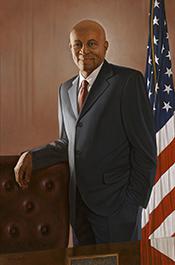 Rep. Edolphus Towns (D-NY)
Description
Amendment adds the provisions specified in the Tom Davis (VA) motion to recommit with instructions.
Text
Offered
This amendment's own text couldn't be picked out of its Congressional Record passage, so the passage is shown in full.
IMPROVING GOVERNMENT ACCOUNTABILITY ACT
The SPEAKER pro tempore. Pursuant to House Resolution 701 and rule
XVIII, the Chair declares the House in the Committee of the Whole House
on the state of the Union for the consideration of the bill, H.R. 928.
{time} 1220
In the Committee of the Whole
Accordingly, the House resolved itself into the Committee of the
Whole House on the state of the Union for the consideration of the bill
(H.R. 928) to amend the Inspector General Act of 1978 to enhance the
independence of the Inspectors General, to create a Council of the
Inspectors General on Integrity and Efficiency, and for other purposes,
with Mr. Baird in the chair.
[[Page H11188]]
The Clerk read the title of the bill.
The CHAIRMAN. Pursuant to the rule, the bill is considered read the
first time.
The gentleman from New York (Mr. Towns) and the gentleman from
Virginia (Mr. Tom Davis) each will control 30 minutes.
The Chair recognizes the gentleman from New York.
Mr. TOWNS. Mr. Chairman, at this time I yield 3 minutes to the
chairman of the full committee, the gentleman from California (Mr.
Waxman).
Mr. WAXMAN. Mr. Chairman, I thank Chairman Towns for yielding to me.
I rise in strong support of H.R. 928, the Improving Government
Accountability Act. It is a bipartisan bill. It was favorably reported
by the Oversight Committee on August 2, 2007, with strong support from
Members across the political spectrum.
There is a simple reason why this bill has so much support. It
strengthens the Inspectors General, who are the first line of defense
against waste, fraud and abuse in Federal programs.
The last 6 years have given us examples of Inspectors General at
their best and at their worst. Stuart Bowen, the Special Inspector
General for Iraq Reconstruction, has uncovered fraud and saved American
taxpayers hundreds of millions of dollars. Clark Kent Erving and
Richard Skinner, the former and current IGs for the Department of
Homeland Security, have identified billions in wasteful spending in the
new Department. Glenn Fine at the Department of Justice, Earl Delvaney
at Interior, and Brian Miller at the General Services Administration
have all reported courageously on abuses within the agencies they
oversee. These and other IGs have fought waste, fraud and abuse and
saved the taxpayers cumulatively billions of dollars.
Yet there are also IGs who seem more intent on protecting their
departments from political embarrassment than on doing their jobs. Our
Oversight Committee is investigating allegations that the State
Department IG has blocked investigations into contract fraud in Iraq
and Afghanistan. The Energy and Commerce Committee documented serious
abuses by the former IG in the Commerce Department. And the Science
Committee has identified serious questions raised about the close
relationship of the NASA IG to agency management.
This bill strengthens the good IGs by giving them greater
independence. Under this legislation, they can only be removed for
cause, not for doing their job. And they will now have new budgetary
independence.
At the same time, the legislation enacts in statute new mechanisms
for holding bad IGs to account. The legislation establishes an
``Integrity Committee'' that will investigate allegations that IGs have
abused the public trust.
There have been several key champions of this bill. Representative
Cooper has worked tirelessly on this issue for years and deserves our
thanks for his efforts. I would also like to acknowledge Subcommittee
Chairman Towns for his tremendous leadership in moving this legislation
forward and Ranking Member Tom Davis for his commitment to strong IGs
and his many helpful contributions.
H.R. 928 would make needed improvements to the IG Act, and I urge all
Members to support it.
Mr. TOM DAVIS of Virginia. Mr. Chairman, I yield myself such time as
I may consume.
I again want to thank Mr. Cooper for introducing this legislation and
working with us as it moved its way through the subcommittee and
committee process; Mr. Towns for his leadership; and the chairman of
the full committee, Mr. Waxman, for his leadership as well.
Today, we take up H.R. 928, the Improving Government Accountability
Act of 2007. This legislation is intended to enhance the independence
of Inspectors General throughout the government to improve their
ability to monitor and oversee executive branch operations.
Since the enactment of the Inspector General Act of 1978, Inspectors
General throughout the government have played an integral role in
identifying waste and mismanagement in government. IGs have also been
instrumental in aiding Congress and the executive branch to make
government more efficient and effective.
We all agree IGs should operate independently, free from political
interference. After all, both agency heads and Congress often rely on
IG reports to provide frank assessments of the effectiveness of Federal
programs.
However, Inspectors General should also be part of an agency's
management structure, part of a team, albeit with some independence,
rather than a ``fourth branch'' of the Federal Government. If we
separate the IGs from the day-to-day operations of the agencies they
oversee, IGs will cease to perform a constructive, integrated role and
instead will become Monday morning quarterbacks with their function
solely second-guessing decisions made by agencies.
Many of the provisions in H.R. 928 will help to enhance the
effectiveness of the IGs in overseeing Federal agencies and programs. I
am concerned that certain provisions of the legislation go further than
I would like in isolating IGs, removing them from the agency decision-
making process.
For example, during committee consideration of the legislation, I
offered an amendment to exempt smaller agency IGs from the ``for
cause'' removal provision in the bill, thereby reserving the ``for
cause'' removal threshold only for Cabinet-level agency IGs. The
purpose of this amendment, which was adopted, I might add, with the
help of my friends on the other side, was to strike an appropriate
balance between the need to ensure independence of our Inspectors
General while at the same time preserving the President's authority
over employers and officers of the executive branch.
I also have concerns with a provision that's in the current bill
authorizing IGs to independently submit their budget requests to
Congress outside of the traditional Federal budget process. My concerns
with this new authority pertain more to the logistical nightmare this
creates rather than any particular objection to increased IG
independence. After all, having 60 separate budgets for individual
offices accompanying the President's annual budget submission to
Congress will only add unnecessary confusion to the already confusing
Federal budget process. So when Members get the President's budget,
under the way the law is currently written, they get the Federal budget
submitted by the President and then 60 separate requests from IGs.
Now, I intend to offer an amendment, which I am hopeful the other
side will accept, which goes at least part of the way toward addressing
the legitimate concerns raised by the administration but getting to the
points that the author of this bill wanted to get as well.
In closing, I believe the underlying legislation improves the laws
governing our IGs. I think some additional changes need to be made as
it moves forward, but I very much appreciate Mr. Cooper's efforts on
this bill and his initiative in trying to identify these problems as we
move through.
Mr. Chairman, I reserve the balance of my time.
Mr. TOWNS. Mr. Chairman, I yield myself such time as I may consume.
H.R. 928, the Improving Government Accountability Act, focuses on the
important role of the Inspector General in providing independent
oversight within Federal agencies. By investigating and reporting
waste, fraud and abuse to both agency leaders and to the Congress,
Inspectors General play a critical role in maintaining checks and
balances in the Federal Government.
When Congress created the Inspectors General nearly 30 years ago, the
idea was that having independent officials inside the Federal agency
would help detect and prevent wasteful spending and mismanagement. This
concept has been a tremendous success. Investigations by IGs have
resulted in the recovery of billions of dollars from companies and
individuals who defrauded the Federal Government.
{time} 1230
These investigations have led to thousands of criminal prosecutions,
contractor debarments, employee suspensions, and in some instances,
dismissals.
In sum, the work of IGs to expose criminal and abusive action in
government has gone a long way to create the cleaner and more efficient
government the taxpaying public expects and deserves.
[[Page H11189]]
Of course, even the best systems need some improvement from time to
time, and that is the reason for this bill today, to effectively carry
out that mission. Inspectors General must be independent and objective,
which requires that they be insulated from improper management and
political pressure.
To preserve the credibility of the office, Inspectors General must
also perform their duties with integrity and apply the same standards
of conduct and accountability to themselves as they apply to the
agencies that they audit and investigate.
In recent years, there have been several episodes which raised
questions about the independence and accountability of IGs. These
episodes have been well documented in hearings of the Oversight
Committee as well as other standing committees of the House. In some
instances, IGs who are seen as too aggressive in pursuing waste at
their agencies had their budget cut or were threatened with dismissal.
In other cases, IGs who abused their authority remained in office in
part because there were no statutory standards or procedures for
removal. This bill is designed to address both of those problems. H.R.
928 creates fixed terms of office for Inspectors General and specific
reasons for their removal. It allows IGs to submit their budget
requests directly to the Congress. The bill establishes an Inspector
General council and sets procedures for investigation of potential IG
misconduct. And the bill increases the rank and pay of IGs as well.
This is a strong bill and a necessary bill. Passing this bill will
send a message that Congress values the work of the Inspectors General
and the oversight that they provide.
Mr. Chairman, I reserve the balance of my time.
Mr. TOM DAVIS of Virginia. Mr. Chairman, let me talk, first of all,
about what the legislation does. It establishes a 7-year term of office
for the over 60 Inspectors General in the Federal Government. This
gives them continuity from administration to administration, so they're
not political lackeys, they are professionals. It limits the
President's authority to remove a Senate-confirmed IG, and that's about
half of them, except on certain grounds; for example, permanent
incapacity, inefficiency, neglect of duty, malfeasance, conviction of a
felony, or conduct involving moral turpitude. That gives the IGs
independence from pressure from the appointing administration.
At the smaller agencies, a different standard applies. There, an IG
can be removed, but it will require 30-day advance notification to
Congress before an agency head removes the agency's IG.
The legislation also authorizes IGs to submit their budget requests
to Congress independent of the President's budget submission. This is
something that I'm going to have an amendment on later that I think
will clarify it.
This also codifies an executive order establishing the Council of the
Inspectors General on Integrity and Efficiency. This is a coordinating
council of Federal IGs, as well as an integrity committee to
investigate allegations of wrongdoing by IGs. And unfortunately, we see
that; these people are human beings as well.
It increases the salary of IGs and prohibits IGs from receiving
bonuses. It enhances IG power by granting limited personnel authority,
expanded subpoena authority, and increased ability to deputize IG
agents.
It strengthens the GAO's authority to conduct investigations, for
sworn testimony it requires congressional notification of agency
noncooperation, and it expands IG ability to pursue false claims and
recoup losses resulting from fraud.
Now, the administration has issued a negative statement of policy on
this for two reasons. One, they don't like the limitation on the
President's authority to remove executive branch officials. On that, I
think we have gone overboard, working together, both parties, to try to
put reasonable limitations, but at the same time maintaining a higher
level of independence for IGs than you will find at other levels. And I
think institutionally, as Members of this House, the changes in this
bill I think are worth supporting, I would oppose the administration in
that. The second concern is the independent submission of the IG's
budget to Congress, and we are offering an amendment to try to clarify
that, which I will speak on later.
Once again, this legislation was introduced by Representative Jim
Cooper from Tennessee in February. It was approved by our committee by
a voice vote in August. In addition to a substitute offered by
Representative Cooper, which made a number of technical changes, the
committee did adopt an amendment offered by me to limit the application
of removal for cause in a way that I think we are all comfortable with.
So, again, I want to thank the players who have brought this to this
stage.
Mr. Chairman, I reserve the balance of my time.
Mr. TOWNS. Mr. Chairman, I yield 5\1/2\ minutes to the gentleman from
Tennessee, who has been very instrumental in bringing forth this
legislation, Mr. Cooper.
Mr. COOPER. I would first like to thank the subcommittee chairman, my
friend, Mr. Towns, for doing an outstanding job on this and other
legislation. I want to thank the ranking member, Mr. Davis, who has
been particularly accommodating in working on this bill to do a better
job for the Federal taxpayer. That's what this is all about, making
government work better. If there has ever been a good government
measure, this is it.
I also want to thank the full committee chairman, Mr. Waxman, who was
so helpful in so many ways, and the outstanding staff of this
committee, the Government Reform Committee. There is none better on the
Hill, perhaps in the history of the Hill, so we are very proud of their
work.
Finally, let me thank my personal staff, my legislative director,
Cicely Simpson. She has been a tireless champion of this bill, and even
her predecessor, Anne Kim.
Sadly, this good government measure has taken years to come to the
floor and to be passed by the House of Representatives, but now we're
making progress, and the Federal taxpayer will benefit as a result.
Now, why do I say this is such a good government measure? There are
some 58 IGs scattered throughout the Federal Government. They are the
fiscal watchdogs for the taxpayer. They are the first line of defense
against fraud, waste and mismanagement in Federal Government. These IGs
and their staff save many, many times more money than their salary cost
or their benefit cost. These are the folks who see the fraud first and
catch it before it gets too big.
Let me give you an example. In today's Washington Post, there is a
new GAO study that comes out and it says, Federal officials too often
flying first and business class, GAO finds, their leg room and your tax
dollars.
The GAO has found that $146 million was spent just in the last year
for improper Federal first class and business travel. They could go
through agency after agency naming executives who have abused the
Federal credit card. This is an outrage. Now, by Federal standards,
this is a relatively small outrage, but this is the sort of stuff that
needs to be caught and caught early.
This is also why we need Inspector General independence, because
they're not going to be popular when they point out to their agency
head or other senior officials in Federal Government that they
shouldn't have been flying first class. That endangers the IG's
position because that is not a popular thing to do.
One of the folks here was caught flying his entire family of eight
from Washington, D.C. to Eastern Europe first class. That's wrong. And
I'm sure the Federal executive wanted to take his whole family first
class, but these are Federal tax dollars at stake.
So this is a very important bill. It is very important to update the
original IG legislation. It has been on the books since 1978. Problems
have occurred since then, and now we will fix those problems.
Now, it has been noted here today by the ranking member, and I
appreciate his courage in opposing the administration veto on this, the
veto threat. A SAP has been issued, a Statement of Administration
Policy, and in my opinion, at least, the grounds for this threatened
veto are remarkably flimsy. So I hope that the Members listening
[[Page H11190]]
back in their offices and their staff, particularly across the aisle,
will pay close attention to the reasons that the administration says it
objects to this reform legislation and to figure out whether those
reasons are really valid.
There are two fundamental grounds. First of all, they object to ``for
cause'' dismissal. I think perhaps the Bush administration feels this
is somehow aimed at them. It's not. Everyone knows that by the time
this legislation is fully administered, the next administration will be
in place. This legislation is really designed to help all
administrations, whatever their political stripe. So it's very
important to realize that the ``for cause'' language that the
administration objects to has already been removed at the urging of the
ranking member, due to his excellent amendment in committee, for half
of the IG agencies. It only remains for the Cabinet-level agencies.
Why? Because those folks should have a 7-year term and have full
political independence so that they can make the tough calls, even if
it means denying a Cabinet Secretary first-class airfare to Europe.
They need independence.
The second grounds that the administration has posed for objecting to
this legislation is they shouldn't have separate budget submissions.
Now, I was down eating lunch with one of my colleagues a few minutes
ago, and he had the mistaken notion that somehow this would be an
entire separate budget for the entire agency. That's not true. This is
just the IG's own budget for the IG and his or her staff. So that's a
very modest request, that the IG cannot be pressured by the agency
head. So that, to me, also is a pretty flimsy ground for objecting to
this legislation.
So, I would urge all Members to take a close look. This is good
government legislation. This will save the taxpayer billions of
dollars, according to the committee report. Just last year, IG
recommendations saved $9.9 billion in audit recommendations and $6.8
billion in investigative recoveries. That's $15 billion-plus for the
Federal taxpayer. We need to be saving much more money like this, and
IGs and this bill can do it.
Mr. TOM DAVIS of Virginia. Mr. Chairman, may I inquire as to how much
time is remaining.
The CHAIRMAN. The gentleman from Virginia has 23\1/2\ minutes
remaining.
Mr. TOM DAVIS of Virginia. I yield 2 minutes to the gentleman from
Connecticut (Mr. Shays), a cosponsor of this bill.
Mr. SHAYS. I thank the gentleman for yielding.
I want to first congratulate Mr. Cooper for moving forward with this
legislation and reaching out to both sides of the aisle to sponsor it.
This is, in fact, two days in a row that we've seen a nice bipartisan
bill coming to the floor of the House, and I want to thank Mr. Cooper
for his reaching out to both sides of the aisle and for his good work
over many, many years on substantive issues like this.
I want to say as well that the GAO, which was the General Accounting
Office, now the Government Accountability Office, and the Inspectors
General have done excellent jobs. We have turned to them, particularly
in our Government Reform Committee, continually. But I think this truly
does strengthen the bill, and I thank Mr. Towns, who has been a long-
time member of the committee, for marshalling this important bill
through.
The bottom line for me is, Inspectors General already do a very good
job, except in one or two places where they feel a little too
encumbered by the management to be as independent as we would like them
to be. This guarantees that every department will be a bit more
independent. And all the reasons that my ranking member, who has been
so instrumental in legislation like this and helpful in bringing this
bill out, all the reasons he pointed out, I just will emphasize,
though, the one that I like the best is the independence of this
office.
Mr. TOWNS. Mr. Chairman, I yield 3 minutes to Mr. Yarmuth, the
gentleman from Kentucky.
Mr. YARMUTH. I thank the gentleman.
Mr. Chairman, I rise today in strong support of H.R. 928, the
Improving Government Accountability Act.
Because America's Founders were freshly freed from the shackles of
British oppression when they formed this Nation, safeguards against the
consolidation of power into the hands of a few can be found everywhere
in the Constitution, beginning with article I; 220 years later, we
still must strive for those checks and balances in order to form the
more perfect union the Founding Fathers envisioned.
For nearly 30 years, 1978's Inspector General Act provided much of
the oversight required for our government to function as the
Forefathers imagined, but today, some Inspectors General would rather
impede oversight than conduct it. What else should we expect when we
have no protections from the protectors?
We have unaccountable appointees in nearly every executive Department
and agency, and many serve not to prevent corruption but to preserve
it. These are not cases of individuals merely failing to fulfill their
job descriptions, but actually instigating the waste, fraud and abuse
the American people pay them to ward off. These unchecked appointees
have hindered valid investigations, siphoned tax dollars for personal
pleasures, and refused to uphold accountability for fellow political
appointees. Honest civil servants who have dedicated their lives to
improving our government are victims of intimidation, threats and
termination. And despite these blatant offenses, our hands are tied.
There is no line of defense for the American people.
We have gone far astray from the noble aims of this Republic. And let
me be clear, this is not a simple case of a few bad apples. The abuses
within the Inspectors General offices were invited by the cracks in a
failing structure, and they will continue to grow unless we, in this
body, take steps to fix the crumbling construction.
{time} 1245
The Improving Government Accountability Act begins to correct these
weaknesses and in so doing fulfills the intent of the Inspector General
Act of 1978 and once again upholds the integrity of this Nation's proud
creation. The Founders were very clear from the first article of the
Constitution in which they granted all legislative powers not to an
executive with a consolidated power, but to the Congress.
I strongly urge my colleagues to join me in utilizing the authority
to preserve the checks and balances that our Constitution's crafters
held so dear.
Mr. TOM DAVIS of Virginia. Mr. Chairman, how much time do I have
remaining?
The CHAIRMAN. The gentleman from Virginia has 21\1/2\ minutes. The
gentleman from New York has 15\1/2\ minutes.
Mr. TOM DAVIS of Virginia. I reserve the balance of my time.
Mr. TOWNS. I have no further speakers.
Mr. TOM DAVIS of Virginia. If the gentleman has no further speakers,
I will take a minute and sum up and yield back.
Let me just say again, I want to thank the author of this
legislation. I want to thank Mr. Towns for moving this through
subcommittee and Chairman Waxman. I just want to note, for IGs to work
successfully, they need to work with their agencies. I think however we
write the law, the President that appoints and the Senate that
confirms, we need to look for more accountants.
Frankly, we have seen a surge of people coming out of the U.S.
Attorney's offices, and they make this more adversarial than it needs
to be. A good IG is going to work with their agency to identify waste,
fraud and abuse, not enter into a gotcha mentality. For government to
work, you need them all working together. You need an independent IG,
there is no question about that. But the person in that office ought to
be right there with the agency head making sure that things work. That
doesn't always happen. I don't think we can write any law that makes
that happen. That is going to depend on the goodwill of the people, the
agency heads and the IGs working together. But I think this legislation
goes a long way toward establishing that independence, giving the IG
the authority that they need. But the rest is going to be up to the
appointing President and the confirming Senate to get the right people
in these jobs, professionals who want to be a part of government and
making it work efficiently for the taxpayer.
[[Page H11191]]
Mr. Chairman, I yield back the balance of my time.
Mr. TOWNS. Mr. Chairman, I think this legislation is a giant step in
the right direction. I would like to thank the chairman of the full
committee, Congressman Waxman. I would like to thank Congressman Davis,
the ranking member. I would like to thank subcommittee ranking member,
Congressman Bilbray from California. Of course, I would like to thank
Mr. Cooper for all of his work on this legislation. And I would like to
thank the staff for all of their work in terms of making certain that
we were able to come today. I want to thank the sponsors for this bill.
Mr. Cooper and I and our colleagues across the aisle have been very
open to getting input and making changes to this bill. This is what the
legislative process is all about, exchanging ideas, sharing
information, and trying to improve the legislation. I think the end
result in this bill will increase the Office of Inspector Generals and
give them the kind of independence that they need to be able to do the
efficient work that is so required. I am excited about the
possibilities, of course, and I encourage all my colleagues to support
this legislation.
Ms. JACKSON-LEE of Texas. Mr. Chairman, I rise today in strong
support of H.R. 298, the Improving Government Accountability Act. I
would like to thank my colleague, Congressman Cooper, for introducing
this important legislation, as well as the Chairman of the House
Oversight and Government Reform Committee, Congressman Waxman, for his
leadership in bringing this important issue to the floor.
Mr. Chairman, Inspectors General play a vital role for the U.S.
taxpayer. Their work is crucial in preventing and detecting waste,
fraud, and abuse in federal programs. In 2006 alone, audits by
Inspector General offices resulted in potential savings from audit
recommendations of $9.9 billion and criminal recoveries of $6.8
billion. However, in order to effectively carry out their mission,
Inspectors General must be independent and objective, which requires
that they be insulated from improper management and political pressure.
The legislation we have before us today contains a number of
important provisions designed to enhance the effectiveness and
independence of Inspectors General, as well as provisions to enhance
the accountability of the entire Inspector General system. It updates
the Inspector General Act of 1978 to promote independence and
accountability for Inspectors General in executive branch departments
and agencies.
Mr. Chairman, there are many badly needed reforms to the Inspector
General system that this legislation directly addresses. It defines the
terms of office for Inspector Generals as fixed seven-year terms,
helping to insulate Inspectors General from political retribution. It
goes on to enumerate conditions for removal of Inspectors General, who
currently serve at the pleasure of their appointing authorities,
allowing for their termination before the end of their terms only for
serious cause, such as malfeasance, permanent disability, inefficiency,
neglect of duty, or conviction of a felony. Both of these provisions
will go a long way in enhancing the ability of Inspectors General to
remain politically independent.
In addition, this legislation requires Inspectors General to submit
their budgets to the Office of Management and Budget (OMB) and
Congress. This provision is intended to deter officials in their
respective agencies from slashing their funding in retaliation for
unfavorable audits, further enhancing the independence of Inspectors
General.
Mr. Chairman, recently, concerns have been raised about possible
misconduct by certain Inspectors General. This legislation, therefore,
includes provisions to raise the level of accountability of the
Inspectors General system. To cite a recent example, last week seven
current and former members of the State Department's Inspector General
office alleged that Inspector General Howard Krongard repeatedly
thwarted investigations into alleged contact fraud in Iraq and
Afghanistan, including refusing to send investigators to Iraq and
Afghanistan to investigate $3 billion worth of State Department
contracts. These employees allege that Krongard's partisan political
ties have led him to thwart these investigations in order to protect
the Bush Administration from political embarrassment.
Mr., Chairman, as you are well aware, these are extremely serious
accusations that go deep into the heart of our Inspector General
system. If those we are entrusting to remain independent and objective
are instead being swayed by political ties, then our Inspector General
system is broken. In the wake of the recent Baghdad shootout involving
U.S. contractors from the private firm Blackwater USA, in which 17
people were killed and 24 were injured, it is imperative that all
agencies sending contractors to Iraq and Afghanistan be able to
maintain sufficient oversight of these contracts. If Inspectors General
cannot do their job because of political pressure or affiliation, it is
our responsibility to fix the Inspector General system.
To do so, this bill contains provisions to hold Inspectors General
themselves accountable for their decisions and actions. It also
provides a mechanism for investigating and resolving allegations of
misconduct by Inspectors General. The bill creates an Inspectors
General Council and requires the Council to appoint an Integrity
Committee, chaired by the Council's FBI representative. This Integrity
Committee shall investigate any allegations of wrongdoing made against
Inspectors General or their senior staff members and report
substantiated allegations to the executive branch. Reports of Integrity
Committee investigations must be submitted to both the Executive
Chairperson of the Council and to Congress.
Mr. Chairman, we rely on the system of Inspectors General, and on the
individuals who serve in this capacity, to serve as the principal
watchdogs of the nation's major federal agencies. In 2006 alone, audits
by Inspector General offices resulted in potential savings from audit
recommendations of $9.9 billion and criminal recoveries of $6.8
billion. To effectively carry out this crucial mission, it is
imperative that Inspectors General remain independent and objective,
which in turn requires that they be insulated from improper management
and political pressure.
This legislation is a crucial step forward. By enhancing the
independence of the Inspectors General and improving the accountability
of the Inspector General system overall, this legislation will have a
positive impact on the integrity and accountability of our government.
I strongly support this legislation, and I urge my colleagues to do the
same.
Mrs. MALONEY of New York. Mr. Chairman, I rise today in strong
support of H.R. 928, the ``Improving Government Accountability Act.'' I
commend Chairman Waxman for his leadership on the Oversight and
Government Reform Committee, of which I am a member, and for his
efforts to ensure that the government is working for the American
people. This legislation includes provisions of a bill that I
introduced earlier this year which will provide for the enhanced
protection of the Internal Revenue Service and its employees.
In 1998, Congress passed the Internal Revenue Service Restructuring
and Reform Act, which created the Treasury Inspector General for Tax
Administration (TIGTA). The legislation gave TIGTA the responsibility
for protecting the Internal Revenue Service (IRS) against external
attempts to corrupt or threaten IRS employees. At the same time, it
excluded the provision of providing ``physical security'' from TIGTA's
responsibilities.
Prior to the enactment of this law, the former IRS Inspection Service
had been responsible for protecting the IRS against external attempts
to corrupt or threaten IRS employees. The IRS Inspection Service was
responsible for providing armed escorts for IRS employees who were
specifically threatened or who were contacting individuals designated
as ``Potentially Dangerous Taxpayers.'' The law transferred most of
those duties to the new Treasury Inspector General for Tax
Administration. Inexplicably, ``physical security'' was excluded from
TIGTA's statutory responsibilities.
In its current statutory mission, TIGTA investigates all allegations
of threats or assaults involving IRS employees and assists U.S.
Attorneys' offices with appropriate prosecutions. However, if TIGTA
determines that any of the threats or assaults it investigates call for
the provision of physical security, the language of the 1998 law
precludes TIGTA from taking action.
Authorizing TIGTA to have armed escort authority would be both more
efficient and more effective in advancing tax administration and
ensuring the safety of IRS employees.
I want to thank Chairman Waxman and Ranking Member Davis for their
support of this provision, and I urge my colleagues to support H.R.
928.
Mr. TOWNS. Mr. Chairman, I yield back the balance of my time.
The CHAIRMAN. All time for general debate has expired.
Pursuant to the rule, the amendment in the nature of a substitute
printed in the bill shall be considered as an original bill for the
purpose of amendment under the 5-minute rule and shall be considered
read.
The text of the committee amendment is as follows:
H.R. 928
Be it enacted by the Senate and House of Representatives of
the United States of America in Congress assembled,
SECTION 1. SHORT TITLE; TABLE OF CONTENTS.
(a) Short Title.--This Act may be cited as the ``Improving
Government Accountability Act''.
[[Page H11192]]
(b) Table of Contents.--The table of contents for this Act
is as follows:
Sec. 1. Short title; table of contents.
Sec. 2. Enhancing independence of Inspectors General.
Sec. 3. Direct submission of budget requests to Congress.
Sec. 4. Establishment of Council of the Inspectors General on Integrity
and Efficiency.
Sec. 5. Pay and bonuses of Inspectors General.
Sec. 6. Miscellaneous enhancements.
Sec. 7. Program Fraud Civil Remedies Act.
Sec. 8. Application of semiannual reporting requirements with respect
to inspection reports and evaluation reports.
SEC. 2. ENHANCING INDEPENDENCE OF INSPECTORS GENERAL.
(a) Removal for Cause.--The Inspector General Act of 1978
(5 U.S.C. App.) is amended--
(1) in section 3(b) by adding at the end the following:
``An Inspector General may be removed from office prior to
the expiration of his or her term only on any of the
following grounds:
``(1) Permanent incapacity.
``(2) Inefficiency.
``(3) Neglect of duty.
``(4) Malfeasance.
``(5) Conviction of a felony or conduct involving moral
turpitude.''; and
(2) in section 8G(e) by striking ``an Inspector General''
and all that follows through the period at the end and
inserting the following: ``the head of a designated Federal
entity intends to remove an Inspector General from office or
transfer an Inspector General to another position or location
within such designated Federal entity, the head of such
entity shall communicate in writing the reasons for any such
removal or transfer to both Houses of Congress at least 30
days before such removal or transfer.''.
(b) Establishment of Terms of Office.--The Inspector
General Act of 1978 (5 U.S.C. App.) is amended--
(1) in section 3 by adding at the end the following:
``(e)(1) The term of office of each Inspector General shall
be seven years. An individual may serve for more than one
term in such office. Any individual appointed and confirmed
to fill a vacancy in such position, occurring before the
expiration of the term for which his or her predecessor was
appointed, shall be appointed and confirmed for a full seven-
year term.
``(2) An individual may continue to serve as Inspector
General beyond the expiration of the term for which the
individual is appointed until a successor is appointed and
confirmed, except that such individual may not continue to
serve for more than 1 year after the date on which the term
would otherwise expire under paragraph (1).''; and
(2) in section 8G(c) by inserting ``(1)'' after ``(c)'',
and by adding at the end the following:
``(2) The term of office of each Inspector General shall be
seven years. An individual may serve for more than one term
in such office. Any individual appointed to fill a vacancy in
such position, occurring before the expiration of the term
for which his or her predecessor was appointed, shall be
appointed for a full 7-year term.''.
(c) Application.--The amendments made by this section shall
apply to any Inspector General appointed on or after the date
of the enactment of this Act.
SEC. 3. DIRECT SUBMISSION OF BUDGET REQUESTS TO CONGRESS.
Section 6 of the Inspector General Act of 1978 (5 U.S.C.
App.) is amended by adding at the end the following:
``(f)(1) For each fiscal year, an Inspector General may
transmit an appropriation estimate and request to the
Director of the Office of Management and Budget and to the
appropriate committees or subcommittees of the Congress, in
addition to any appropriation estimate and request submitted
to the head of the establishment concerned.
``(2) The President shall include in each budget of the
United States Government submitted to the Congress--
``(A) a separate statement of the amount of appropriations
requested by each Inspector General who has submitted an
appropriation estimate under paragraph (1); and
``(B) a statement comparing each such appropriation
estimate and request submitted by an Inspector General and
the funds requested by the head of the establishment
concerned.''.
SEC. 4. ESTABLISHMENT OF COUNCIL OF THE INSPECTORS GENERAL ON
INTEGRITY AND EFFICIENCY.
(a) Establishment.--The Inspector General Act of 1978 (5
U.S.C. App.) is amended by redesignating sections 11 and 12
in order as sections 12 and 13, and by inserting after
section 10 the following new section:
``ESTABLISHMENT OF THE COUNCIL OF THE INSPECTORS GENERAL ON INTEGRITY
AND EFFICIENCY
``Sec. 11. (a) Establishment.--There is established as an
independent entity within the executive branch the Inspectors
General Council (in this section referred to as the
`Council'). The Council's mission shall be to increase the
professionalism and effectiveness of personnel by developing
policies, standards, and approaches to aid in the
establishment of a well-trained and highly skilled workforce
in the offices of the Inspectors General.
``(b) Membership.--
``(1) In general.--The Council shall consist of the
following members:
``(A) All Inspectors General whose offices are established
under--
``(i) section 2; or
``(ii) section 8G.
``(B) The Inspectors General of the Central Intelligence
Agency and the Government Printing Office.
``(C) The Controller of the Office of Federal Financial
Management.
``(D) A senior level official of the Federal Bureau of
Investigation designated by the Director of the Federal
Bureau of Investigation.
``(E) The Director of the Office of Government Ethics.
``(F) The Special Counsel of the Office of Special Counsel.
``(G) The Deputy Director of the Office of Personnel
Management.
``(H) The Deputy Director for Management of the Office of
Management and Budget.
``(2) Chairperson and executive chairperson.--
``(A) Executive chairperson.--The Deputy Director for
Management of the Office of Management and Budget shall be
the Executive Chairperson of the Council.
``(B) Chairperson.--The Council shall elect one of the
Inspectors General referred to in paragraph (1)(A) or (B) to
act as Chairperson of the Council. The term of office of the
Chairperson shall be two years.
``(3) Functions of chairperson and executive chairperson.--
``(A) Executive chairperson.--The Executive Chairperson
shall--
``(i) preside over meetings of the Council;
``(ii) provide to the heads of agencies and entities
represented on the Council summary reports of the activities
of the Council; and
``(iii) provide to the Council such information relating to
the agencies and entities represented on the Council as will
assist the Council in performing its functions.
``(B) Chairperson.--The Chairperson shall--
``(i) convene meetings of the Council--
``(I) at least six times each year;
``(II) monthly to the extent possible; and
``(III) more frequently at his or her discretion;
``(ii) exercise the functions and duties of the Council
under subsection (c);
``(iii) appoint a Vice Chairperson to assist in carrying
out the functions of the Council and act in the absence of
the Chairperson, from a category of Inspectors General
described in subparagraph (A)(i), (A)(ii), or (B) of
subsection (b)(1), other than the category from which the
Chairperson was elected;
``(iv) make such payments from funds otherwise available to
the Council as may be necessary to carry out the functions of
the Council;
``(v) select, appoint, and employ personnel as needed to
carry out the functions of the Council subject to the
availability of appropriations and the provisions of title 5,
United States Code, governing appointments in the competitive
service, and the provisions of chapter 51 and subchapter III
of chapter 53 of such title, relating to classification and
General Schedule pay rates;
``(vi) to the extent and in such amounts as may be provided
in advance by appropriations Acts, enter into contracts and
other arrangements with public agencies and private persons
to carry out the functions and duties of the Council;
``(vii) establish, in consultation with the members of the
Council, such committees as determined by the Chairperson to
be necessary and appropriate for the efficient conduct of
Council functions; and
``(viii) prepare and transmit a report annually on behalf
of the Council to the President on the activities of the
Council.
``(c) Functions and Duties of Council.--
``(1) In general.--The Council shall--
``(A) continually identify, review, and discuss areas of
weakness and vulnerability in Federal programs and operations
with respect to fraud, waste, and abuse;
``(B) develop plans for coordinated, Government-wide
activities that address these problems and promote economy
and efficiency in Federal programs and operations, including
interagency and inter-entity audit, investigation,
inspection, and evaluation programs and projects to deal
efficiently and effectively with those problems concerning
fraud and waste that exceed the capability or jurisdiction of
an individual agency or entity;
``(C) develop policies that will aid in the maintenance of
a corps of well-trained and highly skilled Office of
Inspector General personnel;
``(D) maintain an Internet Web site and other electronic
systems for the benefit of all Inspectors General, as the
Council determines are necessary or desirable;
``(E) maintain one or more academies as the Council
considers desirable for the professional training of
auditors, investigators, inspectors, evaluators, and other
personnel of the various offices of Inspector General; and
``(F) make such reports to the Congress as the Chairperson
determines are necessary or appropriate.
``(2) Adherence and participation by members.--Each member
of the Council should, to the extent permitted under law, and
to the extent not inconsistent with standards established by
the Comptroller General of the United States for audits of
Federal establishments, organizations, programs, activities,
and functions, adhere to professional standards developed by
the Council and participate in the plans, programs, and
projects of the Council.
``(3) Existing authorities and responsibilities.--The
creation and operation of the Council--
``(A) shall not affect the preeminent policy-setting role
of the Department of Justice in law enforcement and
litigation;
``(B) shall not affect the authority or responsibilities of
any Government agency or entity; and
``(C) shall not affect the authority or responsibilities of
individual members of the Council.
``(d) Integrity Committee.--
[[Page H11193]]
``(1) Establishment.--The Council shall have an Integrity
Committee, which shall receive, review, and refer for
investigation allegations of wrongdoing that are made against
Inspectors General and certain staff members of the various
Offices of Inspector General.
``(2) Membership.--The Integrity Committee shall consist of
the following members:
``(A) The official of the Federal Bureau of Investigation
serving on the Council, who shall serve as Chairperson of the
Integrity Committee.
``(B) 3 or more Inspectors General described in
subparagraph (A) or (B) of subsection (b)(1) appointed by the
Chairperson of the Council, representing both establishments
and designated Federal entities (as that term is defined in
section 8G(a)).
``(C) The Special Counsel of the Office of Special Counsel.
``(D) The Director of the Office of Government Ethics.
``(3) Legal advisor.--The Chief of the Public Integrity
Section of the Criminal Division of the Department of
Justice, or his designee, shall serve as a legal advisor to
the Integrity Committee.
``(4) Referral of allegations.--
``(A) Requirement.--An Inspector General shall refer to the
Integrity Committee any allegation of wrongdoing against a
staff member of his or her office, if--
``(i) review of the substance of the allegation cannot be
assigned to an agency of the executive branch with
appropriate jurisdiction over the matter; and
``(ii) the Inspector General determines that--
``(I) an objective internal investigation of the allegation
is not feasible; or
``(II) an internal investigation of the allegation may
appear not to be objective.
``(B) Staff member defined.--In this subsection the term
`staff member' means--
``(i) any employee of an Office of Inspector General who
reports directly to an Inspector General; or
``(ii) who is designated by an Inspector General under
subparagraph (C).
``(C) Designation of staff members.--Each Inspector General
shall annually submit to the Chairperson of the Integrity
Committee a designation of positions whose holders are staff
members for purposes of subparagraph (B).
``(5) Review of allegations.--The Integrity Committee
shall--
``(A) review all allegations of wrongdoing it receives
against an Inspector General, or against a staff member of an
Office of Inspector General; and
``(B) refer to the Chairperson of the Integrity Committee
any allegation of wrongdoing determined by the Integrity
Committee to be meritorious that cannot be referred to an
agency of the executive branch with appropriate jurisdiction
over the matter.
``(6) Authority to investigate allegations.--
``(A) Requirement.--The Chairperson of the Integrity
Committee shall cause a thorough and timely investigation of
each allegation referred under paragraph (5)(B) to be
conducted in accordance with this paragraph.
``(B) Resources.--At the request of the Chairperson of the
Integrity Committee, the head of each agency or entity
represented on the Council--
``(i) may provide resources necessary to the Integrity
Committee; and
``(ii) may detail employees from that agency or entity to
the Integrity Committee, subject to the control and direction
of the Chairperson, to conduct an investigation pursuant to
this subsection.
``(7) Procedures for investigations.--
``(A) Standards applicable.--Investigations initiated under
this subsection shall be conducted in accordance with the
most current Quality Standards for Investigations issued by
the Council or by its predecessors (the President's Council
on Integrity and Efficiency and the Executive Council on
Integrity and Efficiency).
``(B) Additional policies and procedures.--The Integrity
Committee, in conjunction with the Chairperson of the
Council, shall establish additional policies and procedures
necessary to ensure fairness and consistency in--
``(i) determining whether to initiate an investigation;
``(ii) conducting investigations;
``(iii) reporting the results of an investigation; and
``(iv) providing the person who is the subject of an
investigation with an opportunity to respond to any Integrity
Committee report.
``(C) Report.--With respect to any investigation that
substantiates any allegation referred to the Chairperson of
the Integrity Committee under paragraph (5)(B), the
Chairperson of the Integrity Committee shall--
``(i) submit to the Executive Chairperson of the Council a
report on the results of such investigation, within 180 days
(to the maximum extent practicable) after the completion of
the investigation; and
``(ii) submit to Congress a copy of such report within 30
days after the submission of such report to the Executive
Chairperson under clause (i).
``(8) No right or benefit.--This subsection is not intended
to create any right or benefit, substantive or procedural,
enforceable at law by a person against the United States, its
agencies, its officers, or any person.
``(e) Application.--The provisions of this section apply
only to the Inspectors General (and their offices) listed in
subsection (b)(1)(A) and (B).''.
(b) Existing Executive Orders.--Executive Order 12805,
dated May 11, 1992, and Executive Order 12993, dated March
21, 1996, shall have no force or effect.
(c) Conforming Amendments.--
(1) Inspector general act of 1978.--The Inspector General
Act of 1978 (5 U.S.C. App.) is amended--
(A) in sections 2(1), 4(b)(2), and 8G(a)(1)(A) by striking
``section 11(2)'' each place it appears and inserting
``section 12(2)''; and
(B) in section 8G(a), in the matter preceding paragraph
(1), by striking ``section 11'' and inserting ``section 12''.
(2) Title 31, u.s.c.--Section 1105(a) of title 31, United
States Code, is amended by striking the first paragraph (33)
and inserting the following:
``(33) a separate appropriation account for appropriations
for the Inspectors General Council, and, included in that
account, a separate statement of the aggregate amount of
appropriations requested for each academy maintained by the
Inspectors General Council.''.
SEC. 5. PAY AND BONUSES OF INSPECTORS GENERAL.
(a) Prohibition of Cash Bonus or Awards.--Section 3 of the
Inspector General Act of 1978 (5 U.S.C. App.), as amended by
the preceding provisions of this Act, is further amended by
adding at the end the following:
``(f) An Inspector General (as defined under section
8G(a)(6) or 11(3)) may not receive any cash award or cash
bonus, including any cash award under chapter 45 of title 5,
United States Code.''.
(b) Inspectors General at Level III of Executive
Schedule.--
(1) In general.--Section 3 of the Inspector General Act of
1978 (5 U.S.C. App.), as amended by the preceding provisions
of this Act, is further amended by adding at the end the
following:
``(g) The annual rate of basic pay for an Inspector General
(as defined under section 11(3)) shall be the rate payable
for level III of the Executive Schedule under section 5314 of
title 5, United States Code, plus 3 percent.''.
(2) Conforming amendment.--Section 5315 of title 5, United
States Code, is amended by striking the item relating to each
of the following positions:
(A) Inspector General, Department of Education.
(B) Inspector General, Department of Energy.
(C) Inspector General, Department of Health and Human
Services.
(D) Inspector General, Department of Agriculture.
(E) Inspector General, Department of Housing and Urban
Development.
(F) Inspector General, Department of Labor.
(G) Inspector General, Department of Transportation.
(H) Inspector General, Department of Veterans Affairs.
(I) Inspector General, Department of Homeland Security.
(J) Inspector General, Department of Defense.
(K) Inspector General, Department of State.
(L) Inspector General, Department of Commerce.
(M) Inspector General, Department of the Interior.
(N) Inspector General, Department of Justice.
(O) Inspector General, Department of the Treasury.
(P) Inspector General, Agency for International
Development.
(Q) Inspector General, Environmental Protection Agency.
(R) Inspector General, Export-Import Bank.
(S) Inspector General, Federal Emergency Management Agency.
(T) Inspector General, General Services Administration.
(U) Inspector General, National Aeronautics and Space
Administration.
(V) Inspector General, Nuclear Regulatory Commission.
(W) Inspector General, Office of Personnel Management.
(X) Inspector General, Railroad Retirement Board.
(Y) Inspector General, Small Business Administration.
(Z) Inspector General, Tennessee Valley Authority.
(AA) Inspector General, Federal Deposit Insurance
Corporation.
(BB) Inspector General, Resolution Trust Corporation.
(CC) Inspector General, Central Intelligence Agency.
(DD) Inspector General, Social Security Administration.
(EE) Inspector General, United States Postal Service.
(3) Savings provision.--Nothing in this subsection shall
have the effect of reducing the rate of pay of any individual
serving as an Inspector General on the effective date of this
subsection.
(c) Inspectors General of Designated Federal Entities.--
Notwithstanding any other provision of law, the Inspector
General of each designated Federal entity (as those terms are
defined under section 8G of the Inspector General Act of
1978) shall, for pay and all other purposes, be classified at
a grade, level, or rank designation, as the case may be,
comparable to those of a majority of the senior staff members
of such designated Federal entity (such as, but not limited
to, a General Counsel, Deputy Director, or Chief of Staff)
that report directly to the head of such designated Federal
entity. The head of a designated Federal entity shall set the
annual rate of basic pay for an Inspector General (as defined
under such section 8G) 3 percent above the annual rate of
basic pay for senior staff members classified at a comparable
grade, level, or rank designation (or, if those senior staff
members receive different rates, the annual rate of basic pay
for a majority of those senior staff members, as determined
by the head of the designated Federal entity concerned).
SEC. 6. MISCELLANEOUS ENHANCEMENTS.
(a) Offices as Discrete Agencies.--Section 6(d) of the
Inspector General Act of 1978 (5 U.S.C. App.) is amended to
read as follows:
[[Page H11194]]
``(d)(1)(A) For purposes of applying the provisions of law
identified in subparagraph (B)--
``(i) each Office of Inspector General shall be considered
to be a separate agency; and
``(ii) the Inspector General who is the head of an office
referred to in clause (i) shall, with respect to such office,
have the functions, powers, and duties of an agency head or
appointing authority under such provisions.
``(B) This paragraph applies with respect to the following
provisions of title 5, United States Code:
``(i) Subchapter II of chapter 35.
``(ii) Sections 8335(b), 8336, 8414, and 8425(b).
``(iii) All provisions relating to the Senior Executive
Service (as determined by the Office of Personnel
Management), subject to paragraph (2).
``(2) For purposes of applying section 4507(b) of title 5,
United States Code, paragraph (1)(A)(ii) shall be applied by
substituting `the Council of the Inspectors General on
Integrity and Efficiency (established by section 11 of the
Inspector General Act) shall' for `the Inspector General who
is the head of an office referred to in clause (i) shall,
with respect to such office,' ''.
(b) Subpoena Power.--Section 6(a)(4) of the Inspector
General Act of 1978 (5 U.S.C. App.), is amended--
(1) by inserting ``in any medium (including electronically
stored information, as well as any tangible thing)'' after
``other data''; and
(2) by striking ``subpena'' and inserting ``subpoena''.
(c) Law Enforcement Authority for Designated Federal
Entities.--Section 6(e) of the Inspector General Act of 1978
(5 U.S.C. App.) is amended--
(1) in paragraph (1) by striking ``appointed under section
3''; and
(2) by adding at the end the following:
``(9) In this subsection the term `Inspector General' means
an Inspector General appointed under section 3 or an
Inspector General appointed under section 8G.''.
(d) Authority of Treasury Inspector General for Tax
Administration To Protect Internal Revenue Service
Employees.--Section 8D(k)(1)(C) of the Inspector General Act
of 1978 (5 U.S.C. App.) is amended by striking ``and the
providing of physical security''.
(e) Amendment Relating to Authority of Comptroller General
To Administer Oaths.--Section 711 of title 31, United States
Code, is amended in paragraph (4) by striking ``when auditing
and settling accounts'' and inserting ``upon the specific
approval only of the Comptroller General or the Deputy
Comptroller General''.
(f) Amendments Relating to Comptroller General Reports.--
(1) Section 719(b)(1) of title 31, United States Code, is
amended--
(A) by striking ``and'' at the end of subparagraph (B);
(B) by striking the period and inserting ``; and'' at the
end of subparagraph (C); and
(C) by adding at the end the following new subparagraph:
``(D) for Federal agencies subject to sections 901 to 903
of this title and other agencies designated by the
Comptroller General, an assessment of their overall degree of
cooperation in making personnel available for interview,
providing written answers to questions, submitting to an oath
authorized by the Comptroller General under section 711 of
this title, granting access to records, providing timely
comments to draft reports, adopting recommendations in
reports, and responding to such other matters as the
Comptroller General considers appropriate.''.
(2) Section 719(c) of such title is amended--
(A) by striking ``and'' at the end of paragraph (2);
(B) by striking the period and inserting ``; and'' at the
end of paragraph (3); and
(C) by adding at the end the following new paragraph:
``(4) as soon as practicable when an agency or other entity
does not, within a reasonable period of time after a request
by the Comptroller General, make personnel available for
interview, provide written answers to questions, or submit to
an oath authorized by the Comptroller General under section
711 of this title.''.
SEC. 7. PROGRAM FRAUD CIVIL REMEDIES ACT.
Section 3801(a)(1) of title 31, United States Code, is
amended by striking ``and'' after the semicolon at the end of
subparagraph (C), by adding ``and'' after the semicolon at
the end of subparagraph (D), and by adding at the end the
following:
``(E) a designated Federal entity (as such term is defined
under section 8G(a)(2) of the Inspector General Act of
1978).''.
SEC. 8. APPLICATION OF SEMIANNUAL REPORTING REQUIREMENTS WITH
RESPECT TO INSPECTION REPORTS AND EVALUATION
REPORTS.
Section 5 of the Inspector General Act of 1978 (5 U.S.C.
App.) is amended--
(1) in subsection (a)(6)--
(A) by inserting ``, inspection report, and evaluation
report'' after ``audit report''; and
(B) by striking ``audit'' the second place it appears;
(2) in each of subsections (a)(8), (a)(9), (b)(2), and
(b)(3)--
(A) by inserting ``, inspection reports, and evaluation
reports'' after ``audit reports'' the first place it appears;
and
(B) by striking ``audit'' the second place it appears; and
(3) in subsection (a)(10) by inserting ``, inspection
report, and evaluation report'' after ``audit report''.
The CHAIRMAN. No amendment to the committee amendment is in order
except those printed in House Report 110-358. Each amendment may be
offered only in the order printed in the report, by a Member designated
in the report, shall be considered read, shall be debatable for the
time specified in the report, equally divided and controlled by the
proponent and an opponent of the amendment, shall not be subject to
amendment, and shall not be subject to a demand for division of the
question.
Amendment No. 1 Offered by Mr. Conyers
The CHAIRMAN. It is now in order to consider amendment No. 1 printed
in House Report 110-358.
Mr. CONYERS. Mr. Chairman, I have an amendment at the desk.
The CHAIRMAN. The Clerk will designate the amendment.
The text of the amendment is as follows:
Amendment No. 1 offered by Mr. Conyers:
At the end of the bill, add the following new section (and
conform the table of contents accordingly):
SEC. 9. AMENDMENTS TO SPECIAL PROVISIONS CONCERNING THE
DEPARTMENT OF JUSTICE.
(a) Amendment to Requirement Relating to Certain
Referrals.--Section 8E(b) of the Inspector General Act of
1978 (5 U.S.C. App.) is amended by striking paragraph (3).
(b) Conforming Amendments.--Section 8E of such Act is
further amended
(1) in subsection (b)--
(A) by striking ``and paragraph (3)'' in paragraph (2);
(B) by redesignating paragraph (4) as paragraph (3); and
(C) by redesignating paragraph (5) as paragraph (4) and in
that paragraph by striking ``(4)'' and inserting ``(3)''; and
(2) in subsection (d), by striking ``, except with respect
to allegations described in subsection (b)(3),''.
The CHAIRMAN. Pursuant to House Resolution 701, the gentleman from
Michigan (Mr. Conyers) and a Member opposed each will control 5
minutes.
The Chair recognizes the gentleman from Michigan.
Mr. CONYERS. Mr. Chairman, I yield myself such time as I may consume.
I urge support for my amendment to provide the Inspector General of
the Department of Justice the power to investigate allegations of
wrongdoing by attorneys in that department.
And so I put forward to the committee a commonsense proposal that
merely gives the Inspector General the tools that he or she may need to
root out and report on waste, fraud and abuse. Whether we have a
Democratic or Republican administration, I believe we should have
strong and vigorous oversight of the Department of Justice. At present,
however, the Department of Justice Inspector General is limited in his
ability to investigate allegations of misconduct.
Instead, present law, to the surprise of many, requires that all
allegations of wrongdoing by the Department of Justice attorneys be
investigated not by the Inspector General but by the department's
Office of Professional Responsibility. The department's Inspector
General should have the same power Inspectors General have throughout
the government to investigate without limitation any and all
allegations of wrongdoing that arise in that department.
The Office of Professional Responsibility is supervised by the
Attorney General. It is absolutely contrary to human experience to
believe that the counsel to the Office of Professional Responsibility
can aggressively investigate them. It is vital that investigations of
these officials, and other high-level officials in the department, be
conducted by the statutorily independent Inspector General who is
required to be confirmed by the United States Senate. That is the
thrust of the idea I propose in this first amendment.
Mr. Chairman, I reserve the balance of my time.
Mr. JORDAN of Ohio. Mr. Chairman, I rise to claim the time in
opposition to the amendment.
The CHAIRMAN. The gentleman is recognized for 5 minutes.
Mr. JORDAN of Ohio. I want to thank the Chair of the committee and
Congressman Cooper and Congressman Towns for all their work and our
ranking member of the committee on the bill. But, Mr. Chairman, I rise
in opposition to the amendment. It is unfortunate in a bill that has
been worked on by both sides so well that we have an amendment now that
I think is going to be somewhat divisive. But I believe the amendment
may arise from the U.S. Attorney's investigation that consumed so much
of our time earlier in this session, particularly the time on
[[Page H11195]]
the Judiciary Committee. That investigation showed no wrongdoing in the
dismissal of U.S. Attorneys and no undermining of the institutions of
the Department of Justice.
As time drags on, though, people wonder, why did we spend so much
time on this issue? Maybe the majority feels the need to show some
results. Perhaps that is why we have this amendment before us today.
But the U.S. Attorney's investigation did not show any need to realign
the responsibilities of the Office of Professional Responsibility and
the Office of the Inspector General. It certainly did not show that OIG
should swallow up OPR, which would be the effective result of the
amendment before us this afternoon. On the contrary, these offices have
quietly gone about their investigative activities and we have seen no
great difficulties arise from the exercise of their duties.
But apart from the U.S. Attorney's investigation, the amendment
clearly is unwise for other reasons. Both OPR and OIG are needed in
their current structure. OPR was established to ensure that the
Department of Justice's thousands of attorneys follow all applicable
professional rules of conduct. OIG performs an equally critical but
very different function of pursuing investigations into general
criminal wrongdoing and general administrative misconduct by the
Department.
This important distinction calls for two different offices to work on
these two issues. As conferees underscored when Congress created the
Office of Inspector General in the 1980s: ``The conferees do not intend
that the IG should render judgments on the exercise of prosecutorial or
litigative discretion in a particular case or controversy. Unless a
unique set of circumstances dictate otherwise, the conferees intend
that reviews of such prosecutorial or other litigative discretion in a
particular case or controversy is an appropriate role for, and may be
delegated by, the Attorney General.''
The Attorney General has delegated that authority to OPR. No basis
exists to question this policy today. Unlike OIG, OPR is staffed and
led entirely by career lawyers. Political background cannot be
considered when appointing anyone to a position in the Office of
Professional Responsibility. Thousands of current and former Department
lawyers can attest that OPR's independence is undisputed and that the
Office of Professional Responsibility has never allowed the manner in
which it investigates or the results it reaches to be influenced by any
political appointee in the Department. Any Attorney General or Deputy
Attorney General being investigated by the Office of Professional
Responsibility is automatically recused from participating in the
matter. The most recent example of this is the U.S. Attorney's
investigation itself.
I only scratch the surface of the reasons to preserve OPR as it is.
As anyone with substantial experience knows, this office can be relied
upon to make the hard calls and find attorney misconduct when it has
occurred, enabling the Department of Justice to take the proper
disciplinary action.
I would call the House's attention again to the need for legislation
to address serious crime issues. Republicans have introduced those
bills but they continue to languish. Responsible citizens don't want to
hear that their loved ones or their neighbors were hurt or killed
because the majority in Congress could not bear to solve the Nation's
problems with the opposing party's solutions or to turn away from the
hunt for political victims.
Mr. Chairman, I reserve the balance of my time.
Mr. CONYERS. Mr. Chairman, could you advise us how much time remains
on each side.
The CHAIRMAN. The gentleman from Michigan has 2\1/2\ minutes
remaining. The gentleman from Ohio has 1\1/2\ minutes remaining.
Mr. CONYERS. Mr. Chairman, I would begin first by yielding 1 minute
to the subcommittee Chair, Edolphus Towns of New York.
Mr. TOWNS. Mr. Chairman, this is a very good amendment. It is
especially important that the Department of Justice IG have the
authority to examine a broad range of issues in that Department.
Considering all the problems that congressional investigations have
recently uncovered, I think that this is a very timely amendment. I
really feel that we should aggressively get behind it and support it
and encourage our colleagues also to support it.
Mr. JORDAN of Ohio. Mr. Chairman, I yield back the balance of my
time.
Mr. CONYERS. Mr. Chairman, I yield myself the balance of my time.
I want all the Members to make sure they understand that the Office
of Professional Responsibility is accountable to the Attorney General,
and when we are investigating the U.S. assistant attorneys or attorneys
in the Department of Justice, he is investigating his own shop.
The second point is that their inspection, their investigations, are
confidential. The Inspector General, the IG, requires a public
disclosure of what he found. So this isn't a matter of trying to
justify anything about the U.S. Attorneys action.
I would like my good friend from Ohio to know that this is something
that has been discussed. The Inspector General for DOJ, Glenn Fine, has
testified before the Senate Homeland Security and Government Affairs
Committee and made it very clear that these matters of public interest
that require reports that are institutional should by all means go
through this route rather than be shunted off to a private
investigatory committee inside the Department of Justice.
{time} 1300
It is an anomaly that we hope to correct. It doesn't reflect poorly
on anybody. As a matter of fact, this will be for future Departments of
Justice. We are not going to go back over anything that we have covered
before.
Mr. Chairman, I urge that the membership support this very modest
amendment.
The CHAIRMAN. The question is on the amendment offered by the
gentleman from Michigan (Mr. Conyers).
The question was taken; and the Chairman announced that the ayes
appeared to have it.
Mr. JORDAN of Ohio. Mr. Chairman, I demand a recorded vote.
The CHAIRMAN. Pursuant to clause 6 of rule XVIII, further proceedings
on the amendment offered by the gentleman from Michigan will be
postponed.
Amendment No. 2 Offered by Mr. Tom Davis of Virginia
The CHAIRMAN. It is now in order to consider amendment No. 2 printed
in House Report 110-358.
Mr. TOM DAVIS of Virginia. Mr. Chairman, I offer an amendment.
The CHAIRMAN. The Clerk will designate the amendment.
The text of the amendment is as follows:
Amendment No. 2 offered by Mr. Tom Davis of Virginia:
Page 4, starting on line 20, strike ``may'' and all that
follows through line 25 and insert the following: ``shall
inform the appropriate committees or subcommittees of the
Congress if the budget request submitted by the head of the
establishment would substantially inhibit the Inspector
General from performing the duties of the office.''
Page 5, line 2, strike ``Congress--'' and all that follows
through line 10 and insert the following: ``Congress a
separate statement of the amount of appropriations requested
by each Inspector General.''
The CHAIRMAN. Pursuant to House Resolution 701, the gentleman from
Virginia (Mr. Tom Davis) and a Member opposed each will control 5
minutes.
The Chair recognizes the gentleman from Virginia.
Mr. TOM DAVIS of Virginia. Mr. Chairman, I yield myself such time as
I may consume.
Mr. Chairman, as currently drafted, the Improving Government
Accountability Act would authorize Inspectors General throughout the
government, and more than 60 of these offices exist, to directly submit
their budget requests to Congress. By doing so, this legislation would
circumvent the long-standing process under which Presidents submit to
the Congress a budget proposal on behalf of the executive branch.
While I understand the sponsor's intent in authorizing independent
budget submissions by IGs, I have concerns with the way the authority
is currently constructed. Our concerns pertain more to the logistical
nightmare than any particular objection to increased IG independence.
First of all, according to the Congressional Research Service, no
other offices or agencies within the executive
[[Page H11196]]
branch currently are authorized by statute to independently submit
their budgets to Congress. H.R. 928 would not simply make an exception
for one uniquely situated office, it would make an exception for all of
the more than 60 IG offices currently in government. In other words,
the President's annual budget would be accompanied by 60 separate IG
budgets. This is inefficient; it is disorganized and unproductive.
Second, I am concerned that by authorizing IGs to submit their
budgets independently to Congress, we are encouraging them to submit
their wish lists to Congress rather than submitting budgets that take
into account the limited resources that are available to agencies.
It doesn't take an active imagination to envision the increased
government spending that this would cause. After all, if an IG submits
its wish list to Congress, will Members of Congress have the stomach to
appropriate an amount less than an IG requests? If we do, we could be
painted as antioversight, a label none of us are interested in.
Because of these concerns, I have filed an amendment proposing an
alternative approach to the budget issue. This amendment would
authorize Inspectors General to notify Congress if the budget request
submitted by the agency head would substantially inhibit the IG's
ability to perform his or her duties. The President would be required
to include in his budget submission the original amount requested by
each IG.
This approach would give additional information to Congress, which is
the intent, I think, of the legislation. It also encourages IGs to
speak out if their agencies try to stifle the IG's independence by
reducing the IG's budget request. But it would stop short of
authorizing all 60 IGs to separately submit their own budget request to
Congress outside of the traditional Federal budget process.
I think this amendment is a reasonable compromise which carefully
balances the need for IG independence with the need for streamlined
budget authority. We have enough problems enacting the Federal budget
every year; we don't need to create 60 new ones. I urge my colleagues
to support this amendment.
Mr. Chairman, I reserve the balance of my time.
Mr. TOWNS. Mr. Chairman, I would like to claim the time in
opposition.
The CHAIRMAN. The gentleman from New York is recognized for 5
minutes.
Mr. TOWNS. Mr. Chairman, I yield myself such time as I may consume.
Mr. Chairman, I am opposed to the amendment, I think. I am not sure.
Let me ask some questions and then I can make up my mind.
As I understand it, under your amendment, the gentleman from Virginia
(Mr. Tom Davis), each Inspector General's appropriations request as
originally made to his or her agency head would be noted in the
President's budget submission to Congress.
Mr. Chairman, is that correct?
Mr. TOM DAVIS of Virginia. Mr. Chairman, if the gentleman will yield,
that is correct. Let me just add, I think that was the intent of the
legislation, to make sure that the IGs weren't stifled and that
Congress gets their eyes on that original request, and it would allow
that.
Mr. TOWNS. Mr. Chairman, reclaiming my time, with that in mind, I do
support the amendment, and, of course, I am prepared to accept the
amendment. It achieves the goal of the budget provision in this bill,
which is to expose whether IGs are having their budgets slashed in
retaliation of their investigations.
I look forward to working with you as this bill moves through the
legislative process to clarify the language of the amendment to ensure
that its intent is fulfilled.
Mr. Chairman, I yield back the balance of my time.
Mr. TOM DAVIS of Virginia. Mr. Chairman, I am not going to talk
anybody out of it, so I yield back as well.
The CHAIRMAN. The question is on the amendment offered by the
gentleman from Virginia (Mr. Tom Davis).
The amendment was agreed to.
Amendment No. 3 Offered by Mr. Miller of North Carolina
The CHAIRMAN. It is now in order to consider amendment No. 3 printed
in House Report 110-358.
Mr. MILLER of North Carolina. Mr. Chairman, I offer an amendment.
The CHAIRMAN. The Clerk will designate the amendment.
The text of the amendment is as follows:
Amendment No. 3 offered by Mr. Miller of North Carolina:
Page 2, beginning on line 12, strike ``adding at the end
the following: `An' '' and insert ``striking `the reasons for
any such removal to both Houses of Congress.' and inserting
the following: `in writing the reasons for any such removal
to both Houses of Congress and to the Inspector General of
the establishment at least 30 days before such removal. An'
''.
Page 3, line 2, strike ``; and'' and insert the following:
``(6) Knowing violation of a law, rule, or regulation.
``(7) Gross mismanagement.
``(8) Gross waste of funds.
``(9) Abuse of authority.''; and
Page 3, line 11, insert after ``Congress'' the following:
``and to the Inspector General of the entity''.
Page 5, starting on line 22, strike ``increase'' and all
that follows through line 26 and insert the following:
``coordiniate and enhance governmental efforts to promote
integrity and efficiency and to detect and prevent fraud,
waste, and abuse in Federal programs.''
Page 10, line 11, insert ``and professional standards''
after ``policies''.
Page 11, after line 20, insert the following:
``(d) Administrative Provisions.--
``(1) Director of omb.--The Director of the Office of
Management and Budget shall provide the Council with such
administrative support as may be necessary for the
performance of the functions of the Council.
``(2) Heads.--The head of each establishment and designated
Federal entity represented on the Council shall provide the
persons representing the establishment or entity with such
administrative support as may be necessary, in accordance
with law, to enable the persons representing the
establishment or entity to carry out their
responsibilities.''.
Page 12, line 8, strike ``3 or more'' and insert ``4''.
Page 13, line 19, after ``General'' insert the following:
``, acts with the knowledge of the Inspector General, or
against whom an allegation is made because such allegation is
related to an allegation against the Inspector General,
except that if an allegation concerns a member of the
Integrity Committee, that member shall recuse himself from
consideration of the matter''.
Page 14, strike lines 8 through 14 and insert the
following:
``(B) refer any allegation of wrongdoing to the agency of
the executive branch with appropriate jurisdiction over the
matter; and
``(C) refer to the Chairperson of the Integrity Committee
any allegation of wrongdoing determined by the Integrity
Committee to be potentially meritorious that cannot be
referred to an agency under subparagraph (B).''.
Page 14, line 20, strike ``(5)(B)'' and insert ``(5)(C)''.
Page 16, strike lines 5 though 18 and insert the following:
``(8) Report.--
``(A) For allegations referred under paragraph (5)(C), the
Chairperson of the Integrity Committee shall make a report
containing the results of his investigation and shall provide
such report to members of the Integrity Committee.
``(B) For allegations referred under paragraph (5)(B), the
head of an agency shall make a report containing the results
of the investigation and shall provide such report to members
of the Integrity Committee.
``(9) Assessment and final disposition.--
``(A) With respect to any report received under paragraph
(8), the Integrity Committee shall--
``(i) assess the report;
``(ii) forward the report, with the Integrity Committee
recommendations, including those on disciplinary action,
within 180 days (to the maximum extent practicable) after the
completion of the investigation, to the Executive Chairperson
of the Council and to the President (in the case of a report
relating to an Inspector General of an establishment or his
staff) or the head of a designated Federal entity (in the
case of a report relating to an Inspector General of such an
entity or his staff) for resolution; and
``(iii) submit to Congress a copy of such report and
recommendations within 30 days after the submission of such
report to the Executive Chairperson under clause (ii).
``(B) The Chairperson of the Council shall report to the
Integrity Committee the final disposition of the matter,
including what action was taken by the President or agency
head.''.
Page 16, after line 18, insert the following:
``(10) Annual report.--
``(A) Matters covered.--The Council shall submit to
Congress and the President by December 31st of each year a
report on the activities of the Integrity Committee during
the preceding fiscal year. The report shall include the
following:
``(i) The number of allegations received.
``(ii) The number of allegations referred to other
agencies, including the number of allegations referred for
criminal investigation.
``(iii) The number of allegations referred to the
Chairperson of the Integrity Committee for investigation.
[[Page H11197]]
``(iv) The number of allegations closed without referral.
``(v) The date each allegation was received and the date
each allegation was finally disposed of.
``(vi) In the case of allegations referred to the
Chairperson of the Integrity Committee, a summary of the
status of the investigation of the allegations and, in the
case of investigations completed during the preceding fiscal
year, a summary of the findings of the investigations.
``(vii) Other matters that the Council considers
appropriate.
``(B) Requests for more information.--The Council shall
provide more detailed information about specific allegations
upon request from any of the following:
``(i) The chairman or ranking member of the Committee on
Oversight and Government Reform of the House of
Representatives.
``(ii) The chairman or ranking member of the Committee on
Homeland Security and Governmental Affairs of the Senate.
``(iii) The chairman or ranking member of the congressional
committees of jurisdiction.''.
Page 16, line 19, strike ``(8)'' and insert ``(11)''.
Page 17, strike lines 4 through 6 and insert the following:
(b) Executive Orders and Policies and Procedures.--
(1) Existing executive orders.--Executive Order 12805,
dated May 11, 1992, and Executive Order 12993, dated March
21, 1996, shall have no force or effect.
(2) Policies and procedures.--Not later than 180 days after
the date of the enactment of this Act, the Inspectors General
Council shall adopt policies and procedures to implement this
section and the amendments made by this section. To the
maximum extent practicable, the policies and procedures shall
include all provisions of Executive Orders 12805 and 12933
(as in effect before the date of the enactment of this Act).
Page 21, after line 12, insert the following:
(3) Additional conforming amendment.--Section 194(b) of the
National and Community Service Act of 1990 (42 U.S.C.
12651e(b)) is amended by striking paragraph (3).
Page 22, insert after line 10 the following:
(d) Savings Provision for Newly Appointed Inspectors
General.--The provisions of section 3392, title 5, United
States Code, other than the terms ``performance awards'' and
``awarding of ranks'' in subsection (c)(1) of such section,
shall apply to career appointees of the Senior Executive
Service who are appointed to the position of Inspector
General.
Page 24, insert after line 3 the following:
(d) Qualifications of Inspectors General of Designated
Federal Entities.--Section 8G(c)(1) of the Inspector General
Act of 1978 (5 U.S.C. App.), as amended by this Act, is
further amended by striking the period and inserting
``without regard to political affiliation, and solely on the
basis of integrity and demonstrated ability in accounting,
auditing, financial analysis, law, management analysis,
public administration, or investigations.
The CHAIRMAN. Pursuant to House Resolution 701, the gentleman from
North Carolina (Mr. Miller) and a Member opposed each will control 5
minutes.
The Chair recognizes the gentleman from North Carolina.
Mr. MILLER of North Carolina. Mr. Chairman, I yield myself such time
as I may consume.
Mr. Chairman, over the last year and a half, the Science and
Technology Committee's Subcommittee on Investigations and Oversight,
which I chair, has been reviewing the work of the Office of the
Inspector General of NASA and a related investigation of the NASA IG by
the President's Council on Integrity and Efficiency's Integrity
Committee, the procedure actually for investigating IGs themselves.
I appreciate Mr. Towns and Mr. Cooper, knowing my interest in this
issue, including me very graciously in discussions of this legislation,
and I commend them for their work on this legislation.
The purpose of this amendment is to smooth the transition between the
old law and the new and to make sure that we do not disrupt some of the
work of IGs that is now going well in our effort to get in place
reforms to improve the work of IGs.
I fully support the goal of this legislation to make sure that
Inspectors General are independent, that they can act without fear of
political reprisal, and to accomplish that by establishing a set term.
This amendment accomplishes other purposes perfectly consistent with
that overall goal of the legislation.
First, it establishes the same qualifications for the selection of
Inspectors General of the designated Federal agencies that are not
subject to confirmation by the other body. There is no reason that
there should be any different qualifications, and this brings the
qualifications for those Inspectors General into line with the
qualifications of those confirmed by the other body.
Second, the amendment expands the goals for removal of the Inspectors
General, with criteria that the Inspectors General themselves, the IGs
themselves, have agreed to should be the basis for removal, and would
not undermine their independence by being a threat to their
independence; so, removal for improper grounds. The additional grounds,
and these are in the regulations now, the rules now: knowing violation
of the law, rule or regulation; gross mismanagement; gross waste of
funds; and abuse of authority. Those criteria for removal do increase
the President's flexibility to get out of office inept or abusive
Inspectors General.
Third, the amendment incorporates several provisions of two executive
orders pertaining to the work of IGs, executive orders 12805 and 12993,
which would no longer be in effect under this legislation, to maintain
certain policies and procedures that are working well and make sure
that there is not a gap when there are no procedures in place and to
make sure that we will not have to recreate those procedures under the
new legislation. It also directs the new council, the new Inspectors
General council, to incorporate as much of the established policies
that are working well as possible into the new rules. Again, those
rules are developed by the IGs themselves over the years. They work
very well. They do not need to be disrupted.
Fourth, the transparency of the Integrity Committee's investigations,
the work of inspecting the Inspectors General themselves, the
investigations into the investigators, has been a problem. This
amendment would require the council to submit to Congress a report of
their work in inspecting the work, to investigating the work of
Inspectors General.
Finally, the amendment requires the office of OMB, the Office of
Management and Budget, OMB, to continue to provide the Inspectors
General council with the administrative support that the PCIE now has.
Mr. Chairman, I reserve the balance of my time.
Mr. COOPER. Mr. Chairman, I ask unanimous consent to take the time in
opposition to the gentleman's amendment.
The CHAIRMAN. Is there objection to the request of the gentleman from
Tennessee?
There was no objection.
Mr. COOPER. Mr. Chairman, I yield myself such time as I may consume.
Mr. Chairman, I would like to congratulate my friend, the gentleman
from North Carolina, because he has been an excellent Member of this
body for some time and has worked on the Science Committee and has
contributed greatly to the work of this body. I am particularly
grateful for his work on the IG issue.
I want to make it crystal clear to my colleagues on both sides of the
aisle that the gentleman's amendment essentially makes it easier to
fire IGs. I support that. I think the gentleman's reasoning is sound.
I also think it is very important that Members on the other side the
aisle realize that this largely should eliminate the President's veto
threat, because the primary grounds in this Statement of Administration
Policy for opposing this bill is that IGs may be too hard to fire.
Well, the gentleman's helpful amendment adds additional grounds that
makes it easier to get rid of errant IGs if they knowingly violate the
law, rule or regulation, if they are guilty of gross mismanagement,
gross waste of funds or abuse of authority. So that should obviate the
administration's objections to this bill.
Mr. Chairman, I hope by accepting the gentleman from North Carolina's
amendment we cannot only promote the cause of good government, we can
also get the folks at OMB and in the administration to relax and
realize what a good bill this is. So I would urge a huge and bipartisan
majority vote for this legislation thanks to the gentleman's amendment.
Mr. Chairman, I yield back the balance of my time.
Mr. MILLER of North Carolina. Mr. Chairman, I yield the balance of my
time to the gentleman from New York (Mr. Towns).
Mr. TOWNS. Mr. Chairman, this is a well thought-out amendment. I want
to
[[Page H11198]]
commend the gentleman from North Carolina for this. It makes it clear
that the bill is not intended to protect poorly performing IGs from
removal.
There was some question about an IG who managed his office so poorly
that it caused most of the senior career staff to quit, and then the IG
would still be there. At least this amendment addresses that issue as
well by adding gross mismanagement and gross waste of funds and abuse
of authority as grounds for removal. This amendment clarifies that an
IG who is not an effective leader can be removed for that reason.
We also support the technical and procedural changes that Mr. Miller
has included in this amendment. This is a very, very good amendment,
and I hope that it has support coming from both sides of the aisle,
because this is an amendment that is long overdue.
The CHAIRMAN. All time having expired, the question is on the
amendment offered by the gentleman from North Carolina (Mr. Miller).
The amendment was agreed to.
Amendment No. 4 Offered by Mr. Miller of North Carolina
The CHAIRMAN. It is now in order to consider amendment No. 4 printed
in House Report 110-358.
Mr. MILLER of North Carolina. Mr. Chairman, I offer an amendment.
The CHAIRMAN. The Clerk will designate the amendment.
The text of the amendment is as follows:
Amendment No. 4 offered by Mr. Miller of North Carolina:
Page 4, after line 12, insert the following new paragraph:
(c)(1) in section 3(a), by inserting after the first
sentence the following: ``A committee of Inspectors General
of the Inspectors General Council established under section
11 shall review nominations in light of these requirements,
and the results of the committee's review shall be provided
to the Senate prior to the confirmation process.''
(2) in section 8G(c), by adding at the end the following:
``The head of the designated Federal entity shall ask the
committee of Inspectors General referred to in section 3(a)
for a report on the qualifications of each final candidate
for Inspector General and shall not appoint an Inspector
General before reviewing such report.''
Page 4, line 13, strike ``(c)'' and insert ``(d)''.
The CHAIRMAN. Pursuant to House Resolution 701, the gentleman from
North Carolina (Mr. Miller) and a Member opposed each will control 5
minutes.
The Chair recognizes the gentleman from North Carolina.
Mr. MILLER of North Carolina. Mr. Chairman, I yield myself such time
as I may consume.
Mr. Chairman, this amendment would require the Council of the
Inspectors General on Integrity and Efficiency to appoint a committee
of Inspectors General to review the integrity, the experience, the
reputation, all of the qualifications of anyone the President appoints
to serve as an Inspector General and to provide a report of that
evaluation to the other body, to the relevant committee of the other
body, before any confirmation hearings. It provides a similar procedure
for agency heads who appoint Inspectors General without confirmation by
the other body.
The amendment does not create any new bureaucracy. It uses an
existing office or an office that will exist under this legislation.
The evaluation of that committee is not binding in any way. It simply
is an unbiased, informed evaluation that would be helpful to the other
body in their consideration of confirmation of anyone appointed as an
Inspector General to serve as an Inspector General, just as the
American Bar Association's evaluations on the qualifications of
judicial nominees are helpful in confirmation.
{time} 1315
Mr. Chairman, most Presidential appointments are policy positions for
which loyalty to the President is a proper consideration. In fact, it
is a necessity. It is a requirement. And the other body has
traditionally deferred to the President's judgment in confirmation. If
the President wants to appoint a political operative, if he wants to
appoint some political poohbah's worthless, otherwise unemployable
brother-in-law, the other body usually goes along so the President can
have his own people in policy positions.
As the debate on this bill has made very clear, Inspectors General
are not jobs like that. Inspectors General are not the President's
people. They are to be watchdogs who report both to the agency head and
to Congress. They are not the President's people. IGs are not the
President's people. They are our people, too. Congress needs to rely on
the work of IGs in our oversight duties. IGs are Congress's people as
much as they are the President's people.
The statute says now that IGs should be objective and independent and
they are to be appointed without regard to political affiliation and
solely on the basis of integrity and demonstrated ability in
accounting, auditing, financial analysis, law, management analysis,
public administration or investigation. In other words, Mr. Chairman,
IGs can't just be some poohbah's worthless brother-in-law.
This amendment provides the other body with an informed evaluation of
the integrity and qualifications of any potential IG to assure that IGs
are up to the job, they understand what their job is, they are to
identify waste, fraud, abuse or general inefficiency, and report to the
agency head and to Congress without fear or favor. IGs must report with
rigorous honesty even if their reports cause political embarrassment;
especially when their reports cause political embarrassment.
This amendment will return to an earlier tradition of consulting
well-regarded IGs before an appointment of an IG for suggestions of who
would be good for that job.
Mr. Chairman, we have departed from that tradition, to our detriment.
This amendment will return us to that tradition.
Mr. Chairman, I reserve the balance of my time.
Mr. TOWNS. Mr. Chairman, I ask unanimous consent to claim the time in
opposition, although I am not opposed to the amendment.
The CHAIRMAN. Without objection, the gentleman from New York is
recognized for 5 minutes.
There was no objection.
Mr. TOWNS. Mr. Chairman, the committee also supports this amendment
by Mr. Miller. One of the problems that we have seen is that recent IG
appointments have had far more experience in politics than they have
had in investigating and auditing.
The council created by this amendment is advisory, but it will
provide an independent evaluation of whether a candidate for
appointment has the professional background and experience to succeed
in the IG role. This information should be valuable to the President
and to the Senate as they fill IG vacancies.
Mr. Chairman, I think this is a fine amendment and I am hoping that
both sides of the aisle will support it. This is what strengthening
legislation is all about, dialogue on both sides and then supporting.
So I am hoping this amendment gets a strong, strong vote. It is a good
amendment.
Mr. Chairman, I yield back the balance of my time.
Mr. MILLER of North Carolina. Mr. Chairman, I yield back the balance
of my time.
The CHAIRMAN. The question is on the amendment offered by the
gentleman from North Carolina (Mr. Miller).
The amendment was agreed to.
Amendment No. 5 Offered by Mrs. Gillibrand
The CHAIRMAN. It is now in order to consider amendment No. 5 printed
in House Report 110-358.
Mrs. GILLIBRAND. Mr. Chairman, I offer an amendment.
The CHAIRMAN. The Clerk will designate the amendment.
The text of the amendment is as follows:
Amendment No. 5 offered by Mrs. Gillibrand:
At the end of the bill add the following new section (and
conform the table of contents):
SEC. 9. INFORMATION ON WEBSITES OF OFFICES OF INSPECTORS
GENERAL.
(a) Definition.--In this section, the term ``agency'' has
the meaning provided the term ``Federal agency'' under
section 11(5) of the Inspector General Act of 1978 (5 U.S.C.
App.).
(b) Direct Links to Inspectors General Offices.--
(1) In general.--Each agency shall establish and maintain
on the homepage of the website of that agency a direct link
to the website of the Office of the Inspector General of that
agency.
(2) Accessibility.--The direct link under paragraph (1)
shall be obvious and facilitate accessibility to the website
of the Office of the Inspector General.
[[Page H11199]]
(c) Requirements for Inspectors General Websites.--
(1) Posting of reports and audits.--The Inspector General
of each agency shall--
(A) not later than 1 day after any report or audit (or
portion of any report or audit) is made publicly available,
post that report or audit (or portion of that report or
audit) on the website of the Office of the Inspector General;
and
(B) ensure that any posted report or audit (or portion of
that report or audit) described under subparagraph (A)--
(i) is easily accessible from a direct link on the homepage
of the website of the Office of the Inspector General;
(ii) includes a summary of the findings of the Inspector
General; and
(iii) is in a format that--
(I) is searchable, sortable, and downloadable; and
(II) facilitates printing by individuals of the public who
are accessing the website.
(2) Option to receive related information.--The Inspector
General of each agency shall provide a service on the website
of the Office of the Inspector General through which--
(A) an individual may elect to automatically receive
information (including subsequent reports or audits) relating
to any posted report or audit (or portion of that report or
audit) described under paragraph (1)(A); and
(B) the Inspector General shall electronically transmit the
information or notice of the availability of the information
to that individual without further request.
(3) Reporting of waste, fraud, and abuse.--
(A) In general.--The Inspector General of each agency shall
establish and maintain a direct link on the homepage of the
website of the Office of the Inspector General for
individuals to report waste, fraud, and abuse.
(B) Anonymity.--The Inspector General of each agency shall
take such actions as necessary to ensure the anonymity of any
individual making a report under this paragraph.
(d) Implementation.--Not later than 180 days after the date
of enactment of this Act, the head of each agency and the
Inspector General of each agency shall implement this
section.
The CHAIRMAN. Pursuant to House Resolution 701, the gentlewoman from
New York (Mrs. Gillibrand) and a Member opposed each will control 5
minutes.
The Chair recognizes the gentlewoman from New York.
Mrs. GILLIBRAND. Mr. Chairman, I yield myself such time as I may
consume.
First, I would like to thank Congressman Cooper for his leadership on
this bill and for his constant effort to promote accountability and
transparency in the Federal Government. I also want to thank Chairman
Towns and Chairman Waxman for moving this legislation through committee
and for their support of my amendment.
I rise today to offer an amendment to save the taxpayers money by
increasing transparency, accountability and oversight over Federal
agencies' spending practices. We all know that the U.S. Government
spends too much of our constituents' hard-earned taxes in ways that are
not always the most efficient manner.
For too long, Federal agency spending has been left unchecked with
little public scrutiny on the findings of the Inspectors General
investigations. It is time to shine some light on how the government is
spending your money.
When the Inspector General Act of 1978 became law, the Internet did
not exist and people did not have personal computers. Now, 30 years
later, the Internet has grown into one of the many mediums where
Americans receive information, and it is time that we bring this law up
to date so the American people and the media will be able to easily
find audits and reports that Inspectors General issue, and for
Americans to have the ability to anonymously report waste, fraud and
abuse that may be occurring in the Federal Government.
Inspectors General are an important part of every Federal agency, and
I am pleased that this legislation will decrease the amount of waste of
taxpayer dollars. In 2006, the work by Inspectors General resulted in
$9.9 billion in potential savings from audit recommendations; $6.8
billion in investigative recoveries; 6,500 indictments and criminal
information; 8,400 successful prosecutions; and 7,300 suspensions or
debarments. This legislation will yield even more savings to the
American people by allowing Inspectors General to be more independent
and accountable.
Mr. Chairman, my amendment simply requires Inspectors General to do
something that is very commonplace in the 21st century: making
information easily accessible online.
My amendment would require the IG of each agency to post, within one
day after being made publicly available, all reports and audits on the
Web site of the Office of Inspector General. The report or audit must
be easily accessible and include a summary of the findings of the IG.
The IG of each agency must provide a service on their Web site to allow
individuals to receive information when a new audit or report is made
available on their Web site. And the IG of each agency must establish a
process that allows individuals to anonymously report waste, fraud and
abuse that may be occurring in a Federal agency.
It is important to remember that the American people voted for change
last November. They voted for more accountability, more fiscal
responsibility, and for the new Congress to clean up Washington.
My commitment to my constituents is that I will offer a transparent
and accountable office to them. I am one of a handful of Members in the
House to post my public schedule online every day and was one of the
first, next to Mr. Cooper, to post a list of all earmark requests
online. I do this because I have found that it allows my constituents
more information which allows me to better represent them here in
Washington.
With a $9 trillion debt, it is clear that the Federal Government
spends too much. The fiscal year 2008 budget is $2.9 trillion, and if
that is indeed what we will spend, then it is important that the money
is spent responsibly.
My upstate New York constituents pay too much in taxes to Washington,
and it is an insult to them when the Federal Government squanders their
hard-earned money. This amendment will save taxpayers money, increase
government oversight and accountability, and promote transparency in
government. I urge all my colleagues to vote ``aye'' on the amendment.
Mr. Chairman, I reserve the balance of my time.
Mr. TOM DAVIS of Virginia. Mr. Chairman, although I am not opposed, I
would like to claim the time in opposition.
The CHAIRMAN. Without objection, the gentleman is recognized for 5
minutes.
There was no objection.
Mr. TOM DAVIS of Virginia. Mr. Chairman, this amendment would require
agencies to include links on their Web pages to their IG's Web page. In
addition, this amendment would require IGs to make public reports and
audits conducted by the Inspector General immediately available on
their Web sites, and it would require links for individuals interested
in reporting waste, fraud and abuse.
To the extent any of this is not currently being done by agencies and
IGs, I am fully supportive of Congress requiring such information to be
made available in order to increase the transparency of Federal
Government operations. We are prepared to support the amendment.
Mr. Chairman, I yield 1 minute to the gentleman from New York (Mr.
Towns).
Mr. TOWNS. Mr. Chairman, I rise to support the amendment. I think it
is a very good amendment because it deals with waste, fraud and abuse.
I think anything that strengthens this bill, I am for. There is no
question about it, my colleague from New York definitely improves the
legislation. Therefore, I am in total support of the amendment, and
would encourage my colleagues to do likewise.
Mr. TOM DAVIS of Virginia. Mr. Chairman, I yield back the balance of
my time.
Mrs. GILLIBRAND. Mr. Chairman, I yield back the balance of my time.
The CHAIRMAN. The question is on the amendment offered by the
gentlewoman from New York (Mrs. Gillibrand).
The amendment was agreed to.
Amendment No. 1 Offered by Mr. Conyers
The CHAIRMAN. The unfinished business is the demand for a recorded
vote on the amendment offered by the gentleman from Michigan (Mr.
Conyers) on which further proceedings were postponed and on which the
ayes prevailed by voice vote.
The Clerk will redesignate the amendment.
The Clerk redesignated the amendment.
[[Page H11200]]
Recorded Vote
The CHAIRMAN. A recorded vote has been demanded.
A recorded vote was ordered.
The vote was taken by electronic device, and there were--ayes 217,
noes 192, not voting 28, as follows:
[Roll No. 935]
AYES--217
Abercrombie
Ackerman
Allen
Altmire
Andrews
Arcuri
Baca
Baird
Baldwin
Barrow
Bean
Berkley
Berry
Bishop (GA)
Bishop (NY)
Blumenauer
Bordallo
Boren
Boswell
Boucher
Boyd (FL)
Boyda (KS)
Brady (PA)
Braley (IA)
Brown, Corrine
Butterfield
Capps
Capuano
Cardoza
Carnahan
Carney
Castor
Chandler
Christensen
Clarke
Clay
Cleaver
Clyburn
Cohen
Conyers
Cooper
Costa
Costello
Courtney
Cramer
Crowley
Cuellar
Cummings
Davis (AL)
Davis (CA)
Davis (IL)
Davis, Lincoln
DeFazio
DeGette
DeLauro
Dicks
Doggett
Donnelly
Doyle
Edwards
Ellison
Ellsworth
Engel
Eshoo
Etheridge
Farr
Fattah
Filner
Frank (MA)
Giffords
Gillibrand
Gonzalez
Gordon
Green, Al
Green, Gene
Grijalva
Gutierrez
Hall (NY)
Hare
Harman
Hastings (FL)
Herseth Sandlin
Hill
Hinchey
Hirono
Hodes
Holden
Holt
Honda
Hooley
Hoyer
Inslee
Israel
Jackson (IL)
Jackson-Lee (TX)
Jefferson
Johnson (GA)
Johnson, E. B.
Jones (OH)
Kagen
Kanjorski
Kaptur
Kennedy
Kildee
Kilpatrick
Kind
Kucinich
Lampson
Langevin
Lantos
Larsen (WA)
Larson (CT)
Levin
Lewis (GA)
Lipinski
Loebsack
Lofgren, Zoe
Lowey
Mahoney (FL)
Maloney (NY)
Markey
Marshall
Matheson
Matsui
McCarthy (NY)
McCollum (MN)
McDermott
McGovern
McIntyre
McNerney
McNulty
Meek (FL)
Meeks (NY)
Melancon
Michaud
Miller (NC)
Miller, George
Mitchell
Mollohan
Moore (KS)
Moore (WI)
Moran (VA)
Murphy (CT)
Murphy, Patrick
Murtha
Nadler
Napolitano
Neal (MA)
Norton
Oberstar
Obey
Olver
Ortiz
Pallone
Pascrell
Payne
Peterson (MN)
Pomeroy
Price (NC)
Rahall
Rangel
Reyes
Richardson
Rodriguez
Ross
Rothman
Roybal-Allard
Ruppersberger
Rush
Ryan (OH)
Salazar
Sanchez, Linda T.
Sanchez, Loretta
Sarbanes
Schakowsky
Schiff
Schwartz
Scott (GA)
Scott (VA)
Serrano
Sestak
Shea-Porter
Sherman
Shuler
Sires
Smith (WA)
Snyder
Solis
Space
Spratt
Stark
Stupak
Sutton
Tanner
Tauscher
Taylor
Thompson (CA)
Thompson (MS)
Tierney
Towns
Udall (CO)
Udall (NM)
Van Hollen
Velazquez
Visclosky
Walz (MN)
Wasserman Schultz
Waters
Watson
Watt
Waxman
Weiner
Welch (VT)
Wilson (OH)
Woolsey
Wynn
Yarmuth
NOES--192
Aderholt
Akin
Alexander
Bachmann
Bachus
Baker
Bartlett (MD)
Barton (TX)
Biggert
Bilbray
Bilirakis
Bishop (UT)
Blackburn
Blunt
Bonner
Bono
Boozman
Boustany
Brady (TX)
Broun (GA)
Brown (SC)
Brown-Waite, Ginny
Buchanan
Burgess
Burton (IN)
Buyer
Calvert
Camp (MI)
Campbell (CA)
Cannon
Cantor
Capito
Carter
Castle
Chabot
Coble
Cole (OK)
Conaway
Crenshaw
Culberson
Davis (KY)
Davis, David
Davis, Tom
Deal (GA)
Dent
Diaz-Balart, M.
Doolittle
Drake
Dreier
Duncan
Ehlers
Emerson
English (PA)
Everett
Fallin
Feeney
Ferguson
Flake
Forbes
Fortenberry
Fortuno
Fossella
Foxx
Franks (AZ)
Frelinghuysen
Gallegly
Garrett (NJ)
Gerlach
Gilchrest
Gingrey
Gohmert
Goode
Goodlatte
Granger
Graves
Hall (TX)
Hastings (WA)
Hayes
Heller
Hensarling
Herger
Hobson
Hoekstra
Hulshof
Hunter
Inglis (SC)
Issa
Johnson (IL)
Johnson, Sam
Jones (NC)
Jordan
Keller
King (IA)
King (NY)
Kingston
Kirk
Kline (MN)
Knollenberg
Kuhl (NY)
LaHood
Lamborn
Latham
LaTourette
Lewis (CA)
Lewis (KY)
Linder
LoBiondo
Lucas
Lungren, Daniel E.
Mack
Manzullo
Marchant
McCarthy (CA)
McCaul (TX)
McCotter
McCrery
McHenry
McHugh
McKeon
McMorris Rodgers
Mica
Miller (FL)
Miller (MI)
Miller, Gary
Moran (KS)
Murphy, Tim
Musgrave
Myrick
Neugebauer
Nunes
Pearce
Pence
Peterson (PA)
Petri
Pickering
Platts
Poe
Porter
Price (GA)
Pryce (OH)
Putnam
Radanovich
Ramstad
Regula
Rehberg
Reichert
Renzi
Reynolds
Rogers (AL)
Rogers (KY)
Rogers (MI)
Rohrabacher
Ros-Lehtinen
Roskam
Royce
Ryan (WI)
Sali
Saxton
Schmidt
Sensenbrenner
Sessions
Shadegg
Shays
Shimkus
Shuster
Simpson
Smith (NE)
Smith (NJ)
Smith (TX)
Souder
Stearns
Sullivan
Terry
Thornberry
Tiahrt
Tiberi
Turner
Upton
Walberg
Walden (OR)
Walsh (NY)
Wamp
Weldon (FL)
Weller
Westmoreland
Whitfield
Wicker
Wilson (NM)
Wilson (SC)
Wolf
Young (AK)
Young (FL)
NOT VOTING--28
Barrett (SC)
Becerra
Berman
Boehner
Carson
Cubin
Davis, Jo Ann
Delahunt
Diaz-Balart, L.
Dingell
Emanuel
Faleomavaega
Hastert
Higgins
Hinojosa
Jindal
Klein (FL)
Lee
Lynch
Pastor
Paul
Perlmutter
Pitts
Skelton
Slaughter
Tancredo
Wexler
Wu
{time} 1350
Mrs. MILLER of Michigan and Mr. FEENEY changed their vote from
``aye'' to ``no.''
Mr. SERRANO changed his vote from ``no'' to ``aye.''
So the amendment was agreed to.
The result of the vote was announced as above recorded.
Stated for:
Ms. SLAUGHTER. Mr. Chairman, on rollcall No. 935, had I been present,
I would have voted ``aye.''
Mr. HINOJOSA. Mr. Chairman, on rollcall No. 935, I was at CHCI
Luncheon downtown. Had I been present, I would have voted ``aye.''
Mr. PASTOR. Mr. Chairman, on rollcall No. 935, I was detained at my
office. Had I been present, I would have voted ``aye.''
Mr. EMANUEL. Mr. Chairman, I was absent from the Chamber for rollcall
vote 935 on October 3, 2007. Had I been present, I would have voted
``aye.''
The CHAIRMAN. The question is on the committee amendment in the
nature of a substitute, as amended.
The committee amendment in the nature of a substitute, as amended,
was agreed to.
The CHAIRMAN. Under the rule, the Committee rises.
Accordingly, the Committee rose; and the Speaker pro tempore (Mr.
Ross) having assumed the chair, Mr. Baird, Chairman of the Committee of
the Whole House on the state of the Union, reported that that
Committee, having had under consideration the bill (H.R. 928) to amend
the Inspector General Act of 1978 to enhance the independence of the
Inspectors General, to create a Council of the Inspectors General on
Integrity and Efficiency, and for other purposes, pursuant to House
Resolution 701, he reported the bill back to the House with an
amendment adopted by the Committee of the Whole.
The SPEAKER pro tempore. Under the rule, the previous question is
ordered.
Is a separate vote demanded on any amendment to the amendment
reported from the Committee of the Whole? If not, the question is on
the amendment.
The amendment was agreed to.
The SPEAKER pro tempore. The question is on the engrossment and third
reading of the bill.
The bill was ordered to be engrossed and read a third time, and was
read the third time.
Motion to Recommit Offered by Mr. Tom Davis of Virginia
Mr. TOM DAVIS of Virginia. Mr. Speaker, I offer a motion to recommit.
The SPEAKER pro tempore. Is the gentleman opposed to the bill?
Mr. TOM DAVIS of Virginia. I am in its present form.
The SPEAKER pro tempore. The Clerk will report the motion to
recommit.
The Clerk read as follows:
Mr. Tom Davis of Virginia, moves to recommit the bill H.R.
928 to the Committee on Oversight and Government Reform with
instructions to report the same back to the House forthwith
with the following amendment:
At the end of the bill, add the following new section (and
conform the table of contents accordingly):
SEC. 9. ANNUAL INSPECTOR GENERAL PERFORMANCE REVIEWS OF
FEDERAL PROGRAMS AND AGENCIES.
(a) Principle Duty.--Section 4 of the Inspector General Act
of 1978 (5 U.S.C. App.) is amended--
(1) by redesignating subsections (a), (b), (c), and (d) as
subsections (b), (c), (d), and (e), respectively;
(2) by inserting before subsection (b) (as so redesignated)
the following new subsection:
``(a) It shall be the principle duty and responsibility of
each Inspector General, with respect to the establishment
within which his Office is established, to review annually
the operations, efficiency, and effectiveness of all Federal
programs within such establishment and submit to the Congress
and the President not later than September 1 of each year
recommendations, accompanied by proposed legislation, on
whether an abolishment, reorganization, consolidation, or
[[Page H11201]]
transfer of existing Federal programs and agencies is
necessary--
``(1) to reduce Federal expenditures;
``(2) to increase efficiency of government operations;
``(3) to eliminate overlap and duplication in Federal
programs and offices;
``(4) to abolish agencies or programs that no longer serve
an important governmental purpose; and
``(5) to identify reductions in amounts of discretionary
budget authority or direct spending that can be dedicated to
Federal deficit reduction.''; and
(3) in subsection (c)(1) (as so redesignated), by striking
``(a)(1)'' and inserting ``(b)(1)''.
(b) Conforming Amendments.--The Inspector General Act of
1978 (5 U.S.C. App.) is further amended--
(1) in section 8(d), by striking ``section 4(d)'' and
inserting ``section 4(e)''; and
(2) in section 8D(k)(2)(A), by striking ``section 4(d)''
and inserting ``section 4(e)''.
Mr. TOM DAVIS of Virginia (during the reading). Mr. Speaker, I ask
unanimous consent that the motion to recommit be considered as read and
printed in the Record.
The SPEAKER pro tempore. Is there objection to the request of the
gentleman from Virginia?
There was no objection.
The SPEAKER pro tempore. The gentleman from Virginia is recognized
for 5 minutes.
Mr. TOM DAVIS of Virginia. Mr. Speaker, this motion to recommit would
require all agency Inspectors General to report annually to Congress
and to the President whether the IG believes an abolishment,
reorganization, consolidation or transfer of existing Federal programs
and agencies is necessary to reduce Federal expenditures, increase
efficiency of government operations, eliminate overlap and duplication
in Federal programs and offices, abolish agencies or programs which no
longer serve an important governmental purpose, or identify reductions
in amounts of discretionary budget authority or direct spending which
can be dedicated to Federal deficit reduction.
The IGs would be required to accompany those reports with proposed
legislation in order to encourage Congress to act on those
recommendations.
This legislation is borne out of frustration. How many more times are
we going to hear about redundancy in Federal programs without doing
anything about it? We have the IGs. We have made them more independent
as a result of this. Let's utilize that expertise for suggestions in
how we can reduce waste, fraud and abuse in government.
How many more times are we going to have to hear about the 70
programs located throughout 13 Federal agencies providing substance
abuse prevention services for our youth? The over 90 early childhood
programs scattered among 11 Federal agencies and 20 offices? The 40
different programs in the Federal Government having job training as
their main purpose? The 86 teacher training programs in nine Federal
agencies? The 50 different Federal homeless assistance programs
administered by eight different agencies? The more than 17 Federal
agencies monitoring and enforcing over 400 U.S. trade agreements? The
17 Federal Departments and agencies operating a total of 515 Federal
research and development laboratories? Or the eight different Federal
agencies administering 17 different programs just in the area of rural
water and wastewater systems, each with its own set of regulations?
After all, the primary reason all these Federal programs exist in the
first place is because Congress has this bad habit of haphazardly
establishing new programs to achieve short-term solutions whenever a
problem arises.
In fact, Paul Volcker, Donna Shalala and Frank Carlucci all testified
before our committee in 2003 about a National Commission on Public
Service report that they had recently released. The report concluded
that, over the years, the ad hoc layering of agencies, Departments, and
programs greatly complicated management, expanded the influence of
powerful interests and diminished coherent policy direction. The
Federal Government today is a layered jumble of organizations with
muddled public missions.
Congress is as much to blame for this problem as anyone else.
Admitting we have a problem is the first step in recovery. I am here to
help our colleagues understand we have a problem. The extent of overlap
and duplication in government is an issue the Committee on Government
Reform has spent years investigating. Our hearings have focused on a
range of Federal program areas, from child welfare programs to
intelligence operations to Federal food safety oversight.
This motion to report forthwith, so it doesn't kill the bill, it
reports right back, would provide a tool which could assist the
Congress and the President in identifying ways to streamline government
operations and make them as efficient and effective as possible. The
motion to recommit should appeal to all Members who believe there are
inefficiencies in the Federal Government requiring attention. All
after, Congress never has and never will be a management body. We need
the assistance, and this legislation does it, of independent, outside
observers to tell us what programs we created years ago are not an
efficient or effective use of taxpayer funds.
We have given the Inspectors General here authority and independence
to call the balls and strikes and to make government more efficient.
Let's utilize that. Let's help us make government more efficient. Let's
support the motion to recommit.
Mr. Speaker, I yield back the balance of my time.
Mr. WAXMAN. Mr. Speaker, I rise in opposition to the motion to
recommit.
The SPEAKER pro tempore. The gentleman from California is recognized
for 5 minutes.
Mr. WAXMAN. Mr. Speaker, I share the goals expressed by my friend and
colleague, Mr. Davis, the gentleman from Virginia, but I oppose it as a
motion to recommit, because this bill is about Inspectors General, and
their job is to weed out waste, fraud and abuse.
But if this motion to recommit would identify that their primary job,
if this motion passes, would be to identify programs that aren't
working and then to recommend changes in them. Well, that's a
worthwhile thing for them to do, but that should not be and is not
their primary job.
{time} 1400
The principal duty of the IGs is to do the work of an independent
watchdog, to find out if there's waste, fraud and abuse. This would
turn it into their principal duty to do an annual report on abolishing
and reorganizing programs in agencies. They would have to do an annual
report on reorganization. Well, that is going to be a lot of busywork.
If you like government bureaucracy, then vote for the motion to
recommit. But if you like the idea of independent Inspectors General
looking out for waste, fraud and abuse as their prime job, then I would
urge Members to vote ``no.''
But I want to indicate to my colleagues that whether this motion to
recommit passes or is defeated, I want to work with the sponsor of this
motion to recommit to achieve our shared objectives. Oftentimes, we
have waste, fraud and abuse because the objectives of the agency need
to be changed. And we want those recommendations to come before us.
I'd like to yield whatever time he may consume to the gentleman from
Tennessee (Mr. Cooper).
Mr. COOPER. Mr. Speaker, I speak as a Blue Dog Democrat, and I'm
proud to see progressives and Blue Dogs, Democrats and Republicans
coming together on this important good government cause. We've been
working on it for 4 years now, and now it's about to pass. We're about
to send it to the Senate, hopefully, with a huge vote, because Members
on both sides of the aisle can agree that we need to cut out waste,
fraud and abuse in government, and there's no better group to do it
than our Inspectors General. That's what this bill does, empower
Inspectors General. So I want to thank the chairman, Mr. Waxman, for
his outstanding work with our ranking member. We've done a great job of
moving this and other important legislation before Congress.
Mr. WAXMAN. Mr. Speaker, I thank the gentleman for his comments. I
urge all Members to support the bill and to vote against the motion to
recommit.
Mr. Speaker, I yield back the balance of my time.
The SPEAKER pro tempore. Without objection, the previous question is
ordered on the motion to recommit.
The question was taken; and the Speaker pro tempore announced that
the noes appeared to have it.
Mr. TOM DAVIS of Virginia. Mr. Speaker, on that I demand the yeas and
nays.
[[Page H11202]]
The yeas and nays were ordered.
The SPEAKER pro tempore. Pursuant to clause 9 of rule XX, the Chair
will reduce to 5 minutes the minimum time for any electronic vote on
the question of passage.
This will be a 15-minute vote.
The vote was taken by electronic device, and there were--yeas 274,
nays 144, not voting 14, as follows:
[Roll No. 936]
YEAS--274
Aderholt
Akin
Alexander
Altmire
Andrews
Bachmann
Bachus
Baird
Baker
Barrow
Bartlett (MD)
Barton (TX)
Bean
Biggert
Bilbray
Bilirakis
Bishop (UT)
Blackburn
Blumenauer
Blunt
Boehner
Bonner
Bono
Boozman
Boren
Boswell
Boustany
Boyd (FL)
Boyda (KS)
Brady (TX)
Broun (GA)
Brown (SC)
Brown-Waite, Ginny
Buchanan
Burgess
Burton (IN)
Buyer
Calvert
Camp (MI)
Campbell (CA)
Cannon
Cantor
Capito
Carney
Carter
Castle
Chabot
Chandler
Coble
Cole (OK)
Conaway
Cooper
Costa
Costello
Courtney
Cramer
Crenshaw
Cuellar
Culberson
Davis (KY)
Davis, David
Davis, Lincoln
Davis, Tom
Deal (GA)
DeFazio
Dent
Diaz-Balart, L.
Diaz-Balart, M.
Doggett
Donnelly
Doolittle
Drake
Dreier
Duncan
Edwards
Ehlers
Ellsworth
Emerson
English (PA)
Etheridge
Everett
Fallin
Farr
Fattah
Feeney
Ferguson
Flake
Forbes
Fortenberry
Fossella
Foxx
Franks (AZ)
Frelinghuysen
Gallegly
Garrett (NJ)
Gerlach
Giffords
Gilchrest
Gillibrand
Gingrey
Gohmert
Goode
Goodlatte
Granger
Graves
Hall (NY)
Hall (TX)
Harman
Hastert
Hastings (WA)
Hayes
Heller
Hensarling
Herger
Herseth Sandlin
Hill
Hobson
Hodes
Hoekstra
Holden
Hooley
Hulshof
Hunter
Inglis (SC)
Issa
Johnson (IL)
Johnson, Sam
Jones (NC)
Jordan
Kagen
Kaptur
Keller
Kind
King (IA)
King (NY)
Kingston
Kirk
Klein (FL)
Kline (MN)
Knollenberg
Kuhl (NY)
LaHood
Lamborn
Lampson
Langevin
Latham
LaTourette
Lewis (CA)
Lewis (KY)
Linder
Lipinski
LoBiondo
Loebsack
Lofgren, Zoe
Lowey
Lucas
Lungren, Daniel E.
Mack
Mahoney (FL)
Manzullo
Marchant
Marshall
Matheson
McCarthy (CA)
McCaul (TX)
McCotter
McCrery
McHenry
McHugh
McIntyre
McKeon
McMorris Rodgers
McNerney
Melancon
Mica
Miller (FL)
Miller (MI)
Miller (NC)
Miller, Gary
Mitchell
Mollohan
Moore (KS)
Moran (KS)
Murphy (CT)
Murphy, Patrick
Murphy, Tim
Musgrave
Myrick
Neugebauer
Nunes
Oberstar
Obey
Ortiz
Pearce
Pence
Peterson (MN)
Peterson (PA)
Petri
Pickering
Platts
Poe
Pomeroy
Porter
Price (GA)
Pryce (OH)
Putnam
Radanovich
Rahall
Ramstad
Regula
Rehberg
Reichert
Renzi
Reynolds
Rodriguez
Rogers (AL)
Rogers (KY)
Rogers (MI)
Rohrabacher
Ros-Lehtinen
Roskam
Ross
Royce
Ryan (WI)
Salazar
Sali
Saxton
Schmidt
Sensenbrenner
Sessions
Sestak
Shadegg
Shays
Shea-Porter
Shimkus
Shuler
Shuster
Simpson
Skelton
Smith (NE)
Smith (NJ)
Smith (TX)
Souder
Space
Stearns
Stupak
Sullivan
Taylor
Terry
Thornberry
Tiahrt
Tiberi
Turner
Udall (CO)
Upton
Van Hollen
Walberg
Walden (OR)
Walsh (NY)
Walz (MN)
Wamp
Weiner
Weldon (FL)
Weller
Westmoreland
Whitfield
Wicker
Wilson (NM)
Wilson (OH)
Wilson (SC)
Wolf
Yarmuth
Young (AK)
Young (FL)
NAYS--144
Abercrombie
Ackerman
Allen
Arcuri
Baca
Baldwin
Becerra
Berkley
Berman
Berry
Bishop (GA)
Bishop (NY)
Boucher
Brady (PA)
Braley (IA)
Brown, Corrine
Butterfield
Capps
Capuano
Cardoza
Carnahan
Castor
Clarke
Clay
Cleaver
Clyburn
Cohen
Conyers
Crowley
Cummings
Davis (AL)
Davis (CA)
Davis (IL)
DeGette
DeLauro
Dicks
Doyle
Ellison
Emanuel
Engel
Eshoo
Filner
Frank (MA)
Gonzalez
Gordon
Green, Al
Green, Gene
Grijalva
Gutierrez
Hare
Hastings (FL)
Hinchey
Hinojosa
Hirono
Holt
Hoyer
Inslee
Israel
Jackson (IL)
Jackson-Lee (TX)
Jefferson
Johnson (GA)
Johnson, E. B.
Jones (OH)
Kanjorski
Kennedy
Kildee
Kilpatrick
Kucinich
Lantos
Larsen (WA)
Larson (CT)
Levin
Lewis (GA)
Lynch
Maloney (NY)
Markey
Matsui
McCarthy (NY)
McCollum (MN)
McDermott
McGovern
McNulty
Meek (FL)
Meeks (NY)
Michaud
Miller, George
Moore (WI)
Moran (VA)
Murtha
Nadler
Napolitano
Neal (MA)
Olver
Pallone
Pascrell
Pastor
Payne
Price (NC)
Rangel
Reyes
Richardson
Rothman
Roybal-Allard
Ruppersberger
Rush
Ryan (OH)
Sanchez, Linda T.
Sanchez, Loretta
Sarbanes
Schakowsky
Schiff
Schwartz
Scott (GA)
Scott (VA)
Serrano
Sherman
Sires
Slaughter
Smith (WA)
Snyder
Solis
Spratt
Stark
Sutton
Tanner
Tauscher
Thompson (CA)
Thompson (MS)
Tierney
Towns
Udall (NM)
Velazquez
Visclosky
Wasserman Schultz
Waters
Watson
Watt
Waxman
Welch (VT)
Wexler
Woolsey
Wu
Wynn
NOT VOTING--14
Barrett (SC)
Carson
Cubin
Davis, Jo Ann
Delahunt
Dingell
Higgins
Honda
Jindal
Lee
Paul
Perlmutter
Pitts
Tancredo
{time} 1423
Mr. INSLEE changed his vote from ``yea'' to ``nay.''
Messrs. WILSON of Ohio, WEINER, FARR, Ms. SHEA-PORTER, Mrs. LOWEY,
Mr. COURTNEY, Ms. ZOE LOFGREN of California, Messrs. RAHALL, TAYLOR and
OBERSTAR changed their vote from ``nay'' to ``yea.''
So the motion to recommit was agreed to.
The result of the vote was announced as above recorded.
Mr. TOWNS. Mr. Speaker, pursuant to the instructions of the House in
the motion to recommit, I report H.R. 928 back to the House with an
amendment.
The SPEAKER pro tempore. The Clerk will report the amendment.
The Clerk read as follows:
Amendment:
At the end of the bill, add the following new section (and
conform the table of contents accordingly):
SEC. 9. ANNUAL INSPECTOR GENERAL PERFORMANCE REVIEWS OF
FEDERAL PROGRAMS AND AGENCIES.
(a) Principle Duty.--Section 4 of the Inspector General Act
of 1978 (5 U.S.C. App.) is amended--
(1) by redesignating subsections (a), (b), (c), and (d) as
subsections (b), (c), (d), and (e), respectively;
(2) by inserting before subsection (b) (as so redesignated)
the following new subsection:
``(a) It shall be the principle duty and responsibility of
each Inspector General, with respect to the establishment
within which his Office is established, to review annually
the operations, efficiency, and effectiveness of all Federal
programs within such establishment and submit to the Congress
and the President not later than September 1 of each year
recommendations, accompanied by proposed legislation, on
whether an abolishment, reorganization, consolidation, or
transfer of existing Federal programs and agencies is
necessary--
``(1) to reduce Federal expenditures;
``(2) to increase efficiency of government operations;
``(3) to eliminate overlap and duplication in Federal
programs and offices;
``(4) to abolish agencies or programs that no longer serve
an important governmental purpose; and
``(5) to identify reductions in amounts of discretionary
budget authority or direct spending that can be dedicated to
Federal deficit reduction.''; and
(3) in subsection (c)(1) (as so redesignated), by striking
``(a)(1)'' and inserting ``(b)(1)''.
(b) Conforming Amendments.--The Inspector General Act of
1978 (5 U.S.C. App.) is further amended--
(1) in section 8(d), by striking ``section 4(d)'' and
inserting ``section 4(e)''; and
(2) in section 8D(k)(2)(A), by striking ``section 4(d)''
and inserting ``section 4(e)''.
Mr. TOM DAVIS of Virginia (during the reading). Mr. Speaker, I ask
unanimous consent that the amendment be considered as read and printed
in the Record.
The SPEAKER pro tempore. Is there objection to the request of the
gentleman from Virginia?
There was no objection.
The SPEAKER pro tempore. The question is on the amendment.
The amendment was agreed to.
The SPEAKER pro tempore. The question is on the engrossment and third
reading of the bill.
The bill was ordered to be engrossed and read a third time, and was
read the third time.
The SPEAKER pro tempore. The question is on the passage of the bill.
The question was taken; and the Speaker pro tempore announced that
the ayes appeared to have it.
Mr. TOM DAVIS of Virginia. Mr. Speaker, on that I demand the yeas and
nays.
The yeas and nays were ordered.
The SPEAKER pro tempore. This will be a 5-minute vote.
The vote was taken by electronic device, and there were--yeas 404,
nays 11, not voting 17, as follows:
[Roll No. 937]
YEAS--404
Abercrombie
Ackerman
Aderholt
Akin
Alexander
Allen
Altmire
Andrews
Arcuri
[[Page H11203]]
Baca
Bachus
Baird
Baker
Baldwin
Barrow
Bartlett (MD)
Barton (TX)
Bean
Becerra
Berkley
Berman
Berry
Biggert
Bilbray
Bilirakis
Bishop (GA)
Bishop (NY)
Bishop (UT)
Blackburn
Blumenauer
Blunt
Bonner
Bono
Boozman
Boren
Boswell
Boucher
Boustany
Boyda (KS)
Brady (PA)
Brady (TX)
Braley (IA)
Brown (SC)
Brown, Corrine
Brown-Waite, Ginny
Buchanan
Burgess
Burton (IN)
Butterfield
Buyer
Calvert
Camp (MI)
Campbell (CA)
Cannon
Cantor
Capito
Capps
Capuano
Carnahan
Carney
Carter
Castle
Castor
Chabot
Chandler
Clarke
Clay
Cleaver
Clyburn
Coble
Cohen
Cole (OK)
Conaway
Conyers
Cooper
Costa
Costello
Courtney
Cramer
Crenshaw
Crowley
Cuellar
Cummings
Davis (AL)
Davis (CA)
Davis (IL)
Davis (KY)
Davis, David
Davis, Lincoln
Davis, Tom
DeFazio
DeGette
DeLauro
Dent
Diaz-Balart, L.
Diaz-Balart, M.
Dicks
Doggett
Donnelly
Doolittle
Doyle
Drake
Dreier
Duncan
Edwards
Ehlers
Ellison
Ellsworth
Emanuel
Emerson
Engel
English (PA)
Eshoo
Etheridge
Everett
Fallin
Farr
Fattah
Feeney
Ferguson
Filner
Flake
Forbes
Fortenberry
Fossella
Foxx
Frank (MA)
Frelinghuysen
Gallegly
Garrett (NJ)
Gerlach
Giffords
Gilchrest
Gillibrand
Gohmert
Gonzalez
Goode
Goodlatte
Gordon
Granger
Graves
Green, Al
Green, Gene
Grijalva
Gutierrez
Hall (NY)
Hall (TX)
Hare
Harman
Hastert
Hastings (FL)
Hastings (WA)
Hayes
Heller
Hensarling
Herger
Herseth Sandlin
Hill
Hinchey
Hinojosa
Hirono
Hobson
Hodes
Hoekstra
Holden
Holt
Honda
Hooley
Hoyer
Hulshof
Hunter
Inglis (SC)
Inslee
Israel
Issa
Jackson (IL)
Jackson-Lee (TX)
Jefferson
Johnson (GA)
Johnson (IL)
Johnson, E. B.
Johnson, Sam
Jones (NC)
Jones (OH)
Jordan
Kagen
Kanjorski
Kaptur
Keller
Kennedy
Kildee
Kilpatrick
Kind
King (IA)
King (NY)
Kingston
Kirk
Klein (FL)
Kline (MN)
Knollenberg
Kucinich
Kuhl (NY)
LaHood
Lamborn
Lampson
Langevin
Lantos
Larsen (WA)
Larson (CT)
Latham
LaTourette
Levin
Lewis (CA)
Lewis (GA)
Lewis (KY)
Linder
Lipinski
LoBiondo
Loebsack
Lofgren, Zoe
Lowey
Lucas
Lungren, Daniel E.
Lynch
Mack
Mahoney (FL)
Maloney (NY)
Manzullo
Markey
Marshall
Matheson
Matsui
McCarthy (CA)
McCarthy (NY)
McCaul (TX)
McCollum (MN)
McCotter
McCrery
McDermott
McGovern
McHenry
McHugh
McIntyre
McKeon
McMorris Rodgers
McNerney
McNulty
Meek (FL)
Meeks (NY)
Melancon
Mica
Michaud
Miller (FL)
Miller (MI)
Miller (NC)
Miller, Gary
Miller, George
Mitchell
Mollohan
Moore (KS)
Moore (WI)
Moran (KS)
Moran (VA)
Murphy (CT)
Murphy, Patrick
Murphy, Tim
Murtha
Musgrave
Myrick
Nadler
Napolitano
Neal (MA)
Neugebauer
Nunes
Obey
Olver
Ortiz
Pallone
Pascrell
Pastor
Payne
Pearce
Pence
Peterson (MN)
Peterson (PA)
Petri
Pickering
Platts
Poe
Pomeroy
Porter
Price (GA)
Price (NC)
Putnam
Radanovich
Rahall
Ramstad
Rangel
Regula
Rehberg
Reichert
Renzi
Reyes
Reynolds
Richardson
Rodriguez
Rogers (AL)
Rogers (KY)
Rogers (MI)
Rohrabacher
Ros-Lehtinen
Roskam
Ross
Rothman
Roybal-Allard
Royce
Ruppersberger
Rush
Ryan (OH)
Ryan (WI)
Salazar
Sali
Sanchez, Linda T.
Sanchez, Loretta
Sarbanes
Saxton
Schakowsky
Schiff
Schmidt
Schwartz
Scott (GA)
Scott (VA)
Sensenbrenner
Serrano
Sestak
Shadegg
Shays
Shea-Porter
Sherman
Shimkus
Shuler
Simpson
Sires
Skelton
Slaughter
Smith (NE)
Smith (NJ)
Smith (TX)
Smith (WA)
Snyder
Solis
Souder
Space
Spratt
Stark
Stearns
Stupak
Sullivan
Sutton
Tanner
Tauscher
Taylor
Terry
Thompson (CA)
Thompson (MS)
Thornberry
Tiahrt
Tiberi
Tierney
Towns
Turner
Udall (CO)
Udall (NM)
Upton
Van Hollen
Velazquez
Visclosky
Walberg
Walden (OR)
Walsh (NY)
Walz (MN)
Wamp
Wasserman Schultz
Waters
Watson
Watt
Waxman
Weiner
Welch (VT)
Weldon (FL)
Weller
Wexler
Whitfield
Wicker
Wilson (NM)
Wilson (OH)
Wilson (SC)
Wolf
Woolsey
Wu
Wynn
Yarmuth
Young (AK)
Young (FL)
NAYS--11
Bachmann
Boehner
Broun (GA)
Culberson
Deal (GA)
Franks (AZ)
Gingrey
Marchant
Sessions
Shuster
Westmoreland
NOT VOTING--17
Barrett (SC)
Boyd (FL)
Cardoza
Carson
Cubin
Davis, Jo Ann
Delahunt
Dingell
Higgins
Jindal
Lee
Oberstar
Paul
Perlmutter
Pitts
Pryce (OH)
Tancredo
Announcement By the Speaker Pro Tempore
The SPEAKER pro tempore (during the vote). There are less than 2
minutes remaining on this vote.
{time} 1432
So the bill was passed.
The result of the vote was announced as above recorded.
A motion to reconsider was laid on the table.
Stated for:
Mrs. BACHMANN. Mr. Speaker, on rollcall vote 937, I was recorded as
``nay.'' It was my intention to have voted ``yea.'' I would like the
Record to reflect my support of H.R. 928.
____________________Legislative Activity
Stay on top of the latest movement without scrolling through every action
House amendment offered
October 3, 2007
View full timeline
House amendment offered
October 3, 2007
Amendment agreed to by House: On agreeing to the Towns amendment (A006) Agreed to by voice vote.
October 3, 2007 • 2:24 PM
House amendment agreed to: On agreeing to the Towns amendment (A006) Agreed to by voice vote.
October 3, 2007 • 2:24 PM
House amendment offered/reported by : Amendment (A006) offered by Mr. Towns.(consideration: CR H11202-11203; text: CR H11202)
October 3, 2007 • 2:23 PM
Amendment (A006) offered by Mr. Towns. (consideration: CR H11202-11203; text: CR H11202)
October 3, 2007 • 2:23 PM
The previous question was ordered on the amendment (A006) without objection. (consideration: CR H11201-11202)
October 3, 2007 • 2:24 PM
On agreeing to the Towns amendment (A006) Agreed to by voice vote.
October 3, 2007 • 2:24 PM