An amendment numbered 12 printed in House Report 110-523 to authorize a nationwide pilot program through the Department of Education to promote holistic community-centered partnerships aimed at mitigating gang violence and reducing recidivism rates among juvenile ex-offenders previously detained for gang-related offenses.
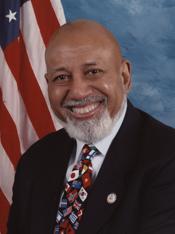 Rep. Alcee L. Hastings (D-FL)
Description
Amendment authorizes a nationwide pilot program through the Department of Education to promote holistic community-centered partnerships aimed at mitigating gang violence and reducing recidivism rates among juvenile ex-offenders previously detained for gang-related offenses.
Text
Offered
Page 679, line 13, strike the close quotation marks and following period and after such line insert the following new part:
“PART R--PATH TO SUCCESS PROGRAM
“SEC. 887. PATH TO SUCCESS.
“(a) Purpose.--The purpose of this part is to encourage community supported programs that--
“(1) leverage and enhance community support for at-risk young adults by facilitating the transition of such young adults who are eligible individuals into productive learning environments where such young adults can obtain the life, social, academic, and vocational skills and credentials necessary to strengthen the Nation's workforce;
“(2) provide counseling, as appropriate, for eligible individuals participating in the programs to allow such individuals to build a relationship with one or more guidance counselors during the period that the individuals are enrolled in the programs, including providing referrals and connections to community resources that help eligible individuals transition back into the community with the necessary life, social, academic, and vocational skills after being in detention, or incarcerated, particularly resources related to health, housing, job training, and work-place readiness;
“(3) provide training and education for eligible individuals participating in the programs, to allow such individuals to assist community officials and law enforcement agencies with the deterrence and prevention of gang and youth violence by participating in seminars, training, and workshops throughout the community; and
“(4) provide each eligible youth participating in the programs with individual attention based on a curriculum that matches the interests and abilities of the individual to the resources of the program.
“(b) Reentry Education Program.--
“(1) Grant program established.--The Secretary is authorized to award grants to community colleges to enter into and maintain partnerships with juvenile detention centers and secure juvenile justice residential facilities to provide assistance, services, and education to eligible individuals who reenter the community and pursue, in accordance with the requirements of this part, at least one of the following:
“(A) A certificate of graduation from a school providing secondary education, a general equivalency diploma (GED), or another recognized equivalent of such a certificate or diploma.
“(B) A certificate of completion for a specialized area of study, such as vocational training and other alternative post-secondary educational programs.
“(C) An associate's degree.
“(2) Grant period.--A grant awarded under this part shall be for one 2-year period, and may be renewed for an additional period as the Secretary determines to be appropriate.
“(3) Application.--A community college desiring to receive a grant under this section shall submit an application to the Secretary at such time, in such manner, and containing such information as the Secretary shall require, which shall include--
“(A) an assessment of the existing community resources available to serve at-risk youth;
“(B) a detailed description of the program and activities the community college will carry out with such grant; and
“(C) a proposed budget describing how the community college will use the funds made available by such grant.
“(4) Priority.--In awarding grants under this part, the Secretary of Education shall give priority to community colleges that accept the highest number of eligible individuals from high-risk areas, and among such community colleges, shall give priority to community colleges that the Secretary determines will best carry out the purposes of this part, based on the applications submitted in accordance with paragraph (3).
“(c) Allowable Uses of Funds.--A community college awarded a grant under this part may use such grant to--
“(1) pay for tuition and transportation costs of eligible individuals;
“(2) establish and carry out an education program that includes classes for eligible individuals that--
“(A) provide marketable life and social skills to such individuals;
“(B) meet the education program requirements under subsection (d);
“(C) promote the civic engagement of such individuals; and
“(D) facilitate a smooth reentry of such individuals into the community;
“(3) create and carry out a mentoring program--
“(A) that is specifically designed to help eligible individuals with the potential challenges of the transitional period from detention to release;
“(B) is created in consultation with guidance counselors, academic advisors, law enforcement officials, and other community resources; and
“(C) that is administered by a program coordinator, selected and employed by the community college, who shall oversee each individual's development and shall serve as the immediate supervisor and reporting officer to whom the academic advisors, guidance counselors, and volunteers shall report regarding the progress of each such individual;
“(4) facilitate employment opportunities for eligible individuals by entering into partnerships with public and private entities to provide opportunities for internships, apprenticeships, and permanent employment, as possible, for such individuals; and
“(5) provide training for eligible individuals participating in the programs, to allow such individuals to assist community officials and law enforcement agencies with the deterrence and prevention of gang and youth violence by participating in seminars and workshop series throughout the community.
“(d) Education Program Requirements.--An education program established and carried out under subsection (c) shall--
“(1) include classes that are required for completion of a certificate, diploma, or degree described in subparagraphs (A) through (C) of subsection (b)(1);
“(2) provide a variety of academic programs, with various completion requirements, to accommodate the distinctive academic backgrounds, learning curves, and concentration interests of the eligible individuals who participate in the program;
“(3) offer flexible academic programs that are designed to improve the academic development and achievement of eligible individuals, and to avoid high attrition rates for such individuals; and
“(4) provide for a uniquely designed education plan for each eligible individual participating in the program, which shall require such individual to receive, at a minimum, a certificate or diploma described in subparagraph (A) of subsection (b)(1) to successfully complete such program.
“(e) Reports.--Each community college awarded a grant under this part shall submit to the Secretary of Education a report--
“(1) documenting the results of the program carried out with such grant; and
“(2) evaluating the effectiveness of activities carried out through such program.
“(f) Definitions.--In this part:
“(1) Community college.--The term ‘community college' means a public or nonprofit institution of higher education (as such term is defined in section 101 or 102(a)(2)(B)), that--
“(A) provides an educational program of not less than two years; and
“(B) that is accredited by a regional accrediting agency or association.
“(2) Eligible individual.--The term ‘eligible individual' means an individual who--
“(A) is 16 to 25 years of age;
“(B) has been convicted of a gang-related offense, and has served a period of detention in a juvenile detention center for such offense; and
“(C) is detained in, or has been released from, such center.
“(3) Gang-related offense.--The term ‘gang-related offense' means conduct constituting any Federal or State crime, punishable by imprisonment in any of the following categories:
“(A) A crime of violence.
“(B) A crime involving obstruction of justice, tampering with or retaliating against a witness, victim, or informant, or burglary.
“(C) A crime involving the manufacturing, importing, distributing, possessing with intent to distribute, or otherwise dealing in a controlled substance or listed chemical (as those terms are defined in section 102 of the Controlled Substances Act (21 U.S.C. 802)).
“(4) Guidance counselor.--The term ‘guidance counselor' means an individual who works with at-risk youth on a one-on-one basis, to establishing a supportive relationship with such at-risk youth and to provide such at-risk youth with academic assistance and exposure to new experiences that enhance their ability to become responsible citizens.
“(5) High-risk area.--The term ‘high-risk area' means a specified area within a State where there is a disproportionately high number of gang-related activities reported to State and local law enforcement authorities.”.
Legislative Activity
Stay on top of the latest movement without scrolling through every action
House amendment offered
February 7, 2008
View full timeline
House amendment offered
February 7, 2008
House amendment agreed to: On agreeing to the Hastings (FL) amendment (A011) Agreed to by voice vote.
February 7, 2008 • 3:22 PM
Amendment agreed to Committee of the Whole
February 7, 2008 • 3:22 PM
House amendment offered/reported by : Amendment (A011) offered by Mr. Hastings (FL).(consideration: CR H763-765; text: CR H763-764)
February 7, 2008 • 3:14 PM
Amendment (A011) offered by Mr. Hastings (FL). (consideration: CR H763-765; text: CR H763-764)
February 7, 2008 • 3:14 PM
On agreeing to the Hastings (FL) amendment (A011) Agreed to by voice vote.
February 7, 2008 • 3:22 PM