To provide for military readiness and benchmarks relative to Iraq.
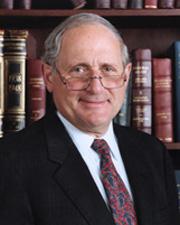 Sen. Carl Levin (D-MI)
Legislative Activity
Stay on top of the latest movement without scrolling through every action
Considered by Senate. (consideration: CR S6158, S6166)
May 16, 2007
View full timeline
Considered by Senate. (consideration: CR S6158, S6166)
May 16, 2007
Proposed amendment SA 1097 withdrawn in Senate.
May 16, 2007
Cloture motion on amendment SA 1097 withdrawn by unanimous consent in Senate.
May 16, 2007
Considered by Senate. (consideration: CR S6086, S6121)
May 15, 2007
Senate amendment submitted
May 14, 2007
Senate amendment proposed (on the floor): Amendment SA 1097 proposed by Senator Reid for Senator Levin to language proposed to be stricken by amendment no. 1065.(consideration: CR S6036-6038; text: CR S6037-6038)
May 14, 2007
Amendment SA 1097 proposed by Senator Reid for Senator Levin to language proposed to be stricken by amendment no. 1065. (consideration: CR S6036-6038; text: CR S6037-6038) To provide for military readiness and benchmarks relative to Iraq.
May 14, 2007
Pursuant to the order of Monday, May 14, 2007, cloture motion on amendment SA 1097 presented in Senate.
May 14, 2007
Amendments
2 amendmentsOffered to this amendment
Amendments
2 amendmentsOffered to this amendment
Text
Proposed
WATER RESOURCES DEVELOPMENT ACT OF 2007

The PRESIDING OFFICER. Under the previous order, the hour of 3 p.m.
having arrived, the Senate will proceed to the consideration of H.R.
1495, which the clerk will report.
The legislative clerk read as follows:

A bill (H.R. 1495) to provide for the conservation and
development of water and related resources, to authorize the
Secretary of the Army to construct various projects for
improvements to rivers and harbors of the United States, and
for other purposes.

The PRESIDING OFFICER. Under the previous order, the Senator from
California is recognized to offer an amendment.

Amendment No. 1065

Mrs. BOXER. Mr. President, I call up amendment No. 1065.
It is an amendment in the nature of a substitute. I ask for its
immediate consideration.
The PRESIDING OFFICER. The clerk will report.
The legislative clerk read as follows:

The Senator from California [Mrs. Boxer], for herself and
Mr. Inhofe, proposes an amendment numbered 1065.

Mrs. BOXER. I ask unanimous consent the reading of the amendment be
dispensed with.
The PRESIDING OFFICER. Without objection, it is so ordered.
(The amendment is printed in the Record of Thursday, May 10, 2007,
under ``Text of Amendments.'')

Amendment No. 1086 to Amendment No. 1065

Mrs. BOXER. Mr. President, I see my leader is here, but before he
starts, I wish to also call up the Feingold amendment No. 1086, and ask
that be brought up and laid aside and considered as read.
The PRESIDING OFFICER. Without objection, it is so ordered.
The clerk will report the amendment by number.
The legislative clerk read as follows:

The Senator from California [Mrs. Boxer], for herself and
Mr. Feingold, proposes an amendment numbered 1086 to
amendment No. 1065.

(The amendment is printed in the Record of Friday, May 11, 2007,
under ``Text of Amendments.'')
Mrs. BOXER. I yield the floor.
The PRESIDING OFFICER. The majority leader is recognized.

Amendment No. 1097

Mr. REID. Mr. President, I appreciate the manager of the bill, the
chairman of the Environment and Public Works Committee, the
distinguished Senator from California, allowing me to obtain the floor.
We all know 2 weeks ago President Bush vetoed the supplemental
appropriations bill, a bill to fully fund the troops in Iraq and change
the course of

[[Page S6037]]

that conflict in Iraq. Late last week, the House sent a new bill to the
Senate. We received that within the past hour. The ball is now in our
court, the Senate's court. Democrats and Republicans agree the Senate
needs to get a bill in conference as soon as possible and we need to
work together to make that happen.
I have had a number of conversations with Senator McConnell the last
several days. I spoke to him earlier today at some length. As much as
we all recognize how badly we need to get a bill to conference, we have
not, on this side of the aisle, lost sight of the fact that the
American people have concluded the President's Iraq policy has failed
and we are now demanding a new way forward on behalf of the American
people.
In an effort to ensure quick Senate passage of our conference vehicle
later this week, as well as to give Senators an opportunity to express
their views on the President's Iraq policy, I will offer two important
amendments. The first amendment is Feingold-Reid, to safely redeploy
United States troops from Iraq by March 31 of next year, and transition
the mission to fighting al-Qaida and other terrorist organizations,
providing security for United States infrastructure and personnel, and
training Iraqi forces.
Of course, after the 1st of April of next year, our troops will be in
Iraq for counterterrorism, force protection--that is to protect
American assets in Iraq--and to help train the Iraqis.
I will also offer a Levin-Reid amendment which is consistent with the
bipartisan legislation approved by Congress with one change: It permits
the President to waive the timeline for redeployments. It has in it
some things some Members want very badly, including the Presiding
Officer, to deal with how our troops are taken care of, how often they
have to go back to battle, how much time they have to have before being
returned to the battlefield after having been deployed. We will have
votes on these two amendments at the earliest possible date. I will
work with the distinguished Republican leader to see when that will
happen. These votes represent an opportunity for the Senate to shape
the important conference we hope will begin this week upon passage of
the Senate version of the supplemental.
There is probably no end of amendments that could be offered, as I
have here today, but on our side of the aisle, Democrats believe we
should do something very close to what was done in the bill we sent to
the President which he vetoed.
Basically that is what we have here--except getting the President the
ability to waive the timelines we have in the legislation.
Finally, there are those on this side who believe there should be
some end in sight. That is why I indicated that as of April 1 of next
year, the funding would still go on but it would be limited to the
counterterrorism, force protection, and training Iraqis.
It is very important to understand that transitioning this mission to
fighting al-Qaida is a part of the recognition of what we and the
American people believe is important. At present, as you know, American
troops are over there protecting the Shias, protecting the Sunnis,
protecting the Kurds, and at all times all these different elements are
shooting at the Americans. We should limit our focus to al-Qaida.
Mr. President, I call up the Levin-Reid amendment first.
That is No. 1097.
The PRESIDING OFFICER. The clerk will report.
The legislative clerk read as follows:

The Senator from Nevada [Mr. Reid], for Mr. Levin, for
himself and Mr. Reid, proposes an amendment numbered 1097 to
the language proposed to be stricken by amendment No. 1065.

Mr. REID. I ask unanimous consent the reading of the amendment be
dispensed with.
The PRESIDING OFFICER. Without objection, it is so ordered.
The amendment is as follows:

amendment no. 1097

SEC. 1. MILITARY READINESS--MISSION CAPABLE UNITS.

(a) Congress finds that it is Defense Department policy
that units should not be deployed for combat unless they are
rated ``fully mission capable''.
(b) None of the funds appropriated or otherwise made
available in this or any other Act may be used to deploy any
unit of the Armed Forces to Iraq unless the chief of the
military department concerned has certified in writing to the
Committees on Appropriations and the Committees on Armed
Services at least 15 days in advance of the deployment that
the unit is fully mission capable.
(c) For purposes of subsection (b), the term ``fully
mission capable'' means capable of performing assigned
mission essential tasks to prescribed standards under the
conditions expected in the theater of operations, consistent
with the guidelines set forth in the Department of Defense
readiness reporting system.
(d) The President may waive the limitation prescribed in
subsection (b) on a unit-by-unit basis by certifying in
writing to the Committees on Appropriations and the
Committees on Armed Services that he has authorized the
deployment to Iraq of a unit that is not assessed fully
mission capable and by submitting along with the
certification a report in classified and unclassified form
detailing the particular reason or reasons why the unit's
deployment is necessary despite the chief of the military
department's assessment that the unit is not fully mission
capable.

SEC. 2. MILITARY READINESS--DURATION OF TOURS OF DUTY IN
IRAQ.

(a) Congress finds that it is Defense Department policy
that Army, Army Reserve, and National Guard units should not
be deployed for combat beyond 365 days or that Marine Corps
and Marine Corps Reserve units should not be deployed for
combat beyond 210 days.
(b) None of the funds appropriated or otherwise made
available in this or any other Act may be obligated or
expended to initiate the development of, continue the
development of, or execute any order that has the effect of
extending the deployment for Operation Iraqi Freedom of--
(1) any unit of the Army, Army Reserve or Army National
Guard beyond 365 days; or
(2) any unit of the Marine Corps or Marine Corps Reserve
beyond 210 days.
(c) The President may waive the limitations prescribed in
subsection (b) on a unit-by-unit basis by certifying in
writing to the Committees on Appropriations and the
Committees on Armed Services that he has authorized the
extension of a unit's deployment in Iraq beyond the periods
specified in subsection (b) and by submitting along with the
certification a report in classified and unclassified form
detailing the particular reason or reasons why the unit's
extended deployment is necessary.

SEC. 3. MILITARY READINESS--MULTIPLE DEPLOYMENTS.

(a) Congress finds that it is Defense Department policy
that Army, Army Reserve, and National Guard units should not
be redeployed for combat if the unit has been deployed within
the previous 365 consecutive days or that Marine Corps and
Marine Corps Reserve units should not be redeployed for
combat if the unit has been deployed within the previous 210
days.
(b) None of the funds appropriated or otherwise made
available in this or any other Act may be obligated or
expended to initiate the development of, continue the
development of, or execute any order that has the effect of
deploying for Operation Iraqi Freedom of--
(1) any unit of the Army, Army Reserve or Army National
Guard if such unit has been deployed within the previous 365
consecutive days; or
(2) any unit of the Marine Corps or Marine Corps Reserve if
such unit has been deployed within the previous 210
consecutive days.
(c) The President may waive the limitations prescribed in
subsection (b) on a unit-by-unit basis by certifying in
writing to the Committees on Appropriations and the
Committees on Armed Services that he has authorized the
redeployment of a unit to Iraq in advance of the periods
specified in subsection (b) and by submitting along with the
certification a report in classified and unclassified
form detailing the particular reason or reasons why the
unit's redeployment is necessary.

SEC. 4. BENCHMARKS.

(a) Beginning on July 15, 2007, and every 30 days
thereafter, the Secretary of Defense and the Secretary of
State, after consultation with the U.S. Ambassador to Iraq,
Commander U.S. Central Command, and Commander, Multi-National
Forces Iraq, shall jointly submit to Congress a report
describing and assessing in detail the progress made by the
Government of Iraq in meeting each of the benchmarks set
forth in subsection (1), the security objectives set forth in
the President's revised strategy of January 10, 2007, and
answering the questions posed in subsections (2) and (3).
(1) whether the Government of Iraq has:
(i) enacted a broadly accepted hydro-carbon law that
equitably shares oil revenues among all Iraqis;
(ii) adopted legislation necessary for the conduct of
provincial and local elections including setting a schedule
to conduct provincial and local elections;
(iii) reformed current laws governing the de-Baathification
process to allow for more equitable treatment of individuals
affected by such laws;
(iv) amended the Constitution of Iraq consistent with the
principles contained in Article 140 of such constitution,
including, at a minimum, the submission of such amendments to
the Iraqi Parliament for the protection of minority rights;
and
(v) allocated and expended $10,000,000,000 in Iraqi
revenues for reconstruction projects,

[[Page S6038]]

including delivery of essential services, on an equitable
basis.
(2) whether the Government of Iraq and United States Armed
Forces has made substantial progress in reducing the level of
sectarian violence in Iraq; and
(3) whether each battalion of the security forces of Iraq
has achieved a level of combat proficiency such that it can
conduct independent combat operations without support from
Coalition forces in Iraq.
(b) Notwithstanding any other provision of law, 75 percent
of the funds appropriated by this Act or any other act for
assistance for Iraq under the headings ``Economic Support
Fund'' and ``International Narcotics and Law Enforcement''
shall be withheld from obligation until the President
certifies to the Committees on Appropriations, Armed Services
and Foreign Relations of the Senate and the Commnittees on
Appropriations, Armed Services and Foreign Affairs of the
House of Representatives that the Government of Iraq is
making substantial progress towards meeting each of the
benchmarks set forth in subsection (a)(1).
(c) The requirement to withhold funds from obligation
pursuant to subsection (b) shall not apply with respect to
funds made available under the heading ``Economic Support
Fund'' for continued support for the Community Action Program
and the Community Stabilization Program in Iraq administered
by the United States Agency for International Development, or
for programs and activities to promote democracy and human
rights in Iraq.

SEC. 5. REDUCTION OF FORCES.

(a) Subject to the waiver authority provided for in
subsection (e), the Secretary of Defense shall commence the
reduction of the number of United States Armed Forces in Iraq
not later than October 1, 2007, with a goal of completing
such reduction within 180 days. The goal of completing such
reduction shall be accelerated if the President is unable to
report that the Government of Iraq is making substantial
progress towards meeting each of the benchmarks set forth in
subsection (a)(1) of Section 4 by October 15, 2007.
(b) Notwithstanding any other provision of law, funds
appropriated or otherwise made available in this or any other
Act are available for obligation and expenditure to plan and
execute a safe and orderly reduction of the Armed Forces in
Iraq.
(c) The reduction of forces required by this section shall
be implemented as part of a comprehensive diplomatic,
political, and economic strategy that includes sustained
engagement with Iraq's neighbors and the international
community for the purpose of working collectively to bring
stability to Iraq.
(d) After the conclusion of the reduction required by this
section, the Secretary of Defense may not deploy or maintain
members of the Armed Forces in Iraq for any purpose other
than the following:
(1) Protecting American diplomatic facilities and American
citizens, including members of the U.S. armed forces;
(2) Serving in roles consistent with customary diplomatic
positions;
(3) Engaging in targeted actions against members of al-
Qaeda and allied parties and other terrorist organizations
with global reach; and
(4) Training and equipping members of the Iraqi Security
Forces.
(e) Waiver Authority.--
(1) In general.--The President may waive the reduction of
forces requirements of this section if he submits to Congress
a written certification setting forth a detailed
justification for the waiver, which shall include a detailed
report describing the actions being taken by the United
States to bring about the meeting of the benchmarks set forth
in subsections (a)(1) of section __ by the Iraqis. The
certification shall be submitted in unclassified form, but
may include a classified annex.
(2) Duration.--The Waiver under paragraph (1) shall be
effective for 90 days beginning on the date of the submittal
of the certification under that paragraph.
(3) Renewal.--A waiver under paragraph (1) may be renewed
if, before the end of the expiration of the waiver under
paragraph (2), the President submits to Congress before the
end of the effective period of the waiver under paragraph (2)
a certification meeting the requirements of this subsection.
Any waiver so renewed may be further renewed as provided in
this paragraph.

Amendment No. 1098 to Amendment No. 1097

Mr. REID. I now ask the clerk report the Feingold-Reid amendment No.
1098.
The PRESIDING OFFICER. The clerk will report.
The legislative clerk read as follows:

The Senator from Nevada [Mr. Reid], for Mr. Feingold, for
himself and Mr. Reid, proposes an amendment numbered 1098 to
amendment No. 1097.

Mr. REID. I ask unanimous consent the reading of the amendment be
dispensed with.
The PRESIDING OFFICER. Without objection, it is so ordered.
The amendment is as follows:
(a) Transition of Mission.--The President shall promptly
transition the mission of United States forces in Iraq to the
limited purposes set forth in subsection (d).
(b) Commencement of Safe, Phased Redeployment From Iraq.--
The President shall commence the safe, phased redeployment of
United States forces from Iraq that are not essential to the
limited purposes set forth in subsection (d). Such
redeployment shall begin not later than 120 days after the
date of the enactment of this Act.
(c) Prohibition on Use of Funds.--No funds appropriated or
otherwise made available under any provision of law may be
obligated or expended to continue the deployment in Iraq of
members of the United States Armed Forces after March 31,
2008.
(d) Exception for Limiited Purposes.--The prohibition under
subsection (c) shall not apply to the obligation or
expenditure of funds for the limited purposes as follows:
(1) To conduct targeted operations, limited in duration and
scope, against members of al Qaeda and other international
terrorist organizations.
(2) To provide security for United States infrastructure
and personnel.
(3) To train and equip Iraqi security services.

Mr. REID. Mr. President, on these amendments, I am a cosponsor of
both.
I thank the manager very much. I hope she and Senator Inhofe can move
the WRDA amendment along. It is an important piece of legislation for
the whole country and it is way past due when we should have had this
completed.
Mrs. BOXER. Before the leader leaves, I hope I can get the attention
of the floor staff, to make sure--my understanding is you have now
offered the amendments on Iraq to the underlying bill, but the text
that is before us is clean of the Iraq amendments? I think it is a good
thing to do because we can move on here with WRDA, as the amendments
were applied to the underlying text, not to the amendment we are
working on.
I thank my colleague for thinking it through. I am proud he is with
us in wanting to move this WRDA bill forward.
Let a message go out we are going to move this bill forward. One of
the reasons I say to my friend, thank you--I don't want to keep him
here, I just want to thank him.
We have received a letter from the National Construction Alliance. It
is the Laborers International Union of North America, the International
Union of Operating Engineers, the United Brotherhood of Carpenters &
Joiners of America.
The reason I am bringing this up is they are very strong supporters
of WRDA. I think their letter lays out why, so I am actually going to
read it so it goes into the Record at this point. It says:

Dear Senator Boxer and Senator Inhofe:
The National Construction Alliance, representing the three
leading construction unions advocating for robust federal
infrastructure investment, endorses the Senate version of the
Water Resources Development Act reauthorization. This vital
Federal infrastructure legislation should be considered and
passed by the United States Senate. Our three constituent
unions, the Laborers, Operating Engineers and the Carpenters,
commend you both for your strong, bipartisan leadership on
this legislation.

This gets to the heart of why Senator Inhofe and I and all on the
committee believe so strongly about the bill.

The $13.9 billion authorization of Corps of Engineers
projects is an important and necessary step in addressing our
country's serious backlog of water projects. From harbor
improvement to flood protection, to lock and dam
construction, dredging and environmental infrastructure, your
bill will immeasurably strengthen America's water resources.
As labor unions representing nearly one million skilled
construction workers, we recognize that this WRDA
reauthorization will create tens of thousands of good paying
construction jobs.
We strongly urge the Senate to pass your legislation in an
expeditious manner so that America's critical water
infrastructure needs can be addressed.

I say to the President--who is sitting in the chair today, as opposed
to the President of the United States--he has so long been speaking
about the problem of our loss of middle-class jobs. What is so
important about this particular bill is that while we are doing things
the Nation must have in order to grow and in order to protect itself
from the ravages of Mother Nature, as we saw in Katrina--in the course
of doing the right thing we are creating good jobs. It is a wonderful
winner for everybody.
That is why we have more letters I want to share with colleagues. The
American Society of Civil Engineers has added its voice to all these
unions, to both Senator Inhofe and myself, saying they are very pleased
with this bill, they are very pleased with the levee system fixes; they
believe this is

[[Page S6039]]

overdue legislation and that it ensures we have learned the lessons
from Hurricane Katrina. It ``goes far toward protecting human life and
property in flood-prone areas.''
They ask us if the American Society of Civil Engineers can be of more
assistance, please call them. We may, because we want everybody to
weigh in here and help us.
We have a letter from the Audubon Society. You have heard from the
business side, the union side, now the environmental side. They have a
million members. They say, please, let's have prompt consideration of
WRDA because it restores America's natural resources. It includes:

. . . Corps modernization provisions, including independent
review of costly or controversial Corps projects and ensuring
that mitigation for Corps projects is consistent with
stricter State laws.

This refers to the Corps' formula in the last bill which is embedded
in this bill.
Audubon also talks about:

. . . two crucial Everglades restoration projects--Indian
River lagoon and Picayune Strand--that would mitigate harmful
federal drainage projects, restore more than 160,000 acres of
wetlands and significant estuarine habitat, and help secure
Florida's tourism and outdoor recreation economy.

They also cite the upper Mississippi River restoration program, in
its first 15-year increment, will preserve 105,000 acres of habitat;
protect 35,000 acres of floodplain habitat in five States along the
river.
The Coastal Louisiana restoration program will begin to reverse the
devastating pattern of land loss, protecting important habitat for
birds and fish and other wildlife as well as the region's economy and
quality of life.
The bill permanently authorizes the Asian Carp Barrier to protect the
Great Lakes from this looming threat. The Audubon Society, which is so
well respected on both sides of the aisle, closes and says that
ecosystem restoration projects for the Everglades, the Mississippi,
Louisiana's coastal wetlands, and the Great Lakes are overdue, as is
Corps modernization.
Then I will add to these letters, Mr. President, a letter from the
National Association of Manufacturers. I mean, this is one of those
bills that gets everybody's support. It is something that is important
for everyone.
They say: On behalf of more than 14 million manufacturing employees
in the U.S., they are thanking us for our leadership, and they are
saying: Let's move forward with WRDA. It is important. They say that:
America's water resources infrastructure needs to be reliable and
productive.
They applaud our efforts and they say how vitally needed WRDA is,
including the modernization of locks, harbors, canals, and other key
infrastructure that is vital to America's competitiveness. They say:
WRDA will authorize many of these needs. So that is the National
Association of Manufacturers. So it goes on and on.
The Pacific Northwest Waterways Association has a similar letter that
is very important to us. The American Farm Bureau. The American Farm
Bureau has entered this, and they have written us saying it is a good
bill, urging us to support WRDA, and they oppose any amendment that
would hinder our progress in moving forward.
The corn growers of America, they have weighed in and they say: It is
important. They have sent a letter to Harry Reid and Mitch McConnell,
our leaders, saying we need to have this bill. They need to have
efficient transportation networks and so on. This is a very important
letter, I think. They say that continued development of our water
resources in an environmentally sound manner will contribute mightily
to our Nation's well-being.
Congress needs to act now to address issues such as environmental
restoration, navigation, flood control, hurricane protection, water
supply, irrigation, beach nourishment, and recreation.
So that is yet another letter. The American Public Works Association
has sent us a letter. They have a similar message: With adequate
dredging, our ports and waterways are the backbone of our
transportation system, ensuring domestic and international trade
opportunities and low-cost, environmentally sensitive goods movements.
It goes on.
Now, I have already placed some of those letters in the Record, and I
am going to do it again today because I think every day, as colleagues
will look at the Record, they will see their importance.
I ask unanimous consent to have these letters printed in the Record
at the end of my remarks.
The PRESIDING OFFICER. Without objection, it is so ordered.
(See exhibit 1.)
Mrs. BOXER. The reason I like to share these letters is that it shows
the breadth of support this bill has. We know we come to the floor with
a lot of legislation that is contentious, that is contentious between
the parties, that is contentious with people throughout America, one
group supports it. For example, the labor unions might but the bosses
do not. This is a place where everybody comes together. I think that is
very important.
So colleagues know what is happening today, you know we do not have
votes today. But we are going to try to debate some amendments today.
We have already debated the Feingold amendment, so that is ready to be
voted on tomorrow. I understand that Senator Coburn is on his way over
to offer at least the one--we are hoping three amendments. He can
debate today, and then we can have votes on those as we agree between
the sides. The way we have decided to handle this bill, because it has
been such a delicate balance, is the following: We are working across
party lines to come up with amendments we can agree to. We have taken
the amendments that have been submitted thus far, and we are sort of
categorizing those amendments in what is easy for us to agree to, what
is more difficult. We are going to try to work through the easier
amendments, and the more contentious ones we will have to have votes.
Now, what we call the big four of the committee, the Chairman of the
full committee, the Chairman of the subcommittee, the ranking members
of both the full committee and the subcommittee, we have made an
agreement that we will oppose all amendments. Why are we doing this?
Believe me, that is not an easy thing for us to do. We feel we have
worked so closely, in a bipartisan fashion, we want to keep this bill
totally bipartisan. We are trying to keep the most contentious items
out of the bill to make sure it gets to the President's desk and he
signs it.
Now, the good news is we have a score on the bill. That means how
much the bill is scored at. It is $13.9 billion. It makes it lower than
the House bill. This is very good news because we want to be fiscally
responsible.
We also want to make sure all the projects in this bill meet certain
criteria, that they have been studied, they have been looked at, that
there is a fair cost share, unless there is an usual circumstance.
So Senator Inhofe has been very strong on conditions. I expect him to
come to the floor very soon. He actually had a weekend trip to Iraq. I
do appreciate the fact that he has gone and that he is going to be
here, we believe, at about 3:30--as a matter of fact, in about 10
minutes--at which point I hope he will make some of his comments on
this bill.
But the way we have set the bill up is we now have the committee
substitute pending in the form of an amendment. Leader Reid has sent
forward two amendments, but they are not to the substitute bill, they
are to the underlying bill about Iraq, as a way to expedite the
consideration of the Iraq supplemental. He has done that with the
knowledge of Senator McConnell so there are no surprises here. We have
discussed this with Senator Feingold in terms of offering his
amendment, which he already debated. That will be ready for a vote
later. I hope we can set aside all these amendments and vote on them
tomorrow morning at such time as the leader agrees.
At this point, since I think I have laid out the reason why we so
much need this bill, after 7 long years of not having a WRDA bill, we
so much need this bill, and we are so proud of the committee that they
voted this bill out in a very harmonious way and that we are still
working side by side, the majority and minority side, on crafting the
amendments we need to push this over the finish line.
I look forward to the comments of Senator Inhofe. We also will, of
course,

[[Page S6040]]

entertain the amendments of Senator Tom Coburn when he gets to the
floor. I urge anybody else who wants to lay down amendments, please,
you are absolutely welcome.
I understand Senator Landrieu would like the floor. So why don't I
leave the floor with the understanding that if Senator Inhofe comes,
would you wind down within 10 minutes so he can have the floor.
I yield the floor.

Exhibit 1

Pacific Northwest

Waterways Association,

Portland, OR, May 10, 2007.
Hon. Barbara Boxer,
Chairman, Senate Committee on Environment and Public Works,
Washington, DC
Hon. James Inhofe,
Ranking Member, Senate Committee on Environment and Public
Works, Washington, DC
Dear Chairman Boxer and Senator Inhofe, We write to urge
your support for the reauthorization of the Water Resources
Development Act in 2007.
WRDA is fundamentally important to the economic health of
our nation and particularly important to the states of
Oregon, Washington, Idaho and California. Our region depends
on international trade to a greater extent than any other
region in the United States. In Washington state, one in four
jobs are related to international trade. Cost-effective,
efficient, and environmentally sound trade and transportation
corridors are imperative to secure our place in the global
economy. Delay in WRDA means exacerbated backlogs which will
dull our competitive edge.
The Pacific Northwest Waterways Association (PNWA)
membership includes nearly 100 organizations in Oregon,
Washington, Idaho and California. PNWA represents public port
authorities on the Pacific Coast, Puget Sound, and Columbia
Snake River System; public utility districts, investor-owned
utilities, electric cooperatives and direct service
industries; irrigation districts, grain growers and upriver
and export elevator companies; major manufacturers in the
Pacific Northwest; forest products industry manufacturers and
shippers; and tug and barge operators, steamship operators,
consulting engieneers, and others involved in economic
development throughout the Pacific Northwest.
PNWA has a long history of working with the Committee and
the U.S. Army Corps of Engineers on projects of regional and
national importance, sharing the challenge to maintain and
develop our transportation infrastructure. Our members wish
to thank the Committee for its support of Pacific Northwest
transportation programs and projects.
Issues of particular concern to the members of our
Association follow:

minimum dredge fleet

The federally-owned hopper drege fleet and the Corps of
Engineers' dredges Essayons and Yaquina, are particularly
important to the maintenance of ports and harbors in the
Pacific Northwest. The goals of Congressional actions in
1978, 1993 and 1996, which limited the utilization of the of
the federal dredge fleet and provided increased opportunity
for industry, have been meet.
Since passage of the Energy and Water Appropriations Act of
1993, designed to increase competition in the dredge
industry, the number of private dredging contractors has
declined. This is of concern because the Northwest has unique
conditions such that, compared to other regions, Northwest
ports depend to a greater degree on hopper dredging and on
smaller class hopper dredges. The Government Accountability
Office found in a March 2003 to Congress (GAO-03-382) that
operating restrictions have imposed additional costs on the
Corps' dredging program, but have not resulted in proven
benefits to the taxpayer.
PNWA strongly supports the language included in your bill
to lift operating restrictions from the Essayons and Yaquina,
which will enable the Corps of Engineers to utilize the
Essayons and Yaquina to the maximum extent possible to
maintain Northwest ports, harbors and channels, consistent
with the safe and efficient performance of their missions.

making section 214 permanent

Section 214 of the Water Resources Development Act of 2000
(P.L. 106-541) provides the authority to the Secretary of the
Army to accept and expend funds contributed by non-Federal
public entities and to expedite the processing of permits.
Section 214 has allowed local governments to move forward
with vital infrastructure projects. By funding additional
staff to work on specific, time-intensive permits, existing
Corps staff members are able to process the significant
permit application backlog much more quickly. Funding for
additional Corps staff has resulted in a reduction of permit
wait times not only for the funding entity, but for any
individual or organization that makes an application with
that District of the Corps.
This authority is currently scheduled to sunset on December
31, 2008. Though PNWA has been successful in working with
Congress to secure short-term extensions for several years
now, the time has come to give Corps regulatory offices as
well as the contributing entities the predictability that
would come with a permanent authority. PNWA strongly supports
language in your bill that would make Section 214 permanent.
These provisions are strongly supported by PNWA's
membership, and are important to improve the efficiency and
cost competitiveness of Northwest ports engaging in
international trade. Additional provisions that are supported
by PNWA are included in the attached document, PNWA WRDA
Requests. We appreciate the Committee's and Congress'
attention to these important matters.
Sincerely,
Kristin Meira,
Government Relations Director.
____

pnwa member directory

Alaska Assoc. of Port Managers & Harbormasters; Almota
Elevator Company; Anderson-Perry & Associates, Inc.; Ball
Janik LLP; Bell Buoy Crab Co.; Benton County PUD #1; Boise
Cascade LLC; BST Associates; Central Washingotn Grain
Growers, Inc.; CH2M Hill; Clark Public Utilities; Columbia
Basin Development League; Columbia County Grain Growers, Inc;
Columbia River Bar Pilots; Columbia River Pilots; Columbia
River Steamship Operators Assoc.; Cowlitz County Board of
Commissioners; David B. Barrows Environmental Consulting;
Douglas County PUD #1; Dustra Group.
East Columbia Basin Irrigation District; Foss Maritime
Company; Office of Peter Friedmann; Gallatin Group; Gordon
Thomas Honeywell Gov't Affairs; Harris Group Inc.; ID Wheat
Commission; Jan T. Fancher, CPA, PLLC; Jefferson Government
Relations; Kalama Export Company; Kleinfelder, Inc.; Lampson
International, LLC; Lewis-Clark Terminal Association;
Longview Fibre Company; Manson Construction; Moffatt &
Nichol; Northwest Grain Growers, Inc.; Northern Star Natural
Gas; OR Economic & Community Development Department (OECDD).
Oregon Int'l Port of Coos Bay; Oregon Iron Works, Inc.; OR
Wheat Growers League; Pacific Merchant Shipping Assoc.
(PMSA); Pacific International Engineering (PIE); Parametrix;
PB Ports & Marine, Inc.; PNGC Power; Pomeroy Grain Growers;
Port of Anacortes; Port of Benton; Port of Brookings Harbor;
Port of Camas-Washougal; Port of Cascade Locks; Port of
Chelan County; Port of Chinook; Port of Clarkston; Port of
Columbia County; Port of Garibaldi; Port of Gold Beach.
Port of Hood River; Port of Humboldt Bay; Port of Ilwaco,
Port of Kalama; Port of Kennewick; Port of Klickitat; Port of
Lewiston; Port of Longview; Port of Morrow; Port of Newport;
Port of Pasco; Port of Port Angeles; Port of Portland; Port
of Ridgefield; Port of Royal Slope; Port of Seattle; Port of
Suislaw; Port of Skagit County; Port of St. Helens; Port of
Sunnyside; Port of Tacoma; Port of Toledo; Port of Umatilla;
Port of Umpqua; Port of Vancouver; Port of Walla Walla; Port
of Whitman County; Port of Woodland; Potlatch Corporation;
Presnell, Gage & Company; Preston Gates & Ellis LLP;
Primeland Cooperatives; Reid Middleton, Inc.; The Research
Group; RETEC Group; Schwabe, Williamson & Wyatt; Seattle
Public Utilities; Shaver Transportation Company; Stoel Rives
LLP; Teevin Brothers.
Tidewater Barge Lines; Ukiah Engineering Inc. (UEI); USA
Dry Pea & Lentil Council; WA Association of Wheat Growers; WA
Public Ports Association; WA State Office of Trade and
Economic Development (CTED); WA State Potato Commission; WA
Wheat Commission; Weyerhaeuser Company; Whitman County
Growers.
____

May 10, 2007.
Hon. Barbara Boxer,
Chairwoman, Senate Environment and Public Works Committee,
Washington, DC.
Dear Madam Chairwoman: On behalf of more than 4 million
manufacturing employees in the U.S., we would like to thank
you for your leadership in moving forward with the Water
Resources Development Act of 2007 (WRDA). It is vitally
important that America's water resources infrastructure be
reliable and productive. Therefore we applaud your efforts to
end the stalemate over water resources project authorization
by bringing H.R. 1495, WRDA, to the Senate floor. We firmly
believe that it is time to end the impasse over passage of
WRDA.
A Water Resources Development Act is vitally needed to
accommodate the many important projects awaiting
authorization, including the modernization of the locks,
harbors, canals and other key infrastructure that are vital
to the competitiveness of the U.S. economy. A sound national
transportation system for the 21st century needs modern water
projects, and WRDA will authorize many of those needs.
We look forward to working with you and your staff and
issues of importance to the nation's economy and environment.
Again, thank you for your leadership.
Sincerely,
The National Association
of Manufacturers.
____

Audubon,

May 10, 2007.
Re Act now to Restore America's Natural Treasures.
Dear Senator: On behalf of the National Audubon Society and
our more than one million members and supporters, I urge you
to help restore America's natural resources by advocating for
prompt consideration and passage of the Water Resources
Development Act of 2007 (S. 1248). WRDA 2007 would authorize
unprecedented spending for ecosystem restoration projects,
including Everglades, upper Mississippi River, coastal
Louisiana, and Great Lakes.

[[Page S6041]]

The bill should include Corps modernization provisions,
including independent review of costly or controversial Corps
projects and ensuring that mitigation for Corps projects is
consistent with stricter State laws.
WRDA 2007 contains two crucial Everglades restoration
projects--Indian River Lagoon and Picayune Strand--that would
mitigate harmful federal drainage projects, restore more than
160,000 acres of wetlands and significant estuarine habitat,
and help secure Florida's tourism and outdoor recreation
economy. The Upper Mississippi River Restoration Program, in
its first 15-year increment, will restore 105,000 acres of
habitat, protect 35,000 acres of floodplain habitat in five
States along the river, and will include a significant
monitoring program. The Coastal Louisiana Restoration program
will begin to reverse this devastating pattern of land loss,
protecting important habitat for birds, fish, and other
wildlife, as well as the region's economy and quality of
life. The bill would also permanently authorize the Asian
Carp Barrier to protect the Great Lakes from this looming
threat.
Ecosystem restoration projects for the Everglades, the
Mississippi River, Louisiana's coastal wetlands, and the
Great Lakes are overdue, as is Corps modernization. Thank you
for helping to restore some of America's greatest natural
treasures.
Sincerely,
John Flicker,
President and CEO.
____

National Construction

Alliance,

Washington DC, May 10, 2007.
Hon. Barbara Boxer,
Chairwoman, Senate Environment and Public Works Committee,
Washington, DC.
Hon. James M. Inhofe,
Ranking Member, Senate Environment and Public Works
Committee, Washington, DC.
Dear Senator Boxer and Senator Inhofe: The National
Construction A11iance, representing the three leading
construction unions advocating for robust federal
infrastructure investment, endorses the Senate version of the
Water Resource Development Act reauthorization. This vital
federal infrastructure legislation should be. considered and
passed by the United States Senate. Our three constituent
unions, the Laborers. Operating Engineers and the Carpenters,
commend you both for your strong, bipartisan leadership on
this legislation.
The $13.9 billion authorization of Corps of Engineers
projects is an important and necessary step in addressing our
country's serious backlog of water projects. From harbor
improvement, to flood protection, to lock and dam
construction, dredging and environmental infrastructure. your
bill will immeasurably strengthen America's water resources.
As labor unions representing nearly one million skilled
construction workers, we recognize that this WRDA
reauthorization will create tens of thousands of good paying
construction jobs.
We strongly urge the Senate to pass your legislation in an
expeditious manner so that America's critical water
infrastructure needs can be addressed.
Sincerely,
Raymond J. Poupore,
Executive Vice Pesident.
____

American Society of

Civil Engineers,

Washington, DC, May 10, 2007.
Hon. Barbara Boxer,
Chair, Committee on Environment and Public Works, U.S.
Senate, Washington, DC.
Hon. James Inhofe,
Ranking Member, Committee on Environment and Public Works,
U.S. Senate, Washington, DC.
Dear Madam Chairwoman and Senator Inhofe: As the Senate
begins its consideration of the Water Resources Development
Act (WRDA) of 2007 this week, the American Society of Civil
Engineers (ASCE) commends your efforts to bring a bipartisan
bill to the floor. We appreciate your commitment to moving
forward with responsible legislation to authorize much-needed
improvements to the nation's water resources and public works
infrastructure. We support WRDA's speedy passage into law.
ASCE is especially pleased to champion enactment of
subtitle C of the Senate bill, which would require the U.S.
Army Corps of Engineers to establish a national levee safety
program. Subtitle C would authorize the Secretary to spend
$100 million to inspect and inventory the nation's levee
systems and fund state levee safety programs. This long
overdue legislation ensures that we have learned the lessons
from Hurricane Katrina and goes far toward protecting human
life and property in flood-prone areas.
If ASCE can be of further assistance as this important
legislation advances, please do not hesitate to contact Brian
Pallasch of our Washington office.
Sincerely yours,
Patrick J. Natale,
Executive Director.

The PRESIDING OFFICER. The Senator from Louisiana is recognized.
Ms. LANDRIEU. Mr. President, I come to the floor to speak for a few
moments about probably one of the most important bills that this
Congress will consider relative to Louisiana and our ongoing attempt to
protect the 3 million people who live in south Louisiana and also to
protect the great infrastructure we have in this country, in a vast and
broad way, not just from the energy sector but the fisheries but, most
importantly, transportation and commerce.
There was an excellent article in the Post this weekend that I would
like to have printed for the Record, written by one of the most
distinguished citizens of our State, John Barry, who is a renowned
author who wrote the book ``Rising Tide,'' also a recent book about the
influenza of 1917.
But he writes, in reference to the WRDA bill and to the amendments I
am going to be offering to this bill, about the importance of acting
now to save this great region of the Southern part of the United
States, and the fact that this delta that we are attempting to save by
building the right kind of levees, the right kind of gates and locks,
the right kind of navigation channels, correcting some of our past
mistakes that we made before we realized the damage that would occur by
some of our own actions.
He writes about the importance of this Delta, that at one time it
reached from Cape Girardeau, MO, all the way up the Mississippi River,
down to the present mouth of the river, that the entire delta, that it
was created over thousands of years, and it was maintained as the river
overflowed its banks. As the river overflowed, it carried silt. It
built the Delta.
But as we have channeled the delta, channeled the river and built
levees up along the river, we have caused the natural building up of
the delta to stop.
Then as we cut channels through this great and amazing land, that
reaches from the east of New Orleans all the way to the Texas-Louisiana
border, as we crisscross it with pipelines and navigation channels to
tap into the extraordinary oil and gas reserves both on land and
offshore, it exacerbates an already tough situation.
Then to level on top of that the dredging of the Mississippi River,
to keep the sandbars out of the mouth, the channel as we have made the
water move faster, that has an impact on the way this delta is now
lowering itself, if you will, into the water.
There are other contributing factors, but the bottom line is we have
to take corrective action to reverse this. We cannot correct everything
that we did, but we most certainly can pass this bill, the WRDA bill,
the Water Resources Development Act, which has--about 22 percent of the
entire bill is dedicated basically to this purpose
It is right that a large portion of this bill be dedicated to this
purpose because this delta, this Mississippi River, does not just serve
the 4.5 million people who call Louisiana home but it literally serves
the 360 million people who call the United States of America home. It
serves Canada and Mexico as well, as well as ports around the world. So
it is not just for the people of Louisiana whom we act today, it is in
the national interest to do so.
In the underlying bill, which Senator Boxer and Senator Inhofe have
so carefully crafted, the Louisiana Coastal Area Ecosystem Restoration
system has $1.133 billion. Morganza to the Gulf, a very important
aspect of our protection of south Louisiana, is included in this bill
at $841 million.
Some port work at the Port of New Iberia for Vermilion and Iberia
Parishes, which are two of our larger southern parishes, has an
authorization that is overdue and most certainly timely. There is an
amount of money to help relocate facilities from the Mississippi River
Gulf Outlet, both private and public, so we can close the Mississippi
River Gulf Outlet, which is also, hopefully, going to be part of this
bill, some work on the western side of our State, the Calcasieu River
and Pass and rock bank protection, and there is a lock project around
the capital city, to mention a few.
The bottom line is, there is about $2.5 billion in this bill for
Louisiana projects. It sounds like a lot, and it is. We are proud of
the 8 years of work that have gone into building this WRDA bill,
through past Congresses

[[Page S6042]]

and now this one. Under the leadership of Senator Boxer, she has
committed to work with her colleague, Mr. Oberstar, on the House side
to get a WRDA bill to the President's desk for him to sign. It doesn't
do us any good to keep talking about a WRDA bill.
The only good that will come of this bill is if we can actually get
it to the President's desk, get him to sign it, and get these projects
underway. The people of Louisiana have waited for 8 years through any
number of hurricanes, not the least of which in the last 2 years, we
have had the unbelievable challenge of dealing with Hurricanes Katrina
and Rita, the first and third largest hurricanes in terms of disaster
and impact to ever hit this country. We are still fighting to rebuild
and reeling from the damage of those storms. As I have said many times,
it wasn't just the multiple levees that collapsed, it was really a
Federal flood more than a hurricane that did us in. It was the multiple
failure of levees that should have been maintained, should have been
stronger, should have been higher, and were not.
It is also because of the loss of great wetlands. I would like to
share what a healthy wetland looks like, with cyprus trees and land
where you can do a little swimming and boating and fishing--not, of
course, a lot of walking and building. This wetland stretches from east
of New Orleans to the Sabine River pass, which separates Louisiana and
Texas. This is a lot of what our coast looks like. This doesn't look
like a Florida beach or the Biloxi beach or the North Carolina beach.
We actually don't have any beaches in Louisiana. We actually only have
two. That is a little bit of a fib. We do have two. One is 7 miles
long, and it is called Grand Isle, and the other one is Holly Beach.
The rest of our coast basically looks like this. You can't even get to
it because there are only two roads, two lanes each. We don't have any
interstate highways on our coast. We have two two-lane roads, one down
the east side of our State and one down the west. They basically dead-
end into swampland. This is not wasteland. This is beautiful land. It
nurtures migratory birds. It is 40 percent of the nurseries of the gulf
coast, extraordinary wetlands we are trying to preserve. Without this
bill, it will be impossible.
I would like to show a poster. I see Senator Coburn here, and I will
finish in just a moment. I will resume after his comments.
As Senator Boxer knows, because she came down and flew over these
wetlands--I am so grateful to my colleague from California, the
chairman of this committee, for coming to fly over these wetlands--we
flew over New Orleans, which is right here, and out to the coast. We
got to see some of these wetlands. This is the coast of Louisiana. The
red spots are land loss just since Katrina and Rita, the land loss from
the storm. A lot of it is St. Bernard Parish, lower Plaquemine Parish,
and then over this way, which is where Hurricane Rita made landfall. So
hurricanes exacerbate an already difficult situation. But because we
have been putting navigation channels through these wetlands, we have
been allowing for shipping, which is appropriate, but you have to have
the right locks and dams and water control structures. Because mostly
we have blocked the great Mississippi River, which is the largest river
system on our continent, from naturally overflowing so that we could
ship the grain out of the Midwest, so we could ship products from
Canada down to the midsection of our country, this delta is starved for
sediment. We don't have a choice.
I am going to end now by saying that this WRDA bill, as far as
Louisiana is concerned, is the bill that is going to reverse this
decline and start us on a path of safety for the residents, of
protection for the environment, and of laying down the foundation for a
great economy, which we need to do. We can't shut off this part of the
Nation and call it quits. We can't shut down the refining capacity and
oil and gas. We have to make it work. We can. It is going to take good
science, long commitments, and more than this WRDA bill. But this
legislation is a start.
In a few minutes, after Senator Coburn speaks, I will lay down an
amendment that will lay the foundation for the category 5 protection we
need. We do not expect, in Louisiana, this Congress to pick up the
whole tab. We most certainly do not expect this Congress to pick up the
tab in this bill. But we would like to lay the beginning foundation,
knowing the people of Louisiana and Mississippi and Texas will pay our
own way as well. The independent stream of revenue we now have from
offshore oil and gas revenues can contribute to this project which is
going to be several decades, and it will take anywhere from $30 to $50
billion. But there is no alternative. It is expensive, but the cost of
doing nothing is even more.
Let me yield the floor for the Senator from Oklahoma who was
scheduled before me. I will return to the debate at a later time.
I yield the floor.
The PRESIDING OFFICER. The Senator from Oklahoma.
Mr. COBURN. Mr. President, I have a couple amendments I will be
offering in a few minutes. I wanted to spend a moment or two talking
about priorities.
The work on the WRDA bill has been very important. I am supportive of
us keeping our obligations, especially in Louisiana for the tremendous
problems they have encountered. There is a legitimate role for the
Federal Government as a partner with the people of Louisiana,
Mississippi, and Texas in terms of restoration and also prevention so
that we don't see the same things again. The WRDA bill is an important
bill for a lot of States on a lot of projects, many of which have come
about because the Federal Government has overreached in some of its
authority and demanded things of States they can no longer afford to
do. That is where we sit today. That is the consequence sometimes of
having a Federal Government that is a little bit bigger than what the
Constitution envisioned and what our Forefathers envisioned as
appropriate.
Let me talk about the process for a minute. The chairman asked me a
moment ago if I was going to offer any other amendments other than
amendments on this bill. I told her no, and I will not. But I think it
is important for the American people to consider what we are doing here
today. It is important work, but it certainly is not as important as
funding our troops. We have asked American families and their children
who are serving in the armed services to do a very difficult job. It is
very controversial at this time. But regardless of where you are on
that job, the fact that we continue to produce bills and not address
their needs seems somewhat out of context for where we should be. It
has been almost 60 days since the President asked for the additional
funding. We have passed the COMPETES Act, spending money on the future,
but we can't seem to pass the money for our troops in harm's way. We
passed an FDA reauthorization with PDUFA for making sure drugs get
cleared, but we can't seem to produce a consensus that our troops will
be funded with the necessities they require since they are in harm's
way. I find it ironic that we would do anything other than that.
When I look at the Constitution, our No. 1 priority is defense.
Whether or not we agree with the foreign policy ongoing today, we all
agree we don't want our troops to be in any way placed in harm's way
because of our lack of action. That is a justified criticism today
which may come true, that American troops are hampered because we
cannot pass a bill. I won't offer that amendment, although I think that
is what we should be discussing, rather than the WRDA bill.
I thank my colleagues, Senators Inhofe and Boxer, for their work on
this bill. I know it means a lot to a lot of communities that don't
have the resources to accomplish the things they need to. However, one
of the things I am concerned about is priorities. Last year, we had a
debate on the emergency status of funding the levees in Sacramento. I
had offered an amendment. I talked with the Governor of California,
with the two Senators from California. Ultimately, I withdrew that
because I became convinced that, in fact, it was an emergency. It still
is. Sacramento is the largest town in this country that is at major
risk for a flood. The Corps of Engineers uses years for an event, and
Sacramento sits at 85 years, the likelihood that 1 out of the next 85
years, Sacramento will be flooded, whereas New Orleans today, even
post-Katrina, has a 1-in-250-year risk of being flooded again.

[[Page S6043]]

As we look at the WRDA bill, one of the things we ought to think
about is how do we prioritize to make sure that where there is a
legitimate Government role, we actually spend the money on that role.
There is a lot of money in this bill. Granted, this is an authorization
bill which will put forward a lot of new projects, some of which we
know the cost and some we don't.
I remind my colleagues, right now we have enough work for the Corps
of Engineers for the next 50 years, if we don't give them another job
to do on their budget. In this bill, we are going to give them several
more major projects and not the appropriate funding to do them. One of
the reasons we will not give them the appropriate funding is because we
don't have the money because, No. 1, we have $200 billion a year in
waste, fraud, and duplication in the money we appropriate presently,
which the Senate and the Congress refuse to look at, and No. 2, because
of the limitations we have in terms of the magnitude of the jobs we put
before the Corps.
If you look at priorities in terms of what is important, California
has several projects in this, as do several other States. You ask: What
are the priorities? You say: We as a family have so many things we have
to do. Should we do the most important ones first? If families have a
roof they need to put on the house, it is highly unlikely they will
build a swimming pool. They are going to fix the roof first and then
save for the swimming pool. We don't do that in terms of many of the
priorities in this bill.
Myself and seven other Members voted against going ahead with this
bill for two reasons. No. 1 is the intent, although the details were
not followed in terms of the new earmark proposals in the bill. No. 2
is that we think the priorities are out of whack.
I do have a couple of amendments I will offer.

Amendment No. 1089 to Amendment No. 1065

I ask unanimous consent that the pending amendment be set aside and
amendment 1089 be called up.
The PRESIDING OFFICER. Without objection, it is so ordered.
The clerk will report.
The legislative clerk read as follows:

The Senator from Oklahoma [Mr. Coburn] proposes an
amendment numbered 1089 to amendment No. 1065

Mr. COBURN. I ask unanimous consent that reading of the amendment be
dispensed with.
The PRESIDING OFFICER. Without objection, it is so ordered.
The amendment is as follows:

(Purpose: To prioritize Federal spending to ensure the needs of
Louisiana residents who lost their homes as a result of Hurricanes
Katrina and Rita are met before spending money to design or construct a
nonessential visitors center)

On page 209, line 1, strike ``The'' and insert ``Subject to
paragraph (5), the''.
On page 210, between lines 21 and 22, insert the following:
(5) Requirement.--No Federal funds shall be used to conduct
any study, or to carry out any activity relating to the
design or construction, of the visitors center under this
subsection until the date on which the Secretary, in
consultation with the Director of the Federal Emergency
Management Agency, the Secretary of Housing and Urban
Development, and the State of Louisiana, certifies to
Congress that all residents of the State of Louisiana who
were displaced as a result of Hurricane Katrina or Rita in
2005 are no longer living in temporary housing.

Mr. COBURN. This is a simple amendment. It says that there are
100,000 people from Louisiana today in temporary housing. We have
failed to move them from temporary housing into other housing.
There are, in this bill, plans and studies for a new visitor center
to be set up in Morgan City, which will be a great thing for the area
of Louisiana. I do not doubt that. The purpose of this amendment is to
say we should not spend any money on that until we get the people
affected by Katrina back into housing instead of temporary housing.
So it is not necessarily a criticism, although I generally have
criticisms of the Federal Government's role in providing visitor
centers for tourism, et cetera, in the States. More importantly, it is
about priorities, of whether we ought to take care of those people who
have been markedly impaired in their housing opportunities, which
ultimately affects their ability to earn a living in Louisiana, before
we build another visitor center, before we spend any money on it. We
attempted to try to find out how much this visitor center would cost,
and nobody could tell us. But the point is, we probably should not
spend a penny on that until we have taken care of the people in
Louisiana.
If you look at the stories that continue to come out--and Senator
Landrieu has been a champion in this body of making sure the rest of
the Members of this body are aware of the continuing needs of Louisiana
for housing--we should not spend any money on anything other than those
critical needs for the people of Louisiana. When those are met, then we
go and build a visitor center. We do not do it at the same time. To do
it at the same time says there is no limit on the amount of funds we
have, and we know there are. So we should not put this forward.
This amendment does not take away the visitor center, it does not
eliminate the visitor center; it just says you cannot spend any money
on it until we have taken care of people in Louisiana and their
housing. It is very simple, very straightforward, but puts a priority,
much like you and I put a priority on what our needs are. One of our
big failures in this body is picking priorities. If we had unlimited
funds, we would not need to do that, but we do not have unlimited
funds. Our true deficit was far in excess of $300 billion last year,
although we claimed it was under $200 billion by Enron-style
accounting. But, in fact, we added $300 billion to our children's and
grandchildren's debt.
So this is just a little, small amendment that says we should not do
this until we have taken care of the obligations that are in front of
us in terms of people's lives. When we have done that, then go for it,
go do it, but do not do it ahead of those people. When people cannot
have services, cannot have what they need, who have been displaced by a
natural disaster the likes of which we have never seen before in this
country, we should not spend one penny on thing other than taking care
of them. Once they are taken care of--a legitimate Federal role, to
make sure the environment for housing has been created so Louisiana can
get back on its feet--then we ought to do that. So we are not
eliminating it. We are just saying, do not spend the money, there is no
authorization until you have met and it has been certified that the
housing needs of those who are in temporary housing today--trailers,
tens and tens of thousands of people are still living in trailers, who
still do not have access to housing--do not do that until you have met
that need. It is very simple.
Mrs. BOXER. Mr. President, may I ask the Senator to yield for a
question?
Mr. COBURN. Certainly.
Mrs. BOXER. Mr. President, is the Senator now going to go to the
second amendment?
Mr. COBURN. Mr. President, I plan on it.
Mrs. BOXER. Mr. President, would it be wise to have the Senator from
Louisiana respond now, and then the floor would go back to the Senator
for the next amendment?
Mr. COBURN. Mr. President, I would be fine with that.
The PRESIDING OFFICER. The Senator from Louisiana.
Ms. LANDRIEU. Mr. President, let me respond to my colleague. I want
to begin by first thanking my colleague from Oklahoma for his time and
focus. He has come down to our State. He has viewed the damage. As you
can tell, Mr. President, he is most familiar with our situation. He is
absolutely correct, we have a great deal of work to do.
This particular visitor center, like several others, is not just for
extra recreation, I say to my colleague. This is the heart and soul of
tourism in this region. We do not have big cities like New York and
Chicago in this region. Maybe they are somewhat like the Senator's
cities in Oklahoma. They are small communities, but they are important
communities. Throughout the southern part of our State, as I have shown
on the maps, we do not have large communities but communities of 15,000
or 10,000, for example, high up on a ridge, surrounded by levees.
We are proud of these great wetlands. We want people to come see
them. So it is not just saving them for the birds and the fish, which
is very important, but it is actually saving them for the benefit of
the people who live there, who want to be able to recreate on them, and
we want to share them with the world.

[[Page S6044]]

I say to the Senator from Oklahoma, we think the more people can
actually get their eyes on this problem, the more support we can get
for doing the right things to preserve them, to taper down on
unnecessary and unwanted development, to scale up the investments in
the right kinds of levees and structures, that will help us preserve it
over time.
So while I know on first blush it may seem to the Senator as if this
is a frivolous expenditure, I would say this is part of a very
comprehensive approach Louisiana has to save the wetlands. I do not
think--I will be happy to submit for the Record the total cost because
I most certainly can get that for the Senator--it is going to amount to
very much money, but it is an important aspect of our redevelopment
that has to do with science, with engineering, with the environment,
with the basic industries, and with tourism and the education of people
about what wetlands are.
I say to the Senator, as I said, one of the difficulties Senator
Vitter and I are having in trying to explain this to the Nation is
there are virtually no other shores in the country like this. There are
low-lying areas, of course, in South Carolina and North Carolina, and
marshes, but there is virtually no other delta like this in the
country. So people literally have not been able to see it.
When you see something like a beach in Florida, the wonderful coast
in California, which many of us have been to, or to Long Island in the
Hamptons, in New York, when you have seen that with your own eyes, you
can appreciate it, and you can understand it. The only way to get to
the coast of Louisiana is literally by boat or by air, except for those
two little highways I spoke about: LA1 on the east side and Holly Beach
Road on the west side.
So having this center--I would like to show you where it might be, if
I can find a picture of the Atchafalaya. I am not sure I have one. Let
me show you the original picture I started with. I will show it, not to
make too much of this because it is just a small education center. The
center would allow people to come down into this wetlands area and see
some of the great Atchafalaya Basin that is sort of the last standing
Cyprus swamp in the country. So again, it is a small item.
I object to the Senator taking it out of this bill, but I want him to
know this is not because we do not think it is important to put people
in housing and to build levees. We are doing all that and doing it as
fast as we can, trying to reduce redtape, but we do think these
educational centers which we are building serve a significant and
important purpose. I do believe the State has already contributed in
kind, as well as the local parish.
So I will leave my argument there and at the appropriate time come
back to this subject.
I yield the floor, but I would like to speak sometime later this
afternoon.
The PRESIDING OFFICER. The Senator from Oklahoma.
Mr. COBURN. Mr. President, I thank the Senator for yielding.
I would like to make some comments. First of all, we do not take this
out. We do not eliminate it. We just say there ought to be a priority
on the funds, and the funds for housing ought to come ahead of this.
No. 2 is, 3 years ago, a new visitor center was opened for this very
purpose for the Atchafalaya Basin, which is the focus of the new
visitor center. This just opened 3 years ago.
Again, in a quote from it: Smack dab in the center of the Atchafalaya
Basin is a very welcoming site for those traveling on Interstate 10.
The Atchafalaya Welcome Center is open seven days a week from 8:30 to
5. The center is located off Interstate 10 at exit 121. It is a first
class facility, quite impressive, with historical information within
the walls. It is an Acadian-style cottage museum. Outside, wildlife and
nature will take you back in time.
It was completed in June 2004. It has many of the same things the
Senator wants to support. There are also two other visitor centers in
Morgan City, so it is not that there is not some process out there
already to do that.
Again, the point is not to eliminate this visitor center. The point
is to say, shouldn't we have a priority--before we allow money to go
for another visitor center where there is already one that has just
opened 3 years ago, shouldn't we have the people who need housing taken
care of? So I will stand with that and will not continue the debate on
that.

Amendment No. 1090 to Amendment No. 1065

Mr. President, I ask unanimous consent that the pending amendment be
set aside and call up amendment No. 1090.
The PRESIDING OFFICER. Without objection, it is so ordered.
The clerk will report.
The legislative clerk read as follows:

The Senator from Oklahoma [Mr. Coburn] proposes an
amendment numbered 1090 to amendment No. 1065.

Mr. Coburn. Mr. President, I ask unanimous consent that reading of
the amendment be dispensed with.
The PRESIDING OFFICER. Without objection, it is so ordered.
The amendment is as follows:

(Purpose: To prioritize Federal spending to ensure the residents of the
city of Sacramento are protected from the threat of floods before
spending money to add sand to beaches in San Diego)

On page 11, strike line 5 and insert the following:
(6) Imperial beach, California.--
(A) In general.--Subject to subparagraph (B), the
On page 11, between lines 15 and 16, insert the following:
(B) Requirement.--No Federal funds shall be used for beach
nourishment for Imperial Beach, California, until the date on
which the Secretary certifies to Congress that the Sacramento
River Bank Protection Project has been completed.
Mr. COBURN. This, again, is for the restoration of beaches. It is a
30- or 40-year project, which I do not object to on its face. I love
beaches. I take my family to Florida. I noticed recently they restored
beaches down there. Again, the question is priorities. We have a tough
time setting priorities. We take authorizations bills, we don't look at
them. What we do is we get them authorized and then we fight like heck
when the appropriations time comes around to get our projects funded.
The Sacramento levee system, according to the Corps of Engineers, is
one of the most important projects they have in terms of reducing risk
for people at risk of flood. We had a debate on this floor less than a
year ago with the Senators from California. I talked to the Governor of
California. I had attempted to strip out some of the funding of an
emergency bill for emergency funds for the Corps of Engineers for this
basin and for these levees. They convinced me with their argument that
was a high priority. I actually withdrew my amendment. I did not ask
for a vote on it.
We have a WRDA bill that has this in it, and then we have a beach
restoration project, over which there is some significant debate in
terms of Imperial Beach in southern California, restoring that beach
over the next 40 to 50 years, with intermittent projects every 4 to 5
years, pumping sand to restore the beach. I am not against that,
either. But what I think we have to do is set a priority.
Why shouldn't the priority be that we protect the people of
Sacramento and finish the levee system? The answer will be: We can do
both. Well, we really cannot do both. We will do both probably, but we
cannot do both. We cannot do both with the money we have. So then it
comes to: Where are the priorities? We will have this debate again when
the bills come forward in the appropriations process, of where the
priority is. We will probably fund both these projects. But when the
American taxpayers ask: Now, which one is most important, which one is
a true Federal responsibility, which one is a State responsibility,
they are going to want some answers. When asked about protecting a
major city such as Sacramento with a levee system that the Corps of
Engineers designed, which was substandard to begin with, and redoing
that to make sure we protect all these people, or letting the State of
California restore its own beaches from sand erosion, I believe the
vast majority of Americans will say: As to the beach, probably the
local community can afford to do that. They get the benefits off of it.
They get the property taxes off of it. They get the tourism off of it.
But Sacramento is a different story. It is something the Federal
Government started. It is something the Federal Government is
responsible for, and something the Federal Government should respond to
and finish.

[[Page S6045]]

Senator Feinstein, in our debate last year, noted that the bottom
line is that human life and property hangs in the balance based on the
sustainability of these levees. I think that is right. I do not think
human life stands in the balance on restoring the beaches, which is
really a State responsibility.
What we are going to do in this bill is we are going to take taxpayer
money. We are actually going to borrow the money to do it. We are not
going to do it out of the regular budget. We are going to pay for
something that is a State responsibility. The other factor that comes
into it is that every State in the Union, save one, has a surplus this
year. We have a $300 billion deficit, if we are honest. So, again, it
comes back: is it great if we have extra money, if we aren't borrowing
the money for the future? Should we do this at the same time? I would
agree.

The fact is, we don't want to make the hard choices. We don't want to
tell anybody no, not now. What we want to do is be able to have both.
We can satisfy people today, but the people who will be dissatisfied
with the generational collar that we put around them will be our kids
and grandkids as they repay the cost of out not prioritizing things,
not looking at things that are most important, and otherwise not
standing up to the line and doing what we should be doing, which is
making the hard choices of priorities.
One of the things I think the American citizenry is upset with, as
much as the war or more, is the fact that it seems as if we don't care
about the future. We will throw money at anything, money we don't have.
So these two amendments I bring to the floor today are not big. They
may not pass, but they are based on a principle. The principle is to be
a good steward. We all, in our own personal lives, with our own money,
have to make priorities. We have to put that roof on before we do
something else to the house. We have to make a choice about where the
first dollar should go. Unfortunately, sometimes we do a poor job of
that in the Congress.
I believe, from the way this Senator sees it, securing the levees
ought to be a much higher priority than restoring beach that can be
restored by a local community or the State of California. It is not
truly a Federal responsibility.
I have studied a great deal about the beach restoration project. They
have a general plan. What has happened to them has been out of their
control, the Tijuana River in terms of how it has been blockaded and
dammed and the amount of sand that filters in and that is available for
the beach. Several attempts at growing structures had been made in
1978. A plan was put forth that would have restored it. It did not meet
the environmental impact statement. It was abandoned at that time.
What we know and what is predicted by those who have watched this--
especially Orrin Pikley, the director of the program for the State
Developmental Shorelines at Duke University--is that we shouldn't be
nourishing the beaches. President Clinton, much to his credit, saw the
need for the States to take a greater burden in financing beach
nourishment, and he proposed eliminating all funding for nourishment
projects and studies, and he reduced the Federal share to 35 percent on
any projects that weren't ongoing.
Where is the responsibility? Who is going to pay for it? It is easy
to spend your money. It is easy to not tell anybody no. But the fact
is, when we get down to the long and the short of it, we can't do
everything everybody wants to do. I know a lot of people were told no
in this bill about things they want to do, but we do some of it, to be
fair. But in the long run, lives, safety, and housing have to take
precedence over convenience and recreation.
With that, I yield the floor.
The PRESIDING OFFICER. The Senator from California is recognized.
Mrs. BOXER. Mr. President, I rise in strong opposition to this
amendment. I would like to lay down the reasons why.
First, I do want to thank Senator Coburn because he was very
accommodating to both Senator Inhofe and me by coming here on a Monday
afternoon and putting these amendments down so we could begin the
debate and hopefully vote on them tomorrow. I do appreciate that. It
means a lot to us as managers because we worked long and hard on this
bill.
Before I tell my colleagues why I call this amendment the Russian
roulette amendment, let me just say I have supported Senator Coburn on
many of his amendments where he is looking at the fiscally responsible
thing to do, and I will continue to do so when I think those amendments
make sense, and I am sure there will be more. But I do want to call to
the Senator's attention, if you step back from this particular
amendment, which I strongly disagree with--I think it is dangerous, and
I will go into that in a minute. If you step back and look at the whole
picture of this bill, we should be very proud that working together,
Republicans and Democrats, we took a bill that was scored at about $31
billion down to a bill that is about $13.9 billion because we really
did apply some strict standards to this bill.
There are no projects in this bill that are giveaways or handouts or
make somebody's beachfront pretty. That is nonsense because neither
side would approve of that.
I also want to make a point--because I think Senator Feingold made
this point very well, although I disagreed with him and we had a bit of
a debate on it last week--that when colleagues use the word
``prioritize,'' that we should ``prioritize,'' and then they offer
these amendments, they are putting out their priorities. That is not
subjective. It is not subjective if I put out my priorities next to
Senator Coburn's, next to Senator Feingold's, next to Senator Inhofe's.
That is objective. I think the Presiding Officer who is now sitting in
the chair knows because she sits on the committee that has jurisdiction
over this bill. It is hard. We battle it out for what the right
priorities should be.
Now, as I told Senator Feingold last week when we had a debate,
because he is offering an amendment dealing with prioritization and
setting up a whole new way to prioritize this project, let's look at
this process in which we are engaged because I think the Senator--the
reason I believe the Senator is on weak ground is because he seems to
be ignoring what has gone on before he got involved.
First of all, these projects start from the local governments up, and
the local governments and the communities get together and say: We have
a very rough situation and we pay Federal taxes and we would like to
make a partnership to protect lives and property and businesses. From
there, they put up their fair share. They have to be willing to put up
their fair share. So this isn't Uncle Sam paying for all this. This is
a joint effort, and they have to come forward and the various
committees of jurisdiction approve a study.
Now, when these studies are looked at, I say to my friend, there is a
cost-benefit ratio involved, and sometimes it is very tough on
colleagues because they think they are going to get a project and
realize it just doesn't add up. So everything before us that has passed
muster, the local government, the local people, they pick up the share,
and it has to be funded with a study. And that study, as I said, has to
come in and show that this makes sense, and then it goes to the various
committees or the administration will fund it. There is an
environmental impact statement that goes along with all this. They are
considered again in WRDA. I guess this is the chance for colleagues to
say: We don't like this project or that, and we are having this debate.
It is the Senator's absolute right to choose and pick what he thinks
are not priorities. I understand. So after we pass it here, it then has
to go forward and get appropriated as well.

This bill has been 7 years in the making. We have cut it more than in
half. I think it is a proud product.
I would say to my colleague, the reason I say the amendment is
playing Russian roulette is this: We don't know when a hurricane, a
storm, is going to come up and hit us in the face. It may come in the
northern part of my State, I say to my friend. I have a coastal State.
I have a State that is beautiful. We have more beauty per square inch--
of course, I am not subjective on the point--than I think any other
State. We have 37 million people. We have a real problem. The fact is,
we can't just do one thing--Sacramento--and not take care of all the
other things.
I so appreciate my friend's coming around with us on the Sacramento

[[Page S6046]]

issue. I cannot tell my colleagues what it means to me because, as he
now knows, we have to take care of Sacramento. It is low lying. It is a
potential catastrophe. He is absolutely right to call attention to the
levees. We have to do all that.
But the reason I say his amendment is Russian roulette is because it
is essentially counting on the fact that we are not going to have this
problem in Imperial Beach. I want to say this is not a beach project;
this is a hurricane and storm damage reduction project. This is not
about making somebody's property pretty to look at. This is serious
business.
And speaking of business, if we don't do this work--the locals are
going to pay, in the beginning, 30 percent and then 50 percent. If we
don't take care of it, business is going to get the floods and it is
going to be wiped out. So I wish I could say to my friend all I need is
one flood control project in Sacramento and be done with it, but with
37 million people and an economy that if we were a separate Nation
would be the fifth or sixth largest in the world, obviously California
needs so much.
Now, we have stressed Louisiana and Hurricanes Katrina and Rita.
Senator Inhofe and I pulled aside a lot of people and said: Look, we
have to come together to help that region. But we also have a backlog
of 7 years' worth of work. In the case of Imperial Beach, this project
got started in 2007, and the people are waiting. The city of Imperial
Beach is home to 26,000 people. Four thousand of its residents live
within two to three blocks of the shoreline. It is located near San
Diego, just to give everybody a picture, and the beaches and the sand
dunes act as a buffer to protect residential and commercial properties.
It is a defense. It is a defense against storms and storm surge. If we
don't do that, we would be building walls, a very expensive way to get
that hurricane damage reduction.
So nature provides our coastal communities with natural protection
from violent storms and the waves they produce. In the Northeast it is
the high rocky cliffs. From the Mid-Atlantic around the Gulf of Mexico,
it is the wide, sandy beaches. In Louisiana, it is miles of wetlands.
That is why both our colleagues, Senators Vitter and Landrieu, talk a
lot about wetlands restoration, which we do in this, because that is
the natural flood control, just as the beaches and the bluffs are
natural flood control that God gave us.
The coast of my State is particularly prone to strong winter storms
that blow in from the Pacific. During the El Nino years, storms can be
especially dangerous. That is why I say Russian roulette. We are
playing Russian roulette. This is not some project that sprung up
because some individual looked out and said: You know, I want more
beach in front of my house. No. It has nothing to do with that. It is a
dangerous situation. The public is going to be paying for half of this.
The Army Corps of Engineers said 100,000 cubic yards per year is
eroding from the beach, corresponding to a shoreline retreat rate of 6
feet per year. There is adequate protection from winter coastal storms.
That is what the Army Corps of Engineers said. That is not me speaking.
I am not an engineer. I respect what they say.
I know my friend says he is not striking this, he is just saying it
is more important to do Sacramento first. We need to do all of it. We
need to do this bill. We need to take care of our people in this bill
wherever they live--east, west, the north of my State, the South, East
or West of the country, Midwest--wherever they are, wherever they need
help.
At the current retreat rate, the shoreline in the northern portion of
the area could reach the first line of development this year--this
year. That is why this bill is so needed. It is needed now--not next
year, not after they finish Sacramento or after they finish Hurricane
Katrina. We shouldn't be picking and choosing. We should be having an
absolutely firm commitment to making sure every one of these projects
fits the benchmarks we have set in a bipartisan way, meet the
benchmarks, meet the criteria, and not punish people and say, gee, you
people in Imperial Beach, you are paying and we are going to pay 50
percent out, but we are stopping because a lot of miles away in another
part of the country, or this State, other people need help and they are
more important than you. I don't think that is right.

We are Senators. We are Senators of all the people. We have to look
at their needs. Absolutely, prioritizing is key. I have shown my
colleague how we prioritize through this process and how we cut back
the costs of this bill. The beaches, the coastline, the protective
buffer is literally washing away.
(Ms. Klobuchar assumed the Chair.)
Mr. COBURN. Will the Senator yield for a question?
Mrs. BOXER. Yes.
Mr. COBURN. Will the restoration project in this bill solve the
problem of Imperial Beach?
Mrs. BOXER. This is considered a 50-year fix.
Mr. COBURN. It is a 50-year fix only if they continue to do the work
every 5 years, correct?
Mrs. BOXER. Well, of course, all projects have to be maintained.
Mr. COBURN. According to the Corps, every 5 years we will pump the
same amount of sand up there, and in 50 years we will be doing the same
thing again. This isn't a long-term fix; this is a short-term fix,
according to the Corps, not according to anybody else. They have to do
the same thing every 5 years to maintain the status quo; is that
correct?
Mrs. BOXER. No. The initial project consists of 1.214 million cubic
meters of sand, resulting in a total beach with 32 meters beyond the
existing beach line. That is the first phase. To get to your point, it
is estimated that once every 10 years, over the 50-year life of the
project, they would replenish, not every 5 years.
Mr. COBURN. Every 10 years, they are going to have to bring back the
sand the ocean naturally washes away from the beach because we have not
done what needs to be done, which is a long, extended growing, to help
the beach replenish itself.
Mrs. BOXER. Let me say, we continue to maintain the dams in Oklahoma,
too. So whether you are maintaining a dam or maintaining this kind of
project, yes, you have to take care of your house, your home, your
project. This isn't a free lunch for anybody. The local people have to
pay for that as well.
So the reason the Corps recommended this particular project is they
say it is very cost effective, it provides a lot of protection for
these people, and it has a very high cost benefit. For every dollar put
in, the American people get $1.70 in return, and few projects can claim
such a return.
Mr. COBURN. I would not know how to argue with that. Would the
Senator yield for a moment, and I will finish up?
Mrs. BOXER. Yes, I am delighted.
Mr. COBURN. The difference between this and a dam is a dam is put
there to control water or generate power. They have to be maintained.
The way to fix this, according to the people we have talked to, is the
original Corps plan is to put the money into an extended growing until
the beach redevelops and replenishes itself. We will continue to do
this every 10 years. I am not saying that is not a good priority, but
it is not a priority like many of the other things.
I have a letter that I received from Dr. Serge Dedina, executive
director of WiLDCOAST, supporting our amendment and asking that this
money be placed secondary to the efforts in Sacramento because their
studies show one winter storm will wash away what this money was spent
for. In fact, this isn't the best plan, although it is a plan and--
again, if I was there, I would want this beach maintained and restored.
But I understand the desire for it. I understand the priorities for it.
I understand the decisions that have been made in terms of lessening
priorities that weren't included in that bill.
I appreciate the time the chairman of the committee has given me to
offer these amendments.
I ask unanimous consent that this letter be printed in the Record.
There being no objection, the material was ordered to be printed in
the Record, as follows:

May 14, 2007.
Dear Senator Coburn: Please accept this endorsement for
your amendment to the WRDA that would require that residents
of Sacramento be protected from the threat of floods by the
completion of the Sacramento River Bank Protection Program
before federal funds are spent to add sand to beaches in San
Diego (Imperial Beach) .

[[Page S6047]]

WiLDCOAST represents the interests of Imperial Beach
taxpayers who are solidly opposed to any public expenditures
on beach replenishment projects in Imperial Beach. We have
been informed by City of Imperial Beach staff that federally
funded beach sand projects are designed to ``enhance private
property.''
Our Beach Sand Stakeholder Advisory Group is formed of
local Imperial Beach business owners and coastal engineering
technical experts who all agree that the effort to have U.S.
Taxpayers fund Imperial Beach sand replenishment is an
absolute waste of scarce federal dollars. It has been
scientifically proven that millions of dollars of sand that
would be dumped on the beach of Imperial Beach would wash
away in a single winter storm.
We appreciate your support for stopping wasteful
expenditures of scarce federal dollars through badly planned
and flawed sand replenishment projects in Imperial Beach,
California.
Sincerely,
Serge Dedina,
Executive Director, WiLDCOAST.

Mrs. BOXER. Madam President, I ask where we are now. Senator Coburn
has two pending amendments; is that correct?
The PRESIDING OFFICER. That is correct.
Mrs. BOXER. We now have Senator Feingold's amendment pending on
prioritization and two Coburn amendments; is that correct?
The PRESIDING OFFICER. That is correct.
Mrs. BOXER. OK. I feel like I want to respond for a couple of minutes
more to this amendment and say that my colleague says: Oh, my goodness,
every 10 years you have to do more work. As I say, the Corps found that
this is the most economical and sustainable way to resolve this
problem. He talks about beaches--what were his words--being washed
away. Yes, beaches will be washed away. We expect that, and every 10
years we will restore the beach. But it is better that that happens
than houses washing away, businesses washing away or people washing
away. So we have looked at the other options, such as concrete
structures, walls--all very expensive and requiring a lot of
maintenance and so on.
So we have a situation where the city is paying for 35 percent of the
initial part of the project, 50 percent for the rest of the project.
The city of Imperial Beach is not looking for a handout, but it is
sharing the burden of protecting its people.
Again, I don't quite understand the prioritization of the Senator
from Oklahoma, or why he picks on this particular project. This is a
project that is more cost effective than any other alternative. It is
one of the most cost effective in the Nation. We feel very good about
it. But just as Louisiana's wetlands restoration will lessen impacts of
hurricanes, because the wetlands are that natural absorber of the water
and they also lessen the power of the hurricane, we are here using the
God-given beaches as a way to do this flood control or, better said,
hurricane impact reduction. So we learned from Hurricane Katrina that
we should address our flood threats before they materialize.
We are worried about this particular community. I am very pleased
that this particular project certainly wasn't even controversial when
we put together our package because it so clearly fits all the criteria
we had in place. My colleague is saying don't do this until you do
Sacramento, and it doesn't make any sense to me because we need to do
it all. That is the point of the WRDA bill--to take care of as many
people as we can, and that we can project with the most stringent
criteria that we have. So this ``Russian roulette'' amendment plays
with the fate of my community. I think Senator Coburn's other
amendment, which would strike a blow at the tourism revival in
Louisiana, is also an ill-fated amendment.
The reason I was so glad he came over this afternoon is I am hoping
we can have votes on these three amendments tomorrow. If we send a
signal that the members of the committee are sticking together on this
in a bipartisan way and we are going to move this forward, I think it
would be very good for the bill.
I look forward to Senator Inhofe's arrival. He has had a very
grueling weekend in Iraq. I don't know exactly when he will arrive. At
this point, I suggest the absence of a quorum.
The PRESIDING OFFICER. The clerk will call the roll.
The assistant legislative clerk proceeded to call the roll.
Ms. MURKOWSKI. Madam President, I ask unanimous consent that the
order for the quorum call be rescinded.
The PRESIDING OFFICER. Without objection, it is so ordered.
Ms. MURKOWSKI. Madam President, I ask unanimous consent that I be
allowed to speak as in morning business.
The PRESIDING OFFICER. Without objection, it is so ordered.

National Police Week

Ms. MURKOWSKI. Madam President, this week, the week of May 14, is
National Police Week, and the streets here in Washington, DC are filled
with tens of thousands of law enforcement officers, their families, and
their children. This is the week we recognize 17,917 officers whose
names are inscribed on the National Law Enforcement Officers Memorial
here on Judiciary Square, all of them people who gave their lives to
make our communities a safer place.
It is the week we recognize 145 fallen heroes of our Nation lost this
past year. The people of Alaska give thanks that we did not lose a law
enforcement officer in the line of duty during 2006. This is also the
week we add the names of 237 additional law enforcement officers to the
memorial. These are officers who lost their lives in the line of duty
in generations past but whose stories did not come to light until now.
One of those 237 officers is William George Pfalmer, Jr.
Officer Pfalmer's career with the Anchorage Police Department came to
an end on June 9, 1953, when he was shot following a traffic stop of a
stolen vehicle. He was shot in the left arm and the right shoulder,
shattering his spine and causing him to spend the remainder of his life
in a wheelchair. Officer Pfalmer lost his battle to survive those
wounds on December 26, 1970, at the age of 45, after undergoing one of
many corrective surgeries.
I rise today in tribute to Officer Pfalmer and I rise to share the
remarkable story of a present-day Anchorage officer, Officer Cathy
Diehl Robbins, who made sure Officer Pfalmer's contributions were not
lost to history. But for Cathy's determined research, the name of
William George Pfalmer, Jr. might never have been inscribed on the
National Law Enforcement Officers Memorial.
When Officer Pfalmer was shot on June 9, 1953, the city of Anchorage
did not even pay him a full day's pay. At the time, the city did not
offer a pension to police officers, nor did it compensate them for
their injuries. Officer Pfalmer, who was 27 years old at the time,
turned in his badge--which so happened to be badge No. 13--and was left
to fend for himself. Anchorage is a city well known for its community
spirit. This was true in 1953, it is true today. Officer Pfalmer was
named Anchorage's Father of the Year, and the community helped to raise
$13,000 to help the family through their difficult time. But that was
not enough to enable the Pfalmer family to remain in Alaska.
A World War II Coast Guard veteran, Officer Pfalmer moved his family
to California where he could receive medical treatment without charge
from the VA. The officer's wife Eleanor was his full-time caregiver.
They were tough years financially, but love and commitment held the
family together. Officer Pfalmer kept his family afloat for most of
those 17 years by purchasing cars at auto auctions, reconditioning
them, and reselling them. His three sons, Glenn, Garry, and Greg,
helped out after school repairing the cars under their dad's
supervision. The three sons were literally their dad's arms and legs.
They all became mechanics, a trade their father taught them.
The Pfalmer family assumed that their father's service with the
Anchorage Police Department was long forgotten, until one day, out of
the blue, son Greg received a call from Cathy Diehl Robbins. Cathy, who
had been researching the history of the Anchorage Police Department in
her own time, came across an article of some 10 years earlier. That
article led Cathy to believe there was a hero who somehow had fallen
through the cracks. Cathy would not let go and was determined to run
the story to the ground. After diligent research, she discovered the
story was true. She tracked Greg down on the Internet and learned that
his father was the Anchorage police officer

[[Page S6048]]

she had read about. She wondered whether the officer was still alive
and, sadly, learned he was not. Cathy then made it her mission to
ensure that Officer Pfalmer's contributions were not forgotten.
On June 9, 2006, 53 years after the fateful incident that cost the
officer his career, the Anchorage Police Department acknowledged
Officer Pfalmer's loss as a line-of-duty death. He was subsequently
recognized by the Alaska Peace Officers Memorial, and this year his
name is inscribed on the National Law Enforcement Officers Memorial.
It is fitting that Cathy Diehl Robbins was invited by the National
Law Enforcement Officers Fund to read Officer Pfalmer's name at the
annual candlelight ceremony, which was held last night, Sunday, May 13.
I am pleased that Garry Pfalmer, one of Officer Pfalmer's three sons,
was able to travel from Fairbanks to witness the ceremony.
During this National Police Week, we remember fallen officers for the
way they lived their lives, not the way they gave them. Today, we
remember Officer Pfalmer not only for the events of June 9, 1953, but
also for the support and the inspiration he provided to his family
during the next 17 years: a hero at home and a hero in the service of
our community.
During this National Police Week, we recite again and again the
phrase that ``heroes never die.'' So let us spend a moment to reflect
upon the life of Officer Pfalmer, and as we do, let us acknowledge the
efforts of an angel named Cathy Diehl Robbins, who brought the story of
Officer Pfalmer back to life.
Madam President, I yield the floor, and I suggest the absence of a
quorum.
The PRESIDING OFFICER. The clerk will call the roll.
The assistant legislative clerk proceeded to call the roll.
Ms. LANDRIEU. Madam President, I ask unanimous consent the order for
the quorum call be rescinded.
The PRESIDING OFFICER. Without objection, it is so ordered.
Ms. LANDRIEU. Madam President, it took me a few minutes to get the
details I needed to respond to Senator Coburn. I am sorry for the
delay. But I want to continue the debate we had just about 45 minutes
ago on his amendment No. 1089 about which he spoke earlier, and we are
prepared, I think, to vote on in the morning.
I am hoping my good colleague from Oklahoma will think about the
possibility of withdrawing his amendment because I am going to submit
some things for the Record that I think might have a bearing.
First of all, I think he offered his amendment in a way to be
somewhat critical--although he was very respectful--somewhat critical
that the Federal Government would be funding visitors centers before we
build our levees and protections that we need for south Louisiana. I
was a little puzzled by that. I went and found the facts.
Actually, we are not asking the Federal Government to spend a dime.
What we are asking the Federal Government to do is simply to authorize
a visitors center, type A as opposed to B, so we can be, as I said in
the earlier debate, more interpretive--to have a real place where
people can come and learn about the wetlands and the entire delta. The
cost difference between B and A would be absorbed by Louisiana. So the
Senator's main argument that it would cost the taxpayers of the United
States, out of our budget, out of our money, is not accurate. I am not
sure he understood that, but I think it has real bearing on the debate.
Again, in reference to Coburn amendment No. 1089, which is the
Atchafalaya Basin Project, Eagle Point and Fosse Point Visitors Center,
it is to simply authorize a larger type, more robust center, if you
would, so we can have a kind of interpretive visitors center and
education to go on in this part of the State, teaching not only
ourselves in our State and the region but the country about the
benefits and really extraordinary value of the wetlands.
Madam President, 8,000 visitors a month visit this center, which is
already established. Again, it is at no cost to the Federal Government.
I will speak with Senator Coburn in an effort to see if he can withdraw
his amendment. If not, we will continue this debate tomorrow.
I ask unanimous consent to have this document printed in the Record.
There being no objection, the material was ordered to be printed in
the Record, as follows:

Louisiana Atchafalaya Basin Program Project Profiles

The ultimate goal at Eagle Point Park is to enhance,
promote, preserve and protect the ecosystem of the lake and
the precious resources of the Atchafalaya Basin.
The development of Eagle Point Park will provide a
sustainable recreation park facility designed to fulfill the
needs of eco-tourism and become a welcomed regional and state
amenity. The park's exceptional location near the Atchafalaya
Basin will continue to remind visitors of what Louisiana once
looked like in its pristine splendor of unbroken forests and
swamps. Ultimately, Eagle Point Park will preserve the
precious resources of the basin, recover the basin's majesty
while managing the human impact, and enhance economic
development to surrounding communities and the entire state.
The Corps of Engineers is developing a scope of work to
produce Plans and Specifications for the Phase I analysis
currently underway with the Team of the Corps of Engineers,
URS, GSA, Wayne Labiche Engineering, and Sidney Bourgeouis
Architects. After completion of this work the Parish will be
in a position to advertise and award a construction
contract(s) for the Phase I development.
Additionally, the U.S. Army Corps of Engineers is currently
considering an aquatic restoration project in Lake Fausse
Pointe. The lake has filled in to a depth of 1.5 feet in many
places and the warm shallow water is not conducive to fish
life. Plans are being considered for dredging a series of
sink holes and using the dredge material to build small
islands which will provide animal and bird habitat and should
eventually provide shade along the banks.
Aside from the Educational Value of facilities: State and
Federal Agencies would be housed at Morgan City Interpretive
Center; LSD will put research lab at the Morgan City
Facility; and discussion is ongoing with other agencies for
location.
It is important to note that Morgan City was the host of a
FEMA trailer site, but the site has been closed.
8,000 visitors visit the Atchafalaya Basin Floodway each
month.

Ms. LANDRIEU. In addition, Madam President, I referred earlier to a
Washington Post article, an article written by John Barry. It was an
opinion piece in Saturday's paper, May 12. I referred to it, but I am
not sure that I technically asked for it to be printed in the Record.
At this point I ask unanimous consent it be printed in the Record.
There being no objection, the material was ordered to be printed in
the Record, as follows:

[From the Washington Post, Saturday, May 12, 2007.]

Our Coast To Fix--or Lose

(By John M. Barry)

There has been much debate in the past 20 months over
protecting Louisiana from another lethal hurricane, but
nearly all of it has been conducted without any real
understanding of the geological context. Congress and the
Bush administration need to recognize six facts that define
the national interest.
Fact 1: The Gulf of Mexico once reached north to Cape
Girardeau, Mo. But the Mississippi River carries such an
enormous sediment load that, combined with a falling sea
level, it deposited enough sediment to create 35,000 square
miles of land from Cape Girardeau to the present mouth of the
river.
This river-created land includes the entire coast, complete
with barrier islands, stretching from Mississippi to Texas.
But four human interventions have interfered with this
natural process; three of them that benefit the rest of the
country have dramatically increased the hurricane threat to
the Gulf Coast.
Fact 2: Acres of riverbank at a time used to collapse into
the river system providing a main source of sediment. To
prevent this and to protect lives and property, engineers
stopped such collapses by paving hundreds of miles of the
river with riprap and even concrete, beginning more than
1,000 miles upriver--including on the Ohio, Missouri and
other tributaries--from New Orleans. Reservoirs for flood
protection also impound sediment. These and other actions
deprive the Mississippi of 60 to 70 percent of its natural
sediment load, starving the coast.
Fact 3: To stop sandbars from blocking shipping at the
mouth of the Mississippi, engineers built jetties extending
more than two miles out into the Gulf of Mexico. This
engineering makes Tulsa, Kansas City, Minneapolis,
Cincinnati, Pittsburgh and other cities into ports with
direct access to the ocean, greatly enhancing the nation's
economy. The river carries 20 percent of the nation's
exports, including 60 percent of its grain exports, and the
river at New Orleans is the busiest port in the world. But
the jetties prevent any of the sediment remaining in the
river from replenishing the Louisiana and Mississippi coasts
and barrier islands; instead, the jetties drop the sediment
off the continental shelf.
Fact 4: Levees that prevent river flooding in Louisiana and
Mississippi interfere with the replenishment of the land
locally as well.

[[Page S6049]]

Fact 5: Roughly 30 percent of the country's domestic oil
and gas production comes from offshore Louisiana, and to
service that production the industry created more than 10,000
miles of canals and pipelines through the marsh.
Every inch of those 10,000-plus miles lets saltwater
penetrate, and eat away at, the coast. So energy production
has enormously accelerated what was a slow degradation,
transforming a long-term problem into an immediate crisis.
The deprivation of sediment is like moving a block of ice
from the freezer to the sink, where it begins to melt; the
effect of the canals and pipelines is like attacking that ice
with an ice pick, breaking it up.
As a result, 2,100 square miles of coastal land and barrier
islands have melted into the Gulf of Mexico. This land once
served as a buffer between the ocean and populated areas in
Louisiana and part of Mississippi, protecting them during
hurricanes. Each land mile over which a hurricane travels
absorbs roughly a foot of storm surge.
The nation as a whole gets nearly all the benefits of
engineering the river. Louisiana and some of coastal
Mississippi get 100 percent of the costs. Eastern New Orleans
(including the lower Ninth Ward) and St. Bernard Parish--
nearly all of which, incidentally, is at or above sea level--
exemplify this allocation of costs and benefits. Three man-
made shipping canals pass through them, creating almost no
jobs there but benefiting commerce throughout the country.
Yet nearly all the 175,000 people living there saw their
homes flooded not because of any natural vulnerability but
because of levee breaks.
Fact 6: Without action, land loss will continue, and it
will increasingly jeopardize populated areas, the port system
and energy production. This would be catastrophic for
America. Scientists say the problem can be solved, even with
rising sea levels, but that we have only a decade to begin
addressing it in a serious way or the damage may be
irreversible.
Despite all this and President Bush's pledge from New
Orleans in September 2005 that ``we will do what it takes''
to help people rebuild, a draft White House cuts its own
recommendation of $2 billion for coastal restoration to $1
billion while calling for an increase in the state's
contribution from the usual 35 percent to 50 percent.
Generating benefits to the nation is what created the
problem, and the nation needs to solve it. Put simply: Why
should a cab driver in Pittsburgh or Tulsa pay to fix
Louisiana's coast? Because he gets a stronger economy and
lower energy costs from it, and because his benefits created
the problem. The failure of Congress and the president to act
aggressively to repair the coastline at the mouth of the
Mississippi River could threaten the economic vitality of the
nation. Louisiana, one of the poorest states, can no longer
afford to underwrite benefits for the rest of the nation.

Ms. LANDRIEU. Finally, Madam President, I spoke earlier and read some
items into the Record. I perhaps read the wrong list. So I am going to
resubmit this so the Record is clear. The $3.3 billion in the
underlying WRDA bill represents about 20 percent of the total bill. As
I tried to explain to some of my constituents at home, if we were
talking about a desert bill we would probably have zero money in this
bill. But we are talking about a water bill, and Louisiana most
certainly has a great deal of water--sometimes more than we need, more
than we asked for, and more than we want. But this is Congress's major
water development bill. Because we sit at the mouth of the greatest
river system in the country, which is the mouth of the Mississippi
River, and because we have some of the greatest and last coastal
wetlands in the country, of course, this would have a great many
projects for us.
We really appreciate, Senator Vitter and I, the cooperation of
Republicans and Democrats in being particularly supportive of us as we
struggle to get many of these protection projects in this bill
authorized because, of course, of our recent tragic experiences with
the storms.
The $3.3 billion in projects is significant, necessary, and essential
to beginning to build a kind of barrier of protection that the people
of south Louisiana, and I might add south Mississippi and part of south
Texas, depend on to keep them safe.
We do not live right on the coast, as people do in Mississippi,
Alabama, Florida, and actually in Texas. We are the only people
actually moving from the coast. We are not moving to the beaches. There
are no beaches to move to.
I ask unanimous consent the list be printed in the Record.
There being no objection, the material was ordered to be printed in
the Record, as follows:

WRDA 2007--Senate Floor Consideration (May 7-10, 2007)

general overview of WRDA

WRDA 2007 authorizes more than an estimated $13.9 billion
of Corps projects.
In comparison--WRDA 2000 authorized $4.1 billion; WRDA 1999
authorized $2.5 billion.
The major authorization components of WRDA 2006 are:
Louisiana: $3.336 billion--24%
Florida Everglades: $1.73 billion--12%
Upper Mississippi River--Illinois Waterway: $3.77 billion--
27%
All Other Authorizations: $5.064 billion--37%
Estimated Total: $13.90 billion--100%

Louisiana Projects

Louisiana Coastal Area Ecosystem Restoration: $1.133
million
Louisiana Coastal Ecosystem next wave: $728 million
Morganza to the Gulf of Mexico Hurricane Protection: $886
million
Port of Iberia Navigation/Storm Surge Protection: $131
million
Jefferson Parish Consolidation: $100 million
Larose to Golden Meadow certification up to 100 year level:
$90 million
MRGO Revolving Loan Fund for Private Facilities: $85
million
MRGO Relocation Assistance for Public Facilities: $75
million
Red River Waterway mitigation: $33 million
Southeast Louisiana development planning: $17 million
Calcasieu River and Pass Rock Bank Protection: $15 million
Various Louisiana Environmental Infrastructure: $13 million
Bayou Sorrel Lock: $10 million
MRGO de-authorization: $5 million
Total: $3.336 billion

BOLD Text represents changes from WRDA 2006

Ms. LANDRIEU. These are coastal wetlands. We are proud of that. It is
a totally different environment and topography than exists in many
other places. But we do have some very special and extraordinary needs,
and I would be doing a great disservice to the people of our State if
we didn't fight as hard as we could for the many projects in this
bill--for the Louisiana Coastal Area Ecosystem Restoration; the
Morganza to the Gulf of Mexico Hurricane Protection Project, which we
literally have been working on for 20 years; the Port of Iberia
Navigation and Vermilion Parish Hurricane Protection Project; Jefferson
Parish consolidation; Larose to Golden Meadow, which is a little
community down here in Lafourche Parish, but it was the only authorized
Federal levee that did not collapse in the last hurricane. But it has
been shrinking. This will help us to build it up, to strengthen it, and
to keep that wonderful community safe and dry, as the next storms
approach.
We understand people cannot live in some areas. They are prohibited
from development. We are doing much more strict zoning and planning and
community planning and design. In fact, some communities are picking up
and moving north. Some communities are not building any more in flood
zones. We are with the program when it comes to keeping our people
safe.
We can do more in that regard and we will. But without these
fundamental earthen barriers and levees and locks, this job will never
get done. It is not going to get done overnight, but it will be done,
to protect the 3.5 million people who live in the southern part of
Louisiana, as well as about 1.5 million people who live in Mississippi.
As you can see, these are the great wetlands of Saint Bernard and
Plaquemines Parish Project, Gulfport, and some parts of Pascagoula, and
Pass Christian. The storms come from the west. It gives a tremendous
buffer to Gulfport and Pascagoula. Of course, if the storms come more
from the east, they are more vulnerable as they lay bare to those storm
surges and high winds.
For these wetlands to stay and to be restored by the actions of this
bill is incredibly important and actually essential to the preservation
of this great metropolitan area. This is more than New Orleans, which
is 450,000 people, or was before the storm. It is now down to about
200,000. Jefferson Parish, which is part of the metropolitan area, our
suburban sister parish, is 450,000. That parish could have just as
easily gone under 4 to 12 feet of water had the levees broken on the
other side of the canal that sits about right here.
In addition, north of the lake--this is Lake Pontchartrain--we have
700,000 people ringing the north side of this lake, and hundreds of
thousands of people who are living down in these ridges.
There is a tremendous amount of population that needs to be saved and
protected and sustained. But as I said earlier, it is not just the
people who

[[Page S6050]]

are there, it is the economy, the infrastructure of the economy we are
protecting and supporting. Whether it is fisheries, transportation,
navigation, 10,000 miles of pipeline, to keep the lights on and provide
gas and electricity and fuel to the rest of this country--that comes
from here, as do petrochemicals that help to make many of the products
that we manufacture in this country better and safer for human use.
That happens along the southern part of this great delta.
That is why we fought so hard for this bill. I want to end by saying
I commend Senator Boxer, my colleague from California, for making this
a priority. I thank our leader, Harry Reid. It has been 8 long years
since WRDA has passed and Louisiana cannot wait another month, let
alone another year.
There is a hurricane season literally right around the corner in
June. This is the middle of May. People are still on pins and needles
wondering whether the levees that we have reconstructed and fixed are
going to hold for this next hurricane season. They are most certainly
looking with great anticipation, and some anxieties, too, if this
Congress will act.
I know there are some amendments that are going to be laid down
complaining about some aspects of this bill, but I thank Senator Boxer,
and I thank Senator Inhofe for his attention to the needs of Louisiana,
and I thank this Congress for responding so generously and so quickly.
Senator Vitter and I do have several amendments we would like to
discuss later tomorrow, which would improve some things from our
perspective. But we most certainly understand and appreciate the great
work that has gone into this underlying bill.
This bill needs to pass now. It lays a foundation for the long-term
recovery and restoration of this great delta. Some expense will be
borne by the Federal Government, which is absolutely appropriate since
the benefits go all over the Nation from the river systems and the
other infrastructure, economic infrastructure that exists. And some of
the costs will be borne, as it should be, by the people who call
Louisiana home and call Calcasieu Parish or Cameron or Vermilion or
Iberia, Orleans, Plaquemines, Saint Bernard, Saint Tammany, et cetera,
home.
We are happy to make our own contributions to this effort. We love
our home. We love where we live. We have to make it safer, and we have
to be able to restore these wetlands and build better levees that do
not fail and do not break in the middle of these storms.
We cannot stop the storms, but we most certainly can mitigate against
the damage and use better science, better engineering, and, frankly,
better leadership in this Congress to make sure the tragedies that
happen in Katrina and Rita do not repeat themselves.
I yield the floor and suggest the absence of a quorum.
The PRESIDING OFFICER. The clerk will call the roll.
The legislative clerk proceeded to call the roll.
Mr. REID. Madam President, I ask unanimous consent that the order for
the quorum call be rescinded.
The PRESIDING OFFICER. Without objection, it is so ordered.
Mr. REID. Madam President, I ask unanimous consent that any cloture
filed tomorrow on amendments 1097 and 1098 be considered as having been
filed prior to the motion to proceed to S. 1348.
The PRESIDING OFFICER. Without objection, it is so ordered.
Mr. REID. Madam President, I ask unanimous consent that when the
Senate resumes consideration of H.R. 1495 on Tuesday, May 15, the time
until 11:45 a.m. be for debate with respect to the Coburn amendment No.
1099, with the time equally divided and controlled between Senators
Boxer and Coburn or their designees; that at 11:45 a.m., the Senate
vote in relation to the amendment, with no intervening amendment in
order prior to the vote.
The PRESIDING OFFICER. Without objection, it is so ordered.

____________________