S.Amdt. 1263Senate110th Congress (2007-2009)
S.Amdt. 1263
Sponsored by 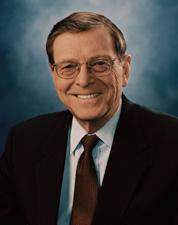 Sen. Pete V. Domenici (R-NM)
Sen. Pete V. Domenici (R-NM)Submitted June 4, 2007
Legislative Activity
Stay on top of the latest movement without scrolling through every action
Floor
Latest Action
Senate amendment submitted
June 4, 2007
Text
Submitted
TEXT OF AMENDMENTS

SA 1257. Mr. DOMENICI (for himself, Mr. Kyl, Mr. Cornyn, and Mrs.
Hutchison) submitted an amendment intended to be proposed by him to the
bill S. 1348, to provide for comprehensive immigration reform and for
other purposes; which was ordered to lie on the table; as follows:

At the appropriate place, insert the following:

SEC. __. INCREASE IN FEDERAL JUDGESHIPS IN DISTRICTS WITH
LARGE NUMBERS OF CRIMINAL IMMIGRATION CASES.

(a) Findings.--Based on the recommendations made by the
2007 Judicial Conference and the statistical data provided by
the 2006 Federal Court Management Statistics (issued by the
Administrative Office of the United States Courts), the
Congress finds the following:
(1) Federal courts along the southwest border of the United
States have a greater percentage of their criminal caseload
affected by immigration cases than other Federal courts.
(2) The percentage of criminal immigration cases in most
southwest border district courts totals more than 49 percent
of the total criminal caseloads of those districts.
(3) The current number of judges authorized for those
courts is inadequate to handle the current caseload.
(4) Such an increase in the caseload of criminal
immigration filings requires a corresponding increase in the
number of Federal judgeships.
(5) The 2007 Judicial Conference recommended the addition
of judgeships to meet this growing burden.
(6) The Congress should authorize the additional district
court judges necessary to carry out the 2007 recommendations
of the Judicial Conference for district courts in which the
criminal immigration filings represented more than 49 percent
of all criminal filings for the 12-month period ending
September 30, 2006.
(b) Purpose.--The purpose of this section is to increase
the number of Federal judgeships, in accordance with the
recommendations of the 2007 Judicial Conference, in district
courts that have an extraordinarily high criminal immigration
caseload.
(c) Additional District Court Judgeships.--
(1) Permanent judgeships.--
(A) In general.--The President shall appoint, by and with
the advice and consent of the Senate--
(i) 4 additional district judges for the district of
Arizona;
(ii) 1 additional district judge for the district of New
Mexico;
(iii) 2 additional district judges for the southern
district of Texas; and
(iv) 1 additional district judge for the western district
of Texas.
(B) Conforming amendments.--In order that the table
contained in section 133(a) of title 28, United States Code,
reflect the number of additional judges authorized under
paragraph (1), such table is amended--
(i) by striking the item relating to Arizona and inserting
the following:

``Arizona.........................................................16'';

(ii) by striking the item relating New Mexico and inserting
the following:

``New Mexico...................................................7''; and

(iii) by striking the item relating to Texas and inserting
the following:

``Texas
Northern.......................................................... 12
Southern.......................................................... 21
Eastern...........................................................  7
Western.........................................................14''.

(2) Temporary judgeships.--
(A) In general.--The President shall appoint, by and with
the advice and consent of the Senate--
(i) 1 additional district judge for the district of
Arizona; and
(ii) 1 additional district judge for the district of New
Mexico.
(B) Vacancy.--For each of the judicial districts named in
this paragraph, the first vacancy arising on the district
court 10 years or more after a judge is first confirmed to
fill the temporary district judgeship created in that
district by this paragraph shall not be filled.

SA 1258. Mr. DOMENICI (for himself, Mr. Kyl, Mr. Cornyn, and Mrs.

[[Page S7007]]

Hutchison) submitted an amendment intended to be proposed by him to the
bill S. 1348, to provide for comprehensive immigration reform and for
other purposes; which was ordered to lie on the table; as follows:

At the appropriate place, insert the following:

SEC. __. DISTRICT JUDGES FOR THE DISTRICT COURTS IN BORDER
STATES.

(a) In General.--The President shall appoint, by and with
the advice and consent of the Senate--
(1) 4 additional district judges for the district of
Arizona;
(2) 4 additional district judges for the central district
of California;
(3) 4 additional district judges for the eastern of
California;
(4) 2 additional district judges for the northern district
of California;
(5) 1 additional district judge for the district of
Minnesota;
(6) 1 additional district judge for the district of New
Mexico;
(7) 3 additional district judges for the eastern district
of New York;
(8) 1 additional district judge for the western district of
New York;
(9) 1 additional district judge for the eastern district of
Texas;
(10) 2 additional district judges for the southern district
of Texas;
(11) 1 additional district judge for the western district
of Texas; and
(12) 1 additional district judge for the western district
of Washington.
(b) Temporary Judgeships.--The President shall appoint, by
and with the advice and consent of the Senate--
(1) 1 additional district judge for the district of
Arizona;
(2) 1 additional district judge for the central district of
California;
(3) 1 additional district judge for the northern district
of California;
(4) 1 additional district judge for the district of Idaho;
and
(5) 1 additional district judge for the district of New
Mexico.
For each of the judicial districts named in this subsection,
the first vacancy arising on the district court 10 years or
more after a judge is first confirmed to fill the temporary
district judgeship created in that district by this
subsection shall not be filled.
(c) Existing Judgeships.--The existing judgeships for the
district of Arizona and the district of New Mexico authorized
by section 312(c) of the 21st Century Department of Justice
Appropriations Authorization Act (Public Law 107-273, 116
Stat. 1758), as of the effective date of this Act, shall be
authorized under section 133 of title 28, United States Code,
and the incumbents in those offices shall hold the office
under section 133 of title 28, United States Code, as amended
by this Act.
(d) Tables.--In order that the table contained in section
133 of title 28, United States Code, will, with respect to
each judicial district, reflect the changes in the total
number of permanent district judgeships authorized as a
result of subsections (a) and (c), such table is amended to
read as follows:

``Districts                             Judges

Alabama:
Northern...................................................          7
Middle.....................................................          3
Southern...................................................          3
Alaska.......................................................          3
Arizona......................................................         17
Arkansas:
Eastern....................................................          5
Western....................................................          3
California:
Northern...................................................         16
Eastern....................................................         10
Central....................................................         31
Southern...................................................         13
Colorado.....................................................          7
Connecticut..................................................          8
Delaware.....................................................          4
District of Columbia.........................................         15
Florida:
Northern...................................................          4
Middle.....................................................         15
Southern...................................................         17
Georgia:
Northern...................................................         11
Middle.....................................................          4
Southern...................................................          3
Hawaii.......................................................          3
Idaho........................................................          2
Illinois:
Northern...................................................         22
Central....................................................          4
Southern...................................................          4
Indiana:
Northern...................................................          5
Southern...................................................          5
Iowa:
Northern...................................................          2
Southern...................................................          3
Kansas.......................................................          5
Kentucky:
Eastern....................................................          5
Western....................................................          4
Eastern and Western........................................          1
Louisiana:
Eastern....................................................         12
Middle.....................................................          3
Western....................................................          7
Maine........................................................          3
Maryland.....................................................         10
Massachusetts................................................         13
Michigan:
Eastern....................................................         15
Western....................................................          4
Minnesota....................................................          8
Mississippi:
Northern...................................................          3
Southern...................................................          6
Missouri:
Eastern....................................................          6
Western....................................................          5
Eastern and Western........................................          2
Montana......................................................          3
Nebraska.....................................................          3
Nevada.......................................................          7
New Hampshire................................................          3
New Jersey...................................................         17
New Mexico...................................................          8
New York:
Northern...................................................          5
Southern...................................................         28
Eastern....................................................         18
Western....................................................          5
North Carolina:
Eastern....................................................          4
Middle.....................................................          4
Western....................................................          3
North Dakota.................................................          2
Ohio:
Northern...................................................         11
Southern...................................................          8
Oklahoma:
Northern...................................................          3
Eastern....................................................          1
Western....................................................          6
Northern, Eastern, and Western.............................          1
Oregon.......................................................          6
Pennsylvania:
Eastern....................................................         22
Middle.....................................................          6
Western....................................................         10
Puerto Rico..................................................          7
Rhode Island.................................................          3
South Carolina...............................................         10
South Dakota.................................................          3
Tennessee:
Eastern....................................................          5
Middle.....................................................          4
Western....................................................          5
Texas:
Northern...................................................         12
Southern...................................................         21
Eastern....................................................          8
Western....................................................         14
Utah.........................................................          5
Vermont......................................................          2
Virginia:
Eastern....................................................         11
Western....................................................          4
Washington:
Eastern....................................................          4
Western....................................................          8
West Virginia:
Northern...................................................          3
Southern...................................................          5
Wisconsin:
Eastern....................................................          5
Western....................................................          2
Wyoming......................................................       3''.

(e) Authorization of Appropriations.--There are authorized
to be appropriated such sums as are necessary to carry out
this section, including such sums as are necessary to provide
appropriate space and facilities for the judicial positions
created by this section.

SA 1259. Mr. DOMENICI submitted an amendment intended to be proposed
by him to the bill S. 1348, to provide for comprehensive immigration
reform and for other purposes; which was ordered to lie on the table;
as follows:

At the end of section 128, add the following:
(5) An evaluation of the positive and negative impacts of
privatizing border patrol training, including an evaluation
of the impact of privatization on the quality, morale, and
consistency of Border Patrol agents.
(c) Considerations.--In conducting the review under
subsection (a), the Comptroller General of the United States
shall consider--
(1) the report by the Government Accountability Office
entitled ``Homeland Security: Information on Training New
Border Patrol Agents'' and dated March 30, 2007;
(2) the ability of Federal providers of border patrol
training, as compared to private providers of similar
training, to incorporate time-sensitive changes based on the
needs of an agency or changes in the law;
(3) the ability of a Federal agency, as compared to a
private entity, to defend the Federal agency or private
entity, as applicable, from lawsuits involving the nature,
quality, and consistency of law enforcement training; and
(4) whether any other Federal training would be more
appropriate and cost efficient for privatization than basic
border patrol training.
(d) Consultation.--In conducting the review under
subsection (a), the Comptroller General of the United States
shall consult with--
(1) the Secretary of Homeland Security;
(2) the Commissioner of the Bureau of Customs and Border
Protection; and
(3) the Director of the Federal Law Enforcement Training
Center.
______

SA 1260. Mr. DOMENICI submitted an amendment intended to be proposed
by him to the bill S. 1348, to provide for comprehensive immigration
reform and for other purposes; which was ordered to lie on the table;
as follows:

In section 122(b)(2), insert ``the Bureau of Land
Management,'' before ``the National Park Service''.

[[Page S7008]]

In section 122(d)(1), insert ``the Bureau of Land
Management,'' before ``the National Park Service''.
In section 122(d)(2), insert ``the Subcommittee on Public
Lands and Forests and'' after ``including''.
In section 122(e)(3), strike ``and''.
In section 122(e), redesignate paragraph (4) as paragraph
(5).
In section 122(e), after paragraph (3), insert the
following:
(4) Bureau of Land Management Land; and
At the end of section 122, add the following:
(f) Addition Personnel.--
(1) Forest service.--In each of the fiscal years 2008
through 2012, the Secretary of Agriculture, subject to the
availability of appropriations, shall increase by not less
than 50 the number of positions for realty personnel in the
Forest Service, for purposes of--
(A) coordinating the submission to, and review by, the
Office of Border Patrol and the Department of Homeland
Security of proposals and other environmental documents,
including environmental impact statements under the National
Environmental Protection Act of 1969 (42 U.S.C. 4321 et
seq.); and
(B) processing realty actions on public land.
(2) Bureau of land management.--In each of the fiscal years
2008 through 2012, the Secretary of Interior, subject to the
availability of appropriations, shall increase by not less
than 50 the number of positions for realty personnel in the
Bureau of Land Management for the purposes described in
paragraph (1).
(3) National park service.--In each of the fiscal years
2008 through 2012, the Secretary of Interior, subject to the
availability of appropriations, shall increase by not less
than 50 the number of positions for realty personnel in the
National Park Service for the purposes described in paragraph
(1).
______

SA 1261. Mr. DOMENICI submitted an amendment intended to be proposed
by him to the bill S. 1348, to provide for comprehensive immigration
reform and for other purposes; which was ordered to lie on the table;
as follows:

At the end of title VII, insert the following:

SEC. 711. STUDY OF RADIO COMMUNICATIONS ALONG THE
INTERNATIONAL BORDER.

(a) In General.--Not later than 180 days after the date of
the enactment of this Act, the Secretary of Homeland Security
shall conduct a study to determine the areas along the
international borders of the United States where Federal and
State law enforcement officers are unable to achieve radio
communication or where radio communication is inadequate.
(b) Development of Plan.--Upon conclusion of the study
described in subsection (a), the Secretary shall develop a
plan for enhancing radio communication capability along the
international borders. The plan shall include an estimate of
the cost for implementing the plan and recommendations for
how Federal, State, and local law enforcement officers can
benefit from the plan.
______

SA 1262. Mr. DOMENICI submitted an amendment intended to be proposed
by him to the bill S. 1348, to provide for comprehensive immigration
reform and for other purposes; which was ordered to lie on the table;
as follows:

In section 125(a)(2)(C), after ``States'' insert the
following: ``, including consideration of whether the
Department of Homeland Security should use the UAV Systems
and Operations Validation Program funded by the Department of
Defense to test unmanned aerial vehicle platforms and systems
in civil airspace on a routine basis alongside manned
aircraft''.

______

SA 1263. Mr. DOMENICI submitted an amendment intended to be proposed
by him to the bill S. 1348, to provide for comprehensive immigration
reform and for other purposes; which was ordered to lie on the table;
as follows:

At the appropriate place, insert the following:

SEC. __. COOPERATION WITH THE GOVERNMENT OF MEXICO.

(a) Cooperation Regarding Border Security.--The Secretary
of State, in cooperation with the Secretary and
representatives of Federal, State, and local law enforcement
agencies that are involved in border security and immigration
enforcement efforts, shall work with the appropriate
officials from the Government of Mexico to improve
coordination between the United States and Mexico regarding--
(1) improved border security along the international border
between the United States and Mexico;
(2) the reduction of human trafficking and smuggling
between the United States and Mexico;
(3) the reduction of drug trafficking and smuggling between
the United States and Mexico;
(4) the reduction of gang membership in the United States
and Mexico;
(5) the reduction of violence against women in the United
States and Mexico; and
(6) the reduction of other violence and criminal activity.
(b) Cooperation Regarding Education on Immigration Laws.--
The Secretary of State, in cooperation with other appropriate
Federal officials, shall work with the appropriate officials
from the Government of Mexico to carry out activities to
educate citizens and nationals of Mexico regarding
eligibility for status as a nonimmigrant under Federal law to
ensure that the citizens and nationals are not exploited
while working in the United States.
(c) Cooperation Regarding Circular Migration.--The
Secretary of State, in cooperation with the Secretary of
Labor and other appropriate Federal officials, shall work
with the appropriate officials from the Government of Mexico
to improve coordination between the United States and Mexico
to encourage circular migration, including assisting in the
development of economic opportunities and providing job
training for citizens and nationals in Mexico.
(d) Annual Report.--Not later than 180 days after the date
of the enactment of this Act, and annually thereafter, the
Secretary of State shall submit a report to Congress
describing the actions taken by the United States and Mexico
under this Act.
______

SA 1264. Mr. DOMENICI submitted an amendment intended to be proposed
by him to the bill S. 1348, to provide for comprehensive immigration
reform and for other purposes; which was ordered to lie on the table;
as follows:

At the appropriate place, insert the following:

SEC. __. IMPROVED LAW ENFORCEMENT TRAINING.

(a) Requirement.--The Secretary, in coordination with the
Director of the Federal Law Enforcement Training Center and
the Commissioner of U.S. Customs and Border Protection, if
appropriate, shall improve and expand the Federal Law
Enforcement Training Center in Artesia, New Mexico (referred
to in this section as ``FLETC'') and the Border Patrol
Academy located at FLETC by--
(1) authorizing the construction of a detention facility
for training purposes;
(2) developing, not later than 2 years after the date of
the enactment of this Act, a plan to improve and expand such
Border Patrol Academy, including--
(A) a plan to develop realistic scenario-based training;
and
(B) an evaluation of new facilities, improvements,
equipment, land, and other resources needed to carry out the
plan to improve and expand the Border Patrol Academy; and
(3) developing, not later than 2 years after the date of
the enactment of this Act and in consultation with
appropriate partner agencies, a plan to expand and improve
FLETC, including--
(A) a plan to develop realistic scenario-based training;
(B) an evaluation of new facilities, improvements,
equipment, land and other resources needed to carry out the
plan; and
(C) an evaluation of the entities that utilize any Federal
Law Enforcement Training Center or other State or local law
enforcement entities that would be appropriate to utilize
FLETC.
(b) Language Arts Program and Facility.--
(1) Program expansion.--The Secretary shall expand the
language arts program and facility at FLETC to provide
training for the Department of Homeland Security personnel
and law enforcement officers identified under paragraph (3).
(2) Training requirement.--
(A) Homeland security.--The Secretary shall--
(i) identify any employee of the Department of Homeland
Security for whom foreign language education is necessary;
and
(ii) require foreign language education for any employee
identified under clause (i).
(B) Law enforcement.--The head of each executive agency
shall--
(i) identify any law enforcement officer employed by such
executive agency for whom foreign language education is
necessary; and
(ii) require foreign language education for any law
enforcement officer identified under clause (i).
(3) Training.--Foreign language education for any
individual identified under subparagraph (A)(i) or (B)(i) of
paragraph (2) shall be provided through the language arts
program and facility at FLETC.
(c) Definitions.--In this section--
(1) the term ``executive agency'' has the same meaning as
in section 105 of title 5, United States Code, except that
the term does not include the Department of Defense or the
Department of State;
(2) the term ``law enforcement officer'' has the same
meaning as in section 8331 of title 5, United States Code;
and
(3) the term ``Secretary'' means the Secretary of Homeland
Security.
(d) Authorization of Appropriations.--There are authorized
to be appropriated such sums as may be necessary to carry out
this section.
______

SA 1265. Mr. DOMENICI (for himself and Mr. Bingaman) submitted an
amendment intended to be proposed by him to the bill S. 1348, to
provide for comprehensive immigration reform and for other purposes;
which was ordered to lie on the table; as follows:

At the appropriate place, insert the following:

[[Page S7009]]

SEC. __. TRAVEL PRIVILEGES FOR CERTAIN TEMPORARY VISITORS
FROM MEXICO.

(a) In General.--Except as provided in subsection (b), the
Secretary shall permit a national of Mexico to travel up to
100 miles from the international border between Mexico and
the State of New Mexico if such national--
(1) possesses a valid machine-readable biometric border
crossing identification card issued by a consular officer of
the Department of State;
(2) enters the State of New Mexico through a port of entry
where such card is processed using a machine reader;
(3) has successfully completed any background check
required by the Secretary for such travel; and
(4) is admitted into the United States as a nonimmigrant
under section 101(a)(15)(B) of the Immigration and
Nationality Act (8 U.S.C. 1101(a)(15)(B)).
(b) Exception.--On a case-by-case basis, the Secretary may
limit the travel of a national of Mexico who meets the
requirements of paragraphs (1) through (4) of subsection (a)
to a distance of less than 100 miles from the international
border between Mexico and the State of New Mexico if the
Secretary determines that the national was previously
admitted into the United States as a nonimmigrant and
violated the terms and conditions of the national's
nonimmigrant status.
______

SA 1266. Mr. ALEXANDER submitted an amendment intended to be proposed
by him to the bill S. 1348, to provide for comprehensive immigration
reform and for other purposes; which was ordered to lie on the table;
as follows:

In section 709 of the bill redesignate subsection (b) as
subsection (c), and insert the following:
(b) Assessment Tools.--The Director of the United States
Citizenship and Immigration Services, in consultation with
the Secretary of Education, shall develop valid and reliable
assessment tools to measure the progress of individuals--
(1) in the acquisition of the English language under
subsection (a); and
(2) in meeting any other English language requirements in
this Act.
______

SA 1267. Mr. BINGAMAN (for himself and Mr. Obama) submitted an
amendment intended to be proposed by him to the bill S. 1348, to
provide for comprehensive immigration reform and for other purposes;
which was ordered to lie on the table; as follows:

Section 218A(i) of the Immigration and Nationality Act, as
added by section 402, is amended to read as follows:
``(i) Period of Authorized Admission.--
``(1) In general.--Aliens admitted to the United States as
Y nonimmigrants shall be granted the following periods of
admission:
``(A) Y-1 nonimmigrants.--An alien granted admission as a
Y-1 nonimmigrant shall be granted an authorized period of
admission of 2 years. Such 2-year period of admission may be
extended for 2 additional 2-year periods.
``(B) Y-2 nonimmigrants.--Aliens granted admission as Y-2
nonimmigrants shall be granted an authorized period of
admission of 10 months.
``(2) Y-1 nonimmigrants with y-3 dependents.--A Y-1
nonimmigrant who has accompanying or following-to-join
derivative family members in Y-3 nonimmigrant status shall be
limited to two 2-year periods of admission. If the family
members accompany the Y-1 nonimmigrant during the alien's
first period of admission the family members may not
accompany or join the Y-1 nonimmigrant during the alien's
second period of admission. If the Y-1 nonimmigrant's family
members accompany or follow to join the Y-1 nonimmigrant
during the alien's second period of admission, but not his
first period of admission, then the Y-1 nonimmigrant shall
not be granted any additional periods of admission in Y
nonimmigrant status. The period of authorized admission of a
Y-3 nonimmigrant shall expire on the same date as the period
of authorized admission of the principal Y-1 nonimmigrant
worker.
``(3) Supplementary periods.--Each period of authorized
admission described in paragraph (1) shall be supplemented by
a period of not more than 1 week before the beginning of the
period of employment for the purpose of travel to the
worksite and, except where such period of authorized
admission has been terminated under subsection (j), a period
of 14 days following the period of employment for the purpose
of departure or extension based on a subsequent offer of
employment, except that--
``(A) the alien is not authorized to be employed during
such 14-day period except in the employment for which the
alien was previously authorized; and
``(B) the total period of employment, including such 14-day
period, may not exceed the maximum applicable period of
admission under paragraph (1).
``(4) Limitation on admissions.--
``(A) Y-1 nonimmigrants.--An alien who has been admitted to
the United States in Y-1 nonimmigrant status for a period of
2 years under paragraph (1), or as the Y-3 nonimmigrant
spouse or child of such a Y-1 nonimmigrant, may not be
readmitted to the United States as a Y-1 or Y-3 nonimmigrant
after expiration of such period of authorized admission,
regardless of whether the alien was employed or present in
the United States for all or a part of such period.
``(B) Y-2 nonimmigrants.--An alien who has been admitted to
the United States in Y-2 nonimmigrant status may not, after
expiration of the alien's period of authorized admission, be
readmitted to the United States as a Y-2 nonimmigrant after
expiration of the alien's period of authorized admission,
regardless of whether the alien was employed or present in
the United States for all or only a part of such period,
unless the alien has resided and been physically present
outside the United States for the immediately preceding 2
months.
``(C) Readmission with new employment.--Nothing in this
paragraph shall be construed to prevent a Y nonimmigrant,
whose period of authorized admission has not yet expired or
been terminated under subsection (j), and who leaves the
United States in a timely fashion after completion of the
employment described in the petition of the Y nonimmigrant's
most recent employer, from reentering the United States as a
Y nonimmigrant to work for a new employer, if the alien and
the new employer have complied with all applicable
requirements of this section and section 218B.
``(5) International commuters.--An alien who maintains
actual residence and a place of abode outside the United
States and commutes, on days the alien is working, into the
United States to work as a Y-1 nonimmigrant, shall be granted
an authorized period of admission of 3 years. The limitations
described in paragraph (3) shall not apply to commuters
described in this paragraph.''.
______

SA 1268. Mr. BINGAMAN submitted an amendment intended to be proposed
by him to the bill S. 1348, to provide for comprehensive immigration
reform and for other purposes; which was ordered to lie on the table;
as follows:

On page 224, in the handwritten matter, strike ``(9)(A)''
and insert ``(10)(A)''.
On page 225, strike ``such limitation'' and insert ``the
limitations under clauses (i) and (ii) of paragraph (1)(D)''.
______

SA 1269. Mr. BINGAMAN submitted an amendment intended to be proposed
by him to the bill S. 1348, to provide for comprehensive immigration
reform and for other purposes; which was ordered to lie on the table;
as follows:

In section 602(a), strike paragraph (6) and insert the
following:
(6) Clarification that newly legalized aliens shall be
considered ``not qualified'' aliens for purposes of federal
public benefits.--
(A) In general.--The restrictions on Federal public
benefits for ``not qualified'' immigrants under section 401
of Personal Responsibility and Work Opportunity
Reconciliation Act of 1996 (8 U.S.C. 1611)and on Federal
means-tested public benefits under sections 402 and 403 of
such Act (8 U.S.C. 1612 and 1613) shall apply to an alien
whose status has been adjusted under this section--
(i) for a period of 5 years beginning on the date the
individual obtains legal status under this section; and
(ii) until the individual adjusts to lawful permanent
resident status.
(B) Qualified immigrant.--After both conditions are met
under subparagraph (A), an individual described in such
subparagraph shall be treated in the same manner as other
``qualified'' immigrants who have met the 5-year period of
ineligibility under title IV of the Personal Responsibility
and Work Opportunity Reconciliation Act of 1996 (8 U.S.C.
1611 et seq.).
______

SA 1270. Mr. BINGAMAN submitted an amendment intended to be proposed
by him to the bill S. 1348, to provide for comprehensive immigration
reform and for other purposes; which was ordered to lie on the table;
as follows:

At the appropriate place, insert the following:

TITLE __--U.S. BORDER HEALTH

SEC. _01. SHORT TITLE.

This title may be cited as the ``Border Health Security Act
of 2007''.

SEC. _02. DEFINITIONS.

In this title:
(1) Border area.--The term ``border area'' has the meaning
given the term ``United States-Mexico Border Area'' in
section 8 of the United States-Mexico Border Health
Commission Act (22 U.S.C. 290n-6).
(2) Secretary.--The term ``Secretary'' means the Secretary
of Health and Human Services.

SEC. _03. BORDER HEALTH GRANTS.

(a) Eligible Entity Defined.--In this section, the term
``eligible entity'' means a State, public institution of
higher education, local government, tribal government,
nonprofit health organization, trauma center, or community
health center receiving assistance under section 330 of the
Public Health Service Act (42 U.S.C. 254b), that is located
in the border area.
(b) Authorization.--From funds appropriated under
subsection (f), the Secretary, acting through the United
States members of the United States-Mexico Border Health
Commission, shall award grants to eligible entities to
address priorities and recommendations to improve the health
of border area residents that are established by--

[[Page S7010]]

(1) the United States members of the United States-Mexico
Border Health Commission;
(2) the State border health offices; and
(3) the Secretary.
(c) Application.--An eligible entity that desires a grant
under subsection (b) shall submit an application to the
Secretary at such time, in such manner, and containing such
information as the Secretary may require.
(d) Use of Funds.--An eligible entity that receives a grant
under subsection (b) shall use the grant funds for--
(1) programs relating to--
(A) maternal and child health;
(B) primary care and preventative health;
(C) public health and public health infrastructure;
(D) health promotion;
(E) oral health;
(F) behavioral and mental health;
(G) substance abuse;
(H) health conditions that have a high prevalence in the
border area;
(I) medical and health services research;
(J) workforce training and development;
(K) community health workers or promotoras;
(L) health care infrastructure problems in the border area
(including planning and construction grants);
(M) health disparities in the border area;
(N) environmental health;
(O) health education;
(P) outreach and enrollment services with respect to
Federal programs (including programs authorized under titles
XIX and XXI of the Social Security Act (42 U.S.C. 1396 and
1397aa));
(Q) trauma care;
(R) infectious disease testing and monitoring;
(S) health research with an emphasis on infectious disease;
and
(T) cross-border health surveillance; and
(2) other programs determined appropriate by the Secretary.
(e) Supplement, Not Supplant.--Amounts provided to an
eligible entity awarded a grant under subsection (b) shall be
used to supplement and not supplant other funds available to
the eligible entity to carry out the activities described in
subsection (d).
(f) Authorization of Appropriations.--There is authorized
to be appropriated to carry out this section such sums as may
be necessary for fiscal year 2008 and each succeeding fiscal
year.

SEC. _04. GRANTS FOR ALL HAZARDS PREPAREDNESS IN THE BORDER
AREA INCLUDING BIOTERRORISM AND INFECTIOUS
DISEASE.

(a) Eligible Entity Defined.--In this section, the term
``eligible entity'' means a State, local government, tribal
government, trauma centers, regional trauma center
coordinating entity, or public health entity.
(b) Authorization.--From funds appropriated under
subsection (e), the Secretary shall award grants to eligible
entities for all hazards preparedness in the border area
including bioterrorism and infectious disease.
(c) Application.--An eligible entity that desires a grant
under this section shall submit an application to the
Secretary at such time, in such manner, and containing such
information as the Secretary may require.
(d) Uses of Funds.--An eligible entity that receives a
grant under subsection (b) shall use the grant funds to, in
coordination with State and local all hazards programs--
(1) develop and implement all hazards preparedness plans
and readiness assessments and purchase items necessary for
such plans;
(2) coordinate all hazard and emergency preparedness
planning in the region;
(3) improve infrastructure, including surge capacity
syndromic surveillance, laboratory capacity, and isolation/
decontamination capacity;
(4) create a health alert network, including risk
communication and information dissemination;
(5) educate and train clinicians, epidemiologists,
laboratories, and emergency personnel;
(6) implement electronic data systems to coordinate the
triage, transportation, and treatment of multi-casualty
incident victims;
(7) provide infectious disease testing in the border area;
and
(8) carry out such other activities identified by the
Secretary, the United States-Mexico Border Health Commission,
State and local public health offices, and border health
offices.
(e) Authorization of Appropriations.--There is authorized
to be appropriated to carry out this section $25,000,000 for
fiscal year 2008 and such sums as may be necessary for each
succeeding fiscal year.

SEC. _05. UNITED STATES-MEXICO BORDER HEALTH COMMISSION ACT
AMENDMENTS.

The United States-Mexico Border Health Commission Act (22
U.S.C. 290n et seq.) is amended by adding at the end the
following:

``SEC. 9. AUTHORIZATION OF APPROPRIATIONS.

``There is authorized to be appropriated to carry out this
Act $10,000,000 for fiscal year 2008 and such sums as may be
necessary for each succeeding fiscal year.''.

SEC. _06. COORDINATION OF HEALTH SERVICES AND SURVEILLANCE.

The Secretary may coordinate with the Secretary of Homeland
Security in establishing a health alert system that--
(1) alerts clinicians and public health officials of
emerging disease clusters and syndromes along the border
area; and
(2) is alerted to signs of health threats, disasters of
mass scale, or bioterrorism along the border area.

SEC. _07. BINATIONAL HEALTH INFRASTRUCTURE AND HEALTH
INSURANCE.

(a) In General.--The Secretary of Health and Human Services
shall enter into a contract with the Institute of Medicine
for the conduct of a study concerning binational health
infrastructure (including trauma and emergency care) and
health insurance efforts. In conducting such study, the
Institute shall solicit input from border health experts and
health insurance issuers.
(b) Report.--Not later than 1 year after the date on which
the Secretary of Health and Human Services enters into the
contract under subsection (a), the Institute of Medicine
shall submit to the Secretary and the appropriate committees
of Congress a report concerning the study conducted under
such contract. Such report shall include the recommendations
of the Institute on ways to expand or improve binational
health infrastructure and health insurance efforts.

SEC. _08. PROVISION OF RECOMMENDATIONS AND ADVICE TO
CONGRESS.

Section 5 of the United States-Mexico Border Health
Commission Act (22 U.S.C. 290n-3) is amended by adding at the
end the following:
``(d) Providing Advice and Recommendations to Congress.--A
member of the Commission, or an individual who is on the
staff of the Commission, may at any time provide advice or
recommendations to Congress concerning issues that are
considered by the Commission. Such advice or recommendations
may be provided whether or not a request for such is made by
a member of Congress and regardless of whether the member or
individual is authorized to provide such advice or
recommendations by the Commission or any other Federal
official.''.
______

SA 1271. Mr. CONRAD submitted an amendment intended to be proposed by
him to the bill S. 1348, to provide for comprehensive immigration
reform and for other purposes; which was ordered to lie on the table;
as follows:

In section 425(h), strike paragraph (3).
______

SA 1272. Mr. SCHUMER submitted an amendment intended to be proposed
by him to the bill S. 1348, to provide for comprehensive immigration
reform and for other purposes; which was ordered to lie on the table;
as follows:

At the appropriate place, insert the following:

SEC. __. B-1 VISITOR VISA GUIDELINES AND DATA TRACKING
SYSTEMS.

(a) Guidelines.--
(1) In general.--Not later than 6 months after the date of
enactment of this Act--
(A) the Secretary of State shall review existing
regulations or internal guidelines relating to the
decisionmaking process with respect to the issuance of B-1
visas by consular officers and determine whether
modifications are necessary to ensure that such officers make
decisions with respect to the issuance of B-1 visas as
consistently as possible while ensuring security and
maintaining officer discretion over such issuance
determinations; and
(B) the Secretary of Homeland Security shall review
existing regulations or internal guidelines relating to the
decisionmaking process of Customs and Border Protection
officers concerning whether travelers holding a B-1 visitor
visa are admissible to the United States and the appropriate
length of stay and shall determine whether modifications are
necessary to ensure that such officers make decisions with
respect to travelers admissibility and length of stay as
consistently as possible while ensuring security and
maintaining officer discretion over such determinations.
(2) Modification.--If after conducting the reviews under
paragraph (1), the Secretary of State or the Secretary of
Homeland Security determine that modifications to existing
regulations or internal guidelines, or the establishment of
new regulations or guidelines, are necessary, the relevant
Secretary shall make such modifications during the 6-month
period referred to in such paragraph.
(3) Consultations.--In making determinations and preparing
guidelines under paragraph (1), the Secretary of State and
the Secretary of Homeland Security shall consult with
appropriate stakeholders, including consular officials and
immigration inspectors.
(b) Data Tracking Systems.--
(1) In general.--Not later than 18 months after the date of
enactment of this Act--
(A) the Secretary of State shall develop and implement a
system to track aggregate data relating to the issuance of B-
1 visitor visas in order to ensure the consistent application
of the guidelines established under subsection (a)(1)(A); and
(B) the Secretary of Homeland Security shall develop and
implement a system to track aggregate data relating to
admissibility decision, and length of stays under, B-1
visitor visas in order to ensure the consistent application
of the guidelines established under subsection (a)(1)(B).
(2) Limitation.--The systems implemented under paragraph
(1) shall not store or track personally identifiable
information, except that this paragraph shall not be
construed to limit the application of any other system that
is being implemented by the Department of State or the
Department of Homeland Security to track travelers or travel
to the United States.

[[Page S7011]]

(c) Public Education.--The Secretary of State and the
Secretary of Homeland Security shall carry out activities to
provide guidance and education to the public and to visa
applicants concerning the nature, purposes, and availability
of the B-1 visa for business travelers.
(d) Report.--Not later than 6 and 18 months after the date
of enactment of this Act, the Secretary of State and the
Secretary of Homeland Security shall submit to Congress,
reports concerning the status of the implementation of this
section.
______

SA 1273. Mr. SCHUMER submitted an amendment intended to be proposed
by him to the bill S. 1348, to provide for comprehensive immigration
reform and for other purposes; which was ordered to lie on the table;
as follows:

In title V of the bill, strike section 505.
______

SA 1274. Mr. SCHUMER submitted an amendment intended to be proposed
by him to the bill S. 1348, to provide for comprehensive immigration
reform and for other purposes; which was ordered to lie on the table;
as follows:

On page 112, line 31, strike ``The Secretary shall perform
regular audits'' and insert ``Not later than 6 months after
the date of the enactment of this section and annually
thereafter, the Secretary shall conduct an audit''.
______

SA 1275. Mrs. BOXER submitted an amendment intended to be proposed by
her to the bill S. 1348, to provide for comprehensive immigration
reform and for other purposes; which was ordered to lie on the table;
as follows:

At the end of title IV, insert the following:

SEC. 427. REPORT ON THE Y NONIMMIGRANT VISA PROGRAM.

(a) In General.--Not later than 2 years and 2 months after
the date on which the Secretary of Homeland Security makes
the certification described in section 1(a) of this Act, and
every year thereafter, the Secretary shall report to Congress
on the number of Y nonimmigrant visa holders that return to
their foreign residence, as required under section 218A(j)(3)
of the Immigration and Nationality Act, as added by section
402 of this Act.
(b) Termination of Y Nonimmigrant Visa Program.--
(1) In general.--Notwithstanding any other provision of law
or of this Act, if in any year the Secretary of Homeland
Security reports to the Congress under subsection (a) that 20
percent or more of Y nonimmigrant visa holders do not comply
with the return requirement under section 218A(j)(3) of the
Immigration and Nationality Act, then--
(A) for the following calendar year, no new Y nonimmigrant
visas shall be issued; and
(B) for such calendar year, section 218A of the Immigration
and Nationality Act shall have no force or effect, except
with respect to those Y immigrant visa holders described
under paragraph (2).
(2) Compliant y nonimmigrant visa holders.--An existing Y
nonimmigrant visa holder who is found to have been in
compliance with the return requirement under section
218A(j)(3) of the Immigration and Nationality Act, at the
beginning of any calendar year in which no new Y nonimmigrant
visas are issued in accordance with paragraph (1), shall be
allowed to continue in the Y visa program if the period of
authorized admission of such visa holder has not expired.
______

SA 1276. Mrs. BOXER submitted an amendment intended to be proposed by
her to the bill S. 1348, to provide for comprehensive immigration
reform and for other purposes; which was ordered to lie on the table;
as follows:

On page 223, line 11, strike ``not exceed--'' and all that
follows through line 21, and insert the following: ``not
exceed 100,000 for any fiscal year; or'' .
______

SA 1277. Mr. KENNEDY submitted an amendment intended to be proposed
by him to the bill S. 1348, to provide for comprehensive immigration
reform and for other purposes; which was ordered to lie on the table;
as follows:

On page 48, between lines 10 and 11, insert the following:

SEC. 204. PRECLUDING ADMISSIBILITY OF ALIENS CONVICTED OF
SERIOUS CRIMINAL OFFENSES.

(a) Inadmissibility on Criminal and Related Grounds.--
Section 212(a)(2) (8 U.S.C. 1182(a)(2)) is amended by adding
at the end the following:
``(J) Crimes involving firearms.--Any alien who has been
convicted of--
``(i) a crime involving the purchasing, selling, offering
for sale, exchanging, using, owning, possessing, or carrying,
or of attempting or conspiring to purchase, sell, offer for
sale, exchange, use, own, possess, or carry, any weapon,
part, or accessory which is a firearm or destructive device
(as defined in section 921(a) of title 18, United States
Code), for which the alien was sentenced to a term of
imprisonment of more than 1 year; or
``(ii) a violation of section 2250 of title 18, United
States Code (relating to failure to register as a sex
offender),
is inadmissible.
``(K) Crimes of domestic violence, stalking, or violation
of protective orders; crimes against children.--
``(i) Domestic violence, stalking, and child abuse.--Any
alien who has been convicted of a crime of domestic violence,
a crime of stalking, or a crime of child abuse, child
neglect, or child abandonment, for which the alien was
imprisoned for more than 1 year, is inadmissible. In this
clause, the term `crime of domestic violence' means any crime
of violence (as defined in section 16 of title 18, United
States Code) against a person committed by a current or
former spouse of the person, by an individual with whom the
person shares a child in common, by an individual who is
cohabiting with or has cohabited with the person as a spouse,
by an individual similarly situated to a spouse of the person
under the domestic or family violence laws of the
jurisdiction where the offense occurs, or by any other
individual against a person who is protected from that
individual's acts under the domestic or family violence laws
of the United States or any State, Indian tribal government,
or unit of local or foreign government.
``(ii) Violators of protection orders.--Any alien who at
any time is enjoined under a protection order issued by a
court and whom the court determines has engaged in conduct
that constitutes criminal contempt of the portion of a
protection order that involves protection against credible
threats of violence, repeated harassment, or bodily injury to
the person or persons for whom the protection order was
issued, and has been imprisoned for more than 1 year for such
offenses, is inadmissible. In this clause, the term
`protection order' means any injunction issued for the
purpose of preventing violent or threatening acts of domestic
violence, including temporary or final orders issued by civil
or criminal courts (other than support or child custody
orders or provisions) whether obtained by filing an
independent action or as an independent order in another
proceeding.
``(iii) Applicability.--This subparagraph shall not apply
to an alien who has been battered or subjected to extreme
cruelty and who is not and was not the primary perpetrator of
violence in the relationship, upon a determination by the
Attorney General or the Secretary of Homeland Security that--

``(I) the alien was acting in self-defense;
``(II) the alien was found to have violated a protection
order intended to protect the alien; or
``(III) the alien committed, was arrested for, was
convicted of, or pled guilty to committing a crime that did
not result in serious bodily injury.''.

(b) Waivers.--Section 212(h) (8 U.S.C. 1182(h)) is
amended--
(1) by inserting ``or the Secretary of Homeland Security''
after ``the Attorney General'' each place it appears; and
(2) by striking ``The Attorney General may, in his
discretion, waive the application of subparagraphs (A)(i)(I),
(B), (D), and (E) of subsection (a)(2)'' and inserting ``The
Attorney General or the Secretary of Homeland Security may
waive the application of subparagraphs (A)(i)(I),
(A)(i)(III), (B), (D), (E), (F), (J), and (K) of subsection
(a)(2)''.
(c) Effective Date.--The amendments made by this section
shall apply to any conviction that occurs on or after the
date of the enactment of this Act.
On page 48, line 36, insert ``(including a violation of
subsection (c) or (h) of section 924 of title 18, United
States Code)'' after ``explosives.''.
On page 83, after line 22, add the following:

SEC. 229. INCREASED CRIMINAL PENALTIES RELATED TO DRUNK
DRIVING.

(a) Inadmissibility.--Section 212(a)(2) (8 U.S.C.
1182(a)(2)), as amended by section 204, is further amended--
(1) by redesignating subparagraph (F) as subparagraph (L);
and
(2) by inserting after subparagraph (E) the following:
``(F) Drunk drivers.--Any alien who has been convicted of 3
offenses for driving under the influence is inadmissible if
at least 1 of the offenses is a felony under Federal or State
law, for which the alien served more than 1 year in
prison.''.
(b) Deportability.--Section 237(a)(2) (8 U.S.C. 1227(a)(2))
is amended by adding at the end the following:
``(F) Drunk drivers.--Unless the Secretary of Homeland
Security or the Attorney General waives the application of
this subparagraph, any alien who has been convicted of 3
offenses for driving under the influence is deportable if
more than 1 of the offenses is a felony under Federal or
State law, for which the alien served more than 1 year in
prison.''.
(c) Conforming Amendment.--Section 212(h) (8 U.S.C.
1182(h)) is amended, in the matter preceding paragraph (1),
by striking ``and (E)'' and inserting ``(E), and (F)''.
(d) Effective Date.--The amendments made by this section
shall take effect on the date of the enactment of this Act
and shall apply to convictions entered on or after such date.
______

SA 1278. Mr. KOHL submitted an amendment intended to be proposed by
him to the bill S. 1348, to provide for comprehensive immigration
reform and for other purposes; which was ordered to lie on the table;
as follows:

At the appropriate place, insert the following:

[[Page S7012]]

SECTION __. STATE COURT INTERPRETER GRANT PROGRAM.

(a) Short Title.--This section may be cited as the ``State
Court Interpreter Grant Program Act''.
(b) Findings.--Congress finds that--
(1) the fair administration of justice depends on the
ability of all participants in a courtroom proceeding to
understand that proceeding, regardless of their English
proficiency;
(2) 19 percent of the population of the United States over
5 years of age speaks a language other than English at home;
(3) only qualified court interpreters can ensure that
persons with limited English proficiency comprehend judicial
proceedings in which they are a party;
(4) the knowledge and skills required of a qualified court
interpreter differ substantially from those required in other
interpretation settings, such as social service, medical,
diplomatic, and conference interpreting;
(5) the Federal Government has demonstrated its commitment
to equal administration of justice regardless of English
proficiency;
(6) regulations implementing title VI of the Civil Rights
Act of 1964, as well as the guidance issued by the Department
of Justice pursuant to Executive Order 13166, issued August
11, 2000, clarify that all recipients of Federal financial
assistance, including State courts, are required to take
reasonable steps to provide meaningful access to their
proceedings for persons with limited English proficiency;
(7) 36 States have developed, or are developing, qualified
court interpreting programs;
(8) robust, effective court interpreter programs--
(A) actively recruit skilled individuals to be court
interpreters;
(B) train those individuals in the interpretation of court
proceedings;
(C) develop and use a thorough, systematic certification
process for court interpreters; and
(D) have sufficient funding to ensure that a qualified
interpreter will be available to the court whenever
necessary; and
(9) Federal funding is necessary to--
(A) encourage State courts that do not have court
interpreter programs to develop them;
(B) assist State courts with nascent court interpreter
programs to implement them;
(C) assist State courts with limited court interpreter
programs to enhance them; and
(D) assist State courts with robust court interpreter
programs to make further improvements and share successful
programs with other States.
(c) State Court Interpreter Program.--
(1) Grants authorized.--
(A) In general.--The Administrator of the Office of Justice
Programs of the Department of Justice (referred to in this
subsection as the ``Administrator'') shall award grants, in
accordance with such regulations as the Attorney General may
prescribe, to State courts to develop and implement programs
to assist individuals with limited English proficiency to
access and understand State court proceedings in which they
are a party.
(B) Technical assistance.--The Administrator shall
allocate, for each fiscal year, $500,000 of the amount
appropriated pursuant to subsection (d) to be used to
establish a court interpreter technical assistance program to
assist State courts receiving grants under this subsection.
(2) Use of grants.--Grants awarded under paragraph (1) may
be used by State courts to--
(A) assess regional language demands;
(B) develop a court interpreter program for the State
courts;
(C) develop, institute, and administer language
certification examinations;
(D) recruit, train, and certify qualified court
interpreters;
(E) pay for salaries, transportation, and technology
necessary to implement the court interpreter program
developed under subparagraph (B); and
(F) engage in other related activities, as prescribed by
the Attorney General.
(3) Application.--
(A) In general.--The highest State court of each State
desiring a grant under this subsection shall submit an
application to the Administrator at such time, in such
manner, and accompanied by such information as the
Administrator may reasonably require.
(B) State courts.--The highest State court of each State
submitting an application under subparagraph (A) shall
include in the application--
(i) an identification of each State court in that State
which would receive funds from the grant;
(ii) the amount of funds each State court identified under
clause (i) would receive from the grant; and
(iii) the procedures the highest State court would use to
directly distribute grant funds to State courts identified
under clause (i).
(4) State court allotments.--
(A) Base allotment.--From amounts appropriated for each
fiscal year pursuant to subsection (d), the Administrator
shall allocate $100,000 to each of the highest State court of
each State, which has an application approved under paragraph
(3).
(B) Discretionary allotment.--From amounts appropriated for
each fiscal year pursuant to subsection (d), the
Administrator shall allocate a total of $5,000,000 to the
highest State court of States that have extraordinary needs
that are required to be addressed in order to develop,
implement, or expand a State court interpreter program.
(C) Additional allotment.--In addition to the allocations
made under subparagraphs (A) and (B), the Administrator shall
allocate to each of the highest State court of each State,
which has an application approved under paragraph (3), an
amount equal to the product reached by multiplying--
(i) the unallocated balance of the amount appropriated for
each fiscal year pursuant to subsection (d); and
(ii) the ratio between the number of people over 5 years of
age who speak a language other than English at home in the
State and the number of people over 5 years of age who speak
a language other than English at home in all the States that
receive an allocation under subparagraph (A), as those
numbers are determined by the Bureau of the Census.
(D) Treatment of district of columbia.--For purposes of
this subsection--
(i) the District of Columbia shall be treated as a State;
and
(ii) the District of Columbia Court of Appeals shall act as
the highest State court for the District of Columbia.
(d) Authorization of Appropriations.--There are authorized
to be appropriated $15,000,000 for each of the fiscal years
2008 through 2012 to carry out this section.
______

SA 1279. Mr. REID submitted an amendment intended to be proposed by
him to the bill S. 1348, to provide for comprehensive immigration
reform and for other purposes; which was ordered to lie on the table;
as follows:

At the end of title VII, add the following:

SEC. 711. MODEL PORTS-OF-ENTRY.

(a) In General.--The Secretary of Homeland Security shall--
(1) establish a model ports-of-entry program for the
purpose of providing a more efficient and welcoming
international arrival process in order to facilitate and
promote business and tourist travel to the United States,
while also improving security; and
(2) implement the program initially at the 20 United States
international airports with the highest number of foreign
visitors arriving annually, as determined pursuant to the
most recent data collected by the United States Customs and
Border Protection available on the date of the enactment of
this Act.
(b) Program Elements.--The program shall include--
(1) enhanced queue management in the Federal Inspection
Services area leading up to primary inspection;
(2) assistance for foreign travelers once they have been
admitted to the United States, in consultation, as
appropriate, with relevant governmental and nongovernmental
entities; and
(3) instructional videos, in English and such other
languages as the Secretary determines appropriate, in the
Federal Inspection Services area that explain the United
States inspection process and feature national, regional, or
local welcome videos.
(c) Additional Customs and Border Protection Officers for
High Volume Ports.--Subject to the availability of
appropriations, before the end of fiscal year 2008 the
Secretary of Homeland Security shall employ not less than an
additional 200 Customs and Border Protection officers to
address staff shortages at the 20 United States international
airports with the highest number of foreign visitors arriving
annually, as determined pursuant to the most recent data
collected by the United States Customs and Border Protection
available on the date of the enactment of this Act.
______

SA 1280. Mr. LEAHY submitted an amendment intended to be proposed by
him to the bill S. 1348, to provide for comprehensive immigration
reform and for other purposes; which was ordered to lie on the table;
as follows:

At the appropriate place, insert the following:

SEC. ___. EB-5 REGIONAL CENTER PROGRAM.

(a) Authorization.--Section 610(b) of the Departments of
Commerce, Justice, and State, the Judiciary, and Related
Agencies Appropriations Act, 1993 (8 U.S.C. 1153 note) is
amended by striking ``for 15 years''.
(b) Fees.--
(1) Premium fees for employment-based petitions and
applications.--Section 286(u) (8 U.S.C. 1356(u)) is amended--
(A) by inserting ``except that the fee for petitions filed
under section 203(b)(5) (8 U.S.C. 1153(b)(5)) shall be
$2,000. The fee'' after ``$1,000,''; and
(B) by adding at the end the following: ``Fees collected
under this subsection shall be available to the Secretary of
Homeland Security solely for the purposes of administration
and operation of the immigrant investor regional center pilot
program established under section 610 of the Departments of
Commerce, Justice, and State, the Judiciary, and Related
Agencies Appropriations Act, 1993 (8 U.S.C. 1153 note).''.
(2) Regulations.--The Secretary of Homeland Security shall
promulgate regulations to implement the amendments made by
this subsection not later than 120 days after the date of
enactment of this Act.
(c) Concurrent Processing.--Section 245 (8 U.S.C. 1255) is
amended by adding at the end the following:
``(n) Concurrent Processing for Employment Creation
Immigrants.--If, at the time

[[Page S7013]]

of filing a petition filed for classification under section
203(b)(5), approval of the petition would make a visa
immediately available to the alien beneficiary, the alien
beneficiary's adjustment application under this section shall
be considered properly filed, whether submitted concurrently
with, or subsequent to, the visa petition.''.
(d) Application Fees.--
(1) In general.--Section 610 of the Departments of
Commerce, Justice, and State, the Judiciary, and Related
Agencies Appropriations Act, 1993 (8 U.S.C. 1153 note) is
amended by adding at the end the following:
``(e) Designation Fee.--In addition to any other fees
authorized by law, the Secretary of Homeland Security shall
impose a fee to apply for designation as a regional center
under this section. The amount of the fee imposed under this
subsection shall be $2,500. Fees collected under this
subsection shall be deposited in the General Fund of the
Treasury, in accordance with section 286(w) of the
Immigration and Nationality Act (8 U.S.C. 1356(w)).''.
(2) Establishment of account; use of fees.--Section 286 (8
U.S.C. 1356) is amended by adding at the end the following:
``(w) Immigrant Entrepreneur Regional Center Account.--
``(1) In general.--There is established in the General Fund
of the Treasury a separate account, which shall be known as
the `Immigrant Entrepreneur Regional Center Account' (in this
subsection referred to as the `account'. Notwithstanding any
other provision of law, there shall be deposited as
offsetting receipts into the account all fees collected under
section 610(b) of the Departments of Commerce, Justice, and
State, the Judiciary, and Related Agencies Appropriations
Act, 1993 (8 U.S.C. 1153 note).
``(2) Use of fees.--Fees collected under this section shall
be available to the Secretary of Homeland Security solely for
the purposes of administration and operation of the immigrant
investor program established under section 610 of the
Departments of Commerce, Justice, and State, the Judiciary,
and Related Agencies Appropriations Act, 1993 (8 U.S.C. 1153
note).
``(3) Applicability.--This subsection and the fees required
by this subsection shall take effect for regional center
applications filed after the date on which regulations have
been published in final form to implement this subsection.''.
In section 502(b)(3) (amending section 203(b) of the
Immigration and Nationality Act (8 U.S.C. 1153(b)), by
striking ``, by striking `7.1 percent' and inserting `2,800',
and striking `3,000' and inserting `1,500';'' and insering a
semicolon.
______

SA 1281. Mrs. McCaskill (for herself and Mr. Dodd) submitted an
amendment intended to be proposed by her to the bill S. 1348, to
provide for comprehensive immigration reform and for other purposes;
which was ordered to lie on the table; as follows:

On page 123, strike line 5 and all that follows through
page 124, line 6, and insert the following:
``(1) Employers.--
``(A) In general.--Whenever an employer who does not hold
Federal contracts, grants, or cooperative agreements is
determined by the Secretary to be a repeat violator of this
section or is convicted of a crime under this section, the
employer shall be subject to debarment from the receipt of
Federal contracts, grants, or cooperative agreements for a
period of not less than 5 years in accordance with the
procedures and standards prescribed by the Federal
Acquisition Regulations. The Secretary or the Attorney
General shall advise the Administrator of General Services of
any such debarment, and the Administrator of General Services
shall list the employer on the List of Parties Excluded from
Federal Procurement and Nonprocurement Programs for the
period of the debarment.
``(B) Waiver authority.--After consideration of the views
of any agency or department that holds a contract, grant, or
cooperative agreement with an employer described under
subparagraph (A), the Administrator of General Services, in
consultation with the Secretary of Homeland Security and the
Attorney General, may waive the debarment or may limit the
duration or scope of the debarment under subparagraph (A) if
such waiver or limitation is necessary to the national
defense or in the interest of national security.
``(C) Notification to congress.--If the Administrator of
General Services grants a waiver or limitation described
under subparagraph (B), the Administrator shall submit notice
of such waiver or limitation to each member of the Committee
on the Judiciary of the Senate and of the Committee on the
Judiciary of the House of Representatives.
``(2) Contractors and recipients.--
``(A) In general.--Whenever an employer who holds Federal
contracts, grants, or cooperative agreements is determined by
the Secretary to be a repeat violator of this section or is
convicted of a crime under this section, the employer shall
be subject to debarment from the receipt of Federal
contracts, grants, or cooperative agreements for a period of
not less than 5 years in accordance with the procedures and
standards prescribed by the Federal Acquisition Regulations.
Prior to debarring the employer, the Secretary, in
cooperation with the Administrator of General Services, shall
advise all agencies holding contracts, grants, or cooperative
agreements with the employer of the proceedings to debar the
employer from the receipt of new Federal contracts, grants,
or cooperative agreements for a period of not less than 5
years.
``(B) Waiver authority.--After consideration of the views
of any agency or department that holds a contract, grant, or
cooperative agreement with an employer described under
subparagraph (A), the Administrator of General Services, in
consultation with the Secretary of Homeland Security and the
Attorney General, may waive the debarment or may limit the
duration or scope of the debarment under subparagraph (A) if
such waiver or limitation is necessary to the national
defense or in the interest of national security.
``(C) Notification to congress.--If the Administrator of
General Services grants a waiver or limitation described
under subparagraph (B), the Administrator shall submit notice
of such waiver or limitation to each member of the Committee
on the Judiciary of the Senate and of the Committee on the
Judiciary of the House of Representatives.''.

____________________