S.Amdt. 1507Senate110th Congress (2007-2009)
S.Amdt. 1507
Sponsored by 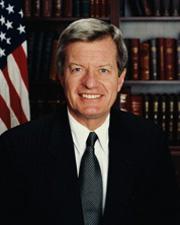 Sen. Max Baucus (D-MT)
Sen. Max Baucus (D-MT)Submitted June 12, 2007
Legislative Activity
Stay on top of the latest movement without scrolling through every action
Floor
Latest Action
Senate amendment submitted
June 12, 2007
Text
Submitted
TEXT OF AMENDMENTS

SA 1505. Mr. INHOFE (for himself and Mr. Thune) proposed an amendment
to amendment SA 1502 proposed by Mr. Reid to the bill H.R. 6, to reduce
our Nation's dependency on foreign oil by investing in clean,
renewable, and alternative energy resources, promoting new emerging
energy technologies, developing greater efficiency, and creating a
Strategic Energy Efficiency and Renewables Reserve to invest in
alternative energy, and for other purposes; as follows:

At the end, add the following:

TITLE VIII--GAS PRICE ACT

SEC. 801. SHORT TITLE.

This title may be cited as the ``Gas Petroleum Refiner
Improvement and Community Empowerment Act'' or ``Gas PRICE
Act''.

SEC. 802. DEFINITIONS.

In this title:
(1) Administrator.--The term ``Administrator'' means the
Administrator of the Environmental Protection Agency.
(2) Coal-to-liquid.--The term ``coal-to-liquid'' means--
(A) with respect to a process or technology, the use of a
feedstock, the majority of which is derived from the coal
resources of the United States, using the class of reactions
known as Fischer-Tropsch, to produce synthetic fuel suitable
for transportation; and
(B) with respect to a facility, the portion of a facility
related to producing the inputs for the Fischer-Tropsch
process, or the finished fuel from the Fischer-Tropsch
process, using a feedstock that is primarily domestic coal at
the Fischer-Tropsch facility.
(3) Domestic fuels facility.--
(A) In general.--The term ``domestic fuels facility''
means--
(i) a coal liquification or coal-to-liquid facility at
which coal is processed into synthetic crude oil or any other
transportation fuel;
(ii) a facility that produces a renewable fuel (as defined
in section 211(o)(1) of the Clean Air Act (42 U.S.C.
7545(o)(1))); and
(iii) a facility at which crude oil is refined into
transportation fuel or other petroleum products.
(B) Inclusion.--The term ``domestic fuels facility''
includes a domestic fuels facility expansion.
(4) Domestic fuels facility expansion.--The term ``domestic
fuels facility expansion'' means a physical change in a
domestic fuels facility that results in an increase in the
capacity of the domestic fuels facility.
(5) Domestic fuels facility permitting agreement.--The term
``domestic fuels facility permitting agreement'' means an
agreement entered into between the Administrator and a State
or Indian tribe under subsection (b).
(6) Domestic fuels producer.--The term ``domestic fuels
producer'' means an individual or entity that--
(A) owns or operates a domestic fuels facility; or
(B) seeks to become an owner or operator of a domestic
fuels facility.
(7) Indian land.--The term ``Indian land'' has the meaning
given the term ``Indian lands'' in section 3 of the Native
American Business Development, Trade Promotion, and Tourism
Act of 2000 (25 U.S.C. 4302).
(8) Indian tribe.--The term ``Indian tribe'' has the
meaning given the term in section 4 of the Indian Self-
Determination and Education Assistance Act (25 U.S.C. 450b).
(9) Permit.--The term ``permit'' means any permit, license,
approval, variance, or other form of authorization that a
refiner is required to obtain--
(A) under any Federal law; or
(B) from a State or Indian tribal government agency
delegated with authority by the Federal Government, or
authorized under Federal law to issue permits.
(10) Secretary.--The term ``Secretary'' means the Secretary
of Energy.
(11) State.--The term ``State'' means--
(A) a State;
(B) the District of Columbia;
(C) the Commonwealth of Puerto Rico; and
(D) any other territory or possession of the United States.

Subtitle A--Collaborative Permitting Process for Domestic Fuels
Facilities

SEC. 811. COLLABORATIVE PERMITTING PROCESS FOR DOMESTIC FUELS
FACILITIES.

(a) In General.--At the request of the Governor of a State
or the governing body of an Indian tribe, the Administrator
shall enter into a domestic fuels facility permitting
agreement with the State or Indian tribe under which the
process for obtaining all permits necessary for the
construction and operation of a domestic fuels facility shall
be improved using a systematic interdisciplinary multimedia
approach as provided in this section.
(b) Authority of Administrator.--Under a domestic fuels
facility permitting agreement--

[[Page S7560]]

(1) the Administrator shall have authority, as applicable
and necessary, to--
(A) accept from a refiner a consolidated application for
all permits that the domestic fuels producer is required to
obtain to construct and operate a domestic fuels facility;
(B) establish a schedule under which each Federal, State,
or Indian tribal government agency that is required to make
any determination to authorize the issuance of a permit
shall--
(i) concurrently consider, to the maximum extent
practicable, each determination to be made; and
(ii) complete each step in the permitting process; and
(C) issue a consolidated permit that combines all permits
that the domestic fuels producer is required to obtain; and
(2) the Administrator shall provide to State and Indian
tribal government agencies--
(A) financial assistance in such amounts as the agencies
reasonably require to hire such additional personnel as are
necessary to enable the government agencies to comply with
the applicable schedule established under paragraph (1)(B);
and
(B) technical, legal, and other assistance in complying
with the domestic fuels facility permitting agreement.
(c) Agreement by the State.--Under a domestic fuels
facility permitting agreement, a State or governing body of
an Indian tribe shall agree that--
(1) the Administrator shall have each of the authorities
described in subsection (b); and
(2) each State or Indian tribal government agency shall--
(A) make such structural and operational changes in the
agencies as are necessary to enable the agencies to carry out
consolidated project-wide permit reviews concurrently and in
coordination with the Environmental Protection Agency and
other Federal agencies; and
(B) comply, to the maximum extent practicable, with the
applicable schedule established under subsection (b)(1)(B).
(d) Interdisciplinary Approach.--
(1) In general.--The Administrator and a State or governing
body of an Indian tribe shall incorporate an
interdisciplinary approach, to the maximum extent
practicable, in the development, review, and approval of
domestic fuels facility permits subject to this section.
(2) Options.--Among other options, the interdisciplinary
approach may include use of--
(A) environmental management practices; and
(B) third party contractors.
(e) Deadlines.--
(1) New domestic fuels facilities.--In the case of a
consolidated permit for the construction of a new domestic
fuels facility, the Administrator and the State or governing
body of an Indian tribe shall approve or disapprove the
consolidated permit not later than--
(A) 360 days after the date of the receipt of the
administratively complete application for the consolidated
permit; or
(B) on agreement of the applicant, the Administrator, and
the State or governing body of the Indian tribe, 90 days
after the expiration of the deadline established under
subparagraph (A).
(2) Expansion of existing domestic fuels facilities.--In
the case of a consolidated permit for the expansion of an
existing domestic fuels facility, the Administrator and the
State or governing body of an Indian tribe shall approve or
disapprove the consolidated permit not later than--
(A) 120 days after the date of the receipt of the
administratively complete application for the consolidated
permit; or
(B) on agreement of the applicant, the Administrator, and
the State or governing body of the Indian tribe, 30 days
after the expiration of the deadline established under
subparagraph (A).
(f) Federal Agencies.--Each Federal agency that is required
to make any determination to authorize the issuance of a
permit shall comply with the applicable schedule established
under subsection (b)(1)(B).
(g) Judicial Review.--Any civil action for review of any
determination of any Federal, State, or Indian tribal
government agency in a permitting process conducted under a
domestic fuels facility permitting agreement brought by any
individual or entity shall be brought exclusively in the
United States district court for the district in which the
domestic fuels facility is located or proposed to be located.
(h) Efficient Permit Review.--In order to reduce the
duplication of procedures, the Administrator shall use State
permitting and monitoring procedures to satisfy substantially
equivalent Federal requirements under this section.
(i) Severability.--If 1 or more permits that are required
for the construction or operation of a domestic fuels
facility are not approved on or before any deadline
established under subsection (e), the Administrator may issue
a consolidated permit that combines all other permits that
the domestic fuels producer is required to obtain other than
any permits that are not approved.
(j) Savings.--Nothing in this section affects the operation
or implementation of otherwise applicable law regarding
permits necessary for the construction and operation of a
domestic fuels facility.
(k) Consultation With Local Governments.--Congress
encourages the Administrator, States, and tribal governments
to consult, to the maximum extent practicable, with local
governments in carrying out this section.
(l) Effect on Local Authority.--Nothing in this section
affects--
(1) the authority of a local government with respect to the
issuance of permits; or
(2) any requirement or ordinance of a local government
(such as zoning regulations).

Subtitle B--Environmental Analysis of Fischer-Tropsch Fuels

SEC. 821. EVALUATION OF FISCHER-TROPSCH DIESEL AND JET FUEL
AS AN EMISSION CONTROL STRATEGY.

(a) In General.--In cooperation with the Secretary of
Energy, the Secretary of Defense, the Administrator of the
Federal Aviation Administration, Secretary of Health and
Human Services, and Fischer-Tropsch industry representatives,
the Administrator shall--
(1) conduct a research and demonstration program to
evaluate the air quality benefits of ultra-clean Fischer-
Tropsch transportation fuel, including diesel and jet fuel;
(2) evaluate the use of ultra-clean Fischer-Tropsch
transportation fuel as a mechanism for reducing engine
exhaust emissions; and
(3) submit recommendations to Congress on the most
effective use and associated benefits of these ultra-clean
fuels for reducing public exposure to exhaust emissions.
(b) Guidance and Technical Support.--The Administrator
shall, to the extent necessary, issue any guidance or
technical support documents that would facilitate the
effective use and associated benefit of Fischer-Tropsch fuel
and blends.
(c) Requirements.--The program described in subsection (a)
shall consider--
(1) the use of neat (100 percent) Fischer-Tropsch fuel and
blends with conventional crude oil-derived fuel for heavy-
duty and light-duty diesel engines and the aviation sector;
and
(2) the production costs associated with domestic
production of those ultra clean fuel and prices for
consumers.
(d) Reports.--The Administrator shall submit to the
Committee on Environment and Public Works of the Senate and
the Committee on Energy and Commerce of the House of
Representatives--
(1) not later than 180 days after the date of enactment of
this Act, an interim report on actions taken to carry out
this section; and
(2) not later than 1 year after the date of enactment of
this Act, a final report on actions taken to carry out this
section.

Subtitle C--Domestic Coal-to-Liquid Fuel and Cellulosic Biomass Ethanol

SEC. 831. ECONOMIC DEVELOPMENT ASSISTANCE TO SUPPORT
COMMERCIAL-SCALE CELLULOSIC BIOMASS ETHANOL
PROJECTS AND COAL-TO-LIQUIDS FACILITIES ON BRAC
PROPERTY AND INDIAN LAND.

(a) Priority.--Notwithstanding section 206 of the Public
Works and Economic Development Act of 1965 (42 U.S.C. 3146),
in awarding funds made available to carry out section
209(c)(1) of that Act (42 U.S.C. 3149(c)(1)) pursuant to
section 702 of that Act (42 U.S.C. 3232), the Secretary and
the Economic Development Administration shall give priority
to projects to support commercial-scale cellulosic biomass
ethanol projects and coal-to-liquids facilities.
(b) Federal Share.--Except as provided in subsection
(c)(3)(B) and notwithstanding the Public Works and Economic
Development Act of 1965 (42 U.S.C. 3121 et seq.), the Federal
share of a project to support a commercial-scale biomass
ethanol facility or coal-to-liquid facility shall be--
(1) 80 percent of the project cost; or
(2) for a project carried out on Indian land, 100 percent
of the project cost.
(c) Additional Award.--
(1) In general.--The Secretary shall make an additional
award in connection with a grant made to a recipient
(including any Indian tribe for use on Indian land) for a
project to support a commercial-scale biomass ethanol
facility or coal-to-liquid facility.
(2) Amount.--The amount of an additional award shall be 10
percent of the amount of the grant for the project.
(3) Use.--An additional award under this subsection shall
be used--
(A) to carry out any eligible purpose under the Public
Works and Economic Development Act of 1965 (42 U.S.C. 3121 et
seq.);
(B) notwithstanding section 204 of that Act (42 U.S.C.
3144), to pay up to 100 percent of the cost of an eligible
project or activity under that Act; or
(C) to meet the non-Federal share requirements of that Act
or any other Act.
(4) Non-federal source.--For the purpose of paragraph
(3)(C), an additional award shall be treated as funds from a
non-Federal source.
(5) Funding.--The Secretary shall use to carry out this
subsection any amounts made available--
(A) for economic development assistance programs; or
(B) under section 702 of the Public Works and Economic
Development Act of 1965 (42 U.S.C. 3232).

Subtitle D--Alternative Hydrocarbon and Renewable Reserves Disclosures
Classification System

SEC. 841. ALTERNATIVE HYDROCARBON AND RENEWABLE RESERVES
DISCLOSURES CLASSIFICATION SYSTEM.

(a) In General.--The Securities and Exchange Commission
shall appoint a task

[[Page S7561]]

force composed of government and private sector
representatives, including experts in the field of dedicated
energy crop feedstocks for cellulosic biofuels production, to
analyze, and submit to Congress a report (including
recommendations) on--
(1) modernization of the hydrocarbon reserves disclosures
classification system of the Commission to reflect advances
in reserves recovery from nontraditional sources (such as
deep water, oil shale, tar sands, and renewable reserves for
cellulosic biofuels feedstocks); and
(2) the creation of a renewable reserves classification
system for cellulosic biofuels feedstocks.
(b) Deadline for Report.--The Commission shall submit the
report required under subsection (a) not later than 180 days
after the date of enactment of this Act.

Subtitle E--Authorization of Appropriations

SEC. 851. AUTHORIZATION OF APPROPRIATIONS.

There are authorized to be appropriated such sums as are
necessary to carry out this title and the amendments made by
this title.

______

SA 1506. Mr. STEVENS (for himself and Ms. Landrieu) submitted an
amendment intended to be proposed to amendment SA 1502 proposed by Mr.
Reid to the bill H.R. 6, to reduce our Nation's dependency on foreign
oil by investing in clean, renewable, and alternative energy resources,
promoting new emerging energy technologies, developing greater
efficiency, and creating a Strategic Energy Efficiency and Renewables
Reserve to invest in alternative energy, and for other purposes; which
was ordered to lie on the table; as follows:

At the appropriate place, insert the following:

TITLE      -- ENERGY EFFICIENT LIGHT BULBS

SEC. --01. TECHNICAL STANDARDS FOR GENERAL SERVICE LAMPS.

(a) In General.--
(1) Establishment of standards.--As soon as practicable
after the date of enactment of this Act, the Secretary of
Energy shall initiate a project to establish technical
standards for general service lamps.
(2) Consultation with interested parties.--In carrying out
the project, the Secretary shall consult with representatives
of environmental organizations, labor organizations, general
service lamp manufacturers, consumer organizations, and other
interested parties.
(3) Minimum initial standards; deadline.--The initial
technical standards established shall be standards that
enable those general service lamps to provide levels of
illumination equivalent to the levels of illumination
provided by general service lamps generally available in
2007, but with--
(A) a lumens per watt rating of not less than 30 by
calendar year 2013; and
(B) a lumens per watt rating of not less than 45 by
calendar year 2018.
(b) Manufacture and Distribution in Interstate Commerce.--
If the Secretary of Energy, after consultation with the
interested parties described in subsection (a)(2), determines
that general service lamps meeting the standards established
under subsection (a) are generally available for purchase
throughout the United States at costs that are substantially
equivalent (taking into account useful life, lifecycle costs,
domestic manufacturing capabilities, energy consumption, and
such other factors as the Secretary deems appropriate) to the
cost of the general service lamps they would replace, then
the Secretary shall take such action as may be necessary to
require that at least 95 percent of general service lamps
sold, offered for sale, or otherwise made available in the
United States meet the standards established under subsection
(a), except for those general service lamps described in
subsection (c).
(c) Exception.--The standards established by the Secretary
under subsection (a) shall not apply to general service lamps
used in applications in which compliance with those standards
is not feasible, as determined by the Secretary.
(d) Revised Standards.--After the initial standards are
established under subsection (a), the Secretary shall consult
periodically with the interested parties described in
subsection (a)(2) with respect to whether those standards
should be changed. The Secretary may change the standards,
and the dates and percentage of lamps to which the changed
standards apply under subsection (b), if after such
consultation the Secretary determines that such changes are
appropriate.
(e) Report.--The Secretary shall submit reports
periodically to the Senate Committee on Commerce, Science,
and Technology, the Senate Committee on Energy and Natural
Resources, and the House of Representatives Committee on
Energy and Commerce with respect to the development and
promulgation of standards for lamps and lamp-related
technology, such as switches, dimmers, ballast, and non-
general service lighting, that includes the Secretary's
findings and recommendations with respect to such standards.

SEC. --02. RESEARCH AND DEVELOPMENT PROGRAM.

(a) In General.--The Secretary of Energy may carry out a
lighting technology research and development program--
(1) to support the research, development, demonstration,
and commercial application of lamps and related technologies
sold, offered for sale, or otherwise made available in the
United States; and
(2) to assist manufacturers of general service lamps in the
manufacturing of general service lamps that, at a minimum,
achieve the lumens per watt ratings described in section --
01(a).
(b) Authorization of Appropriations.--There are authorized
to be appropriated to carry out this section $10,000,000 for
each of fiscal years 2008 through 2013.
(c) Sunset.--The program under this section shall terminate
on September 30, 2015.

SEC. --03. CONSUMER EDUCATION PROGRAM.

(a) In General.--The Secretary of Energy, in consultation
with the Federal Trade Commission, shall carry out a
comprehensive national program to educate consumers about the
benefits of using light bulbs that have improved efficiency
ratings.
(b) Authorization of Appropriations.--There are authorized
to be appropriated to carry out this section $1,000,000 for
each of fiscal years 2008 through 2014.

SEC. --04. REPORT ON MERCURY USE AND RELEASE.

Not later than 1 year after the date of enactment of this
Act, the Secretary of Energy, in cooperation with the
Administrator of the Environmental Protection Agency, shall
submit to Congress a report describing recommendations
relating to the means by which the Federal Government may
reduce or prevent the release of mercury during the
manufacture, transportation, storage, or disposal of light
bulbs.

SEC. --05. REPORT ON LAMP LABELING.

Not later than 1 year after the date of enactment of this
Act, the Federal Trade Commission, in cooperation with the
Administrator of the Environmental Protection Agency and the
Secretary of Energy, shall submit to Congress a report
describing current lamp labeling practices by lamp
manufacturers and recommendations for a national labeling
standard.
______

SA 1507. Mr. BAUCUS (for himself and Mr. Tester) submitted an
amendment intended to be proposed by him to the bill S. 1348, to
provide for comprehensive immigration reform and for other purposes;
which was ordered to lie on the table; as follows:

On page 133, between lines 29 and 30, insert the following:
(j) Identification Card Standards.--Notwithstanding any
other provision of this Act or the amendments made by this
Act--
(1) no Federal agency may require that a driver's license
or personal identification card meet the standards specified
under the REAL ID Act of 2005 (division B of Public Law 109-
13) to establish employment authorization or identity in
order to be hired by an employer; and
(2) no Federal funds may be provided to assist States to
meet such standards.
______

SA 1508. Mr. BAYH (for himself, Mr. Brownback, Mr. Lieberman, Mr.
Coleman, Mr. Salazar, Mrs. Lincoln, Ms. Cantwell, Mr. Kerry, Mr. Dodd,
Mr. Kohl, Mr. Reed, Ms. Collins, and Mr. Nelson of Florida) submitted
an amendment intended to be proposed to amendment SA 1502 proposed by
Mr. Reid to the bill H.R. 6, to reduce our Nation's dependency on
foreign oil by investing in clean, renewable, and alternative energy
resources, promoting new emerging energy technologies, developing
greater efficiency, and creating a Strategic Energy Efficiency and
Renewables Reserve to invest in alternative energy, and for other
purposes; as follows:

Strike section 251 and insert the following:

SEC. 251. OIL SAVINGS PLAN AND REQUIREMENTS.

(a) Oil Savings Target and Action Plan.--Not later than 270
days after the date of enactment of this Act, the Director of
the Office of Management and Budget (referred to in this
section as the ``Director'') shall publish in the Federal
Register an action plan consisting of--
(1) a list of requirements proposed or to be proposed
pursuant to subsection (b) that are authorized to be issued
under law in effect on the date of enactment of this Act, and
this Act, that will be sufficient, when taken together, to
save from the baseline determined under subsection (e)--
(A) 2,500,000 barrels of oil per day on average during
calendar year 2016;
(B) 7,000,000 barrels of oil per day on average during
calendar year 2026; and
(C) 10,000,000 barrels per day on average during calendar
year 2031; and
(2) a Federal Government-wide analysis demonstrating--
(A) the expected oil savings from the baseline to be
accomplished by each requirement; and
(B) that all such requirements, taken together, will
achieve the oil savings specified in this subsection.
(b) Standards and Requirements.--
(1) In general.--On or before the date of publication of
the action plan under subsection (a), the Secretary of
Energy, the Secretary of Transportation, the Secretary of
Defense, the Secretary of Agriculture, the

[[Page S7562]]

Secretary of the Treasury, the Administrator of the
Environmental Protection Agency, and the head of any other
agency the President determines appropriate shall each
propose, or issue a notice of intent to propose, regulations
establishing each standard or other requirement listed in the
action plan that is under the jurisdiction of the respective
agency using authorities described in paragraph (2).
(2) Authorities.--The head of each agency described in
paragraph (1) shall use to carry out this subsection--
(A) any authority in existence on the date of enactment of
this Act (including regulations); and
(B) any new authority provided under this Act (including an
amendment made by this Act).
(3) Final regulations.--Not later than 18 months after the
date of enactment of this Act, the head of each agency
described in paragraph (1) shall promulgate final versions of
the regulations required under this subsection.
(4) Content of regulations.--Each proposed and final
regulation promulgated under this subsection shall--
(A) be sufficient to achieve at least the oil savings
resulting from the regulation under the action plan published
under subsection (a); and
(B) be accompanied by an analysis by the applicable agency
demonstrating that the regulation will achieve the oil
savings from the baseline determined under subsection (e).
(c) Initial Evaluation.--
(1) In general.--Not later than 2 years after the date of
enactment of this Act, the Director shall--
(A) publish in the Federal Register a Federal Government-
wide analysis of--
(i) the oil savings achieved from the baseline established
under subsection (e); and
(ii) the expected oil savings under the standards and
requirements of this Act (and amendments made by this Act);
and
(B) determine whether oil savings will meet the targets
established under subsection (a).
(2) Insufficient oil savings.--If the oil savings are less
than the targets established under subsection (a),
simultaneously with the analysis required under paragraph
(1)--
(A) the Director shall publish a revised action plan that
is sufficient to achieve the targets; and
(B) the head of each agency referred to in subsection
(b)(1) shall propose new or revised regulations that are
sufficient to achieve the targets under paragraphs (1), (2),
and (3), respectively, of subsection (b).
(3) Final regulations.--Not later than 180 days after the
date on which regulations are proposed under paragraph
(2)(B), the head of each agency referred to in subsection
(b)(1) shall promulgate final versions of those regulations
that comply with subsection (b)(1).
(d) Review and Update of Action Plan.--
(1) Review.--Not later than January 1, 2011, and every 3
years thereafter, the Director shall submit to Congress, and
publish, a report that--
(A) evaluates the progress achieved in implementing the oil
savings targets established under subsection (a);
(B) analyzes the expected oil savings under the standards
and requirements established under this Act and the
amendments made by this Act; and
(C)(i) analyzes the potential to achieve oil savings that
are in addition to the savings required by subsection (a);
and
(ii) if the President determines that it is in the national
interest, establishes a higher oil savings target for
calendar year 2017 or any subsequent calendar year.
(2) Insufficient oil savings.--If the oil savings are less
than the targets established under subsection (a),
simultaneously with the report required under paragraph (1)--
(A) the Director shall publish a revised action plan that
is sufficient to achieve the targets; and
(B) the head of each agency referred to in subsection
(b)(1) shall propose new or revised regulations that are
sufficient to achieve the targets under paragraphs (1), (2),
and (3), respectively, of subsection (b).
(3) Final regulations.--Not later than 180 days after the
date on which regulations are proposed under paragraph
(2)(B), the head of each agency referred to in subsection
(b)(1) shall promulgate final versions of those regulations
that comply with subsection (b)(1).
(e) Baseline and Analysis Requirements.--In performing the
analyses and promulgating proposed or final regulations to
establish standards and other requirements necessary to
achieve the oil savings required by this section, the
Secretary of Energy, the Secretary of Transportation, the
Secretary of Defense, the Secretary of Agriculture, the
Administrator of the Environmental Protection Agency, and the
head of any other agency the President determines to be
appropriate shall--
(1) determine oil savings as the projected reduction in oil
consumption from the baseline established by the reference
case contained in the report of the Energy Information
Administration entitled ``Annual Energy Outlook 2005'';
(2) determine the oil savings projections required on an
annual basis for each of calendar years 2009 through 2026;
and
(3) account for any overlap among the standards and other
requirements to ensure that the projected oil savings from
all the promulgated standards and requirements, taken
together, are as accurate as practicable.
(f) Nonregulatory Measures.--The action plan required under
subsection (a) and the revised action plans required under
subsections (c) and (d) shall include--
(1) a projection of the barrels of oil displaced by
efficiency and sources of energy other than oil, including
biofuels, electricity, and hydrogen; and
(2) a projection of the barrels of oil saved through
enactment of this Act and the Energy Policy Act of 2005 (42
U.S.C. 15801 et seq.).

______

SA 1509. Mr. CRAIG submitted an amendment intended to be proposed by
him the bill H.R. 6, to reduce our Nation's dependency on foreign oil
by investing in clean, renewable, and alternative energy resources,
promoting new emerging energy technologies, developing greater
efficiency, and creating a Strategic Energy Efficiency and Renewables
Reserve to invest in alternative energy, and for other purposes; which
was ordered to lie on the table; as follows:

At the end, add the following:

TITLE VIII--THOR KIILSGAARD MEMORIAL GEOLOGIC MAPPING REAUTHORIZATION
ACT

SEC. 801. SHORT TITLE.

This title may be cited as the ``Thor Kiilsgaard Memorial
Geologic Mapping Reauthorization Act of 2007''.

SEC. 802. FINDINGS.

Section 2(a) of the National Geologic Mapping Act of 1992
(43 U.S.C. 31a(a)) is amended--
(1) by striking paragraph (1) and inserting the following:
``(1) although significant progress has been made in the
production of geologic maps since the establishment of the
national cooperative geologic mapping program in 1992, no
modern, digital, geologic map exists for approximately 75
percent of the United States;''; and
(2) in paragraph (2)--
(A) in subparagraph (C), by inserting ``homeland and''
after ``planning for'';
(B) in subparagraph (E), by striking ``predicting'' and
inserting ``identifying'';
(C) in subparagraph (I), by striking ``and'' after the
semicolon at the end;
(D) by redesignating subparagraph (J) as subparagraph (K);
and
(E) by inserting after subparagraph (I) the following:
``(J) recreation and public awareness; and''; and
(3) in paragraph (9), by striking ``important'' and
inserting ``available''.

SEC. 803. PURPOSE.

Section 2(b) of the National Geologic Mapping Act of 1992
(43 U.S.C. 31a(b)) is amended by inserting ``and management''
before the period at the end.

SEC. 804. DEADLINES FOR ACTIONS BY THE UNITED STATES
GEOLOGICAL SURVEY.

Section 4(b)(1) of the National Geologic Mapping Act of
1992 (43 U.S.C. 31c(b)(1)) is amended in the second
sentence--
(1) in subparagraph (A), by striking ``not later than'' and
all that follows through the semicolon and inserting ``not
later than 1 year after the date of enactment of the Thor
Kiilsgaard Memorial Geologic Mapping Reauthorization Act of
2007;'';
(2) in subparagraph (B), by striking ``not later than'' and
all that follows through ``in accordance'' and inserting
``not later than 1 year after the date of enactment of the
Thor Kiilsgaard Memorial Geologic Mapping Reauthorization Act
of 2007 in accordance''; and
(3) in the matter preceding clause (i) of subparagraph (C),
by striking ``not later than'' and all that follows through
``submit'' and inserting ``submit biennially''.

SEC. 805. GEOLOGIC MAPPING PROGRAM OBJECTIVES.

Section 4(c)(2) of the National Geologic Mapping Act of
1992 (43 U.S.C. 31c(c)(2)) is amended--
(1) by striking ``geophysical-map data base, geochemical-
map data base, and a''; and
(2) by striking ``provide'' and inserting ``provides''.

SEC. 806. GEOLOGIC MAPPING PROGRAM COMPONENTS.

Section 4(d)(1)(B)(ii) of the National Geologic Mapping Act
of 1992 (43 U.S.C. 31c(d)(1)(B)(ii)) is amended--
(1) in subclause (I), by striking ``and'' after the
semicolon at the end;
(2) in subclause (II), by striking the period at the end
and inserting ``; and''; and
(3) by adding at the end the following:

``(III) the needs of land management agencies of the
Department of the Interior.''.

SEC. 807. GEOLOGIC MAPPING ADVISORY COMMITTEE.

(a) Membership.--Section 5(a) of the National Geologic
Mapping Act of 1992 (43 U.S.C. 31d(a)) is amended--
(1) in paragraph (2)--
(A) by inserting ``the Secretary of the Interior or a
designee from a land management agency of the Department of
the Interior,'' after ``Administrator of the Environmental
Protection Agency or a designee,'';
(B) by inserting ``and'' after ``Energy or a designee,'';
and
(C) by striking ``, and the Assistant to the President for
Science and Technology or a designee''; and
(2) in paragraph (3)--

[[Page S7563]]

(A) by striking ``Not later than'' and all that follows
through ``consultation'' and inserting ``In consultation'';
(B) by striking ``Chief Geologist, as Chairman'' and
inserting ``Associate Director for Geology, as Chair''; and
(C) by striking ``one representative from the private
sector'' and inserting ``2 representatives from the private
sector''.
(b) Duties.--Section 5(b) of the National Geologic Mapping
Act of 1992 (43 U.S.C. 31d(b)) is amended--
(1) in paragraph (2), by striking ``and'' at the end;
(2) by redesignating paragraph (3) as paragraph (4); and
(3) by inserting after paragraph (2) the following:
``(3) provide a scientific overview of geologic maps
(including maps of geologic-based hazards) used or
disseminated by Federal agencies for regulation or land-use
planning; and''.
(c) Conforming Amendment.--Section 5(a)(1) of the National
Geologic Mapping Act of 1992 (43 U.S.C. 31d(a)(1)) is amended
by striking ``10-member'' and inserting ``11-member''.

SEC. 808. FUNCTIONS OF NATIONAL GEOLOGIC-MAP DATABASE.

Section 7(a) of the National Geologic Mapping Act of 1992
(43 U.S.C. 31f(a)) is amended--
(1) in paragraph (1), by striking ``geologic map'' and
inserting ``geologic-map''; and
(2) in paragraph (2), by striking subparagraph (A) and
inserting the following:
``(A) all maps developed with funding provided by the
National Cooperative Geologic Mapping Program, including
under the Federal, State, and education components;''.

SEC. 809. BIENNIAL REPORT.

Section 8 of the National Geologic Mapping Act of 1992 (43
U.S.C. 31g) is amended by striking ``Not later'' and all that
follows through ``biennially'' and inserting ``Not later than
3 years after the date of enactment of the Thor Kiilsgaard
Memorial Geologic Mapping Reauthorization Act of 2007 and
biennially''.

SEC. 810. AUTHORIZATION OF APPROPRIATIONS; ALLOCATION.

Section 9 of the National Geologic Mapping Act of 1992 (43
U.S.C. 31h) is amended--
(1) by striking subsection (a) and inserting the following:
``(a) In General.--There is authorized to be appropriated
to carry out this Act $64,000,000 for each of fiscal years
2007 through 2016.''; and
(2) in subsection (b)--
(A) in the matter preceding paragraph (1), by striking
``2000'' and inserting ``2005'';
(B) in paragraph (1), by striking ``48'' and inserting
``50''; and
(C) in paragraph (2), by striking 2 and inserting ``4''.

______

SA 1510. Mr. COCHRAN submitted an amendment intended to be proposed
to amendment SA 1502 proposed by Mr. Reid to the bill H.R. 6, to reduce
our Nation's dependency on foreign oil by investing in clean,
renewable, and alternative energy resources, promoting new emerging
energy technologies, developing greater efficiency, and creating a
Strategic Energy Efficiency and Renewable Reserve to invest in
alternative energy, and for other purposes; which was ordered to lie on
the table; as follows:

On page 314, after line 2, add the following:

SEC. 708. INCREASE IN CAPACITY OF STRATEGIC PETROLEUM
RESERVE.

(a) Strategic Petroleum Reserve.--
(1) Policy.--Section 151(b) of the Energy Policy and
Conservation Act (42 U.S.C. 6231(b)) is amended by striking
``1 billion'' and inserting ``1,500,000,000''.
(2) Creation.--Section 154(a) of the Energy Policy and
Conservation Act (42 U.S.C. 6234(a)) is amended by striking
``1 billion'' and inserting ``1,500,000,000''.
(b) Filling Strategic Petroleum Reserve to Capacity.--
Section 301(e) of the Energy Policy Act of 2005 (42 U.S.C.
6240 note; Public Law 109-58) is amended by striking
``1,000,000,000-barrel'' and inserting ``1,500,000,000-
barrel''.
______

SA 1511. Ms. MURKOWSKI submitted an amendment intended to be proposed
to amendment SA 1502 proposed by Mr. Reid to the bill H.R. 6, to reduce
our Nation's dependency on foreign oil by investing in clean,
renewable, and alternative energy resources, promoting new emerging
energy technologies, developing greater efficiency, and creating a
Strategic Energy Efficiency and Renewable Reserve to invest in
alternative energy, and for other purposes; which was ordered to lie on
the table; as follows:

On page 277, between lines 5 and 6, insert the following:

SEC. 521. STUDY OF CAFE STANDARDS FOR COMMERCIAL TRUCKS.

(a) Study.--The Administrator of the National Highway
Traffic Safety Administration shall conduct a study of the
anticipated economic impacts and fuel saving benefits that
would result from a requirement that all vehicles
manufactured for sale in the United States with a gross
vehicle weight of not less than 10,000 pounds meet specific
average fuel economy standards.
(b) Report.--Not later than 2 years after the date of the
enactment of this Act, the Administrator shall submit a
report to Congress that includes--
(1) the results of the study conducted under subsection
(a); and
(2) a recommendation on whether the vehicles described in
subsection (a) should be subject to average fuel economy
standards.
______

SA 1512. Ms. MURKOWSKI submitted an amendment intended to be proposed
by her to the bill H.R. 6, to reduce our Nation's dependency on foreign
oil by investing in clean, renewable, and alternative energy resources,
promoting new emerging energy technologies, developing greater
efficiency, and creating a Strategic Energy Efficiency and Renewable
Reserve to invest in alternative energy, and for other purposes; which
was ordered to lie on the table; as follows:

In section 215(b), strike paragraph (1) and insert the
following:
(1) In general.--The Secretary shall use amounts
appropriated under this section to make grants for use in
carrying out, with respect to a renewable energy project--
(A) a finance feasibility or reconnaissance study;
(B) energy resource monitoring;
(C) construction of the renewable energy project; or
(D) construction or installation of transmission and
distribution infrastructure associated with the renewable
energy project, including power lines necessary to connect
the renewable energy project to a distribution grid for the
purpose of distributing energy generated by the renewable
energy project.
______

SA 1513. Ms. MURKOWSKI (for herself and Mr. Stevens) submitted an
amendment intended to be proposed by her to the bill H.R. 6, to reduce
our Nation's dependency on foreign oil by investing in clean,
renewable, and alternative energy resources, promoting new emerging
energy technologies, developing greater efficiency, and creating a
Strategic Energy Efficiency and Renewables Reserve to invest in
alternative energy, and for other purposes; which was ordered to lie on
the table; as follows:

At the appropriate place, insert the following:

SEC. ___. ADMINISTRATION.

Section 106 of the Alaska Natural Gas Pipeline Act (15
U.S.C. 720d) is amended by adding at the end the following:
``(h) Administration.--
``(1) Personnel appointments.--
``(A) In general.--The Federal Coordinator may appoint and
terminate such personnel as the Federal Coordinator
determines to be appropriate.
``(B) Authority of federal coordinator.--Personnel
appointed by the Federal Coordinator under subparagraph (A)
shall be appointed without regard to the provisions of title
5, United States Code, governing appointments in the
competitive service.
``(2) Compensation.--
``(A) In general.--Subject to subparagraph (B), personnel
appointed by the Federal Coordinator under paragraph (1)(A)
shall be paid without regard to the provisions of chapter 51
and subchapter III of chapter 53 of title 5, United States
Code (relating to classification and General Schedule pay
rates).
``(B) Maximum level of compensation.--The rate of pay for
personnel appointed by the Federal Coordinator under
paragraph (1)(A) shall not exceed the maximum level of rate
payable for level III of the Executive Schedule.
``(C) Applicability of section 5941.--Section 5941 of title
5, United States Code, shall apply to personnel appointed by
the Federal Coordinator under paragraph (1)(A).
``(3) Temporary services.--
``(A) In general.--The Federal Coordinator may procure
temporary and intermittent services in accordance with
section 3109(b) of title 5, United States Code.
``(B) Maximum level of compensation.--The level of
compensation of an individual employed on a temporary or
intermittent basis under subparagraph (A) shall not exceed
the maximum level of rate payable for level III of the
Executive Schedule.
``(4) Fees, charges, and commissions.--
``(A) In general.--The Federal Coordinator shall have the
authority to establish, change, and abolish reasonable filing
and service fees, charges, and commissions, require deposits
of payments, and provide refunds as provided to the Secretary
of the Interior in section 304 of the Federal Land Policy and
Management Act of 1976 (43 U.S.C. 1734), except that the
authority shall be with respect to the duties of the Federal
Coordinator, as delineated in the Alaska Natural Gas Pipeline
Act (15 U.S.C. 720 et seq.), as amended.
``(B) Authority of secretary of the interior.--Subparagraph
(A) shall not affect the authority of the Secretary of the
Interior to establish, change, and abolish reasonable filing
and service fees, charges, and commissions, require deposits
of payments, and provide refunds under section 304 of the
Federal Land Policy and Management Act of 1976 (43 U.S.C.
1734).
``(C) Use of funds.--The Federal Coordinator is authorized
to use, without further

[[Page S7564]]

appropriation, amounts collected under subparagraph (A) to
carry out this section.''.

SEC. ___. CLARIFICATION OF AUTHORITY.

Section 107(a) of the Alaska Natural Gas Pipeline Act (15
U.S.C. 720e(a)) is amended by striking paragraph (3) and
inserting the following:
``(3) the validity of any determination, permit, approval,
authorization, review, or other related action taken under
any provision of law relating to a gas transportation project
constructed and operated in accordance with section 103,
including--
``(A) subchapter II of chapter 5, and chapter 7, of title
5, United States Code (commonly known as the `Administrative
Procedure Act');
``(B) the Endangered Species Act of 1973 (16 U.S.C. 1531 et
seq.);
``(C) the National Environmental Policy Act of 1969 (42
U.S.C. 4321 et seq.);
``(D) the National Historic Preservation Act (16 U.S.C. 470
et seq.); and
``(E) the Alaska National Interest Lands Conservation Act
(16 U.S.C. 3101 et seq.).''.

______

SA 1514. Mr. KERRY (for himself and Mr. Sanders) submitted an
amendment intended to be propsoed to amendment SA 1502 proposed by Mr.
Reid to the bill H.R. 6, to reduce our Nation's dependency on foreign
oil by investing in clean, renewable, and alternative energy resources,
promoting new emerging energy technologies, developing greater
efficiency, and creating a Strategic Energy Efficiency and Renewable
Reserve to invest in alternative energy, and for other purposes; which
was ordered to lie on the table; as follows:

At the appropriate place, insert the following:

SEC. ___. RENEWABLE PORTFOLIO STANDARD.

(a) In General.--Title VI of the Public Utility Regulatory
Policies Act of 1978 (16 U.S.C. 2601 et seq.) is amended by
adding at the end the following:

``SEC. 610. FEDERAL RENEWABLE PORTFOLIO STANDARD.

``(a) Renewable Energy Requirement.--
``(1) In general.--Each electric utility that sells
electricity to electric consumers shall obtain a percentage
of the base amount of electricity it sells to electric
consumers in any calendar year from new renewable energy or
existing renewable energy. The percentage obtained in a
calendar year shall not be less than the amount specified in
the following table:
``Calendar year:                             Minimum annual percentage:
2009 through 2012...................................................  5
2013 through 2016................................................... 10
2017 through 2019................................................... 15
2020 through 2030................................................... 20

``(2) Means of compliance.--An electric utility shall meet
the requirements of paragraph (1) by--
``(A) submitting to the Secretary renewable energy credits
issued under subsection (b);
``(B) making alternative compliance payments to the
Secretary at the rate of 2 cents per kilowatt hour (as
adjusted for inflation under subsection (g)); or
``(C) a combination of activities described in
subparagraphs (A) and (B).
``(b) Federal Renewable Energy Credit Trading Program.--
``(1) In general.--Not later than July 1, 2008, the
Secretary shall establish a Federal renewable energy credit
trading program under which electric utilities shall submit
to the Secretary renewable energy credits to certify the
compliance of the electric utilities with respect to
obligations under subsection (a)(1).
``(2) Administration.--As part of the program, the
Secretary shall--
``(A) issue tradeable renewable energy credits to
generators of electric energy from new renewable energy;
``(B) issue nontradeable renewable energy credits to
generators of electric energy from existing renewable energy;
``(C) issue renewable energy credits to electric utilities
associated with State renewable portfolio standard compliance
mechanisms pursuant to subsection (h);
``(D) ensure that a kilowatt hour, including the associated
renewable energy credit, shall be used only once for purposes
of compliance with this Act;
``(E) allow double credits for generation from facilities
on Indian land, and triple credits for generation from small
renewable distributed generators (meaning those no larger
than 1 megawatt); and
``(F) ensure that, with respect to a purchaser that, as of
the date of enactment of this section, has a purchase
agreement from a renewable energy facility placed in service
before that date, the credit associated with the generation
of renewable energy under the contract is issued to the
purchaser of the electric energy to the extent that the
contract does not already provide for the allocation of the
Federal credit.
``(3) Duration.--A credit described in subparagraph (A),
(B), or (C) of paragraph (2) may only be used for compliance
with this section during the 3-year period beginning on the
date of issuance of the credit.
``(4) Transfers.--An electric utility that holds credits in
excess of the quantity of credits needed to comply with
subsection (a) may transfer the credits to another electric
utility in the same utility holding company system.
``(5) Delegation of market function.--The Secretary may
delegate to an appropriate market-making entity the
administration of a national tradeable renewable energy
credit market for purposes of creating a transparent national
market for the sale or trade of renewable energy credits.
``(c) Enforcement.--
``(1) Civil penalties.--Any electric utility that fails to
meet the compliance requirements of subsection (a) shall be
subject to a civil penalty.
``(2) Amount of penalty.--The amount of the civil penalty
shall be determined by multiplying the number of kilowatt-
hours of electric energy sold to electric consumers in
violation of subsection (a) by the greater of--
``(A) the value of the alternative compliance payment, as
adjusted to reflect changes for the 12-month period ending
the preceding November 30 in the Consumer Price Index for All
Urban Consumers published by the Bureau of Labor Statistics
of the Department of Labor; or
``(B) 200 percent of the average market value of renewable
energy credits during the year in which the violation
occurred.
``(3) Mitigation or waiver.--The Secretary may mitigate or
waive a civil penalty under this subsection if the electric
utility was unable to comply with subsection (a) for reasons
outside of the reasonable control of the utility. The
Secretary shall reduce the amount of any penalty determined
under paragraph (2) by an amount paid by the electric utility
to a State for failure to comply with the requirement of a
State renewable energy program if the State requirement is
greater than the applicable requirement of subsection (a).
``(4) Procedure for assessing penalty.--The Secretary shall
assess a civil penalty under this subsection in accordance
with the procedures prescribed by section 333(d) of the
Energy Policy and Conservation Act of 1954 (42 U.S.C. 6303).
``(d) State Renewable Energy Account Program.--
``(1) In general.--There is established in the Treasury a
State renewable energy account program.
``(2) Deposits.--All money collected by the Secretary from
alternative compliance payments and the assessment of civil
penalties under this section shall be deposited into the
renewable energy account established pursuant to this
subsection.
``(3) Use.--Proceeds deposited in the State renewable
energy account shall be used by the Secretary, subject to
appropriations, for a program to provide grants to the State
agency responsible for developing State energy conservation
plans under section 362 of the Energy Policy and Conservation
Act (42 U.S.C. 6322) for the purposes of promoting renewable
energy production, including programs that promote
technologies that reduce the use of electricity at customer
sites such as solar water heating.
``(4) Administration.--The Secretary may issue guidelines
and criteria for grants awarded under this subsection. State
energy offices receiving grants under this section shall
maintain such records and evidence of compliance as the
Secretary may require.
``(5) Preference.--In allocating funds under this program,
the Secretary shall give preference--
``(A) to States in regions which have a disproportionately
small share of economically sustainable renewable energy
generation capacity; and
``(B) to State programs to stimulate or enhance innovative
renewable energy technologies.
``(e) Rules.--The Secretary shall issue rules implementing
this section not later than 1 year after the date of
enactment of this section.
``(f) Exemptions.--This section shall not apply in any
calendar year to an electric utility--
``(1) that sold less than 4,000,000 megawatt-hours of
electric energy to electric consumers during the preceding
calendar year; or
``(2) in Hawaii.
``(g) Inflation Adjustment.--Not later than December 31 of
each year beginning in 2008, the Secretary shall adjust for
inflation the rate of the alternative compliance payment
under subsection (a)(2)(B) and the amount of the civil
penalty per kilowatt-hour under subsection (c)(2).
``(h) State Programs.--
``(1) In general.--Nothing in this section diminishes any
authority of a State or political subdivision of a State to
adopt or enforce any law or regulation respecting renewable
energy or the regulation of electric utilities, but, except
as provided in subsection (c)(3), no such law or regulation
shall relieve any person of any requirement otherwise
applicable under this section. The Secretary, in consultation
with States having such renewable energy programs, shall, to
the maximum extent practicable, facilitate coordination
between the Federal program and State programs.
``(2) Regulations.--
``(A) In general.--The Secretary, in consultation with
States, shall promulgate regulations to ensure that an
electric utility that is subject to the requirements of this
section and is subject to a State renewable energy standard
receives renewable energy credits if--
``(i) the electric utility complies with State standard by
generating or purchasing renewable electric energy or
renewable energy certificates or credits; or

[[Page S7565]]

``(ii) the State imposes or allows other mechanisms for
achieving the State standard, including the payment of taxes,
fees, surcharges, or other financial obligations.
``(B) Amount of credits.--The amount of credits received by
an electric utility under this subsection shall equal--
``(i) in the case of subparagraph (A)(i), the renewable
energy resulting from the generation or purchase by the
electric utility of existing renewable energy or new
renewable energy; and
``(ii) in the case of subparagraph (A)(ii), the pro rata
share of the electric utility, based on the contributions to
the mechanism made by the electric utility or customers of
the electric utility, in the State, of the renewable energy
resulting from those mechanisms.
``(C) Prohibition on double counting.--The regulations
promulgated under this paragraph shall ensure that a
kilowatt-hour associated with a renewable energy credit
issued pursuant to this subsection shall not be used for
compliance with this section more than once.
``(i) Definitions.--In this section:
``(1) Base amount of electricity.--The term `base amount of
electricity' means the total amount of electricity sold by an
electric utility to electric consumers in a calendar year,
excluding--
``(A) electricity generated by a hydroelectric facility
(including a pumped storage facility but excluding
incremental hydropower); and
``(B) electricity generated through the incineration of
municipal solid waste.
``(2) Distributed generation facility.--The term
`distributed generation facility' means a facility at a
customer site.
``(3) Existing renewable energy.--The term `existing
renewable energy' means, except as provided in paragraph
(7)(B), electric energy generated at a facility (including a
distributed generation facility) placed in service prior to
January 1, 2001, from solar, wind, or geothermal energy,
ocean energy, biomass (as defined in section 203(a) of the
Energy Policy Act of 2005), or landfill gas.
``(4) Geothermal energy.--The term `geothermal energy'
means energy derived from a geothermal deposit (within the
meaning of section 613(e)(2) of the Internal Revenue Code of
1986).
``(5) Incremental geothermal production.--
``(A) In general.--The term `incremental geothermal
production' means for any year the excess of--
``(i) the total kilowatt hours of electricity produced from
a facility (including a distributed generation facility)
using geothermal energy; over
``(ii) the average annual kilowatt hours produced at such
facility for 5 of the previous 7 calendar years before the
date of enactment of this section after eliminating the
highest and the lowest kilowatt hour production years in such
7-year period.
``(B) Special rule.--A facility described in subparagraph
(A) that was placed in service at least 7 years before the
date of enactment of this section shall, commencing with the
year in which such date of enactment occurs, reduce the
amount calculated under subparagraph (A)(ii) each year, on a
cumulative basis, by the average percentage decrease in the
annual kilowatt hour production for the 7-year period
described in subparagraph (A)(ii) with such cumulative sum
not to exceed 30 percent.
``(6) Incremental hydropower.--The term `incremental
hydropower' means additional energy generated as a result of
efficiency improvements or capacity additions made on or
after January 1, 2001, or the effective date of an existing
applicable State renewable portfolio standard program at a
hydroelectric facility that was placed in service before that
date. The term does not include additional energy generated
as a result of operational changes not directly associated
with efficiency improvements or capacity additions.
Efficiency improvements and capacity additions shall be
measured on the basis of the same water flow information used
to determine a historic average annual generation baseline
for the hydroelectric facility and certified by the Secretary
or the Federal Energy Regulatory Commission.
``(7) New renewable energy.--The term `new renewable
energy' means--
``(A) electric energy generated at a facility (including a
distributed generation facility) placed in service on or
after January 1, 2001, from--
``(i) solar, wind, or geothermal energy or ocean energy;
``(ii) biomass (as defined in section 203(b) of the Energy
Policy Act of 2005 (42 U.S.C. 15852(b));
``(iii) landfill gas; or
``(iv) incremental hydropower; and
``(B) for electric energy generated at a facility
(including a distributed generation facility) placed in
service before January 1, 2001--
``(i) the additional energy above the average generation
during the period beginning on January 1, 1998, and ending on
January 1, 2001, at the facility from--

``(I) solar or wind energy or ocean energy;
``(II) biomass (as defined in section 203(b) of the Energy
Policy Act of 2005 (42 U.S.C. 15852(b));
``(III) landfill gas; or
``(IV) incremental hydropower; and

``(ii) incremental geothermal production.
``(8) Ocean energy.--The term `ocean energy' includes
current, wave, tidal, and thermal energy.
``(j) Sunset.--This section expires on December 31,
2030.''.
(b) Table of Contents Amendment.--The table of contents of
the Public Utility Regulatory Policies Act of 1978 (16 U.S.C.
prec. 2601) is amended by adding at the end of the items
relating to title VI the following:

``Sec. 610. Federal renewable portfolio standard.''.
______

SA 1515. Mr. SANDERS (for himself, Mrs. Clinton, Mr. Kerry, Mr.
Biden, and Mr. Salazar) proposed an amendment to amendment SA 1502
proposed by Mr. Reid to the bill H.R. 6, to reduce our Nation's
dependency on foreign oil by investing in clean, renewable, and
alternative energy resources, promoting new emerging energy
technologies, developing greater efficiency, and creating a Strategic
Energy Efficiency and Renewables Reserve to invest in alternative
energy, and for other purposes; as follows:

Strike section 277, and insert the following:

SEC. 277. ENERGY EFFICIENCY AND RENEWABLE ENERGY WORKER
TRAINING PROGRAM.

Section 1101 of the Energy Policy Act of 2005 (42 U.S.C.
16411) is amended--
(1) by redesignating subsection (d) as subsection (e); and
(2) by inserting after subsection (c), the following:
``(d) Energy Efficiency and Renewable Energy Worker
Training Program.--
``(1) Purpose.--It is the purpose of this subsection to--
``(A) create a sustainable, comprehensive public program
that provides quality training that is linked to jobs that
are created through renewable energy and energy efficiency
initiatives;
``(B) satisfy industry demand for a skilled workforce, to
support economic growth, to boost America's global
competitiveness in the expanding energy efficiency and
renewable energy industries, and to provide economic self-
sufficiency and family-sustaining jobs for America's workers,
including low wage workers, through quality training and
placement in job opportunities in the growing energy
efficiency and renewable energy industries;
``(C) provide grants for the safety, health, and skills
training and education of workers who are, or may be engaged
in, activities related to the energy efficiency and renewable
energy industries; and
``(D) provide funds for national and State industry-wide
research, labor market information and labor exchange
programs, and the development of nationally and State
administered training programs.
``(2) Grant program.--
``(A) In general.--Not later than 6 months after the date
of enactment of this Act, the Secretary of Labor (referred to
in this subsection as the `Secretary'), in consultation with
the Secretary of Energy, shall establish an energy efficiency
and renewable energy worker training program under which the
Secretary shall carry out the activities described in
paragraph (3) to achieve the purposes of this subsection.
``(B) Eligibility.--For purposes of providing assistance
and services under the program established under this
subsection--
``(i) target populations of individuals eligible for
training and other services shall include, but not be limited
to--

``(I) veterans, or past and present members of the reserve
components of the Armed Forces;
``(II) workers affected by national energy and
environmental policy;
``(III) workers displaced by the impacts of economic
globalization;
``(IV) individuals, including at-risk youth, seeking
employment pathways out of poverty and into economic self-
sufficiency;
``(V) formerly incarcerated, adjudicated, non-violent
offenders; and
``(VI) individuals in need of updated training related to
the energy efficiency and renewable energy industries; and

``(ii) energy efficiency and renewable energy industries
eligible for such assistance and services shall include--

``(I) the energy-efficient building, construction, and
retrofits industries;
``(II) the renewable electric power industry;
``(III) the energy efficient and advanced drive train
vehicle industry;
``(IV) the bio-fuels industry; and
``(V) the deconstruction and materials use industries.

``(3) Activities.--
``(A) National research program.--Under the program
established under paragraph (2), the Secretary, acting
through the Bureau of Labor Statistics, shall provide
assistance to support national research to develop labor
market data and to track future workforce trends resulting
from energy-related initiatives carried out under this
section. Activities carried out under this paragraph shall
include--
``(i) linking research and development in renewable energy
and energy efficiency technology with the development of
standards and curricula for current and future jobs;
``(ii) the tracking and documentation of academic and
occupational competencies as well as future skill needs with
respect to renewable energy and energy efficiency technology;

[[Page S7566]]

``(iii) tracking and documentation of occupational
information and workforce training data with respect to
renewable energy and energy efficiency technology;
``(iv) assessing new employment and work practices
including career ladder and upgrade training as well as high
performance work systems; and
``(v) collaborating with State agencies, industry,
organized labor, and community and nonprofit organizations to
disseminate successful innovations for labor market services
and worker training with respect to renewable energy and
energy efficiency technology.
``(B) National energy training partnership grants.--
``(i) In general.--Under the program established under
paragraph (2), the Secretary shall award National Energy
Training Partnerships Grants on a competitive basis to
eligible entities to enable such entities to carry out
national training that leads to economic self-sufficiency and
to develop an energy efficiency and renewable energy
industries workforce. Grants shall be awarded under this
subparagraph so as to ensure geographic diversity with at
least 2 grants awarded to entities located in each of the 4
Petroleum Administration for Defense Districts with no
subdistricts and at least 1 grant awarded to an entity
located in each of the subdistricts of the Petroleum
Administration for Defense District with subdistricts.
``(ii) Eligibility.--To be eligible to receive a grant
under clause (i), an entity shall be a non-profit partnership
that--

``(I) includes the equal participation of industry,
including public or private employers, and labor
organizations, including joint labor-management training
programs, and may include community-based organizations,
educational institutions, small businesses, cooperatives,
State and local veterans agencies, and veterans service
organizations; and
``(II) demonstrates--

``(aa) experience in implementing and operating worker
skills training and education programs;
``(bb) the ability to identify and involve in training
programs carried out under this grant, target populations of
workers who are, or will be engaged in, activities related to
energy efficiency and renewable energy industries; and
``(cc) the ability to help workers achieve economic self-
sufficiency.
``(iii) Activities.--Activities to be carried out under a
grant under this subparagraph may include--

``(I) the provision of occupational skills training,
including curriculum development, on-the-job training, and
classroom training;
``(II) the provision of safety and health training;
``(III) the provision of basic skills, literacy, GED,
English as a second language, and job readiness training;
``(IV) individual referral and tuition assistance for a
community college training program;
``(V) the provision of customized training in conjunction
with an existing registered apprenticeship program or labor-
management partnership;
``(VI) the provision of career ladder and upgrade training;
and
``(VII) the implementation of transitional jobs strategies.

``(C) State labor market research, information, and labor
exchange research program.--
``(i) In general.--Under the program established under
paragraph (2), the Secretary shall award competitive grants
to States to enable such States to administer labor market
and labor exchange informational programs that include the
implementation of the activities described in clause (ii).
``(ii) Activities.--A State shall use amounts awarded under
a grant under this subparagraph to provide funding to the
State agency that administers the Wagner-Peyser Act and State
unemployment compensation programs to carry out the following
activities using State agency merit staff:

``(I) The identification of job openings in the renewable
energy and energy efficiency sector.
``(II) The administration of skill and aptitude testing and
assessment for workers.
``(III) The counseling, case management, and referral of
qualified job seekers to openings and training programs,
including energy efficiency and renewable energy training
programs.

``(D) State energy training partnership program.--
``(i) In general.--Under the program established under
paragraph (2), the Secretary shall award competitive grants
to States to enable such States to administer renewable
energy and energy efficiency workforce development programs
that include the implementation of the activities described
in clause (ii).
``(ii) Activities.--

``(I) In general.--A State shall use amounts awarded under
a grant under this subparagraph to award competitive grants
to eligible State Energy Sector Partnerships to enable such
Partnerships to coordinate with existing apprenticeship and
labor management training programs and implement training
programs that lead to the economic self-sufficiency of
trainees.
``(II) Eligibility.--To be eligible to receive a grant
under this subparagraph, a State Energy Sector Partnership
shall--

``(aa) consist of non-profit organizations that include
equal participation from industry, including public or
private nonprofit employers, and labor organizations,
including joint labor-management training programs, and may
include representatives from local governments, worker
investment agency one-stop career centers, community based
organizations, community colleges, other post-secondary
institutions, small businesses, cooperatives, State and local
veterans agencies, and veterans service organizations;
``(bb) demonstrate experience in implementing and operating
worker skills training and education programs; and
``(cc) demonstrate the ability to identify and involve in
training programs, target populations of workers who are, or
will be engaged in, activities related to energy efficiency
and renewable energy industries.
``(iii) Priority.--In awarding grants under this
subparagraph, the Secretary shall give priority to States
that demonstrate linkages of activities under the grant
with--

``(I) meeting national energy policies associated with
energy efficiency, renewable energy, and the reduction of
emissions of greenhouse gases; and
``(II) meeting State energy policies associated with energy
efficiency, renewable energy, and the reduction of emissions
of greenhouse gases.

``(iv) Coordination.--A grantee under this subparagraph
shall coordinate activities carried out under the grant with
existing apprenticeship and labor management training
programs and implement training programs that lead to the
economic self-sufficiency of trainees, including providing--

``(I) outreach and recruitment services, in coordination
with the appropriate State agency;
``(II) occupational skills training, including curriculum
development, on-the-job training, and classroom training;
``(III) safety and health training;
``(IV) basic skills, literacy, GED, English as a second
language, and job readiness training;
``(V) individual referral and tuition assistance for a
community college training program;
``(VI) customized training in conjunction with an existing
registered apprenticeship program or labor-management
partnership;
``(VII) career ladder and upgrade training; and
``(VIII) services under transitional jobs strategies.

``(4) Worker protections and nondiscrimination
requirements.--
``(A) Application of wia.--The provisions of sections 181
and 188 of the Workforce Investment Act of 1998 (29 U.S.C.
2931 and 2938) shall apply to all programs carried out with
assistance under this subsection.
``(B) Consultation with labor organizations.--If a labor
organization represents a substantial number of workers who
are engaged in similar work or training in an area that is
the same as the area that is proposed to be funded under this
subsection, the labor organization shall be provided an
opportunity to be consulted and to submit comments in regard
to such a proposal.
``(5) Authorization of appropriations.--There is authorized
to be appropriated to carry out this subsection, $100,000,000
for each fiscal year, of which--
``(A) not to exceed 20 percent of the amount appropriated
in each fiscal year shall be made available for, and shall be
equally divided between, national labor market research and
information under paragraph (3)(A) and State labor market
information and labor exchange research under paragraph
(3)(C); and
``(B) the remainder shall be divided equally between
National Energy Partnership Training Grants under paragraph
(3)(B) and State energy training partnership grants under
paragraph (3)(D).
``(6) Definition.--In this subsection, the term `renewable
electric power' has the meaning given the term `renewable
energy' in section 203(b)(2) of the Energy Policy Act of 2005
(Public Law 109-58).''.
______

SA 1516. Mr. MENENDEZ submitted an amendment intended to be proposed
by him to the bill H.R. 6, to reduce our Nation's dependency on foreign
oil by investing in clean, renewable, and alternative energy resources,
promoting new emerging energy technologies, developing greater
efficiency, and creating a Strategic Energy Efficiency and Renewables
Reserve to invest in alternative energy, and for other purposes; which
was ordered to lie on the table; as follows:

At the end, add the following:

TITLE VIII--MISCELLANEOUS

SEC. 801. STUDY OF THE EFFECT OF PRIVATE WIRE LAWS ON THE
DEVELOPMENT OF COMBINED HEAT AND POWER
FACILITIES.

(a) Study.--
(1) In general.--The Secretary, in consultation with the
States and other appropriate entities, shall conduct a study
of the laws (including regulations) limiting the siting of
privately owned electric distribution wires on and across
public rights-of-way.
(2) Requirements.--The study under paragraph (1) shall
include--

[[Page S7567]]

(A) an evaluation of the effect the laws have on the
development of combined heat and power facilities; and
(B) a determination of whether a change in the laws would
create any operating problems for electric utilities.
(b) Report.--Not later than 1 year after the date of
enactment of this Act, the Secretary shall submit to Congress
a report that describes the results of the study conducted
under subsection (a).
______

SA 1517. Mr. MENENDEZ submitted an amendment intended to be proposed
by him to the bill H.R. 6, to reduce our Nation's dependency on foreign
oil by investing in clean, renewable, and alternative energy resources,
promoting new emerging energy technologies, developing greater
efficiency, and creating a Strategic Energy Efficiency and Renewables
Reserve to invest in alternative energy, and for other purposes; which
was ordered to lie on the table; as follows:

At the end of subtitle F of title II, insert the following:

SEC. 2__. DEFINITION OF STATE.

Section 412 of the Energy Conservation and Production Act
(42 U.S.C. 6862) is amended by striking paragraph (8) and
inserting the following:
``(8) State.--The term `State' means--
``(A) a State;
``(B) the District of Columbia; and
``(C) the Commonwealth of Puerto Rico.''.
______

SA 1518. Mr. MENENDEZ submitted an amendment intended to be proposed
by him to the bill H.R. 6, to reduce our Nation's dependency on foreign
oil by investing in clean, renewable, and alternative energy resources,
promoting new emerging energy technologies, developing greater
efficiency, and creating a Strategic Energy Efficiency and Renewables
Reserve to invest in alternative energy, and for other purposes; which
was ordered to lie on the table; as follows:

At the end, add the following:

TITLE VIII--OUTER CONTINENTAL SHELF

SEC. 801. PROHIBITION OF OIL AND GAS LEASING IN CERTAIN AREAS
OF THE OUTER CONTINENTAL SHELF.

Section 8 of the Outer Continental Shelf Lands Act (43
U.S.C. 1337) is amended by adding at the end the following:
``(q) Prohibition of Oil and Gas Leasing in Certain Areas
of the Outer Continental Shelf.--Notwithstanding any other
provision of this section or any other law, the Secretary of
the Interior shall not issue a lease for the exploration,
development, or production of oil, natural gas, or any other
mineral in--
``(1) the Mid-Atlantic planning area; or
``(2) the North Atlantic planning area.''.
______

SA 1519. Mr. KOHL (for himself, Mr. Specter, Mr. Leahy, Mr. Grassley,
Mr. Biden, Ms. Snowe, Mr. Feingold, Mr. Schumer, Mr. Coburn, Mr.
Durbin, Mr. Lieberman, Mrs. Boxer, and Mr. Sanders) submitted an
amendment intended to be proposed by him to the bill H.R. 6, to reduce
our Nation's dependency on foreign oil by investing in clean,
renewable, and alternative energy resources, promoting new emerging
energy technologies, developing greater efficiency, and creating a
Strategic Energy Efficiency and Renewables Reserve to invest in
alternative energy, and for other purposes; which was ordered to lie on
the table; as follows:

At the appropriate place, insert the following:

SEC. __. NO OIL PRODUCING AND EXPORTING CARTELS ACT OF 2007.

(a) Short Title.--This section may be cited as the ``No Oil
Producing and Exporting Cartels Act of 2007'' or ``NOPEC''.
(b) Sherman Act.--The Sherman Act (15 U.S.C. 1 et seq.) is
amended by adding after section 7 the following:

``SEC. 7A. OIL PRODUCING CARTELS.

``(a) In General.--It shall be illegal and a violation of
this Act for any foreign state, or any instrumentality or
agent of any foreign state, to act collectively or in
combination with any other foreign state, any instrumentality
or agent of any other foreign state, or any other person,
whether by cartel or any other association or form of
cooperation or joint action--
``(1) to limit the production or distribution of oil,
natural gas, or any other petroleum product;
``(2) to set or maintain the price of oil, natural gas, or
any petroleum product; or
``(3) to otherwise take any action in restraint of trade
for oil, natural gas, or any petroleum product;

when such action, combination, or collective action has a
direct, substantial, and reasonably foreseeable effect on the
market, supply, price, or distribution of oil, natural gas,
or other petroleum product in the United States.
``(b) Sovereign Immunity.--A foreign state engaged in
conduct in violation of subsection (a) shall not be immune
under the doctrine of sovereign immunity from the
jurisdiction or judgments of the courts of the United States
in any action brought to enforce this section.
``(c) Inapplicability of Act of State Doctrine.--No court
of the United States shall decline, based on the act of state
doctrine, to make a determination on the merits in an action
brought under this section.
``(d) Enforcement.--The Attorney General of the United
States may bring an action to enforce this section in any
district court of the United States as provided under the
antitrust laws.''.
(c) Sovereign Immunity.--Section 1605(a) of title 28,
United States Code, is amended--
(1) in paragraph (6), by striking ``or'' after the
semicolon;
(2) in paragraph (7), by striking the period and inserting
``; or''; and
(3) by adding at the end the following:
``(8) in which the action is brought under section 7A of
the Sherman Act.''.
______

SA 1520. Mr. CARDIN submitted an amendment intended to be proposed to
amendment SA 1502 proposed by Mr. Reid to the bill H.R. 6, to reduce
our Nation's dependency on foreign oil by investing in clean,
renewable, and alternative energy resources, promoting new emerging
energy technologies, developing greater efficiency, and creating a
Strategic Energy Efficiency and Renewables Reserve to invest in
alternative energy, and for other purposes; which was ordered to lie on
the table; as follows:

At the end of subtitle D of title II, add the following:

SEC. 255. SUPPORT FOR ENERGY INDEPENDENCE OF THE UNITED
STATES.

It is the policy of the United States to provide support
for projects and activities to facilitate the energy
independence of the United States so as to ensure that all
but 10 percent of the energy needs of the United States are
supplied by domestic energy sources by calendar year 2017.

SEC. 256. ENERGY POLICY COMMISSION.

(a) Establishment.--
(1) In general.--There is established a commission, to be
known as the ``National Commission on Energy Independence''
(referred to in this section as the ``Commission'').
(2) Membership.--The Commission shall be composed of 15
members, of whom--
(A) 3 shall be appointed by the President;
(B) 3 shall be appointed by the majority leader of the
Senate;
(C) 3 shall be appointed by the minority leader of the
Senate;
(D) 3 shall be appointed by the Speaker of the House of
Representatives; and
(E) 3 shall be appointed by the minority leader of the
House of Representatives.
(3) Co-chairpersons.--
(A) In general.--The President shall designate 2 co-
chairpersons from among the members of the Commission
appointed.
(B) Political affiliation.--The co-chairpersons designated
under subparagraph (A) shall not both be affiliated with the
same political party.
(4) Deadline for appointment.--Members of the Commission
shall be appointed not later than 90 days after the date of
enactment of this Act.
(5) Term; vacancies.--
(A) Term.--A member of the Commission shall be appointed
for the life of the Commission.
(B) Vacancies.--Any vacancy in the Commission--
(i) shall not affect the powers of the Commission; and
(ii) shall be filled in the same manner as the original
appointment.
(b) Purpose.--The Commission shall conduct a comprehensive
review of the energy policy of the United States by--
(1) reviewing relevant analyses of the current and long-
term energy policy of, and conditions in, the United States;
(2) identifying problems that may threaten the achievement
by the United States of long-term energy policy goals,
including energy independence;
(3) analyzing potential solutions to problems that threaten
the long-term ability of the United States to achieve those
energy policy goals; and
(4) providing recommendations that will ensure, to the
maximum extent practicable, that the energy policy goals of
the United States are achieved.
(c) Report and Recommendations.--
(1) In general.--Not later than December 31 of each of
calendar years 2009, 2011, 2013, and 2015, the Commission
shall submit to Congress and the President a report on the
progress of United States in meeting the long-term energy
policy goal of energy independence, including a detailed
statement of

[[Page S7568]]

the findings, conclusions, and recommendations of the
Commission.
(2) Legislative language.--If a recommendation submitted
under paragraph (1) involves legislative action, the report
shall include proposed legislative language to carry out the
action.
(d) Commission Personnel Matters.--
(1) Staff and director.--The Commission shall have a staff
headed by an Executive Director.
(2) Staff appointment.--The Executive Director may appoint
such personnel as the Executive Director and the Commission
determine to be appropriate.
(3) Experts and consultants.--With the approval of the
Commission, the Executive Director may procure temporary and
intermittent services under section 3109(b) of title 5,
United States Code.
(4) Federal agencies.--
(A) Detail of government employees.--
(i) In general.--Upon the request of the Commission, the
head of any Federal agency may detail, without reimbursement,
any of the personnel of the Federal agency to the Commission
to assist in carrying out the duties of the Commission.
(ii) Nature of detail.--Any detail of a Federal employee
under clause (i) shall not interrupt or otherwise affect the
civil service status or privileges of the Federal employee.
(B) Technical assistance.--Upon the request of the
Commission, the head of a Federal agency shall provide such
technical assistance to the Commission as the Commission
determines to be necessary to carry out the duties of the
Commission.
(e) Resources.--
(1) In general.--The Commission shall have reasonable
access to materials, resources, statistical data, and such
other information from Executive agencies as the Commission
determines to be necessary to carry out the duties of the
Commission.
(2) Form of requests.--The co-chairpersons of the
Commission shall make requests for access described in
paragraph (1) in writing, as necessary.
______

SA 1521. Mr. BIDEN submitted an amendment intended to be proposed to
amendment SA 1502 proposed by Mr. Reid to the bill H.R. 6, to reduce
our Nation's dependency on foreign oil by investing in clean,
renewable, and alternative energy resources, promoting new emerging
energy technologies, developing greater efficiency, and creating a
Strategic Energy Efficiency and Renewables Reserve to invest in
alternative energy, and for other purposes; which was ordered to lie on
the table; as follows:

On page 177, after line 21, add the following:

SEC. 279. COMPACT FLUORESCENT LIGHTING GRANT PROGRAM.

(a) Definitions.--In this section:
(1) Low-income household.--The term ``low-income
household'' means a household with a total annual household
income that does not exceed the greater of--
(A) an amount equal to 150 percent of the poverty level of
a State; or
(B) an amount equal to 60 percent of the State median
income.
(2) Medium base compact fluorescent lamp.--The term
``medium base compact fluorescent lamp'' has the meaning
given the term in section 321(30)(S) of the Energy Policy and
Conservation Act (42 U.S.C. 6291(30)(S)).
(3) Poverty level.--The term ``poverty level'' has the
meaning given the term in section 2603 of the Low-Income Home
Energy Assistance Act of 1981 (42 U.S.C. 8622).
(4) Secretary.--The term ``Secretary'' means the Secretary
of Energy.
(5) State.--The term ``State'' means--
(A) a State; and
(B) the District of Columbia.
(6) State median income.--The term ``State median income''
has the meaning given the term in section 2603 of the Low-
Income Home Energy Assistance Act of 1981 (42 U.S.C. 8622).
(b) Compact Fluorescent Lighting Grant Program.--
(1) Establishment.--The Secretary shall establish and carry
out a program under which the Secretary shall provide grants
to States for the distribution of medium base compact
fluorescent lamps to households in the State.
(2) Application requirements.--To be eligible to receive a
grant under this section a State shall--
(A) submit to the Secretary an application, in such form
and by such date as the Secretary may specify, that
contains--
(i) a plan describing the means by which the State will use
the grant funds; and
(ii) such other information as the Secretary may require;
and
(B) agree--
(i) to conduct public education activities to provide
information on--

(I) the efficiency of using medium base compact fluorescent
lamps; and
(II) the cost savings associated with using medium base
compact fluorescent lamps;

(ii) to conduct outreach activities to ensure, to the
maximum extent practicable, that households in the State are
informed of the distribution of the medium base compact
fluorescent lamps in the State;
(iii) to coordinate activities under this section with
similar and related Federal and State programs; and
(iv) to comply with such other requirements as the
Secretary may establish.
(3) Priority.--A State that receives a grant under this
section shall give priority to distributing medium base
compact fluorescent lamps to low-income households in the
State.
(c) Authorization of Appropriations.--
(1) In general.--There is authorized to be appropriated
$50,000,000 to carry out this section.
(2) Congressional intent.--It is the intent of Congress
that the amounts made available under this section shall
supplement, not supplant, amounts provided under sections 361
through 364 of the Energy Policy and Conservation Act (42
U.S.C. 6321 through 6324).
______

SA 1552. Mr. CRAIG submitted an amendment intended to be proposed to
amendment SA 1502 proposed by Mr. Reid to the bill H.R. 6, to reduce
our Nation's dependency on foreign oil by investing in clean,
renewable, and alternative energy resources, promoting new emerging
energy technologies, developing greater efficiency, and creating a
Strategic Energy Efficiency and Renewables Reserve to invest in
alternative energy, and for other purposes; which was ordered to lie on
the table; as follows:

At the end, add the following:

TITLE VIII--NATIONAL GEOLOGIC MAPPING

SEC. 801. SHORT TITLE.

This title may be cited as the ``National Geologic Mapping
Reauthorization Act of 2007''.

SEC. 802. FINDINGS.

Section 2(a) of the National Geologic Mapping Act of 1992
(43 U.S.C. 31a(a)) is amended--
(1) by striking paragraph (1) and inserting the following:
``(1) although significant progress has been made in the
production of geologic maps since the establishment of the
national cooperative geologic mapping program in 1992, no
modern, digital, geologic map exists for approximately 75
percent of the United States;''; and
(2) in paragraph (2)--
(A) in subparagraph (C), by inserting ``homeland and''
after ``planning for'';
(B) in subparagraph (E), by striking ``predicting'' and
inserting ``identifying'';
(C) in subparagraph (I), by striking ``and'' after the
semicolon at the end;
(D) by redesignating subparagraph (J) as subparagraph (K);
and
(E) by inserting after subparagraph (I) the following:
``(J) recreation and public awareness; and''; and
(3) in paragraph (9), by striking ``important'' and
inserting ``available''.

SEC. 803. PURPOSE.

Section 2(b) of the National Geologic Mapping Act of 1992
(43 U.S.C. 31a(b)) is amended by inserting ``and management''
before the period at the end.

SEC. 804. DEADLINES FOR ACTIONS BY THE UNITED STATES
GEOLOGICAL SURVEY.

Section 4(b)(1) of the National Geologic Mapping Act of
1992 (43 U.S.C. 31c(b)(1)) is amended in the second
sentence--
(1) in subparagraph (A), by striking ``not later than'' and
all that follows through the semicolon and inserting ``not
later than 1 year after the date of enactment of the National
Geologic Mapping Reauthorization Act of 2007;'';
(2) in subparagraph (B), by striking ``not later than'' and
all that follows through ``in accordance'' and inserting
``not later than 1 year after the date of enactment of the
National Geologic Mapping Reauthorization Act of 2007 in
accordance''; and
(3) in the matter preceding clause (i) of subparagraph (C),
by striking ``not later than'' and all that follows through
``submit'' and inserting ``submit biennially''.

SEC. 805. GEOLOGIC MAPPING PROGRAM OBJECTIVES.

Section 4(c)(2) of the National Geologic Mapping Act of
1992 (43 U.S.C. 31c(c)(2)) is amended--
(1) by striking ``geophysical-map data base, geochemical-
map data base, and a''; and
(2) by striking ``provide'' and inserting ``provides''.

SEC. 806. GEOLOGIC MAPPING PROGRAM COMPONENTS.

Section 4(d)(1)(B)(ii) of the National Geologic Mapping Act
of 1992 (43 U.S.C. 31c(d)(1)(B)(ii)) is amended--
(1) in subclause (I), by striking ``and'' after the
semicolon at the end;
(2) in subclause (II), by striking the period at the end
and inserting ``; and''; and
(3) by adding at the end the following:

``(III) the needs of land management agencies of the
Department of the Interior.''.

SEC. 807. GEOLOGIC MAPPING ADVISORY COMMITTEE.

(a) Membership.--Section 5(a) of the National Geologic
Mapping Act of 1992 (43 U.S.C. 31d(a)) is amended--
(1) in paragraph (2)--
(A) by inserting ``the Secretary of the Interior or a
designee from a land management agency of the Department of
the Interior,'' after ``Administrator of the Environmental
Protection Agency or a designee,'';

[[Page S7569]]

(B) by inserting ``and'' after ``Energy or a designee,'';
and
(C) by striking ``, and the Assistant to the President for
Science and Technology or a designee''; and
(2) in paragraph (3)--
(A) by striking ``Not later than'' and all that follows
through ``consultation'' and inserting ``In consultation'';
(B) by striking ``Chief Geologist, as Chairman'' and
inserting ``Associate Director for Geology, as Chair''; and
(C) by striking ``one representative from the private
sector'' and inserting ``2 representatives from the private
sector''.
(b) Duties.--Section 5(b) of the National Geologic Mapping
Act of 1992 (43 U.S.C. 31d(b)) is amended--
(1) in paragraph (2), by striking ``and'' at the end;
(2) by redesignating paragraph (3) as paragraph (4); and
(3) by inserting after paragraph (2) the following:
``(3) provide a scientific overview of geologic maps
(including maps of geologic-based hazards) used or
disseminated by Federal agencies for regulation or land-use
planning; and''.
(c) Conforming Amendment.--Section 5(a)(1) of the National
Geologic Mapping Act of 1992 (43 U.S.C. 31d(a)(1)) is amended
by striking ``10-member'' and inserting ``11-member''.

SEC. 808. FUNCTIONS OF NATIONAL GEOLOGIC-MAP DATABASE.

Section 7(a) of the National Geologic Mapping Act of 1992
(43 U.S.C. 31f(a)) is amended--
(1) in paragraph (1), by striking ``geologic map'' and
inserting ``geologic-map''; and
(2) in paragraph (2), by striking subparagraph (A) and
inserting the following:
``(A) all maps developed with funding provided by the
National Cooperative Geologic Mapping Program, including
under the Federal, State, and education components;''.

SEC. 809. BIENNIAL REPORT.

Section 8 of the National Geologic Mapping Act of 1992 (43
U.S.C. 31g) is amended by striking ``Not later'' and all that
follows through ``biennially'' and inserting ``Not later than
3 years after the date of enactment of the National Geologic
Mapping Reauthorization Act of 2007 and biennially''.

SEC. 810. AUTHORIZATION OF APPROPRIATIONS; ALLOCATION.

Section 9 of the National Geologic Mapping Act of 1992 (43
U.S.C. 31h) is amended--
(1) by striking subsection (a) and inserting the following:
``(a) In General.--There is authorized to be appropriated
to carry out this Act $64,000,000 for each of fiscal years
2007 through 2016.''; and
(2) in subsection (b)--
(A) in the matter preceding paragraph (1), by striking
``2000'' and inserting ``2005'';
(B) in paragraph (1), by striking ``48'' and inserting
``50''; and
(C) in paragraph (2), by striking 2 and inserting ``4''.
______

SA 1523. Mr. THUNE submitted an amendment intended to be proposed to
amendment SA 1502 proposed by Mr. Reid to the bill H.R. 6, to reduce
our Nation's dependency on foreign oil by investing in clean,
renewable, and alternative energy resources, promoting new emerging
energy technologies, developing greater efficiency, and creating a
Strategic Energy Efficiency and Renewables Reserve to invest in
alternative energy, and for other purposes; which was ordered to lie on
the table; as follows:

At the appropriate place, insert the following:

SEC. __. EXTENSION OF AUTHORITY FOR ESTABLISHING DISABLED
VETERANS MATERIAL.

Public Law 106-348 is amended--
(1) in subsection (b)--
(A) by striking ``The establishment'' and inserting
``Except as provided in subsection (e), the establishment'';
and
(B) by striking ``the Commemorative Works Act (40 U.S.C.
1001 et seq.)'' and inserting ``chapter 89 of title 40,
United States Code'';
(2) in subsection (d)--
(A) by striking ``section 8(b) of the Commemorative Works
Act (40 U.S.C. 1008(b))'' and inserting ``section 8906 of
title 40, United States Code'';
(B) by striking ``or upon expiration of the authority for
the memorial under section 10(b) of such Act (40 U.S.C.
1010(b)),''; and
(C) by striking ``section 8(b)(1) of such Act (40 U.S.C.
1008(b)(1)'' and inserting ``8906(b)(2) or (3) of such
title''; and
(3) by adding at the end the following new subsection:
``(e) Termination of Authority.--Notwithstanding section
8903(e) of title 40, United States Code, the authority to
establish a memorial under this section shall expire on
October 24, 2015.''.
______

SA 1524. Mr. SALAZAR (for himself, Mr. Grassley, Mr. Obama, Mr.
Harkin, Mr. Hagel, Mr. Lugar, Mr. Feingold, Mrs. Clinton, Mr. Casey,
Mr. Nelson of Nebraska Mr. Brownback, Mr. Kohl, Mr. Kerry, Mr. Johnson,
Mr. Tester, Ms. Cantwell, Mr. Thune, and Mr. Cochran) submitted an
amendment intended to be proposed to amendment SA 1502 proposed by Mr.
Reid to the bill H.R. 6, to reduce our Nation's dependency on foreign
oil by investing in clean, renewable, and alternative energy resources,
promoting new emerging energy technologies, developing greater
efficiency, and creating a Strategic Energy Efficiency and Renewables
Reserve to invest in alternative energy, and for other purposes; which
was ordered to lie on the table; as follows:

On page 27, after line 23, add the following:

SEC. 113. SENSE OF CONGRESS RELATING TO THE USE OF RENEWABLE
RESOURCES TO GENERATE ENERGY.

(a) Findings.--Congress finds that--
(1) the United States has a quantity of renewable energy
resources that is sufficient to supply a significant portion
of the energy needs of the United States;
(2) the agricultural, forestry, and working land of the
United States can help ensure a sustainable domestic energy
system;
(3) accelerated development and use of renewable energy
technologies provide numerous benefits to the United States,
including improved national security, improved balance of
payments, healthier rural economies, improved environmental
quality, and abundant, reliable, and affordable energy for
all citizens of the United States;
(4) the production of transportation fuels from renewable
energy would help the United States meet rapidly growing
domestic and global energy demands, reduce the dependence of
the United States on energy imported from volatile regions of
the world that are politically unstable, stabilize the cost
and availability of energy, and safeguard the economy and
security of the United States;
(5) increased energy production from domestic renewable
resources would attract substantial new investments in energy
infrastructure, create economic growth, develop new jobs for
the citizens of the United States, and increase the income
for farm, ranch, and forestry jobs in the rural regions of
the United States;
(6) increased use of renewable energy is practical and can
be cost effective with the implementation of supportive
policies and proper incentives to stimulate markets and
infrastructure; and
(7) public policies aimed at enhancing renewable energy
production and accelerating technological improvements will
further reduce energy costs over time and increase market
demand.
(b) Sense of Congress.--It is the sense of Congress that it
is the goal of the United States that, not later than January
1, 2025, the agricultural, forestry, and working land of the
United States should--
(1) provide from renewable resources not less than 25
percent of the total energy consumed in the United States;
and
(2) continue to produce safe, abundant, and affordable
food, feed, and fiber.

______

SA 1525. Mr. SANDERS submitted an amendment intended to be proposed
to amendment SA 1502 proposed by Mr. Reid to the bill H.R. 6, to reduce
our Nation's dependency on foreign oil by investing in clean,
renewable, and alternative energy resources, promoting new emerging
energy technologies, developing greater efficiency, and creating a
Strategic Energy Efficiency and Renewables Reserve to invest in
alternative energy, and for other purposes; which was ordered to lie on
the table; as follows:

On page 161, between lines 2 and 3, insert the following:

SEC. 269. STANDARD RELATING TO SOLAR HOT WATER HEATERS.

Section 305(a)(3)(A) of the Energy Conservation and
Production Act (42 U.S.C. 6834(a)(3)(A)) (as amended by
section 266) is amended--
(1) in clause (i)(III), by striking ``and'' at the end;
(2) in clause (ii), by striking the period at the end and
inserting ``; and''; and
(3) by adding at the end the following:
``(iii) if life-cycle cost-effective, not less than 30
percent of the hot water demand for each new or substantially
modified Federal building be met through the installation and
use of solar hot water heaters.''.
______

SA 1526. Mr. THUNE submitted an amendment intended to be proposed to
amendment SA 1502 proposed by Mr. Reid to the bill H.R. 6, to reduce
our Nation's dependency on foreign oil by investing in clean,
renewable, and alternative energy resources, promoting new emerging
energy technologies, developing greater efficiency, and creating a
Strategic Energy Efficiency and Renewables Reserve to invest in
alternative energy, and for other purposes; which was ordered to lie on
the table; as follows:

At the appropriate place, insert the following:

SEC. __. EXTENSION AND MODIFICATION OF RENEWABLE ELECTRICITY
PRODUCTION CREDIT.

(a) Extension.--Paragraphs (1), (2), (3), (4), (5), (6),
(7), and (9) of section 45(d) of the Internal Revenue Code of
1986 (relating to qualified facilities) are each amended by

[[Page S7570]]

striking ``January 1, 2009'' each place it appears and
inserting ``January 1, 2013''.
(b) Modification of Inflation Adjustment.--Paragraph (2) of
section 45(b) of the Internal Revenue Code of 1986 is amended
by adding at the end the following new sentence: ``No
adjustment shall be made under this paragraph with respect to
the 1.5 cent amount in subsection (a) and the 8 cent amount
in paragraph (1) for any year after 2007.''.
(c) Effective Date.--The amendments made by this section
apply to energy produced and sold after the date of the
enactment of this Act, in taxable years ending after such
date.

SEC. __. EXTENSION AND EXPANSION OF CREDIT TO HOLDERS OF
CLEAN RENEWABLE ENERGY BONDS.

(a) Extension.--Section 54(m) of the Internal Revenue Code
of 1986 (relating to termination) is amended by striking
``2008'' and inserting ``2012''.
(b) Annual Volume Cap for Bonds Issued During Extension
Period.--Subsection (f) of section 54 of the Internal Revenue
Code of 1986 (relating to limitation on amount of bonds
designated) is amended to read as follows:
``(f) Limitation on Amount of Bonds Designated.--
``(1) Annual national limitation.--There is a national
clean renewable energy bond limitation for each calendar year
of $2,250,000,000.
``(2) Allocation by secretary.--
``(A) In general.--Subject to subparagraph (B), the
Secretary shall allocate the amount described in paragraph
(1) among qualified projects in such manner as the Secretary
determines appropriate.
``(B) Limitation on allocations.--With respect to any
calendar year, the Secretary may not allocate--
``(i) more than $750,000,000 of the amount described in
paragraph (1) to finance qualified projects of qualified
borrowers which are public power entities,
``(ii) more than $250,000,000 of the amount described in
paragraph (1) to finance qualified projects of qualified
borrowers which are Indian tribes,
``(iii) more than $500,000,000 of the amount described in
paragraph (1) to finance qualified projects of qualified
borrowers which are government entities (other than public
power entities or Indian tribes), and
``(iv) more than $750,000,000 of the amount described in
paragraph (1) to finance qualified projects of qualified
borrowers which are cooperative electric companies or
cooperative lenders.
``(C) Public power entity.--For purposes of subparagraph
(B), the term `public power entity' means a State utility
with a service obligation, as such terms are defined in
section 217 of the Federal Power Act.''.
(c) Effective Date.--The amendments made by this section
shall apply to bonds issued after December 31, 2007.
______

SA 1527. Mr. THUNE submitted an amendment intended to be proposed to
amendment SA 1502 proposed by Mr. Reid to the bill H.R. 6, to reduce
our Nation's dependency on foreign oil by investing in clean,
renewable, and alternative energy resources, promoting new emerging
energy technologies, developing greater efficiency, and creating a
Strategic Energy Efficiency and Renewables Reserve to invest in
alternative energy, and for other purposes; which was ordered to lie on
the table; as follows:

At the appropriate place, insert the following:

TITLE __--ETHANOL TARIFF EXTENSION

SEC. __01. SHORT TITLE.

This title may be cited as the ``Ethanol Tariff Extension
and Caribbean Basin Initiative Investigation Act''.

SEC. __02. EXTENSION OF ADDITIONAL DUTY ON ETHANOL.

(a) In General.--Subheading 9901.00.50 of the Harmonized
Tariff Schedule of the United States is amended by striking
``1/1/2009'' in the effective period column and inserting
``1/1/2011''.
(b) Effective Date.--The amendment made by subsection (a)
applies to goods entered, or withdrawn from warehouse for
consumption, on or after the 15th day after the date of the
enactment of this Act.

SEC. __03. FUND.

(a) Establishment.--There is established in the Treasury of
the United States a fund, to be known as the ``Renewable
Energy Fund'' (referred to in this section as the ``Fund''),
consisting of such amounts as may be transferred or credited
to the Fund under subsection (b).
(b) Transfers to Fund.--Subject to subsection (c), the
Secretary of the Treasury shall transfer to the Fund out of
the general fund of the Treasury amounts determined by the
Secretary to be equivalent to the amounts received into such
general fund that are attributable to the duty imposed under
subheading 9901.00.50 of the Harmonized Tariff Schedule of
the United States.
(c) Expenditures From Fund.--
(1) In general.--Up to $100,000,000 for fiscal year 2009
and up to $150,000,000 for fiscal year 2010 shall be
available from the Fund, as provided in appropriation Acts,
for the purposes described in section 206(c) of the Energy
Policy Act of 2005 (42 U.S.C. 15853(c)).
(2) Excess amounts.--Any amount attributable to the duty
imposed under subheading 9901.00.50 of the Harmonized Tariff
Schedule of the United States that exceeds the amounts
authorized in paragraph (1) for fiscal year 2009 or 2010
shall be returned to the general fund of the Treasury.
(d) Transfers of Amounts.--
(1) In general.--The amounts required to be transferred to
the Fund under this section shall be transferred at least
monthly from the general fund of the Treasury to the Fund on
the basis of estimates made by the Secretary of the Treasury.
(2) Adjustments.--Proper adjustment shall be made in
amounts subsequently transferred to the extent prior
estimates were in excess of or less than the amounts required
to be transferred.

SEC. __04. STUDY AND INVESTIGATION OF ETHANOL FROM CERTAIN
CARIBBEAN BASIN COUNTRIES.

(a) In General.--Not later than 180 days after the date of
the enactment of this Act, the Secretary of the Treasury
shall conduct a study into the source and quantity of
ethanol, classifiable under subheading 9901.00.50 of the
Harmonized Tariff Schedule of the United States, that is
imported into the United States from any country that is
designated as a beneficiary country under the Caribbean Basin
Economic Recovery Act (19 U.S.C. 2701 et seq.).
(b) Contents of Study.--The study required by subsection
(a) shall include the following:
(1) An identification of all countries that are not
beneficiary countries designated under the Caribbean Basin
Economic Recovery Act that produce ethanol that is imported
duty-free into the United States through a country that is a
beneficiary country under such Act.
(2) A determination of the quantity of ethanol on a
country-by-country basis that is imported duty-free into the
United States through a country that is a beneficiary country
under such Act.
(3) Projections of the potential production capacity of all
ofthe countries designated as beneficiary countries under
such Actto dehydrate and export ethanol that originates in
countries that are not beneficiary countries designated under
such Act. The projections shall be made without regard to any
import quotas relating to such beneficiary countries.
(4) A determination of the impact on the domestic and
international marketplace of duty-free treatment for ethanol
imported from countries designated as beneficiary countries
under such Act with and without the current import quotas.
(5) A determination of the economic impact on countries
designated as beneficiary countries under such Act if ethanol
were not provided duty-free treatment and whether a stable
political and economic climate would exist in the Caribbean
region if duty-free treatment were not provided for ethanol.
(c) Report.--Not later than 30 days after the Secretary
concludes the study described in subsection (b), the
Secretary shall report to Congress on the results of that
study, including the Secretary's conclusions regarding--
(1) the quantity of ethanol being passed through countries
that are designated as beneficiary countries under the
Caribbean Economic Recovery Act;
(2) where that ethanol originates;
(3) what the potential production capacity is for countries
in the Caribbean region to act as a conduit for foreign
ethanol if the current quota system is eliminated;
(4) what the economic impact on the domestic ethanol
industry would be if the quota were eliminated; and
(5) whether the current duty-free treatment contributes to
the political and economic stability of the Caribbean Basin
region.

____________________