To provide for the siting, construction, expansion, and operation of liquefied natural gas terminals.
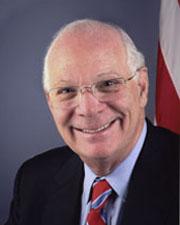 Sen. Benjamin L. Cardin (D-MD)
Legislative Activity
Stay on top of the latest movement without scrolling through every action
Senate amendment not agreed to: Amendment SA 1610 not agreed to in Senate by Yea-Nay Vote. 37 - 56. Record Vote Number: 216.
June 19, 2007
View full timeline
Senate amendment not agreed to: Amendment SA 1610 not agreed to in Senate by Yea-Nay Vote. 37 - 56. Record Vote Number: 216.
June 19, 2007
Roll call votes on amendments in Senate: Amendment SA 1610 not agreed to in Senate by Yea-Nay Vote. 37 - 56. Record Vote Number: 216.
June 19, 2007
Considered by Senate. (consideration: CR S7846, S7864, S7866-7869, S7870-7871)
June 19, 2007
Amendment SA 1610 not agreed to in Senate by Yea-Nay Vote. 37 - 56. Record Vote Number: 216.
June 19, 2007
Considered by Senate. (consideration: CR S7804)
June 18, 2007
Senate amendment submitted
June 15, 2007
Senate amendment proposed (on the floor): Amendment SA 1610 proposed by Senator Cardin to Amendment SA 1502.(consideration: CR S7783-7785; text: CR S7783)
June 15, 2007
Amendment SA 1610 proposed by Senator Cardin to Amendment SA 1502. (consideration: CR S7783-7785; text: CR S7783) To provide for the siting, construction, expansion, and operation of liquefied natural gas terminals.
June 15, 2007
Votes
1 roll call on this amendment
Text
Proposed
CREATING LONG-TERM ENERGY ALTERNATIVES FOR THE NATION ACT OF 2007

The ACTING PRESIDENT pro tempore. Under the previous order, the
Senate will resume consideration of H.R. 6, which the clerk will report
by title.
The legislative clerk read as follows:

A bill (H.R. 6) to reduce our Nation's dependency on
foreign oil by investing in clean, renewable, and alternative
energy resources, promoting new emerging energy technologies,
developing greater efficiency, and creating a Strategic
Energy Efficiency and Renewables Reserve to invest in
alternative energy, and for other purposes.

Pending:

Reid amendment No. 1502, in the nature of a substitute.

Reid (for Bingaman) amendment No. 1537 (to amendment No.
1502), to provide for a renewable portfolio standard.
Klobuchar (for Bingaman) amendment No. 1573 (to amendment
No. 1537), to provide for a renewable portfolio standard.
Bingaman (for Klobuchar) amendment No. 1557 (to amendment
No. 1502), to establish a national greenhouse gas registry.
Kohl amendment No. 1519 (to amendment No. 1502), to amend
the Sherman Act to make oil-producing and exporting cartels
illegal.
Kohl (for DeMint) amendment No. 1546 (to amendment 1502),
to provide that legislation that would increase the national
average fuel prices for automobiles is subject to a point of
order in the Senate.

Mr. BINGAMAN. Mr. President, I suggest the absence of a quorum.
The ACTING PRESIDENT pro tempore. The clerk will call the roll.
The legislative clerk proceeded to call the roll.
Mr. CORKER. Mr. President, I ask unanimous consent the order for the
quorum call be rescinded.
The ACTING PRESIDENT pro tempore. Without objection, it is so
ordered.

Amendment No. 1608 To Amendment No. 1502

Mr. CORKER. I ask unanimous consent the pending amendment be
temporarily laid aside so I may offer amendment No. 1608.
The ACTING PRESIDENT pro tempore. Is there objection?
Mr. DOMENICI. Mr. President, I understand this is all right with the
other side, so we have no objection.
The ACTING PRESIDENT pro tempore. Without objection, it is so
ordered.
The clerk will report.
The legislative clerk read as follows:

The Senator from Tennessee [Mr. CORKER] proposes an
amendment numbered 1608 to amendment No. 1502.

Mr. CORKER. I ask unanimous consent the reading of the amendment be
dispensed with.
The PRESIDING OFFICER. Without objection, it is so ordered.
The amendment is as follows:

(Purpose: To allow clean fuels to meet the renewable fuel standard)

In section 102(1)(B)(v), strike ``and'' at the end.
In section 102(1)(B)(vi), strike the period at the end and
insert ``; and''.
At the end of section 102(1)(B), add the following:
(vii) after December 31, 2015, any fuel that--

(I) is not derived from crude oil; and
(II) achieves--

(aa) as compared to conventional gasoline, lifecycle
emission reductions of 2 or more air pollutants, including--
(AA) sulfur dioxide;
(BB) nitrogen oxides;
(CC) carbon monoxide;
(DD) particulate matter with a diameter smaller than 10
microns; and
(EE) volatile organic compounds; and
(bb) a 20-percent reduction in lifecycle greenhouse gas
emissions compared to conventional gasoline.
In section 102, redesignate paragraphs (3) through (7) as
paragraphs (4) through (8), respectively, and insert between
paragraphs (2) and (4) (as so redesignated) the following:
(3) Clean fuel.--The term ``clean fuel'' means motor
vehicle fuel, boiler fuel, or home heating fuel that--
(A) is not derived from crude oil;
(B)(i) as compared to conventional gasoline, has lower
lifecycle emissions of 2 or more air pollutants, including--
(I) sulfur dioxide;
(II) nitrogen oxides;
(III) carbon monoxide;
(IV) particulate matter with a diameter smaller than 10
microns; and
(V) volatile organic compounds; or
(ii) achieves a 20-percent reduction in lifecycle
greenhouse gas emissions compared to conventional gasoline;
and
(C) has lower lifecycle greenhouse gas emissions than
conventional gasoline.
In section 102, strike paragraph (6) (as so redesignated)
and insert the following:
(6) Renewable fuel.--
(A) In general.--The term ``renewable fuel'' means motor
vehicle fuel, boiler fuel, or home heating fuel that is--
(i) produced from renewable biomass; and
(ii) used to replace or reduce the quantity of fossil fuel
present in a fuel or fuel mixture used to operate a motor
vehicle, boiler, or furnace.
(B) Inclusion.--The term ``renewable fuel'' includes--
(i) conventional biofuel;
(ii) advanced biofuel; and
(iii) clean fuel.
In section 111(a)(1)(B)(i)(II), insert ``(other than clean
fuels)'' after ``renewable fuels''.
Mr. CORKER. Mr. President, if we are serious about energy security
and reducing our dependence on foreign oil and our consumption of
gasoline, we have to, through our energy legislation, encourage a
variety of fuels and technologies. Current law requires 5.4 billion
gallons of renewable fuel in 2008, and 7.5 billion gallons in 2012. The
underlying bill on the floor today increases the amount to 8.5 billion
gallons in 2008 and 36 billion gallons by the year 2022.
The underlying bill focuses on renewable fuels, including ethanol
from corn and cellulosic ethanol, and I think that is outstanding. I am
so proud the State of Tennessee is going to be playing a very large
role in our country meeting those objectives.
The amendment I am offering expands the renewable fuel standard by
adding a clean fuel definition so any fuel meeting criteria may be a
part of the 36 billion gallon mandate. It does not in any way strike or
replace the underlying fuels that qualify.
To qualify as a clean fuel under this amendment, a fuel must meet the
following requirements: not be derived from crude oil, and achieve life
cycle greenhouse gas emission reductions that are better than the life
cycle greenhouse gas emissions of conventional gasoline.
In addition, on top of what I just said, it must meet one of the
following requirements: achieve a life cycle emission reduction
compared with conventional gasoline of two or more criteria pollutants.
Those pollutants include sulfur dioxide, nitrogen oxides, carbon
monoxide, volatile organic compounds, and particulate matter with a
diameter smaller than 10 microns; and achieve a life cycle greenhouse
gas emission reduction of 20 percent compared to conventional gasoline.
Under no circumstances per this amendment can a fuel qualify if its
greenhouse gas emissions are not less than conventional gasoline and if
it is derived from crude oil. In other words, crude oil products do not
qualify and the life cycle greenhouse gas emissions have to be less
than conventional gasoline.
In addition, a clean fuel may participate in the advanced biofuels
carve-out beginning in 2016 if it meets the follow requirements: not
derived from crude oil, achieves a life cycle emission reduction
compared to conventional gasoline of two or more criteria pollutants
including sulfur dioxide, nitrogen oxides, carbon monoxide, volatile
organic compounds, and particulate matter with a diameter smaller than
10 microns and, the other hurdle, achieves life cycle greenhouse gas
emission reductions of 20 percent compared to conventional gasoline.
We have a number of technologies that are being pursued today that
could meet the solutions our country needs to pursue. While I am a
tremendous fan of much of what is happening right now with ethanol--
again the

[[Page S7781]]

State of Tennessee playing a big role--we need to allow the
entrepreneurs in our country to help us solve this problem of
dependence on oil from foreign sources, especially those that are not
friendly to our country. For that reason, ethanol should not be our
only solution. What we should try to do as a body is not to pick
winners and losers. What we should do is set standards and allow the
market to meet those standards.
We have, again, tremendous initiatives going throughout our country.
What we need to do in the Senate is not to define too narrowly what we
want to help us be less dependent on foreign oil. If we do that, we
will continue to consume more and more gasoline. My amendment is
focused on making sure we continue to pursue energy security, that we
allow our gross domestic product to grow, and we harness that great
entrepreneurialism that exists throughout our country; that we do
everything we can to lower greenhouse gas emissions and other criteria
pollutants that also create tremendous damage to people throughout our
country. I think this amendment does that.
I ask my fellow Senators to endorse this particular amendment.
I notice at this point, after offering this amendment, there is an
absence of a quorum, and I wish to set aside my amendment.
The ACTING PRESIDENT pro tempore. The clerk will call the roll.
The legislative clerk proceeded to call the roll.
Mr. McCONNELL. Mr. President, I ask unanimous consent the order for
the quorum call be rescinded.
The ACTING PRESIDENT pro tempore. Without objection, it is so
ordered.
Mr. McCONNELL. I ask unanimous consent I be allowed to proceed for a
few moments in morning business.
The ACTING PRESIDENT pro tempore. Without objection, it is so
ordered.

THE DEATH OF RUTH BELL GRAHAM

Mr. McCONNELL. Mr. President, I would like to say a word about the
passing yesterday of a great woman.
As a child, Ruth Bell dreamed of surrendering her life to missionary
work abroad. Then she gave up that dream so someone else could live it
in her place. In this and in so many other quiet sacrifices, Ruth Bell
Graham truly lived the life her husband preached.
She inspired generations of men and women with her honest, wise, and
faith-filled writings. And she inspired us again at the end by
accepting with serenity the physical suffering of a long and painful
illness.
Her autobiography told the story of an ordinary woman struggling to
raise a family while her famous husband wandered the world preaching to
a thousand roaring crowds. But, as she said, ``I'd rather have a little
bit of Bill than a lot of any other man.''
Looking back last night on more than 60 years of marriage, Billy
Graham remembered his wife with a thankful heart. ``I am so grateful to
the Lord that he gave me Ruth,'' he said. As America says goodbye to
the First Lady of Evangelical Christianity, we make those words our
own.
Like the Biblical heroine whose name she shared, Ruth Bell Graham
followed her pilgrim's journey wherever it took her. As a mother, a
counselor, and the indispensable confidant of the world's most famous
preacher, she was always content to stay in the background. Her
missionary field was her home. And in this, she was a powerful witness
of the Gospel she loved.
We are grateful for her faithfulness. And we mourn with the Graham
family--Billy, Franklin, Nelson, Virginia, Anne, and Ruth--at the loss
of this good and faithful servant.
Mr. CARDIN. Mr. President, I ask unanimous consent to lay the pending
amendment aside.
The ACTING PRESIDENT pro tempore. Without objection, it is so
ordered.

Amendment No. 1520 To Amendment No. 1502

Mr. CARDIN. I call up amendment No. 1520 and ask for its immediate
consideration.
The ACTING PRESIDENT pro tempore. The clerk will report.
The legislative clerk read as follows:

The Senator from Maryland [Mr. Cardin] proposes an
amendment numbered 1520 to amendment No. 1502.

Mr. CARDIN. I ask unanimous consent the reading of the amendment be
dispensed with.
The ACTING PRESIDENT pro tempore. Without objection, it is so
ordered.
The amendment is as follows:

(Purpose: To promote the energy independence of the United States)

At the end of subtitle D of title II, add the following:

SEC. 255. SUPPORT FOR ENERGY INDEPENDENCE OF THE UNITED
STATES.

It is the policy of the United States to provide support
for projects and activities to facilitate the energy
independence of the United States so as to ensure that all
but 10 percent of the energy needs of the United States are
supplied by domestic energy sources by calendar year 2017.

SEC. 256. ENERGY POLICY COMMISSION.

(a) Establishment.--
(1) In general.--There is established a commission, to be
known as the ``National Commission on Energy Independence''
(referred to in this section as the ``Commission'').
(2) Membership.--The Commission shall be composed of 15
members, of whom--
(A) 3 shall be appointed by the President;
(B) 3 shall be appointed by the majority leader of the
Senate;
(C) 3 shall be appointed by the minority leader of the
Senate;
(D) 3 shall be appointed by the Speaker of the House of
Representatives; and
(E) 3 shall be appointed by the minority leader of the
House of Representatives.
(3) Co-chairpersons.--
(A) In general.--The President shall designate 2 co-
chairpersons from among the members of the Commission
appointed.
(B) Political affiliation.--The co-chairpersons designated
under subparagraph (A) shall not both be affiliated with the
same political party.
(4) Deadline for appointment.--Members of the Commission
shall be appointed not later than 90 days after the date of
enactment of this Act.
(5) Term; vacancies.--
(A) Term.--A member of the Commission shall be appointed
for the life of the Commission.
(B) Vacancies.--Any vacancy in the Commission--
(i) shall not affect the powers of the Commission; and
(ii) shall be filled in the same manner as the original
appointment.
(b) Purpose.--The Commission shall conduct a comprehensive
review of the energy policy of the United States by--
(1) reviewing relevant analyses of the current and long-
term energy policy of, and conditions in, the United States;
(2) identifying problems that may threaten the achievement
by the United States of long-term energy policy goals,
including energy independence;
(3) analyzing potential solutions to problems that threaten
the long-term ability of the United States to achieve those
energy policy goals; and
(4) providing recommendations that will ensure, to the
maximum extent practicable, that the energy policy goals of
the United States are achieved.
(c) Report and Recommendations.--
(1) In general.--Not later than December 31 of each of
calendar years 2009, 2011, 2013, and 2015, the Commission
shall submit to Congress and the President a report on the
progress of United States in meeting the long-term energy
policy goal of energy independence, including a detailed
statement of the findings, conclusions, and recommendations
of the Commission.
(2) Legislative language.--If a recommendation submitted
under paragraph (1) involves legislative action, the report
shall include proposed legislative language to carry out the
action.
(d) Commission Personnel Matters.--
(1) Staff and director.--The Commission shall have a staff
headed by an Executive Director.
(2) Staff appointment.--The Executive Director may appoint
such personnel as the Executive Director and the Commission
determine to be appropriate.
(3) Experts and consultants.--With the approval of the
Commission, the Executive Director may procure temporary and
intermittent services under section 3109(b) of title 5,
United States Code.
(4) Federal agencies.--
(A) Detail of government employees.--
(i) In general.--Upon the request of the Commission, the
head of any Federal agency may detail, without reimbursement,
any of the personnel of the Federal agency to the Commission
to assist in carrying out the duties of the Commission.
(ii) Nature of detail.--Any detail of a Federal employee
under clause (i) shall not interrupt or otherwise affect the
civil service status or privileges of the Federal employee.
(B) Technical assistance.--Upon the request of the
Commission, the head of a Federal agency shall provide such
technical assistance to the Commission as the Commission
determines to be necessary to carry out the duties of the
Commission.
(e) Resources.--

[[Page S7782]]

(1) In general.--The Commission shall have reasonable
access to materials, resources, statistical data, and such
other information from Executive agencies as the Commission
determines to be necessary to carry out the duties of the
Commission.
(2) Form of requests.--The co-chairpersons of the
Commission shall make requests for access described in
paragraph (1) in writing, as necessary.

Mr. CARDIN. Mr. President, so many of my colleagues on both sides of
the aisle have come to this floor to talk about the need for this
Nation to become energy independent. In fact, I think each Member of
this body believes this country should be energy independent and can
become energy independent. We need to be independent for many reasons.
First and foremost is the issue of national security. We should not
be dependent for oil upon some country halfway around the world that
disagrees with our foreign policy, which affects what we can do
internationally. We should be independent for national security
reasons.
We should also be energy independent for economic reasons. Yesterday
in the Small Business Committee we held a hearing on the impact that
increased gasoline prices are having on small businesses in our
communities. It is having an impact on our entire economy. Again, the
OPEC countries decide what the price of oil will be and it affects
gasoline prices, energy prices, and our economy. We need to become
energy independent for the economic security of America.
Yes, we need to become energy independent for environment issues.
Global climate change is a real danger to this country and we need to
have an energy policy that will also make us friendlier toward our
environment.
For all these reasons we need to become energy independent. We are
not today. We import from other countries over one-third of our energy
needs in this country and, of course, a significant amount of that is
oil. I believe we can become energy independent in 10 years. I think,
if we have the national will and the energy policies, it can be
accomplished.
The amendment I sent before this body today sets as our goal
producing 90 percent of our energy needs by the year 2017. Each of us
has ideas as to how to achieve energy independence. There have been
many good suggestions that have been brought forward by my colleagues.
I have introduced legislation that would require the Federal Government
to construct its buildings to LEED Silver standards. Buildings
represent one-third of the energy use in this country. Mr. President,
38 percent of the carbon dioxide emissions come from buildings. That,
of course, is the major greenhouse gas. Federal buildings consume 40
percent of the Federal Government's energy bill, $3.73 billion in 2002.
The GSA is already using LEED standards in encouraging Federal
construction, but all new Federal facilities should meet these new LEED
Silver standards.
I ask my colleagues to go down the road here a couple of miles to the
new NOAA facility located in Suitland, MD, and see the type of
construction we should be building that gives our Federal Government
the necessary facility to conduct its business but also is one that
will save us a considerable amount of energy.
LEED-certified buildings use 32 percent less energy, 26 percent less
natural gas, and 36 percent total less energy used. I mention that
because that is just one way this Nation can move toward energy
independence.
We know we will be having a debate on the Senate floor next week on
the CAFE standards, on the efficiencies of our automobile and light
truck engines. Yes, efficiency can save us a lot of energy and can help
make us energy independent.
Let me mention another example, the automobile tires we use. If we
used the right tires, we could save millions of barrels of gasoline
every year. Public transit, I can tell you in my own State, the Purple
Line is not only needed to get people from one place to the other in
this region, it will save us considerable energy. Investment in public
transit will help with efficiency in this country. We need to develop
alternative and renewable energy sources. There are so many potentials.
Solar power. We invented the ability to use solar power for energy.
The technologies have come from America. BP Solar, which is located in
Fredrick, MD, is a leading example of what we can do. But we do not use
solar energy anywhere near as much as we should in this country.
Wind is available, but we do not use that technology as much as we
should. Cellulosic ethanol or gasoline is another major potential
source for becoming energy independent.
Biodiesel. We have a person from the eastern shore, Berlin, MD, who
has a biodiesel plant. And that county, Worcester County, uses their
fleet of diesel trucks and the biodiesel saving us energy. So
alternatives and renewable sources can help us.
We also need to fund new technology for developing clean-burning coal
and the next generation of nuclear power and the use of hydrogen power.
I mention that because these are the discussions we are having on the
floor of this body, ways in which we can become energy independent by
being more efficient in the use of energy, by developing alternative
and renewable energy sources and putting our resources into research
for the next generation of technology to meet our energy needs.
So what does my amendment do? My amendment establishes a commission
to monitor our program and to keep us on track to accomplish our goal,
to be energy independent by 2017. It allows for midcourse adjustments
by the commission, making recommendations on a 2-year cycle, so we can
make those cycles of adjustments. We keep control, the Congress keeps
control of the energy policies of the country. But we have a bipartisan
way in which we can make sure we live up to our commitment to be energy
independent in 10 years.
If our constituents know we are going to accomplish this goal, they
are going to be willing to do what is necessary so we achieve this
energy independence. It maintains the responsibility of this body and
the other body across the hall. It is our Apollo commitment. I have
heard more Senators use that term, ``Apollo commitment.'' It is our
Apollo commitment.
It took us 10 years. We made that commitment to put a person on the
Moon, and we succeeded. If we make the commitment today to be energy
independent in 10 years, we can achieve that goal. That is what this
amendment does. I hope it will not be a controversial amendment. I hope
we can get it done so we put into this legislation our commitment to
truly become energy independent.
Mr. President, I have a second amendment I want to call up. I want to
make sure there is--I know there is a protocol of alternating
amendments. If there is no objection, I was going to ask unanimous
consent--I see that the Senator from New Mexico is here.
Let me make sure. I have a second amendment I wanted to call up. I
know we are alternating.
Mr. DOMENICI. We will be ready with ours in just 1 minute. We will
offer one. We would object.
Mr. CARDIN. Mr. President, I suggest the absence of a quorum.
The ACTING PRESIDENT pro tempore. The clerk will call the roll.
The legislative clerk proceeded to call the roll.
Mr. DOMENICI. Mr. President, I ask unanimous consent the order for
the quorum call be rescinded.
The ACTING PRESIDENT pro tempore. Without objection, it is so
ordered.
Mr. DOMENICI. First, let me say to my friend from Maryland, if you
will wait a minute, you do not even have to leave the floor. It will
not take very long.
Mr. President, I ask the pending amendment be set aside so I might
call up the Thune amendment, which we have agreed to.
The ACTING PRESIDENT pro tempore. Without objection, it is so
ordered.

Amendment No. 1609 to Amendment No. 1502

Mr. DOMENICI. Mr. President, I send to the desk amendment No. 1609 on
behalf of Senator Thune and ask for its immediate consideration.
The ACTING PRESIDENT pro tempore. The clerk will report the
amendment.
The legislative clerk read as follows:

The Senator from New Mexico [Mr. Domenici], for Mr. Thune,
proposes an amendment numbered 1609 to amendment No. 1502.

Mr. DOMENICI. Mr. President, I ask unanimous consent the reading of
the amendment be dispensed with.

[[Page S7783]]

The ACTING PRESIDENT pro tempore. Without objection, it is so
ordered.
The amendment is as follows:

(Purpose: To provide requirements for the designation of national
interest electric transmission corridors)

At the appropriate place, insert the following:

SEC. ___. CLEAN ENERGY CORRIDORS.

Section 216 of the Federal Power Act (16 U.S.C. 824p) is
amended--
(1) in subsection (a)--
(A) by striking ``(1) Not later than'' and inserting the
following:
``(1) In general.--Not later than'';
(B) by striking paragraph (2) and inserting the following:
``(2) Report and designations.--
``(A) In general.--After considering alternatives and
recommendations from interested parties (including an
opportunity for comment from affected States), the Secretary
shall issue a report, based on the study conducted under
paragraph (1), in which the Secretary may designate as a
national interest electric transmission corridor any
geographic area experiencing electric energy transmission
capacity constraints or congestion that adversely affects
consumers, including constraints or congestion that--
``(i) increases costs to consumers;
``(ii) limits resource options to serve load growth; or
``(iii) limits access to sources of clean energy, such as
wind, solar energy, geothermal energy, and biomass.
``(B) Additional designations.--In addition to the corridor
designations made under subparagraph (A), the Secretary may
designate additional corridors in accordance with that
subparagraph upon the application by an interested person, on
the condition that the Secretary provides for an opportunity
for notice and comment by interested persons and affected
States on the application.'';
(C) in paragraph (3), the striking ``(3) The Secretary''
and inserting the following:
``(3) Consultation.--The Secretary''; and
(D) in paragraph (4)--
(i) by striking ``(4) In determining'' and inserting the
following:
``(4) Basis for determination.--In determining''; and
(ii) by striking subparagraphs (A) through (E) and
inserting the following:
``(A) the economic vitality and development of the
corridor, or the end markets served by the corridor, may be
constrained by lack of adequate or reasonably priced
electricity;
``(B)(i) economic growth in the corridor, or the end
markets served by the corridor, may be jeopardized by
reliance on limited sources of energy; and
``(ii) a diversification of supply is warranted;
``(C) the energy independence of the United States would be
served by the designation;
``(D) the designation would be in the interest of national
energy policy; and
``(E) the designation would enhance national defense and
homeland security.''; and
(2) by adding at the end the following:
``(l) Rates and Recovery of Costs.--
``(1) In general.--Not later than 1 year after the date of
enactment of this subsection, the Commission shall promulgate
regulations providing for the allocation and recovery of
costs prudently incurred by public utilities in building and
operating facilities authorized under this section for
transmission of electric energy generated from clean sources
(such as wind, solar energy, geothermal energy, and biomass).
``(2) Applicable provisions.--All rates approved under the
regulations promulgated under paragraph (1), including any
revisions to the regulations, shall be subject to the
requirements under sections 205 and 206 that all rates,
charges, terms, and conditions be just and reasonable and not
unduly discriminatory or preferential.''.

Mr. DOMENICI. Mr. President, having presented the amendment, I now
ask that the Thune amendment be set aside so the next amendment may be
offered by the Senator from Maryland.
The ACTING PRESIDENT pro tempore. Without objection, it is so
ordered.
The Senator from Maryland is recognized.
Mr. CARDIN. Mr. President, I send to the desk an amendment and ask
for its immediate consideration.
The ACTING PRESIDENT pro tempore. The clerk will report the
amendment.
The legislative clerk read as follows:

The Senator from Maryland [Mr. Cardin], for himself, Ms.
Mikulski, Mr. Dodd, Mr. Kerry, Mr. Reed, Mr. Kennedy, Mr.
Whitehouse, and Ms. Snowe, proposes an amendment numbered
1610 to amendment No. 1502.

Mr. CARDIN. Mr. President, I ask unanimous consent the reading of the
amendment be dispensed with.
The ACTING PRESIDENT pro tempore. Without objection, it is so
ordered.
The amendment is as follows:

(Purpose: To provide for the siting, construction, expansion, and
operation of liquefied natural gas terminals)

At the appropriate place, insert the following:

SEC. ___. SITING, CONSTRUCTION, EXPANSION, AND OPERATION OF
LNG TERMINALS.

Section 10 of the Act of March 3, 1899 (33 U.S.C. 403), is
amended--
(1) by striking the section designation and all that
follows through ``creation'' and inserting the following:

``SEC. 10. OBSTRUCTION OF NAVIGABLE WATERS; WHARVES AND
PIERS; EXCAVATIONS AND FILLING IN.

``(a) In General.--The creation''; and
(2) by adding at the end the following:
``(b) Siting, Construction, Expansion, and Operation of LNG
Terminals.--
``(1) Definition of affected state.--In this subsection,
the term `affected State' means, with respect to a liquefied
natural gas terminal that is the subject of an application
for an authorization under this section, a State that--
``(A) would be directly connected by a pipeline to the
liquefied natural gas terminal;
``(B) would be located within 15 miles of the liquefied
natural gas terminal; or
``(C) is designated as an affected State by the Secretary
due to a risk of damage to the coastal environment of the
affected State that is equal to or greater than the risk of
damage to the coastal environment of the State in which the
liquified natural gas terminal is proposed to be located.
``(2) Limitation.--The Secretary shall not approve or
disapprove an application for an authorization under this
section for the siting, construction, expansion, or operation
of a liquefied natural gas terminal pursuant to this section
without the express concurrence of the Governor of each
affected State.''.

Mr. CARDIN. Mr. President, this amendment I am introducing with
Senators Mikulski, Dodd, Reed, Kennedy, Whitehouse, and Snowe would
restore the authority of State and local governments to protect the
environment and ensure public safety with respect to the siting of
liquefied natural gas, LNG, terminals within their States.
This measure simply gives our States a say in whether these kinds of
facilities should be built within their boundaries and, if so, the
exact location.
The amendment adds a provision to the Rivers and Harbors Act of 1899.
Under that law, the Army Corps of Engineers, acting for the Secretary
of the Army, is responsible for issuing permits to anyone who wants to
build a structure in and above the waters of the United States. These
are often called section 10 permits because that is where the provision
is found in the Rivers and Harbors Act.
Currently, the Army Corps issues all such permits. In the narrow
conditions outlined in our amendment, the Corps would have to get the
concurrence of the affected State before issuing a permit to build an
LNG terminal. That is all, just work with the States. It is just
federalism. That is what federalism is all about, the Federal
Government working with the States. The States certainly have a direct
interest on the siting of LNG plants.
This amendment does not limit the Federal Regulatory Energy
Commission, FERC. FERC will still be able to make its decisions
regarding siting, construction, and operation of LNG facilities. FERC
has that blanket authority. So be it. But the Army Corps of Engineers
also has a say in whether such a facility can be built in the waters of
the United States. Today we turn to the Corps for relief.
In recent years, the LNG industry has proposed building dozens of new
LNG terminals throughout the United States, as LNG's share of the
natural gas market continues to grow rapidly. Many of these terminals
are being planned near populated areas or environmentally sensitive
coastal areas. We are simply seeking an opportunity for States to have
a meaningful opportunity to take those safety and environmental issues
into account.
Maryland is already home of one of the six operating LNG terminals in
the United States. This bill would have no effect whatsoever on that
facility. In fact, that facility is generally welcomed by its host
community and is supported by county and local elected officials. That
is how it should be. Companies that want to build an LNG terminal
should work with the local community and address all of the safety and
security concerns. It can be done. We have the proof of it in the State
of Maryland.
This amendment is not designed to stop LNG terminals. It is solely to
make sure that such projects are sited properly. Unfortunately, that is
not always the case. AES Sparrows Point

[[Page S7784]]

LNG and Mid-Atlantic Express have proposed building a new terminal near
a densely populated area of Baltimore. Our area congressional
delegation, Senator Mikulski and I, Governor O'Malley, Baltimore County
Executive Jim Smith, and local officials and community leaders believe
this project poses unacceptable public safety, economic and
environmental risks, and does not serve the public interest.
Yet under current law, FERC now has exclusive authority to approve
onshore LNG terminal siting applications. But these facilities still
must obtain environmental permits, including a section 10 permit under
the provisions of the Rivers and Harbors Act.
It is vital, in my opinion, that State and local authorities and the
public have a meaningful opportunity to participate in the
decisionmaking process about where these plants are located. An
accident or a terrorist act at an LNG terminal could have a devastating
impact on the communities nearby, so they should have a voice in the
siting.
The amendment I am introducing today seeks to restore that authority
and gives Governors some real clout. The proponents of building LNG
terminals should have to negotiate in good faith with States and local
communities if they want those communities to bear the risk associated
with such operations.
My amendment does not prohibit the construction of LNG terminals. It
merely levels the playing field with regard to determining where they
will be located. It is what federalism should be all about. We should
respect that. This amendment moves us in that direction.
I urge my colleagues to join me in supporting this amendment.
Mr. President, I yield the floor, and I suggest the absence of a
quorum.
The ACTING PRESIDENT pro tempore. The clerk will call the roll.
The assistant legislative clerk proceeded to call the roll.
Mr. NELSON of Florida. Mr. President, I ask unanimous consent that
the order for the quorum call be rescinded.
The PRESIDING OFFICER (Mr. Cardin). Without objection, it is so
ordered.
Mr. NELSON of Florida. Mr. President, we are on the Energy bill. It
is expected that we are going to have a big fight out here, a political
fight, regarding the question of miles per gallon--requirements for the
manufactured automobiles, light trucks, and then what are medium-size
and heavier trucks--what the miles per gallon requirements are going to
be.
A couple weeks ago, I was on an Intelligence Committee trip all
through Africa. Needless to say, there is increasing al-Qaida presence
in Africa. Indeed, an organization called AQIM--al-Qaida in the Islamic
Maghreb--is a group that broke through the barriers of the Presidential
palace in Algiers, Algeria, and a suicide bomber detonated a bomb right
next to the Presidential palace, injuring and killing some people,
doing damage to the Presidential palace, but the President was not
harmed.
What we have is an increasing threat not only to the peoples of
Africa but to the interests of the United States. What is one of those
interests? One of those interests is all the places from which we get
oil. One of those places is the Niger River Delta in the country of
Nigeria.
I met with the new President of Nigeria. He had just been inaugurated
some 5 days earlier, and I believe he understands the significant
threat to Nigeria's oil production. Already a good portion of Nigeria's
oil production is siphoned off by bandits and others who are using
kidnappings, asking for ransom, tapping into the oil wells, siphoning
off the oil and the gas to the point that they produce about 3 million
barrels a day of oil, and yet what they are shipping is only about 2.4
million barrels a day. So they are losing right there, off the bat,
just to bandits, 600,000 barrels of oil a day, just in that one
country.
But that oil that is shipped is shipped to the United States. That
oil represents 12 to 14 percent of America's daily consumption. What
happens if the terrorists strike and a major part of that oil
production is eliminated? Well, you can imagine what America would do
if it suddenly had 12 to 14 percent less oil per day.
Oh, by the way, that is not the only place where we are threatened.
We are also threatened, indeed, by a fellow named Hugo Chavez,
President of Venezuela. Venezuela sends us 12 to 14 percent of our
daily consumption of oil. Of course, he has been making those threats
as well. But that is little more of an idle threat, in this Senator's
opinion, because of the vast infrastructure the Venezuelan oil company
PDVSA has through their distribution outlets of Citgo gas stations here
in America.
All right, what does this have to do with the Energy bill? It has a
lot to do with the Energy bill because one of the primary things we
ought to be doing as a matter of Government policy is weaning ourselves
from oil and particularly from foreign oil. What is one of the best
ways to do that? It is to go to the place where most oil is consumed in
America, and that is in the transportation sector. And where in the
transportation sector is most of the oil consumed? It is in our
personal vehicles.
So if we really want to do something that would affect this ripple
effect if al-Qaida struck in a number of very sensitive oil-producing
places in Africa, then right here in this Senate, at this moment,
considering the Energy bill, we better be serious about what we are
doing for miles-per-gallon requirements.
Now, it is almost inexcusable that back when we had the oil embargo
in the early 1970s and we said we were going to do something about it,
that then we went back to sleep. Then again we had another disruption
of the oil flow in the late 1970s, and we went through the drill again,
and we said we were going to do something about it, and we went back to
sleep. All of those mileage standards we put into law kept being
delayed and excused and sidelined, and here we are where we are, with
American automobile companies being some of the worst in dragging their
feet, so that higher mileage per gallon has not been achieved, and we
find ourselves so dependent on oil and, indeed, so dependent on foreign
oil to the tune of 60 percent of our daily consumption of oil is being
imported from foreign shores.
So what are we going to do about it? All right, the moment of truth
is coming in a few days because we are going to have a chance to enact
this bill and what it has in the bill, which is 35 miles per gallon by
the year 2020--that is 13 years in the future--35 miles per gallon on
cars and light trucks, and then there are some exceptions for medium-
size and heavier trucks.
In 13 years, can America go from a standard of somewhere around 26
miles per gallon to 35 miles per gallon? If we have the technology to
do some of the extraordinary things we have already done in
technology--in energy, in defense, in so many things--do we have the
capability, technologically, in 13 years to increase the fleet average
to 35 miles per gallon? You bet we do. The question is, Do we have the
political will? That is going to be the moment of truth.
Now, there are going to be those who are going to come with a
seductive alternative--Senator Levin, Senator Stabenow. Their seductive
alternative is: Well, we will do the same number of miles per gallon,
but we will stretch it out a little bit further. We will make it 2025
instead of 2020.

Do we have the political will to make the decision that the time is
now to change our oil-consuming habits so we can lessen our dependence
on oil, and specifically foreign oil?
This Senator is going to offer an even tougher standard: 40 miles per
gallon. We have the technology. Do we have the political will? I think
it is going to be very hard to pass 40 miles per gallon. Senator
Feinstein, Senator Bingaman, and others came up with what is in the
bill now: 35 miles per gallon over the course of the next 13 years. I
think it ought to be higher. I think we ought to be serious. I will
tell my colleagues, if al-Qaida ever does strike and cut off that oil,
this Senate will be in session and we will be exacting much higher
standards, because the political will would be demanded at that point.
Are we going to look over the horizon and see all of the pitfalls and
avoid them by going ahead and enacting into law a stronger standard?
I have had the privilege of representing my State of Florida for the
past 7 years in the Senate, and I have tried, along with other
Senators, particularly Senator Kerry, to enact

[[Page S7785]]

higher mileage per gallon standards on SUVs. We could never get the
votes because there wasn't the political will. The clock is ticking and
time is running out. It is going to happen because a lot of those
oilfields scattered around the world--and I have given one example of
Nigeria--are vulnerable to attack. The only way we are going to prevent
those attacks is our intelligence apparatus, working with the
intelligence services of other nations, to find out in advance so we
can prevent it, because they can't defend it there. The military forces
of those countries throughout the world are not sufficient to defend
it. We are only going to prevent it by finding out about it through the
gathering of intelligence. But our intelligence gathering can't be 100
percent foolproof. So the likelihood is it is going to happen.
Let's get prepared, I beg the Senate. We have dragged our feet. We
have not produced more than about 39 votes in the past to increase
miles per gallon standards on SUVs. Will we wake up, America? Will we
have the will? It is coming, and it is going to come about next Tuesday
or Wednesday when we vote on these amendments.
Mr. President, I yield the floor.
The ACTING PRESIDENT pro tempore. The Senator from Colorado is
recognized.
Mr. SALAZAR. Mr. President, let me congratulate my friend from
Florida for his passionate statement on this imperative. As Abraham
Lincoln might say, we are trying to give our Nation a new birth of
freedom from the oil addiction that is very much compromising the
national security of our Nation. Certainly how we deal with
transportation fuels and move forward with higher standards and more
efficient vehicles is something I hope this body has the political will
to do through the underlying bill, which will move us to 35 miles per
gallon within a reasonable time period. I very much appreciate his
leadership on this effort and I look forward to joining him on this
battle next week as we try to move forward.

Amendment No. 1524 to Amendment No. 1502

Mr. President, I ask unanimous consent that the pending amendment be
set aside, and I call up amendment No. 1524.
The ACTING PRESIDENT pro tempore. Without objection, it is so
ordered.
The clerk will report the amendment.
The assistant legislative clerk read as follows:

The Senator from Colorado [Mr. Salazar], for himself, Mr.
Grassley, Mr. Obama, Mr. Harkin, Mr. Hagel, Mr. Lugar, Mr.
Lieberman, Mr. Feingold, Mrs. Clinton, Mr. Casey, Mr. Ben
Nelson, Mr. Brownback, Mr. Kohl, Mr. Kerry, Mr. Johnson, Mr.
Tester, Ms. Cantwell, Mr. Thune, and Mr. Cochran, proposes an
amendment numbered 1524 to amendment No. 1502.

Mr. SALAZAR. Mr. President, I ask unanimous consent that the reading
of the amendment be dispensed with.
The ACTING PRESIDENT pro tempore. Without objection, it is so
ordered.
The amendment is as follows:

Amendment No. 1524

(Purpose: To express the sense of Congress relating to the use of
renewable resources to generate energy)

On page 27, after line 23, add the following:

SEC. 113. SENSE OF CONGRESS RELATING TO THE USE OF RENEWABLE
RESOURCES TO GENERATE ENERGY.

(a) Findings.--Congress finds that--
(1) the United States has a quantity of renewable energy
resources that is sufficient to supply a significant portion
of the energy needs of the United States;
(2) the agricultural, forestry, and working land of the
United States can help ensure a sustainable domestic energy
system;
(3) accelerated development and use of renewable energy
technologies provide numerous benefits to the United States,
including improved national security, improved balance of
payments, healthier rural economies, improved environmental
quality, and abundant, reliable, and affordable energy for
all citizens of the United States;
(4) the production of transportation fuels from renewable
energy would help the United States meet rapidly growing
domestic and global energy demands, reduce the dependence of
the United States on energy imported from volatile regions of
the world that are politically unstable, stabilize the cost
and availability of energy, and safeguard the economy and
security of the United States;
(5) increased energy production from domestic renewable
resources would attract substantial new investments in energy
infrastructure, create economic growth, develop new jobs for
the citizens of the United States, and increase the income
for farm, ranch, and forestry jobs in the rural regions of
the United States;
(6) increased use of renewable energy is practical and can
be cost effective with the implementation of supportive
policies and proper incentives to stimulate markets and
infrastructure; and
(7) public policies aimed at enhancing renewable energy
production and accelerating technological improvements will
further reduce energy costs over time and increase market
demand.
(b) Sense of Congress.--It is the sense of Congress that it
is the goal of the United States that, not later than January
1, 2025, the agricultural, forestry, and working land of the
United States should--
(1) provide from renewable resources not less than 25
percent of the total energy consumed in the United States;
and
(2) continue to produce safe, abundant, and affordable
food, feed, and fiber.

Mr. SALAZAR. Mr. President, I rise today to offer the 25x'25
resolution as an amendment to H.R. 6, the Energy bill. I am proud to be
joined in this endeavor by a broad bipartisan group of Senators. They
include Senators Grassley, Harkin, Lugar, Obama, Hagel, Clinton,
Feingold, Casey, Nelson of Nebraska, Brownback, Kohl, Kerry, Johnson,
Tester, Cantwell, Thune, and Cochran, all of whom are sponsors of S.
Con. Res. 3, which we introduced earlier this year.
Mr. President, 25x'25 is a critical vision for our energy future that
will help reduce our dependence on foreign oil by building a new energy
economy here at home. Our amendment establishes a national goal of
producing 25 percent of America's energy from renewable sources, such
as solar, wind, and biofuels, by 2025.
The 25x'25 vision is widely endorsed, it is bold, and it is fully
attainable. If implemented, it will dramatically improve our energy
security, our economy, and our ability to protect the environment and
combat global warming. 25x'25 complements the steps we are taking on
the bill before us today which reflects the good work of the Energy and
Natural Resources Committee and the other committees that have
contributed so greatly to this bill.
I am pleased that 17 of my colleagues in the Senate from both sides
of the aisle are cosponsoring this resolution. In addition, the 25x'25
vision has been endorsed by 22 current and former Governors and many
State legislatures around the country.
The Big Three auto manufacturers--Ford, Chrysler, and General
Motors--are all behind 25x'25. So are many agricultural organizations,
environmental groups, scientists, and businesses, ranging from the
Farmers' Union and the Farm Bureau to the Natural Resources Defense
Council, and companies such as John Deere.
The breadth of support for the 25x'25 vision speaks to the
extraordinary economic, environmental, and national security benefits
that its achievement will yield. In all, nearly 400 organizations have
embraced this vision and are working together on a plan to implement
it.
The amendment I am introducing makes the 25x'25 vision a policy goal
for our Nation. It sets a challenging but realistic target for our
legislative and budgetary work on energy. Our amendment says the
ingenuity and entrepreneurship of the American people should be the
engine for a new, clean energy economy for the 21st century.
I urge every American to join with me and roughly 400 partner
organizations that are part of 25x'25 to make this goal a reality.
Results from a recent study conducted by the University of Tennessee
show that reaching the 25x'25 goal is, indeed, achievable. The study
also shows that 25x'25 would do the following: First, it would increase
net farm income in America by $180 billion and, including multiplier
effects, could result in $700 billion in economic activity annually for
America. Secondly, it would create 5 million new jobs here at home by
2025; and third, it would save as much as $15 billion in Government
payments across America.
America's working people can and should be at the center of our
energy revolution. Farmers and ranchers in my native San Luis Valley,
in Sterling, CO, and elsewhere, are already leading the way. They are
building biodiesel plants and ethanol refineries that help power cars,
tractors, and trucks. They are building wind turbines in Prowers County
and biomass generators in Jackson County, and they are searching for
new technologies that will allow them to make even greater
contributions to our energy supply. These Americans understand we
cannot continue to import 60 percent of our oil

[[Page S7786]]

from foreign countries, many of which are hostile to the United States.
If we aim to be strong and secure in this world, we must have this kind
of bold vision. They know we will have to build a clean energy economy
for America if we are to reduce our dependence on foreign oil.
A clean energy economy will take root in our farms and in our fields.
It will help revitalize a rural America that has been forgotten for far
too long. It will spur our engineers to new developments and designs,
and it will help establish the United States as a world leader in clean
energy technologies. It is time for Congress to take a more active role
in our clean energy future. Establishing a national goal of 25x'25 is
an important first step.
Americans understand we cannot continue to import 60 percent of our
oil from foreign countries, many of which are hostile to the United
States, if we aim to be strong and secure in the world. We must rid
ourselves of this dependency and this addiction. They know we will have
to build a clean energy economy if we are to reduce our dependence on
foreign oil.
Today, with this amendment, we are articulating a common vision for
our energy policy. It is a target that Governors, Senators,
Representatives, State legislators, farmers, ranchers, business people,
scientists, and automakers all wish to achieve. It is a target we can
hit, particularly with the policies that are built into this bill.

I ask my Democratic and Republican colleagues to support this
amendment and to join the millions of Americans who are already working
toward the 25x'25 goal.
I want to make a comment about the imperative of the energy issue
that is before the Senate today. When I look at the 21st century, I ask
myself: What is it the people of my State, and what is it the people of
America want me to do as their Senator, not only for our generation but
for the next generation and generations to come? It seems to me the
challenges of the 21st century are daunting challenges, major
challenges, that face us. We can essentially put them into three, and
they are all under an umbrella of security for this Nation and
ultimately security for civilization.
The first of those challenges is foreign policy: How can we in
America move forward and try to put Humpty Dumpty together again when
we see so much violence in the Middle East and other places around the
world? How can we make sure the dream and vision of the generation of
World War II is something we preserve? How can we say to our children
and to our grandchildren that the world we are leaving to them is a
safer and more secure world? Certainly that generation of World War II
believed they had accomplished that, that they were leaving a world
which was a much safer and a much more secure world for the generations
that would come after them. Indeed, we have been the beneficiaries of
their sacrifices. Over half a million Americans gave their lives to
preserve freedom around the world in World War II, including members of
my family who gave their lives on the soils of Europe. They had a
vision of a more secure world.
We have some major challenges in Iraq, as we witness the violence
there, and when we see what is happening today in Lebanon where we are
on the precipice of another civil war there, and when we see what is
happening in Gaza and Israel where Hamas has now apparently taken over
the Gaza Strip and the emergency that we see President Abbas has
declared in the Gaza Strip.
We have to somehow figure out this very challenging task of how we
put the world back together again. How do we secure the vision the
people of America want us to have, which is that we create a safer and
more secure world for ourselves and for those generations who will come
behind us?
The second issue which, in my view, confronts America today and which
is interrelated with some of the violence we see in the Middle East is
energy. For far too long we have neglected this issue. I am proud of
the fact that in 2005, this body came together in a bipartisan way and
we opened a new chapter for energy in America. I am very proud of this
bill today because it builds on that chapter that gets us to energy
independence. We have to look at the failings of America under both
Democratic and Republican administrations in the past. Jimmy Carter,
Richard Nixon--Richard Nixon first--coined the term ``energy
independence'' when OPEC was formed. President Jimmy Carter spoke to
the Nation late one night back in the 1970s and said: We need to deal
with energy with the same kind of moral imperative of war.
Yet what happened in the 1980s and the 1990s? The low cost of fuel
essentially allowed America to go to sleep at the switch. The
consequence has been that instead of importing 30 percent of our oil as
we were in 1970, today we import 60 percent of our oil. The consequence
is we have compromised the national security of the United States.
I have been on the border of Israel and Lebanon and looked down at
the camps of Hamas and the daunting signs of Hezbollah where Hezbollah
had captured at that time Israeli soldiers, and they were at that time
daring Prime Minister Sharon to go into southern Lebanon.
What is it that creates that kind of condition? What is it that
allows Hezbollah to have over 37,000 rockets in their armory? What is
it that allows the funding and the creation of a militia of more than
10,000 militant soldiers within the Hezbollah organization? It is the
oil. It is the oil revenue that is going into some countries in the
Middle East, including Iran, that is directly funding those interests
who are fighting the interests of America across the world.
In fact, we have gotten to the position where those interests have
become so powerful economically that now with the potential of Iran
arming itself with nuclear capabilities, we should all be very
concerned about the security not only of Israel but also of the Middle
East and of our entire world.
What does Iran with nuclear armaments mean to the national security
of our world? It is a fact that it is our energy dependence, the
glutton nature of our energy dependence on oil from those countries
that has compromised our national security.
So when we work on the energy issue of our country, we need to know
we are working on an imperative of the 21st century. It is an
imperative of the 21st century that we get ourselves rid of this
addiction to foreign oil. That is why we see progressives and
conservatives coming together, Democrats and Republicans coming
together, to try to tackle this issue.
Much of what we have in this legislation before the Senate comes from
the efforts of the energy futures coalition that coined the term ``set
America free.'' ``Set America free.'' Our passage of this legislation,
hopefully this next week, will be part of that achievement where we as
Senators will stand and we will say we have taken another bold step in
this agenda of setting America free.
A second issue that obviously confronts the people of America is
health care. That is an issue for another day. That is an issue we will
be dealing with as we look at health insurance for children and a whole
host of other issues. But today and next week, we have an opportunity
to deliver on one of the imperatives of the 21st century for the United
States of America, and that imperative is that we move forward with
courage and with boldness on the vision of energy independence.
Our amendment today on 20x'25 is a critical part of that agenda
because it sets forth a vision that is an achievable one that will get
us to make sure we are producing 25 percent of our energy from
renewable resources by the year 2025.
I suggest the absence of a quorum.
The ACTING PRESIDENT pro tempore. The clerk will call the roll.
The assistant legislative clerk proceeded to call the roll.
Mr. SALAZAR. Mr. President, I ask unanimous consent that the order
for the quorum call be rescinded.
The ACTING PRESIDENT pro tempore. Without objection, it is so
ordered.
Mr. SALAZAR. Mr. President, I understand the amendment I spoke about
is acceptable to both sides. Therefore, I ask for a voice vote on the
amendment.
The ACTING PRESIDENT pro tempore. Is there further debate? If not,
the question is on agreeing to amendment No. 1524.

[[Page S7787]]

The amendment (No. 1524) was agreed to.
Mr. SALAZAR. Mr. President, I suggest the absence of a quorum.
The ACTING PRESIDENT pro tempore. The clerk will call the roll.
The assistant legislative clerk proceeded to call the roll.
Mr. DORGAN. I ask unanimous consent that the order for the quorum
call be rescinded.
The ACTING PRESIDENT pro tempore. Without objection, it is so
ordered.

Immigration

Mr. DORGAN. Mr. President, I wish to comment on a couple of issues
dealing with the Energy bill this morning. We will be back on the
Energy bill starting on Monday. Before I do, I wish to mention as well
the Washington Post column by Robert Novak yesterday entitled
``Dorgan's Poison Pill.'' Mr. Novak once again stops just about a page
or two short of good research. He has the opportunity on the op-ed page
of a major paper to make his case, and we are so seldom offered that
same opportunity by the Washington Post that I thought I would at least
use the floor of the Senate to describe accurately what Mr. Novak was
trying to write about.
He talks about an amendment I offered to the immigration bill. He
calls it a ``poison pill'' in the title, and then he says: Dorgan
pushed his ``killer amendment'' by voicing the Great Plains populism of
his own State. That is sort of sniffing down your nose at the Great
Plains populism that exists in some parts of this country.
Let me describe what this amendment was. The immigration bill is a
bill that is complicated, it is controversial, it is a very large bill,
and it has a lot of moving parts to it. One part of the bill deals with
the issue of bringing in guest workers--people who aren't now here, who
are living elsewhere in other parts of the world--bringing them in to
take American jobs.
Now, I have great difficulty with the immigration bill as it is
written. My feeling about immigration is we have a problem with illegal
immigration. That is true, we certainly do, and we ought to try to
address that problem. I think the first way and the thoughtful way to
address that problem is to decide we are going to provide border
security and border enforcement--just do first things first. First of
all, provide border enforcement, and then we can do the other things.
That is not what this bill does. This bill brings in about six or
eight moving parts, and in order to sign up support for it--for
example, in order to get the U.S. Chamber of Commerce to support it,
they also include a temporary or guest worker program that says we have
people who are not now in this country whom we want to bring into this
country to take American jobs because we don't have enough American
workers, they claim.
In fact, they put together this Byzantine approach that says guest
workers will come in, they will be able to bring their family with them
and stay for 2 years. They have to go home for 1 year, take their
family home, and then they can come back for 2 more years, then go home
for 1 year and come back for 2 more years. So they can be here a total
of 6 years, with 2 years gone, and their family with them their first
or second tour. And by the way, no one knows whether they are going to
go home once they get here. Who is going to keep track of people coming
in three times in 6 years for 2-year periods each of the three
occasions?
I offered an amendment on that particular issue of guest and
temporary workers who would come in to take these jobs. My amendment
was very simple. It said: Let's sunset that provision after 5 years and
try to understand what has happened as a result of it, what has
happened to American workers as a result of bringing in all these
temporary workers. Is there downward pressure on American wages? Has
this hurt American workers? My guess is it will. What if 80 percent of
the people who come in under the temporary worker program never leave?
Then they are here as illegal immigrants. Maybe that ought to matter.
Maybe we should sunset this in 5 years and take a look at it.
That was my amendment. It passed by one vote on the floor of the
Senate and is described by Mr. Novak as the ``poison pill,'' the
``killer amendment.'' That is unbelievable. I know where he got the
language. He got the language from my colleagues here who were part of
the ``grand bargain''--a group of 14, I think it was, who went into a
room, reached a grand bargain putting together this Byzantine
immigration bill, brought it to the floor, and behaved as if they were
the only people out of 100 Senators who had any ideas. There are 14 of
us who have this idea, they believed, and anybody who offers amendments
would not have an idea that would be worthy of improving it; therefore,
we must resist and oppose all amendments.
That is the way this immigration bill went on the floor of the
Senate. But it was not a poison pill or a killer amendment or anything
of the sort. It was a kind of commonsense approach to try to say: Why
don't we do this the right way?
Mr. Novak points to my colleague, Senator Kyl from Arizona, in his
column. It is interesting. Mr. Kyl was part of the grand compromise
and, of course, described my amendment, I think, as a ``poison pill.''
Mr. Kyl voted for the identical amendment 1 year ago. I offered the
identical amendment 1 year ago, and Senator Kyl voted for it then.
But those are just facts that Mr. Novak missed because, as I said,
when you stop one page short of good research, you are not going to
have the entire story.

Energy

Mr. President, let me now talk just a bit about the Energy bill. This
is important.
We live on this little old planet, we circle the Sun, and we have
about 6.4 billion neighbors. We live in this little portion of the
planet called the United States, and we have built an economy that is
extraordinary. We have expanded the middle class, created an economic
engine that is almost unparalleled on this Earth.
In this planet we stick little straws and suck out oil. We suck out
about 84 to 85 million barrels of oil every single day. One-fourth of
that oil must come to the United States and be used here because we
need it. We use one-fourth of all the oil every day that is pulled out
of this earth, and 60 percent of the oil we use in this country comes
from outside of our country. So we use one-fourth of the oil on the
Earth every day, and over 60 percent of it comes from elsewhere. It
comes from the Saudis--Saudi Arabia--Kuwait, Iraq, and Venezuela. Some
troubled parts of the world--very troubled parts of the world--produce
a substantial portion of the oil we need for our economy to work. If,
God forbid, one morning we woke up and terrorists had interrupted the
pipeline of oil to our country from troubled parts of the world, our
economy would be flat on its back, and that is reason we have an energy
bill on the floor of the Senate.
I think this is the first time we have debated the Energy bill in
which we have come to an intersection in understanding that energy and
climate change are intertwined, energy and climate change meet at the
same intersection.
So we discuss all of these things. We discuss renewable electricity
standards. Should we require that 15 percent of all electricity
produced in this country be produced with renewable energy--wind
energy, biomass, geothermal, solar energy? I believe the answer is yes.
I feel very strongly about that. We will have a vote on that next week,
and I think it will be very close.
Standards that would increase the efficiency of automobiles, we will
have a vote on that, and it will be very close. We haven't had a change
in the CAFE standards for automobiles for 25 years--25 years.
Everything else about an automobile has changed. There is more
computing power in a new automobile than there was on the lunar landing
that put Neil Armstrong on the surface of the Moon. There is more
computing power in one new car than was in the lunar landing.
Everything has changed--cup holders, music systems, keyless entry--
everything has changed about these vehicles except efficiency.
My wife purchased an automobile some years ago. She purchased an
automobile that had a certain mileage standard on the window sticker.
After 10 years, she was going to buy another car, and she looked at the
new version,

[[Page S7788]]

the new car version of exactly what she purchased 10 years earlier. The
mileage standard on the new car, 10 years later, was identical to the
mileage standard of the car she had purchased, identical. Everything
about the car had changed--the color, the look, I am sure the springs,
the suspension--almost everything was changed, and it has cup holders
and a better music system and keyless entry.
By the way, all those car companies opposed seatbelts and airbags and
have always opposed CAFE standards.
But the point is, regarding efficiency, nothing is changing. So the
question is this: If we are consuming all of this oil--much of it from
troubled parts of the world--because we have such an oil-intensive
economy and we want to be less dependent on the Saudis, Kuwaitis, and
others, and 70 percent of our oil is used in vehicles, then don't we
have to insist that this change and that vehicles become more
efficient?
The automobile industry is doing full-page newspaper ads in my
State--and I assume other States as well--telling people things about
the proposal on the floor of the Senate that just aren't true--just not
so. I think it was Will Rogers who said:

It is not what he knows that bothers me so much, it's what
he says he knows for sure that just ain't so.

Well, some of the advertising that is going on around the country is
just wrong. They have these screaming ads saying somebody is going to
take your pickup truck away. It is not true. The new CAFE standards--or
any efficiency standards--aren't like the old ones where if you produce
too many pickup trucks, you have to cut back on pickup trucks and
produce far more subcompacts. That is not the case.
These new approaches say that for every class of vehicle--and there
are eight, including the big, heavy trucks--every class of vehicle must
have efficiency. You must have increased efficiency for each class, not
measured against another class. You must have increased efficiency in
that class, and, yes, that includes pickup trucks. But those who are
buying pickup trucks--and a lot of people are--ought to expect more
efficiency. It is not a case where someone is going to say that you are
not going to be able to find a pickup because we have to produce more
subcompacts.
In my part of the country, it does occasionally--only on rare
occasions--get cold. In North Dakota, when a rancher is going out in
late March, and there is a blizzard and the wind is blowing 40 miles an
hour and the temperature is 30 below, and he or she is out checking on
the calves because it is calving season and they are trying to figure
out what is going on--they don't want to go out in 40-mile-an-hour
winds, with temperatures 30 below; that rarely happens, but
occasionally--they do not want to go out driving in a Chevette or some
subcompact car trying to figure out where they are going to move in the
pasture to find those cattle. They want a substantial vehicle. So they
want four-wheel drives and pickup trucks, and I understand that. That
is why this CAFE or this automobile efficiency standard has been
changed and changed in the right way, requiring all classes of vehicles
to be more efficient. We don't measure them against other classes.
Every class is required to meet greater efficiency standards.
So that will be debated next week. I know there are people who will
come and oppose it because the automobile industry is taking a position
of: Yesterday forever; let's just keep doing what we have been doing,
and that will be just fine. It is not just fine as a matter of public
policy for this country. This country needs a changed agenda with
respect to energy, and part of that changed agenda is increased
efficiency for automobiles and for vehicles.
With respect to the renewable energy standard, the renewable
electricity standard, I regret and I have said from time to time that
my political party--we are not as good at developing titles and labels
as the other party. No matter what they come up with, they are good.
They come up with something that is probably going to even cause more
pollution, and they call it Clear Skies. They come up with something
that will cut down trees, and they call it Healthy Forests. They are
good at labeling.
We come up with something called renewable portfolio standard. We
talk like twits. So we need to improve that. I call it homegrown energy
or renewable electricity standards.
Let me describe what that means. It means we produce a lot of
electricity, and we use it. We get up in the morning and the first
thing we do is turn on a switch and that switch makes all things
possible for us. It allows you to get hot water from a hot water
heater, it allows you to plug in an electric razor, allows you to have
the lights in your bathroom as you get ready for work. All of these
things happen, but it is not automatic. Somebody is out there producing
electricity in a coal-fired generating plant perhaps, or a generating
plant that is fueled by natural gas.
What we are saying is, we want to set a standard of 15 percent of our
electric energy to be produced with renewable energy. We now have
unbelievable turbines that can take energy from the wind and turn it
into electricity. Yes, you can advance your electricity issue with that
or, an experiment I have in North Dakota that I am very excited about,
you can take the energy from the wind, produce electricity, and with
that electricity in the process of electrolysis, separate hydrogen from
water and store hydrogen as a vehicle fuel; the wind to hydrogen, all
renewable.
You can do the same with respect to the renewable electricity
standard by requiring that 15 percent of the electricity we produce
comes from biomass, solar energy, wind energy, geothermal, and more. We
should do that. I know it is a close vote. I know some oppose that. We
should do that because it will advance this country's interests.
I want to make one additional point. There are some who say: You are
out here talking about increased efficiency standards, you talk about
renewable electricity and so on--what about more production? In fact, I
just had a person call me a few minutes ago who said the same thing.
What about more production? I believe we ought to have more production
of energy. I have supported, along with my colleague, Senator Craig
from Idaho--bipartisan--the two of us have supported something called
the SAFE Act, which proposes and calls for more production from that
area offshore that has the greatest potential. No, it is not Alaska,
not California; it is the gulf, the Gulf of Mexico that has the
greatest potential.
I was one who helped open lease 181, which was just opened. But I
believe much more can be done to increase the potential on the Outer
Continental Shelf on the Gulf of Mexico. I support that. I filed an
amendment--we have not called it up because I don't believe we have the
votes for that--but Senator Craig and I are discussing that issue. I
support increased production because I believe it is a necessary part
of a balanced energy strategy.
I think all of these issues are important. I know there are some who
probably do not think the Energy bill is as important as it really is,
but it is at the root of this country's future economic opportunity.
This engine of ours, this economic engine of ours cannot and does not
work without energy, and our energy policy has not been a particularly
thoughtful policy. We waste a prodigious amount of energy in every way,
every day. We can make buildings more efficient, we can make
automobiles more efficient, we can make appliances more efficient. We
should produce more. We should conserve more. There is so much we
should do in energy policy.
Senator Bingaman and Senator Domenici, who are the chair and ranking
member of the Energy Committee--I am a senior member of that
committee--but with their leadership they have put together a bill that
is now on the Senate floor, and I think it will advance our interests.
But we need to do a couple of things.
No. 1, we need to support the CAFE standards. By the way, that comes
from the Commerce Committee on which I serve. Senator Inouye and
Senator Stevens are to be complimented for what we were able to do in
the Commerce Committee with respect to CAFE standards. Senator Boxer
and the leadership of the EPW committee has also contributed to this
bill. But we need to have a 15-percent standard of renewable fuels
coming with respect to the production of electricity, and we need to
support the CAFE standards that have come from the Commerce Committee.

[[Page S7789]]

I do not believe there are others who wish to speak. Let me do a
couple of unanimous consents.

____________________