To amend the Fair Labor Standards Act of 1938 regarding the minimum wage.
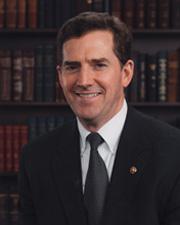 Sen. Jim DeMint (R-SC)
Legislative Activity
Stay on top of the latest movement without scrolling through every action
Considered by Senate. (consideration: CR S1364)
January 31, 2007
View full timeline
Considered by Senate. (consideration: CR S1364)
January 31, 2007
Proposed amendment SA 162 withdrawn in Senate.
January 31, 2007
Considered by Senate. (consideration: CR S1307)
January 30, 2007
Considered by Senate. (consideration: CR S1267)
January 29, 2007
Considered by Senate. (consideration: CR S1213)
January 26, 2007
Considered by Senate. (consideration: CR S1136)
January 25, 2007
Senate amendment proposed (on the floor): Amendment SA 162 proposed by Senator DeMint to Amendment SA 100.(consideration: CR S1035-1038; text: CR S1037)
January 24, 2007
Amendment SA 162 proposed by Senator DeMint to Amendment SA 100. (consideration: CR S1035-1038; text: CR S1037) To amend the Fair Labor Standards Act of 1938 regarding the minimum wage.
January 24, 2007
Senate amendment submitted
January 23, 2007
Text
Proposed
FAIR MINIMUM WAGE ACT OF 2007

The PRESIDING OFFICER. Under the previous order, the Senate will
resume consideration of H.R. 2, which the clerk will report.
The bill clerk read as follows:

A bill (H.R. 2) to amend the Fair Labor Standards Act of
1938 to provide for an increase in the Federal minimum wage.

Pending:

Reid (for Baucus) amendment No. 100, in the nature of a
substitute.
McConnell (for Gregg) amendment No. 101 (to amendment No.
100), to provide Congress a second look at wasteful spending
by establishing enhanced recission authority under fast-track
procedures.
Sununu amendment No. 112 (to amendment No. 100), to prevent
the closure and defunding of certain women's business
centers.
Kyl amendment No. 115 (to amendment No. 100), to extend
through December 31, 2008, the depreciation treatment of
leasehold, restaurant, and retail space improvements.
Bunning amendment No. 119 (to amendment No. 100), to amend
the Internal Revenue Code of 1986 to repeal the 1993 income
tax increase on Social Security benefits.
Enzi (for Ensign/Inhofe) amendment No. 152 (to amendment
No. 100), to reduce document fraud, prevent identity theft,
and preserve the integrity of the Social Security system.
Enzi (for Ensign) amendment No. 153 (to amendment No. 100),
to preserve and protect Social Security benefits of American
workers, including those making minimum wage, and to help
ensure greater congressional oversight of the Social Security
system by requiring that both Houses of Congress approve a
totalization agreement before the agreement, giving foreign
workers Social Security benefits, can go into effect.
Enzi (for Ensign) amendment No. 154 (to amendment No. 100),
to improve access to affordable health care.

The PRESIDING OFFICER. Under the previous order, the hour of 10:37
having arrived, there will be 1 hour of debate in relation to amendment
No. 101.
The Senator from New Hampshire.
Mr. GREGG. I ask unanimous consent that during quorum calls in this
hour, the time be equally divided on both sides.
The PRESIDING OFFICER. Without objection, it is so ordered.
Mr. GREGG. Mr. President, I suggest the absence of a quorum.
The PRESIDING OFFICER. The clerk will call the roll.
The bill clerk proceeded to call the roll.
Mr. KENNEDY. Mr. President, I ask unanimous consent that the order
for the quorum call be rescinded.
The PRESIDING OFFICER. Without objection, it is so ordered.
Mr. KENNEDY. How much time is left and how is it divided?
The PRESIDING OFFICER. The majority controls 26 minutes, half of
which belongs to the Senator from Massachusetts. The other half belongs
to the Senator from North Dakota.
Mr. GREGG. Mr. President, could you tell us the entire allotted time?
The PRESIDING OFFICER. The Republicans control 21 minutes.
Mr. KENNEDY. Mr. President, I yield myself 5 minutes.
The PRESIDING OFFICER. Without objection, it is so ordered.
Mr. KENNEDY. Mr. President, we are going to be voting on the minimum
wage this morning. Hopefully, the Senate will vote for what I consider
to be a clean bill--a clean bill being legislation that will increase
the minimum wage to $7.25 over a 2-year period.
There will be another measure that will be voted on that Senator
Gregg and Senator Conrad will address, which is a line-item veto. But
the fundamental issue we have before the Senate is the issue of an
increase in the minimum wage--an increase in the minimum wage which has
not taken place over the period of the last 10 years, and which I am
very hopeful we will get strong bipartisan support for.
If you look over the history of the minimum wage, the nine different
times we have raised the minimum wage, we have had bipartisan support
for that increase. It has only been in the very recent years that
Republican leadership has led the fight against it. We now have new
leadership in the

[[Page S1012]]

House and the Senate and the Democratic leadership that brought this
matter forward. We offer an open hand to our Republican friends to
support this program, which is so important to so many working
families.
From our earliest days, we have been a nation of strong values--
particularly fairness and opportunity and concern for our fellow
citizens. While we are a country of individualists, we have always
recognized that America is strongest when we all prosper together. One
of the earliest governing documents in our history, the Mayflower
Compact, talked about laws that would support ``the general good.''
Later, in the preamble to our Constitution, we pledged that our
Government would ``promote the general welfare.''
That is our proud history. Our Nation has thrived because we have
made a commitment to shared prosperity. The vote we will cast today is
a measure of our commitment to these values.
Minimum wage workers have been waiting for a raise for 10 long and
difficult years. They have worked more than one job. They have saved
every penny they can for the future of their children. They have
decided each day what food they can afford and what bills they can pay.
Americans understand fairness, and they know this is unfair. They
have called on us time and again to raise the minimum wage, but time
and again--year after year--this Congress has turned its back on
working families.
It is wrong that hard-working men and women cannot afford to put food
on the table or heat their homes. It is wrong that our productivity
soars, but our lowest paid workers fall further and further behind. And
it would be wrong to demand a price of more and more tax breaks before
these hard-working families get the raise they have earned.
Congress has voted itself a raise eight times over the past 10 years,
while minimum wage workers have received nothing. Congress never
demanded a price for increasing its wages. So why should we demand a
price for giving minimum wage workers a raise? What is good enough for
Congress surely is good enough for American workers. I say Congress
should do unto others what it has done for itself. And we have not just
been doing for ourselves. Over the last 10 years, we have done a whole
lot for corporate America. We have given them $276 billion in corporate
tax breaks. We have done a lot for the wealthiest Americans, who have
seen their incomes skyrocket with generous tax giveaways. Why can't we
do one thing for minimum wage workers? No strings attached, no
giveaways for the powerful--why can't we do this one simple thing
because it is the right thing to do?
Minimum wage workers are men and women of dignity. They do some of
the most difficult back-breaking jobs in our society. They clean our
offices. They serve our food. They take care of our children in
preschools, and care for our elderly in nursing homes. They deserve a
fair wage that respects the dignity of their work, and they should not
have to live in poverty.
President Kennedy once said:

If a free society cannot help the many who are poor, it
cannot save the few who are rich.

We are a rich nation, but unless we do more to help the poorest
Americans, we will not be able to save ourselves.
We have an opportunity today to take one bold step toward solving the
problem of poverty in this great Nation. Today--right now--we can pass
the House bill and send it to the President. We can raise the minimum
wage and give 13 million hard-working people hope for a brighter
future.
I hope my colleagues on the other side of the aisle will join me in
voting for minimum wage workers today. This should not be a partisan
issue. It is about standing behind our values. It is long past time to
do the right thing and give minimum wage workers a raise.
Mr. President, I withhold the remainder of my time.
The PRESIDING OFFICER. Who yields time?
The Senator from Texas.
Mr. CORNYN. Mr. President, I see the floor manager from our side,
Senator Gregg, on the floor. I talked to him about yielding me 10
minutes from our time. I ask if that is still acceptable.
The PRESIDING OFFICER. Without objection, it is so ordered.
Mr. CORNYN. Thank you, Mr. President.

Amendment No. 101

Mr. President, I want to talk specifically about the second-look-at-
wasteful-spending amendment which is pending and that we will vote on
here in a few moments. I hope to come back later today, perhaps, and
talk more generally about the minimum wage bill that is pending, the
underlying bill, and talk about how I hope our goal would be to train
and educate American workers to fill good, high-paying jobs that
currently go wanting for lack of a trained workforce. I would hope we
would spend at least as much of our efforts on training them, providing
them the alternatives to earn those higher, good wages as we spend
focusing on the 2.5 percent of the workforce who actually earn the
minimum wage--generally people who are starting into the workforce:
teenagers, part-time workers, and the like--and how, notwithstanding
our best of intentions, some of our actions here, by Government
actually setting a minimum wage, may actually put some of them out of
work.
But I would focus on the second-look-at-wasteful-spending amendment
and challenge our colleagues on the other side of the aisle, in a good
way.
Since we have come back after the election, and we have this new
110th Congress, we have heard a lot of very appropriate commentary on
both sides of the aisle about the importance of our working together in
order to solve some of the Nation's most serious problems. The
President talked about that last night. One of the areas the President
spoke about last night in his State of the Union Message--and I hear an
awful lot about from my constituents--is concern about wasteful
spending.
Indeed, a lot of what we did on a bipartisan basis this last week on
lobbying and ethics reform was to turn the bright light of public
scrutiny on the earmark process--special appropriations stuck in bills
that frequently benefit individuals and groups--to turn the bright
light on those, offer greater transparency, so the public can know how
their tax dollars are being spent and, hopefully, people understanding
that whatever they do will be exposed to public scrutiny, they will
make sure their conduct in doing so conforms with the highest ethical
standards they have a right to expect from us.
But the fact is that Presidents on both sides of the aisle--President
Clinton, when he was President; now President Bush--have sought the
authority of the line-item veto or, in this instance, what we are
talking about is the so-called enhanced rescission. It is a process
where the President, once an appropriations bill is sent over to him,
highlights a concern he or she has about an appropriations bill, and
sends it back over to the Congress to reconsider.
This is a way to provide the kind of laser-like focus we need to have
on wasteful spending projects that occasionally--some might say more
than occasionally--creep into our Federal appropriations process.
In the spirit of bipartisanism that I think the American people would
like to see when confronting some of our biggest challenges, my hope
would be that Members of this Congress--Members of this Senate--on a
bipartisan basis, would support the very kind of bill this represents,
and that they were advocating for when Senator Daschle, the Democratic
leader, offered and sponsored with the support of at least 21 Democrats
when President Clinton was in office.
I hold up a chart. I showed this yesterday, but I think it is worth
looking at again. This chart is a comparison of the Daschle and Gregg
expedited rescission amendments. You can see in all respects the
Daschle amendment--here, again, Tom Daschle, the Senator from South
Dakota, the leader of the Democrats in the Senate, offered an amendment
which in all respects, except two--I will talk about that in a minute--
is the same as Senator Gregg is proposing, the so-called second-look-
at-wasteful-spending amendment.
The only two ways they differ is that the Gregg amendment does permit
rescission of new mandatory spending. If you look at the places where
money is being spent fastest in the Federal budget, it is in mandatory
or entitlement

[[Page S1013]]

programs, which are going up at the rate of 8 percent or more a year,
on autopilot. I applaud Senator Gregg for including a provision that
permits rescission of new mandatory spending programs.
But that and permitting four rescission packages annually, those are
the two areas where the Gregg amendment differs, albeit in a relatively
minor way, from what Senator Daschle proposed in 1995.
You will see on this next chart, here is a list of the current Senate
Democrats who supported the Daschle amendment in 1995. My hope would
be, with this little refresher for our colleagues who actually
supported this good policy back in 1995, that they would see fit to
vote to close off debate and to actually have an up-or-down vote on the
Gregg amendment.
As I said, if it was good policy in 1995, supported by these good
Democratic colleagues, I think they would agree--I would hope they
would agree--it is a good policy in 2007 or, if it is not, I would hope
they would come to the floor and explain their change of heart because
I think it would represent a change in position.
So this amendment goes to the heart of what I hear people express
their concerns about most as I travel back in my State and as I read
and listen to people's concerns, as expressed through the media, that
Federal spending and our failure to be good trustees of the Federal tax
dollar is one of their biggest concerns, along, obviously, with
national security issues such as the war in Iraq. The other issue I
hear a lot about--the President talked about it last night--is
immigration reform.
Mr. President, I see the budget chairman on the floor, and I know he
and Senator Gregg have committed to work on a bipartisan basis to try
to deal with not just these issues, such as earmarks that abuse the
public trust, and which somehow slip into our appropriations process,
but to look at the larger picture and try to figure out how we can
sustain some of the most important programs the American people have
come to rely upon, things such as Social Security and Medicare, and
that we not continue to spend in a way that imposes a financial burden
for those programs on our children and grandchildren. That raises a
profound moral issue that I believe we must confront.
So I do appreciate the efforts that are being made to try to deal
with some of our hardest problems. I think there is a great opportunity
provided here. Some might find this a little surprising for me to say
being a Republican, but I think divided Government provides an
opportunity for this body to do some very big and important and
significant things. I do not think politics has to be a zero-sum game
where Democrats win and Republicans lose, or Republicans win and
Democrats lose in the public policymaking process. I think we can all
win, and in so doing the American people can win, if we will simply
come together in a commonsense, result-oriented sort of way and try to
solve some of these problems.
I think Senator Gregg's amendment picks up on the wisdom of Senator
Daschle's amendment back in 1995. And I frankly would be perplexed if
we were unable to get the kind of bipartisan support to close off
debate, to have an up-or-down vote on the floor, and demonstrate to the
American people that, you know what, we heard the message on November
7, and you know what, we get it. We understand what you were telling
us. You wanted us to work together, and we are working together to try
to solve some of our Nation's biggest problems.

We reserve the remainder of our time, and I yield the floor.
The PRESIDING OFFICER. Who yields time?
The Senator from North Dakota.
Mr. CONRAD. How much time remains on either side?
The PRESIDING OFFICER. The Senator from North Dakota controls 13
minutes, the Senator from Massachusetts controls 7\1/2\ minutes, and
the Republicans control 11 minutes.
Mr. CONRAD. I thank the Chair. I ask the Chair to inform me when I
have consumed 10 minutes.
Mr. President, I thank my colleague from Texas for his remarks about
Senator Gregg and me and our proposal to try to work on the overall
major challenges facing us, which are long-term fiscal imbalances that
are especially affected by the entitlement programs and the baby boom
generation and the existing structural deficit we confront. We are
engaged in a good-faith effort to try to address these long-term
challenges. We were at breakfast together yesterday discussing those. I
appreciate the Senator from Texas mentioning that.
With respect to this specific proposal, I don't think it merits our
support. In fact, it is a very serious mistake to go in this direction.
This amendment is actually dangerous. I say that with great respect to
the former chairman of the Budget Committee who has offered the
amendment. I believe it is dangerous because this transfers power in a
way the Founding Fathers did not envision and would not have supported.
The power of the purse resides in the Congress of the United States
because the Founding Fathers recognized that putting too much power in
the hands of one person was a dangerous matter.
Here are the things that are wrong with this line-item veto proposal.
I will go on to address the big differences between the Daschle
proposal and this one, but here is what is wrong with this line-item
veto proposal: It represents an abdication of congressional
responsibility; it shifts too much power to the executive branch, with
very little impact on the deficit; it provides the President up to a
year to submit rescission requests; requires Congress to vote within 10
days; provides no opportunity for extended debate; and allows the
President to cancel new mandatory spending passed by Congress, such as
those dealing with Social Security, Medicare, veterans, and
agriculture. That is breathtaking power. In fact, we could have this
negotiation that the Senator from Texas was referencing between
Democrats and Republicans on what has to be done to the long-term
circumstance with Social Security and Medicare, we could reach a
bipartisan conclusion, and then the President would have the unilateral
power to come back and cherry-pick those provisions he didn't like. No
President should be given that power.
Let's talk about the line-item veto. This is what USA Today said in
an editorial last year: It is a convenient distraction.

The vast bulk of the deficit is not the result of self-
aggrandizing line items, infuriating as they are. The deficit
is primarily caused by unwillingness to make hard choices on
benefit programs or to levy the taxes to pay for the true
costs of government.

This is an article from the Roanoke Times last year:

[T]he President already has the only tool he needs: The
veto.

He has veto power. He can veto any one of these spending bills.

He has chosen not to veto a single one. That Bush has
declined to challenge Congress in five-plus years is his
choice. The White House no doubt sees reviving this debate as
a means of distracting people from the missteps,
miscalculations, mistruths and mistakes that have dogged Bush
and sent his approval rating south.
The current problems are not systemic; they are
ideological. A line-item veto will not magically grant
lawmakers fiscal discipline and economic sense.

On the question of whether this has any effect on the deficit, this
is the Acting CBO Director last year before the Congress, his
testimony:

Such tools, however, cannot establish fiscal discipline
unless there is political consensus to do so . . . In the
absence of that consensus, the proposed changes to the
rescission process . . . are unlikely to greatly affect the
budget's bottom line.

This is from CQ, Congressional Quarterly, again of last year:

Passage of [the line item veto] legislation would be ``a
political victory that would not address long-term problems
posed by growing entitlement programs,'' Gregg said.

Senator Gregg himself said this would be ``a political victory that
would not address long-term problems posed by growing entitlement
programs.''
He also said this last year in a separate publication:

Senator Gregg said it would have ``very little impact on
the budget deficit.''

He is right. The impact it would have is to transfer enormous power
to the President. I am not just talking about this President, I am
talking about any future President.

This is what George Will, a conservative commentator, said:

It would aggravate an imbalance in our constitutional
system that has been growing

[[Page S1014]]

for seven decades: The expansion of executive power at the
expense of the legislature.

Here is what an American Enterprise Institute scholar said about the
line-item veto last year:

The larger reality is that this proposal gives the
President a great additional mischief making capability, to
pluck out items to punish lawmakers he doesn't like, or to
threaten individual lawmakers to get votes on other things,
without having any noticeable impact on budget growth or
restraint.

He went on to say:

More broadly, it simply shows the lack of institutional
integrity and patriotism by the majority in Congress. They
have lots of ways to put the responsibility on budget
restraint where it belongs--on themselves. Instead, they
willingly, even eagerly, try to turn their most basic power
over to the President. Shameful, just shameful.

On the question of the previous Daschle proposal, the suggestion that
they are the same is not true. They are fundamentally different. The
context is totally different as well. The Daschle amendment was offered
in juxtaposition to another line-item veto proposal that was clearly
unconstitutional--in fact, was judged to be so by the U.S. Supreme
Court. So the Daschle proposal was an attempt to defeat a proposal
which was clearly unconstitutional and which has been subsequently
judged unconstitutional.
But the further claim that the Gregg proposal before us now and the
Daschle proposal are the same is clearly not correct. Let me ask three
questions and give answers with respect to how the two differ.
Can the President propose to rescind new mandatory items such as
Social Security and Medicare reforms? Under the Gregg proposal, yes;
under the Daschle proposal, no. That is a profound difference. Can you
imagine if we were to reach an accommodation and agreement on long-term
differences on these mandatory programs--Medicare, Social Security,
agriculture, veterans--and then the President has the unilateral
ability to go change it? I don't think so. That is not a direction we
should take if we are going to have good-faith negotiation.
No. 2, can the President propose rescissions from multiple bills in
one rescissions package? Under the Gregg proposal, the answer to that
question is yes. Under the Daschle proposal, the answer was no. Why
does that matter? The President could take something that was very
unpopular--for example, the bridge to nowhere--remember that? We had
the debate last year about the bridge to nowhere. A handful of us voted
against that bridge to nowhere, by the way. I voted against it. The
President could have taken that proposal and combined it with a
proposal that was important to an individual Member and that might have
great merit, and he could combine the two and kill the one with the
other.
Let's be blunt. The President would have the ability to call a Member
or have his staff call a Member and say: Look, I have a very
controversial judge up there. I need your vote. And by the way, I am
considering a project in your State that is critically important to
you. I am going to have to line-item veto that. But I might be
persuaded not to if I could have your support on this other matter.
That is exactly what the Founding Fathers were concerned about--handing
that kind of power to a President, that kind of power over an
individual Member. That is a dangerous notion. It has been ruled
unconstitutional in the past. I believe this would be ruled
unconstitutional.
I thank the Chair and yield the floor.
The PRESIDING OFFICER. The Senator from South Carolina.
Mr. DeMINT. Mr. President, I, too, would like to speak on the line-
item veto amendment. This body has made a lot of progress in being much
more transparent in how we spend America's money. We can see, if we
look back over the last couple of weeks, that America appreciates what
we have tried to do to take these earmarks or these pet projects or
designated spending, whatever we call it, and make it available for
every American to see. We could tell from our e-mails and letters and
the reports in the media that this was something which made Congress
look as if we were genuinely trying to be much more open and honest
about how we spend America's money. The amendment before us now, what
we refer to as the line-item veto or line-item rescission, would
actually make this whole process much more accountable.
I was interested in hearing my colleague make his point that the
President could take one good item and put it with a really bad item
and send it over to us and force us to make a decision. But let's think
about what the President's options are now. We can send thousands of
earmarks over in a bill to the President, and he only has two choices--
to take it or leave it, to take the whole thing or veto the whole
thing--and work that has been done here and in the House for months
either has to be accepted in total or thrown out in total. That doesn't
make any sense.
I will use the exact argument my colleague did. We should not be able
to package all this good with all this bad and try to force it down the
President's throat without the ability to have the checks and balances,
the discussions that are needed so the American people can see we have
thoroughly vetted these ideas and we are spending their money wisely.
This line-item rescission package I support because this Congress
needs the interaction with the President and the working relationship
that would be caused by this particular bill. It allows the President,
no more than four times a year, to go through our spending bills and to
send those things back which he thinks are not national priorities.
This is not real complicated. He does not veto what we send him; he
just gets a recommendation in the process. And since his agencies in
the executive branch are charged with carrying this out and spending
this money, the President needs to be engaged in the process in more
than a take-it-or-leave-it type of relationship. So no more than four
times a year, the President can put together those things which he
thinks are not national priorities and send them to the Congress. And
all this bill does is guarantee that they get a vote.
If the President tries to use this against individual Members, I know
this body well enough to know that we are not going to pass his
request.
Any President that tries to do that for political purposes will find
his rescission package, or that his recommendations to Congress will be
dispensed with very quickly.
This is important not only for this President but for many Presidents
in the future. We know as Senators and Congressmen that over the next
several decades this country is going to be faced with incredible
fiscal crises. We have no idea how we are going to pay for Medicare and
Medicaid in the future or Social Security. It is going to become more
important every year that we cut wasteful spending and that we work
with the President and with the House to do everything we can to cut
those things that are not necessary.
In many bills--and we know it happens--many items, earmarks, are
voted on for political reasons, and it is a good idea to allow the
President to package those things and send them back to us so that we
can vote on them and move them out if they are not national priorities.
This is not dissimilar at all to the BRAC process we created to
eliminate unnecessary military bases. We found that Congressmen and
Senators were not going to vote on an individual basis to eliminate a
base in one State because we knew that then the Congressmen or Senators
could vote to eliminate one in our State. It was a political dilemma
that caused us for years to leave bases open that should have been
closed.
It is the same with Federal programs and spending year after year.
One project might be in my State and one in another Senator's State.
None of us are willing to step up and eliminate projects one at a time.
We cannot vote on them that way. This line-item rescission opportunity
is for the President to take those things that we know are not national
priorities, put them in a package, and send them back over for us to
vote on. We should not lose this opportunity.
We need the President working with the Congress to eliminate wasteful
spending--not this year or next year but for decades to come. This may
be our only opportunity in a long time to make it happen. We have made
tremendous progress on identifying the problems with corruption,
wasteful spending, identifying earmarks, and all this

[[Page S1015]]

does is allow us to take it a step further and make sure we have the
checks and balances from Congress and the executive branch to eliminate
those things we know should not be in there and the President knows
should not be in there.
Mr. FEINGOLD. Mr. President, I will oppose the amendment offered by
our colleague, the senior Senator from New Hampshire, Mr. Gregg. I
support the concept of what is called a ``line item veto,'' more
accurately described as an expedited Presidential rescission. But the
proposal offered today has some fundamental flaws that prevent me from
voting for it.
There are a number of problems with the amendment before us, but let
me call the body's attention to two of these flaws. First, the proposal
goes far beyond the supposed target of this newly proposed authority;
namely, unauthorized earmarks. When the line item veto is discussed,
invariably it is the unauthorized earmark that is held up as the
principal rationale justifying this new Presidential authority, and
rightly so. The explosion in unauthorized earmarks over the last decade
and more is a strong argument in favor of providing the President with
additional authority in this area. But the amendment before us goes far
beyond targeting earmarks. The Gregg amendment would allow the
President to use the proposed expedited rescission authority to
eliminate new provisions of programs like Medicare and Social Security,
hardly measures that anyone would consider an earmark.
Second, the proposal has too great a potential for political gaming.
The amendment allows the President to wait a full year after initial
enactment before submitting an expedited rescission. If we are going to
craft new Presidential authority in this area, the goal ought to be to
eliminate the potential wasteful spending, and to do so in a
straightforward manner. There is no good reason for significant delay.
Permitting the President to wait a year before submitting a proposed
rescission opens the door for inappropriate use of potential
rescissions as a political hammer to hold over individual Members.
Mr. President, as I noted earlier, I support granting the President
some additional authority in this area, but we need to be especially
careful in crafting that authority. The Gregg amendment, however well
intended, needs substantial improvement, and until that is done, I will
oppose it.
Mrs. MURRAY. Mr. President, I rise today to speak against the line-
item veto. This misguided proposal will hurt the communities we are
here to represent. It will strip them of the voice they have today in
Congress through each of us, and it will hand even more legislative
power to the executive branch.
As I saw in my own experiences, both here in the Senate and in the
Washington State Legislature, a line-item veto is subject to abuse,
pressure and horse-trading, and it violates the delicate balance of
power that the Founders so carefully designed.
Now I recognize that the idea sounds attractive. It suggests that we
could cut spending and control the deficit without having to make any
tough choices. Well, like a lot of ideas that sound good at first, once
you look into it, the painful impact becomes clear.
More importantly, I think all of us need to do the hard work of
crafting responsible budgets. We need to legislate and govern and take
the needs of the country and our States into consideration. We need to
make the tough decisions--not pass the buck to the White House.
I oppose the line-item veto today for the same reasons I opposed it
in the 1990s. I voted against this gimmick when Congress handed that
power to a Democratic President. And today I fight another attempt to
hand that same power to a Republican President.
For me, it is not about the party of the Chief Executive; it is about
making sure that the constituents I represent have a voice in the
budget decisions that affect their lives. The line-item veto is the
wrong approach for three reasons.
First, it would cede a tremendous amount of power from Congress to
the executive branch. The Constitution is very clear that Congress has
the power of the purse. The Framers of our Constitution carefully
divided the powers of our Government between the three branches.
When Congress tried this before, it was ruled unconstitutional. This
time around, the sponsors have tweaked the bill to try to address those
concerns, but the underlying problem still remains. We should not be
handing our legislative power over to the executive branch. I made that
argument in 1995--and it is even truer today. We have seen the Bush
administration aggressively try to expand Presidential power and limit
congressional input and oversight. We should stand our ground as the
Founders intended--not surrender our constitutional authority to the
executive branch.
Second, the line item veto would hurt the constituents we represent.
They rely on us to fight for their needs and priorities. Through the
budget and appropriations process, we work to meet the needs in our
local communities--needs that the administration would ignore. If we
give up our ability to fight for our communities, our constituents will
lose their voice because I can tell you, the communities we represent
will not get fair consideration from a budget official sitting in
Washington, DC.
Last week, a group of constituents came to see me about a local road
that needs to be improved. The changes they are seeking will improve
safety, support economic development, and provide access to critically
needed housing. I represent that community, so I know firsthand those
improvements are needed. That community has me fighting for them and
pushing for their needs. The administration is not going to do that.
They are not going to send someone from Washington, DC to check out the
road and see that it is unsafe. In fact, these constituents had just
come from a meeting with an administration official who basically told
them that, in regard to the continuing resolution, ``Good luck, we will
be making the decisions this year.''
That is just wrong. If we hand this power to the administration, we
will surrender our voices, and our constituents will lose their voices
in advocating for their communities. The families I represent know that
if they have a problem, they can come and talk to me. But if you tell
them that they have to track down someone at OMB and convince them to
care about their local needs, our communities will suffer.
I came to the Senate to represent the people of my home State of
Washington. They elected me to be their voice on a wide array of issues
affecting everything from their safety to their health, education, and
economic well-being. I am not going to transfer my ability to fight for
the people of Washington State to this or any other President. That is
what this bill proposal would do, and I strongly oppose it.
Third, experience has shown that the line-item veto is subject to
abuse and may be applied unfairly by an administration. I have
experience with line-item veto authority. I served in my State
legislature and saw firsthand the kind of horse-trading that can occur
when the Executive has this power.
When President Clinton exercised the line-item veto in 1997, we saw
serious problems in the way it was applied. The White House put forward
standards for deciding which projects would be targeted. But then it
attacked projects that actually met the standards. In 1997, I stood
here on the Senate floor and detailed the mistakes the Clinton
administration made in unfairly targeting projects for elimination. I
don't want to see a repeat of those mistakes.
Mr. President, crafting a responsible budget takes hard work. It
requires tough choices. There is no gimmick or trick that will make the
hard decisions go away. Handing our power and our constituents' power
over to the White House certainly won't do it. So I say, rather than
spending our time on a distraction, let's work on a real budget and on
the real and difficult choices that are before us.
Let's do the job that voters sent us here to do--without gimmicks and
without trampling the Constitution.
Mrs. CLINTON. Mr. President, in crafting our delicate system of
checks and balances, our Founding Fathers vested in Congress what is
commonly referred to as the ``power of the purse''--control over
raising revenue and appropriating funds. While the virtue of Congress
abdicating some of its

[[Page S1016]]

budget responsibility to the president is a subject of worthwhile
debate, the construct of Senator Gregg's Second Look at Wasteful
Spending Act of 2007 does little to return much needed fiscal
discipline to our budget process. And while I support efforts to rein
in our spending and to solve our Nation's budget woes, Senator Gregg's
amendment would create a system far too susceptible to abuse.
The Gregg amendment's weakness is in its construction. Up to four
times a year, the President could package his or her proposed
rescissions in any manner he or she chooses, selecting and combining
provisions from any number of bills. Among the Gregg amendment's most
significant flaws are the timetables it imposes. The amendment would
give the President up to 1 full year after enactment of a provision to
submit a rescission request. Even in the event that Congress rejects
the President's request, the legislation still gives the President the
power to defy the congressional vote and withhold spending for a
program for up to 45 days. This formulation would effectively allow a
President to hold hostage spending measures and force congressional
votes on new bundles of spending provisions, injecting chaos into our
budget process and wreaking havoc in countless other ways.
There is no debate that we need to curb our spending. The Bush
administration has run up a record debt and an unprecedented deficit,
endangering our Nation's long-term financial health and our children's
future. Unfortunately, as noted by the nonpartisan Congressional Budget
Office, Senator Gregg's amendment does little to return much needed
fiscal discipline to our budget process. I am open to considering a
different proposal, keeping in mind that what we need is measured
reform coupled with strong leadership that will exercise fiscal
responsibility.
Mr. ENZI. Mr. President, I rise today in support of Senator Gregg and
Senator McConnell's ``Second Look at Wasteful Spending'' amendment.
While I would prefer that this issue be addressed on a separate bill, I
understand the procedural reasons behind why my colleague from New
Hampshire is offering this amendment to the minimum wage package. I am
treating this amendment as separate from the rest of the minimum wage
debate and I hope my colleagues will do the same. I am pleased,
however, that the Senate is able to debate this important issue on the
floor.
This amendment is a responsible step towards spending accountability.
It provides for a greater level of accountability which is critical to
enhance the fiscal well-being of the country. Senator Gregg's proposal
allows both Congress and the President the opportunity to seriously
reconsider both mandatory and discretionary spending. By allowing the
President to single out wasteful spending and giving Congress the final
say through vote on a rescission package, this amendment will help
eliminate waste, rather than perpetuate the current out of control
spending habits.
By forcing Congress to take another look at spending, this amendment
gives the President the ability to send up to four rescission packages
a year. Congress then has up to 8 days to act on the President's
proposal through a fast track process. However, a simple majority of
both Houses of Congress must approve before any of the rescission
package can become law. Finally, any savings from the rescissions must
go to deficit reduction.
I believe that ``A Second Look at Wasteful Spending'' is a simple,
clear-cut proposal that stands within the parameters of the U.S.
Constitution. This amendment includes the same principles of fiscal
responsibility that have received bipartisan support since the passage
of a comprehensive veto in 1992, and strongly echo the Daschle-Byrd
proposal of 1995. Here is a chance for both Republicans and Democrats
to help restrain frivolous spending.
I emphasize the gravity of fiscal responsibility because it sets the
standard for the success or failure of our Nation. We need to take
action now to avert an even larger economic crisis in the future. ``A
Second Look at Wasteful Spending'' is a step in the right direction,
though there is more work to be done. Many of my colleagues in this
Chamber have supported this concept in the past, and I urge my
colleagues to support the Gregg amendment.
As I stated in my maiden speech in 1997, the American people continue
to demand an end to runaway spending. We need to show the American
people that we are responsible. I said those words about the balanced
budget amendment in 1997, and they also hold true for this amendment
today. By adopting the ``Second Look at Wasteful Spending,'' we would
show that Congress is willing to take a much needed step toward fiscal
restraint.
I stand in full support of this amendment and am proud to be a
cosponsor. This outstanding amendment is worthy of your consideration
and support.
Mr. McCAIN. Mr. President, I am pleased to join Senator Gregg and
others in supporting this fiscally responsible amendment to provide the
President authority to perform rescissions to legislation passed by
Congress. Congress would then be required to review the President's
recommendation within 8 days and affirm or reject the recommendation.
Additionally, this amendment correctly requires the money from
rescissions to be put toward deficit reduction.
Congress has grappled with the issue of providing the President with
line-item veto or rescission authority since the original law was
overturned by the Supreme Court in 1998. In the last Congress, there
were at least eight bills introduced, including one I authored,
attempting to provide the President with the authority to review and
reject objectionable sections of legislation passed by Congress. It is
my hope that during the 110th Congress we will provide the President
with this important tool to combat porkbarrel spending and to reduce
the deficit.
Just last night, President Bush delivered the annual State of the
Union Address in which he stressed the need to impose spending
discipline here in Washington by cutting the number earmarks. He is not
the only President to address the country about the need to curtail
wasteful porkbarrel spending.
In 1988, during his final State of the Union Address, President
Ronald Reagan discussed the growth of earmarks and asked for line-item
veto authority for future Presidents. On that evening, President Reagan
carried with him three pieces of legislation: an appropriations bill
that was 1,053 pages long and weighed 14 pounds; a budget
reconciliation bill that was 1,186 pages long and weighed 15 pounds;
and a continuing resolution that was 1,057 pages long and weighed 14
pounds.
In reference to the continuing resolution, President Reagan chided
Congress, stating, ``Most of you in this Chamber didn't know what was
in this catch-all bill and report.'' President Reagan then explained
that millions of dollars for items such as cranberry research,
blueberry research, the study of crawfish, and the commercialization of
wild flowers were included in the continuing resolution ``tucked away
behind a little comma here and there.''
In 1987, Ronald Reagan vetoed a highway bill because it had 157
earmarks. In the last Congress, a highway bill with 6,371 special
projects costing the taxpayers $24 billion was enacted, despite my
strong opposition. Those and other earmarks passed by Congress included
$50 million for an indoor rainforest, $500,000 for a teapot museum,
$350,000 for an Inner Harmony Foundation and Wellness Center, and $223
million for a ``Bridge to Nowhere.''
Unfortunately, this earmarking has not been limited to the highway
bill. Nothing can compare to the out of control earmarking that has
occurred in the annual appropriations measures during recent years.
According to data gathered by Congressional Research Service, there
were 4,126 earmarks in 1994. In 2005, there were 15,877--an increase of
nearly 400 percent. There was a little good news in 2006, solely due to
the fact that the Labor-HHS appropriations bill was approved almost
entirely free of earmarks--an amazing feat given that there were over
3,000 earmarks the prior year in that bill. Despite this first
reduction in 12 years, it doesn't change the fact that 2004, 2005, and
2006 produced the greatest number of earmarks in history.
Now, let's consider the level of funding associated with those
earmarks. The amount of earmarked funding increased from $23.2 billion
in 1994 to $64 billion in fiscal year 2006. Remarkably, it rose by 34
percent from 2005 to 2006, even though the number of earmarks

[[Page S1017]]

decreased. Earmarked dollars have doubled just since 2000 and more than
tripled in the last 10 years. This is wrong and disgraceful, and we
urgently need to curtail this seemingly out of control porkbarreling
practice that has become the norm around here.
President Reagan would be deeply disturbed to know that almost 20
years later, the size of spending bills has gotten much, much larger as
we put more money toward porkbarrel projects. These earmarks have
allowed the national debt to grow from over $5 trillion when President
Reagan left office in January 1989 to over $8 trillion today. These
statistics demonstrate clearly that the need for rescission authority
is much greater than when President Reagan was in office.
President Reagan said to Congress during his 1988 State of the Union
Address, ``Let's help ensure our future of prosperity by giving the
President a tool that, though I will not get to use, is one I know
future Presidents of either party must have. Give the President . . .
the right to reach into massive appropriation bills, pare away the
waste, and enforce budget discipline.'' This amendment would do just
that. It would provide the President authority to identify wasteful
items of spending and move to eliminate them from the Federal budget.
This would be a significant and, unfortunately, all too rare move in
Washington, DC, toward fiscal discipline.
Rescission authority alone is not the solution to the fiscal crisis
we face in our Nation's Capitol. We also desperately need to reform our
earmarking process and our lobbying practices and the legislation the
Senate passed last week makes a number of positive improvements in
those areas. But above all, we must remember that it is ultimately
Congress's responsibility to control spending. However, granting the
President line-item veto authority would go a long way toward restoring
credibility to a system ravaged by congressional waste and special
interest pork.
I urge my colleagues to support the Gregg amendment.
The PRESIDING OFFICER. The Senator from New Hampshire is recognized.
Mr. GREGG. Mr. President, what is the time status?
The PRESIDING OFFICER. The Senator has 4 minutes 45 seconds.
Mr. GREGG. And the other side?
The PRESIDING OFFICER. They have 9\1/2\ minutes.
Who yields time?
Mr. KENNEDY. Mr. President, I understand we have 7\1/2\ minutes; is
that correct?
The PRESIDING OFFICER. The Senator from Massachusetts has 7\1/2\
minutes.
Mr. CONRAD. Mr. President, will the Chair inform me how much time is
left on the Republican side?
The PRESIDING OFFICER. Four and three-quarter minutes.
Mr. CONRAD. Would the Senator from Massachusetts like to go first?
Mr. KENNEDY. I would like to wait. I yield to the Senator from North
Dakota.
Mr. CONRAD. Mr. President, I urge my colleagues to oppose cloture on
this matter. I think this is a well-intentioned amendment, but it does
virtually nothing about the deficit. What it does do is transfer power
from the Congress of the United States to the White House. What it will
set up, I say to my colleagues, with this President perhaps, and with
some future President for certain, is a circumstance in which the
President will be able to leverage Members of this body on completely
unrelated issues because of his unchecked power to line-item veto
provisions in appropriations bills.
That is a profound mistake for this body. The Founding Fathers set up
this separation of power very carefully. They put the power of the
purse in the Congress. They did that because they were concerned about
the extraordinary power that the Kings had in Europe. They never wanted
to replicate that here.
Mr. President, that is exactly the formula that has helped America be
the preeminent power in the world--the strongest economic power and the
strongest military power. We should not alter that relationship by
granting this increased power to this President or any future
President.
I urge my colleagues to oppose cloture.
The PRESIDING OFFICER. Who yields time?
Mr. GREGG. Mr. President, I wonder if the Senator from Massachusetts
would give me the courtesy of closing the debate since it is my
amendment.
Mr. KENNEDY. Mr. President, I thought it was about our debate on the
minimum wage, but that is fine. I have 7\1/2\, and the Senator has how
much?
The PRESIDING OFFICER. The Senator from Massachusetts has 7 minutes,
and the other side has a little over 4\1/2\ minutes.
Mr. KENNEDY. Mr. President, I ask the Chair to let me know when I
have a minute and a half.
The PRESIDING OFFICER. The Chair will do so.
Mr. KENNEDY. We are at a very important moment for millions of
working families in this country. It has been 10 long years since we
have seen an increase in the minimum wage. During that period of time,
I don't think anybody in this body could really understand the kind of
pain and sacrifice these families have experienced and the kind of
anxiety they have had every day, wondering if they are going to be able
to provide for themselves and their families, and particularly for
their children.
I welcome the fact that it was our Democratic leaders who have this
now before the Senate. We had a majority in the Senate for an increase,
but we had the opposition of Republican leadership in the Senate and
also in the White House. But now we have had 80 Republicans in the
House of Representatives voting for a stripped-down bill. That is a
reflection of the bipartisanship we used to have.
We have seen historically where we had both Republican and Democratic
Presidents who fought for an increase, including Presidents Roosevelt,
Truman, Eisenhower, Kennedy, Johnson, Nixon, Carter, the first
President Bush, and Bill Clinton. That is the roster of American
Presidents in the postwar period. But we have had the strong opposition
of this President and the Republicans. Its impact has been devastating
on families.
If you look at what has happened to families, you will find out that
the purchasing power of the minimum wage over the period of these
recent years has just collapsed--almost to the lowest point it has ever
been in terms of purchasing power. Look into the sixties, seventies,
and the 1980s. With the Democrats in power, with the help of some
Republicans, we helped keep it up. It was at the poverty level and it
collapsed in recent years and we are trying to get it up to $7.25. That
is still not adequate; nonetheless, it will make a big difference to
working families, the 41 million Americans--28 percent--who work more
than 40 hours a week. Nearly one in six workers work more than 50 hours
a week. People are working longer and harder than ever before.
If you look at what is happening in the industrial nations, look at
the United States, we have increased more than any other industrial
nation in the world. What happened? The wages of the poorest of the
poor who are out there working 40 hours a week have collapsed, and what
happened? They have been working longer and harder than ever before.
What has been happening? They increased productivity for the American
economy. Look at the past, where you had productivity and the minimum
wage related year after year. But not now. We have seen the explosion
of productivity, but do you think any of that has been passed on to
hard-working people? Absolutely not. We are not going to let those who
increased the productivity of the American economy share in it. That
has not been the case.
We also see the continued loss of workers. What has happened on the
other side? Who has gotten the increase in the productivity. Imagine
who: corporate profits grew 65 percent more over this period of time.
They are the ones who have taken the benefit of the productivity. It
used to be shared between the workers and corporations. Not anymore.
They have been the ones who have opposed the increase in the minimum
wage.
We have seen what happened, as I pointed out, when we had
productivity related to the minimum wage. We saw that the minimum wage
was at the poverty level, and now we have seen it virtually collapse.
What has been the

[[Page S1018]]

impact on the American families? We have now seen that 4.1 million more
American families have gone into poverty since 5 years ago. And,
naturally, we have seen an increased number of children who have gone
into poverty; 1.2 million more children have gone into poverty over the
last 5 years, with no raise in the minimum wage.

Increased numbers of families are struggling and working hard,
working longer and harder than in any other industrial nation in the
world, and still they cannot get out of poverty. As a result, we find
this extraordinary achievement in the United States of America, and we
have the highest poverty rate of children of any industrialized nation
in the world. The list goes on.
We can see this is reflected in the increased number of individuals
who are suffering in terms of hunger in our country. You can go to food
banks in my city of Boston--and we have food banks throughout
Massachusetts and you hear the same thing. We are having to give more
assistance to families who are working, and more and more of those are
children living in poverty. It doesn't have to be this way. We are not
going to answer all of the problems of poverty with this increase. We
are telling hard-working Americans who work hard and take pride and
produce that we in the Congress at this time are going to give you a
very modest raise. They are entitled to it. It is saying to proud men
and women who are doing a decent job that we recognize that and we
believe in a society where people move along together.
This is going to make a difference to children in our society because
so many children are the children of individuals who work hard and are
working at minimum wage. It will make a difference to women because the
great majority of people who benefit from the minimum wage are women.
So it will benefit women, and it will benefit children, and those
people who go into the entry level, men and women of color who are
getting a job. This is a family issue, a values issue, an American
issue, and it is a fairness issue.
That is why we want to have a strong vote here with the bare bill
that sends a very clear message: $7.25 an hour for working families is
not too much in the richest country in the world.
The PRESIDING OFFICER. The Senator from New Hampshire.
Mr. GREGG. Mr. President, I thank the Senator for allowing me to
proceed in this manner. I think people listening may get confused. In
our discussions, the Senator from Massachusetts is addressing the
second cloture vote. I am addressing the first one. The second one
addresses the issue of minimum wage. I am talking about the second look
at the waste amendment, or enhanced rescission amendment, which is the
first cloture vote.
This is not a line-item veto. That pejorative is being thrown at it
by people who think the line-item veto is inappropriate and transfers
too much power to the President. That was settled in the 1990s when
President Clinton was given it, and then it was ruled unconstitutional.
This is the daughter of Daschle amendment. It is essentially rescission
language that allows us to take a second look at waste and
mismanagement that may occur as a result of earmarks being put in
omnibus bills.
We talk around here about earmarks and the inappropriateness of some
of them. This is another opportunity for us to look at inappropriate
earmarks and to eliminate waste as a result of that. It tracks very
closely the Daschle language.
The Senator from North Dakota mentioned three areas where it differs
from the Daschle language. I don't think any of those three areas are
substantive.
The first was on the issue of entitlements. Of course, entitlements
have to be on the table. The argument that for some reason a global
agreement on entitlements is going to be undermined by this opportunity
to take a second look at wasteful spending is a total straw dog. No
such global agreement would be reached unless this language was also
addressed and the question of the President's power was addressed.
Secondly, the idea that a packaging of rescissions will put undue
pressure on Members to vote for a bad rescission in favor of a good
rescission because they will be put together is totally specious or
inaccurate because of the fact that the motion to strike is retained so
that packages can be broken up.
As I said earlier, I am going to take the 300 days, if we get this to
the amendment process, and move it back to 30 days, so that is not an
issue either.
This is a question of how we better manage the taxpayers' dollars. It
is that simple. There is no reason why we should allow inappropriate
spending to be buried in omnibus bills, as mentioned by the Senator
from South Carolina, and then never have an opportunity to go back and
take a look at that inappropriate spending.
It is such a logical idea that it was voted for by 37 Members of the
Democratic Party the last time it was on the floor, 20 of whom still
serve in the Senate. Individuals who voted for essentially this exact
proposal--not exact, but it is so close it is hard to differentiate--
are still serving in the Senate.
I hope those individuals will vote for cloture so that we can move on
and do this very significant piece of reform.
Is it going to dramatically affect the deficit? I have said it isn't.
What it is going to do is give us an opportunity to effectively address
waste mismanagement and inappropriate earmarks that will help the
deficit because I put the money toward the deficit. I acknowledge it is
not going to be dramatic sums, but it is better management of the
American taxpayers' money, and that is our goal.
It is not unconstitutional. It does not have a constitutional issue
with it. It has been addressed. In fact, it is a proposal that is so
reasonable in the area of constitutionality that Senator Byrd, the last
time this proposal was put forward, said:

I have no problem with giving the President another
opportunity to select from appropriation bills certain items
which he feels, for his reasons, whatever they may be, they
may be political or for whatever reasons, I have no problem
with his sending them to the two Houses and our giving him a
vote.

He is being reasonable. It is a reasonable approach. The idea is
simply to allow the President to say to us: Listen, I looked at this
bill; it is spending $400 billion or $500 billion. There is some money
in here that I don't think should be spent. Why don't you take a
another look at this, Congress, and if either House says no, we are
going to spend that money, they can spend it, or if either House
strikes an item, it gets struck and it is not part of the rescission
package.
This is good management. It has been voted out of this Senate before.
I hope it will be voted out again.
Mr. President, how much time do I have remaining?
The PRESIDING OFFICER. Time is up.
Mr. GREGG. Mr. President, I guess I will end my statement and ask
people to vote for cloture.

Cloture Motion

The PRESIDING OFFICER. Under the previous order, pursuant to rule
XXII, the Chair lays before the Senate the pending cloture motion,
which the clerk will state.
The bill clerk read as follows:

Cloture Motion

We the undersigned Senators, in accordance with the
provisions of rule XXII of the Standing Rules of the Senate,
do hereby move to bring to a close debate on the pending
Gregg amendment No. 101 to the substitute amendment to H.R.
2, a bill to amend the Fair Labor Standards Act of 1938 to
provide for an increase in the Federal minimum wage.
Harry Reid, Mitch McConnell, Judd Gregg, Craig Thomas,
John E. Sununu, James Inhofe, Jon Kyl, Johnny Isakson,
Tom Coburn, Mike Crapo, Wayne Allard, Lamar Alexander,
John Cornyn, Jim Bunning, John Ensign, David Vitter,
Bob Corker.

The PRESIDING OFFICER (Ms. Klobuchar). By unanimous consent, the
mandatory quorum call has been waived.
The question is, Is it the sense of the Senate that debate on
amendment No. 101, offered by the Senator from New Hampshire, Mr.
Gregg, an amendment to provide Congress a second look at wasteful
spending by establishing enhanced rescission authority under fast-track
procedures, shall be brought to a close?
The yeas and nays are mandatory under the rule. The clerk will call
the roll.

[[Page S1019]]

The legislative clerk called the roll.
Mr. DURBIN. I announce that the Senator from Delaware (Mr. Carper)
and the Senator from South Dakota (Mr. Johnson) are necessarily absent.
Mr. LOTT. The following Senator was necessarily absent: the Senator
from Kansas (Mr. Brownback).
The PRESIDING OFFICER. Are there any other Senators in the Chamber
desiring to vote?
The result was announced--yeas 49, nays 48, as follows:

[Rollcall Vote No. 22 Leg.]

YEAS--49

Alexander
Allard
Bayh
Bennett
Bond
Bunning
Burr
Chambliss
Coburn
Cochran
Coleman
Collins
Corker
Cornyn
Craig
Crapo
DeMint
Dole
Domenici
Ensign
Enzi
Graham
Grassley
Gregg
Hagel
Hatch
Hutchison
Inhofe
Isakson
Kyl
Lieberman
Lott
Lugar
Martinez
McCain
McConnell
Murkowski
Roberts
Sessions
Smith
Snowe
Specter
Stevens
Sununu
Thomas
Thune
Vitter
Voinovich
Warner

NAYS--48

Akaka
Baucus
Biden
Bingaman
Boxer
Brown
Byrd
Cantwell
Cardin
Casey
Clinton
Conrad
Dodd
Dorgan
Durbin
Feingold
Feinstein
Harkin
Inouye
Kennedy
Kerry
Klobuchar
Kohl
Landrieu
Lautenberg
Leahy
Levin
Lincoln
McCaskill
Menendez
Mikulski
Murray
Nelson (FL)
Nelson (NE)
Obama
Pryor
Reed
Reid
Rockefeller
Salazar
Sanders
Schumer
Shelby
Stabenow
Tester
Webb
Whitehouse
Wyden

NOT VOTING--3

Brownback
Carper
Johnson
The PRESIDING OFFICER. On this vote, the yeas are 49, the nays are
48. Three-fifths of the Senators duly chosen and sworn not having voted
in the affirmative, the motion is rejected.
The majority leader is recognized.
Mr. REID. Madam President, I move to reconsider and table that vote.
The motion to lay on the table was agreed to.
Mr. REID. I ask unanimous consent that prior to this vote there be 2
minutes for debate equally divided.
The PRESIDING OFFICER. Without objection, it is so ordered.
Who yields time?
Mr. KENNEDY. Madam President, what is the issue now that is before
the Senate?
The PRESIDING OFFICER. There is now 2 minutes of debate before the
vote on the cloture motion on H.R. 2, a bill to amend the Fair Labor
Standards Act of 1938 to provide for an increase in the Federal minimum
wage.
Mr. KENNEDY. I yield myself 1 minute.
Madam President, we have the opportunity for the first time in 10
years to pass an increase in the minimum wage that will affect a
million of our fellow citizens. The workers who work for the minimum
wage are people of dignity. They take pride in their work. They work
hard and try to do a job.
This is a women's issue because the great majority of those who work
and receive the minimum wage are women. It is a children's issue
because so many of those women have children. Therefore, it is a family
issue, it is a value issue, and it is a civil rights issue, because so
many of those who enter with the minimum wage are men and women of
color. Most of all, it is a fairness issue. In the United States of
America, we understand fairness. With the strongest economy in the
world, for men and women who are going to play by the rules, work 40
hours a week, they should not live in poverty in the United States of
America.
Vote yea on this amendment and we will make a downpayment in bringing
children, women, and others out of poverty in this Nation.
The PRESIDING OFFICER. The Senator from Wyoming.
Mr. ENZI. Madam President, for those who have been listening for the
last 2 days, the argument has not been about whether we would raise the
minimum wage. There seems to be agreement to raise the minimum wage.
The difficulty has been how do we take care of some of the impact to
small business that will result.
The Senator from Massachusetts, Mr. Kennedy, has mentioned that the
last time we passed the minimum wage, there was a small business tax
package in it. That somewhat set a little different level for doing
this kind of action. Incidentally, it was Senator Simpson from Wyoming
who headed up that effort at that time.
This bill could have happened earlier if we had some assurance that
there was going to be this tax package. I congratulate the Senator from
Montana, Mr. Baucus, and the Senator from Iowa, Mr. Grassley, for the
way they have worked together and the way their committee worked
together to put together a tax package that will benefit small business
and reduce some of the impacts of the increase in minimum wage. The
minority just needs some kind of a sense that will be a part of the
bill, and we can move forward with the whole thing. We are trying to
make sure we don't put the mom-and-pop businesses and their employees
out of work and their services lost to the community.
Madam President, I ask unanimous consent to submit a letter from the
Coalition For Job Opportunities supporting it.
There being no objection, the material was ordered to be printed in
the Record, as follows:

Coalition for Job Opportunities,

January 23, 2007.
U.S. Senate,
Washington, DC.
Dear Senator: As members of the Coalition for Job
Opportunities (COJO), we are writing in opposition to the
cloture motion filed on H.R. 2 which calls for a federal
minimum wage increase to $7.25/hour without any offsetting
small business tax provisions. We are very concerned that
this 41% increase to the starting wage would severely impact
small businesses and cost our economy jobs. While no package
of small business measures can completely mitigate the
negative impact of a wage hike, we are supportive of the
small business tax package approved unanimously in committee
last week and believe it must be included with the wage
proposal before the Senate.
A mandated wage hike of this magnitude will cause many
small employers to make difficult staffing decisions, in
terms of eliminating current positions and postponing plans
to create new ones. Due to the last minimum wage increase,
our economy experienced significant job losses across
multiple sectors.
Many small businesses operate under a very small profit
margin, and a 41% mandated wage hike would have a severe
impact on employers at a time they are experiencing other
difficult cost challenges. Small employers continue to face
steady double-digit health care premium increases, and rising
energy costs have also had an impact. Just this month, it was
reported that commercial electricity prices have risen nearly
10% during the first 10 months of 2006.
We urge you to strongly consider the vital role that small
employers play in our economy as job providers. An increase
in the starting wage will stifle job creation, directly
affecting employment opportunities for low-skilled, entry
level workers. We therefore urge you to oppose this mandated
wage increase and to allow market forces to create and
sustain more jobs.
Sincerely,
National Restaurant Association, National Federation of
Independent Business, National Retail Federation,
National Association of Convenience Stores, American
Hotel and Lodging Association, American Beverage
Licensees, Bowling Proprietors' Association of America,
Coalition of Licensed Beverage Associations, Food
Marketing Institute, International Association of
Amusement Parks and Attractions, International
Foodservice Distributors Association, International
Franchise Association, International Pizza Hut
Franchise Holders Association, Kentucky Fried Chicken
Franchisee Association, National Association of Chain
Drug Stores, National Association of Theatre Owners,
National Club Association, National Council of
Agricultural Employers, National Council of Chain
Restaurants, National Franchisee Association, National
Grocers Association, Printing Industries of America,
Small Business & Entrepreneurship Council, Society of
American Florists, Tire Industry Association.
____

U.S. Hispanic Chamber of Commerce,

Washington, DC, January 23, 2007.
Dear Senator: The U.S. Hispanic Chamber of Commerce, as the
nation's leading voice for over 2 million Hispanic-owned
businesses and over 200 chambers nationwide, urges your
support for providing significant small business tax relief
as a key component of S. 2, the Minimum Wage Act of 2007.
Small and disadvantaged businesses create 75 percent of new
U.S. jobs annually, but they are also responsible for the
majority of job losses each year. These important statistics
demonstrate why we must provide assistance to these
struggling businesses. According to the Small Business
Administration, 590,000 new businesses were established in
1998, and 565,000 of them employed fewer than 20 workers.
However, 541,000 firms went

[[Page S1020]]

out of business that year, and more than 94 percent of them
had 20 workers or less. Small businesses already encounter a
growing number of rising costs for doing business such as
double digit health care premium increases and increased
energy costs.
As an organization that understands and represents the
interests and concerns of Hispanic-owned businesses, we urge
you to provide a comprehensive response that includes small
business tax relief as an integral part of this legislation.
We look forward to working with you to achieve this goal.
Sincerely,
David C. Lizarraga,
Chairman, Board of Directors.
Michael L. Barrera,
President and CEO.
____

NFIB,

January 22, 2007.
Sen. Harry Reid,
Majority Leader, U.S. Senate,
Capitol Building, Washington, DC.
Sen. Mitch McConnell,
Republican Leader, U.S. Senate,
Capitol Building, Washington, DC.
Dear Majority Leader Reid and Republican Leader McConnell:
On behalf of the National Federation of Independent Business
(NFIB), the nation's leading small-business advocacy group, I
am writing to urge you to include critical small-business
relief as part of any minimum-wage legislation that passes
the U.S. Senate.
During Senate consideration of H.R. 2, a bill that raises
the minimum wage by $2.10, please be mindful that small-
business owners oppose the wage hike because it would leave
them with fewer choices in how they compensate their
employees and when they decide to hire new ones. Wage hikes
historically have had a negative impact on certain industries
that offer the most entry-level jobs--including restaurants,
grocery, and retail stores--many of which are run by small-
business owners.
We were encouraged that the Senate Finance Committee took
an important step in this debate by passing the Small
Business and Work Opportunity Act of 2007. This bill contains
growth-oriented tax relief that allows small businesses to
invest and stay competitive. We hope that you can continue in
this direction during debate on the floor.
In addition, should you decide to consider any additional
revenue offsets, I hope you will be mindful of the
consequences of any tax increases on small businesses. While
revenue offsets may serve to restrain fiscal spending, any
other possible burdens on small businesses--in addition to
the wage hike--will be harmful to the continued growth of
this very important industry.
Thank you for your leadership on this issue, and we look
forward to working with you as the 110th Congress moves
forward.
Sincerely,
Dan Danner,
Executive Vice President.
____

National Restaurant Association,

January 23, 2007.
Dear Senator: On behalf of the National Restaurant
Association and the 935,000 restaurant locations nationwide,
we are writing in opposition to cloture on H.R. 2 the
underlying minimum wage bill which does not include the small
business tax package unanimously approved in committee last
week. Our association cannot support a wage increase given
its impact on jobs in our industry, and we strongly believe
that any minimum wage increase must include small business
tax relief in order to mitigate the negative impact of a
mandated wage hike. The cloture vote on the underlying
``clean'' minimum wage bill will be considered a ``key vote''
by the National Restaurant Association.
Restaurants are acutely impacted by an increase to the
starting wage, and it is important to protect the jobs our
industry provides. Nearly half of all adults have worked in
the restaurant industry at some point during their lives, and
32 percent of adults got their first job experience in a
restaurant. For many, restaurant jobs lead to management and
ownership opportunities: 8 out of 10 salaried employees have
started as hourly employees.
The restaurant industry plays a critical role in providing
jobs to the U.S. economy. By the year 2017, we are expected
to create an additional 2 million positions. If we are to
fulfill this expectation, we urge you to include relief
targeted to those industries that pay the starting wage.
We urge you to oppose cloture on the underlying base
minimum wage bill (H.R. 2). The cloture vote on H.R. 2 will
be treated as a key vote by the National Restaurant
Association.
Sincerely,
Steven C. Anderson,
President and Chief Executive Officer.
John Gay,
Senior Vice President, Government Affairs and Public Policy.
The PRESIDING OFFICER. The Senator's time has expired.
Mr. ENZI. I ask my colleagues to vote no on cloture.

Cloture Motion

The PRESIDING OFFICER. Under the previous order and pursuant to rule
XXII, the clerk will report the motion to invoke cloture.
The legislative clerk read as follows:

Cloture Motion

We, the undersigned Senators, in accordance with the
provisions of rule XXII of the Standing Rules of the Senate,
do hereby move to bring to a close the debate on Calendar No.
5, H.R. 2, providing for an increase in the Federal minimum
wage.
Ted Kennedy, Barbara A. Mikulski, Daniel Inouye, Byron L.
Dorgan, Jeff Bingaman, Frank R. Lautenberg, Jack Reed,
Barbara Boxer, Daniel K. Akaka, Max Baucus, Patty
Murray, Maria Cantwell, Tom Harkin, Debbie Stabenow,
Robert Menendez, Tom Carper, Harry Reid, Charles
Schumer, Richard Durbin.

The PRESIDING OFFICER. By unanimous consent, the mandatory quorum
call has been waived.
The question is, Is it the sense of the Senate that debate on H.R. 2,
a bill to amend the Fair Labor Standards Act of 1938, to provide for an
increase in the Federal minimum wage, shall be brought to a close?
The yeas and nays are mandatory under the rule. The clerk will call
the roll.
The bill clerk called the roll.
Mr. DURBIN. I announce that the Senator from Delaware (Mr. Carper)
and the Senator from South Dakota (Mr. Johnson) are necessarily absent.
Mr. LOTT. The following Senator was necessarily absent: the Senator
from Kansas (Mr. Brownback).
The PRESIDING OFFICER. Are there any other Senators in the Chamber
desiring to vote?
The yeas and nays resulted--yeas 54, nays 43, as follows:

[Rollcall Vote No. 23 Leg.]

YEAS--54

Akaka
Baucus
Bayh
Biden
Bingaman
Boxer
Brown
Byrd
Cantwell
Cardin
Casey
Clinton
Coleman
Collins
Conrad
Dodd
Dorgan
Durbin
Feingold
Feinstein
Harkin
Inouye
Kennedy
Kerry
Klobuchar
Kohl
Landrieu
Lautenberg
Leahy
Levin
Lieberman
Lincoln
McCaskill
Menendez
Mikulski
Murray
Nelson (FL)
Nelson (NE)
Obama
Pryor
Reed
Reid
Rockefeller
Salazar
Sanders
Schumer
Snowe
Specter
Stabenow
Tester
Warner
Webb
Whitehouse
Wyden

NAYS--43

Alexander
Allard
Bennett
Bond
Bunning
Burr
Chambliss
Coburn
Cochran
Corker
Cornyn
Craig
Crapo
DeMint
Dole
Domenici
Ensign
Enzi
Graham
Grassley
Gregg
Hagel
Hatch
Hutchison
Inhofe
Isakson
Kyl
Lott
Lugar
Martinez
McCain
McConnell
Murkowski
Roberts
Sessions
Shelby
Smith
Stevens
Sununu
Thomas
Thune
Vitter
Voinovich

NOT VOTING--3

Brownback
Carper
Johnson
The PRESIDING OFFICER. On this question, the yeas are 54, the nays
are 43. Three-fifths of the Senators duly chosen and sworn not having
voted in the affirmative, the motion is rejected.
Mr. REID. I move to reconsider the vote and I move to lay that motion
on the table.
The motion to lay on the table was agreed to.
Mr. REID. Madam President, the time is moving on. If people wish to
offer amendments, this is the time to do it. I know there are Members
tied up in committees. If someone feels strongly about an amendment,
someone managing on the minority side can offer it, someone here can
offer amendments for the majority, if there are amendments they wish to
offer and simply can't be here. We would like to get this set up so we
can start voting on amendments. Vote on a Democrat amendment, a
Republican amendment or vice versa. Let's move on.
Some of these votes are not pleasant. They are tough votes. That is
why we are here. The sooner we move to start voting, the better off we
are going to be. If it comes to a period in the next 24 hours that
Members are not going to offer amendments, there is little alternative
but I will have to offer another cloture motion.
The PRESIDING OFFICER. The Republican leader is recognized.
Mr. McCONNELL. Let me say to my good friend, the majority leader,
there are two Senators, Senator Allard and Senator Smith, in the
Chamber prepared to offer amendments now.
I concur with him. Those who have amendments should come forward and
offer them. We have two Republican Senators ready to do that as we
speak.
I yield the floor.

[[Page S1021]]

The PRESIDING OFFICER. The Senator from Oregon is recognized.
Mr. WYDEN. Madam President, I ask unanimous consent to be able, after
Senator Smith and Senator Allard have offered their amendments, and
also Senator Reed, who was here earlier than I, to be able to offer a
bipartisan amendment on a matter of critical importance to all from
timber-producing States that deals with funding for schools and roads.
I ask unanimous consent to be able to offer that bipartisan amendment
after Senator Smith has offered his amendment, after Senator Allard has
offered his amendment and after Senator Reed has had an opportunity to
speak.
The PRESIDING OFFICER. Without objection, it is so ordered.
The Senator from Oregon is recognized.

Amendment No. 113 to Amendment No. 100

Mr. SMITH. Madam President, I call up amendment numbered 113, and I
ask for its immediate consideration.
The PRESIDING OFFICER. The pending amendment is set aside.
The clerk will report.
The legislative clerk read as follows:

The Senator from Oregon [Mr. Smith] proposes an amendment
numbered 113.

Mr. SMITH. Madam President, I ask unanimous consent the reading of
the amendment be dispensed with.
The PRESIDING OFFICER. Without objection, it is so ordered.
The amendment is as follows:

amendment no. 113

(Purpose: To make permanent certain education-related tax incentives)

At the appropriate place, insert the following:

SEC. __. PERMANENT EXTENSION OF CERTAIN EDUCATION-RELATED TAX
INCENTIVES.

(a) Repeal of Sunset on Affordable Education Provisions.--
Title IX of the Economic Growth and Tax Relief Reconciliation
Act of 2001 (relating to sunset of provisions of such Act)
shall not apply to title IV of such Act (relating to
affordable education provisions).
(b) Permanent Extension of Above-the-Line Deduction for
Certain Expenses of Elementary and Secondary School
Teachers.--Subparagraph (D) of section 62(a)(2) of the
Internal Revenue Code of 1986 is amended by striking ``In the
case of taxable years beginning during 2002, 2003, 2004,
2005, 2006, or 2007, the deductions'' and inserting ``The
deductions''.

Mr. SMITH. Madam President, I rise today to offer an amendment to
H.R. 2, the Fair Minimum Wage Act. My amendment would make permanent
existing education tax benefits that are set to expire in the near
future.
I am a big supporter of the Republican progrowth tax policies that
have been implemented over the past few years. These policies have had
a tremendous impact on our economy. Since August 2003, more than 7.2
million jobs have been created.
Our unemployment rate remains low at 4.5 percent, which is well below
the 5.1 percent average rate for 2005, and below the average of each of
the past four decades.
And thanks to our strong economic growth, tax revenues continue to
pour in. Tax receipts in December were $18 billion higher than a year
earlier.
My amendment focuses on an important component of the Bush tax cuts--
education tax benefits. This amendment would make permanent a number of
important tax provisions that make it easier for Americans to save for
college and pay for their children's education expenses.
Educating our citizens is critical if we want to remain competitive
in the global economy. But as tuition costs continue to escalate, it
has become more and more difficult for American families to cover these
expenses on their own.
The education tax benefits that have been enacted over the past few
years will help American families meet these obligations. Therefore, it
is important that we don't let these tax benefits expire.
My amendment would make permanent the deduction for qualified tuition
and related expenses which is set to expire at the end of 2007. The
2001 tax act created this new deduction which allows middle-income
Americans to take a deduction for higher education expenses of up to
$4,000.
In 2004, over 4.5 million American families took advantage of this
deduction. And in my home state of Oregon, almost 65,000 families used
the deduction.
In addition, if certain requirements are satisfied, an employee can
exclude from gross income up to $5,250 annually of educational
assistance provided by an employer. This exclusion applies to both
graduate and undergraduate courses.
Because of this favorable tax treatment, many employers provide their
employees with educational assistance. However, the exclusion will not
be available after December 31, 2010. My amendment would make this
provision permanent.
Coverdell education savings accounts are an important tool for
Americans to save for future education expenses. The 2001 tax act made
a number of reforms to enhance these accounts. For example, it
increased the annual contribution limit to $2,000 from $500 and
expanded the definition of qualified expenses to include elementary and
secondary school expenses.
However, like the exclusion for employer provided educational
assistance, these enhancements expire after 2010. My amendment would
make these enhancements permanent.
Finally, the recently enacted tax extenders package extended the
deduction for educator expenses through 2007. This provision provides a
$250 per year above-the-line deduction for teachers for expenses paid
for supplies, such as books and computer equipment.
Teaching is one of the most important professions in our society. And
this provision provides teachers with a little help in purchasing the
supplies they need to be good teachers.
In Oregon, over 33,000 teachers benefited from this deduction in
2003. And my amendment would make this provision permanent.
I yield the floor.
The PRESIDING OFFICER. The Senator from Colorado is recognized.

Amendment No. 116 to Amendment No. 100

Mr. ALLARD. Madam President, I ask unanimous consent the pending
amendment be set aside and I call up amendment numbered 116 and ask for
its immediate consideration.
The PRESIDING OFFICER. Without objection, it is so ordered.
The clerk will report.
The bill clerk read as follows:

The Senator from Colorado [Mr. Allard] proposes an
amendment numbered 116.

Mr. ALLARD. I ask unanimous consent the reading of the amendment be
dispensed with.
The PRESIDING OFFICER. Without objection, it is so ordered.
The amendment is as follows:

AMENDMENT NO. 116

(Purpose: To afford States the rights and flexibility to determine
minimum wage)

At the end of section 2, add the following:
(c) State Flexibility.--Section 6 of the Fair Labor
Standards Act of 1938 (29 U.S.C. 206) is amended by adding at
the end the following:
``(h) State Flexibility.--Notwithstanding any other
provision of this section, an employer shall not be required
to pay an employee a wage that is greater than the minimum
wage provided for by the law of the State in which the
employee is employed and not less than the minimum wage in
effect in that State on January 1, 2007.''.

Mr. ALLARD. Madam President, I rise today to ask my colleagues to
support amendment No. 116, which I will discuss.
This amendment allows States the rights and flexibility to determine
a minimum wage that works for them. Every State has its own
microeconomy, and the voters and legislatures in those areas have
decided what works best.
This is reflected in a map I have for demonstration purposes,
reflecting the number of States in green that have higher wage rates
than the minimum Federal rate. It reflects in blue the States with wage
rates the same as the Federal rate. We have American Samoa, which has a
special minimum wage rate, and States with no minimum wage rate, which
are very few, by the way. They rely on the Federal, in that case, where
they do not have one. And States with a minimum wage rate lower than
the Federal, again, the State is preempted.
I rise to point out that the merits of increasing the Federal minimum
wage, for better or for worse, for days on end--there is no debate on
the cost of living, and wages greatly differ from State to state.
In its current form, the bill attempts to blindly blanket the Nation
with a new Federal minimum wage without

[[Page S1022]]

regard to unique economic conditions of each individual State.
Effective on January 1 of this year, my own home State of Colorado
increased its wage from $5.15 an hour to $6.85 an hour. But they went
further than that. This new wage will adjust annually with inflation as
measured by the Consumer Price Index in my own State--in this case, the
State of Colorado.
During the course of the 109th Congress, the Senate considered a
range of different minimum wage proposes. I evaluated each on a case-
by-case basis. As a former small business owner, I recognize the
financial challenges many families face, both those who are employed by
the small business, as well as those struggling to keep their small
business working. I also recognize the importance of small business to
our Nation's economy and the chilling effect that increasing operating
costs can have on the growth and ability to create jobs.
In my small business, for example, I hired a large percentage of
employees whose first job was working for me. I was able to incorporate
them into my business because, in some cases, because of their lack of
job experience, I was willing to bring them in at a relatively low
wage, give them an opportunity to improve themselves, which usually
didn't take long--a month, 2 or maybe 3 months--and then begin to
increase their wages as they increased their performance. This helped
for morale in the business, and they felt like they were treated
fairly. And it worked out very well.
We ran into problems when I was forced to raise the minimum wage, and
I had to look at those employees in my small business who were full-
time employees and expand the responsibilities of what my expectations
were during their time of employment, at the expense of part-timers,
and I laid off a few part-timers in the process, until I was able to
grow the business a little more and I was able to begin to bring on
some of the part-time employees again.
That is my personal experience and that reflects my view on
increasing the minimum wage and why I think it has an adverse effect,
particularly on those trying to move into the workforce. I have long
been a supporter of legislation to help small businesses, and I do not
wish to overburden our small businesses. Last year, I supported Senator
Enzi's small business health plan legislation to give small business
and their employees relief from health care costs. I supported this
bill as a way to help small business and will continue to support such
good ideas in the future.
In my view, in order to stimulate economic growth and create better
paying jobs, Congress should implement programs aimed at reducing taxes
and Government regulations on small business. Less Government
intervention, at all levels, enables the private sector to attract,
recruit, and retain the best possible employees and reward increased
productivity and responsibility with higher compensation.
Although I believe the market is capable of setting wages, States are
better equipped than the Federal Government to determine what is a fair
and equitable standard wage for their workforce because of their own
economy within that State.
As my chart shows, letting States take the lead on this issue is
working. According to the Department of Labor, as of January 1, 2007,
the majority of States have opted to increase the minimum wage over the
federally mandated $5.15 an hour.
According to the Economic Policy Institute, 28 States plus the
District of Columbia have minimum wages above the Federal level in
2007. Washington State has the highest minimum wage at $7.93 an hour.
Several States, including Connecticut, Massachusetts, and Oregon, have
raised their minimum wage beyond $7.50 an hour.
If we are going to do this and do this right, we should be cautious
in Federally mandating a one-size-fits-all minimum wage. We should
allow States to take into consideration the needs of their economy. We
should give States the rights and flexibility to set their own minimum
wage. Costs of living and wages vary dramatically State to State. What
is right for Wyoming is not necessarily what is right for
Massachusetts. Imposing dramatic increases to the minimum wage on
States poses a threat to local economies. States are better positioned
than the Federal Government to set a wage that works best for their
workforce. Whether the need is above or below the proposed $2.10
increase, State officials should have the right to decide. Local
legislators are in touch with the business community and I think better
represent the needs of the local labor markets. Allowing the minimum
wage to be set by State legislatures is a better alternative to a
Federal mandate. My amendment simply affirms the traditional definition
of States rights and allows respective State legislatures the
flexibility to determine employee pay benefits.
Let's allow the States to have a say and decide what is right for
them. They are the closest to the people. Let's give States the right
and flexibility to regulate minimum wage. A one-size-fits-all unfunded
Federal mandate is not the answer to protecting America's economic
security. I urge my colleagues to join me in supporting this amendment
which gives States the flexibility to determine what is best for their
citizens.
Thank you, Madam President.
The PRESIDING OFFICER. The Senator from Oregon is recognized.

Amendment No. 104 to Amendment No. 100

Mr. WYDEN. Madam President, if the distinguished Senator from
Colorado is finished, I ask unanimous consent to set aside his
amendment and call up an amendment I offer with Senator Smith and
Senator Feinstein and Senator Boxer and ask for its immediate
consideration.
The PRESIDING OFFICER. Without objection, it is so ordered.
The clerk will report.
The bill clerk read as follows:

The Senator from Oregon [Mr. Wyden], for himself, Mr.
Smith, Mrs. Feinstein, and Mrs. Boxer, proposes an amendment
numbered 104 to amendment No. 100.

Mr. WYDEN. Madam President, I ask unanimous consent that reading of
the amendment be dispensed with.
The PRESIDING OFFICER. Without objection, it is so ordered.
The amendment is as follows:

(Purpose: To reauthorize the Secure Rural Schools and Community Self-
Determination Act of 2000)

At the appropriate place, insert the following:

SEC. ___. EXTENSION OF SECURE RURAL SCHOOLS AND COMMUNITY
SELF-DETERMINATION ACT.

(a) In General.--The Secure Rural Schools and Community
Self-Determination Act of 2000 (16 U.S.C. 500 note; Public
Law 106-393) is amended in sections 101(a), 102(b)(2),
103(b)(1), 203(a)(1), 207(a), 208, 303, and 401 by striking
``2006'' each place it appears and inserting ``2007''.
(b) Termination of Authority.--
(1) Special projects on federal lands.--Section 208 of the
Secure Rural Schools and Community Self-Determination Act of
2000 (16 U.S.C. 500 note; Public Law 106-393) is amended in
the second sentence by striking ``2007'' and inserting
``2008''.
(2) County projects.--Section 303 of the Secure Rural
Schools and Community Self-Determination Act of 2000 (16
U.S.C. 500 note; Public Law 106-393) is amended in the second
sentence by striking ``2007'' and inserting ``2008''.

Mr. WYDEN. Madam President, in much of our country that is dependent
on natural resources, there is a world of hurt today. There are
tremendous concerns in many of our rural communities about how we are
going to finance their schools and roads. In my State, more than 50
percent of the land is owned by the Federal Government. So we are not
in a position to pay for schools and roads and essential services the
way much of the rest of the country does because there, through
transactions that occur on private property, they are able to generate
the funds they need to pay for essential services.
When Senator Smith and I go home, we are faced with a very different
situation. Because a law I wrote a number of years ago with Mr. Craig,
the distinguished Senator from Idaho, expired at the end of the year,
we are seeing a number of our local communities face Draconian cuts in
essential services.
The layoff announcements are going on right now as local districts
and local communities come together and wrestle with how they are going
to make the difficult choices with respect to funding essential
services. Cuts in excess of 70 percent of discretionary funding are
going to cripple one of our counties in rural Oregon, southern Oregon,
Douglas County, which currently receives about 43 percent of its annual

[[Page S1023]]

budget from the law I authored with Senator Craig.
Another of our counties, Jackson County, again in southern Oregon, is
prepared to shut down all of its libraries. That will be coming up very
shortly.
In Curry County, they are looking at the prospect of laying off all
nonessential workers, including patrol officers, some of whom would be
left to perform only the mandated corrections duties. By June, 20
percent of the county workforce in Curry County will have been cut. So
it is not clear with these cuts whether the county will even be able to
continue to be a county, as it will not be able to provide a minimum
level of services.
Road department levels are going to be reduced in areas such as
Josephine County and Linn County.
I am going to be having community meetings this weekend on the Oregon
coast.
Tillamook County is looking at layoffs in the sheriff's department
and cuts to its road maintenance, jeopardizing roads that are critical
to getting sawlogs to the mills and having family-wage jobs for workers
in my State.
Senator Feinstein and Senator Boxer join me in this. There are
stories like this from across the country. Over 700 counties in 39
States have received critical funding from the county payments program.
The fact is, in a State such as ours, where the Federal Government owns
more than 50 percent of the land in many of these small communities
with tiny populations, they are not going to be able to make it without
these funds that are a lifeline in terms of law enforcement and schools
and essential road and transportation services.
This is my top priority--my top priority--for my State in this
session, to try to make sure these funds are reauthorized. In this
particular amendment, Senator Smith and Senator Boxer and Senator
Feinstein and I want to reauthorize the program for 1 year. But I am
also introducing legislation for a long-term reauthorization because I
think we ought to get these counties off the roller coaster once and
for all.
This is based on an approach that was adopted many years ago with
States that had widespread Federal ownership getting funds that related
to timber receipts. As a result of the environmental laws, those
receipts went down, and we needed this law to ensure that those
counties would survive.
So the county payments legislation is supported by a diverse
coalition, including the National Association of Counties and a number
of labor organizations.
If Senators, particularly in rural communities, look now--as I have
been in townhall meetings and other kinds of gatherings--at how we are
going to support schools and roads and basic local government, I would
only say that without this program, this will hit local communities
like a wrecking ball. It is something that should not be abided by this
Senate.
I see my colleague from Oregon, my partner in this and many other
issues, standing, and I would like to yield at this time. After Senator
Smith has completed his remarks, I will wrap up very briefly. I would
also note that Senator Reed was here earlier, and I was not aware that
he was in the queue as well, and I want him to be able to speak soon in
a way that is convenient for him.
So I yield the floor.
The PRESIDING OFFICER (Mr. Brown). The Senator from Oregon.
Mr. SMITH. I thank my colleague, Mr. President.
I join Senator Wyden in saying this is my No. 1 priority as well. It
is an emergency. It is not a natural disaster, but it is related to
natural resources. It is a disaster that has been in the making through
the course of a decade and more of Congresses, courts, and, obviously,
the effort of the Clinton administration to reduce timber harvest on
public lands in the Pacific Northwest. That has created a circumstance
in the Pacific Northwest that Senator Wyden and I seek to address. We
do so because it is such an emergency. We have to look for every
opportunity, every train that is leaving the station, to bring this to
the attention of Congress and to get it to President Bush, who has said
he will sign an extension.
For the benefit of the record, let me indicate some of the history of
this issue. All of this was done with the best of intentions as it
relates to natural resources and the management of public lands. It was
done to benefit the spotted owl, threatened species under the
Endangered Species Act. I should add that after 15 years of negligible
harvest on public lands, the owl is still not recovering and its
habitat is being incinerated by catastrophic wildfire.
Whether tacit or intentional, those management decisions have caused
severe costs that are borne on the backs of those who can least afford
it. These people and communities need relief as much as those burdened
by other disasters, such as hurricanes or tidal waves.
The timber war has had many casualties. It has been a catastrophe for
rural communities. County governments, colleagues, receive a share of
timber receipts from Federal lands--25 percent from the Forest Service
and 50 percent from BLM. The State Senator Wyden and I represent is
more than 50 percent owned by the Federal Government. What you have,
therefore, is timber-locked communities.
For generations, these timber receipts have provided funds to offset
the fact that local communities cannot tax the Federal Government. It
makes up the vast majority of their funds to operate their counties,
their schools, public safety. When timber harvest evaporated, so did
county budgets.
In 1999, my colleague from Oregon, Senator Craig from Idaho, myself,
and others came to this floor to describe what was happening to rural
Oregon. Schools went to 4 days a week. They dropped sports and
extracurricular activities and curtailed other programs. Communities
were forced to make heartbreaking decisions over whether to cut social
service programs or school funding or to sharply reduce sheriffs'
patrols and close jails.
Fortunately, Congress created a safety net in the Secure Rural
Schools and Community Self-Determination Act of 2000. This provided
funding to counties based on historic rather than current timber
harvest levels, and it kept them afloat until the Federal timber
program stabilized--a stabilization for which we are still awaiting.
I realize other States may think Oregon receives too much assistance
under this program; however, I would ask, what other Federal disaster
assistance is not allocated based on the intensity and location of the
disaster? You go where the problem exists. Between 1987 and 2002,
Federal timber harvest in Oregon dropped 96 percent. That is an annual
shortfall of enough wood to build over 235,000 homes.
Without a county payment safety net, here is an example of what my
county commissioners are facing. Curry County, located on the southern
Oregon coast, has an annual general fund of $7.7 million. The safety
net accounts for over $4 million of that $7 million. The county is not
legally able to raise property taxes, but it is constitutionally bound
to fund administrative and law enforcement functions. Curry County has
11,000 homes. To replace the safety net funding with new property
taxes, it would need over 35,000 new homes valued at $345,000 each.
That is not going to happen. With only 22,000 residents and 1.43
percent of its land available for development, this is simply an
impossibility.
But the safety net is not just about Oregon counties. In the life of
the legislation, California received $308 million; Idaho, $102 million;
Montana, $63.4 million.
That program expired on our watch 4 months ago. Now rural counties
across the Nation are dangling on an economic tightrope without a
safety net to catch them. My colleague from Oregon and I have left no
stone unturned to find money for an extension. Those efforts have been
unsuccessful. We stand here with our timber-dependent counties at the
mercy, once more, of the Federal Government. If we do not extend the
safety net, many counties in my State stand to lose nearly 70 percent
of their general and road funds.
Preparations are already underway to close public libraries, pink
slips to thousands of county employees will soon be in the mail, vital
search-and-rescue operations will be curtailed. The Nation has seen
these search-and-rescue operations go tragically in several cases
recently on national TV.
Oregon has lived with devastating Federal mandates on our forests,
but

[[Page S1024]]

we cannot live with an instant evisceration of our public services.
That cannot be the rural legacy of this Congress.
My colleague from Oregon and I have filed this amendment to the
minimum wage bill to provide a 1-year extension of the safety net. It
is only fitting that as we consider raising wages for workers in the
private sector, we address the very future of jobs and services in the
public sector.
We are also introducing legislation for a full reauthorization, and
we will make every attempt at every opportunity in this Congress to
turn back the tide that is quickly approaching rural communities and
counties across the Nation. We can prevent this natural disaster, a
natural disaster that has a human component. I join with my colleague
to express our determination and thank him for his leadership, his
authorship of this in the first instance, and of our mutual
determination for the sake of our State to right this wrong.
The PRESIDING OFFICER. The Senator from Oregon is recognized.
Mr. WYDEN. I thank my colleague for his comments and his
thoughtfulness. Before I make my concluding remarks on our amendment, I
ask unanimous consent for Senator Jack Reed to speak after I have
concluded.
The PRESIDING OFFICER. Without objection, it is so ordered.
Mr. WYDEN. To wrap up briefly, Senator Smith has stated it well. I am
very honored to represent Oregon in the Senate. I have been able to get
into a host of issues that I think are important, particularly as a
member of the Finance Committee, to fix health care and fix the out-of-
whack American tax system. I serve on the Intelligence Committee. But
Senator Smith and I have said this is our most important issue for our
State for this session because, without this funding, there is a real
question about whether these local communities can hang on. They simply
have no other options. You are not going to be able to go to a small
resource-dependent community in eastern Oregon and set up a
biotechnology company in the next few weeks. It is not going to happen.
I support those kinds of industries and economic development, as does
my colleague. It has been a big part of our bipartisan agenda. But we
are talking about survival for these rural communities. This will be
our top priority for this session.
This has also made a great contribution in terms of bringing together
people of differing views on natural resources. As part of the
legislation that I authored with Senator Craig a number of years ago--
as Senator Smith has noted--we set up resource advisory committees so
that you now have folks in the timber industry talking to
environmentalists who in the past were, for the most part, spending
their days in the courthouses suing each other. Now they are working
together to cooperate through the legislation that we have put in
place. This has been recognized as a wildly successful natural
resources law, bringing about cooperation that, prior to this law going
into effect, was seen virtually nowhere.
It is a stable, consistent source of funding for communities that
have nowhere else to turn, affecting communities in 39 States, but it
is also a program that has brought together a unique kind of
cooperation between people in the natural resources area who in the
past would spend an awful lot of time running what I call a lawyers
full employment program, essentially suing each other in the Federal
courthouse.
We are going to be back on the floor for whatever number of times it
takes to get this program reauthorized and take these rural communities
off this roller coaster. They ought to be able to know that they can
survive, and they can survive as they have over many years through a
program that was tied to the unique consideration that the Federal
Government owns most of our land. That is what this is all about. This
is different than how people may pay for schools and roads and
essential services in parts of the eastern United States where there is
little Federal ownership.
We ask that the Senate not ignore the plight of rural America,
particularly the rural West, as we continue forward with the
legislative calendar.

Amendment No. 104 Withdrawn

I ask unanimous consent that this bipartisan amendment be withdrawn.
We will be back another day. But I ask unanimous consent that the
amendment I have offered be withdrawn.
The PRESIDING OFFICER. Without objection, it is so ordered.
The amendment is withdrawn.
The Senator from Rhode Island is recognized.
Mr. REED. Mr. President, I thank Senator Wyden for arranging for my
time. I rise to address my strong support for the increase in the
minimum wage that we are debating today in this Chamber. Minimum wage
workers deserve this long overdue raise. The minimum wage, which today
stands at $5.15 per hour under Federal law, hasn't increased since
1997. Since then, inflation has entirely eroded that pay raise. In the
meantime, the pay of CEOs of large corporations has increased to an
average of $10.5 billion per year, about 369 times the average wages of
a worker and 821 times the average wage of a minimum wage worker. That
discrepancy, that disparity, that growing bifurcation between the very
well compensated and struggling families in America cannot be tolerated
any longer.
This legislation would raise the minimum wage to $7.25 over the next
2 years. This measure is important because workers have been left out
of the economic growth that we have seen so far in this limited
recovery that we are experiencing. Strong productivity growth has
translated into higher profits for businesses, not more take-home pay
for workers. And this is not just the low, entry-level workers. This is
very far up the income range for working Americans. The stagnation of
earnings in the face of soaring prices for health care, education, and
food is squeezing the ability of families to meet their demands, of
providing opportunities for the children. In fact, for the first time
in my lifetime, I am beginning to sense that so many people are worried
whether their children will be able to enjoy the same level of progress
of income, of housing that they have, a fact that they took for
granted.
No one who works full time should have to live in poverty, but the
current minimum wage is not enough to bring even a single parent with
one child over the poverty line, even if the parent works full time 52
weeks a year. That should never be the case in this country.
Five million more Americans have fallen into poverty since President
Bush took office; 37 million Americans are now living in poverty,
including 13 million children. And we know what the effects of poverty
on children are. It impedes their ability to succeed in school. It
deprives them of some of the experiences that we think are essential
for their progress. Ultimately, it impairs their ability to contribute
to this country as workers but, more importantly, as citizens, to fully
participate, to bear the responsibilities of this great country. An
unacceptably low minimum wage is a key factor in the problem of poverty
in our country. This measure would go right to that problem in a very
efficient way.
People who are working deserve to be rewarded for their work, deserve
to be out of poverty. Congress is failing to catch up with reality.
Many States have taken it upon themselves to raise their minimum wage.
During the election this past November, six States passed ballot
initiatives--not just a legislative effort but the voice of the people
of those States--to raise the minimum wage. Today 29 States and the
District of Columbia have minimum wages above the Federal level,
anywhere from $6.15 per hour to $7.93 per hour. In addition, the States
of Washington, Oregon, Vermont, and Florida have gone so far as to
index the minimum wage to the rate of inflation, allowing workers to
share in the benefits of a growing economy.
Raising the minimum wage will make a real difference for working
families, putting an additional $4,400 per year in their pockets.
Almost two-thirds of those who would benefit are adult workers, more
than a third of whom are the sole breadwinners for their families. More
than 6 million children would benefit from this raise that their
parents would receive.
One of the fundamental principles of our country and our economy is
that people should be able to support their families by their efforts,
by their labors, by their works. That is when the

[[Page S1025]]

economy is working well. That is the reality. Here we have a situation
where there are people working two jobs sometimes, working 40 and 50
hours a week, who still don't have sufficient income to meet the
demands of the family. Here in this country we should at least be able
to guarantee to someone that if they are working that hard, they should
at least be able to support their family out of poverty. That is at the
core of what we are trying to do today.
While the minimum wage has remained stagnant--because it is not just
a question of how much a family earns; it is also a question of how
much they must pay to support the basic demands of life--we have seen,
for example, health insurance premiums increase 87 percent since 2000
alone. How does one afford health care if your wages don't go up? These
premiums now average roughly $11,000 per year, and that is more than
the annual wages of a full-time minimum wage worker. Clearly, they are
not going to be buying health insurance policies. And, by the way, I
don't think they are going to be able to take advantage of the
President's proposal for a tax deduction because, simply, they are not
able to buy the health insurance in the first place, nor are they able
to wait a year to get a tax deduction on a tax liability that is
probably close to zero, if not, in fact, zero.
Additionally, if you look at college tuition, another aspect of
family life which is part of the American dream, the notion, again,
that you can go ahead and ensure or help at least your children to do
better, to go to college, one of the things that recent economic
studies have shown is that because we do not have the full access and
affordability of college, the class structure is becoming more rigid.
Back in the 1950s and 1960s, if you were predicting the income of a son
based on his father's income, the correlation was somewhere at 20, 30,
40 percent. Today it is 60 percent. If you are a wealthy parent, you
will probably have wealthy children. But the reverse is also true; if
you are a low-income worker, the chances of your son or daughter rising
to the top in this economy are much less than they were 40 and 50 years
ago. Horatio Alger is not alive and well in America today as he once
was.
This economy has to be more representative of giving people a chance
to move up. The key to that, or one of the significant keys, is access
to higher education. We have to do more. One thing at least we can do,
if the prices of higher education are rising so much, is certainly to
at least raise wages and raise the minimum wage.
Every day the minimum wage is not increased it continues to leave
workers behind because inflation continues unabated at levels that are
modest in terms of historical comparisons, but it still is eating away
at that existing minimum wage. Today the real value of the minimum wage
is more than $4 below what it was in 1968. Think of that. In 1968, we
could afford to pay much higher wages to those people engaged in
minimum wage work, and it didn't upset our economy. To have the
purchasing power that it had in 1968, the minimum wage would have to be
more than $9.37 an hour, not $5.15 as it is today, or even $7.25. If we
could do it in 1968, why can't we do it today?
History also suggests that raising the minimum wage does not have a
negative impact on jobs. You will hear a lot of people say this is
going to distort the employment numbers, and it is going to inhibit
employment.
In the 4 years after the last minimum wage increase passed in 1997,
the economy experienced the strongest growth in over three decades. We
have not seen that kind of growth since the late nineties or during
this administration. But following the last increase, nearly 12 million
new jobs were added, at a pace of about 248,000 a month. In contrast,
in the most recent 4-year period, the minimum wage has remained
stagnant and only a small fraction of that number of jobs has been
created. Because of the increase in productivity, because of the fact
that workers are more effective, they should be able to be compensated
more. That is not happening as it should.
Working families are struggling to meet their most basic needs, and a
fair increase in the wage floor is the right direction to take for this
Congress. I am disappointed that our most recent efforts to clearly and
simply raise the minimum wage are being linked to other provisions.
American families deserve the much needed boost that this raise will
provide. They deserve to hear a clear signal from this Senate that we
are on their side, they are not an afterthought to be added to other
provisions.
Mr. President, this is long overdue. I urge my colleagues to work as
quickly as possible to pass the minimum wage increase.
I yield the floor.
The PRESIDING OFFICER. The Senator from Minnesota is recognized.
Ms. KLOBUCHAR. Mr. President, I am proud today to rise in support of
the working men and women of this country. I am proud to speak for an
idea whose time has long since come: Our lowest paid workers--people
who drive this economy--deserve a raise. I will be proud to vote for a
bill that gives them a raise, a bill that increases the minimum wage
from $5.15 an hour to $7.25 an hour.
This raise is years overdue. Right now, the purchasing power of the
minimum wage is at its lowest level in more than half a century, since
Dwight Eisenhower was President and Bill Haley and the Comets topped
the charts. The value of the current wage is 30 percent lower than it
was 25 years ago.
I know a little something about earning minimum wage. I have had a
number of minimum wage-type jobs--as a carhop, a highway worker, and as
a pie cutter. If there are other pie cutters in the Senate, I would
like to meet them. Of course, I was also a waitress to help pay for
school. My career as a waitress came to an abrupt end when I spilled 12
ice teas on one customer. That is when I decided to go to law school.
But I can tell you that job taught me how important it is for our
leaders to look out for minimum wage workers.
Today, nearly 15 million American workers--more than 10 percent of
the workforce--are counting on us to help them get a fairer wage.
Almost 7 million of them would directly benefit because their hourly
pay is below $7.25 an hour. Another 8 million with wages slightly above
this level would also get a much needed boost.
In my State, Minnesota, more than 200,000 people are waiting for
Congress to do its job.
Lifting the minimum wage is the fair thing to do. Working class
families are getting left behind, even as corporations see record
profits and corporate executives and the superwealthy see record
salaries. If the minimum wage had increased at the same rate as the
salary increases for CEOs, the rate would now be more than $23 an hour.
This is not just about kids working at fast food places, though they
certainly deserve a better deal, too. Eighty percent of workers who
would benefit from this bill are age 20 or older. More than half work
full time. More than a third are their family's sole earners.
The bill we are debating today provides real relief to these workers
and their families. Even as the purchasing power of the minimum wage
has gone down, costs for working families have gone up, and they are
still rising. Health care costs in our State have gone up 80 percent in
the last 6 years. College tuition at the University of Minnesota has
gone up 80 percent in the past 7 years. It is getting tougher to afford
a house and to go to school. And gas prices are always a concern.
Wherever I go in Minnesota, I see people struggling with the brutal
combination of declining real wages and increasing costs. At the lunch
counters, gas stations, in the big cities, and at county fairs they
talk about the need for help. This is the time for us to give them that
help.
Lifting the minimum wage is also the principled thing to do. A raise
means more money to these working families, and it sends a signal that
we, as a community, value hard work and we insist on a fair deal for
all Americans. That is a signal that the old leadership in Washington
failed to send. With this bipartisan bill, we can tell our workers that
we stand for the hard-working people of America.
Lifting the minimum wage is also the smart thing to do. It will
decrease poverty, increase family buying power, and strengthen the
consumer base in our communities. Some like to say that a minimum wage
increase kills

[[Page S1026]]

jobs. People have consistently made this argument when the minimum wage
is debated. They have consistently been wrong. States that have raised
their own minimum wages have not seen job losses, and many have
actually outperformed the rest of the country in job creation.
A raise would not only have positive economic effects, it will also
have positive social effects. As a prosecutor, I saw firsthand how
crime took over communities where people could not make ends meet. When
people struggled, even after working hard, they often turned to drugs
or violence or both. I learned how good jobs that pay fair wages can be
the best crime-fighting tool.
Lifting the minimum wage is the fair, principled, and smart thing to
do across the board. But it will also have a particularly powerful
effect on women. Women make up less than half of the workforce, but
they make up roughly 60 percent of those who will directly gain from
this raise. More than 40 percent of these working women have full-time
jobs.
Three million working mothers will see a benefit from this
legislation, including hundreds of thousands of single moms. Many of
these women work in demanding retail and hospitality jobs--waitresses,
store clerks, hotel maids-- where they are on their feet or running
around all day.

Despite their hard work, they have an almost impossible time making
ends meet. They struggle to afford health care or college tuition for
their kids or even basics such as gas and groceries. I am in awe of
these women. I am a working mother and wife, and I have worked at
minimum wage, but I have never had to do both at the same time. Today,
you can do something for them.
The challenges of working in the hospitality industry raise the final
issue I would like to talk about today--the so-called tip credit.
Under current Federal law, tipped employees, including waitresses,
bellhops, and maids, are entitled to a Federal minimum wage of only
$2.13 an hour. They have to make up the difference between $2.13 and
the real minimum wage with their tips.
States have always been allowed to change this rule. My State,
Minnesota, similar to several others, has done that. The people of
Minnesota decided that tipped workers should receive the same minimum
wage as all other workers. That is now the law of Minnesota and six
other States. Tipped workers earn the State minimum wage and pay taxes
on both their wages and their tips.
Last year, the old Congress tried to take away Minnesota's right to
enforce this law. The minimum wage bill proposed back then would have
preempted State law and would have caused Minnesota's tipped wage
workers' wages to immediately fall by about $4 per hour.
Thankfully, this provision didn't become law. Unfortunately, some
people in Congress have talked about trying it again this year. They
are seeking to pass a provision that limits Minnesota's future right to
fix a fair wage for tipped workers. They think Washington knows better
than the people of Minnesota what our State's wage policy should be.
I oppose these efforts. For one thing, the people of Minnesota had
good reasons when they eliminated the tip penalty. They saw that tips
are uncertain income, given at the discretion of the consumer. They
recognize the hard work and long hours that tipped employees put in.
They determined that customers give tips to reward service, not to
directly pay the wages of the people who serve them. They wanted the
State wage law to reflect these facts.
The people of Minnesota know about women such as Marie Hanson of
Rochester. I have spoken with Marie, and her story is the best argument
I can think of for making sure our tipped workers get fair wages. Marie
has been a waitress at the Cahler Grand Grill in Rochester for many
years. She has put two kids through school on her waitress salary, and
now she is looking to save for her own retirement. If her wages are
cut, or if she had been paid lower wages these past few years, her
already difficult task of raising kids and making ends meet would have
become impossible. For too long, Congress has favored corporations and
billionaires who stash money in tax shelters in the Cayman Islands. Now
it is time for Congress to pay attention to women such as Marie Hanson.
Against this backdrop, Washington should not undo the will of the
people of Minnesota. States have always had the sovereign right to set
their own wage policy above a Federal floor and for good reason. We all
know that States understand the unique conditions and challenges they
face in a way that Washington never can. And many States, including
mine, have crafted their own minimum wage laws that are stronger and
fairer than the current Federal law.
That is how it should be. If we take away Minnesota's right to
determine wages for tipped workers, what is next? Will the people who
are pushing this proposal seek to stop States from setting their own
higher minimum wages? Will they subvert the will of the people in more
than 25 States that have stronger laws than the Federal law?
People who would require Minnesota and like States to impose a tip
penalty say they are doing it to help small businesses in these States
compete against small businesses in neighboring States. But the exact
same argument can be made of a Federal law forbidding all States from
setting higher minimum wages. Is that the next step? I don't think so.
As somebody who visited all 87 counties in Minnesota last year, I
understand very well the importance of small businesses to our
communities. I wish to make sure that small businesses remain a vibrant
driver of our economy. I know that the tip penalty concerns of small
businesses in Minnesota, especially those in towns bordering other
States, are real and they should not be ignored. But they are not best
resolved here; they are best resolved much closer to home, in the State
capital. Washington cannot possibly understand, let alone balance, all
of the competing concerns that arise in this aspect of State wage
policy. St Paul, MN, can. That is how it has always worked, and it
should continue to work this way.
This is not to say that there are not small business issues common to
all States that this Congress can address. I have talked with small
business owners in Rochester and Duluth and Wilmer about the challenges
they face, including high health care costs. I see the value of giving
some relief and some incentives to small businesses trying to thrive.
But Congress should not stop States from protecting tipped workers.
With all of this in mind, I urge this Chamber to fight for working
families and especially the working women of this country. I urge this
Chamber to pass a long-overdue minimum wage increase that doesn't deny
or limit States historical right to pursue their own wage policy.
Mr. President, I suggest the absence of a quorum.
The PRESIDING OFFICER. The clerk will call the roll.
The legislative clerk proceeded to call the roll.
Mr. ENZI. Mr. President, I ask unanimous consent that the order for
the quorum call be rescinded.
The PRESIDING OFFICER. Without objection, it is so ordered.

Recess Subject to the Call of the Chair

Mr. ENZI. Mr. President, I ask unanimous consent that the Senate
stand in recess subject to the call of the Chair.
There being no objection, the Senate, at 1:28 p.m., recessed until
1:36 p.m. and reassembled when called to order by the Presiding Officer
(Mr. Menendez).
Mr. ENZI. Mr. President, I suggest the absence of a quorum.
The PRESIDING OFFICER. The clerk will call the roll.
The legislative clerk proceeded to call the roll.
Mr. BYRD. Mr. President, I ask unanimous consent that the order for
the quorum call be rescinded.
The PRESIDING OFFICER. Without objection, it is so ordered.
Mr. BYRD. Mr. President, I ask unanimous consent that I may yield to
the distinguished Senator from Maryland for--how much time?
Ms. MIKULSKI. For 5 minutes.
Mr. BYRD. For 5 minutes, or whatever time she desires, without losing
my right to the floor.
The PRESIDING OFFICER. Without objection, it is so ordered.
Mr. BYRD. I yield to the Senator from Maryland.
Ms. MIKULSKI. Mr. President, I wish to thank the distinguished
chairman of

[[Page S1027]]

the Appropriations Committee for so courteously yielding me these 5
minutes. I know he is eager to bring his own thoughts to the Senate
floor, and we, of course, are always mesmerized when Senator Byrd
speaks.
I rise as an enthusiastic cosponsor of the fair minimum wage
legislation. Right now, it pays $5.15 an hour. If you add that all up,
40 hours a week, 52 weeks a year, that comes out to $10,700 a year.
That is $6,000 below the national poverty line. That is a phrase we
throw around glibly, easily, and in a very facile way. When we use the
term poverty line--I remember when it was invented by a wonderful woman
at the Social Security Administration, Molly Orshansky. When we were
truly fighting a war against poverty, she said: What is the line
between being able to live a decent, sufficient life? She set it at
that time, 40 years ago, at $3,000. Now the national poverty line is
$16,060 for a family of three. That means bare minimum necessities to
live in the United States of America. It doesn't allow for school
trips. It doesn't allow for vacations. It is certainly not a latte-
drinking, Volvo-driving minimum wage.
On top of asking the people who work at this, we are now saying: It
is OK if a full-time job in the United States of America means full-
time poverty. Where are our guts? Where is our grit? Where is our
reward for saying that hard work is worth it? That is what we are
saying now. Hard work should be worth it.
Now we are raising the minimum wage, and I salute the Senator from
Massachusetts for his steadfast advocacy on this issue and for speaking
up on how this is a woman's issue. There is a lot of hand-wringing over
this raise, and I don't know why, because even when we raise it to what
the Senate is proposing, to $7.25 an hour over a 2-year period, it
still means workers will earn $15,080 a year. We are still going to be
below the national poverty line. I would raise it more.
There are those who say: Let the market forces work. You bet, let the
market forces work. But at the same time know that this has to be a
minimum fair wage.
I am very distressed about the fact of the impact this has on women.
If ever there was a woman's issue, wow, it is the minimum wage. Women
are especially hurt by Congress's failure to raise the minimum wage.
Forget that we don't increase equal pay for equal work, and we still
make 75 cents for every dollar men make. Forget that we don't even
enforce the wage laws that are on the books. But if we do recall, what
my colleagues need to know is two-thirds of all of the minimum wage
workers in America are women--two-thirds--meaning a full-time job,
full-time poverty. Women account for full-time workers in the lowest
paid jobs: maids and housekeepers, food servers and, most of all,
childcare workers. What does that mean?
Mr. KENNEDY. Mr. President, would the Senator yield on that point?
Ms. MIKULSKI. Of course, I yield to the Senator from Massachusetts.
Mr. KENNEDY. If I could ask the Senator--I know we are on a short
time and perhaps the Senator from West Virginia would yield us 3 more
minutes? Would the Senator do that?
Mr. BYRD. Mr. President, I yield as much time as the Senators may
desire.
Mr. KENNEDY. I thank, as always, my friend and colleague. But on this
point the Senator from Maryland makes about the lowest paying jobs, the
lowest paying jobs in America are predominantly filled by women is the
point the Senator was making. We find 87 percent of maids are women;
food servers, 66 percent; cashiers, 75 percent; and childcare, the
point the Senator was making, is 93 percent.

The point the Senator has so eloquently made is that women have an
interest in raising the minimum wage because of the enormous impact it
has on women generally. I hope the Senator in her time will comment
about the impact on the children of these women.
Ms. MIKULSKI. I say to my colleague from Massachusetts, other Senate
women will be coming to the Senate today on this issue.
The Senator is absolutely right, raising the minimum wage will impact
women. Our data analysis says 7 million women will benefit from the
proposed increase in the minimum wage; 7 million women will take one
more step out of poverty. We need to remember that many of these women
are also single moms and get a double whammy. Not only are they working
in a full-time job that guarantees full-time poverty, but often they
don't get their child support.
We are asking them to raise their children below the poverty line in
the United States of America. Then we diddle and dawdle and ditz around
in terms of helping them collect their child support, yet we want them
to give full-time energy to being a mom. We ask them for more parental
involvement. These mothers want to have more parental involvement, but
there has to be more Senate involvement getting these women out of
poverty. Getting these women out of poverty will not come only from
raising the minimum wage, but it is a very important step forward.
We want to ensure that if you work in the United States of America,
it should be worth it. No. 2, when you do work and get paid, again, you
were not below the poverty line.
The impact on families is astounding. If a family is poor, they will
not have enough to eat. Nutrition plays a big role in child development
and learning ability. You are not going to feel warm, you will not feel
safe, you are not going to feel secure, and you also are going to
wonder about this country regarding rewarding work.
The women of the United States of America deserve better. For those
women doing well, we want to do right by those who aren't. A childcare
worker right now working in Baltimore, working on the Eastern Shore, in
the western Maryland mountains, or in Bethesda is working as hard as
those working in the Senate or those downtown at law firms. We want to
say to the women of the United States of America, we are on your side.
We want to make sure we pass this minimum wage. And to 7 million
women, we hope you will sleep better and be able to live better because
of what we are doing.
I yield the floor.
The PRESIDING OFFICER (Mr. Cardin). The Senator from West Virginia.
Mr. BYRD. How much time do I have, may I ask the Chair?
The PRESIDING OFFICER. There is no limit on the Senator's time.
Mr. BYRD. I thank the Chair.
(The remarks of Mr. Byrd pertaining to the submission of S. Res. 39
are located in today's Record under ``Submission of Concurrent and
Senate Resolutions.'')
The PRESIDING OFFICER. The Senator from Washington.
Mrs. MURRAY. Mr. President, I ask unanimous consent that the Senator
from Louisiana be allocated 10 minutes; that following the Senator from
Louisiana, I be allocated 10 minutes; and following my comments the
Senator from Massachusetts, Mr. Kerry, be allocated 20 minutes.
The PRESIDING OFFICER. Without objection, it is so ordered.
The Senator from Louisiana.
Mr. VITTER. Thank you, Mr. President.

Amendment No. 110 to Amendment No. 100

Mr. President, I ask unanimous consent that the pending amendment be
set aside and that the Vitter amendment No. 110 be called up.
The PRESIDING OFFICER. Without objection, the pending amendment will
be set aside.
The clerk will report.
The bill clerk read as follows:

The Senator from Louisiana [Mr. Vitter], for himself and
Mr. Voinovich, proposes an amendment numbered 110 to
amendment No. 100.

Mr. VITTER. Mr. President, I ask unanimous consent that reading of
the amendment be dispensed with.
The PRESIDING OFFICER. Without objection, it is so ordered.
The amendment is as follows:

(Purpose: To amend title 44 of the United States Code, to provide for
the suspension of fines under certain circumstances for first-time
paperwork violations by small business concerns)

At the appropriate place, insert the following:

SEC. __. SUSPENSION OF FINES FOR FIRST-TIME PAPERWORK
VIOLATIONS BY SMALL BUSINESS CONCERNS.

Section 3506 of title 44, United States Code (commonly
referred to as the ``Paperwork Reduction Act''), is amended
by adding at the end the following:
``(j) Small Businesses.--

[[Page S1028]]

``(1) Small business concern.--In this subsection, the term
`small business concern' means a business concern that meets
the requirements of section 3(a) of the Small Business Act
(15 U.S.C. 632(a)) and the regulations promulgated under that
section.
``(2) In general.--In the case of a first-time violation by
a small business concern of a requirement regarding the
collection of information by an agency, the head of that
agency shall not impose a civil fine on the small business
concern unless the head of the agency determines that--
``(A) the violation has the potential to cause serious harm
to the public interest;
``(B) failure to impose a civil fine would impede or
interfere with the detection of criminal activity;
``(C) the violation is a violation of an internal revenue
law or a law concerning the assessment or collection of any
tax, debt, revenue, or receipt;
``(D) the violation was not corrected on or before the date
that is 6 months after the date of receipt by the small
business concern of notification of the violation in writing
from the agency; or
``(E) except as provided in paragraph (3), the violation
presents a danger to the public health or safety.
``(3) Danger to public health or safety.--
``(A) In general.--In any case in which the head of an
agency determines under paragraph (2)(E) that a violation
presents a danger to the public health or safety, the head of
the agency may, notwithstanding paragraph (2)(E), determine
not to impose a civil fine on the small business concern if
the violation is corrected not later than 24 hours after
receipt by the small business owner of notification of the
violation in writing.
``(B) Considerations.--In determining whether to provide a
small business concern with 24 hours to correct a violation
under subparagraph (A), the head of an agency shall take into
account all of the facts and circumstances regarding the
violation, including--
``(i) the nature and seriousness of the violation,
including whether the violation is technical or inadvertent
or involves willful or criminal conduct;
``(ii) whether the small business concern has made a good
faith effort to comply with applicable laws and to remedy the
violation within the shortest practicable period of time; and
``(iii) whether the small business concern has obtained a
significant economic benefit from the violation.
``(C) Notice to congress.--In any case in which the head of
an agency imposes a civil fine on a small business concern
for a violation that presents a danger to the public health
or safety and does not provide the small business concern
with 24 hours to correct the violation under subparagraph
(A), the head of that agency shall notify Congress regarding
that determination not later than the date that is 60 days
after the date that the civil fine is imposed by that agency.
``(4) Limited to first-time violations.--
``(A) In general.--This subsection shall not apply to any
violation by a small business concern of a requirement
regarding collection of information by an agency if that
small business concern previously violated any requirement
regarding collection of information by that agency.
``(B) Other agencies.--For purposes of making a
determination under subparagraph (A), the head of an agency
shall not take into account any violation of a requirement
regarding collection of information by another agency.''.

Mr. VITTER. Mr. President, I rise in support of this amendment No.
110. It is very simple, very straightforward, very basic, but also very
important. It is to reduce, in a meaningful way, the excessive
paperwork burden facing small businesses.
As I begin, I also want to thank Senator Voinovich for cosponsoring
this amendment. As have I, he has long been at work on this issue and
has offered great leadership. I thank him for joining with me in this
effort.
Businesses face enormous hurdles and obstacles and challenges,
particularly small business. Unfortunately, one of them has become the
enormous paperwork burden created by all levels of government. A small
business in Louisiana, depending on the nature and location of the
business, has to deal with myriad Federal agencies. Just off the top of
my head, these include the EPA, U.S. Army Corps of Engineers, Coast
Guard, SBA, Labor, Commerce, IRS, and Customs, to name a few. That
doesn't include--and my amendment doesn't pertain to--all of the State
agencies with which they similarly have to deal and file paperwork
because of regulations from local entities at the governmental level.
The compounded effect of this is enormous. All of those requirements,
paperwork and others, can be absolutely suffocating. There has been
some quantification of this enormous compliance cost. In September
2005, the SBA Office of Advocacy released a study that gave us a
glimpse into this. It said businesses with fewer than 20 employees
spend more than $7,600 per employee just to comply with Federal
regulations. That is a staggering cost. To a truly small business that
doesn't have a vice president in charge of compliance, doesn't have a
team of lawyers or a team of paper filers in the back office to take
care of it, that is a real burden. It distracts the principals of the
business from doing what they set out to do, the main focus and mission
of the business.
All too often, the way those regulations and requirements are
administered is in the tone of a ``gotcha'' game, fining small
businesses for paperwork violations just to say ``gotcha,'' just for
the sake of doing it, of issuing those violations and in some cases of
gaining revenue for the department of government. All of that is wrong,
and we need to change it.
Nobody here--myself included--is arguing that we don't need a
legitimate layer of regulation to protect and promote health and
safety, the environment, worker safety, et cetera. Nobody is arguing
against that. That is not what we are talking about. What we are
talking about today is an amendment I offer on the minimum wage bill
which includes provisions I introduced separately as the Small Business
Paperwork Relief Act of 2007. I thank Mr. Neugebauer of Texas in the
House for introducing identical companion legislation, as we both did
in the last Congress. Again, this is basic, straightforward, simple,
but very important to small business.
This is exactly how it would work. It would direct Federal agencies
not to impose civil fines for a first-time violation of their agency's
paperwork requirements by a small business unless the head of the
agency determines the following: the violation has the potential to
cause serious harm to the public interest; not issuing a fine may
impair criminal investigations; the violation is a violation of
Internal Revenue law; the violation is not corrected within 6 months;
or the violation presents a danger to public health or safety. In
addition, the amendment says that fines can be waived in the case of a
violation that could potentially present a danger, if the violation is
corrected within 24 hours of the small business receiving notification
of the violation. It is important that the first list of those
possibilities are mandatory. An agency can't issue civil fines for a
first-time violation unless one of those things happens. But the second
part of it--fines can be waived unless corrected within 24 hours--is
discretionary. A fine doesn't have to be waived in that instance by the
appropriate Federal regulatory agency.
This is very constrained, very limited, very common sense. Again, the
most important part of the provision is, it is first-time violations.
It is a small business. It is civil penalties only. We are not talking
criminal. We are not talking a big business with a big compliance
section. We are not talking a mandatory waiving of fines for health and
safety violations where it goes to public health.
This is not only a reasonable thing to do, it is long overdue
considering the enormous compliance costs I alluded to before--$7,600
per worker for a small business of 20 employees or less--just to take
care of Federal requirements. That doesn't count State or local. We are
only dealing with Federal because we are the Federal legislature.
This bill is particularly relevant to my home following the
devastation of Hurricanes Rita and Katrina. The small business base in
Louisiana was devastated by those horrific events. In many areas, small
businesses are starting from scratch, and the whole community of small
businesses is starting from scratch as it begins to recover from that
destruction. Particularly in that context, they need this sort of
reasonable relief--limited, focused civil fines only, first-time
violations only, small business only, only mandatory waiver when it
doesn't involve a threat to public health and safety, all of the very
strenuous and carefully outlined requirements I set out.
I hope everybody in this Chamber can come together to support this
commonsense proposal. In a broader vein, I hope this is a part--not the
only element but a part--of our coming together to pass a minimum wage
increase with small business regulatory

[[Page S1029]]

and other relief. We should not do one or the other in this context; we
should do both. That is the reasonable bipartisan compromise which I
hope we are moving to on the Senate floor--yes, a minimum wage
increase; yes, real and meaningful regulatory and other relief for
small business such as the commonsense paperwork reduction act.
In addition, I hope that small business relief involves relief in an
area that is most important to small business and so many millions of
Americans; that is, the ability to access and afford health insurance.
We will have amendments about that as well.
I urge all Members of the Senate to support this modest commonsense
but important measure. I urge all Members of the Senate to come
together to support a minimum wage increase with real relief for small
business, whether it is dealing with paperwork, whether it is affording
or accessing health care insurance--all of those important things small
businesses face while continuing to be the engine of job creation, the
backbone of our Louisiana and American economy.
I yield the floor.
The PRESIDING OFFICER. The Senator from Washington is recognized.
Mrs. MURRAY. Mr. President, America's workers deserve a raise, and
that is why I rise in strong support of S. 2, the Fair Minimum Wage Act
of 2007. America's workers have helped our country make tremendous
gains in productivity and economic growth, and they deserve to share in
the prosperity they have created. I am very proud to represent a State
that has a high minimum wage, and I want to share some of the lessons
we have learned about providing a living wage in the State of
Washington.
We need to do the right thing and pass a clean minimum wage bill now,
without any of the antiworker amendments that may be offered on the
other side. As we have heard, it has been almost 10 years since this
Congress last raised the minimum wage. During that time, the real value
of that wage has fallen by more than 21 percent. At the same time, the
costs of health care, energy, and housing have all gone up
significantly. As a result, many of our middle-class workers have been
squeezed. I can only imagine the challenges minimum wage workers face
every day while trying to maintain their families and their dignity on
$10,000 a year. We can be proud that America's businesses have
prospered over the last decade, thanks to a 31-percent increase in
worker productivity and a huge 47-percent increase in profits. Now it
is time for the least paid of America's workers to share in those
gains.
During this debate, we have heard the usual claims that raising the
minimum wage hurts businesses. In my State, that has not been the
experience. Washington State, in fact, has the highest minimum wage in
the country. We are living proof that a livable minimum wage is good
for our State economy, good for small businesses, and it is good for
our citizens. In 2006, our State's average unemployment rate was 4.9
percent, the lowest since 1999. We created 79,000 new jobs. Our poverty
rate is 11.9 percent, which is lower than the national average. And our
median household income stands at $49,000, much higher than the
national average.
Our State minimum wage, which is indexed to inflation, has helped
make for good labor productivity and a healthy economy. We have heard
from my esteemed colleague, Senator Kennedy, chairman of the HELP
Committee, that States with higher minimum wages create more small
businesses and more jobs. Last year, the Fiscal Policy Institute
reported that States with a higher minimum wage created nearly 10
percent more jobs and 5 percent more small businesses. A May 2006
Gallup Poll found that 86 percent of small business owners thought that
raising the minimum wage did not affect their businesses. I could cite
statistics like that all day, but I think the best evidence is really
what continues to happen in my State compared with a neighboring State
that has a much lower minimum wage.
Washington State's minimum wage is $7.39 an hour. Right next door to
us, Idaho has a minimum wage at the Federal level of $5.15 per hour.
Since 1998, when our voters in Washington State passed our minimum wage
law, Washington employers have been flooded with job applicants from
Idaho. Now Washington companies can pick the best qualified workers
from the entire region. On January 11, the New York Times reported that
Washington State businesses have seen great benefits, while Idaho
businesses have not.
I ask unanimous consent to print this New York Times article by
Timothy Egan in the Record at the conclusion of my remarks.
The PRESIDING OFFICER. Without objection, it is so ordered.
(See exhibit 1.)
Mrs. MURRAY. This article quotes Don Brunell, president of the
Association of Washington Business. He says that raising the Federal
minimum wage is ``almost a no-brainer.'' Washington's strong economy is
proof that even with the highest minimum wage in the United States, as
Mr. Brunell put it--and he is president of the Association of
Washington Business--``Washington is a great place to do business.''
Some people predicted that small businesses would be hurt in my
State. But instead, as the article notes, they have prospered beyond
their expectations. So we have a lot of opportunity to do good here,
not just for our workers but for our businesses and for our economy.
But to do the most good, we have to pass a clean bill, one that is free
from unrelated tax provisions and one that rejects antiworker
amendments.
Historically, Congress has not found it necessary to pair a minimum
wage increase with a package of tax giveaways. In fact, since 1936,
Congress has raised the minimum wage nine times. But only once has such
an increase been paired with a tax rollback. We should pass a clean
bill that gives workers the raise they are long overdue.
In addition, we should not let this bill be used to weaken the rights
of American workers. As the chairman of the HELP Subcommittee on
Employment and Workplace Safety, I am troubled by a number of the
amendments being floated now by our Republican colleagues, proposals to
attack the 40-hour workweek, to take away workers' overtime, and to
force a pay cut on workers who earn their living from tips. There is
also a deeply flawed proposal that would change the treatment of
professional employer organizations under the Tax Code.
This week, while we try to raise the wages of one group of workers,
we have to fend off the Republican attacks on working families and
their right to earn overtime. We all know how the demands of work and
family pull two-career parents away from their loved ones all too
often. For parents getting their kids to and from school and to
afterschool activity is not easy, especially when you are forced to
work uncertain hours. The uncertainty of having to work, say, 50 to 60
hours this week and then 20 or 30 hours next week will put incredible
strains on many of our overburdened families.
Taking away their workplace rights and their ability to collect
overtime would be a cruel and unwarranted double hit on America's
working families. The Senate should, once again, reject the Republican
comp time and 40-hour work week proposals, because they would force a
pay cut on millions of middle-class workers. We know, for those workers
who are eligible, overtime can amount to as much as 25 percent of their
yearly income. We should not undermine the ability of working parents
to balance their lives and share in the American dream.
The Republican comp time proposal would force our workers to take
comp time instead of pay. On top of that pay cut, workers would be at
the mercy of their employer when it came to asking to use that
accumulated comp time. We all know that comp time often disappears
under employer pressures of deadlines and other productivity needs.
I believe it is important that this Congress protect the rights of
these hard-working families from an erosion of their quality of life
and their ability to spend time with their families. We have to stop
these attacks on working families and start moving in the right
direction, like expanding the Family and Medical Leave Act.
I hope we also work to protect our workers who rely on tips. As we
have heard from my female colleagues on this floor already, nearly two-
thirds of

[[Page S1030]]

our minimum wage workers in this country are women. Many of them are
single parents. Raising the minimum wage can give them a small measure
of economic security and the ability to better support their families.
Many of these low-wage workers are service workers, people such as
hairdressers, maids, and waitresses. Many in Washington State rely on
tips as a significant part of their livelihood. We should not support
amendments that would undermine the tips our workers rely on. In my
State of Washington, that would mean a pay cut of some $12,000 annually
for over 120,000 of our tipped workers.
Finally, I want to say I am very concerned about the proposed tax
changes for professional employer organizations. I fear that this
change could undermine the fiscal stability of our State unemployment
insurance and worker compensation fund. It would also put more burdens
on our employers who are already playing by the rules.
Further, it would reduce worker health and safety protections by
undermining incentives for companies to maintain safe and healthy
workplaces. By the way, it could also provide an opening for those
seeking to change the well-established rules of the employer-employee
relationship under the Fair Labor Standards Act. I believe there should
be serious thought and debate in the Congress before we make such
fundamental changes in our labor laws.
In conclusion, we can do this right by passing a clean bill that
finally gives American workers the raise they have earned. Over the
last 8 years, Washington State has proven that a minimum wage increase
is good for our State's economy and helps our economic development. It
increases small business ownership and, of course, it helps our workers
maintain their quality of life.
I join my colleagues to urge a vote in favor of this bill to increase
the minimum wage so that we can finally, and importantly, give our low-
income workers the raise they so richly deserve.
I yield the floor.

Exhibit 1

[From the New York Times, Jan. 11, 2007]

For $7.93 an Hour, It's Worth a Trip Across a State Line

(By Timothy Egan)

Liberty Lake, Wa. Jan. 9.--Just eight miles separate this
town on the Washington side of the state border from Post
Falls on the Idaho side. But the towns are nearly $3 an hour
apart in the required minimum wage. Washington pays the
highest in the nation, just under $8 an hour, and Idaho has
among the lowest, matching 21 states that have not raised the
hourly wage beyond the federal minimum of $5.15.
Nearly a decade ago, when voters in Washington approved a
measure that would give the state's lowest-paid workers a
raise nearly every year, many business leaders predicted that
small towns on this side of the state line would suffer.
But instead of shriveling up, small-business owners in
Washington say they have prospered far beyond their
expectations. In fact, as a significant increase in the
national minimum wage heads toward law, businesses here at
the dividing line between two economies--a real-life
laboratory for the debate--have found that raising prices to
compensate for higher wages does not necessarily lead to
losses in jobs and profits.
Idaho teenagers cross the state line to work in fast-food
restaurants in Washington, where the minimum wage is 54
percent higher. That has forced businesses in Idaho to raise
their wages to compete.
Business owners say they have had to increase prices
somewhat to keep up. But both states are among the nation's
leaders in the growth of jobs and personal income, suggesting
that an increase in the minimum wage has not hurt the overall
economy.
``We're paying the highest wage we've ever had to pay, and
our business is still up more than 11 percent over last
year,'' said Tom Singleton, who manages a Papa Murphy's
takeout pizza store here, with 13 employees.
His store is flooded with job applicants from Idaho, Mr.
Singleton said. Like other business managers in Washington,
he said he had less turnover because the jobs paid more.
By contrast, an Idaho restaurant owner, Rob Elder, said he
paid more than the minimum wage because he could not find
anyone to work for the Idaho minimum at his Post Falls
restaurant, the Hot Rod Cafe.
``At $5.15 an hour, I get zero applicants--or maybe a guy
with one leg who wouldn't pass a drug test and wouldn't show
up on Saturday night because he wants to get drunk with his
buddies,'' Mr. Elder said.
For years, economists have debated the effect that raising
the minimum wage would have on business. While the federal
minimum wage has not gone up for 10 years, 29 states have
raised their wage beyond the federal minimum.
These increases, according to critics like Brendan Flanagan
of the National Restaurant Association, are a burden on the
small, mostly family-run businesses in fast food and
agriculture that employ workers at the lowest end of the pay
scale.
``We see the political momentum for this,'' said Mr.
Flanagan, a vice president at the association, ``but we
cannot ignore what our members are telling us, which is that
it will lead to job losses.''
But the state's major business lobby, the Association of
Washington Business, is no longer fighting the minimum-wage
law, which is adjusted every year in line with the consumer
price index.
``You don't see us screaming out loud about this,'' said
Don Brunell, president of the trade group, which represents
6,300 members.
``It's almost a no-brainer,'' Mr. Brunell said, that the
federal minimum should go higher. Association officials say
they would like to see some flexibility for rural and small-
town businesses, however.
Washington's robust economy, which added nearly 90,000 jobs
last year, is proof that even with the country's highest
minimum wage, ``this is a great place to do business,'' Mr.
Brunell said.
During a recession five years ago, the same group had
argued that Washington's high minimum wage law would send
businesses fleeing to Idaho. The group sent out a news
release with a criticism of the law from John Fazzari, who
owns a family-run pizza business in Clarkston, Wash., just
minutes from the Idaho town of Lewiston.
But now Mr. Fazzari says business has never been better,
and he has no desire to move to Idaho.
``To tell you the truth, my business is fantastic,'' he
said in an interview. ``I've never done as much business in
my life.''
Mr. Fazzari employs 42 people at his pizza parlor. New
workers make the Washington minimum, $7.93 an hour, but
veteran employees make more. To compensate for the required
annual increase in the minimum wage, Mr. Fazzari said he
raises prices slightly. But he said most customers barely
notice.
He sells more pizza, he said, because he has a better
product, and because his customers are loyal.
``If you look 10 years down the road, we will probably have
no minimum wage jobs on this side of the border, and lots of
higher-income jobs,'' Mr. Fazzari said.
Job figures from both states tend to support his point.
While Idaho leads the nation in new job growth, it has a far
higher percentage of minimum-wage jobs than Washington.
Minimum-wage positions make up just 2.4 percent of the jobs
in Washington, while about 13 percent of the jobs in Idaho
pay at or less than the proposed federal minimum wage,
according to a study done for the state last year.
Part of the difference could be accounted for by a lower
cost of living in Idaho and the higher percentage of
technology, manufacturing and government jobs in Washington,
economists say. Still, it is hard to find a teenager in Idaho
who lives anywhere near Washington who is willing to work for
$5.15 an hour.
``Are you kidding? There are so many jobs nearby that pay
way more than minimum wage,'' said Jennifer Stadtfeldt, who
is 17 and lives in Coeur d'Alene, which is just a few minutes
from Washington. She pointed out that Taco Bell, McDonald's
and other fast-food outlets in her town were posting signs
trying to entice entry-level workers with a starting pay of
$7 an hour.
The House today passed a bill increasing the minimum wage,
and about 13 million workers would see a pay raise if the
Senate and President Bush approve it. Mr. Bush has said he
would approve the wage increase so long as concerns of small-
business owners were taken into account; the Senate has not
yet taken up the bill.
Several studies have concluded that modest changes in the
minimum wage have little effect on employment. A study two
months ago by an economist at Washington State University
seemed to back the experience of Clarkston and other border
towns in Washington. The economist, David Holland, said job
loss was minimal when higher wages were forced on all
businesses. About 97 percent of all minimum-wage workers were
better off when wages went up, he wrote.
But other business groups argue that an increase would hurt
consumers and workers at the low end.
In a survey released on the eve of the November elections--
in which voters in six states considered raising their
minimum wages--the National Restaurant Association said
restaurants expected to raise their prices and eliminate some
jobs if the voters approved the measures. The initiatives all
passed.
Here on this border, business owners have found small ways
to raise their prices, and customers say they have barely
noticed.
``We used to have a coupon, $3 off on any family-size
pizza, and we changed that to $2 off,'' said Mr. Singleton,
of Papa Murphy's. ``I haven't heard a single complaint.''

The PRESIDING OFFICER. The Senator from Massachusetts, Mr. Kerry, is
recognized under the unanimous consent agreement.
Mr. KERRY. Mr. President, I thank my colleague Senator Kennedy for
his courtesy in helping to make it possible for me to have some time.

[[Page S1031]]

Mr. KENNEDY. Mr. President, parliamentary inquiry.
The PRESIDING OFFICER. The Senator will state it.
Mr. KENNEDY. Mr. President, I know my colleague has already been
recognized. There is no time limitation, is there?
The PRESIDING OFFICER. It was up to 20 minutes.
Mr. KENNEDY. Mr. President, I ask unanimous consent that he may be
able to speak for as long as he needs to.
Mr. ENZI. There is no objection. I ask unanimous consent that
following the majority's speakers, we give time for Senator DeMint and
Senator Sununu.
Mr. REID. Mr. President, I ask unanimous consent that I be recognized
for a couple minutes, also. I would appreciate that.
The PRESIDING OFFICER. Without objection, it is so ordered.
The Senator from Massachusetts is recognized.

The Strategy in Iraq

Mr. KERRY. Mr. President, last November, the American people sent an
unmistakable and incredibly important message to their elected leaders.
They didn't ask for it, they demanded a change of course in Iraq. The
American people understand that the current strategy is not working.
They have demanded that we honor the extraordinary effort of our troops
by providing a strategy for Iraq that is actually worthy of their
sacrifice. They don't consider more of the same--additional troops
essentially doing what they have been doing before--they don't consider
that anything other than an escalation of our military involvement,
linked to the same mistakes and same illusions of the past. They don't
consider that an acceptable strategy.
This new Congress comes here with a mandate, as well as a moral
obligation, to find not just a new way forward in Iraq but the right
way forward. That is what we owe the families; that is what we owe
those fighting forces.
It is clear the administration's litany of mistakes has made an
incredibly difficult task that much harder and has reduced what we can
reasonably expect to accomplish. As the saying goes around here, we are
where we are. The mistakes of the past do not change the fact that
Congress bears some responsibility for getting us into this war and,
therefore, must take responsibility for getting us out.
That responsibility starts by having a real bipartisan dialog on
where we go from here. I believe we are finally at the point where that
can happen. We all agree about the nobility of the service of our
troops. We all agree about the incredible bravery of the men and women
of our Armed Forces who put their lives on the line every single day in
Iraq. We all want to see a stable Iraq. We all know Iraqis want to see
it, too. We all agree on the need to preserve our vital national
security interests in the region, and we all agree on the importance of
preventing the violence in Iraq from spreading into a broader regional
conflict. We all understand the need to prevent Iraq from becoming a
safe haven for al-Qaida and like-minded terrorists. We all understand
the potential of regional chaos and of failed states spreading one to
the other.
In order to understand, however, where we go from here, we have to
remind ourselves of the real nature of this conflict. It is not enough
to sort of find some safe haven in rhetoric that points out all of the
downsides but continues to pursue a policy that, in fact, increases
those downsides, invites those downsides, actually makes matters worse.
The civil war we are in the middle of now didn't begin when we went
there. It had been tamped down, quashed by a dictatorship and by
history. Before I went back to visit the Middle East, I had the chance
to read a book by Vali Nasr, called ``The Shia Revival,'' in which he
traces the history of Shiaism and what is happening in the Middle East
today. What we learned from that is instructive and critical to
determining whether troops will make a difference on how we resolve
what is happening in Iraq today.
When the Prophet Mohammed died, Ali, who was his cousin and stepson
and virtual son, was passed over at that time to be the caliph. In
fact, three people were chosen in between him. Ultimately, he did
become the caliph, but that was the beginning of the difference of the
separation, if you will, within Islam. That became far more pronounced
about 1,300 years ago, around 680, when the grandson of Ali was
slaughtered in the desert along with 72 of his followers--72, a number
that comes back to haunt us today, because that was indeed an event in
Karballah in 682 that defined martyrdom, which we see played to by the
extreme religious efforts that are taking place today in the Middle
East.
Why do I mention this today? Because that is where the great Shia-
Sunni divide began. Ali and his followers were beheaded in the desert,
their bodies left to rot in the sun. Their heads were posted, first in
Najaf, and later in Damascus. That began to instill a depth of both
anger and suppression that has gone on all of these centuries.
The fact is that we, through our invasion and our election, have
given the Shia at the ballot box what they never could achieve all of
those years, and the Sunni, who have continually been the dominant,
more secular faction that managed the affairs of state, are suddenly
finding themselves in the minority; many believe they were born to the
right to rule and are determined to restore it. This is the civil
conflict we have put ourselves in the middle of, with American troops
who don't speak the language going door to door and house to house,
attempting to somehow make sense of an alien environment they have been
plunged into--from California, Kansas, Missouri, Massachusetts, and all
of our States. We are doing precisely what Secretary Rumsfeld said we
would not do--putting our troops in the middle of a civil war.
On my recent trip to the Middle East, I heard grave concerns
expressed by Sunni leaders, Mubarak and others, about the Shia
resurgence and Iran's growing influence in the region. Indeed, Iran's
influence has grown, and we are partly responsible, if not
significantly responsible, for that growth. We need to stand up for our
allies in the region, our Sunni friends, yes. But we can and must do it
in a way that doesn't exacerbate the Sunni-Shia rift in the region.
That is why we have to ask more of our Sunni allies when it comes to
pressuring the Sunnis in Iraq to accept that, with this turn of events
called an election, they will no longer--absent a revolution, which
some are planning on--be running the country, and that they must lay
down their arms and join the political process.
We must make clear that countries such as Saudi Arabia can and must
do more to crack down on support for those Sunni insurgents coming into
Iraq from their country. We dare not forget that it is the Sunni
insurgents who are killing many of our troops. Most of those troops
have died in Anbar Province. We have a right to demand more from the
Sunni neighbors to quell that insurgency. We must encourage those Sunni
neighbors to step up in terms of providing debt relief and
reconstruction assistance, and we must make clear that threatening to
intervene in Iraq in a way that is perceived as being on behalf of the
Sunni minority only serves to exacerbate the Sunni-Shia complexity, the
tension that is causing so much of the violence today.
Now here in Washington, a combination of events on the ground and the
November election results are beginning to produce a bipartisan resolve
to genuinely change course. Many on both sides of the aisle now agree
that the administration's plan to escalate the war in Iraq by sending
in some 21,500 additional troops would represent a tragic mistake. It
won't end the violence; it won't provide security; it won't turn back
the clock and avoid the civil war that is in fact already underway; it
won't deter terrorists who have a completely different agenda; it won't
rein in the militias who are viewed as the protectors of the general
population. It will simply postpone the political solution that is the
only solution in Iraq, while further damaging our prestige and
credibility in the region. Unfortunately, it will also expose our
troops to unnecessary death and injury.
Our generals understand this. General Abizaid said clearly in his
testimony before the Armed Services Committee that more U.S. troops
will not

[[Page S1032]]

solve the security problem. In fact, he said they would only slow the
process of getting Iraqi security forces to take more responsibility.
The Joint Chiefs of Staff unanimously oppose this escalation. In fact,
according to recent news reports, the Pentagon warned that any short-
term mission may only set up the United States for bigger problems when
it ends.
A short-term mission could give an enormous edge to virtually all the
armed factions in Iraq, including al-Qaida's foreign fighters, Sunni
insurgents and Sunni and Shiite militias, without giving an enduring
boost to the U.S. military mission or the Iraqi Army. And it is not
just the advice of his military commanders in Iraq the President is
ignoring, it is the bipartisan counsel of the Iraq Study Group
appointed for the very purpose of defining a new course.
Mr. President, what kind of arrogance so willfully kicks to the curb
the work product of two former Secretaries of State, Republicans, a
former Attorney General and Chief of Staff, Republican, a former
Senator and member of the leadership, Republican, and a group of
moderates, a former Secretary of Defense, and others respected for the
moderation of their views on foreign policy and security issues? What
kind of arrogance avoids almost all of those recommendations and moves
in a different direction?
Rather than change course, this administration chose to ignore the
generals. In fact, it chose to change the generals. The folly of this
escalation is so clear that we have a bipartisan responsibility to do
everything in our power to say no.
I ask my colleagues: Is there one colleague here who believes that
21,500 troops is going to pacify Iraq? Is there a colleague here who
believes that 100,000 troops will pacify Iraq? It is not enough for
Congress simply to go on record opposing the President's reckless plan.
That is why I support the resolution submitted by my colleague, Senator
Kennedy, that requires a new congressional authorization, which is
appropriate because the prior authorization only applies to the weapons
of mass destruction and to the threat that Iraq poses to us based on
the presence of Saddam Hussein. This is a new Iraq, and it is an Iraq
with a civil war, and the Congress of the United States has a
responsibility and a moral obligation to make certain that if our
troops from each of our States are going to fight and die, we stand up
and be counted as to what the force structure is to be, as to what
their mission should be because this administration has proven
unwilling to get it right.
Stopping this escalation, however, is not enough. I believe Congress
has to provide a responsible exit strategy that preserves our interests
in the region, preserves our ability to continue to protect the
security of the United States, and honors the sacrifice our troops have
made. I believe those are tests we need to pass.
Six months ago in the Senate, we stood against appeals to politics
and pride and demanded a date to bring our troops home, to make Iraqis
stand up for Iraq and fight a more effective war on terror. But while
we lost that rollcall, I still believe it was the right policy to put
in place, to demand benchmarks, to demand accountability, and to
leverage action.
That is why I will again introduce legislation, slightly different
this time, in order to try to offer a comprehensive strategy for
achieving a political solution. I believe the strategy I will set forth
is the best way forward for America and for Iraq. We have to find a way
to end this misguided war and bring our troops home, and the
legislation, while protecting all the interests I described, I believe
can do that.
I believe the Iraq Study Group's recommendations can form the basis
for finding a bipartisan way forward. Many of those proposals, which
are consistent with proposals that some in the Senate have long
advocated, are incorporated in the legislation I will offer, including
launching a major diplomatic initiative, enforcing a series of
benchmarks for meeting key political objectives, shifting the military
mission to training Iraqi security forces and conducting targeted
counterterrorism operations, maintaining an over-the-horizon presence
to protect our interests supported by a concerted effort to disarm,
demobilize, and reintegrate the militias which must be undertaken by
Iraqis.
This legislation includes an additional provision that is a critical
component of the strategy. I know a lot of colleagues were nervous
about setting a date. Fewer are as nervous today. But I believe there
is a way to require the President to set that date, negotiate that
exit, a way to do it constitutionally and also within the context of
the reauthorization.
I think that is not an arbitrary deadline. In fact, the Iraq Study
Group report effectively sets a goal of withdrawing U.S. combat forces
from Iraq by the first quarter of 2008, or within approximately 1 year.
This date was based on the timeframe for transferring responsibility to
Iraqi security forces set forth by General Casey and on the schedule
agreed upon with the Iraqi Government itself for achieving key
political security objectives.
The President even said that under that new strategy, responsibility
for security would be transferred to Iraqis before the end of this
year. That is how unarbitrary it is. The President has said it, our
generals have said it, the Iraq Study Group has said it.
I wish to repeat this because it is important because it is
continually distorted. We all want success, but we have to examine the
realities of the road to success. An effort that combines diplomacy
with smart deployment of our troops is the only road to success.
I ask my colleagues: Where is the diplomacy? Many of us can remember,
under a Republican President, Henry Kissinger shuttling back and forth
day and night working to bring an end to the Vietnam war. Many of us
can remember Jim Baker, at the beginning of the decade in the nineties,
when he took 15 trips to Syria alone, and on the final trip got
President Asad to actually agree to support what we were doing. That is
diplomacy.
We don't have that kind of diplomacy. We lack even a special envoy
there day to day, hour to hour, leveraging the Arab League, leveraging
the United Nations, working with the U.N. Perm Five, working with the
neighboring countries, doing the kinds of significant, heavy diplomatic
lifting our sons and daughters who are dying deserve.
As our combat troop levels wind down, we can have sufficient forces
to confront the Sunni insurgency. We can still continue to prosecute
al-Qaida, but our core security interests--the security interests of
preventing another terrorist attack on our country--those interests lie
where our troops can still play a positive role in confronting Sunni
insurgents and their al-Qaida allies. That will happen when we focus on
Al Anbar Province, not Baghdad.
It is time for Iraqis to assume responsibility for their country, and
that is not just a statement. It has been 4 years, 300,000 troops are
trained. When I talk with the military people, they don't tell me
training is the problem. They tell me motivation is the problem. Those
300,000 troops are not prepared to die for an Iraq yet, and they are
mostly local militia and/or local tribe affiliated, which is their true
allegiance at this point in time.

We need a timetable which forces Iraqi politicians to confront this
reality. Americans should not be dying because Iraqi politicians refuse
to compromise and come together. If they are not willing to do it today
with thousands of people dying around them, with this kind of sectarian
violence, what will make them more willing to do that in a year? They
are using the security blanket of American presence in order to avoid
making those compromises, and we need to understand that and get about
the business of leveraging the compromise that is the only solution to
what is happening in Iraq.
I believe a deadline will actually help provide the Iraqis with the
motivation and the pressure to step up and take control. General
Abizaid made it clear that is essential to our strategy. The key to
providing the motivation is making sure they, in fact, begin to take
control and begin to define their own future.
As we give the Iraqis more control over their own destiny, we also
have to hold them accountable for the fundamentals of leading their
country on the construction, as well as the basic resolution, the
political differences within the oil revenues, the federalism

[[Page S1033]]

issue, which are the two great stumbling blocks fundamental to a
resolution.
Why the President didn't make the condition of providing additional
security and putting additional Americans online, why he didn't make
their resolution of those issues a precondition is beyond me. But
American forces are now going to be put at greater risk, more kids at
harm, without the fundamentals that are essential and that are
completely out of the power of any squad or company or battalion to be
able to resolve.
When Prime Minister Maliki took power in May, General Casey and
Ambassador Khalilzad said the new Government had 6 months to make the
political compromises necessary to win public confidence and unify the
country--6 months last May. They were right. And yet with no real
deadline to force the Government's hand, that period passed without any
meaningful action, and we are now seeing the disastrous results.
To ensure history does not repeat itself, we need to put those
benchmarks in place, and we need to have those benchmarks agreed upon.
That is the least, again, we can ask on behalf of our troops.
I, also, believe a deadline is essential to getting Iraq's neighbors
to face up to the realities of the security needs of the region. If we
are going to be concerned about Iran, it should not be surreptitiously
based on them using us. It should be all of us together defining a new
security arrangement for the region. General Zinni has talked about
that many times. He is one of the most respected hands in that region.
In addition, our own intelligence agencies tell us that the war in
Iraq is fanning the flames of jihad, and we have to stop serving as an
al-Qaida recruitment tool. When are we going to take that seriously in
the Senate? We spent a lot of time and energy to reorganize the
intelligence community. We supposedly have the best intelligence now,
and that intelligence in the conglomerate is telling us that this
current policy is putting America at greater risk because we are
creating more terrorists, fanning the flames of unrest in the region,
and creating a recruitment tool for al-Qaida in that region.
We can see the results. Hamas is more powerful now. Hezbollah and
Nasrallah are more powerful today. Iran is more powerful today. Syria
is more than willing to play with Iran than care about what the
concerns might be of the rest of the region.
We have gone backward because of this policy. How can this
administration stand up and say to us that we have to fear the security
interests of the future, when the security interests of the present are
moving in the wrong direction?
Afghanistan, where the diversion of resources to Iraq has already
allowed the Taliban to rise again, is increasing as a threat to those
long-term security interests. Osama bin Laden roams free while a
regenerated al-Qaida continues to plot attacks on American interests,
and the flourishing opium trade has turned the country into a virtual
narcostate, funding insurgents and warlords and threatening the
viability of the Karzai Government.
Now our generals in Afghanistan are warning, in the darkest possible
terms, that the Taliban is poised to launch a major new offensive in
Afghanistan, and they have issued an urgent appeal for more U.S. troops
to fight back. Instead of sending 20,000 troops over to Iraq, we ought
to be listening to our military commanders and give them the few
thousand more troops they desperately need to deal with the Taliban in
Afghanistan.
On the broader regional front, we clearly need to come to grips with
the need to engage Iran in a way that not only deters Iran from nuclear
and other military adventurism, but does not create another disastrous
war that is not in our national security interest. I want to take one
moment before closing to speak to that point.
I am hardly the only one in the Senate who is concerned about a
terrible byproduct of the administration's escalation plan for Iraq.
That byproduct could be movement towards a calculated military conflict
with Iran, which would further destabilize the Middle East, fan the
flames of intra-Muslim and Muslim-Western violence. In fact, many
Americans are increasingly concerned that the administration's rhetoric
regarding Iran sounds eerily familiar.
Congress must make it absolutely certain that we do not make the same
mistake we made in rushing to war with Iraq, starting by making it
clear President Bush does not have the authority to engage Iran
militarily, excepting, of course, an immediate attack on our troops or
a definable and palpable emergency. He does not have the authority to
engage them without express congressional authorization.
Looking at recent developments, it is not hard to see why people are
concerned. In the President's speech introducing his new Iraq strategy,
he issued a thinly veiled threat that sounded as though the
administration was at least contemplating military operations on the
Iranian side of the border. In the last few weeks we have arrested
Iranian nationals in two separate incidents in Iraq. The initial
operations against Shiite militias in Baghdad at a minimum are bound to
exacerbate tensions with Iran even further, and we recently sent
another aircraft carrier to the region, ratcheting up our aggressive
posture.
Taken alone, individually, there is a certain logic to each of those
actions. Taken on the whole, however, they have created an impression
in the region, and as we all know impressions are what ultimately push
leaders to make judgments about threat and to make determinations about
their own actions. The impression in the region is that we have taken
the side of the Sunnis in the conflict with Iraq. Whether that is true
or not, we must never forget that in the Middle East especially,
perception is reality. If we are seen to be favoring the Sunnis, we run
the risk of alienating the Shiite majority that will ultimately be
running Iraq--that is the reality--and inflaming extremism throughout
the region. It is essential that we remain evenhanded in our own
actions as well as our words in our efforts to bring stability to Iraq.
There is another reason, as the Iraqi Study Group suggested, we
should engage Iran and Syria. Leadership means talking to countries who
are not our friends. President Kennedy reminded us: Never fear to
negotiate but never negotiate out of fear. We need to engage directly
when our vital national security interests are at stake. We have done
it all through our history. Richard Nixon sent Henry Kissinger to
China. President Reagan went to meet with Miguel Gorbachev and came to
an agreement on arms after defining the ``evil empire.'' The
conversation that I had recently in the Middle East with Senator Dodd,
when we traveled there together with President Asad of Syria, led us to
believe that a dialog could, in fact, be constructed in working toward
a goal that we share with Syria: creating a stable, secular, Arab Iraq.
That is at least what President Asad said he would like. It seems to
me, given the morass we are in, it is worth putting that to the test.
We cannot turn back the clock and reverse the decisions that brought
us to this pass in Iraq and the Middle East. We cannot achieve the kind
of clear and simple victory the administration promised the American
people so often even as the conditions in Iraq grew worse and worse.
But we can avoid an outright defeat. We can avoid creating the chaos we
say we want to avoid. We can avoid a victory for our adversaries by
identifying specifically what we can and cannot accomplish in Iraq.
With a new Congress comes a new responsibility: to get this policy
right. That starts with preventing the President from going forward
with this senseless escalation. And it has to end with finding an exit
strategy that preserves our core interests in Iraq, in the region, and
throughout the world.
I look forward to having a real debate. I hope we can find that way.
I might mention, when Senator Dodd and I were about to helicopter out
of Baghdad, we were at Landing Zone Washington, which is right in the
Green Zone. Many Senators are familiar with it. In the darkness of
night, as we were leaving, a young man came up to us to talk to us and
he identified himself as an officer in the Army. He was going home for
leave and was hitching a ride on the helicopter to go home. He went
home, visited his 14-

[[Page S1034]]

month-old daughter and, I think, his 4-year-old son, if I am correct.
His name was Brian Freeman and he was intelligent and thoughtful and
bright and he talked about his future and talked with us animatedly
about what was going on in Iraq and how he disagreed with what he was
being asked to do and how others did. He went home, and we just learned
that this Friday he was killed. So he went back. He did his duty as so
many have.
I know when I returned from war, almost 40 years ago now, I stood up
and spoke from my heart and my gut about what I thought was wrong. To
this day that has been controversial in some quarters, but I am proud
that I told the truth. And that truth has been documented again and
again from Army training manuals to books that have been written to the
statements of our own Secretary of Defense at that time, Robert
McNamara. But, before I finish, I want to make it clear that that is my
motivation in talking about this war now and this predicament that so
many of these soldiers find themselves in.
I asked the question in 1971: How do you ask a man to be the last man
to die for a mistake? Although I knew going into public service I
wanted to be in a place where I could have an impact should there be a
choice of war in the future, but I never thought that I would be
reliving the need to ask that question again.
We are there. Most of our colleagues understand this is a mistake.
Most of our colleagues understand that 21,000 troops is not going to
pacify Iraq. So all of us have a deep-rooted obligation, a deep moral
obligation to ask ourselves what we can do to further the interests of
our Nation and honor the sacrifices of those troops themselves. I think
it is to get this policy right. I hope the President will truly listen
to us in these next days because we want to work in good faith to do
that.
Before I finish, I want to add a note, both personal and political.
Two years ago I sought the Presidency to lead us on a different course.
I am proud of the campaign we ran, proud of the fact that 3 years ago I
said that Iraq was the wrong war, in the wrong place, at the wrong
time; proud that we defined energy independence and made it, for the
first time, part of the Presidential race; proud of a health care plan
that we laid out that to this moment remains viable and waiting to be
used in order to lower the health care costs for our fellow Americans.
We came close, certainly close enough, to be tempted to try again.
There are powerful reasons to want to continue that fight now. But I
have concluded this is not the time for me to mount a Presidential
campaign. It is time to put my energy to work as part of the majority
in the Senate to do all I can to end this war and strengthen our
security and our ability to fight the real war on terror.

The people of Massachusetts have given me an incredible privilege to
serve, and I intend to work here to change a policy in Iraq that
threatens all that I have cared about and fought for since I came home
from Vietnam.
The fact is, what happens here in the next 2 years may irrevocably
shape or terribly distort the administration of whichever candidate is
next elected President. Decisions are being taken and put into effect
today and in the days to come that may leave to the next President a
wider war, a war even more painful, more difficult, more prolonged than
the war we already have.
Iraq, if we Senators force a change of course, may yet bring
stability and an exit with American security intact or it may bring our
efforts in the region to a failure that we will all recognize as a
catastrophe.
I don't want the next President to find that he or she has inherited
a nation still divided and a policy destined to end as Vietnam did, in
a bitter or sad legacy. I intend to devote all my efforts and energies
over the next 2 years, not to the race for the Presidency for myself
but for doing whatever I can to ensure that the next President can take
the oath with a reasonable prospect of success for him or her--for the
United States. And I intend to speak the truth as I find it without
regard for political correctness or partisan advantage, to advise my
colleagues and my fellow citizens to the best of my ability and
judgment, and to support every action the Senate may reasonably and
constitutionally take to guide and direct the ship of state.
This mission, this responsibility, is something all of us must
accept, and as someone who made the mistake of voting for the
resolution that gave the President the authority to go to war, I feel
the weight of a personal responsibility to act, to devote time and
energy to the national dialog in an effort to limit this war and bring
our participation to a conclusion.
The PRESIDING OFFICER (Mr. Sanders). The Senator from Massachusetts.
Mr. KENNEDY. Mr. President, I know how difficult of a decision this
is for Senator Kerry to make. And today, I say to the people of the
country how proud all of us in Massachusetts are of John Kerry, and his
outstanding service in the United States Senate for our State and for
our country. Throughout his career, he has been a true hero in every
sense of the word.
He has been my colleague since 1984, and I have deeply valued the
opportunity to work side-by-side with him, but most of all I'm proud to
call him my friend. Over the years, Vicki and I have grown so close to
John and his wonderful wife Teresa and his loving daughters Vanessa and
Alexandra. They are a special family, and their friendship is one we
cherish.
We heard just a few moments ago why he was able to galvanize the
country, and earn such tremendous support, in the 2004 Presidential
campaign. The eloquence, the passion, the insight, the knowledge of
history, and awareness of public events--these qualities we saw on
display just moments ago in this Chamber--these are the qualities that
characterize and define the career of John Kerry.
Now John has decided to continue to devote his passion, his interest,
and his energies toward bringing our troops home from Iraq safely, and
how fortunate they are to know that he will devote all of his energies
to that cause over the next months--hopefully not years. All of us in
Massachusetts look forward to his continued service in the United
States Senate for years to come and to his voice and his vote working
here for the working people of Massachusetts, for their jobs, for their
health care, for the education of their children, for the betterment of
their environment, and for their hope for a better quality of life.
He's been there for us in the past on so many of these critical
concerns, and we take comfort in knowing he'll be there for all of us
in the future as well.
I know this has been a difficult time for John. I congratulate him on
an outstanding presentation this afternoon, and for his courage and
determination. I congratulate him for continuing to want to make a very
important difference on the overarching and overriding issue of our
time, and that is how we can remedy this catastrophic mistake of Iraq
and bring our servicemen home safely.
I'm grateful to be able to call John Kerry my colleague and friend,
and look forward to working with him for years to come.
The PRESIDING OFFICER. The Senator from Nevada.
Mr. REID. Mr. President, I have had the good fortune in my lifetime,
my adult life, to see people for whom I have developed a tremendous
respect and admiration, and certainly one of those people is John
Kerry. Why? Why would I say that about John Kerry? Why would I say that
as I have traveled through life he is one of those people who has meant
so much to me in being a role model for the things that I do and the
things that I think the American people should focus on?
He has a tremendous educational background--Yale, Boston College. He
was a prosecutor. He was a war hero. A war hero--multiple awards,
fighting in the jungles of Vietnam, for heroism. We saw someone last
night stand in the House Chamber whom the President directed, who
received the Silver Star, and that is wonderful. We all looked at him
with admiration. John Kerry has had a Silver Star, multiple Purple
Hearts--I repeat, multiple awards for bravery. He is a political
activist, someone who at great sacrifice decided to do gallant things
after his heroic efforts in Vietnam. He came home and continued being a
hero politically. The people of Massachusetts elected him to Lieutenant
Governor, a job I also had,

[[Page S1035]]

and I have some understanding about that job. He came to Congress the
year I did. In 1982, we both came here. He is a cancer survivor. His
wife is one of the most remarkable people I have ever met. Teresa Heinz
is a real fighter in her own way. I knew her before the Presidential
election, but I got to know her very well during the Presidential
election, and I like her so much.

John Kerry was my nominee for President of the United States. I
worked hard for John Kerry. I believed in John Kerry. I believed John
Kerry would change the direction of this country and the world. I still
believe that. John Kerry came within a few votes of being President of
the United States in one of the dirtiest, most negative, unfair
campaigns I have ever witnessed. I am not going to go into all the
things they did to John Kerry other than to say that to try to take
away from this man, his gallantry as a warfighter, was beyond the pale,
but they did it.
John Kerry and I have shared heartache together. We have done it
recently. I will always have admiration and respect for John Kerry. The
mere fact that he announced he is not running for President speaks well
of this gallant man, this heroic man, because he could run for
President. He has money in the bank, so to speak. He knows people all
over America. He has the best e-mail addresses in the country. He has
chosen that this is not the time. But I will continue to look to John
Kerry for his leadership in foreign affairs. He is a man who knows this
world. Listen to the speech he just gave on the conflict in Iraq, a
textbook address about the ills of the present status of what we are
doing in Iraq. He will approach whatever he does with a sense of
morality. He will proceed to be one of the leaders, as he has been for
decades, on the environment. He has a book coming out soon with his
wife, and I am sure it will lay out things he has believed in for so
long, such as health care. He is the chairman of the Small Business
Committee.
So I say to John Kerry: I love you, John Kerry. I am so sorry things
didn't work out for our country, but that doesn't take away from the
fact that I will always care about you greatly and remember the times
we have spent together. We have a lot more to do for Massachusetts,
Nevada, and the country.
The PRESIDING OFFICER. The Senator from South Carolina is recognized.
Mr. DeMINT. Mr. President, before I engage in my business, I also
would like to say to Senator Kerry that I, too, am honored to serve
with you, and I appreciate the remarks that have been made about you
today.

Amendments Nos. 155, 156, 157, 158, 159, 160, 161, and 162, en bloc, to
Amendment No. 100

Mr. DeMINT. Mr. President, I ask unanimous consent that the pending
amendment be temporarily set aside and that I be permitted to offer
amendments Nos. 155 through 162, en bloc.
The PRESIDING OFFICER. Is there objection?
Mr. KENNEDY. Mr. President, as I understand, there are two speakers.
I would like to ask unanimous consent that following the two speakers,
Senator Enzi identify the Senator from Colorado, Mr. Salazar, to be
recognized.
The PRESIDING OFFICER. The Senator from South Carolina has a
unanimous consent request pending. Is there objection to that request?
Without objection, it is so ordered.
Mr. KENNEDY. Mr. President, if the Senator would be kind enough to
permit me to ask unanimous consent that following the next two
speakers, the Senator from Colorado, Mr. Salazar, be recognized.
The PRESIDING OFFICER. Is there objection? Without objection, it is
so ordered.
Mr. KENNEDY. I thank the Chair.
The PRESIDING OFFICER. The clerk will report the amendments.
The legislative clerk read as follows:

The Senator from South Carolina [Mr. DeMint] proposes en
bloc amendments numbered 155 through 162.

Mr. DeMINT. Mr. President, I ask unanimous consent that the reading
of the amendments be dispensed with.
The PRESIDING OFFICER. Without objection, it is so ordered.
The amendments are as follows:

amendment no. 155

(The amendment is printed in the Record of Tuesday, January 23, 2007
under ``Text of Amendments.'')

AMENDMENT NO. 156

(Purpose: To amend the Internal Revenue code of 1986 regarding the
disposition of unused health benefits in cafeteria plans and flexible
spending arrangements)

At the appropriate place, insert the following:

SEC. __. DISPOSITION OF UNUSED HEALTH BENEFITS IN CAFETERIA
PLANS AND FLEXIBLE SPENDING ARRANGEMENTS.

(a) In General.--Section 125 of the Internal Revenue Code
of 1986 (relating to cafeteria plans) is amended by
redesignating subsections (h) and (i) as subsections (i) and
(j), respectively, and by inserting after subsection (g) the
following:
``(h) Contributions of Certain Unused Health Benefits.--
``(1) In general.--For purposes of this title, a plan or
other arrangement shall not fail to be treated as a cafeteria
plan solely because qualified benefits under such plan
include a health flexible spending arrangement under which
not more than $500 of unused health benefits may be--
``(A) carried forward to the succeeding plan year of such
health flexible spending arrangement, or
``(B) to the extent permitted by section 106(d),
contributed by the employer to a health savings account (as
defined in section 223(d)) maintained for the benefit of the
employee.
``(2) Health flexible spending arrangement.--For purposes
of this subsection, the term `health flexible spending
arrangement' means a flexible spending arrangement (as
defined in section 106(c)) that is a qualified benefit and
only permits reimbursement for expenses for medical care (as
defined in section 213(d)(1), without regard to subparagraphs
(C) and (D) thereof).
``(3) Unused health benefits.--For purposes of this
subsection, with respect to an employee, the term `unused
health benefits' means the excess of--
``(A) the maximum amount of reimbursement allowable to the
employee for a plan year under a health flexible spending
arrangement, over
``(B) the actual amount of reimbursement for such year
under such arrangement.''.
(b) Repeal of FSA Termination Provision.--
(1) In general.--Subsection (e) of section 106 of the
Internal Revenue Code of 1986, as added by the Tax Relief and
Health Care Act of 2006, is amended by striking ``health
flexible spending arrangement or'' each place it appears.
(2) Conforming amendments.--
(A) The heading of section 106(e) of such Code is amended
by striking ``FSA or''.
(B) Section 223(c)(1)(B)(iii)(II) of such Code, as added by
the Tax Relief and Health Care Act of 2006, is amended to
read as follows:

``(II) the balance of such arrangement is contributed by
the employer to a health savings account of the individual
under section 125(h)(1)(B), in accordance with rules
prescribed by the Secretary.''.

(c) Effective Date.--The amendments made by subsection (a)
shall apply to taxable years beginning after December 31,
2010.

AMENDMENT NO. 157

(Purpose: To increase The Federal minimum wage by an amount that is
based on applicable State minimum wages)

In section 2 of the bill, strike subsection (a) and insert
the following:
(a) In General.--Section 6(a)(1) of the Fair Labor
Standards Act of 1938 (29 U.S.C. 206(a)(1)) is amended to
read as follows:
``(1) except as otherwise provided in this section, not
less than--
``(A) beginning on the 60th day after the date of enactment
of the Fair Minimum Wage Act of 2007, an amount equal to the
minimum wage in effect on such date in the State in which
such employee is employed (whether as a result of the
application of Federal or State law) increased by $0.70;
``(B) beginning 12 months after that 60th day, the amount
that would be determined under subparagraph (A) by
substituting `$1.40' for `$0.70'; and
``(C) beginning 24 months after that 60th day, the amount
that would be determined under subparagraph (A) by
substituting `$2.10' for `$0.70';''.

AMENDMENT NO. 158

(Purpose: To increase the Federal minimum wage by an amount that is
based on applicable State minimum wages)

In section 101 of the amendment, strike subsection (a) and
insert the following:
(a) In General.--Section 6(a)(1) of the Fair Labor
Standards Act of 1938 (29 U.S.C. 206(a)(1)) is amended to
read as follows:
``(1) except as otherwise provided in this section, not
less than--
``(A) beginning on the 60th day after the date of enactment
of the Fair Minimum Wage Act of 2007, an amount equal to the
minimum wage in effect on such date in the State in which
such employee is employed (whether as a result of the
application of Federal or State law) increased by $0.70;
``(B) beginning 12 months after that 60th day, the amount
that would be determined under subparagraph (A) by
substituting `$1.40' for `$0.70'; and
``(C) beginning 24 months after that 60th day, the amount
that would be determined under subparagraph (A) by
substituting `$2.10' for `$0.70';''.

[[Page S1036]]

AMENDMENT NO. 159

(Purpose: To protect individuals from having their money involuntarily
collected and used for lobbying by a labor organization)

At the appropriate place, insert the following:

SEC. __. PROTECTION OF WORKERS' POLITICAL RIGHTS.

Title III of the Labor Management Relations Act, 1947 (29
U.S.C. 185 et seq.) is amended by adding at the end the
following:

``SEC. 304. PROTECTION OF WORKER'S POLITICAL RIGHTS.

``(a) Prohibition.--Except with the separate, prior,
written, voluntary authorization of an individual, it shall
be unlawful for any labor organization to collect from or
assess its members or nonmembers any dues, initiation fee, or
other payment if any part of such dues, fee, or payment will
be used to lobby members of Congress or Congressional staff
for the purpose of influencing legislation.
``(b) Authorization.--An authorization described in
subsection (a) shall remain in effect until revoked and may
be revoked at any time.''.

amendment no. 160

(Purpose: To amend the Internal Revenue Code of 1986 to allow certain
small businesses to defer payment of tax)

At the appropriate place, insert the following:

SEC. __. DEFERRED PAYMENT OF TAX BY CERTAIN SMALL BUSINESSES.

(a) In General.--Subchapter B of chapter 62 (relating to
extensions of time for payment of tax) is amended by adding
at the end the following new section:

``SEC. 6168. EXTENSION OF TIME FOR PAYMENT OF TAX FOR CERTAIN
SMALL BUSINESSES.

``(a) In General.--An eligible small business may elect to
pay the tax imposed by chapter 1 in 4 equal installments.
``(b) Limitation.--The maximum amount of tax which may be
paid in installments under this section for any taxable year
shall not exceed whichever of the following is the least:
``(1) The tax imposed by chapter 1 for the taxable year.
``(2) The amount contributed by the taxpayer into a BRIDGE
Account during such year.
``(3) The excess of $250,000 over the aggregate amount of
tax for which an election under this section was made by the
taxpayer (or any predecessor) for all prior taxable years.
``(c) Eligible Small Business.--For purposes of this
section--
``(1) In general.--The term `eligible small business'
means, with respect to any taxable year, any person if--
``(A) such person meets the active business requirements of
section 1202(e) throughout such taxable year,
``(B) the taxpayer has gross receipts of $10,000,000 or
less for the taxable year,
``(C) the gross receipts of the taxpayer for such taxable
year are at least 10 percent greater than the average annual
gross receipts of the taxpayer (or any predecessor) for the 2
prior taxable years, and
``(D) the taxpayer uses an accrual method of accounting.
``(2) Certain rules to apply.--Rules similar to the rules
of paragraphs (2) and (3) of section 448(c) shall apply for
purposes of this subsection.
``(d) Date for Payment of Installments; Time for Payment of
Interest.--
``(1) Date for payment of installments.--
``(A) In general.--If an election is made under this
section for any taxable year, the first installment shall be
paid on or before the due date for such installment and each
succeeding installment shall be paid on or before the date
which is 1 year after the date prescribed by this paragraph
for payment of the preceding installment.
``(B) Due date for first installment.--The due date for the
first installment for a taxable year shall be whichever of
the following is the earliest:
``(i) The date selected by the taxpayer.
``(ii) The date which is 2 years after the date prescribed
by section 6151(a) for payment of the tax for such taxable
year.
``(2) Time for payment of interest.--If the time for
payment of any amount of tax has been extended under this
section--
``(A) Interest for period before due date of first
installment.--Interest payable under section 6601 on any
unpaid portion of such amount attributable to the period
before the due date for the first installment shall be paid
annually.
``(B) Interest during installment period.--Interest payable
under section 6601 on any unpaid portion of such amount
attributable to any period after such period shall be paid at
the same time as, and as a part of, each installment payment
of the tax.
``(C) Interest in the case of certain deficiencies.--In the
case of a deficiency to which subsection (e)(3) applies for a
taxable year which is assessed after the due date for the
first installment for such year, interest attributable to the
period before such due date, and interest assigned under
subparagraph (B) to any installment the date for payment of
which has arrived on or before the date of the assessment of
the deficiency, shall be paid upon notice and demand from the
Secretary.
``(e) Special Rules.--
``(1) Application of limitation to partners and s
corporation shareholders.--
``(A) In general.--In applying this section to a
partnership which is an eligible small business--
``(i) the election under subsection (a) shall be made by
the partnership,
``(ii) the amount referred to in subsection (b)(1) shall be
the sum of each partner's tax which is attributable to items
of the partnership and assuming the highest marginal rate
under section 1, and
``(iii) the partnership shall be treated as the taxpayer
referred to in paragraphs (2) and (3) of subsection (b).
``(B) Overall limitation also applied at partner level.--In
the case of a partner in a partnership, the limitation under
subsection (b)(3) shall be applied at the partnership and
partner levels.
``(C) Similar rules for s corporations.--Rules similar to
the rules of subparagraphs (A) and (B) shall apply to
shareholders in an S corporation.
``(2) Acceleration of payment in certain cases.--
``(A) In general.--If--
``(i) the taxpayer ceases to meet the requirement of
subsection (c)(1)(A), or
``(ii) there is an ownership change with respect to the
taxpayer,
then the extension of time for payment of tax provided in
subsection (a) shall cease to apply, and the unpaid portion
of the tax payable in installments shall be paid on or before
the due date for filing the return of tax imposed by chapter
1 for the first taxable year following such cessation.
``(B) Ownership change.--For purposes of subparagraph, in
the case of a corporation, the term `ownership change' has
the meaning given to such term by section 382. Rules similar
to the rules applicable under the preceding sentence shall
apply to a partnership.
``(3) Proration of deficiency to installments.--Rules
similar to the rules of section 6166(e) shall apply for
purposes of this section.
``(f) BRIDGE Account.--For purposes of this section--
``(1) In general.--The term `BRIDGE Account' means a trust
created or organized in the United States for the exclusive
benefit of an eligible small business, but only if the
written governing instrument creating the trust meets the
following requirements:
``(A) No contribution will be accepted for any taxable year
in excess of the amount allowed as a deferral under
subsection (b) for such year.
``(B) The trustee is a bank (as defined in section 408(n))
or another person who demonstrates to the satisfaction of the
Secretary that the manner in which such person will
administer the trust will be consistent with the requirements
of this section.
``(C) The assets of the trust consist entirely of cash or
of obligations which have adequate stated interest (as
defined in section 1274(c)(2)) and which pay such interest
not less often than annually.
``(D) The assets of the trust will not be commingled with
other property except in a common trust fund or common
investment fund.
``(E) Amounts in the trust may be used only--
``(i) as security for a loan to the business or for
repayment of such loan, or
``(ii) to pay the installments under this section.
``(2) Account taxed as grantor trust.--The grantor of a
BRIDGE Account shall be treated for purposes of this title as
the owner of such Account and shall be subject to tax thereon
in accordance with subpart E of part I of subchapter J of
this chapter (relating to grantors and others treated as
substantial owners).
``(3) Time when payments deemed made.--For purposes of this
section, a taxpayer shall be deemed to have made a payment to
a BRIDGE Account on the last day of a taxable year if such
payment is made on account of such taxable year and is made
within 3\1/2\ months after the close of such taxable year.
``(g) Reports.--The Secretary may require such reporting as
the Secretary determines to be appropriate to carry out this
section.
``(h) Application of Section.--This section shall apply to
taxes imposed for taxable years beginning after December 31,
2010, and before January 1, 2015.''
(b) Priority of Lender.--Subsection (b) of section 6323 is
amended by adding at the end the following new paragraph:
``(11) Loans secured by bridge accounts.--With respect to a
BRIDGE account (as defined in section 6168(f)) with any bank
(as defined in section 408(n)), to the extent of any loan
made by such bank without actual notice or knowledge of the
existence of such lien, as against such bank, if such loan is
secured by such account.''
(c) Clerical Amendment.--The table of sections for
subchapter B of chapter 62 is amended by adding at the end
the following new item:

``Sec. 6168. Extension of time for payment of tax for certain small
businesses.''.

(d) Effective Date.--The amendments made by this section
shall apply to taxable years beginning after December 31,
2010.
(e) Study by General Accounting Office.--
(1) Study.--In consultation with the Secretary of the
Treasury, the Comptroller General of the United States shall
undertake a study to evaluate the applicability (including
administrative aspects) and impact of the BRIDGE Act of 2007
including how it affects the capital funding needs of
businesses

[[Page S1037]]

under the Act and number of businesses benefitting.
(2) Report.--Not later than March 31, 2014, the Comptroller
General shall transmit to the Committee on Ways and Means of
the House of Representatives and the Committee on Finance of
the Senate a written report presenting the results of the
study conducted pursuant to this subsection, together with
such recommendations for legislative or administrative
changes as the Comptroller General determines are
appropriate.

amendment no. 161

(Purpose: To prohibit the use of flexible schedules by Federal
employees unless such flexibl schedule benefits are made available to
private sector employees not later than 1 year after the date of
enactment of the Fair Minimum Wage Act of 2007)

At the appropriate place, insert the following:

SEC. __. FLEXIBLE SCHEDULE PROGRAMS.

(a) Prohibition of Use of Flexible Schedules for Federal
Employees Until Flexible Schedules Are Available to Private
Employees.--
(1) Prohibition of use of flexible schedules for federal
employees.--Notwithstanding any provision of subchapter II of
chapter 61 of title 5, United States Code, no agency may
establish, administer, or use any flexible schedule program
authorized under section 6122 of that title.
(2) Effective date.--Paragraph (1) shall take effect 1 year
after the date of enactment of this Act, unless during such 1
year period, the Secretary of Labor submits certification to
the Office of Personnel Management that a statute has been
enacted that allows employers covered by the Fair Labor
Standards Act of 1938 to provide for the use of a flexible
schedule similar to the flexible schedule program authorized
under section 6122 of title 5, United States Code, for
employees engaged in commerce or in the production of goods
for commerce.
(b) Termination of Prohibition.--If the prohibition under
subsection (a) takes effect, that subsection shall cease to
have any force or effect on the date that the Secretary of
Labor submits a certification described in subsection (a)(2)
to the Office of Personnel Management.

amendment no. 162

(Purpose: To amend the Fair Labor Standards Act of 1938 regarding the
minimum wage)

At the appropriate place, insert the following:

SEC. __. ENTERPRISE ENGAGED IN COMMERCE.

(a) Annual Gross Volume of Sales.--Section 3(s)(1)(A)(ii)
of the Fair Labor Standards Act of 1938 (29 U.S.C.
203(s)(1)(A)(ii)) is amended by striking ``$500,000'' and
inserting ``$1,080,000''.
(b) Applicability of Minimum Wage.--Section 6 of the Fair
Labor Standards Act of 1938 (20 U.S.C. 206) is amended--
(1) in subsection (a), by striking ``is engaged in commerce
or in the production of goods for commerce, or''; and
(2) in subsection (b), by striking ``is engaged in commerce
or in the production of goods for commerce, or''.

Mr. DeMINT. Mr. President, I thank my colleagues here on the floor
for allowing me to offer these amendments. I know the leadership on the
other side is anxious to end debate on this bill and move on to other
things, so I will keep any remarks as brief as possible. I would be
happy to work with the managers of the bill, the Senators from
Massachusetts and Wyoming, to work out additional time for debate if
that is necessary.
The minimum wage is a debate about fairness. Many Americans see a
minimum wage as a fundamental right and something that should be
increased to keep up with rising costs. Many economists see it
differently. They understand it is only an entry wage and that with on-
the-job training, most people do not stay at the minimum wage for very
long. Economists also understand that very few people in America
actually earn the minimum wage which is currently at $5.15 per hour.
Those who do are mostly teenagers, part-time workers, second earners in
a home, or workers with very limited skills.
Nevertheless, this debate has become a measure of how much we care
for workers, and that is what this debate should be about. If we are
going to be serious about helping Americans earn higher wages and
helping them keep more of what they earn, we must consider additional
measures to ensure American prosperity.
That is why I am offering these amendments today. They will not only
ensure fairness for workers, they will also help protect small
businesses that employ them. Americans realize that if we pass laws
here in Washington that are aimed at helping workers but end up
eliminating their jobs, we have done more harm than good.
My first amendment, No. 158, would raise the effective minimum wage
in each State by $2.10 per hour. Now, I know most people listening
believe that is what this amendment does, but far from it. Without this
amendment, the underlying legislation will partially exempt minimum
wage workers in high-cost States that already have State minimum wage
rates greater than $5.15 per hour, and it will completely exempt
minimum wage workers in the highest cost States that have State minimum
wage rates greater than $7.25. Many States--actually, 29 States--have
already recognized that their cost of living is much higher than other
States, and these States have passed their own minimum wage increases.
So the cost of living all around the country is quite different.
If you look at some high-cost cities and States, such as Boston, MA,
for instance--35 percent higher cost of living than the national
average--and contrast that with Alabama, Mobile, AL--it is minus 11
percent of the national average--you have a large swing in the cost of
living. Effectively, what we have is while Massachusetts now has a
minimum wage of $7.50 an hour, that does not do a worker as much good
in Massachusetts as $5.15 does for a worker in Alabama; the cost of
living is significantly different.
As we look around the country, we see the highest cost States are
Massachusetts and Connecticut and Vermont and New York. You can go over
to Illinois at 17 percent. We get down in the Southern States, and we
see minus 10 percent of the national average in Texas or minus 11 in
Arkansas or minus 12 in Oklahoma. The States and the cost of living
across our country are very different. Thankfully, a number of States--
29 of them--have recognized that and raised their minimum wage.
But if we are going to make a promise to American workers that we are
going to raise their salary, particularly minimum wage workers, then I
believe we should do it for all workers. We should look at how this
underlying bill is really going to affect workers. The blue States here
are States that get a small increase or less than 10 cents from this
$2.10 we are talking about.
A few minutes ago, the Senator from Washington State was giving a
passionate plea that minimum wage workers get an increase, but
Washington State minimum wage workers will get no increase from this
bill. The same for Oregon and California. Our dear colleague from
Massachusetts, Senator Kennedy, is one of the most passionate advocates
of increasing the minimum wage. Yet this bill we are going to pass
today will not give one minimum wage worker in Massachusetts an
increase. They get nothing. All of the blue States, the high-cost
States where an increase is the most important--Vermont, Massachusetts,
Connecticut, Rhode Island--they get no increase. Illinois gets less
than 10 cents from the $2.10 increase. So the blue States where workers
really could use an additional increase, particularly minimum wage
workers, get little or nothing.
When we look at the white States, these are the States which don't
get the whole $2.10 increase. The red States are the only States where
the whole $2.10 increase will actually go to minimum wage workers.
So in effect, we are making a lot of false promises here today. A lot
of the debate, the most passionate debate, is coming from Senators who
represent States which will get little or nothing from this minimum
wage increase.
I believe we should do what the States do and recognize that the cost
of living is different. My amendment is very simple. It says: Let's
make all of the States the same color. Let's make them red or blue. But
every minimum wage worker in this country should get a $2.10 increase,
and that is what my amendment would do. It would be fair to all
workers.
That first amendment was actually my first and second amendment. We
have two versions of that, Nos. 158 and 159.
My third amendment, No. 155, would expand access to affordable health
care to millions of Americans. It would do three things. And we do need
to keep in mind that one of the biggest costs for workers, particularly
those working at the minimum wage level, is health care. Very few have
health insurance. Many are part-time workers. This amendment would do
three things:

[[Page S1038]]

First, it would allow workers to purchase less expensive coverage
anywhere in the country. It would also allow them to use the funds in
their health savings accounts to pay for their health insurance policy,
and it would allow them to roll over, or keep, $500 in unspent benefits
in their flexible spending accounts. Many Federal employees now have
flexible spending accounts, and they are starting to realize that even
though it is their own money, the way this law is set up, if they don't
spend it all, they lose what is left at the end of the year. This
amendment would fix that.
If Congress is serious about helping American workers, it must do
something to address the rising costs of health care. By allowing
Americans to purchase health coverage across State lines, they would
gain access to less expensive health plans.
My fourth amendment would pick up on part of the other amendment and
focus specifically on flexible spending accounts, allowing workers to
keep up the $500 that is unspent in those accounts at the end of the
year so they do not have to spend it on something they do not need or
actually lose it. Again, it is their money. We should not take it from
them.
My fifth amendment is tax deferment for high-growth small business
companies. Most of the jobs in this country are actually created by
small companies that are growing at a 10-percent rate or higher. We
have identified--and this is something we have been working on for
years--what is called a capital funding gap that prevents a lot of
small businesses from getting the capital they need to continue their
growth. Actually, if you go back to the 107th Congress, I worked on
this when I was on the House side with Senator Kerry and Senator Snowe
who introduced this same legislation to help small businesses keep some
of their cash in order to grow their business. It simply allows them to
defer Federal taxes if they are plowing it into the growth of their
companies. This is very relevant to low-income workers because many
low-income workers, even minimum wage workers, work for small
businesses that are growing.
This would help those companies grow by deferring taxes. They have to
pay all this money back with interest, but it allows them to continue
to grow, using their own cash flow.
My sixth amendment, No. 159, is an important amendment for a lot of
hourly workers who are union members. It prevents labor unions from
using members' union dues to lobby Congress without prior separate and
written consent of that member. Union dues, like taxes, are compulsory
for union workers. This is the same amendment I offered to the lobby
reform legislation, but since it was not given consideration, I am
offering it again. This is not only an ethics and lobbying issue but a
fairness issue for millions of union members in America. If they were
not forced to pay for things they do not support, they could save a lot
of money with lower union dues.
My seventh amendment is updating the small business minimum wage
exemption. The last time this exemption was raised, the minimum wage
was $3.35. This simply allows small companies not to pay the minimum
wage, particularly those offering other benefits--tips or health
benefits--and gives an exemption. Right now, it is only $500,000 a
year. We raise that to $1 million with this amendment, allowing the
small businesses some flexibility in hiring teenagers and other workers
at the trainee level.
The last amendment, my eighth amendment, and the final amendment,
repeals flextime benefits for Federal employees after 1 year if
comparable benefits are not extended to private sector workers. A lot
of people who are opposed to this flextime idea don't point out in the
Senate that all Federal workers have this flextime benefit. Most will
say it is truly a benefit. So it gets back to an issue of fairness.
This amendment simply says if we do not apply this same benefit to all
American workers in the private sector, we should not grant it to
Federal workers. Americans are tired of us giving special benefits to
Federal workers that are not offered in the private sector.
In conclusion, I thank the managers of this bill, again, for allowing
me to offer these amendments. I am happy to work out other items and
debate them individually, if that is necessary.
I thank the Chair. I yield the floor and suggest the absence of a
quorum.
The PRESIDING OFFICER. The clerk will call the roll.
The legislative clerk proceeded to call the roll.
Mr. SESSIONS. Madam President, I ask unanimous consent that the order
for the quorum call be rescinded.
The PRESIDING OFFICER (Mrs. McCaskill). Without objection, it is so
ordered.
The Senator from Alabama.
Mr. SESSIONS. Madam President, I want to share some general thoughts
about workers in America, the salaries they get paid, the money they
take home, and some of the problems relative to that. I will not be
offering any amendments at this point. I think there are some others
who will be down in a little bit who are scheduled to be on the floor
at this time but have not arrived.
I will note I would like to have a vote on an amendment I have
offered, which is an amendment that will say that if an employer hires
a person illegally in the country, contrary to the law, the fine will
no longer be as little as $250 but will be raised to a fine sufficient
to deter that business from carrying on that activity: $5,000 and up.
But I want to take a moment now to share some thoughts of a very
serious nature about what we are dealing with. This bill that is on the
floor today would raise the minimum wage from $5.15 an hour to $7.25 an
hour. I am uneasy with Government dictating a contract between two
private persons. But I have supported minimum wage increases on a
number of occasions, and I think we will see one pass this time in some
fashion. I hope it will be passed in a manner that I will be able to
support final passage.
But I share the concern of a lot of people who support this
legislation; and that concern is, the incomes and the salaries of lower
wage workers have not kept up with the salaries of higher income
workers. I know the free marketeers argue that later on wages will
increase for low-income workers, but I am not satisfied with that
argument. The economy is doing very well. Bonuses and salaries for top-
wage people have surged. We have not seen sufficient increases in
salaries for lower income workers.
I am going to share some numbers with this body that I believe will
put a finger on the real problem. It is not that George Bush does not
want people to have salaries. George Bush and Members of this Senate
have supported policies that, without their knowledge, perhaps, are
having an adverse impact on wages. Maybe there are a lot of reasons we
are having an adverse impact on wages, but I am going to talk about
one.
We can be certain that illegal immigration is suppressing workers'
wages. Significant economic evidence indicates the presence of large
amounts of illegal labor in low-skilled job sectors--that is low-income
workers--is depressing the wages of American workers. Harvard
economists George Borjas and Lawrence Katz--Professor Borjas has
written a fabulous book on immigration, ``Heaven's Door.'' I am sure my
friend Senator Kennedy knows of Harvard. He needs to introduce himself
to Professor Borjas, I would suggest. Harvard economists George Borjas
and Lawrence Katz estimate that the influx of low-skilled, low-wage
immigration from 1980 to 2000 has resulted in a 3-percent decrease in
wages for the average American worker--not just low-income workers. The
average American worker has seen a 3-percent decline in his wages, and
it has cut wages for native-born high school dropouts--those are the
people most often being paid near minimum wage; the poorest 10 percent
of the workforce--by 8 percent.
That is a lot. The 3 percent amounts to, assuming they made $10 an
hour, $12 a week or $600 a year. For the poorer worker, the 8 percent
amounts to more than $1,200 a year in income. Now, that is $100 a month
extra money they could be paid, but they are not being paid because of
the large influx of illegal workers or immigrant workers into the
country.
According to Alan Tonelson, another expert, a research fellow at the
U.S. Business and Industry Council Educational Foundation--this is his
quote--

[[Page S1039]]

[T]he most important statistics available show conclusively
that, far from easing shortages, illegal immigrants are
adding to labor gluts in America. Specifically, wages in
sectors highly dependent on illegals, when adjusted for
inflation, are either stagnant or have actually fallen.

Wages have gone down, not even gone up a little bit. They have gone
down. Think about it.
Tonelson is referring to Labor Department data and information from
the Pew Hispanic Center that--Mr. Tonelson says--``provide compelling
evidence illegal immigrants have been used deliberately to force down
wages.''
For example, he cites data from the U.S. Bureau of Labor Statistics
for the following information.
Madam President, I see Senator Salazar is here. And, as I indicated,
I say to Senator Salazar, I will yield. I will wrap up briefly and
yield to you because I know you were previously approved to speak next.
As I was saying, for example, Tonelson cites data from the U.S.
Bureau of Labor Statistics for the following information: Inflation-
adjusted wages for the broad food and services and drinking
establishments category--that is the Labor Department category--between
the years 2000 and 2005 fell 1.65 percent. Pew estimates that illegal
immigrants comprise 17 percent of food preparation workers, 20 percent
of cooks, and 23 percent of dishwashers.
So they say: Well, you cannot get people to work and be cooks and
dishwashers in restaurants. You cannot get them. Well, if they were
paid a little better wage, maybe they could get them. Instead of
cutting wages from 2000 to 2005, maybe some people would be willing to
work.
He goes on to note: Inflation-adjusted wages for the food
manufacturing industry--the Pew Hispanic Center estimates that illegal
immigrants comprise 14 percent of that workforce--fell 2.24 percent
from 2000 to 2005.
He also goes on to note: Inflation-adjusted wages for hotel workers--
the Pew Hispanic Center estimates that illegal immigrants make up 10
percent of that workforce--fell 1 percent from 2000 to 2005.
So, Madam President, I will wrap up at this point but will talk about
it some more later. We need to create a lawful immigration system that
does allow workers to come to our country, but the number and skill
sets they bring ought to be such that they do not aversely impact to a
significant degree the wages of American citizens. How more basic can
it be than that, see? I am afraid we need to confront that.
So my amendment is just one important step I will ask for a vote on
that will allow workers to come legally, but if they come illegally,
the employers who hire them can be punished to a degree more
commensurate with the seriousness of the offense.
Madam President, I thank the Chair. I see my good friend from
Colorado, former attorney general. We worked together on a number of
issues. I will be proud to yield to him at this time.

The PRESIDING OFFICER. The Senator from Colorado.
Mr. SALAZAR. Madam President, I thank my friend from Alabama. And at
the outset, before I make a comment about the matter that is pending
before the Senate today, I want to also commend him for his work on
energy independence. I think it demonstrates how we are able in this
body to bring together Republicans and conservatives, Democrats and
progressives, on what is one of the signature issues of our time. I
very much look forward to working with him, as well as with my other
colleagues on this very important agenda in this 110th Congress.
Madam President, I rise today to speak on behalf of the Reid
substitute amendment that is a very important matter that is now before
this body. I applaud the leadership of the floor managers, Senator
Kennedy and Senator Enzi. I very much look forward to a successful
conclusion of this legislation.
The Fair Minimum Wage Act of 2007 would raise the Federal minimum
wage from $5.15 an hour to $7.25 an hour over a period of 2 years. I am
proud to be a supporter and a cosponsor of this measure which will help
lift millions of Americans into a better way of life.
The Federal minimum wage was first established through the Fair Labor
Standards Act of 1938. At that time, the Federal Government set the
Federal minimum wage at 25 cents an hour, which would amount to $3.22
an hour in today's dollars. Since then, Congress has used its wisdom
and increased the minimum wage eight times under both Democratic and
Republican administrations.
Unfortunately, American workers have now had to wait 10 years since
the last increase--the longest that workers have gone without an
increase in the entire history our Nation has had a minimum wage law.
American workers, in my view, have waited long enough for their
raise. The minimum wage is not just about fairness. It is also about
economic necessity. While Congress has neglected to raise the minimum
wage, the cost of living has continued to skyrocket. Since we last
raised the minimum wage, take the following examples on the escalation
of the cost of living: Gas prices have increased by 36 percent. Health
insurance rates have gone up by 33 percent. College tuition rates have
gone up by 35 percent. And housing costs have gone up by 38 percent.
There have been all of those increases during all of that time, and the
minimum wage for Americans has gone unchanged.
Without any increase in their wages, these rising costs will force
many minimum wage workers to make very difficult choices. Sometimes
they must ask themselves: Should they pay the rent or buy groceries?
Should they pay the heating bill or buy diapers? Some of the very
basic, essential questions of life have to be answered by some of these
minimum wage workers every day.
Indeed, desperate times often have called for desperate measures. Our
inaction here in Washington has spurred a number of different States,
including my State of Colorado, to take action on their own. In
November, the people of my State voted to increase the State's minimum
wage by a very substantial margin. Twenty-eight other States and the
District of Columbia have also taken action to raise wages above the
Federal minimum of $5.15 an hour.
In my view, unless we act as a Congress, what will end up happening
is we will continue to see a hodgepodge of minimum wage increases in
the 50 States of our Nation. I think it would be much preferable to
business as well as to the people of America to have a Federal minimum
wage that applies across the entire country.
The House of Representatives has already acted quickly on this
legislation. It is simple and straightforward. It is now time for the
Senate to act, and for this long overdue increase to finally become
law.
Make no mistake, we all know this legislation will make a significant
difference in the lives of working families. The increase will directly
impact 13 million Americans and nearly 6 million children.
Do you hear that, Madam President? It will impact 13 million
Americans and nearly 6 million children who would see their parents'
earnings increase.
In Colorado, raising the Federal minimum wage to $7.25 an hour would
directly raise the pay of 87,000 workers and benefit 251,000 workers
overall.
This increase will mean an additional $4,400 in annual wages. That
money is money that could be used for a number of great
essentials: Almost 2 years of childcare, more than full tuition for a
community college degree, a year and a half of heat and electricity,
more than a year of groceries, and more than 8 months of rent.

I support doing everything we can to help these workers. As we help
these workers, I also believe we must do everything we can to help the
small businesses of America. That is why I am supporting the Reid
substitute amendment that has the targeted tax relief to help small
businesses thrive.
Having had a history of working as a small business person for a long
time, I know the struggle small businesses engage in every day. I also
know that it is small businesses that are the engine of most of the job
creation in America today. That is true whether it is in Colorado or in
the States of Wyoming or Massachusetts. Small businesses are, in fact,
the backbone of job creation. In my State alone, we have 500,000 small
businesses. And 98 percent of the businesses that hire workers in
Colorado are, in fact, small businesses. These

[[Page S1040]]

businesses create jobs. They fuel our economy. They provide the
livelihood for millions of workers, many of them low-wage earners. We
must ensure that these small businesses continue to serve this vital
purpose.
In my first hearing as a new member of the Senate Finance Committee,
under the leadership of Chairman Baucus and Ranking Member Grassley, we
heard from small business owners who testified that an increase in the
minimum wage would, in some cases, force them to consider whether to
eliminate some workers or cut back the hours of others. They also
testified that some of the costs of the increase could be defrayed
through specific tax incentives to help them meet the expenses
associated with improving and expanding their businesses through
construction and renovation and tax credits to help them hire more low-
wage workers.
Last week I introduced legislation called the Business RAISE Act to
help small businesses with business tax relief. My bill contains some
of the tax incentives we heard about in the Finance Committee hearing.
Specifically, my legislation, now incorporated into the Reid
substitute, would allow 15 year depreciation periods for restaurant
improvements, new restaurant construction, and improvements to business
property that is owned as opposed to leased. That simply makes economic
sense. When you buy equipment or build a restaurant, you know that a
39-year depreciation does not reflect economic reality. You know that
those changes that have to be made will have to be made in 5 or 10
years. So allowing these items to be expensed over a 15-year period
will be a great incentive and of great assistance to small businesses
and restaurants to do what they have to do to improve their businesses.
I also have proposed--and it has been included in the Reid substitute
amendment--the expansion of the eligibility for the work opportunity
tax credit to all disabled veterans. This legislation would expand the
eligibility for the work opportunity tax credit to all disabled
veterans. In these days of Afghanistan and Iraqi veteran forces
returning back to our Nation with the kinds of injuries that many of
them have sustained and some of the disabilities they have to suffer
through, it is important for us as a nation to do everything we can to
provide them with an opportunity. These work opportunity tax credits
that would apply to all disabled veterans in America would be part of
our Nation's promise to make sure we are taking care of the veterans of
America.
I am proud to have worked with Chairman Baucus and Senator Grassley,
with Republicans and Democratic Senators in the Finance Committee, to
have many of these provisions included in the legislation that was
reported unanimously out of committee. Those recommendations have now
been included in the Reid substitute amendment which is currently
pending. But we could have dealt with these issues separately. The
political reality is that we will do two good things at the same time.
We will raise the minimum wage for Americans, which has been on hold
for far too long, and we will provide incentives to allow small
businesses to continue to thrive with the tax incentives we are
creating in this legislation. Toward that end, I am hopeful that this
body of Senators will move quickly and expeditiously in approving the
provisions of the Reid substitute amendment.
I yield the floor.
Mr. KENNEDY. I suggest the absence of a quorum.
The PRESIDING OFFICER. The clerk will call the roll.
The bill clerk proceeded to call the roll.
Mr. KENNEDY. Madam President, I ask unanimous consent that the order
for the quorum call be rescinded.
The PRESIDING OFFICER. Without objection, it is so ordered.
Mr. KENNEDY. For the information of our Members, we will have a
consent agreement offered in a short while. It is the intention of
Senator Enzi and myself to have two votes, one on the Sununu-Kerry
amendment on small business and one on Feingold, which is the ``Buy
American'' amendment. We will have voice votes on those two items and
then rollcall votes on an Allard amendment and a rollcall vote on a
DeMint amendment in the range of 5 o'clock, for the benefit of our
colleagues. We will offer a consent agreement shortly to that effect.
But for the information of our colleagues, that is the intention. We
are making good progress on other amendments as well.
I suggest the absence of a quorum.
The PRESIDING OFFICER. The clerk will call the roll.
The bill clerk proceeded to call the roll.
Mr. BAUCUS. Madam President, I ask unanimous consent that the order
for the quorum call be rescinded.
The PRESIDING OFFICER. Without objection, it is so ordered.
Mr. BAUCUS. Madam President, since the Fair Labor Standards Act of
1938, Congress has required employers to pay a minimum wage. Congress
enacted the current general minimum wage of $5.15 an hour in 1996. That
works out to be about $10,712 a year. Currently, about 2 million
workers get paid the Federal minimum wage or less.
A decade has passed since the last increase. That marks the longest
period in history without an adjustment to the minimum wage. During
that time, a majority of States have enacted minimum wages higher than
the current Federal level. This includes my home State of Montana.
Montanans recognized that the minimum wage must be increased. I am
proud that in November our State voted to raise that State's minimum
wage from $5.15 an hour to $6.15 an hour. It was a step in the right
direction.
An increase in the minimum wage would affect millions more than those
who earn minimum wage because many workers earn slightly more than
minimum wage and may also see an increase.
Some worry that an increase in the minimum wage will burden small
businesses. Small businesses create jobs, economic opportunity, and
technological innovation.
Smaller businesses employ a disproportionate share of workers earning
the minimum wage. Representatives of small businesses have, therefore,
argued that any increase should be accompanied by tax incentives
targeted for small businesses in order to lower their costs.
There are about 23 million small businesses in our country.
Businesses with fewer than 500 employees represent more than 99.9
percent of all American businesses. They pay nearly half the total
American private payroll. They have generated 60 to 80 percent of the
new jobs annually over the last decade, and they employ 41 percent of
high-tech workers.
Small business is particularly important in rural States such as
Montana. Rural communities generally do not have large employers. Rural
families rely on small businesses for jobs.
The Finance Committee has jurisdiction over taxes. The committee held
a hearing on January 10 of this year entitled ``Tax Incentives for
Businesses in Response to a Minimum Wage Increase.'' The committee
heard from a variety of witnesses, including labor economists, small
business owners, and tax experts.
Following that hearing, the committee held a markup on January 17.
The committee considered an original bill called the Small Business and
Work Opportunity Act of 2007. That bill is a revenue-neutral bill
containing a number of tax incentives for small businesses and
businesses that hire minimum wage workers. The committee favorably
reported that bill by unanimous voice vote, and the majority leader
included that bill in its entirety in his amendment to the bill before
us today.
The substitute would help business owners to afford new equipment and
property for their businesses by extending section 179 expensing for
another year.
In order to carry out day-to-day activities, small business owners
are often required to invest significant amounts of money in
depreciable property, such as machinery. While these large purchases
are necessary to operate a business, they generally require
depreciation across a number of years. But depreciation requires
additional bookkeeping. Section 179 expensing allows for immediate 100
percent deduction of the cost of most personal property purchased for
use in a business. In

[[Page S1041]]

2007, small business owners could deduct up to $112,000 of equipment
expenses.
When small business owners are able to expense equipment, they no
longer have to keep depreciation records on that equipment. So
extending section 179 expensing would ease small business bookkeeping
burdens.
The substitute would allow small business owners to quickly recover
the cost of improvements to their establishments through extension and
expansion of the 15-year straight line appreciation period for
leaseholds and restaurant improvements.
Allowing retailers and restaurants to use a 15-year straight line
depreciation period means that when an entrepreneur opens a business
and remodels the property, that investment could be recovered over a
period of time more closely reflecting wear and tear. It used to be 39
years.
In 2004, the American Jobs Creation Act shortened the cost recovery
of certain leasehold improvements and restaurant property for 39 years
to 15 years for the remainder of 2004 and 2005. The Tax Relief and
Health Care Act of 2006 extended this provision to the end of 2007.
At the Finance Committee minimum wage hearing held January 10, small
business owners testified that a shorter 15-year recovery period for
restaurant and building leasehold property reflects the true economic
life of the improvements. And they testified that businesses put more
money into their operations if they know they can recover their
improvement costs over 15 years instead of 39.
The substitute would extend the 15-year recovery period for leasehold
and restaurant improvements and would also broaden the provision to
allow retail owners and new restaurants to take advantage of this
shortened depreciation period.
These are changes that Senator Conrad, Senator Kerry, Senator Snowe,
and Senator Kyl have championed.
The substitute would simplify the way that small businesses keep
records for tax purposes. The cash method of accounting is often the
easiest method of accounting. Allowing small business to use the cash
method reduces the administrative and tax compliance burden of these
businesses. The substitute would let more businesses take advantage of
this method. Businesses with gross receipts up to $10 million would be
able to use the cash method.
The substitute would also help businesses provide jobs for workers
who have experienced barriers to entering the workforce by extending
and expanding the work opportunity tax credit.
WOTC, otherwise known as the work opportunity tax credit, encourages
business to hire workers who might not otherwise find work. These
employers teach workers new skills and how to be a good employee. The
workers serve our food, sell us goods, paint our houses, and provide
care to our sick and elderly.
WOTC, the work opportunity tax credit, has been remarkably
successful. By reducing expenditures on public assistance, WOTC is
highly cost effective. The business community is highly supportive of
these credits. Especially industries such as retail and restaurants
that hire many low-skilled workers find it useful.

The substitute would extend WOTC for 5 years, and the substitute
would expand the credit to make it available to employers who hire
veterans disabled after 9/11, something I think is very important for
us to do.
As of July 2006, nearly 20,000 members of our Armed Forces were
wounded in action in Operation Iraqi Freedom and Operation Enduring
Freedom. Many of these soldiers are now permanently disabled and do not
know what they are going to do once they return home. We need to help
these young men and women, and a modest tax incentive to get them back
in the workforce is a good place to start.
This is an issue the Senator from Colorado, Mr. Salazar, championed.
I think we should make WOTC permanent. Senator Snowe and I introduced
a bill to do just that. But to accommodate other Senators' priorities,
the committee agreed to a 5-year extension in the bill that is now
included in the substitute.
The substitute helps small businesses by modifying S corporation
rules. These modifications reduce the effect of what some call the
sting tax; that is, these modifications improve the viability of
community banks.
These are changes that Senator Lincoln and Senator Hatch have
championed.
These are all important ways to help small businesses succeed. These
provisions will spur investment and, thus, create jobs. They will
provide greater opportunity for workers looking for a job. They all
enjoy strong support.
Senator Grassley, members of the Finance Committee, and I have worked
to develop a balanced package, and I believe we have done just that.
The language included in the substitute is a responsible package that
will ensure the continued growth and success of small businesses. And
we have also paid for it. Most of the offsets are proposals the Senate
has supported several times before. The offsets include a proposal to
end future tax benefits for abusive sale-in-lease-out tax shelters,
known as SILOs. These deals are foreign tax-exempt entities to generate
sham tax deductions.
Even after Congress shut these deals down in 2004, some taxpayers
continue to take excessive, unwarranted depreciation deductions on
German sewer systems and the like. The Internal Revenue Service says it
has 1,500 of these deals under audit involving billions--yes,
billions--of dollars. At a minimum, it is time to shut these foreign
deals down. There are domestic deals, too, but this provision only
affects foreign deals.
Another offset doubles fines, penalties, and interest on taxes owed
as a result of using certain abusive offshore financial arrangements to
avoid paying taxes. Taxpayers will hide their money from the IRS
through offshore credit cards and other shady financial arrangements
need to get the message that this Congress is serious about ending
these abuses.
The substitute closes a corporate loophole used by companies that
reinvented themselves as foreign corporations to avoid paying taxes in
our country. In March 2002, Senator Grassley and I made it clear to
those who put profits ahead of patriotism did so at their own peril.
The substitute would treat those who moved offshore after that date
like a U.S. company, and the substitute would make those companies pay
U.S. taxes.
Further, under the substitute, companies that paid to settle
Government investigations or that paid punitive damages ordered by the
courts will be prohibited from taking tax deductions for those
payments.
Deducting these amounts can reduce the true cost of these settling by
as much as a third. Deducting these amounts would effectively shift the
tax burden onto the backs of other taxpayers who pay what they
rightfully owe. Those deductions should, therefore, be prohibited.
The hard-working American taxpayers we are trying to help in this
substitute should not have to pay more taxes because some taxpayers are
abusing the tax system through tax shelters. They also should not have
to bear the burden of civil settlements and punitive damages paid by
companies that engage in questionable behavior.
Another offset would limit the annual amount of nonqualified deferred
compensation for corporate executives. Rank-and-file workers generally
have to pay taxes on their compensation when they earn it. The
exception is deferred compensation provided through qualified
retirement plans with statutory limits on contributions and benefits. A
401(k) is the best example.
Management, on the other hand, has no limit on the amount that can be
deferred to nonqualified arrangements--no limit. The substitute sets
the annual limit at the lesser of 100 percent of taxable compensation
or $1 million.
These are sound changes. I urge my colleagues to support the
substitute.
I yield the floor.
The PRESIDING OFFICER. The Senator from Colorado.

Amendment No. 116

Mr. ALLARD. Madam President, I want to take a moment to explain my
amendment No. 116. This amendment gives the States the rights and the
flexibility to determine a minimum wage that works best for them. My
provision does not allow States to go any lower than the minimum wage
they currently operate within their State.

[[Page S1042]]

This is an important amendment for small business, an important
amendment as far as the States are concerned because cost of living and
wages vary dramatically from State to State. A one-size-fits-all
federally imposed minimum wage does not take into account the economic
realities that exist in each State.
The States are already fulfilling their responsibilities of
regulating wages. Currently, 28 States and DC have minimum wage rates
above the Federal level. Because the minimum wage varies by State, this
legislation threatens to impose a 41-percent increase on some States
and a 0-percent increase on others.
Let's give the States the right and flexibility to regulate minimum
wage. State legislatures are closer to the people and are better
situated than the Federal Government to set a minimum wage. A one-size-
fits-all solution under Federal mandate is not the answer to protecting
America's economic security.
I urge my colleagues to join me in supporting this amendment that
gives the States the flexibility to determine what is best for its own
citizens.
When it is appropriate, Madam President, I will call for the yeas and
nays.
The PRESIDING OFFICER. The Senator from Massachusetts.
Mr. KENNEDY. Madam President, I ask unanimous consent that at 5:10
p.m. today the Senate proceed to a vote in relation to Allard amendment
No. 116, and that the time until 5:10 p.m. be equally divided and
controlled in the usual form, with no second-degree amendments in order
to the amendment prior to the vote; further, that upon disposition of
the Allard amendment, the Senate then resume Sununu amendment No. 112
and that Kerry amendment No. 187 to the Sununu amendment be considered
and agreed to, the Sununu amendment, as amended, be agreed to, and the
motion to reconsider be laid upon the table; provided, that the Senate
then consider Feingold amendment No. 127 and that the amendment be
modified with the language at the desk, and that it be agreed to, and
the motion to reconsider be laid upon the table, all without
intervening action or debate.
The PRESIDING OFFICER (Mr. Obama). Without objection, it is so
ordered.

Amendment No. 128 to Amendment No. 100

(Purpose: To direct the Administrator of the Small Business
Administration to establish a pilot program to provide regulatory
compliance assistance to small business concerns, and for other
purposes)

Mr. KENNEDY. Mr. President, I ask unanimous consent to call up
amendment No. 128 and ask that it be set aside.
The PRESIDING OFFICER. Without objection, it is so ordered. The clerk
will report.
The bill clerk read as follows:

The Senator from Massachusetts [Mr. Kennedy], for Mr.
Kerry, proposes an amendment numbered 128 to amendment No.
100.

Mr. KENNEDY. Mr. President, I ask unanimous consent that the reading
of the amendment be dispensed with.
The PRESIDING OFFICER. Without objection, it is so ordered.
(The amendment is printed in today's Record under ``Text of
Amendments.'')
Mr. KENNEDY. I ask that the amendment be set aside.
The PRESIDING OFFICER. Without objection, it is so ordered.
Mr. KENNEDY. Mr. President, just for the information of our
colleagues, the Feingold amendment is an amendment that has been
accepted by the Senate on a number of different occasions. It provides
information-reporting on the buying of American goods. This is an
effort to increase and support American workers. It has been accepted.
We welcome that amendment.
The other amendment which my friend and colleague will speak to,
Senators Kerry, Snowe, and Sununu, I strongly support. This deals with
the women's business center amendment. Our friends on the Small
Business Committee have worked long and hard on this. It is a very
interesting, innovative, and creative program that has created
thousands of jobs and millions of dollars in wages, and it deserves
favorable consideration. My colleague will speak to that in just a few
moments.
On the Allard amendment, Members should understand what the effect of
the Allard amendment is, and that is effectively to repeal the minimum
wage for any States among the 50 States. That effectively is what the
Allard amendment does. It says:

Notwithstanding, any employer should not be required to pay
an employee the wage that is greater than the minimum wage
provided by law of the State in which the employee is
employed, and not less than the minimum wage in effect in
that State.

So effectively it eliminates the minimum wage.
It is true we have had the minimum wage at $5.15 an hour. The
underlying bill raises it to $7.25, with a very modest tax offset.
Hopefully we will have an opportunity to vote on that.
It is true that the existing minimum wage is $5.15 an hour and a
number of States have gone above this, but the concept of the minimum
wage was that it was going to be a minimum payment, a minimum standard.
What was accepted at the time of the minimum wage is that in this
country, we didn't want to accelerate a rush to the bottom so that we
would have competition in the various States to pay the lowest possible
wages--sweat labor--in order to try to attract industries into those
particular States, but to provide a minimum standard. Hopefully it was
going to be a living standard for workers who worked 40 hours a week,
52 weeks of the year.
I respect the Senator from Colorado, his view on this issue, but if
we accepted the amendment of the Senator, it would effectively
eliminate the minimum wage as we know it.
I think the reason for the minimum wage, as we have tried to point
out during the course of this debate in discussion, was to establish a
basic floor as a standard for payment for individuals who worked long
and hard in some of the most difficult jobs in this country. We have
eliminated child labor. We have established laws with regard to
overtime. We have tried to be not only the strongest economy in the
world but one that is going to respect workers and workers' rights and
workers' interests and workers' families. The minimum wage does not do
so at the present time, but many of us will continue to battle to try
to make sure it does. The Allard amendment brings us all in the
opposite direction.
If I have any time left, I will reserve it. I know the Senator from
Colorado will use his time.
Mr. ALLARD. Mr. President, I reiterate, my amendment gives
flexibility to States to set their own minimum wage. What is an
appropriate minimum wage level for one State does not apply for
another, and has different potential effects on the ability for
economic growth in that State. When you vote for my amendment, you are
voting for State flexibility. The States are already fulfilling their
responsibilities of regulating wages. My amendment does not allow the
States to set a minimum wage lower than their current operating minimum
wage as of January 1, 2007.
I ask my colleagues to join me in voting for the Allard amendment.
I ask for the yeas and nays.
The PRESIDING OFFICER. Is there a sufficient second? There is a
sufficient second.
The yeas and nays are ordered.
Who yields time?
The Senator from Massachusetts.
Mr. KENNEDY. Mr. President, if there are no further speakers--
The PRESIDING OFFICER. Who yields time?
Mr. KENNEDY. I am glad to yield a couple of minutes. I understand we
have 3 or 4 minutes.
The PRESIDING OFFICER. The Senator from Massachusetts controls 1
minute.
Mr. DeMINT. I understand we just have a few minutes. A few minutes
ago, we thought we would be voting on one of the DeMint amendments, and
we are still not sure if that is going to happen.
Mr. KENNEDY. If the Senator will yield, I find that there is strong
support. We are just having difficulty getting a final time to be able
to slot it in at this particular time. I am very hopeful we will be
able to have that sometime in the very near future, and I will keep in
close touch with the Senator. I thank him for his cooperation. I hope
we will be able to.

Amendment No. 158

Mr. DeMINT. Mr. President, I will take a couple of moments to
reexplain the amendment just in case we get to vote on it tonight or
early in the morning.

[[Page S1043]]

We just heard Senator Allard talk about the need for State
flexibility because of the different costs of living, the different
economies, the different situations. In the United States today, we
have 29 States that have set a minimum wage higher than the Federal
minimum wage. That action really reflects the cost of living in
different parts of our country.
The PRESIDING OFFICER. The remainder of the time is controlled by the
Senator from Colorado.
Mr. DeMINT. Does the Senator yield?
Mr. ALLARD. The Senator from South Carolina seeks time? I yield time
to the Senator.
Mr. DeMINT. We will talk until the next vote, how about that? What
time is the next vote?
The PRESIDING OFFICER. The next vote is in 3\1/2\ minutes.
Mr. ALLARD. If the Senator from South Carolina will yield, Senator
Enzi would also like to speak briefly on this amendment, if you will
allow him at least a minute.
The PRESIDING OFFICER. The Senator from South Carolina has 2 minutes.
Mr. DeMINT. Two minutes.
Senator Allard has made a good case for the need for States to have
flexibility to adapt the minimum wage to their particular State's cost
of living. That is one option.
The amendment I have is quite different. It recognizes that we do
have very different costs of living, such as in Massachusetts, Boston
is 35 percent above the national average cost of living. If you go
south to Mobile, AL, it is 11 percent less than the average cost of
living. So the current $5.15 minimum wage which is in Alabama actually
has more buying power than the $7.50 minimum wage which is now in
effect in Massachusetts.
We are proposing that we be fair with this Federal minimum wage
increase. The Senator from Massachusetts knows that, despite his
passion for low-income workers and raising the minimum wage for
workers, workers in 29 States will not get the full benefit. In fact,
workers in Massachusetts will get no raise at all. Workers in
Washington, Oregon, or California will get no raise, as will the
minimum wage workers in Vermont or Connecticut or Rhode Island. All the
States here in blue, the highest cost of living States in our country,
will get either no increase or less than a 10-cent increase from this
$2.10. The States in the white get some increase but, again, not the
full increase. Really, most of the States that would get the full $2.10
increase are low-cost-of-living States around our country, again where
the cost of living is more in tune with the $5.15 minimum wage.
Frankly, I would like every worker to be making a lot more money, and
there are a lot of other things we can do to make that happen. But if
we are going to have a Federal minimum wage, let it reflect the cost of
living in every State. Let's give every minimum wage worker in this
country a raise when we pass this bill.
I yield the floor.
The PRESIDING OFFICER. The Senator from Wyoming has 1 minute under
the previous order.
Mr. ENZI. Mr. President, I listened to the Senator from Minnesota
earlier today, Ms. Klobuchar, and thought she had some very convincing
comments regarding the tip credit. In conjunction with that, she
suggested that States ought to be able to do what they want to do. That
is what this bill does.
Even if one accepts the idea that the minimum wage should be used as
a tool of economic policy, it is quite obviously a tool that should be
used with precision, not indiscriminately wielded like a sledge hammer.
State and local economies are vastly different, however, one-size-
fits-all Federal legislation totally dismisses those important
differences. It also misses the point that states are in a far better
position to determine what is best for their local economies. Federal
``solutions'' often ignore local and regional experience and judgment,
or worse still, just arrogantly cast it aside.
There is just no room for debate over the fact that there is a vast
difference from State to State in terms of the cost of living, the cost
of doing business, and the purchasing power of a dollar. A nationally
based minimum wage adjustment simply ignores these important
differences. It discriminates against both employees and employers
based solely upon where they choose to live and work or to establish
their businesses.
Proponents of an across-the-board Federal minimum wage increase might
be able to ignore these realities and claim that somehow the Federal
Government was ``forced'' to act because States ``refused'' to do so.
Unfortunately for those who make this argument, nothing could be
further from the truth.
State legislatures have been, and continue to be extremely active in
considering minimum wage legislation that is appropriately tailored to
the economic realities of their respective States. Consider that 6
states this year have passed ballot initiatives raising their State's
minimum wage law, and 29 States now have minimum wage rates higher than
the current Federal level. I urge my colleagues to consider that States
and localities may have a better idea of what their appropriate minimum
wage level should be than the Federal Government. When the Federal
level does not fit, States and localities act.
I urge my colleagues to support the Allard amendment.
The PRESIDING OFFICER. Without objection, it is so ordered.
The Senator from New Hampshire is recognized.
Mr. SUNUNU. Mr. President, I recognize that all or nearly all time
under control has expired, but I ask unanimous consent to speak for 1
minute on an amendment on which the chairman and ranking member have
come to agreement.
The PRESIDING OFFICER. Without objection, it is so ordered.

Amendment No. 112

Mr. SUNUNU. Mr. President, Senator Kerry spoke earlier about the
importance of women's business centers. I offered an amendment at the
beginning of the debate a couple of days ago that would ensure
continuation of funding for some of the high-performing women's
business centers across the country, one of them being in Portsmouth,
NH, a small facility that manages to serve 1,300 women. It covers
Maine, covers northeastern Massachusetts, as well as clients across New
Hampshire. Senator Kerry and Senator Snowe offered a modification to
the amendment which we have agreed to accept, I think. I hope that is
going to be passed on a voice vote and then my amendment with his
improvements will be voted on by voice.
I thank Chairman Kennedy, Senator Kerry, Ranking Member Enzi, and my
dear friend from Maine, Senator Snowe for working with me to ensure
that this can get done in a timely way. This continuation of funding
will make a difference for, of course, dozens of business centers, but
that translates into thousands of women entrepreneurs across the
country. Those small firms in New Hampshire and across the country are
the ones that really drive economic growth. I appreciate the work they
have done, Senator Snowe and Senator Kerry.

Vote on Amendment No. 116

The PRESIDING OFFICER. All time is consumed. The question is on
agreeing to amendment No. 116. The yeas and nays have been ordered.
The clerk will call the roll.
The legislative clerk called the roll.
Mr. DURBIN. I announce that the Senator from Hawaii (Mr. Inouye) and
the Senator from South Dakota (Mr. Johnson) are necessarily absent.
Mr. LOTT. The following Senator was necessarily absent: the Senator
from Alaska (Mr. Stevens).
The PRESIDING OFFICER (Ms. Klobuchar). Are there any other Senators
in the Chamber desiring to vote?
The result was announced--yeas 28, nays 69, as follows:

[Rollcall Vote No. 24 Leg.]

YEAS--28

Alexander
Allard
Bennett
Bond
Brownback
Bunning
Burr
Chambliss
Coburn
Cochran
Cornyn
Craig
Crapo
DeMint
Ensign
Enzi
Graham
Gregg
Hagel
Hatch
Inhofe
Isakson
Kyl
Lott
McCain
McConnell
Sununu
Thomas

NAYS--69

Akaka
Baucus
Bayh
Biden
Bingaman
Boxer
Brown
Byrd
Cantwell
Cardin
Carper
Casey

[[Page S1044]]

Clinton
Coleman
Collins
Conrad
Corker
Dodd
Dole
Domenici
Dorgan
Durbin
Feingold
Feinstein
Grassley
Harkin
Hutchison
Kennedy
Kerry
Klobuchar
Kohl
Landrieu
Lautenberg
Leahy
Levin
Lieberman
Lincoln
Lugar
Martinez
McCaskill
Menendez
Mikulski
Murkowski
Murray
Nelson (FL)
Nelson (NE)
Obama
Pryor
Reed
Reid
Roberts
Rockefeller
Salazar
Sanders
Schumer
Sessions
Shelby
Smith
Snowe
Specter
Stabenow
Tester
Thune
Vitter
Voinovich
Warner
Webb
Whitehouse
Wyden

NOT VOTING--3

Inouye
Johnson
Stevens
The amendment (No. 116) was rejected.
Mr. KENNEDY. I believe under the consent agreement we were going to
act now on the Sununu amendment 112 and the Kerry amendment 187; is
that correct?
The PRESIDING OFFICER. The amendment has not been sent up yet.

Amendment No. 187 to Amendment No. 112

Mr. KENNEDY. Madam President, I call up amendment No. 187.
The PRESIDING OFFICER. The clerk will report.
The bill clerk read as follows:

The Senator from Massachusetts [Mr. Kennedy], for Mr.
Kerry, for himself, Ms. Snowe, and Mr. Sununu, proposes an
amendment numbered 187 to amendment No. 112.

The amendment is as follows:

AMENDMENT NO. 187

(Purpose: To provide a complete substitute)

In lieu of the matter proposed to be inserted, insert the
following:

SEC. __. RENEWAL GRANTS FOR WOMEN'S BUSINESS CENTERS.

(a) In General.--Section 29 of the Small Business Act (15
U.S.C. 656) is amended by adding at the end the following:
``(m) Continued Funding for Centers.--
``(1) In general.--A nonprofit organization described in
paragraph (2) shall be eligible to receive, subject to
paragraph (3), a 3-year grant under this subsection.
``(2) Applicability.--A nonprofit organization described in
this paragraph is a nonprofit organization that has received
funding under subsection (b) or (l).
``(3) Application and approval criteria.--
``(A) Criteria.--Subject to subparagraph (B), the
Administrator shall develop and publish criteria for the
consideration and approval of applications by nonprofit
organizations under this subsection.
``(B) Contents.--Except as otherwise provided in this
subsection, the conditions for participation in the grant
program under this subsection shall be the same as the
conditions for participation in the program under subsection
(l), as in effect on the date of enactment of this Act.
``(C) Notification.--Not later than 60 days after the date
of the deadline to submit applications for each fiscal year,
the Administrator shall approve or deny any application under
this subsection and notify the applicant for each such
application.
``(4) Award of grants.--
``(A) In general.--Subject to the availability of
appropriations, the Administrator shall make a grant for the
Federal share of the cost of activities described in the
application to each applicant approved under this subsection.
``(B) Amount.--A grant under this subsection shall be for
not more than $150,000, for each year of that grant.
``(C) Federal share.--The Federal share under this
subsection shall be not more than 50 percent.
``(D) Priority.--In allocating funds made available for
grants under this section, the Administrator shall give
applications under this subsection or subsection (l) priority
over first-time applications under subsection (b).
``(5) Renewal.--
``(A) In general.--The Administrator may renew a grant
under this subsection for additional 3-year periods, if the
nonprofit organization submits an application for such
renewal at such time, in such manner, and accompanied by such
information as the Administrator may establish.
``(B) Unlimited renewals.--There shall be no limitation on
the number of times a grant may be renewed under subparagraph
(A).
``(n) Privacy Requirements.--
``(1) In general.--A women's business center may not
disclose the name, address, or telephone number of any
individual or small business concern receiving assistance
under this section without the consent of such individual or
small business concern, unless--
``(A) the Administrator is ordered to make such a
disclosure by a court in any civil or criminal enforcement
action initiated by a Federal or State agency; or
``(B) the Administrator considers such a disclosure to be
necessary for the purpose of conducting a financial audit of
a women's business center, but a disclosure under this
subparagraph shall be limited to the information necessary
for such audit.
``(2) Administration use of information.--This subsection
shall not--
``(A) restrict Administration access to program activity
data; or
``(B) prevent the Administration from using client
information (other than the information described in
subparagraph (A)) to conduct client surveys.
``(3) Regulations.--The Administrator shall issue
regulations to establish standards for requiring disclosures
during a financial audit under paragraph (1)(B).''.
(b) Repeal.--Section 29(l) of the Small Business Act (15
U.S.C. 656(l)) is repealed effective October 1 of the first
full fiscal year after the date of enactment of this Act.
(c) Transitional Rule.--Notwithstanding any other provision
of law, a grant or cooperative agreement that was awarded
under subsection (l) of section 29 of the Small Business Act
(15 U.S.C. 656), on or before the day before the date
described in subsection (b) of this section, shall remain in
full force and effect under the terms, and for the duration,
of such grant or agreement.

Mr. KENNEDY. Madam President, I support this amendment offered by
Senators Kerry, Snowe and Sununu. This amendment provides essential
ongoing support to Women Business Centers and has received bipartisan
support in the small business committee and I urge my colleagues to
support it.
Women small business entrepreneurs are making gains in today's
economy and have grown dramatically over the last few decades. In my
State of Massachusetts women-owned small businesses have grown by 13
percent since 1997. But they still account for only one-third of all
small businesses in the State. Nationally, they make up only 28 percent
of all small businesses.
Women Business Centers provide essential training and support to
women of all incomes, and of all races to help them start and grow
their small business. These centers even the playing field for women
entrepreneurs who still face significant obstacles in the world of
business.
The Center for Women and Enterprise in Massachusetts, has served over
12,000 women who created 16,000 new jobs and generated more than $470
million in wages since 1995.
We must make this program permanent and make sure that women can
participate in small business that is so vital to our national economic
growth.
Women entrepreneurs are precious national assets that employ millions
of workers and generate billions in wages. We should not limit their
potential.
I urge my colleagues to support this amendment to support our women
entrepreneurs.
Mr. KERRY. Madam President, I rise to speak about amendment No. 187.
I offer this amendment along with my colleagues Senators Snowe and
Sununu to keep open our Nation's most experienced and successful
women's business centers. These centers--including those in Boston and
Worcester in my home State of Massachusetts, in Portsmouth, NH, and in
Wiscasset, ME--provide business counseling and financial literacy
training to women who want to start or grow a business. We need to pass
this amendment so that the women's business centers have access to the
Federal matching money that is necessary to raise private sector
capital.
For several years now Senator Snowe and I have been working on a
solution to keep open the most experienced centers. Last summer our
committee passed a bill that would keep these centers open, though it
did not become law. I want to thank Senator Snowe and her staff for
their collaboration on this important issue, and I also want to thank
Senator Sununu for working with us to incorporate changes into his
original amendment that reflect our committee's work. I thank the very
able and resourceful executive directors of the women's business
centers for working with us all these years to keep their centers
going, providing women with the tools they need to make their
businesses succeed. In my home State, that includes our current leader,
Ms. Donna Good, and her predecessor, Andrea Silbert, who started the
Center for Women & Enterprise.
In my 21 years on the Committee on Small Business and
Entrepreneurship, I have consistently promoted women entrepreneurs and
fought for adequate funding for the women's business centers. As
chairman of the committee in the 110th Congress, I will do the same and
urge my colleagues on both sides of the aisle to support this
amendment. This important legislation will allow established women's
business centers to receive renewability grants after their initial
grant cycle of matching funds has expired.
The concept of sustainability grants is something I originally
introduced in 1999 with my Women's Business Center

[[Page S1045]]

Sustainability Pilot Program--a bill that garnered widespread
bipartisan support and was instrumental in securing additional funding
to allow successful and effective centers keep their doors open for
women entrepreneurs in their community. And last Congress Senator Snowe
and I introduced the Women's Small Business Ownership Programs Act,
which allowed proven centers with a successful track record to receive
additional 3-year renewal grants beyond an initial 4-year grant cycle.
The amendment we introduced today builds upon our previous
legislative proposals by giving established women's business centers
the ability to apply for 3-year grants on an ongoing basis. It would
provide women's business centers with a permanent funding stream in the
future.
By adopting this amendment today, we will ensure that successful and
experienced centers are able to continue serving entrepreneurs by
giving women-owned small businesses the tools they need to grow and
flourish.
Madam President, I ask my colleagues to vote in favor of this
amendment.
Ms. SNOWE. Madam President, I rise to speak to the second-degree
amendment currently pending today that Senator Kerry and I have
introduced along with Senator Sununu. I would first like to commend my
colleague Senator Sununu for taking the initiative and offering the
original women's business center amendment that includes critical
legislation to keep this longstanding program operating.
This second-degree amendment expands upon Senator Sununu's amendment
by addressing the continuation of the women's business center
sustainability program, a 5-year pilot program that expired in October
2003. I am pleased to have worked closely with Senator Kerry, the
original author of this program, to find a permanent solution to keep
the most experienced centers funded and operating.
We cannot afford to ignore, or minimize, the extraordinary
contributions America's businesswomen are making to our economy, our
culture, and our future. The achievements of women entrepreneurs are
undeniable. Women-owned firms generate almost $2.5 trillion in
revenues. They employ more than 19 million workers and are the fastest
growing segment of today's economy. In my home State of Maine alone,
more an 63,000 women-owned firms generate an astounding $9 billion in
sales. That is truly a record we can all be proud of.
There can be no doubt the Small Business Administration's, SBA,
women's business center program has been an indispensable party on the
path to success. In 2006, the 99 women's business centers nationwide
served more than 144,000 clients across the country. Whether focused on
expanding access to more affordable employee health coverage--enhancing
Federal contract procurement opportunities for women-owned businesses--
or improving access to capital, the women's business center program has
been an invaluable resource to women-owned businesses in my home State
of Maine and across the Nation.
The fact is, since the program was created in 1988, Congress renewed
the program seven times, and made it permanent in 1997. The women's
business centers' unique training and counseling has helped clients
generate more than $235 million in revenue and create or retain over
6,500 jobs in 2003. This program clearly has a record of success,
fostering job growth and providing American small businesses with the
opportunity to thrive.
Women entrepreneurs continue to face tremendous challenges--access to
business assistance, access to capital, and access to Federal
Government contracting opportunities. The ``glass ceiling'' in
corporate America that led many women to start a small business has
been transformed into another obstacle--a ``glass doorway''--between
women who want to start and grow businesses and the lending and Federal
contract markets these women entrepreneurs seek to enter. Overcoming
these obstacles requires that women are provided the business
assistance tools they need, which we here in Congress can ensure
through the programs and services established within the Small Business
Administration.
Over the past 4 years as chair of the Small Business Committee and
now as ranking member, I have carefully examined the SBA's programs
with a particular focus on the agency's initiatives that are intended
to foster women-owned businesses. I introduced numerous bills in the
108th and 109th Congress to improve and revitalize these programs.
In fact, in July 2006, I led the Small Business Committee in
unanimously reporting out the Small Business Reauthorization and
Improvements Act, S. 3778. This reauthorization package incorporated a
bill, the Women's Small Business Ownership Programs Act of 2006, S.
3659, that I, along with Senator Kerry, introduced and which was
cosponsored by Senator Sununu.
The issue before us today is whether to renew and make permanent the
Women's Business Centers Sustainability Grants Program, which
unfortunately expired in 2003. This amendment is designed to address
these issues and improve the programs and services that the SBA
delivers across the Nation for women business owners. The need and the
impressive record of the women's business centers only supports the
reasons for making the program permanent. The centers have proven to be
a great value to the communities they serve, so we must ensure their
programs and services continue to be available.
Two years ago, the funding for the women's business center in my home
State of Maine expired. This center, Coastal Enterprises, has struggled
since then to find funding necessary to continue providing vital
assistance to women entrepreneurs across the State of Maine. Coastal
Enterprises has helped women entrepreneurs succeed for over 10 years,
and we must ensure the center receives this critical assistance to
continue its operation.
The duty rests upon us to foster an environment favorable to economic
expansion so that each business can travel down their road of success.
This amendment achieves that goal--and not by establishing costly new
initiatives but by building on successful established programs within
the SBA and improving their delivery for the benefit of current and
future women entrepreneurs.
My responsibility as ranking member of the committee includes
ensuring that every woman who owns a small business--or any woman who
dreams of owning one--has the resources, the support, and the
opportunities they need to embark on their next great entrepreneurial
adventure.
I ask my colleagues to support our bipartisan amendment.
The PRESIDING OFFICER. Under the previous order, that amendment is
agreed to.
The amendment (No. 187) was agreed to.
The PRESIDING OFFICER. The Sununu amendment as thus amended is agreed
to.
The amendment (No. 112), as amended, was agreed to.

Amendment No. 127, as Modified, to Amendment No. 100

Mr. KENNEDY. Madam President, I send to the desk the modified
Feingold amendment numbered 127.
The PRESIDING OFFICER. The clerk will report.
The bill clerk read as follows:

The Senator from Massachusetts [Mr. Kennedy], for Mr.
Feingold, proposes an amendment numbered 127, as modified, to
amendment No. 100.
The amendment is as follows:

AMENDMENT NO. 127, AS MODIFIED

(Purpose: To amend the Buy American Act to require each Federal agency
to submit reports regarding purchases of items made outside of the
United States, and for other purposes)

At the end, add the following:

SEC. ___. REPORTS ON ACQUISITIONS OF ARTICLES, MATERIALS, AND
SUPPLIES MANUFACTURED OUTSIDE THE UNITED
STATES.

Section 2 of the Buy American Act (41 U.S.C. 10a) is
amended--
(1) by striking ``Notwithstanding'' and inserting the
following:
``(a) In General.--Notwithstanding''; and
(2) by adding at the end the following:
``(b) Reports.--
``(1) In general.--Not later than 180 days after the end of
each of fiscal years 2007 through 2011, the head of each
Federal agency shall submit to the Committee on Homeland
Security and Governmental Affairs of the Senate and the
Committee on Oversight and Government Reform of the House of
Representatives a report on the amount of the acquisitions
made by the agency in that fiscal year of articles,
materials, or supplies

[[Page S1046]]

purchased from entities that manufacture the articles,
materials, or supplies outside of the United States.
``(2) Contents of report.--The report required by paragraph
(1) shall separately include, for the fiscal year covered by
such report--
``(A) the dollar value of any articles, materials, or
supplies that were manufactured outside the United States;
``(B) an itemized list of all waivers granted with respect
to such articles, materials, or supplies under this Act, and
a citation to the treaty, international agreement, or other
law under which each waiver was granted;
``(C) if any articles, materials, or supplies were acquired
from entities that manufacture articles, materials, or
supplies outside the United States, the specific exception
under this section that was used to purchase such articles,
materials, or supplies; and
``(D) a summary of--
``(i) the total procurement funds expended on articles,
materials, and supplies manufactured inside the United
States; and
``(ii) the total procurement funds expended on articles,
materials, and supplies manufactured outside the United
States.
``(3) Public availability.--The head of each Federal agency
submitting a report under paragraph (1) shall make the report
publicly available to the maximum extent practicable.
``(4) Exception for intelligence community.--This
subsection shall not apply to acquisitions made by an agency,
or component thereof, that is an element of the intelligence
community as specified in, or designated under, section 3(4)
of the National Security Act of 1947 (50 U.S.C. 401a(4)).''.

The PRESIDING OFFICER. Under the previous order, that amendment is
agreed to.
The amendment (No. 127), as modified, was agreed to.
Mr. KENNEDY. Madam President, for the benefit of the Members, we have
today disposed of six amendments. We have 18 other amendments pending.
The staffs will work over the evening. Some look like we can move along
early tomorrow. We are planning a full day tomorrow. We have had a
total of over 90 amendments that have actually been filed. We thank all
of our colleagues for their cooperation. We are expecting a full day,
with a number of votes tomorrow. We are looking forward in the near
future to getting final action on an increase in the minimum wage.
I yield the floor.
Mr. WARNER. Madam President, I wish to proceed as in morning
business.
The PRESIDING OFFICER. The Senate is not in morning business.
Mr. KENNEDY. If the Senator desires to speak as in morning business,
I don't think there would be any objection.
Mr. WARNER. I hope there would not be any objection.
Madam President, may I suggest the Senator from Idaho be recognized
and I be recognized following his remarks.
The PRESIDING OFFICER. Without objection, it is so ordered.
The Senator from Idaho is recognized.
Mr. CRAPO. Madam President, I will take 5 minutes or less to speak on
a matter of importance, in terms of the process we are following as we
consider the Small Business and Work Opportunity Act.
The concern I raise is regarding compensation-related tax increases
that came out of the Senate Committee on Finance as part of this
package.
The Small Business and Work Opportunity Act includes $8.3 billion
worth of business tax reductions that are paid for with offsetting tax
increases. Two of these tax increases relating to the tax treatment of
compensation are brandnew proposals that have never been examined by
either the Committee on Finance or the full Senate. In fact, the
legislative language was not even available when H.R. 2 was brought to
the Senate.
The concern I have about the process is this: Almost half of the
business tax cuts in the package we are considering are extensions of
current tax law provisions that Congress has previously passed with
broad bipartisan support without offsetting tax increases.
I understand the desire to offset the cost of new tax policies, but I
am concerned about increasing taxes on individuals and employers to
offset extensions of current policy. Mandatory spending programs, which
are the real source of budgetary pressure, are automatically extended
every year. These automatic extensions are not paid for because they
represent extensions of current law. The same standard should apply to
current tax policy.
We will engage in a debate over the pay-as-you-go budget requirements
when a pay-go proposal is submitted to the Senate. Until that time, I
urge my colleagues, we should not raise taxes to offset current tax
law, particularly if the tax increase proposals have never been vetted.
Making major changes to the tax law without full examination of the
policy proposals will lead to unintended consequences and create real
burdens on many of the employers that this bill seeks to help.
I will point out a few of the concerns these new proposals do raise
that, as I said, were not raised in the Committee on Finance as we did
not have time to review them carefully.
One of the proposals, the new limits on deferred compensation, limits
the amount of compensation an employee can save in a nonqualified
deferred compensation plan or an NQDC plan. I know we are getting into
acronyms and some of the complications of the code, but these things
have real consequences in the business of our country. I have several
significant concerns with this proposal which were not addressed during
the Committee on Finance consideration of the bill.
First, the proposal does not target executives. NQDC plans benefit a
wide range of workers, including nonmanagerial employees. The Committee
on Finance proposal affects all employees in the plan, not just
executives. As a result, the proposal would limit the amount that mid-
level workers can set aside for retirement, attacking one of the
objectives that we in America need to be paying strong attention to,
the ability of Americans to begin saving assets for retirement.
Second, the proposal does not target multimillion dollar salaries--
again, one of the justifications for the proposal. It is said that this
is the million-dollar salary provision. Yet the cap on annual deferrals
is set at the lesser of $1 million or a 5-year average of past
compensation. This could have negative consequences on employees at a
much lower salary level.
For example, consider a nonmanagerial employee who worked at a
manufacturing plant for 13 years at an average salary of $60,000 over
the past 5 years. In the process of downsizing, this employee may be
offered a severance package that includes 1 year of health benefits
plus 2 years of severance pay for every year on the job. A severance
package of this size would add up to $141,000 paid over a number of
years. The present value of this package--in other words, the value
stream of the payments in today's dollars--is $125,000. Since the
employee is bound by a $60,000 cap on deferrals, this severance would
be taxed and hit with a 20-percent tax penalty. This is hardly the
result we would want.
This proposal does nothing to create parity in compensation between
executives and rank-and-file workers and, in fact, does not limit the
amount that executives can be paid as, again, is the stated intention
behind the inclusion of this proposal in the bill. It simply requires
them to pay taxes on their compensation sooner rather than later. Yet
it has that unintended consequence that we often speak so much about in
the Senate of reaching much more broadly than the payment of high
salaries to the high-paid executives and hitting the mid-level managers
in the businesses around our country who will pay tax penalties because
we did not take the time to pay close attention to the kinds of
provisions contained in the bill.
All of us have been contacted by those in the country who are
concerned about this, organizations such as the American Bankers
Association, the American Benefits Council, the American Council of
Life Insurers, the Association for Advanced Life Underwriting, the
ERISA Industry Committee, FEI's Committee on Benefit Finance, FEI's
Committee on Taxation, the HR Policy Association, the National
Association of Manufacturers, the Securities Industry and Financial
Markets Association, the Financial Services Roundtable, and, of course,
the U.S. Chamber of Commerce. These groups which represent businesses
of all sizes around the country, which seek to provide benefits and
support for their employees, are asking us to pay attention to the
process by which we put proposals of this kind into the Tax Code
without the kind of due deliberation they deserve.

Hopefully, during the process of the consideration of this bill, we
will have

[[Page S1047]]

an opportunity to correct these unintended consequences and make sure
that the midlevel managers and others who are involved in NQDC plans--
nonqualified deferred compensation plans--do not face these tax
penalties we never intended them to face.
I thank the Chair.
Mr. SPECTER. Madam President, I seek recognition to speak in support
of S.2, the Fair Minimum Wage Act of 2007, of which I am a cosponsor,
to increase the Federal minimum wage to $7.25 per hour by 2009. The
last time Congress voted to raise the minimum wage was in 1996, raising
it from $4.25 to $4.75 to eventually $5.15 in 1997.
History clearly demonstrates that raising the minimum wage has no
adverse impact on jobs, employment, or inflation. In the 4 years after
the last minimum wage increase passed, the economy experienced its
strongest growth in over three decades. More than 11 million new jobs
were added, at the pace of 232,000 per month. We need to ensure that
hard working Americans that are paid the minimum wage are given an
increase because there has been no increase for almost 10 years, while
cost-of-living adjustments have been provided to others.
In my home State of Pennsylvania, the State minimum wage was
increased from $5.15 per hour to $6.25 per hour on January 1, 2007. On
July 1, 2007, the State minimum wage will increase to $7.15 per hour.
Many States surrounding the Commonwealth of Pennsylvania, including New
York, New Jersey, Maryland, and Ohio, have already increased their
State minimum wage above the Federal minimum wage with a State wage
rate of $7.93 per hour. With 29 states, including Pennsylvania, passing
laws to increase their state minimum wage above the Federal wage, it is
crucial for this body and this Congress to pass legislation to increase
the Federal wage rate to have consistency across the entire United
States.
The official poverty rate in the United States increased from a 26-
year low of 11.3 percent in 2000 to 12.6 percent in 2005, including
12.9 million children. The nonprofit, nonpartisan think tank, the
Economic Policy Institute, EPI, estimates that 11 percent of the work
force, or about 14.9 million workers, would receive an increase in
their hourly wages if the Federal minimum wage was increased to $7.25
by 2008. Also, 59 percent of those workers likely to benefit are women
and 9 percent are single parents. Further, evidence from an analysis of
the 1996-97 minimum wage increase shows that the average minimum wage
worker brings home more than half, 54 percent, of his or her family's
weekly earnings.
Increasing the Federal wage would enable a working family to afford
almost 2 more years of childcare, full tuition for a community college
degree, and many other staples for a healthy standard of living.
Unfortunately, the current minimum wage fails to meet these standards.
Congress needs to act. The longer there is inaction, the more behind
minimum wage earners get in paying expenses just to survive.
Since taking office in 1981, I have consistently supported increasing
the Federal minimum wage. I understand the importance of ensuring that
the minimum wage keeps better pace with inflation. The real value of
the minimum wage has declined steadily in recent years and it is long
past due for an increase. America's working families work hard every
day, sometimes at two or three jobs, just to make ends meet. We need to
pass this legislation to give these families leverage to compensate for
the increased costs of living over time.
The U.S. Department of Labor's Bureau of Labor Statistics defines
inflation as ``the overall general upward price movement of goods and
services in an economy.'' The Bureau compiles statistics, called the
Consumer Price Index, CPI, to measure the rate of inflation on a yearly
December to December basis. CPI is measured by utilizing prices of a
``market basket'' of goods and services purchased by an urban family,
in which a market basket is individual items weighted by how much the
urban family spent on those same items in a base year period--currently
1982-1984. By any measure, the current minimum wage does not have the
same buying power as it did in 1997, the last time the Federal minimum
wage was increased.
According to the Department of Labor, the rate of inflation from 1997
at 1.7 percent has increased at least 2.7 times to 4.7 percent in 2006.
While the price of items has increased almost three times what they had
cost in 1997, America's working families who depend on the Federal
minimum wage have not seen any increase at all in the wages they take
home.
The Congressional Research Service of the Library of Congress has
done nonpartisan research regarding the Federal minimum wage. They have
found that those who earned below $7.25 an hour in 2005 were more than
likely to have been women, 7 out of 11 million, of Hispanic origin,
young, i.e., age 16-14; over fifty percent, or old, i.e. age 65 and
above; 3.6 percent, lacking a high school degree, 38.1 percent, working
part-time, i.e. less than 35 hours a week; 35.1 percent, and not
represented by a labor union, 16.7 percent. Continuing, the report
states that the families of these workers were more than likely than
other families in 2005 to have been poor, receiving welfare, and
lacking health insurance. As a frame of reference, in the private
sector in 2005, the average wage of nonmanagement employees was $16.11
an hour according to the Bureau of Labor Statistics survey of
employers.
While I do support increasing the Federal minimum wage, I am very
much concerned about the impact on small businesses. In my travels
throughout Pennsylvania, I have heard from many small business owners
about the unfairness in our tax laws and the burden placed upon them in
comparison to large corporations. These complaints have been coupled by
minimum wage earners who have struggled to make ends meet on just $5.15
per hour.
After reviewing the available data, I believe that increasing the
minimum wage will help those in need and will not adversely affect
small businesses. A 1998 EPI study did not find any significant job
loss associated with the 1996-1997 Federal minimum wage increase. On
the other hand, the low-wage labor market--i.e. lower unemployment
rates and increased average hourly wages--had performed better than in
previous years. Small business owners in those states with higher
minimum wage rates than the Federal minimum wage rate, such as the
State of Washington at $7.93 per hour, appeared to have prospered. The
New York Times reported on January 11, 2007 that small business owners
in Washington's neighboring State of Idaho are hurting because of the
State's low minimum wage rate of $5.15 per hour. Many residents living
near Washington seek jobs in the Evergreen State, forcing small
business owners to offer more than Idaho's minimum wage in order to
hire new employees.
Small businesses are recognized as an integral part of a powerful
economic engine in America. As a critical job creator, they have helped
build the prosperity that our country has shared. Nationwide, small
businesses employ 52 percent of the private work force and contribute
to 47 percent of all sales, spending over $1.4 trillion in annual
payrolls. We need to strike a balance between the needs of these
employees and their employers, who will be tasked with paying for any
increase in the minimum wage.
To counter balance the increase in the minimum wage, I have supported
many significant measures to help small businesses in recent years. In
the 109th Congress, I was a cosponsor of S. 406, the Small Business
Health Fairness Act and introduced my own bill in the 108th Congress,
S. 2767, the Small Business Economic Stimulus Act, which would have
enabled small businesses to join together to form associated health
plans.
Further, on May 9, 2006, I voted to invoke cloture (to end debate) on
S. 1955, the Small Business Health Plans bill. Further, in 2005, I
supported S.2020, the Tax Relief Act of 2005, which passed the Senate
64-33. Among other provisions, this bill sought to extend various tax
relief provisions for businesses including bonus depreciation and
increased expensing for small business property. I have also
consistently supported the U.S. Small Business Administration, SBA, and
funding for the Small Business Development Center, SBDC, program, which
operates in partnership with 16 Pennsylvania colleges and universities
and assists entrepreneurs and

[[Page S1048]]

small businesses through consulting, education and business
information. This program received $89 million in fiscal year 2006.
It is my expectation that the small business incentives proposed by
the Senate Finance Committee will ultimately become law in legislation
which increases the minimum wage.
Mrs. FEINSTEIN. Mr. President, I rise today in support of a minimum
wage increase that provides American workers a raise with no strings
attached. It has been nearly a decade since the minimum wage was last
increased. We can no longer afford to delay action, and millions of
hard-working Americans deserve better.
The Federal minimum wage today is only $5.15 per hour. Someone who
works at this rate for 40 hours a week, 52 weeks a year takes home less
than $11,000 annually far below the poverty line for families.
Increasing the Federal minimum wage to $7.25 per hour would impact
nearly 13 million Americans, the majority of whom are women, 59
percent, and people of color, 40 percent. Eighty percent of those
impacted would be adult workers, and most are full-time employees.
The consequences of nearly a decade of inaction are clear.
Almost 40 million Americans live in poverty, 13 million of whom are
children.
Increasing the Federal minimum wage to $7.25 would add nearly $4,400
to a minimum wage worker's annual income, representing, for many
families, the difference between self-sufficiency or living below the
poverty line.
For most Americans, the choice is clear. In the last election, voters
in six States Arizona, Colorado, Missouri, Montana, Nevada, and Ohio
supported initiatives to increase their State minimum wages. In fact,
29 States, nearly 60 percent, have a minimum wage above the Federal
level.
I am proud that my own State of California has one of the highest
minimum wages in the country, at $7.50 per hour, increasing to $8.00
per hour next year. Many California cities and counties stipulate that
workers must be paid a living wage, which in some cases guarantees an
additional $3 or $4 per hour.
There are two options before the Senate today. This body can act
swiftly and stand behind nearly 13 million workers, Or we can delay
action, by modifying the legislation before us to include $8.3 billion
in tax breaks for small businesses.
Packaging the minimum wage bill with these tax cuts is
disadvantageous to businesses and minimum wage workers. Adding a tax
package creates procedural hurdles that could significantly delay
implementation of this wage increase.
The U.S. Chamber of Commerce opposes linking these small business tax
breaks to this legislation because many of the tax provisions are only
temporary extensions. They do not provide the long-term relief that
businesses seek.
Considering the package of small business tax cuts separately would
facilitate a more robust discussion of how small businesses the primary
job creators in this country can receive genuine relief from the rising
costs of operations.
Many small business owners would suffer no adverse impact if the
minimum wage were increased. A recent Gallup Poll in the Sacramento
Business Journal showed that 86 percent of small business owners
surveyed do not believe that an increase in the minimum wage would harm
their businesses.
Nearly 75 percent of small business owners thought that a 10 percent
minimum wage increase would have no impact on their businesses at all.
More than half of those polled thought the minimum wage should actually
be increased.
The evidence shows that increasing the minimum wage does not
adversely affect the economy. In fact, in Los Angeles and San
Francisco, raising wages added stability to many businesses and the
local economy.
In San Francisco, turnover for home-care workers fell by 57 percent
after the city implemented its living wage policies.
The average job tenure of workers in fast food restaurants increased
by 3.5 months.
In Los Angeles, businesses affected by a living wage ordinance had
one-third less turnover among low wage earners, and absenteeism
declined.
Higher wages improve worker loyalty and increase employee retention,
while decreasing employee hiring and training costs.
Let me be clear: I support many of the tax cuts for small businesses.
I think they should be considered, with the proper offsets, as part of
a separate revenue-neutral tax bill. But they should not be included in
this must-pass minimum wage bill.
Ensuring that all American workers receive fair pay for a hard day's
work should not be a partisan issue. The House overwhelmingly passed
this legislation by a vote of 315 to 116, with more than 80 Republicans
crossing party lines to support this cause.
Congress has increased the minimum wage nine times since the
enactment of the Fair Labor Standards Act, under both Republican and
Democratic administrations. Only once, in 1996, was a minimum wage
increase paired with tax cuts.
The purchasing power of the minimum wage is at its lowest level since
1955. The cost of living is up 26 percent since the last minimum wage
increase in 1997.
It is unfair to punish hard working people and make them wait for an
increase. We must not delay. We must not bog down this bill with
procedural tactics.
American workers deserve better. I urge my colleagues to do what is
fair and just: Pass a clean minimum wage bill. Let's provide immediate
relief to those who need it most.
I thank the Chair.
The PRESIDING OFFICER (Mr. Obama). The Senator from Virginia is
recognized.

____________________