S.Amdt. 1637Senate110th Congress (2007-2009)2nd degree
S.Amdt. 1637
Sponsored by 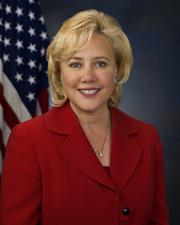 Sen. Mary L. Landrieu (D-LA)
Submitted June 18, 2007
Legislative Activity
Stay on top of the latest movement without scrolling through every action
Floor
Latest Action
Senate amendment submitted
June 18, 2007
Text
Submitted
TEXT OF AMENDMENTS
SA 1623. Mr. CARPER submitted an amendment intended to be proposed to
amendment SA 1502 proposed by Mr. Reid to the bill H.R. 6, to reduce
our Nation's dependency on foreign oil by investing in clean,
renewable, and alternative energy resources, promoting new emerging
energy technologies, developing greater efficiency, and creating a
Strategic Energy Efficiency and Renewables Reserve to invest in
alternative energy, and for other purposes; which was ordered to lie on
the table; as follows:
At the appropriate place, insert the following:
SEC. _. FEDERAL FLEET FUEL EFFICIENT VEHICLES.
(a) In General.--The Secretary of Energy shall coordinate
with the Administrator of General Services to ensure that
vehicles procured by Federal agencies are the most fuel
efficient in their class.
(b) Purchase of Advanced Technology Vehicles.--
(1) The Secretary of Energy shall coordinate with the
Administrator of General Services to ensure that, of the
vehicles procured after September 30, 2008--
(A) not less than 5 percent of the total number of such
vehicles that are procured in each of fiscal years 2009 and
2010 are advanced technology vehicles;
(B) not less than 10 percent of the total number of such
vehicles that are procured in each of fiscal years 2011 and
2012 are advanced technology vehicles; and
(C) not less than 15 percent of the total number of such
vehicles that are procured each fiscal year after fiscal year
2012 are advanced technology vehicles.
(2) Waiver.--The Secretary, in consultation with the
Administrator, may waive the requirements of paragraph (1)
for any fiscal year to the extent that the Secretary
determines necessary to adjust to limitations on the
commercial availability of advanced technology vehicles.
(c) Report on Plans for Implementation.--At the same time
that the President submits the budget for fiscal year 2009 to
Congress under section 1105(a) of title 31, United States
Code, the Secretary shall submit to Congress a report
summarizing the plans for carrying out subsections (a) and
(b).
(d) Advanced Technology Vehicle Defined.--The term
``advanced technology vehicle'' means a motor vehicle that
draws propulsion energy from onboard sources of stored energy
that is--
(1) a new advanced lean burn technology motor vehicle (as
defined in section 30B(c)(3) of the Internal Revenue Code of
1986);
(2) a new qualified hybrid motor vehicle (as defined in
section 30B(d)(3) of such Code); or
(3) a new qualified fuel cell motor vehicle (as defined in
section 30B(e)(4) of such Code).
______
SA 1624. Mrs. DOLE (for herself and Mr. Carper) submitted an
amendment intended to be proposed to amendment SA 1502 proposed by Mr.
Reid to the bill H.R. 6, to reduce our Nation's dependency on foreign
oil by investing in clean, renewable, and alternative energy resources,
promoting new emerging energy technologies, developing greater
efficiency, and creating a Strategic Energy Efficiency and Renewables
Reserve to invest in alternative energy, and for other purposes; which
was ordered to lie on the table; as follows:
On page 127, line 5, insert ``(including flow batteries)''
after ``batteries''.
______
SA 1625. Mrs. DOLE submitted an amendment intended to be proposed to
amendment SA 1502 proposed by Mr. Reid to the bill H.R. 6, to reduce
our Nation's dependency on foreign oil by investing in clean,
renewable, and alternative energy resources, promoting new emerging
energy technologies, developing greater efficiency, and creating a
Strategic Energy Efficiency and Renewables Reserve to invest in
alternative energy, and for other purposes; which was ordered to lie on
the table; as follows:
At the appropriate place, insert the following:
SEC. ____. REPORT ON OIL AND GAS OPERATIONS IN SUDAN.
Not later than 30 days after the date of the enactment of
this Act, the Secretary of Treasury, in consultation with the
Secretary of State and Secretary of Energy, shall report to
the Congress and the President regarding persons and entities
engaged in oil or gas operations in Sudan with respect to
which sanctions are applicable under Executive Order 13400
(71 Fed. Reg. 25483, May 1, 2006).
______
SA 1626. Mrs. DOLE submitted an amendment intended to be proposed to
amendment SA 1502 proposed by Mr. Reid to the bill H.R. 6, to reduce
our Nation's dependency on foreign oil by investing in clean,
renewable, and alternative energy resources, promoting new emerging
energy technologies, developing greater efficiency, and creating a
Strategic Energy Efficiency and Renewables Reserve to invest in
alternative energy, and for other purposes; which was ordered to lie on
the table; as follows:
On page 138, line 3, strike ``oil consumption'' and insert
``reliance on foreign sources of oil''.
On page 139, strike lines 5 through 9 and insert the
following:
(2) Limitations.--
(A) Advertising.--In carrying out this section, the
Secretary shall allocate not less than 85 percent of funds
made available under subsection (e) for each fiscal year for
the advertising functions specified under paragraph (1)(A).
(B) Prohibition on certain uses.--None of the funds made
available under subsection (e) shall be used--
(i) for partisan political purposes, or for express
advocacy in support of, or to defeat, any clearly
identified--
[[Page S7820]]
(I) political candidate;
(II) ballot initiative; or
(III) legislative or regulatory proposal;
(ii) to fund advertising that features any elected
official, person seeking elected office, cabinet-level
official, or other Federal official employed pursuant to
section 213 of schedule C of title 5, Code of Federal
Regulations (or successor regulations); or
(iii) to fund advertising that does not contain a primary
message in accordance with subsection (a).
(3) Matching requirement.--The amount of funds made
available under subsection (e) for the procurement of media
time or space for the campaign under this section shall be
matched by an equal amount of non-Federal funds, to be
provided in cash or in-kind.
______
SA 1627. Mr. KOHL (for himself and Mr. Burr) submitted an amendment
intended to be proposed to amendment SA 1502 proposed by Mr. Reid to
the bill H.R. 6, to reduce our Nation's dependency on foreign oil by
investing in clean, renewable, and alternative energy resources,
promoting new emerging energy technologies, developing greater
efficiency, and creating a Strategic Energy Efficiency and Renewables
Reserve to invest in alternative energy, and for other purposes; which
was ordered to lie on the table; as follows:
On page 161, between lines 2 and 3, insert the following:
SEC. 269. USE OF HIGHLY ENERGY EFFICIENT COMMERCIAL WATER
HEATING EQUIPMENT IN FEDERAL BUILDINGS.
(a) In General.--Title 40, United States Code is amended--
(1) by redesignating sections 3313 through 3315 as sections
3314 through 3316, respectively; and
(2) by inserting after section 3312 the following:
``SEC. 3313. USE OF HIGHLY ENERGY-EFFICIENT COMMERCIAL WATER
HEATING EQUIPMENT IN FEDERAL BUILDINGS.
``(a) Definitions.--In this section:
``(1) Administrator.--The term `Administrator' means the
Administrator of General Services.
``(2) Highly energy-efficient commercial water heater.--The
term `highly energy-efficient commercial water heater' means
a commercial water heater that--
``(A) meets applicable standards for water heaters under
the Energy Star program established by section 324A of the
Energy Policy and Conservation Act (42 U.S.C. 6294a); or
``(B) has thermal efficiencies of not less than--
``(i) 90 percent for gas units with inputs of a rate that
is not higher than 500,000 British thermal units per hour; or
``(ii) 87 percent for gas units with inputs of a rate that
is higher than 500,000 British thermal units per hour.
``(b) Maintenance of Public Buildings.--Each commercial
water heater that is replaced by the Administrator in the
normal course of maintenance, or determined by the
Administrator to be replaceable to generate substantial
energy savings, shall be replaced, to the maximum extent
feasible (as determined by the Administrator) with a highly
energy-efficient commercial water heater.
``(c) Considerations.--In making a determination under this
section relating to the installation of a highly energy-
efficient commercial water heater, the Administrator shall
consider--
``(1) the life-cycle cost effectiveness of the highly
energy-efficient commercial water heater;
``(2) the compatibility of the highly energy-efficient
commercial water heater with equipment that, on the date on
which the Administrator makes the determination, is installed
in the public building; and
``(3) whether the use of the highly energy-efficient
commercial water heater could interfere with the productivity
of any activity carried out in the public building.''.
(b) Effective Date.--The amendment made by subsection (a)
takes effect on the date that is 180 days after the date of
enactment of this Act.
______
SA 1628. Mr. BUNNING (for himself, Mr. Domenici, Mr. Enzi, Mr. Craig,
and Mr. Martinez) submitted an amendment intended to be proposed to
amendment SA 1502 proposed by Mr. Reid to the bill H.R. 6, to reduce
our Nation's dependency on foreign oil by investing in clean,
renewable, and alternative energy resources, promoting new emerging
energy technologies, developing greater efficiency, and creating a
Strategic Energy Efficiency and Renewables Reserve to invest in
alternative energy, and for other purposes; as follows:
Redesignate sections 141 through 150 as sections 151
through 160.
Redesignate subtitle C of title I as subtitle D.
After subtitle B of title I, insert the following:
Subtitle C--Clean Coal-Derived Fuels for Energy Security
SEC. 141. SHORT TITLE.
This subtitle may be cited as the ``Clean Coal-Derived
Fuels for Energy Security Act of 2007''.
SEC. 142. DEFINITIONS.
In this subtitle:
(1) Clean coal-derived fuel.--
(A) In general.--The term ``clean coal-derived fuel'' means
aviation fuel, motor vehicle fuel, home heating oil, or
boiler fuel that is--
(i) substantially derived from the coal resources of the
United States; and
(ii) refined or otherwise processed at a facility located
in the United States that captures up to 100 percent of the
carbon dioxide emissions that would otherwise be released at
the facility.
(B) Inclusions.--The term ``clean coal-derived fuel'' may
include any other resource that is extracted, grown,
produced, or recovered in the United States.
(2) Covered fuel.--The term ``covered fuel'' means--
(A) aviation fuel;
(B) motor vehicle fuel;
(C) home heating oil; and
(D) boiler fuel.
(3) Small refinery.--The term ``small refinery'' means a
refinery for which the average aggregate daily crude oil
throughput for a calendar year (as determined by dividing the
aggregate throughput for the calendar year by the number of
days in the calendar year) does not exceed 75,000 barrels.
SEC. 143. CLEAN COAL-DERIVED FUEL PROGRAM.
(a) Program.--
(1) In general.--Not later than 1 year after the date of
enactment of this Act, the President shall promulgate
regulations to ensure that covered fuel sold or introduced
into commerce in the United States (except in noncontiguous
States or territories), on an annual average basis, contains
the applicable volume of clean coal-derived fuel determined
in accordance with paragraph (4).
(2) Provisions of regulations.--Regardless of the date of
promulgation, the regulations promulgated under paragraph
(1)--
(A) shall contain compliance provisions applicable to
refineries, blenders, distributors, and importers, as
appropriate, to ensure that--
(i) the requirements of this subsection are met; and
(ii) clean coal-derived fuels produced from facilities for
the purpose of compliance with this subtitle achieve at least
a 20 percent reduction in life cycle greenhouse gas emissions
compared to gasoline; but
(B) shall not--
(i) restrict geographic areas in the contiguous United
States in which clean coal-derived fuel may be used; or
(ii) impose any per-gallon obligation for the use of clean
coal-derived fuel.
(3) Relationship to other regulations.--Regulations
promulgated under this paragraph shall, to the maximum extent
practicable, incorporate the program structure, compliance
and reporting requirements established under the final
regulations promulgated to implement the renewable fuel
program established by the amendment made by section
1501(a)(2) of the Energy Policy Act of 2005 (Public Law 109-
58; 119 Stat. 1067).
(4) Applicable volume.--
(A) Calendar years 2016 through 2022.--For the purpose of
this subsection, the applicable volume for any of calendar
years 2016 through 2022 shall be determined in accordance
with the following table:
Applicable volume of clean coal-derived fuel
Calendar year: (in billions of gallons):
2016.........................................................0.75....
2017..........................................................1.5....
2018.........................................................2.25....
2019.........................................................3.75....
2020..........................................................4.5....
2021.........................................................5.25....
2022..........................................................6.0....
(B) Calendar year 2023 and thereafter.--Subject to
subparagraph (C), for the purposes of this subsection, the
applicable volume for calendar year 2023 and each calendar
year thereafter shall be determined by the President, in
coordination with the Secretary and the Administrator of the
Environmental Protection Agency, based on a review of the
implementation of the program during calendar years 2016
through 2022, including a review of--
(i) the impact of clean coal-derived fuels on the energy
security of the United States;
(ii) the expected annual rate of future production of clean
coal-derived fuels; and
(iii) the impact of the use of clean coal-derived fuels on
other factors, including job creation, rural economic
development, and the environment.
(C) Minimum applicable volume.--For the purpose of this
subsection, the applicable volume for calendar year 2023 and
each calendar year thereafter shall be equal to the product
obtained by multiplying--
(i) the number of gallons of covered fuel that the
President estimates will be sold or introduced into commerce
in the calendar year; and
(ii) the ratio that--
(I) 6,000,000,000 gallons of clean coal-derived fuel; bears
to
(II) the number of gallons of covered fuel sold or
introduced into commerce in calendar year 2022.
(b) Applicable Percentages.--
(1) Provision of estimate of volumes of certain fuel
sales.--Not later than October 31 of each of calendar years
2016 through 2021, the Administrator of the Energy
Information
[[Page S7821]]
Administration shall provide to the President an estimate,
with respect to the following calendar year, of the volumes
of covered fuel projected to be sold or introduced into
commerce in the United States.
(2) Determination of applicable percentages.--
(A) In general.--Not later than November 30 of each of
calendar years 2016 through 2022, based on the estimate
provided under paragraph (1), the President shall determine
and publish in the Federal Register, with respect to the
following calendar year, the clean coal-derived fuel
obligation that ensures that the requirements of subsection
(a) are met.
(B) Required elements.--The clean coal-derived fuel
obligation determined for a calendar year under subparagraph
(A) shall--
(i) be applicable to refineries, blenders, and importers,
as appropriate;
(ii) be expressed in terms of a volume percentage of
covered fuel sold or introduced into commerce in the United
States; and
(iii) subject to paragraph (3)(A), consist of a single
applicable percentage that applies to all categories of
persons specified in clause (i).
(3) Adjustments.--In determining the applicable percentage
for a calendar year, the President shall make adjustments--
(A) to prevent the imposition of redundant obligations on
any person specified in paragraph (2)(B)(i); and
(B) to account for the use of clean coal-derived fuel
during the previous calendar year by small refineries that
are exempt under subsection (f).
(c) Volume Conversion Factors for Clean Coal-Derived Fuels
Based on Energy Content.--
(1) In general.--For the purpose of subsection (a), the
President shall assign values to specific types of clean
coal-derived fuel for the purpose of satisfying the fuel
volume requirements of subsection (a)(4) in accordance with
this subsection.
(2) Energy content relative to diesel fuel.--For clean
coal-derived fuels, 1 gallon of the clean coal-derived fuel
shall be considered to be the equivalent of 1 gallon of
diesel fuel multiplied by the ratio that--
(A) the number of British thermal units of energy produced
by the combustion of 1 gallon of the clean coal-derived fuel
(as measured under conditions determined by the Secretary);
bears to
(B) the number of British thermal units of energy produced
by the combustion of 1 gallon of diesel fuel (as measured
under conditions determined by the Secretary to be comparable
to conditions described in subparagraph (A)).
(d) Credit Program.--
(1) In general.--The President, in consultation with the
Secretary and the clean coal-derived fuel requirement of this
section.
(2) Market transparency.--In carrying out the credit
program under this subsection, the President shall facilitate
price transparency in markets for the sale and trade of
credits, with due regard for the public interest, the
integrity of those markets, fair competition, and the
protection of consumers.
(e) Waivers.--
(1) In general.--The President, in consultation with the
Secretary and the Administrator of the Environmental
Protection Agency, may waive the requirements of subsection
(a) in whole or in part on petition by 1 or more States by
reducing the national quantity of clean coal-derived fuel
required under subsection (a), based on a determination by
the President (after public notice and opportunity for
comment), that--
(A) implementation of the requirement would severely harm
the economy or environment of a State, a region, or the
United States; or
(B) extreme and unusual circumstances exist that prevent
distribution of an adequate supply of domestically-produced
clean coal-derived fuel to consumers in the United States.
(2) Petitions for waivers.--The President, in consultation
with the Secretary and the Administrator of the Environmental
Protection Agency, shall approve or disapprove a State
petition for a waiver of the requirements of subsection (a)
within 90 days after the date on which the petition is
received by the President.
(3) Termination of waivers.--A waiver granted under
paragraph (1) shall terminate after 1 year, but may be
renewed by the President after consultation with the
Secretary and the Administrator of the Environmental
Protection Agency.
(f) Small Refineries.--
(1) Temporary exemption.--
(A) In general.--The requirements of subsection (a) shall
not apply to small refineries until calendar year 2018.
(B) Extension of exemption.--
(i) Study by secretary.--Not later than December 31, 2013,
the Secretary shall submit to the President and Congress a
report describing the results of a study to determine whether
compliance with the requirements of subsection (a) would
impose a disproportionate economic hardship on small
refineries.
(ii) Extension of exemption.--In the case of a small
refinery that the Secretary determines under clause (i) would
be subject to a disproportionate economic hardship if
required to comply with subsection (a), the President shall
extend the exemption under subparagraph (A) for the small
refinery for a period of not less than 2 additional years.
(2) Petitions based on disproportionate economic
hardship.--
(A) Extension of exemption.--A small refinery may at any
time petition the President for an extension of the exemption
under paragraph (1) for the reason of disproportionate
economic hardship.
(B) Evaluation of petitions.--In evaluating a petition
under subparagraph (A), the President, in consultation with
the Secretary, shall consider the findings of the study under
paragraph (1)(B) and other economic factors.
(C) Deadline for action on petitions.--The President shall
act on any petition submitted by a small refinery for a
hardship exemption not later than 90 days after the date of
receipt of the petition.
(3) Opt-in for small refineries.--A small refinery shall be
subject to the requirements of subsection (a) if the small
refinery notifies the President that the small refinery
waives the exemption under paragraph (1).
(g) Penalties and Enforcement.--
(1) Civil penalties.--
(A) In general.--Any person that violates a regulation
promulgated under subsection (a), or that fails to furnish
any information required under such a regulation, shall be
liable to the United States for a civil penalty of not more
than the total of--
(i) $25,000 for each day of the violation; and
(ii) the amount of economic benefit or savings received by
the person resulting from the violation, as determined by the
President.
(B) Collection.--Civil penalties under subparagraph (A)
shall be assessed by, and collected in a civil action brought
by, the Secretary or such other officer of the United States
as is designated by the President.
(2) Injunctive authority.--
(A) In general.--The district courts of the United States
shall have jurisdiction to--
(i) restrain a violation of a regulation promulgated under
subsection (a);
(ii) award other appropriate relief; and
(iii) compel the furnishing of information required under
the regulation.
(B) Actions.--An action to restrain such violations and
compel such actions shall be brought by and in the name of
the United States.
(C) Subpoenas.--In the action, a subpoena for a witness who
is required to attend a district court in any district may
apply in any other district.
(h) Effective Date.--Except as otherwise specifically
provided in this section, this section takes effect on
January 1, 2016.
______
SA 1629. Mr. KYL submitted an amendment intended to be proposed to
amendment SA 1502 proposed by Mr. Reid to the bill H.R. 6, to reduce
our Nation's dependency on foreign oil by investing in clean,
renewable, and alternative energy resources, promoting new emerging
energy technologies, developing greater efficiency, and creating a
Strategic Energy Efficiency and Renewables Reserve to invest in
alternative energy, and for other purposes; which was ordered to lie on
the table; as follows:
At the end of subtitle C of title I, add the following:
SEC. 151. STUDY OF FEASIBILITY AND IMPACT OF RENEWABLE FUEL
AND ADVANCED BIOFUEL REQUIREMENTS.
(a) In General.--The Secretary, in consultation with the
Administrator of the Environmental Protection Agency, the
Administrator of the Energy Information Administration, the
Secretary of Agriculture, and the Director of the United
States Geological Service, shall conduct a study--
(1) to determine the feasibility of meeting the renewable
fuel and advanced biofuel requirements of section 111; and
(2) to evaluate the impact of meeting those standards in
accordance with the phase-in schedule required under section
111.
(b) Scope.--In conducting the study, the Secretary shall
consider--
(1) the technological feasibility and economic impact of
the renewable fuel and advanced biofuel requirements of
section 111;
(2) the environmental impact of the requirements, including
the impact on water supply;
(3) the overall costs and benefits of meeting the
requirements;
(4) the degree in which the requirements will maintain a
level playing field among all biofuel technology
alternatives;
(5) the degree to which energy security benefits can be
measured and considered, measured in part by how much less
oil is imported;
(6) the impact on fuel fungibility;
(7) the impact on price volatility;
(8) the impact on overall energy supply and distribution;
(9) the capability of infrastructure for alternative fuels,
including distribution and transportation;
(10) the actual and projected domestic renewable fuel
production capability, by type;
(11) actual and projected imports of renewable fuel, by
type;
(12) the impact on domestic food prices;
(13) the impact on tallow prices; and
(14) the impact on domestic animal agriculture feedstocks.
(c) Peer Review.--The Secretary shall enter into an
arrangement with the National Academy of Sciences under which
the Academy shall conduct a peer review of the results of the
study.
[[Page S7822]]
(d) Reports.--
(1) In general.--Not later than 3 years after the date of
enactment of this Act, the Secretary shall submit to Congress
a report describing the results of the study required under
this section.
(2) Updates.--Not later than 2 years after the date of
submission of the report under paragraph (1), and every 2
years thereafter through December 31, 2022, the Secretary
shall submit to Congress an update on the study required
under this section.
(e) Adjustment of Alternative Fuel Standard and Schedule.--
(1) In general.--Notwithstanding any other provision of
this title, if the study or an update required under this
section demonstrates a shortfall in the supply of the actual
or projected renewable fuel or advanced biofuel production
and imports necessary to meet the phase-in schedule required
under section 111, not later than 1 year after the date on
which a report or update is submitted to Congress, the
Administrator of the Environmental Protection Agency shall
promulgate, through notice and comment rulemaking, such
regulations as are necessary to make a downward adjustment in
the level of renewable fuel or advanced biofuel required
under section 111 or adjust the phase-in schedule, or both,
to alleviate the shortfall.
(2) Effective date.--Any adjustment of the phase-in
schedule under paragraph (1) shall take effect not earlier
than 90 days after the date of publication of the final rule
in the Federal Register, as determined by the Administrator
of the Environmental Protection Agency.
______
SA 1630. Mr. CASEY submitted an amendment intended to be proposed to
amendment SA 1502 proposed by Mr. Reid to the bill H.R. 6, to reduce
our Nation's dependency on foreign oil by investing in clean,
renewable, and alternative energy resources, promoting new emerging
energy technologies, developing greater efficiency, and creating a
Strategic Energy Efficiency and Renewables Reserve to invest in
alternative energy, and for other purposes; which was ordered to lie on
the table; as follows:
On page 161, strike lines 6 though 12 and insert the
following:
SEC. 271. WEATHERIZATION ASSISTANCE FOR LOW-INCOME PERSONS.
(a) Energy-Efficient Appliance Purchase Assistance for Low-
Income Persons Program.--Section 413 of the Energy
Conservation and Production Act (42 U.S.C. 6863) is amended
by adding at the end the following:
``(f) Energy-Efficient Appliance Purchase Assistance for
Low-Income Persons Program.--
``(1) In general.--As part of the weatherization program
established under this part, the Administrator shall carry
out a program, to be called the `Energy-Efficient Appliance
Purchase Assistance for Low-Income Persons Program', under
which the Administrator shall provide grants to low-income
persons to pay the Federal share of the cost of purchasing
eligible home appliances.
``(2) Eligible home appliance.--A grant provided under this
subsection may only be used to purchase a home appliance that
is certified under the Energy Star program or is otherwise
determined by the Administrator to be energy efficient,
including a home heating system, home cooling system,
refrigerator, water heater, washer, or dryer.
``(3) Cost sharing.--
``(A) Federal share.--The Federal share of a grant provided
under this subsection shall be 95 percent of the cost of
purchasing an eligible home appliance.
``(B) Source of non-federal share.--The non-Federal share
of a grant provided under this subsection may be derived from
funds provided by charitable, State, or local organizations
or agencies.
``(4) Preference.--In providing grants under this
subsection, the Administrator shall give preference to low-
income persons that are located in States that have
implemented programs, including programs in partnership with
for-profit and nonprofit organizations, that promote the
purchase of energy-efficient appliances, as determined by the
Administrator.
``(5) Administration.--The terms and conditions of the
weatherization program established under this part shall
apply to this subsection to the extent determined appropriate
by the Administrator.
``(6) Funding.--Of the funds that are made available under
section 422, the Secretary shall use to carry out this
subsection not less than $4,000,000 for each of fiscal years
2008 through 2012.''.
(b) Authorization of Appropriations.--Section 422 of the
Energy Conservation and Production Act (42 U.S.C. 6872) is
amended by striking ``$700,000,000 for fiscal year 2008'' and
inserting ``$750,000,000 for each of fiscal years 2008
through 2012''.
______
SA 1631. Mrs. McCASKILL submitted an amendment intended to be
proposed to amendment SA 1502 proposed by Mr. Reid to the bill H.R. 6,
to reduce our Nation's dependency on foreign oil by investing in clean,
renewable, and alternative energy resources, promoting new emerging
energy technologies, developing greater efficiency, and creating a
Strategic Energy Efficiency and Renewables Reserve to invest in
alternative energy, and for other purposes; which was ordered to lie on
the table; as follows:
On page 161, between lines 2 and 3, insert the following:
SEC. 269. FEDERAL FLEET FUELING CENTERS.
(a) In General.--Not later than January 1, 2010, the head
of each Federal agency shall install at least 1 renewable
fuel pump at each Federal fleet fueling center in the United
States under the jurisdiction of the head of the Federal
agency.
(b) Report.--Not later than October 31 of the first
calendar year after the date of enactment of this Act, and
each October 31 thereafter, the President shall submit to
Congress a report that describes the progress towards
complying with subsection (a), including identifying--
(1) the number of Federal fleet fueling centers that
contain at least 1 renewable fuel pump; and
(2) the number of Federal fleet fueling centers that do not
contain any renewable fuel pumps.
(c) Authorization of Appropriations.--There are authorized
to be appropriated such sums as are necessary to carry out
this section.
______
SA 1632. Mr. FEINGOLD submitted an amendment intended to be proposed
to amendment SA 1502 proposed by Mr. Reid to the bill H.R. 6, to reduce
our Nation's dependency on foreign oil by investing in clean,
renewable, and alternative energy resources, promoting new emerging
energy technologies, developing greater efficiency, and creating a
Strategic Energy Efficiency and Renewables Reserve to invest in
alternative energy, and for other purposes; which was ordered to lie on
the table; as follows:
On page 161, strike lines 13 through 17 and insert the
following:
SEC. 272. STATE ENERGY CONSERVATION PLANS.
(a) Findings and Purposes.--Section 361 of the Energy
Policy and Conservation Act (42 U.S.C. 6321) is amended--
(1) in subsection (a)--
(A) in paragraph (2), by striking ``and'' at the end;
(B) by redesignating paragraph (3) as paragraph (4); and
(C) by inserting after paragraph (2) the following:
``(3) the dependence of the United States on foreign energy
sources (especially petroleum products) has long-term
security implications that necessitate actions at the local
and national levels to increase energy independence,
particularly through support of sustainable domestic
production of renewable energy; and''; and
(2) in subsection (b)--
(A) by striking ``energy and reduce'' and inserting
``energy, reduce''; and
(B) by inserting ``, and increase energy independence
through use of local renewable energy'' after ``demand''.
(b) Optional Features of Plans.--Section 362(d) of the
Energy Policy and Conservation Act (42 U.S.C. 6322(d)) is
amended--
(1) in paragraph (16), by striking ``and'' after the
semicolon at the end;
(2) by redesignating paragraph (17) as paragraph (18); and
(3) by inserting after paragraph (16) the following:
``(17) programs to improve energy independence through the
production and use of domestic renewable energy, with an
emphasis on programs that--
``(A) maximize the benefits for local communities through
local, cooperative, or small business ownership; and
``(B) are environmentally sustainable; and''.
(c) Supplemental State Energy Independence Assessment and
Planning Programs.--Section 362 of the Energy Policy and
Conservation Act (42 U.S.C. 6322) is amended by adding at the
end the following:
``(h) Supplemental State Energy Independence Assessment and
Planning Programs.--
``(1) In general.--As part of a review conducted under
subsection (g), each State is encouraged to consider filing a
supplement to the energy conservation plan of the State that
includes an energy independence assessment and planning
program.
``(2) Plan.--Each State is encouraged to include in the
program a plan that includes--
``(A) a comprehensive assessment of the statewide energy
demand and renewable energy production capabilities; and
``(B) 1 or more implementation strategies (including
regional coordination) for decreasing dependence on foreign
energy sources, including petroleum.
``(3) Informational purposes.--The submission of the plan
and program shall be for informational purposes only and
shall not require approval by the Secretary.
``(4) Contents.--In preparing a program of a State under
paragraph (1), each State is encouraged to consider ways to--
``(A) support local and regional sustainable bioenergy use
and production (including support of small businesses);
``(B) support and coordinate between other renewable
energy, energy efficiency, and conservation activities at the
local, State, regional, or Federal level;
``(C) in the case of bioenergy production, support a broad
range of farm sizes, crops (including agroforestry), and
production
[[Page S7823]]
techniques, with a particular focus on small- and moderate-
sized family farms;
``(D) maximize the public value of developing and using
sustainable bioenergy, including activities that--
``(i) manage energy usage through energy efficiency and
conservation;
``(ii) develop new energy sources in a manner that is
economically viable, ecologically sound, and socially
responsible; and
``(iii) grow or produce biomass in a sustainable manner
that--
``(I) has net environmental benefits; and
``(II) takes into account factors such as relative water
quality, soil quality, air quality, wildlife impacts, net
energy balance, crop diversity, and provision of adequate
income for agricultural producers; and
``(E) support local and farmer-owned projects in order to
retain and maximize local and regional economic benefits.''.
(d) State Energy Efficiency Goals.--Section 364 of the
Energy Policy and Conservation Act (42 U.S.C. 6324) is
amended--
(1) by striking the section heading and all that follows
through ``Each'' and inserting the following:
``SEC. 364. STATE ENERGY EFFICIENCY GOALS.
``(a) In General.--Each''; and
(2) by adding at the end the following:
``(b) Additional Goals.--Each State is encouraged to
consider establishing goals for--
``(1) reducing dependence on foreign energy sources; and
``(2) encouraging local sustainable renewable energy
production and use in a manner that maximizes benefits to the
State and local communities.''.
(e) Authorization of Appropriations.--Section 365(f) of the
Energy Policy and Conservation Act (42 U.S.C. 6325(f)) is
amended by striking ``fiscal year 2008'' and inserting ``each
of fiscal years 2008 through 2012''.
______
SA 1633. Mr. FEINGOLD submitted an amendment intended to be proposed
to amendment SA 1502 proposed by Mr. Reid to the bill H.R. 6, to reduce
our Nation's dependency on foreign oil by investing in clean,
renewable, and alternative energy resources, promoting new emerging
energy technologies, developing greater efficiency, and creating a
Strategic Energy Efficiency and Renewables Reserve to invest in
alternative energy, and for other purposes; which was ordered to lie on
the table; as follows:
On page 55, strike lines 3 through 8 and insert the
following:
(3) the financial incentives necessary to enhance, to the
maximum extent practicable, the biofuels industry of the
United States to reduce the dependence of the United States
on foreign oil during calendar years 2011 through 2030; and
(4) an evaluation of and recommendations for improvements
to current and proposed biofuel and bioenergy incentives,
including--
(A) modifications of law (including regulations) and
policies to provide or increase incentives for the potential
production of bioenergy (at levels greater than in existence
as of the date of enactment of this section) to maintain
local ownership, control, economic development, and the
value-added nature of bioenergy production;
(B) potential limits to prevent excessive payments as the
bioenergy industry matures, including variable or
countercyclical support or other payment limitations;
(C) an evaluation of incentives at stages in the bioenergy
production system (including agricultural production, fuel
and energy production, blending, and retail sale), including
recommendations regarding the relative cost-effectiveness and
benefits to local and regional communities and consumers; and
(D) an assessment of incentives and recommendations to
ensure--
(i) the presence and effectiveness of sufficient
environmental safeguards; and
(ii) that the use of Federal funds does not contribute to
adverse environmental impacts, particularly with respect to
the effects on or changes in--
(I) land, air, and water quality; and
(II) land use patterns.
______
SA 1634. Mr. FEINGOLD submitted an amendment intended to be proposed
to amendment SA 1502 proposed by Mr. Reid to the bill H.R. 6, to reduce
our Nation's dependency on foreign oil by investing in clean,
renewable, and alternative energy resources, promoting new emerging
energy technologies, developing greater efficiency, and creating a
Strategic Energy Efficiency and Renewables Reserve to invest in
alternative energy, and for other purposes; which was ordered to lie on
the table; as follows:
On page 163, strike line 8 and insert the following:
(b) Protection for Small Business.--Section 111(c)(3) of
the Public Utility Regulatory Policies Act of 1978 (16 U.S.C.
2621(c)(3)) is amended by striking ``subsection (d)(7) or
(8)'' and inserting ``paragraph (7), (8), (16), or (17) of
subsection (d)''.
(c) Natural Gas Utilities.--Section 303(b) of the
______
SA 1635. Mr. FEINGOLD submitted an amendment intended to be proposed
to amendment SA 1502 proposed by Mr. Reid to the bill H.R. 6, to reduce
our Nation's dependency on foreign oil by investing in clean,
renewable, and alternative energy resources, promoting new emerging
energy technologies, developing greater efficiency, and creating a
Strategic Energy Efficiency and Renewables Reserve to invest in
alternative energy, and for other purposes; which was ordered to lie on
the table; as follows:
On page 166, line 21, strike ``; and'' and insert a
semicolon.
On page 166, line 24, strike the period and insert ``;
and''.
On page 166, between lines 24 and 25, insert the following:
``(4) to increase energy independence with an emphasis on
sustainable local and regional renewable energy production
and use in a way that maximizes benefits for local and
regional communities.
______
SA 1636. Mr. MENENDEZ submitted an amendment intended to be proposed
by him to the bill H.R. 1419, to move the United States toward greater
energy independence and security, to increase the production of clean
renewable fuels, to protect consumers from price gouging, to increase
the energy efficiency of products, buildings and vehicles, to promote
research on and deploy greenhouse gas capture and storage options, and
to improve the energy performance of the Federal Government, and for
other purposes; which was ordered to lie on the table; as follows:
At the end, add the following:
TITLE VIII--MISCELLANEOUS
SEC. 801. STUDY OF THE EFFECT OF PRIVATE WIRE LAWS ON THE
DEVELOPMENT OF COMBINED HEAT AND POWER
FACILITIES.
(a) Study.--
(1) In general.--The Secretary, in consultation with the
States and other appropriate entities, shall conduct a study
of the laws (including regulations) affecting the siting of
privately owned electric distribution wires on and across
public rights-of-way.
(2) Requirements.--The study under paragraph (1) shall
include--
(A) an evaluation of--
(i) the purposes of the laws; and
(ii) the effect the laws have on the development of
combined heat and power facilities;
(B) a determination of whether a change in the laws would
have any operating, reliability, cost, or other impacts on
electric utilities and the customers of the electric
utilities; and
(C) an assessment of--
(i) whether privately owned electric distribution wires
would result in duplicative facilities; and
(ii) whether duplicative facilities are necessary or
desirable.
(b) Report.--Not later than 1 year after the date of
enactment of this Act, the Secretary shall submit to Congress
a report that describes the results of the study conducted
under subsection (a).
______
SA 1637. Ms. LANDRIEU submitted an amendment intended to be proposed
to amendment SA 1502 proposed by Mr. Reid to the bill H.R. 6, to reduce
our Nation's dependency on foreign oil by investing in clean,
renewable, and alternative energy resources, promoting new emerging
energy technologies, developing greater efficiency, and creating a
Strategic Energy Efficiency and Renewables Reserve to invest in
alternative energy, and for other purposes; which was ordered to lie on
the table; as follows:
At the appropriate place, insert the following:
SEC. __. EXTENSION AND MODIFICATION OF CREDIT FOR NEW ENERGY
EFFICIENT HOMES.
(a) Extension.--Subsection (g) of section 45L (relating to
termination) of the Internal Revenue Code of 1986 is amended
by striking ``December 31, 2008'' and inserting ``December
31, 2013''.
(b) Use of 2006 IECC Standards.--Clause (i) of section
45L(c)(1)(A) of the Internal Revenue Code of 1986 (relating
to energy savings requirements) is amended by striking ``the
2003 International Energy Conservation Code'' and inserting
``the 2006 International Energy Conservation Code''.
(c) Credit Allowed for Homes Increasing Efficiency by 30
Percent.--
(1) In general.--Subsection (c) of section 45L of the
Internal Revenue Code of 1986 is amended by striking ``or''
at the end of paragraph (2), by redesignating paragraph (3)
as paragraph (4), and by inserting after paragraph (2) the
following new paragraph:
``(3) certified--
``(A) to have a level of annual heating and cooling energy
consumption which is at least 30 percent below the annual
level described in paragraph (1) but less than 50 percent
below such level, and
``(B) to have building envelope component improvements
account for at least \1/3\ of such 30 percent, or''.
(2) Amount of credit.--Section 45L(a)(2)(B) of such Code is
amended by
[[Page S7824]]
striking ``paragraph (3)'' and inserting ``paragraph (3) or
(4)''.
(d) Increase in Credit Amount.--
(1) In general.--Section 45L(a)(2) of the Internal Revenue
Code of 1986, as amended by subsection (c)(2), is amended--
(A) in subparagraph (A), by striking ``$2,000'' and
inserting ``$4,000'', and
(B) in subparagraph (B), by striking ``$1,000'' and
inserting ``$2,000''.
(2) Additional credit amount for homes in states adopting
2006 iecc.--Paragraph (2) of section 45L(a) of such Code is
amended by adding at the end the following new flush
sentence:
``In the case of any dwelling unit which is located in a
State which has adopted the 2006 International Energy
Conservation Code, the amounts under subparagraphs (A) and
(B) shall each be increased by $1,000.''.
(e) Clarification With Respect to Rental Units.--
Subparagraph (B) of section 45L(a)(1) of the Internal Revenue
Code of 1986 is amended to read as follows:
``(B) acquired by a person from such eligible contractor
and used by any person as a residence (whether as a principal
residence, for rental, or otherwise) during the taxable
year.''.
(f) Effective Date.--
(1) In general.--Except as provided in paragraph (2), the
amendments made by this section shall apply to taxable years
beginning after the date of the enactment of this Act.
(2) Rental units.--The amendment made by subsection (e)
shall take effect as if included in section 1332 of the
Energy Policy Act of 2005.
______
SA 1638. Mrs. FEINSTEIN (for herself and Mr. Bennett) submitted an
amendment intended to be proposed to amendment SA 1502 proposed by Mr.
Reid to the bill H.R. 6, to reduce our Nation's dependency on foreign
oil by investing in clean, renewable, and alternative energy resources,
promoting new emerging energy technologies, developing greater
efficiency, and creating a Strategic Energy Efficiency and Renewables
Reserve to invest in alternative energy, and for other purposes; which
was ordered to lie on the table; as follows:
On page 152, strike lines 15 through the table and insert
the following:
SEC. 264. ENERGY MANAGEMENT REQUIREMENTS FOR FEDERAL
BUILDINGS.
Section 543(a) of the National Energy Conservation Policy
Act (42 U.S.C. 8253(a)(1)) is amended--
(1) in paragraph (1), by striking the table and inserting
the following:
``Fiscal Year Percentage reduction
2006................................................................2
2007................................................................4
2008................................................................9
2009...............................................................12
2010...............................................................15
2011...............................................................18
2012...............................................................21
2013...............................................................24
2014...............................................................27
2015.......................................................30.''; and
(2) by adding at the end the following:
``(4) The Architect of the Capitol shall comply with the
requirements of this subsection with respect to the Capitol
complex.''.
On page 161, after line 2, insert the following:
SEC. 269. LEGISLATIVE BRANCH ENERGY EFFICIENCY INITIATIVE.
(a) Audit.--
(1) In general.--Not later than 180 days after the date of
enactment of this Act, the Architect of the Capitol shall
complete--
(A) comprehensive energy audits of the Capitol complex; and
(B) identify and evaluate energy-efficient and renewable-
energy projects.
(2) Submission.--The audits required by paragraph (1) shall
be submitted to the Committee on Rules and Administration.
(b) Report on Carbon Dioxide Emissions.--
(1) In general.--Not later than 180 days after the date of
enactment of this Act, the Architect of the Capitol, in
collaboration with Federal agencies with the relevant
expertise to judge both the environmental benefits and
technical feasibility of applying carbon sequestration
technologies to operations of the Capitol Power Plant, shall
complete a feasibility study on options for reducing the
carbon dioxide emissions associated with providing
electricity, steam, and chilled water to the Capitol complex
which shall include--
(A) an analysis of the costs, feasibility and ancillary
benefits of reducing the current level of carbon dioxide
emissions through the installation of a highly efficient
combined heat and power plant;
(B) an analysis of various alternatives for reducing,
capturing, and storing carbon associated with the Capitol
Power Plant, including options for carbon sequestration, coal
gasification, and clean-coal technology; and
(C) recommendations for reducing carbon dioxide emissions
from the operations of the Capitol complex by 20 percent by
2020.
(2) Baseline.--The baseline year for reductions under
paragraph (1)(C) shall be fiscal year 2006.
(3) Submission.--The report required by paragraph (1) shall
be submitted to the Committee on Rules and Administration.
(c) Biodiesel.--
(1) In general.--Not later than 180 days after the date of
enactment of this Act, the Architect of the Capitol shall
complete a feasibility study on the technical and economic
feasibility of requiring biodiesel in Architect of the
Capitol and Senate Sergeant at Arms compatible vehicles.
(2) Submission.--The report required by paragraph (1) shall
be submitted to the Committee on Rules and Administration.
(d) Building Integrated Photovoltaic System.--
(1) In general.--Not later than 180 days after the date of
enactment of this Act, the Architect of the Capitol shall
complete a study assessing the feasibility of installing a
Building Integrated Photovoltaic System on the rooftop of the
Hart Senate Office Building.
(2) Submission.--The report required by paragraph (1) shall
be submitted to the Committee on Rules and Administration.
______
SA 1639. Mr. BINGAMAN submitted an amendment intended to be proposed
to amendment SA 1502 proposed by Mr. Reid to the bill H.R. 6, to reduce
our Nation's dependency on foreign oil by investing in clean,
renewable, and alternative energy resources, promoting new emerging
energy technologies, developing greater efficiency, and creating a
Strategic Energy Efficiency and Renewables Reserve to invest in
alternative energy, and for other purposes; which was ordered to lie on
the table; as follows:
On page 180, line 7, insert ``and storage'' before ``of
carbon''.
On page 180, line 11, strike ``the compression'' and insert
``advanced compression''.
On page 180, line 18, strike ``and''.
Beginning on page 180, strike line 19 and all that follows
through page 181, line 9, and insert the following:
``(v) research and development of new and improved
technologies for--
``(I) carbon use, including recycling and reuse of carbon
dioxide; and
``(II) the containment of carbon dioxide in the form of
solid materials or products derived from a gasification
technology that does not involve geologic containment or
injection; and
``(vi) research and development of new and improved
technologies for oxygen separation from air.
On page 181, line 10, strike ``(3)'' and insert ``(2)''.
On page 182, line 2, strike ``and''.
On page182, line 4, strike the period and insert ``; and''.
On page 182, between lines 4 and 5, insert the following:
``(vii) coal-bed methane recovery.
On page 183, line 8, strike ``(4)'' and insert ``(3)''.
On page 183, line 12, insert ``involving at least 1,000,000
tons of carbon dioxide per year'' after ``tests''.
On page 183, line 14, insert ``collect and'' before
``validate''.
On page 184, line 1, strike ``(5)'' and insert ``(4)''.
On page 184, line 7, strike ``(6)'' and insert ``(5)''.
On page 184, line 11, strike ``(7)'' and insert ``(6)''.
On page 186, strike lines 18 through 20 and insert the
following:
(6) the work done to develop the Carbon Sequestration Atlas
of the United States and Canada that was completed by the
Department of Energy.
On page 189, strike lines 14 through 18 and insert the
following:
(A) In general.--On completion of the assessment, the
Secretary of Energy and the Secretary of the Interior shall
incorporate the results of the assessment using--
(i) the NatCarb database, to the maximum extent
practicable; or
(ii) a new database developed by the Secretary of Energy,
as the Secretary of Energy determines to be necessary.
On page 190, line 25, strike ``or''.
On page 191, line 2, strike the period and insert ``; or''.
On page 191, between lines 2 and 3, insert the following:
(G) manufacture biofuels.
On page 191, strike lines 10 through 15 and insert the
following:
(2) Scope of award.--An award under this section shall be
only for the portion of the project that--
(A) carries out the large-scale capture (including
purification and compression) of carbon dioxide;
(B) provides for the cost of transportation and injection
of carbon dioxide; and
(C) incorporates a comprehensive measurement, monitoring,
and validation program.
On page 192, line 7, insert ``carbon dioxide by volume''
after ``95 percent''.
______
SA 1640. Mr. GRAHAM (for herself and Mr. Dorgan) submitted an
amendment intended to be proposed to amendment SA 1502 proposed by Mr.
Reid to the bill H.R. 6, to reduce our Nation's dependency on foreign
oil by investing in clean, renewable, and alternative energy resources,
promoting new emerging energy technologies, developing greater
efficiency, and creating a Strategic Energy Efficiency
[[Page S7825]]
and Renewables Reserve to invest in alternative energy, and for other
purposes; which was ordered to lie on the table; as follows:
At the appropriate place, insert the following:
SEC. ___. HYDROGEN INSTALLATION, INFRASTRUCTURE, AND FUEL
COSTS.
(a) In General.--Subpart B of part IV of subchapter A of
chapter 1 of the Internal Revenue Code of 1986 (relating to
foreign tax credit, etc.) is amended by adding at the end the
following new section:
``SEC. 30D. HYDROGEN INSTALLATION, INFRASTRUCTURE, AND FUEL
COSTS.
``(a) Allowance of Credit.--There shall be allowed as a
credit against the tax imposed by this chapter for the
taxable year an amount equal to the sum of--
``(1) the hydrogen installation and infrastructure costs
credit determined under subsection (b), and
``(2) the hydrogen fuel costs credit determined under
subsection (c).
``(b) Hydrogen Installation and Infrastructure Costs
Credit.--
``(1) In general.--For purposes of subsection (a), the
hydrogen installation and infrastructure costs credit
determined under this subsection with respect to each
eligible hydrogen production and distribution facility of the
taxpayer is an amount equal to--
``(A) 50 percent of so much of the installation costs which
when added to such costs taken into account with respect to
such facility for all preceding taxable years under this
subparagraph does not exceed $200,000, plus
``(B) 30 percent of so much of the infrastructure costs for
the taxable year as does not exceed $200,000 with respect to
such facility, and which when added to such costs taken into
account with respect to such facility for all preceding
taxable years under this subparagraph does not exceed
$600,000.
Nothing in this section shall permit the same cost to be
taken into account more than once.
``(2) Eligible hydrogen production and distribution
facility.--For purposes of this subsection, the term
`eligible hydrogen production and distribution facility'
means a hydrogen production and distribution facility which
has received from the Secretary an allocation from the
national hydrogen installation, infrastructure, and fuel
credit limitation.
``(c) Hydrogen Fuel Costs Credit.--
``(1) In general.--For purposes of subsection (a), the
hydrogen fuel costs credit determined under this subsection
with respect to each eligible hydrogen device of the taxpayer
is an amount equal to the qualified hydrogen expenditure
amounts with respect to such device.
``(2) Qualified hydrogen expenditure amount.--For purposes
of this subsection--
``(A) In general.--The term `qualified hydrogen expenditure
amount' means, with respect to each eligible hydrogen energy
conversion device of the taxpayer with a production capacity
of not more than 25 kilowatts of electricity per year, the
lesser of--
``(i) 30 percent of the amount paid or incurred by the
taxpayer during the taxable year for hydrogen which is
consumed by such device, and
``(ii) $2,000.
In the case of any device which is not owned by the taxpayer
at all times during the taxable year, the $2,000 amount in
subparagraph (B) shall be reduced by an amount which bears
the same ratio to $2,000 as the portion of the year which
such device is not owned by the taxpayer bears to the entire
year.
``(B) Higher limitation for devices with more production
capacity.--In the case of any eligible hydrogen energy
conversion device with a production capacity of--
``(i) more than 25 but less than 100 kilowatts of
electricity per year, subparagraph (A) shall be applied by
substituting `$4,000' for `$2,000' each place it appears, and
``(ii) not less than 100 kilowatts of electricity per year,
subparagraph (A) shall be applied by substituting `$6,000'
for `$2,000' each place it appears.
``(3) Eligible hydrogen energy conversion devices.--For
purposes of this subsection--
``(A) In general.--The term `eligible hydrogen energy
conversion device' means, with respect to any taxpayer, any
hydrogen energy conversion device which--
``(i) is placed in service after December 31, 2004,
``(ii) is wholly owned by the taxpayer during the taxable
year, and
``(iii) has received from the Secretary an allocation from
the national hydrogen installation, infrastructure, and fuel
credit limitation.
If an owner of a device (determined without regard to this
subparagraph) provides to the primary user of such device a
written statement that such user shall be treated as the
owner of such device for purposes of this section, then such
user (and not such owner) shall be so treated.
``(B) Hydrogen energy conversion device.--The term
`hydrogen energy conversion device' means--
``(i) any electrochemical device which converts hydrogen
into electricity, and
``(ii) any combustion engine which burns hydrogen as a
fuel.
``(d) National Hydrogen Installation, Infrastructure, and
Fuel Credit Limitation.--
``(1) In general.--There is a national hydrogen
installation, infrastructure, and fuel credit limitation for
each fiscal year. Such limitation is $15,000,000 for fiscal
year 2008, $30,000,000 for fiscal year 2009, $40,000,000 for
fiscal year 2010, and $50,000,000 for each succeeding fiscal
year.
``(2) Allocation.--Not later than 90 days after the date of
the enactment of this section, the Secretary, in consultation
with the Secretary of Energy, shall establish a hydrogen
installation, infrastructure, and fuel credit allocation
program.
``(e) Reduction in Basis.--For purposes of this subtitle,
if a credit is allowed under this section for any expenditure
with respect to any property, the increase in the basis of
such property which would (but for this paragraph) result
from such expenditure shall be reduced by the amount of the
credit so allowed.
``(f) Application With Other Credits.--
``(1) Business credit treated as part of general business
credit.--So much of the credit which would be allowed under
subsection (a) for any taxable year (determined without
regard to this subsection) that is attributable to amounts
which (but for subsection (g) would be allowed as a deduction
under section 162 shall be treated as a credit listed in
section 38(b) for such taxable year (and not allowed under
subsection (a)).
``(2) Personal credit.--The credit allowed under subsection
(a) (after the application of paragraph (1)) for any taxable
year shall not exceed the excess (if any) of--
``(A) the regular tax liability (as defined in section
26(b)) reduced by the sum of the credits allowable under
subpart A and sections 27, 30, 30B, and 30C, over
``(B) the tentative minimum tax for the taxable year.
``(g) Denial of Double Benefit.--The amount of any
deduction or other credit allowable under this chapter for
any cost taken into account in determining the amount of the
credit under subsection (a) shall be reduced by the amount of
such credit attributable to such cost.
``(h) Recapture.--The Secretary shall, by regulations,
provided for recapturing the benefit of any credit allowable
under subsection (a) with respect to any property which
ceases to be property eligible for such credit.
``(i) Election Not to Take Credit.--No credit shall be
allowed under subsection (a) for any property if the taxpayer
elects not to have this section apply to such property.
``(j) Regulations.--The Secretary shall prescribe such
regulations as necessary to carry out the provisions of this
section.
``(k) Termination.--This section shall not apply to any
costs after the earlier of--
``(1) December 31, 2017, or
``(2) the date on which the Secretary estimates that at
least 5 percent of all registered passenger motor vehicles
are powered by hydrogen.''.
(b) Conforming Amendments.--
(1) Section 38(b) of such Code is amended by striking
``plus'' at the end of paragraph (30), by striking the period
at the end of paragraph (31) and inserting ``plus'', and by
adding at the end the following new paragraph:
``(32) the portion of the hydrogen installation,
infrastructure, and fuel credit to which section 30D(f)(1)
applies.''.
(2) Section 55(c)(3) of such Code is amended by inserting
``30D(f)(2),'' after ``30C(d)(2),''.
(3) Section 1016(a) of such Code is amended by striking
``and'' at the end of paragraph (36), by striking the period
at the end of paragraph (37) and inserting ``, and'', and by
adding at the end the following new paragraph:
``(38) to the extent provided in section 30D(e).''.
(4) Section 6501(m) of such Code is amended by inserting
``30D(i),'' after ``30C(e)(5),''.
(5) The table of sections for subpart B of part IV of
subchapter A of chapter 1 of such Code is amended by
inserting after the item relating to section 30C the
following new item:
``Sec. 30D. Hydrogen installation, infrastructure, and fuel costs.''.
(c) Effective Date.--The amendments made by this section
shall apply to amounts paid or incurred after December 31,
2007, in taxable years ending after such date.
______
SA 1641. Mr. COLEMAN submitted an amendment intended to be proposed
to amendment SA 1502 proposed by Mr. Reid to the bill H.R. 6, to reduce
our Nation's dependency on foreign oil by investing in clean,
renewable, and alternative energy resources, promoting new emerging
energy technologies, developing greater efficiency, and creating a
Strategic Energy Efficiency and Renewables Reserve to invest in
alternative energy, and for other purposes; which was ordered to lie on
the table; as follows:
On page 44, line 4, strike ``processing'' and insert
``harvest, processing, storage''.
On page 44, line 12, strike ``processing'' and insert
``harvest, processing, storage''.
______
SA 1642. Ms. CANTWELL submitted an amendment intended to be proposed
by her to the bill H.R. 6, to reduce our Nation's dependency on foreign
oil by investing in clean, renewable, and alternative energy resources,
promoting new emerging energy technologies, developing greater
efficiency, and creating a Strategic Energy Efficiency
[[Page S7826]]
and Renewables Reserve to invest in alternative energy, and for other
purposes; which was ordered to lie on the table; as follows:
In section 102(4), strike subparagraph (A) and insert the
following:
(A) nonmerchantable materials or precommercial thinnings
that--
(i) are byproducts of preventive treatments, such as trees,
wood, brush, thinnings, chips, and slash, that are removed--
(I) to reduce hazardous fuels;
(II) to reduce or contain disease or insect infestation; or
(III) to restore forest health;
(ii) would not otherwise be used for higher-value products;
and
(iii) are harvested from National Forest System land or
public land (as defined in section 103 of the Federal Land
Policy and Management Act of 1976 (43 U.S.C. 1702))--
(I) where permitted by law; and
(II) in accordance with--
(aa) applicable land management plans; and
(bb) the requirements for old-growth maintenance and
restoration and large-tree retention of subsections (e)(2)
and (f) of section 102 of the Healthy Forests Restoration Act
of 2003 (16 U.S.C. 6512); or
______
SA 1643. Ms. CANTWELL submitted an amendment intended to be proposed
to amendment SA 1502 proposed by Mr. Reid to the bill H.R. 6, to reduce
our Nation's dependency on foreign oil by investing in clean,
renewable, and alternative energy resources, promoting new emerging
energy technologies, developing greater efficiency, and creating a
Strategic Energy Efficiency and Renewables Reserve to invest in
alternative energy, and for other purposes; which was ordered to lie on
the table; as follows:
At the end of subtitle C of title I, add the following:
SEC. 151. STUDY OF MARGINAL PRODUCTION COST OF REQUIRING USE
OF FLEXIBLE FUEL MIXTURES IN CERTAIN VEHICLES.
(a) Definition of Flexible Fuel Mixture.--In this section,
the term ``flexible fuel mixture'' means--
(1) any mixture of gasoline and ethanol, not more than 85
percent of which is ethanol, as measured by volume;
(2) any mixture of gasoline and methanol, not more than 85
percent of which is methanol, as measured by volume; and
(3) diesel or biodiesel, of which 85 percent is biodiesel,
as measured by volume.
(b) Study.--The Secretary shall conduct a study of the
likely average marginal production cost of requiring that
each new passenger vehicle with a weight of less than 10,000
pounds that is sold in the United States shall be capable of
using a flexible fuel mixture.
(c) Report.--Not later than 90 days after the date of
enactment of this Act, using funds made available to the
Secretary, the Secretary shall prepare and submit to Congress
a report describing the results of the study under subsection
(b).
______
SA 1644. Ms. CANTWELL submitted an amendment intended to be proposed
to amendment SA 1502 proposed by Mr. Reid to the bill H.R. 6, to reduce
our Nation's dependency on foreign oil by investing in clean,
renewable, and alternative energy resources, promoting new emerging
energy technologies, developing greater efficiency, and creating a
Strategic Energy Efficiency and Renewables Reserve to invest in
alternative energy, and for other purposes; which was ordered to lie on
the table; as follows:
On page 141, after line 23, add the following:
SEC. 255. STUDY OF SMART GRID SYSTEM.
(a) In General.--The Secretary, acting through the Director
of the Office of Electricity Delivery and Energy Reliability
(referred to in this section as the ``Secretary''), shall
conduct a study to assess the costs and benefits of
modernizing the electric transmission and distribution grid
(including investments relating to advanced grid
technologies).
(b) Input From Other Entities.--
(1) Participation.--In conducting the study under
subsection (a), the Secretary shall provide to any interested
individual or entity an opportunity to participate in the
study, including--
(A) consumers of electricity;
(B) manufacturers of components; and
(C) representatives of--
(i) the government of any State;
(ii) the electric utility industry;
(iii) the smart grid system; and
(iv) any electric utility.
(2) Consideration of input.--The Secretary may consider the
input of any interested individual or entity described in
paragraph (1).
(3) Authority of secretary.--In conducting the study under
subsection (a), the Secretary may require any electric
utility to provide to the Secretary any information relating
to the deployment of smart grid systems and technologies.
(c) Report.--
(1) In general.--Not later than 18 months after the date of
enactment of this Act, the Secretary shall submit to Congress
and the President a report that--
(A) covers the transmission and distribution components of
the electric transmission and distribution grid; and
(B) includes--
(i) an updated inventory of smart grid systems in existence
as of the date of enactment of this Act;
(ii) a description of--
(I) procedures for--
(aa) monitoring the condition of grid infrastructure; and
(bb) determining the need for new grid infrastructure; and
(II) any plan developed by any State, electric utility, or
other individual or entity to introduce any smart grid system
or technology;
(iii) an assessment relating to--
(I) any constraint relating to the deployment of smart grid
technology;
(II) the potential benefits resulting from the introduction
of smart grid systems, including benefits relating to--
(aa) energy efficiency;
(bb) the improved reliability and security of electricity;
(cc) the reduced price of electricity;
(dd) the ability to facilitate real-time electricity
pricing; and
(ee) the improved integration of renewable resources; and
(III) the ancillary benefits for any other economic sector
or activity outside of the electricity sector; and
(iv) any recommendations for legislative or regulatory
changes to remove barriers and create incentives for the
implementation of the smart grid system.
(2) Biannual updates.--Not later that 180 days after the
date on which the Secretary submits to Congress and the
President the report under paragraph (1), and biannually
thereafter, the Secretary shall update the report.
SEC. 256. SMART GRID TECHNOLOGY RESEARCH, DEVELOPMENT, AND
DEMONSTRATION.
(a) Power Grid Digital Information Technology.--The
Secretary, in consultation with electric utilities, the
States, and other stakeholders, shall carry out a program--
(1) to develop advanced techniques for measuring peak load
reductions and energy-efficiency savings from smart metering,
demand response, distributed generation, and electricity
storage systems;
(2) to investigate means for demand response, distributed
generation, and storage to provide ancillary services;
(3) to conduct research to advance the use of wide-area
measurement networks, including data mining, visualization,
advanced computing, and secure and dependable communications
in a highly-distributed environment;
(4) to test new reliability technologies in a grid control
room environment against a representative set of local outage
and wide area blackout scenarios;
(5) to propose policies to facilitate the transition to
real-time electricity pricing based on marginal generation
costs;
(6) to develop high-performance computers and algorithms
for use in electric transmission system software
applications;
(7) to promote the use of underutilized electricity
generation capacity in any substitution of electricity for
liquid fuels in the transportation system of the United
States; and
(8) in consultation with the Federal Energy Regulatory
Commission, to propose interconnection protocols to enable
electric utilities to access electricity stored in vehicles
to help meet peak demand loads.
(b) Smart Grid Regional Demonstration Initiative.--
(1) In general.--The Secretary may establish a smart grid
regional demonstration initiative (referred to in this
subsection as the ``Initiative'') composed of demonstration
projects specifically focused on advanced technologies for
use in power grid sensing, communications, analysis, and
power flow control.
(2) Goals.--The goals of the Initiative shall be--
(A) to demonstrate the potential benefits of concentrated
investments in advanced grid technologies on a regional grid;
(B) to facilitate the commercial transition from the
current power transmission and distribution system
technologies to advanced technologies;
(C) to facilitate the integration of advanced technologies
in existing electric networks to improve system performance,
power flow control, and reliability;
(D) to demonstrate protocols and standards that allow for
the measurement and validation of the energy savings and
greenhouse gas emission reductions associated with the
installation and use of energy efficiency and demand response
technologies and practices; and
(E) to investigate differences in each region and
regulatory environment.
(3) Demonstration projects.--
(A) In general.--In carrying out the Initiative, the
Secretary shall carry out smart grid demonstration projects
in up to 5 electricity control areas, including at least 1
area in which the majority of generation and transmission
assets are controlled by a tax-exempt entity.
(B) Cooperation.--A demonstration project under
subparagraph (A) shall be carried
[[Page S7827]]
out in cooperation with the electric utility that owns the
grid facilities in the electricity control area in which the
demonstration project is carried out.
(C) Federal share of cost of technology investments.--The
Secretary shall provide to an electric utility described in
subparagraph (B) financial assistance for use in paying an
amount equal to not more than 50 percent of the cost of
qualifying advanced grid technology investments made by the
electric utility to carry out a demonstration project.
(4) Authorization of appropriations.--There are authorized
to be appropriated--
(A) to carry out subsection (a), such sums as are necessary
for each of fiscal years 2008 through 2012; and
(B) to carry out subsection (b), $100,000,000 for each of
fiscal years 2008 through 2012.
SEC. 257. SMART GRID INTEROPERABILITY FRAMEWORK.
(a) Findings.--Congress finds that--
(1) each element of a digitally interactive electric system
needs to easily connect and operate in a safe, dependable
manner that enhances the efficient and reliable operation of
the overall electric system;
(2) without a framework for integrating electric system
resources, information exchange agreements would emerge in an
ad hoc manner with great inconsistency from region to region,
organization to organization, and application to application;
and
(3) ad hoc development would lead to--
(A) slower adoption rates of smart grid technology and
applications;
(B) inefficiencies from uncoordinated efforts; and
(C) potential solutions that would stifle supplier
competition and technical evolution.
(b) Interoperability Framework.--The Federal Energy
Regulatory Commission (referred to in this section as the
``Commission''), in cooperation with the Secretary, shall
coordinate with smart grid stakeholders to develop protocols
for the establishment of a flexible framework for the
connection of smart grid devices and systems that would align
policy, business, and technology approaches in a manner that
would enable all electric resources, including demand-side
resources, to contribute to an efficient, reliable
electricity network that will not--
(1) prevent appliances or other electric loads from
properly functioning; and
(2) endanger the health and safety of any consumer of an
appliance.
(c) Scope of Framework.--The framework developed under
subsection (b) shall be designed--
(1) to accommodate traditional, centralized generation and
transmission resources and consumer distributed resources,
including distributed generation, renewable generation,
energy storage, energy efficiency, and demand response and
enabling devices and systems;
(2) to be flexible to incorporate--
(A) regional and organizational differences; and
(B) technological innovations; and
(3) to include voluntary standards for certain classes of
new mass-produced electric appliances and equipment for homes
and businesses that are manufactured with the ability to
respond to electric grid emergencies and demand response
signals by curtailing all, or a portion of, the electrical
power consumed by the appliances or equipment in response to
an emergency or demand response signal, including through--
(A) load reduction to reduce total electrical demand;
(B) adjustment of load to provide grid ancillary services;
and
(C) in the event of a reliability crisis that threatens an
outage, short-term load shedding to help preserve the
stability of the grid.
(d) Development of Framework.--In developing the framework,
the Secretary of Commerce, acting through the Director of the
National Institute of Standards and Technology shall--
(1) consult with--
(A) sectors of the electricity industry, including sectors
relating to the generation, transmission, and distribution of
electricity;
(B) end-users of electricity;
(C) the Gridwise Architecture Council, the Institute of
Electrical and Electronics Engineers, the Association of Home
Appliance Manufacturers, the National Electrical
Manufacturers Association, and other electric industry
groups; and
(D) any appropriate Federal and State agencies; and
(2) not later than 1 year after the date of enactment of
this Act, make the proposed framework available for public
review and comment.
SEC. 258. STATE CONSIDERATION OF SMART GRID.
Section 111(d) of the Public Utility Regulatory Policies
Act of 1978 (16 U.S.C. 2621(d)) is amended by adding at the
end the following:
``(16) Financial incentives for smart grid deployment.--
``(A) In general.--Each State shall consider incentives to
encourage the rapid national deployment of a qualified smart
grid system, including each incentive described in this
paragraph.
``(B) Decoupling from utility revenues.--To improve energy
efficiency and use, each State shall consider requiring that
a major portion of the profits of each electric utility of
the State shall--
``(i) be based on criteria relating to--
``(I) performance;
``(II) achievement of designated goals;
``(III) service reliability; and
``(IV) customer support and assistance; and
``(ii) not be based exclusively on the volume of
electricity sales of the electric utility.
``(C) Consideration of smart grid investments.--Each State
shall consider requiring that, prior to undertaking
investments in nonadvanced grid technologies, an electric
utility of the State demonstrate to the State that the
electric utility considered an investment in a qualified
smart grid system based on appropriate factors, including--
``(i) cost-effectiveness;
``(ii) improved reliability;
``(iii) security; and
``(iv) system performance.
``(D) Rate recovery.--Each State shall consider authorizing
each electric utility of the State to recover from ratepayers
any capital, operating expenditure, or other costs of the
electric utility relating to the deployment of a qualified
smart grid system, including a reasonable rate of return on
the capital expenditures of the electric utility for the
deployment of the qualified smart grid system.
``(E) Enhanced return.--Each State shall consider
authorizing each electric utility of the State to earn an
enhanced return on the capital expenditures of the electric
utility for the deployment of a qualified smart grid system,
including an amount equal to not less than 130 percent of the
maximum return that the electric utility is authorized to
earn on other investments and expenditures for the
transmission and distribution network of the electric
utility.
``(F) Obsolete equipment.--Each State shall consider
authorizing any electric utility or other party of the State
to deploy a qualified smart grid system to recover in a
timely manner the remaining book-value costs of any equipment
rendered obsolete by the deployment of the qualified smart
grid system, based on the remaining depreciable life of the
obsolete equipment.
``(G) Retained savings.--Each State shall consider
authorizing any electric utility or other party deploying a
qualified smart grid system to retain an amount equal to not
less than 50 percent of the cost savings of the electric
utility that are attributable to the use by the electric
utility of the qualified smart grid system.
``(17) Smart grid consumer information.--
``(A) In general.--Each State shall provide to each
electricity consumer located in the State direct access, in
written and electronic machine-readable form, information
describing--
``(i) the time-based use, price, and source of the
electricity delivered to the consumer; and
``(ii) any available optional electricity supplies
(including the price and quantity of the optional electricity
supplies).
``(B) Availability.--In providing to each electricity
consumer located in a State the information described in
subparagraph (A), the State in which the electricity consumer
is located shall--
``(i) update the information on an hourly basis; and
``(ii) ensure that the information is available to each
electricity consumer on a daily basis.''.
______
SA 1645. Ms. CANTWELL submitted an amendment intended to be proposed
by her to the bill H.R. 6, to reduce our Nation's dependency on foreign
oil by investing in clean, renewable, and alternative energy resources,
promoting new emerging energy technologies, developing greater
efficiency, and creating a Strategic Energy Efficiency and Renewables
Reserve to invest in alternative energy, and for other purposes; which
was ordered to lie on the table; as follows:
At the appropriate place, insert the following:
SEC. ____. LIMITATION ON RADIO-FREQUENCY INTERFERENCE LEVELS
IN THE 902-928 MEGAHERTZ BAND.
(a) Findings.--Congress finds the following:
(1) Unlicensed radio devices are critical to promoting
energy efficiency in the United States. This equipment is
used by virtually all of the major companies involved in
exploration, production, refining, marketing, and
transportation of petroleum, petroleum products, and natural
gas. Unlicensed devices carry out myriad functions in the
Supervisory Control and Data Acquisition (``SCADA'') systems
that ensure effective oil and natural gas industry operations
and are critical to safety of life and the protection of
property and the environment. Systems that rely on these
devices remotely operate large production fields, sometimes
comprised of thousands of oil and natural gas wells, collect
and transmit critical data regarding well pressures,
temperature, and rates of flow that are essential to the
coordinated and safe operation, and transmit alarms in the
event of a leak or other emergency. Similar devices in
petroleum and natural gas transmission pipeline operations
measure and report flow rate, temperature, and pressure.
Energy utilities nationwide use unlicensed systems for remote
meter reading, which facilitates time-of-day pricing to
spread load and promote energy efficiency, and for SCADA
systems that efficiently
[[Page S7828]]
manage the hugely complex electric grid and gas distribution
networks and minimize disruptive outages.
(2) Unlicensed devices in the hundreds of millions likewise
serve other critical societal needs, including
transportation, manufacturing, education, health care,
entertainment, construction, broadband access, retailing, and
data processing.
(3) Unlicensed operation in the 902-928 MHz band is a large
and essential component of all the benefits identified in
paragraphs (1) and (2).
(4) Increased radio-frequency interference in the 902-928
MHz band would impair many industries, and, in particular,
would threaten the integrity and safety of energy production
and distribution.
(b) Protection of Unlicensed Operation.--
(1) In general.--In issuing or amending any regulations
related to the operation, use, and maintenance of the 902-928
megahertz band, the Federal Communications Commission shall
not permit increased levels of radio-frequency interference
in such band to unlicensed devices and operations.
(2) Exception.--The limitation under paragraph (1) shall
not apply to any regulations issued by the Federal
Communications Commissions that directly govern unlicensed
operation in the 902-928 megahertz band.
(3) Goal.--Consistent with paragraphs (1) and (2), the
Federal Communications Commission shall endeavor to maximize
efficient use of the 902-928 megahertz band.
(c) Definitions.--In this section:
(1) Unlicensed device.--The term ``unlicensed device''
means an intentional radiator authorized pursuant to part 15
of the Federal Communication Commission's Rules (47 C.F.R.
Part 15).
(2) Unlicensed operation.--The term ``unlicensed
operation'' means operation of an unlicensed device.
______
SA 1646. Ms. CANTWELL submitted an amendment intended to be proposed
by her to the bill H.R. 6, to reduce our Nation's dependency on foreign
oil by investing in clean, renewable, and alternative energy resources,
promoting new emerging energy technologies, developing greater
efficiency, and creating a Strategic Energy Efficiency and Renewables
Reserve to invest in alternative energy, and for other purposes; which
was ordered to lie on the table; as follows:
On page 277, between lines 5 and 6, insert the following:
SEC. 521. ONBOARD FUEL ECONOMY INDICATORS AND DEVICES.
(a) In General.--Chapter 329 of title 49, United States
Code, is amended by adding at the end the following:
``Sec. 32920. Fuel economy indicators and devices
``(a) In General.--The Secretary of Transportation, in
consultation with the Administrator of the Environmental
Protection Agency, shall prescribe a fuel economy standard
for passenger automobiles and light trucks manufactured by a
manufacturer in each model year beginning with model year
2012 that requires each such automobile and light truck to be
equipped with--
``(1) an onboard electronic instrument that provides real-
time and cumulative fuel economy data; and
``(2) an onboard electronic instrument that signals a
driver when inadequate tire pressure may be affecting fuel
economy.
``(b) Exception.--Subsection (a) shall not apply to any
vehicle that is not subject to an average fuel economy
standard under section 32902(b).
``(c) Enforcement.--Subchapter IV of chapter 301 shall
apply to a fuel economy standard prescribed under subsection
(a) to the same extent and in the same manner as if that
standard were a motor vehicle safety standard under chapter
301.''.
(b) Conforming Amendment.--The chapter analysis for chapter
329 of title 49, United States Code, is amended by inserting
after the item relating to section 32919 the following:
``32920. Fuel economy indicators and devices.''.
______
SA 1647. Mrs. CLINTON (for herself, Mr. Sanders, Mr. Leahy, and Ms.
Cantwell) submitted an amendment intended to be proposed to amendment
SA 1502 proposed by Mr. Reid to the bill H.R. 6, to reduce our Nation's
dependency on foreign oil by investing in clean, renewable, and
alternative energy resources, promoting new emerging energy
technologies, developing greater efficiency, and creating a Strategic
Energy Efficiency and Renewables Reserve to invest in alternative
energy, and for other purposes; which was ordered to lie on the table;
as follows:
At the end of subtitle F of title II, add the following:
SEC. 279. NET METERING AND INTERCONNECTION STANDARDS.
(a) In General.--Section 113 of the Public Utility
Regulatory Policies Act of 1978 (16 U.S.C. 2623) is amended
by adding at the end the following:
``(d) Net Metering.--
``(1) Definitions.--In this subsection and subsection (e):
``(A) Customer-generator.--The term `customer-generator'
means the owner or operator of a qualified generation unit.
``(B) Electric generation unit.--The term `electric
generation unit' means--
``(i) a qualified generation unit; and
``(ii) any electric generation unit that qualifies for net
metering under a net metering tariff or rule approved by a
State.
``(C) Local distribution system.--The term `local
distribution system' means any system for the distribution of
electric energy to the ultimate consumer of the electricity,
whether or not the owner or operator of the system is a
retail electric supplier.
``(D) Net metering.--The term `net metering' means the
process of--
``(i) measuring the difference between the electricity
supplied to a customer-generator and the electricity
generated by the customer-generator that is delivered to a
local distribution system at the same point of
interconnection during an applicable billing period; and
``(ii) providing an energy credit to the customer-generator
in the form of a kilowatt-hour credit for each kilowatt-hour
of energy produced by the customer-generator from a qualified
generation unit.
``(E) Qualified generation unit.--The term `qualified
generation unit' means an electric energy generation unit
that--
``(i) is a fuel cell or uses as the energy source of the
unit solar energy, wind, biomass, geothermal energy,
anaerobic digestion, or landfill gas, or a combination of the
any of those sources;
``(ii) has a generating capacity of not more than 2,000
kilowatts;
``(iii) is located on premises that are owned, operated,
leased, or otherwise controlled by the customer-generator;
``(iv) operates in parallel with the retail electric
supplier; and
``(v) is intended primarily to offset all or part of the
requirements of the customer-generator for electric energy.
``(F) Retail electric supplier.--The term `retail electric
supplier' means any electric utility that sells electric
energy to the ultimate consumer of the energy.
``(2) Adoption.--Not later than 1 year after the date of
enactment of this subsection, each State regulatory authority
(with respect to each electric utility for which the State
regulatory authority has ratemaking authority), and each
nonregulated electric utility, shall--
``(A) provide public notice and conduct a hearing with
respect to the standards established under paragraph (3); and
``(B) on the basis of the hearing, adopt the standard.
``(3) Establishment of net metering standard.--
``(A) In general.--Each retail electric supplier shall
offer to arrange (either directly or through a local
distribution company or other third party) to make net
metering available, on a first-come, first-served basis, to
each of the retail customers of the retail electric supplier
in accordance with the requirements described in subparagraph
(B) and other provisions of this subsection.
``(B) Requirements.--The requirements referred to in
subparagraph (A) are, with respect to a retail electric
supplier, that--
``(i) rates and charges and contract terms and conditions
for the sale of electric energy to customer-generators shall
be the same as the rates and charges and contract terms and
conditions that would be applicable if the customer-generator
did not own or operate a qualified generation unit and use a
net metering system; and
``(ii) each retail electric supplier shall notify all of
the retail customers of the retail electric supplier of the
standard established under this paragraph as soon as
practicable after the adoption of the standard.
``(4) Net energy measurement.--
``(A) In general.--Each retail electric supplier shall
arrange to provide to customer-generators who qualify for net
metering under subsection (b) an electrical energy meter
capable of net metering and measuring, to the maximum extent
practicable, the flow of electricity to or from the customer,
using a single meter and single register.
``(B) Impracticability.--In a case in which it is not
practicable to provide a meter to a customer-generator under
subparagraph (A), a retail electric supplier (either directly
or through a local distribution company or other third party)
shall, at the expense of the retail electric supplier,
install 1 or more of those electric energy meters for the
customer-generators concerned.
``(5) Billing.--
``(A) In general.--Each retail electric supplier subject to
subsection (b) shall calculate the electric energy
consumption for a customer using a net metering system in
accordance with subparagraphs (B) through (D).
``(B) Measurement of electricity.--The retail electric
supplier shall measure the net electricity produced or
consumed during the billing period using the metering
installed in accordance with paragraph (4).
``(C) Billing and crediting.--
``(i) Billing.--If the electricity supplied by the retail
electric supplier exceeds the electricity generated by the
customer-generator during the billing period, the customer-
generator shall be billed for the net electric energy
supplied by the retail electric supplier in accordance with
normal billing practices.
``(ii) Crediting.--
[[Page S7829]]
``(I) In general.--If electric energy generated by the
customer-generator exceeds the electric energy supplied by
the retail electric supplier during the billing period, the
customer-generator shall be billed for the appropriate
customer charges for that billing period and credited for the
excess electric energy generated during the billing period,
with the credit appearing as a kilowatt-hour credit on the
bill for the following billing period.
``(II) Application of credits.--Any kilowatt-hour credits
provided to a customer-generator under this clause shall be
applied to customer-generator electric energy consumption on
the following billing period bill (except for a billing
period that ends in the next calendar year).
``(III) Carryover of unused credits.--At the beginning of
each calendar year, any unused kilowatt-hour credits
remaining from the preceding year will carry over to the new
year.
``(D) Use of time-differentiated rates.--
``(i) In general.--Except as provided in clause (ii), if a
customer-generator is using a meter and retail billing
arrangement that has time-differentiated rates--
``(I) the kilowatt-hour credit shall be based on the ratio
representing the difference in retail rates for each time-of-
use rate; or
``(II) the credits shall be reflected on the bill of the
customer-generator as a monetary credit reflecting retail
rates at the time of generation of the electric energy by the
customer-generator.
``(ii) Different tariffs or services.--A retail electric
supplier shall offer a customer-generator the choice of a
time-differentiated energy tariff rate or a nontime-
differentiated energy tariff rate, if the retail electric
supplier offers the choice to customers in the same rate
class as the customer-generator.
``(6) Percent limitations.--
``(A) 4 percent limitation.--The standard established under
this subsection shall not apply for a calendar year in the
case of a customer-generator served by a local distribution
company if the total generating capacity of all customer-
generators with net metering systems served by the local
distribution company in the calendar year is equal to or more
than 4 percent of the capacity necessary to meet the average
forecasted aggregate customer peak demand of the company for
the calendar year.
``(B) 2 percent limitation.--The standard established under
this subsection shall not apply for a calendar year in the
case of a customer-generator served by a local distribution
company if the total generating capacity of all customer-
generators with net metering systems served by the local
distribution company in the calendar year using a single type
of qualified generation units (as described in paragraph
(1)(D)(i)) is equal to or more than 2 percent of the capacity
necessary to meet the average forecasted aggregate customer
peak demand of the company for the calendar year.
``(C) Records and notice.--
``(i) Records.--Each retail electric supplier shall
maintain, and make available to the public, records of--
``(I) the total generating capacity of customer-generators
of the system of the retail electric supplier that are using
net metering; and
``(II) the type of generating systems and energy source
used by the electric generating systems used by the customer-
generators.
``(ii) Notice.--Each such retail electric supplier shall
notify the State regulatory authority and the Commission at
each time at which the total generating capacity of the
customer-generators of the retail electric supplier reaches a
level that equals or exceeds--
``(I) 75 percent of the limitation specified in
subparagraph (B); or
``(II) the limitation specified in subparagraph (B).
``(7) Ownership of credits.--
``(A) In general.--For purposes of Federal and State laws
providing renewable energy credits or greenhouse gas credits,
a customer-generator with a qualified generation unit and net
metering shall be treated as owning and having title to the
renewable energy attributes, renewable energy credits and
greenhouse gas emission credits relating to any electricity
produced by the qualified generation unit.
``(B) Retail electric suppliers.--No retail electric
supplier shall claim title to or ownership of any renewable
energy attributes, renewable energy credits, or greenhouse
gas emission credits of a customer-generator as a result of
interconnecting the customer-generator or providing or
offering the customer-generator net metering.
``(8) Safety and performance standards.--
``(A) In general.--A qualified generation unit and net
metering system used by a customer-generator shall meet all
applicable safety and performance and reliability standards
established by--
``(i) the national electrical code;
``(ii) the Institute of Electrical and Electronics
Engineers;
``(iii) Underwriters Laboratories; or
``(iv) the American National Standards Institute.
``(B) Additional charges.--The Commission shall, after
consultation with State regulatory authorities and
nonregulated local distribution systems and after notice and
opportunity for comment, prohibit by regulation the
imposition of additional charges by retail electric suppliers
and local distribution systems for equipment or services for
safety or performance that are in addition to those necessary
to meet the standards and requirements referred to in
subparagraph (A) and subsection (e).
``(9) Determination of compliance.--
``(A) In general.--Any State regulatory authority (with
respect to each electric utility for which the authority has
ratemaking authority), and each nonregulated electric
utility, may apply to the Commission for a determination that
any State net metering requirement or regulations complies
with this subsection.
``(B) Orders.--In the absence of a determination under
subparagraph (A), the Commission, on the motion of the
Commission or pursuant to the petition of any interested
person, may, after notice and opportunity for a hearing on
the record, issue an order requiring against any retail
electric supplier or local distribution company to require
compliance with this subsection.
``(C) Penalties.--
``(i) In general.--Any person who violates this subsection
or any order of the Commission under this subsection shall be
subject to a civil penalty in the amount of $10,000 for each
day that the violation continues.
``(ii) Assessment.--The penalty may be assessed by the
Commission, after notice and opportunity for hearing, in the
same manner as penalties are assessed under section 31(d) of
the Federal Power Act (16 U.S.C. 823b(d)).
``(e) Interconnection Standards.--
``(1) Model standards.--
``(A) In general.--Not later than 1 year after the date of
enactment of this subsection, the Commission shall publish
model standards for the physical connection between local
distribution systems and qualified generation units and
electric generation units that--
``(i) are qualified generation units (as defined in
subsection (d)(1)(D) (other than clause (ii) of subsection
(d)(1)(D)); and
``(ii) do not exceed 2,000 kilowatts of capacity.
``(B) Purposes.--The model standards shall be designed to--
``(i) encourage the use of qualified generation units; and
``(ii) ensure the safety and reliability of the qualified
generation units and the local distribution systems
interconnected with the qualified generation units.
``(C) Expedited procedures.--
``(i) In general.--The model standards shall have 2
separate expedited procedures, including--
``(I) a standard for interconnecting qualified generation
units of not more than 15 kilowatts; and
``(II) a separate standard that expedites interconnection
for qualified generation units of more than 15 kilowatts but
not more than 2,000 kilowatts.
``(ii) Best practices.--The expedited procedures shall be
based on the best practices that have been used in States
that have adopted interconnection standards.
``(iii) Model rule.--In designing the expedited procedures,
the Commission shall consider Interstate Renewable Energy
Council Model Rule MR-I2005.
``(D) Adoption of standards.--
``(i) In general.--Not later than 2 years after the date of
enactment of this subsection, each State shall--
``(I) adopt the model standards established under this
paragraph, with or without modification; and
``(II) submit the standards to the Commission for approval.
``(ii) Approval of modification.--The Commission shall
approve a modification of the model standards only if the
Commission determines that the modification is--
``(I) consistent with or superior to the purpose of the
standards; and
``(II) required by reason of local conditions.
``(E) Nonapproval of standards for a state.--If standards
have not been approved under this paragraph by the Commission
for any State during the 2-year period beginning on the date
of enactment of this subsection, the Commission shall, by
rule or order, enforce the model standards of the Commission
in the State until such time as State standards are approved
by the Commission.
``(F) Updates.--
``(i) In general.--Not later than 2 years after the date of
enactment of this subsection and after notice and opportunity
for comment, the Commission shall publish an update of the
model standards, after considering changes in the underlying
standards and technologies.
``(ii) Availability.--The updates shall be made available
to State regulatory authorities for the consideration of the
authorities.
``(2) Safety, reliability, performance, and cost.--
``(A) In general.--The standards under this subsection
shall establish such measures for the safety and reliability
of the affected equipment and local distribution systems as
are appropriate.
``(B) Administration.--The standards shall--
``(i) be consistent with all applicable safety and
performance standards established by--
``(I) the national electrical code;
``(II) the Institute of Electrical and Electronics
Engineers;
``(III) Underwriters Laboratories; or
``(IV) the American National Standards Institute; and
[[Page S7830]]
``(ii) impose not more than such minimum cost and technical
burdens to the interconnecting customer generator as the
Commission determines, by rule, are practicable.
``(3) Additional charges.--The model standards under this
subsection shall prohibit the imposition of additional
charges by local distribution systems for equipment or
services for interconnection that are in excess of--
``(A) the charges necessary to meet the standards; and
``(B) the charges and equipment requirements identified in
the best practices of States with interconnection standards.
``(4) Relationship to existing law regarding
interconnection.--Nothing in this subsection affects the
application of section 111(d)(15) relating to
interconnection.
``(5) Consumer-friendly contracts.--
``(A) In general.--The Commission shall--
``(i) promulgate regulations that ensure that simplified
contracts will be used for the interconnection of electric
energy by electric energy transmission or local distribution
systems and generating facilities that have a power
production capacity of not greater than 2,000 kilowatts; and
``(ii) consider the best practices for consumer-friendly
contracts that are used by States or national associations of
State regulators.
``(B) Liability or insurance.--The contracts shall not
require liability or other insurance in excess of the
liability or insurance that is typically carried by customer-
generators for general liability.
``(6) Enforcement.--
``(A) In general.--Any person who violates this subsection
shall be subject to a civil penalty in the amount of $10,000
for each day that the violation continues.
``(B) Assessment.--The penalty may be assessed by the
Commission, after notice and opportunity for hearing, in the
same manner as penalties are assessed under section 31(d) of
the Federal Power Act (16 U.S.C. 823b(d)).''.
(b) Conforming Amendment.--Section 1262 of the Public
Utility Holding Company Act of 2005 (42 U.S.C. 16451) is
amended by striking paragraph (5) and inserting the
following:
``(5) Electric utility company.--
``(A) In general.--The term `electric utility company'
means any company that owns or operates facilities used for
the generation, transmission, or distribution of electric
energy for sale.
``(B) Exclusion.--The term `electric utility company' does
not include an electric generation unit (as defined in
section 113(d) of the Public Utility Regulatory Policies Act
of 1978).''.
SEC. 280. RELATIONSHIP TO STATE LAW.
Section 117(b) of the Public Utility Regulatory Policies
Act of 1978 (16 U.S.C. 2627(b)) is amended--
(1) by striking ``Nothing'' and inserting the following:
``(1) In general.--Except as provided in paragraph (2),
nothing''; and
(2) by adding at the end the following:
``(2) Net metering and interconnection standards.--
``(A) In general.--Subject to subparagraph (B), no State or
nonregulated utility may adopt or enforce any standard or
requirement concerning net metering or interconnection that
restricts access to the electric power transmission or local
distribution system by qualified generators beyond those
standards and requirements established under section 113.
``(B) Equivalent or greater access.--Nothing in this Act
precludes a State from adopting or enforcing incentives or
requirements to encourage qualified generation and net
metering that--
``(i) are in addition to or equivalent to incentives or
requirements under section 113; or
``(ii) afford greater access to the electric power
transmission and local distribution systems by qualified
generators (as defined in section 113) or afford greater
compensation or credit for electricity generated by the
qualified generators.''.
______
SA 1648. Mr. WYDEN (for himself, Mr. Harkin, Ms. Landrieu, and Mr.
Salazar) submitted an amendment intended to be proposed to amendment SA
1502 proposed by Mr. Reid to the bill H.R. 6, to reduce our Nation's
dependency on foreign oil by investing in clean, renewable, and
alternative energy resources, promoting new emerging energy
technologies, developing greater efficiency, and creating a Strategic
Energy Efficiency and Renewables Reserve to invest in alternative
energy, and for other purposes; which was ordered to lie on the table;
as follows:
On page 192, after line 21, add the following:
SEC. 305. ASSESSMENT OF CARBON SEQUESTRATION AND METHANE AND
NITROUS OXIDE EMISSIONS FROM TERRESTRIAL
ECOSYSTEMS.
(a) Definitions.--In this section:
(1) Adaptation strategy.--The term ``adaptation strategy''
means a land use and management strategy that can be used to
increase the sequestration capabilities of any terrestrial
ecosystem.
(2) Assessment.--The term ``assessment'' means the national
assessment authorized under subsection (b).
(3) Covered greenhouse gas.--The term ``covered greenhouse
gas'' means carbon dioxide, nitrous oxide, and methane gas.
(4) Native plant species.--The term ``native plant
species'' means any noninvasive, naturally occurring plant
species within a terrestrial ecosystem.
(5) Secretary.--The term ``Secretary'' means the Secretary
of Agriculture.
(6) Terrestrial ecosystem.--
(A) In general.--The term ``terrestrial ecosystem'' means
any ecological and surficial geological system on public or
private land.
(B) Inclusions.--The term ``terrestrial ecosystem''
includes--
(i) agricultural land;
(ii) forest land;
(iii) grassland;
(iv) freshwater aquatic ecosystems; and
(v) coastal ecosystems (including estuaries).
(b) Authorization of Assessment.--Not later than 2 years
after the date on which the final methodology is published
under subsection (f)(3)(D), the Secretary shall complete a
national assessment of--
(1) the quantity of carbon stored in and released from
terrestrial ecosystems; and
(2) the annual flux of covered greenhouse gases in and out
of terrestrial ecosystems.
(c) Components.--In conducting the assessment under
subsection (b), the Secretary shall--
(1) determine the processes that control the flux of
covered greenhouse gases in and out of each terrestrial
ecosystem;
(2) estimate the technical and economic potential for
increasing carbon sequestration in natural and managed
terrestrial ecosystems through management activities or
restoration activities in each terrestrial ecosystem;
(3) develop near-term and long-term adaptation strategies
or mitigation strategies that can be employed--
(A) to enhance the sequestration of carbon in each
terrestrial ecosystem;
(B) to reduce emissions of covered greenhouse gases; and
(C) to adapt to climate change; and
(4) estimate annual carbon sequestration capacity of
terrestrial ecosystems under a range of policies in support
of management activities to optimize sequestration.
(d) Use of Native Plant Species.--In developing restoration
activities under subsection (c)(2) and management strategies
and adaptation strategies under subsection (c)(3), the
Secretary shall emphasize the use of native plant species
(including mixtures of many native plant species) for
sequestering covered greenhouse gas in each terrestrial
ecosystem.
(e) Consultation.--In conducting the assessment under
subsection (b) and developing the methodology under
subsection (f), the Secretary shall consult with--
(1) the Secretary of Energy;
(2) the Secretary of the Interior;
(3) the Administrator of the Environmental Protection
Agency;
(4) the Administrator of the National Oceanic and
Atmospheric Administration;
(5) the heads of other relevant agencies;
(6) consortia based at institutions of higher education and
with research corporations; and
(7) representatives of agricultural producers and forest
and grassland managers.
(f) Methodology.--
(1) In general.--Not later than 1 year after the date of
enactment of this Act, the Secretary shall develop a
methodology for conducting the assessment.
(2) Requirements.--The methodology developed under
paragraph (1)--
(A) shall--
(i) determine the method for measuring, monitoring,
quantifying, and monetizing covered greenhouse gas emissions
and reductions, including methods for allocating and managing
offsets or credits; and
(ii) estimate the total capacity of each terrestrial
ecosystem to--
(I) sequester carbon; and
(II) reduce emissions of covered greenhouse gases; and
(B) may employ economic and other systems models, analyses,
and estimations, to be developed in consultation with each of
the individuals described in subsection (e).
(3) External review and publication.--On completion of a
proposed methodology, the Secretary shall--
(A) publish the proposed methodology;
(B) at least 60 days before the date on which the final
methodology is published, solicit comments from--
(i) the public; and
(ii) heads of affected Federal and State agencies;
(C) establish a panel to review the proposed methodology
published under subparagraph (A) and any comments received
under subparagraph (B), to be composed of members--
(i) with expertise in the matters described in subsections
(c) and (d); and
(ii) that are, as appropriate, representatives of Federal
agencies, institutions of higher education, nongovernmental
organizations, State organizations, industry, and
international organizations; and
(D) on completion of the review under subparagraph (C),
publish in the Federal register the revised final
methodology.
(g) Estimate; Review.--The Secretary shall--
(1) based on the assessment, prescribe the data,
information, and analysis needed to establish a
scientifically sound estimate of--
(A) the carbon sequestration capacity of relevant
terrestrial ecosystems;
[[Page S7831]]
(B) a national inventory of covered greenhouse gas sources
that is consistent with the inventory prepared by the
Environmental Protection Agency entitled the ``Inventory of
U.S. Greenhouse Gas Emissions and Sinks: 1990-2005''; and
(C) the willingness of covered greenhouse gas emitters to
pay to sequester the covered greenhouse gases emitted by the
applicable emitters in designated terrestrial ecosystems; and
(2) not later than 180 days after the date on which the
assessment is completed, submit to the heads of applicable
Federal agencies and the appropriate committees of Congress a
report that describes the results of the assessment.
(h) Data and Report Availability.--On completion of the
assessment, the Secretary shall incorporate the results of
the assessment into a web-accessible database for public use.
(i) Authorization of Appropriations.--There is authorized
to be appropriated to carry out this section $5,000,000 for
each of the 3 years following the date of enactment of this
Act.
______
SA 1649. Mr. REED submitted an amendment intended to be proposed to
amendment SA 1502 proposed by Mr. Reid to the bill H.R. 6, to reduce
our Nation's dependency on foreign oil by investing in clean,
renewable, and alternative energy resources, promoting new emerging
energy technologies, developing greater efficiency, and creating a
Strategic Energy Efficiency and Renewables Reserve to invest in
alternative energy, and for other purposes; which was ordered to lie on
the table; as follows:
At the end of subtitle B of title I, add the following:
SEC. 131. ENERGY EFFICIENCY RESIDENTIAL GUARANTEES.
Section 1703 of the Energy Policy Act of 2005 (42 U.S.C.
16513) (as amended by section 124(a)) is amended--
(1) in subsection (b), by adding at the end the following:
``(11) Energy efficiency residential financing guarantees
provided under subsection (g).''; and
(2) by adding at the end the following:
``(g) Energy Efficiency Residential Guarantees.--
``(1) In general.--The Secretary shall make guarantees
under this section for single and multifamily mortgage bonds
and related financing for energy efficiency purposes.
``(2) Purposes.--The Secretary shall make a guarantee under
this subsection only for--
``(A) bonds and related financing issued by State housing
and energy agencies; or
``(B) debt financing for energy efficiency measures in new
or existing housing supported by Federal financial assistance
programs (including the low-income housing credits under
section 42 of the Internal Revenue Code of 1986 and project-
based rental housing assistance under section 8(o)(13) of the
United States Housing Act of 1937 (42 U.S.C. 1437f(o)(13))
under which energy efficiency projects are approved jointly
by State housing finance and energy agencies.
``(3) Criteria.--Not later than 90 days after the date of
enactment of this subsection, the Secretary (in consultation
with State housing finance, energy, weatherization and public
utility commissioners) shall promulgate regulations
establishing criteria for energy efficiency projects eligible
for guarantees under this subsection.
``(4) Administration.--Subsections (a)(2) and (d) shall not
apply to a guarantee made under this subsection.''.
______
SA 1650. Mr. REED submitted an amendment intended to be proposed to
amendment SA 1502 proposed by Mr. Reid to the bill H.R. 6, to reduce
our Nation's dependency on foreign oil by investing in clean,
renewable, and alternative energy resources, promoting new emerging
energy technologies, developing greater efficiency, and creating a
Strategic Energy Efficiency and Renewables Reserve to invest in
alternative energy, and for other purposes; which was ordered to lie on
the table; as follows:
At the appropriate place, insert the following:
SEC. __. PUBLIC HOUSING CAPITAL FUND.
Section 9(e)(2)(C) of the United States Housing Act of 1937
(42 U.S.C. 1437g(e)(2)(C)) is amended by adding at the end
the following:
``(iv) Existing contracts.--The term of a contract
described in clause (i) that, as of the date of enactment of
this clause, is in repayment and has a term of not more than
12 years, may be extended to a term of not more than 20 years
to permit additional energy conservation improvements without
requiring the reprocurement of energy performance
contractors.''.
______
SA 1651. Mrs. McCASKILL submitted an amendment intended to be
proposed to amendment SA 1502 proposed by Mr. Reid to the bill H.R. 6,
to reduce our Nation's dependency on foreign oil by investing in clean,
renewable, and alternative energy resources, promoting new emerging
energy technologies, developing greater efficiency, and creating a
Strategic Energy Efficiency and Renewables Reserve to invest in
alternative energy, and for other purposes; which was ordered to lie on
the table; as follows:
At the appropriate place, insert the following:
Subtitle __--Retail Fuel Fairness
SEC. __1. SHORT TITLE.
This subtitle may be cited as the ``Future Accountability
in Retail Fuel Act'' or the ``FAIR Fuel Act''.
SEC. __2. AUTOMATIC TEMPERATURE COMPENSATION EQUIPMENT.
(a) In General.--
(1) New motor fuel dispensers.--Beginning 90 days after the
issuance of final regulations under subsection (c), all motor
fuel dispensers that are newly installed or upgraded at any
retail fuel establishment in the United States shall be
equipped with automatic temperature compensation equipment to
ensure that any volume of gasoline or diesel fuel measured by
such dispenser for retail sale is equal to the volume that
such quantity of fuel would equal at the time of such sale if
the temperature of the fuel was 60 degrees Fahrenheit.
(2) Existing motor fuel dispensers.--Not later than 5 years
after the issuance of final regulations under subsection (c),
all motor fuel dispensers at any retail fuel establishment in
the United States shall be equipped with the automatic
temperature compensation equipment described in paragraph
(1).
(b) Inspections.--
(1) Annual inspection.--Beginning on the date described in
subsection (a), State inspectors conducting an initial or
annual inspection of motor fuel dispensers are authorized to
determine if such dispensers are equipped with the automatic
temperature compensation equipment required under subsection
(a).
(2) Notification.--If the State inspector determines that a
motor fuel dispenser does not comply with the requirement
under subsection (a), the State inspector is authorized to
notify the Secretary of Commerce, through an electronic
notification system developed by the Secretary, of such
noncompliance.
(3) Follow-up inspection.--Not earlier than 180 days after
a motor fuel dispenser is found to be out of compliance with
the requirement under subsection (a), the Secretary shall
coordinate a follow-up inspection of such motor fuel
dispenser.
(4) Fine.--
(A) In general.--The owner or operator of any retail fuel
establishment with a motor fuel dispenser subject to the
requirement under subsection (a) that is determined to be out
of compliance with such requirement shall be subject to a
fine equal to $5,000 for each noncompliant motor fuel
dispenser.
(B) Additional fine.--If a motor fuel dispenser is
determined to be out of compliance during a follow-up
inspection, the owner or operator of the retail fuel
establishment at which such motor fuel dispenser is located
shall be subject to an additional fine equal to $5,000.
(5) Use of fines.--Amounts collected under paragraph (4)
may be used to carry out section __3.
(c) Rulemaking.--
(1) Commencement.--Not later than 90 days after the date of
the enactment of this Act, the Secretary of Commerce shall
commence a rulemaking procedure to implement the requirement
under subsection (a).
(2) Final regulations.--Not later than 1 year after the
date of the enactment of this Act, the Secretary of Commerce
shall issue final regulations to implement the requirement
under subsection (a), including specifying which volume
correction factor tables shall be used for the range of
gasoline and diesel fuel products that are sold to retail
customers in the United States.
(d) Defined Term.--In this subtitle, the term ``automatic
temperature compensation equipment'' has the meaning given
the term in the National Institute of Standards and
Technology Handbook 44.
SEC. __3. AUTOMATIC TEMPERATURE COMPENSATION EQUIPMENT GRANT
PROGRAM.
(a) Grants Authorized.--
(1) In general.--The Secretary of Commerce is authorized to
award grants to owners and operators of retail fuel
establishments to offset the costs associated with the
installation of automatic temperature compensation equipment
on motor fuel dispensers.
(2) Maximum amount.--The Secretary may not award a grant
under this subsection in excess of--
(A) $1,000 per motor fuel dispenser; or
(B) $10,000 per grant recipient.
(3) Ineligible companies.--A major integrated oil company
(as defined in section 167(h)(5) of the Internal Revenue Code
of 1986) is ineligible to receive a grant under this
subsection.
(4) Use of grant funds.--Grant funds received under this
subsection may be used to offset the costs incurred by owners
and operators of retail establishments to acquire and install
automatic temperature compensation equipment in accordance
with the requirement under section __2(a).
[[Page S7832]]
(b) Reimbursement of State Inspection Costs.--The Secretary
of Commerce is authorized to reimburse States for the costs
incurred by the States to--
(1) inspect motor fuel dispensers for compliance with the
requirement under section __2(a); and
(2) notify the Secretary of Commerce of any noncompliance
with such requirement.
SEC. __4. SAVINGS PROVISION.
(a) In General.--Nothing in this subtitle may be construed
to preempt a State from enacting a law that imposes an
equivalent standard or a more stringent standard concerning
the retail sale of gasoline at certain temperatures.
(b) Defined Term.--In this section, the term ``equivalent
standard'' means any standard that prohibits the retail sale
of gasoline with energy content per gallon that is different
than the energy content of 1 gallon of gasoline stored at 60
degrees Fahrenheit.
SEC. __5. AUTHORIZATION OF APPROPRIATIONS.
There are authorized to be appropriated such sums as may be
necessary to carry out this subtitle.
______
SA 1652. Mr. HAGEL (for himself and Mr. Menendez) submitted an
amendment intended to be proposed to amendment SA 1502 proposed by Mr.
Reid to the bill H.R. 6, to reduce our Nation's dependency on foreign
oil by investing in clean, renewable, and alternative energy resources,
promoting new emerging energy technologies, developing greater
efficiency, and creating a Strategic Energy Efficiency and Renewables
Reserve to invest in alternative energy, and for other purposes; which
was ordered to lie on the table; as follows:
At the end of subtitle F of title II, add the following:
SEC. 2__. TRAFFIC SIGNAL COORDINATION.
(a) In General.--Of funds made available to carry out this
Act, the Secretary shall use not less than $2,000,000 to
carry out, through the Clean Cities Program established under
sections 404, 409, and 505 of the Energy Policy Act of 1992
(42 U.S.C. 13231, 13235, 13256), a program for traffic signal
coordination.
(b) Requirement.--The Secretary shall ensure that any
activity under the program under subsection (a) shall be
carried out by a certified civil engineer with experience
relating to traffic patterns, signals, and congestion.
(c) Action by State and Local Governments.--
(1) Report.--Each unit of State or local government that
receives funds from the Secretary to carry out an activity
under the program under subsection (a) shall submit to the
Secretary a report describing the quantity of fuel savings of
the State as a result of the activity--
(A) by not later than 3 years after the date on which the
State receives the funds; and
(B) every 3 years thereafter.
(2) Treatment of emission reductions.--Any emission
reductions due to fuel savings in a State as a result of an
activity under the program under subsection (a) shall be
taken into account with respect to the State implementation
plan of the State under the Clean Air Act (42 U.S.C. 7401 et
seq.), regardless of whether the activity is part of a
transportation implementation plan of the State.
______
SA 1653. Mr. HAGEL submitted an amendment intended to be proposed to
amendment SA 1502 proposed by Mr. Reid to the bill H.R. 6, to reduce
our Nation's dependency on foreign oil by investing in clean,
renewable, and alternative energy resources, promoting new emerging
energy technologies, developing greater efficiency, and creating a
Strategic Energy Efficiency and Renewables Reserve to invest in
alternative energy, and for other purposes; which was ordered to lie on
the table; as follows:
On page 192, after line 21, add the following:
SEC. 305. STUDY OF INDUSTRIAL APPLICATIONS OF CARBON DIOXIDE.
The Secretary shall offer to enter into a contract with the
National Academy of Sciences under which the National Academy
of Sciences shall conduct a study of uses (including
industrial applications) for captured carbon dioxide, other
than sequestration, enhanced oil recovery, or carbon trading.
______
SA 1654. Mr. HAGEL submitted an amendment intended to be proposed to
amendment SA 1502 proposed by Mr. Reid to the bill H.R. 6, to reduce
our Nation's dependency on foreign oil by investing in clean,
renewable, and alternative energy resources, promoting new emerging
energy technologies, developing greater efficiency, and creating a
Strategic Energy Efficiency and Renewables Reserve to invest in
alternative energy, and for other purposes; which was ordered to lie on
the table; as follows:
On page 47, after line 23, add the following:
SEC. 131. COAL-TO-LIQUID AND GAS-TO-LIQUID TECHNOLOGIES.
(a) Findings.--Congress finds that--
(1) coal-to-liquid and gas-to-liquid technologies are
mature, known technologies that are used around the world;
(2) with sizable coal reserves, the United States is
ideally suited for the use of coal-to-liquid and gas-to-
liquid technologies to produce alternatives for petroleum
products; and
(3) it is in the best interest of the national security of
the United States to develop and commercialize a synthetic
fuels industry.
(b) Coal-to-Liquid and Gas-to-Liquid Facilities Loan
Guarantee Program.--
(1) Amount.--Section 1702(c) of the Energy Policy Act of
2005 (42 U.S.C. 16512(c)) is amended--
(A) by striking ``Unless'' and inserting the following:
``(1) In general.--Except as provided in paragraph (2),
unless''; and
(B) by adding at the end the following:
``(2) Exception.--The amount of a loan guarantee provided
under this title for a project described in section
1703(b)(11) shall be not more than the lesser of--
``(A) 50 percent of the project cost of the facility that
is the subject of the guarantee, as estimated at the time at
which the guarantee is issued; or
``(B) $100,000,000.''.
(2) Eligible projects.--Section 1703(b) of the Energy
Policy Act of 2005 (42 U.S.C. 16513(b)) is amended by adding
at the end the following:
``(11) Coal-to-liquid and gas-to-liquid facilities that
produce not less than 150,000,000 gallons of liquid
transportation fuel per year.''.
(3) Authorization of appropriations.--Section 1704 of the
Energy Policy Act of 2005 (42 U.S.C. 16514) is amended by
adding at the end the following:
``(c) Coal-to-Liquid and Gas-to-Liquid Projects.--There are
authorized to be appropriated such sums as are necessary to
provide the cost of guarantees for projects involving coal-
to-liquid and gas-to-liquid facilities under section
1703(b)(11).''.
(c) Department of Defense Requirements for Utilization of
Coal-to-Liquid or Gas-to-Liquid Fuel in Military Aircraft.--
(1) In general.--Subchapter II of chapter 134 of title 10,
United States Code, is amended by adding at the end the
following new section:
``Sec. 2263. Fuel: minimum requirements for utilization of
coal-to-liquid or gas-to-liquid fuel
``(a) In General.--Of the total amount of fuel utilized by
the Department of Defense in a calendar year, the percentage
of such fuel that is coal-to-liquid fuel, gas-to-liquid fuel,
or both shall be the percentage as follows:
``(1) In the first applicable utilization year, 5 percent.
``(2) Except as provided in subsection (c), in any year
after the first applicable utilization year, a percentage
that is 5 greater than the percentage of utilization in the
preceding year under this section.
``(b) First Applicable Utilization Year.--For purposes of
subsection (a)(1), the first applicable utilization year for
coal-to-liquid fuel and gas-to-liquid fuel shall be the
earlier of the following:
``(1) The first calendar year after the Secretary Defense
certifies to Congress that at least 50 percent of the
aircraft fleet of the Department has the proven capability to
utilize coal-to-liquid fuel or gas-to-liquid fuel without--
``(A) any adverse effect on the aircraft engines of such
fleet;
``(B) any adverse effect on the overall performance of the
aircraft; and
``(C) any adverse effect on health and safety of the
aircrew, passengers, and maintenance crew.
``(2) 2017.
``(c) Exception.--If as of December 31 of any year in which
subsection (a) is in effect the average price of crude
petroleum (as determined by the Secretary of Energy in 2007
constant dollars) is less then $40 per barrel, paragraph (2)
of that subsection shall not be operative in the next
succeeding year.
``(d) Maximum Percentage.--
``(1) The maximum percentage of the fuel utilized by the
Department that is required by this section to be coal-to-
liquid fuel, gas-to-liquid fuel, or both is 50 percent.
``(2) Nothing in paragraph (1) shall be construed to limit
the percentage of fuel utilized by the Department that is
coal-to-liquid fuel or gas-to-liquid fuel.''.
(2) Clerical amendment.--The table of section at the
beginning of subchapter II of such chapter is amended by
adding at the end the following new item:
``Sec. 2263. Fuel: minimum requirements for utilization of coal-to-
liquid or gas-to-liquid fuel.''.
(d) Commercial Aircraft Study.--
(1) In general.--The Secretary of Energy, in consultation
with the Administrator of the Federal Aviation
Administration, shall conduct a study on commercial style
aircraft engines and airframes to determine the quantity of
fuel produced using coal-to-liquid or gas-to-liquid
technology that may be used without compromising health,
safety, or the longevity of the engines and airframes,
including an analysis of any environmental benefits from
using the fuel.
(2) Report.--Not later than 180 days after the date of the
completion of the study under paragraph (1), the Secretary of
Energy shall submit to the appropriate committees of Congress
a report that describes--
(A) the results of the study; and
(B) any recommendations of the Secretary of Energy.
[[Page S7833]]
____________________