To strike the provision extending the additional duty on ethanol and for other purposes.
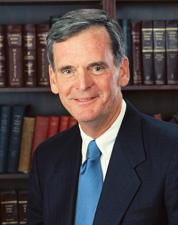 Sen. Judd Gregg (R-NH)
Legislative Activity
Stay on top of the latest movement without scrolling through every action
Senate amendment submitted
June 20, 2007
View full timeline
Senate amendment submitted
June 20, 2007
Roll call votes on amendments in Senate: Motion to waive the Budget Act with respect to amendment SA 1718 rejected in Senate by Yea-Nay Vote. 36 - 56. Record Vote Number: 218.
June 20, 2007
Senate amendment proposed (on the floor): Amendment SA 1718 proposed by Senator Gregg to Amendment SA 1704.(consideration: CR S8005-8010; text: CR S8005)
June 20, 2007
Amendment SA 1718 proposed by Senator Gregg to Amendment SA 1704. (consideration: CR S8005-8010; text: CR S8005) To strike the provision extending the additional duty on ethanol and for other purposes.
June 20, 2007
Point of order raised in Senate with respect to amendment SA 1718.
June 20, 2007
Motion to waive the Budget Act with respect to amendment SA 1718 rejected in Senate by Yea-Nay Vote. 36 - 56. Record Vote Number: 218.
June 20, 2007
Amendment SA 1718 ruled out of order by the chair.
June 20, 2007
Votes
1 roll call on this amendment
Text
Proposed
CREATING LONG-TERM ENERGY ALTERNATIVES FOR THE NATION ACT OF 2007

The PRESIDING OFFICER. Under the previous order, the Senate will
resume consideration of H.R. 6, which the clerk will report.
The legislative clerk read as follows:

A bill (H.R. 6) to reduce our Nation's dependence on
foreign oil by investing in clean, renewable, and alternative
energy resources, promoting new emerging energy technologies,
developing greater efficiency, and creating a Strategic
Energy Efficiency and Renewables Reserve to invest in
alternative energy, and for other purposes.

Pending:

Reid amendment No. 1502, in the nature of a substitute.
Reid (for Bingaman) amendment No. 1537 (to amendment No.
1502), to provide for a renewable portfolio standard.
Klobuchar (for Bingaman) amendment No. 1573 (to amendment
No. 1537), to provide for a renewable portfolio standard.
Bingaman (for Klobuchar) amendment No. 1557 (to amendment
No. 1502), to establish a national greenhouse gas registry.
Kohl (for DeMint) amendment No. 1546 (to amendment No.
1502), to provide that legislation that would increase the
national average fuel prices for automobiles is subject to a
point of order in the Senate.
Corker amendment No. 1608 (to amendment No. 1502), to allow
clean fuels to meet the renewable fuel standard.
Cardin modified amendment No. 1520 (to amendment No. 1502),
to promote the energy independence of the United States.
Collins amendment No. 1615 (to amendment No. 1502), to
provide for the development and coordination of a
comprehensive and integrated U.S. research program that
assists the people of the United States and the world to
understand, assess, and predict human-induced and natural
processes of abrupt climate change.
Baucus amendment No. 1704 (to amendment No. 1502), to amend
the Internal Revenue Code of 1986 to provide for energy
advancement and investment.

The ACTING PRESIDENT pro tempore. Under the previous order, there
will now be 30 minutes of debate on amendment No. 1546, offered by the
Senator from South Carolina, Mr. DeMint, with the time equally divided
and controlled between the Senator from New Mexico, Mr. Bingaman, and
Mr. DeMint.
Who yields time? The Senator from South Carolina is recognized.
Mr. DeMINT. Mr. President, I ask unanimous consent to be allowed to
speak as in morning business for up to 5 minutes and that it count
against my allocated 15 minutes on my amendment and that it appear in a
separate place in the Record.
The ACTING PRESIDENT pro tempore. Without objection, it is so
ordered.
(The remarks of Mr. DeMINT are printed in today's Record under
``Morning Business.'')

Amendment No. 1546

Mr. DeMINT. Mr. President, I wish to take a few minutes to speak
about my amendment which the Senate will be voting on a few minutes
after 10 this morning. This amendment would create a 60-vote point of
order against bills or amendments in the future that would raise the
price of gasoline.
This amendment is very straightforward. It would require the
Congressional Budget Office to score legislation to determine if it
would increase the cost of gasoline. If the legislation would increase
the cost of gasoline, a 60-vote point of order would lie against the
bill.
This applies the same principle we use in the Congressional budget
process to our energy policy. The traveling public is coping with the
high price of gasoline every day. While there are many factors out of
our control forcing up the price of gas, we can control what we do here
in the Senate.
For all the time that has been spent over the last few weeks railing
against big oil or the high cost of gasoline, little time has been
spent to examine one of the leading causes of high prices of gasoline,
which is the Congress. Too often the idea of a rational energy policy
here in Congress is to create burdensome regulations, onerous mandates,
and higher taxes, all of which directly translate into higher prices at
the pump for American families. My amendment proposes to hold Congress
in check by instituting a safeguard that encourages the Senate to take
a ``do not harm'' approach when considering legislation affecting gas
prices.
My amendment, again, is very straightforward and very simple. If the
Senate wants to pass legislation that

[[Page S8003]]

will make it more expensive for American families to fill up their
tank, we will be required to get 60 votes instead of 51 to pass the
legislation. While this amendment is relatively simple, it is also
vitally important, because, while many of the Democrats in this body
like to tell the American people they are working to ``stick it to big
oil'' and lower the price of gasoline, their legislative record shows
something quite different.
The current bill is a perfect example. According to a study completed
this week by the Heritage Foundation, the Energy bill we are currently
debating could result in significantly higher prices for gasoline to
consumers. A review of the legislation, including the new amendment
dealing with tax changes, revealed the bill could increase the price of
regular unleaded gasoline from $3.15 per gallon, which is the May
average right now, to $6.40 a gallon by 2016.
That is an increase of over 100 percent. The point of order my
amendment proposes could not be used against this bill because it
cannot take effect until the bill is enacted. But my amendment could be
used to stop similar legislation in the future. If this Congress is
willing to consider legislation that would raise the price of gasoline
by over 100 percent, as this bill may do, we need to put some
commonsense safeguards in place.
I know some of my colleagues may in the future support policies that
would raise the price of gasoline. That would cause the point of order
I am proposing to lie against the bill. But I would encourage even
those to support this amendment. If their policy goal is so important,
then we can overcome the point of order and we can get 60 votes to pass
their legislation.
We should adopt this commonsense proposal that ensures that at the
very least the Senate is less likely to increase the cost of gasoline.
After all the concerns we have heard from my Democratic colleagues
about the price of gasoline, this seems the least we can do.
I reserve the remainder of my time.
The ACTING PRESIDENT pro tempore. The Senator from New Mexico.
Mr. BINGAMAN. Mr. President, the DeMint amendment as described by
Senator DeMint creates a 60-vote point of order in the Senate on any
legislation or part of legislation that would ``result in an increase
in the national average fuel price for automobiles.''
By legislation, that is usually interpreted to mean a bill, a joint
resolution, an amendment, a motion, or a conference report. The
determination of whether any of those enumerated items would result in
an increase in the national average fuel price for automobiles would be
made by CBO in consultation with the Energy Information Administration.
This is another piece of ``feel good'' legislation that would have
the probable effect of making a great deal of what we do here in the
Senate subject to a 60-vote point of order. Frankly, world oil prices
and domestic fuel prices are swayed by all sorts of influences and
psychological factors in the market. To think the Congressional Budget
Office would be able to analyze price effects of legislative proposals
might play in this complex stew of what traders and producers and major
refiners think will happen is not realistic. This point of order would
give a tremendous amount of influence to the petroleum industry. Most
anything we do up here causes them to complain we are likely to raise
gasoline prices as a result.
For example, they are saying that right now about the
antimanipulation and consumer protection provisions in the bill that
were voted out of the Commerce Committee. If there were a 60-vote point
of order their complaint could trigger, they would certainly be in
constant contact with Member offices and with the Congressional Budget
Office trying to boost the minimum votes necessary for these proposals
to 60 votes.

Let me give you a few examples of amendments to the bill Members want
to offer that might be caught up in this kind of a point of order.
Senator Cochran has an amendment he wants to offer to increase the size
of the Strategic Petroleum Reserve. Any purchase of oil for the SPR
would take that oil off the market and potentially raise fuel prices.
That would trigger the DeMint point of order.
Another example is the provision in the amendment that was adopted in
the Senate by over 60 votes yesterday that is referred to generally as
NOPEC, which essentially says U.S. courts will be open and available
and have jurisdiction to consider antitrust claims against foreign
governments that are getting together and trying to conspire to set oil
policies. That legislation could clearly affect the price of oil and
thereby the price of gasoline at the pump. We have an interest in
creating reserves of products for refined gasoline. We already have a
heating oil reserve. Legislation to establish new product reserves or
to increase the size of the heating oil reserve would likely trigger
this point of order my friend is suggesting we ought to put into our
procedural law.
Our military posture in the Persian Gulf has a great deal to do with
the world price of oil. We might find that amendments or other
legislative proposals dealing with sensitive military or diplomatic
issues in that region would have an effect on automobile fuel prices
under this amendment and could thus trigger the point of order. We
might see the whole Defense bill annually subjected to the DeMint point
of order on the claim that what we are proposing to do in the Defense
bill could increase the price of gasoline at the pump.
It is worth focusing on the fact that the point of order is triggered
by ``an increase'' found by the Congressional Budget Office. That
increase could be less than a penny a gallon and still the 60-vote
point of order would be triggered as the amendment is drawn.
Another example would be any legislation that might be considered on
the Senate floor related to Nigeria and our relations with Nigeria.
Clearly, we are heavily dependent upon oil from Nigeria to meet our
energy needs. Any instability in that relationship could affect the
price of oil or the price of gasoline as a result of increases in the
price of oil.
People are always complaining it is hard to get things done here in
the Congress. We have too many procedural wrangles here in the
Congress. There is an abundance already of procedural hurdles that any
legislative proposal has to surmount in order to get passed.
We have been pleading with various Senate Members in connection with
this exact bill to try to get permission to bring up different
amendments, even agreeing that we would be bound by a 60-vote point of
order or a 60-vote requirement to do that. So we already have
procedural hurdles in place in abundance. We should not be inserting
into Senate procedures a requirement that will come back to haunt both
Republicans and Democrats in completely unforeseen and unforeseeable
ways just in order to say we did something about high gas prices.
I strongly urge that we not agree to the DeMint amendment.
The ACTING PRESIDENT pro tempore. The Senator from South Carolina.
Mr. DeMINT. How much time do I have remaining?
The ACTING PRESIDENT pro tempore. The Senator has 7\1/2\ minutes.
Mr. DeMINT. Mr. President, I very much appreciate the Senator's
remarks. I think the remarks were very instructive. It is clear that
many of things we do in the Senate actually do result in increased gas
prices.
Most of the discussion and a lot of the initiative and motivation of
the bill we are working on is to lower gas prices. The fact is, in the
past, though, we have not been honest and transparent with the American
people. Many times we are talking about our good intentions, things we
are going to do here, and we do not expose the fact that what we are
doing is going to increase the cost of gasoline. I think that is a fair
part of the debate. If we want to increase our national reserves of
oil, then it is fair in that debate to make it clear to the American
people that if we do it, it may increase the cost of gasoline to them
at home, so all of us who are considering the issue can balance it.
If some aid program to Nigeria is going to increase the cost of
gasoline here at home, the American people should know that, so we
cannot claim to be doing something for people without them realizing it
is costing them more and more money.

[[Page S8004]]

I understand the objections to procedural hurdles here. Actually,
that is the way the Senate was designed so that we do not do things in
a knee-jerk fashion, without openness and debate, so we actually do
figure out the consequences of what we do in advance of passing
legislation.
We have not done that in the past. Many of our rules have created
different boutique, different fuel requirements in many States, a lot
of environmental concerns--a lot of things that are good actually
increased the cost of gasoline a significant degree.
It is important that we include that in our debate. While we may be
resistant to procedural hurdles, much of the bill we are debating
creates multiple procedural hurdles to increase new gas supplies, oil,
natural gas. It creates new mandates, new taxes. We create a lot of
hurdles for the energy business to create more supply so we can lower
the price of gasoline. This amendment exposes us for what we are and
what we are doing. If we are going to propose things in the Senate
related to energy, the Congressional Budget Office, as my amendment
says, in consultation with the Energy Information Administration and
other appropriate Government agencies, can help make a determination if
what we are doing is going to raise the price of gasoline. That is a
fair part of an honest debate.
To snuff this out and to come down to the Senate floor and make great
claims about what we are going to do to help the American people while
all the time hiding from them that we are the ones raising their gas
prices--it is not big oil, it is not necessarily even OPEC, it is us.
We add lots of costs to gasoline every time we pass an energy bill.
This Energy bill is no exception.
While my amendment doesn't affect this bill, it does create a point
of order in the future. You can call this a hurdle, but if 60 people in
the Senate cannot decide that it is more important to increase the size
of our national reserve, even though it might increase the cost of
gasoline, if 60 of us are not for that, then perhaps we should hesitate
before we increase the cost of gasoline again to the consumers.
This is one of the rare simple bills that come to the Senate. It is
just a couple of pages. All it does is say that when we introduce a
bill that increases the cost of gasoline for American consumers, we
have to get 60 votes instead of 51 to pass it. It is a reasonable
proposal. If we are willing to come here and talk every day about what
we are doing to help the consumer and at the same time we want to hide
from them that the things we are doing are actually increasing the cost
of gasoline, then shame on us.
This amendment is simple. It is about transparency, openness, and
honesty to the people. That is exactly what they deserve.
I urge all of my colleagues to vote for this amendment.
I yield back the remainder of my time.
The ACTING PRESIDENT pro tempore. Who yields time?
Mr. BINGAMAN. I suggest the absence of a quorum.
The ACTING PRESIDENT pro tempore. The clerk will call the roll.
The legislative clerk proceeded to call the roll.
Mr. DeMINT. I ask unanimous consent that the order for the quorum
call be rescinded.
The ACTING PRESIDENT pro tempore. Without objection, it is so
ordered.
Mr. DeMINT. Mr. President, it has been brought to my attention that
the majority will seek to defeat my amendment by raising another point
of order against it. This demonstrates exactly how much the Democrats
dislike this amendment. It proves that they have additional plans in
the works to raise gasoline prices on the American people. Why else
would they be fighting it so hard? I also believe this effort to deny
the Senate a clean up-or-down vote on this amendment shows that some in
this body are more interested in defending the jurisdiction and rights
of a Senate committee than they are in defending American consumers. If
the other side raises a point of order against my amendment, I
encourage my colleagues to ask themselves which is more important:
protecting Americans from high gas prices or protecting the
jurisdiction of the Budget Committee?
I urge my colleagues to vote to waive the Budget Act. If the other
side tries to kill my amendment and stick it to the American people at
the pump, I encourage Members to vote against such an effort.
I yield the floor.
The ACTING PRESIDENT pro tempore. Who yields time?
Mr. DeMINT. I suggest the absence of a quorum.
The ACTING PRESIDENT pro tempore. The clerk will call the roll.
The legislative clerk proceeded to call the roll.
Mr. BINGAMAN. I ask unanimous consent that the order for the quorum
call be rescinded.
The ACTING PRESIDENT pro tempore. Without objection, it is so
ordered.
Mr. BINGAMAN. Mr. President, part of our debate has involved the
question of whether we have too many procedural hurdles already
impeding the work of the Senate and keeping us from conducting up-or-
down votes on things. I strongly believe we do have too many procedural
hurdles. Obviously, the purpose of the DeMint amendment would be to put
more procedural hurdles in place so that a 60-vote point of order would
be required in many circumstances in the future where it is not
required today for the Senate to act.
I am informed that one of the procedural hurdles already in law is
under the Budget Act and that the pending amendment deals with matter
within the Budget Committee's jurisdiction in that the DeMint amendment
would direct CBO to take a variety of actions. That is exclusively
within the jurisdiction of the Budget Committee.
I raise a point of order that the pending amendment violates section
306 of the Congressional Budget Act of 1974.
I yield back the remainder of my time.
Mr. DeMINT. Mr. President, I move to waive the budget point of order.
The ACTING PRESIDENT pro tempore. The question is on agreeing to the
motion to waive the Budget Act in relation to amendment No. 1546.
Mr. BINGAMAN. I ask for the yeas and nays.
The ACTING PRESIDENT pro tempore. Is there a sufficient second?
There appears to be a sufficient second.
The clerk will call the roll.
The assistant legislative clerk called the roll.
Mr. DURBIN. I announce that the Senator from Indiana (Mr. Bayh), the
Senator from Delaware (Mr. Biden), the Senator from South Dakota (Mr.
Johnson), and the Senator from Illinois (Mr. Obama) are necessarily
absent.
Mr. LOTT. The following Senators are necessarily absent: the Senator
from Kansas (Mr. Brownback), the Senator from Oklahoma (Mr. Coburn),
and the Senator from Arizona (Mr. McCain).
The PRESIDING OFFICER (Mr. Whitehouse). Are there any other Senators
in the Chamber desiring to vote?
The yeas and nays resulted--yeas 37, nays 55, as follows:

[Rollcall Vote No. 217 Leg.]

YEAS--37

Allard
Bennett
Bond
Bunning
Burr
Chambliss
Cochran
Coleman
Collins
Cornyn
Craig
Crapo
DeMint
Dole
Domenici
Ensign
Enzi
Graham
Grassley
Hagel
Hatch
Hutchison
Inhofe
Isakson
Kyl
Lott
Martinez
McConnell
Nelson (NE)
Roberts
Sessions
Shelby
Smith
Snowe
Sununu
Thune
Vitter

NAYS--55

Akaka
Alexander
Baucus
Bingaman
Boxer
Brown
Byrd
Cantwell
Cardin
Carper
Casey
Clinton
Conrad
Corker
Dodd
Dorgan
Durbin
Feingold
Feinstein
Gregg
Harkin
Inouye
Kennedy
Kerry
Klobuchar
Kohl
Landrieu
Lautenberg
Leahy
Levin
Lieberman
Lincoln
Lugar
McCaskill
Menendez
Mikulski
Murkowski
Murray
Nelson (FL)
Pryor
Reed
Reid
Rockefeller
Salazar
Sanders
Schumer
Specter
Stabenow
Stevens
Tester
Voinovich
Warner
Webb
Whitehouse
Wyden

NOT VOTING--7

Bayh
Biden
Brownback
Coburn
Johnson
McCain
Obama
The PRESIDING OFFICER. Three-fifths of the Senators duly chosen and

[[Page S8005]]

sworn not having voted in the affirmative, the motion is not agreed to.
The point of order is sustained and the amendment falls.
Mr. BINGAMAN. Mr. President, I suggest the absence of a quorum.
The PRESIDING OFFICER. The clerk will call the roll.
The assistant legislative clerk proceeded to call the roll.
Mr. BINGAMAN. Mr. President, I ask unanimous consent that the order
for the quorum call be rescinded.
The PRESIDING OFFICER. Without objection, it is so ordered.
Mr. BINGAMAN. Mr. President, I understand the Senator from New
Hampshire has an amendment he wishes to offer at this time. He has
agreed to a time limit wherein we would have 40 minutes equally
divided, half to be controlled by Senator Gregg, the other half to be
controlled by Senator Grassley, or their designees. It would be 40
minutes prior to any vote in relation to the amendment.
Mr. GREGG. Mr. President, reserving the right to object, for
clarification, we are going to have 40 minutes of debate and then at
some point we will have the vote, right?
Mr. BINGAMAN. We will have 40 minutes of debate and then at some
point we will have a vote. We may not have it immediately at the end of
that 40 minutes.
Mr. GREGG. But we will have 40 minutes of debate now equally divided
between myself and Senator Grassley, and then when we get to a vote on
it, we will have 2 minutes equally divided.
Mr. BINGAMAN. I am suggesting we go ahead and vote at the end of 40
minutes. So we will have 40 minutes of debate equally divided and then
we will have a vote.
Mr. GREGG. If that is agreeable with the managers, that is fine with
me.
The PRESIDING OFFICER. Is there objection?
Without objection, it is so ordered.

Amendment No. 1718 to Amendment No. 1704

Mr. GREGG. Mr. President, I send an amendment to the desk.
Is there an amendment pending? This is a second-degree amendment to
the Baucus amendment.
The PRESIDING OFFICER. The clerk will report the amendment.
The assistant legislative clerk read as follows:

The Senator from New Hampshire [Mr. Gregg] proposes an
amendment numbered 1718 to amendment No. 1704.

Mr. GREGG. Mr. President, I ask unanimous consent that the reading of
the amendment be dispensed with.
The PRESIDING OFFICER. Without objection, it is so ordered.
The amendment is as follows:

(Purpose: To strike the provision extending the additional duty on
ethanol and for other purposes)

Strike section 831 and insert the following:

SEC. 831. ELIMINATION OF ETHANOL TARIFF AND DUTY.

(a) In General.--
(1) Elimination of permanent tariff of 2.5 percent.--
Subheading 2207.10.60 of the Harmonized Tariff Schedule of
the United States is amended--
(A) by striking the column 1 general rate of duty and
inserting ``Free''; and
(B) by striking the matter contained in the column 1
special rate of duty column and inserting ``Free''.
(2) Elimination of permanent tariff of 1.9 percent.--
(A) In general.--Chapter 22 of the Harmonized Tariff
Schedule of the United States is amended by inserting in
numerical sequence the following new subheading:

``       2207.20.20       Ethyl alcohol and    Free                 Free (A+, AU, BH,    20%                  ''
other spirits,                            CA, CL, D, E, IL,                         .
denatured, of any                         J, JO, MA, MX, P,
strength (if used                         SG)
as a fuel or in a
mixture to be used
as a fuel)........

(B) Conforming amendment.--The article description for
subheading 2207.20.00 of the Harmonized Tariff Schedule of
the United States is amended by inserting ``(not provided for
in subheading 2207.20.20)'' after ``strength''.
(b) Repeal of Temporary Duty of 54 Cents Per Gallon.--
Subchapter I of chapter 99 of the Harmonized Tariff Schedule
of the United States is amended--
(1) by striking heading 9901.00.50; and
(2) by striking U.S. Notes 2 and 3 relating to heading
9901.00.50.
(c) Effective Date.--The amendments made by this section
apply with respect to goods entered, or withdrawn from
warehouse for consumption, on or after the 15th day after the
date of the enactment of this Act.

Mr. GREGG. Mr. President, this amendment is an attempt to remedy what
is an unfortunate situation, which is that people who cannot buy
ethanol from the Midwest and have to buy it from other sources,
especially outside the United States, end up being taxed at 54 cents a
gallon.
So people from the east coast and, to some degree, from the west
coast are paying an excessive amount to use product which significantly
improves the environment and which also obviously reduces our
dependence on oil.
The argument at the time this tariff was originally initiated was we
needed to protect the ethanol production capability of the Midwest, the
corn producers. That may have had some resonance a few years ago, but
it certainly does not have any resonance any longer. It does not have
any credibility any longer.
Today, there are about 7.5 billion gallons of ethanol produced in
this country. Under this bill it is required that go up to 36 billion
gallons. Most of that will come from the production of corn, most
likely in the Midwest. So there is already a huge demand for corn, and
corn prices are high. In fact, they are so high as a result of the use
of corn for ethanol that many people who use corn as feedstock are
complaining vociferously. So there is no need to protect production in
the Midwest with a tariff that impacts people on the east coast
disproportionately.
The second reason there is no need for this tax is that people from
the east coast cannot get ethanol from the Midwest because it cannot be
shipped efficiently. That is because ethanol cannot be shipped through
pipelines because of its volatility. Therefore, our only option on the
east coast is to buy ethanol that comes from outside the country, the
Caribbean Basin and Brazil. Therefore, it makes no sense to penalize
the east coast to try to encourage production in the center of the
country for corn and ethanol when the corn is already being
significantly subsidized to the tune of $3 billion annually just
through agricultural subsidies. But, in addition, its production is
being encouraged by the requirement that we produce so much ethanol in
this country that corn is essentially the feedstock for it, and that we
therefore are having a dramatic expansion in the production of corn and
the utilization of corn.
This is not as if in any way this is going to affect that production
capability. What it does do, however, is put us in the right place
environmentally, and in the right place from a standpoint of
utilization of energy sources because we should be using ethanol,
obviously, and on the east coast we want to use ethanol. We just want
to pay a fair price for it.
When we have this 54-cent-a-gallon tax on the consumers in the
Northeast and the East, it is not a fair price. If we take this tax
off, we will actually expand ethanol consumption in the East, and so,
hopefully, at some point they will figure out a way to ship ethanol
through pipelines and that will create a greater demand for ethanol
generally in this Nation since so many people live on the east coast.
And that will, again, help the production in the Midwest once we figure
out how to ship it efficiently to the East because the demand will have
been created.
Secondly, we have a choice. We can either heat with oil and we can
run our cars on oil and gas or we can run in part on ethanol. The
simple fact is, however, I would rather buy ethanol from Brazil than
oil from Venezuela. It makes a lot more sense geopolitically as to how
we protect ourselves. It is a cleaner burning energy, it is a better
form of energy, and it is an energy which should be burned and is an
energy that I think is a national policy

[[Page S8006]]

we would rather buy than underwriting the present Venezuelan Government
by having to buy oil there.
So the concept of having this tariff, which is essentially a 54-cent-
a-gallon tax on everybody who lives on the east coast, is no longer
viable. It is not viable because corn production is up dramatically,
the price of corn is up dramatically, and it will continue to go up
especially under this bill since we are going to require a dramatic
increase in the number of gallons which are ethanol based.
So the ethanol industry, to the extent it is corn based, is going to
continue to grow and be viable, and they do not need this tariff
production, which is its only purpose. It is not viable because it is
not an efficient way for us to purchase energy, to have us pay this
much extra money in tariffs so we basically undermine the use of
ethanol on the east coast. It is not a good policy because it
encourages the use of Venezuelan or other types of oil imports over
ethanol because of the pricing situation. And it is not a good idea
because it is simply bad policy to have in place this type of tariff.
This is not the mercantile period of the 19th century when we
basically arbitrarily threw tariffs on products in order to create an
inefficient marketplace, which was something we thought was going to
help some producer here or there. It makes much more sense to have a
situation where consumers can purchase ethanol-based products at
reasonable prices so we can get more utilization of ethanol.
This amendment would eliminate the 54-cent-a-gallon tax which is
targeted on a majority, quite honestly, of the American population and
which the majority of Americans should not have to pay.
I reserve the remainder of my time.
The PRESIDING OFFICER. The Senator from Iowa.
Mr. GRASSLEY. Mr. President, I hope Senator Thune is here. I was
going to yield time to him first.
I yield myself a couple minutes while we are waiting for Senator
Thune.
Mr. President, first of all, to change direction from where Senator
Gregg was, today corn is $3.50 in central Iowa, and it is down 25 cents
from yesterday because it rained in Illinois in the last 48 hours. So
weather is affecting the price of grain quite a bit. If city slickers
are worried about the price of corn flakes going up, just remember that
a farmer only gets a nickel out of every box of corn flakes that is
half filled with air anyway. There are events that are affecting the
price of corn a lot different from just ethanol. But the impression one
gets around here when reading the papers is that there is so much corn
going into ethanol that it is driving up the price of food for city
people around this country.
The other issue is that the Senator from New Hampshire said corn is
being subsidized $3 billion. When corn is above roughly $2 in the
Midwest, there is no loan deficiency payment being paid out for that
corn. So at the price corn is today, there is no subsidy for corn.
Another issue we ought to think about is, whether we are importing
ethanol or importing oil--don't forget, a few years ago, we started a
program of tax incentives for ethanol and other renewables so we would
be energy independent. Do we want to be dependent on imported ethanol
as we are dependent on imported oil?
What is involved is an infant industry that is just now being able to
come to a peak with great advancement in the future but still infant
from the standpoint that the next step in ethanol production is
cellulosic ethanol, to get ethanol not from grain corn but from wood
chips, from switchgrass, or from corn stover. It will be 3 to 5 years
before the scientific process of enzymes is efficient enough for that
production to come about.
Even though we are now having a massive production of ethanol from
grain corn, we cannot sustain this beyond 15 billion gallons of ethanol
coming from grain corn or corn getting above that figure. And the
underlying bill from the Senate Energy Committee recognizes that point
because they have a 15-billion-gallon limit of grain corn producing
ethanol. Beyond that, it is going to have to come from wood chips,
switchgrass, corn stover--anything that has cellulose in it from which
they can make ethanol.
Just because all of a sudden we have a burgeoning production of
ethanol from grain corn doesn't mean this industry is mature to a point
where we are going to be as energy efficient as we should be, as energy
independent as we should be, and that is why it is still necessary to
keep the tax incentives. That is why it is still necessary to have this
import duty.
I am going to continue to yield time to myself until Senator Thune
arrives. I wish to make a statement in opposition to the amendment
offered by the distinguished Senator from New Hampshire.
With today's gas prices, many in Congress are looking for solutions
and for someone to blame. Unfortunately, some have chosen to pinpoint
ethanol as the culprit. Because of new demand for ethanol, some of my
colleagues have begun to argue that there is a shortage and that it is
responsible for the rising cost of gasoline. They look to increased
imports of ethanol and the lifting of the import tariff as a solution,
and that is the substance of the amendment that is before us. But
increased imports would have little impact on the price of gasoline.
Let me emphasize because that is the basis of the amendment and I am
saying the amendment is not going to accomplish its goal. Increased
imports will not reduce the price of gasoline. This is the case because
ethanol is such a tiny fraction of the cost of gasoline. In fact, in
Iowa, you can buy a gallon of ethanol gasoline mixture--90 percent
gasoline, 10 percent ethanol--for 8 to 10 cents under what the price of
100 percent of ethanol costs.
In regard to not changing the price of gasoline, I quote Guy Caruso,
Administrator of the Energy Information Administration of the
Department of Energy, last year saying that the 10-percent blend of
ethanol is affecting price by ``just a few pennies.'' Ethanol's role in
gasoline prices is a tiny fraction of the overall increase.
In addition, it is important to point out that the United States
already provides significant opportunities for countries to ship
ethanol into our market duty free. Numerous countries do not pay the
U.S. ethanol tariff at all. Through our free-trade agreements and trade
preference programs, some 73 countries currently have duty-free access
to U.S. markets for ethanol fully produced in those countries. For all
other countries, including Brazil, the world's major exporter of
ethanol, the United States provides duty-free access through a carve-
out in the Caribbean Basin Initiative.
Get it right: Brazilian ethanol exporters don't have to pay the U.S.
tariff today. Under this CBI, ethanol produced in Brazil and other
countries that is merely dehydrated in a Caribbean country can enter
the United States duty free up to 7 percent of the U.S. ethanol market,
a very generous access, and it has been on the books for 20 years. Yet
Brazil and other countries have never come close to hitting this 7-
percent cap of ethanol that can come into our country duty free
already. In fact, we are almost halfway through 2007, and this duty-
free cap has been filled only 23 percent for this year.
Moreover, this cap grows every year because this 7 percent is 7
percent of a higher figure because of higher production of domestic
ethanol every year. And it isn't that the Caribbean countries don't
have the capacity to dehydrate more ethanol. They do have that
capacity.

So we are already providing duty-free access for Brazilian ethanol
that is shipped through the Caribbean countries. Much of this duty-free
ethanol is being exported to the East Coast, the part of the country
that Senator Gregg contends would benefit from the complete lifting of
the U.S. tariff on ethanol.
The fact of the matter is that Brazil isn't taking full advantage of
duty-free treatment currently available to them. I don't know why we
should bend over backward to provide more duty-free access for Brazil.
In fact, I would offer to the authors of this amendment that when this
7 percent loophole gets filled and that much ethanol has come into the
country, I would be glad to sit down and see if there is a need to lift
the cap totally.
I especially don't know why we should do this, given Brazil's stance
in the Doha Round negotiations of the World Trade Organization. Brazil
is the

[[Page S8007]]

leader of the G20 negotiating group in the WTO negotiations, a group
that is resisting our efforts to obtain improved market access for U.S.
products, both manufactured and agricultural, throughout the entire
world.
In addition, the Brazilian Government intervenes extensively in the
price and supply of ethanol in that country. But the U.S. tariff on
ethanol operates as an offset to a U.S. excise tax credit that applies
to both domestically produced as well as imported ethanol. So by
lifting the tariff, we would, in effect, be giving the benefits of this
tax credit to subsidize the Brazilian production of ethanol.
Providing yet more duty-free treatment for subsidized Brazilian
ethanol would send the wrong signal to those Americans who are devoting
their careers to helping America become more energy independent. The
U.S. ethanol industry is working every day to lessen our dependence
upon foreign oil. This is a virtue that President Bush has touted again
and again. Last year, the President restated his goal to replace oil
around the world by expanding the production of ethanol.
The President stated:

The Federal Government has got a role to play to encourage
new industries that will help this Nation diversify away from
oil. And so we are strongly committed to corn-based ethanol
produced in America.

And today the President would add to that we are committed to doing
more in cellulosic production of ethanol as well.
The President clearly understands the need to assist our infant
domestic ethanol industry so we can get a foothold and we can succeed.
Why would the United States now want to send a signal that we are
backing away from our efforts to seek energy independence? We are
already dependent upon foreign oil. Surely we don't want our country to
go down the path of eventually becoming dependent upon foreign ethanol
as well.
Providing yet more duty-free treatment would be a step in the wrong
direction, discouraging the advancement of investment in biorefineries
for ethanol and biodiesel. It would be bad for energy independence and,
obviously, bad for our national security. So I hope my colleagues will
oppose the Gregg amendment.
Mr. DOMENICI. Mr. President, will the Senator yield?
Mr. GRASSLEY. Yes.
Mr. DOMENICI. Does the Senator have a minute left for the Senator
from New Mexico?
Mr. GRASSLEY. Mr. President, how much time do I have remaining?
The PRESIDING OFFICER. Seven minutes.
Mr. GRASSLEY. Mr. President, I yield 1 minute to the Senator from New
Mexico and then 5 minutes to the Senator from South Dakota.
The PRESIDING OFFICER. The Senator from New Mexico.
Mr. DOMENICI. Mr. President, I wish to congratulate the Senator on
his remarks and say I concur with them. I would say this is the wrong
time, while we are trying to enhance the investment in cellulosic
ethanol and everything that goes with that, to come along with this
idea. This would weaken the investment potential and the credibility of
investment right when it is ripening and really generating interest.
This requires billions of dollars to be invested in cellulosic
ethanol as we move to the next generation, and to have weakening that
comes from this issue as to what is going to happen with this export-
import issue is the wrong thing. I encourage colleagues to follow the
lead of Senator Bingaman and Senator Grassley.
Mr. President, I yield the floor.
Mr. GRASSLEY. Mr. President, I yield 5 minutes to Senator Thune.
The PRESIDING OFFICER. The Senator from South Dakota.
Mr. THUNE. Mr. President, I wish to join my colleague from Iowa in
opposing this amendment. In 2006, America's ethanol industry
contributed over $41 billion to the national economy. Operation and
construction of domestic biorefineries created 163,034 jobs in all
sectors of the economy last year alone.
The bill before the Senate builds upon this success by boosting the
renewable fuel standard to 36 billion gallons by the year 2022 and
establishing other valuable incentives for renewable energy production.
The amendment proposed by Senator Gregg, our colleague from New
Hampshire, would send mixed signals to our ethanol producers, their
investors, and the farmers who sell their products to ethanol plants.
In effect, what Congress would be doing is telling the ethanol
industry: We are demanding more of your product, but at the same time
we are going to open the back door and begin subsidizing foreign
sources of ethanol. If this amendment is adopted, our marketplace would
be flooded with heavily subsidized ethanol from foreign countries.
In 2006, Brazil exported 433 million gallons into the United States,
which is an increase of 400 million gallons over the year 2005. That
same year, Brazil paid over $220 million in duties to import this
amount of ethanol. They were already importing ethanol into this
country through the Caribbean Basin Initiative. They have not reached
that cap, but I think it is fair to expect they are going to continue
to flood the U.S. market every opportunity they get with ethanol that
is produced in Brazil.

The tax credit that currently is in place for domestic ethanol is
critical to the success of our industry, and it does not discriminate
between domestic or foreign sources of ethanol. So what happens is, as
soon as the Brazilian ethanol is blended with gasoline in the United
States, taxpayers begin paying 51 cents for each gallon of foreign
ethanol. If Senator Gregg's amendment is accepted, American taxpayers
will immediately begin subsidizing hundreds of millions of gallons of
foreign-made ethanol each year with no offsetting duty. Simply put, by
eliminating this tariff, we would trade our dependence upon foreign
sources of oil for a new and growing dependence upon foreign ethanol.
I would add the critics of this tariff have argued that it inflates
the cost of gasoline in this country. In fact, gasoline prices, as my
colleague from Iowa has noted, would not be affected by removing the
tariff on imported ethanol. Ethanol itself represents less than 5
percent of U.S. motor fuel supplies, and imported ethanol represents a
small fraction of that percentage.
The factors truly driving the price of gasoline higher have nothing
to do with ethanol supplies. Record crude oil prices, tight refining
capacity, lower gasoline production, and limited expansion of domestic
refining expansion all play a much greater role than the supply of
ethanol in today's higher gasoline prices.
Critics of the tariff also claim we will need ethanol imports to meet
the growing demand for ethanol and to comply with the strengthened
renewable fuel standard. Again, the facts tell a very different story.
Our Nation's current domestic production capacity is 6.2 billion
gallons of ethanol. According to industry experts, an additional 6.4
billion gallons of capacity are currently under construction and will
soon be refining ethanol. That is a total of 12.8 billion gallons in
current planned production, which is more than enough--more than
enough--to meet the heightened renewable fuel standards in the near
term.
Additionally, we have to keep in mind the limitations placed on
ethanol demand due to blend restrictions. Right now, only E10, 10
percent ethanol and 90 percent gasoline, is approved for use in
nonflex-fuel vehicles. There is a point at which we are going to hit
the E10 wall. Domestic production, as you can see if you look at this
chart of ethanol production in this country, is more than adequate to
meet the full market potential for E10. Some industry analysts predict
we will very soon have excess ethanol production capacity when we hit
the E10 wall.
That is why it is so important we expand ethanol and allow for higher
blends--E15, E20--which in my view is something long overdue. The E10
wall is the point at which the market for E10 ethanol is saturated if
ethanol production continues to grow at a record pace. While some in
the industry disagree on when we will hit the E10 wall, it is clear it
would have a harmful effect on the overall ethanol industry if Congress
fails to act. Lifting the tariff on ethanol imports would only flood
the marketplace with foreign ethanol, further magnifying the impact of
the E10 wall.
Clearly, there are several reasons why my colleagues in the Senate

[[Page S8008]]

should oppose this amendment, which undermines our national energy
policy of greater energy independence. So I ask my colleagues to oppose
the amendment.
Mr. President, I yield the floor.
The PRESIDING OFFICER (Mr. Tester). The Senator from New Hampshire.
Mr. GREGG. Mr. President, I yield 3 minutes to the Senator from
Arizona.
Mr. KYL. Mr. President, the Baucus amendment from the Finance
Committee would extend the tariff on imported ethanol for 2 more years.
The Gregg amendment properly repeals the tariff.
Now, why do I say properly? Because the ethanol tariff acts as a tax
on U.S. consumers at the gasoline pump. It increases the cost of
gasoline because the cost of ethanol is increased due to the tariff. If
Americans want anything out of this Energy bill, it is a reduction in
gasoline prices.
In fact, in a recent Associated Press poll, 60 percent of the
respondents said that gas prices--which, by the way, are currently
around $3 a gallon--are causing them hardships. Now, it is one thing to
maybe have to pull back a little on your family vacation this summer,
but an awful lot of people have to drive to get to work and have to
drive as part of work. Clearly, when over half of Americans are caused
hardships by the current high level of gasoline prices, Congress has
the responsibility to do something about that.
We should act. One of the few ways in which we can directly impact
the price of gasoline at the pump is to eliminate the tariff of 54
cents per gallon on ethanol that is brought into the United States.
Nothing else in this bill will directly bring down gasoline prices. In
fact, there are several provisions that will actually have the effect
of increasing gasoline prices. Promoting a competitive market for
ethanol will help bring down gasoline prices because it increases the
supply that is available and provides, therefore, access to lower cost
ethanol.
The bottom line is this: When there is a supply of potential fuel out
there and our companies are trying to find that supply so they can
bring it into the United States to meet the demand of consumers, but
they have to pay 54 cents a gallon on part of that supply, they are
either going to buy the supply at 54 cents a gallon and pass the cost
on to the consumer or they are not going to be able to do that, thereby
reducing the supply of gasoline available. What happens when you have
more demand and less supply? The cost goes up anyway. Either way,
having this tariff in place causes an escalating cost of the price of
gasoline because it reduces available supply to the American consumer.
We have a mandate now to use ethanol. That is required. That mandate
means the companies that provide the gasoline to consumers have no
choice but to acquire ethanol. If much of that ethanol is abroad, and
we are charging 54 cents a gallon for it, obviously, you can see it is
going to increase the cost of gasoline for the American consumer.
Americans are a competitive people who know how the free market works.
The PRESIDING OFFICER. The Senator's time has expired.
Mr. GREGG. I yield 1 more minute to the Senator from Arizona.
Mr. KYL. I need an additional 30 seconds, Mr. President.
One way we know the free market can work better is if we don't have
artificial prices on a product which the American consumer needs in
order to work. That means we can reduce the cost of gasoline by
eliminating this costly ethanol tariff.
Mr. GREGG. Mr. President, could the Chair advise us as to the time
situation?
The PRESIDING OFFICER. Ten minutes.
Mr. GREGG. Senator Grassley has how much time?
The PRESIDING OFFICER. One minute.
Mr. GREGG. Mr. President, I ask unanimous consent to add as
cosponsors Senators Feinstein, Sununu, Kyl, and Ensign.
The PRESIDING OFFICER. Without objection, it is so ordered.
Mr. GREGG. Mr. President, I think there is some inconsistency coming
from the argument of the other side on this issue. There is the
argument, well, reducing the 54-cent-a-gallon tax would not reduce the
price of gasoline. That is very hard to sustain on its face; it is
counterintuitive, for obvious reasons. If you cut the cost of gasoline
54 cents a gallon, or if you cut the cost of ethanol 54 cents a gallon,
obviously, the price of gasoline is going to go down.
It is equally hard to defend that position when, within two sentences
of that argument, you make the argument that the country is going to be
flooded with low-cost ethanol.
You can't have it both ways. As a practical matter, yes, this will
reduce the price of gasoline. But that is because the ethanol blend
will be more affordable in pricing gasoline, and that should be our
goal, obviously, for the American consumer--to produce a more
environmentally positive form of energy at a lower price.
The second major argument made here is, we can't do this because it
will assist the foreign producers over domestic producers, which is
totally inconsistent with the bill itself. The bill requires that 36
billion gallons of ethanol be produced by 2022. There is no way that
does not mean our domestic production is going to expand dramatically
to meet that obligation, so the bill already has in it the built-in
obligation and requirements to expand domestic production, coupled with
the fact there is a $3 billion subsidy already paid independent of the
ethanol benefit, which is accruing to the corn-producing segment of our
economy. A $3 billion subsidy for corn producers is paid directly,
coupled with the fact that Midwestern-produced ethanol cannot be
shipped to the east coast, so it is not a competition. We have to buy
the ethanol off-coast because that is the only way we can get the
ethanol efficiently and safely because ethanol cannot be shipped
through pipelines.
As a practical matter, this tariff is a holdover from a day when,
yes, there may have been a fledgling industry in the ethanol community.
Maybe there was some viability to it 5 years ago. But that is no longer
the case. We have seen a significant increase in corn prices as a
result of the expansion of ethanol use. We are going to continue to see
a significant increase in corn production, in corn prices, because of
continued ethanol use. The simple fact is, as other types of ethanol
sources are brought on line, they are going to be brought on line at a
competitive price. In fact, they may even be more competitive than
corn. And that competitive price, and hopefully a way to ship it, will
then be taken advantage of in the East and obviously be a benefit to
the entire community of ethanol producers.
The arguments being put forth are classic protectionist arguments,
but they have no feet underneath them. They have no basis underneath
them. Protectionism, to begin with, is a lousy idea, but it is
especially a lousy idea when it is basically not accomplishing its
goal.
On the face of it, we know it is not accomplishing its goal. Again,
the argument of the Senator from Iowa made this point for us when he
said the 7 percent was being allowed in the country, and he had no
problem with that. If he has no problem with 7 percent, then why not
more, as a practical matter? As a practical matter, we are not
competing with the Midwest, we are just trying to get a reasonable
price for ethanol in the East.
This tax--and that is what it is--on American consumers, on a product
that we should be using, is totally inappropriate and cannot be
justified on the basis of protecting a domestic industry, specifically
corn production, in light of the economics of corn production in
today's market--which is doing extraordinarily well. It is seeing a
massive expansion. Its prices are at their highest level in recent
memory. They are going to continue to expand because this bill requires
that expansion with the requirement that we use 36 billion gallons of
ethanol by 2022, which is almost a quadrupling of the amount of ethanol
required today.
I hope Members of the Senate would join me in voting to eliminate
this unfair tax, this inappropriate tax. Down the road there is going
to be an amendment to eliminate the blenders credit which would offset
any of the revenues this would incur.
I ask for the yeas and nays.
The PRESIDING OFFICER. Is there a sufficient second?
There is a sufficient second.

[[Page S8009]]

The yeas and nays were ordered.
The PRESIDING OFFICER. The Senator from Iowa.
Mr. GRASSLEY. Mr. President, I yield myself the 1 minute I have left.
First of all, there is no $3 billion to corn farmers, when corn is $4
a bushel or $3.50 a bushel.
Second, as to the point made by Senator Kyl, as well as Senator
Gregg, that consumers want lower prices and somehow ethanol is driving
up that price, let me tell you that ethanol today, this very day, if
you check the market, is cheaper in the Northeast and the east coast
than gasoline is. The spot market price for ethanol is $2.10 compared
to the spot price for gasoline at $2.21 at the New York Harbor. There
is no shortage of ethanol. There are no gasoline marketers unable to
get ethanol supplies in the Northeast or the east coast. Ethanol is
blended today in the RFT area, along the east coast, including Boston,
New York, Philadelphia, Baltimore, and Washington. There is imported
ethanol shipped into New York and Baltimore Harbor today.
Mr. President, I ask unanimous consent to have printed in the Record
a letter from seven agricultural groups, including the American Farm
Bureau Federation and the National Farmers Union, in opposition to the
Gregg amendment.
There being no objection, the material was ordered to be printed in
the Record, as follows:

Majority Leader Harry Reid,
U.S. Senate.
Chairman Jeff Bingaman,
Committee on Energy and Natural Resources, U.S. Senate.
Minority Leader Mitch McConnell,
U.S. Senate.
Ranking Member Pete Domenici,
Committee on Energy and Natural Resources, U.S. Senate.
Dear Senators: Senator Judd Gregg (R-NH) is proposing an
amendment to the energy bill that would eliminate the current
tariff on imported ethanol. Such a change is not only unfair,
but also inconsistent with efforts by the Administration and
Congress to promote the growth of domestically produced
renewable fuels.
Current U.S. policy provides refiners and gasoline
marketers a 51 cents per gallon tax credit for every gallon
of ethanol blended into gasoline. This tax credit is
available to refiners regardless of whether the ethanol
blended is imported or domestic. To prevent U.S. taxpayers
from subsidizing foreign ethanol companies, Congress passed
an offset to the tax credit that foreign companies pay in the
form of a tariff.
Clearly, companies in countries--like Brazil--that
subsidize their own ethanol industry should not have an
unfair advantage over U.S. companies. The tax credit offset
results in a level playing field and allows a system of fair
trade to operate.
The tax credit offset on imported ethanol is not a barrier
to entry. In 2006, for example, the U.S. imported of 650
million gallons of which more than 430 million gallons came
from Brazil. Clearly, Brazilian imports compete quite
effectively when needed.
Simply put, the credit offset merely asks Brazilian and
other foreign ethanol producers to pay back the tax incentive
for which their product is eligible. Congress correctly put
this offset in place to prevent foreign ethanol industries
access to American taxpayer dollars while not preventing
access to the U.S. market.
At a time when America's domestic ethanol industry is
seeking to expand, to invest in new technologies, and to
attract investment in cellulosic ethanol production capacity,
it makes little sense to undercut those efforts by
eliminating the tax credit offset on ethanol. We strongly
urge a ``NO'' vote on the Gregg amendment to subsidize
foreign produced ethanol.
Sincerely,
American Coalition for Ethanol.
American Farm Bureau Federation.
National Corn Growers Association.
National Council of Farmer Cooperatives.
National Farmers Union.
National Sorghum Producers.
Renewable Fuels Association.

Mr. GREGG. Mr. President, before we go to the vote, I want to clarify
two things. First, there was an implication that the administration
might not support this amendment. In fact, the administration supports
the repeal of this tariff, and they openly supported it. They were on
record as supporting it when they were negotiating with Brazil. They do
support the repeal of this tariff.
Mr. GRASSLEY. Will you yield on this point, please, not to make a
statement?
Mr. GREGG. Yes, to ask a question.
Mr. GRASSLEY. Mr. President, I do ask this question: Does the Senator
from New Hampshire know that the President of the United States, when
he was in Brazil, was quoted in the paper as telling President Lulu
that the ethanol export--the import credit would not be repealed while
he is President of the United States?
Mr. GREGG. Reclaiming my time----
Mr. GRASSLEY. I asked you a question.
Mr. GREGG. I am happy to say that I did not understand the question.
If I did understand the question, I believe it was that the President
said he would not repeal the ethanol credit during his time in office,
which I don't happen to think is the administration's position, which
was that they publicly do not support this tariff. They do not support
this excessive tariff; they do not support this tax. This
administration has a strong record on opposition to taxes and tariffs,
and they have been publicly in opposition to this for a while.
I also ask unanimous consent to add Kay Bailey Hutchison as a
cosponsor.
The PRESIDING OFFICER. Without objection, it is so ordered.
Mr. GREGG. I ask unanimous consent to have a statement from the
Taxpayers for Common Sense in support of the amendment printed in the
Record.
There being no objection, the material was ordered to be printed in
the Record, as follows:

Taxpayers for Common Sense Action,

Washington, DC, June 19, 2007.
Dear Senator: Taxpayers for Common Sense Action urges you
to support Senator Judd Gregg's (R-NH) second degree
amendment to the Senate Finance Committee's amendment on H.R.
6. This amendment would eliminate the 54 cent per gallon
tariff on imported ethanol, and it is an important first step
in righting our flawed ethanol policies.
The combination of ethanol tariffs and a domestic tax
credit for blenders of ethanol wildly distorts the
marketplace, artificially propping up a narrow sector of the
farm economy and stiffing consumers in the process.
The Gregg amendment opens U.S. markets to additional
sources of ethanol that would lower domestic prices. Two Iowa
State University economists estimate that removing the
existing ethanol duties would reduce the domestic price of
ethanol by 13.6 percent. Taken one step further, if the
blender's tax credit were also repealed, the domestic price
of ethanol would drop by a total of 18.4 percent, according
to their estimations.
Taxpayers for Common Sense Action urges you to vote for
Senator Gregg's amendment to the Senate Finance Committee
amendment that is expected to be attached to H.R. 6.
Sincerely,
Ryan Alexander,
President.

Mr. GREGG. I yield the remainder of my time and suggest we go to the
vote.
The PRESIDING OFFICER. The Senator from Iowa.
Mr. GRASSLEY. I raise a point of order that the pending amendment
violates section 201 of S. Con. Res. 21, the concurrent resolution on
the budget for fiscal year 2008.
Mr. GREGG. Mr. President, pursuant to section 904(c) of the
Congressional Budget Act of 1974, I move to waive section 201 of S.
Con. Res. 21, the fiscal year 2008 budget resolution, for consideration
of H.R. 6.
I ask for the yeas and nays.
The PRESIDING OFFICER. The question is on agreeing to the motion. Is
there a sufficient second?
There is a sufficient second.
The clerk will call the roll.
The bill clerk called the roll.
Mr. DURBIN. I announce that the Senator from Delaware (Mr. Biden),
the Senator from South Dakota (Mr. Johnson), the Senator from Illinois
(Mr. Obama), and the Senator from Rhode Island (Mr. Whitehouse), are
necessarily absent.
I further announce that, if present and voting, the Senator from
Rhode Island (Mr. Whitehouse) would vote ``yea.''
Mr. LOTT. The following Senators are necessarily absent: the Senator
from Kansas (Mr. Brownback), the Senator from Oklahoma (Mr. Coburn),
and the Senator from Arizona (Mr. McCain).
The PRESIDING OFFICER. Are there any other Senators in the Chamber
desiring to vote?
The yeas and nays resulted--yeas 36, nays 56, as follows:

[Rollcall Vote No. 218 Leg.]

YEAS--36

Alexander
Allard
Bennett
Boxer
Bunning
Burr
Cantwell
Collins
Corker
Cornyn
DeMint
Dole
Ensign
Enzi
Feinstein
Graham
Gregg
Hutchison
Inhofe
Kennedy
Kyl
Lautenberg
Leahy
Lieberman
Lott
Lugar
Martinez

[[Page S8010]]

Menendez
Nelson (FL)
Reed
Schumer
Shelby
Snowe
Sununu
Warner
Webb

NAYS--56

Akaka
Baucus
Bayh
Bingaman
Bond
Brown
Byrd
Cardin
Carper
Casey
Chambliss
Clinton
Cochran
Coleman
Conrad
Craig
Crapo
Dodd
Domenici
Dorgan
Durbin
Feingold
Grassley
Hagel
Harkin
Hatch
Inouye
Isakson
Kerry
Klobuchar
Kohl
Landrieu
Levin
Lincoln
McCaskill
McConnell
Mikulski
Murkowski
Murray
Nelson (NE)
Pryor
Reid
Roberts
Rockefeller
Salazar
Sanders
Sessions
Smith
Specter
Stabenow
Stevens
Tester
Thune
Vitter
Voinovich
Wyden

NOT VOTING--7

Biden
Brownback
Coburn
Johnson
McCain
Obama
Whitehouse
The PRESIDING OFFICER. On this vote, the yeas are 36, the nays are
56.
Three-fifths of the Senators duly chosen and sworn not having voted
in the affirmative, the motion is rejected. The point of order is
sustained and the amendment falls.
The Senator from New Mexico.

Amendments Nos. 1528, 1529, 1533, and 1551, As Modified, En Bloc

Mr. BINGAMAN. Mr. President, Senator Domenici and I have been working
to get some amendments cleared. There are four that are now cleared.
I ask unanimous consent that it be in order to consider en bloc the
following amendments, that they be considered and agreed to en bloc,
and that the motions to reconsider be laid upon the table en bloc:
Bingaman-Domenici No. 1528; Bingaman-Domenici No. 1529; Menendez No.
1533; and Cantwell No. 1551, as modified with the changes that are at
the desk.
The PRESIDING OFFICER. Without objection, it is so ordered.
The amendments were agreed to, as follows:

amendment no. 1528

(Purpose: To improve the section relating to energy storage
competitiveness)

On page 126, line 12, strike ``and''.
On page 126, line 13, strike the period and insert ``;
and''.
On page 126, between lines 13 and 14, insert the following:
(vi) thermal behavior and life degradation mechanisms.
On page 126, strike lines 14 through 21, and insert the
following:
(B) Nanoscience centers.--The Secretary, in cooperation
with the Council, shall coordinate the activities of the
nanoscience centers of the Department to help the nanoscience
centers of the Department maintain a globally competitive
posture in energy storage systems for motor transportation
and electricity transmission and distribution.
On page 127, line 5, insert ``and battery systems'' after
``batteries''.
On page 127, line 7, strike ``and''.
On page 127, line 9, strike the period and insert   ``;
and''.
On page 127, between lines 9 and 10, insert the following:
(G) thermal management systems.
On page 127, line 12, insert ``not more than'' before
``4''.
On page 127, lines 21 and 22, strike ``and the Under
Secretary of Energy''.
Beginning on page 128, strike line 22, and all that follows
through page 129, line 2 and insert the following:
(7) Disclosure.--Section 623 of the Energy Policy Act of
1992 (42 U.S.C. 13293) may apply to any project carried out
through a grant, contract, or cooperative agreement under
this section.
(8) Intellectual property.--In accordance with section
202(a)(ii) of title 35, United States Code, section 152 of
the Atomic Energy Act of 1954 (42 U.S.C. 2182), and section 9
of the Federal Nonnuclear Research and Development Act of
1974 (42 U.S.C. 5908), the Secretary may require, for any new
invention developed under paragraph (6)--
(A) that any industrial participant that is active in a
Energy Storage Research Center established under paragraph
(6) related to the advancement of energy storage technologies
carried out, in whole or in part, with Federal funding, be
granted the first option to negotiate with the invention
owner, at least in the field of energy storage technologies,
nonexclusive licenses and royalties on terms that are
reasonable, as determined by the Secretary;
(B) that, during a 2-year period beginning on the date on
which an invention is made, the patent holder shall not
negotiate any license or royalty agreement with any entity
that is not an industrial participant under paragraph (6);
(C) that, during the 2-year period described in
subparagraph (B), the patent holder shall negotiate
nonexclusive licenses and royalties in good faith with any
interested industrial participant under paragraph (6); and
(D) such other terms as the Secretary determines to be
necessary to promote the accelerated commercialization of
inventions made under paragraph (6) to advance the capability
of the United States to successfully compete in global energy
storage markets.
On page 129, line 3, strike ``(7)'' and insert ``(9)''.
On page 129, line 4, strike ``5 years'' and insert ``3
years''.
On page 129, line 8, strike ``in making'' and all that
follows through the end of the paragraph and insert ``in
carrying out this section.''.
On page 129, line 12, strike ``(8)'' and insert ``(10)''.

amendment no. 1529

(Purpose: To require the Administrator of General Services to submit an
annual report to the Energy Information Agency)

On page 73, between lines 4 and 5, insert the following:
(h) Report.--Not later than 2 years after the date of
enactment of this Act, and annually thereafter, the
Administrator of General Services shall submit to the Energy
Information Agency a report describing the quantity, type,
and cost of each lighting product purchased by the Federal
Government.
On page 73, line 5, strike ``(h)'' and insert ``(i)''.
On page 73, line 16, strike ``(i)'' and insert ``(j)''.

amendment no. 1533

(Purpose: To make the Commonwealth of Puerto Rico eligible for the
Federal weatherization program)

At the end of subtitle F of title II, insert the following:

SEC. 2__. DEFINITION OF STATE.

Section 412 of the Energy Conservation and Production Act
(42 U.S.C. 6862) is amended by striking paragraph (8) and
inserting the following:
``(8) State.--The term `State' means--
``(A) a State;
``(B) the District of Columbia; and
``(C) the Commonwealth of Puerto Rico.''.

amendment no. 1551, as modified

On page 161, between lines 2 and 3, insert the following:

SEC. 269. FEDERAL STANDBY POWER STANDARD.

(a) Definitions.--In this section:
(1) Agency.--
(A) In general.--The term ``Agency'' has the meaning given
the term ``Executive agency'' in section 105 of title 5,
United States Code.
(B) Inclusions.--The term ``Agency'' includes military
departments, as the term is defined in section 102 of title
5, United States Code.
(2) Eligible product.--The term ``eligible product'' means
a commercially available, off-the-shelf product that--
(A)(i) uses external standby power devices; or
(ii) contains an internal standby power function; and
(B) is included on the list compiled under subsection (d).
(b) Federal Purchasing Requirement.--Subject to subsection
(c), if an Agency purchases an eligible product, the Agency
shall purchase--
(1) an eligible product that uses not more than 1 watt in
the standby power consuming mode of the eligible product; or
(2) if an eligible product described in paragraph (1) is
not available, the eligible product with the lowest available
standby power wattage in the standby power consuming mode of
the eligible product.
(c) Limitation.--The requirements of subsection (b) shall
apply to a purchase by an Agency only if--
(1) the lower-wattage eligible product is--
(A) lifecycle cost-effective; and
(B) practicable; and
(2) the utility and performance of the eligible product is
not compromised by the lower wattage requirement.
(d) Eligible Products.--The Secretary of Energy, in
consultation with the Secretary of Defense, the Administrator
of the Environmental Protection Agency, and the Administrator
of General Services, shall compile a publicly accessible list
of cost-effective eligible products that shall be subject to
the purchasing requirements of subsection (b).

Mr. MENENDEZ. Mr. President, I rise in support of including Puerto
Rico in the Federal Weatherization Assistance Program. I want to thank
Chairman Jeff Bingaman and Ranking Member Pete Domenici for accepting
this amendment as part of the CLEAN Energy Act of 2007. This is simply
a matter of fairness and of equity.
Puerto Rico is currently ineligible for Weatherization Assistance,
and only receives a small set aside from the LIHEAP program. To include
Puerto Rico in the weatherization program would cost less than 1
percent of the program's funds but would make a huge impact.
Though Puerto Rico is blessed with warm weather, the Weatherization
Assistance Program is desperately needed there. Because it is an island
that must import the fuels it needs, energy costs are extraordinarily
high. The average cost of electricity in the U.S. is under 10 cents a
kilowatt-hour, but in Puerto Rico, electricity costs almost twice that
at 18 cents per kilowatt-hour.

[[Page S8011]]

And these high energy costs have a devastating impact on the
Commonwealth's low-income population. Approximately 45 percent of the
population is under the U.S. poverty line.
Many homes rely on old, inefficient air conditioners to cool their
homes and much of the low-income housing has not been built or
maintained with energy efficiency in mind.
Puerto Rico already has an active program to educate people about the
importance of energy efficiency and to increase the energy efficiency
of government buildings. But the weatherization program would help
Puerto Rico offer weatherization assistance to low-income households
and incentives for energy efficient appliance purchases, solar water
heaters, lighting replacement, and other energy-saving measures.
The CLEAN Energy Act of 2007 expands authorization for the
Weatherization Program from $700 million per year to $750 million per
year. This vital program helps thousands of low-income families keep
their energy costs down and also helps the environment by making energy
consumption more efficient. It is time we help the low-income families
of Puerto Rico gain access to this vital program.
I again thank Chairman Jeff Bingaman and Ranking Member Pete Domenici
for their leadership in accepting this critical amendment.
Mr. BINGAMAN. Mr. President, I believe the order now is for the
Senator from New York who wishes to offer an amendment. I yield to my
colleague to see if he is in agreement with that course of action.
Mr. DOMENICI. I am. I say to Senator Schumer, we had no objection to
your amendment. It took an extra amount of time because of matching up
one versus one side and the other. It was nothing fundamental. It was
just that.
Mr. SCHUMER. Mr. President, if my colleague will yield, I thank him
for that. If we can accept the amendment, I don't have to debate it.
Are we able to do that or are we still able to match up?
Mr. BINGAMAN. Mr. President, I think the better course is for the
Senator from New York to go ahead and explain the amendment, offer the
amendment. Then during the course of his debate, we will see how
persuaded we are and whether a voice vote is adequate or whether a
rollcall vote is required.
Mr. SCHUMER. I thank the Senator.
The PRESIDING OFFICER. The Senator from New York.
Mr. SCHUMER. I thank both my colleagues from New Mexico. They put a
big burden on me to make a good explanation. I will do my best.
I ask unanimous consent that the pending amendment be set aside so I
may call up my amendment which would then be set aside when I am
through.
The PRESIDING OFFICER. Is there objection?
Mr. DOMENICI. I have to object to your bringing up the amendment.
Mr. SCHUMER. Then I withdraw the request, and I will speak about the
amendment without bringing it up.
The amendment we are speaking about here would raise the level of
building standards so that our buildings across America would be more
green. There has been tremendous focus on automobiles--of course, there
should be--in raising their mileage standards. But what is forgotten is
that a huge percentage of energy consumption and greenhouse gases come
from buildings and, more importantly, the heating and cooling of our
structures, both residential and commercial. The bottom line is, if
everybody in America were to adopt green building standards, we could
greatly reduce--and these are prospective, not retrospective--the
amount of greenhouse gases and energy consumption.
For instance, according to the Alliance to Save Energy, the amendment
I wish to offer could save our country 5 percent of its total energy
use, save consumers $50 billion a year, and--listen to this, this is an
amazing statistic--reduce greenhouse gas emissions by an amount
equivalent to taking 70 million cars off the road.
You say: Can this work? Yes, because a good number of States have
started doing this already. California has taken the lead. California
increased its energy efficiency in buildings in the late 1970s, and now
they, in terms of greenhouse gases, are at the level of some European
countries, even though California is a car culture. There are lists of
States that have already moved forward in this regard. They are
California, Colorado, Connecticut, Hawaii, Minnesota, Nevada,
Pennsylvania, Texas, Vermont, Virginia, and Washington, and other
States are on the road to doing so. The bottom line is, by making our
buildings more efficient, we can reduce gases.
Let me tell you what the amendment does. The organizations that draft
commercial and residential building codes will be required to meet
specific energy use targets. We don't tell them how. Obviously, it is
different in Minnesota than it would be in Florida or Arizona. They
will be required to meet specific energy use targets. They must be more
efficient by 30 percent than the 2006 codes by 2015 and 50 percent more
efficient by 2022. Because this affects new buildings, obviously people
are given a timeline. You can't start this next year. But, again,
California did this in the 1970s, and they are reaping the benefits
now.
Since energy independence and since global warming are long-term
issues--we all know we are not going to solve them in a year--acting
now is important. We give the States time to change their building
codes in the way they wish, and we would greatly reduce the amount of
greenhouse gases.
My mayor is in the news today but for other matters. The mayor of New
York City, for instance, has proposed that the city do this on its own.
We give credit to specific cities that would do this as well. They
would have the same benefits and responsibilities under the bill as
States would, when States did it. If your State didn't but your city
did, you would still be able to get the benefits and meet the
requirements of the legislation. But it is estimated that it will
reduce the amount of energy consumption in New York City by 40 percent.
Is that incredible?
We have a lot of debate, as we should, on automobiles, on renewables,
on coal to gas, but there is a quiet little secret out there that this
amendment sort of makes public. That is that conservation--conservation
of things that are much easier and much less controversial than, say,
automobiles--is where the real bang for the buck is in terms of energy
independence, reducing greenhouse gases, and in terms of lowering the
cost to the average consumer of electricity and gasoline, because when
we are more efficient in terms of our buildings, petroleum is used for
other purposes, and supply and demand would even reduce the price for
gasoline.
One of the environmentalists I know put it well. He said: Alternative
fuels are the sizzle and conservation is the steak. They are both
important. When you barbecue, you like to have the sizzle. It is fun.
But you also like to eat the steak.
I have two other amendments, one that does the same on appliances.
The bill has good provisions on appliances, but we move them further in
terms of California, although I am not talking about that one here
right now.
If we were to do it for utilities, where we would require them to be
more efficient--and they could choose the way--we could do dramatic
things in this bill just on its own. The cost for most energy
conservation, the cost for reducing the consumption of petroleum, for
reducing greenhouse gas emissions, is about one-quarter what it is for
producing new alternative fuels.
I hope my colleagues will support this amendment. It is not
controversial, I do not think. It does not have universal support, but
it has great support. The Department of Energy has looked favorably
upon it. I do not know if they are officially in favor of it, but we
talked to them, and they know we have to move in this direction.
I hope the amendment can be adopted. I hope I have convinced my
colleague from New Mexico, if not with eloquence--which I am sure I do
not have--at least with the facts and the structure of this amendment.
Mr. President, I am happy to yield back the floor, unless my
colleague wishes me to go on further about this amendment.
The PRESIDING OFFICER. The Senator from New Mexico.
Mr. BINGAMAN. Mr. President, I thank my colleague from New York. He
has persuaded me of the merit of his

[[Page S8012]]

amendment, but I am not in a position to procedurally move to actual
disposition of the amendment at this time.
So if the Senator has completed his statement, I suggest the absence
of a quorum.
The PRESIDING OFFICER. The clerk will call the roll.
The bill clerk proceeded to call the roll.
Mr. BINGAMAN. Mr. President, I ask unanimous consent that the order
for the quorum call be rescinded.
The PRESIDING OFFICER. Without objection, it is so ordered.

Amendment No. 1704

Mr. BINGAMAN. Mr. President, since we seem to be unable to move ahead
and actually dispose of amendments for a few minutes, while we get the
procedural circumstance untangled, let me speak briefly about the tax
package that has been reported from the Finance Committee.
The energy tax package that is now a pending amendment to this bill
represents a dramatic shift in the direction of our national energy
policy from fossil fuel dependence to one that promotes diversified
domestic sources of clean energy.
The package the Senate will consider as part of this tax package
contains three times the incentives for energy efficiency and
renewables and other clean energy than we were able to enact in the
2005 Energy bill--three times more clean energy.
The energy tax provisions are intended to complement and augment the
authorizing legislation. These vitally important energy measures
include:
First, a 5-year extension of the section 45 tax credit for producing
electricity from wind, geothermal, biomass, and other green resources;
an extension of the section 48 investment tax credit for business
investments in solar, fuel cells, and microturbines for a total of 8
years in the package that has now been reported to the Senate;
extending the newly proposed residential wind credit; extending several
residential and commercial energy efficiency tax incentives; expanding
the section 48 A and B investment tax credits to fund the development
of clean coal facilities, with a particular requirement that
CO<inf>2</inf> be captured and sequestered; expanding the program for
clean renewable energy bonds by up to $3.6 billion; adding $3 billion
to a newly established program for clean coal bonds; extending the
advanced vehicle consumer credits and adding a category for plug-in
hybrids and electric vehicles; and an important new incentive to
encourage the production of cellulosic ethanol.
These are important provisions individually, but combined I think
they will play a major role in moving our country along toward a path
of forward-looking energy policy.
The Finance Committee amendment also contains a severance tax on all
oil and gas production from the Federal Outer Continental Shelf in the
Gulf of Mexico. This severance tax proposal needs to be viewed in the
context of the larger energy tax title in the Energy bill that is
before the Senate. By including this OCS severance tax in the Energy
tax bill, we are able to secure the revenue that is vitally needed for
these energy measures I have detailed.
This OCS severance tax has been carefully crafted to raise revenues
while doing the least possible to discourage production. First of all,
it applies to oil and gas production on the OCS in the Gulf of Mexico
only. We carefully considered where the tax should apply. The Alaska
OCS is an important frontier area, and additional costs on those
operations could truly impact leasing and development activity. The
only other area with production in the OCS is California, where
production is minimal and no new leasing is occurring.
However, the industry in the Gulf of Mexico is robust--particularly
with the price of oil where it is today--and the lessees and operators
there tend to be large: either the major oil companies or large
independent producers. This is in contrast to the Rocky Mountain
region, where many small independents operate. Additional taxes or fees
in that region could make the difference between production occurring
or not occurring. Thus, this tax would only apply to oil and gas from
the Gulf of Mexico Outer Continental Shelf.
In addition, the tax is designed to ensure that it is not overly
burdensome. The tax would be levied at a rate of 13 percent of the
value of production with a credit against the tax for royalties paid on
each lease. The Government Accountability Office recently completed a
study comparing the combined tax and royalty costs imposed on the oil
and gas industry in the United States versus elsewhere in the world.

I note the GAO found the climate for doing business in the U.S. is
very favorable, with the U.S. having one of the lowest combined
``government takes'' in the world. Using this construct of considering
the combined tax and royalty costs, we designed the severance tax with
a credit for royalties paid to ensure no lessee would be required to
pay more than 13 percent of the value of their production in combined
severance taxes and royalties.
Of course, any lessee who is paying a 16\2/3\-percent royalty--that
the President has now established as the appropriate royalty on Federal
leases going forward--any lessee that is subject to that royalty will
pay no tax. Any lessee paying a 12.5-percent royalty will pay an
effective rate of 0.5 percent for the severance tax, and lessees paying
less than a 12.5-percent royalty rate will pay the tax at an effective
rate of the difference between the 13 percent and the royalty rate
being paid.
Furthermore, I believe the 13-percent tax rate is extremely
reasonable. Earlier this year, the White House did announce the royalty
rate for all new leases in the Gulf of Mexico would contain terms
requiring that royalties be paid at a rate of 16\2/3\ percent. This was
met with little, if any, opposition from the industry.
Again, I commend Senators Grassley and Baucus. Senator Baucus has
been our leader on this issue from the beginning of putting this entire
package together. He and his staff have done yeoman's work. I also have
been proud of the work my staff has done on this important issue as
well.
Mr. President, with that, I yield the floor and suggest the absence
of a quorum.
The PRESIDING OFFICER. The clerk will call the roll.
The assistant legislative clerk proceeded to call the roll.
Mr. CASEY. Mr. President, I ask unanimous consent that the order for
the quorum call be rescinded.
The PRESIDING OFFICER (Mr. Menendez). Without objection, it is so
ordered.
Mr. CASEY. Mr. President, I ask unanimous consent that I be
recognized to speak as in morning business.
The PRESIDING OFFICER. Without objection, it is so ordered.

Employee Free Choice Act

Mr. CASEY. Mr. President, I rise to talk about a matter that is
before the Senate, the Employee Free Choice Act. In summary, what this
act will do is--and I have three brief points about the act itself--it
will enable workers to form unions when a majority sign union
authorization cards. Second, it will establish mediation and binding
arbitration when the employer and workers cannot agree on a first
contract. Third, it will strengthen penalties for companies that coerce
or intimidate workers.
We know today what we are facing in our economy. We have rising
levels of productivity, thank goodness, but at the same time
productivity has been up and our workers have been more productive than
ever, our wages have not kept pace. Salaries and wages have not grown
the way productivity has.
We know that so many more of our working families have had to suffer
that disparity, that gap between productivity and wages and benefits.
I think a lot of Americans believe the freedom to choose a union is
vital to restoring the American dream, especially for the most
vulnerable Americans. Unfortunately, vulnerable Americans now include
working families.
Unions help American workers get their fair share, as you well know,
Mr. President, in your State, as well as in my State of Pennsylvania.
Union wages are almost 30 percent higher than wages in nonunion fields.
Unions are also a cure for rising inequality because they raise wages
for more low- and middle-income wage earners, more so than for higher
wage workers.
For example, if we talk about some lower wage occupations, cashiers,
for example, earn 46 percent more than nonunion cashiers and those
covered by unions, 46 percent more.

[[Page S8013]]

Union food preparation workers earn nearly 50 percent more than
nonunion food preparation workers.
I will share a couple of demographic categories. Women, for example,
who are represented by a union earn 31 percent more than women workers
who do not have the benefit of a union. African-American union workers
earn 36 percent more than their nonunion counterparts. Latino workers
earn 46 percent more than those Latinos who are not represented by a
union. Finally, union workers are almost twice as likely to have
employer-sponsored health benefits and pensions at work--twice as
likely--than their counterparts who do not have union protection. They
are more than four times likely to have a secure and defined pension
benefit plan than nonunion workers.
Protecting the freedom to choose a union benefits all Americans, and
I believe this in my bones, as we all do who support this act. Whether
someone has a union I think raises and lifts all boats. In industries
and occupations where many workplaces are unionized, nonunion employers
will frequently meet union standards, lift their sights, so to speak,
and otherwise improve compensation. A high school graduate in a
nonunion workplace whose industry is 25 percent unionized gets paid 5
percent more than similar workers in less unionized industries.
We know what this act can mean for workers and their families to
raise their standard of living, in wages and benefits and other parts
of their compensation, but also I believe this act is about America. We
know the unions, the right to organize and selectively bargain, helped
build the American middle class over decades, when those who said at
the beginning of those fights this is not a good idea.
What we will do by passing this legislation that is before the Senate
is to move to a new chapter where more and more of our families can
have the benefit of union protection so they can live in a country
where their work, their labor, and the fruits of their labor is
recognized.
I ask all of my colleagues respectfully, as they consider this
legislation, to think not only of what this will do for our unions and
families who are covered by those unions but what it does for all
America, for all our collective interests in a stronger economy. I ask
their consideration of this bill.
I know, Mr. President, you and so many others have been leading the
fight on this effort, and we are grateful for that leadership, for our
families, and for our country.
I am proud to be an original cosponsor of the bill, and think that it
is a vital part of an agenda aimed at restoring a balance to our
Nation's labor policies and alleviating the insecurity felt by so many
American families.
The bill, if passed, would enable workers to form unions when a
majority sign union authorization cards, establish mediation and
binding arbitration when the employer and workers cannot agree on a
first contract, and strengthen penalties for companies that coerce or
intimidate workers.
These changes to our labor laws are quite frankly vital to the
preservation of the American middle class, because unions, which were a
driving force in the creation of that middle class, are also one of the
best tools we have to protect it.
We live in a remarkable time, when corporate profits are rising,
largely because of the rising productivity of the American worker. At
the same time, corporations in America are receiving unprecedented
access to foreign markets because of our nation's trade policies. But
while we are working to give corporations that access, we must work to
ensure that workers have rights and protections, and opportunities in
the new global economy that is emerging. After all, families are made
up of workers, not corporations.
Unfortunately, workers are being left behind in large part because we
have stripped them of rights and protections and made it ever harder
for them to organize in a union if they wish to do so. The effects of
this are dramatic, and are changing the economic landscape of America.
At a time when productivity has been rising and companies are making
huge profits on the backs of their workers, workers' salaries are not
increasing.
Corporate profits are up by more than 83 percent since 2001. Yet the
share of national income going to wages and salaries in 2006 was at its
lowest level on record. The share of national income captured by
corporate profits, in contrast, was at its highest level on record.
Some 51.6 percent of total national income went to wages and salaries
in 2006.
Today, more than 40 percent of total income is going to the
wealthiest 10 percent of Americans--the biggest gap in more than 65
years. The share of pretax income in the Nation that goes to the top 1
percent of households increased from 17.8 percent in 2004 to 19.3
percent in 2005.
Between 2004 and 2005, the average income of the top 1 percent of
households increased by $102,000, after adjusting for inflation. The
average income of the bottom 90 percent of households increased by
$250.
It is bad enough that wages aren't rising for the vast majority of
Americans, but to make matters worse, the costs they face in their
daily lives are rising, sometimes with life and death consequences. Six
million Americans have lost their health insurance, and their
retirement security is fading as well. It doesn't make sense that at a
time when corporate balance sheets are so healthy, Americans are being
forced to go without basic health care. In fact, we all know that that
will have the effect of reducing our productivity, and profits, if we
don't address it.
That is why I support the Employee Free Choice Act. The freedom to
choose a union is vital to restoring the American Dream, especially for
the most vulnerable Americans. Union workers are far more likely to
have health care benefits, and pensions that will actually provide for
them in retirement.
Unions help American workers get their fair share--union wages are
almost 30 percent higher than nonunion wages. Unions are also a cure
for rising inequality because they raise wages more for low- and
middle-wage workers than for higher wage workers. Unions can also help
the American worker weather the storm of globalization, and the
displacement and insecurity that it has brought to some many families.
Just this week, the OECD, which is known for its unapologetic
promotion of free trade, released a report that highlighted the fact
that countries should focus on improving labor regulations, for
workers, not just companies, and social protection systems to help
people adapt to changing job markets.
The report also found that offshoring may have reduced the bargaining
power of workers, especially low-skilled ones and that the prospect of
offshoring may be increasing the vulnerability of jobs and wages in
developed countries. That is an amazing finding from an organization
devoted to promoting free trade.
The OECD also found that in 18 of the 20 OECD countries where data
exist, the gap between top earners and those at the bottom has risen
since the early 1990s. The inequality in the United States was higher
than all of those countries by a large margin, save one, Hungary.
The Commonwealth of Pennsylvania, which I represent here, was built
on stable union jobs, and the industries that employed those union
workers helped to build America as we know it today. Pennsylvania steel
can be found in every corner of the country, but unfortunately most of
the plants that made that steel are now closed, and most of the union
jobs that were the engine of those plants are gone.
But that is what makes this legislation so important here and now. We
need to act quickly to give American workers a leg up in this global
economy, and create jobs that add value to workers' lives, to their
communities, and to the American economy. We can't do that if we only
reward capital. Capital can now flow over borders and across the world
like never before. But our workers and families remain, and so we must
stand with them and give them the tools they need to continue to be
productive and competitive in this global economy. Workers from
Pennsylvania can compete, but only if we give them a level playing
field and the proper tools. This legislation takes one step to do just
that, and that is why I support it.
I yield the floor and suggest the absence of a quorum.
The PRESIDING OFFICER. The clerk will call the roll.

[[Page S8014]]

The assistant legislative clerk proceeded to call the roll.
Mrs. HUTCHISON. Mr. President, I ask unanimous consent that the order
for the quorum call be rescinded.
The PRESIDING OFFICER. Without objection, it is so ordered.
Mrs. HUTCHISON. Mr. President, I rise today to speak in opposition to
the tax part of this energy bill. I think it is common sense that if
you tax something, the price will probably go up because the higher
business costs are passed on to the consumer at some point.
This is a tax bill that is $29 billion of new taxes. How could
anything make less sense when we are trying to pass an energy bill that
will do two things: make America less dependent on foreign oil for our
energy needs, and bring the price of gasoline down at the pump. This
bill, with the tax part, is not going to do either of those things.
In the past 2\1/2\ years, the average price of a gallon of gas has
risen about 68 percent due to increased demand in America and around
the world. The price increase has harmed American families, and
businesses, especially small businesses, and higher taxes are going to
mean a higher price at the pump.
Mr. President, I am going to suggest the absence of a quorum for just
one moment.
The PRESIDING OFFICER. The clerk will call the roll.
The assistant legislative clerk proceeded to call the roll.
Mrs. HUTCHISON. Mr. President, I ask unanimous consent that the order
for the quorum call be rescinded.
The PRESIDING OFFICER. Without objection, it is so ordered.
Mrs. HUTCHISON. Mr. President, we must address the tax issue. There
are some good parts in this energy package. This energy package could
increase conservation. It could increase the supply of renewable energy
sources. I have an amendment that I think is very positive which would
provide for more research into new sources of energy, and there are all
kinds of renewable, environmentally safe energy possibilities. Yet we
have now put a tax bill in this bill which has just gone through
committee. It came out yesterday, and we are going to, I am afraid,
make the mistake that Congress has made before.
In 1980, Congress passed a windfall profits tax. The consequences to
the domestic oil industry, to consumers, and to our national security
were devastating. In the 6 years that followed that action, domestic
oil production dropped by 1.26 billion barrels, and imports of foreign
oil rose 13 percent. Today, 60 percent of our oil comes from foreign
countries. The collapse of the domestic oil and gas industry had a
ripple effect on other sectors of the economy, especially banking and
real estate.
The windfall profits tax was terrible for this country, and it was
repealed. Now we have a tax bill that will have the same effect, with
$29 billion in taxes on energy production.
Let's go through those. A repeal of the manufacturer's deduction for
refineries: everyone who has looked at the energy crisis knows it is
the lack of refinery capacity that has driven up the demand while we
have not driven up the supply. We are making it harder to invest in
refineries. No one is doing it, and we need more refineries. So taking
away any deductions for refineries is counterintuitive.
We would establish an excise tax of 13 percent on crude oil and
natural gas produced in the Gulf of Mexico. That is the biggest source
of oil and natural gas production in our country that we are able to
produce and explore. ANWR would be larger, but we have not been able to
tap into ANWR. So the Gulf of Mexico is our best source.
Other States are now looking at exploring and then possibly drilling
off their shores because there is now an opportunity for States to get
revenue, and it can be done environmentally safely. So now we are
talking about increasing the tax, which is going to have the effect of
lessening the exploration and drilling and will also go back on a
contract that was made earlier to induce people to drill in the Gulf of
Mexico because it is more expensive--the deep drilling is much more
expensive.
The bill would also impose a tax on finished gasoline--$824 million
over 10 years. It would seem that is going to increase the price of
gasoline at the pump. It would eliminate tax credits for foreign oil
production, exposing them to double taxation.
So what do you think that is going to do? We are in a situation
already where we are seeing more and more new formations of public
companies going overseas because of Sarbanes-Oxley, with CEOs saying it
is the instability of our regulatory process and the taxes and the
litigation in our country that has caused more and more companies to
decide to move their corporate headquarters to London or other
exchanges. Furthermore, the jobs are going with them. So here we are
trying to address this issue in a responsible way, and what are we
doing to our oil companies? Why wouldn't they just go and register on
the London stock exchange and make that their headquarters? That is
what many American companies are doing now.
If we decide we are going to double-tax this segment of industry in
our country, we are just saying we don't want American oil companies. I
can see why they would not only incorporate overseas but move more and
more of their production overseas as well.
I hope we will not pass this tax bill. A recent review by the
Heritage Foundation estimated this tax package, combined with other
policies in this bill, could increase the price of regular unleaded gas
to $6.40 by the year 2016. That is ridiculous. Why would we pass an
energy plan that would have the potential effect of doing that?
No, what we should be doing is encouraging more refineries,
encouraging nuclear power plants that are environmentally safe,
encouraging drilling and exploration of our own natural resources, and
we should be looking for renewable sources of energy--cellulosic
ethanol, corn-based ethanol biodiesel, wind, solar. We have so many
sources. My amendment would also create the ability to start research
on wave and current energy resources, which they are doing in a limited
way in Europe right now, using the Gulf of Mexico and our oceans for
their energy potential.
There is so much we can do that would be positive that we could agree
on in a bipartisan way. This tax bill is a poison pill. The tax portion
is unnecessary, it is counterintuitive, it will have the effect of
increasing gasoline prices at the pump, it will ship jobs that are in
America overseas, and I think we are going to lose major corporate
business.
That is unnecessary and I hope my colleagues will not pass this tax
package, and I certainly hope we can take this part out of the
equation, work on the bill that is before us--which has some very good
points--and then we will be doing something to try to help with the
rising cost of gasoline at the pump in our country.
I hope we can help relieve the high price of corn which has resulted
from our emphasis on ethanol. That is causing a rise in livestock
prices, because the feedstock for livestock that is being raised has
increased the cost. So all the meat we eat in this country is going to
be at a higher price because ethanol is taking from the corn market and
the feedstock market is suffering.
We need to address these things. I certainly hope we will, in a
responsible way, bring the costs of energy down and not have side
effects such as the increased costs to livestock producers.
I urge a ``no'' vote on this tax portion so we can get down to the
business of doing what the purpose of this energy bill was, and that is
to increase supply so we can be less dependent on foreign sources and
lower the price of energy in our country.
I yield the floor. I suggest the absence of a quorum.
The PRESIDING OFFICER. The clerk will call the roll.
The assistant legislative clerk proceeded to call the roll.
Mr. DORGAN. Mr. President, I ask unanimous consent the order for the
quorum call be rescinded.
The PRESIDING OFFICER. Without objection, it is so ordered.
Mr. DORGAN. Mr. President, the bill on the floor of the Senate deals
with energy. While there are many important things we discuss in
Congress these days, energy ranks right near the top, in my judgment. I
have indicated previously that most of us take energy for granted. We
get up in the morning and turn on the hot water, and that

[[Page S8015]]

comes from energy. We flick a light switch, and that comes from energy.
We get in the car and turn the ignition key, and that comes from
energy.
I told a story a while back about John Glenn and energy. I was on a
trip with John Glenn, the former astronaut and former Senator. I was a
young boy when John Glenn orbited the Earth in Friendship 7.
Late one evening on what was the old Air Force One, a group of us
were flying to Asia, and John Glenn was with the group. We were meeting
with heads of state in several governments, Vietnam and China and so
on. We were flying over the Pacific late at night in this little cabin
in this Air Force 707. I leaned forward and began to ask John Glenn
about his first space flight. I pumped him with a lot of questions. One
of the questions I asked him about was whether he actually saw Perth,
Australia. The history that has been written about this, and I recalled
as a kid, was when John Glenn, up there alone in this tiny little
capsule orbiting the Earth in Friendship 7, was orbiting the Earth and
went to the dark side of the Earth, the town of Perth, Australia,
decided they would all turn on their lights. All the lights in Perth,
Australia were to be turned on to greet this astronaut flying alone,
orbiting the Earth. I asked him if he saw the lights of Perth,
Australia, and he said he did. On the dark side of the Earth in this
little capsule orbiting the Earth all alone, John Glenn looked down and
the sign of human existence on Earth was the product of energy, the
product of lights, radiating that beam to that astronaut, saying a
hello--greetings.
It comes from energy. It is what we do to produce energy and use
energy to make our lives better. They are better in many ways.
One part of this energy issue we are debating in the Energy bill
deals with oil. Oil is an interesting debate because on this little
planet of ours that circles the Sun, there are about 6.4 billion of us.
We have a lot of neighbors who are in tougher shape. About half of this
planet's population lives on less than $2 a day. Half of them have
never made a telephone call. On this planet there is a little spot
called the United States of America and we are blessed through divine
providence to be here, to live here. But it is interesting that while
we have created a standard of living that expands the middle class and
creates an increased standard of living, we do not have the quantity of
oil that exists elsewhere on Earth. We use 25 percent of the oil that
is needed every single day; 25 percent of all the oil used on this
Earth is used in this country. Yet most of the oil is produced
elsewhere--Saudi Arabia, Kuwait, Iraq, Venezuela, and other countries.
Over 60 percent of the oil we use comes from outside of our country.
God forbid something should happen that would interrupt that, because
if it did, this country would be flat on its back with respect to its
economy. It would dramatically impact the way we live.
Over 60 percent of our oil comes from other countries, much of it
from troubled parts of the world, particularly in the Middle East. Many
of us believe we need to be less dependent on foreign sources of oil.
We are dangerously dependent on foreign sources of oil and we need to
become less dependent. How do we do that?
One point is this. Seventy percent of all the oil we use in America
is used in vehicles, where we run it through the carburetors and fuel
injectors in the form of gasoline. Seventy percent of the oil is used
through vehicles.
So we have to find a way to make vehicles more efficient. That brings
me to the debate about what are called the CAFE standards or the
standards that require greater efficiency for automobiles.
Now I serve on the Commerce Committee. I and Senator Feinstein,
Senator Inouye and others included from the Commerce Committee a
provision that requires vehicles to be more efficient.
I know the auto industry is very aggressive in trying to see if they
can jettison that provision in the underlying Energy bill that comes
from the Commerce Committee. They do not want these increased
efficiency standards. They believe they are pernicious, they will
injure the auto industry. I think that is untrue.
Now, they make the point, and in my judgment they deliberately
misrepresent the point, in full page advertisements in my State and
others and direct mail pieces to constituents, they make the point that
what we are trying to do is to say: You must make automobiles or
vehicles more efficient, and you do it on a fleet average, as CAFE has
always been done.
If you are making too many pickup trucks and not enough small cars,
you have to make more small cars and fewer pickup trucks, so,
therefore, you have an increase in fuel efficiency and, therefore, this
approach threatens to take your pickup truck away.
Well, that is not true. It is not accurate. But that is what is being
alleged. This is a different approach. This standard says that for each
class of vehicle, the class itself must be made more efficient. I come
from North Dakota. We in North Dakota have, on rare occasions, I
emphasize only rare occasions, some harsh weather. When it is 30 below
zero and a 40-mile-an-hour wind, you do not want to drive in a Chevette
out to check the calves during calving season in March, you want a
vehicle, a four-wheel drive vehicle that has some weight, that has some
power. That is what we use. I am not interested in full efficiency
standards that discriminate against larger vehicles, but I also believe
this: All of the vehicles, including pickup trucks, including larger
vehicles, should be made more efficient.
For 25 years, there has not been one change in the standard. For 25
years in this Congress, we said: No, no. The auto industry doesn't want
an increase in the efficiency requirement, therefore, we will not do
it.
I say ``we.'' I was part of that. But at some point, you have got to
say to the industry: Look, they are making more efficient vehicles
elsewhere. They ought to make them here. I mean, I have described the
position of the industry in opposition to this as ``yesterday
forever.'' I guess it is wonderful if you have romantic feelings about
yesterday and you want it to continue forever with respect to your
vehicles and the lack of a requirement to make them more efficient.
But it does not help this country, it retards this country's ability
to become less dependent on foreign sources of oil. That is what this
vote is about: Do you believe we ought to become less dependent on
foreign sources of oil? If so, then you better belly up and you better
begin to support this kind of thing, or do you believe that we are not
dangerously dependent? If it is fine for us to have 60 percent, heading
toward 65 and 69 percent, we are told of our oil coming from off our
shores, if you think that is fine, if you are perfectly content going
to sleep at night saying it doesn't matter how much we get from
overseas, it doesn't matter how troubled those areas are, let's hang
our future, our economic future, on our ability to keep getting oil
from troubled parts of the world, if that is how you feel, then, in my
judgment, it ignores the reality.
If you are one of those, as I am, who believes that we are too
dangerously dependent on foreign sources of energy, then it seems to me
you have to come to the floor and be supportive of CAFE standards, or
at least greater efficiency standards for vehicles
We have established a system in the underlying bill that establishes
eight classes of vehicles. And you have to make them more efficient by
class. Should not those who drive pickup trucks expect to have a more
efficient pickup truck as well; better mileage on those vehicles as
well? The answer is, yes, in my judgment.
Now, my hope would be that someday, in some way, we will be able to
find a way not to be dependent on oil itself. But I cannot see that in
the near term. We are going to continue to use fossil fuels. I have
described too many times for my colleagues that my first vehicle I
bought for $25 as a young kid, it was a 1924 Model T Ford that had been
in a grainery for some decades. I bought it for $25 and restored it
lovingly as a young boy when I was in high school.
So I ended up with a Model T that was decades and decades old. But I
sold it later because you cannot, as a young boy, you cannot
effectively date in a Model T; nobody wants to ride with you. But the
point of the Model T is that in 1924 they made a car, and it is
interesting. You put gasoline in that car exactly the same way you put
gasoline in a 2007 or 2008 vehicle. Exactly

[[Page S8016]]

the same way. You go to the gas pump, stick a nozzle in the tank, and
start pumping gas. Nothing has changed. Everything else about the car
has changed. Computer technologies. More computer technology in a new
car than existed on the lunar lander that put Neil Armstrong on the
Moon.

Better cup holders, keyless entry, iPod holders, heated seats, you
name it. But let me ask you, do you think there has been an increase in
the efficiency standards for those vehicles? The answer is no. The
answer is no.
I ask you to take this test. Go back and look 10 years ago at any
model of car and then look at today's identical model and see how much
has changed with respect to miles per gallon that are estimated for
that vehicle. What you will discover is almost no change.
Those of us who support the standards in the Commerce Committee have
brought a bill to the floor that is a good bill. Now there are some in
this Chamber who do not support it, and the auto industry itself is
furiously working to get the votes to defeat our increased efficiency
standard.
The problem is, there is no amendment coming to the floor of the
Senate that I can see. I mean, it seems to me, we have an underlying
provision that I support, it is in the bill. Having had the bill now on
the floor for some while, it is time to say: If you want to try to
amend it, let's have an amendment on the floor, let's vote, let's have
a thorough discussion and debate and let's have a vote.
I am not someone who suggests the underlying amendment is the only
amendment that has merit or has worth; there are, perhaps, other ideas.
But I was in a meeting last evening and have been at some meetings
today. It appears to me that the effort is simply, by the industry, to
say: Let's not do this. Well, you know, we have been through that time
and time and time again. When they say to the Congress: Let's not do
this, the Congress salutes and says: Let's not do this.
But we have come to a different intersection, it seems to me, with
respect to the future of this country and the energy security of this
country. That intersection requires us now to do what we must do to
make us less dependent on foreign sources of oil. If we do not find a
way to be independent, or at least less dependent on foreign sources of
oil that come from troubled parts of the world, we are in deep trouble.
Someday, I would hope, perhaps we can develop hydrogen fuel cars that
are commercially available. I hope that our children and their
grandchildren will be able to get in a vehicle that is a hydrogen fuel
cell vehicle.
I authored the legislation 2 years ago that established the title on
hydrogen fuel cells. You know, interestingly enough, hydrogen fuel cell
vehicles will have twice the efficiency of power to the wheel of the
vehicle and put water vapor out the tailpipe. Wouldn't that be a
wonderful thing? The fact that hydrogen is ubiquitous, is everywhere--I
had this wonderful experiment going on in North Dakota that I
established in the Appropriations Committee of using a wind tower, a
more efficient wind turbine, take energy from the wind, use the
electricity that you take through the turbine, you take energy from the
wind in the form of electricity, use the electricity in the process of
something called electrolysis, and separate hydrogen from water with a
process of electrolysis.
So you actually take an intermittent power source of wind and produce
hydrogen, store the hydrogen for vehicle use. I believe we can get to
the point of hydrogen fuel cell vehicles, which will make us much less
dependent on foreign sources of oil. We will not need foreign sources
of oil if we do what we can with this fleet. But that will not happen
in 3, 5, or even 10 years from now. There has to be interim steps in
which we take action to reduce our dependence, even as we continue to
use the internal combustion engine, as we continue to use nearly 70
percent of all our oil through our vehicles, even as we import over 60
percent of the oil from overseas, we must take some interim steps to
begin to address that.
That is why this issue is so important, the efficiency of our
vehicles. Finally, let me say this. I want our auto industry to
succeed. I want this industry to succeed. I do not want to be a part of
something that says to them, that, you know, you have been asleep at
the switch, and so, therefore, we don't care about you. That is not my
point.
My point is, this industry will succeed, in my judgment, if they are
under the gun and under some pressure to produce more efficient
vehicles. Other companies in other countries are doing it and so too
should ours. I wish to be helpful to our industry.
One final point. There is a discussion about a couple provisions in
the underlying Commerce Committee bill. One is the second 10 years, the
4 percent efficiency a year, which was part of my offering, and the
second was Senator Cantwell's offering of standards for the production
of flex-fuel vehicles. We are building a 36-billion-gallon biofuels
requirement in this bill. We are going to produce 36 billion gallons of
ethanol, biofuels.

Where are you going to use all of that if you do not have the flex-
fuel vehicles on the road so you can move that through those
carburetors or fuel injectors. You have got to be able to have a flex-
fuel standard, so that when the automobile industry is producing cars,
they are producing flex-fuel vehicles so they can run either the E85 or
the regular gasoline. But if you are producing 36 billion gallons of
biofuel and do not have flex-fuel vehicles on the road to be able to
take those fuels and be able to run E85 through a vehicle, we are going
to see this ethanol market collapse.
That is why the flex-fuel provisions in the underlying bill from
Commerce are so important. I wish to make the point that my hope is
this afternoon, those who wish to try to amend the underlying provision
in the Commerce Committee bill would come to the floor, let's have a
debate about it. I believe the Commerce Committee provision is a
thoughtful provision, that finally aggressively represents change and
reform on automobile efficiency. I think the standards are achievable.
I think they will be good for the industry. They certainly will be
good for the driving public in this country, and, most especially, they
will move us in the direction of being less dependent and move us in
the direction toward being independent of foreign sources of oil, which
I think is important to this country's economic well-being.
I yield the floor.
The PRESIDING OFFICER. The Senator from Oregon.
Mr. WYDEN. Mr. President, I am going to take a few minutes this
afternoon to discuss the tax provisions in this legislation because I
think they are very much in the public interest and something I have
been working on for many years.
In the last Congress, for the first time in many years, the
executives of the major oil companies--we are talking about Shell and
BP and Exxon, the big five companies--were in front of the joint
hearing I attended, a joint hearing of the Energy Committee and the
Commerce Committee.
With the executives there before this important hearing, I asked all
of the oil CEOs if they agreed with a recent statement that President
Bush had made. President Bush, of course, an oil man himself, hardly
somebody who has any predisposition against the oil industry, recently
said that: When oil is over $55 a barrel, the oil companies do not need
incentives to explore and develop for oil.
I asked each of the executives that day, the first time they had been
asked the question in years and years, and to a person, the executives
said they did not need those subsidies. Every single one of the
executives said it. What was so stunning about it is that their
admission was completely contrary to everything the Congress has been
doing pretty much for the previous decade.
For the previous decade, the Congress had just been throwing one
subsidy after another at these major oil companies, amounting to
billions and billions of dollars. Yet in the last Congress, when the
executives were asked to go on record and publicly state their
position, the executives admitted they did not need the money that the
Congress has been throwing at them, the billions of dollars in
subsidies the Congress has been throwing at them.
So what we have is essentially a time now when the companies are
making record profits, and they are charging record prices when clearly
they do not need record subsidies. That is what the

[[Page S8017]]

Senate Finance Committee legislation does with respect to the tax
provisions. I have reviewed them. They are clearly targeted at the
major companies. They are not targeted at the independents and the
small companies, and we ought to be taking steps to help them. In fact,
I particularly credit our friend and colleague, the late Senator
Thomas, for doing extraordinary work over the years, some of which I
was privileged to work on with him, to help those small independent
companies. Our good friend, the late Senator Thomas, championed that
work. This is not going to affect those small independents. This is
targeted at the major companies, the companies that, when I asked
them--the first time they had been asked in years--admitted they did
not need the billions of dollars worth of subsidies they were getting.
It ought to be put in the context of what it means for the consumer.
Our friend from North Dakota began this discussion as well. The reality
is, when somebody pulls up to a gasoline station in New Jersey or
Oregon or anywhere else, they are paying what amounts to a ``terror
tax.'' That is what we ought to call it. Our addiction to foreign oil
is literally a terror tax because when you pull up to that filling
station in Oregon or New Jersey or anywhere else, you pay this huge
price. Eventually, some of that money gets into the coffers of a
government in the Middle East, and they backdoor it to people who want
to kill us.
Our addiction to foreign oil ought to be put in a context that is
appropriate. It is a terror tax. This legislation which has been put
together by a number of committees helps us to move away from that
addiction to foreign oil. That is why I support it. By taking away some
of the subsidies to the major companies, subsidies they have now
claimed they don't even need, it makes it possible for us to look at
some opportunities for developing renewable energy sources at home.
I was at a filling station not long ago in Oregon that hopes to get
all its fuel from Oregon crops--not from oil from the Middle East--
waste oil and other products. That is our vision of an important part
of our energy supply in the future. If we get out of the business of
shoveling billions and billions of dollars worth of subsidies to the
major oil companies, subsidies they have now made clear they don't
need, we can begin to develop a very different energy future.
One last point I wish to make relates to a debate I am sure we will
have, and that is a quick comment about the provisions which were added
yesterday, Senator Bingaman's provisions, to the legislation. We are
going to hear a lot about how somehow this is taking illegal action
with respect to oil royalties; it is taking action retroactively, and
it is illegal. We are going to hear that probably many times in the
course of discussion of the Bingaman legislation that was added
yesterday.
The first thing I wish to make clear--and we were told this yesterday
by counsel, because I asked about it--is that the Bingaman provision
would be applied prospectively on oil produced on Federal offshore
leases in the Gulf of Mexico. It would apply to future activity, all
oil produced on Federal offshore leases in the gulf. As we go to this
discussion and we are told repeatedly that this in some way unravels
previous agreements, that this is illegal, this is retroactive, I hope
colleagues will remember that we were told yesterday that it applies
prospectively. It does not change the terms of any existing oil and gas
lease. We are clear with respect to the Bingaman provision. It doesn't
change the terms of any existing oil and gas lease, and it would be
applied prospectively on oil produced on these Federal offshore leases
and all oil produced on those leases in the gulf.
One last point with respect to this issue is comments we have
received from the Government Accountability Office with respect to the
amount of revenue the Government receives from oil production from the
gulf. What the Government Accountability Office has told us on this
point is that the taxpayer receives revenue with respect to this
production that is lower than virtually anywhere else in the world.
They have done a comparison to take a look at all of the other
countries where you have similar activity going on. Basically our take,
the revenue for the taxpayer, hard-working taxpayers across the
country, is lower than virtually anywhere in the world. The only place
that is even close to us is where you have an oil company doing most of
the production, essentially a government corporation.
The reality is, with respect to drilling on our lands--and that is
what I am talking about here, the people's lands, public lands, our
lands--the taxpayer has been getting fleeced for years and years. The
Bingaman provision begins to right the scale to get a fair shake for
the taxpayers.
I hope colleagues will support the work done by the Finance Committee
with respect to the tax titles. It is important that they know the
major oil companies have now admitted they don't need the subsidies,
and the price per barrel is way over the amount the President said was
the level when we ought to stop paying out subsidies. I hope colleagues
will look at the facts with respect to the important provisions that
were added yesterday by Senator Bingaman. I am of the view that
taxpayers have been fleeced with respect to oil drilling on their
lands, the people's lands. The Bingaman provision begins to right the
scale.
I will have more to say on this issue down the road.
I yield the floor and suggest the absence of a quorum.
The PRESIDING OFFICER. The clerk will call the roll.
The legislative clerk proceeded to call the roll.
Mr. DURBIN. Mr. President, I ask unanimous consent that the order for
the quorum call be rescinded.
The ACTING PRESIDENT pro tempore. Without objection, it is so
ordered.
Mr. DURBIN. Mr. President, I rise today to support legislation which
is pending before the Senate which would increase fuel economy
standards in automobiles and trucks over the next 10 years. Regardless
of what opponents of this amendment may say, technology is available
today to reach this goal. We don't have to compromise the safety of the
cars and trucks we drive and American jobs don't have to be lost to
meet these standards. The CAFE legislation we have proposed is
different than it has been in the past. It is a true compromise, a
middle-ground position.
We have come a long way with this compromise, and I applaud the
efforts of Senators Inouye and Stevens. It is not an easy issue to meet
in the middle on, but we have. I am sorry the automobile industry,
which has resisted efforts to improve fuel efficiency over the last 20
years, is still resisting these efforts.
This is something most Americans understand intuitively. If we are
going to reduce our dependence on foreign oil, if we are going to
reduce the pollution we are creating with the cars and trucks we drive,
we should be using fewer gallons of gasoline for the miles we drive.
Yet what we have seen consistently over the last 22 years, while we
have not had a national fuel economy standard, is that the cars and
trucks being sold on average are getting less mileage. So each year, we
buy these vehicles and find we need more gasoline than we did the
previous year to drive the same number of miles. That is unacceptable.
The CAFE provisions have come a long way since I offered my amendment
2 years ago. When I came to the floor and suggested it was time to
start talking about fuel economy, there were not too many Senators
joining me. I called for an increase in fuel economy standards that
would have had vehicles reach a target of 40 miles a gallon with a
target date of 2016.
This legislation before us sets a target of 35 miles per gallon,
providing even more lead time for the automobile industry to the year
2020. The last time we debated 40 miles a gallon, my opponents said
that was just too high a standard to reach. Now we have lowered that
target to 35 miles a gallon, and the industry proposal has 36 miles per
gallon 2 years out. It makes me wonder why they no longer think it is
arbitrary or whether they have any intention of ever meeting the
target.
My amendment 2 years ago did not provide the industry the flexibility
this legislation does. I originally called for a hard target. You
either had to reach it or pay fines. This legislation before us allows
for flexibility, providing the National Highway Transportation

[[Page S8018]]

Safety Administration the authority to lower the target if it is not
technologically feasible.
My amendment did not reform the CAFE program by creating attribute-
based standards, something I understand the industry would rather see
than the existing system. This legislation does. My amendment did not
create a fleetwide fuel economy standard. This legislation does. Nor
did it extend the credit trading program, as this amendment before us
will do.
We have come a long way to reach a compromise on this legislation. We
understand the concerns about the existing programs brought to our
attention. We understand the difficulties in the domestic auto
industry. We tried to address them honestly. Unfortunately, for the
past 2 years the auto companies were not at the table when they could
have been. So we changed the CAFE system to allow for a more level
playing field between American and foreign manufacturers.
We provided NHTSA the authority to create attribute-based standards
for passenger cars, something President Bush asked for. We already
witnessed NHTSA set new fuel economy standards for light trucks by
using this system. The CAFE standards will no longer be by manufacturer
but, instead, fleetwide, based on the size-attribute system. That means
the total fuel economy for all cars in the United States will meet the
fuel economy targets we set. The targets will be set for different
groups of cars based on their size attributes, not based on the
manufacturer. Since the fuel economy target is fleetwide, the relative
mix of vehicles manufactured by each company is not a real issue in the
debate. GM will not be penalized for making more SUVs and fewer small
passenger vehicles than Toyota.
In order to meet a fleetwide average of 35 miles per gallon, each
vehicle group will have to meet its own average fuel economy. For
example, all midsized sedans will have to attain an average fuel
economy standard. For example, the Ford Fusion, Honda Accord, Toyota
Camry, and Chevy Malibu must attain roughly the same fuel economy.
These cars will have to get about 36 to 38 miles per gallon based on
current trends. Likewise, all large SUVs will be subject to different,
lower average fuel economy. We will be comparing apples to apples. Each
vehicle will have to reach an attainable fuel economy standard based on
its size. All of these targets must average out to 35 miles per gallon
for the entire fleet sold in the United States by 2020.

I repeat that because it is a large and important change on how CAFE
standards are now structured. The relative mix of any manufacturer's
fleet between similar passenger cars and larger SUVs is less relevant
in the fuel economy debate. The American auto manufacturers should not
be at any disadvantage relative to foreign automobile manufacturers.
Now we are focused completely on increasing the fuel economy of
vehicles driven in the United States, regardless of who makes them and
their size.
Even though our legislation now addresses one of the major issues
raised in the 2002 National Academy of Sciences report and does what
NHTSA has requested, sadly, the auto manufacturers still oppose our
compromise and have come up with even more arguments to try to persuade
my colleagues to vote against improving the fuel economy of the cars
and trucks we drive.
Let me remind everyone about the impact on the transportation sector
of more fuel-efficient vehicles.
In 2005, the United States used 20.8 million barrels of oil per day.
Sixty percent of it, or 12.5 million barrels of the oil we use, is
bought from other nations--60 percent in the year 2005. Of the 20
million barrels of oil we use every single day, 69 percent is used for
transportation, and of this, 62 percent is used for surface
transportation by cars and light trucks. Every minute, we consume more
than 267,000 gallons of gasoline in America. You could say we import
oil to run our cars, and by and large we do.
Any increase in fuel economy will decrease our dependence on foreign
oil. How significant is the issue of foreign oil? I don't need to
remind anyone that we are in the midst of a war in the Middle East. We
have lost 3,521 of our best and bravest soldiers. Ten times that number
have been injured. Twice that number have been seriously injured,
facing traumatic brain injury and amputations.
It is no coincidence that these battlegrounds time and again are
battlegrounds in the Middle East, which is the source of our energy. We
have to reach a point where we are less dependent on that region of the
world to fuel the American economy.
NHTSA estimates that if we had not established CAFE standards in
1975, highway fuel usage would be 35 percent higher today. A lot of
critics of what we did in 1975 said that was a Government mandate, and
they are right. It was a Government mandate which was resisted by the
automobile industry. They said to us that it was impossible, there was
no technology that could result in cars being more fuel efficient than
the ones we drove in 1975. The manufacturers also argued that any cars
built to meet these standards would be so light in weight that they
would be unsafe. They argued that only foreign manufacturers would be
able to make them. Thankfully, Congress ignored that argument and
passed CAFE standards in 1975 and 10 years later saw the average miles
per gallon of cars in America almost double because of the Government
mandate.
The Natural Resource Defense Council estimates that the Ten-in-Ten
Fuel Economy Act now before the Senate will save 1.2 million barrels of
oil per day by 2020. Think about it, 1.2 million barrels of oil per
today. I think the price of oil is around $70. Do the math. That is the
kind of money we will not be sending overseas, oftentimes to countries
that do not agree with us in terms of our values and the kind of
America and world we would like to see in the future. Raising fuel
economy standards will reduce our demand for gasoline, which will
decrease the amount of oil we have to import.
Does anyone remember waiting in gas lines in 1973 to get their 10
gallons of gas? I do. The shortage was due to an OPEC embargo on oil
exports to the United States in response to actions we had taken in the
Middle East. Overnight, the price of oil went up from $3 a barrel to
$5.11 a barrel. Three months into the embargo, oil prices rose further
to $11.65 a barrel. This embargo came at a time when the United States
imported less than 30 percent of its annual oil--about 28 percent, in
fact. And it hit America hard. Suddenly, Americans had to ration
gasoline. Sales were maxed at $10 per sale, gasoline stations closed on
Sundays, and people waited in lines. OPEC succeeded in exerting its
influence on global markets, as well as the United States. Our
vulnerability was revealed in 1973, and so easily we forget.
Currently, crude oil costs just over $68 per barrel. Oil costs about
27 percent more now than it did the last time we talked about CAFE on
the floor, the last time I offered an amendment 2 years ago. And it
makes the $11 a barrel during the oil embargo of the seventies seem
like some sort of utopia.
OPEC brought us to our knees in the 1970s. Imagine what they could do
now. We do not import 28 percent of our oil now; we import 60 percent
of our oil. If other countries we buy oil from decided to stop selling
to the United States or to hike the cost, our economy and individuals
and families, small businesses and family farmers would be in big
trouble.
Literally 40 percent of all U.S. oil imports come from potentially
hostile or unstable nations, and 92 percent of all conventional oil
reserves are in these nations. Amazingly, we continue to operate in a
business-as-usual mode, reliant on imports to quench our thirst from
some of the most unstable countries in the world. Venezuela, one of the
top five oil exporters to the United States, is also one of the most
autocratic in Latin America. The Chavez government regularly threatens
nationalization of key industries and pursues policies inconsistent
with many of our policies in the United States. Nigeria, while
struggling on a path to democracy, is also extremely unstable, with
ongoing violence in the oil-producing regions. They are also in the top
five oil exporters to the United States. The more we rely on foreign
nations to supply us with oil, the more susceptible we are to their
instability.
I hope my colleagues realize that any future crisis that prevents or
significantly restricts the production or flow

[[Page S8019]]

of oil resources will have consequences on our economy far worse than
anything we experienced in the 1970s. So we can do nothing and hope
that some manifestation of 1973 does not occur again or we can take
steps now, wise steps to prepare for our future.
Another argument we hear is that if you raise fuel economy standards,
American auto companies will be forced to make small cars that are not
as safe. That is just not true.
This argument comes from the same industry that has fought
incorporating new technology into their automobiles that now make our
cars safer--including seatbelts and airbags. They now argue that they
are concerned about your safety and that raising fuel economy will put
you at risk.
Better fuel economy does not mean a vehicle needs to be smaller. Take
for instance, the Saturn VUE. This vehicle's hybrid system will provide
a 20 percent increase in fuel mileage over the conventional VUE engine
and not be one inch smaller.
Their safety argument stems from the idea that the only way to make a
car more fuel efficient is to decrease weight and size of the vehicle.
This, they posit, would decrease the safety of the vehicles.
Although reducing vehicle weight will increase fuel economy, it is
not our only option.
The International Council on Clean Transportation released a report 2
weeks ago called ``Sipping Fuel and Saving Lives: Increasing Fuel
Economy Without Sacrificing Safety.''
This report highlighted many mechanisms that would increase safety
without affecting fuel economy, including: rollover-activated seatbelt
pretensioners; window curtain airbags; and electronic stability control
which allows each tire brake to be individually activated depending on
circumstances.
They also advocated the use of advance high-strength construction and
aluminum and a shift to unibody construction.
This would not only increase the safety of the vehicle, it would
decrease the weight of the vehicle, thus also increasing fuel economy.
Smart design and use of strong materials to protect the passengers in
strategic places will also lead to decreased overall weight of the
vehicles without diminishing either vehicle size or safety.
The report went on to state that most of the technologies available
to increase fuel economy have no impact on safety.
In fact, as fuel economy has increased, the number of traffic
fatalities has decreased.
During the late 1970s and continuing through the 1980s, the number of
fatalities per vehicle mile traveled decreased dramatically. During the
same time, the fuel economy doubled.
I think this shows us without a doubt that increased fuel economy can
be obtained without jeopardizing vehicular safety.
The National Research Council's 2002 report, ``Effectiveness and
Impact of CAFE Standards'', found that increases of 12 to 27 percent
for cars and 25 to 42 percent for trucks were possible without any loss
of performance characteristics or degradation of safety.
In fact, 85 percent of the gains in fuel economy we have witnessed
have come from technologies that had no impact on vehicle safety--
including changes in valve control, throttling, or increasing the
efficiency of accessories like air-conditioning and heating units.
The National Highway Transportation Safety Administration has
recently cited both the 2002 National Academies study and its own
recent review of safety noting that down-weighting if concentrated
among the heaviest vehicles could produce a small, fleet-wide safety
benefit.
Additionally, scientists have the ability to develop superior,
cutting edge materials that can reduce the weight of the largest and
most fuel inefficient vehicles.
For instance, ``composite materials'' made from graphite fibers,
magnesium alloy and epoxies comprise 60 percent of Boeing's 7E7--
providing greater durability, reducing maintenance and maintaining
safety--and increasing efficiency between 20 and 30 percent over its
rival similar product.
The same auto industry that fought against safety belts, airbags,
mandatory recalls, side-impact protection and roof strength is fighting
against better fuel economy.
I am not surprised--just disappointed.
We have heard the argument too, that increasing fuel economy
standards will force American automakers out of work.
Sadly, we are already witnessing tremendous job loss in our American
automotive manufacturing sector, and it wasn't caused by an increase in
fuel economy standards.
Instead, it has been this industry's failure to change with the times
and recognize that the growing global dependence on oil would
inevitably force gasoline prices to increase and that consumers would
respond to the high prices at the pump by demanding more fuel-efficient
cars.
Some companies are adapting to consumer demand--they are making more
fuel-efficient vehicles, and being rewarded by higher sales.
Other companies are not adapting as quickly to consumer demand and
continue to make cars that are more difficult to move off the lots.
The argument that increased CAFE standards would result in job loss
speculates that the industry would just stop producing vehicles instead
of introducing new vehicles.
I suggest that they would still make vehicles--that they would need
expertise and labor to design new cars and retool existing models to be
more efficient--expanding to potential for jobs in the U.S.
Consumers across America are paying over $3 per gallon at the pump,
and they are not happy about it.
Stagnant fuel economy and increasing gasoline costs pinch American
familys' pocketbooks.
In a poll released right before Memorial Day, 46 percent of
respondents said they expect spiking gasoline prices to cause them
severe financial problems.
Increasing fuel economy standards would help consumers save more than
$2,500 over the life of the vehicle.
According to another recent poll conducted by the Mellman Group, 88
percent of rural pickup owners support higher CAFE standards.
Eighty-four percent of people who use their pickup trucks on the job
approve of increased CAFE standards.
Eighty-seven percent of people who are economically dependent on the
auto industry are supportive of increased CAFE standards.
The consumers who actually have the most to gain from increased fuel
economy are people who live in rural areas--they frequently have larger
vehicles and must drive further on a daily basis.
They are therefore spending more at the pump and are overwhelmingly
supportive of increasing the fuel economy of the vehicles they need to
drive.
A constituent of mine, Chuck Frank, owner of ``Z'' Frank Chevrolet/
Kia recently visited with me to discuss the bill we are debating.
Chuck runs a family business. His family has been selling and leasing
cars and trucks in Chicago since 1936--and has sold well over 1 million
Chevrolets.
He doesn't want to be at odds with the manufacturers he represents,
but he recognizes that times are changing.
In a letter he sent us, Mr. Frank wrote:

It is important for you to know that there is support from
within the auto industry for moving forward with raising
Corporate Average Fuel Economy standards.

Mr. Frank also shared with me a recent editorial by Keith Crain, the
editor-in-chief of Detroit's Automotive News. The editorial states:

It's a real shame that the industry and the Alliance of
Automobile Manufacturers can't be a part of the solution
rather than an embarrassment to the nation.

If there is no objection, I would like to have both the letter and
editorial printed into the Record.
Since 1999, Chrysler group has lost 2.7 percentage points of its
market share while GM's domestic brands have lost 4.9 percentage points
and Ford has lost 7.4 percentage points.
It is time these companies recognize that they are not making enough
of what consumers want and should start delivering what the consumers
need.
Finally, increasing fuel economy standards will help reduce
greenhouse gas emissions.
Every gallon of gasoline burned releases approximately 20 pounds of
carbon dioxide into the atmosphere.

[[Page S8020]]

One-fifth of the greenhouse gas emissions are from the tailpipes of
our cars.
Increasing CAFE standards will decrease emissions as we use less
gasoline.
Plug-in hybrid electric vehicles are extremely promising. Using
energy equivalents between gasoline and electricity, the Natural
Resources Defense Council calculated that a plug-in electric vehicle
would get the equivalent of 105 miles per gallon.
If we look at the oil savings we can expect to get from our bill, the
alternative amendment and a strict 4 percent per year increase, we see
that these approaches have a dramatically different impact on the
amount of oil we use in our transportation sector.
If we increase fuel economy by 4 percent annually, we see the best
oil savings. Ironically, this is closest to what the President
suggested in his State of the Union Address this year.
Four percent per year would yield an oil savings of 5.5 million
barrels per day by 2030 if the auto manufacturers were not provided an
off ramp.
The CAFE amendment that we have seen would make very small gains in
oil savings by 2020, we would be using less than one-half of a million
barrels of oil per day and by 2030 we would be using less than 2
million of barrels of oil per day than we otherwise would be.
Our proposal is the real compromise here, by getting to 35 mpg by
2020, we would save 1.2 million barrels of oil per day. If fuel economy
rises at 4 percent per year after the first 10 years, we would save
almost 4 million barrels of oil per day by 2030.
If we also look at the greenhouse gas emissions and fuel cost savings
to consumers, we see more clearly how much more effective our bill is
for consumers and the environment.
The amount of oil savings that we would achieve by 2020 under our
proposal is 1.2 million barrels per day.
The other proposal would only save 0.4 million of barrels of oil per
day.
A 4 percent annual increase in fuel economy would achieve 1.7 million
barrels of oil per day savings.
Our bill would save 206 million metric tons of carbon dioxide from
being emitted into the atmosphere every year.
The other CAFE proposal would cut greenhouse gas emissions by only 65
million metric tons per year.
Finally, our bill saves consumers more at the pump. We would save
consumers $25 billion by 2020 compared to only $8 billion in savings by
2020 with the alternative CAFE proposal.
Our position is the compromise position--it has been worked out in a
bipartisan fashion. We have worked hard to address the concerns of the
auto industry and NHTSA. And still the auto manufacturers are unable to
come to the table to support a bill that makes any meaningful change
that would save millions of barrels of oil per day, using off the shelf
technology.
I cannot for the life of me explain how a great industry such as the
automobile industry in the United States has fallen so far behind when
it comes to new technology in fuel economy. Several years ago when
Toyota and other Japanese manufacturers came up with hybrid vehicles
and hybrid engines, Detroit was dismissive: It is a fad; people don't
really want them. They have now sold their 1 millionth Toyota Prius in
the United States. There is a strong appetite for cars that get 40, 50,
60 miles a gallon, serve our families, and serve the needs of our
economy. Detroit has not registered when it comes to this obvious
reality.
My wife and I bought a Ford Escape hybrid, at the time the only
hybrid offered by an American manufacturer. I am sorry to report to
you, unfortunately, that the hybrid technology in my Ford was made by
Toyota. Ford did not make it. They were not up to it. I hope they soon
will be when it comes to more fuel-efficient vehicles.
There are opportunities out there. I am afraid if we listen to the
automobile manufacturers and continue to wait, nothing will happen.
Fuel efficiency will continue to falter, will continue to be dependent
on countries that send their oil to the United States.
It is interesting, while we are in this CAFE debate in the United
States, other countries have already had their debate. The winners,
when it comes to fuel economy, are Japan and the European Union, where
automobiles are now getting 40 to 46 miles per gallon. China--China,
this fledgling economy--has more fuel-efficient cars than we do, and
their fleet is almost at 35 miles per gallon already, as we debate
whether the United States can reach that goal in 10 years.
There is a lot of reasons we have fallen so far behind. I will not
try to dwell on them, but clearly we have a chance to catch up.
The last point I would like to make is, this is a timely debate as
well when it comes to our environment. There are a few of my colleagues
on the Senate floor who don't believe in global warming and climate
change. They are entitled to their point of view. I happen to think
they are wrong. I am sure they believe they are correct. I happen to
believe something is happening in this world today: The climate is
changing; storms are more violent; glaciers are melting. We are seeing
changes already that are going to have a long-term negative impact on
the world in which we live.
When I look at my grandchild, who is about 11 years old, and talk
about what the world will be like for him, I am sure the day is going
to come when he is going to ask me: Did you do what you could to try to
avoid the environmental crisis that was looming when you saw it back in
the early 21st century?
It is a legitimate question. Each generation has to be able to answer
that question. We know now if we don't do something smart when it comes
to energy and energy consumption, we are going to make this world less
comfortable for us to live in. That is a fact. I hope by moving toward
fuel efficiency we can start doing the right thing.
And I will go a step further. If we fail on the fuel efficiency
question, on the CAFE question when it comes to the cars and trucks
that we drive, then I believe we will have failed on one of the most
fundamental issues in terms of the future of this planet and the future
of the United States. I honestly believe we have an opportunity to move
forward, and I hope we do it, and do it soon.
Mrs. BOXER. Mr. President, will the Senator yield for a question?
Mr. DURBIN. I will be happy to yield.
Mrs. BOXER. First of all, as chairman of the Environment and Public
Works Committee, your words are really like music to my ears. I am so
grateful that you, Senator Durbin, are in the leadership because I
think you reflect the views of the vast majority of Americans who see
the challenges ahead and know we just can't do business as usual.
I think this bill is a very fair bill when it comes to fuel economy.
This bill went through the Commerce Committee, a committee on which I
serve, and it was a bipartisan measure. Everyone voted for it. It was
fair; it was good.
The question I have for my colleague is, I just wanted to make sure
he was aware of another provision in this bill, which is a good one,
too, and that is to make sure the Federal Government is, in fact, the
model of energy efficiency when it comes to the purchase of new cars. I
wanted to make sure my friend was aware because it is tucked away in
this bill, a provision we got out of the Commerce Committee, that says
from now on, when the Federal Government buys its 60,000 cars a year--
60,000 cars a year for its Federal fleet--that it buy the most fuel-
efficient car. Is my friend aware of that?
Mr. DURBIN. I am aware because I know the Senator from California has
been working on this for quite some time. I might also add that I
recently met with the Postmaster General, and the U.S. Post Office has
many vehicles bought by the Federal Government. They are trying to
focus on how to reconfigure existing vehicles with diesel technology,
for example, which is less polluting and uses less fuel. And they need
our help. So I hope this bill will be a breakthrough when it comes to
Federal vehicles.
I might also add, I am aware the Senator from California has joined
me and a few of our colleagues and invited the experts to come and take
a look at our office operations. Members of Congress, the Senate and
the House, have to lead by example, and I hope the small steps we have
already taken, and other steps we will take to have less of what we
call a carbon footprint from our operations, may point the way toward
more fuel efficiency and conserving electricity even in our own office
operations.

[[Page S8021]]

Mrs. BOXER. Well, absolutely, I say to my friend, and again I thank
him for yielding for another question.
Several of our offices are part of this model project to see how
energy efficient we can be. It is a pretty straightforward way for us
to lead by example.
The other question I have for my colleague is this: The bill that is
on the Senate floor, which Senator Reid worked so hard to put together,
along with Senator Bingaman, myself, and Senator Inouye and others--
Senator Kerry was involved, and I know my friend was involved as the
assistant leader. There are other provisions in this bill--which is why
I am so hopeful we will get this done--that take this notion of the
Federal Government being a model to our buildings as well.
I am not sure my friend is aware of the exact number, but the Federal
Government either runs or operates 8,000 buildings--8,000 buildings.
When my friend talks about global warming, it is a fact that in America
39 percent of the greenhouse gas emissions comes from buildings. So if
we can set the tone here, and we can move forward with a bipartisan
vote--we were able to pass a lighting efficiency bill for the Federal
Government, which is included. This also has a component where grants
will be given across this country to cities and counties to make their
buildings energy efficient in terms of lighting. It will save money,
and it will reduce the carbon footprint.
Then, with the help of Senators Lautenberg and Warner, we got another
piece of legislation included in this bill, which is called the green
buildings bill, which also impacts all new and existing Federal
buildings and also requires the EPA to come out with a model of green
buildings for schools. So we will help our schools because you are so
right when you talked about your 11-year-old grandson. I have a 12-
year-old grandson, as you know. They are going to ask those tough
questions, and they may well ask it of the schools they are in too.
So I wanted to make sure my friend knew, since we really are talking
more with the leadership of Senator Bingaman, who has been working on
the most contentious amendments, that there is so much in the
underlying bill that came out of his committee, my committee, and other
committees that is strong, and that is why we would hate to see this
derailed. This would be an enormous setback.
The people want us to reach across party lines and take care of
business, and an energy policy is going to take care of business.
Mr. DURBIN. I might just say to the Senator from California that it
wasn't that long ago we used to hear about all the California laws,
rules, and regulations. It was a source of amusement to many of us in
the Midwest that you had your own design in automobile engines, and we
thought: What is going on with these crazy people in California? We
learned our lesson because in the period of time that you led the
Nation in thinking about these things, you proved something: that you
could keep economic growth moving forward in California and conserve
energy in the process.
That is a lesson the Nation needs to learn. We don't want to
sacrifice jobs, business growth, or opportunity in America. Instead, we
want to create opportunity in a reasonable, wise, environmentally
sensitive way.
I thank the Senator from California for her leadership on this issue.
Mr. President, I yield the floor.

____________________