To express the sense of the Senate that Congress should make permanent the tax incentives to make education more affordable and more accessible for American families and eliminate wasteful spending, such as spending on unnecessary tax loopholes, in order to fully offset the cost of such incentives and avoid forcing taxpayers to pay substantially more interest to foreign creditors.
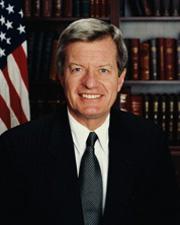 Sen. Max Baucus (D-MT)
Legislative Activity
Stay on top of the latest movement without scrolling through every action
Senate amendment submitted
January 25, 2007
View full timeline
Senate amendment submitted
January 25, 2007
Senate amendment proposed (on the floor): Amendment SA 206 proposed by Senator Baucus to Amendment SA 100.(consideration: CR S1159, S1170; text: CR S1159)
January 25, 2007
Senate amendment agreed to: Amendment SA 206 agreed to in Senate by Yea-Nay Vote. 90 - 0. Record Vote Number: 29.
January 25, 2007
Roll call votes on amendments in Senate: Amendment SA 206 agreed to in Senate by Yea-Nay Vote. 90 - 0. Record Vote Number: 29.
January 25, 2007
Amendment SA 206 proposed by Senator Baucus to Amendment SA 100. (consideration: CR S1159, S1170; text: CR S1159) To express the sense of the Senate that Congress should make permanent the tax incentives to make education more affordable and more accessible for American families and eliminate wasteful spending, such as spending on unnecessary tax loopholes, in order to fully offset the cost of such incentives and avoid forcing taxpayers to pay substantially more interest to foreign creditors.
January 25, 2007
Amendment SA 206 agreed to in Senate by Yea-Nay Vote. 90 - 0. Record Vote Number: 29.
January 25, 2007
Votes
1 roll call on this amendment
Text
Proposed
FAIR MINIMUM WAGE ACT OF 2007

The ACTING PRESIDENT pro tempore. Under the previous order, the
Senate will resume consideration of H.R. 2, which the clerk will
report.
The legislative clerk read as follows:

A bill (H.R. 2) to amend the Fair Labor Standards Act of
1938 to provide for an increase in the Federal minimum wage.
Pending:

Reid (for Baucus) amendment No. 100, in the nature of a
substitute.
McConnell (for Gregg) amendment No. 101 (to amendment No.
100), to provide Congress a second look at wasteful spending
by establishing enhanced rescission authority under fast-
track procedures.
Kyl amendment No. 115 (to amendment No. 100), to extend
through December 31, 2008, the depreciation treatment of
leasehold, restaurant, and retail space improvements.
Bunning amendment No. 119 (to amendment No. 100), to amend
the Internal Revenue Code of 1986 to repeal the 1993 income
tax increase on Social Security benefits.
Enzi (for Ensign/Inhofe) amendment No. 152 (to amendment
No. 100), to reduce document fraud, prevent identity theft,
and preserve the integrity of the Social Security system.
Enzi (for Ensign) amendment No. 153 (to amendment No. 100),
to preserve and protect Social Security benefits of American
workers, including those making minimum wage, and to help
ensure greater Congressional oversight of the Social Security
system by requiring that both Houses of Congress approve a
totalization agreement before the agreement, giving foreign
workers Social Security benefits, can go into effect.
Enzi (for Ensign) amendment No. 154 (to amendment No. 100),
to improve access to affordable health care.
Smith amendment No. 113 (to amendment No. 100), to make
permanent certain education-related tax incentives.
Vitter/Voinovich amendment No. 110 (to amendment No. 100),
to amend title 44 of the United States Code, to provide for
the suspension of fines under certain circumstances for
first-time paperwork violations by small business concerns.
DeMint amendment No. 155 (to amendment No. 100), to amend
the Public Health Service Act to provide for cooperative
governing of individual health insurance coverage offered in
interstate commerce, and to amend the Internal Revenue Code
of 1986 regarding the disposition of unused health benefits
in cafeteria plans and flexible spending arrangements and the
use of health savings accounts for the payment of health
insurance premiums for high deductible health plans purchased
in the individual market.
DeMint amendment No. 156 (to amendment No. 100), to amend
the Internal Revenue Code of 1986 regarding the disposition
of unused health benefits in cafeteria plans and flexible
spending arrangements.
DeMint amendment No. 157 (to amendment No. 100), to
increase the Federal minimum wage by an amount that is based
on applicable State minimum wages.
DeMint amendment No. 158 (to the language proposed to be
stricken by amendment No. 100), to increase the Federal
minimum wage by an amount that is based on applicable State
minimum wages.
DeMint amendment No. 159 (to amendment No. 100), to protect
individuals from having their money involuntarily collected
and used for lobbying by a labor organization.
DeMint amendment No. 160 (to amendment No. 100), to amend
the Internal Revenue Code of 1986 to allow certain small
businesses to defer payment of tax.
DeMint amendment No. 161 (to amendment No. 100), to
prohibit the use of flexible schedules by Federal employees
unless such flexible schedule benefits are made available to
private sector employees not later than 1 year after the date
of enactment of the Fair Minimum Wage Act of 2007.
DeMint amendment No. 162 (to amendment No. 100), to amend
the Fair Labor Standards Act of 1938 regarding the minimum
wage.
Kennedy (for Kerry) amendment No. 128 (to amendment No.
100), to direct the Administrator of the Small Business
Administration to establish a pilot program to provide
regulatory compliance assistance to small business concerns.

Amendment No. 158

The ACTING PRESIDENT pro tempore. Under the previous order, there
will be a 1-hour time limit for debate prior to a vote in relation to
amendment No. 158, with the time equally divided between the Senator
from Massachusetts, Mr. Kennedy, and the Senator from South Carolina,
Mr. DeMint.
Who yields time?
Mr. KENNEDY. Mr. President, I suggest the absence of a quorum and ask
unanimous consent that the time be charged equally to both sides.
The ACTING PRESIDENT pro tempore. Without objection, it is so
ordered.
The clerk will call the roll.
The legislative clerk proceeded to call the roll.
Mr. DeMINT. Mr. President, I ask unanimous consent that the order for
the quorum call be rescinded.
The ACTING PRESIDENT pro tempore. Without objection, it is so
ordered.
Mr. ENZI. Mr. President, I yield to the Senator from South Carolina
such time as he might consume.
The ACTING PRESIDENT pro tempore. The Senator from South Carolina
controls the time.
Mr. DeMINT. I thank the Chair.
Well, here we are again. A couple of weeks ago, we were here in the
Senate Chamber talking about the need to have full disclosure of
earmarks--pet projects that are added into bills, only to find that the
underlying bill only disclosed about 5 percent of all the earmarks.
After a lot of procedural maneuvering and give-and-take, fortunately,
Republicans and Democrats came together and realized that if we are
going to do this--tell the American people we are going to disclose
earmarks--then we should do it, and we should do it for all earmarks,
and we should be open and honest about what we do. Fortunately, we
fixed that problem. But here we are again today.
Now we are talking about raising the minimum wage for American
workers. We have had passionate pleas, which are warranted. There are
too many people in this country who don't make a livable wage. We, as
Senators, Congressmen, and as Americans, should do everything we can to
help people earn a livable wage and better.
There have been a lot of passionate speeches on the floor about, What
do we do with a single mom with two kids working at the minimum wage?
How can they possibly get by? It is true. It is very true. But as we
look at this minimum wage bill and as we look out on America and
promise to give every minimum wage worker a raise, we find that, if you
really look at the bill, less than half of the workers who are working
at the minimum wage will receive a $2.10 increase. Many will receive
nothing at all. So the amendment I have introduced is one that would
give 100 percent of Americans working at the minimum wage a raise
because that is, in effect, what we are promising as we debate on the
floor. This amendment is called minimum fairness for workers. That is
what it is all about. The idea is that every American working at
minimum wage will receive a $2.10 increase as we have promised.
It is important to realize that America is very diverse and
different. States have very different costs of living. As we look
across the country, there are many States that have a much higher than
average cost of living, and some have a much lower cost of living.
Actually, more than half of the States in this country--29--have passed
a minimum wage that is higher than the $5.15 national Federal minimum
wage.
We see, if you look at Massachusetts, for instance--the State of
Senator Kennedy, who has been a great defender of the minimum wage and
the average worker, which I commend him on--it is one of the higher
cost of living States in this country. They have raised their minimum
wage to $7.50. I think we would all agree that a single mom with two
children living in Boston, MA, making $7.50 an hour is not making a
livable wage. The fact is, that same family living in South Carolina
and making $5.15 an hour is doing better than those who are making
$7.50 in Massachusetts because of the cost of living. Many of the
Southern States have a lower average cost of living--cost of an
apartment, cost of food, and cost of transportation and taxes; it is
much lower. So many States across the country have looked at their cost
of living and have raised their minimum wage higher than the national
average because of that cost of living.
As we look at raising the national minimum wage again--and we know it
has been years since we have done that--we need to realize that the
cost of living across this country is different. I commend States such
as Massachusetts that have recognized that and passed a minimum wage
that is higher than the national average. But

[[Page S1137]]

it is not fair and it is not honest for us to have a national minimum
wage debate and leave more than half of the minimum wage workers out of
this whole promise of a wage increase. It is important for us to look
across the country and see what this minimum wage bill will do if we
don't adopt the amendment I am talking about. All of the States here on
the chart in blue are States where the minimum wage workers will
receive less than a one-dime--10 cents--increase if we pass this bill.
Most of them will receive nothing at all--after all of the promises.
These are some of the highest cost of living States in the country.
My distinguished colleague from Massachusetts talked about the
importance of raising the minimum wage. I know he would agree that
someone making $7.50 an hour in Boston, MA, is not making a livable
wage. If we are going to promise to help these people, the people
working in Massachusetts deserve a raise as much as the people working
in South Carolina. But under this bill, the minimum wage worker in
Massachusetts will receive no increase; Vermont will receive no
increase; Connecticut, Rhode Island, Washington State, Oregon, and
California will receive no increase at all. Illinois will receive a
dime. Yet with all this big national debate and hoopla, which has
become symbolic of trying to help low-income Americans make more money,
we know as a body that only a fraction of 1 percent of Americans
working at the minimum wage will get it.
Yet we are trying to tell them this bill is going to raise their
standard of living, and we know that less than half of the minimum wage
workers in this country are going to receive a $2.10 increase. This
amendment is about 100 percent, just as we did 100 percent of earmarks.
We got together, we realized the underlying bill didn't work, and we
did the right thing.
I think there are much better ways to help people earn a livable wage
than mandating that they get an increase. But if we are going to do it,
let's do it right and let's be fair to all Americans. If we promise an
increase for minimum wage workers, let's give every American working at
the minimum wage a $2.10 increase so that a person working in
Massachusetts with a higher cost of living would get a raise, just as
in Louisiana or Alabama or South Carolina. Every minimum wage worker
across this land would have a $2.10 increase.
I don't think that is too much to ask. If the Senate is going to
spend 2 weeks talking about it, if we are going to have these
impassioned pleas to help minimum wage workers, how can we leave half
of minimum wage workers out of this whole process and pretend to be
helping everyone? It doesn't make sense. This is about 100 percent. It
is about fairness. It is about looking at these cameras in this Chamber
and telling people the truth.
If we are going to pass a minimum wage, if we think we are doing the
right thing by mandating that we raise the minimum wage above where it
is across this land, then let's have it apply to 50 States, 100 percent
of our workers. That is the only fair and honest way.
Again, I commend the States that have had the good judgment and the
wisdom to recognize that their cost of living is higher, but if we
don't include them here, then we have done an injustice to their
workers.
I encourage all of my colleagues to look at this amendment. This is
not a trick. It is clear and simple. Every minimum wage worker in
America will get a $2.10 increase if we adopt this amendment and then
pass this final bill.
I will make a commitment to the Senator from Massachusetts and to
others here that while I have not supported this idea of mandating a
minimum wage as the best way to improve and increase salaries, if we
are fair, if we adopt this amendment, I will vote for the final bill
for raising the minimum wage because it will be fair to all Americans,
and I will encourage my colleagues who have not supported it in the
past to be together as a Senate.
Let's not come out and make an impassioned plea to raise the minimum
wage in one State but not another. That doesn't make sense, and it is
not fair and it is not open. It is about 100 percent, and I encourage
100 percent of my colleagues to look at this amendment, do the right
thing, and include every minimum wage worker.
I yield back my time to the Senator from Wyoming.
The ACTING PRESIDENT pro tempore. Who yields time?
The Senator from Massachusetts.
Mr. KENNEDY. Mr. President, I yield myself such time as I might use.
This is the fourth day that the Senate is addressing an issue of
enormous importance to those on the lower end of the economic ladder--
an increase in the minimum wage from $5.15 to $7.25. It is not a
complicated issue. Everybody in this body knows what the issues are.
Usually, we have great debates about complicated issues in the United
States of America. Soon we will be debating varied policies with regard
to Iraq, as we should. But this issue is a simple issue. It is an issue
of simple justice. It is as old as many of us in this body. Minimum
wage was advanced more than 70 years ago. We have increased it now nine
times over recent years, and yet Republicans want to continue to delay,
delay, delay, delay, delay, delay, delay; oppose, oppose, oppose.
There was opposition yesterday in insisting that we get cloture in
the Senate on an increase in the minimum wage, requiring that we get 60
votes before we can vote up or down on a simple, easy issue and
question of fundamental fairness to workers in this country.
We are glad to have debates, but the message ought to go out to the
American people exactly what is going on here on day 5 in the Senate on
the issue of minimum wage. And we continue to have, as the minority
leader said, scores--40, 50, more amendments, 90 amendments--on the
issue of the increase in the minimum wage--90 amendments. Make no
mistake about it, America, who is holding up the increase in the
minimum wage.
Eight times the Senate has increased its own salary, increased the
salary of the good Senator from South Carolina $32,000 in the last 10
years--$32,000. And if we have had 1 hour of debate on that issue--1
hour of debate on that issue, 1 hour of debate on that issue--I would
be surprised. This is the fifth day our Republican friends who, as
Members on the Democratic side, have enjoyed a $32,000 increase in
their pay have 90 amendments to try and scuttle an increase in the
minimum wage for low-income workers--trying to scuttle, to sink the
increase.

These workers understand it. Workers across this country understand
it. Working families understand it. Middle-income people understand it.
All Americans understand it. This is one of those basic and fundamental
issues people understand because it is an issue of fairness.
I don't impugn the motives of my friend from South Carolina, but he
has opposed the minimum wage on every single occasion he has addressed
it--every single occasion. We have the record here as to how the good
Senator has voted every time on the issue of an increase in the minimum
wage: going back to the House of Representatives in 2002, 2005, and
over here on seven different occasions he has voted against the
increase in the minimum wage. So the idea that he wants to provide
$2.10 more to every worker in States that have raised--under the age-
old law of the minimum wage--their minimum wage because of the failure
of the Senate to do it has a sort of hollow ring to it. It has sort of
a hollow ring to it since he has opposed an increase in the minimum
wage on each and every occasion we have considered it. We have to take
a look at exactly what is being done.
I assure my friend from South Carolina that the workers in my State
understand the battle they have had to increase the minimum wage. And I
daresay, in the various States across the country that have increased
their minimum wage, they have understood that, too. The legislators
have gone out and worked, and workers understand what they have done.
They have understood what they have done. They have understood that the
minimum wage is a basic standard which is supposed to be the lowest
living wage. It is supposed to be the lowest living wage. Historically,
it is supposed to be half of what the average wage is in the country.
That goes back to the time beginning of the minimum wage and the record
shows that all the way up to probably the 1980s, and then it has

[[Page S1138]]

dropped precipitously, half of what it was.
Going back to the 1930s, the minimum wage was designed to be a floor.
If States want to add something to it, they can, but it ought to be a
floor for all workers in this country. One of the principal reasons it
was passed at that time is because the Members of this body, the House
of Representatives, and the President of the United States saw what was
happening in different parts of the country where States were lowering
their wages to try and attract industries and companies in a rush to
the bottom, with the exploitation of worker after worker, family after
family, in a rush to the bottom. So the national decision was taken, in
terms of fairness and as a moral issue, that workers who were going to
work hard were going to receive a minimum wage.
One of the age-old values in our country, in society, is that work
ought to pay. We hear that stated around here with great ease and
frequency, and that is what we are trying to do with a minimum wage
increase. We are trying to make work pay, pay people who are doing some
of the most difficult work in America, and demonstrate a respect for
that work, give them pay because they are doing hard, difficult work,
but we respect our fellow Americans and respect their efforts.
This is not the law of the jungle. The economy of the United States
of America isn't survival of the fittest. Some would like to have it
that way. Some who oppose the minimum wage would like to have it that
way, but it isn't that way, thank God, in the United States of America.
It is in the jungle, but not with regard to a democracy and a free
economy.
Let me state specifically what this proposal does. The good Senator
yesterday voted to permit any State to effectively opt out of any kind
of minimum wage. So that would have fundamentally destroyed any kind of
uniformity across the country.
His proposal is, in the wake of the Senate and Congress over 10 years
under Republican leadership refusing to increase the minimum wage, the
States in their own good judgments have done so, and now he says let's
add on $2.10 to do that. It does seem to me appealing in a certain
respect, because I believe the minimum wage is not a livable wage in
many parts of the country. We have seen these livable wage campaigns
that are taking place in Baltimore, Los Angeles--many cities around the
country--my own city of Boston, and they have raised it in a particular
region, and it has had great success.
But that isn't the issue. This particular amendment of the Senator
would basically do what was attempted yesterday, but do it in a
different way. Yesterday was to effectively end the minimum wage by
letting any State opt out. Today the swing of the pendulum has gone the
other way. The amendment says we are going to add additional funds on
to any State. Every State over these past years has noted the failure
of the Senate as a result of Republican leadership because we have had
a majority read back the records of the votes in the Senate. We had a
majority in the Senate with good Republican support to raise the
minimum wage, but we couldn't get to the 60 votes, and our Republican
leadership wouldn't let us. So the States moved ahead. Now that the
States have moved ahead, the Senator wants to say: Oh, you have moved
ahead because you made a judgment about the respect for your own
workers, and we are going to add on to it to try to disrupt the minimum
wage.
I hope this amendment will not be accepted, and I hope we will be
able to move along and make further progress on this issue.
I reserve the remainder of my time.
The ACTING PRESIDENT pro tempore. Who yields time?
Mr. ENZI. Mr. President, could I ask what the time situation is?
The ACTING PRESIDENT pro tempore. The Senator from South Carolina has
18 minutes 40 seconds. The Senator from Massachusetts has 17 minutes 35
seconds.
Mr. ENZI. Mr. President, I ask to have the Senator from South
Carolina yield me 8 minutes.
Mr. DeMINT. Yes.
The ACTING PRESIDENT pro tempore. The Senator from Wyoming is
recognized.
Mr. ENZI. I need to address a few of the things that were said. ``We
are on the fifth day of this debate.'' Yes, we are. ``It's a simple
bill.'' No, it is not a simple bill. It is simple in the one proposal
that is out there, but it has a lot of interlocking implications. We
had some debate yesterday, separate from an amendment on tip credits.
We talked about work opportunity tax credits. We talked about earned-
income tax credits. All of those tie in with the minimum wage, so it
has a lot of implications.
It has a lot of implications for small businesses, too. I showed some
quotes from a lady who would lose hours, another from someone who would
lose their job. They were all in situations where they can't afford to
do that. There have been charts showing that on the aggregate it helps
the whole economy to raise the minimum wage. But on an individual basis
it affects people individually. Small business employees understand.
They are really connected to their business. They know how much the
employer is making. They know what the markup is on things. And they
know whether their job is in danger or not, so there is that concern.
But I want to clear up something. There has not been an argument
against raising the minimum wage. The argument has been for doing
something to help counter the impact on small business. We have been
acting in a bipartisan way on some things; we can act in a bipartisan
way on this. I contend that as soon as there is some assurance to the
minority that there will be some tax offsets for the small businesses,
this process will speed up dramatically. But until there is that
assurance we will be using our opportunities, the process, to make sure
we can take care of small business at the same time and not put them
out of business.
There has been some cooperation, at least through the press. I would
mention that Senator Reid said:

If it takes adding small-business tax cuts to have a
minimum wage tax increase, we're going to do that. Maybe we
can get 60 votes to invoke cloture on a straight minimum
wage. I'm not sure we want to do that. . . . A one-party town
doesn't work. We have a majority of 51-49. We're going to
accomplish the possible; that's what we're going to do.

That was on January 5 at a press conference. I have some other quotes
from him, too, but Senator Baucus said:

Small business is the engine that drives our economy and
creates jobs on Main Street. That's why I'm proud we are
getting them some tax relief from Uncle Sam. . . . It's high
time our workers get a raise. At the same time we are going
to give a boost to small business.

That was a January 17 press release.
Senator Kerry:

I support the majority of the provisions of the Small
Business and Work Opportunity Act of 2007. I would have
preferred that this package moved separately rather than in
tandem with a minimum wage bill. However, the reality is we
need a tax package in order to advance minimum wage
legislation.

That is from a January 2007 committee report, Small Business and Work
Opportunity Act of 2007.
I have a whole lot of quotes from the other side of the aisle that
have encouraged me that we can do both things--raise the minimum wage
and have some offsets for small business.
I have talked to the Senator from Massachusetts about this before. I
understand his desire to have just the minimum wage increase and his
concern that any other discussion takes away from that. I suggested
that it wouldn't take away from it if it were a whole package to begin
with; that it would be a minimum wage increase and our concerns about
having some tax breaks for the small businesses would overcome that.
But we have not gone that route yet.
The debate we had yesterday, the cloture vote we had yesterday, would
have excluded the possibility of doing the tax breaks. I have to tell
you, to get those tax breaks to offset the impact on small business has
a long road to go because the House didn't pass any of those. In fact,
the House has made some very detrimental comments about it. There is a
process over here that enforces the rights of the minority and can
provide some protection for the small businesses, the mom-and-pops out
there trying to make enough living for their own families and provide
for some workers that we can take care of at the same time. But it is

[[Page S1139]]

going to take some showing that there is some dual concern, both for
the employee and for the mom-and-pop businesses, before we move along
much faster.
That is what the debate is about. It is not about whether to raise
the minimum wage. The minimum wage will be raised. I hope there are a
whole lot of other things that will be done in the process, too,
because we need to move these people to more skilled jobs, and we need
to get a Workforce Investment Act through, too, and I would have liked
to see this be part of this same bill, too, so we could increase the
skills of the employees and get them into better jobs. We don't want to
just remove the bottom rung of the ladder and have them have to make a
bigger step to get a job to begin with. We want them to have better
jobs. Better jobs do not hit the inflationary core quite as much.
I want to be sure people understand we are not talking about whether
to do a minimum wage, we are talking about whether to do a minimum wage
increase and offset some of the impact for small businesses.
I yield the floor and reserve the remainder of the time.
The PRESIDING OFFICER (Ms. Klobuchar). The Senator from South
Carolina is recognized.
Mr. DeMINT. Madam President, this is a good debate and I think it is
an important debate. I appreciate the points of Senator Kennedy. Many
of them I agree with, but it is my hope that those same points will
apply to the many States, such as Massachusetts and Washington State
and California and many other States so that those people working at
the minimum wage in those States will receive a minimum wage, too.
I appreciate the fact that he has recognized that States such as
Massachusetts did respond to the higher cost of living that their
workers face by passing their own minimum wage. I think if we look
across the country we will see that, again, 29 States have taken that
action because it does cost more to live there. He points out that in
the past I have not supported the increase in the minimum wage. It is
not completely true, but many times I have not supported it because it
has not been fair. It does not apply to all American workers.
As the Senator from Wyoming just pointed out, if these bills that
mandate wage increases do not include some provisions that help small
businesses stay profitable, then they cannot hire these minimum wage
workers. Many times they are teenagers. Many times they are trainees.
We want to encourage every small business in this country to bring in
as many workers as it can to train them and develop them because all
the statistics tell us that folks who start at the minimum wage are
generally only making it a few months before they prove that they can
do the work and move on. It is a way to get a lot of people into the
workforce.
I think it is important to point out, as the Senator said I never
supported a minimum wage, that I did, in fact, last year. The Family
Prosperity Act was a package, a compromise package that raised the
minimum wage just as we are talking about now, although it did not do
it for every American. It eliminated the death tax, which adversely
affects so many small businesses in the event of the death of an owner,
whether it is a farm or small business. Many low-wage workers lose
their jobs in the process of those businesses or farms closing. We
packaged those together so we could do both: we could help the worker,
but we could also make sure these small businesses continue to survive
so they can hire those workers. There were other tax provisions in the
Family Prosperity Act, but it was a good bill.
This bill was not blocked by Republicans. It was proposed by
Republicans and blocked by Democrats. It was a sad time when we saw in
order to score political points that we turned our backs on workers in
order to avoid giving small businesses the provision on the death tax
that would allow families to continue to operate businesses.
I would like to summarize my amendment so it is not misrepresented.
It is not a trick. We are talking on the floor of the Senate about
giving minimum wage workers a raise of $2.10. States have already
passed minimum wage laws, and some of them are different. In most cases
it is because of the higher cost of living.
If we come in and raise the minimum wage from $5.15 to $7.25 in a
number of States, South Carolina and Massachusetts will have
essentially the same minimum wage--maybe a quarter difference. But a
minimum wage worker living in Boston, MA, faces tremendously higher
costs than a minimum wage worker who lives and works in Greenville, SC.
If we are going to be fair, and if we are going to make all these
speeches on the floor of the Senate that we are going to help minimum
wage workers, it does not make sense to leave out over half of the
minimum wage workers in this country and go home and pretend that we
have done something good.
I have told the Senator that while I have opposed the strategies of
wage mandates in the past, that if we are fair, if this bill includes
100 percent of minimum wage workers, I will not only support it, the
final bill, I will encourage my colleagues to support it because it is
the right thing to do. I believe if we were all speaking openly and
honestly, we could say that even $7.50 an hour in Boston, MA, is not a
liveable wage. If you took that up to $9.60, hopefully, we are getting
at the point where people can survive. But $9.60 in Boston, MA, is no
more money than $7.25 in South Carolina.
Let's be fair to workers. Let's use what has already been started by
the States, and that is recognizing cost of living to help every
American worker.
Again, this is just about simple fairness, as the Senator from
Massachusetts has said. If we are going to promise an increase of $2.10
to minimum wage workers, let's do it for 100 percent of the workers in
every State of our Union. Let's give them that increase today.
I encourage my colleagues to not look at the past. If we can support
fairness together, let's all vote together to give every American
minimum wage worker a $2.10 increase. That is my amendment. I encourage
my colleagues to support it.
I yield and reserve the remainder of my time.
The PRESIDING OFFICER. The Senator from Massachusetts is recognized.
Mr. KENNEDY. Madam President, I thank the good Senator for his
concern about the workers in Massachusetts. In Boston we have a living
wage of $11.95. We made that judgment in Boston, and it is working very
well.
I take note, in this American Chamber of Commerce Researchers
Association publication, that South Carolina ranks 18th in terms of the
cost of living. There are 17 other States that have a lower cost of
living. But South Carolina is 18th in this list. It is not at the
lowest; it is 18th.
The fact is, it is not greatly out of sync. It is close to the
average across the country. But let's get back to the effect of the
Senator's amendment.
In Arizona, in this last election, there were 756,144 people who
voted for an increase in the minimum wage to $6.75. That vote would be
overturned, effectively, by the Senator from South Carolina. In
Colorado, 725,700 turned out for a $6.85 minimum wage. The citizens of
Colorado--their votes would be overturned. In Missouri, 1,583,340
million voted for $6.50. That vote would be overturned. Montana, $6.15,
283,258 turned out. Nevada, 394,058 turned out, $6.15 an hour. Ohio,
$6.85, 2,080,648 turned out. Those are 5,823,148 in six different
States. That is in regard to the initial referendum. All of that would
be overturned by the Senator from South Carolina.

So I come back to the basic concept, and that is that we have
established some minimum standards. There are a lot of objections to
those minimum health standards, so workers are not going to be--since
we passed OSHA in 1970, we have cut in half the number of workers who
have been killed in the workplace. We have cut that in half. About 60
percent less workers have been killed. There are other kinds of
illnesses that have come up with changes in our economy, but a decision
in judgment was made that we are not going to have the exploitation of
workers. We are going to have safe workplaces. We don't permit the
exploitation of children in our factories. We think they ought to be in
schools. Some economists think: Oh, let's have children in there. Let's
work those

[[Page S1140]]

children and see what the market does. Let's let those workers go in
and work in those dangerous places. If the market, if it is going to be
that disruptive in terms of the employer, let's go ahead and do that.
Well, we had decided at another time that we were not going to permit
the exploitation of children or women in the workplace, and we were
also going to insist on health and safety regulations and we were going
to establish a basic floor, a basic floor, a minimum. It is not high
enough even at $7.25, I don't believe myself, but that is the judgment
that has been basically made by the Congress, by our side, the
Democrats, and by a handful of Republicans, and we wish to see that
raised. We wish to see that raised.
I suppose you could take the good Senator's argument and logic and
say: Well, we have increased our salaries $32,000, and they have a
different cost of living, so maybe South Carolina ought to get less, if
we want to follow that logic. We say: No, we are one country with one
history and one destiny, and we are going--obviously, Members of
Congress and Members of the Senate are going to be treated as they
should be, and that is fairly, for the work they do.
We say workers ought to be treated fairly for the work they do.
Minimum standard. This amendment does injustice to that.
I would mention there is obviously a disparity in the cost of living.
I have mentioned what the Energy Information Administration says a
worker across the country pays, on average, for gasoline, and that is
$2.17 a gallon. In South Carolina, it is $2.13 a gallon. It is 3 cents
more in my State of Massachusetts. I was going to get the basic
indicators. Health care, the average cost for a family is going to be
$11,000. Try and do that on $5.15 an hour--$11,000. It is probably a
little more, closer to $12,000 in Massachusetts--but $11,000 for a
family of four. Try and do that on $5.15. We have the housing charts up
here. I would think that even $5.15 or $7.25 an hour for people who
work hard in South Carolina, they are going to have a tight belt strap
in providing for their children, providing for their food, and
providing for their general well-being.
But this does a major alteration and change to a very fundamental
concept to what the minimum wage is all about, and I hope the Senator's
amendment will not be successful and that our colleagues will vote no.
Madam President, how much time remains?
The PRESIDING OFFICER. There is 11 minutes 10 seconds for the Senator
from Massachusetts.
Mr. KENNEDY. We have 11 minutes 10 seconds. Well, I suggest the
absence of a quorum.
The PRESIDING OFFICER. Does the Senator withhold the quorum call?
Mr. KENNEDY. Yes, I withhold.
The PRESIDING OFFICER. The Senator from South Carolina is recognized.
Mr. DeMINT. How much time do I have?
The PRESIDING OFFICER. There is 7 minutes 6 seconds.
Mr. DeMINT. Thank you.
Again, I thank the Senator for his good debate. I appreciate this
opportunity. I think if we listen to what each other is saying--I
appreciate the Senator's concern for South Carolina workers and I hope
he appreciate my concern for Massachusetts. As Senator Kennedy has
said, you set the livable wage in Massachusetts at over $11, so $7.50
an hour for the minimum wage is certainly not acceptable. I do not
think anyone would argue that that is enough, and we need to do better.
I would hope no Member of the Senate would be concerned that a worker
mandating over $7.50 is a problem, and particularly in high cost of
living States.
There are a number of things that have been said we need to think
about because we put up that my amendment would cause States which have
already passed their minimum wage to have to pay more. In fact, this
underlying bill is going to do that to many States. There are many
States in this country which have passed their own minimum wage that is
over $5.15 but is under the current mandate in this bill. So when we
pass it, we are going to override the legislatures and the people in
many States. That is part of this whole argument.
Now, in this day and time, with the varying costs of living across
this country and 29 States already passing their own minimum wage, does
it continue to make sense for us to establish a one-size-fits-all
minimum wage for this whole country? I think not. But I do think if we
are going to stand on the floor of the Senate and argue on behalf of
the American worker, the minimum wage worker in this country, and
promise to raise that minimum wage, then we should do it fairly and
equitably across this country.
Again, I encourage my colleagues to realize what this bill does is
override States. That is the whole idea of the Federal minimum wage, to
say we do not believe States will do the right thing, so we are going
to. But if we are going to do the right thing, let's make it 100
percent. Let's not make another false promise to the American people.
If we are going to raise the minimum wage $2.10, let's do it across the
entire country.
So again, I appeal to my colleagues. If we are going to do it, let's
do it right, let's do it fairly, and let's meet this promise to every
American minimum wage worker.
Madam President, I yield the floor, and I suggest the absence of a
quorum.
The PRESIDING OFFICER. Without objection, it is so ordered. The clerk
will call the roll.
The bill clerk proceeded to call the roll.
Mr. KENNEDY. Madam President, I ask unanimous consent that the order
for the quorum call be rescinded.
The PRESIDING OFFICER. Without objection, it is so ordered.
Mr. KENNEDY. Madam President, how much time do I have left?
The PRESIDING OFFICER. The Senator has 11 minutes 3 seconds.
Mr. KENNEDY. Madam President, I think we had notified Members we
would try and vote at half past, and I will certainly follow that
guidance. I would say, as we wind up this debate on this particular
amendment, the underlying legislation provides for an increase in the
minimum wage from $5.15 to $7.25. It is well understood by all of the
Members. We are taking a good deal of time for those who differ with
that as a concept. We have had those who have opposed it, who tried to
circumvent it, to come up with ways to avoid it, and we are glad to
deal with those issues. But nonetheless, this is an amendment now by my
friend from South Carolina that would effectively undermine a very
important concept that has been the basis of the minimum wage for over
70 years and that is to establish a basic floor across this country, a
basic floor for minimum wage, permitting States to raise--if they want
to increase their wages, they can do that. If cities want to increase
their wages, they can do that, such as my city of Boston, such as the
District of Columbia, such as Baltimore, and such as other cities have
done, and they have had very remarkable success in terms of the
reduction of absenteeism, the continuation of workers remaining in
employment, increasing productivity, and the rest. But that is a
different issue for a different time.
The Senator from South Carolina's amendment, in effect, says we will
take this $2.10, which will be the value of the increase in the minimum
wage, and add that to every State across the country. That is an
entirely different concept. I, myself, find that certain parts of this
are attractive to think that we do need to raise the minimum wage
beyond the $7.25, but that is not the debate today. That is not the
debate. That is not the issue. The basic issue is whether we are going
to violate the very fundamental understanding we have, with regard to
this issue at this time in this body now, and that is that we are going
to pass a floor in this country applicable to all the States and raise
it from $5.15 an hour to $7.25. That is the issue. The amendment of the
Senator from South Carolina, however well-intentioned, does serious
injury, disruption, and violence to that very basic and fundamental
concept. I hope it will not be accepted in the Senate.
We are approaching the time of 10:30, and we are very hopeful we will
have a vote in relation to the amendment of the Senator from South
Carolina in the next couple of moments.
Madam President, I am prepared to yield back my time.
Mr. DeMINT. I yield back my time.
The PRESIDING OFFICER. All time is yielded back.

[[Page S1141]]

Mr. KENNEDY. I raise a point of order that the pending amendment
violates section 425 of the Congressional Budget Act of 1974.
Mr. DeMINT. Madam President, I move to waive the applicable section
of the Budget Act.
Mr. KENNEDY. I ask the yeas and nays.
The PRESIDING OFFICER. Is there a sufficient second?
There is a sufficient second.
The question is on agreeing to the motion.
The clerk will call the roll.
The bill clerk called the roll.
Mr. DURBIN. I announce that the Senator from Washington (Ms.
Cantwell), the Senator from Hawaii (Mr. Inouye), and the Senator from
South Dakota (Mr. Johnson) are necessarily absent.
Mr. LOTT. The following Senators were necessarily absent: the Senator
from Missouri (Mr. Bond), the Senator from Alaska (Mr. Stevens), and
the Senator from Wyoming (Mr. Thomas).
The PRESIDING OFFICER. Are there any other Senators in the Chamber
desiring to vote?
The yeas and nays resulted--yeas 18, nays 76, as follows:

[Rollcall Vote No. 25 Leg.]

YEAS--18

Allard
Bennett
Coburn
Cochran
Cornyn
Craig
Crapo
DeMint
Domenici
Ensign
Enzi
Graham
Hatch
Inhofe
Lott
McConnell
Roberts
Sessions

NAYS--76

Akaka
Alexander
Baucus
Bayh
Biden
Bingaman
Boxer
Brown
Brownback
Bunning
Burr
Byrd
Cardin
Carper
Casey
Chambliss
Clinton
Coleman
Collins
Conrad
Corker
Dodd
Dole
Dorgan
Durbin
Feingold
Feinstein
Grassley
Gregg
Hagel
Harkin
Hutchison
Isakson
Kennedy
Kerry
Klobuchar
Kohl
Kyl
Landrieu
Lautenberg
Leahy
Levin
Lieberman
Lincoln
Lugar
Martinez
McCain
McCaskill
Menendez
Mikulski
Murkowski
Murray
Nelson (FL)
Nelson (NE)
Obama
Pryor
Reed
Reid
Rockefeller
Salazar
Sanders
Schumer
Shelby
Smith
Snowe
Specter
Stabenow
Sununu
Tester
Thune
Vitter
Voinovich
Warner
Webb
Whitehouse
Wyden

NOT VOTING--6

Bond
Cantwell
Inouye
Johnson
Stevens
Thomas
The PRESIDING OFFICER. On this vote, the yeas are 18, the nays are
76. Three-fifths of the Senators duly chosen and sworn not having voted
in the affirmative, the motion is rejected. The point of order is
sustained, and the amendment falls.
The Senator from Massachusetts.
Mr. KENNEDY. Madam President, we have a good deal of business to do.
Since some of these issues relate to the Finance Committee, we are
working out with Senator Baucus and Senator Grassley their proposal and
schedule. There are several important amendments they are addressing
and working out. We expect to have action on those, if not in the very
late morning, in the early afternoon.
We had an amendment by Senator Sessions that we were looking forward
hopefully to at this time.
The PRESIDING OFFICER. The Senator from Wyoming.
Mr. ENZI. Madam President, I wish to compliment both sides on working
on amendments. We have not had any shortage of amendments being
offered. In fact, we have a whole bunch of people who would like to
offer amendments that have already been filed. So it is not the usual
problem of trying to get people to come down and offer amendments; it
is a problem of being able to get some agreements so we can have votes
on those amendments.
Both sides are working diligently to try to get it set up so we can
have a whole series of votes yet today and move along substantially on
this legislation. Of course, what we are kind of waiting for is to get
some assurance that there will be a small business tax package to
offset the impact of this before we get some progress.
But I yield the floor and suggest the absence of a quorum.
Mr. MARTINEZ addressed the Chair.
The PRESIDING OFFICER. Does the Senator withhold his suggestion of an
absence of a quorum?
Mr. ENZI. Yes.
The PRESIDING OFFICER. The Senator from Florida is recognized.

Amendment No. 105 to Amendment No. 100

Mr. MARTINEZ. Madam President, I ask unanimous consent that the
pending amendment be set aside and I call up amendment No. 105 and ask
for its immediate consideration. I ask that if it does not run afoul of
what the bill managers were attempting to do at this time.
The PRESIDING OFFICER. Is there objection?
Without objection, it is so ordered.
The clerk will report.
The legislative clerk read as follows:

The Senator from Florida [Mr. Martinez] proposes an
amendment numbered 105 to amendment No. 100.

Mr. MARTINEZ. Madam President, I ask unanimous consent that reading
of the amendment be dispensed with.
The PRESIDING OFFICER. Without objection, it is so ordered.
The amendment is as follows:

(Purpose: To clarify the house parent exemption to certain wage and
hour requirements)

At the appropriate place, insert the following:

SEC. __. HOUSE PARENT EXCEPTION.

Section 13(b)(24) of the Fair Labor Standards Act of 1938
(29 U.S.C. 212(b)(24)) is amended--
(1) in the matter preceding subparagraph (A), by striking
``and his spouse''; and
(2) in the matter following subparagraph (B)--
(A) by striking ``and his spouse reside'' and inserting
``resides'';
(B) by striking ``receive'' and inserting ``receives''; and
(C) by striking ``are together'' and inserting ``is''.

Mr. MARTINEZ. Madam President, I simply wished to call up this
amendment. I think it is a rather important amendment and is of great
interest to me personally. It is offered in order to assist charitable
organizations that look after children who are in need of foster care.
It is an attempt to not allow a raise in the minimum wage to work
against the opportunity for single individuals to continue to work with
these young children in ways that are helpful to them.
I have been urged to move this amendment by a number of not-for-
profit groups in Florida that care for children, groups such as the
Children's Home Society. I think it is a rather important amendment,
and I look forward to its consideration as we go forward.
Madam President, I yield the floor and suggest the absence of a
quorum.
The PRESIDING OFFICER. The clerk will call the roll.
The legislative clerk proceeded to call the roll.
Mr. CORNYN. Mr. President, I ask unanimous consent that the order for
the quorum call be rescinded.
The PRESIDING OFFICER (Mr. Brown). Without objection, it is so
ordered.
Mr. CORNYN. Mr. President, I rise to express my appreciation for my
colleagues' efforts to do what, in their view, would help promote a
better quality of life for the people of this great country. We are
here to debate specifically a proposal to increase the minimum wage,
but, in my view, we should aspire to more than a minimum wage for the
workers across this country. Instead, we should work to provide the
training and educational opportunities that will allow individuals
across this great Nation to enter the workforce at perhaps minimum wage
but, more importantly, to then move up the economic ladder.
When we put ourselves in the position of Government rather than the
market dictating wages, we will most certainly see some unintended
effects of less opportunity for some of the very American workers whom
we are attempting to help.
Let's put this proposal in perspective. Research reveals that the
negative effects of raising the minimum wage would, in fact, fall most
heavily on the shoulders of the most vulnerable workers. Let me say
that again. Research shows that the effects of raising the minimum
wage--that is, of the Federal Government rather than the market
dictating the wages at which employers must pay workers--that the
burden would actually fall most heavily on the most vulnerable workers.
When employers are forced to raise their costs in order to comply
with a government mandate, they are most likely going to reduce the
hours their workers can work or perhaps even lay

[[Page S1142]]

people off in order to meet their bottom line. Of course, they will
also choose, if costs go up because government has increased the wages
which an employer must pay, to retain their most skilled and
experienced and productive employees, not the less skilled or lower
wage earners. That is important because teenagers and those who are
working on a part-time basis or who are just entering the workforce are
the ones who predominantly receive the minimum wage under the status
quo.
So why in the world would government decide to put people out of
work, presumably the very people whom this amendment is designed to
help? We need to ask ourselves that question and come up with a better
answer than I have heard so far.
I saw a cartoon, which was really not funny, distributed a couple of
days ago where an employer is talking to an employee. He says: I have
good news and bad news. The good news is that the minimum wage has been
increased, so you are going to get a pay raise. The bad news is you are
fired.
The point of the cartoon is--as I said, it is really not funny--that
if fixed costs of employers go up, something has to give. And where
that give actually impacts the workers is going to be, I am afraid, on
the most vulnerable workers, the less educated, the less trained, and
unfortunately, more often, on minorities and women, the very groups the
advocates of this bill have said they want to help.
Consider this statistic: Of the 75.6 million Americans who are paid
by the hour, 1.9 million workers earn wages at or below the minimum
wage. In other words, that is 2.5 percent of all hourly paid workers.
So the debate we are having this week--and, presumably, will carry over
to next week--will affect 2.5 percent of all hourly paid workers. The
largest share of minimum wage earners include teenagers and young
adults who have only entered the workforce. Based on the most recent
data available, approximately one-fourth of minimum wage earners are
teenagers between the ages of 16 and 19, and about one-half are between
the ages of 16 and 24.
Over the past few weeks, in anticipation of this debate, there have
been a number of articles in national and State publications addressing
this topic. Many of them have been very thoughtful and informative. One
article that demonstrates the complexity of this issue, that there is
actually more than meets the eye on this topic, was published by the
Valley Morning Star in Brownsville, TX, a story about Belinda
Campirano. Ms. Campirano, along with her sister, is an owner of Media
Luna, a small restaurant in Brownsville, TX. Ms. Campirano has only one
employee, whom she pays $6 an hour. And while she understands, from the
standpoint of simple human compassion, the difficulty of getting by on
$5.15 an hour, she also realizes that a government-mandated wage
increase would put a significant dent into her operating budget,
literally in her ability to keep the doors open and keep this
individual, her single employee, on the payroll.
There was also another great series of articles in the Washington
Post, one on January 10 entitled ``Life at $7.25 an Hour, As House
Prepares to Vote on Minimum Wage Increase, Issue is Complex for Those
Who Earn or Pay That Amount.'' That article does an excellent job of
cutting through the rhetoric and exposing the reality of what it is we
are debating.
I ask unanimous consent that both articles be printed in the Record
following my remarks.
The PRESIDING OFFICER. Without objection, it is so ordered.
(See exhibits 1 and 2.)
Mr. CORNYN. I appreciate the numerous ways in which many of our
colleagues have worked to improve this bill; significantly, the
bipartisan work of the Finance Committee, Senators Grassley and Baucus,
certainly the good work of the minority manager of the bill, Senator
Enzi, and numerous others to try to improve it, to try to ameliorate
some of the unintended consequences of government-mandated wages. I
support the small business package which is part of what we are
attempting to do to provide a better bill, one that rounds out the
provisions of the bill and one that actually produces intended effects,
which are not to hurt small businesses, the primary engine of our
economy.
The fact is, small businesses employ about 70 percent of the workers
in America today. Why would this body do anything that would actually
put more people out of work? Well, the provisions of the legislation
that came out of the Finance Committee, as modest as they are,
represent a real attempt to try to round out and improve the bill in
order to reduce the unintended impact, which would be to put people out
of work, and to provide some regulatory and tax relief for small
businesses, the employers that employ 70 percent of the people in the
American workforce.
Small business expensing allows mom-and-pop shops and entrepreneurs
to reinvest in their businesses and grow and, in so growing, hire more
people and create jobs, not just in my State of Texas but across the
country. It will help locally owned businesses and other small
enterprises make much needed improvements in their infrastructure,
which will help them compete and improve their productivity. I have
concerns, however, that while the minimum wage increase in this
legislation is permanent, the regulatory and tax relief that is part of
the package is only temporary and not permanent as well. Nevertheless,
these fixes are necessary.
But don't take it from me. Take it from people like Jonathan Meller
who e-mailed me recently. Mr. Meller is the owner of Papa Murphy's
pizza restaurant in Burleson, TX. He talked about the economics of a
wage increase and what it would mean for his small business. Like a
majority of employees slated to earn the minimum wage, Mr. Meller's
employees are, true to the statistic I mentioned a moment ago, under 20
years of age. Like many business owners, Mr. Meller operates in a free
market. He believes in free enterprise. He believes in competition.
Frankly, he doesn't appreciate the fact that government sticks its big
finger right in the middle of his business and mandates that he pay
wages that are above the market. Any government-mandated wage hike will
have a dramatic impact on how he is able to do business and on the
number of employees he is able to hire.
Then there is William Goodman, the owner of Scooters in El Paso. Mr.
Goodman has only one employee. If the minimum wage is raised, where
does that leave him? Mr. Goodman says he will have no employees, if the
government, rather than the market, forces him to increase the wages he
pays his one employee. He says--and I take him as his word--he will not
be able to absorb the additional cost that would go along with this
legislation.

My point is this: Raising the minimum wage and the taxes that come
with it will similarly leave many employees without jobs. We need to
think long and hard before we choose to impose this sort of regulation
on small businesses. In the end, my hope is that we can come together
with a sensible package that will enjoy bipartisan support; that will,
according to the intentions of the authors, increase the minimum wage
but also soften the blow on small business and thus protect the jobs of
many workers who might otherwise be laid off.
The important point, though, that this legislation misses is that the
best way to increase the quality of life for workers in America is not
just to raise the minimum wage. That puts a patch or a Band-Aid on what
is a much more serious and larger problem. Education and workforce
training are the best ways to increase the quality of life for
America's workers instead of a wage increase that could hurt small
businesses and consumers and, indeed, some of the very employees we are
trying to help.
We all understand--it is a given--that every American should receive
a good-quality education. We must continue to pursue policies to ensure
that this is not merely a dream but a reality. No one, though, should
end their education just when they receive a diploma or degree. Indeed,
the world has become so complex, competition has become so globalized,
that we need to think of education as a lifelong learning experience.
In that vein, I emphasize the importance of providing workers with the
kinds of skills and talent and training they need, not only to earn the
minimum wage but to earn

[[Page S1143]]

good living wages much higher than the minimum wage and the important
role our universities, community colleges, trade schools, and workforce
development centers play in providing the training and education
necessary for thousands and thousands of people across this great
country to improve their standard of living and to achieve their
dreams.
I strongly believe that joint workforce-education projects are
critical to our efforts as our economy continues its upswing and as
competition increases on a global scale. It is imperative that we focus
our efforts not only on setting a wage that may be out of sync with
market forces but literally on liberating people to achieve their
dreams by giving them the skills necessary to earn higher wages which
will allow them to enjoy the American dream. It is imperative that we
do everything we can to provide this training through our colleges and
universities, working with the private sector to try to develop
programs relevant to the local economy and, hence, jobs that are
available in the local economy, and thus increase our competitiveness.
This is not just a temporary or passing interest of mine. I have
traveled across my State, as have many of my colleagues, to community
colleges and have seen some of the effective partnerships that
community colleges have entered into with local employers. Frankly,
employers are wanting for lack of trained employees to fill job
vacancies at much higher than the minimum wage. One stands out in my
mind--a young woman I met at the Bell Helicopter plant in Amarillo, TX,
by the name of Jeanette Hudson Gibbs. The reason I remember Ms. Gibbs
is because she works on the assembly line for the V-22 tilt rotor at
Bell Helicopter at their Amarillo plant. This is a young Hispanic
woman, a single mother with a special needs child, who, before she went
to work at Bell Helicopter on the assembly line for the V-22 tilt
rotor, was a prison guard, a single mom. You can imagine the concerns
her family had, not just about the fact that she was earning much lower
wages but, in fact, the dangers associated with that job. Thanks to the
great partnership Bell Helicopter had entered into with Amarillo
Community College, Ms. Gibbs is now earning $16 an hour, and that was
the last time I heard from her. It could be she is even doing better
now because of the job skills she acquired through this partnership
between Bell Helicopter and Amarillo Community College. This is a great
success story of which I am proud. I know she must be proud of her
accomplishments. And it is exactly the sort of emphasis we ought to be
placing through legislation we pass on the floor.
I worry that by looking at mandating minimum wages rather than
focusing on workforce development and the kind of job training that is
going to be able to produce more people like her, somehow we have not
set our sights high enough.
Last April, I hosted an event back in my home of Austin, TX. It is
something we call the Texas Workforce Summit. This was a gathering of
community college leaders from all across the State. The purpose of
that was to learn more about Federal grant opportunities and to learn
more about the successes of partnerships such as the one I just
mentioned between Amarillo Community College and Bell Helicopter.
Because of this initiative, Del Mar College in Corpus Christi applied
for and received a grant of nearly $2 million to improve employment
opportunities for technical employees in the aerospace industry. This
is an even better story because Del Mar College has the same kind of
workforce training partnership that I described a moment ago in
Amarillo but this time in Corpus Christi. This is a workforce
development program which Del Mar has entered into at the Corpus
Christi Depot. The Corpus Christi Depot, for those who don't know, is
the place where the military refurbishes and refits the military
helicopters that are damaged through use in the conflicts in
Afghanistan and Iraq. We have a wonderful training program there
through the same kind of partnership I mentioned a moment ago, which is
creating a better way of life and a better opportunity for many workers
there--and also, in a patriotic fashion, supporting our effort in the
global war on terror.
As you can tell, I have been a long advocate of these initiatives. I
have taken the opportunity to visit these community colleges all across
my State, in cities such as Austin, Houston, Pasadena, Laredo,
Beaumont, Sherman, El Paso, Lubbock, and Victoria, to highlight the
very thing I am talking about here on the floor of the Senate today. So
I hope that as we move forward, we will not forget about the great
promises community colleges hold in terms of workforce training and
look to maybe setting our sights a little bit higher than we have been
last week and this week in talking about minimum wage, when we ought to
talk about how we can prepare people to earn much higher wages and,
frankly, wages and jobs that go wanting for lack of a trained
workforce.
Just this last week, the National Journal highlighted community
colleges as a true American success story. They have offered
occupational skills training for decades and will continue to lead the
effort to stimulate industry and job growth. This article says:

Bridging the gaps between high schools and four-year
institutions and between employers and workers, two-year
community colleges will help determine how America fares in
the global economic competition.

So I say it again, Mr. President: We should aspire to much more for
the workforce in America, for the American worker, than just the
minimum wage. Education and workforce training are the way forward to
both increase the quality of life for more workers and provide a way
for them to achieve their dreams.
Mr. President, I yield the floor.

Exhibit 1

Raising Questions

many employers unsure about possible rise in minimum wage

(By Matt Whittaker)

Brownsville.--Restaurant owner Belinda Campirano is torn
when asked to weigh in on what Congress should do about
raising the minimum wage to $7.25 an hour from $5.15, where
it has been for a decade.
She has only one $6-an-hour employee at Media Luna, the
Brownsville eatery I she and her sister own. Still, a
mandated wage increase would put a dent in her budget, she
said.
But she empathizes with those supporting their families on
service industry wages. Her employee, who has a child and is
married to a waitress, sometimes works an extra job at
another restaurant to help make ends meet.
``I'm kind of sitting on the fence on it,'' Campirano said
of the minimum wage. ``I do believe we need to up it, but it
is going to impact small businesses. As an employer, it would
be tough for me if I had more employees.''
Of 5.5 million hourly workers in Texas, 176,000 earned at
or below $5.15 an hour in 2005, according to Labor Department
data. The liberal Economic Policy Institute, a Washington,
D.C., think tank in favor of increasing the nation's base
pay, estimates 863,000 Texas workers would be directly
affected by a federal minimum wage increase to $7.25 an hour.
More workers would be affected in the Rio Grande Valley
than in other parts of the country because the area has lower
wages, said Jose A. Pagan, a labor economist at the
University of Texas-Pan American in Edinburg. In the second
quarter of 2006, Cameron County had the lowest average weekly
wages in the nation, at $484. Hidalgo County followed at $494
a week.
On Jan. 10, the U.S. House passed a measure that would
increase the minimum wage to $7.25 in three stages over more
than two years. Passage of a companion bill introduced in the
Senate could hinge on tax breaks for businesses.
The bill is expected to be brought up in the Senate this
week, and U.S. Sens. Kay Bailey Hutchison and John Cornyn,
both Texas Republicans, support an increase if it is coupled
with tax help for small businesses.
Proponents of the increase say it is a long overdue raise
for U.S. workers. A memorandum from the Economic Policy
Institute said business owners have received tax cuts since
1997 (when the last minimum wage increase took effect),
``while minimum wage workers have been kept waiting at the
back of the line.''
Opponents of a minimum wage increase say it would hurt
small businesses and the working poor alike and increase
unemployment.
``It's a bad thing for any area,'' said Jill Jenkins, chief
economist at the conservative Employment Policies Institute,
a Washington, D.C., think tank that opposes a minimum wage
increase.

EVERY LITTLE BIT HELPS

Jenkins says only a fraction of the benefits of such a
boost would go to the working poor. And if they earned more,
some could lose benefits like the earned income tax credit,
food stamps and housing.
In extreme cases, some people could be worse off earning
$7.25 an hour than earning $5.15 an hour and getting the tax
credit, she said.

[[Page S1144]]

``It does cause job losses,'' Jenkins said. ``The
unemployment rates will go up.''
That's because some firms will not hire as many workers as
labor costs go up, said Pagan, the UTPA labor economist.
Higher wages will attract more people to look for jobs, also
contributing to higher unemployment rates.
Raising the minimum wage could, in theory, make
undocumented workers more attractive hires for employers
looking to save on labor costs, Pagan said. But many illegal
workers already are in formal sectors, getting paid the same
as everyone else.
Some politicians and business owners are not strenuously
opposing a minimum wage increase, he said; salaries for most
workers already are higher than $5.15 an hour because it has
been so long since the last national raise.
``The impact of all of this is fairly minimal,'' Pagan
said. ``It's mostly symbolic or political more than anything
else.''
Past increases in the minimum wage affected more workers,
he said.
The last time the minimum wage went up, some businesses
feared it would hurt, said Dalia Rodriguez, director for
corporate communications at Edinburg-based WorkFORCE
Solutions, which is funded by the state's employer and labor
agency.
``There was some effect but not what we thought it was
going to be,'' she said.
Nationally, there are some concerns about labor costs from
the small business community, said Sofia Hernandez, chief
executive of the Southwest Community Investment Corp., which
oversees the Small Business Administration-funded Women's
Business Center in McAllen. But she hasn't heard of any such
fears locally.
``It's important to the economy to have people earning
more, but I know on the business side it's a cost,'' she
said. ``So you have to balance those two issues.''
As far as students at the University of Texas-Brownsville/
Texas Southmost College who are paying for an education with
minimum wage work-study jobs are concerned, Congress should
raise the Nation's base pay.
One, Ilianna Garza, a 19-year-old freshman biology student,
has been working 20 hours a week at the university's news and
information department since October. She earns $5.15 an hour
and says a raise would help her pay for books, gas and
clothes and save for the next semester.
``Every little bit helps, especially when you have to put
yourself through school,'' she said.
At Media Luna restaurant in Brownsville, Campirano
contemplates how a higher Federal minimum wage would affect
her business and sole employee. Depending on whether tax
breaks are included in the proposed wage increase bill,
paying her worker more might mean taking money from her
advertising budget or upping the cost of a sandwich 20 cents.
``You don't want to raise prices because that's going to
deter people from coming to your establishment, but it's got
to come from somewhere,'' she said.
On the other hand, ``There's no way anyone can live on
$5.15.''
____

Exhibit 2

[From the Washington Post, Jan. 10, 2007]

Life at $7.25 an Hour

As House Prepares to Vote on Minimum-Wage Increase, Issue Is Complex
for Those Who Earn, or Pay, That Amount

(By David Finkel)

Atchison, Kan.--It was payday. Money, at last. Twenty-two-
year-old Robert Iles wanted to celebrate. ``Tonight,
chimichangas!'' he announced.
He was on his way out of the store where his full-time job
pays him $7.25 an hour--the rate that is likely to become the
nation's new minimum wage. Life at $7.25: This is the life of
Robert Iles, and with $70 in a wallet that had been empty
that morning, he headed to a grocery store where for $4.98 he
bought not only 10 chimichangas but two burritos as well.
From there he stopped at a convenience store, where for
$16.70 he filled the gas tank of the car he purchased when he
got his raise to $7.25; then he went to another grocery
store, where he got a $21.78 money order to pay down some
bills, including $8,000 in medical bills from the day he
accidentally sliced open several fingers with a knife while
trying to cut a tomato; and then he headed toward the family
trailer 19 miles away, where his parents were waiting for
dinner.
Today in Washington, the House is scheduled to vote on
whether to increase the federal minimum wage from $5.15 to
$7.25. Passage is expected, with Senate approval soon to
follow, and if President Bush signs the resulting bill into
law, as he indicated he would, the U.S. minimum wage would
rise for the first time since 1997, ending a debate about
whether such a raise would be good or bad for the economy.
But even if the matter is settled in Congress, it isn't
settled at all in Atchison, and Robert Iles's drive home is
proof. Every stop he made on his ride home revealed a
different facet of how complicated the minimum wage can be in
the parts of America where, instead of a debatable issue, it
is a way of life.
At the store where Iles works, for instance, the owner
thinks the minimum wage should be increased as a moral issue
but worries about which employees' hours he will have to cut
to compensate.
At the store where he bought the chimichangas, the cashier
who makes $6.25 worries that a raise will force her out of
her subsidized apartment and onto the street.
At the convenience store where he bought gas, the owner
worries that he will have to either raise prices, angering
his customers, or make less money, ``and why would I want to
make less money?''
At the store where he got the money order, the worries are
about Wal-Mart, which not only supports an increase but also
built a Supercenter on the edge of town that has been sucking
up customers since it opened three years ago.
As for Iles--who keeps $70 out of every paycheck to cover
two weeks' worth of food and gas and in a matter of minutes
was already down to $26.54--his worry was as basic as how
fast to drive home.
Drive too fast and he'd be wasting gas. But his family was
waiting. And his chimichangas, best cooked frozen, were
starting to thaw.

The Meaning of a Dollar

The debate about the minimum wage usually comes down to
jobs. If Congress approves the increase, it will result in
raises for an estimated 13 million Americans, or about 9
percent of the total workforce. That's a percentage that most
economists agree would cause a modest increase in national
unemployment. In Kansas, however, ``it would have a fairly
significant impact,'' said Beth Martino, a spokeswoman for
the state Department of Labor. According to one independent
analysis, 16 percent of the workforce, or 237,000 workers,
would be affected--and that doesn't include the 20,000 whose
wages aren't governed by the federal Fair Labor Standards Act
and earn the state minimum wage of $2.65. That rate, the
lowest in the nation and unchanged since 1988, hints at the
prevailing wisdom in Kansas about the minimum wage, which is
that the only way low-wage earners will make more is through
congressional action.
This holds true from Topeka, where the powerful Kansas
Chamber of Commerce has long opposed any raise, to rural
Mulvane, home of Republican state legislator Ted Powers, who
says his futile effort three years ago to raise the state
minimum wage resulted in his being branded a ``dirty dog,''
to Atchison, a working-class city of 11,000 where the stores
that depend on low-wage workers include one called ``Wow Only
$1.00!'' This is the store where Robert Iles has worked for
five years.
``Robert, would you help me a second?'' Jack Bower, the
owner, called to Iles soon after opening, as the line at the
cash register grew. A onetime Wal-Mart vice president, Bower
moved back to Atchison several years ago to teach and ended
up buying the old J.C. Penney store, and now runs a business
where the meaning of a dollar is displayed on shelf after
shelf. The jar of Peter Piper's Hot Dog Relish? That's what a
dollar is worth. The Wolfgang Puck Odor Eliminator that a
customer was looking at as she said to a friend, ``I just
don't know how I'm ever going to make it. My ex-husband's not
paying his child support''? That's a dollar, too, as is
the home pregnancy test, the most shoplifted item in the
store.
``This is not a wealthy community,'' Bower explained. ``The
thing is, a lot of people depend on this store.''
Robert Iles has his own version of a dollar's meaning,
learned last February when Bower took him aside and said he
would be getting a pay raise to $7.25. ``Okay,'' Iles
remembers replying, wanting to seem businesslike. ``But
inside I was doing the cha-cha-cha,'' he said. ``It was like
going from lower class to lower middle class.''
Soon after, he bought his car, a used 2005 Dodge Neon, and
just about every workday since then he has spent his lunch
break in the driver's seat, eating a bologna sandwich with
the engine off to save gas, even in winter. An hour later, he
was back behind the cash register, telling customers ``Thank
you and have a nice day'' again and again.
And meanwhile, Jack Bower wondered whose hours he will cut
if he has to give his employees a raise.
It's not that he's against raising the minimum wage--``I
don't think $5.15 is adequate,'' he said, adding that $7.25
seems fair--but his profit margin is thin, and wages are his
biggest controllable expense. So if wages go up, he said,
hours will have to come down, and the question will become:
Whose?
Will it be Neil Simpson, 66, who works six hours a day as a
stockman, and then five more hours somewhere else cleaning
floors, and takes care of a wife who is blind and arthritic?
Will it be Susan Irons, 57, who was infected with hepatitis
C from a blood transfusion, is on a waiting list for a liver
transplant and needs more hours rather than fewer?
Will it be Christina Lux, who is 22 years old and 13 weeks
pregnant?
Will it be Iles?
``Attention, all shoppers,'' he said into the microphone.
``We will be closing in 10 minutes. Please begin making your
final selections.'' Ten minutes later, he was clocked out and
back in his Neon. ``My brand-new car,'' he called it proudly,
and he explained how he was able to afford it on $7.25 an
hour: a no-money-down loan for which he will pay $313.13 a
month until 2012.

small business ``at bottom''

Seven dollars and twenty-five cents an hour equals $15,080
per year, and out of that comes $313 for the car loan and
$100 for car insurance, lies said, going over his monthly

[[Page S1145]]

bills. An additional $90 for the 1995 car with 135,000 miles
on it that he is buying from a friend for his mother, $150
for the family phone bills, $35 on his credit card, $100 for
gas, $100 toward the mortgage on the trailer. ``That's about
it. Oh yeah, $20 in doctors'' bills,'' he said, and totaled
it up on fingers scarred by surgical stitches. Nine hundred
and eight dollars. ``I bring home 900 a month,'' he said.
``So I very rarely have any money for myself.''
He parked in front of a store called Always Low Prices,
which has the cheapest chimichangas in town.
Once it was a full-service grocery store with 28 employees.
Then came word that Wal-Mart was looking for land for a
Supercenter, and now it has become a bare-bones operation
where the starting pay for its few employees is $5.50, and
the manager wonders how the store will survive if wages
increase.
``We're at the bottom. If the minimum wage went up, I don't
know how we would make the cuts to cover it,'' Michelle Henry
said. The lone salaried employee, she works 80 hours a week
to make up for the lack of workers. ``I have mixed
feelings,'' she continued. ``I know that people can't afford
to live on $5.15 an hour. But on the business side, small
businesses can't afford to pay it.''
At the register, meanwhile, Shannon Wilk, 33, who makes
$6.25 an hour, said that of course she would like to earn
more money. It would help her. It would help her 18-month-old
daughter. ``It would be good,'' she said, ``but also, for me,
I live in income-based housing, and if I get a raise, my rent
would go up, and I would lose my assistance.'' Even the
tiniest raise would affect her, she said, and with nowhere to
go, the last thing she can afford is a raise to $7.25.
In such an equation, the fact that she was working in
Kansas was to her benefit. Atchison sits on the Kansas-
Missouri border, and if Wilk worked a few hundred yards to
the east, she would already be in jeopardy: In November,
Missouri voters supported a ballot initiative increasing the
state's minimum wage to $6.50, with an annual adjustment for
inflation. Five other states had similar votes, with similar
results, bringing to 29 the number that now require an hourly
wage above the federal minimum. In the District the minimum
is $7, in Maryland it's $6.15, and in Virginia it's $5.15.
Such is the arbitrariness of state-by-state minimum wage
laws that Wilk feels lucky to be in Kansas making $6.25 an
hour while inside at the first grocery store across the
Missouri state line, the cashier was ecstatic that she was in
a place where her pay was going from $6.20 to $6.50,
explaining, ``That's 30 cents more I ain't got.''
Iles handed over a $10 bill for his 10 chimichangas and two
burritos. He stuffed the change deep in his pocket, and
headed next to a convenience store owned by a man named Bill
Murphy, who said that if he had the chance to talk to new
House Speaker Nancy Pelosi, he would ask one question.
``Where does she think the money will come from? And that is
the question,'' he said. ``My wages are going to go up 10
percent''
Unlike Jack Bower, who would compensate by cutting hours,
Murphy said that in his two convenience stores there are no
hours to cut. ``I'm going to have to raise my prices,'' he
said--not only because his workers who make less than the new
minimum wage would get raises but also because those who earn
more would insist on raises as well. Employees at $7.25 will
want $8.25. Those at $8.25 will want $9.25.
Economists classify such workers as the ones who would be
indirectly affected by a minimum-wage increase. Of the
estimated 13 million workers expected to get raises, 7.4
million are in that category. ``You've created this
entitlement,'' Murphy said he would tell Pelosi.
And yet he will pay it, he said, and compensate with price
increases, which he worries will be inflationary, even though
most economists say that won't happen. He will raise prices,
he continued, because the only other option would be to earn
less money, which he doesn't want to do because he owes $1.5
million on his businesses and wouldn't want to default
``Now that might be a stretch in some people's minds, from
giving a guy a raise to not being able to pay the bank, but
that's the path I'm talking about,'' he said. Against such a
dire backdrop, Iles put $17 worth of gas in his car.
``That'll be $16.70,'' the clerk said to him, and instead
of correcting this, Iles gladly took the change.
Thirty cents, suddenly got.

The Wal-Mart Factor

Iles drove past the Atchison Inn, where starting pay is
$5.15, past Movie Gallery, where it's also $5.15, and stopped
in front of Country Mart, the fanciest grocery store in town,
where high school students start at $5.15 and, according to
owner Dennis Garrett, ``some of them aren't worth that.''
A few days earlier, Garrett had gotten a letter from a
lobbying consortium called the Coalition for Job
Opportunities, urging him to write Congress to protest the
minimum-wage increase. It came in the form of a letter
already written, to which he merely had to add his
congressman's name and send it off to Washington.
``We are very concerned,'' the letter began, and it was
signed by 25 organizations.
The most conspicuous signature, though, was the one that
wasn't there, that of Wal-Mart, the nation's largest private
employer, with 1.3 million workers. Wal-Mart won't say how
many of those workers earn less than what the new minimum
wage would be, but if the Atchison store is an example,
starting pay is $6 an hour.
Nonetheless, in October 2005, Wal-Mart chief executive H.
Lee Scott Jr. said in a speech that the ``U.S. minimum wage
of $5.15 an hour has not been raised in nearly a decade, and
we believe it is out of date with the times.'' He went on to
say, ``Our customers simply don't have the money to buy basic
necessities between paychecks.''
When it comes to Wal-Mart, however, just about any
announcement that affects public policy is greeted with
suspicion, and that has been the case with the minimum wage.
Some have said that Wal-Mart, in need of good publicity, is
supporting an increase for public relations reasons; others
have declared it an attempt to drive small, independently
owned stores out of business.
These suspicions exist in Atchison as well. As in many
small communities, Wal-Mart defines local retail, and just as
Always Low Prices had to retool itself, Country Mart was
significantly affected by Wal-Mart's new food-stocked
Supercenter several miles away.
What is Wal-Mart up to? What are its true motives? Like
many others, Dennis Garrett wonders. He imagines public
relations is part of it, but he didn't want to speculate on
whether this was an attempt to put him out of business,
except to say that raising some wages wouldn't do that. He'd
reduce some hours, he said. He'd manage.
Yes, Atchison businesses would be hurt initially, but in
the long run, if unemployment increases, those hurt the most
would be the very ones Wal-Mart insists would be helped--the
customers, especially the younger ones, ``the people who
don't advance their education and need a job between the ages
of 16 and 21, 22, 23.''
In other words, many of the workers in Atchison, one of
whom was now at Garrett's service counter buying a money
order so he could pay bills. Even though Iles has a checking
account, this is the method he prefers because if he were to
pay by check, and the check were to bounce because of
insufficient funds, the penalty would be devastating. A $25
fee would require more than three hours of work.
And where would those hours come from?
``It's Tough for Me''
So go the calculations of a $7.25 worker, now headed home.
``It's an old trailer,'' he explained earlier in the day.
The heat doesn't work, he said, and the water heater works
sporadically.
One of the bedroom ceilings is caving in. He sleeps in the
other bedroom, and his parents sleep in the living room
because his father, who has diabetes and had to have several
inches of one of his feet amputated, can't really get around.
Also, his father has leukemia. And is legally blind. And
his mother, who once made $6.50 an hour as an aide at a
nursing home, quit to take care of her husband.
``We're pretty much living off my money,'' Iles said, and
in he went to cook them dinner, bring payday to an end and,
the next morning, start the cycle again.
Life at $7.25. Should that be the minimum wage?
``Yes,'' Iles said.
Even if it hurts job opportunities for people like him, as
Dennis Garrett had suggested?
``Yes.''
Or causes price increases, as Bill Murphy had suggested?
``Yes.''
Or damages businesses such as Always Low Prices?
``I mean, it's tough for me, and I'm already making $7.25
an hour.''
Or causes Jack Bower to reduce hours for one of his
employees? Perhaps for Iles himself?
``It's just so hard for people. I mean, it's hard,'' Iles
said, and then he went to work.
``I think it'll be bad today,'' one of the workers
suggested as the line at the Wow Only $1.00! cash register
began to form.
``Well, it depends on your perspective,'' Iles said.

The PRESIDING OFFICER. The Senator from Michigan is recognized.
Ms. STABENOW. Mr. President, I ask unanimous consent that Senator
Dorgan be recognized to speak for up to 15 minutes, to be followed by
Senator Martinez for up to 5 minutes, and then the Senate resume
consideration of the Ensign amendment No. 154; that the time for those
statements last until 12:20, to be equally divided and controlled by
Senators Ensign and Stabenow; that at 12:20, the Senate proceed to vote
in relation to the Ensign amendment; provided further that no second-
degree amendment be in order prior to the vote.
The PRESIDING OFFICER. Is there objection?
Without objection, it is ordered.
The Senator from North Dakota is recognized.
Mr. DORGAN. Mr. President, I have been listening to my colleagues on
this issue of the minimum wage and thinking about a time 70-some years
ago that I read about when there was an initiative on the floor of the
Congress

[[Page S1146]]

dealing with the Fair Labor Standards Act.
The Fair Labor Standards Act, which President Franklin Delano
Roosevelt wanted, was considered radical. They said it was going to
injure business and there would be trouble in this country. That
provision said, on behalf of America's workers, that employers ought to
keep time records, ought to pay overtime for over a certain number of
hours--the kinds of things you would expect. But once again, the sky
was going to fall if this sort of thing was embraced. We have heard
this every time we have had something on the floor of the Senate.
My colleagues have talked about initiatives that are important. I
think many of these initiatives are important. What about the
initiative to help the people at the bottom rung of the economic
ladder? It has been almost 10 years since the minimum wage has been
increased. Yet it is unbelievable how difficult it is to pull it
through this Chamber. The price for pulling it through the Chamber is
to add additional tax breaks.
There was a time when in this Chamber we considered tax breaks,
saying to the biggest corporations in America that moved many of their
jobs overseas: We want to give you the right--the only people in the
country--to pay an income tax of 5\1/4\ percent. It will cost us $104
billion in lost revenue to our Treasury, in my calculation. That went
through like greased lightning. Did you hear anybody say: If we are
going to give a $104 billion tax break to the biggest companies, maybe
we ought to help the people at the bottom of the economic ladder. Oh,
no, nobody wanted to leverage that because nobody cared about that.
As I have described before, it is like the lyrics of the Bob Willis
and the Texas Playboys song; it is the same thing that plays out in
every situation. The lyrics are, ``The little bee sucks the blossom and
the big bee gets the honey.'' In this case, the big guy gets the money.
It is always the case in these debates.
What about a maximum wage? We hear about a minimum wage, and the
people at the bottom who have not had a raise for 10 years.
This notion that I have heard all week, which is that this is impacts
just a bunch of teenagers, is just not true. This is not a bunch of
teenagers. Well over 70 percent of the workers who will benefit from
the minimum wage are adults; 60 percent are women; 6.4 million children
will benefit because their parents are working for the minimum wage.
For a third of them, that is their sole family income. So it is just
not true to come to the floor and banter around and say it is just a
bunch of teenagers working.
But if we are so concerned about the people at the bottom getting too
much, let me make this point to you: Wages and salaries, which is the
compensation given to workers in this country, are at their lowest
levels as a percentage of GDP since they started keeping score in 1947.
They are the lowest since they started keeping score. Now, why is that
the case? There is plenty of income in this country, but it is going to
others.
I mentioned the maximum wage. Is there a maximum wage? Did anybody
rush to the Senate floor to express concern when we read in the paper
one morning that the head of Exxon got a $400 million buyout, or $400
million in benefits, as he left his job? That is $150,000 a day in
income. What is the minimum wage these days? It is about $40 a day.
There is a lot of concern about that on the floor of the Senate. Maybe
it will go to $50 a day for the folks at the bottom of the ladder in
this economy of ours. Does anybody come over here and say: You know
what, when I read that somebody gets $150,000 a day, I am concerned.
No, it is just quiet; you can hear a pin drop in the Chamber about the
issue of the maximum wages. It is unbelievable.
The other day, $180 million was given to a person who was leaving a
company because the company was displeased with his performance. I
could spend a couple of hours here talking about those kinds of
payouts. Nobody is talking about a maximum wage. I am not here talking
about a maximum wage. Why so much concern about a minimum wage for the
folks who work at the bottom in this country?
I support expensing for small business investments in equipment and
machinery, but why is this bill being held hostage for that sort of
thing? I voted for that in other circumstances and will again. Why is
it so hard to pull a minimum wage through this Chamber? It is really
pretty bizarre.
You know, I have watched people work in circumstances that are very
difficult. We have a lot of people who work two and three jobs and work
very hard. One day, I talked to a woman who was an unbelievable success
story. She was working for very little money at the bottom of the
ladder, cleaning toilets and the hallways of a very small college--a
single mother with four kids, working right at the bottom. She thought:
You know, somehow, some day, I want to graduate from this college. I
was there when she did. I was a speaker at the commencement. She was 42
years old and had four kids. She was wearing a cap and a gown and a
smile, and she did it because we cared enough for Pell grants and the
kinds of things that can give someone hope.

The fact is that people who work at the bottom of the economic ladder
for minimum wage have been lost and forgotten, particularly here. They
are the people who make the beds in the hotels in which we sleep. They
are the people who serve the food at the fast food places we frequent.
They are people who work hard. They want an opportunity and a chance.
After 10 years, this bill isn't a major policy change; this is an
obligation this Congress has had for years, which it has ignored. Now
we bring it to the floor of the Senate, and we are told that the price
for this is additional tax breaks. The only way you will help somebody
at the bottom after 10 years is to give additional tax breaks.
Go back and look at the tax breaks that have been given. I just
mentioned one, by the way--a 5\1/4\ percent income tax rate. There is
no one listening to this debate who is paying 5\1/4\ percent. Everyone
is paying more than that. But the biggest corporations in America got
to pay 5\1/4\ percent on income they earned overseas in plants where
often they sent American jobs. They get to pay 5\1/4\ percent on income
they earn there. That is the break they get. Nobody else gets that.
That went through here very easily. Nobody is going to hold that
hostage; my gosh, that benefits the folks at the top.
Let me make one other point that I think is important. The very
people who are opposed to a minimum wage--George Will says the minimum
wage ought to be zero, by the way. That is all right for him because he
is not earning the minimum wage. But the very people in this Chamber
who are opposed to a minimum wage, if you go back and check the votes,
are the ones who have voted for a tax incentive or tax break for the
companies that ship their jobs overseas.
That is easy to track, by the way, because we have had four votes on
that--to shut down that pernicious, unbelievable tax break. We say to a
company: Shut your manufacturing plant down, fire your workers, move
your production to China, and we will give you a big fat tax break. We
have tried to get rid of that four times, and four times we have
failed.
The same colleagues who are so concerned about helping people at the
bottom with a very reasonable adjustment in the minimum wage after 10
years are the very same people who said: We want to continue a tax
break to ship American jobs overseas.
I am just telling you that everybody has a right to their opinion,
and I will respect it. But I certainly have a right to say I believe it
is wrong. I believe it is bad policy for this country. This economic
engine works best when everybody works. There is no social program in
this country as important as a good job that pays well. We all
understand that. We also understand there are a lot of jobs in this
country with substantial downward pressure on income because of this
so-called globalization by which the largest enterprises can go find
the lowest paid workers anywhere in the world and move their jobs,
putting downward pressure on American workers' income. We know what is
happening in the workplace.
Let me end as I started, by saying that salaries and wages, which is
the income workers in this country get, are at their lowest percentage
of our economy since they started keeping score in 1947. It doesn't
take a rocket

[[Page S1147]]

scientist to interpret that. If the interpretation of that doesn't
persuade one that we have an obligation to do something for the people
working at the bottom of the economic ladder for the minimum wage, then
I don't know what would persuade them.
Finally, this is not about teenagers. No matter how often you say it,
that does not make it true.
This is not about teenagers. Over 70 percent of the people on the
minimum wage are adults, many of them with children, 60 percent of them
women, a third of them working as their only job and their only income
for their family. Those are the facts.
There is one other fact that is certain. There is no one in this
Chamber--no one in this Chamber--who puts on a dark suit in the morning
and goes to work for a minimum wage. No one in this Chamber understands
the requirement to work for a minimum wage at two or three jobs to try
to keep your family going. But there are a lot of people in this
country who do understand, and they wake up every morning hoping and
praying that somehow they will get a fair break and get a fair wage.
Productivity is going up in this country, and we are blessed by that.
But the income for workers who have become more productive has lagged
way behind. And I wonder why. I guess we know the answer. This country
is a better country if we understand that the share of wealth and the
share of income in this country ought to go to those who deserve it.
And if American workers are much, much, much more productive--and they
have been--then they also deserve a fair share of this country's
income. That has always been the case.
In the last century, the kinds of things we have done to make this a
better place in which to work--safe workplace, child labor, minimum
wage, the right to organize, and a range of issues--have strengthened
this country and made this a better country.
This legislation that we are considering today is also legislation
that will strengthen this country and do the right thing.
Mr. President, I yield the floor.
The PRESIDING OFFICER. The Senator from Florida is recognized for 5
minutes.

Amendment No. 105

Mr. MARTINEZ. Mr. President, the amendment that I called up earlier,
amendment No. 105, is one that touches on a little different issue. I
had hoped there would be a bipartisan consensus base. It involves
children and youth in our foster care system. Inconsistencies in our
Federal wage laws, coupled with increases in the minimum wage, are
financially crippling nonprofit organizations and institutions that
make up a necessary part of our communities' support systems for the
most vulnerable in our society--the children.
More than 500,000 children are in America's foster care system at any
given time because their own families are in crisis or unable to
provide for their essential well-being--most because they have been
subject to abuse and neglect. Thankfully, most are able to be placed
with individual caring families. But for children without a suitable or
available foster family, they are placed in one of the many group homes
associated with our foster care system.
Many of these group homes are specially tailored with the specific
needs of foster care children, offering unique programs and onsite
education to help heal the emotional scarring they have experienced.
These homes--often run by private, nonprofit organizations--are
dedicated to providing residential care and treatment for the so-called
orphans of the living, and they have long been a vital part of the
social service networks in America's communities.
An essential component of the foster care network is the presence of
caring parents in a family-like situation. And as in traditional
parenting, the house parents of group foster homes seek to provide the
same love, care, and supervision of a traditional family for the five
to eight children who reside with them.
House parents volunteer to permanently reside at a group home in
order to create a family-like environment for those without a true
sense of home, one that offers a structured atmosphere where these most
vulnerable youth can heal, grow, and become productive members of
society.
Foster care alumni studies show us that it is the consistent and
lifelong connection of caring foster parents that plays the biggest
role in helping foster children transition into society.
However, our current laws are working against this cause, forcing
group homes to move away from what they know is best for the children
and preventing them from providing the most consistent care. These
youth so desperately need the stability that a family-like situation
can provide, and that is what my amendment seeks to address.
Traditionally, in addition to a modest, fixed salary, house parents
have received food, lodging, insurance, and transportation free of
charge. In 1974, Congress recognized and confirmed the unique role
house parents serve when it passed the Hershey exemption. This amended
the Fair Labor Standards Act to preserve the appropriate method of
compensation for house parents and allowed the lodging and food
provided them to be considered when determining an appropriate salary
for married house parents serving with their spouse at nonprofit
educational institutions.
Through this exemption, Congress supplied a way for these vital
social services to continue to be provided by nonprofit organizations
in a way that is cost-effective and at the same time appropriate and
meaningful to both the children and the house parents.
However, since the addition of this exemption, the demographics of
America and of America's foster children have changed. Research now
shows that due to the negative experiences some youth have faced, they
may find a better environment for growth and healing in having a single
house parent of the same sex. Our labor standards for these group homes
have not kept pace with the ever-changing needs of these children.
Because the Hershey exemption was only extended to married couples,
group homes are now forced to choose between what is cheaper and what
is best for the children. Unfortunately, the financial realities of the
situation place these facilities in a compromising situation.
You see, when a group home employs a single house parent for a home,
they are required to pay them as an hourly employee, whereas married
house parents serving together are allowed to be paid as salaried
employees.
As a result, it costs a facility in Florida more than $74,000
annually at the current minimum wage rate to provide a full-time single
house parent using the traditional live-in model.
In response, most facilities have resorted to teams of house parents
who work in 8-to-12-hour shifts just to avoid the additional cost of
overtime pay. Yet even this team model is pricey and means tough
coordination and inconsistencies in care for these children. It also
destroys the family-like arrangement of the home.
If the minimum wage bill, to which I am offering this amendment,
passes, it would cost facilities across the United States in excess of
$84,000 annually to house and employ a single, full-time house parent
in a foster care or educational group home. However, if it were a
married couple serving in the same environment, it would only require
minimum wage guidelines be met.
Can you see, Mr. President, how this inconsistency in our labor laws
is, and will continue to be, crippling for the private, nonprofit
facilities?
In order to enable group homes to provide the most appropriate and
consistent care for foster and emotionally scarred youth, my amendment
will extend the Hershey exemption to single house parents, allowing
them to be treated as salaried employees when free lodge and board are
provided.
Voting in favor of my amendment will enable private, nonprofit group
homes to continue providing these vital services for our communities
with a stronger atmosphere of love and growth for the children.
Voting against this amendment--that is, allowing it not to be
adopted--will mean that the already heavy financial burden for these
facilities will continue to grow. Homes will be forced to close or have
to scale back on the number of children they can help.
To vote against this amendment--or to not allow it to be adopted--is
to

[[Page S1148]]

turn children out on the street at a time when they need us most.
As a loving parent and grandparent, I want what is best for my
children. I want to make sure they have whatever they need to overcome
all the obstacles life may throw at them. And I also know what it means
to be a foster child.
Mr. President, I ask unanimous consent for 1 additional minute in
which to conclude my remarks.
The PRESIDING OFFICER. Without objection, it is so ordered.
Mr. MARTINEZ. Mr. President, I conclude with this. I had the
experience in life of being a child in foster care for 4 years. I was
fortunate to have had two different loving families that cared for me.
During that time, I also had the benefit of two parents working to help
me. I have maintained, until their deaths, relationships with three of
these four loving foster parents, and one of them today struggles for
life in a hospital in Tampa, FL, Eileen Young. I pray for her speedy
recovery.
However, these people made a difference in my life at a time when it
mattered. I hope we are not going to deny today those children who need
that care of a foster environment to have their lives complicated by
what the unintended effect of the minimum wage will be.
I urge the adoption of amendment No. 105 so we can continue this type
of loving foster care relationship for the children of Florida and
throughout the United States who so desperately need it.
I yield the floor.
The PRESIDING OFFICER. The Senator's time has expired. The Senator
from Michigan.

Amendment No. 154

Ms. STABENOW. Mr. President, not seeing the sponsor of the Ensign
amendment in the Chamber, I will proceed to speak on his amendment. I
am sure he will be coming to the floor at some point, but I wish to
proceed at this point to speak about this amendment because I have
great concern about the approach put forward in the Ensign amendment.
My colleague from North Dakota spoke a few moments ago about the
challenge we face as it relates to a global economy and whether in
America we are going to have an American strategy for everyone to do
well, to keep our middle class, to keep opportunity for people who want
to work hard to move into the middle class.
This amendment, I believe, falls into that broad category of where
are we going to create opportunity; how are we going to make sure
everybody has the opportunity to have health care as part of that great
American dream.
What I see happening overall is a strategy that has been put in place
right now that certainly I do not support and I believe the majority of
people in the majority in the Senate do not support. This basically
creates a race to the bottom saying to workers: If you only work for
less, pay more in health care, and lose your pension, we can be
successful. We all know that is a losing strategy because there is
always going to be somebody in another country who can work for less,
who will work for less.
What we want to do is trade in a global economy, create an
opportunity for other countries to move up to our standard of living--
fair trade, addressing health care in a way that moves it off business
but creates health care for everyone, investing in education,
innovation, and opportunity and that great American engine.
I say that as a backdrop because, unfortunately, this amendment on
HSAs, health savings accounts, moves us in the opposite direction.
Senator Ensign's proposal would spend an additional $8 billion on
health savings accounts. There is no good evidence that HSAs are
successful at expanding coverage or controlling costs. In fact, many
believe that HSAs may do the opposite. They make health care coverage
less affordable for those who really need it, encouraging healthy
people to leave comprehensive health care and go to these kinds of
high-deductible plans.
This amendment would permit individually purchased high-deductible
policies to be financed with HSA funds, encouraging more healthy people
to move to high-deductible policies in the individual market. What does
that mean?
We know that HSAs have deductibles of at least $1,000 for an
individual and $2,000 for a family. We also know that someone who has a
sick child, a disabled child, someone who has high health indicators,
health risks, somebody who is a baby boomer or older may not be able
choose to have a high-risk policy because they know they are going to
need their health insurance, they are going to need comprehensive
health care.
So who chooses an HSA? Someone younger, healthy, or wealthier where
they can get a better deductible and the $1,000 out of pocket doesn't
matter to them. I find it ironic that we would be putting such a
proposal on a minimum wage bill.
We certainly know that minimum wage workers are not those who can
take the risk of a health savings account and have the confidence that
they will have up to $1,000 to put into their health care before their
coverage kicks in.
In fact, we know from GAO that for those earning under $30,000 a
year, about 16 percent of tax filers have a health savings account
contribution, but for those earning $75,000 or above, that is 51
percent of the filings.
Even in that category, though, we also know, according to the
Commonwealth Fund, that over 40 percent of people with a $1,000
deductible reported that even though they had a medical problem, they
didn't see a doctor. They didn't fill a needed prescription or they
skipped a recommended test or followup visit because they didn't want
to have to pay directly the full amount for that under this deductible.
What happens in that circumstance we all know. Someone waits until they
get really sick, so health care costs go up because people didn't get
the care they need--the prevention, the tests, and so on.

Mr. President, I ask when I am within 5 minutes of the time for the
majority side that the Chair indicate that to me.
The PRESIDING OFFICER. The Chair will so notify the Senator from
Michigan.
Ms. STABENOW. We are in a situation now where we have to decide, are
we going to continue health insurance for what it should be, which is
pooling the risk? The whole idea of insurance is to pool the risk. We
want healthy, younger individuals, we want my son and daughter who are
healthier and younger, to buy into the same plan that I am buying into,
that the Presiding Officer is buying into, that others who are older
are buying into, so that we pool that risk. We may not need that health
care as frequently as our mom and dad or aunt and uncle or your
neighbor or colleague who has a health problem, but their ability to
get health coverage is kept at a reasonable cost because the risk is
pooled. That is what health insurance is all about.
That is what auto insurance is all about. We don't have auto
insurance where we have a pool only for people we know are going to
have an accident and those over here whom we know are not. We pool the
risk. This particular amendment expands a concept, a proposal that
breaks that apart. It basically encourages people who can afford it, or
who are going to gamble because they are very healthy, that they are
not going to need any kind of health care this coming year. They get a
tax benefit. They get to write off a premium for a high-deductible plan
as long as it is in the individual market. But someone, in fact, who is
likely to be sick or does have children or does have more risk factors
or more need to see the doctor doesn't get the same benefit.
That makes absolutely no sense to me. Certainly, when we look at how
we, as America, move forward on health care, that moves in the opposite
direction from where we need to go, of pooling the risk. We need to be
pooling it even further. We need to be creating large pools so we are
pooling the risk and lowering the cost, not doing what this talks
about.
I appreciate the great pressure we all feel right now to address
health care, as we should, as we must. I believe it is the single
driving factor for our businesses. I know in the State of Michigan,
with many people working in manufacturing, and those people very
concerned about the global economy and how we are going to compete, the

[[Page S1149]]

question of health care and how we fund health insurance becomes a
competitiveness issue. It is costing us jobs, the way we structure the
funding of health care. We also know we pay more because of the way we
fund it.
Every single time somebody with a high-deductible policy, somebody
who knows they have a $1,000 deductible, decides they are getting a
little bit sick, if they don't believe they have the money or want to
spend the money to go through their insurance plan they are going to go
to the emergency room when they are sick. Who pays when that happens?
We all pay. The hospital treats them and then they turn around and
raise the rates on everybody with insurance. That is how we get a $20
aspirin. That is how we get all these costs that are shifted onto
everyone else.
When the Commonwealth Fund says over 40 percent of the people with
these kinds of policies don't get their medical problems addressed or
skip a doctor or a prescription or recommended test, that means we are
talking about individuals who are more likely to be very ill, more
likely to walk into that emergency room, more likely to have their
costs shifted onto everyone else.
I urge my colleagues not to proceed with this kind of proposal. I
thank the chairman of the Finance Committee for his willingness to
seriously address the issues of health care. We intend, in the Finance
Committee, to have a series of hearings. Our chairman, who is a very
thoughtful, thorough individual, I know will be looking at a wide
variety of proposals. We need the opportunity to do that. My opposition
to this proposal does not mean that I don't believe health care is at
the top of the list on priorities. I do. But we need the opportunity to
look at all of the ramifications because what we have seen to date is
that this kind of proposal moves us in exactly the opposite direction.
We know a number of things that we can do that would take $8 billion
and add health insurance for people. We have colleagues--Senator Durbin
and Senator Lincoln--who have offered a proposal for national pooling
of small businesses to be able to buy into systems nationally to be
able to lower costs. Other colleagues have proposals as well. We know
we are going to have proposals to extend children's health care before
us very shortly. Again, I commend our chairman for his commitment to
the issue of expanding children's health care to all children. That is
an important way for us to be able to spend $8 billion and be able to
provide health care to more children, more families, and to lower
costs--not raise costs.
Senator Snowe and I are working on a proposal, with our distinguished
friend from Wyoming as well, on health IT. We know we can dramatically
save costs and put money back into the provision of health insurance
paying for health care by using health information technology. I think
a more productive way to spend $8 billion at this point would be to
provide tax incentives for our physicians and other private sector
providers to be able to help them purchase hardware and software, to be
able to do ``e-prescribing,'' to be able to use technology and have all
the benefits both from a quality standpoint and saving lives as well as
saving dollars.
At this point I would simply say that I believe very strongly that
HSAs are the wrong direction in which to go fundamentally. They do not
expand who receives health insurance, they do not lower costs, and I
believe very strongly that there are other ways to use $8 billion. The
Finance Committee, I have every confidence, is going to look at a wide
variety of opportunities, including expanding health insurance for
children.
Mr. DURBIN. Will the Senator yield for a question?
Ms. STABENOW. I am happy to.
Mr. DURBIN. Most of the analyses of health benefit accounts say they
primarily benefit people who are healthy and wealthy, and it seems to
me the challenge for health insurance in America is for those in the
lower income categories, and particularly those who may be
vulnerable from a health situation. It seems putting more money into a
plan that helps people who are doing fairly well in comparison to
others is not the right investment at this moment.

I wonder if the Senator from Michigan agrees with that.
Ms. STABENOW. I absolutely agree with our distinguished assistant
majority leader. Let me say I indicated a moment ago that he has a
better proposal himself, and Senator Lincoln. We know for the majority
of people who are not insured, 80 percent of those who are uninsured
work for small businesses. I am very excited about the approach that
the Senator has proposed in terms of a national pool and a tax credit
to help fund it. I think we all are very committed to expanding health
care coverage and to doing it the right way.
Mr. DURBIN. If the Senator from Michigan will yield on that point,
Senator Lincoln and I and many others have introduced a bill to help
small businesses buy the same kind of health insurance that is
available to Members of Congress. If it is good enough for us, it is
good enough for America. Some 250 private insurance companies across
America sell insurance to Federal employees and to Members of Congress.
What we want to do is make that insurance available to small
businesses. The $8 billion in this bill could be used to help small
businesses pay for the health insurance premiums of lower income
employees. Instead of focusing on the healthy and wealthy, we would be
focusing on businesses that want to do the right thing and need a
helping hand from the Tax Code.
I ask the Senator from Michigan, if we are going to invest money to
try to deal with 48 million uninsured and underinsured Americans,
wouldn't it be better to expand opportunities for small business than
to focus on those among us who are already pretty well off?
Ms. STABENOW. I thank my friend. I couldn't agree more. I think he
very eloquently stated what is in front of us. We have 8 billion
precious dollars in the middle of a deficit, and we have to be very
strategic about where we put our dollars. The proposal for small
business pooling is similar to what we receive. I think that is the
least we can do for small business, particularly when we know that 80
percent of the people who do not have health insurance are in small
businesses.
I thank my colleague. I know colleagues on both sides of the aisle
want very much to address this issue of health care. It is a question
of how we do it.
The PRESIDING OFFICER. The Senator from Michigan has 5 minutes
remaining.
Ms. STABENOW. I ask in closing at the moment that we, at a minimum,
withhold on this amendment; that we not proceed on this particular
proposal to allow us on the Finance Committee to look at all of the
options, to look at the facts, to look at what actually expands
coverage, what actually lowers costs, and do this together. This is
something we need to do on a bipartisan basis, and I hope we will do
this in a very positive way so that when we are spending $8 billion, we
know we are getting every single penny of value out of that for people
who desperately need health care today.
The PRESIDING OFFICER. The Senator from Wyoming is recognized.
Mr. ENZI. Can I inquire as to the time remaining? I was under a
little different impression on the time to vote, I guess.
The PRESIDING OFFICER. The Senator from Wyoming has 21 minutes. The
Senator from Michigan has 4 minutes 20 seconds. The Senator from
Wyoming is recognized.
Mr. ENZI. I had hoped that the discussions that are happening on
health care would continue to happen and that they would not be a focus
of this particular bill. But, again, until we get some assurance that
there is going to be a tax package that provides for some of the impact
for small business, we will be discussing a variety of topics. I can
tell by the amendments that have been put in.
I need to do some clarification on this particular amendment. While I
encourage people to keep working across the aisle on a whole variety of
proposals, this particular amendment deals with helping to pay premiums
for high-deductible plans in the individual market, not in the group
market. This is in the individual market. I think everybody who works
with health care pretty much agrees that one of the difficulties we
have with health care is that primarily the premiums are paid

[[Page S1150]]

for by companies that get a huge tax deduction for doing that. When the
premiums are paid for that way, the insurance is paid for that way,
there isn't nearly as much responsibility on the part of the individual
to see that they are getting the best care at the lowest cost. It has
allowed the system to blossom and grow.
But this particular amendment deals with the individual nongroup
market. At the present time, while we allow companies to deduct
anything they put in for premiums, we don't allow individuals to do
that. We do allow individuals to buy health savings accounts. That
means they pay a premium for a high deductible, which helps to bring
down that premium and puts people in a market that they could not have
been in before. But the part that they get the deduction on is the part
that covers the deductible, the high deductible. They can put that in a
savings account, and they can actually roll that over from year to year
if they don't have to use the deductible on it. But nobody helps them
with the tax on their premium.
For most people it is the premium that is the biggest cost. For
individuals it is the premium that is the biggest cost. If they work
for a company that provides insurance, they don't have that cost. But
if they are an individual, they get taxed on the money they pay to pay
their premium.
What this amendment is suggesting is that we need to level the field
a little bit, and while they are paying a smaller premium on a high
deductible and allowed to deduct the portion that would be the
deductible, if they put that in a savings account, allowing them to
take part of that savings account and pay it for the premium so that
their premium would also be deductible.
I don't know where the $8 billion comes from. There is not a formal
score on this, but there is a 2006 informal opinion from the Treasury
staff. It indicates that the cost is probably going to be about $50
million over 5 years, which is pretty modest compared even to the cost
of other proposals for HSA expansion. The intent and effect would be to
make this HSA high-deductible option more easily available and
affordable outside of the employment context.
We have to admit, if it is an individual buying the policy, it is the
most portable there is in the United States. We also talked about the
need for portability. When someone loses their job there are some ways
they can still get insurance, but that runs out. But if you have a
health savings account, that is completely portable. It goes with you.
The whole works goes with you.

There are some small businesses that have been taking advantage of
this and paying the premium for their employees and then paying a
portion of the deductible that goes into a savings account. They found
that this is the only mechanism by which they could afford insurance
for their employees. So we are not even talking about those folks
because this is about ones in the individual market, which limits it
considerably.
Everyone recognizes the difficulties with health care costs and
obtaining health care coverage in the United States, and real solutions
to this growing problem has to allow individuals and families to make
decisions based on their unique health care needs too. We can't just
limit health care to those who work for particularly big corporations
who, also, are having problems being able to fund the insurance they
are buying for their people. The cost is dramatically escalating in the
health care area. I think it is the No. 1 concern of people across the
United States.
We have a lot of proposals that will help to bring down or at least
stabilize those costs. I appreciate the help we have had from people on
both sides of the aisle in coming up with those proposals. A lot of
times we have agreed on principle and now we are trying to get down to
details and the detail is always the tough part, but I think we can
make some progress.
I am for choices. I am for individuals and families having more
options for obtaining health care insurance. I think more options help
to bring down the cost; it is a competition factor. For that reason, I
support Senator Ensign's amendment to provide more choices to allow
individuals and families who work--not the ones working for companies
where the company is getting a tax deduction to buy their insurance.
This is for the individuals and families so they will have additional
options for obtaining health care coverage, especially when the
employer does not provide adequate options for health insurance.
Senator Ensign's amendment does that. It provides more choices by
allowing individuals without employer-based health coverage to use
funds from their health savings to pay for their high-deductible health
plan premiums. Right now they only get to use the money they have in
savings to take care of deductibles. We would like for them to be able
to take care of some of the premiums, too, which takes some of the
pressure off that end, and since most people in the country already get
that benefit through their company, which gets the tax deduction, we
thought it would be nice if individuals had that too.
I think this is a modest proposal, with an estimated score of $50
million over 5 years. There will not be a lot of people who will take
advantage of it, but there will be some people who will take advantage
of it, and it will provide additional options for individuals and
families without employer-based health coverage.
Mr. President, I yield the floor.
The PRESIDING OFFICER (Mr. Obama). The Senator from Massachusetts is
recognized.
Mr. KENNEDY. Mr. President, I am wondering whether my friend from
Michigan would yield me the last 4 minutes.
Ms. STABENOW. I am happy to yield the balance of the time to the
Senator from Massachusetts, the chairman of the committee.
Mr. KENNEDY. Mr. President, this amendment does nothing to help
working families, especially those earning the minimum wage. It is a
travesty that we are debating more tax breaks for the wealthy who use
health savings accounts as another way to shelter their income when we
should be talking about a long overdue pay increase for working
families.
The real-world impact of this amendment is one more tax break that
makes health savings accounts, already the most tax-preferred accounts
in history, even more alluring to those who are healthy and wealthy. It
seems my colleagues on the other side of the aisle have yet to run out
of more sweeteners for wealthy health savings account holders.
We shouldn't spend another dime on health savings accounts. At the
same time, there is no money--no money--for health care for children of
those who are poor or frail, there is no limit to the money they want
to spend for new tax breaks for the wealthy.
Health savings accounts don't work for working families. A minimum
wage worker who works 40 hours a week, 52 weeks of the year, makes
$10,712. The deductible for a high-deductible family plan can be as
much as $11,000--more than the worker makes in a year. And that is just
the deductible, that doesn't even include the premiums.
These accounts are no solution for working families who are uninsured
or underinsured. A recent survey by the Commonwealth Fund found that
compared with those with traditional comprehensive insurance, families
using high-deductible health plans with health savings accounts were
less than half as likely to have been uninsured before being covered by
their current plan. Instead, those opening health savings accounts are
more likely to be healthy and wealthy and switching to a health savings
account to take advantage of tax breaks. Do we understand? Do we
understand the growth in the health savings are for people who are
already insured? This doesn't do anything for workers, let alone
minimum wage workers. Why does the increase in the minimum wage have to
be--have to carry the burden of providing a tax break for the
wealthiest individuals in this country? Why don't we put this on some
other program? Why is it the hardest working Americans at the lowest
end of the economic ladder have to be out there and to have a sweetener
for the wealthiest individuals? Why is it, Mr. President? That is what
this amendment is all about.
The GAO found the average income of those using health savings
accounts was $133,000--three times that of all tax filers. That is the
average income of use. We are trying to get an increase in

[[Page S1151]]

the minimum wage from $5.15 to $7.25, and our friends on the other side
want to have a tax break for those whose average income is $133,000. We
know our Republican friends are opposed to an increase in the minimum
wage. Isn't a vote against it enough? Do you have such disdain for
hard-working Americans who are earning the minimum wage that you have
to file these kinds of amendments? Put it on your tax extenders. That
is what the health savings accounts were on before. Put it on that. Why
take it out on hard-working Americans who are at the lower end of the
economic ladder?
These plans don't work for working families because the high out-of-
pocket costs associated with the high-deductible plan leaves these
families at great financial risk. It's no wonder that over half of all
bankruptcies in America are caused by patients unable to pay their
medical bills.
Of those who go bankrupt due to medical expenses, 75 percent had
health insurance but found it didn't cover the care they needed when
they got sick. Health savings accounts contribute to this, with those
who are in high-deductible health plans with the accounts twice as
likely to spend 5 percent or more of their income on medical costs and
twice as likely to delay or avoid needed health care as those with
traditional health plans.
The large majority of low- and moderate-income working families who
are given no choice but a high-deductible plan can't afford to fund a
health savings account. And many employers don't contribute to their
employee's accounts, and if they do, the contributions are well below
the funds needed to meet the high deductible.
While more than half of those with incomes above $50,000 contribute
$1,000 or more annually to their accounts, more than two-thirds of
those with lower incomes contribute less than $1,000, and more than
one-quarter are unable to contribute any money to their account.
Even if they manage to come up with money to put into their account,
those with lower incomes are disadvantaged because of the
regressiveness of the tax code. A family of four earning $20,000 who
manages to scrape together $1,000 gets no tax advantage for their
contribution, while a family earning $120,000 gets a $3l0 tax
reduction.
The inequity only increases with higher contributions. In the
unlikely event that a family earning $20,000 was able to contribute
$5,450, last year's maximum contribution, would still get no tax
advantage for their contribution, while a family earning $120,000 would
receive a tax break of $1,667.
It's no surprise that a study late last year by the Government
Accountability Office found that health savings accounts were being
disproportionately used by those with high incomes. The GAO found that
the average income of those using health savings accounts was $133,000,
almost three times that of all tax filers. And account holders in a
health savings account focus group acknowledged that many were using
their health savings accounts to shelter income.
Finally, the GAO noted that:

when individuals are given a choice between HSA-eligible
and traditional plans . . . HSA-eligible plans may attract
healthier individuals who use less health care or, as we
found, higher-income individuals with the means to pay higher
deductibles and the desire to accrue tax-free savings.

The adverse selection that would result will raise premiums for
working families in traditional plans, increasing the likelihood they
will join the ranks of the uninsured.
I urge my colleagues to vote against this amendment. Promoting health
savings accounts is bad health policy, it is bad tax policy, and it
does nothing to help low- and moderate-income working families.
Mr. President, I yield the floor.
Mr. ENZI. Mr. President, I yield the remainder of the time to the
Senator from Nevada.
Mr. ENSIGN. Mr. President, we are debating about whether to raise the
Federal minimum wage in our country. I think that people on both sides
of the aisle have agreed that it is time to raise the minimum wage in
this country. But health care is an important issue, and ensuring that
health care is more affordable, available, and accessible affects a lot
more people in the United States than does the minimum wage. So at the
same time we are helping some in our society, shouldn't we be looking
at ways to help many more Americans obtain health care that is
accessible, affordable, and available?
Our health care system does not work to keep costs down and quality
up because the people who actually receive health care services are not
responsible for paying for the services. The vast majority of people
receive health care through their employer and have low-deductible
policies. This provides no incentive to shop for better prices or high
quality of care. If there was such an incentive, most people would shop
for better prices and better quality. However, many people are covered
by a health insurance plan where they are told where to go and which
doctor to see. These individuals do not shop for quality or for price.
Market forces can improve both the quality of medicine and the cost of
medicine in the United States. Health savings accounts are an example
of one instrument that can bring the idea of market forces into the
health care field.
I can use several examples to illustrate how insurance can provide
the wrong incentives for people, ultimately driving up costs and
utilization. Try to imagine if your homeowners policy was similar to
what our health care policies are today. In other words, try to imagine
if your homeowners insurance covered items beyond the structure of your
home if it was damaged and destroyed. For example, what if your
homeowners policy covered painting the trim on your house or doing the
yard maintenance. If that were the case, what would happen? Well, all
of us would paint the trim on our houses a lot more often. And, all of
us would probably have landscapers instead of doing the yard work
ourselves. As a result, the cost of all of our homeowners insurance
would skyrocket.
We have seen the cost of health insurance skyrocket for the last
several decades. As the cost of health care increases every year,
faster than inflation, more and more Americans are becoming uninsured.
So, in order to try to drive down the cost of health insurance, health
savings accounts were created. These accounts allow individuals with a
high deductible health insurance plan to set aside money, tax-free, up
to a set limit, to use for routine medical expenses. Health savings
accounts allow individuals to shop for quality and for price.
With the health care system we have today, employers, who pay most of
the costs, indicated that something had to be done about the high cost
of health care. As a result, health maintenance organizations were
created. HMOs were supposed to help manage care, but became more about
managing costs. HMOs are not viewed positively by most of the American
people. Individuals who are enrolled in HMOs often don't have a lot of
choice when it comes to picking a doctor. These individuals also do not
get to spend a lot of time with their doctor because their doctors are
paid on what is called a capitated rate. This means that doctors are
paid a certain amount of dollars per patient.
The more patients these doctors can move through their offices, the
better off they do. As a result, the doctor-patient relationship has
been hurt.
Health savings accounts allow you to walk into the doctor's office
with your own money, so you will want your doctor to spend appropriate
time with you. Health savings accounts do something else fairly
wonderful. Since 30 to 35 percent of our health care costs today are
spent in the bureaucracy of paying the bills, every single doctor's
office has to hire people to collect the bills. With a health savings
account, you are paying for your care at the time of your visit. As a
result, you are not spending all of your money in an HMO, where there
are layers of administration when it comes to billing. Health savings
accounts go a long way toward eliminating a lot of the bill collecting
that is conducted, and the money that is saved can go into providing
better quality of health care in the United States.
My amendment is simple. It would make health savings accounts more
attractive. It would make it easier for people to get health care
coverage by allowing people to use their pre-tax Health Savings Account
dollars to pay for health premiums. I believe my amendment will
encourage more people to adopt health savings accounts.

[[Page S1152]]

Now that Federal employees are eligible for health savings accounts,
my family and I signed up for our own health savings accounts. We
actually had some health care issues with our children this last month.
So my wife has been spending a lot of time talking with doctors. I told
her to negotiate for prices and talk about quality and all of the
various things that shoppers do in the marketplace. When market forces
are brought in--whether it is with regard to cars, airplanes, or
computers--costs not only go down, but quality goes up.

I have introduced this amendment today to urge more health savings
accounts, so there are more market forces brought into our current
health care system. My amendment will make health care more affordable
and more accessible. It may also reduce the number of uninsured.
If we can bring the cost of health care down, more people will be
able to afford health insurance. A lot of healthy young people say:
Health insurance is expensive. I can use that money to do other things.
I am probably not going to get sick.
If we can bring down the cost of health care, a lot of the young
people who are currently choosing not to enroll in a health plan can be
brought into the health insurance market. What does this mean for the
rest of us? It means that risk will be spread out among healthier
people, which brings the cost of health insurance down for everyone
else in the system. Health insurance is all about spreading out risk.
What does that do? It makes health insurance even more affordable. It
brings in more people who are healthier and younger into the health
insurance market.
Of those 40-plus million people who are identified as not having
health insurance coverage today, a lot of them are young, healthy
people. The more of these people we can get into the health care
system, the more affordable health care is going to be for everyone
else. It can have a magical spiraling effect that can make health care
more accessible, more affordable, and more available to the citizens of
the United States.
Mr. President, this amendment is the right thing to do for America.
If Members care about getting better quality health care to more people
in the United States, vote for my amendment to expand health savings
accounts today.
How much time remains on both sides?
The PRESIDING OFFICER. Four minutes remain.
Mr. ENSIGN. Just on my side?
The PRESIDING OFFICER. On the Senator's side.
Mr. ENSIGN. I yield back the remainder of my time.
The PRESIDING OFFICER. The Senator from Michigan has 13 seconds.
Ms. STABENOW. Mr. President, I will take 13 seconds to say,
unfortunately, evidence shows exactly the opposite of what my friend is
saying. Any person who chooses on their own to buy insurance not
through an HSA will not get the same benefit.
If you have a child who is sick, if you are older, if you have health
issues, this issue does not address, unfortunately, the issues my
colleague has been talking about.
Mr. President, I raise a point of order the pending amendment
violates section 505(a) of House Concurrent Resolution 95, the
concurrent resolution on the budget for fiscal year 2004.
Mr. ENSIGN. I move to waive all points of order that lie against the
amendment, and I ask for the yeas and nays.
The PRESIDING OFFICER. Is there a sufficient second?
There is a sufficient second.
The question is on agreeing to the motion. The clerk will call the
roll.
The bill clerk called the roll.
Mr. DURBIN. I announce that the Senator from Hawaii (Mr. Inouye) and
the Senator from South Dakota (Mr. Johnson) are necessarily absent.
Mr. LOTT. The following Senators were necessarily absent: the Senator
from Missouri (Mr. Bond), the Senator from Alaska (Mr. Stevens), and
the Senator from Wyoming (Mr. Thomas).
The PRESIDING OFFICER. Are there any other Senators in the Chamber
desiring to vote?
The yeas and nays resulted--yeas 47, nays 48, as follows:

[Rollcall Vote No. 26 Leg.]

YEAS--47

Alexander
Allard
Bennett
Brownback
Bunning
Burr
Chambliss
Coburn
Cochran
Coleman
Collins
Corker
Cornyn
Craig
Crapo
DeMint
Dole
Domenici
Ensign
Enzi
Graham
Grassley
Gregg
Hagel
Hatch
Hutchison
Inhofe
Isakson
Kyl
Lott
Lugar
Martinez
McCain
McConnell
Murkowski
Nelson (NE)
Roberts
Sessions
Shelby
Smith
Snowe
Specter
Sununu
Thune
Vitter
Voinovich
Warner

NAYS--48

Akaka
Baucus
Bayh
Biden
Bingaman
Boxer
Brown
Byrd
Cantwell
Cardin
Carper
Casey
Clinton
Conrad
Dodd
Dorgan
Durbin
Feingold
Feinstein
Harkin
Kennedy
Kerry
Klobuchar
Kohl
Landrieu
Lautenberg
Leahy
Levin
Lieberman
Lincoln
McCaskill
Menendez
Mikulski
Murray
Nelson (FL)
Obama
Pryor
Reed
Reid
Rockefeller
Salazar
Sanders
Schumer
Stabenow
Tester
Webb
Whitehouse
Wyden

NOT VOTING--5

Bond
Inouye
Johnson
Stevens
Thomas
The PRESIDING OFFICER. On this vote, the yeas are 47, the nays are
48. Three-fifths of the Senators duly chosen and sworn not having voted
in the affirmative, the motion is rejected. The point of order is
sustained, and the amendment falls.
The Senator from Montana.
Mr. BAUCUS. Mr. President, I ask unanimous consent that the pending
amendments be temporarily laid aside and that Senator Kyl be recognized
to offer an amendment.
The PRESIDING OFFICER. Without objection, it is so ordered.
The Senator from Arizona.
Mr. KYL. Mr. President, I thank the chairman of the committee.
I say to the Senator, do I understand there is a Member on his side
who would like to give some brief remarks?
Mr. BAUCUS. Mr. President, I say to my good friend from Arizona,
there is always a Member on our side who would like to give some brief
remarks. I ask, when might the Senator be ready to offer his amendment?
Mr. KYL. We are ready to offer the amendment. I thought what I could
do is get it pending, and then if someone wants to make some remarks.
Mr. BAUCUS. Mr. President, I asked unanimous consent that the pending
amendments be laid aside so Senator Kyl can offer his amendment.
Mr. KYL. Mr. President, as soon as the staff brings it to me, I will
send it to the desk.
There is an amendment I sent to the desk earlier, and I will briefly
describe it. It simply extends the provisions in the Finance Committee
bill that provide tax assistance to small business in terms of
expensing, depreciation, leasehold improvements, and so on, from the
period of March 31 of next year through the end of next year. So it
extends those provisions an additional 9 months. That legislation is
pending at the desk.

Amendment No. 205 to Amendment No. 100

Mr. President, at this time, I send to the desk the legislation which
adds to that the element that provides for the pay-for or the tax
provisions that will ensure this is revenue neutral. So I send this
amendment to the desk.
The PRESIDING OFFICER. The clerk will report.
The bill clerk read as follows:

The Senator from Arizona [Mr. Kyl] proposes an amendment
numbered 205 to amendment No. 100.

Mr. KYL. Mr. President, I ask unanimous consent that reading of the
amendment be dispensed with.
The PRESIDING OFFICER. Without objection, it is so ordered.
The amendment is as follows:

(Purpose: To extend through December 31, 2008, the depreciation
treatment of leasehold, restaurant, and retail space improvements, and
for other purposes)

On page 4, line 21, strike ``April 1, 2008'' and insert
``January 1, 2009''.
On page 6, lines 5 and 6, strike ``April 1, 2008'' and
insert ``January 1, 2009''.
On page 99, after line 19, add the following:

SEC. ___. TERMINATION OF EXCLUSION FOR QUALIFIED TUITION
REDUCTION.

(a) In General.--Section 117(d) is amended by redesignating
the last paragraph as paragraph (4) and by adding after
paragraph (4) the following new paragraph:
``(5) Termination.--This subsection shall not apply to
taxable years beginning after December 31, 2006.''.

[[Page S1153]]

(b) Effective Date.--The amendments made by this section
shall apply to taxable years beginning after December 31,
2006.

Mr. KYL. Mr. President, I can further describe the amendment, and we
can discuss it, debate it, when the chairman is ready to do that or
there is no one who intends to speak. I hope we can get this amendment
voted on as soon as possible today.
The PRESIDING OFFICER. The Senator from Montana.
Mr. BAUCUS. Mr. President, for the interest of moving this along the
rest of the day, there are two Senators who wish to speak, and it is my
hope after they speak we can get some other amendments up and start
voting.
Mr. President, I ask unanimous consent that the Senator from Ohio,
Mr. Brown, be allowed to speak for 10 minutes, and following Senator
Brown, that the Senator from Vermont, Mr. Sanders, be allowed to speak
for 10 minutes.
The PRESIDING OFFICER. Is there objection?
The Chair hears none, and it is so ordered.
The Senator from Ohio.
Mr. BROWN. Mr. President, I grew up in Mansfield, OH, a small, blue-
collar city in the middle of America, a town of famous names--junior
highs named after U.S. Secretary of State John Sherman and the
legendary Johnny Appleseed; factories called Westinghouse and Tappan
Stove and Fisher Body. Like many of our country's greatest cities and
our Nation's most comfortable small towns, Mansfield has a Park Avenue
and a Main Street, a Central Park and a town square, a Carnegie Library
and a corner drugstore.
In those days, people who worked hard, who paid their taxes, who
played by the rules just about always had something to show for it.
Almost everyone--virtually almost everyone--in my hometown believed
that their children would enjoy a better life than they did. The more
productive they were--insurance salesmen and factory worker, clerk and
farmer--the better off they would be. The harder they worked, the more
opportunity for their children. The middle class and all that it meant
was much closer to them and for them than a distant aspiration.
One-third of this body, 32 of my colleagues, came off the campaign
trail victorious last November. Ten of us joined the Senate earlier
this month. We are here for a reason. We are here because for too long
Government betrayed the middle class.
In recent years, Ohioans have watched the drug companies write the
Medicare law, the oil industry dictate our Nation's energy policy, the
insurance companies shape our health care. And perhaps worst of all,
many of our largest corporations, untethered to any community, have
forced through a willing and compliant Congress job-killing trade
agreements which outsource our jobs, divide our families, and hurt our
communities.
We are here because Ohioans and people across our land understand the
words of Pope John Paul II:

We judge any economic system by what it does for and to
ordinary people and by how it permits all to participate in
it. The economy should serve the people, not the other way
around.

We are here because we have heard from people who have worked hard
and played by the rules all their lives, yet have so little to show for
it. I met a man at the free clinic in Youngstown who had all but given
up because of his diabetes. He came to the free clinic, his blue eyes
tearing up, because his daughter insisted, he told me, that she simply
wanted him to live. The number of free clinics in Ohio--a rich State in
a rich country, a State known for some of the best medical facilities
in the world--has doubled in the last decade. In rural Appalachia, the
small community of Lottridge in Athens County is suffering from such
staggering job loss that the local food bank now serves more than 200
local families. And to maintain their sense of community pride and
togetherness, the food bank workers put up curtains and decorations to
resemble a general store, not a place of charity.
A worker in Jackson, locked out of his factory because the company
refused to negotiate with the union and now without health care, told
me his doctor advised him he needed heart surgery. ``I take aspirin
every day instead,'' he said, hoping his heart lasts longer than the
lockout.
A woman in Cincinnati suffering from hypertension, high blood
pressure, and diabetes told me, with fear in her voice, that she was
about to fall in the doughnut hole in the new Medicare prescription
drug law. She needs help, but she was hiding it from her family. ``I'm
so ashamed,'' she sobbed, as if it were her fault.
Last fall, my wife Connie was waiting in line at the local drugstore
in the affluent community of Shaker Heights. The woman in front of her
was, for all intents and purposes, negotiating prices with the
pharmacist to save money. ``What if I cut my pill in half and then take
it twice a day,'' she asked. The very understanding pharmacist told her
the doctor wants her to take her full medication twice a day. ``But
isn't it better, since I can't afford this, to take half a pill twice a
day than the whole pill just once?'' she asked. My wife asked the
pharmacist: How often does this happen? ``Every day,'' the pharmacist
shrugged, ``Every day, all day long.''
At one time, our Government looked out for its people. I wear on my
lapel a pin depicting a canary in a birdcage. A mine worker, 100 years
ago, used to take a canary down in the mines. The mine worker had no
government that cared enough to help him and no union strong enough to
help him. He was on his own. In those days, a child born in this
country had a life expectancy of about 46 or 47 years. Today we live
three decades longer because of what this Government has done. People
of faith, people in their union halls, advocates for children and for
women and for the poor have pushed this Government to pass clean air
and safe drinking water laws, to pass Medicare and Medicaid and
workers' compensation and mine safety laws to protect the elderly and
the disabled and women and children. Today it seems to be a different
story.
Will and Ariel Durant, who probably have documented a wider sweep of
history than any writers of the 20th century, warned us:

No society has survived without a middle class.

Something is profoundly wrong with our economy. The CEO of a major
retail company recently was awarded a $210 million severance package
after the company's stock value dropped. Yet our Nation's working
families, Ohio's middle-class families, often cannot afford to send
their sons and daughters to school. The Nation's wealthiest 1 percent
control as much wealth as 90 percent of the rest of us combined, yet 47
million of us do not have health insurance. That class difference is a
threat to our democratic system. A minimum wage worker earns less than
$11,000 a year, yet some CEOs in our country make more than $11,000 an
hour.
Today we consider legislation to raise the minimum wage from $5.15 to
$7.25 an hour. In the last decade, our Government has failed to raise
the minimum wage but given ourselves six pay increases. Those who plan
to vote against the minimum wage in this Chamber, those who for 10
years have blocked a minimum wage increase in the House of
Representatives and in this body, are saying to the single mother
working as a chambermaid in a Cleveland hotel, to a farm worker outside
Toledo, to a janitor in Zanesville, those who plan to vote against the
minimum wage are telling those minimum wage workers that they don't
deserve a fraction of what we get, not even a fraction.
There have been failures, to be sure, in this institution. And there
have been great moments.
Today, I am joined on the floor of the Senate by Senator Byrd of West
Virginia. Three weeks ago, I stood next to him as I was sworn in for my
first term and he was sworn in for his ninth term. More than 4 years
ago, in October of 2002, Senator Byrd stood in this Chamber and spoke
with prophetic wisdom about the pending war with Iraq. He instructed
and taught millions of Americans, and he, with Senator Kennedy,
inspired and emboldened many of us in the House of Representatives. I
was a House Member then. More than 130 of us voted against that war. He
warned us then that authorizing war in Iraq was ``both blind and
improvident.''

``We are rushing into war,'' he said, ``without fully discussing why,
without

[[Page S1154]]

thoroughly considering the consequences, or without making any attempt
to explore what steps we might take to avert conflict.''
I thank the senior Senator from my neighboring State of West
Virginia.
The 110th Congress brings with it the breath of bipartisanship too
long absent from our discourse. Democrats and Republicans alike are
already working toward rebuilding our Nation's middle class. Earlier
this week, I stood with Senator Dorgan of North Dakota and Senator
Graham of South Carolina as we called for a new direction in our trade
policy. I look forward to more of the same. Our Government needs to
stand up for the middle class. We know why our constituents sent us
here. We need to get to work. Raising the minimum wage is a very
important first step.
We must also work to create an alternative energy industry that not
only fosters development of renewable fuels but also creates solid
middle-class jobs and new businesses. We must invest in education at
all levels. We must provide for our veterans. We must lower the cost of
prescription drugs and make health care more affordable. And we must
finally bring our troops home from Iraq.
There is much work to do in this Congress. The people of this Nation
have placed great trust in our ability to transcend partisanship. We
cannot, we must not violate that trust.
I thank the Chair.
The PRESIDING OFFICER. The Senator from West Virginia.
Mr. BYRD. Mr. President, we cannot, we must not violate that trust.
This is my 49th year in the U.S. Senate. When I came here 49 years
ago, there was no sound system in the Senate--none. And so when a
Senator spoke, especially if he was giving his maiden speech, the word
got around that a Senator was going to make his maiden speech. Senators
came to the floor. The speeches, as I say, were not televised. There
was no audio. A Senator spoke from his desk, and he spoke out. He spoke
out. He spoke without an audio system. But other Senators would come
up. They would come closer to the Senator who was speaking. They would
gather around. I can remember when I made my maiden speech in the
Senate. It was a long time ago.
It has been my privilege today to sit at my desk here and listen to
the distinguished Senator who comes from my neighboring State just
across the great Ohio River. It has been my privilege to listen to him.
He spoke well. Senators are at their offices, most of them. A lot of
them heard this speech. They were not here to hear it, but I was here.
I wish to commend the Senator on his maiden speech. It was a good
speech. I like the way he spoke. I like the way he spoke from his
heart. That speech will be in the Record for 1,000 years. I compliment
the Senator. I am proud to be here in his audience today. I want him to
continue to take the floor and speak his mind, speak for his people and
to the people all across this country. I thank him for his speech. It
was well done. The content was splendid. It meant much to him, and it
meant much to me as I sat here. I thank him. May God continue to bless
him in his work here.
I yield the floor.
The PRESIDING OFFICER. The Senator from Massachusetts.
Mr. KENNEDY. Mr. President, I join my friend from West Virginia in
commending Mr. Brown, the Senator from Ohio, for his speech today.
When I first arrived here--the Senator from West Virginia probably
remembers--freshman Senators were rarely expected to speak. If you
spoke within the first 2 years, people thought you were coming along a
little more rapidly than others might expect. That tradition has long
passed. We can understand why.
Today in the Senate, working families and the middle class have a new
champion. His name is Sherrod Brown, and he comes from Ohio. He has
spoken eloquently and movingly and compellingly about the challenges
facing citizens in the small towns and big cities of his State. He
could be speaking for the middle class and working families in New
Bedford, Fall River, Lowell, Lawrence, Springfield or Worcester or
other places around the State of Massachusetts.
Mr. BYRD. Yes.
Mr. KENNEDY. When he summons us to the great challenge in foreign
policy, the war in Iraq, he speaks what is in the hearts, the souls,
and the minds of all Americans.
Mr. BYRD. Yes. And the quicker we begin that debate and the quicker
we begin to bring the change and alteration in policy, as he has spoken
to on other occasions, the better it is going to be not only for those
extraordinary, brave service men and women who have been fighting
bravely and gallantly for over 4 years in Iraq, but we will begin to
restore the prestige and influence of this country and the State he
represents and loves. I thank the Senator for an excellent statement.

The PRESIDING OFFICER (Mr. Brown). The Senator from New Hampshire is
recognized.
Mr. GREGG. Mr. President, it is my understanding that the Senator
from Vermont will be recognized for 10 minutes. Is the Senator from
Missouri seeking time?
Mrs. McCASKILL. I am.
Mr. GREGG. I would also like to be recognized, as would the Senator
from Arizona. I believe the Senator from West Virginia still has time.
I wonder if we can organize an order so we know when we are going to
speak. The Senator from Vermont is going to speak----
The PRESIDING OFFICER. Under the previous order, the Senator from
Vermont will speak for 10 minutes.
Mr. GREGG. Mr. President, I ask unanimous consent that at the
completion of the statement of the Senator from Vermont, I be
recognized for 10 minutes, the Senator from Missouri for 10 minutes,
and the Senator from Arizona be recognized for 10 minutes.
The PRESIDING OFFICER. The Senator from Montana is recognized.
Mr. BAUCUS. Mr. President, I ask what the Senators are going to speak
on.
Mr. SANDERS. I have an amendment dealing with poverty in America.
Mr. GREGG. I have an amendment dealing with employee option time.
Mr. BAUCUS. The Senator from Arizona wants to speak on the amendment?
Mr. KYL. Yes.
Mr. BAUCUS. And the Senator from Missouri?
Mrs. McCASKILL. I have been asked to speak on the President's health
care plan today.
Mr. BAUCUS. For how long?
Mrs. McCASKILL. Less than 10 minutes.
Mr. BAUCUS. So the understanding is that the Senator from Vermont
will speak for 10 minutes, the Senator from New Hampshire for 10, the
Senator from Missouri for less than 10, and then Mr. Kyl for 10
minutes.
I ask unanimous consent that the order of speakers be as just stated.
The PRESIDING OFFICER. Is there objection?
Mr. BYRD. Reserving the right to object, and I will not object, we
have a rule which provides that a Senator who wishes to speak should
address the Presiding Officer and that the Senator first seeking to
speak shall be recognized. We have rules around here.
I don't much like this idea of having people stand in line to speak,
and when some Senator comes to the floor and seeks recognition, he or
she finds that somebody else already has consent to speak, and then
someone else, and then someone else.
I will not object at this moment to this batting order, this lineup
of speakers. I think the rules provide that if a Senator wants to
speak, he or she shall stand and ask for recognition. That is the way
to do it. So I will not object to this lineup of speakers which puts at
a disadvantage a Senator who has not been here to listen to this lineup
and who wants to come to the floor and speak--comes to the floor and
seeks recognition and finds that somebody else has already gotten
unanimous consent to speak. Let's do it right. I will not object today,
but let's not have this lining up of speakers. Let Senators come to the
floor and seek recognition and get recognition. That is what the rules
say. I will not object.
The PRESIDING OFFICER. Without objection, it is so ordered.
Mr. BAUCUS. Mr. President, I will speak for just a minute. I very
much appreciate the remarks of our very good friend from West Virginia.
He is right. He is always right, especially on matters of procedure. It
is my thought that we will have no more than four. In

[[Page S1155]]

honor of the Senator's points, I deeply appreciate that sentiment. We
won't go beyond the four. In an attempt to try to move the bill
forward, we are trying to get floor speakers and, hopefully, get the
amendments up so that there is enough opportunity to offer their
amendments and we can vote on the amendments. But the Senator's basic
point is absolutely correct.
Mr. BYRD. Will the Senator yield?
Mr. BAUCUS. Yes.
Mr. BYRD. Mr. President, I thank the Senator. Senator Baucus, who is
the chairman and who is managing this bill--am I correct?
Mr. BAUCUS. At this point.
Mr. BYRD. He is a fine Senator. I take off my hat to him and thank
him for what he has said.
The PRESIDING OFFICER. The Senator from Vermont is recognized.

Amendment No. 201 to Amendment No. 100

Mr. SANDERS. Mr. President, I ask unanimous consent that the pending
amendment be set aside and that it be in order for me to call up
amendment No. 201, and once the amendment is reported by number, I be
recognized under the order and, at the conclusion of my statement, the
amendment be set aside.
The PRESIDING OFFICER. Without objection, it is so ordered.
The clerk will report.
The bill clerk read as follows:

The Senator from Vermont [Mr. Sanders] proposes an
amendment numbered 201.

Mr. SANDERS. Mr. President, I ask unanimous consent that reading of
the amendment be dispensed with.
The PRESIDING OFFICER. Without objection, it is so ordered.
The amendment is as follows:

(Purpose: To express the sense of the Senate concerning poverty)

At the appropriate place insert the following:

SEC. __. SENSE OF THE SENATE CONCERNING POVERTY.

(a) Findings.--The Senate finds that--
(1) the United States has the highest rate of poverty and
the highest rate of childhood poverty among 17 major
countries in the Organization for Economic Cooperation and
Development including Germany, France, Italy, the United
Kingdom, Canada, Australia, Austria, Belgium, Denmark,
Finland, Ireland, the Netherlands, Norway, Spain, Sweden, and
Switzerland;
(2) 36,950,000 Americans are living in poverty, an increase
of 5,400,000 since 2000;
(3) 12,896,000 children in the United States under the age
of 18 lived in poverty in 2005, and the number of children
living in extreme poverty rose by 87,000 from 2004 through
2005;
(4) in 2005, an estimated 33 percent of the homeless
population were children and an estimated 1,350,000 children
will experience homelessness in a year;
(5) the number of uninsured Americans rose to 46,577,000 in
2005, 1,272,000 more than in the previous year, and the
number of Americans without health insurance has risen for 4
consecutive years;
(6) the Department of Agriculture has found that, in 2005,
35,100,000 people lived in households experiencing food
insecurity, meaning that they did not have adequate access to
enough food to meet basic dietary needs to all times due to a
lack of financial resources;
(7) households with children experience food insecurity at
more than double the rate for households without children;
(8) The United States has the largest gap between the rich
and the poor of any major industrialized country;
(9) the wealthiest 400 Americans saw their combined net
worth increase by $120,000,000,000 from 2004 to 2005;
(10) the richest 400 Americans have a combined net worth of
$1,250,000,000,000 equaling the annual income of over 45
percent of the entire world's population or 2,500,000,000
people;
(11) of the world's 793 billionaires, over 400 are
Americans;
(12) in 1989, we only had 66 billionaires in this country;
and
(13) on January 20, 2001, President Bush stated ``In the
quiet of American conscience, we know that deep, persistent
poverty is unworthy of our nation's promise. Where there is
suffering, there is duty. Americans in need are not
strangers, they are citizens, not problems, but priorities.
And all of us are diminished when any are hopeless. And I can
pledge our nation to a goal: When we see that wounded
traveler on the road to Jericho, we will not pass to the
other side.''.
(b) Sense of the Senate.--It is the sense of the Senate
that--
(1) the United States has a moral obligation to improve the
lives of the 36,950,000 Americans living in poverty and the
15,928,000 of those who live in extreme poverty;
(2) the United States has a moral obligation to reduce the
enormous gap between the rich and the poor; and
(3) the President should immediately present to Congress a
comprehensive plan to eradicate child poverty and reduce the
gap between the rich and the poor by 2017.

Mr. SANDERS. Mr. President, let me begin by congratulating Senator
Kennedy for his strong leadership on the need to raise the minimum
wage--a minimum wage that has not been raised for 10 years.
Let me also congratulate my colleague from Ohio, the current
Presiding Officer, for his fine remarks, which I certainly concur with.
The United States of America is the richest country in the history of
the world. Unfortunately, despite our great wealth, nearly 13 percent
of our citizens are living in poverty, and we have today the highest
rate of childhood poverty of any major country in the industrialized
world. In my opinion, we have a moral responsibility to end childhood
poverty in America.
Therefore, the amendment I am offering today simply expresses the
sense of the Senate that, No. 1, we have a moral obligation to improve
the lives of nearly 37 million Americans living in poverty, including
nearly 13 million children; No. 2, we have to address the reality that
in the United States today we have, by far, the most unfair
distribution of wealth and income of any major industrialized country,
and that we have a moral obligation to reduce that growing gap between
the rich and the poor; No. 3, and most important, this amendment calls
upon the President to submit a plan to Congress which eradicates
childhood poverty over the next decade and reduces the growing gap
between the rich and the poor.
As a nation, we are often very proud of our accomplishments. How
often do we hear people say, ``U.S.A., No. 1''? I share that sentiment.
Certainly, in so many areas our country is leading and has led the rest
of the world, and we are all very proud of that.
Unfortunately, in terms of childhood poverty, within the
industrialized world, we are also No. 1. We are No. 1 in having the
highest rate of childhood poverty among any major country in the world,
and that is not a No. 1 of which we should be proud.
According to the U.S. Census Bureau, the childhood poverty rate in
the United States today is nearly 18 percent. According to data from
the Luxembourg Income Study Group, the childhood poverty rate in the
United States is even higher, almost 22 percent.
Well, let's take a look at what childhood poverty rates are in other
major countries, in many of the countries that we compete against
economically. In Germany, the childhood poverty rate is 9 percent. In
France, it is 7.9 percent. In Austria, it is 6.7 percent. In Sweden, it
is 4.2 percent. In Norway, it is 3.4 percent. In Finland, the childhood
poverty rate is only 2.8 percent--2.8 percent in Finland, over 18
percent in the United States of America. There is something wrong with
that equation.
Have other countries succeeded when they put their minds to reducing
childhood poverty rates? The answer is yes.
In 1999, the British Government--our good friends in the United
Kingdom--made a commitment to address childhood poverty. Six years
later, child poverty in the United Kingdom had been cut by 20 percent.
Similar progress, as I understand it, has been made in Ireland.
Unfortunately, at the same time that Britain was taking important
steps to reduce childhood poverty, in the United States childhood
poverty increased by about 12 percent. The situation is bad, and we are
moving in the wrong direction.
When we hear our fellow Senators come to the floor and say the United
States is the greatest country on Earth, I share that sentiment. But I
do not share the sentiment that the greatest country on Earth should
have, by far, the highest rate of childhood poverty in the
industrialized world, and that rate is growing higher and higher. We
have to address that issue. We cannot sweep it under the carpet.
While we continue to have the highest rate of childhood poverty, and
while over 5 million more Americans have slipped into poverty since
George W. Bush has been President, there is another issue that this
Senate has to address, and that is the growing oligarchic nature of our
society. It is not talked about too much, but I think we should place
it on the table.
Today, the wealthiest 1 percent of Americans own more wealth than the
bottom 90 percent, and the CEOs of our largest corporations now earn
over 800

[[Page S1156]]

times what a minimum wage worker earns. Today in America the wealthiest
13,000 families who constitute one one-hundreeth of 1 percent of the
population receive almost as much income as the bottom 20 million
American families in the United States; one one-hundreth of 1 percent
receive almost as much income as the bottom 20 million American
families. That, in my view, is not what America is supposed to be.
Mr. BYRD. Here here.
Mr. SANDERS. Mr. President, working with the President of the United
States, working in a bipartisan manner, we have to come up with ideas,
place them on the table, and end the disgrace of having the highest
rate of childhood poverty in the industrialized world. Other countries
are making progress; we can do the same.
Mr. BYRD. Yes, Mr. President.
Mr. SANDERS. Mr. President, at the same time, we have to reverse this
trend by which fewer and fewer people own more and more wealth, while
more and more people have less; while poverty increases and while the
middle class shrinks.
The true greatness of a country does not lie in the number of
millionaires and billionaires that it has; rather, a great nation is
one in which justice, equality, and dignity prevail.
I close with a quote that none other than President George W. Bush
made on January 20, 2001. I quote from President Bush:

In the quiet of American conscience, we know that deep,
persistent poverty is unworthy of our Nation's promise. Where
there is suffering, there is duty. Americans in need are not
strangers, they are citizens, not problems, but priorities.
And all of us are diminished when any are hopeless. And I can
pledge our Nation to a goal: When we see that wounded
traveler on the road to Jericho, we will not pass to the
other side.

George W. Bush.
The President was right to make that pledge, but since he made that
statement, we all know that over 5 million more Americans have slipped
into poverty, including over 1 million children.
Let us turn that pledge to reality. We can begin to do that by
raising the minimum wage, and we can begin to do that by coming up with
a plan, with a program, with legislation which eliminates childhood
poverty in America and lowers the gap between the rich and the poor.
I thank the Chair.
Mr. BYRD. Amen. Yes.
The PRESIDING OFFICER. Under the previous order, the Senator from New
Hampshire is recognized for 10 minutes.

Amendment No. 203 to Amendment No. 100

(Purpose: To enable employees to use employee option time)

Mr. GREGG. Mr. President, I rise to offer an amendment to this
legislation which is extraordinarily relevant to the legislation. It is
called the employee option time amendment. It basically gives people
who work, especially working mothers, the opportunity to adjust their
work schedule so they can do things they need to do for their family by
allowing them to move the work schedule around so that if they have an
issue where one of their children may have to go in the hospital or
needs attention or a child has a soccer tournament or maybe there is a
recital or maybe there is a family event they want to go to, a wedding,
or they want to take a 3-day weekend to enjoy some event, such as a
NASCAR race or something they need to get to, this amendment allows
that working mother and that working family, or any worker for that
matter, the opportunity to have that chance.
In the past, it has been called flextime. We changed the title of it
primarily because we changed the language to make it absolutely clear
that this opportunity to move your work hours around is totally at the
discretion of the employee, that the employer cannot force the employee
to do this, the employer cannot require the employee to do this but,
rather, the employee has the option of choosing to do this in a manner
which they think is appropriate to their lifestyle.
This is not a radical idea. It is not some conservative idea. It is
just a basic idea of giving fairness and options to working people but
people who are working a 40-hour week, especially to working single
parents or parents generally.
It is so unradical and so reasonable that Federal employees--Federal
employees--have actually had this right to move their schedule around
since 1978. But every time we have tried to give it to the rest of the
folks who work in this country, it has been blocked. It has been
blocked because some people felt it was inappropriate from a collective
bargaining standpoint or they felt it would affect overtime or they
felt the employee would be at a disadvantage relative to the employer.
What we have done in this amendment is make it clear that none of
those things could happen. This doesn't affect collective bargaining
agreements. Overtime cannot be affected. If a person works more hours
in a period, if a person exceeds the hours they are allowed to work
without getting overtime, overtime must be paid.
As I said earlier, the decision as to whether an employee pursues
this course of action, of choosing to move their hours around, is left
with the employee.
The way it works technically is like this. This is the way it works
at the Federal level with Federal employees, and this is the way it
would work in this amendment when it is applied to the general
population, especially people working 40-hour weeks.
If you as a working mother, for example, know you have an event
coming up for which you are going to need to take time off, for
example, as I said earlier, such as your child has to go into the
hospital for an operation--hopefully not, but if that is the case--or
there is a big event in your family life, such as a recital or major
athletic event, you want to know there are going to be 3 days you need
for a wedding or for something that is significant, you can adjust your
schedule so that one week you work up to 50 hours and in the next week
you only have to work 30 hours or anything in between. You can work 45
hours in one week and 35 hours in the following week, whatever works
relative to your schedule and your time.
One can see the advantage of this, especially for people who have
families and so much going on in their life that they do need to have
more flexibility in their capacity to structure their hours.
Today they can't do that. Today an employee simply can't do that
unless they are a Federal employee. If they are a Federal employee,
they can do that.
This amendment, which we have taken up before in a different form,
accomplishes the goal of giving parents especially, but all working
people who work a 40-hour week, more capacity to make that schedule fit
their lifestyle rather than having an arbitrary 40-hour work week
schedule.
The changes, as I have mentioned, which we made in this amendment so
that it addresses the concerns which have been expressed on this floor
before when we brought forth this idea--and this idea received a
majority at least once--are, as I mentioned, to make it very clear,
voluntary.
On page 2 of the amendment, it states no employee may be required to
participate in such a plan.
On page 3 (2)(ii) states that the program may be carried out only if
the agreement was entered into knowingly and voluntarily by such
employee and was not a condition of employment.

On page 4, it states in subsection (b) that if such an employee has
affirmed in writing, in a written statement that is made, kept, and
preserved, that the employee has voluntarily chosen to participate in
the program.
There are significant penalties in this bill for an employer who
violates that voluntary aspect of an employee making a choice to go
forward. So we have addressed that concern.
As I mentioned earlier, we make it very clear that in no way does
this abrogate the obligation to pay overtime if somebody exceeds the 80
hours in that 2-week period. So if you work 81 hours, you get overtime,
just as you would if you were under the usual agreement of 40 hours a
week.
In addition, it makes it very clear this in no way abrogates any
collective bargaining agreements. Most of the resistance of this
amendment has come from the leadership of organized labor which, for
some reason I don't understand, quite honestly, views this as some sort
of a threat or potential threat to the collective bargaining

[[Page S1157]]

process. It is not. We make it clear it is not.
This is simply an attempt to put all Americans on the same footing as
all Federal employees by giving them flextime. We call it employee
option time to make it absolutely clear it is the employee who has the
choice.
The amendment in the past was linked also--and this is another reason
it was resisted--to something called comptime. Comptime is something
more controversial, I admit to that. Comptime is not in this amendment.
Comptime isn't going to be offered as an amendment, I don't believe.
Rather, we are sticking purely with what has traditionally been known
as flextime and what has been given to Federal employees for over 20
years, almost 30 years.
It is a very reasoned approach. When one thinks about it, yes, the
minimum wage is going to help some people, but as a practical matter,
this idea of giving people more capacity to manage their schedule is
going to have a much greater impact on the quality of life of people
than raising the minimum wage. Literally millions of people are going
to have this authority and find it will increase their quality of life.
Most of the people who will receive this new opportunity to adjust
their schedule to fit what their family needs are not making minimum
wage. They may be wage earners and they may be hourly paid, but they
are certainly not making minimum wage. So this is going to benefit
literally millions of people beyond the minimum wage earners, and it is
especially, as I mentioned, going to benefit those people who have
families, and especially benefit those people who are single parents
trying to raise families and being in the workplace at the same time,
which is one of the most difficult things anybody does in our country.
This gives them more flexibility to manage their schedule so they can
do things that are important to their families.
It is a reasonable amendment. It is so reasonable, as I have
mentioned, that the Federal employees have accepted it. It has been
accepted by the Federal employees.
I ask that the amendment be called up.
The PRESIDING OFFICER. Without objection, the pending amendment is
set aside.
The clerk will report the amendment.
The legislative clerk read as follows:

The Senator from New Hampshire [Mr. Gregg], for himself,
Mr. Enzi, Mr. Sununu, and Mr. Isakson, proposes an amendment
numbered 203 to amendment No. 100.

Mr. GREGG. Mr. President, I ask unanimous consent that the reading of
the amendment be dispensed with.
The PRESIDING OFFICER. Without objection, it is so ordered.
(The amendment is printed in today's Record under ``Text of
Amendments.'')
Mr. GREGG. Mr. President, I ask unanimous consent that Senator
Alexander be added as cosponsor to the amendment.
The PRESIDING OFFICER. Without objection, it is so ordered.
Mr. ENZI. Mr. President, the flexible time proposals we are debating
today could have a monumental impact on the lives of thousands of
working men, women and families in America. There are some fortunate
Americans, including most State and Federal workers, who already have
the right to flexible time scheduling. In fact, according to a national
study, some 43 percent of all U.S. workers have this right, and they
love to use it. Seventy-nine percent of the women who have to use it,
and 68 percent of the men who have to use it, Study on the Changing
Workforce, Families and Work Institute)
But the majority of Americans do not have access to flexible time
scheduling, and they deserve it, too. It could help the 67 percent of
Americans who say they don't have enough time with their children and
the 63 percent of Americans who say they don't have enough time with
their spouses. At the very least, it would remove one of the barriers
for achieving a work-life balance.
So who are the people who are prohibited access to this type of
benefit? Well, it isn't any Member of this Senate. Salaried employees
are not penalized for flexible work arrangements. Employers don't have
to increase pay for these employees if they work more in one week and
less in another. It isn't government employees, either. Flexible work
arrangements have been available in the Federal Government for almost
three decades.
In fact, this program has been so successful with government
employees that in 1994 President Clinton issued an Executive order
extending it to parts of the Federal Government that had not yet had
the benefits of the program. President Clinton then stated, the ``Broad
use of flexible arrangements to enable Federal employees to better
balance their work and family responsibilities can increase employee
effectiveness and job satisfaction while decreasing turnover rates and
absenteeism.
I couldn't agree more, but now we need to go further and extend this
privilege to private sector workers. It is long past time to give
employees the choice--the same choice as Federal workers. There is no
reason that government employees need greater flexibility in meeting
and balancing the demands of work and family than private sector
employees.
There are two proposals under consideration today. Senator Gregg has
offered an employee option time amendment. This would give employees
the option of ``flexing'' their schedules over a 2-week period.
Basically, hourly employees who wish to could voluntarily have their
work hours calculated on a biweekly rather than a weekly basis. This
way a working mother could work 50 hours in one week and 30 hours in
the next week, while her husband worked an opposite schedule and their
children enjoyed an extra 10 hours a week with a parent. If such an
arrangement were made and agreed to by both the employee and the
employer, the employee would still be entitled to overtime for any
hours beyond that agreement. For example, if an employee was asked to
work 32 hours in a week that was scheduled to be a 30-hour week, the
employee would be paid overtime for the additional 2 hours.
I have to emphasize again, because I know my friends on the other
side of the aisle don't always understand this, that the flexible time
arrangement is entirely voluntary. In fact, the Gregg amendment
requires written consent from the employee, and only employees with at
least a year's tenure would be eligible. No employee could be pressured
to enter into one of these agreements. Such coercion is specifically
prohibited and punishable with monetary penalties.
The second amendment which has been offered to this bill is a little
different approach. Senator DeMint's amendment addresses the disparity
between government and private employees that has existed since 1978.
It essentially says government employees cannot exercise this benefit
until private employees have the same right. I hope we will pass the
Gregg amendment today and the DeMint will not be necessary. There is no
reason this shouldn't be the case.
There is a long history of support for flextime on both sides of the
aisle. I hope my friends won't mind if I remind them of a little of
this history. Although Democrats may now be attacking flextime
proposals and calling it a ``wage cut'', some seem to be forgetting
that flextime is not a new issue but one with a long, bipartisan
history.
In the early 1980s Senator Stevens led the effort to secure Federal
worker access to compensatory time off and flextime. In 1985 former
Senator Nickles shepherded a bill through the Senate that extended
these positive benefits to State and local employees.
These Senators did not foist an unpopular program onto unsuspecting
workers over the objections of Democrats. Both of those laws passed the
Senate with overwhelming, bipartisan support. Senator Kennedy voted to
ensure that Federal employees would have access to flextime to have the
scheduling options necessary to balance work and family life.
Senator Kennedy, along with 11 other Democrats, cosponsored the
Nickles bill to extend flextime and comp time to State and local
employees. Flextime was not a pay cut for State and local workers when
Senator Kennedy and other Democrats endorsed it in 1982 and 1985. And
it is not a pay cut for private sector employees now.
We are coming together--Republicans and Democrats--to raise the
minimum wage in this bill, and to do it with fairness for the employers
who will be subject to this mandate. Let us

[[Page S1158]]

also come together to give fairness to the employees who have been left
out in the cold for 28 years. Let's give private employees the same
right to arrange flexible work schedules as government employees. I
urge my colleagues to support the Gregg amendment and, if it becomes
necessary, the DeMint amendment.
Mr. GREGG. I yield back my time.
The PRESIDING OFFICER. Under the previous order, the Senator from
Missouri is recognized for 10 minutes.

Health Care

Mrs. McCASKILL. Mr. President, I rise today to address a national
crisis--health care. Over the past 6 years, the number of uninsured in
this country has increased by 6 million people. Premiums have increased
by 87 percent, compared to a 20-percent increase in wages. Our most
vulnerable are being cut from the health care rolls. More and more are
in fear that their existing coverage is inadequate and it would
probably leave them bankrupt if, God forbid, someone in their family
fell seriously ill or was injured. In other words, we are in pretty bad
shape when it comes to health care in this country.
Needless to say, I was pleased President Bush finally acknowledged
our worsening health care crisis during his State of the Union Address
on Tuesday. While I was pleased with the acknowledgment, I was sorely
disappointed with the plan he laid out.
In a nutshell, the President's plan would essentially further the tax
burden on the middle class, hurt employees and the businesses of those
who offer benefits, siphon funding from community-based health centers,
and still leave 44 million Americans out in the cold when it comes to
health care coverage.
On Tuesday, he presented this plan to the country. Today he is
visiting my State, the great State of Missouri, to peddle his program,
attempting to sell it to the heartland.
Although we will be a polite audience, the show-me State got its name
for a reason. In Missouri, our Medicaid rolls were slashed as a result
of budget decisions made on the State level, leaving nearly 100,000
additional Missourians without any health care coverage. Also in
Missouri, over 25,000 children have lost their health care because of
cuts to our children's insurance program. In Missouri, we now have over
600,000 citizens who have no health care coverage at all.
Initially I had high hopes that the President might offer a plan that
would help the millions of Americans just like these Missourians who do
not have any health care. I was certainly looking for the President to
show me something a little different on Tuesday. I had hoped he might
look to the successful reforms occurring in other States, such as those
in Massachusetts and Vermont that expand access to care through risk
pooling or the optimistic proposals that have been presented in
California and Pennsylvania, to enhance State programs by creating
similar pooling mechanisms. These plans focus on ways to make health
care more affordable for every participant and increase accessibility
for those who are uninsured or underinsured, which is often just as
risky. These plans utilize options such as insurance risk pooling so
that large groups of people can use their numbers as leverage to bring
down the rates for everyone and protect those with existing conditions.
As many of us who have family members suffering from high blood
pressure, asthma, or even migraines know, these individuals may make
their health care plan more susceptible to higher premiums or denials
for coverage altogether.
Under the President's plan, folks can't work together for better
rates or protect higher risk patients from denial. They are left to
fend for themselves. Providers will take the low-risk participants,
like skimming the cream off the top, and the rest are on their own as
individuals in a very difficult insurance market.
To make matters worse, if an individual currently has a high premium
because of a family member's health condition, because they are older
or because they have simply just opted for the most comprehensive
coverage, the President's plan would only allow for a certain
deduction, leaving them to foot the bill for a new tax increase. Let me
say that again--a new tax increase that is not covered.
Let me make this very simple and very clear. The President's plan for
health care embraces a tax increase for 30 million Americans. He will
raise taxes on 30 million Americans while only adding 3 million
Americans to the health care rolls. This is not a good bargain for the
American people. It does nothing for the working poor. This plan is
based on the idea of income tax deductibility. Obviously, if you are
working poor, your income tax deductions are not meaningful to you. You
don't have mortgage deductions. You don't have other deductions. You
don't have the kind of income for which those deductions are even
helpful. So this plan will increase taxes on 30 million Americans and
will do nothing for the working poor who are uninsured in such large
numbers.
We may know that the President wants to tax our health care for the
first time, but he is masking that by telling the American people, like
those in Missouri today, that he is offering a tax deduction. This tax
deduction, of course, will end up favoring the most wealthy, while
those at the bottom or the middle will not benefit as much. For
example, a tax deduction of $15,000 as proposed in the President's plan
would be worth over $5,000 for a family taxed at the higher bracket of
35 percent, the high-income earners of America, but for those in the
10-percent tax bracket, the poorer Americans, that deduction would only
be worth $1,500.
Furthermore, employers who offer comprehensive health care would be
encouraged to shift the responsibility to their employees. Even for
employers who offer an increase in wages to compensate for the change,
the individual market plans are more likely to cost more, be less
comprehensive, and provide a greater risk of high premiums or denial of
coverage for those who have existing conditions.
What may seem like a bargain today would not be a bargain in 10
years. In fact, all you have to do is look at the numbers in the
President's plan. It will cost our Treasury money in the beginning, but
it is estimated that 10 years from now there will be no cost. All you
have to do is look at that to realize that this is not a plan which
over the long run will bring stability to our health care system,
accessibility to our health care system, or bring down health care
costs.
As you can tell, I do not agree with forcing the middle class to
shoulder another tax hike. With a minimum wage that has not increased
in over a decade, these are the same people who are trying to afford to
send their kids to college with ever-spiraling tuition costs, to fill
their cars with gas and put food on the table. Wall Street might be
seeing a boost in the economy, but these folks on Main Street have not
seen it, and they need a break.
That is where I come down on this plan. Instead of asking the middle
class to bear another cost to their pocketbooks, we ought to look at
those big tax breaks to America's most wealthy. Let's look at these
different options. Let's use the President's plan as an opportunity to
have a discussion about the severity of the problems in the system and
what we need to do to make it better. Let's ask the tough questions and
examine what is out there. Let's look at why is it that the United
States spends 16 percent of our income on health care but other wealthy
countries do not spend more than 11 percent; why is it that we spend 34
percent of our health care dollars on administrative costs while other
countries are only spending 19 percent; and why is it that American
health insurance companies are insuring 4 percent fewer people in
America between 2001 and 2005, yet they have added 32 percent more
people to their payroll. Think about that for a minute. The health
insurance companies are insuring 4 percent fewer people in their health
insurance plans between 2001 and 2005, but in that same time they added
32 percent more people to their payroll. What are these additional
people doing if they are insuring fewer people? Could it be that they
are hiring more people to help them figure out ways to avoid paying
health insurance claims? Let's find out why an American automotive
giant passes on $1,500 in health care costs per car, while the Japanese
automaker Toyota only passes on $110.

Bottom line: Families are hurt by health care costs. The vulnerable
are at risk due to high health care costs, and businesses are
struggling. Health

[[Page S1159]]

care in this country has turned into a giant game of pass the buck. I,
for one, can say that I thank President Bush for bringing our worst
domestic nightmare out of the dark. But as my predecessor liked to say,
the buck needs to stop right here.
I look forward to the many hours of debate we will need to have take
place in order to get this right, and we cannot stop until we get
there. The American people deserve this. In the meantime, I say to
President Bush in Missouri, you need to show us more than this.
I yield the remainder of my time.
The PRESIDING OFFICER (Mr. Salazar.) The Senator from Arizona.
Mr. KYL. Mr. President, I direct a question to the chairman of the
Finance Committee. Did he need to do some intervening business before I
speak?
Mr. BAUCUS. Yes. I thank the Senator from Arizona.
The PRESIDING OFFICER. The Senator Montana.

Amendment No. 206 to Amendment No. 100

Mr. BAUCUS. I ask unanimous consent that the pending amendment be
temporarily set aside and I be allowed to call up my amendment, No.
206.
The PRESIDING OFFICER. Without objection, it is so ordered. The clerk
will report.
The legislative clerk read as follows:

The Senator from Montana [Mr. Baucus] proposes an amendment
numbered 206.

Mr. BAUCUS. I ask unanimous consent that the reading of the amendment
be dispensed with.
The PRESIDING OFFICER. Without objection, it is so ordered.
The amendment is as follows:

(Purpose: To express the sense of the Senate that Congress should make
permanent the tax incentives to make education more affordable and more
accessible for American families and eliminate wasteful spending, such
as spending on unnecessary tax loopholes, in order to fully offset the
cost of such incentives and avoid forcing taxpayers to pay
substantially more interest to foreign creditors)

At the appropriate place insert the following:

SEC. __. SENSE OF THE SENATE REGARDING PERMANENT TAX
INCENTIVES TO MAKE EDUCATION MORE AFFORDABLE
AND MORE ACCESSIBLE FOR AMERICAN FAMILIES.

It is the sense of the Senate that Congress should make
permanent the tax incentives to make education more
affordable and more accessible for American families and
eliminate wasteful spending, such as spending on unnecessary
tax loopholes, in order to fully offset the cost of such
incentives and avoid forcing taxpayers to pay substantially
more interest to foreign creditors.

Amendment No. 205

The PRESIDING OFFICER. The Senator from Arizona.
Mr. KYL. It is my understanding that under a previous order, I have
10 minutes to speak. I will speak on the amendment that until just a
moment ago was pending, amendment No. 205, which is my amendment to
this minimum wage bill to extend provisions of the Finance Committee
bill from March 31 of next year through the end of next year.
The committee decided in its wisdom--and I note that it was a
unanimous vote out of the committee, a bipartisan vote--that there were
certain small business tax provisions that should be extended to help
small business pay for the minimum wage increase we would be mandating
by this bill. Most of the jobs are small business jobs that would be
affected by the minimum wage. In fact, about 60 percent of those jobs
are in the restaurant industry.
As a result, the Finance Committee took several provisions of
existing law and created a couple of new provisions that enable these
small businesses to write off their leasehold improvements or their
owner improvements either in a shorter period of time than they had
been previously allowed under the code or, in the case of new
improvements, a 15-year period which would be consistent for all these
entities, whether they be restaurants or leasehold improvements or
other new construction. This makes sense under the Tax Code since one
needs to conform a new building that is built with leasehold
improvements. If you are talking about a restaurant, for example, what
you build in terms of new counters or new kitchen facilities is going
to be the same for both. The writeoff period should be the same, a
consistent 15-year period in this case. Certainly the Presiding Officer
can appreciate the need to be able to make improvements to a restaurant
kind of facility and be able to write those improvements off in a
meaningful time under the Tax Code.
This was not a matter of debate. The members of the Finance Committee
agreed unanimously that this was good policy. But the policy was only
extended through the end of March of next year. The reason was that the
committee was committed to offsetting the cost--that is to say the loss
of revenue to the Treasury--with some other way of raising revenue to
equal that revenue which was lost. The so-called pay-for requirement,
requiring members of the committee to find a way to pay for the tax
loss, inhibited my amendment which would have extended these provisions
for an additional 9 months through the end of the year.
We now have found ways to pay for this additional extension and to
simplify it. What my amendment does is to take these same provisions
that are in the Finance Committee bill and extend them, not just
through the end of March of next year but through the end of December
next year. That obviously allows businesses to be able to plan better,
and if they can plan better, they can help to add to their facilities,
create new facilities, create new jobs. And, of course, what we ought
to be doing to enable small businesses to pay a minimum wage increase
is to be creating more business, more jobs earning more income so they
can afford to pay this minimum wage.
Another reason I offered the amendment was that there is an imbalance
in the Finance Committee product. One provision out of the Finance
Committee actually was extended for a period of 5 years. This is the
work opportunity tax credit. This is mostly--in fact, one witness said
about 95 percent of the value of this work opportunity tax credit is
enjoyed by big businesses because they can afford to hire the lawyers
and accountants to figure out how to comply with the provision. So this
work opportunity tax credit--the value of that is mostly something that
is enjoyed by the bigger businesses. That provision was extended 5
years.
All of these provisions to help the small businesses were only
extended through March of next year. We believed that was very much out
of balance. My amendment doesn't impact this 5-year extension of the
work opportunity tax credit, but what it does do is at least it brings
these other tax benefits up to the end of next year rather than just
the end of March of next year. So we make it slightly more beneficial
for small businesses and therefore somewhat improve their ability to
pay for the minimum wage increase.
I would argue that something like we have done here, that is, a
temporary extension of a tax benefit, should not have to be ``paid
for'' with a permanent change in tax policy. That makes no sense. But
the chairman of the committee ruled my amendment would have been out of
order without such a so-called pay-for, so I withdrew the amendment in
committee and now have reoffered it with a pay-for. It is change in
permanent tax policy.
At this moment, my staff is meeting with the staff of the committee
chairman and ranking member on the committee to see if there is some
way we can agree to pay for this modest extension with tax policy on
which we can all agree and not have to have a debate about. If we can
do that, obviously that would be my preference, and perhaps we can have
a vote that can be accommodated here very quickly. If staff is not able
to agree on what that pay-for is and we have to go forward with the one
I offered, we certainly want to do that. We want to have that vote as
soon as possible this afternoon. I will briefly describe what it is.
There may be some slight error in the way I describe it because I will,
instead of reading it, explain it the way I understand it.
Currently, the Tax Code would allow a discrimination between certain
kinds of--different people receiving free tuition at a university, for
example. If you work for a company and that company says: We will send
your child to school free, we will pick up the tuition, you have to pay
the tax on that benefit, it is a taxable benefit to you. Let's say the
tuition cost is $10,000, and your company gives you the $10,000 to pay

[[Page S1160]]

for your child, though you have to pay the taxes on that. But if you
are a university professor and your child wants to go to school, in
many cases, the school waives the tuition for your child. Right now,
you don't have to pay the tax on that. That is clearly discriminatory.
The Joint Tax Committee has recommended in a report that deals with the
so-called tax gap several provisions or loopholes that need to be
closed. This is one of those so that the Tax Code would treat everybody
the same. If you have tuition waived at a school, for example, it
doesn't matter whether you are the principal of the school, a teacher,
or you are an employee of another corporation that is paying for it; in
any event, the tax treatment is the same: You would be taxed on that
particular benefit. That is a fairer treatment than the current code.
As I say, it was recommended by the Joint Tax Committee as part of this
tax gap series of recommendations to enable the Internal Revenue
Service to collect taxes fairly and try to ensure that when the code is
administered, it treats all taxpayers the same.

As I said, if there is a concern about that and the majority would
like to work with us to try to find a different way to offset the cost
of our modest provision, we would be delighted to work with them. I
appreciate the willingness of the chairman of the committee to do
exactly that.
So if I could summarize, in my own words, all my amendment does is to
take the provisions of the Finance Committee bill that passed out of
the committee unanimously, that extends for small businesses certain
tax benefits through the end of March of next year and extend those
through the end of next year, December 31 of next year. That is the
sole effect of the amendment. I think it is something we can all agree
is good policy and would help to pay for the minimum wage increase we
are imposing on the small businesses of our country.
The Congressional Budget Office estimated that the minimum wage
increase would impose $4 billion in new costs on the private sector in
2009 and $5.7 billion in 2010, with the increased costs extending at
roughly $5 billion each year. Small businesses would incur the bulk of
these costs, with restaurants subject to 60 percent of those costs.
Therefore, it is responsible to combine the minimum wage increase
with tax provisions that will help these small businesses weather the
financial blow of the increase. That's why I am introducing my
amendment to extend three tax incentives that are designed to encourage
business investment and job creation in areas where the impact of the
minimum wage increase will be felt most.
There are three provisions. The first amends current law and is a 15-
year recovery period for leasehold improvements and restaurant
renovations. The second, new provision, is a 15-year recovery period
for new restaurant construction. The third, also new, is a 15-year
recovery period for retail improvements
The base bill extends current law by 3 months, through the first
quarter of 2008. My amendment extends the time-period during which
renovations to leaseholds or restaurants must be completed through the
end of 2008 will enable more businesses to plan renovations that will
help them improve and expand their business operations.
Regarding my provision on restaurant construction, there is no policy
justification for providing a 39-year depreciation recovery period for
new construction, but giving renovations the 15-year treatment. The
floor, walls, or restrooms installed in a new building are the same
quality as full-scale renovations and will suffer the same wear and
tear. Further, convenience stores--a direct competitor of quick service
restaurants--are allowed to use a 15-year depreciation schedule for all
construction this treatment is permanent law for convenience stores.
Ideally, all of the accelerated depreciation provisions we are
considering should be permanent too. By allowing restaurateurs to
deduct the cost of renovations and new construction on a shorter
schedule, many more restaurant owners will be in a position to grow
their businesses and continue to create more jobs. By definition,
encouraging more new restaurants to be built means more new restaurant
jobs. This is important, because the restaurant industry is uniquely
impacted by a minimum wage increase. Of the nearly 2 million workers
earning the minimum wage, 60 percent work in the food service industry.
Further, the last time Congress increased the minimum wage, 146,000
jobs were cut from restaurant industry payrolls, according to the
industry.
Regarding the provision on retail improvements, The Small Business
and work Opportunity Act of 2007 provides 15-year recovery period for
improvements made to owner-occupied retail spaces, thus putting these
establishments on the same footing as the leasehold improvements
through the first quarter of 2008. The Kyl amendment would extend it
through the end of 2008. Again, extending this treatment through 2008
makes it more likely businesses can take advantage of the incentive.
Some have asked questions about the offset for these provisions.
Although I don't believe we need an offset, this one does the
following: It eliminates the present--law exclusion from gross income
and wages--meaning income and payroll taxes for qualified tuition
reductions under section 117(d) of the Tax Code. The proposal would be
effective for taxable years beginning after December 31, 2006.
I don't question whether a university or prep school wants to provide
free tuition as an employment perk for a professor or chancellor. But
it makes little sense that the rest of the taxpayers in this country
have to subsidize that free tuition. Senators must clearly understand,
if a small business wanted to give its employees' children free tuition
at the local college, amounts over $5,000 would be a taxable benefit.
And that is the right tax policy. To allow a college to provide the
same benefit and have it competely tax-free is unfair. And again, this
amendment does not eliminate the free tuition benefit.
Finally, let me reiterate that if we are going to increase the
minimum wage, it must be combined with responsible tax relief to ensure
that we maintain our strong and growing economy. Mr. President, the
scale of this tax relief does not represent what we should be passing
today. This is a modest proposal, and I urge my colleagues to approve
it.

Amendment No. 207 to Amendment No. 100

Mr. BAUCUS. Mr. President, I ask unanimous consent that the pending
amendment be temporarily set aside and that I be allowed to call up my
amendment No. 207.
The PRESIDING OFFICER. Without objection, it is so ordered.
The clerk will report.
The legislative clerk read as follows:

The Senator from Montana [Mr. Baucus] proposes an amendment
numbered 207 to amendment No. 100.

Mr. BAUCUS. Mr. President, I ask unanimous consent that the reading
of the amendment be dispensed with.
The PRESIDING OFFICER. Without objection, it is so ordered.
The amendment is as follows:

Amendment No. 207

(Purpose: To express the sense of the Senate that Congress should
repeal the 1993 tax increase on Social Security benefits and eliminate
wasteful spending, such as spending on unnecessary tax loopholes, in
order to fully offset the cost of such repeal and avoid forcing
taxpayers to pay substantially more interest to foreign creditors)

At the appropriate place insert the following:

SEC. __. SENSE OF THE SENATE REGARDING REPEAL OF 1993 INCOME
TAX INCREASE ON SOCIAL SECURITY BENEFITS.

It is the sense of the Senate that Congress should repeal
the 1993 tax increase on Social Security benefits and
eliminate wasteful spending, such as spending on unnecessary
tax loopholes, in order to fully offset the cost of such
repeal and avoid forcing taxpayers to pay substantially more
interest to foreign creditors.

Mr. BAUCUS. Mr. President, I ask unanimous consent that the time
until 2:05 p.m. today be for the debate on the Baucus amendment No. 207
and the Bunning amendment No. 119 and that the time run concurrently on
both amendments, with the time equally divided and controlled between
Senators Baucus and Bunning; that at 2:05 p.m., the Senate proceed to
vote in relation to the Baucus amendment, to be followed by a vote in
relation to the Bunning amendment; with 2 minutes of debate equally
divided between the

[[Page S1161]]

votes; with no second-degree amendment in order to either amendment
prior to the vote.
The PRESIDING OFFICER. Is there objection?
Without objection, it is so ordered.
Mr. BAUCUS. Mr. President, I urge my colleagues to support my
amendment No. 207 which was just reported. This is essentially a
substitute amendment to the Bunning amendment No. 119.
My amendment is quite simple. It says that Congress should repeal the
1993 tax on Social Security benefits and eliminate wasteful spending
such as spending on unnecessary tax loopholes--and I might say there
are many of those--in order to fully offset the cost of such repeal. My
alternative also explains that if we do not fully offset the cost of
repeal, we will be paying substantially, among other things, more
interest to foreign creditors because we will be not paying for it,
essentially--and so increasing the deficit, essentially.
This amendment of mine, the alternative, I think is the better
amendment. Why? Because we have to be concerned about fiscal
discipline. Unlike the underlying small business tax package reported
out by the Finance Committee, the Bunning amendment is not paid for.
Indeed, to repeal this provision now, as Senator Bunning proposes,
would drain over $200 billion from the Treasury over the next 10 years.
Furthermore, the Bunning amendment would eliminate a dedicated source
of revenue for Medicare. As my colleagues on the other side of the
aisle know, we recently set up a trigger to warn us when 45 percent of
Medicare funding comes from general revenues and, of course, the
Bunning amendment would move us closer to that trigger point.
The dedicated funding source that would be eliminated by the Bunning
amendment helps pay for hospitals, nursing care, home care services for
the elderly, all paid for by Medicare. I think a drastic reduction in
that funding source, that is $200 billion worth, would impair the
Federal Government's ability to pay for hospital and nursing home care
under Medicare.
Furthermore, a loss of revenue such as that in the Bunning amendment
will make it even more difficult for us because it fails to address
long-term solvency and, in fact, makes long-term solvency of Social
Security more in peril, not less. Such a change as Senator Bunning
proposes is not paid for and would do great harm to both Social
Security and to Medicare.
I strongly urge my colleagues to think carefully. There is an option
to vote for the Baucus amendment and an option to vote on the Bunning
amendment. The first vote would be on the Baucus amendment. The Baucus
amendment is more in the nature of a sense of the Senate, and I think
it is the better course because, clearly, if we are to reduce the taxes
Senator Bunning proposes in his amendment, we have to do it
thoughtfully and not in a way that is not paid for, in a way that
threatens and imperils not only the deficit but also Medicare and
Social Security.
Mr. President, I see my colleague on the floor now, and I yield the
floor so my colleague can speak.
The PRESIDING OFFICER. The Senator from Kentucky is recognized.

Amendment No. 119

Mr. BUNNING. Mr. President, we will be voting on two amendments
shortly, both dealing with the 1993 tax placed on Social Security
benefits. First, let me point out I am pleased the other side
apparently agrees with me that these taxes need to be repealed.
However, only one amendment which we will be voting on today actually
does that, and that is my amendment.
My amendment, the Bunning amendment, would actually repeal the unfair
tax on senior citizens and provide relief. The amendment proposed by my
good friend, Senator Baucus, would not actually do anything. It is
simply a sense of the Senate.
This issue is fairly simple. When the Social Security program was
created, benefits were not taxed at all. However, since then, Congress
twice has added taxes on these benefits for supposedly wealthy seniors.
In 1993, a tax was placed on 85 percent of seniors' Social Security
benefits if their income was above $34,000, if they were single, or
$44,000 for a couple. Those are wealthy seniors. These numbers aren't
indexed to inflation. So what has happened is more and more senior
citizens are affected by them each year.
My amendment is fairly simple. It repeals the tax starting in 2008.
Seniors would not have to pay this additional tax. The amendment for
the other side is the type of thing known in the real world as a cover-
your-backside amendment. It does not give America's senior citizens a
tax cut. All it does is provide political cover. It is a sense of the
Senate which says that Congress should repeal the 1993 tax. We all know
that a sense of the Senate amendment doesn't really mean anything. It
cannot be enacted into law. Congress never has to consider the issue
again. But our seniors will still be paying this tax.
My amendment actually repeals the 35-percent increase that was put on
seniors in 1993. I think this issue is important enough to act on
immediately. My amendment would do that. If my amendment were to become
law, the seniors would see the tax decrease on January 1, 2008. It will
happen instead of playing political games. The sense of the Senate
amendment basically thumbs its nose at American seniors. If it passes,
we are saying that although we agree the 1993 tax should be repealed,
we aren't going to do anything about it. A vote for the Bunning
amendment is a vote for a tax decrease on America's working seniors, on
January 1, 2008; that is the date, no ifs, ands or buts about it.
As for paying for the amendment, the amendment is paid for. It is
paid for exactly like a lot of other things we pay for in this body:
out of general fund dollars. We fund the Medicare Part A system
generally out of general fund dollars. Our good friend from Montana has
suggested there is a trigger mechanism, when we get close to a certain
figure, on paying for Medicare Part A out of general fund dollars, and
that is true. But the fact is, over a 10-year period, at about $20
billion a year, our senior citizens will have relief from this
unbelievable 35 percent increase on seniors that we put on them in
1993. I think it is about time we stop fooling with it and actually do
the job and repeal the tax of 1993. I would like to see that done
today.
Mr. BAUCUS. Mr. President, how much time remains on my side?
The PRESIDING OFFICER. There is 5\1/2\ minutes.
Mr. BAUCUS. I yield the remainder of our time to the Senator from
Maryland, Mr. Cardin.
The PRESIDING OFFICER. The Senator from Maryland is recognized.
Mr. CARDIN. Mr. President, let me take us back to 1993 because I had
the opportunity, in 1993, to serve with Senator Bunning in the other
body, and we were both on the Ways and Means Committee in which this
legislation originally was considered.
The tax on Social Security was increased for two reasons. It was done
because we wanted to be fiscally responsible and have adequate revenues
to pay our bills. But it was done for a second reason, and that is to
shore up the Social Security and Medicare trust funds so there would be
adequate money in the funds to pay for benefits. We wanted to be
responsible. But there was another reason as well. There was another
rationale as to why the tax was increased to that rate, and that is to
make it more comparable to the tax treatment of private pensions, as to
the amount of money the individual has already paid taxes on and that
which the individual has not paid taxes on. So there was rationale for
what was done in 1993. I wish to make sure that is clear in the record.
But the reason I oppose my friend's amendment, Senator Bunning's
amendment, is for three basic reasons. First, this amendment will add
$200 billion more to our national debt if it were passed. It would
increase our deficit by that amount of money, and all of us are
interested in balancing the Federal budget and moving toward balancing
it, not making the gap wider. We talk about fiscal responsibility, we
talk about pay-go, we talk about other rules. Well, let's start with
the amendments we are considering.
The second reason is I think we have to be concerned about taking our
general funds and putting them into the Medicare trust fund. I think
that is an issue we should be very concerned about. For the sake of our
Medicare system, Medicare Part A is financed

[[Page S1162]]

through our payroll tax and through the tax on the extra 35 percent.
That is dedicated funding sources our seniors can depend upon to be
there for their Medicare system. The Bunning amendment takes some of
that money out and says: We will use our general funds to pay for it. I
say to my colleagues, seniors are going to be a lot safer by knowing we
have a dedicated revenue source that goes into Medicare rather than
relying on the transfer of funds into the Medicare system.
So for the sake of our seniors and the Medicare system and for fiscal
responsibility, we should defeat the Bunning amendment. All of us want
to provide sensible tax policies for our constituents, but let's do it
in an orderly way.
This is interesting: I didn't think I would ever say this, but in the
Constitution, tax bills are supposed to originate in the other body,
and we are not following that order today by considering a tax issue on
the minimum wage bill. We would have been better off to keep this bill
limited to the minimum wage and consider tax issues when we
legitimately have that issue before this body.
I urge my colleagues to reject the Bunning amendment.
Mr. President, I yield the floor.
Mr. BUNNING. How much time do I have?
The PRESIDING OFFICER. The Senator has 3 minutes 40 seconds.
Mr. BUNNING. First of all, as my good colleague with whom I spent 12
years, 8 of which were spent on the Ways and Means Committee--as my
colleague knows, the House always has the opportunity to blue-slip the
bill if they do not like it because it has tax provisions added that
originated in the Senate. They have a chance to blue-slip if they don't
like the provisions. So we will send it to the House and see what they
do with it. So that argument is not sound basically.
If we want to balance the Federal budget, I suggest we not do it on
the backs of our senior citizens. That is what my good colleague from
Maryland is asking Members to do. I am asking that our seniors, our
most vulnerable people in society, those who are so wealthy at $33,000
worth of income, who have to pay and get their Medicare furnished to
them by the Federal Government, I ask that they not be asked to burden
another 35 percent increase, which they have been asked to do since
1993. I don't think it is fair to ask our senior citizens to carry that
burden when the younger Americans, who pay the bulk of our taxes, are
those who should be asked to pay the burden.
One thing I want to make sure Members understand when they vote on
this amendment is, never in the history of this tax has one penny of it
ever gone into the Social Security system--not one penny--since 1993.
It has all been dedicated to Medicare Part A. It has only been
dedicated to Medicare Part A because it was sinking. Then we raised the
cap to allow uncapped provisions to fund Medicare Part A since 1993. So
where we capped Social Security benefits at a certain level, Medicare
Part A and Medicare taxes have been uncapped. If you make $5 million a
year, you pay a portion of that in a tax to the Medicare system.
Let's be honest. My amendment is the only real amendment that repeals
the 1993 tax on the Social Security benefits that senior citizens
receive each month, at the end of the month or the first of the month.
This is the only time we will get a chance to vote on this issue. Maybe
we will get another tax bill before the Senate this year. I guarantee
if this goes down, we will revisit this again in a later bill; it is
that important.
Our seniors are struggling to pay their bills, as is everyone else in
America. A tax reduction for them, 35 percent on their Social Security
benefits--if they saved any money, we are going to penalize them if
they have saved a little bit for retirement. That makes no sense at all
when we encourage savings every day. Now we are going to penalize them
with their Social Security benefits because they have an income of
$34,000 or $44,000?
I ask for the yeas and nays.
The PRESIDING OFFICER. Is there a sufficient second?
There is a sufficient second.
The yeas and nays were ordered.

Vote on Amendment No. 207

Mr. ENZI. I ask for the yeas and nays.
The PRESIDING OFFICER. Is there a sufficient second?
There is a sufficient second.
The question is on agreeing to the amendment.
The clerk will call the roll.
The bill clerk called the roll.
Mr. DURBIN. I announce that the Senator from Connecticut (Mr. Dodd),
the Senator from Hawaii (Mr. Inouye), and the Senator from South Dakota
(Mr. Johnson) are necessarily absent.
Mr. LOTT. The following Senators were necessarily absent: the Senator
from Missouri (Mr. Bond), the Senator from Oklahoma (Mr. Coburn), the
Senator from Alaska (Mr. Stevens), and the Senator from Wyoming (Mr.
Thomas).
The PRESIDING OFFICER. Are there any other Senators in the Chamber
desiring to vote?
The result was announced--yeas 93, nays 0, as follows:

[Rollcall Vote No. 27 Leg.]

YEAS--93

Akaka
Alexander
Allard
Baucus
Bayh
Bennett
Biden
Bingaman
Boxer
Brown
Brownback
Bunning
Burr
Byrd
Cantwell
Cardin
Carper
Casey
Chambliss
Clinton
Cochran
Coleman
Collins
Conrad
Corker
Cornyn
Craig
Crapo
DeMint
Dole
Domenici
Dorgan
Durbin
Ensign
Enzi
Feingold
Feinstein
Graham
Grassley
Gregg
Hagel
Harkin
Hatch
Hutchison
Inhofe
Isakson
Kennedy
Kerry
Klobuchar
Kohl
Kyl
Landrieu
Lautenberg
Leahy
Levin
Lieberman
Lincoln
Lott
Lugar
Martinez
McCain
McCaskill
McConnell
Menendez
Mikulski
Murkowski
Murray
Nelson (FL)
Nelson (NE)
Obama
Pryor
Reed
Reid
Roberts
Rockefeller
Salazar
Sanders
Schumer
Sessions
Shelby
Smith
Snowe
Specter
Stabenow
Sununu
Tester
Thune
Vitter
Voinovich
Warner
Webb
Whitehouse
Wyden

NOT VOTING--7

Bond
Coburn
Dodd
Inouye
Johnson
Stevens
Thomas
Mr. LEAHY. I move to reconsider the vote and I move to lay that
motion on the table.
The motion to lay on the table was agreed to.
The PRESIDING OFFICER. The Senator from Montana.

Amendment No. 119

Mr. BAUCUS. Mr. President, might I inquire, what is the regular
order?
The PRESIDING OFFICER. Two minutes of debate equally divided on the
Bunning amendment.
The Senator from Kentucky is recognized.
Mr. BUNNING. Well, Mr. President, we just passed a sense-of-the-
Senate amendment that does nothing to reduce the tax on our senior
citizens. Our good friends always say they want to only tax
millionaires, but it always ends up the same way, with higher taxes on
millions--millions of workers, millions of families, millions of small
businesspeople, and now, here again, millions of our senior citizens.
If you actually want to reduce the tax, you must vote for the Bunning
amendment because that is the only amendment that actually removes the
35-percent increase we put on our senior citizens in 1993. So I urge a
``yes'' vote on the Bunning amendment.
The PRESIDING OFFICER (Mr. Nelson of Nebraska). The Senator from
Montana.
Mr. BAUCUS. Mr. President, I oppose the Bunning amendment. It is a
perfect example of why we do things in committee; namely, here we are
on the Senate floor. This is an amendment that raises the budget
deficit by $200 billion. It has never been discussed. We haven't taken
it up in the Finance Committee. That is not a good way to legislate.
Second, it has the adverse consequence of increasing the deficit by
$200 billion. That is not a good thing to do, with all the
ramifications that an increase of $200 billion in the deficit will
have. I strongly oppose the amendment.
Remember, the way to work legislation, generally, is through
committees, as much as we possibly can. That way we will get a better
product. My goal in the Finance Committee is to work as a committee. If
we work as a committee, we are more likely to get better legislation
rather than ad hoc legislation out here on the floor of the Senate.

[[Page S1163]]

I urge opposition to the amendment.
Mr. President, I raise a point of order that the pending amendment
violates section 505(a) of H. Con. Res. 95, the concurrent resolution
on the budget for fiscal year 2004.
Mr. BUNNING. Mr. President, I move to waive the applicable provisions
of the Budget Act and ask for the yeas and nays.
The PRESIDING OFFICER. Is there a sufficient second?
There is a sufficient second.
The question is on agreeing to the motion. The clerk will call the
roll.
The bill clerk called the roll.
Mr. DURBIN. I announce that the Senator from Connecticut (Mr. Dodd),
the Senator from Hawaii (Mr. Inouye), and the Senator from South Dakota
(Mr. Johnson) are necessarily absent.
Mr. LOTT. The following Senators were necessarily absent: the Senator
from Missouri (Mr. Bond), the Senator from Oklahoma (Mr. Coburn), the
Senator from Alaska (Mr. Stevens), and the Senator from Wyoming (Mr.
Thomas).
The PRESIDING OFFICER. Are there any other Senators in the Chamber
desiring to vote?
The yeas and nays resulted--yeas 42, nays 51, as follows:

[Rollcall Vote No. 28 Leg.]

YEAS--42

Allard
Bennett
Brownback
Bunning
Burr
Chambliss
Cochran
Coleman
Collins
Cornyn
Craig
Crapo
DeMint
Dole
Domenici
Ensign
Enzi
Graham
Grassley
Gregg
Hagel
Hatch
Hutchison
Inhofe
Isakson
Kyl
Lott
Lugar
Martinez
McCain
McConnell
Murkowski
Nelson (NE)
Roberts
Sessions
Shelby
Smith
Specter
Sununu
Thune
Vitter
Warner

NAYS--51

Akaka
Alexander
Baucus
Bayh
Biden
Bingaman
Boxer
Brown
Byrd
Cantwell
Cardin
Carper
Casey
Clinton
Conrad
Corker
Dorgan
Durbin
Feingold
Feinstein
Harkin
Kennedy
Kerry
Klobuchar
Kohl
Landrieu
Lautenberg
Leahy
Levin
Lieberman
Lincoln
McCaskill
Menendez
Mikulski
Murray
Nelson (FL)
Obama
Pryor
Reed
Reid
Rockefeller
Salazar
Sanders
Schumer
Snowe
Stabenow
Tester
Voinovich
Webb
Whitehouse
Wyden

NOT VOTING--7

Bond
Coburn
Dodd
Inouye
Johnson
Stevens
Thomas
The PRESIDING OFFICER. On this vote, the yeas are 42, the nays are
51. Three-fifths of the Senators duly chosen and sworn not having voted
in the affirmative, the motion is rejected. The point of order is
sustained and the amendment falls.
Mr. ENZI. Mr. President, quickly, for the benefit of my fellow
Senators, we are trying to get as much done as possible. I appreciate
the cooperation we have had. Usually the problem managers have is
getting people to offer amendments. We have many amendments that have
been offered. We need to get votes on them. Some are: Senator Smith's
on education tax incentives, which I think we will have in a moment;
Vitter's on paperwork violations; Kyl's on extended depreciation
provisions; Sessions' on Federal contract torts; Burr's on more
flextime; DeMint's on involuntary donation collections, and an
amendment regarding American Samoa. A lot of them are ready to go. If
we lock in limited debate time and get votes, it will be helpful. I
hope we move forward on that.
I yield the floor.
The PRESIDING OFFICER. The Senator from North Dakota is recognized.
Mr. DORGAN. Mr. President, I have been listening to this debate. I am
curious and somewhat disappointed that we have not been able to move to
a conclusion. This is, after all, a vote on the minimum wage. It has
been nearly 10 long years since the minimum wage has been increased,
and my hope is that we have a number of amendments, debate, and be able
to move this legislation forward. It now seems obvious to me this is
not a priority for some.
In 1916, a man named James Fyler died of lead poisoning. That is a
different way of saying he was shot 54 times. He was shot 54 times
because he believed people who went underground in this country to mine
for coal should be paid a fair wage and work in a safe workplace. He
lost his life for that. We fought for a century for the rights of
workers in this country--for the right to organize, to work in a safe
workplace, for child labor laws--a whole series of things that have
made life better for workers. Some are at the bottom rung of the
economic ladder.
Some in this Chamber have said those are just teenagers. That is not
true. Some teenagers certainly do work at the minimum wage. But well
over 70 percent of those working at minimum wage are adults; 60 percent
of them are women, and for one-third of them, it is the sole income for
their families. Many are working two and three jobs trying to make ends
meet. They make the beds in the hotels and motels. They work at the
counter of the convenience store when you stop to get gas, or get some
candy or something at the convenience store. They are the people we see
every day. They are working at the minimum wage that has been the same
for 10 long years.
I said this morning that it is puzzling to me how quickly and easily
legislation moves through this Chamber when it supports the big
interests. If it is a $104 billion benefit to allow big companies to
repatriate income they have made abroad by, in many cases, moving their
jobs abroad and being able to bring their income back and pay a 5\1/4\
percent income rate--yes, this Congress did that. We said bring that
income back and you get to pay a 5\1/4\ percent income tax rate. How
many Americans would like to pay 5\1/4\ percent on their income taxes?
Nobody gets to do that. Some of the biggest enterprises in this
country--names everybody would recognize--were told by this Congress a
couple years ago that you can bring all that money back and pay 5\1/4\
percent income taxes. Yes, you moved your jobs overseas and decided to
get rid of your American workers, close your American plants, and hire
foreign workers; but when you bring your income back, we will tax you
at just 5\1/4\ percent.
What a deal, bargain basement tax rates. That went through the
Congress like greased lightning. Do you think anybody was blocking
that? Well, Fritz Hollings, who used to sit back here, was trying to,
and I was. The fact is it moved through here as quick as anything you
have ever seen because it represented the big interests. Now all of a
sudden people who work at the minimum wage have their issue on the
floor of the Senate. Is the hallway clogged with people demanding a
vote on the minimum wage out there? Is anybody in the hallway in the
front of this building representing people who work on the minimum
wage? No, I am afraid not. Is this Congress moving as quickly on behalf
of the little guy as it is for the big guy? I am afraid that is not the
case.
I mentioned this morning the lyrics in Bob Wills' and the Texas
Playboys' song some 70 years ago. It plays out all the time, yes, here
in the Chamber of the Senate: ``The little guy picks the cotton and the
big guy gets the money; the little bee sucks the blossom and the big
bee gets the honey.''
One wonders whether on this issue, as simple as it is, if maybe we
can get to a vote, for Members of the Senate to stand up and answer the
question: Whose side are you on? Maybe we can get enough to stand up to
say I am on the side of the people who are working for a living,
working hard, working two and three jobs at minimum wage, without an
adjustment to that minimum wage in nearly 10 years, during which time
the value of the purchasing power of that minimum wage has dramatically
eroded. One wonders whether we can get a majority of the Senate, or 60
Senators, to stand up and say let's do this. It could not be done that
way, so it was brought to the floor with tax breaks for business.

Look, I am a big supporter of big business. They represent an engine
of opportunity for this country and create jobs. I support businesses.
Almost all of the things in this bill, such as expensing--I have been
involved, as have other colleagues, in trying to provide more expensing
opportunities for businesses. I have voted for that many times, and
will again. But it doesn't belong on this bill. As a price, apparently,
for bringing this bill to the floor, it has to have tax breaks for
businesses. Even with that, we cannot get it passed; even with that, we
are sitting here day after day waiting to see whether the Senate will
decide to increase the minimum wage for those

[[Page S1164]]

folks working at the bottom of the economic ladder.
Well, Mr. President, it is an interesting thing to watch--this
process of legislating. Everybody talks about watching sausage being
made and watching legislative processes in work, and I understand it is
difficult, not easy. I understand these issues are, in many cases,
controversial. But this ought to be the first baby step in the
direction of fairness for these workers. We, after all, live in a time
now of what is called the ``global economy,'' where there is downward
pressure on income for American workers.
Former Vice Chairman of the Federal Reserve Board Alan Blinder said,
with respect to the pressure on American workers, that there are 42
million to 56 million American jobs that are tradeable and, therefore,
outsourceable. We have lost 3 million jobs to overseas factories, where
you can hire somebody for 33 cents an hour, and he said there are 42
million to 56 million more. This is not somebody who is radical. This
is a former vice chairman of the Federal Reserve Board. He said not all
of those jobs will leave our country, but those that remain will have
downward pressure on income because they are competing with people in
China, Sri Lanka, and Bangladesh, who work for 30 cents or 40 cents an
hour.
There are 250 million workers who are kids age 5 to 14. Our workers
are told to compete with that. You cannot. There is downward pressure
on income of people in this country.
This bill deals with one part of that--the workers at the bottom of
the economic ladder, those who get up in the morning and are trying to
get their kids ready for school, and trying to figure out how to put
gas in the tank of the car to drive to work; and they work 8 hours and
they earn a little over $40. I said this morning, what about a maximum
wage? We have trouble getting a minimum wage through the Congress.
George Will, that columnist who writes in the Washington Post, says the
minimum wage ought to be zero. Of course, it never would affect him, so
it is easy for him to write that it ought to be zero. He would like to
take us back, I assume, just as we had great debate when the Fair Labor
Standards Act was created and people said that is socialism, but it was
standing up for workers, requiring employers to keep track of hours of
work, overtime, and provide basic protections for workers. So some
people think the minimum wage ought to be zero.
Well, what about a maximum wage? I am not suggesting there ought to
be a maximum wage, but has anybody come to the floor to express outrage
when you read that the CEO leaving Exxon Corporation was making
$150,000 a day? Yes, that is right--a wage or income of a CEO of a
corporation was $150,000 a day. Think of that. Did anybody come and
complain about that? No, we just have columnists and colleagues
complaining about somebody who might earn a few bucks an hour. Sixty
percent of them are women, as I said, with children; 6 million children
live in families supported by the minimum wage. So the question, I
guess, that I ask at the moment is not whether we support small
business--I certainly do, and I will in the rest of this Congress
support the kinds of things that will be helpful to small businesses,
which are engines of growth and opportunity. That is not the question.
The question is, are we going to increase the minimum wage at this
point? It appears there is this unbelievable snail's pace in the
Senate. Glaciers move faster than this Chamber sometimes. Nobody ever
accused the Senate of speeding, but this is something quite different.
I am hoping that very soon--I know the folks who have been managing
this bill join this hope--we can decide we have had enough amendments
about things that have nothing to do with anything about the workers at
the bottom of the ladder. And maybe we can get a vote to say as a
Chamber, as the House has done without extraneous matters attached to
it, that we stand for workers who have been working at the bottom of
the economic ladder and have not had an adjustment in 10 years; that we
stand for them and believe it is important to have this adjustment. We
believe it will be good for our country. I hope that happens sooner
rather than later.
I yield the floor.
The PRESIDING OFFICER. The Senator from Maine.

Amendment No. 113

Ms. COLLINS. Mr. President, I ask for the regular order with respect
to amendment No. 113.
The PRESIDING OFFICER. That amendment is pending.

Amendment No. 204 to Amendment No. 113

Ms. COLLINS. Mr. President, on behalf of Senator Warner, Senator
Smith, and myself, I call up a second-degree amendment, amendment No.
204, which is at the desk.
The PRESIDING OFFICER. The clerk will report the amendment.
The bill clerk read as follows:

The Senator from Maine [Ms. Collins], for herself and Mr.
Warner, proposes an amendment numbered 204 to amendment No.
113.

Ms. COLLINS. Mr. President, I ask unanimous consent that the reading
of the amendment be dispensed with.
The PRESIDING OFFICER. Without objection, it is so ordered.
The amendment is as follows:

(Purpose: To amend the Internal Revenue Code of 1986 to permanently
extend and increase the above-the-line deduction for teacher classroom
supplies and to expand such deduction to include qualified professional
development expenses)

On page 2 of the amendment, strike lines 1 through 7, and
insert the following:
(b) Expansion of Above-the-Line Deduction for Certain
Expenses of Elementary and Secondary School Teachers.--
(1) In general.--Subparagraph (D) of section 62(a)(2)
(relating to certain trade and business deductions of
employees) is amended to read as follows:
``(D) Certain expenses of elementary and secondary school
teachers.--The deductions allowed by section 162 which
consist of expenses, not in excess of $400, paid or incurred
by an eligible educator--
``(i) by reason of the participation of the educator in
professional development courses related to the curriculum
and academic subjects in which the educator provides
instruction or to the students for which the educator
provides instruction, and
``(ii) in connection with books, supplies (other than
nonathletic supplies for courses of instruction in health or
physical education), computer equipment (including related
software and services) and other equipment, and supplementary
materials used by the eligible educator in the classroom.''.
(2) Effective date.--The amendment made by this subsection
shall apply to taxable years beginning after December 31,
2006.

Ms. COLLINS. Mr. President, the second-degree amendment that Senators
Warner, Smith, and I are offering increases a deduction for
schoolteachers and other educators that is in current law. Our
amendment would increase this deduction to $400 and make it permanent.
This tax deduction is available to schoolteachers and other educators
who incur out-of-pocket expenses in order to purchase classroom
supplies for their students. It would also allow this above-the-line
tax deduction for expenses related to professional development.
This amendment builds on a $250 tax deduction in current law that
Senator Warner and I authored in 2001. It became law that year as part
of the tax relief package. The tax relief provided by that act to
schoolteachers and other educators was later extended through the end
of this year, but we need to act to extend it further, and I suggest
there is no reason we shouldn't just go ahead and make it permanent.
Teachers who buy classroom supplies in order to improve the educational
experience for their students deserve more than just our gratitude.
They deserve this modest tax incentive to thank them for their hard
work.
So often, teachers in my State and throughout the country spend their
own money to improve the classroom experience of their students. Many
of us are familiar with the survey of the National Education
Association that found that teachers spend on average $443 a year on
classroom supplies. Other surveys show they are spending even more than
that. In fact, the National School Supply and Equipment Association has
found that educators spend an average of $826 to supplement classroom
supplies, plus $926 for instructional materials on top of that--in
other words, a total of $1,700 out of their own pockets.
In most States, including mine, teachers are very modestly paid for
their jobs, and I think it is so impressive that despite challenging
jobs and modest salaries, teachers are willing to dig deep into their
own pockets to enrich the classroom experience because they care so
deeply for their students.

[[Page S1165]]

Indeed, I have spoken with dozens of teachers in Maine who tell me they
routinely spend far in excess of the $250 deduction limit that is in
current law. I have made a practice of visiting schools all over Maine.
In fact, I have visited more than 160 schools in my State. At virtually
every school I visit, I find teachers who are spending their own money
to benefit their students. Year after year, these teachers spend
hundreds of dollars on books, bulletin boards, computer software,
construction paper, stamps, ink pads--everything one can think of. Let
me just give a couple of examples. For example, Anita Hopkins and Kathi
Toothaker, who are elementary school teachers in Augusta, ME, purchased
books for their students to have a classroom library, as well as
workbooks and sight cards. They also purchased special prizes for
positive reinforcement for their students. Mrs. Hopkins estimates that
she spends between $800 and $1,000 of her own money on extra materials
to make learning more fun and to create a stimulating classroom
environment.
I have proposed that we also expand the uses for this tax deduction.
We should make it available for teachers who incur expenses for
professional development. We hear a lot of discussion when the
provisions of No Child Left Behind are debated about the need for
highly qualified teachers. One of the best ways for teachers to improve
their qualifications is through professional development. Yet in towns
in my State--and I suspect throughout the country--school budgets are
often very tight and money for professional development is either very
small or nonexistent. So what I think we should do is to allow this tax
deduction to also apply when a teacher takes a course or attends a
workshop and has to pay for it out of his or her own pocket.
In my view, it is the students who are the ultimate beneficiaries
when teachers receive professional development to sharpen their skills
or to teach them a new approach to presenting material to their
students. Studies consistently have shown that other than involved
parents, the single greatest determinant of classroom success is the
presence of a well-qualified teacher, and educators themselves
understand just how important professional development is to their
ability to make a positive impact in the classroom.
The teacher tax relief we have made available since 2001 is certainly
a positive step, and I was very proud, along with Senator Warner, to
have authored that law. This amendment would increase that deduction
from $250 to $400, reflecting more accurately what teachers really do
spend, and it would also make it permanent.
The National Education Association, the NEA, has endorsed this
amendment. I ask unanimous consent that a copy of the NEA's letter be
printed in the Record at the conclusion of my statement.
The PRESIDING OFFICER (Ms. Klobuchar). Without objection, it is so
ordered.
(See Exhibit 1.)
Ms. COLLINS. Madam President, this amendment is a small but
appropriate means of recognizing the many sacrifices our teachers make
every day to benefit the children of America.
I thank the Senator from Oregon for working with me on this
amendment. It is my understanding that it is acceptable to him. It
builds on the many positive provisions he has in his amendment. He is a
cosponsor of the amendment. He has been a real leader on educational
issues.
Shortly, I am going to ask that the amendment be adopted.

Exhibit 1

National Education Association,

Washington, DC, January 24, 2007.
Senator Susan Collins,
Senator John Warner,
U.S. Senate,
Washington, DC.
Dear Senators Collins and Warner: On behalf of the National
Education Association's (NEA) 3.2 million members, we would
like to express our strong support for your legislation that
would increase, expand, and make permanent the tax deduction
for educators' out-of-pocket classroom supply expenses. We
thank you for your continued leadership and advocacy on this
important issue.
As you know, the educator tax deduction helps recognize the
financial sacrifices made by teachers and paraprofessionals,
who often reach into their own pockets to purchase classroom
supplies such as books, pencils, paper, and art supplies.
Studies show that teachers are spending more of their own
funds each year to supply their classrooms, including
purchasing essential items such as pencils, glue, scissors,
and facial tissues. For example, NEA's 2003 report Status of
the American Public School Teacher, 2000-2001 found that
teachers spent an average of $443 a year on classroom
supplies. More recently, the National School Supply and
Equipment Association found that in 2005-2006, educators
spent out of their own pockets an average of $826.00 for
supplies and an additional $926 for instructional materials,
for a total of $1,752.
By increasing the current deduction and making it
permanent, your legislation will make a real difference for
many educators, who often must sacrifice other personal needs
in order to pay for classroom supplies.
NEA also strongly supports your proposal to extend the tax
deduction to cover out-of-pocket professional development
expenses. Teacher quality is the single most critical factor
in maximizing student achievement. Ongoing professional
development is essential to ensure that educators stay up-to-
date on the skills and knowledge necessary to prepare
students for the challenges of the 21st century. Your bill
will make a critical difference in helping educators access
quality training.
We thank you again for your work on this important
legislation and look forward to continuing to work with you
to support our nation's educators.
Sincerely,
Diane Shust,
Director of Government Relations.
Randall Moody,
Manager of Federal Policy and Politics.

Mr. WARNER. Mr. President, I rise today in support, once again, of
America's teachers by joining with Senator Collins in introducing an
amendment regarding the Teacher Tax Relief Act.
Senator Collins and I have worked closely for some time now in
support of legislation to provide our teachers with tax relief in
recognition of the many out-of-pocket expenses they incur as part of
their profession. In the 107th Congress, we were successful in
providing much needed tax relief for our Nations teachers with passage
of H.R. 3090, the Job Creation and Worker Assistance Act of 2002.
This legislation, which was signed into law by President Bush,
included the Collins/Warner Teacher Tax Relief Act of 2001 provisions
that provided a $250 above the line deduction for educators who incur
out-of-pocket expenses for supplies they bring into the classroom to
better the education of their students. These important provisions
provided almost half a billion dollars worth of tax relief to teachers
all across America in 2002 and 2003.
In the 108th Congress, we were able to successfully extend the
provisions of the Teacher Tax Relief Act for 2004 and 2005. In the
109th Congress we were able to successfully extend the provisions for
2006 and 2007.
While these provisions will provide substantial relief to America's
teachers, our work is not yet complete.
It is now estimated that the average teacher spends $826 out of their
own pocket each year on classroom materials--materials such as pens,
pencils and books. First-year teachers spend even more.
Why do they do this? Simply because school budgets are not adequate
to meet the costs of education. Our teachers dip into their own pocket
to better the education of America's youth.
Moreover, in addition to spending substantial money on classroom
supplies, many teachers spend even more money out of their own pocket
on professional development. Such expenses include tuition, fees,
books, and supplies associated with courses that help our teachers
become even better instructors.
The fact is that these out-of-pocket costs place lasting financial
burdens on our teachers. This is one reason our teachers are leaving
the profession. Little wonder that our country is in the midst of a
teacher shortage.
Without a doubt the Teacher Tax Relief Act of 2001 took a step
forward in helping to alleviate the Nation's teaching shortage by
providing a $250 above the line deduction for classroom expenses.
However, it is clear that our teachers are spending much more than
$250 a year out of their own pocket to better the education of our
children. Accordingly, Senator Collins and I have joined together to
take another step forward by introducing this amendment.
This amendment will build upon current law in three ways. The
amendment will:

[[Page S1166]]

(1) Increase the above-the-line deduction, as President Bush has
called for, from $250 allowed under current law to $400;
(2) Allow educators to include professional development costs within
that $400 deduction. Under current law, up to $250 is deductible but
only for classroom expenses; and
(3) Make the teacher tax relief provisions in the law permanent.
Current law sunsets the Collins/Warner provisions after 2007.
I will ask to have printed in the Record at the end of my statement a
letter from the National Education Association endorsing the Collins-
Warner amendment, and also a letter from the Virginia Education
Association endorsing the Collins-Warner amendment.
Mr. President, our teachers have made a personal commitment to
educate the next generation and to strengthen America. And, in my view,
the Federal Government should recognize the many sacrifices our
teachers make in their career.
This teacher tax relief amendment is another step forward in
providing our educators with the recognition they deserve.
Mr. President, I ask unanimous consent that the aforementioned
materials be printed in the Record.
There being no objection, the material was ordered to be printed in
the Record, as follows:

National Education Association,

Washington, DC, January 24, 2007.
U.S. Senate,
Washington, DC.
Dear Senator: On behalf of the National Education
Association's (NEA) 3.2 million members, we urge your support
for an amendment to be offered by Senators Collins (R-ME) and
Warner (R-VA) to the minimum wage bill that would make
permanent the tax deduction for educators' out-of-pocket
classroom supply expenses. Votes associated with this issue
may be included in the NEA Legislative Report Card for the
110th Congress.
The educator tax deduction helps recognize the financial
sacrifices made by teachers and paraprofessionals, who often
reach into their own pockets to purchase classroom supplies.
Studies show that teachers are spending more of their own
funds each year to supply their classrooms, including
purchasing essential items such as pencils, glue, scissors,
and facial tissues. For example, the National School Supply
and Equipment Association found that in 2005-2006, educators
spent out of their own pockets an average of $826.00 for
supplies and an additional $926 for instructional materials,
for a total of $1,752.
The current deduction was extended at the end of 2006, but
will expire again at the end of this year absent additional
congressional action. Making the deduction permanent will
acknowledge the sacrifices made by those who have dedicated
their lives to educating our children and will alleviate the
uncertainty they face as they wait each year to see if the
deduction will be extended.
We urge your support for this important amendment.
Sincerely,
Diane Shust,
Director of Government Relations;
Randall Moody,
Manager of Federal Policy and Politics.
____

Virginia Education Association,

Richmond, Virginia, January 25, 2007.
Hon. John William Warner,
U.S. Senate,
Washington, DC.
Dear Senator Warner: On behalf of the Virginia Education
Association's (VEA) 62,000 members. I thank you for offering
an amendment to the minimum wage bill that would make
permanent the tax deduction for educators' out-of-pocket
classroom supply expenses.
In Virginia we are fighting to improve the salaries of
teachers and other education support professionals to bring
them to the national average, so it iswonderfuI that you
recognize the financial sacrifices they make when purchasing
classroom supplies such as pencils, glue, scissors, and
facial tissues. The National School Supply and Equipment
Association found that in 2005-2006, educators spent out of
their own pockets an average of $826.00 for supplies and an
additional $926 for instructional materials, for a total of
$1,752.
Your amendment acknowledges these sacrifices made by those
who have dedicated their lives to educating our children.
Sincerely,

Princess Moss,

President,
Virginia Education Association.

The PRESIDING OFFICER. The Senator from Oregon is recognized.
Mr. SMITH. Madam President, I thank Senator Collins. Her amendment is
important. She has been working on this issue since 2001. It does have
a very real impact. I certainly support her adding it to my amendment.
It is an important contribution to education, specifically to those who
are educators.
I will make a few remarks, but I do wish to point out that my friend
from North Dakota was talking about the repatriation bill that he said
was not for little folks, I suppose, or however he termed it. That bill
that was passed, by my last count, has resulted in repatriations of
$290 billion. These dollars have benefitted our economy and created new
jobs.
One of the reasons we have such low unemployment in this country
today is because of that bill. It affects regular folks, working folks,
and, yes, it does involve multinational companies, but these are
American companies which do business all over the world. Some of them
are in my State, like Nike. Some may even be from North Dakota.
What we do relative to the Tax Code has real consequences. People
respond to incentives. What that bill represents is truly $290 billion
can either come back into our economy or it is $290 billion that will
never come back into this economy. I am proud of that legislation
because it has helped working people.
If the Senator wanted something that will help those--let's term it
``those of average income''--those working Americans who would like a
break under the Tax Code, we did that in the Bush tax cuts, and I am
trying today, with this amendment, with Senator Collins' help, to
extend these tax cuts as they relate to education. It is hard to see
how anybody could be against it, and I don't suppose there are many in
this Chamber who truly are. Some will question the timing of bringing
it up now but, frankly, I have learned in 10 years around this place
that if you want something to move, you better hook it on to any train
that is moving.
Yes, I want to vote to raise the minimum wage, but I also want to put
on provisions to help the folks we are trying to help, without hurting
small employers, but people who are on minimum wage, particularly moms
and dads who are trying to save for education.
There are three provisions, in addition to the fourth Senator Collins
added to this bill, that I want to highlight. First is the deduction
for qualified tuition and related expenses.
Americans can currently deduct up to $4,000 for higher education
expenses, depending on their income level. In 2004, over 4.5 million
American students and families benefited from this deduction, including
almost 65,000 Oregonians, of which I am proud. I am glad we cut this
tax. I am glad this deduction is in there. But it is about to expire.
So the sooner we extend it, make it permanent, as this amendment
proposes to do, the better off American families will be for planning.
We are not talking about the rich here; we are talking about folks who
are trying to make education more affordable, more accessible, and
these are the tools of the Tax Code that enable us to do it.
The second provision addresses the exclusion for employer-provided
educational assistance. This tax benefit allows employees to exclude
from their gross income up to $5,250 a year of educational assistance
provided by their employers. We are not talking about employers; we are
talking about the employees who get to exclude it from their gross
income. This helps the very people we are also trying to help with an
increase in the minimum wage. It is a very popular employee benefit.
Third, this amendment proposes to extend certain enhancements to the
Coverdell education savings account. This is an important tool for
Americans who want to save for future education expenses. Paul
Coverdell was a beloved colleague of ours. I miss him. He was
passionate on education. I am proud his name is attached to these
savings accounts.
The 2001 Tax Act made a number of reforms to enhance these Coverdell
accounts. For example, it increased the annual contribution limit to
$2,000 from $500 and expanded the definition of ``qualified expenses''
to include elementary and secondary schools. However, like the
exclusion for employer-provided educational assistance, these
enhancements expire soon. This amendment would make these improvements
permanent.
Education tax breaks are extremely important to all Americans but
particularly working Americans. In fact, I think we would be hard
pressed to find a student, parent, or teacher who does not support
these provisions.

[[Page S1167]]

I urge my colleagues to strengthen the education system of America
and make these provisions permanent. That is the whole point of this
amendment. If we do not succeed, I look forward to working with my
chairman on the Finance Committee on another vehicle to make this
happen. I know of his good will. I appreciate him and look forward to
working with him on the committee on which we both sit to make sure, if
this does not happen now, that it will happen soon. We are talking
about real people and, with this amendment, real dollars that will make
a real difference.
I yield the floor.
The PRESIDING OFFICER. The Senator from Maine is recognized.

Amendment No. 204

Ms. COLLINS. Madam President, I ask unanimous consent that the
second-degree amendment, No. 204, be agreed to.
The PRESIDING OFFICER. Is there further debate on the amendment? If
not, the question is on agreeing to the amendment.
The amendment (No. 204) was agreed to.
The PRESIDING OFFICER. The Senator from Montana is recognized.
Mr. BAUCUS. Madam President, I ask unanimous consent there be 40
minutes of debate to run concurrently on the Baucus amendment No. 206
and the Smith amendment No. 113, the time controlled as follows: 30
minutes under the control of Senator Baucus or his designee, 10 minutes
under the control of Senator Smith; that no further second-degree
amendment be in order to either amendment; that there be 2 minutes of
debate equally divided between the votes; that upon the use or yielding
back of the time, the Senate vote in relation to the Baucus amendment
to be followed by a vote in relation to the Smith amendment, as
amended.
The PRESIDING OFFICER. Without objection, it is so ordered.
Mr. BAUCUS. Madam President, I will speak for a few minutes. Clearly
education is one of our country's highest priorities. I don't think
there is anybody in this body or in the other body on the other side of
this Capitol who will disagree with that statement. It is certainly one
of the most important, if not the most important. The pending Smith
amendment, however, is not the right way to address this issue.
First, the Senator did not offer his amendment in the committee of
jurisdiction. There have not been hearings on this amendment. The
committee has not had a chance to work on the amendment, and it shows.
First, the amendment is not paid for. It would increase the deficit by
$35 billion over 10 years. No. 2, it leaves in place overly complex tax
provisions. It needs simplification. We clearly need to consolidate the
myriad different education credits and deductions with which the people
in the country are faced and have an almost impossible time trying to
figure out. This amendment does not do the job.
It also includes controversial provisions such as the Coverdell tax
cuts for K-12 education, provisions I personally favor but I know many
Members of this body have deep public policy concerns with. We need to
focus on education. As chairman of the Committee on Finance, I pledge
that this committee will work aggressively to develop a comprehensive
education package that includes simplification of all the myriad
current tax provisions and hopefully will be much more effective--do
what it is supposed to do--and will also address the various needs of
various people in our society, especially low-income people who have a
hard time getting to college or getting into a voc-ed school, a
community college, a tribal community college, or whatnot.
We in America are in sixth place in a competitive index in the world
and most of that is due to a lower standing in higher education,
clearly behind Nordic countries and Singapore. To compete in a global
economy, we need to focus to improve our educational system. It is my
goal, if I have anything to do with it, in 3 or 4 or 5 years it will be
known in the world that it is in America where the action is, it is in
America where they are starting to get it right, they are starting to
address and to figure out ways to make sure their kids--and a little
older kids--are very well educated; where we Americans are so proud of
what we are doing and other countries will recognize what we are doing.
It will take work to get there, but that should be the goal, and I am
doing what I can to help us get there. We know about the increase in
college tuition and all the problems that is causing. My State of
Montana has an especially difficult time. More than two-thirds of the
students in my State receive grant aid. Frankly, that is a nationwide
figure. In my State it is even higher; it is 80 percent. We need
education assistance. Mr. President, 14,000 individuals from my State
claim more than $35 million in tuition fee deductions; nationwide, more
than 4.5 million people together claimed about $10 billion in tuition
fee deductions. Again, simplify, target them, make it work so we are
doing what we should be doing.
Let me talk for a few minutes about how complicated these education
provisions are. First, we have the HOPE scholarships and the Lifetime
Learning credits.

I might say to my colleagues, there are nine other types of tax
benefits for education. Here they all are. I am sure everybody knows
all about these and I am sure everybody understands them completely.
First, the student loan interest deduction; next, tax-free treatment of
canceled student loans; tax-free student loan repayment assistance;
Coverdell education savings accounts featuring tax-free earnings;
qualified tuition programs which also feature tax-free earnings;
penalty-free early distributions from any type of retirement account
arrangement for education costs; allowing families to cash in savings
bonds for education costs without having to pay tax on the interest on
those; tax-free educational benefits for employers; business deductions
for work-related education. We have over 11 that I can count, and I
don't think anybody knows them, not one person--maybe one person. Not
very many people. If we have a hard time in this body understanding
those, think of the poor students. Think of the families. Think of the
people trying to make some sense out of all this.
To some degree, voters in November were saying to us in Washington
and around the country: People in Washington aren't listening to us. We
have problems. They are not listening to us. Congress is a bit
dysfunctional. What are they doing about education? We all know the
need. What are they doing?
My goal in the committee, working very closely with Senator Kennedy
of the HELP Committee, is, together with their authorizing legislation
and our tax legislation, to get the ball rolling so we are focusing on
education. It is so important to me.
We also, I might say, need to focus on the neediest. Current tax
credits and deductions don't help the neediest. They don't have any
income to pay income tax on. It is not targeted, all these lifetime
scholarships and HOPE scholarships, and so forth. We had a great
hearing in the Committee on Finance. Maybe while we consolidate and
simplify--a very strong recommendation, I might say, by all those who
appeared before us, is combined Pell grants. So many students get their
aid through Pell grants. That is certainly true in community colleges,
it is true in tribal colleges. Those are lower income students. It is
Pell grants that they need and we need to boost Pell grant levels even
higher.
Also, working with Pell grants, make a simplified tax credit--maybe
refundable. Lower income people need the money upfront. It doesn't make
any difference to have it later on, a year later when they are figuring
out tax returns. It has to be upfront. That is another recommendation
given by a very impressive, persuasive witness before our committee a
short time ago.
We also need to think about covering not only tuition but also other
education expenses. What about books, room and board, and so forth? The
current major provisions cover tuition, tuition only. I think it is
true that some of this has to be increased. Which ones, that is the
question.
Frankly, as we are talking about helping teachers with greater
deductions, my view is: Find a way to give teachers greater pay. That
is the real solution here, rather than saying you have to get a
deduction so you can help pay for your students' expenses. We need to
get teachers better pay. Even though we don't have primary
jurisdiction, we are certainly creative around

[[Page S1168]]

here. We can figure out a way here in the Congress to help States pay
better salaries to teachers so we get even better people teaching
school than we have now. We have good teachers, but we need to also
make sure they have the pay they need.
The underlying minimum wage bill is paid for. This amendment is not
paid for. The underlying total small business package is $8.3 billion
and we pay for it. This is a $35 billion package, four or five times
that, but it is not paid for. It was not discussed in committee.
Slapdash here on the floor. That is not the way to do legislation. As I
said many times, and I keep saying it because I believe it, in the
Committee on Finance we are going to work as a committee because that
is the best way to legislate. That means working with Democrats and
with Republicans in a give and take to get a committee product. I
pledge to my colleagues we are going to work mightily to get a very
good education product from our committee in conjunction with the
Senator from Massachusetts, Mr. Kennedy, so the right hand knows what
the left hand is doing.
I do believe the whole is greater than the sum of the parts. With the
two of us working together in cooperation from both sides of the
aisle--and Senator Enzi, I am quite certain, has the same views--we are
going to do something about education here. I fully believe that will
happen.
Now I yield 10 minutes to the senior Senator from Arkansas.
The PRESIDING OFFICER. The Senator from Arkansas is recognized.
Mrs. LINCOLN. Madam President, I thank my colleague from Montana and
certainly my colleagues from Maine and from Oregon for their very
intense interest on this very important issue. I come to the floor
today to discuss and visit about what I also think is an enormously
important priority for us here in the Senate, and that is education. I
want to voice my support for action during the 110th Congress. I come
to the floor not only as a Senator from the great State of Arkansas,
but also as a mother. I come to the floor with twin boys in the fifth
grade, having completed a fifth grade chemistry test this week along
with a chemistry experiment, a unit test on ancient Egypt, and all the
while talking with our students and teachers, and realizing all of the
many challenges they face in making sure our children get the kind of
education they need to be an active and productive part of the 21st
century.
I see what not just our teachers are up against but our families as
well, and noticing as my husband left, not only on top of the question
of what's for dinner and did you pick up my cleaning, but also he
asked: Did you take part of that Christmas bonus and put it into the
children's college account? I know that working families all across
this country, much like mine and yours and others here, are realizing
the critical role that education plays, not just in our families but in
the success of this great country, and what it means to all of the
different issues we face.
Promoting education is an essential element of many of the efforts to
prepare our workforce to meet the demands of today's increasingly
competitive global marketplace. But it is also the key that will unlock
the doors to solving so many of our challenges. Making sure our
children are equipped with the knowledge and the skill and the tools is
going to make the difference between whether we do reduce our
dependence on foreign oil and move to renewable fuels. It is the key to
whether we are able to move forward in so many different scientific
arenas and, looking at health care, are able to provide the kind of
health care we need in this country, the expertise and the research
that is necessary there--all of these challenges we face hinge on the
job we do on education.
I have no doubt in my mind that Chairman Baucus, along with Senator
Grassley, working together in the Finance Committee, have every
intention of making sure we do our level best in this session of
Congress to address these issues through the incentives the Tax Code
can provide us to encourage and reinforce our education system--both
for our families as well as our educators--to do the right thing on
behalf of our children and our country.
I look forward to working with them.
I have enjoyed the opportunity to work with my colleagues, with
Chairman Baucus and Senator Grassley and my friend from Oregon, Senator
Smith, and Senator Collins, who have long histories of passion on this
issue. We look for ways to use the Tax Code as a tool to help more of
our children have that opportunity to receive quality education. Last
Congress, we together introduced the Educational Opportunity Act of
2006 so that existing education tax incentives are a more viable tool
for our students and their families and educators, particularly in our
rural communities. Already this year, as Chairman Baucus mentioned, the
Finance Committee has had some very productive hearings, good
conversations about what is important, what works, what doesn't; how do
we get it out there to the people who need it the most in order to make
sure the people of this country have the opportunity to give back to
this great land. So I commend Senator Smith and Senator Collins on
their efforts, and I wish to continue the dedication on this issue in
working with them.
Unfortunately, I agree with Senator Baucus: This is not the place to
do this. We have many things to achieve in this 110th Congress, and the
only way we will achieve them is if we take our time and make sure we,
step-by-step, make the necessary moves that need to be made to
accomplish all we have to do. I ran in the other day with a grocery
sack that I had overfilled in an attempt to hurry and get to where I
needed to be to do one more thing and it broke and everything went
everywhere. It was awful, an awful experience because I knew it was my
own fault. I had rushed and tried to put too much into one sack so that
everything else fell apart.
Under the wise leadership of Chairman Baucus, we have worked hard to
make sure we craft a proposal on small business tax relief that will be
productive, that will be the one step in this direction we need to take
in a way that will be productive, but it won't overload, so that we
don't get anything accomplished.
So I plead with my colleagues. Looking at what Chairman Baucus and
Ranking Member Grassley have done, with significant input and
consideration by the entire Finance Committee, they have put together a
very good package of small business tax relief to supplement the
minimum wage, which we all agree is extremely overdue. The comments of
my colleague from North Dakota couldn't have been more appropriate; the
fact that we are trying now, having not been able to move a simple
minimum wage, to do what we can do and to do it in a practical and
moderate way.
The package is a balanced one. It includes provisions that are
supported on both sides of the aisle, such as small business expensing,
the Work Opportunity Tax Credit, and the S corporation reforms.
The package is a responsible one. Compared to tax packages we have
considered in the recent past, this one is much smaller, with a price
tag of $8 billion, and not to mention it is completely paid for. When
we take things one step at a time, we can act responsibly in paying for
them. There is one thing we hear from our constituents, and that is:
Please, please recognize the debt you are creating in this country has
as much of an impact on our children as educating them does because
they are going to be the ones left holding the bag.
Finally, the package is targeted. When we began putting it together,
there were a lot of us on the committee who had priorities we wanted to
address. Senator Snowe and I care deeply about doing something on small
business health care, as does Senator Stabenow, who has mentioned it
many times as well. Senator Bingaman filed an amendment to expand the
HOPE scholarship credit. Of course, there were many others. We all have
our priorities, and we are all eager to address them. But if we take
our time, if we move step-by-step and do it correctly, we will get to
all of those issues. Under the leadership of Senator Baucus, he has
pledged to us to work diligently in the Finance Committee to be able to
address these issues.
In response, we were asked, having come to the chairman about all of
these issues, not to jump the gun but to focus on the bill at hand and
to provide the committee and the larger body

[[Page S1169]]

the opportunity to take a more thorough look in regular order, so that
we can reach consensus and make progress on those important issues, as
we have with the small business tax relief.
In the coming year, I know the HELP Committee will be extremely busy
as they focus on the reauthorizing of No Child Left Behind. As they
work on improving and extending our education policy from their end, I
know that we on the Finance Committee will be doing the same with our
tax policy. Chairman Baucus, through the Chair, I would like to have
his reassurance--which I don't need, but I want the rest of the body to
know--if he could clarify for us that, yes, the Finance Committee will,
indeed, be taking up all of these many issues, but certainly these
education issues that rest heavily on many of our minds, and that it is
his intention to move on an education tax package, along with such
other reauthorizations. I know the chairman has given me his word, and
I know he wants to encourage others as well.
Mr. BAUCUS. Madam President, I ask unanimous consent that the Senator
from Arkansas and I be allowed to have a dialog without Senators losing
the right to the floor.
The PRESIDING OFFICER. Without objection, it is so ordered.
Mr. BAUCUS. I would say to my good friend from Arkansas that I very
much want to reassure her. She is such a tremendous member of our
committee and such an able Senator from her State, and I know her State
is very proud of her. But the answer is definitely totally 100 percent
yes. Education is one of my passions. It is so important. It means so
much to me, and I know it does for all of us. I love going to schools
and seeing the teaching in schools. It is one of the best parts of this
job.
I also wish to make sure that our kids and grandkids have the same
quality of life, the same standard of living that we have been able to
enjoy, and that means, given the global competition we face from other
countries such as China and India, and so forth, we need the best, and
we are going to have the best.
So I say to my good friend, in the Committee on Finance, Senator
Grassley and I are a very close team on the committee and we are going
to move aggressively on ways to boost the availability and to help
people get the very best education, in conjunction with Senator Kennedy
and Senator Enzi, when No Child Left Behind is brought up, and other
authorizing legislation on education comes up, so that we can do
something that makes us all on both sides of the aisle proud to address
education.
Mrs. LINCOLN. Madam President, reclaiming my time, I thank the
chairman for that because I do think it is important. I have every
confidence the chairman will do that. I know he will. He has told me
that and he has told many others. I wanted the rest of the Senators to
know he truly has a commitment, in terms of recognizing that we on the
Finance Committee have a unique opportunity to help provide America's
working families with the incentives they need and the tools they need
to invest in their children. I know he believes in that passionately,
and I am so pleased he will be working with us on that, and I know he
will. It is obviously an extremely important issue to our friend, the
Senator from Oregon, and to the Senator from Maine. It is important to
me as a parent, as an Arkansan, and I think it is important to every
one of our constituents that we are desperately trying to ensure that
their children are given the tools to succeed in life.
My mother used to always say that if you want to do something nice
for me, do something wonderful for my children. That is what we are
here to say today. So after all, there should be no higher priority
than providing our children the opportunity to succeed, and I look
forward to working with the Finance Committee to do that.
I thank the Chair.
The PRESIDING OFFICER. Who yields time?
Mr. BAUCUS. Madam President, could I ask the time allotment on both
sides?
The PRESIDING OFFICER. The Senator has 8 minutes 30 seconds, and the
Senator from Wyoming has 10 minutes.
Mr. BAUCUS. I don't see the Senator from Oregon on the floor. I don't
know if other Senators wish to speak on the pending amendment. I don't
see other Senators on the floor. I would ask my good friend for a
little bit of assistance in this matter.
Mr. ENZI. It is my understanding they do not wish to speak. I would
like to reserve the time until I hear some of the other comments. I
have nothing to say at the moment.
Mr. BAUCUS. Madam President, we have two votes coming up shortly, and
I would like to speak to a couple of points on my amendment.
Essentially, my amendment is a sense of the Senate that we will, and
must, work under the provisions we have been discussing in the last few
minutes. It says we believe the taxpayers play such an important role
making education more affordable, and it also says we should pay for
it. That is something I must say, and I will say, as my good friend
from Minnesota as well as other Senators have said, that there are a
lot of ways to find the so-called pay-fors we should find, the so-
called pay-fors, in closing tax loopholes. There is a lot of
constructive talk--in fact, I initiated a lot of it--about the tax gap,
about $350 billion of income taxes owed to the Government--owed but not
collected--$350 billion every year owed but not collected--without
raising any taxes, without passing any legislation that increases
taxes. That is $350 billion that should be collected, and we are not
collecting it. I am not saying we could get it all, but I am saying we
should get a lot of it. Part of that is payroll taxes that is not
collected. The estimates are $50 billion, $60 billion in payroll taxes
that are not being collected. Well, adding $30 billion, $40 billion a
year to the Social Security trust fund wouldn't hurt. Adding a few
billion dollars to the hospital insurance Part A trust fund wouldn't
hurt. We have to work hard to find that.
My point is we can find the so-called pay-fors when we do the things
we need to do. So this is not some big pipe dream: Sure, we are going
to talk about this stuff. I am saying we are going to enact the kinds
of provisions we are talking about. It could be up to $35 billion,
which is the amount contained in this amendment but which is not paid
for. As I mentioned, it is under the alternative amendment, that is the
amendment offered by the Senator from Oregon, which doesn't address the
complexity, it doesn't address a lot of real problems.
I said, perhaps a bit unfairly, it is a slapdash amendment on the
floor, but it is true it is an amendment of first impression. This is
the first we have seen it. It never came up in the committee. I am
trying, in a small way in this Congress, to try to anticipate subjects
that are going to come up on the floor, anticipate major amendments
that are going to come up on the floor, in the committee of
jurisdiction, the Committee on Finance, and have hearings on them.
Let's get experts to come and tell us about them so we can modify them
and make them work, rather than seeing them for the first time on the
floor and wondering what in the heck this is and what it is all about.
So I would urge my colleagues to support the sense of the Senate
amendment which I am offering. I think it is the right way to get at
the problem. As I have said many times, I pledge to my colleagues that
we on the Finance Committee are going to dig into this. We are going to
find ways to make sure we have the best education tax provisions we can
possibly get. Therefore, I urge a positive vote on my amendment. After
that, I encourage Senators to vote against the Smith amendment. He
means well, he is a good guy, but there is a time and place for
everything. This is not the time and place for the Smith amendment.
There will be a time and place later on this year for those subjects
and the able Senator from Oregon is a member of the committee and I
know we are going to hear from him on his amendments and he will be
right. These provisions we can address and will address.
So I am prepared to yield back my time. I know the Senator from
Massachusetts was seeking time to speak, but apparently he no longer
is.
Mr. ENZI. Madam President, before the Senator yields back his time, I
need to say that Senator Smith is on his way to the floor to make a
couple more comments.
Mr. BAUCUS. Madam President, I suggest the absence of a quorum, to be
charged equally to both sides.

[[Page S1170]]

The PRESIDING OFFICER. Without objection, the clerk will call the
roll.
The legislative clerk proceeded to call the roll.
Mr. SMITH. Madam President, I ask unanimous consent that the order
for the quorum call be rescinded.
The PRESIDING OFFICER. Without objection, it is so ordered.
Mr. SMITH. Madam President, I think everything that could be said and
should be said has been said. I ask for the yeas and nays if they have
not already been asked for.
The PRESIDING OFFICER. The yeas and nays have not been requested.
Mr. SMITH. I request the yeas and nays on the Smith amendment.
The PRESIDING OFFICER. Is there a sufficient second?
There is a sufficient second.
The yeas and nays were ordered.

Amendment No. 206

Mr. BAUCUS. Madam President, I ask for the yeas and nays on the
Baucus amendment.
The PRESIDING OFFICER. Is there a sufficient second?
There is a sufficient second.
The yeas and nays were ordered.
Mr. BAUCUS. I am prepared to yield back the remainder of my time.
Mr. SMITH. Madam President, we yield back the remainder of our time.
Mr. BAUCUS. I yield back the remainder of our time.
The PRESIDING OFFICER. All time is yielded back. The question is on
agreeing to amendment No. 206.
The yeas and nays have been ordered.
The clerk will call the roll.
The legislative clerk called the roll.
Mr. DURBIN. I announce that the Senator from Delaware (Mr. Biden),
the Senator from Connecticut (Mr. Dodd), the Senator from Hawaii (Mr.
Inouye), the Senator from South Dakota (Mr. Johnson), the Senator from
New Jersey (Mr. Menendez), and the Senator from New York (Mr. Schumer)
are necessarily absent.
I further announce that, if present and voting, the Senator from
Delaware (Mr. Biden), the Senator from Connecticut (Mr. Dodd), and the
Senator from New Jersey (Mr. Menendez) would each vote ``yea.''
Mr. LOTT. The following Senators were necessarily absent: The Senator
from Missouri (Mr. Bond), the Senator from Oklahoma (Mr. Coburn), the
Senator from Alaska (Mr. Stevens), and the Senator from Wyoming (Mr.
Thomas).
The PRESIDING OFFICER. Are there any other Senators in the Chamber
desiring to vote?
The result was announced--yeas 90, nays 0, as follows:

[Rollcall Vote No. 29 Leg.]

YEAS--90

Akaka
Alexander
Allard
Baucus
Bayh
Bennett
Bingaman
Boxer
Brown
Brownback
Bunning
Burr
Byrd
Cantwell
Cardin
Carper
Casey
Chambliss
Clinton
Cochran
Coleman
Collins
Conrad
Corker
Cornyn
Craig
Crapo
DeMint
Dole
Domenici
Dorgan
Durbin
Ensign
Enzi
Feingold
Feinstein
Graham
Grassley
Gregg
Hagel
Harkin
Hatch
Hutchison
Inhofe
Isakson
Kennedy
Kerry
Klobuchar
Kohl
Kyl
Landrieu
Lautenberg
Leahy
Levin
Lieberman
Lincoln
Lott
Lugar
Martinez
McCain
McCaskill
McConnell
Mikulski
Murkowski
Murray
Nelson (FL)
Nelson (NE)
Obama
Pryor
Reed
Reid
Roberts
Rockefeller
Salazar
Sanders
Sessions
Shelby
Smith
Snowe
Specter
Stabenow
Sununu
Tester
Thune
Vitter
Voinovich
Warner
Webb
Whitehouse
Wyden

NOT VOTING--10

Biden
Bond
Coburn
Dodd
Inouye
Johnson
Menendez
Schumer
Stevens
Thomas
The amendment (No. 206) was agreed to.

Amendment No. 113, as Amended

The PRESIDING OFFICER. Under the previous order, there will now be 2
minutes of debate equally divided on the amendment of the Senator from
Oregon, No. 113, as amended.
Who yields time?
The Senator from Oregon is recognized.
Mr. SMITH. Madam President and colleagues, we have just voted for a
sense of the Senate unanimously to do what the next amendment says we
should do. And we should do it today. My mother used to always say:
Son, never put off until tomorrow what you can do today.
I say we should do today the following things with this next vote:
make permanent the deduction for qualified tuition expenses; make
permanent the employee exclusion from gross income of employer-provided
education assistance; make permanent the enhancements to the Coverdell
education savings accounts.
Do it today. That helps working folks and families struggling to pay
for education. Let's not put off until later what we can do right now.
I urge an ``aye'' vote.
I yield back the remainder of my time.
Mr. KENNEDY. Madam President, while I appreciate my colleague from
Oregon and his commitment to education, this is not an omnibus tax
bill; it is long overdue legislation to increase the minimum wage. It
is not an opportunity for Members to present their tax cut wish list.
It is Congress's opportunity to finally right the wrong of denying
millions of hard working minimum wage workers a raise for 10 years.
Unfortunately, our Republican colleagues filed more than 25
amendments proposing new or expanded tax cuts. Many of them would cost
billions of dollars. None of them are paid for.
This amendment would extend several tax benefits for education that I
strongly support, but it should be paid for. It would cost $35 billion
over the next decade. That cost should be offset by the elimination of
unjustified corporate tax loopholes that are currently draining the
Treasury.
I also can not support his amendment because it seeks to make
permanent tax benefits that I believe represent misplaced priorities.
The amendment would extend the Coverdell education savings account
provision, which provides benefits to families with children in private
elementary and secondary schools, while doing nothing to improve our
Nation's public school system.
And this amendment does nothing for working families who do not have
enough assets and savings to participate in the Coverdell scheme.
As the nonpartisan Congressional Research Service notes:

the main outcome of extending the [Coverdell accounts] to pay
for K-12 education expenses may be to slightly subsidize
higher income families who might have sent their children to
private school anyway.

While Coverdell accounts might help richer families send their
children to private school, it does nothing to address what parents are
calling for to improve public schools.
The Coverdell bill does not: put qualified teachers in the classroom;
reduce class sizes; modernize or repair school buildings; provide
additional afterschool opportunities; or hold schools accountable for
improved student achievement.
At a time when we are asking our schools to do more under the No
Child Left Behind, while failing to live up to our funding commitments,
we should not divert billions of tax dollars to support private
schools. This year over half of the school districts in America will
see their title I funding cut. Funding for the No Child Left Behind Act
has fallen over $55 billion short of the amount promised 5 years ago.
We are over $8 billion under the amount promised to ensure equal
education opportunities to disabled students just 2 years ago when we
reauthorized the Individuals with Disabilities Education Act.
Reversing these shortfalls should be our priority in this Congress,
not making permanent a tax benefit that promotes private schools over
public schools.
I do strongly support the extension of the deduction for qualified
tuition and related expenses for higher education, which is set to
expire at the end of 2007. This deduction allows middle-income
Americans to take a deduction for higher education expenses of up to
$4,000. The IRS estimates that nearly 4.7 million students and families
in the U.S. took advantage of the deduction in 2004.
I look forward to working on this proposal as we move forward with
the debate on college affordability and higher education in the coming
weeks.
We must prioritize making college more affordable.

[[Page S1171]]

The cost of college has more than tripled in the last 20 years. Each
year, 400,000 students who are qualified to attend a 4-year college
find themselves shut out because of cost factors.
As a result, students and families are pinching pennies more than
ever to pay for higher education and more students and families are
taking out loans to finance higher education.
We must provide them relief with a comprehensive strategy that starts
with a substantial increase in the Pell grant. As the cost of even
public college tuition and fees has climbed by an unacceptable 46
percent since 2001, the maximum Pell grant has not increased even a
penny. This Congress should quickly act to remedy this.
We also should reform the student loan programs and use the savings
to increase student aid. Senator Smith has joined me in introducing the
STAR Act, which provides incentives for schools to participate in the
cheaper federal student loan program and uses savings to increase need-
based aid generating over $13 billion over 10 years in need-based aid
at no additional cost.
Finally, Congress should make college loan payments more affordable
by reducing interest rates and capping monthly loan payments.
I plan to address these issues in our committee very soon and I would
welcome Senator Smith's contributions to that legislation and that
debate.
I also look forward to working with him, Senator Baucus and other
members of the Finance Committee as they develop a responsible tax
package that helps middle class and low-income families afford to send
their children to college.
The PRESIDING OFFICER (Mr. Tester). The Senator from Montana.
Mr. BAUCUS. Mr. President, I appreciate the admonition and good
counsel of my good friend from Oregon. My mother used to say: If you
can do it, do it now. My mother used to also say: If you are going to
do it now, do it right the first time. This is not doing it right the
first time.
We rejected, about an hour ago, a similar amendment; that is, an
amendment that was not offered in committee. I do not mean to be
pejorative, but it is sort of a slapdash amendment, thought up, not
considered in committee.
This amendment is just too complex. It causes a big increase in the
budget deficit. It is not paid for. I have a whole list of reasons why
we should not adopt this amendment. Essentially, we will get to these
issues in committee, and that will be the right time and place to deal
with these issues.
Mr. President, I raise a point of order that the pending amendment
violates section 505(a) of H. Con. Res. 95, the concurrent resolution
on the budget for fiscal year 2004.
The PRESIDING OFFICER. The Senator from Oregon.
Mr. SMITH. Mr. President, I move to waive the applicable portion of
the Budget Act and urge an ``aye'' vote.
Mr. BAUCUS. Mr. President, I ask for the yeas and nays.
The PRESIDING OFFICER. Is there a sufficient second?
There is a sufficient second.
The question is on agreeing to the motion.
The clerk will call the roll.
The bill clerk called the roll.
Mr. DURBIN. I announce that the Senator from Hawaii (Mr. Inouye), the
Senator from South Dakota (Mr. Johnson), and the Senator from New York
(Mr. Schumer) are necessarily absent.
Mr. LOTT. The following Senators are necessarily absent: the Senator
from Missouri (Mr. Bond), the Senator from Oklahoma (Mr. Coburn), the
Senator from Alaska (Mr. Stevens), and the Senator from Wyoming (Mr.
Thomas).
The PRESIDING OFFICER. Are there any other Senators in the Chamber
desiring to vote?
The yeas and nays resulted--yeas 43, nays 50, as follows:

[Rollcall Vote No. 30 Leg.]

YEAS--43

Alexander
Allard
Bennett
Brownback
Bunning
Burr
Chambliss
Cochran
Coleman
Collins
Corker
Cornyn
Craig
Crapo
DeMint
Dole
Domenici
Ensign
Enzi
Graham
Grassley
Gregg
Hagel
Hatch
Hutchison
Inhofe
Isakson
Kyl
Lott
Lugar
Martinez
McCain
McConnell
Murkowski
Nelson (NE)
Roberts
Sessions
Shelby
Smith
Sununu
Thune
Vitter
Warner

NAYS--50

Akaka
Baucus
Bayh
Biden
Bingaman
Boxer
Brown
Byrd
Cantwell
Cardin
Carper
Casey
Clinton
Conrad
Dodd
Dorgan
Durbin
Feingold
Feinstein
Harkin
Kennedy
Kerry
Klobuchar
Kohl
Landrieu
Lautenberg
Leahy
Levin
Lieberman
Lincoln
McCaskill
Menendez
Mikulski
Murray
Nelson (FL)
Obama
Pryor
Reed
Reid
Rockefeller
Salazar
Sanders
Snowe
Specter
Stabenow
Tester
Voinovich
Webb
Whitehouse
Wyden

NOT VOTING--7

Bond
Coburn
Inouye
Johnson
Schumer
Stevens
Thomas
The PRESIDING OFFICER. On this vote, the yeas are 43, the nays are
50. Three-fifths of the Senators duly chosen and sworn not having voted
in the affirmative, the motion is rejected. The point of order is
sustained, and the amendment falls.
The PRESIDING OFFICER. The Senator from Alabama is recognized.
Mr. SESSIONS. Mr. President, I think we had an agreement to speak. I
ask unanimous consent, if the floor managers agree, to commence my time
at 4:45. A number of Senators have amendments they want to offer during
that period of time between now and 4:45.
The PRESIDING OFFICER. Is there objection?
Mr. KENNEDY. Mr. President, reserving the right to object, I
understand we are working out a time agreement. I would like to try to
see what the time is. I have heard we then want to vote--some have said
we are going to vote at 5:15. I don't understand what the time
agreement is. I want to cooperate, and will, with the Senator. If we
can withhold for a minute or two so that we can get the time agreement,
if others want to speak, I certainly won't object to it. I understand
we had an agreement, but I am not sure of the particulars yet and what
it all means.
Mr. SESSIONS. I understood that an agreement had been reached to vote
at 5:15. We had agreed to 30 minutes equally divided. I left a few
minutes for some others who want to speak. That was my suggestion.
Mr. KENNEDY. Mr. President, I see other Senators. If they want to
introduce amendments for a minute or two until we get this straightened
out, if that is their purpose, that is fine. I have no objection to
that while we are trying to work this through.
The PRESIDING OFFICER. Does the Senator from Alabama withdraw his
request?
Mr. SESSIONS. I will.
Mr. ENZI. Mr. President, I ask the chairman that the 10 minutes be
divided between Senators Burr, Chambliss, and Allard.
Mr. ALLARD. If the Senator from Wyoming will yield, I need more than
a few minutes. I need probably about 7 minutes. Maybe if I can get 7
minutes after the vote, that would be all right.
Mr. ENZI. So the unanimous consent request is to divide the 10
minutes, or the time until 4:45, between Senators Burr and Chambliss,
and after the vote, 7 minutes for Senator Allard.
Mr. SESSIONS. If the Senator will yield for a question, can we add
that I be allowed up to 15 minutes before the vote at 5:15, or
thereabouts?
Mr. KENNEDY. Mr. President, I have tried to be accommodating, and I
have heard that people want to vote at 5:15 and 5:30. I want to make
sure that we are going to get a fair share of the time. I will have to
object until we have an agreement. I think we are going to get the
agreement. What has been outlined on the floor is not what the
agreement is going to say. If we have an agreement in terms of time, I
think we ought to follow that. If there is going to be objection, that
is fine. I will be around here. They told me there were Members who
wanted to vote by 5:30 because of traveling. I want to accommodate
that, and I want to make sure we divide the time between now and 5:30.
Mr. SESSIONS. Mr. President, I understand Senator Kennedy's concern.
All I am asking for is 10, 15 minutes before we vote.
Mr. KENNEDY. Mr. President, whenever we are going to vote, I ask
unanimous consent that the Senator from Alabama have 15 minutes prior
to that time. We will try to work out the time

[[Page S1172]]

before that with the floor staff. But we have that locked in.
The PRESIDING OFFICER. Without objection, it is so ordered.
The Senator from North Carolina is recognized.
Mr. BURR. Mr. President, I ask unanimous consent to set the pending
amendment aside.
The PRESIDING OFFICER. Without objection, it is so ordered.

Amendment No. 195 to Amendment No. 100

Mr. BURR. Mr. President, I call up amendment No. 195.
The PRESIDING OFFICER. The clerk will report.
The legislative clerk read as follows:

The Senator from North Carolina [Mr. Burr], for himself,
Mr. DeMint and Mr. Coburn, proposes an amendment numbered
195.

Mr. BURR. Mr. President, I ask unanimous consent that reading of the
amendment be dispensed with.
The PRESIDING OFFICER. Without objection, it is so ordered.
The amendment is as follows:

(Purpose: To provide for an exemption to a minimum wage increase for
certain employers who contribute to their employees health benefit
expenses)

At the end of section 102, add the following:
(c) Exception in the Case of Provision of Health
Benefits.--Notwithstanding the amendment made by subsection
(a), an employer to which such amendment applies shall have
the option to--
(1) increase the minimum wage paid to employees as required
under such amendment; or
(2) provide such employees with health care benefits that
are equal (in terms of the monetary amount expended by the
employer for such benefits) to the monetary amount by which
the minimum wage is to be increased pursuant to such
amendment.

Mr. BURR. Mr. President, let me take this opportunity to commend my
colleagues, Senator Kennedy and Senator Enzi. There is no question that
we need to do something on minimum wage. What I am trying to do is
realize that, as we do this, we do it in the wisest way we possibly
can.
My simple amendment is very brief. It allows employers, with the
increase we are making in minimum wage, to supply that equal dollar
amount in health care benefits. Think about that. It would be the
option of the employer to invest the $2.10 in the health care benefits
of his or her employee. Some will probably suggest that is not enough.
If you look at the national average today for 100 percent of an
individual's premium, the national average, based on the Kaiser
Foundation, is $4,248. Well, based upon the amount we are proposing to
raise the minimum wage, that leaves $120 to spare after we have paid
100 percent of that individual's health care. Stretch it a little bit
further and apply it to a family, and that $4,368 that we are going to
increase their wages by would provide almost 50 percent of the premium
of a family plan.
You know, we talk about extending health care to all Americans, about
the need to provide the resources for people to have affordable and
accessible health care. Well, here is a way to do it. Let's allow those
employers to have a benefit package that they extend to minimum wage
workers for the first time so those who are most at risk might have the
opportunity to be supplied health care by their employer, negotiated at
the group rate.
Some might think that all Americans don't have a dog in this fight. I
say they do. For every American we can put under the umbrella of
coverage, we have reduced the cost shift in health care to where
insurance premiums for the average person today will not continue to go
up at the rate it is today. My hope is that even if it is incremental,
we can bring more Americans under the umbrella of coverage.
It is my hope that my colleagues will see the great benefit we are
talking about now, money designated to increase the wages of
individuals, and we will at least allow employers the option to give
them that benefit in health care. I think it is a very reasonable
amendment. I urge my colleagues to support it.
I yield the floor.
The PRESIDING OFFICER. The Senator from Georgia is recognized.
Mr. CHAMBLISS. Mr. President, I ask unanimous consent that the
pending amendment be set aside.
The PRESIDING OFFICER. Without objection, it is so ordered.

Amendment No. 118 to Amendment No. 100

Mr. CHAMBLISS. Mr. President, I call up amendment No. 118.
The PRESIDING OFFICER. The clerk will report.
The bill clerk read as follows:

The Senator from Georgia [Mr. Chambliss] for himself, Mr.
Isakson, Mr. Burr and Mrs. Dole, proposes an amendment
numbered 118.

Mr. CHAMBLISS. Mr. President, I ask unanimous consent that reading of
the amendment be dispensed with.
The PRESIDING OFFICER. Without objection, it is so ordered.
The amendment is as follows:

(Purpose: To provide minimum wage rates for agricultural workers)

At the appropriate place, insert the following new section:

SEC. __. WAGES FOR AGRICULTURAL WORKERS.

Section (6)(a)(5) of the Fair Labor Standards Act of 1938
(29 U.S.C. 206(a)(5)) is amended to read as follows:
``(5) if such employee is employed in agriculture, or is
employed to provide agriculture labor or services pursuant to
section 218 of the Immigration and Nationality Act (8 U.S.C.
1188), not less than the greater of--
``(A) the minimum wage rate in effect under paragraph (1)
after December 31, 1977; or
``(B) the prevailing wage established by the Occupational
Employment Statistics program, or other wage survey,
conducted by the Bureau of Labor Statistics in the county of
intended employment, for entry level workers who are employed
in agriculture in the area of work to be performed.''.

Mr. CHAMBLISS. Mr. President, I am pleased to have the support of
Senator Burr and Senator Isakson on this amendment.
I ask unanimous consent that Senator Dole be added as a cosponsor of
my amendment.
The PRESIDING OFFICER. Without objection, it is so ordered.
Mr. CHAMBLISS. Mr. President, this amendment is an attempt to remedy
a wage issue that is a tremendous burden for some of our Nation's
agricultural employers. There are about 1 million agricultural workers
in the country today, and roughly half of them are illegal workers.
As we expand the Border Patrol's presence on the border and the
efforts of our men and women on the Border Patrol become more
successful, farmers and ranchers who have historically relied on an
illegal workforce have started to feel the squeeze, and they should. A
labor shortage has resulted in a number of areas. This labor shortage
occurs because agriculture is a traditional gateway of illegal
immigration into the United States.
Many illegal immigrants come to the United States, work for a while
on a farm, and, as they integrate into our society, they find different
jobs, such as those in hospitality or construction. Therefore, the
illegal agricultural workforce has continuously relied upon new workers
crossing the border illegally and starting out on the farm.
As a result of these events, a number of Senators and advocacy groups
have argued for a greater urgency in immigration reform in the
agricultural sector.
I have spoken with farmers and ranchers all across America advocating
immigration reform, and I always ask them: Do you use the H-2A program?
This is the legal temporary worker program in law today that allows for
an unlimited number of temporary agricultural workers to come to the
United States and work and then return to their home country and return
again and again as needed.
The primary response to my question is, they don't use the existing
program, that it is too costly, and it is too bureaucratic. There are
several other issues they have with the H-2A program that I attempted
to remedy in the context of the immigration debate last year, and I
will continue to work on those efforts when the Senate takes up the
issue of immigration reform this Congress.
However, the largest prohibitive cost of using the H-2A program is
its mandated artificially inflated wages. If we are truly looking for
ways to make sure our agricultural workforce is legal, then addressing
this and obtaining legal agricultural workers is something that should
be fixed on this legislation.
If the Senate passes this amendment, we will see an immediate
increase in the number of legal workers on our Nation's farms and fewer
crop losses resulting from the lack of labor. The high cost of the H-2A
program increases every year, and it will increase

[[Page S1173]]

even more with the passage of the minimum wage legislation we are
considering today.
Agricultural employers who utilize the legal program are mandated to
pay the adverse effect wage rate to all their workers, in addition to
providing free housing, paying all visa and consular fees, and paying
for the transportation and meal costs of those workers traveling to
their farms.
Historically, approval for an employer to use nonimmigrant temporary
workers was predicated on the following conditions being met: First, no
U.S. workers were available to fill the specific job, and, second, that
wages for that occupation would not be depressed by the hiring of
foreign workers.
The imposition of a prevailing wage requirement as determined by the
U.S. Department of Labor approved surveys in each State for specific
occupations generally filled by temporary nonimmigrant workers would
ensure three things:
First, that available U.S. workers would not be discouraged from
applying for a job because it paid lower than usual local wages;
second, all workers, both foreign and domestic, would be paid a wage
that was competitive in the local area, thus avoiding depressing wages
for that occupation; and third, that the use of foreign workers would
not be more financially attractive to employers than employing U.S.
workers.
Prevailing wages are determined by the U.S. Department of Labor
through its State partners, using a methodology that is designed to
capture a fair wage that reflects the local standards peculiar to a
particular occupation.
At the present time, prevailing wages are required for H-1B, H-2B,
and permanent work-related visas. However, employers of H-2A workers,
temporary nonimmigrant agricultural workers, are required to pay a
different wage rate called the adverse effect wage rate. Unlike
prevailing wages which are established for a local area for specific
jobs and determined by the level of experience, skill, and education
which those jobs require, the adverse effect wage rate is an average of
all wages, including incentive pay, bonuses, and seniority, for all
farm jobs in a multi-State region.
Additionally, the adverse effect wage rate is not determined by the
U.S. Department of Labor, the agency charged with determining wages for
all other industries and occupations. Rather, the U.S. Department of
Labor has chosen to use a survey conducted by the U.S. Department of
Agriculture. Officials in the U.S. Department of Agriculture's National
Agricultural Statistics Service readily admit that the wage survey used
for the adverse effect wage rate was never designed to set specific
wages, only to describe them in general. Therefore, the National
Agricultural Statistics Service's survey creates an artificial, multi-
State wage floor, one that significantly increases annually, regardless
of the economy, the agricultural market and competitive factors within
a product line or local area.
For instance, while the minimum wage remained constant for entry-
level jobs for the 10-year period starting in 1997 until today, the
average adverse effect wage rate has increased 40 percent over that
same period. As the National Council of Agricultural Employers noted in
an alert to their membership:

The increase in the Federal minimum wage is likely to
result in a larger than normal increase in the adverse effect
wage rate for several years after the new minimum wage
becomes effective as the upward adjustment in the wage rates
works its way through the agricultural industry.

This is because the adverse effect wage rate is set at the average
field and livestock worker hourly earnings, and upward adjustment in
wages at the lower end of the agricultural wage distribution resulting
in the increase from the minimum wage will, of course, raise the
average hourly earnings for agricultural workers, generally.
Furthermore, the lower wage jobs that disappear as a result of the
increase in the minimum wage will no longer be part of the average,
forcing the adverse effect wage rate up even higher. Increased wages in
agriculture will only hasten the movement of agricultural production to
foreign soils.
Maybe the reason we have upward of 500,000 illegal foreign workers in
agriculture today is because of the prohibitively high cost of using
the legal H-2A program or maybe it is because we don't pay Americans
who work on our farms and ranches enough.
While we guarantee a minimum of the adverse effect wage rate to
temporary foreign workers, U.S. workers in agriculture are guaranteed
only a minimum wage. So in my home State of Georgia, a temporary H-2A
worker today is guaranteed $8.37 an hour, while an American worker is
guaranteed only $5.15 an hour.
My amendment is very simple, and it attempts to remedy the two
possible causes of the lack of legal workers on our Nation's farms and
ranches. This amendment changes the Fair Labor Standards Act to ensure
that all farm workers, regardless of whether they are temporary foreign
workers or U.S. citizens, be paid a prevailing wage. Adoption of this
amendment will attract more legal workers to agricultural employment by
allowing more farmers to access the Legal Temporary Worker Program and
by guaranteeing U.S. workers higher wages on our Nation's farms.
Prevailing wages reflect geographic location, occupation, and skill
level. The use of prevailing wages will improve competition within the
United States without negatively affecting workers and will keep
agricultural jobs at home.
Mr. President, I yield the floor.
The PRESIDING OFFICER. The Senator from Massachusetts.

Amendment No. 167 to Amendment No. 118

(Purpose: To improve agricultural job opportunities, benefits, and
security for aliens in the United States)

Mr. KENNEDY. Mr. President, on behalf of Senator Feinstein, I call up
amendment No. 167, a second-degree amendment to amendment No. 118.
The PRESIDING OFFICER. The clerk will report the amendment.
The bill clerk read as follows:

The Senator from Massachusetts [Mr. Kennedy], for Mrs.
Feinstein, for herself and Mr. Craig, proposes an amendment
numbered 167 to amendment No. 118.

Mr. KENNEDY. Mr. President, I ask unanimous consent that the reading
of the amendment be dispensed with.
The PRESIDING OFFICER. Without objection, it is so ordered.
(The amendment is printed in today's Record under ``Text of
Amendments.'')
Mr. KENNEDY. Mr. President, I ask unanimous consent that the time
between 4:50 p.m. and 5:40 p.m. be equally divided and controlled by
Senators Kennedy and Sessions for debate with respect to the Sessions
amendment No. 148, with no second-degree amendment in order prior to
the vote at 5:40 p.m., and that the Senate proceed to vote in relation
to the amendment.
The PRESIDING OFFICER. Without objection, it is so ordered.
Mr. KENNEDY. Mr. President, the time is divided. Does the Senator
from Alabama want to make a brief opening comment; otherwise, I will
speak.
Mr. SESSIONS. Mr. President, I would be pleased to make opening
comments. I guess the time of 5:40 p.m. was selected by the leadership
or something.
Mr. KENNEDY. Or something.
Mr. SESSIONS. One of my goals was to hurry up so we could vote at
5:15 p.m. Now they decided they wanted to vote at 5:40. It is not my
fault, I say to my colleagues. I did reduce the time.
The PRESIDING OFFICER. Will the Senator call up his amendment.

Amendment No. 148 to Amendment No. 100

Mr. SESSIONS. Mr. President, I ask unanimous consent that the pending
amendment be set aside and that amendment No. 148 be called up.
The PRESIDING OFFICER. Without objection, it is so ordered. The clerk
will report the amendment.
The bill clerk read as follows:

The Senator from Alabama [Mr. Sessions], for himself, Mr.
Inhofe, and Mr. Grassley, proposes an amendment numbered 148
to amendment No. 100.

Mr. SESSIONS. Mr. President, I ask unanimous consent that the reading
of the amendment be dispensed with.
The PRESIDING OFFICER. Without objection, it is so ordered.
The amendment is as follows:

(Purpose: To prohibit employers who unlawfully employ aliens from
receiving government contracts)

At the appropriate place, insert the following:

SEC. __. RESPONSIBLE GOVERNMENT CONTRACTOR REQUIREMENTS.

Section 274A(e) of the Immigration and Nationality Act (8
U.S.C. 1324a(e)) is amended

[[Page S1174]]

by adding at the end the following new paragraph:
``(10) Prohibition on award of government contracts,
grants, and agreements.--
``(A) Employers with no contracts, grants, or agreements.--
``(i) In general.--Subject to clause (iii) and subparagraph
(C), if an employer who does not hold a Federal contract,
grant, or cooperative agreement is determined to have
violated this section, the employer shall be debarred from
the receipt of a Federal contract, grant, or cooperative
agreement for a period of 7 years.
``(ii) Placement on excluded list.--The Secretary of
Homeland Security or the Attorney General shall advise the
Administrator of General Services of the debarment of an
employer under clause (i) and the Administrator of General
Services shall list the employer on the List of Parties
Excluded from Federal Procurement and Nonprocurement Programs
for a period of 7 years.
``(iii) Waiver.--

``(I) Authority.--The Administrator of General Services, in
consultation with the Secretary of Homeland Security and the
Attorney General, may waive operation of clause (i) or may
limit the duration or scope of a debarment under clause (i)
if such waiver or limitation is necessary to national defense
or in the interest of national security.
``(II) Notification to congress.--If the Administrator
grants a waiver or limitation described in subclause (I), the
Administrator shall submit to each member of the Committee on
the Judiciary of the Senate and of the Committee on the
Judiciary of the House of Representatives immediate notice of
such waiver or limitation.
``(III) Prohibition on judicial review.--The decision of
whether to debar or take alternative action under this clause
shall not be judicially reviewed.

``(B) Employers with contracts, grants, or agreements.--
``(i) In general.--Subject to clause (iii) and subclause
(C), an employer who holds a Federal contract, grant, or
cooperative agreement and is determined to have violated this
section shall be debarred from the receipt of new Federal
contracts, grants, or cooperative agreements for a period of
10 years.
``(ii) Notice to agencies.--Prior to debarring the employer
under clause (i), the Secretary of Homeland Security, in
cooperation with the Administrator of General Services, shall
advise any agency or department holding a contract, grant, or
cooperative agreement with the employer of the Government's
intention to debar the employer from the receipt of new
Federal contracts, grants, or cooperative agreements for a
period of 10 years.
``(iii) Waiver.--

``(I) Authority.--After consideration of the views of any
agency or department that holds a contract, grant, or
cooperative agreement with the employer, the Administrator of
General Services, in consultation with the Secretary of
Homeland Security and the Attorney General, may waive
operation of clause (i) or may limit the duration or scope of
the debarment under clause (i) if such waiver or limitation
is necessary to the national defense or in the interest of
national security.
``(II) Notification to congress.--If the Administrator
grants a waiver or limitation described in subclause (I), the
Administrator shall submit to each member of the Committee on
the Judiciary of the Senate and of the Committee on the
Judiciary of the House of Representatives immediate notice of
such waiver or limitation.
``(III) Prohibition on judicial review.--The decision of
whether to debar or take alternate action under this clause
shall not be judicially reviewed.

``(C) Exemption from penalty for employers participating in
the basic pilot program.--In the case of imposition on an
employer of a debarment from the receipt of a Federal
contract, grant, or cooperative agreement under subparagraph
(A) or (B), that penalty shall be waived if the employer
establishes that the employer was voluntarily participating
in the basic pilot program under section 403(a) of the
Illegal Immigration Reform and Immigrant Responsibility Act
of 1996 (8 U.S.C. 1324a note) at the time of the violations
of this section that resulted in the debarment.''.

Mr. SESSIONS. Mr. President, the whole purpose of the Minimum Wage
Act is to increase the wages of working Americans, particularly low-
skilled workers who are paid minimum wage-level salaries and who are
having a difficult time. That is a noble goal because I don't think
their salaries have gone up as much as we would like.
One of the reasons, as I discussed earlier and will discuss again
before this debate concludes, that those salaries have lagged behind is
because of a large influx of illegal immigrant labor. That is
indisputable, and it has not been discussed much. People apparently
don't want to talk about it. We are going to talk about it.
We, also, have with regard to Government employees and Government
contractors, a significant loophole we ought to fix that involves
national security, as well as competition for American workers, and
that is the purpose of this amendment No. 148, which I note has been
cosponsored by Senator Grassley and Senator Coburn.
This amendment would focus only on contractors who do work for the
Federal Government. Unfortunately, I have not been able to get an
agreement to have a vote on raising the penalties for other businesses
in America from $250 as a fine for hiring illegals as I would have on
amendment No. 142. That has been objected to by the Democratic
leadership. I think we ought to vote on that amendment. It is a bigger
issue, but at this point, we will be able to proceed to a vote on
amendment No. 148.
Employment verification is the responsibility of an employer when
someone is hired. It exists in paper form and was mandated in 1986 as
part of that 1986 amnesty, in which 3 million people were legalized. We
promised not to allow this kind of problem to happen again, and we set
up a system that was supposed to work to verify the citizenship of
people or their legality when they came to work.
Employers under the 1986 act must identify work authorization
documents from each new person they hire, fill out form I-9 with an
attestation and retain the I-9s in case the Department of Homeland
Security wishes to look at them. That is what they are required to do.
Unfortunately, anything that looks good they often accept and some of
them argue they have to accept. They don't look behind these documents,
and there is no real verification. Many are totally bogus and
fraudulent. Thousands and tens of thousands of documents are submitted
with Social Security numbers that are all zeros. I think it was 50,000
Social Security numbers in this country that were all zeros. How bogus
is that?
So an alternative to the paper I-9 system that has not been working,
an Electronic Employment Verification System, was created in a pilot.
It is used voluntarily by about 13,000 employers throughout this
country to verify work authorization when hiring new employees.
The amendment before us today would prohibit contractors for the
Government that get caught hiring illegal aliens from obtaining a new
Government contract for up to 7 years or 10 years, depending on whether
they currently have a contract with the Government.
We voted for this concept in the immigration bill previously, but a
waiver from this debarment from contract work--and that is a
substantial penalty for some of these companies--would be available for
national defense and national security purposes.
Contractors, in addition, would be protected from this debarment,
this ban, if they are using the EEVS system, or the Basic Pilot Program
to verify the legality of the employers. It is used by the Senate, it
is used by the House, it is used by every Government agency, and it is
used by 13,000 businesses throughout this country.
All one has to do, basically, is your administrative officer or
appropriate staff person goes online and checks the Social Security
number or documents of the employee to verify their legality, and if
they come up legal, they are able to hire them. The same would be true
for these contractors who do contract work for the Federal Government.
If they don't do that and they hire people who are illegal, then they
could suffer the consequences. It would require them to do that. I
think it only makes good sense.
Most economists do not dispute the contention that illegal work by
illegal workers lowers the overall wage rate for particular industries,
especially unskilled workers. Since the minimum wage is intended to
raise the wage levels of these mostly unskilled workers, it is
appropriate for us to consider the wages of Americans if contractors
can easily obtain illegal labor from illegal immigrants and there would
be fewer Americans hired to these jobs, and it would depress the wages,
I submit, in reality and in theory.
Mr. President, I ask that I be notified when 9 minutes is up.
Many scholars and policymakers, including the U.S. Chamber of
Commerce, Department of Homeland Security, the Heritage Foundation, on
either side of the debate have advocated for some form of advanced
mandatory employment verification system as one of the main tools
necessary to prevent

[[Page S1175]]

another surge of illegal immigration and to protect employers from
liability, or being held accountable, for inadvertently hiring illegal
workers. There have been a lot of problems with that, I will admit it.
It is time for us to give clear direction to the employers and a clear
system that will work. This amendment takes the first step. We
encourage but not require the contractors to use an EEVS system, by
providing them with protection from any liability if they use it.
If anyone should be following the system, any businesses should be,
it ought to be businesses doing work for the U.S. taxpayers, spending
money that belongs to the U.S. taxpayers.
Large numbers of illegal workers are being hired in America today. We
know that. The vast majority of businesses carefully follow the law,
but many of them, unfortunately, do not. Some are even contractors who
are working on sensitive Government contracts.
Let me tell you, we have a problem. I will share some information
about it. It impacts jobs, the economy, and our national security.
The Associated Press reported last Friday, January 19, that nearly 40
illegal immigrants hired by contractors working on 3 military bases in
Georgia, Virginia, and Nevada, were arrested last week by the ICE
Agency, the immigration enforcement group. Twenty-four of the illegal
immigrant workers were arrested while trying to enter Fort Benning, GA,
to do construction at the military base. According to the ICE, the
illegal immigrants worked for different subcontractors.
My 9 minutes is up. I will try to finish in a couple of minutes, a
very few minutes.
The PRESIDING OFFICER. The Senator has 14 minutes remaining.
Mr. SESSIONS. According to ICE, the illegal immigrants work for
different subcontractors who are not facing any charges from the
Government. Unfortunately, that is not a new problem. In October of
2005, seven illegal aliens were arrested for working at the U.S. Air
Force base in Idaho. They were employed by a subcontractor.
Also, last October, 2006, three illegal workers were working at Fort
Bragg and they were arrested.
In 2005 alone, ICE arrested 6 illegal aliens working at Homestead Air
Reserve Base in Florida, 48 illegal aliens working at the Seymour
Johnson Air Force Base in North Carolina, 9 illegal aliens performing
contract work at a facility that refits Navy aircraft in North
Carolina, 18 working for a San Diego company that performed maintenance
on U.S. Navy vessels.
According to an Empire Journal article, a huge problem is that
employers can participate in a voluntary program to verify employee
work eligibility, but they suffer no penalty for failing to check the
validity of the Social Security numbers.
The article concluded:

A weak law allows the employer to see the document and if
the document looks genuine to the employer, the employer
cannot be held responsible for hiring the illegal immigrant.

It is astounding how widespread this problem is. In a report by ICE
in 2005, a company contracted by the Navy to paint ships was found to
employ 86 illegals who had security passes giving them access to the
entire Navy base in San Diego.
In 2004, 41 suspected illegal aliens were apprehended while working
for a Department of Defense contractor that was providing Boeing with
anti-missile systems and radar--top security type equipment.
Also, in 2004, seven foreign nationals were arrested for working
illegally at the Fort Polk Joint Readiness Training Center in
Louisiana. They were ``role players'' in combat exercises to prepare
soldiers for combat in Iraq.
In one alarming incident, the Nuclear Regulatory Commission was
caught allowing illegal aliens to obtain bogus documentation by using
fake Social Security numbers to work as contract painters in nuclear
facilities.
Representative Edward Markey, a Democrat from Massachusetts, stated:

Commission regulations are supposed to ensure that
individuals who are able to access nuclear facilities are
subject to appropriate background and security checks but
they clearly did not work in this case.

This amendment would fix key weaknesses in the employer verification
system, provide a defense to companies that follow the rules and act in
good faith, and debar companies that violate the rule.
We will not tolerate that, with taxpayers' money on taxpayers'
contracts.
We want to help people in this country get higher wages. I have
talked about that for some time. We need to consider and take the
advice, I believe, of Dr. Barry Chiswick, head of the Department of
Economics at the University of Illinois in Chicago, when he testified
before the Senate committee last spring. He said:

The large increase in low-skilled immigration . . . has had
the effect of decreasing the wages and employment
opportunities of low-skilled workers who are currently
residing in the United States.
Over the past two decades . . . [t]he real earnings of low-
skilled workers has either stagnated or decreased somewhat.

This is Dr. Chiswick. He goes on to say:

We . . . need to . . . provide greater assistance to low-
skilled Americans in their quest for better jobs and higher
wages. [O]ne of the ways we can help them in this regard is
by reducing the very substantial competition they are facing
from this very large and uncontrolled low-skilled immigration
that is the result of both our legal immigration system and
the absence of enforcement of immigration law.

Professor Harry Holzer, Associate Dean and Professor of Public Policy
at Georgetown, said this before the Judiciary Committee last spring. He
believes American workers do want jobs currently held by illegal
laborers and he believes that absent illegal immigrant competition,
employers would raise wages and improve working conditions to attract
American workers.
Absolutely that will happen. This is what the Associate Dean and
Professor of Public Policy in Georgetown said:

I believe that when immigrants are illegal, they do more to
undercut the wages of native born workers because the playing
field isn't level and the employers don't have to pay them
market wages . . . [T]here are jobs in industries like
construction I think are more appealing to native-born
workers and many native-born low-income men might be
interested in more of those jobs. . . . Absent the
immigrants, the employer might need to raise those wages and
improve those conditions of work to entice native-born
workers into those jobs.

As we consider this, let's also consider the relevance of unfair
competition to low-skilled workers. Let's let their wages go up in this
time of unprecedented prosperity and GDP growth and profits. Let's let
the workers' salaries go up. One way to do that is eliminate this
competition from large numbers of illegal workers.
I yield the floor and reserve the remainder of my time.
The PRESIDING OFFICER. The Senator from Massachusetts.
Mr. KENNEDY. Mr. President, how much time do I have?
The PRESIDING OFFICER. The Senator has 24 minutes.
Mr. KENNEDY. Mr. President, I ask the Chair to let me know when there
is 5 minutes remaining.
The PRESIDING OFFICER. The Chair will do so.
Mr. KENNEDY. Mr. President, it is now 10 after 5 on the fifth day
that the Senate has been considering raising the minimum wage from
$5.15 to $7.25 over a 2-year period. We have not, as we have heard in
the course of this debate, raised it in the last 10 years. This is just
going to restore the purchasing power of those on the lower rungs of
the economic ladder to what it was 10 years ago. It won't even give
them an increase, simply restore the purchasing power.
Five days we have been debating a rather simple concept that everyone
in this institution knows and has voted on a number of times--whether
it is over here in the Senate or in the House of Representatives. For
10 years, Republican leadership has refused to let us get a vote on
increasing the minimum wage. Let's have no mistake about it--10 years,
the Republican leadership has basically refused to let us get it, even
though a majority of the Members in this body, a handful of those
Republican Members, have favored an increase in the minimum wage. But
we have been unable to get to the numbers sufficient to break the
effective filibuster and deny us the opportunity to vote.
These individuals, individuals who have been receiving the minimum
wage, and their families and their allies and their supporters and the
workers of this country, the trade union movement, the AFL/CIO, the
church

[[Page S1176]]

groups, those who represent the great faiths of this country and
others, particularly Democrats and some conscientious Republicans, have
said this is wrong and we will try to do something about it. They have,
over the period of time, raised the initiatives in some States. In six
different States where this issue was on the ballot, they indicated
they wanted the increase in the minimum wage. States have raised the
minimum wage. But we have still not had this institution, the Senate,
go on record and say to working families in this country that they
ought to get a raise.
Mr. President, $276 billion in tax breaks for corporations, $36
billion in tax breaks for small businesses, increase in productivity of
29 percent over the last 10 years, but do you think there is any
increase in the minimum wage? No. Five days on the floor of the Senate
we have considered immigration issues, as we have now. We have
considered Social Security issues. We have considered health issues. We
are considering education issues. We are considering additional kinds
of tax breaks for wealthy corporations. But do we hear from the other
side a willingness, as this side is willing at this moment, at 12 after
5 today, on Thursday? I speak for all of our Democratic Members and say
we are prepared to vote now, now, in 10 minutes, 15 minutes on this
issue.
But no, as we have been for the last five days--no, no, we have other
amendments, Senator. We have other amendments to offer.
We have now had amendments that have been worth over $200 billion. We
have had amendments on education of $35 billion. We have had health
savings amendments that will benefit those of average income of
$133,000 costing $8 billion. We have had those kinds of amendments and
we are looking at the Kyl amendment at $3 billion, but we still cannot
get $2.10 over 2 years.
What is the price, we ask the other side? What is the price you want
from these working men and women? What cost? How much more do we have
to give to the private sector and to business? How many billion dollars
more are you asking, are you requiring? When does the greed stop, we
ask the other side. That is the question and that is the issue, make no
mistake about it. They have on the Republican side 70 more amendments--
70 more amendments. We have none. We are prepared to vote now. Seventy
more amendments. Oh, yes. We want an increase in the minimum wage, we
want this, we want that, but silence over there, or let's have some
other kinds of amendments that have virtually nothing to do with this.
Do you have such disdain for hard-working Americans that you want to
pile all your amendments on this? Why don't you just hold your
amendments for other pieces of legislation? Why this volume of
amendments on just the issue to try to raise the minimum wage? What is
it about it that drives you Republicans crazy? What is it? Something.
Something. Are you going to require us to have a cloture vote next
week? I can see it already: Amendments that have already been filed
that are going to be related in case we do get cloture to delay this
even further.

What is the price workers have to pay to get an increase? What is it
about working men and women that you find so offensive that you won't
permit even a vote, denying the Senate of the United States the
opportunity to express ourselves? We don't want to hear any more from
that side for the rest of this session about permitting or not
permitting votes in here when you are denying on the most simple
concept: an increase in the minimum wage. We don't want to hear any
more about that. This is filibuster by delay and amendments. I have
been around here long enough to know it when I see it and smell it.
That is what it looks like, that is what it is, make no mistake about
it. Make no mistake about it. And it just puzzles me. It really does.
I don't know why it is so offensive to the other side. It certainly
isn't the economic issues. We haven't heard those debated. We brought
up the various charts about what has happened in States which have
raised the minimum wage and how they have done better economically than
States that have not raised it. We have shown where small businesses
have done better in States where they have raised the minimum wage. We
have also shown what has happened when we have an increase in the
minimum wage.
We show the increased poverty. There is a long story in the New York
Times today:

Childhood Poverty Is Found To Portend High Adult Costs.
Children who grow up poor cost the economy $500 billion a
year because they are less productive, earn less money,
commit more crimes, have more health-related expenses,
according to a study released on Wednesday.

The study goes on. Here it is in the newspaper today, just what we
have been talking about--the United States with the highest poverty
rate for children of any industrial nation in the world.
What has happened? The British raise their minimum wage, and they get
two million children out of poverty. The Irish go to $10.80 an hour and
reduce the poverty for children by 40 percent. You raise the minimum
wage, and you get children out of poverty. Oh, no, no. ``Child Poverty
Is Found To Portend High Adult Costs.'' What more information do we
have to provide to the other side? What more do we have to do? What
more do we have to do?
Well, hopefully the American people are going to understand about who
is delaying, who is opposing, who is using every kind of parliamentary
tactic known to every possible Parliamentarian to delay action on the
increase in the minimum wage. It lies right at the feet of the
Republican leadership--right at the feet of the Republican leadership.
Make no mistake about it. Make no mistake about it. An amendment here,
an amendment there, an amendment on Social Security, an amendment on
immigration, and the chortling and the laughing as they go on about
their business. Well, for those millions of Americans who are headed
home tonight, after having worked long and hard, to face their children
and hoping that at least, after the House of Representatives voted,
with 80 Republicans who voted for an increase in the minimum wage,
certainly the Senate of the United States isn't going to fail us, what
do we tell them after 5 days? And $200 billion dollars more in tax cuts
here, $35 billion more in tax cuts there, $8 billion more in tax cuts
for HSAs. How many more billions of dollars do we have to give you, Mr.
Republican? How many more dollars do we have to give you to get an
increase in the minimum wage? It is shocking. It is disgraceful. But
hopefully working families across this country are going to see it for
what it is.
We have an amendment that I will just say a word about at this time,
but before I do, how much time do I have remaining?
The PRESIDING OFFICER (Mr. Whitehouse). The Senator has 12 minutes 40
seconds remaining.
Mr. KENNEDY. I would ask that the Chair tell me when I have 3
minutes.

Iraq War

I want to take the time--since I have been listening patiently here,
our colleagues are going to listen to me read a rather dramatic article
in the New York Times today, page A-10:

In the battle for Baghdad, Haifa Street has changed hands
so often that it has taken on the feel of a no man's land,
the deadly space between opposing trenches. On Wednesday, as
American and Iraqi troops poured in, the street showed why it
is such a sensitive gauge of an urban conflict marked by
front lines that melt into confusion, enemies with no clear
identity and allies who disappear or do not show up at all.
In a miniature version of the troop increase that the
United States hopes will secure the city, American soldiers
and armored vehicles raced onto Haifa Street before dawn to
dislodge Sunni insurgents and Shiite militias who have been
battling for a stretch of ragged slums and mostly abandoned
high rises. But as the sun rose, many of the Iraqi Army units
who were supposed to do the actual searches of the buildings
did not arrive on time, forcing the Americans to start the
job on their own.
When the Iraqi units finally did show up, it was with the
air of a class outing, cheering and laughing as the Americans
blew locks off doors with shotguns. As the morning wore on
and the troops came under fire from all directions, another
apparent flaw in this strategy became clear as empty
apartments became lairs for gunmen who flitted from window to
window and killed at least one American soldier, with a shot
to the head.
Whether the gunfire was coming from Sunni or Shiite
insurgents or militia fighters or some of the Iraqi soldiers
who had disappeared into the Gotham-like cityscape, no one
could say.
``Who the hell is shooting at us?'' shouted Sgt. First
Class Marc Biletski, whose platoon was jammed into a small
room off an

[[Page S1177]]

alley that was being swept by a sniper's bullets. ``Who's
shooting at us? Do we know who they are?''
Just before the platoon tossed smoke bombs and sprinted
through the alley to a more secure position, Sergeant
Biletski had a moment to reflect on this spot, which the
United States has now fought to regain from a mysterious
enemy at least three times in the past two years.
``This place is a failure,'' Sergeant Biletski said.
``Every time we come here, we have to come back.''
He paused, then said, ``Well, maybe not a total failure,''
since American troops have smashed opposition on Haifa Street
each time they have come in.
With that, Sergeant Biletski ran through the billowing
yellow smoke and took up a new position.
The Haifa Street operation, involving Bradley Fighting
Vehicles as well as the highly mobile Stryker vehicles, is
likely to cause plenty of reflection by the commanders in
charge of the Baghdad buildup of more than 20,000 troops.
Just how those extra troops will be used is not yet known,
but it is likely to mirror at least broadly the Haifa Street
strategy of working with Iraqi forces to take on unruly
groups from both sides of the Sunni-Shiite sectarian divide.
The commander of the operation, Lt. Col. Avanulas Smiley of
the Third Stryker Brigade Combat Team, Second Infantry
Division, said his forces were not interested in whether
opposition came from bullets fired by Sunnis or by Shiites.
He conceded that the cost of letting the Iraqi forces learn
on the job was to add to the risk involved in the operation.
``This was an Iraqi-led effort and with that come
challenges and risks,'' Colonel Smiley said. ``It can be
organized chaos.''
The American units in the operation began moving up Haifa
Street from the south by 2 a.m. on Wednesday. A platoon of B
Company in the Stryker Brigade secured the roof of a high
rise, where an Eminen poster was stuck on the wall of what
appeared to be an Iraqi teenager's room on the top floor. But
in a pattern that would be repeated again and again in a
series of buildings, there was no one in the apartment.
Many of the Iraqi units that showed up late never seemed to
take the task seriously, searching haphazardly, breaking
dishes and rifling through personal CD collections in the
apartments. Eventually the Americans realized that the Iraqis
were searching no more than half of the apartments; at one
point the Iraqis completely disappeared, leaving the American
unit working with them flabbergasted.
``Where did they go?'' yelled Sgt. Jeri A. Gillett. Another
soldier suggested, ``I say we just let them go and we do this
ourselves.''
Then the gunfire began. It would come from high rises
across the street, from behind trash piles and sandbags in
alleys and from so many other directions that the soldiers
began to worry that the Iraqi soldiers were firing at them.
Mortars started dropping from across the Tigris River, to the
east, in the direction of a Shiite slum.
The only thing that was clear was that no one knew who the
enemy was. ``The thing is, we wear uniforms--they don't,''
said Specialist Terry Wilson.
At one point the Americans were forced to jog alongside the
Strykers on Haifa Street, sheltering themselves as best they
could from the gunfire. The Americans finally found the
Iraqis and ended up accompanying them into an extremely
dangerous and exposed warren of low-slung hovels behind the
high rises as gunfire rained down.
American officers tried to persuade the Iraqi soldiers to
leave the slum area for better cover, but the Iraqis refused
to risk crossing a lane that was being raked by machine-gun
fire. ``It's their show,'' said Lt. David Stroud, adding that
the Americans have orders to defer to the Iraqis in cases
like this.
In this surreal setting, about 20 American soldiers were
forced at one point to pull themselves one by one up a canted
tin roof by a dangling rubber hose and then shimmy along a
ledge to another hut. The soldiers were stunned when a small
child suddenly walked out of a darkened doorway and an old
man started wheezing and crying somewhere inside.
Ultimately the group made it back to the high rises and
escaped the sniper in the alley by throwing out the smoke
bombs and sprinting to safety. Even though two Iraqis were
struck by gunfire, many of the rest could not stop shouting
and guffawing with amusement as they ran through the smoke.
One Iraqi soldier in the alley pointed his rifle at an
American reporter and pulled the trigger. There was only a
click: the weapon had no ammunition. The soldier laughed at
his joke.

Mr. President, how much time do I have remaining?
The PRESIDING OFFICER. The Senator from Massachusetts has 5 minutes
50 seconds remaining.
Mr. KENNEDY. Mr. President, this report in the New York Times is the
reason our people are becoming angrier by the day as the war rages on.
They expect Congress to be an effective restraint on the President and
his misuse of the war power. Opposition to the escalation of the Iraq
war is becoming louder. How much clearer does the opposition have to be
before the President finally listens and responds to the voices of the
American people, the generals, and a bipartisan majority of Congress?
General Abizaid doesn't support this escalation. He told the Senate
Armed Services Committee:

More American forces prevent the Iraqis from doing more,
from taking more responsibility for their own future.

GEN James Conway, Commandant of the Marine Corps, doesn't support it.
He said:

We do not believe just adding numbers for the sake of
adding numbers--just thickening the mix--is necessarily the
way to go.

Secretary Powell said that he is not ``persuaded that another surge
of troops in Baghdad for the purpose of suppressing this communitarian
violence, this civil war, will work.''
GEN Barry McCaffrey, former Vice Chief of Staff of the U.S. Army,
thinks it won't work. He said:

Putting another 20,000 to 30,000 troops, particularly in
urban combat in a city of 7 million Arabs of Baghdad, is a
fool's errand. It is sticking your finger in the water. When
you pull your finger out, its presence will not have made a
difference.

General Hoar, former head of CENTCOM, told the Senate Foreign
Relations Committee last week:

The addition of 21,000 troops is too little and too late.
This is still not enough to quell the violence, and without
major changes in the command and control of forces within
Baghdad, the current set-up for shared control is
unsatisfactory.

Passage of the bipartisan resolution approved yesterday by the
Foreign Relations Committee is an important statement about the need
for a different course in Iraq, and I will support it. But we cannot
stop there, especially if the President continues to unilaterally
impose his failing policy on an America that has already rejected it.
Congress has a constitutional duty to stop the President from sending
more of our sons and daughters into this civil war. That is why I have
introduced legislation that would require the President to get the
authority he needs from Congress before moving forward with a further
escalation in Iraq, and I intend to seek a vote on it.
This is a debate about what is best for our troops and our national
security. Our forces have served with great valor. They have done
everything they have been asked to do. They have served in Iraq for
longer than 4 years, longer than World War II. They have done
everything they have been asked to do. They have won every battle they
have been in, and they have served with great courage and great valor.
We owe them. We owe their bravery, their courage, their dedication, and
their commitment to the United States of America a better and fairer
policy that will bring them safely home.
The PRESIDING OFFICER. The Senator has 3 minutes remaining.
Mr. KENNEDY. Mr. President, on the matter directly before the Senate,
the Sessions amendment, the amendment bars employers from receiving
Government contracts if they have violated the immigration laws that
prohibit the hiring of illegal workers. There is no judicial review,
but the Attorney General can waive the prohibition or limit the scope
if it is necessary to the national defense or in the interests of
national security. An exemption from the penalty is provided to
employers participating in the basic pilot program, the current
employer verification system.
This amendment bars employers from receiving Government contracts if
they violate the immigration laws that prohibit the hiring of illegal
workers. I am surprised that is not already the law. We certainly
should bar them from receiving lucrative Government contracts and,
therefore, I will support this amendment.
I do have concerns, however, about continuing to pass piecemeal
enforcement-only measures without enacting a comprehensive reform
program, and I would express reservations about others.
We will have the opportunity in the Senate Judiciary Committee, of
which I happen to be the chairman of the immigration subcommittee at
this time, to consider the immigration bill. We welcome the full
opportunity to debate and discuss those issues in the subcommittee, the
full committee, and in the Senate. I will support this amendment and
withhold the remainder of my time.

[[Page S1178]]

The PRESIDING OFFICER. Who yields time?
The Senator from Alabama.
Mr. SESSIONS. How much time remains on this side?
The PRESIDING OFFICER. The Senator has 7 minutes 15 seconds.
Mr. SESSIONS. Mr. President, we want higher wages for American
workers. This is important. I would like to see them receive $15, $20,
$30 an hour, not $7 an hour. I would like to create economic forces to
work so the average worker can benefit from that without some sort of
Government wage control. I have voted for minimum wage increases.
We are going to move this bill forward, as I understand it, with a
package of relief provisions for small businesses, and it will be
passed. But we are not through yet with some relevant, important
amendments. Is that what my colleagues object to? They certainly did
not object to it when the Republicans were moving bills through the
Senate last year or the year before. Senator Kennedy can file a stack
of amendments 2 feet thick if he desires. There is nothing wrong with
offering some amendments, and we will move forward.
I will say a couple of things about it. We had amendments in the
Senate almost every year in recent years--3, 4, 5 years--that would
have raised the minimum wage and would have provided relief for small
business. But the Democratic leadership, to make a political point,
preferred not to have that and blocked that provision, voting only for
their pure increase of the minimum wage.
So we are at this standoff that I think is particularly silly in
light of the fact now that the bill we are about to pass, and I suggest
will pass, is going to have the same small business relief provisions
in it that could have been passed last time, last year, or before.
I don't appreciate the suggestion that we are here to protect
corrupt, greedy, business people. My amendment targets greedy
contractors, contractors who go out with Federal taxpayer money, hire
people here illegally instead of hiring Americans to do work for the
U.S. taxpayers. Let's crack down on them. I am glad the Senator
supports that. However, I am disappointed that his leadership opposed a
far more significant amendment that would have raised the minuscule
$250 fine on big, greedy businesses that hire illegal workers. Why
would they object to that when, in hiring those numbers by the tens or
hundreds of thousands, we pull down the wages of American citizens? Why
would we do that? Who is greedy now? What is wrong with creating a
lawful system? Why don't we take care of our American workers?
Just in the last week there was an article on the front page of the
Wall Street Journal about a chicken plant in Georgia. They raided that
plant and nearly three-fourths of the workers disappeared. Some were
arrested for being there illegally. The company went out and ran ads in
the paper to say they were having new wage increases at the chicken
plant. They were paying more than $1 an hour more. They sent buses to
nearby towns to see if people wanted free rides to work. They provided
dormitories for those who wanted to stay in the dormitory. They went
through unemployment agencies in Georgia. They have already hired 200
workers, mostly African-American citizens, for those jobs. Another 200
applications were pending. Don't tell me that if we have a lawful
system of immigration it won't improve significantly the wages of
American workers.
I suggest my colleague from Massachusetts introduce himself to
Professor Borjas at Harvard who has written a book on it. He says it
has brought down the wages of low-income workers by as much as 8
percent, which is $100 per month, or $1,200 per year.
I submit these amendments are not irrelevant to our discussion. I
note that small businesses do not all get rich. I met the nicest young
man who opened a restaurant in Mobile, AL. He was working 90-hour weeks
for months. He didn't know whether he was going to make it. He was not
making a minimum wage, not in the weeks he started his business. He
turned it around. Now he works 70-hour weeks and his business seems to
be doing well. I hope he makes a lot of money. But he has some
legitimate concerns for those small businesses to help him be
successful. If he failed, a lot of people would not have had jobs.
We are coming to the conclusion of the time in which we will vote.
This is a good amendment. We ought not have corporations or businesses
getting Government contracts and going out and hiring people who are
illegal to make an extra buck. It is not right. We have a system in
place that should be in place for every business in America. It is a
system that we in the Senate follow, the House of Representatives
follows, and every Government agency in America follows. But you can
hire somebody; you go online and you verify their employment legality.
It works very well. If the employer does that, they will not be subject
to penalty under this act.
We need to take some real steps in that regard. I believe we can do
so. We will need to do more of it if we want to protect our workers.
One way not to protect the salaries of workers would be to pass the
bill that was before the Senate that came out of the Senate Judiciary
Committee last year, the Kennedy-McCain bill, that would have added as
many as five times the number of people into this country legally as
currently are allowed. As it finally left the Senate, it would have
increased by three times the number of people legally in this country.
That would have a devastating impact on low-income workers in America.
We cannot assimilate that many people that rapidly.

When we talk about comprehensive reform, let's talk about that. Let's
see if we can't do it. Let's do it in a way that protects the
livelihoods of the least in our Government.
I yield the floor.
The PRESIDING OFFICER. The Senator from Massachusetts.
Mr. KENNEDY. Mr. President, I ask unanimous consent following the
vote with respect to Sessions amendment No. 148, the Senate resume
consideration of Kyl amendment No. 205; there be 10 minutes equally
divided between Senator Kyl and Senator Baucus prior to a vote in
relation to the amendment, with no second-degree amendment in order
prior to the vote.
Mr. ALLARD. Mr. President, reserving the right to object, I have an
amendment I have been waiting for some time to try and bring up. I have
a commitment from 6 o'clock to about 6:45.
My inquiry is, do the managers of this amendment plan on being around
here later this evening so I can have an opportunity to offer that
amendment or can I have an opportunity Friday when we come in to bring
up my amendment?
Mr. KENNEDY. It is my understanding we are going to be on this bill
as far as the eye can see. That is part of my problem on it.
Is the Senator's amendment at the desk?
Mr. ALLARD. It is at the desk. I am willing to do it tomorrow morning
if I could just get some time set aside.
Mr. KENNEDY. I have this request at this particular time. We would be
glad to look at the amendment. I am not familiar with the amendment
right now. There are a number of others who have asked to be heard. I
have been here all day, as well. We are trying to process these
amendments. We have other amendments, but we will do the best we can. I
plan on being around tomorrow. I don't know if we will be on this bill.
We are having the debate on General Patraeus tomorrow. I plan to be
here Monday. I plan to be here Tuesday.
Mr. ALLARD. As long as I have an opportunity to bring up my
amendment, I would like that opportunity at some point.
Mr. KENNEDY. The Senator can call it up after the vote. There is no
problem. Whether we will dispose of it is a different issue.
Mr. ALLARD. With the hope that we could at least get it in the queue?
Mr. KENNEDY. Certainly.
Mr. ALLARD. That would be fine.
The PRESIDING OFFICER. Is there objection to the unanimous consent
request of the Senator from Massachusetts?
Without objection, it is so ordered.
Mr. KENNEDY. Mr. President, the hour has arrived and I ask for the
yeas and nays.
The PRESIDING OFFICER. Is there a sufficient second?
There is a sufficient second.

[[Page S1179]]

The question is on agreeing to the amendment.
The clerk will call the roll.
The legislative clerk called the roll.
Mr. DURBIN. I announce that the Senator from Hawaii (Mr. Inouye), the
Senator from South Dakota (Mr. Johnson), and the Senator from New York
(Mr. Schumer) are necessarily absent.
Mr. LOTT. The following Senators were necessarily absent: the Senator
from Oklahoma (Mr. Coburn), the Senator from Alaska (Mr. Stevens), and
the Senator from Wyoming (Mr. Thomas).
The PRESIDING OFFICER. Are there any other Senators in the Chamber
desiring to vote?
The result was announced--yeas 94, nays 0, as follows:

[Rollcall Vote No. 31 Leg.]

YEAS--94

Akaka
Alexander
Allard
Baucus
Bayh
Bennett
Biden
Bingaman
Bond
Boxer
Brown
Brownback
Bunning
Burr
Byrd
Cantwell
Cardin
Carper
Casey
Chambliss
Clinton
Cochran
Coleman
Collins
Conrad
Corker
Cornyn
Craig
Crapo
DeMint
Dodd
Dole
Domenici
Dorgan
Durbin
Ensign
Enzi
Feingold
Feinstein
Graham
Grassley
Gregg
Hagel
Harkin
Hatch
Hutchison
Inhofe
Isakson
Kennedy
Kerry
Klobuchar
Kohl
Kyl
Landrieu
Lautenberg
Leahy
Levin
Lieberman
Lincoln
Lott
Lugar
Martinez
McCain
McCaskill
McConnell
Menendez
Mikulski
Murkowski
Murray
Nelson (FL)
Nelson (NE)
Obama
Pryor
Reed
Reid
Roberts
Rockefeller
Salazar
Sanders
Sessions
Shelby
Smith
Snowe
Specter
Stabenow
Sununu
Tester
Thune
Vitter
Voinovich
Warner
Webb
Whitehouse
Wyden

NOT VOTING--6

Coburn
Inouye
Johnson
Schumer
Stevens
Thomas
The amendment (No. 148) was agreed to.

Amendment No. 205

The PRESIDING OFFICER. There are now 10 minutes equally divided prior
to a vote in relation to the Kyl amendment No. 205. Who yields time?
The Senator from Arizona.
Mr. KYL. Mr. President, in 10 minutes we will have a vote on an
amendment which I offered earlier that merely extends the small
business Tax Code provisions that came out of the Finance Committee,
which were adopted unanimously, from March 31 of next year through
December 31. Everybody recognized that if we could afford to do it, we
wanted to extend them as long as we could, but the funds were there
simply to extend it through March 31. No small business can plan on
that short of a timeframe. So I think everybody would agree it is good
policy.
In the committee, we agreed it was important to extend these
benefits. These are primarily the writeoff periods for small business
leasehold improvements, restaurants, and so on. Restaurants are about
60 percent of the people who will be receiving the benefits of the
minimum wage increase and, therefore, these tax benefits clearly are
important to them.
It is totally paid for. I hope my colleagues will be willing to
extend these provisions from March 31 of next year through December 31
of next year.
I reserve the remainder of my time and yield to Senator Grassley.
The PRESIDING OFFICER (Mr. Nelson of Florida). The Senator from Iowa.
Mr. GRASSLEY. Mr. President, I am committed to the core package that
we have a bipartisan agreement for, but within the committee we have
had an understanding that if there is an add-on and if it is revenue
neutral, they would be considered. So we are improving this package,
the small business portions of it that nobody has any dispute ought to
be done. There is some dispute over the offset. I wish to concentrate
on that offset. It is fully offset. It comes from a proposal that comes
from the Joint Committee on Taxation, not from the Republican side or
the Democratic side but a nonpartisan side, that there is an inequity
in provisions for payment. For instance, if you work for Principal
Financial in Des Moines and they pay for your college, it is going to
be taxed, but if you work for a university and you send your kids to
college, it is tax free. So Joint Tax sees that as an inequity. We use
that as a good offset. It is a good offset. I believe Senator Kyl has
worked hard to develop an amendment that will make the small business
depreciation much better and more meaningful. I hope Members will
support Senator Kyl.
The PRESIDING OFFICER. Who yields time?
The Senator from Montana.
Mr. BAUCUS. Mr. President, I have the highest regard for the Senator
from Arizona, as well as my very good friend from Iowa, Senator
Grassley. They neglected to tell you about the pay-for. First of all,
this amendment is moving in the right direction to extend the leasehold
improvement. However, in the committee, we tried to get a balanced
package that also extends provisions for WOTC and other provisions to
get it balanced. This amendment addresses one side of the equation. It
is not balanced because it doesn't extend for the other side of the
equation, which is the work opportunity tax credit. The primary problem
I have with this amendment is the pay-for.
Essentially this amendment, offered by the Senator from Arizona,
prevents, to a large degree, parents trying to get a good education for
their kids. These are parents who work for various educational
institutions. It could be kindergarten, high school. It could be a
college. Under current law, a lot of people--janitors, cafeteria
workers--take a cut in pay to work for institutions, knowing they will
get a break in their tuition. This amendment takes that away. This
amendment takes away a tax break for that person who has been working
8, 10, 15 years at an institution, knowing that his or her child, who
may be a junior or sophomore in college, is there to get a good
education. This amendment takes that incentive away. It cuts people off
midstream. Again, these are not the children of professors. They tend
to be the children of people who work, the plumbers who work at college
universities, and so forth.
This applies to all private education. It could be parochial,
nonparochial. We all know examples of parents who sacrifice to get
their kids through school. This amendment takes away that break that
those parents are now getting.
It is not a good thing. Earlier today, we were talking about ways to
expand tax credits and incentives for people so they can get an
education. This amendment takes away incentives for people to get a
good education. It is the wrong amendment. The pay-for is not correct.
We should, therefore, not agree to the amendment. At the appropriate
time, I will move to table.
The PRESIDING OFFICER. The Senator from Arizona.
Mr. KYL. Mr. President, please understand that one of the things my
friend from Montana said is not correct. We are not taking away the
$5,000 benefit that exists for everybody who provides for tuition to be
tax free. That remains. We are not touching that. All we are saying is
that it ought to be the same for the son or daughter of a college
professor as the son or daughter of the manager of the pizza shop. The
only one who gets the tuition tax break that is tax free is the son or
daughter of the college professor. But if you work for a small business
and your boss decides to send your child to school, pay the tuition for
that child, you could still get that tuition, but you have to pay the
tax consequences of that; that is a taxable benefit. There should be no
differentiation between working for a small business or a big business,
for that matter, or being the son or daughter of a college professor.
That is what the bipartisan Joint Tax Committee said. This is totally
unfair. It is part of the closing of the tax gap because of the
unfairness between one small group of our society and everybody else.
All this does is equalize the tax treatment of the employer providing
the tuition free for the student. That pays for what everyone
recognizes is a very important extension of the small business
provisions of the Finance Committee from March 31 of next year through
December 31 of next year.
I urge Members to vote against the motion to table the amendment.
Mr. KENNEDY. Mr. President, this is not an omnibus tax bill, it is
long overdue legislation to increase the minimum wage. It is not an
opportunity for Members to present their tax cut

[[Page S1180]]

wish list. It is Congress' opportunity to finally right the wrong of
denying millions of hard working minimum wage workers a raise for 10
years.
Since the minimum wage was last increased 10 years ago, Congress has
passed $276 billion dollars in corporate tax breaks. In addition,
Congress has cut taxes for individuals by more than a trillion dollars,
with most of the benefits going to the wealthiest taxpayers.
Unfortunately, for some of our Republican colleagues, there never are
enough tax breaks for the wealthy. They have filed more than twenty
five amendments proposing new or expanded tax cuts. Many of them would
cost billions of dollars.
The Republicans are attempting to hold the minimum wage increase
hostage to their insatiable desire for more and larger tax cuts. It is
a shameless strategy.
The Kyl amendment seeks to extend the period of time when businesses
can receive accelerated depreciation for leasehold restaurant and
retail space improvements. The original amendment contained no offset.
It would have cost $3 billion dollars.
After being told by Democratic leaders that we would oppose any tax
breaks that weren't paid for, Senator Kyl changed his amendment to
include an offset.
The problem is that the tax benefit he proposes to eliminate is much
more worthy than the tax break he is seeking to create. He is proposing
to eliminate a long-standing tax provision that allows employees of
educational institutions to receive free tuition for their children. He
wants to tax that free tuition. This would be a huge tax increase for
hundreds of thousands of families with very modest incomes. They are
teachers, food service workers, and maintenance personnel at colleges
and schools across America. Many of them have worked for years in jobs
with lower wages than they could have earned elsewhere in order to
receive these educational opportunities for their children. Right now
more than 150,000 students are attending college because of these
benefits.
More than one-fifth of all graduate students in our country receive
employer benefits from the schools they attend, including tuition
reduction. Senator Kyl's amendment would make it more difficult for
these students to remain in school as well.
To change existing law and suddenly make that free tuition taxable
will mean that many of these people can not afford to take advantage of
the free tuition. That would be grossly unfair. It would be eliminating
a very legitimate pro-education tax benefit to fund yet another
business tax break for the same wealthy interests that have already
received so much.
At a time when our Nation's competitiveness and the global economy
depends on our ability to continue producing high skilled workers,
making it more difficult for students to obtain an education just
doesn't make sense.
Senator Kyl's amendment would have an ironic result. It would mean
that thousands of men and women, who toil at the most difficult jobs at
our nation's colleges, will have no hope of seeing their children walk
through those college gates themselves.
The PRESIDING OFFICER. The Senator from Montana.
Mr. BAUCUS. Mr. President, how much time remains?
The PRESIDING OFFICER. The Senator from Montana has 1 minute 49
seconds. The Senator from Arizona has 4 seconds.
Mr. KYL. I yield back the remainder of my time.
Mr. BAUCUS. I will be brief.
The argument by the Senator from Arizona is not apt. It is a false
analogy. Why? Because we are talking in the main about parents who
currently are working, who are currently relying upon the current tax
provisions. We are not talking about those who may or may not be
considering going to that institution. We are talking about those
currently working there. This will be taken away from them. Some of
these people are working hard. They are taking a big cut in pay to work
at an educational institution so their kids get educated. We are
saying: take it away. You have been working there.
We are leaving that family high and dry. I think it is the wrong
thing to do.
There is a proper time to deal with these provisions. This is not the
time. It is a bad amendment anyway. Let's figure out ways to give
benefits for kids to go to school, not to take them away.
I yield back my time, move to table the amendment, and ask for the
yeas and nays.
The PRESIDING OFFICER. Is there a sufficient second?
There appears to be a sufficient second.
The question is on agreeing to the motion. The clerk will call the
roll.
The bill clerk called the roll.
Mr. LOTT. The following Senators were necessarily absent: the Senator
from Colorado (Mr. Allard), the Senator from Oklahoma (Mr. Coburn), the
Senator from Alaska (Mr. Stevens), and the Senator from Wyoming (Mr.
Thomas).
Mr. DURBIN. I announce that the Senator from California (Mrs. Boxer),
The Senator from Hawaii (Mr. Inouye), the Senator from South Dakota
(Mr. Johnson), and the Senator from New York (Mr. Schumer) are
necessarily absent.
The PRESIDING OFFICER. Are there any other Senators in the Chamber
desiring to vote?
The result was announced--yeas 50, nays 42, as follows:

[Rollcall Vote No. 32 Leg.]

YEAS--50

Akaka
Alexander
Baucus
Bayh
Biden
Bingaman
Brown
Byrd
Cantwell
Cardin
Carper
Casey
Clinton
Collins
Conrad
Dodd
Dorgan
Durbin
Feingold
Feinstein
Harkin
Kennedy
Kerry
Klobuchar
Kohl
Landrieu
Lautenberg
Leahy
Levin
Lieberman
Lincoln
McCaskill
Menendez
Mikulski
Murray
Nelson (FL)
Nelson (NE)
Obama
Pryor
Reed
Reid
Rockefeller
Salazar
Sanders
Snowe
Stabenow
Tester
Webb
Whitehouse
Wyden

NAYS--42

Bennett
Bond
Brownback
Bunning
Burr
Chambliss
Cochran
Coleman
Corker
Cornyn
Craig
Crapo
DeMint
Dole
Domenici
Ensign
Enzi
Graham
Grassley
Gregg
Hagel
Hatch
Hutchison
Inhofe
Isakson
Kyl
Lott
Lugar
Martinez
McCain
McConnell
Murkowski
Roberts
Sessions
Shelby
Smith
Specter
Sununu
Thune
Vitter
Voinovich
Warner

NOT VOTING--8

Allard
Boxer
Coburn
Inouye
Johnson
Schumer
Stevens
Thomas
The motion was agreed to.
Mr. BAUCUS. I move to reconsider the vote.
Mr. GRASSLEY. I move to lay that motion on the table.
The motion to lay on the table was agreed to.
The PRESIDING OFFICER. The Senator from Wyoming.

Amendment No. 169 to Amendment No. 100

Mr. ENZI. Mr. President, I ask unanimous consent that the pending
amendment be set aside, and I call up amendment No. 169.
The PRESIDING OFFICER. Without objection, it is so ordered. The clerk
will report the amendment.
The legislative clerk read as follows:

The Senator from Wyoming [Mr. Enzi], for Mr. Allard,
proposes an amendment numbered 169 to amendment No. 100.

Mr. ENZI. Mr. President, I ask unanimous consent that the reading of
the amendment be dispensed with.
The PRESIDING OFFICER. Without objection, it is so ordered.
The amendment is as follows:

(Purpose: To prevent identity theft by allowing the sharing of social
security data among government agencies for immigration enforcement
purposes)

At the end, add the following new section:

SEC. __. SHARING OF SOCIAL SECURITY DATA FOR IMMIGRATION
ENFORCEMENT PURPOSES.

(a) Social Security Account Numbers.--Section 264(f) of the
Immigration and Nationality Act (8 U.S.C. 1304(f)) is amended
to read as follows:
``(f) Notwithstanding any other provision of law (including
section 6103 of the Internal Revenue Code of 1986), the
Secretary of Homeland Security, the Secretary of Labor, and
the Attorney General are authorized to require any individual
to provide his or her own social security account number for
purposes of inclusion in any record of the individual
maintained by either such Secretary or the Attorney General,
or of inclusion in any application, document, or form
provided under or required by the immigration laws.''.
(b) Exchange of Information.--Section 290(c) of the
Immigration and Nationality Act (8 U.S.C. 1360(c)) is amended
by striking

[[Page S1181]]

paragraph (2) and inserting the following new paragraphs:
``(2)(A) Notwithstanding any other provision of law
(including section 6103 of the Internal Revenue Code of 1986)
if earnings are reported on or after January 1, 1997, to the
Social Security Administration on a social security account
number issued to an alien not authorized to work in the
United States, the Commissioner of Social Security shall
provide the Secretary of Homeland Security with information
regarding the name, date of birth, and address of the alien,
the name and address of the person reporting the earnings,
and the amount of the earnings.
``(B) The information described in subparagraph (A) shall
be provided in an electronic form agreed upon by the
Commissioner and the Secretary.
``(3)(A) Notwithstanding any other provision of law
(including section 6103 of the Internal Revenue Code of
1986), if a social security account number was used with
multiple names, the Commissioner of Social Security shall
provide the Secretary of Homeland Security with information
regarding the name, date of birth, and address of each
individual who used that social security account number, and
the name and address of the person reporting the earnings for
an individual who used that social security account number.
``(B) The information described in subparagraph (A) shall
be provided in an electronic form agreed upon by the
Commissioner and the Secretary for the sole purpose of
enforcing the immigration laws.
``(C) The Secretary, in consultation with the Commissioner,
may limit or modify the requirements of this paragraph, as
appropriate, to identify the cases posing the highest
possibility of fraudulent use of social security account
numbers related to violation of the immigration laws.
``(4)(A) Notwithstanding any other provision of law
(including section 6103 of the Internal Revenue Code of
1986), if more than one person reports earnings for an
individual during a single tax year, the Commissioner of
Social Security shall provide the Secretary of Homeland
Security information regarding the name, date of birth, and
address of the individual, and the name and address of the
each person reporting earnings for that individual.
``(B) The information described in subparagraph (A) shall
be provided in an electronic form agreed upon by the
Commissioner and the Secretary for the sole purpose of
enforcing the immigration laws.
``(C) The Secretary, in consultation with the Commissioner,
may limit or modify the requirements of this paragraph, as
appropriate, to identify the cases posing the highest
possibility of fraudulent use of social security account
numbers related to violation of the immigration laws.
``(5)(A) The Commissioner of Social Security shall perform,
at the request to the Secretary of Homeland Security, any
search or manipulation of records held by the Commissioner if
the Secretary certifies that the purpose of the search or
manipulation is to obtain information that is likely to
assist in identifying individuals (and their employers) who
are using false names or social security numbers, who are
sharing a single valid name and social security number among
multiple individuals, who are using the social security
number of a person who is deceased, too young to work, or not
authorized to work, or who are otherwise engaged in a
violation of the immigration laws. The Commissioner shall
provide the results of such search or manipulation to the
Secretary, notwithstanding any other provision law (including
section 6103 of the Internal Revenue Code of 1986).
``(B) The Secretary shall transfer to the Commissioner the
funds necessary to cover the costs directly incurred by the
Commissioner in carrying out each search or manipulation
requested by the Secretary under subparagraph (A).''.
(c) False Claims of Citizenship by Nationals of the United
States.--Section 212(a)(6)(C)(ii)(I) of the Immigration and
Nationality Act (8 U.S.C. 1182(a)(6)(C)(ii)(I)) is amended by
inserting ``or national'' after ``citizen''.

Mr. ALLARD. Mr. President, I have introduced a couple of amendments.
The reason I have done so is because I think we need to take this
opportunity to address more than just minimum wage.
My good friend from Massachusetts talked a lot about the working men
and women of this country, but minimum wage does not address all the
working men and women in this country. We need to broaden this
legislation so we talk about those who are in business for themselves,
the small businesspeople. Many times the working men and women of this
country, when they start their business, which I have had a wonderful
opportunity to do, have to save their money because they have to count
on not making much money their first 2 or 3 years, if they make any at
all. Then, after 3 years, maybe, if you do a good job and hit the
market right, your business will survive. However, a lot of small
businesspeople fail. So we need to understand, when we talk about the
working American men and women of this country, we need to make sure we
have legislation that is all inclusive. We need to keep all of them in
mind when we work on this particular legislation. That is why so many
of us believe this legislation needs to deal with more than just
minimum wage. It needs to deal with some regulatory and tax relief for
small businesspeople because they are working men and women in this
country, also.
I also rise today to ask the Members of the Senate to support my
amendment, No. 169 to the pending minimum wage bill. It cuts at the
heart of a rampant problem in this country; that is, identity theft. A
resolution of this problem has the potential to help small business. On
Monday, a bipartisan group of Senators and I met with Secretary
Chertoff on this issue. Secretary Chertoff explained that, under
current law, Government agencies are prevented from sharing information
with one another that, if shared, could expose cases of identity theft.

My amendment tears down the wall that prevents the sharing of
existing information among Government agencies. It permits the
Commissioner of Social Security to share information with the Secretary
of Homeland Security, where such information is likely to assist in
discovering identity theft, Social Security number misuse or violations
of immigration law. This is going to help small businesses such as
construction businesses, farmers, ranchers, drywall businesses,
horticulture and landscape companies and many more.
Specifically, this amendment requires the Commissioner to inform the
Secretary of Homeland Security, upon discovery of a Social Security
account number being used with multiple names, or where an individual
has more than one person reporting earnings for him or her during a
single tax year. It seems logical that we would already be doing this,
but we are not.
In the meantime, identity theft is plaguing innocent victims all
across the country. We were reminded of the pervasiveness of this
problem by the recent raids by Immigration and Customs Enforcement of
six Swift and Company meat-packing plants across the country on
December 12, 2006. In total, agents apprehended 1,282 illegal alien
workers on administrative immigration violations. Of these, 65 have
also been charged with criminal violations related to identity theft or
other violations.
Unfortunately, for the victims--that is the victims of identity
theft--by the time the identity theft is discovered, the damage has
already been done. Colorado is ranked fifth in the Nation for identity
theft, and the citizens of my State of Colorado are no stranger to
identity theft.
For instance, an 84-year-old Grand Junction woman was deemed
ineligible for Federal housing assistance because her Social Security
number was being used at a variety of jobs in Denver, making her income
too high to qualify because all these individuals had been using her
I.D. number and it was coming in to Social Security, and when they
checked on her income, it was recorded much higher than what she was
receiving. If this had been discovered earlier, before she had applied
for her housing grants, there would have been fewer victims.
Another example is a 10-year-old child in Douglas County who had his
identity stolen. His Social Security number was being used at 17
different jobs. Now, if this had been discovered earlier, again, we
would have had fewer victims.
Others get stuck with big tax bills for wages they never earned.
Clearly, theft is an issue that affects people of all ages and walks of
life, particularly those working for minimum wage who may struggle to
pay the cost of getting their identity back after it has been stolen.
Again, if these cases could have been discovered earlier, then there
would have been fewer victims.
Yet when the Social Security Administration has reason to believe
that a Social Security number is being used fraudulently, they are
prevented from sharing it with the Department of Homeland Security.
Withholding this information effectively enables thieves to continue to
perpetrate the crime of identity theft against innocent victims.
Pilot programs such as what was being used at Swift and Company are
managed through the Department of Homeland Security. What they say to

[[Page S1182]]

the employer is: We will help you verify that the employee's social
security number is legitimate and it matches the name provided.
However, Secretary Chertoff explained the limitations of the program.
He said, if two people are using the same Social Security number at the
same time, he can't get the information to recognize it. So when a
number comes in to his agency when he is working with these pilot
programs, all he can assure is that the name goes with the Social
Security number. But he can't get the information out of the Social
Security Administration as to whether two people are using the same
number.
In some cases, as in the child I mentioned, the same social security
number is being used in as many as 17 different jobs at once. We have
had thousands of cases in Colorado where this has happened, where the
victim didn't realize that somebody else was using their Social
Security number until they were contacted by the Internal Revenue
Service and told that they weren't reporting all their income, and they
discovered that somebody else was using it at their place of
employment.
So by simply sharing this information, cases of identity theft could
be discovered much sooner. Victims of identity theft deserve to have
this information acted on, and my amendment enables this.
We have a choice. We can side with the victims or side with the
thieves. I urge my colleagues to take the side of the victims and enact
this commonsense reform.
Mr. President, I ask unanimous consent to insert for the Record an
article in the Rocky Mountain News entitled ``Owens Wants Action on ID
Theft.''
There being no objection, the material was ordered to be printed in
the Record, as follows:

[From the Rocky Mountain News, July 6, 2006]

Owens Wants Action on ID Theft

(By David Montero)

Gov. Bill Owens called upon the legislature Wednesday to
require employers to be more diligent when verifying the
validity of Social Security numbers of those they hire.
On the eve of the legislature's special session to address
illegal immigration, Owens rattled off a list of identity-
theft transgressions in Colorado and said the current $50
fine levied against businesses who submit false Social
Security numbers isn't enough of a deterrent.
``We're going to seek additional penalty from the
legislature so that we can actually make this more than a
cost of doing business,'' he said.
It costs the state more than $50 to levy the fine and
prosecute the businesses submitting invalid Social Security
numbers, he said.
Standing next to Rick Grice, executive director of the
Colorado Department of Labor and Employment, Owens said that
the numbers related to identity theft in the state are
startling.
According to Grice's statistics, one Social Security number
alone was reported by 57 different employers. Another Social
Security number was found to be on the rolls of 50 different
businesses.
During the first quarter of 2006, 368 Social Security
numbers were filed more than six times by 2,828 employers,
according to data combed over by Grice's department. Some
numbers were obviously phony.
``The false numbers jumped off the pages of the reports by
showing such numbers as 333-33-3333 and 444-4--well, you get
the picture,'' Grice said.
Grice said he didn't know what kind of fine would be useful
as a deterrent to employers submitting false Social Security
numbers to the Labor Department, but that he suspects any new
penalty would begin with a warning to the employer to check
all workers' identification.
According to data provided by the governor's office,
Colorado ranked fifth in the nation in identity-theft cases
per 100,000 people.
Owens provided examples of identity theft victims--
including an 84-year-old woman in Grand Junction who was
deemed ineligible for federal housing assistance because her
Social Security number was being used in Denver at a variety
of jobs, making her income too high to qualify for the
housing.
He also said a 10-year-old boy in Douglas County had his
Social Security number used at 17 different jobs.
Owens, who recently signed legislation criminalizing
identity theft and authorizing the formation of the Identity
Theft Commission, suggested that employers use a federal
basic pilot program run by the Social Security Administration
and the Immigration and Naturalization Service, saying it is
a ``good first step,'' despite some flaws in the system.
Donnah Moody, vice president of government affairs at the
Colorado Association of Commerce and Industry, said that the
pilot program--designed for employers to verify the legality
of Social Security numbers--isn't ready yet.

Mr. ENZI. I yield the floor.

VOTE EXPLANATION

Ms. CANTWELL. Mr. President, I was unfortunately delayed from voting
on the DeMint amendment No. 158--rollcall vote No. 25. For the record,
I would have voted no on the motion to waive the Budget Act.
The PRESIDING OFFICER. The Senator from Illinois.

____________________