To allow for expanded uses of funding allocated to Louisiana under the hazard mitigation program while preserving the goals of the program to reduce future damage from disasters through mitigation.
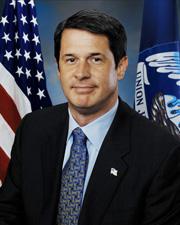 Sen. David Vitter (R-LA)
Legislative Activity
Stay on top of the latest movement without scrolling through every action
Senate amendment submitted
July 24, 2007
View full timeline
Senate amendment submitted
July 24, 2007
Senate amendment proposed (on the floor): Amendment SA 2384 proposed by Senator Vitter to Amendment SA 2383.(consideration: CR S9817, S9823; text: CR S9817)
July 24, 2007
Amendment SA 2384 proposed by Senator Vitter to Amendment SA 2383. (consideration: CR S9817, S9823; text: CR S9817) To allow for expanded uses of funding allocated to Louisiana under the hazard mitigation program while preserving the goals of the program to reduce future damage from disasters through mitigation.
July 24, 2007
Point of order raised in Senate with respect to amendment SA 2384.
July 24, 2007
Amendment SA 2384 ruled out of order by the chair.
July 24, 2007
Text
Proposed
DEPARTMENT OF HOMELAND SECURITY APPROPRIATIONS ACT, 2008

The PRESIDING OFFICER. Under the previous order, the Senate will
proceed to the consideration of H.R. 2638, which the clerk will report.
The assistant legislative clerk read as follows:

A bill (H.R. 2638) making appropriations for the Department
of Homeland Security for the fiscal year ending September 30,
2008, and for other purposes.

The PRESIDING OFFICER. Who seeks recognition?
Mr. CRAPO. Mr. President, I suggest the absence of a quorum.

[[Page S9812]]

The PRESIDING OFFICER. The clerk will call the roll.
The assistant legislative clerk proceeded to call the roll.
Mr. BROWN. Mr. President, I ask unanimous consent that the order for
the quorum call be rescinded.
The PRESIDING OFFICER. Without objection, it is so ordered.
Mr. BROWN. Mr. President, I ask unanimous consent to speak as in
morning business.
The PRESIDING OFFICER. Without objection, it is so ordered.
The Senator from Ohio is recognized.
(The remarks of Mr. Brown are printed in today's Record under
``Morning Business.'')
Mr. BROWN. Mr. President, I yield back my time.
I suggest the absence of a quorum.
The PRESIDING OFFICER. The clerk will call the roll.
The assistant legislative clerk proceeded to call the roll.
Mr. BYRD. Mr. President, I ask unanimous consent that the order for
the quorum call be rescinded.
The PRESIDING OFFICER. Without objection, it is so ordered. The
Senator is recognized.

Amendment No. 2383

Mr. BYRD. Mr. President, on behalf of the Appropriations Committee, I
call up a committee substitute which is at the desk.
The PRESIDING OFFICER. The clerk will report.
The assistant legislative clerk read as follows:

The Senator from West Virginia [Mr. Byrd], for himself and
Mr. Cochran, proposes an amendment numbered 2383.

Mr. BYRD. Mr. President, I ask unanimous consent that the reading of
the amendment be dispensed with.
The PRESIDING OFFICER. Without objection, it is so ordered.
(The amendment is printed in today's Record under ``Text of
Amendments.'')
Mr. BYRD. Mr. President, this morning, I gave my opening remarks for
consideration of the fiscal year 2008 Homeland Security appropriations
bill. The Appropriations Committee, by a vote of 29 to 0, has produced
a balanced and responsible bill which needs action now.
The bill includes significant resources for border security, for
enforcing our immigration laws, and for improving security at our
airports. We include significant new resources for implementing the
SAFE Port Act. We also restore cuts in first responder grant programs.
I thank Senator Cochran and his able staff for their support in
producing this legislation.
Just last week, the administration released its latest National
Intelligence Estimate concerning the terrorist threat to the U.S.
homeland. I am going to quote from the report.
I will say that again so that the audience out there in the homeland
will understand just exactly what is going on here.
Just last week, the administration released its latest National
Intelligence Estimate concerning the terrorist threat to the U.S.
homeland. We are talking about the Bush administration's latest
National Intelligence Estimate. I will quote from the report. Hear me,
I am quoting from the report of the administration, the Bush
administration, from its latest National Intelligence Estimate
concerning the terrorist threat to the U.S. homeland. Hear me:

We judge the U.S. homeland will face a persistent and
evolving terrorist threat over the next 3 years. The main
threat comes from Islamic terrorist groups and cells,
especially al-Qa'ida, driven by their undiminished intent to
attack the U.S. homeland and a continued effort by these
terrorist groups to adapt and improve their capabilities. . .
. [W]e judge that al-Qa'ida will intensify its efforts to put
operatives here.

Let me say that again. Listen. Just last week, the administration
released its latest National Intelligence Estimate concerning the
terrorist threat to the U.S. homeland. That is right here--not
somewhere else--the U.S. homeland. And I will quote from this report
from the Bush administration:

We judge the U.S. homeland will face a persistent and
evolving terrorist threat over the next 3 years. The main
threat comes from Islamic terrorist groups and cells,
especially al-Qa'ida, driven by their undiminished intent to
attack the homeland and a continued effort by these terrorist
groups to adapt and improve their capabilities. . . . [W]e
judge that al-Qa'ida will intensify its efforts to put
operatives here.

Not somewhere else--here. Those are the words that should force our
Government, both in the executive and in the legislative branches, to
reevaluate the priority that we are giving to funding to stop terrorist
attacks against this country--our country, your country, my country. I
look forward to a good debate.

The PRESIDING OFFICER. The Senator from Mississippi.
Mr. COCHRAN. Mr. President, I am pleased to join the distinguished
Senator from West Virginia in presenting the fiscal year 2008
appropriations bill for the Department of Homeland Security.
Mr. President, I appreciate very much the courtesies of the
distinguished Senator from West Virginia and his staff and all members
of the Appropriations Committee during our hearings and the preparation
of this bill. We haven't agreed on everything, but this bill reflects
our best effort to reach a fair resolution of our differences.
I had hoped, for instance, that we could have held the overall level
of proposed spending to no more than the President requested in his
budget that was submitted to the Congress earlier this year. I am
pleased that the bill recommends approval of the President's budget
request for border security and includes 3,000 new Border Patrol
agents, $1 billion for continued work on the virtual fence, and other
tactical infrastructure. Funding above the President's request is added
to accommodate an additional 3,000 detention beds.
One of the consistent criticisms we hear about the Department is its
challenges to hire the right people for the right jobs and to reduce
its reliance on contractors. Unfortunately, the bill before us proposes
to cut the human resource accounts significantly. These cuts handicap
the Department in getting the right people into the right jobs to
address many of the issues critics have complained about. We can all
agree that the Department should be focused on hiring and retaining the
best personnel it can.
Succession planning, diversity initiatives, performance management,
and workforce relations are all critical issues. By underfunding the
programs that are designed to meet these challenges, we run the risk of
creating a cycle of unmet promises and potential. This Department is
too important for that.
I must also express my concern that this bill restricts the
obligation of funds in 10 instances. While I recognize this is within
the power of the Appropriations Committee and is sometimes necessary, I
think we have overdone it in this bill.
In three separate instances, this bill provides reductions in funding
for the Deputy Secretary of the Department of $1,000 per day if certain
deadlines are not met. I would prefer to express our concerns in some
other way and at least consider reasons that may have caused the
deadlines to have been missed before automatically reducing
appropriated accounts. I am equally frustrated with the Department's
inability to meet deadlines Congress sets, and I expect the Department
to meet statutory deadlines, but this approach is not workable.
The report accompanying this bill is harshly critical of the
administration's handling of security at Federal facilities. These are
Federal facilities which receive protection from the Federal Protective
Service, and I do not agree with that. The Federal Protective Service
has worked hard to rationalize its fee structure and its mission since
joining the Department of Homeland Security. It has not yet finished
the process. But the administration remains deeply committed to the
safety and security of all Government employees.
The report accompanying this bill also criticizes the Department for
legislation Congress has passed. It is unlikely that all Senators agree
with all of the legislation that is enacted here, but to blame it on
the executive branch agency charged with carrying out the law is hard
to rationalize. It is unfair and it is wrong.
Last year, the Appropriations Committee worked very closely with the
authorizing committees to craft a compromise on chemical site security
language. Chairman Byrd's leadership last

[[Page S9813]]

year led to the enactment of a provision in the fiscal year 2007 act
that will lead to regulating the chemical sector for the first time. I
intend to continue to work with the chairman to ensure sufficient
resources are provided to the Department so enforcement of these
regulations is achieved.
I am pleased the committee is recommending nearly full funding for
the Coast Guard's Deepwater recapitalization effort as well as support
for the Transportation Security Administration, Federal Emergency
Management Agency, and infrastructure protection. These are activities
which are needed to continue to improve the security of our homeland,
and generous funding is fully justified.
This bill comes to the Senate floor during a time when our
intelligence community has judged that the Nation is, and I quote, ``in
a heightened threat environment.'' While there continues to be no
credible specific intelligence to suggest an imminent threat, recent
events in the United Kingdom serve to remind us of the very serious
nature and the potential consequences of terrorist attacks.
I hope we can move expeditiously to pass this bill so that we can
begin conference with the House.
Mr. President, earlier remarks today on the floor of the Senate may
have suggested that the Department of Homeland Security isn't doing its
job.
Well, today, this one day, the Department of Homeland Security will
process more than 1.1 million passengers and pedestrians, including
680,000 aliens arriving at our Nation's airports and seaports.

Today, the Department will inspect more than 70,900 trucks and
containers, 580 vessels, 2,459 aircraft, and 327,042 privately owned
vehicles coming into this country. It will house and care for 19,000
aliens in detention facilities. It will screen approximately 2 million
passengers and their 1.6 million pieces of checked baggage before they
board commercial aircraft. It will make 63 arrests at ports of entry
and 2,984 apprehensions between ports for illegal entry. It will
intercept 27,000 prohibited items at airport checkpoints, including
over 3,000 knives. It will train more than 3,500 Federal officers and
agents from more than 80 different Federal agencies as well as State,
local, tribal, and international officers and agents.
Today, the Coast Guard will save 14 lives, assist 123 people in
distress, and respond to 12 oil and hazardous chemical spills.
Today, the Department of Homeland Security will naturalize more than
1,900 new citizens. It will conduct 135,000 national security
background checks on those applying for immigration benefits. It will
process 30,000 applications for immigrant benefits. It will help
American parents adopt nearly 125 foreign-born orphans. The Department
will help protect an additional 104 homes from the devastating effects
of flooding and protect dozens of high-profile Government officials,
including Members of this body, the President, and the Vice President
of the United States, visiting heads of state, and former Presidents.
This list of daily accomplishments provides just a sample of the
important responsibilities and roles of the Department of Homeland
Security. To accomplish these responsibilities, this bill provides
$36.4 billion in discretionary spending and $1.1 billion in mandatory
spending for fiscal year 2008.
I must point out that this bill provides $2.25 billion more in
discretionary appropriations than the amount proposed by the President
in his budget submission to the Congress. The bulk of the increase from
the President's request level, $1.8 billion, is devoted to increasing
grants to States and localities. These proposed increases would come
quickly on the heels of nearly $300 million being added for grants
contained in the Emergency Appropriations Act, which was enacted in
May.
The 9/11 Commission Report warned about grant programs becoming
entrenched as entitlement programs for State and local governments. We
need to make a strong and successful effort to ensure that all funds we
appropriate are fully justified.
Mr. President, I look forward to considering any amendments Senators
may suggest to the bill and to continuing our work to ensure we produce
a work product that will reflect credit on the Senate and provide the
funds that are important to the carrying out of duties and
responsibilities of the Department of Homeland Security for the next
fiscal year.
Mr. BYRD. Mr. President, I thank my able friend from Mississippi,
Senator Cochran, for his comments related to securing our chemical
plants. He and I will work together--as we always have, as we always
do--to ensure that the Department has the resources it needs to enforce
the new chemical security standards.
Mr. President, I yield the floor.
The PRESIDING OFFICER. The Senator from Washington.
Mrs. MURRAY. Mr. President, we face extremely serious threats here at
home, and that is why it is so important that the Senate pass the
Homeland Security Appropriations bill that is now before us.
This bill is designed to help strengthen our security at the Federal
level, at the State level, and at the local level. From our local
firehouses and our police departments, to our borders, airports, and
seaports, this bill will help our country be more secure and better
able to respond to any disasters we may encounter.
This year, in his budget, President Bush sought to cut funding for
first responders and for emergency planning. And, frankly, he failed to
adequately fund border security and port security. But here in the
Senate, we have a different view. We want to invest in our security
here at home, and we have written and signed a bill that I believe
reflects the right priorities for this country.
Mr. President, I am honored to serve on the Appropriations Committee
and on the Homeland Security Subcommittee under our distinguished
chairman, Senator Byrd. No one cares more about the American people and
no one has worked harder on this bill than Senator Byrd. Thanks to his
efforts, and those of Senator Cochran, the bill that is before us
passed our subcommittee unanimously, and it passed the full
Appropriations Committee unanimously as well. That strong support we
saw in both the subcommittee and full committee is really critical
because the President has threatened to veto this bill. He thinks it
spends too much on homeland security.
The President is welcome to make that argument, but in these times
when we are facing terror threats and natural disasters, the American
people want us to provide more support for homeland security, not less.
There are many very important investments in this bill. I wish to
focus on three of them in which I have a special interest because I
come as a Senator from a border State and my State has some of the
Nation's busiest cargo ports, and I am an advocate for the local law
enforcement, first responders, and emergency planners.
This bill will provide more resources for our border security. It
actually provides an additional $240 million for new immigration-
related homeland security costs. Those costs are not funded in the
President's bill. As we all work to step up enforcement at our borders,
we have to provide the resources from the Federal Government. That is
why this bill does that.
I am also especially pleased that this bill boosts our investment in
port security. Over the years I have worked with all of the
stakeholders to make our ports more secure. Last year, in fact, the
Senate passed the Murray-Collins GreenLane bill, now known as the SAFE
Ports Act. The President of the United States signed our bill into law
but he did not provide adequate funding so we could carry out the
provisions of that legislation. We have been working to fix that here
in the Senate. We started in the supplemental bill that passed a few
months ago, where we boosted funding for port security grants, hiring
more customs inspectors. We are continuing that work with this bill by
fully funding port security grants for the first time ever.
This bill provides $60 million as well to create Coast Guard
interagency operation centers. Those are centers that will allow the
Federal Government, local governments, and State authorities to
coordinate their efforts in maritime security.
The final part of this bill I want to quickly mention will be a
tremendous help to our responders, to our emergency planners, and to
our local law

[[Page S9814]]

enforcement agencies. In his budget the President cut the State
Homeland Security Grant Program in half. This bill restores that cut.
It is going to raise those State grants from the President's level of
$250 million to the appropriate level of $525 million.
Our States and our cities have huge security needs and many of those
needs go unmet today. I believe the Federal Government, which is in
charge of our Nation's security, has a role in sharing that burden.
In addition, the budget of the President drastically cuts the Law
Enforcement Terrorism Prevention Program. To me, that is out of touch
with what our local law enforcement leaders at home are telling us they
need. They are telling us they need more help, not less, so I am very
pleased that in this bill we save that important program so it can
continue to help our local law enforcement officials. This grant
provides funds for antiterrorism to our first responders in each of our
States. That is an area we have to strengthen, and we do so with the
bill now before the Senate.
Given the strong support this bill got in subcommittee and in full
committee, I am hopeful this Senate will pass it fairly quickly over
the next several days by a wide margin. Then, of course, it will be up
to the President to decide if the American people will get the security
they deserve.
As I said a few minutes ago, President Bush has threatened to veto
this bill because he says it spends too much on homeland security.
Think about that for a minute. Our intelligence agencies warned us last
Tuesday that al-Qaida is undiminished in its goal of attacking our
homeland. What does the President say? He wants to cut funding for our
first responders. That report found that al-Qaida is rebuilding its
capabilities, its leadership is intact, and it continues to plan high-
impact plots. That is what the President's NIE is telling us.
What is the President saying? Right now he wants to cut funding for
our local antiterror efforts. Our intelligence experts ``judge that al-
Qaida will intensify its efforts to put operatives here,'' on our soil,
here, but the President wants to cut funding to enforce our borders.
We have all this evidence we need to be more secure here at home and
we have the President's budget that makes us less secure at home. If
the President wants to veto this bill, he is going to have to explain
to the American people why the police department down the street from
you is going to be getting less support. He is going to have to explain
why the fire station around the corner is going to get less help. He is
going to have to explain why your community can't develop an emergency
plan so they are prepared for any disaster that may occur. If the
President plans to veto this bill, he is going to have to make the case
to the American people.
I say I am proud of this bill, I am proud of the work of the
committee, and I know it will help our communities take the steps they
must to keep us all safe.
I urge all of our colleagues to quickly pass this bill, vote for it,
and move it along the process so we can say we have done our part to
make our communities more secure.
I yield the floor.
The PRESIDING OFFICER (Mrs. McCaskill). The Senator from West
Virginia.
Mr. BYRD. Madam President, I want to thank and I do thank--I don't
just want to say I want to thank, I do thank Senator Murray for her
kind remarks. She has made important contributions. She always makes
important contributions. And she has made important contributions to
this critical legislation. Senator Murray has developed expertise in
the field of homeland security, particularly with regard to port
security.
Let me say that again. Senator Murray has developed expertise in the
field of homeland security, particularly with regard to port security.
That takes time, that takes effort, that takes work. You just don't
develop expertise by rising on the Senate floor and saying ``I've got
it.'' No. It takes time, it takes labor, it takes toil, it takes work,
it takes thought. Senator Murray has developed expertise in the field
of homeland security. That is your security. That is my security. That
is your security, I say to the people out there in the homeland, in the
great mountains and valleys of this country.
Senator Murray has developed expertise in the field of homeland
security, particularly with regard to port security. I have come to
rely on her expertise and I look forward to her assistance as we
process this very important bill.
I yield the floor.
The PRESIDING OFFICER. The Senator from North Dakota.
Mr. DORGAN. Madam President, the two legislators who bring this bill
to the floor of the Senate are serious and thoughtful legislators.
Senator Byrd and Senator Cochran have been around this place for some
while. They have been on the Appropriations Committee. Both have
chaired that committee. I am pleased to be here to support their work.
I think this is a very important subcommittee and one that funds
critically important programs for this country. But I want to say that
unlike other subcommittees on Appropriations--one of which I chair and
will hopefully bring that bill to the floor of the Senate--this
subcommittee's actions and this subcommittee's product represent an
urgency for this country. We probably don't say that about every
subcommittee because we need to fund the things we need to do, but this
is urgent. I want to describe why it is urgent.
I come from a small town of 300 people in the southwestern corner of
my State. I was thinking as I was sitting here waiting to speak, this
is called homeland security. If, in fact, this were a decision and
deliberation by my hometown and the subject was hometown security and
we knew what the most serious threat to our town was, we would go find
that threat and try to eliminate it.
I want to tell you why I believe it is an urgent circumstance to pass
this legislation. My colleague from Washington described the National
Intelligence Estimate of last week. I am going to talk about that just
a bit before I talk about the funding of the accounts in this
legislation that is so important to fighting terrorism--that is
providing security for our ports and security in aviation, law
enforcement, border protection, and so on.
Last week the National Intelligence Estimate was provided to us, both
in a classified and an unclassified version. Here is what it said, in
part:

Al-Qaida is and will remain the most serious terrorist
threat to the homeland . . . we assess the group has
protected or regenerated key elements of its homeland attack
capability, including: A safe haven in the Pakistan federally
administered tribal areas, operational lieutenants, and its
top leadership.

Let me say that again. The National Intelligence Estimate says to us
the greatest threat, the most serious terrorist threat to the
homeland--that means the most serious threat to the United States of
America and to our homeland--is an organization called al-Qaida. They
have protected or regenerated key elements of their homeland attack
capability, including a safe haven in the Pakistan federally
administered tribal areas.
That is a different subject on which I spoke about recently. There
ought not be 1 square inch of ground on this planet that would be safe
for Osama bin Laden and al-Qaida. Six years after 9/11, there ought not
be 1 square inch on this entire planet Earth that is a safe haven or
protected secure hideaway for the greatest or most serious threat to
our country.
This should not be a surprise to us, the National Intelligence
Estimate. We have been reading the accounts. This is from June 26,
Jonathan Landay from the McClatchy Bureau:

While the U.S. presses its war against insurgents linked to
al-Qaida in Iraq, Osama bin Laden's group is recruiting,
regrouping and rebuilding in a new sanctuary along the border
between Afghanistan and Pakistan, senior U.S. military and
intelligence and law enforcement officials said. The threat
from the radical Islamic enclave in Waziristan is more
dangerous than that from Iraq, which President Bush and his
aides call the central front in the war on terrorism, said
some current and former U.S. officials and experts.

A month or two prior to that, senior leaders of al-Qaida operating
from Pakistan over the past year have set up a band of training camps
in tribal regions near the Afghan border, according to American
intelligence and counterterrorism officials. American officials said
there was mounting evidence

[[Page S9815]]

that Osama bin Laden and his deputy al Zawahiri had been steadily
building an operations hub in the mountainous Pakistani tribal area of
north Waziristan.
Mr. BYRD. Mr. President, will the Senator yield?
Mr. DORGAN. I will be happy to yield.
Mr. BYRD. What does this mean, that the Senator just said? Tell us.
Mr. DORGAN. Mr. President, it means if the most serious threat to our
country exists from a terrorist organization that has rebuilt and
regenerated its capability to attack us in our homeland--and that is
what our National Intelligence Estimate tells us--it means homeland
security is ever more important and the investments in that homeland
security, in the accounts such as port security, aviation security,
border security, are so unbelievably important. That is why I called
this bill ``urgent.'' There is an urgency about passing this bill
because of this serious threat.
Mr. BYRD. And what is this bill?
Mr. DORGAN. This bill is the Homeland Security Appropriations bill
which provides the kinds of protections that we need for the threats
and attacks against our homeland. When I describe what the National
Intelligence Estimate last week said was the most serious threat to our
country, I described that that threat comes from those who will attempt
to cross our borders. Therefore, this bill has border security.
Mr. BYRD. Yes.
Mr. DORGAN. That threat may come from those who might try to board
airplanes.
Mr. BYRD. Yes.
Mr. DORGAN. That is addressed by the issue of aviation security. That
threat may come from someone nailing themselves into a container with
food and telephones and a heater----
Mr. BYRD. Yes.
Mr. DORGAN. As we heard happened before, and was shipped into a port
in this country in the middle of a container ship with a weapon of mass
destruction or some other device by which they can attack this country.
That is why this legislation of this Appropriations subcommittee
contains port security. That is why there is an urgency about all of
these issues.
Mr. BYRD. Madam President, will the Senator yield?
Mr. DORGAN. I am happy to yield further.
Mr. BYRD. Say that again, will you please, Senator. I want the people
of America to hear what you just said.
The point is very simple. There is an urgency in this appropriations
subcommittee bill that I think is beyond the importance of other bills.
Why? Because we have been told in recent weeks there is a gut feeling
on the part of the person who heads our Homeland Security Agency that
we may be attacked again.
We have been told by the National Intelligence Estimate that the al-
Qaida organization has reconstituted and regenerated itself and is the
most serious threat to attack the homeland of the United States of
America. If that is the case, and we have been warned--let me describe,
again, the August 2001 Presidential daily briefing was headlined this:
``Bin Laden Determined to Strike in the U.S.''
That is what the President received in August of 2001.
Mr. BYRD. Now, you say the President. What are you talking about?
Mr. DORGAN. The President of the United States, in August 2001,
received this Presidential daily briefing with this title: ``Bin Laden
Determined to Strike in the U.S.''
My point is, in July 2007, nearly 6 years later, July 2007, the
intelligence assessment from the U.S. National Counterterrorism Center
says this: ``Al-Qaida better positioned to strike in the West.''
Nearly 6 years later, those who attacked our country and murdered
thousands of innocent Americans, we are told by those who provide the
intelligence for this country that they are in a better position now to
attack this country in its homeland.
Mr. BYRD. Senator, I think that is worth hearing again. I want the
American people to hear what you have said.
Mr. DORGAN. Let me say it in a different way, concluding in the same
manner. I am not, with this, describing one person, one organization,
one philosophy at fault. I am saying there is something wrong with
respect to what I think is a failure here, that is a significant
failure, part of which I hope and believe can be remedied by the bill
that has been put together by Senator Byrd and Senator Cochran, dealing
with homeland security.
It has been almost 6 years since the terrorists attacked this country
on 9/11/2001. After almost 6 years and two wars in two countries and
well over half a trillion dollars spent at home and abroad, the deaths
of thousands in our military and the wounding of tens of thousands in
our military, after all that period of time, we are told there is a
sanctuary, a safe haven, a safe harbor for the leaders of the greatest
threat to this country, the leaders of al-Qaida.
My point is, there ought not be anywhere safe on the face of this
planet. If the greatest threat to our country exists in the leadership
of this organization that is rebuilding training camps and terrorist
training camps, then we have done something wrong. We must, as the
Senator from West Virginia and the Senator from Mississippi suggested
in this bill, we must rebuild our capabilities to defend ourselves
against an attack on our homeland.
But even as we do that, we must rededicate ourselves as a country to
save the first and most important job, the first and most important
effort, to go after and eliminate the terrorist threat. I mean, it gets
back to the debate we have had with--I respect other people's views on
this, but we are going door to door in Baghdad with our soldiers in the
middle of sectarian violence or a civil war when, in fact, the greatest
threat to our country is in the hills somewhere between Afghanistan and
Pakistan, building training camps and having the greatest capacity to
attack our homeland because they have regenerated their strength.
In my judgment, that is a failure. So we have to rededicate ourselves
on two points. No. 1, I believe we have to find a way to extract
ourselves from the civil war in Iraq. Yes, we need to continue to do
several things in force protection for our forces, training the Iraqi
security and Iraqi police and Iraqi soldiers for Iraq's security, and
also taking on the areas in Iraq where al-Qaida does exist.
But what is principally happening in Iraq is not about al-Qaida and
terrorism, what is principally happening in Iraq is about sectarian
violence and a civil war. My point is, we ought to see if we cannot
make sure that we will change the policies in this country and begin to
start fighting terrorists first.
That ought to be the priority. If the terrorists, al-Qaida, Osama bin
Laden and their leadership, represent the greatest threat to this
country, then why is that not the process by which we fight terrorists
first? Instead, we are bogged down going door to door in Baghdad. Well,
here is what we have. We have a piece of legislation on the floor of
the Senate now that deals with homeland security.
We want homeland security, we want it to succeed. We want to be safe
and secure with the ways to do that. One is to do what we have done and
try to strengthen our ports, strengthen aviation, strengthen our
borders. The legislation that has been brought to us today does all of
that and more. This has money for mass transit security. Well, that is
critically important. We know the danger and the potential danger to
our subway systems, as we have seen in London with terrorist attacks.
Port security. We have had discussions on the floor of this Senate
that go on and on and on, but we have these ships that come into our
ports with giant containers. We are going to spend, I think in the
appropriations bill on defense, we are going to spend $10 to $11
billion to try to provide an electronic catcher's mitt for
intercontinental ballistic missiles armed with nuclear warheads.
So if we can create a catcher's mitt of some type, or hit a bullet
with a bullet when an ICBM is coming in with a nuclear warhead, we are
going to spend $10 to $11 billion to try to solve that problem. The
more likely attack with a nuclear weapon is a ship, a container ship,
pulling up to a port at 3 to 4 miles an hour, pulling up at the dock of
one of America's major cities with a container right smack in the
middle of the ship containing a weapon of mass destruction. That is the
most likely threat against this country. We are not spending $10 or $11
billion to deal with that.

[[Page S9816]]

I went to a seaport once. In fact, I went to a seaport in Seattle,
WA, because I do not know much about seaports. I come from a State that
is not boundaried by water. So I wished to see what security was like
at the seaport.
One of the things I remember from that visit was they had opened a
container. Now, they do not open very many. I believe we have something
akin to 11 million containers come into this country on container
ships, 11 million containers. I believe it is somewhere around 3 to 5
percent are inspected, and 97 or 95 percent are not inspected.

They opened the container. It was a refrigerated container. I was
kind of curious. So I looked at the back of it. There it was, 100-pound
bags of broccoli from Poland. I said: Well, I see now this is a giant
container full of frozen broccoli from Poland. I can see now that
because you opened the door in the back and you have cut open a couple
of bags.
I said, what is the middle of this container? I see what is in the
back. What is deep in the middle of this container?
Well, we do not know that. We assume it is frozen broccoli. We pulled
some bags out to make sure there was broccoli in this container. But
the fact is, they did not check that, they could not check it. So
millions of containers come in and they are not checked.
Now we have what amounts to kind of a CAT-scan device for big trucks
and containers, very expensive, but it is kind of like a CAT scan for
your body; you run it past the container and you can see right through
the container and see what is in it. It is very expensive, very
difficult to get done on 11 million containers. The same is true for
air cargo. We have a Herculean task to protect this country against
those who are perfectly willing to kill themselves, as long as they can
kill many innocent people. This is a very difficult proposition.
So again, I say to the chairman and ranking member on the
subcommittee, I think they have done a terrific job. I deeply
appreciate their work. I share the comments of my colleague, Senator
Murray from Washington, about it, with respect to border protection and
the Coast Guard and all those issues they have had to deal with,
without unlimited money. The fact is, we have some limited funding.
Mr. BYRD. Who is the chairman and ranking member?
Mr. DORGAN. Well, the chairman of the subcommittee is the Honorable
Senator Byrd from West Virginia, and the ranking member, of course, is
Senator Cochran from Mississippi.
Let me say to both of them, if they do not mind my saying it, at a
time when there is all this discussion in the newspapers about nobody
gets along, things have deteriorated in the Senate, the fact is, I
think the evidence exists all across this Senate Chamber, it exists
certainly with the Senator from West Virginia, Mr. Byrd, and Senator
Cochran, that they not only get along, they work together. They have
put together a terrific piece of legislation.
That is called cooperation. There is a lot of it in this Chamber,
particularly on the Appropriations Committee, which makes me proud
because I think that is the way the Senate ought to work.
Now, if you will permit me, however, if the Senator from West
Virginia and the Senator from Mississippi will accommodate me for one
additional moment while I say wonderful things about their work, I do
wish to make a cautionary comment about FEMA because we are funding
FEMA to the tune of $6.89 billion in this legislation. I am a big fan
of FEMA--used to be a big fan of FEMA, I should say. I am not anymore.
I hope and pray that maybe it gets its act together. It does not appear
to me it is quite there yet.
But in my State, we evacuated, 10 years ago, an entire city, the
largest mass evacuation since the Civil War, when Grand Forks was
flooded and then had a fire in the middle of the flood, and a city of
nearly 50,000 people was evacuated because of the floods in the Red
River Valley.
We had FEMA show up. Unbelievable, James Lee Witt and FEMA, they knew
what they were doing. They were outstanding. Everybody believed they
helped that community come back together and fight that flood and deal
with the consequences and come roaring back. Ten years later, that is a
great success story.
FEMA, regrettably, has, in my judgment, been part of the problem
rather than part of the solution. We have natural disasters that occur
in this country. Hurricane Katrina comes to mind. FEMA obviously was a
disgrace with respect to--at least many in FEMA were disgraceful in the
way they responded to that. I wish to tell the chairman and the ranking
member of one example I discovered out of many examples.
I wish to tell you about it because as we fund FEMA--and we must; we
do not have a choice. When natural disasters strike, we have to have
the funding to go to those folks, whether it is a hurricane or a flood
or drought, we have to go to those people and say: You are not alone.
This country is with you. This country wants to help you.
But I wish to tell you a story about what happened to FEMA, as I
conclude. I was on the phone one day to a guy named Paul Mullinax. Paul
Mullinax had a refrigerated truck in Florida. He was one of those
truckers who responded when FEMA wanted to send ice down to the victims
in the gulf. When Katrina hit and you had the evacuations and the
dislocations and all that trouble, they needed ice. Paul Mullinax was a
trucker with a refrigerated truck. So he contacted FEMA, as did
thousands of others. He went to New York. He was told go to New York to
pick up ice. So he went to New York to pick up some ice. He was told:
Take it to Missouri. When he got to Missouri, he was told: Take it to
Mississippi. When he got to Mississippi, he sat there on the tarmac of
an old military installation, along with over 100 other truckers. Here
is a picture of Paul. This is actually Paul's route right here. New
York to Missouri to Alabama, and then, here is a photo of Paul. He sat
at a military installation in front of his truck for about 12 days.
Then he was told: I want you to take the ice back to Massachusetts.
So ice, destined for the victims of Katrina, was picked up in New York,
taken to Missouri, and then in this case Arkansas--excuse me, Alabama--
and then it was offloaded in Massachusetts.
The reason I tell you that story right now is because that story
ended last week. That ice--and by the way, it cost $15,000 for the
taxpayers to pay Paul Mullinax to pick up New York ice to take to the
victims of Katrina, to go to Missouri, to Alabama and finally be told,
after sitting there for 12 days, to go drive it to Massachusetts to
offload it--that ice has now been stored for 2 years and this week was
discarded by FEMA because they felt maybe after 2 years the ice was
contaminated.
So the taxpayers took a bath. The storage of that ice was around $20
million. The taxpayers took a bath. The victims never got the ice they
needed. People such as Paul Mullinax, this guy here, said, after
driving his truck all that distance: I got paid, but this was wrong for
the American taxpayers. Somebody ought to answer for it.
I have spent 2 years trying to figure out who gave the orders on ice
transport in FEMA. And you, by God, cannot find the answer. You cannot
find the answer. I know many of the top people in FEMA were cronies,
had nothing to do or no experience at all with dealing with disasters
and emergency preparedness, who did not know anything about it. So the
result was a complete breakdown. This is just one example.

In some ways I regret taking time during this debate, but when else?
We are going to give FEMA $6.9 billion. I want FEMA to work. I want us
to be proud of FEMA. I don't want political cronies running it. I don't
want someone like Paul Mullinax who hauls ice for victims to scratch
his head and say: What on Earth has happened? Where has common sense
gone? How is it I am told to pick up ice in New York and deliver to it
Massachusetts, when it is supposed to be helping victims in Mississippi
and Louisiana?
As we fund FEMA, I hope we will also do a lot of oversight in the
authorizing committees because there is something fundamentally wrong.
We all know that, and we need to fix it.
Mr. BYRD. Something wrong, yes.
Mr. DORGAN. Having said all that and given the requisite compliments
to everyone on the floor--compliments I sincerely mean in this case--
about a bill I believe is urgent, I hope we can move ahead. If there
are amendments to the bill, I hope people will come and

[[Page S9817]]

offer them, that they will allow us to vote on them, that we won't have
delay, and in the next couple of days we will demonstrate with this
first appropriations bill that we can pass appropriations bills. We can
do that because we will cooperate to get them done.
Mr. BYRD. Yes.
Mr. DORGAN. If we come to the floor in the next couple days and see
delay on Homeland Security, I am going to be one disappointed person.
Mr. BYRD. Yes, sir.
Mr. DORGAN. Of all the bills, we ought to be saying: Let's lock arms
and do this in a reasonable time; let's do this with the leadership of
Senator Byrd and Senator Cochran.
Mr. BYRD. Let's do it.
Mr. DORGAN. I yield the floor.
Mr. CONRAD. Mr. President, I rise to offer for the Record, the Budget
Committee's official scoring of H.R. 2638, the Department of Homeland
Security Appropriations Act for fiscal year 2008.
The bill, as reported by the Senate Committee on Appropriations,
provides $36.4 billion in discretionary budget authority for fiscal
year 2008, which will result in new outlays of $21.3 billion. When
outlays from prior-year budget authority are taken into account,
discretionary outlays for the bill will total $38.4 billion.
The Senate-reported bill is at its section 302(b) allocation for
budget authority and $10 million below its allocation for outlays. No
points of order lie against the committee-reported bill.
I commend the distinguished chairman of the Appropriations Committee
for bringing this legislation before the Senate. I ask unanimous
consent that the table displaying the Budget Committee scoring of the
bill be printed in the Record.
There being no objection, the material was ordered to be printed in
the Record, as follows:

H.R. 2638, DEPARTMENT OF HOMELAND SECURITY APPROPRIATIONS, 2008
[Spending comparisons--Senate-Reported Bill (in millions of dollars)]
------------------------------------------------------------------------
General
Defense    purpose     Total
------------------------------------------------------------------------
Senate-Reported Bill:
Budget Authority...................     $1,131    $35,308    $36,439
Outlays............................      1,267     37,140     38,407
Senate 302(b) allocation:
Budget Authority...................  .........  .........     36,439
Outlays............................  .........  .........     38,417
House-passed bill:
Budget Authority...................      1,137     35,125     36,262
Outlays............................      1,270     36,872     38,142
President's Request
Budget Authority...................      1,142     33,054     34,196
Outlays............................      1,272     36,537     37,809

Senate-Reported Bill Compared To:

Senate 302(b) allocation:
Budget Authority...................  .........  .........          0
Outlays............................  .........  .........        -10
House-passed bill:
Budget Authority...................         -6        183        177
Outlays............................         -3        268        265
President's Request:
Budget Authority...................        -11      2,254      2,243
Outlays............................         -5        603        598
------------------------------------------------------------------------

The PRESIDING OFFICER. The Senator from Louisiana.

Amendment No. 2384 to Amendment No. 2383

Mr. VITTER. Madam President, I ask unanimous consent to set aside the
pending amendment so I may call up amendment 2384.
The PRESIDING OFFICER. Unanimous consent is not required. The clerk
will report the amendment.
The legislative clerk read as follows:

The Senator from Louisiana [Mr. Vitter] proposes an
amendment numbered 2384 to amendment No. 2383.

Mr. VITTER. I ask unanimous consent that reading of the amendment be
dispensed with.
The PRESIDING OFFICER. Without objection, it is so ordered.
The amendment is as follows:

(Purpose: To allow for expanded uses of funding allocated to Louisiana
under the hazard mitigation program while preserving the goals of the
program to reduce future damage from disasters through mitigation)

On page 69, after line 24, add the following:

SEC. 536. PROHIBITION OF RESTRICTION ON USE OF AMOUNTS.

(a) In General.--Subject to subsection (c), and
notwithstanding any other provision of law, the President
shall not prohibit the use by the State of Louisiana under
the Road Home Program of that State of any amounts described
in subsection (e), based upon the existence or extent of any
requirement or condition under that program that--
(1) limits the amount made available to an eligible
homeowner who does not agree to remain an owner and occupant
of a home in Louisiana; or
(2) waives the applicability of any limitation described in
paragraph (1) for eligible homeowners who are elderly or
senior citizens.
(b) Procedures.--The Administrator of the Federal Emergency
Management Agency shall identify and implement mechanisms to
simplify the expedited distribution of amounts described in
subsection (e), including--
(1) creating a programmatic cost-benefit analysis to
provide a means of conducting cost-benefit analysis by
project type and geographic factors rather than on a
structure-by-structure basis; and
(2) developing a streamlined environmental review process
to significantly speed the approval of project applications.
(c) Waiver.--
(1) In general.--Except as provided in paragraph (2), in
using amounts described in subsection (e), the President
shall waive the requirements of section 206.434(c) of title
44, Code of Federal Regulations (or any corresponding similar
regulation or ruling), or specify alternative requirements,
upon a request by the State of Louisiana that such waiver is
required to facilitate the timely use of funds or a guarantee
provided under section 404 of the Robert T. Stafford Disaster
Relief and Emergency Assistance Act (42 U.S.C. 5170c).
(2) Exception.--The President may not waive any requirement
relating to fair housing, nondiscrimination, labor standards,
or, except as provided in subsection (b), the environment
under paragraph (1).
(d) Savings Provision.--Except as provided in subsections
(a), (b), and (c), section 404 of the Robert T. Stafford
Disaster Relief and Emergency Assistance Act (42 U.S.C.
5170c) shall apply to amounts described in subsection (e)
that are used by the State of Louisiana under the Road Home
Program of that State.
(e) Covered Amounts.--The amounts described in this
subsection are any amounts provided to the State of Louisiana
because of Hurricane Katrina of 2005 or Hurricane Rita of
2005 under the hazard mitigation grant program of the Federal
Emergency Management Agency under section 404 of the Robert
T. Stafford Disaster Relief and Emergency Assistance Act (42
U.S.C. 5170c).

Mr. VITTER. Madam President, this is an important amendment for the
State of Louisiana. It would be not the whole solution but a
significant part of the solution to a real problem--even a crisis--we
have with our recovery from Hurricanes Rita and Katrina.
This Congress and, in fact, the American people have been enormously
generous in terms of responding to the devastation of those storms. One
of the best examples of that unprecedented generosity is the billions
of dollars the American taxpayer, through Congress, sent to the
devastated areas to help people who were wiped out and had enormous
uninsured losses. At the time there was a big debate: Shouldn't these
folks have had more insurance? Shouldn't they have done this or that?
Congress and the American people got it right, recognizing that the
event was unprecedented and recognizing, in the case of Louisiana, that
most of the losses were caused by the actual failures of Federal
levees. The levees broke. They broke from underneath. They were
inadequately engineered. That caused devastating losses to folks
throughout the greater New Orleans area in particular.
The American people and Congress responded generously. In the case of
Louisiana, most of that money went into what was called the Road Home
Program to help compensate folks for enormous uninsured losses, up to
$150,000 per household. That is the good news. It was unprecedented
generosity. Again, we say thank you for that.
The bad news is that months later, it was determined that
appropriated money would not be enough and, in fact, the Road Home
Program was running short because even more claims were coming in than
had been anticipated and calculated. So there is a shortfall in the
program which is at the very heart of our ongoing struggle to recover.
My amendment will not fix all of that shortfall, but it would fix a
big part of it. It would be a big piece of the puzzle, a big part of
the solution, without costing the Federal taxpayer any more money.
There is something called the Hazard Mitigation Program that is
always involved when there are natural disasters. Because of the scope
and size of the devastation of Hurricanes Rita and Katrina, following
those storms, that Hazard Mitigation Program would send $1.2 billion to
Louisiana. We wish to use that money in the context of the Road Home
Program to help meet that shortfall, to help bridge the gap, to help
fund that program. However, there are some technical requirements under
normal hazard mitigation rules that prevent us from doing that. My
amendment would waive those few technical requirements so the hazard
mitigation money, $1.2 billion in this case, could

[[Page S9818]]

be used in the context of the Road Home Program to help bridge the gap,
to help make people whole.
It is important and accurate that I underscore that these
requirements are technical. They are things that are normal
requirements of hazard mitigation, but nothing I am waiving with this
amendment would go to the heart of the hazard mitigation purpose.
Congress, in setting up the program, wanted to make sure funds would be
used to mitigate hazards, to make sure the same sort of losses don't
happen again, to build higher, better, stronger, smarter. Nothing in my
amendment gets away from that fundamental intent. That is important
because I don't want to get away from the mandate and neither do most
people in the House or the Senate.
Again, I underscore, this amendment would help fund our Road Home
shortfall, would not cost the Federal taxpayer any more money, would
preserve and honor the intent of the Hazard Mitigation Program by
making sure the funds went to true hazard mitigation, rebuilding higher
and better and stronger and smarter, not simply allowing people to
rebuild any way they could build before. What it would do is waive
certain technical requirements to make all of this work. That is
appropriate given the unprecedented scope, size, and nature of the
disasters about which we are talking.
I urge all of my colleagues to look hard at the amendment and then
support it, because this funding shortfall within the Road Home Program
is a real impediment to our ongoing challenge and struggle to recover.
This amendment would be a major piece of the puzzle to solve the
problem without costing the Federal taxpayer any more money and without
throwing out the window the very significant and smart focus of the
Hazard Mitigation Program. It would make us build smarter and stronger
and higher but still help get people back, make them whole, rebuild
through the Road Home Program.
I yield the floor.

Moment of Silence

The PRESIDING OFFICER. Under the previous order, the Senate will now
observe a moment of silence in memory of Detective John Gibson and
Officer Jacob Chestnut who lost their lives on July 24, 1998,
protecting the men and women who visit and work in this building.
(Moment of silence.)
The PRESIDING OFFICER. Thank you.
Mrs. MURRAY. I suggest the absence of a quorum.
The PRESIDING OFFICER. The clerk will call the roll.
The legislative clerk proceeded to call the roll.
Mr. REID. Madam President, I ask unanimous consent that the order for
the quorum call be rescinded.
The PRESIDING OFFICER. Without objection, it is so ordered.
Mr. REID. Madam President, I have been watching the floor, and not
much is happening. What we are going to try to do now, with the consent
of the two managers, is move to something the Republican leader has
worked on for many years, and that is the Burma sanctions legislation.
That will take about an hour. That will take us to 5 o'clock or
thereabouts, if we do it right away. But in conferring with the two
managers--this is an important appropriations bill--we want to get this
thing to conference so that for any problems the White House has with
it, they can weigh in and try to work this out so we can send the
President a bill. So if we do not have amendments start coming in
tonight or in the morning, we will move to third reading.
I have laid out, in as much detail as I could, alerting everybody
what we need to do this work period. I think I am like most everyone.
We have worked long and hard. We had one work period during this year
that was 7 weeks long. We have worked hard. We have worked late nights.
We have worked a couple of weekends. We worked all night last week. We
have things we need to do at home in our States.
Speaking for this Senator, 90 percent of the people in the State of
Nevada are in Reno and Las Vegas, but that makes up a relatively small
part of the area of the State of Nevada. I have 10 percent of the
people in the State of Nevada whom I also represent, and I need to
visit with them. I have a wonderful trip scheduled this August to make
a tour of places I do not have the opportunity to get to very much.
With the rules changes we have made and the lack of air travel, I have
to drive. I cannot take a train. There is no air travel. So I will
drive around there. I am looking forward to it.
The reason I mention that is we have a lot to do when we go home in
August. People have things to do, just as I do. But I told people we
have to finish this Homeland Security appropriations bill. We have to
complete SCHIP, which is a bipartisan bill. It was reported out of the
Finance Committee 17 to 4. The two big cheerleaders we have for that
legislation are Senators Baucus and Grassley. We need to finish that.
The 9/11 Commission recommendations conference, Senator Lieberman
informed me earlier today, should be completed very shortly, within a
matter of hours. Then we have ethics and lobbying reform. We have to do
that before we leave here.
I hope we can do all this by a week from Friday, but if we have a lot
of delays, we cannot do that. I have said it a number of times, but we
are going to finish that stuff before we leave. If there are
insurmountable obstacles, one of the obstacles that is not
insurmountable is to stay here until we get it done. So this is not a
threat. I have indicated this is what we needed to do weeks and weeks
ago.
So I hope we can have some cooperation. We need to get appropriations
bills done. I had a conversation with Josh Bolten today, the
President's Chief of Staff. We are trying to figure out some way we can
work together on this issue. I hope we can. One way we could start is
to finish this bill.
One thing I didn't mention--it won't take a vote--but the Tuesday we
get back here after the break, we are going to be on another
appropriations bill. If we cannot get a motion to proceed agreed to,
then we will file cloture on it and have cloture the day we get back.
I also telegraph my punches here, so there is no surprise; the next
bill I want to move to is the VA-Military Construction appropriations
bill. The subcommittee has changed a little bit from in the past, but
my friend from Mississippi can remember when we used to do the Military
Construction bill in wrap-up. There was no discussion on it at all. We
know it has more jurisdiction than it had in the past. I chaired that
Subcommittee on Military Construction for a while. It was really a good
experience. You understand what our military leaders need. They have a
process they go through to put on the drawing board what they would
like, but we never give them everything they want. But, with rare
exceptions, these are not just things we throw in; we work this out
with the military. So that is what we are going to move to when we get
back.
I laid out the schedule, and we have to move to third reading if we
do not have some amendments here. We will wait until the morning. We
should give everybody a chance.
Also, I say to the managers of this bill, I do not want to file
cloture. I really don't want to file cloture. I hope on an
appropriations bill we do not have to file cloture. Now, I know I
cannot control unusual amendments on my side, and I know the
distinguished former chairman and ranking member of this committee
cannot control them on his side, but I hope it will not be necessary to
have cloture as a result of amendments that have nothing to do with
this very important piece of legislation.
Mrs. MURRAY. I suggest the absence of a quorum.
The PRESIDING OFFICER. The clerk will call the roll.
The legislative clerk proceeded to call the roll.
Mr. REID. Madam President, I ask unanimous consent that the order for
the quorum call be rescinded.
The PRESIDING OFFICER. Without objection, it is so ordered.
Mr. REID. Madam President, one of the things I did not do when I
talked about the Burma sanctions bill--because I was so focused on the
Republican leader--was to mention that working with him side by side on
this legislation has been Senator Feinstein. She has worked on this
very much. So, again, this is something we can bring to the floor that
is bipartisan. But I apologize for not mentioning her name because she
has worked on this very long and hard herself.

[[Page S9819]]

I suggest the absence of a quorum.
The PRESIDING OFFICER. The clerk will call the roll.
The legislative clerk proceeded to call the roll.
Mr. REID. Madam President, I ask unanimous consent that the order for
the quorum call be rescinded.
The PRESIDING OFFICER. Without objection, it is so ordered.

____________________