S.Amdt. 2430Senate110th Congress (2007-2009)2nd degree
To provide for the control and management of Arundo donax, commonly known as "Carrizo cane."
Sponsored by 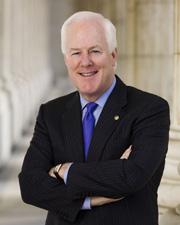 Sen. John Cornyn (R-TX)
Submitted July 25, 2007
Legislative Activity
Stay on top of the latest movement without scrolling through every action
Floor
Latest Action
Senate amendment submitted
July 25, 2007
View full timeline
Floor
Senate amendment submitted
July 25, 2007
Floor
Senate amendment proposed (on the floor): Amendment SA 2430 proposed by Senator Murray for Senator Cornyn to Amendment SA 2383.(consideration: CR S9908-9909; text: CR S9908)
July 25, 2007
Floor
Senate amendment agreed to: Amendment SA 2430 agreed to in Senate by Voice Vote.
July 25, 2007
Floor
Amendment SA 2430 proposed by Senator Murray for Senator Cornyn to Amendment SA 2383. (consideration: CR S9908-9909; text: CR S9908) To provide for the control and management of Arundo donax, commonly known as "Carrizo cane."
July 25, 2007
Floor
Amendment SA 2430 agreed to in Senate by Voice Vote.
July 25, 2007
Text
Proposed
DEPARTMENT OF HOMELAND SECURITY APPROPRIATIONS ACT, 2008

The PRESIDING OFFICER. Under the previous order, the Senate will
resume consideration of H.R. 2638, which the clerk will report.
The legislative clerk read as follows:

A bill (H.R. 2638) making appropriations for the Department
of Homeland Security for the fiscal year ending September 30,
2008, and for other purposes.

Pending:

Byrd/Cochran amendment No. 2383, in the nature of a
substitute.
Bingaman amendment No. 2388 (to amendment No. 2383), to
provide financial aid to local law enforcement officials
along the Nation's borders.

The PRESIDING OFFICER. The Senator from West Virginia.
Mr. BYRD. Mr. President, I thank my friend and colleague, the very
able and distinguished Senator from South Carolina, for his
characteristic courtesy.
Mr. President, this morning, we return to the consideration of the
fiscal year 2008 Homeland Security appropriations bill. The
Appropriations Committee, by a vote of 29 to 0, produced a balanced and
responsible bill.
The bill includes significant resources for border security, for
enforcing our immigration laws, and for improving security at our
airports. We include--we include, may I say--significant new resources
for implementing the SAFE Port Act. We also restore cuts in the first
responder grants program.
Last week, the administration released its latest National
Intelligence Estimate concerning the terrorist threat to the U.S.
homeland. Hear me now. I will say that again. Last week, the
administration released its latest National Intelligence Estimate
concerning the terrorist threat to the U.S. homeland. That is right
here, the U.S. homeland. I will quote from the report. This is not just
Robert Byrd talking.
Let me say that again. Last week, the administration released its
latest--I am talking about the administration, the Bush administration,
the administration in control of the executive branch--the
administration released its latest National Intelligence Estimate
concerning the terrorist threat to the U.S. homeland. I will quote from
the report:

We judge the U.S. Homeland will face a persistent and
evolving terrorist threat over the next three years.

That ought to make us sit up and take notice. I am going to say it
again. Hear me.
Last week, the administration released its latest National
Intelligence Estimate concerning the terrorist threat to the U.S.
homeland. I will quote from the report:

We judge the U.S. Homeland will face a persistent and
evolving terrorist threat over the next three years. The main
threat comes from Islamic terrorist groups and cells,
especially al-Qa'ida, driven by their undiminished intent to
attack the Homeland and a continued effort by these terrorist
groups to adapt and improve their capabilities. . . .
[W]e judge that al-Qa'ida will intensify its efforts to put
operatives here.

Let me repeat that word--here, H-E-R-E.
Yesterday, in light of this latest threat assessment from the
Government's most senior intelligence analyst--I better read that
again. Yesterday, in light of this latest threat assessment from the
Government's most senior intelligence analyst, I urged the President to
reconsider his veto threat of this bill. This morning, we received the
White House's response. The President has said he will veto this bill
because he, the President--President Bush--regards the additional
spending for border security, port security, aviation security, and for
first responder grants as excessive.
The President has every right to make this threat, but, in my view,
the view of this West Virginia mountaineer, the threat is
irresponsible. Let me say that again. In my view--and I am a U.S.
Senator--the threat is irresponsible.
If the President is going to scare the Nation by issuing intelligence
estimates that say the threat of a terrorist attack is persistent and
evolving, he, the President--President Bush--has a responsibility to
back it up with resources to deter that threat. The Appropriations
Committee recognizes the threat, and the Appropriations Committee of
the Senate has responded responsibly.
I ask unanimous consent to have printed in the Record the Statement
of Administration Policy dated July 25, 2007.
Mr. President, I yield the floor.
There being no objection, the material was ordered to be printed in
the Record, as follows:

Statement of Administration Policy, S. 1644--Department of Homeland
Security Appropriations Act, 2008

(Sponsor: Senator Byrd (D), West Virginia.)
The Administration strongly opposes S. 1644 because, in
combination with the other FY 2008 appropriations bills, it
includes an irresponsible and excessive level of spending and
includes other objectionable provisions.
The President has proposed a responsible plan for a
balanced budget by 2012 through spending restraint and
without raising taxes. To achieve this important goal, the
Administration supports a responsible discretionary spending
total of not more than $933 billion in FY 2008, which is a
$60 billion increase over the FY 2007 enacted level. The
Democratic Budget Resolution and subsequent spending
allocations adopted by the Senate Appropriations Committee
exceed the President's discretionary spending topline by $22
billion causing a 9 percent increase in FY 2008 discretionary
spending. In addition, the Administration opposes the Senate
Appropriations Committee's plan to shift $3.5 billion from
the Defense appropriations bill to non-defense spending,
which is inconsistent with the Democrats' Budget Resolution
and risks diminishing America's war fighting capacity.
S. 1644 exceeds the President's request for programs funded
in this bill by $2.2 billion, part of the $22 billion
increase above the President's request for FY 2008
appropriations. The Administration has asked that Congress
demonstrate a path to live within the President's topline and
cover the excess spending in this bill through reductions
elsewhere. Because Congress has failed to demonstrate such a
path. if S. 1644 were presented to the President, he would
veto the bill.
The President has called on Congress to reform the
earmarking process that has led to wasteful and unnecessary
spending. Specifically, he called on Congress to provide
greater transparency and full disclosure of earmarks, to put
them in the language of the bill itself, eliminate wasteful
earmarks, and to cut the cost and number by at least half.
The Administration opposes any efforts to shield earmarks
from public scrutiny and urges Congress to bring full
transparency to the earmarking process and to cut the cost
and number of earmarks by at least half.

[[Page S9870]]

The Administration would like to take this opportunity to
share additional views regarding the Committee's version of
the bill.

securing our borders

The Administration has requested a total of $11.8 billion
in FY 2008 for border security and interior enforcement
measures, representing a nearly 50 percent increase since FY
2006. The Administration is pleased that the bill supports
the requested funding for strengthening border security by
adding 3,000 new Border Patrol agents, enhancing interior
enforcement efforts, and providing $1 billion for fencing
and other infrastructure improvements through the Secure
Border Initiative. The Senate is asked to support other
key elements of the Administration's effort to control our
border as well.
The Administration strongly objects to the $100 million
reduction to the US-VISIT budget. While the Administration
appreciates the Senate's support for the Unique Identity
program, US-VISIT cannot collect and analyze 10-print or move
towards completing IDENT/IAFIS interoperability without the
full request, as these funds are necessary to critical
support operations and key program management and support
functions, such as data center operations and fingerprint
examiners. This shortfall will deny DHS and the FBI the
ability to search each other's databases using a full 10
fingerprints, to assist with terrorism and criminal
investigations.
The Administration opposes any provision delaying Western
Hemisphere Travel Initiative (WHTI) implementation at our
land and sea borders to June 2009. The Administration is
committed to working with Congress and the public to
implement WHTI in a manner that will cause as little
disruption as possible, while providing Americans with the
enhanced security that they expect. Recently, the U.S.
Departments of State and Homeland Security announced that
U.S. citizens traveling to Canada, Mexico, the Caribbean, and
Bermuda, by air, who have applied for but not yet received
passports can nevertheless temporarily enter and depart the
United States with a government issued photo identification
and proof of application for a passport from the Department
of State through September 30, 2007. The federal government
is making this accommodation for air travel due to longer-
than-expected processing times for passport applications in
the face of record demand. In addition, earlier this summer,
DHS announced that it will accept an expanded list of secure
documents at land and sea ports of entry when WHTI becomes
effective on January 31, 2008.
The Administration is concerned by the decision to
significantly reduce funding for the Secure Flight program,
which addresses critical vulnerabilities in the Nation's
aviation security system. The program has been delayed for
many years, and lack of sufficient funding in FY 2008 would
further delay it beyond the current target deployment of
2010. TSA has provided all requested information on the
program and continues to work closely with Congress and the
Government Accountability Office (GAO) to meet the ten
mandates specified in P.L. 108-334. Hence, the Administration
asks that Congress fund the Secure Flight program at the
requested level while providing TSA authority to transfer
sufficient funds, if needed, after Congressional
notification, to meet the ten requirements as soon as
possible.

federal emergency management agency (fema)

The Administration strongly opposes the dramatic increase
of $1.8 billion for State and local homeland security grant
programs. By the end of FY 2007, DHS will have provided over
$23 billion in direct preparedness support to State and local
agencies of which approximately $8.5 billion will be unspent
and available for preparedness projects in FY 2008. Rather
than appropriating additional unjustified dollars, Congress
should work together with the Administration to ensure that
existing dollars are being appropriately spent and to develop
a better understanding of what reductions in risk and
increases in State and local capabilities will be achieved
with these unspent funds. The Administration strongly
believes that the FY 2008 request level of $2.2 billion is
appropriate and allows the Federal Government to meet
national priorities and stand together with State and
local first responders in preparing for terrorist attacks
and other major disasters. Further, the Administration is
opposed to the creation of a new regional preparedness
grant program, which would be duplicative of current
programs. While the Administration strongly supports
efforts to enhance preparedness on a regional scale,
existing grant programs currently offer strong incentives
for regional collaboration through State homeland security
strategies and programs.

chemical facility security

The Administration opposes section 531, which would prevent
the Department of Homeland Security (DHS) from establishing
and enforcing, for the first time, a single, national
performance-based standard for enhancing the security of
high-risk chemical facilities. Allowing State preemption of
Federal law could thwart DHS's efforts to establish a
national chemical facility security framework. Separately,
while the Administration would prefer that Congress not
restrict the Department's authorities in this manner, the
Administration notes that the approach taken by this bill
would cause less disruption to the chemical security program
than language contained in the House version of the bill,
H.R. 2638 which in addition to allowing State preemption,
would also lessen the protection of sensitive information
relating to the security of these facilities.

secret service

The Administration strongly objects to the elimination of
$3.1 million for presidentially designated Secret Service
protection for Executive Office of the President (EOP)
personnel, which leaves these costs unfunded for FY 2008. In
addition, beyond FY 2008, the uncertainty of who will be
protected and how much the Secret Service protection will
cost would create an unnecessary burden for the EOP.
The Administration also strongly objects to section 516(b)
that would limit the Secret Service's protective mission by
creating a burdensome reimbursable mechanism in lieu of the
appropriate flexibility needed to protect these officials.
The Secret Service is better equipped to manage these costs.

principal federal official (pfo)

The Department of Homeland Security supports the Senate
bill's omission of language previously included in the House
bill, H.R. 2638, which would prohibit funding PFOs during
disasters or emergencies. The Secretary of Homeland Security
serves as the principal Federal official for domestic
incident management. The PFO plays a valuable role as the
representative of the Secretary in the field by coordinating
Federal operations to respond to and recover from terrorist
attacks, major disasters, and other emergencies. The
Administration understands the need to clarify the chain of
command for incident management and is currently revising the
National Response Plan to address this need.

Management

The Administration strongly supports funding provided in
the bill for the design and buildout of the St. Elizabeths
campus, which is the first critical step toward a
consolidated DHS headquarters.
The Administration is strongly opposed to any effort to
reduce, limit, or delay funding for DHS human resources
initiatives. The bill provides only $5 million of the $15
million requested for a human capital system, whi?h would
severely impact support to basic human resource services and
development of practices designed to meet the Department's
diverse personnel requirements.
While the Administration understands the need for prompt
delivery of reports to Congress, the requirement to deliver
reports on complicated matters before receiving funding could
inhibit the Department's efforts to carry out its mission.
Congress already requires more than 1,000 appropriations-
related DHS reports and is urged to ease the administrative
burden upon DHS and reduce the additional reports required in
the bill.
The Administration objects to the provision that would
prohibit the use of funds for further data center development
until the National Center for Critical Information Processing
is fully used. The Department is consolidating its data
center operations into two primary facilities and this
provision would limit the Department's ability to improve and
streamline its data management capabilities.
The Administration appreciates the importance of GAO's
ability to conduct inquiries efficiently and effectively, and
DHS is taking action to speed its response to GAO requests.
However, the Administration objects to the requirement that
DHS revise departmental guidance regarding relations with GAO
in consultation with the Comptroller General. Congress's
directing the adoption of certain truncated deadlines and
procedural hurdles is inconsistent with the principle of
separation of powers, because it would interfere with the
time-tested process of accommodation between the Executive
and Legislative branches.
The Administration strongy objects to section 502, which
would suspend for FY 2008 the DHS Secretary's authority to
reorganize the Department to rapidly meet changing mission
needs.

National Communications System

The Administration is concerned with the level of funding
provided for Next Generation Network priority
telecommunications services. Without the full request, the
Wireless Priority Service and Government Emergency
Telecommunications Service would lose coverage as
communications carriers migrate from circuit-switched
networks to packet-switched networks, preventing national
security decision makers from receiving prioritized bandwidth
for emergency communications.

United States Coast Guard (USCG)

The Administration objects to section 529, which prohibits
alteration of the Civil Engineering Program of the Coast
Guard. This language would severely limit USCG's
administration of its engineering programs, including its
ability to make such programs more cost-effective,
and undermine the Commandant's authority under 14 U.S.C.
632. It would also significantly affect the Commandant's
efforts to realign the USCG's mission support
organization, of which civil engineering activities and
elements comprise only one part.

United States Citizenship and Immigration Services (USCIS)

The Administration is disappointed that the bill does not
include a provision necessary to clarify fee authority with
respect to the USCIS Systematic Alien Verification for
Entitlements (SAVE) program. The

[[Page S9871]]

SAVE program serves the needs of numerous Federal, State and
local agencies that need to verify immigration status for the
purpose of determining eligibility for a wide variety of
public benefit programs by providing them the necessary
information from DHS records.

Competitive Sourcing

The Administration strongly opposes sections 515 and 528,
which impose restrictions on competitive sourcing for work
performed by the Immigration Information Officers at the U.S.
Citizenship and Immigration Services and the Federal Law
Enforcement Training Center instructor staff. Depriving DHS
of the operational efficiencies gained by competition limits
its ability to direct Federal resources to other priorities.
Management decisions about public-private competition and
accountability for results should be vested with the
Department.

Constitutional Concerns

Several provisions of the bill purport to require advance
approval by congressional committees prior to the obligation
of funds. These include sections 504, 505, 509, and 534; and
under the headings, ``Border Security Fencing,
Infrastructure, and Technology,'' and ``Air and Marine
Interdiction, Operations, Maintenance, and Procurement,''
U.S. Customs and Border Protection; ``Salaries and
Expenses,'' United States Secret Service; ``Management and
Administration,'' National Protection and Programs
Directorate; and ``Indicator Technology,'' United States
Visitor and Immigrant Status.
Section 513 of the bill, which purports to prohibit the
Executive Branch from screening certain airline passengers,
should be stricken as inconsistent with the President's
constitutional authority as Commander in Chief to take steps
necessary to protect the Nation from foreign attack.
Section 518 purports to prohibit the use of funds with
respect to the transmission of certain information to
Congress. This section could impede communications within the
Executive Branch and could undercut the President's
constitutional duty to ``take care that the Laws be
faithfully executed.'' The Administration urges the Senate to
delete the provision.

The PRESIDING OFFICER (Mr. Carper). The Senator from South Carolina
is recognized.

Amendment No. 2412 To Amendment No. 2383

Mr. GRAHAM. Mr. President, I offer an amendment and ask for its
immediate consideration.
The PRESIDING OFFICER. The clerk will report.
The legislative clerk read as follows:

The Senator from South Carolina [Mr. Graham], for himself,
Mr. Gregg, Mr. Sessions, Mr. Kyl, Mr. Cornyn, Mr. McConnell,
Mr. Domenici, Mr. McCain, Mr. Sununu, Mr. Martinez, Mr.
Coleman, and Mr. Specter, proposes an amendment numbered
2412.

Mr. GRAHAM. I ask unanimous consent that the reading of the amendment
be dispensed with.
The PRESIDING OFFICER. Without objection, it is so ordered.
(The amendment is printed in today's Record under ``Text of
Amendments.'')
Mr. GRAHAM. Mr. President, this amendment builds a little bit on what
Senator Byrd is talking about. How the threats to the Nation are real,
how to handle those threats, how much money we need, and where to put
the money are all honest and genuine debates. But I think we found some
common ground here as a nation from the last immigration debate.
Senator Judd Gregg has been one of the leading advocates for stronger
border security since I have been in the Senate.
During the last immigration debate in terms of a comprehensive
approach to solving immigration policy, one of the things we seemed to
find common ground on was the idea of providing additional border
security. So the amendment I have just offered, which will be
cosponsored by Senators Gregg, Sessions, Kyl, Cornyn, McConnell,
Domenici, McCain, Sununu, Martinez, Coleman, Specter, and many others,
seeks to build on what we did in the last debate--to make it a reality
in the area in which we have common ground.
The amendment has $3 billion in terms of spending, emergency funding.
I would argue that the border security situation in this country and
visa overstays are emergencies and that we have lost operational
control of our border. We have lost the ability to track people who
come here on visas in terms of when their visas expire and whether they
left, and we will pay a heavy price, not only economically and socially
but from a national security perspective. Of the ``Fort Dix Six''
people who were caught conspiring to attack Fort Dix, NJ, I think three
overstayed their visas and three came across the border illegally
earlier on in their life. So this amendment puts the Senate and the
American people's money where our mouth has been, and $3 billion will
go a long way.
The goal of this amendment is to provide complete operational control
of the U.S.-Mexican border. It will increase the number of Border
Patrol agents to 23,000. It will allow us to appropriate four new
unmanned aerial vehicles, 105 ground-based radar camera towers, 300
miles of vehicle barriers, 700 miles of border fencing, and a permanent
end to the catch-and-release policy with 45,000 new detention beds.
This is a comprehensive border security amendment. It also authorizes
things we need to have authorized from the last debate where we were
not able to pass a comprehensive bill. It takes some of the stronger
border security measures and makes them part of this amendment. As I
said, it will increase the number of border security agents to 23,000.
It adds 14,500 new Customs Border Patrol agents through fiscal year
2012, increasing the overall number to 30,000. The Sanctuary City
problem Senator Coburn identified--he has modified his original
proposal, and that is in this amendment.
This amendment authorizes a continued National Guard presence. It
strengthens our laws to deny immigration benefits to aggravated felons,
gang members, sex offenders, and child abusers. It really goes into our
law and cleans up what is pretty much a mess by making sure we have the
ability to detain and deport people who are dangerous, who have been
convicted of serious offenses.
It gives State and local law enforcement authorities the ability to
detain illegal aliens and transfer them to the Department of Homeland
Security. It basically allows them to take money from Homeland Security
grants and apply it to the cost of detaining and turning over illegal
immigrants they may run into and apprehend.
As to visa overstayers, the 19 hijackers who came into America who
perpetrated the acts of 9/11, I believe all of them--if not all of
them, most of them--were visa overstayers. Forty percent of the illegal
aliens in this country never come across the border; they overstay
their visa. This will allow the Department of Homeland Security to come
up with a tracking system to better identify visa overstayers, who have
proven to be in the past some of the most dangerous people in terms of
threat to the homeland. It will allow the agency to coordinate with
local law enforcement mandatory detention and deportation.
It also gets tough on those who keep coming back across the border.
There is this catch-and-release concept which needs to end. That is why
we have 45,000 new bedspaces to detain people, give them the hearings
required by law, and under this amendment, if you are caught coming
back into the country after you have been deported, it has mandatory
jail time.
One reason we have 12 million people here is that no one seems to
take our laws too seriously, including ourselves. So now it is time to
tell the world at large and those who would violate our laws that there
will be a price to be paid, unlike the current system; that if you are
caught coming back into the country after you have been deported, there
will be mandatory jail time. This has been tried in some areas of the
border, and it has been enormously successful.
There are many parts in this bill regarding employment eligibility
and verification. The pilot program to have biometric cards to
determine employment will be expanded, and those who tell us about
possible threats to our Nation's transportation system or homeland, we
are going to protect them from civil lawsuits. If you are trying to
identify a problem and you call your government and say: I think there
is a problem here, we are going to make sure you don't get sued for
doing your civic duty.

So it is a comprehensive approach. It is a $3 billion dollar
appropriation, and within that appropriation, we have some change in
policy that will secure the homeland in a better fashion than the
current system does. If this is not an emergency, I don't know what
would be in terms of our national security interests.
The one thing the Congress--the Senate and the House--should agree on
immediately, in my opinion, is gaining operational control, regaining
operational control of our border and controlling the visa program that
allows millions of people over time to come to the United States.

[[Page S9872]]

I would just make one point here. Rahm Emanuel, one of the Democratic
House leaders, was quoted recently as saying that his party will not
attempt comprehensive immigration reform until at least the second term
of a prospective Democratic President. That is a chilling statement. I
think that is a very dangerous thing to be saying at a time when our
Nation is under siege, and to suggest to the American people that the
Democratic leadership in the House is going to put this topic off until
the second term of a prospective Democratic President misses the point
and really, literally, misses the boat. This is an emergency if there
ever was one, and the idea of putting this off for 6 or 7 more years I
think would be a national security nightmare. It would be an economic
and social mistake for the ages in terms of the role the Congress would
play.
So I urge my colleagues in the Senate not to go down the road that
Congressman Emanuel has laid out for the Democratic-controlled House;
that is, putting this whole discussion off until the second term of a
prospective Democratic President. I couldn't find a better issue to
show difference between myself and my colleagues in the House at the
Democratic leadership level than this issue. Not only should we do this
now on this bill at this moment, we should have done this years ago.
This is one of the issues facing the American people where there is
broad consensus by Republicans, Democrats, and Independents. People
want operational control of their borders. They want more money spent
to secure their borders and to control who comes to the country, and
for those who violate our laws and commit crimes, a better process to
detain them and deport them. That is exactly what this amendment does.
I believe our thinking on this amendment is very much in line with
the American people. They see this very much as something we should
have done a long time ago. Let's not forgo this opportunity. We tried
just a few weeks ago, and that failed; a chance of having comprehensive
reform failed. I feel an obligation to join forces with people who were
disagreeing with me on a comprehensive approach to find common ground.
I think the country is urging us to find that common ground. I believe
this is a great place to start.
The Border Security First Act of 2007 has been a product that has
been bipartisan in nature. It is a collaborative effort between people
who have a common view of our border security needs, and it is good
legislation. It is needed money at the right time. It is policy changes
that will make us safer as a nation.
I would like to recognize Senator Judd Gregg's efforts over many
years to push the administration--and the Senate particularly--to deal
better with the lack of control on our borders.
I look forward to talking about this amendment further. I appreciate
all the cosponsors and the effort to do something constructive now.
Let's, for heaven's sake, not wait 6 more years before we do something.
Let's seize the moment, and the moment is now.
I yield the floor.
The PRESIDING OFFICER. The Senator from New Hampshire is recognized.
Mr. GREGG. Mr. President, I ask unanimous consent that at the
conclusion of my remarks, the Senator from Maryland be recognized.
The PRESIDING OFFICER. Without objection, it is so ordered.
Mr. GREGG. Mr. President, before congratulating the Senator from
South Carolina for bringing forward this extremely important amendment,
let me begin by congratulating the Senator from West Virginia and the
Senator from Mississippi, the senior members of the Appropriations
Committee, chairman and ranking member of the Appropriations Committee,
who also are chairman and ranking member of the Subcommittee on
Homeland Security, for bringing forward a bill which makes major
strides toward addressing our needs as a nation to protect ourselves
and to make sure our borders are secure.
This has been a very integral issue for both of these leaders for
many years. Senator Cochran, who chaired this committee before the
Democratic majority took over, and Senator Byrd, who was the ranking
member on this committee for years and has been intimately involved in
the effort to try to make sure we adequately address things like port
security--their leadership is extraordinary, and this bill is a
reflection of that. I do not want this amendment to in any way imply
they have not made an extraordinary and a very effective effort to move
forward with border security because within the context of the dollars
they had available to them, they have done excellent work.
What this amendment does, however--and I congratulate the Senator
from South Carolina for bringing it forward--is acknowledge the fact
that we have an emergency here. It is as big and important an emergency
relative to national security as the war in Iraq is. I look at them
pretty much as the same type of national emergency. The issue of
controlling our borders is an issue of national security, of making
sure that we as a country are safe and we maintain our viability as a
nation. A country that doesn't control its borders is not safe and will
lose its viability as a nation. So nothing is more important to us from
the standpoint of protecting national security and making sure we get
operational control over the borders, which the Senator pointed out
effectively, as this amendment moves forward.
Some have said: Why would the former Budget Committee chairman, and
now ranking member, be willing to offer an emergency resolution which
brings this bill up by $3 billion? That is the reason. I have voted to
make sure our troops are fully funded in Iraq. I am voting for this
amendment because it will make sure we have the people we need on the
border to assure that our national security is maintained. In
maintaining security over the border, this amendment, once and for all,
will put into place the necessary funding--this isn't an authorizing
event, remember--to be sure we have the boots on the ground, the
technology in place, and the detention capability in place in order to
manage the border.
It takes the present situation where we are ramping up the 20,000
border agents and increases that number to 30,000 by 2012, and prefunds
it, for all intents and purposes. In addition, it gives us 45,000
detention beds, which is what we need to stop the catch-and-release
process. So when the border agents apprehend someone whom they deem to
be in this country inappropriately, they have a place they can put that
person, where they can find them until they make a final
determination--when the court system makes a final determination of
whether that person is illegally in this country and should be
returned.
The way the law works now, unfortunately, we don't have enough beds.
What happens is the person gets detained and the court system says
return in a couple weeks and we will dispose of whether you are here
legally. For the most part, they don't show up for court. This
amendment will end that practice of catch and release, and I
congratulate the Department for having worked hard to try to do this
with the resources they presently have.
In addition, this amendment will fully fund the commitment that we as
a Congress made at least 2 years ago now to put into place the
necessary hard fence and the virtual fence so that we know who is
crossing the border, or when someone is crossing illegally, and we can
stop, as well as possible, those who attempt to enter illegally. We
know we need hard fencing in urban areas and we need virtual fencing
along the less populated areas. We put out a plan and hired a
contractor to put up the virtual fencing. This amendment guarantees
that that virtual fencing, which involves a lot of electronics and air
observation through Predators and the equipment necessary, such as
helicopters and vehicles, will enable the people on the ground to
apprehend these individuals who come in illegally where the crossing
occurs, and it involves the necessary resources and capital investment
to accomplish all of that, which is absolutely critical.
It has the capital resources in it necessary to get the job done of
protecting our borders, and the American people, if this amendment
passes, will be able to look at the dollars that have been put into the
pipeline, which will accomplish what is the first thing the American
people want relative to immigration reform, which is secure borders.

[[Page S9873]]

I supported the last comprehensive immigration bill. I was one of the
few members on our side who voted for that bill. I believe we need to
do something in a comprehensive way. But I also recognize the reality
of the situation, which is that the American people will not move
forward or will not accept movement in the area of comprehensive
immigration reform until they are confident we have regained control
over our borders. This amendment accomplishes that.
In addition, there are a number of authorizing events in here. I
recognize that authorizing appropriations is anathema to many of us. As
was pointed out eloquently by the Senator from South Carolina, we don't
have effective immigration reform. So the vehicle for accomplishing
very targeted law enforcement reform--and this is law enforcement
reform--in the area of protecting our borders is going to have to fall
to the Appropriations Committee. It has not been unusual for the
Appropriations Committee to assume the role of taking on an authorizing
event when it is narrow and aimed at an issue of doing something that
delivers a better service, and in this instance it is protecting our
borders. That is not an unusual event for the Appropriations Committee.
It is a lift, but it is something the Committee has done in the past
and done rather well. I have chaired a couple of committees where that
has been done.
This is the time to do it. This is the time to put into place the
authorizing language necessary to do the demonstration programs on US-
VISIT, which we absolutely need, to address the issue of how you deal
with criminal aliens who have committed a felony, a rape, or are child
abusers--that language is in here--and to address the issue of how you
deal with sanctuary cities, and especially give State and local law
enforcement individuals the authority to be an adjunct to the law
enforcement effort being put forward by border control and Customs in
the area of making sure our borders are secure.
When someone comes through the northern border, for example--we don't
have a lot of security on the northern border in the sense that we have
it on the southern border because it is mostly forest or terrain that
is not open. People can cross that border fairly quickly and easily and
always have been able to. We don't have the same problem on the
southern border. We have waves of people coming in there. Most of the
first individuals coming in at the northern border will usually meet
people of a law enforcement nature, but not our Customs and Border
Patrol agents. It is probably going to be somebody south of there, in
Epping, NH, or in New Ipswich, who says I want to know if you are here
legally, and they have to have some authority to be able to raise that
issue. They have to have probable cause. They have to have the
authority to step forward when they have probable cause. This bill
gives that authority.
This is a good and appropriate piece of legislation for us to take up
at this time. I recognize it puts the bill in further jeopardy because
it is emergency funding and it adds $3 billion to the bill. But this is
a national security issue and it needs to be done. I also recognize the
Senator from West Virginia pointed out that this bill has received a
letter from the administration saying they may or may not--but implying
they would--veto it because it is over their allocation.

Like the Senator from West Virginia, that concerns me a great deal
because I, again, must state that I don't see a whole lot of difference
between fighting the war in Iraq and fighting the war on the border to
protect ourselves from people coming into this country who may do us
harm. Those are two issues which merge in this entire question of how
we fight the war on terror. I can separate this bill from the other
appropriations bills that may be over the administration's request--
maybe in agriculture, or in foreign operations, or in education and
labor, or maybe in transportation, which is the actual day-to-day
operations of the Government. But when it comes to fighting the war on
terror and protecting national security, I believe we have to do
everything necessary to accomplish that, and that means, in this
instance, fully funding the necessary people to go on the border and
the capital resources necessary to support those people on the border.

Amendment No. 2415 to Amendment No. 2412

Mr. GREGG. Mr. President, at this time, I send a second-degree
amendment to the desk.
The PRESIDING OFFICER. The clerk will report.
The legislative clerk read as follows:

The Senator from New Hampshire [Mr. Gregg] proposes an
amendment numbered 2415 to amendment No. 2412.

Mr. GREGG. Mr. President, I ask unanimous consent that reading of the
amendment be dispensed with.
The PRESIDING OFFICER. Without objection, it is so ordered.
The amendment is as follows:

At the end of the amendment, add the following:
This division shall become effective one day after the date
of enactment.

Mr. GREGG. This amendment simply changes the date, Mr. President. It
is a technical amendment. I appreciate the courtesy of the Senator from
Maryland in allowing me to proceed and, obviously, the Senators from
West Virginia and Mississippi.
The PRESIDING OFFICER. Under the previous order, the Senator from
Maryland is recognized.
Mr. CARDIN. Mr. President, first, I yield to the chairman of the
committee, the Senator from West Virginia, who I understand would like
some time to respond to the amendment offered.
The PRESIDING OFFICER. The Senator from West Virginia is recognized.
Mr. BYRD. Mr. President, I thank the very distinguished Senator from
Maryland, the able Senator, for yielding.
I rise to discuss the Graham amendment. In total, in fiscal year
2008, the bill includes $11,377,816,000 for border security programs
within U.S. Customs and Border Protection and U.S. Immigration and
Customs Enforcement. This is $1,288,302,000, or 12.7 percent, above
fiscal year 2007, and $338,846,000 above the President's request. That
is 3 percent over the President's request.
With these funds, by the end of fiscal year 2008, there will be a
total of 17,819 Border Patrol agents, 31,500 detention beds, and more
than 12,700 immigration enforcement and detention personnel.
Additionally, the combined funding in fiscal years 2006, 2007, and 2008
for border security fencing, infrastructure, and technology is more
than $2.5 billion.
Including the funding provided in this bill, since 2004, on a
bipartisan basis under the leadership of Senators Byrd, Craig, and
Gregg, Congress will have increased the number of Border Patrol agents
by 7,000, the number of immigration enforcement personnel by 2,546, and
the number of detention beds by 13,150.
The President has threatened to veto this bill because of what he
considers to be ``excessive'' spending. However, it is not
``excessive'' when we provide funds to secure our borders. I support
continued bipartisan efforts to provide funding for real border
security. We do not yet have the amendment, but I look forward to
reviewing it.
I yield the floor.
The PRESIDING OFFICER. The Senator from Maryland is recognized.
Mr. CARDIN. Mr. President, first, I thank Senator Byrd and Senator
Cochran and the members of the Appropriations Committee for the fine
work they have done on this 2008 Department of Homeland Security
appropriations bill.
As has been pointed out, this will provide $2.2 billion more than the
President's request for homeland security. I note that it received the
unanimous support of all members of the committee, and for good reason:
It is an important investment in the security of our Nation. It
provides the needed resources so we can deal with the security concerns
in our own country, whether they be at our airports, seaports, rail
stations, or in our home communities. That is what we should be doing.
It should be our highest priority. I congratulate the committee for the
manner in which it considered this legislation and has brought it
forward. I urge us to move it forward as rapidly as possible.

Two weeks ago, Michael Chertoff, the Secretary of the Department of
Homeland Security, said he had a gut feeling our Nation is at an
increased risk of a terrorist attack this summer. While I hope his
warnings would be based on more than a feeling, the National
Intelligence Estimate released last week

[[Page S9874]]

supports Secretary Chertoff's instincts. Based upon the facts before
it, the National Intelligence Council judged that ``the U.S. homeland
will face a persistent and evolving terrorist threat.'' Al-Qaida has
``protected and regenerated key elements of its Homeland attack
capability'' and is now as strong as it was in 2001. The NIE states
that ``the United States currently is in a heightened threat
environment.''
Based upon that, it is disheartening that while the intelligence
community is discovering evidence of an increased threat to this
country, President Bush has recommended cutting funding to grant
programs that secure our ports, airports, and bolster local law
enforcement and fire departments around Maryland and our Nation.
The increased funding in this bill for our port and aviation security
and first responders will have a profound impact on my State of
Maryland.
Let me start with the Port of Baltimore. It is one of our country's
most important ports and a significant economic engine for our entire
region, providing more than 33,000 jobs in Maryland and generating $1.5
billion in revenue every year. It is the Nation's eighth largest port,
handling about 2,000 ships and 3l million tons of cargo each year.
With the size of the Port of Baltimore, proximity to Washington,
workload, and productivity come increased risks. That is why I was a
strong proponent of the Security and Accountability for Every Port Act
of 2006, the SAFE Port Act of 2006. This bill authorized more funding
for programs that are critically important to the security of our
ports, including risk-based port and cargo security grant programs, the
development of a long-range ship-tracking system, the development of a
biometric transportation security card for port workers, and
development of a system to identify high-risk containers.
These were all programs that, after hearings in the Congress, we felt
were critically important to secure our seaports.
You can imagine my dismay and the distress of the public safety
officials and emergency planners in Maryland when President Bush, who
signed the SAFE Port Act, did not propose to fund many of the new
activities that legislation authorized. I am grateful to the
Appropriations Committee for recognizing the risk to the Port of
Baltimore and other ports around the country. It provided the funds so
we can move forward with those initiatives.
The bill will provide $15 million above President Bush's request to
hire additional port security inspectors, conduct vulnerability
assessments at 10 high-risk ports, and develop a long-range vessel-
tracking system so we can monitor ships as they travel around the
world.
Most importantly, this bill provides $400 million in port security
grants, $190 million above the President's request as authorized--as
authorized--by the SAFE Port Act of 2006, which the President signed.
These grants will provide Maryland with critical support to improve
perimeter fencing, underwater detection capability, and enhanced video
surveillance systems.
I am pleased the committee recognizes the importance of the Coast
Guard's presence at Curtis Bay, MD, and notes it is a ``critical
component of the Coast Guard's core logistics capability'' and
``directly supports fleet readiness.''
The committee further recognizes the vital role the yard has played
in ``the Coast Guard's readiness and infrastructure for more than 100
years'' and recommends ``that sufficient industrial work should be
assigned to the Yard to maintain this capability.'' I agree, and I
intend to do my best to make sure the committee's recommendations are,
in fact, followed.
The bill provides $15 million above President Bush's request to
address a shortage of Coast Guard boats and qualified personnel to
allow the Coast Guard to enforce security zones and protect critical
infrastructure.
The bill provides $60 million above the President's request for the
establishment of Coast Guard interagency maritime operational centers
authorized, again, by the SAFE Port Act of 2006, which will improve
collection and coordination of intelligence, increase information
sharing, and unify efforts among Federal, State, and local agencies.
The bill gives equal attention to transportation security, providing
$3.7 billion for transportation security improvements, $764 million
more than the President's request. This funding includes $400 million
for rail and mass transit security grants, $529 million for explosive
detection systems, and $41 million for surface transportation security.
The bill provides the needed funds for passenger and luggage screening.
These grants will provide much-needed funding to protect airports in
Maryland and across the Nation. In the past, I have worked with the
Transportation Security Administration, TSA, to bring the latest high-
tech devices to Baltimore, including state-of-the-art equipment to scan
baggage and passengers for explosives. I am proud the BWI Thurgood
Marshall Airport was the first airport in the Nation to have a fully
federalized screening workforce after the 9/11 terrorist attacks.
Despite continued threats to aviation security, President Bush sought
to cut funds to purchase and install explosive detection equipment at
airports by 17 percent. Once again, I thank the committee for not
following the President's recommendation in that area.

This bill provides $66 million for TSA air cargo security, $10
million above the President's request. When combined with the $80
million included in the fiscal year 2007 emergency supplemental
appropriations bill, these funds will put TSA on a path to screen all
cargo placed on passenger aircraft, and that is what we should be
doing.

The bill provides nearly $530 million, almost $90 million
above the President's request, to purchase and install
explosive detection equipment at airports around the country.
We need to do that. We need to have the latest equipment for
explosives at our airports.

I am disappointed the committee was forced to shift $45 million from
container security to secure pathways, such as airfreight. We should
not be in a position where we have to make those kinds of choices.
We must do more to ensure the safety of the Nation's chemical
facilities. Enhanced security requires strong regulatory standards and
policies attuned to the risks faced by the communities surrounding such
facilities. In December 2006, the Bush administration proposed
regulations to preempt State and local governments from adopting
stronger chemical security protections than those proposed by the
Federal Government. While the Federal Government must ensure chemical
facilities meet minimal safety standards, States must retain the
ability to set stricter standards to address the unique needs of their
local communities. This bill ensures the essential ability of States to
pass and enforce tougher chemical site standards than existing Federal
standards, and it provides an additional $15 million to help States
meet those standards.
Again, I applaud the committee for providing that help. It is very
important to the area I represent in Maryland, where we have so many
chemical plants.
Despite tragically ample proof in the wake of Hurricane Katrina that
State and local governments were unprepared for a major natural
disaster or terrorist attack, the President's budget proposes a $1.2
billion cut in vital homeland security grant programs that provide
critical support to local law enforcement and firefighting departments.
I know we all talk about how important these agencies are, our local
firefighters, our local first responders. The President's budget cuts
those funds. I am pleased the Appropriations Committee did not follow
the recommendation of President Bush but instead increased funding by
$1.8 billion over the President's request for our States and cities to
improve their ability to respond to attacks and natural disasters.
These allocations include $560 million for firefighter equipment
grants, $525 million for State homeland security grants, $275,000 more
than President Bush's request, and $375 million for law enforcement and
terrorist prevention grants.
The committee also provided FEMA with $100 million to rebuild its
core competencies and improve management. I hope the Agency will make
wise use of these additional funds.
Emergency preparedness officials in Maryland are especially happy to
see

[[Page S9875]]

increased allocations in FEMA's budget for predisaster mitigation.
Increased preparedness funding will lead to long-term savings by
decreasing subsequent damage claims. Most importantly, increased
preparedness ensures we are ready to keep our people out of harm's way.
I am pleased the bill contains critical resources to develop and
implement improved detection and communications technology, improve
communications, and improve and streamline intelligence-gathering
agencies. Better technology and intelligence are a critical part of us
being prepared against threats. We need to do better on intelligence
gathering, and this bill provides help in doing that.
Congress can provide resources, but we cannot legislate appropriate
action by DHS officials. All of us remember with outrage how DHS
officials placed the Washington, DC, and the New York City metropolitan
areas in a low-risk category for terrorist attacks or catastrophe. That
decision was ridiculous. That decision, if it had been allowed to
stand, would have cost those regions millions of dollars of
antiterrorist funds and would have had a devastating impact on their
ability to respond to attacks. Last year, many of DHS's grants were not
released until December 29, 2006, the day before the end of the fiscal
year. When the money Congress appropriates sits around in Washington
for more than 11 months, Americans certainly are not any safer. The
delay in releasing funds undermines the budget and plans of emergency
response agencies in all our communities. The appropriations bill will
penalize DHS for releasing grants late--a reduction of $1,000 per day
when mandated timelines are not met. Local officials are hamstrung
waiting for guidance and grant moneys from DHS. Once again, I thank the
Appropriations Committee for putting that provision in the bill.
This bill takes other unusual measures, such as requiring the
Department to submit expenditure plans for key programs to the
committee for review before funds will be released. We saw the
devastating results of incompetent management in the disastrous days
before, during, and after Hurricane Katrina hit the gulf coast in 2005.
At the beginning of this month, the Washington Post reported the Bush
administration had failed to fill roughly one-quarter of the top
leadership posts at DHS, ``creating a `gaping hole' in the nation's
preparedness for a terrorist attack or other threat.'' These are
serious problems the administration needs to address immediately.

Earlier this year, the Senate passed S. 2, a bill implementing many
of the remaining 9/11 recommendations. Ever since I served on the House
Select Committee on Homeland Security, I have strongly supported the 9/
11 recommendations that we distribute homeland security money based on
risk and ``be mindful of threats'' increased security measures will
pose ``to vital personal and civil liberties.'' In other words, put our
money where it is needed based on risk assessment, but be mindful of
civil liberties.
S. 2 increases the amount of grant money distributed based on risk,
and it strengthens protections for all our most cherished liberties. I
hope the Senate will get a chance to pass the conference report to this
bill before the August recess. I look forward to sending it to
President Bush for his signature. It nicely complements the
appropriations bill we are poised to pass in the next day or two.
Nearly 6 years ago, on a sunny September morning, Americans received
a terrible wakeup call, telling us we can be attacked here and we need
to do more to protect ourselves. Congress took that responsibility to
heart, passing legislation empowering the President to protect our
Nation.
I am proud to offer my support for this critical bill. Given the
current state of our national security and the most recent NIE report,
it is imperative we pass this bill immediately. There is no time for
delay.
Once again, I thank the leadership of the Appropriations Committee
for bringing this bill forward. It deserves our support. I hope we will
have a chance to vote on it within the next day or two so this bill can
become enacted in a timely way to meet the needs of our Nation.
I yield the floor.
The PRESIDING OFFICER. The Senator from Louisiana.
Mr. VITTER. Mr. President, I ask unanimous consent to be recognized
for up to 10 minutes and then immediately thereafter for my colleague
on this issue, Senator Nelson, to be recognized for up to 10 minutes.
The PRESIDING OFFICER. Without objection, it is so ordered.

Amendment No. 2400

Mr. VITTER. Mr. President, I call up the Vitter amendment No. 2400,
which is at the desk.
The PRESIDING OFFICER. Is there objection to setting aside the
pending matter?
Mrs. MURRAY. Mr. President, at this time, I object to setting aside
the amendment. Certainly, the Senator can speak on the amendment, but
we are working through the process on the first amendment and are
unable to, at this point, set it aside. Certainly, he is welcome to
speak.
The PRESIDING OFFICER. Objection is heard. The Senator from Louisiana
is recognized to speak on his amendment.
Mr. VITTER. Mr. President, that is disappointing because we have been
in communication with all the floor leaders of this bill to actually
call up the amendment, but I will certainly proceed to speak on it. It
is amendment No. 2400, which is at the desk, which would amend the
Homeland Security Appropriations Act to allow the reasonable
reimportation of prescription drugs from Canada only.
I am joined in this very important amendment by Senator Nelson of
Florida and Senator Stabenow of Michigan, and I thank my colleagues,
and many other colleagues, who are supportive of this idea. This will
be a continuation of a very important, very productive policy we began
last year. Last year, I again joined with Senator Nelson of Florida,
Senator Stabenow, and many others in coming forward with this specific
amendment on last year's Homeland Security appropriations bill.
We had a full and healthy debate on the topic. After that full and
healthy debate, it passed the Senate floor 68 to 32. After it was
retained in the conference committee and passed through the House and
the Senate in the final version of the appropriations bill, this
amendment and the policy was signed into law. Because of that, we
effectively ended the practice by Customs and Border Patrol of seizing
from Americans what are otherwise lawful, safe, prescription drugs that
happen to be purchased from Canada--drugs which are identical to those
that can be purchased in the United States.
Again, Mr. President, I want to make clear to all my colleagues that
this amendment merely continues the important work we began last year,
which received a very resoundingly positive vote of the full Senate--68
to 32. Why do we need to continue that? Well, everybody knows--
everybody who buys prescription drugs, everyone who has an elderly
parent, grandparent, or aunt whom they are helping in terms of those
very real needs and costs--we are burdened with sky-high prescription
drug costs in this country, while virtually the rest of the world pays
far greater reduced prices for exactly the same prescription drugs.
That is the system we are trying to break up and break through. That is
what we are trying to end in order to allow Americans to have access to
safe and cheaper prescription drugs from Canada, and elsewhere.
It is very important that we take this step forward to continue the
policy we started last year, to continue it for this fiscal year, in
order to allow Americans this opportunity. Again, I want to underscore
several things, at the risk of repeating myself.
No. 1, this is a continuation of what we did last year by a vote of
68 to 32. No. 2, this applies to individuals only, and individual
amounts of prescription drugs for individual use. We are not talking
about wholesalers, we are not talking about businesses getting into the
business of buying from Canada. And, No. 3, this does apply to Canada
only. We are not talking about any other country.
Now, let me say straight off that I support much broader and stronger
reimportation legislation. I have supported that position consistently
since I came to the Senate and before that while I was in the House,
and I am very hopeful that I will be successful, working with others on
this issue, in passing

[[Page S9876]]

that broader reimportation language this year. But in the meantime,
this is a very important step forward that we must preserve into the
next fiscal year.
Mr. President, I yield the floor and invite Senator Nelson to share
his remarks.
The PRESIDING OFFICER. The Senator from Florida is recognized.
Mr. NELSON of Florida. Mr. President, I want to discuss this
bipartisan amendment, which we overwhelmingly passed last year as an
amendment to the Homeland Security appropriations bill. It basically
gets at one little thing that we can do to protect against the rising
cost of prescription drugs.
At the end of the day, what we are going to have to be able to do, on
a big program such as Medicare and the Medicare prescription drug
benefit, we are going to have to give that negotiating power to the
Federal Government, through Medicare, to negotiate, through bulk
purchases, the price of the drugs in order to bring them down. Until we
can get that--and we tried earlier this year and we were not successful
in getting 60 votes to cut off debate. So until we can get that, we
have to go at whatever avenue we can.
One way is to allow citizens to order, through Canadian pharmacies,
the very same drugs they get from American pharmacies. And it is not
only the same drug, it is manufactured in the same place--indeed, with
the same packaging. They can order from Canadian pharmacies where they
get that drug, in many cases, at half the retail price they are paying
in pharmacies in the United States. I am talking about not only going
across the border and bringing it back, but I am talking about also
being able to order by mail, by telephone, and by the Internet without
having U.S. Customs intercept and confiscate these packages.
We went through this whole discussion a year ago, and we pointed out
the history of this program. We pointed out how Customs had gotten into
it and were confiscating these packages. Yet the Acting FDA--Food and
Drug Administration--Commissioner said it wasn't a safety factor if the
drugs were coming from Canada. I want to underscore Canada. I didn't
say another country. I said Canada--if the drugs were for the personal
use of the person ordering the prescriptions, and if they were for a
limited supply. And they defined that limited supply as 90 days or
less--3 months. And, of course, that is what a lot of our constituents
have been doing for years, and getting their prescriptions at less than
half the cost.
So we passed that amendment last year overwhelmingly. What happened
was, the pharmaceutical lobby got hold of it when it got into the
conference committee with the House and it got watered down so you
could do it as long as you traveled into Canada and brought the drugs
back. Well, for somebody who lives in Detroit, maybe that helps them,
or somebody who lives on the northern end of any of the northern States
that have a border with Canada, maybe that helps them, but it doesn't
help our constituents who live elsewhere in the country, particularly
in a State such as mine, Florida, where they are trying to make
financial ends meet.
I recall for the Senate the fact that there are senior citizens in
America today who cannot afford the cost of their prescriptions and the
cost of their food as well. They go in and they cut their prescription
tablets in half, which, of course, does not solve their problem. So
what we are trying to do is, in one little way here, to get at the cost
of these drugs to be able to bring them down.

What we want to do is pass this amendment. If we can get it up for a
vote, it will pass the Senate. What Senator is going to say to a senior
citizen: You cannot order prescription drugs from Canada at half the
price. Every Senator is going to vote for it, and then we will have to
protect it again when it gets down in the conference committee with the
House to see that it doesn't get watered down. And we will have to
protect against the putting in of such limitations as they have in the
past, saying: Oh, well, the White House will approve this amendment if
they make it subject to the Secretary of HHS determining that it is
safe.
Well, of course, they never make that determination, so, in effect,
it doesn't ever happen. In point of fact, if you ask these officials
privately, they will admit that it is safe because it is the same drug,
made by the same manufacturer, even with the same packaging.
So Senator Vitter and I will be offering this amendment later, at a
time that we are allowed under the parliamentary procedure to offer it,
just as we offered it last year, and I would then encourage the Senate
to pass it overwhelmingly, just as we did last year.
Mr. President, I yield the floor.
The PRESIDING OFFICER. Who seeks recognition?
Mrs. MURRAY. Mr. President, I suggest the absence of a quorum.
The PRESIDING OFFICER. The clerk will call the roll.
Mr. GRASSLEY. Mr. President, I ask unanimous consent that the order
for the quorum call be rescinded.
The PRESIDING OFFICER (Mr. Menendez). Without objection, it is so
ordered.
Mr. GRASSLEY. Mr. President, I ask unanimous consent to speak for 3
minutes as in morning business.
The PRESIDING OFFICER. Without objection, it is so ordered.

Congressional Delegation to Greenland

Mr. GRASSLEY. Mr. President, I understand we are going to have a
group of Senators visiting Greenland this weekend to see the effects of
global warming on glaciers. I am sure they will visit areas where you
can see icebergs breaking off glaciers, presumably more frequently than
normal, due to global warming, although this phenomena has always
occurred to some extent.
Perhaps these Senators will also visit with local residents, such as
farmers who have been able to graze their sheep longer during this
warmer weather that now seems to be there.
However, I wonder if, for a little historical perspective, the group
will be visiting the Viking ruins on the southern tip of Greenland. As
someone interested in history, I think such a visit would be very
fascinating. I have always believed that we can learn a lot from
history, so I am sure some value could be found in such an excursion to
the Viking ruins at the southern tip of Greenland.
As many of my colleagues may be aware, archeologists have dug through
the permafrost to excavate the remains of Viking farms, part of two
major settlements that at one time may have had up to 5,000
inhabitants, and those settlements, presumably, lasted for over 400
years.
As we all know, Greenland was first settled by Erik the Red, who
encouraged fellow Norsemen to join him in colonizing the empty land
that we call Greenland today. These men grew grain and grazed sheep and
cows in pastures. They prospered, at least at first, building
structures like a great hall and a cathedral, as well as homes and
barns. The remains of about 400 stone structures still exist on
Greenland.
For reasons I am not sure are fully understood, sometime around the
end of the 15th century, the Viking settlement in Greenland
disappeared. No one knows precisely why the Vikings disappeared from
Greenland, but it appears from the archeological evidence that life got
somewhat harder and the climate became cooler and the land more
difficult to farm, until Greenland could no longer sustain the Viking
settlements.
I had an opportunity to be reminded of this as I saw on the Discovery
Channel this week where they were talking about a small ice age
overcoming the Northern Hemisphere during the late 1400s, 1500s, and
1600s. Maybe that had something to do with the Viking settlements
disappearing from Greenland. But 500 years later, we are able to catch
a glimpse of what their life must have been like by digging through a
farm buried in that permafrost on Greenland. Only a little more time
has passed since the Viking settlements disappeared until today, than
from the time they were established there in Greenland until they were
abandoned.
Contemplating the passage of time over centuries humbles us by
putting our own short lifespan in historical perspective. It makes us
realize that God is ultimately in control and the activities of human
beings today are one tiny part of that divine plan. I think, from time
to time, we need to reflect that way, which is why I hope my colleagues
visiting Greenland this weekend have an opportunity to take time out of
their schedule to visit the Viking ruins.

[[Page S9877]]

I suggest the absence of a quorum.
The PRESIDING OFFICER. The clerk will call the roll.
The assistant legislative clerk proceeded to call the roll.
Mr. SESSIONS. Mr. President, I ask unanimous consent the order for
the quorum call be rescinded.
The PRESIDING OFFICER. Without objection, it is so ordered.
Mr. SESSIONS. Mr. President, I would like to share some thoughts on
the Graham-Gregg-McConnell amendment that has been offered this morning
and to support it. It is the Border Security First Act. It includes
actual funding which would be emergency funding. I think this is
justified.
I know my colleague, Senator Gregg, is a former chairman of the
Budget Committee. He is very astute and alert that we do not abuse
emergency funding, and he believes this is a justified emergency--and I
do too. In other words, how much longer can we continue to have
lawlessness at our borders? This bill would go a long way in fixing
that. Certainly, every aspect of the bill, I believe, is a positive
step in returning us to a lawful system of immigration in America.
One reason actually funding this project, these efforts, through this
bill and through emergency spending is so important is because we have
a history of promising things and not doing them. Not this year but
last year the bill came forward in the Judiciary Committee to
comprehensively reform immigration. I realized we had a shortage of
border enforcement officers, Border Patrol, and I offered an amendment
to do that as part of that authorization bill, that immigration reform
bill. It was readily accepted.
I offered an amendment that added bed spaces, and it was readily
accepted, because I knew we needed more if we were going to be
effective.
I offered more funding to train State and local law enforcement. It
was accepted.
I offered amendments on fencing which were accepted as well--at least
some of them. More on the floor were accepted.
Then I had an insight that hit me. That insight was that when we pass
an authorization, what occurs is we authorize certain legal changes.
Those legal changes take place at once. For example, the guaranteed
path to citizenship in that immigration bill--it passed, it became law,
it was guaranteed, it would happen no matter what. But I realized it
was real easy for my colleagues to agree to things that involved
enforcement that required money, real dollars, to carry out because I
realized they may have no intention of seeing that effort be funded.
Or, if they did have an intention to see it funded, there are so many
steps, hurdles, and loopholes to go through before it is ever funded it
may never get funding because it would have to go through the
appropriators and they would have to appropriate the money.
To authorize money for a fence is not to build a fence. That is the
point. You have to appropriate some money to build a fence. That was
the gimmick, I believed all along, and that led to a suggestion I made
about having a trigger. Senator Isakson went into that in some depth
and offered the amendment to have a trigger. The trigger said: Before
any of these other law changes about amnesty or legalization of those
here illegally could occur, some other things had to happen first. If
you didn't spend the money on the others, this would never happen.
There was a trigger. That was a good idea, it was. It dealt with the
problem we were dealing with.
There is cynicism that is out there because of what happened in 1986.
Let's be honest about it, what happened in 1986 was amnesty occurred.
They didn't deny it was amnesty. They were giving people legal
residence and path to citizenship in 1986. But they promised to do the
things necessary to create a lawful system in the future and that it
would not happen again. Three million people in 1986 were provided
amnesty. But as we all know, the promises were never fulfilled. We did
not create a lawful system of immigration. We did not do the things
necessary to enforce our laws at the border. As a result of that, we
now have 12 million people illegally in our country. Right? That is
what happened. There is no mystery about this. This is actually fact.
We had this bill that came up, the so-called comprehensive reform
bill. I absolutely believe it did not get us there. That is why I
opposed it. I made up my mind I was not going to participate in a
legislative process that would tell our people of America, and my
constituents, we were going to create a lawful system in the future, if
we were not going to do it. That is why a number of people suggested we
should have a border security first bill. That is what the House of
Representatives said last year. They said they were not even going to
consider our bill because they believed we ought to prove to the
American people we could create a lawful system of immigration first.
In this amendment, Senator Gregg and Senator Graham and Senator Kyl
and McConnell--many of those who had supported the comprehensive
reform--are saying let's get some credibility with the American people.
I thank them for that. I believe this is a step in the right direction.

Senator Graham and Senator Gregg--we discussed it recently with
members of the press and they made the point: The American people want
to see we are serious about what we promise first. That is why they
support that.
For example, this legislation would fund 23,000 border agents. The
bill that is on the floor today, the basic Homeland Security bill,
would fund a little less than 18,000 agents. We need more agents. We
have to get to that tipping point. We don't need a whole unlimited
number of agents. In my opinion, somebody who has been involved in law
enforcement most of my career, I believe we can get to a point where
the word is out worldwide that our borders are not wide open, and if
you come to the United States, you are likely going to be caught,
unless you come legally. If we do, we could see a substantial reduction
in the number of people attempting to come here illegally. But we have
to get other agents out there to get to that point--so 23,000 would
help a lot. It is more than this bill has in it.
Another thing you have to have is detention beds. In other words, if
you arrest someone for illegally entering our country, if you are in a
position where they are released on a promise to come back for some
proceeding because you do not have a prison bed, a detention bed in
which to put them, they do not show up. We have examples of the catch-
and-release policy, where 95 percent of the people released on bail on
a promise to come back for their hearing didn't show up--surprise,
surprise. They were willing to come to the country illegally. Who
thinks they are going to show up legally to be deported? How silly is
that? It was an indication to me and the American people that this
Government was not serious about immigration. We were not serious. Any
government that allows such a silly, worthless, no-good policy as that
is not serious about it.
So this bill would add detention beds. The underlying bill is at
31,000. This would take us to 45,000. Hopefully, that will take us to
that tipping point, so then we can say to a person who has been
apprehended: We are not going to release you, we are going to hold you
until you are deported. Sometimes it is difficult, if they are from
foreign countries, distant countries, not our border countries, to get
them back to their countries. It takes some time to get a plane or a
boat to ship them out.
Another thing that is a part of this--certainly, if we are serious
about immigration, one of the things we want to do is welcome
legitimate help from our State and local law enforcement agencies.
There are only a few thousand Federal immigration agents inside the
United States--not at the border, I mean inside the United States.
There are 600,000-plus State and local law enforcement agents. They
basically have been blocked from being able to participate in any way.
There is, however, a program called a 287(g) provision that gives
training to State and local officers so they don't mess up, and they
treat everybody exactly properly and help in an effective way to
partner with Federal officers to enforce immigration laws.
If you don't want immigration laws enforced, you don't want the
600,000 State and local law officers participating. See? If you don't
want the law enforced, you don't want these people to participate in
any way because right now we only have several thousand

[[Page S9878]]

Federal agents--not on the border, inside the whole United States of
America. The only people we can rely on would be voluntary State and
local support.
What we learned in Alabama, my home State, we trained 60 State
troopers in this program. It took far too long, in my view. The State
had to pay their salaries. It cost the State of Alabama $120,000 to be
a partner with the Federal Government to enforce laws that they have
authority to enforce--but to enforce laws of the Federal Government on
an issue, immigration, that should be primarily a Federal
responsibility.
This bill, the amendment that was offered, this border security first
amendment, would provide some grant programs to enable more States to
participate in this program.
It also funds--actually puts the money out to fund the fence. We have
had a half dozen votes on the fence, and it has still not been built.
They are building some now, they say. They are doing some. But it is
still not on track to be completed, and it is not funded according to
what we voted. We voted to build 700 miles of fencing. The underlying
legislation, this appropriations bill, only funds 370 miles. That is
not what we voted to do.
You see what I am saying? It is one thing to authorize and vote to do
something. We all go back home and we are so proud: I voted to build a
fence. But nobody ever comes around to provide the money to actually do
it. So this bill would fund that.
On the question of our local facilities to apprehend people for
serious crimes, people who are in the country illegally, who are
subject to being deported as soon as they are released from jail
occurs--under current law, that is not working well at all.
This bill would allow local facilities, detention facilities, to
detain them for up to 14 days, to give the Federal Government the right
to do that, to get them deported, as they should be, if they committed
felonies in the United States.
Last September, 80 Senators voted to build 700 miles of fencing along
our border. Ninety-four Senators voted for the amendment I offered for
$1.8 billion to be appropriated. It eventually got reduced in
conference to $1.2 billion to build the fence we said we were going to
build. This bill, the underlying bill, calls for an additional $1
billion toward construction of the fencing. But that is not enough. The
Gregg-Graham-Kyl amendment would provide the money sufficient to do
that and get us on the right track.
I will mention briefly a couple of other things in the legislation
that I strongly favor. Senator Graham has advocated previously that we
need to have penalties for people who come back into the country
illegally. I mean, how silly is it to have persons enter the country
illegally, you apprehend them, you do not prosecute them, you do not
put them in jail--you could, because it is a crime--and you deport
them, and here they are the next week, or even the next day coming back
into the country. You have got to, at some point, if you are serious
about law, have a penalty extracted.
So this bill would require penalties for people who reenter a second
time, at least, in our country illegally. Certainly that is a good
step, but it is not happening today. There is a deal going on among
certain judges, and it has gotten to be a real problem for our
immigration enforcement system. That is, local State judges, if they
have an individual who is about to be deported, often will cut the
sentence and not make it the required sentence, and that would obviate
their deportation from the country for being convicted of a felony.
This would keep judges from going back and manipulating the criminal
justice system to try to prevent a result that should naturally occur
in the future.
It has institutional removal program funding. This is important as a
practical matter. It does not work to wait until a person has completed
their jail time for a serious criminal offense, and then have the
Federal Government start up a proposal to deport them. They run away;
they do not show up to be deported. It is so obvious that that is
happening. So we have a program, the institutional removal program,
that does allow the Federal Government to take those people before they
are released from jail and do the paperwork and commence the hearing so
at the time of their departure, they are released into State prison for
the serious offense they have committed, they would directly be
deported. That only makes sense. We are doing some of that now, and
this bill would provide extra money for that.
In every aspect of the legislation, it is a step in the right
direction. It does not get us there if the executive branch or if the
Government does not want to enforce these laws. It does not get us
there if the House or conferees fail to put this money in the bill.
There are still a lot of loopholes. We should not pat ourselves on the
back. But these are all critical steps toward creating a lawful
immigration system. If we can do that and regain some confidence among
the American people, we will be able to talk about many more of the
issues in favor of that.
I yield the floor.
The PRESIDING OFFICER. The Senator from Georgia is recognized.
Mr. ISAKSON. Mr. President, I ask unanimous consent that the pending
amendment be set aside and that amendment No. 2392, the Isakson-
Chambliss amendment, be called forward.
The PRESIDING OFFICER. Is there objection?
The Senator from Washington.
Mrs. MURRAY. Mr. President, I regretfully inform the Senator at this
point we are not setting aside amendments until we have disposed of or
determined how we are going to dispose of some of the other amendments
that are in front of us. I would be happy to let the Senator speak on
the amendment at this time. We are going to object until we have a way
to proceed forward with the amendments that have been offered.
The PRESIDING OFFICER. Objection is heard.
Mr. ISAKSON. Mr. President, I thank the Senator from Washington. I
ask unanimous consent--I am going to speak briefly--Senator Chambliss
be allowed to speak immediately after me.
The PRESIDING OFFICER. Without objection, it is so ordered.

Amendment No. 2392

Mr. ISAKSON. Mr. President, I associate myself with the remarks that
I have been able to hear this morning by Senator Gregg, Senator
Sessions, Senator Graham, and others. I rise to bring forward--I cannot
bring it forward because they will not let me call it up, but at least
talk about amendment 2392 offered by myself and Senator Chambliss
from Georgia. To that end, I ask unanimous consent to have printed in
the Record our joint letters--Senator Chambliss and my joint letters--
of June 12 and July 12.

The PRESIDING OFFICER. Without objection, it is so ordered.
(See Exhibit 1.)
Mr. ISAKSON. Mr. President, the reason I entered these two letters is
they reflect precisely what the amendment does. The amendment offered
is a sense-of-the-Senate amendment. It is the sense of the Senate that
expresses the following: This is a team sport. It takes the executive
and the legislative branch to get our Nation secured, our homeland
security, and in this case, our borders secured. The letters I
submitted by Senator Chambliss and myself are letters to the President
of the United States--one submitted during the debate on immigration,
one submitted 2 weeks following the debate on immigration--asking the
President of the United States to send an emergency supplemental to the
floor of the House and Senate to fund all of the border security
measures we have passed, such as the fence bill, which we authorized
last year, and the five key provisions of the immigration bill that
were lost that deal with border security. That is Border Patrol agents;
the unmanned aerial vehicles and ground positioning radar; it is
detention facilities; and, most importantly, most importantly, it is
the biometrical secure ID which gives you the redundancy to see to it
that we finally stop the forged document business, close the border,
remove the attractive nuisance to come to America, and motivate people
to go back and come in the right way and the legal way.
Some may say, well, an emergency supplemental is not the way to go. I
would submit it is the only way to go. If anybody doesn't think this is
an

[[Page S9879]]

emergency, I don't know about your phone system, but mine broke down
with the volume of calls we had last month. The Senate broke down with
the volume of calls and the weight and the complexity of this issue.
But, most importantly of all, we broke down because the people of the
United States do not have the confidence in this Congress or the
President that they will secure the border.
There is no question that this country needs an immigration policy
system that works for high skilled, moderately skilled and lower
skilled. There is no question that we need to review our entire
immigration system. There is no question it needs fixing. But there is
equally no question that is never going to take place until the
American people feel we have secured the homeland and, in particular,
have secured the border to the South with Mexico.
We know what it takes to do it. It is delineated in the bill that was
on the floor of the Senate a month ago. We know what it takes to do it.
We know how to do it. In fact, in the last year, we developed an entire
new system of building fences that has allowed us to accelerate barrier
construction along the border. It is being done right now at San Luis,
between San Luis and Yuma, AZ. I have been there and seen it. It speeds
up the system, and it is foolproof. It gets the redundancy we need in
our security system to make it work.
I am not asking the Senate to do anything I have not asked the
President of the United States to do. I think every day we wait is a
serious mistake. We know it will take a minimum of 24 months to do the
biometric ID, train the number of Border Patrol officers we need to
add, build the 30,000 detention cells, put the unmanned aerial vehicles
in the sky, and get the ground positioning radar and ground sensor
systems in. We know it is going to take 24 months. But it is going to
take 24 months from when we finally have the political courage and will
to fund the money. The only way to ensure that is for us to join hands
with the President, pass a singular bill without any other subject on
it, that appropriates the emergency funds necessary to accomplish those
things.
It is not complicated, and I do not think it should be controversial.
It is my hope when the majority reads this amendment and decides on
whatever their posturing would be on this bill, that they understand
this is a clear, concise message that a unanimous Senate should send to
the President of the United States to see to it that we start that 24-
month clock by funding the money and appropriating it and getting the
job done. This issue is too critical; it is too important. It is job
one and we must do it now.

Exhibit 1

U.S. Senate,

Washington, DC, June 12, 2007.
President George W. Bush,
The White House,
Washington, DC.
Dear Mr. President: Although the Senate's effort to reform
our nation's immigration laws through the Secure Borders,
Economic Opportunity and Immigration Reform Act of 2007 is
stalled, illegal immigration remains our nation's number one
domestic issue. We therefore believe it is incumbent upon us
and our colleagues to tackle this issue and not leave this
problem for future generations to solve.
As we travel around Georgia and continue to hear from our
constituents, the message from a majority of Georgians is
that they have no trust that the United States Government
will enforce the laws contained in this new legislation and
secure the border first. This lack of trust is rooted in the
mistakes made in 1986 and the continued chaos surrounding our
immigration laws. Understandably, the lack of credibility the
federal government has on this issue gives merit to the
skepticism of many about future immigration reform.
We believe the way to build greater support for immigration
reform in the United States Senate and among the American
public is to regain the trust in the ability of the federal
government to responsibly administer immigration programs and
enforce immigration laws. There is bipartisan agreement that
we need to secure our borders first, and we believe this
approach will serve as a platform towards addressing the
other issues surrounding immigration reform.
To that end, we believe that you and your administration
could alleviate many of the fears of our constituents by
calling for an emergency supplemental bill to fully fund the
border and interior security initiatives contained in
legislation currently pending in the Senate, as well as any
outstanding existing authorizations. Such a move would show
your commitment to securing the border first and to stopping
the flow of illegal immigrants and drugs into our nation. It
will also work towards restoring the credibility of the
federal government on this critical issue.
We urge you to carefully consider this request, and thank
you for the opportunity to express the views of the people of
Georgia on this matter.
Sincerely,
Saxby Chambliss,
Senator.
Johnny Isakson,
Senator.
____

U.S. Senate,

Washington, DC, July 12, 2007.
President George W. Bush,
The White House,
Washington, DC.
Dear Mr. President: On June 12, 2007, we wrote to you
regarding our commitment to securing our nation's borders and
suggesting a way forward on comprehensive immigration reform.
Now that the Senate has again rejected the comprehensive
approach embodied in the Secure Borders, Economic Opportunity
and Immigration Reform Act of 2007, we want to underscore our
belief that illegal immigration remains our nation's top
domestic issue. Although the Senate has turned its attention
to other legislative priorities, the American public, who
daily encounters the effects of our current failed
immigration system, has not forgotten the duty we have, as
their federal representatives, to address the issue of
illegal immigration.
Many Americans from across the nation have become engaged
in this issue, and shared with us their wide ranging and
passionate opinions on how we can reform our immigration
system. While there is no consensus on the best approach to
comprehensive immigration reform, there is near unanimity in
the belief that we should secure our borders first. We
sincerely believe the greatest obstacle we face with the
American people on the issue of immigration reform is trust.
The government's past failures to uphold and enforce our
immigration laws have eroded respect for those laws and
eliminated the faith of the American people in the ability of
the government to responsibly administer immigration
programs.
We believe there is a clear way to regain the trust of the
American public in the competency of the federal government
to enforce our immigration laws and manage our immigration
system: We should prove our abilities with actions rather
than make promises. To that end, we believe that you and your
administration could alleviate many of the fears of our
constituents by calling for an emergency supplemental bill to
fully fund the border and interior security initiatives
contained in the Secure Borders, Economic Opportunity and
Immigration Reform Act of 2007, as well as any outstanding
existing authorizations. Such a move would show your
commitment to securing the border first, stopping the flow of
illegal immigrants and drugs into our nation, and creating a
tamper-proof biometric identification card for foreign
workers. It will also work towards restoring the credibility
of the federal government on this critical issue.
We urge you to carefully consider this request, and thank
you for the opportunity to express the views of the people of
Georgia on this matter.
Sincerely,
Saxby Chambliss,
Senator.
Johnny Isakson,
Senator.
____

The PRESIDING OFFICER. The Senator from Georgia.

Amendment No. 2392

Mr. CHAMBLISS. Mr. President, first, I associate myself with the
remarks of my good friend and my colleague from Georgia relative to
this particular amendment. He is dead on target. We have been there for
2 years now encouraging this border security issue, that it be brought
forward to the forefront on this issue of immigration. We are going to
continue to pound at this until it is, in fact, realized by Congress
and the administration and something is done.
I also associate myself with the remarks of my good friend from
Alabama, Senator Sessions, along with Senator Gregg and Senator Graham.
This problem relative to illegal immigration was debated here
thoroughly in the halls of the Senate a year ago as well as last month.
Unfortunately, we have not come to any conclusion as to any part of
this issue. The problem has not gone away. So I rise today to discuss
amendment No. 2392, which is an amendment Senator Isakson and I have
offered regarding the need for emergency spending to secure the borders
of the United States.
Since September 11, our local, State, and Federal law enforcement
officials

[[Page S9880]]

have taken great strides to make communities, air and water ports,
cities, and national landmarks safer and more secure. I think it is a
credit to this administration, as well as to the Congress, that we have
not suffered another attack domestically since September 11. But we
must continue to be vigilant. One part of that is securing our borders.
We have improved our information-sharing capabilities between Federal
and local first responders and law enforcement officials.
Within our intelligence community--the CIA, the FBI, NSA--we have
also increased our information-sharing capabilities -both vertically
within each agency and horizontally with each other.
Since the inception of our global war on terrorism, we have made
numerous arrests, disrupted al-Qaida communication and planning
capabilities, prevented and foiled potential terror attacks, broken up
sleeper cells, and captured members of al-Qaida's top leadership.
When it comes to our national security, terrorists only have to get
it right once. We have to get it right every single time. None of us
can afford to take our safety and our freedom for granted. Much more
still needs to be done, But there is no doubt about it, we are winning
the war on terrorism.
On June 28, 2007, the Senate, by a vote of 46 to 53, rejected cloture
on a bill to provide for comprehensive immigration reform. However,
illegal immigration remains as a top domestic issue in the United
States. The American people continue to encounter the effects of our
failed immigration system on a daily basis. They have not forgotten the
duty of Congress and the President to address this issue of illegal
immigration and the security of the international borders of the United
States. This amendment will help remind the President and Congress that
the problem of illegal immigration is still with us. There is no
consensus on the best overall approach to comprehensive immigration
reform, but I believe, and many Americans do as well, that the first
step is funding the necessary tools to defend our country. The Federal
Government has the responsibility to, and immediately should, secure
the borders of the United States.
Even with our best efforts, illegal entry into the United States
remains a vast problem that is getting more and more out of control.
This is a security breach we must address. We must commit the
sufficient money for our border security agencies, including Customs
and Border Patrol, Immigration and Customs Enforcement, as well as the
National Guard currently on our borders through Operation Jump Start.
Many Americans from across the Nation have become engaged in this
issue and shared with me their wide-ranging and passionate opinions on
how we can secure our borders and resolve our illegal immigration
crisis.
I sincerely believe the greatest obstacle this body faces with the
American people on the issue of border security and immigration reform
is trust. The Federal Government's lack of action to uphold and enforce
our immigration laws and secure our borders has eroded respect for
those laws and eliminated the faith of the American people in the
ability of the Government to responsibly administer immigration
programs and protect our citizenry.
I believe there is a clear way to regain the trust of the American
people in the ability of the Federal Government to enforce our
immigration laws and secure our borders. We should prove our abilities
with actions rather than continuing to make promises.
To that end, Senator Isakson and I believe the President could
alleviate many of the fears of our constituents and other great
citizens of America by calling for an emergency supplemental bill to
fully fund the border and interior security initiatives contained in
the Secure Borders, Economic Opportunity and Immigration Reform Act of
2007, as well as any outstanding existing authorizations.
Such a move would show his commitment to securing the border first,
stopping the flow of illegal immigrants and drugs into this country,
and creating a tamper proof biometric identification card for foreign
workers who are here legally. It will also work toward restoring the
credibility of the Federal Government on this very critical issue.
Frankly, Congress has not done a very good job of addressing this issue
for about two decades. It is imperative that we find and implement a
solution quickly. This is a national security emergency which must be
addressed immediately. I certainly do not have all of the answers, but
I do know that, first and foremost, what we have to do is secure the
borders. This is where the problem originates, and this is where it
must be halted. If we don't secure our borders, then nothing else we do
relative to immigration reform or national security will really matter.
I yield the floor.
The PRESIDING OFFICER. The Senator from Texas.
Mr. CORNYN. Mr. President, I rise to join my colleagues in support of
the Graham amendment, of which I am pleased to be a cosponsor, and to
provide my colleagues some information I found particularly revealing
in the form of a four-part series in my hometown newspaper, the San
Antonio Express News, written in May of 2007. The author of the series,
a reporter by the name of Todd Bensman, chronicles the movement of an
Iraqi individual from Damascus, Syria, to Detroit, MI. It is
particularly instructive, as we are contemplating this amendment and
the importance of funding border security measures, that this kind of
information be brought to the attention of the Senate.
I ask unanimous consent to have the first of the four-part article
from MySA.com entitled ``Breaching America: War refugees or threats?''
printed in the Record at the conclusion of my remarks.
The PRESIDING OFFICER. Without objection, it is so ordered.
(See Exhibit 1.)
Mr. CORNYN. Mr. Bensman, in this article, found the following in his
investigation, and I will summarize. More than 5,700 illegal immigrants
from 43 countries with majority Muslim populations, including state
sponsors of terror, have been caught while traveling over the Canadian
and Mexican border along well-established underground smuggling routes
since 9/11, a traffic that continues today. Mr. Bensman estimates
between 20,000 and 60,000 of these so-called special interest aliens,
by virtue of their country of origin being countries where terrorism
is, unfortunately, alive and well or because they are state sponsors of
international terrorism, have gotten through without being caught since
9/11. These migrants, although relatively small in total numbers, are
high risk because they hail from countries where American troops are
actively battling Islamic insurgents, nations where radical Islamic
organizations have bombed U.S. interests or murdered Americans.
Unguarded U.S. borders are most certainly in the terrorists' playbooks
as a means of entering the country. Since the late 1990s, at least a
dozen confirmed terrorists have sneaked over U.S. borders, including
operatives from Hezbollah, Hamas, Tamil Tigers, and one al-Qaida
terrorist once No. 27 on the FBI's most wanted terrorist list.
On the U.S. side of the border, the FBI is supposed to interrogate
and conduct a threat assessment and interrogations on every captured
special interest alien, but the process is severely flawed and open to
error. Often, the FBI signs off on captured special interest aliens,
allowing them access to the political asylum process without
conclusively knowing whether they are or are not associated with
terrorist organizations. Furthermore, Border Patrol agents are simply
using expedited removal processes to kick special interest aliens back
over the border into Mexico, where they will certainly try to cross
again, with no investigation and no FBI referral whatsoever.
This series of articles published in the San Antonio Express News
will be an eye-opener for the people of this country.
Frankly, those of us who are Members of the Senate have the privilege
of having classified briefings from time to time. Of course, we cannot
talk about that intelligence information on which we are briefed behind
closed doors. But here in the public domain are the results of Mr.
Bensman's investigation in chilling detail, chronicling the movement of
an individual from Damascus, Syria, to Detroit, MI, via Moscow, Havana,
into Guatemala, and then up through Mexico's southern border and into
the United States.

[[Page S9881]]

I have met with Border Patrol agents. Perhaps the current occupant of
the chair and others have had the same experience I have. I asked them,
out of the 1.1 or the 1.3 million people we actually detain coming
across our southern border, for every person we detain, how many people
do you think get across? I have heard estimates ranging from detaining
maybe one out of every three to one out of every four. The truth is,
nobody knows for sure who gets away. We do know that people who are
detained and returned across the border likely try again. So it is hard
to get good information.
This is not a matter of solely economic migrants coming from Mexico
or Central or South America into the United States. The truth is,
Central America and Mexico are a land bridge into the United States for
anybody anywhere around the world who wants to come here, anybody who
has the money to pay the human smugglers to get them here. Obviously,
these could be individuals who want to work and who want nothing but a
better life--what we all have and want in America--but it can also be
very dangerous people who want to do us harm. That is the reason this
funding, this emergency funding for border security, is so important.
It is also important that we begin to regain the lost public
confidence that the Federal Government can actually deliver on its
promises. We have been telling people for a long time how important it
is in a post-9/11 world to know who is coming into our country and why
people are coming here. Recognizing that if there is a way to separate
the economic migrants and to create an immigration system that would
give people an opportunity through legal immigration to come to the
United States on a controlled basis, it will then allow law enforcement
agencies an effort to target those who are common criminals, drug
dealers or, indeed, terrorists or special interest aliens from state
sponsors of terrorism.

We were reminded again about the dangers from our porous borders
when, on Monday, officials with Immigration and Customs Enforcement
announced that they had arrested more than 100 gang members in Texas.
These 121 suspects represent 27 different gangs, including the
notorious Mexican Mafia and MS-13. Of course, MS-13 is the ultraviolent
Central American gang that has come into the United States through our
broken borders. More than half of these gang members had criminal
charges against them, and nearly half of them were arrested on
administrative and immigration-related charges. So we see time and time
again, as most recently as the daily newspaper, what the threat is. Yet
Congress continues to do not nearly enough to fix it.
This amendment gives us an opportunity to fix the problem at the
border. It is not just at the border. We need to deal with our broken
immigration system because roughly 45 percent of the people who are
illegally present in the country today in violation of our immigration
laws came in on a legal visa but simply overstayed and melted into the
vast American landscape. So we have to, as this amendment does, make
sure we find ways to police visa overstayers. We need to make sure we
continue to work on document fraud and identity theft that makes it
hard for even good faith employers to determine the legal eligibility
of prospective employees to work in America. This amendment is the
first big step toward regaining the public's confidence again and
demonstrating that we are actually serious about delivering on our
promises, not engaged in overpromising but underdelivering, as we have
in the past.
I will be offering at a later time some amendments myself. Coming
from a border State with 1,600 miles of common border with Mexico, this
is a personal issue to many of my constituents, particularly. While
some, such as the Senator from Alabama, Mr. Sessions, believe strongly
in the need for more fencing along the border, it is controversial
along the border in south Texas. I have worked with those local
officials and property owners. We have two amendments I will be talking
more about later. The consultations we have conducted have been useful
in coming up with creative ways to accomplish the nonnegotiable goal of
border security.
I noticed most of the property abutting the Rio Grande River is
private property. I am not sure the Border Patrol or the Department of
Homeland Security has really thought through the fencing idea and what
it would mean to condemn through eminent domain proceedings private
property along the border in Texas. I am informed that in Arizona and
other places, much of the property along the border is already owned by
the Federal Government, so we don't have that issue. But I have found
in Texas, this is a controversial issue.
I have been pleased to work with my colleague, Senator Hutchison, to
make sure that in this amendment and in every opportunity, we have
insisted upon consultation with local elected officials and property
owners to achieve the most effective means of border security,
recognizing that result is nonnegotiable but how we get there should be
the subject of consultation and negotiation.
Getting back to the private property issue, one of my amendments will
ask the Department of Homeland Security to produce a report talking
about the impact on border security due to the fact that much of the
property, for example, in Texas is private property and asking them to
come back and tell Congress so we can make more intelligent decisions
about how to effectively use the taxpayers' money to accomplish that
nonnegotiable goal of border security, given the fact that a lot of
that property is private property and would require, if fencing was
going to be built on it, that some sort of eminent domain proceeding
would go forward. Obviously, the ranking member of the Appropriations
Committee, the Senator from Mississippi, and the chairman of the
Appropriations Committee would want to know whether the Federal
taxpayer is going to be asked to pay just compensation for eminent
domain proceedings if, in fact, those were contemplated.
There is a lot of beneficial discussion going on as we talk about
this with local officials and others. For example, on my many visits to
the U.S.-Mexico border in Texas, I have heard local law enforcement
officials and the Border Patrol talk about the problems caused by an
invasive plant commonly called Carrizo cane. Carrizo cane, as it turns
out, grows so big and so fast that not even the night-vision technology
used by Border Patrol agents can penetrate the Carrizo cane. It serves
as a safe haven for human smugglers and common criminals along the
border. If the Federal Government could work with local officials and
local property owners to eradicate Carrizo cane, this robust perennial
grass that can grow to a height of 20 to 30 feet, multistemmed clumps
that resemble bamboo and forms large colonies, it would enhance the
natural barrier the Rio Grande River already provides in many places
along the border. Thus, it would also assist the local Border Patrol
agents by providing a clear line of sight and ready access to areas
that are currently not available to them because of the dense growth of
this Carrizo cane.

I am pleased to say the Border Patrol has taken the suggestion and is
talking to local officials and property owners. This shows some real
promise. But it demonstrates what happens when you have local officials
and people who live in the community talking to Federal officials
trying to come up with a solution to a common problem.
Now, when the Federal Government--folks operating in the Beltway--
decide they have a better idea, and they do not care what local and
State officials think about it, well, usually that creates a lot of
conflict and it also creates a less perfect solution and maybe not a
solution at all.
So I will be offering that Carrizo cane amendment as well as another
amendment which would require a report by the Department of Homeland
Security on the impact of border security measures on private property
owners along the Rio Grande River a little later on.
But I close by saying the threat posed by common criminals--as a
result of our broken borders--to drug dealers is very real. As Mr.
Bensman's article points out, the access through our broken borders to
virtually anybody in the world who has enough money to pay the
smugglers to get them in is an open door to people whom we prefer not
come here; namely, people who come from countries

[[Page S9882]]

that are state sponsors of international terror and, perhaps, people
with the goals of harming innocent Americans, taking advantage of the
same broken borders that yield access to economic migrants.

Exhibit 1

[From the San Antonio Express-News]

Breaching America: War Refugees or Threats?

(By Todd Bensman)

Damascus, Syria.--Al Nawateer restaurant is a place where
dreams are bartered and secrets are kept.
Dining areas partitioned by thickets of crawling vines and
knee-high concrete fountains offer privacy from informants
and agents of the Mukhabarat secret police.
The Mukhabarat try to monitor the hundreds of thousands of
Iraq war refugees in this ancient city, where clandestine
human smuggling rings have sprung up to help refugees move
on--often to the United States.
But the refugees who frequent Al Nawateer, gathering around
Table 75 or sitting alone in a corner, are undaunted, willing
to risk everything to meet a smuggler. They come to be
solicited by someone who, for the right price, will help them
obtain visas from the sometimes bribery-greased consulates of
nations adversarial or indifferent to American security
concerns.
The deals cut at places like Al Nawateer could affect you.
Americans from San Antonio to Detroit might find themselves
living among immigrants from Islamic countries who have come
to America with darker pursuits than escaping war or starting
a new life.
U.S.-bound illicit travel from Islamic countries, which
started long before 9-11 and includes some reputed
terrorists, has gained momentum and worried counterterrorism
officials as smugglers exploit 2 million Iraq war refugees.
The irony is that the war America started to make itself
safer has forced more people regarded as security threats
toward its borders.
A stark reminder of U.S. vulnerability at home came this
month when six foreign-born Muslims, three of whom had
entered the country illegally, were arrested and accused of
plotting to attack the Army's Fort Dix in New Jersey.
What might have happened there is sure to stoke the debate
in Congress, which this week will take up border security and
immigration reform. But the Iraqi refugee problem provides a
twist on the question of what assurances America owes itself
in uncertain times: What do we owe Iraqis thrown into chaos
by the war?
Politically, immigration can be a faceless issue. But
beyond the rhetoric, the lives of real people hang in the
balance. A relatively small but politically significant
number are from Islamic countries, raising the specter, some
officials say, of terrorists at the gate.
For those few, the long journey to America starts at places
like Al Nawateer.
The restaurant's reputation as a meeting place is what drew
Aamr Bahnan Boles.
Night after night, Boles, a lanky 24-year-old, sat alone
eating grilled chicken and tabouli in shadows cast by Al
Nawateer's profusion of hanging lanterns: Boles always came
packing the $5,000 stake his father had given him when he
fled Iraq.
Boles was ordering his meal after another backbreaking day
working a steam iron at one of the area's many basement-level
garment shops when he noticed a Syrian man loitering near his
table. The Syrian appeared to be listening intently. He was
of average build and wearing a collared shirt. Boles guessed,
he was about 35 years old.
When the waiter walked away, the Syrian approached Boles,
leaned over the cheap plastic table and spoke softly. He
introduced himself as Abu Nabil, a common street nickname
revealing nothing.
``I noticed your accent,'' the Syrian said politely. ``Are
you from Iraq?''
Boles nodded.
``I could help you if you want to leave,'' the Syrian said.
``Just tell me when and where. I can get you wherever you
want to go.''
For an instant, Boles hesitated. Was the Syrian a
Mukhabarat agent plotting to take his money and send him back
to Iraq? Was he a con artist who would deliver nothing in
return for a man's money?
``I want to go to the USA,'' Boles blurted.
``It can be done,'' said the Syrian. But it wouldn't be
cheap, he warned. The cost might be as high as $10,000.
Hedging against a con, Boles said he didn't have that kind
of money.
The Syrian told him there was a bargain-basement way of
getting to America. For $750, he could get Boles a visitor's
visa from the government of Guatemala in neighboring Jordan.
``After that you're on your own,'' the Syrian said. ``But
it's easy. You fly to Moscow, then Cuba and from there to
Guatemala.''
The implication was obvious. The Syrian would help Boles
get within striking distance of the U.S. border. The rest was
up to him.
Boles knew it wouldn't be easy or quick: Not until a year
later in-fact, in the-darkness just before dawn on April 29,
2006, would he finally swim across the Rio Grande on an inner
tube and clamber up the Texas riverbank 40 miles west of
Brownsville.
But Boles was undaunted. He cut a deal with the Syrian,
setting in motion a journey into the vortex of a little-known
American strategy in the war on terror: stopping people like
him from stealing over the border.

River of immigrants

Near the tiny Texas community of Los Indios, the Rio Grande
is deep, placid and seemingly of little consequence.
But its northern bank is rigged with motion sensors that
U.S. Border Patrol agents monitor closely, swarming whenever
the sensors are tripped:
Here and all along the river, an abstract concept becomes
real. America's border with Mexico isn't simply a political
issue or security concern. It is a living body of water,
surprisingly narrow, with one nation abutting its greenish-
brown waters from the north and another from the south.
Since 9-11, the U.S. government has made guarding the
1,952-mile Mexican border a top priority. One million
undocumented immigrants are caught each year trying to cross
the southern and northern U.S. borders.
Because all but a tiny fraction of those arrested crossing
the southern border are Mexican or Central American, issues
of border security get framed accordingly and cast in the
image of America's neighbors to the south. Right or wrong, in
this country the public face of illegal immigration has
Latino features.
But there are others coming across the Rio Grande, and many
are in Boles' image.
People from 43 so-called ``countries of interest'' in the
Middle East, South Asia and North Africa are sneaking into
the United States, many by way of Texas, forming a human
pipeline that exists largely outside the public consciousness
but that has worried counterterrorism authorities since 9-11.
These immigrants are known as ``special-interest aliens.''
When caught, they can be subjected to FBI interrogation,
detention holds that can last for months and, in rare
instances, federal prison terms.
The perceived danger is that they can evade being screened
through terror-watch lists.
The 43 countries of interest are singled out because
terrorist groups operate there. Special-interest immigrants
are coming all the time, from countries where U.S. military
personnel are battling radical Islamist movements, such as
Iraq, Afghanistan, Somalia and the Philippines. They come
from countries where organized Islamic extremists have bombed
U.S. interests, such as Kenya, Tanzania and Lebanon. They
come from U.S.-designated state sponsors of terror, such as
Iran, Syria and Sudan.
And they come from Saudi Arabia, the nation that spawned
most of the 9-11 hijackers.
Iraq war refugees, trapped in neighboring countries with no
way out, are finding their way into the pipeline.
Zigzagging wildly across the globe on their own or more
often with well-paid smugglers, their disparate routes
determined by the availability of bogus travel documents and
relative laxity of customs-enforcement practices, special-
interest immigrants often converge in Latin America.
And, there, a northward flow begins.

Nomination of Judge Leslie Southwick

Mr. CORNYN. Mr. President, I would like to, if I may, turn to one
other issue; and that has to do with the nomination of Judge Leslie
Southwick.
I heard the distinguished Democratic whip, majority whip, speak to
the Southwick nomination earlier, and I wish to make sure, in fairness,
there is a complete consideration of the facts.
Of course, Judge Southwick, the nominee to which the majority whip
objects, has been given the highest marks by his peers for the
qualities of fairness and compassion by both the Mississippi Bar
Association and the American Bar Association on two occasions, both
when he was nominated to serve as a Federal district judge and now with
his nomination to the Fifth Circuit.
Regarding Senator Durbin's concerns, of course, as a member of the
Judiciary Committee, he voted to confirm Judge Southwick to a lifetime
Federal bench. So I wonder why, now that he has been nominated to the
Fifth Circuit, those concerns have arisen when, in fact, there were no
such concerns expressed when Judge Southwick was nominated and
confirmed unanimously by the Senate Judiciary Committee to the Federal
district bench.
I heard Senator Durbin criticize Judge Southwick for his
participation in the case of Richmond v. Mississippi Department of
Human Services. The fact of it is, Judge Southwick did not write the
opinion Senator Durbin is critical of. Of course, as a judge, unlike a
legislator, a judge has no choice but to vote. He voted for the result,
for the outcome of the case, but I think it is unfair to attribute the
writing of the opinion to Judge Southwick, something he did not write.
Of course, we all deplore the racial slur which was the subject of
that opinion. The board determined, from the evidence before it, that
the racial slur was an isolated comment, was made outside of the
target's presence, was

[[Page S9883]]

followed by an apology--which I think is significant--which was
accepted and did not result in significant disruption of the workplace.
Under Mississippi law, the board's ruling could only be reversed if
it was ``arbitrary and capricious, accepting in principle the notion
that a decision unsupported by any evidence is by definition arbitrary
and capricious.''
The court of appeals majority, including Judge Southwick, operating
under a highly deferential standard of review--which is applied in the
case of agency decisions routinely--upheld the board's decision and
found that there was some evidence to support the board's ruling that
the isolated comment did not sufficiently disturb the workplace so as
to justify the employee's termination.
The majority made clear it did not endorse or excuse the slur. They
said:

We do not suggest that a public employee's use of racial
slurs . . . is a matter beyond the authority of the employing
agency to discipline.

In other words, they said it would be appropriate to discipline a
person for using racial slurs.
Of course, Judge Southwick reiterated his disdain for the use of any
racial slurs and has repeatedly told the committee that the use of the
word at issue is--in his words--``always offensive''--I would hope we
would all agree with that--and ``inherently and highly derogatory.'' At
the hearing he said: ``There is no worse word.'' He said it was
``unique'' and that he could not imagine anything more offensive.
In response to a written question from Senator Durbin, Judge
Southwick wrote:

Use of this word is wrong, improper, and should offend
everyone regardless of the speaker's intent.

I agree.
As a legal matter, the Supreme Court of Mississippi explicitly agreed
with the appellate court's conclusion that dismissal was unwarranted.
That was the appeal from the Court of Appeals to the Supreme Court of
Mississippi. The supreme court said:

In this case, we find that the harsh penalty of dismissal
of Bonnie Richmond from her employment is not warranted under
the circumstances.

We can agree or disagree with the decision made by the board that
reviewed that. We can agree or disagree with the decision of the court
of appeals. But I do not know why, after the American Bar Association--
the professional organization that reviews Federal nominees--after they
have reviewed Judge Southwick's record, including his participation in
that decision, and found him to be highly qualified, why we would come
back and try to besmirch his reputation as a part of trying to defeat
this nomination.
I am sure there will be more discussion about Judge Southwick as we
go forward. I hope we are not heading down a very dangerous path again,
which is to deny this President's nominees--or any President's
nominees--an opportunity for an up-or-down vote. Right now, I know the
senior Senator from Mississippi, Mr. Cochran, has been talking to the
chairman of the Judiciary Committee, and the chairman has offered a
vote for Judge Southwick's nomination in the committee.
But right now Judge Southwick is continuing to have consultation with
members of the committee, in hopes he can get an up-or-down vote in the
committee and then hopefully come to the floor where we can have a
debate which will cover the whole range of Judge Southwick's
qualifications and his resume and his record so the Members of the
Senate can fairly ascertain for themselves whether he should be
confirmed and then have an up-or-down vote.
But right now I hate to see Judge Southwick unfairly criticized by
attributing to him something he did not even say, by joining an opinion
which was ultimately upheld by the Mississippi Supreme Court in
compliance with appropriate legal standards. That is what judges do.
They do not decide winners and losers and then try to justify the
result. They apply the law impartially to everyone who comes before
them. From all appearances, Judge Southwick has been true to that
requirement and that great tradition of our judiciary.
I yield the floor.
Mr. COCHRAN. Mr. President, I suggest the absence of a quorum.
The PRESIDING OFFICER. The clerk will call the roll.
The bill clerk proceeded to call the roll.
Mr. CORNYN. Mr. President, I ask unanimous consent that the order for
the quorum call be rescinded.
The PRESIDING OFFICER. Without objection, it is so ordered.
Mr. CORNYN. My apologies, Mr. President. I will be brief. My staff
reminded me there was one other amendment I was going to mention that I
failed to mention. It will be an amendment I will also offer later on
that builds upon the good work of Mr. Bingaman, the Senator from New
Mexico, that was unanimously approved by the Senate earlier this week.
My amendment will actually double the amount Congress can provide for
the Border Relief Grant Program that will help local law enforcement in
towns and cities along our borders cover some of the costs they incur
serving as the backup to Federal officials when it comes to combating
illegal immigration and fighting drug traffickers and other border-
related crimes.
The Senate unanimously approved this same amendment during debate on
the immigration bill we considered earlier this year. It is also
included in the comprehensive border security package Senator Graham
has offered and is currently pending, and, of course, of which I am a
cosponsor.
It is the obligation of the Federal Government to adequately secure
the Nation's borders and prevent the flow of undocumented persons and
illegal drugs into the United States.
For far too long, local law enforcement officers--I am talking about
sheriffs, I am talking about police chiefs, and others--as well as
local taxpayers, have borne the burden of law enforcement, given the
failure of the Federal Government to adequately fund the Border Patrol
and to demonstrate its willingness to secure the border. So now it is
time not only to add to the Federal law enforcement officials--by
increasing the number of Border Patrol--but it is time for the Federal
Government to own up to its responsibilities and fund local law
enforcement through this grant program to the extent they are willing
and able to support the Federal Government's efforts to secure the
border.
This Border Relief Grant Program will give the men and women in law
enforcement, who are on the frontline of securing America's border, the
necessary support to do their jobs and ensure that local taxpayers do
not have to foot the bill. These funds can be used to obtain equipment,
hire additional personnel, and upgrade law enforcement technology.
It is my hope my colleagues will support this amendment again, as
they have before.
With that, I yield the floor and suggest the absence of a quorum.
The PRESIDING OFFICER. The clerk will call the roll.
The legislative clerk proceeded to call the roll.
Mr. SPECTER. Mr. President, I ask unanimous consent that the order
for the quorum call be rescinded.
The PRESIDING OFFICER (Mr. Cardin). Without objection, it is so
ordered. The Senator is recognized.
Mr. SPECTER. Mr. President, I further ask unanimous consent that I
may be permitted to speak for up to 30 minutes.
The PRESIDING OFFICER. Without objection, it is so ordered.

Nomination of Judge Leslie Southwick

Mr. SPECTER. Mr. President, I have sought recognition to reply to a
floor statement made earlier today by the senior Senator from Illinois
concerning the pending nomination of Judge Leslie Southwick for the
Fifth Circuit Court of Appeals.
The Senator from Illinois asserted that ``there are too many
questions about whether Judge Southwick would bring a measure of
fairness in cases involving civil rights and the rights of ordinary
people in his court.'' But in the course of the speech of the Senator
from Illinois, he only raised one question. That one question was about
a specific case.
The Senator from Illinois went on to say:

This perception as to whether he will be fair or evenhanded
is determinative in my mind. Whether you agree with that
perception, it is there.

[[Page S9884]]

I begin by disagreeing categorically with the Senator from Illinois
that it is a matter of perception. It is a matter of fact. When he says
this perception as to whether he will be fair or evenhanded is
determinative, I disagree strongly. What is determinative is what are
the facts of his record taken in totality.
The one question which the Senator from Illinois has raised involves
a case where the Mississippi intermediate appellate court upheld a
finding by an administrative board that an employee should not be fired
under the circumstances which I will now describe.
The employee had made a racial statement which was a one-time
comment. The slur was not in the presence of the targeted coworker. The
employee apologized to the coworker. The coworker accepted the apology.
The incident did not produce any significant workplace disruption.
The administrative board then made the determination that the
incident did not warrant dismissal of the employee. The question then
presented to the court on which Judge Southwick sat, the intermediate
appellate court, was whether the finding by the administrative board
was arbitrary and capricious; that is, whether there was sufficient
evidence for them to find to that effect.
When Judge Southwick testified before the Judiciary Committee, he was
emphatic in his statement that the slur was unacceptable, that he did
not agree with that kind of conduct, and that it was the worst kind of
word to use--the so-called ``N'' word--but that his role as an
appellate judge was to make a legal determination on whether there was
sufficient evidence to uphold the decision or whether the
administrative board was arbitrary and capricious.
The Senator from Illinois then said that the Mississippi Supreme
Court unanimously reversed the majority opinion. But, the fact is--and
this is implicitly acknowledged by the Senator from Illinois--that the
only reversal was on the very narrow ground of whether there had been
sufficient findings by the administrative board to come to its
conclusion.
The Mississippi Supreme Court agreed with the Mississippi
intermediate appellate court that dismissal was an inappropriate
remedy. That was really the core of the case. But the State supreme
court said there ought to be more facts stated by the administrative
board in coming to that conclusion, which was a highly technical
modification as to what the appellate court had said.
The Senator from Illinois further made a very brief reference, a one-
sentence reference, in his speech, to a custody case in which ``he
voted to take an 8-year-old girl away from her lesbian mother. I
disagree with Judge Southwick's position in these cases.'' That is the
only thing he had to say about the custody case which has been cited
against Judge Southwick.
Here again, as in the case involving the racial slur, Judge Southwick
did not write the opinion. He concurred in the opinion. I think fairly
stated as a legal matter, when someone writes the opinion, there is
full responsibility for everything in it. In a sense, one might say the
same thing about someone who concurs. That person could write a
separate concurring opinion. But unless there is something
extraordinarily wrong, out of line, that is not a common practice.
In the second case to which the Senator from Illinois referred--only
one sentence--there were many factors which led to the award of custody
to the father, such as he had a steady job, he had a higher income, he
owned a large residence, and he had roots in the community. Although
the Senator from Illinois did not refer to one sentence in the
opinion--again, which Judge Southwick did not write but concurred in--
there was a reference to a ``homosexual lifestyle'' which has been used
frequently, including the Lawrence v. Texas decision. It is perhaps not
the most sensitive kind of language, and perhaps there could have been
a substitution for it, but it certainly does not rise to the level of a
disqualifier.
The Senator from Illinois has said that Judge Southwick could not be
fair to run-of-the-mill litigants in the courts and cited a couple of
studies, which are not identified, which do not specify any authors,
and on their face, in the statement by the Senator from Illinois, I
think fairly stated should be entitled to really very little, if any,
weight. But let's take a look at some of the specific cases that Judge
Southwick has decided.
In a case captioned McCarty Farms Inc. v. Caprice Banks, Judge
Southwick affirmed an award of permanent partial disability benefits
for a woman who experienced a 70-percent industrial disability to her
right arm and a 30-percent loss to her left. However, Judge Southwick
wrote separately to argue that injured workers deserve more evidentiary
options to prove damages. He would have instructed the court to
consider wage-earning capacity as well as functional or medical
impairment.

In the case captioned Sherwin Williams v. Brown, Judge Southwick held
a 45-year-old carpet layer was permanently and totally industrially
disabled due to an onsite injury and that the carpet layer made
reasonable efforts to obtain other employment. Judge Southwick
concluded he was entitled to permanent total disability benefits.
In a case captioned United Methodist Senior Services v. Ice, Judge
Southwick affirmed the award of workmen's compensation benefits to a
woman who hurt her back while working as a certified nursing assistant,
despite her first employer's claim that she exacerbated the injury
during her subsequent employment. In addition, Judge Southwick
recognized that the evidentiary standard the employer sought to impose
would have prevented many plaintiffs from receiving compensation for a
work injury.
In Kitchens v. Jerry Vowell Logging, Judge Southwick reversed the
Workers Compensation Commission's decision that a truck driver from a
logging company did not suffer a permanent loss of wage-earning
capacity, and remanded the case for further consideration.
In Total Transportation v. Shores, a 6-to-4 decision, Judge Southwick
joined the other three dissenters, who would have upheld an award of
workmen's compensation benefits for a truck driver's widow where the
majority ruled in favor of the employer.
In Burleson v. Hancock County Sheriff's Department, a 6-to-3
decision, again Judge Southwick joined in dissent, arguing that a
public employee was unconstitutionally fired, while the majority ruled
in favor of the employer.
Similarly, Judge Southwick has ruled numerous times in favor of tort
victims and against businesses. In Ducksworth v. Wal-Mart Stores, Judge
Southwick voted to reverse a trial court's verdict against a customer
who had slipped on an unknown substance at Wal-Mart.
In Breland v. Gulfside Casino Partnership, Judge Southwick voted to
reverse summary judgment for a casino in a slip-and-fall action brought
by a patron who had suffered multiple injuries falling down a casino
staircase.
In Martin v. B. P. Exploration & Oil, Judge Southwick voted to
reverse summary judgment against the plaintiff, who injured her ankle
upon exiting a gas station's restroom on an allegedly poorly
constructed access ramp.
In Wilkins v. Bloodsaw, Judge Southwick voted to reverse a grant of
summary judgment in favor of a Pizza Hut which was sued by a mother who
was injured when her disabled son fell as she tried to help him exit
the restaurant.
Similarly, Judge Southwick has voted in favor of criminal defendants
on numerous occasions, often in dissent. For example, in Jones v.
State, a 5-to-5 decision, Judge Southwick dissented, arguing for
reversing a conviction because the indictment did not provide the
defendant with sufficient clarity to know with certainty what crime was
being charged.
In Parker v. State, Judge Southwick dissented, arguing that a murder
conviction should be reversed because the trial judge failed to give a
proper jury instruction.
In Mills v. State, a 6-to-3 decision, Judge Southwick dissented from
the majority, affirming a drug conviction on the grounds that the court
should not have admitted a statement by the defendant's 4-year-old son,
and the State failed to disclose a piece of evidence against the
defendant that it had in its possession.
In Harris v. State, a 5-to-4 decision, Judge Southwick dissented from
the majority opinion, affirming a drunk

[[Page S9885]]

driving conviction on the grounds that the trial court erroneously
allowed the State to avoid proving all the elements charged in the
indictment.
In Hughey v. State of Mississippi, Judge Southwick affirmed the trial
court's decision to disallow cross-examination as to the victim's
sexual preference, recognizing that whether the victim was homosexual
was not relevant to the defense, and that such a line of inquiry could
produce undue prejudice.
This Hughey v. State of Mississippi case, where Judge Southwick
excluded a victim's sexual preference, is a strong indication--much
stronger than the one line in the argument by the Senator from
Illinois--concerning the issue of a ``homosexual lifestyle.''
There are also testimonials, and I will offer two. La'Verne Edney, a
distinguished African-American woman partner in a prominent Jackson,
Mississippi, law firm, a member of the Magnolia Bar Association, the
Mississippi Women Lawyers' Association, and a member of the Mississippi
Task Force for Gender Fairness, has shared her compelling story of
Judge Southwick, who gave her an opportunity when few would. This is
what she said, and I quote:

When I finished law school . . . I believed that my chances
for landing a clerkship were slim because there was only one
African-American Court of Appeals judge on the bench at the
time and there were very few Caucasian judges during the
history of the Mississippi Supreme Court or the Court of
Appeals . . . who had ever hired African-American law clerks.
. . . While Judge Southwick had many applicants to choose
from, he saw that I was qualified for the position and
granted me the opportunity.

Ms. Edney further observed:

It did not matter the parties' affiliation, color or
stature--what mattered was what the law said and Judge
Southwick worked very hard to apply it fairly. Judge
Southwick valued my opinions and included me in all of the
discussions of issues presented for discussion. Having worked
closely with Judge Southwick, I have no doubt he is fair,
impartial, and has all of the other qualities necessary to
be an excellent addition to the United States Court of
Appeals for the Fifth Circuit.

Now, contrast what Ms. Edney said, a prominent lawyer engaged in all
of the advocacy groups--gender fairness, women trial lawyers, Magnolia
Bar--compare that to the opinion of Judge Southwick in one case, where
he joined in a concurring opinion, where there was a racial slur
immediately apologized for, with what this woman, who was his law
clerk, found in a very detailed relationship showing fairness and
justice.
Patrick E. Beasley, a practicing attorney in Jackson, Mississippi,
who also happens to be African-American, endorsed Judge Southwick for,
among other qualities, his fairness to minorities. This is what Mr.
Beasley had to say:

I speak from personal experience that Leslie Southwick is a
good man who has been kind to me for no ulterior reason. I am
not from an affluent family and have no political ties. While
I graduated in the top third of my law school class, there
were many individuals in my class with higher grade point
averages and with family ``pedigrees'' to match. Yet, despite
all of the typical requirements for the clerkship that I
lacked, Judge Southwick gave me an opportunity. Despite all
the press to the contrary, Judge Southwick is a fair man and
this is one of the qualities that makes him an excellent
choice for the Fifth Circuit Court of Appeals.

Mr. SESSIONS. Mr. President, will the Senator yield for a question?
Mr. SPECTER. No. But I will be glad to respond to the Senator from
Alabama when I finish my speech. I will be glad to respond to him at
length.
The overall record--I have changed my mind. I will yield for a
question.
The PRESIDING OFFICER. The Senator from Alabama.
Mr. SPECTER. Maybe the Senator from Illinois will change his mind,
too.
Mr. SESSIONS. Mr. President, for the first time, on the question of
Judge Southwick's ruling, the Senator's remarks make clear to me that
he was required as a judge, as I understand it, to not reverse the
administrative panel's opinion unless it was arbitrary and capricious,
I believe is what the Senator said.
It seems to me that sometimes we make a mistake, and I was going to
ask the Senator a question, as one of the most able lawyers here in
this body for sure, about whether he thinks sometimes we ascribe to the
judge who has to rule on a case following the law, that somehow we
would suggest he may have approved this racial slur even though he may
have ruled in a way different from that?
In other words, does the Senator think we ought to be careful in this
body not to unfairly suggest that the judge approved this racial slur,
which I know he did not, as a result of that ruling?
Mr. SPECTER. Mr. President, the question posed by the distinguished
Senator from Alabama is illustrative of the unfairness of citing that
case against Judge Southwick, because he did not sanction the slur
which was uttered.
In fact, the administrative review board did not sanction the slur.
The administrative review board had only the question to decide as to
whether that was grounds for permanent dismissal. That is the only
question they had to decide. And then when the case came before the
Mississippi intermediate appellate Court, as the Senator from Alabama
has noted, that court had only to decide whether the ruling by the
administrative review board was arbitrary and capricious, which means
that there was insufficient evidence to sustain it.
So Judge Southwick is removed by two major barriers from any
conceivable approval of a racial slur: first, on the fact that the
administrative board said it was bad, Judge Southwick said it was bad;
and, in addition, there was sufficient evidence for the administrative
board to find what it did.
Now, on the critical question as to whether there were any grounds
for permanent dismissal because of what was said, everybody said no--
that is, the administrative board, the intermediate appellate court,
and the State Supreme Court--contrary to the bland assertion by the
Senator from Illinois that the intermediate appellate court was
reversed. The Supreme Court said everybody is correct, there are not
grounds for permanent dismissal, but we think the administrative board
should have given more details as to the reasons why it came to that
conclusion.
Mr. SESSIONS. Mr. President, I thank the Senator for his effort and
the time it takes to be able to examine the complexities of this
situation. Most of us are too busy to do it. You do indeed have a
passion for the truth, and you have done well in getting there, and I
thank you for sharing those thoughts with us.
Mr. SPECTER. Well, I thank the Senator from Alabama for complimenting
me for my passion for truth. It so happens that is the title of the
book I wrote--Harper Collins, available online.
Back to the case, though, Mr. President, and I will be brief here. I
would point to Judge Southwick's overall record. It is an excellent
record: cum laude from Rice, J.D. from the University of Texas Law
School, clerk for the Court of Appeals for the Fifth Circuit, an
adjunct professor in the Mississippi College of Law, unanimously well
qualified by the American Bar Association.
And then an extraordinary thing. When he was in his fifties, he
volunteered to go to Iraq in the Judge Advocate General's Corps, and
was in areas with very heavy fighting. He interrupted a 12-year service
on the Mississippi appellate court to do that. That is an extraordinary
act, really extraordinary, for somebody in his position to do.
I sat down with Judge Southwick at some length to talk to him, and he
is an enormously impressive man. He is very mild mannered. He has been
on the court, as I say, for 12 years. He has participated in 6,000
cases, he has written 985 opinions, and all they can extract out of
this record is one case which, as the colloquy with the Senator from
Alabama points out, doesn't establish a peppercorn. That is a legal
expression for being practically weightless in terms of what their
objections are.
The Senator from Illinois then went through the history of the last
two nominees who were shot down. I have a reputation and a record to
back it up, to have supported President Clinton's nominees, crossing
party lines, when they were qualified.

The Senator from Illinois makes it a point--not that it has anything
to do with this case--that the Republicans didn't give 70 of President
Clinton's nominees a hearing.

[[Page S9886]]

That was wrong. That was wrong. But what we are doing here is we are
visiting on Judge Southwick somebody else's sins. If I thought he was
not qualified, I wouldn't be taking the lead that I am in this case.
When we go through these issues, it is reminiscent of the very
contentious controversy which was raised on this floor in 2005 when the
Democrats were filibustering judges in retaliation for what had
happened during the Clinton years and the Republicans were threatening
the so-called constitutional or nuclear option. We ought not go back to
those days.
When you have a man with the record of Judge Leslie Southwick, he is
being picked on. With the extensive record he has, to cite one case and
to talk about perception--I repeat, when the Senator from Illinois says
that perception is determinative, I say that this body ought to vote on
the facts.
I am pleased to see that a number of Democrats are interviewing Judge
Southwick, and I believe they will find him to be very impressive, as I
did. I strongly urge my colleagues to look at the facts very carefully.
The Senate should not function on perception. The Senate should not
function on what somebody else concludes or believes. We ought not do
that. We ought to look at the record and make the decision in fairness
to this man and in fairness to the entire process of confirmation of
Federal judges.
I yield the floor.
The PRESIDING OFFICER. The Senator from Tennessee is recognized.
Mr. ALEXANDER. I ask the manager of the bill if it would be
appropriate for me to speak now on the amendment I propose to offer.
Seeing no objection, I will proceed.
The PRESIDING OFFICER. The Senator is recognized to speak on the
amendment.

Amendment No. 2405

Mr. ALEXANDER. Mr. President, I will not ask unanimous consent that
the pending amendment be set aside because I understand from the bill's
managers that at this point there would be an objection to that.
That disappoints me. I have an amendment I would like to offer. It is
an amendment we discussed in the full Appropriations Committee when it
was considered, and I hope I have the opportunity to offer the
amendment at another time.
The amendment was filed earlier today. It is No. 2405. The amendment
has as cosponsor Senator Collins.
I ask unanimous consent at this time that Senator Voinovich and
Senator Warner be added as cosponsors to amendment No. 2405.
The PRESIDING OFFICER. Without objection, it is so ordered.
Mr. ALEXANDER. Mr. President, this amendment, the Alexander-Collins-
Voinovich-Warner amendment, has to do with the law we call REAL ID.
I will describe REAL ID in a moment, but fundamentally what the
amendment proposes is to offer $300 million in funding to the States to
implement REAL ID. The offset would be a 0.8-percent across-the-board
cut in the rest of the bill. The total bill is $37 billion, more or
less. I know that offset is not one the chairman and ranking member of
the committee are likely to approve of, but during our committee
discussions I offered other offsets which weren't approved of, and I
feel strongly that if the Congress requires the States to adopt REAL ID
or something similar to REAL ID, then the Congress ought to pay for
it--hence the $300 million amendment.
Someone once said about me last year--and I haven't been here very
long, this is my fifth year as a Senator, but I have been around a
while--they said the problem with Lamar is he hasn't gotten over being
Governor, which I was privileged to be in my home State of Tennessee
for several years.
I hope when I get over being Governor, the people of Tennessee send
me home because I think one of the contributions I can make is to
remind the Congress and remind the country that our country's strengths
begin with strong communities and strong counties and strong cities and
strong States and that the central government, according to our
traditions and our Constitution, is for the rest of the things that
States, communities, cities and counties can't do. According to the
10th amendment and its spirit, if we require it of the State and local
governments from here, we should fund it from here.
Nothing used to make me more angry as a Governor than for some
Senator or Congressman to pass a bill with a big-sounding idea in
Washington, DC, hold a press conference, take credit for it, and then
send the bill to me to pay. Then that same Senator or Congressman more
than likely would be back in Tennessee within the next few weeks making
a big speech at the Lincoln Day or Jackson Day dinner about local
control.

This is such an important issue that the 1994 elections turned on it,
to a great extent. I remember dozens of Republican Congressmen and
candidates standing with Newt Gingrich on the Capitol steps, saying:

No more unfunded Federal mandates. If we break our promise,
send us home.

That may be one of the reasons the Republican Congress got sent home
last year, because we hadn't paid enough attention to that promise. I
can remember Senator Dole, when he was the majority leader in the
Senate in 1995. He was campaigning for President, campaigning around
the country and I was often at the same events. He would hold up his
copy of the Constitution and talk about the 10th amendment. That is the
spirit I wish to talk about today.
The REAL ID Act began in a good way. The 9/11 Commission recommended,
in some fairly vague language, that we needed to improve our
identification documents in the United States. The Commission found
that:

[a]ll but one of the 9/11 hijackers acquired some form of
U.S. identification document, some by fraud. Acquisition of
these documents would have assisted them in boarding
commercial flights, renting cars, and other necessary
activities.

So said the 9/11 Commission. The Commission added that the Federal
Government should:

. . . set standards for the issuance of . . . sources of
identification, such as drivers' licenses. Fraud in
identification documents is no longer just a problem of
theft.

The Congress began to implement the recommendations of the 9/11
Commission soon thereafter, and in December of 2004 the Senate passed
the Intelligence Reform and Terrorism Prevention Act of 2004 which
called for States to create secure driver's licenses and ID cards under
section 7212 of the bill.
It established a negotiated rulemaking process that included State
government officials, which was a direct effort to deal with the
problem I discussed. Through that, standards would be promulgated that
would make it more difficult to create and obtain fraudulent driver's
licenses.
The purpose of the negotiated rulemaking process was so that as
Congress said that our national needs called for more secure documents,
the State and local governments could say let us talk with you about
the realities at home, about what we use driver's licenses for, about
how many there are, about what the cost would be of implementing new
standards, and about how long it might take. In addition, we might have
some other ideas about a different kind of secure document that might
be better than a driver's license for this purpose. And there are some
privacy standards we are worried about.
In addition to that, the experience with national identification
cards around the world hasn't been all that promising. In Nazi Germany
it wasn't a good story. Those who remember the more recent history of
South Africa, when every citizen had a card to carry around which would
decree what their race is and whether they were of mixed blood, that
sort of ``Big Brother'' attitude is of great concern in the land of
liberty, the United States of America. So the negotiated rulemaking
process was to take into account all of that.
Then came along the REAL ID Act of 2005 in the midst of all this
careful consideration. It was attached to the emergency supplemental
appropriations bill of 2005. In other words, it was stuck in, by the
House of Representatives, on the troop funding bill and it was signed
into law by the President in May. We had no choice but to pass it. We
had our men and women in Afghanistan and Iraq. We had to pay the bills
for their service. This was just stuck in there. We had to vote it up
or down and REAL ID became law. The Senate didn't hold any hearings. It
was swept through Congress.

[[Page S9887]]

The REAL ID Act superseded that negotiated rulemaking process
included in the Intelligence Reform bill, in which the States and the
Federal Government were working back and forth to set minimum standards
for State driver's licenses in an effort to deter terrorists. REAL ID
established a de facto national ID card by setting Federal standards
for State driver's licenses and making the States create and issue
them.
One might say the States don't have to do it. They don't have to do
it unless they want their citizens to be unable to fly on airplanes or
obtain other necessary Federal services. It is a Hobson's choice. So,
in effect, the REAL ID law, with no hearings, no consideration of
whether there might be some other kind of card or set of different
cards that would be more appropriate, became law. The States had to
comply with that and that meant 245 million U.S. driver's licenses or
ID holders would have to get new identification.
The Department of Homeland Security has not yet issued final
regulations of this massive act, even though the States are supposed to
be ready to comply with these new standards and measures by May 11 of
next year, 2008. Final regulations are expected to be released in the
early fall, and this will give States just months to reach the May 2008
deadline.
It is true that, thanks to Senator Collins and others, and our
willingness to forgo an amendment earlier this year, the Department of
Homeland Security agreed to grant waivers to States to delay
implementation. But, still, under the present route, 245 million people
in America will need to get new ID cards by May of 2013.
REAL ID is a massive unfunded mandate on the States to begin with.
Last fall the National Governors Association and others released a
study putting the cost of REAL ID at $11 billion over 5 years. The
Department of Homeland Security itself said the cost may reach $20
billion over 10 years. To date, the Federal Government has appropriated
$40 million for the States to comply with REAL ID, and only $6 million
of the $40 million has actually been given to the States.
Here we go again. After a lot of promises from Washington, DC, on
this side of the aisle and on that side of the aisle--we say no more
unfunded mandates, but we have a real big idea, we announce it, take
credit for it and send the bill to the Governors and the legislatures.
We let them worry about whether to raise college tuitions, raise
property taxes, or cut services over here--worry how do we pay for this
new mandate?
No wonder 17 States now have passed legislation opposing the REAL ID
Act, including Tennessee, which became the 16th State on June 11 of
this year.
To get an idea of what REAL ID would require, first, you have to
prove the applicant's identity, which would take a passport, birth
certificate, a consular report--there are a number of other documents
that could be used. Then you have to prove your date of birth. That
might mean you have to bring in two documents. Then you have to prove
your Social Security number. That might mean you have to go find your
Social Security card. I wonder how many people have their Social
Security card today. You are up to three documents. You need the
address of your principal residence--you have to prove that. Then you
have to prove you are lawfully here. That is not just for someone who
is becoming a citizen or someone coming here, this is for every single
person who drives a car or gets an ID; he or she has to prove they are
lawfully here under REAL ID. In all the States, that is 245 million
people.
In Tennessee last year, there were 1,711,000 new or renewed driver's
licenses. I renewed mine by mail; 154,000 renewed theirs online. There
will be no mail renewals, there will be no online renewals in Tennessee
or Maryland or Mississippi or Washington State. Everybody will get to
go to the driver's license office. There are 53 of those in Tennessee,
and 1.7 million of us will show up at those 53 offices, not just at one
time, not just in 1 week, but just in 1 month, scrambling around,
trying to figure out what documents we need to have. I can imagine
there are going to be phone calls coming into our offices that make the
phone calls on immigration look like a Sunday school class.
We need only look at the recent passport backlog to imagine what
might happen with the REAL ID backlog. We remember that the passport
quagmire in which we have been in the last few months was triggered by
a very well intentioned policy change designed to thwart terrorists.
Specifically, new rules were implemented in January of 2007 requiring
Americans to have passports for travel between the United States and
Canada, Mexico and most of the islands of the Caribbean. This caused a
massive surge in passport applications. There were 12 million passports
issued in 2006. The State Department expects to issue 17 million this
year--a 42-percent increase. Prior to the passport regulations,
applications were increasing at a rate of 1 to 2 million a year. We are
expecting an increase of 5 million applications from 2006 to 2007.
In March of this year, there was a backlog of 3 million passports.
The current backlog is 2.3 million passports. Prior to the new
regulations, turnaround time was 6 weeks on regular service and 2 weeks
on expedited service. At the worst part of this year, they were running
12 to 14 weeks on regular service and 4 to 6 weeks on expedited
service. This massive backlog destroyed summer vacations, ruined
wedding and honeymoon plans, disrupted business meetings and
educational trips, caused people to lose days of work waiting in line,
and caused people to lose money for nonrefundable travel and hotel
deposits and reservations.
My office has worked with the passport office over the last few
months. I would compliment them for the dedication of the employees and
how they were trying to deal with this massive surge, but we imposed
upon them a burden they simply could not handle.
What do we say to the people of Tennessee: Show up at our 53 driver's
license offices with the correct documentation; otherwise, you may wait
for 2 hours, you get up to the window, and then they tell you've
forgotten your Social Security card and you must come back again. If
they show up over 1 month, this is going to make the passport
application surge look like a small problem.
I believe we have a choice in Congress. I think insofar as REAL ID
goes, we should either fund it or we should repeal it. Fund it or
repeal it.
It may be that we need to have a national identification card. I have
always been opposed to that, but we live in a different era now. But I
would much prefer to have seen the Senate debate this in the usual way
and let us consider, for example, whether a secure work card, such as
the kind Senator Schumer and Senator Graham have proposed and Senator
Cornyn and I have talked about, might not be a better form of ID card.
Most of our immigration problems, for example, are related to work.
Maybe a secure identification card would be better, a secure Social
Security card would be better, or maybe, because of privacy concerns
and our memory of Nazi Germany and our memory of South Africa, we want
to be very careful about having anything that is actually called a
national ID card or even a de facto ID card. So maybe we can work over
a period of years and help to create several cards: maybe a travel card
that some can use on airplanes or other forms of travel; maybe a work
card; maybe some States would want to use the driver's license as that
form of ID card. But the point would be that there would be three or
four choices which could be used for ID which would be secure and would
help with the terrorism threat we face.
I regret very much that we did not have a chance to take this
problem, this recommendation of the 9/11 Commission, properly through
the Senate and consider it. I was glad to see the legislation that
created the negotiated rulemaking process that at least involved the
States in what is going on.
We have an obligation in this body to recognize the fact that if we
are going to have something called REAL ID--and according to our own
Department of Homeland Security, it is going to cost $20 billion over
10 years--then we have a responsibility to appropriate that money or
most of that money to pay for it. Today, we are at $40 million. That is
why Senator Collins and Senator Warner and Senator Voinovich and I
intend to offer this amendment to the appropriations bill to provide
$300 million in funding to the States to

[[Page S9888]]

implement REAL ID. In the meantime, I am going to work with other
Senators to either reestablish the negotiated rulemaking process or to
repeal REAL ID and let us move ahead with a different way of developing
a secure identification card.
I yield the floor.
The PRESIDING OFFICER. The Senator from Washington is recognized.
Mrs. MURRAY. Mr. President, I suggest the absence of a quorum.
The PRESIDING OFFICER. The clerk will call the roll.
The bill clerk proceeded to call the roll.
Mrs. McCASKILL. Mr. President, I ask unanimous consent that the order
for the quorum call be rescinded.
The PRESIDING OFFICER (Mr. Sanders). Without objection, it is so
ordered.
Mrs. McCASKILL. Mr. President, while I am not offering any amendments
now on Homeland Security appropriations, I do wish to speak about a
couple of amendments I will be offering.
First, we all understand that the inspector generals are the eyes and
ears for not only the public and the executive branch but also for
Congress within Federal agencies.
As part of a piece of broader legislation I have previously filed, I
wanted to include in this bill the provisions that would relate to the
Department of Homeland Security. Keep in mind, the Department of
Homeland Security has been on the high-risk list as long as it has been
in existence. The high-risk list is put out, in terms of management
issues, by the Government Accountability Office.

There are so many areas I could go into of mismanagement and problems
within FEMA and other parts of Homeland Security, but suffice it to say
that my amendment is going to help the public get access to the
inspector general's information. It would require that the Department
of Homeland Security put on the home page of their Web site a direct
link to the inspector general's report and, furthermore, provide
information on the home page of how people can, in fact, turn in the
Department of Homeland Security for issues of fraud, waste, and abuse.
We need to enlist the public's help. In order for them to do that,
they have to know what is going on. It is my goal eventually to make
sure the IG Web site is on the home page of every Federal agency, and
this is a good start in the Department of Homeland Security.
The other amendment I have is troubling. In fact, it is scary. After
the hurricanes in 2005, there were a number of trailers that were
distributed to the victims of Katrina and Rita. Less than a year later,
there was a complaint regarding the condition of these trailers, and it
related to the health of the people in the trailers. There was testing
done, one test, by FEMA. It found dangerously toxic levels of
formaldehyde. What happened after those test results, and test results
also done by independent organizations? Nothing. Toxic levels of
formaldehyde in trailers the Government provided to victims of a
hurricane.
Here is the scary part. The scary part is the General Counsel's
Office within FEMA was advising the department: Let's keep this quiet.
We don't want to own this issue.
I am quoting now from things written by the lawyers in FEMA. A man
actually died in a trailer. There was a conference call. As a result of
the call, the General Counsel's Office put out a directive: We are in
litigation on this issue. We must be on every conference call. Nothing
should be done on this without going through us. We don't want to own
this issue.
All of these kinds of messages were sent throughout FEMA. Now we have
a problem; we have a safety issue for American citizens living in
trailers that we have given them.
FEMA finally goes out and does some testing. They open all the
windows and turn on the exhaust fans and then say: We don't think the
problem is that serious. We better notify people. We want to notify
people, but don't put our phone number on it. Tell them there might be
a problem. In other words, let's see if we can't avoid being held
responsible by giving out information. But for gosh sakes don't let
them ask a question about what they do to get out of the trailer, how
they get a new trailer, how they can find out how the problem is being
addressed.
We can take two attitudes in Government. We can take the attitude
that we want to try to ``CYA'' and look good or we can take the
attitude we are here to serve the public. Those people in FEMA were
using Federal tax dollars, and their goal was to help people in times
of need and make sure they stayed safe.
This Congress has a solemn obligation to make sure we get to the
bottom of this. My amendment will require the inspector general to do
an immediate and thorough report as to everything that happened in this
incident and, within 15 days of enactment of this law, FEMA must report
to Congress what action they have taken in response to this issue.
When, finally, this all came to light in a very well run House
hearing in July of 2007, they promised swift action. We need to know
what is ``swift action.'' We have to have the indoor quality testing
and the root cause determination. We must make available alternative
safe housing, and we obviously have to make sure the Office of General
Counsel is held accountable for an attitude that is all about covering
our risk instead of protecting American citizens.
Senator Obama and Senator Pryor are working with me on this
amendment. I anticipate it will have bipartisan support and many other
Senators will join us.
There is a lot of talk around right now about whether Congress is
doing its job, whether we are asserting ourselves in terms of a branch
of Government that is supposed to provide oversight and accountability.
I am confused as to why this did not reach the public's attention prior
to January of this year. I am proud that it has now. I am proud that
these kinds of hearings are going on and that we are providing the kind
of oversight and accountability of the executive branch that protects
the American people.
I urge my colleagues to support this amendment so we can make sure
our job is to protect the people we serve and not to protect Government
officials.
I yield the floor.
Mrs. MURRAY. I suggest the absence of a quorum.
The PRESIDING OFFICER. The clerk will call the roll.
The bill clerk proceeded to call the roll.
Mr. KYL. Mr. President, I ask unanimous consent that the order for
the quorum call be rescinded.
The PRESIDING OFFICER. Without objection, it is so ordered.
Mr. KYL. Mr. President, I want to talk about the pending amendment to
the bill. This amendment is called the Graham-Gregg-Kyl-Sessions, et
al., amendment. I wanted to make a couple of quick comments about it.
Because the immigration bill failed on the floor of the Senate, a
variety of States have begun to pass their own laws to enforce certain
elements of immigration policy, including determining employment
eligibility. My State of Arizona is one of those States.
What I noticed that at least a couple of them have done, including
Arizona, is to require that employers check with the Department of
Homeland Security, and the basic pilot program we have established as a
pilot program, to determine the validity of the Social Security status
of the prospective employee. It may well be that as States fill the gap
created because the Federal Government has not adopted immigration
reform legislation, especially dealing with that subject, that the
Department of Homeland Security and Social Security will be
increasingly called upon to provide information to the States. Because
of that, they are probably going to need to be able to improve their
systems; not to change what they do or create a Federal program but at
least to be able to respond to those State inquiries.
My understanding from the Department of Homeland Security is that
they have the capacity to deal with additional inquiries now, but they
wish to improve their capabilities and make sure the accuracy level is
high of the information passed back to the States and to the employers
requesting information, and perhaps even to expand what it is they can
provide by way of verification of the validity of the Social Security
numbers. So as this process unfolds, we are going to have to make sure
all of our Government agencies--primarily the Department of

[[Page S9889]]

Homeland Security--have what they need to respond to these requests.
To that end, one of the elements of the amendment that has been
offered here authorizes the expenditure of funds for the specific
purpose of improving the reliability of the basic pilot program and
associated programs of the Federal Government that would respond to
State inquiries. Obviously, my preference is that the Federal
Government undertake that ourselves. Our responsibility is to form the
immigration laws and secure the border. Having failed to pass
legislation, they can help our citizens around the country by having
the most robust database possible that is easy to access and,
therefore, States and employers throughout the States can take
advantage of.
The only other thing is that I support this amendment because it
includes many of the features that were part of the immigration bill
that almost everybody agreed with. What you heard in the debate was
that we all agree we need to secure the border, enforce the laws,
return to the rule of law, but--there was always a ``but'' and
different people had different reasons they didn't want to support the
bill. But the bottom line was that almost everybody here supported the
essential enforcement features.
The Department of Homeland Security appropriation bill, therefore, is
the appropriate place to include funding for the execution of the laws
that currently exist and, almost without exception, this amendment does
not add new authority or programs for enforcement but rather identifies
areas in which enforcing existing law would be enhanced through greater
capability achieved through the expenditure of funds that could, among
other things, hire more personnel or in other ways make the system more
robust.
Here is one specific example: Most folks like to refer to securing
the border, and the symbol of that is the hiring of more Border Patrol.
That is fine; we need them. But we also know that 40 percent of illegal
immigrants in the United States didn't cross the border illegally. They
came here on visas and then overstayed their visas illegally. The
question is, what can we do to enforce our visa policy, as well as what
can we do to secure the border?
This bill focuses on that visa overstayer problem and provides
funding for the kind of particular investigators and agents for
Immigration and Customs Enforcement that would ordinarily be looking at
that problem. In addition, it explores ways in which the entry-exit
system can be implemented and we can understand who has overstayed
their visas so that can be enforced.
There is much else in this amendment that is good policy and that
backs up that policy by the expenditure of funds. The $3 billion figure
in here is, very roughly, an approximation of what the immigration bill
that we debated provided for, minus the implementation of a couple of
programs, the biggest one of which was the employee verification
system. That system obviously failed along with the rest of the
immigration bill. That was a pretty expensive item.
You will recall that we had mandatory spending of $4.4 billion--money
that would have been collected from fines and fees. The $3 billion here
represents the bulk of what that money would have been spent on, minus
the employee verification system and a few other odds and ends.
That is the explanation for the particular amount of funding in the
bill. I hope our colleagues will think carefully about this amendment.
Its purpose is good. I think its execution is good. It is on the right
bill. What it does that is a bit troublesome to some Members is provide
some authorization, though that is not the primary element; it would
not be the first time we provided authorization on an appropriations
bill, but I can see there is some of that in here. The other aspect is
the emergency funding nature. One way or another, we are going to have
to get the funding to do the things the American people have insisted
on. I have no objection to doing this as emergency funding. If we can
fund $100 billion for the Iraq war, for example, I think we can fund $3
billion to secure our own border. If the loss of the immigration bill a
month ago taught me anything, it was that the American people are very
skeptical that we are committed to enforcing the law. I believe until
we demonstrate to them a seriousness of purpose by actions rather than
words, by the appropriation of money and by the expenditure of that
money on things that they can see make a difference in enforcing
immigration policy, they are not going to give us the green light to
adopt a more comprehensive immigration reform bill. That is why I am
supportive of this amendment as the next step toward solving the
problem. I think we want to solve it. I think this is a step in that
direction and I, therefore, urge my colleagues to support the
legislation.
Mr. COCHRAN. Mr. President, I suggest the absence of a quorum.
The PRESIDING OFFICER. The clerk will call the roll.
The legislative clerk proceeded to call the roll.
Mr. SESSIONS. Mr. President, I ask unanimous consent that the order
for the quorum call be rescinded.
The PRESIDING OFFICER. Without objection, it is so ordered.
Mr. SESSIONS. Mr. President, I filed earlier a number of amendments.
I want to talk about some of those and why I think that they are
important. I am pleased to say many of them have been included, all or
in part, in the Graham-Gregg-Kyl-McConnell amendment that I have
cosponsored. I think, in effect, it represents a positive step to
creating a lawful system of immigration, which I believe we owe to the
American people. They expect that.
What good is it for us to pass new ideas, new laws, and new
provisions concerning immigration if they will not be enforced any
better than those we have had before? That is the real rub, the real
problem we have. That was my fundamental concern and objection to the
comprehensive bill that failed to pass a few weeks ago. It would not
have done the job, it would not have been effective, and it did not
accomplish what we need to accomplish.
I want to share some ideas about the amendments that I have offered
and why they are important. I believe Senator Kyl said that we have
broad bipartisan support for this. There was some belief that if
enforcement amendments are passed, then some people would never
confront the other aspects of immigration that others believe need to
be confronted. I think the truth is that people tried to hold hostage
enforcement in order to gain support for a new idea of immigration, and
an amnesty, or a legalization process that the American people didn't
agree to. It didn't work. So let me share a few thoughts that I think
are important with regard to having a good legal system for our
borders.
First, we have to have more barriers, more fencing. The funding for
the fencing that we asked for--the 700 miles of fencing--would be
included in the amendment that has been proposed, offered, and called
up. That is a good step in the right direction. I will offer separately
an amendment asking the GAO--our Government Accountability Office--to
analyze the cost. The cost factor that I have heard is about $3.2
million per mile for the fence. That exceeds my best judgment of how
much that I think it ought to cost to build a fence based on my
experience of building a fence in the country in the past. Fences
usually do not cost millions of dollars but, this fence on the border
is going to cost a lot of money. Yes, we need a lot of fencing on the
border, and maybe double and triple fencing in some areas. We need
high-tech cameras, and that will run the cost up. But sometimes you get
the impression that the people who don't believe in fencing are running
the cost up so high that maybe the American people will change their
mind about the fence. We know the fence at San Diego was a great
success. People on both sides of the border appreciate it. What was a
rundown, crime-prone area on both sides of the border in San Diego is
now making economic progress, and illegal immigration and crime in that
sector is way down. Putting up a strong fence is the right thing for us
to do and we must do it if we are serious about enforcement.
I ask for commonsense purposes, tell me how we can have enough border
agents to cover 1,700 miles for 24 hours a day, 7 days a week? Are they
just going to stand out there all day and all night? We need barriers
that will multiply the Border Patrol officer's capability to respond in
an effective way to

[[Page S9890]]

apprehend those who break into the country.
Through a combination of these efforts, we can get to the point where
we go from an open border to a border that people understand to be
closed, and, as a result, we could see a reduction in the number of
people who attempt to come into our country illegally.
I am pleased that a good part of the State and local law enforcement
provisions I have provided for will be included in the amendment. I am
pleased that a good part of the National Guard provisions I have
offered, including continuing Operation Jump Start, will be included,
and the criminal alien provisions dealing with removing those aliens
who have been convicted of crimes are deported.
I am pleased that we are moving towards ensuring that illegal
entrants will be prosecuted when they come into the country illegally.
This can be done by expanding the Del Rio, TX, zero-tolerance policy to
other areas of our border so that illegal aliens who come across the
border are not just met and greeted, given free meals, and taken back
home, but actually are convicted of the crime that they committed when
they came across the border illegally. We have seen good results from
that program. And there are some other provisions that are important.
I have filed three amendments dealing with the fence. The first deals
with a GAO study of the cost of the fencing. We need to know how much
money has been spent thus far--there is a lot of confusion out there--
how much fencing is now in place after all the money we have spent, how
much it is costing and will cost the American taxpayers in the future,
and whether there are better techniques and procedures by which we can
build more fencing for less cost faster without significantly
sacrificing quality. That is what that study would include. The
Government Accountability Office regularly evaluates those kinds of
issues, and I believe they will give us a valuable report that will
help us in the future.
A second amendment calls for full funding of the fencing.
The Secure Fence Act of 2006 that I offered, which was signed into
law, requires 700 miles of fencing. This amendment which I offered
would fully fund the 700 linear miles of southern border fencing
required by providing $1.548 billion to be used for the construction of
topographical mile 371 through 700. That is what the law requires.
The Congressional Research Service and the Department of Homeland
Security have told us that 700 linear miles in the act will actually
require more miles topographically; so the 700 linear miles becomes
close to 854 topographical miles. So my amendment will fund the
remaining 484 topographical miles of fencing not currently funded for
construction by December 31, 2009.
I have drafted this amendment in two ways. One is to be paid for with
an across-the-board cut, and the other is designated as emergency
spending.
If we are able to adopt the amendment offered earlier today by
Senator Graham and others, perhaps that will go a long way to solving
the problems I have raised, but, in fact, we could go further and
should go further.
My next set of amendments addresses State and local law enforcement's
ability to assist Federal law enforcement. My amendment allows for some
of the grant moneys appropriated by the bill to go for State and local
training exercises, technical assistance, and other programs under the
law. This would be a pot of up to $294 million to be used to reimburse
State and local expenses related to the implementation of the INA
section 287(G) agreements.
Under the Immigration and Nationality Act, State and local
governments can sign memorandums of understanding--they are referred to
as MOUs in the Government. When two foreign nations do it, they call
them treaties. It is about as complex. MOUs are important--with the
Department of Homeland Security to have their law enforcement officers
trained to work with DHS and to enforce immigration law. That is how
State and local people work together. My amendment encourages State and
local governments to seek out these agreements and participate in them.
The Federal Government needs to welcome State and local law
enforcement's assistance at every opportunity, not discourage it.
Alabama was the second State, I am pleased to say, in the Nation to
sign such an agreement. We have trained 3 classes of approximately 20
State troopers each for a total of 60 State troopers who are now
``cross-designated'' to work with the immigration agency, ICE. Each
class cost the State of Alabama about $40,000. The State of Alabama had
to pay to train their officers in this fashion so they could
participate with the Federal Government. They have spent about $120,000
to date to help the Federal Government enforce Federal immigration
laws. I think we can do better. We should encourage State law
enforcement officers, and we should help fund this partnership program.
I have no doubt in my mind that is the right way.
Then I have an amendment that affirms State and local authority and
expands of the immigration violators files in the National Crime
Information Center, that is not in the Gregg amendment. My amendment
would reaffirm the inherent authority of State and local law
enforcement to assist the Federal Government in the enforcement of
immigration laws.
Confusion among the circuit courts, particularly dicta in a Ninth
Circuit decision that appears to be somewhat contradictory to the Fifth
and Tenth Circuits, is involved. That has led to a Department of
Justice Office of Legal Counsel opinion that questioned some powers of
State and local law enforcement. And then the Department of Justice
withdrew that opinion. So there is uncertainty--the Presiding Officer
knows how uncertain it can get involving the prosecution of cases in
multiple jurisdictions--about what the power of local law enforcement
is to participate in helping to enforce immigration laws.

The issue is very real. Just today in the Washington Times, there is
an article about it. The article is entitled ``Virginia eyes plan to
deport illegals. Panel suggests a statewide policy.'' It is being
discussed all over the country. They say in that article:

Other areas, such as the role of local and State police
officers in enforcing immigration law, are more ambiguous. It
is not clear what the State's role is in enforcing
immigration law, Mr. Cleator said.

He is senior staff lawyer for the Virginia State Crime Commission. He
said it is not clear what the State role is, and there is some
ambiguity, less than most people understand, but there is a perception
of ambiguity, and there is some ambiguity. That is why my amendment is
needed and important.
My amendment will place additional information in the National Crime
Information Center's immigration violators file so that critical
information on final orders of removal, revocation of visas, and
expired voluntary departure agreements can be readily available to
State and local law enforcement officers. They need that information so
they can make the right decisions when they apprehend somebody going
about their normal business on matters such as speeding and the like.
The National Crime Information Center is the bread-and-butter
database of local law enforcement, and they need this information
properly inputted into that computer center because the State law
officers will be the ones routinely coming into contact with unlawful
and deported aliens during the course of their normal duties, such as a
DUI charge. They want to know something about them, and the information
is not being readily placed in that computer.
Everybody knows that virtually every law enforcement officer in
America who stops somebody for an offense--such as DUI, theft,
burglary, robbery--runs the suspect's name in the National Crime
Information Center, and this is done to determine whether there are
pending charges against the suspect, whether the suspect had been
convicted of other crimes or if other charges will require that the
suspect be held in addition to the charge for the original stop. This
is done every day through tens of thousands of inquiries to NCIC. I
have discovered that they are not putting a sufficient amount of the
immigration violation information in NCIC. We have to do that if we
want that a lawful system of immigration to work. If someone doesn't
want lawful immigration to work then they will not put that immigration
violators' information in NCIC.

[[Page S9891]]

Another issue I have raised is Operation Jump Start. This deals with
National Guard funding through the end of the year 2008 and improvement
in the rules of engagement. There is funding in the Gregg amendment for
this matter, but it did not include rules of engagement language.
My amendment, and a similar amendment filed by Senator Kyl for
another bill, provides the funding, which is $400 million, needed to
keep the current National Guard presence of 6,000 guardsmen on the
southern border through the end of 2008. The administration's plan is
to reduce those forces by half--down to 3,000--by September 2007. So by
next summer, they want to have those numbers in half. The National
Guard is working to deter illegal border crossings. They are big making
a difference there. They are also helping us create the impression that
our border is no longer open, that it is closed and it is not a good
thing for someone to try to come across it illegally. Removing the
National Guard members when they have been so successful would be
premature.
If we take all these actions and keep the National Guard at the
border, we can help reach that tipping point that I referred to
earlier.
In addition, my amendment will allow the National Guard members to
have a greater role in stopping illegal aliens along the border.
National Guard members should be permitted to aid in the apprehension
of illegal aliens crossing the border, at least until a Border Patrol
agent comes on the scene. Today, they are only permitted to use
nondeadly force for self-defense or the defense of others. So they
cannot apprehend illegal aliens that they see crossing the border
because they cannot use force unless it is to defend themselves or
others. The rules of engagement prevent them from effectively
apprehending illegal aliens. My amendment will allow those brave and
effective National Guard members to apprehend illegal border crossers
until the Border Patrol officer can come to their location.
Another big deal is that we want to make sure criminal aliens are
deported. In effect, this language in the amendment I will offer and
filed is included in the Gregg amendment. It deals with this problem.
The American people understand the need to deport aliens, legal and
illegal, who have committed crimes in the United States, crimes that
make them deportable. We have laws that say that if you are here in a
nonpermanent status and you commit a crime, then you are to be
deported; nonpermanent status means that you do not have legal
permanent status or citizenship in America. And one of the conditions
of that admission is that you don't commit crimes. That is not too much
to ask. That is our standard. Most countries have a similar standard.

And criminal aliens should be deported, as a matter of policy, at the
end of their State or local criminal sentences. They should not be
allowed to slip through the cracks and be released back into society.
That is not what our laws call for, but it is happening every day.
Additionally, State court judges should not be allowed to vacate
convictions or to remit sentences for the purpose of allowing the alien
to escape the immigration consequences of their crimes. Those events
that criminal aliens are not being deported and that some criminal
aliens are avoiding the immigration consequences of their crimes are of
great concern to the American people and Border Patrol agents who are
out there working their hearts out.
So my amendment will double the funding--$300 million--that DHS has
for the institutional removal program, a program that allows DHS to
identify criminal aliens while they are in jail serving State and local
sentences. Once they have been identified, they go through the
paperwork, and the administrative removal process can be completed
while they are in jail. This allows the criminal alien to be put
directly into the Department of Homeland Security's custody at the end
of their prison term, so that they can be quickly deported.
My amendment expands the criminal alien program by directing that the
Secretary of DHS implement a pilot project to evaluate technology to
automatically identify incarcerated illegal aliens before they are
released. Manpower alone won't get this job done. But if we start
correctly with technology, we can make great progress. It can be a big
improvement in our current system.
In addition, my amendment ensures that when a criminal alien commits
a crime, then the original conviction and sentencing will stand when
DHS has determined whether the alien is deportable based on their
crimes. This ensures that the trial judge's decision to change the
sentence or the judgment of conviction won't be able to undermine the
immigration impact of the original judgment.
Madam President, we have a real problem. We have a situation in which
27 percent of the persons in the Federal and State penitentiaries are
foreign born--this is an amazing number to me--and they are there for
crimes other than immigration--for drugs, fraud, sexual abuse, violent
crimes. Large numbers of them--the majority of them--are persons who
are not citizens. They have been involved in crimes of a serious
nature, and they should be deported when they complete serving their
sentence for those crimes. That is what is not occurring.
In fact, we have at this moment, we believe, some 600,000 absconders.
These are people who have been apprehended and ordered deported, who
are told to report for deportation, or similar orders, and have just
simply absconded into the country and never shown up. That is a huge
number of illegal aliens that we could eliminate, or reduce, if we
could handle this process of taking care of their deportation as soon
as they have finished their criminal time in jail.
Currently, the Department of Homeland Security and the Department of
Justice have implemented a zero tolerance policy at the Del Rio sector
of the border. This policy makes sure that every illegal alien is
prosecuted for their illegal entry into the United States. It is a
misdemeanor for the first offense. It is a criminal offense, but it is
a misdemeanor for the first offense of coming into our country
illegally. This policy has decreased illegal entry into the Del Rio
sector by 58 percent.
Now, when you consider that last year we arrested 1 million people
attempting to enter our country illegally, you get an understanding of
what a 58-percent reduction in illegal entries means when that kind of
policy is enacted. Though there are nine border sectors, Del Rio is the
only one that has such a policy. My amendment would expand the success
of the Del Rio project to the two border sectors with the highest
crossing rates--Tucson, AZ, and San Diego, CA.
My amendment also requires that until a zero tolerance policy is
fully in place, the Department of Homeland Security must refer all
illegal entries along the Tucson-San Diego sector to the respective
U.S. Attorneys' Offices for prosecution. The U.S. Attorneys' Offices
must then provide a formal acceptance or declaration of that
prosecution request, which would then allow a record so that Congress
can know what all is happening--whether additional resources are needed
to fully implement this highly effective policy along the entire
border. I think that is a good step in the right direction.
Also, Madam President, we have the question of affidavits of support
and their lack of use and my amendment deals with that. Since 1997,
most family-based and some employment-based immigrants have to have,
and do have, a sponsor that guarantees the immigrant will not become a
public charge. In other words, they are admitted into the country, but
only on the condition that if they have financial needs, this sponsor
will take care of that, not the taxpayers of the United States. That is
a legitimate condition, I submit, to place on entrance into the United
States.
So the sponsor would enter into a contract with the Federal
Government, promising to pay back any means-tested public benefits the
immigrant would receive. There are some exceptions--medical assistance,
school lunch, Federal disaster relief.
To my knowledge, the Federal Government has never gone after sponsors
to ensure they follow through on the commitment they have made. My
amendment will require a study to be done by the
Government Accountability Office to determine the number

[[Page S9892]]

of immigrants with signed affidavits of support that are receiving or
have received Federal, State, and local benefits when those immigrants
really are not eligible and should have turned to their sponsors for
support. A GAO study is needed to determine how much revenue the
Federal Government could collect if they enforced these contracts and
insisted that the individual who sponsored the person into the country
actually pays what they are supposed to pay.

We need to preserve means-tested public benefits for those who are
truly needy. We don't have enough money to take care of all the people
in our country and shouldn't have to take care of people when they have
a sponsor who promised to take care of them and promised that the
sponsors would pay back the money for any benefits that the immigrants
received.
So those are some of the amendments I offered. There is much that we
can do to make our system of immigration at the border more effective.
I would just cite that it is a matter of national security. We
absolutely know that we have many people who simply want to come to
America to work and don't want to cause any attack on the United
States, and they are good people. They simply would like to make more
money, which is available in the United States, than if they stay in
their home country. But we also know that since we are not able to
accept everyone who would like to come to America, we have to have
rules about who can come and who cannot come and those we let come have
to obey our laws.
One of the first and toughest rules should be that we don't allow
people to come here who are terrorists, or have terrorist connections
that could threaten our country.
Next, we need to ask ourselves how many persons should come in
legally, and under what conditions, what kind of skills and abilities
and education level and language skills they should have. That should
be part of a good and effective immigration policy.
I will just say, however, that any such rules are absolutely
worthless if we have a wide open system where people come across
illegally on a regular basis and they know they have a high probability
for success to come here illegally. Indeed, we know they do because we
have about 12 million people here illegally.
So those are some steps I suggest we can take that will improve our
legal system. I am pleased that a number of those will be included in
the Gregg-Graham amendment and will not require a separate vote.
I hope we will take this responsibility seriously. I see no reason we
should not undertake the actions that I have suggested, which have
bipartisan support in the Congress. I hope they will not become part of
some grand agreement that everything else that we can't agree on has to
be a part of it. In other words, these provisions, which I think would
have broad bipartisan and public support, these provisions should not
be used as a vehicle to try to drag on things that people don't agree
with--certainly not at this time.
So I support these amendments. I am glad we do have the Graham-Gregg-
McConnell-Kyl amendment on the floor, and I support that. And I would
ask these amendments be considered in due course.
Madam President, I yield the floor, and I suggest the absence of a
quorum.
The PRESIDING OFFICER (Mrs. McCaskill). The clerk will call the roll.
The assistant legislative clerk proceeded to call the roll.
Mr. KENNEDY. Madam President, I ask unanimous consent the order for
the quorum call be rescinded.
The PRESIDING OFFICER. Without objection, it is so ordered.
Mr. KENNEDY. Madam President, before the Senate, I understand, is a
Graham amendment dealing with border security. Then there is a second-
degree amendment that has been offered on top of that which effectively
is where we are at the present time. I would like to make a few
comments about this whole issue that has been brought up by Senator
Graham in terms of the security aspects at the border.
Those of us who supported a comprehensive program on immigration
reform supported strong border enforcement because we know there are
400,000 or 500,00 people who have come across the border, minimally, a
year. We don't know their names. We don't know where they go. They
disappear into American society. There is no question, on a matter
dealing with homeland security, we have to be serious about dealing
with our borders. We understand that.
That is why it is so interesting to me, when I saw we had that
opportunity 2 years ago, we had a great deal of fuss on the other side
about building a fence along the border and then, after they got their
vote, the Republicans never funded that particular program.
When we had a chance a few weeks ago to do something on comprehensive
border control, again the Republicans, the other side, voted no; they
voted it down. Now we have the proposal to try to, I guess, make them
politically OK among the voters. We know this issue of undocumented and
illegal immigration is a complex one, is a difficult one.
We know the primary reason people come across the border down in the
Southwest is because of the magnet of jobs in the United States. This
amendment does nothing about the magnet of jobs. We should not delude
ourselves, if we say we are going to support this particular proposal
and then not deal with what is the basic cause of the hundreds of
thousands of people who come here, and that is the magnet of jobs. This
amendment doesn't deal with the magnet of jobs. Maybe it has a good
political ring to it out there on the hustings, that we are doing
something, but as we have seen time and time again, as long as we are
not going to deal with the magnet of jobs, the efforts we have on the
border--we can build the fences, people have ladders to go over them;
or you can build fences and people will burrow and go underneath them--
as long as you have the powerful magnet of jobs, the efforts will fail.
We are going to have a vote on this issue, although I, for one,
believe having strong border security is a key aspect of having
comprehensive reform. That is why a number of us are going to support
an alternative to the Graham amendment, an alternative that recognizes,
No. 1, this is a complex problem--we are for border security and
control, to the extent we can--but, No. 2, that we have a situation
affecting millions of Americans in agriculture and that is, if we are
going to have border control we are going to have to be able to provide
agricultural workers. That is why I hope the Senate will consider an
amendment which will have the border control provisions but also have
what is called the AgJOBS provisions that will address what is the need
in agricultural America.
Without it, as we have heard so eloquently from Senator Feinstein, as
we heard from Senator Larry Craig, we are going to have devastation in
major parts of our country.
If you are going to have border security, you are going to have to
have some way for these workers to get in. The AgJOBS bill is the bill
that has had over 60 Members of the Senate who have been supporters of
that program. That seems to me to begin to make a good deal of sense.
Recognize, in dealing with this whole issue in a comprehensive way,
the most vulnerable people inside our borders, those individuals who
are here and are undocumented in so many instances are young people,
brought here through no fault of their own because their parents
brought them here when they were under 16 years of age, who are here
for more than 5 years, serving 2 years in the military, graduating from
the high schools of this country--it is called the DREAM Act.
I see my friend and the principal spokesperson and sponsor of that,
the Senator from Illinois, Senator Durbin, on the floor. He speaks so
well to this issue. When we have the amendment before the Senate, I
will review some of the great, important successes of many young
individuals who came here undocumented and have worked long and hard
and have graduated from high school, which is no mean feat when you
have more than a 50-percent dropout rate among the Hispanic community.
The fact that these individuals are here, want to be part of the
American dream, want to contribute to our Nation--the DREAM Act gives
them the hope and opportunity for the future, which so many who have
come here as

[[Page S9893]]

immigrants and as children, who want to be a part of the American
dream, have felt.
This will be a proposal I hope we will have a chance to vote on. It
will have the border security aspects included in the Graham proposal.
It will recognize, if you are going to try to close the border, you are
still going to have the great agribusiness in our country that is going
to demand workers. We have a way of responding to that, a way about
which Senator Feinstein and Senator Larry Craig have spoken to this
body, a familiar path that makes a great deal of sense. That will be
part of the proposal. Then we say to some of the most vulnerable
individuals here, we recognize the challenges you are facing.
The proposal we are going to offer is a downpayment on a day where we
might be able to come to a more comprehensive approach, which will be
clearly in the interests of the Nation and in the interests of those
who have come here and hopefully are looking forward to being a part of
the American dream--pay their fines, pay their dues but be a part of
the American dream.

I also mention I was somewhat troubled by the provisions of the
Graham amendment, which effectively will say, for those who have
overstayed their visa--and we know that is about 46 percent of all the
undocumented. You can't deal with the problem of the undocumented here
in the United States and just close the border because almost half of
those who are undocumented here come from overstays. So let's not
confuse the American people and beat our chests and say we have taken a
strong security position by dealing with the border and not dealing
with the undocumented.
We have 12.5 million undocumented here. We simply do not have enough
detention centers in which to detain them.
We want to deal with the terrorists. We want to deal with the drug
smugglers. We want to deal with the hardened criminals. Rather than
focusing our attention on those goals, we would divert precious
resources to what? Jailing women and children, taking the overstays and
putting them into detention? We have an undocumented problem and what
are we going to do? This is not the solution. This whole scenario
sounds like another plan like we had in Iraq: Al-Qaida in Afghanistan
was the organization who attacked the United States and what did we do?
We went into Iraq, wasting our resources. This amendment is focused on
roundups and mass detention, rather than target the real threats which
are terrorism and crimes. This amendment on the Homeland Security
Appropriations bill is not the answer.
It seems to me an alternative approach makes a great deal of sense.
This is a modest program. It is a well-thought-out program. It is a
tried and tested program. It is a program where they have had hearings
and the Senate is familiar with it. Let's do what is necessary at the
border. Let's do what is necessary to ensure that agriculture and those
workers who have worked in the fields are going to have the respect and
dignity they should have. That has bipartisan support. Let's insist we
are going to include the DREAM Act, which has strong bipartisan support
as well.
Let's move on and accept that concept. That includes the basic thrust
of the amendment of the Senator from South Carolina. Then let's move
ahead with the Homeland Security bill.
I know my friend from Connecticut wishes to address the Senate.
Mr. GREGG. Will the Senator yield for a question?
Mr. KENNEDY. I will yield briefly, without losing my right to the
floor, yes.
Mr. GREGG. I understand the Senator is essentially embracing the
concept of moving forward independently with the DREAM Act,
essentially; is that the position of the Senator?
Mr. KENNEDY. We would have an amendment that would have border
security and AgJOBS and the DREAM Act together, put in together, so we
will deal with border issues but also recognize, if you are going to
have a strong border, if we are going to keep out agricultural workers,
that we have a major agricultural industry here, and we ought to accept
AgJOBS which, I think at last count, has 66 cosponsors, Republicans and
Democrats. Also, we have an emergency with that particular proposal.
Also, look at those who are the most vulnerable people in this country,
and those are the children who have been brought here through no fault
of their own, trying to be a part of our system. Many of them are in
the Armed Forces of our country. It is called the DREAM Act. The
Senator from Illinois has been a prime sponsor.
We think, with that combination, that will be much more responsive to
the real challenges we are facing, both from a security point of view
and from an economic point of view, an agricultural point of view and
from a humane point of view.
Mr. GREGG. If I could simply make the point in the form of a
rhetorical question: I am not sure the DREAM Act, as viable as it may
be, has a great deal to do with Homeland Security's job on the border.
Of course the Lindsey Graham amendment, of which I was a sponsor, is
focused at Homeland Security's responsibility on the border.
But I appreciate the point of the Senator. I am not sure why he
stopped there. Why doesn't he just reoffer the entire comprehensive
immigration bill?
Mr. KENNEDY. This, I believe, is the downpayment. I remind my friend,
and then I will yield the floor:

Enforcement alone will not do the job of securing our
borders. Enforcement at the border will only be successful in
the long term if it is coupled with a more sensible approach
to the 10 to 12 million illegal aliens in the country today
and the many more who will attempt to migrate to the United
States for economic reasons.

This is from the Coalition for Immigration Security. This is from a
White House official charged with homeland security. This is a security
issue, and we believe it is important.
The final point I mention to my friend from New Hampshire is a key
aspect of the DREAM Act is to encourage these young people to serve in
the military. At a time when we have critical needs in the military,
the opportunities for these young people to serve in the military will
give a very important boost to the Armed Forces of the country, and
that obviously is dealing with the security of the Nation.
The PRESIDING OFFICER. The Senator from Connecticut.
Mr. LIEBERMAN. Madam President, I rise to discuss an amendment
Senator Collins and I intend to introduce. I gather the parliamentary
situation is such that there will not be a grant of unanimous consent
to set aside the pending amendment, so we did want to take this
opportunity to discuss an amendment which would add $100 million to the
Homeland Security appropriations bill for the purpose of funding
efforts at the State and local level to make communications between our
law enforcement personnel interoperable--they can talk to each other.
This is a pressing need for homeland security, for disaster response.
I know my friend and colleague from Maine cannot remain on the Senate
floor for long. So I yield to her for some comments about our
amendment. Then I will retake the floor.
The PRESIDING OFFICER. The Senator from Maine.
Ms. COLLINS. Madam President, first, let me thank the committee
chairman, Senator Lieberman, for his graciousness in yielding to me.
I am pleased to be a cosponsor of Senator Lieberman's amendment to
add $100 million for an interoperability communications grant program.
Last year, the Homeland Security Committee spent 8 months investigating
the flawed response to Hurricane Katrina.
It was very disappointing for the committee to learn that the same
kinds of problems in the ability of emergency first responders to
communicate with one another that were evident in the response on 9/11
still existed that many years later and hampered the response to the
victims of Hurricane Katrina.
When the 9/11 Commission reviewed all that went up to the attacks on
our country on 9/11 and evaluated the response, it identified the
tragic truth that many firefighters, police officers, and other
emergency responders lost their lives on 9/11 because their
communications equipment was incompatible. The police could not talk to
the firefighters, who could not, in turn, talk to the emergency medical
personnel.

[[Page S9894]]

We found exactly that same problem existing years later in the
response to Hurricane Katrina. In fact, we found that within the same
parish of New Orleans, police and firefighters often had incompatible
communications equipment. It should be evident if our first responders
cannot talk to one another in the midst of an emergency, the response
is going to be greatly hampered, and in some cases that means
additional loss of life. That is just unacceptable.
State and local governments recognize their problems with emergency
communications, which is why the Department of Homeland Security
receives more requests for funding to upgrade and purchase compatible
emergency communications equipment under the State Homeland Security
Grant Program and the Urban Areas Security Initiative than for any
other allowable use.
The experts tell us the only way we are ever going to get a handle on
this problem is if we dedicate funding for this purpose. The Homeland
Security bill that is about to emerge from conference would establish a
multiyear program to achieve that goal. But we need to make a
downpayment on that program through this appropriations bill.
I know the leaders of the Appropriations Subcommittee on Homeland
Security have worked very hard, and there are many demands on the money
that is available. But I would urge them to take a look at our
proposal.
Creating an interoperability emergency communications network is a
complicated, expensive, and lengthy process. It is the type of
multiyear project that requires States to know how much money they will
be getting each year for several years in order to come up with the
kind of regional plan that is needed to address this problem.
Even the most effective preincident planning will prove ineffective
if first responders are unable to communicate with each other
effectively in real time, on demand, during an actual incident, and in
the immediate aftermath.
I would point out that Senator Lieberman and I also sponsored an
amendment when the budget was on the Senate floor, which was adopted
just 4 short months ago, that provided $400 million for this critical
purpose. Yet, unfortunately, the appropriations bill before us contains
no funding for interoperability communications grants.
Now, we recognize the competing demands, and that is why the Senator
from Connecticut and I are proposing a modest program of only $100
million rather than the $400 million that was adopted during
consideration of the budget resolution.
I urge my colleagues to join Senator Lieberman and me in supporting
funding for interoperability emergency communications. This is a high
priority for our first responder community, for those who are on the
front lines when disaster strikes.
I yield to the Senator from Connecticut.
Mr. LIEBERMAN. Madam President, I thank my friend from Maine for an
excellent statement.
First, I thank the leadership of the Appropriations Committee,
Senator Byrd, Senator Cochran, Senator Murray, for working as hard and
effectively as they have to provide funds that are critical to securing
our homeland.
In fact, the committee added two and a quarter billion dollars for
Homeland Security above the request of the President's budget. For
that, they are to be thanked. That is exactly the right thing to do at
a time when the threat of terrorism continues to be a clear and present
danger for our American homeland.
Senator Collins and I are offering this amendment because, as she
said, we believe the committee has not provided anything for one of our
Nation's highest priorities, and thus an adjustment is needed and I
speak of interoperability of communications systems among law
enforcement personnel, first responders, the very fundamental capacity
in an emergency to pick up whatever means of communication they have
and speak to the firefighters, police officers, and emergency
responders wherever they may be.
As Senator Collins indicated, just to build some history, in the
Senate budget resolution conference report earlier this year adopted by
the Senate, we provided for $400 million to be spent next year for this
program in helping States and localities to allow their first
responders to talk to each other in a crisis. That is the budget
resolution. It is a first step, but it was an important step.
Senator Collins also referred to the conference committee on the 9/11
legislation that passed both Houses of the Congress. We have been in
conference for some period of time. I am happy to say we concluded the
conference successfully within the last 24 hours, and a report is now
circulating among the members of the committee to have them sign it. I
gather that a majority of members of the House committee have already
signed, and Senators, in their wisdom, are taking a little longer to
read the report. But I am confident that before the end of the day we
will have a majority there, too, as well.
Well, the conference report on the
9/11 legislation, which is before us, to implement as yet unimplemented
parts of the 9/11 Commission Report, or those parts that have been
inadequately implemented, and/or, frankly, ideas that the respective
committees in the House and the Senate have had on our own initiative
to strengthen our homeland security against the threat of terrorism,
which as I said earlier is clear and present, as the most recent
reports on al-Qaida and its intention to strike us make painfully
clear, and to create the kind of apparatus that will protect the
American people in the event of natural disasters because there is an
obvious overlap in what those capabilities will do.
So the 9/11 legislation conference report will be before the Senate
soon. It does authorize a new interoperability emergency communications
grant program. It should, hopefully, provide additional and much needed
resources to help the Nation's first responders.
Now, I used the word ``hopefully'' advisedly because this new grant
program the 9/11 legislation creates will not help our first responders
unless we put some money into it. That is what this bill and this
amendment to this bill that Senator Collins and I are offering would
do. It would provide $100 million for the program in fiscal year 2008.
It is below the $400 million authorized in the budget resolution. But
this $100 million is a good start and an opportunity to essentially put
our money where our promise was in the 9/11 legislation.
This actually is a very modest amount compared to the overall needs
there are across the country. Yet it is a good beginning. 9/11 taught
us many lessons about what we need to better protect our homeland, and
one clearly was improve the ability of our first responders to talk to
one another.
I know none of us will ever forget
9/11/01, that day we watched live on television as the extraordinarily
brave New York City police, firefighters, and other emergency personnel
raced into the doomed buildings trying to save lives, many of them not
actually on duty but knowing a crisis had occurred, running to help
their fellow citizens, to help their fellow first responders.
But as we watched, we could not see what was happening inside the
building where another tragedy was occurring. Inside the World Trade
Center buildings, the uncommon heroism of the first responders was
running into unnecessary chaos. The incredible bravery of those men and
women was running into avoidable confusion, all of it caused by their
inability to talk to one another on the communications systems they
had.
One fire chief told the 9/11 Commission:

People watching on TV that day certainly had more knowledge
of what was happening 100 floors above us than we did in the
lobby of that building.

The sad, tragic fact is we know that this failure of interoperability
of communications cost lives, too many lives. There were other
communications breakdowns that day that hampered the response efforts
at the Pentagon and in Shanksville, PA. Then, as Senator Collins said,
during Hurricane Katrina, and the gulf coast, we saw a problem of
communications that went beyond interoperability; it was the failure to
operate in that crisis.
Phone lines, cell towers, and electrical systems were destroyed by
the storms, making it nearly impossible at times for many first
responders and

[[Page S9895]]

government officials on the gulf coast to talk to each other, to get
the public assistance, to rescue people in danger. This massive failure
was so bad that some emergency officials on the gulf coast were forced
to resort to runners to communicate with their first responders in the
field.
Think of that. Here we are in the 21st century, and this great
American Nation that has spawned a revolution in global communications
technologies, where in a catastrophic crisis, our first responders,
whose duty it is to protect us, had to resort to communications
techniques that we thought we had left behind on the battlefields of
the Civil War, and that was to resort to runners.
This amendment would provide the $100 million for this emergency
grant program created in the 9/11 bill. The funding would come from a
small, across-the-board cut in all other Department of Homeland
Security programs. That is the only way we can think fairly to do it.
It is real small, about a quarter of 1 percent of the DHS budget, to be
exact 0.27 percent, a small amount to shift into a program that is
necessary to save lives when disaster strikes.
It is important to note that these funds will be provided to States
only after the Office of Emergency Communications in the Department of
Homeland Security has approved statewide interoperability
communications plans so we are not just going to have city A or fire
department B or ambulance company C apply and get their own grants. You
have to be part of a plan in every State.
I note again the $400 million in dedicated funding for this program
that was provided for in the Senate-passed and House-passed budget
resolution earlier this year in anticipation of this new program.
Perhaps because the 9/11 bill that has just been completed in
conference was not finished when the Appropriations Committee met to
adopt this Homeland Security appropriations bill, the committee did not
include any funding for interoperability communications.
House appropriators did include $50 million to start the program. Now
the Senate must do its part.
We owe it to our first responders, the men and women whose duty it is
to protect us and all the people they protect in cities and towns
across the Nation, to help them create the kinds of communications
systems that will enable them to talk to each other in crisis so they
can react swiftly, efficiently, and effectively when the alarm bell
rings and duty calls them to respond.
At the appropriate moment, when it is possible to do so, Senator
Collins and I will introduce an amendment to achieve the purposes I
have stated.
I yield the floor.
The PRESIDING OFFICER. The majority leader.
Mr. REID. Madam President, before the Senator from Connecticut leaves
the floor, I appreciate his leadership on the 9/11 Commission
recommendations conference report and the bill generally and, of
course, the work he has done on the other conference report, the only
two we have had to speak of, on ethics and lobbying reform. He has been
essential to moving these things along. We have approached these two
measures on a very bipartisan basis which is, I am confident, the
reason we were able to get them to the floor. The work of the Senator
from Connecticut has been exemplary.
Mr. LIEBERMAN. I thank the majority leader.
Mr. REID. I wish a number of things. One of the things I wish is that
we could legislate the way I remember the Senate legislating. There
have been editorials written, there was a cartoon this morning in the
Washington Post, about all the many filibusters led by Republicans. We
came to our first appropriations bill. We have two individuals who are
historic in their knowledge of the Senate, Senator Byrd and Senator
Cochran. I have lamented with my friend from Mississippi on a number of
occasions how we would like to follow regular order. We try to do that
as much as we can.
There are a number of ways to kill legislation. One is to get on the
floor and talk forever. That is the old-fashioned filibuster. The other
way is to do it by diversion, other ways. That is what we have before
us today. We have here a bill dealing with Homeland Security. We all
know border security is important, and we know the underlying bill is
$2.3 billion more than the President requested, most of that money
going directly to border security--3,000 new detention beds, 3,000 new
Border Patrol agents. It is a good bill. But my friends who want to not
have this bill have now done what would seem almost impossible: They
want to relegislate immigration. We have spent about a month on
immigration this year, about a month last year, far more than any other
issue.
Now we have pending before us an amendment, the Graham amendment,
that in effect relegislates immigration.
Of course, there is a piece in there for border security. We all
support that. But there are also pieces in that that take away basic
rights people have, people who are American citizens. So it is
unfortunate we are at this juncture.
I have no alternative, and I have thought of everything I could think
of to try to avoid this collision. It is my understanding the Graham
amendment is pending; is that true?
The PRESIDING OFFICER (Mr. Obama). The Graham amendment is pending.
Mr. REID. The Graham amendment is in violation of Senate rules. It is
legislating on an appropriations bill. I raise that as a point of
order.
The PRESIDING OFFICER. The Senator from New Hampshire.
Mr. GREGG. Parliamentary inquiry initially: Is the second-degree
amendment the pending amendment or is the Graham amendment pending?
The PRESIDING OFFICER. Both amendments are pending.
Mr. GREGG. Is the majority leader's motion to both amendments?
The PRESIDING OFFICER. The point of order goes to the underlying
first-degree amendment.
Mr. GREGG. It is a point of order that this is legislating, this is
the rule XVI point of order; is that correct?
Mr. REID. Yes.
Mr. GREGG. I raise the defense of germaneness with respect to the
pending amendment.
The PRESIDING OFFICER. The Chair is not aware of an arguably
legislative provision in the House bill, H.R. 2638, to which amendment
No. 2412, offered by the Senator from South Carolina, could conceivably
be germane.
Mr. GREGG. So the amendment is germane?
The PRESIDING OFFICER. The Chair does not believe that the defense of
germaneness is appropriately placed at this time.
Mr. GREGG. Mr. President, I disagree with the ruling of the Chair
and, therefore, I appeal the ruling of the Chair. I ask for the yeas
and nays.
The PRESIDING OFFICER. Is there a sufficient second?
Mr. GREGG. I suggest the absence of a quorum.
The PRESIDING OFFICER. The clerk will call the roll.
The assistant legislative clerk proceeded to call the roll.
Mr. REID. I ask unanimous consent that the order for the quorum call
be dispensed with.
The PRESIDING OFFICER. Without objection, it is so ordered.
Mr. REID. I know we are not in debate, but I wanted to inform
Senators, there has been an evacuation order issued on the Hart and
Dirksen buildings. We are going to go ahead and start the vote, but
when the buildings allow the Senators to come, we will make sure they
have an opportunity to vote. We are not going to cut anybody off
because they are locked in a building someplace.

The PRESIDING OFFICER. The Senator from New Hampshire.
Mr. GREGG. I would like 3 minutes to quickly point out where we are.
The PRESIDING OFFICER. Is there objection?
Mr. REID. When you finish, I won't need as much time as you. I will
take 2\1/2\ minutes.
The PRESIDING OFFICER. Without objection, it is so ordered.
Mr. GREGG. So our colleagues understand the lay of the land, because
it is a fairly complicated parliamentary situation, the Graham
amendment, which increases funding for Border Patrol by $3 billion, I
would point out that the majority leader, I believe, misspoke when he
said the extra $2.2 billion in this bill went to border security. The
extra $2.2 billion in this bill, the majority of it exceeds the
President's request

[[Page S9896]]

in the area of first responders, and that is why we did not move that
money out of the first responders to fund this. This is in addition to
the funding in this bill to fully fund 23,000 Border Patrol agents,
45,000 detention beds, the virtual fence, the hard fence, and to make
sure there are enough ICE enforcement officers. So it is a major
initiative in the funding area.
There is also authorizing language in here. It is the authorizing
language which I guess the majority leader has the most concerns about.
But that is the underlying bill. The question before the body is, as I
understand it, the underlying bill, probably because the authorizing
language may not be germane. This will be a vote basically on the
issue, in my opinion, of whether you want to increase funding for
border security by $3 billion, fully funding what is necessary in order
to make the border secure, including undertaking specific authorizing
language which we think is important in order to give the Border Patrol
and ICE agents the necessary tools they need in order to remove people
from this country who have come to this country illegally or have done
illegal acts while they are here. This is essentially a vote on the
underlying amendment.
The PRESIDING OFFICER. The majority leader.
Mr. REID. Mr. President, I have expressed my affection for my friend
from New Hampshire on many occasions. He is a wonderful Senator. I am
very aware of his great record of public service--Congressman,
Governor, Senator. But the statement he made is wrong. This is not a
vote on immigration. This vote we are going to take today, if the Chair
is overturned, will set a precedent for all future appropriations
bills, all of them, lowering, if not eliminating, the legislation on
appropriations threshold. So this will mean any appropriations bill
that comes through here, you can put anything on it. Some of us will
remember--I know Senator Cochran will remember--I raised a point of
order against something that Senator Helms did, and it was one of the
biggest mistakes I made because we overruled the Chair. It took years
for us on a bipartisan basis to go back to where we were.
On appropriations bills, you will be able to put in an appropriations
bill anything you want. We will get back to the days of appropriations
bills just putting anything you want in them. One of the good things
about the appropriations process is you should not be able to legislate
on an appropriations bill. That is what this is all about.
I also say to my friend from New Hampshire and all those people who
believe this is a way to vote on immigration, it is not. It will lower
the standards here in the Senate significantly. I would say, the
funding aspect, none of us have any problem with that. We agree. That
is one of the things I said publicly, that I appreciated the President
when we had our immigration debate. He provided money that was
emergency, direct funding of $4.4 billion for the border. I supported
that. It allowed us to pick up more votes. It was a very important
thing. I applauded the President for having done that. I told the
President after that legislation fell through how much I appreciated
his leadership.
But we need some leadership. This is going to lower the standards of
the appropriations process and the Senate. We accept the funding
measure. We would agree right now. Do it by unanimous consent. We agree
to that. Then let's have the immigration debate some other time. We
have spent 2 months on it already. Isn't that enough?
Mr. President, I want all Senators to know, Democrats and
Republicans, if the Chair is overturned, this will set a precedent for
all future appropriations bills, lowering, most likely eliminating, the
legislating on appropriations threshold. We should not go down that
road. I want to pass some of these appropriations bills. We want to get
things done. Is this the picture we are going to have?
I will use leader time at this time. I came here this morning. I felt
so good because we passed by unanimous consent the Wounded Warrior
legislation. The distinguished Republican leader said: Well, why don't
you add to that the pay raise for the troops? I said: It is OK, we will
do that. I walked out of here--if I had some muscles, Mr. President, I
would flex them because we really did well this morning. But the fact
is, this afternoon we are back in the bog trying to claw through
legislation we should not have to.

We have filed cloture 45 times this year. Why? For this bill we have
now on the Senate floor, Homeland Security appropriations, we had to
file cloture on a motion to proceed to it. That is hard to comprehend,
but we did. We had to file cloture.
I do not want to file cloture on this bill because the first thing
that would happen is people would come and say: I have not had a chance
to vote on an amendment.
So I don't want to file cloture on this bill. I want people to have
the opportunity to offer amendments and vote on them. But let's try to
stay within the rules. This is legislating on an appropriations bill.
If my friends on the other side of the aisle want to overrule the
Chair, that is really too bad and that will go into part of the writing
where people will talk about how this Republican minority--I understand
our majority is pretty thin: 50 to 49. Come September, it will be 51 to
49. That is pretty close. So it is not an issue where we are bulling
our way over and through everybody. Every vote we take here is close.
But this is not the way to go.
This may make everybody happy, but then there will be no
appropriations bills. We will just do a big omnibus at the end of the
year and do away with the appropriations process because now it does
not matter what bill we bring up--we can bring up the Veterans'
Administration, the VA, Military Construction appropriations bill, and
with that, we can put anything in that we want that does not have
anything to do with the purview and the scope of that bill. That is
what people are getting into here. It is a shame.
Mr. President, I ask the vote be started.
The PRESIDING OFFICER. Is there a sufficient second?
There appears to be a sufficient second.
The question is, Shall the decision of the Chair stand as the
judgment of the Senate?
The clerk will call the roll.
The assistant legislative clerk called the roll.
Mr. DURBIN. I announce that the Senator from New York (Mrs. Clinton)
and the Senator from South Dakota (Mr. Johnson) are necessarily absent.
Mr. LOTT. The following Senators are necessarily absent: the Senator
from Kansas (Mr. Brownback) and the Senator from Arizona (Mr. McCain).
The result was announced--yeas 52, nays 44, as follows:

[Rollcall Vote No. 277 Leg.]

YEAS--52

Akaka
Baucus
Bayh
Biden
Bingaman
Boxer
Brown
Byrd
Cantwell
Cardin
Carper
Casey
Cochran
Conrad
Dodd
Dorgan
Durbin
Feingold
Feinstein
Harkin
Inouye
Kennedy
Kerry
Klobuchar
Kohl
Landrieu
Lautenberg
Leahy
Levin
Lieberman
Lincoln
McCaskill
Menendez
Mikulski
Murray
Nelson (FL)
Nelson (NE)
Obama
Pryor
Reed
Reid
Rockefeller
Salazar
Sanders
Schumer
Stabenow
Stevens
Tester
Voinovich
Webb
Whitehouse
Wyden

NAYS--44

Alexander
Allard
Barrasso
Bennett
Bond
Bunning
Burr
Chambliss
Coburn
Coleman
Collins
Corker
Cornyn
Craig
Crapo
DeMint
Dole
Domenici
Ensign
Enzi
Graham
Grassley
Gregg
Hagel
Hatch
Hutchison
Inhofe
Isakson
Kyl
Lott
Lugar
Martinez
McConnell
Murkowski
Roberts
Sessions
Shelby
Smith
Snowe
Specter
Sununu
Thune
Vitter
Warner

NOT VOTING--4

Brownback
Clinton
Johnson
McCain
The PRESIDING OFFICER. The Senate sustains the decision of the Chair.
Mrs. MURRAY. Mr. President, I move to reconsider the vote.
Mr. REID. I move to lay that motion on the table.
The motion to lay on the table was agreed to.
Mr. REID. Mr. President, I appreciate the vote turning out the way it
did. First of all, I want the record to clearly reflect that the author
of this legislation, my friend from South Carolina,

[[Page S9897]]

Lindsay Graham, offered it because he thought it was the right thing to
do. He has very strong feelings about a lot of issues and he expresses
them. One of those he feels strongly about is the issue of immigration.
He offered this amendment in good faith, and I want everybody to know
that is how I feel.
Procedurally, though, sometimes here we get in the way of each other.
In fact, that is what has happened. What I would like to do is ask
unanimous consent that the money portion--the portion of the Graham
amendment that funds border security for all the things he and Senator
Gregg laid out--that we accept that by unanimous consent.
My friend from New Hampshire wants to look at the legislation they
have. I am hopeful that sometime tonight I can offer that in the form
of a unanimous consent request. I wish to make sure everybody on both
sides has the opportunity to look at the legislation. In effect, I
again state simply it would give more money for border security. I will
not harp on this, other than to say we in Nevada have a tremendous
problem. We arrest illegals, and there is no place to put them. So they
are let loose. This money would allow us to build more detention beds,
hire more border security officers, and it will add the first part of
the legislation that is absolutely necessary--that we do something
about immigration. We always talk about border security wherever any of
us go. But then there are other things that would not happen today with
this legislation.
Hopefully, within the next hour or so, when Senator Gregg has had a
chance to look at that--and I will clear it with Senator Kennedy and
others--we can, by unanimous consent, pass that portion of the bill
dealing with financing border security.
I yield the floor at this time and, again, express my appreciation
for the bipartisan vote that we had.
The PRESIDING OFFICER. The Republican leader is recognized.
Mr. McCONNELL. Mr. President, we are on the verge of an important
bipartisan accomplishment to actually seriously begin to secure the
border. I thank Senator Graham for his amendment. I thank the majority
leader for his willingness to pass that portion of it that clearly is
directed at border security.
I think once we have had an opportunity to actually read the
amendment, which Senator Gregg and his staff and Senator Graham and his
staff are doing, we will have an opportunity to do something important
for the country later tonight.
The PRESIDING OFFICER. The majority leader is recognized.
Mr. REID. Mr. President, I am not sending this up in the form of an
amendment. I want this to be placed in the Record to indicate what we
would like to have accepted by unanimous consent. If there is an
agreement on both sides, we will propose the amendment together. This
is not an amendment, but I ask unanimous consent that it be printed in
the Record.
There being no objection, the material was ordered to be printed in
the Record, as follows:

(Purpose: To appropriate an additional $3,000,000,000 to improve border
security)

At the appropriate place, insert the following:

TITLE  BORDER SECURITY ENHANCEMENTS

For an additional amount for ``U.S. Customs and Border
Protection, Salaries and Expenses'', $1,000,000,000, to hire,
train, support, and equip additional Border Patrol agents and
Customs and Border Protection Officers and for enforcement of
laws relating to border security, immigration, customs, and
agricultural inspections, and regulatory activities related
to plant and animal imports.
For an additional amount for ``U.S. Customs and Border
Protection, Border Security Fencing, Infrastructure, and
Technology,'' $1,000,000,000, to remain available until
expended.
For an additional amount for ``U.S. Customs and Border
Protection, Air and Marine Interdiction, Operations,
Maintenance, and Procurement'', $100,000,000, to remain
available until expended.
For an additional amount for ``U.S. Customs and Border
Protection, Construction'', $150,000,000, to remain available
until expended, for construction related to additional Border
Patrol personnel.
For an additional amount for ``U.S. Immigration and Customs
Enforcement, Salaries and Expenses'', $700,000,000, to remain
available until expended, to hire additional agents to
enforce immigration and customs laws, procure additional
detention beds, carry out detentions and removals, and
conduct investigations.
For an additional amount for ``Federal Law Enforcement
Training Center, Salaries and Expenses'', $25,000,000, to
remain available until expended, to train newly hired Border
Patrol agents and other immigration and customs personnel
funded in this amendment.
For an additional amount for ``Federal Law Enforcement
Training Center, Acquisitions, Construction, Improvement, and
Related Expenses'', $25,000,000, to remain available until
expended, to provide facilities to train the newly hired
Border Patrol agents and other immigration and customs
personnel funded in this amendment.
These amounts are designated as an emergency requirement
pursuant to section 204 of S. Con. Res. 21 (110th Congress).

Mr. GREGG. Mr. President, if I can ask the leader a question, as I
understand it, we are going to try to work out an agreement on the
funding and the language which is behind the funding that didn't
authorize the language----
Mr. REID. That is directed at border security, yes.
Mr. GREGG. Is that the money that increases border agents from 23,000
up to 30,000 and increases the number of beds to 45,000 and covers the
fence, the virtual fence, and the number that funds ICE?
Mr. REID. We will take a look at your language, and you can look at
ours, but the answer to your question is yes.
The PRESIDING OFFICER. The Senator from Idaho is recognized.
Mr. CRAIG. Mr. President, I think we are all concerned that we get
border security right. The Graham amendment offered us that
opportunity. It looks like we may get there tonight.
Let the Senate understand there is a Catch-22 to what we are doing.
While Americans want their border security--my guess is what the
majority leader is proposing we adjust to will pass by the unanimous
support of this Senate. The Catch-22 is that American agriculture is
now in crisis, in part because we have failed to pass an immigration
bill that addresses their guest worker need problem and the border
closes and the human labor flow stops. We want it stopped. We want the
illegal movement to stop, but we need a legal system tied to this to
solve a problem.
Last agricultural season, underemployed by 25 percent, $3 billion
lost at the farm gate, the consumer picked up the bill. Then we
struggled mightily to solve the problem, and we could not. Now we are
heading into another harvest season, with 35 percent underemployment,
with a projected $5 billion to $6 billion loss in American
agriculture--fruit, vegetables, and nuts left hanging on the trees and
oranges rotting in the orange groves.
The Senator from California and I have said, please, help us a little
bit and reinstate a guest worker program with border security; give us
a 5-year pilot temporary program to solve a near disastrous problem for
American agriculture. We fumble through and we cannot do it. So what
are America's farmers doing--the ones who can afford to? They are
taking their capital and equipment and they are moving to Mexico and
Argentina and Brazil and Chile. America's investment will move south of
the border.
Here we are now, 60 percent dependent on foreign oil to fuel our
cars. Are we going to become 60 or 70 percent dependent on foreign
countries to produce our fruits and our vegetables? If this Senate
cannot get it right within a decade, that is where we will be--maybe
even less time than that.
So while we debate border security--and while we are all for it, and
while I have been aggressive in moving legislation with Senator Byrd,
starting 2 years ago, to tighten our borders--always in my mind tied to
that was reform of the guest worker program and getting a workforce for
American agriculture that was legal, that was transparent, that came
and worked and went home. But we can't do that. We would not do it. We
refuse to do it because of grounds of political intimidation.
Shame on us if we destroy American agriculture because we cannot get
it right. So the Senator from California and I are left with no
alternative. Do we object to unanimous consent to secure the border? Of
course we would not. We cannot and we should not. But we will ask this
Senate to vote time and time again and either say you are for American
agriculture or you are against it.

[[Page S9898]]

Therein lies the question this Senate has yet to answer, and they
must answer if we are to supply America with its fresh fruits and
vegetables and the kind of abundant food supply that we have grown use
to--but more important that we expect.
I yield the floor.
The PRESIDING OFFICER. The Senator from California is recognized.
Mrs. FEINSTEIN. If I may, I thank the Senator from Idaho for those
comments. He is absolutely right in what is happening. It is happening
to a great extent as well in California. Referring to this chart, I
wish to show the Senate what has happened. Agriculture is moving to
Baja, Mexicali, and the Nogales regions--more than 20,750 acres of
agriculture have moved from the United States to this area here and
more than 8,600 employees have moved to this area in Mexico. Over here,
more than 25,350 acres have moved to the center of Mexico, with more
than 2,460 employees.
Mrs. BOXER. Mr. President, the Senate is not in order.
The PRESIDING OFFICER. The Senate will be in order.
Mrs. BOXER. The Senator deserves to be heard.
Mrs. FEINSTEIN. I thank my colleague from California for this. I
speak on her behalf as well. Agriculture is in crisis. We have a $34
billion industry. Labor is down by as much as 30 percent. What is
happening is farmers are renting land in Mexico. They don't want us to
know that. It is difficult to get these figures, but we got them, and
this is what is happening. Now, what will happen to the land in
California, Idaho, Washington, and in other places? It will lie fallow.
Farmers will soon decide they would rather farm in Mexico, with fewer
restrictions on pesticides and lower phytosanitary standards. Their
land will be sold for development and we will lose our farmland in this
Nation.
The catastrophe, the crisis, is now. The harvest system is coming up
now. What Senator Boxer, Senator Craig, and many others ask is please
pass this 5-year pilot program and enable people who have worked in
agriculture, who will continue to work in agriculture, to be able to do
so legally. Reform the H2-A program so it functions for the rest of us.
The fact of the matter is, 90 percent of agriculture is undocumented
labor. Why doesn't the Senate recognize that? Why doesn't the Senate
recognize you cannot get Americans to do this work?
Why do we want to drown American agriculture? Why do we want to send
it over the border?
What Senator Craig, Senator Boxer, and I are saying is, with this
money, you take away our leverage to get this bill done, unless we can
have some kind of commitment that we can do this bill as a stand-alone
bill or move it on another bill. We ought to just face that right now,
that Senator Craig and I would like to have a commitment that we can
put this bill on another bill, or move it as a stand-alone bill without
amendments, and hopefully get it passed so agriculture in America can
harvest their crops this fall. We ought to have a discussion because
this money we all would like to do, no question about it. We all want
border security. We all want to fund border security.
(Ms. CANTWELL assumed the Chair.)
Mrs. BOXER. Will the Senator yield for a question?
Mrs. FEINSTEIN. I certainly will.
Mrs. BOXER. I thank Senator Feinstein. She and I have gone to the
farms. We have seen what is happening. We have seen the fruit just fall
from the trees and wither when people are hungry. This is a ridiculous
situation.
The question I have for my friend is--it is rather rhetorical, given
the rules of the Senate--all of us have worked so hard for so many
years for the AgJOBS bill. Isn't it a fact that it has been years since
Howard Berman in the House started this and we all got involved? And
isn't it so that instead of being a contentious matter, AgJOBS has had
strong support, not only in the Senate but all over the country? Isn't
it true that AgJOBS is supported not only by the owners of the ranches
and the farms but also supported by all the unions and the labor
people? And isn't that a reason to pull together, to unite? Isn't it so
that it pulls together Republicans and Democrats?
Mrs. FEINSTEIN. The Senator from California is absolutely correct. It
does. It pulls together all of us. We believe we have 60 votes in this
body for AgJOBS because we believe there are 60 Senators at least who
understand what the problem is, there is no question about it.
Senator Boxer has been on this issue for at least 7 years. Senator
Craig, the Senator from Idaho, was the original sponsor of AgJOBS,
along with Senator Boxer and Senator Kennedy. That was 7 years ago. Is
that not correct, I ask the Senator from Idaho, Mr. Craig?
Mr. CRAIG. That is correct.
Mrs. FEINSTEIN. Seven years ago. This bill is known by everybody in
this body, and everyone in this body should know there is a need. We
believe we have the votes in the House to pass the bill as well if it
is a stand-alone bill, a 5-year pilot that enables farmers to hire
workers.
Let me say one other thing. There is a myth out there that anybody
can do agricultural labor. If you stand by a freeway and watch people
pick lettuce, you will see precision movements, you will see an
organized crew, you will see they are trained in how to do it, and you
will also see it is backbreaking labor that Americans will not do.
There is no industry in the United States that faces the crisis
agriculture does right now, I say to Senator Boxer. She knows that. I
know that. We know what is happening to our farms and growers. Whether
they operate 50,000 acres or 50 acres, it is the same problem. It
takes, in California, 40,000 workers to harvest grapes. They are grown
in four counties. It takes 40,000 workers to harvest 1 crop.
Does the Senator from Texas want me to yield?
Mrs. HUTCHISON. Yes. Madam President, I was going to ask if the
Senator from California will yield because I do think there is a
bipartisan consensus that we need to address AgJOBS. We need to have a
temporary worker program going forward that fills the need for the
economy of our country to continue to thrive.
I know the Senator from California has worked for years on this
issue, as has the Senator from Idaho. I hope we can have a freestanding
bill that would encompass agricultural workers and other temporary
workers, such as food processors.
I was visited this week by a food processor who very much wanted
comprehensive immigration reform and worked very hard for it. He is
trying to do the right thing. But he is very concerned about the
business being able to do the job it needs to do to get its product out
on the market. I think we are going to have an employer crisis in this
country if we don't have a legal way for people to hire workers for
jobs that are otherwise going unfilled.
I commend the Senator from California, the Senator from Idaho, and
the Senator from Georgia who is on the floor as well who has worked for
AgJOBS. We need a temporary worker program that, going forward,
provides for our economic basis. I hope we can have a freestanding bill
that will be amendable so that we can do that part of comprehensive
reform.
I believe 90 percent of the people in this body want border security,
which we may be able to achieve tonight, and the majority leader and
the minority leader have begun to get an agreement on that issue. Plus,
I believe there is 90 percent agreement on a temporary worker program
and taking care of the agricultural businesses. I hope those who are
saying immigration reform is dead are wrong in that we can do certain
parts of it where there is an overwhelming consensus in this body.

I thank the Senator from California for bringing this issue up and
sticking to it.
Mrs. FEINSTEIN. Speaking through the Chair to the Senator from
Texas--I see the majority leader is going to say something. Madam
President, is he going to make us an offer?
The PRESIDING OFFICER. The majority leader.
Mr. REID. Madam President, if I may say a few words so people know
what the schedule is, first of all, this may surprise people, but we
care about agricultural jobs in America. Where most people see the
bright lights of Las Vegas and Reno, we specialize in garlic and white
onions. We have tremendous need for agricultural workers, and they are
hard to get in central Nevada. So I personally am in favor of the
AgJOBS

[[Page S9899]]

bill. It is something that I know I have spoken with the Senator from
Idaho, Mr. Craig, about on many occasions and the Senator from
California on more occasions than she and I could ever calculate.
I am committed to doing something about AgJOBS. I hope we can do
something soon. One of the bills we have to do in September is the farm
bill. We have to do it. It has been 5 years. We have to renew it. Part
of that has to be AgJOBS. If we can figure out a way to do it as
freestanding legislation, I am willing to do that. I want all those who
are concerned about AgJOBS to know that I am on their side. I will do
whatever I can to help expedite this legislation.
I will also say, getting back to the Homeland Security legislation, I
have conferred with the managers of this bill, Senator Murray, Senator
Cochran, and Senator Byrd. It seems to me it would be in everyone's
best interest not to have any more votes tonight. If there is something
the managers can work out by voice vote, then we should certainly do
that.
What I think we should do tonight is, if people have amendments to
offer on this very important piece of legislation, do it. Tomorrow is
Thursday. I remind everyone, we still have a lot to do. I spoke with
Senator Inouye. I believe he was the last one to sign the conference
report on the 9/11 recommendations. That will be done. We should have
something on ethics and lobbying reform. SCHIP, we have to be on that
legislation next week. We have to finish this bill.
Even though there have been a lot of starts and stops today, we have
had some progress.
Mrs. FEINSTEIN. Will the majority leader yield for a question?
Mr. REID. In 1 second, I will.
Unless the two managers have some objection, I would hope we could
have people offer amendments tonight. If their amendments requires
votes, we will set those for as early in the morning as we can. It
would be wonderful if we could finish this bill tomorrow. As I said
early on, I don't want to file cloture on this bill. I don't want to.
This is the first appropriations bill. We have to set an example of
trying to move forward.
I have just been notified that I am asked to go to the White House
with the Speaker on Wednesday to talk about appropriations bills. This
would be something really important to talk to him about on Wednesday,
and we may be able to get one of them done.
Unless somebody has an objection to my suggestion, I think we will
have no more votes tonight.
Mrs. FEINSTEIN. I believe I had the floor.
Mr. REID. I didn't want to take the floor away from the Senator from
California. I wanted to let people know what we were doing here.
Mrs. FEINSTEIN. If I may, through the Chair to the majority leader,
my interest was piqued in what the majority leader had to say. My
question is, Would the majority leader be prepared to give Senator
Boxer, Senator Craig, Senator Hutchison, and me a commitment that
perhaps the majority leader and the minority leader could sit down and
agree to allow a vote on AgJOBS as part of the farm bill without
amendments, or some version of AgJOBS?
Mr. REID. Madam President, I say to my friend, I am happy to make
that commitment. I will do everything I can to make sure it is part of
the farm bill. I will do what I can. I will talk with Senator Harkin. I
will talk with Senator Chambliss, who is on the floor. I am sure he is
in favor. I ask through the Chair, is the Senator from Georgia in favor
of the temporary worker program for agricultural workers?
Mr. CHAMBLISS. Madam President, I will respond this way: Obviously, I
am in favor of a temporary worker program for agriculture. We have one
now. Senator Craig, Senator Feinstein, and I worked diligently to try
to come to some accord on H-2A reform, but I have to tell the majority
leader, we have never been able to reach that accord, and there are
some issues that are going to require some major amending before we
will be agreeable to bringing that bill up on the farm bill.
Mr. REID. Madam President, I appreciate the Senator from Georgia
being so candid.

I say to the Senator from California, Senator Chambliss obviously is
not in agreement with her. I will make a commitment without any
qualification that I will do whatever I can to make sure that is part
of the farm bill. I will talk with Senator Harkin, that is sure, the
chairman of the committee. It is important we do this, and the Senator
from California has my commitment--all four Senators--to do whatever I
can. If it is not impossible, we may try to work something else out.
Rather than have it part of the farm bill, we may try to do something
freestanding.
Mrs. BOXER. Will the Senator yield further? I wish to tell my friends
that I have discussed this with Senator Harkin. We had a meeting in my
office about California priorities. I talked with him about how much
Senator Feinstein and I would like this bill. I think he is very open.
I am sorry the Senator from Georgia does not feel as we do about it,
but I think we have a good chance of getting it in the farm bill, or at
least getting a version of it and, if not, getting it done
freestanding.
It is at a crisis point. Senator Feinstein has shown us that we are
losing our people, we are losing farms, we are losing workers, we are
losing whole economies, and it is just the start. Seven years ago, we
knew this was going to happen. It is time to act.
I appreciate Senator Reid's commitments, and this is a man of his
word. I hope we can all work with Senator Reid and also Senator
McConnell to bypass some of the negativity we have heard tonight.
Mr. REID. Madam President, also, Senator Chambliss is a reasonable
man. You never know, he might wake up some morning and say maybe we
should help those onion farmers out in Nevada.
Mr. CHAMBLISS. Will the majority leader yield for a question? First
of all, I would love to invite the majority leader to Georgia to eat
some really good Vidalia onions, and I look forward to trying some of
his.
Mr. REID. I say to my friend, I hope it doesn't violate any of the
ethics rules, but somebody sent me a box of onions, and my wife and I
ate all we could and we gave some to our daughter. They were really
quite good.
Mr. CHAMBLISS. That was Senator Isakson. We are glad you enjoyed
them. My friend from California knows we have been trying to resolve
this issue not for weeks and months but for years. We have been working
on this issue. We have some major differences, as we have discussed. We
had hoped to have an immigration reform bill on which we could resolve
this issue. We moved a long ways in that direction.
Madam President, I would like to ask my friend from California a
question.
As you know, I agree with everything you said, everything Senator
Craig said about the dire straits in agriculture. We have a huge labor
problem, and we are in need, in California, in Idaho, in Georgia, and
in every part of the country, for agricultural labor to harvest our
crops as we move toward the harvest season. The problem with the AgJOBS
bill has always been it has an amnesty provision in it. It is called
earned adjustment. That has been the major issue.
Does the Senator intend to include that earned adjustment provision
in the 5-year pilot program that the Senator is talking about offering
now?
Mrs. FEINSTEIN. If I may, through the Chair to the Senator from
Georgia, what we have said is, a version of the AgJOBS bill.
The AgJOBS bill was negotiated over 7 years between the growers and
the United Farm Workers Union and others. So it is a negotiated
product. I actually thought that we had satisfied the Senator's
concerns in many of our discussions. I am trying to recall, but I
believe there were at least three areas where we made some changes
specifically because of the Senator's concerns in the discussions that
we had.
So I thought we had agreement on the H-2A part of the bill, which I
believe was your interest, in return for which, with respect to the
earned adjustment part of the bill, I would be happy to discuss this
with you more. But the bill is based on, if a worker has worked in
agriculture, he or she can submit documentation to that effect, for so
many hours over so many years, that individual can get what we call a

[[Page S9900]]

blue card in the original bill and continue to work in agriculture for
a substantial additional period. If they satisfied the hours, the
filing, the taxes, and everything required of them, then they could
apply after that period for a green card. That is as far as our bill
went, the original bill.
Mr. CHAMBLISS. Madam President, if I can again ask the Senator a
question. That has been the problem area.
Mrs. FEINSTEIN. I thought the problem area was citizenship.
Mr. CHAMBLISS. That is a pathway to citizenship, giving them priority
on getting the green card.
But let me say to the Senator from California, I think the fact that
we all recognize there is a problem and that we all want to get to the
end which is a viable program that will allow all our farmers access to
a quality pool of people who are here in a legal capacity under a valid
temporary worker program, as long as it is truly a temporary worker
program, and that those individuals are required to go back home at the
time their job is completed--then we don't have an argument.
But as long as you continue to give them a pathway to citizenship, it
is going to be a problem. We have just had that debate. So I would say
this: I would hope between Senator Craig, Senator Feinstein, myself,
and others who are interested, that if we could come up with an AgJOBS-
like, that would truly be a like version of AgJOBS, then perhaps that
is a way that we could work our way through this year. It is going to
take some time to get that done, and we don't have much time. Time is
getting short. Here we are at the end of July almost, and harvest
season is upon us.
If we could come up with some agreement to get us through this year,
to give us time, maybe, to work out in the long run a more permanent
program that does not include that pathway to citizenship, I would be
in agreement with the Senator.
Mrs. FEINSTEIN. If I might, through the Chair to the Senator from
Georgia, I would like to make one point.
I understand your concern is with the H-2A part of the bill. The
other part of the bill is for different States because what happens in
my State is, these crews work different produce. They go from one
harvest to another to another to another because the harvests are
staged at different times. So the bill has two component parts to it.
Of course, we are willing to talk. We are happy to sit down and talk.
But we tried to do that with you, as you know, and I thought we had a
product that we agreed to.
My understanding is the Senator from Idaho would like to ask a
question.
Mr. CRAIG. Madam President, I would like, for a moment, to react to
the Senator from Georgia. It is oftentimes confused that AgJOBS was two
bills that were merged together--two problems solved. One was to create
a new, modern, guest worker--or I should say flexible guest worker
program that fits the needs of American agriculture. That was over
here. We reformed the H-2A program. But over here was, what do you do
with 1.2 million illegals who are here and are now working in
agriculture and have been here for 4 or 5 years? That was the other
side of it.
We said: If you stayed here and worked and became legal and met these
qualifications, there would be something at the end of the road because
we believe if you don't do that, if you say: Oh, yeah, you can stay and
you can work, but you have to stay in agriculture to do so--specific to
agriculture--you have created indentured servitude. You and I do not
want that, nor do we want to be accused of that in any respect.
So we have to look at the two realities. The two realities are an H-
2A program that does not meet the need of American agriculture today
and a current workforce that is here and illegal.
How you bring legality to that workforce that is here and is illegal
remains the question on which we differ. I think we have come awfully
close to agreeing on a new guest worker program. And in that, the
Senator from Georgia is right: It is very clear: They come, they work,
they go home. That is a true guest worker program. Now, that is not
today, that is tomorrow. Today is how do you meet the needs and solve
the illegality problem of those currently here? Therein lies our
struggle.
Somehow we have to be able to fix that and require compliance and not
be accused or meet the test of not producing indentured servitude by
saying the only way you can become legal is to stay in agriculture.
That is not very fair either. So I guess they all have to go home. Some
would like that, too.
You and I will never escape the definition of amnesty because anytime
we touch an illegal and give them anything, we will be accused by the
anti-immigration forces in this country of having morphed a new form of
amnesty. At the same time, they are forcing us to refuse dealing with
the real problem and solving it, or at least they are forcing some to
run for cover in search of something that is impossible, and that is
zero amnesty. You can't get there. I don't believe it is possible.
If you touch an illegal in any way, and in any way give them
something that offers them some stability in the current environment,
tomorrow morning Lou Dobbs will say: Amnesty. And it is a new creation
he thought of overnight while in one of his 1932 labor dreams.
I yield the floor.
Mr. CHAMBLISS. Madam President, let me finally say to the Senator
from California, again, we agree there is a problem. I think at the end
of the day we agree what we want to do is give your farmers, my
farmers, Texas farmers, and all farmers and ranchers the ability to
have that quality pool of labor. And if there is a way to get there
that is truly a means by which those workers who are here are
temporary, I think that is going to be the key. Hopefully, we will
continue the dialogue to see if we can't work something out.
Mrs. FEINSTEIN. If I may respond through the Chair to the Senator
from Georgia, we had hoped, I say to the Senator, that we had worked it
out. We believe there are 60 votes for the bill. We are happy, all of
us--those of us who have worked on this bill--to sit down with you and
go over it again and hopefully have something for the September farm
bill. I think it is important.
The problem with waiting until September is part of the harvest is
over, and we have lost a crop. I cannot tell you how much is going to
be on the ground come September, but I can tell you in my State it is
going to be a substantial amount. I worry about land lying fallow and
then being sold by farmers for development and the loss of rich, great
American farmland. I don't think that is what either one of us want.
We will try to work with you, Senator Boxer, Senator Craig and I,
and, hopefully, we will be able to come up with something by September.
So I thank the Senator and the Chair.
The PRESIDING OFFICER. The Senator from Louisiana.

Amendment No. 2468 to Amendment No. 2383

Ms. LANDRIEU. Madam President, I send an amendment to the desk, and I
ask for its immediate consideration.
The PRESIDING OFFICER. The clerk will report.
The legislative clerk read as follows:

The Senator from Louisiana [Ms. Landrieu] proposes an
amendment numbered 2468.

Ms. LANDRIEU. Madam President, I ask unanimous consent to dispense
with the reading of the amendment.
The PRESIDING OFFICER. Without objection, it is so ordered.
The amendment is as follows:

(Purpose: To state the policy of the United States Government on the
foremost objective of the United States in the Global War on Terror and
in protecting the United States Homeland and to appropriate additional
sums for that purpose)

At the end, add the following:
Sec. 536. (a) Policy of the United States.--It shall be the
policy of the United States Government that the foremost
objective of the United States in the Global War on Terror
and in protecting the United States Homeland is to capture or
kill Osama bin Laden, Ayman al-Zawahiri, and other members of
al Qaeda and to destroy the al Qaeda network.
(b) Funding.--
(1) Additional amount for counterterrorist operations.--
There is hereby appropriated for the Central Intelligence
Agency, $25,000,000.
(2) Emergency requiremen6t.--The amount appropriated by
paragraph (1) is hereby designated as an emergency
requirement pursuant to section 204 of S.Con.Res.21 (110th
Congress).

Ms. LANDRIEU. Madam President, the underlying bill that Chairman

[[Page S9901]]

Byrd and Ranking Member Cochran have put together is really good work.
As a member of the Appropriations Committee, I am pleased to have
worked on this bill. Senator Murray has provided some extraordinary
leadership to add to this appropriations bill some resources to match
the words that come out of this Capitol about securing our ports,
securing our rail, and stepping up additional resources for our
airports.
This underlying bill, the Homeland Security appropriations bill,
reflects this goal and objective. For the most part, it meets it in a
substantial way. But I would like to remind all of us here, my
colleagues, though it is hard to remember or to put in perspective, but
a few years ago, just over 5, we didn't have a Homeland Security
appropriations bill. Until Osama bin Laden and al-Qaida established a
network and put 19-plus men on planes that took out buildings in New
York, a section of the Pentagon here in Washington, and crashed into a
field in Pennsylvania, this department didn't even exist.
This department has been put together to try to help this country
stand up against a great and growing threat--a great and growing
threat. Unfortunately, according to the latest intelligence report--and
I have the unclassified summary--this is not a diminishing threat. One
would think that, after the money we have spent prosecuting the war,
the diplomacy, and all the other things we are doing, this report would
say that al-Qaida is weakened. But it doesn't say that. It says al-
Qaida is strengthening. Of course, we know that Osama bin Laden is
still on the loose.
So I come to the floor to offer an amendment to the Homeland Security
bill to try to refocus our attention on how this whole thing got
started. It all got started by a guy named Osama bin Laden and the al-
Qaida network. My amendment says it should be the policy of the United
States to refocus our efforts to find him, to destroy him, and to focus
on the al-Qaida network wherever it is found.
There are pieces of it in Iraq, I am not going to debate that here.
But there are pieces of al-Qaida that are still focused, according to
this National Intelligence Estimate, right here in our homeland. So my
amendment is substantive in the sense that it simply restates, or
states for the first time but clearly, that it is the policy of the
United States that the foremost objective of the global war on terror
and protecting the homeland of the United States is to capture or kill
Osama bin Laden and to destroy his network and other members of his
network. I understand this is not just the work of one person. It adds
$25 million to the Central Intelligence Agency for that purpose. I know
there are other amounts of money that are being spent, and resources,
some readily obtainable and some that are classified. But there are
additional resources that need to be brought to bear on this and, most
importantly, a focus to help us remember how we got here in the first
place and what this Homeland Security bill should be doing, by
protecting our Nation and keeping focus on al-Qaida. That is the
essence of my amendment.

I thank the leader for allowing me to offer it tonight. Anytime the
Senate feels we can vote on this in accordance with the schedule will
be fine by me.
Mr. DORGAN. Will the Senator yield for a question?
Ms. LANDRIEU. Yes, I will.
Mr. DORGAN. I visited earlier with my colleague from Louisiana. I
think this is an awfully good amendment. It establishes a priority
which should have been established long ago.
As you know, the President, when asked about Osama bin Laden, at one
point said, I don't care about Osama bin Laden. I don't care about
Osama bin Laden. Now we have the National Intelligence Estimate that
says the greatest terrorist threat to this country is the leadership of
al-Qaida and Osama bin Laden. If that is the case, it ought to be job
one to eliminate the leadership of al-Qaida. Eliminating the greatest
terrorist threat to our country ought to be the most important goal.
That is what the Senator states in her amendment.
I spoke yesterday about this issue at some length, describing the
kind of Byzantine position we are in with everyone telling us that here
is the great threat to our country. Yet, on the other hand, we are
going door to door in Baghdad in the middle of a civil war with our
soldiers while there is what is called a safe harbor or secure haven
apparently in Pakistan or Afghanistan or somewhere on the border.
My point is there ought not be a square inch of safety anywhere, no
safe harbor, no secure hideaway anywhere on this planet for the
leadership of al-Qaida.
I think this is a good amendment. I intend to offer the amendment
that I offered on the Defense authorization bill as well tomorrow. It
was passed unanimously and my hope is it will be accepted unanimously.
Senator Conrad offered it, but the Defense authorization bill was
pulled. I intend to offer that amendment tomorrow, but my hope is the
Senate will approve the amendment offered by the Senator from Louisiana
because I think it advances this country's interest in defeating
terrorism, and that is a very important goal.
Ms. LANDRIEU. I thank the Senator from North Dakota. He has been a
leader in helping us to stay focused by increasing the reward. We have
to remember--I wish I had my poster but I don't, but this is what a
small version of it looked like. I know the Chair may have a hard time
seeing it, but this is what Osama bin Laden looks like. It is important
for us to continue to see his picture. He is on the FBI's ``Most
Wanted'' list. This was before he organized the attack against our
country that has killed over 3,000 innocent civilians and, as we know,
now 4,000 of our soldiers, approximately, have lost their lives and
38,000 to 40,000 wounded, trying to retaliate against this attack.
I thank the Senator from North Dakota. I intend to be a cosponsor of
his amendment. It is complementary to this one. Again, I offer it as I
think appropriate on this bill which lays out the resources to protect
our homeland. Let's make sure those resources are used so there is a
big target on the back of this man Osama bin Laden and his very
dangerous network that is still alive, unfortunately well, and
according to our own estimates growing as a threat.
I yield the floor.
The PRESIDING OFFICER. The majority leader.
Mr. REID. Madam President, I suggest the absence of a quorum.
The PRESIDING OFFICER. The clerk will call the roll.
The legislative clerk proceeded to call the roll.
Mr. REID. Madam President, I ask unanimous consent that the order for
the quorum call be rescinded.
The PRESIDING OFFICER. Without objection, it is so ordered.
Mr. REID. Madam President, we have spent this time wanting to get the
legislation passed dealing with border security. It would have been the
Graham-Pryor amendment. We basically would have taken the amendment
offered by the Senator from South Carolina, the first several pages of
it, dealing with border security, the money part of it. My friend, the
distinguished junior Senator from Texas, objects to that. That is
unfortunate. He wants to add additional language to that. As I
explained to him, we have had many Senators want to add language.
But Senator Graham, he came to us after all the changes, the
suggested changes in the legislation, and he said: You take our bill as
it is written. Now it was not easy to get that approved on our side,
but we did get it done. There is an objection now. I am sorry that
there will not be the money for border security, but that is the way it
is. I regret that. I am sorry to have taken so much of the Senate's
time to do that. It is 7 o'clock at night. We are back to where we
were.
We will move forward. There are a number of amendments pending. My
friend Senator Alexander has waited around for a long time to offer his
amendment. My understanding is that Senator Vitter is here. Is he ready
to go?
I apologize. I hope other Senators will come and offer amendments. We
will do our best to try to finish this bill tomorrow.
Is there anything my friend from Texas wishes to say in addition to
what I have said?
The PRESIDING OFFICER (Mr. Pryor). The Senator from Texas.
Mr. CORNYN. Mr. President, I disagree with the characterization of
the

[[Page S9902]]

distinguished majority leader. The objection to the proposed unanimous
consent was to only a portion of the original Graham amendment of which
I was a cosponsor. It completely overlooked and ignored 45 percent of
the illegal immigration in this country caused by people who enter with
a visa that is legal but then they overstay. My suggestion to the
distinguished majority leader and other colleagues is that we not
ignore that 45 percent but, rather, include that as an acceptable
expenditure under current law for part of the $3 billion.
He has explained to me that there is objection on his side to
including that 45 percent of illegal immigration as part of the
accepted expenditures for this $3 billion. I am sure he has accurately
reported what his conference or caucus has said. But my concern is that
we not spend money on the border security component and then pat
ourselves on the back and claim success when, indeed, the proposal
would have ignored 45 percent of the cause of illegal immigration. We
need an approach that will deal both with border security as well as
the interior enforcement caused by visa overstays.
Mr. REID. Mr. President, if I could say to my friend, I also think
this is a problem we should deal with. But I think the language as
written in this legislation would allow that. I would be happy to join
with my friend in a letter to the Secretary of Homeland Security. I
would be happy to meet with him when we get this done to tell him that
this legislation, in my opinion, and hopefully in the opinion of a
distinguished former member of the Texas Supreme Court, a great legal
background, as we have propounded it would also allow this. We could
make a very good case to the executive branch of Government that that
is so. I hope my friend would take that as an offer of good faith to
try to move this along.
I am convinced that if we pass what has been suggested by Graham and
Pryor--and the Senator from Texas knows this better than I do--this
does cover the fact that the Department of Homeland Security certainly
should use some of this money to make sure we know where people are. It
is absolutely wrong that we have people here who come on study visas
and we lose track of them. That is one example. I know a significant
number of Senators would agree. I think Secretary Chertoff would think
this is something he should do with part of that money.
The PRESIDING OFFICER. The Senator from Texas.
Mr. CORNYN. I welcome the opportunity always to work with the
distinguished majority leader on legislation, including this
legislation. But the fact is, the American people have lost confidence
in the Federal Government when it comes to broken borders and our lack
of enforcement of our immigration system. It is more appropriate that
we contain the requirements in the amendment itself and not in letters
he and I might write to the Secretary of the Department of Homeland
Security. The fact is, the Department is not going to do anything
unless we direct them to do so in legislation.
I regret the distinguished majority leader has to object to my
request to include, in addition to border security, provisions saying
that the money could be spent for interior enforcement as well. If that
is the way it is, that is where we are.
The PRESIDING OFFICER. The majority leader.
Mr. REID. It seems sometimes people like to have the issue rather
than solving the problem. This would have gone a long way toward easing
the friction on both sides toward problems with immigration. It hasn't.
My friend, I could say, will still have an issue to talk about. Maybe
that is more important to him than solving this problem.
The PRESIDING OFFICER. The Senator from Texas.
Mr. CORNYN. Mr. President, I thought we were getting along well until
that last comment by the majority leader. I want to solve this problem
too. I think my record of involvement in the immigration and border
security issue has demonstrated that. I am not interested in scoring
political points; I am interested in solving the problem. But I am
suggesting that the proposal by the majority leader will not solve the
problem. It solves 55 percent of the problem, not the remaining 45
percent.
I assure the distinguished majority leader that I am interested in a
solution. That is why I proposed that some of this money would be able
to be allocated for interior enforcement, including the 632,000
absconders, people under final orders of deportation who have simply
gone underground or who have left the country and then reentered
illegally, both of which are classified as felons under the Immigration
and Naturalization Act. I would have thought that the majority leader
would think that an appropriate use for some of this $3 billion in this
amendment, to go after those felons, to make sure our laws are enforced
according to the letter of the law as written by Congress. I regret he
does not see it the way I do. I guess that is where we are.
I yield the floor.
The PRESIDING OFFICER. The Senator from Iowa.
Mr. GRASSLEY. Mr. President, I visited with the managers about
speaking on some amendments.
The first amendment I am going to reference, I will just speak about
it because it is still in Legislative Counsel, but we will have it
shortly. That probably means tomorrow. But I wish to alert people to a
problem we have with Homeland Security that I would like to fix through
amendment. The amendment would restrict the Department of Homeland
Security from using any funds appropriated in this bill for the
enforcement of interim final chemical security regulations relating to
the stored quantity of propane gas between 7,500 pounds and 100,800
pounds. I will put this in language that people, at least in rural
America, can understand.
We have a situation where you don't have natural gas, and that is on
most farms, a lot of small businesses, and small towns. Homes are
heated with propane, 500-gallon tanks that are somewhere on the
property, usually behind the house or, in the case of a farm, out by
the grain bins where you dry your corn or other grains using propane
gas. Things of that nature are what I am talking about.
Let me be very clear; my amendment is limited and narrowly tailored
in that it only limits use of funds for enforcing one listed chemical.
That one listed chemical is propane. Some people refer to it as LP gas,
liquid propane gas--one and all the same.
It would allow the Department to use funds to enforce the regulation
for larger facilities, things that can honestly be said could be used
for terrorist activity, but not the propane tank behind some farmhouse
or by some grain bin. This amendment is necessary to ensure that these
regulations truly protect our homeland but not burden farmers and small
businesses and create a bigger problem with regard to propane security
that I will mention in a minute.
This final rule was published by the Department of Homeland Security
on April 9, 2007, and became effective June 8 of this year. These
regulations were required by Congress as part of the Department of
Homeland Security appropriations bill of 2007 and are known as the
chemical facility antiterrorism standards. The regulations include an
appendix that lists chemicals of interest to the Department and the
stored quantities that will trigger reporting and screening
requirements for those who house the listed chemicals. Included in the
list of chemicals of interest is propane stored in quantities greater
than 7,500 pounds.
Propane is used by virtually every arm of agriculture, from small
family farms to large agribusinesses across the country. Propane is
used to dry grain, to heat facilities for livestocks and poultry, and
to heat thousands of rural homes across the country. This listed
quantity of 7,500 pounds is roughly 1,785 gallons.
For those who are not from rural America, the typical rural home has
at least one thousand-gallon tank for heating and maybe has two or
three of these tanks for home heating and cooking, depending upon the
size of the home. Some family farms may have a home tank and multiple
farm tanks. Under the current regulation and thresholds, these rural
homes and farms would qualify as a chemical facility and would have to
complete what is known as the ``top screen'' process to register the
site as a chemical facility. These are not homes in large metropolitan
areas; they are rural homes where the nearest neighbors could be miles
away. But under the current regulation, counting all tanks on one

[[Page S9903]]

property, they would be subject to the screening requirements and also
subject to penalties if they failed to complete the screen.
Most people listening to me are probably saying: So what. If the
Department lists the chemicals, these folks should register. Well, in
its own regulatory analysis--I am quoting from the Department now--the
Department calculates that the average cost to complete the top screen
process will be between $2,300 and $3,500 per screen. That is not a lot
of money to some large chemical facility, but to John Q. Public who
owns three tanks on his farm to heat his home as well as to heat his
sheds and barns and maybe dry grain, $2,300 to $3,500 is very real
money.
Further, the top screen requires individuals to fill out a lengthy
form that is highly detailed and may require help from attorneys to
ensure that the forms are filled out properly. Once this is completed,
the Department then makes a determination if the site will need to
complete a security vulnerability assessment. If this assessment is
necessary, the Department then determines if a site needs a site
security plan for chemical security.
The bottom line is that many rural homes, farms, and small businesses
could be required to pay $2,300 to $3,500 as just a preliminary step to
determine whether they are ``high risk'' for a terrorist attack. These
lengthy forms, complex requirements, and high costs pose a harsh, undue
burden upon rural America; hence my amendment and hence my begging for
consideration of this from my colleagues.
I also believe this regulation has a possibility of increasing
threats to our country as opposed to making it safer. As written, this
rule and the current quantities of propane may lead many homeowners,
farmers, small businesspeople to limit how full they might keep their
onsite storage tanks. For example, a home with multiple tanks may only
fill a backup tank part of the way to stay under the threshold so they
do not have to fill out the top screen.

Now, as a result of that, that home, that small business, that farm
may have to increase the number of times its tanks are filled once or
twice during the winter months. This increase in the number of tank
fills--because they are only going to be partially filled--means the
number of trips propane trucks make is very much increased, leading to
more propane tankers per business and more propane tankers going down
our highways.
Now, I ask all of you to consider, what is a more vulnerable threat
to America, John Q. Public's family home in rural Iowa--or in any other
State--or an increase in hundreds, maybe thousands, of extra propane
tankers on America's highways and roads?
Now, I tried to solve this problem before this amendment. On June 25,
2007, I sent a letter to Secretary Chertoff asking him to consider the
impact of including propane in quantities of 7,500 pounds in the
regulations. I asked Secretary Chertoff to consider including an
exemption for rural homes, farms, and small businesses that store and
provide propane in excess of 7,500 pounds. To date, I have only
received a response saying the Department is ``giving careful
consideration'' to my letter.
Now, I appreciate the careful consideration being given to my letter,
but I wish to know what is being done to ensure there is no undue
burden placed upon rural Americans and that these rules have the impact
that is intended. We all want to ensure our homeland is as safe as
possible, but we need to do so without overburdening rural Americans
and threatening the growth of a small business.
Further, as I pointed out, there is an additional possible safety
concern that may be a consequence of the regulation. As such, I will
offer an amendment that would prohibit the use of any funds to the
Department to enforce the current regulations for propane when the site
of that propane has more than 7,500 pounds but less than 1,800 pounds,
until it amends these regulations to provide an exemption for rural
homesteads, agricultural producers, and small business concerns.
Again, this amendment is narrowly tailored only toward propane and
does not impact enforcement of the regulations for other listed toxic
chemicals. Additionally, this amendment includes safety provisions to
ensure that if a threat is imminent to rural America, the Department
can inform Congress of such threat and continue with its current
regulations. This amendment is necessary to ensure that Government
regulations meet a commonsense test and do not unduly burden rural
America.

Amendment No. 2444 to Amendment No. 2383

Mr. President, I am now going to go to an amendment I do have written
and would like to offer. I send amendment No. 2444 to the desk and ask
for its consideration. Mr. Inhofe should be listed as a cosponsor.
The PRESIDING OFFICER. Is there objection to setting aside the
pending amendment?
Without objection, it is so ordered.
The clerk will report.
The assistant legislative clerk read as follows:

The Senator from Iowa [Mr. Grassley], for himself and Mr.
Inhofe, proposes an amendment numbered 2444 to amendment No.
2383.

Mr. GRASSLEY. Mr. President, I ask unanimous consent that reading of
the amendment be dispensed with.
The PRESIDING OFFICER. Without objection, it is so ordered.
The amendment is as follows:

(Purpose: To provide that none of the funds made available under this
Act may be expended until the Secretary of Homeland Security certifies
to Congress that all new hires by the Department of Homeland Security
are verified through the basic pilot program authorized under section
401 of the Illegal Immigration Reform and Immigrant Responsibility Act
of 1996 or may be available to enter into a contract with a person,
employer, or other entity that does not participate in the such basic
pilot program)

On page 69, after line 24, insert the following:
Sec. 536.  None of the funds made available under this Act
may be expended until the Secretary of Homeland Security
certifies to Congress that all new hires by the Department of
Homeland Security are verified through the basic pilot
program authorized under section 401 of the Illegal
Immigration Reform and Immigrant Responsibility Act of 1996
(8 U.S.C. 1324a note).
Sec. 537.  None of the funds made available under this Act
may be available to enter into a contract with a person,
employer, or other entity that does not participate in the
basic pilot program authorized under section 401 of the
Illegal Immigration Reform and Immigrant Responsibility Act
of 1996 (8 U.S.C. 1324a note).

Mr. GRASSLEY. This amendment to this appropriations bill is to
strengthen our efforts to verify if people in the United States are
legal to work in this country.
Without a doubt, we have an illegal immigration problem. People are
crossing our borders each day to live and work in the United States.
Some individuals may have innocent motives, some may not. Some may be
living in the shadows and wish to do our country harm.
We do not live in a pre-9/11 world anymore. We must do all we can to
protect our country. That is why I am proposing this amendment. It
would do two things very appropriate in the Department of Homeland
Security appropriations bill. It would require the entire Department of
Homeland Security to use the basic pilot program--also known as the
electronic employment verification system.
The Immigration Reform and Control Act of 1986 made it unlawful for
employers to knowingly hire and employ aliens not eligible to work. It
required employers to check the identity and work eligibility documents
of all employees.
The easy availability of counterfeit documents has made a mockery of
the 1986 bill. Fake documents are produced by the millions and can be
obtained very cheaply.
In response to the illegal hiring of immigrants, Congress created the
basic pilot program in 1996. This program allows employers to check the
status of their workers by checking one's Social Security number and
alien identification number against Social Security Administration and
Homeland Security databases.
The immigration bill before the Senate last year and this year would
have required all employers to use the basic pilot program over a
period of time by

[[Page S9904]]

phasing it in. Both the administration and Congress were poised to pass
legislation mandating participation in this program. It has been argued
that the employment verification system is crucial to enforcing the
laws already on the books. Many say the system is a needed tool for
employers to check the eligibility of their workers.
Since 1996, the system has been updated, the system has been
improved. It is a Web-based program, and employers can go online
quickly and very easily when hiring an individual. Employers in all 50
States can use the program, and it is voluntary for the private sector.
Currently, over 18,000 employers use the basic pilot program.
Under current law, however, the Federal Government is supposed to be
using the employment verification system--emphasis upon ``current law''
and ``supposed to be using.'' We are talking about the Federal
Government as an employer and whether we are setting a good example for
the private sector on checking whether people are legally in this
country if they are going to work for us. Of the 18,000 users I have
mentioned, Homeland Security says 403 Federal agencies are using this
pilot program. But my colleagues will be shocked to hear that very few
of the 22 agencies at the Department--the Department of Homeland
Security--are actually participating in this program.
I asked Secretary Chertoff in January of this very year about
requiring all agencies to use this system and extending the requirement
to contractors who do business with the Federal Government.
The Department of Homeland Security responded by saying these 403
Federal agencies are participating in the basic pilot program. The
Department said it was also on track to make sure all agencies were
using this system by the end of the fiscal year.
I ask unanimous consent, Mr. President, to have printed in the Record
my letter to the Secretary and the Department's response.
There being no objection, the material was ordered to be printed in
the Record, as follows:

U.S. Senate,

Washington, DC, January 24, 2007.
Hon. Michael Chertoff,
Secretary, Department of Homeland Security, Washington, DC.
Dear Secretary Chertoff: Thank you for your time on Monday
to discuss the worksite enforcement actions against Swift &
Company. I appreciate the time you took to hear our concerns,
and discuss solutions to improve our efforts to reduce
identity theft by illegal aliens.
As I stated in our meeting, our government agencies must do
a better job of communicating with each other. That is why I
authored an amendment last year to the immigration bill that
would give your department access to taxpayer information
maintained by the Social Security Administration. I look
forward to pushing this measure into law.
Additionally, I want to reiterate my concerns about the
need for federal government agencies to use the basic pilot
program. The Illegal Immigration Reform and Immigrant
Responsibility Act of 1996 included a provision requiring
select entities to participate in the program. The law states
that ``Each Department of the Federal Government shall elect
to participate in a pilot program and shall comply with the
terms and conditions of such an election.'' I would like to
know how this law is being enforced, and how your department
is working to ensure compliance by all federal agencies.
Furthermore, I would like the Department's legal opinion
about the ability to require contractors and subcontractors
of the federal government to use the basic pilot program.
Last July, the U.S. Immigration and Customs Enforcement (ICE)
arrested nearly 60 illegal immigrants at Fort Bragg in North
Carolina. Last week, ICE arrested nearly 40 illegal
immigrants hired by contractors working on three military
bases (Fort Benning, Creech Air Force Base, and Quantico
Marine Base), one of which was reportedly a member of the
dangerous MS-13 gang. There are many similar stories of
illegal aliens being hired by contractors who work at
critical infrastructure sites throughout the United States.
Requiring those who do business with the federal government
should be held to the same standard as our executive
department agencies. I encourage you to take steps to ensure
that contractors are using the tools that we have provided,
and are participating in the department's electronic
employment verification system.
I appreciate your time and consideration of these views. I
look forward to hearing from you.
Sincerely,
Charles E. Grassley
U.S. Senator.
____

Office of Legislative and Intergovernmental Affairs, U.S.
Department of Homeland Security,
Washington, DC.
Hon. Charles E. Grassley,
U.S. Senate,
Washington, DC.
Dear Senator Grassley: On behalf of Secretary Chertoff,
thank you for your letter regarding federal agencies and
government contractors using the Basic Pilot Employment
Verification Program (Basic Pilot).
Currently, there are 403 federal agencies that are
participating in the Basic Pilot. The majority of the federal
Basic Pilot participants are member offices of the
legislative branch, although there are several key executive
branch participants, such as the U.S. Citizenship and
Immigration Services headquarters office and components of
the U.S. Coast Guard. The U.S. Citizenship and Immigration
Services, which oversees the Basic Pilot, is exploring
several approaches this fiscal year to use Basic Pilot to
verify all executive branch new hires. Also under
consideration is whether the Office of Personnel Management
(OPM) could conduct the verifications through the Basic Pilot
on behalf of all executive branch new hires or whether each
agency should individually conduct the verifications for its
own new hires. The Department of Homeland Security (DHS)
would be pleased to keep your staff apprised of the status of
this planning effort. DHS's goal is to ensure that all
executive branch new hires are verified through the Basic
Pilot by the end of FY 2007.
With respect to whether or not departmental contractors use
the Basic Pilot program, DHS is exploring options to
encourage contractor participation in the program.
I appreciate your interest in the Department of Homeland
Security, and I look forward to working with you on future
homeland security issues. If I may be of further assistance,
please contact the Office of Legislative and
Intergovernmental Affairs at (202) 447-5890.
Sincerely,
Donald H. Kent, Jr.,
Assistant Secretary.

Mr. GRASSLEY. Since receiving the letter from Secretary Chertoff,
this is what I have found out: that this response--that 403 Federal
agencies are using the program--was deliberately misleading. In fact,
congressional offices make up to 99 percent of the Federal users. Of
the 411 or more Federal Government users, 400 are congressional
offices--136 in the Senate and 264 in the House.
So I am taking issue with the Department for their response to me and
feel this is deliberately misleading the Congress on the use of the
basic pilot program--when I get back a letter that says 403 Federal
agencies are using the program, and 99 percent of them are here on
Capitol Hill, not downtown.
According to staff at the Citizenship and Immigration Service, only
11 executive branch agencies are using the program--only 11--and only 5
of the 22 agencies at Homeland Security are using the program--only 5.
The President visited a Dunkin' Donuts shop last year. The company
announced all of its franchises would use the basic pilot program to
verify their workers. If Dunkin' Donuts can use the system, so can the
Federal Government, particularly the Departments with the mission of
protecting the homeland.
We ought to be setting an example, the Federal Government, for all
employers. But within the Federal Government, the very department
enforcing the law, suggesting it is being used, ought to set the
example.
I am ashamed to say the Department of Homeland Security--the most
valuable component of the executive branch in securing our Nation from
terrorism--then is setting a very bad example.
Congress and the administration must be a model of good employment
practices for the rest of the country. My amendment is needed to push
executive branch participation in this program.
Now, there is a second part to my amendment. It would extend this
principle to contractors who do work for the Federal Government.
Because the second part of the amendment would require all
contractors--in just the Department of Homeland Security--to use the
basic pilot program to check the eligibility of their workers.
Now, I think it ought to go beyond contractors for the Department of
Homeland Security, but we are working on the Homeland Security
appropriations bill so I am limiting it to that. It is my opinion that
those who do business with Homeland Security agencies should also be
required to use the electronic employment verification system. They may
be private-sector people, but they are working for the

[[Page S9905]]

Federal Government and they are in place of Federal employees.
There have been many examples of aliens illegally in the country
working for Government contractors and being allowed to work in
sensitive areas. I gave a number of examples last week during
consideration of the Defense authorization bill when I tried to apply
this same principle to that bill when it was up.
But the Department of Defense, I want you to know, is not the only
culprit. This week, a man from Houston was sentenced for harboring
illegal aliens, some of whom had access to an Alexandria airbase and
Louisiana National Guard facility under a Federal Emergency Management
Agency construction contract.
The company employed 30 to 40 workers, contracted with FEMA, and was
able to send illegal aliens to a worksite where they had access to a
National Guard facility and airbase.
There were many news stories about undocumented individuals working
in the construction industry in New Orleans after Hurricane Katrina.
Then there was ``Operation Tarmac,'' launched by Immigration and
Customs Enforcement in 2002, to enhance security at our airports and
remove undocumented immigrants from these critical facilities.
The operation resulted in investigations of hundreds of thousands of
people and more than 900 arrests of unauthorized workers. Aliens
illegally in this country were working as janitors, baggage checkers,
and luggage handlers.
Whether it is FEMA or the Transportation Security Administration or
Border Patrol or the Citizenship and Immigration Service, we must make
sure those hired by the agencies are legally able to work in the United
States.
While Immigration and Customs Enforcement has taken some steps to
find unauthorized workers at secure sites, illegal aliens should not be
hired in the first place. We cannot allow people illegally in our
county to check our bags or process immigration benefits.
One way to get at that problem, then, is to require Departments,
particularly the Department of Homeland Security, to use the basic
pilot program up front. There is no cost to employers. Instead, the
American public will be more protected than it is today.

Earlier this year, the Senate voted unanimously to debar employers
from Government contracts if they are found to hire aliens illegally in
the country. That vote signified an overwhelming opinion that our
Government should only be doing business with those who take our
immigration laws very seriously. Therefore, this part of my amendment
should not be problematic.
I hope my amendment can be considered this week. It is not overly
expansive. It is to the Department we are appropriating money for. I
don't believe it is overly burdensome because the Federal Government is
preaching to the private sector. They are preaching to the other
Government agencies that we ought to be doing it. We in Congress have
adopted it more than anybody else in the Federal Government has. If we
can do this in our hiring of people, surely other Government agencies
can.
I hope this amendment--I think a commonsense amendment--can be
considered. I am happy to debate it, but I am finished presenting it. I
have it before the Senate and I will let the managers of the bill take
the course from that point.
The PRESIDING OFFICER. The Senator from Mississippi is recognized.
Mr. COCHRAN. Mr. President, I thank the distinguished Senator from
Iowa for his contribution to the debate and consideration of this
legislation. I ask unanimous consent that it be set aside so that I may
call up another amendment.
The PRESIDING OFFICER. Without objection, it is so ordered.

Amendment No. 2405 to Amendment No. 2383

Mr. COCHRAN. Mr. President, on behalf of the Senator from Tennessee,
Mr. Alexander, I call up amendment No. 2405 and ask for its
consideration.
The PRESIDING OFFICER. The clerk will report.
The assistant legislative clerk read as follows:

The Senator from Mississippi [Mr. Cochran], for Mr.
Alexander, proposes an amendment numbered 2405 to amendment
No. 2383.

Mr. COCHRAN. Mr. President, I ask unanimous consent that the reading
of the amendment be dispensed with.
The PRESIDING OFFICER. Without objection, it is so ordered.
The amendment is as follows:

(Purpose: To make $300,000,000 available for grants to States to carry
out the REAL ID Act of 2005)

On page 40, after line 24, insert the following:

REAL ID GRANTS TO STATES

Sec. __.  (a) For grants to States pursuant to section
204(a) of the REAL ID Act of 2005 (division B of Public Law
109-13; 119 Stat. 302), $300,000,000 to remain available
until expended.
(b) All discretionary amounts made available under this
Act, other than the amount appropriated under subsection (a),
shall be reduced a total of $300,000,000, on a pro rata
basis.
(c) Not later than 15 days after the date of the enactment
of this Act, the Director of the Office of Management and
Budget shall report to the Committee on Appropriations of the
Senate and the Committee on Appropriations of the House of
Representatives on the accounts subject to pro rata
reductions pursuant to subsection (b) and the amount to be
reduced in each account.

Mr. COCHRAN. Mr. President, I will set this amendment aside and take
it up in due course in the consideration of the bill.
The PRESIDING OFFICER. The Senator from New York is recognized.
Mr. SCHUMER. Mr. President, I ask unanimous consent that the pending
amendment be temporarily set aside so that I may offer four amendments.
The PRESIDING OFFICER. Is there objection?
Without objection, it is so ordered.
Mr. SCHUMER. Mr. President, I thank Chairman Byrd, Senator Murray,
and Senator Cochran for their leadership on this outstanding bill which
will help make America safer and, of course, we in New York
particularly care about homeland security. I want to commend the
committee for putting together a bill that shows the Nation where our
priorities lie. After years of shortchanging the Department of Homeland
Security, the committee has now put forth a bill that will sufficiently
fund the Department, in my judgment. In the next year, DHS will finally
be equipped to do its job of making our Nation safer from harm.
The bill will make America safer by investing in high priority
projects--such as the kind of technology we need to keep us safe--while
also protecting us at our borders, in our skies, at our ports of entry,
and on our subways, rail, and mass transit systems.

Amendment No. 2416 to Amendment No. 2383

Mr. SCHUMER. Mr. President, I call up amendment No. 2416.
The PRESIDING OFFICER. The clerk will report.
The assistant legislative clerk read as follows:

The Senator from New York [Mr. Schumer] proposes an
amendment numbered 2416 to amendment No. 2383.

Mr. SCHUMER. Mr. President, I ask unanimous consent that the reading
of the amendment be dispensed with.
The PRESIDING OFFICER. Without objection, it is so ordered.
The amendment is as follows:

(Purpose: To evaluate identification card technologies to determine the
most appropriate technology for ensuring the optimal security,
efficiency, privacy, and cost of passport cards)

At the appropriate place, insert the following:

SEC. __. INDEPENDENT PASSPORT CARD TECHNOLOGY EVALUATION.

(a) In General.--Before issuing a final rule to implement
the passport card requirements described in section
7209(b)(1) of the Intelligence Reform and Terrorism
Prevention Act of 2004 (8 U.S.C. 1185 note), the Secretary of
State and the Secretary of Homeland Security, using funds
appropriated by this Act, shall jointly conduct an
independent technology evaluation to test any card
technologies appropriate for secure and efficient border
crossing, including not fewer than 2 potential radio
frequency card technologies, in a side by side trial to
determine the most appropriate solution for any passport card
in the land and sea border crossing environment.
(b) Evaluation Criteria.--The criteria to be evaluated in
the evaluation under subsection (a) shall include--
(1) the security of the technology, including its
resistance to tampering and fraud;
(2) the efficiency of the use of the technology under
typical conditions at land and sea ports of entry;
(3) ease of use by card holders;
(4) reliability;
(5) privacy protection for card holders; and
(6) cost.
(c) Selection.--The Secretary of State and the Secretary of
Homeland Security shall

[[Page S9906]]

jointly select the most appropriate technology for the
passport card based on the performance observed in the
evaluation under subsection (a).

Mr. SCHUMER. Mr. President, I am introducing an amendment that will
require the Government to test an array of possible card technologies
before creating new passport cards for land border crossings.
Under the Western Hemisphere Travel Initiative, the Department of
Homeland Security is moving toward new rules to require travelers to
show a passport or an approved alternative document at land ports of
entry. As we all saw from the record passport backlogs over the past
few months, the Nation suffers when the administration makes big
changes at the border without adequate preparation. Yet with the new
passport cards, DHS and the State Department seem to be rushing forward
blindly again. They have already issued a proposed rule on passport
card technology, but when I questioned officials from DHS and the State
Department, they admitted they had not done any on-the-ground testing
of their proposed cards. This lack of testing is especially shocking
because the administration is making a very unusual move in trying to
use a type of technology that has weaker security capabilities than
some of the other options that are out there. We don't know whether it
would work on the border unless we test it.
I think that with proper preparation and testing, we can have a
border document that is both secure and efficient, that preserves both
security and allows commerce to continue to flow freely across the
border. That is what I want to see. But if we let the DHS push this
forward, I am concerned that travelers will get the worst of both
worlds.
DHS in this case has it all backward. They need to do the testing
before making a final choice of technology. We need to know that any
new cards will be reliable, secure, efficient, and easy to use. If the
administration won't do that testing on its own, then Congress must
step in. My amendment says DHS and the State Department need to do a
serious evaluation comparison of two or more card technologies before
they issue a final regulation to start selling these cards to people.
This is a smart and straightforward way to make sure the administration
is spending money wisely. I can't see why anyone would object to it,
and I hope we can certainly agree without much controversy to pass it
into law.

Amendment No. 2461 to Amendment No. 2383

Mr. President, I ask unanimous consent that the pending amendment be
set aside and I call up amendment No. 2461.
The PRESIDING OFFICER. Without objection, it is so ordered.
The clerk will report.
The assistant legislative clerk read as follows:

The Senator from New York [Mr. Schumer] proposes an
amendment numbered 2461 to amendment No. 2383.

Mr. SCHUMER. I ask unanimous consent that the reading of the
amendment be dispensed with.
The PRESIDING OFFICER. Without objection, it is so ordered.
The amendment is as follows:

(Purpose: To increase the amount provided for aviation security
direction and enforcement)

On page 2, line 11, strike ``$100,000,000'' and insert
``$94,000,000''.
On page 18, line 2, strike ``$5,039,559,000'' and insert
``$5,045,559,000''.
On page 18, line 10, strike ``$964,445,000'' and insert
``$970,445,000''.
On page 18, line 20, strike ``$2,329,334,000'' and insert
``$2,335,344,000''.

Mr. SCHUMER. Mr. President, the Law Enforcement Officer Reimbursement
Program reimburses local law enforcement for security services that TSA
requires at all airports around the country. But due to a planned
expansion, the program is not fully funded at the level needed to
maintain the present level of service. Currently, 275 airports are part
of the program, which is funded at $64 million. As the program moves
from a reimbursement agreement model to a cooperative agreement model,
TSA hopes to include 300 airports, but they will attempt to do this
with the same level of funding used for 275 airports. Most of these
airports are smaller, rural. They are not the kind of airports that can
easily come up with the tens of thousands of dollars that might be
required. So this is a smart and straightforward way to make sure the
administration is spending money wisely. My amendment will make sure
the level of security service provided at airports does not suffer as
more airports become part of this important program.

Amendment No. 2447 to Amendment No. 2383

Mr. President, I ask unanimous consent that the pending amendment be
set aside and I call up amendment No. 2447.
The PRESIDING OFFICER. Without objection, it is so ordered.
The clerk will report.
The assistant legislative clerk read as follows:

The Senator from New York [Mr. Schumer] proposes an
amendment numbered 2447 to amendment No. 2383.

Mr. SCHUMER. I ask unanimous consent that the reading of the
amendment be dispensed with.
The PRESIDING OFFICER. Without objection, it is so ordered.
The amendment is as follows:

(Purpose: To reserve $40,000,000 of the amounts appropriated for the
Domestic Nuclear Detection Office to support the implementation of the
Securing the Cities initiative at the level requested in the
President's budget)

On page 49, line 22, strike the period at the end and all
that follows through ``2010:'' on page 50, line 2, and insert
the following: ``, of which $10,000,000 shall be available to
support the implementation of the Securing the Cities
initiative at the level requested in the President's budget.

``systems acquisition

``For expenses for the Domestic Nuclear Detection Office
acquisition and deployment of radiological detection systems
in accordance with the global nuclear detection architecture,
$182,000,000, to remain available until September 30, 2010,
of which $30,000,000 shall be available to support the
implementation of the Securing the Cities initiative at the
level requested in the President's budget:''.

Mr. SCHUMER. Mr. President, I am joined by my New York colleague
Senator Clinton and my colleagues from New Jersey, Senator Lautenberg
and Senator Menendez, in offering an amendment to fully fund the
Securing the Cities initiative at the level of $40 million. This is
what was requested by the President. Securing the Cities is an
innovative partnership between the Federal Domestic Nuclear Detection
Office and local law enforcement to set up a ring of radiation
detection devices around the perimeter of urban centers to stop dirty
bombs or nuclear weapons. The Nuclear Detection Office chose the New
York region as the first area to pilot this approach, and local
authorities have been working together for months to plan and train.
But the committee proposes to provide only three-quarters of the
funding requested by the President.
When it comes to protecting cities from nuclear or radiological
attack, we can't stop halfway. Securing the Cities is a cutting-edge
plan to safeguard the people and assets of our most threatened city
centers. This program is moving ahead and it needs the full amount the
President requested: $30 million to purchase equipment and $10 million
for planning and research. I hope the relatively small amount of money
here will be approved without much debate by my colleagues.

Amendment No. 2448 to Amendment No. 2383

Finally, Mr. President, I ask that the pending amendment be set aside
and I call up amendment No. 2448.
The PRESIDING OFFICER. Without objection, it is so ordered.
The clerk will report.
The assistant legislative clerk read as follows:

The Senator from New York [Mr. Schumer] proposes an
amendment numbered 2448 to amendment No. 2383.

Mr. SCHUMER. Mr. President, I ask unanimous consent that further
reading of the amendment be dispensed with.
The PRESIDING OFFICER. Without objection, it is so ordered.
The amendment is as follows:

(Purpose: To increase the domestic supply of nurses and physical
therapists, and for other purposes)

On page 69, after line 24, add the following:

SEC. 536. INCREASING THE DOMESTIC SUPPLY OF NURSES AND
PHYSICAL THERAPISTS THROUGH THE RECAPTURE OF
UNUSED EMPLOYMENT-BASED IMMIGRANT VISAS.

Section 106(d) of the American Competitiveness in the
Twenty-first Century Act of 2000 (Public Law 106-313; 8
U.S.C. 1153 note) is amended--
(1) in paragraph (1)--
(A) by inserting ``1996, 1997,'' after ``available in
fiscal year''; and
(B) by inserting ``group I,'' after ``schedule A,'';

[[Page S9907]]

(2) in paragraph (2)(A), by inserting ``1996, 1997, and''
after ``available in fiscal years''; and
(3) by adding at the end the following:
``(4) Petitions.--The Secretary of Homeland Security shall
provide a process for reviewing and acting upon petitions
with respect to immigrants described in schedule A not later
than 30 days after the date on which a completed petition has
been filed.''.

Mr. SCHUMER. Mr. President, it should be a secret to no one that DHS
is far behind in processing visas. One consequence of these lags is
that thousands of visas go unused every year. This amendment takes
approximately 61,000 of these unused visas from past years and
allocates them for two professions that have been hit very hard by the
visa crisis: nurses and physical therapists. Hospitals in New York,
from the large ones in New York City to the small rural ones upstate,
and hospitals around the country are feeling the crunch from the huge
nursing shortage. There are now more than 100,000 nurse vacancies
nationwide, by some counts.
This amendment doesn't do anything to change existing law, and
doesn't--I repeat, doesn't--create a single new visa. It is a one-time
fix that does one thing: It takes one small pool of existing visas that
now isn't being used and sets it aside for two professions that
desperately need the help.
I look forward to working with the committee on these amendments, as
I believe they are important additions to the great work the committee
has already done. I will ask for the yeas and nays at the appropriate
time.
I yield the floor.
Mrs. MURRAY. Mr. President, I suggest the absence of a quorum.
The PRESIDING OFFICER. The clerk will call the roll.
The legislative clerk proceeded to call the roll.
Mrs. DOLE. Mr. President, I ask unanimous consent that the order for
the quorum call be rescinded.
The PRESIDING OFFICER. Without objection, it is so ordered.
Mrs. DOLE. Mr. President, I ask unanimous consent that the pending
amendment be temporarily set aside in order for me to offer two
amendments.
The PRESIDING OFFICER. Without objection, it is so ordered.

Amendment No. 2462 to Amendment No. 2383

Mrs. DOLE. Mr. President, I call up amendment No. 2462, which is at
the desk, and I ask for its immediate consideration.
The PRESIDING OFFICER. The clerk will report.
The legislative clerk read as follows:

The Senator from North Carolina [Mrs. Dole] proposes an
amendment numbered 2462 to amendment No. 2383.

Mrs. DOLE. Mr. President, I ask unanimous consent that reading of the
amendment be dispensed with.
The PRESIDING OFFICER. Without objection, it is so ordered.
The amendment is as follows:

(Purpose: To require that not less than $5,400,000 of the amount
appropriated to United States Immigration and Customs Enforcement be
used to facilitate agreements described in section 287(g) of the
Immigration and Nationality Act)

On page 16, line 1, strike ``may'' and insert ``shall''.

Mrs. DOLE. Mr. President, the underlying DHS appropriations bill
makes available $5 million for facilitating 287(g) agreements. As the
bill is currently written, the Secretary of DHS could ignore the will
of Congress and refuse to use the money to facilitate 287(g)
agreements. The current amendment would simply require that the
Secretary use this funding for its intended purpose.
I ask unanimous consent that this amendment be temporarily laid aside
so that I may call up my second amendment.
The PRESIDING OFFICER. Without objection, it is so ordered.

Amendment No. 2449 to Amendment No. 2383

Mrs. DOLE. Mr. President, I send to the desk my amendment No. 2449.
The PRESIDING OFFICER. The clerk will report.
The legislative clerk read as follows:

The Senator from North Carolina [Mrs. Dole] proposes an
amendment numbered 2449 to amendment No. 2383.

Mrs. DOLE. Mr. President, I ask unanimous consent that reading of the
amendment be dispensed with.
The PRESIDING OFFICER. Without objection, it is so ordered.
The amendment is as follows:

(Purpose: To set aside $75,000,000 of the funds appropriated for
training, exercise, technical assistance, and other programs under the
heading State and local programs for training consistent with section
287(g) of the Immigration and Nationality Act)

On page 39, line 21, insert ``, of which not less than
$75,000,000 shall be used for training, exercises, and
technical assistance consistent with section 287(g) of the
Immigration and Nationality Act (8 U.S.C. 1357(g))'' before
the semicolon at the end.

Mrs. DOLE. Mr. President, the underlying bill provides over $51
million for training to support implementation of 287(g) agreements. My
amendment would make an additional $75 million available for this
purpose by providing that a portion of the $294 million already
appropriated under the bill for general State and local training grants
be used specifically for 287(g) training.
Mr. President, in recent months, I have heard from local law
enforcement officials from every corner of my home State of North
Carolina who, frankly, have had it. They are fed up. They are fed up
because they are powerless to bring justice to illegal aliens who are
committing crimes, such as drinking and driving and gang-related
activity. They are fed up that Federal agents lack the manpower to help
them process these criminals. They are fed up with the catch and
release of dangerous individuals. Local law enforcement officers are
fed up that when they try to solve these serious problems--that is,
they seek authority under a program called 287(g) to process illegal
aliens who committed crimes--they are put through the bureaucratic
ringer and often turned away.
Why would the Department of Homeland Security deny our local law
enforcement agencies the tools that are readily available to them under
current law that would help address major challenges in their
communities? Most simply, the answer is funding. Immigration and
Customs Enforcement, or ICE, does not have the money to train and
provide assistance to these local entities that are textbook examples
of places that desperately need 287(g) status.
In the aftermath of the immigration debate, it is abundantly clear
Americans have no confidence that their Government is taking the
critical steps to secure our borders or enforce the laws on the books.
The public will continue to distrust and rightly reject any so-called
comprehensive immigration reform until they wholeheartedly believe
these steps have been taken to keep their communities and families
safe.
The 287(g) program is an invaluable tool to achieving these goals,
and it should be fully utilized. My amendments will help ensure that it
is fully utilized, and without actually increasing the cost of the
bill. I repeat, my amendments do not add any cost to this legislation.
I urge my colleagues to support these measures, and I truly hope
these commonsense amendments are fully considered.
Mr. President, I ask unanimous consent that my amendment be laid
aside, and I yield the floor.
The PRESIDING OFFICER. The Senator from Mississippi is recognized.

Amendment No. 2476 to Amendment No. 2383

Mr. COCHRAN. Mr. President, a moment ago, the Senator from Iowa, Mr.
Grassley, was speaking and described an amendment to require the
Secretary of Homeland Security to establish reasonable regulations
relating to stored quantities of propane. On his behalf, I send that
amendment to the desk and ask that it be reported.
The PRESIDING OFFICER. Without objection, it is so ordered.
The clerk will report.
The legislative clerk read as follows:

The Senator from Mississippi [Mr. Cochran], for Mr.
Grassley, proposes an amendment numbered 2476 to amendment
No. 2383.

Mr. COCHRAN. Mr. President, I ask unanimous consent that reading of
the amendment be dispensed with.
The PRESIDING OFFICER. Without objection, it is so ordered.
The amendment is as follows:

(Purpose: To require the Secretary of Homeland Security to establish
reasonable regulations relating to stored quantities of propane)

On page 69, after line 24, add the following:

SEC. 536. CHEMICAL FACILITY ANTITERRORISM STANDARDS.

(a) In General.--Except as provided in subsection (b), none
of the funds in this Act

[[Page S9908]]

may be used to enforce the interim final regulations relating
to stored quantities of propane issued under section 550(a)
of the Department of Homeland Security Appropriations Act,
2007 (6 U.S.C. 121 note), including the regulations relating
to stored quantities of propane in an amount more than 7,500
pounds under Appendix A to part 27 of title 6, Code of
Federal Regulations, until the Secretary of Homeland Security
amends such regulations to provide an exemption for
agricultural producers, rural homesteads, and small business
concerns (as that term is defined in section 3 of the Small
Business Act (15 U.S.C. 632)) that store propane in an amount
more than 7,500 pounds and not more than 100,800 pounds.
(b) Exceptions.--
(1) Immediate or imminent threat.--Subsection (a) shall not
apply if the Secretary of Homeland Security submits a report
to Congress outlining an immediate or imminent threat against
such stored quantities of propane in rural locations.
(2) Quantity.--Subsection (a) shall not apply to any action
by the Secretary of Homeland Security to enforce the interim
final regulations described in that subsection relating to
stored quantities of propane, if the stored quantity of
propane is more than 100,800 pounds.
(c) Rule of Construction.--Except with respect to stored
quantities of propane, nothing in this section may be
construed to limit the application of the interim final
regulations issued under section 550(a) of the Department of
Homeland Security Appropriations Act, 2007 (6 U.S.C. 121
note).

Mr. COCHRAN. Mr. President, I ask unanimous consent that the
amendment be set aside for consideration later.
The PRESIDING OFFICER. Without objection, it is so ordered.
Mr. COCHRAN. Mr. President, I suggest the absence of a quorum.
The PRESIDING OFFICER. The clerk will call the roll.
The legislative clerk proceeded to call the roll.
Mrs. MURRAY. Mr. President, I ask unanimous consent that the order
for the quorum call be rescinded.
The PRESIDING OFFICER. Without objection, it is so ordered.

Amendment No. 2386 to Amendment No. 2383

Mrs. MURRAY. Mr. President, I call up amendment No. 2386 on behalf of
Senator Feinstein.
The PRESIDING OFFICER. Without objection, the clerk will report.
The legislative clerk read as follows:

The Senator from Washington [Mrs. Murray], for Mrs.
Feinstein, proposes an amendment numbered 2386 to amendment
No. 2383.

Mrs. MURRAY. Mr. President, I ask unanimous consent that the reading
of the amendment be dispensed with.
The PRESIDING OFFICER. Without objection, it is so ordered.
The amendment is as follows:

(Purpose: To amend title 18, United States Code, to make technical
corrections to the new border tunnels and passages offense)

On page 69, after line 24, add the following:

SEC. __. TECHNICAL CORRECTIONS.

(a) In General.--
(1) Redesignations.--Chapter 27 of title 18, United States
Code, is amended by redesignating section 554 added by
section 551(a) of the Department of Homeland Security
Appropriations Act, 2007 (Public Law 109-295; 120 Stat. 1389)
(relating to border tunnels and passages) as section 555.
(2) Table of sections.--The table of sections for chapter
27 of title 18, United States Code, is amended by striking
the item relating to section 554, ``Border tunnels and
passages'', and inserting the following:

``555. Border tunnels and passages.''.

(b) Criminal Forfeiture.--Section 982(a)(6)of title 18,
United States Code, is amended by striking ``554'' and
inserting ``555''.
(c) Directive to the United States Sentencing Commission.--
Section 551(d) of the Department of Homeland Security
Appropriations Act, 2007 (Public Law 109-295; 120 Stat. 1390)
is amended in paragraphs (1) and (2)(A) by striking ``554''
and inserting ``555''.

Mrs. MURRAY. Mr. President, I believe this amendment has been cleared
on both sides.
Mr. COCHRAN. Mr. President, we have no objection to the amendment.
The PRESIDING OFFICER. If there is no further debate, the question is
on agreeing to amendment No. 2386.
The amendment (No. 2386) was agreed to.
Mrs. MURRAY. I move to reconsider the vote.
Mr. COCHRAN. I move to lay that motion on the table.
The motion to lay on the table was agreed to.

Amendment No. 2387, as Modified, to Amendment No. 2383

Mrs. MURRAY. Mr. President, I call up amendment No. 2387 on behalf of
Senator Feinstein and send a modification to the desk.
The PRESIDING OFFICER. Without objection, the clerk will report.
The legislative clerk read as follows:

The Senator from Washington [Mrs. Murray], for Mrs.
Feinstein, proposes an amendment numbered 2387, as modified,
to amendment No. 2383.

Mrs. MURRAY. Mr. President, I ask unanimous consent that the reading
of the amendment be dispensed with.
The PRESIDING OFFICER. Without objection, it is so ordered.
The amendment is as follows:

At the appropriate place in the bill:

SEC. __. SEXUAL ABUSE.

Sections 2241, 2242, 2243, and 2244 of title 18, United
States Code, are each amended by striking ``the Attorney
General'' each place that term appears and inserting ``the
head of any Federal department or agency''.

Mrs. MURRAY. Mr. President, I believe this amendment has been cleared
on both sides.
Mr. COCHRAN. Mr. President, we have no objection to the amendment.
The PRESIDING OFFICER (Mr. Salazar). If there is no further debate,
the question is on agreeing to amendment No. 2387, as modified.
The amendment (No. 2387), as modified, was agreed to.
Mrs. MURRAY. I move to reconsider the vote.
Mr. COCHRAN. I move to lay that motion on the table.
The motion to lay on the table was agreed to.

Amendment No. 2430 to Amendment No. 2383

Mrs. MURRAY. Mr. President, I call up amendment No. 2430 on behalf of
Senator Cornyn.
The PRESIDING OFFICER. Without objection, the clerk will report.
The legislative clerk read as follows:

The Senator from Washington [Mrs. Murray], for Mr. Cornyn,
proposes an amendment numbered 2430 to amendment No. 2383.

Mrs. MURRAY. Mr. President, I ask unanimous consent that the reading
of the amendment be dispensed with.
The PRESIDING OFFICER. Without objection, it is so ordered.
The amendment is as follows:

(Purpose: To provide for the control and management of Arundo donax,
commonly known as ``Carrizo cane'')

At the appropriate place, insert the following:

SEC. ____. PLAN FOR THE CONTROL AND MANAGEMENT OF ARUNDO
DONAX.

(a) Definitions.--In this section:
(1) Arundo donax.--The term ``Arundo donax'' means a tall
perennial reed commonly known as ``Carrizo cane'', ``Spanish
cane'', ``wild cane'', and ``giant cane''.
(2) Plan.--The term ``plan'' means the plan for the control
and management of Arundo donax developed under subsection
(b).
(3) River.--The term ``River'' means the Rio Grande River.
(4) Secretary.--The term ``Secretary'' means the Secretary
of Homeland Security.
(b) Development of Plan.--
(1) In general.--The Secretary shall develop a plan for the
control and management of Arundo donax along the portion of
the River that serves as the international border between the
United States and Mexico.
(2) Components.--In developing the plan, the Secretary
shall address--
(A) information derived by the Secretary of Agriculture and
the Secretary of the Interior from ongoing efforts to
identify the most effective biological, mechanical, and
chemical means of controlling and managing Arundo donax;
(B) past and current efforts to understand--
(i) the ecological damages caused by Arundo donax; and
(ii) the dangers Arundo donax poses to Federal and local
law enforcement;
(C) any international agreements and treaties that need to
be completed to allow for the control and management of
Arundo donax on both sides of the River;
(D) the long-term efforts that the Secretary considers to
be necessary to control and manage Arundo donax, including
the cost estimates for the implementation of the efforts; and
(E) whether a waiver of applicable Federal environmental
laws (including regulations) is necessary.
(3) Consultation.--The Secretary shall develop the plan in
consultation with the Secretary of Agriculture, the Secretary
of the Interior, the Secretary of State, the Chief of
Engineers, and any other Federal and State agencies that have
appropriate expertise regarding the control and management of
Arundo donax.
(c) Report.--Not later than 90 days after the date of
enactment of this Act, the Secretary shall submit the plan
to--
(1) the Committees on the Judiciary of the Senate and the
House of Representatives; and
(2) the Committees on Appropriations of the Senate and the
House of Representatives.

Mrs. MURRAY. Mr. President, I believe this amendment as well has been
cleared on both sides.
Mr. COCHRAN. Mr. President, we have no objection to the amendment.

[[Page S9909]]

The PRESIDING OFFICER. If there is no further debate, the question is
on agreeing to amendment No. 2430.
The amendment (No. 2430) was agreed to.
Mrs. MURRAY. I move to reconsider the vote.
Mr. COCHRAN. I move to lay that motion on the table.
The motion to lay on the table was agreed to.

Amendment No. 2425, as Modified, to Amendment No. 2383

Mrs. MURRAY. Mr. President, I call up amendment No. 2425 on behalf of
Senator McCaskill and send a modification to the desk.
The PRESIDING OFFICER. Without objection, the clerk will report.
The legislative clerk read as follows:

The Senator from Washington [Mrs. Murray], for Mrs.
McCaskill, proposes an amendment numbered 2425, as modified,
to amendment No. 2383.

Mrs. MURRAY. Mr. President, I ask unanimous consent that the reading
of the amendment be dispensed with.
The PRESIDING OFFICER. Without objection, it is so ordered.
The amendment is as follows:

At the appropriate place in the bill:

SEC. ___. REPORTING OF WASTE, FRAUD, AND ABUSE.

Not later than 30 days after the date of enactment of this
Act--
(1) the Secretary of Homeland Security shall establish and
maintain on the homepage of the website of the Department of
Homeland Security, a direct link to the website of the Office
of Inspector General of the Department of Homeland Security;
and
(2) the Inspector General of the Department of Homeland
Security shall establish and maintain on the homepage of the
website of the Office of Inspector General a direct link for
individuals to anonymously report waste, fraud, or abuse.

Mrs. MURRAY. Mr. President, I believe this amendment as well has been
cleared on both sides.
Mr. COCHRAN. Mr. President, we have no objection to the amendment.
The PRESIDING OFFICER. If there is no further debate, the question is
on agreeing to amendment No. 2425, as modified.
The amendment (No. 2425), as modified, was agreed to.
Mrs. MURRAY. I move to reconsider the vote.
Mr. COCHRAN. I move to lay that motion on the table.
The motion to lay on the table was agreed to.

Amendment No. 2390, as Modified, to Amendment No. 2383

Mrs. MURRAY. Mr. President, I call up amendment No. 2390 on behalf of
Senator Clinton and send a modification to the desk.
The PRESIDING OFFICER. Without objection, the clerk will report.
The legislative clerk read as follows:

The Senator from Washington [Mrs. Murray], for Mrs.
Clinton, proposes an amendment numbered 2390, as modified, to
amendment No. 2383.

Mrs. MURRAY. Mr. President, I ask unanimous consent that the reading
of the amendment be dispensed with.
The PRESIDING OFFICER. Without objection, it is so ordered.
The amendment is as follows:

At the appropriate place in the bill insert the following:
Sec. ___. The Secretary of Homeland Security shall require
that all contracts of the Department of Homeland Security
that provide award fees link such fees to successful
acquisition outcomes (which outcomes shall be specified in
terms of cost, schedule, and performance).

Mrs. MURRAY. Mr. President, I believe this amendment as well has been
cleared on both sides.
Mr. COCHRAN. Mr. President, we have no objection to the amendment.
The PRESIDING OFFICER. If there is no further debate on the
amendment, the question is on agreeing to the amendment No. 2390, as
modified.
The amendment (No. 2390), as modified, was agreed to.
Mrs. MURRAY. I move to reconsider the vote.
Mr. COCHRAN. I move to lay that motion on the table.
The motion to lay on the table was agreed to.
Mrs. MURRAY. Mr. President, we have made some progress on the
Homeland Security appropriations bill today. We just adopted some
amendments and worked our way through several issues today. A number of
Senators have offered amendments tonight. I hope that early tomorrow
morning we can go to those amendments and get votes on them and begin
to move this bill.
The majority leader has made it very clear to all of us that he wants
this bill completed this week, and we intend to do that. If any
Senators have amendments they would like to offer, we encourage them to
come as early as possible tomorrow to get them offered so we can work
our way through them and finish this bill in a timely manner.
Mr. KERRY. Mr. President, I ask unanimous consent to have a letter
from the Professional Services Council in support of my amendment to
apply standard contracting laws to the Transportation Security
Administration printed in the Record.
There being no objection, the material was ordered to be printed in
the Record, as follows:

Professional Services Council,

Arlington, VA, July 24, 2007.
Hon. John Kerry,
Hon. Olympia Snowe,
U.S. Senate,
Washington, DC.
Dear Senators Kerry and Snowe: During the Senate's
consideration of the fiscal year 2008 Homeland Security
Appropriations Act, we understand that you will offer an
amendment to repeal the provision in the Aviation and
Transportation Security Act (P.L 107-71) that the
Transportation Security Administration's procurements are to
be governed exclusively by the Federal Aviation
Administration's Acquisition Management System (AMS) and are
specifically exempt from coverage of most of the Federal
procurement laws and the Federal Acquisition Regulations
(FAR). This amendment is identical to the provision you
offered and the Senate adopted by voice vote last year during
the Senate's consideration of the fiscal year 2007 Homeland
Security Act; regrettably the provision was not enacted into
law.
As you know, the Professional Services Council (PSC) is the
principal national trade association for companies providing
services to virtually every agency of the Federal government.
Many of our member companies now do business with the
Transportation Security Administration (TSA) and other
components of the Department of Homeland Security. On behalf
of the more than 220 member companies, thank you for the
invitation to provide our views on this amendment.
On behalf of PSC, we support this amendment. Bringing TSA
at least under the common rules applicable to the Department
of Homeland Security and to the preponderance of the federal
agencies will increase competition, expand opportunities for
greater small business participation, provide greater
accountability and transparency in their procurement
processes, and provide greater options for addressing the
challenges of the department's acquisition workforce. Indeed,
there are clear advantages for all parties when agencies
operate under common rules and procedures. Moreover, as TSA
seeks to train its current workforce and further expand its
acquisition workforce, the degree of commonality between its
acquisition procedures and other federal agency practices
will have a real effect on the cost and efficiencies of
bringing in skilled professionals.
We appreciate your leadership on this matter. If you have
any questions or need any additional information, please do
not hesitate to let me know.
Sincerely,
Alan Chvotkin, Esq.,
Senior Vice President and Counsel.

amendment no. 2405

Mr. WARNER. Mr. President, I am pleased to join with my colleague
Senator Alexander as a cosponsor of his important amendment. I
understand that Senator Collins and Senator Voinovich are also
cosponsors.
This amendment is simple. It provides funding--$300 million--for
grants to the States for the continued development and implementation
of the REAL ID program. This funding is fully offset by an across the
board reduction of all discretionary amounts included in the underlying
bill.
Mr. President, the REAL ID program is critical for our national
security.
We know, from history, that the duplication and falsification of
drivers' licenses is a reality, and this fact is a national security
concern. As you may recall, all but one of the 9/11 hijackers obtained
some form of U.S. identification--some by fraudulent means--which aided
them in boarding commercial flights. We need confidence that the
individual that displays this card is, in fact, the rightful owner of
it. And this card, the REAL ID, will provide that confidence.
The proposed regulation for the REAL ID program sets out common
standards for the security and information on the card itself. These
standards require: minimum data visible on the card, such as full
names; verification of identity documents, such as birth certificates
and Social Security numbers; physical security features embedded in the
card to protect privacy and make tampering more difficult; security of

[[Page S9910]]

manufacturing facilities and background checks for employees handling
these applications and cards.
In my view, the Federal Government must be a good working partner
with the States, and this amendment, which provides funding for the
program, is a step in the right direction. We must proceed with this
program on a partnership concept of States and the Federal Government
working together. For that reason, I am pleased to learn that the
National Governors Association supports this amendment. This program is
an important step in achieving some type of identification that will
help America feel more secure in our daily requirements to identify
ourselves and to otherwise conduct our life here at home.
Mr. SPECTER. Mr. President, I seek recognition to offer my support
for the amendment to be offered by Senator Casey with regard to
homeland security grant timelines. This amendment would lengthen the
amount of time available to obligate funds provided in fiscal year 2008
under the State Homeland Security Grant Program and the Rail and
Transit Security Grant Program from a maximum of 36 months to a maximum
of 48 months.
I am advised that several transit agencies have encountered problems
obligating homeland security grant funding within the current
timetable, particularly for large and complex projects such as
installing underground emergency communications networks in subway
tunnels.
The Southeastern Pennsylvania Transit Authority, SEPTA, in
particular, has encountered problems which have thus far prevented it
from being able to utilize federal homeland security grant dollars to
install an emergency communications network in its 20-mile subway
tunnel system which runs underneath portions of the city of
Philadelphia. The absence of a communications system capable of
functioning underground severely limits the ability of SEPTA and first
responders to deal with a potential emergency in Philadelphia's subway
tunnels and does not provide an adequate level of protection for the
traveling public.
Specifically, SEPTA claims that a 3-year period is not sufficient
time to coordinate regional interoperability issues with the city of
Philadelphia and the surrounding first responder agencies. It is my
understanding that preliminary engineering requirements and the time
associated with procuring the necessary technology further compound the
problem. Finally, SEPTA claims that it does not receive enough homeland
security grant funding in a 3-year period to complete such a complex
project.
This amendment will provide SEPTA and other transit agencies in
similar predicaments with additional time to plan, coordinate, secure
technology for and fund important and complex projects such as
underground communications systems. I urge my colleagues to support
this amendment.

____________________