To improve the provisions relating to dental health.
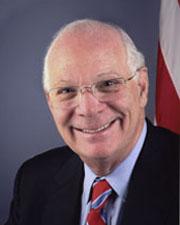 Sen. Benjamin L. Cardin (D-MD)
Legislative Activity
Stay on top of the latest movement without scrolling through every action
Senate amendment proposed (on the floor): Amendment SA 2567 proposed by Senator Cardin to Amendment SA 2530.(consideration: CR S10751)
August 2, 2007
View full timeline
Senate amendment proposed (on the floor): Amendment SA 2567 proposed by Senator Cardin to Amendment SA 2530.(consideration: CR S10751)
August 2, 2007
Senate amendment agreed to: Amendment SA 2567 as modified agreed to in Senate by Voice Vote.(text as modified: CR S10751)
August 2, 2007
Amendment SA 2567 proposed by Senator Cardin to Amendment SA 2530. (consideration: CR S10751) To improve the provisions relating to dental health.
August 2, 2007
Amendment SA 2567 as modified agreed to in Senate by Voice Vote. (text as modified: CR S10751)
August 2, 2007
Senate amendment submitted
July 31, 2007
Amendments
2 amendmentsOffered to this amendment
Amendments
2 amendmentsOffered to this amendment
Text
Modified
SMALL BUSINESS TAX RELIEF ACT OF 2007--Continued

Mr. BAUCUS. Mr. President, I ask unanimous consent that the Senator
from Virginia, Senator Webb, be recognized for 1 minute; and then
following him, the Senator from Oregon would like 3 minutes on the
bill, and then Senator Vitter would be No. 3, with no time for Senator
Vitter.
The PRESIDING OFFICER. Without objection, it is so ordered.
The Senator from Virginia.

Amendment No. 2618

Mr. WEBB. Mr. President, I ask for regular order with respect to my
amendment No. 2618, which is a pending amendment to the Children's
Health Insurance Program bill.
The PRESIDING OFFICER. The amendment is pending.

Amendment No. 2618, As Modified

Mr. WEBB. Mr. President, I ask unanimous consent to modify my
amendment, and I now send the modification to the desk.
The PRESIDING OFFICER. Without objection, it is so ordered.
The amendment, as modified, is as follows:

Strike Section 701 and insert the following:

SEC. __. ELIMINATION OF DEFERRAL OF TAXATION OF CERTAIN
INCOME OF CONTROLLED FOREIGN CORPORATIONS.

(a) In General.--Section 952 (relating to subpart F income
defined) is amended by adding at the end the following new
subsection:
``(e) Special Application of Subpart.--
``(1) In general.--For taxable years beginning after
December 31, 2007, notwithstanding any other provision of
this subpart, the term `subpart F income' means, in the case
of any controlled foreign corporation, the income of such
corporation derived from any foreign country.
``(2) Applicable rules.--Rules similar to the rules under
the last sentence of subsection (a) and subsection (d) shall
apply to this subsection.''.
(b) Effective Date.--The amendment made by this section
shall apply to taxable years of controlled foreign
corporations beginning after December 31, 2007, and to
taxable years of United States shareholders with or within
which such taxable years of such corporations end.

Mr. WEBB. Mr. President, the technical modification to my amendment
simply makes clear that the amendment strikes section 701 of the bill,
which is the tobacco tax revenue-raising section, and replaces section
701 with a section eliminating the current law on tax deferral of
foreign corporate income.
I thank the Chair, and I yield the floor.
The PRESIDING OFFICER. The Senator from North Dakota.

Amendment No. 2934 Withdrawn

Mr. DORGAN. Mr. President, early in the consideration of the
children's health insurance bill we are now considering, I offered an
amendment, No. 2534. The amendment was to reauthorize the Indian Health
Care Improvement Act, a piece of legislation we have moved through the
Indian Affairs Committee, an authorization for Indian health care
matters that has been proposed 11 times before in the last 8 years but
has not passed the Congress.
We have a full-scale emergency and crisis with respect to Indian
health care. I will not go on at great length except to say this: This
Government has a responsibility for health care for Federal prisoners,
and we also have a trust responsibility for health care for American
Indians. We spend twice as much per person on health care for Federal
prisoners as we do to meet our trust responsibility to provide health
care for American Indians. I believe I can say without hesitation that
there will be people who will die today and tomorrow in this country
because we do not have adequate health care and have not kept our
promise to the American Indians with respect to the trust
responsibility for health care on Indian reservations.
I have determined we are going to pass this legislation this year.
With the cooperation of my colleague from Montana, Senator Baucus, who
indicated yesterday the Finance Committee will mark up this bill on
September 12--it is a very important commitment from someone who shares
my passion on this and who is a very strong supporter of American
Indians and Indian health care--and with a commitment from Senator
Reid, who similarly is a very strong supporter of these issues, that he
will bring that bill to the floor of the Senate in this session of the
Congress--with those commitments, I believe we will now, finally, in
the Senate, pass the Indian Health Care Improvement Act, at long last.
With those commitments, I am confident we are on the road to getting
done what we need to get done to meet our responsibility. Because of
that, I will withdraw my amendment to reauthorize the Indian Health
Care Improvement Act on this Children's Health Insurance Program bill,
and I ask unanimous consent to withdraw amendment No. 2534.
The PRESIDING OFFICER. Without objection, it is so ordered.
The Senator from Montana is recognized.
Mr. BAUCUS. Mr. President, I very much compliment the Senator from
North Dakota. He is absolutely correct. This legislation is on a must-
pass list. I have given my commitment to mark the bill up on September
12 in the Finance Committee. The leader has indicated he will give
every assurance to try to get the legislation up on the Senate floor
and go on to pass it. It has passed before, but it got hung up in the
last Congress. It is high time we get this legislation passed, and I
thank the Senator for, first, pushing the issue so hard and, second,
working with the Senate to find an expeditious way to get this
legislation passed.
Mr. President, I ask unanimous consent that after Senator Vitter is
recognized, Senator Kohl be recognized for 5 minutes and Senator Allard
be recognized for 10 minutes.
The PRESIDING OFFICER. Without objection, it is so ordered.
The Senator from Louisiana is recognized.

Amendment No. 2596, as Modified, to Amendment No. 2530

Mr. VITTER. Mr. President, I ask unanimous consent to set aside any
pending business so that amendment No. 2596 may be called up.
The PRESIDING OFFICER. Without objection, it is so ordered.
Mr. VITTER. Now I send a technical modification to the desk.
The PRESIDING OFFICER. The Senator will suspend. The clerk will
report.

The Senator from Louisiana [Mr. Vitter], for himself and
Mr. DeMint, proposes an amendment No. 2596, as modified, to
amendment No. 2530.

Mr. VITTER. I ask unanimous consent that the reading of the amendment
be dispensed with.
The PRESIDING OFFICER. Without objection, it is so ordered.
The amendment (No. 2596), as modified, is as follows:

At the end of title I, insert the following:

SEC. ___. REQUIREMENT THAT INDIVIDUALS WHO ARE ELIGIBLE FOR
CHIP AND EMPLOYER-SPONSORED COVERAGE USE THE
EMPLOYER-SPONSORED COVERAGE INSTEAD OF CHIP.

(a) In General.--Section 2105(c) (42 U.S.C. 1397ee(c)), as
amended by section 401(a), is amended by adding at the end
the following new paragraph:
``(12) Requirement regarding employer-sponsored coverage.--
``(A) In general.--No payment may be made under this title
with respect to an individual who is eligible for coverage
under qualified employer-sponsored coverage, either as an
individual or as part of family coverage, except with respect
to expenditures for providing a premium assistance subsidy
for such coverage in accordance with the requirements of this
paragraph.
``(B) Qualified employer sponsored coverage.--
``(i) In general.--In this paragraph, the term `qualified
employer sponsored coverage' means a group health plan or
health insurance coverage offered through an employer that
is--

``(I) substantially equivalent to the benefits coverage in
a benchmark benefit package described in section 2103(b) or
benchmark-equivalent coverage that meets the requirements of
section 2103(a)(2);

[[Page S10725]]

``(II) made similarly available to all of the employer's
employees and for which the employer makes a contribution to
the premium that is not less for employees receiving a
premium assistance subsidy under any option available under
the State child health plan under this title or the State
plan under title XIX to provide such assistance than the
employer contribution provided for all other employees; and
``(III) cost-effective, as determined under clause (ii).

``(ii) Cost-effectiveness.--A group health plan or health
insurance coverage offered through an employer shall be
considered to be cost-effective if--

``(I) the marginal premium cost to purchase family coverage
through the employer is less than the State cost of providing
child health assistance through the State child health plan
for all the children in the family who are targeted low-
income children; or
``(II) the marginal premium cost between individual
coverage and purchasing family coverage through the employer
is not greater than 175 percent of the cost to the State to
provide child health assistance through the State child
health plan for a targeted low-income child.

``(iii) High deductible health plans included.--The term
`qualified employer sponsored coverage' includes a high
deductible health plan (as defined in section 223(c)(2) of
the Internal Revenue Code of 1986) purchased through a health
savings account (as defined under section 223(d) of such
Code).
``(C) Premium assistance subsidy.--
``(i) In general.--In this paragraph, the term `premium
assistance subsidy' means, with respect to a targeted low-
income child, the amount equal to the difference between the
employee contribution required for enrollment only of the
employee under qualified employer sponsored coverage and the
employee contribution required for enrollment of the employee
and the child in such coverage, less any applicable premium
cost-sharing applied under the State child health plan,
subject to the annual aggregate cost-sharing limit applied
under section 2103(e)(3)(B).
``(ii) State payment option.--Subject to clause (iii), a
State may provide a premium assistance subsidy directly to an
employer or as reimbursement to an employee for out-of-pocket
expenditures.
``(iii) Requirement for direct payment to employee.--A
State shall not pay a premium assistance subsidy directly to
the employee, unless the State has established procedures to
ensure that the targeted low-income child on whose behalf
such payments are made are actually enrolled in the qualified
employer sponsored coverage.
``(iv) Treatment as child health assistance.--Expenditures
for the provision of premium assistance subsidies shall be
considered child health assistance described in paragraph
(1)(C) of subsection (a) for purposes of making payments
under that subsection.
``(v) State option to require acceptance of subsidy.--A
State may condition the provision of child health assistance
under the State child health plan for a targeted low-income
child on the receipt of a premium assistance subsidy for
enrollment in qualified employer sponsored coverage if the
State determines the provision of such a subsidy to be more
cost-effective in accordance with subparagraph (B)(ii).
``(vi) Not treated as income.--Notwithstanding any other
provision of law, a premium assistance subsidy provided in
accordance with this paragraph shall not be treated as income
to the child or the parent of the child for whom such subsidy
is provided.
``(D) No requirement to provide supplemental coverage for
benefits and additional cost-sharing protection provided
under the state child health plan.--
``(i) In general.--A State that elects the option to
provide a premium assistance subsidy under this paragraph
shall not be required to provide a targeted low-income child
enrolled in qualified employer sponsored coverage with
supplemental coverage for items or services that are not
covered, or are only partially covered, under the qualified
employer sponsored coverage or cost-sharing protection other
than the protection required under section 2103(e)(3)(B).
``(ii) Notice of cost-sharing requirements.--A State shall
provide a targeted low-income child or the parent of such a
child (as appropriate) who is provided with a premium
assistance subsidy in accordance with this paragraph with
notice of the cost-sharing requirements and limitations
imposed under the qualified employer sponsored coverage in
which the child is enrolled upon the enrollment of the child
in such coverage and annually thereafter.
``(iii) Record keeping requirements.--A State may require a
parent of a targeted low-income child that is enrolled in
qualified employer-sponsored coverage to bear the
responsibility for keeping track of out-of-pocket
expenditures incurred for cost-sharing imposed under such
coverage and to notify the State when the limit on such
expenditures imposed under section 2103(e)(3)(B) has been
reached for a year from the effective date of enrollment for
such year.
``(iv) State option for reimbursement.--A State may
retroactively reimburse a parent of a targeted low-income
child for out-of-pocket expenditures incurred after reaching
the 5 percent cost-sharing limitation imposed under section
2103(e)(3)(B) for a year.
``(E) 6-month waiting period required.--A State shall
impose at least a 6-month waiting period from the time an
individual is enrolled in private health insurance prior to
the provision of a premium assistance subsidy for a targeted
low-income child in accordance with this paragraph.
``(F) Non application of waiting period for enrollment in
the state medicaid plan or the state child health plan.--A
targeted low-income child provided a premium assistance
subsidy in accordance with this paragraph who loses
eligibility for such subsidy shall not be treated as having
been enrolled in private health insurance coverage for
purposes of applying any waiting period imposed under the
State child health plan or the State plan under title XIX for
the enrollment of the child under such plan.
``(G) Assurance of special enrollment period under group
health plans in case of eligibility for premium subsidy
assistance.--No payment shall be made under subsection (a)
for amounts expended for the provision of premium assistance
subsidies under this paragraph unless a State provides
assurances to the Secretary that the State has in effect laws
requiring a group health plan, a health insurance issuer
offering group health insurance coverage in connection with a
group health plan, and a self-funded health plan, to permit
an employee who is eligible, but not enrolled, for coverage
under the terms of the plan (or a child of such an employee
if the child is eligible, but not enrolled, for coverage
under such terms) to enroll for coverage under the terms of
the plan if the employee's child becomes eligible for a
premium assistance subsidy under this paragraph.
``(H) No effect on previously approved premium assistance
programs.--Nothing in this paragraph shall be construed as
limiting the authority of a State to offer premium assistance
under section 1906, a waiver described in paragraph (2)(B) or
(3), a waiver approved under section 1115, or other authority
in effect on June 28, 2007.
``(I) Notice of availability.--A State shall--
``(i) include on any application or enrollment form for
child health assistance a notice of the availability of
premium assistance subsidies for the enrollment of targeted
low-income children in qualified employer sponsored coverage;
``(ii) provide, as part of the application and enrollment
process under the State child health plan, information
describing the availability of such subsidies and how to
elect to obtain such a subsidy; and
``(iii) establish such other procedures as the State
determines necessary to ensure that parents are informed of
the availability of such subsidies under the State child
health plan.''.
(b) Application to Medicaid.--Section 1906(d) (42 U.S.C.
1396e(d)), as added by section 401(b) is amended by adding at
the end the following: ``The provisions of section
2105(c)(12) shall apply to a child who is eligible for
medical assistance under the State plan in the same manner as
such provisions apply to a targeted low-income child under a
State child health plan under title XXI. Section 1902(a)(34)
shall not apply to a child who is provided a premium
assistance subsidy under the State plan in accordance with
the preceding sentence.''.

Mr. VITTER. Mr. President, I also ask unanimous consent to add
Senator DeMint as a cosponsor of the amendment.
The PRESIDING OFFICER. Without objection, it is so ordered.
Mr. VITTER. Mr. President, this is an important amendment in the
context of what we are doing with regard to the SCHIP program. It will
ensure that families who are now covered by health insurance stay
covered and are not, in fact--perhaps unintentionally but are
nonetheless--kicked off or encouraged to leave their current health
insurance for the SCHIP program. It is an issue called crowding out.
The goal of the amendment is very clear. We want to encourage
children who are eligible for SCHIP but currently have access to
employer coverage to use that employer coverage. If they have
difficulty maintaining that because of costs, we want to give States
the flexibility so they can maintain that coverage. What we do not want
to do--certainly what I do not want to do, what Senator DeMint does not
want to do, and I hope what the huge majority of Members of this body
do not want to do--is create a mechanism to push people off good
private insurance or to encourage them to drop good private insurance
or to encourage employers to drop that coverage simply because we are
reauthorizing and perhaps expanding SCHIP. No child and no family
should be forced onto any Government health insurance program if they
are currently insured otherwise through the private sector, through the
employer, et cetera.
CBO's own numbers show that 40 percent to 50 percent of the kids
covered under SCHIP and 40 percent to 50 percent of those who would
become eligible under this SCHIP expansion are, in fact, kids who are
shifted out of private

[[Page S10726]]

coverage into SCHIP. The CBO analysis on this issue is very clear on
this point. In my mind, there is no reason the taxpayers should be
paying for that insurance for folks already on good private sector
insurance. We should not be encouraging this very significant shift,
this very significant crowding out.
As I suggested, opponents of this amendment might say: We are not for
that because it may be too costly for some of these families to pay
premiums in private plans even if they are currently on them. We
recognize that argument and that reality. Our amendment--this is very
significant--our amendment allows premium subsidies for these
individuals who need that to keep them on their current private
coverage and to ensure that coverage is affordable. We maintain State
flexibility in implementing those subsidies. We give the States enough
leeway, enough flexibility to create and maintain those subsidies to
keep folks on good private insurance. The Vitter-DeMint amendment
requires individuals who are eligible for SCHIP but currently have
employer coverage to continue to use that coverage. If they truly need
help, truly need premium subsidies, States have the flexibility to do
that.
I believe the clear majority of the public and the majority of those
in Congress support Government help to those who need it. But just as
true, a clear majority of the public, a clear majority of us do not
want to create an incentive to kick people out of insurance they have.
We do not want to create an incentive for employers to end or limit
insurance they have. That would be a very negative consequence of these
good intentions. Our amendment prevents that to a great extent. In
doing so, I have to say I think it draws a clear philosophical divide:
Do we give people the resources, the ability to continue with their
current quality care in the private sector or are we, in fact, all for
pushing people into a one-size-fits-all Government-run program rather
than allowing them that choice and that quality care in the private
sector? My amendment says absolutely, if they are covered in the
private sector, we want to encourage that to continue. We want to make
sure that can work. We don't want to kick them out. We don't want to
encourage employers to kick them out. But part of that is assisting
families who really do need help to maintain that. That is a very
important part of the Vitter-DeMint amendment also.
I think this is an idea which should have broad consensus and
bipartisan support. I look forward to that on the floor of the Senate
and invite my colleagues to look at this and then support the Vitter-
DeMint amendment, No. 2596.
I yield the floor.
The PRESIDING OFFICER. The Senator from Wisconsin.
Mr. KOHL. Mr. President, I rise to talk about putting our country on
a path to insuring all of its children. For the past decade, the
Children's Health Insurance Program--CHIP--has given kids in working
families the doctor's visits and medicines they need when they are
sick, and the checkups they need to stay well.
Skyrocketing health care costs combined with a decline in employer-
sponsored health insurance means that thousands of kids and families
would go without basic medical care if CHIP did not fill the need.
There are now more than 46 million uninsured Americans--9 million are
children. This is simply unacceptable--every child needs health
insurance.
Without health insurance, many families must forgo routine checkups,
crossing their fingers that their children will stay healthy. If their
son or daughter becomes ill, they wait to see if the symptoms go away.
But delay can be tragic. If those symptoms linger or get worse, parents
are forced to take their kids to the emergency room for help. When a
common cold turns into pneumonia, what would have been a simple, cheap
fix if caught early, mushrooms into a complicated, lengthy and
expensive treatment.
Wisconsin's CHIP program, called BadgerCare, serves 67,000 working
families and makes all the difference in a child's future. BadgerCare
kids are healthier and more likely to succeed in school--including
increased school attendance and a greater ability to pay attention in
class.
However, there are over 100,000 kids in Wisconsin who are eligible
for BadgerCare, but are left out--in danger of having a small health
problem becoming a life threatening illness. In order to reach these
kids, Wisconsin received a waiver from this administration to cover
their parents. Secretary Leavitt recognized that when the family is
insured, children have better access to health care and get the
preventative health services they need saving expensive trips to the
emergency room. BadgerCare provides seamless coverage for families and
works to reduce the number of uninsured children. Strengthening
BadgerCare will ensure that this successful program can continue to
cover working families in Wisconsin. It is a good investment of our
scarce Federal dollars.
The bipartisan Senate Finance Committee agreement to renew CHIP is
the right approach. It provides an investment of $35 billion over 5
years to strengthen CHIP and it is completely paid for. No one loses
health coverage as a result of this reauthorization. It keeps coverage
for the 6.6 million low-income children currently enrolled in CHIP and
gives States the resources necessary to reach an additional 3.2 million
uninsured children eligible but not enrolled in CHIP.
The initial price tag may seem steep, but, in the long run, it will
save money. By catching and treating childhood illnesses early, we will
save money that would be spent on emergency care. I want to thank
Senators Baucus and Grassley for their tireless work on this
compromise. It is my hope that the Senate will act to put kids first
and support this bill.
The PRESIDING OFFICER. The Senator from Colorado.

Amendment No. 2535, as Modified

Mr. ALLARD. I ask unanimous consent to modify amendment No. 2535.
The PRESIDING OFFICER. The amendment has not yet been called up.
Mr. ALLARD. I call up amendment No. 2535 and then ask unanimous
consent that it be modified, and the modified version is at the desk.
The PRESIDING OFFICER. Without objection, the clerk will report the
amendment.
The assistant legislative clerk read as follows:

The Senator from Colorado [Mr. Allard] proposes an
amendment No. 2535, as modified, to amendment No. 2530.

Mr. ALLARD. I ask unanimous consent that the reading of the amendment
be dispensed with.
The PRESIDING OFFICER. Without objection, it is so ordered.
The amendment, as modified, is as follows:

At the appropriate place, insert the following:

SEC. __. TREATMENT OF UNBORN CHILDREN.

(a) Codification of Current Regulations.--Section
2110(c)(1) (42 U.S.C. 1397jj(c)(1)) is amended by striking
the period at the end and inserting the following: ``, and
includes, at the option of a State, an unborn child. For
purposes of the previous sentence, the term `unborn child'
means a member of the species Homo sapiens, at any stage of
development, who is carried in the womb.''.
(b) Clarifications Regarding Coverage of Mothers.--Section
2103 (42 U.S.C. 1397cc) is amended by adding at the end the
following new subsection:
``(g) Clarifications Regarding Authority to Provide
Postpartum Services and Maternal Health Care.--Any State that
provides child health assistance to an unborn child under the
option described in section 2110(c)(1) may continue to
provide such assistance to the mother, as well as postpartum
services, through the end of the month in which the 60-day
period (beginning on the last day of pregnancy) ends, in the
same manner as such assistance and postpartum services would
be provided if provided under the State plan under title XIX,
but only if the mother would otherwise satisfy the
eligibility requirements that apply under the State child
health plan (other than with respect to age) during such
period.''.

Mr. ALLARD. Mr. President, I ask Senator McConnell be added as a
cosponsor.
The PRESIDING OFFICER. Without objection, it is so ordered.
Mr. ALLARD. Mr. President, I come to the floor today to discuss my
amendment to codify the unborn child rule in the pending SCHIP
legislation. This needs to be done, and it needs to be done in this
reauthorization. The unborn child rule is a regulation that since 2002
has allowed States to provide prenatal care to unborn children and
their mothers. It recognizes the basic fact that the child is in the
womb--the child in the womb is a child.

[[Page S10727]]

When a pregnancy is involved, there are at least two patients; there
is the mother and there is the baby. It only makes sense to cover the
unborn child under a children's health program. The bill before us
modifies the SCHIP statute to allow States to cover pregnant women of
any age. It also contains language that asserts that the bill does not
affirm either the legality or illegality of the 2002 ``unborn child''
rule. My amendment would codify the principle of the rule by amending
the SCHIP law to clarify that a covered child:

includes, at the option of a State, an unborn child.

The amendment further defines ``unborn child'' with a definition
drawn verbatim from Public Law 108-212, the Unborn Victims of Violence
Act. So it is not new language in our statute.
My amendment would also clarify that the coverage for the unborn
child may include services to benefit either the mother or unborn child
consistent with the health of both. In addition, the amendment
clarifies that the States may provide mothers with postpartum services
for 60 days after they give birth.
Many States' definition of coverage for pregnant women leads to the
strange legal fiction that the adult pregnant woman is a child. Surely
it was not the intent of anyone to develop a State Children's Health
Insurance Program to allow a loophole for States to define a woman as a
child. Surely we can agree that the child in the womb who receives
health care is a child receiving care along with his or her mother.
My amendment will also allow for coverage of the mother, whereas the
pending legislation only allows for pregnancy-related services. There
are many conditions that can affect the mother's health during
pregnancy that are not related to her pregnancy. Under the pending
legislation, a pregnant mother could not get coverage for any condition
that is not related to her pregnancy. We should be allowing mothers to
stay healthy so they will have healthy babies.
This also leads to reduced costs associated with premature or low
birth-weight babies. Eleven States are already using this option to
provide such care through the State Children's Health Insurance
Program. If the intent of the sponsors is to provide coverage for the
pregnant woman and her unborn child, then they should have no problem
supporting my amendment.
We should ensure that pregnant women and their unborn children are
both treated as patients. This is a matter of common sense. Every
obstetrician knows that in treating a pregnant woman, he is treating
two patients, the mother and her unborn child.
Keeping this coverage in the name of the adult pregnant woman alone
is bad for the integrity of a children's health program, bad for the
child, and even bad for some of the neediest of pregnant women.
I am urging my colleagues to support my amendment.
I yield the floor.
The PRESIDING OFFICER (Mrs. McCaskill.) The Senator from Montana.
Mr. BAUCUS. Madam President, as I have said many times in this
debate, the Children's Health Insurance Program Reauthorization Act is
good for America. I wish to take a few minutes to talk about why this
children's health bill is good for my home State of Montana.
Montana ranks fifth highest in the Nation for the percentage of
children without health insurance. In 2006, 37,000 Montana children did
not have health insurance. That is one in every six children. More than
half of those uninsured children, that is 19,000, were either eligible
for Medicaid or for CHIP, the Children's Health Insurance Program, but
not enrolled.
One of the reasons for our higher rate of uninsured kids is because
the percentage of employers offering health care to Montana's working
families is quite low. Less than half of all employers in the State of
Montana offered health coverage in 2005. This means many working
families do not have access to health coverage. Although families who
do not have access to coverage through work could buy it on their own,
health coverage is often priced out of reach for lower income families.
The average cost of a family health plan on the open market in Montana
is about $8,000 a year. That is nearly one-fifth of the family's income
for a family of four earning $41,300, which is twice the poverty level.
Again, the average cost is about $8,000, which is about one-fifth of a
family's income for a family of four earning $40,000, and most families
simply obviously cannot afford that cost.
CHIP, the legislation before us, offers affordable, comprehensive
health coverage for working families. CHIP works, and it has helped
thousands of Montana families.
Abigail Tuhy's family is one of those families. Abigail's mom, Fawn,
is a mother of four, and Fawn's story tells volumes about why we need
CHIP. She writes:

I don't know what our family of six would do without
[CHIP]. . . . In one year, my 2\1/2\-year-old had nine
stitches because she split her head open and my 6 year old
broke his arm two times. CHIP paid for the surgery, hospital
stay and all of the care provided. CHIP has also paid for all
of my children to receive all of their shots and their check-
ups. Without CHIP, I would not have insurance for my
children.

Abigail is only one of the more than 38,000 children helped by CHIP
over the past decade. Today more than 14,000 Montana children are
covered by it and the number is growing.
This year, the Montana legislature, for example, took a positive step
forward, changing the CHIP eligibility level from 150 percent to 175
percent of the Federal poverty line. That is just over $36,000 for a
family of four. Montana started implementing this expansion in July,
which will bring an additional 2,000 children next year.
This is clearly good news, but we cannot rest on our
laurels. There are more uninsured children who need our help.
The CHIP Reauthorization Act will provide Montana with the
funding it needs to maintain current CHIP enrollment, fund
its expansion, and make significant strides toward covering
more of the uninsured children.
Under this legislation, Montana would receive about $28 million next
year. That is $12 million more than its allotment for last year. New
CHIP allotments, combined with new funds in the State to expand
coverage to low-income children, could allow the State to cover as many
as 12,000 children who are uninsured today.

The legislation before us also includes new funding to help Montana
improve access to health care, including $200 million in new Federal
grant money for States to improve the availability and
comprehensiveness of dental health for children, and $100 million in
Federal grants to improve outreach and enrollment, especially in rural
areas.
This bill also includes provisions that specifically target Indian
Country. Although Indian children are eligible for coverage through the
Indian Health Service and tribal facilities, the IHS, the Indian Health
Service, is only funded at 60 percent of need today, leading to tragic
denials of care when funds run out. I mean it is abominable. This bill
makes important changes to improve the health of Indian children. It
provides new funds for outreach and enrollment in Medicaid and in CHIP.
It also allows those Indians to use tribal documents to prove
citizenship for Medicaid. It gives States a higher Federal match for
translation and interpretation services in the program. And it requires
the Secretary to monitor racial and ethnic disparities in care. All
move us to a healthier future for Indian children in Montana.
As we debate CHIP today, let us remember the uninsured children in
our home States, those kids who need help. In Montana, there are
mothers whose daughters have cystic fibrosis. There are Native American
children without health care coverage because they do not have a birth
certificate. So let's keep in mind the children of Montana and every
other State who need and deserve our help. Let's reauthorize this
Children's Health Insurance Program today and improve the health of all
American children.
Madam President, I ask unanimous consent the following Senators be
recognized for the following amounts of time: first, Senator Dodd for 5
minutes; Senator Clinton for 5 minutes; and Senator Coburn for 15
minutes.
The PRESIDING OFFICER. Is there objection?
Mr. LOTT. Madam President, reserving the right to object, and I will
not object, I wish to inquire, have we gotten an agreement in place for
when the next block of votes could come?

[[Page S10728]]

Mr. BAUCUS. Madam President, it is being written up right now.
Mr. LOTT. I do not object.
The PRESIDING OFFICER. Without objection, it is so ordered.
Mr. BAUCUS. We do have a block of votes. It has been agreed to.
Madam President, I yield the floor and I suggest the absence of a
quorum.
The PRESIDING OFFICER. The clerk will call the roll.
The assistant legislative clerk proceeded to call the roll.
Mr. DODD. Madam President, I ask unanimous consent that the order for
the quorum call be rescinded.
The PRESIDING OFFICER. Without objection, it is so ordered.

Amendment No. 2631 to Amendment No. 2530

(Purpose: To expand family and medical leave in support of
servicemembers with combat-related injuries)

Mr. DODD. Madam President, on behalf of myself and Senator Clinton,
Senator Dole, Senator Graham, Senator Mikulski, Senator Chambliss,
Senator Brown, Senator Cardin, Senator Menendez, Senator Salazar,
Senator Kennedy, Senator Reed and Senator Boxer, I send an amendment to
the desk and ask for its immediate consideration.
The PRESIDING OFFICER. Without objection, the pending amendment is
set aside and the clerk will report.
The assistant legislative clerk read as follows:

The Senator from Connecticut [Mr. Dodd], for himself, Mrs.
Clinton, Mrs. Dole, Mr. Graham, Ms. Mikulski, Mr. Chambliss,
Mr. Brown, Mr. Cardin, Mr. Menendez, Mr. Salazar, Mr.
Kennedy, Mr. Reed, and Mrs. Boxer, proposes an amendment
numbered 2631 to amendment No. 2530.

Mr. DODD. Madam President, I ask unanimous consent that the reading
of the amendment be dispensed with.
The PRESIDING OFFICER. Without objection, it is so ordered.
(The amendment is printed in today's Record under ``Text of
Amendments.'')
Mr. DODD. Madam President, on behalf of myself and Senator Clinton
and the others I have mentioned here, I seek to, as soon as possible,
meet the suggestions that have been recommended by the President's
Commission on Care for America's Returning Wounded Warriors. I want to
express my gratitude to my colleague from New York as well as to others
who have joined with us on this effort. This report was submitted to
the President by our former colleague, Senator Dole, former Secretary
of Health Donna Shalala, and this report is rather extensive on their
recommendations on how we might better serve our returning soldiers
from the theaters of conflict in Iraq and Afghanistan.
The President's Commission on Care for the Returning Wounded
recommended:

That Congress should amend the Family and Medical Leave Act
to allow up to 6 months of leave for a family member of a
servicemember who has a combat-related injury and meets the
other eligibility requirements in the law.
I am very proud of many things I have done over the last 25 years in
the Senate. None exceeds my sense of pride more than passage of the
Family and Medical Leave Act. Along with Senator Bond, Senator Dan
Coats, Senator Specter, Senator Kennedy, and many others, after 7
years, three American Presidents, and two vetoes, we were able to adopt
the Family and Medical Leave Act which, since its passage, has assisted
more than 60 million Americans in being away from their jobs to be with
family members during critical times in their lives without losing that
job. These important life situations include the joyous occasion of a
birth or adoption and the difficult circumstance of an illness of a
child or another family member for up to 12 weeks of unpaid leave. It
has been a remarkable asset to many people.
I suspect there is not a single American family who would not relate
to the importance of being able to be with a family member during a
time of significant crisis. Obviously, as our wounded warriors coming
back from Afghanistan and Iraq are recovering from their injuries,
having their families and others with them could be of immeasurable
help. Senator Dole and Donna Shalala and other members of the
Commission rightly made the recommendation that we should amend the
Family and Medical Leave Act to provide for up to 6 months' leave for a
family member to be with these individuals without losing their job.
That is what we have done with the amendment we are offering to this
bill.
Clearly, this bill has nothing to do with family medical leave. My
colleagues from Montana and Iowa, have a tremendous responsibility in
adopting the legislation before us, of which I am a strong supporter.
But, knowing that we only have a short time before we adjourn for more
than a month, there is a sense of urgency about providing for these
families. I would hope all of us would support this amendment. This is
a bipartisan suggestion that will make a difference in the lives of
families who are assisting in the recovery of a wounded warrior.
I commend former Senator Dole, former Secretary of Health and Human
Services Donna Shalala, and the distinguished members of the Commission
for their thoughtfulness and thorough work on this matter. As the
author of the underlying law, I have worked to maintain its protections
and extend its protections to assist more employees. I agree with the
Commission that FMLA is the best method for providing critical support
for our returning heroes who are recovering from their war wounds. I am
pleased to be joined, as a principal cosponsor, by Senator Clinton of
New York. After more than 7 years of work, as I mentioned earlier, this
proposal I made more than 20 years ago became law. It became law within
days after January 20, 1993, when President William Jefferson Clinton,
as his very first act, signed into law the Family and Medical Leave
Act.
I remember with great clarity that bright day overlooking the rose
garden at the White House, President Clinton signing that bill into
law. Pat Schroeder of the other body was the principal author in the
House of Representatives and too often gets neglected in talking about
the history of the Family and Medical Leave Act. I will be eternally
grateful to Pat Schroeder for the tremendous job she did in the other
body in seeing to it that this proposal became the law of the land.
The Commission's findings indicate the critical role that family
members play in the recovery of our wounded servicemembers:

In their survey, 33 percent of active duty, 22 percent of
reserve component, and 37 percent of retired/separated
servicemembers report that a family member or close friend
relocated for extended periods of time to be with them while
they are in the hospital.
Twenty-one percent of active duty, 15 percent of reserve
component and 24 percent of retired/separated servicemembers
say friends or family gave up a job to be with them or act as
their caregiver.
More than 3,000 servicemembers have been seriously injured
during operations in Iraq and Afghanistan. In virtually every
case, a wife, husband, parent, brother, or sister has
received the heart stopping telephone call telling them that
their loved one is sick, or injured, halfway around the
world.
Family or close friends stayed to assist recovery of almost
66 percent of active duty and 54 percent of reserve component
servicemembers.

The Support for Injured Servicemembers Act provides up to 6 months of
family and medical leave for spouses, children, parents and next of kin
of servicemembers who suffer from a combat-related injury or illness.
FMLA currently provides for 3 months of unpaid leave to a spouse,
parent or child providing care for a person with a serious illness. Our
servicemembers need more. These are extraordinary circumstances. The
point of the Commission and the Dignified Treatment of Wounded Warriors
Act that the Senate recently passed is to take care of our wounded
soldiers, sailors, airmen, and marines returning from Iraq and
Afghanistan with combat-related injuries. We should support their
families in caring for these heroes.
It is essential we do everything possible to support our troops, to
allow their loved ones to be with them as they recover from combat-
related injuries or illnesses. That is why we should expand and improve
benefits for those caring for our servicemembers.
Let me emphasize the major points: You have to have been injured in
the theater of combat, Afghanistan or Iraq or in preparation for
deployment. Our amendment allows for a parent, spouse, child or next of
kin to provide that care-giving role. It would allow them to be with
them for up to 6 months without losing their jobs. The leave is without
pay. What is the universe we are talking about? It is not the entire
Nation, obviously, or anyone who is wearing a uniform who happens to
have been injured. You have to have been injured or acquired the
illness as a result

[[Page S10729]]

of being in the combat theater or when preparing to be deployed.

The amendment is specific as to who could be the caregiver. It is
very specific about the amount of time an employee acting as a
caregiver would be covered. We have tried to narrow this down in a way.
I am grateful to Bob Dole. He called me last Thursday early on and
remembered that I had spent such as inordinate amount of time, with the
help of Senator Kennedy and others, to adopt the Family and Medical
Leave Act so many years ago. Most would agree today it has made a
difference in the lives of people. I can't think of any better
constituency to serve with expanded family medical leave than our
service men and women.
I see my colleague from Georgia. I thank him as well for being a
cosponsor of this proposal. Those preparing for deployment obviously
would be covered, if they end up being affected as a result of their
injuries or illness suffered while in the theater of combat.
Again, as someone who has been a floor manager of many bills over the
years, I understand that is not easy to get a particularly difficult
bill like this done. I applaud the commitment my colleague from Montana
has brought to this legislation. It is my hope that we can achieve the
kind of unanimity around this idea of supporting military families,
given the fact that the President's Commission is calling for this, our
former colleagues calling for it. We have a strong bipartisan group of
Senators who believe this is worthwhile to do for this limited group of
our fellow citizens who have suffered immeasurably as a result of their
contribution. I would hope before we leave here in these next 24 or 48
hours that the very least we could do would be to provide this kind of
benefit for them and their families.
I truly appreciate the work of our cosponsors. In particular, their
willingness to adopt a provision that would expand the pool of typical
caregivers under current law for this specific purpose. Those
caregivers are limited to spouses, children, and parents. Our amendment
extends the caregiver role to next of kin, a brother, sister or other
relative, perhaps.
I gather my colleague from New York, who was very helpful in pulling
this together, is on her way to the floor. She might want to be heard
on this as well. I was drawing this out while we wait for her arrival.
Mr. BAUCUS. I might say to my good friend, we have noticed.
I don't see the Senator from New York here yet, but she is on her
way. In the meantime, I ask unanimous consent that the Senator from
Georgia be recognized and, following the Senator from Georgia, Senator
Clinton be recognized.
The PRESIDING OFFICER. Without objection, it is so ordered.
The Senator from Georgia is recognized.
Mr. CHAMBLISS. I thank the Chair.
Since the Senator is running for President, we are glad to
accommodate him for what time he needs. He is serious and very
emotional about this issue, and he should be. We all should be. I
commend the Senator from Connecticut for spending a good bit of time on
talking about this issue. I commend the Senator from New York for
bringing this issue to the forefront. We are in a war unlike any war we
have ever been in before. We are in different times today with respect
to military conflicts, and the inclusion of our wounded warriors in the
Family and Medical Leave Act is certainly well deserved and something
that I hope we get passed before we leave.
I rise to commend the President's Commission on Care for America's
Returning Wounded Warriors for their hard, high-quality work in
analyzing and recommending improvements for our Nation's treatment of
wounded warriors. The Dole-Shalala Commission has boldly addressed one
of the most important issues facing our military today and has created
a simple roadmap that will help make monumental improvements to the
military health care system. I am pleased the Commission's
recommendations span agencies, cross services, and take into
consideration the needs of both veterans as well as their families.
During their review, they visited 23 health care facilities,
including military and VA hospitals and treatment centers nationwide,
held 7 public meetings, heard testimony from military health care
experts, and communicated directly with servicemembers, their families,
and health care professionals. This dialog is greatly needed and must
continue. I provided my own input directly to the Commission regarding
one of Georgia's own success stories in providing care to wounded
warriors through a partnership between the Eisenhower Army Medical
Center at Fort Gordon, GA, and the Augusta VA hospital. This Commission
untangled a web of complex issues and provided six recommendations
based on their findings. Former Senator Dole and Secretary Shalala did
what others have been trying to do since World War II. Their joint
statement succinctly describes the culmination of these efforts.
The face of our military has changed, as have their needs. Some
returning servicemembers, injured in the line of duty, have complex and
often multiple injuries placing greater challenges on the DOD and VA as
well as family members. Well-meaning attempts over the years to reform
health care in the military and VA have produced many positive results
that have also made the system more complex and confusing in some
areas. In these cases, it is difficult for servicemembers, their
families, and caregivers to understand how to navigate the system. The
events that brought us to this point were inexcusable and could have
been prevented. However, I would be remiss if I did not mention a
letter I received from a constituent whose son was a patient at Walter
Reed Medical Center, after being evacuated from Iraq due to injuries he
sustained in an IED attack. The letter said to the commander and staff
at Walter Reed:

You and your staff are a remarkable team that has the
welfare of our soldiers and families foremost in mind as you
execute your critically important duties. My family and I owe
you and your team our heartfelt thanks and debt of gratitude
we can never repay.

This kind of feedback tells me the Army's improvements are taking
hold. Through the Commission and recent legislation, these improvements
will continue. I applaud the Commission's work and am equally pleased
that much of it parallels the initiatives set forth by the Senate's
Dignified Treatment of Wounded Warriors Act. The President's Commission
recommended that seriously wounded servicemembers receive a patient-
centered recovery plan developed by a cadre of highly skilled recovery
coordinators. Such a plan can only increase the level of support given
to our wounded warriors.
Along these same lines, the Wounded Warrior bill requires development
of a unified and comprehensive policy between the VA and the Department
of Defense that addresses personnel strength, training, access,
standards, family counseling, and creation of a DOD-wide ombudsman. Of
central importance, the Commission recommends a complete restructure of
the disability and compensation systems. We have all heard case after
case of lost paperwork, endless waste, bureaucratic delays, and
confusing redundant processes. Both the Commission and the Wounded
Warrior bill provide guidance to consolidate systems and streamline
this process.
One of the most important recommendations made by the Commission,
also addressed in the Wounded Warrior bill, concerns increased support
to the families of our Wounded Warriors. Although the Commission did
not visit Georgia, I have spent time at Fort Stewart and Fort Benning
with family members of deployed troops, and I have spent as much time
with the troops themselves in my five visits to Iraq. I can tell you
that when it comes to taking care of our servicemembers, the well-being
of their families is of paramount, if not greater, importance to them
than their own well-being. These troops can count on their families.
The more we support the families, the better we are taking care of our
troops.
Among other things, the Dole-Shalala report recommends extending
privileges under the Family and Medical Leave Act from 12 weeks to 6
months, which will allow family members to take up to 6 months of leave
to care for a wounded servicemember. I am proud to be a cosponsor of
this bill that introduces legislation that enacts this recommendation.
The bill Senator Pryor and I cosponsored on this subject, the Wounded

[[Page S10730]]

Warrior Assistance Act, S. 1283, also contains provisions along these
lines, such as advocating counseling and job placement services for
family members, as well as the creation of an ombudsman's office which
will provide support to members and their families.
So, once again, I commend Senator Clinton for her initiative in
getting this bill on the Family Medical Leave Act introduced and I
concur again with the Senator from Connecticut. I hope this legislation
is completed before we leave here in the next couple of days.
The global war on terror has brought recognition of the enormous
impact of two previously silent and little-noticed conditions to the
forefront: post-traumatic stress disorder and traumatic brain injury.
Accordingly, both the Commission and the Wounded Warrior bill address
these issues. The Dole-Shalala report advocates the most aggressive
treatment for both conditions by the DOD and the VA, and also
recommends private-sector involvement to capitalize on the most recent
and valuable findings and treatments.
Similarly, the Wounded Warrior bill provides comprehensive and
coordinated policies between DOD and the VA on PTSD and TBI. The
Wounded Warrior bill creates a level of accountability for the DOD and
VA by requiring an annual report on PTSD and TBI expenditures and
reports assessing progress in the overall treatment of these
conditions.
The bill also includes a provision I proposed that builds upon a
study at Emory University for TBI treatment and the use of progesterone
and directs collaboration between DOD and other Federal agencies in
TBI-related research and clinical trials.
The approach taken by the Commission and in the Wounded Warrior Act
capitalizes on cooperation among Federal agencies, as well as between
the Federal Government and private sector. As part of the fiscal year
2008 National Defense Authorization Act, I proposed a sense-of-the-
Senate amendment that DOD continue to encourage collaboration between
the Army and the VA in the treatment of wounded warriors.
A prime example of this type of collaboration is in Augusta, GA,
between the only Active-Duty rehabilitation unit, located at the
Augusta Department of Veterans Affairs Medical Center, and the
behavioral health care services program at the Eisenhower Army Medical
Center at Fort Gordon, GA. This unique, unprecedented collaboration
between the Augusta VA and the Eisenhower Army Medical Center has been
growing since its inception in 2004, assisted by GEN Eric Schoomaker,
now the head of Walter Reed and former commander of the Eisenhower Army
Medical Center. Our wounded warriors deserve the best possible care.
The recommendations of the President's Commission and the requirements
set forth in the Dignity for Treatment of Wounded Warriors Act pave a
clear path for the type of medical treatment and support the people
defending our Nation deserve.
I am proud to be a cosponsor of the Wounded Warrior Act, unanimously
approved by the Senate. I am pleased with the comprehensive
recommendations provided by Senator Dole and Secretary Shalala. I
especially thank the servicemembers and their families who have shared
openly and bravely about their experiences to this body as well as to
the Commission. Their stories made the need for this reform real to all
of us, and their experiences can help us transform the quality of
military health care. Doing so will be one small way of saying thank
you to the men and women in the U.S. military for their service and
their sacrifice.
Mr. President, I ask unanimous consent that I have 2 additional
minutes to address the bill before the Senator from New York is
recognized.
The PRESIDING OFFICER (Mr. Casey). Is there objection?
Without objection, it is so ordered.
Mr. CHAMBLISS. Thank you, Mr. President.
Mr. President, I would like to address the State Children's Health
Insurance Program, the bill that currently is before the Senate. I have
been a strong advocate of this particular program. We, in Georgia, I
think, have one of the model SCHIP programs in the country. We call it
PeachCare. It provides health insurance to 290,000 uninsured poor
children in my State. We cover no adults in Georgia. Every single dime
that is spent on this program in Georgia is spent on children, and that
is the way it should be.
That is one of the problems I have with the reauthorization of this
bill as it came out of committee. It does three things that really
bother me.
First of all, the bill that came out of committee does not take all
parents off of coverage under the SCHIP program on a national basis. It
does remove, over a 2-year period, all adults who are not parents of
some of the children who are eligible for this particular subsidy, and
that is good. The problem is, it still covers any number of adults.
This is a children's program, and that is where the money ought to be
spent. Every single dollar we spend on an adult takes money away from
children.
Secondly, under this bill, States are authorized to go up to 300
percent of the Federal poverty level for coverage. The previous bill
authorized up to 200 percent of the Federal poverty level. In Georgia,
we are at 235 percent of the Federal poverty level, which means that a
family of four making $48,000 is eligible for coverage under our
PeachCare program.
Unfortunately, once you reach the level of 300 percent of the Federal
poverty level, you are at almost $62,000 for a family of four in
income, and you are still eligible under this program.
Lastly, I would simply say the bill out of the Finance Committee is
financed by the creation of new and additional taxes. I think the
American taxpayers--I do not care in what form the taxes are--are
already an overburdened group of citizens.
From the standpoint of trying to find funding for this program, the
Lott amendment did exactly what we needed to do in Georgia to cover all
290,000 of our existing children who are covered, plus all who will be
coming on within the next 5 years, which is the term of this bill.

Senator Lott found offsets in his amendment that would not have
required the raising of any taxes to cover those children. That is the
type of sensible approach that should have been taken. I regret that it
did not pass.
Unfortunately, I am not going to be able to support this bill in its
current form.
With that, Mr. President, I thank the chairman for being generous,
and thank the Senator from New York for allowing me to extend my time,
and I yield the floor.
The PRESIDING OFFICER. The Senator from Montana.
Mr. BAUCUS. Mr. President, I ask unanimous consent that the time
until 4:30 p.m. today be for debate with respect to the amendments
listed below, and that they be debated concurrently; that all time be
between the managers; that no amendments be in order to any of the
amendments covered in this agreement prior to the votes; that the votes
with respect to the amendments occur in the order in which the
amendments are listed here; further that after the first vote, the time
for votes be limited to 10 minutes, and there be 2 minutes of debate
prior to each vote; and that at 4:30, the Senate proceed to vote in
relation to the amendments; that the Graham amendment No. 2558 be
modified with the changes at the desk; that Senators Kyl and Graham be
recognized respectively at 3:45 and 4 p.m. The amendments are Specter
amendment No. 2557, Graham amendment No. 2558, Ensign amendment No.
2540, Thune amendment No. 2579, and Kyl amendment No. 2537.
The PRESIDING OFFICER. Is there objection?
Mr. LOTT. Mr. President, reserving the right to object, it sounds as
if maybe what I understood--what I have here that was going to be in
the agreement--was altered a little bit when the Senator read the UC.
For instance, on the third line, beginning after the semicolon: ``that
all time be between Senator Baucus and amendment sponsor; that no
amendments be in order to any of the amendments''--is that the way you
read it?
Mr. BAUCUS. Yes--well, I struck some of those words you read and
inserted ``the managers.'' The thought was, it gives more flexibility
so the two managers of the bill could then work with the sponsors of
the amendments to allocate time. Some may want to speak longer than
others. I felt that was just a way to better organize the time.

[[Page S10731]]

Mr. LOTT. I just want to make sure the manager on this side really
wants to work with the sponsors of these various amendments.
Mr. BAUCUS. I am sure he does.
Mr. LOTT. Well, I am not sure he does. That was the point. But I just
wanted to get that clarification.
With that clarification, I have no objection.
The PRESIDING OFFICER. Without objection, it is so ordered.

The amendment (No. 2558), as modified, is as follows:
Beginning on page 218, strike line 5 and all that follows
through page 220, line 2, and insert the following:
(a) Cigars.--Section 5701(a) of the Internal Revenue Code
of 1986 is amended--
(1) by striking ``($1.594 cents per thousand on cigars
removed during 2000 or 2001)'' in paragraph (1) and inserting
``($50.00 per thousand on cigars removed after December 31,
2007, and before October 1, 2012)'',
(2) by striking ``(18.063 percent on cigars removed during
2000 or 2001)'' in paragraph (2) and inserting ``(53.13
percent on cigars removed after December 31, 2007, and before
October 1, 2012)'', and
(3) by striking ``($42.50 per thousand on cigars removed
during 2000 or 2001)'' in paragraph (2) and inserting
``($10.00 per cigar removed after December 31, 2007, and
before October 1, 2012)''.
(b) Cigarettes.--Section 5701(b) of such Code is amended--
(1) by striking ``($17 per thousand on cigarettes removed
during 2000 or 2001)'' in paragraph (1) and inserting
``($50.00 per thousand on cigarettes removed after December
31, 2007, and before October 1, 2012)'', and
(2) by striking ``($35.70 per thousand on cigarettes
removed during 2000 or 2001)'' in paragraph (2) and inserting
``($104.9999 per thousand on cigarettes removed after
December 31, 2007, and before October 1, 2012)''.
(c) Cigarette Papers.--Section 5701(c) of such Code is
amended by striking ``(1.06 cents on cigarette papers removed
during 2000 or 2001)'' and inserting ``(3.13 cents on
cigarette papers removed after December 31, 2007, and before
October 1, 2012)''.
(d) Cigarette Tubes.--Section 5701(d) of such Code is
amended by striking ``(2.13 cents on cigarette tubes removed
during 2000 or 2001)'' and inserting ``(6.26 cents on
cigarette tubes removed after December 31, 2007, and before
October 1, 2012)''.
(e) Smokeless Tobacco.--Section 5701(e) of such Code is
amended--
(1) by striking ``(51 cents on snuff removed during 2000 or
2001)'' in paragraph (1) and inserting ``($1.50 on snuff
removed after December 31, 2007, and before October 1,
2012)'', and
(2) by striking ``(17 cents on chewing tobacco removed
during 2000 or 2001)'' in paragraph (2) and inserting ``(50
cents on chewing tobacco removed after December 31, 2007, and
before October 1, 2012)''.
(f) Pipe Tobacco.--Section 5701(f) of such Code is amended
by striking ``(95.67 cents on pipe tobacco removed during
2000 or 2001)'' and inserting ``($2.8126 on pipe tobacco
removed after December 31, 2007, and before October 1,
2012)''.
(g) Roll-Your-Own Tobacco.--Section 5701(g) of such Code is
amended by striking ``(95.67 cents on roll-your-own tobacco
removed during 2000 or 2001)'' and inserting ``($8.8889 on
roll-your-own tobacco removed after December 31, 2007, and
before October 1, 2012)''.

Mr. BAUCUS. Mr. President, it is my understanding under the previous
order Senator Clinton is the next to be recognized.
The PRESIDING OFFICER. The Senator from New York.
Mrs. CLINTON. Mr. President, I thank Chairman Baucus, and I thank
both Senators Dodd and Senator Chambliss for their vigorous explanation
and advocacy of the bill which we have introduced that we are proposing
to have as an amendment to the current legislation pending before the
Senate because we think the duty to honor our veterans, our
servicemembers, and their families is urgent. This is a duty we take
very seriously.
Clearly, based on the recently released report by the Commission on
Care for America's Returning Wounded Warriors, chaired by former
Senator Bob Dole and former Secretary of Health and Human Services
Donna Shalala, it is a matter of grave urgency for our Nation to do
everything we can to improve support for our servicemembers and
veterans.
The Commission found that one of the most important ways to improve
that care is to improve support for families. That is why Senator Dodd
and I have offered an amendment to the CHIP legislation, the Support
for Injured Servicemembers Act.
We are proud to have the bipartisan support of Senators Dole, Graham,
Mikulski, Chambliss, Brown, Salazar, Cardin, Menendez, Kennedy, Boxer,
and Jack Reed because this is a matter that goes way beyond politics as
usual. It is certainly way beyond partisanship.
During the course of the Dole-Shalala Commission work, they showed
what many families across the country already knew, that the Family and
Medical Leave Act--which Senator Dodd worked so hard on for so many
years, and which was the first piece of legislation signed by my
husband--has been a godsend to 60 million Americans over the course of
the last years--people taking care of newborn babies, a family member
with an accident or illness, caring for an aging relative. It has made
it possible for so many Americans to balance the difficult
responsibilities of family and work.
But what has been abundantly clear--with all of our wounded warriors
returning from Iraq and Afghanistan--is it has not been sufficient for
family members to care for those young servicemembers who have
sustained a combat-related injury.
Currently, spouses, parents, and children can receive only 12 weeks
of leave under the Family and Medical Leave Act. All too often, as we
have now learned, that is insufficient, as injured servicemembers
grapple with traumatic brain injuries, severe physical wounds, learning
how to use a prosthetic, trying to understand what post-traumatic
stress disorder means to them and to their futures. Indeed, family
members have dropped everything. They have tried to be at the bedside,
stayed in the area to help their loved one, given up jobs even. That
seems to us to be more than the sacrifice their loved one has already
made demands.
Imagine if your husband or your wife or your son or your daughter had
been injured. You would want to be with them. You would want to take
care of them. But you would not want to lose your job in the process.
It is not a choice that military families should have to make.
Therefore, that is why we are asking our colleagues to join with us to
pass the Support for Injured Servicemembers Act, and to allow us to
fulfill this duty we all feel to our military families.
I appreciate very much Senator Dodd's leadership on this issue for
many years, and on this particular piece of legislation. We invite even
more cosponsors from both sides of the aisle to join us, and we hope we
will have a vote on this legislation before we leave, before we finish
the CHIP legislation, so we can go home and tell military families that
help is on the way.
Thank you very much, Mr. President.
The PRESIDING OFFICER. Who yields time?
The Senator from Montana is recognized.
Mr. BAUCUS. Mr. President, I see the Senator from Texas is seeking
recognition. I ask unanimous consent that she be allowed to speak next
for--10 minutes?
Mrs. HUTCHISON. Mr. President, 10 minutes would be fine. I ask to
bring my amendment up, set aside the pending, and continue to speak.
Mr. BAUCUS. Certainly.
The PRESIDING OFFICER. Without objection, it is so ordered.

Amendment No. 2620 to Amendment No. 2530

Mrs. HUTCHISON. Mr. President, I ask unanimous consent to set aside
the pending amendment and call up amendment No. 2620 and ask for its
immediate consideration.
The PRESIDING OFFICER. The clerk will report.
The bill clerk read as follows:

The Senator from Texas [Mrs. Hutchison] proposes an
amendment numbered 2620 to amendment No. 2530.

Mrs. HUTCHISON. Mr. President, I ask unanimous consent that the
reading of the amendment be dispensed with.
The PRESIDING OFFICER. Without objection, it is so ordered.
The amendment is as follows:

amendment no. 2620

(Purpose: To increase access to health insurance for low-income
children based on actual need, as adjusted for cost-of-living)

Strike section 110 and insert the following:

SEC. 110. COVERAGE FOR INDIVIDUALS RESIDING IN HIGH COST
AREAS WITH FAMILY INCOME ABOVE 200 PERCENT OF
THE FEDERAL POVERTY LINE.

(a) In General.--Section 2105(c) (42 U.S.C. 1397ee(c)) is
amended by adding at the end the following new paragraph:
``(8) Coverage of individuals residing in high-cost
areas.--
``(A) In general.--For fiscal years beginning with fiscal
year 2008, a State shall receive payments under subsection
(a)(1) with respect to child health assistance provided to an
individual who resides in a high cost

[[Page S10732]]

county or metropolitan statistical area (as defined by the
Secretary, taking into account the national average cost-of-
living) and whose effective family income exceeds 200 percent
of the poverty line (as determined under the State child
health plan), only if such family income does not exceed 200
percent of the poverty line as adjusted for the cost-of-
living in the State under subparagraph (B)).
``(B) Adjusted poverty line.--The Secretary shall adjust
the poverty line applicable to a family of the size involved
with respect to each State to take into account the cost-of-
living for each county or metropolitan statistical area in
the State, based on the most recent index data from the
Council for Community and Economic Research (previously known
as the American Chamber of Commerce Research Association),the
2004 Consumer Expenditure Survey of the Bureau of Labor
Statistics, and the Bureau of Economic Analysis of the
Department of Commerce.''.
(b) Conforming Amendment.--Section 2105(a)(1) ( 42 U.S.C.
1397dd(a)(1)) is amended, in the matter preceding
subparagraph (A), by inserting ``or subsection (c)(8)'' after
``subparagraph (B)''.
(c) Regulations.--Not later than 90 days after the date of
enactment of this subparagraph, the Secretary shall
promulgate interim final regulations to carry out the
amendments made by subsections (a) and (b).

Mrs. HUTCHISON. Mr. President, I rise today to offer an amendment
that would help address what some view as a serious problem in the
underlying legislation, and what others might view as a matter of
fairness in the underlying legislation.
The purpose of the SCHIP program is to provide health insurance
benefits to children in families who make too much to qualify for
Medicaid but not enough to afford private insurance. We define that
criteria as families up to 200 percent above the Federal poverty line.
The current Federal poverty line for a family of four is $20,650. The
Federal poverty line for Hawaii and Alaska is a little higher. Two
hundred percent, then, would be $41,300.
My State of Texas maintains its SCHIP program consistent with the
original purpose and therefore allows a family of four making $41,300
to qualify for SCHIP coverage. When my constituents see the bill before
us allowing families of four making up to 300 percent of the Federal
poverty line, which is $61,950, to qualify for Government-supported
health care, many believe this is going too far. They certainly take
issue with families making up to 400 percent of the poverty line, which
would be $82,600, receiving Government-funded health insurance.
I have heard the supporters say that allowing coverage above 200
percent of the Federal poverty line argue that the cost of living in
certain areas necessitates higher Federal poverty level coverage. One
only has to utilize the various cost-of-living calculators on the
Internet such as those found on bankrate.com or CNN/Money to see that a
salary in one area of the country can be worth a very different amount
than in another. The cost-of-living calculators adjust income by
comparing the cost of housing, utilities, and transportation, all of
which have a significant impact on the actual need of the family.
For example, in this chart, you see that the cost of living in
Austin, TX, would be $40,000, whereas after you add housing, utilities,
and transportation, if you compare that to the cost in Washington, DC,
it would be $58,697, or rather the salaries would be commensurate after
you add the cost-of-living indicators in it.
The bill before us does not make a direct connection between the
cost-of-living standards and approvals of SCHIP plans beyond the 200
percent Federal poverty line restrictions. It doesn't seem right to
arbitrarily allow coverage of families beyond 200 percent of the
Federal line if there is no relationship to the cost of living. If
$41,300 of family income in one State is equal to a higher amount in
another due to a cost of living that exceeds the national average, my
proposal would accommodate that. Why don't we say in this legislation
that similarly situated families will be treated similarly. That is
what my amendment would do.
Under my amendment, the Secretary of Health and Human Services will
be required to factor in the cost of living in States that are seeking
to cover families above 200 percent of the poverty line. Utilizing the
most recent index data from the Council for Community and Economic
Research, the Bureau of Labor Statistics and the Bureau of Economic
Analysis, the Secretary shall adjust the Federal poverty line
throughout specific areas in those States that reflect the actual cost
of living in those specific areas. The Secretary could then approve
families up to twice the new adjusted Federal poverty line, accounting
for a higher cost of living in that area.
The Secretary would break down the analysis by county or metropolitan
statistical area to ensure that States with high-cost areas in some
parts of the State and low-cost areas in other parts of the State would
not receive the same amount. This does what I think everybody has said
we need to do, and that is adjust if there is a cost-of-living
increase, but not lump it State by State.
In my State of Texas, there will be metropolitan areas with a higher
cost of living. So if my State wanted to go above the 200 percent, the
Secretary could factor in where there needed to be an adjustment. If it
were over the 200 percent in a metropolitan area such as Dallas, it
might be a different calculation than if it is in a rural area, say
Lubbock. This seems to me to equalize the unfairness of a whole State
getting the higher rate through a waiver which the bill before us is
trying to mitigate by putting a limitation on the percent above the
poverty line that a State may go, but why not do it by SMSA--the
Statistical Metropolitan Area--or by county, where you can get the
adjustment that is right and fair.
My amendment is very simple. The 200 percent of the poverty line,
when adjusted for the cost of living in a specific area, could equal
$45,000, it could equal $50,000, or it could be right at the poverty
line. If you needed to go above it, the Secretary would be able to say
in New York City, for instance, there should be an adjustment, but in
upstate New York, perhaps not.
So this is the amendment. I think this brings reasonableness,
rationality, and equity to approvals beyond the nonadjusted Federal
poverty limits. If you do not go above the 200 percent which is in the
law, you would never have to make these adjustments. There are
certainly metropolitan areas that have a legitimate claim to a higher
cost of living, but it does not necessarily mean the whole State should
be given that kind of adjustment, and it would be more reasonable for
the taxpayers throughout America to know that the people were getting
the adjustment if they needed it, but not if they didn't.
Mr. President, I ask for the yeas and nays on my amendment.
The PRESIDING OFFICER. Is there a sufficient second.
There is a sufficient second.
The yeas and nays were ordered.
Mrs. HUTCHISON. Thank you, Mr. President.
I thank the Senator from Connecticut also for the process, and I
certainly would urge my colleagues to support this amendment, which I
think is what should end up in the final bill. It is simple, it is
clear, and it is fair.
I yield the floor, and I suggest the absence of a quorum.
The PRESIDING OFFICER. The clerk will call the roll.
The legislative clerk proceeded to call the roll.
Mr. BAUCUS. Mr. President, I ask unanimous consent that the order for
the quorum call be rescinded.
The PRESIDING OFFICER (Mr. Tester). Without objection, it is so
ordered.
Mr. BAUCUS. Mr. President, I ask that the time consumed by the
Senator from Texas be charged against the time controlled by the
minority, and further, that the time for the quorum call be equally
divided.
The PRESIDING OFFICER. Without objection, it is so ordered.
Mr. BAUCUS. Mr. President, I suggest the absence of a quorum.
The PRESIDING OFFICER. The clerk will call the roll.
The legislative clerk proceeded to call the roll.
Mr. ENSIGN. Mr. President, I ask unanimous consent that the order for
the quorum call be rescinded.
The PRESIDING OFFICER. Without objection, it is so ordered.
Who yields time?
Mr. LOTT. Mr. President, I yield 5 minutes from our side. Is that
sufficient time, I ask the Senator?
Mr. ENSIGN. If I need more time, I will ask for it.
The PRESIDING OFFICER. The Senator from Nevada.

[[Page S10733]]

Amendment No. 2540

Mr. ENSIGN. Mr. President, I wish to talk about my amendment. My
amendment says that the Children's Health Insurance Program, which is
designed to cover low-income children, should first cover low-income
children. Many of the States today are covering nonpregnant adults and
I believe this is at the expense of low-income children. This program
is called the State Children's Health Insurance Program and it is
called that for a reason. It is supposed to be for low-income kids. It
was not intended for nonpregnant adults.
My amendment says that you cannot cover nonpregnant adults until you
cover 95 percent of the targeted low-income children's population. Some
States have extended their SCHIP coverage to nonpregnant adults.
According to the Government Accountability Office, SCHIP covered 6
million individuals, including more than 600,000 adults in the year
2005. This means that 1 out of every 10 people covered by SCHIP was an
adult. GAO indicated that in Wisconsin, two-thirds of the total SCHIP
enrollees in 2005 were adults. Almost half of the enrollees in Rhode
Island were adults. It also found that shortfall States are likely to
cover a high proportion of adults.
The GAO wrote:

Adults accounted for an average of 55 percent of enrollees
in shortfall States, compared with 24 percent in nonshortfall
States.

Covering adults is not the primary purpose of SCHIP. I am seriously
concerned that nonpregnant adults may be benefitting from SCHIP funds
at the expense of low-income children. We need to refocus the SCHIP
program to its original intent--to make low-income children the
priority. My amendment today will ensure that SCHIP funds are used to
provide health insurance coverage to low-income children. In my
opinion, that is the intent of the original law and the way in which
SCHIP dollars should be allocated.
This proposal does not deprive States of Federal dollars. What it
does say is that a State can't use its SCHIP money to provide health
benefits to nonpregnant adults until it has enrolled 95 percent of its
targeted low-income children.
We have heard a lot about the need to cover low-income kids, about
keeping them healthy, and giving them a chance in life. If the States
aren't forced to cover 95 percent of the low-income kids first, they
will continue the current policies and many low-income kids won't be
reached out to and brought into the SCHIP program. If we require the
States to cover 95 percent of low-income kids, we will be amazed at how
many of these kids the States will find.
I believe it is important for us to adopt this amendment. If we are
going to expand SCHIP, let us make sure low-income children are the
priority.
Mr. President, I yield the floor.
Mr. BAUCUS. Mr. President, a couple of words with respect to the
amendment offered by the Senator from Nevada. I might as well finish
them now, since he spoke. Basically, his amendment means that no State,
after the date of enactment, could provide for adults--childless adults
or parents, parents of kids. No State. That is what this is.
I also point out that the standard of 95 percent is an impossible
standard. No State can meet that standard. There is no State in the
Nation that could meet 95 percent. We have mandatory driver's license
requirements in States, and even those mandatory requirements average,
nationwide, about 85 percent. That is mandatory, and we are talking
about something voluntary here.
So no State can possibly reach 95 percent compliance, which would
mean, at the beginning of the date of enactment, all adults would be
off--right now, immediately; all parents off--right now, immediately.
And I don't think that is what we want to do. Why? Because the
administration has granted lots of waivers to a lot of States for a lot
of adults, and States are reliant on them.
In this legislation, over a 2-year period, we are stopping that, but
we give States 2 years to stop providing coverage for childless adults
and for parents. States can provide for parents with those waivers, but
it is written in a way to discourage the use of CHIP money for parents
unless States go the extra mile and seek out more low-income kids to
provide coverage for them.
The legislation before us is a good compromise, but the amendment
offered by the Senator from Nevada is way too Draconian. I might also
add that all experts say if you cover parents, you will cover more
kids. If you don't cover more parents, you are going to cover fewer
kids. There is a very strong correlation between health insurance
coverage for parents and parents getting good health care for their
children. Put in reverse, there is a strong correlation of parents who
do not have health insurance--we are talking low-income families here--
who will not provide good health care, on average, for their kids.
On the basis of policy, I don't think it is a good idea. It totally
disrupts the compromise worked out on both sides of the aisle on this
legislation. Senator Grassley, Senator Hatch, myself, and Senator
Rockefeller worked very hard to get a compromise here. This legislation
starts to squeeze down on adults, but it doesn't cold turkey say no.
That would be unfair, especially with respect to parents, because
parents who have health insurance themselves will tend to provide
better health care for their kids.
When the appropriate time comes to vote on this amendment, I think
the right thing to do would be not to support this amendment because of
the reasons I indicated.
I yield the floor.
Mr. LOTT. Mr. President, I don't believe there is any other Senator
wishing to speak right now, so I will rise in support of the amendment
by the Senator from Nevada, Mr. Ensign.
I believe that Senator Baucus, Senator Grassley, Senator Hatch, and
those who put together this compromise did want to try to begin to get
some control on the explosion of this program. But there are a lot of
others who don't want to do that. They want it to go the other way.
Yes, the administration is to blame for a lot of the problems here.
They granted the waivers for these States, and they shouldn't have.
They started granting waivers for higher and higher and higher income
children to be covered, for adults to be covered--and not just pregnant
mothers but parents and, in some States, even beyond that.
As I have said before, there is no ``A'' in SCHIP. It is the State
Children's Health Insurance Program--for children, SCHIP as we refer to
it here in this Chamber. But I do have every reason to believe there
are many who fully intend for this program, the CHIP program, to be the
program that covers not only low-income children, middle-income
children, but all-income children and adults. That is the goal here.
I voted for this program 10 years ago because I thought there was a
need to make sure that truly low-income children had access to health
care. A lot of them were not covered, obviously, by private insurance
or Medicaid, and I thought there was a need to address this particular
area. But it is like so many Washington programs; once they get
started, they never end. And once they get started, they grow and grow
and grow.

Who is going to help get a grip on this program? Who is going to pay
for this program? This is a $60 billion, 5-year program this bill would
provide for--the underlying bill. The House just passed a bill that I
think is close to at least $80 billion over the next 5 years. They pay
for it in the House partially by taxes but also by cutting Medicare. So
we are taking elderly off of the Medicare Program so we can put more
money into the SCHIP program not just for low-income children but for
middle-income children and for adults.
I think the Senator is absolutely right. Let us make sure these
States provide at least 95 percent of what they are supposed to supply
to the low-income children before any adults can get in it. Yes, they
will have to take adults off. Exactly. They should have to. They should
have never put them on there.
Now, again, I acknowledge we are hopeful this bill will begin to get
this under control. It does take away the waiver that is being used,
and has been abused by this administration. But I cannot believe that
Senators are ignoring the fact that this program is being exploded,
covering people who were never intended to be covered, and paying for
it by damaging low-income people or elderly people.

[[Page S10734]]

I am glad we have this amendment. If we could at least get the adults
off this program, even if it does cover some increased level of
children below the 200 percent of poverty, I could see that it would be
more acceptable. But that is not what this does.
I fear what is going to happen in conference. I don't know, maybe the
Senator from Montana and Senator Grassley can sit there and say, oh,
no, no, no, we are not going above what we passed in the Senate. But I
think the reverse is going to be true. This is the base. The $60
billion is the beginning. It is obvious, if you have a classic
conference, which we are not going to have, and we are at $60 billion
and the House is at $80 billion, what is it going to be? Oh, $70
billion. That is the way it works around here. That is the way it used
to work, although we don't have conferences anymore now. We dished up a
product such as we had on this lobbying and ethics fiasco a while ago.
I don't know how we get through this and help the people we want to
help, intend to help, and keep it from covering more and more children
and more and more adults. If we want to go to Washington bureaucratic-
controlled and managed health care, if we want to go ahead and go to
Government-run socialistic medicine, fine, this is it. This is the way
it is going to happen.
A few years ago, there was an attempt to come in the front door and
say, oh, no, we are only going to provide free health care to
everybody. It failed miserably, right here. And by the way, it failed
in August of that year, I believe it was 1993. Well, here we are coming
through the back door this time. And incredibly, even my colleagues on
the Republican side of the aisle are buying this deal.
I will be back. I don't know whether I will be on the floor of the
Senate, but I will be back in years to come and say, I warned you. This
thing is going to continue to grow. It won't be $60 billion, $70
billion, or $80 billion, it will be $140 billion over 10, or more.
I appreciate the amendment Senator Ensign came up with. I support it,
and I hope we can pass it. And I wish the managers good luck in trying
to keep control of this thing. If you pull it off, even though I still
think you have way too big a program here, I will be first in line to
congratulate you if you can hold it to where it is now.
I yield the floor.
Mr. BAUCUS. Mr. President, the Senator is always interesting,
sometimes entertaining, but the Senator from Mississippi raised a
couple of good questions. The real question is what are the answers to
the questions.
One question is, what about adults? This is a children's program, and
I think most Senators react a little adversely to covering adults. This
Senator does too. It is a children's program, not an adult program. The
Senator acknowledged graciously that most of the adult coverage problem
is due to waivers this administration has given the States. The States
want to cover adults. Why do they want to cover adults? Well,
basically, because of the match rate, the money the States get under
the Children's Health Insurance Program is higher, so they want to
cover adults. What we are trying to do is figure how are we going to
put the lid back on this. That is what we are trying to do here. It
probably gets to the question of what is a fair transition period. What
is the fair way to wean the States off of covering adults?
I guess it is important to remember there are a lot of people, adults
out in the country who are getting health insurance, and they do not
know what we are debating here in Washington, DC. They do not know the
difference between CHIP, Medicaid, and match rates. All they know is
they are getting some health insurance. And I don't know if it is right
to just willy-nilly, automatically, cold turkey cut them off entirely,
because they are depending on it.
I do think it is right, however, to wean States off this, and the
States can, when their legislatures meet, figure out ways to cover
adults they wish to but not on this program. That is what we are doing.
That is what this legislation does. It says in the first year you can
get a free ride, but in the second year your match rate is way down to
the Medicaid match rate, which is basically about 30 percent less than
the match rate under the Children's Health Insurance Program. A 30-
percent cut will have a real effect on a lot of these States and
discourage them from proceeding further.
In addition, legislation not too long ago repealed waivers so the
States could no longer apply for waivers to get childless adult
coverage. So question No. 1 is, what is the right thing to do about
some States adding adults? Let us not forget, 91 percent of
beneficiaries under the Children's Health Insurance Program today, 91
percent, are kids under 200 percent of poverty. Today. The vast bulk
are kids. So when we talk about adults, we are talking about less than
9 percent, because some States have up to 200 percent of poverty. We
are talking not too many people when we are talking about adults. This
is kind of a philosophical question as much as anything else.

What is the best way to put the lid back on the can, to keep States
from providing it for too many adults? We think we have a fair way to
do it, as I just described, a fair transition period, and that is why
we negotiated out this position.
Point No. 2 is, what is going to happen in conference. I have no
idea. Senators know there are lots of ways to skin a cat around here.
On the surface it looks like maybe if the Senate and House go to
conference on these two bills--the Senate bill is much less, the House
bill is much larger. They contain the Medicare provisions, physicians
update provisions, and they are two different animals. When that
happens, generally some other solution presents itself. That is why I
say to my good friend from Mississippi, I hear what he is saying about
the views of many Senators who do not want the conference report to
come back with a number that is too difficult for many Senators to
swallow, especially on the Republican side of the aisle. But I also say
to my good friend, there are ways to do this. We may not go to
conference exactly; the House may send back something else, maybe just
a CHIP bill, and we will do the physicians update at a later date.
There are many kinds of ways to do things around here.
Our goal is to help low-income kids who do not have insurance today
so a few more get it. This is not a huge, massive expansion. This has
nothing to do with national health insurance, none of that.
We are saying: Here is a program passed in 1997, it is bipartisan,
Senators on both sides of the aisle like this program, there have never
been any problems with it, it has worked real well, it just came up
with reauthorization. The only slight problem is waivers for adults,
but we are managing that. That is not a big deal. We can take care of
that. So let's just reauthorize it, give it a little bump up to help a
few more--not a lot, a few more kids get health insurance, and it costs
a few dollars because health care costs are going up so much in this
country.
While we are helping a few kids get health insurance, at a later
date, next year, the following couple of years--clearly, Congress has
to address the rising cost of health insurance in this country. But as
a bottom line, this is a good thing to do, to help low-income kids get
some health insurance.
Let's remember, in the United States of America there are about 48
million people without health insurance. We are the only industrialized
country with that many people without health insurance. It is an
outrage. The very least we can do is help our kids get some health
insurance, particularly those who are low-income kids. That is what we
are trying to do in a fair and reasonable way.
Mr. DORGAN. I wonder if the Senator from Montana will yield for a
question?
Mr. BAUCUS. I am honored to yield to my friend from North Dakota.
Mr. DORGAN. As I understand it, this legislation is paid for. The
Finance Committee reported out a piece of legislation to provide health
care coverage for about 3 million more children, and it is fully paid
for; is that correct?
Mr. BAUCUS. That is correct.
Mr. DORGAN. I don't know what is in second place with respect to what
is important in people's lives, but if your children are not in the
first place, something is wrong. Everybody who is a parent ought to
understand the priority is your child--the children of this country.

[[Page S10735]]

I ask the Senator from Montana, the circumstances are that we have a
lot of people in this country who do not have health insurance
coverage. We have substantial problems with respect to dramatically
increasing costs of health care. The fact is, we have sick kids in this
country who do not get health care. They ought to get health care, but
they do not because their parents do not have enough money in their
pocketbook or their checkbook, and they are worried what it is going to
cost if they take their kid to the doctor.
One of my colleagues and I held a hearing a couple of years ago, and
a mother held up a poster with a colored picture of her son. He was
dead. He died because he didn't get the health care he needed when he
needed it. The fact is, that is happening in our country and, I say to
my colleague from Montana, this is not a giant leap forward, but it is
a significant step, to say we can do this. We can help children. We can
provide health insurance for children who do not have it. We can fully
pay for that bill, as the Senator from Montana has done, and his
colleagues in the Finance Committee.
I ask my colleague, this is not a health insurance bill that is going
to cover all Americans, that is going to dramatically expand, is it?
Isn't this just a piece of legislation that takes a step forward in
saying to 3 million kids that the days they are sick, no longer will
their parents have to make a decision about whether they can afford to
take them to a doctor? Isn't that what this is about?
Mr. BAUCUS. The Senator is correct. But not only is it 3 million, it
is 3 million low-income kids.
Mr. DORGAN. If I might further inquire, that answer means these are
kids who come from families who do not have the resources?
Mr. BAUCUS. And they usually do not have health insurance because
they can't afford it, even if their employer provides it.
Mr. DORGAN. Further inquiring, in circumstances where they might
believe they have no choice, they don't have any money, and they have a
desperately sick child, they are going to show up in an emergency room.
If that emergency room doesn't turn them away--and some will--that
child will get the most expensive or the costliest health care because
that is where it costs the most to provide health care--in the hospital
emergency room. That is why this approach is so important.
I hear people say, what a radical thing to do, what an awful thing to
do. This ought to be considered a baby step forward, but an important
baby step, nonetheless, in doing what we are required to do in this
country. Again, that is putting our children first, especially putting
sick children first, sick children who come from families that do not
have the money to find a way to get them to the doctor. That is what
this is about. This ought to be a no brainer.
One final question, if I might. We have been on this for a while, and
it has been a wide open discussion, and there have been a lot of
amendments. I believe we have four or five additional votes scheduled
at 4:30 today. I would like to inquire, what next? What do we
anticipate? How many additional amendments might exist?

I hope we can work through this. It is a bipartisan bill. It makes so
much sense. What does the Senator from Montana anticipate after the
next batch of votes?
Mr. BAUCUS. Mr. President, I expect, frankly, the Senate will finish
tonight, late tonight, and get this legislation passed--as well it
should. In addition to the five amendments pending beginning at 4:30,
there could be at least about 10 more later today--maybe a package
about 8:00, another about 10 o'clock, something like that. My hope is
some of those will not all be offered.
Mr. DORGAN. It is important to finish the bill tonight. It is a
bipartisan bill with strong support. It is a matter of giving everybody
an opportunity to offer their amendments, which we have done. At that
point I think it will be a significant achievement for all Americans,
what we have done for poor, sick children in this country. I thank my
colleague from Montana for the leadership he and Senator Grassley and
so many others have shown on this bill. This is a very important step
for this Congress.
Mr. BAUCUS. Mr. President, I don't know if we have much time left. I
am trying to figure out how much time we have.
The PRESIDING OFFICER (Mr. Webb). Each Senator has 3 minutes
remaining.
Mr. CONRAD. Will the Senator yield?
Mr. BAUCUS. Sure. How about 3 minutes?
Mr. CONRAD. If I could ask the Senator a question or two?
Mr. BAUCUS. Sure.
Mr. CONRAD. I was listening to the floor earlier today. I heard
colleagues say this SCHIP program is a first step toward socialized
medicine. Is this Children's Health Insurance Program a new program?
Mr. BAUCUS. I say to my good friend, this is not a new program. We
are just reauthorizing a current program. It is not new.
Mr. CONRAD. How many children are covered under this program?
Mr. BAUCUS. Currently, there are about 6.6 million children covered.
Mr. CONRAD. As I understand it, this would add several million
children?
Mr. BAUCUS. About 3.3 million, roughly.
Mr. CONRAD. About 3.3 million, and there are already 6 million. I am
wondering if they are suggesting this program should be eliminated,
which would mean 6 million children currently covered would no longer
be covered?
Mr. BAUCUS. Actually, the Senator is making another point, which is
about 6 million kids are eligible today under the current law but just
are not covered. So we are saying we are not increasing the
eligibility, we just want to help give a little stimulus so those who
are currently eligible but not covered--a few more of them will be
covered by health insurance.
Mr. CONRAD. Is it my understanding the American Medical Association
has endorsed this legislation?
Mr. BAUCUS. The Senator is correct. There are many medical
associations that support this bill.
Mr. CONRAD. Does the Senator know of anytime in the history of this
country where the American Medical Association has endorsed socialized
medicine?
Mr. BAUCUS. I don't know if I want to answer that question, because I
can think of one major bill that many thought was socialized medicine
but they now strongly support.
Mr. CONRAD. I just say the argument being made out here is one of the
most far-fetched arguments I have seen on this floor; No. 1, that this
is somehow socialized medicine. Isn't this care provided by private
doctors?
Mr. BAUCUS. That is a very good point. I might say, this legislation
received endorsements from over 50 different organizations, major
organizations--AARP, pharmaceutical companies, the American Medical
Association. This bill has wide endorsements.
As the Senator has just implied--yes, this program says: OK, States,
you figure out how you want to administer it. It is up to you, the
States, not Uncle Sam.
Most States say we are going to utilize health insurance companies,
private health insurance companies to administer this, with copays and
deductibles, and so forth.
Mr. CONRAD. The fact is, this care is provided by private physicians
using private insurance companies, endorsed by the American Medical
Association and many other national organizations, including many
business organizations; is it not?
Mr. BAUCUS. That is correct. This legislation also provides
assistance for States to provide--the fancy term is ``premium
assistance''; that is, to help families pay the insurance companies.
The PRESIDING OFFICER. The time of the Senator has expired.
Mr. LOTT. Mr. President, I suggest the absence of a quorum.
The PRESIDING OFFICER. The clerk will call the roll.
The assistant legislative clerk proceeded to call the roll.
Mr. BAUCUS. Mr. President, I ask unanimous consent that the order for
the quorum call be rescinded.
The PRESIDING OFFICER. Without objection, it is so ordered.
Under the previous order, there are now 2 minutes of debate equally
divided prior to a vote in relation to amendment No. 2557 offered by
the Senator from Pennsylvania, Mr. Specter.
Who yields time?

[[Page S10736]]

Mr. BAUCUS. Mr. President, we have five votes now. Senator Specter is
detained. I suggest the absence of a quorum.
The PRESIDING OFFICER. The clerk will call the roll.
The assistant legislative clerk proceeded to call the roll.
Mr. BAUCUS. I ask unanimous consent that the order for the quorum
call be rescinded.
The PRESIDING OFFICER. Without objection, it is so ordered.
Mr. BAUCUS. Mr. President, I ask unanimous consent that the first
amendment we vote on in the package would be the Kyl amendment. I see
Senator Kyl on the floor. I make that request that we proceed
immediately to the Kyl amendment, with 2 minutes equally divided prior
to the vote, and subsequent to the Kyl amendment, that we go back in
the same order; that 10 minutes be allotted between votes.
The PRESIDING OFFICER. Is there objection?
Mr. LOTT. Reserving the right to object. Were you making a unanimous-
consent request?
Mr. BAUCUS. Yes.
Mr. LOTT. Senator Kyl would like to defer to Senator Specter, who
should be here momentarily. They are all on the Judiciary Committee. He
would like to let Senator Specter go first, if he could.
Mr. KYL. Mr. President, I appreciate the courtesy. Because we have
been held in the Judiciary Committee until now, I was not able to
debate my amendment. Given the fact there are not many people on the
floor, I would want my 2 minutes when there are people on the floor.
For that reason, if we could set it at one of the later votes, I would
appreciate it.
Mr. BAUCUS. I appreciate that. I am trying to move this along. The
Judiciary Committee did break up some time ago.
Mr. KYL. Thirty seconds ago.
Mr. BAUCUS. No, longer than that.
Mr. KYL. Well, I was there.
Mr. BAUCUS. Mr. President, I suggest the absence of a quorum.
The PRESIDING OFFICER. The clerk will call the roll.
The assistant legislative clerk proceeded to call the roll.
Mr. BAUCUS. Mr. President, I ask unanimous consent that the order for
the quorum call be rescinded.
The PRESIDING OFFICER. Without objection, it is so ordered.
Mr. BAUCUS. I ask for the regular order.

Amendment No. 2557

The PRESIDING OFFICER. There are now 2 minutes of debate equally
divided prior to the vote in relation to amendment 2557 offered by the
Senator from Pennsylvania, Mr. Specter.
Mr. SPECTER. Mr. President, the core issue is the repeal of the 1993
alternative minimum tax rate increase. The alternative minimum tax was
put into effect in 1969 in order to catch people who paid little or no
taxes; people in high brackets who had sufficient loopholes to avoid
taxation.
Regrettably, it has grown by bracket creep to be very expansive. In
2006, it covered 3\1/2\ million people. If it is not changed, it will
cover 23 million people this year. The tax was increased in 1993 from
24 to 26 percent for people making under $175,000, to 2 percent more
for people in the upper bracket.
This is a matter that can be explained in a minute. It is a tax which
never should have occurred, and now we can correct it for the people in
the lower brackets.
The PRESIDING OFFICER. The Senator's time has expired.
The Senator from Montana.
Mr. BAUCUS. Mr. President, I very much share the concerns of the
Senator from Pennsylvania, I think every Member of this body does. That
is, no one wants the Americans who currently do not pay the alternative
minimum tax to have to pay it next year. They will have to unless this
body, this Congress, makes the appropriate change in the adjustment.
I am fully committed to finding a solution so anybody who has not
paid alternative minimum tax in 2006, when he or she files their tax
returns next April, does not have to pay it for 2007.
This is not a good solution. Frankly, with this solution by the
Senator from Pennsylvania, many more Americans are going to have to pay
the AMT; it is not paid for, it is at a cost of about $420 billion.
Therefore, I raise a point of order that the pending amendment
violates section 201 of the Senate Concurrent Resolution 21, the
Concurrent Resolution on the Budget for fiscal year 2008.
Mr. SPECTER. Mr. President, I move to waive the applicable points of
order under the Congressional Budget Act with respect to the amendment
and ask for the yeas and nays.
The PRESIDING OFFICER. Is there a sufficient second?
There appears to be a sufficient second.
The question is on agreeing to the motion.
The clerk will call the roll.
The assistant legislative clerk called the roll.
Mr. DURBIN. I announce that the Senator from South Dakota (Mr.
Johnson) is necessarily absent.
The result was announced--yeas 47, nays 52, as follows:

[Rollcall Vote No. 295 Leg.]

YEAS--47

Alexander
Allard
Barrasso
Bennett
Bond
Brownback
Bunning
Burr
Chambliss
Cochran
Coleman
Collins
Cornyn
Craig
Crapo
DeMint
Dole
Domenici
Ensign
Enzi
Graham
Grassley
Gregg
Hagel
Hatch
Hutchison
Inhofe
Isakson
Kyl
Leahy
Lott
Lugar
Martinez
McCain
McConnell
Murkowski
Roberts
Sessions
Shelby
Smith
Snowe
Specter
Stevens
Sununu
Thune
Vitter
Warner

NAYS--52

Akaka
Baucus
Bayh
Biden
Bingaman
Boxer
Brown
Byrd
Cantwell
Cardin
Carper
Casey
Clinton
Coburn
Conrad
Corker
Dodd
Dorgan
Durbin
Feingold
Feinstein
Harkin
Inouye
Kennedy
Kerry
Klobuchar
Kohl
Landrieu
Lautenberg
Levin
Lieberman
Lincoln
McCaskill
Menendez
Mikulski
Murray
Nelson (FL)
Nelson (NE)
Obama
Pryor
Reed
Reid
Rockefeller
Salazar
Sanders
Schumer
Stabenow
Tester
Voinovich
Webb
Whitehouse
Wyden

NOT VOTING--1

Johnson

The PRESIDING OFFICER (Mr. Tester). On this vote, the yeas are 47,
the nays are 52. Three-fifths of the Senators duly chosen and sworn not
having voted in the affirmative, the motion is rejected. The point of
order is sustained, and the amendment falls.

Amendment No. 2558, as Modified

Under the previous order, there is now 2 minutes of debate prior to a
vote in relation to amendment No. 2558 offered by the Senator from
South Carolina, Mr. Graham.
The Senator from South Carolina.
Mr. GRAHAM. Mr. President, the Finance Committee's proposal
reauthorizing the SCHIP program for 5 years is funded by a permanent
tobacco tax increase. That is a $35.2 billion expansion of SCHIP, which
is above the $25 billion in the baseline budget. The money for this
comes from a cigarette tax increase of 61 cents to $1 per pack. There
will be a tax increase on cigars by 53 percent, with the sales price up
to $10 per cigar.
Despite being a 5-year reauthorization, the tax part of it goes in
perpetuity. So it is a very simple amendment. When the program itself
is sunset to be reviewed, let's sunset the tax part of it to be
reviewed. That is all it is. If you are going to sunset the program,
sunset the tax increases and make an intelligent decision at that
point.
The PRESIDING OFFICER. The Senator from Montana.
Mr. BAUCUS. Mr. President, the Senator clearly described his
amendment. There is a slight problem that the cost of about $36 billion
over 10 years is not paid for. I think we should adhere to the Budget
Act and pay for provisions we enact.
So, Mr. President, I raise a point of order that the pending
amendment violates section 201 of Senate Concurrent Resolution 21, the
concurrent resolution on the budget for fiscal year 2008.
Mr. GRAHAM. Mr. President, I move to waive the applicable points of
order under the Congressional Budget Act with respect to the amendment,
and I ask for the yeas and nays.
The PRESIDING OFFICER. Is there a sufficient second?
There appears to be a sufficient second.

[[Page S10737]]

The question is on agreeing to the motion.
The clerk will call the roll.
The bill clerk called the roll.
Mr. DURBIN. I announce that the Senator from South Dakota (Mr.
Johnson) is necessarily absent.
The PRESIDING OFFICER. Are there any other Senators in the Chamber
desiring to vote?
The yeas and nays resulted--yeas 39, nays 60, as follows:

[Rollcall Vote No. 296 Leg.]

YEAS--39

Alexander
Allard
Barrasso
Bennett
Bond
Brownback
Bunning
Burr
Chambliss
Coburn
Cochran
Corker
Cornyn
Craig
Crapo
DeMint
Dole
Ensign
Enzi
Graham
Gregg
Hagel
Hutchison
Inhofe
Isakson
Kyl
Lott
McCain
McConnell
Murkowski
Nelson (NE)
Sessions
Shelby
Stevens
Sununu
Thune
Vitter
Warner
Webb

NAYS--60

Akaka
Baucus
Bayh
Biden
Bingaman
Boxer
Brown
Byrd
Cantwell
Cardin
Carper
Casey
Clinton
Coleman
Collins
Conrad
Dodd
Domenici
Dorgan
Durbin
Feingold
Feinstein
Grassley
Harkin
Hatch
Inouye
Kennedy
Kerry
Klobuchar
Kohl
Landrieu
Lautenberg
Leahy
Levin
Lieberman
Lincoln
Lugar
Martinez
McCaskill
Menendez
Mikulski
Murray
Nelson (FL)
Obama
Pryor
Reed
Reid
Roberts
Rockefeller
Salazar
Sanders
Schumer
Smith
Snowe
Specter
Stabenow
Tester
Voinovich
Whitehouse
Wyden

NOT VOTING--1

Johnson

The PRESIDING OFFICER. On this vote, the yeas are 39, the nays are
60. Three-fifths of the Senators duly chosen and sworn not having voted
in the affirmative, the motion is rejected. The point of order is
sustained, and the amendment falls.

Amendment No. 2540

The PRESIDING OFFICER. Under the previous order, there is 2 minutes
of debate equally divided prior to the vote in relation to amendment
No. 2540 offered by the Senator from Nevada, Mr. Ensign.
The Senator from Nevada is recognized.
Mr. ENSIGN. Mr. President, this amendment is very simple. It says we
should focus on low-income kids before adults. The original intention
of the program was the Children's Health Insurance Program. This says
95 percent of all of those targeted--whether they are 200 or 300
percent of poverty; whatever your State is--they have to be covered
before you can cover nonpregnant adults.
The chairman of the Finance Committee is going to say no State can
meet this. Well, if we don't set the goal for them and don't make them
meet it, they won't meet it, of course. So if we are going to have a
Children's Health Insurance Program, the money should be focused on the
children. This says you cannot spend money on the adults unless they
are pregnant adults until 95 percent of those targeted kids are
enrolled in the program, and that is where the money is spent. I urge
the adoption of the amendment.
Mr. BAUCUS. Mr. President, this is a poison pill. The effect of it is
to kill this legislation.
The Senator is correct, no State can meet 95 percent. No state
currently meets 95 percent. Driver's license participation, which is
mandatory and not voluntary, is 85 percent. Participation in Medicare
Part D, which is voluntary and not mandatory, is only 56 percent. There
is no way in the world any State can meet a voluntary compliance rate
of 95 percent, so this is a killer amendment. It kills the bill. It
ostensibly applies to adults, but it kills the bill. I urge Senators
not to kill the SCHIP program and vote against the amendment.
Mr. ENSIGN. Mr. President, have the yeas and nays been ordered?
The PRESIDING OFFICER. They have not.
Mr. ENSIGN. I ask for the yeas and nays.
The PRESIDING OFFICER. Is there a sufficient second? There is a
sufficient second.
The question is on agreeing to the amendment.
The clerk will call the roll.
The legislative clerk called the roll.
Mr. DURBIN. I announce that the Senator from Connecticut (Mr. Dodd)
and the Senator from South Dakota (Mr. Johnson) are necessarily absent.
The PRESIDING OFFICER. Are there any other Senators in the Chamber
desiring to vote?
The result was announced--yeas 43, nays 55, as follows:

[Rollcall Vote No. 297 Leg.]

YEAS--43

Alexander
Allard
Barrasso
Bennett
Bond
Brownback
Bunning
Burr
Chambliss
Coburn
Cochran
Conrad
Corker
Cornyn
Craig
Crapo
DeMint
Dole
Dorgan
Ensign
Enzi
Graham
Gregg
Hagel
Hutchison
Inhofe
Isakson
Kyl
Lott
Lugar
Martinez
McCain
McConnell
Murkowski
Nelson (FL)
Nelson (NE)
Sessions
Shelby
Sununu
Thune
Vitter
Voinovich
Warner

NAYS--55

Akaka
Baucus
Bayh
Biden
Bingaman
Boxer
Brown
Byrd
Cantwell
Cardin
Carper
Casey
Clinton
Coleman
Collins
Domenici
Durbin
Feingold
Feinstein
Grassley
Harkin
Hatch
Inouye
Kennedy
Kerry
Klobuchar
Kohl
Landrieu
Lautenberg
Leahy
Levin
Lieberman
Lincoln
McCaskill
Menendez
Mikulski
Murray
Obama
Pryor
Reed
Reid
Roberts
Rockefeller
Salazar
Sanders
Schumer
Smith
Snowe
Specter
Stabenow
Stevens
Tester
Webb
Whitehouse
Wyden

NOT VOTING--2

Dodd
Johnson

The amendment (No. 2540) was rejected.

Amendment No. 2579

The PRESIDING OFFICER. There will now be 2 minutes of debate equally
divided prior to a vote in relation to amendment No. 2579, offered by
the Senator from South Dakota, Mr. Thune.
The Senator from South Dakota is recognized
Mr. THUNE. Mr. President, let me start by saying this amendment is
not a poison pill. By voting for this amendment, it doesn't impact any
other part of the legislation, except to limit the expansion of SCHIP
in the following ways:
To show you how expansive in nature this bill is, this bill would not
prevent a State, such as New York, from going to the 400 percent of
Federal poverty level, which in New York is about $82,000, which,
interestingly enough, would subject over 12,000 people in New York--
taxpayers--to the alternative minimum tax.
So, essentially, what we are saying is you are poor enough to qualify
for SCHIP, but you are wealthy enough to be subject to the AMT.
My amendment says that for children or adults from families with
incomes so high they are going to be subject to the AMT, they cannot
also be eligible for SCHIP. Families should not be considered low-
income for the purpose of receiving taxpayer-funded health insurance
and, at the same time, wealthy enough to have to pay the alternative
minimum tax.
The Congressional Budget Office scores this amendment as achieving
savings because there will be fewer people qualifying for SCHIP than
otherwise under this bill.
This helps us get back to the original intent of the bill, which is
to cover low-income children, which I strongly support. I hope Members
will support the amendment.
Mr. BAUCUS. Mr. President, the Senator raises two issues, the AMT and
this legislation. They are two entirely separate, independent issues.
We will deal with the AMT at the appropriate time, not on this bill.
The AMT is a huge problem. This Congress and the committee are going
to, as sure as I am standing here, make sure we have some kind of AMT
patch so taxpayers who did not pay the AMT tax in 2006 will not have to
pay it for 2007.
We should not try to solve the AMT problem on the backs of the low-
income kids. It is wrong, dead wrong. I strongly urge Senators to keep
first things first. This is a kids bill, not an AMT bill. We deal with
kids today and help low-income kids and we will deal with the AMT at a
later date. Believe me, we will find a solution to that.
I urge Senators to keep their eye on the ball with kids and not to
support the amendment.

[[Page S10738]]

The PRESIDING OFFICER. All time has expired.
Mr. THUNE. Mr. President, I ask for the yeas and nays.
The PRESIDING OFFICER. Is there a sufficient second? There is a
sufficient second.
The question is on agreeing to the amendment.
The clerk will call the roll.
The assistant legislative clerk called the roll.
Mr. DURBIN. I announce that the Senator from South Dakota (Mr.
Johnson) is necessarily absent.
The PRESIDING OFFICER. Are there any other Senators in the Chamber
desiring to vote?
The result was announced--yeas 42, nays 57, as follows:

[Rollcall Vote No. 298 Leg.]

YEAS--42

Alexander
Allard
Barrasso
Bennett
Bond
Brownback
Bunning
Burr
Chambliss
Coburn
Cochran
Corker
Cornyn
Craig
Crapo
DeMint
Dole
Domenici
Ensign
Enzi
Graham
Gregg
Hagel
Hutchison
Inhofe
Isakson
Kyl
Lott
Lugar
Martinez
McCain
McConnell
Murkowski
Roberts
Sessions
Shelby
Stevens
Sununu
Thune
Vitter
Voinovich
Warner

NAYS--57

Akaka
Baucus
Bayh
Biden
Bingaman
Boxer
Brown
Byrd
Cantwell
Cardin
Carper
Casey
Clinton
Coleman
Collins
Conrad
Dodd
Dorgan
Durbin
Feingold
Feinstein
Grassley
Harkin
Hatch
Inouye
Kennedy
Kerry
Klobuchar
Kohl
Landrieu
Lautenberg
Leahy
Levin
Lieberman
Lincoln
McCaskill
Menendez
Mikulski
Murray
Nelson (FL)
Nelson (NE)
Obama
Pryor
Reed
Reid
Rockefeller
Salazar
Sanders
Schumer
Smith
Snowe
Specter
Stabenow
Tester
Webb
Whitehouse
Wyden

NOT VOTING--1

Johnson

The amendment (No. 2579) was rejected.

Amendment No. 2537

The PRESIDING OFFICER. Under the previous order, there will now be 2
minutes for debate prior to a vote in relation to amendment No. 2537
offered by the Senator from Arizona, Mr. Kyl.
The Senator from Arizona is recognized.
Mr. KYL. Mr. President, my amendment says that the program is
implemented as long as no more than 20 percent of the beneficiaries are
crowded out of private insurance; in other words, no more than 20
percent of the beneficiaries already have private insurance.
Here is the problem: The Congressional Budget Office says that
between 25 and 50 percent of the people who are going to be covered
under this program already have private insurance. What is worse, every
one of the newly eligible is already insured. In other words, CBO says
100 percent of the newly eligible, the people we are adding to this
program, already have insurance. Now why should the American taxpayer
have to pay for people who already have insurance?
Surely, in response to the argument of the other side that it is as
efficient as we can get, we can be more efficient than 100 percent
inefficient. My amendment says that when we get it down to only 20
percent inefficiency, then the program takes effect; in other words,
when only 20 percent of the people we are paying for already have
insurance.
The PRESIDING OFFICER. The Senator's time has expired.
The Senator from Montana.
Mr. BAUCUS. Mr. President, this is plainly, simply, clearly a killer
amendment. There is no way in the world that CBO can certify 20 percent
crowd-out. They cannot do it.
There are many organizations trying to figure out what is the so-
called crowd-out rate. They are all over the lot. It is almost
impossible to tell what it is. That is the reason for the big range to
which the Senator referred. The one to one is not accurate. If you read
the CBO table closely and go down to the next line, you will see it is
much less, about one-third under the table. There is no way CBO can
certify this. It cannot happen.
If this amendment is adopted, you are basically saying no State can
have a Children's Health Insurance Program. This is clearly a killer
amendment. We should not kill the Children's Health Insurance Program.
We should help more kids get health insurance, kids who are not now
getting it.
I urge refusal of this amendment.
Mr. President, before we vote, I wish to set up a series of
colloquies among several Senators after this vote. I ask unanimous
consent that the following Senators be recognized for the following
amounts of time on the Lincoln amendment No. 2621: Senator Lincoln, 5
minutes; Senator Nelson of Nebraska, 3 minutes; and Senator Snowe, 3
minutes.
The PRESIDING OFFICER. Without objection, it is so ordered.
The question is on agreeing to the amendment.
Mr. KYL. I ask for the yeas and nays.
The PRESIDING OFFICER. Is there a sufficient second?
There is a sufficient second.
The clerk will call the roll.
The legislative clerk called the roll.
Mr. DURBIN. I announce that the Senator from South Dakota (Mr.
Johnson) is necessarily absent.
The PRESIDING OFFICER. (Mr. Nelson of Florida). Are there any other
Senators in the Chamber desiring to vote?
The result was announced--yeas 37, nays 62, as follows:

[Rollcall Vote No. 299 Leg.]

YEAS--37

Alexander
Allard
Barrasso
Bennett
Bond
Brownback
Bunning
Burr
Chambliss
Coburn
Cochran
Corker
Cornyn
Craig
Crapo
DeMint
Dole
Ensign
Enzi
Graham
Gregg
Hagel
Hutchison
Inhofe
Isakson
Kyl
Lott
Martinez
McCain
McConnell
Sessions
Shelby
Sununu
Thune
Vitter
Voinovich
Warner

NAYS--62

Akaka
Baucus
Bayh
Biden
Bingaman
Boxer
Brown
Byrd
Cantwell
Cardin
Carper
Casey
Clinton
Coleman
Collins
Conrad
Dodd
Domenici
Dorgan
Durbin
Feingold
Feinstein
Grassley
Harkin
Hatch
Inouye
Kennedy
Kerry
Klobuchar
Kohl
Landrieu
Lautenberg
Leahy
Levin
Lieberman
Lincoln
Lugar
McCaskill
Menendez
Mikulski
Murkowski
Murray
Nelson (FL)
Nelson (NE)
Obama
Pryor
Reed
Reid
Roberts
Rockefeller
Salazar
Sanders
Schumer
Smith
Snowe
Specter
Stabenow
Stevens
Tester
Webb
Whitehouse
Wyden

NOT VOTING--1

Johnson

The amendment (No. 2537) was rejected.
The PRESIDING OFFICER. The Senator from Illinois.
Mr. OBAMA. Mr. President, I believe under the current agreement, the
Senator from Arkansas, Senator Lincoln, is next. I ask unanimous
consent simply to call up an amendment, if there are no objections.
The PRESIDING OFFICER. Is there objection?
Mr. LOTT. Reserving the right to object.
The PRESIDING OFFICER. The assistant Republican leader.
Mr. LOTT. Mr. President, I reserved the right to object to make sure
I understand what the request is.
Mr. OBAMA. My only request was to call up the amendment so it would
be pending. I will not speak any further.
Mr. DeMINT. I ask the Senator to modify his request to allow me to
bring up my amendment No. 2755 and allow me 10 minutes to speak.
Mr. OBAMA. I want to make sure I do not leave the Senator from
Arkansas waiting. I was not going to speak on this but simply get my
amendment pending.
Mr. DeMINT. I will speak afterwards.
Mr. OBAMA. After the existing order? I have no objection to that.
The PRESIDING OFFICER. Is there objection?
Mr. LOTT. Further reserving the right to object.
The PRESIDING OFFICER. The Senator from Mississippi.
Mr. LOTT. I will yield to the Senator from Idaho.
Mr. CRAIG. Senator Lincoln is already under an operative unanimous
consent agreement, as I understand it. There is simply a unanimous
consent agreement to bring it up. I have been waiting to speak to an
issue I think is

[[Page S10739]]

critical, and I am happy to accommodate, but I wish to be in that mix,
if at all possible, for 15 minutes.
The PRESIDING OFFICER. Is there objection?
Mr. LOTT. Mr. President, if I could, I object. I think we can work
this out.
I suggest the absence of a quorum.
The PRESIDING OFFICER. Objection is heard. The regular order is
before the Senate.
Mr. LOTT. Mr. President, I suggest the absence of a quorum.
The PRESIDING OFFICER. The regular order is the recognition of the
Senator from Arkansas.
Mr. LOTT. Mr. President, as soon as she completes her statement, we
can go back and get this worked out.
The PRESIDING OFFICER. The Senator from Arkansas is recognized.

Amendment No. 2621 to Amendment No. 2530

Mrs. LINCOLN. Mr. President, I remind colleagues under the unanimous
consent agreement there was also time for my colleague Senator Nelson.
I ask unanimous consent the pending amendment be set aside and my
amendment No. 2621 be called up for consideration.
The PRESIDING OFFICER. Is there objection?
Without objection, it is so ordered.
The clerk will report.
The legislative clerk read as follows:

The Senator from Arkansas [Mrs. Lincoln], for herself, Ms.
Snowe, Mr. Nelson of Nebraska, Mr. Baucus, Mr. Grassley, Mr.
Kennedy, Mr. Enzi, Mr. Durbin, Mr. Crapo, Mr. Smith, and Mr.
Hatch, proposes an amendment numbered 2621 to amendment No.
2530.

Mrs. LINCOLN. I ask unanimous consent the reading of the amendment be
dispensed with.
The PRESIDING OFFICER. Without objection, it is so ordered.
The amendment is as follows:

(Purpose: To express the sense of the Senate that Congress should enact
legislation that improves access to affordable and meaningful health
insurance coverage, especially for Americans in the small group and
individual health insurance markets)

At the end of title VI, insert the following:

SEC. __. SENSE OF SENATE REGARDING ACCESS TO AFFORDABLE AND
MEANINGFUL HEALTH INSURANCE COVERAGE.

(a) Findings.--The Senate finds the following:
(1) There are approximately 45 million Americans currently
without health insurance.
(2) More than half of uninsured workers are employed by
businesses with less than 25 employees or are self-employed.
(3) Health insurance premiums continue to rise at more than
twice the rate of inflation for all consumer goods.
(4) Individuals in the small group and individual health
insurance markets usually pay more for similar coverage than
those in the large group market.
(5) The rapid growth in health insurance costs over the
last few years has forced many employers, particularly small
employers, to increase deductibles and co-pays or to drop
coverage completely.
(b) Sense of the Senate.--The Senate--
(1) recognizes the necessity to improve affordability and
access to health insurance for all Americans;
(2) acknowledges the value of building upon the existing
private health insurance market; and
(3) affirms its intent to enact legislation this year that,
with appropriate protection for consumers, improves access to
affordable and meaningful health insurance coverage for
employees of small businesses and individuals by--
(A) facilitating pooling mechanisms, including pooling
across State lines, and
(B) providing assistance to small businesses and
individuals, including financial assistance and tax
incentives, for the purchase of private insurance coverage.

Mrs. LINCOLN. Mr. President, I ask one more unanimous consent request
and that is to add Senator Hatch as an original cosponsor to our
amendment.
The PRESIDING OFFICER. Without objection, it is so ordered.
Mrs. LINCOLN. Mr. President, I am so pleased to be here today,
offering this amendment to affirm this body's commitment to move
forward with health care reform in the small group and individual
markets this year. We certainly know our focus here is on children. We
want it to be. We know that is a priority. We know if we take things
one step at a time, we do a much better job at it, so we are glad to be
here working on children's health care and the availability and
accessibility to that.
But we are also excited with the group of Members who have expressed
their concern about the small group market, those of our small
businesses and our self-employed, and the real concerns and needs they
have in terms of access to health insurance. As is evident from this
distinguished list of cosponsors joining me in offering this amendment,
it is an extremely important issue, one that Members across the
political spectrum in this body are committed to addressing in the
coming months.
I know this week has been about children's health care, and rightly
so. But we must not get ourselves into believing we are nearly done,
because we are not. Much more work is required of us to ensure all
Americans have access to affordable and quality health care.
There are now approximately 45 million Americans without health
insurance. In my home State of Arkansas, 20 percent of working age
adults are uninsured. Additionally, more than half of our uninsured
workers are employed by businesses with less than 25 employees or are
self-employed. These small business employees are almost always in a
small group and individual health insurance market, where similar
coverage usually costs more than it would in a large group market.
Actually, they end up without anything, in terms of health insurance,
because it becomes so costly.
Addressing this problem must be a national priority. That is why we
have come together as a group. Those who lack health insurance do not
get access to timely and appropriate health care. They have less access
to important screenings and state-of-the-art technology and
prescription drugs.
This is not a new problem and none of us see it as that, but it is a
growing problem and it is one that we must address and we must begin to
start to find the solution, the solution using new and innovative ideas
to this age-old problem. I, along with each of these distinguished
cosponsors on this amendment, have been working for a long time, trying
desperately to make progress on this issue. We have not all approached
it in the very same way, and, no, we have not necessarily seen the same
path to a solution, but that is all right because what is important is
that through this amendment we are recognizing and affirming our
responsibility to come together in a bipartisan way, to use our
individual expertise and perspectives, and to find a workable solution
that is going to move the ball down the field and start providing real
relief for our working families in this great country this year.
I take a moment to thank my partners on this amendment. I thank them
for their determination to move forward in a bipartisan fashion, to
make real progress on health insurance reform, specifically for small
businesses and the self-employed. I thank them for all their tireless
efforts, because each person in this cosponsorship list has taken a
tremendous amount of their time over the past several years to devote
attention to this critical issue: Senator Snowe, who is on the Senate
Finance Committee and also on the Small Business Committee; Chairman
Baucus and Ranking Member Grassley have been wonderful, in the midst of
all the things they have been facing, to work with us as a group to
talk about what we can and cannot do in the Finance Committee; Senator
Ben Nelson, who has a tremendous history in dealing with this issue,
from the perspective of his State but also here on the HELP Committee;
HELP Committee Chairman Kennedy; and Ranking Member Enzi, who comes
with tremendous background; and Senator Durbin and Senator Crapo, with
whom I have worked on so many different issues, as well as Senator
Smith and Senator Hatch.
We have a lot of work to do. I look forward to rolling up my sleeves,
along with each of these cosponsors and each of our colleagues, to make
the small businesses and the self-employed working families of this
country a priority, as we have the children of this Nation.
The PRESIDING OFFICER. The time of the Senator has expired.
Mrs. LINCOLN. I wish to recognize my good friend from Nebraska,
Senator Nelson.
The PRESIDING OFFICER. Under the previous order, the Senator from
Nebraska has 3 minutes.
The Senator from Illinois is recognized.

Amendment No. 2588 to Amendment No. 2530

Mr. OBAMA. I ask unanimous consent the pending amendment be set aside
so I may call up amendment No. 2588.

[[Page S10740]]

The PRESIDING OFFICER. Is there objection?
Without objection, it is so ordered.
The clerk will report the amendment.
The legislative clerk read as follows:

The Senator from Illinois [Mr. Obama], for himself, Mrs.
McCaskill, Mr. Harkin, Mr. Kerry, and Ms. Landrieu, proposes
an amendment numbered 2588 to amendment No. 2530.

Mr. OBAMA. I ask unanimous consent the reading of the amendment be
dispensed with.
The PRESIDING OFFICER. Without objection, it is so ordered.
The amendment is as follows:

(Purpose: To provide certain employment protections for family members
who are caring for members of the Armed Forces recovering from
illnesses and injuries incurred on active duty)

At the end of title VI, insert the following:

SEC. ___. MILITARY FAMILY JOB PROTECTION.

(a) Short Title.--This section may be cited as the
``Military Family Job Protection Act''.
(b) Prohibition on Discrimination in Employment Against
Certain Family Members Caring for Recovering Members of the
Armed Forces.--A family member of a recovering servicemember
described in subsection (c) shall not be denied retention in
employment, promotion, or any benefit of employment by an
employer on the basis of the family member's absence from
employment as described in that subsection, for a period of
not more than 52 workweeks.
(c) Covered Family Members.--A family member described in
this subsection is a family member of a recovering
servicemember who is--
(1) on invitational orders while caring for the recovering
servicemember;
(2) a non-medical attendee caring for the recovering
servicemember; or
(3) receiving per diem payments from the Department of
Defense while caring for the recovering servicemember.
(d) Treatment of Actions.--An employer shall be considered
to have engaged in an action prohibited by subsection (b)
with respect to a person described in that subsection if the
absence from employment of the person as described in that
subsection is a motivating factor in the employer's action,
unless the employer can prove that the action would have been
taken in the absence of the absence of employment of the
person.
(e) Definitions.--In this section:
(1) Benefit of employment.--The term ``benefit of
employment'' has the meaning given such term in section 4303
of title 38, United States Code.
(2) Caring for.--The term ``caring for'', used with respect
to a recovering servicemember, means providing personal,
medical, or convalescent care to the recovering
servicemember, under circumstances that substantially
interfere with an employee's ability to work.
(3) Employer.--The term ``employer'' has the meaning given
such term in section 4303 of title 38, United States Code,
except that the term does not include any person who is not
considered to be an employer under title I of the Family and
Medical Leave Act of 1993 (29 U.S.C. 2611 et seq.) because
the person does not meet the requirements of section
101(4)(A)(i) of such Act (29 U.S.C. 2611(4)(A)(i)).
(4) Family member.--The term ``family member'', with
respect to a recovering servicemember, has the meaning given
that term in section 411h(b) of title 37, United States Code.
(5) Recovering servicemember.--The term ``recovering
servicemember'' means a member of the Armed Forces, including
a member of the National Guard or a Reserve, who is
undergoing medical treatment, recuperation, or therapy, or is
otherwise in medical hold or medical holdover status, for an
injury, illness, or disease incurred or aggravated while on
active duty in the Armed Forces.

The PRESIDING OFFICER. The Senator from Nebraska.

Amendment No. 2621

Mr. NELSON of Nebraska. Mr. President, I rise today, along with my
colleague from Arkansas, my friend Senator Lincoln, to speak on a
separate but overlapping issue related to the challenge of providing
health care coverage for the 9 million uninsured American children. Our
colleagues Senators Baucus, Grassley, Rockefeller, and Hatch have
forged a bold agreement to cover millions of children through the SCHIP
program, the health program for our kids.
However, another problem remains. These children, by definition, live
in households that have not been adequately covered by the private
market. In fact, of the 45 to 46 million Americans who are currently
uninsured, over 80 percent are employed. These people get up every day
and work hard to support their families and keep our economy moving
forward but are left praying their family doesn't face a bankrupting
health crisis. Fifty percent of these Americans work for small
businesses with fewer than 24 employees. The small business workforce
is especially important in my State, and I know it is critical for many
of my colleagues from other States as well.
I applaud the hard work which has gone into SCHIP, and I intend to
vote for this important package. But I am also glad we have the
opportunity to show our commitment toward providing market-based
relief, which will afford additional coverage for the remaining
uninsured Americans.
This is indeed one of our country's greatest challenges. I look
forward to turning our focus to solutions for small business, alongside
the leaders of the Finance and HELP Committees who have joined us
today. I thank the floor managers for affording us this time. I am
encouraged by the progress made today.
The PRESIDING OFFICER. The Senator from South Carolina.

Amendment No. 2577 to Amendment No. 2530

(Purpose: To amend the Public Health Service Act to provide for
cooperative governing of individual health insurance coverage offered
in interstate commerce)

Mr. DeMINT. Mr. President, I ask unanimous consent that the pending
amendment be set aside, and amendment No. 2577 be called up for
immediate consideration.
The PRESIDING OFFICER. Without objection, it is so ordered.
The clerk will report the amendment.
The legislative clerk read as follows:

The Senator from South Carolina [Mr. DeMint] proposes an
amendment numbered 2577.

Mr. DeMINT. Mr. President, I ask unanimous consent that the reading
of the amendment be dispensed with.
The PRESIDING OFFICER. Without objection, it is so ordered.
(The amendment is printed in today's Record under ``Text of
Amendments.'')
Mr. DeMINT. Mr. President, one of the best ways we can help millions
of American children access quality health coverage is to lower the
cost of insurance for their families. Two-thirds of the uninsured have
income at or below 200 percent of the Federal poverty level, and they
cite a lack of affordability as a top reason for why they do not have
coverage.
Our Tax Code already discriminates against Americans whose employers
do not offer health benefits. I applaud a number of my colleagues,
Senator Wyden, Senator Burr, and many others, who have talked on the
floor extensively about how we can equalize the Tax Code and make
health insurance available to everyone.
Another driver of rising health insurance prices is excessive State
regulation. These State mandates raise the cost of insurance, which, in
turn, increases the number of Americans who are priced out of the
health insurance market.
Current law traps Americans by only allowing them to buy health
insurance in the State where they live. This is not fair, and it makes
very little sense in a time when we are trying to lower the cost of
health insurance. My amendment, which we call the Health Care Choice
Act, will help millions of American children by allowing their parents
to shop for health insurance the same way they shop for many other
products: online, by mail, over the phone or in consultation with an
insurance agent in their hometown.
This amendment will empower consumers by giving them the ability to
purchase an affordable health insurance policy with a full range of
options. This amendment would reform the individual health insurance
market by allowing individuals and families who reside in one State to
buy a more affordable health insurance plan that is offered and
licensed in another State. That is an important point.
We are not talking about insurance that is not licensed. Every State
has regulatory processes, and insurance products would have to be sold
under one of those regulatory regimes in one of our 50 States. Health
insurance plans would be able to sell their policies to individuals and
families in every State, as other companies do in the sale of a wide
variety of goods and services in other sectors of our economy.
Under this amendment, consumers would no longer be limited to picking
only those policies that meet their States' regulations and mandated
benefits. Instead, they could examine the wide array of insurance
policies qualified in States across the country.
Consumers could finally choose the policy that best suited their
needs and

[[Page S10741]]

their budget without being tripped up by State boundaries. This
approach would provide more choices and more freedom to all Americans.
If they want to purchase a basic, low-cost policy without hundreds of
benefit mandates that they do not need, they will be allowed to do it.
Likewise, those Americans who are interested in a particular benefit
would be allowed to do that as well. The Health Care Choice amendment
will help the uninsured find affordable health insurance while also
providing every American with better insurance choices. This amendment
harnesses the power of the marketplace to allow Americans to tailor
their insurance choices to their individual needs. That is something we
should all be able to support.
According to the Heritage Foundation, a nonpartisan think tank, this
amendment will broaden and intensify competition across health care
plans and medical providers, encourage a serious review of existing
health care regulations in every State, and expand the choice of
millions of Americans of more affordable health insurance policies.

Mr. LOTT. Will the distinguished Senator yield for a question?
Mr. DeMINT. Yes, I will yield.
Mr. LOTT. Mr. President, I am very interested in what the Senator has
to say.
Are you telling me that if I am in Mississippi and I want to buy a
health insurance policy in South Carolina, I cannot do that?
Mr. DeMINT. You can't. Your State limits you. The way we have this
set up federally, there is really no national market for health
insurance.
Mr. LOTT. What is the possible explanation for that, or
justification?
Mr. DeMINT. I wish I knew. I think many years ago we didn't have a
good regulatory structure for insurance. It was provided to the States.
But clearly health insurance is an interstate commerce issue.
Mr. LOTT. Absolutely.
Mr. DeMINT. People move all over the place. Companies have offices
all over the place. For us to continue to limit the purchase of health
insurance to the State one lives in makes no sense.
Mr. LOTT. I certainly agree. I thank the Senator for bringing this to
the attention of the Senate.
Mr. DeMINT. I appreciate the question. I appreciate the support of
the Senator.
In New Jersey, the average cost for a single person to buy health
insurance is over $4,000 a year. Right across the river in
Pennsylvania, the average is less than $1,500 a year. This amendment
will give consumers the option of buying the health insurance that
meets their needs and is right for them, even if it is right across the
border. This amendment will result in significant cost savings.
A recent study found that consumers would save an estimated 77
percent in New Jersey, 22 percent in Washington, 21 percent in Oregon,
and 16 percent in Maryland, if those States eliminated some of their
mandates.
There will also be cost savings from cutting redtape because
insurance plans won't have to go through 50 different certification
processes.
By mandating benefits, State legislators have swelled the number of
Americans without health insurance, making each health policy's
coverage very different. They have added things such as acupuncture and
marriage therapists and in vitro fertilization, things that may be
important to some people but not to everyone. They should not be
mandated to everyone.
Finally, this amendment is widely supported by Americans across the
political spectrum. A poll conducted by Zogby International in
September of 2004 found that 72 percent of respondents support allowing
an individual in one State to buy health insurance from another State,
if the insurance is State regulated and approved, as it would be under
this amendment. The poll showed that only 12 percent of Democrats
opposed it.
People understand intuitively that it doesn't matter. As the Senator
from Mississippi just said, it doesn't make sense that we limit people
to buying health insurance in only one State.
I encourage my colleagues to support the amendment, and I ask for the
yeas and nays.
The PRESIDING OFFICER. Is there a sufficient second?
There appears to be a sufficient second.
The yeas and nays were ordered.
The PRESIDING OFFICER. Is there further debate?
The Senator from Montana.
Mr. BAUCUS. Mr. President, this amendment is one that certainly
cannot be accepted. Essentially, it allows insurance companies to race
to the bottom, race to the State with the lowest level of standards of
insurance regulation, to market and sell in any State, irrespective of
what the standards would be in the other States. I don't think that is
good policy. I understand what the Senator is driving at but certainly
not tonight. Without a closer examination of what our State insurance
regulation policies should be, this is not the time to get into this
issue.
Mr. DeMINT. Will the Senator yield for a question?
Mr. BAUCUS. Certainly.
Mr. DeMINT. Are there particular States that you think the
regulations are unacceptable for the people who live there?
Mr. BAUCUS. That is up to people in those States and their insurance
commissioners, the decisions they make with respect to how their State
sets up insurance regulation and sets up insurance commissioners.
Mr. DeMINT. My amendment does not change any of the State
regulations. States continue to control their own regulations. It would
allow the residents of the State, if they did not feel that the
mandates were appropriate for their family needs, to look at another
State for a policy where it was also regulated.
Mr. BAUCUS. That is correct. And that is the problem with the
amendment. It would encourage companies to race to the bottom. I don't
think we want that encouragement. We want a national program.
Mr. DeMINT. I believe we have had a second on a rollcall vote.
Mr. BAUCUS. At the appropriate time, if the Senator wishes to spend
more time--I don't know where we are right now, frankly.
Mr. DeMINT. Parliamentary inquiry: I believe we had a second on the
rollcall vote.
The PRESIDING OFFICER. The Senator from Montana has the floor. Does
he yield?
Mr. BAUCUS. Mr. President, if the Senator would like to have a vote
on his amendment, we will at the appropriate time.
The PRESIDING OFFICER. The yeas and nays have already been ordered.
Who yields time? Is there further debate?
Mr. BAUCUS. I suggest the absence of a quorum.
The PRESIDING OFFICER. The clerk will call the roll.
The assistant legislative clerk proceeded to call the roll.
Mr. BAUCUS. I ask unanimous consent that the order for the quorum
call be rescinded.
The PRESIDING OFFICER. Without objection, it is so ordered.

Amendment No. 2619 to Amendment No. 2530

Mr. BAUCUS. Mr. President, I ask unanimous consent that the pending
amendments be temporarily laid aside, and I call up amendment No. 2619
on behalf of Senators Nelson of Florida and Alexander; that the
amendment be agreed to and the motion to reconsider be laid on the
table.
The PRESIDING OFFICER. Without objection, it is so ordered.
The amendment (No. 2619) was agreed to, as follows:

(Purpose: To reduce the cap on the tax on large cigars to $3)

On page 218, line 16, strike ``$10.00'' and insert
``$3.00''.

Amendments Nos. 2631 and 2588 En Bloc

Mr. BAUCUS. I ask unanimous consent that the following amendments be
agreed to: No. 2631 on behalf of Senators Dodd and Clinton, and No.
2588 on behalf of Senator Obama en bloc, and that the motion to
reconsider be laid upon the table.
The PRESIDING OFFICER. Without objection, it is so ordered.
The amendments (Nos. 2631 and 2588) were agreed to.
Mr. BAUCUS. Mr. President, I ask unanimous consent that at 7:45 this
evening, the Senate proceed to vote in relation to the following
amendments; that no amendment be in order to any of the amendments
listed here prior to the vote; that there be 2 minutes of debate
equally divided prior to each vote;

[[Page S10742]]

that after the first vote, the vote time be limited to 10 minutes; that
the amendments be voted in the order listed: Coburn No. 2627, Vitter
No. 2596, Allard No. 2535, Hutchison No. 2620, Kyl No. 2562, and
Sanders No. 2600.
The PRESIDING OFFICER. Is there objection?
The Senator from Mississippi.
Mr. LOTT. Mr. President, reserving the right to object, I ask only
that the Senator include in his request that Senator Coburn have 5
minutes before his vote, which is the first in the group.
Mr. BAUCUS. I amend that to be equally divided.
The PRESIDING OFFICER. Is there objection?
Without objection, it is so ordered.

Unanimous Consent Agreement--Executive Calendar No. 240

Mr. BAUCUS. Mr. President, I ask unanimous consent that at the
conclusion of the next group of votes, the Senate proceed to executive
session to consider Calendar No. 240, Timothy DeGiusti, of Oklahoma, to
be a U.S. district judge; that there be 2 minutes for debate equally
divided between the chairman and ranking member; that the Senate then
vote on the nomination, the motion to reconsider be laid on the table,
the President be immediately notified of the Senate's action, and the
Senate return to legislative session.
The PRESIDING OFFICER. Is there objection?
Without objection, it is so ordered.
Mr. BAUCUS. Mr. President, I ask that at this time Senators Klobuchar
and Coleman be granted 10 minutes for a colloquy.
The PRESIDING OFFICER. Is there objection?
Without objection, it is so ordered.
The Senator from Minnesota.

Tragedy In Minneapolis

Mr. COLEMAN. Mr. President, my colleague, Senator Klobuchar, and I
wish to thank our colleagues in the Senate for their thoughts and
prayers for the victims in the almost unconscionable tragedy that
struck our State yesterday.
We just returned from the scene of an unprecedented disaster in our
State's history. As my colleagues have watched on the news over the
last 24 hours, one of the busiest bridges in Minnesota--the I-35W
bridge near the University of Minnesota in Minneapolis--collapsed into
the Mississippi River yesterday evening.
The Mississippi is not just a river in Minnesota; it is our identity.
Right near where the bridge went down, in 1680, Father Louis Hennepin,
the first European in the region, first spotted the Falls of St.
Anthony. A few years earlier, he ``discovered'' Niagara Falls as well.
As the head of navigation of one of the world's great rivers, the Falls
of St. Anthony became the focal point for Minnesota's lumber, textile,
and flour-milling businesses that put us on the map.
Many Minnesotans have visited the spot far upstream in northwestern
Minnesota, where the ``Mighty Mississippi'' is a little stream, flowing
out of Lake Itasca, that you can walk across. It is why we call
ourselves the Headwaters State and pride ourselves of being a place of
invention and innovation.
So when the bridge came down 24 hours ago, part of Minnesota's soul
fell with it as well. Having visited the site firsthand today, there
are three things I would like to join Senator Klobuchar in asking of
our colleagues, our fellow Minnesotans, and all Americans this
afternoon.
First, and most importantly, please keep the victims of this tragedy
and their families in your thoughts and prayers. The courage of the
first responders and other citizens who joined together last night in
the noblest of rescue efforts will receive our unending respect.
Unfortunately, our mission is no longer rescue but recovery.
The days ahead will be incredibly difficult for the families of the
victims of those who we know have already left us and the many more who
remain missing. For comfort in this time of unspeakable tragedy, we
implore each and every one of you to honor their loss by keeping them
near to your heart and in your prayers.
Secondly, let us acknowledge the skill, coordination, and courage of
those responding to the scene of this horrific event. I was the mayor
of St. Paul, Minneapolis's twin city and proud neighbor, when we
experienced the tragedy that will define our era--the attacks of 9/11.
I remember the challenges we had with communication, with logistics,
and with overall preparedness.
Minneapolis, St. Paul, and the State of Minnesota learned the lessons
of preparation that day and set out to ensure that if any major
emergency should happen again, we would be ready. Mr. President, you
hope that day never comes, but yesterday it came for the ``Mill City.''
Our Governor, Mayor Rybak, Hennepin County Sheriff Rich Stanek's
office, other local first responders--police and fire--and hundreds of
Twin City residents responded in a manner which those of us who
witnessed will carry with us forever.
Mr. President, Senator Klobuchar and I saw the living definition of
heroism and leadership today.
We saw and heard stories of bystanders linking arms to pull victims
from submerged automobiles, rescue divers braving the dangerous current
of the Mississippi to reach vehicles beneath shredded concrete and
jagged steel, and the faces of moms and dads reunited with their
children after their miraculous escape from a trapped schoolbus. These
images will reverberate across our State for years to come, and we owe
all those who contributed to those stories of survival our eternal
gratitude.
Finally, as we move forward in the coming days and weeks, let us
commit ourselves to rebuilding this critical artery in our heartland
and to protect against another tragedy such as this from ever occurring
in our great Nation. This process will take time, energy, and
dedication.
Next, it is absolutely critical we begin a comprehensive evaluation
of our Nation's infrastructure immediately. The one thought many of my
colleagues have conveyed to me over the last 24 hours is the fear this
could have happened to any bridge in their home State or hometown. We
need to make sure it never will.
We also need to rebuild. Our Federal Highway Administration operates
a program to assist in this type of disaster, providing emergency
relief for Federal highways in the wake of tragedy.
Our Governor made a request today to the Secretary of Transportation.
Senator Klobuchar and I will join the entire Minnesota delegation in
working with the Department of Transportation to transfer this funding
as quickly as possible. My colleague will talk a little bit about some
of the details of what we are asking. We need, in sum, to make the
funding as expeditious as possible. We have some legislative hurdles we
believe we can correct.

Senator Klobuchar and I have introduced a bill to waive the cap on
emergency highway funds that can be transferred in such a scenario and
to allow those funds to be used to help transit routes and facilities
in the meantime, as an interim measure.
We do not have much time to rebuild in Minnesota. The construction
window is extremely small because of our difficult winters. We need to
pass this waiver before we recess, hopefully, tomorrow.
As Minnesota has come to the aid of other States in their time of
disaster, we are going to need a lot of help in our home State. I am
happy to hear from around this Capitol and throughout the
administration that help will be coming very soon.
We must wrap our arms around those who have lost and grieve.
There will be the temptation to turn pain and agony and suffering
into anger and blame. Unfortunately, blame will come--responsibility
for this tragedy may lie in many places--but I ask all of us today, let
prayers and support be the order of the day.
Our obligation and commitment to the victims of the horror of
yesterday's tragedy must be to recognize that we can no longer put off
our commitment and obligation to our Nation's infrastructure.
I am committed to that cause on behalf of Minnesota and reach out to
my colleagues to ask you to join with me in making that commitment to
all of America.
At one of the darkest moments of the American Revolution, George
Washington wrote these words in a letter:

Perseverance and spirit have done wonders in all ages.

[[Page S10743]]

The people of Minnesota are writing a new chapter in that American
story in the aftermath of one of the worst disasters my State has ever
seen.
I am honored to be a Minnesotan today, and I look forward to what I
trust we will accomplish together tomorrow.
With that, I yield the floor.
The PRESIDING OFFICER. The Senator from Minnesota.
Ms. KLOBUCHAR. Mr. President, I thank my colleague, Senator Coleman,
for those fine words and for his description of the history of the
Mississippi River, which is such an important part, as he noted, of our
State's history. But for me it is personal. I live only 8 blocks from
where this bridge buckled under. This is a place where every day I
drive with my husband and our 12-year-old daughter.
As I looked down at that bridge, when I stood on the side and saw
that schoolbus barely hanging to the side of that fallen concrete, I
thought of those drivers, I thought of those other moms with their kids
in the backseat--that on an August day, maybe they were going to a
Twins game or maybe they were driving home from work--and never did
they expect that a massive eight-lane interstate highway bridge would
suddenly buckle to the ground. That is what we saw when we went there
this morning.
But the other thing I saw that I come back to tell the Nation is
there are little miracles every day--the miracle of that schoolbus,
where kids from a very poor neighborhood in Minneapolis were sitting
and somehow saved, and acts of heroism. People saw on the news the
woman diver who went in and back in and back in, without any safety
equipment on, among the concrete and the shards looking for survivors.
This was a disaster that no one expected, but it was something our
city and our State had planned for. We learned the lessons from 9/11,
and we had many practices for these kinds of disasters. I was the
former prosecutor for this area. I remember meeting with the sheriff
and the police chief and we planned these drills and we went through
them. You could see the results today. You could see the lives that
were saved.
When we got in today and drove on this highway, there were actually
billboards--actual billboards--already up telling people how to get
around the scene. There were actually 24 buses added to the transit
service, already, at 6 a.m. in the morning and advertised in the
newspaper so people could get to work. This is going to be a model as
we go forward for how to handle national disasters.
The Mississippi River starts in Minnesota. In fact, you can walk
across it by Lake Itasca, as Senator Coleman noted. But then you go
down and it gets bigger and bigger and pretty soon it ends in New
Orleans.
When I think about what happened today, I think of a much bigger and
more massive disaster with Katrina and how that was handled and how
people in Washington responded. In some ways, I always think of those
people stranded on those roofs. I think the mirror of those people was
a reflection of leadership and a lack of leadership. We are not going
to let that happen in Minnesota.
We know this is not the massive disaster of Katrina. But it is a huge
mess, and it involved a loss of life. So we are coming together,
bipartisan, with our colleagues on the other side of the aisle. Senator
Reid is fully behind this. Senator Durbin, Senator Schumer, Senator
Murray--they all talked to me already this morning, and they pledged
their support.
So what we have proposed, working with Senator Coleman--we are
working together on this--and working with the Republican leadership,
is we get a bill passed tonight to at least authorize a lifting of the
cap so we can move forward for emergency disaster relief.
But I think this is also a reminder, as we go forward, that we have
to invest in our Nation's infrastructure. We do not know what the cause
of this disaster was. One thing I learned as a prosecutor is, you do
not come to conclusions unless you know the cause. But this is a
reminder that we need to invest in our long-term infrastructure, and we
need to have those emergency funds in place, because a bridge such as
this in the middle of America should not fall into a river on an August
day.
We need to get to the bottom of this and we will rebuild this bridge
and we will rebuild this country.
Our prayers are with the families, our thoughts are with the rescue
workers. We thank them for working throughout the night. We thank our
hospital personnel and our firefighters and our police officers and the
ordinary citizens who were walking by--it is right in the middle of the
University of Minnesota campus--and dove into that river to help.
This was the true spirit of Minnesota, and the world watched last
night.
Thank you, and I thank my colleagues for their support and all the
help they have given us as we move forward. This is going to be a long
process. It is not going to end tonight. Our goal is to get this bridge
rebuilt and to get our city moving again.
Thank you very much.
I yield the floor.
The PRESIDING OFFICER. The Senator from Arkansas.

Amendment No. 2621

Mrs. LINCOLN. Mr. President, having visited with certainly the
managing Senators for this bill, I would like to call up my amendment
No. 2621. I believe it is appropriate at this time to ask unanimous
consent for its acceptance.
The PRESIDING OFFICER. The Senator from Montana.
Mr. BAUCUS. Mr. President, I thank the Senator for her efforts on
this amendment. She has worked very hard on it, and I urge the adoption
of the amendment.
The PRESIDING OFFICER. Without objection, the amendment is agreed to.
The amendment (No. 2621) was agreed to.
Mr. GRASSLEY. Mr. President, I ask unanimous consent for possibly 10
minutes to have Senator Burr, Senator Bennett, and myself engage in a
colloquy.
The PRESIDING OFFICER (Mr. Sanders). Without objection, it is so
ordered.
Mr. GRASSLEY. Mr. President, as my colleagues have stated, we have to
make health insurance more affordable. One thing Democrats and
Republicans can agree on is that there are inequities in the tax
treatment of health insurance. We all agree that Congress should level
the playing field and expand access to health insurance; the question
gets down to how.
Proposals which have been introduced so far include the President's
proposal, which includes a standard deduction for health insurance.
Senator Burr, Senator Coburn, Senator Martinez, Senator Corker, and
Senator Dole have formally introduced a tax credit proposal. Each
proposal contemplates eliminating the exclusion for employer-provided
coverage to meet this end. Currently, a taxpayer who receives health
insurance through his or her employer is not taxed on the cost of the
health coverage. Individuals who do not receive health coverage through
their employer and are not employed and purchase health insurance on
the individual market generally do not receive a tax benefit. As we
just discussed, this problem is most acute in the small business
context.
Senator Wyden and Senator Bennett are also interested in fixing the
health care system and making health insurance more affordable. Their
proposal also contemplates amending the Tax Code for that purpose. I
commend Senators Wyden and Bennett for their work in this area.
I wish to ask Senator Burr if he would take an opportunity at this
time to comment on this and explain where he is coming from, and then I
will call on Senator Bennett.
Mr. BURR. Mr. President, I thank Senator Grassley for, as a key
member of the Finance Committee, acknowledging the fact that it is time
we treat all Americans the same; that if you give a tax break on one
side, you should give a tax break on the other side; that you should
treat everybody alike. I think we approach this in a bipartisan way
with Senator Wyden and Senator Bennett, and though we disagree about
exactly how to implement it, this is tremendous progress.
As the chairman described the difficulty we have today and the
challenge in front of us, I think all of us say: When are we going to
fix it? Today, we are on the floor talking about an expansion for
uninsured children. What we are attempting to do is

[[Page S10744]]

to take care of the whole uninsured population. Through refundable tax
credits, which I believe reach all Americans--not some and not just
those with incomes that have tax deductibility at the end of a calendar
year but all Americans--I think we accomplish that commitment to say we
want to go out and make sure every American has coverage. We want to
make sure they have the resources to go in the private marketplace and
negotiate coverage that reflects their age, their income, their health
condition. We want health care to be portable so you are no longer
locked to an employer because of health care. We want individuals to
have the capacity to take it with them, regardless of where they work.
We propose that once we reach tax equity, every individual in this
country would receive annually a $2,160 refundable flat tax credit, and
every family would receive a $5,400 annual refundable flat tax credit,
more than enough money to cover the tax consequences of a benefit that
is not treated as wages, and for any extra money that is left over if
you are on employer plans, it would be deposited in a health savings
account where those additional funds could only be used for health
care.
For individuals in the market today who don't have coverage, all of a
sudden we have provided the money for them to go into the marketplace
and to negotiate coverage for themselves or for their families. That
check would go directly from the U.S. Treasury to the insurer that is
providing that coverage. If there is something left over from their tax
credit after they have negotiated for coverage, it would go into their
health savings account.
We are maximizing the amount of dollars just by treating Americans
the same--not by giving one special favors and others being deprived of
that but saying we are going to treat all Americans the same. Then, an
amazing thing happens: We no longer have a debate on uninsured
Americans because every American has the opportunity through that--it
is not under the Government plan--to receive that refundable flat tax
credit.
Some may be at home saying: This really doesn't apply to me. But it
does because when you eliminate the uninsured in this country, you
eliminate the cost shift each one of us who has health insurance today
pays for. I tell my colleagues that the cost of every American's health
insurance will come down if, in fact, we solve this problem once and
for all.
I think the commitment from the ranking member of the Finance
Committee is an important first step for us treating the tax side of
this in an equitable fashion, and I look forward to working with our
other colleagues on exactly what the solution is.
I yield the floor.
Mr. BENNETT. Mr. President, I apologize for my voice. Some people may
say I need a little health care, but, in fact, I am in good shape.
I wish to thank the ranking member of the Finance Committee for his
diligence in this situation as well as his attention to this issue over
more than a decade. As a very freshman Senator in 1994, I participated
in the debate we had on comprehensive health care that ended up in a
situation President Clinton described in his State of the Union Message
the following year. He said: Last year, we almost came to blows over
health care, and he wanted to know why we couldn't get together on
bipartisan lines.
Well, the ranking member of the Finance Committee has signaled his
willingness to get together along bipartisan lines. Senator Wyden, a
member of the committee, has talked to me about this, and I have been
more than happy to join with Senator Wyden, and I thank him for his
statesmanship and his willingness to deal with this question in a
bipartisan way.
Senator Burr has talked about how universal coverage--the term
Republicans always used to hate to use--is now a legitimate concept.
Universal coverage used to be code word for a single-payer, government-
run system, which Republicans opposed. We now understand that everyone
in the country should have access to health care so that the cost
shifting Senator Burr talked about can stop and the debates over what
can be done for the uninsured can stop, and it can be done if we change
the tax laws in an intelligent way.
Our tax laws for the coverage of health insurance go back to the
Second World War. I think the economy has changed sufficiently since
the Second World War that we can recognize that the tax laws need to be
changed. Senator Wyden's leadership on this issue, opening up the
question of how we can use tax credits now to achieve what Democrats
have wanted to achieve for a long time, which is universal access to
health care, and at the same time provide what Republicans have wanted
for a long time, which is real market forces in health care, to me is
an idea whose time has come.

So I am looking forward to the opening the ranking member of the
Finance Committee has suggested, where the Finance Committee can have
hearings on this issue when we come back after August. I know that will
require the cooperation of the chairman of the committee, and I am not
being presumptuous to try to suggest what the schedule should be. But I
am grateful that the conversation is taking place, that the recognition
that hands must be joined across the aisle to deal with this question
that has been raised, and I look forward to participating in the debate
in any way that I can be helpful.
Mr. GRASSLEY. Mr. President, how much time remains?
The PRESIDING OFFICER. One minute.
Mr. GRASSLEY. I am going to not say any more, but I ask unanimous
consent for 3 additional minutes, and then I will be done because there
are three other Members whom I forgot to mention whom I promised a
minute to.
The PRESIDING OFFICER. Without objection, it is so ordered.
Mr. GRASSLEY. I yield 1 minute to Senator Corker and then 1 minute to
Senator Martinez and then 1 minute to the Senator from Oklahoma, or
whoever wants to use the last minute.
Mr. CORKER. Mr. President, I appreciate the opportunity to speak to
this issue. Certainly, Senator Bennett and Senator Wyden, Senator
Coburn, Senator Burr, and Senator Martinez and a number of people have
joined in this debate, and we have spent a great deal of time talking
about the important health care bill, the one we are voting on right
now tonight. But the fact is, we all know we need to reform health care
so that we have equal tax treatment, so that people have the
opportunity to actually buy private health insurance and choose the
physicians of their choosing.
We can continue to have these short-term fixes--we now have a fix
that takes us through 2012 on this program--or we can have reform that
really works. I appreciate the chairman and the ranking member having
hearings for us to be able to talk about this in a real way. I hope
what has happened with Senators Wyden, Bennett, and Burr, and Senators
Coburn and Martinez and others, including myself, is that hopefully we
will have an opportunity to have a real debate on health care reform so
that we can really move toward what this country ought to do, and that
is to make sure Americans have the opportunity for affordable, quality
health care, and we can move beyond these short-term solutions we are
faced with today.
I yield the floor.
The PRESIDING OFFICER. The Senator from Florida is recognized.
Mr. MARTINEZ. Mr. President, I wish to rise also to speak on this
issue. It is very important that we talk about children's health care,
as we have been doing over the last several days, but it is equally
important that we talk about all Americans. In the State of Florida, 17
percent to 20 percent of the people are uninsured on any given day.
That is unacceptable. We as a country have to deal with this issue. I
want to deal with it in a way that allows for there to be tax equity,
for one thing, for those who purchase health insurance through their
employer and have tax equity for those who choose to buy a single
individual policy of their own. We need to find a way through the tax
credit program we have introduced with this bill so that we then make
it possible for people to buy health insurance.
So the goal is not to create a single-payer system, to create a
government-run system--which we know is not ideal and which we know has
not been the way to provide the greatest and best care--but to provide
a way for people to become insured and for those

[[Page S10745]]

who cannot afford it to have an opportunity through the Tax Code to get
the help they need so they can purchase it.
I believe there are a lot of good ideas we need to discuss, a lot of
debate that needs to take place. At the end of the day, I don't think
we should fear a discussion, and we should not fear the possibility
that we all are coming to a consensus on the idea that all Americans
have to have a place where they can go for their health care. A lot of
health care dollars can be saved if people have that kind of
maintenance and care all along so that they are not only going to a
health care facility in a crisis, in a medical crisis. We would save a
lot of dollars in the end, and the quality of life of the American
people would increase as well.
I thank the ranking member for his courtesy and yield the remainder
of my time to him.
The PRESIDING OFFICER. The Senator from Oklahoma is recognized.
Mr. COBURN. Mr. President, I just want to make two points on the
Every American Insured Act, and that is that every American ought to
have access to health care, and if we do that, the average American's
health care policy right now would go down $1,000 a year. There is over
$250 billion in cost shifting that is in the system today that will go
away. We ought to be thinking about that. We ought to be looking at it.
What we do know from around the world is that a true competitive
market will yield the best quality and the best results and the best
outcomes for every American.
Mr. GRASSLEY. Mr. President, the underlying intent of any of these
proposals is to put downward pressure on insurance costs, thereby
reducing the cost of health care.
If Congress goes in the direction of a tax credit, the tax credit
must be structured so that low-income individuals have a meaningful tax
subsidy to purchase health insurance.
If Congress goes in the direction of a standard tax deduction, any
deduction must be structured to ensure that taxpayers who continue to
receive health care coverage through their employer do not see a
significant increase in their taxes.
Congress should also contemplate a combination of a tax credit and a
deduction.
A combination effectively marries these tax concepts and may serve as
a viable compromise.
I believe that the Senate Finance Committee should hold hearings on
the various ways we can reform the health care system. We may even be
able to mark up a proposal that could be acted upon by this body before
the end of the year.
I yield the floor.
The PRESIDING OFFICER. The Senator from Arizona is recognized.
Mr. KYL. Mr. President, there is only about 17 minutes before voting
starts. I have an amendment I would like to speak to for 4 or 5
minutes. If there is not somebody else who needs that time right now,
let me do that.
This relates to an amendment that will be, I believe, the last one we
vote on in this next tranche that simply reinserts into the code the
very minimum wage tax provisions the Senate voted on and approved. It
was--if not unanimous, it was a very strong vote in favor of those
provisions.
Recall that when the minimum wage bill was dealt with in the House,
they originally had a bill, but they ended up putting it in the Iraq
supplemental appropriation because that was a must-pass bill. So the
minimum wage provisions were attached to that bill, and they passed but
without all of the Senate-passed tax provisions.
The bill we are literally debating tonight came from the House of
Representatives and is that tax bill. Now, we have amended it to
include the SCHIP provisions, but what we need to do is to use that
House shell bill for its original purpose, also, and that is to add
back the exact provisions we passed in this body to help small
businesses offset the costs of the minimum wage requirements we imposed
upon them. They have to do with depreciation for leaseholds,
restaurants, and for some retail construction. I will explain what each
of them is.
Under the leasehold restaurant renovation provision, under current
law, leasehold and restaurant improvements and renovations are
depreciated over a 15-year period, but that only applies through the
end of this year. What we did here in the Senate was to extend that
treatment through the end of 2008--very reasonable.
New restaurant construction. Current law requires that components of
a new restaurant be depreciated over as long as 39 years, if you can
believe it. It doesn't make sense to depreciate restaurant renovations
over 15 years but new construction over 39. So what the Senate did was
to fix this inconsistency and provide for the same appreciation, a 15-
year period, and to extend that again through the end of the year 2008.
This applies to things such as convenience stores. A direct competitor
of a quick-service restaurant can use the 15-year depreciation schedule
for all construction, and it is permanent in our Tax Code. If you have
a different kind of restaurant, you don't have that same tax treatment.
The Senate recognized that inconsistency and put that into the law and
extended it until 2008.
Finally, an owner-occupied retail. Improvements made to that were
depreciated for as long as 39 years. The Senate recognized that owner-
occupied retail space is not renovated and maintained as often as
leased space. So our minimum wage bill provided a 15-year recovery
period for improvements made to owner-occupied retail spaces. We
extended that same treatment through the end of the year 2008.
My point is those three provisions, which we passed in this body--I
think they are all supported by members of the Finance Committee--are
not law only because they got dropped in the very bill we are debating
today that came over from the House. It is, therefore, the perfect
opportunity for us to put them back in.
I am sure my friend, the chairman of the committee, will say this is
the wrong bill to do it; this is the SCHIP bill. Well, I say we should
not have put the SCHIP bill on the tax bill. We should use that tax
bill for its original purpose--to have the House have to pass the same
tax provisions we passed. We have to deal with these expiring
provisions sometime this year. Right now, they expire at the end of
this year. We have to do it. We might as well do it in the very bill it
was intended to be done on right now.
There may be a commitment to do all of these so-called extender
provisions sometime before the end of the year. When we come back in
September, things are going to get pretty dicey with the issues
relating to foreign policy and, ultimately, probably tax bills such as
AMT relief. We have the FAA reauthorization and all these other things,
with time running out.
There is no reason we cannot do it now. I suggest that we do it. All
this amendment does is extend the current law provisions for
restaurants and leaseholds through the end of 2008--the same thing we
would be doing with the usual extender package--and adding the new
restaurants construction and owner-occupied retail space to the 15-year
depreciation category, as we already did when we passed the minimum
wage bill in the Senate.
Remember, we have now imposed the minimum wage burden on small
businesses, and they are going to expect some relief so they don't have
to bear all of the expense of it. They expected that relief. They are
not going to get it if we are not able to extend it before the end of
this year. This is the place to do it. I hope my colleagues, when they
get to this last amendment, No. 2562, relating to depreciation for
retail and restaurants and construction, will recall that they have
already supported this once before. We have this commitment to our
small business constituency, and I think this is the perfect vehicle
for us to ensure that that relief actually gets to them and that they,
therefore, can take advantage of it beyond the end of this current
year.
Mr. COBURN. Mr. President, under the previous order, at 7:45, I had 5
minutes reserved. I wish to start on that amendment now, and that would
give me a total of 10 minutes.
The PRESIDING OFFICER. Is there objection?
Mr. BAUCUS. Mr. President, I understand we have worked on another
amendment, a Senator Wyden amendment, on juvenile diabetes. I
understand it has been worked out all the way around. I urge the
Senator to offer it now so we can get that out of the way, and the
Senator from Oklahoma can then speak.

[[Page S10746]]

Mr. COBURN. I withdraw my request.

Amendment No. 2570, As Modified, to Amendment No. 2530

Mr. WYDEN. I thank the chairman from the Senate Finance Committee.
I ask unanimous consent to call up my amendment No. 2570, and I send
it to the desk with a modification.
The PRESIDING OFFICER. The clerk will report.
The legislative clerk read as follows:

The Senator from Oregon (Mr. Wyden) proposes an amendment
numbered 2570, as modified.

The amendment is as follows:

On page 217, after line 25 insert the following:

SEC. _. DEMONSTRATION PROJECTS RELATING TO DIABETES
PREVENTION.

There is authorization to be appropriated $15 million
during the period of fiscal years 2008 through 2012 to fund
demonstration projects in up to 10 states for over 3 years
for voluntary incentive programs to promote children's
receipt of relevant screenings and improvements in healthy
eating and physical activity with the aim of reducing the
incidence of type 2 diabetes. Such programs may involve
reductions in cost-sharing or premiums when children receive
regular screening and reach certain benchmarks in healthy
eating and physical activity. Under such programs, a State
may also provide financial bonuses for partnerships with
entities, such as schools, which increase their education and
efforts with respect to reducing the incidence of type 2
diabetes and may also devise incentives for providers serving
children covered under this title and title XIX to perform
relevant screening and counseling regarding healthy eating
and physical activity. Upon completion of these
demonstrations the Secretary shall provide a report to
Congress on the results of the State demonstration projects
and the degree to which they helped improve health outcomes
related to type 2 diabetes in children in those States.

=========================== NOTE ===========================

On page S10746, August 2, 2007 the following appears: SEC. _.
DEMONSTRATION PROJECTS RELATED TO DIABETES PREVENTION. There is
authorization to be appropriated $15 million to fund demonstration
projects in up to 10 states for over 3 years ....

The online version has been corrected to read: There is
authorization to be appropriated $15 million during the period of
fiscal years 2008 through 2012 to fund demonstration projects in
up to 10 states for over 3 years ....

========================= END NOTE =========================

Mr. WYDEN. Mr. President, I will be very brief. The amendment has
been accepted by the leadership on the Senate Finance Committee. We
have been talking a lot about health care. We have a lot of health care
in our country, but, unfortunately, not enough prevention or wellness.
This amendment is designed to deal with epidemic juvenile diabetes.
We can effect it by encouraging people to change behavior through
personal responsibility with a bipartisan agreement to promote that.
I urge its adoption.
Mr. BAUCUS. Mr. President, as the Senator indicated, it has been
agreed to by both sides.
The PRESIDING OFFICER. Without objection, the amendment is agreed to.
The amendment (No. 2570), as modified, was agreed to.

Amendment No. 2618 Withdrawn

Mr. BAUCUS. Mr. President, before the Senate proceeds, I ask
unanimous consent that amendment No. 2618 be withdrawn.
The PRESIDING OFFICER. Without objection, it is so ordered.
The Senator from Oklahoma is recognized.

Amendment No. 2627

Mr. COBURN. Mr. President, I ask unanimous consent to call up
amendment No. 2627, and I ask unanimous consent that Senator Vitter be
added as a cosponsor.
The PRESIDING OFFICER. Without objection, it is so ordered.
The amendment is pending.
Mr. COBURN. Mr. President, this is a fairly straightforward
amendment. I am not sure what the chairman thinks about it. One of the
things we know--even from the chairman's words earlier--he rejected the
CBO evaluation of the new enrollees in this system. What we do know is
that a large number of children who now have insurance with their
parents are going to be moved out of that insurance to somewhere else.
In the old SCHIP program, we had a concept of premium assistance. In
the two States that have gotten through the very tough parameters of
that assistance and have met it to meet the requirements of SCHIP, we
found fewer kids go away from their parents' insurance and stay unified
in the same clinic, with the same doctors, with continuity of care. And
77 percent of the children between 200 and 300 percent, which is what
we are addressing with the new bill, are already covered. For the fully
eligible kids up to 200 percent, CBO tells us for every one we add, we
will take one off.
This amendment says let's not take them off. Let's use the money for
premium assistance to help those parents keep the insurance with them.
In Oregon--and the Senator from Oregon might know this--those families
who chose the premium assistance option were more likely to receive
care in a doctor's office or HMO, rather than a public health clinic or
a hospital clinic. Families using the premium assistance option also
reported fewer unmet primary and specialty care needs than those in
traditional SCHIP. The premium assistance option works. We need to
remove the difficulties and barriers so that more individuals eligible
for SCHIP have the freedom to access it.
Ensuring that newly eligible populations under the Baucus-Grassley
proposal are covered with a premium assistance model will ensure the
preservation of market-based health care, rather than decline that
system.
Many lower income families already participate in the private health
insurance market. Seventy-seven percent, as I said, of those in the 200
to 300 percent of the Federal poverty level are already covered in a
private insurance market. So if the purpose of SCHIP is to get kids
covered and we are worried that some in this group--those at 200 to 300
percent--why not use premium assistance to help them stay in a
contiguous family policy and help the parents maintain them within that
policy?
We accomplish the same goal and we do a couple other things. No. 1,
we let parents make a decision on who their doctor is going to be for
their child, rather than a Government bureaucrat. In many SCHIP
programs, there is a limited number of providers, and the child may not
be seen now. What this does is use the funds to allow them to stay with
their parents, still reaching the goal of covering more kids; but,
also, CBO has scored this amendment as saving money because we will
cover more children at a lower cost.
It is a fairly commonsense amendment. There are problems with the
requirements on the premium assistance model in the old SCHIP program.
As a matter of fact, four other States had gone to it and then left
because of the complications of getting the waivers and meeting the
requirements of the SCHIP, which forced children away from the primary
care doctor they and their parents wanted to have.
There is one other thing that I think is important. Whether we like
to admit it or not, 60 percent of the primary care doctors in this
country don't take SCHIP or Medicaid. So we have limited it down to 40
percent. If we want to have equal access for these children under the
SCHIP program, we need to take the Medicaid SCHIP stamp off their
forehead. We need to give to them the market so they can go where they
want to go. By doing premium assistance, you allow that freedom of
choice by the parents of the children. When we don't allow premium
assistance, we take choice away--here is what I had and now I don't
have the choice. I submit to the body that this will discourage a large
number of children from going into the SCHIP program. So if our goal is
to increase it from 200 to 300 percent, and over 77 percent of those
are already insured, why would we not want to keep those already
insured and do a premium assistance model and help the other 23 percent
with the SCHIP program?
It is a straightforward amendment. The Massachusetts Institute of
Technology economist Amy Finkelstein recently released research about
the unintended effect of what happens when the Government controls
health care. The summary of that is we pay more, but we don't get
better results.
I showed a chart here the other day, actually, of the fully absorbed
cost of us buying insurance through the SCHIP program versus what you
can buy in the private market. The difference is astounding. It is
about $1,800 more to buy a $1,352 policy versus the other.

The PRESIDING OFFICER. The Senator's 5 minutes has expired.
Mr. COBURN. I ask unanimous consent for an additional 5 minutes, as I
did when I requested it from the chairman.
The PRESIDING OFFICER. Is there objection?
Mr. BAUCUS. What did the Senator request?
Mr. COBURN. I requested to start 5 minutes early so I could still
have the 7:45 to 7:50 time slot. I will finish up faster than that. I
need 2 or 3 minutes.
Mr. BAUCUS. No objection.
The PRESIDING OFFICER. Without objection, it is so ordered.

[[Page S10747]]

Mr. COBURN. Mr. President, America spends 16 percent of its gross
domestic product on health care, and that doesn't take into account any
research and development. It is important to know that, through the
private sector, M.D. Anderson, in Texas, spends more on research than
the entire country of Canada. We don't want to disrupt that.
So keeping these children in a private program with their parents,
with the continuity of care, I can tell you that as a practicing
physician, when you have one child go one place and one child going
somewhere else, and a parent going somewhere else, the ability to
access health care declines. So I hope the chairman will consider
accepting this and look on it favorably. We will actually make the
Baucus-Grassley bill much more effective, much like we are seeing in
Oregon, which has been effective with children staying on the same
health care with their parents.
With that, I yield the floor.
Mr. BAUCUS. Mr. President, we are close to 7:45. I suggest that the
voting begin now.
The PRESIDING OFFICER. The question is on agreeing to the amendment.
Mr. COBURN. I ask for the yeas and nays.
The PRESIDING OFFICER. Is there a sufficient second?
There appears to be a sufficient second.
The yeas and nays were ordered.
Mr. BAUCUS. Mr. President, I understand there is 2 minutes allowed
equally divided prior to the vote; is that correct?
The PRESIDING OFFICER. Yes, it is.
Mr. BAUCUS. Does the Senator wish to speak for 1 more minute?
Mr. COBURN. I just spoke.
The PRESIDING OFFICER. The Senator from Montana.
Mr. BAUCUS. Mr. President, this is not wise. I do not think we should
adopt this amendment. What does the amendment do? Basically it would
require at least 34 States would have to resign their successful
Children's Health Insurance Programs in ways that force children into
potentially inferior coverage; that is, their health insurance coverage
would be worse than under SCHIP. Why? Because sometimes private health
insurance requires deductibles or limits hospital stays, may prevent
insulin from being available for diabetes. It forces premium
assistance. It forces people into coverage they may not want. I don't
think we want to do that.
Second, it would force children to take the premium assistance to
purchase HSAs. That is not a good idea. HSAs work better for wealthier
Americans, healthier Americans. We are talking about low-income kids,
and they have to spend a lot of money on high-deductible HSAs. I don't
think it is a good thing to do.
We are here to help kids. We are not here to force kids into private
coverage plans and use their premium assistance to buy HSAs.
I urge the amendment not be agreed to.
The PRESIDING OFFICER. The Senator from Oklahoma.
Mr. COBURN. Mr. President, I note a couple points. This does not
force any kid, 200 percent or under, to go into the premium assistance
program. A family making $62,000 a year--that is not a low-income kid.
As a matter of fact, 21 States in this country have less income than
that. It is working well where it is being utilized, and it does not
force anyone into inferior care.
I understand the chairman's objection. I take that, but the record
should show that of those who are on premium assistance today, they
have adequate or greater care than the SCHIP program.
Mr. BAUCUS. Mr. President, since the Senator took an extra minute, I
ask to respond and then get to the vote.
Essentially, this amendment forces kids to use premium assistance in
two negative ways. One, it forces them into private coverage. They may
not want it because the private coverage might be worse. Second, this
amendment has the effect of forcing premium assistance to buy HSAs.
I don't want to encourage it at this point because HSAs are better
for the healthier and wealthier and not low-income kids. I urge the
amendment not be agreed to.
The PRESIDING OFFICER. The question is on agreeing to the amendment.
The yeas and nays have been ordered.
The clerk will call the roll.
The bill clerk called the roll.
Mr. DURBIN. I announce that the Senator from South Dakota (Mr.
Johnson) is necessarily absent.
The PRESIDING OFFICER (Mr. Pryor). Are there any other Senators in
the Chamber desiring to vote?
The result was announced--yeas 37, nays 62, as follows:

[Rollcall Vote No. 300 Leg.]

YEAS--37

Alexander
Allard
Barrasso
Bennett
Brownback
Bunning
Burr
Chambliss
Coburn
Cochran
Coleman
Corker
Cornyn
Craig
Crapo
DeMint
Dole
Ensign
Enzi
Graham
Gregg
Hagel
Hutchison
Inhofe
Isakson
Kyl
Lott
Martinez
McCain
McCaskill
McConnell
Sessions
Shelby
Sununu
Thune
Vitter
Voinovich

NAYS--62

Akaka
Baucus
Bayh
Biden
Bingaman
Bond
Boxer
Brown
Byrd
Cantwell
Cardin
Carper
Casey
Clinton
Collins
Conrad
Dodd
Domenici
Dorgan
Durbin
Feingold
Feinstein
Grassley
Harkin
Hatch
Inouye
Kennedy
Kerry
Klobuchar
Kohl
Landrieu
Lautenberg
Leahy
Levin
Lieberman
Lincoln
Lugar
Menendez
Mikulski
Murkowski
Murray
Nelson (FL)
Nelson (NE)
Obama
Pryor
Reed
Reid
Roberts
Rockefeller
Salazar
Sanders
Schumer
Smith
Snowe
Specter
Stabenow
Stevens
Tester
Warner
Webb
Whitehouse
Wyden

NOT VOTING--1

Johnson

The amendment (No. 2627) was rejected.

Amendment No. 2596

The PRESIDING OFFICER. Under the previous order, there will now be 2
minutes of debate equally divided on amendment No. 2596, as modified,
offered by the Senator from Louisiana, Mr. Vitter.
Mr. VITTER. Mr. President, this is also a crowding-out issue, which I
think is a very important and central issue in this debate. I am for a
safety net. I am for insuring children who aren't insured, who can't
get health insurance otherwise. What I am not for is pushing kids who
are on perfectly solid ground off that solid ground and into the safety
net. That is what, in part, this very large SCHIP expansion would do,
perhaps 50 percent of the new SCHIP enrollees being folks--kids--who
have private insurance. Now, that is wrong and it is also very
expensive to the taxpayer.
What this amendment does is simple: It says we are for a safety net,
but we are not for pushing people who are on solid ground into the
safety net. And if they have difficulty staying on that solid ground in
terms of affording their premiums, we are going to allow States to have
premium subsidization, premium support to be able to keep those folks
on good private insurance. That is what we should do, rather than push
people off solid ground into the safety net at great taxpayer expense.
I yield back my time.
Mr. BAUCUS. Mr. President, I don't think we want to do this. This
requires--it mandates--that States deny kids coverage under the program
if their employer offers health insurance. It requires it. I don't know
where we have those kinds of requirements today in the health care
area. Senior citizens are not required to sign up for Medicare Part B.
There is no requirement. Why should we require States to prevent
children's health insurance coverage if by chance the child's family is
offered private health insurance? The private health insurance may be
inferior to what the child would otherwise get in the program. The
benefits might be much less. Who knows what doctors are available. Who
knows?
I don't think we want to require States to prevent families and low-
income kids from getting CHIP coverage simply because an employer
offers health insurance. That is not a fair choice. I think we should,
therefore, reject the amendment.
The PRESIDING OFFICER. The question is on agreeing to the amendment.
Mr. VITTER. Mr. President, I ask for the yeas and nays.

[[Page S10748]]

The PRESIDING OFFICER. Is there a sufficient second?
There appears to be a sufficient second.
The clerk will call the roll.
The legislative clerk called the roll.
Mr. DURBIN. I announce that the Senator from South Dakota (Mr.
Johnson) is necessarily absent.
The PRESIDING OFFICER (Mr. Sanders). Are there any other Senators in
the Chamber desiring to vote?
The result was announced--yeas 35, nays 64, as follows:

[Rollcall Vote No. 301 Leg.]

YEAS--35

Alexander
Allard
Barrasso
Bennett
Bond
Brownback
Burr
Chambliss
Coburn
Cochran
Corker
Cornyn
Craig
Crapo
DeMint
Dole
Domenici
Ensign
Enzi
Graham
Gregg
Hagel
Hutchison
Inhofe
Isakson
Kyl
Lott
Martinez
McConnell
Sessions
Shelby
Sununu
Thune
Vitter
Voinovich

NAYS--64

Akaka
Baucus
Bayh
Biden
Bingaman
Boxer
Brown
Bunning
Byrd
Cantwell
Cardin
Carper
Casey
Clinton
Coleman
Collins
Conrad
Dodd
Dorgan
Durbin
Feingold
Feinstein
Grassley
Harkin
Hatch
Inouye
Kennedy
Kerry
Klobuchar
Kohl
Landrieu
Lautenberg
Leahy
Levin
Lieberman
Lincoln
Lugar
McCain
McCaskill
Menendez
Mikulski
Murkowski
Murray
Nelson (FL)
Nelson (NE)
Obama
Pryor
Reed
Reid
Roberts
Rockefeller
Salazar
Sanders
Schumer
Smith
Snowe
Specter
Stabenow
Stevens
Tester
Warner
Webb
Whitehouse
Wyden

NOT VOTING--1

Johnson

The amendment (No. 2596), as modified, was rejected.

Amendment No. 2535

The PRESIDING OFFICER. Under the previous order, there will now be 2
minutes of debate equally divided on amendment No. 2535, as modified,
offered by the Senator from Colorado, Mr. Allard.
Mr. ALLARD. Mr. President, this amendment codifies the ``unborn
child'' rule. The purpose of this amendment is to provide health care
services to benefit either the mother or unborn child, consistent with
the health of both.
It has been reported that some States denied health care to the
mother for disorders not directly affecting the unborn child. This is
just a commonsense amendment. Obstetricians recognize that you are
dealing with two separate individuals, that you have to deal with the
unborn child as well as the mother. Obviously, you need to have a
healthy mother in order to have a healthy unborn child.
I ask for an ``aye'' vote.
The PRESIDING OFFICER. The Senator from New Mexico.
Mr. BINGAMAN. Mr. President, I urge a ``no'' vote on the amendment.
This amendment is an effort to inject a very highly contentious
abortion rights issue into this children's health insurance
legislation. I think it is a mistake for us to do that.
The underlying bill which came out of the Finance Committee protects
the right of any State in the country to provide health care to
pregnant women. It protects the rights specifically of the 11 States
that are currently providing coverage under this unborn fetus
regulation to continue to do that. So there is no need for this
amendment. I urge my colleagues to oppose it.
Mr. ALLARD. Mr. President, how much time do I have remaining?
The PRESIDING OFFICER. Twenty-three seconds.
Mr. ALLARD. Mr. President, this is not unprecedented action. We have
passed the Unborn Victims of Violence Act, and so this is basically
what we are trying to do, to make sure the mothers have the health care
they need.
I yield the remainder of my time and ask for the yeas and nays.
The PRESIDING OFFICER. Is there a sufficient second?
There appears to be a sufficient second.
The question is on agreeing to the amendment.
The clerk will call the roll.
The bill clerk called the roll.
Mr. DURBIN. I announce that the Senator from South Dakota (Mr.
Johnson) is necessarily absent.
The PRESIDING OFFICER. Are there any other Senators in the Chamber
desiring to vote?
The result was announced--yeas 49, nays 50, as follows:

[Rollcall Vote No. 302 Leg.]

YEAS--49

Alexander
Allard
Barrasso
Bennett
Bond
Brownback
Bunning
Burr
Casey
Chambliss
Coburn
Cochran
Coleman
Corker
Cornyn
Craig
Crapo
DeMint
Dole
Domenici
Ensign
Enzi
Graham
Grassley
Gregg
Hagel
Hatch
Hutchison
Inhofe
Isakson
Kennedy
Kerry
Kyl
Landrieu
Lott
Lugar
Martinez
McCain
McConnell
Nelson (NE)
Roberts
Sessions
Shelby
Smith
Sununu
Thune
Vitter
Voinovich
Warner

NAYS--50

Akaka
Baucus
Bayh
Biden
Bingaman
Boxer
Brown
Byrd
Cantwell
Cardin
Carper
Clinton
Collins
Conrad
Dodd
Dorgan
Durbin
Feingold
Feinstein
Harkin
Inouye
Klobuchar
Kohl
Lautenberg
Leahy
Levin
Lieberman
Lincoln
McCaskill
Menendez
Mikulski
Murkowski
Murray
Nelson (FL)
Obama
Pryor
Reed
Reid
Rockefeller
Salazar
Sanders
Schumer
Snowe
Specter
Stabenow
Stevens
Tester
Webb
Whitehouse
Wyden

NOT VOTING--1

Johnson

The amendment (No. 2535), as modified, was rejected.
Mrs. MURRAY. Mr. President, I move to reconsider the vote.
Ms. STABENOW. I move to lay that motion on the table.
The motion to lay on the table was agreed to.

Amendment No. 2620

The PRESIDING OFFICER. Under the previous order, there will now be 2
minutes of debate equally divided on amendment No. 2620 offered by the
Senator from Texas, Mrs. Hutchison.
Mrs. HUTCHISON. Mr. President, we have been talking about having one
State or another State have a different cost of living, and therefore
having to have a waiver for the whole State. My amendment says the
Secretary will look at the cost of living in an area of the State, a
county, or a statistical metropolitan area, so you don't have to have a
waiver for a whole State, if it is only one city or one area in that
State that needs the extra help. That is my amendment. I hope my
colleagues will support it.
The PRESIDING OFFICER. The Senator from Montana.
Mr. BAUCUS. Mr. President, just assume that you are a person who is
maybe in one city and move to another town or have relatives in one
city or town in the same State. You don't know what the match is going
to be. You don't know whether you qualify or don't qualify. I don't
understand this amendment at all. I am really quite astounded that we
would want to even countenance doing something like this. Essentially
it says: OK, MSA, State, you don't get the 300 percent match rate in
Medicaid. You get 200 percent. You get Medicaid which is adjusted by
cost of living, and MSA with a county or a State. I don't get it. I
think we have to get some simplicity, some continuity, allow some
people to have some idea of what the law is. I urge Senators to not
support the amendment.
Mrs. HUTCHISON. Mr. President, it just makes common sense that you
would want to help the areas that have a clear cost-of-living
adjustment need, but you don't have to do it for a whole State if it
isn't needed in the whole State. It would save taxpayer dollars. It is
equitable. It is fair, and it is responsible. I hope we can adopt it.
The PRESIDING OFFICER. The question is on agreeing to the amendment.
The yeas and nays have been ordered.
The clerk will call the roll.
The legislative clerk called the roll.
Mr. DURBIN. I announce that the Senator from South Dakota (Mr.
Johnson) is necessarily absent.
The PRESIDING OFFICER (Mr. Pryor). Are there any other Senators in
the Chamber desiring to vote?
The result was announced--yeas 21, nays 78, as follows:

[[Page S10749]]

[Rollcall Vote No. 303 Leg.]

YEAS--21

Allard
Barrasso
Bennett
Chambliss
Cochran
Cornyn
Craig
Crapo
Dole
Domenici
Enzi
Graham
Hagel
Hutchison
Inhofe
Isakson
Lugar
McCain
Sessions
Shelby
Vitter

NAYS--78

Akaka
Alexander
Baucus
Bayh
Biden
Bingaman
Bond
Boxer
Brown
Brownback
Bunning
Burr
Byrd
Cantwell
Cardin
Carper
Casey
Clinton
Coburn
Coleman
Collins
Conrad
Corker
DeMint
Dodd
Dorgan
Durbin
Ensign
Feingold
Feinstein
Grassley
Gregg
Harkin
Hatch
Inouye
Kennedy
Kerry
Klobuchar
Kohl
Kyl
Landrieu
Lautenberg
Leahy
Levin
Lieberman
Lincoln
Lott
Martinez
McCaskill
McConnell
Menendez
Mikulski
Murkowski
Murray
Nelson (FL)
Nelson (NE)
Obama
Pryor
Reed
Reid
Roberts
Rockefeller
Salazar
Sanders
Schumer
Smith
Snowe
Specter
Stabenow
Stevens
Sununu
Tester
Thune
Voinovich
Warner
Webb
Whitehouse
Wyden

NOT VOTING--1

Johnson

The amendment (No. 2620) was rejected.
Mr. REID. Mr. President, I move to reconsider the vote.
Mr. BAUCUS. I move to lay that motion on the table.
The motion to lay on the table was agreed to.
The PRESIDING OFFICER. The majority leader is recognized.
Mr. REID. Mr. President, I have had a conversation with the two
managers of the bill, and we have two or three amendments left, and one
of those could go away, which means we will have a couple of votes,
maybe three votes before final passage.
The managers, I think we would all acknowledge, have done a very
outstanding job on a difficult piece of legislation.
I would also say, Mr. President, we are going to have to be in
session tomorrow. At 9:30 in the morning--I told Senator Byrd it would
be a 9:45 vote--there will be a 9:30 vote in the morning. We will vote
on a judge at 9:30. Then we will proceed on some other matters. We are
going to try to complete the WRDA conference. We are going to have a
real yeoman's try at completing the competitive matter. I understand
there is a hold on that now. We would hope we could complete that by
unanimous consent; if not, a short timeframe within which to debate
that and vote. It is something that is bipartisan and Members have
worked on for well more than a year.
We also have, of course, good news tonight. The mental health parity
is being hot-lined tonight. I hope we can complete that tonight. That
is legislation Senator Domenici and others have been pushing for a long
time. I am not going to mention all the people who have been pushing
it, but Senator Domenici has been talking about it a lot in recent
days, and I appreciate his advocacy for that.
The big issue tomorrow is to see what we can do to complete the
problems that everyone has read about dealing with the surveillance
program that is going on to listen to these bad people who are trying
to create problems in our country and around the world. We do not have
that worked out yet. I have had a conversation with the distinguished
Republican leader. Hopefully, we can have that set up so there is some
way of disposing of that issue tomorrow.
Now, that is what we have left before we leave here. It is not an
easy agenda, but it is one we can complete with a little cooperation
from both sides.
The PRESIDING OFFICER. The Senator from Montana.

Amendment No. 2600 Withdrawn

Mr. BAUCUS. Mr. President, I ask unanimous consent that Sanders
amendment No. 2600 be withdrawn.
The PRESIDING OFFICER. Without objection, it is so ordered.

Amendment No. 2562

Under the previous order, there will now be 2 minutes of debate
equally divided on amendment No. 2562, offered by the Senator from
Arizona, Mr. Kyl.
The Senator from Arizona.
Mr. KYL. Mr. President, this amendment simply has us do something we
have already done. We passed, I believe, unanimously some provisions to
help small businesses pay for the minimum wage increase. We all did
that. The bill went over to the House of Representatives. You will
recall they attached the minimum wage bill to the Iraq supplemental,
and they dropped out these tax provisions.
This amendment simply reinstates the same tax provisions for small
businesses in three areas: leasehold and restaurant depreciation,
extending them from the end of this year through 2008; new restaurant
construction, a 15-year depreciation period; owner-occupied retail, a
15-year depreciation period--all just through the end of the year 2008.
As to the first one, it has to be done this year because it expires
at the end of this year. As I said, we adopted this. We checked the
record. I think it was by unanimous consent. In any event, I believe it
was unanimous. We already passed it.
Here is the irony. The underlying bill that the SCHIP bill has been
attached to is that minimum wage bill. So to the argument that this is
not the right bill, I would say, actually, this is not the right bill
for SCHIP, but it is the right bill for this amendment. So I hope we
can repeat what we have already done and adopt this small business
relief.
The PRESIDING OFFICER. The Senator's time has expired.
The Senator from Montana.
Mr. BAUCUS. Mr. President, this world is filled with irony. It is
ironic, frankly, that we are here in this situation. But, essentially,
first, I support what the Senator is trying to do. We reported this
same provision out of the Finance Committee, as the Senator stated, at
an earlier time as part of that small business-minimum wage package. It
was then paid for.
I say to my friends and my colleagues that we will find a time to do
this provision. It is part of the extenders package. Extenders are
taken up at the end of the year. That is when we put them all together
and find out what we want to do, not here on this legislation. It is
not paid for. This costs $5 billion. I do not think it belongs on this
bill. I, frankly, have to now raise a point of order.
Mr. President, I raise a point of order that the pending amendment
violates section 201 of S. Con. Res. 21, the concurrent resolution on
the budget for fiscal year 2008.
The PRESIDING OFFICER. The Senator from Arizona.
Mr. KYL. Mr. President, I move to waive the applicable provisions
under the Congressional Budget Act with respect to the amendment, and I
ask for the yeas and nays.
The PRESIDING OFFICER. Is there a sufficient second?
There appears to be a sufficient second.
The question is on agreeing to the motion.
The clerk will call the roll.
The assistant legislative clerk called the roll.
Mr. DURBIN. I announce that the Senator from South Dakota (Mr.
Johnson) is necessarily absent.
The PRESIDING OFFICER. Are there any other Senators in the Chamber
desiring to vote?
The yeas and nays resulted--yeas 49, nays 50, as follows:

[Rollcall Vote No. 304 Leg.]

YEAS--49

Alexander
Allard
Barrasso
Bayh
Bennett
Bond
Brownback
Bunning
Burr
Chambliss
Coburn
Cochran
Coleman
Collins
Corker
Cornyn
Craig
Crapo
DeMint
Dole
Domenici
Ensign
Enzi
Graham
Grassley
Gregg
Hagel
Hatch
Hutchison
Inhofe
Isakson
Kyl
Lott
Lugar
Martinez
McCain
McConnell
Murkowski
Roberts
Sessions
Shelby
Smith
Snowe
Specter
Stevens
Sununu
Thune
Vitter
Warner

NAYS--50

Akaka
Baucus
Biden
Bingaman
Boxer
Brown
Byrd
Cantwell
Cardin
Carper
Casey
Clinton
Conrad
Dodd
Dorgan
Durbin
Feingold
Feinstein
Harkin
Inouye
Kennedy
Kerry
Klobuchar
Kohl
Landrieu
Lautenberg
Leahy
Levin
Lieberman
Lincoln
McCaskill
Menendez
Mikulski
Murray
Nelson (FL)
Nelson (NE)
Obama
Pryor
Reed
Reid
Rockefeller
Salazar
Sanders
Schumer
Stabenow
Tester
Voinovich
Webb
Whitehouse
Wyden

[[Page S10750]]

NOT VOTING--1

Johnson

The PRESIDING OFFICER. On this vote, the yeas are 49, the nays are
50. Three-fifths of the Senators duly chosen and sworn not having voted
in the affirmative, the motion is rejected. The point of order is
sustained, and the amendment falls.

Amendment No. 2552

Mr. SMITH. Mr. President, I ask unanimous consent that the pending
business be set aside, and I further ask to call up amendment No. 2552
and dispense with its reading.
The PRESIDING OFFICER. Is there objection?
Mr. DeMINT. Mr. President, I object.
The PRESIDING OFFICER. Objection is heard.
Mr. SMITH. Mr. President, may I read this before he objects? I wonder
if my colleagues would indulge me.
Mr. President, this amendment is the outgrowth of a bill I introduced
with Senator Kohl this year. As many of my colleagues know, Congress
modified the Supplemental Security Income Program to include a 7-year
time limit on receipt of benefits for disabled refugees and asylees.
This policy was intended to balance a desire to have people who
immigrate to the United States to become citizens, with an
understanding that the naturalization process also takes time to
complete.
Unfortunately, the naturalization process often takes longer than 7
years. Applicants are required to live in the United States for a
minimum of 5 years prior to applying for citizenship. In addition to
that time period, their application process often can take 3 or more
years before resolution. Because of this time delay, many individuals
are trapped in the system and faced with the loss of their SSI
benefits. In fact, we know that to date, more than 7,000 elderly and
disabled refugees have lost their SSI benefits and another 16,000 are
threatened to lose their benefits as well in the coming years.
Many of these individuals are elderly refugees who fled persecution
or torture in their home countries. They include Jews fleeing religious
persecution from the former Soviet Union, Iraqi Kurds fleeing from
Saddam Hussein's regime, Cubans, and Hmong people from the highlands of
Laos who served on the side of the U.S. military during the Vietnam
war. They are elderly and unable to work and have become reliant on
their SSI benefits as their primary income. To penalize them because of
delays encountered through the bureaucratic process is unjust and
inappropriate.
The Bush administration in its fiscal year 2008 budget acknowledged
the necessity to correct this problem, this injustice, by dedicating
funding to extend refugee eligibility for SSI beyond the 7-year limit.
This legislation builds upon those efforts by allowing an additional
2 years of benefits for elderly and disabled refugees, asylees, and
other qualified humanitarian immigrants, including those whose benefits
have expired in the recent past.
Additionally, benefits could be extended for a third year for those
same refugees who are awaiting a decision on a pending naturalization
application.
These policies are limited to 2010 and are completely offset in cost
by a provision that will work to recapture Federal Government funds due
to unemployment insurance fraud.
The offset that is provided was also taken from the President's own
budget.
By reducing fraud in the unemployment insurance system, the provision
would effectively reduce taxes on employers by $326 million over the
next 10 years, according to the CBO estimate.
I thank my colleagues for listening. I hope for your support and ask
that this amendment be accepted by unanimous consent.
The PRESIDING OFFICER. Is there objection?
Mr. DeMINT. Mr. President, I object.
Mr. BAUCUS. Mr. President, I ask unanimous consent that Senator Kerry
be recognized now to offer a sense of the Senate, which will be agreed
to.
The PRESIDING OFFICER. The Senator from Massachusetts is recognized.

Amendment No. 2529 to Amendment No. 2530

Mr. KERRY. Mr. President, this will be very brief. Senator Snowe and
I have joined together, as the chair and ranking member of the Small
Business Committee, to put together a task force effort between the
Secretary of Health and Human Services, Secretary of Labor, Secretary
of the Treasury, and the Small Business Administrator to coordinate and
assist in trying to effectively reach out to small businesses to help
them be aware of how they can take advantage of the Children's Health
Insurance Program.
This has been cleared on both sides. It doesn't cost any additional
funds whatsoever. It simply is an effort to try to coordinate and
implement this as effectively as possible. I ask for its adoption.
I send the amendment to the desk.
The PRESIDING OFFICER. The clerk will report.
The legislative clerk read as follows:

The Senator from Massachusetts [Mr. Kerry], for himself and
Ms. Snowe, proposes an amendment numbered 2529.

The amendment is as follows:

(Purpose: To establish a multiagency nationwide campaign to educate
small business concerns about health insurance options available to
children)

At the appropriate place, insert the following:

SEC. __. OUTREACH REGARDING HEALTH INSURANCE OPTIONS
AVAILABLE TO CHILDREN.

(a) Definitions.--In this section--
(1) the terms ``Administration'' and ``Administrator''
means the Small Business Administration and the Administrator
thereof, respectively;
(2) the term ``certified development company'' means a
development company participating in the program under title
V of the Small Business Investment Act of 1958 (15 U.S.C. 695
et seq.);
(3) the term ``Medicaid program'' means the program
established under title XIX of the Social Security Act (42
U.S.C. 1396 et seq.);
(4) the term ``Service Corps of Retired Executives'' means
the Service Corps of Retired Executives authorized by section
8(b)(1) of the Small Business Act (15 U.S.C. 637(b)(1));
(5) the term ``small business concern'' has the meaning
given that term in section 3 of the Small Business Act (15
U.S.C. 632);
(6) the term ``small business development center'' means a
small business development center described in section 21 of
the Small Business Act (15 U.S.C. 648);
(7) the term ``State'' has the meaning given that term for
purposes of title XXI of the Social Security Act (42 U.S.C.
1397aa et seq.);
(8) the term ``State Children's Health Insurance Program''
means the State Children's Health Insurance Program
established under title XXI of the Social Security Act (42
U.S.C. 1397aa et seq.);
(9) the term ``task force'' means the task force
established under subsection (b)(1); and
(10) the term ``women's business center'' means a women's
business center described in section 29 of the Small Business
Act (15 U.S.C. 656).
(b) Establishment of Task Force.--
(1) Establishment.--There is established a task force to
conduct a nationwide campaign of education and outreach for
small business concerns regarding the availability of
coverage for children through private insurance options, the
Medicaid program, and the State Children's Health Insurance
Program.
(2) Membership.--The task force shall consist of the
Administrator, the Secretary of Health and Human Services,
the Secretary of Labor, and the Secretary of the Treasury.
(3) Responsibilities.--The campaign conducted under this
subsection shall include--
(A) efforts to educate the owners of small business
concerns about the value of health coverage for children;
(B) information regarding options available to the owners
and employees of small business concerns to make insurance
more affordable, including Federal and State tax deductions
and credits for health care-related expenses and health
insurance expenses and Federal tax exclusion for health
insurance options available under employer-sponsored
cafeteria plans under section 125 of the Internal Revenue
Code of 1986;
(C) efforts to educate the owners of small business
concerns about assistance available through public programs;
and
(D) efforts to educate the owners and employees of small
business concerns regarding the availability of the hotline
operated as part of the Insure Kids Now program of the
Department of Health and Human Services.
(4) Implementation.--In carrying out this subsection, the
task force may--
(A) use any business partner of the Administration,
including--
(i) a small business development center;
(ii) a certified development company;
(iii) a women's business center; and
(iv) the Service Corps of Retired Executives;
(B) enter into--
(i) a memorandum of understanding with a chamber of
commerce; and
(ii) a partnership with any appropriate small business
concern or health advocacy group; and
(C) designate outreach programs at regional offices of the
Department of Health and Human Services to work with district
offices of the Administration.

[[Page S10751]]

(5) Website.--The Administrator shall ensure that links to
information on the eligibility and enrollment requirements
for the Medicaid program and State Children's Health
Insurance Program of each State are prominently displayed on
the website of the Administration.
(6) Report.--
(A) In general.--Not later than 2 years after the date of
enactment of this Act, and every 2 years thereafter, the
Administrator shall submit to the Committee on Small Business
and Entrepreneurship of the Senate and the Committee on Small
Business of the House of Representatives a report on the
status of the nationwide campaign conducted under paragraph
(1).
(B) Contents.--Each report submitted under subparagraph (A)
shall include a status update on all efforts made to educate
owners and employees of small business concerns on options
for providing health insurance for children through public
and private alternatives.

The PRESIDING OFFICER. If there is no further debate, the question is
on agreeing to the amendment.
The amendment (No. 2529) was agreed to.
Mr. KERRY. Mr. President, I move to reconsider the vote.
Mr. BAUCUS. I move to lay that motion on the table.
The motion to lay on the table was agreed to.
Mr. BAUCUS. Mr. President, I ask unanimous consent that Senator
Cardin be recognized for the purpose of offering an amendment that also
has been cleared on both sides.
The PRESIDING OFFICER. Without objection, it is so ordered.
The Senator from Maryland is recognized.

Amendment No. 2567, as Modified, to amendment No. 2530

Mr. CARDIN. Mr. President, I send to the desk the modification of
amendment 2567.
The PRESIDING OFFICER. The clerk will report the amendment.
The legislative clerk read as follows:

The Senator from Maryland [Mr. Cardin], for himself, Ms.
Mikulski, Mr. Bingaman, and Ms. Collins, proposes an
amendment numbered 2567, as modified.

Mr. CARDIN. Mr. President, I ask unanimous consent that reading of
the amendment be dispensed with.
The PRESIDING OFFICER. Without objection, it is so ordered.
The amendment is as follows:

(Purpose: To improve the provisions relating to dental health)

Strike section 608 and insert the following:

SEC. 608. DENTAL HEALTH GRANTS.

(a) In General.--Title XXI (42 U.S.C. 1397aa et seq.), as
amended by section 201, is amended by adding at the end the
following:

``SEC. 2114. DENTAL HEALTH GRANTS.

``(a) Authority To Award Grants.--
``(1) In general.--From the amount appropriated under
subsection (f), the Secretary shall award grants from amounts
to eligible States for the purpose of carrying out programs
and activities that are designed to improve the availability
of dental services and strengthen dental coverage for
targeted low-income children enrolled in State child health
plans.
``(2) Eligible state.--In this section, the term `eligible
State' means a State with an approved State child health plan
under this title that submits an application under subsection
(b) that is approved by Secretary.
``(b) Application.--An eligible State that desires to
receive a grant under this paragraph shall submit an
application to the Secretary in such form and manner, and
containing such information, as the Secretary may require.
Such application shall include--
``(1) a detailed description of--
``(A) the dental services (if any) covered under the State
child health plan; and
``(B) how the State intends to improve dental coverage and
services during fiscal years 2008 through 2012;
``(2) a detailed description of the programs and activities
proposed to be conducted with funds awarded under the grant;
``(3) quality and outcomes performance measures to evaluate
the effectiveness of such activities; and
``(4) an assurance that the State shall--
``(A) conduct an assessment of the effectiveness of such
activities against such performance measures; and
``(B) cooperate with the collection and reporting of data
and other information determined as a result of conducting
such assessments to the Secretary, in such form and manner as
the Secretary shall require.
``(c) Use of Funds.--The programs and activities described
in subsection (a)(1) may include the provision of enhanced
dental coverage under the State child health plan.
``(d) Maintenance of Effort for States Awarded Grants; No
State Match Required.--In the case of a State that is awarded
a grant under this section--
``(1) the State share of funds expended for dental services
under the State child health plan shall not be less than the
State share of such funds expended in the fiscal year
preceding the first fiscal year for which the grant is
awarded; and
``(2) no State matching funds shall be required for the
State to receive a grant under this section.
``(e) Annual Report.--The Secretary shall submit an annual
report to the appropriate committees of Congress regarding
the grants awarded under this section that includes--
``(1) State specific descriptions of the programs and
activities conducted with funds awarded under such grants;
and
``(2) information regarding the assessments required of
States under subsection (b)(4).
``(f) Appropriation.--Out of any funds in the Treasury not
otherwise appropriated, there is appropriated, $200,000,000
for the period of fiscal years 2008 through 2012, to remain
available until expended, for the purpose of awarding grants
to States under this section. Amounts appropriated and paid
under the authority of this section shall be in addition to
amounts appropriated under section 2104 and paid to States in
accordance with section 2105.''.
(b) Improved Accessibility of Dental Provider Information
More Accessible to Enrollees Under Medicaid and CHIP.--The
Secretary shall--
(1) work with States, pediatric dentists, and other dental
providers to include on the Insure Kids Now website (<a href='http://
www.insurekidsnow.gov/'>http://
www.insurekidsnow.gov/</a>) and hotline (1-877-KIDS-NOW) a
current and accurate list of all dentists and other dental
providers within each State that provide dental services to
children enrolled in the State plan (or waiver) under
Medicaid or the State child health plan (or waiver) under
CHIP, and shall ensure that such list is updated at least
quarterly; and
(2) work with States to include a description of the dental
services provided under each State plan (or waiver) under
Medicaid and each State child health plan (or waiver) under
CHIP on such Insure Kids Now website.
(c) GAO Study and Report on Access to Oral Health Care,
Including Preventive and Restorative Services.--
(1) In general.--The Comptroller General of the United
States shall conduct a study of children's access to oral
health care, including preventive and restorative services,
under Medicaid and CHIP, including--
(A) the extent to which providers are willing to treat
children eligible for such programs;
(B) information on such children's access to networks of
care;
(C) geographic availability of oral health care, including
preventive and restorative services, under such programs; and
(D) as appropriate, information on the degree of
availability of oral health care, including preventive and
restorative services, for children under such programs.
(2) Report.--Not later than 2 years after the date of
enactment of this Act, the Comptroller General shall submit a
report to the appropriate committees of Congress on the study
conducted under paragraph (1) that includes recommendations
for such Federal and State legislative and administrative
changes as the Comptroller General determines are necessary
to address any barriers to access to oral health care,
including preventive and restorative services, under Medicaid
and CHIP that may exist.
(d) Inclusion of Status of Efforts to Improve Dental Care
in Reports on the Quality of Children's Health Care Under
Medicaid and CHIP.--Section 1139A(a)(6)(ii), as added by
section 501(a), is amended by inserting ``dental care,''
after ``preventive health services,''.

Mr. CARDIN. Mr. President, I thank Senator Baucus and Senator
Grassley who helped on this amendment. It has been cleared. It deals
with the dental, or oral, health care in the underlying bill. The bill
provides for $200 million to help States expand dental care within the
Children's Health Insurance Program.
This amendment adds additional provisions that would require the
States to describe these benefits as they do other benefits and how
they would improve the benefits to our children. It expands Web
information so individuals will have a better understanding as to what
providers are available for dental care in their community. It has
certain studies as to the status of dental health care and oral health
care for our children.
Again, I thank the leadership of the committee for their help. I also
offer this amendment on behalf of Senators Mikulski, Bingaman, and
Collins. I thank them for their help in putting this amendment
together.
Mr. BAUCUS. Mr. President, I urge adoption of the amendment.
The PRESIDING OFFICER. If there is no further debate, the question is
on agreeing to the amendment of the Senator from Maryland.
The amendment (No. 2567) was agreed to.
Mr. BAUCUS. Mr. President, I ask unanimous consent that all pending
amendments be withdrawn, with the exception of the DeMint amendment No.
2577; that no further amendments be in order, except a managers'
amendment which has been cleared by the

[[Page S10752]]

managers and the leaders; that upon disposition of the DeMint amendment
and the managers' package, Senator Dole be recognized for 5 minutes to
make a budget point of order against the substitute amendment; that
once the point of order has been raised, Senator Baucus be recognized
to move to waive the applicable point of order; that upon disposition
of waiver, if waived, then the substitute amendment, as amended, be
agreed to, the bill, as amended, be read the third time, and without
further intervening action or debate, the Senate proceed to vote on
passage of the bill.
The PRESIDING OFFICER. Is there objection?
Without objection, it is so ordered.
Mr. BAUCUS. Mr. President, it is pretty clear we have one more vote
that I am aware of before final passage. There will be a little bit of
intervening business that should not take much time. So we are about
done.
The PRESIDING OFFICER. The Senator from South Carolina.

Amendment No. 2577

Mr. DeMINT. Mr. President, as I have talked about this amendment
today, I have been surprised that several colleagues were not aware
that Americans are not allowed to buy health insurance, except in the
State where they live. Americans can buy anything from all over our
country. Yet they are limited to where they can buy health insurance.
One way we can lower the cost of health insurance and create more
choices for all Americans is to allow each and every American the
opportunity to buy a health insurance policy in any State where those
policies are certified. Some will say this is a race to the bottom. But
I ask those critics, which State does not have the regulations that you
approve of? Every State legislature has a set of regulations they have
approved. So these products would be safe, but they create more choice.
I encourage my colleagues to support this amendment that would allow
Americans to buy health insurance all over the country, to help create
a national market and make health insurance more affordable for every
American.
Mr. BAUCUS. Mr. President, this amendment effectively eliminates
State insurance protections. The States with the least regulation would
become the home of private health insurers who sit back and watch a
race to the bottom. States would be inclined to--and encouraged to--
pass regulations that are very weak, and that would mean the insurer
could qualify in that State and then market anyplace else in the
country. It is totally opposed to the current system, where each State
has its own insurance regulations. One can argue whether that is a good
system, but that is what it is.
We should not, at this point, adopt this amendment, which has the
effect of appealing the current structure and allowing a race to the
bottom in health insurance coverage.
Mr. DeMINT. Will the Senator yield?
Mr. BAUCUS. Yes.
Mr. DeMINT. We don't change any of the State regulations. We only
allow the people not to be regulated anymore. They get to buy insurance
wherever they want to buy it. But regulations in the States don't
change.
Mr. BAUCUS. Mr. President, the Senator made my point. It is a race to
the bottom. I urge rejection of the amendment.
The PRESIDING OFFICER. Is there further debate on the amendment?
Mr. DeMINT. Mr. President, I ask for the yeas and nays.
The PRESIDING OFFICER. Is there a sufficient second? There is a
sufficient second.
The question is on agreeing to the amendment. The clerk will call the
roll.
The legislative clerk called the roll.
Mr. DURBIN. I announce that the Senator from South Dakota (Mr.
Johnson) is necessarily absent.
The PRESIDING OFFICER. Are there any other Senators in the Chamber
desiring to vote?
The result was announced--yeas 37, nays 62, as follows:
The result was announced--yeas 37, nays 62, as follows:

[Rollcall Vote No. 305 Leg.]

YEAS--37

Alexander
Allard
Barrasso
Bennett
Brownback
Bunning
Burr
Chambliss
Coburn
Cochran
Coleman
Corker
Cornyn
Craig
Crapo
DeMint
Dole
Domenici
Ensign
Enzi
Graham
Hagel
Hutchison
Isakson
Kyl
Lott
Lugar
Martinez
McCain
McConnell
Sessions
Shelby
Stevens
Sununu
Thune
Vitter
Voinovich

NAYS--62

Akaka
Baucus
Bayh
Biden
Bingaman
Bond
Boxer
Brown
Byrd
Cantwell
Cardin
Carper
Casey
Clinton
Collins
Conrad
Dodd
Dorgan
Durbin
Feingold
Feinstein
Grassley
Gregg
Harkin
Hatch
Inhofe
Inouye
Kennedy
Kerry
Klobuchar
Kohl
Landrieu
Lautenberg
Leahy
Levin
Lieberman
Lincoln
McCaskill
Menendez
Mikulski
Murkowski
Murray
Nelson (FL)
Nelson (NE)
Obama
Pryor
Reed
Reid
Roberts
Rockefeller
Salazar
Sanders
Schumer
Smith
Snowe
Specter
Stabenow
Tester
Warner
Webb
Whitehouse
Wyden

NOT VOTING--1

Johnson

The amendment (No. 2577) was rejected.
Mr. BAUCUS. I move to reconsider the vote, and I move to lay that
motion on the table.
The motion to lay on the table was agreed to.

Amendment No. 2645 to Amendment No. 2530

Mr. BAUCUS. Mr. President, I send a managers' technical amendment to
the desk and ask for its immediate consideration.
The PRESIDING OFFICER. The clerk will report.
The legislative clerk read as follows:

The Senator from Montana [Mr. Baucus] proposes an amendment
numbered 2645 to amendment No. 2530.

Mr. BAUCUS. Mr. President, I ask unanimous consent that the reading
of the amendment be dispensed with.
The PRESIDING OFFICER. Without objection, it is so ordered.
The amendment is as follows:
On page 22, lines 3 and 4, strike ``paragraph'' and insert
``subsection''.
Beginning on page 53, strike line 15 and all that follows
through page 54, line 4 and insert the following:
``(iv) Amount of federal matching payment in 2011 or
2012.--For purposes of clause (ii), the applicable percentage
for any quarter of fiscal year 2011 or 2012 is equal to--

``(I) the REMAP percentage if--

``(aa) the applicable percentage for the State under clause
(iii) was the enhanced FMAP for fiscal year 2009; and
``(bb) the State met either of the coverage benchmarks
described in subparagraph (B) or (C) of paragraph (3) for the
preceding fiscal year; or

``(II) the Federal medical assistance percentage (as so
determined) in the case of any State to which subclause (I)
does not apply.

On page 56, line 5, insert ``clause (ii) or (iii) of''
after ``under''.
On page 74, lines 15 and 16, strike ``13-consecutive week
period'' and insert ``3-month period''.
On page 118, strike lines 17 through 21.
Page 120, line 5, strike ``section 1902(a)(46)(B)(ii)'' and
insert ``subsection (a)(46)(B)(ii)''.
Beginning on page 120, strike line 22 and all that follows
through page 121, line 4, and insert the following:
(ii) provides the individual with a period of 90 days from
the date on which the notice required under clause (i) is
received by the individual to either present satisfactory
documentary evidence of citizenship or nationality (as
defined in section 1903(x)(3)) or cure the invalid
determination with the Commissioner of Social Security; and
On page 130, strike lines 9 and 10, and insert the
following:
(1) In general.--
(A) In general.--Except as provided in subparagraph (B),
the amendments made by this section shall take effect on
October 1, 2008.
(B) Technical amendments.--The amendments made by--
(i) paragraphs (1), (2), and (3) of subsection (b) shall
take effect as if included in the enactment of section 6036
of the Deficit Reduction Act of 2005 (Public Law 109-171; 120
Stat. 80); and
(ii) paragraph (4) of subsection (b) shall take effect as
if included in the enactment of section 405 of division B of
the Tax Relief and Health Care Act of 2006 (Public Law 109-
432; 120 Stat. 2996).
On page 142, lines 14 and 15, strike ``previously approved
premium assistance'' and insert ``premium assistance
waiver''.
On page 150, beginning on line 3, strike ``issued'' and all
that follows through line 9 and insert ``developed in
accordance with section 701(f)(3)(B)(i)(II) of the Employee
Retirement Income Security Act of 1974 (29 U.S.C.
1181(f)(3)(B)(i)(II)).''.
On page 151, line 14, strike ``411(b)(2)(C)'' and insert
``411(b)(1)(C)''.
On page 157, line 1, strike ``411(b)(2)(C)'' and insert
``411(b)(1)(C)''.
On page 161, between lines 14 and 15, insert the following:

(VII) health insurance issuers;

On page 165, between lines 2 and 3, insert the following:
(2) Amendments to public health service act.--Section
2701(f) of the Public Health Service Act (42 U.S.C. 300gg(f))
is amended by adding at the end the following new paragraph:
``(3) Special rules for application in case of medicaid and
chip.--
``(A) In general.--A group health plan, and a health
insurance issuer offering group health insurance coverage in
connection with a group health plan, shall permit an employee
who is eligible, but not enrolled, for coverage under the
terms of the plan (or

[[Page S10753]]

a dependent of such an employee if the dependent is eligible,
but not enrolled, for coverage under such terms) to enroll
for coverage under the terms of the plan if either of the
following conditions is met:
``(i) Termination of medicaid or chip coverage.--The
employee or dependent is covered under a Medicaid plan under
title XIX of the Social Security Act or under a State child
health plan under title XXI of such Act and coverage of the
employee or dependent under such a plan is terminated as a
result of loss of eligibility for such coverage and the
employee requests coverage under the group health plan (or
health insurance coverage) not later than 60 days after the
date of termination of such coverage.
``(ii) Eligibility for employment assistance under medicaid
or chip.--The employee or dependent becomes eligible for
assistance, with respect to coverage under the group health
plan or health insurance coverage, under such Medicaid plan
or State child health plan (including under any waiver or
demonstration project conducted under or in relation to such
a plan), if the employee requests coverage under the group
health plan or health insurance coverage not later than 60
days after the date the employee or dependent is determined
to be eligible for such assistance.
``(B) Coordination with medicaid and chip.--
``(i) Outreach to employees regarding availability of
medicaid and chip coverage.--

``(I) In general.--Each employer that maintains a group
health plan in a State that provides medical assistance under
a State Medicaid plan under title XIX of the Social Security
Act, or child health assistance under a State child health
plan under title XXI of such Act, in the form of premium
assistance for the purchase of coverage under a group health
plan, shall provide to each employee a written notice
informing the employee of potential opportunities then
currently available in the State in which the employee
resides for premium assistance under such plans for health
coverage of the employee or the employee's dependents. For
purposes of compliance with this subclause, the employer may
use any State-specific model notice developed in accordance
with section 701(f)(3)(B)(i)(II) of the Employee Retirement
Income Security Act of 1974 (29 U.S.C. 1181(f)(3)(B)(i)(II)).
``(II) Option to provide concurrent with provision of
summary plan description.--An employer may provide the model
notice applicable to the State in which an employee resides
concurrent with the furnishing of the summary plan
description as provided in section 104(b) of the Employee
Retirement Income Security Act of 1974.

``(ii) Disclosure about group health plan benefits to
states for medicaid and chip eligible individuals.--In the
case of an enrollee in a group health plan who is covered
under a Medicaid plan of a State under title XIX of the
Social Security Act or under a State child health plan under
title XXI of such Act, the plan administrator of the group
health plan shall disclose to the State, upon request,
information about the benefits available under the group
health plan in sufficient specificity, as determined under
regulations of the Secretary of Health and Human Services in
consultation with the Secretary that require use of the model
coverage coordination disclosure form developed under section
411(b)(1)(C) of the Children's Health Insurance
Reauthorization Act of 2007, so as to permit the State to
make a determination (under paragraph (2)(B), (3), or (10) of
section 2105(c) of the Social Security Act or otherwise)
concerning the cost-effectiveness of the State providing
medical or child health assistance through premium assistance
for the purchase of coverage under such group health plan and
in order for the State to provide supplemental benefits
required under paragraph (10)(E) of such section or other
authority.''.
On page 205, line 11, strike ``2112(b)(2)(A)(i)'' and
insert ``2111(b)(2)(B)(i)''.

Mr. BAUCUS. Mr. President, I ask that the amendment be agreed to.
The PRESIDING OFFICER. If there is no further debate, the question is
on agreeing to the amendment.
The amendment (No. 2645) was agreed to.
The PRESIDING OFFICER. The Senator from North Carolina.
Mrs. DOLE. Mr. President, this bill seeks revenues for the very
laudable State Children's Health Insurance Program by unfairly taxing
tobacco products. I urge my colleagues to acknowledge the reality that
this tax increase is an irresponsible and fiscally unsound policy.
Tobacco sales have been declining 2 to 3 percent per year and are
expected to be slashed by another 6 percent if the Federal excise tax
is increased. But in order for this tax increase trick to work, more
than 22 million additional Americans will need to take up smoking to
keep the SCHIP program running over the next decade.
In addition, according to the Tax Foundation, no other Federal tax
hurts the poor more than the cigarette tax. Of the 20 percent of the
adult population who smoke, around half are in families earning less
than 200 percent of the Federal poverty level. In other words, many of
the families SCHIP is meant to help will be disproportionately hit by
the Senate's proposed tax hike.
I oppose this tax hike plan not only because it is fiscally unsound
but also because it unfairly hurts the economy of my home State of
North Carolina. A massive and highly regressive tax increase on an
already unstable product is an irresponsible way to fund such an
important program.
Mr. President, section 203 of the fiscal year 2008 budget resolution
makes it out of order for the Senate to consider legislation that
increases the deficit by more than $5 billion in any of the four 10-
year periods starting in fiscal year 2018 through 2057. The pending
substitute amendment would increase the long-term net deficit in excess
of $5 billion. I, therefore, raise a point of order under section 203
of S. Con. Res. 21 against the pending substitute amendment. This
legislation clearly violates the Budget Act.
I yield the floor.
Mr. BAUCUS. Mr. President, I very much appreciate the words of the
Senator from North Carolina. I know she means well, and is fighting
very hard for her State. But pursuant to section 904 of the
Congressional Budget Act of 1974, I move to waive the applicable
sections of that act for the purpose of the consideration of this
amendment, and I ask for the yeas and nays.
The PRESIDING OFFICER. Is there a sufficient second?
There appears to be a sufficient second.
The question is on agreeing to the motion.
The clerk will call the roll.
The assistant legislative clerk called the roll.
The PRESIDING OFFICER. Are there any other Senators in the Chamber
desiring to vote?
Mr. DURBIN. I announce that the Senator from South Dakota (Mr.
Johnson) is necessarily absent.
The yeas and nays resulted--yeas 67, nays 32, as follows:

[Rollcall Vote No. 306 Leg.]

YEAS--67

Akaka
Alexander
Baucus
Bayh
Biden
Bingaman
Bond
Boxer
Brown
Byrd
Cantwell
Cardin
Carper
Casey
Clinton
Coleman
Collins
Conrad
Corker
Dodd
Domenici
Dorgan
Durbin
Feingold
Feinstein
Grassley
Harkin
Hatch
Inouye
Kennedy
Kerry
Klobuchar
Kohl
Landrieu
Lautenberg
Leahy
Levin
Lieberman
Lincoln
Lugar
McCaskill
Menendez
Mikulski
Murkowski
Murray
Nelson (FL)
Nelson (NE)
Obama
Pryor
Reed
Reid
Roberts
Rockefeller
Salazar
Sanders
Schumer
Smith
Snowe
Specter
Stabenow
Stevens
Sununu
Tester
Warner
Webb
Whitehouse
Wyden

NAYS--32

Allard
Barrasso
Bennett
Brownback
Bunning
Burr
Chambliss
Coburn
Cochran
Cornyn
Craig
Crapo
DeMint
Dole
Ensign
Enzi
Graham
Gregg
Hagel
Hutchison
Inhofe
Isakson
Kyl
Lott
Martinez
McCain
McConnell
Sessions
Shelby
Thune
Vitter
Voinovich

NOT VOTING--1

Johnson

The PRESIDING OFFICER. On this vote the yeas are 67, the nays are 32.
Three-fifths of the Senators duly chosen and sworn having voted in the
affirmative, the motion is agreed to.

School-Based Health Centers

Ms. STABENOW. Mr. President, I rise to engage the distinguished
Finance Committee chairman in a colloquy.
Mr. BAUCUS. I would be happy to have a colloquy with the
distinguished Senator.
Ms. STABENOW. I want to express my appreciation for the chairman's
efforts, and those of Ranking Member Grassley, in working to ensure the
health and well-being of our Nation's children.
As the chairman knows, more than 1,700 schools offer on-site,
comprehensive well care, illness-related care, and dental care to
nearly 2 million students from rural, suburban, urban, and Native
American communities where access to such care is limited or
nonexistent. A recent article in the March issue of Health Affairs
discusses the role of school-based health centers as

[[Page S10754]]

an effective means of helping children get the care they need.
I was prepared to offer an amendment to the pending Children's Health
Insurance Program bill that would ensure that school-based health
centers are recognized as a provider under both Medicaid and the
Children's Health Insurance Program. While the vast majority of these
centers receive Medicaid reimbursement, only one in four receives
reimbursement under the Children's Health Insurance Program for the
providing the exact same quality services that a child might receive at
another provider.
After discussing this with the chairman, we noted that my amendment
is included in section 121 of the House version of the Children's
Health Insurance Program reauthorization bill. Therefore, to finish the
Senate reauthorization as quickly as possible, I am prepared to not
offer my amendment. But before I do that, I wanted to ask the chairman
if he would support the House provision recognizing school-based health
centers in conference?
Mr. BAUCUS. I first thank the Senator from Michigan for her
leadership on the Healthy Schools Act and school-based health centers.
I, too, recognize the importance of school-based health centers.
Clearly, efforts must be made to ensure that not only children have
coverage but also access to health care providers. I support this
amendment and will work with my colleague to address this issue in
conference.
Ms. STABENOW. I thank the chairman for his support and assurance. I
will not offer my amendment.

diabetes

Mr. DOMENICI. Mr. President, I want to begin by complimenting the
chairman, the Senator from Montana, Mr. Baucus, and the ranking member,
the Senator from Iowa, Mr. Grassley, for all their work on this
Children's Health Insurance Program. You have taken a very difficult
and contentious issue and produced legislation that will help many
families. You should be congratulated.
I would like to raise the issue of diabetes as part of the
reauthorization of the State Children's Health Insurance Program. I
have offered an amendment along with my colleague Senator Dorgan, which
would reauthorize the Special Diabetes Program for Indians and the
Special Funding Program for type 1 diabetes research. This amendment is
identical to the language in S. 1494, which I also introduced with
Senator Dorgan.
Diabetes is one of the most serious and devastating health problems
of our time. Although diabetes occurs in people of all ethnicities, the
diabetes epidemic is particularly acute in our Native American
populations. That is why during the negotiations on the 1997 Balanced
Budget Act, the same bill that created this SCHIP program, I helped
craft an agreement to finance diabetes programs of the Indian Health
Service and help raise the profile of tribal health programs. The
Special Diabetes Program for Indians began with funding of $30 million
annually for 5 years and was later expanded to $150 million a year.
This funding has been used widely in Indian country, including among
the Navajo Nation and the 19 Pueblos in New Mexico.
These programs are set to expire in 2008, and I believe they need to
be a priority in this Congress.
Mr. BAUCUS. I want to thank the Senators from New Mexico and North
Dakota for their leadership on this important issue. I have worked hard
in previous Congresses to support this program and helped shepherd its
last reauthorization as part of the 107th Congress. It is important
that we work together to make sure our Native American and rural
communities have the resources they need to provide treatment and
prevention programs. It is important to support research to work to
find a cure for this disease. Although we were not able to include this
provision in the bill that is before us on the floor, I am aware that
these critical programs expire in 2008; and that the reauthorization of
these programs is a priority for the Finance Committee.
Mr. GRASSLEY. I would also like to thank my colleagues for their
leadership on this issue. I share your concern with the diabetes
epidemic in the United States and especially the effect it is having on
our Native American communities. I support the reauthorization of the
Special Diabetes Program for Indians and also the reauthorization of
the Special Funding Program for type I diabetes research. The
prevention and treatment of diabetes has improved greatly over the past
decade. These programs have clearly played a major role in these
improvements. I also look forward to working with my colleagues to
reauthorize these programs during this Congress.
Mr. HATCH. I would also like to speak in support of the
reauthorization of the Special Diabetes Program for Indians and the
Special Funding Program for type I diabetes research. My record as an
advocate for diabetes research and treatment programs is well
documented. I have helped to lead the efforts in past years to
reauthorize these programs and I look forward to working with my
colleagues to make the reauthorization of these programs a priority for
the Finance Committee this Congress.
Mr. DOMENICI. I want to thank the Senators for their time. With that
I will withdraw my amendment and I ask the chair that my amendment No.
2629 be withdrawn.

amendment no. 2535

Mr. SPECTER. Mr. President. I voted against the Allard Amendment for
the following reasons.
This amendment sought to codify in law the treatment of unborn
children, therefore establishing the fetus as protected separately from
the mother. Under the current bill, SCHIP States may treat pregnant
mothers. In 2002, the Bush administration issued a regulation that gave
States the option of extending SCHIP coverage to unborn children
without a waiver.
While I support the waiver policy in the pending legislation, this
amendment is an effort to advance a political cause rather than provide
a medical necessity because pregnant women are now covered. Under
current law, there is ample ground for coverage during pregnancy. In
fact, the Senate bill allows States to provide coverage for pregnant
women without denominating them as unborn children to advance a
political cause.
While the amendment failed by a vote of 49 to 50, there is no
practical effect in terms of health care coverage for pregnant women.

amendment no. 2557

Mr. BYRD. Mr. President, while I opposed the Specter amendment, I do
believe that the alternative minimum tax needs to be reformed. In the
coming months, I hope to support efforts to do away with the inequities
of the alternative minimum tax that unfairly burden West Virginians.

Amendment No. 2621

Mr. DURBIN. Mr. President, today the Senate adopted a resolution
expressing the sense of the Senate that small business owners should
have some help when it comes to providing health insurance for their
employees. I am an original cosponsor of the resolution adopted by
amendment and strongly support its goals.
The current health insurance system is simply not working for small
employers and the self-employed. Employees of small businesses are much
more likely to be uninsured than employees of large businesses. They
are charged higher premiums for similar coverage. Their premiums can
increase dramatically from year to year when a fellow employee gets
sick. And employees rarely have a choice when it comes to their health
plan.
Over the past several months, I have sought out the opinions of
people with a variety of viewpoints, which has resulted in constructive
dialogue on how Congress can respond to these challenges. We are making
progress. I think a workable compromise can be found.
There is general agreement on what we want to accomplish. We need to
create opportunities for small businesses to group together in a large
pool. We need to ensure there are choices in private health plans that
employees can choose from. And some form of subsidies will be needed to
make health coverage more affordable.
We know what we need to put in place, and we are working on how to
reach these goals. The resolution demonstrates the Senate's commitment
to finding a consensus this year. We won't end up with a Democratic
bill, and we won't end up with a Republican bill. It will have to be a
bipartisan bill.
We need to work together, take the best ideas that are offered, and
develop

[[Page S10755]]

a proposal that has bipartisan support. That is the only way this
Congress can address the need to help small business manage rising
health care costs, while making health care coverage available for
their employees.
Mr. McCAIN. Mr. President, I am pleased that the Senate is debating
the reauthorization of the State Children's Health Insurance Program,
SCHIP. This is a vital safety net program that offers health care
coverage to one of our most vulnerable populations, low-income
children. I support a timely, fiscally responsible reauthorization of
this program.
The SCHIP program has served a critical purpose for many years. In
1997, Congress created SCHIP to come to the aid of the millions of
children who were going without health insurance because their families
were stuck between earning too much money to qualify for Medicaid and
not having enough money to purchase private health care coverage. I was
pleased to join many of my colleagues in supporting its establishment.
Thanks to this program, low-income children have been able to count on
a safety net program that can provide them with health care coverage
that they might otherwise go without.
I strongly support the central purpose of SCHIP and believe that
children of low-income families should have health insurance coverage.
In some ways, this program has been a great success, as we have been
able to drop the rate of uninsured children by nearly 25 percent from
1996 to 2005 and SCHIP covered about 6.6 million children last year. At
the same time, however, I am greatly concerned that the program has
expanded beyond what Congress first intended. In some cases, SCHIP
coverage has been extended to middle-income children and to certain
adult populations. I don't believe that was the intention of Congress
when we created this program. This has complicated SCHIP
reauthorization, and I believe that if we allow SCHIP to grow beyond
its original purpose, SCHIP spending will grow exponentially and
jeopardize its future success.
Several options have been proposed to reauthorize the SCHIP program.
One, the CHIP Reauthorization Act, which was reported by the Finance
Committee, would greatly expand SCHIP beyond its original framework,
lead to an explosion in new spending, and reduce private health
coverage in our country. The other, the Kids First Act, which I
support, would keep SCHIP's focus on providing low-income children with
health insurance in a fiscally responsible manner.
I am concerned over the direction that the CHIP Reauthorization Act
would take SCHIP and the precedent it would set for future
authorization bills. The current SCHIP baseline is currently $25
billion; however, under the Finance Committee's proposal, spending
would explode by an additional $35 billion and will end up costing $60
billion over 5 years. Not only that, according to CBO, at the end of 5
years, in order to comply with pay-go rules, this bill reduces the
SCHIP allotment in the fifth year 2013 from $8.4 billion to $600
million. If there is anyone who seriously believes Congress will cut
SCHIP funding by $8 billion in 1 year and cause millions who would then
rely on SCHIP to lose coverage, I have got some beachfront property in
Yuma, AZ, that I am willing to sell.
The CBO report also points out that if the costs of the program
continue to grow according to enrollment projections, the total cost of
the program over the fiscal year 2008-2017 period would be $112
billion. Even the massive tobacco tax increase included in the bill,
which would raise about $71 billion from fiscal year 2008-2017, can't
cover that cost. I am not sure where the extra money will come from to
cover the cost of the bill, and it is unfair that we leave this for a
future Congress to figure out how to cover our overspending. In other
words, let's put a halt to business as usual.
The CHIP bill also represents a change in the mission of SCHIP by
further eroding private health coverage of children. With expanded
eligibility for SCHIP, we are likely to see families who already have
private coverage drop that coverage and opt for a Government-run,
Government-subsidized program. CBO estimates that, among newly eligible
populations covered under this bill, each additionally enrolled
individual in SCHIP will be matched by one individual leaving private
coverage. We will be spending billions and billions of dollars
providing coverage for children who already have coverage, and I
believe this is a dangerous step toward Government-run health care
insurance.
Instead, Congress should remember the central mission of SCHIP and
focus the program reauthorization on providing low-income children with
health insurance coverage if they don't otherwise have it. Several of
my colleagues offered the Kids First Act as a substitute amendment to
the CHIP bill. It would reauthorize SCHIP, provide an increase in
funding, and avoid a costly regressive tax increase. This bill would
ensure that SCHIP mission remains covering low-income children and will
focus efforts on enrolling children who are already eligible for SCHIP
and Medicaid but are not currently enrolled. It also recognizes that
millions of children receive private health coverage and would improve
current laws that allow States to offer premium assistance for coverage
through private plans. Additionally, the Kids First Act also includes
small business health plan reforms. Unfortunately, the Kids First Act
failed after it was offered as an amendment during debate earlier this
week.
At this time, I cannot support the CHIP Reauthorization Act. While I
applaud the sponsors efforts to reauthorize SCHIP, I believe that bill
differs drastically from the original intention of the SCHIP law and is
fiscally irresponsible. I support the ideas contained in the
alternative bill, the Kids First Act, which I believe would keep SCHIP
focused on providing health insurance coverage to low-income children
and would do so without dramatic increases in Federal spending or
higher taxes on Americans.
Mr. AKAKA. Mr. President, I support the Children's Health Insurance
Program Reauthorization Act.
According to the Center on Budget and Policy Priorities, the
Children's Health Insurance Program has reduced the number of uninsured
children by one-third since its enactment in 1997. The administration's
opposition to this legislation is a vital mistake that threatens the
health and well being of our Nation's children. This program is not
partisan and debate on this issue should not be ideological. We simply
want children to have access to health care. Making investments in the
health care of children will help ensure that they grow up into healthy
adults. In order to learn and lead active and healthy lives, children
must have access to health care.
As of June 2007, 17,512 children were enrolled in Hawaii's Children's
Health Insurance Program. An estimated 5 percent of children in Hawaii
do not have health insurance. This is approximately 16,000 children who
do not have health insurance. I am proud that my home State, Hawaii,
has continued to develop innovative solutions to help increase access
to health care. This year, Hawaii enacted legislation establishing the
Keiki Care Program. The Keiki Care Program is a public-private
partnership intended to make sure that every child in Hawaii has access
to health care.
Now is not the time to cut Federal resources provided to States to
provide health care for children. The legislation currently before the
Senate will preserve the access of health care for the 6.6 million
children currently enrolled in the Children's Health Insurance Program.
It will also expand health care access to an estimated 3.2 million
children.
The Children's Health Insurance Program Reauthorization Act must be
enacted. This administration's opposition to this program is
shortsighted and threatens the well-being of our Nation's children.
Mr. LIEBERMAN. Mr. President, I rise today to offer my support to not
only the reauthorization of the Children's Health Insurance Program, or
CHIP, but also to the expansion of this successful program.
CHIP was created a decade ago on a bipartisan basis with the support
of a Democratic President and a Republican Congress. Members of both
sides of the aisle came together to address the problem of uninsured
children across this country. In 1997, over 22 percent uninsured low-
income children were uninsured. In 2005, that percentage had

[[Page S10756]]

decreased to less than 15 percent. It is clear that CHIP has
significantly lowered the percentage of low-income children that are
uninsured. Overall, CHIP has led to a one-third reduction in the
percentage of low-income uninsured children in America.
CHIP covers a total of 6 million children today, and research shows
us that these children are doing better than those without insurance.
CHIP kids are more likely to have seen a physician, and to have had a
well-child visit than uninsured children. They are more likely to
receive hospital care and prescription medications for their health
conditions. Most importantly, CHIP kids have better health and academic
outcomes, such as improved care for asthma; declines in infant
mortality, childhood deaths, and low-birth weight; and improved
academic performance. These facts make it clear that our bottom line
should not be dollar amounts, but the health and success of our
children, and it is clear that children enrolled in CHIP are healthier
and doing better in the classroom. I see no greater reason than that to
expand this successful program.
CHIP is a national success story that we should all take pride in.
Unfortunately, it is one the few success stories that we have to report
in health care over the last decade. Health care costs are rising at
ever increasing rates, employer sponsored coverage is decreasing, the
numbers of uninsured is rising, health care quality is not where it
should be given the amount we spend on health care, and patients are
not involved enough in their own care.
As families, businesses, and providers confront these realities,
Washington is in a deadlock about how to solve one of our most daunting
domestic challenges. CHIP, however, offers this Congress another
opportunity to reduce the number of uninsured children in this country
now. Just as importantly, we have an opportunity to also make an
investment in our future by improving the health status of our Nation's
children. It is imperative to our Nation's future health security to
provide these children with the coverage they need to be healthy and
productive for years to come.
I know that members of both parties want to cover uninsured children
in their States and across the country. Members of both parties want
CHIP to function as efficiently as possible and to reach those most in
need. Members of both parties want to provide States with flexibility
to address their States' unique concerns. Now, we are all faced with a
new challenge--to cover the 9 million children that remain uninsured
across America, 6 million of whom are eligible for Medicaid or CHIP.
This challenge brought a core group of Senators from the Finance
Committee together around these common goals, which they used as a
foundation for reauthorizing and expanding this successful program to
move towards covering all of the 9 million uninsured children that
remain in this Nation.
Both sides worked tirelessly together and compromised so that the
legislation we are now considering could be brought to the Senate floor
and so that we could move towards bringing health security to more of
America's uninsured children. If enacted, this legislation would
provide coverage to over 3 million more children, again reducing the
number of uninsured children by one-third. States would receive new
funding for reaching out to eligible children and enrolling them.
States will also receive funding based on their spending projections,
thereby reducing the likelihood of budget shortfalls as we have seen
increasingly in recent years. States will receive incentives to lower
the rates of uninsured children in their State. Lastly, States will
continue to have the flexibility to design programs that meet their
unique needs. In Connecticut, children up to 300 percent of the Federal
poverty level are eligible for CHIP and this legislation would allow my
State to continue to build on its success and enroll even more children
into this successful program. This legislation also establishes a new
framework for improving quality, which should be a priority as we
consider ways of containing health care costs, by creating a quality
initiative to develop, implement, collect measurement data on quality
of care.

I know there are some in the Senate that are opposed to this
legislation and to the expansion of this program. This week they have
spoken extensively on their proposals for health care reform and their
willingness to move forward on that larger issue. However, while we
wait to reform the health care system in this partisan environment,
children in this country are living without access to health care. We
have a moral obligation to care for these children and give them the
best chance to succeed in school, and at life, by keeping them healthy.
There are others that say the program should be expanded even more
significantly. While I agree with this latter sentiment, the nature of
the work of this body is bipartisan. To progress, we each may have to
give something up to our colleagues. I urge them to continue on this
course and support this legislation.
The legislation before this Senate body is the product of months of
bipartisan negotiation, compromise, and a shared vision and goal across
both parties. CHIP reauthorization should be an example to all in this
Chamber of what can be accomplished when we put partisanship aside and
focus on what we have in common.
Most of all, I urge the President to not veto CHIP reauthorization if
a bill were to reach his desk. It would signal a colossal missed
opportunity to provide health security to those that are most
vulnerable in our Nation.
Mr. ENZI. Mr. President, I rise today to speak about the State
Children's Health Insurance Program, or what folks on Capitol Hill are
calling S-CHIP.
SCHIP was created by a Republican Congress in 1997 to help low income
kids get health insurance. The goal of the program is to help kids that
don't qualify for Medicaid, but also can't afford to get health
insurance on their own, receive the care they need. This program
expires on September 30, 2007, and I am here today to speak about how
important it is to reauthorize this critical program in a way that
protects private health insurance and keeps kids healthy.
I would like to speak for a few minutes about the how the program
works today and how the proposals the Senate is discussing will change
what currently happens.
Currently States have three options: they can enroll kids in
Medicaid, create a new separate program, or devise a combination of
both approaches. SCHIP is financed jointly by the Federal Government
and the States, and States receive a higher percentage of Federal money
for their SCHIP beneficiaries than they do for their Medicaid
beneficiaries. This was originally designed to encourage States to
create SCHIP programs. States have 3 years to spend their SCHIP
allotments. Funds that aren't spent within 3 years are usually
redistributed to States that have spent their allotment and need
additional money.
When the Republican-led Congress enacted SCHIP in 1997, the program
authorized $40 billion for 10 years. I will come back to this point in
a bit, but the underlying bill before us today authorizes $60 billion
over 5 years--the baseline spending is $25 billion over 5 years and
this bill authorizes an additional $35 billion over 5 years. The budget
resolution contained a deficit neutral reserve fund to spend $50
billion over 5 years in addition to the $25 billion in the baseline, so
a total in the budget resolution is $75 billion over 5 years. This is a
lot of money and Congress needs to ensure the money is being used to
pay for health insurance for kids that don't currently have health
insurance.
The nonpartisan Congressional Budget Office estimates that Senator
Baucus' bill will reduce private coverage--that is kids will move from
private health insurance to taxpayer-funded public health insurance.
This is a highly inefficient policy--especially given how bureaucratic
some State programs are structured. This is not an efficient use of the
taxpayer's money.
Part of the reason why the crowd out effect is so great under the
Finance bill is because the bill allows States to expand coverage to
kids up to 400 percent of the Federal poverty level--which by the way
translates to an annual income of $82,000 for a family of four. The
higher the income expansion, the greater the crowd out effect. This is
simple economics.
Now I would be remiss if I didn't mention what a great job my home
state of Wyoming is doing in administering SCHIP. Wyoming first
implemented its SCHIP program, Kid Care

[[Page S10757]]

CHIP, in 1999 and in 2003, Wyoming formed a public-private partnership
with Blue Cross Blue Shield of Wyoming and Delta Dental of Wyoming to
provide the health, vision, and dental benefits to nearly 6,000 kids in
Wyoming. These partnerships have made Kid Care CHIP a very successful
program in Wyoming. All children enrolled in the program receive a wide
range of benefits including inpatient and outpatient hospital services,
lab and x-ray services, prescription drugs, mental health and substance
abuse services, durable medical equipment, physical therapy, and dental
and vision services. Families share in the cost of their children's
health care by paying copayments for a portion of the care provided.
These copays are capped at $200 a year per family.
Wyoming is also engaged in an outreach campaign targeted at finding
and enrolling the additional 6,000 kids that are eligible for Kid Care
CHIP but aren't enrolled.
As Congress works to finalize a bill to reauthorize this program, it
is essential that we focus on the kids first. Some states SCHIP
programs cover parents of kids that are on SCHIP and some States even
cover childless adults. Adults without health insurance are a problem
in this country, but not a problem this program was originally intended
to address. I think there are responsible, market-based things Congress
can do to help more American adults get health insurance, but this
bill, the State Children's Health Insurance Program, should focus on
the C for Children.
Not only does this bill need to focus on kids, we need to focus on
low income kids. In July 2005, Wyoming's Kid Care CHIP began covering
kids up to 200 percent of the Federal poverty level--those with family
incomes below $42,000. The median family income in the United States is
about $46,000, so the Wyoming benefit is very generous. Some of my
colleagues are advocating for expanding SCHIP to cover kids and adults
at 400 percent of the Federal poverty level. That means families making
as much as $82,000 a year would have their kid's health insurance paid
for by the government. Again, this is an inefficient use of taxpayer
dollars. Why should the government provide health care for kids that
come from families making $82,000 a year? I'll tell you why my
colleagues are advocating for it--they see this as the first step
toward government-run health care. They want the U.S. to be more like
Canada and Great Britain. They want to take the private sector out of
health care. They want to put the government in the exam room and tell
you what doctors you can see and when you can see them and what drugs
they can prescribe for you. I don't believe in this. Not only do I not
believe in this, I think this goes against all the principles upon
which this country was founded.

Now I do agree that our health care system is breaking down, and in
fact I don't think we have a health care system, I think we have a sick
care system. That is why, earlier this month, I introduced ``Ten Steps
to Transform Health Care in America,'' a bold and comprehensive
solution that addresses our health care crisis by building on market
based ideas to expand access to health insurance for all Americans. I
would like to take just a little bit of time to discuss each of Ten
Steps.
The first of the Ten Steps is eliminating unfair tax treatment of
health insurance, expanding choices and coverage and giving all
Americans more control over their own health care. The Joint Committee
on Taxation estimated that removing this tax bias and a few related
health care tax policies will save the Federal Government $3.6 trillion
over the next ten years. That is a lot of money that can and should be
used to expand choices and access and give individuals more control
over their health care. Ten Steps ensures every American can benefit
from this savings--whether they get their health care from their
employer, from the individual insurance market, or they decide they
want to get off Medicaid and switch to private insurance. Everyone
should be treated equally.
The second step of Ten Steps would increase affordable options for
working families to purchase health insurance through a standard tax
deduction. The national, above-the-line standard deduction for health
insurance will equal $15,000 for a family and $7,500 for an individual.
The third step of Ten Steps is what makes this a hybrid approach--I
couple the standard deduction with a refundable, advanceable,
assignable tax-based subsidy. The tax subsidy is equal to $5,000 for a
family, $2,500 for an individual. The full subsidy amount is available
to individuals at or below 100 percent of the Federal poverty level,
FPL, which is $20,650 for a family of four. The subsidy is phased out
as an individual's salary increases, with individuals at 200 percent
receiving half of the subsidy and individuals at 301 percent receiving
the standard deduction instead of the subsidy.
The fourth key step for health care reform is to provide market-based
pooling to reduce growing health care costs and increase access for
small businesses, unions, other kinds of organizations, and their
workers, members, and families. Those of you who know me well recognize
how central this would be to any health care reform proposal of mine.
The fifth step blends the individual and group market to extend
important HIPAA portability protections to the individual market so
that insurance security can better move with you from job to job.
The sixth step emphasizes preventive benefits and helps individuals
with chronic diseases better manage their health. America should have
health care, not sick care. Prevention. Prevention. Prevention. This
step is modeled after a very successful program in Wyoming. In 2005,
Wyoming EqualityCare, our Medicaid Program, began providing one-on-one
case management for Medicaid participants with a chronic illness, such
as diabetes, asthma, depression, and heart disease, to encourage better
self-management of these conditions. The program provides educational
information on self-management as well as a nurse health coach that
follows up with each patient to ensure they have what they need to take
care of themselves.
The seventh step gives individuals the choice to convert the value of
their Medicaid and SCHIP program benefits into private health
insurance, putting them in control of their health care, not the
Federal Government. This is very pertinent to the underlying bill we
are discussing today. The rationale for this step is simple. If the
market can provide better coverage at a lower price, then why not allow
Americans to access that care? This gives low-income individuals more
options about where they receive their care and what care is available
to them. It is time for people to start making decisions about their
care--let's get the government out of the doctor's office.

The eighth step in Ten Steps is a bipartisan proposal which the HELP
Committee approved last month--the Wired for Health Care Quality Act.
This bill will encourage the adoption of cutting-edge-information
technologies in health care to improve patient care, reduce medical
errors and cut health care costs. Some of the most serious challenges
facing healthcare today--medical errors, inconsistent quality, and
rising costs--can be addressed through the effective application of
available health information technology linking all elements of the
health care system.
The ninth step of Ten Steps helps future providers and nurses pay for
their education while encouraging them to serve in areas with great
need. The ninth step also ensures appropriate development of rural
health systems and access to care for residents of rural areas and
gives seniors more options to receive care in their homes and
communities.
The final step decreases the sky-rocketing costs of health care by
restoring reliability in our medical justice system through State-based
solutions.
I realize that I have talked for quite a bit about Ten Steps to
Transform Health Care in America and that, the underlying legislation
is the reauthorization of the State Children's Health Insurance
Program. I believe it is important to think bigger than just one
program and think about the health care system as a whole. I have
spoken a few times on the Senate floor about what I call the 80/20
rule. I always believe that we can agree on 80 percent of the issues
and on 80 percent of each issue, and that if we focus on that 80
percent we can do great things for the

[[Page S10758]]

American people. I believe that if we work together on these proposals
we can find that 80 percent. I would like to work with my colleagues on
that 80 percent. I want action--real action to provide real coverage
for Americans. I support reauthorizing this program in a way that
protects private health insurance and keeps kids healthy. I also
support looking beyond this single program at reforming the entire
health care system.
Mr. LEVIN. Mr. President, I am proud that we have produced a
bipartisan bill to continue to provide health care insurance to
children of low-income parents. The Children's Health Insurance
Program, which we created 10 years ago, has been a great success, but
it is set to expire on September 30. This bill to reauthorize and
expand the program deserves our strong support.
I urge the President to approve the bipartisan compromise my
colleagues worked so hard to achieve and not to carry out his threat to
veto a bill, a veto which could result in denying health care coverage
to many uninsured children from working families.
The Balanced Budget Act of 1997 created a children's health insurance
program under title XXI of the Social Security Act. This program allows
states to insure children whose families are above Medicaid eligibility
levels through block grants, and it allowed states flexibility in
designing how CHIP would be implemented.
Since 1997, CHIP has received about $40 billion in appropriations and
has been widely successful. Currently, 6.6 million children are
enrolled in CHIP. Seventy percent of those children came from families
with incomes below 150 percent of the poverty level, and more than 90
percent were from families with incomes below 200 percent of the
poverty level.
CHIP coverage leads to better access to preventative and primary care
services, better quality of care, better health outcomes and improved
performance in school. Some experts estimate that families with insured
children are five times less likely to delay health care because of
costs than families with uninsured children. Michigan has had
particularly impressive results from CHIP and currently has the second
lowest rate of uninsured children in the nation.
Although CHIP has been successful, it still fails to address the
problem fully. Too many children qualify for the program but are unable
to receive insurance because of inadequate funding. There are still 9
million uninsured children nationwide, 6 million of which are eligible
for either Medicaid or CHIP. In Michigan, while 55,000 children are
covered under CHIP, 90,000 Michigan children are currently eligible for
Medicaid or MIChild, Michigan's CHIP program, but are not receiving
services. In addition, according to the Robert Wood Johnson Foundation,
the recent decline in employer-sponsored health care coverage is
threatening the access to private health care coverage for many more
children.
With CHIP set to expire this year, the path we need to take is clear
we need to reauthorize and to also expand CHIP.
This bill before us was reported by the Senate Finance Committee with
a bipartisan majority of 17-4. It will reauthorize CHIP and increase
funding for the program by $35 billion over 5 years. The Children's
Health Insurance Program Reauthorization Act of 2007 would ensure that
there is sufficient funding to cover the children currently enrolled
and to expand the program to additional children in need. This plan
would increase outreach and enrollment for uninsured low-income
children of the working poor, enhance premium assistance options for
low-income families, and improve the quality of health care for our
Nation's children.
This reauthorization would also provide $200 million in grants for
states to improve access to dental coverage; require that states
providing mental health services provide those services on par with
medical and surgical benefits under CHIP; and allow states to use
information from food stamp programs to find and enroll eligible
children. This bill would also help to reduce racial and ethnic health
care disparities by improving outreach to minority populations and
provide new funding for state translation and interpretation services.
The additional $35 billion in funding is expected to reach an
estimated 3.2 million additional uninsured American children from low-
income families. Up to 50,000 more Michigan children would be covered
over the next 5 years.
There are two aspects of the bill that are disappointing. The current
CHIP program allows for flexibility at the State-level in how the
program is implemented. The administration has encouraged this
flexibility by approving waivers to some States that would allow them
to cover services to other needy populations after ensuring that it is
not at the expense of enrolling eligible children into CHIP.
Michigan has had a waiver that allows it to cover adults who make
less than $3,500 a year--adults who are the ``poorest of the poor.''
But under the bill we passed today, some of these waivers will be
phased out
The second disappointment is that this bill does not go as far as we
could have to fund and expand CHIP. In the fiscal year 2008 budget
resolution, the Senate included an increase of $50 billion for CHIP.
However, the bill, as a result of compromises made, provides $35
billion.
I voted for an amendment offered by Senator Kerry that would have
provided the additional $15 billion that would have taken us back to
$50 billion. With this additional funding, the Kerry amendment would
have provided more incentives to increase the enrollment of uninsured
children. Unfortunately, this amendment was not agreed to.
On balance, however, this is a strong bill. President Bush's approach
would be far worse. The President wants to add only $5 billion over 5
years, which many believe will not even sustain the current levels of
coverage and certainly would not help the millions of children still
living without health insurance.
President Bush has threatened to veto the Senate's CHIP
reauthorization bill, but I hope the Senate's action today will send a
strong message to the President that this program has broad bipartisan
support.
Here are just a few examples of the way in which CHIP fills a need. A
courageous and hardworking mother from Royal Oak, MI, wrote:

As a single working mother, I could not afford the family
insurance that my employer offered, and definitely could not
afford private pay. Without this insurance I do not know what
I would have done. [SCHIP] offered us options, doctors
instead of emergency rooms, less time missed at work and
school. Please continue and increase funding for this
valuable program. Thank you.

A registered nurse from Berkley, MI wrote:

I work in Detroit with impoverished, uninsured and
underinsured adolescents and the SCHIP program has helped
tremendously in getting them the health care they so
desperately need.

And a registered nurse from Pleasant Ridge, MI, wrote:

It is an imperative to continue to support, and expand,
health care services to children. These services are the
building blocks of personal health leading to healthy, active
adults. Health promotion and disease prevention programs have
been shown to save significant healthcare dollars later in
life by assuring that each individual grows and develops to
their fullest potential. Healthy children become healthy
adults who then support the growth of communities and the
economy.

We have a moral obligation to provide Americans access to affordable
and high quality health care. No person, young or old, should be denied
access to adequate health care, and the expanded and improved
Children's Health Insurance Program is an important step toward
achieving that goal.
Ms. COLLINS. Mr. President, one of the first bills that I sponsored
when I came to the Senate 10 years ago was the legislation that
established the State Child Health Insurance Program--or SCHIP--which
provides health care coverage for children of low-income working
parents who cannot afford health insurance yet make too much money to
qualify for Medicaid.
Since 1997, SCHIP has contributed to a one-third decline in the
uninsured rate of low-income children. Today, over 6 million children--
including 14,500 in Maine--receive health care coverage from this
remarkably effective health care program.
According to a recent assessment by the nonpartisan Center for
Children and Families at Georgetown University, ``While the coverage
news for the nation is generally bleak, the story for

[[Page S10759]]

children's health coverage stands apart. Of all the health reform
efforts, covering children has been resoundingly successful. Since its
creation, SCHIP has partnered with Medicaid to help ensure that
children have the health care that they need.''
Still, there is more that we can do. While Maine ranks among the top
4 States in the Nation in reducing the number of uninsured children, we
still have more than 20,000 children who don't have coverage.
Nationally, about 9 million children remain uninsured.
Unfortunately, the authorization for SCHIP, which has done so much to
help low-income American families to obtain the health care that they
need, is about to expire. As the cochair with Senator Rockefeller of
the nonpartisan Alliance for Health Reform, I have long been concerned
about the need to extend the SCHIP program in order to renew our
commitment to meeting the health care needs of children in our Nation's
low-income working families.
That is why I am pleased to support this legislation to extend and
strengthen this important program. This bipartisan bill increases
funding for SCHIP by $35 billion over the next 5 years, a level which
is sufficient to maintain coverage for all 6.6 million children
currently enrolled, and also allows the program to expand to cover an
additional 3.3 million low-income children.
The legislation the Senate is currently debating also improves SCHIP
in a number of important ways. I am particularly pleased that the bill
includes a requirement for States that offer mental health services
through their SCHIP program to provide coverage that is equivalent in
scope to benefits for other physician and health services. Treating
behavioral and emotional problems and mental illness while children are
young is critical to preventing more serious problems later on.
Despite the demonstrated need, children's dental coverage offered by
States isn't always all that it should be. Low-income and rural
children suffer disproportionately from oral health problems. In fact,
80 percent of all tooth decay is found in just 25 percent of children.
I am, therefore, cosponsoring amendments with Senators Snowe, Bingaman,
Cardin, and Mikulski to strengthen the dental coverage offered through
SCHIP to ensure that more low-income children have access to the dental
services that they need to prevent disease and promote oral health. I
am hopeful that these amendments will be included in the final package.
In recognition of the fact that good health begins before birth, the
Senate bill also gives States the option of covering low-income
pregnant women under SCHIP. Current regulations do permit States to
cover unborn children, making reimbursements available for prenatal,
labor, and delivery services. Medically necessary postpartum care,
however, is not covered. The Senate bill will change that.
The Senate bill will also eliminate the State shortfall problems that
have plagued the SCHIP program, and it also provides additional
incentives to encourage States to increase outreach and enrollment,
particularly of the lowest income children.
In short, Mr. President, the bill before the Senate is a prescription
for good health for millions of our Nation's working families, and I
urge all of my colleagues to join me in supporting it.
Ms. SNOWE. Mr. President, I want to congratulate Chairman Baucus and
Ranking Member Grassley, as well as Senators Rockefeller and Hatch, for
their visionary leadership and tireless perseverance in crafting an
SCHIP package that has received so much bipartisan support. I also want
to thank them for never losing sight of the single over-arching goal--
obtaining health insurance for uninsured children.
I rise today to strongly support a Senate resolution I have filed
with Senator Lincoln and a host of my colleagues on both sides of the
aisle which contains a resounding and inescapable message: Congress
must unite to address the small business health insurance crisis--this
year.
I am encouraged by the unprecedented level of constructive,
bipartisan dialogue currently taking place on the issue of small
business health insurance reform. The roster of support on our Small
Business Resolution speaks volumes about its viability: Senators Baucus
and Grassley, Kennedy and Enzi and Senators Ben Nelson, Durbin, Smith,
and Crapo. This diverse, bipartisan group tells me that the will is
there. We can get this done--if we don't retreat to partisan corners
and if we work together and make tough compromises just as we have done
on the SCHIP bill--which this body will soon likely pass--where we sat
down, rolled up our sleeves, and worked together to fashion a consensus
package.
As past chair and now ranking member of the Small Business Committee,
if there is one concern I have heard time and again, it is the
exorbitant cost to small businesses of providing health insurance to
their employees. Health insurance premiums have increased at double-
digit percentage levels in 4 of the past 6 years--far outpacing
inflation and wage gains. Is there any question that the small business
health insurance crisis is real?
We could not be at a more pivotal juncture on this threshold issue.
According to the Kaiser Family Foundation, last year the average group-
sponsored health insurance policy for an individual was $4,242--the
average family plan cost $11,480. And the figures are dramatically
worse for those purchasing health insurance in the individual market.
For example, in my home State of Maine, a health insurance plan on the
individual market can cost a family of four in excess of $24,000 per
year. Funds which could be used for other expenses such as saving for
college tuition or retirement security or a down payment on a home--not
for one year of health care.
This phenomenon perpetuates a cycle of spiraling costs and declining
access as fewer and fewer small businesses offer health insurance to
their employees. Only 48 percent of our smallest businesses are able to
provide this workplace benefit--a 10 percent drop from 5 years ago.
Clearly, it is time we started heading in the opposite direction.
Of course, this is easier said than done as small group markets such
as those in Maine have no real competition and represent major
impediments. No competition means higher costs, and higher costs mean
no health insurance.
Making matters more challenging is the fact that across the country,
the largest insurers now control 43 percent of the small group markets.
In Maine, a sum total of four large insurers now control 98 percent of
the small group market.
So the issue isn't whether the United States has the greatest health
care system in the world--we do. But with nearly 45 million uninsured
in this country, our goal should be nothing less than providing health
care access for all. It is all the more incumbent upon this Congress to
consider every possible viable avenue and reach across the partisan
divide to solve this crisis, an approach that reflects the undeniable
will of the American people on this matter.
That is why I have advocated for and championed Small Business Health
Plan legislation which would allow small businesses to ``pool''
together across state lines to provide their employees with health
insurance at significantly lower costs. It is an idea which is gaining
growing support. A recent study published by the National Association
of Realtors concluded that an overwhelming majority of voters--89
percent, including 93 percent of Republicans and 86 percent of
Democrats--favor legislation that would allow small businesses to pool
together to negotiate lower health insurance costs.
I continue to believe that Small Business Health Plans are a logical
solution to the small business health insurance crisis, and I thank
Senator Enzi for all of his tremendous efforts in getting legislation
passed through the HELP Committee last year, and for having them
considered on the Senate floor for the first time ever.
As we move forward in this debate, we must leave no stone unturned in
our search for consensus solutions to this crisis as we seek to reform
the small group and individual health insurance markets.
We must address how to allow health insurers to provide lower-cost
products to small businesses across state lines

[[Page S10760]]

while maintaining the most widely accepted and necessary benefits and
services.
We must figure out how to ``rate,'' or price, these products--and
also how and whether this can be done in a uniform manner, without
jeopardizing consumer protections.
Finally, we should examine ways to use the tax code as a mechanism
for increasing access to health care and injecting competition into the
state small group markets.
In conclusion, Congress must consider small business health insurance
reform legislation this year, in a bipartisan, comprehensive way that
can secure significant consensus support. In the coming months, I look
forward to a robust and productive debate on this issue in the Finance
Committee.
I yield the floor.
Mr. LEAHY. Mr. President, I wish to express my support for the
passage of the Children's Health Insurance Program reauthorization.
This is a vitally important program that ensures some of the most
vulnerable among us, our children, have access to the health care they
deserve. There is no question that we are a country with a health care
crisis. In the richest, most powerful country in the world, it is a
disgrace that we have 47 million people with no health coverage.
Addressing this national priority is long overdue, so I am especially
pleased that this new Congress will take action by extending health
care coverage to millions of children.
Congress created this program 10 years ago to provide coverage to
children whose families earned too much to qualify for Medicaid, but
lacked health care coverage through their employer or the private
market. At that time, there were more than ten million children who
were uninsured. In the last decade, we have seen the success of the
Children's Health Insurance Program; it has covered over 6 million low-
income children, providing consistent quality health care.
With the success of this program, it is appropriate that we renew it
for 5 more years, but also extend it so that millions of additional
low-income, uninsured children will now have health coverage. This
expansion is critically important because through CHIP children have
far better access to preventive and primary care services than they
would if they were uninsured. With more routine health care, we know
that kids have better health outcomes and perform better in schools.
Studies have also shown that approximately 6 million children are
eligible for public coverage but are not enrolled in CHIP. I am pleased
that the Finance Committee has been able to craft a bill that would
cover 3.2 million children, but I do hope that we can go even further
and expand this coverage to additional children. Because uninsured
children are nine times less likely to receive needed health care on
time and are more likely to go without a visit to a doctor's office, we
need to cover as many of them as possible.
My State of Vermont has been a leader when it comes to covering kids.
We are referred to an early expansion State because prior to the
creation of this program, Vermont extended Medicaid coverage to low-
income children through a program known as Dr. Dynasaur. The bill
before the Senate would allow Vermont to maintain coverage for the kids
currently covered, but also reach out to the remaining children that
are eligible but not enrolled in the program.
The Finance Committee proposal would also have a positive impact on
health care by increasing the tobacco tax. This action will have a
significant affect on our country's health, reducing the rate of
cancer, strokes and heart attacks. Further, an increase in the tobacco
tax will also reduce the prevalence of smoking, especially among
adolescents. We know that when cigarettes become more expensive, both
kids and adults will change how much they smoke. This is a positive
outcome and one that I support.
I appreciate the hard work that has gone into crafting this
bipartisan legislation. I believe it puts the country on the right
track towards ensuring all children have health insurance and I
strongly support it.
Mr. ROCKEFELLER. Mr. President, this is a monumental day for all
Americans but especially children and their families. I am proud of the
work we have accomplished over the past few days in the Senate on the
Children's Health Insurance Program--or CHIP--Reauthorization Act of
2007. Renewing this program for another 10 years is a fitting way to
mark this Sunday, August 5th's 10-year anniversary of the day the first
CHIP bill was signed into law.
As you know, this legislation was the result of countless hours of
negotiations between Senators Baucus, Grassley, and Hatch and I. CHIP
legislation has a history of bipartisanship, I am quite proud of it.
Many Members of this Chamber had hoped for something different in
this bill.
There were some on the other side of the aisle who wanted to place
further restrictions on those covered by this bill and decrease the
funding to $15 million. I know that there were others on this side of
the aisle who wanted to add benefits and increase the funding to $50
billion. Individually, we were each tempted by some of the suggested
changes in the more than 86 amendments to this bill.
But the fundamental goal has been sustained throughout our debates
and votes--expanding access to health care for millions of children,
including those eligible children who are not yet enrolled.
Each of us knows the statistics in our own State. I am proud that
nearly 39,000 West Virginians were enrolled in the program last year.
These kids can see a doctor when they get sick, receive necessary
immunizations, and get the preventative screenings they need for a
healthy start in life, because of this important program. The passage
of this bill means 4,000 more West Virginia children will have
affordable and stable health insurance coverage including access to
basic preventative care and immunizations.
Bipartisan passage in the Finance Committee was our first ``win.''
Senate passage is the next bold step. Our conference, like all of the
CHIP negotiations, will be intense. But if we keep our focus on
covering children and bipartisanship, I am confident that we will
achieve our vital goal of continuing this successful program for
children.
Many individuals have worked long and very hard on this legislation
for months. I truly appreciate the efforts of Chairman Baucus and
Ranking Member Grassley and their professional staff. Senators Hatch
and Snowe and their staff played an essential role in our negotiating
team.
But I also want to take a moment to mention the extraordinary work of
my health care legislative assistant, Jocelyn Moore. She is enormously
dedicated and she has a deep commitment to health care policy,
especially the needs of children. Jocelyn is a talented professional
who have been working around-the-clock for many months. My legislative
director, Ellen Doneski, has also been involved throughout the process
and is a real leader. I am grateful for their dedication and commitment
and inspired by the intellect and mastery of the issue of children's
health policy.
I thank my staff, and my colleagues. Let's get ready for conference
negotiations and stay focused on what matters most--covering children.
Mr. McCONNELL. Mr. President, when this debate first began, I came to
this floor to say that SCHIP has proved to be, in many ways, a
remarkable success for this Nation.
Thanks to a program passed by a Republican-led Congress 10 years ago,
the rate of uninsured children in America has dropped by 25 percent
from 1996 to 2005. Last year, 6.6 million children had health care
because of SCHIP--and over 50,000 of them were in my home State of
Kentucky.
SCHIP has accomplished what it was designed to do: protect children
in low-income families, families too well off to qualify for Medicaid
but still needy enough to have difficulty affording private insurance.
When the program came up for reauthorization, this Senate's goal
should have been to retain what works, and to strengthen the law in
areas where it has been misused.
Unfortunately, that is not what happened. SCHIP was originally
created to help the needy. But it is clear the authors of this new
proposal have overreached.

[[Page S10761]]

Some have seized the reauthorization of SCHIP as a license to raise
taxes, increase spending, and take a giant leap forward into the land
of government-run health care.
The problems with this bill are numerous, and I have spelled them out
on this floor before. Because of a budgeting gimmick, the current bill,
H.R. 976, will end up costing $41 billion more than advertised.
It will raise taxes at a time when the American people are already
taxed too much by more than doubling the Federal tax on tobacco.
It will leave open loopholes allowing some States to raid their kids'
health funds and use the money for adults. The ``C'' in ``SCHIP''
stands for children.
It will allow families in certain States who make as much as four
times the Federal poverty level to still qualify for SCHIP insurance. A
family of four in New York City making as much as $82,600 could
qualify.
That means thousands of families in New York alone will be poor
enough to receive SCHIP--yet also rich enough to pay the alternative
minimum tax, a tax designed specifically to target the so-called
``wealthy.''
By luring people away from the private market, H.R. 976 will
eventually remove 2 million people from private health coverage.
Senators Lott, Kyl, Gregg, Bunning and I saw the problems with this
bill, and proposed an alternative. The Kids First Act would have
reauthorized SCHIP and ensured that states had sufficient resources to
cover all of the kids already enrolled.
It would have added an additional 1.3 million children to the program
by 2012. And it would have done all of this without raising taxes or
increasing the deficit.
The Kids First Act kept the focus on SCHIP's true goal: protecting
low-income children.
Many States, including Kentucky, would actually have had more SCHIP
funds to spend on kids under the Kids First Act than under the bill on
the floor. I am sorry the Senate did not see fit to adopt our proposal.
I know many Senators worked their hardest during this debate to craft
comprehensive solutions for the uninsured in America. I appreciate
their efforts. I look forward to continuing that work.
Unfortunately, so much effort has not produced an answer. This bill
is unlikely to receive a Presidential signature. Nothing will have been
accomplished. We will have to pass a temporary extension of SCHIP, and
then go back to the drawing board for a long-term reauthorization.
When we do, I hope the Senate can stay focused like a laser beam on
what SCHIP is truly all about: providing a safety net for kids in low-
income families.
I look forward to working with all of my colleagues to craft
legislation that can meet that goal, pass this Senate, and be signed
into law.
But for now, the bill on the floor will not accomplish that. I intend
to vote ``no.'' And I urge my colleagues to do the same.
Mr. BAUCUS. Mr. President, we are about to vote final passage
tonight. I am not going to take the time of Senators for all the
customary thank-yous. I will do that at a later date. But I do very
much want to thank Senators Grassley, Hatch, and Rockefeller and all
the great team who helped make this possible.
I also thank the parents across the country who love their children
and are determined to provide the best possible health care for them. I
say to the parents, to all Americans, I hope this bill helps you
provide that health care, and I think it will. I thank all Senators for
their cooperation in helping make this happen tonight.
The PRESIDING OFFICER. Under the previous order, the substitute
amendment, No. 3520, as amended, is agreed to.
The question is on the engrossment of the amendment and third reading
of the bill.
The amendment was ordered to be engrossed, and the bill to be read a
third time.
The bill was read the third time.
The PRESIDING OFFICER. The bill having been read the third time, the
question is, Shall the bill pass?
Mr. BAUCUS. Mr. President, I ask for the yeas and nays.
The PRESIDING OFFICER. Is there a sufficient second?
There is a sufficient second.
The clerk will call the roll.
The legislative clerk called the roll.
Mr. DURBIN. I announce that the Senator from South Dakota (Mr.
Johnson) is necessarily absent.
The PRESIDING OFFICER. Are there any other Senators in the Chamber
desiring to vote?
The result was announced--yeas 68, nays 31, as follows:

[Rollcall Vote No. 307 Leg.]

YEAS--68

Akaka
Alexander
Baucus
Bayh
Biden
Bingaman
Bond
Boxer
Brown
Byrd
Cantwell
Cardin
Carper
Casey
Clinton
Coleman
Collins
Conrad
Corker
Dodd
Domenici
Dorgan
Durbin
Feingold
Feinstein
Grassley
Harkin
Hatch
Hutchison
Inouye
Kennedy
Kerry
Klobuchar
Kohl
Landrieu
Lautenberg
Leahy
Levin
Lieberman
Lincoln
Lugar
McCaskill
Menendez
Mikulski
Murkowski
Murray
Nelson (FL)
Nelson (NE)
Obama
Pryor
Reed
Reid
Roberts
Rockefeller
Salazar
Sanders
Schumer
Smith
Snowe
Specter
Stabenow
Stevens
Sununu
Tester
Warner
Webb
Whitehouse
Wyden

NAYS--31

Allard
Barrasso
Bennett
Brownback
Bunning
Burr
Chambliss
Coburn
Cochran
Cornyn
Craig
Crapo
DeMint
Dole
Ensign
Enzi
Graham
Gregg
Hagel
Inhofe
Isakson
Kyl
Lott
Martinez
McCain
McConnell
Sessions
Shelby
Thune
Vitter
Voinovich

NOT VOTING--1

Johnson

The bill (H.R. 976), as amended, was passed.
The bill will be printed in a future edition of the Record.)
Mr. REID. Mr. President, I move to reconsider the vote.
Mr. BAUCUS. I move to lay that motion on the table.
The motion to lay on the table was agreed to.

Amendment No. 2646

Mr. BAUCUS. Mr. President, I ask unanimous consent that the title
amendment at the desk be considered and agreed to and the motion to
reconsider be laid on the table.
The PRESIDING OFFICER. Without objection, it is so ordered.
The amendment (No. 2646) was agreed to, as follows:

Amend the title to read:
A bill to amend title XXI of the Social Security Act to
reauthorize the State Children's Health Insurance Program,
and for other purposes.

____________________