To provide for a reduction and transition of United States forces in Iraq.
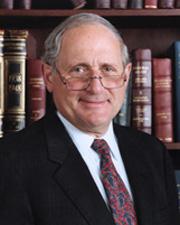 Sen. Carl Levin (D-MI)
Legislative Activity
Stay on top of the latest movement without scrolling through every action
Senate amendment not agreed to: Amendment SA 2898 pursuant to the order of September 20, 2007, having failed to achieve the required 60 votes in the affirmative, was not agreed to in Senate by Yea-Nay Vote. 47 - 47. Record Vote Number: 346.
September 21, 2007
View full timeline
Senate amendment not agreed to: Amendment SA 2898 pursuant to the order of September 20, 2007, having failed to achieve the required 60 votes in the affirmative, was not agreed to in Senate by Yea-Nay Vote. 47 - 47. Record Vote Number: 346.
September 21, 2007
Roll call votes on amendments in Senate: Amendment SA 2898 pursuant to the order of September 20, 2007, having failed to achieve the required 60 votes in the affirmative, was not agreed to in Senate by Yea-Nay Vote. 47 - 47. Record Vote Number: 346.
September 21, 2007
Considered by Senate. (consideration: CR S11920-11925)
September 21, 2007
Amendment SA 2898 pursuant to the order of September 20, 2007, having failed to achieve the required 60 votes in the affirmative, was not agreed to in Senate by Yea-Nay Vote. 47 - 47. Record Vote Number: 346.
September 21, 2007
Proposed amendment SA 2898 pursuant to the order of September 20, 2007, having failed to achieve the required 60 votes in the affirmative, was withdrawn in Senate.
September 21, 2007
Senate amendment proposed (on the floor): Amendment SA 2898 proposed by Senator Levin to Amendment SA 2011.(consideration: CR S11802-11810, S11816-11827, S11828-11831; text: CR S11802)
September 20, 2007
Amendment SA 2898 proposed by Senator Levin to Amendment SA 2011. (consideration: CR S11802-11810, S11816-11827, S11828-11831; text: CR S11802) To provide for a reduction and transition of United States forces in Iraq.
September 20, 2007
Senate amendment submitted
September 18, 2007
Votes
1 roll call on this amendment
Text
Proposed
CHANGE OF VOTE

Mr. STEVENS. Mr. President, on rollcall No. 343, I voted ``yea.'' I
intended to vote ``nay.'' Therefore, I ask unanimous consent that I be
permitted to change my vote. This will not affect the outcome of the
vote.
The PRESIDING OFFICER. Without objection, it is so ordered.
(The foregoing tally has been changed to reflect the above order.)

Amendment No. 2934

The PRESIDING OFFICER. Under the previous order, there will now be 2
minutes of debate equally divided prior a vote in relation the
amendment No. 2934, offered by the Senator from Texas.
The Republican leader is recognized.
Mr. McCONNELL. Mr. President, I would like to proceed for a few
minutes on my leader time.
The PRESIDING OFFICER. Without objection, it is so ordered.
Mr. McCONNELL. Mr. President, it has been more than a week since the
junior Senator from Texas offered an amendment condemning an ad by
MoveOn.org that appeared last Monday in the New York Times.
The ad was, by any standard--by any standard--abhorrent. It accused a
four-star general, who has the trust and respect of 160,000 men and
women in Iraq, of betraying that mission and those troops, of lying to
them and to us.
Who would have ever expected anybody would go after a general in the
field at a time of war, launch a smear campaign against a man we have
entrusted with our mission in Iraq?
Any group that does this sort of thing ought to be condemned.
Let's take sides: General Petraeus or MoveOn.org. Which one are we
going to believe? Which one are we going to condemn? That is the
choice.
MoveOn says he is a traitor. If we believe that, we should condemn
him. If we do not believe that, then we ought to be condemning them,
not him.
Now, here is what we know about this group. I will bet you a lot of
our Democratic colleagues do not know everything MoveOn is for. I think
you probably know they try to come to your aid from time to time, but I
bet you do not know everything they advocate.
In the days after the terrorist attacks of September 11, it urged--
MoveOn.org urged--a pacifist response to al-Qaida.
They rejected the idea that governments should be held responsible
for terrorists such as al-Qaida who operate within their borders.
This is the group that called defeating the PATRIOT Act ``a success
story,'' the group that ran an ad on its Web site equating the
President to Adolf Hitler, the group that thinks organizations such as
the U.N. will rid the world of al-Qaida.
That is MoveOn.org. This is what we are dealing with. I cannot
believe those are the views of a vast majority of my friends and
colleagues on the other side of the aisle.
Now, what do we know about General Petraeus? Commander of the Multi-
National Force-Iraq; been in Iraq for about 4 years; literally wrote
the U.S. counterinsurgency manual; commanded the 101st Airborne
Division

[[Page S11786]]

during the first year of Operation Iraqi Freedom; Assistant Chief of
Staff for Operations of the NATO Stabilization Force and Deputy
Commander of the U.S. Joint Interagency Counter-Terrorism Task Force in
Bosnia; Assistant Division Commander for Operations of the 82nd
Airborne Division at Fort Bragg; West Point; aide to the Chief of Staff
of the Army; battalion, brigade, and division operations officer;
Assistant to the Supreme Allied Commander-Europe; Distinguished Service
Medal; Defense Superior Service Medal; Legion of Merit; Bronze Medal
for Valor; NATO Meritorious Service Medal; one of America's 25 Best
Leaders, according to US News & World Report; and a four-star general
of the Army.
That is what we know about General Petraeus.
Here is what our friends on the other side of the aisle said about
General Petraeus when they confirmed him back in January.
The junior Senator from California called him ``an amazing man.''
The chairman of the Foreign Relations Committee, the senior Senator
from Delaware, said: ``I don't know anybody better than Petraeus.''
The senior Senator from Massachusetts said he is ``an outstanding
military officer, and our soldiers really deserve the best, and I think
they're getting it with your service,'' referring to General Petraeus.
The chairman of the Armed Services Committee, the senior Senator from
Michigan, said: ``General Petraeus is widely recognized for the depth
and breadth of his education, training, and operational experience.''
They praised him up and down in January, confirmed him unanimously,
funded his mission, and sent him the troops.
So now is the time to be heard. Is it right to call General Petraeus
a traitor or not? That is what this vote is about. Is it right to call
General Petraeus a traitor or not?
This group, MoveOn.org, is crowing all over the papers. They say they
have my colleagues on the other side of the aisle on a leash. They brag
about it. Their executive director has said, referring to the party on
the other side of the aisle, they are ``Our party.'' MoveOn.org says:
``we bought it, we own it, and we're going to take it back.'' That is
MoveOn.org saying that about our friends on the other side of the
aisle.
They claim to be in constant contact with people on the other side of
the aisle. I do not believe this group is telling all these great
Senators on the other side of the aisle what to do. I do not believe
that. This is an opportunity to demonstrate it.
So this amendment gives our colleagues a chance to distance
themselves from these despicable tactics, distance themselves from the
notion that some group literally has them on a leash, akin to a puppet
on a string.
It is time to take a stand--not to dredge up political battles of the
past but to condemn this ad.
What about this ad should not be condemned? Is there anything about
this ad that should not be condemned?
I urge my colleagues to stand with General Petraeus and against this
ad.
The PRESIDING OFFICER (Mr. Whitehouse). The majority leader is
recognized.
Mr. REID. Mr. President, the only thing my friend left off regarding
General Petraeus, he also has a Ph.D. from Princeton. He is a man we
all have great regard for. I think no one disputes that General
Petraeus is a good soldier. He follows orders, and that is what
soldiers are supposed to do, even a general. This general follows the
orders of the Commander in Chief, and that is the way it should be.
This is not the Petraeus war. It is the Bush war. I would say my
friend from Kentucky, my dear friend, my counterpart, is talking about
an organization that has more than 3 million members. I do not know
what any one of them may have said at any given time. I certainly
cannot support everything they say, that is for sure.
But understand, the amendment that was offered by my friend, Senator
Boxer, is very clear. It says the September 10, 2007, advertisement in
the New York Times ``was an unwarranted personal attack on General
Petraeus.'' That is what it says. We just voted on that. I cannot
imagine why some of my colleagues on the other side voted against this.
That is what it says. One reason, maybe it brought up some things from
the past, the recent past, such as yesterday.
For a party that endorsed longer troop time in Iraq for our soldiers;
that is, our people who are serving us so valiantly in Iraq cannot stay
home for the same amount of time they go over there--that is what this
party voted against. They voted in favor of second and third and fourth
tours of duty for these young men and women.
We condemn all attacks on our valiant soldiers. That is what the
amendment we voted on said. I read what it says about the ad. We don't
support that ad. We clearly voted accordingly.

But we also said we should remember--as I hope we remember the vote
yesterday endorsing longer tours for our soldiers--I hope we also
remember what happened to Max Cleland, a man who lost three limbs.
Every day of his life, including today, he wakes up and spends 2 hours
getting dressed. He dresses himself. He does his exercise, running on a
mattress, with his stumps. He was decorated for heroism. But he wasn't
patriotic enough to serve in the Senate, according to people who are in
this Chamber. They ran ads against Max Cleland. John Kerry: Two Silver
Stars, two Purple Hearts. Did I hear my friends complaining about these
vicious ads against John Kerry when he was running for President? Not a
single murmur. Some were cheering on the Swift Boat demons.
So as we say in this resolution, we do not support any unwarranted
attack on General Petraeus or any other of our military members. But
what we want to do here is talk about the war--the war. The policy is
bad. We will soon be starting the sixth year of this war, costing this
country right now about three-quarters of a trillion dollars, and we
are fighting for pennies for children's health, pennies for doing
things about the environment, and education. The President is
complaining because what we want to do in our appropriations bills is
$21 billion over this magic number he came up with, $21 billion in an
approximately $1 trillion bill, ultimately how much it will be for
taking care of things the Government wants. But we are going to have in
a few days another supplemental appropriations bill for Iraq
approaching about two hundred billion more dollars.
The American people are fed up with this. No one over here endorses
the ad that was in that newspaper. None of us do. But we want to talk
about the war. They want to talk about an ad in a newspaper. None of us
in any way criticized General Petraeus. He is a soldier. He is
following a policy set by the Commander in Chief. But that doesn't take
away from the problems the American people feel are as a result of this
war: death, injury to men and women. So I hope--we are on the Defense
authorization bill--we can proceed on the Defense authorization bill,
complete this legislation, have civil debate on Iraq policy, and we
hope to do that. I say respectfully to my friends, focus on the policy
of this war, not on an ad we had nothing to do with.
The PRESIDING OFFICER. Who yields time?
Mr. REID. If we have time left, I yield it back, and I ask for the
yeas and nays.
The PRESIDING OFFICER. Is there a sufficient second?
Mrs. BOXER. Mr. President, could I ask what the parliamentary
situation is? I thought Senator Cornyn was going to have an amendment
and I was going to have an amendment this morning. Is that accurate?
The PRESIDING OFFICER. Under the previous order, there will now be 2
minutes of debate equally divided prior to a vote in relation to
amendment No. 2934 offered by the Senator from Texas, Mr. Cornyn.
Is there a sufficient second?
At the moment, there is not a sufficient second.
Mr. McCONNELL. Mr. President, I ask for the yeas and nays.
The PRESIDING OFFICER. Is there a sufficient second?
There is a sufficient second.
The Senator from Texas is recognized.
Mr. CORNYN. Mr. President, this amendment is about the difference
between a uniformed leader of our U.S. military, GEN David Petraeus,
the difference between him and a political candidate. Surely our
colleagues--all of us in the Chamber understand, having run for office
ourselves, that there

[[Page S11787]]

are things said in political campaigns which many of us regret. But our
focus should not be distracted from this character assassination
against a great American patriot. I can't believe any Member of this
Senate would vote against this amendment which condemns this character
assassination and by their vote against this amendment would say it is
OK.
I yield the remainder of my time.
The PRESIDING OFFICER. The Senator from California is recognized.
Mrs. BOXER. Mr. President, John Kerry and Max Cleland are great
heroes. My colleagues on the other side voted not to condemn the
attacks against them, even though the Senator from Arizona did so, and
I have the chart of what he said.
This is about politics, let's face it. Since when are we the ad
police who go after organizations by name and wave around their name?
What are we going to do next when there is a health care debate? Are we
going to condemn one organization on one side and one on the other, or
are we going to do it on choice and hold up some very tough ads that we
see running all over this country? I would hope not.
This is the United States of America. We condemn all attacks against
our men and women serving honorably in the military, not just one
organization. We condemn all the attacks. I hope our colleagues will
vote ``no.'' Otherwise, we are starting a terrible precedent around
here we will regret.
I yield back the remainder of my time.
The PRESIDING OFFICER. All time has expired.
The question is on agreeing to amendment No. 2934. The yeas and nays
are ordered.
The clerk will call the roll.
The assistant legislative clerk called the roll.
Mr. DURBIN. I announce that the Senator from Delaware (Mr. Biden),
the Senator from Washington (Ms. Cantwell) and the Senator from
Illinois (Mr. Obama) are necessarly absent.
The PRESIDING OFFICER. Are there any other Senators in the Chamber
desiring to vote?
The result was announced--yeas 72, nays 25, as follows:

[Rollcall Vote No. 344 Leg.]

YEAS--72

Alexander
Allard
Barrasso
Baucus
Bayh
Bennett
Bond
Brownback
Bunning
Burr
Cardin
Carper
Casey
Chambliss
Coburn
Cochran
Coleman
Collins
Conrad
Corker
Cornyn
Craig
Crapo
DeMint
Dole
Domenici
Dorgan
Ensign
Enzi
Feinstein
Graham
Grassley
Gregg
Hagel
Hatch
Hutchison
Inhofe
Isakson
Johnson
Klobuchar
Kohl
Kyl
Landrieu
Leahy
Lieberman
Lincoln
Lott
Lugar
Martinez
McCain
McCaskill
McConnell
Mikulski
Murkowski
Nelson (FL)
Nelson (NE)
Pryor
Roberts
Salazar
Sessions
Shelby
Smith
Snowe
Specter
Stevens
Sununu
Tester
Thune
Vitter
Voinovich
Warner
Webb

NAYS--25

Akaka
Bingaman
Boxer
Brown
Byrd
Clinton
Dodd
Durbin
Feingold
Harkin
Inouye
Kennedy
Kerry
Lautenberg
Levin
Menendez
Murray
Reed
Reid
Rockefeller
Sanders
Schumer
Stabenow
Whitehouse
Wyden

NOT VOTING--3

Biden
Cantwell
Obama
The PRESIDING OFFICER. On this vote, the yeas are 72, the nays are
25. Under the previous order, requiring 60 votes for the adoption of
the amendment, amendment No. 2934 is agreed to.
Mr. LEVIN. Mr. President, I move to reconsider the vote.
Mr. McCAIN. I move to lay that motion on the table.
The motion to lay on the table was agreed to.
Mr. LEVIN. Mr. President, I ask unanimous consent that when the
Senate considers Feingold amendment No. 2924, which I understand will
now be the matter before the Senate, there will be 2 hours of debate,
with the time divided as follows: 90 minutes under the control of
Senator Feingold or his designee, 30 minutes under the control of
Senator McCain or his designee; that no amendment be in order to the
amendment prior to the vote; that upon the--Mr. President, I suggest
the absence of a quorum.
The PRESIDING OFFICER. The clerk will call the roll.
The assistant legislative clerk proceeded to call the roll.
Mr. LEVIN. Mr. President, I ask unanimous consent that the order for
the quorum call be rescinded.
The PRESIDING OFFICER. Without objection, it is so ordered.
Mr. LEVIN. Mr. President, it is our understanding--and Senator McCain
and I have discussed this--that Senator Feingold will be recognized to
offer amendment No. 2924.
I ask unanimous consent that there be 2 hours of debate, with the
time divided as follows: 90 minutes under the control of Senator
Feingold or his designee, 30 minutes under the control of Senator
McCain or his designee; that no amendment be in order to the amendment
prior to the vote; that upon the use or yielding back of time, without
further intervening action or debate, the Senate proceed to vote in
relation to the amendment, and that if the amendment doesn't receive 60
votes, it be withdrawn.
The PRESIDING OFFICER. Is there objection?
Mr. McCAIN. Mr. President, reserving the right to object, and I will
not object, I thank the distinguished chairman, Senator Levin. I want
to mention this: Is it the chairman's understanding that after that, we
would probably go to the Levin-Reed amendment and have a time agreement
following that? Is it also the chairman's understanding that any Iraq-
related amendment would probably be a 60-vote requirement? Finally, is
it also the understanding of the chairman that at 3 p.m. today we would
expect all amendments to be filed on this bill?
Mr. LEVIN. If the Senator will yield.
Mr. McCAIN. I do not object.
Mr. LEVIN. It is our hope to work out an arrangement so we can
proceed next to the Levin-Reed amendment. If that is the situation, we
would hope to work out a time agreement as well on that amendment.
There are two other matters that we may want to try to dispose of--at
least one other matter--prior to the Levin-Reed amendment. It is our
hope as well, as the Senator from Arizona expects, that amendments that
are Iraq related include the 60-vote requirement.
Mr. McCAIN. Also, if I could be recognized briefly.
The PRESIDING OFFICER. Without objection, the unanimous consent
agreement is agreed to.
Mr. McCAIN. Mr. President, I remind my colleagues--and I again thank
the chairman, Senator Levin. I think we have had an excellent degree of
accommodation, with occasional differences of opinion. But I appreciate
his leadership. I remind my colleagues this is the 12th day of debate
on this bill. The total time of debate has been 69 hours. We still have
not gotten to the body of the legislation. That is 12 days, 69 hours.
I know this is called a ``deliberative'' body, but we are now
reaching the limits of that description. So I hope all of our
colleagues will work with us to dispose--hopefully today--of the Iraq-
related amendments, and then we can close out the filing of amendments
on the bill itself and, hopefully, have some kind of agreement to
dispose of this legislation.
Again, as we have pointed out several times, on this legislation is
the Wounded Warrior legislation, for our veterans, a pay raise, and so
many other important aspects of the legislation. We don't want us, for
the first time in more than 46 years, not to pass this important bill.
I yield the floor.
Mr. LEVIN. Mr. President, let me also add one comment to Senators. We
have already, on this side, hotlined a unanimous consent agreement that
no amendment would be in order to this bill, unless it is filed by 4
p.m. this afternoon--no first-degree amendment would be in order. We
don't know what the response is. We hope all of the Democrats will
agree to that. We believe that a similar unanimous consent request has
been hotlined on the Republican side, but the ranking member would know
that.
We hope that works, for the reason the Senator gave, which is that
this bill is extremely important. We have been on it a long time. We
are going to need a number of days, obviously, to resolve the hundreds
of amendments

[[Page S11788]]

that are still filed and have not been resolved. We are working to
clear amendments, and we need the cooperation of everybody.
Mr. McCAIN. Mr. President, one final comment. I am not sure I will
need all the time on this side for this amendment. We have debated this
amendment before, and I alert my colleagues that perhaps we can vote
earlier than the 2-hour time that is involved.
I yield the floor.
The PRESIDING OFFICER (Mrs. McCaskill). The Senator from Wisconsin.
Mr. FEINGOLD. Madam President, what is the pending business?
The PRESIDING OFFICER. Amendment No. 2064.
Mr. FEINGOLD. Amendment No. 2064?
The PRESIDING OFFICER. Correct.
Mr. FEINGOLD. Madam President, I ask unanimous consent that amendment
be set aside.
The PRESIDING OFFICER. Without objection, it is so ordered.

Amendment No. 2924 to Amendment No. 2011

Mr. FEINGOLD. Madam President, I now call up amendment No. 2924.
The PRESIDING OFFICER. The clerk will report.
The assistant legislative clerk read as follows:

The Senator from Wisconsin [Mr. Feingold], for himself, Mr.
Reid, Mr. Leahy, Mrs. Boxer, Mr. Whitehouse, Mr. Harkin, Mr.
Sanders, and Mr. Schumer, proposes an amendment numbered 2924
to amendment No. 2011.

Mr. FEINGOLD. Madam President, I ask unanimous consent that the
reading of the amendment be dispensed with.
The PRESIDING OFFICER. Without objection, it is so ordered.
The amendment is as follows:

(Purpose: To safely redeploy United States troops from Iraq)

At the end of subtitle C of title XV, add the following:

SEC. 1535. SAFE REDEPLOYMENT OF UNITED STATES TROOPS FROM
IRAQ.

(a) Transition of Mission.--The President shall promptly
transition the mission of the United States Armed Forces in
Iraq to the limited and temporary purposes set forth in
subsection (d).
(b) Commencement of Safe, Phased Redeployment From Iraq.--
The President shall commence the safe, phased redeployment of
members of the United States Armed Forces from Iraq who are
not essential to the limited and temporary purposes set forth
in subsection (d). Such redeployment shall begin not later
than 90 days after the date of the enactment of this Act, and
shall be carried out in a manner that protects the safety and
security of United States troops.
(c) Use of Funds.--No funds appropriated or otherwise made
available under any provision of law may be obligated or
expended to continue the deployment in Iraq of members of the
United States Armed Forces after June 30, 2008.
(d) Exception for Limited and Temporary Purposes.--The
prohibition under subsection (c) shall not apply to the
obligation or expenditure of funds for the following limited
and temporary purposes:
(1) To conduct targeted operations, limited in duration and
scope, against members of al Qaeda and affiliated
international terrorist organizations.
(2) To provide security for United States Government
personnel and infrastructure.
(3) To provide training to members of the Iraqi Security
Forces who have not been involved in sectarian violence or in
attacks upon the United States Armed Forces, provided that
such training does not involve members of the United States
Armed Forces taking part in combat operations or being
embedded with Iraqi forces.
(4) To provide training, equipment, or other materiel to
members of the United States Armed Forces to ensure,
maintain, or improve their safety and security.

Mr. FEINGOLD. Madam President, last week, as the administration was
trying to convince us to stay the latest course in Iraq, it made very
little mention of the fact that in every month this year, January
through August, substantially more U.S. troops have died in Iraq than
in the corresponding month in 2006.
It also had little to say about the British survey released last week
which found that nearly one in two Baghdad households has lost at least
one member to war-related violence and that 22 percent of surveyed
households across the nation have endured at least one death. Based on
the number of households in Iraq, this could mean that upwards of 1
million civilian deaths have occurred as a result of the war in Iraq.
Despite these facts, this administration assures us that violence is
decreasing and that the security situation in Iraq is getting better.
They tell us success is within reach and that we are closer to
attaining our objectives, even though those objectives keep changing--
most recently from supporting a strong central government to a more
bottom-up and local approach. Just give us more time, they say, just as
they said in 2004 and in 2005 and in 2006. The slogan may be different.
We have had ``Mission Accomplished'' and ``Stay the Course'' and ``The
New Way Forward'' and now ``Return on Success.'' But each time, we are
told we are on the right road until, that is, we reach another dead end
and then a new slogan is invented to justify our open-ended presence in
Iraq. As the administration blunders from one mistake to another, brave
American troops are being injured and killed in Iraq, our military is
being overstretched, countless billions of dollars are being spent, the
American people are growing more and more frustrated and outraged, and
our national security, quite frankly, is being undermined.
Our top national security priority should be going after al-Qaida and
its affiliates. They are waging a global campaign from north Africa to
Southeast Asia. We cannot afford to continue to focus so much of our
resources on one single country without a legitimate strategy for
dealing with the threats posed by al-Qaida's global reach.
Instead of seeing the big picture, instead of placing Iraq in the
actual context of a comprehensive and global campaign against a
ruthless enemy, this administration persists in the tragic mistake it
made over 4 years ago when it took this country to war in Iraq. That
war has led to the deaths of more than 3,700 Americans and perhaps as
many as 1 million Iraqi civilians, it has deepened instability
throughout the Middle East, it has jeopardized our credibility, and it
has clearly alienated our friends and allies.
This summer's declassified National Intelligence Estimate confirms
that al-Qaida remains the most serious threat to the United States.
Indeed, key elements of that threat have been regenerated, have even
been enhanced. While we have been distracted by the war in Iraq, al-
Qaida has protected, rebuilt, and strengthened its safe haven in the
border region between Pakistan and Afghanistan and has increased its
collaboration with regional terrorist groups in other parts of the
world. With its safe haven, al-Qaida is working to expand its network
and, therefore, its ability to strike Western targets, including ones
right here in the United States.
The administration has much to say about al-Qaida in Iraq. They will
not tell you al-Qaida in Iraq is an al-Qaida affiliate which was
spawned by this disastrous war, however, and they would rather not talk
about al-Qaida's safe haven in the Pakistan-Afghanistan region or even
recognize the serious global threat that continues to exist and that
has even been strengthened while our troops are dying in Iraq. That
tells you all you need to know about the administration's painfully
narrow focus on Iraq.
The war in Iraq is not making us safer. It is making us more
vulnerable. It is stretching our military to the breaking point and
inflaming tensions and anti-American sentiment in an important and
volatile part of the world. It is playing into the hands of our
enemies, as even the State Department recognized when it said the war
in Iraq is ``used as a rallying cry for radicalization and extremist
activity in neighboring countries.''
Of course, it would be easy to put all the blame on the
administration, but I am afraid Congress is complicit too. Congress
authorized the war. Congress has so far allowed it to continue despite
strong efforts from the new Democratic leadership. Now, once again, it
is up to us in Congress to reverse this President's intractable policy,
to listen to the American people, to save American lives, and to
protect our Nation's security by redeploying our troops from Iraq. We
have the power and the responsibility to act, and we must act now.
I am not suggesting that we abandon the people of Iraq or that we
ignore the political stalemate there and the rapidly unfolding
humanitarian crisis which has displaced more than 4 million Iraqis from
their homes. These critical issues require the attention and
constructive engagement of U.S.

[[Page S11789]]

policymakers, key regional players, and the international community.
But such turbulence cannot and will not be resolved by a massive
military engagement. The administration's surge is another dead end.
The surge was supposedly aimed at creating the space necessary for
political compromise, but the Iraqi Government is no more reconciled
than it was when the surge began, and American troops are dying in
greater numbers--greater numbers--than last year or the year before.
That is why I am again offering an amendment, with the majority
leader, Harry Reid, and Senators Leahy, Boxer, Whitehouse, Harkin,
Sanders, Schumer, Dodd, Durbin, and Menendez. Our amendment, which is
similar to legislation we introduced earlier this year, would require
the President to begin safely redeploying U.S. troops from Iraq within
90 days of enactment, and it would require the redeployment to be
completed by June 30, 2008.
At that point, with our troops safely out of Iraq--and I repeat
that--at that point, with our troops safely out of Iraq, funding for
the war would be ended, with four narrow exceptions: providing security
for U.S. Government personnel and infrastructure, training the Iraqi
security forces, providing training and equipment to U.S. service men
and women to ensure their safety and security, and conducting targeted
operations limited in duration and scope against members of al-Qaida
and other affiliated international terrorist organizations.
By enacting Feingold-Reid, we can finally focus on what should be our
top national security priority--waging a global campaign against al-
Qaida and its affiliates. Our amendment will allow targeted missions
against al-Qaida in Iraq, but it will not allow the administration to
maintain substantial numbers of U.S. troops in that country.

The amendment will also allow training of Iraqis who have taken steps
to address serious concerns about the loyalties of the ISF. The
Government Accountability Office has found that the ISF have been
infiltrated by Shia militia, and General Jones's recent report
indicated ISF are compromised by militia and sectarian alliances. In
addition, there have been several reports of ISF attacks upon U.S.
troops. That is why we do not allow training for Iraqis who have been
involved in sectarian violence or attacks upon Americans.
We also prevent the ``training'' exception from being used as a
loophole to keep tens of thousands of U.S. troops in Iraq. We do this
by stipulating that U.S. troops providing training cannot be embedded
or take part in combat operations with the ISF. Training should be
training, not a ruse for keeping American troops on the front lines of
the Iraqi civil war. Of course, U.S. troops can take part in combat
operations specifically against al-Qaida and its affiliates.
Some of my colleagues will oppose this amendment. That is their
right. But I hope none of them will suggest that Feingold-Reid would
hurt the troops by denying them equipment or support. Why do I hope
they don't say that? Because there is no truth to the argument. None.
This is an absolutely phony argument used time and again to try to get
away from what this amendment actually does. Passing this legislation
will result in our troops being safely redeployed by the deadline we
set. At that point, with the troops safely out of Iraq, funding for the
war would end, with the narrow exceptions I listed. That is what
Congress did in 1993 when it voted overwhelmingly to bring our military
mission in Somalia to an end by setting a deadline after which funding
for that mission would end. And that is what Congress must do again to
terminate the President's unending mission in Iraq.
In order to make clear our legislation will protect the troops, we
have added language requiring that redeployment ``shall be carried out
in a manner that protects the safety and security of United States
troops,'' and we have specified that nothing in this amendment will
prevent U.S. troops from receiving the training or equipment they need
``to ensure, maintain, or improve their safety and security.'' So I
hope we will not be hearing any more phony arguments about troops on
the battlefield somehow not getting the supplies they need.
Other amendments might set goals for redeployment or merely call for
a change in mission, but those proposals do not go far enough. Nor is
it sufficient to pass legislation that allows substantial numbers of
U.S. troops to remain in Iraq indefinitely. As the President's Iraq
policy continues unchecked, we need to invoke the power and the
responsibility bestowed upon us by the Constitution and bring this to a
close.
This war doesn't make sense. It is hurting our country, our military,
and our credibility. It is time for this war to end. The American
people know this, and they are looking to us to act. I hope we will not
let them down again.
Madam President, I reserve the remainder of my time. I yield the
floor.
The PRESIDING OFFICER. The Senator from Arizona.
Mr. McCAIN. Madam President, I rise to oppose the amendment offered
by my good friend from Wisconsin. I would prefer to be discussing other
reform issues with him than this one, but this is an important
amendment.
As usual, the Senator from Wisconsin makes a passionate and
persuasive case. Unfortunately, the pending amendment would mandate a
withdrawal of U.S. combat forces within 90 days of enactment and cut
off funds for our troops in Iraq after June 30, 2008. One exception
would be for a small force authorized only to carry out narrowly
defined missions.
The Senate, once again, faces a simple choice: Do we build on the
successes of our new strategy and give General Petraeus and the troops
under his command the time and support needed to carry out their
mission or do we ignore the realities on the ground and legislate a
premature end to our efforts in Iraq, accepting thereby all the
terrible consequences that will ensue? That is the choice we must make,
and though politics and popular opinion may be pushing us in one
direction, we have a greater responsibility, in my view, a duty to make
decisions with the security of this great and good Nation foremost in
our minds.
We now have the benefit of the long-anticipated testimony delivered
by General Petraeus and Ambassador Crocker, testimony that reported
unambiguously that the new strategy is succeeding in Iraq.
Understanding what we know now--that our military is making progress on
the ground and that their commanders request from us the time and
support necessary to succeed in Iraq--it is inconceivable that we in
Congress would end this strategy just as it is beginning to show real
results.
We see today that after nearly 4 years of mismanaged war, the
situation on the ground in Iraq is showing demonstrable signs of
progress. The final reinforcements needed to implement General
Petraeus's new counterinsurgency plan have been in place for over 2
months, and our military, in cooperation with the Iraqi security
forces, is making significant gains in a number of areas.
General Petraeus reported in detail on these gains during his
testimony in both Houses and in countless interviews. The No. 2 U.S.
commander in Iraq, GEN Ray Odierno, said today--Madam President, I ask
unanimous consent to have printed in the Record an article today by AP
concerning General Odierno's comments saying ``that a seven-month old
security operation has reduced violence by 50 percent in Baghdad but he
acknowledged that civilians were still dying at too high a rate.''
There being no objection, the material was ordered to be printed in
the Record, as follows:

U.S. Commander: Violence Down in Baghdad

(By Katarina Kratovac)

The No. 2 U.S. commander in Iraq said Thursday that a
seven-month-old security operation has reduced violence by 50
percent in Baghdad but he acknowledged that civilians were
still dying at too high a rate.
The comments came as relations between the U.S. and Iraqi
governments remained strained in the wake of Sunday's
shooting involving Blackwater USA security guards, which
Iraqi officials said left at least 11 people dead. Prime
Minister Nouri al-Maliki suggested the U.S. Embassy find
another company to protect its diplomats.
The Moyock, N.C.-based company has said its employees acted
``lawfully and appropriately'' in response to an armed attack
against a State Department convoy.
But a survivor who said he was three cars away from the
convoy denied the American guards were under fire, claiming
they apparently started shooting to disperse more than

[[Page S11790]]

two dozen cars that were stuck in a traffic jam.
``It is not true when they say that they were attacked. We
did not hear any gunshots before they started shooting,''
lawyer Hassan Jabir said from his hospital bed.
On Thursday, Lt. Gen. Raymond Odierno told reporters that
car bombs and suicide attacks in Baghdad have fallen to their
lowest level in a year, and civilian casualties have dropped
from a high of about 32 to 12 per day.
He also said violence in Baghdad had seen a 50 percent
decrease, although he did not provide details about how the
numbers were obtained and said that was short of the
military's objectives.
``What we do know is that there has been a decline in
civilian casualties, but I would say again that it's not at
the level we want it to be,'' Odierno said. ``There are still
way too many civilian casualties inside of Baghdad and
Iraq.''
Al-Qaida in Iraq was ``increasingly being pushed out of
Baghdad, ``seeking refuge outside'' the capital and ``even
fleeing Iraq,'' Odierno said.
Lt. Gen. Abboud Qanbar, the Iraqi military commander, said
that before the troop buildup, one-third of Baghdad's 507
districts were under insurgent control.
``Now, only five to six districts can be called hot
areas,'' he said. ``Al-Qaida now is left only with booby-
trapped cars and roadside bombs as their only weapon, which
cannot be called quality operations, and they do not worry
us.''
Qanbar also reported the release of 1,686 detainees from
Iraqi jails.
Odierno said the U.S. military had separately released at
least 50 detainees per day, or a total of at least 250, since
beginning an amnesty program for inmates as a goodwill
gesture linked to the Islamic holy month of Ramadan.
Meanwhile, a U.S. soldier died Wednesday in a non-combat
incident in Anbar west of Baghdad, the military said, adding
that the incident was under investigation.
After the shooting Sunday in the Mansour district of
western Baghdad, Blackwater spokeswoman Anne E. Tyrrell said
the employees acted ``lawfully and appropriately'' in
response to an armed attack against a U.S. State Department
convoy.
But Iraqi witnesses claim seeing Blackwater security guards
fire at civilians randomly.
Speaking from his bed in the Yarmouk hospital four days
after the incident, Jabir said he was one of the wounded when
Blackwater's security guards opened fire in Nisoor Square.
He said he was stuck in a traffic jam near Nisoor Square in
western Baghdad when he saw the American convoy of armored
vehicles and black SUVs parked about 20 yards away at an
intersection, apparently following an explosion.
Jabir said the Americans began yelling to disperse the
vehicles, then opened fire as the cars were trying to turn
around.
``Some people, including women and children, left their
cars and began crawling on the street to avoid being shot but
many of them were killed. I saw a 10-year-old boy jumping in
fear from one of the minibuses and he was shot in his head.
His mother jumped after him and was also killed,'' Jabir
said, adding that his car flipped over in the chaos.
The incident has angered Iraqis, uniting them in blaming
U.S. forces for the violence in their country and backing the
government's announcement to ban Blackwater from Iraq.
U.S. and Iraqi officials announced they would form a joint
committee to try to reconcile widely differing versions of
the incident. Conflicting accounts were circulating among
Iraqi officials themselves.
Land travel by U.S. diplomats and other civilian officials
outside the fortified Green Zone was suspended following the
Iraqi government order that Blackwater stop working.
The U.S.-based company is the main provider of bodyguards
and armed escorts for American government civilian employees
in Iraq and banning it from Iraq would hamper and make
movement of U.S. diplomats and others difficult.
Al-Maliki, who disputed Blackwater's version of what
happened, spoke out sharply against the company Wednesday,
saying the government would not tolerate the killing of its
citizens ``in cold blood.''
He also said the shootings had generated such ``widespread
anger and hatred'' that it would be ``in everyone's interest
if the embassy used another company while the company is
suspended.''
Eager to contain the crisis, the State Department said
Wednesday a joint U.S.-Iraqi commission will be formed.
The size and composition of the commission have yet to be
determined but its members are charged with assessing the
results of both U.S. and Iraqi investigations of Sunday's
incident, reaching a common conclusion about what happened
and recommending possible changes to the way in which the
embassy and its contractors handle security, the State
Department said.

Mr. McCAIN. He said that the violence, as I said, has been reduced by
some 50 percent, that car bombs and suicide attacks in Baghdad have
fallen to their lowest levels in a year, and that civilian casualties
have dropped from a high of 32 per day to 12 per day.
His comments were echoed by LTG Abboud Qanbar, the Iraqi commander,
who said that before the surge began, one-third of Baghdad's 507
districts were under insurgents' control. Today, he said, only five to
six districts can be called hot areas.
I want to be clear to my friend from Wisconsin and my colleagues,
none of this is to argue that Baghdad or other regions have suddenly
become safe or that violence has come down to acceptable levels. As
General Odierno pointed out, violence is still too high and there are
many unsafe areas. Nevertheless, such positive developments illustrate
General Petraeus's contention last week that American and Iraqi forces
have achieved substantial progress under their new strategy.
The road in Iraq remains, as it always has been, long and hard. The
Maliki government remains paralyzed and unwilling to function as it
must, and other difficulties abound. No one can guarantee success or be
certain about its prospects. We can be sure, however, that should the
Congress succeed in terminating the new strategy by legislating an
abrupt withdrawal and a transition to a new, less effective, and more
dangerous course--should we do that, then we will fail for certain.
I wish to remind all of my colleagues of a statement made by the
President of Iran approximately 1 week ago. Every American should hear
this statement. Iranian President Mahmoud Ahmadi-Nejad declared
yesterday that U.S. political influence in Iraq was ``collapsing
rapidly,'' and said Tehran was ready to help fill any power vacuum. He
stated at a news conference in Tehran, referring to U.S. troops in
Iraq:

The political power of the occupiers is collapsing rapidly.
Soon, we will see a huge power vacuum in the region. Of
course, we are prepared to fill the gap, with the help of
neighbors and regional friends like Saudi Arabia, and with
the help of the Iraqi Nation.

That is what this is about. That is what this is about. Let us make
no mistake about the cost of such an American failure in Iraq. In his
testimony before the Armed Services Committee last week, General
Petraeus referred to an August Defense Intelligence Agency report that
stated:

A rapid withdrawal would result in the further release of
strong centrifugal forces in Iraq and produce a number of
dangerous results, including a high risk of disintegration of
the Iraqi Security Forces; a rapid deterioration of local
security initiatives; al-Qaida-Iraq regaining lost ground and
freedom of maneuver; a marked increase in violence and
further ethno-sectarian displacement and refugee flows; and
exacerbation of already challenging regional dynamics,
especially with respect to Iran.

These are the likely consequences of a precipitous withdrawal, and I
hope the supporters of such a move will tell us how they intend to
address the chaos and catastrophe that would surely follow such a
course of action. Should this amendment become law, and U.S. troops
begin withdrawing, do they believe Iraq would become more or less
stable? That the Iraqi people become more or less safe? That genocide
becomes a more remote possibility or even likelier? That al-Qaida will
find it easier to gather, plan, and carry out attacks from Iraqi soil,
or that our withdrawal will somehow make this less likely?
No matter where my colleagues came down in 2002 about the centrality
of Iraq to the war on terror, there can simply be no debate that our
efforts in Iraq today are critical to the wider struggle against
violent Islamic extremism. Earlier this month, GEN Jim Jones, who was
widely quoted by opponents of this new strategy, testified before the
Armed Services Committee and outlined what he believes to be the
consequences of such a course.

A precipitous departure which results in a failed state in
Iraq, will have a significant boost in the numbers of
extremists, jihadists in the world, who will believe they
will have toppled the major power on earth and that all else
is possible. And I think it will not only make us less safe;
it will make our friends and allies less safe. And the
struggle will continue. It will simply be done in different
and in other areas.

I don't see how General Jones could have made himself more clear and
succinct, and yet I continue to hear selective quotes from his
commissioned reports and his testimony that somehow would lead people
to believe he would support such a proposal as being made today by my
friend from Wisconsin.

[[Page S11791]]

Should we leave Iraq before there is a basic level of stability, we
invite chaos, genocide, terrorist safe havens, and regional war. We
invite further Iranian influence at a time when Iranian operatives are
already moving weapons, training fighters, providing resources, and
helping plan operations to kill American soldiers and damage our
efforts to bring stability to Iraq. If our notions of national security
have any meaning, they cannot include permitting the establishment of
an Iranian-dominated Middle East that is roiled by wider regional war
and riddled with terrorist safe havens.
The supporters of this amendment respond they do not by any means
intend to cede the battlefield to al-Qaida. On the contrary, their
legislation would allow U.S. forces, presumably holed up in forward
operating bases, to carry out ``targeted operations, limited in
duration and scope, against members of al-Qaida and other international
terrorist organizations.'' But such a provision draws a false
distinction between terrorism and sectarian violence. Let us think
about the implications of ordering American soldiers to target
``terrorists'' but not those who foment sectarian violence. Was the
attack on the Golden Mosque in Samarra a terrorist operation or the
expression of sectarian violence? When the Madhi army attacks
government police stations, are they acting as terrorists or as a
militia? When AQI attacks a Shia village along the Diyala River, is
that terrorism or sectarian violence? What about when an American
soldier comes across some unknown assailant burying an IED in the road?
Must he check for an al-Qaida identity card before responding?
The obvious answer is such acts very often constitute terrorism in
Iraq and sectarian violence in Iraq. The two are deeply intertwined. To
try to make an artificial distinction between terrorism and sectarian
violence is to fundamentally misunderstand al-Qaida's strategy, which
is to incite sectarian violence. It is interesting that some supporters
of this amendment embrace the recent GAO report, which said it could
not distinguish between sectarian violence and other forms of violence
because that would require determining an intent--an impossible task.
Yet these same supporters would have our troops in the field attempt to
do just that. Our military commanders say trying to artificially
separate counterterrorism from counterinsurgency will not succeed, and
that moving in with search-and-destroy missions to kill and capture
terrorists only to immediately cede the territory to the enemy is the
failed strategy of the past 4 years. We should not and must not return
to such a disastrous course.

The strategy General Petraeus has put into place--a traditional
counterinsurgency strategy that emphasizes protecting the population,
which gets our troops out of the bases and into the areas they are
trying to protect, and which supplies sufficient force levels to carry
out the mission--is the correct one. It has become clear by now we
cannot set a date for withdrawal without setting a date for surrender.
This fight is about Iraq, but not about Iraq alone. It is greater
than that and more important still about whether America still has the
political courage to fight for victory or whether we will settle for
defeat, with all the terrible things that accompany it. We cannot walk
away gracefully from defeat in this war. Consider one final statement
from the August National Intelligence Estimate. It reads:

We assess that changing the mission of the Coalition forces
from a primarily counterinsurgency and stabilization role to
a primary combat support role for Iraqi forces and
counterterrorist operations to prevent AQI from establishing
a safe haven would erode any security gains achieved thus
far.

Should we pass this amendment, we would erode the security gains our
brave men and women have fought so hard to achieve and embark on the
road of surrender. For the sake of American interests, our national
values, the future of Iraq, and the stability of the Middle East, we
must not send our country down this disastrous course. All of us want
our troops to come home, and to come home as soon as possible. But we
should want our soldiers to return to us with honor, the honor of
victory that is due all of those who have paid with the ultimate
sacrifice. We have many responsibilities to the people who elected us,
but one responsibility outweighs all the others, and that is to protect
this great and good Nation from all enemies foreign and domestic. I
urge my colleagues to vote ``no'' on the Feingold amendment.
Madam President, I yield the floor.
The PRESIDING OFFICER. The Senator from Wisconsin.
Mr. FEINGOLD. Madam President, I surely agree with the Senator from
Arizona. I also wish we were out here working on something else,
perhaps one of our political reform bills. We had started working on
our campaign finance reform bill long before 9/11, and we are still
working on those issues together. It is certainly tragic for this
country that, instead, we are mired in a situation in Iraq that takes
us away not only from our national security issues but also our
domestic issues that need attention.
But I thank my colleague from Arizona. He argues on the merits. He
doesn't hide behind the resume of a general or talk about or use some
other person as a human shield. He talks about the merits of the issue.
He and I have had a chance, thanks to his invitation on two occasions,
to visit Iraq and look at what was happening. Frankly, we just come to
different conclusions. In fact, we couldn't be more far apart on this
issue. Nonetheless, I respect the way he argues and the way we discuss
this, and I thank him for it.
In a moment, I will turn to one of my colleagues to speak, but I want
to briefly respond to a couple of the issues that were brought up by
the Senator from Arizona. The Senator from Arizona and I agree
absolutely on something: We fear failure in the fight against
terrorism. We want to defeat those who attacked us on 9/11.
For me, the fight is a global fight, which we have been distracted
from due to Iraq. So what I am concerned about is that a continued
effort in Iraq could lead to the ultimate failure in the fight against
those who attacked us on 9/11. It could lead to a surrender, a true
surrender against those who declared war on our country on September
11, 2001. So that is the failure I fear. That is the failure I want to
make sure doesn't happen, because we have to protect the American
people.
The Senator from Arizona points out the very difficult problem of
Iran, which is related to but also separate from the question of al-
Qaida.
He says: What happens if we leave Iraq?
Let me tell you something. What we are doing in Iraq right now is the
best deal Iran ever had. We take all the hits, we lose the people, we
pay for everything, and their influence in Iraq increases every day.
And they do not have to worry about a restive Sunni population in their
country because they are not moving into Iraq directly. But if we left,
they would have to think twice about their own stability, if they tried
to mess around in Iraq directly.
So, almost unbelievably, our strategy in Iraq plays into both the
hands of al-Qaida and Iran. It is the most foolish move we could make
in the fight against those who attacked us on 9/11 and against those
who are being very threatening to us at this point in the name of the
Iranian leader. It is the wrong strategy in both regards.
The Senator from Arizona asks: How are we going to get other
countries engaged if we leave Iraq? It is the reverse. None of these
bordering countries are going to get serious. None of them are going to
become engaged if they think we are going to just stay there--for a
couple of reasons. One is, Why should they? We are there putting up
with all the violence and difficulties and taking all the losses. They
don't have to spend anything.
The Senator from Arizona and I heard the Kuwaitis talk about this in
Kuwait, saying: Well, you know, you went in there; now you deal with
it. If we are not in there, not only Iran and Syria, Jordan and others
have a definite interest in Iraq not being chaotic. That is when they
start to perform.
The other problem is, How can these Islamic countries help stabilize
Iraq now when in their countries our involvement in Iraq is perceived
as an occupation of an Islamic country? So our very strategy stymies
the potential for stability being assisted by the other countries in
the region.
Those are just a couple of responses on the merits to some of the
points

[[Page S11792]]

made by the Senator from Arizona. I firmly believe our strategy is
hurting our country desperately in terms of our national security, and
that is why I and others offer the amendment.
At this point, I would like to yield 10 minutes to one of the
strongest advocates for this policy of trying to terminate this
involvement, the Senator from Connecticut.
The PRESIDING OFFICER (Mr. Salazar). The Senator from Connecticut.
Mr. DODD. Mr. President, let me say to both my colleague from
Wisconsin and my colleague from Arizona, I was the floor manager of the
McCain-Feingold campaign finance reform legislation. I feel as though,
in a sense here, I am assuming the role again as the manager between
the McCain and Feingold camps on this question. They were two people
who joined forces together on a critical issue before our country, and
I was honored and pleased to manage the legislation which was named for
them.
We find ourselves here again on a different subject matter and
assuming different roles. I am not managing the issue, but I would be
remiss if I didn't also express my deep respect for my colleague, the
Senator from Wisconsin, for his leadership and my affection and respect
for my colleague from Arizona, with whom I have worked on a number of
issues over the years.
I rise in support of the Feingold-Reid amendment. I believe it is a
very important amendment. This may be the critical vote, candidly, on
whether we are going to persist over the coming months, until January
2009, in a policy that has failed--or whether we can actually make a
difference here, and change the direction of this policy, and give our
Nation a sense of new hope, new optimism, and give those who have
served so valiantly an opportunity to come home or to engage in an area
where their leadership is needed. This is the moment. This may be the
one opportunity we have between now and 2009 to make a difference on
this issue. This is no small proposal; this is a serious one.
For those who would like to wish it were a little bit this way or
that way, that is no reason to be against it. Senator Feingold, once
again, has offered us an opportunity here to make a difference in this
policy. This may be the one real opportunity we get to do that. My hope
is that in the next hour and a half, those who are listening to this
debate, thinking about this, will understand the moment before us, and
take advantage of this opportunity, and make a decision that could
affect the future of our country in this century.
Out of 2 full days General Petraeus spent testifying before Congress,
I think the most telling exchange took only four lines. There were
hearings that went on in the House of Representatives. We had hearings
in the Foreign Relations Committee and hearings in the Armed Services
Committee. There were very good questions raised by members of both
parties, but I commend my colleague from Virginia, Senator John Warner,
the former chairman of the Armed Services Committee, the ranking member
today, for his simple question. We have often seen this happen in
history. It is one simple sentence, one simple question--not the
complicated, multiphrase question, which gets into all the nuances and
details of an issue--that will shed the most light on where we stand.
Senator McCain said something a minute ago with which I totally
agree, and Senator Feingold reiterated it. The primary purpose, the
fundamental issue before this body, before every Member here and
certainly before the President of the United States, is the issue of
the safety and security of our country. That is our paramount
responsibility above all else--to keep our country safe and secure. So
the four-line question that was raised to General Petraeus in his
testimony on September 11 was the most important question, in many
ways, that was asked of him.

Senator Warner: Do you feel that [the Iraq war] is making
America safer?
General Petraeus: I believe that this is indeed the best
course of action to achieve our objectives in Iraq.
Senator Warner: Does it make America safer?
General Petraeus: I don't know, actually.

``I don't know, actually.'' It could be the epitaph of this war. And
to the families of the 3,791 men and women who lost their lives in
Iraq, it must be cold comfort indeed that the commanding general has
not even convinced himself that this war serves our security. But in
another sense, General Petraeus gave precisely the right answer. He has
no opinion because it is his job to have none.
His job is to execute a mission--work that he has done with great
fortitude and intellect. But the job of deciding whether the mission
serves our interests--deciding what our interests are, deciding what
the mission itself will be--that is a task for the general's
superiors--that is, the President of the United States, this body and
the other, and the American people, who are our superiors.
This amendment is our best attempt--maybe the only attempt--to give
voice to their shared conclusion: that our current course has failed to
make Iraq safer, has failed to make America safer, and so must change
dramatically. The amendment would accomplish two critical things.
One: Redeploy combat forces from Iraq.
Two: Focus those forces remaining on counterterrorism, training Iraqi
forces, and force protection for U.S. personnel and infrastructure.
I will not rehearse for you the administration's ever-shifting
justifications and stalling and stonewalling that have brought us, with
a battered military and an equally battered reputation, to this sad
point. It is enough to say that they have been given every chance. For
months and months, they denied that there was a civil war in Iraq.
Then, when denial became impossible, and when the bipartisan Iraq Study
Group report gave them a unique chance to change course, they scrapped
the report and gambled on a surge.
Then we were told that, despite the administration's catastrophic
policy failures, we should take their word for it--that we couldn't
judge this new tactic's success until American forces had ``surged'' to
their maximum levels. And that would take up 6 months.
Once the surge was at full force, we were told yet again that the
time wasn't right, that we had to withhold judgment again and wait
until General Petraeus's report. And last week, General Petraus came
before Congress and told us--to wait some more.
For what?
Early this month, Comptroller General David Walker testified that
``the primary point of the surge was to improve security . . . in order
to provide political breathing room'' for the Iraqi Government.
Seven hundred American service men and women sacrificed their lives
for that breathing room, and nearly 4,400 took wounds for it. What has
the Iraqi Government done with it? It failed to meet its own political
benchmarks, failed to enact oil legislation, sustained a mass
resignation of Sunni politicians, leaving more than half of its cabinet
seats vacant, and enjoyed a month-long vacation.
At the height of the surge, a BBC poll reported that 60 percent of
Iraqis--and 93 percent of Sunnis--think it is justified to kill
American troops. It is no surprise that Walker concluded that ``as of
this point in time, [the surge] has not achieved its desired outcome.''
That is what the surge has gotten us. What has it gotten Iraqis? At
the very best, a reduction in violence to still-catastrophic early-2006
levels. And even so, the statistics we saw last week were extremely
subject--as are all statistics--to the biases of those compiling and
categorizing them. According to the Washington Post, ``Intelligence
analysts . . . are puzzled over how the military designated attacks as
combat, sectarian, or criminal''--difficult categorizations that, I
might add, make all the difference to selling the surge as success, or
recognizing it as a failure.
Comptroller General Walker added that ``there are several different
sources in the administration on violence, and those sources do not
agree.'' One intelligence official put it succinctly: ``Depending on
which numbers you pick, you get a different outcome.'' In that context,
it is significant that the military cannot track, and does not track,
Shiite-on-Shiite and Sunni-on-Sunni violence. And in Baghdad alone,
according to the Iraqi Red Crescent, ``almost a million people . . .

[[Page S11793]]

have fled their homes in search of security, shelter, water,
electricity, functioning schools or jobs to support their families.''
And those are the results with the surge--a surge that, given the
exhausted state of our military, cannot physically be sustained. The
administration's supporters need to explain to us: Without the surge,
what could possibly happen, that has not taken place already, to bring
political reconciliation to Iraq?
What more could possibly happen to quell the violence between and
among Iraq's Sunnis and Shiites? What new development could possibly
change the face of this war? We all know the honest answers to those
questions.
And so the choice we have today is not, as some would have it,
between victory and defeat. That has never been the issue. We can
choose indefinite war for invisible gains; or we can choose to cut our
losses here and recognize that there is a better opportunity with a
different course of action. I can't remember a more painful choice in
all my years in this body. But to govern is to make just such painful
choices, without fear or flinching. And I believe the American people
are far ahead of us on this issue--they've made their choice. We must
make ours as their Representatives.
This amendment seeks to put that choice into action and to stop
Iraq's downward spiral. First, it sets firm and enforceable timelines
for the phased redeployment of combat troops out of Iraq.
The redeployed forces would be comprised of a majority of the
deployed Army Brigade Combat Teams and the Marine Expeditionary Force
currently in theater. Some may claim that such a redeployment is
logistically impossible within the timeframes laid out in the
amendment. But I would remind them that in the ramp-up to the first
gulf war, the Department of Defense coordinated the movement of over
500,000 troops, and 10 million tons of cargo and fuel in the same
timeframe that this amendment grants to redeploy a force one-fifth the
size.
In January of 1991--1 month alone--the Transportation Command moved
132,000 troops and 910,000 tons of equipment. So it is clear that we
have the wherewithal to end this war, if Congress could find the will.
At the same time, we cannot simply wish the conflict away. We do have
enemies in Iraq, enemies equally committed to killing Americans and
sowing sectarian violence. That is why this amendment carves out
exceptions to the general redeployment.
Using the name of al-Qaida is a means to frighten Americans into
buying a far broader agenda of continuous occupation. It's no
coincidence that, in President Bush's televised remarks on Iraq last
week, the word ``al-Qaida'' crossed his lips some 12 times in a speech
roughly 15 minutes long.
The amendment makes three noncombat exceptions: first, conducting
counterterrorism operations; second, training and Iraqi forces; and
third, protecting U.S. personnel and infrastructure.
It is beyond clear that continuing our course in Iraq harms America
in the broader fight against terrorism. In an article in the Financial
Times, Gideon Rachman summarized the key ways the war in Iraq has
actually strengthened terrorism: by diverting resources from fighting
al-Qaida in Afghanistan; by turning Iraq into a failed state and
terrorist-incubator; by delivering al-Qaida a potent recruiting tool;
and by harming America's standing with its traditional allies, whose
cooperation is necessary to foil terrorists. All four reasons are
clearly being enhanced because of our continued military presence in
Iraq.
On the other side of the coin, tightly focusing our Iraq mission
actually aids our security in the long run.
That certainly is the case when you consider the quote from a recent
IPS article on CENTCOM's commander, ADM William Fallon--General
Petraeus's superior, I might add. Admiral Fallon ``believed the United
States should be withdrawing troops from Iraq urgently, largely because
he saw greater dangers elsewhere in the region.'' With al-Qaida
reconstituting itself on the Pakistan-Afghan border, I could not agree
more.
With redeployment complete, I want our military to begin to regather
its strength. After a one-time redeployment cost estimated by the
Congressional Budget Office at $7 billion, which is about equal to this
war's cost every month, our Armed Forces will have the resources needed
to prepare for future challenges.
Those resources are sorely needed. Long, arduous deployments are not
only testing the morale of our troops and families, they are taxing
critical stocks of aircraft, vehicles, and other equipment. Two-thirds
of the U.S. Army--two-thirds of the U.S. Army--is unable to report for
combat duty.
According to the National Guard Bureau Chief, LTG Steven Blum, ``88
percent''--his words, not mine--``88 percent of the Army National Guard
forces that are back here in the United States are very poorly equipped
today.''
That shortage affects National Guard units in every State, and every
one of our colleagues knows it. It is the picture of a military that
has been ground into the dirt, unit by unit, machine by machine,
soldier by soldier.
Do the President's supporters think this can go on forever? Will they
come to this floor and claim we are invulnerable? If General Petraeus
does not know, actually, whether this war is making us safer, let's ask
another question: Is this war endangering our security?
Our military's top generals and admirals know the answer to that
question. They have submitted to Congress a list of critical priorities
that President Bush's budget ignores. As we squander billions of
dollars every week in Iraq, they are calling out for help to meet our
military's needs to repair the damage this administration has caused.
Our top generals and admirals know better than anyone how deeply our
military is hurting. We must meet these obligations to our war-fighters
because it is, in the end, our obligation to keep safe the people we
represent.
As I said at the outset, the question from Senator John Warner--the
simple, one-line question asked of General Petraeus--was the single
most important question asked during 2 days of hearings: Are we safer?
The answer, tragically, is no. What a disaster if this war of choice
ultimately left us unready and unarmed to fight a war we did not
choose.
Clear data, long experience, and common sense tell us all how to
answer the question that General Petraeus could not. I do not blame him
for staying silent. It is his duty, in that moment, to be agnostic. I
understand that. But it is our duty not to be agnostic. We do not have
that luxury as Members of the Senate charged with the responsibility of
deciding whether this conflict goes on.
We cannot remain silent. We cannot beg off the answer to that
question: Are we safer? Are we more secure? We know what the answer is.
Now we bear the responsibility to this generation and to history to
answer the question. It is our duty to choose, a duty to choose at this
moment, even when there is heartache in either hand. I choose to draw
the line here because I cannot stand to lose one more life in the name
of misplaced hope and blind faith.
I call on our colleagues, both Democrats and Republicans, not to lose
this moment. This will be the only moment, I suspect, before January of
2009 to answer this question. How many more lives will be irreparably
damaged and lost because we failed to answer the question posed by our
colleague from Wisconsin, which I am proud to join him in asking today.
Let us bring this tragic chapter in our history to a close and offer
new hope to this country, and the Iraqis, and that desperate region.
I yield the floor.
The PRESIDING OFFICER (Mrs. Lincoln). The Senator from Wisconsin.
Mr. FEINGOLD. Madam President, I thank the Senator from Connecticut
for his very strong statement in support of our amendment, and even
more for his extremely passionate and consistent support all year.
I yield 10 minutes to another cosponsor of the amendment, the
assistant majority leader, Senator Durbin.
Mr. DURBIN. Madam President, will the Chair please advise me when I
have 2 minutes remaining?
Madam President, this room we work in, this Chamber where the Senate
meets, is a Chamber that has seen a lot of history in its time. There
have been moments of great pride, and, unfortunately, moments I am sure
where the

[[Page S11794]]

opposite has occurred in the history of this great Chamber.
It has been my honor to represent the wonderful State of Illinois for
10 years as a Senator. Fewer than 2,000 Americans have ever had this
chance to serve as a Senator. But the men and women who have been given
the opportunity are also given a responsibility far beyond the
responsibility of any individual citizen.
Votes come and go. If you put me on the spot and say: Tell me all
your votes from 2 weeks ago, I would be hard pressed to remember. But
there are some votes you can never forget. Whether as a Member of the
House of Representatives or a Member of the Senate, I have found the
votes that gnaw into my conscience and keep me awake at night are votes
related to war because when you vote on war, you know that at the end
of the day, if you move forward, people will die. It may be the enemy,
but it is likely to also include many of your own and innocent people.
So in October of 2002, just weeks before reelection, we gathered in
this Chamber late at night, with the President who insisted that we
vote to give him authority to go to war in Iraq. It was not that long
after we had given him the authority to go after those responsible for
9/11, our current war in Afghanistan against the Taliban and al-Qaida.
But sadly before that vote, the American people were misled; misled
by the President, the Vice President, the Cabinet, and the leaders of
our Nation about the war in Iraq. The information given us about that
war was wrong. We were told that Saddam Hussein was a threat to the
United States of America. That was not true. He was a bloody tyrant,
ruthless with his own people. He would certainly not win the approval
of anyone in this Chamber for what he had done to his nation, but he
was not a threat to us.

We were told about weapons of mass destruction that beat the drums of
war and had our people anxious to respond quickly to protect us. People
in the White House were talking about mushroom-shaped clouds and
chemical weapons and biological weapons and stockpiles and aerial
photographs to prove that they all existed. It turned out none of that
was true.
The most grievous sin in a democracy is to mislead the American
people into a war, and that is what occurred. We were misled into a war
that night with a vote in this Chamber. On that evening there were 23
of us who voted against that war. There were a variety of reasons, but
most of us believed the President had not made a solid case for the
war, for the invasion of Iraq, and that he had not thought through what
might occur if we made that invasion.
I can recall one of my colleagues saying: It is far easier to get
into a war than it is to get out. In the fifth year of this war, that
certainly has been proven true.
I voted against the war that evening, 1 of 22 Democrats, less than a
majority of our own, with 1 Republican. Of all the votes that I have
ever cast in the House and Senate, it is the one of which I am the
proudest. I have never looked back with any doubt about that vote, not
one time.
Look what has happened since. Almost 3,800 of our best and brightest
sons and daughters of Illinois and every State in the Union have died
in Iraq. Thousands have been injured, some gravely injured. I visit
their hospital rooms, I meet with their families, I watch as they
struggle to make life out of a broken body, trying to regain the spirit
to look forward instead of backward. It is a bitter struggle.
Today, Senator Feingold of Wisconsin gives us a clear choice. Will we
continue this war or will we bring it to a close? Will we change our
mission and start to bring our troops home or will we allow this war to
continue?
I sincerely hope my colleagues on both sides of the aisle will look
carefully at his amendment. He has worked long and hard on it.
He makes it clear that we are not going to pick up and leave
tomorrow. We are going to redeploy in an orderly fashion. We are going
to make certain our war against al-Qaida can still be waged within Iraq
and wherever they raise their ugly heads. He is also going to make sure
that we protect our own and make certain that we provide training
assistance, limited, but training assistance to the Iraqis so they can
stand up and defend their own country.
So many of our colleagues have come to the floor and said: Do not
change a thing. Stick with the strategy. Well, I have been there three
times now. I was just there a few weeks ago. It is a grim, sad,
horrific situation in Iraq. And there is no way to sugarcoat it. No
report from any general or any ambassador can change the reality of
what is happening on the ground there.
To be given body armor when you go into Iraq, and a helmet, and be
told: You better wear this wherever you go, tells me this is not a safe
country. In the fifth year of this war, the safest area in Baghdad, in
the Green Zone, they tell you: Put the body armor and helmet down at
the end of the bed because when the sirens go off you have 4 to 6
seconds to put it on.
See, we cannot have rocket attacks into what we call the safest area
of Baghdad. There are parts of that city where they would not even
consider sending a Congressman or a Senator, just too dangerous, in the
fifth year of this war with 160,000 or 170,000 of the best soldiers in
the world.
This administration is in complete denial about what is occurring in
Iraq. They are in complete denial about what the American people feel
about this war. And they are in complete denial about the utter failure
of the Iraqi Government to lead its own people forward.
The Iraqis need to make some fundamental decisions before we can
celebrate democracy in Iraq. And the first question they have to
resolve is, are they Iraqis first or are they members of a religious
sect first? I do not think that question has been resolved. It
certainly has not been resolved in parts of the Muslim world for 14
centuries, and sadly the crucible of this battle now is Iraq.
Our soldiers, our men and women in uniform, have been tossed into
this bloody, deadly sectarian fight that continues by the day. The
Iraqi Government finds excuse after excuse not to produce the most
basic elements of governance, and as they plunder and blunder away, our
soldiers die in the streets of their cities.
I have had it. Someone said to me earlier: Well, are the American
people putting a lot of pressure on you about this war?
I said in response: The American people could not put more pressure
on me about this war than I already feel. I feel for every one of those
soldiers I sat down with for lunch in that country. I feel for all of
them I see shipping out from my State and all across America. I feel
for every wife and husband back home, trying to keep these kids
together during a lengthy deployment.
The PRESIDING OFFICER. The Senator has 2 minutes remaining.
Mr. DURBIN. I feel it is time for a change. I cannot in good
conscience continue to give this President a blank check for this war
because I know what he is going to do with that money. He is going to
continue this failed policy with no end in sight. We are going to
continue to lose 100 or more soldiers every single month until he can
back out of the exit of this Presidency on January 20, 2009.
I am sorry, but I can no longer be party to financing what I consider
to be the worst foreign policy mistake in our history. I will support
Senator Feingold. I will provide the funds for the orderly redeployment
of our troops to make sure that the terrorists are fought where they
should be fought and to do what we can to help the Iraqis. But in the
fifth year of this war, it is time to change.
Now, I listen on the floor of the Senate while many of my colleagues
want to change the subject. They want to talk about ads and newspapers
about General Petraeus. Well, let me tell you something. I respect
General Petraeus. But we have more important things to do than debate
ads in newspapers. And instead of looking for ways to change the
subject, we need to join together in a bipartisan fashion to change the
war. That is why we are here. That is what we will be judged by. And
the question is whether we will stand up now that we have a choice and
a vote. Will we march in blind allegiance to a President who has
brought us to this sad, tragic moment in our history or will we in the
Senate have the courage, on a bipartisan basis, to stand up for people
across America, for our soldiers and their families who need a change
in

[[Page S11795]]

policy, need a change in direction, and need to be brought home?
I yield the floor.
The PRESIDING OFFICER. The Senator from Wisconsin.
Mr. FEINGOLD. I yield 3 minutes to the cosponsor of the Feingold-Reid
amendment, the Senator from New York, Mr. Schumer.
The PRESIDING OFFICER (Mr. Salazar). The Senator from New York.
Mr. SCHUMER. Mr. President, I rise today to discuss the situation in
Iraq and the continuing efforts of this administration and my
colleagues on the other side of the aisle to paint a rosy picture, when
the situation in Iraq suggests otherwise.
First, I thank Senator Carl Levin for the good work that he and the
committee have done on drafting the Defense authorization bill. Next, I
would like to take a few minutes to discuss Senator Feingold's
amendment.
I am a cosponsor of the Feingold amendment because I believe it is
imperative that we change the mission in Iraq to reflect the ugly
reality on the ground.
We are worse off today in Iraq than we were 6 months ago. The
position of America, democracy and stability continue to erode. If
there was ever a need for a change of course in Iraq, it is now.
Despite the fact that 70 percent of Iraqis believe that the surge has
worsened the overall security and political situation of their country,
it remains terribly clear that President Bush and my colleagues on the
other side of the aisle are equally determined to maintain our present,
failing course in Iraq.
Months ago, the violence in Iraq devolved into a civil war between
the Shiites and the Sunnis, and U.S. troops are still stuck in the
middle. Our troops have no business policing a civil war.
And the fundamentals in Iraq stay the same: there is no central
government and the Shiites, the Sunnis and the Kurds dislike one
another far more than they like or want any central government. This
dooms the administration's policy in Iraq to failure.

That is why I am here in support of the Feingold amendment. This
amendment will ensure that most our troops will be safely redeployed
from Iraq by next summer, and those that remain will undertake a
mission that reflects the reality in Iraq.
U.S. troops will conduct limited counterterrorism missions, and they
will train Iraqi security forces that support the U.S. mission. We will
not train Iraqis that have attacked U.S. troops.
This amendment will make sure that U.S. troops are no longer policing
a civil war between the Sunnis and the Shiites. It will let the Maliki
Government know that U.S. troops will not, nor cannot, remain in Iraq
indefinitely. Only that understanding will make the Maliki Government
move forward in the difficult process of political reconciliation that
Iraq needs.
The Democratic Congress will continue to fight this administration's
failing policy, and help chart a new way forward in Iraq. This
amendment is the first step in that direction, and I strongly urge all
my colleagues to support it.
I salute my colleague from Wisconsin for his undaunted leadership. He
is way ahead of his time on this issue. I am a cosponsor of the
Feingold amendment because I believe it is imperative we change the
mission in Iraq to reflect the ugly reality on the ground. We are worse
off today in Iraq than we were 6 months ago. Our troops are doing an
excellent job--make no mistake about it--but if the whole purpose was
to strengthen the Government, by every standard the Government is
weaker. Despite the fact that 70 percent of Iraqis believe the surge
has worsened the overall security and political situation of their
country, it remains terribly clear that President Bush and my
colleagues on the other side of the aisle are equally determined to
maintain our present failing course in Iraq. To change that course does
not require weak medicine. It requires strong medicine. That is what
the Feingold amendment is.
Months ago, the violence in Iraq devolved into a civil war between
the Shiites and Sunnis, and U.S. troops are stuck in the middle. Our
troops have no business policing a civil war, and we should not
continue to do that with our troops, with our dollars, and with the
heart and soul of this Nation. We must change course, and we must do
what it takes to change course.
That is why I support the Feingold amendment. It will ensure that
most of our troops will be safely redeployed from Iraq by next summer,
and those who remain will undertake a mission that reflects the reality
in Iraq. This amendment will make sure U.S. troops are no longer
policing a civil war between Sunnis and Shiites. It will let the Maliki
Government know U.S. troops will not remain in Iraq indefinitely. Only
that understanding will make the Iraqi Government move forward.
The Democratic Congress will continue to fight this administration's
failing policy until we change it. One of the best tools we have to do
that is the amendment offered by the Senator from Wisconsin.
I yield the floor.
Mr. FEINGOLD. Mr. President, I thank the Senator from New York for
his support and his very strong, effective statement about how
important it is that we move forward on this amendment.
I now yield to another of our excellent cosponsors and supporters
throughout this process, the Senator from New Jersey, 10 minutes.
The PRESIDING OFFICER. The Senator from New Jersey.
Mr. MENENDEZ. Mr. President, I thank the distinguished Senator from
Wisconsin for his leadership on this issue. As someone who voted
against this war from its outset, I rise in strong support of the
Feingold-Reid amendment. The last time we gathered to vote on a change
of course in Iraq was July 18, approximately 2 months ago. Since that
day, the Iraqi Parliament, with its country in the grips of a civil
war, with much work to do to achieve political reconciliation, took a
month-long vacation. Since that day, four bombs were set off in concert
in northern Iraq, leaving more than 500 dead, the deadliest coordinated
attack since the beginning of the war. Since that day, despite a much
ballyhooed cease-fire in Al Anbar, Shiek Abu Risha, our main ally in
the province, was murdered, a mere 10 days after he shook hands with
President Bush. Since that day in July when we last had a chance to
change course, another 160 sons and daughters of America have lost
their lives in Iraq. Another 160 flag-draped caskets flown to Dover,
another 160 renditions of ``Taps'' played at tear-soaked funerals,
another 160 American families who will have an empty seat at the table
come Thanksgiving.
So here we are again. The calendar changes but the challenges do not.
Yet again we meet on the Senate floor to consider another proposal to
responsibly and safely transition our mission in Iraq and bring our
troops home, out of another country's civil war. Yet again, as we have
heard many times before through the course of this failed war policy,
the President and his loyalists in this Chamber are using that tired
refrain: The plan is working. It needs more time. We cannot leave.
Now, as then, these words ring hollow. The administration that
brought us the search for weapons of mass destruction, the
``cakewalk,'' and ``last throes'' is now pitching ``a return on
success.'' But this President lost his credibility on Iraq about the
time he stood on an aircraft carrier underneath a banner reading
``mission accomplished,'' almost 4\1/2\ long years ago. The
administration may be shopping a new catch phrase, but we are not
buying anything they are selling anymore. The President, armed with
questionable statistics, presented us an open-ended, no-exit plan for
the sons and daughters of America who continue to fight and die in
Iraq. As a matter of fact, he said it will be up to the next President,
in 2009 and beyond.
The reality is that ``a return on success'' is ``staying the course''
by another name. We have tried this road. We have gone down it for 4\1/
2\ years, with no turn of the wheel. Going down this road has diverted
attention from Osama bin Laden, who is back in business and roaming
free in a safe zone along the Afghanistan-Pakistan border. It has
fomented terrorism, creating a training ground in Iraq and allowing al-
Qaida to regroup to its strongest level since September 11, according
to intelligence estimates. It has stretched our military thin, wearing
down troops serving extended

[[Page S11796]]

tours, depleting our Reserves and National Guard, and compromising
national security with a diminished preparedness to tackle other
international threats. It has cost us dearly in national treasure and,
most importantly, precious lives.
Going down this road has not brought stability to Iraq nor made us
any safer at home. It is clear we are being driven down a dead-end
street by an administration without a roadmap for a lasting peace. Now
they expect the American people to buy the no-exit occupation they are
selling, the deployment of more than 130,000 American troops for as far
in the future as the eye can see. No end in sight?

Today we are living with the consequences of the administration's
failed policy. Over 3,700 troops have been killed in Iraq since the
beginning of the war, including 97 servicemembers with ties to the
State of New Jersey. We have now spent over $450 billion on the war in
Iraq, with a burn rate of $10 billion a month. Frankly, I never
believed the administration's estimate that the so-called surge would
only cost $5.6 billion, and these new numbers only prove once again we
have been misled.
Despite the meager improvements in the Anbar Province cited in
General Petraeus's report last week, the situation in Iraq continues to
grow worse. Sectarian violence surrounding Baghdad has surged this past
week in connection with the holy month of Ramadan. At least 22 people
have been killed in a series of bombings and shootings in Diyala and
Kirkuk. Moreover, GEN William Caldwell has reported there is evidence
Sunni extremist groups in Iraq have been receiving funds from Iran. In
terms of reconstruction, oil production in Iraq is still lower than it
was before the war 4\1/2\ years ago, and Baghdad is getting
approximately 7 hours of electricity a day, significantly less than
before the war.
How can we be expected to support a war plan about which every
independent report portrays a situation of chaos far away from
stability or political reconciliation? In fact, according to the latest
report card on Iraqi progress, the President's war policy is still
flunking. Even if the debatable metrics used to compile the report are
solid, half of the benchmarks have not even seen a minimal amount of
progress. Now that it is clear the benchmarks are perhaps impossible to
achieve with our current strategy, we see a concerted effort to play
them down in terms of their importance.
In General Petraeus's testimony, it was evident. The original goals
of the escalation, to give the Iraqi Government and political factions
breathing room to achieve reconciliation, have not been met. The
benchmarks are now an afterthought and success is being measured in
different and less stringent terms. It is a recurring pattern that no
longer fools anyone: Make a bold proclamation, fail to meet
expectations, fail to meet legally established benchmarks brought in by
the Iraqi Government as well as our own, passed in law by the Congress,
signed by the President, change the discussion. Moving the goalposts
may appease some in this Chamber, but it does not help us achieve a
lasting peace that is ultimately more important.
When all else fails, the President and his supporters often respond
to rightful criticism of their disastrous war plan with a question
meant to change the subject: What are your ideas? What they fail to
realize is a majority of Congress and an overwhelming majority of the
American public have long been unified behind a course of action that
we believe gives us the best chance for success and security, both in
Iraq and at home. That is the purpose of this amendment. A responsible
transition of our mission and withdrawal of our troops from Iraq on one
hand gives a sense of urgency to the Iraqi Government and security
forces that is currently absent. Until they actually believe we will
not be there forever, they will not take control of their own country.
At the same time, bringing our troops home allows our overburdened
military to regroup. It allows us to have the capability to respond to
other threats in the world that might arise. It allows the
replenishment of our National Guard which is currently stretched so
thin that response to disasters in the homeland has been affected.
Yesterday it was announced that half the Army National Guard in my
State of New Jersey--that is 6,200 soldiers--will be deployed as soon
as next year, almost 2 years before the deployment was originally
scheduled. That will leave our National Guard at half strength in a
State at serious risk for a terrorist attack. That is 6,200 soldiers
taken away from their loved ones to be tossed into another country's
civil war.
Most important about our plan and this amendment, it allows American
families who have been separated and stressed by an ill-conceived war
to be made whole again. The alternative is an endless occupation in
Iraq with more American blood spilled and no light at the end of the
tunnel.
Throughout this war many have drawn the obvious parallels between
this failed war policy and another quagmire 40 years ago. The
comparison in some respects is valid and important. It is said those
who do not learn the lessons of history are doomed to repeat it.
Because I fear history is being repeated, I wish to draw upon the words
of Robert Kennedy, who served in this Chamber and delivered this
statement about the Vietnam War in March of 1968:

We are entitled to ask--we are required to ask--how many
more men, how many more lives, how much more destruction will
be asked, to provide the military victory that is always just
around the corner, to pour into this bottomless pit of our
dreams?
But this question the Administration does not and cannot
answer, it has no answer. It has no answer--none but the
ever-expanding use of military force and the lives of our
brave soldiers in a conflict where military force has failed
to solve anything in the past.

Our past teaches us our current struggle and our current predicament
are best solved by a new course. Future generations will judge this war
policy and the choice to continue it indefinitely harshly. They will
still be paying the price. We have another opportunity today to write
an end to this sad chapter, to turn the page and recommit to
strengthening the military and targeting Osama bin Laden. We have the
opportunity to change history for the better.
I urge my colleagues to begin that change today and vote for a new
course in Iraq by supporting the Feingold amendment.
I yield the floor.
The PRESIDING OFFICER. The Senator from Wisconsin.
Mr. FEINGOLD. Mr. President, I thank the Senator from New Jersey for
his sponsorship of our amendment and for his powerful statement on its
behalf, recognizing the reality of what is happening in Iraq and our
need to change course.
How much time do we have remaining on our side?
The PRESIDING OFFICER. The Senator has 32 minutes.
Mr. FEINGOLD. Mr. President, I reserve the remainder of my time and
suggest the absence of a quorum.
The PRESIDING OFFICER. The clerk will call the roll.
The legislative clerk proceeded to call the roll.
Mr. GRAHAM. Mr. President, I ask unanimous consent that the order for
the quorum call be rescinded.
The PRESIDING OFFICER. Without objection, it is so ordered.
Mr. GRAHAM. Mr. President, I ask unanimous consent to be recognized
for 5 minutes to speak in opposition to the Feingold amendment.
The PRESIDING OFFICER. Without objection, it is so ordered.
Mr. GRAHAM. Mr. President, as to the author of the amendment, no one
should ever question his motivation, his patriotism. He has been a firm
believer that we should be out of Iraq as soon as possible. Senator
Feingold believes our continued presence in Iraq is creating more
terrorism in terms of solving the problem; it is creating the problem
in a larger sense. I personally disagree.
The reason al-Qaida went to Iraq is not because we were in Iraq. They
went to Iraq because of what the Iraqi people are trying to do. We are
all over the world. They have not followed us to every country we have
been in. They have decided to make Iraq a central battlefront in their
war against moderation because they fear a successful outcome among the
Iraqis. The biggest fear of an al-Qaida member is that a group of
Muslims will get together and be tolerant of each others' differences
when it comes to religion, and elevate

[[Page S11797]]

the role of a woman so she can have a say about her children. That is
why al-Qaida is in Iraq.
The military surge has produced results beyond my expectation. The
old strategy clearly was going nowhere. After about my third visit to
Iraq, after the fall of Baghdad, I had lost faith in the old strategy
and those who were proposing it was working. This new general has come
up with a new idea. This is not more of the same with more people. You
are getting out behind walls. You are getting out into the community.
We are living with the Iraqi Army and police force--very good gains in
terms of operational capabilities of the Iraqi Army. We are going to
have to start all over with the police.
But the surge has allowed a real diminishment of the al-Qaida
footprint in Anbar Province. Anytime Sunni Arabs turn on al-Qaida
anywhere in the world, that is good news. So the surge has provided us
a level of security not known before. It has been al-Qaida's worst
nightmare. There is still a long way to go.
Senator Feingold's amendment would basically bring the surge to a
halt. It would withdraw troops at a very rapid pace. We would be out of
Iraq by June of next year. My big fear is, instead of reinforcing
reconciliation, it would freeze every effort to reconcile and people
would start making political decisions based on what happens to their
country when there is no security.
The American mistake of the ages was letting Iraq get out of control,
not having enough troops. We paid heavily for that mistake. Now we have
it turned around. Militarily, politically they are not where they need
to be in terms of the Iraqis. But the best way, I believe, to get
political reconciliation to happen in Baghdad is to make sure those who
are trying to reconcile their country--families--are not killed. So the
better the security you can provide, the more likely the
reconciliation.
One thing is for sure: more troops have helped embolden the Iraqi
people in terms of extremists. They are taking on extremists after the
surge better than they had ever done before the surge. I think this
confidence given to the Iraqi people by a surge of military support has
paid dividends.
We need political, economic, and military support to continue, not
just because of Iraq but because of our own national interest. If I
thought it were only about who ran Iraq, I would be willing to leave.
It is not about who controls Iraq. It is about whether we can create a
stable, functioning government in Iraq that would contain Iran and deny
al-Qaida a safe haven. If it were only about sectarian differences and
a power struggle for Iraq, it would be a totally different dynamic.
To me, Iran is ready to fill a vacuum. If we have a failed state,
that is a military, political, and economic problem far worse than the
ones we are dealing with now. A failed state is a state that breaks
apart, people stop trying to work with each other, and regional players
come in and take sides.
A dysfunctional government is what we have in Iraq, probably what we
have here. A dysfunctional government has hope of getting better
because people keep trying. So the way to have a government go from a
dysfunctional status to a secure, stable status is to provide security.
I want this dysfunctional government to act sooner rather than later,
just as you do, I say to the Presiding Officer. The best way to make
that happen is to ensure that the politicians involved understand we
have a commitment to their cause that will embolden them.
The Feingold amendment, no matter how well intentioned, will
reenergize an enemy on the mat and make it harder to reconcile Iraq.
That is why I urge a ``no'' vote.
I yield back.
The PRESIDING OFFICER. Who yields time?
The Senator from Maine.
Ms. COLLINS. Mr. President, I ask unanimous consent that I be
permitted to speak as in morning business for up to 5 minutes.
The PRESIDING OFFICER. Is there objection?
Without objection, it is so ordered.
(The remarks of Ms. Collins are printed in today's Record under
``Morning Business.'')
The PRESIDING OFFICER. Who yields time?
Mr. McCAIN. Mr. President, I suggest the absence of a quorum and ask
unanimous consent that the time in the quorum call be equally divided.
The PRESIDING OFFICER. Without objection, it is so ordered.
The clerk will call the roll.
The assistant legislative clerk proceeded to call the roll.
Mr. FEINGOLD. Mr. President, I ask unanimous consent that the order
for the quorum call be rescinded.
The PRESIDING OFFICER. Without objection, it is so ordered.
Mr. FEINGOLD. Mr. President, I yield 5 minutes to the Senator from
Michigan, Ms. Stabenow.
The PRESIDING OFFICER. The Senator from Michigan.
Ms. STABENOW. Mr. President, I first thank my friend and colleague
from Wisconsin for his foresight and his leadership on this very
critical issue, the most critical issue facing our country.
I rise today to support the Feingold amendment, as I have in the
past. The American people want us to stop this direction we are going
in and to, in fact, bring our military home so they can be effectively
refocused, to redeploy to address the real threats that are facing
America.
We all heard during the Armed Services hearing the distinguished
Senator from Virginia, Mr. Warner, ask what I think is the most
important question to General Petraeus. After General Petraeus had laid
out the strategy and what was happening on the surge, Senator Warner
asked him: General, are we safer? Is America safer? He then first began
to answer that question by talking about the fact that he was
proceeding on the mission that had been given to him.
Then he was asked again, and I believe it was the third time he was
asked by the Senator. He was asked: Is America safer? The general said:
I don't know.
Three-quarters of a trillion dollars spent, lives lost--thousands of
lives, hundreds of thousands of Iraqis and innocent civilians--and the
answer is: I don't know. I think the American people do know.
I think the American people understand that when we are directing our
forces--our brave men and women, the best trained, the most highly
recognized and effective troops in the world--when we are placing them
in the middle of a civil war in Iraq, and then we turn on our
television sets and we see the man who has the organization that
attacked us and killed over 3,000 Americans on American soil speaking
to us through a video, commenting on American politics and what is
happening here in the Senate, they are appalled. People understand we
should be addressing ourselves to the people who attacked us and the
real threats we have. We know where they are, at least close to where
they are. We know the region, and we need to redeploy our troops to
address the threats that have, in fact, been serious for America--not
the middle of a civil war, but the people who attacked us, and those
now who have joined them in their cause.
My husband is a veteran of the Air Force and the Air National Guard;
14 years. He reminds me all the time that our men and women in uniform
are doing their duty to complete the mission that is laid out for them
in a democratic society by their civilian leaders, by their President,
by their Congress. They look to us, they are counting on us to make
sure it is the right one, to give them what they need, but to also give
them a strategy that makes sense. They are counting on us to ask tough
questions, to probe. They are there putting their lives on the line
every single day. Their families are at home sacrificing every single
day, and they are counting on us to get this right.

As one of the people who voted no on going into this war in Iraq, I
now join with colleagues in saying: Enough is enough. This has to
change. There are real threats. We need to refocus and redeploy in the
name of safety for Americans. But we need to make sure we are ending
this civil war participation we have put our soldiers into. The
Feingold amendment does this. It brings our troops home and refocuses
them, redeploys them, as we should, in a way that will truly focus on
the ways to keep us safe for the future, so that

[[Page S11798]]

when the next general is testifying before the Armed Services Committee
and that general is asked: Is America safer, we can join together and
say yes.
The PRESIDING OFFICER. The Senator from Wisconsin is recognized.
Mr. FEINGOLD. Mr. President, I am very grateful to the Senator from
Michigan for her support and for her statement as well.
At this point, I want to turn to the majority leader. I am delighted
that he has joined me on this amendment and has been such a strong
leader over the many months since the election in trying to end this
war in Iraq. I thank him for his courage and his leadership, and I
yield him 10 minutes.
Mr. REID. Mr. President, I, too, appreciate the work of the junior
Senator from Michigan on this legislation. She is truly a great Senator
and does so much to help her State and our great country.
I don't seek any attention. I get some on occasion, but I don't seek
it. But, today, I want everyone to understand. On this amendment, I
want this amendment to be known as the Feingold-Reid amendment. I
proudly add my name, as I have from the very beginning, to this
amendment. This is the future. We must proceed, and we will, at some
time with this legislation.
Yesterday, the Senate voted, once again, on legislation with real
teeth that would protect our troops and prevent the President from
irresponsibly overburdening these troops. It was a good amendment. It
simply said: If you are in country for 15 months in a war in Iraq or
Afghanistan, then come home and spend at least 15 months. The old rule
used to be you would be home twice that long, three times that long,
but now, no, we have our troops going back on fourth tours of duty
within a couple of years. This has led to all kinds of problems in our
States.
Look at the people who have been killed and injured during their
second tour of duty or their third tour of duty. I can't get out of my
mind, and I never will, Anthony Schober from Las Vegas--no, he was from
northern Nevada--I am sorry. He knew he wasn't going to come back from
his fourth tour of duty. He told everybody. He told his family. He
said: I have been too lucky. I have had explosions next to me. I have
survived them all. I have seen my buddies killed. I am not going to
come back. And he didn't. He was killed. That is what the Webb
amendment was all about.
The vote yesterday wasn't a vote of symbolism; it was a binding
national policy. Yet, again, the Republican minority filibustered the
Webb amendment. The reason I say ``filibustered the Webb amendment'' is
because a majority in the House and the Senate support a change in
direction of the war in Iraq. A majority in the House and a majority in
the Senate have voted time and time again to change direction, to bring
our troops home.
The rules in the Senate are such as they are, and I live by them, and
I love this institution. The fact is, the Republicans have stopped us
from enacting policies supported by a majority in the Senate and in the
House and, by far, the American people by filibustering the Webb
amendment, the amendment about which I just spoke.
We don't have to take my word for this. Headlines from newspapers
from around the country--from the Wall Street Journal: ``Republicans
Block Troop Measure.'' From the Associated Press: ``GOP Opposes Bill
Regulating Combat Tours.'' From Reuters: ``Senate Republicans Block
Iraq Bill.'' Headline after headline all across this country--``Senate
Republicans Block Iraq Bill.''
I understand the Senate is a deliberative body that was created to
prevent haste and promote consensus. But what we are seeing here on
this issue, the issue of the war in Iraq, is a far cry from
deliberation. It is obstructionism, strictly outright obstructionism.
That is what we saw yesterday, and except for a courageous few, that is
what we continue to see from the Republican Senate. They represent a
small minority of the American people.
Countless Republicans have said the right thing. Countless Senators
who are Republicans say the right things when they go home. They say:
We must support our troops, we must protect our national security, and
we must change course in Iraq. But here, these same Republican
Senators, when they come back to Washington, have consistently voted
the wrong way. They have voted to put their arms around the Bush war
and to make it also their war. Back home, they assert their
independence, but in Washington, they walk in lockstep with the
President and continue to support his failed war.
General Petraeus, whom we have talked about all morning, has said the
war cannot be won militarily. That is what he said. Can we work
together? Of course we can. We have proven that. Not on this, not on
the Iraq war, but we have worked together this year on bipartisan
issues. We have made progress. We hope to have next week the SCHIP
health care for children. We have done stem cell research on a
bipartisan basis. We passed an energy bill with 62 votes; student
financial aid--the largest probably since the GI bill of rights;
minimum wage; mental health parity. We have done a lot of good things
working together. The issue dealing with Iraq has been one side against
the other.
I very much appreciate the Presiding Officer. The Presiding Officer
has worked his heart out trying to come up with something that would
change the course of the war in Iraq, and I admire and appreciate his
having done this. He is continuing to do it. As we speak, he has people
working to try to come up with something, a bipartisan consensus that
would change the course of the war in Iraq.
I have reached out to my colleagues on the other side of the aisle
time and time again. With the exception of about five or six courageous
Senate Republicans, these efforts have been rebuffed. That is their
right. I understand that. There is nothing the Democratic majority can
do to force the Republican colleagues to vote the responsible way. When
I talk about the Democratic majority, remember, it is a slim majority--
51 to 49. With Senator Johnson ill until a week or so ago, it was 50 to
49. But so long as young Americans continue to fight and die and be
wounded in another nation's civil war with no end in sight, we are
going to keep fighting to responsibly bring them home, rebuild our
military, and return our focus to fighting the real war on terror
against Osama bin Laden and his al-Qaida network.

By the way, we hear today he has another video coming. I don't know
if he will be gray-bearded this time or black-bearded, but he has
another video coming, and it is on its way within a matter of a few
days.
The President and his Republican supporters here in the Senate say we
should just continue the current policy; things are going OK, so
couldn't we just let things keep going on as they are, and hopefully--I
guess they think things will turn out OK. But tell that to the 20,000
Iraqis who flee their country every month, left homeless and hopeless.
Tell that to the families of innocent civilians, 1.2 million of them
who have been killed in this war. Tell that to the 2 million Iraqi
refugees who are in Jordan and Syria and anyplace they can find. Tell
that to the families of 3,800 dead American troops, that things are
going OK. Tell the families of the countless thousands who have been
grievously wounded in this war that it is OK, we just need a little
more patience and a little more time. Tell our troops who have served
us so bravely, so bravely without proper equipment on occasion or rest,
that now is not the time to change course of the war.
Today, we have another chance to forge a responsible and binding path
out of Iraq. The amendment before us is the best path for the United
States and for the people of Iraq. Should we care about the people of
Iraq? Of course we should. The worst foreign policy blunder in the
history of this country was the invasion of Iraq. Am I glad we are rid
of Saddam Hussein? Of course I am. What we have done to that country I
have outlined in some detail here this afternoon. This amendment
changes our fundamental mission away from policing the civil war,
reduces our large combat footprint, and focuses on those missions which
are in the national security interests of our country. It uses
Congress's powers, its constitutional powers to limit funding after
June 1 of next year--that is well into the sixth year of the war--to
counterterrorism, force protection, and targeted training of Iraqi
forces.

[[Page S11799]]

This amendment recognizes we have interests in Iraq, but it does not
facilitate the open-ended role of U.S. forces in a civil war. I urge my
colleagues to support this responsible legislation. It is one more
chance for the Senate to chart a new way forward in Iraq.
President John Kennedy:

A man does what he must--in spite of personal consequences,
in spite of obstacles and dangers and pressures--and that is
the basis of all morality.

If we send this amendment to the President, those who voted for it
can return home, look their constituents in the eyes, and tell them
they had the courage to finally do what is right for our troops and for
our country.
Let me close by saying this: As my good friend knows, the comanager
of this bill, we came to the Congress on the same day of the same year
25 years ago. I respect the senior Senator from Arizona because he
doesn't hide what he stands for. I admire him. He stands for what he
thinks is the right thing to do. I disagree with him, but what I am
criticizing is not my friend from Arizona. I am reaching out to my
friends across the aisle who say one thing at home, issue press
releases one way, and then come here and vote another way.
So it is time we do the right thing. I believe it is the right thing.
Look what has happened to our country since this invasion took place.
We are mired in civil war in Israel with Palestinians fighting each
other, we have a near civil war in Lebanon, and we have this terrible
situation in Iraq. We have Iran thumbing their nose at us, and our
standing in the world community has gone down, down, down.
The PRESIDING OFFICER (Mr. Nelson of Nebraska). Who yields time?
Mr. FEINGOLD. Mr. President, I yield 5 minutes to the distinguished
Senator from Ohio.
Mr. BROWN. Mr. President, I thank Senator Feingold and echo the words
of the Democratic leader, the majority leader, Harry Reid, and his
comments about this war and about the future of our country and what we
need to do. I rise in support of the Feingold amendment.
General Petraeus confirmed that our troops, operating under horrific
conditions, are displaying the courage and the skill that define this
whole engagement. Our troops have been courageous. Our troops have been
skillful. Our troops have been effective. Our troops have been
selfless. Our troops have done everything we have asked them to.
But the civilians at the Pentagon and the politicians at the White
House have bungled this war. The administration is selling one war and
fighting another. They are selling a war where they are saying with a
little more patience, we can truly say ``mission accomplished,'' as if
we didn't hear that last year and the year before and the year before
that. The President's fighting of the war is one step forward, two
steps back, and one that will require perhaps a decade-long engagement.
More than anything, Americans deserve the truth. We are losing men
and women, without a clear idea of whether or when we can bring our
troops home. We are refraining from redeploying troops based on
possibilities--possibilities that are no worse than the realities we
are facing now.
Especially and mostly, we have lost our focus. We have lost our focus
on Afghanistan, on rooting out al-Qaida, finding Osama bin Laden, and
protecting our borders. Instead, we spend $2.5 billion a week on a
war--$2.5 billion a week on a war that even General Petraeus, by not
answering Senator Warner's question, acknowledges this war is making us
no safer. So we spend $2.5 billion a week and the war is not making us
safer and we are not doing what we should be in Afghanistan, what we
should be doing in rooting out al-Qaida, what we should be doing in
finding Osama bin Laden, and what we should be doing in protecting our
borders.
Instead, we are mired in a civil war, with no end in sight. As long
as the Iraqis, as Senator Feingold said, and so many of us who have
wanted to have a plan to redeploy our troops out of Iraq for 2 or 3
years now--as long as our commitment looks open-ended, as long as there
is no end in sight to this civil war, there is no incentive for the
Iraqis to do what they need to do; there is no incentive for a
political settlement, where Sunnis and Shia and Kurds work together on
a political settlement with a political compromise, and there is no
incentive for the Iraqis because they think we are always going to be
there in this open-ended commitment to the civil war. There is no
incentive for them to do what they need to do to build a military
security and police security force until the Iraqis know that, yes,
there is an end date. We need to pass the Feingold amendment and the
message will be that U.S. troops are going to redeploy out of Iraq, so
it is now incumbent upon the Iraqis to do what they need to do through
political compromise and through building their military and police
security forces, and then Iraq can move forward. As long as we stay
mired in a civil war and they think it is an open-ended commitment, we
will continue to see this lack of progress.
Military victories we can win, and have, and our soldiers and marines
have waged and won those battles. But until we have a political
victory, a compromise, a settlement, and the Iraqis build up their own
security forces, the war goes on and on. It is time to bring our troops
home in the safest and most orderly way we can, as Iraq accomplishes
other urgent goals, such as border security, and we address the issues
in Afghanistan and with al-Qaida.
I support the Feingold amendment. It makes sense that we finally
change course in Iraq and do the right thing for the Iraqi people and
for our country.
Mr. LEAHY. Mr. President, I strongly support the Feingold amendment,
of which I am a cosponsor. This is the strongest amendment for changing
course in Iraq among the proposals that we will consider this week. It
is the only proposal that addresses the President's failed Iraq policy
head on, and that would begin the much needed redeployment of our
forces within 90 days.
The invasion of Iraq, and the catastrophe it has caused for the Iraqi
people, for Iraq's neighbors, and for the United States, must end. It
has been a failure--a failure in terms of our strategic interests, a
failure in making us safer, a failure in terms of the President's naive
goal of imposing a new Iraqi Government by force.
Our troops have stepped up time and time again, many of them
sacrificing their lives, and many more suffering severe injuries. Their
performance has been superb. Despite what the President and some who
defend his policies say, our troops are not the issue. The issues are
the glaring shortfalls, and the appalling incompetence, of the
President's strategy.
The ``surge'' has not brought the Iraqi factions any closer to
political reconciliation, which after all is the ultimate goal of the
surge strategy. In fact, the divisions among the Iraqi people--already
deep because of the brutal manipulations of the Saddam Hussein regime--
seem to be worsening. The White House seems to have no idea how to call
things off and get our troops out from the middle of Iraq's civil war.
The cold hard truth is that the President has presented the American
people with no real option, just more of the same. If the President is
going to ignore our true national interests by prolonging this
conflict, if the Commander-in-Chief of our Armed Forces is not going to
take responsibility, then Congress, as representatives of the people,
must be the catalyst to chart a new course.
The Iraqi Government is only getting more dependent on a continued
American presence. It is the consensus view of our intelligence
community, as reflected in the latest National Intelligence Assessment,
that there is no prospect that in the next year the Iraqis will come
together and reach a political settlement.
Even the new White House report, buttressed in part by the
nonpartisan and professional General Accountability Office, shows that
Iraq is getting a failing grade in its ability to meet key military and
political metrics on its path toward reconciliation and stability.
The administration cites the positive developments in Anbar Province
as justification for continuing this perpetual deployment of American
forces. There has been progress there, much of it pre-dating the so-
called ``surge.'' Hundreds of members of the Vermont National Guard
know how bad the situation was in Anbar less than a year and a half

[[Page S11800]]

ago, when these soldiers helped make up Task Force Saber in Ramadi.
They were in the worst place in Iraq at the worst time. Since then the
situation has clearly improved, and our troops and their commanders
deserve credit and our thanks for that tough and dangerous work.
But the new-found calm is based on a set of agreements between Sunni
tribes and American forces, not with the Iraqi Government. The Iraqi
Government sees newly organized and perhaps newly armed groups of
Sunnis as a threat to its power, and it is doubtful that will change
any time soon.
In the meantime, the situation elsewhere continues to implode.
Passage of the Feingold amendment would force the Iraqis--and
neighboring nations with a stake in Iraq's future--to recognize that
the open-ended deployment of U.S. forces is ending. The drawdown of our
forces, coupled with a strong U.S.-led diplomatic initiative, might
bring about the political reconciliation that no amount of additional
military force can bring about.
It might also cause Iraq's warring ethnic factions to go their own
way, splitting the country into separate states. But that is where they
are currently headed anyway. The administration's policies and
incompetence have brought us to the point where there are no good
options. But either of these scenarios is better than the future
offered by the President. His war is costing us horrific casualties and
enormous sums that could be better spent repairing our frayed
international reputation and strengthening our security at home.
I urge my colleagues to take the only responsible step and pass this
amendment that will finally bring our troops home.
Mrs. BOXER. Mr. President, I rise in support of the Feingold-Reid
amendment.
This amendment would remove our troops from the middle of a civil war
and give them three achievable missions. First, to conduct targeted
operations against al-Qaida and affiliated terrorist organizations;
second, to train and equip Iraqi security forces that have not been
involved in sectarian fighting or attacks against our forces; and
third, to provide security for U.S. personnel and infrastructure. For
all other U.S. forces not essential to these three missions, the
amendment calls for their safe redeployment beginning in 3 months and
to be completed by June 30, 2008.
On May 16, the Senate failed to end a filibuster on the Feingold
amendment by a vote of 29-67. Since that time, 389 Americans have been
killed in Iraq. In fact this has been the deadliest summer for U.S.
forces since the war began.
Our troops have done everything asked of them. They achieved every
mission they have been given. When they were given a clear task, it was
accomplished. Our military forces defeated the Iraqi army, hunted for
nonexistent stockpiles of weapons of mass destruction, captured Saddam
Hussein and his sons, provided security for three elections, and
trained 350,000 Iraq police and army.
But there are some missions that are beyond the capacity of our
military. Our military cannot give the Iraqi people the political will
to achieve a national reconciliation among Sunni, Shia and Kurds. And,
our military cannot convince Iraq's neighbors to play a positive role
in ending the violence in Iraq.
The Iraqi people do not want us in Iraq and 70 percent of them
believe that the surge has made the security situation worse.
Passage of the Feingold-Reid amendment will allow us to renew our
focus on al-Qaida.
I voted to go to war against al-Qaida. I strongly supported the
decision to use military force in Afghanistan to oust the Taliban
government. But then this administration made one of the biggest
strategic blunders in the history of this nation. It took its eye off
of al-Qaida and became obsessed with Iraq, a country that had no links
to al-Qaida.
The cochairs of the 9/11 Commission, Tom Kean and Lee Hamilton,
recently wrote, ``no conflict drains more time, attention, blood,
treasure and support from our worldwide counterterrorism efforts than
the war in Iraq. It has become a powerful recruiting and training tool
for al-Qaida.''
It is finally time to change the mission in Iraq and redeploy our
troops out of the middle of this civil war.
And so, Mr. President, I urge the adoption of the Feingold-Reid
amendment.
Mr. LEVIN. Mr. President, I agree with much of the Feingold
amendment, particularly as it relates to the desire to transition the
mission of U.S. forces in Iraq and to commence the reduction of U.S.
forces from Iraq. Indeed, I have long sought those actions in an
attempt to put the Iraqi security forces in the lead and to bring
pressure on the Iraqi Government to make the political compromises
necessary for reconciliation among the three main Iraqi groups.
My concerns with the Feingold amendment are principally two. First of
all, the mission to which U.S. forces would be limited after June 30,
2008, are too narrowly drawn and would not, in my view, allow our
forces to carry out the missions that would be required. For example, I
don't believe we should limit the duration and scope of targeted
operations against al-Qaida as the amendment provides. I also don't
believe we should preclude our forces from being embedded with Iraqi
forces. I also believe the continuing mission of U.S. forces should
include providing logistic support to the Iraqi security forces, which
is prohibited by the Feingold amendment. In that regard, I would note
that the Independent Commission on the Security Forces of Iraq that was
led by retired Marine general Jim Jones specifically pointed out the
logistic shortfalls of the Iraqi security forces and that they would
need to rely on Coalition support for this function.
My second chief concern is that restricting appropriations for our
military sends the wrong message to our troops who are performing so
heroically on the battlefield in Iraq. It would also pose
extraordinarily difficult decisions for our field commanders. They
could be faced, for instance, with determining whether a member of the
Iraqi security forces has ever been involved in sectarian violence or
in attacks against U.S. forces, because if they were they could not be
trained by our forces under the terms of the amendment. Indeed, an
incorrect determination could subject the commander to violations of
our antideficiency laws which prohibit the expenditures of appropriated
funds except to specified purposes.
It is concerns such as these which lead me to vote ``no'' on the
Feingold amendment.
I yield the floor.
The PRESIDING OFFICER. The Senator from Wisconsin is recognized.
Mr. FEINGOLD. I thank the Senator from Ohio for his important
statement. I am grateful to him. I suggest the absence of a quorum and
ask unanimous consent that the time be equally divided between the two
sides.
The PRESIDING OFFICER. Without objection, it is so ordered.
The clerk will call the roll.
The bill clerk proceeded to call the roll.
Mr. McCAIN. Mr. President, I ask unanimous consent that the order for
the quorum call be rescinded.
The PRESIDING OFFICER. Without objection, it is so ordered.
Mr. McCAIN. Mr. President, we are about to have a vote. I again thank
my friend from Wisconsin for the level of this debate. My only comment
and conclusion is that I urge my colleagues to reject an amendment that
basically returns the failed strategy we had for nearly 4 years. I keep
hearing, as I did from the majority leader, it is time to change
course, time to change course. Well, we did change course, thank God;
that new course has been succeeding. Do we have a long, hard struggle
ahead? Of course we do. After a few months of the new strategy--and I
recognize the other challenges, such as the political one and the
Maliki Government and the police. But I am convinced the new strategy
can succeed and the consequences of failure, as outlined by people who
were opponents for the war in Iraq initially--this course of action,
going back to the old failed strategy would lead to chaos, destruction,
deterioration, and an eventual return on the part of American military
people with further service and sacrifice.
I again thank my friend from Wisconsin for his level of debate. I
respect

[[Page S11801]]

very much his commitment to the security of this Nation.
I yield back the remainder of my time.
The PRESIDING OFFICER. The Senator from Wisconsin is recognized.
Mr. FEINGOLD. Mr. President, I, too, thank the Senator from Arizona
for the quality of the debate and, in particular, on such a difficult
and emotional issue. I thank all the leadership on our side for
speaking on behalf of our amendment.
I appreciate, in particular, the Senator's last comment. He and I
share one top priority, and that is the national security of the United
States of America. We disagree on what role this Iraq situation plays.
I think it weakens our country; he happens to think it will strengthen
our country. But our goals are the same.
This amendment is a reflection of my belief and the majority leader's
belief that the only way to truly respond to those who attacked us on
9/11 and stop them from continuing activities is to stop the
hemorrhaging of our country regarding the Iraq intervention.
With that, I yield the remainder of my time.
Mr. McCAIN. Mr. President, have the yeas and nays been ordered?
The PRESIDING OFFICER. They have not.
Mr. FEINGOLD. Mr. President, I ask for the yeas and nays.
The PRESIDING OFFICER. Is there a sufficient second? There is a
sufficient second.
The question is on agreeing to the amendment.
The clerk will call the roll.
The bill clerk called the roll.
Mr. DURBIN. I announce that the Senator from Delaware (Mr. Biden) and
the Senator from Washington (Ms. Cantwell) are necessarily absent.
I further announce that, if present and voting, the Senator from
Washington (Ms. Cantwell) would vote ``yea.''
The PRESIDING OFFICER (Ms. Klobuchar). Are there any other Senators
in the Chamber desiring to vote?
The result was announced--yeas 28, nays 70, as follows:

[Rollcall Vote No. 345 Leg.]

YEAS--28

Akaka
Boxer
Brown
Byrd
Cardin
Clinton
Dodd
Durbin
Feingold
Feinstein
Harkin
Inouye
Kennedy
Kerry
Klobuchar
Kohl
Lautenberg
Leahy
Menendez
Murray
Obama
Reid
Rockefeller
Sanders
Schumer
Stabenow
Whitehouse
Wyden

NAYS--70

Alexander
Allard
Barrasso
Baucus
Bayh
Bennett
Bingaman
Bond
Brownback
Bunning
Burr
Carper
Casey
Chambliss
Coburn
Cochran
Coleman
Collins
Conrad
Corker
Cornyn
Craig
Crapo
DeMint
Dole
Domenici
Dorgan
Ensign
Enzi
Graham
Grassley
Gregg
Hagel
Hatch
Hutchison
Inhofe
Isakson
Johnson
Kyl
Landrieu
Levin
Lieberman
Lincoln
Lott
Lugar
Martinez
McCain
McCaskill
McConnell
Mikulski
Murkowski
Nelson (FL)
Nelson (NE)
Pryor
Reed
Roberts
Salazar
Sessions
Shelby
Smith
Snowe
Specter
Stevens
Sununu
Tester
Thune
Vitter
Voinovich
Warner
Webb

NOT VOTING--2

Biden
Cantwell
The PRESIDING OFFICER. Under the previous order, requiring 60 votes
for the adoption of this amendment, the amendment is withdrawn.
Mr. REID. Madam President, I move to reconsider the vote and to lay
that motion on the table.
The motion to lay on the table was agreed to.
The PRESIDING OFFICER. The majority leader is recognized.
Mr. REID. Madam President, for the information of all Members, the
two managers are trying to work out a consent agreement that we would
move next to the Levin-Reed amendment, and we would debate that this
afternoon and vote on that in the morning. We are having a difficult
time trying to figure out what time to do it in the morning. Some want
early, some want late, but it won't be earlier than 10:30. We will work
that out in just a bit, as soon as the two managers have this under
control.
After that, with the permission of the minority, after we finish the
Levin-Reed amendment, we will move to the Biden amendment. The managers
of the bill know what that amendment is about, and we will have further
information later, but that at least outlines today and tomorrow.
The Republican leader and I are talking about how to work through
Monday. There are different scenarios we are working on. One thing is
for sure, we are going to do WRDA. We are going to move to that
tomorrow, and we will complete that sometime Monday or Tuesday.
Mr. LEVIN. Madam President, I suggest the absence of a quorum.
The PRESIDING OFFICER. The clerk will call the roll.
The legislative clerk proceeded to call the roll.
Mr. REID. Madam President, I ask unanimous consent that the order for
the quorum call be rescinded.
The PRESIDING OFFICER. Without objection, it is so ordered.
Mr. REID. Madam President, there will be no more votes today.
I suggest the absence of a quorum.
The PRESIDING OFFICER. The clerk will call the roll.
The legislative clerk proceeded to call the roll.
Mr. LEVIN. Madam President, I ask unanimous consent that the order
for the quorum call be rescinded.
The PRESIDING OFFICER. Without objection, it is so ordered.
Mr. LEVIN. Madam President, I ask unanimous consent that when the
Senate resumes consideration of H.R. 1585 tomorrow, Friday, September
21, that the time until 9:50 a.m. be equally divided and controlled
between myself and Senator McCain or our designees; that the time from
9:50 to 10 a.m. be under the control of the two leaders or their
designees, with the majority leader or his designee controlling the
final 5 minutes; that at 10 a.m., without further intervening action or
debate, the Senate proceed to vote in relation to the Levin amendment,
with no amendment in order to the amendment prior to the vote; that the
amendment be subject to a 60-vote threshold, and if it does not achieve
that threshold, the amendment be withdrawn; that upon disposition of
the Levin-Reed amendment, Senator Biden be recognized to offer his
amendment; that whenever the Senate resumes consideration of the Biden
amendment, there be 30 minutes of debate prior to a vote in relation to
the amendment, with the time equally divided and controlled between
Senators Biden and McCain, or their designees, with no amendment in
order to the amendment prior to the vote.
The PRESIDING OFFICER. Is there objection?
Mr. McCAIN. Reserving the right to object, I will not object. I wish
to make it clear, according to the discussions the chairman and I had,
the next amendment that would be offered would be the Lieberman-Kyl
amendment, and this--we are not exactly sure when that happens, because
we are not sure at what point we return to the Biden amendment. It
could be possible, if we are not prepared to resume debate on the Biden
amendment, we could begin debate on the Kyl-Lieberman amendment. But,
in any case, the Kyl-Lieberman amendment would be scheduled for
consideration depending on how it fits in with the Biden amendment.
I hope I was not confusing in that comment.
The PRESIDING OFFICER. The Senator from Michigan.
Mr. LEVIN. I ask the Senator to yield.
It is my understanding we are attempting to go back and forth when
there are amendments on both sides, and that the floor manager, Senator
McCain, would have the opportunity in any event to designate Senator
Kyl to offer an amendment.
I would agree that that then be the next amendment, if that is his
intent, after the Biden amendment is either disposed of or is pending,
and for reasons that are obvious needs to be set aside, because it is
not ready for resolution, then we would go to the Kyl-Lieberman
amendment.
The PRESIDING OFFICER. Without objection, it is so ordered.
The majority leader.
Mr. REID. Madam President, we were of the understanding that we had
worked something out on WRDA, and hopefully that is the case, that we
would not have to do the cloture vote

[[Page S11802]]

at noon on Monday, that we would have a vote on final passage of the
bill at 5:30. But everyone should be aware that it appears someone on
the minority side has objected to that. If that is the case, we are
going to go ahead and have our noon vote. I thought we had worked that
out and I hope we can. But in fairness, whoever is holding this up, let
us know one way or the other, because Members need to know about what
their schedule is going to be on Monday. We have people coming in from
all over the country. Some people have to take all-night flights to get
back for that 12 o'clock vote. Whoever is trying to make a decision on
this, I wish they would do it as quickly as possible--today is
Thursday--in fairness, so people can make their weekend plans. We
should know if, in fact, we are going to have a vote at noon on Monday.
The PRESIDING OFFICER. The Senator from Michigan is recognized.
Mr. LEVIN. Madam President, parliamentary inquiry: Under the
unanimous consent that is now in operation, it is my understanding the
Levin-Reed amendment would be called up. Is that correct?
The PRESIDING OFFICER. That is correct.

Amendment No. 2898 to Amendment No. 2011

Mr. LEVIN. I call up the Levin-Reed amendment.
The PRESIDING OFFICER. The clerk will report.
The legislative clerk read as follows:

The Senator from Michigan [Mr. Levin], for himself and Mr.
Reed, proposes an amendment numbered 2898 to amendment No.
2011.

Mr. LEVIN. Madam President, I ask unanimous consent the reading of
the amendment be dispensed with.
The PRESIDING OFFICER. Without objection, it is so ordered.
The amendment is as follows:

(Purpose: To provide for a reduction and transition of United States
forces in Iraq)

At the end of subtitle C of title XV, add the following:

SEC. 1535. REDUCTION AND TRANSITION OF UNITED STATES FORCES
IN IRAQ.

(a) Deadline for Commencement of Reduction.--The Secretary
of Defense shall commence the reduction of the number of
United States forces in Iraq not later than 90 days after the
date of the enactment of this Act.
(b) Implementation of Reduction Along With a Comprehensive
Strategy.--The reduction of forces required by this section
shall be implemented along with a comprehensive diplomatic,
political, and economic strategy that includes sustained
engagement with Iraq's neighbors and the international
community for the purpose of working collectively to bring
stability to Iraq. As part of this effort, the President
shall direct the United States Special Representative to the
United Nations to use the voice, vote, and influence of the
United States to seek the appointment of an international
mediator in Iraq, under the auspices of the United Nations
Security Council, who has the authority of the international
community to engage political, religious, ethnic and tribal
leaders in Iraq in an inclusive political process.
(c) Limited Presence After Reduction and Transition.--After
the conclusion of the reduction and transition of United
States forces to a limited presence as required by this
section, the Secretary of Defense may deploy or maintain
members of the Armed Forces in Iraq only for the following
missions:
(1) Protecting United States and Coalition personnel and
infrastructure.
(2) Training, equipping, and providing logistic support to
the Iraqi Security Forces.
(3) Engaging in targeted counterterrorism operations
against al Qaeda, al Qaeda affiliated groups, and other
international terrorist organizations.
(d) Completion of Transition.--The Secretary of Defense
shall complete the transition of United States forces to a
limited presence and missions as described in subsection (c)
by not later than nine months after the date of the enactment
of this Act.

Mr. LEVIN. Madam President, as I understand it, there is no time
agreement on this, other than that we complete debate today on the
Levin-Reed amendment, except for the time allocated tomorrow morning?
The PRESIDING OFFICER. The Senator is correct.
The Senator from Rhode Island is recognized.
Mr. REED. Madam President, I rise in support of the proposal my
colleague Senator Levin has offered. I participated in this with him.
This is a legislative proposal we have advanced in various forms for
over a year. It seeks, quite simply, to initiate a withdrawal of our
forces from Iraq. I think it is interesting to note that General
Petraeus announced he too is recommending a withdrawal of forces, about
5,700 troops, before the end of this year, which essentially complies
with at least a portion of our proposal dating back over a year.
But it goes further than that. It would require a transition to three
discrete missions from the open-ended war-based mission that today our
forces are pursuing.
The first mission would be counterterrorism, which is essential not
only in Iraq but across the globe. That requires attention, energy, and
persistence, and we would urge and support such a mission in Iraq; not
just in Iraq, but, frankly, worldwide.
The second mission would be to continue to train Iraqi security
forces and provide robust training, support for those forces, because
we need to provide the Iraqis the ability to defend themselves and
pursue opponents of the legitimate Government of Iraq. Third, and
something that is essential every time we deploy our forces, is to
protect our forces, to give commanders in Iraq the ability and the
forces needed to ensure that American forces will be protected. Those
three missions represent not only what is in the long-term interest of
the United States but also within the capacity of the United States to
effectively carry out not just in the next several weeks or months but
for a period of time.
My perspective has always been that the President is much more
comfortable with slogans than strategies. We have a new one now,
``return on success.'' It follows a long line of slogans, ranging from
``when they stand up, we will stand down,'' ``mission accomplished,''
and many others. But what we need now at the national level, not at the
circumscribed level of just Iraq, is a national strategy that in the
long run will deal with the significant threats that face this country.
In the interim of our involvement with Iraq, starting several years
ago, we have seen some remarkable developments which suggest very
strongly that the strategy the President pursued is deeply flawed. We
have seen the resurgence of al-Qaida. That is not the opinion of myself
alone. It is the conclusion of the National Intelligence Estimate most
recently released to the public. We are seeing a virtual--in fact, a
real safe haven in Pakistan for bin Laden, Zawahiri, and others. And
from that relative area of safety for them, unfortunately, they are
able both to direct in a limited way actions across the globe and also
to inspire other unrelated cells who are conducting these operations.
We just witnessed recently in Germany where, through good police and
intelligence work, the capture of a cell comprising ethnic Germans who
converted to Islam and Turks, who were contemplating a major terrorist
attack against American facilities, not perhaps directly related to al-
Qaida but certainly inspired. And there is evidence that suggests
perhaps there was even some remote link. But they are there in Pakistan
in a safe haven. It seems to me ironic that the President would talk
about creating a safe haven in Iraq when, for all intents and purposes,
we are at least acknowledging, recognizing, perhaps even not
effectively acting against the safe haven in Pakistan.
Also, when it comes to the discussion of a safe haven for Sunni
jihadists in Iraq, we have to recognize, too, that one of the benefits
of the last several weeks in Iraq has been what is required and called
the Sunni awakening. That has been an incidental result of our
increased troop presence. It was not the purpose, but certainly it is a
favorable development. That is simply the result of Sunni sheiks
realizing that Sunni jihadists of al-Qaida are more a threat to them,
to their families, and to their way of life than the new government in
Baghdad or the presence of American forces. Through the able and
effective and courageous work of American soldiers and marines, these
sheiks have been enlisted to attack and are attacking al-Qaida
elements. That is a positive sign and tends, in my view, to mitigate
against those dire warnings that there will be an automatic and
predictable reflexive creation of a safe haven for al-Qaida in Iraq.
In addition, there is a Shia government there that is committed to
certainly disrupting and eliminating Sunni insurgents, particularly al-
Qaida

[[Page S11803]]

insurgents. So we see, in terms of the strategic picture, a virtual or
a real safe haven in Pakistan, arguably problems in Iraq, but certainly
I think showing how our preoccupation in Iraq is taking our eye off a
much more serious and potential threat.
The other very serious threat that faces us in the region and
worldwide is the growth of Iran. That growth has been fueled by oil
prices at $80 a barrel. That makes their bottom line look a lot better
and gives them a greater sense of confidence as they look out and
pursue their plans.
Second, frankly, is our vulnerabilities in Iraq, the fact that the
Iranians have strong influence in that country, the fact that the
government in Baghdad, the Maliki government, has not just associations
but long-time associations with Iranians. They are coreligionists. I am
not trying to suggest that they are agents or clones, but there
certainly is a rapport and understanding and an appreciation of the
proximity of the Iranians and their potential impact in Iraq. That
situation has given rise to a resurgence and a strategically more
empowered Iran. So you have a strategy that the President has pursued
that has not mitigated these major threats against the United States
but actually has enhanced them. That might be the definition of a bad
strategy.
So our involvement in Iraq has taken us away from critical threats.
In that term alone, we have to begin to think seriously about our
approach forward. The status quo has not worked. There is scant
evidence it will in the next several months.
There is another issue we have to look at. That is not only in terms
of the strategic threats, but it is our capacity. The real driving
factor in the proposal that General Petraeus made is not what is
happening on the ground in Iraq, it is the force structure. It is the
number of Army and marines that we have to commit. If you talked to
anyone months ago, they could have told you essentially what General
Petraeus was going to say, which is by next spring, beginning in April
and going through July, we would have to reduce by 30,000 our forces in
Iraq; that the surge had an end point unrelated to what was happening
on the ground, to the success or lack of success. Simply we could not
sustain that large a combat force on the ground. That is essentially
what General Petraeus confirmed in his testimony to the Congress when
he returned from his mission in Baghdad.

So we are limited in what we can do. That is not a function of
success, return on success, or anything else. In fact, I was always
under the impression that in a military context, when you have success,
you reinforce it. You don't talk about a return on success, you
reinforce it. But, quite frankly, we do not have the resources
available to reinforce. So we are being driven by the constraints of
our military forces more than what is happening on the ground. We have
to respond to that.
It also drives the real question: In the next several months, after
the surge is over and it has been announced it is over, what missions
can we responsibly take on, what missions will support our national
security, and what missions will be within the grasp of our manpower
and personnel resources? Again, that underscores the need for change
and underscores the need for adoption of limited missions as we propose
in the Reed-Levin amendment.
When General Petraeus came before the committee, he made several
points. First, he would recommend a redeployment of forces this year.
That is something we have been arguing for and urging for over a year,
many of us. Many accusations have been hurled at us that we were
irresponsible and reckless. They are not being hurled at General
Petraeus. But the reality is, he, too, recognizes that we have to begin
to redeploy our forces. Second, he is talking about reducing the forces
by 30,000. If you recall, the military premise of the surge was, if you
inserted 30,000 additional troops focused on Baghdad, you would have
now sufficient forces to conduct a different type of mission,
population protection. You could disperse them in the localities. You
could conduct more aggressive patrolling.
I think the announcement by General Petraeus that those troops are
coming out begs the obvious question: How do you maintain that
population protection mission without those 30,000 troops, and
particularly without, as most people recognize, the ability of the
Government of Iraq to replace our forces with reliable Iraqi security
forces? In a sense, the progress we have seen--and there is progress on
the ground; there is tactical momentum. No one should be surprised when
we commit American forces to a mission that they obtain dramatic and
immediate results. But the real question is, are those successes
permanent or transitory? Are they reversible or irreversible?
My sense is that they are highly reversible, that as we depart,
insurgents, opponents of the Government in Iraq, will move back in and
try to exploit the absence. Without a sufficient and reliable Iraqi
security force, that probably could be accomplished. So I think that
just the numbers drive us to start thinking about missions that we can
perform.
The other factor of General Petraeus's testimony is that he very
clearly begged off from any suggestion of what do we do after next June
or July. Frankly, we have to have a strategy, a plan that goes beyond
the next 6 months. It is unsatisfactory that both, it seems, the
President and, indeed, the commander on the ground will say simply they
don't know. No one knows perfectly, but we have to have at least their
sense of what their best guidance is beyond that in terms of troop
levels, in terms of some of the questions I have raised.
Going back, again, to this notion of troop levels, if you recall, the
focal point of the surge was stabilizing Baghdad, a large city, stable
population. But the operations since then necessarily have taken our
forces well beyond Baghdad, and the areas in dispute in Iraq are well
beyond Baghdad. So the simple calculation of military forces versus
population has been thrown out the window in the sense of the
appropriate level of forces versus the real population and the real
area that we are trying to stabilize.
In this regard, we have to recognize what is happening in the south;
that is, the British forces are, for all intents and purposes,
withdrawing into base camps. Their presence has shrunk dramatically,
roughly 5,000 troops. That area now is becoming an area that is
extremely hospitable to Shia militia, to Iranian influences, and has a
long-term potential to provide further instability in the country. Yet
we don't have the forces to go down there. We are not attempting to go
down there, and yet that poses a real challenge to the long-run
security and safety and stability of the country.
I sense, for all these different reasons, that we do have to change
our course. That is at the heart of the Levin-Reed amendment, to
identify, first, clearly the direction of our forces, which is to begin
a phased redeployment; second, to focus on missions that are within our
capacity and will, to the best of our capacity, advance our interests
in the region, not just in Iraq but in the whole region.
We all were waiting for the report of General Petraeus and Ambassador
Crocker. There were other reports. General Jones and the General
Accounting Office came forth almost simultaneously. We hoped these
reports would provide both the President and the Congress with the
information they needed to begin to change our direction in Iraq.
Unfortunately, it appears at this juncture, unless we are successful
with this amendment, that change is not going to take place.
The GAO was the first to release their report, and it was sobering by
anyone's standards. Of the 18 economic, security, and legislative
benchmarks set by the Iraqis themselves last January, GAO found that 3
had been met, 4 had been partially met, and 11 had not been met.
I think it is important to emphasize--because now the benchmarks were
being seen as, oh, just some interesting construct of the Congress
unrelated to what was happening in Iraq, et cetera--but these were the
points the Iraqis stressed as critical to their progress. They were the
points that were deliberately embraced by the President of the United
States.
In January, when he talked about the surge, part of that--a large
part of it--

[[Page S11804]]

was to allow the Iraqis the political space, the time to achieve these
benchmarks. What appears to have happened, having failed the test, the
President decided the test was not worth giving, and he ignores the
results. But those results, I think, speak volumes.
For example, the Iraqi Government still has not completed revisions
to the constitution, or enacted legislation on de-baathification, oil
revenue-sharing, provincial elections, amnesty, or military
disarmament.
When Ambassador Crocker was here, he said: Well, we have not done it
formally out there, but they informally are distributing the oil
revenues. That goes, I think, to the point I have tried to suggest in
other contexts. If it is informal, then it is highly reversible. If it
is informal, it is transitory. Legislation is not as reversible and
transitory. We do a lot of that around here, but at least you have to
go back through the legislative process. But these informal
arrangements may be just temporary and expedient, and probably are
temporary and expedient. But the real work, the commitment the
Government of Iraq made months ago to make these changes, has not been
accomplished.
The Iraqi Government has not eliminated militia control of local
security, eliminated political intervention in military operations,
ensured evenhanded enforcement of the law, increased Army units capable
of independent operations or ensured that political authorities made no
false accusations against security forces.
Again, we have been engaged for years in training Iraqi security
forces. At the entry level of that training--to give the ability of a
squad leader to read a map, to call indirect fire, to call a medevac--
we have made progress. To give the skills for an individual infantryman
to low-crawl, to clear a building, we have made progress. But it is at
the critical levels where politics and security intersect that there
has not been the adequate progress. That is the most decisive level.
Until there is a force in Iraq that is not only technically capable but
can operate with a certain degree of independence, then their ability
is, I think, undermined. We are making progress in that direction.
The Levin-Reed amendment calls for the continued training to achieve
not just technical proficiency but we hope some day a force that is
professionally capable and deployed in a way where they can secure the
country of Iraq--their country--without fear or favor with respect to
political or sectarian allegiance.
Now, the Iraqi Government also pledged to spend $10 billion of their
own money on reconstruction. We have sent billions of American dollars
over there for reconstruction. To date, only $1.5 billion of Iraqi
funds has been allocated to do that. I think it raises the question
among many Americans: If we are spending all these billions of
dollars--and the President is going to send the supplemental up shortly
asking for billions and billions of dollars more--why cannot the Iraqis
spend at least their own money they have for their own people for their
own needs? I think it is a question that the longer it goes unanswered,
the more unsettling it is to the American public.
The GAO also noted:

It is unclear whether sectarian violence in Iraq has
decreased--a key security benchmark--since it is difficult to
measure the perpetrators intent and other measures of
population security show differing trends.

The situation, which is understandable given the chaotic nature,
given the conflicting motivations that are engulfing the country and
producing violence--it is hard to say what is criminality, what is a
politically motivated event, what is the mixture of the two--but these
measures, I think from our perspective, whether they go up or down,
probably do not suggest the atmosphere which most Iraqis endure, which
is an atmosphere of violence, potential violence, of fear. It is an
atmosphere that has caused 2 million people to be external refugees, 2
million people, roughly, to be internally displaced.
It also is reflected in polling conducted within Iraq about the sense
of security and the sense of the future the Iraqi people have. These
numbers have been declining. It was at a zenith, obviously, after the
operations in March 2003. But since then there has been, I think, a
significant and continued deterioration. Because this violence--to us
it makes a difference that it is sectarian versus criminal--but to
someone on the street, it is violence. Again, the progress in
stabilizing the country that the Iraqi Government said they were
committed to has not materially been changed throughout the country.
Now, General Petraeus and General Jones did report improvements in
the Iraqi security forces, and they should be recognized. But the
progress is uneven and slow. I suggested at the zenith, where it is
most critical in terms of stability of the country, where it is
commanders, not squad leaders, who are making decisions, that is the
most difficult to achieve, and it is, so far, lagging based upon the
reports we have heard.
Now, we recognize the last 2 years have been enormously challenging
for the Government of Iraq and our participation there. We recognize,
too, that both General Petraeus and Ambassador Crocker came with great
experience, great professional acumen, and great patriotic service to
the country, and gave us their best report.

There is another aspect of this debate which is as important as what
is going on in Iraq, and that is what is going on in the United States.
Frankly, the support for our operations has rapidly faded since the
heady days of March 2003. Before the September reports by Ambassador
Crocker and General Petraeus and the speech by the President, 64
percent of Americans polled by CBS felt things were going badly in
Iraq; after the reports and speech, 63 percent.
My point is, that is an important factor in the conduct of any
national security policy: the support of the American people. In fact,
the manual General Petraeus helped author at Fort Leavenworth, the
counterinsurgency manual, makes that point specifically, that public
support within the United States is a critical--critical--attribute for
policy, particularly long-term policy in a counterinsurgency conflict.
We have seen, frankly, the American public being quite concerned, in
fact disheartened, about what is happening in Iraq. I think that also
calls--in addition to what is happening on the ground--for a change in
our policy, for a change in the direction Senator Levin and I are
suggesting.
It is very difficult and some would argue impossible for any
administration to carry out a policy without the strong support of the
United States, particularly a policy that does not seem to be matched
by an equal commitment by those whom we are trying to help. I believe
we do need a change of policy, not only because it is a more effective
way to go forward, but it, I think, would represent to the American
people a needed sense that we have heard them, we are moving forward,
and we are moving forward in a way that can be sustained and be
supported by the American people.
Everyone has to recognize the extraordinary contribution of our
military forces. They are serving well, and they continue to serve
well. But I think their effort has to be matched by a wiser policy on
our part. That policy, I think, is necessary. I hope we can do that
within the context of the amendment we propose.
There is another issue here, too, and that is not just public support
but also the financial support. We are spending $12 billion a month in
Iraq, Afghanistan, et cetera. That price keeps going up. We understand
the costs are not short term. There are hundreds of thousands of
veterans coming out of the gulf who for the next 50 years will require
support and assistance. This is not going to be something that when we
look back 5 or 10 years, even when the fighting stops, we can ignore.
We have a long-term commitment to these individuals and a long-term
costly commitment. We have to measure our policy against our resources,
not just the brave men and women who serve, but our ability to finance
their operations and finance their long-term care as they come back.
This amendment, as I indicated previously, calls for a transition
which I believe is long overdue, a transition to counterterrorism, a
transition to training Iraqi security forces, and protection of our
forces, coalition forces. I think the transition will help us in terms
of what is happening on the ground, what is happening in the country,
and what should be happening in the region.

[[Page S11805]]

Also, our amendment talks about a very aggressive diplomatic
approach, something I think has been missing. We have to engage the
regional community and the world community to help us. I think there
might be an opportunity, indeed, when we talk about the context of
training, to go forward to our allies in NATO and say: You could help
us on this training mission. This is not a direct combat operation.
This is something well within the capacity of your armies across the
globe. This could put an international approach to our problems, which
would be very helpful not only in terms of putting men and women on the
ground to assist the Iraqi security forces, but indicating this is not
America's problem alone, this is an issue that should be addressed by
all the nations of the world.
Now, for 5 years our military forces have fought with valor, courage,
and sacrifice. Their families have borne their absences. They have
supported them remarkably and magnificently, and I think that has to be
recognized. But we have to provide them a diplomatic support that has
been lacking all these years.
Many of my colleagues have traveled to Iraq many times. I have. Since
the beginning, there has not been an adequate complement through
diplomats and AID personnel and agronomists, and all the specialists
you need to provide the public nonkinetic--as military people describe
it--aspects of counterinsurgency. Those forces have been lacking. There
have been efforts recently to improve them, but they are still
significantly lacking.
So for many years--all these years--we have had an Army and Marine
Corps at war, supported--I should say not just supported but it has
intimately involved all our services--but we have not had the full
commitment of our national resources. We have not had a full commitment
of our civilian agencies that is so necessary. Today, that, I think, is
not being manifested enough. So for that reason, also, I think we have
to recognize a change is necessary.
I hope we can change the policy. I think in the long term it will be
beneficial to the United States. I hope we will allow ourselves to
begin to focus more resources on threats that are, I think, much more
severe: the virtual safe haven in Pakistan from where bin Laden sends
tapes to us and al-Zawahiri sends tapes to us that inspire terrorist
organizations in Europe that are approaching closer and closer to the
United States--that was, I think, the whole premise for our global war
on terrorism, to effectively prevent another attack on our homeland--
the growing power of Iran, not only in terms of its influence in the
region, its connection to other terrorist groups, but its aspirations
to be a nuclear power, which we are finding very difficult to counter
diplomatically.
I hope we can refocus our efforts in Iraq, and we can also refocus
our efforts to meet these other emerging and very dangerous threats.
With that, I yield the floor.
The PRESIDING OFFICER. The Senator from Arizona is recognized.
Mr. McCAIN. Madam President, I rise to oppose the amendment offered
by the chairman and the Senator from Rhode Island that would mandate a
withdrawal of U.S. forces from Iraq.
Again, we find ourselves on the floor of this Chamber debating an
amendment that is nearly identical to one that failed 2 months ago. The
pending amendment would mandate a withdrawal of U.S. combat forces
within 90 days of enactment, leaving a smaller force authorized only to
carry out narrowly defined missions. And the Senate faces, once again--
faces again--a simple choice: whether to build on the successes of our
new strategy and give General Petraeus and the troops under his command
the time and support needed to carry out their mission or to ignore the
realities on the ground and legislate a premature end to our efforts in
Iraq, accepting thereby all the terrible consequences that will ensue.
Many Senators wished to postpone this choice, preferring to await the
testimony of General Petraeus and Ambassador Crocker. Last week, these
two career officers reported unambiguously that the new strategy is
succeeding in Iraq. Knowing what we now know--that our military is
making progress on the ground, and that their commanders request from
us the time and support necessary to succeed in Iraq--a measure of
courage is required, not the great courage exhibited by those brave men
and women fighting on our behalf but a smaller measure, the courage
necessary to put America's interests before every personal or political
consideration.

It is important that as we proceed with consideration of this
amendment, we spend a few moments reviewing the current state of
affairs in Iraq. We see today that after nearly 4 years of mismanaged
war, the situation on the ground in Iraq shows demonstrable signs of
progress. The final reinforcements needed to implement General
Petraeus's new counterinsurgency plan have been in place for over 2
months, and our military, in cooperation with the Iraqi security
forces, is making significant gains in a number of areas.
General Petraeus reported in detail on these gains during his
testimony in both Houses and in countless interviews. The No. 2 U.S.
commander in Iraq, LT GEN Ray Odierno, said today the 7-month-old
security operation has reduced violence in Baghdad by some 50 percent,
car bombings and suicide attacks in Baghdad have fallen to their lowest
level in a year, and civilian casualties have dropped from a high of 32
per day to 12 per day. His comments are echoed by LT GEN Abboud Qanbar,
the Iraqi commander who said that before the surge began, one-third of
Baghdad's 507 districts were under insurgent control. Today, he said:
``Only 5 to 6 districts can be called hot areas.'' Anyone who has
traveled recently to Anbar, Diyala or Baghdad can see the improvements
that have taken place over the past months. With violence down,
commerce has risen, and bottom-up efforts to forge counterterrorism
alliances are bearing tangible fruit.
None of this is to argue that Baghdad or other regions have suddenly
become safe or that violence has come down to acceptable levels. As
General Odierno pointed out, violence is still too high and there are
many unsafe areas. Nevertheless, such positive developments illustrate
General Petraeus's contention last week that American and Iraqi forces
have achieved substantial progress under their new strategy.
It is instructive to reflect on how far some areas have come. One
year ago, in September of 2006--1 year ago, September 2006--The
Washington Post ran a story titled: ``Situation Called Dire in West
Iraq; Anbar is Lost Politically, Marine Analyst Says.'' After an
offensive by U.S. and Iraqi troops cleaned al-Qaida fighters out of
Ramadi and other areas of western Anbar, the province's tribal sheiks,
disgusted by the brutality and blatant disregard for human life
exhibited by their aggressors, broke formally with the terrorists and
joined the coalition side. As a result, Anbar, which last year stood as
Iraq's most dangerous province, is now one of its safest.
By the way, many critics of the war say that change would have
happened without the surge. That is patently false. The fact is, when
the sheiks decided to come over to our side, a brave colonel named
MacFarland immediately sent 4,000 marines to protect them, and General
Petraeus has testified that if they hadn't had those troops, then we
probably would not have seen Anbar in the condition that it is in
today.
I asked General Petraeus, and he said the following:

The success in Anbar Province, correctly, is a political
success--

By the way, something we all seek----

But it is a political success that has been enabled, very
much, by our forces who have been enabled by having
additional forces in Anbar Province.

Ambassador Crocker added:

Such scenes are also unfolding in parts of Diyala and
Ninewa, where Iraqis have immobilized with the help of
Coalition and Iraqi security forces.

So as we all know, without military security, there is no political
progress, and that political progress is only enabled by the
substantial military presence that was provided by the surge.
As in Anbar and elsewhere, where local populations have turned on al-
Qaida's brutal methods, there are reports of Shia extremists
encountering a similar reception. Recent attacks by the Mahdi Army on
worshipers in the holy city of Karbala prompted a public backlash that
led Muqtada al-Sadr to

[[Page S11806]]

order a suspension of all military actions by his followers against
Iraqi and coalition forces.
In Baghdad, the military, in cooperation with Iraqi security forces,
continues to man joint security stations and deploy throughout the city
in order to bring violence under control. These efforts have produced
positive results. Sectarian violence has fallen since the beginning of
the year. The total number of car bombings and suicide attacks
declined, and the number of locals coming forward with intelligence
tips has risen.
None of this is to suggest the road in Iraq remains anything but long
and hard. Violence remains at unacceptable levels, the Maliki
Government remains paralyzed and unwilling to function as it must, and
other difficulties abound. No one can guarantee success or be certain
about its prospects. We can be sure, however, that should the Congress
succeed in terminating the strategy by legislating an abrupt withdrawal
and a transition to a new, less effective and more dangerous course--
should we do that, then we will fail for certain.
Let's make no mistakes about the costs of such an American failure in
Iraq. Many of my colleagues would like to believe that should the
amendment we are currently considering become law, it would mark the
end of this long effort. They are wrong. Should the Congress force a
precipitous withdrawal from Iraq, it would mark a new beginning, the
start of a new, more dangerous effort to contain the forces unleashed
by our disengagement. If we leave, we will be back in Iraq and
elsewhere. That is not just my view but that of General Jones and
others, in many more desperate fights to protect our security and add
an even greater cost in American lives and treasure.
In testimony before the Armed Services Committee last week, General
Petraeus referred to an August Defense Intelligence Agency report that
stated:

A rapid withdrawal would result in the further release of
strong centrifugal forces in Iraq and produce a number of
dangerous results, including a high risk of disintegration of
the Iraqi security forces, a rapid deterioration of local
security initiatives, al-Qaida-Iraq regaining lost ground and
freedom of maneuver, a marked increase in violence, and
further ethno-sectarian displacement and refugee flows; an
exacerbation of already challenging regional dynamics,
especially with respect to Iran.

Those are the likely consequences of a precipitous withdrawal, and I
hope the supporters of such a move will tell us how they intend to
address the chaos and catastrophe that would surely follow such a
course of action.

No matter where my colleagues came down in 2003 about the centrality
of Iraq to the war on terror, there can simply be no debate that our
efforts in Iraq today are critical to the wider struggle against
violent Islamic extremism. Earlier this month, GEN Jim Jones testified
before the Armed Services Committee on the effects of such a course.
The supporters of this amendment respond that they do not by any
means intend to cede the battlefield to al-Qaida. On the contrary,
their legislation would allow U.S. forces, presumably holed up in
forward-operating bases, to carry out targeted counterterrorism
operations. But our own military commanders say this approach will not
succeed and that moving in with search-and-destroy missions to kill and
capture terrorists, only to immediately cede the territory to the
enemy, is the failed Rumsfeld strategy of the past nearly 4 years. We
should not and must not return to such a disastrous course.
It has become clear by now that we cannot set a date for withdrawal
without setting a date for surrender. Should we leave Iraq before there
is a basic level of stability, we invite chaos, genocide, terrorist
safe havens, and regional war. We invite further Iranian influence at a
time when Iranian operatives are already moving weapons, training
fighters, providing resources, and helping plan operations to kill
American soldiers and damage our efforts to bring stability to Iraq. If
any of my colleagues remain unsure of Iran's intentions in the region,
may I direct them to the recent remarks of the Iranian President who
said:

The political power of the occupiers is collapsing rapidly.
Soon, we will see a huge power vacuum in the region. Of
course, we are prepared to fill the gap.

If our notions of national security have any meaning, they cannot
include permitting the establishment of an Iranian-dominated Middle
East that is roiled by a wider regional war and riddled with terrorist
safe havens.
The hour is indeed late in Iraq. How we have arrived at this critical
and desperate moment has been well chronicled, and history's judgment
about the long catalog of mistakes in the prosecution of this war will
be stern and unforgiving. But history will revere the honor and
sacrifice of those Americans who, despite the mistakes and failures of
both civilian and military leaders, shouldered a rifle and risked
everything so the country they love so well might not suffer the many
dangerous consequences of defeat.
That is what General Petraeus and the Americans he has the honor to
command are trying to do--to fight smarter and better in a way that
addresses and doesn't strengthen the tactics of the enemy and to give
the Iraqis the security and opportunity to make the necessary political
decisions to save their country from the abyss of genocide and a
permanent and spreading war. Now is not the time for us to lose our
resolve. We must remain steadfast in this new mission, for we do not
fight only for the interests of Iraqis, we fight for ours as well.
In this moment of serious peril for America, we must all of us
remember to whom and what we owe our first allegiance--to the security
of the American people and the ideals upon which our Nation was
founded.
This is the same amendment that was rejected 2 months ago. In the
intervening 2 months, our opposition to this amendment has been
validated by the progress on the ground of the military strategy which
General Petraeus designed and our brave young Americans who are serving
have implemented. So we are here 2 months later with tangible success
on the ground and addressing the same amendment. The effect of this
amendment would return us to the failed strategy of nearly 4 years ago.
If there was any doubt the last time in anybody's mind about whether we
should go back to that failed strategy of the past or we should
continue with this successful strategy, I think the events of the last
2 months, since we rejected this amendment the last time, should
convince the objective observers.
So I hope my colleagues will understand this debate and this
amendment is very important, and it is very important to the security
of the United States of America, the region. We must never forget that
if we fail--if we fail--Americans will be called back sooner or later
and called upon to make greater service and sacrifice.
I yield the floor.
The PRESIDING OFFICER. The Senator from Michigan is recognized.
Mr. LEVIN. Madam President, I ask unanimous consent that the Biden
amendment identified in a previous consent agreement be subject to a
60-vote threshold, and that if the amendment does not receive 60 votes,
it be withdrawn.
The PRESIDING OFFICER. Without objection, it is so ordered.
Mr. LEVIN. Madam President, there isn't any dispute about whether a
stable and independent Iraq is in our national interest. Some of us
disagreed with the way we went to war with Iraq 4\1/2\ years ago. We
have disagreed, many of us, with many of the Bush administration's
policies in Iraq since then, including ignoring the advice of senior
military leaders such as General Shinseki in planning the invasion,
failing to properly plan for the occupation and its aftermath,
disbanding the Iraqi Army, banning low-level Baath Party members from
post-Saddam Government employment, failing to pressure the Iraqi
leaders to meet the benchmarks and the timetable they set for
themselves and, most recently, increasing the U.S. military presence in
Iraq with the so-called surge, when we should be reducing our military
presence.
But the challenge facing us now, given where we are today, is what is
the best way to promote a stable and independent Iraq. Is the course we
are on succeeding? So while the opponents of changing course argue that
those of us who want to change course don't see the importance of a
stable and independent Iraq, they are exactly wrong. We see the
importance of it, but we see the current policy is failing to move us
in the direction of a stable and independent Iraq. It is the status
quo--

[[Page S11807]]

staying the course--that jeopardizes the goal of a stable and
independent Iraq. So while there is disagreement on whether the current
course is leading to a stable and independent Iraq, there is
agreement--broad consensus--on the desirability of that goal.
There has also been a consensus for some time that there is no
military solution to the sectarian violence in Iraq, and that the key
to ending the violence lies in bringing about a political settlement
among the various factions in Iraq today. Even Prime Minister Maliki
recognized that fact a few months ago. This is what he said:

The crisis is political, and the ones who can stop the
cycle of blood letting of innocents are the Iraqi
politicians.

That is the Prime Minister of Iraq pointing out that it is the
failure of the Iraqi politicians that is resulting in the ongoing
violence. President Bush said this last January. He said the purpose of
the surge--the explicit purpose, the stated purpose of the surge--was
to give Iraqi politicians ``breathing space'' to work out a political
settlement.
It is also pretty much undisputed that the stated purpose of the
surge--that explicitly stated purpose about giving the Iraqi
politicians breathing space to work out their political settlement--has
not been achieved. There are going to be arguments back and forth about
how much military progress there has been on the ground, and there are
statistics both ways. I accept General Petraeus's assessment--and I
have been there recently--that there has been some military progress on
the ground. But the purpose of the surge, the goal of the surge was to
provide breathing space to the Iraqi politicians; and the more the
surge has succeeded, the less excuse there is for the Iraqi politicians
not working out their political misunderstandings.
So it works exactly the opposite way from what the opponents of this
amendment say. To the extent the surge has succeeded militarily, it
makes it less understandable, less excusable, and less acceptable for
the Iraqi politicians to continue to dawdle. By the way, the President
has kind of shifted ground in terms of the purpose of the surge,
anyway. Now the goal of the surge is to provide security and help Iraqi
forces to maintain it. So having failed in its purpose, which was to
give the Iraqi politicians room to work out their political
misunderstandings, now we have a much more open-ended goal: to provide
security and help the Iraqi forces to maintain it.
Madam President, General Petraeus agreed in his testimony last week
that the purpose of the surge--to provide breathing space to work out a
political settlement--has not been achieved. He was asked a direct
question and he gave that answer. He acknowledged the political
settlement has not been achieved and that that was the stated purpose
of the surge.
There has been a lot of debate on whether the current situation on
the ground in Iraq shows significant progress in terms of security--by
the way, even though, as I said, this can be argued back and forth,
there has been a public opinion poll taken in Iraq. The Iraqi people
have been asked that question--not by supporters or opponents of the
policy but by ABC News. Here is what the poll results were, and this is
the Iraqi citizens being asked whether they feel more or less secure as
a result of the surge. Here is the analysis by ABC News:

The surge broadly is seen to have done more harm than good,
with 65 to 70 percent [of Iraqis] saying it's worsened rather
than improved security in surge areas, security in other
areas, conditions for political dialog, the ability of the
Iraqi government to do its work, the pace of reconstruction,
and the pace of economic development.

The result of the surge--or more accurately, the lack of political
results--underscores the reality that there is going to be no end to
the violence until Iraqi national leaders work out their political
differences. As the Independent Commission on the Security Forces of
Iraq, under the leadership of retired Marine General Jim Jones,
reported last week:

Political reconciliation is the key to ending sectarian
violence in Iraq.

The Iraqi politicians surely haven't done that. They have not kept
the commitments they made to achieve political reconciliation by
adopting legislation setting the dates for provincial elections,
approving a hydrocarbon law, a debaathification law, and submitting
constitutional amendments to a referendum.
I want to emphasize that the Iraqis' commitments to work out their
key differences and the timetable to do so were their commitments and
their timetable. So when Prime Minister Maliki complains that outsiders
are not going to dictate to the Iraqi Government, what he is trying to
do is obscure the fact that his own government set the benchmarks and
timetables for themselves.
Back in January, when President Bush proposed the surge, this is what
he said about the benchmarks and the need for the Iraqis to meet them:

America will hold the Iraqi government to the benchmarks it
has announced.

Last Thursday, we heard the same old song from the President. He
said:

The [Iraqi] government has not met its own legislative
benchmarks, and in my meeting with Iraq leaders, I have made
it clear that they must.

Eight months after saying we are going to hold the Iraqi Government
to the benchmarks, the President's words ring hollow. We are not
insisting the Iraqi leaders keep their commitments, and there have been
absolutely no consequences for the Iraqi leaders' failure to do so.
James Baker, Lee Hamilton, and the rest of the Iraq Study Group
recommended the following:

If the Iraqi government does not make substantial progress
toward the achievement of milestones on national
reconciliation, security, and governance, the United States
should reduce its political, military, or economic support
for the Iraqi government.

Now, those were the words of the Iraq Study Group. That is exactly
what is needed: consequences--clear, direct, and understandable
consequences. But the only response to the Iraqi politicians' continued
dawdling has been the repeated calls by the President for patience.
I make reference to a letter from the Secretary of State, Condoleezza
Rice, dated January 30, 2007. The question had been raised whether the
timelines that were set by the Iraqi Government were in fact their
timelines or ours. This is what Secretary Rice said about the
timelines:

. . . Iraq's Policy Committee on National Security agreed
upon a set of political, security, and economic benchmarks
and an associated timeline in September 2006. These were
reaffirmed by the Presidency Council on October 16, 2006, and
referenced by the Iraq Study Group; the relevant document
(enclosed) was posted at that time on the President of Iraq's
website.

Madam President, we have been told by the--at least the public has
been told by, I believe, the Prime Minister of Iraq that they are not
going to accept America's timeline, that we are not going to impose a
timeline on Iraq. What Secretary Rice's letter to me confirmed very
precisely is that the Presidency Council of Iraq on October 16, 2006,
adopted, reaffirmed--in her words, ``Iraq's Policy Committee on
National Security agreed upon a set of . . . timelines.''
The dates are here. Here is the timeline.
September 2006: To form a review committee and to agree on a
political timetable.
October 2006: Approve a hydrocarbon law and approve a provincial
election law.
November 2006: Approve a debaathification law and approve provincial
council authorities law.
December 2006: Approve amnesty, militias, and other armed formations
law.
January 2007: Constitutional Review Committee completes its work.
February 2007: Form independent commissions in accordance with the
constitution.
March 2007: Constitutional amendments referendum.
I ask unanimous consent that the letter from Secretary Rice to me
dated January 30, 2007, be printed in the Record at this point, which
makes the very clear statement that, No. 1, the timelines I have
referred to attached to her letter are the Iraqi Government's
timelines, and they formally adopted those.
There being no objection, the material was ordered to be printed in
the Record, as follows:

The Secretary of State,

Washington.
Hon. Carl Levin,
Chairman, Committee on Armed Services,
U.S. Senate.
Dear Mr. Chairman: Thank you for your recent letters
regarding the way forward in

[[Page S11808]]

Iraq and the role of benchmarks for political issues Iraq
must solve. The President has also asked that I reply on his
behalf to your December 12, 2006, letter to him concerning
the importance of announcing a deadline for beginning a
phased redeployment from Iraq.
I share your view that the Iraqi Government must meet the
goal it has set for itself--establishing a democratic,
unified, and secure Iraq. We believe the Iraqi Government
understands very well the consequences of failing to make the
tough decisions necessary to allow all Iraqis to live in
peace and security. President Bush has been clear with Prime
Minister Maliki on this score, as have I and other senior
officials in discussions with our counterparts. We expect the
Prime Minister to follow through on his pledges to the
President that he would take difficult decisions.
In his January 10 address, the President stated that after
careful consideration he had decided that announcing a phased
withdrawal of our combat forces at this time would open the
door to a collapse of the Iraqi Government and the country
being torn apart. The New Way Forward in Iraq that the
President announced on January 10 is designed to help the
Government of Iraq to succeed. This strategy has the strong
support of General Petraeus and his commanders, and we must
give the strategy time to succeed.
On your point about a political solution being critical to
long-term success, I also agree. However, with violence in
the capital at the levels we have seen since the Samarra
attack on February 22, 2006, extremists and terrorists have
been able to hold the political process hostage. The
President's strategy is designed to dampen the present level
of violence in Baghdad and ensure that Iraq's political
center has the security and stability it needs to negotiate
lasting political accommodations through Iraq's new
democratic institutions.
At the same time, the President has made clear to the Prime
Minister and other Iraqi leaders that America's commitment is
not open-ended. It is essential that the Government of Iraq--
with our help, but its lead--set out measurable, achievable
goals and objectives on each of three critical, strategic
tracks: political, security, and economic. In this regard,
Iraq's Policy Committee on National Security agreed upon a
set of political, security, and economic benchmarks and an
associated timeline in September 2006. These were reaffirmed
by the Presidency Council on October 16, 2006, and referenced
by the Iraq Study Group; the relevant document (enclosed) was
posted at that time on the President of Iraq's website.
Beyond that, as the President said, Prime Minister Maliki
made a number of additional commitments including: Non-
interference in operations of the Iraqi Security Forces;
Prosecution of all who violate the law, regardless of sect or
religion; Deployment of three additional Iraqi army brigades
to Baghdad; and Use of $10 billion for reconstruction.
We will continually assess Iraq's progress in meeting these
commitments as well as other initiatives critical to Iraq's
development.
Sincerely,
Condoleezza Rice.
____

Unofficial Translation

National Political Timeline

September 2006: Form Constitutional Review Committee;
Approve law on procedures to form regions; Agree on political
timetable; Approve the law for Independent High Electoral
Commission (IHEC); and Approve the Investment Law.
October 2006: Approve provincial elections law and set date
for provincial elections; and Approve a hydrocarbon law.
November 2006: Approve de-Ba'athification law; Approve
provincial council authorities law; and Approve a flag,
emblem and national anthem law.
December 2006: Approve Coalition Provisional Authority
Order 91 concerning armed forces and militias; Council of
Representatives to address amnesty, militias and other armed
formations; and Approve amnesty, militias and other armed
formations law.
January 2007: Constitutional Review Committee completes its
work.
February 2007: Form independent commissions in accordance
with the Constitution.
March 2007: Constitutional amendments referendum (if
required).

Mr. LEVIN. Madam President, I ask unanimous consent that another
letter that I will read a part of be printed in the Record at this
point.
There being no objection, the material was ordered to be printed in
the Record, as follows:

The Secretary of State,

Washington, DC, June 13, 2007.
Hon. Carl Levin,
Chairman, Committee on Armed Services,
U.S. Senate.
Dear Mr. Chairman: Thank you for your letter inquiring
about the benchmarks that the Government of Iraq set for
itself last fall.
As you mentioned, I sent to you a letter in January in
which I noted that Iraq's Political Committee on National
Security agreed upon a set of benchmarks and an associated
timeline, which were reaffirmed by the Iraqi Presidency
Council in October 2006.
We have confirmed with Iraqi President Talabani's Chief of
Staff that the benchmarks were formally approved last fall by
the Iraqi Political Committee on National Security. This
committee includes the Presidency Council--the President and
the two Vice Presidents--as well as the leaders of all the
major political blocs in Iraq. The Iraqi Presidency Council
then posted the benchmarks on its website for several months.
Thank you for your interest in this issue. Please feel free
to contact us on this or any matter of concern to you.
Sincerely,
Condoleezza Rice.

Mr. LEVIN. This is a June 13, 2007, letter to me from Secretary Rice.
The setting for this--before I read this paragraph--is that Iraq said
they never adopted those timelines, they never adopted those
benchmarks. They contested what Secretary Rice said to me in the letter
I am making part of the Record, dated January 30. I asked Secretary
Rice about that. I said the Iraqis are saying you are wrong, that they
didn't adopt the benchmarks. They say you are wrong, Secretary Rice.
What do you have to say about that? She wrote me back:

Thank you for your letter inquiring about the benchmarks
that the Government for Iraq set for itself last fall.

I emphasize the words ``set for itself last fall.''
Addressing me, she wrote:

As you mentioned, I sent to you a letter in January in
which I noted that Iraq's Political Committee on National
Security agreed upon a set of benchmarks and an associated
timeline, which were reaffirmed by the Iraqi Presidency
Council in October 2006.

She continued:

We have confirmed with Iraqi President Talibani's Chief of
Staff that the benchmarks were formally approved last fall by
the Iraqi Political Committee on National Security. This
committee includes the Presidency Council--the President and
two Vice Presidents--as well as the leaders of all major
political blocs in Iraq. The Iraqi Presidency Council then
posted the benchmarks on its website for several months.

I have already made this part of the Record.
I ask unanimous consent that my letter to the Secretary, which
precipitated this response on June 13 also be printed in the Record.
There being no objection, the material was ordered to be printed in
the Record, as follows:
U.S. Senate,

Committee on Armed Services,

Washington, DC, May 9, 2007.
Hon. Condoleezza Rice,
Secretary of State,
Washington, DC.
Dear Madam Secretary: I am writing in connection with your
letter of January 20, 2007 in which you advised me regarding
a set of benchmarks that the Government of Iraq has set for
itself.
You wrote that ``Iraq's Policy Committee on National
Security agreed upon a set of political, security, and
economic benchmarks and an associated timeline in September
2006. These were reaffirmed by the Presidency Council on
October 16, 2006, and referenced by the Iraq Study Group; the
relevant document (enclosed) was posted at that time on the
President of Iraq's website.''
Yesterday, I met with Mowaffak al-Rubaie, Prime Minister
Maliki's national security adviser. During the course of our
meeting, Dr. Rubaie stated that the Presidency Council never
reaffirmed the benchmarks. He was adamant on this point even
after I showed him the statement in your letter.
This is an important point as the Presidency Council, whose
three members, President Jalal Talabani (Kurd), Deputy
President `Adil `Abd al-Mahdi (Shia Muslim) and Deputy
President Tariq al-Hashimi (Sunni Muslim), are elected by the
Council of Representatives and represent the three major
ethnic groups of the country.
Earlier today, State Department Spokesman Sean McCormack
stated ``These are the benchmarks that they've laid out for
themselves. We didn't come up with them. They came up with
them. And they need to be seen in the eyes of the Iraqi
people as delivering for the Iraqi people.''
It seems to me that it would make a difference if the
benchmarks and associated timeline were only approved by an
advisory group as compared to the Presidency Council.
Accordingly, please confirm that the benchmarks and
associated timeline, which you attached to your January 30,
2007 letter, were reaffirmed by the Presidency Council after
being agreed upon by the Policy Committee on National
Security, as stated in your letter.
Thank you for your assistance.
Sincerely,
Carl Levin,
Chairman.

Mr. LEVIN. Success in Iraq--creating a stable, independent Iraq--
depends on Iraqi leaders finally seeing the end of the open-ended U.S.
commitment. The Iraq Study Group correctly pointed out almost a year
ago that ``An open-ended

[[Page S11809]]

commitment of American forces would not provide the Iraqi government
the incentive it needs to take the political actions that give Iraq the
best chance of quelling sectarian violence.'' In the absence of such an
incentive, the Iraqi Government might continue to delay
taking those actions.

The President's current strategy is nothing less than stagnant
because it is open-ended. It lacks the key ingredient of an action-
forcing mechanism aimed at getting the Iraqi leaders to resolve their
political differences. What is that mechanism? What is the mechanism
that will finally force the Iraqi leaders to get on with the job of
negotiating their political differences? It is action on our part, not
just rhetoric, that clearly demonstrates to the Iraqi Government that
our open-ended commitment to the American troops in the middle of their
civil war is over, and that while we will provide support to their
army, we have decided, as did the British, to transfer principal
responsibility for security to Iraqi forces.
It is not good enough to do what the President did a few days ago and
say we are going to take another look next March. That maintains the
open-ended commitment. That does not have a timetable for the reduction
of our troops to the levels which are necessary to carry on the
missions which are identified.
The Jones Commission reported that ``The Iraqi armed forces . . . are
increasingly effective and are capable of assuming greater
responsibility for the internal security of Iraq.'' The Commission went
on to say that a number of Iraqi Army battalions that are capable of
taking the lead are not in the lead. That was a fact acknowledged by
General Petraeus in our hearings about a week ago.
The Commission did one other thing: The Jones Commission also
recommended--and these are the keywords--``the size of our national
footprint in Iraq be reconsidered'' and that ``significant reductions .
. . appear to be possible and prudent.'' Those are the words of General
Jones and his Commission that significant reductions in our presence
appear to be prudent. This is a group of retired generals and police
officers.
I asked General Petraeus about whether there are these units of the
Iraqi Army that are capable of assuming greater responsibility, as
General Jones's Commission said, but they have not done so. General
Petraeus acknowledged that there were such Iraqi units. I asked him how
many, and he said he would supply that number for the record.
The Jones Commission emphasized that ``there is a fine line between
assistance and dependence.'' When I was in Iraq last month, I asked a
young American soldier who is on his third deployment to Iraq what his
ideas were about transferring greater responsibility to the Iraqis. His
answer was:

The Iraqi soldiers will let U.S. soldiers do the job that
they're supposed to be doing forever, and we need to let them
do it on their own.

I could not agree more.
In addition to getting our troops out of the middle of their civil
war, success also depends on a transition of missions. According to the
Iraq Study Group:

By the first quarter of 2008, subject to unexpected
developments in the security situation on the ground, all
combat brigades not necessary for force protection could be
out of Iraq.

That Commission proposed that a far smaller U.S. military presence
would remain only for limited missions to include force protection,
counterterrorism, and training the Iraqi security forces. I believe it
is essential that transition to the limited missions be announced now
as a way of ending this open-ended commitment which the Iraqi political
leaders have taken to be such a security blanket and have taken them
off the hook from doing something that only they can do--work out the
political differences that divide them which, in the words of their own
Prime Minister, the failure to do has resulted in the continuation of
violence.
Everybody seems to agree that there is no military solution, and yet
when it comes to telling the Iraqi political leaders that the open-
ended commitment is over, we are not only going to begin to reduce our
troops, but we are going to transition their mission and complete that
transition in a reasonable period of time, not precipitous but in a
reasonable period of time, and our amendment provides 9 months after
enactment of this law, it is the only way--the only way--that this
open-ended commitment can finally be brought to an end. So we not only
have to transition to the limited missions and announce it now, we have
to adopt a timetable for the completion of that transition.
Those are the key provisions of the amendment before us. It is the
key to ending the open-endedness, and it is long overdue. Presenting
Iraq's political leaders with a timetable to begin withdrawing our
forces and transitioning those that remain from mainly combat to mainly
support roles is the only hope that Iraqi leaders will realize their
future is in their hands, not in the hands of our brave men and women
who proudly wear the uniform of our country.
Taking this step will also recognize another fact of life: that the
stress on our forces--especially the wear and tear on the Army and
Marines--must be reduced. We cannot continue to deploy our forces at
the current level without seriously weakening our ability to respond to
other challenges that might confront us.
So how can Congress bring about a change of course in Iraq when
President Bush delays and delays and delays making any change? A clear
majority of the Senate indicated support for Levin-Reed last July when
we voted 53 to 46 to cut off the filibuster of the Republican
leadership against the Levin-Reed amendment. Madam President, 53 to 46
was the vote.
The Levin-Reed amendment required the Secretary of Defense to begin a
reduction in the number of U.S. forces in Iraq not later than 120 days
after the date of enactment. It would have also required a transition
to a limited presence only to carry out the missions of protecting U.S.
and coalition personnel and infrastructure, training, equipping, and
providing logistics support--and those are important words--to the
Iraqi security forces and engaging in targeted counterterrorism
operations against al-Qaida, al-Qaida affiliated groups, and other
international terrorist organizations. The transition to the limited
presence in mission would have had to have been completed by April 30,
2008. This reduction would have been implemented along with a
comprehensive diplomatic, political, and economic strategy that
includes sustained engagement with Iraq's neighbors and the
international community.
The continued inability of the Iraqi Government to make any progress
toward a political settlement and the refusal of the Bush
administration to change course reinforces the need for the Levin-Reed
amendment. So that amendment is now before us. It is essentially the
same as the amendment we voted on last July. The changes in the
timetable are slight to accommodate the fact that we are voting at a
later time, essentially. We would require the reduction to begin no
later than 90 days after the date of enactment and to be completed
within 9 months of the date of enactment in order to adjust the
timetable to be both clear and to respond to the fact that we will be
voting on this months later than the last vote in July.

The challenge before us is to get to the 60 votes. Sixty votes is the
goal that I guess almost all our Iraq legislation has to meet because
of the filibuster that took place the last time we offered Levin-Reed
and because the threat of that filibuster exists again.
The reality is that we are going to continue to plug away to get to
those 60 votes. We hope we can get them on this version of Levin-Reed.
It is a version which finally, if we can get to the 60 votes and defeat
this filibuster, will change course in Iraq. The majority of us in this
Senate have voted to change course in Iraq, in effect, when there were
53 of us who voted to end the filibuster last July.
The majority of the American people clearly want a change of course
in Iraq. They do not want a precipitous withdrawal. They understand we
are going to need some troops there for force protection and for
training of the Iraqi Army and for providing logistics to the Iraqi
Army and for some targeted counterterrorism efforts against al-Qaida,
their affiliates, and other terrorist groups. The American people
understand. They want something that is

[[Page S11810]]

planned in terms of reduction of our forces, and they want a timetable.
What they want more than anything else is to get the Iraqi leaders to
end their dawdling so our troops can come home.
Everybody wants a stable, independent Iraq. The course we are on now,
the course of status quo, an open-ended course, the course of, ``well,
we will figure out next July whether we want to go further, whether we
want to go below the presurge level,'' that stagnant course is exactly
the wrong signal to the Iraqi leaders.
The course the President is on keeps that open-ended commitment of
American forces. It does not do what we must do, and because the
President will not do it, Congress must do it, which is to tell the
Iraqis that the future of their country is in their hands and we will
continue to be helpful.
We have given them an opportunity they have not seized, and 4\1/2\
years later, almost 4,000 American troops have been killed, 7 times
that many wounded, $600 billion now spent, $10 billion more every
month. It has to come to an end. We want to bring it to a successful
end. We cannot do it militarily. Every military leader says there is no
military solution. There is only a political solution, and only the
Iraqi political leaders can achieve it.
That is what this amendment will help to bring about, that final
statement to the Iraqi leaders: We cannot save you from yourselves.
I yield the floor, and I suggest the absence of a quorum.
The PRESIDING OFFICER (Mr. Whitehouse.) The clerk will call the roll.
The bill clerk proceeded to call the roll.
Mr. LEVIN. Mr. President, I ask unanimous consent that the order for
the quorum call be rescinded.
The PRESIDING OFFICER. Without objection, it is so ordered.

Amendments Nos. 2875, 2865, 2867, 2868, 2871, 2866, 2869, 2293, 2285,
2880, 2892, 2278, 2119, 2123, 2921, 2233, as Modified, 2299, 2300,
2864, 2262, 2939, 2940, 2893, and 2941 to Amendment No. 2011, En Bloc

Mr. LEVIN. Mr. President, I send a series of 24 amendments to the
desk which have been cleared on both sides. I ask unanimous consent
that the Senate consider those amendments en bloc; that the amendments
be agreed to; that the motions to reconsider be laid upon the table;
and that any statements relating to any of these individual amendments
be printed in the Record.
The PRESIDING OFFICER. Is there objection?
Mr. GRAHAM. No objection.
The PRESIDING OFFICER. Without objection, it is so ordered.
The amendments were agreed to, as follows:

amendment no. 2875

(Purpose: To provide certain limitations to the issuance of security
clearances)

Strike section 1064 and insert the following:

SEC. 1064. SECURITY CLEARANCES; LIMITATIONS.

(a) In General.--Title III of the Intelligence Reform and
Terrorism Prevention Act of 2004 (50 U.S.C. 435b) is amended
by adding at the end the following new section:

``SEC. 3002. SECURITY CLEARANCES; LIMITATIONS.

``(a) Definitions.--In this section:
``(1) Controlled substance.--The term `controlled
substance' has the meaning given that term in section 102 of
the Controlled Substances Act (21 U.S.C. 802).
``(2) Covered person.--The term `covered person' means--
``(A) an officer or employee of a Federal agency;
``(B) a member of the Army, Navy, Air Force, or Marine
Corps who is on active duty or is in an active status; and
``(C) an officer or employee of a contractor of a Federal
agency.
``(3) Restricted data.--The term `Restricted Data' has the
meaning given that term in section 11 of the Atomic Energy
Act of 1954 (42 U.S.C. 2014).
``(4) Special access program.--The term `special access
program' has the meaning given that term in section 4.1 of
Executive Order 12958 (60 Fed. Reg. 19825).
``(b) Prohibition.--After January 1, 2008, the head of a
Federal agency may not grant or renew a security clearance
for a covered person who is--
``(1) an unlawful user of, or is addicted to, a controlled
substance; or
``(2) mentally incompetent, as determined by an
adjudicating authority, based on an evaluation by a duly
qualified mental health professional employed by, or
acceptable to and approved by, the United States government
and in accordance with the adjudicative guidelines required
by subsection (d).
``(c) Disqualification.--
``(1) In general.--After January 1, 2008, absent an express
written waiver granted in accordance with paragraph (2), the
head of a Federal agency may not grant or renew a security
clearance described in paragraph (3) for a covered person who
has been--
``(A) convicted in any court of the United States of a
crime, was sentenced to imprisonment for a term exceeding 1
year, and was incarcerated as a result of that sentence for
not less than 1 year; or
``(B) discharged or dismissed from the Armed Forces under
dishonorable conditions.
``(2) Waiver authority.--In a meritorious case, an
exception to the disqualification in this subsection may be
authorized if there are mitigating factors. Any such waiver
may be authorized only in accordance with standards and
procedures prescribed by, or under the authority of, an
Executive Order or other guidance issued by the President.
``(3) Covered security clearances.--This subsection applies
to security clearances that provide for access to--
``(A) special access programs;
``(B) Restricted Data; or
``(C) any other information commonly referred to as
`sensitive compartmented information'.
``(4) Annual report.--
``(A) Requirement for report.--Not later than February 1 of
each year, the head of a Federal agency shall submit a report
to the appropriate committees of Congress if such agency
employs or employed a person for whom a waiver was granted in
accordance with paragraph (2) during the preceding year. Such
annual report shall not reveal the identity of such person,
but shall include for each waiver issued the disqualifying
factor under paragraph (1) and the reasons for the waiver of
the disqualifying factor.
``(B) Definitions.--In this paragraph:
``(i) Appropriate committees of congress.--The term
`appropriate committees of Congress' means, with respect to a
report submitted under subparagraph (A) by the head of a
Federal agency--

``(I) the congressional intelligence committees;
``(II) the Committee on Homeland Security and Governmental
Affairs of the Senate;
``(III) the Committee on Oversight and Government Reform of
the House of Representatives; and
``(IV) each Committee of the Senate or the House of
Representatives with oversight authority over such Federal
agency.

``(ii) Congressional intelligence committees.--The term
`congressional intelligence committees' has the meaning given
that term in section 3 of the National Security Act of 1947
(50 U.S.C. 401a).
``(d) Adjudicative Guidelines.--
``(1) Requirement to establish.--The President shall
establish adjudicative guidelines for determining eligibility
for access to classified information.
``(2) Requirements related to mental health.--The
guidelines required by paragraph (1) shall--
``(A) include procedures and standards under which a
covered person is determined to be mentally incompetent and
provide a means to appeal such a determination; and
``(B) require that no negative inference concerning the
standards in the guidelines may be raised solely on the basis
of seeking mental health counseling.''.
(b) Conforming Amendments.--
(1) Repeal.--Section 986 of title 10, United States Code,
is repealed.
(2) Clerical amendment.--The table of sections at the
beginning of chapter 49 of such title is amended by striking
the item relating to section 986.
(3) Effective date.--The amendments made by this subsection
shall take effect on January 1, 2008.

amendment no. 2865

(Purpose: To authorize the Secretary of Defense to expand the persons
eligible for continued health benefits coverage)

At the end of title VII, add the following:

SEC. 703. AUTHORITY FOR EXPANSION OF PERSONS ELIGIBLE FOR
CONTINUED HEALTH BENEFITS COVERAGE.

(a) Authority To Specify Additional Eligible Persons.--
Subsection (b) of section 1078a of title 10, United States
Code, is amended by adding at the end the following new
paragraph:
``(4) Any other person specified in regulations prescribed
by the Secretary of Defense for purposes of this paragraph
who loses entitlement to health care services under this
chapter or section 1145 of this title, subject to such terms
and conditions as the Secretary shall prescribe in the
regulations.''.
(b) Election of Coverage.--Subsection (d) of such section
is amended by adding at the end the following new paragraph:
``(4) In the case of a person described in subsection
(b)(4), by such date as the Secretary shall prescribe in the
regulations required for purposes of that subsection.''.
(c) Period of Coverage.--Subsection (g)(1) of such section
is amended--
(1) in subparagraph (B), by striking ``and'' at the end;
(2) in subparagraph (C), by striking the period at the end
and inserting ``; and''; and
(3) by adding at the end the following new subparagraph:
``(D) in the case of a person described in subsection
(b)(4), the date that is 36 months after the date on which
the person loses entitlement to health care services as
described in that subsection.''.

AMENDMENT NO. 2867

(Purpose: To repeal the authority for payment of a uniform allowance to
civilian employees of the Department of Defense)

At the end of title XI, add the following:

[[Page S11811]]

SEC. 1107. REPEAL OF AUTHORITY FOR PAYMENT OF UNIFORM
ALLOWANCE TO CIVILIAN EMPLOYEES OF THE
DEPARTMENT OF DEFENSE.

(a) Repeal.--Section 1593 of title 10, United States Code,
is repealed.
(b) Clerical Amendment.--The table of sections at the
beginning of chapter 81 of such title is amended by striking
the item relating to section 1593.

amendment no. 2868

(Purpose: To provide for a continuation of eligiblity for TRICARE
Standard coverage for certain members of the Selected Reserve)

At the end of title VII, add the following:

SEC. 703. CONTINUATION OF ELIGIBILITY FOR TRICARE STANDARD
COVERAGE FOR CERTAIN MEMBERS OF THE SELECTED
RESERVE.

(a) In General.--Section 706(f) of the John Warner National
Defense Authorization Act for Fiscal Year 2007 (Public Law
109-364; 120 Stat. 2282; 10 U.S.C. 1076d note) is amended--
(1) by striking ``Enrollments'' and inserting ``(1) Except
as provided in paragraph (2), enrollments''; and
(2) by adding at the end the following new paragraph:
``(2) The enrollment of a member in TRICARE Standard that
is in effect on the day before health care under TRICARE
Standard is provided pursuant to the effective date in
subsection (g) shall not be terminated by operation of the
exclusion of eligibility under subsection (a)(2) of such
section 1076d, as so amended, for the duration of the
eligibility of the member under TRICARE Standard as in effect
on October 16, 2006.''.
(b) Effective Date.--The amendments made by subsection (a)
shall take effect on October 1, 2007.

amendment no. 2871

(Purpose: To provide flexibility in paying annuities to certain Federal
retirees who return to work)

At the appropriate place, insert the following:

SEC. __. FLEXIBILITY IN PAYING ANNUITIES TO CERTAIN FEDERAL
RETIREES WHO RETURN TO WORK.

(a) In General.--Section 9902(j) of title 5, United States
Code, is amended to read as follows:
``(j) Provisions Relating to Reemployment.--
``(1) Except as provided under paragraph (2), if an
annuitant receiving an annuity from the Civil Service
Retirement and Disability Fund becomes employed in a position
within the Department of Defense, his annuity shall continue.
An annuitant so reemployed shall not be considered an
employee for purposes of chapter 83 or 84.
``(2)(A) An annuitant receiving an annuity from the Civil
Service Retirement and Disability Fund who becomes employed
in a position within the Department of Defense following
retirement under section 8336(d)(1) or 8414(b)(1)(A) shall be
subject to section 8344 or 8468.
``(B) The Secretary of Defense may, under procedures and
criteria prescribed under subparagraph (C), waive the
application of the provisions of section 8344 or 8468 on a
case-by-case or group basis, for employment of an annuitant
referred to in subparagraph (A) in a position in the
Department of Defense.
``(C) The Secretary shall prescribe procedures for the
exercise of any authority under this paragraph, including
criteria for any exercise of authority and procedures for a
delegation of authority.
``(D) An employee as to whom a waiver under this paragraph
is in effect shall not be considered an employee for purposes
of subchapter III of chapter 83 or chapter 84.
``(3)(A) An annuitant retired under section 8336(d)(1) or
8414(b)(1)(A) receiving an annuity from the Civil Service
Retirement and Disability Fund, who is employed in a position
within the Department of Defense after the date of enactment
of the National Defense Authorization Act for Fiscal Year
2004 (Public Law 108-136), may elect to begin coverage under
paragraph (2) of this subsection.
``(B) An election for coverage under this paragraph shall
be filed not later than the later of 90 days after the date
the Department of Defense--
``(i) prescribes regulations to carry out this subsection;
or
``(ii) takes reasonable actions to notify employees who may
file an election.
``(C) If an employee files an election under this
paragraph, coverage shall be effective beginning on the date
of the filing of the election.
``(D) Paragraph (1) shall apply to an individual who is
eligible to file an election under subparagraph (A) of this
paragraph and does not file a timely election under
subparagraph (B) of this paragraph.''.
(b) Regulations.--Not later than 60 days after the date of
enactment of this Act, the Secretary of Defense shall
prescribe regulations to carry out the amendment made by this
section.

amendment no. 2866

(Purpose: To authorize demonstration projects on the provision of
services to military dependent children with autism)

At the end of subtitle H of title V, add the following:

SEC. 594. DEMONSTRATION PROJECTS ON THE PROVISION OF SERVICES
TO MILITARY DEPENDENT CHILDREN WITH AUTISM.

(a) Demonstration Projects Authorized.--
(1) In general.--The Secretary of Defense may conduct one
or more demonstration projects to evaluate improved
approaches to the provision of education and treatment
services to military dependent children with autism.
(2) Purpose.--The purpose of any demonstration project
carried out under this section shall be to evaluate
strategies for integrated treatment and case manager services
that include early intervention and diagnosis, medical care,
parent involvement, special education services, intensive
behavioral intervention, and language, communications, and
other interventions considered appropriate by the Secretary.
(b) Review of Best Practices.--In carrying out
demonstration projects under this section, the Secretary of
Defense shall, in coordination with the Secretary of
Education, conduct a review of best practices in the United
States in the provision of education and treatment services
for children with autism, including an assessment of Federal
and State education and treatment services for children with
autism in each State, with an emphasis on locations where
members of the Armed Forces who qualify for enrollment in the
Exceptional Family Member Program of the Department of
Defense are assigned.
(c) Elements.--
(1) Enrollment in exceptional family member program.--
Military dependent children may participate in a
demonstration project under this section only if their
military sponsor is enrolled in the Exceptional Family Member
Program of the Department of Defense.
(2) Case managers.--Each demonstration project shall
include the assignment of both medical and special education
services case managers which shall be required under the
Exceptional Family Member Program pursuant to the policy
established by the Secretary of Defense.
(3) Individualized services plan.--Each demonstration
project shall provide for the voluntary development for
military dependent children with autism participating in such
demonstration project of individualized autism services plans
for use by Department of Defense medical and special
education services case managers, caregivers, and families to
ensure continuity of services throughout the active military
service of their military sponsor.
(4) Supervisory level providers.--The Secretary of Defense
may utilize for purposes of the demonstration projects
personnel who are professionals with a level (as determined
by the Secretary) of post-secondary education that is
appropriate for the provision of safe and effective services
for autism and who are from an accredited educational
facility in the mental health, human development, social
work, or education field to act as supervisory level
providers of behavioral intervention services for autism. In
so acting, such personnel may be authorized--
(A) to develop and monitor intensive behavior intervention
plans for military dependent children with autism who are
participating in the demonstration projects; and
(B) to provide appropriate training in the provision of
approved services to such children.
(5) Services under corporate services provider model.--(A)
In carrying out the demonstration projects, the Secretary may
utilize a corporate services provider model.
(B) Employees of a provider under a model referred to in
subparagraph (A) shall include personnel who implement
special educational and behavioral intervention plans for
military dependent children with autism that are developed,
reviewed, and maintained by supervisory level providers
approved by the Secretary.
(C) In authorizing such a model, the Secretary shall
establish--
(i) minimum education, training, and experience criteria
required to be met by employees who provide services to
military dependent children with autism;
(ii) requirements for supervisory personnel and
supervision, including requirements for supervisor
credentials and for the frequency and intensity of
supervision; and
(iii) such other requirements as the Secretary considers
appropriate to ensure safety and the protection of the
children who receive services from such employees under the
demonstration projects.
(6) Construction with other services.--Services provided to
military dependent children with autism under the
demonstration projects under this section shall be in
addition to any other publicly-funded special education
services available in a location in which their military
sponsor resides.
(d) Period.--
(1) Commencement.--If the Secretary determines to conduct
demonstration projects under this section, the Secretary
shall commence any such demonstration projects not later than
180 days after the date of the enactment of this Act.
(2) Minimum period.--Any demonstration projects conducted
under this section shall be conducted for not less than two
years.
(e) Evaluation.--
(1) In general.--The Secretary shall conduct an evaluation
of each demonstration project conducted under this section.
(2) Elements.--The evaluation of a demonstration project
under this subsection shall include the following:
(A) An assessment of the extent to which the activities
under the demonstration project contributed to positive
outcomes for military dependent children with autism and
their families.

[[Page S11812]]

(B) An assessment of the extent to which the activities
under the demonstration project led to improvements in
services and continuity of care for children with autism.
(C) An assessment of the extent to which the activities
under the demonstration project improved military family
readiness and enhanced military retention.
(f) Reports.--Not later than 30 months after the
commencement of any demonstration project authorized by this
section, the Secretary shall submit to the Committees on
Armed Services of the Senate and the House of Representatives
a report on such demonstration project. The report on a
demonstration project shall include a description of such
project, the results of the evaluation under subsection (e)
with respect to such project, and a description of plans for
the further provision of services for military dependent
children with autism under such project.

Amendment No. 2869

(Purpose: To authorize increases in compensation for the faculty and
staff of the Uniformed Services University of the Health Sciences)

At the end of title XI, add the following:

SEC. 1107. AUTHORIZATION FOR INCREASED COMPENSATION FOR
FACULTY AND STAFF OF THE UNIFORMED SERVICES
UNIVERSITY OF THE HEALTH SCIENCES.

Section 2113(f) of title 10, United States Code, is
amended--
(1) in paragraph (1)--
(A) by striking ``so as'' and inserting ``after
consideration of the compensation necessary''; and
(B) by striking ``within the vicinity of the District of
Columbia'' and inserting ``identified by the Secretary for
purposes of this paragraph''; and
(2) in paragraph (4)--
(A) by striking ``section 5373'' and inserting ``sections
5307 and 5373''; and
(B) by adding at the end the following new sentence: ``In
no case may the total amount of compensation paid under
paragraph (1) in any year exceed the total amount of annual
compensation (excluding expenses) specified in section 102 of
title 3.''.

Amendment No. 2293

(Purpose: To authorize the transfer to the Government of Iraq of three
C--130E tactical airlift aircraft)

At the end of subtitle D of title I, add the following:

SEC. 143. TRANSFER TO GOVERNMENT OF IRAQ OF THREE C-130E
TACTICAL AIRLIFT AIRCRAFT.

The Secretary of the Air Force may transfer not more than
three C-130E tactical airlift aircraft, allowed to be retired
under the John Warner National Defense Authorization Act for
Fiscal Year 2007 (Public Law 109-364), to the Government of
Iraq.

Amendment No. 2285

(Purpose: To require recurring reports on the readiness of the National
Guard for domestic emergencies)

At the end of subtitle D of title III, add the following:

SEC. 358. REPORTS ON NATIONAL GUARD READINESS FOR DOMESTIC
EMERGENCIES.

(a) Annual Reports on Equipment.--Section 10541(b) of title
10, United States Code, is amended by adding at the end the
following new paragraphs:
``(9) An assessment of the extent to which the National
Guard possesses the equipment required to respond to domestic
emergencies, including large scale, multi-State disasters and
terrorist attacks.
``(10) An assessment of the shortfalls, if any, in National
Guard equipment throughout the United States, and an
assessment of the effect of such shortfalls on the capacity
of the National Guard to respond to domestic emergencies.
``(11) Strategies and investment priorities for equipment
for the National Guard to ensure that the National Guard
possesses the equipment required to respond in a timely and
effective way to domestic emergencies.''.
(b) Inclusion of National Guard Readiness in Quarterly
Personnel and Unit Readiness Report.--Section 482 of such
title is amended--
(1) in subsection (a), by striking ``and (e)'' and
inserting ``(e), and (f)'';
(2) by redesignating subsection (f) as subsection (g);
(3) by inserting after subsection (e) the following new
subsection (f):
``(f) Readiness of National Guard to Perform Civil Support
Missions.--(1) Each report shall also include an assessment
of the readiness of the National Guard to perform tasks
required to support the National Response Plan for support to
civil authorities.
``(2) Any information in a report under this subsection
that is relevant to the National Guard of a particular State
shall also be made available to the Governor of that
State.''.
(c) Effective Date.--The amendments made by subsections (a)
and (b) shall apply with respect to reports submitted after
the date of the enactment of this Act.
(d) Report on Implementation.--
(1) In general.--As part of the budget justification
materials submitted to Congress in support of the budget of
the President for fiscal year 2009 (as submitted under
section 1105 of title 31, United States Code), the Secretary
of Defense shall submit to the congressional defense
committees a report on actions taken by the Secretary to
achieve the implementation of the amendments made by this
section.
(2) Elements.--The report under paragraph (1) shall include
a description of the mechanisms to be utilized by the
Secretary for assessing the personnel, equipment, and
training readiness of the National Guard, including the
standards and measures that will be applied and mechanisms
for sharing information on such matters with the Governors of
the States.

amendment no. 2880

(Purpose: To require a report on the High-Altitude Aviation Training
Site, Colorado)

At the end of subtitle E of title III, add the following:

SEC. 358. REPORT ON HIGH-ALTITUDE AVIATION TRAINING SITE,
COLORADO.

(a) In General.--Not later than 60 days after the date of
the enactment of this Act, the Secretary of the Army shall
submit to the congressional defense committees a report on
the High-Altitude Aviation Training Site at Gypsum, Colorado.
(b) Content.--The report required under subsection (a)
shall include--
(1) a summary of costs for each of the previous 5 years
associated with transporting aircraft to and from the High-
Altitude Aviation Training Site for training purposes; and
(2) an analysis of potential cost savings and operational
benefits, if any, of permanently stationing no less than 4
UH-60, 2 CH-47, and 2 LUH-72 aircraft at the High-Altitude
Aviation Training Site.

amendment no. 2892

(Purpose: To require information regarding asymmetric capabilities in
the annual report on the military power of the People's Republic of
China)

At the end of subtitle C of title XII, add the following:

SEC. 1234. INCLUSION OF INFORMATION ON ASYMMETRIC
CAPABILITIES IN ANNUAL REPORT ON MILITARY POWER
OF THE PEOPLE'S REPUBLIC OF CHINA.

Section 1202(b) of the National Defense Authorization Act
for Fiscal Year 2000 (Public Law 106-65; 10 U.S.C. 113 note)
is amended by adding at the end the following new paragraph:
``(9) Developments in asymmetric capabilities, including
cyberwarfare, including--
``(A) detailed analyses of the countries targeted;
``(B) the specific vulnerabilities targeted in these
countries;
``(C) the tactical and strategic effects sought by
developing threats to such targets; and
``(D) an appendix detailing specific examples of tests and
development of these asymmetric capabilities.''.

Amendment no. 2278

(Purpose: To authorize a land exchange in Detroit, Michigan)

At the end of subtitle E of title XXVIII, add the
following:

SEC. 2854. LAND EXCHANGE, DETROIT, MICHIGAN.

(a) Definitions.--In this section:
(1) Administrator.--The term ``Administrator'' means the
Administrator of General Services.
(2) City.--The term ``City'' means the city of Detroit,
Michigan.
(3) City land.--The term ``City land'' means the
approximately 0.741 acres of real property, including any
improvement thereon, as depicted on the exchange maps, that
is commonly identified as 110 Mount Elliott Street, Detroit,
Michigan.
(4) Commandant.--The term ``Commandant'' means the
Commandant of the United States Coast Guard.
(5) EDC.--The term ``EDC'' means the Economic Development
Corporation of the City of Detroit.
(6) Exchange maps.--The term ``exchange maps'' means the
maps entitled ``Atwater Street Land Exchange Maps'' prepared
pursuant to subsection (h).
(7) Federal land.--The term ``Federal land'' means
approximately 1.26 acres of real property, including any
improvements thereon, as depicted on the exchange maps, that
is commonly identified as 2660 Atwater Street, Detroit,
Michigan, and under the administrative control of the United
States Coast Guard.
(8) Sector detroit.--The term ``Sector Detroit'' means
Coast Guard Sector Detroit of the Ninth Coast Guard District.
(b) Conveyance Authorized.--The Commandant of the Coast
Guard, in coordination with the Administrator, may convey to
the EDC all right, title, and interest in and to the Federal
land.
(c) Consideration.--
(1) In general.--As consideration for the conveyance under
subsection (b)--
(A) the City shall convey to the United States all right,
title, and interest in and to the City land; and
(B) the EDC shall construct a facility and parking lot
acceptable to the Commandant of the Coast Guard.
(2) Equalization payment option.--
(A) In general.--The Commandant of the Coast Guard may,
upon the agreement of the City and the EDC, waive the
requirement to construct a facility and parking lot under
paragraph (1)(B) and accept in lieu thereof an equalization
payment from the City equal to the difference between the
value, as determined by the Administrator at the time of
transfer, of the Federal land and the City land.

[[Page S11813]]

(B) Availability of funds.--Any amounts received pursuant
to subparagraph (A) shall be available without further
appropriation and shall remain available until expended to
construct, expand, or improve facilities related to Sector
Detroit's aids to navigation or vessel maintenance.
(d) Conditions of Exchange.--
(1) Covenants.--All conditions placed within the deeds of
title shall be construed as covenants running with the land.
(2) Authority to accept quitclaim deed.--The Commandant may
accept a quitclaim deed for the City land and may convey the
Federal land by quitclaim deed.
(3) Environmental remediation.--Prior to the time of the
exchange, the Coast Guard and the City shall remediate any
and all contaminants existing on their respective properties
to levels required by applicable state and Federal law.
(e) Authority to Enter Into License or Lease.--The
Commandant may enter into a license or lease agreement with
the Detroit Riverfront Conservancy for the use of a portion
of the Federal land for the Detroit Riverfront Walk. Such
license or lease shall be at no cost to the City and upon
such other terms that are acceptable to the Commandant, and
shall terminate upon the exchange authorized by this section,
or the date specified in subsection (h), whichever occurs
earlier.
(f) Map and Legal Descriptions of Land.--
(1) In general.--As soon as practicable after the date of
enactment of this Act, the Commandant shall file with the
Committee on Commerce, Science and Transportation of the
Senate and the Committee on Transportation and Infrastructure
of the House of Representatives maps, entitled ``Atwater
Street Land Exchange Maps,'' which depict the Federal land
and the City lands and provide a legal description of each
property to be exchanged.
(2) Force of law.--The maps and legal descriptions filed
under paragraph (1) shall have the same force and effect as
if included in this Act, except that the Commandant may
correct typographical errors in the maps and each legal
description.
(3) Public availability.--Each map and legal description
filed under paragraph (1) shall be on file and available for
public inspection in the appropriate offices of the Coast
Guard and the City of Detroit.
(g) Additional Terms and Conditions.--The Commandant may
require such additional terms and conditions in connection
with the exchange under this section as the Commandant
considers appropriate to protect the interests of the United
States.
(h) Expiration of Authority To Convey.--The authority to
enter into an exchange authorized by this section shall
expire 3 years after the date of enactment of this Act.

amendment no. 2119

(Purpose: To require a report from the Inspector General of the
Department of Defense on a pilot program for the imposition of fines
for noncompliance of contractor personnel with requirements for
contractor personnel performing private security functions in areas of
combat operations)

At the end of section 871(b), add following:
(5) Inspector general report on pilot program on imposition
of fines for noncompliance of personnel with clause.--Not
later than January 30, 2008, the Inspector General of the
Department of Defense shall submit to Congress a report
assessing the feasibility and advisability of carrying out a
pilot program for the imposition of fines on contractors or
subcontractors for personnel who violate or fail to comply
with applicable requirements of the clause required by this
section as a mechanism for enhancing the compliance of such
personnel with the clause. The report shall include--
(A) an assessment of the feasibility and advisability of
carrying out the pilot program; and
(B) if the Inspector General determines that carrying out
the pilot program is feasible and advisable--
(i) recommendations on the range of contracts and
subcontracts to which the pilot program should apply; and
(ii) a schedule of fines to be imposed under the pilot
program for various types of personnel actions or failures.

amendment no. 2123

(Purpose: To provide for training on contingency contracting for
contractor personnel outside the defense acquisition workforce)

At the end of subtitle D of title VIII, add the following:

SEC. 865. CONTINGENCY CONTRACTING TRAINING FOR PERSONNEL
OUTSIDE THE ACQUISITION WORKFORCE.

(a) Training Requirement.--Section 2333 of title 10, United
States Code is amended--
(1) by redesignating subsection (e) as subsection (f); and
(2) by inserting after subsection (d) the following new
subsection (e):
``(e) Training for Personnel Outside Acquisition
Workforce.--(1) The joint policy for requirements definition,
contingency program management, and contingency contracting
required by subsection (a) shall provide for training of
military personnel outside the acquisition workforce
(including operational field commanders and officers
performing key staff functions for operational field
commanders) who are expected to have acquisition
responsibility, including oversight duties associated with
contracts or contractors, during combat operations, post-
conflict operations, and contingency operations.
``(2) Training under paragraph (1) shall be sufficient to
ensure that the military personnel referred to in that
paragraph understand the scope and scale of contractor
support they will experience in contingency operations and
are prepared for their roles and responsibilities with regard
to requirements definition, program management (including
contractor oversight), and contingency contracting.
``(3) The joint policy shall also provide for the
incorporation of contractors and contract operations in
mission readiness exercises for operations that will include
contracting and contractor support.''.
(b) Comptroller General Report.--Section 854(c) of the John
Warner National Defense Authorization Act for Fiscal Year
2007 (Public Law 109-364; 120 Stat. 2346) is amended by
adding at the end the following new paragraph:
``(3) Comptroller general report.--Not later than 180 days
after the date on which the Secretary of Defense submits the
final report required by paragraph (2), the Comptroller
General of the United States shall--
``(A) review the joint policies developed by the Secretary,
including the implementation of such policies; and
``(B) submit to the Committees on Armed Services of the
Senate and the House of Representatives a report on the
extent to which such policies. and the implementation of such
policies, comply with the requirements of section 2333 of
title 10, United States Code (as so added).''.

amendment no. 2921

(Purpose: To require a plan for the participation of members of the
National Guard and the Reserves in the benefits delivery at discharge
program)

At the end of subtitle F of title VI, add the following:

SEC. 683. PLAN FOR PARTICIPATION OF MEMBERS OF THE NATIONAL
GUARD AND THE RESERVES IN THE BENEFITS DELIVERY
AT DISCHARGE PROGRAM.

(a) Plan To Maximize Participation.--Not later than 180
days after the date of the enactment of this Act, the
Secretary of Defense and the Secretary of Veterans Affairs
shall jointly submit to Congress a plan to maximize access to
the benefits delivery at discharge program for members of the
reserve components of the Armed Forces who have been called
or ordered to active duty at any time since September 11,
2001.
(b) Elements.--The plan submitted under subsection (a)
shall include a description of efforts to ensure that
services under the benefits delivery at discharge program are
provided, to the maximum extent practicable--
(1) at appropriate military installations;
(2) at appropriate armories and military family support
centers of the National Guard;
(3) at appropriate military medical care facilities at
which members of the Armed Forces are separated or discharged
from the Armed Forces;
(4) in the case of a member on the temporary disability
retired list under section 1202 or 1205 of title 10, United
States Code, who is being retired under another provision of
such title or is being discharged, at a location reasonably
convenient to the member; and
(5) that services described in the plan can be provided
within resources available to the Secretary of Defense and
the Secretary of Veterans Affairs in the appropriate fiscal
year.
(c) Benefits Delivery at Discharge Program Defined.--In
this section, the term ``benefits delivery at discharge
program'' means a program administered jointly by the
Secretary of Defense and the Secretary of Veterans Affairs to
provide information and assistance on available benefits and
other transition assistance to members of the Armed Forces
who are separating from the Armed Forces, including
assistance to obtain any disability benefits for which such
members may be eligible.

amendment no. 2233, as modified

At the end of title X, add the following:

SEC. 1070. REPORT ON FEASIBILITY OF HOUSING A NATIONAL
DISASTER RESPONSE CENTER AT KELLY AIR FIELD,
SAN ANTONIO, TEXAS.

(a) In General.--Not later than March 31, 2008, the
Secretary of Defense shall submit to the congressional
defense committees a report on the feasibility of utilizing
existing infrastructure or installing new infrastructure at
Kelly Air Field, San Antonio, Texas, to house a National
Disaster Response Center for responding to man-made and
natural disasters in the United States.
(b) Content.--The report required under subsection (a)
shall include the following:
(1) A determination of how the National Disaster Response
Center would organize and leverage capabilities of the
following currently co-located organizations, facilities, and
forces located in San Antonio, Texas:
(A) Lackland Air Force Base.
(B) Fort Sam Houston.
(C) Brooke Army Medical Center.
(D) Wilford Hall Medical Center.
(E) Audie Murphy Veterans Administration Medical Center.
(F) 433rd Airlift Wing C-5 Heavy Lift Aircraft.
(G) 149 Fighter Wing and Texas Air National Guard F-16
fighter aircraft.
(H) Army Northern Command.
(I) The National Trauma Institute's three level 1 trauma
centers.
(J) Texas Medical Rangers.

[[Page S11814]]

(K) San Antonio Metro Health Department.
(L) The University of Texas Health Science Center at San
Antonio.
(M) The Air Intelligence Surveillance and Reconnaissance
Agency at Lackland Air Force Base.
(N) The United States Air Force Security Police Training
Department at Lackland Air Force Base.
(O) The large manpower pools and blood donor pools from the
more than 6,000 trainees at Lackland Air Force Base.
(2) Determine the number of military and civilian personnel
required to be mobilized to run the logistics, planning, and
maintenance of the National Disaster Response Center during a
time of disaster recovery.
(3) Determine the number of military and civilian personnel
required to run the logistics, planning, and maintenance of
the National Disaster Response Center during a time when no
disaster is occurring.
(4) Determine the cost of improving the current
infrastructure at Kelly Air Field to meet the needs of
displaced victims of a disaster equivalent to that of
Hurricanes Katrina and Rita or a natural or man-made disaster
of similar scope, including adequate beds, food stores, and
decontamination stations to triage radiation or other
chemical or biological agent contamination victims.
(5) An evaluation of the current capability of the
Department of Defense to respond to these mission
requirements and an assessment of any additional capabilities
that are required.
(6) An assessment of the costs and benefits of adding such
capabilities at Kelly Air Field to the costs and benefits of
other locations.

amendment no. 2299

(Purpose: To require consideration of small business concerns in
evaluating actions that should be taken to address any disadvantage in
the performance of contracts to actual and potential contractors and
subcontractors of the Department of Defense when employees of such
contractors and subcontractors are mobilized as part of a United States
military operation overseas)

On page 235, between lines 6 and 7, insert the following:
(4) For any action addressed under paragraph (3)--
(A) the impact of that action on small business concerns
(as that term is defined in section 3 of the Small Business
Act (15 U.S.C. 632)); and
(B) how contractors and subcontractors that are small
business concerns may assist in addressing any such
disadvantage.

amendment no. 2300

(Purpose: To require relevant reports to be submitted to the Committee
on Small Business and Entrepreneurship of the Senate)

On page 351, strike lines 7 through 10 and insert the
following:
(v) the Committee on Foreign Relations;
(vi) the Committee on Small Business and Entrepreneurship;
and
(vii) the Select Committee on Intelligence.

AMENDMENT NO. 2864

(Purpose: To modify the provisions relating to mandatory separation for
years of service of Reserve officers in the grade of lieutenant general
or vice admiral)

On page 96, line 6, insert after ``commissioned service''
the following: ``or on the fifth anniversary of the date of
the officer's appointment in the grade of lieutenant general
or vice admiral, whichever is later''.

AMENDMENT NO. 2262

(Purpose: To modify the sunset date for the Office of the Ombudsman of
the Energy Employees Occupational Illness Compensation Program)

At the end of title XXXI, add the following:

SEC. 3126. MODIFICATION OF SUNSET DATE OF THE OFFICE OF THE
OMBUDSMAN OF THE ENERGY EMPLOYEES OCCUPATIONAL
ILLNESS COMPENSATION PROGRAM.

Section 3686(g) of the Energy Employees Occupational
Illness Compensation Program Act of 2000 (42 U.S.C. 7385s-
15(g)) is amended by striking ``on the date that is 3 years
after the date of the enactment of this section'' and
inserting ``October 28, 2012''.

AMENDMENT NO. 2939

(Purpose: To provide for independent management reviews of contracts
for services)

At the end of subtitle C of title VIII, add the following:

SEC. 847. INDEPENDENT MANAGEMENT REVIEWS OF CONTRACTS FOR
SERVICES.

(a) Guidance and Instructions.--Not later than 120 days
after the date of the enactment of this Act, the Secretary of
Defense shall issue guidance, with detailed implementation
instructions, for the Department of Defense to provide for
periodic independent management reviews of contracts for
services. The independent management review procedures issued
pursuant to this section shall be designed to evaluate, at a
minimum--
(1) contract performance in terms of cost, schedule, and
requirements;
(2) the use of contracting mechanisms, including the use of
competition, the contract structure and type, the definition
of contract requirements, cost or pricing methods, the award
and negotiation of task orders, and management and oversight
mechanisms;
(3) the contractor's use, management, and oversight of
subcontractors; and
(4) the staffing of contract management and oversight
functions.
(b) Elements.--The guidance and instructions issued
pursuant to subsection (a) shall address, at a minimum--
(1) the contracts subject to independent management
reviews, including any applicable thresholds and exceptions;
(2) the frequency with which independent management reviews
shall be conducted;
(3) the composition of teams designated to perform
independent management reviews;
(4) any phase-in requirements needed to ensure that
qualified staff are available to perform independent
management reviews;
(5) procedures for tracking the implementation of
recommendations made by independent management review teams;
and
(6) procedures for developing and disseminating lessons
learned from independent management reviews.
(c) Reports.--
(1) Report on guidance and instruction.--Not later than 150
days after the date of the enactment of this Act, the
Secretary of Defense shall submit to the congressional
defense committees a report setting forth the guidance and
instructions issued pursuant to subsection (a).
(2) GAO report on implementation.--Not later than two years
after the date of the enactment of this Act, the Comptroller
General of the United States shall submit to the
congressional defense committees a report on the
implementation of the guidance and instructions issued
pursuant to subsection (a).

AMENDMENT NO. 2940

(Purpose: To provide for the enforcement of requirements applicable to
undefinitized contractual action)

At the end of subtitle C of title VIII, add the following:

SEC. 847. IMPLEMENTATION AND ENFORCEMENT OF REQUIREMENTS
APPLICABLE TO UNDEFINITIZED CONTRACTUAL
ACTIONS.

(a) Guidance and Instructions.--Not later than 120 days
after the date of the enactment of this Act, the Secretary of
Defense shall issue guidance, with detailed implementation
instructions, for the Department of Defense to ensure the
implementation and enforcement of requirements applicable to
undefinitized contractual actions.
(b) Elements.--The guidance and instructions issued
pursuant to subsection (a) shall address, at a minimum--
(1) the circumstances in which it is, and is not,
appropriate for Department of Defense officials to use
undefinitized contractual actions;
(2) approval requirements (including thresholds) for the
use of undefinitized contractual actions;
(3) procedures for ensuring that schedules for the
definitization of undefinitized contractual actions are not
exceeded;
(4) procedures for ensuring compliance with limitations on
the obligation of funds pursuant to undefinitized contractual
actions (including, where feasible, the obligation of less
than the maximum allowed at time of award);
(5) procedures (including appropriate documentation
requirements) for ensuring that reduced risk is taken into
account in negotiating profit or fee with respect to costs
incurred before the definitization of an undefinitized
contractual action; and
(6) reporting requirements for undefinitized contractual
actions that fail to meet required schedules or limitations
on the obligation of funds.
(c) Reports.--
(1) Report on guidance and instructions.--Not later than
150 days after the date of the enactment of this Act, the
Secretary of Defense shall submit to the congressional
defense committees a report setting forth the guidance and
instructions issued pursuant to subsection (a).
(2) GAO report.--Not later than two years after the date of
the enactment of this Act, the Comptroller General of the
United States shall submit to the congressional defense
committees a report on the extent to which the guidance and
instructions issued pursuant to subsection (a) have resulted
in improvements to--
(A) the level of insight that senior Department of Defense
officials have into the use of undefinitized contractual
actions;
(B) the appropriate use of undefinitized contractual
actions;
(C) the timely definitization of undefinitized contractual
actions; and
(D) the negotiation of appropriate profits and fees for
undefinitized contractual actions.

Amendment No. 2893

(Purpose: To enhance the national defense through empowerment of the
Chief of the National Guard Bureau and the enhancement of the functions
of the National Guard Bureau)

At the end of division A, add the following:

TITLE XVI--NATIONAL GUARD BUREAU MATTERS AND RELATED MATTERS

SEC. 1601. SHORT TITLE.

This title may be cited as the ``National Guard Empowerment
Act of 2007''.

[[Page S11815]]

SEC. 1602. EXPANDED AUTHORITY OF CHIEF OF THE NATIONAL GUARD
BUREAU AND EXPANDED FUNCTIONS OF THE NATIONAL
GUARD BUREAU.

(a) Expanded Authority.--
(1) In general.--Subsection (a) of section 10501 of title
10, United States Code, is amended by striking ``joint bureau
of the Department of the Army and the Department of the Air
Force'' and inserting ``joint activity of the Department of
Defense''.
(2) Purpose.--Subsection (b) of such section is amended by
striking ``between'' and all that follows and inserting
``between--
``(1)(A) the Secretary of Defense, the Joint Chiefs of
Staff, and the commanders of the combatant commands of the
United States, and (B) the Department of the Army and the
Department of the Air Force; and
``(2) the several States.''.
(b) Enhancements of Position of Chief of National Guard
Bureau.--
(1) Advisory function on national guard matters.--
Subsection (c) of section 10502 of title 10, United States
Code, is amended by inserting ``to the Secretary of Defense,
to the Chairman of the Joint Chiefs of Staff,'' after
``principal adviser''.
(2) Grade.--Subsection (d) of such section is amended by
striking ``lieutenant general'' and inserting ``general''.
(3) Annual report to congress on validated requirements.--
Section 10504 of such title is amended by adding at the end
the following new subsection:
``(c) Annual Report on Validated Requirements.--Not later
than December 31 each year, the Chief of the National Guard
Bureau shall submit to Congress a report on the following:
``(1) The requirements validated under section 10503a(b)(1)
of this title during the preceding fiscal year.
``(2) The requirements referred to in paragraph (1) for
which funding is to be requested in the next budget for a
fiscal year under section 10544 of this title.
``(3) The requirements referred to in paragraph (1) for
which funding will not be requested in the next budget for a
fiscal year under section 10544 of this title.''.
(c) Enhancement of Functions of National Guard Bureau.--
(1) Additional general functions.--Section 10503 of title
10, United States Code, is amended--
(A) by redesignating paragraph (12) as paragraph (13); and
(B) by inserting after paragraph (11) the following new
paragraph (12):
``(12) Facilitating and coordinating with other Federal
agencies, and with the several States, the use of National
Guard personnel and resources for and in contingency
operations, military operations other than war, natural
disasters, support of civil authorities, and other
circumstances.''.
(2) Military assistance for civil authorities.--Chapter
1011 of such title is further amended by inserting after
section 10503 the following new section:

``Sec. 10503a. Functions of National Guard Bureau: military
assistance to civil authorities

``(a) Identification of Additional Necessary Assistance.--
The Chief of the National Guard Bureau shall--
``(1) identify gaps between Federal and State capabilities
to prepare for and respond to emergencies; and
``(2) make recommendations to the Secretary of Defense on
programs and activities of the National Guard for military
assistance to civil authorities to address such gaps.
``(b) Scope of Responsibilities.--In meeting the
requirements of subsection (a), the Chief of the National
Guard Bureau shall, in coordination with the adjutants
general of the States, have responsibilities as follows:
``(1) To validate the requirements of the several States
and Territories with respect to military assistance to civil
authorities.
``(2) To develop doctrine and training requirements
relating to the provision of military assistance to civil
authorities.
``(3) To acquire equipment, materiel, and other supplies
and services for the provision of military assistance to
civil authorities.
``(4) To assist the Secretary of Defense in preparing the
budget required under section 10544 of this title.
``(5) To administer amounts provided the National Guard for
the provision of military assistance to civil authorities.
``(6) To carry out any other responsibility relating to the
provision of military assistance to civil authorities as the
Secretary of Defense shall specify.
``(c) Consultation.--The Chief of the National Guard Bureau
shall carry out activities under this section in consultation
with the Secretary of the Army and the Secretary of the Air
Force.''.
(3) Budgeting for training and equipment for military
assistance to civil authorities and other domestic
missions.--Chapter 1013 of title 10, United States Code, is
amended by adding at the end the following new section:

``Sec. 10544. National Guard training and equipment: budget
for military assistance to civil authorities and for other
domestic operations

``(a) In General.--The budget justification documents
materials submitted to Congress in support of the budget of
the President for a fiscal year (as submitted with the budget
of the President under section 1105(a) of title 31) shall
specify separate amounts for training and equipment for the
National Guard for purposes of military assistance to civil
authorities and for other domestic operations during such
fiscal year.
``(b) Scope of Funding.--The amounts specified under
subsection (a) for a fiscal year shall be sufficient for
purposes as follows:
``(1) The development and implementation of doctrine and
training requirements applicable to the assistance and
operations described in subsection (a) for such fiscal year.
``(2) The acquisition of equipment, materiel, and other
supplies and services necessary for the provision of such
assistance and such operations in such fiscal year.''.
(4) Limitation on increase in personnel of national guard
bureau.--The Secretary of Defense shall, to the extent
practicable, ensure that no additional personnel are assigned
to the National Guard Bureau in order to address
administrative or other requirements arising out of the
amendments made by this subsection.
(d) Conforming and Clerical Amendments.--
(1) Conforming amendment.--The heading of section 10503 of
title 10, United States Code, is amended to read as follows:

``Sec. 10503. Functions of National Guard Bureau: charter''.

(2) Clerical amendments.--(A) The table of sections at the
beginning of chapter 1011 of such title is amended by
striking the item relating to section 10503 and inserting the
following new items:

``10503. Functions of National Guard Bureau: charter.
``10503a. Functions of National Guard Bureau: military assistance to
civil authorities.''.
(B) The table of sections at the beginning of chapter 1013
of such title is amended by adding at the end the following
new item:

``10544. National Guard training and equipment: budget for military
assistance to civil authorities and for other domestic
operations.''.

SEC. 1603. PROMOTION OF ELIGIBLE RESERVE OFFICERS TO
LIEUTENANT GENERAL AND VICE ADMIRAL GRADES ON
THE ACTIVE-DUTY LIST.

(a) Sense of Congress.--It is the sense of Congress that,
whenever officers are considered for promotion to the grade
of lieutenant general, or vice admiral in the case of the
Navy, on the active duty list, officers of the reserve
components of the Armed Forces who are eligible for promotion
to such grade should be considered for promotion to such
grade.
(b) Proposal.--The Secretary of Defense shall submit to
Congress a proposal for mechanisms to achieve the objective
specified in subsection (a). The proposal shall include such
recommendations for legislative or administrative action as
the Secretary considers appropriate in order to achieve that
objective.
(c) Notice Accompanying Nominations.--The President shall
include with each nomination of an officer to the grade of
lieutenant general, or vice admiral in the case of the Navy,
on the active-duty list that is submitted to the Senate for
consideration a certification that all reserve officers who
were eligible for consideration for promotion to such grade
were considered in the making of such nomination.

SEC. 1604. PROMOTION OF RESERVE OFFICERS TO LIEUTENANT
GENERAL GRADE.

(a) Treatment of Service as Adjutant General as Joint Duty
Experience.--
(1) Directors of army and air national guard.--Section
10506(a)(3) of title 10, United States Code, is amended--
(A) by redesignating subparagraphs (C), (D), and (E) as
subparagraphs (D), (E), and (F), respectively; and
(B) by inserting after subparagraph (B) the following new
subparagraph (C):
``(C) Service of an officer as adjutant general shall be
treated as joint duty experience for purposes of subparagraph
(B)(ii).''.
(2) Other officers.--The service of an officer of the Armed
Forces as adjutant general, or as an officer (other than
adjutant general) of the National Guard of a State who
performs the duties of adjutant general under the laws of
such State, shall be treated as joint duty or joint duty
experience for purposes of any provisions of law required
such duty or experience as a condition of promotion.
(b) Reports on Promotion of Reserve Major Generals to
Lieutenant General Grade.--
(1) Review required.--The Secretary of the Army and the
Secretary of the Air Force shall each conduct a review of the
promotion practices of the military department concerned in
order to identify and assess the practices of such military
department in the promotion of reserve officers from major
general grade to lieutenant general grade.
(2) Reports.--Not later than 60 days after the date of the
enactment of this Act, the Secretary of the Army and the
Secretary of the Air Force shall each submit to the
congressional defense committees a report on the review
conducted by such official under paragraph (1). Each report
shall set forth--
(A) the results of such review; and
(B) a description of the actions intended to be taken by
such official to encourage and facilitate the promotion of
additional reserve officers from major general grade to
lieutenant general grade.

[[Page S11816]]

SEC. 1605. REQUIREMENT THAT POSITION OF DEPUTY COMMANDER OF
THE UNITED STATES NORTHERN COMMAND BE FILLED BY
A QUALIFIED NATIONAL GUARD OFFICER.

(a) In General.--A position of Deputy Commander of the
United States Northern Command shall be filled by a qualified
officer of the National Guard who is eligible for promotion
to the grade of lieutenant general.
(b) Purpose.--The purpose of the requirement in subsection
(a) is to ensure that information received from the National
Guard Bureau regarding the operation of the National Guard of
the several States is integrated into the plans and
operations of the United States Northern Command.

SEC. 1606. REQUIREMENT FOR SECRETARY OF DEFENSE TO PREPARE
ANNUAL PLAN FOR RESPONSE TO NATURAL DISASTERS
AND TERRORIST EVENTS.

(a) Requirement for Annual Plan.--Not later than March 1,
2008, and each March 1 thereafter, the Secretary of Defense,
in consultation with the commander of the United States
Northern Command and the Chief of the National Guard Bureau,
shall prepare and submit to Congress a plan for coordinating
the use of the National Guard and members of the Armed Forces
on active duty when responding to natural disasters, acts of
terrorism, and other man-made disasters as identified in the
national planning scenarios described in subsection (e).
(b) Information To Be Provided to Secretary.--To assist the
Secretary of Defense in preparing the plan, the National
Guard Bureau, pursuant to its purpose as channel of
communications as set forth in section 10501(b) of title 10,
United States Code, shall provide to the Secretary
information gathered from Governors, adjutants general of
States, and other State civil authorities responsible for
homeland preparation and response to natural and man-made
disasters.
(c) Two Versions.--The plan shall set forth two versions of
response, one using only members of the National Guard, and
one using both members of the National Guard and members of
the regular components of the Armed Forces.
(d) Matters Covered.--The plan shall cover, at a minimum,
the following:
(1) Protocols for the Department of Defense, the National
Guard Bureau, and the Governors of the several States to
carry out operations in coordination with each other and to
ensure that Governors and local communities are properly
informed and remain in control in their respective States and
communities.
(2) An identification of operational procedures, command
structures, and lines of communication to ensure a
coordinated, efficient response to contingencies.
(3) An identification of the training and equipment needed
for both National Guard personnel and members of the Armed
Forces on active duty to provide military assistance to civil
authorities and for other domestic operations to respond to
hazards identified in the national planning scenarios.
(e) National Planning Scenarios.--The plan shall provide
for response to the following hazards:
(1) Nuclear detonation, biological attack, biological
disease outbreak/pandemic flu, the plague, chemical attack-
blister agent, chemical attack-toxic industrial chemicals,
chemical attack-nerve agent, chemical attack-chlorine tank
explosion, major hurricane, major earthquake, radiological
attack-radiological dispersal device, explosives attack-
bombing using improvised explosive device, biological attack-
food contamination, biological attack-foreign animal disease
and cyber attack.
(2) Any other hazards identified in a national planning
scenario developed by the Homeland Security Council.

SEC. 1607. ADDITIONAL REPORTING REQUIREMENTS RELATING TO
NATIONAL GUARD EQUIPMENT.

Section 10541 of title 10, United States Code, is amended
by adding at the end the following new subsection:
``(d) Each report under this section concerning equipment
of the National Guard shall also include the following:
``(1) A statement of the accuracy of the projections
required by subsection (b)(5)(D) contained in earlier reports
under this section, and an explanation, if the projection was
not met, of why the projection was not met.
``(2) A certification from the Chief of the National Guard
Bureau setting forth an inventory for the preceding fiscal
year of each item of equipment--
``(A) for which funds were appropriated;
``(B) which was due to be procured for the National Guard
during that fiscal year; and
``(C) which has not been received by a National Guard unit
as of the close of that fiscal year.''.

amendment no. 2941

(Purpose: To modify the termination of assistance to State and local
governments after completion of the destruction of the United States
chemical weapons stockpile)

At the end of subtitle D of title XIV, add the following:

SEC. 1434. MODIFICATION OF TERMINATION OF ASSISTANCE TO STATE
AND LOCAL GOVERNMENTS AFTER COMPLETION OF THE
DESTRUCTION OF THE UNITED STATES CHEMICAL
WEAPONS STOCKPILE.

Subparagraph (B) of section 1412(c)(5) of the Department of
Defense Authorization Act, 1986 (50 U.S.C. 1521(c)(5)) is
amended to read as follows:
``(B) Assistance may be provided under this paragraph for
capabilities to respond to emergencies involving an
installation or facility as described in subparagraph (A)
until the earlier of the following:
``(i) The date of the completion of all grants and
cooperative agreements with respect to the installation or
facility for purposes of this paragraph between the Federal
Emergency Management Agency and the State and local
governments concerned.
``(ii) The date that is 180 days after the date of the
completion of the destruction of lethal chemical agents and
munitions at the installation or facility.''.

Mr. GRAHAM. Let's call it a day.
Mr. LEVIN. There are several Senators on the way over. The Presiding
Officer, I know, looks forward to the continuation of the session with
his good nature.
I suggest the absence of a quorum.
Mr. GRAHAM. Mr. President, while we are awaiting other Senators to
arrive, I would like a few minutes to speak against my good friend's
amendment.
The PRESIDING OFFICER. Does the Senator withdraw his request for a
quorum call?
Mr. LEVIN. Of course, I withdraw the request.
The PRESIDING OFFICER. The Senator from South Carolina.

Amendment No. 2898

Mr. GRAHAM. Mr. President, the choice for the Congress is whether or
not we retreat from a policy that appears to be working by adopting
this amendment which would redeploy troops in a fashion very
inconsistent with what we are doing on the ground. What we are doing
now is a long overdue change in strategy. We have more forces than we
have ever had before, and they are very much needed.

The one thing I can say without any doubt is the old strategy, before
the surge, was not producing the results we were hoping for in terms of
security and political reconciliation. After about the third trip to
Baghdad, it was obvious to me the game plan we had in place after the
fall of Baghdad was not working. I was told time and time again, we
have enough troops, the insurgency is in its last throes, and there are
a few dead-enders. Well, that was the furthest thing from the truth.
The truth is the security environment in Iraq got completely out of
hand, al-Qaida flourished under the old strategy, they were able to
thrive in parts of Anbar, and it was evolving into complete chaos.
Thank God we had the ability and the willingness as a nation, through
our Commander in Chief and through this Congress, to appoint a new
general with a new idea. The idea that he is employing now is long
overdue. More troops have provided better security, and they have been
able to accomplish this by partnering with the Iraqi Army in a new way.
The old strategy, which we are trying to go back to with this
amendment, had us in a training role. We were living behind walls,
training during the day, and pretty much disengaged from the fight. We
are now out from behind those walls, living with the Iraqi troops in
joint security stations all over Baghdad and all over the country. We
are living, eating, training, and fighting with the Iraqi Army. And
General Jones tells us they are getting better.
Anbar Province is dramatically different. Six months ago, it was
reported by the Marine Corps to have been lost to the enemy called al-
Qaida. Well, a couple of things happened that are indeed good news. No.
1, the people who lived in Anbar, who had a taste of al-Qaida life,
decided they did not want to live that way. Why? Well, what happened in
Anbar Province when al-Qaida was in charge? Awful, terrible, vicious
things that really cannot even be talked about on the floor of the
Senate. They imposed a way of life on the Anbar Sunnis that did not
meet the test of human decency, and the people living in Anbar rejected
al-Qaida because they overplayed their hand.
The difference between us and our enemy in Iraq, al-Qaida, is pretty
obvious. This organization that is tied to bin Laden, but also has
Iraqi members, they are the type of people if you don't do what they
say, they will take the family out into the street, take a 5-year-old
child in the presence of the parents, cover the child in gasoline, and
set the child on fire. That is our enemy. That is the enemy of
everybody

[[Page S11817]]

who loves freedom and human decency. That happened in Anbar, and things
like that happened time and time again.
The agenda that al-Qaida has for the world is a very dark view of the
world, particularly for women. And, thank God, it has been rejected by
those in Anbar. The surge gave the ability to those living in Anbar to
make a choice they never had before. The additional military support
provided by the surge came along at a magic moment in time when the
people in Anbar were ready to take on al-Qaida. This additional combat
capacity cannot be underestimated in terms of how it has changed Iraq.
It certainly liberated Anbar from the clutches of al-Qaida. And the
fact that Sunni Arabs are willing to turn on al-Qaida and join
coalition forces is good news for the world.
This amendment would basically undo many of the successes we have had
in terms of adding more combat power. Things are getting better around
Baghdad. There is still a lot of fighting. Al-Qaida has not been
completely vanquished, but they are certainly diminished. Iran is
playing hard in Iraq right now. They understand what is going on on the
floor of the Senate.
Why are the Iranians trying to kill American forces? What is the goal
of the Iranian regime when it comes to Iraq? I think the goal is to
drive us out. Does Iran want a completely chaotic Iraq? No. Does Iran
want a representative government in Iraq? Absolutely not, because the
biggest threat to this Iranian theocracy would be a representative
government on their border where Sunnis, Shias, and Kurds would live
together and elect their own leaders. The biggest threat to Syria, this
dictatorship in Syria, would be a representative democracy on their
border.
So if you are waiting on Iran and Syria to come in and help us form a
moderate way of doing business, where people can elect their leaders
and accept each other's differences and live together with tolerance,
you can forget it because it is a threat to the dictatorships and the
theocracies that exist.
I think it is in our national security interests to allow General
Petraeus to continue a strategy that is bringing about better security
than we have ever seen before. Now is not the time to pull back. Now is
the time to recommit American forces, and the political, military, and
economic power to finish the job that has been started.
I think the idea that the war in Iraq is a civil war just misses the
boat. The truth is, there are many things going on in Iraq. Some of
them are local to Iraq, but many of them have international
implications and longstanding national security consequences for this
country. Why did the Iranian President say he stood ready to fill any
vacuum created in Iraq? Because he would like to expand his power. The
question for us is, is it in our national security interest to allow a
vacuum to be created?
Now, my good friend, Senator Levin, has a view that the more troops
we have in Iraq, the longer we stay there with large numbers, the less
likely the politicians in Baghdad will reconcile their differences
through the political process. I have a totally opposite view. I
understand what he is saying, but there is no evidence that less troops
will provide quicker reconciliation. The Iraqis are dying three to one
compared to our deaths and our injuries. The sacrifices of this country
are enormous, but do not forget the Iraqi people are fighting and dying
against extremist forces, and they are not indifferent to their fate.
The political reconciliation necessary to occur to bring this war to
a successful conclusion has not occurred in Baghdad, but it is
occurring at the local level. So, in my opinion, it is just a matter of
time before the local reconciliation we see in Anbar and other places
in Iraq comes to Baghdad. And the best pressure to put on any
politician in any place in the world where people vote to elect their
politicians is for all people to speak up and put pressure on their
elected officials--not for Senator Graham or Senator Levin or Senator
Clinton or Senator McCain to tell the Maliki government what to do, but
their own people telling them what to do.

After being there eight times, the people in Iraq I meet are more war
weary than ever. They are coming together more at the local level than
at any other time. Better security is emboldening the Iraqi people to
make the hard decisions that will eventually reconcile their country.
The idea of terminating this operation now, putting a deadline or a
timeline to withdraw will undercut everything we have achieved. The
politicians will change their attitude. Instead of looking at how to
reconcile their country, they will be looking at how to protect their
families when the Americans leave.
So I am not for an unending, unlimited commitment of 160,000 troops.
I am for keeping an American military presence in Iraq that helps my
country--helps our country. We need to look at every decision we make
in Iraq now and in the future from the viewpoint of, does it enhance
our national security? Is it better to have 160,000 American forces in
Iraq now to stabilize a dysfunctional government or is it better to
bring them home, knowing the most likely result will be a failed state?
A dysfunctional government exists in Iraq and here in Washington. But
there is a big difference between a dysfunctional government and a
failed state. A dysfunctional government is one that keeps trying but
fails to do the hard things. A failed state is a place where no one
tries anymore. They go back to the corners of their own country and the
regional players begin to take sides and you have absolute chaos. Iran
is the biggest winner of a failed state because they will dominate the
southern part of Iraq.
Another problem of a failed state is that the Kurds will likely go to
war with Turkey over an independent movement in the north. If the
Sunnis think they are going to win in Iraq and have the good old days
of Saddam come back by using force, they are crazy and they are naive.
If the Shias think they are going to create a theocracy in Iraq, like
Iran, and no one will say anything about it, they misunderstand the
region.
I am convinced all three groups are better off working together than
trying to work apart. I know this: We are better off if they do that.
If they break apart and this country becomes a failed state, 160,000
troops for a limited period of time will not be what our country will
be faced with in terms of choices. We will have a large American
military presence in the Mideast, containing a variety of conflicts
that do not exist today because the problems in Iraq will spill over in
the region.
I believe that is a likely consequence. That is a reasonable
consequence of a failed state. I cannot promise that they will go from
a dysfunctional government to a stable government, a secure government,
one that is an ally on the war on terror with us that would reject al-
Qaida and contain Iran. But I believe this: the best shot to bring that
about is to continue the mission and the surge as planned out by
General Petraeus, to continue the strategy that we have now that has
shown results we have never known before. If we pull back now, it will
undo all the accomplishments that have come from a lot of sacrifice, a
lot of blood, and a lot of treasure.
At the end of the day, the Iraqi political leadership has to embrace
the hard decisions necessary to pull their country together. They are
more likely to do that when they are less worried about their families
being killed as they reach across the aisle.
It is hard to reach across the aisle here. The Presiding Officer and
I have worked on immigration. We know how hard it is. We will keep
coming back and bringing up hard issues such as Social Security and
immigration until we find a solution. But imagine reaching across the
aisle in Iraq where the consequence would be that your family is
murdered.
The better security we can bring about in terms of Iraq for the
judges, the politicians, and the population as a whole, the more likely
they are to do the hard things. And I do believe they are ready to do
the hard things because they have had a hard life. The Iraqi people are
not perfect. I don't think we realized how hard it was to have lived in
that country under Saddam Hussein. The fear that if your daughter
walked down the street, she might catch the eye of one of Saddam's
sons; the way they have had to live under Saddam Hussein is
unimaginable, and the chaos that they have experienced from al-Qaida
coming there, throwing bombs at different mosques and bringing up old

[[Page S11818]]

wounds has been very difficult to deal with. But they keep trying. When
one police officer is killed, someone else takes their place. When an
army person is killed, someone else joins the army. When a judge is
assassinated, somebody else comes forward to be a judge.
They are trying. And I do believe, if we will continue the strategy
employed by General Petraeus, even though political reconciliation is
lagging behind security, it will not be much longer until the
politicians in Baghdad embrace the hard decisions necessary to bring
reconciliation to their country. And I believe that for a couple of
reasons. No. 1, their people want it; and, No. 2, they have the
opportunity now, through better security, to bring it about.
So to my good friend, Senator Levin, I understand exactly his
concern. It is a judgment call. I think when you are dealing with
extremists, when you are dealing with the Iranian President, the last
thing in the world you do is to show weakness. You make sure they
understand, al-Qaida and Iran, and any other extremist group, that
America is going to do what is necessary to defend her vital interests
and that we are going to stand with forces in moderation.
My biggest fear, if we begin to withdraw now and redeploy to the old
mission, is that all of those who have risked their lives to help us
will surely meet the fate of that 5-year-old boy. And that is not in
our national interest. That is not the right thing to do. We will come
home. But as Senator McCain says, we need to come home with honor.
Equally important, we need to come home with a more secure America.
I think we are on the road to bringing about withdrawal with honor
and a more secure America by having a more stable Iraq. The worst thing
to do now is to go back to a strategy that has failed when the one that
we have in place is beginning to work.
Mr. President, I yield the floor.
The PRESIDING OFFICER. The Senator from Pennsylvania.

Unanimous Consent Agreement--H.R. 1495

Mr. CASEY. Mr. President, I ask unanimous consent that on Monday,
September 24, at 3 p.m., the Senate turn to the consideration of the
conference report on the water resources bill, H.R. 1495; that the time
until 5:45 p.m. be divided for debate as follows: 30 minutes under
Senator Feingold's control, with the remainder of the time under the
control of the two leaders or their designees; and that at 5:45 p.m.
the Senate, without any intervening action or debate, vote on passage
of the conference report.
The PRESIDING OFFICER. Without objection, it is so ordered.
Mr. CASEY. Mr. President, I rise today to speak about the war in
Iraq, and in particular to speak about an amendment that we will be
voting on tomorrow, the Reed-Levin amendment.
I want to note, first of all, that this amendment has been offered
before. We voted on similar amendments over the course of this year,
and I am glad we are voting on it again because I think the American
people, time and again, have told us it is time, at long last, to
change the course in Iraq and to focus on a new policy.
Sometimes we talk about this amendment and we fail to mention
something about the sponsors of this amendment. We are talking about
two Members of the Senate with broad experience in this body,
tremendous years of public service, but also a lot of years on the
Armed Services Committee and other committees that have informed their
judgment. The two Members of the Senate, Jack Reed and Carl Levin, I am
speaking about, have both been to Iraq innumerable times, learning
about what is happening there and focused in a real way on helping us
get this policy right.
Our troops have done everything we asked of them, time and again.
Every mission, every battle, they have done their job. It is about time
the Congress of the United States and the President of the United
States do our job to change the course in Iraq and to focus on a new
policy.
Fortunately, this amendment, I think, has tremendous support in the
Senate. We have already seen this before. Much more than a majority of
Senators will vote for this amendment. I hope we can get it to 60 votes
at long last.
Let's talk about it for a moment. This is a very basic amendment,
which fundamentally says we have to change the course in Iraq; we have
to begin to redeploy our combat forces so the Iraqi forces can
takeover, ultimately. But it also focuses in a real way on
transitioning this mission. Our mission should be about a couple of
things our soldiers have already proven time and again that they do
very well. The mission should be transitioned to a much more focused
mission: First of all, to hunt down and kill terrorists in Iraq. That
is fundamental to our mission. Our mission has to include training of
the Iraqi security forces. We see in report after report, especially at
the level 1 of readiness, the ability for the Iraqi forces to
independently, without help from American forces, take over the fight
against the enemy. We have to make sure that training moves forward
much more aggressively and in a much more focused way than we have seen
already. But that is not happening. So we need to train the Iraqi
security forces.
Finally, we have to make sure we protect our troops and their
infrastructure and also the civilian personnel we have in Iraq. We have
seen all those personnel doing a great job as well--from the State
Department and other parts of our Government. But if we can focus, as
we should, on a redeployment of our combat forces and focus on the
terrorists, focus on training, and focus on diplomacy--which I will
talk about at length a few minutes later--that has to be the mission we
should focus on in Iraq.
That is what Reed-Levin does, among other things. It focuses at long
last on a mission that we know our troops can continue to achieve. But
also it focuses in a real way on transitioning this mission and
focusing on a redeployment of our forces, our combat forces.
I think some of what has formed the way I vote and the way lot of us
vote is our time in Iraq. I spent a day and a half in Iraq. Some people
can say: What can you learn in a day and a half? You can learn a lot
about Iraq in that short amount of time. I learned, not just in the
meetings we had but a good part of our time in Iraq--Senator Durbin and
I were there in the early part of August--a good part of our time was
outside the Green Zone. You get a sense, a fleeting sense, a glimpse,
but you get a sense of the insecurity of Baghdad when you are outside
of that Green Zone.
I have heard a lot of discussion about things that have been
happening in Anbar. Frankly, our marines have done a great job there
and our troops have done a great job in Baghdad. But Baghdad is a lot
more complicated than Anbar, and we should recognize that. It is a lot
more difficult assignment going forward.
What do we see in Baghdad? Every time you go outside the Green Zone
you travel in a convoy. We were given great protection, not only by
those who were traveling with us but also by people from the State
Department and others. We appreciated that. But you wear body armor
wherever you go--inside the vehicle, outside the vehicle. You wear a
combat helmet, a Kevlar helmet. You are surrounded by people with
weapons to protect you. So you get a sense of the insecurity there.
Then, when we were traveling to the President's house our second day
there, almost the entire trip to President Talabani's house where he
resides was in a military convoy with helicopters flying overhead to
protect us. When I got on a Blackhawk helicopter to go from an airport
to a patrol base outside the city of Baghdad where our forces are doing
a great job against al-Qaida, what do we have to do? We get into a
Blackhawk helicopter and fly at a very high rate of speed over the
rooftops to avoid being attacked. We saw in the last couple of weeks
what happened to a C-130, with distinguished Members of the Senate,
some of them here on the floor today, being fired upon by the enemy.
You see the insecurity all around you. You see the insecurity when we
were meeting at the patrol base and a missile landed and we heard the
explosion 400 yards from us.
What I am trying to convey is the sense we had of the insecurity of
Baghdad. It is a real presence there, that feeling of insecurity. It is
a fact. We should recognize this mission is very

[[Page S11819]]

difficult for our troops. They have met every assignment.
What we have to do is give our troops a policy and a strategy which
matches their valor. We don't have that right now. The President should
start acting more like a Commander in Chief instead of someone who is
reading talking points for his side of the argument. When I was
listening to the President the other night, unfortunately, what he
conveyed to me was a sense that he was selling a message instead of
leading. I don't think he has led in a way that has brought this
Congress together, frankly. It is about time we had a mission and a
strategy that matched the brilliance and the valor of our troops.
When I was in Iraq, we would hear these phrases from the Iraqi
leaders: We need more time. You need to be patient in America. I heard
this phrase I have never heard before, we need ``strategic patience.''
I still don't know what that means, but the Iraqi political leaders
were telling us that over and over again. I have to say, on behalf of
the people of Pennsylvania and on behalf of the 175 families who lost
someone in Iraq already, I have to say to these Iraqi leaders: We have
shown strategic patience, whatever that means. We have shown patience
and forbearance and our troops and their families have sacrificed over
and over again. It is about time for you, Mr. or Mrs. Iraqi Leader, to
get your act together and take overt responsibility of taking on this
enemy for the next generation, taking the corruption out of your police
force, and governing your country so you can have a government of
national unity.

But all they ask for is patience. Whenever the Iraqi political
leaders ask for patience, the one who pays most of the price is not
anybody in Congress. It isn't anybody in the White House. The people
who pay the price are the troops and their families--over and over
again. We are reaching the end of our patience, I think I would say and
have said to those Iraqi leaders.
Finally--I don't wish to spend too much time on our trip--one of the
most poignant parts of our trip, and it has connection and relevance to
what we voted on today and yesterday and will tomorrow, is the sense
you get from our troops. You know the bravery of those troops--troops
from Pennsylvania, from small towns in Bradford County, way up in
northeastern Pennsylvania, troops from the inner city of Philadelphia,
who were in the same mission, sitting at the same table to have what
goes for lunch over there--very simple food that they have to eat every
day. But what I got from our troops was a real sense of commitment, a
real sense of focus on their mission. We have to do everything we can
to make sure they have the resources they need.
But a lot of our troops are being asked to referee a civil war. No
American fighting men or woman has ever been asked to referee someone
else's civil war. We have asked them to do that. I heard language in
this Chamber, and we heard it from the President--he talks about
victory, victory, victory. He uses phrases such as that and some people
here have used those phrases.
Do you know what. I think the more accurate phrase and the more
descriptive, to describe what is happening there, is what Ambassador
Crocker said to me in Baghdad. I challenged him and General Petraeus,
and they both said: No, that is not the right language. What the
mission has to be is to stabilize that Government, not to have some
Hollywood victory that sets our troops up for something not achievable.
Our troops have done their job. It is about time we have the right
policy and the right language that matches the valor of our troops.
We see what these troops and their families have sacrificed, and we
see some of the horror of battle. We went into the combat support
hospital, right in the middle of Baghdad. You see in that hospital
doctors and nurses, enlisted men and women who are doing that job 24
hours a day under the most difficult circumstances. In one case, taking
care of a little child, a girl who had been left in the streets of
Baghdad when her parents were killed. These doctors and nurses were
ministering to her, just like they minister to the troops who come in
from the battlefield.
We think of a lot of lessons from history. We remember what Abraham
Lincoln said when he was talking about the Civil War. He talked about
what happens to those who die or are wounded in battle--especially
those who die. He talked, at the time, about making sure we are doing
everything possible to remember and to help the families of those who
perished. As Abraham Lincoln said: `` . . . to help him who has borne
the battle, and his widow and his orphan.''
When we debate on this floor about this policy, debate about veterans
health care, we are trying to do our best to enact policy that is
supportive of those troops who have perished in battle and those
families.
We have to make sure we do everything possible to get this policy
right. I believe a giant step forward to doing that would be to support
the Reed-Levin amendment and to support other measures that help us
change our course. We lost an opportunity yesterday when we didn't get
to 60 votes on the Webb amendment. That was a bad day in the Senate.
But we have to keep trying, and we will try again tomorrow on this
vote.
I wish to conclude with some remarks about an amendment I have
offered along with Senator Murkowski, an amendment which focuses on
something we all talk about a lot but, frankly, the administration has
not done nearly enough about, and that is diplomacy. This amendment is
a sense-of-the-Senate amendment expressing a very simple notion that it
is time we implement a diplomatic surge that matches any military
surge. It sends a crystal-clear message to the White House: The time
for sustained regional diplomacy is now, and it deserves the highest
priority of the President, President Bush, and the Secretary of State,
Secretary Rice.
We all recognize in hindsight how diplomacy was critically missing
from the strategic planning of the United States in the runup to this
war. We all know that now. That is almost not even debated anymore. Yet
we have paid little heed to diplomacy in the frustrating years since
our initial invasion. The United States continues to treat Iraq as some
kind of isolated box, failing to recognize the complex linkages between
the various sectarian groups inside Iraq and their patrons and
supporters in the broader Middle East region. It is time we made Iraq
less America's problem and more a responsibility for its regional
neighbors and the international community.
Let me highlight quickly the elements of this amendment, very
specific steps. First of all, the United States should implement a
comprehensive diplomatic offensive. It has not been done yet. No. 2,
the United States should bring together Iraq's neighbors through a
regional conference or other mechanism. That has not been done yet--
part of it has, but it has not been done as it should. No. 3 definitely
has not been done, especially when it pertains to the President: The
President and the Secretary of State should invest their personal time
and energy in these diplomatic efforts. This cannot be done by proxy or
surrogate. They have to be engaged fully. In addition to that, the
President, I believe, and Senator Murkowski believes, should appoint a
high-level Presidential envoy to the region. The U.S. Ambassador to the
United Nations should seek the appointment of an international mediator
in Iraq to engage the political, religious, ethnic, and tribal leaders
in Iraq.
Finally, the United States should more directly press Iraq's
neighbors to open fully operating embassies in Baghdad.
I will conclude with that. There is so much that has to be done on
diplomacy and there is so much more we have to do. We have to keep
debating this issue, keep pushing forward to achieve a better policy.
I believe two parts of that are the enactment of the Reed-Levin
amendment, first of all, and in addition to that the amendment that I
and Senator Murkowski have worked together on, to have a real
diplomatic surge in Iraq.
I yield the floor.
The PRESIDING OFFICER (Mr. Tester). The Senator from Michigan.
Mr. LEVIN. Mr. President, I ask unanimous consent that Senators now
be recognized in the following order: Senator Lieberman, Senator Smith,
Senator Kyl.

[[Page S11820]]

The PRESIDING OFFICER. Without objection, it is so ordered.
Mr. LIEBERMAN. Mr. President, I rise to speak against the amendment
introduced by Senators Levin and Reed, my friends. I actually say that
with full meaning. I have great respect for the Senators from Michigan
and Rhode Island. I even like them. But in this case, I am in deep
disagreement about the amendment they have offered.
This is the most recent iteration of a series of amendments Senators
Levin and Reed have put in. It changes slightly from earlier versions,
but the strategy is essentially the same, and in doing so, it ignores,
I say respectfully, all the changes that have occurred in Iraq on the
ground in the months that have gone by since the first Levin-Reed
amendment was introduced. It also ignores the clearly stated counsel of
the National Intelligence Estimate, of the head of the independent
Commission to evaluate Iraqi security forces, GEN Jim Jones, and it
ignores much of the testimony General Petraeus and Ambassador Crocker,
who live on the ground, gave to Congress and the American people last
week.
I rise to oppose it because I think it does not reflect the successes
we have had, and if it ever passed, it would take us from this strategy
which is bringing success to a strategy which would bring us to
failure. It orders a change of a strategy that is working and puts us
on a course to a strategy that I believe will fail disastrously. But at
least everyone would have to acknowledge that we do not know how it
will work as compared to the Petraeus strategy that is now working.
This amendment, as has been said, would first order the beginning of
a reduction of U.S. forces in Iraq not later than 90 days from its
enactment. Well, the interesting thing to say is that General Petraeus
and President Bush announced last week that a withdrawal of American
forces will begin this month. It will reach over 5,000 by the end of
this year, by Christmastime. Quite remarkable. Unexpected. Not
predicted. But why is it happening? It is happening because the surge
strategy, combined with the improvement in the performance of the Iraqi
security forces, has allowed our commander on the ground to recommend
to the Commander in Chief, who has accepted the recommendation, that we
can reduce some of our troop presence in Iraq without compromising the
mission and the security of Iraq.
But General Petraeus said very clearly that he is not for
congressionally-mandated deadlines, including this one; that as a
general principle of war, not just to support his own position, he
feels--and I could not agree with him more--that withdrawals of
American troops in battle ought to be made on the basis of what is
happening on the battlefield and at the recommendation of the
commanders on the battlefield.
Then the Levin-Reed amendment represents essentially a transition of
U.S. forces to a limited presence, undefined number, to carry out the
following missions: to protect the U.S. and coalition personnel and
infrastructure, training, equipping, providing logistical support to
the Iraqi security forces, and engaging in targeted counterterrorism
operations against al-Qaida, al-Qaida affiliated groups, and other
international terrorist organizations.
As I will make clear in a moment, I am particularly troubled that
that does not include the groups Iran is training, equipping, and then
sending back into Iraq which have killed hundreds of American soldiers
and thousands of Iraqi soldiers and civilians.
In ordering a withdrawal within 90 days, in ordering a transition
from a strategy that is working to a strategy that I believe will fail,
as I said at the outset, this amendment ignores the best evidence and
judgment we have based on what is happening on the ground.
The National Intelligence Estimate commented quite clearly about what
would happen if we limited the mission our solders in Iraq were allowed
to undertake prematurely. It warned us in no uncertain terms that:

Changing the mission of coalition forces from a primarily
counterinsurgency and stabilization role [which is the
current Petraeus strategy] to a primary combat support role
for Iraqi forces and counterterrorism operations [which is
the strategy that would be imposed by this amendment] would
erode the security gains achieved so far.

Not ``might'' but ``would'' erode the security gains achieved thus
far.
General Jones made very clear in testimony he gave just 2 weeks ago
that:

Deadlines can work against us. I think a deadline of this
magnitude would be against our national interests.

General Petraeus warned us last week that:

We need to ensure that we do not surrender a gain for which
we fought very, very hard by being locked into a timetable.

Likewise, we heard from General Petraeus, who bluntly told us:

While one may argue that the best way to speed the process
in Iraq is to change the mission from one that emphasizes
population security, counterterrorism and transition, to one
that is strictly focused on transition and
counterterrorism, making that change now would, in our
view, be premature.

That is diplomatic language chosen by a military man speaking to
Congress last week: ``would be premature.''
Look, as our mission in Iraq succeeds and hopefully continues to
succeed as it is now both in terms of stabilizing the country, reducing
victims of sectarian violence, chasing al-Qaida, and, most
significantly, improving the capacity of the Iraqi security forces, we
will transition our mission because the Iraqis and the environment will
allow us to do that, and there will be transition to something, I would
guess, quite like the goal of this amendment. But if you force this by
congressional action before the commanders on the ground tell us it can
be safely implemented, it will be more than General Petraeus's
diplomatic term, ``premature,'' and probably more than the NIE's direct
term, ``would erode the security gains achieved so far.'' I think it
would begin to unwind Iraq and lead to a victory for al-Qaida and
Iranian-backed terrorists. I think it is particularly unjustified for
Congress to take up this amendment now, the moment we are seeing
evidence of real progress in Iraq.
I know some of the supporters of the amendment suggest that by
withdrawing forces, we would force the Iraqi Government to achieve the
political progress we all want. There is no military solution, only a
political solution that will ultimately end this. That is true. But let
me say this: That misses one powerful reality in Iraq today. We are now
not just fighting to give Iraqis the stability to reach political
reconciliation and the ability to self-govern, we are fighting al-Qaida
and Iranian-backed terrorists. That requires a military solution. So to
say the goal here is just to make sure the Iraqi leadership reaches
some accommodations with one another--that is not the end of it. You
can have that happen, and if we pulled out prematurely, al-Qaida and
Iran could blow the whole thing apart, and it would be a devastating
loss for Iraq, for the region, and for the security of the people of
the United States.
But listen to what Ambassador Crocker said about this idea to
Congress last week:

An approach that says we are going to start pulling troops
out regardless of the objective conditions on the ground and
what might happen in consequence of that could actually push
the Iraqis in the wrong direction, to make them less likely
to compromise, rather than more likely. It would make them
far more focused on building the walls, stacking the
ammunition, and getting ready for a big nasty fight without
us around, than it would push them toward compromise and
accommodation with the people who would be on the other side
of that fight.

That is Ambassador Crocker, who lives with those people every day,
the leaders, the political leaders of Iraq, and he is saying: Watch
out, a premature withdrawal by the U.S. forces would do exactly the
opposite. It would not encourage the Iraqis to political
reconciliation; it would basically lead them to hunker down for a civil
war they fear would be following.
You know what, from this distance, although I have been there six or
seven times now, it seems like common sense and human nature that if we
pull out too soon, they are not going to wake up and suddenly make
difficult political agreements; they are going to get ready for civil
war. This amendment is based on a premise that disregards exactly what
our Ambassador, a nonpolitical career person, an expert on the Middle
East, is telling us would happen.
I would also point out, as I mentioned briefly at the beginning, that

[[Page S11821]]

the amendment, I fear, would leave our troops unable, even in their
reduced mission role, to respond to and go after Iranian operatives and
Iranian-backed militias, the so-called special groups that are in the
midst of fighting a vicious proxy war against American troops and
Iraqis in Iraq.
General Petraeus testified last week that:

These elements have assassinated and kidnapped Iraqi
governmental leaders, killed and wounded our soldiers with
advanced explosive devices provided by Iran, and
indiscriminately rocketed civilians in the international zone
and elsewhere.

So even in the reduced mission, it does provide for allowing our
troops to go after al-Qaida but not the Iranian-backed operatives. And
as Senator McCain I think quite compellingly pointed out on the floor
earlier today, what are our troops supposed to do when they see someone
walking along with an IED? Go up to them and say: Excuse me, sir, are
you a member of a sectarian militia or are you al-Qaida? If you are
sectarian militia, go ahead. If you are al-Qaida, I am sorry, I am
going to have to capture you.
That is not going to work.
I am sure my colleagues, including the sponsors of this amendment,
agree that the United States has a vital national interest in
preventing the dominance of Iraq by the fanatical anti-American regime
in Tehran, and yet this amendment would give our forces, as I read it,
no authority to deal with that critical mission after the transition
period is over.
I just want to say that at the end of last year, after too many
months, too many months of a strategy that was not working in Iraq,
President Bush, as the Commander in Chief, finally said: I have to
change the strategy. He called in a lot of people to ask how should he
change it in response to the reality on the ground, which is that what
we were doing was not working, was not succeeding. He met General
Petraeus, a man who had been in Iraq before, had disagreed with the
prevailing strategy, and instead of being honored, he was sent out to
Fort Leavenworth, where he did some great work. It is a great place.
But he really should have been raised up to continue the fight in Iraq.
President Bush brought him back to Iraq, accepted his ideas for a new
strategy of counterinsurgency, of stabilizing Iraq. He gave him the
30,000-plus troops, and it has worked. Remarkable.
We all know Iraq has not reached the goals we want it to reach, but
assassinations are down, deaths from sectarian violence are down.
American and Iraqi forces are in control of most of Baghdad now, not
the militias.
Most significantly, al-Qaida is on the run. I heard bin Laden and
Zawahiri put out other tapes today. I wonder whether these tapes are a
sign not of confidence but of insecurity by al-Qaida's leaders. I am
beginning to wonder whether they are worried about the fact that they
are essentially being chased out of an Arab country, Iraq, particularly
painful for them, chased out of an enormous Sunni Arab province,
because they are all Sunni Muslims, and that they are on the verge of
what could be a humiliating defeat, if we continue to move this
strategy forward against them. As we all know in our own lives,
sometimes the people who bark the loudest are the ones who are the most
insecure. I am beginning to wonder whether bin Laden and Zawahiri, who
masterminded the attack against us on 9/11, are now, on what has become
the central battlefield of the war with Islamist extremism, al-Qaida,
whether they are badly losing that war.
What I am saying is, after a long time President Bush looked at the
facts, changed the strategy, and the new strategy is working. This
amendment, respectfully to its sponsors, does not regard the facts,
does not look at the facts, does not accept the changes that have
occurred in our strategy and the success it is bringing and basically
continues as if nothing had changed. In doing so, if adopted, it would
do a disservice to our forces in Iraq who are succeeding, to the cause
of freedom in Iraq and throughout the Muslim world, and to the cause of
security of every American threatened by al-Qaida who we know is
working, plotting, and intends to strike us again, and the fanatics
who, unfortunately, control the Government of a great country, Iran,
who lead thousands and tens of thousands on any occasion they can in
chants to ``death to America.'' That is what is on the line. That is
what would be jeopardized if this amendment were passed. That is why I
respectfully ask my colleagues to vote ``no'' on the Levin-Reed
amendment.
I yield the floor.
The PRESIDING OFFICER (Mr. Nelson of Florida). The Senator from
Michigan.
Mr. LEVIN. Before Senator Kyl is recognized, before Senator Smith is
recognized, under the current UC, we would then go to Senator Kyl. I
ask unanimous consent that after Senator Kyl, Senator Kennedy be
recognized on this side of the issue and that after Senator Kennedy,
Senator Bill Nelson be recognized as the next speaker in support of the
Levin amendment. If there is a speaker in opposition after Senator
Kennedy, that Senator would then come immediately after Senator Kennedy
and before Senator Nelson.
The PRESIDING OFFICER. Is there objection?
Mr. SESSIONS. I ask unanimous consent that I be added as a speaker at
that point before Senator Nelson. But if Senator Lott wishes to speak,
I will yield to him.
Mr. LEVIN. With that amendment, I offer that UC.
The PRESIDING OFFICER. Without objection, it is so ordered.
The Senator from Oregon.
Mr. SMITH. Mr. President, I rise today as the lead Republican on the
Levin-Reed amendment. I am proud to cosponsor this amendment because it
calls for what I have been stating all year. It sets up a timetable--a
timetable we all know is inevitable--to draw down our troops. Last week
General Petraeus's testimony highlighted what I consider to be the
remaining primary function of American troops in Iraq: to defeat al-
Qaida, our mortal enemy. The organization which attacked us on 9/11 is
being hounded from its refuge in Anbar, fleeing from a lethal mix of
American forces and their own destructive ideology. American troops
should by all means continue this assault on al-Qaida. But Anbar
Province is not all of Iraq. In past years supporters of the war have
pointed to areas other than Anbar, such as the Shia and Kurdish
provinces, to show that things are not going as badly as they were in
Fallujah and Ramadi. Today they point to Anbar to show that things are
not going as badly as the violence in Baghdad.
I have visited Iraq numerous times; and wherever I am with our
troops, I am inspired by them. I have also become increasingly
conscious of the fact that I am in the eye of the hurricane. Relative
peace wherever our troops are, but outside of us are swirling the winds
of hatred and violence such of which the American people can scarcely
imagine.
This amendment explicitly defines the role of the U.S. military in
Iraq as threefold. An appropriate amount of troops will remain to
protect our diplomats, our military installations, and our
infrastructure. We will continue to train, equip, and provide
logistical and intelligence support to Iraqi security forces, sharing
intelligence with them. Thirdly, and most importantly, we will be there
to turn over every rock, every crevice, and seek out every al-Qaida
killer who wishes to harm Americans.
As I have spoken out pleading for a new course in Iraq, there has
been a great cacophony of noise about how to go forward. Some of my
colleagues have wanted to cut off funding. In fact, we voted that plan
down resoundingly. Such a course, in my view, would be more than
dishonorable; it would be dangerous. Some, on the other hand, say:
Let's stay the course. I find that troubling as well. What ``stay the
course'' means is, we will continue to spend $12 billion a month. We
will lose roughly three American soldiers a day, some of them
Oregonians. In addition, there will be countless traumatized, wounded,
and maimed for life, for which I cannot find a number.

Underpinning the current course and the argument of many of my
colleagues is the hope, the predicate, that at the end of the road
there will be an Iraqi Government that will govern effectively and
democratically. I believe President Bush's formulation that we will
stand down when they can stand up has it backwards. I have come to the
reluctant conclusion that based on my numerous trips to Iraq, they will

[[Page S11822]]

not stand up politically until we begin standing down militarily. Like
many of my colleagues, I have been to Iraq repeatedly. To be with the
troops, again, is to be inspired, to be humbled in their presence
because of the remarkable work they are doing and the cause for which
they are fighting. As inspiring as that is, it is equally depressing to
meet with Iraqi political leaders, democratically elected, who we think
ought to be focused on reconciliation. What I have found is they are
focused on revenge.
In Iraq there is ancient sectarian strife which has produced a low-
grade civil war, a war which is not ours to win and not one we can win.
It is theirs to win. We won the first war--Saddam was overthrown.
Iraqis must now win the peace. Civil wars end in one of two ways: One
side wins and the other loses, or they fight it out until they figure
it out. My belief is that we delay the day for them figuring it out
with our current posture.
I would love to be proven wrong. I pray President Bush is right. But
I believe it is our obligation to have this debate to help change the
course in the policy of the United States Government, and more
importantly, to help change also the course in the policy of the Iraqi
Government. I intend to use all my leverage as a Senator to change that
course in Iraq, to get their Government to govern.
My fear is that what our presence and current posture are doing is
simply keeping their civil war at a low-grade level, a no-win situation
for American troops in Iraq. There is no good option for how we come
home, but it does seem to me this amendment best expresses my own
conclusions. That is why I cosponsored the amendment, to recognize al-
Qaida as our mortal foe. We must take them on wherever we can, even now
in Iraq, but ultimately we have to get capable and effective Iraqi
political leaders, too, to do the most basic kinds of governing:
debaathification, setting up of local elections, allowing the processes
of democracy to work, establishing a rule of law that gives people
confidence, spending their oil revenue money for the restructuring and
the rebuilding of their own country. We cannot want functioning
democracy for Iraqis more than they want it for themselves. What they
seem bent on now is ethnic cleansing of their neighborhoods and
religious division. Ultimately, those are their decisions, not ours. As
long as we say--we will take the bullet, we will take it first--they
will let us.
The Reed-Levin amendment provides a different way forward with a
responsible division of labor. Let the Iraqi forces we have trained and
equipped handle their security in Baghdad and in other communities. Let
us help them and ourselves by taking on al-Qaida as we find it in Iraq.
This should not be a Republican-Democratic debate. I do not want to
sling mud around this Chamber and point fingers at which parties and
which voters and which Government branch got us where we are. That
should not be the focus of our discussion today. But for the sake of
the American people, we should be discussing the way forward, a way
that includes a United States victory over al-Qaida. Therefore, I rise
as a Republican from Oregon to support the amendment. I believe this
legislation strikes the right balance between the same old stay the
course policy and a panicked flight to the exit.
Do we have moral and strategic interests in Iraq? Of course, we do.
Will we have those interests in the future? Of course, we will. Should
we ignore those interests? Of course not. This language addresses those
concerns, the language of the Reed-Levin amendment. I believe this
legislation is the best, most effective, most responsible way forward.
I urge the amendment's adoption and yield the floor.
The PRESIDING OFFICER. The Senator from Massachusetts.
Mr. KERRY. Mr. President, I ask unanimous consent that I be permitted
to be the next Democrat to speak after the Chair, who is already in
line in the order.
The PRESIDING OFFICER. Without objection, it is so ordered.
Mr. KERRY. I thank the Chair.
The PRESIDING OFFICER. Who yields time?
Mr. SESSIONS. Mr. President, I believe the Senator from Arizona is to
be recognized next.
The PRESIDING OFFICER. The Senator from Arizona.
Mr. KYL. Mr. President, in view of the fact that there are a series
of other speakers who wish to address this matter, I am going to ask
unanimous consent to put an article in the Record to respond to one of
the arguments that has been made, and then I will briefly respond to
the others.
To the point that this is a civil war in Iraq and that is the
justification for American forces being withdrawn, I ask unanimous
consent that an article by Frederick Kagan entitled ``Al Qaeda in
Iraq,'' dated September 10 and appearing in the Weekly Standard, be
printed in the Record after my comments.
The PRESIDING OFFICER. Without objection, it is so ordered.
(See Exhibit 1.)
Mr. KYL. Fred Kagan is a respected expert, a resident scholar at the
American Enterprise Institute. The point he makes in this erudite
article is that the primary problem for our forces in Iraq is al-Qaida
in Iraq. It is the Iraq component of al-Qaida, that either we are
fighting the al-Qaida forces directly--about 90 percent of whom are
Iraqis, though the leadership significantly primarily comes from other
places--Egypt, Jordan, and so on--or we are fighting to maintain peace
between people whom al-Qaida in Iraq have instigated a conflict with,
as they did when they bombed the Golden Mosque in Samarra, and that our
primary effort, therefore, is in defeating al-Qaida in Iraq.

The reason I bring that point up here is also to go to the heart of
one of the points of the Levin-Reed amendment which is, we need to
change our mission. Part of it is to change the mission to deal
primarily with the counterterrorism operations against al-Qaida and al-
Qaida affiliated groups. That would be certainly al-Qaida in Iraq and
other international terrorist organizations. That is going to be one of
the three new missions in addition to protecting U.S. and coalition
forces and infrastructure and training and equipping the Iraqis.
All three of those are part of our mission today. It is simply not
the case that we can separate our mission today from this mission in
any meaningful way. As General Petraeus testified when he was asked
about a new mission, he said counterterrorism requires not just the
special operations forces--a relatively small force that would be left
behind under the proposal that is pending before us here--but it
requires other forces as well, including the kind of combat operations
we engage in today, our general conventional forces, along with
intelligence, reconnaissance, surveillance, and all of the other
forces, which also include logistical support, that are currently used
in the operations against al-Qaida and the other terrorists who are
there.
So it is simply a mistake in concept here that somehow we are
performing a different mission today than would be performed in the
future, that that is a counterterrorism mission and it can be performed
with different and less troops. General Petraeus has said that is
simply not true.
If you stop and think about it for a moment, you have heard reports
of the way some of these operations are conducted. You get good
intelligence from a predator aircraft or a human source or someone you
have an Iraqi, al-Qaida, or other terrorist group that is going to be
planting an IED in a location or they are making explosives in a
location, and you have an F-16 that has been up in the air for an hour
or two, and they get this information, and they relay it to the F-16,
and they say: Go to these coordinates and drop a bomb on those
coordinates, and he does that.
Now, it is not some special forces thing that deals with al-Qaida, in
other words, as a counterterrorism type of war that is totally
different than anything else. You use many of the same kinds of
personnel and tactics and equipment you use in conventional warfare.
That is the point General Petraeus was trying to make. It is an
artificial distinction to say there is going to be a new and different
mission under the Levin-Reed proposal than exists today and it can be
done with a much smaller and different kind of force. General Petraeus
says: It is simply not so. That is the primary reason

[[Page S11823]]

I have trouble with this proposal that is pending. I hope my colleagues
will defeat it.
I did want to also make this point in the debate: We sometimes get so
wrapped up in discussing what we think that we do not stop and think
about the people who are actually doing the fighting there. I have in
mind both our troops and the very fine officers who lead the troops. We
have all visited them in Iraq. We have visited those who have been
wounded, and we grieve with the families of those who have been lost.
These are America's finest, and they are fighting the worst of the
worst. They are fighting killers who prey on innocent people, have no
conscience in killing anyone who is necessary to suit their needs.
This is a brutal war against a brutal enemy. We are asking some of
our finest young men and women to go into harm's way to perform this
mission. They want to know what they have done so far--the gains they
have produced, as General Petraeus called them--will not have been won
in vain, that those gains can be helped.
What General Petraeus said in his testimony--I am going to summarize
these quick four points--``the military objectives of the surge are, in
large measure, being met,'' ``that Coalition and Iraqi forces have
dealt significant blows to al-Qaeda-Iraq''--incidentally, it is a point
Frederick Kagan makes in some detail in this article I am having
printed in the Record--third, ``Iraqi elements have been standing and
fighting and sustaining tough losses, and they have taken the lead in
operations in many areas,'' and, finally--this is the point I am
leading up to--``we will be able to reduce our forces to the pre-surge
level of brigade combat teams by next summer without jeopardizing the
security gains that we have fought so hard to achieve.''
That is the key, and that is what the President said should unite us.
We would all like to bring our troops home, as many as soon as
possible. The more success we have, the better we are able to do that.
But we do not want to do it if it means we lose what we have fought so
hard to gain. I think almost all of us can agree with that proposition.
But that is why I reached the conclusion that the particular amendment
that has been proposed here would be counterproductive.
Fortunately, polls of the American people are beginning to show they
support the Petraeus recommendations. In fact, I was told of a new Pew
poll within the last few days that had the American people supporting
the Petraeus recommended troop reductions by the number 57 to 28. That
is an astounding change from American public opinion of a few months
ago.
So the American public supports what our troops are accomplishing
now. To try to find some way to politically triangulate between an
immediate withdrawal and following the Petraeus recommendations, which
is essentially what I gather the amendment before us would attempt to
do, is to try to impose an artificial political construct in a very
dangerous and very complex environment. There is an old saying that for
every complex problem there is a simple and wrong solution. I think
that is what we have here. We have a very complex situation, a very
brutal enemy, and an attempt to try to triangulate it in order to get a
certain number of votes in the Senate, to suggest that we can change
the mission with a different mix of force than we have, contrary to
General Petraeus's testimony, I think would be a big mistake.
So I urge my colleagues to take these considerations into account
when they cast their vote and, in particular, again, go back to what
General Petraeus said. There was a lot of wisdom in his testimony. I
think all of us here recognize General Petraeus, General Odierno, and
all of the other fine officers who are in Iraq have given us a path to
achieve success in Iraq. The sooner that success can be consolidated,
the sooner our troops can come home.

Exhibit 1

[From the Weekly Standard, Sept. 10, 2007]

Al Qaeda in Iraq--How To Understand It. How To Defeat It.

(By Frederick W. Kagan)

Al Qaeda In Iraq is part of the global al Qaeda movement.
AQI, as the U.S. military calls it, is around 90 percent
Iraqi. Foreign fighters, however, predominate in the
leadership and among the suicide bombers, of whom they
comprise up to 90 percent, U.S. commanders say. The leader of
AQI is Abu Ayyub al-Masri, an Egyptian. His predecessor, Abu
Musab al Zarqawi, was a Jordanian.
Because the members of AQI are overwhelmingly Iraqis--often
thugs and misfits recruited or dragooned into the
organization (along with some clerics and more educated
leaders)--it is argued that AQI is not really part of the
global al Qaeda movement. Therefore, it is said, the war in
Iraq is not part of the global war on terror: The ``real'' al
Qaeda--Osama bin Laden's band, off in its safe havens in the
Pakistani tribal areas of Waziristan and Baluchistan--is the
group to fight. Furthermore, argue critics of this
persuasion, we should be doing this fighting through precise,
intelligence-driven airstrikes or Special Forces attacks on
key leaders, not the deployment of large conventional forces,
which only stirs resentment in Muslim countries and creates
more terrorists.
Over the past four years, the war in Iraq has provided
abundant evidence to dispute these assertions.

AL QAEDA WORLDWIDE

Al Qaeda is an organization pursuing an ideology. Both the
organization and the ideology must be defeated. Just as, in
the Cold War, the contest between the United States and its
allies and the Soviet Union and its captive nations was the
real-world manifestation of an ideological struggle, so
today, the global war on terror is a real-world contest
between the United States and its allies and al Qaeda and its
enablers. We can hope to defeat the ideology only by
defeating its champion, al Qaeda.
Al Qaeda's ideology is the lineal descendant of a school of
thought articulated most compellingly by the Egyptian
revolutionary Sayyid Qutb in the 1950s and 1960s, with an
admixture of Wahhabism, Deobandi thought, or simple,
mainstream Sunni chauvinism, depending on where and by what
group it is propounded.
Qutb blended a radical interpretation of Muslim theology
with the Marxism-Leninism and anticolonial fervor of the
Egypt of his day to produce an Islamic revolutionary
movement. He argued that the secularism and licentious (by
his extreme standards) behavior of most Muslims was
destroying the true faith and returning the Islamic world to
the state of jahiliyyah, or ignorance of the word of God,
which prevailed before Muhammad. The growing secularism of
Muslim states particularly bothered him. According to his
interpretation, God alone has the power to make laws and to
judge. When men make laws and judge each other according to
secular criteria, they are usurping God's prerogatives. All
who obey such leaders, according to Qutb, are treating their
leaders as gods and therefore are guilty of the worst sin--
polytheism. Thus they are--and this is the key point--not
true Muslims, but unbelievers, regardless of whether they
otherwise obey Muslim law and practice.
This is the defining characteristic of al Qaeda's ideology,
which is properly called ``takfirism'' (even though al Qaeda
fighters do not use the term). The word ``takfir'' designates
the process of declaring a person to be an unbeliever because
of the way he practices his faith. Takfir violates the
religious understanding of most of the world's Muslims, for
the Koran prescribes only five requirements for a Muslim
(acknowledgment of the oneness of God, prayer, charitable
giving, the fast, and the pilgrimage to Mecca) and specifies
that anyone who observes them is a Muslim. The takfiris
insist that anyone who obeys a human government is a
polytheist and therefore violates the first premise of
Islam, the shahada (the assertion that ``There is no god
but God''), even though Muslims have lived in states with
temporal rulers for most of their history. The chief
reason al Qaeda has limited support in the Muslim world is
that the global Muslim community overwhelmingly rejects
the premise that anyone obeying a temporal ruler is ipso
facto an unbeliever.
Today's takfiris carry Qutb's basic principles further.
Some pious Muslims believe that human governments should
support or enforce sharia law. This is why Saudi Arabia has
no law but sharia. But to Osama bin Laden and his senior
lieutenant, Ayman al Zawahiri, it is not enough for a state
to rule according to sharia. To be legitimate in the eyes of
these revolutionaries, a state must also work actively to
spread ``righteous rule'' across the earth. This demand means
that only states aligned with the takfiris and supporting the
spread of takfirism--such as the Taliban when it was in
power--are legitimate, whereas states aligned with
unbelievers, like Saudi Arabia, are illegitimate even if they
strictly enforce sharia law. Some takfiris, particularly in
Iraq as we shall see, argue in addition that all Shia are
polytheists, and therefore apostates, because they
``worship'' Ali and Hussein and their successor imams. This
distorted view of Shiism reflects the continual movement of
takfiri thought toward extremes.
These distinctions are no mere theoretical niceties. The
Koran and Muslim tradition forbid Muslims from killing one
another except in narrowly specified circumstances. They also
restrict the conditions under which Muslims can kill non-
Muslims. Takfiris, however, claim that the groups and
individuals they condemn are not really Muslims but
unbelievers who endanger the true faith. They therefore claim
to be exercising the right to defend the faith, granted

[[Page S11824]]

by the Koran and Muslim tradition, when they endorse the
killing of these false Muslims and the Westerners who either
seduce them into apostasy or support them in it. This is the
primary theological justification for al Qaeda's terrorism.
Takfirism is a radical reinterpretation of Islam that
discards over a thousand years of Islamic scholarship and
cautious tradition in favor of a literal reading of the Koran
and Hadith that allows any layman--such as Osama bin Laden,
who has no clerical standing--to usurp the role of Islam's
scholars and issue fatwas and exercise other such clerical
prerogatives. Interestingly, ``takfirism'' is what the Muslim
enemies of this movement call it. Iraqis, for example,
commonly refer to the members of AQI as ``takfiris.'' This
term has a strong negative connotation, implying as it does
the right of a small group to determine who is a Muslim
and to kill those who do not practice their religion in a
particular manner. (Iraqis also sometimes call the
terrorists ``khawaraj,'' a reference to the Kharajites of
early Muslim history that is extremely derogatory,
implying as it does that al Qaeda members are schismatics,
well outside of the mainstream of Islam.)
While takfirism is the primary theological justification
for the actions of al Qaeda, it is not the only important
component of the terrorists' ideology. Western concepts are
deeply embedded in the movement as well, primarily Leninism.
Qutb was familiar with the concept of the Bolshevik party as
the ``vanguard of the proletariat''--the small group that
understood the interests of the proletariat better than the
workers themselves, that would seize power in their name,
then would help them to achieve their own ``class
consciousness'' while creating a society that was just and
suitable for them. Qutb thought of his ideology in the same
terms: He explicitly referred to his movement as a vanguard
that would seize power in the name of the true faith and then
reeducate Muslims who had gone astray.
Bin Laden underscored this aspect of the ideology in naming
his organization ``al Qaeda,'' which means ``the base.'' Qutb
and bin Laden envisaged a small revolutionary movement that
would seize power in a Muslim state and then gradually work
to expand its control to the entire Muslim world, while
reeducating lapsed Muslims under its power. Al Qaeda's
frequent references to reestablishing the caliphate are tied
to this concept. The goal is to recapture the purity of the
``Rashidun,'' the period when Muhammad and his immediate
successors ruled. This was the last time the Muslim world was
united and governed, as bin Laden sees it, according to the
true precepts of Islam.
Leninism (along with the practical challenges faced by
revolutionaries in a hostile world) has informed the
organizational structure as well as the thinking of al Qaeda.
The group is cellular and highly decentralized, as the
Bolsheviks were supposed to be. It focuses on seizing power
in weakened states, as Communist movements did in Russia and
China, and on weakening stronger states to make them more
susceptible to attack, as the Communist movement did around
the world after its triumph in the Soviet Union. Al Qaeda's
center of gravity is its ideology, which means that
individual cells can pursue the common aim with little or no
relationship to the center. It is nevertheless a linked
movement, with leaders directing the flow of some resources
and ordering or forbidding particular operations around the
world.
These, then, are the key characteristics of al Qaeda: It is
based on the principle of takfirism. It sees itself as a
Muslim revolutionary vanguard. It aims to take power in weak
states and to weaken strong states. It is cellular and
decentralized, but with a networked global leadership that
influences its activities without necessarily controlling
them. How does Al Qaeda In Iraq fit into this scheme?

AL QAEDA IN IRAQ

AQI is part of the global al Qaeda movement both
ideologically and practically. Ideologically, it lies on the
extreme end of the takfiri spectrum. It was initially called
the ``Movement of Monotheism (tawhid) and Jihad,'' referring
to the takfiri principle that human government (and Shiism)
are polytheist. From its inception, AQI has targeted mainly
Iraqis; it has killed many times more Muslims than Americans.
Its preferred weapon is the suicide car-bomb or truck-bomb
aimed at places where large numbers of Iraqi civilians,
especially Shia, congregate. When the movement began in 2003
it primarily targeted Shia. Zarqawi sought to provoke a Shia-
Sunni civil war that he expected would mobilize the Sunni to
full-scale jihad. He also delighted in killing Shia, whom he
saw as intolerable ``rejectionists,'' who had received the
message of the Koran and rejected it. Even worse than
ignorance of the word of God is deliberate apostasy. The duty
to convert or kill apostates supersedes even the duty to wage
war against the regular unbeliever--hence Zarqawi's
insistence that the Shia were more dangerous than the
``Zionists and Crusaders.''
Bin Laden's associate Zawahiri remonstrated with Zarqawi on
this point in a series of exchanges that became public. He
argued that Zarqawi erred in attacking Shia, who should
rather be exhorted and enticed to join the larger movement he
hoped to create. Zawahiri's arguments were more tactical and
strategic than ideological. He has no objection to killing
unfaithful Muslims, but he has been eager to focus the
movement on what he calls the ``far enemy,'' America and the
West.
Zarqawi too pursued attacks on Western targets, of course.
He was implicated in the 2002 murder of USAID official
Lawrence Foley in Jordan, and in the bombing of the United
Nations office in Baghdad on August 19, 2003. But Zarqawi
concentrated on attacking Iraqi Shia. A blast at the end of
August 2003, for example, killed 85 Shia in Najaf, including
Ayatollah Mohammed Baqir al-Hakim (older brother of Abd al-
Aziz al-Hakim, the leader of the Supreme Iraqi Islamic
Council, the largest Shia party in the Council of
Representatives), and a series of attacks on Shia mosques
during the Ashura holiday in March 2004 killed over 180. He
finally succeeded in provoking a significant Shia backlash
with the destruction of the golden dome of the Shia al-
Askariyah Mosque in Samarra in February 2006. Zarqawi was
killed by coalition forces Sunni areas to the north and
south, Diyala, Salah-ad-Din, and Ninewa. AQI bases in
Falluja, Tal Afar, and Baquba included media centers,
torture houses, sharia courts, and all the other niceties
of AQI occupation that would be familiar to students of
the Taliban in Afghanistan and takfiri groups elsewhere.
Local thugs flocked to the banner, and those who resisted
were brutally tortured and murdered. Imams in local
mosques--radicalized in the 1990s by Saddam Hussein's
``return to the faith'' initiative (to shore up his highly
secular government by wrapping it in the aura of Islam)--
preached takfirism and resistance to the Americans.
The presence of large numbers of Iraqis in the movement has
contributed to confusion about the relationship between AQI
and al Qaeda. Apart from the radicalized clerics and some
leaders, most of the Iraqis in the organization are misfits
and ne'er-do-wells, younger sons without sense or
intelligence who fall under the spell of violent leaders. The
recruitment process in many areas is like that of any street-
gang, where the leaders combine exhortation and promises with
exemplary violence against those who obstinately refuse to
join. In this regard, AQI is subtly different from the al
Qaeda movement that developed in Afghanistan. The takfiri
elements of the mujahedeen who fought the Soviet invader in
Afghanistan were highly diverse in origin. That war attracted
anti-Soviet fighters from across the Muslim world. They did
not fit easily into Afghanistan's xenophobic society, and so
concentrated themselves in training camps removed from the
population centers after the Soviet withdrawal and the rise
of the Taliban. Americans saw these foreign fighters in their
camps as the ``real'' al Qaeda, the one that attacked the
United States in 2001.
But al Qaeda was only part of the story in Afghanistan. The
Taliban forces that seized power in 1994 imposed a radical
interpretation of Islam upon the population and attacked the
symbols of other religions in a country that had
traditionally tolerated different faiths and diverse
practices. Like their AQI counterparts today, the Taliban
tended to be ill-educated, violent, and radical. And they
were just as necessary to sustaining al Qaeda in Afghanistan
as the Iraqi foot soldiers of AQI have been to supporting
that movement. Bin Laden provided essential support, both
military and financial, to put the Taliban in power and keep
it there. In return, the Taliban allowed him to operate with
impunity and protected him from foreign intervention. The war
began in 2001 when Taliban leader Mullah Omar refused to
yield the al Qaeda members responsible for 9/11 even though
the Taliban itself had not been involved in the attacks.
Afghanistan's extremist thugs and misfits, once in power,
facilitated the foreign-led al Qaeda's training, planning,
and preparation for attacks against Western targets around
the world, including the attacks on two U.S. embassies in
Africa in 1998, the attack on the U.S.S. Cole in 2000, and 9/
11. In return, al Qaeda's foreign fighters fiercely defended
the Taliban regime when U.S. forces attacked in 2001, even
forming up in conventional battle lines against America's
Afghan allies supported by U.S. Special Forces and airpower.
In Afghanistan the relationship between al Qaeda and the
Taliban was symbiotic, mutually dependent, and mutually
reinforcing. It included a shared world view and a
willingness to fight common enemies. There was a close bond
between indigenous Afghan extremists and the internationalist
takfiris. Al Qaeda in Iraq benefits from just such a bond.
Yet there is a difference between the two movements in this
regard: Whereas in Afghanistan al Qaeda remained separate
from Afghan society for the most part, interacting with it
primarily through the Taliban, AQI directly incorporates
Iraqis. Indeed, the foreign origins of AQI's leaders are a
handicap, of which their names are a constant reminder:
Zarqawi's nom de guerre identified him immediately as a
Jordanian, and the ``al-Masri'' in Abu Ayyub al-Masri means
``the Egyptian.'' The takfiris clumsily addressed this
problem by announcing their ``Islamic State of Iraq,'' which
they presented as an umbrella movement Iraqi in nature but
which was in fact a thin disguise for AQI, and by inventing a
fictitious leader with a hyper-Iraqi, hyper-Sunni name, Abu
Omar al-Baghdadi.
As for its local recruits, they undergo extensive training
that is designed to brainwash them and prepare them to
support and engage in vicious violence. One of the reasons
some Iraqi Sunnis have turned against AQI has been this
practice of making their

[[Page S11825]]

sons into monsters. Many Iraqis have come to feel about AQI
the way the parents of young gang members tend to feel about
gangs.
These AQI recruits often remain local. Young Anbaris do not
on the whole venture out of Anbar to attack Americans or Shia
beyond their province; AQI recruits in Arab Jabour or Salah-
ad-Din tend to stay near their homes, even if temporarily
driven off by U.S. operations. The leaders, however, travel a
great deal--Zarqawi went from Jordan to Germany to
Afghanistan to Iraq, and within Iraq from Falluja to Baquba
and beyond, and his subordinates and successors have covered
many miles at home and abroad. The presence of AQI cells in
each area facilitates this movement, as well as the movement
of foreign fighters into and through Iraq and the movement of
weapons, supplies, and intelligence. AQI facilitators provide
safe houses and means of communication. Some build car bombs
that are passed from cell to cell until they are mated with
the foreign fighters who will detonate them, perhaps far from
where they were built. Even though most members of AQI remain
near their homes, the sum of all of the cells, plus the
foreign leadership and foreign fighters, is a movement
that can plan and conduct attacks rapidly across the
country and around the region, and that can regenerate
destroyed cells within weeks. The leaders themselves are
hooked into the global al Qaeda movement.
The integration of AQI into the population makes it harder
to root out than al Qaeda was in Afghanistan. In Afghanistan,
American leaders could launch missile strikes against al
Qaeda training bases (as President Clinton did, to little
effect), and U.S. Special Forces could target those camps
with or without indigenous help. Not so in Iraq.
Intermingled with the population, AQI maintains no large
training areas and thus offers few targets suitable for
missile strikes. American and Iraqi Special Forces have been
effective at killing particular AQI leaders, but this has not
destroyed the movement or even severely degraded its ability
to conduct attacks across the country. New leaders spring up,
and the facilitation networks continue their work.
When the Taliban fell in Afghanistan, al Qaeda lost its
freedom of movement throughout the country. Most surviving al
Qaeda fighters fled to Pakistan's largely ungoverned tribal
areas, where they could count on enough local support to
sustain themselves. Today there is little support for al
Qaeda in Afghanistan, no large permanent al Qaeda training
camp, and certainly no ability to conduct large-scale or
countrywide operations against U.S. or Afghan forces.
The recent turn against Al Qaeda In Iraq by key Iraqis has
produced less dramatic results because of the different means
by which AQI maintains itself. Although much of AQI's support
originally came from locals who sought its aid, by 2006 the
takfiris had made themselves so unpopular that their
continued presence relied on their continuous use of violence
against their hosts. As Anbari tribal leaders began for
various reasons to resist AQI's advances, AQI started
attacking them and their families. Outside of Anbar Province,
AQI regularly uses exemplary torture and murder to keep
locals in line. The principles of takfirism justify this, as
anyone who resists AQI's attempts to impose its vision of
Islam becomes an enemy of Islam. AQI then has the right and
obligation to kill such a person, since, in the takfiri view,
execution is the proper punishment for apostasy. It is a
little harder to see the pseudo-religious justification for
torture, but AQI is not deterred by such fine points.
Like al Qaeda in Afghanistan, then, AQI initially relied on
support from the population more or less freely offered.
Unlike al Qaeda in Afghanistan--but like the Taliban--it also
developed means of coercing support when this was no longer
given freely. As a result, Iraq's Sunnis cannot simply decide
to turn against al Qaeda on their own, for doing so condemns
them to outrageous punishments. To defeat Al Qaeda In Iraq,
therefore, it is not enough to attack takfiri ideology or
persuade the Iraqi government to address the Sunnis'
legitimate grievances. Those approaches must be combined with
a concerted effort to protect Sunni populations from AQI's
terrorism.

HOW TO DEFEAT AQI

One of the first questions Iraqis ask when American forces
move into AQI strongholds to fight the takfiris is: Are you
going to stay this time? In the past, coalition forces have
cleared takfiri centers, often with local help, but have
departed soon after, leaving the locals vulnerable to vicious
AQI retaliation. This pattern created a legacy of distrust,
and a concomitant hesitancy to commit to backing coalition
forces.
This cycle was broken first in Anbar, for three reasons:
The depth of AQI's control there led the group to commit some
of its worst excesses in its attempt to hold on to power; the
strength of the tribal structures in the province created the
possibility of effective local resistance when the mood swung
against the takfiris; and the sustained presence and
determination of soldiers and Marines in the province gave
the locals hope of assistance once they began to turn against
the terrorists.
The movement against the takfiris began as AQI tried to
solidify its position in Anbar by marrying some of its senior
leaders to the daughters of Anbari tribal leaders, as al
Qaeda has done in South Asia. When the sheikhs resisted, AQI
began to attack them and their families, assassinating one
prominent sheikh, then preventing his relatives from burying
him within the 24 hours prescribed by Muslim law. In the
tribal society of Anbar, this and related actions led to the
rise of numerous blood-feuds between AQI and Anbari families.
The viciousness of AQI's retaliation and the relative
weakness of the Anbari tribes as a military or police force
put the locals in a difficult position, from which they were
rescued by the determined work of coalition and Iraqi
security forces.
Throughout 2006, U.S. soldiers and Marines in Anbar refused
to cede the province's capital and major population centers
to the insurgents. Officers like Colonel Sean MacFarland
worked to establish bases in Ramadi, protect key positions
within the city, and generally contest AQI's control. At the
same time, Marine commanders strove to reach out to Anbaris
increasingly disenchanted with AQI. Commanders in the
province now acknowledge that they probably missed several
early overtures from tribal leaders, but they clearly grasped
the more obvious signals the sheikhs sent in late 2006 and
early 2007 indicating their interest in working together
against the common foe.
The change in U.S. strategy announced in January 2007 and
the surge of forces over the ensuing months did not create
this shift in Anbar, but accelerated its development. The
surge meant that American commanders did not have to shift
forces out of Anbar to protect Baghdad, as had happened in
previous operations. MacFarland's successor, Colonel John
Charlton, was able to build on MacFarland's success when he
took command in early 2007. He moved beyond the limited bases
MacFarland's soldiers had established and began pushing his
troops into key neighborhoods in Ramadi, establishing Joint
Security Stations, and clearing the city. Marine forces in
the province were augmented by two battalions in the spring
and a battalion-sized Marine Expeditionary Unit in the
summer. The latter has been attacking the last bastions of
AQI in northeastern Anbar.
The increased U.S. presence and the more aggressive
operations of American forces--working with Iraqi army units
that, although heavily Shia, were able to function
effectively with U.S. troops even in Sunni Anbar--allowed the
tribal turn against AQI to pick up steam. By late spring
2007, all of the major Anbari tribes had sworn to oppose AQI
and had begun sending their sons to volunteer for service in
the Iraqi army and the Iraqi police. By summer, the coalition
had established a new training base in Habbaniya to receive
these recruits, and the Iraqi army units had begun balancing
their sectarian mix by incorporating Anbari Sunnis into their
formations. Thousands of Anbaris began patrolling the streets
of their own cities and towns to protect against AQI, and
coalition commanders were flooded with information about the
presence and movements of takfiris. By the beginning of
August, AQI had been driven out of all of Anbar's major
population centers, and its attempts to regroup in the
hinterland have been fitful and dangerous for the takfiris.
The mosques in Anbar's major cities have stopped preaching
anti-American and pro-takfiri sermons on the whole, switching
either to neutral messages or to support for peace and even
for the coalition.
The battle is by no means over. AQI has made clear its
determination to reestablish itself in Anbar or to punish the
Anbaris for their betrayal, and AQI cells in rural Anbar and
surrounding provinces are still trying to regenerate. But the
takfiri movement that once nearly controlled the province by
blending in with its people has lost almost all popular
support and has been driven to desperate measures to maintain
a precarious foothold. The combination of local
disenchantment with takfiri extremism, a remarkable lack of
cultural sensitivity by the takfiris themselves,
and effective counterinsurgency operations by coalition
forces working to protect the population have turned the
tide.
Anbar is a unique province in that its population is almost
entirely Sunni Arab and its tribal structures remain strong
despite years of Saddam's oppression. The ``Anbar
Awakening,'' as the Anbari turn against the takfiris is
usually called, has spread to almost all of Iraq's Sunni
areas, but in different forms reflecting their different
circumstances. Sunni Arabs in Baghdad, Babil, Salah-ad-Din,
and Diyala provinces have long suffered from AQI, but they
also face a significant Shia Arab presence, including violent
elements of the Jaysh al-Mahdi, or Mahdi Army, the most
extreme Shia militia. Diyala, Ninewa, and Kirkuk provinces
also have ethnic fault lines where Arabs, Turkmen, and Kurds
meet and occasionally fight. Tribal structures in these areas
vary in strength, but are everywhere less cohesive than those
of Anbar.
Extreme elements of the Jaysh al-Mahdi, particularly the
Iranian-controlled ``secret cells,'' have been exerting
pressure against Sunni populations in mixed provinces at
least since early 2006. Some formerly Sunni cities like
Mahmudiya have become Shia (and Jaysh al-Mahdi) strongholds.
Mixed areas in Baghdad have tended to become more
homogeneous. AQI has benefited from this struggle, which it
helped to produce, posing as the defender of the Sunni
against the Jaysh al-Mahdi even as it terrorizes Sunnis into
supporting it. AQI's hold cannot be broken without addressing
the pressure of Shia extremists on these Sunni communities,
as well as defending the local population against AQI
attacks.

[[Page S11826]]

This task is dauntingly complex, but not beyond the power
of coalition forces to understand and execute. American and
Iraqi troops throughout central Iraq have been working
aggressively to destroy AQI strongholds like those in Arab
Jabour, Baquba, Karma, and Tarmiya and in the Baghdad
neighborhoods of Ameriyah, Ghazaliya, and Dora, and have
largely driven the takfiris out of the major population
centers and even parts of the hinterland. As U.S. forces have
arrived in strength and promised to stay, thousands of Sunnis
have volunteered to fight the terrorists and to protect their
neighborhoods by joining the Iraqi army, police, or auxiliary
``neighborhood watch'' units set up by U.S. forces. In these
areas, however, coalition forces have also had to work to
protect the local Sunni from attacks by the secret cells of
the Shia militia and by Shia militia members who have
penetrated the Iraqi national and local police forces. The
continued presence of American forces among the population is
a key guarantor against attack by the Jaysh al-Mahdi as well
as AQI reprisals. Indeed, the Sunni insist upon it as the
condition for their participation in the struggle against the
takfiris.
The description of the new U.S. strategy as ``protecting
the population'' is shorthand for this complex, variable, and
multifaceted approach to the problem of separating AQI from
the population and supporting the rising indigenous movement
against the takfiris. It has been extremely successful in a
short period of time--Anbar in general and Ramadi in
particular have gone within six months from being among the
most dangerous areas in Iraq to among the safest. AQI
strongholds like Arab Jabour and Baquba are now mostly free
of large-scale terrorist infiltration, and their populations
are working with the coalition to keep the takfiris out. The
overall struggle to establish peace and stability in Iraq
clearly goes beyond this fight against AQI, but from the
standpoint of American interests in the global war on terror,
it is vital to recognize our success against the takfiris and
the reasons for it.

THE OUTLOOK

AQI--and therefore the larger al Qaeda movement--has
suffered a stunning defeat in Iraq over the past six months.
It has lost all of its urban strongholds and is engaged in a
desperate attempt to reestablish a foothold even in the
countryside. The movement is unlikely to accept this defeat
tamely. Even now, AQI cells scattered throughout the country
are working to reconstitute themselves and to continue mass-
casualty attacks in the hope of restarting widespread
sectarian conflict from which they hope to benefit. If the
coalition abandoned its efforts to finish off these cells and
to prevent them from rebuilding their networks, it is quite
possible that they could terrify their victims into taking
them back in some areas, although AQI is unlikely to be
viewed sympathetically by most Iraqis for a long time to
come.
If, on the other hand, coalition forces complete the work
they have begun by finishing off the last pockets of takfiris
and continuing to build local Iraqi security forces that can
sustain the fight against the terrorists after American
troops pull back, then success against the terrorists in Iraq
is likely. That success will come at a price, of course. The
takfiris have only the proverbial hammer in Iraq at this
point, and they are now in the position of seeing every
problem as the proverbial nail. Their hammer can be effective
only if no one is around to protect the population: Their
violence consistently drives Iraqi sentiment against them and
their ideology. So the prospect of a thorough and decisive
defeat of the terrorists in Iraq is real.
It is too soon to declare victory in this struggle, still
less in the larger struggle to stabilize Iraq and win the
global war on terror. AQI can again become a serious threat
if America chooses to let it get up off the mat. Other
significant takfiri threats remain outside Iraq, such as the
al Qaeda cell that has been battling Lebanese military
forces from the Palestinian refugee camps in Lebanon and
the aggressive al Qaeda group in the Islamic Maghreb that
has proclaimed its intention of conquering all of North
Africa and restoring Muslim rule to Spain. Each al Qaeda
franchise is subtly different from the others, and there
is no one-size-fits-all solution to defeating them. But
our experience in Iraq already offers lessons for the
larger fight.
The notion that there is some ``real'' al Qaeda with which
we should be more concerned than with AQI or any of the other
takfiri franchises is demonstrably false. All of these
cellular organizations are interlinked at the top, even as
they depend on local facilitators and fighters in particular
places. The Iraqi-ness of AQI does not make it any less a
part of the global movement. On the contrary, if we do not
defeat AQI, we can expect it to start performing the same
international functions that al Qaeda and the Taliban did in
Afghanistan: Locally active AQI cells will facilitate the
training, planning, and preparation for attacks on Western
and secular Muslim targets around the world. As has often
been noted, the overwhelming majority of the September 11
attackers were Saudis, yet their attacks were made possible
by facilitators who never left Afghanistan. AQI, if allowed
to flourish, would be no different. It has posed less of a
threat outside Iraq because of the intensity of the struggle
within Iraq--just as the takfiris among the Afghan mujahedeen
posed little threat outside that country as long as they had
the Soviet army to fight. If the United States lets up on
this determined enemy now and allows it to regain a position
within Iraqi society, it is likely that AQI cells will soon
be facilitating global attacks.
The idea that targeting these cells from the air or through
special operations is an adequate substitute for assisting
the local population to fight them is also mistaken.
Coalition forces have relied on just this approach against al
Qaeda in Afghanistan and Pakistan since 9/11, with
questionable results. Granted, there have been few successful
attacks against Western powers, none of them in the United
States, for which this aggressive targeting is surely in part
responsible. But recent intelligence estimates suggest a
strengthening of the al Qaeda movement. In Iraq, years of
targeting AQI leaders weakened the movement and led it to
make a number of key mistakes, but did not stop mass-casualty
attacks or stimulate effective popular resistance to the
takfiris. It seems doubtful that Muslim communities--even
those that reject the takfiri ideology--are capable of
standing up to the terrorists on their own or with only the
support of intelligence-driven raids against terrorist
leaders and isolated cells.
Iraq has also disproved the shibboleth that the presence of
American military forces in Muslim countries is inherently
counterproductive in the fight against takfiris. Certainly
the terrorists used our presence as a recruiting tool and
benefited from the Sunni Arab nationalist insurgency against
our forces. But there is no reason to think that Iraq would
have remained free of takfiri fighters had the United States
drawn down its forces (or should it draw them down now); it
is even open to question whether a continued Baathist regime
would have kept the takfiris out. The takfiris go where
American forces are, to be sure, but they also go where we
are not: Somalia, Lebanon, North Africa, Indonesia, and more.
The introduction of Western forces does not inevitably spur
takfiri sentiment. When used properly and in the right
circumstances, Western military forces can play an essential
role in combatting takfirism.
This is not to say that the United States should invade
Waziristan and Baluchistan, or launch preemptive conventional
assaults against (or in defense of) weak Muslim regimes
around the world. Each response must be tailored to
circumstance. But we must break free of a consensus about how
to fight the terrorists that has been growing steadily since
9/11 which emphasizes ``small footprints,'' working
exclusively through local partners, and avoiding conventional
operations to protect populations. In some cases, traditional
counterinsurgency operations using conventional forces are
the only way to defeat this 21st-century foe.
Muslims can dislike al Qaeda, reject takfirism, and desire
peace, yet still be unable to defend themselves alone against
the terrorists. In such cases, our assistance, suitably
adapted to the realities on the ground, can enable Muslims
who hate what the takfiris are doing to their religion and
their people--the overwhelming majority of Muslims--to
succeed. Helping them is the best way to rid the world of
this scourge.

Mr. KERRY. Mr. President, will the Senator yield for a question?
Mr. KYL. Mr. President, I would be happy to yield.
Mr. KERRY. Is the Senator from Arizona suggesting there is not a
civil war in Iraq?
Mr. KYL. Mr. President, what I am saying is the primary conflict that
concerns the United States of America forces right now is defeating al-
Qaida in Iraq and the conflicts that al-Qaida in Iraq have instigated,
which include conflicts between Sunnis and Shias.
Mr. KERRY. Is the Senator aware that 60 percent of Iraq is Shia, that
Shia are viewed by al-Qaida as complete apostates outside of Islam,
that they do not get along, that the Kurds do not get along--and they
are 20 percent of Iraq; therefore, 80 percent of Iraq will have nothing
to do with al-Qaida--and now the Sunni in Anbar decided they do not
want anything to do with al-Qaida, and that most of the injuries to our
troops are from IEDs, and that most of the conflict in Iraq that has
moved 2 million people out of Iraq and 2 million people within Iraq and
changed Baghdad from 60 percent Sunni to 75 percent Shia--is he aware
that, in fact, al-Qaida is not responsible for that, but it is the
Jaysh al-Mahdi and it is the militia and it is the Badr army and
everybody except for, fundamentally, al-Qaida that is doing that?
That is the fundamental violence and conflict which requires the
political settlement General Petraeus cannot produce, only the Iraqi
politicians can produce. Is he aware of that?
Mr. KYL. Mr. President, I will be happy to respond by saying, I am
aware that many of the things asserted by the Senator from
Massachusetts are incorrect.
I am aware al-Qaida in Iraq is a major force----

[[Page S11827]]

Mr. KERRY. Let me ask the Senator--
Mr. KYL. May I complete my answer to the Senator's lengthy question?
Mr. KERRY. How many al-Qaida are in Iraq?
Mr. KYL. Al-Qaida in Iraq--as is evident from the article I had
printed in the Record; and I would be happy to share a copy of that
article with my friend from Massachusetts--is a major force in Iraq,
and is, in addition to being part of the force we are fighting, an
instigator of violence between some of the groups the Senator from
Massachusetts mentioned.
Now, let me say one other thing. I intended to conclude my remarks by
laying down an amendment which Senator Lieberman and I are prepared to
debate tomorrow, not right now. But the Senator from Massachusetts
mentioned the IEDs. Of course, I know the Senator is aware that a lot
of the newest equipment and training, and in particular this virulent,
this very destructive IED that is being used in Iraq, is coming from
Iran, and that part of what we need to do is to deal with Iran in the
context of this conflict in Iraq as well, and in particular the group
in Iran that is supplying this equipment. For that reason--
Mr. KERRY. Will the Senator yield for a question?
Mr. KYL. I will be happy to yield the floor to the Senator as soon as
I conclude my business. Then the Senator from Massachusetts can go
ahead and make his full statement, if that would be all right.

Amendment No. 3017 To Amendment No. 2011

Mr. President, what I want to do, in concluding my remarks, is, on
behalf of Senator Lieberman and Senator Coleman and myself, send an
amendment to the desk that is a sense of the Senate on Iran, which is
how it is titled.
The PRESIDING OFFICER. Is there objection to setting aside the
pending amendment?
Mr. LEVIN. Mr. President, I understand this is going to be simply
sent to the desk, it is then going to be read, and then we are going to
set aside that amendment. That is understood by the Senator from
Arizona?
Mr. KYL. That is correct, Mr. President.
The PRESIDING OFFICER. Is there an objection?
Without objection, it is so ordered.
The clerk will report the amendment.
The legislative clerk read as follows:

The Senator from Arizona [Mr. Kyl], for himself, Mr.
Lieberman, and Mr. Coleman, proposes an amendment numbered
3017.

Mr. KYL. Mr. President, I ask unanimous consent that reading of the
amendment be dispensed with.
The PRESIDING OFFICER. Without objection, it is so ordered.
The amendment is as follows:

(Purpose: To express the sense of the Senate regarding Iran)

At the end of subtitle C of title XV, add the following:

SEC. 1535. SENSE OF SENATE ON IRAN.

(a) Findings.--The Senate makes the following findings:
(1) General David Petraeus, commander of the Multi-National
Force Iraq, stated in testimony before a joint session of the
Committee on Armed Services and the Committee on Foreign
Affairs of the House of Representatives on September 10,
2007, that ``[i]t is increasingly apparent to both coalition
and Iraqi leaders that Iran, through the use of the Iranian
Republican Guard Corps Qods Force, seeks to turn the Shi'a
militia extremists into a Hezbollah-like force to serve its
interests and fight a proxy war against the Iraqi state and
coalition forces in Iraq''.
(2) Ambassador Ryan Crocker, United States Ambassador to
Iraq, stated in testimony before a joint session of the
Committee on Armed Services and the Committee on Foreign
Affairs of the House of Representatives on September 10,
2007, that ``Iran plays a harmful role in Iraq. While
claiming to support Iraq in its transition, Iran has actively
undermined it by providing lethal capabilities to the enemies
of the Iraqi state''.
(3) The most recent National Intelligence Estimate on Iraq,
published in August 2007, states that ``Iran has been
intensifying aspects of its lethal support for select groups
of Iraqi Shia militants, particularly the JAM [Jaysh al-
Mahdi], since at least the beginning of 2006. Explosively
formed penetrator (EFP) attacks have risen dramatically''.
(4) The Report of the Independent Commission on the
Security Forces of Iraq, released on September 6, 2007,
states that ``[t]he Commission concludes that the evidence of
Iran's increasing activism in the southeastern part of the
country, including Basra and Diyala provinces, is compelling.
. . It is an accepted fact that most of the sophisticated
weapons being used to `defeat' our armor protection comes
across the border from Iran with relative impunity''.
(5) General (Ret.) James Jones, chairman of the Independent
Commission on the Security Forces of Iraq, stated in
testimony before the Committee on Armed Services of the
Senate on September 6, 2007, that ``[w]e judge that the
goings-on across the Iranian border in particular are of
extreme severity and have the potential of at least delaying
our efforts inside the country. Many of the arms and weapons
that kill and maim our soldiers are coming from across the
Iranian border''.
(6) General Petraeus said of Iranian support for extremist
activity in Iraq on April 26, 2007, that ``[w]e know that it
goes as high as [Brig. Gen. Qassem] Suleimani, who is the
head of the Qods Force. . . We believe that he works directly
for the supreme leader of the country''.
(7) Mahmoud Ahmedinejad, the president of Iran, stated on
August 28, 2007, with respect to the United States presence
in Iraq, that ``[t]he political power of the occupiers is
collapsing rapidly. Soon we will see a huge power vacuum in
the region. Of course we are prepared to fill the gap''.
(8) Ambassador Crocker testified to Congress, with respect
to President Ahmedinejad's statement, on September 11, 2007,
that ``[t]he Iranian involvement in Iraq--its support for
extremist militias, training, connections to Lebanese
Hezbollah, provision of munitions that are used against our
force as well as the Iraqis--are all, in my view, a pretty
clear demonstration that Ahmedinejad means what he says, and
is already trying to implement it to the best of his
ability''.
(9) General Petraeus stated on September 12, 2007, with
respect to evidence of the complicity of Iran in the murder
of members of the Armed Forces of the United States in Iraq,
that ``[t]e evidence is very, very clear. We captured it when
we captured Qais Khazali, the Lebanese Hezbollah deputy
commander, and others, and it's in black and white. . . We
interrogated these individuals. We have on tape. . . Qais
Khazali himself. When asked, could you have done what you
have done without Iranian support, he literally throws up his
hands and laughs and says, of course not. . . So they told us
about the amounts of money that they have received. They told
us about the training that they received. They told us about
the ammunition and sophisticated weaponry and all of that
that they received''.
(10) General Petraeus further stated on September 14, 2007,
that ``[w]hat we have got is evidence. This is not
intelligence. This is evidence, off computers that we
captured, documents and so forth. . . In one case, a 22-page
document that lays out the planning, reconnaissance,
rehearsal, conduct, and aftermath of the operation conducted
that resulted in the death of five of our soldiers in Karbala
back in January''.
(11) The Department of Defense report to Congress entitled
``Measuring Stability and Security in Iraq'' and released on
September 18, 2007, consistent with section 9010 of Public
Law 109-289, states that ``[t]here has been no decrease in
Iranian training and funding of illegal Shi'a militias in
Iraq that attack Iraqi and Coalition forces and civilians. .
. Tehran's support for these groups is one of the greatest
impediments to progress on reconciliation''.
(12) The Department of Defense report further states, with
respect to Iranian support for Shi'a extremist groups in
Iraq, that ``[m]ost of the explosives and ammunition used by
these groups are provided by the Iranian Islamic
Revolutionary Guard Corps-Qods Force. . . For the period of
June through the end of August, [explosively formed
penetrator] events are projected to rise by 39 percent over
the period of March through May''.
(13) Since May 2007, Ambassador Crocker has held three
rounds of talks in Baghdad on Iraq security with
representatives of the Government of the Islamic Republic of
Iran.
(14) Ambassador Crocker testified before Congress on
September 10, 2007, with respect to these talks, stating that
``I laid out the concerns we had over Iranian activity that
was damaging to Iraq's security, but found no readiness on
Iranians' side at all to engage seriously on these issues.
The impression I came with after a couple rounds is that the
Iranians were interested simply in the appearance of
discussions, of being seen to be at the table with the U.S.
as an arbiter of Iraq's present and future, rather than
actually doing serious business...Right now, I haven't seen
any sign of earnest or seriousness on the Iranian side''.
(15) Ambassador Crocker testified before Congress on
September 11, 2007, stating that ``[w]e have seen nothing on
the ground that would suggest that the Iranians are altering
what they're doing in support of extremist elements that are
going after our forces as well as the Iraqis''.
(b) Sense of Senate.--It is the sense of the Senate--
(1) that the manner in which the United States transitions
and structures its military presence in Iraq will have
critical long-term consequences for the future of the Persian
Gulf and the Middle East, in particular with regard to the
capability of the Government of the Islamic Republic of Iran
to pose a threat to the security of the region, the prospects
for democracy for the people of the region, and the health of
the global economy;
(2) that it is a vital national interest of the United
States to prevent the Government of the Islamic Republic of
Iran from turning Shi'a militia extremists in Iraq into a

[[Page S11828]]

Hezbollah-like force that could serve its interests inside
Iraq, including by overwhelming, subverting, or co-opting
institutions of the legitimate Government of Iraq;
(3) that it should be the policy of the United States to
combat, contain, and roll back the violent activities and
destabilizing influence inside Iraq of the Government of the
Islamic Republic of Iran, its foreign facilitators such as
Lebanese Hezbollah, and its indigenous Iraqi proxies;
(4) to support the prudent and calibrated use of all
instruments of United States national power in Iraq,
including diplomatic, economic, intelligence, and military
instruments, in support of the policy described in paragraph
(3) with respect to the Government of the Islamic Republic of
Iran and its proxies;
(5) that the United States should designate the Islamic
Revolutionary Guards Corps as a foreign terrorist
organization under section 219 of the Immigration and
Nationality Act and place the Islamic Revolutionary Guards
Corps on the list of Specially Designated Global Terrorists,
as established under the International Emergency Economic
Powers Act and initiated under Executive Order 13224; and
(6) that the Department of the Treasury should act with all
possible expediency to complete the listing of those entities
targeted under United Nations Security Council Resolutions
1737 and 1747 adopted unanimously on December 23, 2006 and
March 24, 2007, respectively.

Mr. KYL. Mr. President, as I said, the chairman of the committee is
correct, the intention was to simply lay this amendment down tonight on
behalf of Senators Lieberman, Coleman, and myself. We will debate it
after we have concluded further business.
I yield the floor.
The PRESIDING OFFICER. The Senate from Michigan.
Mr. LEVIN. Mr. President, I ask unanimous consent that amendment be
set aside.
The PRESIDING OFFICER. Without objection, it is so ordered.

Amendment No. 2898

The PRESIDING OFFICER. Who yields time?
Mr. LEVIN. Mr. President, there is no time agreement. As I
understand, there is an order of speakers.
The PRESIDING OFFICER. That is correct.
The Senator from Massachusetts is now recognized.
Mr. KENNEDY. Mr. President, I support this amendment.
As we continue debating how best to support America's brave military
forces in Iraq, we must be clear where we stand on the war. I strongly
support our troops, but I strongly oppose the war. The best way to
protect our troops and our national security is to put the Iraqis on
notice that they need to take responsibility for their future so we can
bring troops back home to America.
The administration's policy has put our troops in an untenable and
unwinnable situation. They are being held hostage to Iraqi politics in
which sectarian leaders are unable or unwilling to make the tough
judgments needed to lift Iraq out of its downward spiral. We are
spending hundreds of billions of dollars on a failed policy that is
making America more vulnerable and putting our troops at greater risk.
We have lost our focus on apprehending terrorists and on capturing
those who seek to destroy America. Osama bin Laden remains at large.
The war in Iraq has enabled al-Qaida to recruit terrorists more
effectively to work against America.
Our policy in Iraq continues to exact a devastating toll. Nearly
4,000 American troops have died--80 in my State of Massachusetts--and
30,000 have been injured. We need to have a policy that is worthy of
the valor of the brave men and women who have been fighting there for
the last 4\1/2\ years. The toll on Iraqis is immense. Tens of thousands
of Iraqis have been killed or injured, and more than 4 million Iraqis
have been forced to flee their homes. If that were in American terms,
it would be 45 million Americans who would have lost their homes,
effectively 20 Katrinas would have taken place here in the United
States--when we look at what has happened to the Iraqi families during
this period of time. Nearly a half trillion dollars has been spent
fighting this war. Our generals have acknowledged over and over again
that a military solution alone is not the answer to Iraq's problems.
After four bloody years, political reconciliation remains illusive, and
Iraqi politicians are not being held accountable to any standard of
progress or success. Yet the President unacceptably continues to impose
the enormous burden of Iraq's sectarian violence on the backs of
American troops, with an open-ended commitment--with an open-ended
commitment.

Our military is stretched to its limits; it is nearing its breaking
point. The American public has lost confidence in the current direction
of the war. They are tired of a war based upon a failed policy that has
made America no safer and that is subjecting our military to Iraq's
intractable civil war. They are tired of the administration's promises
that success is just around the corner. They want to know when the
nightmare of Iraq will end.
How much longer will President Bush insist that our troops be held
hostage to the abysmal failure of the Iraqi Government to make the
political compromises essential to end violence, especially when there
is no indication--no indication--that they will do so any time soon?
How many more brave Americans must die? How many more billions of
taxpayers' dollars must we spend? How much more of a burden must we
place on our military?
We all know what is going on. President Bush's strategy is delay and
delay. We never should have gone to war in the first place, and his
misguided war has now gone on for more than 4 years. The situation is
not improving; it is worsening. It is not showing signs of meaningful
progress. Year after year, it has failed to deliver political
reconciliation. The President finally admitted to Congress and the
American people last week that his successor, the next American
President, will inherit the war in Iraq. He calls himself a decider,
but he refuses to make the decision to end the war.
President Harry Truman said: ``The buck stops here.'' The last thing
President Bush wants is for the buck to stop on his desk. He is
desperately trying to buy time in order to pass the buck to his
successor in the White House.
The first President Bush went to war with Iraq after 52 Senators
voted in favor of a resolution of approval. Now, 53 Senators have voted
for a timetable to end the war. But this President vetoed the bill
because he refuses to accept responsibility to end a war he never
should have started.
It is time to stop this madness. This amendment does that. It
requires our combat troops to begin to come home in 90 days. It
requires a change in mission for our military. It requires the vast
majority of our combat troops to come home in 9 months. It is up to us
to end the open-ended commitment of our troops that the President has
been making year after year. The Iraqis need to take responsibility for
their own future, resolve their own political differences, and enable
our troops to come home.
We need to tell the Iraqis now that we are going to leave, and leave
soon. Only such a step can add the urgency that is so clearly necessary
to end their differences. We can't allow the President to drag this
process out any longer, and I urge my colleagues to support this
amendment.
I yield the floor.
The PRESIDING OFFICER. The Senator from Alabama is recognized.
Mr. SESSIONS. Mr. President, any American I know should be, and is,
vitally interested in what is happening in Iraq and what our policy
should be. There is no doubt that good people can disagree about how we
should handle this important and difficult situation. Nobody's
patriotism should be questioned in this process. But I would urge that
these disagreements that might be expressed be expressed in ways that
minimize the negative impact on what may be, and will be the decided
policy of the United States. In other words, we need to be sure that as
we conduct this debate--we have a policy in this country, and we need
to make sure that we execute it in a way that most likely will provide
us a method of success.
Let me recap the history of how we got here because I think it is
important. By more than a three-fourths vote, 77 Senators in this body
authorized the use of military force in Iraq. The initial invasion and
removal of Saddam Hussein went well, surprisingly well--better than
most would ever have expected. But the postinvasion situation has been
much more difficult than expected. My personal view, for what it is
worth--and it

[[Page S11829]]

may not be worth much--is that we underestimated the difficulties of
establishing a functioning democracy in an undeveloped nation that had
deep sectarian divides, that had no history of law or democracy, and
that had been traumatized by years of oppression in a war. So we can
look back and say there are a lot of mistakes out there that have been
made, but I think the real problem is we are facing a difficult job
that is not going to be easy, and no one should underestimate the
challenge.
But we must honestly evaluate our current position and use this time
in this Congress right now to decide what we are going to do. I know
good people will disagree, but we will reach a decision before this
debate is out. So we owe nothing less to those fabulous men and women
who serve us in Iraq than to give this our best judgment, our hardest
work, our most sincere consideration. There can be no doubt but that
this is the correct time for a national evaluation.
Remember how we got here. In May--May 24 of this year--in a
bipartisan vote, we voted to clearly affirm the surge; 80 to 14 was
what that vote was. We debated the question. We knew General Petraeus
was there. The President asked that we fund 30,000 additional troops as
part of this surge, and we decided to do so. We voted for it. This
Congress said we will execute that surge. I remember Senator Reid and
Speaker Pelosi meeting with the President and working on the deal, and
we agreed to do the surge 80 to 14 on final vote. So it is really not
President Bush's surge or General Petraeus's surge, it was and is
America's surge, and our troops are carrying out America's policies. I
hope our colleagues here won't be adopting the reasoning of MoveOn.Org
instead of recognizing the responsibilities that we all have to those
we have sent into harm's way.
Now, no one in May was sure how things would work out. Things had not
gone well in 2006 and in early 2007. All of us were worried about what
was happening. Violence had increased, the uncertainty had increased,
and I think Congress rightly was concerned. After debate, we decided to
execute the surge operation which was more than just increased troops,
and I will talk about that in a minute. We decided that, for the
purpose of openness and accountability, as part of the funding of this
war that we had appropriated, we wanted some reports. In fact, we asked
for five separate reports. Those reports have been produced as
required. A report was required on the status of 18 benchmarks
submitted by July 15. A report was required for an
independent commission of experts to report not later than September 1
analyzing the progress of the Iraqi security forces. That was the
General Jones commission, former supreme allied commander in Europe,
former commander of the United States Marine Corps, and 20 other
experts compiled that report. A report from the GAO, the comptroller
general, on whether the 18 benchmarks had been achieved by September 1;
a followup on the benchmarks report submitted by September 15. Then
public testimony was required from the U.S. Ambassador to Iraq and the
commander of Multi-National Forces Iraq, General Petraeus, not later
than September 15.

We have had all of that in the Armed Services Committee, of which I
am a member. We had Mr. Walker from GAO give the GAO report. We had
General Jones and his commission give their report, and we had General
Petraeus and Ambassador Crocker give their reports. They testified
before the House. They testified before other committees. We have had
now a national discussion about this situation, and it is time for us
to begin to make some decisions. So what I hope we will do is make a
decision, and we will stick by it, and next week we would not have
leaders in this body saying it is a failure before it ever gets
started, as we have had in the past.
Let me summarize the reports that came in briefly. The administration
report on benchmarks, as well as a GAO report, shows that we had some
progress on some matters but that there had been limited political
progress in Iraq. I would note that the GAO report, which was valuable
and I think not inaccurate but could be misinterpreted, was important.
It did not, however, incorporate data from August and early September
from Iraq. That data shows remarkable progress in those recent weeks,
and it was not part of its report. So the progress on the military
front that they reported was not as significant as the later reports
would show. It only measured whether the goals of each one of the
benchmarks were fully achieved. It didn't measure whether progress had
been made.
Ambassador Crocker, on the benchmarks, made some important comments.
Those I would point out to my colleagues. One, he said, yes, an oil law
had not been passed by the Iraqi Parliament. They couldn't get together
on that. Sometimes we can't get together in this body and agree on
things. So what happened is, they are indeed sharing oil revenue
throughout the provinces in a fair and just way, although they have not
yet been able to pass an overall oil law. So we are saying, according
to benchmarks, they haven't met the benchmarks because the benchmarks
said they must pass an oil law that would share their resources. But,
in fact, they are sharing.
He talked about a benchmark dealing with reconciliation with former
members of the Baathist Party and the Saddam Hussein regime. He said,
no, they had not been able to pass in the parliament the legislation
that would effectuate, as we would like to see it, a reconciliation
among the former Baathists and the current leadership in Iraq, but it
was happening out there. He said in various different places throughout
Iraq former members of Baathist activities are coming into the
government, Sunnis who allied with al-Qaida are coming in and working
with the American military, and at the grassroots level real progress
is being made and reconciliation is occurring in a lot of different
places in Iraq.
Now, the Jones commission was a very valuable commission. General
Jones is a very distinguished, 40-year veteran of the U.S. Marine
Corps, former commandant. He served as supreme allied commander of
Europe and commander of USOCOM. This bipartisan commission he headed
was composed of 20 members representing senior military leaders,
civilian officials, former chiefs of police, former DC Police Chief
Charles Ramsey, former TRADOC Commander General John Abrams, and Mr.
John Hamre, former Under Secretary of Defense in the Clinton
administration, a respected voice on defense matters. Between them, the
commissioners had more than 500 years of collective military experience
and more than 150 years of police experience.
The Commission reported strong progress within the Iraqi Army but
much weaker progress among the national police--in fact, unacceptable
activity within the police. They called for massive reform and
restructuring of the Iraqi police forces.
I asked General Jones and his colleagues in this fashion--I told him
that before General Petraeus went to Iraq to take over the effort
there, he told us he would define the challenge as being ``difficult,
but not impossible.'' So I asked General Jones:

What are our realistic prospects for a long-term situation
in which there is some stability and a functioning government
that is not threatening to the United States?

This is what General Jones said:

Senator, I think that General Petraeus's words were
correct. I think it is a difficult situation that is
multifaceted. It is about bringing about in Iraq not only
safe and secure conditions, but a completely different method
of government, jump-starting an economy, rule of law. The
whole aspect of transition is just enormously complex.

He added this:

And regardless of how we got there, we are where we are. It
is, strategically, enormously important not only nationally,
but regionally and globally, for this to come out and be seen
as a success. And our report, I think, not only unanimous but
very hard-hitting in certain areas, intentionally makes the
point that there are some good things happening and that we
are all excited to see that. That is certainly encouraging,
but there is more work that needs to be done. We wanted to be
very specific about where we think that work should be done.
It doesn't mean it can't be done.

They call for a massive overhaul of the Iraqi police. He said it is
difficult and it needs to be done. More progress needs to be made, but
it is not impossible. So I followed up with that. I said:

Did any of your commission members, or any significant
number of them, conclude that this could not work, that this
was a failed effort, or that we ought to just figure

[[Page S11830]]

a way to get out of there regardless of the consequences?

Here is General Jones's answer:

I don't believe that there is a commissioner that feels
that way. But let me just take a poll right now.

He turned around and surveyed the Commissioners, and they all agreed
with General Jones.
Then General Petraeus and Ambassador Corker came before us last week
to give their report, which detailed progress on a number of different
levels. General Petraeus is one of our most distinguished officers in
the Armed Forces. He graduated as an academically ``distinguished
cadet'' from West Point. He was the General George C. Marshall Award
winner as the top graduate of the U.S. Army Command and General Staff
College, class of 1983. He also has a master's and a Ph.D. from
Princeton, and he served as a professor at West Point. He is on his
third tour in Iraq.
I know a lot of people in this body think they have figured out how
to deal with Iraq. He spent 2 full years there and now over a half a
year again in Iraq dealing with these circumstances. He is a very
capable person, as anyone can well see.
Well, I have been to Iraq six times. On the first trip, I met General
Petraeus. He commanded the 101st Airborne in Mosul. They were achieving
some fine success and reconciliation. They were able to catch Saddam's
sons, Uday and Qusay. He worked with Alabama engineering National Guard
units impressively, in my opinion, to bring them on line in an
effective way. I was impressed in my meeting with him.
The next year, he came home, and then they asked him to go back to
train the Iraqi Army. He went back and took charge of that operation
and spent a year doing that in Iraq, meeting people in Baghdad and
getting a real feel for that country. Then he came home.
When he got home, he wrote the counterinsurgency manual for the U.S.
Department of Defense, which details the principles and tactics that
can work to defeat an insurgency. In fact, insurgencies can be defeated
if you have a sustained and intelligent policy that is well led. So he
wrote that manual, and President Bush met with him and decided to send
him back a third time in January, and he asked him to lead this effort.
He has been doing so with integrity, skill, and effectiveness. As a
matter of fact, one commentator said even in the early months you could
feel that there was a new atmosphere and a new strategic vision and new
leadership. It was filtering down throughout the system.
So to have a group like MoveOn.org suggest--not suggest but call him
a traitor and a liar, that is despicable. I cannot imagine anybody who
would not condemn such a statement. This is a patriot of the highest
order. We have asked him to go into harm's way for the third time to
serve the national interests of the United States, not serve President
Bush--to serve this Congress, by a 80-to-14 vote in May.
So I am telling you that we need to get serious. We sent him there by
a unanimous vote, confirmed him to be commander, and we voted to fund
the operation, fund the surge. That wasn't President Bush who put up
the money; we put it up. We asked him to come back and give us a report
on how well it is going. We asked an independent commission to give us
another report. We asked the GAO to give us a report. We have gotten
those reports, and it is now time for this Congress to make some
decisions. It is just that serious. This is a very important matter for
the United States. It is important for us.
You tell me about the morale of the military. People say the morale
of the military is not well. They are doing beyond anything I could
expect. Reenlistments remain very high. I have to be amazed at that,
and I know others are. We have a good reenlistment rate, and we are
able to retain people and bring people into the military. They are
going to Iraq and serving ably. As a matter of fact, in a moment, I
will share a report from some of our Alabama people who came by to see
me and what they had to say about their tour there. So we have done
this, and we are now at a point where we have to make some decisions.

I have been asked: Well, has the situation changed since General
Petraeus has made his report? I think it has, mainly because of what he
said, not how he said it. I asked him back in January at his
confirmation hearing would he always be truthful with the Congress and
the American people about the status of this war and would he tell us
if he didn't think he could be successful. He said that he would.
I asked him at this hearing: General Petraeus, when you came before
us in January, before you went to Iraq, you had previously told me that
no matter what happened, you would tell the Congress the truth. He told
me that in private the night before. So the next morning, I asked him:
Will you tell the truth to the American people? He committed that he
would. So at this hearing last week, I asked him:

Have you, to the best of your ability, told this Congress
the truth about the situation in Iraq today?

He said:

I have, yes, sir.

You can call him a liar if you want to. I don't. I believe he gave us
the truth as he had the ability to give it to us.
I asked him further:

General Petraeus, in your opinion, is there a circumstance
in which--in your opinion, is this effort in Iraq such that
we cannot be successful, that we would be putting more effort
in a losing cause if we continue it, or, in your opinion, do
we have a realistic chance to be successful in this very
important endeavor?

He replied:

Sir, I believe we have a realistic chance of achieving our
objectives in Iraq.

So we received the reports and the information. What did some of that
information tell us? I cannot tell my colleagues or the American people
that this will continue, but, remarkably, violence in Baghdad is down
dramatically. Remember, it was the President and everybody who
acknowledged that if the large capital city could not be stable and was
sinking into violence, there is no way we could have a peaceful
settlement in Iraq and reconciliation and make progress. We had to
reduce violence in Iraq. The report General Petraeus gave us and the
charts he produced showed that civilian deaths in Iraq, in Baghdad,
were down 70 percent. In his report, he declared that civilian deaths
throughout the nation of Iraq were down 55 percent. Now, that is really
big. Remember, the surge didn't reach full strength until June or July.
He has only had the full surge in place for a month or two. So this is
really big.
Mr. KERRY. Will the Senator yield for a question?
Mr. SESSIONS. Yes.
Mr. KERRY. On his own charts, he showed that two-thirds of the
reduction of violence took place before our troops even got there;
isn't that right?
Mr. SESSIONS. Mr. President, I will respond to that. I don't believe
that is accurate.
Mr. KERRY. That is the chart, Mr. President.
Mr. SESSIONS. The most dramatic reductions in violence occurred in
the last months of August and September. Regardless of that, I would
say the Senator is making a point I think I can agree to--that it is
not just the number of troops that are affected. General Petraeus is
executing a strategy utilizing counterinsurgency tactics that are more
suited to the problems in Iraq and are proving to be more effective in
reducing violence and protecting the civilian people in Iraq.
Mr. KERRY. I further ask the Senator, if the civilian deaths are down
to such a degree that Baghdad is such a security success, why did the
Iraqi Legislature not reconcile on the issue of oil or
debaathification?
Mr. SESSIONS. I will give my best answer to that. We had the
President of the United States and the majority leader in the Senate
say we had to have an immigration bill. They tried to pass it right
here on the floor of the Senate. They could not pass it. The President
could have stood on his head, and that bill would not pass.
Just because we think we can order the Iraqi Parliament to vote out
some law doesn't mean they can do that. So I am really worried about
it, frankly. I am fully willing to acknowledge that it is a very
troublesome development that the Iraqi Parliament hasn't been able to
pass laws to carry out some of these needed reforms. But I don't think
they are going to be more likely to be effective in passing legislation
if we precipitously withdraw, allowing violence to increase again and
whatever

[[Page S11831]]

else might happen, with Iran expanding its influence.
I have to tell you that the substantial reduction in violence we have
seen is not small. This is really large. If you told me when the surge
started that we would see a 70-percent reduction in civilian deaths in
Baghdad, I would not have believed it. I would have thought that would
be more optimistic than I was prepared to be. So whether it will hold,
I don't know. We have seen some improvement.
I know the Senator from Massachusetts would like to speak. I will
just conclude by saying, OK, we have had these reports, we have seen
this progress, and we know what the difficulties are. I have decided,
based on General Petraeus's testimony, the Crocker testimony, the Jones
Commission report, and other information we have, that things are
moving in a better direction.
I personally believe it is the new tactics, not so much the number of
soldiers. I am very happy General Petraeus has concluded he can draw
down troops while maintaining this progress of reducing violence. In
fact, he has recommended that within the next few weeks, a Marine unit
not be replaced. So that represents an initial reduction in our forces
within a few weeks. Then the next reduction will come before Christmas
will be an Army brigade, and he would have 30,000 troops withdrawn by
next summer and would report to us again in March on whether he could
continue this rate of reduction or accelerate it.
There is not that much difference, I say to my colleagues, in what we
want. Senator Levin wants to see troops withdrawn. He wants to see a
stable Iraq. The question is, Do we do it with a mandated withdrawal
rate dictated by Congress or do we do it in harmony with the situation
on the ground that leaves us in the best possible position to allow a
stable, peaceful Iraq, an ally to the United States, to exist?
I think we should accept the report. We should see this as good news,
celebrate that some progress has been made and recognize that serious
challenges are out there. I do believe Congress has every right to
monitor this situation closely. We have every right to reject the
President's recommendation, to reject General Petraeus's
recommendation, to cut off funds and order our troops home if we so
desire. I think that would not be a good decision. I think it would not
be in the long-term interests of the United States of America.
Therefore, I oppose the Levin amendment.
I yield the floor.
The PRESIDING OFFICER (Mr. Sanders). The Senator from Michigan.
Mr. LEVIN. Mr. President, I believe Senator Nelson was scheduled to
be the next speaker on this side of the aisle. He had to do that before
7 o'clock, so he will be unable to take that position. Senator Kerry is
next in line on this side. However, I understand he is going to yield
to Senator Kennedy for a couple minutes for him to offer a unanimous
consent agreement.
I thank Senator Kerry for his patience, as always. There is a lot of
confusion and difficulty in scheduling speakers. He has been extremely
patient. I appreciate it a great deal.
I wonder if Senator Kennedy can be recognized for a couple of moments
to propound a unanimous consent request, and then Senator Kerry can be
recognized.
The PRESIDING OFFICER. Without objection, it is so ordered.
Mr. KENNEDY. Mr. President, I thank Senator Levin and my colleague
and friend, Senator Kerry.

____________________