S.Amdt. 3272Senate110th Congress (2007-2009)
Relative to the review of IT and 2010 Census-related activities at the Bureau of the Census.
Sponsored by 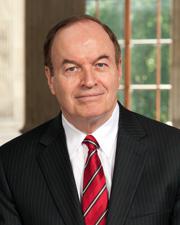 Sen. Richard C. Shelby (R-AL)
Sen. Richard C. Shelby (R-AL)Submitted October 15, 2007
Legislative Activity
Stay on top of the latest movement without scrolling through every action
Floor
Latest Action
Senate amendment submitted
October 15, 2007
View full timeline
Floor
Senate amendment submitted
October 15, 2007
Floor
Senate amendment proposed (on the floor): Amendment SA 3272 proposed by Senator Mikulski for Senator Shelby.(consideration: CR S12846; text: CR S12846)
October 15, 2007
Floor
Senate amendment agreed to: Amendment SA 3272 agreed to in Senate by Voice Vote.
October 15, 2007
Floor
Amendment SA 3272 proposed by Senator Mikulski for Senator Shelby. (consideration: CR S12846; text: CR S12846) Relative to the review of IT and 2010 Census-related activities at the Bureau of the Census.
October 15, 2007
Floor
Amendment SA 3272 agreed to in Senate by Voice Vote.
October 15, 2007
Text
Proposed
DEPARTMENTS OF COMMERCE, JUSTICE, SCIENCE, AND RELATED AGENCIES
APPROPRIATIONS ACT, 2008

The ACTING PRESIDENT pro tempore. Under the previous order, the
Senate will resume consideration of H.R. 3093, which the clerk will
report.
The legislative clerk read as follows:

A bill (H.R. 3093) making appropriations for the
Departments of Commerce and Justice, and Science, and Related
Agencies for the fiscal year ending September 30, 2008, and
for other purposes.

Pending:

Inouye amendment No. 3214, to establish a factfinding
commission to extend the study of a prior commission to
investigate and determine facts and circumstances surrounding
the relocation, internment, and deportation to Axis countries
of Latin Americans of Japanese descent from December 1941
through February 1948 and the impact of those actions by the
United States and to recommend appropriate remedies.
Casey (for Biden) amendment No. 3256, to appropriate an
additional $110,000,000 for community-oriented policing
services and to provide a full offset for such amount.
Brown amendment No. 3260, to prohibit the use of any funds
made available in this act in a manner that is inconsistent
with the trade remedy laws of the United States.

The ACTING PRESIDENT pro tempore. The Senator from North Dakota is
recognized.
Mr. DORGAN. Mr. President, Senator Mikulski, the chair of the
subcommittee, will be here at 4 o'clock. I know Senator Shelby is here,
and I believe he will be out momentarily. I have agreed to be on the
floor until Senator Mikulski returns.
I did want to take a moment to talk about an amendment I was
discussing when we were previously in session on this bill, dealing
with law enforcement on Indian reservations. I did not actually offer
the amendment. I had filed the amendment.
The subcommittee itself restored some funds that the President had
cut. I indicated to the subcommittee that I hoped we could work between
now and next spring, when we begin the new fiscal year legislation, so
we could add some funding for these critical areas. I want to make note
that Senator Mikulski and Senator Shelby already added funding to
accounts the President had decided to zero out. These accounts are
accounts dealing with law enforcement on Indian reservations.
We just held a hearing on these issues in the Indian Affairs
Committee here in the Senate. It is pretty stark, when you hear from
folks who talk about the crisis on reservations with respect to law
enforcement.
The U.S. Government made a decision a long time ago, well over a
century ago, that law enforcement on Indian reservations is a
responsibility of the Federal Government. Our country has a legal
obligation to be involved in preventing crime on Indian lands. That
obligation is a result of treaty provisions and Federal laws that grant
the United States the responsibility and the authority to investigate
and prosecute major crimes on Indian reservations. That is not the
choice of Indian tribes; that is a decision our Government made over a
century ago. The tribal governments on our Indian reservations rely on
the Federal Government--specifically, the FBI and the U.S. attorney's
office--to investigate and prosecute violent crimes on Indian
reservations.
We had a hearing 2 weeks ago. There was testimony at that hearing
from some research that had been done that 34 percent of Indian women
will be raped or sexually assaulted during their lifetime. One-third of
the Indian women will be raped or sexually assaulted during their
lifetime. That is the state of violent crime on Indian reservations.
A retired BIA police officer who worked on the Standing Rock Sioux
Reservation said we do not have the resources. ``We all knew they only
take cases with a confession.'' If there wasn't a confession, there
wasn't a case. ``We were forced to triage our cases,'' he said. When
this violence becomes so commonplace that the police have to triage
rape cases, there is something dreadfully wrong.
One of the big factors in the rise of violent crime on Indian
reservations is the lack of a police presence or law enforcement
presence on Indian lands. There are little more than 2000 Federal and
tribal law enforcement officers who patrol 56 million acres of Indian
land. In North and South Dakota, we have two police officers who patrol
the 2.3 million-acre Standing Rock Sioux Indian Reservation. We have
heard from people who called to report a violent crime as it was
occurring, and they waited an hour and 15 minutes for the police to
show up. In other cases, they wait days for the police to show up.
The lack of tribal jails and bedspace also adds to the problem
because there is no place to put criminals. I have

[[Page S12836]]

been in tribal detention facilities. I have seen kids lying on cement
floors in tribal detention facilities because there was not a juvenile
facility and the other detention facilities did not have proper beds
and didn't have enough space, so young children were lying on the floor
of a detention facility.
There is a $400 million backlog for construction for tribal jails.
One Federal official said that there is what is called a catch-and-
release system--just catch the criminals and release many of them back
into the community because there is no space to put them. Because of
that, the Indian reservations have become soft targets for organized
crime and particularly for organized efforts dealing with
methamphetamine.
In May of last year, Federal officials seized a huge methamphetamine
organization's business plan, and the business plan outlined how that
organization wanted to replace alcohol abuse as it infiltrated Indian
reservations with methamphetamine abuse on Indian reservations. The
plan also outlined how the tribal police could not arrest them while on
the reservation. They described in the business plan how they were
going to introduce and use the reservations as the basis for their
methamphetamine distribution to run their business.
After creating a system in which we said law enforcement is the
Federal Government's responsibility, the administration in its budget
now wants to tell the tribes: We are too busy, so you are on your own.
The statistics I have described are really sobering: crumbling jails.
What does the administration propose to spend for detention facilities,
Tribal Jails Discretionary Grants Program? Well, the administration
proposes we spend nothing. Not a thing. Assistance to the tribal
courts, what does the administration propose that we spend? Nothing.
Those are all programs that have always been funded. These are
programs for which the Federal Government has a responsibility by
previous agreement. Tribal COPS Program, the President says let's fund
it at zero. Tribal Youth Program, fund it at zero; Indian Alcohol and
Crime Demonstration Program, zero.
Every single one of those, all except the last, have always been
funded. The President says: Not my responsibility, not this
administration; we do not intend to provide funding.
Now, let me thank Senator Mikulski and the ranking member as well,
Senator Shelby, because they have provided some funding in this
subcommittee mark. It is not as much as I would like. It is not as much
as I am sure they wanted to do, but they should be complimented for
rejecting the President's recommendation at a time when we have a
serious problem, and at a time when that problem is our responsibility
to deal with because we have made agreements and required that we will
be responsible for dealing with it.
The President says: Let's not do it. And Senator Mikulski and Senator
Shelby said: We reject that. We have a responsibility.
I was intending to offer an amendment 2 weeks ago--I did not do
that--to add even further because Senator Mikulski and Senator Shelby
indicated they want to work with me. But, first and foremost, I want to
compliment them for rejecting the President's suggestion that we ignore
our responsibility, and for Senators Mikulski and Shelby deciding these
programs are exactly what we should be funding; it is our
responsibility to do so.
I yield the floor and suggest the absence of a quorum.
The ACTING PRESIDENT pro tempore. The clerk will call the roll.
The legislative clerk proceeded to call the roll.
Mr. DURBIN. Mr. President, I ask unanimous consent that the order for
the quorum call be rescinded.
The ACTING PRESIDENT pro tempore. Without objection, it is so
ordered.
Mr. DURBIN. Mr. President, I ask unanimous consent to speak as in
morning business.
The ACTING PRESIDENT pro tempore. Without objection, it is so
ordered.

SCHIP

Mr. DURBIN. Mr. President, the Senate is just returning from a week
home. I spent the week in my home State of Illinois traveling from far
southern Illinois to Chicago and most points in between. It was a busy
week. I met with a lot of people and continue to be amazed that there
is such a disconnect between the real world of America and the world of
Capitol Hill.
In about 48 hours, the U.S. House of Representatives is going to have
a historic vote. It is about children's health insurance. Here we are,
the wealthiest Nation on Earth, with the best doctors, the best
hospitals, the best technology, amazing medical research. Yet when it
comes down to basic health care protection, America falls short. We
spent more money per capita than any nation on Earth on health care,
but our outcomes do not show it. Countries that spend a lot less get a
lot more. Other countries around the world have made a dedicated effort
to make sure every citizen in their nation has the protection of basic
health care.
But not America. Forty-seven million Americans have no health
insurance. We tried to address that with the Children's Health
Insurance Program 10 years ago. We looked at the 40 million uninsured
Americans and said: 15 million are kids; let's start there. Let's cover
these children. Let's make sure they have health insurance, not through
a government plan but through private health insurance. We will take
money, grants and money, send it to the States, work with the
Governors, share the expense, and bring these kids under
hospitalization coverage. In 10 years it worked. From 15 million
uninsured, we were able to insure 6.6 million children in America;
300,000 in my home State of Illinois.
Well, with the new Congress and the expiration of this program, we
took another look at it and said: Can we do better? Can we extend this
beyond 6.6 million kids to more of the 15 million targeted group of
children? We found a way to do it. We did it in a bipartisan way, a
cooperative effort with the Republican side of the aisle, an effort
that involves Senator Chuck Grassley of Iowa, Senator Orrin Hatch of
Utah, well-known, conservative Republicans who sat down with Senators
Max Baucus and Ted Kennedy and hammered out the details--Thirty-five
billion dollars more in spending over the next 5 years.
Now, the first reaction, of course, is that most people say: Great,
you dreamed up an expansion of a program that costs us $35 billion.
Thanks a lot. Our kids will pay for it.
Wrong. We insisted that it be paid for. How is it paid for? By
increasing the Federal tax on tobacco products. That is it. I am not
going to beat around the bush and tell you there is some secret way to
do it. That is how we did it. We raised the Federal tax on tobacco
products, cigarettes and cigars. You can sign me up, incidentally, any
day of the week. I am one Senator. I am sure there are many like me who
have lost a loved one to cancer brought on by tobacco. Most people in
America have been touched by tobacco disease and illness.
I believe one of the best things we can do is to keep tobacco
products out of the hands of our kids. When you raise the price by
raising the tax, children are discouraged from buying the product.
Good. If kids do not get addicted early and stick around until they are
about 18 to make the choice, they will decide it is a pretty dumb idea.
But if they start smoking at 14, 15, 16, an addiction gets started. So
we raised the tobacco tax to come up with the $35 billion. Over the
next 5 years we will expand the health insurance coverage from 6.6
million children to 10 million children in America--still not 15 but
clearly moving in the right direction.
We passed the bill over here with an amazing vote. In a time when we
have these death-defying votes of 1 vote here, 1 vote here, 69 Senators
voted for the bipartisan approach to expand children's health
insurance.
We sent the bill over to the House. They were disappointed because
they wanted more. I want more. I would like to see all 15 million kids
covered, to be honest with you. I would like to see all Americans
covered. I will get to that point in a moment. But they passed it, and
we sent it to President Bush.
Now, President Bush is in his seventh year as President of the United
States.

[[Page S12837]]

He has used his veto pen four times--four times--once to veto a plan
passed by Congress on a bipartisan basis to change the policy in Iraq
and start bringing our troops home; President Bush vetoed it; next, he
had two opportunities and used his pen twice to veto the expansion of
medical research using stem cells. You will recall the President
stopped this research at the Federal level. States are now doing it,
private companies are doing it, and foreign governments are doing it.
But the Bush administration will not allow our National Institutes of
Health, through Federal funding, to do this. Well, the President used
his veto pen twice to stop this promising research to find cures for
diseases and causes of death.

His fourth use of the veto pen was to kill the Children's Health
Insurance Program. What did they say about it? Why did the President
veto this bipartisan bill that came out of the Senate and the House?
Well, they said, first, it was socialized medicine--socialized
medicine. You know that is a cliche that was probably born in the
1960s, maybe before, on the notion that the Government would provide
all the health insurance for America.
Well, it did not work then. We created Medicare, and thank goodness
we did, for millions of Americans who have had peace of mind at age 65
because of it. Socialized medicine. What the President failed to say
was if he gets sick tomorrow, God forbid, he will go to a military
hospital. The doctors will be members of the military. The nurses who
answer his call will be members of the military. He will be protected
by Government health services as President of the United States.
Is that socialism? I think I will leave it to the President to
decide. But I think it is troublesome that we have reached a point that
we dismiss a program of such value to so many children and call it
socialized medicine. What was even more galling was someone in the
White House along the way argued the point that this plan would cover
individuals who make up to three times the poverty level in the United
States.
Let me translate that into terms Americans can understand. If you
make up to $60,000, you get help under this plan. And the argument the
White House made was, people making $60,000 a year--or ``well off'' in
their terms--do not need this help.
Really? Well, let's think about that for a second. Sixty thousand
dollars a year is gross pay. Now, let's take about 40 percent of that
for all of the taxes that are taken out and all of the deductions that
are taken out. That leaves us somewhere in the range of $36,000 a year,
about $3,000 a month in take-home pay.
Now, go out and look for health insurance for a sick child. I will
tell you what you will find. You will be lucky to get by with $1,000 a
month for health insurance for your family if you have a sick child. If
you have a healthy family, it may still cost $600 or $800.
So out of a take-home pay of $3,000, they say you are well enough off
that you do not need help to pay $1,000 a month for health insurance.
Who is kidding whom? The reality is that families are crippled by these
costs. Many of them cannot afford insurance, and they need the help of
this program. It is a reasonable thing to do.
Those people in the White House who just want to call this socialism,
or whatever the word of the day may be, or dismiss families making
$60,000 as not needing a helping hand with health insurance for
children, they are so out of touch they do not understand the drama
that these families go through every single month for lack of health
insurance.
There is a story closer to home for the Members of the Senate. It
does not relate to the Children's Health Insurance Program, but I think
it is a story worth telling. It is a story about a member of the Senate
family, someone whom most of us have seen many times. Many may not know
his name, but he is someone who has gone through a life-changing
experience because of no health insurance in his family.
Forty-seven million Americans have no health insurance. We who are
privileged in the Senate probably do not lie awake at night worrying
about it because a bad diagnosis is not going to lead to bankruptcy for
us. We are lucky. We are part of the Federal Employees Health Benefits
Program. We have got the best coverage in America. Eight million
Federal employees, Members of Congress, we get an open enrollment
period every year. You do not like your company, change it. It is like
shopping for a car. There are so many choices out there. You want a big
plan, you pay more. You have more money taken out of your check. You
want less coverage, pay less. You have less money taken out of your
check. It has been around for decades.
Members of Congress benefit from it, and we have a peace of mind that
comes with it. But we do not have to look far to see families who are
struggling and facing terrible decisions because of the high cost of
health insurance. They are everywhere. They are in every town, every
county, every State, all across our Nation, and they are right here in
the family. There is a young man who works just a few feet away from
where I am standing. He is an elevator operator. His name is Sergio
Olaya. He has worked here off and on as an intern and has been an
elevator operator since last May. He always has a big smile on his
face, great young fellow, says hello, and most of us, of course, see
him and greet him and head off on our business.
He is 21 years old, a bright young man, happy disposition, a great
future ahead of him. But a few months ago, Sergio, who works right
outside this door, had a tragedy strike his family. His mother died of
an aggressive form of brain cancer. She was 61 years old, a single mom.
Sergio was her only child. Doctors think she may have had the tumor for
a long time, but the symptoms didn't show up until 2 months ago, and
then she died. Before that, she had suffered a stroke which left her
paralyzed on her right side. She was an authority on health and
nutrition and worked for organizations, including the Centers for
Disease Control, USAID, UNICEF, and the Organization of American
States, but she had been unemployed and uninsured for 5 months when she
got sick. Even COBRA, which is the way to purchase health insurance
when one is not working, was too expensive for someone with a limited
income such as Sergio's mother. As a result, when she died from an
aggressive form of brain cancer, she left $255,000 in unpaid hospital
and doctor bills--a quarter of a million dollars.
The hospital first threatened to sue her son for payment. A lawyer
who is helping him pro bono negotiated the hospital charges down, first
to $216,000, then to $95,000. With another $40,000 in doctors bills,
Sergio, a member of the Senate staff, still owes $135,000 in medical
bills for his mom. How is he dealing with this? He is selling his home
in Bethesda where he and his mom have lived for the last 8 years. It is
the only home they have ever owned. The proceeds will go for the
payment of these medical bills.
Sergio said when his mom got sick she had been waiting to hear about
a possible new job with the Federal Government, and it would have had
health insurance. When the job offer finally came, his mother had just
suffered a stroke and couldn't get out of bed to answer the phone. Two
months and $255,000 in medical bills later, she passed away at the age
of 61. In another week or month, she might have had health coverage
with a new job. In another 4 years, she would have been eligible for
Medicare. Instead, she had the bad luck and bad timing to fall through
one of the gaping holes in America's unravelling health care safety
net. Now her only child, her son, is paying the price.
I wonder how many Senators have been in the elevator with Sergio,
talked to him, shared a smile with him, but had no idea of the terrible
burden he and his mother were carrying as a result of the cost of
health care and the cost of being uninsured in America today. How many
more families will have to sell their homes? How many more bright,
talented young people will have to drop out of college so their family
can pay medical bills before we finally come up with a real plan to
make health care more affordable for all Americans? The truth is,
almost every family is at risk because of a fraying and failing health
care safety net. Almost all of us could be one pink slip, one election,
one bad diagnosis, or one serious accident away from a health and
economic disaster for our family.
This affects Sergio, our Senate family. It affects all families. We
need to

[[Page S12838]]

deal with it. We need to find a way or a combination of ways to give
every American access to affordable health coverage. We can't help
Sergio pay these bills, but we can sure look to the possibility of 3.4
million children across America and their moms and dads finally having
the peace of mind of knowing that their kids are covered. It is a small
step for a big nation, but isn't it the kind of step we want to take
together in a bipartisan way? President Bush says no. He vetoed the
bill. He sent it back to the House of Representatives, and on Wednesday
they will take a vote. Fifteen Republican Congressmen who voted against
the plan have to change their votes to override his veto. Overall, 62
Republican Senators and Congressmen voted for this plan, so it is
bipartisan. I hope the 15 who are thinking about it now will think
about the vulnerability of a lot of people such as Sergio, people we
don't know who every single day have to wrestle with this terrible
challenge in our great Nation.
Mr. DORGAN. Will the Senator yield for a question?
Mr. DURBIN. I am happy to yield.
Mr. DORGAN. The Senator from Illinois has raised the issue of the
override of the President's veto that will occur in the House this
week. When the President vetoed the bipartisan legislation that would
expand opportunities for health coverage for America's children--
another 3.8 million kids who don't have health coverage now would have
it under that bill--the President referred to it as some kind of
socialized medicine, some sort of big-government solution. Then he
talked about the prospect of families with $83,000 in income.
Isn't it the case that most States--my State included--receive a
block grant and use the block grant to provide coverage by buying the
coverage from BlueCross BlueShield? In other words, it is a block grant
the States use to purchase coverage for children. Is that what the
President was referring to as big government? If so, isn't the
President misrepresenting what this bill does?
Mr. DURBIN. Mr. President, that is the case in almost every State.
This isn't a matter of the State of Illinois health insurance plan; it
is a matter of our State or the State of North Dakota taking the
Federal funds and buying private health insurance, which is something
these families currently cannot afford. It strikes me as reasonable for
us to give them a helping hand. It is not socialism, whatever that
definition may be. It is not a big-government plan.
The President argued that he thought it was unfair to the health
insurance industry. I don't understand that. If these 15 million
children have not had health insurance for years, that industry has had
plenty of chances to sell it. The fact is, it is too expensive for
these families.
Mr. DORGAN. If the Senator will yield further for a question, the
President, when vetoing the legislation, referred to some families with
$83,000 who will be getting this largess so that their children can get
subsidized health insurance coverage. My State, as an example, covers
children at 140 percent of poverty, most States at around 200 percent
of poverty, which I believe is around $44,000 gross income, and the
$83,000 to which the President referred does not exist. It was a
request from the State of New York which was not granted. In any event,
all those requests that have been granted for above the 200 percent
have been approved willingly and in a way that allowed this
administration to boast that they had approved them. Now the President
objects to the very thing they had approved.

The other point is, didn't this President actually campaign in the
year 2004 saying he supports expansion of this very program? I ask the
question about the $83,000. That clearly must be a misrepresentation.
Is that the judgment of the Senator from Illinois as well?
Mr. DURBIN. The State of New York said: We want to cover families up
to $83,000; it is more expensive to live in New York than it might be
in some other State. But ultimately it was a decision to be made by the
President. The President had to give them permission, and he denied it.
Under this bill, the President still has that authority to deny States
permission to go beyond $62,000 a year. So he still has that authority.
Arguing $83,000 makes no sense. He turned it down. We didn't change
that in this bill. The President still has the authority to stop any
program that would expand in that direction.
In my State and others, I concede, we have been trying to find every
way we can to insure people. Our Governor, the general assembly, and
other people have tried to find ways to work with the Federal
Government to cover people who don't have health insurance.
As a reminder--I know the Senator from North Dakota is well aware--
the poorest children in America are covered by Medicaid. The poorest
children have health insurance. The children who are fortunate enough
to have parents with health insurance aren't the ones we are talking
about. We are talking about the group of children who belong to
families who go to work every single day and have no health insurance.
That is a lot of Americans and a lot of kids. I have had several press
conferences during the break at hospitals with doctors and nurses. They
tell the story of these children. These children don't have a regular
physician, regular checkups, a regular place to go. So an earache turns
into a substantial infection. Asthma at an early stage becomes a
serious challenge. Diabetes goes undetected because these kids are not
brought into our health care system until they have reached such a
grievous situation that they end up in emergency rooms, and we all pay
for it.
This really is an ounce of prevention that we would have health
insurance for more of these kids to be covered, the children of working
families who go to work every single day and don't have health
insurance. The President vetoed the bill.
Mr. DORGAN. If the Senator will yield for one additional question,
the Senator from Illinois is on the Appropriations Committee with me.
My understanding is the President is going to be sending down a second
supplemental request within days. I understand the White House might
not want to send it down before the override issue on the SCHIP
program. But the SCHIP program would spend $7 billion a year for 5
years. That is $35 billion. All of it is paid for. None of it is
contributing one penny to the debt. The result of that spending? The
3.8 million children who at this point have no health insurance
coverage would now be fully covered with health insurance. The
President seemed to, when he vetoed the legislation, be saying: I am
going to be the guardian of the Federal Treasury and the taxpayers'
checkbook. This is big-government bureaucracy--socialized medicine, in
fact.
This is fully paid for, $7 billion a year. Isn't it the case that the
President has requested two things of us? One is already here, and the
other will come next week. One is $145 billion in emergency funding for
the wars in Iraq and Afghanistan, not a penny of it paid for all this
year, and on top of that, we believe another roughly $44 billion
supplemental. So that will be a $189 billion emergency supplemental
this year. In other words, $7 billion for kids is too much; $189
billion, which will bring us somewhere close to two-thirds of a
trillion dollars, the President has requested we spend, not a penny of
it paid for. The implication of all that is, let's send soldiers to
fight. When they come back, they can pay for the debt we have incurred
because we don't intend to pay for any of it.
Isn't it the case that the very same President who says $7 billion a
year which is fully paid for and which will result in children's health
insurance for 3.8 million children is the President who is sending us a
$189 billion additional request for 1 year, none of it paid for?
Mr. DURBIN. The math is right. This President has funded this war in
Iraq and Afghanistan borrowing money from future generations. He has
not paid for a single day of this war by imposing a tax or cutting
spending in some other area. He is the first President in the history
of the United States, in the entire history of our Nation, to cut taxes
in the midst of war.
I am sure the Senator from North Dakota joined a lot of us in
watching the Ken Burns documentary ``The War.'' It has been on for the
last couple weeks on public television. One of our great friends and
heroes in the Senate, Danny Inouye of Hawaii, was featured in it, as he
should have been. A Congressional Medal of Honor recipient, he

[[Page S12839]]

told the story of his life that led to his service to our country. You
couldn't help but feel that America was at war. It wasn't just our
soldiers and sailors and marines and airmen; America was at war. We
were all involved.
This war which has claimed 3,821 American lives, this war which has
injured more than 30,000 of our fighting men and women, this war which
has left 10,000 grievously injured with amputations and serious burns,
this war has been waged in a much different way.
When America was going to wage this war on terrorism, the President
said: We are going to invade Iraq. And America, you can help: go
shopping.
That isn't what they said in World War II. They said: We can all
pitch in together and get behind this effort.
Then he said: We have to sacrifice. We have to give tax cuts to
people at the wealthiest levels.
So we end up with a debt, a debt that continues to grow because the
President does not pay for a penny of this war. The Senator from North
Dakota is right. It will be close to $750 billion by the end of next
year. We are spending $12 to $15 billion a month on this war in Iraq,
none of it is paid for, none of it is generated by taxes, and none of
it is paid for by compensating cuts in other spending. It is added to
our debt.
The President who proclaims himself a fiscal conservative when it
comes to vetoing a children's health insurance program within the next
several days will send us a massive spending bill of $190 or $200
billion for the next year of this war. The $7 billion for health
insurance for children is paid for; the President says it is wasted
Federal funds. But $200 billion for a war with no end in sight he
considers to be appropriate. I don't understand this. I understand we
have to stand behind our men and women in uniform. But a strong America
begins at home. It begins with our families and our communities and our
parishes and church groups and neighborhoods. It begins with the peace
of mind of knowing that you have health insurance. For literally 3.8
million children, the President's veto means no help to buy private
health insurance so these families have a chance to have that peace of
mind.

I sincerely hope those who feel this is an important program will
contact their Members of Congress--both House and Senate--in the next
48 hours. This is a critical moment in our history. We have to decide
once and for all whether we are going to start taking important steps
forward to bring the peace of mind of health insurance to every family
in America. That is a worthy American goal. President Bush's veto
should not stand in its way. I certainly hope the House of
Representatives, when it votes on Wednesday, will override this
Presidential veto.
I yield the floor.
I suggest the absence of a quorum.
The ACTING PRESIDENT pro tempore. The clerk will call the roll.
The legislative clerk proceeded to call the roll.
Mr. DORGAN. Mr. President, I ask unanimous consent that the order for
the quorum call be rescinded.
The ACTING PRESIDENT pro tempore. Without objection, it is so
ordered.

Amendment No. 3233, as Modified

Mr. DORGAN. Mr. President, I ask unanimous consent that amendment No.
3233, previously agreed to, be modified with the changes at the desk.
My understanding is both sides have cleared this request.
The ACTING PRESIDENT pro tempore. Without objection, it is so
ordered.
The amendment (No. 3233), as modified, is as follows:

On page 70, between lines 10 and 11, insert the following:
Sec. 217. Notwithstanding any other provision of this
title--
(1) the amount appropriated in this title under the heading
``General Administration'' is reduced by $10,000,000;
(2) the amount appropriated in this title under the heading
``Violence Against Women Prevention and Prosecution
Programs'' under the heading ``Office on Violence Against
Women'' is increased by $10,000,000; and
(3) of the amount appropriated in this title under the
heading ``Violence Against Women Prevention and Prosecution
Programs'' under the heading ``Office on Violence Against
Women''--
(A) $60,000,000 is for grants to encourage arrest policies,
as authorized by part U of the Omnibus Crime Control and Safe
Streets Act of 1968 (42 U.S.C. 3796hh et seq.);
(B) $4,000,000 is for engaging men and youth in prevention
programs, as authorized by section 41305 of the Violence
Against Women Act of 1994 (42 U.S.C. 14043d-4); and
(C) $1,000,000 is for the National Resource Center on
Workplace Responses to assist victims of domestic violence,
as authorized by section 41501 of the Violence Against Women
Act of 1994 (42 U.S.C. 14043f).

Amendment No. 3260, as Modified

Mr. DORGAN. Mr. President, I ask unanimous consent that at 5:15 today
the Senate resume consideration of the Brown amendment No. 3260, with
the time until 5:45 p.m. equally divided and controlled between
Senators Brown and Mikulski or their designees; that no amendment be in
order to the amendment prior to the vote; and that at 5:45 the Senate
proceed to vote in relation to the amendment; that the amendment be
modified with the changes at the desk.
The ACTING PRESIDENT pro tempore. Without objection, it is so
ordered.
The amendment (No. 3260), as modified, is as follows:

On page 97, between lines 9 and 10, and insert the
following:
None of the funds appropriated or otherwise made available
in this Act may be used in a manner that is inconsistent with
the principal negotiating objective of the United States with
respect to trade remedy laws to preserve the ability of the
United States--
(1) to enforce vigorously its trade laws, including
antidumping, countervailing duty, and safeguard laws;
(2) to avoid agreements that--
(A) lessen the effectiveness of domestic and international
disciplines on unfair trade, especially dumping and
subsidies; or
(B) lessen the effectiveness of domestic and international
safeguard provisions, in order to ensure that United States
workers, agricultural producers, and firms can compete fully
on fair terms and enjoy the benefits of reciprocal trade
concessions; and
(3) to address and remedy market distortions that lead to
dumping and subsidization, including overcapacity,
cartelization, and market-access barriers.

Mr. DORGAN. Mr. President, I ask unanimous consent, while we are
waiting for the ranking member, to speak as in morning business for 3
minutes.
The ACTING PRESIDENT pro tempore. Is there objection?
Without objection, it is so ordered.

Do Not Call List Legislation

Mr. DORGAN. Mr. President, last week I introduced some legislation in
the Senate for which it is my hope my colleagues will join in. It deals
with the issue of the Do Not Call List that is housed down at the
Federal Trade Commission.
I do not think there is much more irritating in life than to receive
calls from telemarketers. Almost everybody has received bundles of
calls from telemarketers--always during mealtime. They always wait
until the family has been able to sit down to start a meal, and then
the family gets a telephone call: Would you like to take our cable
service? Would you like to take our cell phone service? Do you need new
siding? We will have some people in your neighborhood tomorrow selling
sheetrock or siding.
So on and on and on, telemarketers are unbelievably annoying. So
Congress passed a piece of legislation. It says: We are going to set up
a list at the Federal Trade Commission called a Do Not Call List. You
call in, put your name on that list, and it says to telemarketers: You
may not call the names on that list.
So the list has been very successful, except the Federal Trade
Commission did one very inexplicable and dumb thing. I guess that is a
gentle description. They said of the people who call in and put their
names on a Do Not Call List, the list will expire at a certain time, so
you would have to call back in.
So we have had 149 million people call in. Think of this: 149 million
Americans picked up their phone and called their Federal Government and
said: Put my name on a Do Not Call List. I am sick and tired of getting
telephone calls from telemarketers. I want my name on a list.
That is the biggest vote in American history, isn't it? They just
voted by picking up the phone. Mr. President, 149 million people voted
to say: I do not want those calls anymore. Stop it. So the Federal
Trade Commission put their names on a list. Then the Federal Trade
Commission said: Oh, by the way, your name goes off the list at the end
of 5 years. And by the way, next October, on or about the first day or
so

[[Page S12840]]

of the month--or within a couple of days of that time--we will have
about 50 million people whose names come off the list.
That makes no sense to me. If you put your name on a list saying, ``I
don't want people making annoying calls to my house,'' that name ought
to stay on the list. You ought not have to pick up the phone and recall
the Federal Trade Commission.
I do not know who made the decision but what a dumb decision. Let's
put a list together. If you call and get your name on the list and say,
``I don't want irritating, annoying calls from telemarketers,'' your
name ought to stay on the list until you decide to pull it off.
So I have put in a piece of legislation that says if you put your
name on a list, your name is going to stay on the list. You do not have
to call in. There is not going to be an automatic expulsion. We did not
provide for that in the Congress. The Federal Trade Commission came up
with that goofy idea. So my legislation will say that idea is gone. If
your name is on a list, it stays on the list. You deserve to have
supper or dinner--or whatever you might call it at the end of the day--
without having your phone ringing by somebody wanting to sell siding or
a new telephone service.
My hope is every Member of the Senate might cosponsor the
legislation--except for those Members of the Senate who love to get
telemarketing calls. For those who do, I expect they would not sign on,
and I will probably come and announce their names soon. But if we can
get all of those to cosponsor it, we can get this passed quickly and
solve a problem for all American families.
I yield the floor and suggest the absence of a quorum.
The ACTING PRESIDENT pro tempore. The clerk will call the roll.
The legislative clerk proceeded to call the roll.
Mr. DORGAN. Mr. President, I ask unanimous consent that the order for
the quorum call be rescinded.
The ACTING PRESIDENT pro tempore. Without objection, it is so
ordered.

Amendment No. 3225, as Modified

Mr. DORGAN. Mr. President, I ask unanimous consent that amendment No.
3225, previously agreed to, be modified with the changes at the desk.
The ACTING PRESIDENT pro tempore. Without objection, it is so
ordered.
The amendment (No. 3225), as modified, is as follows:

On page 26, after line 24, insert the following:
Sec. 114. United States Economic Data. (a) Of the funds
provided in this title for Economic and Information
Infrastructure under the heading ``economic and statistic
analysis'', $950,000 may be used to carry out the study and
report required under this section.
(b) Not later than 60 days after the date of the enactment
of this Act, the Secretary of Commerce shall enter into a
contract with the National Academy of Sciences to conduct a
study and report on whether the import price data published
by the Bureau of Labor Statistics and other economic data
collected by the United States accurately reflect the
economic condition of the United States.
(c)(1) The report required by subsection (b) shall include
an analysis of the methods used to determine the condition of
the United States economy and shall address--
(A) whether the statistical measure of the United States
economy correctly interprets the impact of imports and
outsourced production;
(B) whether the statistical measures of the United States
economy result in an accurate report of United States gross
domestic product (GDP), productivity, and other aspects of
economic performance;
(C) whether the impact of imports on United States
manufacturing levels and competitiveness is accurately
reported; and
(D) whether other countries are accounting for import
prices more accurately or frequently than the United States.
(2) If the findings of the report indicate that the methods
used for accounting for imported goods and United States
wages result in overstating economic growth, domestic
manufacturing output, and productivity growth, the report
shall include recommendations with respect to--
(A) what actions should be taken to produce more accurate
import price indices on a regular basis; and
(B) what other measures of economic analysis should be used
to accurately reflect the globalization of economic activity
and offshoring of domestic production.
(d) The report required by subsection (b) shall be
completed and submitted to Congress not later than 18 months
after the date of the contract described in subsection (b).

Mr. DORGAN. I suggest the absence of a quorum.
The ACTING PRESIDENT pro tempore. The clerk will call the roll.
The legislative clerk proceeded to call the roll.
Ms. MIKULSKI. Mr. President, I ask unanimous consent that the order
for the quorum call be rescinded.
The PRESIDING OFFICER (Mr. Sanders). Without objection, it is so
ordered.
Ms. MIKULSKI. Mr. President, I ask unanimous consent to speak as in
morning business.
The PRESIDING OFFICER. Without objection, it is so ordered.

SCHIP

Ms. MIKULSKI. Mr. President, to bring our colleagues up to date, we
are working on the Commerce-Justice-Science appropriations. Senator
Shelby and I are working to clear amendments now. All amendments have
been filed. We have 60 of them, but we hope some can be cleared. For
those Senators who wish to have a vote on their amendment, I wish they
would consider offering the amendment and debating it this evening. I
certainly will be willing to stay for that.
While we are working on clearing these amendments, I rise to stand up
for my constituents, to stand up for a family in Baltimore who has been
vilified by the rightwing bloggers because they dare to say that they
benefited from and support a public program called the Children's
Health Initiative.
I don't know what is happening in America now, where instead of
working to change policies, the right wing tries to change the subject,
and they do it by attacking people rather than attacking the problem--
the problem of poverty, the problem that our children don't have health
care, the problem that one of my constituents, a little boy named
Deamante Driver, died in Prince George's County because he didn't have
access to dental care and had a severe oral bacterial infection. My
colleague Senator Cardin has taken up the cudgels on that issue, and I
support him. It is our Children's Health Initiative, and I will help to
override the veto.
Let me tell my colleagues what happened. I am taking up for a family
named Bonnie and Halsey Frost who live in Baltimore. A few weeks ago
they stood here in the Congress to say that they benefitted from the
SCHIP program. They told the story about how two of their children had
been in a horrific accident.
Graeme, the boy who gave the Democratic radio address, spoke about
what he needed. He had a brain injury. He was treated at Johns Hopkins
Hospital. So was his little sister. Graeme was in a coma for weeks. One
of his vocal cords was paralyzed. One of his eyes continues to be
damaged. Gemma, his little sister, has suffered permanent injuries,
which I will not go through. The families had their business spread all
over the right wing blogs. I will not spread it all over the Senate
floor. But I want to take up for them, for the fact that when they
stood up to talk about how they benefitted from this program, they were
attacked because they weren't seen as worthy. The Frosts have four
children: Graeme, who is 12; Max, Graeme's twin, who saw the accident;
Gemma, who also was in the accident; and an older brother named Zeke.
Bonnie and her children were in a car crash in 2004 when the SUV she
was driving had an accident. The children had these terrible problems.
Who is the Frost family? Well, the Frost family is a family of six.
They live in Baltimore and they qualify under the Maryland SCHIP
program, which says that if you have a family of this size and an
income under $51,000 a year, you qualify. They qualified. What
happened?
Through other friends of theirs who were involved with health
advocacy in the State, they were invited to come and tell their story
to show why there is a compelling need for the Children's Health
Initiative. Well, they did it. Then guess what happened. After young
Graeme, who, along with his sister, had this terrible thing happen to
them--after they then spoke up and Graeme gave the Democratic radio
address, what followed was unbelievable. It was a firestorm against
them that went across the right wing bloggers. It

[[Page S12841]]

was vitriolic, volcanic, ugly, nasty, shredding their names and
reputations. You ought to talk to them about what they went through.
They could not believe they were in the United States of America. One
of the right wingers showed up in the area where he has his business to
do on-the-spot investigative reporting. I wish we were as good at
keeping our borders safe as we are at keeping the boundaries around
SCHIP. I wish we were as good at keeping an eye on terrorists. But, no,
they went after the Frost family.
Paul Krugman felt so outraged about it that he wrote a column in the
New York Times about it. He called it ``a teaching moment on politics
and health care.'' He tells the story about this and then he said what
happened to this family should be a teaching moment.
I will read from this and then I will ask unanimous consent that it
be printed in the Record:

. . . The Frosts and their four children are exactly the
kind of people SCHIP was intended to help: working Americans
who can't afford private health insurance.
The parents have a combined income of about $45,000.

What they have is that the father is a self-employed woodworker and
welder. They bought a house in east Baltimore in a neighborhood that is
going gentry, called Butchers' Hill. When they bought it, it was called
Butchers' Hill from years and years ago, when there were
slaughterhouses where they were killing cows for beef and making
sausage for the ethnic communities. But it took on another name about
the time they bought it. It was like a frontier town--riddled with
drugs and all kinds of problems--but they believed in Baltimore, they
believed in their country, and they were willing to be urban pioneers,
so they bought this home for a modest price. Now, we have been
reclaiming Baltimore. Yes, the houses are selling at very high prices,
but that is not what they paid for it.
This man is self-employed. When he married, yes, they were from a
prominent family. Their wedding announcement was in the New York Times.
Since when does that mean anything? He has a small warehouse that
provides a modest rental income. His wife works part time at a medical
publishing firm. They don't have health benefits.
To go on with what Krugman said, he said that soon after the radio
address, right wing bloggers began insisting that there is something
wrong with the Frosts; that they have a house in a neighborhood they
said is expensive. I can tell you that when they bought it, it was
truly Butchers' Hill. They have two children in private school, but
they were on scholarship. Nobody bothered to find that out. The right
wing bloggers made unfounded accusations against them all of the time.
It was led by a woman who, according to the technocrats, is the most
trafficked right wing blog on the Internet.
This tone of vitriol and viciousness has to stop. The attack on this
family was picked up by Rush Limbaugh, the same guy calling dissident
military people ``microphone marines.'' And then the smear went on with
that. At the same time this was going on, a CNN report suggested that
the Democrats made a tactical error because we had this family on.
I don't know what we are doing here. Again, we are attacking a family
when we should be attacking the problems of children's health. First, I
called the Frost family. I listened to what they have had to endure
because they didn't have health insurance, after what happened to their
children after this terrible accident and the recovery. Then I listened
to what they had to endure because they spoke up for the Children's
Health Initiative.
When I listened to them, I said to them I think the Senate owed them
an apology that we now have come to this point. Now, I have watched
good people be attacked by the right wing. The other day, we sanctioned
MoveOn.org because of what they did to General Petraeus. I voted for
that sanction. What about my Frost family? Should we have a sense of
the Senate on that? I don't know if I am going to put this family
through more. But I will tell you this: I think we have to start
changing the tone. We have to start changing the tone in our
institution to work on a bipartisan basis the way the Senator from
Alabama and I have. We are moving forward a solid bill that promotes
scientific research, keeps America's space program going, but equally
we are funding local law enforcement.
Can we not change the tone? Do we always have to attack each other?
Do we have to be so violent in our language, so vicious, so vitriolic?
I don't think so. I think our country has to get back to the basics,
where you can disagree without being disagreeable, where you focus on
the policies, not on the person, where you try to deal with issues and
you don't attack people for the simple reason that they have spoken up
and they have spoken out.
I think we need to take a timeout in this country. I respect free
speech, I respect the bloggers and what they have; but when there is a
deliberate attempt from either the right or the left to go after people
simply because they have spoken up, I think it is the wrong direction.
I think we have been heading in the wrong direction.
I wanted to bring to everyone's attention what happened to this
family. I ask unanimous consent that the Krugman article be printed in
the Record and that the David Herszenhorn article about what happened
be printed in the Record.
There being no objection, the material was ordered to be printed in
the Record, as follows:

Sliming Graeme Frost

(By Paul Krugman)

Two weeks ago, the Democratic response to President Bush's
weekly radio address was delivered by a 12-year-old, Graeme
Frost. Graeme, who along with his sister received severe
brain injuries in a 2004 car crash and continues to need
physical therapy, is a beneficiary of the State Children's
Health Insurance Program. Mr. Bush has vetoed a bipartisan
bill that would have expanded that program to cover millions
of children who would otherwise have been uninsured.
What followed should serve as a teaching moment.
First, some background. The Frosts and their four children
are exactly the kind of people S-chip was intended to help:
working Americans who can't afford private health insurance.
The parents have a combined income of about $45,000, and
don't receive health insurance from employers. When they
looked into buying insurance on their own before the
accident, they found that it would cost $1,200 a month--a
prohibitive sum given their income. After the accident, when
their children needed expensive care, they couldn't get
insurance at any price.
Fortunately, they received help from Maryland's S-chip
program. The state has relatively restrictive rules for
eligibility: children must come from a family with an income
under 200 percent of the poverty line. For families with four
children that's $55,220, so the Frosts clearly qualified.
Graeme Frost, then, is exactly the kind of child the
program is intended to help. But that didn't stop the right
from mounting an all-out smear campaign against him and his
family.
Soon after the radio address, right-wing bloggers began
insisting that the Frosts must be affluent because Graeme and
his sister attend private schools (they're on scholarship),
because they have a house in a neighborhood where some houses
are now expensive (the Frosts bought their house for $55,000
in 1990 when the neighborhood was rundown and considered
dangerous) and because Mr. Frost owns a business (it was
dissolved in 1999).
You might be tempted to say that bloggers make unfounded
accusations all the time. But we're not talking about some
obscure fringe. The charge was led by Michelle Malkin, who
according to Technorati has the most-trafficked right-wing
blog on the Internet, and in addition to blogging has a
nationally syndicated column, writes for National Review and
is a frequent guest on Fox News.
The attack on Graeme's family was also quickly picked up by
Rush Limbaugh, who is so important a player in the right-wing
universe that he has had multiple exclusive interviews with
Vice President Dick Cheney.
And G.O.P. politicians were eager to join in the smear. The
New York Times reported that Republicans in Congress ``were
gearing up to use Graeme as evidence that Democrats have
overexpanded the health program to include families wealthy
enough to afford private insurance'' but had ``backed off''
as the case fell apart.
In fact, however, Republicans had already made their first
move: an e-mail message from the office of Mitch McConnell,
the Senate minority leader, sent to reporters and obtained by
the Web site Think Progress, repeated the smears against the
Frosts and asked: ``Could the Dems really have done that bad
of a job vetting this family?''
And the attempt to spin the media worked, to some extent:
despite reporting that has thoroughly debunked the smears, a
CNN report yesterday suggested that the Democrats had made
``a tactical error in holding up Graeme as their poster
child,'' and closely echoed the language of the e-mail from
Mr. McConnell's office.
All in all, the Graeme Frost case is a perfect illustration
of the modern right-wing political machine at work, and in
particular

[[Page S12842]]

its routine reliance on character assassination in place of
honest debate. If service members oppose a Republican war,
they're ``phony soldiers''; if Michael J. Fox opposes Bush
policy on stem cells, he's faking his Parkinson's symptoms;
if an injured 12-year-old child makes the case for a
government health insurance program, he's a fraud.
Meanwhile, leading conservative politicians far from trying
to distance themselves from these smears, rush to embrace
them. And some people in the news media are still willing to
be used as patsies.
Politics aside, the Graeme Frost case demonstrates the true
depth of the health care crisis: every other advanced country
has universal health insurance, but in America, insurance is
now out of reach for many hard-working families, even if they
have incomes some might call middle-class.
And there's one more point that should not be forgotten:
ultimately, this isn't about the Frost parents. It's about
Graeme Frost and his sister.
I don't know about you, but I think American children who
need medical care should get it, period. Even if you think
adults have made bad choices--a baseless smear in the case of
the Frosts, but put that on one side--only a truly vicious
political movement would respond by punishing their injured
children.
____

Capitol Feud: A 12-Year-Old Is the Fodder

(By David M. Herszenhorn)

Washington, Oct. 9.--There have been moments when the fight
between Congressional Democrats and President Bush over the
State Children's Health Insurance Program has seemed to
devolve into a shouting match about who loves children more.
So when Democrats enlisted 12-year-old Graeme Frost, who
along with a younger sister relied on the program for
treatment of severe brain injuries suffered in a car crash,
to give the response to Mr. Bush's weekly radio address
earlier this month, Republican opponents quickly accused them
of exploiting the boy to score political points.
Then, they wasted little time in going after him to score
their own.
In recent days, Graeme and his family have been attacked by
conservative bloggers and other critics of the Democrats'
plan to expand the insurance program, known as S-chip. They
scrutinized the family's income and assets--even alleged the
counters in their kitchen to be granite--and declared that
they did not seem needy enough for government benefits.
But what on the surface appears to be yet another partisan
feud, all the nastier because a child is at the center of it,
actually cuts to the most substantive debate around S-chip.
Democrats say it is crucially needed to help the working
poor--Medicaid already helps the impoverished--but many
Republicans say it now helps too many people with the means
to help themselves.
The feud also illustrates what can happen when politicians
showcase real people to make a point, a popular but often
perilous technique. And in this case, the discourse has been
anything but polite. The critics accused Graeme's father,
Halsey, a self-employed woodworker, of choosing not to
provide insurance for his family of six, even though he owned
his own business. They pointed out that Graeme attends an
expensive private school. And they asserted that the family's
home had undergone extensive remodeling, and asserted that
its market value could exceed $400,000.
One critic, in an e-mail message to Graeme's mother,
Bonnie, warned: ``Lie down with dogs, and expect to get
fleas.'' As it turns out, the Frosts say, Graeme attends the
private school on scholarship. The business that the critics
said Mr. Frost owned was dissolved in 1999. The family's
home, in the modest Butchers Hill neighborhood of Baltimore,
was bought for $55,000 in 1990 and is now worth about
$260,000, according to public records. And, for the record,
the Frosts say, their kitchen counters are concrete.
Certainly the Frosts are not destitute. They also own a
commercial property, valued at about $160,000, that provides
rental income. Mr. Frost works intermittently in woodworking
and as a welder, while Mrs. Frost has a part-time
administrative job at a firm that provides services to
publishers of medical journals. Her job does not provide
health coverage.
Under the Maryland child health program, a family of six
must earn less than $55,220 a year for children to qualify.
The program does not require applicants to list their assets,
which do not affect eligibility.
In a telephone interview, the Frosts said they had recently
been rejected by three private insurance companies because of
pre-existing medical conditions. ``We stood up in the first
place because S-chip really helped our family and we wanted
to help other families,'' Mrs. Frost said.
``We work hard, we're honest, we pay our taxes,'' Mr. Frost
said, adding, ``There are hard-working families that really
need affordable health insurance.''
Democrats, including the House speaker, Nancy Pelosi, have
risen to the Frosts' defense, saying they earn about $45,000
a year and are precisely the type of working-poor Americans
that the program was intended to help.
Ms. Pelosi on Tuesday said, ``I think it's really a sad
statement about how bankrupt some of these people are in
their arguments against S-chip that they would attack a 12-
year-old boy.'' The House and Senate approved legislation
that would expand the child health program by $35 billion
over five years. President Bush, who proposed a more modest
increase, vetoed the bill last week. Mr. Bush said the
Democrats' plan is fiscally unsound; the Democrats say Mr.
Bush is willing to spend billions on the Iraq war but not on
health care for American children.
Republicans on Capitol Hill, who were gearing up to use
Graeme as evidence that Democrats have overexpanded the
health program to include families wealthy enough to afford
private insurance, have backed off, glad to let bloggers take
the heat for attacking a family with injured children.
An aide to Senator Mitch McConnell of Kentucky, the
Republican leader, expressed relief that his office had not
issued a press release criticizing the Frosts.
But Michelle Malkin, one of the bloggers who has levied
harsh criticism against the Frost family, insisted that
Republicans should hold their ground and not pull punches.
``The bottom line here is that this family has considerable
assets,'' Ms. Malkin wrote in an e-mail message. ``Maryland's
S-CHIP program does not means-test. The refusal to do assets
tests on federal health insurance programs is why federal
entitlements are exploding and government keeps expanding. If
Republicans don't have the guts to hold the line, they
deserve to lose their seats.''
As for charges that bloggers were unfairly attacking a 12-
year-old, Ms. Malkin wrote on her blog. ``If you don't want
questions, don't foist these children onto the public
stage.''
But Mr. and Mrs. Frost said they were bothered by the
assertion that they lacked health coverage by their own
choice. ``That is not true at all,'' Mrs. Frost said.
``Basically all these naysayers need to lay the facts out on
the page, and say `How could a family be able to do this?' S-
chip is a stopgap.''

Ms. MIKULSKI. Mr. President, they speak more eloquently about it than
I have been able to. I felt badly about what happened to the Frost
family. I hope we can focus on dealing with the Children's Health
Initiative. It is for protecting all of the children. Today I stand up
here for the Frost family.
I yield the floor.
The PRESIDING OFFICER. The Senator from Alabama is recognized.
Mr. SHELBY. Mr. President, I want to speak on the pending bill before
the Senate for a few minutes.
This is the second day of consideration of the fiscal year 2008
Commerce, Justice, Science Appropriations bill. This bill funds the
Departments of Commerce and Justice, NASA, and the National Science
Foundation. Given the extremely diverse subject matters contained
within this bill's jurisdiction, we must entertain a wide range of
amendments on the Senate floor. This has been true in the past and is
true again this year.
Chairwoman Mikulski and I are currently reviewing a substantial list
of amendments and are working with various Members and staffs to
determine appropriate resolutions to the list of amendments. I ask
Members to come to the floor to discuss with the chairwoman and myself
your concerns so we can move this critical funding bill forward.
We hope and expect to finish this bill no later than mid-day
tomorrow, but to accomplish this we will need every Senator's help.
It is Monday afternoon and we can move some things tonight and get
this bill moved tomorrow with the help of a lot of our colleagues on
both sides of the aisle.
I yield the floor.
The PRESIDING OFFICER. The Senator from New Mexico is recognized.
Mr. BINGAMAN. Mr. President, I have an amendment that has been filed.
I will call it up so it can be considered at the appropriate time. I
gather that to do that I must ask unanimous consent to set aside the
pending amendment, and I do so now.
The PRESIDING OFFICER. Is there objection?
Without objection, it is so ordered.

Amendment No. 3208

Mr. BINGAMAN. Mr. President, I call up amendment No. 3208.
The PRESIDING OFFICER. The clerk will report.
The legislative clerk read as follows:

The Senator from New Mexico (Mr. Bingaman), for himself,
and Mr. Smith, proposes an amendment numbered 3208.

Mr. BINGAMAN. Mr. President, I ask unanimous consent that reading of
the amendment be dispensed with.
The PRESIDING OFFICER. Without objection, it is so ordered.
The amendment is as follows:

[[Page S12843]]

(Purpose: To amend the Omnibus Crime Control and Safe Streets Act of
1968 to clarify that territories and Indian tribes are eligible to
receive grants for confronting the use of methamphetamine)

At the appropriate place, insert the following:

SEC. __. NATIVE AMERICAN METHAMPHETAMINE ENFORCEMENT AND
TREATMENT ACT OF 2007.

(a) Short Title.--This section may be cited as the ``Native
American Methamphetamine Enforcement and Treatment Act of
2007''.
(b) Native American Participation in Methamphetamine
Grants.--
(1) In general.--Section 2996(a) of the Omnibus Crime
Control and Safe Streets Act of 1968 (42 U.S.C. 3797cc(a)) is
amended--
(A) in paragraph (1)--
(i) in the matter preceding subparagraph (A), by inserting
``, territories, and Indian tribes (as defined in section
2704)'' after ``to assist States''; and
(ii) in subparagraph (B), by striking ``and local'' and
inserting ``, territorial, Tribal, and local'';
(B) in paragraph (2), by inserting ``, territories, and
Indian tribes'' after ``make grants to States''; and
(C) in paragraph (3)(C), by inserting ``, Tribal,'' after
``support State''.
(2) Grant programs for drug endangered children.--Section
755(a) of the USA PATRIOT Improvement and Reauthorization Act
of 2005 (42 U.S.C. 3797cc-2(a)) is amended by inserting ``,
territories, and Indian tribes (as defined in section 2704 of
the Omnibus Crime Control and Safe Streets Act of 1968 (42
U.S.C. 3797d))'' after ``make grants to States''.
(3) Grant programs to address methamphetamine use by
pregnant and parenting women offenders.--Section 756 of the
USA PATRIOT Improvement and Reauthorization Act of 2005 (42
U.S.C. 3797cc-3) is amended--
(A) in subsection (a)(2), by inserting ``, territorial, or
Tribal'' after ``State'';
(B) in subsection (b)--
(i) in paragraph (1)--

(I) by inserting ``, territorial, or Tribal'' after
``State''; and
(II) by striking ``and/or'' and inserting ``or'';

(ii) in paragraph (2)--

(I) by inserting ``, territory, Indian tribe,'' after
``agency of the State''; and
(II) by inserting ``, territory, Indian tribe,'' after
``criminal laws of that State''; and

(iii) by adding at the end the following:
``(C) Indian tribe.--The term `Indian tribe' has the
meaning given the term in section 2704 of the Omnibus Crime
Control and Safe Streets Act of 1968 (42 U.S.C. 3797d).'';
and
(C) in subsection (c)--
(i) in paragraph (3), by striking ``Indian Tribes'' and
inserting ``Indian tribes''; and
(ii) in paragraph (4)--

(I) in the matter preceding subparagraph (A)--

(aa) by striking ``State's''; and
(bb) by striking ``and/or'' and inserting ``or'';

(II) in subparagraph (A), by striking ``State'';
(III) in subparagraph (C), by inserting ``, Indian
tribes,'' after ``involved counties''; and
(IV) in subparagraph (D), by inserting ``, Tribal'' after
``Federal, State''.

Mr. BINGAMAN. Mr. President, this amendment would ensure that
communities throughout Indian country have the resources they need to
fight the meth epidemic.
The amendment is based on a bipartisan bill I introduced along with
Senator Smith entitled the Native American Methamphetamine and
Treatment Act of 2007. It would ensure that Native American communities
are able to access essential Federal funding to fight the use of
methamphetamines.
Senators Dorgan, Cantwell, Feingold, Salazar, and Baucus are also
cosponsors of this amendment.
This last March, after hearings were held in the House Judiciary
Committee and the Energy and Commerce Committee, the House of
Representatives overwhelmingly passed this legislation by a vote of 423
to 0.
We all know that Indian country has been hard hit by the use of meth.
Over 70 percent of Indian tribes surveyed by the Bureau of Indian
Affairs identified meth abuse as the greatest threat to their
communities, and about 40 percent of violent crime cases investigated
in Indian country involve meth in some capacity.
According to the Substance Abuse and Mental Health Services, or
SAMHSA, American Indians, Alaskan natives, and native Hawaiians have
the highest rate of meth abuse of any ethnic group in our country.
Unfortunately, when Congress passed the Combat Methamphetamine Epidemic
Act, tribes were unintentionally left out as eligible applicants under
some of the newly authorized grant programs. They were left out of the
Department of Justice Hot Spots Program, which helps local law
enforcement agencies obtain the tools they need to reduce the
production, distribution, and use of meth and to clean up meth labs,
support health and environmental agencies, and purchase equipment and
support systems. The Combat Meth Act authorized $99 million in new
funding under this program.

Tribes were also left out of the Drug Endangered Children Grant
Program, which helps children who live in a home in which meth has been
used or manufactured or sold. Under this program, law enforcement
agencies and prosecutors, child protective services, social services,
and health care services work together to ensure that these children
get the help they need. The act authorized $20 million for this
program.
I can see absolutely no reason Native-American communities that are
struggling to contain the meth epidemic should be denied the resources
necessary to address the problem, and to this end I hope my colleagues
will agree with me and support this important amendment when the time
comes for its important consideration.
Mr. President, I yield the floor, and I suggest the absence of a
quorum.
The PRESIDING OFFICER. The clerk will call the roll.
The assistant legislative clerk proceeded to call the roll.
Ms. MIKULSKI. Mr. President, I ask unanimous consent that the order
for the quorum call be rescinded.
The PRESIDING OFFICER. Without objection, it is so ordered.
Ms. MIKULSKI. Mr. President, I wish to say to my colleague from New
Mexico that we agree with him on the amendment. Certainly there are
challenges facing the West. We see the scourge of meth, and that is one
of the largest areas of requests we have for congressionally designated
projects. I know my colleague wants them to be eligible for grants and
to compete for them, and so we support the intent.
Right now, there is an objection from two Senators, and we also
understand that the Senator from Arizona would like to have further
conversations with my colleague about the possibility of a
modification. If you could have that conversation and see if we can
come back, we could either move to a vote or see if it could be
accepted.
Mr. BINGAMAN. Mr. President, first, I thank the manager of the bill,
my colleague from Maryland, and respond that, yes, I am anxious to deal
with any concern any Senator has, and I have spoken to the Senator from
Arizona about his concerns and have tried to accommodate them. To date,
we have not been able to get his agreement to an accommodation that has
been suggested. So I just want to be sure we have reserved the right to
have a vote on the amendment if we are still not able to get agreement.
Ms. MIKULSKI. I think the Senator has our word that he will have--Mr.
President, what is the parliamentary mechanism to reserving the right
to a vote?
The PRESIDING OFFICER. There is no particular order.
Ms. MIKULSKI. I would say to the Senator from New Mexico that he has
our word that if he can work it out, we will see whether we can take
it, and if not, we will have the vote.
Mr. BINGAMAN. Mr. President, I very much appreciate that assurance.
As I say, I hope very much we can get language that is acceptable to
the Senator from Arizona. If not, I think we can allow the Senate to
work its will, and hopefully the amendment will pass.
Ms. MIKULSKI. I would further like to say to the Senator from New
Mexico, in keeping with what my colleague from Alabama said, we would
like to finish this bill before the caucuses tomorrow. So I will
discuss this with the Senator from Alabama, but it would be our
intention to see how much we can get cleared and then have some stacked
votes tomorrow morning. So if the Senator from New Mexico could let us
know by tomorrow morning--say, 9:30--whether he has been able to reach
an accommodation--or this evening--we will be here and would welcome
that.
Mr. BINGAMAN. Mr. President, I appreciate that, and I am glad to
advise the Senator if we reach an accommodation. I think, for purposes
of ensuring a vote, if there is a group of stacked votes scheduled for
tomorrow, if this

[[Page S12844]]

can be included in that list, and then, of course, if agreement is
reached prior to the time of the vote, we could delete it.
Ms. MIKULSKI. The Senator has our word on that.
Mr. BINGAMAN. I thank my colleague, and I suggest the absence of a
quorum, Mr. President.
The PRESIDING OFFICER. The clerk will call the roll.
The assistant legislative clerk proceeded to call the roll.
Ms. MIKULSKI. Mr. President, I ask unanimous consent the order for
the quorum call be rescinded.
The PRESIDING OFFICER. Without objection, it is so ordered.
Ms. MIKULSKI. Mr. President, we are working very well, here again on
a bipartisan basis. I thank Senator Shelby and his staff for the way we
are working. We have been able to look at a variety of amendments
colleagues have offered, and we are ready to accept them.
Mr. President, I ask unanimous consent the pending amendment be laid
aside.
The PRESIDING OFFICER. Without objection, it is so ordered.

Amendment No. 3309

Ms. MIKULSKI. I now call up amendment No. 3309 offered by myself and
ask for its immediate consideration.
The PRESIDING OFFICER. The clerk will report the amendment.
The assistant legislative clerk read as follows:

The Senator from Maryland [Ms. Mikulski] proposes an
amendment numbered 3309.

Ms. MIKULSKI. I ask unanimous consent the reading of the amendment be
dispensed with.
The PRESIDING OFFICER. Without objection, it is so ordered.
The amendment is as follows:

(Purpose: To provide that certain funds be available for the
development of educational activities in science, technology,
engineering, and mathematics related to the civilian space program)

On page 72, line 14, before the period insert the
following: ``: Provided further, That of the amounts
appropriated or otherwise made available under this heading
for cross-agency support programs, $10,000,000 shall be made
available, and distributed in equal increments, to each of
NASA's 10 centers for the development of educational
activities in science, technology, engineering, and
mathematics related to the civilian space program of the
United States''.

Ms. MIKULSKI. I ask unanimous consent the amendment be modified with
the modification at the desk.
The PRESIDING OFFICER. Without objection, it is so ordered.
The amendment (No. 3309), as modified, is as follows:

On page 72, line 14, before the period insert the
following: ``: Provided further, That of the amounts
appropriated or otherwise made available under this heading
for cross-agency support programs, $10,000,000 may be made
available, and distributed in equal increments, to each of
NASA's 10 centers for the development of educational
activities in science, technology, engineering, and
mathematics related to the civilian space program of the
United States''.

Ms. MIKULSKI. This amendment has been cleared on both sides of the
aisle. I ask for its immediate adoption.
The PRESIDING OFFICER. The question is on agreeing to the amendment.
The amendment (No. 3309), as modified, was agreed to.
Mr. SHELBY. Mr. President, I move to reconsider the vote.
Ms. MIKULSKI. I move to lay that motion on the table.
The motion to lay on the table was agreed to.

Amendment No. 3251

Ms. MIKULSKI. Mr. President, I call up amendment No. 3251 offered by
Senator Lautenberg of New Jersey and ask for its immediate
consideration.
The PRESIDING OFFICER. The clerk will report the amendment.
The assistant legislative clerk read as follows:

The Senator from Maryland [Ms. Mikulski], for Mr.
Lautenberg, proposes an amendment numbered 3251.

Ms. MIKULSKI. I ask unanimous consent the reading of the amendment be
dispensed with.
The PRESIDING OFFICER. Without objection, it is so ordered.
The amendment is as follows:

(Purpose: To provide funds for the National Research Council study on
acidification of the oceans as authorized by the Magnuson-Stevens
Fishery Conservation and Management Reauthorization Act of 2006)

On page 16, line 11, strike the period at the end and
insert ``: Provided further, That of the funds available for
the Ocean Research Priorities Plan Implementation, such sums
as may be necessary shall be set aside to initiate the study
to be completed within 2 years on acidification of the oceans
and how this process affects the United States as authorized
by section 701 of the Magnuson-Stevens Fishery Conservation
and Management Reauthorization Act of 2006 (Public Law 109-
479; 120 Stat. 3649).''.

Ms. MIKULSKI. I ask the amendment be modified with the modification
at the desk.
The PRESIDING OFFICER. Without objection, it is so ordered.
The amendment (No. 3251), as modified, is as follows:
On page 16, line 11, strike the period at the end and
insert ``: Provided further, That of the funds available for
the Ocean Research Priorities Plan Implementation, such sums
as may be necessary may be set aside to initiate the study to
be completed within 2 years, on acidification of the oceans
and how this process affects the United States as authorized
by section 701 of the Magnuson-Stevens Fishery Conservation
and Management Reauthorization Act of 2006 (Public Law 109-
479; 120 Stat. 3649).''.
Ms. MIKULSKI. This amendment has been cleared on both side of the
aisle. I ask for its immediate adoption.
The PRESIDING OFFICER. The question is on agreeing to the amendment.
The amendment, (No. 3251), as modified, was agreed to.
Mr. SHELBY. Mr. President, I move to reconsider the vote.
Ms. MIKULSKI. I move to lay that motion on the table.
The motion to lay on the table was agreed to.

Amendment No. 3275

Ms. MIKULSKI. Mr. President, I call up amendment No. 3275 by Senator
Levin of Michigan and ask for its immediate consideration.
The PRESIDING OFFICER. The clerk will report the amendment.
The assistant legislative clerk read as follows:

The Senator from Maryland [Ms. Mikulski], for Mr. Levin,
proposes an amendment numbered 3275.

Ms. MIKULSKI. I ask unanimous consent the reading of the amendment be
dispensed with.
The PRESIDING OFFICER. Without objection, it is so ordered.
The amendment is as follows:

(Purpose: To require the FBI to submit an annual report to Congress
regarding the length of time taken by the FBI to conduct background
checks)

At the appropriate place, insert the following:

SEC. __. ANNUAL REPORT ON DELAYED BACKGROUND CHECKS.

(a) In General.--Not later than 60 days after the end of
each fiscal year, the Director of the Federal Bureau of
Investigation shall submit a report to the congressional
committees listed in subsection (b) that contains, with
respect to the most recently completed fiscal year--
(1) a statistical analysis of the number of background
checks processed and pending, including check requests in
process at the time of the report and check requests that
have been received but are not yet in process;
(2) the average time taken to complete each type of
background check;
(3) a description of the efforts and progress made by the
Director in addressing any delays in completing such
background checks; and
(4) a description of the progress that has been made in
automating files used in the name check process, including
investigative files of the Federal Bureau of Investigation.
(b) Recipients.--The congressional committees listed in
this subsection are--
(1) the Committee on the Judiciary of the Senate;
(2) the Committee on Homeland Security and Governmental
Affairs of the Senate;
(3) the Committee on the Judiciary of the House of
Representatives; and
(4) the Committee on Homeland Security of the House of
Representatives.

Ms. MIKULSKI. This amendment has been cleared on both sides of the
aisle. I ask for its immediate adoption.
The PRESIDING OFFICER. The question is on agreeing to the amendment.
The amendment (No. 3275) was agreed to.
Mr. SHELBY. Mr. President, I move to reconsider the vote.
Ms. MIKULSKI. I move to lay that motion on the table.
The motion to lay on the table was agreed to.

Amendment No. 3247

Ms. MIKULSKI. Mr. President, I call up amendment No. 3247 by Senator
McCaskill of Missouri and ask for its immediate consideration.

[[Page S12845]]

The PRESIDING OFFICER. The clerk will report the amendment.
The assistant legislative clerk read as follows:

The Senator from Maryland [Ms. Mikulski], for Mrs.
McCaskill, proposes an amendment numbered 3247.

Ms. MIKULSKI. I ask unanimous consent the reading of the amendment be
dispensed with.
The PRESIDING OFFICER. Without objection, it is so ordered.
The amendment is as follows:

(Purpose: To require the Departments, agencies, and commissions to
establish and maintain on their website homepages a direct link to the
websites of their Inspectors General, and for other purposes)

At the appropriate place, insert the following:
Sec. ___.  Not later than 30 days after the date of
enactment of this Act, the Departments, agencies, and
commissions funded under this Act, shall establish and
maintain on the homepages of their Internet websites--
(1) a direct link to the Internet websites of their Offices
of Inspectors General; and
(2) a mechanism on the Offices of Inspectors General
website by which individuals may anonymously report cases of
waste, fraud, or abuse with respect to those Departments,
agencies, and commissions.

Ms. MIKULSKI. I ask that I be added as a cosponsor of the amendment.
The PRESIDING OFFICER. Without objection, it is so ordered.
Ms. MIKULSKI. This amendment has been cleared on both sides of the
aisle, and I ask for its immediate adoption.
The PRESIDING OFFICER. The question is on agreeing to the amendment.
The amendment (No. 3247) was agreed to.
Mr. SHELBY. Mr. President, I move to reconsider the vote.
Ms. MIKULSKI. I move to lay that motion on the table.
The motion to lay on the table was agreed to.

Amendment No. 3234

Ms. MIKULSKI. Mr. President, I call up amendment No. 3234 by Senator
Obama of Illinois and ask for its immediate consideration.
The PRESIDING OFFICER. The clerk will report the amendment.
The assistant legislative clerk read as follows:

The Senator from Maryland [Ms. Mikulski], for Mr. Obama,
for himself and Mr. Durbin, proposes an amendment numbered
3234.

The amendment follows:

(Purpose: To provide that none of the funds appropriated or otherwise
made available by this Act may be used to enter into a contract in an
amount greater than $5,000,000 or to award a grant in excess of such
amount unless the prospective contractor or grantee makes certain
certifications regarding Federal tax liability)

At the end of title V, add the following:
Sec. 528.  None of the funds appropriated or otherwise made
available by this Act may be used to enter into a contract in
an amount greater than $5,000,000 or to award a grant in
excess of such amount unless the prospective contractor or
grantee certifies in writing to the agency awarding the
contract or grant that, to the best of its knowledge and
belief, the contractor or grantee has filed all Federal tax
returns required during the three years preceding the
certification, has not been convicted of a criminal offense
under the Internal Revenue Code of 1986, and has not, more
than 90 days prior to certification, been notified of any
unpaid Federal tax assessment for which the liability remains
unsatisfied, unless the assessment is the subject of an
installment agreement or offer in compromise that has been
approved by the Internal Revenue Service and is not in
default, or the assessment is the subject of a non-frivolous
administrative or judicial proceeding.

Ms. MIKULSKI. Mr. President, this amendment has been cleared on both
sides of the aisle. I ask for its immediate adoption.
The PRESIDING OFFICER. The question is on agreeing to the amendment.
The amendment (No. 3234) was agreed to.
Mr. SHELBY. Mr. President, I move to reconsider the vote.
Ms. MIKULSKI. I move to lay that motion on the table.
The motion to lay on the table was agreed to.

Amendment No. 3263

Ms. MIKULSKI. Mr. President, I call up amendment No. 3263 by Senator
Pryor of Arkansas and ask for its immediate consideration.
The PRESIDING OFFICER. The clerk will report the amendment.
The assistant legislative clerk read as follows:

The Senator from Maryland [Ms. Mikulski], for Mr. Pryor,
proposes an amendment numbered 3263.

The amendment follows:

(Purpose: To establish a pilot program for digital and wireless
networks to advance online higher education opportunities for minority
students)

At the appropriate place, insert the following:

SEC. ___. DIGITAL AND WIRELESS NETWORKS FOR HIGHER EDUCATION
PILOT PROGRAM.

(a) Short Title.--This section may be cited as the ``ED 1.0
Act''.
(b) Appropriations.--Notwithstanding any other provision of
this Act, from the amount appropriated under title I under
the heading ``Technology Opportunities Program'', $4,500,000
may be available for the pilot program under this section, to
remain available until expended.
(c) Definitions.--In this section:
(1) Administrator.--The term ``Administrator'' means the
Administrator of the National Telecommunications and
Information Administration.
(2) Eligible educational institution.--The term ``eligible
educational institution'' means an institution that is--
(A) a historically Black college or university;
(B) a Hispanic-serving institution as that term is defined
in section 502(a)(5) of the Higher Education Act of 1965 (20
U.S.C. 1101a(a)(5));
(C) a tribally controlled college or university as that
term is defined in section 2(a)(4) of the Tribally Controlled
College or University Assistance Act of 1978 (25 U.S.C.
1801(a)(4));
(D) an Alaska Native-serving institution as that term is
defined in section 317(b)(2) of the Higher Education Act of
1965 (20 U.S.C. 1059d(b)(2)); or
(E) a Native Hawaiian-serving institution as that term is
defined in section 317(b)(4) of the Higher Education Act of
1965 (20 U.S.C. 1059d(b)(4)).
(3) Historically black college or university.--The term
``historically Black college or university'' means a part B
institution as that term is defined in section 322(2) of the
Higher Education Act of 1965 (20 U.S.C. 1061(2)).
(d) Minority Online Degree Pilot Program.--
(1) Pilot program established.--
(A) In general.--There is established within the National
Telecommunications and Information Administration a pilot
program under which the Administrator shall award 9 grants to
eligible educational institutions to enable the eligible
educational institutions to develop digital and wireless
networks for online educational programs of study within the
eligible educational institutions. The Administrator shall
award not less than 1 grant to each type of eligible
educational institution, enumerated under subsection (c)(2).
(B) Grant number and amount.--
(i) Number.--The Administrator shall award a total of 9
grants under this subsection.
(ii) Grant payment amounts.--The Administrator shall make
grant payments under this subsection in the amount of
$500,000.
(2) Priority.--
(A) In general.--In awarding grants under this subsection
the Administrator shall give priority to an eligible
educational institution that, according to the most recent
data available (including data available from the Bureau of
the Census), serves a county, or other appropriate political
subdivision where no counties exist--
(i) in which 50 percent of the residents of the county, or
other appropriate political subdivision where no counties
exist, are members of a racial or ethnic minority;
(ii) in which less than 18 percent of the residents of the
county, or other appropriate political subdivision where no
counties exist, have obtained a baccalaureate degree or a
higher education;
(iii) that has an unemployment rate of 7 percent or
greater;
(iv) in which 20 percent or more of the residents of the
county, or other appropriate political subdivision where no
counties exist, live in poverty;
(v) that has a negative population growth rate; or
(vi) that has a family income of not more than $32,000.
(B) Highest priority.--In awarding grants under this
subsection the Administrator shall give the highest priority
to an eligible educational institution that meets the
greatest number of requirements described in clauses (i)
through (vi) of subparagraph (A).
(3) Use of funds.--An eligible educational institution
receiving a grant under this subsection may use the grant
funds--
(A) to acquire equipment, instrumentation, networking
capability, hardware, software, digital network technology,
wireless technology, or wireless infrastructure;
(B) to develop and provide educational services, including
faculty development; or
(C) to develop strategic plans for information technology
investments.
(4) Matching not required.--The Administrator shall not
require an eligible educational institution to provide
matching funds for a grant awarded under this subsection.
(5) Consultations; report.--

[[Page S12846]]

(A) Consultations.--The Administrator shall consult with
the Committee on Appropriations and the Committee on
Commerce, Science, and Transportation of the Senate and the
Committee on Appropriations and the Committee on Energy and
Commerce of the House of Representatives, on a quarterly
basis regarding the pilot program assisted under this
subsection.
(B) Report.--Not later than 1 year after the date of
enactment of this section, the Administrator shall submit to
the committees described in subparagraph (A) a report
evaluating the progress of the pilot program assisted under
this subsection.
(6) Limitation on use of other funds.--The Administrator
shall carry out this subsection only with amounts
appropriated in advance specifically to carry out this
subsection.

Ms. MIKULSKI. This amendment has been cleared on both sides of the
aisle. I ask for its immediate adoption.
The PRESIDING OFFICER. The question is on agreeing to the amendment.
The amendment (No. 3263) was agreed to.
Mr. SHELBY. Mr. President, I move to reconsider the vote.
Ms. MIKULSKI. I move to lay that motion on the table.
The motion to lay on the table was agreed to.

Amendment No. 3271

Ms. MIKULSKI. Mr. President, I call up amendment No. 3271 by Senator
Shelby of Alabama and ask for its immediate consideration.
The PRESIDING OFFICER. The clerk will report the amendment.
The assistant legislative clerk read as follows:

The Senator from Maryland [Ms. Mikulski], for Mr. Shelby,
proposes an amendment numbered 3271.

The amendment follows:

On page 30 line 4 strike the ``.'' and insert ``: Provided,
That within 200 days of enactment of this act, the Inspector
General shall conduct an audit and issue a report to the
Committees on Appropriations of all expenses of the
legislative and public affairs offices at each location of
the Justice Department, its bureaus and agencies, including
but not limited to every field office and headquarters
component; the audit shall include any and all expenses
related to these activities.''

Ms. MIKULSKI. This amendment has been cleared on both sides of the
aisle. I ask for its immediate adoption.
The PRESIDING OFFICER. The question is on agreeing to the amendment.
The amendment (No. 3271) was agreed to.
Mr. SHELBY. Mr. President, I move to reconsider the vote.
Ms. MIKULSKI. I move to lay that motion on the table.
The motion to lay on the table was agreed to.

Amendment No. 3272

Ms. MIKULSKI. Mr. President, I call up another amendment by Senator
Shelby, No. 3272, and ask for its immediate consideration.
The PRESIDING OFFICER. The clerk will report the amendment.
The assistant legislative clerk read as follows:

The Senator from Maryland [Ms. Mikulski], for Mr. Shelby,
proposes an amendment numbered 3272.

The amendment follows:

(Purpose: For the review of IT and 2010 Census related activities at
the Bureau of the Census)

On page 18 line 13 strike the ``.'' and insert the
following:
``: Provided, That of the amounts provided to the Secretary
within this account, $10,000,000 shall not become available
for obligation until the Secretary certifies to the
Committees on Appropriations that the Bureau of the Census
has followed, and met all best practices, and all Office of
Management and Budget guidelines related to information
technology projects: Provided further, That the Secretary,
within 120 days of enactment of this Act, shall provide a
report to the Committees on Appropriations that audits and
evaluates all decision documents and expenditures by the
Bureau of the Census as they relate to the 2010 Census:
Provided further, That the Secretary, within 120 days of the
enactment of this Act, shall provide a report to Congress
that is publicly available on the Bureau's website on the
steps that the Census Bureau will take to allow citizens the
opportunity to complete the decennial census and the American
Community Survey over the Internet.''

Ms. MIKULSKI. This amendment has been cleared on both sides of the
aisle. I ask for its immediate adoption.
The PRESIDING OFFICER. The question is on agreeing to the amendment.
The amendment (No. 3272) was agreed to.
Mr. SHELBY. Mr. President, I move to reconsider the vote.
Ms. MIKULSKI. I move to lay that motion on the table.
The motion to lay on the table was agreed to.

Amendment No. 3273

Ms. MIKULSKI. Mr. President, I now call up amendment No. 3273 by
Senator Shelby and ask for its immediate consideration.
The PRESIDING OFFICER. The clerk will report the amendment.
The assistant legislative clerk read as follows:

The Senator from Maryland [Ms. Mikulski], for Mr. Shelby,
proposes an amendment numbered 3273.

The amendment follows:

On page 69 line 13 after the second ``.'' strike all
through page 70 line 10 and insert:
``Of the funds appropriated in this Act for the Federal
Bureau of Investigation's Sentinel program, $25,000,000 shall
not be available for obligation until 60 days after the
Committees on Appropriations receive from the Federal Bureau
of Investigation a report on the results of a completed
integrated baseline review for that program: Provided, That
the report shall be submitted simultaneously to the
Government Accountability Office: Provided further, That the
Government Accountability Office shall review the Bureau's
performance measurement baseline for the Sentinel program and
shall submit its findings to the Committee on Appropriations
of the Senate and House of Representatives within 60 days of
its receipt of the report.
Sec. 216. None of the funds appropriated in this or any
other Act shall be obligated for the initiation of a future
phase or increment of the Federal Bureau of Investigation's
Sentinel program until the Attorney General certifies to the
Committees on Appropriations that existing phases or
increments currently under contract for development or
fielding have completed 70 percent of the work for that phase
or increment under the performance measurement baseline
validated by the integrated baseline review referred to in
Sec. 215 of this Act: Provided, That this restriction does
not apply to planning and design activities for future phases
or increments: Provided further, That the Bureau will notify
the Committees of any significant changes to the baseline.''

Ms. MIKULSKI. This amendment has been cleared on both sides of the
aisle. I ask for its immediate adoption.
The PRESIDING OFFICER. The question is on agreeing to the amendment.
The amendment (No. 3273) was agreed to.
Mr. SHELBY. I move to reconsider the vote.
Ms. MIKULSKI. I move to lay that motion on the table.
The motion to lay on the table was agreed to.

Amendment No. 3288

Ms. MIKULSKI. Mr. President, I call up amendment No. 3288 by Senator
Shelby and ask for its immediate consideration.
The PRESIDING OFFICER. The clerk will report the amendment.
The assistant legislative clerk read as follows:

The Senator from Maryland [Ms. Mikulski], for Mr. Shelby,
proposes an amendment numbered 3288.

The amendment follows:

(Purpose: To provide transparency and accountability in funding for
conferences and meetings of the National Aeronautics and Space
Administration)

After the period on page 97 line 9, insert the following:
Sec. xx. (a) The Administrator of the National Aeronautics
and Space Administration shall submit quarterly reports to
the Inspector General of the National Aeronautics and Space
Administration regarding the costs and contracting procedures
relating to each conference or meeting, held by the National
Aeronautics and Space Administration during fiscal year 2008,
and each year thereafter, for which the cost to the
Government was more than $20,000.
(b) Each report submitted under subsection (a) shall
include, for each conference described in that subsection
held during the applicable quarter--
(1) a description of the number of and purpose of
participants attending that conference or meeting;
(2) a detailed statement of the costs to the Government
relating to that conference or meeting, including--
(A) the cost of any food or beverages;
(B) the cost of any audio-visual services;
(C) the cost of all related travel; and
(D) a discussion of the methodology used to determine which
costs relate to that conference or meeting; and
(3) a description of the contracting procedures relating to
that conference or meeting, including--
(A) whether contracts were awarded on a competitive basis;
and
(B) a discussion of any cost comparison conducted by the
National Aeronautics and Space Administration in evaluating
potential contractors for any conference or meeting.

Ms. MIKULSKI. This amendment also has been cleared on both sides of
the aisle. I ask for its immediate adoption.
The PRESIDING OFFICER. The question is on agreeing to the amendment.
The amendment (No. 3288) was agreed to.
Mr. SHELBY. Mr. President, I move to reconsider the vote.

[[Page S12847]]

Ms. MIKULSKI. I move to lay that motion on the table.
The motion to lay on the table was agreed to.

Amendment No. 3318

Ms. MIKULSKI. Mr. President, I call up amendment No. 3318 by Senator
Coburn of Oklahoma and ask for its immediate consideration.
The PRESIDING OFFICER. The clerk will report the amendment.
The assistant legislative clerk read as follows:

The Senator from Maryland [Ms. Mikulski], for Mr. Coburn,
proposes an amendment numbered 3318.

The amendment follows:

(Purpose: To provide additional transparency and accountability in
funding for conferences and meetings of the National Aeronautics and
Space Administration)

At the appropriate place, insert the following:

SECTION __. LIMITATION AND REPORTS ON TRAVEL EXPENSES TO
CONFERENCES

(a) In this section, the term conference means a meeting
that--
(1) is held for consultation, education, awareness, or
discussion;
(2) includes participants who are not all employees of the
same agency;
(3) is not held entirely at an agency facility;
(4) involves costs associated with travel and lodging for
some participants; and
(5) is sponsored by 1 or more agencies, 1 or more
organizations that are not agencies, or a combination of such
agencies or organizations.
(b) The Administrator of NASA shall, not later than
September 30, 2008, submit to the appropriate committees of
Congress and post on the public Internet website of the
agency in a searchable, electronic format, a report on each
conference for which the agency paid travel expenses during
Fiscal Year 2008 that includes--
(1) the itemized expenses paid by the agency, including
travel expenses and any agency expenditure to otherwise
support the conference;
(2) the primary sponsor of the conference;
(3) the location of the conference;
(4) in the case of a conference for which the agency was
the primary sponsor, a statement that--
(A) justifies the location selected;
(B) demonstrates the cost efficiency of the location;
(C) the date of the conference;
(D) a brief explanation how the conference advanced the
mission of the agency; and
(E) the total number of individuals who travel or
attendance at the conference was paid for in part or full by
the agency.

Ms. MIKULSKI. This amendment has been cleared on both sides of the
aisle. I ask for its immediate adoption.
The PRESIDING OFFICER. The question is on agreeing to the amendment.
The amendment (No. 3318) was agreed to.
Mr. SHELBY. Mr. President, I move to reconsider the vote.
Ms. MIKULSKI. I move to lay that motion on the table.
The motion to lay on the table was agreed to.
Ms. MIKULSKI. Mr. President, we have now cleared 28 amendments. As we
continue to move toward a vote that we will be having at 5:45 on the
Brown amendment dealing with international trade, we hope if colleagues
do have amendments on which they wish to have a vote they will please
come now and offer the amendment and let's have a debate on it. We
would like very much to debate as many amendments as we could to have
stacked votes tomorrow, and even to come to final passage before the
12:30 caucus.
Colleagues out there on both sides of the aisle, Senator Shelby and I
are here. We are open for business. We are ready to hear your ideas and
ready to debate them and follow through on our regular process. Either
that, or if you do not wish to offer it, come see us and withdraw it
and perhaps offer it at another time.
Mr. President, I suggest the absence of a quorum.
The PRESIDING OFFICER. The clerk will call the roll.
The assistant legislative clerk proceeded to call the roll.
Mr. SALAZAR. Madam President, I ask unanimous consent that the order
for the quorum call be rescinded.
The PRESIDING OFFICER (Ms. Stabenow). Without objection, it is so
ordered.
Mr. SALAZAR. Madam President, I rise this afternoon to raise my voice
in strong support of H.R. 3093, the Commerce, Justice, Science
Appropriations Act of 2007. I wish to thank and congratulate Chairwoman
Mikulski and Ranking Member Shelby, Chairman Byrd and Ranking Member
Cochran for their strong leadership on this bill.
As a former attorney general for Colorado, I am particularly proud of
the investment that this bill will make in the local, State, and
Federal law enforcement agencies across our country, the more than
800,000 officers who patrol America's streets and put their lives on
the line every day to help make our communities safe and secure. They
are truly the frontlines of America's homeland security.
In my 6 years as attorney general of Colorado, and in the last 2\1/2\
years as a Senator, I have traveled thousands of miles through my State
to visit with county sheriffs, police chiefs, and law enforcement
officers working in our small towns, rural counties, and big cities.
They are public servants through and through. They know that security
is the foundation of a free society. They know that to enjoy our
liberties and a prosperous economy, Americans must live in a society
governed by the rule of law, free from the threat of violence and
secure in their place of residence.
It is the voices of these men and women in uniform across our
country, America's peace officers, that should help guide our law
enforcement efforts in this country. They should help us make sure we
are prepared to meet the emergency we will confront and that will help
us address the domestic security priorities we face in the Nation. We
should therefore take notice when sheriffs and police officers tell us
they do not have the resources they need to combat the scourge of meth
that is devastating so many communities across our Nation.
Meth is tearing families apart and financing an underground economy
in abandoned farm buildings, fire traps, and houses that are shrouded
with plastic. When police go to raid a lab, they never know what they
are going to find; whether it is going to be a drug armed to the teeth,
whether it is going to be chemicals that are ready to burn and to
explode or drug users who are in desperate need of medical attention.
In my State, on a raid on a meth lab in Aurora, CO, this past summer,
police found a 2-year-old boy lying in the basement next to a highly
toxic cocktail of chemicals. The police rescued him. But what his
parents were doing or thinking one can only imagine. Stories such as
this story have been too common across our country.
We should also take notice when people such as the U.S. attorney in
Colorado, Troy Eid, tell us we do not have enough Federal law
enforcement officers to serve Native American communities in
southwestern Colorado. Last year, we had a total of five Bureau of
Indian Affairs officers policing 600,000 acres in one corner of my
State. This is astonishing--five Bureau of Indian Affairs officers
policing 600,000 acres.
Criminals, in fact, were calling in false crime reports on one side
of the reservation, drawing police away from their target they were
aiming to hit on the other side of the reservation.
With this shortage of law enforcement, the murder rate on the Ute
Mountain Ute and Southern Ute reservations in Southwestern Colorado has
climbed to almost 20 percent of the national average. We need to take
notice when people such as recently retired Sheriff Liggett, of Mineral
County, CO, tell us our communications equipment in rural communities
is woefully inadequate.
I have known Sheriff Liggett for many years. On snowy nights, Sheriff
Liggett would call ahead and make sure that I and other travelers made
it safely over Slumgullion Pass or Wolf Creek Pass on our way to our
destinations.
That is the way things are done in rural Colorado. Sheriff Liggett
knows very well the boundaries of his department's communications
coverage and the risks that the limitations of that coverage pose to
residents and travelers.
The Mineral County Sheriff's Department, similar to so many rural
sheriffs' departments, need broader communications coverage and a
better ability to talk across agencies and jurisdictions in case an
emergency arises.
In late 1990, we made some progress in helping bring safety and
security to American's communities. The Federal Government, seeing the
homicide rate on the rise, responded to the public's

[[Page S12848]]

call for a crackdown on crime by making smarter investment in law
enforcement and crime prevention. These investments paid off, with
violent crime in the United States dropping by nearly 40 percent from
the record highs of the early 1990s.
Unfortunately, these investments have lagged in recent years, and the
administration has tried to cut key programs at the very moment, at the
very moment that our law enforcement officers are facing a set of
growing challenges from homeland security and emergency preparedness to
combating meth, to all of the other issues that the 800,000 men and
women who keep the security in our country face every day.
I know this administration has been focused on Iraq and that this has
consumed a massive proportion of Federal spending; almost $750 billion
in the last 4\1/2\ years. But this focus on Iraq and our security
objectives abroad should not come at the expense of American security
right here at home in our United States.
Too many Americans live with fear of drug-related violence in their
communities. Too many Americans have seen meth destroy the lives of a
family member or of a neighbor. Too many Americans worry that when a
disaster strikes, the way it did with Katrina, help will come but help
will not come quickly enough.
This bill, which the chairperson from Maryland and Ranking Member
Shelby have put together, resets our priorities to where they should
be, on the safety and security of America's families. For that I thank
and applaud the leadership of Senator Mikulski.
The Appropriations Committee has reported a bill that restores
critical investments on law enforcement that this President had
proposed to cut. I wish to briefly talk about a few of those provisions
that will benefit the peace officers of my State of Colorado.
First, I am pleased the bill we are considering today includes $1.4
billion for State and Local Law Enforcement Assistance, including $660
million for the Byrne Memorial Justice Assistance Grants and $190
million for Byrne discretionary grants.

This program, which the President had--beyond my understanding--
proposed to eliminate, provides grants to State and local governments
for law enforcement, for prosecution and court programs, for prevention
and community education programs, drug treatment, and community
corrections programs. These are the kinds of programs that the men and
women in law enforcement in this country know do, in fact, work to make
our communities safe.
Secondly, this bill includes $550 million for the Community Oriented
Policing Services, known as COPS. These funds go to tribal, State, and
local law enforcement agencies for community policing initiatives which
put law enforcement professionals on the streets with a beat so they
can build relationships with the people they serve and they protect.
By earning the trust of the members of their communities and making
these individuals stakeholders in their own safety, community policing
makes law enforcement safer and more efficient. Some of the COPS
Program funds that are set forth in this bill will go directly to the
drug task forces that have been operational and effective in my State
of Colorado. They include: The San Luis Valley Drug Task Force, my
native valley; they include the 22nd Judicial District Drug Task Force,
the North Metro Task Force, the Delta/Montrose Drug Task Force, the
Eagle County Drug Task Force, the Greater Routt and Moffatt Narcotics
Enforcement Team, the Weld County Drug Task Force.
Rest assured that from my point of view as a former attorney general
of the State of Colorado, I know these task forces are at the point of
the spear in combating the scourge of drugs in my State of Colorado,
and these important funds will allow us to keep up that fight.
Finally, I am pleased this bill provides $5.6 billion for the Bureau
of Prisons to help curb the staff shortages, construction needs and
operations budgets for the Federal prison system.
The correctional officers who handle some of the most dangerous
criminals in America will tell you the funding levels over the past few
years have been inadequate.
At the Supermax Prison in Florence, CO, which houses inmates such as
Ted Kaczynski, al-Qaida terrorist Zacarias Moussaoui, and the shoe
bomber, Richard Reid, at that Supermax facility, where we house the
most dangerous of the most dangerous of America's enemies, funding cuts
have left them short staffed and short on beds.
At the prison that houses terrorists, gang leaders and the most
violent members of society, this is a dangerous game that we cannot
afford, and this legislation moves forward in a way to address those
shortfalls.
I am not going to take time to go through all the other good that is
included in this bill, but I would mention very briefly the $340
million this bill provides to the juvenile justice program and the
investment this bill makes in all our Federal law enforcement agencies
such as the DEA, the FBI, and the ATF.
When you look at these investments, you begin to understand how
important this bill is to our Nation's law enforcement authority.
Anyone who has worked or who works in law enforcement today and who
takes the time to look at this bill, will understand this is a strong
statement of support for peace officers and for protecting our public
across the country. That is why I am perplexed that there is a veto
threat by the President on this bill.
There should not be that veto threat because this is a bill that
takes a strong position to secure Americans here in the homeland. I
hope that as this bill makes it through the Congressional process and
to the President's desk, President Bush will decide he is going to
stand up for the Nation's law enforcement and for the security here in
the homeland and will, in fact, sign this bill.
I end where I began. This is a very good bipartisan product that
Senator Mikulski and Ranking Member Shelby have put together for the
consideration of this Chamber. I am proud to be a supporter of this
bill. I urge my colleagues to support it.
Ms. MIKULSKI. Will the Senator from Colorado yield for a question?
Mr. SALAZAR. I will.
Ms. MIKULSKI. I thank the Senator for his comments about our bill
that were so complimentary and for speaking out. As a former attorney
general of the State of Colorado, who is essentially the top cop in
Colorado, knows one of the hallmarks of good law enforcement is strong
law enforcement opportunities, along with prevention in terms of
intervening with our young people. But is the Senator aware why this
bill is under a veto threat?
Mr. SALAZAR. I have understood that the President has said he doesn't
like the funding levels in this bill which I interpret to mean that he
doesn't support funding of these very important programs.
Ms. MIKULSKI. The Senator is exactly right. We face a veto threat not
because we have done bad legislation but because we have done good
funding.
Is the Senator aware that the legislation called for the elimination
of the COPS Program?
Mr. SALAZAR. Madam President, I am aware that the President has
called for elimination of the COPS Program. I am also aware that when I
speak to the law enforcement community throughout the country and
throughout my State, sheriffs and chiefs of police across the board say
the COPS Program is, in fact, working, and when we see what happened
with the dip in violent crime in the 1990s, it occurred precisely
because we had programs such as the COPS Program which were very
effective.
Ms. MIKULSKI. So then it is the belief of the Senator that our
addition of over $500 million to guard the streets and neighborhoods
and communities of America will be well spent?
Mr. SALAZAR. I can think of no more important priority for all of us.
As we deal with issues of crime and violence and the rule of law in
places far away such as Iraq and Afghanistan, it ought to be an
important priority, a high priority for us to make sure we are
enforcing the rule of law and providing security for Americans at home;
that we take care of the homeland first.
I strongly agree with the Senator from Maryland that, in fact, this
bill moves us in that direction.
Ms. MIKULSKI. I thank the Senator from Colorado. I appreciate his
comments and support.

[[Page S12849]]

Madam President, by way of information for our colleagues, when we
talk about the COPS Program, one might recall, as the Senator from
Colorado said, violent crime really skyrocketed in the mid-1990s.
President Clinton, working then with our colleague who continues to be
in the Senate, Senator Joe Biden, a leader on the Judiciary Committee,
came up with the COPS Program. During the Clinton administration, from
1993 to 1998, they put 118,000 extra police officers on the streets of
America. They were in 13,000 communities, and violent crime dropped 10
percent. Cops do make a difference. We are concerned that by
eliminating the COPS Program, the thin blue line that protects us in
our communities is even getting smaller. So working on a bipartisan
basis within the Senate, we have added over $500 million to restore
that COPS Program; not that we micromanage from the national level, but
we empower the local communities to apply for these grants and deploy
where they know best to protect their citizens.
We think we have a great bill. We want to move it along. We thank the
Senator for the kind words. Now our colleagues can help us not only
with words but with deeds, which is, if they have an amendment, offer
it or send their staff to either see if we can modify it or have it
withdrawn.

Amendment No. 2360

The PRESIDING OFFICER. Under the previous order, the Senate will now
resume consideration of amendment No. 2360 offered by the Senator from
Ohio, Mr. Brown. There will be 30 minutes of debate equally divided
between the Senator from Ohio and the Senator from Maryland, Ms.
Mikulski, or their designees, prior to a vote in relation to the
amendment.
The Senator from Ohio.
Mr. BROWN. Madam President, I begin my thanking Senator Mikulski and
Senator Shelby, as well as Senators Baucus and Grassley, for their
support of this amendment. The amendment is cosponsored by Senators
Stabenow, Byrd, Rockefeller, and Levin. I should note that the Finance
Committee chair has drafted a bill to boost trade enforcement. I look
forward to working on that very important piece of legislation.
This amendment will help America's manufacturers compete on even
terms with foreign manufacturers. For generations American
manufacturing has been a tremendous source of pride and work for our
whole country. Especially for working families, it has been a ladder to
the middle class. American manufacturing fuels our economy and supplies
our national defense infrastructure. It would be dangerous on many
levels for our country to ignore the anticompetitive forces that are
buffeting every day our manufacturing sector. In the State of Michigan,
in Ohio, across the Midwest, throughout the country, it would be and is
dangerous to ignore that.
Over the last several years, U.S. manufacturing has faltered.
Millions of good jobs have been lost. In my State of Ohio, from Toledo
to Gallipolis, from Ashtabula to Middletown, well over 200,000
manufacturing jobs have disappeared in the last 6 years.
American industry, we know, can compete with anyone in the world when
it is a fair fight. Our international trade laws are intended to secure
a level playing field. Unfortunately, some of our trading partners have
repeatedly found ways to circumvent these laws to gain an unfair
advantage against our workers and our companies. This has led to
record-breaking trade deficits--some $800 billion in 2006--which
threaten the long-term health of our economy and massive job losses
which have wreaked havoc on the middle class. Foreign governments have
unfairly and illegally doled out massive subsidies to their own
companies and others willing to reestablish offshore, contributing to
the migration of manufacturing jobs overseas and artificial price
advantages for imported products. Despite ample evidence that something
is very wrong--when I first ran for Congress in 1992, the U.S.
multilateral trade deficit was $38 billion. Last year it was literally
more than 20 times that, and we can look at job loss figures, the trade
deficit, outsourcing figures, offshoring figures--the Bush
administration needs to aggressively enforce American trade law.
Recent WTO decisions threaten to create enormous loopholes in trade
law enforcement. This affects industries and local economies throughout
the country. We know about steel. We know about paper. But it affects
all American manufacturing. That is why we need to be more aggressive
in enforcement of the trade laws. If the WTO continues to target U.S.
trade remedy laws, we in this Chamber need to fight back. This
amendment is a modest reminder to the administration that we need to
vigorously enforce our trade laws.
I thank the chairman and ranking member of the subcommittee for their
support. I ask my colleagues for their support.
I ask for the yeas and nays.
The PRESIDING OFFICER. Is there a sufficient second?
There appears to be a sufficient second.
The yeas and nays were ordered.
Ms. MIKULSKI. I suggest the absence of a quorum.
The PRESIDING OFFICER. The clerk will call the roll.
The assistant legislative clerk proceeded to call the roll.
Ms. MIKULSKI. Madam President, I ask unanimous consent that the order
for the quorum call be rescinded.
The PRESIDING OFFICER. Without objection, it is so ordered.
Ms. MIKULSKI. Madam President, I stand here with my colleague from
Alabama to tell all of our colleagues on both sides of the aisle it is
the intention of Senator Shelby and myself to finish this bill
tomorrow. We have some amendments that have been filed, and yet we do
not know what the intent is of the Senators who have filed such
amendments. We are going to be voting very shortly--in a matter of
minutes--and we would like every Senator who has filed an amendment to
come and tell us what their intent is. Do they intend to offer it? When
do they intend to offer it? Or do they wish to seek another
accommodation?
We would like to present to the leaders on both sides of the aisle--
the majority leader and the Republican leader--a finite list tonight
before Senator Shelby and I go home so we can have the finite list for
tomorrow and assiduously, earnestly, thoroughly work through these
amendments. But we must know the intent of the Senators.
I believe there is an old-fashioned saying: It is now time to fish or
cut bait. We would prefer Senators actually cut their bait. But being
an old Maryland fisherwoman myself, we want to talk to our colleagues.
Talk to us during this vote. Senator Shelby is at his desk. I will be
at mine. Let's talk things over and see how we can move this bill and
make America proud of us. Too often when all is said and done, too much
gets said and nothing gets done.

I yield the floor.
Mr. SHELBY. Madam President, I join with Senator Mikulski. She is
telling our colleagues--and I join with her--that we have accepted and
are working through a lot of amendments on both sides of the aisle.
There are a number of amendments that have been filed. We, as she
pointed out, need to know if people are going to insist on amendments
or if there is some way we can accommodate Senators, if they would come
to the floor and meet with us, because in a few minutes we are going to
vote. The leaders will be on the floor and they are going to want a
report from us as to what is pending, because tomorrow we want to move
this bill. This is a very important bill, as the Presiding Officer
knows. We need to move on with it and not delay it more. We are back
now in a new week and I think we can make some progress. If my
colleagues on both sides of the aisle will meet with us and tell us if
they want a vote, we will debate it and vote. If they want to see if we
can work out something with them, we will do that. But it is our
intention again to move this bill tomorrow.
Thank you, Madam President.
The PRESIDING OFFICER. Under the previous order, the question is on
agreeing to amendment No. 3260, as modified, offered by the Senator
from Ohio, Mr. Brown.
The yeas and nays have been ordered.
The clerk will call the roll.
The legislative clerk called the roll.
Mr. DURBIN. I announce that the Senator from Indiana (Mr. Bayh), the
Senator from Delaware (Mr. Biden),

[[Page S12850]]

the Senator from New York (Mrs. Clinton), the Senator from Connecticut
(Mr. Dodd), the Senator from Massachusetts (Mr. Kennedy), the Senator
from Washington (Mrs. Murray), the Senator from Nebraska (Mr. Nelson),
and the Senator from Illinois (Mr. Obama) are necessarily absent.
I further announce that, if present and voting, the Senator from
Nebraska (Mr. Nelson) would vote ``yea.''
Mr. McCONNELL. The following Senators are necessarily absent: the
Senator from Kansas (Mr. Brownback), the Senator from Mississippi (Mr.
Lott), the Senator from Alaska (Ms. Murkowski), and the Senator from
Tennessee (Mr. Alexander).
Further, if present and voting, the Senator from Tennessee (Mr.
Alexander) would have voted ``yea.''
The PRESIDING OFFICER (Mr. Sanders. Are there any other Senators in
the Chamber desiring to vote?
The result was announced--yeas 85, nays 3, as follows:

[Rollcall Vote No. 364 Leg.]

YEAS--85

Akaka
Barrasso
Baucus
Bennett
Bingaman
Bond
Boxer
Brown
Bunning
Burr
Byrd
Cantwell
Cardin
Carper
Casey
Chambliss
Coburn
Cochran
Coleman
Collins
Conrad
Corker
Cornyn
Craig
Crapo
DeMint
Dole
Domenici
Dorgan
Durbin
Ensign
Enzi
Feingold
Feinstein
Graham
Grassley
Gregg
Harkin
Hatch
Hutchison
Inhofe
Inouye
Isakson
Johnson
Kerry
Klobuchar
Kohl
Kyl
Landrieu
Lautenberg
Leahy
Levin
Lieberman
Lincoln
Martinez
McCain
McCaskill
McConnell
Menendez
Mikulski
Nelson (FL)
Pryor
Reed
Reid
Roberts
Rockefeller
Salazar
Sanders
Schumer
Sessions
Shelby
Smith
Snowe
Specter
Stabenow
Stevens
Sununu
Tester
Thune
Vitter
Voinovich
Warner
Webb
Whitehouse
Wyden

NAYS--3

Allard
Hagel
Lugar

NOT VOTING--12

Alexander
Bayh
Biden
Brownback
Clinton
Dodd
Kennedy
Lott
Murkowski
Murray
Nelson (NE)
Obama
The amendment (No. 3260), as modified, was agreed to.
Mr. LIEBERMAN. Mr. President, I move to reconsider the vote.
Mr. INOUYE. I move to lay that motion on the table.
The motion to lay on the table was agreed to.
Ms. MIKULSKI. Mr. President, I suggest the absence of a quorum.
The PRESIDING OFFICER. The clerk will call the roll.
The legislative clerk proceeded to call the roll.
Mr. VITTER. Mr. President, I ask unanimous consent that the order for
the quorum call be rescinded.
The PRESIDING OFFICER. Without objection, it is so ordered.

Amendment No. 3277

Mr. VITTER. Mr. President, I ask unanimous consent to lay aside any
pending amendment or business so that the Vitter amendment, No. 3277,
may be called up.
The PRESIDING OFFICER. Without objection, it is so ordered. The clerk
will report.
The legislative clerk read as follows:

The Senator from Louisiana [Mr. Vitter], for himself, Mr.
Sessions and Mr. DeMint, proposes amendment numbered 3277.

Mr. VITTER. Mr. President, I ask unanimous consent to dispense with
the reading of the amendment.
The PRESIDING OFFICER. Without objection, it is so ordered.
The amendment is as follows:

(Purpose: To prohibit funds from being used in contravention of section
642(a) of the Illegal Immigration Reform and Immigrant Responsibility
Act of 1996)

On page 70, between lines 10 and 11, insert the following:
Sec. 217.  None of the amounts made available in this title
under the heading ``community oriented policing services''
may be used in contravention of section 642(a) of the Illegal
Immigration Reform and Immigrant Responsibility Act of 1996
(8 U.S.C. 1373(a)).

Mr. VITTER. Mr. President, this is amendment No. 3277, and it is very
simple and straightforward and, I believe, very needed. The amendment
would simply prohibit COPS funding, which is governed under this bill,
from going to so-called sanctuary cities. In doing so, it would do
nothing more than to enforce current Federal law.
Mr. President, as you know, in 1996, Congress passed the Illegal
Immigration Reform and Immigrant Responsibility Act. In that 1996
legislation, which is current law, there is a very clear section on
sanctuary city policy. It is section 642(a), and it states in clear
unmistakable terms:

Federal, State or local government entity or official may
not prohibit, or in any way restrict, any government entity
or official from sending to, or receiving from, the
Immigration and Naturalization Service information regarding
the citizenship or immigration status, lawful or unlawful, of
any individual.

Mr. President, the idea behind that policy is very simple. Law
enforcement around the country should be free to cooperate with Federal
authorities regarding immigration, regarding immigration enforcement,
and no State or local government should be able to contradict Federal
law by establishing a State or local law which bars this sort of
commonsense cooperation. Unfortunately, that is exactly what several
local jurisdictions and at least two States on a statewide basis have
done. They have established, by State law, by local law, by local
ordinance, so-called sanctuary policies absolutely prohibiting law
enforcement and other public personnel in their jurisdiction from
working with or cooperating with Federal authorities with regard to
immigration enforcement.
This is by no means the majority policy of jurisdictions around the
country. Far from it, Mr. President, because I think a clear
overwhelming majority of the American people and their State and local
elected officials support commonsense cooperation with the Federal
Government in enforcing our laws. But it is a very significant trend, a
very significant happening around the country. Many local jurisdictions
and at least two States have adopted this very conscious and very
boldly proclaimed policy, calling themselves sanctuary cities, or
sanctuary jurisdictions.
My amendment would simply prohibit COPS funding from going to these
jurisdictions. It would say this is our Federal law, and that States,
that localities must cooperate with Federal immigration officials. And
if they are not going to do that, if they are going to pass laws
clearly in contravention, 180 degrees opposed to Federal law, then they
will not get COPS funding under this bill.
Again, Mr. President, it couldn't be simpler. It couldn't be more
straightforward--COPS money, COPS funds, will not go to sanctuary
cities, so-called sanctuary jurisdictions, if my amendment passes. And,
again, this is doing nothing more than enforcing present Federal law, a
policy or law that has been on the books for over 10 years. So why
shouldn't we put some meaningful teeth in that Federal law and prevent
these local and State jurisdictions from simply flaunting Federal law
and not abiding by Federal law?
I would note that the House of Representatives has already acted on
this issue in the companion bill to this CJS appropriations bill. In
the House bill, a similar amendment to mine passed by voice vote.
Having said that, I would hope that a huge majority of the Senate
similarly votes to pass this Vitter amendment, to adopt it, and to put
it on the CJS appropriations bill.
This is common sense. It does nothing more than enforce current
Federal policy and Federal law. It is clearly the sort of commonsense,
straightforward legislation that a huge majority of the American people
support. I know there will be a vote on this sometime tomorrow, Mr.
President, so I urge all my colleagues, Republican and Democrat, to
join with the huge majority of the American people behind this
reasonable and commonsense policy.
Mr. President, I yield the floor.
The PRESIDING OFFICER. The Senator from New Jersey.
Mr. MENENDEZ. Mr. President, I rise to speak against the Vitter
amendment. I don't believe it is common sense, I don't believe it is
reasonable, and I want to lay out the reasons.
This body has, during the immigration debate, actually acted on a
very similar amendment and defeated it. And the reason this body was
wise enough to defeat it was because they understood that some of the
toughest law enforcement officials in our country, from sheriffs to
prosecutors, and a whole host of law enforcement officials in between,
understand that the cooperation of a community is essential

[[Page S12851]]

for police and law enforcement entities to do their job.
Under Senator Vitter's amendment, denying money to municipalities
across the landscape of the country--and this would deny monies to
about 126 cities in a whole host of States represented by people on
both sides of the aisle--would set up a series of circumstances under
which a crime could be committed and the witness to that crime happens
to be someone who is undocumented in some fashion. Do we want the
witness to be able to come forward and provide essential, crucial
eyewitness testimony about the crime or do we want them to hide in the
darkness and not talk to the police because they are afraid of their
immigration status?
I want to solve the crime, Mr. President. I want to get the
perpetrator. I want to convict that person and put them in jail. I
don't want the opportunity to do that to go wasted because of some
political statement that has nothing to do with the core issue of
security in our communities.
I want to make sure a witness comes forth and testifies against a
perpetrator and has no fear to do so.
Senator Vitter's amendment would undermine that ability. Senator
Vitter's amendment would undermine the ability of someone who is a
victim of a crime and who happens to be in an undocumented capacity to
come forward because they might very well be concerned that their
status is such that it might create a problem for them. So victims of a
crime would not come forward, which not only is inhuman as it relates
to the victim of that crime--and that crime could be of all types and
manner that was committed against the individual--but the unwillingness
of that person to come forward because of fear--fear--may lead to
another crime committed against someone else by that same individual in
that same community; perhaps to a child who might be molested, to a
person who might be assaulted, to a family who might get robbed.
So instead of catching the perpetrator, the criminal element, and
being able to prosecute them either through the witness or through the
victim, no, we prefer to deny monies to that community because they
have a view that in their own interest--and I hear so many times in
debates that States and municipalities know best, but when it comes to
this, they know nothing. They know nothing about how best to secure
their communities. They have made decisions across the landscape of the
country--urban, suburban, and rural--to say we care more about
prosecuting the crime and having witnesses come forward to tell us
about the crime than we care about the person's status, and we are not
going to put a chilling effect across the landscape of our community to
being able to achieve those goals.
That is what tough law enforcement will tell you--sheriffs will tell
you, prosecutors will tell you, and police chiefs will tell you. They
will tell you that they want the community to participate.
Now, when Secretary Chertoff was before the committee recently
testifying in a House hearing, he responded to a question about this
issue. He said: I am not aware of any city that actually interferes
with our ability to enforce the law.
So let's not mix apples and oranges. The suggestion is that these
cities interfere with the Department of Homeland Security and ICE's
ability to go ahead and pursue someone to be deported. That is not the
case. But that is the argument that is trying to be made in pursuit of
an amendment that is all about immigration and nothing about security.
We need to be about security in our communities. We need to be able to
have witnesses come forward and be able to have victims come forward.
Now, local governments have taken the initiative to reassure these
communities in order to deliver services vital to the public health and
safety. And these may be immigrant families who also, in fact, have
perfect status in this country. But the message being sent out is:
Don't talk to the local police.
We have had incidents where people who, in fact, have total legal
status, and who, because they came forward as witnesses to a crime,
ended up feeling more like a criminal themselves than the person they
were trying to testify against. That sends a chilling effect across
immigrant communities which says: Do not participate.
It would not be in the interest of security in our communities to
have that be the message. If immigrant families are afraid to access
the opportunities for local law enforcement to have their participation
as the eyes and ears of what is happening, it would have a negative
effect and be a ripple effect of what would happen. If that is the
message, then if you are a perpetrator of a crime and you want to do
breaking and entering, robbing in a community, God forbid you want to
do rapes, you say: This community will not go to the police. Let's do
it in that sector. Then the crime continues and the perpetrator
continues to be free and the process gets worse and worse.

It seems to me all Americans are at higher risk of preventable crimes
when the population fears coming forward to give information.
This is also about telling municipalities that they cannot figure out
for themselves what is the best way to combat crime in their
communities. Our whole effort under the fantastic bill that Senator
Mikulski has put together is to ensure communities have the wherewithal
to combat the rise in crime we have seen over the past 2 years,
according to recent reports. The way to do that is to have citizens
come forward and participants in communities come forward and tell the
police about what is happening. It is not to put a chilling effect on
it.
The Senate has in the past already largely rejected these
amendments--in good judgment. Let's listen to the cops, let's listen to
the prosecutors, let's listen to the sheriffs, let's listen to the
tough law enforcement people, let's listen to the communities that have
elected officials who are in the midst of these communities and who
say: When it comes to identifying crime and victims of crime, we want
them to come forward. That is in the public interest.
Nothing in these cities is used in a way, as Secretary Chertoff said,
to impede the opportunity for ICE to do what they want to do should
they want to deport somebody.
For all those reasons, I urge my colleagues to reject the Vitter
amendment when it comes up for a vote and preserve the security of our
communities.
I yield the floor.
Ms. MIKULSKI. Mr. President, I, too, rise to oppose the Vitter
amendment. For the benefit of our colleagues, they should know a
similar amendment was defeated on the immigration bill this year. I
opposed the amendment then and I oppose it now. I oppose it on
substantive grounds, and I oppose it also on the grounds related to
States rights and home rule.
To refresh everyone, what the Vitter amendment would do is ban local
governments from receiving Federal law enforcement funds if a city or a
locality has passed a law prohibiting police from asking an immigration
status.
Why is this bad? First of all, local law enforcement officers all
across America are opposed to this amendment. Their opposition has been
very well articulated by our colleague from New Jersey. What has been
articulated by local law enforcement communities is they believe they
should not be held responsible for enforcing Federal immigration laws;
that Federal laws on immigration should be enforced by Federal
immigration authorities.
This amendment would also make it harder for local police to enforce
laws and stop crime. One of the things that would happen, if police are
forced to do this, it would foster great mistrust in our immigrant
communities--meaning immigrants who are here legally. You know, there
are many immigrants who are here legally. Because you might have a last
name such as Sanchez doesn't mean you are an illegal immigrant. You
might be the owner of an IT business in Silver Spring, MD.
One of the things we are concerned about is that immigrants, then,
will not report crimes or will not give information to those who could
go after serious crimes--such as the gang effort.
We are also concerned when people will not come forward particularly
related to domestic violence. If there is domestic violence, a battered
spouse might not call the police because it could trigger some type of
raid in their own community.
This is not a good way to go. Let's go to the consequences of local
communities deciding what they want to do.

[[Page S12852]]

What we are talking about is a situation where a city or a locality has
passed a law prohibiting police from asking an immigration status. That
is their right. That is their right, to say what they want to do in
their own community. Then to deny Federal funds for law enforcement,
funds for all the other things they might be applying for funds for, I
think is outrageous. What happens if they are applying for
interoperable communication equipment so they can fight violent crime?
Oh, no, they can't have it.
What happens when they have applied for funds for the Violence
Against Women Act, to deal with battered spouses or abused children?
Oh, no, they would not be able to get their Federal funds.
What happens, then, in the issue of sexual predators? We have a
robust effort to go after sexual predators in our communities. If they
have applied for grants to be able to protect our children, they will
not be able to get them under the Vitter amendment. So the Vitter
amendment is not targeted at illegal aliens or illegal immigrants. What
the Vitter amendment does is target law enforcement. If the Vitter
amendment is agreed to, in many of these communities it will stifle,
shackle, and impede local law enforcement from applying for Federal
funds to which they would otherwise be entitled.
I think this is misguided. I think it is misdirected. For those of us
who are very concerned about the issues of protecting our borders, we
understand we need to protect our borders, but we also need to protect
our communities. One of the ways we protect our communities is to let
law enforcement apply for Federal funds for a variety of things, from
cops on the beat, which they wouldn't be able to get; Byrne grant money
for technology or bulletproof vests, they wouldn't be able to get it;
violence against women funds, they wouldn't be able to get that. I
think the Vitter amendment is misguided and misdirected. We should
defeat it.
I suggest the absence of a quorum.
The PRESIDING OFFICER. The clerk will call the roll.
The legislative clerk proceeded to call the roll.
Ms. MIKULSKI. Mr. President, I ask unanimous consent that the order
for the quorum call be rescinded.
The PRESIDING OFFICER. Without objection, it is so ordered.

Amendment No. 3256, As Modified

Ms. MIKULSKI. Mr. President, we are making great progress. We have
some amendments we wish to clear.
I call up amendment No. 3256, as modified, and ask for its immediate
consideration.
The PRESIDING OFFICER. The amendment is pending and will be so
modified.
The amendment (No. 3256), as modified, is as follows:

amendment no. 3256, as modified

On page 57, line 7, strike ``$550,000,000'' and insert
``$660,000,000''.
On page 60, line 2, strike ``and'' and all that follows
through ``Funds'' on line 3, and insert the following:
(12) $110,000,000 is for grants under section 1701 of title
I of the 1968 Act (42 U.S.C. 3796dd) for the hiring and
rehiring of additional career law enforcement officers under
part Q of such title, notwithstanding subsection (i) of such
section; and
(13)
On page 97, between lines 19 and 20, insert the following:
Of the unobligated balances made available for the
Department of Justice in prior fiscal years, $110,000,000 are
rescinded: Provided, That within 30 days after the date of
enactment of this section the Attorney General shall submit
to the Committees on Appropriations of the House of
Representatives and the Senate a report specifying the amount
of each recission made pursuant to this section.

Ms. MIKULSKI. This amendment has been cleared on both sides of the
aisle. I ask for its immediate adoption.
The PRESIDING OFFICER. Is there further debate?
If not, the question is on agreeing to the amendment.
The amendment (No. 3256), as modified, was agreed to.
Mr. SHELBY. Mr. President, I move to reconsider the vote.
Ms. MIKULSKI. I move to lay that motion on the table.
The motion to lay on the table was agreed to.

Amendment No. 3310

Ms. MIKULSKI. Mr. President, I call up amendment 3310 for myself and
Senator Collins.
The PRESIDING OFFICER. The clerk will report.
The legislative clerk read as follows:

The Senator from Maryland [Ms. Mikulski], for herself and
Ms. Collins, proposes an amendment numbered 3310.

Ms. MIKULSKI. Mr. President, I ask unanimous consent that the reading
of the amendment be dispensed with.
The PRESIDING OFFICER. Without objection, it is so ordered.
The amendment is as follows:

(Purpose: To provide for certain public-private competition
requirements)

At the end of title V, add the following:
Sec. 528.  None of the funds appropriated or otherwise made
available by this Act may be made available for a public-
private competition conducted under Office of Management and
Budget Circular A-76 or to convert a function performed by
Federal employees to private sector performance without such
a competition unless a representative designated by a
majority of the employees engaged in the performance of the
activity or function for which the public-private competition
is conducted or which is to be converted without such a
competition is treated as an interested party with respect to
such competition or decision to convert to private sector
performance for purposes of subchapter V of chapter 35 of
title 31, United States Code.

Ms. MIKULSKI. This amendment has been cleared on both sides of the
aisle. I ask for its immediate adoption.
The PRESIDING OFFICER. Is there further debate? If not, the question
is on agreeing to the amendment.
The amendment (No. 3310) was agreed to.
Mr. SHELBY. Mr. President, I move to reconsider the vote.
Ms. MIKULSKI. I move to lay that motion on the table.
The motion to lay on the table was agreed to.

Amendment No. 3239

Ms. MIKULSKI. Mr. President, I call up amendment No. 3239 by Senator
Kennedy and ask for its immediate consideration.
The PRESIDING OFFICER. The clerk will report.
The legislative clerk read as follows:

The Senator from Maryland [Ms. Mikulski], for Mr. Kennedy,
proposes an amendment numbered 3239.

The amendment is as follows:

(Purpose: To clarify that student loan repayment assistance does not
violate section 209 of title 18, United States Code relating to Federal
salary)

On page 70, after line 10, insert the following:
SEC. __. Notwithstanding any other provision of law, a
public or private institution of higher education may offer
or provide an officer or employee of any branch of the United
States Government or of the District of Columbia, who is a
current or former student of such institution, financial
assistance for the purpose of repaying a student loan or
forbearance of student loan repayment, and an officer or
employee of any branch of the United States Government or of
the District of Columbia may seek or receive such assistance
or forbearance.

Ms. MIKULSKI. This amendment has been cleared on both sides of the
aisle. I ask for its immediate adoption.
The PRESIDING OFFICER. The question is on agreeing to the amendment.
The amendment (No. 3239) was agreed to.
Mr. SHELBY. Mr. President, I move to reconsider the vote.
Ms. MIKULSKI. I move to lay that motion on the table.
The motion to lay on the table was agreed to.
Ms. MIKULSKI. Mr. President, we are making great progress. Our staffs
are going to be working through the night. We have about 36 amendments
pending; 10 on the Democratic side, about 26 on the Republican side. We
know the staffs are working well after 7. This is a good time to come
over and work with us. We hope tomorrow morning we will be able to have
some votes and also further progress. It is the intention of the
majority leader and the Republican leader to finish this bill tomorrow,
even if we have to work through the night. The best way not to work
through the night tomorrow night is to work through the night tonight.
So come over, help clear up some of these amendments. It would be a
great help.
Mr. President, I suggest the absence of a quorum.
The PRESIDING OFFICER. The clerk will call the roll.
The legislative clerk proceeded to call the roll.

[[Page S12853]]

Mr. REID. Mr. President, I ask unanimous consent that the order for
the quorum call be rescinded.
The PRESIDING OFFICER. Without objection, it is so ordered.

____________________