To amend the Internet Tax Freedom Act to make permanent the moratorium on certain taxes relating to the Internet and to electronic commerce.
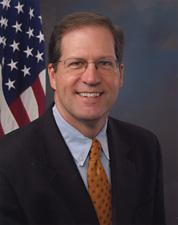 Sen. John E. Sununu (R-NH)
Legislative Activity
Stay on top of the latest movement without scrolling through every action
Considered by Senate. (consideration: CR S13405, S13417-13419)
October 25, 2007
View full timeline
Considered by Senate. (consideration: CR S13405, S13417-13419)
October 25, 2007
Proposed amendment SA 3452 withdrawn in Senate. (consideration: CR S13430)
October 25, 2007
Cloture motion on amendment SA 3452 withdrawn by unanimous consent in Senate.
October 25, 2007
Senate amendment submitted
October 24, 2007
Senate amendment proposed (on the floor): Amendment SA 3452 proposed by Senator Sununu.(consideration: CR S13349-13351; text: CR S13349-13350)
October 24, 2007
Amendment SA 3452 proposed by Senator Sununu. (consideration: CR S13349-13351; text: CR S13349-13350) To amend the Internet Tax Freedom Act to make permanent the moratorium on certain taxes relating to the Internet and to electronic commerce.
October 24, 2007
Cloture motion on amendment SA 3452 presented in Senate. (consideration: CR S13350; text: CR S13350)
October 24, 2007
Amendments
1 amendmentOffered to this amendment
Amendments
1 amendmentOffered to this amendment
Text
Proposed
PASSENGER RAIL INVESTMENT AND IMPROVEMENT ACT OF 2007

Mr. REID. Mr. President, we are going to move to the Amtrak bill.
There is an understanding that I have with Senator Lott that a number
of Members on the Republican side want to be able to have a little
extra time to do some amendments dealing with this bill. There are no
games being played with this legislation. This is something which is
long overdue, and we want to complete this.
I ask unanimous consent that the Senate now proceed to consideration
of Calendar No. 158, S. 294, the Amtrak authorization measure.
The PRESIDING OFFICER. Without objection, it is so ordered.
Mr. REID. Mr. President, let me say this. We have a lot to do here.
For people who are concerned with why we haven't been doing things this
afternoon, it takes time getting things done, and I appreciate that.
This is a bipartisan effort to move forward on this legislation. It is
something I think we can do. There is no effort to do anything other
than get a bill passed.
I have had a conversation with Senator Lott and with two other
Republican Senators, and we have agreements with what we have talked
about with them. It is a gentleman's agreement, but we will live up to
it on our side.
Mr. President, there will be no more votes today. We hope there will
be a good debate on this important issue today and hope there will be
some amendments offered tomorrow and Friday.
The PRESIDING OFFICER. The clerk will report the bill by title.
The legislative clerk read as follows:

A bill (S. 294) to reauthorize Amtrak, and for other
purposes.

There being no objection, the Senate proceeded to consider the bill,
which had been reported from the Committee on Commerce, Science and
Transportation, with amendments, as follows:
(The parts of the bill intended to be stricken are shown in boldface
brackets and the parts of the bill intended to be inserted are shown in
italic.)

S. 294

Be it enacted by the Senate and House of Representatives of
the United States of America in Congress assembled,

SECTION 1. SHORT TITLE.

This Act may be cited as the ``Passenger Rail Investment
and Improvement Act of 2007''.

SEC. 2. AMENDMENT OF TITLE 49, UNITED STATES CODE.

Except as otherwise specifically provided, whenever in this
Act an amendment is expressed in terms of an amendment to a
section or other provision of law, the reference shall be
considered to be made to a section or other provision of
title 49, United States Code.

SEC. 3. TABLE OF CONTENTS.

The table of contents for this Act is as follows:

Sec. 1. Short title.
Sec. 2. Amendment of title 49, United States Code.
Sec. 3. Table of contents.

TITLE I--AUTHORIZATIONS

Sec. 101. Authorization for Amtrak capital and operating expenses and
State capital grants.
Sec. 102. Authorization for the Federal Railroad Administration.
Sec. 103. Repayment of long-term debt and capital leases.
Sec. 104. Excess railroad retirement.
Sec. 105. Other authorizations.

TITLE II--AMTRAK REFORM AND OPERATIONAL IMPROVEMENTS

Sec. 201. National railroad passenger transportation system defined.
Sec. 202. Amtrak Board of Directors.
Sec. 203. Establishment of improved financial accounting system.
Sec. 204. Development of 5-year financial plan.
Sec. 205. Establishment of grant process.
Sec. 206. State-supported routes.
Sec. 207. Independent auditor to establish methodologies for Amtrak
route and service planning decisions.
Sec. 208. Metrics and standards.
Sec. 209. Passenger train performance.
Sec. 210. Long distance routes.
Sec. 211. Alternate passenger rail service program.
Sec. 212. Employee transition assistance.
Sec. 213. Northeast Corridor state-of-good-repair plan.
Sec. 214. Northeast Corridor infrastructure and operations
improvements.
Sec. 215. Restructuring long-term debt and capital leases.
Sec. 216. Study of compliance requirements at existing intercity rail
stations.
Sec. 217. Incentive pay.
Sec. 218. Access to Amtrak equipment and services.
Sec. 219. General Amtrak provisions.
Sec. 220. Private sector funding of passenger trains.
Sec. 221. On-board service improvements.
Sec. 222. Management accountability.
Sec. 223. Locomotive biodiesel fuel use study.

TITLE III--INTERCITY PASSENGER RAIL POLICY

Sec. 301. Capital assistance for intercity passenger rail service.
Sec. 302. State rail plans.
Sec. 303. Next generation corridor train equipment pool.
Sec. 304. Federal rail policy.
Sec. 305. Rail cooperative research program.

[TITLE IV--PASSENGER RAIL SECURITY AND SAFETY

Sec. 400. Short title.
Sec. 401. Rail transportation security risk assessment.
Sec. 402. Systemwide Amtrak security upgrades.
Sec. 403. Fire and life-safety improvements.
Sec. 404. Freight and passenger rail security upgrades.
Sec. 405. Rail security research and development.
Sec. 406. Oversight and grant procedures.
Sec. 407. Amtrak plan to assist families of passengers involved in rail
passenger accidents.
Sec. 408. Northern border rail passenger report.

[[Page S13324]]

Sec. 409. Rail worker security training program.
Sec. 410. Whistleblower protection program.
Sec. 411. High hazard material security threat mitigation plans.
Sec. 412. Memorandum of agreement.
Sec. 413. Rail security enhancements.
Sec. 414. Public awareness.
Sec. 415. Railroad high hazard material tracking.
Sec. 416. Authorization of appropriations.]

TITLE IV--IMPROVED RAIL SECURITY

Sec. 401. Definitions.
Sec. 402. Rail transportation security risk assessment.
Sec. 403. Systemwide Amtrak security upgrades.
Sec. 404. Fire and life-safety improvements.
Sec. 405. Freight and passenger rail security upgrades.
Sec. 406. Rail security research and development.
Sec. 407. Oversight and grant procedures.
Sec. 408. Amtrak plan to assist families of passengers involved in rail
passenger accidents.
Sec. 409. Northern border rail passenger report.
Sec. 410. Rail worker security training program.
Sec. 411. Whistleblower protection program.
Sec. 412. High hazard material security risk mitigation plans.
Sec. 413. Enforcement authority.
Sec. 414. Rail security enhancements.
Sec. 415. Public awareness.
Sec. 416. Railroad high hazard material tracking.
Sec. 417. Certain reports submitted to Senate Committee on Homeland
Security and Governmental Affairs.
Sec. 418. Authorization of appropriations.

TITLE I--AUTHORIZATIONS

SEC. 101. AUTHORIZATION FOR AMTRAK CAPITAL AND OPERATING
EXPENSES AND STATE CAPITAL GRANTS.

(a) Operating Grants.--There are authorized to be
appropriated to the Secretary of Transportation for the use
of Amtrak for operating costs the following amounts:
(1) For fiscal year 2007, $580,000,000.
(2) For fiscal year 2008, $590,000,000.
(3) For fiscal year 2009, $600,000,000.
(4) For fiscal year 2010, $575,000,000.
(5) For fiscal year 2011, $535,000,000.
(6) For fiscal year 2012, $455,000,000.
(b) Capital Grants.--There are authorized to be
appropriated to the Secretary of Transportation for the use
of Amtrak for capital projects (as defined in subparagraphs
(A) and (B) of section 24401(2) of title 49, United States
Code) to bring the Northeast Corridor (as defined in section
24102(a)) to a state-of-good-repair, for capital expenses of
the national railroad passenger transportation system, and
for purposes of making capital grants under section 24402 of
that title to States, the following amounts:
(1) For fiscal year 2007, $813,000,000.
(2) For fiscal year 2008, $910,000,000.
(3) For fiscal year 2009, $1,071,000,000.
(4) For fiscal year 2010, $1,096,000,000.
(5) For fiscal year 2011, $1,191,000,000.
(6) For fiscal year 2012, $1,231,000,000.
(c) Amounts for State Grants.--Out of the amounts
authorized under subsection (b), the following percentage
shall be available each fiscal year for capital grants to
States under section 24402 of title 49, United States Code,
to be administered by the Secretary of Transportation:
(1) 3 percent for fiscal year 2007.
(2) 11 percent for fiscal year 2008.
(3) 23 percent for fiscal year 2009.
(4) 25 percent for fiscal year 2010.
(5) 31 percent for fiscal year 2011.
(6) 33 percent for fiscal year 2012.
(d) Project Management Oversight.--The Secretary may
withhold up to \1/2\ of 1 percent of amounts appropriated
pursuant to subsection (b) for the costs of project
management oversight of capital projects carried out by
Amtrak.

SEC. 102. AUTHORIZATION FOR THE FEDERAL RAILROAD
ADMINISTRATION.

There are authorized to be appropriated to the Secretary of
Transportation for the use of the Federal Railroad
Administration such sums as necessary to implement the
provisions required under this Act for fiscal years 2007
through 2012.

SEC. 103. REPAYMENT OF LONG-TERM DEBT AND CAPITAL LEASES.

(a) Amtrak Principal and Interest Payments.--
(1) Principal on debt service.--There are authorized to be
appropriated to the Secretary of Transportation for the use
of Amtrak for retirement of principal on loans for capital
equipment, or capital leases, not more than the following
amounts:
(A) For fiscal year 2007, $153,900,000.
(B) For fiscal year 2008, $153,400,000.
(C) For fiscal year 2009, $180,600,000.
(D) For fiscal year 2010, $182,800,000.
(E) For fiscal year 2011, $189,400,000.
(F) For fiscal year 2012, $202,600,000.
(2) Interest on debt.--There are authorized to be
appropriated to the Secretary of Transportation for the use
of Amtrak for the payment of interest on loans for capital
equipment, or capital leases, the following amounts:
(A) For fiscal year 2007, $139,600,000.
(B) For fiscal year 2008, $131,300,000.
(C) For fiscal year 2009, $121,700,000.
(D) For fiscal year 2010, $111,900,000.
(E) For fiscal year 2011, $101,900,000.
(F) For fiscal year 2012, $90,200,000.
(3) Early buyout option.--There are authorized to be
appropriated to the Secretary of Transportation such sums as
may be necessary for the use of Amtrak for the payment of
costs associated with early buyout options if the exercise of
those options is determined to be advantageous to Amtrak.
(4) Legal effect of payments under this section.--The
payment of principal and interest on secured debt, with the
proceeds of grants authorized by this section shall not--
(A) modify the extent or nature of any indebtedness of the
National Railroad Passenger Corporation to the United States
in existence of the date of enactment of this Act;
(B) change the private nature of Amtrak's or its
successors' liabilities; or
(C) imply any Federal guarantee or commitment to amortize
Amtrak's outstanding indebtedness.

SEC. 104. EXCESS RAILROAD RETIREMENT.

There are authorized to be appropriated to the Secretary of
Transportation, beginning with fiscal year 2007, such sums as
may be necessary to pay to the Railroad Retirement Account an
amount equal to the amount Amtrak must pay under section 3221
of the Internal Revenue Code of 1986 in such fiscal years
that is more than the amount needed for benefits for
individuals who retire from Amtrak and for their
beneficiaries. For each fiscal year in which the Secretary
makes such a payment, the amounts authorized by section
101(a) shall be reduced by an amount equal to such payment.

SEC. 105. OTHER AUTHORIZATIONS.

There are authorized to be appropriated to the Secretary of
Transportation--
(1) $5,000,000 for each of fiscal years 2007 through 2012
to carry out the rail cooperative research program under
section 24910 of title 49, United States Code;
(2) $5,000,000 for fiscal year 2008, to remain available
until expended, for grants to Amtrak and States participating
in the Next Generation Corridor Train Equipment Pool
Committee established under section 303 of this Act for the
purpose of designing, developing specifications for, and
initiating the procurement of an initial order of 1 or more
types of standardized next-generation corridor train
equipment and establishing a jointly-owned corporation to
manage that equipment; and
(3) $2,000,000 for fiscal year 2008, for the use of Amtrak
in conducting the evaluation required by section 216 of this
Act.

TITLE II--AMTRAK REFORM AND OPERATIONAL IMPROVEMENTS

SEC. 201. NATIONAL RAILROAD PASSENGER TRANSPORTATION SYSTEM
DEFINED.

(a) In General.--Section 24102 is amended--
(1) by striking paragraph (2);
(2) by redesignating paragraphs (3), (4), and (5) as
paragraphs (2), (3), and (4), respectively; and
(3) by inserting after paragraph (4) as so redesignated the
following:
``(5) `national rail passenger transportation system'
means--
``(A) the segment of the Northeast Corridor between Boston,
Massachusetts and Washington, DC;
``(B) rail corridors that have been designated by the
Secretary of Transportation as high-speed corridors (other
than corridors described in subparagraph (A)), but only after
they have been improved to permit operation of high-speed
service;
``(C) long distance routes of more than 750 miles between
endpoints operated by Amtrak as of the date of enactment of
the Passenger Rail Investment and Improvement Act of 2007;
and
``(D) short-distance corridors, or routes of not more than
750 miles between endpoints, operated by--
``(i) Amtrak; or
``(ii) another rail carrier that receives funds under
chapter 244.''.
(b) Amtrak Routes With State Funding.--
(1) In general.--Chapter 247 is amended by inserting after
section 24701 the following:

``Sec. 24702. Transportation requested by States,
authorities, and other persons

``(a) Contracts for Transportation.--Amtrak may enter into
a contract with a State, a regional or local authority, or
another person for Amtrak to operate an intercity rail
service or route not included in the national rail passenger
transportation system upon such terms as the parties thereto
may agree.
``(b) Discontinuance.--Upon termination of a contract
entered into under this section, or the cessation of
financial support under such a contract by either party,
Amtrak may discontinue such service or route, notwithstanding
any other provision of law.''.
(2) Conforming amendment.--The chapter analysis for chapter
247 is amended by inserting after the item relating to
section 24701 the following:

``24702. Transportation requested by States, authorities, and other
persons.''.

(c) Amtrak To Continue To Provide Non-High-speed
Services.--Nothing in this Act is intended to preclude Amtrak
from restoring, improving, or developing non-high-speed
intercity passenger rail service.
(d) Applicability of Section 24706.--Section 24706 is
amended by adding at the end the following:
``(c) Applicability.--This section applies to all service
over routes provided by Amtrak, notwithstanding any provision
of section 24701 of this title or any other provision of this
title except section 24702(b).''.

SEC. 202. AMTRAK BOARD OF DIRECTORS.

(a) In General.--Section 24302 is amended to read as
follows:

[[Page S13325]]

``Sec. 24302. Board of directors

``(a) Composition and Terms.--
``(1) The Board of Directors of Amtrak is composed of the
following 10 directors, each of whom must be a citizen of the
United States:
``(A) The Secretary of Transportation.
``(B) The President of Amtrak, who shall serve ex officio,
as a non-voting member.
``(C) 8 individuals appointed by the President of the
United States, by and with the advice and consent of the
Senate, with general business and financial experience,
experience or qualifications in transportation, freight and
passenger rail transportation, travel, hospitality, cruise
line, and passenger air transportation businesses, or
representatives of employees or users of passenger rail
transportation or a State government.
``(2) In selecting individuals described in paragraph (1)
for nominations for appointments to the Board, the President
shall consult with the Speaker of the House of
Representatives, the minority leader of the House of
Representatives, the majority leader of the Senate, and the
minority leader of the Senate and try to provide adequate and
balanced representation of the major geographic regions of
the United States served by Amtrak.
``(3) An individual appointed under paragraph (1)(C) of
this subsection serves for 5 years or until the individual's
successor is appointed and qualified. Not more than 5
individuals appointed under paragraph (1)(C) may be members
of the same political party.
``(4) The Board shall elect a chairman and a vice chairman
from among its membership. The vice chairman shall serve as
chairman in the absence of the chairman.
``(5) The Secretary may be represented at board meetings by
the Secretary's designee.
``(6) The voting privileges of the President can be changed
by a unanimous decision of the Board.
``(b) Pay and Expenses.--Each director not employed by the
United States Government is entitled to $300 a day when
performing Board duties. Each Director is entitled to
reimbursement for necessary travel, reasonable secretarial
and professional staff support, and subsistence expenses
incurred in attending Board meetings.
``(c) Vacancies.--A vacancy on the Board is filled in the
same way as the original selection, except that an individual
appointed by the President of the United States under
subsection (a)(1)(C) of this section to fill a vacancy
occurring before the end of the term for which the
predecessor of that individual was appointed is appointed for
the remainder of that term. A vacancy required to be filled
by appointment under subsection (a)(1)(C) must be filled not
later than 120 days after the vacancy occurs.
``(d) Quorum.--A majority of the members serving shall
constitute a quorum for doing business.
``(e) Bylaws.--The Board may adopt and amend bylaws
governing the operation of Amtrak. The bylaws shall be
consistent with this part and the articles of
incorporation.''.
(b) Effective Date for Directors' Provision.--The amendment
made by subsection (a) shall take effect on October 1, 2007.
The members of the Amtrak Board serving on the date of
enactment of this Act may continue to serve for the remainder
of the term to which they were appointed.

SEC. 203. ESTABLISHMENT OF IMPROVED FINANCIAL ACCOUNTING
SYSTEM.

(a) In General.--The Amtrak Board of Directors--
(1) may employ an independent financial consultant with
experience in railroad accounting to assist Amtrak in
improving Amtrak's financial accounting and reporting system
and practices; and
(2) shall implement a modern financial accounting and
reporting system that will produce accurate and timely
financial information in sufficient detail--
(A) to enable Amtrak to assign revenues and expenses
appropriately to each of its lines of business and to each
major activity within each line of business activity,
including train operations, equipment maintenance, ticketing,
and reservations;
(B) to aggregate expenses and revenues related to
infrastructure and distinguish them from expenses and
revenues related to rail operations;
(C) to allow the analysis of ticketing and reservation
information on a real-time basis;
(D) to provide Amtrak cost accounting data; and
(E) to allow financial analysis by route and service.
(b) Verification of System; Report.--The Inspector General
of the Department of Transportation shall review the
accounting system designed and implemented under subsection
(a) to ensure that it accomplishes the purposes for which it
is intended. The Inspector General shall report his findings
and conclusions, together with any recommendations, to the
Senate Committee on Commerce, Science, and Transportation and
the House of Representatives Committee on Transportation and
Infrastructure.

SEC. 204. DEVELOPMENT OF 5-YEAR FINANCIAL PLAN.

(a) Development of 5-Year Financial Plan.--The Amtrak Board
of Directors shall submit an annual budget and business plan
for Amtrak, and a 5-year financial plan for the fiscal year
to which that budget and business plan relate and the
subsequent 4 years, prepared in accordance with this section,
to the Secretary of Transportation and the Inspector General
of the Department of Transportation no later than--
(1) the first day of each fiscal year beginning after the
date of enactment of this Act; or
(2) the date that is 60 days after the date of enactment of
an appropriation Act for the fiscal year, if later.
(b) Contents of 5-Year Financial Plan.--The 5-year
financial plan for Amtrak shall include, at a minimum--
(1) all projected revenues and expenditures for Amtrak,
including governmental funding sources;
(2) projected ridership levels for all Amtrak passenger
operations;
(3) revenue and expenditure forecasts for non-passenger
operations;
(4) capital funding requirements and expenditures necessary
to maintain passenger service which will accommodate
predicted ridership levels and predicted sources of capital
funding;
(5) operational funding needs, if any, to maintain current
and projected levels of passenger service, including state-
supported routes and predicted funding sources;
(6) projected capital and operating requirements,
ridership, and revenue for any new passenger service
operations or service expansions;
(7) an assessment of the continuing financial stability of
Amtrak, as indicated by factors such as the ability of the
Federal government to fund capital and operating requirements
adequately, Amtrak's ability to efficiently manage its
workforce, and Amtrak's ability to effectively provide
passenger train service;
(8) estimates of long-term and short-term debt and
associated principal and interest payments (both current and
anticipated);
(9) annual cash flow forecasts;
(10) a statement describing methods of estimation and
significant assumptions;
(11) specific measures that demonstrate measurable
improvement year over year in Amtrak's ability to operate
with reduced Federal operating assistance; and
(12) capital and operating expenditures for anticipated
security needs.
(c) Standards To Promote Financial Stability.--In meeting
the requirements of subsection (b), Amtrak shall--
(1) apply sound budgetary practices, including reducing
costs and other expenditures, improving productivity,
increasing revenues, or combinations of such practices;
(2) use the categories specified in the financial
accounting and reporting system developed under section 203
when preparing its 5-year financial plan; and
(3) ensure that the plan is consistent with the
authorizations of appropriations under title I of this Act.
(d) Assessment by DOT Inspector General.--
(1) In general.--The Inspector General of the Department of
Transportation shall assess the 5-year financial plans
prepared by Amtrak under this section to determine whether
they meet the requirements of subsection (b), and may suggest
revisions to any components thereof that do not meet those
requirements.
(2) Assessment to be furnished to the congress.--The
Inspector General shall furnish to the House of
Representatives Committee on Appropriations, the Senate
Committee on Appropriations, the House of Representatives
Committee on Transportation and Infrastructure, and the
Senate Committee on Commerce, Science, and Transportation--
(A) an assessment of the annual budget within 90 days after
receiving it from Amtrak; and
(B) an assessment of the remaining 4 years of the 5-year
financial plan within 180 days after receiving it from
Amtrak.

SEC. 205. ESTABLISHMENT OF GRANT PROCESS.

(a) Grant Requests.--Amtrak shall submit grant requests
(including a schedule for the disbursement of funds),
consistent with the requirements of this Act, to the
Secretary of Transportation for funds authorized to be
appropriated to the Secretary for the use of Amtrak under
sections 101(a) and (b), 103, and 105.
(b) Procedures for Grant Requests.--The Secretary shall
establish substantive and procedural requirements, including
schedules, for grant requests under this section not later
than 30 days after the date of enactment of this Act and
shall transmit copies to the Senate Committee on Commerce,
Science, and Transportation and the House of Representatives
Committee on Transportation and Infrastructure. As part of
those requirements, the Secretary shall require, at a
minimum, that Amtrak deposit grant funds, consistent with the
appropriated amounts for each area of expenditure in a given
fiscal year, in the following 3 accounts:
(1) The Amtrak Operating account.
(2) The Amtrak General Capital account.
(3) The Northeast Corridor Improvement funds account.

Amtrak may not transfer such funds to another account or
expend such funds for any purpose other than the purposes
covered by the account in which the funds are deposited
without approval by the Secretary.
(c) Review and Approval.--
(1) 30-day approval process.--The Secretary shall complete
the review of a complete grant request (including the
disbursement schedule) and approve or disapprove the request
within 30 days after the date on which Amtrak submits the
grant request. If the Secretary disapproves the request or
determines that the request is incomplete or

[[Page S13326]]

deficient, the Secretary shall include the reason for
disapproval or the incomplete items or deficiencies in the
notice to Amtrak.
(2) 15-day modification period.--Within 15 days after
receiving notification from the Secretary under the preceding
sentence, Amtrak shall submit a modified request for the
Secretary's review.
(3) Revised requests.--Within 15 days after receiving a
modified request from Amtrak, the Secretary shall either
approve the modified request, or, if the Secretary finds that
the request is still incomplete or deficient, the
Secretary shall identify in writing to the Senate
Committee on Commerce, Science, and Transportation and the
House of Representatives Committee on Transportation and
Infrastructure the remaining deficiencies and recommend a
process for resolving the outstanding portions of the
request.

SEC. 206. STATE-SUPPORTED ROUTES.

(a) In General.--Within 2 years after the date of enactment
of this Act, the Board of Directors of Amtrak, in
consultation with the Secretary of Transportation and the
governors of each State and the Mayor of the District of
Columbia or groups representing those officials, shall
develop and implement a standardized methodology for
establishing and allocating the operating and capital costs
among the States and Amtrak associated with trains operated
on routes described in section 24102(5)(B) or (D) or section
24702 that--
(1) ensures, within 5 years after the date of enactment of
this Act, equal treatment in the provision of like services
of all States and groups of States (including the District of
Columbia); and
(2) allocates to each route the costs incurred only for the
benefit of that route and a proportionate share, based upon
factors that reasonably reflect relative use, of costs
incurred for the common benefit of more than 1 route.
(b) Review.--If Amtrak and the States (including the
District of Columbia) in which Amtrak operates such routes do
not voluntarily adopt and implement the methodology developed
under subsection (a) in allocating costs and determining
compensation for the provision of service in accordance with
the date established therein, the Surface Transportation
Board shall determine the appropriate methodology required
under subsection (a) for such services in accordance with the
procedures and procedural schedule applicable to a proceeding
under section 24904(c) of title 49, United States Code, and
require the full implementation of this methodology with
regards to the provision of such service within 1 year after
the Board's determination of the appropriate methodology.
(c) Use of Chapter 244 Funds.--Funds provided to a State
under chapter 244 of title 49, United States Code, may be
used, as provided in that chapter, to pay capital costs
determined in accordance with this section.

SEC. 207. INDEPENDENT AUDITOR TO ESTABLISH METHODOLOGIES FOR
AMTRAK ROUTE AND SERVICE PLANNING DECISIONS.

(a) Methodology Development.--The Federal Railroad
Administration shall obtain the services of an independent
auditor or consultant to develop and recommend objective
methodologies for determining intercity passenger routes and
services, including the establishment of new routes, the
elimination of existing routes, and the contraction or
expansion of services or frequencies over such routes. In
developing such methodologies, the auditor or consultant
shall consider--
(1) the current or expected performance and service quality
of intercity passenger train operations, including cost
recovery, on-time performance and minutes of delay,
ridership, on-board services, stations, facilities,
equipment, and other services;
(2) connectivity of a route with other routes;
(3) the transportation needs of communities and populations
that are not well served by other forms of public
transportation;
(4) Amtrak's and other major intercity passenger rail
service providers in other countries' methodologies for
determining intercity passenger rail routes and services; and
(5) the views of the States and other interested parties.
(b) Submittal to Congress.--The auditor or consultant shall
submit recommendations developed under subsection (a) to
Amtrak, the House of Representatives Committee on
Transportation and Infrastructure, and the Senate Committee
on Commerce, Science, and Transportation.
(c) Consideration of Recommendations.--Within 90 days after
receiving the recommendations developed under subsection (a)
by the independent auditor or consultant, the Amtrak Board
shall consider the adoption of those recommendations. The
Board shall transmit a report to the Senate Committee on
Commerce, Science, and Transportation and the House of
Representatives Committee on Transportation and
Infrastructure explaining its action in adopting or failing
to adopt any of the recommendations.
(d) Authorization of Appropriations.--There are authorized
to be made available to the Secretary of Transportation, out
of any amounts authorized by this Act to be appropriated for
the benefit of Amtrak and not otherwise obligated or
expended, such sums as may be necessary to carry out this
section.
(e) Pioneer Route.--Within 2 years after the date of
enactment of this Act, Amtrak shall conduct a 1-time
evaluation of the Pioneer Route formerly operated by Amtrak
to determine, using methodologies adopted under subsection
(c), whether a level of passenger demand exists that would
warrant consideration of reinstating the entire Pioneer Route
service or segments of that service.

SEC. 208. METRICS AND STANDARDS.

(a) In General.--Within 180 days after the date of
enactment of this Act, the Administrator of the Federal
Railroad Administration and Amtrak shall jointly, in
consultation with the Surface Transportation Board, rail
carriers over whose rail lines Amtrak trains operate, States,
Amtrak employees, and groups representing Amtrak passengers,
as appropriate, develop new or improve existing metrics and
minimum standards for measuring the performance and service
quality of intercity passenger train operations, including
cost recovery, on-time performance and minutes of delay,
ridership, on-board services, stations, facilities,
equipment, and other services. Such metrics, at a minimum,
shall include the percentage of avoidable and fully allocated
operating costs covered by passenger revenues on each route,
ridership per train mile operated, measures of on-time
performance and delays incurred by intercity passenger trains
on the rail lines of each rail carrier and, for long distance
routes, measures of connectivity with other routes in all
regions currently receiving Amtrak service and the
transportation needs of communities and populations that are
not well-served by other forms of public transportation.
Amtrak shall provide reasonable access to the Federal
Railroad Administration in order to enable the Administration
to carry out its duty under this section.
(b) Quarterly Reports.--The Administrator of the Federal
Railroad Administration shall collect the necessary data and
publish a quarterly report on the performance and service
quality of intercity passenger train operations, including
Amtrak's cost recovery, ridership, on-time performance and
minutes of delay, causes of delay, on-board services,
stations, facilities, equipment, and other services.
(c) Contract With Host Rail Carriers.--To the extent
practicable, Amtrak and its host rail carriers shall
incorporate the metrics and standards developed under
subsection (a) into their access and service agreements.
(d) Arbitration.--If the development of the metrics and
standards is not completed within the 180-day period required
by subsection (a), any party involved in the development of
those standards may petition the Surface Transportation Board
to appoint an arbitrator to assist the parties in resolving
their disputes through binding arbitration.

SEC. 209. PASSENGER TRAIN PERFORMANCE.

(a) In General.--Section 24308 is amended by adding at the
end the following:
``(f) Passenger Train Performance and Other Standards.--
``(1) Investigation of substandard performance.--If the on-
time performance of any intercity passenger train averages
less than 80 percent for any 2 consecutive calendar quarters,
or the service quality of intercity passenger train
operations for which minimum standards are established under
section 208 of the Passenger Rail Investment and Improvement
Act of 2007 fails to meet those standards for 2 consecutive
calendar quarters, the Surface Transportation Board may
initiate an investigation, or upon the filing of a complaint
by Amtrak, an intercity passenger rail operator, a host
freight railroad over which Amtrak operates, or an entity for
which Amtrak operates intercity passenger rail service, the
Board shall initiate an investigation to determine whether,
and to what extent, delays or failure to achieve minimum
standards are due to causes that could reasonably be
addressed by a rail carrier over tracks of which the
intercity passenger train operates or reasonably addressed by
Amtrak or other intercity passenger rail operator. In making
its determination or carrying out such an investigation, the
Board shall obtain information from all parties involved and
identify reasonable measures and make recommendations to
improve the service, quality, and on-time performance of the
train.
``(2) Problems caused by host rail carrier.--If the Board
determines that delays or failures to achieve minimum
standards investigated under paragraph (1) are attributable
to a rail carrier's failure to provide preference to Amtrak
over freight transportation as required under subsection (c),
the Board may award damages against the host rail carrier,
including prescribing such other relief to Amtrak as it
determines to be reasonable and appropriate pursuant to
paragraph (3) of this subsection.
``(3) Damages and relief.--In awarding damages and
prescribing other relief under this subsection the Board
shall consider such factors as--
``(A) the extent to which Amtrak suffers financial loss as
a result of host rail carrier delays or failure to achieve
minimum standards; and
``(B) what reasonable measures would adequately deter
future actions which may reasonably be expected to be likely
to result in delays to Amtrak on the route involved.
``(4) Use of damages.--The Board shall, as it deems
appropriate, remit the damages awarded under this subsection
to Amtrak or

[[Page S13327]]

to an entity for which Amtrak operates intercity passenger
rail service. Such damages shall be used for capital or
operating expenditures on the routes over which delays or
failures to achieve minimum standards were the result of a
rail carrier's failure to provide preference to Amtrak over
freight transportation as determined in accordance with
paragraph (2).''.
(b) Change of Reference.--Section 24308 is amended--
(1) by striking ``Interstate Commerce Commission'' in
subsection (a)(2)(A) and inserting ``Surface Transportation
Board'';
(2) by striking ``Commission'' each place it appears and
inserting ``Board'';
(3) by striking ``Secretary of Transportation'' in
subsection (c) and inserting ``Board''; and
(4) by striking ``Secretary'' the last 3 places it appears
in subsection (c) and each place it appears in subsections
(d) and (e) and inserting ``Board''.

SEC. 210. LONG DISTANCE ROUTES.

(a) In General.--Chapter 247 is amended by adding at the
end thereof the following:

``Sec. 24710. Long distance routes

``(a) Annual Evaluation.--Using the financial and
performance metrics developed under section 208 of the
Passenger Rail Investment and Improvement Act of 2007, Amtrak
shall--
``(1) evaluate annually the financial and operating
performance of each long distance passenger rail route
operated by Amtrak; and
``(2) rank the overall performance of such routes for 2006
and identify each long distance passenger rail route operated
by Amtrak in 2006 according to its overall performance as
belonging to the best performing third of such routes, the
second best performing third of such routes, or the worst
performing third of such routes.
``(b) Performance Improvement Plan.--Amtrak shall develop
and publish a performance improvement plan for its long
distance passenger rail routes to achieve financial and
operating improvements based on the data collected through
the application of the financial and performance metrics
developed under section 208 of that Act. The plan shall
address--
``(1) on-time performance;
``(2) scheduling, frequency, routes, and stops;
``(3) the feasibility of restructuring service into
connected corridor service;
``(4) performance-related equipment changes and capital
improvements;
``(5) on-board amenities and service, including food, first
class, and sleeping car service;
``(6) State or other non-Federal financial contributions;
``(7) improving financial performance; and
``(8) other aspects of Amtrak's long distance passenger
rail routes that affect the financial, competitive, and
functional performance of service on Amtrak's long distance
passenger rail routes.
``(c) Implementation.--Amtrak shall implement the
performance improvement plan developed under subsection (b)--
``(1) beginning in fiscal year 2008 for those routes
identified as being in the worst performing third under
subsection (a)(2);
``(2) beginning in fiscal year 2009 for those routes
identified as being in the second best performing third under
subsection (a)(2); and
``(3) beginning in fiscal year 2010 for those routes
identified as being in the best performing third under
subsection (a)(2).
``(d) Enforcement.--The Federal Railroad Administration
shall monitor the development, implementation, and outcome of
improvement plans under this section. If, for any year, it
determines that Amtrak is not making reasonable progress in
implementing its performance improvement plan or in achieving
the expected outcome of the plan for any calendar year, the
Federal Railroad Administration--
``(1) shall notify Amtrak, the Inspector General of the
Department of Transportation, and appropriate Congressional
committees of its determination under this subsection;
``(2) shall provide an opportunity for a hearing with
respect to that determination; and
``(3) may withhold any appropriated funds otherwise
available to Amtrak for the operation of a route or routes on
which it is not making progress, other than funds made
available for passenger safety or security measures.''.
(b) Conforming Amendment.--The chapter analysis for chapter
247 is amended by inserting after the item relating to
section 24709 the following:

``24710. Long distance routes.''.

SEC. 211. ALTERNATE PASSENGER RAIL SERVICE PROGRAM.

(a) In General.--Chapter 247, as amended by section 209, is
amended by adding at the end thereof the following:

``Sec. 24711. Alternate passenger rail service program

``(a) In General.--Within 1 year after the date of
enactment of the Passenger Rail Investment and Improvement
Act of 2007, the Federal Railroad Administration shall
initiate a rulemaking proceeding to develop a program under
which--
``(1) a rail carrier or rail carriers that own
infrastructure over which Amtrak operates a passenger rail
service route described in subparagraph (B), (C), or (D) of
section 24102(5) or in section 24702 of title 49, United
States [Code] Code, or any entity operating as a rail carrier
that has negotiated a contingent agreement to lease necessary
rights-of-way from a rail carrier or rail carriers that own
the infrastructure on which Amtrak operates such routes, may
petition the Federal Railroad Administration to be considered
as a passenger rail service provider over that route in lieu
of Amtrak;
``(2) the Administration would notify Amtrak within 30 days
after receiving a petition under paragraph (1) and establish
a deadline by which both the petitioner and Amtrak would be
required to submit a bid to provide passenger rail service
over the route to which the petition relates;
``(3) each bid would describe how the bidder would operate
the route, what Amtrak passenger equipment would be needed,
if any, what sources of non-Federal funding the bidder would
use, including any State subsidy, among other things;
``(4) the Administration would make a decision and execute
a contract within a specified, limited time after that
deadline awarding to the winning bidder--
``(A) the right and obligation to provide passenger rail
service over that route subject to such performance standards
as the Administration may require, consistent with the
standards developed under section 208 of this Act; and
``(B) an operating subsidy--
``(i) for the first year at a level not in excess of the
level in effect during the fiscal year preceding the fiscal
year in which the petition was received, adjusted for
inflation;
``(ii) for any subsequent years at such level, adjusted for
inflation; and
``(5) each bid would contain a staffing plan describing the
number of employees needed to operate the service, the job
assignments and requirements, and the terms of work for
prospective and current employees of the bidder for the
service outlined in the bid, and such staffing plan would be
made available by the winning bidder to the public after the
bid award.
``(b) Implementation.--
``(1) Initial petitions.--Pursuant to any rules or
regulations promulgated under subsection (A), the
Administration shall establish a deadline for the submission
of a petition under subsection (a)--
``(A) during fiscal year 2008 for operations commencing in
fiscal year 2009; and
``(B) during the immediately preceding fiscal year for
operations commencing in subsequent fiscal years.
``(2) Route limitations.--The Administration may not make
the program available with respect to more than 1 Amtrak
passenger rail route for operations beginning in fiscal year
2009 nor to more than 2 such routes for operations beginning
in fiscal year 2011 and subsequent fiscal years.
``(c) Performance Standards; Access to Facilities;
Employees.--If the Administration awards the right and
obligation to provide passenger rail service over a route
under the program to a rail carrier or rail carriers--
``(1) it shall execute a contract with the rail carrier or
rail carriers for rail passenger operations on that route
that conditions the operating and subsidy rights upon--
``(A) the service provider continuing to provide passenger
rail service on the route that is no less frequent, nor over
a shorter distance, than Amtrak provided on that route before
the award; and
``(B) the service provider's compliance with the minimum
standards established under section 208 of the Passenger Rail
Investment and Improvement Act of 2007 and such additional
performance standards as the Administration may establish;
``(2) it shall, if the award is made to a rail carrier
other than Amtrak, require Amtrak to provide access to its
reservation system, stations, and facilities to any rail
carrier or rail carriers awarded a contract under this
section, in accordance with section 218 of that Act,
necessary to carry out the purposes of this section;
``(3) the employees of any person used by a rail carrier or
rail carriers (as defined in section 10102(5) of this title)
in the operation of a route under this section shall be
considered an employee of that carrier or carriers and
subject to the applicable Federal laws and regulations
governing similar crafts or classes of employees of Amtrak,
including provisions under section 121 of the Amtrak Reform
and Accountability Act of 1997 relating to employees that
provide food and beverage service; and
``(4) the winning bidder shall provide preference in hiring
to qualified Amtrak employees displaced by the award of the
bid, consistent with the staffing plan submitted by the
bidder.
``(d) Cessation of Service.--If a rail carrier or rail
carriers awarded a route under this section cease to operate
the service or fail to fulfill their obligations under the
contract required under subsection (c), the Administrator, in
collaboration with the Surface Transportation Board shall
take any necessary action consistent with this title to
enforce the contract and ensure the continued provision of
service, including the installment of an interim service
provider and re-bidding the contract to operate the service.
The entity providing service shall either be Amtrak or a rail
carrier defined in section 24711(a)(1).
``(e) Adequate Resources.--Before taking any action allowed
under this section, the Secretary shall certify that the
Administrator has sufficient resources that are adequate to
undertake the program established under this section.''.

[[Page S13328]]

(b) Conforming Amendment.--The chapter analysis for chapter
247, as amended by section 209, is amended by inserting after
the item relating to section 24710 the following:

``24711. Alternate passenger rail service program.''.

SEC. 212. EMPLOYEE TRANSITION ASSISTANCE.

(a) Provision of Financial Incentives.--For Amtrak
employees who are adversely affected by the cessation of the
operation of a long distance route or any other route under
section 24711 of title 49, United States Code, previously
operated by Amtrak, the Secretary shall develop a program
under which the Secretary may, in the Secretary's discretion,
provide grants for financial incentives to be provided to
employees of the National Railroad Passenger Corporation who
voluntarily terminate their employment with the Corporation
and relinquish any legal rights to receive termination-
related payments under any contractual agreement with the
Corporation.
(b) Conditions for Financial Incentives.--As a condition
for receiving financial assistance grants under this section,
the Corporation must certify that--
(1) a reasonable attempt was made to reassign an employee
adversely affected under section 24711 of title 49, United
States Code, or by the elimination of any route, to other
positions within the Corporation in accordance with any
contractual agreements;
(2) the financial assistance results in a net reduction in
the total number of employees equal to the number receiving
financial incentives;
(3) the financial assistance results in a net reduction in
total employment expense equivalent to the total employment
expenses associated with the employees receiving financial
incentives; and
(4) the total number of employees eligible for termination-
related payments will not be increased without the express
written consent of the Secretary.
(c) Amount of Financial Incentives.--The financial
incentives authorized under this section may be no greater
than $50,000 per employee.
(d) Authorization of Appropriations.--There are hereby
authorized to be appropriated to the Secretary such sums as
may be necessary to make grants to the National Railroad
Passenger Corporation to provide financial incentives under
subsection (a).
(e) Termination-Related Payments.--If Amtrak employees
adversely affected by the cessation of Amtrak service
resulting from the awarding of a grant to an operator other
than Amtrak for the operation of a route under section 24711
of title 49, United States Code, or any other route,
previously operated by Amtrak do not receive financial
incentives under subsection (a), then the Secretary shall
make grants to the National Railroad Passenger Corporation
from funds authorized by section 102 of this Act for
termination-related payments to employees under existing
contractual agreements.

SEC. 213. NORTHEAST CORRIDOR STATE-OF-GOOD-REPAIR PLAN.

(a) In General.--Within 6 months after the date of
enactment of this Act, the National Railroad Passenger
Corporation, in consultation with the Secretary and the
States (including the District of Columbia) that make up the
Northeast Corridor (as defined in section 24102 of title 49,
United States Code), shall prepare a capital spending plan
for capital projects required to return the railroad right-
of-way (including track, signals, and auxiliary structures),
facilities, stations, and equipment, of the Northeast
Corridor to a state of good repair by the end of fiscal year
2012, consistent with the funding levels authorized in this
Act and shall submit the plan to the Secretary.
(b) Approval by the Secretary.--
(1) The Corporation shall submit the capital spending plan
prepared under this section to the Secretary of
Transportation for review and approval pursuant to the
procedures developed under section 205 of this Act.
(2) The Secretary of Transportation shall require that the
plan be updated at least annually and shall review and
approve such updates. During review, the Secretary shall seek
comments and review from the commission established under
section 24905 of title 49, United States Code, and other
Northeast Corridor users regarding the plan.
(3) The Secretary shall make grants to the Corporation with
funds authorized by section 101(b) for Northeast Corridor
capital investments contained within the capital spending
plan prepared by the Corporation and approved by the
Secretary.
(4) Using the funds authorized by section 101(d), the
Secretary shall review Amtrak's capital expenditures funded
by this section to ensure that such expenditures are
consistent with the capital spending plan and that Amtrak is
providing adequate project management oversight and fiscal
controls.
(c) Eligibility of Expenditures.--The Federal share of
expenditures for capital improvements under this section may
not exceed 100 percent.

SEC. 214. NORTHEAST CORRIDOR INFRASTRUCTURE AND OPERATIONS
IMPROVEMENTS.

(a) In General.--Section 24905 is amended to read as
follows:

``Sec. 24905. Northeast Corridor Infrastructure and
Operations Advisory Commission; Safety and Security
Committee

``(a) Northeast Corridor Infrastructure and Operations
Advisory Commission.--
``(1) Within 180 days after the date of enactment of the
Passenger Rail Investment and Improvement Act of 2007, the
Secretary of Transportation shall establish a Northeast
Corridor Infrastructure and Operations Advisory Commission
(hereinafter referred to in this section as the `Commission')
to promote mutual cooperation and planning pertaining to the
rail operations and related activities of the Northeast
Corridor. The Commission shall be made up of--
``(A) members representing the National Railroad Passenger
Corporation;
``(B) members representing the Secretary of Transportation
and the Federal Railroad Administration;
``(C) 1 member from each of the States (including the
District of Columbia) that constitute the Northeast Corridor
as defined in section 24102, designated by, and serving at
the pleasure of, the chief executive officer thereof; and
``(D) non-voting representatives of freight railroad
carriers using the Northeast Corridor selected by the
Secretary.
``(2) The Secretary shall ensure that the membership
belonging to any of the groups enumerated under subparagraph
(1) shall not constitute a majority of the commission's
memberships.
``(3) The commission shall establish a schedule and
location for convening meetings, but shall meet no less than
four times per fiscal year, and the commission shall develop
rules and procedures to govern the commission's proceedings.
``(4) A vacancy in the Commission shall be filled in the
manner in which the original appointment was made.
``(5) Members shall serve without pay but shall receive
travel expenses, including per diem in lieu of subsistence,
in accordance with sections 5702 and 5703 of title 5, United
States Code.
``(6) The Chairman of the Commission shall be elected by
the members.
``(7) The Commission may appoint and fix the pay of such
personnel as it considers appropriate.
``(8) Upon request of the Commission, the head of any
department or agency of the United States may detail, on a
reimbursable basis, any of the personnel of that department
or agency to the Commission to assist it in carrying out its
duties under this section.
``(9) Upon the request of the Commission, the Administrator
of General Services shall provide to the Commission, on a
reimbursable basis, the administrative support services
necessary for the Commission to carry out its
responsibilities under this section.
``(10) The commission shall consult with other entities as
appropriate.
``(b) General Recommendations.--The Commission shall
develop recommendations concerning Northeast Corridor rail
infrastructure and operations including proposals addressing,
as appropriate--
``(1) short-term and long term capital investment needs
beyond the state-of-good-repair under section 213;
``(2) future funding requirements for capital improvements
and maintenance;
``(3) operational improvements of intercity passenger rail,
commuter rail, and freight rail services;
``(4) opportunities for additional non-rail uses of the
Northeast Corridor;
``(5) scheduling and dispatching;
``(6) safety and security enhancements;
``(7) equipment design;
``(8) marketing of rail services; and
``(9) future capacity requirements.
``(c) Access Costs.--
``(1) Development of formula.--Within 1 year after
verification of Amtrak's new financial accounting system
pursuant to section 203(b) of the Passenger Rail Investment
and Improvement Act of 2007, the Commission shall--
``(A) develop a standardized formula for determining and
allocating costs, revenues, and compensation for Northeast
Corridor commuter rail passenger transportation, as defined
in section 24102 of this title, that use National Railroad
Passenger Corporation facilities or services or that provide
such facilities or services to the National Railroad
Passenger Corporation that ensure that--
``(i) there is no cross-subsidization of commuter rail
passenger, intercity rail passenger, or freight rail
transportation; and
``(ii) each service is assigned the costs incurred only for
the benefit of that service, and a proportionate share, based
upon factors that reasonably reflect relative use, of costs
incurred for the common benefit of more than 1 service;
``(B) develop a proposed timetable for implementing the
formula before the end of the 6th year following the date of
enactment of that Act;
``(C) transmit the proposed timetable to the Surface
Transportation Board; and
``(D) at the request of a Commission member, petition the
Surface Transportation Board to appoint a mediator to assist
the Commission members through non-binding mediation to reach
an agreement under this section.
``(2) Implementation.--The National Railroad Passenger
Corporation and the commuter authorities providing commuter
rail passenger transportation on the Northeast Corridor shall
implement new agreements for usage of facilities or services
based on the formula proposed in paragraph (1) in accordance
with the timetable established therein. If the entities fail
to implement such new agreements in accordance with the
timetable, the Commission shall petition the Surface
Transportation Board to determine the appropriate
compensation amounts for

[[Page S13329]]

such services in accordance with section 24904(c) of this
title. The Surface Transportation Board shall enforce its
determination on the party or parties involved.
``(d) Transmission of Recommendations.--The commission
shall annually transmit the recommendations developed under
subsection (b) and the formula and timetable developed under
subsection (c)(1) to the Senate Committee on Commerce,
Science, and Transportation and the House of Representatives
Committee on Transportation and Infrastructure.
``(e) Northeast Corridor Safety and Security Committee.--
``(1) In general.--The Secretary shall establish a
Northeast Corridor Safety and Security Committee composed of
members appointed by the Secretary. The members shall be
representatives of--
``(A) the Secretary;
``(B) Amtrak;
``(C) freight carriers operating more than 150,000 train
miles a year on the main line of the Northeast Corridor;
``(D) commuter agencies;
``(E) rail passengers;
``(F) rail labor;
``(G) the Transportation Security Administration; and
``(H) other individuals and organizations the Secretary
decides have a significant interest in rail safety or
security.
``(2) Function; meetings.--The Secretary shall consult with
the Committee about safety and security improvements on the
Northeast Corridor main line. The Committee shall meet at
least once every 2 years to consider safety matters on the
main line.
``(3) Report.--At the beginning of the first session of
each Congress, the Secretary shall submit a report to the
Commission and to Congress on the status of efforts to
improve safety and security on the Northeast Corridor main
line. The report shall include the safety recommendations of
the Committee and the comments of the Secretary on those
recommendations.''.
(b) Conforming Amendments.--Section 24904(c)(2) is amended
by--
(1) inserting ``commuter rail passenger and'' after
``between''; and
(2) striking ``freight'' in the second sentence.
(c) RIDOT Access Agreement.--
(1) In general.--Not later than December 15, 2007, Amtrak
and the Rhode Island Department of Transportation shall enter
into an agreement governing access fees and other costs or
charges related to the operation of the South County commuter
rail service on the Northeast Corridor between Providence and
Wickford Junction, Rhode Island.
(2) Failure to reach agreement.--If Amtrak and the Rhode
Island Department of Transportation fail to reach the
agreement specified under paragraph (1), the Administrator of
the Federal Railroad Administration shall, after consultation
with both parties, resolve any outstanding disagreements
between the parties, including setting access fees and other
costs or charges related to the operation of the South County
commuter rail service that do not allow for the cross-
subsidization of intercity rail passenger and commuter rail
passenger service, not later than [January 30, 2008.] October
31, 2007.
(3) Interim agreement.--Any agreement between Amtrak and
the Rhode Island Department of Transportation relating to
access costs made under this subsection shall be superseded
by any access cost formula developed by the Northeast
Corridor Infrastructure and Operations Advisory Commission
under section 24905(c)(1) of title 49, United States Code, as
amended by section 214(a) of this Act.

SEC. 215. RESTRUCTURING LONG-TERM DEBT AND CAPITAL LEASES.

(a) In General.--The Secretary of the Treasury, in
consultation with the Secretary of Transportation and Amtrak,
may make agreements to restructure Amtrak's indebtedness as
of the date of enactment of this Act. This authorization
expires on October 1, 2008.
(b) Debt Restructuring.--The Secretary of Treasury, in
consultation with the Secretary of the Transportation and
Amtrak, shall enter into negotiations with the holders of
Amtrak debt, including leases, outstanding on the date of
enactment of this Act for the purpose of restructuring
(including repayment) and repaying that debt. The Secretary
of the Treasury may secure agreements for restructuring or
repayment on such terms as the Secretary of the Treasury
deems favorable to the interests of the Government.
(c) Criteria.--In restructuring Amtrak's indebtedness, the
Secretary and Amtrak--
(1) shall take into consideration repayment costs, the term
of any loan or loans, and market conditions; and
(2) shall ensure that the restructuring results in
significant savings to Amtrak and the United States
Government.
(d) Payment of Renegotiated Debt.--If the criteria under
subsection (c) are met, the Secretary of Treasury may assume
or repay the restructured debt, as appropriate.
(e) Amtrak Principal and Interest Payments.--
(1) Principal on debt service.--Unless the Secretary of
Treasury makes sufficient payments to creditors under
subsection (d) so that Amtrak is required to make no payments
to creditors in a fiscal year, the Secretary of
Transportation shall use funds authorized by section
103(a)(1) for the use of Amtrak for retirement of principal
on loans for capital equipment, or capital leases.
(2) Interest on debt.--Unless the Secretary of Treasury
makes sufficient payments to creditors under subsection (d)
so that Amtrak is required to make no payments to creditors
in a fiscal year, the Secretary of Transportation shall use
funds authorized by section 103(a)(2) for the use of Amtrak
for the payment of interest on loans for capital equipment,
or capital leases.
(3) Reductions in authorization levels.-- Whenever action
taken by the Secretary of the Treasury under subsection (a)
results in reductions in amounts of principal or interest
that Amtrak must service on existing debt, the corresponding
amounts authorized by section 103(a)(1) or (2) shall be
reduced accordingly.
(f) Legal Effect of Payments Under This Section.--The
payment of principal and interest on secured debt, other than
debt assumed under subsection (d), with the proceeds of
grants under subsection (e) shall not--
(1) modify the extent or nature of any indebtedness of the
National Railroad Passenger Corporation to the United States
in existence of the date of enactment of this Act;
(2) change the private nature of Amtrak's or its
successors' liabilities; or
(3) imply any Federal guarantee or commitment to amortize
Amtrak's outstanding indebtedness.
(g) Secretary Approval.--Amtrak may not incur more debt
after the date of enactment of this Act without the express
advance approval of the Secretary of Transportation.
(h) Report.--The Secretary of the Treasury shall transmit a
report to the Senate Committee on Commerce, Science, and
Transportation, the Senate Committee on Appropriations, the
House of Representatives Committee on Transportation and
Infrastructure, and the House of Representatives Committee on
Appropriations by November 1, 2008--
(1) describing in detail any agreements to restructure the
Amtrak debt; and
(2) providing an estimate of the savings to Amtrak and the
United States Government.

SEC. 216. STUDY OF COMPLIANCE REQUIREMENTS AT EXISTING
INTERCITY RAIL STATIONS.

Amtrak, in consultation with station owners, shall evaluate
the improvements necessary to make all existing stations it
serves readily accessible to and usable by individuals with
disabilities, as required by section 242(e)(2) of the
Americans with Disabilities Act of 1990 (42 U.S.C.
12162(e)(2)). The evaluation shall include the estimated cost
of the improvements necessary, the identification of the
responsible person (as defined in section 241(5) of that Act
(42 U.S.C. 12161(5))), and the earliest practicable date when
such improvements can be made. Amtrak shall submit the
evaluation to the Senate Committee on Commerce, Science, and
Transportation, the House of Representatives Committee on
Transportation and Infrastructure, and the National Council
on Disability by September 30, 2008, along with
recommendations for funding the necessary improvements.

SEC. 217. INCENTIVE PAY.

The Amtrak Board of Directors is encouraged to develop an
incentive pay program for Amtrak management employees.

SEC. 218. ACCESS TO AMTRAK EQUIPMENT AND SERVICES.

If a State desires to select or selects an entity other
than Amtrak to provide services required for the operation of
an intercity passenger train route described in section
24102(5)(D) or 24702 of title 49, United States Code, the
State may make an agreement with Amtrak to use facilities and
equipment of, or have services provided by, Amtrak under
terms agreed to by the State and Amtrak to enable the State
to utilize an entity other than Amtrak to provide services
required for operation of the route. If the parties cannot
agree upon terms, and the Surface Transportation Board finds
that access to Amtrak's facilities or equipment, or the
provision of services by Amtrak, is necessary to carry out
this provision and that the operation of Amtrak's other
services will not be impaired thereby, the Surface
Transportation Board shall, within 120 days after submission
of the dispute, issue an order that the facilities and
equipment be made available, and that services be provided,
by Amtrak, and shall determine reasonable compensation,
liability and other terms for use of the facilities and
equipment and provision of the services. Compensation shall
be determined in accord with the methodology established
pursuant to section 206 of this Act.

SEC. 219. GENERAL AMTRAK PROVISIONS.

(a) Repeal of Self-Sufficiency Requirements.
(1) Title 49 amendments.--Chapter 241 is amended--
(A) by striking the last sentence of section 24101(d); and
(B) by striking the last sentence of section 24104(a).
(2) Amtrak reform and accountability act amendments.--Title
II of the Amtrak Reform and Accountability Act of 1997 (49
U.S.C. 24101 nt) is amended by striking sections 204 and 205.
(b) Lease Arrangements.--Amtrak may obtain services from
the Administrator of General Services, and the Administrator
may provide services to Amtrak, under section 201(b) and
211(b) of the Federal Property and Administrative Service Act
of 1949 (40

[[Page S13330]]

U.S.C. 481(b) and 491(b)) for each of fiscal years 2007
through 2012.
(c) Applicability of District of Columbia Law to Certain
Amtrak Contracts.--Section 24301 is amended by adding at the
end the following:
``(o) Applicability of District of Columbia Law.--Any lease
or contract entered into between the National Railroad
Passenger Corporation and the State of Maryland, or any
department or agency of the State of Maryland, after the date
of the enactment of this subsection shall be governed by the
laws of the District of Columbia.''.
(d) Travel Facilitation.--Using existing authority or
agreements, or upon reaching additional agreements with
Canada, the Secretary of Transportation and other Federal
agencies, as appropriate, are authorized to establish
facilities and procedures to conduct preclearance of
passengers traveling on Amtrak trains from Canada to the
United States. The Secretary shall seek to establish such
facilities and procedures--
(1) in Vancouver, Canada, no later than June 1, 2008; and
(2) in other areas as determined appropriate by the
Secretary.

SEC. 220. PRIVATE SECTOR FUNDING OF PASSENGER TRAINS.

Amtrak is encouraged to increase its operation of trains
funded by the private sector in order to minimize its need
for Federal subsidies. Amtrak shall utilize the provisions of
section 24308 of title 49, United States Code, when necessary
to obtain access to facilities, train and engine crews, or
services of a rail carrier or regional transportation
authority that are required to operate such trains.

SEC. 221. ON-BOARD SERVICE IMPROVEMENTS.

(a) In General.--Within 1 year after metrics and standards
are established under section 208 of this Act, Amtrak shall
develop and implement a plan to improve on-board service
pursuant to the metrics and standards for such service
developed under that section.
(b) Report.--Amtrak shall provide a report to the Senate
Committee on Commerce, Science, and Transportation and the
House of Representatives Committee on Transportation and
Infrastructure on the on-board service improvements
proscribed in the plan and the timeline for implementing such
improvements.

SEC. 222. AMTRAK MANAGEMENT ACCOUNTABILITY.

(a) In General.--Chapter 243 is amended by inserting after
section 24309 the following:

``Sec. 24310. Management accountability

``(a) In General.--Three years after the date of enactment
of the Passenger Rail Investment and Improvement Act of 2007,
and two years thereafter, the Inspector General of the
Department of Transportation shall complete an overall
assessment of the progress made by Amtrak management and the
Department of Transportation in implementing the provisions
of that Act.
``(b) Assessment.--The management assessment undertaken by
the Inspector General may include a review of--
``(1) effectiveness improving annual financial planning;
``(2) effectiveness in implementing improved financial
accounting;
``(3) efforts to implement minimum train performance
standards;
``(4) progress maximizing revenues and minimizing Federal
subsidies; and
``(5) any other aspect of Amtrak operations the Inspector
General finds appropriate to review.''.
(b) Conforming Amendment.--The chapter analysis for chapter
243 is amended by inserting after the item relating to
section 24309 the following:

``24310. Management accountability.''.

SEC. 223. LOCOMOTIVE BIODIESEL FUEL USE STUDY.

(a) In General.--The Federal Railroad Administration, in
consultation with the Secretary of Energy and the
Administrator of the Environmental Protection Agency, shall
conduct a study to determine the extent to which Amtrak could
use biodiesel fuel blends to power its fleet of locomotives
and any of its other motor vehicles that can operate on
diesel fuel.
(b) Factors.--In conducting the study, the Federal Railroad
Administration shall consider--
(1) environmental and energy security effects of biodiesel
fuel use;
(2) the cost of purchasing biodiesel fuel blends for such
purposes;
(3) whether sufficient biodiesel fuel is readily available;
and
(4) the effect of biodiesel fuel use on relevant
performance or warranty specifications.
(c) Report.--Not later than April 1, 2008, the Federal
Railroad Administration shall report the results of its study
to the Congress together with such findings, conclusions, and
recommendations as it deems appropriate.

TITLE III--INTERCITY PASSENGER RAIL POLICY

SEC. 301. CAPITAL ASSISTANCE FOR INTERCITY PASSENGER RAIL
SERVICE; STATE RAIL PLANS.

(a) In General.--Part C of subtitle V is amended by
inserting the following after chapter 243:

``CHAPTER 244. INTERCITY PASSENGER RAIL SERVICE CORRIDOR CAPITAL
ASSISTANCE

``Sec.
``24401. Definitions.
``24402. Capital investment grants to support intercity passenger rail
service.
``24403. Project management oversight.
``24404. Use of capital grants to finance first-dollar liability of
grant project.
``24405. Grant conditions.

``Sec. 24401. Definitions

``In this subchapter:
``(1) Applicant.--The term `applicant' means a State
(including the District of Columbia), a group of States, an
Interstate Compact, or a public agency established by one or
more States and having responsibility for providing intercity
passenger rail service.
``(2) Capital project.--The term `capital project' means a
project or program in a State rail plan developed under
chapter 225 of this title for--
``(A) acquiring, constructing, improving, or inspecting
equipment, track and track structures, or a facility for use
in or for the primary benefit of intercity passenger rail
service, expenses incidental to the acquisition or
construction (including designing, engineering, location
surveying, mapping, environmental studies, and acquiring
rights-of-way), payments for the capital portions of rail
trackage rights agreements, highway-rail grade crossing
improvements related to intercity passenger rail service,
security, mitigating environmental impacts, communication and
signalization improvements, relocation assistance, acquiring
replacement housing sites, and acquiring, constructing,
relocating, and rehabilitating replacement housing;
``(B) rehabilitating, remanufacturing or overhauling rail
rolling stock and facilities used primarily in intercity
passenger rail service;
``(C) costs associated with developing State rail plans;
and
``(D) the first-dollar liability costs for insurance
related to the provision of intercity passenger rail service
under section 24404.
``(3) Intercity passenger rail service.--The term
`intercity passenger rail service' means transportation
services with the primary purpose of passenger transportation
between towns, cities and metropolitan areas by rail,
including high-speed rail, as defined in section 24102 of
title 49, United States Code.

``Sec. 24402. Capital investment grants to support intercity
passenger rail service

``(a) General Authority.--
``(1) The Secretary of Transportation may make grants under
this section to an applicant to assist in financing the
capital costs of facilities and equipment necessary to
provide or improve intercity passenger rail transportation.
``(2) The Secretary shall require that a grant under this
section be subject to the terms, conditions, requirements,
and provisions the Secretary decides are necessary or
appropriate for the purposes of this section, including
requirements for the disposition of net increases in value of
real property resulting from the project assisted under this
section and shall prescribe procedures and schedules for the
awarding of grants under this title, including application
and qualification procedures and a record of decision on
applicant eligibility. The Secretary shall issue a final rule
establishing such procedures not later than 90 days after the
date of enactment of the Passenger Rail Investment and
Improvement Act of 2007.
``(b) Project as Part of State Rail Plan.--
``(1) The Secretary may not approve a grant for a project
under this section unless the Secretary finds that the
project is part of a State rail plan developed under chapter
225 of this title, or under the plan required by section 203
of the Passenger Rail Investment and Improvement Act of 2007,
and that the applicant or recipient has or will have the
legal, financial, and technical capacity to carry out the
project, satisfactory continuing control over the use of the
equipment or facilities, and the capability and willingness
to maintain the equipment or facilities.
``(2) An applicant shall provide sufficient information
upon which the Secretary can make the findings required by
this subsection.
``(3) If an applicant has not selected the proposed
operator of its service competitively, the applicant shall
provide written justification to the Secretary showing why
the proposed operator is the best, taking into account price
and other factors, and that use of the proposed operator will
not unnecessarily increase the cost of the project.
``(c) Project Selection Criteria.--The Secretary, in
selecting the recipients of financial assistance to be
provided under subsection (a), shall--
``(1) require that each proposed project meet all safety
and security requirements that are applicable to the project
under law;
``(2) give preference to projects with high levels of
estimated ridership, increased on-time performance, reduced
trip time, additional service frequency to meet anticipated
or existing demand, or other significant service enhancements
as measured against minimum standards developed under section
208 of the Passenger Rail Investment and Improvement Act of
2007;
``(3) encourage intermodal connectivity through projects
that provide direct connections between train stations,
airports, bus terminals, subway stations, ferry ports, and
other modes of transportation;
``(4) ensure that each project is compatible with, and is
operated in conformance with--
``(A) plans developed pursuant to the requirements of
section 135 of title 23, United States Code; and

[[Page S13331]]

``(B) the national rail plan (if it is available); and
``(5) favor the following kinds of projects:
``(A) Projects that are expected to have a significant
favorable impact on air or highway traffic congestion,
capacity, or safety.
``(B) Projects that also improve freight or commuter rail
operations.
``(C) Projects that have significant environmental
benefits.
``(D) Projects that are--
``(i) at a stage of preparation that all pre-commencement
compliance with environmental protection requirements has
already been completed; and
``(ii) ready to be commenced.
``(E) Projects with positive economic and employment
impacts.
``(F) Projects that encourage the use of positive train
control technologies.
``(G) Projects that have commitments of funding from non-
Federal Government sources in a total amount that exceeds the
minimum amount of the non-Federal contribution required for
the project.
``(H) Projects that involve donated property interests or
services.
``(I) Projects that are identified by the Surface
Transportation Board as necessary to improve the on time
performance and reliability of intercity passenger rail under
section 24308(f).
``(J) Projects described in section 5302(a)(1)(G) of this
title that are designed to support intercity passenger rail
service.
``(d) Amtrak Eligibility.--To receive a grant under this
section, the National Railroad Passenger Corporation may
enter into a cooperative agreement with 1 or more States to
carry out 1 or more projects on a State rail plan's ranked
list of rail capital projects developed under section
22504(a)(5) of this title.
``(e) Letters of Intent, Full Funding Grant Agreements, and
Early Systems Work Agreements.--
``(1)(A) The Secretary may issue a letter of intent to an
applicant announcing an intention to obligate, for a major
capital project under this section, an amount from future
available budget authority specified in law that is not more
than the amount stipulated as the financial participation of
the Secretary in the project.
``(B) At least 30 days before issuing a letter under
subparagraph (A) of this paragraph or entering into a full
funding grant agreement, the Secretary shall notify in
writing the Committee on Transportation and Infrastructure of
the House of Representatives and the Committee on Commerce,
Science, and Transportation of the Senate and the House and
Senate Committees on Appropriations of the proposed letter or
agreement. The Secretary shall include with the notification
a copy of the proposed letter or agreement as well as the
evaluations and ratings for the project.
``(C) An obligation or administrative commitment may be
made only when amounts are appropriated.
``(2)(A) The Secretary may make a full funding grant
agreement with an applicant. The agreement shall--
``(i) establish the terms of participation by the United
States Government in a project under this section;
``(ii) establish the maximum amount of Government financial
assistance for the project;
``(iii) cover the period of time for completing the
project, including a period extending beyond the period of an
authorization; and
``(iv) make timely and efficient management of the project
easier according to the law of the United States.
``(B) An agreement under this paragraph obligates an amount
of available budget authority specified in law and may
include a commitment, contingent on amounts to be specified
in law in advance for commitments under this paragraph, to
obligate an additional amount from future available budget
authority specified in law. The agreement shall state that
the contingent commitment is not an obligation of the
Government and is subject to the availability of
appropriations made by Federal law and to Federal laws in
force on or enacted after the date of the contingent
commitment. Interest and other financing costs of efficiently
carrying out a part of the project within a reasonable time
are a cost of carrying out the project under a full funding
grant agreement, except that eligible costs may not be more
than the cost of the most favorable financing terms
reasonably available for the project at the time of
borrowing. The applicant shall certify, in a way satisfactory
to the Secretary, that the applicant has shown reasonable
diligence in seeking the most favorable financing terms.
``(3)(A) The Secretary may make an early systems work
agreement with an applicant if a record of decision under the
National Environmental Policy Act of 1969 (42 U.S.C. 4321 et
seq.) has been issued on the project and the Secretary finds
there is reason to believe--
``(i) a full funding grant agreement for the project will
be made; and
``(ii) the terms of the work agreement will promote
ultimate completion of the project more rapidly and at less
cost.
``(B) A work agreement under this paragraph obligates an
amount of available budget authority specified in law and
shall provide for reimbursement of preliminary costs of
carrying out the project, including land acquisition, timely
procurement of system elements for which specifications are
decided, and other activities the Secretary decides are
appropriate to make efficient, long-term project management
easier. A work agreement shall cover the period of time the
Secretary considers appropriate. The period may extend beyond
the period of current authorization. Interest and other
financing costs of efficiently carrying out the work
agreement within a reasonable time are a cost of carrying out
the agreement, except that eligible costs may not be more
than the cost of the most favorable financing terms
reasonably available for the project at the time of
borrowing. The applicant shall certify, in a way satisfactory
to the Secretary, that the applicant has shown reasonable
diligence in seeking the most favorable financing terms. If
an applicant does not carry out the project for reasons
within the control of the applicant, the applicant shall
repay all Government payments made under the work agreement
plus reasonable interest and penalty charges the Secretary
establishes in the agreement.
``(4) The total estimated amount of future obligations of
the Government and contingent commitments to incur
obligations covered by all outstanding letters of intent,
full funding grant agreements, and early systems work
agreements may be not more than the amount authorized under
section 101(c) of Passenger Rail Investment and Improvement
Act of 2007, less an amount the Secretary reasonably
estimates is necessary for grants under this section not
covered by a letter. The total amount covered by new letters
and contingent commitments included in full funding grant
agreements and early systems work agreements may be not more
than a limitation specified in law.
``(f) Federal Share of Net Project Cost.--
``(1)(A) Based on engineering studies, studies of economic
feasibility, and information on the expected use of equipment
or facilities, the Secretary shall estimate the net project
cost.
``(B) A grant for the project shall not exceed 80 percent
of the project net capital cost.
``(C) The Secretary shall give priority in allocating
future obligations and contingent commitments to incur
obligations to grant requests seeking a lower Federal share
of the project net capital cost.
``(2) Up to an additional 20 percent of the required non-
Federal funds may be funded from amounts appropriated to or
made available to a department or agency of the Federal
Government that are eligible to be expended for
transportation.
``(3) 50 percent of the average amounts expended by a State
or group of States (including the District of Columbia) for
capital projects to benefit intercity passenger rail service
and operating costs of up to $5,000,000 per fiscal year of
such service in fiscal years 2004, 2005, and 2006 shall be
credited towards the matching requirements for grants awarded
in fiscal years 2007, 2008, and 2009 under this section. The
Secretary may require such information as necessary to verify
such expenditures.
``(4) 50 percent of the average amounts expended by a State
or group of States (including the District of Columbia) in a
[fiscal year beginning in 2007] fiscal year, beginning in
fiscal year 2007, for capital projects to benefit intercity
passenger rail service or for the operating costs of such
service above the average [of] capital and operating
expenditures made for such service in fiscal years 2004,
2005, and 2006 shall be credited towards the matching
requirements for grants awarded under this section. The
Secretary may require such information as necessary to verify
such expenditures.
``(g) Undertaking Projects in Advance.--
``(1) The Secretary may pay the Federal share of the net
capital project cost to an applicant that carries out any
part of a project described in this section according to all
applicable procedures and requirements if--
``(A) the applicant applies for the payment;
``(B) the Secretary approves the payment; and
``(C) before carrying out the part of the project, the
Secretary approves the plans and specifications for the part
in the same way as other projects under this section.
``(2) The cost of carrying out part of a project includes
the amount of interest earned and payable on bonds issued by
the applicant to the extent proceeds of the bonds are
expended in carrying out the part. However, the amount of
interest under this paragraph may not be more than the most
favorable interest terms reasonably available for the project
at the time of borrowing. The applicant shall certify, in a
manner satisfactory to the Secretary, that the applicant has
shown reasonable diligence in seeking the most favorable
financial terms.
``(3) The Secretary shall consider changes in capital
project cost indices when determining the estimated cost
under paragraph (2) of this subsection.
``(h) 2-Year Availability.--Funds appropriated under this
section shall remain available until expended. If any amount
provided as a grant under this section is not obligated or
expended for the purposes described in subsection (a) within
2 years after the date on which the State received the grant,
such sums shall be returned to the Secretary for other
intercity passenger rail development projects under this
section at the discretion of the Secretary.
``(i) Public-Private Partnerships.--

[[Page S13332]]

``(1) In general.--A metropolitan planning organization,
State transportation department, or other project sponsor may
enter into an agreement with any public, private, or
nonprofit entity to cooperatively implement any project
funded with a grant under this title.
``(2) Forms of participation.--Participation by an entity
under paragraph (1) may consist of--
``(A) ownership or operation of any land, facility,
locomotive, rail car, vehicle, or other physical asset
associated with the project;
``(B) cost-sharing of any project expense;
``(C) carrying out administration, construction management,
project management, project operation, or any other
management or operational duty associated with the project;
and
``(D) any other form of participation approved by the
Secretary.
``(3) Sub-allocation.--A State may allocate funds under
this section to any entity described in paragraph (1).
``(j) Special Transportation Circumstances.--In carrying
out this section, the Secretary shall allocate an appropriate
portion of the amounts available under this section to
provide grants to States--
``(1) in which there is no intercity passenger rail service
for the purpose of funding freight rail capital projects that
are on a State rail plan developed under chapter 225 of this
title that provide public benefits (as defined in chapter
225) as determined by the Secretary; or
``(2) in which the rail transportation system is not
physically connected to rail systems in the continental
United States or may not otherwise qualify for a grant under
this section due to the unique characteristics of the
geography of that State or other relevant considerations, for
the purpose of funding transportation-related capital
projects.
``(k) Small Capital Projects.--The Secretary shall make
available $10,000,000 annually from the amounts authorized
under section 101(c) of the Passenger Rail Investment and
Improvement Act of 2007 beginning in fiscal year 2008 for
grants for capital projects eligible under this section not
exceeding $2,000,000, including costs eligible under section
206(c) of that Act. The Secretary may wave requirements of
this section, including state rail plan requirements, as
appropriate.

``Sec. 24403. Project management oversight

``(a) Project Management Plan Requirements.--To receive
Federal financial assistance for a major capital project
under this subchapter, an applicant must prepare and carry
out a project management plan approved by the Secretary of
Transportation. The plan shall provide for--
``(1) adequate recipient staff organization with well-
defined reporting relationships, statements of functional
responsibilities, job descriptions, and job qualifications;
``(2) a budget covering the project management
organization, appropriate consultants, property acquisition,
utility relocation, systems demonstration staff, audits, and
miscellaneous payments the recipient may be prepared to
justify;
``(3) a construction schedule for the project;
``(4) a document control procedure and recordkeeping
system;
``(5) a change order procedure that includes a documented,
systematic approach to handling the construction change
orders;
``(6) organizational structures, management skills, and
staffing levels required throughout the construction phase;
``(7) quality control and quality assurance functions,
procedures, and responsibilities for construction, system
installation, and integration of system components;
``(8) material testing policies and procedures;
``(9) internal plan implementation and reporting
requirements;
``(10) criteria and procedures to be used for testing the
operational system or its major components;
``(11) periodic updates of the plan, especially related to
project budget and project schedule, financing, and ridership
estimates; and
``(12) the recipient's commitment to submit a project
budget and project schedule to the Secretary each month.
``(b) Secretarial Oversight.--
``(1) The Secretary may use no more than 0.5 percent of
amounts made available in a fiscal year for capital projects
under this subchapter to enter into contracts to oversee the
construction of such projects.
``(2) The Secretary may use amounts available under
paragraph (1) of this subsection to make contracts for
safety, procurement, management, and financial compliance
reviews and audits of a recipient of amounts under paragraph
(1).
``(3) The Federal Government shall pay the entire cost of
carrying out a contract under this subsection.
``(c) Access to Sites and Records.--Each recipient of
assistance under this subchapter shall provide the Secretary
and a contractor the Secretary chooses under subsection (c)
of this section with access to the construction sites and
records of the recipient when reasonably necessary.

``Sec. 24404. Use of capital grants to finance first-dollar
liability of grant project

``Notwithstanding the requirements of section 24402 of this
subchapter, the Secretary of Transportation may approve the
use of capital assistance under this subchapter to fund self-
insured retention of risk for the first tier of liability
insurance coverage for rail passenger service associated with
the capital assistance grant, but the coverage may not exceed
$20,000,000 per occurrence or $20,000,000 in aggregate per
year.

``Sec. 24405. Grant conditions

``(a) Domestic Buying Preference.--
``(1) Requirement.--
``(A) In general.--In carrying out a project funded in
whole or in part with a grant under this title, the grant
recipient shall purchase only--
``(i) unmanufactured articles, material, and supplies mined
or produced in the United States; or
``(ii) manufactured articles, material, and supplies
manufactured in the United States substantially from
articles, material, and supplies mined, produced, or
manufactured in the United States.
``(B) De minimis amount.--Subparagraph (1) applies only to
a purchase in an total amount that is not less than
$1,000,000.
``(2) Exemptions.--On application of a recipient, the
Secretary may exempt a recipient from the requirements of
this subsection if the Secretary decides that, for particular
articles, material, or supplies--
``(A) such requirements are inconsistent with the public
interest;
``(B) the cost of imposing the requirements is
unreasonable; or
``(C) the articles, material, or supplies, or the articles,
material, or supplies from which they are manufactured, are
not mined, produced, or manufactured in the United States in
sufficient and reasonably available commercial quantities and
are not of a satisfactory quality.
``(3) United States defined.--In this subsection, the term
`the United States' means the States, territories, and
possessions of the United States and the District of
Columbia.
``(b) Operators Deemed Rail Carriers and Employers for
Certain Purposes.--A person that conducts rail operations
over rail infrastructure constructed or improved with funding
provided in whole or in part in a grant made under this title
shall be considered a rail carrier as defined in section
10102(5) of this title for purposes of this title and any
other statute that adopts the that definition or in which
that definition applies, including--
``(1) the Railroad Retirement Act of 1974 (45 U.S.C. 231 et
seq.); and
``(2) the Railway Labor Act (43 U.S.C. 151 et seq.).
``(c) Grant Conditions.--The Secretary shall require as a
condition of making any grant under this title for a project
that uses rights-of-way owned by a railroad that--
``(1) a written agreement exist between the applicant and
the railroad regarding such use and ownership, including--
``(A) any compensation for such use;
``(B) assurances regarding the adequacy of infrastructure
capacity to accommodate both existing and future freight and
passenger operations;
``(C) an assurance by the railroad that collective
bargaining agreements with the railroad's employees
(including terms regulating the contracting of work) will
remain in full force and effect according to their terms for
work performed by the railroad on the railroad transportation
corridor; and
``(D) an assurance that an applicant complies with
liability requirements consistent with section 28103 of this
title; and
``(2) the applicant agrees to comply with--
``(A) the standards of section 24312 of this title, as such
section was in effect on September 1, 2003, with respect to
the project in the same manner that the National Railroad
Passenger Corporation is required to comply with those
standards for construction work financed under an agreement
made under section 24308(a) of this title; and
``(B) the protective arrangements established under section
504 of the Railroad Revitalization and Regulatory Reform Act
of 1976 (45 U.S.C. 836) with respect to employees affected by
actions taken in connection with the project to be financed
in whole or in part by grants under this subchapter.
``(d) Replacement of Existing Intercity Passenger Rail
Service.--
``(1) Collective bargaining agreement for intercity
passenger rail projects.--Any entity providing intercity
passenger railroad transportation that begins operations
after the date of enactment of this Act on a project funded
in whole or in part by grants made under this title and
replaces intercity rail passenger service that was provided
by Amtrak, unless such service was provided solely by Amtrak
to another entity, as of such date shall enter into an
agreement with the authorized bargaining agent or agents for
adversely affected employees of the predecessor provider
that--
``(A) gives each such qualified employee of the predecessor
provider priority in hiring according to the employee's
seniority on the predecessor provider for each position with
the replacing entity that is in the employee's craft or class
and is available within 3 years after the termination of the
service being replaced;
``(B) establishes a procedure for notifying such an
employee of such positions;
``(C) establishes a procedure for such an employee to apply
for such positions; and
``(D) establishes rates of pay, rules, and working
conditions.
``(2) Immediate replacement service.--
``(A) Negotiations.--If the replacement of preexisting
intercity rail passenger service occurs concurrent with or
within a reasonable time before the commencement of the

[[Page S13333]]

replacing entity's rail passenger service, the replacing
entity shall give written notice of its plan to replace
existing rail passenger service to the authorized collective
bargaining agent or agents for the potentially adversely
affected employees of the predecessor provider at least 90
days before the date on which it plans to commence service.
Within 5 days after the date of receipt of such written
notice, negotiations between the replacing entity and the
collective bargaining agent or agents for the employees of
the predecessor provider shall commence for the purpose of
reaching agreement with respect to all matters set forth in
subparagraphs (A) through (D) of paragraph (1). The
negotiations shall continue for 30 days or until an agreement
is reached, whichever is sooner. If at the end of 30 days the
parties have not entered into an agreement with respect to
all such matters, the unresolved issues shall be submitted
for arbitration in accordance with the procedure set forth in
subparagraph (B).
``(B) Arbitration.--If an agreement has not been entered
into with respect to all matters set forth in subparagraphs
(A) through (D) of paragraph (1) as described in subparagraph
(A) of this paragraph, the parties shall select an
arbitrator. If the parties are unable to agree upon the
selection of such arbitrator within 5 days, either or both
parties shall notify the National Mediation Board, which
shall provide a list of seven arbitrators with experience in
arbitrating rail labor protection disputes. Within 5 days
after such notification, the parties shall alternately strike
names from the list until only 1 name remains, and that
person shall serve as the neutral arbitrator. Within 45 days
after selection of the arbitrator, the arbitrator shall
conduct a hearing on the dispute and shall render a decision
with respect to the unresolved issues among the matters set
forth in subparagraphs (A) through (D) of paragraph (1). This
decision shall be final, binding, and conclusive upon the
parties. The salary and expenses of the arbitrator shall be
borne equally by the parties; all other expenses shall be
paid by the party incurring them.
``(3) Service commencement.--A replacing entity under this
subsection shall commence service only after an agreement is
entered into with respect to the matters set forth in
subparagraphs (A) through (D) of paragraph (1) or the
decision of the arbitrator has been rendered.
``(4) Subsequent replacement of service.--If the
replacement of existing rail passenger service takes place
within 3 years after the replacing entity commences intercity
passenger rail service, the replacing entity and the
collective bargaining agent or agents for the adversely
affected employees of the predecessor provider shall enter
into an agreement with respect to the matters set forth in
subparagraphs (A) through (D) of paragraph (1). If the
parties have not entered into an agreement with respect to
all such matters within 60 days after the date on which the
replacing entity replaces the predecessor provider, the
parties shall select an arbitrator using the procedures set
forth in paragraph (2)(B), who shall, within 20 days after
the commencement of the arbitration, conduct a hearing and
decide all unresolved issues. This decision shall be final,
binding, and conclusive upon the parties.
``(e) Inapplicability to Certain Rail Operations.-- Nothing
in this section applies to--
``(1) commuter rail passenger transportation (as defined in
section 24102(4) of this title) operations of a State or
local government authority (as those terms are defined in
section 5302(11) and (6), respectively, of this title)
eligible to receive financial assistance under section 5307
of this title, or to its contractor performing services in
connection with commuter rail passenger operations (as so
defined);
``(2) the Alaska Railroad or its contractors; or
``(3) the National Railroad Passenger Corporation's access
rights to railroad rights of way and facilities under current
law.''.
(b) Conforming Amendments.--
(1) The table of chapters for the title is amended by
inserting the following after the item relating to chapter
243:

``244. Intercity passenger rail service capital assistance.....24401''.
``(2) The chapter analysis for subtitle V is amended by
inserting the following after the item relating to chapter
243:

``244. Intercity passenger rail service capital assistance.....24401''.

SEC. 302. STATE RAIL PLANS.

(a) In General.--Part B of subtitle V is amended by adding
at the end the following:

``CHAPTER 225. STATE RAIL PLANS AND HIGH PRIORITY PROJECTS

``Sec.
``22501. Definitions.
``22502. Authority.
``22503. Purposes.
``22504. Transparency; coordination; review.
``22505. Content.
``22506. Review.

``Sec. 22501. Definitions

``In this subchapter:
``(1) Private benefit.--
``(A) In general.--The term `private benefit'--
``(i) means a benefit accrued to a person or private
entity, other than the National Railroad Passenger
Corporation, that directly improves the economic and
competitive condition of that person or entity through
improved assets, cost reductions, service improvements, or
any other means as defined by the Secretary; and
``(ii) shall be determined on a project-by-project basis,
based upon an agreement between the parties.
``(B) Consultation.--The Secretary may seek the advice of
the States and rail carriers in further defining this term.
``(2) Public benefit.--
``(A) In general.--The term `public benefit'--
``(i) means a benefit accrued to the public in the form of
enhanced mobility of people or goods, environmental
protection or enhancement, congestion mitigation, enhanced
trade and economic development, improved air quality or land
use, more efficient energy use, enhanced public safety or
security, reduction of public expenditures due to improved
transportation efficiency or infrastructure preservation, and
any other positive community effects as defined by the
Secretary; and
``(ii) shall be determined on a project-by-project basis,
based upon an agreement between the parties.
``(B) Consultation.--The Secretary may seek the advice of
the States and rail carriers in further defining this term.
``(3) State.--The term `State' means any of the 50 States
and the District of Columbia.
``(4) State rail transportation authority.--The term `State
rail transportation authority' means the State agency or
official responsible under the direction of the Governor of
the State or a State law for preparation, maintenance,
coordination, and administration of the State rail plan.''.

``Sec. 22502. Authority

``(a) In General.--Each State may prepare and maintain a
State rail plan in accordance with the provisions of this
subchapter.
``(b) Requirements.--For the preparation and periodic
revision of a State rail plan, a State shall--
``(1) establish or designate a State rail transportation
authority to prepare, maintain, coordinate, and administer
the plan;
``(2) establish or designate a State rail plan approval
authority to approve the plan;
``(3) submit the State's approved plan to the Secretary of
Transportation for review; and
``(4) revise and resubmit a State-approved plan no less
frequently than once every 5 years for reapproval by the
Secretary.

``Sec. 22503. Purposes

``(a) Purposes.--The purposes of a State rail plan are as
follows:
``(1) To set forth State policy involving freight and
passenger rail transportation, including commuter rail
operations, in the State.
``(2) To establish the period covered by the State rail
plan.
``(3) To present priorities and strategies to enhance rail
service in the State that benefits the public.
``(4) To serve as the basis for Federal and State rail
investments within the State.
``(b) Coordination.--A State rail plan shall be coordinated
with other State transportation planning goals and programs
and set forth rail transportation's role within the State
transportation system.

``Sec. 22504. Transparency; coordination; review

``(a) Preparation.--A State shall provide adequate and
reasonable notice and opportunity for comment and other input
to the public, rail carriers, commuter and transit
authorities operating in, or affected by rail operations
within the State, units of local government, and other
interested parties in the preparation and review of its State
rail plan.
``(b) Intergovernmental Coordination.--A State shall review
the freight and passenger rail service activities and
initiatives by regional planning agencies, regional
transportation authorities, and municipalities within the
State, or in the region in which the State is located, while
preparing the plan, and shall include any recommendations
made by such agencies, authorities, and municipalities as
deemed appropriate by the State.

``Sec. 22505. Content

``(a) In General.--Each State rail plan shall contain the
following:
``(1) An inventory of the existing overall rail
transportation system and rail services and facilities within
the State and an analysis of the role of rail transportation
within the State's surface transportation system.
``(2) A review of all rail lines within the State,
including proposed high speed rail corridors and significant
rail line segments not currently in service.
``(3) A statement of the State's passenger rail service
objectives, including minimum service levels, for rail
transportation routes in the State.
``(4) A general analysis of rail's transportation,
economic, and environmental impacts in the State, including
congestion mitigation, trade and economic development, air
quality, land-use, energy-use, and community impacts.
``(5) A long-range rail investment program for current and
future freight and passenger infrastructure in the State that
meets the requirements of subsection (b).
``(6) A statement of public financing issues for rail
projects and service in the State, including a list of
current and prospective public capital and operating funding
resources, public subsidies, State taxation, and other
financial policies relating to rail infrastructure
development.

[[Page S13334]]

``(7) An identification of rail infrastructure issues
within the State that reflects consultation with all relevant
stake holders.
``(8) A review of major passenger and freight intermodal
rail connections and facilities within the State, including
seaports, and prioritized options to maximize service
integration and efficiency between rail and other modes of
transportation within the State.
``(9) A review of publicly funded projects within the State
to improve rail transportation safety and security, including
all major projects funded under section 130 of title 23.
``(10) A performance evaluation of passenger rail services
operating in the State, including possible improvements in
those services, and a description of strategies to achieve
those improvements.
``(11) A compilation of studies and reports on high-speed
rail corridor development within the State not included in a
previous plan under this subchapter, and a plan for funding
any recommended development of such corridors in the State.
``(12) A statement that the State is in compliance with the
requirements of section 22102.
``(b) Long-Range Service and Investment Program.--
``(1) Program content.--A long-range rail investment
program included in a State rail plan under subsection (a)(5)
shall include the following matters:
``(A) A list of any rail capital projects expected to be
undertaken or supported in whole or in part by the State.
``(B) A detailed funding plan for those projects.
``(2) Project list content.--The list of rail capital
projects shall contain--
``(A) a description of the anticipated public and private
benefits of each such project; and
``(B) a statement of the correlation between--
``(i) public funding contributions for the projects; and
``(ii) the public benefits.
``(3) Considerations for project list.--In preparing the
list of freight and intercity passenger rail capital
projects, a State rail transportation authority should take
into consideration the following matters:
``(A) Contributions made by non-Federal and non-State
sources through user fees, matching funds, or other private
capital involvement.
``(B) Rail capacity and congestion effects.
``(C) Effects on highway, aviation, and maritime capacity,
congestion, or safety.
``(D) Regional balance.
``(E) Environmental impact.
``(F) Economic and employment impacts.
``(G) Projected ridership and other service measures for
passenger rail projects.

``Sec. 22506. Review

The Secretary shall prescribe procedures for States to
submit State rail plans for review under this title,
including standardized format and data requirements. State
rail plans completed before the date of enactment of the
Passenger Rail Investment and Improvement Act of 2007 that
substantially meet the requirements of this chapter, as
determined by the Secretary, shall be deemed by the Secretary
to have met the requirements of this chapter''.
(b) Conforming Amendments.--
(1) The table of chapters for the title is amended by
inserting the following after the item relating to chapter
223:

``225. State rail plans........................................22501''.
``(2) The chapter analysis for subtitle V is amended by
inserting the following after the item relating to chapter
223:

``225. State rail plans........................................24401''.

SEC. 303. NEXT GENERATION CORRIDOR TRAIN EQUIPMENT POOL.

(a) In General.--Within 180 days after the date of
enactment of this Act, Amtrak shall establish a Next
Generation Corridor Equipment Pool Committee, comprised of
representatives of Amtrak, the Federal Railroad
Administration, and interested States. The purpose of the
Committee shall be to design, develop specifications for, and
procure standardized next-generation corridor equipment.
(b) Functions.--The Committee may--
(1) determine the number of different types of equipment
required, taking into account variations in operational needs
and corridor infrastructure;
(2) establish a pool of equipment to be used on corridor
routes funded by participating States; and
(3) subject to agreements between Amtrak and States,
utilize services provided by Amtrak to design, maintain and
remanufacture equipment.
(c) Cooperative Agreements.--Amtrak and States
participating in the Committee may enter into agreements for
the funding, procurement, remanufacture, ownership and
management of corridor equipment, including equipment
currently owned or leased by Amtrak and next-generation
corridor equipment acquired as a result of the Committee's
actions, and may establish a corporation, which may be owned
or jointly-owned by Amtrak, participating States or other
entities, to perform these functions.
(d) Funding.--In addition to the authorization provided in
section 105 of this Act, capital projects to carry out the
purposes of this section shall be eligible for grants made
pursuant to chapter 244 of title 49, United States Code.

SEC. 304. FEDERAL RAIL POLICY.

Section 103 is amended--
(1) by inserting ``In General.--'' before ``The Federal''
in subsection (a);
(2) by striking the second and third sentences of
subsection (a);
(3) by inserting ``Administrator.--'' before ``The head''
in subsection (b);
(4) by redesignating subsections (c), (d), and (e) as
subsections (d), (e), and (f), respectively and by inserting
after subsection (b) the following:
``(c) Safety.--To carry out all railroad safety laws of the
United States, the Administration is divided on a
geographical basis into at least 8 safety offices. The
Secretary of Transportation is responsible for all acts taken
under those laws and for ensuring that the laws are uniformly
administered and enforced among the safety offices.'';
(5) by inserting ``Powers and Duties.--'' before ``The'' in
subsection (d), as redesignated;
(6) by striking ``and'' after the semicolon in paragraph
(1) of subsection (d), as redesignated;
(7) by redesignating paragraph (2) of subsection (d), as
redesignated, as paragraph (3) and inserting after paragraph
(1) the following:
``(2) the duties and powers related to railroad policy and
development under subsection (e); and'';
(8) by inserting ``Transfers of Duty.--'' before ``A duty''
in subsection (e), as redesignated;
(9) by inserting ``Contracts, grants, leases, cooperative
agreements, and similar transactions.--'' before ``Subject''
in subsection (f), as redesignated;
(10) by striking the last sentence in subsection (f), as
redesignated; and
(11) by adding at the end the following:
``(g) Additional Duties of the Administrator.--The
Administrator shall--
``(1) provide assistance to States in developing State rail
plans prepared under chapter 225 and review all State rail
plans submitted under that section;
``(2) develop a long range national rail plan that is
consistent with approved State rail plans and the rail needs
of the Nation, as determined by the Secretary in order to
promote an integrated, cohesive, efficient, and optimized
national rail system for the movement of goods and people;
``(3) develop a preliminary national rail plan within a
year after the date of enactment of the Passenger Rail
Investment and Improvement Act of 2007;
``(4) develop and enhance partnerships with the freight and
passenger railroad industry, States, and the public
concerning rail development;
``(5) support rail intermodal development and high-speed
rail development, including high speed rail planning;
``(6) ensure that programs and initiatives developed under
this section benefit the public and work toward achieving
regional and national transportation goals; and
``(7) facilitate and coordinate efforts to assist freight
and passenger rail carriers, transit agencies and
authorities, municipalities, and States in passenger-freight
service integration on shared rights of way by providing
neutral assistance at the joint request of affected rail
service providers and infrastructure owners relating to
operations and capacity analysis, capital requirements,
operating costs, and other research and planning related to
corridors shared by passenger or commuter rail service and
freight rail operations.
``(h) Performance Goals and Reports.--
``(1) Performance goals.--In conjunction with the
objectives established and activities undertaken under
section 103(e) of this title, the Administrator shall develop
a schedule for achieving specific, measurable performance
goals.
``(2) Resource needs.--The strategy and annual plans shall
include estimates of the funds and staff resources needed to
accomplish each goal and the additional duties required under
section 103(e).
``(3) Submission with president's budget.--Beginning with
fiscal year 2009 and each fiscal year thereafter, the
Secretary shall submit to Congress, at the same time as the
President's budget submission, the Administration's
performance goals and schedule developed under paragraph (1),
including an assessment of the progress of the Administration
toward achieving its performance goals.''.

SEC. 305. RAIL COOPERATIVE RESEARCH PROGRAM.

(a) Establishment and Content.--Chapter 249 is amended by
adding at the end the following:

``Sec. 24910. Rail cooperative research program

``(a) In General.--The Secretary shall establish and carry
out a rail cooperative research program. The program shall--
``(1) address, among other matters, intercity rail
passenger and freight rail services, including existing rail
passenger and freight technologies and speeds, incrementally
enhanced rail systems and infrastructure, and new high-speed
wheel-on-rail systems and rail security;
``(2) address ways to expand the transportation of
international trade traffic by rail, enhance the efficiency
of intermodal interchange at ports and other intermodal
terminals, and increase capacity and availability of rail
service for seasonal freight needs;
``(3) consider research on the interconnectedness of
commuter rail, passenger rail, freight rail, and other rail
networks; and
``(4) give consideration to regional concerns regarding
rail passenger and freight transportation, including meeting
research

[[Page S13335]]

needs common to designated high-speed corridors, long-
distance rail services, and regional intercity rail
corridors, projects, and entities.
``(b) Content.--The program to be carried out under this
section shall include research designed--
``(1) to identify the unique aspects and attributes of rail
passenger and freight service;
``(2) to develop more accurate models for evaluating the
impact of rail passenger and freight service, including the
effects on highway and airport and airway congestion,
environmental quality, and energy consumption;
``(3) to develop a better understanding of modal choice as
it affects rail passenger and freight transportation,
including development of better models to predict
utilization;
``(4) to recommend priorities for technology demonstration
and development;
``(5) to meet additional priorities as determined by the
advisory board established under subsection (c), including
any recommendations made by the National Research Council;
``(6) to explore improvements in management, financing, and
institutional structures;
``(7) to address rail capacity constraints that affect
passenger and freight rail service through a wide variety of
options, ranging from operating improvements to dedicated new
infrastructure, taking into account the impact of such
options on operations;
``(8) to improve maintenance, operations, customer service,
or other aspects of intercity rail passenger and freight
service;
``(9) to recommend objective methodologies for determining
intercity passenger rail routes and services, including the
establishment of new routes, the elimination of existing
routes, and the contraction or expansion of services or
frequencies over such routes;
``(10) to review the impact of equipment and operational
safety standards on the further development of high speed
passenger rail operations connected to or integrated with
non-high speed freight or passenger rail operations; and
``(11) to recommend any legislative or regulatory changes
necessary to foster further development and implementation of
high speed passenger rail operations while ensuring the
safety of such operations that are connected to or integrated
with non-high speed freight or passenger rail operations.
``(c) Advisory Board.--
``(1) Establishment.--In consultation with the heads of
appropriate Federal departments and agencies, the Secretary
shall establish an advisory board to recommend research,
technology, and technology transfer activities related to
rail passenger and freight transportation.
``(2) Membership.--The advisory board shall include--
``(A) representatives of State transportation agencies;
``(B) transportation and environmental economists,
scientists, and engineers; and
``(C) representatives of Amtrak, the Alaska Railroad,
freight railroads, transit operating agencies, intercity rail
passenger agencies, railway labor organizations, and
environmental organizations.
``(d) National Academy of Sciences.-- The Secretary may
make grants to, and enter into cooperative agreements with,
the National Academy of Sciences to carry out such activities
relating to the research, technology, and technology transfer
activities described in subsection (b) as the Secretary deems
appropriate.''.
(b) Clerical Amendment.--The chapter analysis for chapter
249 is amended by adding at the end the following:

``24910. Rail cooperative research program.''.

[TITLE IV--PASSENGER RAIL SECURITY AND SAFETY

[SEC. 400. SHORT TITLE.

[This title may be cited as the ``Surface Transportation
and Rail Security Act of 2007''.

[SEC. 401. RAIL TRANSPORTATION SECURITY RISK ASSESSMENT.

[(a) In General.--
[(1) Vulnerability and risk assessment.--The Secretary of
Homeland Security shall establish a task force, including the
Transportation Security Administration, the Department of
Transportation, and other appropriate agencies, to complete a
vulnerability and risk assessment of freight and passenger
rail transportation (encompassing railroads, as that term is
defined in section 20102(1) of title 49, United States Code).
The assessment shall include--
[(A) a methodology for conducting the risk assessment,
including timelines, that addresses how the Department of
Homeland Security will work with the entities describe in
subsection (b) and make use of existing Federal expertise
within the Department of Homeland Security, the Department of
Transportation, and other appropriate agencies;
[(B) identification and evaluation of critical assets and
infrastructures;
[(C) identification of vulnerabilities and risks to those
assets and infrastructures;
[(D) identification of vulnerabilities and risks that are
specific to the transportation of hazardous materials via
railroad;
[(E) identification of security weaknesses in passenger and
cargo security, transportation infrastructure, protection
systems, procedural policies, communications systems,
employee training, emergency response planning, and any other
area identified by the assessment; and
[(F) an account of actions taken or planned by both public
and private entities to address identified rail security
issues and assess the effective integration of such actions.
[(2) Recommendations.--Based on the assessment conducted
under paragraph (1), the Secretary, in consultation with the
Secretary of Transportation, shall develop prioritized
recommendations for improving rail security, including any
recommendations the Secretary has for--
[(A) improving the security of rail tunnels, rail bridges,
rail switching and car storage areas, other rail
infrastructure and facilities, information systems, and other
areas identified by the Secretary as posing significant rail-
related risks to public safety and the movement of interstate
commerce, taking into account the impact that any proposed
security measure might have on the provision of rail service;
[(B) deploying equipment to detect explosives and hazardous
chemical, biological, and radioactive substances, and any
appropriate countermeasures;
[(C) training appropriate railroad or railroad shipper
employees in terrorism prevention, passenger evacuation, and
response activities;
[(D) conducting public outreach campaigns on passenger
railroads;
[(E) deploying surveillance equipment; and
[(F) identifying the immediate and long-term costs of
measures that may be required to address those risks.
[(3) Plans.--The report required by subsection (c) shall
include--
[(A) a plan, developed in consultation with the freight and
intercity passenger railroads, and State and local
governments, for the Federal government to provide increased
security support at high or severe threat levels of alert;
[(B) a plan for coordinating existing and planned rail
security initiatives undertaken by the public and private
sectors; and
[(C) a contingency plan, developed in conjunction with
freight and intercity and commuter passenger railroads, to
ensure the continued movement of freight and passengers in
the event of an attack affecting the railroad system, which
shall contemplate--
[(i) the possibility of rerouting traffic due to the loss
of critical infrastructure, such as a bridge, tunnel, yard,
or station; and
[(ii) methods of continuing railroad service in the
Northeast Corridor in the event of a commercial power loss,
or catastrophe affecting a critical bridge, tunnel, yard, or
station.
[(b) Consultation; Use of Existing Resources.--In carrying
out the assessment and developing the recommendations and
plans required by subsection (a), the Secretary of Homeland
Security shall consult with rail management, rail labor,
owners or lessors of rail cars used to transport hazardous
materials, first responders, shippers of hazardous materials,
public safety officials, and other relevant parties.
[(c) Report.--
[(1) Contents.--Within 180 days after the date of enactment
of this Act, the Secretary shall transmit to the Senate
Committee on Commerce, Science, and Transportation, the House
of Representatives Committee on Transportation and
Infrastructure, and the House of Representatives Committee on
Homeland Security a report containing the assessment,
prioritized recommendations, and plans required by subsection
(a) and an estimate of the cost to implement such
recommendations.
[(2) Format.--The Secretary may submit the report in both
classified and redacted formats if the Secretary determines
that such action is appropriate or necessary.
[(d) Annual Updates.--The Secretary, in consultation with
the Secretary of Transportation, shall update the assessment
and recommendations each year and transmit a report, which
may be submitted in both classified and redacted formats, to
the Committees named in subsection (c)(1), containing the
updated assessment and recommendations.
[(e) Funding.--Out of funds appropriated pursuant to
section 114(u) of title 49, United States Code, as amended by
section 416 of this title, there shall be made available to
the Secretary of Homeland Security to carry out this section
$5,000,000 for fiscal year 2008.

[SEC. 402. SYSTEMWIDE AMTRAK SECURITY UPGRADES.

[(a) In General.--Subject to subsection (c) the Secretary
of Homeland Security, in consultation with the Assistant
Secretary of Homeland Security (Transportation Security
Administration), is authorized to make grants to Amtrak--
[(1) to secure major tunnel access points and ensure tunnel
integrity in New York, Baltimore, and Washington, DC;
[(2) to secure Amtrak trains;
[(3) to secure Amtrak stations;
[(4) to obtain a watch list identification system approved
by the Secretary;
[(5) to obtain train tracking and interoperable
communications systems that are coordinated to the maximum
extent possible;
[(6) to hire additional police and security officers,
including canine units;
[(7) to expand emergency preparedness efforts; and
[(8) for employee security training.
[(b) Conditions.--The Secretary of Transportation shall
disburse funds to Amtrak provided under subsection (a) for
projects contained in a systemwide security plan approved by
the Secretary of Homeland Security. The plan shall include
appropriate

[[Page S13336]]

measures to address security awareness, emergency response,
and passenger evacuation training.
[(c) Equitable Geographic Allocation.--The Secretary shall
ensure that, subject to meeting the highest security needs on
Amtrak's entire system and consistent with the risk
assessment required under section 401, stations and
facilities located outside of the Northeast Corridor receive
an equitable share of the security funds authorized by this
section.
[(d) Availability of Funds.--Out of funds appropriated
pursuant to section 114(u) of title 49, United States Code,
as amended by section 416 of this title, there shall be made
available to the Secretary of Homeland Security and the
Assistant Secretary of Homeland Security (Transportation
Security Administration) to carry out this section--
[(1) $63,500,000 for fiscal year 2008;
[(2) $30,000,000 for fiscal year 2009; and
[(3) $30,000,000 for fiscal year 2010.
[Amounts appropriated pursuant to this subsection shall
remain available until expended.

[SEC. 403. FIRE AND LIFE-SAFETY IMPROVEMENTS.

[(a) Life-Safety Needs.--The Secretary of Transportation,
in consultation with the Secretary of Homeland Security, is
authorized to make grants to Amtrak for the purpose of making
fire and life-safety improvements to Amtrak tunnels on the
Northeast Corridor in New York, NY, Baltimore, MD, and
Washington, DC.
[(b) Authorization of Appropriations.--Out of funds
appropriated pursuant to section 416(b) of this title, there
shall be made available to the Secretary of Transportation
for the purposes of carrying out subsection (a) the following
amounts:
[(1) For the 6 New York tunnels to provide ventilation,
electrical, and fire safety technology upgrades, emergency
communication and lighting systems, and emergency access and
egress for passengers--
[(A) $100,000,000 for fiscal year 2008;
[(B) $100,000,000 for fiscal year 2009;
[(C) $100,000,000 for fiscal year 2010; and
[(D) $100,000,000 for fiscal year 2011.
[(2) For the Baltimore & Potomac tunnel and the Union
tunnel, together, to provide adequate drainage, ventilation,
communication, lighting, and passenger egress upgrades--
[(A) $10,000,000 for fiscal year 2008;
[(B) $10,000,000 for fiscal year 2009;
[(C) $10,000,000 for fiscal year 2010; and
[(D) $10,000,000 for fiscal year 2011.
[(3) For the Washington, DC, Union Station tunnels to
improve ventilation, communication, lighting, and passenger
egress upgrades--
[(A) $8,000,000 for fiscal year 2008;
[(B) $8,000,000 for fiscal year 2009;
[(C) $8,000,000 for fiscal year 2010; and
[(D) $8,000,000 for fiscal year 2011.
[(c) Infrastructure Upgrades.--Out of funds appropriated
pursuant to section 416(b) of this title, there shall be made
available to the Secretary of Transportation for fiscal year
2008 $3,000,000 for the preliminary design of options for a
new tunnel on a different alignment to augment the capacity
of the existing Baltimore tunnels.
[(d) Availability of Appropriated Funds.--Amounts made
available pursuant to this section shall remain available
until expended.
[(e) Plans Required.--The Secretary of Transportation may
not make amounts available to Amtrak for obligation or
expenditure under subsection (a)--
[(1) until Amtrak has submitted to the Secretary, and the
Secretary has approved, an engineering and financial plan for
such projects; and
[(2) unless, for each project funded pursuant to this
section, the Secretary has approved a project management plan
prepared by Amtrak addressing appropriate project budget,
construction schedule, recipient staff organization, document
control and record keeping, change order procedure, quality
control and assurance, periodic plan updates, and periodic
status reports.
[(f) Review of Plans.--The Secretary of Transportation
shall complete the review of the plans required by paragraphs
(1) and (2) of subsection (e) and approve or disapprove the
plans within 45 days after the date on which each such plan
is submitted by Amtrak. If the Secretary determines that a
plan is incomplete or deficient, the Secretary shall notify
Amtrak of the incomplete items or deficiencies and Amtrak
shall, within 30 days after receiving the Secretary's
notification, submit a modified plan for the Secretary's
review. Within 15 days after receiving additional information
on items previously included in the plan, and within 45 days
after receiving items newly included in a modified plan, the
Secretary shall either approve the modified plan, or, if the
Secretary finds the plan is still incomplete or deficient,
the Secretary shall identify in writing to the Senate
Committee on Commerce, Science, and Transportation, the House
of Representatives Committee on Transportation and
Infrastructure, and the House of Representatives Committee on
Homeland Security the portions of the plan the Secretary
finds incomplete or deficient, approve all other portions of
the plan, obligate the funds associated with those other
portions, and execute an agreement with Amtrak within 15 days
thereafter on a process for resolving the remaining portions
of the plan.
[(g) Financial Contribution From Other Tunnel Users.--The
Secretary shall, taking into account the need for the timely
completion of all portions of the tunnel projects described
in subsection (a)--
[(1) consider the extent to which rail carriers other than
Amtrak use or plan to use the tunnels;
[(2) consider the feasibility of seeking a financial
contribution from those other rail carriers toward the costs
of the projects; and
[(3) obtain financial contributions or commitments from
such other rail carriers at levels reflecting the extent of
their use or planned use of the tunnels, if feasible.

[SEC. 404. FREIGHT AND PASSENGER RAIL SECURITY UPGRADES.

[(a) Security Improvement Grants.--The Secretary of
Homeland Security, through the Assistant Secretary of
Homeland Security (Transportation Security Administration)
and other appropriate agencies, is authorized to make grants
to freight railroads, the Alaska Railroad, hazardous
materials shippers, owners of rail cars used in the
transportation of hazardous materials, universities, colleges
and research centers, State and local governments (for rail
passenger facilities and infrastructure not owned by Amtrak),
and, through the Secretary of Transportation, to Amtrak, for
full or partial reimbursement of costs incurred in the
conduct of activities to prevent or respond to acts of
terrorism, sabotage, or other intercity passenger rail and
freight rail security vulnerabilities and risks identified
under section 401, including--
[(1) security and redundancy for critical communications,
computer, and train control systems essential for secure rail
operations;
[(2) accommodation of rail cargo or passenger screening
equipment at the United States-Mexico border, the United
States-Canada border, or other ports of entry;
[(3) the security of hazardous material transportation by
rail;
[(4) secure intercity passenger rail stations, trains, and
infrastructure;
[(5) structural modification or replacement of rail cars
transporting high hazard materials to improve their
resistance to acts of terrorism;
[(6) employee security awareness, preparedness, passenger
evacuation, and emergency response training;
[(7) public security awareness campaigns for passenger
train operations;
[(8) the sharing of intelligence and information about
security threats;
[(9) to obtain train tracking and interoperable
communications systems that are coordinated to the maximum
extent possible;
[(10) to hire additional police and security officers,
including canine units; and
[(11) other improvements recommended by the report required
by section 401, including infrastructure, facilities, and
equipment upgrades.
[(b) Accountability.--The Secretary shall adopt necessary
procedures, including audits, to ensure that grants made
under this section are expended in accordance with the
purposes of this title and the priorities and other criteria
developed by the Secretary.
[(c) Allocation.--The Secretary shall distribute the funds
authorized by this section based on risk and vulnerability as
determined under section 401, and shall encourage non-Federal
financial participation in awarding grants. With respect to
grants for intercity passenger rail security, the Secretary
shall also take into account passenger volume and whether a
station is used by commuter rail passengers as well as
intercity rail passengers.
[(d) Conditions.--The Secretary of Transportation may not
disburse funds to Amtrak under subsection (a) unless Amtrak
meets the conditions set forth in section 402(b) of this
title.
[(e) Allocation Between Railroads and Others.--Unless as a
result of the assessment required by section 401 the
Secretary of Homeland Security determines that critical rail
transportation security needs require reimbursement in
greater amounts to any eligible entity, no grants under this
section may be made--
[(1) in excess of $45,000,000 to Amtrak; or
[(2) in excess of $80,000,000 for the purposes described in
paragraphs (3) and (5) of subsection (a).
[(f) Authorization of Appropriations.--Out of funds
appropriated pursuant to section 114(u) of title 49, United
States Code, as amended by section 416 of this title,, there
shall be made available to the Secretary of Homeland Security
to carry out this section--
[(1) $100,000,000 for fiscal year 2008;
[(2) $100,000,000 for fiscal year 2009; and
[(3) $100,000,000 for fiscal year 2010.
Amounts made available pursuant to this subsection shall
remain available until expended.
[(g) High Hazard Materials Defined.--In this section, the
term ``high hazard materials'' means quantities of poison
inhalation hazard materials, Class 2.3 gases, Class 6.1
materials, and anhydrous ammonia that the Secretary, in
consultation with the Secretary of Transportation, determines
pose a security risk.

[SEC. 405. RAIL SECURITY RESEARCH AND DEVELOPMENT.

[(a) Establishment of Research and Development Program.--
The Secretary of Homeland Security, through the Under
Secretary for Science and Technology and the Assistant
Secretary of Homeland Security (Transportation Security
Administration), in consultation with the Secretary of
Transportation shall carry out a research and development
program for the purpose of improving freight and intercity
passenger rail

[[Page S13337]]

security that may include research and development projects
to--
[(1) reduce the vulnerability of passenger trains,
stations, and equipment to explosives and hazardous chemical,
biological, and radioactive substances;
[(2) test new emergency response techniques and
technologies;
[(3) develop improved freight technologies, including--
[(A) technologies for sealing rail cars;
[(B) automatic inspection of rail cars;
[(C) communication-based train controls; and
[(D) emergency response training;
[(4) test wayside detectors that can detect tampering with
railroad equipment;
[(5) support enhanced security for the transportation of
hazardous materials by rail, including--
[(A) technologies to detect a breach in a tank car or other
rail car used to transport hazardous materials and transmit
information about the integrity of cars to the train crew or
dispatcher;
[(B) research to improve tank car integrity, with a focus
on tank cars that carry high hazard materials (as defined in
section 404(g) of this title); and
[(C) techniques to transfer hazardous materials from rail
cars that are damaged or otherwise represent an unreasonable
risk to human life or public safety; and
[(6) other projects that address vulnerabilities and risks
identified under section 401.
[(b) Coordination With Other Research Initiatives.--The
Secretary of Homeland Security shall ensure that the research
and development program authorized by this section is
coordinated with other research and development initiatives
at the Department of Homeland Security and the Department of
Transportation. The Secretary shall carry out any research
and development project authorized by this section through a
reimbursable agreement with the Secretary of Transportation,
if the Secretary of Transportation--
[(1) is already sponsoring a research and development
project in a similar area; or
[(2) has a unique facility or capability that would be
useful in carrying out the project.
[(c) Grants and Accountability.--To carry out the research
and development program, the Secretary may award grants to
the entities described in section 404(a) and shall adopt
necessary procedures, including audits, to ensure that grants
made under this section are expended in accordance with the
purposes of this title and the priorities and other criteria
developed by the Secretary.
[(d) Authorization of Appropriations.--Out of funds
appropriated pursuant to section 114(u) of title 49, United
States Code, as amended by section 416 of this title,, there
shall be made available to the Secretary of Homeland Security
to carry out this section--
[(1) $33,000,000 for fiscal year 2008;
[(2) $33,000,000 for fiscal year 2009; and
[(3) $33,000,000 for fiscal year 2010.
[Amounts made available pursuant to this subsection shall
remain available until expended.

[SEC. 406. OVERSIGHT AND GRANT PROCEDURES.

[(a) Secretarial Oversight.--The Secretary of Homeland
Security may use up to 0.5 percent of amounts made available
for capital projects under this title to enter into contracts
for the review of proposed capital projects and related
program management plans and to oversee construction of such
projects.
[(b) Use of Funds.--The Secretary may use amounts available
under subsection (a) of this subsection to make contracts to
audit and review the safety, procurement, management, and
financial compliance of a recipient of amounts under this
title.
[(c) Procedures for Grant Award.--The Secretary shall,
within 90 days after the date of enactment of this Act,
prescribe procedures and schedules for the awarding of grants
under this title, including application and qualification
procedures (including a requirement that the applicant have a
security plan), and a record of decision on applicant
eligibility. The procedures shall include the execution of a
grant agreement between the grant recipient and the Secretary
and shall be consistent, to the extent practicable, with the
grant procedures established under section 70107 of title 46,
United States Code.

[SEC. 407. AMTRAK PLAN TO ASSIST FAMILIES OF PASSENGERS
INVOLVED IN RAIL PASSENGER ACCIDENTS.

[(a) In General.--Chapter 243 of title 49, United States
Code, is amended by adding at the end the following:

[``Sec. 24316. Plans to address needs of families of
passengers involved in rail passenger accidents

[``(a) Submission of Plan.--Not later than 6 months after
the date of the enactment of the Surface Transportation and
Rail Security Act of 2007 Amtrak shall submit to the Chairman
of the National Transportation Safety Board, the Secretary of
Transportation, and the Secretary of Homeland Security a plan
for addressing the needs of the families of passengers
involved in any rail passenger accident involving an Amtrak
intercity train and resulting in a loss of life.
[``(b) Contents of Plans.--The plan to be submitted by
Amtrak under subsection (a) shall include, at a minimum, the
following:
[``(1) A process by which Amtrak will maintain and provide
to the National Transportation Safety Board and the Secretary
of Transportation, immediately upon request, a list (which is
based on the best available information at the time of the
request) of the names of the passengers aboard the train
(whether or not such names have been verified), and will
periodically update the list. The plan shall include a
procedure, with respect to unreserved trains and passengers
not holding reservations on other trains, for Amtrak to use
reasonable efforts to ascertain the number and names of
passengers aboard a train involved in an accident.
[``(2) A plan for creating and publicizing a reliable,
toll-free telephone number within 4 hours after such an
accident occurs, and for providing staff, to handle calls
from the families of the passengers.
[``(3) A process for notifying the families of the
passengers, before providing any public notice of the names
of the passengers, by suitably trained individuals.
[``(4) A process for providing the notice described in
paragraph (2) to the family of a passenger as soon as Amtrak
has verified that the passenger was aboard the train (whether
or not the names of all of the passengers have been
verified).
[``(5) A process by which the family of each passenger will
be consulted about the disposition of all remains and
personal effects of the passenger within Amtrak's control;
that any possession of the passenger within Amtrak's control
will be returned to the family unless the possession is
needed for the accident investigation or any criminal
investigation; and that any unclaimed possession of a
passenger within Amtrak's control will be retained by the
rail passenger carrier for at least 18 months.
[``(6) A process by which the treatment of the families of
nonrevenue passengers will be the same as the treatment of
the families of revenue passengers.
[``(7) An assurance that Amtrak will provide adequate
training to its employees and agents to meet the needs of
survivors and family members following an accident.
[``(c) Use of Information.--The National Transportation
Safety Board, the Secretary of Transportation, and Amtrak may
not release any personal information on a list obtained under
subsection (b)(1) but may provide information on the list
about a passenger to the family of the passenger to the
extent that the Board or Amtrak considers appropriate.
[``(d) Limitation on Liability.--Amtrak shall not be liable
for damages in any action brought in a Federal or State court
arising out of the performance of Amtrak in preparing or
providing a passenger list, or in providing information
concerning a train reservation, pursuant to a plan submitted
by Amtrak under subsection (b), unless such liability was
caused by Amtrak's conduct.
[``(e) Limitation on Statutory Construction.--Nothing in
this section may be construed as limiting the actions that
Amtrak may take, or the obligations that Amtrak may have, in
providing assistance to the families of passengers involved
in a rail passenger accident.
[``(f) Funding.--Out of funds appropriated pursuant to
section 416(b) of the Surface Transportation and Rail
Security Act of 2007, there shall be made available to the
Secretary of Transportation for the use of Amtrak $500,000
for fiscal year 2007 to carry out this section. Amounts made
available pursuant to this subsection shall remain available
until expended.''.
[(b) Conforming Amendment.--The chapter analysis for
chapter 243 of title 49, United States Code, is amended by
adding at the end the following:

[``24316.  Plan to assist families of passengers involved in rail
passenger accidents.''.

[SEC. 408. NORTHERN BORDER RAIL PASSENGER REPORT.

[Within 180 days after the date of enactment of this Act,
the Secretary of Homeland Security, in consultation with the
Assistant Secretary of Homeland Security (Transportation
Security Administration), the Secretary of Transportation,
heads of other appropriate Federal departments, and agencies
and the National Railroad Passenger Corporation, shall
transmit a report to the Senate Committee on Commerce,
Science, and Transportation, the House of Representatives
Committee on Transportation and Infrastructure, and the House
of Representatives Committee on Homeland Security that
contains--
[(1) a description of the current system for screening
passengers and baggage on passenger rail service between the
United States and Canada;
[(2) an assessment of the current program to provide
preclearance of airline passengers between the United States
and Canada as outlined in ``The Agreement on Air Transport
Preclearance between the Government of Canada and the
Government of the United States of America'', dated January
18, 2001;
[(3) an assessment of the current program to provide
preclearance of freight railroad traffic between the United
States and Canada as outlined in the ``Declaration of
Principle for the Improved Security of Rail Shipments by
Canadian National Railway and Canadian Pacific Railway from
Canada to the United States'', dated April 2, 2003;
[(4) information on progress by the Department of Homeland
Security and other Federal agencies towards finalizing a
bilateral protocol with Canada that would provide for
preclearance of passengers on trains operating between the
United States and Canada;

[[Page S13338]]

[(5) a description of legislative, regulatory, budgetary,
or policy barriers within the United States Government to
providing pre-screened passenger lists for rail passengers
traveling between the United States and Canada to the
Department of Homeland Security;
[(6) a description of the position of the Government of
Canada and relevant Canadian agencies with respect to
preclearance of such passengers;
[(7) a draft of any changes in existing Federal law
necessary to provide for pre-screening of such passengers and
providing pre-screened passenger lists to the Department of
Homeland Security; and
[(8) an analysis of the feasibility of reinstating in-
transit inspections onboard international Amtrak trains.

[SEC. 409. RAIL WORKER SECURITY TRAINING PROGRAM.

[(a) In General.--Not later than 180 days after the date of
enactment of this Act, the Secretary of Homeland Security and
the Secretary of Transportation, in consultation with
appropriate law enforcement, security, and terrorism experts,
representatives of railroad carriers, and nonprofit employee
organizations that represent rail workers, shall develop and
issue detailed guidance for a rail worker security training
program to prepare front-line workers for potential threat
conditions. The guidance shall take into consideration any
current security training requirements or best practices.
[(b) Program Elements.--The guidance developed under
subsection (a) shall include elements, as appropriate to
passenger and freight rail service, that address the
following:
[(1) Determination of the seriousness of any occurrence.
[(2) Crew communication and coordination.
[(3) Appropriate responses to defend or protect oneself.
[(4) Use of protective devices.
[(5) Evacuation procedures.
[(6) Psychology of terrorists to cope with hijacker
behavior and passenger responses.
[(7) Situational training exercises regarding various
threat conditions.
[(8) Any other subject the Secretary considers appropriate.
[(c) Railroad Carrier Programs.--Not later than 90 days
after the Secretary of Homeland Security issues guidance
under subsection (a) in final form, each railroad carrier
shall develop a rail worker security training program in
accordance with that guidance and submit it to the Secretary
for review. Not later than 30 days after receiving a railroad
carrier's program under this subsection, the Secretary shall
review the program and transmit comments to the railroad
carrier concerning any revisions the Secretary considers
necessary for the program to meet the guidance requirements.
A railroad carrier shall respond to the Secretary's comments
within 30 days after receiving them.
[(d) Training.--Not later than 1 year after the Secretary
reviews the training program developed by a railroad carrier
under this section, the railroad carrier shall complete the
training of all front-line workers in accordance with that
program. The Secretary shall review implementation of the
training program of a representative sample of railroad
carriers and report to the Senate Committee on Commerce,
Science, and Transportation, the House of Representatives
Committee on Transportation and Infrastructure, and the House
of Representatives Committee on Homeland Security on the
number of reviews conducted and the results. The Secretary
may submit the report in both classified and redacted formats
as necessary.
[(e) Updates.--The Secretary shall update the training
guidance issued under subsection (a) as appropriate to
reflect new or different security threats. Railroad carriers
shall revise their programs accordingly and provide
additional training to their front-line workers within a
reasonable time after the guidance is updated.
[(f) Front-Line Workers Defined.--In this section, the term
``front-line workers'' means security personnel, dispatchers,
train operators, other onboard employees, maintenance and
maintenance support personnel, bridge tenders, as well as
other appropriate employees of railroad carriers, as defined
by the Secretary.
[(g) Other Employees.--The Secretary of Homeland Security
shall issue guidance and best practices for a rail shipper
employee security program containing the elements listed
under subsection (b) as appropriate.

[SEC. 410. WHISTLEBLOWER PROTECTION PROGRAM.

[(a) In General.--Subchapter A of chapter 201 of title 49,
United States Code, is amended by inserting after section
20117 the following:

[``Sec. 20118. Whistleblower protection for rail security
matters

[``(a) Discrimination Against Employee.--No rail carrier
engaged in interstate or foreign commerce may discharge a
railroad employee or otherwise discriminate against a
railroad employee because the employee (or any person acting
pursuant to a request of the employee)--
[``(1) provided, caused to be provided, or is about to
provide or cause to be provided, to the employer or the
Federal Government information relating to a reasonably
perceived threat, in good faith, to security; or
[``(2) provided, caused to be provided, or is about to
provide or cause to be provided, testimony before Congress or
at any Federal or State proceeding regarding a reasonably
perceived threat, in good faith, to security; or
[``(3) refused to violate or assist in the violation of any
law, rule or regulation related to rail security.
[``(b) Dispute Resolution.--A dispute, grievance, or claim
arising under this section is subject to resolution under
section 3 of the Railway Labor Act (45 U.S.C. 153). In a
proceeding by the National Railroad Adjustment Board, a
division or delegate of the Board, or another board of
adjustment established under section 3 to resolve the
dispute, grievance, or claim the proceeding shall be
expedited and the dispute, grievance, or claim shall be
resolved not later than 180 days after it is filed. If the
violation is a form of discrimination that does not involve
discharge, suspension, or another action affecting pay, and
no other remedy is available under this subsection, the
Board, division, delegate, or other board of adjustment may
award the employee reasonable damages, including punitive
damages, of not more than $20,000.
[``(c) Procedural Requirements.--Except as provided in
subsection (b), the procedure set forth in section
42121(b)(2)(B) of this subtitle, including the burdens of
proof, applies to any complaint brought under this section.
[``(d) Election of Remedies.--An employee of a railroad
carrier may not seek protection under both this section and
another provision of law for the same allegedly unlawful act
of the carrier.
[``(e) Disclosure of Identity.--
[``(1) Except as provided in paragraph (2) of this
subsection, or with the written consent of the employee, the
Secretary of Transportation may not disclose the name of an
employee of a railroad carrier who has provided information
about an alleged violation of this section.
[``(2) The Secretary shall disclose to the Attorney General
the name of an employee described in paragraph (1) of this
subsection if the matter is referred to the Attorney General
for enforcement.''.
[(b) Conforming Amendment.--The chapter analysis for
chapter 201 of title 49, United States Code, is amended by
inserting after the item relating to section 20117 the
following:

[``20118. Whistleblower protection for rail security matters.''.

[SEC. 411. HIGH HAZARD MATERIAL SECURITY THREAT MITIGATION
PLANS.

[(a) In General.--The Secretary of Homeland Security, in
consultation with the Assistant Secretary of Homeland
Security (Transportation Security Administration) and the
Secretary of Transportation, shall require rail carriers
transporting a high hazard material, as defined in section
404(g) of this title to develop a high hazard material
security threat mitigation plan containing appropriate
measures, including alternative routing and temporary
shipment suspension options, to address assessed risks to
high consequence targets. The plan, and any information
submitted to the Secretary under this section shall be
protected as sensitive security information under the
regulations prescribed under section 114(s) of title 49,
United States Code.
[(b) Implementation.--A high hazard material security
threat mitigation plan shall be put into effect by a rail
carrier for the shipment of high hazardous materials by rail
on the rail carrier's right-of-way when the threat levels of
the Homeland Security Advisory System are high or severe and
specific intelligence of probable or imminent threat exists
towards--
[(1) a high-consequence target that is within the
catastrophic impact zone of a railroad right-of-way used to
transport high hazardous material; or
[(2) rail infrastructure or operations within the immediate
vicinity of a high-consequence target.
[(c) Completion and Review of Plans.--
[(1) Plans required.--Each rail carrier shall--
[(A) submit a list of routes used to transport high hazard
materials to the Secretary of Homeland Security within 60
days after the date of enactment of this Act;
[(B) develop and submit a high hazard material security
threat mitigation plan to the Secretary within 180 days after
it receives the notice of high consequence targets on such
routes by the Secretary; and
[(C) submit any subsequent revisions to the plan to the
Secretary within 30 days after making the revisions.
[(2) Review and updates.--The Secretary, with assistance of
the Secretary of Transportation, shall review the plans and
transmit comments to the railroad carrier concerning any
revisions the Secretary considers necessary. A railroad
carrier shall respond to the Secretary's comments within 30
days after receiving them. Each rail carrier shall update and
resubmit its plan for review not less than every 2 years.
[(d) Definitions.--In this section:
[(1) The term ``high-consequence target'' means a building,
buildings, infrastructure, public space, or natural resource
designated by the Secretary of Homeland Security that is
viable terrorist target of national significance, the attack
of which could result in--
[(A) catastrophic loss of life; and
[(B) significantly damaged national security and defense
capabilities; or
[(C) national economic harm.
[(2) The term ``catastrophic impact zone'' means the area
immediately adjacent to, under, or above an active railroad
right-of-

[[Page S13339]]

way used to ship high hazard materials in which the potential
release or explosion of the high hazard material being
transported would likely cause--
[(A) loss of life; or
[(B) significant damage to property or structures.
[(3) The term ``rail carrier'' has the meaning given that
term by section 10102(5) of title 49, United States Code.

[SEC. 412. MEMORANDUM OF AGREEMENT.

[(a) Memorandum of Agreement.--Similar to the public
transportation security annex between the two departments
signed on September 8, 2005, within 1 year after the date of
enactment of this Act, the Secretary of Transportation and
the Secretary of Homeland Security shall execute and develop
an annex to the memorandum of agreement between the two
departments signed on September 28, 2004, governing the
specific roles, delineations of responsibilities, resources
and commitments of the Department of Transportation and the
Department of Homeland Security, respectively, in addressing
railroad transportation security matters, including the
processes the departments will follow to promote
communications, efficiency, and nonduplication of effort.
[(b) Rail Safety Regulations.--Section 20103(a) of title
49, United States Code, is amended by striking ``safety'' the
first place it appears, and inserting ``safety, including
security,''.

[SEC. 413. RAIL SECURITY ENHANCEMENTS.

[(a) Rail Police Officers.--Section 28101 of title 49,
United States Code, is amended--
[(1) by inserting ``(a) In General.--'' before ``Under'';
and
[(2) by striking ``the rail carrier'' each place it appears
and inserting ``any rail carrier''.
[(b) Review of Rail Regulations.--Within 1 year after the
date of enactment of this Act, the Secretary of
Transportation, in consultation with the Secretary of
Homeland Security and the Assistant Secretary of Homeland
Security (Transportation Security Administration), shall
review existing rail regulations of the Department of
Transportation for the purpose of identifying areas in which
those regulations need to be revised to improve rail
security.

[SEC. 414. PUBLIC AWARENESS.

[Not later than 90 days after the date of enactment of this
Act, the Secretary of Homeland Security, in consultation with
the Secretary of Transportation, shall develop a national
plan for public outreach and awareness. Such plan shall be
designed to increase awareness of measures that the general
public, railroad passengers, and railroad employees can take
to increase railroad system security. Such plan shall also
provide outreach to railroad carriers and their employees to
improve their awareness of available technologies, ongoing
research and development efforts, and available Federal
funding sources to improve railroad security. Not later than
9 months after the date of enactment of this Act, the
Secretary of Homeland Security shall implement the plan
developed under this section.

[SEC. 415. RAILROAD HIGH HAZARD MATERIAL TRACKING.

[(a) Wireless Communications.--
[(1) In general.--In conjunction with the research and
development program established under section 405 and
consistent with the results of research relating to wireless
tracking technologies, the Secretary of Homeland Security, in
consultation with the Assistant Secretary of Homeland
Security (Transportation Security Administration), shall
develop a program that will encourage the equipping of rail
cars transporting high hazard materials (as defined in
section 404(g) of this title) with wireless terrestrial or
satellite communications technology that provides--
[(A) car position location and tracking capabilities;
[(B) notification of rail car depressurization, breach, or
unsafe temperature; and
[(C) notification of hazardous material release.
[(2) Coordination.--In developing the program required by
paragraph (1), the Secretary shall--
[(A) consult with the Secretary of Transportation to
coordinate the program with any ongoing or planned efforts
for rail car tracking at the Department of Transportation;
and
[(B) ensure that the program is consistent with
recommendations and findings of the Department of Homeland
Security's hazardous material tank rail car tracking pilot
programs.
[(b) Funding.--Out of funds appropriated pursuant to
section 114(u) of title 49, United States Code, as amended by
section 416 of this title, there shall be made available to
the Secretary of Homeland Security to carry out this section
$3,000,000 for each of fiscal years 2008, 2009, and 2010.

[SEC. 416. AUTHORIZATION OF APPROPRIATIONS.

[(a) Transportation Security Administration
Authorization.--Section 114 of title 49, United States Code,
is amended by adding at the end thereof the following:
[``(u) Authorization of Appropriations.--There are
authorized to be appropriated to the Secretary of Homeland
Security for rail security--
[``(1) $205,000,000 for fiscal year 2008;
[``(2) $166,000,000 for fiscal year 2009; and
[``(3) $166,000,000 for fiscal year 2010.''.
[(b) Department of Transportation.--There are authorized to
be appropriated to the Secretary of Transportation to carry
out this title and sections 20118 and 24316 of title 49,
United States Code, as added by this title--
[(1) $121,000,000 for fiscal year 2008;
[(2) $118,000,000 for fiscal year 2009;
[(3) $118,000,000 for fiscal year 2010; and
[(4) $118,000,000 for fiscal year 2011.

TITLE IV--IMPROVED RAIL SECURITY

SEC. 401. DEFINITIONS.

In this title:
(1) High hazard materials.--The term ``high hazard
materials'' means quantities of poison inhalation hazard
materials, Class 2.3 gases, Class 6.1 materials, anhydrous
ammonia, and other hazardous materials that the Secretary, in
consultation with the Secretary of Transportation, determines
pose a security risk.
(2) Secretary.--The term ``Secretary'' refers to the
Secretary of Homeland Security unless otherwise noted.

SEC. 402. RAIL TRANSPORTATION SECURITY RISK ASSESSMENT.

(a) In General.--
(1) Risk assessment.--The Secretary shall establish a task
force, including the Transportation Security Administration
and other agencies within the Department, the Department of
Transportation, and other appropriate Federal agencies, to
complete a risk assessment of freight and passenger rail
transportation (encompassing railroads, as that term is
defined in section 20102(1) of title 49, United States Code).
The assessment shall include--
(A) a methodology for conducting the risk assessment,
including timelines, that addresses how the Department of
Homeland Security will work with the entities described in
subsection (b) and make use of existing Federal expertise
within the Department of Homeland Security, the Department of
Transportation, and other appropriate agencies;
(B) identification and evaluation of critical assets and
infrastructures;
(C) identification of risks to those assets and
infrastructures;
(D) identification of risks that are specific to the
transportation of hazardous materials via railroad;
(E) identification of risks to passenger and cargo
security, transportation infrastructure (including rail
tunnels used by passenger and freight railroads in high
threat urban areas), protection systems, operations,
communications systems, employee training, emergency response
planning, and any other area identified by the assessment;
(F) an assessment of public and private operational
recovery plans to expedite, to the maximum extent
practicable, the return of an adversely affected freight or
passenger rail transportation system or facility to its
normal performance level after a major terrorist attack or
other security event on that system or facility; and
(G) an account of actions taken or planned by both public
and private entities to address identified rail security
issues and assess the effective integration of such actions.
(2) Recommendations.--Based on the assessment conducted
under paragraph (1), the Secretary, in consultation with the
Secretary of Transportation, shall develop prioritized
recommendations for improving rail security, including any
recommendations the Secretary has for--
(A) improving the security of rail tunnels, rail bridges,
rail switching and car storage areas, other rail
infrastructure and facilities, information systems, and other
areas identified by the Secretary as posing significant rail-
related risks to public safety and the movement of interstate
commerce, taking into account the impact that any proposed
security measure might have on the provision of rail service
or on operations served or otherwise affected by rail
service;
(B) deploying equipment and personnel to detect security
threats, including those posed by explosives and hazardous
chemical, biological, and radioactive substances, and any
appropriate countermeasures;
(C) training appropriate railroad or railroad shipper
employees in terrorism prevention, preparedness, passenger
evacuation, and response activities;
(D) conducting public outreach campaigns on passenger
railroads regarding security;
(E) deploying surveillance equipment;
(F) identifying the immediate and long-term costs of
measures that may be required to address those risks; and
(G) public and private sector sources to fund such
measures.
(3) Plans.--The report required by subsection (c) shall
include--
(A) a plan, developed in consultation with the freight and
intercity passenger railroads, and State and local
governments, for the Federal Government to provide adequate
security support at high or severe threat levels of alert;
(B) a plan for coordinating existing and planned rail
security initiatives undertaken by the public and private
sectors; and
(C) a contingency plan, developed in coordination with
freight and intercity and commuter passenger railroads, to
ensure the continued movement of freight and passengers in
the event of an attack affecting the railroad system, which
shall contemplate--
(i) the possibility of rerouting traffic due to the loss of
critical infrastructure, such as a bridge, tunnel, yard, or
station; and
(ii) methods of continuing railroad service in the
Northeast Corridor in the event of a commercial power loss,
or catastrophe affecting a critical bridge, tunnel, yard, or
station.
(b) Consultation; Use of Existing Resources.--In carrying
out the assessment and developing the recommendations and
plans required by subsection (a), the Secretary shall consult
with rail management, rail labor, owners or lessors of rail
cars used to transport hazardous materials, first responders,
offerers of

[[Page S13340]]

hazardous materials, public safety officials, and other
relevant parties. In developing the risk assessment required
under this section, the Secretary shall utilize relevant
existing risk assessments developed by the Department or
other Federal agencies, and, as appropriate, assessments
developed by other public and private stakeholders.
(c) Report.--
(1) Contents.--Within 1 year after the date of enactment of
this Act, the Secretary shall transmit to the Committee on
Commerce, Science, and Transportation of the Senate, and the
Committee on Transportation and Infrastructure and the
Committee on Homeland Security of the House of
Representatives a report containing--
(A) the assessment, prioritized recommendations, and plans
required by subsection (a); and
(B) an estimate of the cost to implement such
recommendations.
(2) Format.--The Secretary may submit the report in both
classified and redacted formats if the Secretary determines
that such action is appropriate or necessary.
(d) Annual Updates.--The Secretary, in consultation with
the Secretary of Transportation, shall update the assessment
and recommendations each year and transmit a report, which
may be submitted in both classified and redacted formats, to
the Committees named in subsection (c)(1), containing the
updated assessment and recommendations.
(e) Funding.--Out of funds appropriated pursuant to section
114(v) of title 49, United States Code, as amended by section
418 of this title, there shall be made available to the
Secretary to carry out this section $5,000,000 for fiscal
year 2008.

SEC. 403. SYSTEMWIDE AMTRAK SECURITY UPGRADES.

(a) In General.--
(1) Grants.--Subject to subsection (c) the Secretary, in
consultation with the Assistant Secretary of Homeland
Security (Transportation Security Administration), is
authorized to make grants to Amtrak in accordance with the
provisions of this section.
(2) General purposes.--The Secretary may make such grants
for the purposes of--
(A) protecting underwater and underground assets and
systems;
(B) protecting high risk and high consequence assets
identified through system-wide risk assessments;
(C) providing counter-terrorism training;
(D) providing both visible and unpredictable deterrence;
and
(E) conducting emergency preparedness drills and exercises.
(3) Specific projects.--The Secretary shall make such
grants--
(A) to secure major tunnel access points and ensure tunnel
integrity in New York, New Jersey, Maryland, and Washington,
DC;
(B) to secure Amtrak trains;
(C) to secure Amtrak stations;
(D) to obtain a watch list identification system approved
by the Secretary;
(E) to obtain train tracking and interoperable
communications systems that are coordinated to the maximum
extent possible;
(F) to hire additional police officers, special agents,
security officers, including canine units, and to pay for
other labor costs directly associated with security and
terrorism prevention activities;
(G) to expand emergency preparedness efforts; and
(H) for employee security training.
(b) Conditions.--The Secretary of Transportation shall
disburse funds to Amtrak provided under subsection (a) for
projects contained in a systemwide security plan approved by
the Secretary. Amtrak shall develop the security plan in
consultation with constituent States and other relevant
parties. The plan shall include appropriate measures to
address security awareness, emergency response, and passenger
evacuation training and shall be consistent with State
security plans to the maximum extent practicable.
(c) Equitable Geographic Allocation.--The Secretary shall
ensure that, subject to meeting the highest security needs on
Amtrak's entire system and consistent with the risk
assessment required under section 403, stations and
facilities located outside of the Northeast Corridor receive
an equitable share of the security funds authorized by this
section.
(d) Availability of Funds.--
(1) In general.--Out of funds appropriated pursuant to
section 114(v) of title 49, United States Code, as amended by
section 418 of this title, there shall be made available to
the Secretary and the Assistant Secretary of Homeland
Security (Transportation Security Administration) to carry
out this section--
(A) $63,500,000 for fiscal year 2008;
(B) $30,000,000 for fiscal year 2009; and
(C) $30,000,000 for fiscal year 2010.
(2) Availability of appropriated funds.--Amounts
appropriated pursuant to paragraph (1) shall remain available
until expended.

SEC. 404. FIRE AND LIFE-SAFETY IMPROVEMENTS.

(a) Life-Safety Needs.--The Secretary of Transportation, in
consultation with the Secretary, is authorized to make grants
to Amtrak for the purpose of making fire and life-safety
improvements to Amtrak tunnels on the Northeast Corridor in
New York, New Jersey, Maryland, and Washington, DC.
(b) Authorization of Appropriations.--Out of funds
appropriated pursuant to section 418(b) of this title, there
shall be made available to the Secretary of Transportation
for the purposes of carrying out subsection (a) the following
amounts:
(1) For the 6 New York and New Jersey tunnels to provide
ventilation, electrical, and fire safety technology upgrades,
emergency communication and lighting systems, and emergency
access and egress for passengers--
(A) $100,000,000 for fiscal year 2008;
(B) $100,000,000 for fiscal year 2009;
(C) $100,000,000 for fiscal year 2010; and
(D) $100,000,000 for fiscal year 2011.
(2) For the Baltimore & Potomac tunnel and the Union
tunnel, together, to provide adequate drainage, ventilation,
communication, lighting, and passenger egress upgrades--
(A) $10,000,000 for fiscal year 2008;
(B) $10,000,000 for fiscal year 2009;
(C) $10,000,000 for fiscal year 2010; and
(D) $10,000,000 for fiscal year 2011.
(3) For the Washington, DC, Union Station tunnels to
improve ventilation, communication, lighting, and passenger
egress upgrades--
(A) $8,000,000 for fiscal year 2008;
(B) $8,000,000 for fiscal year 2009;
(C) $8,000,000 for fiscal year 2010; and
(D) $8,000,000 for fiscal year 2011.
(c) Infrastructure Upgrades.--Out of funds appropriated
pursuant to section 418(b) of this title, there shall be made
available to the Secretary of Transportation for fiscal year
2008 $3,000,000 for the preliminary design of options for a
new tunnel on a different alignment to augment the capacity
of the existing Baltimore tunnels.
(d) Availability of Appropriated Funds.--Amounts made
available pursuant to this section shall remain available
until expended.
(e) Plans Required.--The Secretary of Transportation may
not make amounts available to Amtrak for obligation or
expenditure under subsection (a)--
(1) until Amtrak has submitted to the Secretary, and the
Secretary has approved, an engineering and financial plan for
such projects; and
(2) unless, for each project funded pursuant to this
section, the Secretary has approved a project management plan
prepared by Amtrak addressing appropriate project budget,
construction schedule, recipient staff organization, document
control and record keeping, change order procedure, quality
control and assurance, periodic plan updates, and periodic
status reports.
(f) Review of Plans.--
(1) In general.--The Secretary of Transportation shall
complete the review of the plans required by paragraphs (1)
and (2) of subsection (e) and approve or disapprove the plans
within 45 days after the date on which each such plan is
submitted by Amtrak.
(2) Incomplete or deficient plan.--If the Secretary
determines that a plan is incomplete or deficient, the
Secretary shall notify Amtrak of the incomplete items or
deficiencies and Amtrak shall, within 30 days after receiving
the Secretary's notification, submit a modified plan for the
Secretary's review.
(3) Approval of plan.--Within 15 days after receiving
additional information on items previously included in the
plan, and within 45 days after receiving items newly included
in a modified plan, the Secretary shall either approve the
modified plan, or, if the Secretary finds the plan is still
incomplete or deficient, the Secretary shall--
(A) identify in writing to the Committee on Commerce,
Science, and Transportation of the Senate, and the Committee
on Transportation and Infrastructure and the Committee on
Homeland Security of the House of Representatives the
portions of the plan the Secretary finds incomplete or
deficient;
(B) approve all other portions of the plan;
(C) obligate the funds associated with those other
portions; and
(D) execute an agreement with Amtrak within 15 days
thereafter on a process for resolving the remaining portions
of the plan.
(g) Financial Contribution From Other Tunnel Users.--The
Secretary shall, taking into account the need for the timely
completion of all portions of the tunnel projects described
in subsection (a)--
(1) consider the extent to which rail carriers other than
Amtrak use or plan to use the tunnels;
(2) consider the feasibility of seeking a financial
contribution from those other rail carriers toward the costs
of the projects; and
(3) obtain financial contributions or commitments from such
other rail carriers at levels reflecting the extent of their
use or planned use of the tunnels, if feasible.

SEC. 405. FREIGHT AND PASSENGER RAIL SECURITY UPGRADES.

(a) Security Improvement Grants.--The Secretary, in
consultation with Assistant Secretary of Homeland Security
(Transportation Security Administration) and other
appropriate agencies or officials, is authorized to make
grants to freight railroads, the Alaska Railroad, hazardous
materials offerers, owners of rail cars used in the
transportation of hazardous materials, universities, colleges
and research centers, State and local governments (for rail
passenger facilities and infrastructure not owned by Amtrak),
and to Amtrak for full or partial reimbursement of costs
incurred in the conduct of activities to prevent or respond
to acts of terrorism, sabotage, or other intercity passenger
rail and freight rail security risks identified under section
402, including--
(1) security and redundancy for critical communications,
computer, and train control systems essential for secure rail
operations;
(2) accommodation of rail cargo or passenger screening
equipment at the United States-Mexico border, the United
States-Canada border, or other ports of entry;
(3) the security of hazardous material transportation by
rail;
(4) secure intercity passenger rail stations, trains, and
infrastructure;
(5) structural modification or replacement of rail cars
transporting high hazard materials to improve their
resistance to acts of terrorism;
(6) employee security awareness, preparedness, passenger
evacuation, and emergency response training;

[[Page S13341]]

(7) public security awareness campaigns for passenger train
operations;
(8) the sharing of intelligence and information about
security threats;
(9) to obtain train tracking and interoperable
communications systems that are coordinated to the maximum
extent possible;
(10) to hire additional police and security officers,
including canine units; and
(11) other improvements recommended by the report required
by section 402, including infrastructure, facilities, and
equipment upgrades.
(b) Accountability.--The Secretary shall adopt necessary
procedures, including audits, to ensure that grants made
under this section are expended in accordance with the
purposes of this title and the priorities and other criteria
developed by the Secretary.
(c) Allocation.--The Secretary shall distribute the funds
authorized by this section based on risk as determined under
section 402, and shall encourage non-Federal financial
participation in projects funded by grants awarded under this
section. With respect to grants for intercity passenger rail
security, the Secretary shall also take into account
passenger volume and whether stations or facilities are used
by commuter rail passengers as well as intercity rail
passengers. Not later than 240 days after the date of
enactment of this Act, the Secretary shall provide a report
to the Committees on Commerce, Science and Transportation and
Homeland Security and Governmental Affairs in the Senate and
the Committee on Homeland Security in the House on the
feasibility and appropriateness of requiring a non-Federal
match for the grants authorized in subsection (a).
(d) Conditions.--Grants awarded by the Secretary to Amtrak
under subsection (a) shall be disbursed to Amtrak through the
Secretary of Transportation. The Secretary of Transportation
may not disburse such funds unless Amtrak meets the
conditions set forth in section 403(b) of this title.
(e) Allocation Between Railroads and Others.--Unless as a
result of the assessment required by section 402 the
Secretary determines that critical rail transportation
security needs require reimbursement in greater amounts to
any eligible entity, no grants under this section may be made
cumulatively over the period authorized by this title--
(1) in excess of $45,000,000 to Amtrak; or
(2) in excess of $80,000,000 for the purposes described in
paragraphs (3) and (5) of subsection (a).
(f) Authorization of Appropriations.--
(1) In general.--Out of funds appropriated pursuant to
section 114(v) of title 49, United States Code, as amended by
section 418 of this title, there shall be made available to
the Secretary to carry out this section--
(A) $100,000,000 for fiscal year 2008;
(B) $100,000,000 for fiscal year 2009; and
(C) $100,000,000 for fiscal year 2010.
(2) Availability of appropriated funds.--Amounts
appropriated pursuant to paragraph (1) shall remain available
until expended.

SEC. 406. RAIL SECURITY RESEARCH AND DEVELOPMENT.

(a) Establishment of Research and Development Program.--The
Secretary, through the Under Secretary for Science and
Technology and the Assistant Secretary of Homeland Security
(Transportation Security Administration), in consultation
with the Secretary of Transportation shall carry out a
research and development program for the purpose of improving
freight and intercity passenger rail security that may
include research and development projects to--
(1) reduce the risk of terrorist attacks on rail
transportation, including risks posed by explosives and
hazardous chemical, biological, and radioactive substances to
intercity rail passengers, facilities, and equipment;
(2) test new emergency response techniques and
technologies;
(3) develop improved freight rail security technologies,
including--
(A) technologies for sealing rail cars;
(B) automatic inspection of rail cars;
(C) communication-based train controls; and
(D) emergency response training;
(4) test wayside detectors that can detect tampering with
railroad equipment;
(5) support enhanced security for the transportation of
hazardous materials by rail, including--
(A) technologies to detect a breach in a tank car or other
rail car used to transport hazardous materials and transmit
information about the integrity of cars to the train crew or
dispatcher;
(B) research to improve tank car integrity, with a focus on
tank cars that carry high hazard materials (as defined in
section 401 of this title); and
(C) techniques to transfer hazardous materials from rail
cars that are damaged or otherwise represent an unreasonable
risk to human life or public safety; and
(6) other projects that address risks identified under
section 402.
(b) Coordination With Other Research Initiatives.--The
Secretary shall ensure that the research and development
program authorized by this section is coordinated with other
research and development initiatives at the Department of
Homeland Security and the Department of Transportation. The
Secretary shall carry out any research and development
project authorized by this section through a reimbursable
agreement with the Secretary of Transportation, if the
Secretary of Transportation--
(1) is already sponsoring a research and development
project in a similar area; or
(2) has a unique facility or capability that would be
useful in carrying out the project.
(c) Grants and Accountability.--To carry out the research
and development program, the Secretary may award grants to
the entities described in section 405(a) and shall adopt
necessary procedures, including audits, to ensure that grants
made under this section are expended in accordance with the
purposes of this title and the priorities and other criteria
developed by the Secretary.
(d) Authorization of Appropriations.--
(1) In general.--Out of funds appropriated pursuant to
section 114(v) of title 49, United States Code, as amended by
section 418 of this title, there shall be made available to
the Secretary to carry out this section--
(A) $33,000,000 for fiscal year 2008;
(B) $33,000,000 for fiscal year 2009; and
(C) $33,000,000 for fiscal year 2010.
(2) Availability of appropriated funds.--Amounts
appropriated pursuant to paragraph (1) shall remain available
until expended.

SEC. 407. OVERSIGHT AND GRANT PROCEDURES.

(a) Secretarial Oversight.--The Secretary may award
contracts to audit and review the safety, security,
procurement, management, and financial compliance of a
recipient of amounts under this title.
(b) Procedures for Grant Award.--The Secretary shall,
within 180 days after the date of enactment of this Act,
prescribe procedures and schedules for the awarding of grants
under this title, including application and qualification
procedures (including a requirement that the applicant have a
security plan), and a record of decision on applicant
eligibility. The procedures shall include the execution of a
grant agreement between the grant recipient and the Secretary
and shall be consistent, to the extent practicable, with the
grant procedures established under section 70107 of title 46,
United States Code.
(c) Additional Authority.--The Secretary may issue
nonbinding letters under similar terms to those issued
pursuant to section 47110(e) of title 49, United States Code,
to sponsors of rail projects funded under this title.

SEC. 408. AMTRAK PLAN TO ASSIST FAMILIES OF PASSENGERS
INVOLVED IN RAIL PASSENGER ACCIDENTS.

(a) In General.--Chapter 243 of title 49, United States
Code, is amended by adding at the end the following:

``Sec. 24316. Plans to address needs of families of
passengers involved in rail passenger accidents

``(a) Submission of Plan.--Not later than 6 months after
the date of the enactment of the Transportation Security and
Interoperable Communication Capabilities Act, Amtrak shall
submit to the Chairman of the National Transportation Safety
Board, the Secretary of Transportation, and the Secretary of
Homeland Security a plan for addressing the needs of the
families of passengers involved in any rail passenger
accident involving an Amtrak intercity train and resulting in
a loss of life.
``(b) Contents of Plans.--The plan to be submitted by
Amtrak under subsection (a) shall include, at a minimum, the
following:
``(1) A process by which Amtrak will maintain and provide
to the National Transportation Safety Board, the Secretary of
Transportation, and the Secretary of Homeland Security,
immediately upon request, a list (which is based on the best
available information at the time of the request) of the
names of the passengers aboard the train (whether or not such
names have been verified), and will periodically update the
list. The plan shall include a procedure, with respect to
unreserved trains and passengers not holding reservations on
other trains, for Amtrak to use reasonable efforts to
ascertain the number and names of passengers aboard a train
involved in an accident.
``(2) A plan for creating and publicizing a reliable, toll-
free telephone number within 4 hours after such an accident
occurs, and for providing staff, to handle calls from the
families of the passengers.
``(3) A process for notifying the families of the
passengers, before providing any public notice of the names
of the passengers, by suitably trained individuals.
``(4) A process for providing the notice described in
paragraph (2) to the family of a passenger as soon as Amtrak
has verified that the passenger was aboard the train (whether
or not the names of all of the passengers have been
verified).
``(5) A process by which the family of each passenger will
be consulted about the disposition of all remains and
personal effects of the passenger within Amtrak's control;
that any possession of the passenger within Amtrak's control
will be returned to the family unless the possession is
needed for the accident investigation or any criminal
investigation; and that any unclaimed possession of a
passenger within Amtrak's control will be retained by the
rail passenger carrier for at least 18 months.
``(6) A process by which the treatment of the families of
nonrevenue passengers will be the same as the treatment of
the families of revenue passengers.
``(7) An assurance that Amtrak will provide adequate
training to its employees and agents to meet the needs of
survivors and family members following an accident.
``(c) Use of Information.--Neither the National
Transportation Safety Board, the Secretary of Transportation,
the Secretary of Homeland Security, nor Amtrak may release
any personal information on a list obtained under subsection
(b)(1) but may provide information on the list about a
passenger to the family of the passenger to the extent that
the Board or Amtrak considers appropriate.
``(d) Limitation on Liability.--Amtrak shall not be liable
for damages in any action brought in a Federal or State court
arising out of the performance of Amtrak under this section
in preparing or providing a passenger list, or in

[[Page S13342]]

providing information concerning a train reservation,
pursuant to a plan submitted by Amtrak under subsection (b),
unless such liability was caused by Amtrak's conduct.
``(e) Limitation on Statutory Construction.--Nothing in
this section may be construed as limiting the actions that
Amtrak may take, or the obligations that Amtrak may have, in
providing assistance to the families of passengers involved
in a rail passenger accident.
``(f) Funding.--Out of funds appropriated pursuant to
section 418(b) of the Passenger Rail Investment and
Improvement Act of 2007, there shall be made available to the
Secretary of Transportation for the use of Amtrak $500,000
for fiscal year 2008 to carry out this section. Amounts made
available pursuant to this subsection shall remain available
until expended.''.
(b) Conforming Amendment.--The chapter analysis for chapter
243 of title 49, United States Code, is amended by adding at
the end the following:

``24316. Plan to assist families of passengers involved in rail
passenger accidents.''.

SEC. 409. NORTHERN BORDER RAIL PASSENGER REPORT.

Within 1 year after the date of enactment of this Act, the
Secretary, in consultation with the Assistant Secretary of
Homeland Security (Transportation Security Administration),
the Secretary of Transportation, heads of other appropriate
Federal departments, and agencies and the National Railroad
Passenger Corporation, shall transmit a report to the Senate
Committee on Commerce, Science, and Transportation, the House
of Representatives Committee on Transportation and
Infrastructure, and the House of Representatives Committee on
Homeland Security that contains--
(1) a description of the current system for screening
passengers and baggage on passenger rail service between the
United States and Canada;
(2) an assessment of the current program to provide
preclearance of airline passengers between the United States
and Canada as outlined in ``The Agreement on Air Transport
Preclearance between the Government of Canada and the
Government of the United States of America'', dated January
18, 2001;
(3) an assessment of the current program to provide
preclearance of freight railroad traffic between the United
States and Canada as outlined in the ``Declaration of
Principle for the Improved Security of Rail Shipments by
Canadian National Railway and Canadian Pacific Railway from
Canada to the United States'', dated April 2, 2003;
(4) information on progress by the Department of Homeland
Security and other Federal agencies towards finalizing a
bilateral protocol with Canada that would provide for
preclearance of passengers on trains operating between the
United States and Canada;
(5) a description of legislative, regulatory, budgetary, or
policy barriers within the United States Government to
providing pre-screened passenger lists for rail passengers
traveling between the United States and Canada to the
Department of Homeland Security;
(6) a description of the position of the Government of
Canada and relevant Canadian agencies with respect to
preclearance of such passengers;
(7) a draft of any changes in existing Federal law
necessary to provide for pre-screening of such passengers and
providing pre-screened passenger lists to the Department of
Homeland Security; and
(8) an analysis of the feasibility of reinstating in-
transit inspections onboard international Amtrak trains.

SEC. 410. RAIL WORKER SECURITY TRAINING PROGRAM.

(a) In General.--Not later than 1 year after the date of
enactment of this Act, the Secretary, in consultation with
the Secretary of Transportation, appropriate law enforcement,
security, and terrorism experts, representatives of railroad
carriers and shippers, and nonprofit employee organizations
that represent rail workers, shall develop and issue detailed
guidance for a rail worker security training program to
prepare front-line workers for potential threat conditions.
The guidance shall take into consideration any current
security training requirements or best practices.
(b) Program Elements.--The guidance developed under
subsection (a) shall include elements appropriate to
passenger and freight rail service that address the
following:
(1) Determination of the seriousness of any occurrence.
(2) Crew communication and coordination.
(3) Appropriate responses to defend or protect oneself.
(4) Use of protective devices.
(5) Evacuation procedures.
(6) Psychology, behavior, and methods of terrorists,
including observation and analysis.
(7) Situational training exercises regarding various threat
conditions.
(8) Any other subject the Secretary considers appropriate.
(c) Railroad Carrier Programs.--Not later than 90 days
after the Secretary issues guidance under subsection (a) in
final form, each railroad carrier shall develop a rail worker
security training program in accordance with that guidance
and submit it to the Secretary for review. Not later than 90
days after receiving a railroad carrier's program under this
subsection, the Secretary shall review the program and
transmit comments to the railroad carrier concerning any
revisions the Secretary considers necessary for the program
to meet the guidance requirements. A railroad carrier shall
respond to the Secretary's comments within 90 days after
receiving them.
(d) Training.--Not later than 1 year after the Secretary
reviews the training program developed by a railroad carrier
under this section, the railroad carrier shall complete the
training of all front-line workers in accordance with that
program. The Secretary shall review implementation of the
training program of a representative sample of railroad
carriers and report to the Senate Committee on Commerce,
Science, and Transportation, the House of Representatives
Committee on Transportation and Infrastructure, and the House
of Representatives Committee on Homeland Security on the
number of reviews conducted and the results. The Secretary
may submit the report in both classified and redacted formats
as necessary.
(e) Updates.--The Secretary shall update the training
guidance issued under subsection (a) as appropriate to
reflect new or different security threats. Railroad carriers
shall revise their programs accordingly and provide
additional training to their front-line workers within a
reasonable time after the guidance is updated.
(f) Front-Line Workers Defined.--In this section, the term
``front-line workers'' means security personnel, dispatchers,
locomotive engineers, conductors, trainmen, other onboard
employees, maintenance and maintenance support personnel,
bridge tenders, as well as other appropriate employees of
railroad carriers, as defined by the Secretary.
(g) Other Employees.--The Secretary shall issue guidance
and best practices for a rail shipper employee security
program containing the elements listed under subsection (b)
as appropriate.

SEC. 411. WHISTLEBLOWER PROTECTION PROGRAM.

(a) In General.--Subchapter A of chapter 201 of title 49,
United States Code, is amended by inserting after section
20117 the following:

``Sec. 20118. Whistleblower protection for rail security
matters

``(a) Discrimination Against Employee.--A railroad carrier
engaged in interstate or foreign commerce may not discharge
or in any way discriminate against an employee because the
employee, whether acting for the employee or as a
representative, has--
``(1) provided, caused to be provided, or is about to
provide or cause to be provided, to the employer or the
Federal Government information relating to a reasonably
perceived threat, in good faith, to security;
``(2) provided, caused to be provided, or is about to
provide or cause to be provided, testimony before Congress or
at any Federal or State proceeding regarding a reasonably
perceived threat, in good faith, to security; or
``(3) refused to violate or assist in the violation of any
law, rule or regulation related to rail security.
``(b) Dispute Resolution.--A dispute, grievance, or claim
arising under this section is subject to resolution under
section 3 of the Railway Labor Act (45 U.S.C. 153). In a
proceeding by the National Railroad Adjustment Board, a
division or delegate of the Board, or another board of
adjustment established under section 3 to resolve the
dispute, grievance, or claim the proceeding shall be
expedited and the dispute, grievance, or claim shall be
resolved not later than 180 days after it is filed. If the
violation is a form of discrimination that does not involve
discharge, suspension, or another action affecting pay, and
no other remedy is available under this subsection, the
Board, division, delegate, or other board of adjustment may
award the employee reasonable damages, including punitive
damages, of not more than $20,000.
``(c) Procedural Requirements.--Except as provided in
subsection (b), the procedure set forth in section
42121(b)(2)(B) of this subtitle, including the burdens of
proof, applies to any complaint brought under this section.
``(d) Election of Remedies.--An employee of a railroad
carrier may not seek protection under both this section and
another provision of law for the same allegedly unlawful act
of the carrier.
``(e) Disclosure of Identity.--
``(1) Except as provided in paragraph (2) of this
subsection, or with the written consent of the employee, the
Secretary of Transportation or Secretary of Homeland Security
may not disclose the name of an employee of a railroad
carrier who has provided information about an alleged
violation of this section.
``(2) The Secretary shall disclose to the Attorney General
the name of an employee described in paragraph (1) of this
subsection if the matter is referred to the Attorney General
for enforcement.
``(f) Process for Reporting Problems.--
``(1) Establishment of reporting process.--The Secretary
shall establish, and provide information to the public
regarding, a process by which any person may submit a report
to the Secretary regarding railroad security problems,
deficiencies, or vulnerabilities.
``(2) Confidentiality.--The Secretary shall keep
confidential the identity of a person who submits a report
under paragraph (1) and any such report shall be treated as a
record containing protected information to the extent that it
does not consist of publicly available information.
``(3) Acknowledgment of receipt.--If a report submitted
under paragraph (1) identifies the person making the report,
the Secretary shall respond promptly to such person and
acknowledge receipt of the report.
``(4) Steps to address problems.--The Secretary shall
review and consider the information provided in any report
submitted under paragraph (1) and shall take appropriate
steps under this title to address any problems or
deficiencies identified.
``(5) Retaliation prohibited.--No employer may discharge
any employee or otherwise discriminate against any employee
with respect to the compensation to, or terms, conditions, or
privileges of the employment of, such employee

[[Page S13343]]

because the employee (or a person acting pursuant to a
request of the employee) made a report under paragraph
(1).''.
(b) Conforming Amendment.--The chapter analysis for chapter
201 of title 49, United States Code, is amended by inserting
after the item relating to section 20117 the following:

``20118. Whistleblower protection for rail security matters.''.

SEC. 412. HIGH HAZARD MATERIAL SECURITY RISK MITIGATION
PLANS.

(a) In General.--The Secretary, in consultation with the
Assistant Secretary of Homeland Security (Transportation
Security Administration) and the Secretary of Transportation,
shall require rail carriers transporting a high hazard
material, as defined in section 402 of this title, to develop
a high hazard material security risk mitigation plan
containing appropriate measures, including alternative
routing and temporary shipment suspension options, to address
assessed risks to high consequence targets. The plan, and any
information submitted to the Secretary under this section
shall be protected as sensitive security information under
the regulations prescribed under section 114(s) of title 49,
United States Code.
(b) Implementation.--A high hazard material security risk
mitigation plan shall be put into effect by a rail carrier
for the shipment of high hazardous materials by rail on the
rail carrier's right-of-way when the threat levels of the
Homeland Security Advisory System are high or severe or
specific intelligence of probable or imminent threat exists
towards--
(1) a high-consequence target that is within the
catastrophic impact zone of a railroad right-of-way used to
transport high hazardous material; or
(2) rail infrastructure or operations within the immediate
vicinity of a high-consequence target.
(c) Completion and Review of Plans.--
(1) Plans required.--Each rail carrier shall--
(A) submit a list of routes used to transport high hazard
materials to the Secretary within 60 days after the date of
enactment of this Act;
(B) develop and submit a high hazard material security risk
mitigation plan to the Secretary within 180 days after it
receives the notice of high consequence targets on such
routes by the Secretary that includes an operational recovery
plan to expedite, to the maximum extent practicable, the
return of an adversely affected rail system or facility to
its normal performance level following a major terrorist
attack or other security incident; and
(C) submit any subsequent revisions to the plan to the
Secretary within 30 days after making the revisions.
(2) Review and updates.--The Secretary, with assistance of
the Secretary of Transportation, shall review the plans and
transmit comments to the railroad carrier concerning any
revisions the Secretary considers necessary. A railroad
carrier shall respond to the Secretary's comments within 30
days after receiving them. Each rail carrier shall update and
resubmit its plan for review not less than every 2 years.
(d) Definitions.--In this section:
(1) The term ``high-consequence target'' means property,
infrastructure, public space, or natural resource designated
by the Secretary that is a viable terrorist target of
national significance, the attack of which could result in--
(A) catastrophic loss of life;
(B) significant damage to national security or defense
capabilities; or
(C) national economic harm.
(2) The term ``catastrophic impact zone'' means the area
immediately adjacent to, under, or above an active railroad
right-of-way used to ship high hazard materials in which the
potential release or explosion of the high hazard material
being transported would likely cause--
(A) loss of life; or
(B) significant damage to property or structures.
(3) The term ``rail carrier'' has the meaning given that
term by section 10102(5) of title 49, United States Code.

SEC. 413. ENFORCEMENT AUTHORITY.

(a) In General.--Section 114 of title 49, United States
Code, is amended by adding at the end the following:
``(u) Enforcement of Regulations and Orders of the
Secretary of Homeland Security Issued Under This Title.--
``(1) Application of subsection.--
``(A) In general.--This subsection applies to the
enforcement of regulations prescribed, and orders issued, by
the Secretary of Homeland Security under a provision of this
title other than a provision of chapter 449.
``(B) Violations of chapter 449.--The penalties for
violations of regulations prescribed, and orders issued, by
the Secretary of Homeland Security under chapter 449 of this
title are provided under chapter 463 of this title.
``(C) Nonapplication to certain violations.--
``(i) Paragraphs (2) through (5) of this subsection do not
apply to violations of regulations prescribed, and orders
issued, by the Secretary of Homeland Security under a
provision of this title--

``(I) involving the transportation of personnel or
shipments of materials by contractors where the Department of
Defense has assumed control and responsibility;
``(II) by a member of the armed forces of the United States
when performing official duties; or
``(III) by a civilian employee of the Department of Defense
when performing official duties.

``(ii) Violations described in subclause (I), (II), or
(III) of clause (i) shall be subject to penalties as
determined by the Secretary of Defense or the Secretary's
designee.
``(2) Civil penalty.--
``(A) In general.--A person is liable to the United States
Government for a civil penalty of not more than $10,000 for a
violation of a regulation prescribed, or order issued, by the
Secretary of Homeland Security under this title.
``(B) Repeat violations.--A separate violation occurs under
this paragraph for each day the violation continues.
``(3) Administrative imposition of civil penalties.--
``(A) In general.--The Secretary of Homeland Security may
impose a civil penalty for a violation of a regulation
prescribed, or order issued, under this title. The Secretary
shall give written notice of the finding of a violation and
the penalty.
``(B) Scope of civil action.--In a civil action to collect
a civil penalty imposed by the Secretary under this
subsection, the court may not re-examine issues of liability
or the amount of the penalty.
``(C) Jurisdiction.--The district courts of the United
States have exclusive jurisdiction of civil actions to
collect a civil penalty imposed by the Secretary under this
subsection if--
``(i) the amount in controversy is more than--

``(I) $400,000, if the violation was committed by a person
other than an individual or small business concern; or
``(II) $50,000, if the violation was committed by an
individual or small business concern;

``(ii) the action is in rem or another action in rem based
on the same violation has been brought; or
``(iii) another action has been brought for an injunction
based on the same violation.
``(D) Maximum penalty.--The maximum penalty the Secretary
may impose under this paragraph is--
``(i) $400,000, if the violation was committed by a person
other than an individual or small business concern; or
``(ii) $50,000, if the violation was committed by an
individual or small business concern.
``(4) Compromise and setoff.--
``(A) The Secretary may compromise the amount of a civil
penalty imposed under this subsection. If the Secretary
compromises the amount of a civil penalty under this
subparagraph, the Secretary shall--
``(i) notify the Senate Committee on Commerce, Science, and
Transportation and the House of Representatives Committee on
Homeland Security of the compromised penalty and explain the
rationale therefor; and
``(ii) make the explanation available to the public to the
extent feasible without compromising security.
``(B) The Government may deduct the amount of a civil
penalty imposed or compromised under this subsection from
amounts it owes the person liable for the penalty.
``(5) Investigations and proceedings.--Chapter 461 of this
title shall apply to investigations and proceedings brought
under this subsection to the same extent that it applies to
investigations and proceedings brought with respect to
aviation security duties designated to be carried out by the
Secretary.
``(6) Definitions.--In this subsection:
``(A) Person.--The term `person' does not include--
``(i) the United States Postal Service; or
``(ii) the Department of Defense.
``(B) Small business concern.--The term `small business
concern' has the meaning given that term in section 3 of the
Small Business Act (15 U.S.C. 632).''.
(b) Conforming Amendment.--Section 46301(a)(4) of title 49,
United States Code is amended by striking ``or another
requirement under this title administered by the Under
Secretary of Transportation for Security''.
(c) Rail Safety Regulations.--Section 20103(a) of title 49,
United States Code, is amended by striking ``safety'' the
first place it appears, and inserting ``safety, including
security,''.

SEC. 414. RAIL SECURITY ENHANCEMENTS.

(a) Rail Police Officers.--Section 28101 of title 49,
United States Code, is amended--
(1) by inserting ``(a) In General.--'' before ``Under'';
and
(2) by adding at the end the following:
``(b) Assignment.--A rail police officer employed by a rail
carrier and certified or commissioned as a police officer
under the laws of a State may be temporarily assigned to
assist a second rail carrier in carrying out law enforcement
duties upon the request of the second rail carrier, at which
time the police officer shall be considered to be an employee
of the second rail carrier and shall have authority to
enforce the laws of any jurisdiction in which the second rail
carrier owns property to the same extent as provided in
subsection (a).''.
(b) Model State Legislation.--By no later than September 7,
2007, the Secretary of Transportation shall develop model
State legislation to address the problem of entities that
claim to be rail carriers in order to establish and run a
police force when the entities do not in fact provide rail
transportation and shall make it available to State
governments. In developing the model State legislation the
Secretary shall solicit the input of the States, railroads
companies, and railroad employees. The Secretary shall review
and, if necessary, revise such model State legislation
periodically.

SEC. 415. PUBLIC AWARENESS.

Not later than 90 days after the date of enactment of this
Act, the Secretary, in consultation with the Secretary of
Transportation, shall develop a national plan for public
outreach and awareness. Such plan shall be designed to
increase awareness of measures that the general public,
railroad passengers, and railroad employees can take to
increase railroad system security. Such plan shall also
provide outreach to railroad carriers and their employees to
improve their awareness of available technologies, ongoing
research and development efforts, and available Federal
funding sources to improve railroad

[[Page S13344]]

security. Not later than 9 months after the date of enactment
of this Act, the Secretary shall implement the plan developed
under this section.

SEC. 416. RAILROAD HIGH HAZARD MATERIAL TRACKING.

(a) Wireless Communications.--
(1) In general.--In conjunction with the research and
development program established under section 406 and
consistent with the results of research relating to wireless
tracking technologies, the Secretary, in consultation with
the Assistant Secretary of Homeland Security (Transportation
Security Administration), shall develop a program that will
encourage the equipping of rail cars transporting high hazard
materials (as defined in section 402 of this title) with
technology that provides--
(A) car position location and tracking capabilities; and
(B) notification of rail car depressurization, breach,
unsafe temperature, or release of hazardous materials.
(2) Coordination.--In developing the program required by
paragraph (1), the Secretary shall--
(A) consult with the Secretary of Transportation to
coordinate the program with any ongoing or planned efforts
for rail car tracking at the Department of Transportation;
and
(B) ensure that the program is consistent with
recommendations and findings of the Department of Homeland
Security's hazardous material tank rail car tracking pilot
programs.
(b) Funding.--Out of funds appropriated pursuant to section
114(v) of title 49, United States Code, as amended by section
418 of this title, there shall be made available to the
Secretary to carry out this section $3,000,000 for each of
fiscal years 2008, 2009, and 2010.

SEC. 417. CERTAIN REPORTS SUBMITTED TO SENATE COMMITTEE ON
HOMELAND SECURITY AND GOVERNMENTAL AFFAIRS.

The Senate Committee on Homeland Security and Governmental
Affairs shall receive the reports required by the following
provisions of law in the same manner and to the same extent
that the reports are to be received by the Senate Committee
on Commerce, Science, and Transportation:
(1) Section 402(c) of this title.
(2) Section 404(f)(3)(A) of this title.
(3) Section 409 of this title.
(4) Section 410(d) of this title.

SEC. 418. AUTHORIZATION OF APPROPRIATIONS.

(a) Transportation Security Administration Authorization.--
Section 114 of title 49, United States Code, as amended by
section 413, is amended by adding at the end thereof the
following:
``(v) Authorization of Appropriations.--There are
authorized to be appropriated to the Secretary of Homeland
Security for rail security--
``(1) $205,000,000 for fiscal year 2008;
``(2) $166,000,000 for fiscal year 2009; and
``(3) $166,000,000 for fiscal year 2010.''.
(b) Department of Transportation.--There are authorized to
be appropriated to the Secretary of Transportation to carry
out this title and sections 20118 and 24316 of title 49,
United States Code, as added by this title--
(1) $121,000,000 for fiscal year 2008;
(2) $118,000,000 for fiscal year 2009;
(3) $118,000,000 for fiscal year 2010; and
(4) $118,000,000 for fiscal year 2011.
Mr. REID. Mr. President, I ask unanimous consent that the committee
amendments be agreed to.
The PRESIDING OFFICER. Without objection, it is so ordered.
The committee amendments were agreed to.
The PRESIDING OFFICER. The Senator from Tennessee is recognized.
Mr. ALEXANDER. Mr. President, I ask unanimous consent to speak for up
to 5 minutes as in morning business.
The PRESIDING OFFICER. Without objection, it is so ordered.
Mr. ALEXANDER. I thank the Senator from New Jersey and the Senator
from Mississippi for allowing me to proceed.
(The remarks of Mr. Alexander are printed in today's Record under
``Morning Business.'')
Mr. ALEXANDER. Mr. President, I thank the bill managers, and I yield
the floor.
The PRESIDING OFFICER. The Senator from New Jersey.
Mr. LAUTENBERG. Mr. President, our bill has been sent to the desk,
and I want to start off by saying that I am pleased, obviously, that
the Senate is considering S. 294, the Passenger Rail Investment and
Improvement Act of 2007.
The first thing I want to do is to say thanks to my friend and chief
cosponsor of the bill, Senator Trent Lott. We have worked together on
matters related to transportation in the past, and there is no question
that he understands the potential for passenger rail, and his long-
standing efforts to improve our country's transportation systems are
well known and deeply appreciated.
Like him, I believe this is a critical moment--with delays,
unavailability of reliable planning for work, personal opportunity to
spend time with kids and family or other activities of choice. Anyone
who spends any significant time on our roads does not need reminders
that highway congestion is a major problem. In almost every city and
town of any size throughout our country, it is experienced.
A recent study by the Texas Transportation Institute showed that
highway congestion costs our country over $78 billion per year,
including $4.2 billion in lost productivity and 2.9 billion gallons of
wasted fuel and an indeterminable loss in the quality of our lives.
These things all cascade upon us.
Congestion, however, isn't just limited to our roads. One in four
flights was late last year at our airports. At Newark Liberty
International Airport, it is almost one in two flights. Other
metropolitan regions are experiencing worsening delays. The DOT finally
had to cap the number of flights at Chicago's O'Hare Airport a couple
of years ago and is considering doing the same thing for Newark and
Kennedy Airport in New York. Even airlines are throwing in the towel.
The 38 minutes in the air between here and New York City is now
scheduled to take almost 2 hours, gate to gate. It is on the schedule--
38 minutes of flying time and almost 2 hours to make the trip. It is
outrageous. Coupled with long security lines, these delays make air
travel increasingly stressful and inconvenient. How about those who are
stranded in airplanes, for sometimes as long as 9 hours--stuck in an
airplane without the amenities that necessarily should be there, like
food and potable water and working restrooms and so forth?

Everyone knows what a difficult day going to the airport can be, or
that air travel can be like. Further, everyone knows that the high
price of gas has created economic hardship for so many Americans. Some
experienced voices are predicting that oil prices in the future, not
too distant, can be as high as $200 a barrel, more than twice the
current price. One reason why the United States is addicted to oil, as
President Bush puts it, is because the Government has not provided
other options for travelers. Where reliable rail service is available,
people will run to the trains.
Our Nation's passenger railroad, Amtrak, has enjoyed record ridership
over the past several years and set a new company record of almost 26
million passengers in the last year. More travelers take the train
between Washington and New York City than fly on all the airlines
combined between these cities. Amtrak is so popular in the Northeast
because people can count on being on time; it is reliable service and
it is economical and comfortable.
We see similar results outside of the Northeast corridor, where
frequent and reliable passenger service is available. I can tell you
from personal experience that riding the train can be a pleasurable
experience. Passengers can use their laptops, talk on the phone, have a
bite and be productive and not be exhausted when they get there.
Additionally, in most instances, rail service delivers passengers
directly to where they need to go in the heart of a city. What a
difference that is. You don't have to spend a half hour or an hour to
get to the airport a half hour or an hour before the plane takes off so
you are ready when the flight is ready to leave. Good passenger rail
service is not only good transportation policy, but it is something
people in this country are rushing to use.
Everyone is aware now also of the danger of pollution. In the battle
against global warming, which is enveloping our country, with erratic
weather raising havoc, rail is one of the most effective weapons. To
move one passenger a mile, Amtrak emits slightly more than half of the
carbon dioxide that airlines do and less than cars as well. Americans
want a cleaner option in the air and the water for their children,
grandchildren, and future generations than this constant assault on
healthy air and water.
In a time where conserving energy and reducing our dependency on
foreign oil has never been more important, passenger rail service
offers significant fuel-saving benefits. In a time when oil imports
continue to expand while prices rise, the quality of life in America is
being substantially eroded by these high prices. According to the
Department of Energy, airlines on the average consume over 20 percent
more energy than Amtrak to move a passenger one mile, while we search
for ways to fight against poisoning our atmosphere.

[[Page S13345]]

Passenger rail is not just a matter of convenience. It is also an
important security asset. One of the lessons we learned on 9/11 was
that our country cannot afford to rely on any single mode of
transportation. When our aviation system shut down that terrible day,
September 11, and for days thereafter, Amtrak was a principal way to
reunite thousands of travelers with their families. We also saw chaotic
evacuations during Hurricanes Katrina and Rita, with resulting floods,
with evacuating motorists stuck for hours and some without cars were
left behind altogether. Some investigations showed that with better
preparation, passenger trains could have been used to help move
thousands out of harm's way.
It is clear that rail service can help move our citizens to safety
during emergencies, but you can't do it without the trains and the
track that are part of the system. Other nations around the world
understand these benefits and, unfortunately, we have been lagging
behind. I will never forget a trip I took from Paris to Brussels. There
are 18 trains a day between these two cities. You cannot get an
airplane that goes between the two. The 210-mile trip takes about 85
minutes. Think about it, 210 miles taking 85 minutes, with trains
leaving practically every hour. If you go to Union Station here and
travel approximately 210 miles, it is a 3-hour or 2\3/4\-hour train
ride. We can do so much better.
The Europeans are not better at these things than we are. They are
not smarter than we are. But from Spain to Germany, they have simply
made the wise decision to invest in passenger rail. These investments
extend worldwide.
Taiwan recently opened its $15 billion, 208-mile rail line this year,
where riders can travel its length, 208 miles, in 90 minutes--
approximately the length of the trip between Washington, DC, and New
York City.
The benefits of these systems are obvious to anyone who travels
there. We need the same world-class system in this country. The
potential of new rail corridors in our country is enormous. Higher
speed, more frequent rail service between Chicago and other Midwestern
cities, such as St. Louis, Detroit, and Milwaukee, would revolutionize
the way people travel in an entire region of our country.
Likewise, expanded rail service between Atlanta, Charlotte, Richmond,
and Washington would allow people options besides having to brave
traffic and trucks on Interstate 95.
I am reminded that the train service between Portland, Oregon, and
Seattle, Washington, called the Cascades line, is enjoying tremendous
ridership, over 600,000 passengers each and every year. It is an
invaluable asset. We see something similar in California between San
Diego and Los Angeles, where over two and a half million people took
the train this past year.

There is enthusiasm for passenger rail service in America, and States
are planning rail corridors throughout the country. They are prepared
to spend their limited funding for rail projects. But our Federal
policies encourage them to build more roads. That is why we need to
pass this bill that Senator Lott and I have presented. Our bill paves
the way for an improved modern passenger rail network. It authorizes
funding for Amtrak's capital needs as well as State grants for
passenger rail. We already make a significant investment in roads. We
spend $40 billion a year. By comparison, we spend almost half that
amount on airports and air traffic control towers. Our bill will start
to address this investment gap by authorizing nearly $2 billion a year
for Amtrak in the States that participate over the next 6 years.
A yearly average of $237 million of this money will be used to create
a new State grant program for rail projects. Our Amtrak bill also funds
the rehabilitation of Amtrak's Northeast corridor and mandates that
Amtrak work with the Department of Transportation and the States to
develop plans to do so.
Our bill also requires changes at Amtrak--Senator Lott pursued this
diligently--to make sure these funds will help the railroad continue
moving in the right direction.
While we had record ridership and revenues last year, we can still
improve its efficiency and management practices. That is why our bill
would require Amtrak to reform its operations to reduce its Federal
operating subsidy by 40 percent over the life of the bill. It also, at
the suggestion of the Department of Transportation's inspector general,
will allow the Federal Government to refinance Amtrak's $3 billion in
outstanding debt.
With this bill, we are hitting so many of the areas of concern: it
not only addresses the funding, but it also helps the management to
focus on getting this railroad in a condition that it should be in.
One of these major reforms is for Amtrak to develop a new financial
accounting system, which will provide more transparency into the
company's financial management and better cost controls.
Most importantly, the Lautenberg-Lott Amtrak bill focuses on
improving service for passengers. I learned when I was in the private
sector that if you provide a good product, people will buy it. We will
require new standards for service quality--on-time performance, onboard
and station services, cost recovery, connectivity, to name a few. The
public is going to know what Amtrak is doing and would be kept apprised
of their performance through quarterly reports from the Federal
Railroad Administration.
Our bill also addresses the problem of train delays. On many routes
outside the Northeast, freight trains delay Amtrak riders from reaching
their destination on time. It is against the Federal law. As we know in
the airline industry, delays frustrate passengers and hurt the
company's bottom line. Our bill would authorize the Surface
Transportation Board to issue fines to freight railroads that delay
Amtrak trains. We all have to share the system and share it
efficiently.
Some have suggested another provider could be more efficient than
Amtrak. I doubt this claim, but our bill does authorize a program to
allow a freight railroad to bid for Amtrak's subsidy on up to two long-
distance or State-supported corridor routes. So we are saying, even if
there is some skepticism on our part, the bill authorizes the States to
go ahead and work with the freight railroad to bid for an Amtrak
subsidy, on up to two long-distance or State-supported corridor routes.
I repeat that because it is very significant. We want the States to
participate, and we want to open as much of a change in policy as can
be done with practical output. This pilot program could allow freight
railroads to maximize efficiencies because they own the tracks already.
As many Northeast corridor States have called for more involvement in
how that essential corridor is run, this bill will improve governance
by giving Northeast States, such as New Jersey, a bigger voice in
infrastructure and operations decisions.
The State will join a newly formed commission that will develop
recommendations about the short- and long-term capital investments,
among other things.
And speaking of governance, our bill restructures Amtrak's board of
directors by ensuring a bipartisan nine-member board of qualified
members. That gives an opportunity to bring more people into the
management decision process, and we think it will be a much more
efficient and involved board. One board member, nominated by President
Bush, actually told me at his Senate confirmation hearing that he had
never even been on an Amtrak train. Well, it does not suggest he is
going to be working with knowledge in hand that is significant or
helpful to the company.
Currently there is a seven-member board, no qualification
requirements, and for years the Administration had taken the position
that the board need not be bipartisan at all. Well, it was originally
structured as a bipartisan board to give all sides to the principal
parties to be able to be engaged in this process.
We worked hard to forge this bipartisan compromise plan. Last
Congress, our plan, which was nearly identical to this one, was
approved by the Senate as an amendment to the budget bill by a vote of
93 to 6. That tells us this is a well thought-out plan.
There are only slight changes to our bill from the last Congress, and
we will have a managers' amendment to address other minor
modifications. Our

[[Page S13346]]

Nation's passenger rail programs have not been reauthorized for a
decade, and the result is chaos in our transportation system.
I urge my colleagues to vote for this Amtrak bill, to provide
millions of Americans with more transportation choices. It is fair to
say that the public has agreed with this change in droves. They are
sick and tired of being delayed, paying more for fuel, and including a
more polluted atmosphere at the same time. It is time to make this
change.

Amendment No. 3451

Madam President, I send a managers' amendment to the desk and ask for
its immediate consideration.
The PRESIDING OFFICER (Ms. Cantwell.) The clerk will report.
The legislative clerk read as follows:

The Senator from New Jersey [Mr. Lautenberg] proposes an
amendment numbered 3451.

Mr. LAUTENBERG. Madam President, I ask unanimous consent that the
reading of the amendment be dispensed with.
The PRESIDING OFFICER. Without objection, it is so ordered.
The amendment is as follows:

(Purpose: To make minor changes in the bill as reported, to strike
title IV, and for other purposes)

In the table of contents, strike the items relating to
title IV.
On page 22, line 2, insert ``relevant'' after ``each''.
On page 22, line 4, insert ``single, Nationwide'' after
``implement a''.
On page 28, line 12, insert ``As part of its investigation,
the Board has authority to review the accuracy of the train
performance data.'' after ``operator.''.
On page 29, line 15, insert ``order the host rail carrier
to'' after ``appropriate,''.
On page 29, between lines 23 and 24, insert the following:
(b) Fees.--The Surface Transportation Board may establish
and collect filing fees from any entity that files a
complaint under section 24308(f)(1) of title 49, United
States Code, or otherwise requests or requires the Board's
services pursuant to this Act. The Board shall establish such
fees at levels that will fully or partially, as the Board
determines to be appropriate, offset the costs of
adjudicating complaints under that section and other requests
or requirements for Board action under this Act. The Board
may waive any fee established under this subsection for any
governmental entity as determined appropriate by the Board.
(c) Authorization of Additional Staff.--The Surface
Transportation Board may increase the number of Board
employees by up to 15 for the 5 fiscal year period beginning
with fiscal year 2008 to carry out its responsibilities under
section 24308 of title 49, United States Code, and this Act.
On page 29, line 24, strike ``(b)'' and insert ``(d)''.
On page 51, between lines 4 and 5, insert the following:
(d) Acela Service Study.--
(1) In general.--Amtrak shall conduct a conduct a study to
determine the infrastructure and equipment improvements
necessary to provide regular Acela service--
(A) between Washington, D.C. and New York City in 2 hours
and 30 minutes; and
(B) between New York City and Boston in 3 hours and 15
minutes.
(2) Issues.--The study conducted under paragraph (1) shall
include--
(A) an estimated time frame for achieving the trip time
described in paragraph (1);
(B) an analysis of any significant obstacles that would
hinder such an achievement; and
(C) a detailed description and cost estimate of the
specific infrastructure and equipment improvements necessary
for such an achievement.
(3) Secondary study.--Amtrak shall provide an initial
assessment of the infrastructure and equipment improvements,
including an order of magnitude cost estimate of such
improvements, that would be necessary to provide regular
Acela service--
(A) between Washington, D.C. and New York City in 2 hours
and 15 minutes; and
(B) between New York City and Boston in 3 hours.
(4) Report.--Not later than February 1, 2008, Amtrak shall
submit a written report containing the results of the studies
required under this subsection to--
(A) the Committee on Commerce, Science, and Transportation
of the Senate;
(B) the Committee on Appropriations of the Senate;
(C) the Committee on Transportation and Infrastructure of
the House of Representatives;
(D) the Committee on Appropriations of the House of
Representatives; and
(E) the Federal Railroad Administration.
On page 57, strike lines 3 through 11.
On page 57, line 12, strike ``(d)'' and insert ``(c)''.
On page 73, line 1, insert ``2003,'' after ``years''.
On page 81, line 25, strike ``and''.
On page 82, line 2, strike ``seq.).'' and insert ``seq.);
and''.
On page 82, between lines 2 and 3, insert the following:
``(3) the Railroad Unemployment Insurance Act (45 U.S.C.
351 et seq.).
On page 144, beginning with line 2, strike through the end
of the bill.

Mr. LAUTENBERG. Madam President, this amendment will strike the title
on security which has already become law this year. It adds a study on
trip time in the Northeast corridor, and makes several technical
corrections.
I yield the floor to my distinguished friend and colleague, Senator
Lott.
Mr. LOTT. Let me say with regard to the package that was agreed to,
the changes, we did work together on that. It was cleared on both
sides. I want to thank the leaders for allowing us to move forward on
this legislation. It is never easy to go straight to a bill these days.
There are Senators who have reservations about going to this particular
bill at this time. Some Senators wanted to make sure they were going to
have an opportunity to look at the legislation and prepare thoughtful
amendments, amendments that might, frankly, improve the legislation,
add additional reforms, delete parts of it.
That is all well and good. I understand that maybe some Senators were
not aware we were going to try to go to Amtrak today, even though I
know an effort was made to try to inform both sides that would be the
intent after we dealt with the Labor-HHS appropriations bill, the
Southwick nomination, and the DREAM Act. Maybe it moved a little
quicker than people thought because of some of the earlier actions
today.
I want to emphasize this too. While I have been involved in working
on this legislation for some 3 years with Senator Lautenberg as
chairman of this subcommittee and now as ranking member, and I think
there are some good things in here worth having, maybe we can even
strengthen it more. That would be positive for the future of Amtrak. I
am perfectly willing and anxious to see if there are good ideas of how
we can make it even a stronger bill. I want Amtrak to succeed. If we
are going to keep it, let's fix it where it will work. I do not think
it is wise to continue putting money into a system that is not enough,
and then complain because it is not doing the job. We are slowly
starving it, using it more, and complaining that it is not doing
better. I think we need some reforms. I think we need to have
authorization. I think we need to expect more of the Amtrak board. We
need to expect good service from Amtrak. I think we ought to provide an
opportunity for them to have a way to get the funds to do the job. That
is what we are trying to do here.
As I said earlier today, this is not something people in my State are
going to feel an immediate impact from. We do have Amtrak service that
runs through my State, north and south, from New Orleans to Chicago. We
have even had it down along the coast. Probably some people would say:
Well, it is not worth it.
I believe we need Amtrak. I believe we need a national passenger rail
system. It is a part of the package. I support improving aviation and a
modernization of the aircraft control system. I want us to have safety
in the airways. I want us to have less congestion. I want us to do what
we need to do to modernize the system. I want good passenger airline
service. I also want to continue to work to improve highways in this
country. But I do not believe that lanes and planes will always be
enough. There is a limit to what you can do in the air and on the
ground with highways. I think we need passenger rail service also.
This is not something, again, that is going to be critical in my
State. But I think it is important for our country. My State will
benefit, too, when the rest of the country benefits.
I also think if we are going to have this system, it ought to not be
just the Northeast corridor. I think we should continue to work to try
to find ways to make other routes profitable, on time, provide good
service. That is what we are trying to do here.
Some of my friends look at me and say: Well, why are you trying to do
this? This is costing money. It is too overly subsidized. They have
union problems, this, that and the other. I admit it has problems. I
think we are part of the problem, because we are not engaged in trying
to improve the law, give them more power to do what they need to do to
make the tough decisions, get outside advice, try to figure

[[Page S13347]]

out how to do a better job. That is what we do here.
So this is an area I have worked on for most of my career in
Congress, transportation and infrastructure. I believe they are
critical to the future of our country. It is about jobs. It is about
economic development. It is about opportunity. It is about movement. It
is about America.
That is why I have been involved for some time, to the consternation
of some of my friends. We have worked on this before. I worked on the
last Amtrak reform legislation. I had higher hopes from that
legislation than the results we got. But I think we have made some
progress. And when you do legislation that does not achieve all you
want it to do, my attitude is, come back and try again.
But to show you the amount of support we have, when we brought this
up on the reconciliation package in 2005, it got 93 votes. Some people
said: Well, it is not enough, or, we can do better. But when they
voted, 93 Senators voted for it. That is part of the process.

This time, hopefully, we can get it through here freestanding, get
the House to act, let us get to conference, let's bring in the
administration. If the administration has recommendations or concerns,
great, let us hear them.
My problem with the administration is, they have tried to ignore it.
So let's try to get them involved. I am not going to be partisan about
this. I do not want to blast Amtrak, I don't want to blast the board or
the administration. I want us all to get together. That is part of the
effort of what we are trying to do here.
This legislation, S. 294, makes a number of important reforms in
Amtrak. It has three major themes: Amtrak reform and accountability;
cost cutting; and creating funding options for States.
Now, whether are you from Illinois, California, or Missouri, or
whether you are from New Jersey, you ought to like this. And if you are
a conservative Republican, did you hear what I said? Cost cutting,
reform, and accountability. This is made in heaven.
I think we should get this done, and work in good faith with each
other. I think we need to increase the executive branch oversight and
involvement in Amtrak. The bill ensures that taxpayer money is used
more effectively and it builds on the improvements that have been made
in recent years. I think you have to give credit to the fact that David
Gunn, when he was the president of Amtrak, made some improvements in
his management. He did a good job. He finally wound up leaving because
he had other opportunities, and maybe some people were critical of him.
But I have to say I think he did a great job, and he moved it in the
right direction.
The bill requires Amtrak to develop better financial systems and to
evaluate its operations objectively. It forces Amtrak to improve the
efficiency of long-distance train service. There are some lines that
are losing way too much money. I think the Amtrak officials should look
at it and try to make those lines more profitable, put some guidelines
on them, put some pressure on them, and if they do not meet them, cut
them off. I cannot defend a line that is losing money and is costing
$400 a head subsidy for a passenger.
So the bill reduces Amtrak's operating subsidy by 40 percent by 2012
by requiring Amtrak to use its funds more effectively.
But it does not just say ``do it,'' it provides a number of things
that will lead to making that possible. The bill promotes a greater
role for the private sector by allowing private companies to bid on
operating Amtrak lines.
The bill also creates a new rail capital grant program that States
can use to start new inner city passenger rail service. There has been
a real increase, and that is where we had a lot of boardings, a lot of
passengers. They are using that service where that opportunity has
existed. This would be the first time that States will have a Federal
program they can use for passenger rail, putting inner city passenger
rail on similar footing with highway transit and airports, all of which
have Federal assistance programs for infrastructure.
Some people complain about the money in Amtrak, and yet if you look
at what we have in these other areas, highways and transit and
airports, Amtrak is terribly shortchanged. We provide all of this
infrastructure in these other areas, and then we are not prepared to do
that with the passenger rail system.
States will not have to rely only on Amtrak for their inner city
passenger rail service. It gives them more opportunity, more for
themselves, and to have a Federal program work with them to achieve
that.
Now, while discussing reform, we should not forget there is good news
here. Some people will only say: Well, it is still losing money. In
fiscal year 2007, there was a record number of 25.8 million passengers
who traveled on Amtrak. People are using it and using it more. It is
the chicken-and-egg deal. Once you get better equipment, on-time
service, better food, going to places people want to go, they will
ride. In the past they haven't done it because maybe the equipment was
old or they got delayed. As they have provided better service, more
people started riding. The boarding ticket revenues increased 11
percent to $1.5 billion in fiscal year 2007. Of course, the Acela
Express, I guess the old standard of what Amtrak should do, can do--and
we use it here in this corridor--had a 20-percent increase in ridership
and achieved an on-time performance of 87.8 percent, proving it can be
done. Passenger service can be on time. The Acela is so popular that
another round-trip between New York and Washington was created in July.

We should not focus solely on the Northeast corridor though. I want
to make sure we have some service in the South and the Midwest and the
West and in the Northwest. The Capital Corridor operating in California
between Auburn and San Jose increased ridership by 15 percent and has
an ontime performance of 75 percent. Most notably, the Lincoln service
connecting Chicago to St. Louis is up 42 percent. Chicago to St. Louis,
that is a tremendous increase. It is a direct result of the State more
than doubling its contract with Amtrak. Across the country, States are
interested in passenger service, and passengers are responding in
record numbers to the better service.
S. 294 is the best mechanism to reform Amtrak. I encourage my
colleagues to support this bill. Read it. It is not a long, complicated
bill. But if you have a better idea, come on out here. Let's hear it.
Tomorrow we will be ready for business. We will have some amendments.
The way I like to do business, with the cooperation of our chairman, if
you have an amendment, let's have you offer it. Let's talk about it,
and let's vote. Let's don't be setting them aside and piling them up
for later on in the day. Let's do business. I think that is one way you
get Senators to actually be here and doing work, actually have some
votes. I don't want to go on too long.
Let me just run down some of the areas where we have concentrated in
this bill. It does provide for management improvement. The bill
requires a financial accounting system for Amtrak operations and a 5-
year financial plan. Why in the world wouldn't they have that? I don't
know. Families have plans for their budgets and what they are going to
do in the future. Amtrak ought to do that.
It deals with debt. The bill directs the Secretary of the Treasury,
in consultation with the Secretary of Transportation and Amtrak, to
negotiate the restructuring of Amtrak's debt within 1 year. This is
something Senator Lautenberg has talked about. They can actually save
money. Why would they not do that? So we would direct that in the bill.
It does improve corporate governance. It adds the Amtrak president to
the Amtrak board, bringing the total number of members of the board to
nine. Think about that, the Amtrak president was not on the board. That
doesn't make any sense.
It calls for metrics and standards. In consultation with the Surface
Transportation Board and the operating freight railroads, the Federal
Railroad Administration and Amtrak shall jointly develop metrics and
standards for measuring the performance and service quality of
intercity train operations. They should include cost recovery, ontime
performance, ridership per train mile, onboard and station services,
the whole package.
It does improve the route methodology. It would provide access to
Amtrak equipment and services.
States wishing to use operators other than Amtrak would be able to do
so

[[Page S13348]]

under this legislation. It would improve the Northeast corridor. It
would work to improve the long distance routes.
I think we have touched on the very important areas, but the one I
think that is going to make the greatest difference is the State
Capital Grant Program for intercity passenger rail. When I have talked
to Governors and transportation officials, railroad people, they say
this is what we need. This could really make a difference. I see the
Presiding Officer nodding her head. I suspect her State is one that
would have an interest up there in the northwest corner of Washington
and Oregon.
So there are significant reforms. This is a good effort. This is the
kind of work we ought to do more of in the Senate. We have managed for
the last few years to find what we could disagree about, something we
could fight about. We haven't taken the time to take up issues that
affect real people's lives that we can agree on, that are bipartisan. I
appreciate the leader putting this in the agenda. He did it at the
request of a number of Senators who care about this. Senator Carper
obviously is one of them, Senator Lautenberg, myself, and others. We
have been pleading with them. I pleaded with the previous majority
leader. Let's get this bill up.
Some people say there are other things more important we could be
doing. Why aren't you doing something about health care, more
appropriations bills? That is a good question. All I know is, this is
an issue that matters. We don't know when we are going to have another
incident in America with aviation, or somewhere else, when we need
trains. We need good service. I am also working in the Finance
Committee to see if we can't get a tax credit so that we can continue
to improve the capacity of our freight rail and allow them to build off
ramps so the freight trains can get out of the way so Amtrak can run
without losing time and money. We are looking at that side of the
equation too. I know some of our friends in the freight rail industry
are not all that excited about this legislation because we want Amtrak
to be on time and to get by the slower moving freight trains. Sometimes
that costs them money, and it is an inconvenience for them. After all,
Amtrak is running on their tracks. But we will work with the freight
lines and make sure their points of view are considered in the process.
I won't go on any longer. I would like for us to get to some
amendments that may be available on Amtrak. I know Senator Sununu has
some. We will continue tomorrow.
I yield the floor.
The PRESIDING OFFICER. The Senator from New Jersey.
Mr. LAUTENBERG. Madam President, once again, it is obvious to all
that Senator Lott understands what we have to do to get things done
around here, and that it can't be all one way because each of us does
represent a different State. We are brought here to bring in the
opinions of the people whom we serve, our constituents, so we do get a
mix of views. Sometimes I wish we didn't, but for the most part that is
life in the real world.
The thing we sometimes fail to see is, when we do something for the
infrastructure, when we do something for rail service, it is in the
national interest, even though there are currently many more riders in
the very densely populated Northeast corridor. The fact is, as I
related before, other places around the country are examining rail
service as an alternative to their own congestion and pollution
problems. When we look at something called essential air service, it is
essential. That is why it is done. The Government does subsidize its
existence because communities need that. So it is with rail service.
Interestingly enough, only four States have no contact with Amtrak.
One of them is Hawaii, which involves a very long train ride. The other
is Alaska. We have heard Senator Stevens talk about having a railroad
that goes to Alaska. But otherwise we have 46 States that have contact
with Amtrak. Some of them are more active than others. But as was said
by our colleague, Senator Lott, some of these States don't have the
traffic or they are not en route enough. The mission is to get as many
States involved with Amtrak, with rail service as we can, national rail
passenger service.
We look at ways of improving the management of Amtrak, that which we
would with any business. I spent much of my life in business before I
came to the Senate. Businesses run differently than government. But
there are some principles that are the same; for instance, investments
in product. If you don't put the money in, you don't get the money out.
What we found here is, since the creation of Amtrak, which goes back to
1971--1971 was the creation of the Amtrak quasi-government corporation.
It had been in private hands under different names for many years and
never succeeded. Why? The thing that is obvious; that is, with rail
passenger rail service, there is going to always be some assistance
required from government, just as there is for the aviation system and
the highway system. As a matter of fact, we spend more on highways in a
year than we have spent on Amtrak since its creation, never having
quite put in enough resources to bring the infrastructure up to the
level it should be related to the period of time we are talking about.
In Germany, there was a program to establish a rail system that cost
about $70 billion in a 10-year period. China now is establishing a
passenger rail service which could cost up to $200 billion. And here we
are in the most powerful nation in the world playing catchup. We are
not talking about insignificant sums of money, but we are talking about
substantial opportunities for us to improve what we are doing with this
bill that will run almost $2 billion a year for 6 years, plus some
additional funding in another bill raised by bonding authority. Senator
Lott has been very helpful in the Finance Committee to get this system
up to where it ought to be. Whenever we look for opportunities to
improve life in America, certainly this looms high on the horizon.
We have made it clear that we are ready to accept amendments. We
would like them brought to the floor this evening or tomorrow. But we
will not be able to stay here and not see any response, if there isn't
enough interest by fellow Members to come down and bring us their
amendments.
I ask unanimous consent that the previously agreed to committee
amendments be considered as original text for the purpose of further
amendments; that the pending managers' amendment be considered and
agreed to and considered as original text for the purpose of further
amendments; that the bill, as amended, be considered as original text
for the purpose of further amendments; that no points of order be
considered waived by virtue of this agreement.
As Senator Lott well knows, this is kind of professional language for
the institution.
Mr. LOTT. Madam President, I will not object. I just want to say, we
have worked through this, and it is cleared on our side. We have no
objection.
The PRESIDING OFFICER. Without objection, it is so ordered.
The amendment (No. 3451) was agreed to.
Mr. LOTT. I thank the Chair and suggest the absence of a quorum.
The PRESIDING OFFICER. The clerk will call the roll.
The assistant legislative clerk proceeded to call the roll.
Mr. SUNUNU. Madam President, I ask unanimous consent that the order
for the quorum call be rescinded.
The PRESIDING OFFICER. Without objection, it is so ordered.
Mr. SUNUNU. Madam President, we are moving on into the early hours of
the evening, and I appreciate the work that the bill managers, Senator
Lautenberg and Senator Lott, have done on this legislation.
I am a member of the Commerce Committee as well, and there is no
question that there was strong support for this legislation when we
voted on it last year. As Senator Lautenberg indicated, it was a 93-to-
6 vote. I am sorry to say, at least from his perspective, I was one of
the six who voted ``no.''
Despite the work that has gone into this legislation, I do think it
has some real weaknesses. Both Senators Lott and Lautenberg touched on
some of those weaknesses in their opening remarks--that at times Amtrak
has not delivered the kind of quality service we would expect; at times
they have not delivered, year after year, the kind of financial results
we would hope for and

[[Page S13349]]

expect as taxpayers who are providing the subsidies and the support for
Amtrak.
Since its creation well over 25 years ago, the Federal subsidies have
amounted to over $20 billion. Amtrak was originally created with the
intention of becoming self-sufficient. There was an Amtrak reform bill
passed in 1997, recommitting to this goal, and yet it still has not
happened.
As a taxpayer and as a Senator, it causes me great concern we have
not done better--better both in terms of performance on the service and
the quality side--but also on the financial side.
There was discussion of the Northeast Corridor. The Northeast
Corridor does provide for a great opportunity to serve millions of
people running from my State of New Hampshire all the way down to
Washington, DC, and beyond--some of the more densely populated areas
where it makes the most sense to have a train service. But even in the
Northeast Corridor, the operation is not what we would want.
I think it is fair to expect more; not just in the financial
oversight that is in the legislation, not just in some of the new
programs that are in the legislation, but, for example, in the long-
distance train service. For the long-distance train routes--I think
there are 15 or 16 now--they lose $200 per passenger. That is not
acceptable.
I have a couple amendments I will be offering. One deals with that
huge per-passenger subsidy, to say if we are losing $200 per
passenger--every single passenger: a $200 subsidy--on some of those
long-distance routes, we should not continue to operate that route.
There are some proposals for allowing route competition. I think that
is also a good idea, but one we can build on and expand on, allowing
more and different routes to be offered on a competitive basis.
So I think there are ways to improve the bill that we need to take a
look at, and that I hope are at least part of the debate.
I do not necessarily expect to win on all of those amendments, but I
think it is important we be realistic about some of the weaknesses that
are in the system.
I also want to address an issue that was spoken about early this
evening by Senator Alexander. He discussed at some length the Internet
tax moratorium and what that would mean to American consumers.
Right now, we have a ban on Internet access taxes. You cannot levy an
access tax on the Internet for consumers, or for businesses, for that
matter. Everyone talks about the importance of broadband to our
economy. Without question, the Internet is important to our economy,
not just because it gives us information or brings data into our homes,
but because it represents a national--in effect, a global--network for
communication and for commerce.
That is something that is the responsibility of Congress to protect--
to protect from onerous regulation, to protect from taxes that would
discourage long-term investment that would raise costs for consumers or
businesses.
We have had that ban on Internet taxes in place, and I think it is
important we make that tax ban permanent. Unfortunately, after
introducing legislation at the beginning of this year, we have not had
a single vote on this issue. We have not voted on it in the Commerce
Committee or any subcommittee. They have not voted on it in the Finance
Committee. We have not had a vote on it on this floor.
Many of us have been trying very hard to get a vote to make this
Internet tax moratorium permanent. The moratorium expires on Halloween,
of all days. On that day, because the ban will no longer be in effect,
States, cities, towns, and counties would be in the position to levy
new taxes on Internet access. That is not right. It is not good for
consumers. It is not good for the economy. It is not good for the
communication system, the data system, and the commerce system we have
come to count on with the Internet.
A number of Senators--Senator Wyden; Senator McCain; Senator
McConnell; Senator Lott and numerous House Members, such as Anna Eshoo
from California--have worked very hard on making this ban permanent.
For those who have listened to this debate from around the country, I
am sure they wonder why it is we cannot do anything in a consistent
way. We have research and development tax credits that lasts only for a
year. We have a death tax that is repealed in 2011 and comes back from
the dead in 2012. And we have a ban on Internet access taxes that only
lasts 4 years. It ought to be made permanent for the sake of
consistency.
While I do not want to cause any unnecessary delay in underlying
legislation, I think that addressing the Internet tax moratorium is
something that is important.

Amendment No. 3452

For that reason, Madam President, I send an amendment to the desk at
this time and ask for its immediate consideration.
The PRESIDING OFFICER. The clerk will report the amendment.
The assistant legislative clerk read as follows:

The Senator from New Hampshire [Mr. Sununu] proposes an
amendment numbered 3452.

Mr. SUNUNU. Madam President, I ask unanimous consent that reading of
the amendment be dispensed with.
The PRESIDING OFFICER. Without objection, it is so ordered.
The amendment is as follows:

(Purpose: To amend the Internet Tax Freedom Act to make permanent the
moratorium on certain taxes relating to the Internet and to electronic
commerce)

At the end of the bill, add the following:

SECTION ____1. SHORT TITLE.

This Act may be cited as the ``Internet Tax Freedom Act
Amendments Act of 2007''.

SEC. ______2. PERMANENT BAN OF INTERNET ACCESS TAXES.

(a) In General.--Section 1101(a) of the Internet Tax
Freedom Act (47 U.S.C. 151 note) is amended by striking
``during the period'' through ``2007''.
(b) Grand Fathering of States That Tax Internet Access.--
Section 1104(a)(2) of such Act is amended to read as follows:
``(2) State telecommunications service tax.--
``(A) Date for termination.--This subsection shall not
apply after November 1, 2006, with respect to a State
telecommunications service tax described in subparagraph (B).
``(B) Description of tax.--A State telecommunications
service tax referred to in subparagraph (A) is a State tax--
``(i) enacted by State law on or after October 1, 1991, and
imposing a tax on telecommunications service; and
``(ii) applied to Internet access through administrative
code or regulation issued on or after December 1, 2002.''.

SEC. _____3. GRANDFATHERING OF STATES THAT TAX INTERNET
ACCESS.

Section 1104 of the Internet Tax Freedom Act (47 U.S.C. 151
note) is amended by adding at the end the following:
``(c) Application of Definition.--
``(1) In general.--Effective as of November 1, 2003--
``(A) for purposes of subsection (a), the term `Internet
access' shall have the meaning given such term by section
1104(5) of this Act, as enacted on October 21, 1998; and
``(B) for purposes of subsection (b), the term `Internet
access' shall have the meaning given such term by section
1104(5) of this Act as enacted on October 21, 1998, and
amended by section 2(c) of the Internet Tax Nondiscrimination
Act (Public Law 108-435).
``(2) Exceptions.--Paragraph (1) shall not apply until
November 1, 2007, to a tax on Internet access that is--
``(A) generally imposed and actually enforced on
telecommunications service purchased, used, or sold by a
provider of Internet access, but only if the appropriate
administrative agency of a State or political subdivision
thereof issued a public ruling prior to July 1, 2007, that
applied such tax to such service in a manner that is
inconsistent with paragraph (1); or
``(B) the subject of litigation instituted in a judicial
court of competent jurisdiction prior to July 1, 2007, in
which a State or political subdivision is seeking to enforce,
in a manner that is inconsistent with paragraph (1), such tax
on telecommunications service purchased, used, or sold by a
provider of Internet access.
``(3) No inference.--No inference of legislative
construction shall be drawn from this subsection or the
amendments to section 1105(5) made by the Internet Tax
Freedom Act Amendments Act of 2007 for any period prior to
November 1, 2007, with respect to any tax subject to the
exceptions described in subparagraphs (A) and (B) of
paragraph (2).''.

SEC. ______4. DEFINITIONS.

Section 1105 of the Internet Tax Freedom Act (47 U.S.C. 151
note) is amended--
(1) in paragraph (1) by striking ``services'',
(2) by amending paragraph (5) to read as follows:
``(5) Internet access.--The term `Internet access'--
``(A) means a service that enables users to connect to the
Internet to access content, information, or other services
offered over the Internet;

[[Page S13350]]

``(B) includes the purchase, use or sale of
telecommunications by a provider of a service described in
subparagraph (A) to the extent such telecommunications are
purchased, used or sold--
``(i) to provide such service; or
``(ii) to otherwise enable users to access content,
information or other services offered over the Internet;
``(C) includes services that are incidental to the
provision of the service described in subparagraph (A) when
furnished to users as part of such service, such as a home
page, electronic mail and instant messaging (including voice-
and video-capable electronic mail and instant messaging),
video clips, and personal electronic storage capacity; and
``(D) does not include voice, audio or video programming,
or other products and services (except services described in
subparagraph (A), (B), or (C)) that utilize Internet protocol
or any successor protocol and for which there is a charge,
regardless of whether such charge is separately stated or
aggregated with the charge for services described in
subparagraph (A), (B), or (C).'',
(3) by amending paragraph (9) to read as follows:
``(9) Telecommunications.--The term `telecommunications'
means `telecommunications' as such term is defined in section
3(43) of the Communications Act of 1934 (47 U.S.C. 153(43))
and `telecommunications service' as such term is defined in
section 3(46) of such Act (47 U.S.C. 153(46)), and includes
communications services (as defined in section 4251 of the
Internal Revenue Code of 1986 (26 U.S.C. 4251)).'', and
(4) in paragraph (10) by adding at the end the following:
``(C) Specific exception.--
``(i) Specified taxes.--Effective November 1, 2007, the
term `tax on Internet access' also does not include a State
tax expressly levied on commercial activity, modified gross
receipts, taxable margin, or gross income of the business, by
a State law specifically using one of the foregoing terms,
that--

``(I) was enacted after June 20, 2005, and before November
1, 2007 (or, in the case of a State business and occupation
tax, was enacted after January 1, 1932, and before January 1,
1936);
``(II) replaced, in whole or in part, a modified value-
added tax or a tax levied upon or measured by net income,
capital stock, or net worth (or, is a State business and
occupation tax that was enacted after January 1, 1932 and
before January 1, 1936);
``(III) is imposed on a broad range of business activity;
and
``(IV) is not discriminatory in its application to
providers of communication services, Internet access, or
telecommunications.

``(ii) Modifications.--Nothing in this subparagraph shall
be construed as a limitation on a State's ability to make
modifications to a tax covered by clause (i) of this
subparagraph after November 1, 2007, as long as the
modifications do not substantially narrow the range of
business activities on which the tax is imposed or otherwise
disqualify the tax under clause (i).
``(iii) No inference.--No inference of legislative
construction shall be drawn from this subparagraph regarding
the application of subparagraph (A) or (B) to any tax
described in clause (i) for periods prior to November 1,
2007.''.

SEC. ______5. CONFORMING AMENDMENTS.

(a) Accounting Rule.--Section 1106 of the Internet Tax
Freedom Act (47 U.S.C. 151 note) is amended--
(1) by striking ``telecommunications services'' each place
it appears and inserting ``telecommunications'', and
(2) in subsection (b)(2)--
(A) in the heading by striking ``services'',
(B) by striking ``such services'' and inserting ``such
telecommunications'', and
(C) by inserting before the period at the end the
following: ``or to otherwise enable users to access content,
information or other services offered over the Internet''.
(b) Voice Services.--The Internet Tax Freedom Act (47
U.S.C. 151 note) is amended by striking section 1108.

SEC. _______6. EFFECTIVE DATE.

This Act, and the amendments made by this Act, shall take
effect on November 1, 2007, and shall apply with respect to
taxes in effect as of such date or thereafter enacted, except
as provided in section 1104 of the Internet Tax Freedom Act
(47 U.S.C. 151 note).

Mr. SUNUNU. Madam President, this legislation would simply take what
has already been done in the House--which is to pass a 4-year
extension--and to make it permanent. A lot of good work was done in the
House to strengthen the current moratorium and ban on Internet access
taxes. Unfortunately, despite the fact there were over 240 Democrats
and Republicans who supported this legislation, it did not receive an
up-or-down vote to make the ban on Internet taxes permanent.
So what we do is take the House language in this amendment and make
it permanent. It provides clarification with regard to services and
technologies that are dealt with and not dealt with. If you are an
Internet business, you still pay property taxes and payroll taxes. You
pay business income taxes. But the Government should not be allowed to
levy a tax on access to the Internet for the consumers themselves.
There are certain States that are affected by grandfather clauses
that were included in the House language. We maintain that language.
All we do is fully extend it permanently so that if you are a consumer
you know the Internet will not be taxed. If you are a small business,
you know your cost of Internet access will not go up. If you are doing
business over the Internet, you know there will continue to be
investments in the infrastructure necessary to increase broadband
deployment.
I think at the very least we should have an opportunity to vote on
making this Internet tax moratorium permanent. I think it is a
commonsense approach. We can always come back and look at the technical
issues associated with the language if it needs to be modified in 5
years or 10 years or 15 years. That is what Congress does. But we
should say, once and for all, we are not going to tax Internet access
at the Federal level, at the State level, at the local level.
Madam President, I thank you for the consideration and yield the
floor.
The PRESIDING OFFICER. The minority leader is recognized.
Mr. McCONNELL. Madam President, I thank the Senator from New
Hampshire for offering this important amendment. We are running out of
time. The Internet tax moratorium does expire in a week. As the Senator
from New Hampshire has indicated, State and local governments across
our country could impose taxes on Internet access as soon as a week
from now.
I think it is important we address this issue--not that the
underlying measure is not important as well. I know it is important to
many Senators. But the Internet needs to be protected. Here is our
chance to go on record: Are we for a tax on Internet access or not?
The Internet has been at the heart of America's economic growth over
the past decade--all because Government has not gotten in the way.
Those days are over if we open the Internet to new taxes. I think there
is bipartisan support for a permanent ban, for continuing the
moratorium forever, and I think the Senate ought to have an opportunity
to go on record.

Cloture Motion

The only way, Madam President, in the parliamentary situation we find
ourselves in, that a vote on a permanent moratorium could be achieved
is if I were to offer a motion to invoke cloture, which I send to the
desk now, on the Sununu amendment.
The PRESIDING OFFICER. The cloture motion having been presented under
rule XXII, the Chair directs the clerk to read the motion.
The assistant legislative clerk read as follows:

Cloture Motion

We, the undersigned Senators, in accordance with the
provisions of rule XXII of the Standing Rules of the Senate,
do hereby move to bring to a close debate on the pending
amendment No. 3452 to make the moratorium on Internet access
taxes and multiple and discriminatory taxes on electronic
commerce permanent.
Mitch McConnell, John E. Sununu, John Ensign, Ted
Stevens, Kay Bailey Hutchison, John Barrasso, R.F.
Bennett, Larry Craig, Lindsey Graham, Wayne Allard,
Trent Lott, Jim Bunning, Jim DeMint, Mel Martinez,
Richard Burr, David Vitter.

Mr. McCONNELL. Madam President, I yield the floor.
The PRESIDING OFFICER. The Senator from New Hampshire.
Mr. SUNUNU. Madam President, I thank the Republican leader for his
remarks and for the support he has provided to us. He is not a member
of the Commerce Committee. He has a lot of other duties in the Senate,
but he has taken a great interest in this issue, as I think most any
legislator would, because the Internet is something we all understand,
we deal with, we work with at one level or another. Our families, our
friends, our neighbors, and businesses we may have worked for before,
depend on it in different ways.
Everyone understands when you tax something, you raise its cost; when
you tax something, you end up getting less of it--especially in the
long run.
Some people stood up and said: Well, there are some States that have
some taxes on the Internet, but there has still been broadband
deployment in their State. That may well be, but you

[[Page S13351]]

cannot argue with the economic fact that when you tax something, you
raise its cost; and when you raise its cost, you create a barrier to
investment. Those are economic facts of life we cannot change, and
those are the economic factors that make implementing a permanent ban
on Internet taxes so important.
Opponents of making this ban permanent have also suggested it is an
unfunded mandate to tell States they cannot tax the Internet, that it
is an unfunded mandate because if we allow them to tax, they could
raise money, but because we are telling them they cannot tax Internet
access, they cannot raise that money, so there is a cost.
I think that is classic Washington-speak, a classic inside-the-
beltway mentality, that if we prevent a State from imposing taxes, we
have to compensate the State for that. That is plain wrong. If that
were true, then we should be compensating every State in the Union
because we do not allow them to arbitrarily impose taxes, fees, and
tolls on every mile of interstate highway in the country, or because we
do not allow every State in the Union to impose unique taxes on any
flight or aviation that comes into or leaves their State. We do not
allow that because we recognize our aviation system is a national
system, because we recognize our interstate highway system is a
national system. We do not allow States to tax exports for the same
reason. And yet, we do not call those examples unfunded mandates. We do
not compensate the States for these activities because the Federal
Government has recognized these are important facets to interstate
commerce that need to be dealt with in a systematic and uniform way at
the Federal level. So I think it is an enormous mistake and very
misleading to refer to this as an unfunded mandate.
The second objection that some have made is they recognize: Well, the
technologies may change, so defining what is Internet access or data
service or voice service--those definitions may have to be modified, as
we have modified them over the last 6 or 8 years since the first ban on
Internet access taxes was first put in place in 1998.
But if the fact that technology may change is a reason for not
legislating or not making something permanent, we could use that as an
excuse not to do anything ever or at least to do every bill on a 1- or
2-year basis. Especially in an area where we are dealing with
investment and taxation, it is counterproductive at times to do such
short-term legislation because those in the economy who are taking
risks, making investments, creating jobs and economic opportunity for
other people, will not be able to calculate and estimate what long-term
returns and benefits might come from a given investment. They do not
know what the tax rate will be or they do not know what the regulatory
burden will be. As a result, you get fewer investments in that area. So
we know that technology, services, and the approach to the Internet
that businesses take may change in the future, but Congress can always
and should always revisit laws, rules, or regulations, whether it has
to do with Internet access or any other area.

So this is a piece of legislation whose time has come. I hope we can
get expeditious consideration and approval because I think this is
something that has been shown to have bipartisan support in both the
House and the Senate.
At this time, I would like to turn my attention to another amendment
I mentioned earlier in my remarks, and that has to do with the long-
distance train routes. As I said, I think there are 14, 15, or 16
routes in operation now. None of these long-distance train routes make
any money. They do not make any operating profit. They all lose money.
They all lose money at different levels. Some of the long-distance
routes, by GAO accounting estimates, lose as much as $200 per
passenger. That means there is a Federal taxpayer subsidy, not of $1,
or $10, or $20, or $40, but $200 for every passenger riding that route
over the course of a year. That is a level of cost and subsidy which
just can't be justified; especially at a time when we are trying to
deal with difficult Federal priorities.
Today and throughout this week, there has been a lot of discussion
about SCHIP, the State Children's Health Insurance Program, and the
fact that SCHIP is an important program. I agree. I supported the
legislation here in the Senate. Its goal is to provide coverage for
lower income families who aren't covered by Medicaid, but may not be
covered at their place of employment by a health care policy. As we are
having a debate about providing that funding and targeting it to the
most needy, whether it is health care or any other high-priority
initiative, it is so hard to justify running trains across the country
that have a subsidy of $200 for every passenger riding that train
through the year.
So what I would propose is that we set a standard of $200. If your
per-passenger subsidy through the course of a year is less than $200,
we will allow the train to operate. Now, we hope it improves. We hope
the reforms that were described at the beginning of the evening work--
improve the management, reduce the costs, improve the efficiency, and
improve the performance. But if they do not, and that subsidy level
remains above $200 over the course of a year, that route should not
remain in operation. Then, in subsequent years, we bring that threshold
down, and the second year after this amendment would be in effect, the
threshold would be $175. So if you have to subsidize passengers at $170
for every passenger who rides that train in a year, you can remain in
operation, but if it is more than $175, that route would have to be
closed. So on over the lifetime, until at the end of the authorization
period for this bill we would have a cap of $100 subsidy per rider. I
think that is still too high, but I certainly don't think it is too
much to ask in an authorization bill of this type.

Amendment No. 3453

Mr. President, at this time I ask unanimous consent to set aside any
pending amendment and send this amendment to the desk.
The PRESIDING OFFICER (Mr. Casey). Without objection, it is so
ordered. The clerk will report.
The assistant legislative clerk read as follows:

The Senator from New Hampshire [Mr. Sununu] proposes an
amendment numbered 3453.

Mr. SUNUNU. I ask unanimous consent that the reading of the amendment
be dispensed with.
The PRESIDING OFFICER. Without objection, it is so ordered.
The amendment is as follows:

amendment no. 3453

(Purpose: To prohibit Federal subsidies in excess of specified amounts
on any Amtrak train route)

On page 32, before line 21, insert the following:
(c) Limit on Passenger Subsidies.--
(1) In general.--The Secretary of Transportation shall
prohibit any Federal funds to be used for the operation of an
Amtrak train route that has a per passenger subsidy, as
determined by the Inspector General under paragraph (2), of
not less than--
(A) $200 during the first fiscal year beginning after the
date of the enactment of this Act;
(B) $175 during the second fiscal year beginning after the
date of the enactment of this Act;
(C) $150 during the third fiscal year beginning after the
date of the enactment of this Act;
(D) $125 during the fourth fiscal year beginning after the
date of the enactment of this Act; and
(E) $100 during any fiscal year beginning after the time
period described in subparagraph (D).
(2) Determination of subsidy level.--The Inspector General
of the Department of Transportation, using data provided by
Amtrak, shall determine the difference between the average
fully allocated operating cost per passenger and the average
ticket price collected for each train route operated by
Amtrak during the most recent 12-month period for which data
is available.
(3) Report.--
(A) In general.--Not later than 6 months before the end of
each fiscal year, and every 6 months thereafter, the
Inspector General shall publish a report that--
(i) lists the subsidy levels determined under paragraph
(2); and
(ii) includes a statement that Amtrak will terminate any
train route that has a per passenger subsidy in excess of the
limits set forth in paragraph (1).
(B) Distribution.--The Inspector General shall display the
report published under subparagraph (A) on the Internet and
submit a copy of such report to--
(i) the President of Amtrak;
(ii) the Secretary of Transportation;
(iii) the Committee on Commerce, Science, and
Transportation of the Senate; and
(iv) the Committee on Transportation and Infrastructure of
the House of Representatives.

Mr. SUNUNU. Mr. President, I thank you for the time. The amendment I

[[Page S13352]]

have just submitted is as I have described, and I hope this is an idea
and an approach which can be incorporated into the legislation. I think
it is common sense. I know a lot of Members of the Senate believe
strongly that we should have long-distance trains, with long routes
across the country. I would like to see those routes maintained and
sustained as well, if it can be done in an economically reasonable way.
But the last years have shown that for some of these routes, the
passenger levels are so low, the costs of operating are so high, they
just can't compete. They can't compete with buses, they can't compete
with automobiles, and they can't compete with airplanes in terms of
cost and efficiency. So I think a step like this is long overdue.
Again, I thank the bill managers, Senator Lautenberg and Senator Lott,
for their time and consideration and for allowing me to offer these
amendments this evening.
I yield the floor.
Mr. LAUTENBERG. Mr. President, I note the absence of a quorum.
The PRESIDING OFFICER. The clerk will call the roll.
The assistant legislative clerk proceeded to call the roll.
Mr. BROWN. Mr. President, I ask unanimous consent that the order for
the quorum call be rescinded.
The PRESIDING OFFICER. Without objection, it is so ordered.
Mr. BROWN. Mr. President, I ask unanimous consent that the order for
the quorum call be rescinded.
The PRESIDING OFFICER. Without objection, it is so ordered.
Mr. BROWN. Mr. President, I ask unanimous consent to speak as in
morning business.
The PRESIDING OFFICER. Without objection, it is so ordered.

2007 Farm Bill

Mr. BROWN. Mr. President, I appreciate seeing the Senator from
Pennsylvania in the chair. We were both in the Agriculture Committee
today. I thank him for his leadership for dairy farmers and for
nutrition and feeding kids and all that he did that way.
The 2007 farm bill is a chance for Congress to make historic strides
in agriculture, alternative energy, and to literally help improve the
lives of millions of families across the country--families struggling
from Harrisburg to Erie, from Ashtabula to Gallipolis, from Lima to
Toledo.
In a State such as Ohio, with a long and rich agricultural history,
this means a bright future for our agriculture industry, for our family
farmers, and for our families.
I applaud the leadership of Senator Harkin. I am proud, as Ohio's
first Senator to sit on the Agriculture Committee in four decades, to
be part of this process.
This bill could mean that low-income families will have more access
to better nutrition by increasing Food Stamp Programs and access to
affordable healthy foods. That means more fruits and vegetables into
the schools in Hamilton, Middletown, and Akron, and more fruits and
vegetables available, grown by local farmers, to go into farmers
markets in Columbus and Zanesville and all over our State.
Earlier this year, as the occupant of the chair and I and others
gathered in the committee, we heard from Rhonda Stewart of Hamilton,
OH. Rhonda is perhaps in her early thirties and has, I believe, a 9-
year-old son. She is a single mother, struggling and working full-time
and making about $8, $9, or $10 an hour, with no health insurance. She
was president of the local PTA and her son is involved in the Cub
Scouts and she is a food stamp beneficiary. She struggled every month.
At the beginning of the month, she told the committee back in February,
she would serve her son pork chops that first week, which is his
favorite meal. By the middle of the month, they went to McDonald's or
another fast-food place maybe twice. But by the end of the month, as
times got tough and she struggled financially, she would almost
invariably sit at the dinner table, at the kitchen table with her son,
he would be eating and she would not. He would say: What's wrong, Mom?
Aren't you hungry? She would say: No, I don't feel well. She simply ran
out of money at the end of the month.
In the farm bill, we are helping people like her and her family who
work hard and play by the rules and do everything in the workplace and
in their homes that we ask them to do as citizen of their communities
and our country. This bill could mean new investment and a new
direction for farmers in Ohio.
The 2007 farm bill reflects the values of farmers across Ohio:
forward-thinking, responsible, and working to protect our natural
resources and our rural communities.
This bill will help family farmers in my State and in Pennsylvania
and across the country by strengthening the farm safety net, one that
will provide better protection for farmers against disasters, such as
either low yield or low prices. Either one can be obviously devastating
to farmers.
The Average Crop Revenue Program, which Senator Durbin and I
introduced a bill to create as part of the farm bill--amended by
Chairman Harkin into the farm bill--offers a much needed choice to
farmers. It represents significant reform for farmers and huge
savings--literally $3.5 billion--for taxpayers.
Farmers can stay in the current or old program that does little to
protect against drops in revenue or, for the first time ever, farmers
will be able to switch to a forward-looking policy that better protects
against volatile crop prices, natural disasters, and rising production
costs. If farmers are doing well and prices and yields are good,
farmers would not get tax dollars. If times are bad--the yield is low
or there are floods or tornadoes that cause major crop yield drops or
if the price is low--then the farmer will get help. That is the way
that agriculture should be. That is the way most farmers I find in
northwest Ohio and all over my State want to do it too. I traveled
throughout Ohio this Spring--to Chillicothe, where we did roundtables
with fruit and vegetable farmers, and in Montgomery County, not too far
from Troy, and Piqua, near Dayton. We talked to farmers there, and near
Wooster, OH. We talked to dairy farmers. In Lake County we talked to
specialty farmers, especially those who do landscaping and greenhouses.
In northwest Ohio we talked to farmers who grow corn and soybeans.
I met with a corn farmer in Henry County who will be supplying corn
to one of the first ethanol plants in Ohio. I met with a hog farmer in
Montgomery County who uses wind turbines to provide on-farm energy.
This farm bill makes a commitment to move beyond antiquated energy
sources and wean ourselves from Middle Eastern oil and prepare American
agriculture to lead the world in renewable energy production.
With the right resources and the right incentives, farmers can help
decrease our dependence on foreign oil and produce clean, sustainable,
renewable energy.
In a State such as Ohio, with a talented labor force and a proud
lead-the-nation manufacturing history, that doesn't just mean stronger
farms and more prosperous farmers; it means a stronger economy.
Rural communities across the Nation will benefit from additional
Federal assistance in the farm bill and small towns not far from where
I grew up in Lexington, OH, places like Butler and Belleville, will
benefit from funding for infrastructure and hospitals, while expanding
access to broadband for all of my State, especially southeast Ohio,
which doesn't have the access it needs.
This bill will also provide more than $4 billion in additional
funding for conservation programs to help farmers protect our water
quality, expand wildlife habitat, and preserve endangered farmland.
While I am pleased with the bill overall, it can be improved. The
public is perfectly willing to help family farmers when they need it,
but taxpayers will not support massive payments to farms that have
substantial net incomes.
We should not be sending tax dollars to Florida real estate
developers, to city farmers who live in New York, to NBA players, or to
media personalities. Those are not the people who should benefit from
the farm bill.
I regret that we have not funded the McGovern-Dole international
feeding program. I hope as this legislation progresses, we will do so.
The agricultural industry in Ohio has experienced unprecedented
change in recent years, but the values of Ohio farmers--hard work,
stewardship of the

[[Page S13353]]

land, caring for their families--remains steadfast.
We, too, must be steadfast in our support for farmers, but we must
also change how we go about providing that support.
I applaud the proposal put before us in the Agriculture Committee
today. I hope we can even improve upon it in the weeks ahead.
I yield the floor.
Mr. LAUTENBERG. Mr. President, I suggest the absence of a quorum.
The PRESIDING OFFICER. The clerk will call the roll.
The assistant legislative clerk proceeded to call the roll.
Mr. LAUTENBERG. Mr. President, I ask unanimous consent that the order
for the quorum call be rescinded.
The PRESIDING OFFICER. Without objection, it is so ordered.
Mr. LAUTENBERG. Mr. President, I ask for the regular order.
The PRESIDING OFFICER. Amendment No. 3452 is pending.

Amendment No. 3454 to Amendment No. 3452

Mr. LAUTENBERG. Mr. President, I send an amendment to the desk on
behalf of Senator Carper, which is No. 3452.
The PRESIDING OFFICER. The clerk will report.
The legislative clerk read as follows:

The Senator from New Jersey [Mr. LAUTENBERG], for Mr.
Carper, proposes an amendment numbered 3454 to Amendment No.
3452.

Mr. LAUTENBERG. I ask unanimous consent that reading of the amendment
be dispensed with.
The PRESIDING OFFICER. Without objection, it is so ordered.
The amendment is as follows:

Strike all after the first word and insert the following:

1. SHORT TITLE.

This Act may be cited as the ``Internet Tax Freedom Act
Amendments Act of 2007''.

SEC. 2. MORATORIUM.

The Internet Tax Freedom Act (47 U.S.C. 151 note) is
amended--
(1) in section 1101(a) by striking ``2007'' and inserting
``2011'', and
(2) in section 1104(a)(2)(A) by striking ``2007'' and
inserting ``2011''.

SEC. 3. GRANDFATHERING OF STATES THAT TAX INTERNET ACCESS.

Section 1104 of the Internet Tax Freedom Act (47 U.S.C. 151
note) is amended by adding at the end the following:
``(c) Application of Definition.--
``(1) In general.--Effective as of November 1, 2003--
``(A) for purposes of subsection (a), the term `Internet
access' shall have the meaning given such term by section
1104(5) of this Act, as enacted on October 21, 1998; and
``(B) for purposes of subsection (b), the term `Internet
access' shall have the meaning given such term by section
1104(5) of this Act as enacted on October 21, 1998, and
amended by section 2(c) of the Internet Tax Nondiscrimination
Act (Public Law 108-435).
``(2) Exceptions.--Paragraph (1) shall not apply until
November 1, 2007, to a tax on Internet access that is--
``(A) generally imposed and actually enforced on
telecommunications service purchased, used, or sold by a
provider of Internet access, but only if the appropriate
administrative agency of a State or political subdivision
thereof issued a public ruling prior to July 1, 2007, that
applied such tax to such service in a manner that is
inconsistent with paragraph (1); or
``(B) the subject of litigation instituted in a judicial
court of competent jurisdiction prior to July 1, 2007, in
which a State or political subdivision is seeking to enforce,
in a manner that is inconsistent with paragraph (1), such tax
on telecommunications service purchased, used, or sold by a
provider of Internet access.
``(3) No inference.--No inference of legislative
construction shall be drawn from this subsection or the
amendments to section 1105(5) made by the Internet Tax
Freedom Act Amendments Act of 2007 for any period prior to
November 1, 2007, with respect to any tax subject to the
exceptions described in subparagraphs (A) and (B) of
paragraph (2).''.

SEC. 4. DEFINITIONS.

Section 1105 of the Internet Tax Freedom Act (47 U.S.C. 151
note) is amended--
(1) in paragraph (1) by striking ``services'',
(2) by amending paragraph (5) to read as follows:
``(5) Internet access.--The term `Internet access'--
``(A) means a service that enables users to connect to the
Internet to access content, information, or other services
offered over the Internet;
``(B) includes the purchase, use or sale of
telecommunications by a provider of a service described in
subparagraph (A) to the extent such telecommunications are
purchased, used or sold--
``(i) to provide such service; or
``(ii) to otherwise enable users to access content,
information or other services offered over the Internet;
``(C) includes services that are incidental to the
provision of the service described in subparagraph (A) when
furnished to users as part of such service, such as a home
page, electronic mail and instant messaging (including voice-
and video-capable electronic mail and instant messaging),
video clips, and personal electronic storage capacity; and
``(D) does not include voice, audio or video programming,
or other products and services (except services described in
subparagraph (A), (B), or (C)) that utilize Internet protocol
or any successor protocol and for which there is a charge,
regardless of whether such charge is separately stated or
aggregated, with the charge for services described in
subparagraph (A), (B), or (C).'',
(3) by amending paragraph (9) to read as follows:
``(9) Telecommunications.--The term `telecommunications'
means `telecommunications' as such term is defined in section
3(43) of the Communications Act of 1934 (47 U.S.C. 153(43))
and `telecommunications service' as such term is defined in
section 3(46) of such Act (47 U.S.C. 153(46)), and includes
communications services (as defined in section 4251 of the
Internal Revenue Code of 1986 (26 U.S.C. 4251)).'', and
(4) in paragraph (10) by adding at the end the following:
``(C) Specific exception.--
``(i) Specified taxes.--Effective November 1, 2007, the
term `tax on Internet access' also does not include a State
tax expressly levied on commercial activity, modified gross
receipts, taxable margin, or gross income of the business, by
a State law specifically using one of the foregoing terms,
that--
``(I) was enacted after June 20, 2005, and before November
1, 2007 (or, in the case of a State business and occupation
tax, was enacted after January 1, 1932, and before January 1,
1936);
``(II) replaced, in whole or in part, a modified value-
added tax or a tax levied upon or measured by net income,
capital stock, or net worth (or, is a State business and
occupation tax that was enacted after January 1, 1932 and
before January 1, 1936);
``(III) is imposed on a broad range of business activity;
and
``(IV) is not discriminatory in its application to
providers of communication services, Internet access, or
telecommunications.
``(ii) Modifications.--Nothing in this subparagraph shall
be construed as a limitation on a State's ability to make
modifications to a tax covered by clause (i) of this
subparagraph after November 1, 2007, as long as the
modifications do not substantially narrow the range of
business activities on which the tax is imposed or otherwise
disqualify the tax under clause (i).
``(iii) No inference.--No inference of legislative
construction shall be drawn from this subparagraph regarding
the application of subparagraph (A) or (B) to any tax
described in clause (i) for periods prior to November 1.
2007.''.

SEC. 5. CONFORMING AMENDMENTS.

(a) Accounting Rule.--Section 1106 of the Internet Tax
Freedom Act (47 U.S.C. 151 note) is amended--
(1) by striking ``telecommunications services'' each place
it appears and inserting ``telecommunications'', and (2) in
subsection (b)(2)--
(A) in the heading by striking ``SERVICES'',
(B) by striking ``such services'' and inserting `such
telecommunications', and
(C) by inserting before the period at the end the
following: ``or to otherwise enable users to access content,
information or other services offered over the Internet''.
(b) Voice Services.--The Internet Tax Freedom Act (47
U.S.C. 151 note) is amended by striking section 1108.

SEC. 6. EFFECTIVE DATE.

This Act, and the amendments made by this Act, shall take
effect on November 1, 2007, and shall apply with respect to
taxes in effect as of such date or thereafter enacted, except
as provided in section 1104 of the Internet Tax Freedom Act
(47 U.S.C. 151 note).

Mr. LAUTENBERG. Mr. President, I suggest the absence of a quorum.
The PRESIDING OFFICER. The clerk will call the roll.
The assistant legislative clerk proceeded to call the roll.
Mr. LAUTENBERG. Mr. President, I ask unanimous consent that the order
for the quorum call be rescinded.
The PRESIDING OFFICER. Without objection, it is so ordered.
Mr. LAUTENBERG. Mr. President, I ask unanimous consent that when the
Senate resumes consideration of S. 294 on Thursday, October 25, there
be 2 hours of debate prior to a vote in relation to the Sununu
amendment No. 3453, with the time equally divided and controlled
between Senators Lautenberg and Sununu or their designees, with no
amendment in order to the amendment prior to the vote; that upon the
use or yielding back of time, the Senate proceed to vote in relation to
the amendment.
The PRESIDING OFFICER. Without objection, it is so ordered.
Mr. LAUTENBERG. Mr. President, I suggest the absence of a quorum.
The PRESIDING OFFICER. The clerk will call the roll.

[[Page S13354]]

The assistant legislative clerk proceeded to call the roll.
Mr. LAUTENBERG. Mr. President, I ask unanimous consent that the order
for the quorum call be rescinded.
The PRESIDING OFFICER. Without objection, it is so ordered.

____________________