To require the Performance Improvement Plan to address reaching financial solvency by eliminating routes and services that do not make a profit.
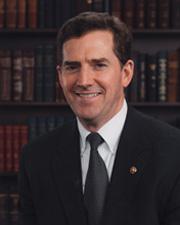 Sen. Jim DeMint (R-SC)
Legislative Activity
Stay on top of the latest movement without scrolling through every action
Considered by Senate. (consideration: CR S13537)
October 30, 2007
View full timeline
Considered by Senate. (consideration: CR S13537)
October 30, 2007
Proposed amendment SA 3470 withdrawn in Senate.
October 30, 2007
Considered by Senate. (consideration: CR S13509)
October 29, 2007
Senate amendment proposed (on the floor): Amendment SA 3470 proposed by Senator Bond for Senator DeMint.(consideration: CR S13466-13467; text: CR S13467)
October 26, 2007
Amendment SA 3470 proposed by Senator Bond for Senator DeMint. (consideration: CR S13466-13467; text: CR S13467) To require the Performance Improvement Plan to address reaching financial solvency by eliminating routes and services that do not make a profit.
October 26, 2007
Senate amendment submitted
October 25, 2007
Text
Proposed
PASSENGER RAIL INVESTMENT AND IMPROVEMENT ACT OF 2007

The ACTING PRESIDENT pro tempore. Under the previous order, the
Senate will resume consideration of S. 294, which the clerk will
report.
The legislative clerk read as follows:

A bill (S. 294) to reauthorize Amtrak, and for other
purposes.

Pending:

Lautenberg (for Carper) amendment No. 3454 (to amendment
No. 3452), of a perfecting nature.
Allard amendment No. 3455, to strike the provisions
repealing Amtrak's self-sufficiency requirements.

cloture motion

Mr. REID. Mr. President, I send a cloture motion to the desk.
The ACTING PRESIDENT pro tempore. The cloture motion having been
presented under rule XXII, the Chair directs the clerk to read the
motion.
The legislative clerk read as follows:

Cloture Motion

We, the undersigned Senators, in accordance with the
provisions of rule XXII of the Standing Rules of the Senate,
hereby move to bring to a close debate on Calendar No. 158,
S. 294, AMTRAK Reauthorization.
Frank R. Lautenberg, Trent Lott, Joe Lieberman, Benjamin
L. Cardin, S. Whitehouse, Robert Menendez, Daniel K.
Inouye, Susan M. Collins, Mike Crapo, Larry E. Craig,
John Warner, Byron L. Dorgan, Gordon H. Smith, Max
Baucus, Bill Nelson, Robert P. Casey, Jr., Harry Reid.

Mr. REID. Mr. President, normally we waive the reading of the names,
but I thought it was so refreshing to hear a cloture motion with
Democrats and Republicans on it that I wanted to hear them. I am almost
anxious to have the clerk do it again, but I think that is sufficient.
I ask unanimous consent that the vote on the motion to invoke cloture
on S. 294 occur on Tuesday, October 30 at a time determined by the
majority leader--I will certainly consult with the Republican leader--
and that the mandatory quorum rule under rule XXII be waived.
The ACTING PRESIDENT pro tempore. Without objection, it is so
ordered.
Mr. REID. I now ask unanimous consent that Members have until 3:30
p.m. Monday to file any germane first-degree amendments to S. 294.
The ACTING PRESIDENT pro tempore. Without objection, it is so
ordered.
Mr. REID. Mr. President, I note the absence of a quorum.
The ACTING PRESIDENT pro tempore. The clerk will call the roll.
The legislative clerk proceeded to call the roll.
Mr. LAUTENBERG. Mr. President, I ask unanimous consent that the order
for the quorum call be rescinded.
The ACTING PRESIDENT pro tempore. Without objection, it is so
ordered.
Mr. LAUTENBERG. Mr. President, with cloture filed, we are hopeful we
will be able to move with dispatch to the support and approval of S.
294, the Amtrak bill.
I wish to start this morning by thanking our colleague and my
cosponsor and longtime Amtrak supporter, Senator Trent Lott, for the
opportunity to work together to move this bill along. His support is
essential, and I know he is pleased with the progress we have made this
morning up to this point. Today is our third day on the bill. Yesterday
we made very good progress. We were able to work through a number of
amendments, some of which we were able to agree to and some of which we
disposed of with votes. Now, this morning, cloture has been filed,
which should put us on a schedule to finish this bill early next week.
It is very important that we do so for the future of America's
transportation systems.
Whether it is to reduce congestion on our roads or at our airports,
or to reduce greenhouse gas emissions that puts us at risk of global
warming--our society and our world--or to give people another safe mode
of transportation during an emergency, rail is critical. We cannot
neglect the contribution it makes in the event of a calamity or
disaster, whether it comes from a terrorist attack or from an erratic
act of nature such as a storm or forest fires, and all of the things we
see that call at times for evacuation.
Our bill, by authorizing $2 billion a year for Amtrak in the States
over the next 6 years, will make all of that much easier for America to
deal with the problem of a decaying infrastructure. It provides funding
for Amtrak's capital needs as well as State grants for passenger rail.
While Amtrak had record ridership and revenues last year, our bill
requires changes at Amtrak to make sure these funds will help the
railroad to continue moving in the right direction. It would require
Amtrak to reform its operations, to reduce its Federal operating
subsidy by over 40 percent over the life of the bill.
We worked very hard to forge this bipartisan compromise plan. Last
Congress, our plan was approved by the Senate as an amendment to the
budget bill by a vote of 93 to 6. I hope that early next week we will
get a strong vote in support of our bill so we can be one step closer
to making it law.
I note the absence of a quorum.
The ACTING PRESIDENT pro tempore. The clerk will call the roll.
The legislative clerk proceeded to call the roll.
Mr. BOND. Mr. President, I ask unanimous consent that the order for
the quorum call be rescinded.
The ACTING PRESIDENT pro tempore. Without objection, it is so
ordered.

Amendments Nos. 3467, 3468, 3469, and 3470 En Bloc

Mr. BOND. Mr. President, I ask unanimous consent to temporarily set
aside the pending amendment and call up amendments Nos. 3467, 3468,
3469, and 3470 en bloc, on behalf of Senator DeMint.
The ACTING PRESIDENT pro tempore. Without objection, it is so
ordered.
The clerk will report.

The Senator from Missouri [Mr. Bond], for Mr. DeMint,
proposes amendments numbered 3467, 3468, 3469, and 3470 en
bloc.

The amendments are as follows:

amendment no. 3467

(Purpose: To require Amtrak to disclose the Federal subsidy of every
ticket sold for transportation on Amtrak)

At the end of title II, add the following:

SEC. 224. DISCLOSURE OF PER PASSENGER FEDERAL SUBSIDIES.

Amtrak shall publicly disclose all the costs incurred for
each Amtrak route that are subsidized by the Federal
Government, including costs for maintenance, depreciation,
and operations. The specific per-passenger Federal subsidy on
each route shall be displayed on every ticket purchased for
that route and on Amtrak's publicly accessible website.

amendment no. 3468

(Purpose: To increase competition in the American rail system by
allowing any qualified rail operator or transportation company to
compete for passenger rail service)

On page 33, strike line 22 and all that follows through
page 34, line 5, and insert the following:
``(1) any qualified rail operator or transportation company

[[Page S13467]]

amendment no. 3469

(Purpose: To clarify the level of detail to be included in the modern
financial accounting and reporting system required under section 203)

On page 15, line 21, strike ``(b)'' and insert the
following:
(b) Categorization of Revenues and Expenses.--
(1) In general.--In carrying out subsection (a), the Amtrak
Board of Directors shall separately categorize routes,
assigned revenues, and attributable expenses by type of
service, including long distance routes, State-sponsored
routes, commuter contract routes, and Northeast Corridor
routes.
(2) Northeast corridor.--Amtrak revenues generated by
freight and commuter railroads operating on the Northeast
Corridor shall be separately listed to include the charges
per car mile assessed by Amtrak to other freight and commuter
railroad entities.
(3) Fixed overhead expenses.--Fixed overhead expenses that
are not directly assigned or attributed to any route (or
group of routes) shall be listed separately by line item and
expense category.
(c)

amendment no. 3470

(Purpose: To require the Performance Improvement Plan to address
reaching financial solvency by eliminating routes and services that do
not make a profit)

On page 31, strike line 21 and insert the following:
``(7) reaching financial solvency by eliminating routes and
services that do not make a profit; and

Mr. BOND. Mr. President, I ask unanimous consent that those
amendments be temporarily set aside.
The ACTING PRESIDENT pro tempore. Without objection, it is so
ordered.

Amendment No. 3464

Mr. BOND. Mr. President, I call up amendment No. 3464, which is at
the desk.
The ACTING PRESIDENT pro tempore. The clerk will report.
The legislative clerk read as follows:

The Senator from Missouri [Mr. Bond] proposes an amendment
numbered 3464.

Mr. BOND. Mr. President, I ask unanimous consent that reading of the
amendment be dispensed with.

(Purpose: To amend section 24101 of title 49, United States Code, to
clarify Amtrak's mission)

On page 10, between lines 12 and 13, insert the following:

SEC. 200. MISSION.

Section 24101 is amended by striking subsection (c) and
inserting the following:
``(c) Mission.--
``(1) In general.--The mission of Amtrak is to provide
efficient and effective intercity passenger mobility in those
travel markets in which passenger rail offers a trip-time and
service quality competitive or complementary travel option
consistent with the goal of continual reduction in Federal
operating subsidies required to provide such service.
``(2) Performance measurement.--All measurements of Amtrak
performance, including decisions on whether, and to what
extent, to provide operating subsidies, shall be based on the
Amtrak's ability to carry out the mission described in
paragraph (1).''.
On page 33, line 3, strike ``may'' and insert ``shall''.

Mr. BOND. Mr. President, I rise to offer an amendment to S. 294, the
Amtrak reauthorization bill. I applaud the authors of the bill for
their hard work in putting this legislation together. As one who hopes
to see a robust, efficient passenger rail service, I have long been a
supporter and rider on Amtrak. As Governor of Missouri, I started the
State support of Amtrak to run trains between Kansas City and St.
Louis. As I have watched Amtrak over the years, I have been
increasingly concerned about the rising costs and relatively stagnating
ridership. As I look at this bill, I do not believe it includes all the
needed reforms that are crucial to the success of Amtrak.
While there are many positive aspects of the bill, the fundamental
problem with Amtrak is that it has no clearly defined mission. Is it
supposed to provide only those services where it can make a profit? Is
it supposed to supplement air service in specific markets regardless of
cost? Is it supposed to serve rural markets regardless of cost? Is it
supposed to provide tourist travel regardless of cost? All of these
have been held out from time to time as reasons to subsidize Amtrak and
as excuses for why it should not be held accountable for the effective
use of the taxpayers' money. However, those are empty excuses. The
money continues to flow out, and I believe strong reforms are
necessary.
While Amtrak's revenue, ridership, and cash operating loss numbers
improved this year, this improved financial performance reflects labor
costs held low by the absence of a labor settlement. Once a settlement
is reached, Amtrak's costs will jump up, reflecting the pay raises that
have largely been deferred during the past 7 years during which time
there has not been a labor contract.
Amtrak has made no significant progress in restructuring its
operations to become less reliant on Federal funds. The pace of
Amtrak's reform savings has slowed from $61 million in fiscal year 2006
to a planned $46 million in fiscal year 2008. There is little chance
Amtrak will achieve anywhere near the $500 million in annual reform
savings it promised when it adopted its 2005 plan.
GAO reports consistently cite that Amtrak has lost the focus of its
statutory mandate to be operated and managed as a for-profit company.
Just last year, over 10 percent of Amtrak's operating subsidy was
spent on food and beverages and a like amount subsidized first-class
service. There is no critical public purpose associated with such
expenditures. Yet there are some who assume they are OK because that is
what Amtrak has always done.
S. 294, I regret to say, will not change this deplorable system.
While section 208 would have FRA and Amtrak develop performance
metrics, there is no clear statement of Amtrak's mission on which to
base these metrics.
After 36 years, we should not miss the opportunity to finally and
clearly state Amtrak's mission. It is for that reason that I offer as
an amendment to S. 294 the establishment of Amtrak's mission. That
mission should be:

To provide efficient and effective intercity passenger rail
mobility in those travel markets where passenger rail offers
a trip-time and service quality competitive travel option
consistent with the goal of continual reduction in Federal
operating subsidies required to provide service.

With this mission clearly established, then FRA and Amtrak can
establish meaningful performance measures that hold Amtrak accountable
for accomplishing that mission. Obviously, meaningful benchmarks will
help both Amtrak and those of us in Congress measure its efforts at
reform. In fact, failure to meet benchmarks will be a good reason to
lessen or terminate these excessive subsidies.
My colleagues may say that the bill contains benchmark reforms under
section 208, Metrics and Standards. The section reads:

Within 180 days . . . develop new or improve existing
metrics and minimum standards for measuring the performance
and service quality of intercity passenger train operations,
including cost recovery, on-time performance and minutes of
delay, ridership, on-board services, stations, facilities,
equipment, and other services. Such metrics, at a minimum,
shall include the percentage of avoidable and fully allocated
operating costs covered by passenger revenues on each route,
ridership per train mile operated, measures of on-time
performance and delays incurred by intercity passenger rail.

Exactly what reforms are contained within these metrics and
standards? There is no mission, no goals, and no benchmarks for
operating subsidies and, as I said, quite frankly, no reform.
If the authorizers were truly offering operating metrics, they would
have year-over-year improvement on metrics applied on a route-by-route
business line or corporate basis on some of the following:
Operating ratio--operating revenues relative to operating costs,
excluding depreciation to measure improvements in cost recovery; two,
cash operating loss--would measure revenue expense improvements; three,
savings from reform initiative--while the operating loss includes these
savings, monitoring these savings allows for tracking the
implementation of structural reform improvements; four, cash operating
loss for passenger mile--an overall efficiency measure; five, labor
productivity--passenger mile per employee; and finally, six, equipment
reliability--percent of units out of service.
The other thing missing from Amtrak oversight has been real teeth. So
I propose changing the language in section 210 from being permissive,
which says the FRA ``may'' withhold grants from trains that don't
measure up, to being mandatory, to say that FRA ``shall'' withhold
grants from trains that don't measure up.
Today, the Secretary of Transportation has the ability to discontinue
service on specific routes, but none have been proposed for elimination
because perhaps there is no mission

[[Page S13468]]

statement for Amtrak on which to make a determination for closure.
This measure I propose does not push Amtrak off the cliff, but it
recognizes we cannot afford for Amtrak to be all things to all people.
It requires Amtrak to take a degree of responsibility that has been
lacking in the use of the taxpayers' money. It would require Amtrak to
improve efficiency and effectiveness of its service, to reduce the
demands it makes of our taxpayers, including, where appropriate,
recognizing that passenger rail is not the best option in all places.
Mr. President, I yield the floor.
The ACTING PRESIDENT pro tempore. The Senator from New Jersey.
Mr. LAUTENBERG. Mr. President, I ask unanimous consent that the
period for morning business be delayed until we finish this discussion.
The ACTING PRESIDENT pro tempore. Without objection, it is so
ordered.
Mr. LAUTENBERG. Mr. President, I wish to respond to Senator Bond's
amendment, but I first ask the Senator from Missouri whether the delay
he experienced this morning was due to congestion on the highways?
Mr. BOND. Mr. President, that is what we all live with, I assure my
friend from New Jersey.
Mr. LAUTENBERG. I just wanted to see whether there was any personal
direct experience with congestion on the roads. I don't think there is
a city or a town in this country, a highway that doesn't experience
incredible pressure from its expanded use; will the Senator agree?
Mr. BOND. Mr. President, I agree with that. Of course, I would agree
in some areas there are no rail lines available to relieve that
congestion. While many metropolitan areas do have rail lines, they are
definitely an efficient alternative. In many areas of the country,
people do not have rail service, existing rails. So rails cannot solve
all of our transportation congestion problems.
Mr. LAUTENBERG. I thank the distinguished Senator from Missouri for
his suggestion that we expand rail service all across this country.
Mr. BOND. I didn't say that, no.
Mr. LAUTENBERG. That was the interpretation. The Senator said there
wasn't rail service available in lots of places. I take the positive
side of that statement and say let's get on with our task of providing
service.
While I appreciate the Senator's perspective, I believe there is no
need for this amendment. It covers some of the same debate we have
already voted on as part of the discussion. This amendment establishes
a new mission for Amtrak and sets a new standard by which Amtrak and
operating subsidies for Amtrak services should be judged. While I can
agree with the general principles of the mission statement, it largely
covers issues already contained in existing Federal law related to
Amtrak and is, therefore, redundant.
We have seen Amtrak getting expanded use, but we have to look at what
has happened in our society, what the conditions are that have put so
much pressure on Amtrak. When we look at the growth in population
alone, since Amtrak became a quasi-government corporation, the
population of this country has expanded by 100 million people in barely
over 35 years. It was never thought that our aviation system would be
so strained because of inadequate infrastructure, and whatever the
reasons, that it cannot be relied upon. One out of four flights is
late, appointments are missed, crowding is standard, our highways are
jammed. Maybe in some parts of the country we don't see the congestion
we see in many of the metropolitan areas. But highways are notoriously
slow-moving now because of expanded traffic.
So Amtrak has been under the same pressure. And thank goodness we
have Amtrak in existence. We have seen more rapid service from Amtrak
and more riders--over 26 million passengers in the last year. So when
we look at Amtrak's performance, we have to consider under what
conditions it operates. I think it is fair to say that Amtrak was never
financed at the level it should have been to be an up-to-date, modern
railroad in this country.
I have had the opportunity, as we know, to ride one of the French
trains, TGV, in which a trip of just over 200 miles from Paris to
Brussels, where our NATO headquarters exists, is 1 hour 20 minutes. If
anything similar to that could ever be achieved with Amtrak, we would
reduce the congestion in the sky substantially. It is so crowded in the
air these days, separations are narrowed, and we are expecting over
5,000 new light jets into our system in the next 10 years.
We have to look at the expectations Amtrak has had to live with over
this period of time. Insufficient capital, that is where it all
started, and it has continued to make it very difficult for Amtrak to
produce the kind of service we want. I believe they ought to be
responsible for maintaining the quality of service, for providing the
data that is required on what progress has been lacking. Current law
already requires Amtrak to minimize Government subsidies and provide
high-quality rail service.
I believe the real goal of this amendment is to reduce or eliminate
Federal operating support for long-distance routes and other services
where current infrastructure problems or ontime performance limits the
service quality. Of course, as I said earlier, these problems resulting
from insufficient capital expenditures and also hosting freight
railroad delays are addressed by this bill.
Most of the accountability Senator Bond desires is already in our
bill through requirements of a 5-year plan, through the reduction of
the operating subsidy by 40 percent. Our bill calls for changes that
are significant as we attempt to put them in place. That is where we
are going.
While the Senator's amendment also requires the Secretary to
eliminate funding for any route not meeting Amtrak's long-distance plan
required under the bill, S. 294 already gives the Secretary this
authority. But our bill preserves some flexibility for the Secretary to
continue a long-distance route if Amtrak could not implement a plan or
did not meet the goals of a plan for legitimate reasons or events
beyond Amtrak's control. Heaven forbid if we have another serious
hurricane or terrorist attack. The Secretary should have the ability to
take these situations into consideration when judging whether Amtrak
meets the requirements demanded under the law.
I look forward to debating this amendment further. I certainly am
open to discussion with the Senator from Missouri on his amendment. But
as it is currently drafted, I urge my colleagues to oppose it.
The ACTING PRESIDENT pro tempore. The Senator from Missouri.
Mr. BOND. Mr. President, I wish to respond to my friend from New
Jersey and point out that while I may have had some operating delays
coming into downtown Washington this morning because of the rain, I am
not the only one. Service reliability continues to plague Amtrak.
Amtrak systemwide in 2007 had ontime performance through August at only
68 percent and long-distance ontime performance was only 40 percent.
The Senator points out that there are constraints on Amtrak. With the
exception of Connecticut, which I believe has its lines, most of the
Amtrak lines run on lines established, bought, and paid for by freight
railroads. For the lines to be kept operating, they have to continue to
use freight.
If the chairman of the subcommittee is proposing that we build a
national network of passenger rails--buy the land, buy the equipment,
install the rails--I will be happy to take a look at the numbers that
would be involved, whether they are billions or trillions, but I
question whether we could make that investment.
What I have stated only in this amendment is that we should come to
an agreement on what the mission of Amtrak is. What is it supposed to
do? If you don't know where you are going, it is hard to tell when you
have gotten there. Yes, we put money into a capital operating plan, a
5-year plan in 2005. There were supposed to be operating savings. The
operating savings are not being realized. What I propose is simply good
management techniques.
My colleague has run a successful business, and I assume to run a
business he had to have a mission and he had to have standards and
goals by which to judge the achievement of that mission. S. 294 talks
about all kinds of metrics, but it doesn't say there are any goals. How
do you know if you

[[Page S13469]]

have gotten there? Where are you going? You don't know.
Maybe I have missed it, but I don't think any of us are clear on the
clearly stated mission of Amtrak and any standards by which the
achievement of that mission should be judged. I would be happy to have
a discussion--and this is the appropriate place to do it--on what
should be the mission of Amtrak. Maybe for my edification, I ask my
friend from New Jersey to cite to me what the written mission of Amtrak
is because I will have to admit, I am not familiar with that specific
mission statement and the standards and goals by which Amtrak and the
FRA and we in Congress can judge the effective accomplishment of the
objectives within the parameter of that mission. Through the Chair, I
ask my friend from New Jersey to enlighten me.
Mr. LAUTENBERG. Mr. President, I thank the Senator from Missouri for
asking this question at this moment because I have here existing law,
which is continued in S. 294. Here, in existing law, it says the
purpose of the management is:

By using innovative operating and marketing concepts,
Amtrak shall provide intercity and commuter rail passenger
transportation that completely develops the potential of
modern rail transportation to meet the intercity and commuter
passenger transportation needs of the United States.

The first goal is to:

use its best business judgment in acting to minimize the
U.S. Government subsidies, including--

And it lists a number of these things which I will submit for my
colleague and friend to take a look at and see if these questions are
not already dealt with.
Yes, we have to be more diligent. There is no doubt we have to fill
the board of Amtrak's open positions. We have not done that. We want to
expand the board to a more significant body of opinion. We are doing
all kinds of things.
I have an affection for the State of Missouri, having been a soldier
there many years ago and trying to dig foxholes in the Ozark Mountains.
We know what steels the spine of those people who live in Missouri now.
It is the depth and the quality of the rock upon which most of Missouri
is built. That is why the railroad contributes so much, for instance,
from Chicago to St. Louis, Kansas City to Kansas City.
But in the final analysis, I think it is important to note a
significant difference between business operations. I was fortunate
enough to run a fairly large company; but business to business.
However, it is clearly stated that Amtrak is a not-for-profit
organization. When we look at what happens with good business
operations and think of the subsidy that has been given to the
airlines--it was as a result of a terrible calamity in American
history, 9/11--but over $20 billion has been given to the airlines,
for-profit businesses. They are doing very well right now, I might add,
and still getting subsidies.
I think, in fairness, we will have a chance to look at this further.
We are pressed by several things, not the least of which is that there
are others who would like to be included in the debate. I will be happy
to loan the Senator from Missouri my copy of the existing law, if he
would like to borrow it for a while.
The ACTING PRESIDENT pro tempore. The Senator from Missouri is
recognized.
Mr. BOND. Mr. President, if I may respond, I don't see any clearly
defined mission. If my colleague doesn't agree that Amtrak should be
providing efficient and effective passenger service in those travel
markets in which passenger rail offers a trip time and service quality,
competitive or complementary travel option consistent with the goal of
continuing to reduce Federal operating subsidies--we are not saying it
should be a for-profit company, but it certainly should not be a
continual growing loss operation.
I believe we must have some discipline that I do not see in the law
and particularly saying ``best business practices''--best business
practices to do what?
I hope we can continue this discussion, and I thank the Chair and my
colleagues for the time.
Mr. LAUTENBERG. Mr. President, I understand we are ready to go to
morning business.

____________________