To amend the Internal Revenue Code of 1986 to provide incentives for the production of all cellulosic biofuels.
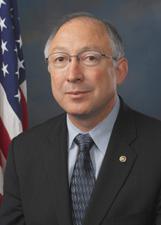 Sen. Ken Salazar (D-CO)
Legislative Activity
Stay on top of the latest movement without scrolling through every action
Considered by Senate. (consideration: CR S15623, S15639)
December 14, 2007
View full timeline
Considered by Senate. (consideration: CR S15623, S15639)
December 14, 2007
Proposed amendment SA 3616 withdrawn in Senate.
December 14, 2007
Considered by Senate. (consideration: CR S15380)
December 13, 2007
Considered by Senate. (consideration: CR S15179)
December 12, 2007
Considered by Senate. (consideration: CR S15090)
December 11, 2007
Senate amendment proposed (on the floor): Amendment SA 3616 proposed by Senator Salazar to Amendment SA 3500.(consideration: CR S15041-15042; text: CR S15041-15042)
December 10, 2007
Amendment SA 3616 proposed by Senator Salazar to Amendment SA 3500. (consideration: CR S15041-15042; text: CR S15041-15042) To amend the Internal Revenue Code of 1986 to provide incentives for the production of all cellulosic biofuels.
December 10, 2007
Senate amendment submitted
November 13, 2007
Text
Proposed
FARM, NUTRITION, AND BIOENERGY ACT OF 2007

The ACTING PRESIDENT pro tempore. Under the previous order, the
Senate will resume consideration of H.R. 2419, which the clerk will
report.
The legislative clerk read as follows:

A bill (H.R. 2419) to provide for the continuation of
agricultural programs through fiscal year 2012, and for other
purposes.

Pending:

Harkin amendment No. 3500, in the nature of a substitute.
Harkin (for Dorgan-Grassley) amendment No. 3695 (to
amendment No. 3500), to strengthen payment limitations and
direct the savings to increase funding for certain programs.
Brown amendment No. 3819 (to amendment No. 3500), to
increase funding for critical farm bill programs and improve
crop insurance.
Klobuchar amendment No. 3810 (to amendment No. 3500), to
improve the adjusted gross income limitation and use the
savings to provide additional funding for certain programs
and reduce the Federal deficit.
Chambliss (for Lugar) amendment No. 3711 (to amendment No.
3500), relative to traditional payments and loans.
Chambliss (for Cornyn) amendment No. 3687 (to amendment No.
3500), to prevent duplicative payments for agricultural
disaster assistance already covered by the Agricultural
Disaster Relief Trust Fund.
Chambliss (for Coburn) amendment No. 3807 (to amendment No.
3500), to ensure the priority of the farm bill remains
farmers by eliminating wasteful Department of Agriculture
spending on casinos, golf courses, junkets, cheese centers,
and aging barns.
Chambliss (for Coburn) amendment No. 3530 (to amendment No.
3500), to limit the distribution to deceased individuals, and
estates of those individuals, of certain agricultural
payments.
Chambliss (for Coburn) amendment No. 3632 (to amendment No.
3500), to modify a provision relating to the Environmental
Quality Incentive Program.

Mr. SALAZAR. Mr. President, I would now like to return to the pending
business, the farm bill, which we have now been working on in the
Senate for a period of time.
The ACTING PRESIDENT pro tempore. The pending business is the farm
bill.
Mr. SALAZAR. I will make a few general comments about the farm bill.
It is a piece of legislation which is very important to the food and
fuel security of this country. I have had the honor of working with
Senator Harkin and his leadership of this effort, along with Senator
Chambliss now, for at least 2\1/2\ years.
This legislation is truly historic for our country. Senator Thune,
who is on the floor with me this afternoon, has also been one of those
champions in trying to be sure we get a good farm bill for the United
States of America.
At the heart of this farm bill, we are talking about opening a whole
new chapter for America. It is not just a new chapter for rural
America, this is opening a new chapter for the clean energy future for
the United States of America. And title IX of this legislation, which
has been supplemented with the resources that are coming from the
Finance Committee and the leadership of Senator Baucus and Senator
Grassley, will make this farm bill the best farm bill for the clean
energy future of America we have ever had.
So it will open a whole new chapter of opportunity for America as we
try to deal with those forces that have kept us addicted to the foreign
powers that control the oil of this world. It goes beyond energy, in
terms of the new chapter we open here. It also deals with conservation,
where the additional $4 billion or so that is in this legislation will
help us embrace a new ethic forward in conservation; will make sure
that that 70 percent of America which now houses the farms and ranches
of America remains the kind of land and water we can be very proud of.
It is a very good bill in terms of conservation. It also is a very
good bill in making sure the nutrition programs of this country are
fully funded. We often remind the people of this country that even
though it is called a farm bill, and people think about it as a bill
that affects only rural America, it affects all

[[Page S15041]]

of America, and you see that particularly in the nutrition title.
As Senator Conrad has come to the floor and often reminded our
colleagues, about 67 percent of all the investment we are making in
this farm bill is going into the nutrition title of this legislation.
That is a significant investment to help those who are most
vulnerable. There are significant additions we are making in this farm
bill that will make our nutrition programs even better, that include
the fruit and vegetable programs, which are very much a part of this
farm bill.
It is important to remind the people of America that when we talk
about the farm bill, we are talking about providing the best food that
can be provided. This chart shows countries such as Indonesia, where 55
percent of disposable income goes for food. In the Philippines, it is
38 percent. In China, it is 26 percent. In America, it is only 10
percent; 10 percent of the money we spend from our personal disposable
income goes for food. That means American farmers and ranchers are
providing the best food at the lowest possible cost. At the end of the
day, that is what is at the heart of this farm bill.
I thank Senator Harkin and Senator Chambliss for having brought us to
this point.

Amendment No. 3616 To Amendment No. 3500

I ask unanimous consent that the pending amendment be set aside and I
call up amendment No. 3616.
The ACTING PRESIDENT pro tempore. Without objection, it is so
ordered.
The clerk will report.
The legislative clerk read as follows:

The Senator from Colorado [Mr. Salazar], for himself, Mr.
Kerry, Mr. Schumer, and Ms. Stabenow, proposes an amendment
numbered 3616.

The amendment is as follows:

(Purpose: To amend the Internal Revenue Code of 1986 to provide
incentives for the production of all cellulosic biofuels)

Beginning on page 1472, line 1, strike all through page
1480, line 3, and insert the following:

PART II--ALCOHOL AND OTHER FUELS

SEC. 12311. EXPANSION OF SPECIAL ALLOWANCE TO CELLULOSIC
BIOFUEL PLANT PROPERTY.

(a) In General.--Paragraph (3) of section 168(l) (relating
to special allowance for cellulosic biomass ethanol plant
property) is amended to read as follows:
``(3) Cellulosic biofuel.--For purposes of this subsection,
the term `cellulosic biofuel' means any alcohol, ether,
ester, or hydrocarbon produced from any lignocellulosic or
hemicellulosic matter that is available on a renewable or
recurring basis.''.
(b) Conforming Amendments.--
(1) Subsection (l) of section 168 is amended by striking
``cellulosic biomass ethanol'' each place it appears and
inserting ``cellulosic biofuel''.
(2) The heading of section 168(l) is amended by striking
``Cellulosic Biomass Ethanol'' and inserting ``Cellulosic
Biofuel''.
(3) The heading of paragraph (2) of section 168(l) is
amended by striking ``cellulosic biomass ethanol'' and
inserting ``cellulosic biofuel''.
(c) Effective Date.--The amendments made by this section
shall apply to property placed in service after the date of
the enactment of this Act, in taxable years ending after such
date.

SEC. 12312. CREDIT FOR PRODUCTION OF CELLULOSIC BIOFUEL.

(a) In General.--Subsection (a) of section 40 (relating to
alcohol used as fuel) is amended by striking ``plus'' at the
end of paragraph (2), by striking the period at the end of
paragraph (3) and inserting ``, plus'', and by adding at the
end the following new paragraph:
``(4) the small cellulosic biofuel producer credit.''.
(b) Small Cellulosic Biofuel Producer Credit.--
(1) In general.--Subsection (b) of section 40 is amended by
adding at the end the following new paragraph:
``(6) Small cellulosic biofuel producer credit.--
``(A) In general.--In addition to any other credit allowed
under this section, there shall be allowed as a credit
against the tax imposed by this chapter for the taxable year
an amount equal to the applicable amount for each gallon of
not more than 60,000,000 gallons of qualified cellulosic
biofuel production.
``(B) Applicable amount.--For purposes of subparagraph (A),
the applicable amount means the excess of--
``(i) $1.28, over
``(ii) the sum of--

``(I) the amount of the credit in effect for alcohol which
is ethanol under subsection (b)(1) (without regard to
subsection (b)(3)) at the time of the qualified cellulosic
biofuel production, plus
``(II) the amount of the credit in effect under subsection
(b)(4) at the time of such production.

``(C) Qualified cellulosic biofuel production.--For
purposes of this section, the term `qualified cellulosic
biofuel production' means any cellulosic biofuel which is
produced by an eligible small cellulosic biofuel producer and
which during the taxable year--
``(i) is sold by the taxpayer to another person--

``(I) for use by such other person in the production of a
qualified cellulosic biofuel mixture in such other person's
trade or business (other than casual off-farm production),
``(II) for use by such other person as a fuel in a trade or
business, or
``(III) who sells such cellulosic biofuel at retail to
another person and places such cellulosic biofuel in the fuel
tank of such other person, or

``(ii) is used or sold by the taxpayer for any purpose
described in clause (i).
``(D) Qualified cellulosic biofuel mixture.--For purposes
of this paragraph, the term `qualified cellulosic biofuel
mixture' means a mixture of cellulosic biofuel and any
petroleum fuel product which--
``(i) is sold by the person producing such mixture to any
person for use as a fuel, or
``(ii) is used as a fuel by the person producing such
mixture.
``(E) Additional distillation excluded.--The qualified
cellulosic biofuel production of any taxpayer for any taxable
year shall not include any alcohol which is purchased by the
taxpayer and with respect to which such producer increases
the proof of the alcohol by additional distillation.
``(F) Application of paragraph.--This paragraph shall apply
with respect to qualified cellulosic biofuel production after
December 31, 2007, and before April 1, 2015.''.
(2) Termination date not to apply.--Subsection (e) of
section 40 (relating to termination) is amended--
(A) by inserting ``or subsection (b)(6)(E)'' after ``by
reason of paragraph (1)'' in paragraph (2), and
(B) by adding at the end the following new paragraph:
``(3) Exception for small cellulosic biofuel producer
credit.--Paragraph (1) shall not apply to the portion of the
credit allowed under this section by reason of subsection
(a)(4).''.
(c) Eligible Small Cellulosic Biofuel Producer.--Section 40
is amended by adding at the end the following new subsection:
``(i) Definitions and Special Rules for Small Cellulosic
Biofuel Producer.--For purposes of this section--
``(1) In general.--The term `eligible small cellulosic
biofuel producer' means a person, who at all times during the
taxable year, has a productive capacity for cellulosic
biofuel not in excess of 60,000,000 gallons.
``(2) Cellulosic biofuel.--
``(A) In general.--The term `cellulosic biofuel' has the
meaning given such term under section 168(l)(3), but does not
include any alcohol with a proof of less than 150.
``(B) Determination of proof.--The determination of the
proof of any alcohol shall be made without regard to any
added denaturants.
``(3) Aggregation rule.--For purposes of the 60,000,000
gallon limitation under paragraph (1) and subsection
(b)(6)(A), all members of the same controlled group of
corporations (within the meaning of section 267(f)) and all
persons under common control (within the meaning of section
52(b) but determined by treating an interest of more than 50
percent as a controlling interest) shall be treated as 1
person.
``(4) Partnership, s corporations, and other pass-thru
entities.--In the case of a partnership, trust, S
corporation, or other pass-thru entity, the limitation
contained in paragraph (1) shall be applied at the entity
level and at the partner or similar level.
``(5)  Allocation.--For purposes of this subsection, in the
case of a facility in which more than 1 person has an
interest, productive capacity shall be allocated among such
persons in such manner as the Secretary may prescribe.
``(6) Regulations.--The Secretary may prescribe such
regulations as may be necessary to prevent the credit
provided for in subsection (a)(4) from directly or indirectly
benefitting any person with a direct or indirect productive
capacity of more than 60,000,000 gallons of cellulosic
biofuel during the taxable year.
``(7) Allocation of small cellulosic producer credit to
patrons of cooperative.--Rules similar to the rules under
subsection (g)(6) shall apply for purposes of this
subsection.''.
(d) Cellulosic Biofuel Not Used as a Fuel, etc.--
(1) In general.--Paragraph (3) of section 40(d) is amended
by redesignating subparagraph (D) as subparagraph (E) and by
inserting after subparagraph (C) the following new
subparagraph:
``(D) Small cellulosic biofuel producer credit.--If--
``(i) any credit is allowed under subsection (a)(4), and
``(ii) any person does not use such fuel for a purpose
described in subsection (b)(6)(C),

then there is hereby imposed on such person a tax equal to
the applicable amount for each gallon of such cellulosic
biofuel.''.
(2) Conforming amendments.--
(A) Subparagraph (C) of section 40(d)(3) is amended by
striking ``producer'' in the heading and inserting ``small
ethanol producer''.

[[Page S15042]]

(B) Subparagraph (E) of section 40(d)(3), as redesignated
by paragraph (1), is amended by striking ``or (C)'' and
inserting ``(C), or (D)''.
(e) Biofuel Produced in the United States.--Section 40(d),
as amended by this section, is amended by adding at the end
the following new paragraph:
``(6) Special rule for small cellulosic biofuel
producers.--No small cellulosic biofuel producer credit shall
be determined under subsection (a) with respect to any
biofuel unless such biofuel is produced in the United
States.''.
(f) Waiver of Credit Limit for Cellulosic Biofuel
Production by Small Ethanol Producers.--Section 40(b)(4)(C)
is amended by inserting ``(determined without regard to any
qualified cellulosic biofuel production'' after ``15,000,000
gallons''.
(g) Effective Date.--The amendments made by this section
shall apply to fuel produced after December 31, 2007.

Mr. SALAZAR. Mr. President, I thank my colleagues who have
cosponsored this amendment: Senators Kerry, Schumer, and Stabenow. This
amendment will strengthen the provisions in the farm bill that came out
of the Finance Committee. It is an amendment that deals with cellulosic
biofuels. We all know that cellulosic biofuels come from a different
feedstock than the conventional ethanol going into our engines today,
and it offers great promise for a clean energy future. Conventional
ethanol typically comes from corn or soy, but cellulosic biofuels can
be produced from a wide variety of feedstocks, including agricultural
plant wastes, such as corn stover and cereal straws, plant waste from
industrial processes, such as sawdust, and energy crops which are grown
specifically for fuel production, such as switchgrasses.
Cellulosic biofuels have an energy content three times higher than
corn ethanol, and they emit a low net level of greenhouse gases. Thanks
to the great work of scientists around our country, including the
National Renewable Energy Lab in Golden, CO, we are on the verge of
putting cellulosic ethanol into widespread use. The agricultural tax
package reported out of the Finance Committee with the leadership of
Chairman Baucus and Ranking Member Grassley helps us get cellulosic
ethanol into production by creating a tax credit equivalent to $1.28 a
gallon, a number that is based on findings from the Department of
Energy and structured on the enhanced credit we established in the 2005
Energy Policy Act. The only trouble with a tax credit is that it
applies to cellulosic alcohols rather than to all cellulosic biofuels.
This may appear to be a semantic difference but it actually has a huge
impact.
As currently proposed, specifying that the credit must go only to
cellulosic alcohols unnecessarily limits the applicability of this
vital incentive. In my view, Congress should not be picking winners
from among the cellulosic biofuels and technologies that are out there.
The fact is there is an entire new range of fuels technologies being
developed in the United States to go beyond ethanol. These technologies
would be able to make renewable blends for diesel, jet fuel, gasoline,
boiler fuels, locomotives, and marine use. Unfortunately, many of these
fuels would not be eligible for the tax incentive under the current
language which specifies that a fuel must be a cellulosic alcohol.
Therefore, our amendment makes a simple change. It changes cellulosic
alcohols to cellulosic biofuels. I hope my colleagues will support this
simple and sensible fix. It will further strengthen the important part
of the farm bill that deals with a clean energy future. I look forward
to working with my colleagues on this amendment.
I yield the floor.
The ACTING PRESIDENT pro tempore. The Senator from South Dakota is
recognized.

Amendment No. 3821 To Amendment No. 3500

Mr. THUNE. Mr. President, I send an amendment to the desk on behalf
of Senator McConnell and ask for its immediate consideration.
The ACTING PRESIDENT pro tempore. Is there objection to setting aside
the pending amendment?
Without objection, it is so ordered.
The clerk will report.
The legislative clerk read as follows:

The Senator from South Dakota [Mr. Thune], for Mr.
McConnell, proposes an amendment numbered 3821.

The amendment is as follows:

(Purpose: To promote the nutritional health of school children, with an
offset)

On page 20, line 11, strike ``pulse crops,''.
On page 23, strike paragraph (14) and redesignate
paragraphs (15) through (17) as paragraphs (14) through (16),
respectively.
On page 24, line 18, strike ``pulse crop or''.
On page 26, line 6, strike ``pulse crop or''.
On page 27, line 17, strike ``camelina, or eligible pulse
crop'' and insert ``or camelina''.
On page 27, lines 21 and 22, strike ``Camelina, and
Eligible Pulse Crops'' and insert ``and Camelina''.
On page 27, lines 24 and 25, strike ``camelina, and
eligible pulse crops'' and insert ``and camelina''.
On page 28, line 2, strike ``camelina, or pulse crop'' and
insert ``or camelina''.
On page 28, line 5, strike ``camelina, or pulse crop'' and
insert ``or camelina''.
On page 28, lines 8 and 9, strike ``camelina, or eligible
pulse crop'' and insert ``or camelina''.
Beginning on page 28, line 12, through page 29, line 9,
strike ``camelina, or pulse crop'' each place it appears and
insert ``or camelina''.
On page 29, lines 15 through 19, strike ``camelina, and
eligible pulse crops'' each place it appears and insert ``and
camelina''.
On page 29, line 24, strike ``(other than pulse crops)''.
On page 35, strike lines 8 through 13.
Beginning on page 49, strike line 19 and all that follows
through page 51, line 4, and insert the following:
(a) Loan Rates.--For each of the 2008 through 2012 crop
years, the loan rate for a marketing assistance loan under
section 1201 for a loan commodity shall be equal to the
following:
(1) In the case of wheat, $2.75 per bushel.
(2) In the case of corn, $1.95 per bushel.
(3) In the case of grain sorghum, $1.95 per bushel.
(4) In the case of barley, $1.85 per bushel.
(5) In the case of oats, $1.33 per bushel.
(6) In the case of the base quality of upland cotton, $0.52
per pound.
(7) In the case of extra long staple cotton, $0.7977 per
pound.
(8) In the case of long grain rice, $6.50 per
hundredweight.
(9) in the case of medium grain rice, $6.50 per
hundredweight.
(10) In the case of soybeans, $5.00 per bushel.
(11) In the case of other oilseeds, $.0930 per pound.
(12) In the case of dry peas, $5.40 per hundredweight.
(13) In the case of lentils, $11.28 per hundredweight.
(14) In the case of small chickpeas, $7.43 per
hundredweight.
(15) In the case of large chickpeas, $11.28 per
hundredweight.
(16) In the case of graded wool, $1.00 per pound.
(17) In the case of nongraded wool, $0.40 per pound.
(18) In the case of mohair, $4.20 per pound.
(19) In the case of honey, $0.60 per pound.
On page 85, line 4, strike ``pulse crop or''.
On page 86, line 18, strike ``pulse crop or''.
On page 663, between lines 18 and 19, insert the following:

SEC. 49__. PERIODIC SURVEYS OF FOODS PURCHASED BY SCHOOL FOOD
AUTHORITIES.

Section 6 of the Richard B. Russell National School Lunch
Act (42 U.S.C. 1755) is amended by adding at the end the
following:
``(f) Periodic Surveys of Foods Purchased by School Food
Authorities.--
``(1) In general.--For fiscal year 2008 and every fifth
fiscal year thereafter, the Secretary shall carry out a
nationally representative survey of the foods purchased
during the most recent school year for which data is
available by school authorities participating in the national
school lunch program.
``(2) Report.--On completion of each survey, the Secretary
shall submit to Congress a report that describes the results
of the survey.
``(3) Funding.--Of the funds made available under section
3, the Secretary shall use to carry out this subsection not
more than $3,000,000 for fiscal year 2008 and every fifth
fiscal year thereafter.''.
On page 672, between lines 6 and 7, insert the following:

SEC. 49__. TEAM NUTRITION NETWORK.

Section 19 of the Child Nutrition Act of 1966 (42 U.S.C.
1788) is amended by striking subsection (l) and inserting the
following:
``(l) Funding.--
``(1) Mandatory funding.--
``(A) In general.--On October 1, 2008, and on each October
1 thereafter through October 1, 2011, out of any funds in the
Treasury not otherwise appropriated, the Secretary of the
Treasury shall transfer to the Secretary to carry out this
section $25,000,000, to remain available until expended.
``(B) Receipt and acceptance.--The Secretary shall be
entitled to receive, shall accept, and shall use to carry out
this section the funds transferred under subparagraph (A),
without further appropriation.
``(C) Nutritional health of school children.--In allocating
funds made available under this paragraph, the Secretary
shall give priority to carrying out subsections (a) through
(g).
``(2) Authorization of appropriations.--In addition to the
amounts made available under paragraph (1), there are
authorized to be appropriated such sums as are necessary to
carry out this section.''.

[[Page S15043]]

Mr. SALAZAR. Mr. President, reserving the right to object, I suggest
the absence of a quorum.
The ACTING PRESIDENT pro tempore. The clerk will call the roll.
The legislative clerk proceeded to call the roll.
Mr. THUNE. I ask unanimous consent that the order for the quorum call
be rescinded.
The ACTING PRESIDENT pro tempore. Without objection, it is so
ordered.
Mr. THUNE. Mr. President, today we begin in earnest to debate the
Food and Energy Security Act of 2007, commonly referred to as the 2007
farm bill. The naming of this bill is not without meaning. It is
abundantly clear that agriculture and energy production are now
inherently related and together will move our Nation toward greater
food and energy security. Nearly all the controversy surrounding this
farm bill is focused on whether farmers and ranchers should be
receiving the assistance this bill would provide, with very little
discussion of the potential this bill carries to propel American
agriculture into producing alternative fuels to lessen our Nation's
dependence on foreign energy sources. The 2002 farm bill was the first
farm bill to include an energy title. As a member of the House
Agriculture Committee during the 2002 farm bill debate, I can attest
that including an energy title in the farm bill was not easy, nor was
it without controversy. However, Congress had the foresight to realize
that renewable energy was an integral part of our agricultural economy
and a comprehensive farm bill would be incomplete without including
renewable energy incentives.
The energy title included in the Food and Energy Security Act of 2007
also includes an energy title that builds on the success of the 2002
farm bill. The incentives in this energy title will greatly benefit
American consumers, our agricultural producers, and our Nation's energy
independence. The farm bill before us was crafted in the spirit of
bipartisanship in the Senate Agriculture Committee and was passed out
of committee by unanimous consent. We all know the 2002 farm bill
expired earlier this year on September 30. I am pleased to report that
after the agreement that was reached last week, both Republicans and
Democrats will be able to offer amendments to this bill. More than 120
Republican amendments have been filed on this farm bill. More than 140
Democratic amendments have been filed on this farm bill. Although not
all of these amendments will receive a vote on the Senate floor, I am
pleased the leadership made an agreement to allow consideration of 40
amendments so we can move a farm bill forward.
After a several-week delay, we are now on track to debating this farm
bill in an open and fair manner on the floor of the Senate. America's
farmers are making planning decisions for next year without knowing
what type of farm programs will be available to them. Time is of the
essence. We must move quickly and with purpose to finish this farm bill
for not only American agriculture but also for the millions of people
who receive benefits under the nutrition and other titles of this bill.
This bill will give our agricultural producers the additional security
they need to move forward with production decisions and will help meet
our food and energy needs for the next 5 years and beyond.
I wish to share a couple of facts about the 2007 farm bill. The 2007
farm bill is 1,600 pages long, and it will cost more than $286 billion
over 5 years. The very first farm bill passed 70 years ago was 24 pages
long. The 2007 farm bill also includes the first farm bill tax title
since 1933, adding an extra degree of difficulty and further reason for
open debate. During the past 30 years, the farm bill has averaged about
2 weeks of floor time and required as many as 30 recorded votes. It is
not just America's farmers and ranchers who are waiting for the 2007
farm bill. Food banks, Food Stamp, and other emergency food program
recipients are all anxiously awaiting this farm bill to pass. Their
share of the farm bill stake accounts for more than 66 percent of total
farm bill spending, and they are pushing hard to get this farm bill
passed. Rural development incentives are also on hold until we pass the
2007 farm bill.
For example, a powerplant in rural America is delayed because funding
for USDA's rural utility service is tied up in this farm bill. Our
farmers and ranchers and millions of other Americans are watching and
waiting anxiously for the Senate to debate this farm bill and move it
on to a conference committee with the House of Representatives. I look
forward to engaging my colleagues this week in a fair and open debate
on this monumental legislation which will govern programs affecting
rural America for the next 5 years.
I appreciate my colleague from Colorado, Mr. Salazar, being here and
managing this legislation on the behalf of the Democrats today, because
farm bills are not political in their orientation, at least they have
not been in the past. Farm bill debates don't end up being normally
partisan debate. There are regional differences, differences between
different commodity organizations. Everybody comes to a farm bill
debate with different priorities, depending on what part of the country
they represent. But farm bills have never been partisan or resulted in
the kind of partisan gridlock and fights that typically accompany other
legislation in the Senate.
The Senator from Colorado and I have worked closely on a number of
provisions in this farm bill, particularly the energy title. Energy
production has become an integral part of the success and prosperity of
rural America. In fact, this farm bill starts moving us into the next
generation of energy policy and renewable energy production. We have
had great success with corn-based ethanol. We will have seen by the end
of this year 7.5 billion gallons of production of corn-based ethanol
literally, growing in the last 10 years from ground zero to where we
are today, a remarkable tribute to the good work, the initiative, and
creativity of our farmers and those who are involved in ethanol
production. I give them credit for where we are today. But we also have
great potential as we move into the future. We have to put in place
policies that will provide the necessary financial and economic
incentives for those who want to invest in this next generation of
ethanol production, cellulosic ethanol production made from other forms
of biomass. We have to have the right kind of incentives in place in
order for that to move forward and to continue the momentum that has
been so good for many communities across rural America.

With regard to the issue of energy production, a lot of people look
at a farm bill and look at the amount of money spent on production
agriculture and say: Isn't that terrible that we are spending all this
money on food and fiber. We do have in front of us a food, fiber, and
energy security bill. I would argue with anyone, based on the
statistics the Senator from Colorado put up earlier about the cost of
food in the United States and what that means to our economy and the
safety and quality of the food we have in this country, that support
for production agriculture makes so much sense. If you look at this
bill in its totality, the overall funding and how much is spent on
production agriculture, it is only about 14 percent of total funding in
the underlying bill. If you look at where the funding in this bill
goes, about 9 percent of it goes into conservation programs. Those are
programs that are important to America. Probably the most important
conservation policy that we will put in place in terms of the
environmental stewardship we have a responsibility for will be found in
the conservation title of this farm bill. There is a conservation
reserve program, a wetlands reserve program, a grassland reserves
program, an EQIP program, all programs utilized extensively by farmers
and ranchers to help address the issues of soil erosion, water quality,
wind erosion--all those things that are so important not only in terms
of being good stewards of the land but also in many States such as
mine, where wildlife production has become an important part of our
economy. This year in South Dakota we have 10,000 pheasants. That is a
record going back to 1962. We have not seen that many pheasants in
South Dakota, largely a result of the good practices put in place
through incentives included in farm bill policies in past farm bills.
The conservation title is 9 percent of the money, and 14 percent of
the

[[Page S15044]]

money goes into production agriculture. That leaves about 67 percent or
about two-thirds of the funding in this bill going toward food
assistance programs, Food Stamps, WIC Programs, those types of programs
that support people who don't have access to good quality food and need
that form of assistance.
So food pantries, food banks, and all of those other organizations
across this country that meet those types of needs are awaiting action
by the Congress to address those needs and get them a bill that will
enable them to move forward with the programs that help address the
very important concerns and needs that people providing food assistance
have in this country.
This is a bill that is comprehensive. It is a bill that struck a
balance as it came out of the Agriculture Committee. It was a
bipartisan bill when it left the Ag Committee. I hope it can continue
to be bipartisan as we debate it on the floor.
A lot of people have different ideas about how to address farm policy
in this country. A lot of people have very different notions of what
ought to be in a farm bill from those the Senator from Colorado or I
might have. But that is why we have the opportunity for a fair and open
debate.
A lot of the amendments that are going to be debated I will probably
support, and there are many I will probably oppose depending upon how I
view those amendments affecting the balance that has been struck in the
bill and the way it would impact my particular State of South Dakota.
But I think it is fair to say it is high time this debate got underway.
I also have to say when you look at the cost of farm bills, it is
important to keep in mind, as we debate this one, that much of the cost
that has been associated with the 2002 farm bill in the form of the
safety net--and by that I mean your loan deficiency payments, your
countercyclical payments, your direct payments--if you look at the
totality of the bill and the cost over time, in the last 5 years, $22
billion in tax dollars has been saved because of higher prices, which
was the way that program was designed to work. When farm prices went
higher, the assistance kicked out. When prices dropped, the assistance
kicked back in.
But what we have had now is a fairly substantial period of good
prices for our producers in this country. That has led to savings for
the taxpayers--$22 billion in savings over the past 5 years, over the
period of the last farm bill. In many respects, I attribute that to the
success of the ethanol industry because the demand for corn has raised
the price of corn in this country. As the price of corn has gone up in
this country, as is typically the case, the rising tide lifts all
boats.
We have seen wheat prices go up, we have seen soybean prices go up
largely because there is only so much acreage out there that can be put
in production. So we have seen sustained prices that have enabled us to
save, under the 2002 farm bill, payments that otherwise would have been
going out to the farmers of this country, to the tune of $22 billion.
So when people criticize the effect that the renewable fuel programs
have on farm programs, and the costs, I think it is important to keep
that statistic in mind. In fact, in a January 2007 statement, the USDA
chief economist stated that farm program payments were expected to be
reduced by some $6 billion due to the higher value of a bushel of corn.
As I said, when you multiply that across other commodities--whether
it is wheat, soybeans--overall savings in the last farm bill was $22
billion, attributable in my mind, in many respects at least, to the
energy policies that were put in place in the 2002 farm bill, the
investment that has been made by those across this country in this
growing industry that has enabled us to save money in the form of farm
program payments. But just as importantly, it has enabled us to lessen
our dependence upon foreign sources of energy--7.5 billion gallons of
ethanol by the end of this year.
What does that mean in terms of our dependence upon foreign oil? In
2006, the production and use of ethanol in the United States reduced
oil imports by 170 million barrels, saving $11 billion from being sent
to foreign and often hostile countries. By the end of 2009, ethanol
production is expected to increase to 12.5 billion gallons, displacing
even more of our Nation's petroleum use.
Promoting clean, homegrown fuels and reducing our dependence on oil
imports from dangerous parts of the world is more than just good
policy, it is a matter of national security. So this farm bill, with
its strong energy policy, moves us in a direction that not only builds
upon the gains and the success we have seen in the form of corn-based
ethanol, and the 7.5 billion gallons that have already been produced in
the form of corn-based ethanol, but it opens the door to a whole new
generation of ethanol production in this country that is based upon
other forms of biomass, whether that is corn stover or corncobs or
switchgrass or wood chips or other types of biomass that we have an
abundance of across this country.
It is just flat necessary and important and imperative for us to
continue to diversify our energy in this country away from our
dependence upon foreign petroleum so the American consumer can access
the energy, the fuel they need to get to their jobs, to work, to
recreate--to do all those things--in a less expensive way but, more
importantly, so we are not dependent on countries around the world
whose intentions toward the United States can be described as nothing
less than hostile.
With that, we kick off this debate. There are amendments I think that
will be offered by some of our colleagues, some of which are already
pending at the desk, others of which will be offered throughout the
course of the day.
With that, Mr. President, I yield the floor. The Senator from
Colorado, I think, perhaps, has someone to recognize for an amendment.
The ACTING PRESIDENT pro tempore. The Senator from Colorado.
Mr. SALAZAR. Mr. President, I thank my friend from South Dakota for
his leadership on this bill. As he said, this has been a bipartisan
effort. This bill came out of the Agriculture Committee on a voice
vote. And the Finance provisions, which have now been included in this
farm bill, also came to this floor with a very huge bipartisan voice of
support. So I am hopeful we can move forward quickly to get to a point
where we do have final passage of this bill.
I congratulate and thank Senator Reid, our majority leader, for
having worked with the Republican leader, Senator McConnell, having
brought us together last week so we were able to finally move forward
with a set of amendments that will get us moving in the direction where
we can finally bring about a finality to this very important bill for
America.
I thank my friend from South Dakota for his leadership, as well, on
all the energy issues because we have worked a lot on these energy
issues not only in the farm bill but in other aspects of our work here.
At the end of the day, how we can have rural America help us grow our
way to energy independence is one of the great opportunities we have as
a nation. I look forward to working with both my Democratic and
Republican colleagues as we try to do this effort on this bill through
its energy provisions, as well as trying to deal with the Energy bill,
hopefully, later on in the week.
Mr. President, I understand our colleague from Idaho has an amendment
and wishes to be recognized.
I yield the floor.
The ACTING PRESIDENT pro tempore. The Senator from Idaho.
Mr. CRAIG. Mr. President, before I call up my amendment, let me thank
both the Senator from Colorado and the Senator from South Dakota for
their leadership in getting this very important new ag policy to the
floor. I, like they, have been frustrated the last month that we could
not get on the bill and cause it to work its will. That is where we are
today. We are on the bill, ready for it to work its will.
I do appreciate the comments the Senator from South Dakota has made
and thank him for his leadership as it relates to the biofuels issue,
to ethanol. Because of the Energy Policy Act of 2005, we have expanded
and accelerated--along with agricultural policy--this issue. As you
know, if we can pass the Energy bill with the renewable fuels standard,
we will go to potentially 15 billion gallons a year in ethanol in the
outyears, and hopefully 15

[[Page S15045]]

billion plus 6 billion in the outyears of cellulosic biostalk ethanol-
based fuel.
If the Energy bill cannot work its will, then the Senator from South
Dakota and I and Senator Domenici from New Mexico, who just passed
through, will attempt to put on the farm bill the renewable fuels
standard, which is phenomenally important to the continuation and the
growth of the biofuels that will make us increasingly independent of
those rogue nations and of what I call the ``petronationalism'' that is
sweeping the world, in the fact that if you are a small country and you
produce oil, you can take a big country like ours and jerk it around
right by its nose, if you will, simply by pricing the oil that you know
is so sacred to the developed world.
Having said that, with the phenomenal runup in commodity prices in
the last several years, in part because of what the Senator from South
Dakota has said--the high value of corn, as corn moved out of
feedstock, if you will, into a new kind of feedstock, to ethanol
production--farmland and farmland values have gone up tremendously. A
farm that had been a second- and third-generation farm--for which, a
decade ago, a farmer or his son or daughter might have said: We can no
longer afford to farm it; we are going to sell it into development--all
of a sudden that land, as part of our energy base and part of our food
base has become increasingly important.

Amendment No. 3640 To Amendment No. 3500

With that, Mr. President, at this time I call up amendment No. 3640
and ask for its immediate consideration.
The ACTING PRESIDENT pro tempore. Is there objection to setting aside
the pending amendment?
Without objection, it is so ordered.
The clerk will report the amendment.
The legislative clerk read as follows:

The Senator from Idaho [Mr. Craig], for himself, Mr.
Brownback, and Mr. Allard, proposes an amendment numbered
3640 to amendment No. 3500.

Mr. CRAIG. Mr. President, I ask unanimous consent that reading of the
amendment be dispensed with.
The ACTING PRESIDENT pro tempore. Without objection, it is so
ordered.
The amendment is as follows:

(Purpose: To prohibit the involuntary acquisition of farmland and
grazing land by Federal, State, and local governments for parks, open
space, or similar purposes)

At the appropriate place, insert the following:

SEC. __. FARMLAND AND GRAZING LAND PRESERVATION.

(a) Definitions.--In this section:
(1) Farmland or grazing land.--The term ``farmland or
grazing land'' means--
(A) farmland (as defined in section 1540(c) of the Farmland
Protection Policy Act (7 U.S.C. 4201(c)));
(B) land that is used for any part of the year as pasture
land for the grazing of livestock;
(C) land that is assessed as agricultural land for purposes
of State or local property taxes; and
(D) land that is enrolled in--
(i) the conservation reserve program established under
subchapter B of chapter 1 of subtitle D of title XII of the
Food Security Act of 1985 (16 U.S.C. 3831 et seq.); or
(ii) any other program authorized under--

(I) subtitle D of title XII of that Act; or
(II) the Food and Energy Security Act of 2007.

(2) Federal funds or financial assistance.--The term
``Federal funds or financial assistance'' means--
(A) Federal financial assistance (as defined in section 101
of the Uniform Relocation Assistance and Real Property
Acquisition Policies Act of 1970 (42 U.S.C. 4601)); and
(B) any other Federal funds that are appropriated through
an Act of Congress or otherwise expended from the Treasury.
(3) Prohibited conduct.--
(A) In general.--The term ``prohibited conduct'' means the
exercise of eminent domain authority to acquire real property
that is farmland or grazing land for the purpose of a park,
recreation, open space, conservation, preservation view,
scenic vista, or similar purpose.
(B) Exceptions.--The term ``prohibited conduct'' does not
include a transfer of farmland or grazing land for--
(i) use by a public utility;
(ii) a road or other right of way or means, open to the
public or common carriers, for transportation;
(iii) an aqueduct, pipeline, or similar use;
(iv) a prison or hospital; or
(v) any use during and in relation to a national emergency
or national disaster declared by the President under other
law.
(4) Relevant entity.--The term ``relevant entity'' means--
(A) a State or unit of local government that engages in
prohibited conduct;
(B) a State or unit of local government that gives
authority for an entity to engage in prohibited conduct; and
(C) in the case of extraterritorial prohibited conduct--
(i) the entity that engages in prohibited conduct; and
(ii) the State or unit of local government that allows the
prohibited conduct to take place within the jurisdiction of
the State or local government.
(5) State.--The term ``State'' means--
(A) each of the several States of the United States;
(B) the District of Columbia;
(C) the Commonwealth of Puerto Rico;
(D) Guam;
(E) American Samoa;
(F) the Commonwealth of the Northern Mariana Islands;
(G) the Federated States of Micronesia;
(H) the Republic of the Marshall Islands;
(I) the Republic of Palau; and
(J) the United States Virgin Islands.
(b) Prohibitions.--
(1) In general.--If a relevant entity engages in prohibited
conduct, no officer or employee of the Federal Government
with responsibility over Federal funds or financial
assistance may make the Federal funds or assistance available
to the relevant entity during the period described in
paragraph (2).
(2) Duration of prohibition.--The period referred to in
paragraph (1) is the period that begins on the date that an
officer or employee of the Federal Government determines that
a relevant entity has engaged in prohibited conduct and ends
on the earlier of--
(A) the date that is 5 years after the date on which the
period began; or
(B) the date on which the farmland or grazing land is
returned to the person from whom the property was acquired,
in the same condition in which the property was originally
acquired.
(3) Federal prohibition.--No agency of the Federal
Government may engage in prohibited conduct.
(c) Private Right of Action.--The owner of any real
property acquired by prohibited conduct that results in the
prohibition under this section of Federal funds or financial
assistance may, in a civil action, obtain injunctive and
declaratory relief to enforce that prohibition.
(d) Applicability.--This section applies to any prohibited
conduct--
(1) that takes place on or after the date of enactment of
this section; or
(2)(A) that is in process on the date of enactment of this
section; and
(B) for which title has not yet passed to the relevant
entity.

Mr. CRAIG. Mr. President, the bill talks about land, it talks about
valuable farmland, it talks about valuable grazing land, and the issue
is eminent domain. As we all know, the issue of eminent domain was
elevated greatly as an issue following a highly controversial 2005
Supreme Court decision known as Kelo vs. The City of New London. Since
that decision, we as a nation have allowed State governments and local
municipalities to utilize eminent domain to force landowners to yield
their property to private development.
That is a new phenomenon in our country. That has not been and was
not the historic use of eminent domain. We are talking about land that
maybe generationally has served America's farmers and ranchers for the
purpose of food and fiber.
As shown in this picture, here is an example of a beautiful piece of
pastureland in Camas County, ID, for which one day the county and/or a
city in the area could decide: Oh, gee, we like it for open space. It
is open space today. As I would suggest, the economics of today would
suggest it will remain open space for a long time.
But since the Supreme Court's Kelo ruling, farmers and ranchers in
particular have become vulnerable to State and local municipalities
taking their property for economic development, open space
designations, or other purposes.
The recent, most vivid happening occurred in the State of
Pennsylvania, where over a 3-year period in Pennsylvania, a county
government has been in a struggle with a local family over an attempt
on the county's part to purchase a section of their farmland. When the
negotiations failed, the county moved to seize the land using eminent
domain, with the goal of turning the land into a park or an open space
along, I believe it was, the Susquehanna River. Very recently, after 2
years of dispute over the value of the land, the county withdrew its
request, leaving the family without any kind of deal, with the family
having spent thousands of dollars and years on endless amounts of
litigation and court costs. There were no winners, but the family that
had the farm still owns the farm.

[[Page S15046]]

In the words of the American Farm Bureau's president, Bob Stallman--
he says it this way, and I think he says it accurately--No one's home
or ranch or ranchland is safe from government seizure because of the
Kelo ruling.
We are now increasingly hearing of incidents in which States and
local governments may be pushing the boundaries of what our
constitutional power was designed to accomplish. I read often of
farmers and ranchers being forced to fight to save their land from
local governments looking to take it. The Pennsylvania decision, of
course, is a great example of that. I believe we in Congress need to
bring back common sense in determining when we use the power and what
it is appropriately used for; and, of course, I am talking about the
power of our Constitution in respect to eminent domain. What are we
talking about when we talk about common sense in State and local
governments, what they should or should not do: Does it make sense to
take open space out of the private sector and make it open space in the
public sector by simply a taking, if you will, by the power of eminent
domain? There are plenty of ways to assure that farmland and grazing
lands stay as open space if the county or the government wishes to
reward the landowner and establish a relationship with that landowner
for the purpose of keeping that space open and available. But just to
use the power of government for the purpose of crushing that private
property owner's right is simply wrong.

American Farmland Trust reports that every minute of every day,
America loses two or more acres of farmland, and the rate is increasing
as our population grows and expands. This farm bill and what it
embodies now will tell you that farmland will probably become
increasingly more valuable for the production of food and fiber. In
many instances, we don't have an acre to spare. When our county
governments decide they want to take it for the purpose of simply
changing its ownership, that is greatly frustrating.
Additionally, many of our parks in this country are facing major
budgetary shortfalls. To unnecessarily add more parks using eminent
domain makes the problem worse, and to take private land to do so
simply makes no sense. If the city wants to create a park, go find a
willing seller and a willing buyer. That is the way it has been done
historically--not to use the power of eminent domain given them, if you
will, by the Kelo decision.
My amendment is very simple. For this reason, in offering it, the
amendment will deter State and local governments from taking working
agricultural land against the will of the landowner only to designate
the same land as open space for parks and similar purposes. It is a
very targeted amendment. It addresses only cases in which private
working agricultural land is taken and turned into open space--a park
or a preservation or a conservation area.
Listen, fellow Senators: It does not prevent States and local
governments from exercising their right of eminent domain. What we are
talking about is that it does not prevent nor deter the use of eminent
domain such as taking for what we have always viewed as a legitimate
public purpose: power lines, schools, and similar projects of public
value; rights-of-way, when necessary, for roads and all of that type of
use. It does not even tackle the issue of taking private land for
private economic development. That is the Kelo decision. That fight, I
have to say, is probably for another day. I hope my colleagues of the
Judiciary Committee would grab the value of private land-ownership in
this country and change and allow us to work our will on the law and
not give municipalities and local governments the right of eminent
domain over economic development, for a private purpose. But, as I say,
that is for another day and another purpose.
What does this amendment do? It creates a strong but targeted
financial disincentive for the local governments to get involved. This
will cause State and local governments to stop and think when
considering forcibly taking the working land of a farmer or a rancher
in order to keep that property as open space. Every farmer and rancher
reserves the right to voluntarily, of course, enter into an agreement;
as I mentioned earlier, a willing seller, a willing buyer, into a land
trust for the value of keeping land private and all of those types of
things but to allow it to remain as it is for the purpose of openness.
That is already going on. That already has well established law as it
relates to how that land gets used.
I believe land preservation is a worthy cause. However, farmers and
ranchers should not be forcibly removed from their lands simply to
prevent them from making a personal decision about their private
property sometime out into the future.
Let me end by saying it is necessary for Congress to discourage the
illogical and unwarranted use of eminent domain. I think that is very
clear. Many of us were surprised by the Kelo decision, and we saw new
precedent being set as it relates to government's use of eminent
domain. I believe it is both illogical and unwarranted to forcibly take
working agricultural land only to designate it as land as an open space
or for a similar purpose. A farm bill is an appropriate vehicle to
accomplish this goal to protect our private property rights and our
Nation's farmers and ranchers, and I urge my colleagues to support this
amendment.
Let me thank Cori Whitman on my staff for working this issue. I also
note the American Farm Bureau Federation, the National Cattlemen's Beef
Association, the Public Lands Council, and many others are recognizing
the risk and the threat to private operating agricultural properties
and are supporting this amendment to become policy in the new
agriculture policy embodied in this bill.
I thank my colleagues for listening. I hope to gain their support as
we work this amendment through the process over the balance of this
week.
Mr. President, I yield the floor.

Amendment No. 3549 to Amendment No. 3500

Mr. THUNE. Mr. President, I ask unanimous consent to call up
amendment No. 3549 on behalf of Senator Roberts and ask that it be set
aside.
The ACTING PRESIDENT pro tempore. Without objection, it is so
ordered.
The clerk will report.
The legislative clerk read as follows:

The Senator from South Dakota [Mr. Thune], for Mr. Roberts,
proposes an amendment numbered 3549.

Mr. THUNE. Mr. President, I ask unanimous consent that the reading of
the amendment be dispensed with.
The ACTING PRESIDENT pro tempore. Without objection, it is so
ordered.
The amendment is as follows:

Amendment No. 3549

(Purpose: To modify a provision relating to regulations)

Section 10208 (relating to regulations) is amended--
(1) in subsection (a), by striking the subsection
designation and heading; and
(2) by striking subsection (b).

Mr. THUNE. Mr. President, I believe the Senator from New Mexico has
an amendment that he wants to speak to that both Senator Salazar and I
are cosponsors of.
The ACTING PRESIDENT pro tempore. The Senator from New Mexico is
recognized.
Mr. DOMENICI. Mr. President, is an amendment in order or do I have to
move to set aside an amendment in order to offer one?
The ACTING PRESIDENT pro tempore. Unanimous consent is required to
set aside the pending amendment.
Mr. DOMENICI. I ask unanimous consent that it be set aside so that I
may proceed with a different amendment.
The ACTING PRESIDENT pro tempore. Without objection, it is so
ordered.

Amendment No. 3614 to Amendment No. 3500

Mr. DOMENICI. Mr. President, I rise to call up amendment No. 3614.
The ACTING PRESIDENT pro tempore. The clerk will report the
amendment.
The legislative clerk read as follows:

The Senator from New Mexico [Mr. Domenici] proposes an
amendment numbered 3614.

(The amendment is printed in the Record of Tuesday, November 13,
2007, under ``Text of amendments.'')
Mr. DOMENICI. Mr. President, I think there are a number of people who
want to cosponsor this amendment, but I will handle those later--except
for the two Senators who are here; I ask that they be original
cosponsors at this time, as well as the distinguished Senator from
Idaho, Mr. Craig.
The ACTING PRESIDENT pro tempore. Without objection, it is so
ordered.

[[Page S15047]]

Mr. DOMENICI. Mr. President, I will try to be as brief as I can. A
couple of weeks back there was much talk about the need to keep only
relevant amendments in order on this farm bill. While there was much
left to interpretation of what exactly ``relevant amendments'' mean,
there can be no question that the Senate should debate and vote on my
amendment.
This farm bill is called the Food and Energy Security Act of 2007. I
cannot think of an amendment more relevant to the economic security of
the American farmer and energy security of the American people than an
amendment to increase the renewable fuels standard. Since we passed the
first ever renewable fuels standard in the Energy Policy Act of 2005,
of which I was proud to be the floor manager and the leader, we have
seen a surge in ethanol jobs and a surge in the construction of plants.
In 2006 alone the U.S. ethanol industry supported the creation of
160,000 new jobs while producing 5 billion gallons of ethanol. These
are American farm jobs which help produce American fuels and help
reduce our dependence on foreign oil. We are not aware of this
happening because we have a gigantic country. As for 160,000 new jobs
and 5 billion gallons of ethanol being added to the American workplace,
that is happening because of the gigantic disparity that has occurred
in the cost of oil now versus a year and a half or two ago. That is why
there is so much activity in foreign countries where we have seen a
whole country saying: We are going to build a brand-new country from
top up full of hotels and motels, banks, and the like. That is oil
money. That is the disparity between the price of oil they are charging
us now and what it was worth sometime ago, and all that left over is
going into the hands of those who produce crude oil and sell it to us.
We might as well understand that is not helping America.
People say: Well, it isn't hurting us yet. They still have--they are
buying up our bonds. Well, I believe it is hurting us. I believe it is
part of the crisis--problem with the dollar--not crisis yet. It is also
part of the problem with the gross domestic product of the United
States in that it is not going to be as buoyant in the future because
so much of our basic wealth is going out of our country, and the price
of oil that we are paying to whatever country produces it and sends it
to us.
Now, what my amendment does is changes--sets an annual requirement
for the amount of renewable fuels used in motor vehicles, homes, and
boilers. It will require that our Nation use 8.5 billion gallons of
renewable fuels in 2008 and progressively increasing to 36 billion
gallons by 2022. Now, you understand wherever we use the words
``renewable fuel,'' that means something else other than the crude oil
that I have just been talking about. It means it is getting produced
here or under our control.
Beginning in 2016, an increasing portion of renewable fuel must be
advanced biofuels. Beginning in 2016, increased cellulosic ethanol--
advanced biofuels include cellulosic ethanol, biodiesel, and other
fuels derived from unconventional biomass feedstocks, like sorghum. The
required amount of advanced biofuels begins at 3 billion gallons in
2016 and increases to 21 billion gallons by 2022.
Advanced biofuels do not have many of the challenges that
conventional ethanol does. The inclusion of advanced biofuels strikes a
balance that will allow America to begin diversifying our fuel supply,
both in the short term and the long term. That is why when supporting
these same provisions in the Energy bill, the Renewable Fuels
Association said they ``strike the right chord, `` noting that ``such
an investment in our Nation's energy future promises to spur the
creation of new, good-paying jobs'' across our land.
The amendment I seek to offer and that I have offered consists of the
very same provisions that passed the Senate in June during
consideration of the Energy bill--the then-Energy bill. That was not
the Energy Policy Act. It was the next major bill. Some may ask, then:
Why do I seek to offer the amendment on the farm bill? My answer is
threefold.
One, it is clear that the Energy bill has slowed down, largely
because the House has passed two major provisions--a tax increase and a
renewable portfolio standard--that are untenable to many in the Senate,
and they have slowed the bill down. They have brought forth a
discussion from the President of the United States that is unequivocal;
that if those two provisions are in the bill, he will veto the bill.
That is the renewable portfolio standard and the tax increases that are
in the House bill. They are not only untenable to the Senate, we ought
to make the point over and over that they are untenable to the
President.
So what good is it to have that bill and say we are going to do it or
else? What is the ``or else?'' We are going to do nothing. We are going
to pass something that will never become the law. I wish we could do
something different so we would not have to adopt this Domenici
amendment because it will be adopted on the other bill where it already
lies and languishes.
Second, the House Energy bill in many respects weakens the renewable
fuels standard in the Senate Energy bill. Besides, if the Senate makes
progress on passing the Energy bill and getting it signed into law,
there would be nothing to prevent a conference from simply removing
this then unnecessary provision.
Third, this amendment is relevant to the farm bill and necessary now
to reinvigorate an ethanol industry that is looking to Congress to
extend this mandate as soon as possible.
Mr. President, in one sense, we have been a victim of our own
success. Thanks to the 2005 Energy bill, rural America has answered the
call for increased ethanol production. In fact, we have now exceeded
the original mandated fuel in our fuel mix. For example, in 2006, the
ethanol standard was 4 billion gallons. I think the two Senators on the
floor played an active role in that and are fully aware of that. In
fact, our domestic production of ethanol is 5 billion, far exceeding
the billions of gallons we directed. We can do more, a lot more, and
the American farmer is looking for Congress to do more.
Over the last year, the price of ethanol dropped nearly 40 percent.
The reason for this is simple economics. We have an increased supply
and diminished demand in the marketplace. As a result, the construction
of new plants has been delayed, meaning new job growth has been
diminished and rural communities are looking to us to take action. We
cannot wait for the Energy bill while rural communities are losing
their opportunities. This amendment is not simply just relevant to the
farm bill, it is necessary.
I ask my colleagues to support this bipartisan amendment. I further
ask our leadership go to work today, which I am sure they will, and
tomorrow on the Energy bill that went to the House. It was sent back to
us not as a bill but rather as a message, and it does not do justice to
the biofuels for energy. They ought to fix that and, at the same time,
take the taxes out and take the 15-percent electricity mandate for
alternative fuels.
I ask sincerely that our distinguished leader take the lead in that
and see that gets done quickly.
I yield the floor and thank the Senators for letting me proceed.
The ACTING PRESIDENT pro tempore. The Senator from Idaho is
recognized.
Mr. CRAIG. Mr. President, very briefly--because it is the other
side's opportunity--I thank the ranking Republican on the Energy
Committee for bringing this amendment forward. It fits well in the farm
bill. Last Friday afternoon, I spoke to that again. Clearly, this is an
opportunity we cannot pass by. I would like to see it in the Energy
bill and see this concept grow to 2022 and get us to 36 billion
gallons. Corn based and cellulosic is absolutely critical. This is a
market we created by public policy and with public support. There is no
question about it. This is a market that can continue to grow and
develop, as long as Government advances it and stays out of its way.
I thank the Senator from New Mexico for bringing up the amendment. It
is appropriate on the farm bill. I hope our colleagues will consider it
as a plus to the overall growth of domestic American agriculture.
I yield the floor.
The ACTING PRESIDENT pro tempore. The Senator from Colorado is
recognized.
Mr. SALAZAR. Mr. President, I thank the Senator from New Mexico

[[Page S15048]]

for bringing the RFS amendment to the floor. I urge my colleagues to
figure out a way for us to move forward with the renewable fuels
standard we in the Senate embrace because it is the right way to move
forward with an RFS.
When you look at many of the concepts we have dealt with in terms of
growing our energy independence, the fact is the renewable fuels
standard is key in terms of how we get there. We worked long and hard
in the Energy Committee to come up with the concepts included in the
Energy bill. In my mind, when I look at the Energy bill, which is being
discussed in its final forms in the negotiations between the House and
Senate, there were five pieces to that bill. I believe we can get to a
point where we have a bill that becomes a final and good energy bill,
which passes the Congress and gets signed by the President.
I think we are close, as I understand it, to moving forward with CAFE
standards in the legislation that makes sense to the people who are
leading this effort in both Chambers. The biofuels program, which at
its heart is the RFS amendment Senator Domenici was talking about, is
something that is essential and a key component to having a good energy
package.
The carbon sequestration provisions we passed out of the Senate, I
understand, have been accepted by the House. It is important to move
forward with that. I know conversations are going on with respect to
the renewable portfolio standards. I wish to make a quick comment on
the renewable fuel standard. We spent a tremendous amount of time
dealing with that issue in the Energy Committee because it was so
important on how we move forward. There was a recognition among the
witnesses before the committee that there was a limitation with corn-
based ethanol. The scientists and the experts are telling us we can get
to about 15 billion gallons of production with corn-based ethanol. But
we know the future for America, and for us being able to produce
ethanol all across this country, is based on the next generation of
advanced biofuels, and that is cellulosic ethanol. That is why this RFS
makes so much sense and we should adopt it and move forward with it,
whether it be in the farm bill or in the Energy bill.
The RFS we passed out of the Senate Energy Committee, with the
leadership of Senator Bingaman, a great advocate and proponent of the
RFS in the Energy bill, contemplates that we will produce 21 billion
gallons of advanced biofuels. That is 21 billion gallons of cellulosic
ethanol, the alcohol-based ethanol I spoke about earlier today. So I
hope that, as these discussions move forward in the week ahead and we
look at crafting a good energy bill for this country, the renewable
fuels standard Senator Domenici spoke about in his amendment is
included in that energy legislation. If not, it seems to me we may want
to look at including it in the farm bill because it is so important to
the future of rural America and to us being in a position where we can
help grow our way to energy independence.
I yield the floor. My friend from South Dakota has additional
comments.
Mr. THUNE. Mr. President, I, too, acknowledge the good work of our
colleague from New Mexico, Senator Domenici, on this issue. It largely
is a result of his good work in 2005. Senator Salazar is on the Energy
Committee. I was, at the time, on the Environment and Public Works
Committee, which worked to get the first ever renewable fuels standard
put into law. That was a monumental breakthrough in terms of renewable
energy production in this country.
If you look at the way the market has responded to that, the story
has been nothing less than remarkable. In 2005, we set a goal of
reaching 7\1/2\ billion gallons of renewal fuel production by 2012. We
will achieve that by the end of this calendar year, 2007. South Dakota
will have, on its own, a billion gallons of ethanol production reached
by the end of 2008.
This is a great success story not only for agriculture and for the
farmers and the rural economies that benefit but for our environment
because it reduces greenhouse gases. It is a great success story also
in terms of lessening our reliance upon foreign sources of energy. I
mentioned the statistic earlier: 170 million barrels of oil were
displaced by the amount of ethanol production in this country. That
saved $11 billion that we would have shipped to one of those petro
economies elsewhere around the world that Senator Domenici referenced
in his remarks.
So the renewable fuels standard that passed in 2005 was a
breakthrough; it was a milestone piece of legislation in terms of
launching this industry. But what is remarkable about that is we are up
against the lid that was set in that 2005 bill of 7.5 billion gallons.
What is happening now is you have a lot of those who would invest in
ethanol production in this country pulling back, not knowing what the
future of the industry is. The amendment offered by the Senator from
New Mexico, of which Senator Salazar and I are cosponsors, would
increase the renewable fuels standard in 2008 to 8.5 billion gallons,
which ramps it up in 2022 to 36 billion gallons. It is an amendment I
believe is desperately needed. We hoped it would be included in the
Energy bill. There is a version of it in the Energy bill. It would be
better than what we have today.
We believe the amendment offered by the Senator from New Mexico is a
far better solution, superior to what is proposed now in the Energy
bill. I hope we could at least get the language the Senator from New
Mexico has put forward included in the Energy bill, or adopted to the
farm bill that is under consideration right now. It is that important
to the rural economy, to agriculture, and, frankly, there isn't
anything we do, next to the production title of the farm bill, that
impacts agriculture more than does the renewable fuels standard, to
increase it to 36 billion gallons by 2022, relying largely on advanced
biofuels, cellulosic ethanol. To help us get there, those are all
important things to have.
One comment regarding the Energy bill. There is a renewable fuels
standard included in that. There are a couple of troublesome provisions
to many who support the industry. One allows the EPA Administrator to
essentially modify and grant waivers to the renewable fuels standard,
dependent upon ``significant renewable feedstock disruption or other
market circumstances.'' In other words, the EPA Administrator has total
discretion when it comes to a waiver of this renewable fuels standard
in the Energy bill that is currently pending. So the language, as
proposed by the Senator from New Mexico, would be far superior in terms
of what this industry needs in terms of market signals and certainty
going forward. So whether that is included in the Energy bill or in
this farm bill, it seems that ought to be the direction in which we
move in this industry.
The other thing I will mention by way of importance, in terms of
renewable energy, is not only the renewable fuels standard, which is
critical to those who invest in this industry, but that Congress is
going to send a message that the policy incentives put into place in
2005 are going to be extended and, in fact, expanded; second, that we
begin to look at increasing the blends. Right now, about 50 percent of
the gasoline in this country is 10 percent ethanol. Because of
infrastructure constraints, it is difficult to see us getting further
than 11 to 12 billion gallons of ethanol produced and marketed in this
country at the 10-percent level.
If we were to increase the blends to 20 or 30 percent, it would
dramatically increase the market for ethanol in this country. Studies
are currently underway by the EPA and the Department of Energy that I
believe will in time demonstrate that not only does ethanol not impact
materials compatibility, drivability, and not only does it not affect
in any way or disadvantage emissions, relative to 10 percent ethanol, I
think a lot of studies are actually finding that, ironically, the
mileage is better at E20 than even traditional gasoline. So those
studies are in the works. When they are complete, I hope we can move
quickly to implement higher blends. That is a critical component in the
solution to the renewable fuels industry in this country and to
lessening our dependence upon foreign sources of energy.
Every gallon of ethanol, every bushel of corn we are buying from an
American farmer means that many fewer dollars we are sending to some
petronationalistic economy somewhere else in the world whose intentions
to

[[Page S15049]]

the United States, as I said, very well could be hostile.
This is an important amendment. I hope as the farm bill debate
continues this week and these amendments that are currently pending are
disposed of in one form or another, if we do not get a vote on this
amendment that we can get the amendment accepted so that we have this
marker in the farm bill in the event something should happen that would
not permit the Energy bill to pass and, just as important, getting
language in the renewable fuel standard that is better than what we see
currently in the Energy bill with regard to the waiver authorities that
exist for EPA in the current Energy bill and the RFS is included in
that.
I do not see any other speakers at this moment, Mr. President, so I
suggest the absence of a quorum.
The ACTING PRESIDENT pro tempore. The clerk will call the roll.
The assistant legislative clerk proceeded to call the roll.
Mr. THUNE. Mr. President, I ask unanimous consent that the order for
the quorum call be rescinded.
The ACTING PRESIDENT pro tempore. Without objection, it is so
ordered.

Amendment Nos. 3674, 3673, 3671, 3672, and 3822 to Amendment No. 3500

Mr. THUNE. Mr. President, I ask unanimous consent on behalf of
Senator Gregg to call up amendments Nos. 3674, 3673, 3671, 3672, and
3822.
The ACTING PRESIDENT pro tempore. Without objection, it is so
ordered.
The amendments are as follows:

Amendment No. 3674

(Purpose: To amend the Internal Revenue Code of 1986 to exclude
discharges of indebtedness on principal residences from gross inicome,
and for other purposes)

At the appropriate place, insert the following:

SEC. ___. DISCHARGES OF INDEBTEDNESS ON PRINCIPAL RESIDENCE
EXCLUDED FROM GROSS INCOME.

(a) In General.--Paragraph (1) of section 108(a) is amended
by striking ``or'' at the end of subparagraph (C), by
striking the period at the end of subparagraph (D) and
inserting ``, or'', and by inserting after subparagraph (D)
the following new subparagraph:
``(E) the indebtedness is qualified principal residence
indebtedness which is discharged before January 1, 2010.''.
(b) Special Rules Relating to Qualified Principal Residence
Indebtedness.--Section 108 is amended by adding at the end
the following new subsection:
``(h) Special Rules Relating to Qualified Principal
Residence Indebtedness.--
``(1) Basis reduction.--The amount excluded from gross
income by reason of subsection (a)(1)(E) shall be applied to
reduce (but not below zero) the basis of the principal
residence of the taxpayer.
``(2) Qualified principal residence indebtedness.--For
purposes of this section, the term `qualified principal
residence indebtedness' means acquisition indebtedness
(within the meaning of section 163(h)(3)(B)).
``(3) Exception for certain discharges not related to
taxpayer's financial condition.--Subsection (a)(1)(E) shall
not apply to the discharge of a loan if the discharge is on
account of services performed for the lender or any other
factor not directly related to a decline in the value of the
residence or to the financial condition of the taxpayer.
``(4) Ordering rule.--If any loan is discharged, in whole
or in part, and only a portion of such loan is qualified
principal residence indebtedness, subsection (a)(1)(E) shall
apply only to so much of the amount discharged as exceeds the
amount of the loan (as determined immediately before such
discharge) which is not qualified principal residence
indebtedness.
``(5) Principal residence.--For purposes of this
subsection, the term `principal residence' has the same
meaning as when used in section 121.''.
(c) Coordination.--
(1) Subparagraph (A) of section 108(a)(2) is amended by
striking ``and (D)'' and inserting ``(D), and (E)''.
(2) Paragraph (2) of section 108(a) is amended by adding at
the end the following new subparagraph:
``(C) Principal residence exclusion takes precedence over
insolvency exclusion unless elected otherwise.--Paragraph
(1)(B) shall not apply to a discharge to which paragraph
(1)(E) applies unless the taxpayer elects to apply paragraph
(1)(B) in lieu of paragraph (1)(E).''.
(d) Effective Date.--The amendments made by this section
shall apply to discharges of indebtedness on or after January
1, 2007.

Amendment No. 3673

(Purpose: To improve women's access to health care services in rural
areas and provide improved medical care by reducing the excessive
burden the liability system places on the delivery of obstetrical and
gynecological services)

(The amendment is printed in today's Record under ``Text of
Amendments.'')

AMENDMENT NO. 3671

(Purpose: To strike the section requiring the establishment of a Farm
and Ranch Stress Assistance Network)

Strike section 7042.

AMENDMENT NO. 3672

(Purpose: To strike a provision relating to market loss assistance for
asparagus producers)

Beginning on page 254, strike line 19 and all that follows
through page 255, line 22.

AMENDMENT NO. 3822

Purpose: To provide nearly $1,000,000,000 in critical home heating
assistance to low-income families and senior citizens for the 2007-2008
winter season, and reduce the Federal deficit by eliminating wasteful
farm subsidies)

Strike subtitle A of title XII and insert the following:

Subtitle A--Low-Income Home Energy Assistance

SEC. 12101. APPROPRIATIONS.

In addition to any amounts appropriated under any other
Federal law, there is appropriated, out of any money in the
Treasury not otherwise appropriated, for fiscal year 2008,
$924,000,000 (to remain available until expended) for making
payments under section 2604(e) of the Low-Income Home Energy
Assistance Act of 1981 (42 U.S.C. 8623(e)), notwithstanding
the designation requirement of section 2602(e) of such Act
(42 U.S.C. 8621(e)).

SEC. 12102. DEFICIT REDUCTION.

It is the sense of Congress that the difference between--
(1) the amount that would be made available under subtitle
A of title XII (as specified in Senate amendment 3500, as
proposed on November 5, 2007, to H.R. 2419, 110th Congress);
and
(2) the amount made available under section 12101,
should be used only for deficit reduction.

Mr. THUNE. Mr. President, I ask unanimous consent that the amendments
be set aside.
The ACTING PRESIDENT pro tempore. Without objection, it is so
ordered.

Amendment No. 3823 to Amendment No. 3500

(Purpose: To provide for the review of agricultural mergers and
acquisitions by the Department of Justice, and for other purposes)

Mr. THUNE. Mr. President, on behalf of Senator Grassley, I ask
unanimous consent to send to the desk an amendment and that it be
immediately considered.
The ACTING PRESIDENT pro tempore. Without objection, it is so
ordered. The clerk will report.
The legislative clerk read as follows.

The Senator from South Dakota [Mr. THUNE], for Mr.
Grassley, proposes an amendment numbered 3823.

Mr. THUNE. Mr. President, I ask unanimous consent that the reading of
the amendment be dispensed with.
The ACTING PRESIDENT pro tempore. Without objection, it is so
ordered.
(The amendment is printed in today's Record under ``Text of
Amendments.'')
The ACTING PRESIDENT pro tempore. The Senator from Colorado.
Mr. SALAZAR. Mr. President, I wish to take a few minutes to speak
generally about the importance of the farm bill. I wish to speak about
three aspects of the bill. The first has to do with rural America,
which is a part of what I have called ``the forgotten America'' since I
came to the Senate nearly 3 years ago. Second is to speak briefly about
the importance of the conservation provisions which are included in
this historic legislation. And finally, I wish to speak generally about
some of the renewable energy provisions that are laid out in this bill.
First, with respect to what we see happening in rural America, as we
see on the chart behind me, there is a lot of red and a lot of yellow.
Those are counties, some 1,700 counties in the United States of
America, which have actually declined in population between the years
2000 and 2006.
What happens around this country, as we look at the macroeconomic
statistics that affect the United States of America, everybody says
that all is hunky-dory and things are going very well. The fact is, for
a long time when we look at places in rural America, there are counties
and communities that continue to decline in their economic well-being,
and the very vitality of rural America is threatened. When the vitality
of rural America is threatened, the food security of this Nation is
also threatened. That is why when we have legislation such as the
legislation before us, the farm bill, we see Democrats and Republicans
coming together, many of us from rural States, many of us wanting to be
champions of

[[Page S15050]]

rural America which we believe is so important, we see Democrats and
Republicans coming together to say this is a bill which is critical for
our future and a bill we must have.
When we look at those red parts of the United States that are on this
map, they are counties, and the people who live there are suffering.
Some of them are small counties, some of them are huge counties from a
geographic point of view. What we will find in those counties will be
people who are hard workers and who on average make less than $10,000
per capita than their counterparts who happen to live in the bigger
cities. That is a $10,000 differential in terms of their per capita
income.
What we will find in those counties is also a disparity in health
care. There is less health care available to people who live in those
counties than people who happen to live in the larger metropolitan
areas.
We also find a higher cost of living with respect to the prices paid
for fuel and a whole host of other items in many of these rural
communities.
So I hope, as we work before the Christmas break, that we can
understand this legislation is very important to the forgotten America.
For me, what I like to do when I travel around the 64 counties of my
State, is I like to go to many of these places out in rural Colorado
where I know communities and counties are suffering.
We have 64 counties in my State of Colorado. It is a large State, not
much different than South Dakota in many ways. There are many places
where one can drive down the main streets of these communities that
were thriving a few years ago and now see half of the main street
boarded up, and we see the pains of an economy that is suffering.
The next picture I am putting up is a picture of Merino, CO. Merino,
CO, as we can see, is a town in my State which is not having the best
of economic times. I would say at least half, perhaps three-fourths, of
the main street in Merino, CO, today is either for sale or has many of
its commercial establishments boarded up in the way that is depicted in
this picture behind me. It is not only Merino; it is lots of other
places.
When you get out into the eastern plains on our major interstate
corridors and the town of Brush, CO--here is the town of Brush, CO.
Again, this is the main street of Brush, CO, with one of its important
buildings for sale. If this was the only building on the main street of
Brush, CO, that was for sale, one would say that happens all the time;
we often see real estate for sale. What happens is, when we go into the
main street of Brush, CO, there is a huge percentage of the buildings
on that main street that today are for sale. This is a typical picture
of community after community across nearly a thousand counties of the
United States of America.
I hope one of the statements we can make together as Democrats, led
by Senator Reid, and as Republicans, led by Senator McConnell, is that
we do care about this forgotten America and that we are willing to
invest in this forgotten America through the passage of this farm bill.
Secondly, I wish to speak about the conservation provisions of this
farm bill. All of us who have followed the history of farm programs and
the history of conservation in the United States of America know there
is no greater champion for conservation than Senator Tom Harkin. He
has been a champion of the conservation programs in this farm bill from
day one. This farm bill before the Senate today reflects very
significant additional investments in conservation.

As my friend from South Dakota said earlier in his comments when
talking generally about the farm bill and what it has done for hunters,
he said there were 10 million pheasants in the State of South Dakota.
That is an incredible contribution for people in our country who love
to hunt. The Presiding Officer is a great hunter. I am sure he would
love to go to South Dakota and get some of those 10 million pheasants.
The conservation programs contribute greatly to the quality of life in
America.
For my life, much of it spent as a farmer and as a rancher, I have
always said that farmers and ranchers are some of the best
environmentalists because they truly understand the importance of
fighting for land and for water. They know that at the end of the day,
unless they take care of the land and water they depend on, next year
their livelihood is going to be taken away from them. So they know they
have to take care of their soil. They know they have to take care of
the water. They know they have to take care of that place which is the
very essence of their livelihood.
This farm bill is a historic farm bill in terms of conservation
because it invests more in conservation, in all the traditional
programs such as the Conservation Reserve Program, the grasslands
program, and a whole host of other programs that will let us make sure
we continue to protect the land and water of America.
In this picture behind me, we see one of the conservation programs
funded under the EQIP program in my State of Colorado. It is an
irrigation line ditch to make sure that water is not being wasted in
the arid part of my State. For those of us from the western part of the
United States, we know that water truly is the lifeblood of our
community. They say in Colorado that whiskey is for drinking and water
is for fighting. That is because we know how precious the commodity of
water is in the arid West.
Programs such as this conservation program under the EQIP program
make sure we are being as efficient as possible in how we use water in
our communities.
It goes beyond how we use water for irrigation, which is what is
depicted in that picture, but it is also making sure we are helping
ranchers with water tanks and cross fencing so we can make the most use
of our resources. Here is a picture of an EQIP project which has put in
livestock water tanks and also has put in cross fences in the northern
part of my State. It is another example of one of our conservation
programs.
The next picture is of a wetland reserve program near Nathrop, CO.
This is a picture of a wetland which was restored under the WRP that
has been included in this farm bill and has been significantly
enhanced. We know the importance of wetlands not only to wildlife but
also to water quality. This wetland, which shows the Rocky Mountains
with its snow in the background, is one of those wetlands that has been
made possible through the investments we are making in the farm bill.
Finally, in the conservation area, there is also a tremendous amount
of training that takes place. This picture behind me is of farmers
getting together, going through a training seminar in Colorado to learn
more about how they can take care of their farms. It is a very
successful program which is not only a program underway in my State but
also in many other States around the country.
I wish to spend a few minutes talking a little bit more about the
energy parts of this bill. I wish to talk about how important it is to
my State.
When we look at what has happened with the energy challenges we face
in this country, I do believe that is one of those areas where this
Congress has made significant, positive action over the last several
years. We started it through the passage of the 2005 Energy bill, which
was led by Senator Domenici and Senator Bingaman. I had the privilege
of sitting on that committee through many hearings that ended up with
the 2005 Energy Policy Act we passed in the Senate. Last year, we
passed another Energy Policy Act that opened up lease sale 181 in the
gulf coast and created the Land and Water Conservation Fund which is a
very important program.
This year we have an additional opportunity to move forward with
passage of new energy legislation which we are all hoping happens maybe
as early as this week.
In my State, a lot has happened in the last 2 years. When we look at
all the different aspects of renewable energy, we have done more in
Colorado in a very short period of time than I have seen happen with
almost anything else that has come to my State. All of us probably in
this Chamber would like to claim that our respective States are
becoming the renewable energy capital of the United States. In my State
of Colorado, it is happening in a lot of different ways, in part
through the national legislation we passed in the Congress and in part
through the initiative of the voters of the State of Colorado through
the passage of an RPS which was adopted by the voters in 2004.

[[Page S15051]]

This is a picture of a wind farm located in Prowers County in Lamar,
CO. It is one of several wind farms which have sprouted up across my
State in the last several years. Some people may say these wind farms
are important, but how much are they doing? In my State, by the end of
the year 2008, our hope is that we will have about 1,000 megawatts of
power being produced from these wind farms that have sprouted up
throughout the eastern plains and northern Colorado. And 1,000
megawatts of power, for those who happen to be watching today, if we
want to put that in layman's terms, is approximately the amount of
electricity that would be generated from three coal-fired
powerplants. Well, in my State of Colorado, 2\1/2\, 3 years ago, there
was almost zero electrical generation coming from wind. Today, we are
on the verge of approaching a thousand megawatts of electrical power
from wind. So we are just beginning to tap that potential.

And it is not just from Colorado. I know in the plains of both
Dakotas, as well as in Wyoming and a whole host of other States, the
State of Texas and others, we see wind energy becoming a very integral
part of the portfolio for renewable energy for our future. This farm
bill creates significant incentives for us to continue to enhance our
efforts with respect to wind power.
Here is another quick example of a smaller set of wind turbines that
are now up and functioning in the State of Colorado. We have included
in this legislation amendments that will allow for a credit to be
provided for what we call small wind microturbines. Those are
microturbines that will produces less than 50 megawatts of power.
Actually, that is less than 50 kilowatts of power. And with those small
microturbines there will be enough electricity generated from these
small wind generators to be able to provide the energy that is needed
at a farm or a small industrial park or those kinds of smaller uses.
So there is a whole future, which is a very positive future, on wind
energy that is being embraced in this legislation. And as we have
spoken about energy on the floor this afternoon, we also have spoken
about ethanol and cellulosic ethanol.
Several years ago--it was less than 3 years ago--after having been
sworn in with my colleague from South Dakota, I went back to Colorado
and said: There is a lot of excitement from many of my colleagues about
ethanol and about the future of biofuels in America. I want to go and
visit an ethanol plant somewhere in my State of Colorado.
I was told at the time that we did not have ethanol plants in my
State of significant size. Well, that has changed dramatically just in
the last 2 years, in part because of the passage of the 2005 Energy
Policy Act.
Today, we produce over 100 million gallons of ethanol a year. We are
at 100 million gallons of ethanol per year. The picture behind me is a
picture of an ethanol plant in Sterling, CO. When I went there 2 years
ago, there was nothing but an empty field outside of the town of
Sterling. The town of Sterling is located in a place that is part of
that America that struggles to keep going forward.
I went back a year later and what is now a $50 million ethanol plant
has been constructed there. It is an ethanol plant that has produced
jobs for the local community. There are over 20 workers who work at
this ethanol plant all the time. It has been good for the farmers
because they have an alternative market for their corn which they bring
to this ethanol plant. It has been good for the cattle feeders because
they take the feedstock after the ethanol has been taken, then they
feed it to the cattle in Sterling, CO. So this ethanol plant is only
one of four ethanol plants that we now have throughout the State of
Colorado, and it is our hope in the years ahead that we will have many
more of these kinds of plants that we will actually see in
construction.
But as we know, through the testimony we had in the Energy Committee,
the testimony we have had in front of the Agriculture Committee as
well, there are limitations as to how much ethanol we can actually
produce through these kinds of plants, where that ethanol is derived
from corn. That is why these advanced biofuels and how we move forward
with this renewable fuels standard is so essential. That is why in the
RFS that we included in our energy legislation we recognized that there
was a 15-billion-gallon limitation that would be coming from these kind
of ethanol plants. And, therefore, when we talked about the advanced
biofuels, we meant we would get 21 million gallons of advanced biofuels
from cellulosic ethanol. And that truly is where the future for America
is, in my view, Mr. President, relative to making sure we are able to
grow our way to energy independence for our country.
We are now at a point where we are asking our colleagues to come and
offer amendments. We have had a number of amendments that were offered
and are pending from last week. We have also had a number of amendments
which have been offered and are pending here today, and we would invite
our colleagues to come down and speak about the farm bill and to offer
any amendments they might have.
Mr. President, I yield the floor.

Amendment No. 3596 to Amendment No. 3500

(Purpose: To amend the Internal Revenue Code of 1986 to establish a
pilot program under which agricultural producers may establish and
contribute to tax-exempt far savings accounts in lieu of obtaining
federally subsidized crop insurance or noninsured crop assistance, to
provide for contributions to such accounts by the Secretary of
Agriculture, to specify the situations in which amounts may be paid to
producers from such accounts, and to limit the total amount of such
distributions to a producer during a taxable year, and for other
purposes)

Mr. THUNE. Mr. President, on behalf of Senator Sessions, I ask
unanimous consent to call up amendment No. 3596 and ask that it be
reported and temporarily set aside.
The ACTING PRESIDENT pro tempore. Is there objection?
Mr. SALAZAR. Reserving the right to object.
The ACTING PRESIDENT pro tempore. The Senator from Colorado.
Mr. SALAZAR. Mr. President, I suggest the absence of a quorum.
The ACTING PRESIDENT pro tempore. The clerk will call the roll.
The assistant legislative clerk proceeded to call the roll.
Mr. SALAZAR. Mr. President, I ask unanimous consent that the order
for the quorum call be rescinded.
The ACTING PRESIDENT pro tempore. Without objection, it is so
ordered.
Mr. SALAZAR. Mr. President, we do not have an objection with respect
to the amendment which was offered by the Senator from South Dakota.
The ACTING PRESIDENT pro tempore. Without objection, the clerk will
report the amendment.
The assistant legislative clerk read as follows:

The Senator from South Dakota [Mr. Thune], for Mr.
Sessions, proposes an amendment numbered 3596 to amendment
No. 3500.

(The amendment is printed in the Record of Thursday, December 6,
2007, under ``Text of Amendments.'')

Amendment No. 3569 to Amendment No. 3500

Mr. THUNE. Mr. President, on behalf of Senator Stevens, I ask
unanimous consent to call up amendment No. 3569 and that it be reported
and temporarily set aside.
The ACTING PRESIDENT pro tempore. Without objection, it is so
ordered. The clerk will report the amendment.
The assistant legislative clerk read as follows:

The Senator from South Dakota [Mr. Thune], for Mr. Stevens,
Ms. Murkowski, Mr. Lott, and Mr. Smith, proposes an amendment
numbered 3569 to amendment No. 3500.

The amendment is as follows:

(Purpose: To make commercial fishermen eligible for certain operating
loans)

On page 778, between lines 2 and 3, insert the following:
(c) Commercial Fishing.--Section 343 of the Consolidated
Farm and Rural Development Act (7 U.S.C. 1991) is amended--
(1) in subsection (a), by inserting ``and, in the case of
subtitle B, commercial fishing''

[[Page S15052]]

before the period at the end of each of paragraphs (1) and
(2); and
(2) by adding at the end the following:
``(c) Definition of Farm.--In subtitle B, the term `farm'
includes a commercial fishing enterprise.''.
Mr. THUNE. Mr. President, I think we are almost up to our 20
amendments. I don't know of anybody else coming down on our side,
although I know of a couple of amendments out there that may get
offered. But we are very close to meeting the allocation we have under
the agreement, and so I suspect if there are others who want to have
their amendments called up, if they can get them down here, we will get
them put in the queue and made pending so that when everyone is back
tomorrow we can, hopefully, move to consideration based on those
amendments, start getting them voted on, disposed of, and, hopefully,
get to a final vote on the bill by the end of the week. That is my hope
and certainly the hope of the Senator from Colorado, and I hope that is
the view that is shared by our respective leaders as well.
I would say, too, again, by way of general observation on the bill,
as my colleague from Colorado has talked about, many of the different
titles in the bill--and we have both covered a lot of the energy
provisions which he has spoken at some length about--the conservation
title, the commodity title, and as we were discussing earlier today, 67
percent of the funding of the bill is in nutrition programs, food
assistance, and other types of programs; about 9-plus percent in
conservation, about 14 percent, actually, in the commodity title, which
supports production of agriculture, and then there is a rural
development title. But in any event, it is a fairly balanced bill.
I think much of the emphasis on this bill, a new emphasis at least,
has to do with what the Senator from Colorado had talked about earlier,
and that is the renewable energy industry. I don't know that there are
a lot of differences between this bill, if we can get it through the
Senate, and what has already passed the House.
There are some things that are different in the two bills, but I
think these are very reconcilable bills. And I guess my hope has been
all along that we would be able to get a bill to conference and on the
President's desk before the end of the year. That may be a little
optimistic, but I think it is important we, at least in the Senate, act
on our version of the bill, get it passed, clear that hurdle, and
hopefully put us on a glidepath to getting a bill signed into law if
not by the end of the year, then sometime early next year so that
producers can begin to make decisions about next year; that we don't
have to go through the exercise of passing an extension of the 2002
bill.
I think we have a good bill before us. And now that we finally have
an agreement to move forward with amendments, I hope we can get this
bill through the process and perhaps passed by the Senate if not this
week certainly early next week, and that will put us on a pathway to
getting a bill signed into law by early next year.
As I said before, in addition to the farmers who are looking and
anticipating the passage of this bill, and those who depend upon other
titles in the bill, the renewable energy industry does need some action
on some of the provisions not only in this bill but that are pending in
the Energy bill. A renewable fuels standard needs to be enacted either
as a part of the Energy bill or the farm bill.
The Senate passed earlier this year as part of its Energy bill a 36-
billion-gallon renewable fuels standard by the year 2022. The House did
not have a provision on a renewable fuels standard under its version of
their bill. After the two sides got together, the Energy bill now
contains a renewable fuels standard; although, as I mentioned earlier,
one with some provisions and some conditions imposed on it that I think
make it less preferable to many of us than the renewable fuels standard
amendment that has been offered to the farm bill.
But to the point my colleague from Colorado made about other forms of
energy, we, too, in South Dakota have enormous potential to benefit
from wind energy. We have wind energy. And I have seen studies--in
fact, the National Renewable Energy Laboratory in Colorado suggests
that South Dakota is the windiest State in the Nation. We have the best
wind for wind energy development, exceeding all other States in the
country. Many of our constituents would probably argue that it exceeds
the amount of wind and hot air that comes out of Washington, DC, but if
you look at where the end wind in this country is generated, it is in
that middle section of the United States, and that, too, holds enormous
potential for us to get away from depending upon foreign sources of
energy.
Many of our constituents in the Midwest rely on fuel oil for their
winter heating. You have, of course, a lot of energy that is generated
from sources that are less environmentally friendly than wind energy.
And so I would hope the provisions in this farm bill that provide
incentives for small wind, and then some provisions in the Energy bill
that include incentives for larger wind farms and types of projects--
production tax credits, the clean renewable energy bond program--that
those, too, could get enacted and we could continue to move forward
toward the development of more renewable energy in this country and
less dependence upon foreign sources of energy from countries that
would do us harm.
I again commend to my colleagues, when we get to a final vote, that
the energy title of this farm bill is critically important--not to just
those who are investors in ethanol plants but, I would argue, to our
energy security and to our national security as well.
I don't see anybody else here to offer amendments. If the Senator
from Colorado would like to make some comments?
The ACTING PRESIDENT pro tempore. The Senator from Colorado is
recognized.
Mr. SALAZAR. Mr. President, I note that the unanimous consent
agreement under which we are operating in consideration of the farm
bill allows for 20 amendments from the Republican side and 20
amendments from the Democratic side. I understand we are, on the
Republican side, almost at the number 20 of amendments that have been
offered and called up. On the Democratic side, there have been four
amendments that have been offered and called up. If any of our
colleagues are here and want to come down and help us move this process
along, we urge them to come to the floor and offer and call up their
amendments.
The fact that we are down to 20 amendments on the Republican side, 20
amendments on the Democratic side, is a very good step in the right
direction. There were approximately 300 amendments that were filed on
this bill. There is no way in which we were going to work our way
through those 300 amendments, so narrowing down that universe in the
way we have has been very helpful and hopefully will get us to where we
all want to get; that is, to get to a farm bill that can be finalized
in this Chamber so we can start working toward getting a farm bill that
will help guide the farm policy of this country for the next 5 years.
I yield the floor and suggest the absence of a quorum.
The ACTING PRESIDENT pro tempore. The clerk will call the roll.
The assistant legislative clerk proceeded to call the roll.
Mr. THUNE. Mr. President, I ask unanimous consent the order for the
quorum call be rescinded.
The ACTING PRESIDENT pro tempore. Without objection, it is so
ordered.

Amendments Nos. 3551 and 3553 En Bloc

Mr. THUNE. On behalf of Senator Alexander, I ask unanimous consent to
call up two amendments--the first amendment is No. 3551 and the second
amendment is No. 3553--and that those amendment also be reported and
temporarily set aside.
The ACTING PRESIDENT pro tempore. Is there objection?
Mr. SALAZAR. Reserving the right to object, I will suggest the
absence of quorum for a few minutes so I can study the amendments.
The ACTING PRESIDENT pro tempore. Without objection, the clerk will
call the roll.
The assistant legislative clerk proceeded to call the roll.
Mr. SALAZAR. Mr. President, I ask unanimous consent the order for the
quorum call be rescinded.
The ACTING PRESIDENT pro tempore. Without objection, it is so
ordered.
The clerk will report the amendments.

[[Page S15053]]

The assistant legislative clerk read as follows:

The Senator from South Dakota [Mr. Thune], for Mr.
Alexander, proposes amendments numbered 3551 and 3553, en
bloc.

The amendments are as follows:

amendment no. 3551

(Purpose: To increase funding for the Initiative for Future Agriculture
and Food Systems, with an offset)

In section 401(b)(3) of the Agricultural Research,
Extension, and Education Reform Act of 1998 (as amended by
section 7201(a)), redesignate subparagraphs (A) and (B) as
subparagraphs (B) and (C), respectively, and insert before
subparagraph (B) (as so redesignated) the following:
``(A) In general.--Of the funds of the Commodity Credit
Corporation, the Secretary shall transfer to the Account--
``(i) $24,000,000 for fiscal year 2010; and
``(ii) $25,000,000 for each of fiscals year 2011 and 2012.
Strike section 12302.

amendment no. 3553

(Purpose: To limit the tax credit for small wind energy property
expenditures to property placed in service in connection with a farm or
rural small business)

On page 1465, strike line 6 through page 1469, line 13 and
insert the following:

SEC. 12301. CREDIT FOR BUSINESS WIND PROPERTY.

(a) In General.--Section 48(a)(3)(A) (defining energy
property) is amended by striking ``or'' at the end of clause
(iii), by adding ``or'' at the end of clause (iv), and by
inserting after clause (iv) the following new clause:
``(v) qualified small wind energy property,''.
(b) 30 Percent Credit.--Section 48(a)(2)(A)(i) is amended
by striking ``and'' at the end of subclause (II) and by
inserting after subclause (III) the following new subclause:

``(IV) qualified small wind energy property, and''.

(c) Qualified Small Wind Energy Property.--Section 48(c) is
amended--
(1) by inserting ``; Qualified Small Wind Energy Property''
after ``Qualified Microturbine Property'' in the heading,
(2) by striking ``For purposes of this subsection'' and
inserting ``For purposes of this section'',
(3) by striking ``paragraph (1)'' in paragraphs (1)(B) and
(2)(B) and inserting ``subsection (a)(1)'', and
(4) by adding at the end the following new paragraph:
``(3) Qualified small wind energy property.--
``(A) In general.--The term `qualified small wind energy
property' means property which uses a qualifying small wind
turbine to generate electricity, installed on or in
connection with real property which is--
``(i) a farm (within the meaning of section 2032A(e)(4), or
``(ii) a small business (within the meaning of section
44(b)(1)) located in a rural area (within the meaning of
clause (i) or (ii) of section 1400E(a)(2)(B)).
``(B) Limitation.--In the case of qualified small wind
energy property placed in service during the taxable year,
the credit otherwise determined under subsection (a)(1) for
such year with respect to such property shall not exceed
$4,000 with respect to any taxpayer.
``(C) Qualifying small wind turbine.--The term `qualifying
small wind turbine' means a wind turbine which--
``(i) has a nameplate capacity of not more than 100
kilowatts, and
``(ii) meets the performance standards of the American Wind
Energy Association.
``(D) Termination.--The term `qualified small wind energy
property' shall not include any property for any period after
December 31, 2008.''.
(d) Conforming Amendment.--Section 48(a)(1) is amended by
striking ``paragraphs (1)(B) and (2)(B)'' and inserting
``paragraphs (1)(B), (2)(B), and (3)(B)''.
(e) Preemption.--Nothing in this section preempts State or
local laws regarding the zoning, siting, or permitting of
wind turbines.
(f) Effective Date.--The amendments made by this section
shall apply to expenditures after December 31, 2007.

Mr. THUNE. Mr. President, I suggest the absence of a quorum.
The ACTING PRESIDENT pro tempore. The clerk will call the roll.
The assistant legislative clerk proceeded to call the roll.
Mr. SALAZAR. Mr. President, I ask unanimous consent the order for the
quorum call be rescinded.
The ACTING PRESIDENT pro tempore. Without objection, it is so
ordered.
Mr. SALAZAR. Mr. President, I know there are colleagues on the
Democratic side who have amendments they wish to offer. I would be
happy to offer those amendments on their behalf, if they would call the
cloakroom and let us know. That way we can start getting this list of
amendments winnowed down to a workable number. We are on the floor and
will be on the floor ready to do business. If they want to come to the
floor to offer their amendments, they should do it now. If they want to
call the cloakroom and let me offer them on their behalf, I will be
happy to do so.
I yield the floor and suggest the absence of a quorum.
The ACTING PRESIDENT pro tempore. The clerk will call the roll.
The assistant legislative clerk proceeded to call the roll.
Mr. THUNE. Mr. President, I ask unanimous consent that the order for
the quorum call be rescinded.
The ACTING PRESIDENT pro tempore. Without objection, it is so
ordered.

Amendment No. 3771 To Amendment No. 3500

(Purpose: To amend title 7, United States Code, to include provisions
relating to rulemaking)

Mr. THUNE. Mr. President, I hold in my hand the last unanimous
consent request. This is the twentieth of the 20 amendments on the
Republican side.
On behalf of Senator Bond I ask unanimous consent to call up
amendment No. 3771, and ask that it be reported and temporarily set
aside.
The ACTING PRESIDENT pro tempore. Without objection, it is so
ordered.
The clerk will report the amendment.
The assistant legislative clerk read as follows:

The Senator from South Dakota [Mr. Thune], for Mr. Bond,
proposes an amendment numbered 3771 to amendment No. 3500.

(The amendment is printed in the Record of Thursday, November 15,
2007, under ``Text of Amendments.'')
Mr. THUNE. Mr. President, I suggest the absence of a quorum.
The ACTING PRESIDENT pro tempore. The clerk will call the roll.
The assistant legislative clerk proceeded to call the roll.
Ms. STABENOW. Mr. President, I ask unanimous consent that the order
for the quorum call be rescinded.
The PRESIDING OFFICER (Mr. Salazar) Without objection, it is so
ordered.
Ms. STABENOW. Mr. President, I appreciate the Senator temporarily
taking the chair for me at this time so I can make a few brief comments
on the farm bill. I thank everyone who has been involved in getting us
to this point. It has been challenging, but we have a product, as you
know, that came out of committee unanimously.
I thank Senator Harkin and Senator Chambliss for their leadership in
bringing us to this point. I also thank Senator Conrad for his budget
expertise that helped get us to this point, and so many other people
who have worked very hard to create a product that we all can be very
proud of.
We do not only support traditional agriculture, which is very
important--people in my State think of automobiles, particularly as we
are talking about the energy debate now--but our second largest
industry is agriculture. So this is a very important bill from the
standpoint of the economy of Michigan.
We have traditional agricultural programs that are supported in this
legislation which I am very pleased about. But we also do something
very important. We take a step toward the future in this bill in a
number of ways.
Also very important to me and Michigan, and I appreciate my
colleagues supporting the effort, is to have half of the crops grown by
farmers in the United States, fruit and vegetable growers, called
specialty crops, included in a very real way for the first time in this
farm bill. That is historic. We are talking about many family farmers,
folks who are growing the apples and asparagus and the cherries and the
blueberries and the oranges and all of the foods we want our children
to eat.
We tell our children: Eat your fruits and vegetables. Well, this farm
bill for the first time makes a permanent place, a permanent home for
those growers. I appreciate my colleagues who have worked with me in
order to be able to make that happen.
We also take a turn to the future with alternative energy. I thank
the distinguished Presiding Officer from Colorado for his passion
around the issue of alternative energy as well as my distinguished
colleague from South Dakota for his interest and leadership around
these issues as well. We all join together in understanding that we
want to be able to say: Buy your fuel from middle America instead of
the Middle East. That would create energy independence. It would be
great for our

[[Page S15054]]

farmers. It is great for new technologies.
We also are very proud to be making the automobiles that will use
that new fuel. So this farm bill is an energy and security bill, an
effort in a very major way to turn us to that future through various
kinds of incentives and supports and research and cellulosic ethanol
that we know is the future.
We not only want to make ethanol from corn--and we grow a lot of corn
in Michigan, but we also grow a lot of sugar beets, we have a lot of
wood byproducts, we have a lot of switchgrass available and other
things that we can use for the technology to be developed and supported
through this farm bill to be able to create energy.
That is important. This is about the future. I believe part of
reform, when we talk about reforming the farm bill, we talk about more
focus on our fruit and vegetable growers, more focus on energy crops,
more focus on nutrition, and the importance of being able to support
our farmers markets and community gardens, the ability for people to
have access to nutritious food in the United States.
This is also an important bill for conservation. Again, I know our
Presiding Officer cares very much about this issue. Our chairman has
been a passionate leader, focusing on conservation. This bill does it
in a very real way. I thank the chairman as well for including language
that addresses Great Lakes water erosion, soil runoff into the Great
Lakes, into our water systems, a very critical issue. I appreciate him
including language from a broad strategic effort that was put together
with all eight States and our friends in Canada and the administration
and others to put together a strategy to protect our Great Lakes
waters. Part of that is reflected as it relates to our conservation
portion of the farm bill. So there are numerous ways in which this
particular legislation, as comprehensive as it is, makes sense.
I would also be remiss if I did not mention rural development. I do
not think there is a town in northern Michigan, southern Michigan, in
the Upper Peninsula, that has not benefitted by some help with water
and sewer or housing development or small business loans or the ability
to buy a needed fire truck, to be able to meet rural needs.
I am very proud of the fact that we have expanded and included the
broadband access. We know, just as the telephone system was made more
valuable by making sure the farmer at the end of the road was able to
be connected by telephone, we need to be sure that every person in
every corner of the country is connected and has access to broadband.
This legislation does that as well.
There are numerous provisions in this legislation that relate to
supporting and developing rural America, supporting new technologies,
supporting the communities, protecting our natural resources and
conservation, focusing on alternative fuels and energy independence at
a time when we have never needed it more; also the wonderful
partnership that we have established between our nutrition programs,
schools, seniors, community programs, and our fruit and vegetable
growers who are growing that nutritious food that we want to make sure
gets to our families.
I hope we will come together. It is very positive that we finally
broke through the logjam, and we are together here on the floor moving
forward this bipartisan bill. It is my hope we will be able to move
through these amendments and do it in a way that allows us to complete
this bill this week and have the Senate's vision for the future of
rural America and energy and nutrition, conservation, our support for
traditional agriculture, have all of those visions out there together
before we leave for the end of the year. This is important what we have
done together. It is an important piece of work. I am pleased that we
are now moving to that next step. I am hopeful that working together,
we will be able to get that done this week.

I yield the floor and suggest the absence of a quorum.
The PRESIDING OFFICER. The clerk will call the roll.
The bill clerk proceeded to call the roll.
Mr. THUNE. I ask unanimous consent that the order for the quorum call
be rescinded.
The PRESIDING OFFICER (Ms. Stabenow). Without objection, it is so
ordered.
Mr. THUNE. Madam President, we have had a number of folks here today
who have spoken to different aspects of the farm bill. All are
relevant, and everybody has a unique interest in this legislation. Many
people come to a farm bill representing agriculture States and,
therefore, have a keen interest in the commodity title of the bill,
that part of the bill that directly affects production agriculture.
Many are involved in food assistance programs and, therefore,
interested in that aspect.
I have spoken at some length today, as has my colleague from
Colorado, about the energy title of the bill which we also believe to
be critically important to the future of agriculture and rural
economies. I do want to speak to one other aspect of the bill that
Senator Salazar also spoke to earlier today. That is the conservation
title.
One of the aspects of this bill that is as critical to production
agriculture as the commodity title is the conservation title. The
conservation title of the farm bill comprises only about 9 percent of
its total cost, yet it potentially affects more than 350 million acres
of land. This is a photo of a piece of ground in South Dakota. This
picture was taken in 2007. It is a great example of the role played by
the farm bill's conservation title. The best land in this photo is
planted with corn, the low-lying wetland area being enrolled in a
Conservation Reserve Program. We have an example of crop production and
conservation working hand in hand. You have CRP in the foreground,
wetland and corn ground in the background. The CRP on this farm and the
million-and-a-half acres that are enrolled in CRP in South Dakota add
10 million pheasants and $153 million to South Dakota's economy every
single year. This year's record corn crop in South Dakota at 556
million bushels is worth an additional $1.8 billion to South Dakota's
farmers.
I wanted to contrast that and focus on another picture taken in South
Dakota in 2007. This one actually, believe it or not, was taken in
March of this year. If you look at this, at first glance you would
believe that was a picture that was taken during the ``dirty
thirties,'' the time of the Great Depression. Actually it is the result
of native sod in South Dakota that was cropped because crop insurance
provided an unintended incentive to convert marginal pastureland or
native sod to cropland. This picture sends a stronger message than any
words could about the inherent need to take care of our land. The
topsoil and the fence line and ditch along this South Dakota field took
literally millions of years to create and one dust storm to remove. The
damage you see here simply cannot be undone.
A sod-saver provision in the farm bill we are considering will
prohibit anyone from converting native sod to cropland. What this sod-
saver provision will do is eliminate the incentives found in current
Federal farm policy that encourage unwise farming practices which
result in the consequences that are shown in this photo.
The next photo is a picture that is an example of some of the native
sod that is being converted to cropland in South Dakota. For the past
100 years, millions of acres of prairie have been converted to
productive farmland. Most native sod that can be productively farmed in
South Dakota and other prairie States has already been converted to
cropland. We faced a shortage of money to write this farm bill. I don't
believe it is wise to use Federal funds to pay for crop insurance and
disaster programs on this type of land. If the farmer who owns this
land wants to crop it, wants to farm it, he or she is free to do so.
But let's not subsidize it.
The next picture comes from South Dakota as well. This was a couple
years ago in 2005. Dust storms, obviously, were not limited to the
1930s. This picture was taken in South Dakota in 2005. Once again, the
consequences of unwise land stewardship practices are disturbingly
evident. During the 1930s, South Dakota received billions of tons of
Kansas and Oklahoma topsoil, much of it still in place in fence lines
and fields. The programs we have drafted in the conservation title of
this farm bill, if funded adequately, will ensure that Kansas and

[[Page S15055]]

Oklahoma farmers no longer see their topsoil blow to South Dakota, and
South Dakota farmers will keep their topsoil in their fields and not in
the ditches and fence lines, as we see in this picture.
I want to emphasize this one more time: Production agriculture and
conservation should not compete. Rather, they should complement each
other. Every agricultural area in this country is blessed with
productive land and land that needs help to keep from polluting the
water we drink and the air we breathe. I ask those who are so critical
of this farm bill to take a close look at the conservation title and
what it does for all Americans. In spite of the budget cuts that made
drafting this farm bill more difficult than writing any other farm bill
has been, I am pleased that my colleagues and I have been able to come
up with a farm bill with a sound conservation title.
I want to point out once more the benefits of the conservation title
of the farm bill. First, it protects and enhances our soil and land.
Secondly, it helps provide an economic alternative to placing costly
fertilizer, seed, and chemicals on unproductive cropland. It also
enhances recreation and boosts local economies, as is true in South
Dakota, with a very robust recreation industry that is created by the
abundance of pheasants we have had in the past few years and the $153
million that it contributes to South Dakota's economy. I believe it is
important that we take a breather from some of the controversy that
surrounds farm bill debates and focus on the farm bill's proven
capabilities to enhance rural America and to improve our Nation's water
and soil. The conservation title of this farm bill will do that. This
is one of many reasons that this farm bill deserves the support of our
colleagues.
I don't think there is much we do around here in terms of public
policy that has as much impact as what we do in this farm bill in the
conservation title when it comes to environmental stewardship. The
conservation title is so important. The programs that have been
enumerated, the Conservation Reserve Program, the Wetlands Reserve
Program, the Grasslands Reserve Program, the Environmental Quality
Improvement Program, or EQIP, which is used by livestock producers, all
these programs are designed to lessen the impact of soil erosion, wind
erosion, and improve the quality of our water. The sod-buster provision
in this farm bill also moves us toward a policy that discourages those
from cropping areas that should not be cropped simply to take advantage
of programs such as crop insurance.
So the conservation title in this farm bill is a critically important
component of the overall farm bill and one that I hope people, as they
look at the farm bill in its totality, will take a very good, hard look
at.
Nationwide, without a conservation title, we would have 13.5 million
fewer pheasants, 450 million tons of topsoil disappearing every single
year, 2.2 million fewer ducks, an additional 170,000 miles of
unprotected streams, and 40 million fewer acres of wildlife habitat.
Again, if you look at what can happen when conservation programs and
production are used to complement each other--and here, as shown in
this picture, is another example of a field in the background and a
CRP--or grasslands--in the foreground. But that is the kind of balance
we try to achieve in this farm bill.
The conservation title in this farm bill is important. It is only 9
percent of the money, but it impacts 350 million acres of land in this
country and adds so much to our economy and to the concerns we have
about protecting and preserving our environment.
Madam President, I yield the floor and suggest the absence of a
quorum.
The PRESIDING OFFICER. The clerk will call the roll.
The legislative clerk proceeded to call the roll.
Mr. SALAZAR. Madam President, I ask unanimous consent that the order
for the quorum call be rescinded.
The PRESIDING OFFICER. Without objection, it is so ordered.
Mr. SALAZAR. Madam President, I ask unanimous consent that I be
recognized to speak as in morning business for as much time as I may
consume.
The PRESIDING OFFICER. Without objection, it is so ordered.
Mr. SALAZAR. Madam President, I know for most of the day today we
have been speaking about the importance of the 2007 farm bill, which is
about food, about fiber, and about our fuel security. It is a very
important piece of legislation. We are very hopeful we will be able to
get a farm bill completed very soon that can then go to the President
for his signature.
I wish to spend a few minutes talking about another piece of
legislation which many of us have spent a great deal of time working on
over the last year under the leadership of Senator Bingaman; and that
is the Energy bill which came through this Chamber with a very
significant, bipartisan vote and which is a very good bill that moves
us forward into the new era of a clean energy economy for the United
States that will help us lead the world on how we can embrace the clean
energy economy for our country.
From my point of view, when I look at the reasons why we need to move
forward with this clean energy economy, it comes down to three very
simple reasons. The first is our national security, the second is our
environmental security, and the third is the economic opportunities for
our country.
On the first of those principles, when we think about what has
happened to America since the 1970s and beyond, it is that America has
slept. America has slept while we put our heads and our necks in the
noose of the powers from foreign countries that are the petropowers
that essentially control the oil resources of our country.
Many of us will remember when President Richard Nixon stood before
the country and coined the term ``energy independence.'' His view was
that because of the formation of OPEC, we in the United States of
America were in a position where what we were doing was abandoning the
possibility of our independence because of the formation of this very
powerful cartel called OPEC. So he said: We have to be energy
independent.
Many of us in my generation will remember the nighttime prime-time
speech President Carter gave where he spoke about the moral imperative
of energy independence. He called it the equivalent of war, that it had
the same kind of moral equivalency in terms of us moving forward with
energy independence.
Yet what has happened from the 1970s, through the 1980s, through the
1990s, and here as we begin this new 21st century, is the fact that we
have gone from a point where we were importing 30 percent of our oil
from foreign countries to the point where today, in March of this year,
2007, we imported 67 percent of our oil from foreign countries. That is
67 percent of our oil from foreign countries. So when you think about
what has happened, those warnings and the visions that were set out by
President Carter and President Nixon simply have not materialized. The
United States of America has had a failed policy on energy, and it is
high time that we in Washington, DC, in our Nation's Capital, take the
bull by the horns and put us in a position where we can move forward
with a new ethic and a new set of programs that will get us to energy
independence.

Yes, this President--with whom I disagree on a number of different
issues--came to the joint session of Congress in his last two State of
the Union addresses, and he talked about the addiction of the United
States to oil and how it was time for us to get rid of our addiction to
foreign oil. Well, he is right in that concept. Now, what we need to do
is to have a set of programs that gets rid of that addiction to foreign
oil. Our farm bill does that, as my friend from South Dakota spoke
about, and as I spoke about earlier, because we have a very robust
energy title in this farm bill. But the energy legislation which was
passed out of this body a few months ago also is a very good step in
that direction because of the significant components that are included
in it.
Now, when I look at the foreign policy issues--I, like most of my
colleagues in the Senate, have traveled to the Middle East. I have
traveled to Iraq three times in the last 3 years. I have been on the
border between Lebanon and Israel, looking down at Hezbollah
encampments. For all of us who are concerned about what is going to
happen to the United States and its future, I think we all recognize
the foreign policy implications of our addiction to oil.

[[Page S15056]]

I asked myself--when I looked down at the Hezbollah encampments where I
saw Hamas activities--where is that money coming from to fuel these
armies to be able to be created, and where is the money coming from
that is giving to them the kinds of armaments that they have today? The
money is coming from us here in America as we pay $3 and $4 a gallon
for gasoline or for diesel and $89 to $100 now for every barrel of oil
that is imported into this country. We are creating a wealth transfer
from America to those petro nations that don't have the interests of
the Western World and certainly not the interests of the United States
at heart. So we are compromising our foreign policy by this addiction
to foreign oil. That inescapable force should bring together
progressives and conservatives, Democrats and Republicans, to work
together on a real agenda for energy independence.
It was only a short few days after I arrived in Washington that I
received a visit from a conservative and a progressive in my office who
asked me if I would join a number of my colleagues on an agenda called
the Set America Free agenda. Those friends who came to talk to me that
day were my former Senator and good friend from Colorado, Tim Wirth,
along with C. Boyden Gray, who is one of the best known conservatives
in this country. They said it was time for us to start working
together--progressives and conservatives, Republicans and Democrats--on
an agenda to Set America Free. So the inescapable force of our own
foreign policy and our need to be an independent America, that is
independent from these forces of the Middle East and Venezuela--it is
important for us to make sure we move forward with a strong program on
energy independence.
The second principle at stake in the energy legislation which is now
under discussion has to do with our environmental security. The time
for us to argue about whether global warming is here I think has
passed. I think the scientific community concluded long ago that the
issue of global warming was a real issue. Yes, we will have debates on
the floor of the Senate. There are debates I know that were conducted
in the EPW Committee in the Senate just last week about what is the
best way to move forward. But I think everyone has concluded we do need
to deal with the issue. We do need to somehow formulate the best
approach of how we are going to move forward to deal with the reality
of global warming because otherwise it puts the planet and puts
civilization very much in jeopardy.
So we have foreign policy and our national security, we have
environmental security which compels us to act, and then we have the
economic security of our Nation and the economic opportunities that a
clean energy economy also embraces. We have spoken about some of those
opportunities on the floor of the Senate today. Some of those
opportunities I have seen blossom in my own State of Colorado over the
last 2 years in a way that I am very proud of, but I am also proud of
the fact that they are also blossoming in other places around the
country. The National Renewable Energy Lab in Golden, CO, is truly one
of the crown jewels on renewable energy and efficiency. It is a place
which has been visited by Democrats and Republicans alike.
Senator Harkin, as the chairman of our committee, actually in the
formation of the farm bill, spent some time at the National Renewable
Energy Lab in Golden, CO, as well as those who visited it, as President
Bush did a year and a half or 2 years ago, found the best in technology
in terms of energy. They will tell you the only limitation we have in
terms of how far we can go with the renewable energy revolution is the
limitation that we impose upon ourselves. When you ask them to tell you
candidly whether we can be in a position where we can develop 30
percent of our energy from renewable energy resources by the year 2020,
they will tell you that if you want to, we can, in fact, do it. So the
scientists who have the best knowledge on the research and the
technology tell us that a lot is possible in the renewable energy
equation.

Now, because we have developed these technologies, we are also seeing
a lot of economic activity throughout our country. In my State, again,
in Colorado, when you go to the land of the turquoise skies, my native
San Luis Valley where the Sun shines about 350 days of the year, we
have the largest solar electrical generating plant now in existence in
the world. There are other efforts that are underway in places such as
Bakersfield, CA, where a company there within the next 2 years will be
able to have completed the construction of a solar electrical
powerplant that will generate 175 megawatts from one powerplant. So
there is tremendous capacity underway that is being built all around
the country as we harness the power of the Sun.
We are also harnessing the power of the wind, as I said. In my State,
we are on the verge of getting to the point where we can generate 1,000
megawatts of power from the wind. We are not stopping with the power of
the wind. We are moving forward with ethanol and a whole host of other
things that are happening in my State. So there is tremendous economic
opportunity for America as we embrace a new energy future for this
country.
So I believe the forces that drive the new clean energy economy for
America, again, are national security, environmental security, and
economic opportunity--very simple, very fundamental principles that
should guide our actions in the Senate. When we talk to experts who are
involved in this field, they can get very excited about it because in
their eyes, what they see is salvation not only for our country but
also for civilization in terms of how we handle this very important
signature issue for the 21st century.
I want to spend a few minutes speaking about the Energy bill that we
crafted in the Energy Committee which was amended with the Finance
Committee provisions on the floor of the Senate. From my point of view,
there were five key aspects to that legislation. The first was the
increase in efficiency standards, the increase in CAFE standards which
have not been revised now for 30 years in this country. The second was
a renewable fuels standard that will help us usher in this biofuels
revolution for our country. The third is dealing with global warming by
getting an understanding of how we can sequester carbon here within our
country. The fourth is a renewable electrical standard or a renewable
portfolio standard across the country. The fifth are the tax provisions
that essentially function as a jet engine which allow us to move much
of our policy forward that we articulated in that bill.
I am hopeful that as we move forward we will not lose sight of these
key measures of the legislation and that we get as close to as much of
these key components of this legislation enacted into law as we can. I
know if the discussions that are taking place now between the
leadership of the House and the Senate are successful, many of these
aspects of the legislation will, in fact, be addressed so we have the
60 votes to get a good bill out of the Senate and then get a bill on to
the President's desk that the President will sign.
I will make just one final comment on one of those five key aspects,
and that, again, is the renewable fuels standard. The renewable fuels
standard which we set at 36 billion gallons in that legislation that we
passed out of this body is a very good piece of legislation. I do not
believe the Senate should compromise on that renewable fuels standard
at all. We went through a very thoughtful process to come up with that
36-billion-gallon standard. We had experts from around the country,
including from the National Renewable Energy Lab, coming in and talking
to us about how we could achieve the limitation of corn-based ethanol
at 15 billion gallons. We also heard from experts who tell us we are
within a year or two away from being able to open the door to the
commercialization of cellulosic ethanol.
We made the determination that is where the future of our energy
independence lies--in the area of biofuels and transportation. So we
said we can produce in a new RFS 36 billion gallons. That is a
quintupling of the current renewable fuels standard which we currently
have in place. That is the correct number because that is what the
science will support. We know that because 15 billion gallons will come
from corn, and 21 billion gallons will come from the advanced biofuels
which we are pushing in that legislation.

[[Page S15057]]

So I hope those who are involved in dealing with the renewable fuels
standard in the legislation which is currently under negotiation
understand the importance of the RFS and how much work went into coming
up with that 36-billion-gallon-a-year RFS that came out of the Senate
Energy Committee which was adopted with a broad bipartisan vote on the
floor of the Senate.
I believe the people of America would be delighted if we in the
Senate, working with the House of Representatives, were able to
complete the legislation on these two very important issues: to
complete the farm bill and to get it done before Christmas, and to
complete a good energy bill that will help us move forward toward
energy independence and address these key, critical policy challenges
that confront us. It is a signature issue for the 21st century. The
clean energy economy is something which we must embrace. It is
something we do in both pieces of legislation that we have talked about
today, the farm bill, as well as the 2007 Energy bill.
Madam President, I yield the floor, and I note the absence of a
quorum.
The PRESIDING OFFICER. The clerk will call the roll.
The legislative clerk proceeded to call the roll.
Mr. SALAZAR. Madam President, I ask unanimous consent that the order
for the quorum call be rescinded.
The PRESIDING OFFICER. Without objection, it is so ordered.
Mr. SALAZAR. Madam President, I ask unanimous consent that the
pending amendment be set aside so that I may call up another amendment.
The PRESIDING OFFICER. Is there objection? Without objection, it is
so ordered.

Amendment No. 3539

Mr. SALAZAR. Madam President, on behalf of Senator Durbin, I call up
amendment No. 3539.
The PRESIDING OFFICER. The clerk will report.
The legislative clerk read as follows:

The Senator from Colorado [Mr. Salazar], for Mr. Durbin,
proposes an amendment numbered 3539.

Mr. SALAZAR. Madam President, I ask unanimous consent that the
reading of the amendment be dispensed with.
The PRESIDING OFFICER. Without objection, it is so ordered.
The amendment is as follows:

AMENDMENT NO. 3539

(Purpose: To provide a termination date for the conduct of certain
inspections and the issuance of certain regulations)

At the end of subtitle B of title XI, insert the following:

SEC. 1107_. TERMINATION OF AUTHORITY TO CONDUCT INSPECTIONS
AND ISSUE REGULATIONS.

(a) Termination of Authority.--The authority to conduct
inspections and issue regulations under the provisions of law
described in subsection (b) shall terminate on the date that
is 2 years after the date of enactment of this Act.
(b) Provisions of Law.--The provisions of law referred to
in subsection (a) are--
(1) the Poultry Products Inspection Act (21 U.S.C. 451 et
seq.);
(2) the Federal Meat Inspection Act (21 U.S.C. 601 et
seq.);
(3) the Egg Products Inspection Act (21 U.S.C. 1031 et
seq.); and
(4) chapter IV of the Federal Food, Drug, and Cosmetic Act
(21 U.S.C. 341 et seq.).

Mr. FEINGOLD. Madam President, I am pleased that the leadership of
both parties has resolved the issues surrounding consideration of the
farm bill. I have been extremely frustrated with the delay up to this
point. In my home State, thousands of Wisconsinites are waiting for
this bill to pass as they prepare for the coming year. This is true for
farmers, of course, but also for the hard-working people who run and
depend on food pantries and other hunger relief organizations.
I know how hard the committee, particularly Chairman Harkin and
Ranking Member Chambliss, worked to draft this extensive bill. I am
pleased that this bill would make some significant improvements over
current policy in a number of areas. I have heard some suggest that, if
this impasse continued, Congress ought to just extend the status quo
for 2 years. Frankly, this would be a shirking of our responsibility,
and would ignore the improvements made in committee, as well as those
that have already been, or may still be, added during Senate
consideration. For example, the Senate committee bill would increase
the reimbursement rate for the Milk Income Loss Contract, or MILC,
program to 45 percent in 2009. Many Wisconsin farmers will benefit from
this important increase in the MILC program's responsible safety net
for small and medium dairy farmers.
I am acutely aware of the importance of the support programs for
American farmers. However, there is plenty of room for improvement, and
I know many of my colleagues agree. Many of us, on both sides of the
aisle, have filed relevant amendments that would make reasonable
changes to existing programs and spend our limited money more
responsibly. I have crafted a moderate reform amendment that I am glad
to have combined with a similar effort by Senator Menendez. I hope our
amendment will be considered by this body before the bill is passed,
and look forward to supporting other reform efforts. The Senate should
be considering these and other amendments to improve the bill, such as
the payment limit amendment offered by Senators Dorgan and Grassley.
The committee bill also provides significant investments in
conservation, nutrition, and rural development programs. I especially
want to highlight the nutrition programs, as the beneficiaries of Food
Stamps, TEFAP, and other such programs would be among the first to see
the benefits of a new farm bill, at a time when food and fuel prices
are on the rise. The committee bill does much for these programs--
including increasing the standard deduction for Food Stamps and
indexing benefits to inflation. I am encouraged by these important
investments that provide a total increase of over $5 billion.
The current problems facing food banks and pantries across the
country demonstrate the need for an infusion from the farm bill. As
many of my colleagues know, food pantries across the country that have
long distributed TEFAP and other similar programs are finding that,
this year, the same resources are providing significantly less food for
their needy constituents as the cost of both food and transportation
has eroded their buying power.
Just last week, my staff got an email from an employee at Milwaukee
Hunger Task Force, one of the largest TEFAP distributors in the State,
which highlights this dilemma. He explained that they just ordered a
truckload of TEFAP peanut butter at a cost of $37,000; a year ago, this
same order cost a full $10,000 less. And it is not just peanut butter--
the cost of a truckload of flour rose $7,000 in the same year; a
truckload of tuna rose $8,000. I am sure my colleagues have seen some
of the stories in their State papers as I have in Wisconsin, announcing
the bare cupboards at food pantries, shelters, and other hunger relief
groups. The increases for nutrition programs included in the farm bill
are vital for these groups and the Americans they serve.
I look forward to supporting proposals to further improve support for
farmers, enhance life in rural areas and increase nutrition. Several
amendments would significantly address the needs of farmers and rural
communities while making available additional funds for nutrition as
well. For example, the proposed Dorgan-Grassley payment-limits
amendment that I am pleased to cosponsor provides over $200 million for
nutrition programs, including $56 million to index TEFAP benefits for
inflation. Similarly, my amendment with Senator Menendez provides $301
million for Food Stamps in the ``outyears'' of the next farm bill,
2013-2017, and about $70 million annually for purchase of local food
through various nutrition programs including WIC Farmers market
vouchers, the Seniors Farmers Market Nutrition Program, the Fresh Fruit
and Vegetable Snack Program and the Commodity Supplemental Food
Program.
I hope those Senators who were delaying consideration of this bill--
which helps millions of Americans, farmers and nonfarmers alike--will
allow the Senate to have a fair and thorough debate on this important
legislation. After all these months, any additional delay is simply
unacceptable.
Mr. SALAZAR. Madam President, I note the absence of a quorum.
The PRESIDING OFFICER. The clerk will call the roll.
The legislative clerk proceeded to call the roll.
Mr. SALAZAR. Mr. President, I ask unanimous consent that the order
for the quorum call be rescinded.

[[Page S15058]]

The PRESIDING OFFICER (Mr. Whitehouse). Without objection, it is so
ordered.
Mr. SALAZAR. Mr. President, for the information of all our colleagues
who have been watching the debate on the farm bill today, and the
amendments that have been offered, we are making significant progress
based upon the unanimous consent agreement that was reached last week.
We now have moved to a point where the 20 Republican amendments have
been filed on the bill, there are five Democratic amendments that have
been filed on the bill, and what we will do, starting in just a few
seconds and moving on into tomorrow, is move forward trying to get to a
final point on this farm bill.
We are hopeful and optimistic we are going to get this done. I think
there is good bipartisan agreement. And I think this legislation, which
Senator Harkin has championed as chairman of the Agriculture Committee,
along with the assistance of Ranking Member Chambliss, will in fact
move its way forward to a conclusion in the Senate.
Mr. President, I ask unanimous consent that on Tuesday, December 11,
when the Senate resumes H.R. 2419, it then return to the Lugar-
Lautenberg amendment, No. 3711, and that there be 3 hours of debate
equally divided and controlled in the usual form, prior to a vote in
relation to the amendment; that no amendment be in order to the
amendment prior to the vote; that at 12:30 Tuesday, the Senate stand in
recess until 2:15 p.m. for the respective party conference meetings;
that upon reconvening at 2:15 p.m. the Senate resume the debate with
respect to amendment No. 3711; and that upon the use or yielding back
of time, the Senate proceed to vote in relation to amendment No. 3711.
The PRESIDING OFFICER. Without objection, it is so ordered.

____________________