To strengthen payment limitations and direct the savings to increase funding for certain programs.
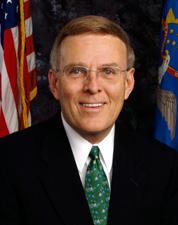 Sen. Byron L. Dorgan (D-ND)
Legislative Activity
Stay on top of the latest movement without scrolling through every action
Senate amendment not agreed to: Amendment SA 3695, pursuant to the order of December 11, 2007, having failed to achieve the required 60 votes in the affirmative, was not agreed to in Senate by Yea-Nay Vote. 56 - 43. Record Vote Number: 424.
December 13, 2007
View full timeline
Senate amendment not agreed to: Amendment SA 3695, pursuant to the order of December 11, 2007, having failed to achieve the required 60 votes in the affirmative, was not agreed to in Senate by Yea-Nay Vote. 56 - 43. Record Vote Number: 424.
December 13, 2007
Roll call votes on amendments in Senate: Amendment SA 3695, pursuant to the order of December 11, 2007, having failed to achieve the required 60 votes in the affirmative, was not agreed to in Senate by Yea-Nay Vote. 56 - 43. Record Vote Number: 424.
December 13, 2007
Considered by Senate. (consideration: CR S15380, S15383-15385)
December 13, 2007
Amendment SA 3695, pursuant to the order of December 11, 2007, having failed to achieve the required 60 votes in the affirmative, was not agreed to in Senate by Yea-Nay Vote. 56 - 43. Record Vote Number: 424.
December 13, 2007
Proposed amendment SA 3695, pursuant to the order of the Senate of December 11, 2007, having failed to achieve the required 60 votes in the affirmative, withdrawn in Senate.
December 13, 2007
Considered by Senate. (consideration: CR S15179, S15203-15211)
December 12, 2007
Considered by Senate. (consideration: CR S15090, S15125; text as modified: CR S15125)
December 11, 2007
Considered by Senate. (consideration: CR S15040)
December 10, 2007
Senate amendment proposed (on the floor): Amendment SA 3695 proposed by Senator Harkin for Senator Dorgan to Amendment SA 3500.(consideration: CR S15014)
December 7, 2007
Amendment SA 3695 proposed by Senator Harkin for Senator Dorgan to Amendment SA 3500. (consideration: CR S15014) To strengthen payment limitations and direct the savings to increase funding for certain programs.
December 7, 2007
Senate amendment submitted
November 15, 2007
Votes
1 roll call on this amendment
Amendments
1 amendmentOffered to this amendment
Amendments
1 amendmentOffered to this amendment
Text
Modified
FARM, NUTRITION, AND BIOENERGY ACT OF 2007--Continued

The PRESIDING OFFICER. Who yields time?
The Senator from North Dakota is recognized.
Mr. CONRAD. Mr. President, how much time remains?
The PRESIDING OFFICER. There is 41 minutes on the Republican side and
84 minutes on the majority side.
Mr. CONRAD. I wish to be alerted by the Chair when I have consumed 10
minutes.
The PRESIDING OFFICER. The Chair will be happy to do that.
Mr. CONRAD. Mr. President, I want to respond to the proposal by
Senator Lugar and Senator Lautenberg to substitute the Food and Energy
Security Act of 2007 with the so-called FRESH Act.
Senator Lugar and Senator Lautenberg are senior Members of this body,
very much respected by Members on both sides. I have enormous respect
and admiration, and I even have affection for both of them. But I must
say, when it comes to farm policy, we have a stark disagreement.
Senator Lugar believes we would be better off if we simply disposed of
the current farm safety net in favor of a revenue program with no price
floor. Savings would be invested in conservation, nutrition, and
specialty crop agriculture. I believe those are good priorities, in
terms of where the money would go, but I remind Members of the Senate
that the work of the committee--by the way, the bill came out of
committee without a single dissenting vote. It is true we didn't have a
rollcall, so I don't know how members might have expressed themselves,
but nobody asked for a rollcall or asked to be recorded in the
negative.
The fact is we increased each of those areas that is addressed in the
FRESH Act. We increased conservation over the baseline by $4.5 billion.
We increased nutrition by $5.3 billion over the baseline. We increased
specialty crop resources by $2.5 billion. Those are all very large
increases. The biggest percentage increase went for conservation.
When it comes to investing in the things Senators Lugar and
Lautenberg care about, the committee did a good job. So if this is not
about investments in those areas, what is the real difference? I don't
think this bill is about resources for other areas; I think it is
largely about finding a way to gut existing commodity programs.
I have heard statements in support of the FRESH Act that amount to
broadsides against existing policy. So let me respond to some of the
arguments we have heard from the other side. Let's examine the attacks
on the distribution of farm program benefits.
The critics say only 43 percent of all farms received payments. The
critics say that 57 percent of farms unfairly operate without a safety
net. The critics say the largest 8 percent of all farms receive 58
percent of the farm program benefits. All of those statements have some
element of truth, but they don't tell the whole story. They don't come
close to telling the whole story. In fact, taken alone, I think they
completely misrepresent the reality of the farm program. Let's look at
each of these claims in turn.
According to the Economic Research Service, farming operations
receiving no Government payments had an average household income of
over $77,000 per year. But the farm income portion of that was only
$1,000. So when the assertion is made that almost half of the

[[Page S15099]]

farms get no farm program benefits, guess what. Those people are not
farmers. They have an average income of $77,000, and only a thousand of
it comes from farming operations. Those people are not engaged in
farming in any meaningful way. What this tells me about the 57 percent
of farms operating without a safety net is that a big chunk of them
aren't much into farming at all. The largest portion of them farmed
only marginally, or do so as a hobby.
Our own son is in that category. They have a little farm, with over
$1,000 in receipts. So they are counted in all of the statistics as
being a farmer, because that is all it takes--$1,000 of receipts--and
you are counted as a farmer. But he has a job in town, a full-time job.
He is basically a hobby farmer. Yet they are saying he should be
getting farm program benefits; that it is unfair because he is not
getting farm program benefits. No. That applies to the first argument.
The absurdity of trying to claim that these producers are terribly
mistreated is the fact that the FRESH Act's own risk management
accounts would not allow them to participate either. So I guess what is
good for the goose is good for the gander. That is because the eligible
participant is someone with an AGI from farm operations of $10,000 or
more. They would not count them as farmers at all. If the proponents do
not call the majority receiving Government payments farmers, why should
they be clamoring to find support for them in the commodity support
provisions?
Part of the problem is the way farmers are defined for statistical
purposes. To quote from the Economic Research Service:

Most establishments classified as farms are too small to
support a household because the official U.S. farm definition
requires only $1,000 of sales to qualify as a farm.

So the first criticism we hear is without merit. I would like to
think of farm households as those that actually obtain a significant
portion of their income from a farming operation. When you look at
those households, you get a completely different picture.
This chart shows where Government program payments go when compared
to gross receipts of farming operations. You see a very different
reality. If you look at all of the farms with gross farm receipts above
$50,000, you will see that only 23 percent of roughly 2 million total
farms are responsible for 90 percent of farm receipts. But their share
of Government payments is actually somewhat less, totaling just over 81
percent.
So here is the reality. Those with receipts of over $50,000 account
for only 23 percent of farms, but they do 90 percent of the business
and they get 81 percent of farm program payments. Actually, it is
somewhat less than their percentage of actual production.
The group signified on the left, with sales less than $50,000,
constitutes nearly 77 percent of farms, but produces about 10 percent
of gross farm receipts. Yet their share of Government payments is
nearly double their percentage of those gross receipts. Let me
emphasize that: 77 percent of farms, as tallied by the USDA, are below
$50,000 in receipts. They do about 10 percent of the production and get
a disproportionate share of the benefits.
It is amazing what different conclusion one reaches when one actually
researches the underlying facts.
I will repeat that first statistic again. Farms with gross receipts
of over $50,000 account for only 23 percent of our farms, but they
produce 90 percent of the foodstuffs we consume, and they receive 81
percent of Government payments.
When you drill deeper into the data, farms with receipts of less than
$10,000 constitute 58 percent of total farm numbers. Yet they produce
less than 4 percent of total farm production and still receive 7
percent of Government payments.
So the conclusion one reaches, if one actually examines these data,
is totally different than the story being told by the critics. These
statistics from USDA's Economic Research Service clearly show how
Government payments go to those actually producing the food. That is
what is happening. You get farm program benefits roughly in
relationship to your share of production. That is the way it is
designed to be. That is the way it is. Don't let anyone try to tell you
something different.
To the extent there are farming operations that don't participate and
yet provide a great deal of sales, this farm bill seeks to help them
through investments in specialty crop agriculture and a broad-based
disaster assistance program. But to suggest that the vast majority of
farms is being mistreated by the farm program is simply false. It is
not true; it is not fair; it is not accurate. In fact, the smallest
producers get a bigger share of Government payments relative to
receipts than do the largest producers.
Also, I seriously question how replacing the marketing loan,
countercyclical, and direct payment programs with area and farm revenue
programs would change how payments are distributed.
In fact, these free ``revenue'' programs would almost certainly
follow production, and they don't have any internal payment limitations
or adjusted gross income limitations provided in the titles being
eliminated. They would concentrate payments even more.
The PRESIDING OFFICER. The Senator has used 11 minutes.
Mr. CONRAD. I ask to be alerted when I have taken another 5 minutes.
The PRESIDING OFFICER. The Chair will do so.
Mr. CONRAD. The FRESH program would actually concentrate payments
even more. Wouldn't that be ironic? The proponents of the bill are
trying to make the case that the policy contained in the committee bill
violates our trade commitments. All of this talk of trade violations or
potential actions against the United States on trade can be a bit
confusing for Members. Let me attempt to reduce the confusion.
First, the current WTO rules limit our trade-distorting domestic
support to $19 billion a year. The Congressional Budget Office says
payments under this farm bill will be less than that. When it comes to
potential actions against the United States by countries such as Brazil
and Canada, it appears they are throwing the kitchen sink at us, hoping
to make something stick. It has gotten so ridiculous that Brazil even
claims that excise tax exemptions on off-road fuel are a trade
violation. You have to admire them for their creativity. We cannot
write a farm bill based on some agreement that has yet to be written.
Sometimes we do a pretty good job of predicting the future here, but I
don't know how we can direct what a future trade agreement might look
like. To say we are violating an agreement that has not been written,
made, or passed is an empty exercise. It is our responsibility to write
a policy for agriculture that is in the best interests of America, not
in the best interests of those who want to be critics.
The reductions in support to crop insurance that are contained in
this alternative proposal could destroy the program. Cutting $25
billion from the crop insurance program will lead to companies simply
walking away and crop insurance not being available when it is
desperately needed.
I believe crop insurance needs a serious look, needs reform, but
taking an axe to it is simply, I believe, simplistic and
counterproductive. I would rather we do a serious study on how to
reform crop insurance and follow those results, rather than an ad hoc
vote here on the floor.
I want to direct colleagues' attention to the potential catastrophic
impacts this bill would have on farm income if this amendment were
adopted.
Texas A&M did an analysis by actually going to farms across America
and looking at their books and records and determining the effect of
this amendment on those farms and their incomes.
Twenty-four of the twenty-five representative crop farms would see
more than a 25-percent reduction in their cash income. Seventeen of the
representative crop farms would experience more than a 25-percent
decline in ending net worth by the end of the period.
With lower commodity prices the ``provisions do not come close to
providing the same amount of support as the programs in the 2002 farm
bill, and should such a low price scenario occur in the future, most of
the farmers and ranchers would not be able to survive the erosion in
farm income without some additional Government support.''

[[Page S15100]]

This is a bankruptcy proposal for rural America if prices turn down.
Let's be clear about the consequences of this amendment. It can be
summed up in two words: mass bankruptcy. That will be the result if a
proposal such as this is adopted and, God forbid, prices decline, and
decline sharply, and we have seen that repeatedly in agriculture.
Essentially, what this study says from Texas A&M is, if prices remain
high, the impacts of this bill would be substantial, but when low
prices return--and they have a bad habit of returning in agriculture--
proposals such as the FRESH Act would pull the rug out from under our
producers and result in financial ruin for them. That is what the
experts at Texas A&M have concluded.
I don't think the American people are interested in mass bankruptcy
in rural America. For those who would like you to believe that our farm
policy has not benefited the people of our country and, indeed, the
people of the world, I will leave my colleagues with the words of a
recent Wall Street Journal article.
I ask for an additional 5 minutes.
The PRESIDING OFFICER. Without objection, it is so ordered.
Mr. CONRAD. This is what the Wall Street Journal said:

The prospect for a long boom is riveting economists because
the declining real price of grain has long been one of the
unsung forces behind the development of the global economy.
Thanks to steadily improving seeds, synthetic fertilizer and
more powerful farm equipment, the productivity of farmers in
the West and Asia has stayed so far ahead of population
growth that prices of corn and wheat, adjusted for inflation,
had dropped 75 percent and 69 percent, respectively, since
1974. Among other things, falling grain prices made food more
affordable for the world's poor, helping shrink the
percentage of the world's population that is malnourished.''

We never hear it from the critics, but the Wall Street Journal is
reporting that one of the key reasons for the economic boom in the
world is the increase in productivity in agriculture led by the West,
led by our country. That amazing increase in productivity has in real
terms dramatically reduced the cost of corn and wheat by 75 percent and
69 percent since 1974. I think those words should be taken to heart.
U.S. agricultural policy has provided enormous advantages to all of
our citizens and to the world. I cannot imagine what would happen
without it.
I conclude by reviewing the distribution of funding for this package
and the investments made in nutrition and conservation.
Under the bill proposed by the Senate Agriculture Committee, the
amount for commodity programs is reduced more than 11 percent, to 13.6
percent of total outlays, while establishing many new programs to
benefit speciality crop producers.
Spending for nutrition programs remains at about two-thirds of total
outlays. Let me repeat that. Where is most of the money going in this
bill? Where is most of the money going? It is going to nutrition. That
is the bill that came out of the committee. Sixty-six percent of the
money is going for nutrition. We don't hear that from the critics, but
that is a fact. Less than 14 percent is going for commodity programs,
and that is an 11-percent reduction from the previous bill.
This bill, the bill out of committee, represents a significant
redirection of resources in areas we all know is necessary. And we
didn't need to gut farm programs to make these investments.
I hope my colleagues will reject this proposal and support the
committee package that is before us. It is responsible, it is good for
taxpayers, it is good for farmers and ranchers, it is good for the
economy, it is good for nutrition, it is good for conservation. It
deserves our support.
The PRESIDING OFFICER. Who yields time? The Senator from Georgia.
Mr. CHAMBLISS. Mr. President, I wish to propose a unanimous consent
request. First, I wish to let everybody know where we are. A vote was
originally scheduled for sometime around 3:45 p.m. It is likely to be a
little bit before that. My understanding is that Senator Lautenberg has
some comments he wants to make on this amendment. I will make some
comments. Senator Lugar may have additional comments he wishes to make
before the vote.
Following the vote on the Lugar-Lautenberg amendment, I ask unanimous
consent that Senator Gregg be allowed 1 hour equally divided on his
amendments Nos. 3671, 3673, and 3674; that following Senator Gregg,
Senator Alexander have 1 hour equally divided on his amendments Nos.
3551 and 3552; that following Senator Alexander, Senator Coburn have 90
minutes equally divided on his amendments Nos. 3530, 3632, and 3807.
Senator Harkin may have some Democratic amendments that we may place
among those amendments.
The PRESIDING OFFICER. Is there objection?
Mr. HARKIN. Reserving the right to object.
The PRESIDING OFFICER. The Senator from Iowa.
Mr. HARKIN. Mr. President, I discussed this with my colleague
earlier, but we are also working on a unanimous consent request. There
is another amendment we might want to insert. If my friend will
withhold, I think we can work this out in a discussion, and then we can
propound the unanimous consent request.
Mr. CHAMBLISS. That is fine. I withdraw my request.
The PRESIDING OFFICER. Who yields time?
Mr. LAUTENBERG. Mr. President, how much time remains?
The PRESIDING OFFICER. The proponents of the amendment have 41
minutes remaining, and for the opponents of the amendment, there is 62
minutes remaining.
Mr. LAUTENBERG. Mr. President, I suggest the absence of a quorum.
The PRESIDING OFFICER. The clerk will call the roll.
The assistant legislative clerk proceeded to call the roll.
Mr. CHAMBLISS. Mr. President, I ask unanimous consent that the order
for the quorum call be rescinded.
The PRESIDING OFFICER. Without objection, it is so ordered.
Mr. CHAMBLISS. Mr. President, I again ask unanimous consent that
following the vote, which I understand is going to be at approximately
3:30 p.m., the following amendments be called up in this order: Senator
Gregg's amendments Nos. 3671, 3673, and 3674; that debate be 1 hour
equally divided; then following that debate, Senator Alexander on
amendments Nos. 3551 and 3553 for 1 hour equally divided; and Senator
Coburn on amendments Nos. 3530, 3632, and 3807, with 90 minutes equally
divided; and that these votes will be stacked for sometime tomorrow.
The PRESIDING OFFICER. Is there objection?
Mr. HARKIN. Again, reserving the right to object, I, first of all,
thank my colleague for working out this agreement. This is great
progress. We have great time agreements. I appreciate his work in that
regard.
I wish to make it clear, was it the intention of my friend to have
them all in that order? Can they be in a different order when they come
up or when people are here?
Mr. CHAMBLISS. The request does not pretend to set the order, the
vote of the respective amendments.
Mr. HARKIN. Further reserving the right to object, I ask my friend,
he said earlier if, in fact, a Democrat comes with an amendment on this
side--I don't have one right now--that they could at that time work it
in. We have at least one I know we might want to call up later today.
Mr. CHAMBLISS. Sure. We will be happy to amend it.
Mr. HARKIN. With that, I have no objections.
Mr. DURBIN. Reserving the right to object.
The PRESIDING OFFICER. The Senator from Illinois will state his
reservation.
Mr. DURBIN. Do I understand the unanimous consent request calls for
specific amendments after the pending amendment is voted on?
Mr. HARKIN. That is right.
Mr. DURBIN. I followed this in my office. May I ask the Senator from
Georgia if he would be kind enough to tell me, I understand amendment
No. 3671 is on his list, Senator Gregg's amendment.
Mr. CHAMBLISS. Yes.
Mr. DURBIN. What are those amendments?
Mr. CHAMBLISS. Amendment No. 3671 is striking the farm stress
program, and amendment No. 3673 is the OB/GYN liability reform.

[[Page S15101]]

Mr. DURBIN. Is there another request?
Mr. CHAMBLISS. Amendment No. 3674, the mortgage forgiveness
amendment.
Mr. DURBIN. In the Senator's unanimous consent request, is there any
time limit on the amendments?
Mr. CHAMBLISS. Yes, 1 hour equally divided for all three.
Mr. DURBIN. I object.
The PRESIDING OFFICER. Objection is heard.
Mr. HARKIN. Mr. President, I suggest the absence of a quorum.
The PRESIDING OFFICER. The clerk will call the roll.
The assistant legislative clerk proceeded to call the roll.
Mr. HARKIN. Mr. President, I ask unanimous consent that the order for
the quorum call be rescinded.
The PRESIDING OFFICER. Without objection, it is so ordered.
Mr. HARKIN. Mr. President, I ask unanimous consent that the vote in
relation to amendment No. 3711 occur at 3:50 p.m., with the time
divided 45 minutes for Senators Lugar and Lautenberg and 15 minutes in
opposition, with the remaining provisions of the previous order
remaining in effect.
The PRESIDING OFFICER. Without objection, it is so ordered.
The Senator from New Jersey.
Mr. LAUTENBERG. Mr. President, before I speak to the amendment
Senator Lugar and I have offered, I wish to express my thanks to
Chairman Harkin and Ranking Member Chambliss and the entire Agriculture
Committee for the weeks of work that represent the foundation of this
legislation.
I also particularly thank Senator Lugar for bringing his experience
and knowledge to the development of our amendment. His background
carries the tradition of generations of family farming in Indiana,
where over 600 acres of theirs are still under production, and he calls
for farming to be continued as a significant part of America's culture.
He understands how critical it is to our national well-being that
family farms exist independently to produce the nutritious foods that
help America maintain a healthy population.
Although I didn't grow up on a farm, I do have experience in the
business world, and our alliance on this issue brings together two
views on the farm bill and what we ought to do in the interest of our
country. That business experience I had matches up well with Senator
Lugar's experience in this amendment because I learned in my business
experience that fair and balanced competition for all products will
result in quality products at low prices, and we ought not to be
subsidizing the extremely well-off producers at the expense of family
farmers who need help to continue to be able to offer their produce in
the marketplace.
Writing a law such as the farm bill is no simple task, with the
varied views on how we put nutritious food on family tables at costs
that are affordable. I believe the bill on the floor helps farmers and
millions of Americans in several ways that fulfill our responsibility
as public servants. For example, it imposes limits on the amount of
taxpayer money that can be used to subsidize our already profitable
farms. It offers opportunities to produce more renewable fuels to
conserve energy and conservation to keep farmlands in existence.
Despite these improvements, we need more changes for serious reform.
I know many of my colleagues agree with Senator Lugar and me on the
need to do more to encourage all farmers to continue to produce food
and nourishment at the best quality and lowest possible price while
they earn a livelihood.
America grows thousands of crops, but the bill before us includes $42
billion in subsidies for only five--corn, cotton, rice, soybeans, and
wheat. Most of that money goes not to struggling farmers who are
spending long hours in the fields away from their families toiling to
bring enough crops to market to merely get by and resisting the
seduction of selling their land at high prices to developers for
commercial purposes, but the money is going to those who are already
raking in record profits, and I want to demonstrate what I mean.
This chart says it all: 10 percent of farms receive nearly 75 percent
of the subsidies. Think of it--10 percent receive nearly 75 percent of
the subsidies. The 10 percent of the farms we talk about from this
chart are those well-off farmers and agribusinesses--the ones that are
bringing in giant profits. As a matter of fact, they received $120
billion in subsidies in the last 10 years. In fact, our current farm
policy funnels subsidy checks into the mailboxes of millionaire
landowners and agribusinesses across the country. Even someone who
might have just become familiar with this situation in front of us
would tell you that it doesn't make sense to fund huge farms and
businesses while failing to help farmers continue producing crops
essential to our national well-being on smaller farms that preserve the
traditions that made America strong and independent.
We all recognize that the Agriculture Committee wants America's farms
to thrive, our economy to be strong, and Americans to eat healthy
foods, but I ask, if every farmer is helping to feed America, shouldn't
America be helping every farmer? The answer is, without question, of
course. We need a farm bill that helps farmers across the country
regardless of where they farm or what they grow. We need a farm bill
that invests in more than just crops. It must invest in nutrition and
in healthier foods, such as fruits and vegetables, so that our children
are not burdened with obesity, diabetes, and other serious illnesses
that are the side effects of poor nutrition. It must provide more in
food stamps so that modest, hard-working parents who face tough times
can still prepare quality, nutritious foods for their families to eat.
And it must invest in conservation so that our green spaces do not fall
victim to highrises and commercial buildings and so that we don't
destroy the Earth that our children and grandchildren call home by
turning it into concrete highways and buildings.
The Senator from Indiana, Mr. Lugar, and I have offered a plan for
reform. We are from different States and different experiences. My
colleague, Senator Lugar, grew up on a farm, whereas I grew up in the
city, but when it comes to the farm bill, Senator Lugar and I see eye
to eye on the challenges America and its lands face, and we have a
shared vision for the path forward. We see that our subsidies are for
only a handful of crops in our country and are going to the giant
agribusinesses instead of smaller farms. The taxpayer-funded handouts
we turned over to those businesses in the last 5 years totaled $72
billion. We gave them $72 billion. Think about that. The profits of
four out of the five largest crops that get subsidies will set alltime
records this year.
This has been a prosperous year for a lot of people who run the large
agribusinesses and the large profit-making farms. As I said, alltime
records are being set this year, according to the Department of
Agriculture. At the same time, crops such as fruits and vegetables and
other nutritious foods we want to see on American tables do not get the
same kind of help. My State of New Jersey, for example, has many farms
in our densely populated State. We are called the Garden State for a
reason. We have major growers of blueberries, cranberries, and lettuce,
for example, near the marketplace. Those nutritious fruits and
vegetables go directly from our farms to markets in the cities, saving
unnecessary fuel and transportation costs while improving the health of
our residents at the same time. But the current farm bill fails to aid
and encourage these farmers across the country, and that is why the
Lugar-Lautenberg amendment makes so much sense.
Our plan for reform will help every farmer in America grow their
crops and feed the Nation. I demonstrate here what I mean.
As we refer to here, our amendment provides for free crop insurance
to protect all farmers from major losses. Our plan replaces the current
system of subsidies with smart and free insurance programs to protect
all farmers from catastrophes such as drought or pest infestation.
Whether farmers grows corn or cranberries, soybeans or squash, their
livelihoods are protected so they can continue to provide nutritious
meals that are essential for the health of children and families across
the country.
Our plan guarantees that the income of farmers will not fall so
severely that

[[Page S15102]]

they stop farming. It protects all farmers, most of whom will be
covered against losses of 15 percent or more in any year whether they
grow and harvest 20 acres or 2,000 acres.
This approach is not only more equitable for every farmer, but it is
far less expensive--for them and for every American taxpayer. With the
money we save, we are going to be able to invest $2.5 billion more in
nutrition programs, food stamps, and specialty crops such as potatoes,
tomatoes, and oranges. With more support for nutritional foods such as
fruits and vegetables, Americans can provide healthier meals and fight
health problems such as diabetes and obesity, and more money for food
stamps will help the 26 million Americans who rely on food stamps to
stay alive and keep their heads above water, to feed themselves and
their families.
It is shocking to note that some of the food stamp recipients are
expected to survive on $10 a month--think about that, $10 a month. It
is a paltry sum by any standard. We checked prices at a local
supermarket recently, and if you add up the cost of a loaf of bread, a
gallon of milk, a pound of cheese, and a dozen eggs, you are already
over $10. How is it possible for people to sustain themselves with that
small amount of funds at their disposal? Helping those with the least
is exactly what America is about. By increasing money for food stamps,
our amendment goes in the right direction.
Our plan invests $1 billion more than does the bill on the floor in
conservation programs that assure farmers they can protect their land
from pollution and urban sprawl. All of us see what is happening now to
farmland, to the green areas. They are falling prey to development at
paces that frighten us. Cities across the country are beginning to say
no more development here. And the best way to stem the tide is to give
farmers the ability to preserve and conserve their land. Right now our
farmers who want to participate in these programs are limited because
they do not have the funds.
Our plan invests a half billion dollars more into alternative
energies. With oil prices and concerns about global warming on the
rise, this investment addresses both of these urgent problems.
Finally, our reform plan does what the public wants us to do: to be
good stewards of the taxpayers' money by putting $4 billion toward
paying down the Federal deficit. Think about it, our national debt is
growing out of control, our deficits are growing, and we are constantly
looking for ways to fund domestic programs. At least we will begin to
arrest in significant part the growth of the annual deficit with $4
billion at the same time we accomplish the goal of helping those who do
farming, those who have modest pieces of land and have businesses that
are difficult to maintain in this day of competition.
Every State in America has agriculture, so we need a farm policy that
helps every State. The plan that Senator Lugar and I have offered is in
the best interests of every American farmer and thus every American
family. The men and women whose labor, sweat, and toil feed the Nation
deserve nothing less, and we hope it will be recognized on the floor of
this Chamber that we want to encourage farmers to stay on the farms;
that we want to encourage the availability of products that are
nutritional and will aid the health of our population.
I yield the floor and ask the remainder of my time be reserved for
Senator Lugar as he indicated he desired.
The PRESIDING OFFICER (Mrs. McCaskill) The Senator from Georgia is
recognized.
Mr. CHAMBLISS. Madam President, I rise in opposition to the amendment
offered by my good friends, Senator Lugar and Senator Lautenberg.
The purpose of this amendment is supposedly to ``serve more farmers
more fairly and be responsive to regional and national crises that
endanger the continuing success of America's farmers.''
For farmers in my region and in my State, this amendment does the
opposite of that: if enacted, it would seriously endanger the success
of my farmers.
This amendment removes the safety net that producers support, most of
it immediately and the rest over a period of time. Here is what it
does:
phases out nontrade distorting direct payments that are critical for
farmer financing and support;
removes the availability of a nonrecourse marketing loan that
producers rely upon to market their crops;
removes countercyclical support that is necessary in times of low
prices;
allows, without the limitation contained in the committee-approved
bill, production of fruits and vegetables for processing on any base
acreage, which is a serious concern to the specialty crop industry.
Madam President, 26 agricultural organizations have signed a letter
urging Senators not to support this amendment because it eliminates the
safety net provided to producers and shifts significantly more funding
out of the commodity title.
I ask unanimous consent the letter be printed in the Record.
There being no objection, the material was ordered to be printed in
the Record, as follows:

U.S. Senate,
Washington, DC, November 16, 2007.
Dear Senator: We are writing to urge you NOT to co-sponsor
or support S. 2228, the Farm, Ranch, Equity, Stewardship and
Health (FRESH) Act, as either a stand-alone bill or as an
amendment to the Farm Bill.
The FRESH Act eliminates the current safety net provided to
U.S. producers and shifts considerable funding to
conservation, nutrition, energy and other programs. It is
easy to look at current high prices for most agricultural
commodities and assume it is a ``good time'' to lower
government supports. It is critical to remember that farm
bills are written for the long-term rather than short-term
and that there is no assurance high prices will continue over
the next 5-10 years.
Additionally, the commodity title of the farm bill has
already taken a $57 billion cut. In 2002 Congress committed
$98.9 billion to commodity programs. According to the March
2007 CBO baseline, commodity title outlays are projected at
only $42 billion over the life of the new farm bill. All
told, the commodity programs are projected to be about 10% of
total farm bill spending, while more than 80% of the farm
bill spending is already slated for nutrition and
conservation programs.
Our organizations support the safety net provided in the
bill which was unanimously approved by the Senate Agriculture
Committee. The stringent requirements placed on the risk
management accounts that replace this safety net in the FRESH
Act would not provide producers with the necessary
flexibility to effectively manage their operations. Aside
from crop losses, producers can face a wide range of
challenges, including dramatically increasing input prices.
Our organizations believe the farm bill can live up to our
current WTO obligations without gutting the critical safety
net needed by producers. U.S. farm policy should continue
toward a more level playing field in the global market by
providing assistance to America's farmers. However, this goal
is not achieved by writing a farm bill that complies with
what someone assumes will be the potential outcome of the WTO
negotiations.
Finally, while we support strong conservation, nutrition,
and energy programs, additional support for these programs
should not come at the expense of adequate funding for the
safety net for American farmers.
We ask that you do not sign on as a cosponsor or support S.
2228 as a stand-alone bill or as an amendment to the Farm
Bill.
Sincerely,
American Farm Bureau, National Farmers Union, National
Association of Wheat Growers, Southern Peanut Farmers
Federation, USA Rice Federation, American Soybean
Association, Peanut Growers Marketing Cooperative, North
Carolina Peanut Growers, Virginia Peanut Growers, American
Beekeeping Federation, Rice Belt Warehouses Inc., United
Dairymen of Arizona, American Association of Crop Insurers,
National Sorghum Producers.
US Rice Producers Association, Crop Insurance Professionals
Association, American Sheep Industry Association, National
Council of Farmer Cooperatives, Western Peanut Growers
Association, National Cotton Council, American Sugar
Alliance, National Barley Growers Association, National
Sunflower Association, USA Dry Pea & Lentil Council, US
Canola Association, and American Honey Producers Association.

Mr. CHAMBLISS. Senator Lugar's amendment replaces the current safety
net with several measures--two of which are related to crop insurance
and revenue protection.
I greatly appreciate Senator Lugar's interest in expanding crop
insurance coverage, because there are very few farmers in my State who
are even eligible to purchase the coverage Senator Lugar uses as a
component of his safety net. I appreciate his interest in expanding the
Group Risk Income Protection--GRIP--and Group Risk Protection--GRP--
which are county-level revenue plans of insurance, but I have serious
concerns about building the safety net around these programs as a
replacement to traditional commodity programs.

[[Page S15103]]

While GRIP and GRP may be popular, workable programs in Indiana, they
are not in Georgia. Of the 159 counties in my home State, these
policies are only offered in: for soybeans, 7 counties; for corn, 9
counties; for wheat, 4 counties; for cotton, 16 counties; for peanuts,
about 25 counties.
In Georgia in 2006, only 47 of these policies were sold and earned
premium; 47 for the whole State out of over 13,000 total policies sold
and earning premium. Only seven of those triggered indemnity payments.
One of those 47 producers called my office and said he wished he had
never taken it because it did not provide individualized coverage.
Let's look at participation in States in which this coverage is more
widely available. Nebraska in 2006 sold 576 GRIP and GRP policies of
the 90,896 total policies sold and earning premium. That is less than 1
percent of all policies. Kansas in 2006 sold 110 GRIP and GRP policies
out of a total of 117,984. Again, less than 1 percent of all policies.
South Dakota in 2006 sold 20 GRIP and GRP policies out of a total of
59,648 policies. Again, less than 1 percent of all policies. North
Dakota in 2006 sold 9 GRIP policies and 0 GRP policies out of a total
of 69,539 policies. Again, less than 1 percent of all policies.
Illinois and Indiana have a different experience: 20 percent in each of
these States were GRIP/GRP policies.
I am very glad these products are viable risk management tools in
Illinois and Indiana and possibly other States, and I want those folks
to continue to use them. But I wonder why producers in these other
States aren't purchasing these products. And I question how prudent it
is to include these products as a significant component of a
replacement so-called safety net when few producers are voluntarily
purchasing them in most places except Illinois and Indiana.
Again, while I appreciate Senator Lugar's interest in expanding this
coverage, I do not support it as a replacement to the safety net
provided in the committee-approved bill, which contains a safety net
that producers have voiced support for and works especially for my home
State.
Crop insurance has experienced tremendous growth and success since
the enactment of the 2000 reform bill. In 2007, farmers insured more
than 271 million acres, with an estimated crop loss liability of $67
billion. In my home State in 1994, only 38 percent of eligible acres
were insured; and in 2006, 89 percent of eligible acres were insured.
In the committee-approved farm bill, over $4.7 billion has been taken
out of the crop insurance program to fund other farm bill priorities.
These savings were achieved to answer criticisms of the program and
improve operational efficiency. We have tried to manage these funding
reductions in a way that will not unduly harm the program or the
delivery system.
Because crop insurance is a Federal program that is supported through
a blend of private and Federal reinsurance and delivered through
private insurance providers and a network of agents nationwide, we have
to be careful in making any changes to the program. There must be
sufficient financial incentives for providers and agents to provide
appropriate service to their customers yet not so lucrative as to waste
taxpayer dollars. The financial strength of the insurance providers is
critical to the reinsurance community providing financial and risk-
bearing support to the insurance providers. Commercial reinsurance
helps assure the economic stability and continuity of the insurance
providers in delivering and servicing the crop insurance policies.
By requiring a ceding of 30 percent of risk by companies to USDA and
a much deeper cut in the administrative and operating--A&O--expense
reimbursement to providers than the committee-approved bill and the
House-passed bill, Senator Lugar's amendment will have serious negative
effects on the delivery system that could impact service and the
availability of coverage in many States.
After the House passed its farm bill this summer, the reinsurance
community sent me a letter expressing concerns about significant cuts
the House made to the A&O expense reimbursement as well as the required
increased quota share by USDA. For reference, the House cuts were
greater than those in the committee-approved bill but less than what
Senator Lugar proposes.
Specifically, the letter signed by 13 reinsurers states that the
House's proposed reduction in A&O will further strain the insurance
providers' ability to properly deliver and service the crop insurance
program.
The letter notes that there is a justifiable and widespread concern
that even fewer insurance providers will exist in the future. There are
16 approved insurance providers nationwide. That does not mean 16
providers in every State--some States have as many as 16, others have
less. This issue raised by the reinsurance community should be
concerning, especially for those of us whose States have fewer
insurance providers than the current nationwide total.
The letter states that if reinsurers sense that insurance providers
will be unable to subsidize further the costs of processing and claims
settlements, reinsurers will likely exercise extreme caution in
providing private reinsurance. Creditworthiness is paramount for
reinsurers, which do not need and do not want to support thinly
capitalized and/or overleveraged insurers.
The letter also maintains that allegations about the insurance
providers earning excessive profits in recent years are unwarranted and
inaccurate.
Madam President, I ask unanimous consent to have this letter printed
in the Record.
There being no objection, the material was ordered to be printed in
the Record, as follows:

Crop Insurance

Research Bureau, Inc.,

Overland Park, KS, September 18, 2007.
Hon. Tom Harkin,
Chairman, Senate Committee on Agriculture, Nutrition and
Forestry,Washington, DC.
Hon. Saxby Chambliss,
Ranking Member, Senate Committee on Agriculture, Nutrition
and Forestry, Washington, DC.
Dear Chairman Harkin and Ranking Member Chambliss: The
undersigned represent a cross section of the private
reinsurance community engaged in the Federal Crop Insurance
program. Private reinsurers are a critical element in a
successful program because they afford standard reinsurance
contract holders the ability to offer it on a truly national
basis. Our continued presence is predicated upon the overall
strength and viability of the program. The provisions in the
House version of the Farm Bill give us considerable pause for
concern.
The crop insurance program has enjoyed unqualified success
since the private sector was introduced in 1981. This success
is measured in terms of the percentage of eligible acres
insured today versus those acres insured in 1981. Today
roughly 80% of eligible crops are insured versus less than
20% in 1981. Furthermore, the numbers of crops that are
eligible for insurance coverage today have also increased
significantly since 1981. This success in insuring over 242
million acres has created an economical safety net for
America's farmers--and a safety net for the entire rural
community that depends upon a strong agricultural economy.
Discussions on the crop insurance program usually focus on
the farmers and those companies that deliver crop insurance--
the Approved Insurance Providers (AIP). However, a critical
component to an AIP's operation is the reinsurance, which the
AIP purchases from the private sector.
Many legislators seem to assume the only reinsurance that
is needed is that which is provided by the Standard
Reinsurance Agreement (SRA). The crop industry needs, and
relies upon, so-called commercial reinsurance to supplement
the reinsurance provided to the AIPs under the SRA.
Commercial reinsurance provides two essential benefits to an
AIP:
1. This reinsurance provides financial and risk-bearing
support to the AIP whereby the AIP can deliver crop insurance
over a greater geographic area and/or assist the AIP in
delivering a greater number of insurance policies than the
AIP could normally provide on their own.
2. This commercial reinsurance provides a vital economic
backstop to the AIP.
Therefore, the commercial reinsurance helps assure the
economic stability and continuity of the AIP in delivering
and servicing the crop insurance.
As Congress continues its review of various aspects of the
crop insurance program, the commercial reinsurance industry
has noted certain aspects that may have an undesirable impact
on the crop insurance industry if these various aspects are
implemented.

Reduction in Administrative and Operating expense (A&O):

The proposed reduction in A&O will reduce the income to the
AIPs and will further strain their ability to properly
deliver and service the crop insurance program. From a
reinsurer's perspective, there is a justifiable and
widespread concern even fewer AIPs will exist in the future.
There were some 55 AIPs in the late 1980s. Today there are
only 16 AIPs. The reduction in the number of AIPs is directly
attributable to the historical reduction in the A&O
percentage. Quality, accurate and timely service is of utmost
importance in order that policies are processed

[[Page S15104]]

properly and that insurance claims are settled properly. If
reinsurers sense that AIPs will be unable to subsidize
further the costs of processing and claims settlements,
leading to a heightened perception of their financial
vulnerability, reinsurers will likely exercise extreme
caution in providing private reinsurance. AIP
creditworthiness is paramount for reinsurers, which do not
need and do not want to support thinly capitalized and/or
over leveraged insurers.

Increased quota share by FCIC:

Certain legislators have alleged that the crop industry
AIPs have made ``excessive'' profits in recent years. These
statements are simply unwarranted and inaccurate. The time
span used to support this allegation is too short in its
duration and simply ignores all statistical principles of
insurance. Because loss experience always reverts to the
mean, in the coming years droughts, excessive moisture,
disease, e.g. Asian soybean rust, and a multitude of other
perils will erode the profits that have been earned in recent
years. Profits are needed to balance the inevitable losses;
hopefully the resulting balance will result in, appropriate
long-term profits in order that the crop insurance industry
can continue to provide returns on equity adequate to
continue to attract the support of the reinsurance community.
The foremost consideration of the reinsurance community is
the financial viability of the AIPs. Erosion in the financial
strength of the AIPs will cause the reinsurance industry to
reconsider their support of the industry and will negatively
impact this vital aspect in the delivery of the crop
insurance program. Excessive budget balancing at the expense
of the crop insurance industry is short sighted. The crop
insurance program has provided--and must continue to
provide--farmers, lenders, and rural constituents a known,
predictable economic safety net.
We appreciate the opportunity to share our thoughts with
you and urge you to continue your support of the crop
insurance program.
Sincerely,
AON Re; Collins; Cooper Gay Intermediaries, LLC;
Endurance Reinsurance Corporation of America; Farmers
Mutual Hail Insurance Company; Fireman's Fund Insurance
Company.
Guy Carpenter & Co., LLC; Mapfre Reinsurance Corporation;
Munich Re Group; Partner Reinsurance Company of the
U.S.; Swiss Reinsurance Company; Totsch Enterprises
Inc.; Western Agricultural Insurance Company.

Mr. CHAMBLISS. An independent study was recently shared with my staff
about the profitability of the Federal crop insurance community.
National Crop Insurance Services, NCIS, is an international not-for-
profit organization representing the interests of more than 60 crop
insurance companies. Representatives of NCIS recently shared the
results of an independent study of the Federal crop insurance program
compared to the Property & Casualty, P&C, insurance industry for the
period of 1992-2006. Key findings include:

The Federal crop insurance program is not as profitable as
the P&C industry and writing Federal crop insurance entails
greater risk;
under the current standard reinsurance agreement, SRA,
which is the contractual agreement between USDA and approved
insurance providers for delivering the program, A&O
reimbursements continue to be below actual Federal crop
insurance expenses incurred by private insurers.

Although the latter finding indicates crop insurance companies' costs
are not fully covered by the Federal Government, the committee-approved
bill contains an A&O reduction of 2 percentage points below the rates
currently in effect for policies except in a State in a year in which
the loss ratio is above 1.2. The policy basis for this was to answer
criticisms concerning costs of A&O reimbursements while providing an
exception in cases where loss adjustments and claims processing will be
much greater. We believe this is a balanced approach to reducing A&O
expenditures.
The crop insurance industry and the crop insurance program make a
significant financial contribution in the committee-approved bill, but
not to the detriment of the delivery system as under Senator Lugar's
amendment.
While there are parallels between conservation provisions in this
bill and those in the committee bill, there are important differences.
The committee bill is more comprehensive and incorporates important
new emphases on forestry, specialty and organic production, wildlife,
and pollinators, among others.
The committee bill addresses the significant challenges in existing
programs that stakeholders have identified, such as the appraisal
process in WRP and FPP, CSP scope and delivery, third party eligibility
in GRP, and delivery of technical assistance.
The committee bill includes new flexibilities to improve and
accelerate program delivery through improvements to technical service
provider provisions, producer group participation, and partnerships and
cooperation.
For all the above reasons, I respectfully request that my colleagues
vote against this amendment.
The PRESIDING OFFICER. The Senator from Indiana.
Mr. LUGAR. Madam President, I wish to acknowledge the importance of
the arguments that have been forwarded by my colleagues, especially
those comments most recently by the distinguished ranking member of the
Agriculture Committee and earlier by Senator Conrad, the Chairman of
the Budget Committee and also a very valued member for a long time of
the Agriculture Committee.
I think it is important in response, as the Senator from North Dakota
pointed out, as he described the situation, that we have to take his
common sense that farms that produce much more are likely, under the
current farm legislation, to receive more in subsidy and payments of
various sorts.
There have been certainly comments made on our side of the question
that a disproportionate amount of money goes to a very few farmers.
Senator Conrad attempted to rebut that by pointing out that these very
few farmers may very well produce, in some States, the bulk of all that
is produced.
So as a matter of common sense, if payments are being made, they
would receive a very large share of those payments. Certainly, that
logic is impeccable. The point the Lugar-Lautenberg amendment tries to
bring to the floor is that leaving aside specific farmers, we are
talking about the interests of all the American people, all the
taxpayers who make these payments, in fact, to a very few.
We are making the point that farmers who do produce a lot of corn or
wheat or soybeans or cotton are very likely to be more successful. I
pointed out in my opening statement how farms have grown, how
successful farmers have purchased the farms of those who were elderly
or from the estates or from young people who have moved away from the
States or from young people who do not have the wherewithal to buy
property.
In short, what I describe is the consolidation of agriculture in
America, which is a pretty strong trend and which I believe the
underlying farm bill we are discussing today would accelerate. I think
that would be regrettable. Therefore, the point I am making with our
amendment is not to discuss whether, proportionately, subsidies go to
those who are most successful and produce the most but, rather, to say
we should not have these payments at all.
What we should have is a safety net for all farmers, including large
and the wealthy as well as those who are not very wealthy and not very
large, an underlying safety net of crop insurance based upon each
county in America, so it is not a broad-gauge situation, it is a very
locally specific situation, taking into consideration presumably the
soil, the weather pattern, the history of crops in that particular
county in America, or the farmer could choose to take the last 5 years
of net farm income and have crop insurance based upon that farm
history, a whole farm history, not simply of a specific crop, although
the farmer would have the option under our plan of choosing a specific
crop.
The farmer could choose whole farm income across the board, including
a great number of items that are not now covered in these specific crop
situations. The bill we are talking about now provides that insurance.
It literally pays the premiums for all farmers, so in the event that in
any particular area of America, by county, by State or by region, there
is difficulty created by the weather or conceivably by world trade
distortions, elements that are well beyond the ability of any one
individual farmer's management to control, that farmer is going to
receive compensation that will keep that farmer in business.
Now, furthermore, the farmer would have the option of buying
additional crop insurance, as each of us as farmers now do, to cover
the other 15 or 20 percent, depending upon the plan chosen, so that, in
fact, you could ensure you were going to at least receive the same
income as you have received over the

[[Page S15105]]

last 5 years, on average, or receive at least the computed predictions
of what the price ought to be for soybeans or for corn.
Let me say, as a practical example, that I take our own experience on
the Lugar farm indicative of how this might work. We have had a profit
on our farm for the last 50 years. Every year. Now, one reason we have
had those profits is because we have had crop insurance and we have
bought the highest level of crop insurance that was possible. We paid
premiums for it. It was not given to us. We paid money for it.
A good many farmers who are neighbors said: I do not want to put that
expense into insurance. I will let the Lord provide, sort of hope it
will all work out. But it does not always work out, given the weather
patterns.
On our farm, in this soybean season, we had very adverse weather. We
had drought during many of the weeks of the summer coming up toward
harvest. Fortunately, it did not injure the crop totally. We had at
least a 41-bushel yield, and we could have anticipated normally more
like 51, about a 20-percent deficiency. But that is the way things move
in this world. We understand that.
The antidote has been crop insurance. So if you have a productive
farm operation, you are not penalized because of acts of God,
literally, through the weather.
Now, that is what we are proposing for all farmers in America and
covering all the crops that are associated with our amendment. I think
this is a very important discrepancy.
The distinguished ranking member of the Ag Committee, Senator
Chambliss, has described the current three-legged stool proposition I
discussed earlier today. Direct payments. Direct payments historically
on my farm, once again, we receive now under the bill that is being
produced, the underlying bill, direct payments whether we have the same
number of acres or even the same crops. It is a historical record from
which these payments come.
Furthermore, we could, under the so-called marketing loan situation,
try to game the system, trying to borrow money from the Federal
Government and pay it back in lesser amounts, depending upon the crop
moving upward, moving downward. We do not lose.
I would say this is not a fair system with regard either to
agricultural competition or with regard to the rest of the public. The
public, as a whole, wants to make certain farmers stay in business,
wants to make certain small farmers have a shot at it, wants to pay at
least for the insurance premiums so if there is an adverse situation,
it could not be controlled, the income will come in and the farm stays
alive. This is what the argument is about.
Now, let me simply indicate, as the distinguished ranking member has
pointed out, 26 farm groups have endorsed the underlying bill. I have
no doubt that is true. I would say there are a good number of
agricultural interests deeply involved in this bill, and that has
usually been the extent of the argument. Those are the groups that are
heard in the hearings, are heard sometimes by Senators.
But this time we have had a different situation. I have cited that
over 40 major newspapers in the United States of America have taken
time in their editorial policies, and furthermore in supporting
articles, to point out the deficiencies of farm legislation as it has
evolved.
But this represents, I would submit, a much larger group than 26
agricultural groups or even members of our committees who believe they
are advocates for specific groups in American agriculture. This time a
very broad number of Americans have spoken out in a humanitarian way,
as people who respect the Federal budget, as people who respect general
fairness, in terms of group and Federal support for those situations.
I think that is very healthy. I hope that will be reflected in the
vote we are about to have. I am convinced a large majority of
constituents in every State of our Union would favor the Lugar-
Lautenberg FRESH amendment if they had any idea of the argument that is
being presented today. Thank goodness through our newspapers and
editorials, a lot more people do have such an idea, and they are
expressing themselves.

Let me make a technical point, and that is that an argument has been
made that if we are so reliant, as I have pointed out, on crop
insurance, that the Lugar-Lautenberg amendment will hurt crop
insurance. I want to recite some specifics about the technicalities of
crop insurance. For the moment, crop insurance companies are reimbursed
by the Federal Government as a percentage of the cost of the policy. So
as commodity prices have increased, so has the reimbursement of private
companies, even though the workload has not changed. If, in fact, there
is huge demand now for corn, huge demand for soybeans, the prices have
gone up, in the case of soybeans, to record levels, exceeded only last
in 1973. The compensation to the crop insurance people moves right
along with it, without any of the risk involved changing. The GAO
described this as ``a kind of windfall.'' Our amendment reduces the
reimbursement to a rate that is still well above historical averages
and, furthermore, we create a safety net through crop insurance
programs dramatically increasing business opportunities for private
crop insurance companies.
As has been cited by the distinguished Senator from Georgia, many
crop insurance policies may not be available in certain counties in his
State and in others, but under our amendment, crop insurance is
available everywhere, every county, every State. That is a very
important consideration in terms of a national safety net as opposed to
a crop-specific or State-specific safety net.
The GAO has reported crop insurance underwriting profits of $2.8
billion over the last decade, three times the insurance industry
average. The amendment I am offering today with Senator Lautenberg also
reduces underwriting profits by requiring companies to share 30 percent
of their accumulative underwriting gain back with the taxpayers, back
with the Federal Government, so there is not an undisguised windfall.
We have estimated this will save taxpayers more than $1.4 billion and
reduce the outlays in the 10 years this bill covers.
I point this out because I think it is important to say our amendment
is going to be a remarkable boon for crop insurance. It is going to be
virtually universal. A lot of money is going to be made. But before we
get into that, we had better change the terms of reference with regard
to what taxpayers are paying for and the underwriting risks that are
involved.
I point out one further argument; that is, that we have been talking
about the relative merits of our amendment when it comes to
conservation. We have not discussed differences with regard to
research. We might have talked more about development in rural areas. I
tried to make the point in an earlier statement that only about 14
percent of the people now living in rural America live on farms. Only
about 1 out of 750 individuals actually does farm. The need for
development in our rural counties is obvious. The population flight
from so many counties is very apparent. If we are talking about rural
America, we have to be talking about ways in which new jobs will come
to counties in America, and that is not going to come through a normal
farm bill situation, rewarding specific farmers and specific crops and
not all of those. I point out that our amendment tries to focus on
rural America, on the opportunities for jobs for people in county seats
all over our country.
I also point out that we have tried to think through the problems of
the young. We have tried to talk about resisting the trend toward
consolidation of agriculture by truly providing support for the small
farmers who do not receive much support. And, as has been pointed out,
they don't produce as much, and they never will under the circumstances
currently in American agriculture. We think it is very important that
young people coming out of college have this choice and, furthermore,
that families who do have a tradition of farming not be entrapped by
current circumstances that are driving clearly toward much more
concentrated management and ownership of American agriculture.
I would say that the reason why a farm such as we have in the Lugar
family in Marion County, IN has great hopes for the future is that some
great things have occurred in agricultural research. It is a small
point in all of this

[[Page S15106]]

debate, but I touched upon this a moment ago in describing the soybean
price. I could have discussed the evolution of prices of corn in the
last 3 or 4 years. The fact is corn and soybeans are now being utilized
for energy. The demand for these grains for energy is controversial all
by itself. There are some outside of this Chamber as well as inside
this body who would say there is a danger that food supplies are going
to be converted into energy. Some have even theologically said this is
not what God suggested. It should not be energy, it should be food.
Others have suggested that the price of corn, because it is going up
abnormally, some would say, to provide ethanol is driving the rest of
American food costs up. Ditto for soybeans. Some even make the case
that it is driving world food prices upward, that residents of very
poor countries are now forced to pay more for food because of our
policies of using food for fuel.
I appreciate this is an argument that will go on in many circles well
beyond this one for a long time. But I also point out that the
President of the United States and the leaders of both of our major
political parties have for some time said this Nation is now two-thirds
dependent upon foreign oil in terms of our petroleum needs. That
percentage is increasing. Those sources of supply are more and more
precarious and sometimes very unfriendly. The fact is, despite all of
our conservation efforts, we are still using more oil each year. If we
do not have a policy that even moves toward a slight bit of energy
independence--not total, which I would agree is not within the cards as
we now see life in our country--if we don't move at least to eliminate
a portion of that vulnerability, we are going to have very severe
consequences in terms of our own jobs, our competitive ability in the
world, quite apart from the ability to drive our cars and heat our
homes. We understand that.
I point out that the agricultural research that got ahead of the
curve here has made possible huge changes in agricultural income in
this year as well as in the last year, and will continue to do so, if
we continue our research on cellulosic ethanol, if we continue our
research on all of the ways in which agricultural food and fiber might
play a role in this and then how we increase the yields. To believe
that somehow because we have increased the acreage of corn this year
and we are running out of land, that that is the end of the story, is
to deny a fact I remember from boyhood onward. My dad was receiving
about one-third as much yield out of our cornfields as we are getting
now. I have seen that in the last 60 years of time. There are many who
would point out that on our farm we could do a whole lot better. I am
all ears for that, as are most productive farmers. In short, we are at
the threshold of potential for income. Therefore, to have a debate
mired in the thought that we must maintain all the subsidies and the
programs that as a matter of fact have been so expensive, have brought
about concentration, have led even to a loss of jobs in rural America
makes no sense at all, in my judgment. We have to talk about the
future.

I would say furthermore that, speaking about those abroad, 10 bishops
from a church in Africa came to visit with me and I suppose with others
in this body. They pointed out specifically that the cotton programs we
support debilitate their hopes of coming into self-support in many very
tough situations in their countries. They suggest, leaving aside the
World Trade Organization criticism of the cotton program specifically
and perhaps the opportunities Brazil may have to extract $4 billion out
of somewhere in our economy that may be hitting other crops under the
order they may receive, that we need to have reform, that the specific
policies that are now a part of that program for cotton, they could
apply it likewise to corn or to beans, are simply not going to work in
a world that also has a humanitarian focus on feeding people, on humane
results, on foreign policy that has at least some public diplomacy that
works.
I agree with them. I would say to cotton farmers or to soybean
farmers or corn farmers, let's make sure we do have an underlying
safety net. Let's make certain there cannot be catastrophe to hit any
of our groups. Let's do it by State, by county, by local circumstances,
by history. Let's do it right. But it is another thing to demand, as a
cotton farmer or a corn farmer or a soybean farmer, payments upfront,
regardless of what happens, and likewise the ability to game the
Government with regard to these marketing loans. I would say on the
face of it, taxpayers generally, persons of humane quality in our
country, are not going to like the looks of that kind of program. That
has been the nature of our program in the farm bill that we have been
experiencing and in the one that is about to continue.
I add finally the situation this year in this debate. I agree it is
always oversimplified, but let me try to tell it as I saw it. In the
House of Representatives, the farm groups, whether it was the 26
Senator Chambliss referenced or others, came in. They saw their
Members, and they said: We want every penny, every penny of what we got
in the past and more. We want those farm programs and we don't want
them touched. However, the Members also began to hear from humanitarian
groups, groups that wanted to feed Americans, interested in Food
Stamps. Oxfam came in. People in conservation came in in numbers.
People in energy research came in. And so pragmatically, the House
committee said: Fine, we will do more for each one of you, a whole lot
more, as a matter of fact. We are going to add to programs. And they
did. So they took the whole block of the farm subsidies as they were
and added on all of these additional programs. Then at the end of the
trail, they said: We have a pay-go system, and so they added a tax bill
offered by Representative Doggett who was outside the farm community
but at the same time had an idea over in Finance as to how some money
might be raised with regard to certain commercial foreign interests he
saw. So you pay for it that way and ship the whole thing along, hoping
that many constituencies will be pleased now and that the basic farm
subsidies will not be touched, might even be enhanced.
In our situation in this body, we had an even more curious situation.
The distinguished Senator from North Dakota who spoke earlier was a
proponent, along with others, of a disaster relief program, a huge one.
That went over to the Finance Committee, had the Finance Committee
discussing the farm bill; as a matter of fact, making a huge
contribution to the farm bill.
That particular disaster relief, as I can best fathom, would be run
by some bureaucrats in the Treasury Department, that somehow would be
signalled when there is a disaster and would send the money over by
electronic means.
It is an unusual situation in which we have no idea how much this
might cost, and actuarially I think the assumptions are not very sound.
But it was an interesting way of meeting at least one particular
objective and trying at least to find some other way of paying for it
through an unusual clause in tax law.
I mention all of this because this kind of legislation is not good,
is not necessary. I hope Members will, in fact, know there is a strong
alternative--the FRESH Act, the Lugar-Lautenberg amendment--that they
will vote for that, and they will make a sizable difference in the
history of farm legislation.
I thank the Chair.
The PRESIDING OFFICER. The Senator from Georgia.
Mr. CHAMBLISS. Madam President, I ask that the vote originally set at
3:50 p.m. be moved to an immediate vote.
Have the yeas and nays been requested?
The PRESIDING OFFICER. They have not.
Mr. LUGAR. I request the yeas and nays.
The PRESIDING OFFICER. Is there a sufficient second?
There appears to be a sufficient second.
All time is yielded back.
The question is on agreeing to amendment No. 3711.
The clerk will call the roll.
The bill clerk called the roll.
Mr. DURBIN. I announce that the Senator from Delaware (Mr. Biden),
the Senator from New York (Mrs. Clinton), the Senator from Connecticut
(Mr. Dodd), and the Senator from Illinois (Mr. Obama) are necessarily
absent.
Mr. LOTT. The following Senator is necessarily absent: the Senator
from Arizona (Mr. McCain).

[[Page S15107]]

The PRESIDING OFFICER (Ms. Klobuchar). Are there any other Senators
in the Chamber desiring to vote?
The result was announced--yeas 37, nays 58, as follows:

[Rollcall Vote No. 417 Leg.]

YEAS--37

Allard
Barrasso
Boxer
Brown
Bunning
Cardin
Carper
Casey
Collins
DeMint
Domenici
Durbin
Ensign
Enzi
Feinstein
Gregg
Hagel
Kennedy
Kerry
Kyl
Lautenberg
Lieberman
Lugar
McConnell
Menendez
Mikulski
Murkowski
Nelson (FL)
Reed
Schumer
Snowe
Specter
Sununu
Voinovich
Warner
Webb
Whitehouse

NAYS--58

Akaka
Alexander
Baucus
Bayh
Bennett
Bingaman
Bond
Brownback
Burr
Byrd
Cantwell
Chambliss
Coburn
Cochran
Coleman
Conrad
Corker
Cornyn
Craig
Crapo
Dole
Dorgan
Feingold
Graham
Grassley
Harkin
Hatch
Hutchison
Inhofe
Inouye
Isakson
Johnson
Klobuchar
Kohl
Landrieu
Leahy
Levin
Lincoln
Lott
Martinez
McCaskill
Murray
Nelson (NE)
Pryor
Reid
Roberts
Rockefeller
Salazar
Sanders
Sessions
Shelby
Smith
Stabenow
Stevens
Tester
Thune
Vitter
Wyden

NOT VOTING--5

Biden
Clinton
Dodd
McCain
Obama
The amendment (No. 3711) was rejected.
Mr. CONRAD. Madam President, I move to reconsider the vote.
Mr. BROWN. I move to lay that motion on the table.
The motion to lay on the table was agreed to.
The PRESIDING OFFICER. The Senator from Ohio is recognized.

Amendment No. 3819

Mr. BROWN. Madam President, on behalf of Senators Sununu, McCaskill,
Durbin, and Schumer, I am proud today to offer the reduction of excess
subsidies to crop underwriters rescue amendment to the farm bill.
The rescue amendment is based on a simple premise. When resources are
limited, we cannot afford to waste them. We cannot afford to overpay
crop insurance----
Mr. HARKIN. Will the Senator yield for a question?
Mr. BROWN. Yes.
Mr. HARKIN. Is the Senator talking about his amendment on crop
insurance, the one the Senator laid down the other day?
Mr. BROWN. Yes, it was laid down on Friday.
Mr. HARKIN. I ask the Senator if he would yield, without losing his
right to the floor, for Senator Chambliss to make a unanimous consent
request, at the end of which time the Senator would regain the floor.
Mr. BROWN. Of course.
Mr. CHAMBLISS. Madam President, I request of the Senator from Ohio,
how long does he intend to speak?
Mr. BROWN. Five minutes.
Mr. CHAMBLISS. Madam President, I ask unanimous consent that
following the 5 minutes for the Senator from Ohio, the Senator from New
Hampshire, Mr. Gregg, be recognized for 30 minutes, equally divided, on
three amendments: Nos. 3671, 3672, and 3674.
Mr. DOMENICI. Reserving the right to object, Madam President----
Mr. HARKIN. Does that include the medical?
Mr. CHAMBLISS. No.
Mr. DOMENICI. Madam President, I wanted to ask the Senator for whom
the 30 minutes is being reserved, and the managers, if they would grant
me 6 minutes before they start to inform the Senate about the status of
a project that I think is vital and they should know about.
Mr. GREGG. Madam President, I have no objection. I want to make sure
we are working off the same page on amendments to be offered. I will
reserve the right to object to make sure we are on the same page.
Mr. CHAMBLISS. Madam President, let me try this one more time. I ask
unanimous consent that the Senator from Ohio have 5 minutes to discuss
his amendment, the Senator from New Mexico be recognized for 6 minutes,
and then the Senator from New Hampshire be recognized for 30 minutes,
equally divided, to debate three amendments. The first is No. 3671, the
farm stress program; No. 3672, which is to strike the asparagus
provision; and No. 3674, which is the mortgage forgiveness amendment.
Mr. GREGG. Madam President, I would be happy to do that approach. In
talking to the Senator from Michigan, who has an interest in the
asparagus program, if this is not a convenient time for her, I will
substitute the amendment on the emergency funding, which is No. 3822,
for the asparagus one, No. 3672, unless the Senator is ready to go.
Mr. CHAMBLISS. I believe she said she is ready to go. So the Senator
from New Hampshire will be recognized for 30 minutes, equally divided,
on those three amendments.
Mr. HARKIN. Mr. President, just a minute. I have now been informed
there is objection on our side to including No. 3674, which has to do
with the mortgage crisis.
The Finance Committee has informed me they want to take a look at
this amendment on the mortgage crisis before we agree to a time.
Mr. GREGG. Reserving the right to object, I suggest I be recognized
to offer those three amendments and set a time limit at the convenience
of the managers. I am agreeable to a time limit. I can proceed to offer
them and my colleagues can work out the time agreements.
Mr. HARKIN. I say to my friend from New Hampshire, there is an
indication from some on our side that a couple of those amendments,
Nos. 3674 and 3673, I am now informed, will both perhaps require 60
votes.
Mr. CHAMBLISS. Madam President, let's try this one more way. I ask
unanimous consent that the Senator from Ohio be recognized for 5
minutes, the Senator from New Mexico be recognized for 6 minutes, and
then the Senator from New Hampshire be recognized to discuss his
amendments, whatever they may be; that following him, the Senator from
Tennessee, Mr. Alexander, be recognized.
Mr. GREGG. Reserving the right to object, I am wondering, does this
mean we are not going to have votes on the amendments I am offering?
Mr. CHAMBLISS. There will be no more votes today.
Mr. GREGG. No, but is it the understanding that at some point, we are
going to get to votes on the 5 amendments that are part of the original
20 amendments that were agreed to?
Mr. CHAMBLISS. Yes.
The PRESIDING OFFICER. Without objection, it is so ordered.
The Senator from Ohio is recognized.

Amendment No. 3819

Mr. BROWN. Madam President, our bipartisan amendment, on behalf of
Senators Sununu, McCaskill, McCain, Durbin, and Schumer, takes dollars
from where they do not belong--that is, heavily subsidized crop
insurers--and invests them in priorities with a return to the United
States, as nutrition programs, conservation programs, and initiatives
that create sustainable economic development in other countries which,
after all, is the key to strong export markets.
Our amendment does not increase the cost of crop insurance for any
farmer. That is an important point. It merits repeating. Our amendment
does not increase the cost of crop insurance for any farmer. Instead,
it reduces the excessive taxpayer-funded fees that crop insurers
receive for servicing their customers.
The savings from this amendment will be invested in programs that
work--programs such as McGovern-Dole which provides school lunches to
the over 100 million children around the world who suffer from hunger.
There is a reason the House provides $800 million in mandatory
funding for this program; the Senate provided none. There is a reason
this program was developed by and is named after two of the most
notable Members of this body. The reason is this program stands out. It
melds compassion with common sense, feeding the hungry and building
sustainable economies in the developing countries, making our country
safer.
We responded to a hostile Communist threat in Europe with the
Marshall Plan. Our best response to a hostile threat overseas is to
provide help in nutrition and education to people who desperately need
it.
This amendment is also about ensuring the appropriate funding levels
for conservation programs. We have done a

[[Page S15108]]

good job with conservation in the Senate farm bill and much of that
credit goes to Chairman Harkin. We can do better, and it will pay off
for our Nation to do so.
The Farmland Protection Program received no increase in funding from
the committee-passed bill. Yet it is crucial to the protection of
family farms.
The Environmental Quality Incentives Program, EQIP, protects water
quality and provides farmers and ranchers with the tools they need and
want to be good environmental stewards. Yet three out of four
applications go unfunded.
Our amendment invests in these resource conservation programs.
Importantly, it invests in human decency. It invests in preventing
Americans from going hungry. How, in the wealthiest country in the
world, can we let too many of our people be hungry? More Americans are
struggling to make ends meet, and with the savings from our amendment,
children who rely on food stamps will not have to go to bed hungry.
It is a smart amendment.
I know some of my colleagues are skeptical about the amendment's
``pay-for.'' Some of my colleagues don't want to take money from crop
insurers. That is why we must take a serious look at the excessive
subsidies in the Federal Crop Insurance Program.
Federal crop insurance is an essential part of the farm safety net
and will continue to be in the future. However, billions of dollars
that are intended to benefit farmers are instead siphoned off by large
crop insurance companies.
Since 2000, farmers have received $10.5 billion in benefits from crop
insurance, but it has cost taxpayers $19 billion: $10 billion in
benefits, it has cost taxpayers $19 billion to deliver those benefits.

Where does the difference go? According to a GAO report, crop
insurance companies take 40 cents out of every dollar that Congress
appropriates to help farmers manage the risk of agricultural
production. What kind of good business sense is that?
In the same report, GAO finds crop insurance company profits are more
than double industry averages. Private and casualty insurance has 8.3
percent; Federal crop insurance is literally more than double the rate
of profit.
Over the past 10 years, crop insurance companies have had an average
rate of return of 18 percent compared to just over 8 percent for the
comparable private property and casualty insurance companies.
Let me repeat, no farmer under the Brown-Durbin-McCaskill-McCain-
Sununu amendment, no farmer will pay more for crop insurance because of
this amendment. The Federal Government sets Federal crop insurance
premium rates. This amendment does not change any of that.
This amendment will require that crop insurance companies share a
greater portion of their underwriting gains with taxpayers. It is only
right in a true public-private partnership that both sides benefit
fairly.
This amendment also reduces the exorbitant--and I mean exorbitant--
administrative fees that crop insurers receive for each policy they
sell. A GAO report shows that per-policy subsidies to insurance
companies will be triple what they were less than 10 years ago.
This amendment will reduce administrative subsidies for each policy
to the national average from 2004 to 2006. It is not a huge cut. It
says to the crop insurance companies: Let's go back a couple years. You
were getting well compensated and well subsidized. Why should we do
more than that? With high commodity prices, this is still well above
every year prior to 2006.
This amendment provides commonsense reforms to a system of subsidies
that has simply spun out of control.
I yield the floor.
The PRESIDING OFFICER. The Senator from New Mexico is recognized.
Mr. DOMENICI. Madam President, first, I regret I had to ask for time
in the middle of debate on such a serious subject. I will talk about an
issue that is not related.
It looks to me as if the Senate, once again, will be forced to
consider a tax package we know is likely to be vetoed. We considered an
energy tax increase in June on the Senate floor, and the Senate
rejected it. We considered an energy tax increase on the Senate floor
last Friday, and the Senate rejected it. Now we will be forced again to
consider what I understand is a $21 billion tax increase that is likely
to be vetoed. I hope that, once again, the Senate will reject it.
But while we delay in playing these games, we jeopardize the passage
of the CAFE standards and a real increase in much-needed renewable fuel
standards should be able to be put to work, and we will be reshaping
the flawed amendment that was sent to us by the House on that score.
I urge the majority to reconsider this attempt to force another vote
on taxes, and that provision we have been told by the President will be
vetoed.
I cannot answer the question why is it going to be vetoed, why can't
we do it another way, why can't we negotiate, why can't we have part of
the taxes. All I know is the President says: If you send me this tax
bill, no matter how good it is, with $21 billion in taxes, it is dead;
I will veto it.
I wish to tell my colleagues, I have been in this Senate for 36
years, and for 20 years of it, we have been trying to change the CAFE
standards on automobile fleets in the United States. Increasing the
CAFE standards to 35 miles by 2020 will be the biggest conservation
initiative for transportation fuels in years.
Additionally, increasing the renewable fuel standard will bring
thousands of jobs to rural America and help reduce our increasing
dependence on foreign oil.
All this good work will be put at risk by the inclusion of the $21
billion tax increase. I urge my colleagues on the other side to stand
back from this risky decision and let us pass a bill and send it to the
House that does not include these taxes, and we will get one of the
most important amendments we could ever do for saving transportation
fuel.
Let me start over: The most important area where we abuse the use of
fuel--that is, fuel that comes from crude oil--is in the transportation
system. What we are trying to do is to modify the CAFE standards to
force the production of higher mileage cars in the fleets of America.
We are told by the best expert in the world, who testified before one
of the committees, there is nothing else we can do that will increase
our savings of crude oil and diesel than this particular provision of
CAFE modification.
I say to everyone, the fact is, you think you need taxes, you know
you want taxes, you say when are you going to get these taxes, and you
say they ought to be on this bill. I say to you: If you put them on
this bill, you don't get the taxes and you don't get the big energy
savings part of this bill. What do you say? You are going to do it
anyway? What are you going to do it for? We might as well throw the
bill in the basket here. We don't have to fool around and waste time.
Put it in the basket and throw it away, because if you insist on
putting the $21 billion on and sending it back to the House so they can
play games, they will keep the $21 billion and then the President will
say: I told you not to do it. Here it is. Goodbye.
I urge that the best opportunity to get major energy-saving
legislation is with CAFE standards modification, and with it this other
provision which will give us ethanol 2, which will be for rural America
to begin producing not by corn but other than corn, producing ethanol
for transportation fuel.
I believe I cannot say it any better. It is wasted time and effort to
pass a bill with $21 billion worth of taxes. We will not get either the
taxes, which will lose, and we will not get the energy savings portion.
I thank my colleagues for giving me an opportunity to speak to the
Senate. I hope those proposing this legislation will understand it
cannot be done. I cannot fix it. I cannot help it. It is the President.
Who will get him to change his mind? He will not do it. I have asked
him. He will not do it.
The PRESIDING OFFICER. The Senator from New Hampshire is recognized.

Amendments Nos. 3671, 3672, and 3674

Mr. GREGG. Madam President, I rise to speak about amendments which I
have pending to the agriculture bill. I hoped they would be voted on
today. I guess there is a fundraiser this evening on the Democratic
side of the aisle which allows us to not have any more

[[Page S15109]]

votes. Certainly, I hope most will be voted on tomorrow.
There are five amendments which I have proposed to the bill to try to
make it a better bill, although it is a bill that has very serious
problems. Let me talk about that quickly.
This agriculture bill comes forward every 5 years. It is a
reauthorization of the farm programs. The practical effect is every
year consumers get sort of taken to the woodshed behind the barn and
get fleeced. This is no change from that historic activity under the
farm bill. Only this time the fleecing is happening by the use of
jiggling numbers and gamesmanship of numbers.
There is $34 billion of spending in this bill which is done through
gimmicks--gimmicks to avoid what is euphemistically called pay-go
around here, gimmicks to avoid budget points of order, gimmicks to make
this bill cost less than it actually costs--$34 billion, with date
changes and things such as that.
Then there is another game that is played, which is money which has
historically been spent by direct mandatory spending is taken from the
mandatory spending accounts and moved over to the tax accounts.
Basically, in the conservation area, where we used to have, I think, $5
billion or $3 billion of mandatory accounts spending, we now have $5
billion or $3 billion of what is known as tax credits.
What is the practical effect of that? What it does by moving that
spending over to the tax side is you free up that amount of money on
the spending side, on the mandatory side to be spent, with the
practical implication that the bill jumps in its cost by that amount of
money. So you have a fairly significant increase by doing that. In the
end, that adds to the deficit, of course, because you have ended up
increasing spending by that amount of money.

In addition, the bill adds a large number of new programmatic
activities through the subsidy realm. We already subsidize a lot of
farm products around here in a questionable way. Sugar is a good
example of that. We basically subsidize sugar so that the price of
sugar in this country is about 75 percent higher than it is on the
world market. That has an effect not only on the cost of sugar but it
also has an effect on things such as the production of ethanol, because
ethanol can be produced from sugarcane.
In addition, we subsidize all sorts of different commodities. As we
know, the farm bill is the classic example of what you learned in
school called log rolling. That is where you say, if you will vote for
my subsidy, I will vote for yours, and down the road we go. You vote
for wheat, I will vote for corn, corn will vote for soybeans, soybeans
will vote for peanuts, peanuts will vote for cotton, and so forth and
so on. So although none of these subsidies could stand on their own,
when they get in this sequential support effort, they build a very
solid wall of support for a lot of programs which are of questionable
need, and certainly of questionable value when you look at a market
economy, and we are supposedly a market economy. Of course, in the farm
area we are not a market economy, we are a throwback to a commissar
economy.
Well, in this bill they add a number of new programs. They add an
asparagus payment, they add a chickpea payment, they add a camellia
subsidy, and they create new programs in the area of a national sheep
and goat industry. They create a new program to look at the stress
farmers are under. So they add a panoply of new programmatic activity
in this bill, most of which is of questionable value, but it obviously
has some interest group which promoted it and, therefore, it gets put
in the bill.
What I have done is I have lined up five amendments here which I
think are fairly reasonable and address a number of issues--policywise
big issues, and from a farm standpoint some of them address fairly
narrow and concise issues.
The first amendment which I have offered--which has been offered on
my behalf by Senator Thune, but which I will call up and ask for a vote
on as soon as we can get to it, as soon as we can get people to give us
votes around here--is the mortgage forgiveness amendment. What we are
seeing in America today, whether it is in farm America, rural America,
or in urban America, is obviously a huge meltdown in the subprime
lending markets. The effect of that meltdown is that many people are
finding their mortgages foreclosed on, which is obviously an extremely
traumatic event, to have your house taken in a mortgage foreclosure. I
can't think of too many more traumatic physical events than that.
Obviously, there are more traumatic health events, but not too many
more physical events or economic events.
Well, when you have a mortgage foreclosed on, you have a second
totally incomprehensible event. The IRS assesses you a tax on the
amount of the money which you owed to the bank, or to the lender, which
you couldn't repay and which was wiped out in the foreclosure.
For example, if you have an obligation to a bank of $150,000 and your
home is foreclosed on, and it is sold for something that recovers
$100,000 of that, then that $50,000 difference becomes personal income
to you and the IRS sends you a tax bill for it, even though you got
foreclosed on. Well, can you think of anything worse than that? I
can't, from the standpoint of economics happening on a daily basis--a
person loses their home and then the IRS collection agents come by and
say you owe us X number of dollars because your home was foreclosed on.
Well, this amendment would put an end to that. It would say that will
not be deemed income to the taxpayer, so that a taxpayer whose home is
foreclosed on does not receive the double whammy of having a tax bill
sent to them. It seems pretty reasonable to me. I can't imagine anybody
is going to oppose this amendment. I would hope it would get a very
large vote. It is not subject to a point of order, because the cost of
it is within what is left on the pay-go scorecard, to the extent there
is anything left on the pay-go scorecard, it having been shredded. But
Senator Conrad said last week there was $670 million left on the pay-go
scorecard, which my staff confirms, as ranking member of the Budget
Committee, and this amendment costs less than that. So it is in order,
and I hope it will be supported. I think it is only the fair and right
thing to do. I mean, this is a quirk of tax policy which,
unfortunately, if you are caught in it as a citizen of America it is
not a quirk, it is a devastation, and it is not right. Nobody, because
their home gets foreclosed on, should suddenly get a tax bill for the
amount the bank didn't recover from the home they sold.
The second amendment I am going to call up, and hope I can call it up
very soon and get a vote on it, is already pending, and it is what I
call the ``baby doctors for farm families'' amendment. Today, in rural
America, there is a crisis in the area of health care. There are a lot
of problems in health care across this country, but especially in rural
America there is a significant crisis. The crisis is this: If you are a
woman of childbearing age, or a woman, period, you are going to have a
lot of trouble finding an OB-GYN. Why is that? Because baby doctors are
being sued out of existence in rural America. As a result of the
avariciousness of the trial lawyers in this country, and their constant
attack especially on the practice of obstetrics and delivering babies,
it is virtually impossible, it is extremely difficult for OB-GYNs to
practice in rural communities, whether they are farm communities or
rural communities.
Why is that? Because the base of practice, the number of people they
can see, the number of babies they deliver never creates enough revenue
to simply pay the cost of their malpractice insurance. And it is a
crisis.
If you are a woman in a farm community and you have to drive 2, 3, 4
hours to see a doctor when you are having a baby, that can be a serious
problem, obviously. It can be a serious problem on the face of it, but
it is especially a serious problem in a place such as New Hampshire,
where you are probably driving in a snowstorm or sleet or something
else that is not very easy to drive in, and you shouldn't have to go
that sort of distance.
We have suggested that simply in the area of baby doctors in rural
America that we put in place something to support the women in those
communities and make sure they have proper access to those doctors.
Essentially, we are following the Texas and the California

[[Page S15110]]

proposal, where we limit pain and suffering liability in a manner which
allows these doctors to have affordable malpractice premiums. It
doesn't mean somebody who gets injured doesn't get recovery. They do.
They get full and total recovery in the area of economics. They get
significant recovery in the area of pain and suffering. But what we do
not have are these explosively large verdicts which essentially make it
impossible for someone to pay the cost of the premium to support an
obstetrics practice in a rural area.

This proposal, which is very narrow and very reasonable, will serve a
very large need in our country. It is to make sure that women get
proper health care, and especially during their childbearing years, in
rural America. Again, I can't imagine this being opposed, but actually
this one is being opposed aggressively by the trial lawyer lobby. They
are opposed to anything that limits their income in any way, even when
it is something as reasonable as saying in an area where we have a
clearly underserved population, which is rural America and doctors
serving women in rural America, doctors who deliver babies. They are
going to stop any sort of reform that tries to make it possible to
improve that situation.
We know this reform works. Why do we know it works? Because Texas has
tried it. The language here mirrors Texas. Texas tried it, and what
Texas has seen during this period when they put in this law is a huge
influx of doctors who deliver children, who are baby doctors. So there
is a track record. This isn't some sort of theoretical exercise. We
know in practice that this works. I know if it were in place, it would
give a lot of women in this country the comfort of knowing they were
going to have a decent doctor, or any doctor--it would be a decent
doctor, obviously--to care for them as they decide to have children.
I hope we can get to this amendment. But again, I am interested in
the fact that this amendment is being stonewalled by the other side of
the aisle. They are telling me, well, we can't vote on this amendment.
Why? Because we have a fundraiser tonight. I wonder who is at that
fundraiser, by the way? There wouldn't be any trial lawyers there. We
can't vote on this amendment because we don't have our people here.
Well, there ought to be enough votes to take care of women in this
country so you wouldn't have to have extra people here to defeat a
proposal which is fairly reasonable and which tracks a major State's
decision and which has been proven to work when it comes to caring for
women who want to have children. It is very narrow. Again, it only
applies to rural communities, only applies to doctors who deliver
babies in rural communities, only gives women an opportunity to get
decent health care.
I have another amendment which I hope to call up, which I would like
to have voted on fairly soon. And by the way, I am agreeable to voting
on all these tonight. I am agreeable to a half-hour timeframe. I am
agreeable to voting them all tomorrow. So I am not holding this bill
up. I am offering these amendments. They are pending and they are ready
to go.
Another amendment I have says this new program of creating a farmers
stress network should not be created. This is more of a statement. I
mean how many new programs can we create in this bill? This is an
unauthorized program. It is not funded. But I suspect it will be
appropriated before we get too far down the road. But why do we need a
stress program for farmers? Granted, farmers are under stress. I used
to work on a farm, so I understand that farming is a stressful
activity. But running a shoe store during an economic downturn is a
stressful activity, running a restaurant is a stressful activity,
running a garage is a stressful activity. There are a lot of activities
in America that involve stress. Are we going to set up a stress network
for every activity in America that has stress? And are we going to
expect the Federal Government to fund it? Yeah.
My goodness, think of what we would have to do for our wonderful
staff here. My goodness, we would have to have such a program it would
be incredible, because we really give them a lot of stress. The simple
fact is, you can't keep throwing these programs out there because they
make good press releases. There are 51 new programs in this bill. Let
us at least pick one of them that is so far off the ranch when it comes
to being anything rational that the American taxpayer should have to
pay for and say, no, we are not going to go this way. That would be a
nice gesture. A gesture to the American taxpayer, I would call it. Kill
the stress network.
Then I have an amendment which says the money in here for the
asparagus program shouldn't be in here. I like asparagus. I have been
accused of not liking asparagus, and that is why I am being bringing
this forward. That is not true. I actually like asparagus. In fact, I
have even grown asparagus. It is very easy to grow, after you get it
cultivated. It takes 2 or 3 years to get a good asparagus bed, and you
can grow a lot of asparagus, as long as you don't rototill over it.
Then you kill it, which is what I did to my asparagus. But as a
practical matter, there is no reason we should set up a new program for
asparagus. This is going too far.
A lot is going too far in this bill, but this is another example of
going too far. Now, granted, it is only $15 million, but, again, I like
to think of it as a statement on behalf of the American taxpayer that
we are not going to spend that money on a brandnew asparagus program.
There are some others we should also throw out. The camellia program
we should throw out, the chickpea program--these are all new programs.
They should go out too. But I was only allowed five amendments, and so
I picked out the ones I think are most egregious and the ones I think
we should make a little attempt to try to put some fiscal discipline
into this bill.
Then there is one that is fairly big, which is my last amendment.
There is $5 billion in this bill which is the ultimate earmark. It is
$5 billion alleged to be an emergency fund for when emergencies strike
farm communities. You have to understand how this works. Essentially
this is a slush fund. It is a ``walking around money'' fund for about
five States. It is, purely and simply, an earmark and a classic
porkbarrel initiative.

We know that when we have an emergency in this country we will fund
it, especially if the emergency is in farm country. We do it every
year, and I believe historically it has averaged about $3.5 billion. I
think that is the number. It is off the top of my head as a budgeter. I
think that is the number we usually spend on emergencies in farm
communities. If it is bigger than that, we spend more than that; if it
is less than that, we spend less. But when you put in place a program
which exists before the emergency occurs, all you are saying is: Here
is a bunch of money folks, come and get it. For every big windstorm
that occurs in North Dakota, somebody is going to declare an emergency
and try to get reimbursed for their mailbox that got blown over because
the money is sitting there. It is that simple. It really is terrible
policy to put this forward. You have absolutely set a floor. You know
you are going to spend every year in this account, and you know it is
going to go to four or five States because that is where the claims are
made.
Much better is the approach we presently use, although not perfect, I
admit to that. Much better is to identify it when the emergency occurs,
know what the costs were when the emergency occurred, and then pay
those costs in order to reimburse the farm community which has been
impacted, which is what we do. And we do it in a fairly prompt and
efficient way around here whenever there is such an event.
There is one emergency out there today, and that is the price of oil.
The price of oil has jumped radically. As a result, the cost of heating
in this country has jumped radically. People who are of low income, in
States from the northern tier especially--places such as Minnesota, New
Hampshire--people of low income are in dire need of additional funds in
order to meet their heating bills or else, literally, they are going to
be in the cold. They are going to spend this winter, as we head into
February, in serious straits. In New Hampshire, we have already seen a
significant increase in the number of people applying for low-income
home energy assistance. This is not going to wealthy people. This
doesn't even go to middle-income people. It just marginally goes to
low-income people. It really goes to people in the lowest of low

[[Page S15111]]

incomes, people who really need that in order to make ends meet and
keep their heat on in the winter.
What I am suggesting is if we are going to declare emergencies around
here and spend money, let's use the money on a real emergency,
something that actually exists where people are actually feeling the
pain right now, today--in the area of paying for heating for low-income
families.
In addition, I have suggested that we reduce the deficit because that
is a pretty big emergency, in my humble opinion, getting this deficit
down. So this amendment essentially says let's take $1 billion and add
it to the low-income heating assistance program and let's take the
other $4 billion and reduce the deficit with it. That is a pretty
practical approach. That is addressing a need that exists today and a
need that is going to exist tomorrow, which is to reduce the deficit,
rather than adding to the deficit and creating an emergency spending
account which basically ends up being a slush fund and walking-around
money for folks in four or five States that traditionally declare
emergencies.
Those are the five amendments. I regret quite honestly that we cannot
get an agreement to vote on all of them right now. I would be willing
to say: OK, let's debate all of them for half an hour and then go to a
vote, in seriatim vote them--bang, bang, bang, bang. Obviously, I have
serious reservations about this bill. I think it is very bad policy in
a lot of areas. But I recognize that the votes are there to pass the
bill, so I am not trying to delay it in some tactical or procedural
way. I am suggesting just the opposite, that we proceed to vote on
issues which are important, which include making sure people whose
homes are foreclosed on do not end up with the tax man showing up the
next day and saying they owe money on money they didn't ever see as a
result of their home being foreclosed on; making sure that women who
are having children can see a doctor in a rural community, that farm
families have adequate access to baby doctors; making sure that people
who are very low income have enough to be able to meet the heating
costs of this winter, which we know are going to be 30 percent to 40
percent higher than they were last winter; making sure that we reduce
the deficit; suggesting we eliminate a couple of programs which are not
that big but which are sort of examples of an underlying problem, which
is that there is a lot of new programmatic activity here that probably
should not be here and there are a lot of new subsidies in here that
should not be in here--the asparagus program and the farmers stress
network program.

Amendment No. 3673

Madam President, at this time I would like to call up amendment No.
3673. I am not calling it up for a vote because I understand it is not
agreed to, but I do want to call it up and send a motion to the desk.
The PRESIDING OFFICER. Is there objection to making this the pending
amendment?
Mr. HARKIN. I am sorry, I didn't hear?
Mr. GREGG. I am calling up the medical malpractice amendment, not for
a vote but because I want to second-degree it.
Mr. HARKIN. Madam President, reserving the right to object, but I
think the Senator has a right to that--I object for the moment.
Mr. GREGG. Madam President, I ask for the regular order relative to
amendment No. 3673.
The PRESIDING OFFICER. The amendment is now pending.

Amendment No. 3825 To Amendment No. 3673

Mr. GREGG. I send an amendment to the desk.
The PRESIDING OFFICER. The clerk will report the second-degree
amendment.
The assistant legislative clerk read as follows:

The Senator from New Hampshire [Mr. Gregg] proposes an
amendment numbered 3825 to amendment No. 3673.

Mr. GREGG. I ask unanimous consent that the reading of the amendment
be dispensed with.
The PRESIDING OFFICER. Without objection, it is so ordered.
The amendment is as follows:

At the end of the amendment, add the following:
``This title shall take effect 1 day after the date of
enactment.''

Mr. GREGG. Madam President, at this point I yield the floor.
The PRESIDING OFFICER. Under the previous order, the Senator from
Tennessee will be recognized.
Mr. ALEXANDER. Madam President, may I ask that I be notified when I
have 5 minutes remaining?
First, I would like to congratulate the Senator from New Hampshire
for his, as usual, eloquent remarks, but I would like to congratulate
him especially.
The PRESIDING OFFICER. How much time is allocated? How much time was
agreed to for the Senator?
Mr. ALEXANDER. I believe I am recognized for up to 30 minutes?
The PRESIDING OFFICER. The Senator will be so notified.
Mr. ALEXANDER. Madam President, I congratulate the Senator from New
Hampshire. He is usually eloquent, and he was again today. But the
subject matter is not just eloquent, it is critical in the State of
Tennessee.
There is a medical liability crisis, especially for women who live in
rural areas. The fact is, as the Senator from New Hampshire has said,
women who live in rural areas do not have access to doctors for
prenatal health care. They do not have access to doctors to deliver
their babies.
According to data from the Health Services and Resources
Administration, in 2004, in 45 of Tennessee's 95 counties, pregnant
mothers had to drive for miles to get prenatal care or to deliver their
babies. In 15 of those counties, pregnant mothers have no access
whatsoever to any prenatal health care within their counties.
The Tennessean newspaper, on July 20, 2004, reported that only 1 of
104 medical students graduating from Vanderbilt University Medical
School chose OB/GYN.
Dr. Frank Boehm said that:

We must not lose sight of the fact that one of the side
effects of our current medical malpractice crisis in OB/GYN
is the steady loss of medical students who are choosing not
to practice one of our most important medical specialties. If
the decline continues, patients having babies or needing
high-risk care will be faced with access problems this
country has not yet seen. The same story is true at the
University of Tennessee Medical School in Memphis.

On any given day, there are more than 125,000 medical liability suits
in progress against America's 700,000 doctors.
There is a way to fix this. The State of Texas has shown us how, and
it is similar to the way Senator Gregg has suggested. Put a reasonable
cap on punitive damages, but let there be unlimited liability for any
real damages. That was done in Texas in the year 2005, and in the
following year, last year, more than 4,000 doctors applied for licenses
to practice in Texas. OB/GYNs and other doctors are pouring back into
Texas--up 34 percent from the previous year--because of a change just
like the one the Senator from New Hampshire has suggested.
I am happy for Texas, but I would like Tennessee and the rest of the
country to experience the same thing. Senator Gregg is exactly right to
point out the medical crisis that is caused when women who live in
rural counties cannot have access to prenatal health care and care for
their pregnancy and for their babies.

Amendments Nos. 3551 And 3553

Mr. ALEXANDER. Madam President, I rise to speak in support of
amendments Nos. 3551 and 3553, which were previously offered on my
behalf.
The first amendment is No. 3551. This is an amendment which would add
$74 million to the last 3 years of the farm bill for agricultural
research at land grant colleges or universities. Specifically, it would
provide mandatory funding for the Initiative for Future Agricultural
and Food Systems as follows: $24 million in fiscal year 2010, $25
million in 2011, and $25 million in 2012. It would be fully offset by
striking section 12302 of the tax title in the Harkin substitute
amendment to the farm bill, which basically says that taxpayers in
Georgia and in Tennessee, for example, will pay for transmission lines
for ratepayers in North Dakota and South Dakota and in other States who
want to build transmission lines through rural areas, primarily for
wind energy.
I am here today to talk primarily about farm incomes, and I am
talking about America's secret weapons for farm incomes in the day in
which we live, which are the land grant universities of America. Iowa
State is a great

[[Page S15112]]

land grant university. I imagine the University of Minnesota is a great
land grant university in Minnesota. I know I was president of the
University of Tennessee, which is our land grant university, and I
confess to some bias because I think I am the only former president of
a land grant university in the Senate.
Why is that so important? Earlier this year, we unanimously passed,
after 2 years of work, a bill we called the America COMPETES Act. What
it did was recognize America's brainpower advantage is what has given
us our incredibly high standard of living.
In this last year, our country, the United States of America,
produced about 30 percent of all the wealth in the world for about 5
percent of the people in the world--that is, our population. How did we
do that? There are a variety of reasons, but primarily, since World War
II, we have taken our brainpower advantage to create new jobs that have
given us that great high standard of living. This amendment is about
making sure we take advantage of that in the agriculture community. It
will provide more competitive grants to our land grant universities so
they can create value-added agricultural products, of which I have an
example right back here.
Congress recognized the importance of this brainpower advantage our
land grant universities have when it authorized the 1998 farm bill. It
created something called the Initiative for Future Agricultural and
Food Systems. In addition to farm income, this research was to be for
future food production for environmental quality, for natural resource
management, as well as, as I said, farm income.
Here is a specific example of the value-added opportunity I am
talking about. There is a weed, I guess people would call it, called
the guayule weed that grows out in the Southwest. Research that was
done at the University of Arizona led to the development of a non-
allergenic rubber product that is made from that plant that is as
useful as latex rubber, for example, for gloves that we use with which
to work. But it does not cause allergic reactions, as latex does, in 10
percent of our Nation's health care workforce. That is an example of
the brain power advantage.

The University of New Mexico and the University of Tennessee are
taking opportunities to use manure as sources of energy and as ways to
create nursery crop containers. At Texas Tech University, the research
that has come directly from the program I described that was started in
1998 has led to the development of a less toxic version of the castor
seed created by using genetic modifications. This means we can grow
more castor oil in this country instead of having to import it.
Now, one might say: Well, what is the big deal about castor oil? It
tastes bad. It is what you take when you are sick. Not anymore. On the
Defense Department's Critical Needs List there are multiple uses of
castor oil for military purposes, including lubricants, adhesives,
pharmaceuticals, waxes and polishes and inks.
The Senator from Georgia and from Iowa will know very well the value-
added advantage to our country of all the products that have come from
soybeans. Our great land grant universities have led the way to create
these extra farm incomes, these new jobs for our country.
There are 76 land grant universities in America. During the 2 years
where this program that was passed in 1998 worked well, 2001 and 2002,
this grant program I am describing awarded 183 different grants, one
grant at least in every State and in the District of Columbia.
So these land grant universities, created in Abraham Lincoln's
administration, have been at the forefront of our agriculture in
America for a long time. If we want to keep high farm income, they are
a major part of our ability to do that.
We have had some experience now since 1998 with this grant program I
am describing, which has a long name, called the Initiative for Future
Agriculture and Food Systems. First, when it was appropriated, and the
Senator from Georgia mentioned this to me, the appropriators got to the
money and they canceled the appropriation and then increased another
account and earmarked the money for their favorite university.
That practice stopped in 2001 and 2002. Basically, we went through a
period where the research grants were awarded in the way they are
supposed to be, the way most of our research grants are awarded. One
reason our great higher education system works so well is because it is
a large marketplace; students may choose their school, Government money
follows them to the institution of their choice, public, private,
nonprofit, and the billions of dollars we spend on research to create
jobs, giving us the brain-power advantage, is competitively awarded,
usually peer reviewed.
So in a couple years, that worked for this program. But then, the
authorizers looked at what the appropriators had done and they said, in
effect: We are going to earmark some of this money to our favorite
universities. That happened for a while.
Then, in 2005, we got into a budget crunch, and those trying to
balance the budget said: Here is a place to get some money. They took
the money that was dedicated for agriculture research and used it for
the 2005 budget reconciliation. So only in 2 years since 1998 has this
excellent competitive grant program worked very well, 2001 and 2002.
Now, in the current House version of the farm bill we are debating
today, they try to put it back on track. In the first 2 years of the
bill, they appropriate the money to deal with the budget deficit that
was dealt with in 2005. But in the last 3 years, they authorize money
for this kind of research, $200 million in each of 2010, 2011, 2012,
$600 million, amounts to about two-tenths of 1 percent of the total
cost of the House version of the farm bill.
The Senate version, unfortunately, well, fortunately in the first 2
years, does pay the money to deal with the budget problem. The decision
was made a few years ago. But in the last 3 years, during the time when
the House put in 600 million, the Senate puts in zero.
So my amendment would restore $74 million of the $600 million, and in
conference, hopefully, the conferees could decide this is an important
provision. Since both Houses had provided money, we can put the program
back on track.
How do we pay for it? Well, by striking section 12302 from the tax
title. Now, section 12302 of the tax title provides new tax breaks for
large transmission towers that transmit electricity, primarily from
wind farms, in remote and rural areas.
In my part of the country, Tennessee, for example, wind farms barely
work at all because the wind does not blow. But where they do work a
little bit is up on top of some of our most scenic mountains. So what
the effect of this provision would be is to say: We are going to give
people who own the land an ability not to pay income tax on the income
they get from running these big transmission towers from the top of our
scenic mountains all the way down to where the electric grid is.
That is unnecessary in the first place because the provision, as
written, is retroactive. In addition to applying to future deals that
will be made with landowners, it seems to apply to current and existing
deals.
No. 2, it provides tens of millions of dollars, about $55 million, in
my computation, of new subsidy for wind. Wind already is, in my
judgment and in the judgment of many others, over-subsidized in terms
of an energy source.
Third, and perhaps the largest objection, is transmission towers
should be paid for by the utilities that build the transmission towers.
If the Tennessee Valley Authority builds a transmission tower for
whatever purpose, those of us who buy our electricity from TVA ought to
pay the bill. We should not send the bill to the Colorado taxpayer or
to someone who lives in southern Georgia or someone who lives in Iowa
or New York, and neither should they send their bills to us.

So I think it is inappropriate for all those reasons, to subsidize
further the ability to build transmission lines, primarily from wind
farms to the grid. What it tends to do is to create such extravagant
subsidies for wind that investors see an opportunity to make a lot of
money, and they build wind farms in places where the wind does not
blow.
That might sound to some like a ridiculous statement. But we have one
of those in the Southeastern United States. It happens to be in east
Tennessee. It is a TVA experimental farm.

[[Page S15113]]

It is up on top of Buffalo Mountain, 3,500 feet up. It ought to be a
particularly good place for it. You can see the big white towers and
flashing lights, instead of seeing the mountain tops, which we prefer
to see.
What does it do? Not much. It cost $60 million over 20 years to TVA
ratepayers to pay somebody to provide this energy. But during August,
when we were in a drought and we needed to turn our air-conditioning
on, it was operating 10 or 15 percent of the time.
So there is a much better solution to the need for new electricity in
our part of the world and in many parts of America than to encourage
investors through extravagant subsidies to build huge transmission
lines through rural areas to connect wind farms with grids that are a
long distance away.
If the market supports that sort of electricity investment, let it
support it. That will usually mean, if you are going to build big wind
farms, you will build them fairly close to the electric grid so you
will not have to spend a million dollars a mile on the transmission
line.
That is the first amendment. We would take the $74 million from this
unnecessary expenditure that causes people to pay, in one part of the
country, for what should be an electric ratepayer's bill in another
part of the country; gives an unnecessary amount of money to wind
developers. It, in fact, takes an example of wasteful Washington
spending and uses it for higher farm incomes.
Mr. President, I ask unanimous consent to have printed in the Record
a letter to Chairman Harkin from organizations stating their support
for increased funding for research at land-grant universities.
There being no objection, the material was ordered to be printed in
the Record, as follows:
November 7, 2007.
Hon. Tom Harkin,
Chairman, Committee on Agriculture, Nutrition, and Forestry,
U.S. Senate, Washington, DC.
Hon. Saxby Chambliss,
Ranking Member, Committee on Agriculture, Nutrition, and
Forestry, U.S. Senate, Washington, DC.
Dear Chairman Harkin and Ranking Member Chambliss: As you
know, the committee reported Food and Energy Security Act
proposes to eliminate mandatory funding for the Initiative
for Future Agriculture and Food Systems (IFAFS). Currently,
$200 million per year in IFAFS funds are scheduled to become
available in FY2010. The House Farm Bill protects IFAFS
funding so that it becomes available as scheduled and
provides additional mandatory research dollars.
Elimination of IFAFS funds will severely limit integrated
agriculture research and extension programs at America's
land-grant universities, at a time when such efforts are ever
more necessary to help solve pressing national and
international problems. We urge you to allow IFAFS funds to
become available as allowed for in the baseline.
The IFAFS program was, as you know, created in 1998 to
provide a source of mandatory funding for integrated
competitive programs sponsored by the land-grant
universities. Since its inception, however, IFAFS funds have
been captured in all but two years by the Appropriations
Committees, the Office of Management and Budget and
Committees on Agriculture via the budget reconciliation
process. Nonetheless, the land-grant system has worked hard
to reverse this situation in light of the tremendous unfunded
needs--in areas as diverse as human nutrition and biofuels--
that must be addressed through programs where scientific
research is directly linked to public outreach.
Without IFAFS the agricultural research, education and
extension baseline is diminished substantially, something
that is harmful to every single stakeholder this bill is
created to serve. Agricultural production, healthy, abundant
and safe foods, conservation, rural development, biofuels,
specialty crops, aquaculture and countless other areas
impacted by this legislation are reliant on research, and the
application of the results of that research via education and
extension.
While we appreciate the new mandatory funding for bio-
fuels, specialty crops and organics contained in this bill,
we are still facing a net cut to research, education and
extension as a result of eliminating IFAFS funds. Therefore,
we respectfully urge you to ensure the IFAFS funding becomes
available for the nation's agricultural research, education,
and extension needs as scheduled. We sincerely believe that
we should not shortchange the future for short-term gains.
Please utilize the IFAFS funds in the Research Title, as
that is where the future lies.
Sincerely,
American Association of State Colleges of Agriculture and
Renewable Resources, American Dietetic Association, American
Feed Industry Association, American Sheep Industry
Association, American Society for Horticultural Science,
American Society for Nutrition, American Society of Plant
Biologists, Cherry Marketing Institute, Coalition on Funding
Agricultural Research Missions (CoFARM), Crop Science Society
of America, Donald Danforth Plant Science Center, and
Federation of Animal Science Societies.
Institute of Food Technologists, National Association of
State Departments of Agriculture, National Association of
State Universities and Land Grant Colleges, National
Association of Wheat Growers, National Cattlemen's Beef
Association, National Coalition for Food and Agricultural
Research (NC-FAR), National Corn Growers Association,
National Sorghum Producers, Soil Science Society of America,
The American Society of Agronomy, United Egg Producers, and
US Rice Producers Association.

Mr. ALEXANDER. Mr. President, how much time do I have remaining?
The PRESIDING OFFICER (Mr. Salazar). The Senator has used 18 minutes.
Mr. ALEXANDER. Please let me know when there are 5 minutes remaining.

Amendment No. 3553

Here is my second amendment. It is amendment No. 3553. I say it with
all due respect to the Senator from Colorado because he and I discussed
this. I am sure he will have more to say about this. But here is what
this amendment is about.
The question is whether every Member of this body--I hope a lot of
Senators are watching or their staffs are watching, because you do want
to help your Senator if you are a staff member go home and explain,
wherever you may live in America, why you took $4,000 of their tax
money and gave it to their neighbor to build a 12-story tower in that
neighbor's front yard with a flashing red light on top.
That is the question. The farm bill tax title, as reported by the
Senate Finance Committee, says it is called a small wind tax credit.
Now, I would ask those who can see this picture whether they would
consider this tower an example of a small wind turbine? I think you can
see the large crane next to it. You can see the telephone pole by it.
Imagine if that is in your neighborhood, in the front yard of your
neighbor. What the proposal in the tax title as reported says, that a
small wind tax credit would give you up to $4,000 toward building a
turbine of up to 100 kilowatts. That is a 100-kilowatt wind turbine.
Now, you might build a smaller one, and the cost would vary--a 0.5
kilowatt turbine might cost about $1,900 and receive a $570 tax credit,
which is 30 percent of the total cost. A 1 kilowatt turbine might cost
about $4,000 and receive a $1,200 credit, which is also 30 percent of
this turbine's cost. A 2.5 kilowatt turbine costs about $15,000 and
would receive a $4,000 credit, which is 27 percent of the turbine's
cost. But you could build one as big as the 100 kilowatt turbine
depicted here with taxpayer funds under the provisions of this bill.
I would like to ask my colleagues to think about whether they think
that is an appropriate use of tax money. My view is the puny amount of
electricity produced by these wind turbines is not worth ruining the
character of our neighborhoods.
So what my amendment would do is simply say: This is a farm bill. If
the Members of this body and this Congress want to subsidize the
building of 12-story white towers in rural areas for farms and
businesses, then do that in the farm bill. But do not allow that to go
into residential neighborhoods across America, which the bill, as
presently written, does.
Now, when I say a puny amount of electricity, what do I mean by that?
Well, according to the Joint Committee on Taxation, which has examined
this provision of the proposed farm bill, it would encourage the
installation of 12 megawatts of electricity.
Electrical generators have something called rated capacity. The rated
capacity is the power that an electrical plant generates when operating
at its full capacity. A nuclear power plant, for example, in Tennessee
on average operates at 90 to 95 percent of rated capacity. That is why
so many Americans are beginning to understand that nuclear power is the
way you deal with climate change, if you are serious about it, because
they produce 1,100 or 1,200 megawatts of power 92 percent percent of
the time, and that is clean power. That has no nitrogen, no sulfur, no
mercury. It has no carbon. Nuclear power produces 20 percent of our
electricity and 80 percent of our carbon-free electricity.

[[Page S15114]]

The idea here is that by putting 12-story towers or up to 12-story
towers in our neighbor's front yard or in our front yard, we could
produce under this proposal an estimated 12 Megawatts of electricity.
Probably turbines like that would operate 20, 25, 30 percent of the
time. So it wouldn't be 12 megawatts of electricity, it would be 3 or 4
mega-
watts on average. This is equivalent to two-tenths of 1 percent of the
energy from a nuclear reactor or six-tenths of 1 percent of the energy
from a single coal plant.
My appeal is that we respectfully use our common sense as we think
about how to deal with the various challenges we have with clean air,
with climate change, with our need for energy. Common sense does not
say we ought to subsidize the building of 12-story towers or up to 12-
story towers in our front yards. For example, we would get a much
better bang for the buck--$5 million is what is estimated to be spent--
if we simply bought energy-efficient light bulbs and gave them to our
neighbors. Spending $5 million on $2 energy-efficient light bulbs would
save eight times the electricity generated by these ``small wind
turbines.'' So why should we ruin the character of our neighborhoods
when we could do eight times as much good with the same amount of money
by changing our light bulbs? That would be common sense.
I am very much aware of the concern about climate change. Ever since
I have been a Member of this body, I have had legislation in the
Senate--first with Senator Carper, then with Senator Lieberman--to
establish caps on utilities which produce a third of all the carbon in
the country. That legislation, which I introduced with those two
Senators over the last 5 years, also would establish more aggressive
standards for nitrogen, mercury, and sulfur than the administration
does. In addition, last week when we were debating climate change, the
Environment Committee adopted my proposal for a low-carbon fuel
standard which would be one of the most effective ways, probably the
most effective way, to reduce quickly the amount of carbon in the fuel
we use. In the last Congress, I was the principal sponsor of the solar
energy tax credit. So I, like most Americans, am looking for ways for
us to continue to power our huge economy but to do it in a clean way. I
make a plea for common sense while we do this.
I suppose it would be possible for us to give $4,000 to a homeowner
and say: Build a big bonfire in your backyard, and then we will give
you more money to sequester the carbon and bury it under the ground.
That would be possible. But would it make common sense? No, it wouldn't
make common sense. There are better ways to use the money. Why would we
destroy the environment to save the environment, which is precisely
what we are doing in residential neighborhoods with this proposal. I
regret not that it allows farm families and farm businesses a small
subsidy to build large wind turbines. I regret that we would extend
that to residential neighborhoods at the same time.
Let me say something else about the number of subsidies for wind
power that exist today in our country. Sometimes the need for wind has
become nearly a religion. Instead of looking carefully at whether we
should use more efficient light bulbs or smart meters on utilities or
solar panels or efficient appliances or green buildings, a whole
variety of things we can do as a country to be green--instead of doing
that, I think we have gone overboard on the idea of wind.
Let me give a couple of examples of that, if I may. There are a great
many subsidies already in existence for wind. The biggest, of course,
is the renewable electricity production tax credit. Through that
renewable production tax credit, according to the Joint Committee on
Taxation, the United States taxpayer will spend $11.5 billion on wind
energy over the next 10 years. Let me say that again. The United States
taxpayer is committed, through the existing renewable electricity
production tax credit, to spend $11.5 billion on wind energy over the
next 10 years. That doesn't count the value of various other Federal,
State, and local subsidies for wind. There are the clean renewable
energy bonds to help build the wind turbines. There are Department of
Energy grants and incentive programs. There are Department of
Agriculture renewable energy and energy efficiency grants and loans.
There are various State subsidies for wind.
Texas is appropriating billions of dollars for transmission lines for
wind. That is their decision. It is not as if this were a form of
energy which lacked support. I am afraid the result is that the
extravagant subsidies for wind are causing people to build wind farms
and to use wind where they otherwise would not. In testimony before the
Environmental and Public Works Committee recently, one utility manager
from Oklahoma said he is tripling the amount of wind they are using.
I said: Why are you doing that? Can you use it as baseload power;
that is, can you use it as reliable power all day long?
He said: We can only use it when the wind blows.
I said: Can you use it for peaking power?
He said: No, we can't use it for that because the peaking power, the
busiest time of the day or year, might come when the wind is not
blowing.

I said: Why are you doing it then?
He said: To make the legislators happy.
So we are not letting the market decide. We have become obsessed with
the idea that this needs to be done. How big is that obsession? I think
most Senators would be surprised to learn that by fiscal year 2009, the
renewable electricity production tax credit will be the single largest
tax expenditure for energy: $1.9 billion of that in 2009 would go for
all renewable sources, but $1.3 billion would be for wind. We hear a
lot about oil and gas and the subsidies for oil and gas. One might
think that would be true since we have this massive economy. We use
about 25 percent of all the oil and gas in the world. But according to
figures from the Joint Tax Committee--and perhaps somebody will point
out that the Joint Tax Committee is wrong, but this is what they say in
the year 2009, the subsidies for oil and gas tax expenditures will be
$2.7 billion from the taxpayers. The production tax credit for wind
will be $1.3 billion. Wind, $1.3 billion; oil and gas, $2.7 billion.
The reason I mention that is because of the disproportionate
relationship between the value of oil and gas to an economy that uses
25 percent of all of it in the world and the amount of electricity
produced by wind.
In 2006, wind energy produced seven-tenths of 1 percent of the
electricity we consumed in the United States, yet it is the largest
single energy tax expenditure by the taxpayer. Something is wrong
there. The Energy Information Administration estimates that by the year
2020, after we have spent presumably tens of billions of dollars of
subsidies for large wind turbines in your front yard and backyard and
side yard and our national forests, along our beaches, our most scenic
mountaintops, after we have done all of that, according to the Energy
Information Administration, wind is projected to produce about 1
percent of our electricity needs.
I am skeptical of that figure. I think the Energy Information
Administration is too conservative. It might be 2 percent. It might be
3 percent. Maybe it is 4 percent. But should the largest energy
expenditure be to encourage the building of such towers, or should we
be spending our money in different ways?
We have other ways to produce electricity: 49 percent of our
electricity is produced by coal. Would it be wise to spend money in
finding a way to sequester that coal, perhaps through algae, perhaps
through enzymes, so we can use it to reduce our dependence on foreign
oil? I think it would. But the largest single energy tax expenditure is
for wind. Twenty percent of our electricity is produced by nuclear
power, 80 percent of our clean power. In my view, if we are serious
about climate change in this generation, climate change is an
inconvenient truth, the inconvenient solution is nuclear power and
conservation. But the largest single energy tax expenditure is for
large wind turbines. Hydropower is clean as well. It is only about 7
percent of the electricity in the United States. It will drop a little
by 2020. But wouldn't there be ways to encourage that as well?
It may be said that this is only a small matter. It is only $5
million. But

[[Page S15115]]

it won't be a small matter in residential neighborhoods in Knoxville
and Denver and Los Angeles, all across the country, when a neighbor
comes in and says: I just got $4,000 of your tax money, and I am going
to put up a 12-story white tower with a blinking red light on top
because I want to do what I can for climate change.
I think the proper answer is to say that is not the most commonsense
thing we can do. There are many ways we can conserve. Efficient light
bulbs would save eight times as much as this proposal would generate.
Why don't we do that instead?
If you think this is not going to happen in your neighborhood, I ask
unanimous consent to print in the Record following my remarks a story
from CNN.com about neighbors in Atlanta who are already squabbling
about someone who has built a wind turbine in their front yard in a
historic neighborhood. It makes no difference that the wind doesn't
blow very much in Atlanta. The neighbor is just making a statement.
That is the kind of thing that this will encourage.
The PRESIDING OFFICER. Without objection, it is so ordered.
(See Exhibit 1.)
Mr. ALEXANDER. It would be my hope that this amendment would be
accepted by the Senate. The effect of it would be to leave in place up
to $4,000 support for building a tower that could be as large as that
one, a 100 kilowatt turbine, in rural areas or for rural business. That
would still be in place under my amendment. What would not be in place
is the ability to use that in residential neighborhoods. The amendment
would also make clear that nothing we are doing in this legislation
preempts any local decision about the kind of decisions people will
make. I am for caps on utilities. I am the sponsor of the solar credit.
I am for cleaner air, more aggressively than the administration has
been. I am ready to use smart meters. I am ready to try geothermal,
almost anything, the low-carbon fuel standard. But I hope we will use
common sense.
Common sense says to me, with all due respect, that we should not
encourage using other people's tax money for your neighbor to build up
to a 12-story white tower in his front yard as a solution to the
current concern about climate change. There are other, better ways to
do it, starting with energy efficiency, other ways that make much more
common sense.
I yield the floor.

Exhibit 1

Neighbors Fight, States Scramble Over Clean Power

(By Thom Patterson)

Atlanta, Georgia (CNN).--Curt Mann's neighbors are livid,
accusing him of erecting an ugly wind turbine among their
historic homes for no other reason than to show off his
environmental ``bling.''
The 49-year-old residential developer is remodeling his
1920's house to be more environmentally friendly, including
installation of a 45-foot-tall wind turbine in his front
yard. ``It's really none of their business how I spend my
money,'' Mann said.
The towering turbine, which overlooks majestic trees and
Victorian rooftops, pits preservationists in Atlanta's Grant
Park Historic District against a property owner and his
individual rights.
``It's unattractive and it's a nuisance,'' said Scott
Herzinger, whose home is three doors down. Mann ``invaded the
public view . . . when he put that tower up.''
In blustery regions, home turbines can cut power bills by
up to 80 percent. But opponents claim Mann's wind turbine
needlessly threatens neighborhood property values because
Atlanta's low winds don't produce enough speed to make the
device worthwhile.
At a cost of $15,000, Mann said the turbine will shave at
least $20 per month off his power bill--hardly a windfall. A
proposed federal tax credit would bring Mann $3,000.
Acknowledging it could be decades before his investment pays
off, Mann said, ``even if it was a 50-year payback, at least
we've done something to reduce our dependency on fossil
fuels.''
Herzinger blames Atlanta, which ``let us down miserably''
when zoning officials sided with Mann.
Said Mann, ``If regulations for historic preservation don't
address modern-day issues, then they're not very sound.''
But Herzinger, 48, who shares Mann's support for wind
power, said Mann could have considered many alternatives
which would have helped the environment more than the
turbine. ``After looking at the facts, it doesn't seem
unreasonable to think of Mann's wind turbine as eco-bling.''
Although opponents filed a lawsuit in Fulton County
Superior Court against both Atlanta and Mann, the squabble
poses larger, far-reaching questions about how communities,
states and the nation as a whole should tackle the ongoing
shift toward cleaner energy.
``I don't think we're going to revolutionize the utility
industry through wind turbines in the front yard,'' said
longtime California energy consultant Nancy Rader, ``To
really make a dent in the power sector we've got to have the
big, central, bulk-generating facilities.''
At least 21 states and the District of Columbia have set
deadlines or goals for utilities to obtain electricity from
clean renewable sources instead of fossil-fuel burning
plants.
The scramble has triggered construction of large-scale wind
farms throughout much of the nation, including proposals for
the first U.S. offshore facilities.
Delaware and Galveston, Texas, have offshore projects in
the works, although a farm proposed off New York's Long
Island was shelved this year due to high projected
construction costs.
Top New York energy official Paul Tonko said the push
toward renewable energy became more urgent as oil prices hit
a record $80 a barrel September 13.
``We have precious little time to adjust,'' said Tonko,
president of New York State Energy Research and Development
Authority. ``We are behind the curve of several leading
nations who have moved forward with very aggressive
outcomes.''
In Massachusetts, where utilities are under the gun to
obtain four percent of electricity from renewables by 2009,
builders await federal approval of a hugely controversial
wind farm off historic Cape Cod.
The Cape Wind project envisions 130 wind turbines each
rising 440 feet above Nantucket Sound by 2011. State
officials said the farm will eliminate pollution equal to
175,000 gas-burning cars.
Like Mann's neighbors, Cape Wind opponents are rallying to
protect historic properties. The Massachusetts historical
commission said the wind farm's ``visual elements'' would be
``out of character'' and would have an ``adverse effect'' on
more than a dozen historic sites, including the Kennedy
family residential compound in Hyannis Port.
James E. Liedell, director of Clean Power Now, a grass-
roots group that supports the project, said he once asked
Sen. Edward Kennedy, during a random encounter in 2003, what
he thought of Cape Wind. ``It's the sight of wind turbines
that bothers me,'' Liedell said Kennedy said, reminding
Liedell that, ``that's where I sail, and I don't want to see
them when I sail either.''
According to polling in northern Europe where wind farms
are flourishing, residents eventually have come to accept
turbine towers dotting the landscape, said Dr. Mike
Pasqualetti, who has done much research on the topic.
Communities near many California wind farms, which were built
in the 1980s, have largely come to accept the turbines, said
the Arizona State University professor.
As the nation's fastest growing form of new power
generation, wind-born electricity may soon fuel commutes for
millions of Americans.
``If we power electric hybrid cars with electricity that
comes from wind farms, it means you aren't polluting on
either end of the equation,'' said Dr. Robert Lang, director
of the Metropolitan Institute at Virginia Tech. ``It doesn't
make sense to power electric cars with electricity from
fossil fuel burning plants.''
Governments should consider offering property owners
reduced energy rates or other incentives to win their support
for green energy projects, suggested Lang.
Washington state utilities are racing to obtain 15 percent
renewable energy by 2020--much of that from wind. When the
Kittitas County Commission unanimously rejected placing a 65-
turbine facility near residential property, Gov. Chris
Gregoire overruled the commissioners in a move that Chairman
Alan Crankovich called disappointing and unprecedented.
``To have a land-use decision overturned by the governor,
that scares me,'' Crankovich said. ``I'm concerned about it
because this is the first step in weakening local authority
and I hope she understands that.''
Bertha Morrison, 89, a lifelong resident whose property
abuts the proposed site applauded the governor's decision.
``There'll be money coming from it to the county and that
will keep our taxes down a little bit.''
Individuals such as Morrison, Mann and Herzinger can
influence public energy policy, said energy consultant Rader,
by participating in local government and casting votes on
statewide initiatives.
``We're going to have to bite the bullet,'' said Rader. ``I
think we need to do every damn thing we can to save this
planet and everybody on it.''

The PRESIDING OFFICER. The Senator from Michigan.
Ms. STABENOW. Mr. President, I wish to enter into a unanimous consent
agreement in terms of the order of speakers. I ask unanimous consent
that after Senator Barrasso speaks for 7 minutes, that I be recognized
for 10 minutes, Senator Klobuchar for 10 minutes, Senator Sanders for
10 minutes, and Senator Crapo for 30 minutes.
The PRESIDING OFFICER. Is there objection?

[[Page S15116]]

Without objection, it is so ordered.
The Senator from Wyoming.
Mr. BARRASSO. Mr. President, agriculture is one of the most trusted,
respected, and revered ways of life in America. It is the farmers and
the ranchers who feed this country.
Wyoming agriculture is a billion-dollar industry, and livestock
producers are at the heart of our State's prosperity.
I am privileged to represent more than 9,100 farm and ranch
operations in the State of Wyoming. That is why I fight every day to
ensure that our farm and our ranch businesses continue to thrive.
This generation of farmers and ranchers faces more challenges than
our parents ever did. We need agricultural policy that adapts to this
changing world. Frankly, following the same old farm bill paradigm is
not getting us there. Agriculture is critical to Wyoming. We produce
over a billion dollars of agricultural products each year. Agriculture
provides more than 10 percent of the jobs in our State.
I am coming to this debate with a real interest in seeing American
agriculture succeed. To do that, we need to change our thinking and
change our policy.
I commend the Senate Agriculture Committee for producing bipartisan
legislation that addresses the important issues of conservation, rural
development, and agricultural disaster. But let's not forget this bill
also carries a huge pricetag. And let's not forget that cost is for
programs targeted at the old ways of agriculture.
I believe we need to spend our taxpayer dollars wisely. We should
focus our efforts on smart growth in agriculture. We should sunset
those programs of the past that fail to address the real issues facing
agriculture today.
I support conservation programs. I believe providing incentives for
farmers and ranchers to make improvements to their operations and to
benefit the environment--both of those--serves all of our interests.
In Wyoming, we have seen smart growth spurred by conservation
programs. Wyoming producers have implemented almost 3,000 Environmental
Quality Incentives Program contracts over the past 5 years. We have
protected over 34,000 acres in our State through the Grassland Reserve
Program. Conservation programs, provided for in this farm bill, will
continue the real, on-the-ground results we have seen in Wyoming.
Our conservation policies should give incentives to ranchers,
incentives that will help ranchers to operate at maximum efficiency and
promote good business and a healthy environment.
I support business-friendly policies that help our farmers and
ranchers succeed in marketing their products. It is a victory that this
bill contains meaningful implementation guidelines for country-of-
origin labeling. We raise exceptional beef and exceptional lamb in this
country. Our producers deserve the opportunity to label their product
``born and raised in the USA.'' Consumers demand it, and they will buy
it.
I am also pleased this farm bill will end the prohibition on the
shipment of Wyoming beef and lamb products to other States. Our State
inspection program is more stringent than Federal programs, and yet we
have faced a limit on our product for years. I am very pleased this
farm bill will change that. Eliminating this restriction will help spur
new small business opportunities for all. I hope to see more livestock
competition reforms included in this farm bill.
In addition, I have offered an amendment promoting veterinary
research. This amendment authorizes the Minor Use Animal Drug Program.
This amendment helps the American sheep industry be competitive in the
world market. I am proud to sponsor it on behalf of Wyoming's 900 sheep
producers. I am pleased the bill's sponsors have included this
amendment in the managers' package.
Animal disease research is of the utmost importance in Wyoming. Our
rugged landscape is a real challenge to ranchers trying to keep their
livestock healthy. To meet this need, I have cosponsored an amendment,
along with my neighbors from Montana and Idaho, to promote brucellosis
and pasturella research. I hope my colleagues will join us in support
of this much needed work.
One of the amendments we are likely to consider on this legislation
would expand the renewable fuels standard enacted in 2005. This
expansion is concerning both to Wyoming's livestock producers and to
Wyoming's energy producers. I am troubled by the food versus fuel
debate. When we use so much corn to make ethanol, there is less corn to
feed our cattle. The price of corn is rising, and ranchers are
struggling to keep their businesses profitable.
This afternoon the Presiding Officer and I attended a meeting of the
Energy Committee. We heard testimony from Pat O'Toole, a former Wyoming
legislator and a rancher from Savery, WY. He told the committee that as
he was testifying, his wife was driving a truck along I-80 in southern
Wyoming--a truck of corn--and the corn this year costs twice as much as
it did last year.
I strongly support policies that advance the development of
alternative and renewable energy: Solar energy, wind, geothermal, coal-
to-liquids, biofuels. We need all of the energy. But we cannot forget
the cost if we trade food for fuel.
There is a great opportunity before this Congress to meet the
changing needs of agriculture. We need to set a standard that improves
our industry for the future. That is why the people of Wyoming want to
see farm policies that use common sense. Let's put an end to farm
policies that are outdated. Let us embrace the agriculture markets of
today and of tomorrow.
Now we can do this with on-the-ground conservation programs. This
farm bill can provide profit incentives and market-based agricultural
research. That is what the American farmers and American ranchers
deserve. It is also what the American taxpayers deserve.
I thank my colleagues for the hard work that has gone into this bill.
I now call on the Senate to make real commonsense reforms for American
agriculture.
Thank you, Mr. President.
The PRESIDING OFFICER. The Senator from Michigan.
Ms. STABENOW. Mr. President, I rise, first of all, to indicate again
my strong support for the bill that is in front of us, the Food and
Energy Security Act, and to thank one more time our leader, Senator
Harkin, and his partner in this, Senator Chambliss, for their
leadership and great work, and for all the support of the committee in
bringing forward a unanimous bill, bipartisan bill.

Amendment No. 3672

I specifically today, though, want to touch briefly on two amendments
that have been proposed by my good friend from New Hampshire. I really
do mean that. He is somebody whom I enjoy working with very much,
although I must rise to oppose him on an amendment dealing with the
asparagus growers of this country.
As a background to this, the U.S. asparagus industry was and
continues to be economically injured, unfortunately, by an agreement
back in 1990, the Andean Trade Preferences Act, which extended duty-
free status to imports of fresh Peruvian asparagus. This particular
agreement eliminated the tariffs on a wide variety of products,
including asparagus, coming into this country.
Unlike most trade agreements, ATPA provided no transition period for
American growers to allow our producers to prepare or adapt to an
unlimited quantity of Peruvian asparagus coming in with a zero tariff.
The recently approved Peruvian Trade Promotion Agreement actually
codifies that particular situation for American asparagus growers.
Following the enactment of this original agreement in 1990, imports
of processed asparagus products surged 2,400 percent into the United
States, from 500,000 pounds of asparagus in 1990 to over 12 million
pounds in 2006--with a zero tariff--coming into the United States to
compete with American asparagus.
Our domestic asparagus acreage dropped 54 percent from 90,000 acres
in 1991 to under 49,000 acres in 2006. That is American farmers losing
acreage, losing their farms, being placed in a very difficult
situation, a very difficult situation economically.
Michigan asparagus acreage has dropped from 15,500 acres in 1991 to
12,500 acres in 2006.
In Washington State, asparagus decreased from 31,000 acres in 1991 to
9,300 acres in 2006. The value of Washington

[[Page S15117]]

asparagus in 1990 was approximately $200 million. The present value is
$75 million.
This is a huge drop for any area of American agriculture. This is a
huge drop and has created great hardship for our asparagus growers.
Asparagus acreage in California decreased from 36,000 acres in 1990
to 22,500 acres in 2006.
What we have in this bill is some small effort to help those growers
who have found themselves--because of our policy, our trade policy--in
an immediate situation of facing an unlimited supply of asparagus
coming in with no tariff and with no ability to have any kind of a
transition.
Unlike other areas that have been hit by trade, they did not qualify
for trade adjustment assistance. So the Asparagus Market Loss Program
is a relatively small program compared to other parts of this farm
bill. It is a $15 million effort that is critically important to
compensate American asparagus growers across the country for the loss
to this industry that resulted from the ATPA.
This program is based on a similar market loss program for apples and
onions back in 2002, where cheap Chinese imports harmed those American
growers, and that program provided $94 million for apple and onion
growers. I might add, I say to my friend, the author of this amendment,
the State of New Hampshire received over $1 million from this
particular market loss program for apples. That was done in 2002. So
what we are doing is patterning this program after the very same
marketing loss program that helped our apple growers.
Market loss funds will be used to offset costs for American asparagus
producers to plant new acreage and invest in more efficient planting
and harvesting equipment. It is a very small fraction of, in fact, what
they have incurred, as well as a result of the policy that was enacted
back in 1990.
I urge my colleagues to vote ``no'' on the Gregg amendment and to
support the effort of the Agriculture Committee to help alleviate an
industry that has received dramatic losses as a result of our Federal
trade policy.

Amendment No. 3674

On a different note, Senator Gregg has offered an amendment that, in
fact, is a reflection of a bill I have introduced regarding the
mortgage industry. Senator George Voinovich is my Republican cosponsor.
We have a number of colleagues who have joined us in this effort. I
certainly support the intent of that amendment. I know there is a
strong understanding of support coming from the chairman of the Finance
Committee about the need to make sure people who find themselves losing
their home because of a foreclosure situation or a short sale or some
other situation regarding the housing crisis--that they do not also end
up with a big tax bill after possibly losing their home. I know there
is a commitment from the Finance Committee, of which I am a member, to
address this issue and, in fact, to make sure people do not end up with
this tax liability.
The real question is how we do this in terms of this particular
amendment. Certainly, substantively I support it, but the farm bill
will not be done before the end of this year, and if we don't have
something in place by the end of this year, people who have found
themselves in the middle of a mortgage crisis with this kind of an
unforeseen tax liability will have an additional tax bill. I know it is
our desire not to have that happen. It would be a real tragedy, in
fact, if that did happen.
So I know we have to work out what will happen on that amendment, but
certainly I think there is very broad support for the substance of it.
It is a question of whether we are able to get relief to people quickly
enough. The farm bill will not be done and passed into law by the end
of the year, and we need to have that provision done by the end of the
year. So I know the Finance Committee leadership is making
determinations about the best way to approach this, but certainly I
appreciate the issue being raised because no one wants to see people
who have found themselves in a potential situation of losing their home
or their home going into foreclosure or some kind of a refinancing for
less than the mortgage price, to find themselves also in a situation
where they have a new tax bill. That certainly is no one's intent.
I am pleased the White House is supporting our legislation to fix
this. The House has, in fact, acted as well and has sent a bill to us
to address this issue. It is my hope--my sincere hope and urgent hope--
that we will have this done by the end of this year rather than placing
this policy into the farm bill because there is a sense of urgency
about getting this done right now. Thank you, Mr. President.
The PRESIDING OFFICER. The Senator from Minnesota is recognized.
Ms. KLOBUCHAR. Mr. President, as has been previously agreed, I ask
unanimous consent to speak as in morning business for 10 minutes.
The PRESIDING OFFICER. Without objection, it is so ordered.
Ms. KLOBUCHAR. Mr. President, I first again wish to commend Senator
Harkin, Senator Chambliss, and our entire Agriculture Committee for the
work we are doing on this farm bill. I am excited that it is moving
ahead. As you know, I am hopeful that we will get some more reform in
the bill, including my amendment to make sure the hard-working farmers
in this country are at the receiving end of the help from the farm bill
as opposed to multimillionaires from across this country. I look
forward to debating that in the next few days.

Toy Safety

I am here to talk about another topic, and that is that across
Minnesota and across the country, families are making their annual
trips to stores and to malls for their holiday presents. Kids are
making their wish lists. I know my daughter has her own. Parents are
combing the ads for the best prices. But this year, parents are
thinking about something a little more than the price, a little more
than the wish list. They are also wondering if the toys they are buying
are safe.
In fact, just this weekend, I visited Morehead, MN, in 20-below-zero
weather, and I can tell you there were a number of parents who turned
out, as well as people who work in this area, to talk about their
concerns about the safety of toys. They told me they are shocked that
in this day and age that we have these toxic toys on our shores and in
our stores and we have to put an end to it.
This year, almost 29 million toys and pieces of children's jewelry
have been recalled because they were found to be dangerous and, in some
cases, deadly for children. In many cases, the reason for these recalls
have been truly horrific. Who would believe that a parent would buy
some Aqua Dots, a very popular toy for their children, and find out the
child swallowed this little dot, which normally you wouldn't think
would become a disaster, but in fact this toy had morphed into the date
rape drug and put their child into a coma. That is what happened in
this country.
Another 9 million toys have been recalled this year for containing
toxic levels of lead. The lead levels in these toys can lead to
development delay, brain damage, and even death, if swallowed.
As a mom and as a former prosecutor and now as a Senator, I find it
totally unacceptable that these toys are in our country. As my 12-year-
old daughter said when her famous Barbies were recalled: Mom, this is
really getting serious.
It is clear that the current system we have in place to ensure the
safety of products for our most vulnerable consumers--our children--
needs to be fixed, and we need to fix it now.
The Senate Commerce Committee on which I serve has taken strong
action to stem the tide of these recalls. The Consumer Product Safety
Commission Reform Act of 2007, which was passed by the Commerce
Committee under the leadership of Chairman Inouye and Chairman Pryor
and with my help, as well as the help of Senator Bill Nelson and
Senator Durbin, represents some of the most sweeping reforms that we
have seen in 15 years for the Consumer Product Safety Commission. The
bill would finally take the lead out of children's products, establish
real third party verification, simplify the recall process, and make it
illegal to sell a recalled product. It also gives this long forgotten
agency the resources it needs to protect our children.
The recent action by the Commerce Committee sends to the Senate floor
an

[[Page S15118]]

opportunity to reform our consumer protection laws and effectively ban
lead from kids' products. I am hopeful that we will act quickly, that
we will work out any details that need to be worked out, and that when
we adjourn for the holidays, this reform will be passed.
To me, the focus is simple. We need to make sure there is a clear
mandatory standard--not just voluntary, not just a guideline, but with
the force of law. I think it is shocking for most parents when they
realize there has never been a mandatory ban on lead in children's
products; instead, we have this voluntary guideline that involves a
bunch of redtape that makes it hard to enforce. As millions of toys are
being pulled from the store shelves for fear of lead contamination, it
is time to make crystal clear that lead has no place in kids' toys.
The need for this ban was crystallized for me in Minnesota when a
little 4-year-old boy named Jarnell Brown got a pair of tennis shoes at
a store in our State. With the pair of shoes came a little charm, and
this little boy was playing with the charm and swallowed it. He didn't
die from choking or from some kind of blockage of his airways. No, he
died from the lead in that charm. The lead that should never have been
in that charm went into his bloodstream over a period of time. When
they tested that charm, it was 99 percent lead. It came from China.
This little boy died.

What is most tragic about this death is that it could have been
prevented. He should never have been given that toy in the first place.
It shouldn't take a child's death to alert us that we need to do
something about this problem in this country. The legislation I
originally introduced to address this problem is included in our bill.
There is a lead standard in the bill that effectively bans lead,
allowing for trace levels for jewelry and allowing for some trace
levels for toys.
For 30 years we have been aware of the dangers posed to children by
lead. The science is clear. It is undisputed that lead poisons kids. It
shouldn't have taken this long to figure that out, but we know it and
know we can do something about it.
As we all know, the Consumer Product Safety Commission's last
authorization expired in 1992, and its statutes have not been updated
since 1990. During that time, since 1990, we have had billions of
dollars' worth of toys coming in from China and other countries that
have essentially been unregulated because of a lack of resources for
that agency. It is a shadow of its former self. It is half the size
that it used to be in the 1980s. Here we have billions of dollars'
worth of unregulated toys coming into this country, and there has been
no response from this agency, no requests for a big increase. Nothing.
Meanwhile, these toys are coming on to our shores.
The inspection effort for toys at the Consumer Product Safety
Commission is led by a man named Bob, and he has an office that is kind
of messy in the back of the CPSC and he is retiring at the end of this
year. We need to get more toy inspectors in the field. We need to give
this agency the tools it needs to do its job.
The legislation sitting before the Senate today goes a long way in
modernizing the Commission. The legislation more than doubles the
CPSC's budget by the year 2015--something we wish the CPSC asked for
itself, but we went ahead and did it ourselves. The CPSC Reform Act
will actually make it illegal to sell a recalled toy, finally taking
action against those bad actors out there who are knowingly leaving
recalled products on their shelves.
I do at this moment wish to thank some retailers that have worked
with us on this bill. The CEO of Toys 'R Us testified. We worked with
Target, a Minnesota company. They want to get some legislation passed,
and they want to actually increase the budget of this agency so there
can be more inspection. This bill will also--and this is the piece of
the bill that I worked on--make it easier for parents to identify toys
when they are recalled.
I have to tell my colleagues, when most parents get their toys and
their children open them on Christmas morning, they don't keep the
packaging. My mother-in-law keeps the packaging, but most people don't.
So you have this packaging, and then you have the toy. What we are
saying is, the batch number should be on the toy if it is practical.
You can't do it on Pick Up Sticks, but you can do it on the foot of a
Barbie or on SpongeBob Square Pants, so that when a parent knows about
a recall--and we know there are more to come, although we hope they
level off soon--the parent can actually figure out which toy to throw
out and which toy to keep in their toy box. This is good practical
reform to which everyone has agreed.
The other piece of this is that the batch number should be on the
packaging. That is because, unlike some of the big retailers where it
is easy for them to pull these recalled toys from their shelves and to
zero them out on their computer system, some people buy toys on eBay,
they buy them at garage sales, and that is why we think it is very
important these toy numbers be on the actual packaging as well as on
the toy.
We have seen too many headlines this year to sit around and think
this problem is going to solve itself. As a Senator, I feel strongly it
is important to take this step to protect the safety of our children.
When I think of that little 4-year-old boy's parents back in Minnesota
and think about all of those other children who have been hurt by these
toys--the one who just went into a coma over the date rape drug--they
are just little kids. We can do better in this country. We can put the
rules in place and make it easier for them to do their job. We can't
just sit around bemoaning the results anymore. We have to act. We have
the opportunity. We must pass this bill before we go home for recess.
Mr. President, I yield the floor.
The PRESIDING OFFICER. The Senator from Vermont is recognized.
Mr. SANDERS. Mr. President, I ask unanimous consent to set aside the
pending amendment and that the Gregg amendment No. 3822 be the pending
amendment.
The PRESIDING OFFICER. Is there objection?
Mr. CHAMBLISS. Mr. President, reserving the right to object, what is
the nature of this amendment?
Mr. SANDERS. What the Gregg amendment does is take $5.1 billion from
agricultural disaster assistance for farmers, and it puts $924 million
into LIHEAP. What my amendment does is put $924 million into LIHEAP but
does not affect agriculture disaster assistance.
Mr. CHAMBLISS. It is a second-degree amendment?
Mr. SANDERS. It is a second-degree, yes.
Mr. CHAMBLISS. Then I do not object, Mr. President.
The PRESIDING OFFICER. Without objection, it is so ordered.

Amendment No. 3826 to Amendment No. 3822

(Purpose: To provide for payments under subsections (a) through (e) of
section 2604 of the Low-Income Home Energy Assistant Act of 1981, and
restore supplemental agricultural disaster assistance from the
Agriculture Disaster Relief Trust Fund)

Mr. SANDERS. Mr. President, I come from a State where the weather
gets 20, 30 below zero.
I send to the desk a second-degree amendment to the Gregg amendment
No. 3822 and ask for its immediate consideration.
The PRESIDING OFFICER. The clerk will report.
The legislative clerk read as follows:

The Senator from Vermont [Mr. Sanders] proposes an
amendment numbered 3826 to amendment No. 3822.

Mr. SANDERS. Mr. President, I ask unanimous consent that the reading
of the amendment be dispensed with.
The PRESIDING OFFICER. Without objection, it is so ordered.
(The amendment is printed in today's Record under ``Text of
Amendments.'')
Mr. SANDERS. As I mentioned a moment ago, I come from a State, as do
many others in the Senate, where the weather gets cold--sometimes 20 or
30 degrees below zero. I come from a State, as do many other Members,
where many folks are finding it extremely difficult this year to pay
for their home heating fuel costs because, as we all know, costs are
soaring. It is not unusual when I walk the streets of Burlington, VT,
or other towns in the State of Vermont, that people are appalled and
frightened about the rapidly escalating costs of home heating oil, and
they are in need of help.

[[Page S15119]]

As you know, Mr. President, the LIHEAP program has been an enormously
successful program in providing help to many Americans in paying their
heating bills, especially the senior citizens.
So what this amendment would do--and I will talk at greater length
about it tomorrow--is provide $924 million in increased LIHEAP funding
because we need that funding now.
We need to see LIHEAP significantly increased beyond where it is
right now if for no other reason than to simply keep pace with the
outrageous increase in costs for home heating.
Further, it is my view, and why I am offering this amendment, that it
is wrong to be cutting into agriculture disaster assistance for
farmers. There are disasters and there will be disasters. If we are
serious about maintaining family-based agriculture in America, it is
important those provisions be maintained. That is essentially what that
amendment is about.
I ask unanimous consent to lay aside the pending amendment and call
up an amendment that I send to the desk and ask for its immediate
consideration.
The PRESIDING OFFICER (Mr. MENENDEZ). Is there objection?
Mr. CHAMBLISS. Mr. President, reserving the right to object, I
inquire of the Senator, is this an amendment that was not on our list
that we have already received unanimous consent on?
Mr. SANDERS. I believe that is the case.
Mr. CHAMBLISS. Senator Harkin and I have worked diligently over the
last 4 weeks to get where we are today, and we have winnowed this list
down to 20 amendments on each side. If we make an exception on one
side, I obviously have a lot of folks who would like to add an
amendment to the list. We simply cannot do that. We have to cut it off.
Regrettably, I object.
The PRESIDING OFFICER. Objection is heard.
Mr. SANDERS. Mr. President, I yield the floor.
The PRESIDING OFFICER. The Senator from Idaho is recognized.
Mr. CRAPO. Mr. President, I seek recognition under the unanimous
consent agreement.
The PRESIDING OFFICER. The Senator is recognized for up to 30
minutes.
Mr. CRAPO. Mr. President, I come today to speak in general about the
farm bill, which we are debating, more correctly called the Food and
Energy Security Act of 2007, and also to speak about some of the
amendments proposed to it.
This is an essential piece of legislation. I am proud to have been
part of both committees that have brought separate parts of this
legislation forward and to have been able to work together in a
bipartisan fashion to craft a bill in the Senate I believe very
effectively addresses the food and fiber needs of our Nation as we move
forward.
This legislation impacts the lives of families across this Nation and
around the world through providing food security, enabling global
competitiveness, and ensuring a better environment. I have been pleased
to work with my colleagues on the Senate Agriculture Committee, the
Senate Finance Committee, and others in Congress to craft a bill that
builds upon previous farm bills for a stronger Federal farm policy.
The legislation includes essential provisions, such as the new
specialty crops subtitle that strengthens the specialty crop block
grant and other important programs. I thank Senator Stabenow, Senator
Craig, and others for working with me on this effort. I also thank the
committee for its commitment to helping us be sure that these new
specialty crop provisions have been included in the legislation. There
has been confusion because, although we have included specialty crops
in the legislation this year, they have not been included as a
commodity crop, in those crops that are covered by the commodity
programs. Instead, they are included in ways that will help them to
obtain better technical assistance and grant programs so they can
facilitate and enhance their development, the growing of these crops,
and the marketing of them; but they don't technically, under this bill
or in any way, participate in the commodity programs.
I also thank Chairman Baucus and Ranking Member Grassley on the
Finance Committee for helping to craft a tax title for the farm bill
that, in addition to its many other strong provisions, includes
improvements to the Endangered Species Act, through tax incentives for
landowners, to help them with species recovery. This is a piece of
legislation Senators Baucus and Grassley have agreed to cosponsor with
me, as well as many other Senators, both Republicans and Democrats in
the Senate. It is one we have worked on for years to try to find a
bipartisan path forward, where those who are concerned about the
preservation and recovery of species, as well as those who are
concerned about the impacts of our efforts on private property owners,
can come together with a proposal that will help us to facilitate the
recovery of endangered species.
One little-known fact is approximately 80 percent of the threatened
or endangered species in the United States are located on private
property. It is critical we bring forward the assistance of private
property owners and incentivize their involvement in the recovery of
these threatened and endangered species. That is what this legislation
will do.
I wish to take some time to talk more about other important aspects
of the farm bill and some changes being proposed. In order to do so, I
wish to explain what many people don't understand when we talk about
the farm bill. We discuss the farm bill as though it were a bill that
focused on production agriculture, and certainly it does.
The commodity title I referenced and the conservation title I will
reference in a minute both focus closely on production agriculture but
not solely on it. What goes unnoticed in these debates is the farm bill
is a very broad bill that deals with a multitude of critical issues in
our Nation relating to the production of food and fiber. It has 11
titles--titles on commodities and conservation, as I have indicated;
titles on trade, nutrition, rural development, credit, research,
forestry, energy, livestock, and other miscellaneous provisions.
One other little known or little focused on fact relating to the farm
bill is the commodity title, which we most often talk about, represents
only 14 percent of the funding allocated in the bill. The conservation
title, which is another one of those we talk about a lot, only
represents about 9 percent of the funding in the bill. The nutrition
portion of the farm bill includes almost two-thirds--in fact, a little
over two-thirds of the funding in the bill, 67.2 percent, is allocated
to the nutrition program. I will talk about those as well as I go
forward.
My point is this is a very broad-based bill. It is one that impacts
rural and urban areas. It deals with the importance of food and fiber
in many different contexts, from feeding a nation and clothing a nation
to engaging in international trade, to our security as a nation, and to
many other aspects of our lives. As I said earlier, it literally
impacts people not only throughout this country but throughout the
world.

Let me move on and talk about a couple of those titles. The first one
I will go to is the commodity program and the commodity title.
I am concerned with efforts that have been introduced in some
amendments to the bill on the floor that would lower selected loan
rates, including the rates for barley, wheat, oats, wool, and honey
loan rates--reduce them back down to the 2002 farm bill levels and then
divert the funding saved by that reduction into the nutrition title and
other titles of the bill.
I certainly understand and don't question the importance of our
nutrition programs and other programs being targeted for this diverted
funding. But it is important to note that under this farm bill,
nutrition funding already accounts for over two-thirds of the funding
in the bill, with only 14 percent allocated to commodities.
Much work has been done in this bill to try to provide adequate
support for farm families across our Nation, while carefully balancing
the limited funding available to each title of the bill.
Additionally, adjustments or corrections have been made to loan rates
to better ensure the loan rates don't distort planting decisions. That
is very critical in our World Trade Organization negotiations. Under
the 2007 farm bill, we have the rates established in a way that will
assist us in our global trade negotiations. Specifically, the

[[Page S15120]]

adjustments in the Senate bill increase the loan rates for wheat,
barley, oats, and minor oilseeds to 85 percent of the Olympic average
for prices between 2002 and 2006. For those who don't pay attention to
what all that means, the bottom line is it is important, as we move
forward in the commodity program, that we not establish programs that
distort planting decisions by farmers; otherwise, we will be accused of
improper subsidy or improper trade-impacting decisions and policies
that will be challenged in world trade negotiation arenas.
Loan rates for crops that compete for acres must be set at similar
percentages of recent market prices or they can affect production
decisions when prices are expected to be near or below loan levels.
Farmers and their lenders take price support from the loan program
into consideration in making planting decisions. Current loan rates
under the 2002 farm bill were heavily skewed in favor of and against
different crops, ranging from 69 percent to 111 percent of the Olympic
average during the years 2002 through 2006. It is these variations that
create planting decision distortions we need to avoid.
Efforts to strike the changes we have made and divert the funding
will prolong the existing disparity in the current farm bill, a policy
which has been a factor of loss of wheat, barley, oats, and minor
oilseeds to increased production in other commodities.
Our producers work to feed our country and people of nations across
the world, while also dealing with high levels of regulation and
taxation, labor shortages, droughts, and other natural disasters and
ever-increasing input costs, substantial foreign market barriers, and
other factors that put them at a disadvantage in a very competitive
world market.
We have to ensure our farm families have the necessary support as
they continue to work to remain successful, while factoring in and
facing these increased challenges.
I ask other Senators in the Chamber to stand with me in supporting
this careful balance we have reached in the bill and to vote against
amendments or other efforts to eliminate the loan rate rebalancing and
other commodity program support.
I also wish to talk about, in the commodity title, the importance of
pulse crop support.
As amendments are being considered to strike portions of the farm
bill, I wish to discuss the history and importance of support for pulse
crops in this farm bill.
Pulse crops are cool season legumes that can withstand the cool
temperatures of the northern tier of the United States. Pulse crops are
such things as dry peas, lentils, small chickpeas, and large chickpeas.
These cool season, nitrogen-fixing legumes are grown across the
northern tier of the United States in rotation with wheat, barley, and
other minor oilseeds.
In the late 1990s, when agriculture prices for commodities struggled,
bankers steered growers away from raising pulse crops because they did
not have the farm program safety net provided to other crops in their
rotation.
In 1999, dry pea acres dropped by 55 percent. The pulse industry
responded by requesting full program crop status for pulse crops as a
way to keep the nitrogen-fixing legumes in the crop rotation with other
program crops. Again, as we worked with issues in the previous farm
bill, this was an area that needed adjustment and attention.
In 2002, I worked with the industry and other Members of Congress to
include dry peas, lentils, and small chickpeas in the 2002 farm bill.
Specifically, the industry was granted a marketing assistance loan
program for dry peas, lentils, and small chickpeas.
Pulse crops are very good for the environment and for the overall
soil health. The citizens of our country demand that our farm programs
protect the long-term sustainability of our agricultural production.
These legumes generate their own nitrogen and require no processed
fertilizer to produce a crop.
Pulses fix nitrogen in the soil, which supplies a 40-pound-per-acre
nitrogen credit to the following crop in the rotation, such as wheat,
barley, and other minor oilseeds. Pulse crops and soybeans are the only
farm program crops that do not require nitrogen fertilizer.
The carbon footprint of pulses and soybeans is lower than any other
farm program crop because of their ability to generate their own
nitrogen.
The farm bill provides us with the opportunity to encourage our
Nation's farmers to protect the long-term sustainability of our soils.
Including pulse crops in farm programs provides a safety net to other
program crops and, therefore, encourages crop diversity and
sustainability. Once again, it is an issue of favoring one crop over
another with the unintended impact on the soils of our Nation.
Stripping pulse crops out of the farm programs, as some are
proposing, would encourage farmers in the northern tier to shift
production to those crops with a safety net in periods of low prices.
This shift in production would upset the delicate environmental balance
that pulse crops provide to overall soil health and sustainability and
would result in acreage loss.
I encourage my fellow Senators to oppose amendments that would strip
pulse crops and support for them from the farm bill.
Let me shift for a moment to the conservation title. As the ranking
member of the Subcommittee on Rural Revitalization, Conservation, and
Forestry, I wish to take a few minutes to evaluate and discuss the
critical importance of the conservation title.
The programs authorized through the conservation title of the farm
bill provide landowners with both financial and technical assistance
necessary to bring real environmental results. In fact, I have said
many times that of all the legislation we consider in these Chambers
year in and year out, it is the farm bill that provides the most
significant protection and support of our environment than any other
legislation we consider. Conservation programs are the backbone of the
Federal conservation and environmental policy.
The farm bill before us provides $4.4 billion in new conservation
spending. The legislation builds on current successful conservation
programs and needed enhancements to make them work better for our
producers. It provides $1.28 billion in new spending for a program
named the Conservation Stewardship Program. Funding is provided for
continuation of the Wetlands Reserve Program and the Grasslands Reserve
Program.
The Wetlands Reserve Program would be provided with funds to enroll
250,000 new acres per year through 2012, and the Grasslands Reserve
Program would have sufficient resources to work in a similar fashion
from 2008 through 2012.
As of fiscal year 2006, more than 9,000 wetland reserve sites have
been enrolled and improved on more than 1 million acres of land in the
United States. There are more than 900,000 acres enrolled in the
Grasslands Reserve Program, providing habitat for more than 300
migratory birds species that rely on this prairie habitat.
The Conservation Reserve Program would be maintained at its 39.2
million acres. This program has reduced cropland soil loss by about 450
million tons. It has restored 2 million acres of wetlands, protected
170,000 miles of streams, and sequestered 48 million tons of carbon
dioxide through 2006.
The Wildlife Habitat Incentives Program would be continued with $85
million per year through the year 2012.
The Farmland and Ranchlands Protection Program would also be
authorized at $97 million per year. Easements on nearly 2,000 farms and
ranches have been enabled through this program. It is estimated that
almost 384,000 acres of prime, unique, and important farmland soil on
the urban fringe have been or will be permanently protected from
conversion to nonagricultural uses with these easements.
These are just some of the programs that are included in the
conservation title of the farm bill. I understand and share the
interest of many who want to increase funding for conservation
programs, and as a strong supporter and proponent of these programs, I
believe we will all benefit from these investments in conservation.
However, I think we should be very careful where we look to obtain
these funding increases. A strong farm bill is one that carefully
balances each of the items, as I have indicated before.
I have indicated that the nutrition title represents almost or little
more

[[Page S15121]]

than two-thirds of the funding in the bill. Nutrition in our schools
remains an issue of critical importance for all Americans. As a father,
I understand the positive effects that good nutrition has in helping a
child develop and learn throughout the course of a schoolday.
In addition, I am troubled by the fact that the percentage of
overweight young Americans has more than doubled in the past 30 years.
I have been a strong proponent of programs that increase access to
healthy foods for our children in schools. One example is the Fresh
Fruit and Vegetable Program. The farm bill would expand this existing
limited program to every State in the United States and the District of
Columbia and would require that at least 100 of the chosen
participating schools be located on Indian reservations.
I applaud the members of the Senate Agriculture Committee for working
toward these commonsense solutions and programs to support positive
steps in nutrition for our children and others across our Nation. But
as I said earlier, I also must express my concerns with proposals that
seek to regulate food and beverage choices in schools from the Federal
level.
I am wary of Federal policies that interfere with the local autonomy
of State and local schools in this matter. In addition, studies have
shown that parents and educators need to work with our youth to educate
them about the right choices they can make for dietary health. The best
way to get a child to do something different is to tell them they
cannot do it sometimes. Instead of dictating to our children, we have a
responsibility to teach them about their choices and encourage them to
make the right choices for themselves.
The rural development title also has much assistance for America.
Throughout the farm bill debate, there has been much discussion
regarding investing in rural communities across our Nation, and I am
pleased to have had the opportunity today to highlight just a few of
the ways in which this farm bill helps us to further invest in rural
America.
One of the things we have noticed, as we have seen economic decline
in rural America, is that we must build the infrastructure in our rural
communities so they can have access to the increasing markets overseas
and nationally. It has become apparent to me that the effect of our
Federal environmental rules and regulations is also felt most heavily
in small and rural communities. These communities do not have the
economies of scale because of the small population for very expensive
updating required for their water and wastewater systems that they must
do in order to comply with Federal law. Something a large urban
community could handle can literally bankrupt a smaller community
seeking to comply with our clean water and safe drinking water
standards. Because of that, I have fought for years to promote a
program called Project Search which we established in the 2002 farm
bill to provide small rural communities with financial assistance to
help them comply with these regulations.

Through the changes made to Project Search's model, small,
financially distressed communities in Idaho and across the Nation will
now have increased and more streamlined access to Federal assistance in
the early stages of water, wastewater, and waste disposal projects.
This will help them keep their water clean and help them do so in a way
that allows the community to avoid financial ruin.
This farm bill has also made critical reforms to the Rural Broadband
Loan Program ensuring that broadband access is provided to those
communities with the greatest need.
The Connect the Nation matching grant program will be added to
benchmark current broadband access programs and build GIS service maps
to promote greater accuracy and understanding of our Nation's broadband
networks.
I am also pleased that this farm bill will reauthorize the National
Rural Development Partnership.
There are many other important programs included within the rural
development title that will have a major impact on our rural
communities. Again, I thank my colleagues for working with us to make
this part of the title effective.
There are only two more titles about which I want to talk. One is the
energy title. The largest energy reserves in our Nation reside in the
farmland and forests across this country. Let me say that again. The
largest energy reserves in our Nation reside in our farmland and
forests across this country.
In order to provide for national energy security, it has become clear
that agriculture is a part of the solution. For far too long we have
been dependent almost entirely on petroleum as our major source of
energy in this Nation. We are far too dependent not only on petroleum
but on foreign sources of petroleum. And as anyone working with a
portfolio would say, we must diversify. That is why I have supported
many of the provisions in this farm bill to move our Nation into more
diverse forms of alternative and renewable fuels.
Let's take, for example, biomass. The stored energy in biomass
worldwide amounts to approximately 50 billion tons of crude oil
equivalent units every year, over five times our current energy needs.
Using 17 million tons of biomass a year for energy could produce up
to 7,000 new primary jobs, displace 6.8 million tons of CO<inf>2</inf>
from natural gas-fired powerplants, and generate renewable carbon
credits that might eventually be worth more than $200 million.
Through research, we can expand and harness a good part of that
astronomical potential, and that is why we included biomass provisions
in this bill, provisions such as the Crop Transition Program, that will
stimulate production and ease transition toward perennial biomass
crops. Mr. President, $172 million would be provided over 5 years for
this program.
There would be competitive research grants of $75 million for biomass
to bioenergy programs, focusing on increasing process efficiency and
utilization of byproducts, and providing for a regional bioenergy
program that is awarded competitively to land grant universities.
I also support a strong focus in this bill on biofuels. We have long
recognized the value in providing homegrown fuel in the form of
ethanol. It is cleaner, it is renewable, and it reduces our dependence
on foreign oil.
As we move forward, it is also clear that as we approach the maximum
production limits of our starch ethanol, we also need to move into
cellulosic ethanol which must be a primary component of our Nation's
ethanol portfolio. America's energy demand will increase 30 percent
over the next 22 years, and biofuels are critical to that increase.
Finally, I wish to talk about the trade portion of our bill. As
Congress moves forward in a farm bill debate, we often wonder what is
the future of American agriculture. I wish to discuss one very
important piece of it because it is very clear to all of us that a
major part of our future in American agriculture lies beyond our
borders. Agriculture production in the State of Idaho is a great
example.
According to statistics from the Idaho State Department of
Agriculture, if Idahoans had to consume all the farm products produced
within the State, every day each resident would have to eat 52
potatoes, 240 slices of bread, 38 glasses of milk or 1.9 pounds of
cheese, two quarter-pound hamburgers, two onions, and the list goes on
and on. The point being, we depend on other markets for our successful
agricultural programs, and trade support must be a critical part of our
agricultural programs in this farm bill.
This farm bill contains a number of programs such as the Market
Access Program, the Foreign Market Development Program, and the
Technical Assistance Program for Specialty Crops, which I talked about
earlier, to name a few.
One final point. Senator Baucus and I have offered an amendment with
regard to trade with Cuba. The future success of our agricultural
programs and the ability of this Nation to remain globally competitive
depend on our ability to have access to markets beyond our borders.
There is a huge debate in this country about whether we should continue
to refuse or to limit our trade with Cuba or whether to open trade with
Cuba, and I am one of those who believes we should open it.
I recognize we face in Cuba and in the Castro Government a brutal
dictatorship, one in which human rights and

[[Page S15122]]

civil rights are not recognized or honored in any way realistically.
But for us to refuse to trade with them, in my opinion, does nothing to
solve that problem and does everything to reduce the opportunities of
the United States to influence Cuba, both on economic levels, as well
as political levels.
If we look at the economic impact on the United States, our refusal
to sell our agricultural products to Cuba does not mean that Cubans
cannot eat or they cannot gain these agricultural products. They simply
buy them from somewhere else--Canada, Europe, or other places.
Yet if we were to open our trade with Cuba and allow more aggressive
U.S. marketing of agricultural products there, a recent study by the
trade commission says that exports of fresh fruits and vegetables would
likely increase by $37 million to $68 million in exports; milk powder
exports would more than double; processed food exports would see a $26
million increase; wheat exports would be doubled to $34 million; and
exports of dry beans would increase by $9 million, up to $22 million,
to give a few examples.
The point is, there are markets in Cuba for our goods which our
producers need to be able to take advantage of, and we will do nothing
but increase our ability to work with the people of Cuba to address the
political issues they face by doing so.
If we want to have a positive impact on the people of Cuba and the
pressures they face under the regime in which they live, then we should
open trade, open travel, and open communication so we can take to them
an opportunity to see the freedom we experience here and to experience
the power of open and free markets.
That is why Senator Baucus and I have introduced this legislation,
and I hope the Senators here will support this amendment to this
critical bill to help the United States in this one area move forward.
When we have significant trade with a nation such as China across the
Pacific Ocean, yet we will not open significant trade with a neighbor
such as Cuba, 90 miles off our shore, we need to reevaluate the
effectiveness of our foreign policy, not only in terms of its impact on
U.S. producers but in terms of its impact on our ability to truly reach
out and cause the kind of positive change in Cuba that will help them
achieve the kind of political freedom and avoid the kinds of oppression
and human rights pressures they now face.
I have talked about a number of the portions of the farm bill. There
are other very critical portions as well. The bottom line is we have an
opportunity in the Senate this month, if we will deal with the
amendments that are pending, to move forward on a very critical piece
of legislation, a piece of legislation that, as I indicated, deals with
the food and fiber of our Nation and the ability of our people and of
people globally to have a better diet, to have a better opportunity to
participate in global markets, and a stronger and cleaner environment.
I hope that as we move through this process, we will not make changes
to the bill that will make it worse, that instead we will simply adopt
those improving proposals and then hopefully soon send on to the House
this very significant and important piece of legislation.
Mr. President, I yield the floor.
The PRESIDING OFFICER. The Senator from Oregon.

Amendment No. 3736 to Amendment No. 3500

(Purpose: To modify a provision relating to bioenergy crop transition
assistance)

Mr. WYDEN. Mr. President, I ask unanimous consent to set aside the
pending amendment and call up amendment No. 3736.
The PRESIDING OFFICER. Without objection, it is so ordered. The clerk
will report the amendment.
The assistant legislative clerk read as follows:

The Senator from Oregon [Mr. Wyden] proposes an amendment
numbered 3736 to amendment No. 3500.

(The amendment is printed in the Record of Thursday, November 15,
2007, under ``Text of Amendments.'')
Mr. WYDEN. Mr. President, I ask unanimous consent to proceed at this
time.
The PRESIDING OFFICER. Without objection, it is so ordered. The
Senator is recognized.
Mr. WYDEN. Mr. President, it is my intention to be brief. I am
offering this amendment with the distinguished chairman of the
Agriculture Committee, Senator Harkin, and I have had a chance to visit
with the distinguished Senator from Georgia, Mr. Chambliss. It is our
intention to work very closely with Senator Chambliss in hopes that we
can work out the amendment I am going to offer now.
This amendment is an important one because it gives us a chance to
promote the use of biofuels to reduce our Nation's dependence on
foreign oil. We have worked hard to try to build a broad coalition of
organizations, ranging from the National Association of Wheat Growers
to the League of Conservation Voters, in an attempt to ensure this
proposal would have broad support in the Senate.
From an oil standpoint, I think we all understand the value of
promoting biofuels. Our country now imports roughly $1 billion a day of
oil. The fact is--and Senator Chambliss and I serve on the Intelligence
Committee--I have come to believe our dependence on foreign oil is a
national security issue. When you pull up at a gas pump in this
country, whether it is New Jersey or Oregon or Alabama, you, in effect,
pay a terror tax. A portion of what you pay at the gas pump in our
States, in effect, eventually finds its way to a government in the
Middle East, such as Saudi Arabia, which consistently ends up, through
charitable groups and others, back to terrorist organizations that want
to kill patriotic Americans. So our dependence on foreign oil has very
clear consequences, and it is important for wheat growers and
environmentalists and others to come together, as Senator Harkin and I
have sought to do in our amendment with respect to biofuels. It is
important as a national security issue, and it is important from an
environmental standpoint.
In my view, our proposals can reduce the amount of CO<inf>2</inf> and
other greenhouse gases that are being released into the atmosphere and
contributing to global warming. Our amendment will provide an
opportunity for new sources of income for our farmers and our
communities. What Senator Harkin and I and the wheat growers and the
environmental folks have sought to do is to make sure we can get these
economic benefits for our farmers in a way that will ensure we protect
the land and water and air for the longer term.
The amendment Senator Harkin and I offer is built on four key
principles: We want to promote growing biofuels stocks with sustainable
agricultural practices, we want to protect native ecosystems, we want
to protect biodiversity, and we want to encourage this biofuels
production on a local basis so as to promote local economies. That
means assembling enough farmers, growing enough feedstocks, and being
in a position to fund a new bioenergy fuel or conversion facility. We
give a boost to that effort with some small planning grants in order to
help those farmers get off the ground. In addition, we think our
proposed amendment is going to set realistic kinds of conservation
objectives, again to promote soil and wetlands, avoid the untouched
native grasslands and forests, and warrant the investment our country
should be making in this exciting area.
At the end of the day--and then I will yield to my friend, the
distinguished chairman of the committee--we think bioenergy production
can be done in a way that protects threatened ecosystems. The two are
not mutually exclusive. It is not a question of bioenergy production or
protecting our treasured lands and air and water. We can do both, and
that is what the distinguished Senator from Iowa, the chairman, and I
have sought to do.
I am really pleased--I think the chairman may not have been on the
floor--that we have the National Association of Wheat Growers in
alliance with the League of Conservation Voters. It doesn't happen
every day. I had a chance to visit with the distinguished Senator from
Georgia, Mr. Chambliss, and what I was trying to do was to talk

[[Page S15123]]

about the fact that this is an exciting coalition that adds a lot of
energy and passion for the future to this bill.
Mr. President, I wish to yield at this time to my friend, the
distinguished chairman of the committee. It is our intent to work with
the Senator from Georgia in hopes that we can all work this out. We had
a good conversation before we got on the floor, and I thank the Senator
from Iowa for all his assistance.
The PRESIDING OFFICER. The Senator from Iowa.
Mr. HARKIN. Mr. President, are we under a time limitation here?
The PRESIDING OFFICER. No.
Mr. HARKIN. Mr. President, I wish to thank my colleague and friend
from Oregon for sponsoring this amendment. I am proud to be a cosponsor
of it.
Quite frankly, this amendment brings us to where we initially started
when we started talking about biomass production for biofuels. If we do
it right--if we do it right--I predict that 5 years from now, by the
end of the life of this farm bill, we will see cellulosic ethanol
plants springing up like mushrooms all over the country--in the far
west, in the Plains States, the southeastern part of the United States,
all over America, using different inputs such as wood pulp, fast-
growing poplars, pine, switchgrass, Buffalo grass, miscanthus, and
various other species depending upon the area of the country you are
from.
In order to get there, we have to merge two things. Right now, I say
to my friend from Oregon, we have a classic chicken-and-egg situation.
You can't get investors to invest in biorefineries for cellulose
because they ask a very important question: Where is the feedstock?
Well, then you go to farmers and say, we would like you to grow biomass
for cellulosic ethanol, and they ask a very important question: Where
is the market? So on the one hand you have investors saying where is
the feedstock, and then the farmers saying where is the market, and we
have to get these two together.
Well, in the farm bill before us--and my friend knows this very
well--we have very good provisions for loan guarantees for
biorefineries. So on the investor end, I think we have done a really
good job with this bill of looking at that. On the other end, providing
the transition payments and support to farmers to grow biomass
feedstocks, this amendment fills in that gap. This says to farmers:
Look, you can go ahead and transition some of your land to producing
biomass crops, such as perennials, and you can do it without having a
long-term financial commitment to a biorefinery, and you can do it by
adhering to conservation goals.
Now, that is the other part of this amendment that is so important.
What this amendment basically says is: Look, we will be glad to give
you--an individual farmer--financial support for establishment. Because
if you are going to transition from row crops to perennials for biomass
production, that may cost some money. You may have to buy some new
equipment or change your practices or that type of thing. Maybe you
have to separate out a certain section of your land. Well, that is a
transition cost, and this provides for 50 percent matching money for
those transition costs.
The other thing is to provide for a rental payment, a rental payment
to a farmer to make up the revenues lost on the land while the crop is
being established. For example, if you have a row crop or something
now, but you want to, say, take a certain part of your land and you
would like to start growing biomass, well, your income from that will
probably be a little less for the first few years. So what the Wyden
amendment does is it provides for a rental payment for that period of
time.
The other key thing is it provides for a preference for enrollment in
the Conservation Stewardship Program. Now, again, in order to get this,
the contract the farmer would sign would require them to limit their
plantings to noninvasive species, enroll only land that was previously
used for agricultural purposes, potentially including grazing and CRP
lands. In other words, you couldn't take lands out of the WRP program
or that type of thing. You have to meet the stewardship threshold of
the CSP program by the end of the contract period, and you have to
limit the harvest of your biomass crops to time periods outside the
major brooding and nesting season for wildlife and avian species in
your area.
So again, this is a very good amendment, I say to my friend from
Oregon. It is very well thought out and very well tailored. And the
Senator from Oregon is absolutely right, we have a lot of groups
supporting this amendment. I may be repeating what the Senator said--I
didn't hear all of his remarks--but we have a letter here from the
National Wildlife Federation that includes 94 different groups that
support the Wyden amendment, everything from the American Corn Growers
to the Audubon Society, the Center for Rural Affairs, Defenders of
Wildlife--basically, a lot of wildlife groups all over this country
supporting this amendment.
Did the Senator ask consent to put those in the Record?
Mr. WYDEN. I thank the chairman for all his assistance in this. We
have not put it in the Record, so if you would do that, that would be
very helpful.
Mr. HARKIN. Mr. President, I ask unanimous consent to have printed in
the Record the letter and the signatories of the groups from the
National Wildlife Federation supporting the Wyden amendment.
There being no objection, the material was ordered to be printed in
the Record, as follows:

December 6, 2007.
Re Wyden-Harkin Amendment to the Senate Farm Bill

Dear Senator Wyden: The organizations signed onto this
letter urge you to support the Wyden-Harkin Amendment to the
Senate farm bill which provides critical improvements to a
new Bioenergy Crop Transition Assistance Program in the farm
bill's Energy Title.
Sustainable bioenergy production from agriculture holds
substantial promise for promoting rural economic development,
reducing dependence on imported fuels, enhancing the
environment and reducing greenhouse gases. While the farm
bill Energy Title contains several programs for research and
development of the next generation of bioenergy refineries,
the Bioenergy Crop Transition Assistance Program is the only
measure designed to assist farmers and foresters who want to
start producing cellulosic bioenergy crops.
The Bioenergy Crop Transition Assistance Program was
originally designed to provide incentives to farmers and
foresters to plant and grow bioenergy crops in a sustainable
manner. Many bioenergy crops--particularly perennial native
species--will be grown for production for the first time in
regions across the country. The goal of the original measure
was to give farmers and foresters financial assistance and
incentives to use good conservation measures with new
bioenergy crop systems and to generate information that other
farmers can use to grow sustainable bioenergy crops.
The current Senate farm bill language, however, will not
achieve these original goals. A farmer or forester cannot
participate unless there is a formal financial commitment
from a biomass energy facility. This prevents farmers and
foresters from undertaking trial plantings of bioenergy crops
and would exclude bioenergy facilities under development from
participating. Adequate conservation goals are missing and
funding could be used to support agricultural or forest
practices that harm wildlife and destroy native habitat. The
limited funds are not targeted to perennial systems which can
increase soil quality and carbon sequestration and decrease
soil erosion and field run-off.
The Wyden-Harkin Amendment would help ensure that the farm
bill's incentives for bioenergy production to increase the
nation's energy security and achieve substantial economic
gain for rural communities at the same time improve the rural
environment and conserve the nation's natural resources. It
would help accelerate the challenging transition from
traditional row crops to more sustainable perennial
feedstocks for bioenergy.
The Amendment would provide modest grant funding for groups
of farmers or foresters and local entities to join with the
bioenergy sector in conducting feasibility studies for
bioenergy crop production. It allows participating farmers
and foresters to undertake trial plantings of bioenergy crops
at the planning stages for biorefinery development. The
Program's limited funding is targeted to perennial crop
systems that can increase soil quality and carbon
sequestration and decrease erosion and field run-off. The
Amendment restores conservation goals to ensure that funding
under this Program does not increase environmental
degradation, harm wildlife or destroy native habitat.
The emerging bioenergy sector provides a unique opportunity
to create an industry that supports agriculture,
environmental goals, energy security, and local economic
development. Policies that do not consider all of these
issues could fracture the coalition that supports bioenergy
production,

[[Page S15124]]

thereby making future policy initiatives all the more
difficult.
Thank you for your consideration of our request that you
support the Wyden-Harkin Amendment to the Senate farm bill.
Sincerely,
AERO, Alternative Energy Resources Organization,
Agricultural Missions, Inc. (NY), Agri-Process
Innovations (AR), Alliance for a Sustainable Future,
American Agriculture Movement, American Corn Growers
Association, American Farmland Trust, American Society
of Agronomy, Animal Answers (VT), Audubon Minnesota
(MN), BioLyle's Biodiesel Workshop (WA), Biomass Gas &
Electric LLC (GA), Bronx Greens (NY), California
Institute for Rural Studies, Caney Fork Headwaters
Association (TN), C.A.S.A. del Llano, Inc. (TX),
Catholic Charities of Kansas City--St. Joseph, Center
for Earth Spirituality and Rural Ministry (MN), Center
for Rural Affairs, Center for Sustaining Agriculture &
Natural Resources, Washington State University (WA),
Clean Fuels Development Coalition, Clean Up the River
Environment (MN), Coevolution Institute, Cornucopia
Institute, Crop Science Society of America, CROPP
Cooperative/Organic Valley, Cumberland Countians for
Peace & Justice (TN), Dakota Resource Council, Dakota
Rural Action, Defenders of Wildlife, Endangered
Habitats League (CA), Environmental Defense,
Environmental & Energy Study Institute, Environmental
Law & Policy Center, Farmworker Association of Florida,
Fresh Energy (MN), Friends of the Earth, Hancock Public
Affairs (NY), Illinois Stewardship Alliance,
Independent Beef Association of North Dakota,
Innovative Farmers of Ohio, Institute for Agriculture &
Trade Policy, Iowa Farmers Union, Izaak Walton League
of America, Kansas Rural Center, Land Stewardship
Project, Local 20/20 (Jefferson County WA), Maysie's
Farm Conservation Center (PA), Michigan Land Trustees,
Minnesota Center for Environmental Advocacy, Minnesota
Conservation Federation, Minnesota Farmers Union,
Minnesota Food Association, Minnesota Project,
Mississippi Biomass Council, National Audubon Society,
National Campaign for Sustainable Agriculture, National
Catholic Rural Life Conference, National Center for
Appropriate Technology, National Farmers Organization,
National Wildlife Federation, Nebraska Wildlife
Federation, Network for Environmental & Economic
Responsibility (TN), New Fuels Alliance, NOFA/Mass
(Northeast Organic Farming Association/Mass), Northern
Plains Sustainable Agriculture Society, Northwest
Biofuels Association, Orapa Limited (TN), Oregon
Environmental Council, Organic Consumers Association,
Pacific Biofuels, Pennypack Farm Education Center for
Sustainable Food Systems (PA), Pinchot Institute for
Conservation, Progressive Christians Uniting,
ReEnergizeKC, a Project of Heart of America Action
Linkage, Robyn Van Eyn Center (PA), Rural Advantage
(MN), Sierra Club, Social Concerns Office--Diocese of
Jefferson City (MO), Soil Science Society of America,
Southern Alliance for Clean Energy, Southern
Sustainable Agriculture Working Group, SUN DAY Campaign
(MD), Sundays Energy (MN), Sustainable Agriculture
Coalition, The Corporation for Economic Opportunity
(SC), Union of Concerned Scientists, Washington
Sustainable Food & Farming Network, Western
Organization of Resource Councils, World Wildlife
Fund--U.S.

Mr. HARKIN. Mr. President, I also have a letter here, also from a
coalition of conservation organizations, the American Sport Fishing
Association, Ducks Unlimited, Izaak Walton League of America, Pheasants
Forever, Quail Forever, Trout Unlimited, and again a number of groups
supporting the Wyden amendment. So I ask unanimous consent to have
printed in the Record the letter and the signatories thereto.
There being no objection, the material was ordered to be printed in
the Record, as follows:
December 7, 2007.
Dear Senator: As the coalition of America's leading
conservation organizations, we urge your support for the
Wyden-Harkin Amendment to the Farm Bill. This amendment
provides needed improvements to a new Bioenergy Crop
Transition Assistance Program (BCTAP) within the bill's
Energy title that would make the program work better for both
farmers and wildlife.
The BCTAP was originally designed to provide financial
assistance and incentives to farmers and foresters to get
started growing next generation bioenergy crops in a
sustainable manner. It is the only farm bill program that is
designed specifically to help farmers and foresters establish
cellulosic bioenergy crops. Many of these bioenergy crops--
particularly perennial native species--will be grown for
production for the very first time in many regions across the
country. The goal of the original measure was to give farmers
and foresters financial assistance and incentives to use good
conservation measures with these new bioenergy crop systems
and to generate information that other farmers could use to
grow sustainable bioenergy crops.
However, the current Senate Farm Bill language will not
achieve these original goals. As presently written,
participation by a farmer or forester is dependent upon a
formal financial commitment from a biomass energy facility.
This would prevent farmers and foresters from undertaking
trial plantings of bioenergy crops and would exclude those
growing crops for bioenergy facilities still under
development. Conservation goals are also missing from the
current Senate bill and funding could be used to support
agricultural or forest practices that harm wildlife,
introduce invasive species, destroy native habitat, or
convert perennial grasses that have been restored for
wildlife and other conservation purposes (such as has been
done in the CRP) to fast-growing trees. Moreover, these
limited funds are not targeted to promoting development of
perennial systems. Developing perennial systems is vital
because of their strong promise in serving as future sources
of energy, while improving soil quality, increasing carbon
sequestration, and decreasing soil erosion and field run-off.
And because farmers have little experience with such systems,
development assistance will be key to achieving the great
potential of perennials.
The Wyden-Harkin Amendment would improve the BCTAP within
the Farm bill and address the existing deficiencies found in
the current language. Specific improvements include: Offers
matching grants of up to $50,000 to farmer groups, counties,
or other local entities for feasibility studies and planning
including outreach to farmers about bioenergy crop
production; stipulates that a letter of intent from an
existing or planned facility is sufficient to allow farmers
to apply for assistance in planting and maintaining bioenergy
crops, allowing farmers more flexibility to field test new
perennial bioenergy crops for proposed and existing bioenergy
facilities encourages participating farmers to meet
reasonable conservation goals in return for financial
assistance and incentives to establish and maintain
perennial bioenergy crops under a 5-year contract with
USDA; limits eligible land to that which has already been
used for production, such as previously cultivated land,
managed pasture, or clear-cut forest land--ensuring that
public subsidies do not promote the loss of native
habitats; and restricts harvesting of bioenergy crops
until after bird nesting and brood rearing seasons, which
is typically not a problem for the harvesting dates sought
by most bioenergy companies anyway.
Bioenergy production from agriculture holds substantial
promise for promoting rural economic development, improving
energy independence, enhancing habitat for some species of
fish and wildlife, and reducing greenhouse gases. As this
burgeoning industry and the technologies developed to support
it continue to grow, it is vital that all these factors be
considered to ensure its long-term sustainability. The Wyden-
Harkin Amendment does just that and we encourage you to
support it in the Farm Bill.
Sincerely,
American Sportfishing Association; Association of Fish and
Wildlife Agencies; Ducks Unlimited; Izaak Walton League of
America; Mississippi Fish and Wildlife Foundation; National
Wildlife Federation; Pheasants Forever; Quail Forever; Quail
Unlimited; Theodore Roosevelt Conservation Partnership; Trout
Unlimited; and The Wildlife Society.

Mr. HARKIN. Lastly, the National Association of Wheat Growers and
IOGEN Corporation together have sent a letter in support of the Wyden
amendment. I ask unanimous consent the letter be printed in the Record.
There being no objection, the material was ordered to be printed in
the Record, as follows:

December 6, 2007.
Hon. Tom Harkin,
Chairman, Committee on Agriculture, Nutrition and Forestry,
U.S. Senate, Washington, DC.
Hon. Saxby Chambliss,
Ranking Member, Committee on Agriculture, Nutrition and
Forestry, U.S. Senate, Washington, DC.
Dear Chairman Harkin and Ranking Member Chambliss: We wish
to express our support for the efforts both in your chamber
and in the House of Representatives to provide appropriate
incentives for agricultural producers interested in producing
non-traditional biomass crops as feedstock for commercialized
cellulosic ethanol.
We appreciate your co-sponsorship of a substitute amendment
offered by Sen. Ron Wyden that would, in part, establish a
Bioenergy Crop Transition Assistance Program within the
Senate's 2007 Farm Bill. We also recognize and commend House
Agriculture Committee Chairman Collin Peterson for including
similar provisions in the House-passed version of H.R. 2419.
Both of these programs recognize that, for the potential of
cellulosic ethanol to be fully realized, there is a need to
encourage growers to begin establishing crops for which no
market, as of yet, exists. As you know, farmers operate in a
business environment with a multitude of risks and,
therefore, tend to avoid risk wherever possible. Committing
to grow crops for a yet-to-arrive market qualifies as an
easily avoided risk. Yet commodity crop residues can carry
cellulosic

[[Page S15125]]

ethanol only so far, and dedicated energy crops will be
needed before long. Encouraging producers to begin
experimenting with crops that may require innovative agronomy
and for which there is no market will require just the type
of transition program both House and Senate provisions are
attempting to provide.
We are in wholehearted support of your and Chairman
Peterson's goals, and hope to continue working with you to
refine the legislative language. In both the House and Senate
versions there are provisions that we find commendable and
others which we believe can be improved through further
collaboration with you and your colleagues. For example, we
would encourage you to consider including in the final
legislation a small plot pilot program as outlined in the
attached document. We are currently in the process of
creating a side-by-side comparison of the House and Senate
language including our comments on specific provisions, which
we will share with you shortly.
The future of the cellulosic energy industry is predicated
on the ability and willingness of growers to produce biomass
feedstock. We appreciate your ongoing support of measures
that would provide for an effective transition into
commercial production of these crops, and look forward to
continued work together on these issues.
Sincerely,
John Thaemert,
President, National Association of Wheat Growers.
Brian Foody,
President and CEO, Iogen Corporation.

Mr. HARKIN. Again, this amendment is broadly supported. This is an
amendment that is good for the entire country, not just Oregon but also
for Iowa, for the plains States, and for the southeastern part of the
United States. This is good for America. This is good for our farmers.
It will get us moving on the right path toward biomass production,
and at the same time protecting our environment, protecting our
wildlife habitats, and making sure that cellulosic ethanol from biomass
gets a firm foothold, as I said, within the life of this farm bill.
Probably by the end of this farm bill, as I said, if we do it right--
and the Wyden amendment is the amendment that makes sure we do it
right--then we will see the cellulosic plants springing up all over the
country. We will have better wildlife, we will have more ducks, more
pheasants, more geese. We will have more hunting grounds for hunters
and fishermen. We will have better and cleaner water. We will have the
energy we need in America growing in this country.
I applaud the Senator from Oregon. It is a very thoughtful amendment,
very farsighted, very meaningful, and I hope we can adopt it
overwhelmingly.
Mr. WYDEN. Mr. President, I am going to wrap up very briefly, and I
know the Senator from Alabama was waiting, but the Senator from North
Dakota wanted to do a very brief unanimous consent request, and I think
that is acceptable to all Senators.
I thank the Senator from Iowa for his assistance. What the Senator
from Iowa essentially described, by way of bringing together people
such as wheat growers and corn growers and conservation groups and the
Wildlife Federation, the League of Conservation Voters--this is the
future of modern agriculture: bringing all these folks together so we
can take steps that will ensure that farmers grow their incomes. We
want farmers to prosper on the land. We want to make sure their kids
have a future in agriculture. To do it, we are going to have to adopt,
as the Senator from Iowa has pointed out, an approach that encourages
more sustainable agriculture.
We think this is a winner for farmers' income. We think this is good
for the environment. We think it is going to promote conservation.
The Senator from Georgia has left the Senate floor, but it is my
intent, with the Senator from Iowa, to work closely today and over the
next day or so to make an agreement that will be acceptable all around.
I think we are capable of doing it. I thank the Senator from Iowa, once
again, for his support and that of his staff on some other issues as
well--the illegal logging question, where the chairman has been so
helpful.
I yield the floor.

Modification to Amendment No. 3695

Mr. DORGAN. Mr. President, if it will be permissible, I ask unanimous
consent to modify an amendment. I have cleared this with Senator
Chambliss and Senator Harkin. I ask for the regular order on my
amendment No. 3695 for the purpose of modifying it.
The PRESIDING OFFICER. The Senator has a right to call for regular
order.
Mr. DORGAN. The modification is at the desk. I ask the amendment be
so modified.
The PRESIDING OFFICER. Without objection, it is so ordered.
The modification is as follows:

(C) $15,000,000 for fiscal year 2012;
(7) the improvements to the food and nutrition program made
by sections 4103, 4108, 4208, and 4801(g) (and the amendments
made by those sections) without regard to section 4908(b);

Mr. DORGAN. I yield the floor.
The PRESIDING OFFICER. The Senator from Alabama.

Amendment No. 3596

Mr. SESSIONS. I call up amendment No. 3596.
The PRESIDING OFFICER. Without objection, the amendment will be once
again the pending question.
Mr. SESSIONS. Mr. President, I believe I will have an hour debate on
this, 30 minutes on each side. I ask I be recognized for 10 minutes
tonight and be notified when that 10 minutes has run.
The PRESIDING OFFICER. Without objection, it is so ordered.
The Senator is recognized for 10 minutes.
Mr. SESSIONS. Mr. President, first I would like to share in the gist
of the remarks of Senator Wyden, that OPEC is a cartel. They meet to
decide how much production they will allow. The reason they do that is
to control the price of oil in the world marketplace. By controlling
the amount they produce, they control the price. It is a cartel price,
it is not a free market price. They call themselves a cartel. In
effect, they meet to decide how much they are going to tax the American
consumer. That is because the value of the oil on the global
marketplace is disconnected to the cost of its production throughout
the world.
I think we should do what we can with ethanol and other alternative
fuels to reduce our dependence on foreign oil, both for our economy, as
well as for our national security.
I thank Senator Harkin for his leadership as chairman of the
Agriculture Committee. He has been courteous to me and other Senators
in any number of ways. I thank Senator Chambliss for his leadership and
his expertise, particularly concerning matters in our region of the
country.
My amendment has to do with crop insurance. I truly believe it is an
amendment that will be a good-government amendment that will allow us
to test an idea that came from farmers themselves and could, indeed,
create a situation in which crop insurance works better in America than
it currently does.
Crop insurance alone has not worked as well as we expected. Many
farmers don't sign up, one farmer told me today. That alone should tell
you something. He said farmers are pretty clever. They know a good deal
when they see it. If they are not signing up, usually there is a
reason.
But crop insurance is a critical component of farming in America
today. We need more farmers signed up. We need more farmers insured.
How we get there is the question. The farm insurance program that the
Government funds and helps support has not ended the periodic disaster
payment bills that Congress has considered. Since the year 2000, $1.3
billion per year has been appropriated by this Congress as disaster
relief, indicating that the crop insurance is not yet covering the
losses that farmers are sustaining. In addition, we are supporting crop
insurance premiums to the tune of $3.25 billion a year. That is a lot
of money.
What can we do? I suggest we should listen to the farmers. In 1999,
the Alabama Farmers Federation held a conference and formed a committee
to see what could be done to improve crop insurance. That committee was
led by Ricky Wiggins, a cotton and peanut farmer in south Alabama, and
concluded that farm savings accounts could do that. That is what they
recommended. My amendment would create and allow the Department of
Agriculture, in fact, to create farm savings accounts for farmers. The
Federal Government subsidy that has been going to insurance premiums
would go into this account, and the farmers' part of the premium would
go into this account. It

[[Page S15126]]

would be their controlled insurance fund.
I talked to Secretary Johanns about this when he was our Secretary,
and he liked the idea. He thought it was premature to try to mandate
this around the country. We discussed a pilot program and he thought
that was a good idea and that is what I am proposing in this amendment.
The concept would be for the Department of Agriculture to create and
implement regulations for a pilot program. It would be limited to just
1 percent of farmers throughout the country. That is only approximately
20,000 farmers nationwide. It would create a whole farm risk-management
account for all the farming activities, not just on a commodity-by-
commodity basis. The combination of two and three failures of a small
nature can put a farm in critical condition, and often they are not
able to collect on their crop insurance because no one particular crop
has been badly damaged. Farm savings accounts would overcome this by
providing more flexibility.
The Federal Government would contribute, the farmer would contribute,
and when a disaster occurs, a farmer would be allowed to withdraw the
money from his emergency fund. If his income fell below 80 percent of
his 3-year farm income average, unless there was change in his
activities, he would be able to draw money out of that account. But the
farmer also must have catastrophic insurance through an insurance
company because it is still possible that there would be a catastrophe
and he would have a total loss and would need the kind of coverage this
farm savings account does not provide. The pilot program would be
totally voluntary. No farmer would be required to participate.
I believe the results of this pilot program could be substantial. It
would certainly save overhead. It would create a situation where the
farmer could decide how to utilize his resources. Today, if a farmer
believes his crop is a total loss, he calls in an adjuster. The
adjuster has to look at the crop and has to certify that this crop is
likely to be a failure at the time it is harvested and would not be
worth carrying forward. This will allow farmers in many circumstances
to plow under that crop and replant another crop. Until he gets the
certification that his insurance is going to pay, he is delayed from
doing the replanting. This can be crucial because as the weeks go by
the season gets shorter and the farmer has less and less ability to
replant.
Those are things I hear about a lot. They come to me and complain. I
called insurance companies on behalf of farmers. It is a difficult
situation for both sides. The insurance companies have legitimate
reasons to be cautious and responsible with their money. Farmers have a
legitimate reason to seek prompt payment so they can move forward.
Farm savings accounts could reduce the amount of disaster relief that
our Nation is paying out each year. I believe it is an amendment that
my colleagues should sincerely consider.
In conclusion, let me say this about it. We will talk about it more
tomorrow. This is a farmers plan. They came forward with it. The
Alabama Farmers Federation is an affiliate with the American Farm
Bureau. They strongly support it. The Farm Bureau itself has not taken
a position on it. They are not opposing this legislation.
It would apply only to 1 percent of farmers. It would be voluntary.
No farmer would have to sign up for it. The decisionmaking for how to
utilize the money when a disaster occurs would be given to the farmer
and not an insurance adjuster. And we can see how it works. Maybe it
will not work, and maybe we will realize this is not the way to go.
But, then again, it might work. In fact, I think it will work. In fact,
I think our farmers were very smart when they asked for this.
I believe quite a number of farmers may find this is far more
effective for them than the present system we are utilizing. One can
conjure up objections that might occur. Certainly, for some farmers
this would not be something they would want to opt for, but I believe
the Department of Agriculture can work through this and create some
guidelines and regulations that would work.
So I say, let's try. Let's give this idea a chance. Let's see if we
can create a better way of handling insurance for a number of farmers.
After a few we will have learned something. I urge my colleagues to
consider this legislation as we go forward with this farm bill. We will
probably have a vote on it tomorrow. I truly urge them, let's try this.
If you have any objections, I would be pleased to try to address them,
and we will speak in more detail about the amendment tomorrow.
I yield the floor and suggest the absence of a quorum.
The PRESIDING OFFICER. The clerk will call the roll.
The assistant legislative clerk proceeded to call the roll.
Mr. HARKIN. Mr. President, I ask unanimous consent that the order for
the quorum call be rescinded.
The PRESIDING OFFICER. Without objection, it is so ordered.

Amendment No. 3830 to Amendment No. 3500

Mr. HARKIN. Mr. President, I ask unanimous consent to set aside the
pending amendment and I have an amendment that I send to the desk and
ask for its immediate consideration.
The PRESIDING OFFICER. Without objection, it is so ordered.
The clerk will report the amendment.
The assistant legislative clerk read as follows:

The Senator from Iowa [Mr. Harkin], for himself and Mr.
Kennedy, proposes an amendment numbered 3830 to amendment No.
3500.

Mr. HARKIN. I ask unanimous consent that the reading of the amendment
be dispensed with.
The PRESIDING OFFICER. Without objection, it is so ordered.
(The amendment is printed in today's Record under ``Text of
Amendments.'')
Mr. HARKIN. Mr. President, it looks as though we are wrapping up here
for the day. I do not know of other speakers who want to come to the
floor.
We are now working, I might inform fellow Senators, on a unanimous
consent agreement that we hope to propound shortly that will set up
some votes for tomorrow, I think hopefully about five votes that have
been agreed upon. We are working on the consent to get those lined up
right now so we can have those first thing tomorrow.
Quite frankly, I am very optimistic. I thank all of the Senators who
came here today, debated their amendments. I thank the ranking member,
Senator Chambliss. We have been working together on this. If we get
these amendments agreed to, to dispose of them early tomorrow, and then
work through other amendments tomorrow--hopefully we can work a little
bit later than perhaps we did today--I can see that we can have a lot
of votes tomorrow.
We have two or three amendments on the farm bill that we, by mutual
agreement, were going to bring up on Thursday. The end may be in sight.
The end actually may be in sight on this farm bill. I am hopeful this
week, if we continue on the pace we are going, we can do that.
Mr. President, I ask unanimous consent on the amendment I just placed
at the desk to add Senator Gregg as an original cosponsor.
The PRESIDING OFFICER. Without objection, it is so ordered.
Mr. HARKIN. Mr. President, I take this opportunity to say a few words
about a couple of amendments that are offered and are pending that we
may have votes on tomorrow.

Amendment No. 3553

First, the Alexander amendment No. 3553 that the Senator from
Tennessee discussed earlier. The tax package that was added to the farm
bill includes a small wind tax credit of up to 30 percent, or $4,000,
for small wind turbines installed at a residence or a business. A small
wind turbine is one with generation capacity of less than 100
kilowatts. The amendment offered by the Senator from Tennessee,
amendment 3553, would limit the eligibility of this to only wind
turbines installed on farms or at a rural small business.
Well, you might say: What is wrong with that? At first blush that
sounds all right, except that we have new technologies coming on line,
small wind turbines that are very effective, cost effective, that will
be used on farms, will be used at some small businesses. But I can also
see some of them being used for plain old residences. They may be
rural, they may be in rural areas, but they would be on farms. They may
not be a business or a farm, but they will be rural residences. They
ought to be allowed also to have access to this.

[[Page S15127]]

I think the amendment unduly restricts the number of people who can
be eligible for purchasing these small wind turbines. Also, it says ``a
rural small business.'' Well, a rural small business has a rather
definite definition, a restricted definition. So there may be a lot of
small businesses that would want to put up a wind turbine for their
small business, but they may not be classified as a rural small
business.
It could be in a small town, it could be in the suburbs, it could be
in metropolitan areas, but they are on the outskirts of a metropolitan
area, but they may not be listed as a ``rural small business.'' So why
would we want to say to a small business that might be in a rural area,
classified in a rural area, but 10 miles away, you would have a small
business that might not be classified as rural, but they would not be
eligible for it even though they could use and would be inclined to
construct or buy a small wind turbine?
Again, I think we want to keep the amendment open to a broader
population. It means more wind power installations, more clean and
renewable power. Again, the Senator from Tennessee is probably correct,
and the majority of these may well, I hope, be put in rural areas, on
farms, or at rural businesses. But why would we want to restrict that
if we want clean, renewable energy in this country? We want to get off
the oil pipeline.

It would seem to me we would continue to encourage this wherever we
could. I think the Finance Committee had it right. They had it right,
and they drafted it right. I hope we will keep the amendment as written
and defeat this Alexander amendment on wind power.

Amendment No. 3551

Again, Senator Alexander also has an amendment No. 3551, much along
the same lines. Right now, rural landowners receive an easement payment
when electric transmission lines are sited on their property.
Well, the Finance tax package in the farm bill includes a section
which would allow property owners to exclude these easement payments
from their gross income when calculating their tax payments if the
transmission property meets certain requirements, including high
voltage and used primarily to transmit renewable energy.
Again, do we not want to encourage renewable energy? Do we want to
get off the pipeline? We want to encourage rural landowners to be more
prone to let a transmission line be constructed across their property
if it is renewable electricity.
That is what the amendment does. It allows them to exclude the
easement payment if it meets the voltage and renewable use
requirements. So, again, this is another small thing to do to help
encourage the development of wind power and wind farms or solar energy
or geothermal energy; it could be any of those.
Since a lot of these will be located in rural areas, they are going
to need to build transmission lines across the farms in rural areas, so
the Finance Committee added this to the farm bill. It can help support
transmission access development for renewable energy and expand and
modernize the transmission grid, and benefit consumers nationwide by
bringing down the cost of renewable electricity. But it is often the
farmers and ranchers who see the actual infrastructure on their
property. This is, again, another way of encouraging, as rapidly as
possible, the building of more renewable energy systems in the country.

Amendment No. 3671

Lastly, Mr. President, Senator Gregg today offered amendment No. 3671
to strike the Farm and Ranch Stress Assistance Network from the farm
bill.
I listened a little bit to what the Senator had to say. I want to
make it very clear for the record that this is not a mandatory program.
This is only an authorization. It is fully discretionary. It is up to,
of course, the Agriculture Appropriations Committee to appropriate
money for it. Senator Grassley, and a lot of other members are
supportive of this provision. The Farm and Ranch Stress Assistance
Network provision is a bipartisan part of the farm bill. We included it
to respond to an increase in the incidences of psychological distress
and suicide in rural areas.
Farmers and rural residents often lack affordable health insurance,
and they lack any close proximity to any mental health treatment
services. So this program we included would provide telephone help
lines, Web sites, support groups, outreach services to farmers,
ranchers and rural residents who need this help.
Again, it is an authorization only. There are no mandatory funds. I
find it odd this provision is singled out when there are no mandatory
funds involved. Farmers increasingly face a lot of stress. They have no
control over many factors such as drought, blizzards, floods, ice
storms, as we are having in Iowa right now, financial difficulties
beyond their control, foreign markets, imports, disease, different
things that happen. A lot of times farmers have no control over these.
It can be compounded if a farmer or rancher has some poor physical
health problems, in addition, and they lack insurance coverage. So
again, it is trying to establish some rural help lines so a farmer out
there, rancher out there who feels stressed might want to call and seek
some help and assistance.
Farmers and ranchers pride themselves on being rugged individuals.
That they are. But that doesn't mean they are not subject to stress.
That doesn't mean they don't commit suicide. They do. That doesn't mean
they sometimes get so stressed out they act out in violent ways. It
happens to the best of people and the most rugged of individuals. I
have been approached--I am sure others have--by a lot of farm groups
asking that we do something more to assist farmers and farm families
who have had stresses. That was why we set up the Farm and Ranch Stress
Assistance Network. It had never been done before. We wanted to test it
out and see if it might work and might help save a few lives, keep a
few families together, cut down on spousal abuse, cut down on maybe
even some child abuse in some cases. It is a good part of the farm
bill. I hope Senators will oppose the Gregg amendment and keep the
rural stress assistance network as part of the farm bill.
I yield the floor.
The PRESIDING OFFICER. The Senator from Wyoming is recognized.
Mr. ENZI. Mr. President, I ask unanimous consent to speak as in
morning business.
The PRESIDING OFFICER. Without objection, it is so ordered.
(The remarks of Mr. Enzi pertaining to the introduction of S. 2448
are located in today's Record under ``Statements on Introduced Bills
and Joint Resolutions.'')
Mr. SUNUNU. Mr. President, it was 8 degrees in Manchester this
morning. Home heating oil costs $3.27 per gallon. These are the cold,
hard facts of winter in New England--8 degrees; $3.27 per gallon. As we
continue debate this week on a comprehensive energy bill, let's keep
these numbers in mind, and let's not pass energy policies that increase
the cost of heating our homes in the winter.
The Federal Government has limited power to reduce energy prices in
the near future. Taxes and regulations can greatly increase them, but
Congress is in poor position to affect the laws of supply and demand.
So what are we to do to help those most in need during the long, cold
winter?
Fortunately, there is a program in place to help low-income
households pay to heat their homes; a program that does a good job
getting assistance to those who need it; a program that I have
consistently supported during my 11 years here in Congress: the Low
Income Home Energy Assistance Program, or LIHEAP.
LIHEAP works. It is administered by the States and by local agencies
that know the people receiving assistance. Congress passed the
precursor program back in 1980, and the program has grown over the
years, to $3.2 billion nationwide in 2006.
Last year, under the continuing resolution, LIHEAP funding was
roughly a billion dollars less. Because we have provided less money for
the program, Health and Human Services is providing less money to
States. So far, HHS has only been able to release 75 percent of each
State's traditional allocation under LIHEAP.
Since my first year in Congress, I have consistently supported
funding for LIHEAP. I have asked President Clinton and President Bush
to support

[[Page S15128]]

LIHEAP. I have asked Republican appropriations chairmen and Democratic
appropriations chairmen to increase support for LIHEAP. I have asked
Health and Human Service Secretaries to release contingency funds in
response to heat waves in the summer and cold snaps in the winter. And
today, I have joined the senior Senator from New Hampshire, Mr. Gregg,
as a cosponsor of an amendment to the farm bill that would provide an
additional $924 million for LIHEAP this year. The Senator from Vermont,
Mr. Sanders, has introduced a bill that would provide a billion dollars
in emergency funds for LIHEAP, and I am a cosponsor of that legislation
as well.
I have joined colleagues from both parties in requesting additional
support of LIHEAP in the Omnibus appropriations bill that is now being
drafted, and I have joined colleagues from both parties in seeking a
meeting with Director Jim Nussle at the Office of Management and Budget
in order to press for support for this vital program.
The Low Income Home Energy Assistance Program has broad bipartisan
support in the House and the Senate. We are pursuing a number of ways
to get this increased assistance out to people who are having trouble
heating their homes.
Quite frankly, these folks don't really care how we go about it. They
just know that it was 8 degrees this morning in Manchester and that
heating oil costs $3.27 per gallon.
I yield the floor and suggest the absence of a quorum.
The PRESIDING OFFICER. The clerk will call the roll.
The legislative clerk proceeded to call the roll.
Mr. REID. Mr. President, I ask unanimous consent that the order for
the quorum call be rescinded.
The PRESIDING OFFICER (Mr. Pryor). Without objection, it is so
ordered.

Unanimous Consent Agreement--H.R. 6

Mr. REID. Mr. President, I ask unanimous consent that any cloture
filed on Wednesday, December 12, with respect to H.R. 6, the Energy
bill, be considered as having been filed on Tuesday, December 11.
The PRESIDING OFFICER. Without objection, it is so ordered.
Mr. REID. Mr. President, I ask unanimous consent that the vote in
relation to the Dorgan-Grassley amendment No. 3695 occur at 9:15 a.m.
on Thursday, December 13.
The PRESIDING OFFICER. Without objection, it is so ordered.
Mr. REID. Mr. President, I ask unanimous consent that when the Senate
resumes H.R. 2419 tomorrow, December 12, it proceed to vote in relation
to the following two amendments in the order listed, with no amendments
in order to the amendments prior to the votes, and that there be 2
minutes of debate prior to each vote, equally divided and controlled:
Gregg amendments Nos. 3671 and 3672, with the second vote 10 minutes in
duration; further, that on Wednesday, December 12, the following
amendments be debated for the time limits specified, with all time
equally divided and controlled in the usual form, with no amendments in
order to any of the amendments covered under this agreement prior to a
vote in relation to the amendment: Alexander amendments Nos. 3551 and
3353, with 30 minutes divided as follows: 10 minutes each for Senators
Alexander, Bingaman, and Salazar; Cornyn amendment No. 3687, 30
minutes; Dorgan-Grassley amendment No. 3695, as modified, 2 hours;
Klobuchar amendment No. 3810, 60 minutes; Gregg amendment No. 3673, 2
hours; Sessions amendment No. 3596, 40 minutes; Coburn amendments Nos.
3807, 3530, and 3632, a total of 90 minutes.
Mr. President, I will add, Senator Coburn, even though I get upset at
him for offering all these amendments, some of which I think are not in
the best interests of the Senate, is always very agreeable to work
with. He is a very pleasant man. I like him a lot. Here is an
indication on these amendments, about which he feels strongly. He
agreed to a short period of time and rarely takes all his time. A
little side comment.
Continuing the unanimous consent request, provided further, that the
following amendments be subject to a 60-vote threshold, and that if the
amendment achieves 60 votes, then it be agreed to and the motion to
reconsider be laid upon the table; that if the amendment fails to
achieve 60 votes, then it be withdrawn: Dorgan-Grassley amendment No.
3695, Gregg amendment No. 3673, and Klobuchar amendment No. 3810;
further, that in any vote sequence, there be 2 minutes equally divided
prior to each vote, and that after the first vote in any sequence, the
remaining votes be limited to 10 minutes.
The PRESIDING OFFICER. Without objection, it is so ordered.

____________________