To improve the adjusted gross income limitation and use the savings to provide additional funding for certain programs and reduce the Federal deficit.
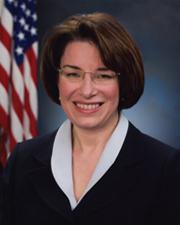 Sen. Amy Klobuchar (D-MN)
Legislative Activity
Stay on top of the latest movement without scrolling through every action
Senate amendment not agreed to: Amendment SA 3810, pursuant to the order of December 11, 2007, having failed to achieve the required 60 votes in the affirmative, was not agreed to in Senate by Yea-Nay Vote. 48 - 47. Record Vote Number: 426.
December 13, 2007
View full timeline
Senate amendment not agreed to: Amendment SA 3810, pursuant to the order of December 11, 2007, having failed to achieve the required 60 votes in the affirmative, was not agreed to in Senate by Yea-Nay Vote. 48 - 47. Record Vote Number: 426.
December 13, 2007
Roll call votes on amendments in Senate: Amendment SA 3810, pursuant to the order of December 11, 2007, having failed to achieve the required 60 votes in the affirmative, was not agreed to in Senate by Yea-Nay Vote. 48 - 47. Record Vote Number: 426.
December 13, 2007
Considered by Senate. (consideration: CR S15380, S15412-15417, S15418)
December 13, 2007
Amendment SA 3810, pursuant to the order of December 11, 2007, having failed to achieve the required 60 votes in the affirmative, was not agreed to in Senate by Yea-Nay Vote. 48 - 47. Record Vote Number: 426.
December 13, 2007
Proposed amendment SA 3810, pursuant to the order of December 11, 2007, having failed to achieve the required 60 votes in the affirmative, withdrawn in Senate.
December 13, 2007
Considered by Senate. (consideration: CR S15179)
December 12, 2007
Considered by Senate. (consideration: CR S15090)
December 11, 2007
Considered by Senate. (consideration: CR S15040)
December 10, 2007
Senate amendment proposed (on the floor): Amendment SA 3810 proposed by Senator Klobuchar to Amendment SA 3500.(consideration: CR S15014-15019; text: CR S15014-15015)
December 7, 2007
Amendment SA 3810 proposed by Senator Klobuchar to Amendment SA 3500. (consideration: CR S15014-15019; text: CR S15014-15015) To improve the adjusted gross income limitation and use the savings to provide additional funding for certain programs and reduce the Federal deficit.
December 7, 2007
Senate amendment submitted
December 6, 2007
Votes
1 roll call on this amendment
Text
Proposed
FARM, NUTRITION, AND BIOENERGY ACT OF 2007

Mr. HARKIN. Mr. President, what is the pending business?
The ACTING PRESIDENT pro tempore. The clerk will report the pending
business.
The assistant legislative clerk read as follows:

A bill (H.R. 2419) to provide for the continuation of
agricultural programs through fiscal year 2012, and for other
purposes.

Pending:

Harkin amendment No. 3500, in the nature of a substitute.
Reid (for Dorgan/Grassley) amendment No. 3508 (to amendment
No. 3500), to strengthen payment limitations and direct the
savings to increased funding for certain programs.
Reid amendment No. 3509 (to amendment No. 3508), to change
the enactment date.
Reid amendment No. 3510 (to the language proposed to be
stricken by amendment No. 3500), to change the enactment
date.
Reid amendment No. 3511 (to amendment No. 3510), to change
the enactment date.
Motion to commit the bill to the Committee on Agriculture,
Nutrition, and Forestry, with instructions to report back
forthwith, with Reid amendment No. 3512.
Reid amendment No. 3512 (to the instructions of the motion
to commit to the Committee on Agriculture, Nutrition, and
Forestry, with instructions), to change the enactment date.
Reid amendment No. 3513 (to the instructions of the motion
to recommit), to change the enactment date.
Reid amendment No. 3514 (to amendment No. 3513), to change
the enactment date.

Mr. HARKIN. Mr. President, I now ask unanimous consent that all
pending motions and amendments, except the substitute, be withdrawn.
The ACTING PRESIDENT pro tempore. Is there objection? Without
objection, it is so ordered.
Mr. HARKIN. As I understand it now, Mr. President, the farm bill is
before us. There are no pending amendments, also, whatsoever?
The ACTING PRESIDENT pro tempore. The Harkin substitute is pending.
Mr. HARKIN. That is what I mean. The substitute is there, but there
are no other pending amendments to it.
The ACTING PRESIDENT pro tempore. The Senator is correct.
Mr. HARKIN. I yield to my colleague.
Mr. CHAMBLISS. Mr. President, let me say to the chairman that I am
very appreciative of the discussions and negotiations we have had
ongoing over the last several weeks. He and I have both been very
frustrated by the lack of activity on this farm bill. We know very well
that we have worked in a bipartisan way to craft a farm bill that is
going to be a great benefit to farmers and ranchers across America over
the next 5 years. This is a critically important piece of legislation
that was passed out of the committee by a unanimous vote, with only one
person who was not there saying he would not have voted for it. That is
significantly unusual. It is also unusual to complete the markup of a
farm bill in a day and a half, which we did. I credit the chairman's
leadership for that and the fact that we were able to work in a strong
bipartisan way to make sure we got a bill that is not exactly like any
of us would want it if we were the sole authors of the bill, but that
is the way it is supposed to work in this body.

I do truly want to thank Chairman Harkin and his staff. I see Mark
Halverson sitting over there, who has worked very closely with Martha
Scott Poindexter on my staff to clear so many of these almost 300
amendments that popped up over the last 4 weeks. Without the staff
doing the work they have done, we simply would not be where we are
today.
I also wish to say to Senator Conrad that I appreciate very much his
work--again, in a very bipartisan way--to come together and make sure
we get relevant amendments. There are going to be some that are going
to be irrelevant that may be considered, but, again, that is part of
the way this body works; and to the two leaders for their discussions,
their negotiations in allowing us ultimately to get to the point where
we have now reached an agreement that we have 20 amendments offered by
the Democrats, 20 amendments offered by the Republicans, and over the
next several days we are going to debate these amendments, have votes
on them, and move ahead with the conference with the House on a farm
bill that is desperately needed by our farmers and ranchers. I think at
the end of the day it is going to be a farm bill that will have a very
positive influence on American agriculture.
I thank the chairman for his cooperative spirit and for the fact that
we have been able to come together with this farm bill now, get it to
the floor, now get it debated, and you and I are going to work very
hard to make sure we get it done in short order. I look forward to a
discussion of the amendments.
The ACTING PRESIDENT pro tempore. The Senator from Iowa.
Mr. HARKIN. Mr. President, let me thank my friend and colleague and
ranking member, Senator Chambliss, first for starting the process. It
was under his leadership on the Agriculture Committee that a lot of
field hearings were held across the country in preparation for this
farm bill. Then, by dint of the elections last year, I then took over
as chairman this year, and we worked very closely to continue the great
progress Senator Chambliss had made moving the ball forward. We had
some bumps along the way, obviously. I shared the frustration of my
friend over the last few weeks. But we came out of the committee with a
good bill, a good bipartisan bill.
It is a bill that really responded to agricultural needs around the
Nation and also responded to nutrition needs. A large part of this
bill, over 50 percent of this bill goes for nutrition, food stamps,
things like that. We took some great strides in the committee to make
sure we updated some of the exemptions, things like that, so people who
are on food stamps, people who need that kind of help are not hurt by
inflation over the past number of years and that sort of thing.
There are good provisions in this bill on energy, on conservation. I
think there is a good, strong safety net for all of our agricultural
producers across the country. Obviously, there is a lot in here for
specialty crops, kind of a new part of our bill this year, reaching out
to get more people involved in our process here--specialty crops all
across the country.
There is a lot of good in this farm bill for everyone in this
country. I never like to dwell on the past. We have had some problems
over the last few weeks, but we are through that. I thank Senator
Chambliss and his staff for working with us to get to this point. I
think we have a manageable bill now, with 20 amendments on either side.
I am hopeful that as we get amendments we will be able to get some
reasonable time agreements. I have already spoken to some people about
that. Most of the people with amendments are agreeable to certain time
limits on their amendments. That, hopefully, will expedite matters
also.
We are here, and I hope we are going to start moving the bill. As we
know, there are no more votes today, but amendments can be offered and
laid down and debated today, and, of course, they will be in the queue
for voting when we get back here next Tuesday. If anyone has any
amendment, I suggest now might be the time to come forward, on either
side, and talk either to Senator Chambliss or to me about getting in
the queue to offer those amendment also.
We have a very important bill. Hopefully, we can get it done. I
remain hopeful that before the end of next

[[Page S15014]]

week--I don't know, maybe that is a little optimistic, but I believe in
optimism--perhaps by the end of next week we might actually bring this
to a close and get to conference.
I suggest the absence of a quorum.
The ACTING PRESIDENT pro tempore. The clerk will call the roll.
The bill clerk proceeded to call the roll.
Mr. HARKIN. Mr. President, I ask unanimous consent that the order for
the quorum call be rescinded.
The ACTING PRESIDENT pro tempore. Without objection, it is so
ordered.
Mr. HARKIN. Mr. President, after consultation with the ranking
member, Senator Chambliss, and because of the structure of this before,
it was assumed that the Dorgan-Grassley or Grassley-Dorgan amendment
would be the first amendment. I am going to call up that amendment, but
then, under the agreement we have, we will be setting it aside for any
other amendments that come up.

Amendment No. 3695 to Amendment No. 3500

(Purpose: To strengthen payment limitations and direct the savings to
increased funding for certain programs)

Mr. HARKIN. Mr. President, I call up amendment No. 3695 and ask for
its immediate consideration.
The ACTING PRESIDENT pro tempore. The clerk will report.
The assistant legislative clerk read as follows:

The Senator from Iowa (Mr. Harkin), for Mr. Dorgan, for
himself and Mr. Grassley, proposes an amendment numbered
3695.

(The amendment is printed in the Record of November 15, 2007, under
``Text of Amendments.'')
Mr. HARKIN. Therefore, the pending amendment would be the Grassley-
Dorgan amendment, and I ask unanimous consent to set that aside.
The ACTING PRESIDENT pro tempore. Without objection, it is so
ordered.
Mr. HARKIN. Mr. President, I see our distinguished leader here,
Senator Durbin, but I know Senator Klobuchar has been waiting to offer
her amendment.
Ms. KLOBUCHAR. The Senator may go forward.
Mr. DURBIN. Mr. President, I ask unanimous consent to speak as in
morning business.
The ACTING PRESIDENT pro tempore. Without objection, it is so
ordered.
(The remarks of Mr. Durbin are printed in today's Record under
``Morning Business.'')
Mr. DURBIN. I yield the floor.
The ACTING PRESIDENT pro tempore. The Senator from Ohio.

Amendment No. 3819 to Amendment No. 3500

(Purpose: To increase funding for critical Farm Bill programs and
improve crop insurance)

Mr. BROWN. Mr. President, I ask unanimous consent the pending
amendment be temporarily set aside, and I send an amendment to the
desk.
The ACTING PRESIDENT pro tempore. Without objection, it is so
ordered. The clerk will report.
The bill clerk read as follows:

The Senator from Ohio [Mr. Brown], for himself, Mrs.
McCaskill, Mr. McCain, Mr. Durbin, Mr. Schumer, and Mr.
Sununu, proposes an amendment numbered 3819 to amendment No.
3500.

Mr. BROWN. Mr. President, I ask unanimous consent the reading of the
amendment be dispensed with.
The ACTING PRESIDENT pro tempore. Without objection, it is so
ordered.
(The amendment is printed in today's Record under ``Text of
Amendments.'')
Mr. BROWN. Mr. President, this amendment, in essence, moves money
from the overpayment of huge subsidies of crop insurance to McGovern-
Dole, a long-term bipartisan program this Congress has supported, and a
few other things I will outline in more detail on Tuesday.
I ask unanimous consent that the amendment be set aside.
The ACTING PRESIDENT pro tempore. Without objection, it is so
ordered.

Amendment No. 3810 to Amendment No. 3500

Ms. KLOBUCHAR. Mr. President, I call up my amendment No. 3810 which
is at the desk. I will set it aside after I say a few words about it.
The ACTING PRESIDENT pro tempore. The clerk will report.
The assistant legislative clerk read as follows:

The Senator from Minnesota [Ms. Klobuchar], for herself,
Mr. Durbin, and Mr. Brown, proposes an amendment numbered
3810 to amendment No. 3500.

Ms. KLOBUCHAR. Mr. President, I ask unanimous consent the reading of
the amendment be dispensed with.
The ACTING PRESIDENT pro tempore. Without objection, it is so
ordered.
The amendment is as follows:

(Purpose: To improve the adjusted gross income limitation and use the
savings to provide additional funding for certain programs and reduce
the Federal deficit)

Beginning on page 210, strike line 15 and all that follows
through page 214, line 9, and insert the following:
(c) Modification of Limitation.--
(1) In general.--Section 1001D of the Food Security Act of
1985 (7 U.S.C. 1308-3a) is amended by striking subsection (b)
and inserting the following:
``(b) Limitation.--
``(1) Commodity and conservation programs.--
``(A) Commodity programs.--Notwithstanding any other
provision of law, an individual or entity shall not be
eligible to receive any benefit described in paragraph (2)(A)
during a crop year if the average adjusted gross income of
the individual or entity, or the average adjusted gross
income of the individual and spouse of the individual,
exceeds--
``(i) $250,000, if less than 66.66 percent of the average
adjusted gross income of the individual or entity, or the
average adjusted gross income of the individual and spouse of
the individual, is derived from farming, ranching, or
forestry operations, as determined by the Secretary; or
``(ii) $750,000.
``(B) Conservation programs.--Notwithstanding any other
provision of law, an individual or entity shall not be
eligible to receive any benefit described in paragraph (2)(B)
during a crop year if the average adjusted gross income of
the individual or entity, or the average adjusted gross
income of the individual and spouse of the individual,
exceeds $2,500,000, unless not less than 75 percent of the
average adjusted gross income of the individual or entity, or
the average adjusted gross income of the individual and
spouse of the individual, is derived from farming, ranching,
or forestry operations, as determined by the Secretary.
``(2) Covered benefits.--
``(A) In general.--Paragraph (1)(A) applies with respect to
the following:
``(i) A direct payment or counter-cyclical payment under
part I or III of subtitle A of title I of the Food and Energy
Security Act of 2007.
``(ii) A marketing loan gain or loan deficiency payment
under part II or III of subtitle A of title I of the Food and
Energy Security Act of 2007.
``(iii) An average crop revenue payment under subtitle B of
title I of Food and Energy Security Act of 2007.
``(B) Conservation programs.--Paragraph (1)(B) applies with
respect to a payment under any program under--
``(i) title XII of this Act;
``(ii) title II of the Farm Security and Rural Investment
Act of 2002 (Public Law 107-171; 116 Stat. 223); or
``(iii) title II of the Food and Energy Security Act of
2007.
``(3) Income derived from farming, ranching or forestry
operations.--In determining what portion of the average
adjusted gross income of an individual or entity is derived
from farming, ranching, or forestry operations, the Secretary
shall include income derived from--
``(A) the production of crops, livestock, or unfinished raw
forestry products;
``(B) the sale, including the sale of easements and
development rights, of farm, ranch, or forestry land or water
or hunting rights;
``(C) the sale of equipment to conduct farm, ranch, or
forestry operations;
``(D) the rental or lease of land used for farming,
ranching, or forestry operations, including water or hunting
rights;
``(E) the provision of production inputs and services to
farmers, ranchers, and foresters;
``(F) the processing (including packing), storing
(including shedding), and transporting of farm, ranch, and
forestry commodities;
``(G) the sale of land that has been used for agriculture;
and
``(H) payments or other income attributable to benefits
received under any program authorized under title I or II of
the Food and Energy Security Act of 2007.''.
(2) Increased funding for certain programs.--In addition to
the amounts made available under other provisions of this Act
and amendments made by this Act, of the funds of the
Commodity Credit Corporation, the Secretary shall use to
carry out--
(A) the grassland reserve program established under
subchapter C of chapter 2 of subtitle D of title XII of the
Food Security Act of 1985 (16 U.S.C. 3838n et seq.), an
additional $20,000,000 for the period of fiscal years 2013
through 2017;
(B) the provision of assistance for community food projects
under section 25 of the Food and Nutrition Act of 2007 (7
U.S.C. 2034) (as amended by section 4801(g)), an additional
$10,000,000 for each of fiscal years 2013 through 2016;

[[Page S15015]]

(C) the beginning farmer and rancher individual development
accounts pilot program established under section 333B of the
Consolidated Farm and Rural Development Act (as added by
section 5201), an additional $5,000,000 for each of fiscal
years 2013 through 2017;
(D) the program of grants to encourage State initiatives to
improve broadband service established under section 6202, an
additional--
(i) $40,000,000 for the period of fiscal years 2009 through
2012; and
(ii) $30,000,000 for the period of fiscal years 2013
through 2017;
(E) the organic agriculture research and extension
initiative established under section 1672B of the Food,
Agriculture, Conservation, and Trade Act of 1990 (7 U.S.C.
5925b) (as amended by section 7104), an additional
$10,000,000 for each of fiscal years 2013 through 2014;
(F) the beginning farmer and rancher development program
established under section 7405 of the Farm Security and Rural
Investment Act of 2002 (7 U.S.C. 3319f) (as amended by
section 7309), an additional $15,000,000 for each of fiscal
years 2013 through 2017;
(G) the biomass crop transition assistance program
established under subsections (b) and (c) of section 9004 of
the Farm Security and Rural Investment Act of 2002 (as
amended by section 9001), an additional $40,000,000 for the
period of fiscal years 2009 through 2012; and
(H) the Rural Energy for America Program established under
section 9007 of the Farm Security and Rural Investment Act of
2002 (as amended by section 9001), an additional $40,000,000
for the period of fiscal years 2009 through 2012.
(3) Extensions.--Notwithstanding any other provision of
this Act, or an amendment made by this Act--
(A) the authority to carry out the grassland reserve
program established under subchapter C of chapter 2 of
subtitle D of title XII of the Food Security Act of 1985 (16
U.S.C. 3838n et seq.), is extended through September 30,
2017;
(B) the authority to carry out the provision of assistance
for community food projects under section 25 of the Food and
Nutrition Act of 2007 (7 U.S.C. 2034) (as amended by section
4801(g)), is extended through September 30, 2016;
(C) the authority to carry out the beginning farmer and
rancher individual development accounts pilot program
established under section 333B of the Consolidated Farm and
Rural Development Act (as added by section 5201), is extended
through September 30, 2017;
(D) the authority to carry out the program of grants to
encourage State initiatives to improve broadband service
established under section 6202, is extended through September
30, 2017;
(E) the authority to carry out the organic agriculture
research and extension initiative established under section
1672B of the Food, Agriculture, Conservation, and Trade Act
of 1990 (7 U.S.C. 5925b) (as amended by section 7104), is
extended through September 30, 2014;
(F) the authority to carry out the beginning farmer and
rancher development program established under section 7405 of
the Farm Security and Rural Investment Act of 2002 (7 U.S.C.
3319f) (as amended by section 7309), is extended through
September 30, 2017;
(G) the authority to carry out the biomass crop transition
assistance program established under subsections (b) and (c)
of section 9004 of the Farm Security and Rural Investment Act
of 2002 (as amended by section 9001), is extended through
September 30, 2012; and
(H) the authority to carry out the Rural Energy for America
Program established under section 9007 of the Farm Security
and Rural Investment Act of 2002 (as amended by section
9001), is extended through September 30, 2012.

Ms. KLOBUCHAR. Mr. President, I first wish to acknowledge the great
leadership of Senator Harkin and Senator Chambliss on this farm bill. I
am proud to be a member of the Agriculture Committee and to be involved
in this forward-looking farm bill. I also wish to thank the many
authors we have on this amendment that I am going speak on today,
including Senator Durbin and Senator Brown, both of whom were in here
in the last few minutes.
This amendment includes some reasonable income eligibility limits for
subsidies under the farm bill. The focus of this amendment is to make
sure the subsidy and the safety net in the farm bill go to the people
whom it will most help; that is, the family farmers of this country,
not to real estate developers in Florida or art collectors in San
Francisco. The focus is on family farmers throughout this country.
America's farm safety net was created during the Great Depression as
an essential reform to help support rural communities and protect
struggling family farmers from the financial shock of volatile weather
and equally volatile commodity prices. Almost 75 years later, the
reason for maintaining that strong safety net still exists.
The 2002 farm bill has spurred rural development by allowing farmers
in Minnesota and across the country to take risks to expand production.
Because of productivity gains and innovation, including advances in
renewable energy, the farm support programs in the 2002 farm bill are
projected to come in at $17 billion under budget.
So as we debate this current farm bill, as we will in the coming
days, it is important not to underestimate the value of a strong bill
to our country, to agriculture, to the rural communities throughout the
Nation.
That is why, as a member of the Ag Committee, I strongly supported
this farm bill and voted for it. It includes an increased focus, as the
chairman mentioned, on energy, including cellulosic-based ethanol,
continued support for a strong safety net, permanent disaster relief,
so important to our farmers, and additional funds for conservation and
nutrition.
Of particular importance, the country should know we balanced our
budget in this bill, with every dollar of new spending fully offset. So
there is a lot of good for Minnesota and the rest of the country in
this farm bill.
There is, however, one critical area where I believe we can do some
more reform; that is, to make sure the urban millionaires do not pocket
the farm subsidies that are intended for our hard-working farmers. Here
is a fact in my State. Minnesota is the sixth largest agricultural
State in the Nation. Naturally, however, 60 farmers have collected more
than $1 million each under the 2002 farm bill. None of those farmers
are in my State.
The top 20 business recipients in the country have each gotten more
than $3 million under this farm bill. Yet the average income of a
farmer in Minnesota, after expenses, is $54,000. But under the current
system, a part-time farmer can have an income as high as $2.5 million
from outside sources and still qualify for Federal farm benefits.
I do not believe we should be handing out payments to
multimillionaires, when these payments should be targeted to family
farmers. Big payments to big-city investors threaten to undermine
public support for the farm bill as a whole, even though people should
know the commodity programs are projected to be just under 15 percent
of the total farm budget over the next 5 years.
A poster boy for what needs to be changed is Maurice Wilder, the
Florida-based developer who is the Nation's top recipient of farm
payments--not conservation payments but commodity payments--for
properties in five States, even though his net worth is estimated to be
$500 million. This man is not a farmer. He is independently wealthy. He
is a real estate developer, and he should not be getting Government
checks. We have examples from all over the country of people who have
been getting these checks, from David Letterman to Paul Allen.
But the problem doesn't stop with the extremely wealthy. Checks that
are intended for farmers are being sent all over urban areas. Since
enactment of the 2002 farm bill, $3.1 million in farm payments has gone
to residents in the District of Columbia, $4.2 million to people living
in Manhattan, and $1 million of taxpayer money under the farm bill of
2002 has gone to Beverly Hills 90210. Last time I checked there wasn't
a lot of farmland in these communities. We can fix this problem and do
better for our farmers by using the new farm bill to close loopholes,
tighten payment limits, and enforce tougher income eligibility
standards.
Again, I am a strong supporter of this farm bill. I believe the 2002
farm bill did some wonderful things for our country in terms of
expanding production and revitalizing rural communities. What we want
to do is build on the 2002 farm bill, fix some things, and make sure we
go forward with a strong rural economy.
One thing was already fixed in the bill that came out of committee,
and that is the three-entity rule. The current Senate and House--and
this has actually gone through the House floor--proposals eliminate the
three-entity rule. This will cut down abuse by applying payment limits
strictly to individuals and married couples and ending the practice of
dividing farms into multiple corporations so they can multiply
payments. Second, as already

[[Page S15016]]

mentioned by our chairman, the longstanding amendment proposed by
Senators Dorgan and Grassley would limit annual payments under this
bill. This amendment would also bring meaningful limits to the
marketing loan program and close enormous loopholes that allow millions
of dollars to flow to individual recipients under the current law. I
support the Dorgan-Grassley amendment, and I urge my colleagues to do
the same.
I believe a third kind of reform is also needed. Congress should act
to prevent payments that are intended for hard-working family farmers
from going to urban millionaires. We can do this by placing reasonable
limits on the incomes of people and businesses that participate in the
commodity program. Under current law, if you are not a full-time
farmer, meaning that less than 75 percent of your income comes from
farming, you are eligible to get commodity payments as long as your
adjusted gross income is less than $2.5 million per year. This is part-
time farmers under current law.
Let's figure out what that means. You can live in a city, have a job
as an investment banker, make $2 million a year, and still get
Government checks if you own shares in a farm. If you are a full-time
farmer or farm corporation, meaning that more than 75 percent of your
income comes from farming, under current law there is absolutely no
limit on how much net profit you can have in a given year and still get
farm payments. What we are talking about is, expenses are actually
deducted for us to get to these numbers. Even with the expenses
deducted, you can make, for part-time farmers, $2.5 million per year,
and there is no limit for full-time farmers, and you are still eligible
for these subsidies.
It also means mega farms that span entire counties can bring in
untold millions in revenue and still get these kinds of payments. This
flies in the face of common sense. It is against the intent of Congress
and, along with two other amendments I support--one that is already in
the bill, the Dorgan-Grassley amendment and this one--it will allow us
to address these problems that have given rise to scandals that have
already provided ammunition to those who say we should not have a farm
bill. I believe we must have a farm bill. I have been pushing for this.
I am glad we finally reached agreement on a total number of amendments
so we can actually move forward with this farm bill next week.
I am offering this amendment, along with Senators Durbin, Brown, and
many others, to place reasonable limits on the incomes of those who
receive farm payments. Here is how the amendment works. If you are a
full-time farmer, meaning that more than two-thirds of your income
comes from farming, you can participate in the farm program, and you
can get the subsidies, as long as your income after you deduct expenses
does not exceed $750,000. If you are a part-time farmer or farm
investor, and you have substantial sources of income off the farm, you
can participate in farm programs if your income does not exceed
$250,000. It is that simple.
I will note it is somewhat similar to some of the reforms the House
enacted off the floor in their bill. Their amendment puts it at $1
million for a full-time farmer and then $500,000 of income for a part-
time farmer. Right now the bill that came out of the Senate committee
places no limits on the income of full-time farmers, and then places a
limit on a part-time farmer at $750,000. What we are doing is trying to
put the limits at $750,000 for a full-time farmer and $250,000 for a
part-time farmer. This is better than the original proposal by the
administration which sort of lumped part-time and full-time farmers
together. This makes more sense, having talked to farmers in my State
and across the country.
Some of my colleagues have said $750,000 is too low; that some
farmers have a high cost of production and they need a higher income.
Again, I remind my colleagues the income limit is applied after your
farm expenses are deducted, including all your labor, your equipment,
your fuel, and your fertilizer. We are talking about how much profit
you have made at the end of the year.
If you own a farm that has netted $1 million in a single year after
all your expenses are paid, I salute you. That is wonderful. There is
nothing wrong with that. I would love it if every farmer in Minnesota
had $1 million in the bank at the end of the year. But if they did,
this amendment says they can't get the subsidy. But if you have
received $750,000 in income, if you are a full-time farmer--$250,000 if
you are part time--then you would be eligible.
Some of my colleagues have said the $750,000 limit on part-time
farmers and nonfarmers is too low. If you live in the city and you own
shares in a farm and you have a substantial source of income outside of
farming that puts you over $250,000 a year, that is great for you. That
is a good thing. Lots of Americans would love to be in that position
and have that problem. But they do not necessarily want to provide
their tax dollars to give subsidies for these people who are living in
Beverly Hills 90210 or New York and simply have investments. Vast
Americans don't believe that is where farm subsidies should be going.
They should be going to family farmers who make their income off
farming, who are facing volatile weather and volatile prices that could
basically put them under. We don't want to have that happen. Not only
for the economy but also for our national security, we must have
farming and we must have a strong agricultural sector.

In conclusion, the intent of this amendment is to strengthen the farm
bill. All Americans have a vital stake in the fortunes of our farms and
rural communities. Agriculture remains central to our Nation's economy,
especially our prosperity in the global marketplace. That is why I
support this farm bill, a basically national security bill. I intend to
support it. I supported it out of committee, and I intend to support
this legislation when it comes to a vote.
But it is not enough to have the support of just farm State Senators.
I believe it is important to have the support of the entire country. We
need this kind of reform because we need to have support from the
entire country if we want to pass this bill. Inertia may be the most
powerful force in the political universe, but after 75 years, the best
interests of America's rural economy demand that we correct the abuses
of the past so we can move forward to ensure a strong safety net for
our hard-working farmers.
I urge my colleagues to support my amendment. I ask unanimous consent
that the amendment be laid aside.
The ACTING PRESIDENT pro tempore. Without objection, it is so
ordered.
The Senator from Georgia.
Mr. CHAMBLISS. Mr. President, I want to respond quickly to the
Senator from Minnesota who has filed one of two amendments to the issue
of payment limits in this bill. It is important we understand the
history of payment limits. This has always been a controversial issue
in every farm bill. This is my third farm bill, and certainly we had
significant reform in the 2002 farm bill over the 1996 farm bill. Here
we are again with the same argument being presented, that farmers ought
not to be entitled to significant payments from the Federal Government
in very tough times when prices are low or yields are low, which is
absolutely the direct intention of a farm bill.
My friend from Minnesota referred to two things I want to agree with.
The first is, the 2002 farm bill spent approximately $17 billion less
through the first 5 years than what was originally projected. The
reason there was less money spent than was projected by the pundits in
2002 is the fact that the 2002 farm bill was market oriented. We
provided farmers and ranchers with tools through utilizing their credit
measures, as well as crop insurance measures, as well as other
marketing tools that were incorporated into the 2002 farm bill that
caused prices to not necessarily rise, but when supply rose, demand was
there to meet that supply. Therefore, the ultimate amount of money
coming from Washington into the hands of farmers and ranchers was $17
billion over 5 years less than what was projected.
How does that impact payment limits? It has a direct impact on the
payment limit issue because that simply is a part of the reason that an
additional amount of money within that $17 million was not spent. We
made significant reforms in the 2002 farm bill to ensure, with every
precaution we could

[[Page S15017]]

possibly take, that payments going from Washington to any State in the
Union went into the pockets of farmers. We did everything we could to
ensure that. But in spite of trying to do that, there were abuses and I
acknowledge that. There are always going to be abuses. This doesn't
apply to just farm programs. It unfortunately applies to about every
Federal program.
I see my friend from Arkansas on the Senate floor. She and I have
worked diligently over the last several months to try to make
additional reforms to the payment limit issue from the 2002 farm bill
into this farm bill. Once again, we have made significant reforms. We
have reduced that AGI limit down to $1 million in 2009 and $750,000 for
each year after that. So somebody who is a hobby farmer who has a high
income that, in our opinion, does not deserve payments is not going to
get those payments. Somebody who gets dirt under their fingernails and,
frankly, if they make more than $750,000 a year, it means they have
worked hard as a farmer to generate that kind of income on an
operation. I assure you, if they make $750,000 this year, they could
lose every bit of that next year.
So to say we ought to take a farmer who makes $750,000 in 1 year,
where he has gambled all of his life's savings to invest in his crop,
which undoubtedly would have been millions and millions of dollars for
him to generate that kind of income, that we are going to strip him of
any entitlement to payments in the next year, when he may lose
everything he has saved up all of his life, I don't think is looking
out for the best interests of farmers and ranchers from an overall
standpoint.
We did make changes in the bill this time on payment limits. We
reduced the $360,000 cap down to $100,000. We eliminated the three-
entity rule. If you had told me 10 years ago that in 2007 we were going
to be eliminating the three-entity rule in the payment limit provision,
I would have told you that you were as crazy. If you told me that 5
years ago, I would have said say there is no way we would eliminate the
three-entity rule. That has kind of been a standard under the payment
limit provision. But we have decided it is in the best interest of
agriculture that it be eliminated.
We worked very hard to make sure we try to be fair to farmers and try
to encourage family farmers to continue. The main reason we have always
had the three-entity rule is to allow for the children of farmers to
begin operating as farmers without having to worry about the
significant capital investment that their parents have had to make over
the years because they simply cannot do it. A young farmer simply
cannot make that investment.
Well, we have eliminated that three-entity rule that has been very
advantageous to young farmers. We are replacing it with some other
measures that will allow young farmers to get into the business with
their parents and come back to that family farm, which I think all of
us would like to encourage.
My family happens to be the beneficiary of that exact situation--not
my immediate family but my son-in-law. I am very excited about the fact
that he is back in his family farming operation.
We did add a $2.5 million AGI test to the 2002 farm bill in response
to media criticism that high-income individuals were receiving
conservation and commodity program payments. We sought to ensure that
benefits were denied to wealthy individuals who did not rely on farming
for their livelihood but that they remain available to farmers and
ranchers so long as--and I emphasize this: so long as--75 percent of
their income is derived from farming, ranching, or forestry. In the
bill reported out by the Senate Agriculture Committee, there is a
provision that reduces the income level for determining program
eligibility by 70 percent over a period of 2 years. By 2010, if income
exceeds $750,000--down from the current level of $2.5 million--the
individual is not eligible for payments unless two-thirds of that
individual's income is derived from farming, ranching, or forestry.
Through a deliberate and balanced approach, the Agriculture Committee
brought reform to the AGI means test by further targeting program
benefits to those individuals who depend on farming for their
livelihood. Even though the committee has approached this matter with
caution, there are simply no reliable statistics that determine the
actual impact of the new AGI level.
Further modifications of the AGI means test beyond those approved by
the committee would be risky and very disruptive to the American
farmer. Specific concerns with an even more restrictive AGI means test
would include the following:
An overly restrictive AGI ceiling disregards the financial reality of
commercially viable farms. The Senator from Minnesota mentioned that
AGI is basically the net profit, that it covers all payments for fuel
and nitrogen and equipment. That does cover the cost of fuel and
nitrogen and all the labor and all the other input costs. But out of
AGI no equipment payments are covered, no land payments are covered, no
interest payments are covered, no payments for the purchase of any
additional real estate are covered.
So $750,000 is a lot of money--there is no question about it--but
here you have an individual who has invested millions of dollars into
their farming operation, who has generated $750,000 of AGI, and without
looking at the books of that individual, I can tell you from my almost
40 years of experience in agriculture that individual has either a
cotton picker that costs $250,000 they have to pay for, a corn combine
that costs $200,000 they have to pay for, a couple of tractors that
probably cost in the range of $100,000 they have to pay for. They have
land rent--well, rent would be deducted. They have land payments that
have to be made. So to say that somebody who has that kind of income
just ought to be severely penalized because they are a big farmer is
not the way farm bills have ever operated, and I do not think it is the
way this farm bill needs to operate. Do we need to make sure farm
payments go the farmers? You bet we do. We are doing everything we can
to see if we cannot make sure that happens.
Secondly, a problem with the AGI test is that if the exclusion for
people who depend on farming and ranching is ended, then it indicates
that the purpose behind the means test has changed from excluding
millionaires who happen to own a farm to specifically targeting farmers
and ranchers. Thirdly, an unreasonable AGI means test creates
uncertainty for growers and their lenders by creating a ping-pong
effect of being eligible 1 year and being ineligible the next, making
it difficult or impossible for lenders to measure with any degree of
certainty the future cash flow of thousands of farm and ranch families
in order to make both short- and long-term lending decisions.
I have already discussed that in some detail, and I will not go into
that any further, but that is a critical aspect of this when you have
folks who are gambling all of their life savings that the Good Lord is
going to provide them with enough rain and that the prices are going to
be there at the end of the day to be able to justify the annual
investment they have just made.
Again, proponents of an AGI means test state: Of all schedule F
filers, only 1.2 percent--or 25,000--had an AGI of $200,000 or more and
received farm program payments. This statistic fails to reflect the
fact that most operations that could be most directly impacted by the
AGI means test do not file schedule F tax returns. Therefore, this
statistic seriously underestimates the number of producers and, perhaps
more importantly, the share of acres or production that would be left
unprotected. Furthermore, those percentages are deceptive because the
population of schedule F filers is not limited to producers currently
eligible for title I program benefits.

Next, building on the information provided by the Internal Revenue
Service, a recent study by USDA's Economic Research Service used survey
data to estimate the impact of the AGI means test on producers
organized as partnerships and corporations. The study estimates that
2.5 percent of farm partnerships and 9.7 percent of farm corporations
could be subject to the proposed cap. Furthermore, the ERS estimates
that 9.3 percent and 8.5 percent of cotton and rice farms,
respectively, would exceed the AGI limit. It is important to note that
these impacts are estimates based on a small sample of producers and
not based on actual IRS data.

[[Page S15018]]

An unreasonable AGI means test would make U.S. farm policy
unpredictable, inequitable, and punitive for thousands of American farm
and ranch families, especially tenant and beginning farmers and
ranchers, as well as lenders, landowners, Main Street businesses, and
rural communities.
One statistic you will hear me talk about again during the course of
this debate comes from a study done by the College of Agriculture in my
home State at the University of Georgia, where, according to the
research recently produced in a study, it was determined that $1.05 in
taxes--taxes--is returned to the Federal Government for every $1 of
agricultural farm payments that have been made across America. That is
a pretty significant statistic when you think about what happens on
Main Street rural America as a result of farm payments that are made.
An overly restrictive AGI rule would make it difficult or impossible
for farm and ranch families to lease land where their eligibility for
any 1 year may be in doubt and force a change to cash rent, shifting
all risk to the tenant as opposed to a share rent that allows the
landlord to share in the production risks. If a landlord wants to help
out a young farmer, under this amendment they simply would not be able
to do so because they are not going to take that risk. They would be
foolish to take that risk.
Further tightening of the AGI rule severely inhibits ordinary
commercial activity involving the sale of land and other assets, which
would jeopardize benefit eligibility. AGI rules clamp down on spouses
who take off-farm jobs to help provide family income, especially in
years where little or no take-home pay is generated from the farm or
ranch, to provide health insurance for the family, or simply to
continue a profession, such as teaching.
Lastly, estimates of the impacts of an AGI means test focus on the
percentage of producers who will be affected. However, these estimates
do not address the true impact of the means test because they fail to
address the percentage of acres or production that will be affected.
For example, the Census of Agriculture indicates that the largest 10
percent of cotton and rice producers account for 30 percent to 50
percent of cotton and rice production in many States.
I would dare say, the statistic, again, you will hear as we continue
further debate on this amendment--as well as the Dorgan-Grassley
amendment--is that about 80 percent of production agriculture in the
United States is generated by approximately 20 percent of America's
farmers and ranchers. So who should get the biggest benefit of
agricultural programs that are available to farmers? Is it the 20
percent that take the least risk, have the least chance of suffering a
significant loss, or should it be those farmers who are willing to take
the risk, invest all of their life savings on an annual basis in their
operation, with the idea they will have that safety net underneath
their operation in the event they suffer a disaster as a result of
weather, a disaster as a result of price, or a disaster as a result of
insect infestation or some other disease infestation that might occur?
So this amendment simply is not realistic when it comes to American
agriculture production for either a small farmer or a large farmer
because if you take an AGI test and you look at how much money that
farmer--be it a small farmer or large farmer--has to pay for land they
hope they will own one day, for equipment, and the other deductions
that have to come out of that AGI, all of a sudden there is an entirely
different picture out there that is actual and is not imagined.
So I am opposed to this amendment. At the proper time, I am sure we
will talk more about it. We will look forward to additional debate and
for an ultimate vote on this amendment.
Ms. KLOBUCHAR. Mr. President, if I could briefly respond to Senator
Chambliss. I see my colleague from Idaho is here.
The ACTING PRESIDENT pro tempore. The Senator from Minnesota is
recognized.
Ms. KLOBUCHAR. Mr. President, as Senator Chambliss said, we will be
discussing this more in the week to come. I think Senator Chambliss and
I agree that the last farm bill was successful for our country. People
do not often realize when you read some of these reports in the paper
that it came in $17 billion under budget. That money went back to the
Government.
Also, we had a lot of success with that bill. I do not think that
success stemmed from the fact that some of the scandals were occurring,
with a million dollars going to Beverly Hills 90210 and some of these
other places.
I appreciate the efforts we have made in the committee toward reform.
As Senator Chambliss mentioned, getting rid of the three-entity rule
was a very important step, also making some movement on the part-time
farmers. To go to $750,000 for the income limit for part-time farmers
is a very important step. What I am trying to do with this amendment,
and my colleagues who support it are trying to do, is simply take a
step further because we believe this money should be more targeted to
family farmers.
Mr. President, as you know, as we discussed, this amendment does
exclude expenses. When you are looking at the number $750,000 for full-
time farmers, we are talking there about profit. Even for a large farm,
deducting all their expenses, $750,000 would be a very good year. So I
believe if you look at this as a whole, people have to understand we
are talking about profits and not expenses. The same with the part-time
farmers. The definitions we use in this bill are similar to the ones
that, in fact, the committee used to define expenses. So if it is good
enough to define expenses for an agreed-upon committee standard at
$750,000 for part-time farmers, then I believe if you look at going
down to $250,000 in profits for part time, $750,000 for full time, the
expense definition should be the same.

I also wanted to respond to the remarks about the USDA study on the
AGI limits. My colleagues should understand that was based on the
administration's proposal--that study, the President's proposal--which
actually put part-time and full-time farmers at the same number, which
was $200,000. Clearly, we have worked with our farmers, talked to them
across the country. This amendment is different. It differentiates
between the part-time farmer and the full-time farmer, understanding
that they are in different positions. I would also note the USDA study
found no regional bias in those who would be affected by this AGI
limit.
So I believe as we go forward we have to keep in mind that those of
us who support this amendment from States such as Minnesota and
Illinois support a strong farm bill. We believe we have to have a
strong safety net for our farmers, but the money shouldn't be going to
Beverly Hills 90210 and it shouldn't be going to art collectors in San
Francisco and it shouldn't be going to investment bankers in New York
or to real estate developers in Florida. It should be targeted in a
reasonable way to those who actually farm and to those part-time
farmers who make a reasonable income, not to people who are making $1
million, $2 million, $3 million, $4 million a year. That is what this
is about: making sure the safety net is there for those who need it.
By the way, if you have a large farm that has a bad year, and your
profits go down, they could well qualify for the subsidies under that
scenario. That is what we are talking about.
I wish to also add that the House bill that came off the House Floor
does have some income limits. It has $1 million for a full-time farmer,
$500,000 for a part-time farmer. We have no income limits for a full-
time farmer in the existing Senate bill--no income limits at all. For a
part-time farmer, our limits at $750,000 are significantly higher than
the House bill.
So what my colleagues and I are trying to do with this bill is to get
it in line so that it shows some actual reform of income limits--
slightly lower than the House but still in the ballpark--so that we are
actually doing some reform and not just giving lip service to it.
I appreciate the work of Senator Harkin and Senator Chambliss and the
reforms we have made so far. I think we need to go a step further so we
target the money on those family farmers and not urban
multimillionaires.
Thank you very, Mr. President. I look forward to this debate as we go
forward.

[[Page S15019]]

I yield the floor.
The ACTING PRESIDENT pro tempore. The Senator from Idaho is
recognized.
Mr. CRAIG. Mr. President, does the Ranking Republican of the
Agriculture Committee want to introduce an amendment on this side
before I speak? I understand he has an amendment he would like to
introduce and set aside before I speak.
Mr. CHAMBLISS. I thank the Senator from Idaho.

Amendment No. 3711 to Amendment No. 3500

On behalf of Senator Lugar, I ask unanimous consent to set aside the
pending amendment and call up amendment No. 3711.
The ACTING PRESIDENT pro tempore. The clerk will report the
amendment.
The legislative clerk read as follows:

The Senator from Georgia [Mr. Chambliss], for Mr. Lugar,
proposes an amendment numbered 3711.

Mr. CHAMBLISS. Mr. President, I ask unanimous consent that the
reading of the amendment be dispensed with.
The ACTING PRESIDENT pro tempore. Without objection, it is so
ordered.
(The amendment is printed in the Record of Thursday, November 15,
2007, under ``Text of Amendments.'')
Mr. CHAMBLISS. Mr. President, I ask unanimous consent that the
amendment be set aside.
The ACTING PRESIDENT pro tempore. Without objection, it is so
ordered.
The Senator from Idaho is recognized.
Mr. CRAIG. Mr. President, many of us in the Senate have been waiting
now for well over a month for this document, S. 2302, to come to the
floor and begin what is a right and responsible approach toward
legislating: offering it up to amendments, allowing Senators to work
their will under the rules of the Senate, and to complete it on time.
The Democratic leader thought he could short-circuit that, that he
could what we call ``load up the tree'' and not allow these kinds of
amendments, only to find out in the end that wasn't about to happen;
that both Democrats and Republicans alike would not allow the rules of
the Senate to be thwarted and to deny the responsibility of each and
every Senator, if they choose, to offer an amendment.

Later on in the course of this debate next week, I and Senator
Domenici and Senator Thune will be offering an amendment that relates
to RFS--renewable fuels standard. It is with that in mind that I come
to the floor today to talk about a farm bill in a substantially
different context.
We believe, and we have always felt, that agricultural policy was
critical for America--for American farmers, yes, but for America's
consumers of food and food products, most importantly.
There is no doubt the average consumer in America today spends less
on high quality food than any other consumer in the world. America's
food supermarkets are full of food. There are no shortages. There is
great abundance. There is phenomenal variety. Without question, our
food supply is the safest in the world. I believe, in large part, that
is as a result of a combination of two things happening: the phenomenal
capability of America's free and independent farmers, as well as a
government that has been consistently willing, down through the
decades, down through the Depression and the droughts and the
hurricanes and the hail storms and all of that, to work with its
farmers to ensure that they could stay on the land and produce. But
rarely in the course of all of these decades of farm policy have we
thought in the context that we are beginning to think today, which is
that America's farmers can become, or are becoming, one of America's
largest suppliers of energy. It is not a new phenomenon; it is a
rapidly growing diversity in the American agricultural portfolio that
is doing what we have wanted done for a long time, but simply because
of a combination of program and price in the market didn't see happen.
So for a few moments this afternoon I would like to talk about the
farm bill but in the context of energy and energy supply. Farmers, we
have always believed, and know, if you have been one--and I have--are
large consumers of energy. It takes a lot of diesel to plow a field, to
run a combine, to run a corn dryer. It takes a lot of natural gas to
produce nitrogen and phosphates and all of the necessary supplies and
input costs that the Senator from Georgia was speaking to and about a
few moments ago. America's agricultural producers are very large
consumers of energy. But it has only been in the last decade that they
have begun to become large consumer producers of energy. As that has
happened and as we have changed and shifted policy in this country to
incentivize and reward that production, we have watched that production
grow very rapidly. We are now producing around 8 billion gallons of
ethanol annually.
We encouraged it in the 2005 Energy Policy Act, and America's farmers
went to the task of building the ethanol distilleries and beginning to
supply the market as we allowed ethanol to enter the market at ever-
higher volumes.
Now, an old farmer told me not long ago: You know, this is nothing
new for American agriculture. Before we had tractors, farmers supplied
all of their fuel for their farming. I hadn't put it in that context. I
grew up on a farm and a ranch where one side of a barn once housed--I
am talking a horse farm--once housed teams of horses that pulled the
plow, that pulled the harvesters, and did all of that, and it was
energy from our farm that fed the horse that produced the energy of the
horse. We were not importers of energy to our farm. We were producers
of energy. But that was 90 years ago. Then, American farming changed
dramatically, and we became increasingly more productive. We began
producing our own energy, and we started consuming it from outside
sources, and it became gasoline and diesel. It isn't that we will see a
reversal, but we are seeing a phenomenal new opportunity of production,
and that is in combination a result of farm policy. This bill is a good
farm bill, and the Senator from Georgia and the Senator from Iowa need
to be congratulated for the cooperative effort in which they have
worked to produce it. It will be, if you will, in part, one of the
directives of American agriculture for the next 5 years, when it is
passed.
What is important now is to try to look down the road and talk about
a role for America that we must increasingly play if we are going to
continue to be the strong power we are for ourselves and our citizens,
but also for the world. What has happened from that time when horses
once pulled the plow until now with that big tractor out there with
hundreds of horses under the hood, if you will, pulling multiple plows,
is that we began to become a nation of energy importers. Since I have
been in Congress over the last 27 years, we went from 30 percent to 40
percent to 50 percent to 60 percent dependent on foreign countries
producing our energy for us. I did say countries. I didn't say
companies because the bulk of the oil in the world is owned by
governments, not companies, and almost every one of those governments
today is less than concerned and, in many instances, hostile to
America.
So it seems only fitting to me that as we shape public policy in this
country, we do so in a way that begins to move America toward energy
independence. The American farmer, more than ever before, can become
that producer of energy and help in that equation of energy
independence in a way that even a decade ago we didn't think possible
at all. With the passage of the Energy Policy Act of 2005 and the
expansion of entry of ethanol into the market, we saw that market begin
to take off and we saw production of ethanol begin to take off. We saw
the distortion that always occurs in a market when a new demand begins
to occur for a commodity that isn't overly abundant. In that case, it
was corn, and we saw our dairy farmers and our feeders of beef cattle
and hog farmers begin to be concerned about the high price and the high
cost of that import because corn had been shifted from the feedlot to
the distillery to produce ethanol. We are continuing to encourage that.
One of the things we will do with a renewable fuels standard in the
farm bill is begin to shift that equation to stabilize the use of the
inputs to produce ethanol. Right now, ethanol is produced by corn
almost exclusively in this country, and many of us believe with the new
science that is coming, with the new loans and guarantees that

[[Page S15020]]

are coming out of the Energy Department because of the Energy Policy
Act we passed in 2005, we will begin to see a shift toward a
combination of ethanol fuels, both corn-based and cellulosic-based.
Cellulose, fiber, not only could it be the grain of the corn itself
producing, but it could become the ear of the corn and the stock of the
corn and grasses and other kinds of fibers where cellulose is dominant
but could become a major producer.
In the Energy Act the Senate passed this year that went to the
House--and the House largely destroyed it by trying to use it as a
taxing mechanism more than a production mechanism--we had placed in it
a renewable fuels standard that did the combination of things I am
talking about. We said we could take corn up to about 15 billion
gallons a year, and we could take cellulose-produced ethanol up to
about 15 billion gallons a year by the year 2020, and by the year 2022
we would add another 6 billion gallons of cellulose-based ethanol as
that science, as that technology began to be increasingly more
efficient and refined.
Here is a reason why we would want to do that. Right now, corn-based
ethanol only reduces the output of CO<inf>2</inf> into the environment
by about 19 percent, compared with conventional fossil fuel. It is a
help, but it is not where we want to be if we want a clean world out
into the future. I know a lot of farmers and I have always said in my
life that farmers are probably the finest environmentalists in the
world because they are phenomenal stewards of the land, and they want
to make sure the land is viable and the water around it is sustained.
They want to produce a better quality product.
What we are suggesting is that we increasingly shift the equation in
America agriculture, in its participation, in the production of energy,
to make us more energy independent and help us find new and cleaner
sources. In the end, when we shift this production portfolio of ethanol
from corn-based to cellulosic, in the outyears--25 or 30 years out--
cellulosic-based ethanol fuel will be 86 percent cleaner. That is what
we want. That is what we ought to ask for.
That is why, for the first time, at least in my time in the Congress,
America's farm bill, America's agricultural policy, is, in part, an
energy policy because agriculture is looking at not only its input
costs of energy but its opportunity to produce energy. There are a lot
of other things I could talk about as it relates to taking biomass and
animal waste and converting them into energy. All of that is starting
to happen. But the big production--the production that makes the
difference, the production that makes America and America's energy
consumers more independent from a Venezuela or from the Mideast--is
this right here: ethanol, both corn-based and cellulosic. That is what
we are about. That is what we have to be about as a country.
There is every reason for the American consumer to say: Why can't we
be energy independent? We should be. But our policies have not taken us
there. In part, it is because I think we didn't think we could get
there but largely because there was all kinds of bias out there in the
whole energy arena. The bias is quite obvious. We all like big cars, we
like our SUVs, and we all like what we like--until we cannot afford
liking them anymore because the cost of feeding them has gone up
dramatically. That has helped us a little bit to develop changes.
For the first time this year, I introduced a bill, with Senator
Dorgan, to have mandatory CAFE standards. The auto industry was quite
upset with me. I have always defended them not changing that standard.
I have been here 27 years and we have not changed the standard in 27
years and they have not changed. I wish to change that standard and
force the American marketplace and the American producer to look at
what can happen if they become more realistic in auto consumption
efficiency. Oh, what a difference a day makes when a car gets another
mile or two to the gallon nationwide in the consumption of oil. So it
is a balancing part, a total picture, the big portfolio of production.
I will be back to the floor all during 2008 talking about energy
independence, talking about drilling offshore, talking about ethanol,
cellulosic and corn-based ethanol, talking about all the kinds of
things America must do to get independent of foreign sources of energy
and to get clean. My children, who are all adults now and are pretty
conservative folks, say: Dad, why can't we produce clean energy? Why
can't we be energy independent? Why are we allowing a dictator in
Venezuela to jerk us around?
What is wrong with this great country that we cannot do for ourselves
what we have always done for ourselves--stood up and be counted and be
independent and strong, and we can. America's farmers now, for the
first time, have a phenomenal role to play beyond putting food on the
consumers' shelves, which they have done so beautifully for 200 years.
Now they have a role to play of putting fuel in the fuel tank. We ought
to encourage that in every way but balancing the policy, as I think
this final bill will do, to make sure we don't distort the markets,
that we allow them to grow responsibly, that we allow them to work
their way into a 15-billion-gallon-a-year production of corn-based
ethanol and, by 2026, a 15- to 20-billion-gallon-a-year production of
cellulosic-based ethanol. It is doable. We know how to do it. We are
putting programs into place to promote it and advance it.
America's auto fleet will adjust to it, and America will be a
stronger Nation. But more importantly, it will be an independent Nation
from the small countries who have, underneath their geologic
strictures, large bodies of oil they now see as tools for diplomacy,
tools to shape a world, and tools to control this great country called
America.
I will be back next week, along with my colleagues, to make new
changes in the farm bill. S. 2302 is a good work product. I am pleased
that finally the majority leader of the Senate has said: OK, put it on
the floor and let it work its will. By the end of next week, we will
have a farm bill. It is about a month late. That could have happened a
month ago. It will happen now. I guess patience counts. Many of us have
been patient. America's farmers need a new farm bill, and I believe the
Senate Agriculture Committee has done a worthy job in producing it.
The RFS that was included in the Senate passed Energy bill this
summer, and that was similarly filed as an amendment to the farm bill,
reduces our dependence on foreign oil and reduces our carbon footprint,
by emphasizing the importance of developing cellulosic biofuels. The
RFS is, by definition a clean fuel standard, and the House has offered
some additional language which endorses this low carbon fuel approach.
This week in the Environment Committee we marked up a climate bill that
seeks to regulate fuels with a cap on all emissions, including
transportation. At the mark-up, Senator Alexander offered an amendment
that is now layed on top of having fuels already covered under a ``cap
and trade'' program by subjecting them also to a low carbon fuels
standard. I and other members of the minority strongly opposed this
amendment because it was offered in addition to the cap-and-trade,
rather than as a substitute, which would have made much more sense, so
as not to double-regulate the industry. In addition, however, and most
importantly it also conflicts and overlaps with what we are now doing
as part of the Energy bill and the farm bill as it relates the Senate
RFS language, and certainly raises serious questions of jurisdiction.
Senator Alexander indicates that he supports a sector approach, as do
I, and I hope we will be able to move in this direction together.
Trading carbon credits between transportation sector fuels and other
industry sectors is unprecedented and could lead to high fuel price
volatility, supply issues including possible disruptions, and a level
of market uncertainty that could discourage critically needed
investment in new and innovative technologies. The EU-ETS has not
included transportation fuels in its cap-and-trade program for
stationary sources for this very reason. The U.S. transportation and
electric power sectors are subject to very different national and
international market forces and forms of regulation. Mixing these two
dissimilar markets under a common cap can lead to unpredictable and
potentially intractable conflicts in how each market will respond to
this untested economic combination.

[[Page S15021]]

Studies conducted by the Energy Information Agency and the University
of California on economy-wide cap-and-trade programs show that carbon
reductions are less cost-effective in the transportation sector as
compared to other industry sectors. Mixing transportation fuels with
other fossil fuels under a common cap simply raises the cost of
transportation fuels without a guarantee of significantly decreasing
their carbon emissions, at least until much more cost-effective options
have been exhausted for reducing emissions in other sectors. Studies by
EIA indicate that this will generally not occur until after 2030.
There is a better approach for technology development for advanced
transportation fuels. Technology development is driving a separate
lower carbon transportation fuel standard rule that is being developed
by the administration and expected to be proposed later this year. The
bill should have a separate approach for transportation fuels that
recognizes the confluence of these policies to ensure this sector is
not subject to overlapping or conflicting requirements.
I am concerned that the fuels amendment offered by Senator Alexander
during committee markup conflicts with provisions regarding low carbon
fuels and the renewable fuels standard that are already included in the
Energy bill now being considered by the House and Senate. Cellulosic
ethanol is key and will substantially reduce the carbon content of
fuels and this is included in the Renewable Fuels provisions. The
Alexander amendment overlaps, and is conflicting and also raises
questions regarding fuels jurisdiction with the Senate Energy
Committee. In addition, the amendment develops a low carbon fuel
standard that is fundamentally flawed and well beyond the bounds of
current technology and science. Developing and advancing technology,
not mandating a ``wish list,'' is a superior approach to meeting the
challenges of providing affordable and clean fuels that American
consumers need.
I yield the floor.
The ACTING PRESIDENT pro tempore. The Senator from Massachusetts.
Mr. KENNEDY. Mr. President, I ask unanimous consent to proceed as in
morning business for up to 10 minutes.
The ACTING PRESIDENT pro tempore. Without objection, it is so
ordered.
(The remarks of Mr. Kennedy are printed in today's Record under
``Morning Business.'')
The ACTING PRESIDENT pro tempore. The Senator from Arkansas is
recognized.
Mrs. LINCOLN. What is the present business of the Senate?
The ACTING PRESIDENT pro tempore. The Chambliss amendment to the
Harkin substitute is the pending business.
Mrs. LINCOLN. Mr. President, I am very proud to come to the floor
again to discuss and debate and talk about something that is critically
important to this country, the working families of this country, and to
the well-being of the entire world, frankly, and that is the Food and
Energy Security Act of 2007.
Much has already been said, and I know that as we progress through
the rest of this week and next week, there will be much discussion
about what is the best way to proceed with the Food and Energy Security
Act.
Having looked back at what we did in 2002, we worked hard to be more
focused on how we could do a better job in this country of providing
the kinds of support and safety net that producers in our Nation
needed, so they could be competitive in the global marketplace but also
encouraging the appropriate and proper way of production in this
country, as Americans would want to see; not only making sure there is
an abundant source of food and fiber in this country but that it would
be produced in a safe way to the environment, safer to the consumer,
and that it would be affordable so our farmers would be the most
efficient they could possibly be. We took a big step in 2002 in
producing a bill that moved us very much in that direction.
As we look at what we have done in the Senate Agriculture Committee,
I am very proud of the product that the committee has produced and
brought to the floor in Senator Harkin's amendment. A lot of time and
energy was put into that committee bill to ensure we maintain the
enormous blessing in this country that is American agriculture, the
hard work that goes into American agriculture from hard-working
families, the farm families, the businesses that support them, the
rural community that supports them, to be able to produce the most
affordable, abundant, safest supply of food and fiber in the world.
That is what our American farm families do. They do it very proudly,
they do it very distinctly, and they do it very differently in each
region of this great country.
My message today is the same as it has been for weeks and months and
the years I have served in both this body and the other. That is, we
have an opportunity to reinforce those farm families, to reinforce the
values we feel as Americans, that not only do we want an affordable
supply of food and fiber, we want it to be safe for our families and
for those we share it with globally, and we want to make sure we are
doing that with respect to the environment. Through the years, we have
expanded this bill to make sure it is obvious we want to do that in the
nutrition programs, in the conservation programs, in the rural
development portions of the bill, and now in a new energy title we
started in 2002, to show our commitment to American agriculture and
what it does, not just for the farmers, not just for the farm
community, not just for the children and the families whom we feed in
this country but globally, in terms of what we do in feeding these who
are hungry and also pushing the envelop a little bit each time with our
competitors globally that they, too, will produce in a responsible way
toward the environment.
Our message today is this is a good bill. This is a good bill that
has been produced in the Senate Agriculture Committee, and we need to
pass it.
The farm bill does so many good things that I have already discussed
and about which many of us will continue to talk. Our investments in
nutrition are tremendous, conservation, rural development, energy
programs--they have all been dramatically increased and will benefit
our country greatly.
Take nutrition as an example. I know how important nutrition is in
our lives from looking at my own children and my own family but
particularly in working families, the poorest among us whom we need to
put first, and we need to make sure we are acting responsibly.
I was pleased to see in the committee bill that we provide an
additional $5 billion in increases in programs targeted at reducing
food insecurity. Can we do better? We are going to work hard each and
every year to do better, but that is a great start toward where we can
be.
With respect to conservation, Chairman Harkin and many other
Members--I know my State is a huge user of the conservation programs--
the chairman has been a tireless advocate for conservation programs,
and I am pleased that once again he has produced a bill that assures
progress in this area. It ensures we are the best stewards of the land
that anyone can be globally and that we will leave our children the
environment they deserve, that we will try each time to do better, but
in conservation dollars, the 4 billion-plus extra dollars we have put
into conservation are meaningful in terms of what we have achieved in
this bill.
With respect to rural development, broadband is such an incredible
tool in rural America. Senator Stabenow and I have worked together and
had a hearing not too long ago with telecommunication folks from all
across the country as to how do we get rural America connected to the
rest of the world, how do we ensure they are connected, whether it is
for the educational benefit, whether it is the economic development
they need but making sure they have access.
In this bill, through broadband and some of the other rural
development programs--we find, unfortunately, that disproportionately
people in rural areas are lower income, particularly our seniors--
nutrition programs that exist but also the delivery mechanism, the
community programs that deliver those nutritious meals to our seniors,
many of those are supported by community development that comes through
the rural development section

[[Page S15022]]

of this bill, all very critically important, whether it is economic
development, caring for individuals in rural America, health care and
the advancement of health care, technologies--a whole host of things we
do in rural development.
On energy, my colleague, Senator Craig, brought up the issue of
reducing our dependence on foreign oil and how important it is. It is
critical. It is critical we become more dependent on ourselves for the
energy we need and we are responsible in how we do that--responsible to
the environment, ensuring that the renewable fuels we can invest
ourselves in are the fuels that will take us through the 21st century,
not just through the next 5 years.
We begin in this energy title of this farm bill to see those
renewable fuels that are going to make a difference in lessening our
dependence on foreign oil and also cleaning up our environment. Look at
what else they do. They provide a secondary market for our producers so
we are not as hemmed in and dependent on the global marketplace but
that we once again begin to depend on ourselves and that we give those
secondary markets to our farmers so they can be competitive, continuing
to provide a safe, abundant, and affordable source of food and fiber
but also at the same time marketing their crops in a way they can also
draw from that, whether it is the cellulosic value and others, but an
energy source that will make us independent.
Most importantly to me as the mother of twin boys, the farm bill does
something I think we should all be very proud of, and that is what I
mentioned earlier. It ensures us of a safe domestic food supply that is
the envy of the world. Yes, we want to share it with the rest of the
world, but we also want to make sure our children, our families have
the confidence that when they are able to get the products from this
country, grown by the responsible farm families of this Nation, that
they can be assured of the safety of those foods.
Many of my colleagues and most, if not all, of the media seem to take
a lot of that for granted, unfortunately. One day they are reporting
about the dangers our Nation is facing with unsafe foods that are
entering the country or the atrocities of outsourcing jobs and what
that means to working families, and then the next day they are on the
floor or on the front page of the paper or in the news on the
television criticizing farm programs, our agricultural programs that
allow us to ensure that safe and affordable supply of food for our
children and our families.

The overall farm bill budget is one-half of 1 percent of the whole
budget. But if you look at the portion of this bill that provides the
safety net to our producers so they can stay in business, so they can
stay competitive with the growers all across the globe who don't meet
those environmental regulations, who don't meet those safety
regulations, who are not meeting the kind of regulations we put into
place to make those safety assurances, 15 percent of this farm bill--
only 15 percent--is what we use in those safety net programs. That is a
huge return on our money. That is a small investment to be assured that
when our families go to the store, the grocery store shelves are not
empty or, when we serve those foods at our table, that we are assured
of the safety of our children and our families in what we are bringing
to that table.
It is amazing to me as we see, again, all the confusion about the
unsafe imported foods and what we have there and the same people who
are worried about that who criticize these farm programs. Yet if we
don't provide those safety net programs, there is no way we can keep
that production at home unless we block our markets to the imports from
other countries, which we have done in some commodities. But in the
sustenance of life, if you go down to the Botanic Gardens, you will see
a display that talks about rice and wheat and these types of grains
that are the staple and the sustenance of life.
If we can't produce those competitively in this country, we will lose
ourselves to other countries and their production, which again is not
done in the safe and reliable way that we do.
The level of disparities, in terms of global agricultural trade U.S.
farmers face abroad--I know from my standpoint as a region where rice
is a big crop for us because we are suited to grow rice. It is an
expensive crop to grow, but we are suited to do that and our farmers do
it more efficiently and effectively than any farmers on the globe. Yet
we are shut out from trade agreements and markets all across the globe.
Yet our markets are open to them and to their commodities.
We are a very diverse nation. Our crops are different in each region
of our country, and that is something we should be proud of, that our
Nation is so large and so productive and so fruitful that we can
produce all those diverse crops from across this land of ours. For that
reason, we have several different programs to support individual
commodity needs. I am very proud of that diversity and I am proud to
support initiatives for farmers all around our country. I fight for the
ones who are important to the farmers and producers in my region, but I
also know farmers in other parts of the country are important, too,
whether it is the production of milk or sugar or other types of crops
that we don't grow as well in our region. But I don't just support
those that are programs for me. I support those programs because I
believe that as a team, as one country we must support the programs
that produce all of these incredible commodities that we enjoy in this
country.
I have also fought hard to ensure that American agriculture gets the
respect it deserves in the world marketplace because, as the Budget
chairman has pointed out with his now very famous charts, the world
market for our farmers isn't free or fair.
My message is simple: We should meet our global competition and we
should not unilaterally disarm our farmers in the global marketplace.
We have worked hard in this bill to bring about reforms people have
clamored for, but if we want to go in the direction of my colleague
from Minnesota, Ms. Klobuchar, and to unilaterally begin to disarm some
of our growers, it is not to say we don't want reform--there is
tremendous reform in this bill--but to say we are not going to look at
the diversity of production and how commodities are produced in this
country and we are not going to understand that each of those has to be
a little bit different.
She talked about how important it is for these reforms and the
reforms we have in the bill. That is good. She wants to go one step
further. But we need to stop and think how dangerous is that next step
and does it throw out hard-working families who have made huge
investments.
To farm 1,000 acres of cotton, you have to take out a $5 million
operating loan. That is a big chunk to sign your name to. If you are a
hard-working farm family and you don't know what is going to happen
this year, you may have lost a good bit last year, you may lose some
more next year, you may have a profit this year, but to sign your name
on a $5 million operating loan for a 1,000-acre farm which is not that
much if you are going to try to recoup and make a little money that
year is a tough decision to make. Oftentimes, it means sharing your
risk with other people. Maybe it is family members. But that is
critically important for us to remember in terms of the diversity of
this country.

You know, it is an unfortunate reality that our global agricultural
competition is heavily subsidized--more subsidized, certainly, than we
are--and their markets are closed to the agricultural goods that my
State produces particularly. Certainly, we have to negotiate those in
trade agreements. But when my commodities are completely shut out of
the markets in other countries and yet our markets are open to their
goods, I have a huge disadvantage from the very get-go, not to mention
the subsidies that might be provided or are provided particularly to
the developed countries across the globe.
As a result, we have grown our operations in our States because we
don't have a lot of those protections in trade to create an economy of
scale that allows us to be competitive. If we are not careful, with the
tighter payment limits that are being talked about and certainly the
AGI limits that the Senator from Minnesota mentions, we are going to
make our producers of staple commodities, such as rice, less
competitive internationally. When we put them out of business, they are
not going to go to another area of our country. They are not going to
go grow their rice in Indiana because the environment is not

[[Page S15023]]

suited for that. They are probably not even going to go to Maryland to
grow their rice. What we are going to do is end up with our markets
open, importing that staple commodity from countries that don't
regulate how it is grown or don't care what types of fertilizers or
water sources they use in farming that commodity.
Mr. President, I didn't invent global subsidies in agriculture, but I
am committed--I am very committed--to ensuring that the Senate helps
our farmers meet the kind of global competition they see. To not do so
will simply result in an outsourcing of our food supply and our jobs in
rural America.
Within the WTO negotiations, we have asked our trading partners to
reduce subsidies and their tariff levels on U.S. agricultural products
we are shipping. What we have said is we will come down further and we
will come down faster in our subsidies. But the response from the rest
of the world has been abundantly clear. They have continued to say to
us: No, thank you, America. We want you to bring yours down, but we are
not going to bring ours down. We have to maintain a domestic supply of
food. You go right ahead and lower your subsidies, and we are going to
hang on to ours because it is really important to us.
Well, for the first time in the history of this country, a trade
deficit in agriculture is being predicted for the next couple of years.
We need to stand up and say what those other countries are saying, and
that is that it is very important to us as well.
Here at home, I have heard some of my colleagues and most media
outlets say that we need to lower the caps on programs. And we went
around to talk to folks, after seeing what the 2002 farm bill did, how
productive it was in terms of the savings that were realized, which
Senator Chambliss mentioned. We did what we heard people were looking
to see happen, and the committee bill lowers the overall caps from
$360,000 to $100,000 for individuals--$100,000, Mr. President.
We also heard that we needed to address the loopholes that allow
producers to avoid the caps, and the committee bill eliminates both
loopholes most frequently cited; that is, the three-entity rule and the
generic certificates--two things people have tried to abuse in the
past. They were very necessary tools, in many instances, for hard-
working farm families who used them correctly, but there was room for
abuse, and so we eliminated them. We eliminated them because people
wanted good reform in this bill.
I heard we needed transparency, so the committee bill added direct
attribution, which will track payments directly to an individual
farmer, direct attribution so you can follow that payment. But remember
that this is only applicable to the commodity programs, the three
commodity programs that are most used--obviously, the direct payment,
the countercyclical, and the marketing loan. This doesn't include some
of the other specialized programs we have developed for specialized
commodities, such as the Milk Program or the Sugar Program or the
ethanol tax programs and conservation programs, for instance. So we
haven't done this across the board; we are just focusing on a few of
our growers--not a few, probably the majority in terms of grains, but
the commodity programs that are the most traditional.
We also heard that we needed to disqualify millionaire nonfarmers
walking around Fifth Avenue or Hollywood, and again my colleague from
Minnesota continues to bring those up. So in the committee bill, we
moved the adjusted gross income means test from its current level of
$2.5 million to $750,000 despite the fact that a recent GAO report
brings to us the information that this administration isn't policing
the current payment limit regulations effectively. I would be willing
to bet that the millionaire real estate individual whom Senator
Klobuchar continues to bring up in her debate probably is certainly
covered under the existing committee bill but more than likely under
the existing law, quite frankly. The problem is we are not seeing those
payment limits that exist being implemented by this administration.
Well, what good is it to go ahead and implement even stricter rules if
we don't even implement the ones that are existing? And if it is not
something that he is already breaking the law on and the rule should be
implemented on--it is probably the Tax Code, for some reason. But the
fact is, we all want to ensure that hard-working farm families across
this country are going to get the support they need, that they are
going to get the safety net they need in whatever the particular crop
is they grow in a sound way.
It is interesting as well that when we talk about the GAO study and
the implementation of these restrictions that exist, so many of the
stories we hear are about individuals, maybe celebrities or what have
you, who are maybe getting a conservation payment. Well, they are not
going to be corrected by this amendment because we don't extend this
AGI test to everybody. They are just targeting it to one specific
group. I would beg to differ that there are a lot of things. Does that
mean we are going to say to large medical practices: We are going to
give you an AGI means test before we are going to allow you to accept
Medicare payments. If you are over the AGI means test, you are
ineligible for Medicare. I don't think we are going to do that, and we
are talking about sustenance of life. We are talking about keeping our
farmers competitive in the global marketplace.

My sincere hope is that the committee bill will be seen as what it
is--a tremendous good-faith effort on my part and a host of other
members in the Senate Agriculture Committee to address concerns and to
recognize that this is the most significant reform in the history of
farm programs. We have done a tremendous job in dealing with both what
Senator Dorgan and Senator Grassley wanted to do as well as what
Senator Klobuchar wants to do in reining in some of those things. You
can safely say to anybody that there is more reform in this bill than
we have ever seen.
Mr. President, I am enormously appreciative of this time we have now
to debate what the farm bill does for this country and what it does for
farm families all across the Nation. I know it is not particularly
glamorous. I know for a lot of Members it is not a lot of fun to talk
about the farm bill. It is not a glamorous something that is intricate
and detailed in terms of what they can take home and talk about, and
yet it is intricate and detailed. It is very complicated.
The programs we have designed to provide the support for our growers,
the safety nets that still meet the kind of guidelines in our trade
agreements and a whole host of other things are very difficult to
understand. A lot of times, Members don't want to take the time to
understand them. They do not want to understand the differences that
are affected to all the different regions and all the different
growers, but it is critical. We have come to a critical time in our
Nation's history that we have to recognize how important this bill is.
I think many of us on the Agriculture Committee are not there
necessarily just because somebody put us there, but we are there
because we asked to be there. We asked to be there because we know how
important it is to our States and we know how important it is to this
country.
We, as a country, are fortunate. We are very fortunate to have this
bounty, and I am not going to let anyone in this Senate Chamber forget
that. I may drone on and on, but it is critically important, whether it
comes from me as a Senator who represents an agricultural State,
whether it is me, a daughter who grew up on a farm in an agricultural
operation and saw all of the unbelievable dilemmas, whether it was
weather or trade or farm programs or whatever, all of the things that
agricultural farm families are up against and that they have no control
over, or whether it is me as a mother looking into the 21st century and
knowing how critically important it is not just that our children of
today will have the opportunity to farm or to carry on that legacy but
that the children of all American families will have a safe and
abundant and affordable supply of food.
There are multiple reasons for every one of us to get excited about
this bill, and I hope we will. So I am hoping that no one in this body
will again take for granted this enormous bounty we have, what it does
for us, and what it does for foreign lands as well, the peoples all
across this globe.

[[Page S15024]]

I appreciate the time now, and I look forward, as we move ahead, to
reminding my colleagues that we have done tremendous reform in this
bill. We have done tremendous reform. Most of it is levied on farmers
who come from my region. A lot of that reform is not extended to other
regions of the country. And that is okay because my farmers are strong,
and they are proud of who they are and what they do, and they are going
to be willing to lead the charge in terms of reforms. But I do say that
as we look at the bill we have produced, it is a good, balanced bill.
We have made huge investments in things that are important to us and
the values we hold as Americans, and we have made a huge step in terms
of the reforms that make a difference to many Americans, and we are
doing it as efficiently and effectively as we possibly can.
Mr. President, I yield the floor.
The PRESIDING OFFICER (Mr. Tester). The Senator from Montana is
recognized.

Energy Bill Tax Provisions

Mr. BAUCUS. Mr. President, I very much appreciate the statement of my
good friend from Arkansas, Senator Lincoln. I am also very happy we are
on the farm bill. It is a long time coming. We have finally worked it
out. I do think American farmers and the industry will basically be
happy, frankly, when we finally do pass this farm bill, hopefully next
week.
While we are here, though, I want to address another subject, and
that is the tax package in the Energy bill. Not too long ago, a month
or two ago, when the Energy bill was before the Senate, there was a tax
package as part of that Energy bill. It was voted on and did not get
cloture. There were 58 Senators who voted for it. It was clear that
Senators were absent, and had they been back here in the Senate, they
would have voted for it and we would have invoked cloture on that and
it would have become part of the Energy bill.
The tax title has strong support. When we brought it up in the
Finance Committee, it passed by a vote of 15 to 5. And again, on the
floor, there were at least 58 Senators who voted for it. I am quite
confident 60 would have voted for it had they all been present.
We are now faced with a larger energy bill which includes CAFE
renewal portfolio standards, fuel standards, as well as a tax title,
and I wish to remind Senators how important this tax title is and how
important it is to the Energy bill. We have an obligation as Senators
to help make our country as energy independent as we possibly can, for
a whole host of reasons.
One, clearly, is for national security. Our future is somewhat in the
hands of people in other parts of the world--OPEC countries,
Venezuela--and that is not good. With oil prices today as high as they
are, that is clearly not very good. We want to be in control of our
destiny as Americans as much as possible, and energy is such a key
component that we should do whatever we can to help make ourselves more
energy independent. The CAFE provisions in the bill go a long way in
that direction.
Some of the other provisions in the bill also help, but the tax
title, I daresay, goes as far as any other part of that bill to help
make us energy independent. When that bill was before the Senate some
time ago, it was about $32 billion. Again, that would have gotten 60
votes here in the Senate had all Senators been present. We now have
scaled that back significantly. We cut it back by a third. So it is now
about $20 billion. So the tax title that is in the Energy bill is about
one-third less than the tax title that was in the Energy bill months
ago, which, as I mentioned, got almost 60 votes.
I would like to remind Senators what some of those provisions are and
why it is so important that we pass the tax title.
First of all, it is a minor matter to some, but it is pretty
significant to others; the CAFE provision itself will cost about $2
billion out of the highway trust fund. That is $2 billion fewer dollars
that will go into the highway trust fund as a consequence of the CAFE
standards. Our highway trust fund is already in trouble. We need to add
more to the trust fund if we are going to rebuild our Nation's roads
and bridges. The tax title now includes about $2 billion to replenish
losses to the highway trust fund that would otherwise occur because of
the CAFE standards. We have to get that $2 billion back into the
highway trust fund to pay for our roads and bridges. That is not well
known, but it is part of the tax title. It is important.
In addition, there are some renewable provisions, so-called section
45 credits for electricity from wind, biomass--that is a 4-year
extension. We need that. I need not tell you the number of times all of
us have heard from energy people around the country--whether it is
renewables, whether it is alternative forms of energy, biodiesel, clean
coal, cellulosic--people need lead time, investors need lead time. They
want to invest in these technologies. It will make America more
independent. But we need to have these provisions in the law so
investors can know what the tax provisions are, what the incentives
are, and how long they are going to be in place. If we don't pass the
tax title, we are going to dramatically cut back on investors'
willingness to invest in biodiesel, alternative forms of energy, other
renewable forms of energy. I mentioned cellulosic--and others.
It is imperative those provisions be available so we can help make
ourselves more independent.
Commercial solar extension, that is in the tax title. It is an 8-year
extension of the business solar credit. We all know we need solar
energy. Add to that clean renewable energy bonds. What is that? Those
are basically ways for nonprofits, whether it is counties, co-ops, or
Indian tribes, also to develop clean renewable energy. The private
sector can do it, for-profits can because they get a tax deduction.
This provision enables nonprofits, that is the counties,
municipalities, co-ops also have that available to them.
Residential solar credit--I mentioned the commercial solar extension.
There is also a significant residential solar credit in this
legislation.
Clean coal projects--half of the power we are consuming in America
today is generated by coal. We all know that coal is very important to
generate energy. We all know coal is part of the climate change
problem. But we need to have clean coal technologies. This tax title
has about $2 billion worth of clean coal technologies, so we can help
make ourselves more independent but in a way that is totally compatible
with climate change.
Cellulosic ethanol--there is a credit in this tax title for
cellulosic ethanol so we can make fuel from switchgrass, wood chips.
Again it doesn't take a rocket scientist to know why that should be
enacted this year.
Biodiesel, renewable diesel--there is a credit there that extends
that through 2010.
There is the plug-in hybrid credit. We all see these hybrids driving
around, but there is no way to plug them in to get them recharged. The
thought is, if we can have plug-in credits so the hybrid cars can be
driven into your garage and plugged in, that is going to extend the
battery life of those hybrids. That will enable them to get close to
100 miles a gallon. If we had more cars getting 100 gallons a mile, we
would be doing pretty well as we become more independent.
The commercial buildings conservation credit helps commercial
buildings install conservation provisions to save energy.
To add it all up, there is a lot in here. It is extremely important.
We have an obligation to help make ourselves more energy independent.
These are provisions that do so but also in a way that is compatible
with climate change. If we enact this tax title, it will lay the
foundation for lots and lots of entrepreneurs, with lots of new ideas,
to develop all kinds of new ways to develop energy. Let a thousand
energy technologies bloom. We are not saying which technology works
better compared to others, but at least let's get these provisions in
place so entrepreneurs and developers and investors who want to make a
buck--this is the American way--are given an opportunity to make a
little money while producing some energy in the United States. We are
going to accomplish lots of objectives with one provision in this
Energy bill.
I am working with my colleagues, if they have any objection to this
tax title, to figure out a way to modify it to make it work. Our goal,
frankly, is, together in the Senate, to become more energy independent.
This tax title will go a long way to make that happen.

[[Page S15025]]

I thank my colleague from Montana who is presiding, the only Senator
on the floor but for two others. We will make this work.
I suggest the absence of a quorum.
The PRESIDING OFFICER. The clerk will call the roll.
The bill clerk proceeded to call the roll.
Mr. CHAMBLISS. Mr. President, I ask unanimous consent the order for
the quorum call be rescinded.
The PRESIDING OFFICER. Without objection, it is so ordered.

Amendment No. 3687 to Amendment No. 3500

Mr. CHAMBLISS. Mr. President, on behalf of Senator Cornyn, I ask
unanimous consent to set aside the pending amendment and to call up
amendment No. 3687.
The PRESIDING OFFICER. Without objection, it is so ordered. The clerk
will report.
The bill clerk read as follows:

The Senator from Georgia [Mr. Chambliss], for Mr. Cornyn,
proposes an amendment numbered 3687 to amendment No. 3500.

Mr. CHAMBLISS. I ask unanimous consent the reading of the amendment
be dispensed with.
The PRESIDING OFFICER. Without objection, it is so ordered.
The amendment is as follows:

(Purpose: To prevent duplicative payments for agricultural disaster
assistance already covered by the Agricultural Disaster Relief Trust
Fund)

Beginning on page 1391, strike line 24 and all that follows
through page 1392, line 7, and insert the following:
``(1) In general.--There are appropriated to the
Agriculture Disaster Relief Trust Fund amounts equivalent to
the excess of--
``(A) 3.34 percent of the amounts received in the general
fund of the Treasury of the United States during fiscal years
2008 through 2012 attributable to the duties collected on
articles entered, or withdrawn from warehouse, for
consumption under the Harmonized Tariff Schedule of the
United States, over
``(B) the sum of any amounts appropriated and designated as
an emergency requirement during such fiscal years for
assistance payments to eligible producers with respect to any
losses described in subsections (b), (c), (d), or (e) of
section 901.

Mr. CHAMBLISS. I ask unanimous consent the amendment be set aside.
The PRESIDING OFFICER. Without objection, it is so ordered.
Mr. CHAMBLISS. Mr. President, I see she has left the Chamber now, but
to my colleague from Arkansas, who has been such a great fighter for
farmers and ranchers all across America for all my years in the
Congress--and I had the privilege of serving with her in both the House
and the Senate--I associate myself with her earlier comments. She is
dead on target when it comes to not just the issue of payment limits,
which she spoke a lot about, but the issue of the underlying bill, the
substance of this bill and the benefits of this bill to farmers and
ranchers all across America. I appreciate her great work. In a
bipartisan way, she and I have worked on virtually every part of this
bill. She is a true champion for the American farmer.
I suggest the absence of a quorum.
The PRESIDING OFFICER. The clerk will call the roll.
The bill clerk proceeded to call the roll.
Mr. CHAMBLISS. I ask unanimous consent that the order for the quorum
call be rescinded.
The PRESIDING OFFICER (Mr. Webb). Without objection, it is so
ordered.

Amendments Nos. 3807, 3530, and 3632 to Amendment No. 3500, En Bloc

Mr. CHAMBLISS. Mr. President, I ask unanimous consent to temporarily
set aside the pending amendment and call up amendments Nos. 3807, 3530,
and 3632 on behalf of Senator Coburn, en bloc.
The PRESIDING OFFICER. Without objection, it is so ordered.
The clerk will report.
The legislative clerk read as follows:

The Senator from Georgia [Mr. Chambliss], for Mr. Coburn,
proposes amendments numbered 3807, 3530, and 3632, en bloc.

Mr. CHAMBLISS. I ask unanimous consent that reading of the amendments
be dispensed with.
The PRESIDING OFFICER. Without objection, it is so ordered.
The amendments are as follows:

amendment no. 3807

(Purpose: To ensure the priority of the farm bill remains farmers by
eliminating wasteful Department of Agriculture spending on casinos,
golf courses, junkets, cheese centers, and aging barns.)

On page 1362, between lines 19 and 20, insert the
following:

SEC. 1107_. EXPENDITURE OF CERTAIN FUNDS.

None of the funds made available or authorized to be
appropriated by this Act or an amendment made by this Act
(including funds for any loan, grant, or payment under a
contract) may be expended for any activity relating to the
planning, construction, or maintenance of, travel to, or
lodging at a golf course, resort, or casino.
Strike section 6023.
Strike section 6025 and insert the following:

SEC. 6025. HISTORIC BARN PRESERVATION.

Section 379A of the Consolidated Farm and Rural Development
Act (7 U.S.C. 2008o) is amended--
(1) in subsection (c)(4)--
(A) by striking ``There are'' and inserting the following:
``(A) In general.--There are''; and
(B) by adding at the end the following:
``(B) Limitation.--If, at any time during the 2-year period
preceding the date on which funds are made available to carry
out this section, Congress has provided supplemental
agricultural assistance to agricultural producers or the
President has declared an agricultural-related emergency--
``(i) none of the funds made available to carry out this
section shall be used for the program under this section; and
``(ii) the funds made available to carry out this section
shall be--

``(I) used to carry out programs that address the
agricultural emergencies identified by Congress or the
President; or
``(II) returned to the Treasury of the United States for
debt reduction to offset the costs of the emergency
agricultural spending.''; and

(2) by adding at the end the following:
``(d) Repeal.--If, during each of 5 consecutive fiscal
years, Congress has provided supplemental agricultural
assistance to agricultural producers or the President has
declared an agricultural-related emergency, this section is
repealed.''.

amendment no. 3530

(Purpose: To limit the distribution to deceased individuals, and
estates of those individuals, of certain agricultural payments.)

At the appropriate place in title XI, insert the following:

SEC. ___. PAYMENTS TO DECEASED INDIVIDUALS AND ESTATES.

(a) In General.--Notwithstanding any other provision of
law, the Secretary shall not provide to any deceased
individual or estate of such an individual any agricultural
payment under this Act, or an Act amended by this Act, after
the date that is 1 program year (as determined by the
Secretary with respect to the applicable payment program)
after the date of death of the individual.
(b) Report.--As soon as practicable after the date of
enactment of this Act, and annually thereafter, the Secretary
shall submit to the Committee on Agriculture of the House of
Representatives and the Committee on Agriculture, Nutrition,
and Forestry of the Senate, and post on the website of the
Department of Agriculture, a report that describes, for the
period covered by the report--
(1) the number and aggregate amount of agricultural
payments described in subsection (a) provided to deceased
individuals and estates of deceased individuals; and
(2) for each such payment, the length of time the estate of
the deceased individual that received the payment has been
open.

amendment no. 3632

(Purpose: To modify a provision relating to the Environmental Quality
Incentive Program)

On page 394, after line 25, add the following:
(d) Income Requirement.--Section 1240B of the Food Security
Act of 1985 (16 U.S.C. 3839aa-2) (as amended by subsection
(c)) is amended by adding at the end the following:
``(i) Income Requirement.--A producer shall not be eligible
to receive any payment under this section unless not less
than 66.66 percent of the average adjusted gross income of
the producer is derived from farming, ranching, or forestry
operations, as determined by the Secretary.''.

Mr. CHAMBLISS. I suggest the absence of a quorum.
The PRESIDING OFFICER. The clerk will call the roll.
The legislative clerk proceeded to call the roll.
Mr. HARKIN. Mr. President, I ask unanimous consent that the order for
the quorum call be rescinded.
The PRESIDING OFFICER. Without objection, it is so ordered.

____________________