Relative to public safety officers.
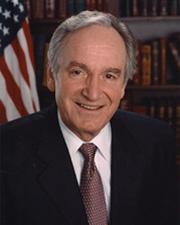 Sen. Tom Harkin (D-IA)
Legislative Activity
Stay on top of the latest movement without scrolling through every action
Considered by Senate. (consideration: CR S15380, S15447)
December 13, 2007
View full timeline
Considered by Senate. (consideration: CR S15380, S15447)
December 13, 2007
Proposed amendment SA 3830 withdrawn in Senate.
December 13, 2007
Considered by Senate. (consideration: CR S15179)
December 12, 2007
Senate amendment submitted
December 11, 2007
Senate amendment proposed (on the floor): Amendment SA 3830 proposed by Senator Harkin to Amendment SA 3500.(consideration: CR S15126)
December 11, 2007
Amendment SA 3830 proposed by Senator Harkin to Amendment SA 3500. (consideration: CR S15126) Relative to public safety officers.
December 11, 2007
Amendments
8 amendmentsOffered to this amendment
Amendments
8 amendmentsOffered to this amendment
No matches
Relative to public safety officers.
SA 3844 fell when SA 3830 was withdrawn. · Sponsored by Tom Harkin · Amends S.Amdt. 3830
Sponsored by Michael B. Enzi · Amends S.Amdt. 3830
Sponsored by Michael B. Enzi · Amends S.Amdt. 3830
Sponsored by Michael B. Enzi · Amends S.Amdt. 3830
Sponsored by Michael B. Enzi · Amends S.Amdt. 3830
Sponsored by Michael B. Enzi · Amends S.Amdt. 3830
Sponsored by Michael B. Enzi · Amends S.Amdt. 3830
Sponsored by Jim DeMint · Amends S.Amdt. 3830
Text
Submitted
TEXT OF AMENDMENTS

SA 3824. Ms. STABENOW (for herself and Mr. Cochran) submitted an
amendment intended to be proposed to amendment SA 3500 proposed by Mr.
Harkin (for himself, Mr. Chambliss, Mr. Baucus, and Mr. Grassley) to
the bill H.R. 2419, to provide for the continuation of agricultural
programs through fiscal year 2012, and for other purposes; which was
ordered to lie on the table; as follows:

On page 1362, between lines 19 and 20, insert the
following:

SEC. 11072. DEBT FOR CONSERVATION PROGRAM.

Section 349 of the Consolidated Farm and Rural Development
Act (7 U.S.C. 1997) is amended--
(1) by striking ``sec. 349. (a) For purposes of this
section:'' and inserting the following:

``SEC. 349. DEBT FOR CONSERVATION PROGRAM.

``(a) Definitions.--In this section:'';
(2) in subsection (a)(4), by inserting ``, fishing, and
wildlife viewing'' after ``includes hunting'';
(3) in subsection (c)--
(A) in the heading, by striking ``Limitations'' and
inserting ``Eligibility''; and
(B) by striking paragraph (1) and inserting the following:
``(1) such property--
``(A) is wetland, upland, or highly erodible land; or
``(B) subject to the availability of appropriated funds,
will be enrolled in--
``(i) the wetlands reserve program established under
subchapter C of chapter 1 of subtitle D of title XII of the
Food Security Act of 1985 (16 U.S.C. 3837 et seq.);
``(ii) the grassland reserve program established under
subchapter C of chapter 2 of subtitle D of title XII of the
Food Security Act of 1985 (16 U.S.C. 3838n et seq.); or
``(iii) the healthy forests reserve program established
under subchapter D of chapter 1 of subtitle D of title XII of
the Food Security Act of 1985;'';
(4) in subsection (e)(2), by striking subparagraph (B) and
inserting the following:
``(B) in the case of a nondelinquent loan--
``(i) 33 percent of the amount of the loan secured by the
land; or
``(ii) if the loan is secured by an easement on the land,
50 percent of the amount of the outstanding loan.'';
(5) by redesignating subsections (f) and (g) as (g) and
(h), respectively;
(6) by inserting after subsection (e) the following:
``(f) Limitations; Effect.--
``(1) Reduction of payment.--If a landowner receives
payments in accordance with a program described in subsection
(c)(1)(B), such payment shall be reduced by the amount of the
debt reduced or forgiven by the Secretary in accordance with
the program under this section.
``(2) Effect with respect to certain programs.--Landowners
in the program under this section shall be considered by the
Secretary as other enrollees for each program described in
subsection (c)(1)(B).''; and
(7) by adding at the end the following:
``(h) Regulations.--As soon as practicable after the date
of enactment of this subsection, the Secretary shall
promulgate regulations to ensure communication between the
Administrator of the Farm Service Agency and the Chief of the
Natural Resources Conservation Service to promote and carry
out the program under this section.''.
______

SA 3825. Mr. GREGG proposed an amendment to amendment SA 3673
proposed by Mr. Gregg to the amendment SA 3500 proposed by Mr. Harkin
(for himself, Mr. Chambliss, Mr. Baucus, and Mr. Grassley) to the bill
H.R. 2419, to provide for the continuation of agricultural programs
through fiscal year 2012, and for other purposes; as follows:

At the end of the amendment, add the following:
``This title shall take effect 1 day after the date of
enactment.''
______

SA 3826. Mr. SANDERS proposed an amendment to amendment SA 3822
proposed by Mr. Thune (for Mr. Gregg) to the amendment SA 3500 proposed
by Mr. Harkin (for himself, Mr. Chambliss, Mr. Baucus, and Mr.
Grassley) to the bill H.R. 2419, to provide for the continuation of
agricultural programs through fiscal year 2012, and for other purposes;
as follows:

In lieu of the matter proposed to be inserted, insert the
following:

Subtitle A--Low-Income Home Energy Assistance

SEC. 12101. LOW-INCOME HOME ENERGY ASSISTANCE APPROPRIATIONS.

(a) In General.--In addition to any amounts appropriated
under any other Federal law, there is appropriated, out of
any money in the Treasury not otherwise appropriated, for
fiscal year 2008--
(1) $462,000,000 (to remain available until expended) for
making payments under subsections (a) through (d) of section
2604 of the Low-Income Home Energy Assistance Act of 1981 (42
U.S.C. 8623); and
(2) $462,000,000 (to remain available until expended) for
making payments under section 2604(e) of the Low-Income Home
Energy Assistance Act of 1981 (42 U.S.C. 8623(e)),
notwithstanding the designation requirement of section
2602(e) of such Act (42 U.S.C. 8621(e)).
(b) Emergency Requirement.--The amount provided under this
section is designated as an emergency requirement pursuant to
section 204 of S. Con. Res. 21 (110th Congress).

SEC. 12102. SUPPLEMENTAL AGRICULTURE DISASTER ASSISTANCE.

(a) In General.--The Trade Act of 1974 (19 U.S.C. 2101 et
seq.) is amended by adding at the end the following:

``TITLE IX--SUPPLEMENTAL AGRICULTURE DISASTER ASSISTANCE

``SEC. 901. PERMANENT AUTHORITY FOR SUPPLEMENTAL REVENUE
ASSISTANCE.

``(a) Definitions.--In this section:
``(1) Actual production history yield.--The term `actual
production history yield' means the weighted average actual
production history for each insurable commodity or
noninsurable commodity, as calculated under the Federal Crop
Insurance Act (7 U.S.C. 1501 et seq.) or the noninsured crop
disaster assistance program, respectively.
``(2) Counter-cyclical program payment yield.--The term
`counter-cyclical program payment yield' means the weighted
average payment yield established under section 1102 of the
Farm Security and Rural Investment Act of 2002 (7 U.S.C.
7912).
``(3) Disaster county.--
``(A) In general.--The term `disaster county' means a
county included in the geographic area covered by a
qualifying natural disaster declaration.
``(B) Inclusion.--The term `disaster county' includes--
``(i) a county contiguous to a county described in
subparagraph (A); and
``(ii) any farm in which, during a calendar year, the total
loss of production of the farm relating to weather is greater
than 50 percent of the normal production of the farm, as
determined by the Secretary.
``(4) Eligible producer on a farm.--
``(A) In general.--The term `eligible producer on a farm'
means an individual or entity described in subparagraph (B)
that, as determined by the Secretary, assumes the production
and market risks associated with the agricultural production
of crops or livestock.
``(B) Description.--An individual or entity referred to in
subparagraph (A) is--

[[Page S15145]]

``(i) a citizen of the United States;
``(ii) a resident alien;
``(iii) a partnership of citizens of the United States; or
``(iv) a corporation, limited liability corporation, or
other farm organizational structure organized under State
law.
``(5) Farm.--
``(A) In general.--The term `farm' means, in relation to an
eligible producer on a farm, the sum of all crop acreage in
all counties that --
``(i) is used for grazing by the eligible producer; or
``(ii) is planted or intended to be planted for harvest by
the eligible producer.
``(B) Aquaculture.--In the case of aquaculture, the term
`farm' means, in relation to an eligible producer on a farm,
all fish being produced in all counties that are intended to
be harvested for sale by the eligible producer.
``(C) Honey.--In the case of honey, the term `farm' means,
in relation to an eligible producer on a farm, all bees and
beehives in all counties that are intended to be harvested
for a honey crop by the eligible producer.
``(6) Farm-raised fish.--The term `farm-raised fish' means
any aquatic species (including any species of finfish,
mollusk, crustacean, or other aquatic invertebrate,
amphibian, reptile, or aquatic plant) that is propagated and
reared in a controlled or semicontrolled environment.
``(7) Insurable commodity.--The term `insurable commodity'
means an agricultural commodity (excluding livestock) for
which the producer on a farm is eligible to obtain a policy
or plan of insurance under the Federal Crop Insurance Act (7
U.S.C. 1501 et seq.).
``(8) Livestock.--The term `livestock' includes--
``(A) cattle (including dairy cattle);
``(B) bison;
``(C) poultry;
``(D) sheep;
``(E) swine;
``(F) horses; and
``(G) other livestock, as determined by the Secretary.
``(9) Moving 5-year olympic average county yield.--The term
`moving 5-year Olympic average county yield' means the
weighted average yield obtained from the 5 most recent years
of yield data provided by the National Agriculture Statistics
Service obtained from data after dropping the highest and the
lowest yields.
``(10) Noninsurable commodity.--The term `noninsurable
commodity' means a crop for which the eligible producers on a
farm are eligible to obtain assistance under the noninsured
crop assistance program.
``(11) Noninsured crop assistance program.--The term
`noninsured crop assistance program' means the program
carried out under section 196 of the Federal Agriculture
Improvement and Reform Act of 1996 (7 U.S.C. 7333).
``(12) Qualifying natural disaster declaration.--The term
`qualifying natural disaster declaration' means a natural
disaster declared by the Secretary for production losses
under section 321(a) of the Consolidated Farm and Rural
Development Act (7 U.S.C. 1961(a)).
``(13) Secretary.--The term `Secretary' means the Secretary
of Agriculture.
``(14) State.--The term `State' means--
``(A) a State;
``(B) the District of Columbia;
``(C) the Commonwealth of Puerto Rico; and
``(D) any other territory or possession of the United
States.
``(15) Trust fund.--The term `Trust Fund' means the
Agriculture Disaster Relief Trust Fund established under
section 902.
``(16) United states.--The term `United States' when used
in a geographical sense, means all of the States.
``(b) Supplemental Revenue Assistance Payments.--
``(1) In general.--The Secretary shall use such sums as are
necessary from the Trust Fund to make crop disaster
assistance payments to eligible producers on farms in
disaster counties that have incurred crop production losses
or crop quality losses, or both, during the crop year.
``(2) Amount.--
``(A) In general.--Subject to subparagraph (B), the
Secretary shall provide crop disaster assistance payments
under this section to an eligible producer on a farm in an
amount equal to 52 percent of the difference between--
``(i) the disaster assistance program guarantee, as
described in paragraph (3); and
``(ii) the total farm revenue for a farm, as described in
paragraph (4).
``(B) Limitation.--The disaster assistance program
guarantee for a crop used to calculate the payments for a
farm under subparagraph (A)(i) may not be greater than 90
percent of the sum of the expected revenue, as described in
paragraph (5) for each of the crops on a farm, as determined
by the Secretary.
``(3) Supplemental revenue assistance program guarantee.--
``(A) In general.--Except as otherwise provided in this
paragraph, the supplemental assistance program guarantee
shall be the sum obtained by adding--
``(i) for each insurable commodity on the farm, the product
obtained by multiplying--

``(I) the greatest of--

``(aa) the actual production history yield;
``(bb) 90 percent of the moving 5-year Olympic average
county yield; and
``(cc) the counter-cyclical program payment yield for each
crop;

``(II) the percentage of the crop insurance yield
guarantee;
``(III) the percentage of crop insurance price elected by
the eligible producer;
``(IV) the crop insurance price; and
``(V) 115 percent; and

``(ii) for each noninsurable commodity on a farm, the
product obtained by multiplying--

``(I) the weighted noninsured crop assistance program yield
guarantee;
``(II) except as provided in subparagraph (B), 100 percent
of the noninsured crop assistance program established price;
and
``(III) 115 percent.

``(B) Supplemental buy-up noninsured assistance program.--
Beginning on the date that the Secretary makes available
supplemental buy-up coverage under the noninsured assistance
program in accordance with subsection (h), the percentage
described in subclause (II) of subparagraph (A)(ii) shall be
equal to the percentage of the noninsured assistance program
price guarantee elected by the producer.
``(C) Adjustment insurance guarantee.--Notwithstanding
subparagraph (A), in the case of an insurable commodity for
which a plan of insurance provides for an adjustment in the
guarantee, such as in the case of prevented planting, the
adjusted insurance guarantee shall be the basis for
determining the disaster assistance program guarantee for the
insurable commodity.
``(D) Adjusted assistance level.--Notwithstanding
subparagraph (A), in the case of a noninsurable commodity for
which the noninsured crop assistance program provides for an
adjustment in the level of assistance, such as in the case of
prevented harvesting, the adjusted assistance level shall be
the basis for determining the disaster assistance program
guarantee for the noninsurable commodity.
``(E) Equitable treatment for non-yield based policies.--
The Secretary shall establish equitable treatment for non-
yield based policies and plans of insurance, such as the
Adjusted Gross Revenue Lite insurance program.
``(F) Public managed land.--Notwithstanding subparagraph
(A), if rangeland is managed by a Federal agency and the
carrying capacity of the managed rangeland is reduced as a
result of a disaster in the preceding year that was the basis
for a qualifying natural disaster declaration--
``(i) the calculation for the supplemental assistance
program guarantee determined under subparagraph (A) as the
guarantee applies to the managed rangeland shall be not less
than 75 percent of the guarantee for the preceding year; and
``(ii) the requirement for a designation by the Secretary
for the current year is waived.
``(4) Farm revenue.--
``(A) In general.--For purposes of this subsection, the
total farm revenue for a farm, shall equal the sum obtained
by adding--
``(i) the estimated actual value for grazing and for each
crop produced on a farm by using the product obtained by
multiplying--

``(I) the actual crop acreage grazed or harvested by an
eligible producer on a farm;
``(II) the estimated actual yield of the grazing land or
crop production; and
``(III) subject to subparagraphs (B) and (C), the average
market price received or value of the production during the
first 5 months of the marketing year for the county in which
the farm or portion of a farm is located;

``(ii) 20 percent of amount of any direct payments made to
the producer under section 1103 of the Farm Security and
Rural Investment Act of 2002 (7 U.S.C. 7913) or of any fixed
direct payments made at the election of the producer in lieu
of that section or a subsequent section;
``(iii) the amount of payments for prevented planting on a
farm;
``(iv) the amount of crop insurance indemnities received by
an eligible producer on a farm for each crop on a farm,
including indemnities for grazing losses;
``(v) the amount of payments an eligible producer on a farm
received under the noninsured crop assistance program for
each crop on a farm, including grazing losses; and
``(vi) the value of any other natural disaster assistance
payments provided by the Federal Government to an eligible
producer on a farm for each crop on a farm for the same loss
for which the eligible producer is seeking assistance.
``(B) Adjustment.--The Secretary shall adjust the average
market price received by the eligible producer on a farm--
``(i) to reflect the average quality discounts applied to
the local or regional market price of a crop, hay, or forage
due to a reduction in the intrinsic characteristics of the
production resulting from adverse weather, as determined
annually by the State office of the Farm Service Agency; and
``(ii) to account for a crop the value of which is reduced
due to excess moisture resulting from a disaster-related
condition.
``(C) Maximum amount for certain crops.--With respect to a
crop for which an eligible producer on a farm receives
assistance under the noninsured crop assistance program, the
average market price received or value of the production
during the first 5 months of the marketing year for the
county in which the farm or portion of a farm is located
shall be an amount not more than 100 percent of the price of
the crop established

[[Page S15146]]

under the noninsured crop assistance program.
``(5) Expected revenue.--The expected revenue for each crop
on a farm shall equal the sum obtained by adding--
``(A) the expected value of grazing;
``(B) the product obtained by multiplying--
``(i) the greatest of--

``(I) the actual production history yield of the eligible
producer on a farm;
``(II) the moving 5-year Olympic average county yield; and
``(III) the counter-cyclical program payment yield;

``(ii) the acreage planted or intended to be planted for
each crop; and
``(iii) 100 percent of the insurance price guarantee; and
``(C) the product obtained by multiplying--
``(i) 100 percent of the noninsured crop assistance program
yield; and
``(ii) 100 percent of the noninsured crop assistance
program price for each of the crops on a farm.
``(c) Livestock Indemnity Payments.--
``(1) In general.--The Secretary shall use such sums as are
necessary from the Trust Fund to make livestock indemnity
payments to eligible producers on farms that have incurred
livestock death losses in excess of the normal mortality due
to adverse weather, as determined by the Secretary, during
the calendar year, including losses due to hurricanes,
floods, blizzards, disease, wildfires, extreme heat, and
extreme cold.
``(2) Payment rates.--Indemnity payments to an eligible
producer on a farm under paragraph (1) shall be made at a
rate of 75 percent of the market value of the applicable
livestock on the day before the date of death of the
livestock, as determined by the Secretary.
``(d) Emergency Assistance for Livestock, Honey Bees, and
Farm-Raised Fish.--
``(1) In general.--The Secretary shall use up to
$35,000,000 per year from the Trust Fund to provide emergency
relief to eligible producers of livestock, honey bees, and
farm-raised fish to aid in the reduction of losses due to
adverse weather or other environmental conditions, such as
blizzards and wildfires, as determined by the Secretary, that
are not covered under the authority of the Secretary to make
qualifying natural disaster declarations.
``(2) Use of funds.--Funds made available under this
subsection shall be used to reduce losses caused by feed or
water shortages, disease, or other factors as determined by
the Secretary.
``(3) Availability of funds.--Any funds made available
under this subsection and not used in a crop year shall
remain available until expended.
``(e) Tree Assistance Program.--
``(1) Definitions.--In this subsection:
``(A) Eligible orchardist.--The term `eligible orchardist'
means a person that--
``(i) produces annual crops from trees for commercial
purposes; or
``(ii) produces nursery, ornamental, fruit, nut, or
Christmas trees for commercial sale.
``(B) Natural disaster.--The term `natural disaster' means
plant disease, insect infestation, drought, fire, freeze,
flood, earthquake, lightning, or other occurrence, as
determined by the Secretary.
``(C) Tree.--The term `tree' includes a tree, bush, and
vine.
``(2) Eligibility.--
``(A) Loss.--Subject to subparagraph (B), the Secretary
shall provide assistance under paragraph (3) to eligible
orchardists that planted trees for commercial purposes but
lost the trees as a result of a natural disaster, as
determined by the Secretary.
``(B) Limitation.--An eligible orchardist shall qualify for
assistance under subparagraph (A) only if the tree mortality
of the eligible orchardist, as a result of damaging weather
or related condition, exceeds 15 percent (adjusted for normal
mortality).
``(3) Assistance.--The assistance provided by the Secretary
to eligible orchardists for losses described in paragraph (2)
shall consist of--
``(A)(i) reimbursement of 75 percent of the cost of
replanting trees lost due to a natural disaster, as
determined by the Secretary, in excess of 15 percent
mortality (adjusted for normal mortality); or
``(ii) at the option of the Secretary, sufficient seedlings
to reestablish a stand; and
``(B) reimbursement of 50 percent of the cost of pruning,
removal, and other costs incurred by an eligible orchardist
to salvage existing trees or, in the case of tree mortality,
to prepare the land to replant trees as a result of damage or
tree mortality due to a natural disaster, as determined by
the Secretary, in excess of 15 percent damage or mortality
(adjusted for normal tree damage and mortality).
``(f) Plant Pest and Disease Management and Disaster
Prevention.--
``(1) Definitions.--In this subsection:
``(A) Early plant pest detection and surveillance.--The
term `early plant pest detection and surveillance' means the
full range of activities undertaken to find newly introduced
plant pests, whether the plant pests are new to the United
States or new to certain areas of the United States, before--
``(i) the plant pests become established; or
``(ii) the plant pest infestations become too large and
costly to eradicate or control.
``(B) Plant pest.--The term `plant pest' has the meaning
given such term in section 403 of the Plant Protection Act (7
U.S.C. 7702).
``(C) Specialty crop.--The term `specialty crop' has the
meaning given the term in section 3 of the Specialty Crops
Competitiveness Act of 2004 (7 U.S.C. 1621 note; Public Law
108-465).
``(D) State department of agriculture.--The term `State
department of agriculture' means an agency of a State that
has a legal responsibility to perform early plant pest
detection and surveillance activities.
``(2) Early plant pest detection and surveillance
improvement program.--
``(A) Cooperative agreements.--The Secretary shall enter
into a cooperative agreement with each State department of
agriculture that agrees to conduct early plant pest detection
and surveillance activities.
``(B) Consultation.--In carrying out this paragraph, the
Secretary shall consult with--
``(i) the National Plant Board;
``(ii) the National Association of State Departments of
Agriculture; and
``(iii) stakeholders.
``(C) Funds under agreements.--Each State department of
agriculture with which the Secretary enters into a
cooperative agreement under this paragraph shall receive
funding for each of fiscal years 2008 through 2012 in an
amount to be determined by the Secretary.
``(D) Use of funds.--
``(i) Plant pest detection and surveillance activities.--A
State department of agriculture that receives funds under
this paragraph shall use the funds to carry out early plant
pest detection and surveillance activities to prevent the
introduction of a plant pest or facilitate the eradication of
a plant pest, pursuant to a cooperative agreement.
``(ii) Subagreements.--Nothing in this paragraph prevents a
State department of agriculture from using funds received
under subparagraph (C) to enter into subagreements with
political subdivisions of the State that have legal
responsibilities relating to agricultural plant pest and
disease surveillance.
``(iii) Non-federal share.--The non-Federal share of the
cost of carrying out a cooperative agreement under this
section may be provided in-kind, including through provision
of such indirect costs of the cooperative agreement as the
Secretary considers to be appropriate.
``(E) Special funding considerations.--The Secretary shall
provide funds to a State department of agriculture if the
Secretary determines that--
``(i) the State department of agriculture is in a State
that has a high risk of being affected by 1 or more plant
pests; and
``(ii) the early plant pest detection and surveillance
activities supported with the funds will likely--

``(I) prevent the introduction and establishment of plant
pests; and
``(II) provide a comprehensive approach to compliment
Federal detection efforts.

``(F) Reporting requirement.--Not later than 180 days after
the date of completion of an early plant pest detection and
surveillance activity conducted by a State department of
agriculture using funds provided under this subsection, the
State department of agriculture shall submit to the Secretary
a report that describes the purposes and results of the
activities.
``(3) Threat identification and mitigation program.--
``(A) Establishment.--The Secretary, acting through the
Administrator of the Animal and Plant Health Inspection
Service (referred to in this section as the `Secretary'),
shall establish a threat identification and mitigation
program to determine and prioritize foreign threats to the
domestic production of crops.
``(B) Requirements.--In conducting the program established
under subparagraph (A), the Secretary shall--
``(i) consult with the Director of the Center for Plant
Health Science and Technology;
``(ii) conduct, in partnership with States, early plant
pest detection and surveillance activities;
``(iii) develop risk assessments of the potential threat to
the agricultural industry of the United States from foreign
sources;
``(iv) collaborate with the National Plant Board on the
matters described in subparagraph (C);
``(v) implement action plans developed under subparagraph
(C)(ii)(I) immediately after development of the action
plans--

``(I) to test the effectiveness of the action plans; and
``(II) to assist in preventing the introduction and
widespread dissemination of new foreign and domestic plant
pest and disease threats in the United States; and

``(vi) as appropriate, consult with, and use the expertise
of, the Administrator of the Agricultural Research Service in
the development of plant pest and disease detection, control,
and eradication strategies.
``(C) Matters described.--The matters described in this
subparagraph are--
``(i) the prioritization of foreign threats to the
agricultural industry; and
``(ii) the development, in consultation with State
departments of agriculture and other State or regional
resource partnerships, of--

``(I) action plans that effectively address the foreign
threats, including pathway analysis, offshore mitigation
measures, and comprehensive exclusion measures at ports of
entry and other key distribution centers; and
``(II) strategies to employ if a foreign plant pest or
disease is introduced;

[[Page S15147]]

``(D) Reports.--Not later than 1 year after the date of
enactment of this paragraph, and annually thereafter, the
Secretary shall update and submit to Congress the priority
list and action plans described in subparagraph (C),
including an accounting of funds expended on the action
plans.
``(4) Specialty crop certification and risk management
systems.--The Secretary shall provide funds and technical
assistance to specialty crop growers, organizations
representing specialty crop growers, and State and local
agencies working with specialty crop growers and
organizations for the development and implementation of--
``(A) audit-based certification systems, such as best
management practices--
``(i) to address plant pests; and
``(ii) to mitigate the risk of plant pests in the movement
of plants and plant products; and
``(B) nursery plant pest risk management systems, in
collaboration with the nursery industry, research
institutions, and other appropriate entities--
``(i) to enable growers to identify and prioritize nursery
plant pests and diseases of regulatory significance;
``(ii) to prevent the introduction, establishment, and
spread of those plant pests and diseases; and
``(iii) to reduce the risk of, mitigate, and eradicate
those plant pests and diseases.
``(5) Funding.--The Secretary shall use from the Trust Fund
to carry out this subsection--
``(A) $10,000,000 for fiscal year 2008;
``(B) $25,000,000 for fiscal year 2009;
``(C) $40,000,000 for fiscal year 2010;
``(D) $50,000,000 for fiscal year 2011; and
``(E) $64,000,000 for fiscal year 2012.
``(g) Risk Management Purchase Requirement.--
``(1) In general.--Except as otherwise provided in this
subsection, the eligible producers on a farm shall not be
eligible for assistance under this section with respect to
losses to an insurable commodity or noninsurable commodity if
the eligible producers on the farm--
``(A) in the case of an insurable commodity, did not obtain
a policy or plan of insurance for the insurable commodity
under the Federal Crop Insurance Act (7 U.S.C. 1501 et seq.)
(excluding a crop insurance pilot program under that Act) for
the crop incurring the losses; or
``(B) in the case of a noninsurable commodity, did not file
the required paperwork, and pay the administrative fee by the
applicable State filing deadline, for the noninsurable
commodity under the noninsured crop assistance program for
the crop incurring the losses.
``(2) Minimum.--To be considered to have obtained insurance
under paragraph (1), an eligible producer on a farm shall
have obtained a policy or plan of insurance with not less
than 50 percent yield coverage at 55 percent of the insurable
price for each crop grazed, planted, or intended to be
planted for harvest on a whole farm.
``(3) Waiver.--With respect to eligible producers that are
limited resource, minority, or beginning farmers or ranchers,
as determined by the Secretary, the Secretary may--
``(A) waive paragraph (1); and
``(B) provide disaster assistance under this section at a
level that the Secretary determines to be equitable and
appropriate.
``(4) Equitable relief.--The Secretary may provide
equitable relief to eligible producers on a farm that
unintentionally fail to meet the requirements of paragraph
(1) for 1 or more crops on a farm on a case-by-case basis, as
determined by the Secretary.
``(h) Supplemental Buy-up Noninsured Assistance Program.--
``(1) In general.--The Secretary shall establish a program
under which eligible producers on a farm may purchase under
the noninsured crop assistance program additional yield and
price coverage for a crop, including a forage, hay, or honey
crop, of--
``(A) 60 or 65 percent (as elected by the producers on the
farm) of the yield established for the crop under the
program; and
``(B) 100 percent of the price established for the crop
under the program.
``(2) Fees.--The Secretary shall establish and collect fees
from eligible producers on a farm participating in the
program established under paragraph (1) to offset all of the
costs of the program, as determined by the Secretary.
``(i) Payment Limitations.--
``(1) In general.--The total amount of disaster assistance
that an eligible producer on a farm may receive under this
section may not exceed $100,000.
``(2) AGI limitation.--Section 1001D of the Food Security
Act of 1985 (7 U.S.C. 1308-3a or any successor provision)
shall apply with respect to assistance provided under this
section.
``(j) Period of Effectiveness.--This section shall be
effective only for losses that are incurred as the result of
a disaster, adverse weather, or other environmental condition
that occurs on or before September 30, 2012, as determined by
the Secretary.

``SEC. 902. AGRICULTURE DISASTER RELIEF TRUST FUND.

``(a) Creation of Trust Fund.--There is established in the
Treasury of the United States a trust fund to be known as the
`Agriculture Disaster Relief Trust Fund', consisting of such
amounts as may be appropriated or credited to such Trust Fund
as provided in this section.
``(b) Transfer to Trust Fund.--
``(1) In general.--There are appropriated to the
Agriculture Disaster Relief Trust Fund amounts equivalent to
3.34 percent of the amounts received in the general fund of
the Treasury of the United States during fiscal years 2008
through 2012 attributable to the duties collected on articles
entered, or withdrawn from warehouse, for consumption under
the Harmonized Tariff Schedule of the United States.
``(2) Amounts based on estimates.--The amounts appropriated
under this section shall be transferred at least monthly from
the general fund of the Treasury of the United States to the
Agriculture Disaster Relief Trust Fund on the basis of
estimates made by the Secretary of the Treasury. Proper
adjustments shall be made in the amounts subsequently
transferred to the extent prior estimates were in excess of
or less than the amounts required to be transferred.
``(c) Administration.--
``(1) Reports.--The Secretary of the Treasury shall be the
trustee of the Agriculture Disaster Relief Trust Fund and
shall submit an annual report to Congress each year on the
financial condition and the results of the operations of such
Trust Fund during the preceding fiscal year and on its
expected condition and operations during the 5 fiscal years
succeeding such fiscal year. Such report shall be printed as
a House document of the session of Congress to which the
report is made.
``(2) Investment.--
``(A) In general.--The Secretary of the Treasury shall
invest such portion of the Agriculture Disaster Relief Trust
Fund as is not in his judgment required to meet current
withdrawals. Such investments may be made only in interest
bearing obligations of the United States. For such purpose,
such obligations may be acquired--
``(i) on original issue at the issue price, or
``(ii) by purchase of outstanding obligations at the market
price.
``(B) Sale of obligations.--Any obligation acquired by the
Agriculture Disaster Relief Trust Fund may be sold by the
Secretary of the Treasury at the market price.
``(C) Interest on certain proceeds.--The interest on, and
the proceeds from the sale or redemption of, any obligations
held in the Agriculture Disaster Relief Trust Fund shall be
credited to and form a part of such Trust Fund.
``(d) Expenditures From Trust Fund.--Amounts in the
Agriculture Disaster Relief Trust Fund shall be available for
the purposes of making expenditures to meet those obligations
of the United States incurred under section 901.
``(e) Authority to Borrow.--
``(1) In general.--There are authorized to be appropriated,
and are appropriated, to the Agriculture Disaster Relief
Trust Fund, as repayable advances, such sums as may be
necessary to carry out the purposes of such Trust Fund.
``(2) Repayment of advances.--
``(A) In general.--Advances made to the Agriculture
Disaster Relief Trust Fund shall be repaid, and interest on
such advances shall be paid, to the general fund of the
Treasury when the Secretary determines that moneys are
available for such purposes in such Trust Fund.
``(B) Rate of interest.--Interest on advances made pursuant
to this subsection shall be--
``(i) at a rate determined by the Secretary of the Treasury
(as of the close of the calendar month preceding the month in
which the advance is made) to be equal to the current average
market yield on outstanding marketable obligations of the
United States with remaining periods to maturity comparable
to the anticipated period during which the advance will be
outstanding, and
``(ii) compounded annually.''.
(b) Technical Provisions Relating to the Plant Protection
Act.--
(1) Section 442(c) of the Plant Protection Act (7 U.S.C.
7772(c)) is amended by striking ``of longer than 60 days''.
(2) Congress disapproves the rule submitted by the
Secretary of Agriculture relating to cost-sharing for animal
and plant health emergency programs (68 Fed. Reg. 40541
(2003)), and such rule shall have no force or effect.
______

SA 3827. Mr. INHOFE submitted an amendment intended to be proposed to
amendment SA 3822 proposed by Mr. Thune (for Mr. Gregg) to the
amendment SA 3500 proposed by Mr. Harkin (for himself, Mr. Chambliss,
Mr. Baucus, and Mr. Grassley) to the bill H.R. 2419, to provide for the
continuation of agricultural programs through fiscal year 2012, and for
other purposes; which was ordered to lie on the table; as follows:

At the end of the amendment, add the following:

SEC. 12103. EMERGENCY SERVICE ROUTE.

Section 1948 of the Safe, Accountable, Flexible, Efficient
Transportation Equity Act: A Legacy for Users (Public Law
109-59; 119 Stat. 1514) is amended--
(1) by inserting ``(a) In General.--'' before
``Notwithstanding''; and
(2) by adding at the end the following:
``(b) Effective Date.--This section takes effect if and
only on the date on which the Secretary of Energy certifies
to Congress that the section will not negatively impact the
supply or availability of heating fuel, or increase the cost
of heating fuel, for consumers in the Northeastern United
States

[[Page S15148]]

during the 10-year period beginning on the date of the
certification.''.
______

SA 3828. Ms. LANDRIEU submitted an amendment intended to be proposed
to amendment SA 3674 proposed by Mr. Gregg to the amendment SA 3500
proposed by Mr. Harkin (for himself, Mr. Chambliss, Mr. Baucus, and Mr.
Grassley) to the bill H.R. 2419, to provide for the continuation of
agricultural programs through fiscal year 2012, and for other purposes;
which was ordered to lie on the table; as follows:

At the end of the amendment add the following:

SEC. ___. USE OF AMENDED INCOME TAX RETURNS TO TAKE INTO
ACCOUNT RECEIPT OF CERTAIN HURRICANE-RELATED
CASUALTY LOSS GRANTS BY DISALLOWING PREVIOUSLY
TAKEN CASUALTY LOSS DEDUCTIONS.

Notwithstanding any other provision of the Internal Revenue
Code of 1986, if a taxpayer claims a deduction for any
taxable year with respect to a residential property casualty
loss resulting from Hurricane Katrina or Hurricane Rita and
in a subsequent taxable year receives a grant as
reimbursement for such loss from the State of Louisiana or
the State of Mississippi, such taxpayer may file an amended
income tax return for the taxable year in which such
deduction was allowed and disallow such deduction. Any
increase in Federal income tax resulting from such
disallowance shall not be subject to any penalty or interest
under such Code if such tax is paid not later than 1 year
after the filing of such amended return.
______

SA 3829. Mr. REID (for Mrs. Clinton) submitted an amendment intended
to be proposed to amendment SA 3500 proposed by Mr. Harkin (for
himself, Mr. Chambliss, Mr. Baucus, and Mr. Grassley) to the bill H.R.
2419, to provide for the continuation of agricultural programs through
fiscal year 2012, and for other purposes; which was ordered to lie on
the table; as follows:

On page 868, between lines 15 and 16, insert the following:

SEC. 6___. COMPREHENSIVE RURAL BROADBAND.

(a) Comprehensive Rural Broadband Strategy.--
(1) In general.--Not later than 1 year after the date of
enactment of this Act, and annually thereafter, the Chairman
of the Federal Communications Commission, in coordination
with the Secretary, shall submit to the Committees on Energy
and Commerce and Agriculture of the House of Representatives
and the Committees on Commerce, Science, and Transportation
and Agriculture, Nutrition, and Forestry of the Senate a
report describing a comprehensive rural broadband strategy
that includes--
(A) recommendations--
(i) to promote interagency coordination of Federal agencies
in regards to policies, procedures, and targeted resources,
and to improve and streamline the polices, programs, and
services;
(ii) to coordinate among Federal agencies regarding
existing rural broadband or rural initiatives that could be
of value to rural broadband development;
(iii) to address both short- and long-term solutions and
needs assessments for a rapid build-out of rural broadband
solutions and applications for Federal, State, regional, and
local government policy makers; and
(iv) to identify how specific Federal agency programs and
resources can best respond to rural broadband requirements
and overcome obstacles that currently impede rural broadband
deployment; and
(B) a description of goals and timeframes to achieve the
strategic plans and visions identified in the report.
(2) Updates.--The Chairman of the Federal Communications
Commission, in coordination with the Secretary shall update
and evaluate the report described in paragraph (1) on an
annual basis.
(b) Rural Broadband.--Section 306(a)(20)(E) of the
Consolidated Rural Development Act (7 U.S.C. 1926(a)(20)(E))
is amended by striking ``dial-up Internet access or''.
______

SA 3830. Mr. HARKIN (for himself, Mr. Kennedy, and Mr. Gregg)
proposed an amendment to amendment SA 3500 proposed by Mr. Harkin (for
himself, Mr. Chambliss, Mr. Baucus, and Mr. Grassley) to the bill H.R.
2419, to provide for the continuation of agricultural programs through
fiscal year 2012, and for other purposes; as follows:

=========================== NOTE ===========================

On Page S15148, December 11, 2007, in the middle column, the
following amendment appears: SA 3830. Mr. HARKIN (for himself and
Mr. Gregg) proposed an amendment to amendment SA 3500 proposed by
Mr. Harkin (for himself, Mr. Chambliss, Mr. Baucus, and Mr.
Grassley) to the bill H.R. 2419, to provide for the continuation
of agricultural programs through fiscal year 2012, and for other
purposes; as follows:

The online version was corrected to read: SA 3830. Mr. HARKIN
(for himself, Mr. Kennedy, and Mr. Gregg) proposed an amendment to
amendment SA 3500 proposed by Mr. Harkin (for himself, Mr.
Chambliss, Mr. Baucus, and Mr. Grassley) to the bill H.R. 2419, to
provide for the continuation of agricultural programs through
fiscal year 2012, and for other purposes; as follows:

========================= END NOTE =========================

At the appropriate place in title XI, insert the following:

Subtitle __--Public Safety Officers

SEC. ___1. SHORT TITLE.

This subtitle may be cited as the ``Public Safety Employer-
Employee Cooperation Act of 2007''.

SEC. ___2. DECLARATION OF PURPOSE AND POLICY.

The Congress declares that the following is the policy of
the United States:
(1) Labor-management relationships and partnerships are
based on trust, mutual respect, open communication, bilateral
consensual problem solving, and shared accountability. Labor-
management cooperation fully utilizes the strengths of both
parties to best serve the interests of the public, operating
as a team, to carry out the public safety mission in a
quality work environment. In many public safety agencies it
is the union that provides the institutional stability as
elected leaders and appointees come and go.
(2) State and local public safety officers play an
essential role in the efforts of the United States to detect,
prevent, and respond to terrorist attacks, and to respond to
natural disasters, hazardous materials, and other mass
casualty incidents. State and local public safety officers,
as first responders, are a component of our Nation's National
Incident Management System, developed by the Department of
Homeland Security to coordinate response to and recovery from
terrorism, major natural disasters, and other major
emergencies. Public safety employer-employee cooperation is
essential in meeting these needs and is, therefore, in the
National interest.
(3) The Federal Government needs to encourage conciliation,
mediation, and voluntary arbitration to aid and encourage
employers and the representatives of their employees to reach
and maintain agreements concerning rates of pay, hours, and
working conditions, and to make all reasonable efforts
through negotiations to settle their differences by mutual
agreement reached through collective bargaining or by such
methods as may be provided for in any applicable agreement
for the settlement of disputes.
(4) The absence of adequate cooperation between public
safety employers and employees has implications for the
security of employees and can affect interstate and
intrastate commerce. The lack of such labor-management
cooperation can detrimentally impact the upgrading of police
and fire services of local communities, the health and well-
being of public safety officers, and the morale of the fire
and police departments. Additionally, these factors could
have significant commercial repercussions. Moreover,
providing minimal standards for collective bargaining
negotiations in the public safety sector can prevent
industrial strife between labor and management that
interferes with the normal flow of commerce.

SEC. ___3. DEFINITIONS.

In this subtitle:
(1) Authority.--The term ``Authority'' means the Federal
Labor Relations Authority.
(2) Emergency medical services personnel.--The term
``emergency medical services personnel'' means an individual
who provides out-of-hospital emergency medical care,
including an emergency medical technician, paramedic, or
first responder.
(3) Employer; public safety agency.--The terms ``employer''
and ``public safety agency'' mean any State, or political
subdivision of a State, that employs public safety officers.
(4) Firefighter.--The term ``firefighter'' has the meaning
given the term ``employee engaged in fire protection
activities'' in section 3(y) of the Fair Labor Standards Act
(29 U.S.C. 203(y)).
(5) Labor organization.--The term ``labor organization''
means an organization composed in whole or in part of
employees, in which employees participate, and which
represents such employees before public safety agencies
concerning grievances, conditions of employment, and related
matters.
(6) Law enforcement officer.--The term ``law enforcement
officer'' has the meaning given such term in section 1204 of
the Omnibus Crime Control and Safe Streets Act of 1968 (42
U.S.C. 3796b).
(7) Management employee.--The term ``management employee''
has the meaning given such term under applicable State law in
effect on the date of enactment of this subtitle. If no such
State law is in effect, the term means an individual employed
by a public safety employer in a position that requires or
authorizes the individual to formulate, determine, or
influence the policies of the employer.
(8) Person.--The term ``person'' means an individual or a
labor organization.
(9) Public safety officer.--The term ``public safety
officer''--
(A) means an employee of a public safety agency who is a
law enforcement officer, a firefighter, or an emergency
medical services personnel;
(B) includes an individual who is temporarily transferred
to a supervisory or management position; and
(C) does not include a permanent supervisory or management
employee.
(10) State.--The term ``State'' means each of the several
States of the United States, the District of Columbia, and
any territory or possession of the United States.
(11) Substantially provides.--The term ``substantially
provides'' means compliance with the essential requirements
of this subtitle, specifically, the right to form and join a
labor organization, the right to bargain over wages, hours,
and conditions of employment, the right to sign an
enforceable contract, and availability of some form of
mechanism to break an impasse, such as arbitration,
mediation, or fact-finding.
(12) Supervisory employee.--The term ``supervisory
employee'' has the meaning given such term under applicable
State law in effect on the date of enactment of this
subtitle. If no such State law is in effect, the term means
an individual, employed by a public safety employer, who--

[[Page S15149]]

(A) has the authority in the interest of the employer to
hire, direct, assign, promote, reward, transfer, furlough,
lay off, recall, suspend, discipline, or remove public safety
officers, to adjust their grievances, or to effectively
recommend such action, if the exercise of the authority is
not merely routine or clerical in nature but requires the
consistent exercise of independent judgment; and
(B) devotes a majority of time at work exercising such
authority.

SEC. ___4. DETERMINATION OF RIGHTS AND RESPONSIBILITIES.

(a) Determination.--
(1) In general.--Not later than 180 days after the date of
enactment of this subtitle, the Authority shall make a
determination as to whether a State substantially provides
for the rights and responsibilities described in subsection
(b). In making such determinations, the Authority shall
consider and give weight, to the maximum extent practicable,
to the opinion of affected parties.
(2) Subsequent determinations.--
(A) In general.--A determination made pursuant to paragraph
(1) shall remain in effect unless and until the Authority
issues a subsequent determination, in accordance with the
procedures set forth in subparagraph (B).
(B) Procedures for subsequent determinations.--Upon
establishing that a material change in State law or its
interpretation has occurred, an employer or a labor
organization may submit a written request for a subsequent
determination. If satisfied that a material change in State
law or its interpretation has occurred, the Authority shall
issue a subsequent determination not later than 30 days after
receipt of such request.
(3) Judicial review.--Any person or employer aggrieved by a
determination of the Authority under this section may, during
the 60-day period beginning on the date on which the
determination was made, petition any United States Court of
Appeals in the circuit in which the person or employer
resides or transacts business or in the District of Columbia
circuit, for judicial review. In any judicial review of a
determination by the Authority, the procedures contained in
subsections (c) and (d) of section 7123 of title 5, United
States Code, shall be followed.
(b) Rights and Responsibilities.--In making a determination
described in subsection (a), the Authority shall consider
whether State law provides rights and responsibilities
comparable to or greater than the following:
(1) Granting public safety officers the right to form and
join a labor organization, which may exclude management
employees and supervisory employees, that is, or seeks to be,
recognized as the exclusive bargaining representative of such
employees.
(2) Requiring public safety employers to recognize the
employees' labor organization (freely chosen by a majority of
the employees), to agree to bargain with the labor
organization, and to commit any agreements to writing in a
contract or memorandum of understanding.
(3) Permitting bargaining over hours, wages, and terms and
conditions of employment.
(4) Making available an interest impasse resolution
mechanism, such as fact-finding, mediation, arbitration, or
comparable procedures.
(5) Requiring enforcement through State courts of--
(A) all rights, responsibilities, and protections provided
by State law and enumerated in this section; and
(B) any written contract or memorandum of understanding.
(c) Failure To Meet Requirements.--
(1) In general.--If the Authority determines, acting
pursuant to its authority under subsection (a), that a State
does not substantially provide for the rights and
responsibilities described in subsection (b), such State
shall be subject to the regulations and procedures described
in section ___5.
(2) Effective date.--Paragraph (1) shall take effect on the
date that is 2 years after the date of enactment of this
subtitle.

SEC. ___5. ROLE OF FEDERAL LABOR RELATIONS AUTHORITY.

(a) In General.--Not later than 1 year after the date of
enactment of this subtitle, the Authority shall issue
regulations in accordance with the rights and
responsibilities described in section ___4(b) establishing
collective bargaining procedures for employers and public
safety officers in States which the Authority has determined,
acting pursuant to section ___4(a), do not substantially
provide for such rights and responsibilities.
(b) Role of the Federal Labor Relations Authority.--The
Authority, to the extent provided in this subtitle and in
accordance with regulations prescribed by the Authority,
shall--
(1) determine the appropriateness of units for labor
organization representation;
(2) supervise or conduct elections to determine whether a
labor organization has been selected as an exclusive
representative by a voting majority of the employees in an
appropriate unit;
(3) resolve issues relating to the duty to bargain in good
faith;
(4) conduct hearings and resolve complaints of unfair labor
practices;
(5) resolve exceptions to the awards of arbitrators;
(6) protect the right of each employee to form, join, or
assist any labor organization, or to refrain from any such
activity, freely and without fear of penalty or reprisal, and
protect each employee in the exercise of such right; and
(7) take such other actions as are necessary and
appropriate to effectively administer this subtitle,
including issuing subpoenas requiring the attendance and
testimony of witnesses and the production of documentary or
other evidence from any place in the United States, and
administering oaths, taking or ordering the taking of
depositions, ordering responses to written interrogatories,
and receiving and examining witnesses.
(c) Enforcement.--
(1) Authority to petition court.--The Authority may
petition any United States Court of Appeals with jurisdiction
over the parties, or the United States Court of Appeals for
the District of Columbia Circuit, to enforce any final orders
under this section, and for appropriate temporary relief or a
restraining order. Any petition under this section shall be
conducted in accordance with subsections (c) and (d) of
section 7123 of title 5, United States Code.
(2) Private right of action.--Unless the Authority has
filed a petition for enforcement as provided in paragraph
(1), any party has the right to file suit in a State court of
competent jurisdiction to enforce compliance with the
regulations issued by the Authority pursuant to subsection
(b), and to enforce compliance with any order issued by the
Authority pursuant to this section. The right provided by
this subsection to bring a suit to enforce compliance with
any order issued by the Authority pursuant to this section
shall terminate upon the filing of a petition seeking the
same relief by the Authority.

SEC. ___6. STRIKES AND LOCKOUTS PROHIBITED.

(a) Prohibition.--An employer, public safety officer, or
labor organization may not engage in a lockout, sickout, work
slowdown, strike, or any other action that will measurably
disrupt the delivery of emergency services and is designed to
compel an employer, public safety officer, or labor
organization to agree to the terms of a proposed contract.
(b) Mandatory Terms and Conditions.--It shall not be a
violation of subsection (a) for a public safety officer or
labor organization to refuse to carry out services that are
not required under the mandatory terms and conditions of
employment applicable to the public safety officer or labor
organization.

SEC. ___7. EXISTING COLLECTIVE BARGAINING UNITS AND
AGREEMENTS.

A certification, recognition, election-held, collective
bargaining agreement or memorandum of understanding which has
been issued, approved, or ratified by any public employee
relations board or commission or by any State or political
subdivision or its agents (management officials) and is in
effect on the day before the date of enactment of this
subtitle shall not be invalidated by the enactment of this
subtitle.

SEC. ___8. CONSTRUCTION AND COMPLIANCE.

(a) Construction.--Nothing in this subtitle shall be
construed--
(1) to preempt or limit the remedies, rights, and
procedures of any law of any State or political subdivision
of any State or jurisdiction that provides greater or
comparable rights and responsibilities than the rights and
responsibilities described in section ___4(b);
(2) to prevent a State from enforcing a right-to-work law
that prohibits employers and labor organizations from
negotiating provisions in a labor agreement that require
union membership or payment of union fees as a condition of
employment;
(3) to preempt or limit any State law in effect on the date
of enactment of this subtitle that provides for the rights
and responsibilities described in section ___4(b) solely
because such State law permits an employee to appear on the
employee's own behalf with respect to the employee's
employment relations with the public safety agency involved;
(4) to preempt or limit any State law in effect on the date
of enactment of this subtitle that provides for the rights
and responsibilities described in section ___4(b) solely
because such State law excludes from its coverage employees
of a State militia or national guard;
(5) to permit parties in States subject to the regulations
and procedures described in section ___5 to negotiate
provisions that would prohibit an employee from engaging in
part-time employment or volunteer activities during off-duty
hours;
(6) to prohibit a State from exempting from coverage under
this subtitle a political subdivision of the State that has a
population of less than 5,000 or that employs less than 25
full-time employees; or
(7) to preempt or limit the laws or ordinances of any State
or political subdivision of a State that provide for the
rights and responsibilities described in section ___4(b)
solely because such law does not require bargaining with
respect to pension, retirement, or health benefits.

For purposes of paragraph (6), the term ``employee'' includes
each and every individual employed by the political
subdivision except any individual elected by popular vote or
appointed to serve on a board or commission.
(b) Compliance.--
(1) Actions of states.--Nothing in this subtitle or the
regulations promulgated under this subtitle shall be
construed to require a State to rescind or preempt the laws
or ordinances of any of its political subdivisions if such
laws provide rights and responsibilities for public safety
officers that are

[[Page S15150]]

comparable to or greater than the rights and responsibilities
described in section ___4(b).
(2) Actions of the authority.--Nothing in this subtitle or
the regulations promulgated under this subtitle shall be
construed to preempt--
(A) the laws or ordinances of any State or political
subdivision of a State, if such laws provide collective
bargaining rights for public safety officers that are
comparable to or greater than the rights enumerated in
section ___4(b);
(B) the laws or ordinance of any State or political
subdivision of a State that provide for the rights and
responsibilities described in section ___4(b) with respect to
certain categories of public safety officers covered by this
subtitle solely because such rights and responsibilities have
not been extended to other categories of public safety
officers covered by this subtitle; or
(C) the laws or ordinances of any State or political
subdivision of a State that provides for the rights and
responsibilities described in section ___4(b), solely because
such laws or ordinances provide that a contract or memorandum
of understanding between a public safety employer and a labor
organization must be presented to a legislative body as part
of the process for approving such contract or memorandum of
understanding.
(3) Limited enforcement power.--In the case of a law
described in paragraph (2)(B), the Authority shall only
exercise the powers provided in section ___5 with respect to
those categories of public safety officers who have not been
afforded the rights and responsibilities described in section
___4(b).
(4) Exclusive enforcement provision.--Notwithstanding any
other provision of this subtitle, and in the absence of a
waiver of a State's sovereign immunity, the Authority shall
have the exclusive power to enforce the provisions of this
subtitle with respect to employees of a State or political
subdivision of a State.

SEC. ___9. AUTHORIZATION OF APPROPRIATIONS.

There are authorized to be appropriated such sums as may be
necessary to carry out the provisions of this subtitle.
______

SA 3831. Mr. REID (for Mr. Kennedy) proposed an amendment to the bill
S. 793, to provide for the expansion and improvement of traumatic brain
injury programs; as follows:

Strike all after the enacting clause and insert the
following:

SECTION 1. SHORT TITLE.

This Act may be cited as the ``Reauthorization of the
Traumatic Brain Injury Act''.

SEC. 2. CONFORMING AMENDMENTS RELATING TO RESTRUCTURING.

Part J of title III of the Public Health Service Act (42
U.S.C. 280b et seq.) is amended--
(1) by redesignating the section 393B (42 U.S.C. 280b-1c)
relating to the use of allotments for rape prevention
education, as section 393A and moving such section so that it
follows section 393;
(2) by redesignating existing section 393A (42 U.S.C. 280b-
1b) relating to prevention of traumatic brain injury, as
section 393B; and
(3) by redesignating the section 393B (42 U.S.C. 280b-1d)
relating to traumatic brain injury registries, as section
393C.

SEC. 3. TRAUMATIC BRAIN INJURY PROGRAMS OF THE CENTERS FOR
DISEASE CONTROL AND PREVENTION.

(a) Prevention of Traumatic Brain Injury.--Clause (ii) of
section 393B(b)(3)(A) of the Public Health Service Act, as so
redesignated, (42 U.S.C. 280b-1b) is amended by striking
``from hospitals and trauma centers'' and inserting ``from
hospitals and emergency departments''.
(b) National Program for Traumatic Brain Injury
Surveillance and Registries.--Section 393C of the Public
Health Service Act, as so redesignated, (42 U.S.C. 280b et
seq.) is amended--
(1) in the section heading, by inserting ``SURVEILLANCE
AND'' after ``NATIONAL PROGRAM FOR TRAUMATIC BRAIN INJURY'';
and
(2) in subsection (a), in the matter preceding paragraph
(1), by striking ``may make grants'' and all that follows
through ``to collect data concerning--'' and inserting ``may
make grants to States or their designees to develop or
operate the State's traumatic brain injury surveillance
system or registry to determine the incidence and prevalence
of traumatic brain injury and related disability, to ensure
the uniformity of reporting under such system or registry, to
link individuals with traumatic brain injury to services and
supports, and to link such individuals with academic
institutions to conduct applied research that will support
the development of such surveillance systems and registries
as may be necessary. A surveillance system or registry under
this section shall provide for the collection of data
concerning--''.
(c) Report.--Section 393C of the Public Health Service Act
(as so redesignated) is amended by adding at the end the
following:
``(b) Not later than 18 months after the date of enactment
of the Reauthorization of the Traumatic Brain Injury Act, the
Secretary, acting through the Director of the Centers for
Disease Control and Prevention and the Director of the
National Institutes of Health and in consultation with the
Secretary of Defense and the Secretary of Veterans Affairs,
shall submit to the relevant committees of Congress a report
that contains the findings derived from an evaluation
concerning activities and procedures that can be implemented
by the Centers for Disease Control and Prevention, the
Department of Defense, and the Department of Veterans Affairs
to improve the collection and dissemination of compatible
epidemiological studies on the incidence and prevalence of
traumatic brain injury in the military and veterans
populations who return to civilian life. The report shall
include recommendations on the manner in which such agencies
can further collaborate on the development and improvement of
traumatic brain injury diagnostic tools and treatments.''.

SEC. 4. STUDY ON TRAUMATIC BRAIN INJURY.

Part J of title III of the Public Health Service Act (42
U.S.C. 280b et seq.) is amended by inserting after section
393C the following:

``SEC. 393C-1. STUDY ON TRAUMATIC BRAIN INJURY.

``(a) Study.--The Secretary, acting through the Director of
the Centers for Disease Control and Prevention with respect
to paragraph (1) and in consultation with the Director of the
National Institutes of Health and other appropriate entities
with respect to paragraphs (2), (3), and (4), may conduct a
study with respect to traumatic brain injury for the purpose
of carrying out the following:
``(1) In collaboration with appropriate State and local
health-related agencies--
``(A) determining the incidence of traumatic brain injury
and prevalence of traumatic brain injury related disability
and the clinical aspects of the disability in all age groups
and racial and ethnic minority groups in the general
population of the United States, including institutional
settings, such as nursing homes, correctional facilities,
psychiatric hospitals, child care facilities, and residential
institutes for people with developmental disabilities; and
``(B) reporting national trends in traumatic brain injury.
``(2) Identifying common therapeutic interventions which
are used for the rehabilitation of individuals with such
injuries, and, subject to the availability of information,
including an analysis of--
``(A) the effectiveness of each such intervention in
improving the functioning, including return to work or school
and community participation, of individuals with brain
injuries;
``(B) the comparative effectiveness of interventions
employed in the course of rehabilitation of individuals with
brain injuries to achieve the same or similar clinical
outcome; and
``(C) the adequacy of existing measures of outcomes and
knowledge of factors influencing differential outcomes.
``(3) Identifying interventions and therapies that can
prevent or remediate the development of secondary neurologic
conditions related to traumatic brain injury.
``(4) Developing practice guidelines for the rehabilitation
of traumatic brain injury at such time as appropriate
scientific research becomes available.
``(b) Dates Certain for Reports.--If the study is conducted
under subsection (a), the Secretary shall, not later than 3
years after the date of the enactment of the Reauthorization
of the Traumatic Brain Injury Act, submit to Congress a
report describing findings made as a result of carrying out
such subsection (a).
``(c) Definition.--For purposes of this section, the term
`traumatic brain injury' means an acquired injury to the
brain. Such term does not include brain dysfunction caused by
congenital or degenerative disorders, nor birth trauma, but
may include brain injuries caused by anoxia due to trauma
including near drowning. The Secretary may revise the
definition of such term as the Secretary determines
necessary.''.

SEC. 5. TRAUMATIC BRAIN INJURY PROGRAMS OF THE NATIONAL
INSTITUTES OF HEALTH.

Section 1261 of the Public Health Service Act (42 U.S.C.
300d-61) is amended--
(1) in subsection (b)(2), by striking ``Labor and Human
Resources'' and inserting ``Health, Education, Labor, and
Pensions'';
(2) in subparagraph (D) of subsection (d)(4), by striking
``head brain injury'' and inserting ``brain injury''; and
(3) in subsection (i), by inserting ``, and such sums as
may be necessary for each of fiscal years 2008 through 2011''
before the period at the end.

SEC. 6. TRAUMATIC BRAIN INJURY PROGRAMS OF THE HEALTH
RESOURCES AND SERVICES ADMINISTRATION.

(a) State Grants for Demonstration Projects Regarding
Traumatic Brain Injury.--Section 1252 of the Public Health
Service Act (42 U.S.C. 300d-52) is amended--
(1) in subsection (a)--
(A) by striking ``may make grants to States'' and inserting
``may make grants to States and American Indian consortia'';
and
(B) by striking ``health and other services'' and inserting
``rehabilitation and other services'';
(2) in subsection (b)--
(A) in paragraphs (1), (3)(A)(i), (3)(A)(iii), and
(3)(A)(iv), by striking the term ``State'' each place such
term appears and inserting the term ``State or American
Indian consortium''; and
(B) in paragraph (2), by striking ``recommendations to the
State'' and inserting ``recommendations to the State or
American Indian consortium'';
(3) in subsection (c), by striking the term ``State'' each
place such term appears and inserting ``State or American
Indian consortium'';

[[Page S15151]]

(4) in subsection (e), by striking ``A State that
received'' and all that follows through the period and
inserting ``A State or American Indian consortium that
received a grant under this section prior to the date of the
enactment of the Reauthorization of the Traumatic Brain
Injury Act may complete the activities funded by the
grant.'';
(5) in subsection (f)--
(A) in the subsection heading, by inserting ``and American
Indian Consortium'' after ``State'';
(B) in paragraph (1) in the matter preceding subparagraph
(A), paragraph (1)(E), paragraph (2)(A), paragraph (2)(B),
paragraph (3) in the matter preceding subparagraph (A),
paragraph (3)(E), and paragraph (3)(F), by striking the term
``State'' each place such term appears and inserting ``State
or American Indian consortium'';
(C) in clause (ii) of paragraph (1)(A), by striking
``children and other individuals'' and inserting ``children,
youth, and adults''; and
(D) in subsection (h)--
(i) by striking ``Not later than 2 years after the date of
the enactment of this section, the Secretary'' and inserting
``Not less than biennially, the Secretary'';
(ii) by striking ``Commerce of the House of
Representatives, and to the Committee on Labor and Human
Resources'' and inserting ``Energy and Commerce of the House
of Representatives, and to the Committee on Health,
Education, Labor, and Pensions''; and
(iii) by inserting ``and section 1253'' after ``programs
established under this section,'';
(6) by amending subsection (i) to read as follows:
``(i) Definitions.--For purposes of this section:
``(1) The terms `American Indian consortium' and `State'
have the meanings given to those terms in section 1253.
``(2) The term `traumatic brain injury' means an acquired
injury to the brain. Such term does not include brain
dysfunction caused by congenital or degenerative disorders,
nor birth trauma, but may include brain injuries caused by
anoxia due to trauma. The Secretary may revise the definition
of such term as the Secretary determines necessary, after
consultation with States and other appropriate public or
nonprofit private entities.''; and
(7) in subsection (j), by inserting ``, and such sums as
may be necessary for each of the fiscal years 2008 through
2011'' before the period.
(b) State Grants for Protection and Advocacy Services.--
Section 1253 of the Public Health Service Act (42 U.S.C.
300d-53) is amended--
(1) in subsections (d) and (e), by striking the term
``subsection (i)'' each place such term appears and inserting
``subsection (l)'';
(2) in subsection (g), by inserting ``each fiscal year not
later than October 1,'' before ``the Administrator shall
pay'';
(3) by redesignating subsections (i) and (j) as subsections
(l) and (m), respectively;
(4) by inserting after subsection (h) the following:
``(i) Data Collection.--The Administrator of the Health
Resources and Services Administration and the Commissioner of
the Administration on Developmental Disabilities shall enter
into an agreement to coordinate the collection of data by the
Administrator and the Commissioner regarding protection and
advocacy services.
``(j) Training and Technical Assistance.--
``(1) Grants.--For any fiscal year for which the amount
appropriated to carry out this section is $6,000,000 or
greater, the Administrator shall use 2 percent of such amount
to make a grant to an eligible national association for
providing for training and technical assistance to protection
and advocacy systems.
``(2) Definition.--In this subsection, the term `eligible
national association' means a national association with
demonstrated experience in providing training and technical
assistance to protection and advocacy systems.
``(k) System Authority.--In providing services under this
section, a protection and advocacy system shall have the same
authorities, including access to records, as such system
would have for purposes of providing services under subtitle
C of the Developmental Disabilities Assistance and Bill of
Rights Act of 2000.''; and
(5) in subsection (l) (as redesignated by this subsection)
by striking ``2005'' and inserting ``2011''.

SEC. 7. GAO STUDY WITH RESPECT TO MEMBERS OF THE ARMED
FORCES.

(a) In General.--The Comptroller General of the United
States shall conduct a study regarding members of the armed
forces who have acquired a disability resulting from a
traumatic brain injury incurred while serving in Operation
Enduring Freedom and Operation Iraqi Freedom. Such study
shall examine how these individuals are being reintegrated
into their communities, including--
(1) what is known about this population; and
(2) what challenges they may face in returning to their
communities, such as accessing employment, housing,
transportation, and community care programs, and coordinating
benefits.
(b) Report.--Not later than 1 year after the date of
enactment of this Act, the Comptroller General of the United
States shall submit to the Committee on Veterans' Affairs and
the Committee on Health, Education, Labor, and Pensions of
the Senate and the Committee on Veterans' Affairs and the
Committee on Education and the Workforce of the House of
Representatives, a report summarizing the results of the
study conducted under subsection (a).

____________________