S.Amdt. 3855Senate110th Congress (2007-2009)2nd degree
Of a perfecting nature.
Sponsored by 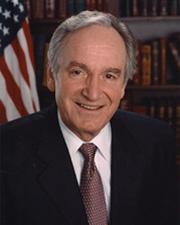 Sen. Tom Harkin (D-IA)
Sen. Tom Harkin (D-IA)Submitted December 14, 2007
Legislative Activity
Stay on top of the latest movement without scrolling through every action
Floor
Latest Action
Senate amendment submitted
December 14, 2007
View full timeline
Floor
Senate amendment submitted
December 14, 2007
Floor
Senate amendment proposed (on the floor): Amendment SA 3855 proposed by Senator Harkin to Amendment SA 3500.(consideration: CR S15637-15639)
December 14, 2007
Floor
Senate amendment agreed to: Amendment SA 3855 agreed to in Senate by Unanimous Consent.
December 14, 2007
Floor
Amendment SA 3855 proposed by Senator Harkin to Amendment SA 3500. (consideration: CR S15637-15639) Of a perfecting nature.
December 14, 2007
Floor
Amendment SA 3855 agreed to in Senate by Unanimous Consent.
December 14, 2007
Text
Submitted
SA 3855. Mr. HARKIN (for himself and Mr. Chambliss) proposed an
amendment to amendment SA 3500 proposed by Mr. Harkin (for himself, Mr.
Chambliss, Mr. Baucus, and Mr. Grassley) to the bill H.R. 2419, to
provide for the continuation of agricultural programs through fiscal
year 2012, and for other purposes; as follows:

On page 884, line 16, strike ``or''.
On page 884, between lines 16 and 17, insert the following:
``(6) competitive grants, for public television stations or
a consortium of public television stations, to provide
education, outreach, and assistance, in cooperation with
community groups, to rural communities and vulnerable
populations with respect to the digital television
transition, and particularly the acquisition, delivery, and
installation of the digital-to-analog converter boxes
described in section 3005 of the Digital Television
Transition and Public Safety Act of 2005 (47 U.S.C. 309
note); or
On page 884, line 17, strike ``(6)'' and insert ``(7)''.
On page 652, between lines 14 and 15, insert the following:

SEC. 440_. SENSE OF CONGRESS REGARDING NUTRITION EDUCATION
UNDER THE FOOD AND NUTRITION PROGRAM.

(a) Findings.--Congress finds that--
(1) nutrition education under the Food and Nutrition Act of
2007 (7 U.S.C. 2011 et seq.) plays an essential role in
improving the dietary and physical activity practices of low-
income people in the United States, helping to reduce food
insecurity, prevent obesity, and reduce the risks of chronic
disease;
(2) expert organizations, such as the Institute of
Medicine, indicate that dietary and physical activity
behavior change is more likely to result from the combined
application of public health approaches and education than
from education alone; and
(3) State programs are implementing nutrition education
using effective strategies, including direct education, group
activities, and social marketing.
(b) Sense of Congress.--It is the sense of Congress that--
(1) the Secretary should support and encourage effective
interventions for nutrition education under the Food and
Nutrition Act of 2007 (7 U.S.C. 2011 et seq.), including
coordination with public health approaches and traditional
education, to increase the likelihood that recipients of food
and nutrition program benefits and people who are potentially
eligible for those benefits will choose diets and physical
activity practices consistent with the Dietary Guidelines for
Americans;
(2) to promote the most effective implementation of
publicly-funded programs, State nutrition education
activities under the Food and Nutrition Act of 2007 (7 U.S.C.
2011 et seq.)--
(A) should be coordinated with other federally-funded food
assistance and public health programs; and
(B) should leverage public/private partnerships to maximize
the resources and impact of the programs; and
(3) funds provided under the Food and Nutrition Act of 2007
(7 U.S.C. 2011 et seq.) for nutrition education should be
used only for activities that promote diets and physical
activity consistent with the Dietary Guidelines for Americans
among--
(A) recipients of food and nutrition program benefits; and
(B) people who are potentially eligible for those benefits.
On page 626, line 7, insert ``(including childhood
obesity)'' after ``obesity''.
In section 4802(c)(1)(B), strike ``and'' at the end.
In section 4802(c)(2), strike the period at the end and
insert ``; and''.
In section 4802(c), add at the end the following:
(3) in subsection (g)--
(A) by striking ``If a local'' and inserting the following:
``(1) In general.--If a local''; and
(B) by adding at the end the following:
``(2) State option.--Subject to a determination by the
Secretary that annual appropriations have enabled every State
seeking to participate in the commodity supplemental food
program to participate in that program, a State may serve
low-income persons aged 60 and older that have a household
income that is not more than 185 percent of the most recent
annual Federal Poverty Income Guidelines published by the
Department of Health and Human Services, if--
``(A) the State has submitted to the Secretary
justification for that service; and
``(B) the Secretary has approved the request of the
State.''.
Beginning on page 672, strike line 7 and all that follows
through page 673, line 4, and insert the following:

SEC. 4904. BUY AMERICAN REQUIREMENTS.

(a) Findings.--Congress finds the following:
(1) Federal law requires that commodities and products
purchased with Federal funds be, to the extent practicable,
of domestic origin.
(2) Federal Buy American statutory requirements seek to
ensure that purchases made with Federal funds benefit
domestic producers.
(3) The Richard B. Russell National School Lunch Act (42
U.S.C. 1751 et seq.) requires the use of domestic food
products for all meals served under the program, including
foods products for all meals served under the program,
including foods products purchased with local funds.
(b) Buy American Statutory Requirements.--The Department of
Agriculture should undertake training, guidance, and
enforcement of the various current Buy American statutory
requirements and regulations, including those of the Richard
B. Russell National School Lunch Act (42 U.S.C. 1751 et seq.)
and the Department of Defense fresh fruit and vegetable
distribution program.
At the end of subtitle C of title III, add the following:

SEC. 32__. IMPORTATION OF LIVE DOGS.

(a) In General.--The Animal Welfare Act is amended by
adding after section 17 (7 U.S.C. 2147) the following:

``SEC. 18. IMPORTATION OF LIVE DOGS.

``(a) Definitions.--In this section:
``(1) Importer.--The term `importer' means any person who,
for purposes of resale, transports into the United States
puppies from a foreign country.
``(2) Resale.--The term `resale' includes any transfer of
ownership or control of an imported dog of less than 6 months
of age to another person, for more than de minimis
consideration.
``(b) Requirements.--
``(1) In general.--Except as provided in paragraph (2), no
person shall import a dog into the United States for purposes
of resale unless, as determined by the Secretary, the dog--
``(A) is in good health;
``(B) has received all necessary vaccinations; and
``(C) is at least 6 months of age, if imported for resale.
``(2) Exception.--The Secretary, by regulation, shall
provide an exception to any requirement under paragraph (1)
in any case in which a dog is imported for--
``(A) research purposes; or
``(B) veterinary treatment.
``(c) Implementation and Regulations.--The Secretary, the
Secretary of Health and Human Services, the Secretary of
Commerce, and the Secretary of Homeland Security shall
promulgate such regulations as the Secretaries determine to
be necessary to implement and enforce this section.
``(d) Enforcement.--An importer that fails to comply with
this section shall--
``(1) be subject to penalties under section 19; and
``(2) provide for the care (including appropriate
veterinary care), forfeiture, and adoption of each applicable
dog, at the expense of the importer.''.
(b) Effective Date.--The amendment made by subsection (a)
takes effect on the date of enactment of this Act.
On page 1290, strike lines 9 through 20 and insert the
following:
``(1) In general.--Effective beginning on the date of
enactment of this subsection, there shall be in effect a
moratorium on all loan acceleration and foreclosure
proceedings instituted by the Department of Agriculture
against any farmer or rancher who--
``(A) has pending against the Department a claim of
discrimination; or
``(B) files a claim of discrimination against the
Department.
On page 160, line 12, strike ``improve'' and insert
``further strengthen''.
On page 160, line 17, after ``sugar policies'' insert ``,
to the fullest extent consistent with the international
obligations of the United States''.
On page 160, lines 20 and 21, strike ``United States sugar
market and the Mexican sugar market'' and insert ``United
States and Mexican sweetener markets''.
On page 160, line 24, after ``Mexico'' insert ``, while
supporting the interests of corn growers, corn refiners, and
sweetener users in both markets''.
At the appropriate place in subtitle G of title I, insert
the following:

SEC. 19__. MALTING BARLEY.

Section 508(m) of the Federal Crop Insurance Act (7 U.S.C.
1508(m)) is amended by adding at the end the following:
``(5) Special provisions for malting barley.--The
Corporation shall promulgate special provisions under this
subsection specific to malting barley, taking into
consideration any changes in quality factors, as required by
applicable market conditions.''.

[[Page S15655]]

Subtitle F--Specialty crops

Subtitle F

Durbin amendment--strikes MAP preferences, agreed by
Senator Stabenow and Specialty Crop Alliance

SECTION 1832. MARKET ACCESS PROGRAM.

Page 241, Strike lines 17-25.
Page 242, Strike lines 1-17.
Baucus-Stabenow amendment--removes language under the
jurisdiction of the Senate Finance Committee

SECTION 1834. CONSULTATIONS ON SANITARY AND PHYTOSANITARY
RESTRICTIONS FOR FRUITS AND VEGETABLES.

On page 244, strike lines 15-26.
On page 245, strike lines 1-16.
On page 1129, strike lines 16 through 22 and insert the
following:
``(1) Commodity credit corporation.--Of the funds of the
Commodity Credit Corporation, the Secretary shall make
available $230,000,000 to carry out subsections (b), (c), and
(d) for fiscal year 2008, to remain available until expended,
of which--
``(A) not less than 5 percent shall be used to carry out
subsection (b); and
``(B) not less than 15 percent shall be used to carry out
subsection (d).''.
At the end of subtitle F of title VII, add the following:

SEC. 7___. SENSE OF SENATE REGARDING ORGANIC RESEARCH.

It is the sense of the Senate that--
(1) the Secretary should recognize that sales of certified
organic products have been expanding by 17 to 20 percent per
year for more than a decade, but research and outreach
activities relating specifically to certified organic
production growth and processing of agricultural products (as
defined in section 2103 of the Organic Foods Production Act
of 1990 (7 U.S.C. 6502)) has not kept pace with this
expansion;
(2) research conducted specifically on organic methods and
production systems benefits organic and conventional
producers and contributes to the strategic goals of the
Department of Agriculture, resulting in benefits for trade,
human health, the environment, and overall agricultural
productivity;
(3) in order to meet the needs of the growing organic
sector, the Secretary should use a portion of the total
annual funds of the Agricultural Research Service for
research specific to organic food and agricultural systems
that is at least commensurate with the market share of the
organic sector of the domestic food retail market; and
(4) the increase in funding described in paragraph (3)
should include funding for efforts--
(A) to establish long-term core capacities for organic
research;
(B) to assist organic farmers and farmers intending to
transition to organic production systems; and
(C) to disseminate research results through the Alternative
Farming Systems Information Center of the National
Agriculture Library.
Strike subtitle A of title XI and insert the following:

Subtitle A--Agricultural Security

SEC. 11011. DEFINITIONS.

In this subtitle:
(1) Agent.--The term ``agent'' means a chemical,
biological, radiological, or nuclear substance that causes an
agricultural disease or adulteration of food products under
the jurisdiction of the Department.
(2) Agricultural biosecurity.--The term ``agricultural
biosecurity'' means protection from an agent that poses a
threat to--
(A) plant or animal health;
(B) public health, with respect to direct exposure to an
agricultural disease; or
(C) the environment, with respect to agriculture
facilities, farmland, air, and water in the immediate
vicinity of an area associated with an agricultural disease
or outbreak.
(3) Agricultural countermeasure.--
(A) In general.--The term ``agricultural countermeasure''
means a product, practice, or technology that is intended to
enhance or maintain the agricultural biosecurity of the
United States.
(B) Exclusions.--The term ``agricultural countermeasure''
does not include any product, practice, or technology used
solely for human medical incidents or public health
emergencies not related to agriculture.
(4) Agricultural disease.--The term ``agricultural
disease'' has the meaning given the term by the Secretary.
(5) Agriculture.--The term ``agriculture'' means--
(A) the science and practice of activities relating to
food, feed, fiber, and energy production, processing,
marketing, distribution, use, and trade;
(B) nutrition, food science and engineering, and
agricultural economics;
(C) forestry, wildlife science, fishery science,
aquaculture, floriculture, veterinary medicine, and other
related natural resource sciences; and
(D) research and development activities relating to plant-
and animal-based products carried out by the Department.
(6) Agroterrorist act.--The term ``agroterrorist act''
means an act that--
(A) causes or attempts to cause--
(i) damage to agriculture; or
(ii) injury to a person associated with agriculture; and
(B) is committed--
(i) to intimidate or coerce; or
(ii) to disrupt the agricultural industry.
(7) Animal.--The term ``animal'' means any member of the
animal kingdom (except a human).
(8) Department.--The term ``Department'' means the
Department of Agriculture.
(9) Development.--The term ``development'' means--
(A) research leading to the identification of products or
technologies intended for use as agricultural
countermeasures;
(B) the formulation, production, and subsequent
modification of those products or technologies;
(C) the conduct of preclinical and clinical in vivo and in
vitro studies;
(D) the conduct of field, efficacy, and safety studies;
(E) the preparation of an application for marketing
approval for submission to applicable agencies; and
(F) other actions taken by an applicable agency in a case
in which an agricultural countermeasure is procured or used
prior to issuance of a license or other form of approval.
(10) Plant.--
(A) In general.--The term ``plant'' means any plant
(including any plant part) for or capable of propagation.
(B) Inclusions.--The term ``plant'' includes--
(i) a tree;
(ii) a tissue culture;
(iii) a plantlet culture;
(iv) pollen;
(v) a shrub;
(vi) a vine;
(vii) a cutting;
(viii) a graft;
(ix) a scion;
(x) a bud;
(xi) a bulb;
(xii) a root; and
(xiii) a seed.
(11) Qualified agricultural countermeasure.--The term
``qualified agricultural countermeasure'' means an
agricultural countermeasure that the Secretary, in
consultation with the Secretary of Homeland Security,
determines to be a priority in order to address an
agricultural biosecurity threat from--
(A) an agent placed on the Select Agents and Toxins list of
the Department;
(B) an agent placed on the Plant Protection and Quarantine
Select Agents and Toxins list of the Department; or
(C) an applicable agent placed on the Overlap Select Agents
and Toxins list of the Department and the Department of
Health and Human Services, in accordance with--
(i) part 331 of title 7, Code of Federal Regulations; and
(ii) part 121 of title 9, Code of Federal Regulations.

SEC. 11012. NATIONAL PLANT DISEASE RECOVERY SYSTEM AND
NATIONAL VETERINARY STOCKPILE.

(a) National Plant Disease Recovery System.--
(1) Establishment.--The Secretary, in coordination with the
Secretary of Homeland Security, and in consultation with the
Administrator of the Environmental Protection Agency, shall
work with State and local governments and the private sector
to establish a national plant disease recovery system to be
used to respond to an outbreak of plant disease that poses a
significant threat to agricultural biosecurity.
(2) Requirements.--The national plant disease recovery
system shall include agricultural countermeasures to be made
available within a single growing season for crops of
particular economic significance, as determined by the
Secretary, in coordination with the Secretary of Homeland
Security.
(b) National Veterinary Stockpile.--The Secretary, in
coordination with the Secretary of Homeland Security, and in
consultation with the Secretary of Health and Human Services
and the Administrator of the Environmental Protection Agency,
shall work with State and local governments and the private
sector to establish a national veterinary stockpile, which
shall be used by the Secretary, in coordination with the
Secretary of Homeland Security to make agricultural
countermeasures available to any State veterinarian not later
than 24 hours after submission of an official request for
assistance by the State veterinarian, unless the Secretary
and the Secretary of Homeland Security cannot accommodate
such a request due to an emergency, lack of available
resources, or other reason for disapproval of the request as
determined the Secretary.

SEC. 11013. RESEARCH AND DEVELOPMENT OF AGRICULTURAL
COUNTERMEASURES.

(a) Grant Program.--
(1) In general.--The Secretary shall establish a grant
program to stimulate basic and applied research and
development activity for qualified agricultural
countermeasures.
(2) Competitive grants.--In carrying out this section, the
Secretary shall develop a process through which to award
grants on a competitive basis.
(3) Waiver in emergencies.--The Secretary may waive the
requirement in paragraph (2), if--
(A) the Secretary has declared a plant or animal disease
emergency under the Plant Protection Act (7 U.S.C. 7701 et
seq.) or the Animal Health Protection Act (7 U.S.C. 8301 et
seq.); and
(B) the waiver would lead to the rapid development of a
qualified agricultural countermeasure, as determined by the
Secretary.
(b) Use of Foreign Disease Permissible.--The Secretary may
permit the use of foreign animal and plant disease agents,
and accompanying data, in research and development

[[Page S15656]]

activities funded under this section if the Secretary
determines that the diseases or data are necessary to
demonstrate the safety and efficacy of an agricultural
countermeasure in development.
(c) Coordination on Advanced Development.--The Secretary
shall ensure that the Secretary of Homeland Security is
provided information, on a quarterly basis, describing each
grant provided by the Secretary for the purpose of
facilitating the acceleration and expansion of the advanced
development of agricultural countermeasures.
(d) Scope.--Nothing in this section impedes the ability of
the Secretary of Homeland Security to administer grants for
basic and applied research and advanced development
activities for qualified agricultural countermeasures.
(e) Authorization of Appropriations.--There is authorized
to be appropriated to carry out this section $50,000,000 for
each of fiscal years 2008 through 2012.

SEC. 11014. VETERINARY WORKFORCE GRANT PROGRAM.

(a) In General.--The Secretary shall establish a grant
program to increase the number of veterinarians trained in
agricultural biosecurity.
(b) Considerations for Funding Awarded.--The Secretary
shall establish procedures to ensure that grants are
competitively awarded under the program based on--
(1) the ability of an applicant to increase the number of
veterinarians who are trained in agricultural biosecurity
practice areas determined by the Secretary;
(2) the ability of an applicant to increase research
capacity in areas of agricultural biosecurity determined by
the Secretary to be a priority; or
(3) any other consideration the Secretary determines to be
appropriate.
(c) Use of Funds.--Amounts received under this section may
be used by a grantee to pay--
(1) costs associated with construction and the acquisition
of equipment, and other capital costs relating to the
expansion of schools of veterinary medicine, departments of
comparative medicine, departments of veterinary science, or
entities offering residency training programs; or
(2) capital costs associated with the expansion of academic
programs that offer postgraduate training for veterinarians
or concurrent training for veterinary students in specific
areas of specialization.
(d) Authorization of Appropriations.--There are authorized
to be appropriated to the Secretary such sums as are
necessary to carry out this section for each of fiscal years
2008 through 2012.

SEC. 11015. ASSISTANCE TO BUILD LOCAL CAPACITY IN
AGRICULTURAL BIOSECURITY PLANNING,
PREPAREDNESS, AND RESPONSE.

(a) Advanced Training Programs.--
(1) Grant assistance.--The Secretary shall provide grant
assistance to support the development and expansion of
advanced training programs in agricultural biosecurity
planning and response for food science professionals and
veterinarians.
(2) Authorization of appropriations.--There are authorized
to be appropriated to the Secretary such sums as are
necessary to carry out this subsection for each of fiscal
years 2008 through 2012.
(b) Assessment of Response Capability.--
(1) Grant and loan assistance.--The Secretary shall provide
grant and low-interest loan assistance to States for use in
assessing agricultural disease response and food emergency
response capabilities.
(2) Authorization of appropriations.--There is authorized
to be appropriated to carry out this subsection $25,000,000
for each of fiscal years 2008 through 2012.

SEC. 11016. LIVE VIRUS OF FOOT AND MOUTH DISEASE RESEARCH.

(a) In General.--The Secretary shall issue a permit
required under section 12 of the Act of May 29, 1884 (21
U.S.C. 113a) to the Secretary of Homeland Security for work
on the live virus of foot and mouth disease at the National
Bio and Agro-Defense Laboratory (referred to in this section
as the ``NBAF'').
(b) Limitation.--The permit shall be valid unless the
Secretary finds that the study of live foot and mouth disease
virus at the NBAF is not being carried out in accordance with
the regulations issued by the Secretary pursuant to the
Agricultural Bioterrorism Protection Act of 2002 (7 U.S.C.
8401 et seq.).
(c) Authority.--The suspension, revocation, or other
impairment of the permit issued under this section--
(1) shall be made by the Secretary; and
(2) is a nondelegable function.
On page 1313, line 12, strike ``are'' and insert
``include''.
On page 1014, line 9, insert ``(after taking into
consideration recommendations made by the National Academy of
Sciences)'' after ``President''.
On page 895, lines 12 and 13, strike ``subsection (e)'' and
insert ``subsection (g)''.
On page 895, strike lines 16 through 19 and insert the
following:
``(d) Initial Implementation.--To address the urgent
security concerns of the United States with respect to public
health, bioterrorism preparedness, and food supply security,
in implementing the first phase of the veterinary medicine
loan repayment program, the Secretary shall give priority to
large and mixed animal practitioner shortages in rural
communities.
``(e) Use of Funds.--None of the funds appropriated to the
Secretary under subsection (g) may be used to carry out
section 5379 of title 5, United States Code.
``(f) Regulations.--Notwithstanding subchapter II of
chapter 5 of title 5, United States Code, not later than 270
days after the date of enactment of this subsection, the
Secretary shall promulgate regulations to carry out this
section.''.
On page 921, line 3, insert ``and tribal'' after ``State''.
On page 1138, strike lines 1 through 5 and insert the
following:
``(xi) an individual with expertise in plant biology and
biomass feedstock development;
``(xii) an individual with expertise in agronomy, crop
science, or soil science; and
``(xiii) at the option of the points of contact, other
members.
On page 1154, line 1, insert ``the State of Hawaii,'' after
``Alaska,''.
Strike section 6018.
Beginning on page 738, strike line 6 and all that follows
through page 741, line 21, and insert the following:

``SEC. 7.7. EQUALIZATION OF LOAN-MAKING POWERS OF CERTAIN
DISTRICT ASSOCIATIONS.

``(a) Equalization of Loan-Making Powers.--
``(1) In general.--
``(A) Federal land bank associations.--Subject to paragraph
(2), any association that owns a Federal land bank
association authorized as of January 1, 2007, to make long-
term loans under title I in its chartered territory within
the geographic area described in subsection (b) may make
short- and intermediate-term loans and otherwise operate as a
production credit association under title II within that same
chartered territory.
``(B) Production credit associations.--Subject to paragraph
(2), any association that under its charter has title I
lending authority and that owns a production credit
association authorized as of January 1, 2007, to make short-
and intermediate-term loans under title II in the geographic
area described in subsection (b) may make long-term loans and
otherwise operate, directly or through a subsidiary
association, as a Federal land bank association or Federal
land credit association under title I in the geographic area.
``(C) Farm credit bank.--Notwithstanding section 5.17(a),
the Farm Credit Bank with which any association had a written
financing agreement as of January 1, 2007, may make loans and
extend other similar financial assistance with respect to,
and may purchase, any loans made under the new authority
provided under subparagraph (A) or (B) by an association
exercising such authority.
``(2) Required approvals.--An association may exercise the
additional authority provided for in paragraph (1) only after
the exercise of the authority is approved by--
``(A) the board of directors of the association; and
``(B) a majority of the voting stockholders of the
association (or, if the association is a subsidiary of
another association, the voting stockholders of the parent
association) voting, in person or by proxy, at a duly
authorized meeting of stockholders in accordance with the
process described in section 7.11.
``(b) Applicability.--This section applies only to
associations the chartered territory of which was within the
geographic area served by the Federal intermediate credit
bank immediately prior to its merger with a Farm Credit Bank
under section 410(e)(1) of the Agricultural Credit Act of
1987 (12 U.S.C. 2011 note; Public Law 100-233).''.
(c) Charter Amendments.--Section 5.17(a) of the Farm Credit
Act of 1971 (12 U.S.C. 2252(a)) is amended by adding at the
end the following:
``(15)(A) Approve amendments to the charters of
institutions of the Farm Credit System to implement the
equalization of loan-making powers of a Farm Credit System
association under section 7.7.
``(B) Amendments described in subparagraph (A) to the
charters of an association and the related Farm Credit Bank
shall be approved by the Farm Credit Administration, subject
to any conditions of approval imposed, by not later than 30
days after the date on which the Farm Credit Administration
receives all approvals required by section 7.7 (a)(2).''.
(d) Conforming Amendments.--
(1) Section 5.17(a)(2) of the Farm Credit Act of 1971 (12
U.S.C. 2252(a)(2)) is amended--
(A) by striking ``(2)(A)'' and inserting ``(2)''; and
(B) by striking subparagraphs (B) and (C).
(2) Section 410 of the 1987 act.--Section 410(e)(1)(A)(iii)
of the Agricultural Credit Act of 1987 (12 U.S.C. 2011 note;
Public Law 100-233) is amended by inserting ``(except section
7.7 of that Act)'' after ``(12 U.S.C. 2001 et seq.)''.
(3) Section 401 of the 1992 act.--Section 401(b) of the
Farm Credit Banks and Associations Safety and Soundness Act
of 1992 (12 U.S.C. 2011 note; Public Law 102-552) is
amended--
(A) by inserting ``(except section 7.7 of the Farm Credit
Act of 1971)'' after ``provision of law''; and
(B) by striking ``, subject to such limitations'' and all
that follows through the end of the paragraph and inserting a
period.
(e) Effective Date.--The amendments made by this section
take effect on January 1, 2010.
Section 9001(3)(B) of the Farm Security and Rural
Investment Act of 2002 (as amended by section 9001) is
amended by striking clause (iii) and inserting the following:
``(iii) biofuel derived from waste material, including crop
residue, other vegetative

[[Page S15657]]

waste material, animal waste and byproducts (including fats,
oils, greases, and manure), food waste, and yard waste;
Beginning on page 1176, strike line 24 and all that follows
through page 1177, line 2, and insert the following:
``(5) water resource needs, including water requirements
for biorefineries;
``(6) education and outreach for agricultural producers
transitioning to cellulosic feedstocks; and
``(7) such other infrastructure issues as the Secretary may
determine.''.
On page 1177, strike lines 18 through 21 and insert the
following:
``(5) the resource use and conservation characteristics of
alternative approaches to infrastructure development;
``(6) the impact on the development of renewable energy
when public and private utilities do not pay competitive
rates for wind, solar, and biogas energy from agricultural
sources; and
``(7) the environmental benefits of planting perennial
grasses for the production of cellulosic ethanol.''.
On page 1176, strike lines 18 and 19 and insert the
following:
ture issues, including shipment by rail, truck, pipeline, or
barge;
On page 1055, strike lines 6 through 8 and insert the
following:
``(A) incorporates any forest management plan of the State
in existence on the date of enactment of this section
(including community wildfire protection plans);
At the end of title VIII, insert the following:

SEC. 8___. GREEN MOUNTAIN NATIONAL FOREST BOUNDARY
ADJUSTMENT.

(a) In General.--The boundary of the Green Mountain
National Forest is modified to include the 12 designated
expansion units as generally depicted on the forest maps
entitled ``Green Mountain Expansion Area Map I'' and ``Green
Mountain Expansion Area Map II'' and dated February 20, 2002
(copies of which shall be on file and available for public
inspection in the Office of the Chief of the Forest Service,
Washington, District of Columbia), and more particularly
described according to the site specific maps and legal
descriptions on file in the office of the Forest Supervisor,
Green Mountain National Forest.
(b) Management.--Federally owned land delineated on the
maps acquired for National Forest purposes shall continue to
be managed in accordance with the laws (including
regulations) applicable to the National Forest System.
(c) Land and Water Conservation Fund.--For the purposes of
section 7 of the Land and Water Conservation Fund Act of 1965
(16 U.S.C. 460 l-9), the boundaries of the Green Mountain
National Forest, as adjusted by this section, shall be
considered to be the boundaries of the national forest as of
January 1, 1965.
Beginning on page 175, strike line 14 and all that follows
through page 176, line 21, and insert the following:
(1) ensuring that the competitiveness of dairy products
with other competing products in the marketplace is preserved
and enhanced;
(2) ensuring that dairy producers receive fair and
reasonable minimum prices;
(3) enhancing the competitiveness of United States dairy
producers in world markets;
(4) preventing anticompetitive behavior and ensuring that
dairy markets are not prone to manipulation;
(5) increasing the responsiveness of the Federal milk
marketing order system to market forces;
(6) streamlining and expediting the process by which
amendments to Federal milk market orders are adopted;
(7) simplifying the Federal milk marketing order system;
(8) evaluating whether the Federal milk marketing order
system, established during the Great Depression, continues to
serve the interests of the public, dairy processors, and
dairy producers;
(9) evaluating whether Federal milk marketing orders are
operating in a manner to minimize costs to taxpayers and
consumers, while still maintaining a fair price for
producers;
(10) evaluating the nutritional composition of milk,
including the potential benefits and costs of adjusting the
milk content standards;
(11) evaluating the economic benefits to milk producers of
establishing a 2-class system of classifying milk consisting
of a fluid milk class and a manufacturing grade milk class,
with the price of both classes determined using the component
prices of butterfat, protein, and other solids; and
(12) evaluating a change in advance pricing that is used to
calculate the advance price of Class II skim milk under
Federal milk marketing orders using the 4-week component
prices that are used to calculate prices for Class III and
Class IV milk.
In section 1608(d), strike paragraph (2) and insert the
following:
(2) Members.--As soon as practicable after the date on
which funds are first made available to carry out this
section--
(A) 2 members of the Commission shall be appointed by the
Chairman of the Committee on Agriculture of the House of
Representatives, in consultation with the ranking member of
that committee;
(B) 2 members of the Commission shall be appointed by the
Chairman of the Committee on Agriculture, Nutrition, and
Forestry of the Senate, in consultation with the ranking
member of that committee;
(C) 10 members of the Commission shall be appointed by the
Secretary;
(D) 2 members of the Commission shall be appointed by the
Chairman of the Subcommittee on Agriculture, Rural
Development, Food and Drug Administration, and Related
Agencies of the House of Representatives, in consultation
with the ranking member of that subcommittee; and
(E) 2 members of the Commission shall be appointed by the
Chairman of the Subcommittee on Agriculture, Rural
Development, Food and Drug Administration, and Related
Agencies of the Senate, in consultation with the ranking
member of that subcommittee.
On page 750, line 21, insert before the period at the end
the following: ``, of which not less than $25,000,000 shall
be for use at hospitals in rural areas with not more than 50
acute beds''.
On page 579, between lines 5 and 6, insert the following:
(9) in subsection (i), by adding at the end the following:
``(12) Interchange fees.--No interchange fees shall apply
to electronic benefit transfer transactions under this
subsection.'';
On page 692, between lines 17 and 18, insert the following:

SEC. 4909. GRAIN PILOT PROGRAM.

(a) In General.--Section 17A of the Richard B. Russell
National School Lunch Act (42 U.S.C. 1766a) is amended by
adding at the end the following:
``(e) Grain Pilot Program.--
``(1) Definition of eligible grain and grain product.--In
this subsection, the terms `eligible grain' and `grain
product' mean a grain or bread product, including but not
limited to, baked products and ready-to-eat cereals, having
whole grain as the primary ingredient by weight as specified
on the label or according to the recipe; except that the
Secretary may review and update as necessary the definition
established under this section.''
``(2) Program.--
``(A) In general.--For the school year beginning July 2008,
the Secretary shall carry out a pilot program to provide
eligible grain and grain products to--
``(i) up to 125 elementary or secondary schools operating a
program under this section in each of 6 States; and
``(ii) elementary or secondary schools operating a program
under this section on 1 Indian reservation.
``(B) Requirement.--A school participating in the program
shall provide eligible grain and grain products as one of the
meal supplement components as described in subsection (d) to
students participating in a program authorized under this
section.
``(C) Funding to states.--The Secretary shall allocate
funds to each participating State based on the prior year
claiming pattern for the afterschool snack program in
selected schools.
``(3) Selection of schools.--In selecting schools to
participate in the program under paragraph (2), the Secretary
shall--
``(A) ensure each school selected is located in a needy
area as defined in subsection (c)(1); and
``(B) solicit applications from interested schools that
meet the criteria established in subparagraph (A) and
include--
``(i) a certification of support for participation in the
program signed by the school food manager, the school
principal, and the district superintendent (or equivalent
positions, as determined by the school); and
``(ii) such other information as may be requested by the
Secretary.
``(4) Report.--Not later than December 31, 2010, the
Secretary, acting through the Administrator of the Food and
Nutrition Service, shall submit to the Committee on Education
and Labor of the House of Representatives and the Committee
on Agriculture, Nutrition, and Forestry of the Senate a
report that describes the results of the pilot program.
``(5) Funding.--The Secretary shall use not more than
$4,000,000 to carry out this subsection (other than paragraph
(4)), of which--
``(A) $2,000,000 shall be from funds made available to
carry out the senior farmers' market nutrition program under
section 4402 of the Farm Security and Rural Investment Act of
2002 (7 U.S.C. 3007); and
``(B) $2,000,000 shall be from funds made available to
carry out assistance for community food projects under
section 25 of the Food and Nutrition Act of 2007 (7 U.S.C.
2034).
``(6) Evaluation and administration.--Of the funding made
available the Secretary shall use not more than $3,000,000 to
carry out the evaluation required in paragraph (4) and for
the administration of the program.''.
(b) Effective Date.--The amendment made by this section
shall take effect on the date of enactment of this Act.
On page 576, strike lines 13 through 17 and insert the
following:
(2) in subsection (b)--
(A) by striking ``(b) Coupons'' and inserting the
following:
``(b) Use.--
``(1) In general.--Benefits'';
(B) in paragraph (1) (as designated by subparagraph (A)),
by striking the second proviso; and
(C) by adding at the end the following:
``(2) Study.--As soon as practicable after the date of
enactment of this paragraph, the

[[Page S15658]]

Comptroller General of the United States shall conduct a
study of the effects of the Secretary issuing a rule
requiring that benefits shall only be used to purchase food
that is included in the most recent applicable thrifty food
plan market basket.'';
On page 245, between lines 22 and 23, insert the following:
(b) Eligibility.--Section 101 of the Specialty Crops
Competitiveness Act of 2004 (7 U.S.C. 1621 note; Public Law
108-465) is amended by striking subsection (e) and inserting
the following:
``(e) Plan Requirements.--
``(1) In general.--The State plan shall identify the lead
agency charged with the responsibility for carrying out the
plan and indicate how the grant funds will be used to enhance
the competitiveness of specialty crops.
``(2) Representation of certain individuals.--To the
maximum extent practicable and appropriate, the State plan
shall be developed taking into consideration the opinions and
expertise of beginning farmers or ranchers (as defined in
section 343(a) of the Consolidated Farm and Rural Development
Act (7 U.S.C. 1991(a)) and socially disadvantaged farmers or
ranchers (as defined in section 355(e) of the Consolidated
Farm and Rural Development Act (7 U.S.C. 2003(e))) who
produce specialty crops.''.
(c) Audit and Plan Requirements.--Section 101 of the
Specialty Crops Competitiveness Act of 2004 (7 U.S.C. 1621
note; Public Law 108-465) is amended by striking subsection
(h) and inserting the following:
``(h) Audit and Plan Requirements.--
``(1) In general.--For each year that a State receives a
grant under this section, the State shall conduct an audit of
the expenditures of grant funds by the State.
``(2) Submission of audit and description.--Not later than
30 days after the date of completion of an audit under
paragraph (1), the State shall submit to the Secretary of
Agriculture--
``(A) a copy of the audit;
``(B) a description of the ways in which the State is
complying with the requirement under subsection (e); and
``(C) such additional information as the Secretary may
request to ensure, to the maximum extent practicable, that
the State is complying with that requirement.''.
On page 245, line 23, strike ``(b)'' and insert ``(d)''.
On page 246, line 11, strike ``(c)'' and insert ``(e)''.
On page 247, line 11, strike ``(d)'' and insert ``(f)''.
On page 247, line 19, strike ``(e)'' and insert ``(g)''.
Beginning on page 248, strike line 24 and all that follows
through page 249, line 2, and insert the following:
``(4) a nonprofit trucking association and their research
entities;
``(5) a combination of the entities described in paragraphs
(1) through (4); or
``(6) other entities, as determined by the Secretary
At the end of title IX, add the following:

SEC. 9___. SENSE OF CONGRESS REGARDING COOPERATIVE REGIONAL
RESEARCH, EXTENSION, AND EDUCATION PROGRAMS ON
BIOFUELS AND BIOPRODUCTS.

It is the sense of Congress that the Secretary shall
continue to allow and support efforts of regional consortiums
of public institutions, including land grant universities and
State departments of agriculture, to jointly support the
bioeconomy through research, extension, and education
activities, including--
(1) expanding the use of biomass;
(2) improving the efficiency and sustainability of
bioenergy;
(3) supporting local ownership in the bioeconomy;
(4) communicating about the bioeconomy;
(5) facilitating information sharing; and
(6) assisting to coordinate regional approaches.
On page 1171, strike line 13 and insert the following:
``(2) in consultation with the Secretary of Energy and the
Secretary of Transportation, as appropriate, establish
criteria for program participation
On page 1172, line 2, strike ``Secretary of Energy'' and
insert ``Secretary of Energy and the Secretary of
Transportation''.
Beginning on page 1172, strike line 20 and all that follows
through page 1173, line 2, and insert the following:
``(g) Report.--Not later than December 31, 2011, and
biennially thereafter, the Secretary shall submit to the
Committee on Agriculture of the House of Representatives and
the Committee on Agriculture, Nutrition, and Forestry, the
Committee on Commerce, Science, and Transportation, and the
Committee on Energy and Natural Resources of the Senate a
report that documents the best practices and approaches used
by communities in rural areas that receive funds under this
section.
On page 1176, strike lines 12 through 14 and insert the
following:
``(3) submit a report describing the assessment and
recommendations to--
``(A) the Committee on Agriculture, Nutrition, and Forestry
of the Senate;
``(B) the Committee on Commerce, Science, and
Transportation of the Senate;
``(C) the Committee on Energy and Natural Resources of the
Senate; and
``(D) the Committee on Environment and Public Works of the
Senate.
On page 1179, strike line 5 and insert the following:
estry and the Committee on Commerce, Science, and
Transportation of the Senate a report that summarizes the re-
On page 1180, strike line 14 and insert the following:
structure, safety, and security;
On page 1192, strike line 13 and insert the following:

``SEC. 9023. REPORT ON THE GROWTH POTENTIAL FOR CELLULOSIC
MATERIAL.

``Not later than 18 months after the date of enactment of
this Act, the Secretary shall submit to the Committee on
Agriculture of the House of Representatives and the Committee
on Agriculture, Nutrition, and Forestry of the Senate a
comprehensive report that, on a State-by-State basis--
``(1) identifies the range of cellulosic feedstock
materials that can be grown and are viable candidates for
renewable fuel production;
``(2) estimates the acreage available for growing the
cellulosic feedstock materials identified under paragraph
(1);
``(3) estimates the quantity of available energy per acre
for each cellulosic feedstock material identified under
paragraph (1);
``(4) calculates the development potential for growing
cellulosic feedstock materials, based on--
``(A) the range of cellulosic materials available for
growth;
``(B) soil quality;
``(C) climate variables;
``(D) the quality and availability of water;
``(E) agriculture systems that are in place as of the date
of enactment of this Act;
``(F) available acreage; and
``(G) other relevant factors identified by the Secretary;
and
``(5) rates the development potential for growing
cellulosic feedstock material, with the ratings displayed on
maps of the United States that indicate the development
potential of each State, as calculated by the Secretary under
paragraph (4).

``SEC. 9024. FUTURE FARMSTEADS PROGRAM.

Strike section 3101.
On page 272, between lines 2 and 3, insert the following:

SEC. 19__. ENTERPRISE AND WHOLE FARM UNITS.

Section 508(e) of Federal Crop Insurance Act (7 U.S.C.
1508(e)) is amended by adding at the end the following:
``(6) Enterprise and whole farm units.--
``(A) In general.--The Corporation may carry out a pilot
program under which the Corporation pays a portion of the
premiums for plans or policies of insurance for which the
insurable unit is defined on a whole farm or enterprise unit
basis that is higher than would otherwise be paid in
accordance with paragraph (2) for policyholders that convert
from a plan or policy of insurance for which the insurable
unit is defined on optional or basic unit basis.
``(B) Eligibility.--To be eligible to participate in a
pilot program established under this paragraph, a
policyholder shall--
``(i) have purchased additional coverage for the 2005 crop
on an optional or basic unit basis for at least 90 percent of
the acreage to be covered by enterprise or whole farm unit
policy for the current crop; and
``(ii) purchase the enterprise or whole farm unit policy at
not less than the highest coverage level that was purchased
for the acreage for the 2005 crop.
``(C) Amount.--
``(i) In general.--The amount of the premium per acre paid
by the Corporation to a policyholder for a policy with an
enterprise and whole farm unit under this paragraph shall be,
the maximum extent practicable, equal to the average dollar
amount of subsidy per acre paid by the Corporation under
paragraph (2) for a basic or optional unit.
``(ii) Limitation.--The amount of the premium paid by the
Corporation under this paragraph may not exceed the total
premium for the enterprise or whole farm unit policy.
``(D) Conversion of pilot to a permanent program.--Not
earlier than 180 days after the date of enactment of this
paragraph, the Corporation may convert the pilot program
described in this paragraph to a permanent program if the
Corporation has--
``(i) carried out the pilot program;
``(ii) analyzed the results of the pilot program; and
``(iii) submitted to Congress a report describing the
results of the analysis.''.
On page 299, between lines 15 and 16, insert the following:

SEC. 19__. DEFINITION OF BASIC UNIT.

The Secretary shall not modify the definition of ``basic
unit'' in accordance with the proposed regulations entitled
``Common Crop Insurance Regulations'' (72 Fed. Reg. 28895;
relating to common crop insurance regulations) or any
successor regulation.
On page 980, strike lines 12 and 13 and insert the
following:
including fresh-cut produce;
``(7) methods of improving the supply and effectiveness of
pollination for specialty crop production; and
``(8) efforts relating to optimizing the produc-
On page 1007, strike line 16 and insert the following:
(T) The research, extension, and education programs
authorized by section 407 of the Agricultural Research,
Extension, and Education Reform Act of 1998 (7 U.S.C. 7627)
relating to the viability and competitiveness of small- and
medium-sized dairy, livestock, crop, and other commodity
operations.
(U) Other programs, including any pro-
On page 994, strike lines 7 through 17 and insert the
following:

[[Page S15659]]

SEC. 7312. NATIONAL ARBORETUM.

The Act of March 4, 1927 (20 U.S.C. 191 et seq.), is
amended by adding at the end the following:

``SEC. 7. CONSTRUCTION OF A CHINESE GARDEN AT NATIONAL
ARBORETUM.

``(a) In General.--A Chinese Garden may be constructed at
the National Arboretum established under this Act with--
``(1) funds accepted under section 5; and
``(2) authorities provided to the Secretary of Agriculture
under section 6.
``(b) Report.--Each year the Secretary of Agriculture shall
submit to Congress, and post on the public website of the
National Arboretum, an itemized budget that shall describe,
for the preceding year--
``(1) the total costs of the National Arboretum;
``(2) the costs of--
``(A) operation and maintenance;
``(B) horticulture and grounds;
``(C) visitor services; and
``(D) supplies and materials;
``(3) indirect costs of the Agricultural Research Service
relating to the National Arboretum; and
``(4) the total number of visitors to the National
Arboretum.
``(c) Limitation.--No Federal funds shall be used for the
construction of the Chinese Garden authorized under
subsection (a).''.
On page 972, strike lines 1 through 3 and insert the
following:
``(E) to assess the effect of forage quality on
reproductive fitness and related measures.
``(56) Sustainable agricultural production for the
environment.--Research and extension grants may be made to--
``(A) field and laboratory studies that examine the
ecosystem from gross to minute scales; and
``(B) conduct projects that explore the future
environmental ramifications of sustainable agricultural
practices.''; and
On page 972, strike lines 1 through 3 and insert the
following:
``(E) to assess the effect of forage quality on
reproductive fitness and related measures.
``(56) Biomass-derived energy resources.--Research and
extension grants may be made to--
``(A) study plant cell wall structure and function and the
use of plant biotechnology to produce industrial enzymes; and
``(B) conduct projects that develop renewable, plant
biomass-derived energy resources using the technology
described in subparagraph (A).''; and
On page 563, between lines 15 and 16, insert the following:

SEC. 320__. REPORT ON THE IMPORTATION OF HIGH PROTEIN FOOD
INGREDIENTS.

(a) In General.--Not later than 180 days after the date of
enactment of this Act, the Secretary and the Secretary of
Health and Human Services (acting through the Commissioner of
Food and Drugs), in consultation with the heads of other
appropriate Federal agencies, shall jointly submit to
Congress a report on imports of high protein food ingredients
(including gluten, casein, and milk protein concentrate) into
the United States during the 5-year period preceding the date
of enactment of this Act.
(b) Components.--The report required under subsection (a)
shall include--
(1) a description of--
(A) the quantity of each high protein food ingredient
imported into the United States; and
(B) the source of the high protein food ingredients being
imported;
(2) an accounting of the percentage of imports in each
category and subcategory of high protein food ingredients
that were inspected, including whether the inspections were--
(A) basic or visual inspections; or
(B) more intensive inspections or laboratory analyses;
(3) an evaluation of--
(A) whether the laboratory tests conducted on high protein
food ingredients were able to detect adulteration with other
high nitrogen compounds, such as melamine; and
(B) if some of the laboratory tests were sensitive and
others were not sensitive, the number and results for each
sensitivity; and
(4) a survey of whether high protein food ingredients were
imported for food uses or non-food uses, including an
analysis of--
(A) whether the food uses were animal or human food uses;
and
(B) whether any non-food or animal feed products could have
entered the human food supply, including an analysis of any
safeguards to prevent such products from entering the human
food supply.
(c) Availability.--As soon as practicable after the
completion of the report under subsection (a), the Secretary
and the Secretary of Health and Human Services shall make the
report available to the public.
At the end of subtitle B of title XI, add the following:

SEC. 11___. GAO REPORT ON ACCESS TO HEALTH CARE FOR FARMERS.

(a) Report.--Not later than November 30, 2008, the
Comptroller General of the United States shall submit to
Congress a report on access to health care for rural
Americans and farmers.
(b) Consultation.--The report shall be done in consultation
with the Rural Health Research Centers in the Department of
Health and Human Services Office of Rural Health Policy.
(c) Elements.--The report required by subsection (a) shall
include the following:
(1) Assessment.--An assessment of access to health care for
rural Americans, including the following:
(A) An overview of the rates of the uninsured among people
living in rural areas in the United States and possible
factors that cause the uninsurance, specifically--
(i) a synthesis of existing research on the uninsured
living in rural America; and
(ii) a detailed analysis of the uninsured and the factors
that contribute in uninsurance in 3 to 4 rural areas.
(2) Second assessment.--An assessment of access to health
care for farmers, including the following:
(A) An overview of the rates of the uninsured among farmers
in the United States and the factors that cause the
uninsurance, specifically--
(i) factors, such as land assets, that keep low-income
farmers from qualifying for public insurance programs;
(ii) the effects of the high price of health insurance for
individuals purchasing in the individual, non-group market;
and
(iii) any other significant factor that contributes to the
rates of uninsurance among farmers.
(B) The extent to which farmers depend on a spouse's off-
farm job for health care coverage.
(C) The effects of uninsurance on farmers and their
families.
(3) Role of congress.--Recommendations regarding the
potential role of Congress in supporting increased access to
health insurance for farmers and their families, and rural
Americans.
On page 1201, strike lines 4 through 8 and insert the
following:
(c) Existing Activities.--The Secretary shall ensure that
nothing in an amendment made by this section duplicates,
impedes, or undermines any of the food safety or product
grading activities conducted by the Department of Commerce or
the Food and Drug Administration, and shall consult with the
Secretary of Commerce before implementing any new food safety
or grading activity authorized under this section.
On page 1208, between lines 10 and 11, insert the
following:

SEC. 10004. DISCLOSURE OF COUNTRY OF HARVEST FOR GINSENG.

(a) In General.--The Agricultural Marketing Act of 1946 (7
U.S.C. 1621 et seq.) is amended by adding at the end the
following:

``Subtitle E--Ginseng

``SEC. 291. DISCLOSURE OF COUNTRY OF HARVEST.

``(a) Definitions.--In this section:
``(1) Ginseng.--The term `ginseng' means a plant classified
within the genus Panax.
``(2) Raw agricultural commodity.--The term `raw
agricultural commodity' has the meaning given the term in
section 201 of the Federal Food, Drug, and Cosmetic Act (21
U.S.C. 321).
``(3) Secretary.--The term `Secretary' means the Secretary
of Agriculture.
``(b) Disclosure.--
``(1) In general.--A person that offers ginseng for sale as
a raw agricultural commodity or dehydrated whole root shall
disclose to a potential purchaser the country of harvest of
the ginseng.
``(2) Importation.--A person that imports ginseng as a raw
agricultural commodity or dehydrated whole root into the
United States shall disclose at the point of entry into the
United States, in accordance with section 304 of the Tariff
Act of 1930 (19 U.S.C. 1304), the country in which the
ginseng was harvested.
``(c) Manner of Disclosure.--
``(1) In general.--The disclosure required by subsection
(b) shall be provided to a potential purchaser by means of a
label, stamp, mark, placard, or other easily legible and
visible sign on the ginseng or on the package, display,
holding unit, or bin containing the ginseng.
``(2) Retailers.--A retailer of ginseng as a raw
agricultural commodity shall--
``(A) retain the means of disclosure provided under
subsection (b); and
``(B) provide the received means of disclosure to a
consumer of ginseng.
``(3) Regulations.--The Secretary shall by regulation
prescribe with specificity the manner in which disclosure
shall be made in a transaction at the wholesale or retail
level (including a transaction by mail, telephone, internet,
or in retail stores).
``(d) Fines.--The Secretary may, after providing notice and
an opportunity for a hearing before the Secretary, fine a
person subject to subsection (b), or a person supplying
ginseng to such a person, in an amount of not more than
$1,000 for each violation if the Secretary determines that
the person--
``(1) has not made a good faith effort to comply with
subsection (b); and
``(2) continues to willfully violate subsection (b).
``(e) Information.--The Secretary shall make information
available to wholesalers, importers, retailers, trade
associations, and other interested persons concerning the
requirements of this section (including regulations
promulgated to carry out this section).''.
(b) Effective Date.--This section and the amendments made
by this section take effect on the date that is 180 days
after the date of enactment of this Act.
On page 1362, between lines 19 and 20, insert the
following:

SEC. 1107__. CONVEYANCE OF LAND TO CHIHUAHUAN DESERT NATURE
PARK.

(a) Definitions.--In this section:

[[Page S15660]]

(1) Board.--The term ``Board'' means the Chihuahuan Desert
Nature Park Board.
(2) Nature park.--The term ``Nature Park'' means the
Chihuahuan Desert Nature Park, Inc., a nonprofit corporation
in the State of New Mexico.
(b) Conveyance of Land.--
(1) In general.--Not later than 1 year after the date of
enactment of this Act, subject to valid existing rights and
subsection (c), the Secretary shall convey to the Nature
Park, by quitclaim deed, for no consideration, all right,
title, and interest of the United States in and to the land
described in paragraph (2)
(2) Description of land.--
(A) In general.--The parcel of land referred to in
paragraph (1) consists of the approximately 935.62 acres of
land in Dona Ana County, New Mexico, which is more
particularly described--
(i) as sections 17, 20, and 21 of T. 21 S., R. 2 E.,
N.M.P.M.; and
(ii) in an easement deed dated May 14, 1998, from the
Department of Agriculture to the Nature Park.
(B) Modifications.--The Secretary may modify the
description of the land under subparagraph (A) to--
(i) correct errors in the description; or
(ii) facilitate management of the land.
(c) Conditions.--The conveyance of land under subsection
(b) shall be subject to--
(1) the reservation by the United States of all mineral and
subsurface rights to the land, including any geothermal
resources;
(2) the condition that the Board pay any costs relating to
the conveyance;
(3) any rights-of-way reserved by the Secretary;
(4) a covenant or restriction in the deed to the land
requiring that--
(A) the land may be used only for educational or scientific
purposes; and
(B) if the land is no longer used for the purposes
described in subparagraph (A), the land may, at the
discretion of the Secretary, revert to the United States in
accordance with subsection (d); and
(5) any other terms and conditions that the Secretary
determines to be appropriate.
(d) Reversion.--If the land conveyed under subsection (b)
is no longer used for the purposes described in subsection
(c)(4)(A)--
(1) the land may, at the discretion of the Secretary,
revert to the United States; and
(2) if the Secretary chooses to have the land revert to the
United States, the Secretary shall--
(A) determine whether the land is environmentally
contaminated, including contamination from hazardous wastes,
hazardous substances, pollutants, contaminants, petroleum, or
petroleum by-products; and
(B) if the Secretary determines that the land is
environmentally contaminated, the Nature Park, the successor
to the Nature Park, or any other person responsible for the
contamination shall be required to remediate the
contamination.
(e) Withdrawal.--All federally owned mineral and subsurface
rights to the land described in subsection (b)(2) are
withdrawn from--
(1) location, entry, and patent under the mining laws; and
(2) the operation of the mineral leasing laws, including
the geothermal leasing laws.
(f) Water Rights.--Nothing in this section authorizes the
conveyance of water rights to the Nature Park.
Beginning on page 756, strike line 6 and all that follows
through page 757, line 5, and insert the following:

SEC. 6012. WATER SYSTEMS FOR RURAL AND NATIVE VILLAGES IN
ALASKA.

Section 306D of the Consolidated Farm and Rural Development
Act (7 U.S.C. 1926d) is amended--
(1) in subsection (a)--
(A) by striking ``make grants to the State'' and inserting
``make grants to--
``(1) the State'';
(B) by striking the period at the end and inserting ``;
and''; and
(C) by adding at the end the following:
``(2) the Denali Commission to improve solid waste disposal
sites that are contaminating, or threaten to contaminate,
rural drinking water supplies in the State of Alaska.'';
(2) in subsection (c)--
(A) in the subsection heading by striking ``With the State
of Alaska''; and
(B) by striking ``the State of Alaska'' and inserting ``the
appropriate grantee under subsection (a)''; and
(3) in subsection (d)--
(A) in paragraph (1), by striking ``2007'' and inserting
``2013'';
(B) by redesignating paragraph (3) as paragraph (4); and
(C) by inserting after paragraph (2) the following:
``(3) Denali commission.--Not more than 5 percent of the
amount made available under paragraph (1) for a fiscal year
may be transferred to the Denali Commission to improve solid
waste disposal sites that are contaminating, or threaten to
contaminate, rural drinking supplies in the State of
Alaska.''.
On page 763, strike lines 3 through 10 and insert the
following:
``(B) Multiyear grants.--If the Secretary determines it to
be in the best interest of the program, the Secretary shall
award grants for a period of more than 1 year, but not more
than 3 years, to a center that has successfully met the
parameters described in paragraph (5).''.
Beginning on page 891, strike line 9 and all that follows
through page 892, line 20.

SECTION 1914. ACCESS TO DATA MINING INFORMATION.

Page 277, line 7, after ``subparagraph (A),'' insert
``including for quality assurance purposes under the Standard
Reinsurance Agreement''.
At the end of subtitle B of title XI, add the following:

SEC. 11072. PROHIBITIONS ON DOG FIGHTING VENTURES.

(a) In General.--Section 26 of the Animal Welfare Act (7
U.S.C. 2156) is amended--
(1) in subsection (a)(1)--
(A) by striking ``any person to knowingly sponsor'' and
inserting ``any person--
``(A) to knowingly sponsor'';
(B) by striking the period at the end and inserting ``;
or''; and
(C) by adding at the end the following:
``(B) to knowingly sponsor or exhibit an animal in a dog
fighting venture.'';
(2) in subsection (b)--
(A) by striking ``any person to knowingly sell'' and
inserting ``any person--
``(1) to knowingly sell'';
(B) by striking the period at the end and inserting ``;
or''; and
(C) by adding at the end the following:
``(2) to knowingly sell, buy, possess, train, transport,
deliver, or receive for purposes of transportation, any dog
or other animal, for the purposes of having the dog or other
animal, or offspring of the dog or other animal, participate
in a dog fighting venture.'';
(3) in the last sentence of subsection (f), by striking
``by the United States''; and
(4) in subsection (g) --
(A) in paragraph (5), by striking ``and'' at the end;
(B) by redesignating paragraph (6) as paragraph (7); and
(C) by inserting after paragraph (5) the following:
``(6) the term `dog fighting venture'--
``(A) means any event that--
``(i) involves a fight between at least 2 animals;
``(ii) includes at least 1 dog; and
``(iii) is conducted for purposes of sport, wagering, or
entertainment; and
``(B) does not include any activity the primary purpose of
which involves the use of 1 or more animals to hunt another
animal; and''.
(b) Enforcement of Animal Fighting Prohibitions.--Section
49 of title 18, United States Code, is amended to read as
follows:

``Sec. 49. Enforcement of animal fighting prohibitions

``(a) Animal Fighting Ventures.--Whoever violates
subsection (a)(1)(A), (b)(1), (c), or (e) of section 26 of
the Animal Welfare Act (7 U.S.C. 2156) shall be fined under
this title, imprisoned for not more than 3 years, or both,
for each violation.
``(b) Dog Fighting Ventures.--Whoever violates subsection
(a)(1)(B) or (b)(2) of section 26 of the Animal Welfare Act
shall be fined under this title, imprisoned for not more than
5 years, or both, for each violation.''.
On page 1201, strikes lines 17 through 18 and insert the
following:
``(vii) meat produced from goats;
``(viii) chicken, in whole and in part; and
``(ix) macadamia nuts.'';
On page 1201, line 23, insert ``chicken,'' after ``pork,''.
On page 1202, line 1, insert ``chicken,'' after ``pork,''.
On page 1202, line 20, insert ``chicken,'' after ``pork,''.
On page 1203, line 16, insert ``chicken,'' after ``pork,''.
On page 1204, line 1, insert ``chicken,'' after ``pork,''.
On page 1204, line 6, insert ``chicken,'' after ``lamb,''.
On page 1204, line 8, insert ``ground chicken,'' after
``ground lamb,''.
On page 1204, line 12, insert ``ground chicken,'' after
``lamb,''.
On page 1204, line 15, insert ``ground chicken,'' after
``ground lamb,''.
Beginning on page 775, strike line 22 and all that follows
through page 776, line 19 and insert the following:
``(B) Water and waste disposal grants and direct and
guaranteed loans.--For the purpose of water and waste
disposal grants and direct and guaranteed loans provided
under paragraphs (1), (2), and (24) of section 306(a), the
terms `rural' and `rural area' mean a city, town, or
unincorporated area that has a population of no more than
10,000 inhabitants.
``(C) Community facility loans and grants.--For the purpose
of community facility direct and guaranteed loans and grants
under paragraphs (1), (19), (20), (21), and (24) of section
306(a), the terms `rural' and `rural area' mean any area
other than--
``(i) an area described in clause (i), (ii), or (iii) of
subparagraph (A); and
``(ii) a city, town, or unincorporated area that has a
population of greater than 20,000 inhabitants.
``(D) Areas rural in character.--
``(i) In general.--Notwithstanding any other provision of
this paragraph, the Under Secretary for Rural Development may
determine (pursuant to a petition by a local community or on
the initiative of the Under Secretary) that an area described
in clause (ii) or (iii) of subparagraph (A) is a rural area
for the purposes of this paragraph, if the Under Secretary
finds that the area is rural in character, as determined by
the Under Secretary.
``(ii) Administration.--In carrying out clause (i), the
Under Secretary for Rural Development--

[[Page S15661]]

``(I) shall not delegate the authority described in clause
(i); but
``(II) shall consult with the applicable rural development
State or regional director of the Department of Agriculture.

``(E) Exclusions.--Notwithstanding any other provision of
this paragraph, in determining which census blocks are not in
a rural area (as defined in this paragraph), the Secretary
shall exclude any cluster of census blocks that would
otherwise be considered not in a rural area only because the
cluster is adjacent to not more than 2 census blocks that are
otherwise considered not in a rural area under this
paragraph.''.
(b) Annual Reports.--Not later than 2 years after the date
of enactment of this Act and every 2 years thereafter, the
Secretary shall prepare and submit to the Committee on
Agriculture of the House of Representatives and the Committee
on Agriculture, Nutrition, and Forestry of the Senate a
report that--
(1) assesses the various definitions of the term ``rural''
and ``rural area'' that are used with respect to programs
administered by the Secretary;
(2) describes the effects that the variations in those
definitions have on those programs;
(3) make recommendations for ways to better target funds
provided through rural development programs;
(4) describes the effects the changes to the definitions of
the terms ``rural'' and ``rural area'' in the Farm Security
and Rural Investment Act of 2002 and this Act had on those
programs and eligible areas; and
(5) determines what effects the changes had on the level of
rural development funding and participation in those programs
in each State.
At the end of the amendment, add the following:

SEC. 60__. INTEREST RATES FOR WATER AND WASTE DISPOSAL
FACILITIES LOANS.

Section 307(a)(3) of the Consolidated Farm and Rural
Development Act (7 U.S.C. 1927(a)(3)) is amended by adding at
the end the following:
``(E) Interest rates for water and waste disposal
facilities loans.--Notwithstanding subparagraph (A), for
loans (other than guaranteed loans) for water and waste
disposal facilities--
``(i) in the case of a loan that would be subject to the 5
percent interest rate limitation under subparagraph (A), the
Secretary shall set the interest rate equal to 60 percent of
the current market yield for outstanding municipal
obligations with remaining periods to maturity comparable to
the average maturity of such loans, adjusted to the nearest
one-eight of 1 per centum; and
``(ii) in the case of a loan that would be subject to the 7
percent limitation in subparagraph (A), the Secretary shall
set the interest rate equal to 80 percent of the current
market yield for outstanding municipal obligations with
remaining periods to maturity comparable to the average
maturity of such loans, adjusted to the nearest one-eight of
1 per centum.''.
On page 563, between lines 15 and 16, insert the following:

SEC. 3205. QUALITY REQUIREMENTS FOR CLEMENTINES.

Section 8e(a) of the Agricultural Adjustment Act (7 U.S.C.
608e-1(a)), reenacted with amendments by the Agricultural
Marketing Agreement Act of 1937, is amended in the matter
preceding the first proviso in the first sentence by
inserting ``clementines,'' after ``nectarines,''.
At the end of subtitle F of title IV, add the following:

SEC. 49__. REPORT ON FEDERAL HUNGER PROGRAMS.

Not later than 2 years after the date of enactment of this
Act, the Comptroller General of the United States shall
submit to Congress a report that contains--
(1) a complete list of all Federal programs that seek to
alleviate hunger or food insecurity or improve nutritional
intake, including programs that support collaboration,
coordination, research, or infrastructure related to these
issues;
(2) for each program listed under paragraph (1)--
(A) the total amount of Federal funds used to carry out the
program in the most recent fiscal year for which comparable
data is available;
(B) a comparison of the amount described in subparagraph
(A) with the amount used to carry out a similar program 10
and 20 years previously;
(C) to the maximum extent practicable, the amount of
Federal funds used under the program to provide direct food
aid to individuals (including the amount used for the costs
of administering the program); and
(D) a review to determine whether the program has been
independently reviewed for effectiveness with respect to
achieving the goals of the program, including--
(i) the findings of the independent review; and
(ii) for the 10 highest-cost programs, a determination of
whether the review was conducted in accordance with accepted
research principles;
(3) for the 10- and 20-year periods before the date of
enactment of this Act, and for the most recent year for which
data is available, the estimated number of people in the
United States who are hungry (or food insecure) or obese; and
(4) as of the date of submission of the report--
(A) the number of employees of the Department of
Agriculture, including contractors and other individuals
whose salary is paid in full or part by the Department; and
(B) the number of farmers and other agricultural producers
in the United States that receive some form of assistance
from the Department.
On page 634, lines 5 and 6, strike ``to enter into a
contract with'' and insert ``to provide a grant to''.
On page 634, line 8, strike ``contract'' and insert
``grant''.
On page 634, line 9, strike ``contract entered into'' and
insert ``grant provided''.
On page 634, line 10, strike ``contract'' and insert
``grant''.
On page 634, line 12, strike ``contract'' and insert
``grant''.
At the end of subtitle F of title VII, add the following:

SEC. 75__. MODIFICATIONS TO INFORMATION TECHNOLOGY SERVICE.

(a) In General.--The Secretary shall not implement any
modification that reduces the availability or provision of
information technology service, or administrative management
control of that service, including data or center service
agency, functions, and personnel at the National Finance
Center and the National Information Technology Center service
locations, until the date that is 60 days after the date on
which the Committee on Agriculture of the House of
Representatives and the Committee on Agriculture, Nutrition,
and Forestry of the Senate receive a written determination
and report from the Chief Financial Officer or Chief
Information Officer of the Department of Agriculture and the
Secretary that states that the implementation of the
modification is in the best interests of the Department of
Agriculture.
(b) Report on Proposed Modifications.--Not later than 180
days after the date of enactment of this Act, the Secretary
shall submit to the Committee on Agriculture of the House of
Representatives, the Committee on Agriculture, Nutrition, and
Forestry of the Senate, and the Comptroller General a report
on any proposed modification to reduce the availability or
provision of any information technology service, or
administrative management control of such a service,
including data or center service agency, functions, and
personnel at the National Finance Center and National
Technology Center service locations, that includes--
(1) a business case analysis (including of the near- and
long-term costs and benefits to the Department of Agriculture
and all other Federal agencies and departments that benefit
from services provided by the National Finance Center and the
National Information Technology Center service locations) of
the proposed modifications, as compared with maintaining
administrative management control or information technology
service functions and personnel in the existing structure and
at present locations; and
(2) an analysis of the impact of any changes in that
administrative management control or information technology
service (including data or center service agency, functions,
and personnel) on the ability of the National Finance Center
and National Information Technology Center service locations
to provide, in the near- and long-term, to all Federal
agencies and departments, cost-effective, secure, efficient,
and interoperable--
(A) information technology services;
(B) cross-servicing;
(C) e-payroll services; and
(D) human resource line-of-business services.
(c) Assessment.--Not later than 90 days after the date on
which the Comptroller General receives the report submitted
under subsection (b), the Comptroller General shall submit to
the Committee on Agriculture of the House of Representatives
and the Committee on Agriculture, Nutrition, and Forestry of
the Senate a detailed written assessment of the report that
includes an analysis (including of near- and long-term cost
benefits and impacts) of the alternatives available to all
Federal agencies and departments to acquire cost-effective,
secure, efficient, and interoperable information technology,
cross-servicing, e-payroll, and human resource line-of-
business services.
(d) Operating Reserve.--
(1) In general.--Of annual income amounts in the working
capital fund of the Department of Agriculture allocated for
the National Finance Center, the Secretary may reserve not
more than 4 percent--
(A) for the replacement or acquisition of capital
equipment, including equipment for--
(i) the improvement and implementation of a financial
management plan;
(ii) information technology; and
(iii) other systems of the National Finance Center; or
(B) to pay any unforeseen, extraordinary costs of the
National Finance Center.
(2) Availability for obligation.--
(A) In general.--Except as provided in subparagraph (B),
none of the amounts reserved under paragraph (1) shall be
available for obligation unless the Secretary submits
notification of the obligation to--
(i) the Committees on Appropriations and Agriculture of the
House of Representatives; and
(ii) the Committees on Appropriations and Agriculture,
Nutrition, and Forestry of the Senate.

[[Page S15662]]

(B) Exception.--The limitation described in subparagraph
(A) shall not apply to any obligation that, as determined by
the Secretary, is necessary--
(i) to respond to a declared state of emergency that
significantly impacts the operations of the National Finance
Center; or
(ii) to evacuate employees of the National Finance Center
to a safe haven to continue operations of the National
Finance Center.
At the appropriate place, insert the following:
On page 1159, strike lines 17 through 19 and insert the
following:
(A) the capabilities and experience of the applicant,
including--
(i) in conducting side-by-side crop experiments;
(ii) engineering and research knowledge and experience
relating to biofuels or the production of inputs for biofuel
production; and
(iii) demonstrated willingness to contribute significant
in-kind resources;
At the appropriate place, insert the following:

TITLE __--DOMESTIC PET TURTLE MARKET ACCESS

SEC. __. SHORT TITLE.

This title may be cited as the ``Domestic Pet Turtle
Equality Act''.

SEC. __. FINDINGS.

Congress makes the following findings:
(1) Pet turtles less than 10.2 centimeters in diameter have
been banned for sale in the United States by the Food and
Drug Administration since 1975 due to health concerns.
(2) The Food and Drug Administration does not ban the sale
of iguanas or other lizards, snakes, frogs, or other
amphibians or reptiles that are sold as pets in the United
States that carry salmonella bacteria. The Food and Drug
Administration also does not require that these animals be
treated for salmonella bacteria before being sold as pets.
(3) The technology to treat turtles for salmonella, and
make them safe for sale, has greatly advanced since 1975.
Treatments exist that can eradicate salmonella from turtles
up until the point of sale, and individuals are more aware of
the causes of salmonella, how to treat salmonella poisoning,
and the seriousness associated with salmonella poisoning.
(4) University research has shown that these turtles can be
treated in such a way that they can be raised, shipped, and
distributed without having a recolonization of salmonella.
(5) University research has also shown that pet owners can
be equipped with a treatment regimen that allows the turtle
to be maintained safe from salmonella.
(6) The Food and Drug Administration and the Department of
Agriculture should allow the sale of turtles less than 10.2
centimeters in diameter as pets as long as the sellers are
required to use proven methods to treat these turtles for
salmonella.

SEC. __. REVIEW, REPORT, AND ACTION ON THE SALE OF BABY
TURTLES.

(a) Pet Turtle.--In this section, the term ``pet turtle''
means a turtle that is less than 10.2 centimeters in
diameter.
(b) Prevalence of Salmonella.--Not later than 60 days after
the date of enactment of this title, the Secretary of Health
and Human Services, acting through the Commissioner of Food
and Drugs, shall determine the prevalence of salmonella in
each species of reptile and amphibian sold legally as a pet
in the United States in order to determine whether the
prevalence of salmonella in reptiles and amphibians sold
legally as pets in the United States on average is not more
than 10 percent less than the percentage of salmonella in pet
turtles.
(c) Action if Prevalence Is Similar.--If the prevalence of
salmonella in reptiles and amphibians sold legally as pets in
the United States on average is not more than 10 percent less
than the percentage of salmonella in pet turtles--
(1) the Secretary of Agriculture shall--
(A) conduct a study to determine how pet turtles can be
sold safely as pets in the United States and provide
recommendations to Congress not later than 150 days after the
date of such determination;
(B) in conducting such study, consult with all relevant
stakeholders, such as the Centers for Disease Control and
Prevention, the turtle farming industry, academia, and the
American Academy of Pediatrics; and
(C) examine the safety measures taken to protect
individuals from salmonella-related dangers involved with
reptiles and amphibians sold legally in the United States
that contain a similar or greater presence of salmonella than
that of pet turtles; and
(2) the Secretary of Agriculture--
(A) may not prohibit the sale of pet turtles in the United
States; or
(B) shall prohibit the sale in the United States of any
reptile or amphibian that contains a similar or greater
prevalence of salmonella than that of pet turtles.
On page 1362, between lines 19 and 20, insert the
following:

Subtitle C--Disaster Loan Program

SEC. 11101. SHORT TITLE.

This subtitle may be cited as the ``Small Business Disaster
Response and Loan Improvements Act of 2007''.

SEC. 11102. DEFINITIONS.

In this subtitle--
(1) the terms ``Administration'' and ``Administrator'' mean
the Small Business Administration and the Administrator
thereof, respectively;
(2) the term ``Small Business Act catastrophic national
disaster'' means a Small Business Act catastrophic national
disaster declared under section 7(b)(11) of the Small
Business Act (15 U.S.C. 636(b)), as added by this Act;
(3) the term ``declared disaster'' means a major disaster
or a Small Business Act catastrophic national disaster;
(4) the term ``disaster area'' means an area affected by a
natural or other disaster, as determined for purposes of
paragraph (1) or (2) of section 7(b) of the Small Business
Act (15 U.S.C. 636(b)), during the period of such
declaration;
(5) the term ``disaster loan program of the
Administration'' means assistance under section 7(b) of the
Small Business Act (15 U.S.C. 636(b));
(6) the term ``disaster update period'' means the period
beginning on the date on which the President declares a major
disaster or a Small Business Act catastrophic national
disaster and ending on the date on which such declaration
terminates;
(7) the term ``major disaster'' has the meaning given that
term in section 102 of the Robert T. Stafford Disaster Relief
and Emergency Assistance Act (42 U.S.C. 5122);
(8) the term ``small business concern'' has the same
meaning as in section 3 of the Small Business Act (15 U.S.C.
632); and
(9) the term ``State'' means any State of the United
States, the District of Columbia, the Commonwealth of Puerto
Rico, the Northern Mariana Islands, the Virgin Islands, Guam,
American Samoa, and any territory or possession of the United
States.

PART I--DISASTER PLANNING AND RESPONSE

SEC. 11121. DISASTER LOANS TO NONPROFITS.

Section 7(b) of the Small Business Act (15 U.S.C. 636(b))
is amended by inserting immediately after paragraph (3) the
following:
``(4) Loans to nonprofits.--In addition to any other loan
authorized by this subsection, the Administrator may make
such loans (either directly or in cooperation with banks or
other lending institutions through agreements to participate
on an immediate or deferred basis) as the Administrator
determines appropriate to a nonprofit organization located or
operating in an area affected by a natural or other disaster,
as determined under paragraph (1) or (2), or providing
services to persons who have evacuated from any such area.''.

SEC. 11122. DISASTER LOAN AMOUNTS.

(a) Increased Loan Caps.--Section 7(b) of the Small
Business Act (15 U.S.C. 636(b)) is amended by inserting
immediately after paragraph (4), as added by this Act, the
following:
``(5) Increased loan caps.--
``(A) Aggregate loan amounts.--Except as provided in
subparagraph (B), and notwithstanding any other provision of
law, the aggregate loan amount outstanding and committed to a
borrower under this subsection may not exceed $2,000,000.
``(B) Waiver authority.--The Administrator may, at the
discretion of the Administrator, increase the aggregate loan
amount under subparagraph (A) for loans relating to a
disaster to a level established by the Administrator, based
on appropriate economic indicators for the region in which
that disaster occurred.''.
(b) Disaster Mitigation.--
(1) In general.--Section 7(b)(1)(A) of the Small Business
Act (15 U.S.C. 636(b)(1)(A)) is amended by inserting ``of the
aggregate costs of such damage or destruction (whether or not
compensated for by insurance or otherwise)'' after ``20 per
centum''.
(2) Effective date.--The amendment made by paragraph (1)
shall apply with respect to a loan or guarantee made after
the date of enactment of this Act.
(c) Technical Amendments.--Section 7(b) of the Small
Business Act (15 U.S.C. 636(b)) is amended--
(1) in the matter preceding paragraph (1), by striking
``the, Administration'' and inserting ``the Administration'';
(2) in paragraph (2)(A), by striking ``Disaster Relief and
Emergency Assistance Act'' and inserting ``Robert T. Stafford
Disaster Relief and Emergency Assistance Act (42 U.S.C. 5121
et seq.) (in this subsection referred to as a `major
disaster')''; and
(3) in the undesignated matter at the end--
(A) by striking ``, (2), and (4)'' and inserting ``and
(2)''; and
(B) by striking ``, (2), or (4)'' and inserting ``(2)''.

SEC. 11123. SMALL BUSINESS DEVELOPMENT CENTER PORTABILITY
GRANTS.

Section 21(a)(4)(C)(viii) of the Small Business Act (15
U.S.C. 648(a)(4)(C)(viii)) is amended--
(1) in the first sentence, by striking ``as a result of a
business or government facility down sizing or closing, which
has resulted in the loss of jobs or small business
instability'' and inserting ``due to events that have
resulted or will result in, business or government facility
downsizing or closing''; and
(2) by adding at the end ``At the discretion of the
Administrator, the Administrator may make an award greater
than $100,000 to a recipient to accommodate extraordinary
occurrences having a catastrophic impact on the small
business concerns in a community.''.

SEC. 11124. ASSISTANCE TO OUT-OF-STATE BUSINESSES.

Section 21(b)(3) of the Small Business Act (15 U.S.C.
648(b)(3)) is amended--
(1) by striking ``At the discretion'' and inserting the
following: ``Small business development centers.--

[[Page S15663]]

``(A) In general.--At the discretion''; and
(2) by adding at the end the following:
``(B) During disasters.--
``(i) In general.--At the discretion of the Administrator,
the Administrator may authorize a small business development
center to provide such assistance to small business concerns
located outside of the State, without regard to geographic
proximity, if the small business concerns are located in a
disaster area declared under section 7(b)(2)(A).
``(ii) Continuity of services.--A small business
development center that provides counselors to an area
described in clause (i) shall, to the maximum extent
practicable, ensure continuity of services in any State in
which such small business development center otherwise
provides services.
``(iii) Access to disaster recovery facilities.--For
purposes of providing disaster recovery assistance under this
subparagraph, the Administrator shall, to the maximum extent
practicable, permit small business development center
personnel to use any site or facility designated by the
Administrator for use to provide disaster recovery
assistance.''.

SEC. 11125. OUTREACH PROGRAMS.

(a) In General.--Not later than 30 days after the date of
the declaration of a disaster area, the Administrator may
establish a contracting outreach and technical assistance
program for small business concerns which have had a primary
place of business in, or other significant presence in, such
disaster area.
(b) Administrator Action.--The Administrator may carry out
subsection (a) by acting through--
(1) the Administration;
(2) the Federal agency small business officials designated
under section 15(k)(1) of the Small Business Act (15 U.S.C.
644(k)(1)); or
(3) any Federal, State, or local government entity, higher
education institution, procurement technical assistance
center, or private nonprofit organization that the
Administrator may determine appropriate, upon conclusion of a
memorandum of understanding or assistance agreement, as
appropriate, with the Administrator.

SEC. 11126. SMALL BUSINESS BONDING THRESHOLD.

(a) In General.--Except as provided in subsection (b), and
notwithstanding any other provision of law, for any
procurement related to a major disaster, the Administrator
may, upon such terms and conditions as the Administrator may
prescribe, guarantee and enter into commitments to guarantee
any surety against loss resulting from a breach of the terms
of a bid bond, payment bond, performance bond, or bonds
ancillary thereto, by a principal on any total work order or
contract amount at the time of bond execution that does not
exceed $5,000,000.
(b) Increase of Amount.--Upon request of the head of any
Federal agency other than the Administration involved in
reconstruction efforts in response to a major disaster, the
Administrator may guarantee and enter into a commitment to
guarantee any security against loss under subsection (a) on
any total work order or contract amount at the time of bond
execution that does not exceed $10,000,000.

SEC. 11127. TERMINATION OF PROGRAM.

Section 711(c) of the Small Business Competitive
Demonstration Program Act of 1988 (15 U.S.C. 644 note) is
amended by inserting after ``January 1, 1989'' the following:
``, and shall terminate on the date of enactment of the Small
Business Disaster Response and Loan Improvements Act of
2007''.

SEC. 11128. INCREASING COLLATERAL REQUIREMENTS.

Section 7(c)(6) of the Small Business Act (15 U.S.C.
636(c)(6)) is amended by striking ``$10,000 or less'' and
inserting ``$14,000 or less (or such higher amount as the
Administrator determines appropriate in the event of a Small
Business Act catastrophic national disaster declared under
subsection (b)(11))''.

SEC. 11129. PUBLIC AWARENESS OF DISASTER DECLARATION AND
APPLICATION PERIODS.

(a) In General.--Section 7(b) of the Small Business Act (15
U.S.C. 636(b)) is amended by inserting immediately after
paragraph (5), as added by this Act, the following:
``(6) Coordination with fema.--
``(A) In general.--Notwithstanding any other provision of
law, for any disaster (including a Small Business Act
catastrophic national disaster) declared under this
subsection or major disaster, the Administrator, in
consultation with the Administrator of the Federal Emergency
Management Agency, shall ensure, to the maximum extent
practicable, that all application periods for disaster relief
under this Act correspond with application deadlines
established under the Robert T. Stafford Disaster Relief and
Emergency Assistance Act (42 U.S.C. 5121 et seq.), or as
extended by the President.
``(B) Deadlines.--Notwithstanding any other provision of
law, not later than 10 days before the closing date of an
application period for a major disaster (including a Small
Business Act catastrophic national disaster), the
Administrator, in consultation with the Administrator of the
Federal Emergency Management Agency, shall submit to the
Committee on Small Business and Entrepreneurship of the
Senate and the Committee on Small Business of the House of
Representatives a report that includes--
``(i) the deadline for submitting applications for
assistance under this Act relating to that major disaster;
``(ii) information regarding the number of loan
applications and disbursements processed by the Administrator
relating to that major disaster for each day during the
period beginning on the date on which that major disaster was
declared and ending on the date of that report; and
``(iii) an estimate of the number of potential applicants
that have not submitted an application relating to that major
disaster.
``(7) Public awareness of disasters.--If a disaster
(including a Small Business Act catastrophic national
disaster) is declared under this subsection, the
Administrator shall make every effort to communicate through
radio, television, print, and web-based outlets, all relevant
information needed by disaster loan applicants, including--
``(A) the date of such declaration;
``(B) cities and towns within the area of such declaration;
``(C) loan application deadlines related to such disaster;
``(D) all relevant contact information for victim services
available through the Administration (including links to
small business development center websites);
``(E) links to relevant Federal and State disaster
assistance websites, including links to websites providing
information regarding assistance available from the Federal
Emergency Management Agency;
``(F) information on eligibility criteria for
Administration loan programs, including where such
applications can be found; and
``(G) application materials that clearly state the function
of the Administration as the Federal source of disaster loans
for homeowners and renters.''.
(b) Marketing and Outreach.--Not later than 90 days after
the date of enactment of this Act, the Administrator shall
create a marketing and outreach plan that--
(1) encourages a proactive approach to the disaster relief
efforts of the Administration;
(2) makes clear the services provided by the
Administration, including contact information, application
information, and timelines for submitting applications, the
review of applications, and the disbursement of funds;
(3) describes the different disaster loan programs of the
Administration, including how they are made available and the
eligibility requirements for each loan program;
(4) provides for regional marketing, focusing on disasters
occurring in each region before the date of enactment of this
Act, and likely scenarios for disasters in each such region;
and
(5) ensures that the marketing plan is made available at
small business development centers and on the website of the
Administration.

SEC. 11130. CONSISTENCY BETWEEN ADMINISTRATION REGULATIONS
AND STANDARD OPERATING PROCEDURES.

(a) In General.--The Administrator shall, promptly
following the date of enactment of this Act, conduct a study
of whether the standard operating procedures of the
Administration for loans offered under section 7(b) of the
Small Business Act (15 U.S.C. 636(b)) are consistent with the
regulations of the Administration for administering the
disaster loan program.
(b) Report.--Not later than 180 days after the date of
enactment of this Act, the Administration shall submit to
Congress a report containing all findings and recommendations
of the study conducted under subsection (a).

SEC. 11131. PROCESSING DISASTER LOANS.

(a) Authority for Qualified Private Contractors To Process
Disaster Loans.--Section 7(b) of the Small Business Act (15
U.S.C. 636(b)) is amended by inserting immediately after
paragraph (7), as added by this Act, the following:
``(8) Authority for qualified private contractors.--
``(A) Disaster loan processing.--The Administrator may
enter into an agreement with a qualified private contractor,
as determined by the Administrator, to process loans under
this subsection in the event of a major disaster or a Small
Business Act catastrophic national disaster declared under
paragraph (11), under which the Administrator shall pay the
contractor a fee for each loan processed.
``(B) Loan loss verification services.--The Administrator
may enter into an agreement with a qualified lender or loss
verification professional, as determined by the
Administrator, to verify losses for loans under this
subsection in the event of a major disaster or a Small
Business Act catastrophic national disaster declared under
paragraph (11), under which the Administrator shall pay the
lender or verification professional a fee for each loan for
which such lender or verification professional verifies
losses.''.
(b) Coordination of Efforts Between the Administrator and
the Internal Revenue Service To Expedite Loan Processing.--
The Administrator and the Commissioner of Internal Revenue
shall, to the maximum extent practicable, ensure that all
relevant and allowable tax records for loan approval are
shared with loan processors in an expedited manner, upon
request by the Administrator.

SEC. 11132. DEVELOPMENT AND IMPLEMENTATION OF MAJOR DISASTER
RESPONSE PLAN.

(a) In General.--Not later than 3 months after the date of
enactment of this Act, the Administrator shall--
(1) by rule, amend the 2006 Atlantic hurricane season
disaster response plan of the Administration (in this section
referred to as

[[Page S15664]]

the ``disaster response plan'') to apply to major disasters;
and
(2) submit a report to the Committee on Small Business and
Entrepreneurship of the Senate and the Committee on Small
Business of the House of Representatives detailing the
amendments to the disaster response plan.
(b) Contents.--The report required under subsection (a)(2)
shall include--
(1) any updates or modifications made to the disaster
response plan since the report regarding the disaster
response plan submitted to Congress on July 14, 2006;
(2) a description of how the Administrator plans to utilize
and integrate District Office personnel of the Administration
in the response to a major disaster, including information on
the utilization of personnel for loan processing and loan
disbursement;
(3) a description of the disaster scalability model of the
Administration and on what basis or function the plan is
scaled;
(4) a description of how the agency-wide Disaster Oversight
Council is structured, which offices comprise its membership,
and whether the Associate Deputy Administrator for
Entrepreneurial Development of the Administration is a
member;
(5) a description of how the Administrator plans to
coordinate the disaster efforts of the Administration with
State and local government officials, including
recommendations on how to better incorporate State
initiatives or programs, such as State-administered bridge
loan programs, into the disaster response of the
Administration;
(6) recommendations, if any, on how the Administration can
better coordinate its disaster response operations with the
operations of other Federal, State, and local entities;
(7) any surge plan for the disaster loan program of the
Administration in effect on or after August 29, 2005
(including surge plans for loss verification, loan
processing, mailroom, customer service or call center
operations, and a continuity of operations plan);
(8) the number of full-time equivalent employees and job
descriptions for the planning and disaster response staff of
the Administration;
(9) the in-service and preservice training procedures for
disaster response staff of the Administration;
(10) information on the logistical support plans of the
Administration (including equipment and staffing needs, and
detailed information on how such plans will be scalable
depending on the size and scope of the major disaster;
(11) a description of the findings and recommendations of
the Administrator, if any, based on a review of the response
of the Administration to Hurricane Katrina of 2005, Hurricane
Rita of 2005, and Hurricane Wilma of 2005; and
(12) a plan for how the Administrator, in consultation with
the Administrator of the Federal Emergency Management Agency,
will coordinate the provision of accommodations and necessary
resources for disaster assistance personnel to effectively
perform their responsibilities in the aftermath of a major
disaster.
(c) Exercises.--Not later than 6 months after the date of
the submission of the report under subsection (a)(2), the
Administrator shall develop and execute simulation exercises
to demonstrate the effectiveness of the amended disaster
response plan required under this section.

SEC. 11133. DISASTER PLANNING RESPONSIBILITIES.

(a) Assignment of Small Business Administration Disaster
Planning Responsibilities.--The Administrator shall
specifically assign the disaster planning responsibilities
described in subsection (b) to an employee of the
Administration who--
(1) is not an employee of the Office of Disaster Assistance
of the Administration;
(2) shall report directly to the Administrator; and
(3) has a background and expertise demonstrating
significant experience in the area of disaster planning.
(b) Responsibilities.--The responsibilities described in
this subsection are--
(1) creating and maintaining the comprehensive disaster
response plan of the Administration;
(2) ensuring in-service and pre-service training procedures
for the disaster response staff of the Administration;
(3) coordinating and directing Administration training
exercises, including mock disaster responses, with other
Federal agencies; and
(4) other responsibilities, as determined by the
Administrator.
(c) Report.--Not later than 30 days after the date of
enactment of this Act, the Administrator shall submit to the
Committee on Small Business and Entrepreneurship of the
Senate and the Committee on Small Business of the House of
Representatives a report containing--
(1) a description of the actions of the Administrator to
assign an employee under subsection (a);
(2) information detailing the background and expertise of
the employee assigned under subsection (a); and
(3) information on the status of the implementation of the
responsibilities described in subsection (b).

SEC. 11134. ADDITIONAL AUTHORITY FOR DISTRICT OFFICES OF THE
ADMINISTRATION.

(a) In General.--Section 7(b) of the Small Business Act (15
U.S.C. 636(b)) is amended by inserting immediately after
paragraph (8), as added by this Act, the following:
``(9) Use of district offices.--In the event of a major
disaster, the Administrator may authorize a district office
of the Administration to process loans under paragraph (1) or
(2).''.
(b) Designation.--
(1) In general.--The Administrator may designate an
employee in each district office of the Administration to act
as a disaster loan liaison between the disaster processing
center and applicants under the disaster loan program of the
Administration.
(2) Responsibilities.--Each employee designated under
paragraph (1) shall--
(A) be responsible for coordinating and facilitating
communications between applicants under the disaster loan
program of the Administration and disaster loan processing
staff regarding documentation and information required for
completion of an application; and
(B) provide information to applicants under the disaster
loan program of the Administration regarding additional
services and benefits that may be available to such
applicants to assist with recovery.
(3) Outreach.--In providing outreach to disaster victims
following a declared disaster, the Administrator shall make
disaster victims aware of--
(A) any relevant employee designated under paragraph (1);
and
(B) how to contact that employee.

SEC. 11135. ASSIGNMENT OF EMPLOYEES OF THE OFFICE OF DISASTER
ASSISTANCE AND DISASTER CADRE.

(a) In General.--Section 7(b) of the Small Business Act (15
U.S.C. 636(b)) is amended by inserting immediately after
paragraph (9), as added by this Act, the following:
``(10) Disaster assistance employees.--
``(A) In general.--In carrying out this section, the
Administrator may, where practicable, ensure that the number
of full-time equivalent employees--
``(i) in the Office of the Disaster Assistance is not fewer
than 800; and
``(ii) in the Disaster Cadre of the Administration is not
fewer than 750.
``(B) Report.--In carrying out this subsection, if the
number of full-time employees for either the Office of
Disaster Assistance or the Disaster Cadre of the
Administration is below the level described in subparagraph
(A) for that office, not later than 21 days after the date on
which that staffing level decreased below the level described
in subparagraph (A), the Administrator shall submit to the
Committee on Appropriations and the Committee on Small
Business and Entrepreneurship of the Senate and the Committee
on Appropriations and Committee on Small Business of the
House of Representatives, a report--
``(i) detailing staffing levels on that date;
``(ii) requesting, if practicable and determined
appropriate by the Administrator, additional funds for
additional employees; and
``(iii) containing such additional information, as
determined appropriate by the Administrator.''.

PART II--DISASTER LENDING

SEC. 11141. SMALL BUSINESS ACT CATASTROPHIC NATIONAL DISASTER
DECLARATION.

Section 7(b) of the Small Business Act (15 U.S.C. 636(b))
is amended by inserting immediately after paragraph (10), as
added by this Act, the following:
``(11) Small business act catastrophic national
disasters.--
``(A) In general.--The President may make a Small Business
Act catastrophic national disaster declaration in accordance
with this paragraph.
``(B) Promulgation of rules.--
``(i) In general.--Not later than 6 months after the date
of enactment of this paragraph, the Administrator, with the
concurrence of the Secretary of Homeland Security and the
Administrator of the Federal Emergency Management Agency,
shall promulgate regulations establishing a threshold for a
Small Business Act catastrophic national disaster
declaration.
``(ii) Considerations.--In promulgating the regulations
required under clause (i), the Administrator shall establish
a threshold that--

``(I) requires that the incident for which the President
declares a Small Business Act catastrophic national disaster
declaration under this paragraph has resulted in
extraordinary levels of casualties or damage or disruption
severely affecting the population (including mass
evacuations), infrastructure, environment, economy, national
morale, or government functions in an area and the disaster
should be similar in size and scope to the events relating to
the terrorist attack of September 11, 2001, and the Hurricane
Katrina of 2005;
``(II) requires that the President declares a major
disaster before making a Small Business Act catastrophic
national disaster declaration under this paragraph;
``(III) requires consideration of--

``(aa) the dollar amount per capita of damage to the State,
its political subdivisions, or a region;
``(bb) the number of small business concerns damaged,
physically or economically, as a direct result of the event;
``(cc) the number of individuals and households displaced
from their predisaster residences by the event;
``(dd) the severity of the impact on employment rates in
the State, its political subdivisions, or a region;
``(ee) the anticipated length and difficulty of the
recovery process;

[[Page S15665]]

``(ff) whether the events leading to the relevant major
disaster declaration are of an unusually large and calamitous
nature that is orders of magnitude larger than for an average
major disaster; and
``(gg) any other factor determined relevant by the
Administrator.
``(C) Authorization.--If the President makes a Small
Business Act catastrophic national disaster declaration under
this paragraph, the Administrator may make such loans under
this paragraph (either directly or in cooperation with banks
or other lending institutions through agreements to
participate on an immediate or deferred basis) as the
Administrator determines appropriate to small business
concerns located anywhere in the United States that are
economically adversely impacted as a result of that Small
Business Act catastrophic national disaster.
``(D) Loan terms.--A loan under this paragraph shall be
made on the same terms as a loan under paragraph (2).''.

SEC. 11142. PRIVATE DISASTER LOANS.

(a) In General.--Section 7 of the Small Business Act (15
U.S.C. 636) is amended--
(1) by redesignating subsections (c) and (d) as subsections
(d) and (e), respectively; and
(2) by inserting after subsection (b) the following:
``(c) Private Disaster Loans.--
``(1) Definitions.--In this subsection--
``(A) the term `disaster area' means any area for which the
President declared a major disaster (as that term is defined
in section 102 of the Robert T. Stafford Disaster Relief and
Emergency Assistance Act (42 U.S.C. 5122)) that subsequently
results in the President making a Small Business Act
catastrophic national disaster declaration under subsection
(b)(11);
``(B) the term `eligible small business concern' means a
business concern that is--
``(i) a small business concern, as defined in this Act; or
``(ii) a small business concern, as defined in section 103
of the Small Business Investment Act of 1958; and
``(C) the term `qualified private lender' means any
privately-owned bank or other lending institution that the
Administrator determines meets the criteria established under
paragraph (9).
``(2) Authorization.--The Administrator may guarantee
timely payment of principal and interest, as scheduled on any
loan issued by a qualified private lender to an eligible
small business concern located in a disaster area.
``(3) Use of loans.--A loan guaranteed by the Administrator
under this subsection may be used for any purpose authorized
under subsection (b).
``(4) Online applications.--
``(A) Establishment.--The Administrator may establish,
directly or through an agreement with another entity, an
online application process for loans guaranteed under this
subsection.
``(B) Other federal assistance.--The Administrator may
coordinate with the head of any other appropriate Federal
agency so that any application submitted through an online
application process established under this paragraph may be
considered for any other Federal assistance program for
disaster relief.
``(C) Consultation.--In establishing an online application
process under this paragraph, the Administrator shall consult
with appropriate persons from the public and private sectors,
including private lenders.
``(5) Maximum amounts.--
``(A) Guarantee percentage.--The Administrator may
guarantee not more than 85 percent of a loan under this
subsection.
``(B) Loan amounts.--The maximum amount of a loan
guaranteed under this subsection shall be $2,000,000.
``(6) Loan term.--The longest term of a loan for a loan
guaranteed under this subsection shall be--
``(A) 15 years for any loan that is issued without
collateral; and
``(B) 25 years for any loan that is issued with collateral.
``(7) Fees.--
``(A) In general.--The Administrator may not collect a
guarantee fee under this subsection.
``(B) Origination fee.--The Administrator may pay a
qualified private lender an origination fee for a loan
guaranteed under this subsection in an amount agreed upon in
advance between the qualified private lender and the
Administrator.
``(8) Documentation.--A qualified private lender may use
its own loan documentation for a loan guaranteed by the
Administrator, to the extent authorized by the Administrator.
The ability of a lender to use its own loan documentation for
a loan guaranteed under this subsection shall not be
considered part of the criteria for becoming a qualified
private lender under the regulations promulgated under
paragraph (9).
``(9) Implementation regulations.--
``(A) In general.--Not later than 1 year after the date of
enactment of the Small Business Disaster Response and Loan
Improvements Act of 2007, the Administrator shall issue final
regulations establishing permanent criteria for qualified
private lenders.
``(B) Report to congress.--Not later than 6 months after
the date of enactment of the Small Business Disaster Response
and Loan Improvements Act of 2007, the Administrator shall
submit a report on the progress of the regulations required
by subparagraph (A) to the Committee on Small Business and
Entrepreneurship of the Senate and the Committee on Small
Business of the House of Representatives.
``(10) Authorization of appropriations.--
``(A) In general.--Amounts necessary to carry out this
subsection shall be made available from amounts appropriated
to the Administration to carry out subsection (b).
``(B) Authority to reduce interest rates.--Funds
appropriated to the Administration to carry out this
subsection, may be used by the Administrator, to the extent
available, to reduce the rate of interest for any loan
guaranteed under this subsection by not more than 3
percentage points.
``(11) Purchase of loans.--The Administrator may enter into
an agreement with a qualified private lender to purchase any
loan issued under this subsection.''.
(b) Effective Date.--The amendments made by this section
shall apply to disasters declared under section 7(b)(2) of
the Small Business Act (631 U.S.C. 636(b)(2)) before, on, or
after the date of enactment of this Act.

SEC. 11143. TECHNICAL AND CONFORMING AMENDMENTS.

The Small Business Act (15 U.S.C. 631 et seq.) is amended--
(1) in section 4(c)--
(A) in paragraph (1), by striking ``7(c)(2)'' and inserting
``7(d)(2)''; and
(B) in paragraph (2)--
(i) by striking ``7(c)(2)'' and inserting ``7(d)(2)''; and
(ii) by striking ``7(e),''; and
(2) in section 7(b), in the undesignated matter following
paragraph (3)--
(A) by striking ``That the provisions of paragraph (1) of
subsection (c)'' and inserting ``That the provisions of
paragraph (1) of subsection (d)''; and
(B) by striking ``Notwithstanding the provisions of any
other law the interest rate on the Administration's share of
any loan made under subsection (b) except as provided in
subsection (c),'' and inserting ``Notwithstanding any other
provision of law, and except as provided in subsection (d),
the interest rate on the Administration's share of any loan
made under subsection (b)''.

SEC. 11144. EXPEDITED DISASTER ASSISTANCE LOAN PROGRAM.

(a) Definitions.--In this section--
(1) the term ``immediate disaster assistance'' means
assistance provided during the period beginning on the date
on which the President makes a Small Business Act
catastrophic disaster declaration under paragraph (11) of
section 7(b) of the Small Business Act (15 U.S.C. 636(b)), as
added by this Act, and ending on the date that an impacted
small business concern is able to secure funding through
insurance claims, Federal assistance programs, or other
sources; and
(2) the term ``program'' means the expedited disaster
assistance business loan program established under subsection
(b).
(b) Creation of Program.--The Administrator shall take such
administrative action as is necessary to establish and
implement an expedited disaster assistance business loan
program to provide small business concerns with immediate
disaster assistance under paragraph (11) of section 7(b) of
the Small Business Act (15 U.S.C. 636(b)), as added by this
Act.
(c) Consultation Required.--In establishing the program,
the Administrator shall consult with--
(1) appropriate personnel of the Administration (including
District Office personnel of the Administration);
(2) appropriate technical assistance providers (including
small business development centers);
(3) appropriate lenders and credit unions;
(4) the Committee on Small Business and Entrepreneurship of
the Senate; and
(5) the Committee on Small Business of the House of
Representatives.
(d) Rules.--
(1) In general.--Not later than 1 year after the date of
enactment of this Act, the Administrator shall issue rules in
final form establishing and implementing the program in
accordance with this section. Such rules shall apply as
provided for in this section, beginning 90 days after their
issuance in final form.
(2) Contents.--The rules promulgated under paragraph (1)
shall--
(A) identify whether appropriate uses of funds under the
program may include--
(i) paying employees;
(ii) paying bills and other financial obligations;
(iii) making repairs;
(iv) purchasing inventory;
(v) restarting or operating a small business concern in the
community in which it was conducting operations prior to the
declared disaster, or to a neighboring area, county, or
parish in the disaster area; or
(vi) covering additional costs until the small business
concern is able to obtain funding through insurance claims,
Federal assistance programs, or other sources; and
(B) set the terms and conditions of any loan made under the
program, subject to paragraph (3).
(3) Terms and conditions.--A loan made by the
Administration under this section--
(A) shall be for not more than $150,000;
(B) shall be a short-term loan, not to exceed 180 days,
except that the Administrator may extend such term as the
Administrator determines necessary or appropriate on a case-
by-case basis;
(C) shall have an interest rate not to exceed 1 percentage
point above the prime rate of interest that a private lender
may charge;

[[Page S15666]]

(D) shall have no prepayment penalty;
(E) may only be made to a borrower that meets the
requirements for a loan under section 7(b) of the Small
Business Act (15 U.S.C. 636(b));
(F) may be refinanced as part of any subsequent disaster
assistance provided under section 7(b) of the Small Business
Act;
(G) may receive expedited loss verification and loan
processing, if the applicant is--
(i) a major source of employment in the disaster area
(which shall be determined in the same manner as under
section 7(b)(3)(B) of the Small Business Act (15 U.S.C.
636(b)(3)(B))); or
(ii) vital to recovery efforts in the region (including
providing debris removal services, manufactured housing, or
building materials); and
(H) shall be subject to such additional terms as the
Administrator determines necessary or appropriate.
(e) Report to Congress.--Not later than 5 months after the
date of enactment of this Act, the Administrator shall report
to the Committee on Small Business and Entrepreneurship of
the Senate and the Committee on Small Business of the House
of Representatives on the progress of the Administrator in
establishing the program.
(f) Authorization.--There are authorized to be appropriated
to the Administrator such sums as are necessary to carry out
this section.

SEC. 11145. HUBZONES.

(a) In General.--Section 3(p) of the Small Business Act (15
U.S.C. 632(p)) is amended--
(1) in paragraph (1)--
(A) in subparagraph (D), by striking ``or'';
(B) in subparagraph (E), by striking the period at the end
and inserting a semicolon; and
(C) by adding at the end the following:
``(F) areas in which the President has declared a major
disaster (as that term is defined in section 102 of the
Robert T. Stafford Disaster Relief and Emergency Assistance
Act (42 U.S.C. 5122)) as a result of Hurricane Katrina of
August 2005 or Hurricane Rita of September 2005, during the
time period described in paragraph (8); or
``(G) Small Business Act catastrophic national disaster
areas.'';
(2) in paragraph (4), by adding at the end the following:
``(E) Small business act catastrophic national disaster
area.--
``(i) In general.--The term `Small Business Act
catastrophic national disaster area' means an area--

``(I) affected by a Small Business Act catastrophic
national disaster declared under section 7(b)(11), during the
time period described in clause (ii); and
``(II) for which the Administrator determines that
designation as a HUBZone would substantially contribute to
the reconstruction and recovery effort in that area.

``(ii) Time period.--The time period for the purposes of
clause (i)--

``(I) shall be the 2-year period beginning on the date that
the applicable Small Business Act catastrophic national
disaster was declared under section 7(b)(11); and
``(II) may, at the discretion of the Administrator, be
extended to be the 3-year period beginning on the date
described in subclause (I).''; and

(3) by adding at the end the following:
``(8) Time period.--The time period for the purposes of
paragraph (1)(F)--
``(A) shall be the 2-year period beginning on the later of
the date of enactment of this paragraph and August 29, 2007;
and
``(B) may, at the discretion of the Administrator, be
extended to be the 3-year period beginning on the later of
the date of enactment of this paragraph and August 29,
2007.''.
(b) Tolling of Graduation.--Section 7(j)(10)(C) of the
Small Business Act (15 U.S.C. 636(j)(10)(C)) is amended by
adding at the end the following:
``(iii)(I) For purposes of this subparagraph, if the
Administrator designates an area as a HUBZone under section
3(p)(4)(E)(i)(II), the Administrator shall not count the time
period described in subclause (II) of this clause for any
small business concern--
``(aa) that is participating in any program, activity, or
contract under section 8(a); and
``(bb) the principal place of business of which is located
in that area.
``(II) The time period for purposes of subclause (I)--
``(aa) shall be the 2-year period beginning on the date
that the applicable Small Business Act catastrophic national
disaster was declared under section 7(b)(11); and
``(bb) may, at the discretion of the Administrator, be
extended to be the 3-year period beginning on the date
described in item (aa).''.
(c) Study of HUBZone Disaster Areas.--Not later than 1 year
after the date of enactment of this Act, the Comptroller
General of the United States shall submit a report to the
Committee on Small Business and Entrepreneurship of the
Senate and the Committee on Small Business of the House of
Representatives evaluating the designation by the
Administrator of Small Business Act catastrophic national
disaster areas, as that term is defined in section 3(p)(4)(E)
of the Small Business Act (as added by this Act), as
HUBZones.

PART III--DISASTER ASSISTANCE OVERSIGHT

SEC. 11161. CONGRESSIONAL OVERSIGHT.

(a) Monthly Accounting Report to Congress.--
(1) Reporting requirements.--Not later than the fifth
business day of each month during the applicable period for a
major disaster, the Administrator shall provide to the
Committee on Small Business and Entrepreneurship and the
Committee on Appropriations of the Senate and to the
Committee on Small Business and the Committee on
Appropriations of the House of Representatives a report on
the operation of the disaster loan program authorized under
section 7 of the Small Business Act (15 U.S.C. 636) for that
major disaster during the preceding month.
(2) Contents.--Each report under paragraph (1) shall
include--
(A) the daily average lending volume, in number of loans
and dollars, and the percent by which each category has
increased or decreased since the previous report under
paragraph (1);
(B) the weekly average lending volume, in number of loans
and dollars, and the percent by which each category has
increased or decreased since the previous report under
paragraph (1);
(C) the amount of funding spent over the month for loans,
both in appropriations and program level, and the percent by
which each category has increased or decreased since the
previous report under paragraph (1);
(D) the amount of funding available for loans, both in
appropriations and program level, and the percent by which
each category has increased or decreased since the previous
report under paragraph (1), noting the source of any
additional funding;
(E) an estimate of how long the available funding for such
loans will last, based on the spending rate;
(F) the amount of funding spent over the month for staff,
along with the number of staff, and the percent by which each
category has increased or decreased since the previous report
under paragraph (1);
(G) the amount of funding spent over the month for
administrative costs, and the percent by which such spending
has increased or decreased since the previous report under
paragraph (1);
(H) the amount of funding available for salaries and
expenses combined, and the percent by which such funding has
increased or decreased since the previous report under
paragraph (1), noting the source of any additional funding;
and
(I) an estimate of how long the available funding for
salaries and expenses will last, based on the spending rate.
(b) Daily Disaster Updates to Congress for Presidentially
Declared Disasters.--
(1) In general.--Each day during a disaster update period,
excluding Federal holidays and weekends, the Administration
shall provide to the Committee on Small Business and
Entrepreneurship of the Senate and to the Committee on Small
Business of the House of Representatives a report on the
operation of the disaster loan program of the Administration
for the area in which the President declared a major
disaster.
(2) Contents.--Each report under paragraph (1) shall
include--
(A) the number of Administration staff performing loan
processing, field inspection, and other duties for the
declared disaster, and the allocations of such staff in the
disaster field offices, disaster recovery centers, workshops,
and other Administration offices nationwide;
(B) the daily number of applications received from
applicants in the relevant area, as well as a breakdown of
such figures by State;
(C) the daily number of applications pending application
entry from applicants in the relevant area, as well as a
breakdown of such figures by State;
(D) the daily number of applications withdrawn by
applicants in the relevant area, as well as a breakdown of
such figures by State;
(E) the daily number of applications summarily declined by
the Administration from applicants in the relevant area, as
well as a breakdown of such figures by State;
(F) the daily number of applications declined by the
Administration from applicants in the relevant area, as well
as a breakdown of such figures by State;
(G) the daily number of applications in process from
applicants in the relevant area, as well as a breakdown of
such figures by State;
(H) the daily number of applications approved by the
Administration from applicants in the relevant area, as well
as a breakdown of such figures by State;
(I) the daily dollar amount of applications approved by the
Administration from applicants in the relevant area, as well
as a breakdown of such figures by State;
(J) the daily amount of loans dispersed, both partially and
fully, by the Administration to applicants in the relevant
area, as well as a breakdown of such figures by State;
(K) the daily dollar amount of loans disbursed, both
partially and fully, from the relevant area, as well as a
breakdown of such figures by State;
(L) the number of applications approved, including dollar
amount approved, as well as applications partially and fully
disbursed, including dollar amounts, since the last report
under paragraph (1); and
(M) the declaration date, physical damage closing date,
economic injury closing date, and number of counties included
in the declaration of a major disaster.
(c) Notice of the Need for Supplemental Funds.--On the same
date that the Administrator notifies any committee of the
Senate or the House of Representatives that supplemental
funding is necessary for the disaster

[[Page S15667]]

loan program of the Administration in any fiscal year, the
Administrator shall notify in writing the Committee on Small
Business and Entrepreneurship of the Senate and the Committee
on Small Business of the House of Representatives regarding
the need for supplemental funds for that loan program.
(d) Report on Contracting.--
(1) In general.--Not later than 6 months after the date on
which the President declares a major disaster, and every 6
months thereafter until the date that is 18 months after the
date on which the major disaster was declared, the
Administrator shall submit a report to the Committee on Small
Business and Entrepreneurship of the Senate and to the
Committee on Small Business of the House of Representatives
regarding Federal contracts awarded as a result of that major
disaster.
(2) Contents.--Each report submitted under paragraph (1)
shall include--
(A) the total number of contracts awarded as a result of
that major disaster;
(B) the total number of contracts awarded to small business
concerns as a result of that major disaster;
(C) the total number of contracts awarded to women and
minority-owned businesses as a result of that major disaster;
and
(D) the total number of contracts awarded to local
businesses as a result of that major disaster.
(e) Report on Loan Approval Rate.--
(1) In general.--Not later than 6 months after the date of
enactment of this Act, the Administrator shall submit a
report to the Committee on Small Business and
Entrepreneurship of the Senate and the Committee on Small
Business of the House of Representatives detailing how the
Administration can improve the processing of applications
under the disaster loan program of the Administration.
(2) Contents.--The report submitted under paragraph (1)
shall include--
(A) recommendations, if any, regarding--
(i) staffing levels during a major disaster;
(ii) how to improve the process for processing, approving,
and disbursing loans under the disaster loan program of the
Administration, to ensure that the maximum assistance is
provided to victims in a timely manner;
(iii) the viability of using alternative methods for
assessing the ability of an applicant to repay a loan,
including the credit score of the applicant on the day before
the date on which the disaster for which the applicant is
seeking assistance was declared;
(iv) methods, if any, for the Administration to expedite
loss verification and loan processing of disaster loans
during a major disaster for businesses affected by, and
located in the area for which the President declared, the
major disaster that are a major source of employment in the
area or are vital to recovery efforts in the region
(including providing debris removal services, manufactured
housing, or building materials);
(v) legislative changes, if any, needed to implement
findings from the Accelerated Disaster Response Initiative of
the Administration; and
(vi) a description of how the Administration plans to
integrate and coordinate the response to a major disaster
with the technical assistance programs of the Administration;
and
(B) the plans of the Administrator for implementing any
recommendation made under subparagraph (A).
At the end of subtitle D of title VII, add the following:

SEC. 73__. ENHANCED USE LEASE AUTHORITY PILOT PROGRAM.

Title III of the Department of Agriculture Reorganization
Act of 1994 is amended by adding after section 309 (as added
by section 7402) the following:

``SEC. 310. ENHANCED USE LEASE AUTHORITY PILOT PROGRAM.

``(a) Establishment.--To enhance the use of real property
administered by agencies of the Department, the Secretary may
establish a pilot program, in accordance with this section,
at the Henry A. Wallace Beltsville Agricultural Research
Center of the Agricultural Research Service and the National
Agricultural Library to lease property of the Center or the
Library to any individual or entity, including agencies or
instrumentalities of State or local governments.
``(b) Requirements.--
``(1) In general.--Notwithstanding chapter 5 of subtitle I
of title 40, United States Code, the Secretary may lease real
property at the Beltsville Agricultural Research Center or
the National Agricultural Library in accordance with such
terms and conditions as the Secretary may prescribe, if the
Secretary determines that the lease--
``(A) is consistent with, and will not adversely affect,
the mission of the Department agency administering the
property;
``(B) will enhance the use of the property;
``(C) will not permit any portion of Department agency
property or any facility of the Department to be used for
retail, wholesale, commercial, or residential development;
``(D) will not provide authority for the development or
improvement of any new property or facility by any Department
agency; and
``(E) will not include any property or facility required
for any Department agency purpose without prior written
authority.
``(2) Term.--The term of the lease under this section shall
not exceed 50 years.
``(3) Consideration.--
``(A) In general.--Consideration provided for a lease under
this section shall be--
``(i) in an amount equal to fair market value, as
determined by the Secretary; and
``(ii) in the form of cash.
``(B) Use of funds.--
``(i) In general.--Consideration provided for a lease under
this section shall be--

``(I) deposited in a capital asset account to be
established by the Secretary; and
``(II) available until expended, without further
appropriation, for maintenance, capital revitalization, and
improvements of the Department properties and facilities
covered by the lease.

``(ii) Budgetary treatment.--For purposes of the budget,
the amounts described in clause (i) shall not be treated as a
receipt of any Department agency or any other agency leasing
property under this section.
``(4) Costs.--The lessee shall cover all costs associated
with a lease under this section, including the cost of--
``(A) the project to be carried out on property or at a
facility covered by the lease;
``(B) provision and administration of the lease;
``(C) construction of any applicable real property;
``(D) provision of applicable utilities; and
``(E) any other facility cost normally associated with the
operation of a leased facility.
``(5) Prohibition of use of appropriations.--The Secretary
shall not use any funds made available to the Secretary in an
appropriations Act for the construction or operating costs of
any property or facility covered by a lease under this
section.
``(c) Effect of Other Laws.--
``(1) Utilization.--Property that is leased pursuant to
this section shall not be considered to be unutilized or
underutilized for purposes of section 501 of the Stewart B.
McKinney Homeless Assistance Act (42 U.S.C. 11411).
``(2) Disposal.--Property at the Beltsville Agricultural
Research Center or the National Agricultural Library that is
leased pursuant to this section shall not be considered to be
disposed of by sale, lease, rental, excessing, or surplusing
for purposes of section 523 of Public Law 100-202 (101 Stat.
1329-417).
``(d) Reports.--
``(1) Fiscal years 2008 through 2013.--For each of fiscal
years 2008 through 2013, the Secretary shall submit to the
Committee on Agriculture of the House of Representatives and
the Committee on Agriculture, Nutrition, and Forestry of the
Senate an annual report describing the implementation of the
pilot program under this section during the preceding fiscal
year, including--
``(A) a copy of each lease entered into pursuant to this
section;
``(B) an assessment by the Secretary of the success of the
pilot program in promoting the mission of the Beltsville
Agricultural Research Center and the National Agricultural
Library; and
``(C) recommendations regarding whether the pilot program
should be expanded or improved with respect to other
Department activities.
``(2) Fiscal year 2014 and thereafter.--For fiscal year
2014 and every 5 fiscal years thereafter, the Secretary shall
submit to the Committee on Agriculture of the House of
Representatives and the Committee on Agriculture, Nutrition,
and Forestry of the Senate a report described in paragraph
(1) relating to the preceding 5-fiscal-year period.''.
On page 1362, between lines 19 and 20, insert the
following:

SEC. 11072. REGULATIONS TO IMPROVE MANAGEMENT AND OVERSIGHT
OF CERTAIN REGULATED ARTICLES.

(a) In General.--Not later than 18 months after the date of
enactment of this Act, the Secretary shall promulgate
regulations--
(1) to implement, as appropriate, each issue identified in
the document entitled ``Lessons Learned and Revisions under
Consideration for APHIS' Biotechnology Framework'', dated
October 4, 2007; and
(2) to improve the management and oversight of articles
regulated under the Plant Protection Act (7 U.S.C. 7701 et
seq.).
(b) Inclusions.--In promulgating regulations under
subsection (a), the Secretary shall include provisions that
are designed to enhance--
(1) the quality and completeness of records;
(2) the availability of representative samples;
(3) the maintenance of identity and control in the event of
an unauthorized release;
(4) corrective actions in the event of an unauthorized
release;
(5) protocols for conducting molecular forensics;
(6) clarity in contractual agreements;
(7) the use of the latest scientific techniques for
isolation and confinement;
(8) standards for quality management systems and effective
research (including laboratory, greenhouse, and field
research); and
(9) the design of electronic permits to store documents and
other information relating to the permit and notification
processes.
(c) Consideration.--In promulgating regulations under
subsection (a), the Secretary shall consider--
(1) establishing--
(A) a system of risk-based categories to classify each
regulated article;
(B) a means to identify regulated articles (including the
retention of seed samples); and
(C) standards for isolation and containment distances; and
(2) requiring permit holders--

[[Page S15668]]

(A) to maintain a positive chain of custody;
(B) to provide for the maintenance of records;
(C) to provide for the accounting of material;
(D) to conduct periodic audits;
(E) to establish an appropriate training program;
(F) to provide contingency and corrective action plans; and
(G) to submit reports as the Secretary considers to be
appropriate.
On page 1362, between lines 19 and 20, insert the
following:

SEC. 11072. INVASIVE PEST AND DISEASE EMERGENCY RESPONSE
FUNDING CLARIFICATION.

The Secretary may provide funds on an emergency basis to
States to assist the States in combating invasive pest and
disease outbreaks for any appropriate period of years after
the date of initial detection by a State of an invasive pest
or disease outbreak, as determined by the Secretary.
On page 972, strike line 2 and insert the following:

on reproductive fitness and related measures.
``(56) Brucellosis control and eradication; bighorn and
domestic sheep disease mechanisms.--Research and extension
grants may be made available--
``(A) for the conduct of research relating to the
development of vaccines and vaccine delivery systems to
effectively control and eliminate brucellosis in wildlife;
``(B) to assist with the controlling of the spread of
brucellosis from wildlife to domestic animals in the greater
Yellowstone area; and
``(C) to conduct research relating to the health status
(including the presence of infectious diseases) of bighorn
and domestic sheep under range conditions.'';
On page 927, strike lines 9 through 16 and insert the
following:
``(c) Association Designation.--
``(1) In general.--The Secretary shall designate
collaborating farm management associations to collaborate
with the National Farm Management Center established under
this section.
``(2) Selection.--
``(A) In general.--The Secretary shall request proposals
from farm management associations and make selections in
consultation with the National Farm Management Center.
``(B) National scope.--The National Farm Management Center
and the Secretary shall encourage the establishment,
nomination, and designation of qualified farm management
associations to provide farmers, ranchers, and other
agricultural operators in each State with access to the
training and benchmarking tools described in this section.
``(3) Selection and designation criteria.--The designation
of each collaborating farm management association shall be
based upon--
``(A) in the case of an established farm management
association in a State or geographic region--
``(i) working with farmers, ranchers, and other
agricultural operators to improve their financial management
and business profitability; and
``(ii) contributing farm, ranch, and other agricultural
operation financial analysis data to a publicly available
online benchmarking database; and
``(B) in the case in which there is no established farm
management association in a particular State or geographic
region, a farm management association may be designated as a
collaborating farm management association if the National
Farm Management Center and the Secretary determine that there
is a strong likelihood that the association will meet the
ongoing requirements described in subsection (d).
``(d) Association Requirements.--Each collaborating farm
management association designated under subsection (c) and
receiving funds under this section shall--
``(1) maintain a farm management education and training
program that is open to all agricultural producers;
``(2) provide individualized education to farmers,
ranchers, and other agricultural operators on accounting,
financial planning, and business management;
``(3) provide an annual farm financial analysis to each
participating farmer, rancher, or other agricultural
operator;
``(4) use standardized farm business analysis procedures as
specified by the National Farm Management Center;
``(5) contribute farm and ranch financial analysis data to
the public online benchmarking database in a form and manner
determined by the National Farm Management Center; and
``(6) facilitate and encourage producers' sign-up for
ongoing multi-year participation in the training and
benchmarking programs.
``(e) Limitation on Indirect Costs.--Indirect costs charged
against funds provided under this section shall not be
charged at a rate in excess of the rate at which the
applicable institution charged, or could have charged,
indirect costs during fiscal year 2007 against funds received
as described in section 1462 of the National Agricultural
Research, Extension, and Teaching Policy Act of 1977 (7
U.S.C. 3310).
``(f) Administrative Expenses.--Not more than 8 percent of
the funds made available to carry out this section may be
used for the payment of administrative expenses of the
Department of Agriculture in carrying out this section.
``(g) Funding.--The Secretary shall make available each
fiscal year not less than 25 percent of funds appropriated
under subsection (h) to the National Farm Management Center
designated under subsection (b).
``(h) Authorization of Appropriations.--There are
authorized to be appropriated such sums as are necessary to
carry out this section.''.
Strike section 11070 and insert the following:

SEC. 11070. REPORT ON STORED QUANTITIES OF PROPANE.

(a) Report.--
(1) In general.--Not later than 240 days after the date of
enactment of this Act, the Secretary of Homeland Security
(referred to in this section as the ``Secretary'') shall
submit to the Committee on Agriculture, Nutrition, and
Forestry and the Committee on Homeland Security and
Government Affairs of the Senate and the Committee on
Agriculture and the Committee on Homeland Security of the
House of Representatives a report describing the effect of
interim or final regulations issued by the Secretary pursuant
to section 550(a) of the Department of Homeland Security
Appropriations Act, 2007 (6 U.S.C. 121 note; Public Law 109-
295), with respect to possession of quantities of propane
that meet or exceed the screening threshold quantity for
propane established in the final rule under that section.
(2) Inclusions.--The report under paragraph (1)--
(A) shall include, at a minimum, a description of--
(i) the number of facilities that completed a top screen
consequence assessment due to possession of quantities of
propane that meet or exceed the listed screening threshold
quantity for propane;
(ii) the number of agricultural facilities that completed
the top screen consequence assessment due to possession of
quantities of propane that meet or exceed the listed
screening threshold quantity for propane;
(iii) the number of propane facilities initially determined
to be high risk by the Secretary;
(iv) the number of propane facilities--

(I) required to complete a security vulnerability
assessment or a site security plan; or
(II) that submit to the Secretary an alternative security
program;

(v) the number of propane facilities that file an appeal of
a finding under the final rule described in paragraph (1);
and
(vi) to the extent available, the average cost of--

(I) completing a top screen consequence assessment
requirement;
(II) completing a security vulnerability assessment; and
(III) completing and implementing a site security plan; and

(B) may include a classified annex, as the Secretary
determines to be appropriate.
(b) Educational Outreach.--
(1) In general.--Not later than 30 days after the date of
enactment of this Act, the Secretary shall conduct
educational outreach activities for rural facilities that may
be required to complete a top screen consequence assessment
due to possession of propane in a quantity that meets or
exceeds the listed screening threshold quantity for propane.
(2) Use of council.--In conducting outreach activities
under paragraph (1), the Secretary may use the Food and
Agricultural Sector Coordinating Council established under
the national infrastructure protection plan to facilitate the
provision of education to rural areas regarding the top
screen consequence assessment requirement.
On page 1362, between lines 19 and 20, insert the
following:

SEC. 11072. PROTECTION OF PETS.

(a) Short Title.--This section may be cited as the ``Pet
Safety and Protection Act of 2007''.
(b) Research Facilities.--Section 7 of the Animal Welfare
Act (7 U.S.C. 2137) is amended to read as follows:

``SEC. 7. SOURCES OF DOGS AND CATS FOR RESEARCH FACILITIES.

``(a) Definition of Person.--In this section, the term
`person' means any individual, partnership, firm, joint stock
company, corporation, association, trust, estate, pound,
shelter, or other legal entity.
``(b) Use of Dogs and Cats.--No research facility or
Federal research facility may use a dog or cat for research
or educational purposes if the dog or cat was obtained from a
person other than a person described in subsection (d).
``(c) Selling, Donating, or Offering Dogs and Cats.--No
person, other than a person described in subsection (d), may
sell, donate, or offer a dog or cat to any research facility
or Federal research facility.
``(d) Permissible Sources.--A person from whom a research
facility or a Federal research facility may obtain a dog or
cat for research or educational purposes under subsection
(b), and a person who may sell, donate, or offer a dog or cat
to a research facility or a Federal research facility under
subsection (c), shall be--
``(1) a dealer licensed under section 3 that has bred and
raised the dog or cat;
``(2) a publicly owned and operated pound or shelter that--
``(A) is registered with the Secretary;
``(B) is in compliance with section 28(a)(1) and with the
requirements for dealers in subsections (b) and (c) of
section 28; and

[[Page S15669]]

``(C) obtained the dog or cat from its legal owner, other
than a pound or shelter;
``(3) a person that is donating the dog or cat and that--
``(A) bred and raised the dog or cat; or
``(B) owned the dog or cat for not less than 1 year
immediately preceding the donation;
``(4) a research facility licensed by the Secretary; and
``(5) a Federal research facility licensed by the
Secretary.
``(e) Penalties.--
``(1) In general.--A person that violates this section
shall be fined $1,000 for each violation.
``(2) Additional penalty.--A penalty under this subsection
shall be in addition to any other applicable penalty.
``(f) No Required Sale or Donation.--Nothing in this
section requires a pound or shelter to sell, donate, or offer
a dog or cat to a research facility or Federal research
facility.
``(g) Limitation.--The Secretary shall phase out, by the
date that is 5 years after the date of enactment of this
subsection, the use of random source dogs and cats from class
B dealers in accordance with a schedule established by the
Secretary.''.
(c) Federal Research Facilities.--Section 8 of the Animal
Welfare Act (7 U.S.C. 2138) is amended--
(1) by striking ``sec. 8. No department'' and inserting the
following:

``SEC. 8. FEDERAL RESEARCH FACILITIES.

``Except as provided in section 7, no department'';
(2) by striking ``research or experimentation or''; and
(3) by striking ``such purposes'' and inserting ``that
purpose''.
(d) Certification.--Section 28(b)(1) of the Animal Welfare
Act (7 U.S.C. 2158(b)(1)) is amended by striking ``individual
or entity'' and inserting ``research facility or Federal
research facility''.
On page 1362, between lines 19 and 20, insert the
following:

SEC. 110__. EXEMPTION FROM AQI USER FEES.

(a) In General.--Notwithstanding any other provision of law
(including regulations), the owner or operator of any
commercial truck described in subsection (b) shall be exempt
from the payment of any agricultural quarantine and
inspection user fee.
(b) Commercial Trucks.--A commercial truck referred to in
subsection (a) is a commercial truck that--
(1) originates in the State of Alaska and reenters the
customs territory of the United States directly from Canada;
or
(2) originates in the customs territory of the United
States (other than the State of Alaska) and transits through
the customs territory of Canada directly before entering the
State of Alaska.
(c) Sealed Cargo Areas.--A cargo area of any commercial
truck carrying an agricultural product shall remain sealed
during transit through Canada.
On page 182, between lines 16 and 17, insert the following:

SEC. 1610. ADDITIONAL MANDATORY DAIRY REPORTING.

Subsection (b)(3) of section 273 of the Agricultural
Marketing Act of 1946 (7 U.S.C. 1637b) (as redesignated by
section 1609(2)) is amended--
(1) by striking ``shall take such actions'' and inserting
``shall--
``(A) take such actions'';
(2) in subparagraph (A) (as designated by paragraph (1)),
by striking the period at the end and inserting ``; and'';
and
(3) by adding at the end the following:
``(B) include regular audits and comparisons with other
related dairy market statistics on at least a quarterly
basis.''.
On page 1243, between lines 13 and 14, insert the
following:

SEC. 10309. COORDINATION OF DAIRY OVERSIGHT.

(a) In General.--The Secretary shall select an official
within the Department of Agriculture to coordinate the
sharing of information on oversight of the dairy industry to
ensure fair competition.
(b) Duties.--The official selected under subsection (a)
shall--
(1) serve as a liaison among the Agricultural Marketing
Service, Farm Service Agency, and National Agricultural
Statistics Service;
(2) coordinate and maintain informal communications as
appropriate with other Federal agencies with an involvement
or interest in the dairy industry or fair competition;
(3) hold at least 1 formal annual meeting during each
calendar year; and
(4) submit to the Committee on Agriculture of the House of
Representatives and the Committee on Agriculture, Nutrition,
and Forestry of the Senate, and make available to the public,
an annual report that describes issues of concern in the
dairy industry that threaten fair competition, including an
evaluation of dairy markets with respect to the impact of
those markets on--
(A) reported dairy prices;
(B) Federal milk marketing order prices; and
(C) other Federal dairy programs.
On page 402, strike lines 17 through 21 and insert the
following:
(iv) allow for monitoring and evaluation;
(v) assist producers in meeting Federal, State, and local
regulatory requirements; and
(vi) assist producers in enhancing fish and wildlife
habitat.
On page 336, strikes lines 1 through 21 and insert the
following:
``(3) Payments.--Compensation may be provided in not less
than 1 and not more than 30 annual payments of equal or
unequal size, as agreed to by the owner and the Secretary.'';
and
(4) by adding at the end the following:
``(4) Compensation.--Effective on the date of enactment of
this paragraph, the Secretary shall pay the lowest amount of
compensation for a conservation easement, as determined by a
comparison of subparagraphs (A), (B), and (C):
``(A) The amount necessary to encourage the enrollment of
parcels of land that are of importance in achieving the
purposes of the program, as determined by the State
Conservationist, with advice from the State technical
committee, based on 1 of the following:
``(i) The net present value of 30 years of annual rental
payments based on the county simple average soil rental rates
developed under subchapter B.
``(ii) An area-wide market analysis or survey.
``(iii) An amount not less than the value of the
agricultural or otherwise undeveloped raw land based on the
Uniform Standards of Professional Appraisal Practice.
``(B) The amount corresponding to a geographical area value
limitation, as determined by the State Conservationist, with
advice from the State technical committee.
``(C) The amount contained in the offer made by the
landowner.''.
Beginning on page 313, strike line 21 and all that follows
through page 320, line 22, and insert the following:
(e) Pilot Program for Enrollment of Wetland and Buffer
Acreage in Conservation Reserve.--Section 1231 of the Food
Security Act of 1985 (16 U.S.C. 3831) is amended by striking
subsection (h) and inserting the following:
``(h) Pilot Program for Enrollment of Wetland, Shallow
Water Areas, and Buffer Acreage in Conservation Reserve.--
``(1) Program.--
``(A) In general.--During the 2008 through 2012 calendar
years, the Secretary shall carry out a program in each State
under which the Secretary shall enroll eligible acreage
described in paragraph (2).
``(B) Participation among states.--The Secretary shall
ensure, to the maximum extent practicable, that owners and
operators in each State have an equitable opportunity to
participate in the pilot program established under this
subsection.
``(2) Eligible acreage.--
``(A) In general.--Subject to subparagraphs (B) through
(E), an owner or operator may enroll in the conservation
reserve under this subsection--
``(i)(I) a wetland (including a converted wetland described
in section 1222(b)(1)(A)) that had a cropping history during
at least 3 of the immediately preceding 10 crop years;
``(II) a shallow water area that was devoted to a
commercial pond-raised aquaculture operation any year during
the period of calendar years 2002 through 2007; or
``(III) an agriculture drainage water treatment that
receives flow from a row crop agriculture drainage system and
is designed to provide nitrogen removal in addition to other
wetland functions; and
``(ii) buffer acreage that--

``(I) is contiguous to a wetland or shallow water area
described in clause (i);
``(II) is used to protect the wetland or shallow water area
described in clause (i); and
``(III) is of such width as the Secretary determines is
necessary to protect the wetland or shallow water area
described in clause (i) or to enhance the wildlife benefits,
including through restriction of bottomland hardwood habitat,
taking into consideration and accommodating the farming
practices (including the straightening of boundaries to
accommodate machinery) used with respect to the cropland that
surrounds the wetland or shallow water area.

``(B) Exclusions.--Except for a shallow water area
described in paragraph (2)(A)(i), an owner or operator may
not enroll in the conservation reserve under this
subsection--
``(i) any wetland, or land on a floodplain, that is, or is
adjacent to, a perennial riverine system wetland identified
on the final national wetland inventory map of the Secretary
of the Interior; or
``(ii) in the case of an area that is not covered by the
final national inventory map, any wetland, or land on a
floodplain, that is adjacent to a perennial stream identified
on a 1-24,000 scale map of the United States Geological
Survey.
``(C) Program limitations.--
``(i) In general.--The Secretary may enroll in the
conservation reserve under this subsection not more than--

``(I) 100,000 acres in any 1 State referred to in paragraph
(1); and
``(II) not more than a total of 1,000,000 acres.

``(ii) Relationship to program maximum.--Subject to clause
(iii), for the purposes of subsection (d), any acreage
enrolled in the conservation reserve under this subsection
shall be considered acres maintained in the conservation
reserve.
``(iii) Relationship to other enrolled acreage.--Acreage
enrolled under this subsection shall not affect for any
fiscal year the quantity of--

``(I) acreage enrolled to establish conservation buffers as
part of the program announced on March 24, 1998 (63 Fed. Reg.
14109); or

[[Page S15670]]

``(II) acreage enrolled into the conservation reserve
enhancement program announced on May 27, 1998 (63 Fed. Reg.
28965).

``(iv) Review; potential increase in enrollment acreage.--
Not later than 3 years after the date of enactment of the
Food and Energy Security Act of 2007, the Secretary shall--

``(I) conduct a review of the program under this subsection
with respect to each State that has enrolled land in the
program; and
``(II) notwithstanding clause (i)(I), increase the number
of acres that may be enrolled by a State under clause (i)(I)
to not more than 150,000 acres, as determined by the
Secretary.

``(D) Owner or operator limitations.--
``(i) Wetland.--

``(I) In general.--Except for a shallow water area
described in paragraph (2)(A)(i), the maximum size of any
wetland described in subparagraph (A)(i) of an owner or
operator enrolled in the conservation reserve under this
subsection shall be 40 contiguous acres.
``(II) Coverage.--All acres described in subclause (I)
(including acres that are ineligible for payment) shall be
covered by the conservation contract.

``(ii) Buffer acreage.--The maximum size of any buffer
acreage described in subparagraph (A)(ii) of an owner or
operator enrolled in the conservation reserve under this
subsection shall be determined by the Secretary in
consultation with the State Technical Committee.
``(iii) Tracts.--Except for a shallow water area described
in paragraph (2)(A)(i) and buffer acreage, the maximum size
of any eligible acreage described in subparagraph (A) in a
tract (as determined by the Secretary) of an owner or
operator enrolled in the conservation reserve under this
subsection shall be 40 acres.
``(3) Duties of owners and operators.--Under a contract
entered into under this subsection, during the term of the
contract, an owner or operator of a farm or ranch shall
agree--
``(A) to restore the hydrology of the wetland within the
eligible acreage to the maximum extent practicable, as
determined by the Secretary;
``(B) to establish vegetative cover (which may include
emerging vegetation in water and bottomland hardwoods,
cypress, and other appropriate tree species in shallow water
areas) on the eligible acreage, as determined by the
Secretary;
``(C) to a general prohibition of commercial use of the
enrolled land; and
``(D) to carry out other duties described in section 1232.
``(4) Duties of the secretary.--
``(A) In general.--Except as provided in subparagraphs (B)
and (C), in return for a contract entered into by an owner or
operator under this subsection, the Secretary shall make
payments based on rental rates for cropland and provide
assistance to the owner or operator in accordance with
sections 1233 and 1234.
``(B) Continuous signup.--The Secretary shall use
continuous signup under section 1234(c)(2)(B) to determine
the acceptability of contract offers and the amount of rental
payments under this subsection.
``(C) Incentives.--The amounts payable to owners and
operators in the form of rental payments under contracts
entered into under this subsection shall reflect incentives
that are provided to owners and operators to enroll
filterstrips in the conservation reserve under section
1234.''.
On page 334, strike lines 23 through 25 and insert the
following:
described in clauses (i) and (ii).'';
(2) in subsection (c), by striking ``2007 calendar'' and
inserting ``2012 fiscal''; and
(3) in subsection (d)--
(A) in paragraph (2), by striking ``or'' at the end; and
(B) by striking paragraph (3) and inserting the following:
``(3) a riparian area; or
``(4) a riparian area and an adjacent area that links the
riparian area to other parcels of wetland that are protected
by wetlands reserve agreements or some other device or
circumstance that achieves the same purpose as a wetlands
reserve agreement.''.
Beginning on page 461, strike line 24 and all that follows
through page 474, line 25, and insert the following:
``(f) Partnerships and Cooperation.--
``(1) In general.--In carrying out each program under
subtitle D (excluding the wetlands reserve program and the
conservation reserve program), the Secretary, acting through
the State Conservationist, shall designate special projects
to enhance conservation outcomes by working with multiple
producers to address conservation issues, if recommended by
the State Conservationist, in consultation with the State
technical committee.
``(2) Guidelines.--The Secretary shall establish guidelines
to be used by States in the designation of special projects
under paragraph (1).
``(3) Purposes.--The purposes of special projects carried
out under this subsection shall be to achieve local,
statewide, or regional conservation objectives by--
``(A) encouraging producers to cooperate in the
installation and maintenance of conservation practices that
affect multiple agricultural operations;
``(B) encouraging producers to cooperate in meeting
applicable Federal, State, and local regulatory requirements
regarding natural resources and the environment;
``(C) encouraging producers to share information and
technical and financial resources;
``(D) facilitating cumulative conservation benefits in
geographic areas; and
``(E) promoting the development and demonstration of
innovative conservation methods.
``(4) Eligible partners.--State and local government
entities (including irrigation and water districts and canal
companies), Indian tribes, farmer cooperatives, institutions
of higher education, nongovernmental organizations, and
producer associations shall be eligible to apply under this
subsection.
``(5) Special project application.--To apply for
designation as a special project, partners shall submit an
application to the Secretary that includes--
``(A) a description of the geographic area, the current
conditions, the conservation objectives to be achieved
through the special project, and the expected level of
participation by agricultural and nonindustrial private
forest landowners;
``(B) a description of the partners collaborating to
achieve the project objectives and the roles,
responsibilities, and capabilities of the partners;
``(C) a description of the program resources from 1 or more
programs under subtitle D that are requested from the
Secretary, in relevant units, and the non-Federal resources
that will be leveraged by the Federal contribution;
``(D) a description of the plan for monitoring, evaluating,
and reporting on any progress made towards achieving the
purposes of the special project; and
``(E) such other information as described in guidelines
established by the Secretary under paragraph (2).
``(6) Duties of the secretary.--
``(A) In general.--The Secretary shall enter into multiyear
agreements with partners to facilitate the delivery of
conservation program resources in a manner to achieve the
purposes described in paragraph (3).
``(B) Project selection.--
``(i) In general.--The Secretary shall conduct a
competitive process to select projects funded under this
subsection.
``(ii) Factors considered.--In conducting the process
described in clause (i), the Secretary shall make public the
factors to be considered in evaluating applications.
``(iii) Priority.--The Secretary may give priority to
applications based on--

``(I) the highest percentage of producers involved, and the
inclusion of the highest percentage of working agricultural
land in the area;
``(II) the highest percentage of on-the-ground conservation
to be implemented;
``(III) non-Federal resources to be leveraged;
``(IV) innovation in conservation methods and delivery,
including outcome-based performance measures and methods; and
``(V) other factors, as determined by the Secretary.

``(C) Technical and financial assistance.--The Secretary
and partners shall provide appropriate technical and
financial assistance to producers participating in a special
project in an amount determined by the Secretary to be
necessary to achieve the purposes described in paragraph (3).
``(D) Administration.--
``(i) In general.--The Secretary shall ensure that
resources made available under this subsection are delivered
in accordance with applicable program rules relating to basic
program functions, including rules governing appeals, payment
limitations, and conservation compliance.
``(ii) Flexibility.--The Secretary may adjust elements of
the programs under this title, as requested by the State
Conservationist, to better reflect unique local circumstances
and purposes, if the Secretary determines that such
adjustments are necessary to achieve the purposes of this
subsection.
``(iii) Additional requirements.--The Secretary may
establish additional requirements beyond applicable program
rules in order to effectively implement this subsection.
``(7) Special rules applicable to regional water
enhancement projects.--
``(A) Definitions.--In this paragraph:
``(i) Eligible partner.--The term `eligible partner'
means--

``(I) an eligible partner identified in paragraph (4); and
``(II) a water or wastewater agency of a State.

``(ii) Eligible project.--

``(I) In general.--The term `eligible project' means a
project that is specifically targeted to improve water
quality or quantity in an area.
``(II) Inclusions.--The term `eligible project' includes a
project that involves--

``(aa) resource condition assessment and modeling;
``(bb) water quality, water quantity, or water conservation
plan development;
``(cc) management system and environmental monitoring and
evaluation;
``(dd) cost-share restoration or enhancement;
``(ee) incentive payments for land management practices;
``(ff) easement purchases;
``(gg) conservation contracts with landowners;
``(hh) improved irrigation systems;

[[Page S15671]]

``(ii) water banking and other forms of water transactions;
``(jj) groundwater recharge;
``(kk) stormwater capture; and
``(ll) other water-related activities that the Secretary
determines will help to achieve the water quality or water
quantity benefits identified in the agreement in subparagraph
(E).
``(B) Regional water enhancement procedures.--With respect
to proposals for eligible projects by eligible partners, the
Secretary shall establish specific procedures (to be known
collectively as `regional water enhancement procedures') in
accordance with this paragraph.
``(C) Means.--Regional water enhancement activities in a
particular region shall be carried out through a combination
of--
``(i) multiyear agreements between the Secretary and
eligible partners;
``(ii) other regional water enhancement activities carried
out by the Secretary; and
``(iii) regional water enhancement activities carried out
by eligible partners through other means.
``(D) Multiyear agreements with eligible partners.--
``(i) Solicitation of proposals.--Not later than 90 days
after the date of enactment of this subsection, the Secretary
shall invite prospective eligible partners to submit
proposals for regional water enhancement projects.
``(ii) Elements of proposals.--To be eligible for
consideration for participation in the program, a proposal
submitted by an eligible partner shall include--

``(I) identification of the exact geographic area for which
the partnership is proposed, which may be based on--

``(aa) a watershed (or portion of a watershed);
``(bb) an irrigation, water, or drainage district;
``(cc) the service area of an irrigation water delivery
entity; or
``(dd) some other geographic area with characteristics that
make the area suitable for landscape-wide program
implementation;

``(II) identification of the water quality or water
quantity issues that are of concern in the area;
``(III) a method for determining a baseline assessment of
water quality, water quantity, and other related resource
conditions in the region;
``(IV) a detailed description of the proposed water quality
or water quantity improvement activities to be undertaken in
the area, including an estimated timeline and program
resources for every activity; and
``(V) a description of the performance measures to be used
to gauge the effectiveness of the water quality or water
quantity improvement activities.

``(iii) Selection of proposals.--The Secretary shall award
multiyear agreements competitively, with priority given, as
determined by the Secretary, to selecting proposals that--

``(I) have the highest likelihood of improving the water
quality or quantity issues of concern for the area;
``(II) involve multiple stakeholders and will ensure the
highest level of participation by producers and landowners in
the area through performance incentives to encourage adoption
of specific practices in specific locations;
``(III) will result in the inclusion of the highest
percentage of working agricultural land in the area;
``(IV) will result in the highest percentage of on-the-
ground activities as compared to administrative costs;
``(V) will provide the greatest contribution to sustaining
or enhancing agricultural or silvicultural production in the
area; and
``(VI) include performance measures that will allow post-
activity conditions to be satisfactorily measured to gauge
overall effectiveness.

``(iv) Identification of water quality and water quantity
priority areas.--

``(I) In general.--Subject to subclause (II), the Secretary
shall identify areas in which protecting or improving water
quality or water quantity is a priority.
``(II) Mandatory inclusions.--The Secretary shall include
in any identification of areas under subclause (I)--

``(aa) the Chesapeake Bay;
``(bb) the Upper Mississippi River basin;
``(cc) the greater Everglades ecosystem;
``(dd) the Klamath River basin;
``(ee) the Sacramento/San Joaquin River watershed;
``(ff) the Mobile River basin;
``(gg) the Puget Sound;
``(hh) the Ogallala Aquifer;
``(ii) the Illinois River watershed (located in the States
of Arkansas and Oklahoma);
``(jj) the Champlain Basin watershed;
``(kk) the Platte River watershed;
``(ll) the Republican River watershed;
``(mm) the Chattahoochee River watershed; and
``(nn) the Rio Grande watershed.
``(E) Agreements.--Not later than 30 days after the date on
which the Secretary awards an agreement under subparagraph
(D), the Secretary shall enter into an agreement with the
eligible partner that, at a minimum, contains--
``(i) a description of the respective duties and
responsibilities of the Secretary and the eligible partner in
carrying out the activities in the area; and
``(ii) the criteria that the Secretary will use to evaluate
the overall effectiveness of the regional water enhancement
activities funded by the multiyear agreement in improving the
water quality or quantity conditions of the region relative
to the performance measures in the proposal.
``(F) Contracts with other parties.--An agreement awarded
under subparagraph (D) may provide for the use of third-party
providers (including other eligible partners) to undertake
specific regional water enhancement activities in a region on
a contractual basis with the Secretary or the eligible
partner.
``(G) Consultation with other agencies.--With respect to
areas in which a Federal or State agency is, or will be,
undertaking other water quality or quantity-related
activities, the Secretary and the eligible partner may
consult with the Federal or State agency in order to--
``(i) coordinate activities;
``(ii) avoid duplication; and
``(iii) ensure that water quality or quantity improvements
attributable to the other activities are taken into account
in the evaluation of the Secretary under subparagraph
(E)(ii).
``(H) Relationship to other programs.--The Secretary shall
ensure that, to the extent that producers and landowners are
individually participating in other programs under subtitle D
in a region in which a regional water enhancement project is
in effect, any improvements to water quality or water
quantity attributable to the individual participation are
included in the evaluation criteria developed under
subparagraph (E)(ii).
``(I) Consistency with state law.--Any water quality or
water quantity improvement activity undertaken under this
paragraph shall be consistent with State water laws.
``(8) Duration.--
``(A) In general.--Multiyear agreements under this
subsection shall be for a period not to exceed 5 years.
``(B) Early termination.--The Secretary may terminate a
multiyear agreement before the end of the agreement if the
Secretary determines that performance measures are not being
met.
``(9) Funding.--
``(A) Set aside.--
``(i) In general.--Of the funds provided for each of fiscal
years 2008 through 2012 to carry out the conservation
programs in subtitle D (excluding the conservation reserve
program, the conservation security program, the conservation
stewardship program, and the wetlands reserve program), the
Secretary shall reserve 10 percent of the funds allocated to
each State for use for activities under this subsection.
``(ii) Conservation stewardship program.--Of the acres
allocated for the conservation stewardship program for each
of fiscal years 2008 through 2012, the Secretary shall
reserve 10 percent of acres allocated to each State for use
for activities under this subsection.
``(B) Use of resources.--Of the funds reserved and acres
allocated to each State under this subsection in each fiscal
year, the Secretary shall--
``(i) allocate not less than 75 percent to be used by the
State Conservationist to carry out special projects under
this subsection (including regional water enhancement
projects); and
``(ii) use not more than 25 percent for multistate projects
authorized under this subsection.
``(C) Partners.--Overhead or administrative costs of
partners may not be covered by funds provided through this
subsection.
``(D) Unused funding.--Any funds made available, and any
acres reserved, for a fiscal year under subparagraph (A) that
are not obligated or enrolled by April 1 of the fiscal year
may be used to carry out other activities under conservation
programs under subtitle D during the fiscal year in which the
funding becomes available.''.
On page 499, strike lines 1 through 12 and insert the
following:

SEC. 2607. DESERT TERMINAL LAKES.

Section 2507 of the Farm Security and Rural Investment Act
of 2002 (43 U.S.C. 2211 note; Public Law 107-171) is
amended--
(1) in subsection (a), by striking ``, as soon as
practicable after the date of enactment of this Act,'' and
inserting the following: ``and paragraph (1) of section
207(a) of Public Law 108-7 (117 Stat. 146), notwithstanding
paragraph (3) of that section, on the date of enactment of
the Food and Energy Security Act of 2007,''; and
(2) by striking subsection (b) and inserting the following:
``(b) Permitted Uses.--In any case in which there are
willing sellers, the funds described in subsection (a) may be
used--
``(1) to lease water; or
``(2) to purchase land, water appurtenant to the land, and
related interests in the Walker River Basin in accordance
with section 208(a)(1)(A) of the Energy and Water Development
Appropriations Act, 2006 (Public Law 109-103, 119 Stat.
2268).''.
On page 448, lines 12 through 14, strike ``more than 50
percent of the annual income of the farmer or rancher'' and
insert ``at least $15,000 in gross sales''.
On page 407, line 3, strike ``A contract'' and insert
``Notwithstanding section 1240B(b)(2)(A), a contract''.
On page 456, line 15, strike ``agricultural producers'' and
insert ``eligible participants''.

[[Page S15672]]

On page 457, lines 12 through 14, strike ``specialty crop,
organic, and precision agriculture producers'' and insert
``producers involved with organic or specialty crop
production or precision agriculture''.
On page 457, lines 20 through 22, strike ``specialty crop,
organic, and precision agriculture producers'' and insert
``producers involved with organic or specialty crop
production or precision agriculture''.
On page 458, lines 5 and 6, strike ``specialty crop,
organic, and precision agriculture producers'' and insert
``producers involved with organic or specialty crop
production or precision agriculture''.
On page 414, line 1, strike ``other'' and insert ``any
other''.
On page 395, strike lines 10 through 12 and insert the
following:
``(2) improve conservation practices or systems in place on
the operation at the time the contract offer is accepted or
to complete a conservation system; and''.
On page 454, between lines 24 and 25, insert the following:
``(5) Payment amounts.--The Secretary shall establish fair
and reasonable amounts of payments for technical services
provided by third-party providers.
Beginning on page 506, strike line 10 and all that follows
through page 507, line 14.
On page 432, strike lines 18 through 22 and insert the
following:

SEC. 2395. GREAT LAKES BASIN PROGRAM FOR SOIL EROSION AND
SEDIMENT CONTROL.

Section 1240P of the Food Security Act of 1985 (16 U.S.C.
3839bb-3) is amended to read as follows:

``SEC. 1240P. GREAT LAKES BASIN PROGRAM FOR SOIL EROSION AND
SEDIMENT CONTROL.

``(a) In General.--The Secretary, in consultation with the
Great Lakes Commission created by Article IV of the Great
Lakes Basin Compact (82 Stat. 415) and in cooperation with
the Administrator of the Environmental Protection Agency and
the Secretary of the Army, may carry out the Great Lakes
basin program for soil erosion and sediment control (referred
to in this section as the `program') to assist in
implementing the recommendations of the Great Lakes Regional
Collaboration Strategy to Restore and Protect the Great
Lakes.
``(b) Assistance.--In carrying out the program, the
Secretary may--
``(1) provide project demonstration grants, provide
technical assistance, and carry out information and
educational programs to improve water quality in the Great
Lakes basin by reducing soil erosion and improving sediment
control; and
``(2) establish a priority for projects and activities
that--
``(A) directly reduce soil erosion or improve sediment
control;
``(B) reduce soil loss in degraded rural watersheds; or
``(C) improve hydrological conditions in urban watersheds.
``(c) Authorization of Appropriations.--There is authorized
to be appropriated to carry out this section $5,000,000 for
each of fiscal years 2008 through 2012.''.
On page 1130, strike lines 15 through 17 and insert the
following:
``(2) Demonstration.--The term ``demonstration'' means
demonstration of technology in a pilot plant or semi-works
scale facility, including a plant or facility located on a
farm.
On page 1143, strike lines 14 and insert the following:
``(iv) power production technologies, including distributed
generation;
On page 674, between lines 10 and 11, insert the following:

SEC. 49__. AGRICULTURAL POLICY AND PUBLIC HEALTH.

(a) In General.--The Comptroller General of the United
States shall conduct a study to assess whether the
agricultural policies of the United States have an impact on
health, nutrition, overweight and obesity, and diet-related
chronic disease.
(b) Requirements.--In conducting the study under subsection
(a), the Comptroller General of the United States shall--
(1) review, and evaluate the methodological rigor of,
existing literature and studies relating to the subjects of
the study required under subsection (a);
(2) summarize the existing literature and explain the
extent, if any, to which the literature shows a clear
association or causal relationship between United States
agricultural policy and health, nutrition, overweight and
obesity, and diet-related chronic diseases; and
(3) if the existing literature shows that there is a
relationship between United States agricultural policy and
health, nutrition, overweight and obesity, and diet-related
chronic diseases, make recommendations to guide or revise
Federal agricultural policies to improve health and reduce
obesity and diet-related chronic disease.
(c) Report.--Not later than 18 months after the date of
enactment of this section, the Comptroller General of the
United States shall submit to the Committee on Agriculture of
the House of Representatives and the Committee on
Agriculture, Nutrition, and Forestry of the Senate a report
that describes the results of the study conducted under this
section.
At the appropriate place in title XI, insert the following:

SEC. 11___. DEPARTMENT OF AGRICULTURE CONFERENCE
TRANSPARENCY.

(a) Reports on Conference Expenditures.--For fiscal year
2008 and each fiscal year thereafter, the Secretary shall
submit to the Inspector General of the Department of
Agriculture quarterly reports that describe the costs and
contracting procedures relating to each conference or meeting
held by the Department of Agriculture during the quarter
covered by the report for which the cost to the Federal
Government was more than $10,000.
(b) Requirements.--Each report submitted under subsection
(a) shall include, for each conference and meeting covered by
the report--
(1) a description of the number participants attending, and
the purpose of those participants for attending, the
conference or meeting;
(2) a detailed statement of the costs incurred by the
Federal Government relating to that conference or meeting,
including--
(A) the cost of any food or beverages;
(B) the cost of any audio-visual services;
(C) the cost of all related travel; and
(D) a discussion of the methodology used to determine which
costs relate to that conference or meeting; and
(3) a description of the contracting procedures relating to
that conference or meeting, including--
(A) whether contracts were awarded on a competitive basis;
and
(B) a discussion of any cost comparison conducted by the
Department of Agriculture in evaluating potential contractors
for any conference or meeting.
(c) Travel Expenses.--
(1) Definition of conference.--In this subsection, the term
``conference'' means a meeting that--
(A) is held for consultation, education, awareness, or
discussion;
(B) includes participants who are not all employees of the
same agency;
(C) is not held entirely at an agency facility;
(D) involves costs associated with travel and lodging for
some participants; and
(E) is sponsored by 1 or more agencies, 1 or more
organizations that are not agencies, or a combination of
those agencies or organizations.
(2) Report.--Not later than September 30 of each fiscal
year, the Secretary shall submit to the Committee on
Agriculture of the House of Representatives and the Committee
on Agriculture, Nutrition, and Forestry of the Senate, and
post on the public website of the Department of Agriculture
in a searchable, electronic format, a report on each
conference for which the Department of Agriculture paid
travel expenses during the fiscal year covered by the report,
including--
(A) a description of--
(i) the itemized expenses paid by the Department of
Agriculture, including travel expenses and any other
expenditures to support the conference;
(ii) the primary sponsor of the conference; and
(iii) the location of the conference; and
(B) in the case of a conference for which the Department of
Agriculture was the primary sponsor, a statement that--
(i) justifies the location selected;
(ii) demonstrates the cost efficiency of the location;
(iii) specifies the date or dates of the conference;
(iv) includes a brief explanation of the ways in which the
conference advanced the mission of the Department of
Agriculture; and
(v) specifies the total number of individuals whose travel
or attendance at the conference was paid for, in whole or in
part, by the Department of Agriculture.
Strike section 11068 (relating to prevention and
investigation of payment fraud and error) and insert the
following:

SEC. 11068. AMENDMENT TO THE RIGHT TO FINANCIAL PRIVACY ACT
OF 1978.

Section 1113(k) of the Right to Financial Privacy Act of
1978 (12 U.S.C. 3413(k)) is amended--
(1) by striking the subsection heading and inserting the
following:
``(k) Disclosure Necessary for Proper Administration of
Programs of Certain Government Authorities.--''; and
(2) by striking paragraph (2) and inserting the following:
``(2) Nothing in this title shall apply to the disclosure
by the financial institution of information contained in the
financial records of any customer to any Government authority
that certifies, disburses, or collects payments, where the
disclosure of such information is necessary to, and such
information is used solely for the purpose of--
``(A) verification of the identity of any person or proper
routing and delivery of funds in connection with the issuance
of a Federal payment or collection of funds by a Government
authority; or
``(B) the investigation or recovery of an improper Federal
payment or collection of funds or an improperly negotiated
Treasury check.
``(3) Notwithstanding any other provision of law, a request
authorized by paragraph (1) or (2) (and the information
contained therein) may be used by the financial institution
or its agents solely for the purpose of providing information
contained in the financial records of the customer to the
Government authority requesting the information, and the
financial institution and its agents shall be barred from
redisclosure of such information. Any Government authority
receiving information pursuant to paragraph

[[Page S15673]]

(1) or (2) may not disclose or use the information, except
for the purposes set forth in such paragraph.''.
On page 1264, between lines 4 and 5, insert the following:

SEC. 1102_. PLANT PROTECTION.

(a) Civil Penalties for Violations.--Section 424(b)(1) of
the Plant Protection Act (7 U.S.C. 7734(b)(2)) is amended by
striking subparagraphs (A) and (B) and inserting the
following:
``(A) $50,000 in the case of any individual (except that
the civil penalty may not exceed $1,000 in the case of an
initial violation of this title by an individual moving
regulated articles not for monetary gain);
``(B) $250,000 in the case of any other person for each
violation;
``(C) $500,000 for each violation adjudicated in a single
proceeding;
``(D) $1,000,000 for each violation adjudicated in a single
proceeding involving a genetically modified organism (as
determined by the Secretary); or
``(E) twice the gross gain or gross loss for any violation,
forgery, counterfeiting, unauthorized use, defacing, or
destruction of a certificate, permit, or other document
provided for in this title that results in the person
deriving pecuniary gain or causing pecuniary loss to
another.''.
(b) Time for Commencing Proceedings.--Subtitle B of the
Plant Protection Act (7 U.S.C. 7731 et seq.) is amended by
adding at the end the following:

``SEC. 427. TIME FOR COMMENCING PROCEEDINGS.

``An action, suit, or proceeding with respect to an alleged
violation of this title shall not be considered unless the
action, suit, or proceeding is commenced not later than 5
years after the date the violation is initially discovered by
the Secretary.''.
Beginning on page 1097, strike line 1 and all that follows
through page 1103, line 15, and insert the following:

``SEC. 9004. BIOMASS CROP TRANSITION.

``(a) Definitions.--In this section:
``(1) Eligible crop.--
``(A) In general.--The term `eligible crop' means a crop of
renewable biomass.
``(B) Exclusions.--The term `eligible crop' does not
include any plant that--
``(i) the Secretary determines to be invasive or noxious on
a regional basis under the Plant Protection Act (7 U.S.C.
7701 et seq.); or
``(ii) has the potential to become invasive or noxious on a
regional basis, as determined by the Secretary, in
consultation with other appropriate Federal or State
departments and agencies.
``(2) Eligible land.--The term `eligible land' means
private agricultural or forest land that the Secretary
determines was planted or considered to be planted for at
least 4 of the 6 years preceding the date of enactment of the
Food and Energy Security Act of 2007.
``(3) Eligible participant.--The term `eligible
participant' means an agricultural producer, forest land
owner, or other individual holding the right to collect or
harvest renewable biomass--
``(A) that is establishing 1 or more eligible crops on
eligible land to be used in the production of advanced
biofuels, other biobased products, heat, or power from a
biomass conversion facility;
``(B) that is collecting or harvesting renewable biomass to
be used in the production of advanced biofuels, other
biobased products, heat, or power from a biomass conversion
facility;
``(C) that has a letter of intent or proof of financial
commitment from a biomass conversion facility, including a
proposed biomass conversion facility that is economically
viable, as determined by the Secretary, to purchase the
eligible crops; and
``(D) the production operation of which is in such
proximity to the biomass conversion facility described in
subparagraph (C) as to make delivery of the eligible crops to
that location economically practicable.
``(b) Biomass Crop Transition Assistance.--
``(1) Establishment of program.--The Secretary shall
establish a program to provide transitional assistance,
including planning grants, for the establishment and
production of eligible crops to be used in the production of
advanced biofuels, other biobased products, heat, or power
from a biomass conversion facility.
``(2) Exclusion.--An agricultural producer shall not be
eligible for assistance under paragraph (1) for the
establishment and production of--
``(A) any crop that is eligible for benefits under title I
of the Food and Energy Security Act of 2007; or
``(B) an annual crop.
``(3) Contracts.--
``(A) In general.--The Secretary shall enter into contracts
with eligible participants and entities described in
subparagraph (B) to provide transitional assistance payments
to eligible participants.
``(B) Contracts with member entities.--The Secretary may
enter into 1 or more contracts with farmer-owned
cooperatives, agricultural trade associations, or other
similar entities on behalf of producer members that meet the
requirements of, and elect to be treated as, eligible
participants if the contract would offer greater efficiency
in administration of the program.
``(C) Requirements.--Under a contract described in
subparagraph (A), an eligible participant shall be required,
as determined by the Secretary--
``(i) to produce 1 or more eligible crops;
``(ii) to develop and actively apply a conservation plan
that meets the requirements for highly erodible land
conservation and wetlands conservation as established under
subtitles B and C of title XII of the Food Security Act of
1985 (16 U.S.C. 3811 et seq.); and
``(iii) to agree to implement a conservation plan approved
by the local soil conservation district, in consultation with
the local committees established under section 8(b)(5) of the
Soil Conservation and Domestic Allotment Act (16 U.S.C.
590h(B)(5)) and the Secretary, or by the Secretary to use
such conservation practices as are necessary, where
appropriate--

``(I) to advance the goals and objectives of State,
regional, and national fish and wildlife conservation plans
and initiatives; and
``(II) to comply with mandatory environmental requirements
for a producer under Federal, State, and local law.

``(4) Payments.--
``(A) First year.--During the first year of the contract,
the Secretary shall make a payment to an eligible participant
in an amount that covers the cost of establishing 1 or more
eligible crops.
``(B) Subsequent years.--During any subsequent year of the
contract, the Secretary shall make incentive payments to an
eligible participant in an amount determined by the Secretary
to encourage the eligible participant to produce renewable
biomass.
``(5) Applications.--An application to the Secretary for
assistance shall include--
``(A) identification of the proposed biomass conversion
facility for which the crop is intended;
``(B) letters of intent or proof of financial commitment
from the biomass conversion facility to purchase the crop;
and
``(C) documentation from each eligible participant that
describes--
``(i) the variety and acreage of the eligible crop the
eligible participants have committed to producing; and
``(ii) the variety and acreage of crops that the eligible
participants would have grown if the eligible participants
had not committed to producing the eligible crop.
``(6) Selection criteria.--In selecting from applications
submitted under this subsection, the Secretary shall
consider--
``(A) the likelihood that the proposed establishment of the
eligible crop will be viable within the proposed locale;
``(B) the impact of the proposed eligible crop and
conversion system on wildlife, air, soil, and water quality
and availability; and
``(C) local and regional economic impacts and benefits,
including participation of beginning farmers or ranchers and
socially disadvantaged farmers or ranchers.
``(7) Eligible crop transition planning grants.--
``(A) In general.--An eligible participant or member entity
(as described in paragraph (3)(B)) may apply for a project
planning grant in an amount of not more than $50,000 to
assist in assessing the viability for, or assembling of, a
regional supply of 1 or more eligible crops for use by a
bioenergy conversion facility.
``(B) Matching requirement.--To receive a planning grant
under subparagraph (A), an eligible participant or member
entity shall provide matching funding in an amount equal to
100 percent of the amount of the grant.
``(c) Assistance for Production of Annual Crop of Renewable
Biomass.--
``(1) In general.--The Secretary may provide assistance to
eligible participants to plant an annual crop of renewable
biomass for use in a biomass conversion facility in the form
of--
``(A) technical assistance; and
``(B) cost-share assistance for the cost of establishing an
annual crop of renewable biomass.
``(2) Exclusion.--An agricultural producer shall not be
eligible for assistance under paragraph (1) for the
establishment of any crop that is eligible for benefits under
title I of the Food and Energy Security Act of 2007.
``(3) Compliance.--Eligible participants receiving
assistance under paragraph (1)(B) shall develop and actively
apply a conservation plan that meets the requirements for
highly erodible land conservation and wetlands conservation
as established under subtitles B and C of title XII of the
Food Security Act of 1985 (16 U.S.C. 3811 et seq.).
``(d) Assistance for Collection, Harvest, Storage, and
Transport of Renewable Biomass.--
``(1) Establishment of program.--The Secretary shall
establish a program to provide assistance to eligible
participants for collecting, harvesting, storing, and
transporting renewable biomass to be used in the production
of advanced biofuels, biobased products, heat, or power from
a biomass conversion facility.
``(2) Payments.--
``(A) In general.--An eligible participant shall receive
payments under this subsection for each ton of renewable
biomass delivered to a biomass conversion facility, based on
a fixed rate to be established by the Secretary in accordance
with subparagraph (B).
``(B) Fixed rate.--The Secretary shall establish a fixed
payment rate for purposes of subparagraph (A) to reflect--
``(i) the estimated cost of collecting, harvesting,
storing, and transporting the renewable biomass; and
``(ii) such other factors as the Secretary determines to be
appropriate.

[[Page S15674]]

``(e) Assistance for Forest Biomass Planning.--
``(1) In general.--The Secretary shall provide assistance
to eligible participants to develop forest stewardship plans
that involve management of forest biomass for delivery to a
biomass conversion facility through--
``(A) a State forestry agency; or
``(B) a contract or agreement with a third-party provider
in accordance with section 1242 of the Food Security Act of
1985 (16 U.S.C. 3842).
``(2) Management practices.--The Secretary shall ensure
that any plan developed using assistance provided under
paragraph (1) includes management practices that will protect
soil, water, and wildlife habitat resources on the land
covered by the plan.
``(f) Best Practices.--
``(1) Recordkeeping.--Each eligible participant, and each
biomass conversion facility contracting with the eligible
participant, shall maintain and make available to the
Secretary, at such times as the Secretary may request,
appropriate records of methods used for activities for which
payment is received under this section.
``(2) Information sharing.--From the records maintained
under subparagraph (A), the Secretary shall maintain, and
make available to the public, information regarding--
``(A) the production potential (including evaluation of the
environmental benefits) of a variety of eligible crops; and
``(B) best practices for producing, collecting, harvesting,
storing, and transporting eligible crops to be used in the
production of advanced biofuels.
``(g) Funding.--
``(1) Biomass crop transition assistance.--Of the funds of
the Commodity Credit Corporation, the Secretary shall use to
carry out subsections (b) and (c) $130,000,000 for fiscal
year 2008, to remain available until expended, of which not
more than $5,000,000 may be used to carry out subsection
(b)(7).
``(2) Assistance for collection, harvest, storage, and
transport of renewable biomass.--Of the funds of the
Commodity Credit Corporation, the Secretary shall make
available to carry out subsection (d) $10,000,000 for each of
fiscal years 2009 through 2011, to remain available until
expended.
``(3) Assistance for forest biomass planning.--Of the funds
made available under paragraph (1), the Secretary shall use
not more than 5 percent to carry out subsection (e).
Strike section 10101 (relating to definitions) and insert
the following:

SEC. 10101. DEFINITIONS.

Section 3 of the Agricultural Fair Practices Act of 1967 (7
U.S.C. 2302) is amended--
(1) by striking ``When used in this Act--'' and inserting
``In this Act:'';
(2) in subsection (a)--
(A) by redesignating paragraphs (1) through (4) as clauses
(i) through (iv), respectively; and
(B) in clause (iv) (as so redesignated), by striking
``clause (1), (2), or (3) of this paragraph'' and inserting
``clause (i), (ii), or (iii)'';
(3) by striking subsection (d);
(4) by redesignating subsections (a), (b), (c), and (e) as
paragraphs (3), (4), (2), (1), respectively, indenting
appropriately, and moving those paragraphs so as to appear in
numerical order;
(5) in each paragraph (as so redesignated) that does not
have a heading, by inserting a heading, in the same style as
the heading in the amendment made by paragraph (6), the text
of which is comprised of the term defined in the paragraph;
(6) in paragraph (2) (as so redesignated)--
(A) by striking ``The term `association of producers'
means'' and inserting the following:
``(2) Association of producers.--
``(A) In general.--The term `association of producers'
means''; and
(B) by adding at the end the following:
``(B) Inclusion.--The term `association of producers'
includes an organization of agricultural producers dedicated
to promoting the common interest and general welfare of
producers of agricultural products.'';
(7) in paragraph (3) (as so redesignated)--
(A) by striking ``The term'' and inserting the following:
``(3) Handler.--
``(A) In general.--The term''; and
(B) by inserting after clause (iv) of subparagraph (A) (as
redesignated by subparagraph (A) and paragraph (2)) the
following:
``(B) Exclusion.--The term `handler' does not include--
``(i) a producer; or
``(ii) a person, other than a packer (as defined in section
201 of the Packers and Stockyards Act, 1921 (7 U.S.C. 191)),
that provides custom feeding services for a producer.''; and
(8) by adding at the end the following:
``(5) Secretary.--The term `Secretary' means the Secretary
of Agriculture.''.
On page 868, between lines 15 and 16, insert the following:

SEC. 6___. COMPREHENSIVE RURAL BROADBAND.

(a) Comprehensive Rural Broadband Strategy.--
(1) In general.--Not later than 1 year after the date of
enactment of this Act, and annually thereafter, the Chairman
of the Federal Communications Commission, in coordination
with the Secretary, shall submit to the Committees on Energy
and Commerce and Agriculture of the House of Representatives
and the Committees on Commerce, Science, and Transportation
and Agriculture, Nutrition, and Forestry of the Senate a
report describing a comprehensive rural broadband strategy
that includes--
(A) recommendations--
(i) to promote interagency coordination of Federal agencies
in regards to policies, procedures, and targeted resources,
and to improve and streamline the polices, programs, and
services;
(ii) to coordinate among Federal agencies regarding
existing rural broadband or rural initiatives that could be
of value to rural broadband development;
(iii) to address both short- and long-term solutions and
needs assessments for a rapid build-out of rural broadband
solutions and applications for Federal, State, regional, and
local government policy makers; and
(iv) to identify how specific Federal agency programs and
resources can best respond to rural broadband requirements
and overcome obstacles that currently impede rural broadband
deployment; and
(B) a description of goals and timeframes to achieve the
strategic plans and visions identified in the report.
(2) Updates.--The Chairman of the Federal Communications
Commission, in coordination with the Secretary shall update
and evaluate the report described in paragraph (1) on an
annual basis.
(b) Rural Broadband.--Section 306(a)(20)(E) of the
Consolidated Rural Development Act (7 U.S.C. 1926(a)(20)(E))
is amended by striking ``dial-up Internet access or''.
On page 868, line 25, strike ``residents'' and insert
``beneficiaries''.
On page 525, strike lines 1 through 4 and insert the
following:

SEC. 3014. PILOT PROGRAM FOR LOCAL PURCHASE.

Chapter 1 of part I of the Foreign Assistance Act of 1961
(22 U.S.C. 2151 et seq.) is amended by adding at the end the
following:

``SEC. 136. PILOT PROGRAM FOR LOCAL PURCHASE OF ELIGIBLE
COMMODITIES.

On page 525, between lines 5 and 6, insert the following:
``(1) Administrator.--The term `Administrator' means the
Administrator of the Agency for International Development.
On page 525-526, number other paragraphs accordingly.
On page 525, lines 6 and 7, strike ``Notwithstanding
section 402(2), the term'' and insert ``The term''.
On page 525, line 17, insert ``of the Food for Peace Act''
after ``section 202(d)''.
On page 526, lines 4 through 6, strike ``Notwithstanding
section 407(c)(1)(A), the Administrator, in consultation with
the Secretary'' and insert ``The Administrator''.
On page 527, lines 5 and 6, strike ``Subject to subsections
(a), (b), (f), and (h) of section 403, eligible commodities''
and insert ``Eligible commodities''.
On page 529, strike lines 10 through 12.
On page 534, strike lines 1 through 11 and insert the
following:
``(k) Authorization of Appropriations.--
``(1) In general.--There are authorized to be appropriated
$25,000,000 for each of the fiscal years 2009 through 2012 to
carry out this section.
``(2) Availability.--Any amounts appropriated pursuant to
paragraph (1) shall remain available until expended.''.
On page 1391, between lines 16 and 17, insert the
following:
``(k) No Duplicative Payments.--In implementing any other
program which makes disaster assistance payments (except for
indemnities made under the Federal Crop Insurance Act and
section 196 of the Federal Agriculture Improvement and Reform
Act of 1996), the Secretary shall prevent duplicative
payments with respect to the same loss for which a person
receives a payment under subsections (b), (c), (d), or (e).
In section 1101, strike subsection (c) and insert the
following:
(c) Reduction in Base Acres.--
(1) Reduction at option of owner.--
(A) In general.--The owner of a farm may reduce, at any
time, the base acres for any covered commodity for the farm.
(B) Effect of reduction.--A reduction under subparagraph
(A) shall be permanent and made in a manner prescribed by the
Secretary.
(2) Required action by secretary.--
(A) In general.--The Secretary shall suspend all direct,
counter-cyclical, and average crop revenue payments on base
acres for covered commodities for land that is no longer a
farming operation or used in conjunction with a farming
operation, as determined by the Secretary.
(B) Reduction.--The Secretary shall reduce base acres for
covered commodities in a manner prescribed by the Secretary,
for land that--
(i) has been developed for commercial or industrial use
unless the producer demonstrates that the land remains
devoted exclusively to agricultural production; or
(ii) has been subdivided and developed for multiple
residential units or other nonfarming uses, unless the
producer demonstrates that the land remains devoted
exclusively to agricultural production.
(3) Review and report.--Each year, to ensure, to the
maximum extent practicable, that payments are received only
by producers, the Secretary shall--
(A) track each reconstitution of land that is reported by a
producer that is covered by paragraph (2);

[[Page S15675]]

(B) include in any end-of-the-year review for purposes of
payment limitations or other compliance inspections or other
actions taken by the Secretary, a review to ensure compliance
with paragraph (2); and
(C) submit to Congress a report that describes the results
of the actions taken under subparagraphs (A) and (B).
In section 1302, strike subsection (c) and insert the
following:
(c) Reduction in Base Acres.--
(1) Reduction at option of owner.--
(A) In general.--The owner of a farm may reduce, at any
time, the base acres for peanuts for the farm.
(B) Effect of reduction.--A reduction under subparagraph
(A) shall be permanent and made in a manner prescribed by the
Secretary.
(2) Required action by secretary.--
(A) In general.--The Secretary shall suspend all direct,
counter-cyclical, and average crop revenue payments on base
acres for peanuts for land that is no longer a farming
operation or used in conjunction with a farming operation, as
determined by the Secretary.
(B) Reduction.--The Secretary shall reduce base acres for
peanuts in a manner prescribed by the Secretary, for land
that--
(i) has been developed for commercial or industrial use
unless the producer demonstrates that the land remains
devoted exclusively to agricultural production; or
(ii) has been subdivided and developed for multiple
residential units or other nonfarming uses, unless the
producer demonstrates that the land remains devoted
exclusively to agricultural production.
(3) Review and report.--Each year, to ensure, to the
maximum extent practicable, that payments are received only
by producers, the Secretary shall--
(A) track each reconstitution of land that is reported by a
producer that is covered by paragraph (2);
(B) include in any end-of-the-year review for purposes of
payment limitations or other compliance inspections or other
actions taken by the Secretary, a review to ensure compliance
with paragraph (2); and
(C) submit to Congress a report that describes the results
of the actions taken under subparagraphs (A) and (B).
On page 1362, between lines 19 and 20, insert the
following:

SEC. 11072. REPORT RELATING TO THE ENDING OF CHILDHOOD HUNGER
IN THE UNITED STATES.

(a) Findings.--Congress finds that--
(1) the United States has the highest rate of childhood
poverty in the industrialized world, with over \1/5\ of all
children of the United States living in poverty, and almost
half of those children living in extreme poverty;
(2) childhood poverty in the United States is growing
rather than diminishing;
(3) households with children experience hunger at more than
double the rate as compared to households without children;
(4) hunger is a major problem in the United States, with
the Department of Agriculture reporting that 12 percent of
the citizens of the United States (approximately 35,000,000
citizens) could not put food on the table of those citizens
at some point during 2006;
(5) of the 35,000,000 citizens of the United States that
have very low food security--
(A) 98 percent of those citizens worried that money would
run out before those citizens acquired more money to buy more
food;
(B) 96 percent of those citizens had to cut the size of the
meals of those citizens or even go without meals because
those citizens did not have enough money to purchase
appropriate quantities of food; and
(C) 94 percent of those citizens could not afford to eat
balanced meals;
(6) the phrase ``people with very low food security'', a
new phrase in our national lexicon, in simple terms means
``people who are hungry'';
(7) 30 percent of black and Hispanic children, and 40
percent of low income children, live in households that do
not have access to nutritionally adequate diets that are
necessary for an active and healthy life;
(8) the increasing lack of access of the citizens of the
United States to nutritionally adequate diets is a
significant factor from which the Director of the Centers for
Disease Control and Prevention concluded that ``during the
past 20 years there has been a dramatic increase in obesity
in the United States'';
(9) during the last 3 decades, childhood obesity has--
(A) more than doubled for preschool children and
adolescents; and
(B) more than tripled for children between the ages of 6
and 11 years;
(10) as of the date of enactment of this Act, approximately
9,000,000 children who are 6 years old or older are
considered obese;
(11) scientists have demonstrated that there is an inverse
relation between obesity and doing well in school; and
(12) a study published in Pediatrics found that ``6- to 11-
year-old food-insufficient children had significantly lower
arithmetic scores and were more likely to have repeated a
grade, have seen a psychologist, and have had difficulty
getting along with other children''.
(b) Sense of Congress.--It is the sense of Congress that--
(1) it is a national disgrace that many millions of
citizens of the United States, a disproportionate number of
whom are children, are going hungry in this great nation,
which is the wealthiest country in the history of the world;
(2) because the strong commitment of the United States to
family values is deeply undermined when families and children
go hungry, the United States has a moral obligation to
abolish hunger; and
(3) through a variety of initiatives (including large
funding increases in nutrition programs of the Federal
Government), the United States should abolish child hunger
and food insufficiency in the United States by the 2013.
(c) Report.--Not later than 1 year after the date of
enactment of this Act, the Secretary shall submit to the
relevant committees of Congress a report that describes the
best and most cost-effected manner by which the Federal
Government could allocate an increased amount of funds to new
programs and programs in existence as of the date of
enactment of this Act to achieve the goal of abolishing child
hunger and food insufficiency in the United States by 2013.
On page 394, strike line 25 and insert the following:
as determined by the Secretary.
``(i) Air Quality Improvement Practice.--
``(1) In general.--The Secretary shall provide technical
and financial assistance to a producer to promote air quality
improvements and address air quality concerns associated with
agriculture.
``(2) Priority.--In providing assistance for improvements
in air quality, the Secretary shall give priority to
applications that--
``(A) are located in areas--
``(i) that are nonattainment areas with respect to ambient
air quality standards; or
``(ii) in which there is air quality degradation recognized
by a State or local agency or by the Secretary (in
consultation with the State Technical Committee) to which
agricultural emissions significantly contribute;
``(B) are the most cost-effective in addressing air quality
concerns; and
``(C)(i) reduce emissions and air pollutant precursors from
agricultural operations, including through making
improvements in mobile or stationary equipment (including
engines);
``(ii) would assist producers in meeting Federal, State, or
local regulatory requirements relating to air quality;
``(iii) are part of a group of producers implementing
eligible conservation activities in a coordinated manner to
promote air quality; or
``(iv) reflect innovative approaches and technologies.''.
On page 1045, after line 2, insert the following:

SEC. 7505. STUDIES AND REPORTS BY THE DEPARTMENT OF
AGRICULTURE, THE DEPARTMENT OF HEALTH AND HUMAN
SERVICES, AND THE NATIONAL ACADEMY OF SCIENCES
ON FOOD PRODUCTS FROM CLONED ANIMALS.

(a) Study by the Department of Agriculture.--
(1) In general.--The Secretary of Agriculture, in
coordination with the Economic Research Service, and after
consultation with the Secretary of Health and Human Services,
shall conduct a study and report to Congress on the state of
domestic and international markets for products from cloned
animals, including consumer acceptance. Such report shall be
submitted to Congress no later than 180 days after the date
of enactment of this Act.
(2) Content.--The study and report under paragraph (1)
shall include a description of how countries regulate the
importation of food and agricultural products (including
dairy products), the basis for such regulations, and
potential obstacles to trade.
(b) Study With the National Academy of Sciences.--
(1) In general.--The Secretary of Health and Human Services
shall contract with the National Academy of Sciences to
conduct a study and report to Congress regarding the safety
of food products derived from cloned animals and the health
effects and costs attributable to milk from cloned animals in
the food supply. Such report shall be submitted to Congress
no later than 1 year after the date of enactment of this Act.
(2) Content.--The study and report under paragraph (1)
shall include--
(A) a review and an assessment of whether the studies
(including peer review studies), data, and analysis used in
the draft risk assessment issued by the Food and Drug
Administration entitled Animal Cloning: A Draft Risk
Assessment (issued on December 28, 2006) supported the
conclusions drawn by such draft risk assessment and--
(i) whether there were a sufficient number of studies to
support such conclusions; and
(ii) whether additional pertinent studies and data exist
which were not considered in the draft risk assessment and
how this additional information affects the conclusions drawn
in such draft risk assessment; and
(B) an evaluation and measurement of the potential public
health effects and associated health care costs, including
any consumer behavior changes and negative impacts on
nutrition, health, and chronic diseases that may result from
any decrease in dairy consumption, attributable to the
commercialization of milk from cloned animals and their
progeny.
(c) Rule of Construction.--Nothing in this section shall be
construed to impede ongoing scientific research in artificial
reproductive health technologies.
(d) Timeframe of Final Risk Assessment.--Notwithstanding
any other provision

[[Page S15676]]

of law, the Secretary of Health and Human Services (acting
through the Commissioner of Food and Drugs) shall not issue
the final risk assessment on the safety of cloned animals and
food products derived from cloned animals until the date that
the Secretary of Agriculture and the Secretary of Health and
Human Services complete the studies required under this
section.
(e) Continuance of Moratorium.--Any voluntary moratorium on
introducing food from cloned animals or their progeny into
the food supply shall remain in effect at least until the
date that the Secretary of Health and Human Services (acting
through the Commissioner of Food and Drugs) issues the final
risk assessment described in subsection (d).
Strike Section 10305 of Livestock title and replace with
this section:
(a) Not later than 180 days after the date of enactment of
this Act, the Secretary shall promulgate regulations
consistent with the Freedom of Information Act, 5 U.S.C. 552,
et seq., regarding the disclosure of information submitted by
farmers and ranchers who participate in the National Animal
Identification System. The regulations promulgated, which
shall be subject to a public comment period before
finalizing, should address the protection of trade secrets
and other proprietary and/or confidential business
information that farmers and ranchers disclose in the course
of participation in National Animal Identification System.
On page 778, between lines 2 and 3, insert the following:
(c) Commercial Fishing.--Section 343 of the Consolidated
Farm and Rural Development Act (7 U.S.C. 1991) is amended--
(1) in subsection (a), by inserting ``and, in the case of
subtitle B, commercial fishing'' before the period at the end
of each of paragraphs (1) and (2); and
(2) by adding at the end the following:
``(c) Definition of Farm.--In subtitle B, the term `farm'
includes a commercial fishing enterprise the owner or
operator of which is unable to obtain commercial credit from
a bank or other lender, as determined by the Secretary.''.
On page 309, strike lines 7 through 22 and insert the
following:
``(D) Exceptions.--The Secretary may exceed the limitation
in subparagraph (A) if the Secretary determines that--
``(i)(I) the action would not adversely affect the local
economy of a county; and
``(II) operators in the county are having difficulties
complying with conservation plans implemented under section
1212;
``(ii)(I) the acreage to be enrolled could not be used for
an agricultural purpose as a result of a State or local law,
order, or regulation prohibiting water use for agricultural
production; and
``(II) enrollment in the program would benefit the acreage
enrolled or land adjacent to the acreage enrolled; or
``(iii) with respect to cropland in counties in the State
of Washington that exceed the limitation described in
subparagraph (A) as of the date of enrollment in the
program--

``(I) the acreage to be enrolled is considered to be
essential by Federal or State plans for a sustainable
wildlife habitat; and
``(II) enrollment in the program would assist the producer
in meeting environmental goals in the Federal or State
plans.''.

In Section 10208 (regulations) (Livestock Title),
Subsection (b) is stricken, and replaced with:
``The Secretary shall ensure that regulations promulgated
pursuant to subsection (a)(1) prevent discrimination against
producers with a smaller volume of business. Nothing in this
subsection shall be construed to require any person to enter
into a business transaction with a producer due solely to
that producer's volume of business.''
On page 309, line 17, insert ``or is precluded from
planting'' before ``as a result''.
On page 310, strike lines 4 through 8 and insert the
following:
``(F) Enrollment.--The Secretary shall enroll acreage
described in subparagraph (D)(ii) not later than 180 days
after the date of a request by a landowner to enroll the
acreage.
``(G) Payments.--Rental payments for acreage described in
subparagraph (D)(ii) shall be based on the cash rent market
value prior to the application of a State or local law,
order, or regulation prohibiting water use for agricultural
production.
At the appropriate place, insert the following:

SEC. __. NATIONAL EMERGENCY GRANT TO ADDRESS EFFECTS OF
GREENSBURG, KANSAS TORNADO.

(a) Definitions.--In this section:
(1) Covered funds.--The term ``covered funds'' means funds
provided under section 173 of the Workforce Investment Act of
1998 (29 U.S.C. 2918) to a State that submits an application
under that section not earlier than May 4, 2007, for a
national emergency grant to address the effects of the May 4,
2007, Greensburg, Kansas tornado.
(2) Professional municipal services.--The term
``professional municipal services'' means services that are
necessary to facilitate the recovery of Greensburg, Kansas
from that tornado, and necessary to plan for or provide basic
management and administrative services, which may include--
(A) the overall coordination of disaster recovery and
humanitarian efforts, oversight, and enforcement of building
code compliance, and coordination of health and safety
response units; or
(B) the delivery of humanitarian assistance to individuals
affected by that tornado.
(b) Temporary Public Sector Employment and Services.--
Covered funds may be used to provide temporary public sector
employment and services authorized under section 173 of such
Act to individuals affected by such tornado, including
individuals who were unemployed on the date of the tornado,
or who are without employment history, in addition to
individuals who are eligible for disaster relief employment
under section 173(d)(2) of such Act.
(c) Professional Municipal Services.--Covered funds may be
used to provide professional municipal services for a period
of not more than 24 months, by hiring or contracting with
individuals or organizations (including individuals employed
by contractors) that the State involved determines are
necessary to provide professional municipal services.
(d) Limitation.--Covered funds expended under this section
may be spent on costs incurred not earlier than May 4, 2007.
On page 1362, between lines 19 and 20, insert the
following:

SEC. 110___. REPORT ON PROGRAM RESULTS.

Not later than 180 days after the date of enactment of this
Act, the Secretary shall submit to Congress a report that
describes--
(1) each program of the Department of Agriculture that has
received a Program Assessment Rating Tool score of ``results
not demonstrated''; and
(2) for each such program--
(A) the reasons that the program has not been able to
demonstrate results;
(B) the steps being taken by the program to address those
reasons; and
(C) a description of anything that might be necessary to
facilitate the demonstration of results.
On page 973, strike lines 21 through 24 and insert the
following:
(a) Funding.--Section 401(b) of the Agricultural Research,
Extension, and Education Reform Act of 1998 (7 U.S.C.
7621(b)) is amended--
(1) by striking paragraph (1) and inserting the following:
``(1) In general.--Not later than 30 days after the date of
enactment of the Food and Energy Security Act of 2007, the
Secretary of the Treasury shall transfer $45,000,000 to the
Account.''; and
(2) by striking paragraph (3) and inserting the following:
On page 394, after line 25, add the following:
(d) Eligibility Requirement.--Section 1240B of the Food
Security Act of 1985 (16 U.S.C. 3839aa-2) (as amended by
subsection (c)) is amended by adding at the end the
following:
``(i) Eligibility Requirement.--A producer shall not be
eligible to receive any payment under this section unless the
producer is a farmer or rancher that, as determined by the
Secretary, derives or expects to derive at least $15,000 in
gross sales from farming, ranching, or forestry operations
(not including payments under the conservation reserve
program established under subchapter B of chapter 1 of
subtitle D), as determined by the Secretary.''.
Beginning on page 180, strike line 18 and all that follows
through page 182, line 16, and insert the following:

SEC. 1609. MANDATORY REPORTING OF DAIRY COMMODITIES.

Section 273 of the Agricultural Marketing Act of 1946 (7
U.S.C. 1637b) is amended by striking subsections (a) and (b)
and inserting the following:
``(a) Daily Reporting.--
``(1) In general.--Not later than 180 days after the
enactment of the Food and Energy Security Act of 2007, the
Secretary shall--
``(A) establish a program for mandatory daily dairy product
information reporting that--
``(i) provides timely, accurate, and reliable market
information;
``(ii) facilitates more informed marketing decisions; and
``(iii) promotes competition in the dairy product
manufacturing industry; and
``(B) require officers or officially designated
representatives of each dairy processor to report daily
pricing information for relevant sales transaction involving
a dairy product, as determined by the Secretary.
``(2) Publication.--The Secretary shall make the
information reported under paragraph (1) available to the
public not less frequently than once each reporting day,
categorized by appropriate product characteristics, as
determined by the Secretary.
``(b) Requirements.--
``(1) Price reporting.--
``(A) In general.--Subject to the conditions described in
paragraph (3), on each business day of the Department of
Agriculture, each dairy manufacturer shall report to the
Secretary on all sales of dairy products that the dairy
manufacturer made on the immediately preceding day or since
the last report by the dairy manufacturer.
``(B) Requirements.--A dairy manufacturer shall report such
price, quantity, and product characteristics as the Secretary
determines appropriate.
``(C) Submission.--Reports under this paragraph shall be
submitted by electronic means at such time as designated by
the Secretary.
``(D) Availability.--The Secretary shall compile the
information reported under this paragraph and make the
compiled information available to the public on the same day
as the information is reported.
``(2) Storage reporting.--

[[Page S15677]]

``(A) In general.--The Secretary shall require each dairy
manufacturer or other person storing dairy products to
report, at periodic intervals determined by the Secretary,
information regarding the quantities of dairy products in
storage.
``(B) Availability.--The Secretary shall make information
described under subparagraph (A) available to the public in a
timely manner.
``(3) Conditions.--The conditions referred to in paragraph
(1) are that the information required under that paragraph is
required only--
``(A) with respect to those package sizes actually used to
establish minimum prices for Class III or Class IV milk under
a Federal milk marketing order; and
``(B) to the extent that the information is actually used
to establish minimum prices for Class III or Class IV milk
under a Federal milk marketing order.
``(4) Exemption for small processors.--The daily reporting
requirements of this subsection shall not apply to a
processor that processes not more than 1,000,000 pounds of
dairy products a year.
``(5) Periodic review.--The Secretary shall--
``(A) periodically review the information reported for
products under this subsection; and
``(B) propose changes for the information required to be
reported under this subsection, through the public hearing
process established under the applicable Federal milk
marketing order.
``(6) Electronic reporting.--To the maximum extent
practicable, the Secretary shall carry out the program
established under this subsection using electronic reporting
technology.''.
On page 1107, strike lines 18 through 22 and insert the
following:

``(VIII) the participation of multiple eligible entities;
``(IX) the potential for developing advance industrial
biotechnology approaches; and
``(X) whether the distribution of funds would have minimal
impact on existing manufacturing and other facilities that
use similar feedstocks.

On page 905, between lines 17 and 18, insert the following:

SEC. 7013. PURPOSES AND FINDINGS RELATING TO ANIMAL HEALTH
AND DISEASE RESEARCH.

Section 1429 of the National Agricultural Research,
Extension, and Teaching Policy Act of 1977 (7 U.S.C. 3191) is
amended--
(1) in paragraph (8), by striking ``and'' at the end;
(2) in paragraph (9), by striking the period at the end and
inserting ``; and''; and
(3) by adding at the end the following:
``(10) support work with agricultural colleges and
universities to develop methods and practices of animal
husbandry that ensure the judicious use of antibiotics.''.
On page 987, between lines 12 and 13, insert the following:
(B) in subparagraph (B), by striking ``production
efficiency and animal well-being'' and inserting ``production
efficiency, animal well-being, and the judicious use of
antibiotics'';
(C) in subparagraph (D), by striking ``surface water and
ground water quality'' and inserting ``surface water quality
and ground water quality, including the reduction of
antibiotics or antibiotic-resistant bacteria'';
On page 987, line 13, strike ``(B)'' and insert ``(D)''.
On page 987, line 19, strike ``(C)'' and insert ``(E)''.
On page 987, line 23, strike ``(D)'' and insert ``(F)''.
On page 1002, after line 21, insert the following:

SEC. 73__. RESEARCH AND EDUCATION GRANTS FOR THE STUDY OF
ANTIBIOTIC-RESISTANT BACTERIA IN LIVESTOCK.

(a) In General.--The Secretary shall provide research and
education grants, on a competitive basis--
(1) to study the development of antibiotic-resistant
bacteria in livestock; and
(2) to study and ensure the judicious use of antibiotics in
livestock production to protect animal health without
negatively impacting human public health.
(b) Use of Funds.--An entity shall use a grant provided
under this section to conduct research relating to--
(1) methods and practices of animal husbandry that ensure
the judicious use of antibiotics;
(2) movement and prevention of movement of antibiotics and
antibiotic resistance traits from animals into ground and
surface water;
(3) safe and effective alternatives to antibiotics;
(4) the effect on antibiotic resistance from various drug
use regimens;
(5) the development of better veterinary diagnostics to
improve decisionmaking on proper antibiotic use;
(6) the identification of conditions or factors that affect
antibiotic use on farms; and
(7) the development of procedures to monitor antibiotic use
at the farm level to relate findings to on-farm management
practices and develop intervention strategies when
appropriate.
Beginning on page 499, strike line 15 and all that follows
through page 501, line 2, and insert the following:
(a) Federal Crop Insurance.--Section 508 of the Federal
Crop Insurance Act (7 U.S.C. 1508) is amended by adding at
the end the following:
``(o) Crop Insurance Ineligibility Relating to Crop
Production on Native Sod.--
``(1) Definition of native sod.--In this subsection, the
term `native sod' means land--
``(A) on which the plant cover is composed principally of
native grasses, grasslike plants, forbs, or shrubs suitable
for grazing and browsing; and
``(B) that has never been used for production of an
agricultural commodity.
``(2) Ineligibility.--
``(A) In general.--Except as provided in subparagraph (B),
native sod acreage on which an agricultural commodity is
planted for which a policy or plan of insurance is available
under this title shall be ineligible for benefits under this
Act.
``(B) De minimis acreage exemption.--The Secretary shall
exempt areas of 5 acres or less from subparagraph (A).''.
(b) Noninsured Crop Disaster Assistance.--Section 196(a) of
the Federal Agriculture Improvement and Reform Act of 1996 (7
U.S.C. 7333(a)) is amended by adding at the end the
following:
``(4) Program ineligibility relating to crop production on
native sod.--
``(A) Definition of native sod.--In this paragraph, the
term `native sod' means land--
``(i) on which the plant cover is composed principally of
native grasses, grasslike plants, forbs, or shrubs suitable
for grazing and browsing; and
``(ii) that has never been used for production of an
agricultural commodity.
``(B) Ineligibility.--Except as provided in subparagraph
(C), native sod acreage on which an agricultural commodity is
planted for which a policy or plan of Federal crop insurance
is available shall be ineligible for benefits under this
section.
``(C) De minimis acreage exemption.--The Secretary shall
exempt areas of 5 acres or less from subparagraph (B).''.
On page 542, line 12, strike ``2013'' and insert ``2012''.
On page 663, between lines 18 and 19, insert the following:

SEC. 49__. PERIODIC SURVEYS OF FOODS PURCHASED BY SCHOOL FOOD
AUTHORITIES.

Section 6 of the Richard B. Russell National School Lunch
Act (42 U.S.C. 1755) is amended by adding at the end the
following:
``(f) Periodic Surveys of Foods Purchased by School Food
Authorities.--
``(1) In general.--For fiscal year 2008 and every fifth
fiscal year thereafter, the Secretary shall carry out a
nationally representative survey of the foods purchased
during the most recent school year for which data is
available by school authorities participating in the national
school lunch program.
``(2) Report.--On completion of each survey, the Secretary
shall submit to Congress a report that describes the results
of the survey.
``(3) Funding.--Of the funds made available under section
3, the Secretary shall use to carry out this subsection not
more than $3,000,000 for fiscal year 2008 and every fifth
fiscal year thereafter.''.
On page 672, between lines 6 and 7, insert the following:

SEC. 49__. TEAM NUTRITION NETWORK.

Section 19 of the Child Nutrition Act of 1966 (42 U.S.C.
1788) is amended by striking subsection (l) and inserting the
following:
``(l) Funding.--
``(1) Mandatory funding.--
``(A) In general.--On October 1, 2008, and on each October
1 thereafter through October 1, 2011, out of any funds in the
Treasury not otherwise appropriated, the Secretary of the
Treasury shall transfer to the Secretary to carry out this
section $3,000,000, to remain available until expended.
``(B) Receipt and acceptance.--The Secretary shall be
entitled to receive, shall accept, and shall use to carry out
this section the funds transferred under subparagraph (A),
without further appropriation.
``(C) Nutritional health of school children.--In allocating
funds made available under this paragraph, the Secretary
shall give priority to carrying out subsections (a) through
(g).
``(2) Authorization of appropriations.--In addition to the
amounts made available under paragraph (1), there are
authorized to be appropriated such sums as are necessary to
carry out this section.''.
At the appropriate place insert the following section.

SEC. __. SENSE OF THE SENATE ON THE U.S. DEPARTMENT OF
AGRICULTURE'S WILDLIFE SERVICES COMPETING
AGAINST PRIVATE INDUSTRY FOR NUISANCE BIRD
CONTROL WORK.

(a) Findings.--The Senate finds that:
(1) the Wildlife Services division of the Animal and Plant
Health Inspection Service of the Department of Agriculture
(referred to in this section as ``Wildlife Services'' helps
agricultural producers manage nuisance wildlife problems;
(2) Wildlife Services personnel also manage nuisance
wildlife in non-agricultural settings, including urban areas;
(3) Congress granted the Secretary the authority to engage
in wildlife animal damage activities in the Act of March 2,
1932, and the Rural Development, Agriculture and Related
Agencies Appropriations Act, 1988;
(4) title I of the Rural Development, Agriculture and
Related Agencies Appropriations Act, 1988 expressly prohibits
the Secretary from performing ``urban rodent'' control but
does not define the term;
(5) There are more than 19,000 professional pest management
companies in the United

[[Page S15678]]

States, a significant percentage of which manage nuisance
birds such as European starlings, house sparrows, and pigeons
in urban areas;
(6) The industry employs more than 115,000 service
personnel who perform over 60 million services annually for
residential and commercial clients in every market of the
United States;
(7) in areas where the private sector has the capacity to
provide nuisance wildlife services, the limited resources of
Wildlife Services would be better used to assist agricultural
producers with management of predators and other depredatory
species that prey on livestock and sport and farm fish, and
damage crops.
(b) Sense of the Senate.--It is the Sense of the Senate
that--
(1) Wildlife Services should neither compete nor condone
competition with the private sector for business regarding
the management of nuisance wildlife problems in urban areas
where private sector services are available;
(2) Wildlife Services, prior to entering into any
cooperative agreement for wildlife damage management
activities, should inform cooperators of the availability of
and their right to acquire services from private service
providers;
(3) the Secretary of Agriculture should ensure that
Wildlife Services does not aggressively compete with the
private pest management industry for European starling, house
sparrow, and pigeon control work in urban areas where private
sector services are available;
(4) the Secretary of Agriculture should rely on scientific
and widely accepted definitions to define the term ``urban
rodent,'' as used in the Rural Development, Agriculture and
Related Agencies Appropriations Act of 1988, in order to
clarify the express restrictions in that law on Wildlife
Services activities;
(5) The Secretary should direct Wildlife Services to work
with private industry, through a Memorandum of Understanding,
to delineate common areas of cooperation so that issues of
competition are addressed, taking into account the interests
of the wildlife resources and the need to manage damage
caused by that resource.
On page 116, line 11, insert ``covered'' before
``commodity''.
On page 116, line 16, insert ``covered'' before
``commodity''.
On page 209, line 10, strike ``(19 U.S.C. 2401(2)'' and
insert ``(19 U.S.C. 2401(2))''.
On page 210, line 20, strike ``Crop years'' and insert
``Commodity and conservation programs''.
On page 210, strike line 21 and insert the following:
``(A) Commodity programs.--
``(i) 2009 crop year.--Notwithstanding
On page 211, strike lines 7 and 8 and insert the following:
``(ii) 2010 and subsequent crop years.--Notwithstanding any
other provision
On page 211, line 19, strike ``(C)'' and insert ``(B)''.
On page 211, line 23, strike ``crop year'' and insert
``fiscal year''.
On page 212, lines 6 and 7, strike ``Subparagraphs (A) and
(B) of paragraph (1)'' and insert ``Paragraph (1)(A)''.
On page 212, lines 20 and 21, strike ``Paragraph (1)(C)''
and insert ``Paragraph (1)(B)''.
On page 214, line 19, strike ``(f)'' and insert ``(g)''.
On page 221, line 23, strike ``locate'' and insert
``located''.
On page 299, strike lines 21 through 24 and insert the
following:
(1) by redesignating paragraphs (2) through (11), (12),
(13) through (15), and (16), (17), and (18) as paragraphs (3)
through (12), (14), (16) through (18), and (20), (22), and
(23), respectively;
On page 300, by striking lines 19 through 21 and inserting
the following:

Act (25 U.S.C. 450b).''.
(4) by inserting after paragraph (14) (as redesignated by
paragraph (1)) the following:
``(15) Nonindustrial private forest land.--The term
`nonindustrial private forest land'
On page 301, line 6, strike ``(4)'' and insert ``(5)''.
On page 301, line 13, strike ``(5)'' and insert ``(6)''.
On page 322, line 8, strike ``; and'' and insert a period.
On page 388, line 17, strike ``(16 U.S.C. 3838aa-1(2))''
and insert ``(16 U.S.C. 3839aa-1(2))''.
On page 389, line 11, strike ``3838aa-1(3))'' and insert
``3839aa-1(3))''.
On page 390, line 6, strike ``(16 U.S.C. 3838aa-1(5))'' and
insert ``(16 U.S.C. 3839aa-1(5))''.
On page 390, line 10, strike ``(16 U.S.C. 3838aa-1)'' and
insert ``(16 U.S.C. 3839aa-1)''.
On page 390, line 21, strike ``U.S.C. 3838aa-1)'' and
insert ``(U.S.C. 3839aa-1)''.
On page 126, line 12, strike ``the second loan is made''
and insert ``the first loan was made''.
On page 127, lines 18 and 19, strike ``the date of
enactment of the Food and Energy Security Act of 2007'' and
insert ``May 13, 2002''.
On page 130, line 7, strike ``subsection (d)'' and insert
``subsection (c)''.
On page 132, line 13, strike ``2012'' and insert ``2011''.
On page 135, line 5, strike ``payment under this
subsection'' and insert ``purchase by the Secretary under
paragraph (2)''.
On page 138, lines 20 and 21, strike ``to Mexico''.
On page 138, line 22, strike ``date'' and insert ``data''.
On page 141, strike lines 21 through 25 and insert the
following:
(1) by redesignating paragraphs (1), (2), (3), and (4) as
paragraphs (2), (4), (5), and (6), respectively;
(2) by inserting before paragraph (2) (as so redesignated)
the following:
``(1) Human consumption.--The term `human consumption',
when used in the context of a reference to sugar (whether in
the form of sugar, in-process sugar, syrup, molasses, or in
some other form) for human consumption, includes sugar for
use in human food, beverages, or similar products.''; and
(3) by inserting after paragraph (2) (as so redesignated)
the following:
``(3) Market.--
On page 142, line 10, strike ``and'' at the end.
On page 142, line 13, strike the period at the end and
insert ``; and''.
On page 142, between lines 13 and 14, insert the following:
``(iii) the sale of sugar for the production of ethanol or
other bioenergy product, if the disposition of the sugar is
administered by the Secretary under section 156(f) of the
Federal Agriculture Improvement and Reform Act of 1996 (7
U.S.C. 7272(f)).
Beginning on page 142, strike line 22 and all that follows
through page 147, line 12, and insert the following:

``SEC. 359B. FLEXIBLE MARKETING ALLOTMENTS FOR SUGAR.

``(a) Sugar Estimates.--
``(1) In general.--Not later than August 1 before the
beginning of each of the 2008 through 2012 crop years for
sugarcane and sugar beets, the Secretary shall estimate--
``(A) the quantity of sugar that will be subject to human
consumption in the United States during the crop year;
``(B) the quantity of sugar that would provide for
reasonable carryover stocks;
``(C) the quantity of sugar that will be available from
carry-in stocks for human consumption in the United States
during the crop year;
``(D) the quantity of sugar that will be available from the
domestic processing of sugarcane, sugar beets, and in-process
beet sugar; and
``(E) the quantity of sugars, syrups, and molasses that
will be imported for human consumption or to be used for the
extraction of sugar for human consumption in the United
States during the crop year, whether the articles are under a
tariff-rate quota or are in excess or outside of a tariff-
rate quota.
``(2) Exclusion.--The estimates under this subsection shall
not apply to sugar imported for the production of polyhydric
alcohol or to any sugar refined and reexported in refined
form or in products containing sugar.
``(3) Reestimates.--The Secretary shall make reestimates of
sugar consumption, stocks, production, and imports for a crop
year as necessary, but not later than the beginning of each
of the second through fourth quarters of the crop year.
``(b) Sugar Allotments.--
``(1) Establishment.--By the beginning of each crop year,
the Secretary shall establish for that crop year appropriate
allotments under section 359c for the marketing by processors
of sugar processed from sugar cane or sugar beets or in-
process beet sugar (whether the sugar beets or in-process
beet sugar was produced domestically or imported) at a level
that is--
``(A) sufficient to maintain raw and refined sugar prices
above forfeiture levels so that there will be no forfeitures
of sugar to the Commodity Credit Corporation under the loan
program for sugar established under section 156 of the
Federal Agriculture Improvement and Reform Act of 1996 (7
U.S.C. 7272); but
``(B) not less than 85 percent of the estimated quantity of
sugar for domestic human consumption for the crop year.
``(2) Products.--The Secretary may include sugar products,
the majority content of which is sucrose for human
consumption, derived from sugar cane, sugar beets, molasses,
or sugar in the allotments established under paragraph (1) if
the Secretary determines it to be appropriate for purposes of
this part.
``(c) Coverage of Allotments.--
``(1) In general.--The marketing allotments under this part
shall apply to the marketing by processors of sugar intended
for domestic human consumption that has been processed from
sugar cane, sugar beets, or in-process beet sugar, whether
such sugar beets or in-process beet sugar was produced
domestically or imported.
``(2) Exceptions.--Consistent with the administration of
marketing allotments during for each of the 2002 through 2007
crop years, the marketing allotments shall not apply to sugar
sold--
``(A) to facilitate the exportation of the sugar to a
foreign country, except that the exports of sugar shall not
be eligible to receive credits under reexport programs for
refined sugar or sugar containing products administered by
the Secretary;
``(B) to enable another processor to fulfill an allocation
established for that processor; or
``(C) for uses other than domestic human consumption,
except for the sale of sugar for the production of ethanol or
other bioenergy if the disposition of the sugar is
administered by the Secretary under section 156(f) of the
Federal Agriculture Improvement and Reform Act of 1996 (7
U.S.C. 7272(f)).

[[Page S15679]]

``(3) Requirement.--The sale of sugar described in
paragraph (2)(B) shall be--
``(A) made prior to May 1; and
``(B) reported to the Secretary.
``(d) Prohibitions.--
``(1) In general.--During all or part of any crop year for
which marketing allotments have been established, no
processor of sugar beets or sugarcane shall market for
domestic human consumption a quantity of sugar in excess of
the allocation established for the processor, except--
``(A) to enable another processor to fulfill an allocation
established for that other processor; or
``(B) to facilitate the exportation of the sugar.
``(2) Civil penalty.--Any processor who knowingly violates
paragraph (1) shall be liable to the Commodity Credit
Corporation for a civil penalty in an amount equal to 3 times
the United States market value, at the time of the commission
of the violation, of that quantity of sugar involved in the
violation.''.
(c) Establishment of Flexible Marketing Allotments.--
Section 359c of the Agricultural Adjustment Act of 1938 (7
U.S.C. 1359cc) is amended--
(1) by striking subsection (b) and inserting the following:
``(b) Overall Allotment Quantity.--
``(1) In general.--The Secretary shall establish the
overall quantity of sugar to be allotted for the crop year
(referred to in this part as the `overall allotment
quantity') at a level that is--
``(A) sufficient to maintain raw and refined sugar prices
above forfeiture levels to avoid forfeiture of sugar to the
Commodity Credit Corporation; but
``(B) not less than a quantity equal to 85 percent of the
estimated quantity of sugar for domestic human consumption
for the crop year.
``(2) Adjustment.--Subject to paragraph (1), the Secretary
shall adjust the overall allotment quantity to maintain--
``(A) raw and refined sugar prices above forfeiture levels
to avoid the forfeiture of sugar to the Commodity Credit
Corporation; and
``(B) adequate supplies of raw and refined sugar in the
domestic market.'';
(2) in subsection (d)(2), by inserting ``or in-process beet
sugar'' before the period at the end;
(3) in subsection (g)(1)--
(A) by striking ``(1) In general.--The Secretary'' and
inserting the following:
``(1) Adjustments.--
``(A) In general.--Subject to subparagraph (B), the
Secretary''; and
(B) by adding at the end the following:
``(B) Limitation.--In carrying out subparagraph (A), the
Secretary may not reduce the overall allotment quantity to a
quantity of less than 85 percent of the estimated quantity of
sugar for domestic human consumption for the crop year.'';
and
(4) by striking subsection (h).
(d) Allocation of Marketing Allotments.--Section 359d(b) of
the Agricultural Adjustment Act of 1938 (7 U.S.C. 1359dd(b))
is amended--
(1) in paragraph (1)(F), by striking ``Except as otherwise
provided in section 359f(c)(8), if'' and inserting ``If'';
and
On page 152, strike lines 21 and 22 and insert the
following:
(8)'';
(5) in the first sentence of paragraph (6)(C) (as so
redesignated), by inserting ``for sugar'' before ``in excess
of the farm's proportionate share''; and
(6) in paragraph (8) (as so redesignated), by
On page 153, lines 18 and 19, strike ``the date of
enactment of this paragraph'' and insert ``May 13, 2002,''.
On page 153, line 21, insert ``State'' after ``share''.
On page 153, line 25, strike ``and at'' and insert ``, or
on''.
On page 154, line 5, strike ``base acreage'' and insert
``acreage base''.
On page 154, line 11, strike ``shall'' and insert ``may''.
On page 154, line 17, strike ``base acreage'' and insert
``acreage base''.
On page 155, line 16, strike ``base acreage'' and insert
``acreage base''.
On page 155, line 18, strike ``base acreage'' and insert
``acreage base''.
On page 155, line 19, strike ``selection'' and insert
``drawing''.
On page 155, line 22, strike ``base acreage'' and insert
``acreage base''.
On page 156, line 3, insert ``in the State'' after
``committees''.
On page 156, line 5, strike ``selection'' and insert
``drawing''.
On page 156, line 7, strike ``base acreage'' and insert
``acreage base''.
On page 156, lines 8 and 9, strike ``base acreage'' and
insert ``acreage base''.
On page 156, line 12, strike ``base acreage'' and insert
``acreage base''.
On page 156, lines 13 and 14, strike ``base acreage'' and
insert ``acreage base''.
On page 157, line 10, strike ``base acreage'' and insert
``acreage base''.
On page 158, strike lines 2 through 8 and insert the
following:
``(a) Establishment.--
``(1) In general.--Except as provided in paragraph (2) and
notwithstanding any other provision of law, at the beginning
of the quota year, the Secretary shall establish the tariff-
rate quotas for raw cane sugar and refined sugars at the
minimum level necessary to comply with obligations under
international trade agreements that have been approved by
Congress.
``(2) Exception.--Paragraph (1) shall not apply to
specialty sugar.
On page 158, line 17, insert ``, including an increase in
the tariff-rate quota for raw cane sugar to accommodate the
reassignment to imports'' after ``359e(b)''.
On page 159, line 7, insert ``, including an increase in
the tariff-rate quota for raw cane sugar to accommodate the
reassignment to imports'' after ``359e(b)''.
On page 568, line 25 strike ``2007'' and insert ``2008''.
Beginning on page 1378, strike line 17 and all that follows
through page 1380, line 14, and insert the following:
``(e) Tree Assistance Program.--
``(1) Definitions.--In this subsection:
``(A) Eligible orchardist.--The term `eligible orchardist'
means a person that produces annual crops from trees for
commercial purposes.
``(B) Natural disaster.--The term `natural disaster' means
plant disease, insect infestation, drought, fire, freeze,
flood, earthquake, lightning, or other occurrence, as
determined by the Secretary.
``(C) Nursery tree grower.--The term `nursery tree grower'
means a person who produces nursery, ornamental, fruit, nut,
or Christmas trees for commercial sale, as determined by the
Secretary.
``(D) Tree.--The term `tree' includes a tree, bush, and
vine.
``(2) Eligibility.--
``(A) Loss.--Subject to subparagraph (B), the Secretary
shall provide assistance under paragraph (3) to eligible
orchardists and nursery tree growers that planted trees for
commercial purposes but lost the trees as a result of a
natural disaster, as determined by the Secretary.
``(B) Limitation.--An eligible orchardist or nursery tree
grower shall qualify for assistance under subparagraph (A)
only if the tree mortality of the eligible orchardist or
nursery tree grower, as a result of damaging weather or
related condition, exceeds 15 percent (adjusted for normal
mortality).
``(3) Assistance.--Subject to paragraph (4), the assistance
provided by the Secretary to eligible orchardists and nursery
tree growers for losses described in paragraph (2) shall
consist of--
``(A)(i) reimbursement of 75 percent of the cost of
replanting trees lost due to a natural disaster, as
determined by the Secretary, in excess of 15 percent
mortality (adjusted for normal mortality); or
``(ii) at the option of the Secretary, sufficient seedlings
to reestablish a stand; and
``(B) reimbursement of 50 percent of the cost of pruning,
removal, and other costs incurred by an eligible orchardist
or nursery tree grower to salvage existing trees or, in the
case of tree mortality, to prepare the land to replant trees
as a result of damage or tree mortality due to a natural
disaster, as determined by the Secretary, in excess of 15
percent damage or mortality (adjusted for normal tree damage
and mortality).
``(4) Limitations on assistance.--
``(A) Amount.--The total amount of payments that a person
shall be entitled to receive under this subsection may not
exceed $100,000 per year, or an equivalent value in tree
seedlings.
``(B) Acres.--The total quantity of acres planted to trees
or tree seedlings for which a person shall be entitled to
receive payments under this subsection may not exceed 500
acres.
``(C) Regulations.--The Secretary shall promulgate--
``(i) regulations defining the term `person' for the
purposes of this subsection, which shall conform, to the
maximum extent practicable, to the regulations defining the
term `person' promulgated under section 1001 of the Food
Security Act of 1985 (7 U.S.C. 1308); and
``(ii) such regulations as the Secretary determines
necessary to ensure a fair and reasonable application of the
limitation established under this paragraph.
On page 1402, lines 6 and 7, strike ``made after December
31, 2007.'' and insert ``made before, on, or after the date
of the enactment of this Act.''.
On page 1465, strike line 17 through page 1467, line 5, and
insert the following:
(2) Limitation.--Section 25D(b)(1) (relating to maximum
credit) is amended by striking ``and'' at the end of
subparagraph (B), by striking the period at the end of
subparagraph (C) and inserting ``, and'', and by adding at
the end the following new subparagraph:
``(D) $500 with respect to each half kilowatt of capacity
(not to exceed $4,000) of wind turbines for which qualified
small wind energy property expenditures are made.''.
(3) Qualified small wind energy property expenditures.--
(A) In general.--Section 25D(d) (relating to definitions)
is amended by adding at the end the following new paragraph:
``(4) Qualified small wind energy property expenditure.--
The term `qualified small wind energy property expenditure'
means an expenditure for qualified small wind energy property
(as defined in section 48(c)(3)(A)) installed on or in
connection with a dwelling unit located in the United States
and used as a residence by the taxpayer.''.
(B) No double benefit.--Section 45(d)(1) (relating to wind
facility) is amended by adding at the end the following new
sentence: ``Such term shall not include any facility with
respect to which any qualified small wind energy property
expenditure (as defined in subsection (d)(4) of section 25D)
is taken

[[Page S15680]]

into account in determining the credit under such section.''.
(4) Maximum expenditures in case of joint occupancy.--
Section 25D(e)(4)(A) (relating to maximum expenditures) is
amended by striking ``and'' at the end of clause (ii), by
striking the period at the end of clause (iii) and inserting
``, and'', and by adding at the end the following new clause:
``(iv) $1,667 in the case of each half kilowatt of capacity
(not to exceed $13,333) of wind turbines for which qualified
small wind energy property expenditures are made.''.
On page 1471, line 18, strike ``9006'' and insert ``9007''.
Beginning on page 1472, line 1, strike all through page
1480, line 3, and insert the following:

SEC. 12311. EXPANSION OF SPECIAL ALLOWANCE TO CELLULOSIC
BIOFUEL PLANT PROPERTY.

(a) In General.--Paragraph (3) of section 168(l) (relating
to special allowance for cellulosic biomass ethanol plant
property) is amended to read as follows:
``(3) Cellulosic biofuel.--For purposes of this subsection,
the term `cellulosic biofuel' means any alcohol, ether,
ester, or hydrocarbon produced from any lignocellulosic or
hemicellulosic matter that is available on a renewable or
recurring basis.''.
(b) Conforming Amendments.--
(1) Subsection (l) of section 168 is amended by striking
``cellulosic biomass ethanol'' each place it appears and
inserting ``cellulosic biofuel''.
(2) The heading of section 168(l) is amended by striking
``Cellulosic Biomass Ethanol'' and inserting ``Cellulosic
Biofuel''.
(3) The heading of paragraph (2) of section 168(l) is
amended by striking ``cellulosic biomass ethanol'' and
inserting ``cellulosic biofuel''.
(c) Effective Date.--The amendments made by this section
shall apply to property placed in service after the date of
the enactment of this Act, in taxable years ending after such
date.

SEC. 12312. CREDIT FOR PRODUCTION OF CELLULOSIC BIOFUEL.

(a) In General.--Subsection (a) of section 40 (relating to
alcohol used as fuel) is amended by striking ``plus'' at the
end of paragraph (2), by striking the period at the end of
paragraph (3) and inserting ``, plus'', and by adding at the
end the following new paragraph:
``(4) the cellulosic biofuel producer credit.''.
(b) Cellulosic Biofuel Producer Credit.--
(1) In general.--Subsection (b) of section 40 is amended by
adding at the end the following new paragraph:
``(6) Cellulosic biofuel producer credit.--
``(A) In general.--The cellulosic biofuel producer credit
of any taxpayer is an amount equal to the applicable amount
for each gallon of qualified cellulosic biofuel production.
``(B) Applicable amount.--For purposes of subparagraph (A),
the applicable amount means the excess of--
``(i) $1.25, over
``(ii) the sum of--

``(I) the amount of the credit in effect for alcohol which
is ethanol under subsection (b)(1) (without regard to
subsection (b)(3)) at the time of the qualified cellulosic
biofuel production, plus
``(II) the amount of the credit in effect under subsection
(b)(4) at the time of such production.

``(C) Qualified cellulosic biofuel production.--For
purposes of this section, the term `qualified cellulosic
biofuel production' means any cellulosic biofuel which during
the taxable year--
``(i) is sold by the taxpayer to another person--

``(I) for use by such other person in the production of a
qualified cellulosic biofuel mixture in such other person's
trade or business (other than casual off-farm production),
``(II) for use by such other person as a fuel in a trade or
business, or
``(III) who sells such cellulosic biofuel at retail to
another person and places such cellulosic biofuel in the fuel
tank of such other person, or

``(ii) is used or sold by the taxpayer for any purpose
described in clause (i).

The qualified cellulosic biofuel production of any taxpayer
for any taxable year shall not include any alcohol which is
purchased by the taxpayer and with respect to which such
producer increases the proof of the alcohol by additional
distillation.
``(D) Qualified cellulosic biofuel mixture.--For purposes
of this paragraph, the term `qualified cellulosic biofuel
mixture' means a mixture of cellulosic biofuel and any
petroleum fuel product which--
``(i) is sold by the person producing such mixture to any
person for use as a fuel, or
``(ii) is used as a fuel by the person producing such
mixture.
``(E) Cellulosic biofuel.--
``(i) In general.--The term `cellulosic biofuel' has the
meaning given such term under section 168(l)(3), but does not
include any alcohol with a proof of less than 150.
``(ii) Determination of proof.--The determination of the
proof of any alcohol shall be made without regard to any
added denaturants.
``(F) Allocation of cellulosic biofuel producer credit to
patrons of cooperative.--Rules similar to the rules under
subsection (g)(6) shall apply for purposes of this paragraph.
``(G) Application of paragraph.--This paragraph shall apply
with respect to qualified cellulosic biofuel production after
December 31, 2007, and before April 1, 2015.''.
(2) Termination date not to apply.--Subsection (e) of
section 40 (relating to termination) is amended--
(A) by inserting ``or subsection (b)(6)(G)'' after ``by
reason of paragraph (1)'' in paragraph (2), and
(B) by adding at the end the following new paragraph:
``(3) Exception for cellulosic biofuel producer credit.--
Paragraph (1) shall not apply to the portion of the credit
allowed under this section by reason of subsection (a)(4).''.
(c) Biofuel Not Used as a Fuel, etc.--
(1) In general.--Paragraph (3) of section 40(d) is amended
by redesignating subparagraph (D) as subparagraph (E) and by
inserting after subparagraph (C) the following new
subparagraph:
``(D) Cellulosic biofuel producer credit.--If--
``(i) any credit is allowed under subsection (a)(4), and
``(ii) any person does not use such fuel for a purpose
described in subsection (b)(6)(C),

then there is hereby imposed on such person a tax equal to
the applicable amount for each gallon of such cellulosic
biomass biofuel.''.
(2) Conforming amendments.--
(A) Subparagraph (C) of section 40(d)(3) is amended by
striking ``producer'' in the heading and inserting ``small
ethanol producer''.
(B) Subparagraph (E) of section 40(d)(3), as redesignated
by paragraph (1), is amended by striking ``or (C)'' and
inserting ``(C), or (D)''.
(d) Biofuel Produced in the United States.--Section 40(d)
is amended by adding at the end the following new paragraph:
``(6) Special rule for cellulosic biofuel producer
credit.--No cellulosic biofuel producer credit shall be
determined under subsection (a) with respect to any
cellulosic biofuel unless such cellulosic biofuel is produced
in the United States.''.
(e) Waiver of Credit Limit for Cellulosic Biofuel
Production by Small Ethanol Producers.--Section 40(b)(4)(C)
is amended by inserting ``(determined without regard to any
qualified cellulosic biofuel production'' after ``15,000,000
gallons''.
(f) Effective Date.--The amendments made by this section
shall apply to fuel produced after December 31, 2007.
On page 1482, line 20, strike ``, as amended by this
Act,''.
On page 1482, line 22, strike ``(j)'' and insert ``(i)''.
On page 1485, line 16, strike ``section 312 of''.
On page 1488, strike lines 1 through 21, and insert
following:

SEC. 12316. CALCULATION OF VOLUME OF ALCOHOL FOR FUEL
CREDITS.

(a) In General.--Paragraph (4) of section 40(d) (relating
to volume of alcohol) is amended by striking ``5 percent''
and inserting ``2 percent''.
(b) Conforming Amendment for Excise Tax Credit.--Section
6426(b) (relating to alcohol fuel mixture credit) is amended
by redesignating paragraph (5) as paragraph (6) and by
inserting after paragraph (4) the following new paragraph:
``(5) Volume of alcohol.--For purposes of determining under
subsection (a) the number of gallons of alcohol with respect
to which a credit is allowable under subsection (a), the
volume of alcohol shall include the volume of any denaturant
(including gasoline) which is added under any formulas
approved by the Secretary to the extent that such denaturants
do not exceed 2 percent of the volume of such alcohol
(including denaturants).''.
(c) Effective Date.--The amendments made by this section
shall apply to fuel sold or used after December 31, 2007.
On page 1492, after line 23, add the following:
(d) Eligibility of Certain Aviation Fuel.--Section
40A(f)(3) (defining renewable diesel) is amended by adding at
the end the following new flush sentence:

``The term `renewable diesel' also means fuel derived from
biomass (as defined in section 45K(c)(3)) using a thermal
depolymerization process which meets the requirements of a
Department of Defense specification for military jet fuel or
an American Society of Testing and Materials specification
for aviation turbine fuel.''.
On page 1493, line 1, strike ``(d)'' and insert ``(e)''.
Beginning on page 1563, line 6, strike through page 1564,
line 15, and insert following:

SEC. 12504. MODIFICATION OF SECTION 1031 TREATMENT FOR
CERTAIN REAL ESTATE.

(a) In General.--Section 1031 (relating to exchange of
property held for productive use or investment), as amended
by this Act, is amended by adding at the end the following
new subsection:
``(j) Special Rule for Subsidized Agricultural Real
Property.--
``(1) In general.--Subsidized agricultural real property
and nonagricultural real property are not property of a like
kind.
``(2) Subsidized agricultural real property.--For purposes
of this subsection, the term `subsidized agricultural real
property' means real property--
``(A) which is used as a farm for farming purposes (within
the meaning of section 2032A(e)(5)); and

[[Page S15681]]

``(B) with respect to which a taxpayer receives, in the
taxable year in which an exchange of such property is made,
any payment or benefit under--
``(i) part I of subtitle A,
``(ii) part III (other than sections 1307 and 1308) of
subtitle A, or
``(iii) subtitle B,
of title I of the Food and Energy Security Act of 2007.
``(3) Nonagricultural real property.--For purposes of this
subsection, the term `nonagricultural real property' means
real property which is not used as a farm for farming
purposes (within the meaning of section 2032A(e)(5)).
``(4) Exception.--Paragraph (1) shall not apply with
respect to any subsidized agricultural real property which,
not later than the date of the exchange, is permanently
retired from any program under which any payment or benefit
described in paragraph (2)(B) is made.''.
(b) Effective Date.--The amendments made by this section
shall apply to exchanges completed after the date of the
enactment of this Act.
On page 1565, strike lines 13 through 24.
On page 1566, line 1, strike ``12508'' and insert
``12507''.
On page 1572, strike ``12509'' and insert ``2508''.
On page 1575, between lines 10 and 11, insert the
following:

SEC. 12509. MODIFICATION OF PENALTY FOR FAILURE TO FILE
PARTNERSHIP RETURNS; LIMITATION ON DISCLOSURE.

(a) Extension of Time Limitation.--Section 6698(a)
(relating to failure to file partnership returns) is amended
by striking ``5 months'' and inserting ``12 months''.
(b) Increase in Penalty Amount.--Paragraph (1) of section
6698(b) is amended by striking ``$50'' and inserting
``$100''.
(c) Limitation on Disclosure of Taxpayer Returns to
Partners, S Corporation Shareholders, Trust Beneficiaries,
and Estate Beneficiaries.--
(1) In general.--Section 6103(e) (relating to disclosure to
persons having material interest) is amended by adding at the
end the following new paragraph:
``(10) Limitation on certain disclosures under this
subsection.--In the case of an inspection or disclosure under
this subsection relating to the return of a partnership, S
corporation, trust, or an estate, the information inspected
or disclosed shall not include any supporting schedule,
attachment, or list which includes the taxpayer identity
information of a person other than the entity making the
return or the person conducting the inspection or to whom the
disclosure is made.''.
(2) Effective date.--The amendment made by this subsection
shall take effect on the date of the enactment of this Act.
(d) Effective Date.--The amendments made by subsections (a)
and (b) shall apply to returns required to be filed after the
date of the enactment of this Act.

SEC. 12510. PARTICIPANTS IN GOVERNMENT SECTION 457 PLANS
ALLOWED TO TREAT ELECTIVE DEFERRALS AS ROTH
CONTRIBUTIONS.

(a) In General.--Section 402A(e)(1) (defining applicable
retirement plan) is amended by striking ``and'' at the end of
subparagraph (A), by striking the period at the end of
subparagraph (B) and inserting ``, and'', and by adding at
the end the following:
``(C) an eligible deferred compensation plan (as defined in
section 457(b)) of an eligible employer described in section
457(e)(1)(A).''.
(b) Elective Deferrals.--Section 402A(e)(2) (defining
elective deferral) is amended to read as follows:
``(2) Elective deferral.--The term `elective deferral'
means--
``(A) any elective deferral described in subparagraph (A)
or (C) of section 402(g)(3), and
``(B) any elective deferral of compensation by an
individual under an eligible deferred compensation plan (as
defined in section 457(b)) of an eligible employer described
in section 457(e)(1)(A).''.
(c) Effective Date.--The amendments made by this section
shall apply to taxable years beginning after December 31,
2007.
On page 1597, after line 18, insert the following:

Subtitle G--Kansas Disaster Tax Relief Assistance

SEC. 12701. TEMPORARY TAX RELIEF FOR KIOWA COUNTY, KANSAS AND
SURROUNDING AREA.

The following provisions of or relating to the Internal
Revenue Code of 1986 shall apply, in addition to the areas
described in such provisions, to an area with respect to
which a major disaster has been declared by the President
under section 401 of the Robert T. Stafford Disaster Relief
and Emergency Assistance Act (FEMA-1699-DR, as in effect on
the date of the enactment of this Act) by reason of severe
storms and tornados beginning on May 4, 2007, and determined
by the President to warrant individual or individual and
public assistance from the Federal Government under such Act
with respect to damages attributed to such storms and
tornados:
(1) Suspension of certain limitations on personal casualty
losses.--Section 1400S(b)(1) of the Internal Revenue Code of
1986, by substituting ``May 4, 2007'' for ``August 25,
2005''.
(2) Extension of replacement period for nonrecognition of
gain.--Section 405 of the Katrina Emergency Tax Relief Act of
2005, by substituting ``on or after May 4, 2007, by reason of
the May 4, 2007, storms and tornados'' for ``on or after
August 25, 2005, by reason of Hurricane Katrina''.
(3) Employee retention credit for employers affected by may
4 storms and tornados.--Section 1400R(a) of the Internal
Revenue Code of 1986--
(A) by substituting ``May 4, 2007'' for ``August 28, 2005''
each place it appears,
(B) by substituting ``January 1, 2008'' for ``January 1,
2006'' both places it appears, and
(C) only with respect to eligible employers who employed an
average of not more than 200 employees on business days
during the taxable year before May 4, 2007.
(4) Special allowance for certain property acquired on or
after may 5, 2007.--Section 1400N(d) of such Code--
(A) by substituting ``qualified Recovery Assistance
property'' for ``qualified Gulf Opportunity Zone property''
each place it appears,
(B) by substituting ``May 5, 2007'' for ``August 28, 2005''
each place it appears,
(C) by substituting ``December 31, 2008'' for ``December
31, 2007'' in paragraph (2)(A)(v),
(D) by substituting ``December 31, 2009'' for ``December
31, 2008'' in paragraph (2)(A)(v),
(E) by substituting ``May 4, 2007'' for ``August 27, 2005''
in paragraph (3)(A),
(F) by substituting ``January 1, 2009'' for ``January 1,
2008'' in paragraph (3)(B), and
(G) determined without regard to paragraph (6) thereof.
(5) Increase in expensing under section 179.--Section
1400N(e) of such Code, by substituting ``qualified section
179 Recovery Assistance property'' for ``qualified section
179 Gulf Opportunity Zone property'' each place it appears.
(6) Expensing for certain demolition and clean-up costs.--
Section 1400N(f) of such Code--
(A) by substituting ``qualified Recovery Assistance clean-
up cost'' for ``qualified Gulf Opportunity Zone clean-up
cost'' each place it appears, and
(B) by substituting ``beginning on May 4, 2007, and ending
on December 31, 2009'' for ``beginning on August 28, 2005,
and ending on December 31, 2007'' in paragraph (2) thereof.
(7) Treatment of public utility property disaster losses.--
Section 1400N(o) of such Code.
(8) Treatment of net operating losses attributable to storm
losses.--Section 1400N(k) of such Code--
(A) by substituting ``qualified Recovery Assistance loss''
for ``qualified Gulf Opportunity Zone loss'' each place it
appears,
(B) by substituting ``after May 3, 2007, and before on
January 1, 2010'' for ``after August 27, 2005, and before
January 1, 2008'' each place it appears,
(C) by substituting ``May 4, 2007'' for ``August 28, 2005''
in paragraph (2)(B)(ii)(I) thereof,
(D) by substituting ``qualified Recovery Assistance
property'' for ``qualified Gulf Opportunity Zone property''
in paragraph (2)(B)(iv) thereof, and
(E) by substituting ``qualified Recovery Assistance
casualty loss'' for ``qualified Gulf Opportunity Zone
casualty loss'' each place it appears.
(9) Treatment of representations regarding income
eligibility for purposes of qualified rental project
requirements.--Section 1400N(n) of such Code.
(10) Special rules for use of retirement funds.--Section
1400Q of such Code--
(A) by substituting ``qualified Recovery Assistance
distribution'' for ``qualified hurricane distribution'' each
place it appears,
(B) by substituting ``on or after May 4, 2007, and before
January 1, 2009'' for ``on or after August 25, 2005, and
before January 1, 2007'' in subsection (a)(4)(A)(i),
(C) by substituting ``qualified storm distribution'' for
``qualified Katrina distribution'' each place it appears,
(D) by substituting ``after November 4, 2006, and before
May 5, 2007'' for ``after February 28, 2005, and before
August 29, 2005'' in subsection (b)(2)(B)(ii),
(E) by substituting ``beginning on May 4, 2007, and ending
on November 5, 2007'' for ``beginning on August 25, 2005, and
ending on February 28, 2006'' in subsection (b)(3)(A),
(F) by substituting ``qualified storm individual'' for
``qualified Hurricane Katrina individual'' each place it
appears,
(G) by substituting ``December 31, 2007'' for ``December
31, 2006'' in subsection (c)(2)(A),
(H) by substituting ``beginning on June 4, 2007, and ending
on December 31, 2007'' for ``beginning on September 24, 2005,
and ending on December 31, 2006'' in subsection (c)(4)(A)(i),
(I) by substituting ``May 4, 2007'' for ``August 25, 2005''
in subsection (c)(4)(A)(ii), and
(J) by substituting ``January 1, 2008'' for ``January 1,
2007'' in subsection (d)(2)(A)(ii).

Subtitle H--Other Provisions

SEC. 12801. INCOME AVERAGING FOR AMOUNTS RECEIVED IN
CONNECTION WITH THE EXXON VALDEZ LITIGATION.

(a) Income Averaging of Amounts Received From the Exxon
Valdez Litigation.--For purposes of section 1301 of the
Internal Revenue Code of 1986--
(1) any qualified taxpayer who receives any qualified
settlement income in any taxable year shall be treated as
engaged in a fishing business (determined without regard to
the commercial nature of the business), and
(2) such qualified settlement income shall be treated as
income attributable to such a fishing business for such
taxable year.
(b) Contributions of Amounts Received to Retirement
Accounts.--

[[Page S15682]]

(1) In general.--Any qualified taxpayer who receives
qualified settlement income during the taxable year may, at
any time before the end of the taxable year in which such
income was received, make one or more contributions to an
eligible retirement plan of which such qualified taxpayer is
a beneficiary in an aggregate amount not to exceed the lesser
of--
(A) $100,000 (reduced by the amount of qualified settlement
income contributed to an eligible retirement plan in prior
taxable years pursuant to this subsection), or
(B) the amount of qualified settlement income received by
the individual during the taxable year.
(2) Time when contributions deemed made.--For purposes of
paragraph (1), a qualified taxpayer shall be deemed to have
made a contribution to an eligible retirement plan on the
last day of the taxable year in which such income is received
if the contribution is made on account of such taxable year
and is made not later than the time prescribed by law for
filing the return for such taxable year (not including
extensions thereof).
(3) Treatment of contributions to eligible retirement
plans.--For purposes of the Internal Revenue Code of 1986, if
a contribution is made pursuant to paragraph (1) with respect
to qualified settlement income, then--
(A) except as provided in paragraph (4)--
(i) to the extent of such contribution, the qualified
settlement income shall not be included in gross income, and
(ii) for purposes of section 72 of such Code, such
contribution shall not be considered to be investment in the
contract,
(B) the qualified taxpayer shall, to the extent of the
amount of the contribution, be treated--
(i) as having received the qualified settlement income--

(I) in the case of a contribution to an individual
retirement plan (as defined under section 7701(a)(37) of such
Code), in a distribution described in section 408(d)(3) of
such Code, and
(II) in the case of any other eligible retirement plan, in
an eligible rollover distribution (as defined under section
402(f)(2) of such Code), and

(ii) as having transferred the amount to the eligible
retirement plan in a direct trustee to trustee transfer
within 60 days of the distribution,
(C) section 408(d)(3)(B) of the Internal Revenue Code of
1986 shall not apply with respect to amounts treated as a
rollover under this paragraph, and
(D) section 408A(c)(3)(B) of the Internal Revenue Code of
1986 shall not apply with respect to amounts contributed to a
Roth IRA (as defined under section 408A(b) of such Code) or a
designated Roth contribution to an applicable retirement plan
(within the meaning of section 402A of such Code) under this
paragraph.
(4) Special rule for roth iras and roth 401(k)s.--For
purposes of the Internal Revenue Code of 1986, if a
contribution is made pursuant to paragraph (1) with respect
to qualified settlement income to a Roth IRA (as defined
under section 408A(b) of such Code) or as a designated Roth
contribution to an applicable retirement plan (within the
meaning of section 402A of such Code), then--
(A) the qualified settlement income shall be includible in
gross income, and
(B) for purposes of section 72 of such Code, such
contribution shall be considered to be investment in the
contract.
(5) Eligible retirement plan.--For purpose of this
subsection, the term ``eligible retirement plan'' has the
meaning given such term under section 402(c)(8)(B) of the
Internal Revenue Code of 1986.
(c) Treatment of Qualified Settlement Income Under
Employment Taxes.--
(1) SECA.--For purposes of chapter 2 of the Internal
Revenue Code of 1986 and section 211 of the Social Security
Act, no portion of qualified settlement income received by a
qualified taxpayer shall be treated as self-employment
income.
(2) FICA.--For purposes of chapter 21 of the Internal
Revenue Code of 1986 and section 209 of the Social Security
Act, no portion of qualified settlement income received by a
qualified taxpayer shall be treated as wages.
(d) Qualified Taxpayer.--For purposes of this section, the
term ``qualified taxpayer'' means--
(1) any individual who is a plaintiff in the civil action
In re Exxon Valdez, No. 89-095-CV (HRH) (Consolidated) (D.
Alaska); or
(2) any individual who is a beneficiary of the estate of
such a plaintiff who--
(A) acquired the right to receive qualified settlement
income from that plaintiff; and
(B) was the spouse or an immediate relative of that
plaintiff.
(e) Qualified Settlement Income.--For purposes of this
section, the term ``qualified settlement income'' means any
interest and punitive damage awards which are--
(1) otherwise includible in gross income (determined
without regard to subsection (b)), and
(2) received (whether as lump sums or periodic payments) in
connection with the civil action In re Exxon Valdez, No. 89-
095-CV (HRH) (Consolidated) (D. Alaska) (whether pre- or
post-judgment and whether related to a settlement or
judgment).

SEC. 12802. 2-YEAR EXTENSION AND EXPANSION OF CHARITABLE
DEDUCTION FOR CONTRIBUTIONS OF FOOD INVENTORY.

(a) In General.--Section 170(e)(3)(C) (relating to special
rule for certain contributions of inventory and other
property) is amended--
(1) by striking ``December 31, 2007'' in clause (iv) and
inserting ``December 31, 2009'', and
(2) by redesignating clauses (iii) and (iv) as clauses (iv)
and (v), respectively, and by inserting after clause (ii) the
following new clause:
``(iii) Determination of basis.--If a taxpayer--

``(I) does not account for inventories under section 471,
and
``(II) is not required to capitalize indirect costs under
section 263A,

the taxpayer may elect, solely for purposes of subparagraph
(B), to treat the basis of any apparently wholesome food as
being equal to 25 percent of the fair market value of such
food.''.
(b) Effective Date.--The amendments made by this section
shall apply to contributions made after December 31, 2007.

SEC. 12803. MILEAGE REIMBURSEMENTS TO CHARITABLE VOLUNTEERS
EXCLUDED FROM GROSS INCOME.

(a) In General.--Part III of subchapter B of chapter 1 is
amended by inserting after section 139A the following new
section:

``SEC. 139B. MILEAGE REIMBURSEMENTS TO CHARITABLE VOLUNTEERS.

``(a) In General.--Gross income of an individual does not
include amounts received, from an organization described in
section 170(c), as reimbursement of operating expenses with
respect to use of a passenger automobile for the benefit of
such organization. The preceding sentence shall apply only to
the extent that such reimbursement would be deductible under
this chapter if section 274(d) were applied--
``(1) by using the standard business mileage rate in effect
under section 162(a) at the time of such use, and
``(2) as if the individual were an employee of an
organization not described in section 170(c).
``(b) Application to Volunteer Services Only.--Subsection
(a) shall not apply with respect to any expenses relating to
the performance of services for compensation.
``(c) No Double Benefit.--No deduction or credit shall be
allowed under any other provision of this title with respect
to the expenses excludable from gross income under subsection
(a).''.
(b) Clerical Amendment.--The table of sections for part III
of subchapter B of chapter 1 of the Internal Revenue Code of
1986 is amended by inserting after the item relating to
section 139A and inserting the following new item:

``Sec. 139B. Reimbursement for use of passenger automobile for
charity.''.

(c) Effective Date.--The amendments made by this section
shall apply to taxable years beginning after the date of the
enactment of this Act.

SEC. 12804. BASIS ADJUSTMENT TO STOCK OF S CORPORATIONS
MAKING CHARITABLE CONTRIBUTIONS OF PROPERTY.

(a) Technical Amendment Related to Section 1203 of the
Pension Protection Act of 2006.--Subsection (d) of section
1366 is amended by adding at the end the following new
paragraph:
``(4) Application of limitation on charitable
contributions.--In the case of any charitable contribution of
property to which the second sentence of section 1367(a)(2)
applies, paragraph (1) shall not apply to the extent of the
excess (if any) of--
``(A) the shareholder's pro rata share of such
contribution, over
``(B) the shareholder's pro rata share of the adjusted
basis of such property.''.
(b) Effective Date.--The amendment made by this section
shall take effect as if included in the provision of the
Pension Protection Act of 2006 to which it relates.

SEC. 12805. PRIVATE PAYMENT TEST FOR PROFESSIONAL SPORTS
FACILITY BONDS.

Section 141, as amended by this Act, is amended--
(1) by striking the last sentence of subsection (a), and
(2) by striking subsection (f).

SEC. 12806. APPLICATION OF REHABILITATION CREDIT AND
DEPRECIATION SCHEDULES TO CERTAIN LOW-INCOME
HOUSING FOR THE ELDERLY.

(a) In General.--Section 251(d)(4)(X) of the Tax Reform Act
of 1986 is repealed.
(b) Effective Date.--The repeal made by this section shall
apply to property placed in service after the date of the
enactment of this Act.

SEC. 12807. COMPETITIVE CERTIFICATION AWARDS MODIFICATION
AUTHORITY.

(a) In General.--Section 48A (relating to qualifying
advanced coal project credit) is amended by adding at the end
the following new subsection:
``(h) Competitive Certification Awards Modification
Authority.--In implementing this section or section 48B, the
Secretary is directed to modify the terms of any competitive
certification award and any associated closing agreement
where such modification--
``(1) is consistent with the objectives of such section,
``(2) is requested by the recipient of the competitive
certification award, and
``(3) involves moving the project site to improve the
potential to capture and sequester

[[Page S15683]]

carbon dioxide emissions, reduce costs of transporting
feedstock, and serve a broader customer base,

unless the Secretary determines that the dollar amount of tax
credits available to the taxpayer under such section would
increase as a result of the modification or such modification
would result in such project not being originally certified.
In considering any such modification, the Secretary shall
consult with other relevant Federal agencies, including the
Department of Energy.''.
(b) Effective Date.--The amendment made by this section
shall take effect on the date of the enactment of this Act
and is applicable to all competitive certification awards
entered into under section 48A or 48B of the Internal Revenue
Code of 1986, whether such awards were issued before, on, or
after such date of enactment.

SEC. 12808. QUALIFIED FORESTRY CONSERVATION BONDS.

(a) In General.--Part IV of subchapter A of chapter 1
(relating to credits against tax) is amended by adding at the
end the following new subpart:

``Subpart I--Qualified Tax Credit Bonds

``Sec. 54A. Credit to holders of qualified tax credit bonds.
``Sec. 54B. Qualified forestry conservation bonds.

``SEC. 54A. CREDIT TO HOLDERS OF QUALIFIED TAX CREDIT BONDS.

``(a) Allowance of Credit.--If a taxpayer holds a qualified
tax credit bond on one or more credit allowance dates of the
bond during any taxable year, there shall be allowed as a
credit against the tax imposed by this chapter for the
taxable year an amount equal to the sum of the credits
determined under subsection (b) with respect to such dates.
``(b) Amount of Credit.--
``(1) In general.--The amount of the credit determined
under this subsection with respect to any credit allowance
date for a qualified tax credit bond is 25 percent of the
annual credit determined with respect to such bond.
``(2) Annual credit.--The annual credit determined with
respect to any qualified tax credit bond is the product of--
``(A) the applicable credit rate, multiplied by
``(B) the outstanding face amount of the bond.
``(3) Applicable credit rate.--For purposes of paragraph
(2), the applicable credit rate is 70 percent of the rate
which the Secretary estimates will permit the issuance of
qualified tax credit bonds with a specified maturity or
redemption date without discount and without interest cost to
the qualified issuer. The applicable credit rate with respect
to any qualified tax credit bond shall be determined as of
the first day on which there is a binding, written contract
for the sale or exchange of the bond.
``(4) Special rule for issuance and redemption.--In the
case of a bond which is issued during the 3-month period
ending on a credit allowance date, the amount of the credit
determined under this subsection with respect to such credit
allowance date shall be a ratable portion of the credit
otherwise determined based on the portion of the 3-month
period during which the bond is outstanding. A similar rule
shall apply when the bond is redeemed or matures.
``(c) Limitation Based on Amount of Tax.--
``(1) In general.--The credit allowed under subsection (a)
for any taxable year shall not exceed the excess of--
``(A) the sum of the regular tax liability (as defined in
section 26(b)) plus the tax imposed by section 55, over
``(B) the sum of the credits allowable under this part
(other than subpart C and this subpart).
``(2) Carryover of unused credit.--If the credit allowable
under subsection (a) exceeds the limitation imposed by
paragraph (1) for such taxable year, such excess shall be
carried to the succeeding taxable year and added to the
credit allowable under subsection (a) for such taxable year
(determined before the application of paragraph (1) for such
succeeding taxable year).
``(d) Qualified Tax Credit Bond.--For purposes of this
section--
``(1) Qualified tax credit bond.--The term `qualified tax
credit bond' means a qualified forestry conservation bond
which is part of an issue that meets the requirements of
paragraphs (2), (3), (4), (5), and (6).
``(2) Special rules relating to expenditures.--
``(A) In general.--An issue shall be treated as meeting the
requirements of this paragraph if, as of the date of
issuance, the issuer reasonably expects--
``(i) 100 percent or more of the available project proceeds
to be spent for 1 or more qualified purposes within the 3-
year period beginning on such date of issuance, and
``(ii) a binding commitment with a third party to spend at
least 10 percent of such available project proceeds will be
incurred within the 6-month period beginning on such date of
issuance.
``(B) Failure to spend required amount of bond proceeds
within 3 years.--
``(i) In general.--To the extent that less than 100 percent
of the available project proceeds of the issue are expended
by the close of the expenditure period for 1 or more
qualified purposes, the issuer shall redeem all of the
nonqualified bonds within 90 days after the end of such
period. For purposes of this paragraph, the amount of the
nonqualified bonds required to be redeemed shall be
determined in the same manner as under section 142.
``(ii) Expenditure period.--For purposes of this subpart,
the term `expenditure period' means, with respect to any
issue, the 3-year period beginning on the date of issuance.
Such term shall include any extension of such period under
clause (iii).
``(iii) Extension of period.--Upon submission of a request
prior to the expiration of the expenditure period (determined
without regard to any extension under this clause), the
Secretary may extend such period if the issuer establishes
that the failure to expend the proceeds within the original
expenditure period is due to reasonable cause and the
expenditures for qualified purposes will continue to proceed
with due diligence.
``(C) Qualified purpose.--For purposes of this paragraph,
the term `qualified purpose' means a purpose specified in
section 54B(e).
``(D) Reimbursement.--For purposes of this subtitle,
available project proceeds of an issue shall be treated as
spent for a qualified purpose if such proceeds are used to
reimburse the issuer for amounts paid for a qualified purpose
after the date that the Secretary makes an allocation of bond
limitation with respect to such issue, but only if--
``(i) prior to the payment of the original expenditure, the
issuer declared its intent to reimburse such expenditure with
the proceeds of a qualified tax credit bond,
``(ii) not later than 60 days after payment of the original
expenditure, the issuer adopts an official intent to
reimburse the original expenditure with such proceeds, and
``(iii) the reimbursement is made not later than 18 months
after the date the original expenditure is paid.
``(3) Reporting.--An issue shall be treated as meeting the
requirements of this paragraph if the issuer of qualified tax
credit bonds submits reports similar to the reports required
under section 149(e).
``(4) Special rules relating to arbitrage.--
``(A) In general.--An issue shall be treated as meeting the
requirements of this paragraph if the issuer satisfies the
requirements of section 148 with respect to the proceeds of
the issue.
``(B) Special rule for investments during expenditure
period.--Available project proceeds invested during the
expenditure period shall not be subject to the requirements
of subparagraph (A).
``(C) Special rule for reserve funds.--An issue shall not
be treated as failing to meet the requirements of
subparagraph (A) by reason of any fund which is expected to
be used to repay such issue if--
``(i) such fund is funded in a manner reasonably expected
to result in an amount not greater than an amount necessary
to repay the issue, and
``(ii) the yield on such fund is not greater than the
discount rate determined under paragraph (5)(B) with respect
to the issue.
``(5) Maturity limitation.--
``(A) In general.--An issue shall be treated as meeting the
requirements of this paragraph if the maturity of any bond
which is part of such issue does not exceed the maximum term
determined by the Secretary under subparagraph (B).
``(B) Maximum term.--During each calendar month, the
Secretary shall determine the maximum term permitted under
this paragraph for bonds issued during the following calendar
month. Such maximum term shall be the term which the
Secretary estimates will result in the present value of the
obligation to repay the principal on the bond being equal to
50 percent of the face amount of such bond. Such present
value shall be determined using as a discount rate the
average annual interest rate of tax-exempt obligations having
a term of 10 years or more which are issued during the month.
If the term as so determined is not a multiple of a whole
year, such term shall be rounded to the next highest whole
year.
``(6) Prohibition on financial conflicts of interest.--An
issue shall be treated as meeting the requirements of this
paragraph if the issuer certifies that--
``(A) applicable State and local law requirements governing
conflicts of interest are satisfied with respect to such
issue, and
``(B) if the Secretary prescribes additional conflicts of
interest rules governing the appropriate Members of Congress,
Federal, State, and local officials, and their spouses, such
additional rules are satisfied with respect to such issue.
``(e) Other Definitions.--For purposes of this subchapter--
``(1) Credit allowance date.--The term `credit allowance
date' means--
``(A) March 15,
``(B) June 15,
``(C) September 15, and
``(D) December 15.

Such term includes the last day on which the bond is
outstanding.
``(2) Bond.--The term `bond' includes any obligation.
``(3) State.--The term `State' includes the District of
Columbia and any possession of the United States.
``(4) Available project proceeds.--The term `available
project proceeds' means--
``(A) the excess of--
``(i) the proceeds from the sale of an issue, over
``(ii) the issuance costs financed by the issue (to the
extent that such costs do not exceed 2 percent of such
proceeds), and
``(B) the proceeds from any investment of the excess
described in subparagraph (A).

[[Page S15684]]

``(f) Credit Treated as Interest.--For purposes of this
subtitle, the credit determined under subsection (a) shall be
treated as interest which is includible in gross income.
``(g) S Corporations and Partnerships.--In the case of a
tax credit bond held by an S corporation or partnership, the
allocation of the credit allowed by this section to the
shareholders of such corporation or partners of such
partnership shall be treated as a distribution.
``(h) Bonds Held by Regulated Investment Companies and Real
Estate Investment Trusts.--If any qualified tax credit bond
is held by a regulated investment company or a real estate
investment trust, the credit determined under subsection (a)
shall be allowed to shareholders of such company or
beneficiaries of such trust (and any gross income included
under subsection (f) with respect to such credit shall be
treated as distributed to such shareholders or beneficiaries)
under procedures prescribed by the Secretary.
``(i) Credits May Be Stripped.--Under regulations
prescribed by the Secretary--
``(1) In general.--There may be a separation (including at
issuance) of the ownership of a qualified tax credit bond and
the entitlement to the credit under this section with respect
to such bond. In case of any such separation, the credit
under this section shall be allowed to the person who on the
credit allowance date holds the instrument evidencing the
entitlement to the credit and not to the holder of the bond.
``(2) Certain rules to apply.--In the case of a separation
described in paragraph (1), the rules of section 1286 shall
apply to the qualified tax credit bond as if it were a
stripped bond and to the credit under this section as if it
were a stripped coupon.

``SEC. 54B. QUALIFIED FORESTRY CONSERVATION BONDS.

``(a) Qualified Forestry Conservation Bond.--For purposes
of this subchapter, the term `qualified forestry conservation
bond' means any bond issued as part of an issue if--
``(1) 100 percent of the available proceeds of such issue
are to be used for one or more qualified forestry
conservation purposes,
``(2) the bond is issued by a qualified issuer, and
``(3) the issuer designates such bond for purposes of this
section.
``(b) Limitation on Amount of Bonds Designated.--The
maximum aggregate face amount of bonds which may be
designated under subsection (a) by any issuer shall not
exceed the limitation amount allocated to such issuer under
subsection (d).
``(c) National Limitation on Amount of Bonds Designated.--
There is a national qualified forestry conservation bond
limitation of $500,000,000.
``(d) Allocations.--
``(1) In general.--The Secretary shall make allocations of
the amount of the national qualified forestry conservation
bond limitation described in subsection (c) among qualified
forestry conservation purposes in such manner as the
Secretary determines appropriate so as to ensure that all of
such limitation is allocated before the date which is 24
months after the date of the enactment of this section.
``(2) Solicitation of applications.--The Secretary shall
solicit applications for allocations of the national
qualified forestry conservation bond limitation described in
subsection (c) not later than 90 days after the date of the
enactment of this section.
``(e) Qualified Forestry Conservation Purpose.--For
purposes of this section, the term `qualified forestry
conservation purpose' means the acquisition by a State or
501(c)(3) organization (as defined in section 150(a)(4)) from
an unrelated person of forest and forest land that meets the
following qualifications:
``(1) Some portion of the land acquired must be adjacent to
United States Forest Service Land.
``(2) At least half of the land acquired must be
transferred to the United States Forest Service at no net
cost to the United States and not more than half of the land
acquired may either remain with or be donated to a State.
``(3) All of the land must be subject to a native fish
habitat conservation plan approved by the United States Fish
and Wildlife Service.
``(4) The amount of acreage acquired must be at least
40,000 acres.
``(f) Qualified Issuer.--For purposes of this section, the
term `qualified issuer' means a State or 501(c)(3)
organization (as defined in section 150(a)(4)).''.
(b) Reporting.--Subsection (d) of section 6049 (relating to
returns regarding payments of interest) is amended by adding
at the end the following new paragraph:
``(9) Reporting of credit on qualified tax credit bonds.--
``(A) In general.--For purposes of subsection (a), the term
`interest' includes amounts includible in gross income under
section 54A and such amounts shall be treated as paid on the
credit allowance date (as defined in section 54A(e)(1)).
``(B) Reporting to corporations, etc.--Except as otherwise
provided in regulations, in the case of any interest
described in subparagraph (A) of this paragraph, subsection
(b)(4) of this section shall be applied without regard to
subparagraphs (A), (H), (I), (J), (K), and (L)(i).
``(C) Regulatory authority.--The Secretary may prescribe
such regulations as are necessary or appropriate to carry out
the purposes of this paragraph, including regulations which
require more frequent or more detailed reporting.''.
(c) Conforming Amendments.--
(1) Sections 54(c)(2) and 1400N(l)(3)(B) are each amended
by striking ``subpart C'' and inserting ``subparts C and I''.
(2) Section 1397E(c)(2) is amended by striking ``subpart
H'' and inserting ``subparts H and I''.
(3) Section 6401(b)(1) is amended by striking ``and H'' and
inserting ``H, and I''.
(4) The heading of subpart H of part IV of subchapter A of
chapter 1 is amended by striking ``Certain Bonds'' and
inserting ``Clean Renewable Energy Bonds''.
(5) The table of subparts for part IV of subchapter A of
chapter 1 is amended by striking the item relating to subpart
H and inserting the following new items:

``subpart h. nonrefundable credit to holders of clean renewable energy
bonds.

``subpart i. qualified tax credit bonds.''.

(d) Effective Dates.--The amendments made by this section
shall apply to obligations issued after the date of the
enactment of this Act.
On page 544, line 16, strike ``$5,500,000,000'' and insert
``$5,000,000,000''.
On page 1045, between lines 2 and 3, insert the following:

SEC. 750_. ANIMAL BIOSCIENCE FACILITY, BOZEMAN, MONTANA.

There is authorized to be appropriated to the Secretary for
the period of fiscal years 2008 through 2012 $16,000,000, to
remain available until expended, for the construction in
Bozeman, Montana, of an animal bioscience facility within the
Agricultural Research Service.
Strike section 2359 and insert the following:

SEC. 2359. GROUND AND SURFACE WATER CONSERVATION.

Section 1240I of the Food Security Act of 1985 (16 U.S.C.
3839aa-9) is amended by striking subsection (c) and inserting
the following:
``(c) Funding.--
``(1) Availability of funds.--Of the funds of the Commodity
Credit Corporation, in addition to amounts made available
under section 1241(a) to carry out this chapter, the
Secretary shall use--
``(A) $65,000,000 for each of fiscal years 2008 through
2012; and
``(B) $60,000,000 for each fiscal year thereafter.
``(2) Funding for certain states.--Of the funds made
available under paragraph (1), the Secretary shall--
``(A) provide to each State that received funds under this
title during the period of fiscal years 2002 through 2007,
the greater of--
``(i) the simple average of amounts allocated to producers
in the State under this section for the period of fiscal
years 2002 through 2007; or
``(ii) the amount allocated to producers in the State under
this section in fiscal year 2007; and
``(B) in the case of each State the boundaries of which
encompass a multistate aquifer from which documented
groundwater withdrawals exceed 16,000,000,000 gallons per
day, provide an amount not less than the greater of--
``(i) $3,000,000; or
``(ii) the amount provided under subparagraph (A).
``(3) Eastern snake plain aquifer pilot.--
``(A) In general.--Of the funds made available under
paragraph (1), the Secretary shall reserve not less than
$2,000,000, to remain available until expended, for regional
water conservation activities in the Eastern Snake Aquifer
region.
``(B) Approval.--The Secretary may approve regional water
conservation activities under this paragraph that address, in
whole or in part, water quality issues.''.
On page 692, between lines 17 and 18, insert the following:

SEC. 49__. FOOD EMPLOYMENT EMPOWERMENT AND DEVELOPMENT
PROGRAM.

(a) Definitions.--In this section:
(1) Eligible entity.--The term ``eligible entity'' means an
entity that meets the requirements of subsection (b)(2).
(2) Vulnerable subpopulation.--
(A) In general.--The term ``vulnerable subpopulation''
means low-income individuals, unemployed individuals, and
other subpopulations identified by the Secretary as being
likely to experience special risks from hunger or a special
need for job training.
(B) Inclusions.--The term ``vulnerable subpopulation''
includes--
(i) addicts (as defined in section 102 of the Controlled
Substances Act (21 U.S.C. 802));
(ii) at-risk youths (as defined in section 1432 of the
Elementary and Secondary Education Act of 1965 (20 U.S.C.
6472));
(iii) individuals that are basic skills deficient (as
defined in section 101 of the Workforce Investment Act of
1998 (29 U.S.C. 2801));
(iv) homeless individuals (as defined in section 17(b) of
the Child Nutrition Act of 1966 (42 U.S.C. 1786(b));
(v) homeless youths (as defined in section 387 of the
Runaway and Homeless Youth Act (42 U.S.C. 5732a));
(vi) individuals with disabilities (as defined in section 3
of the Americans with Disabilities Act of 1990 (42 U.S.C.
12102));
(vii) low-income individuals (as defined in section 101 of
the Workforce Investment Act of 1998 (29 U.S.C. 2801)); and

[[Page S15685]]

(viii) older individuals (as defined in section 102 of the
Older Americans Act of 1965 (42 U.S.C. 3002)).
(b) Food Employment Empowerment and Development Program.--
(1) Establishment.--The Secretary shall establish a food
employment empowerment and development program under which
the Secretary shall make grants to eligible entities to
encourage the effective use of community resources to combat
hunger and the root causes of hunger by creating opportunity
through food recovery and job training.
(2) Eligible entities.--To be eligible to receive a grant
under this section, an entity shall be a public agency, or
private nonprofit institution, that conducts, or will
conduct, 2 or more of the following activities as an integral
part of the normal operation of the entity:
(A) Recovery of donated food from area restaurants,
caterers, hotels, cafeterias, farms, or other food service
businesses.
(B) Distribution of meals or recovered food to--
(i) nonprofit organizations described in section 501(c)(3)
of the Internal Revenue Code of 1986;
(ii) entities that feed vulnerable subpopulations; and
(iii) other agencies considered appropriate by the
Secretary.
(C) Training of unemployed and underemployed adults for
careers in the food service industry.
(D) Carrying out of a welfare-to-work job training program
in combination with--
(i) production of school meals, such as school meals served
under the Richard B. Russell National School Lunch Act (42
U.S.C. 1751 et seq.) or the Child Nutrition Act of 1966 (42
U.S.C. 1771 et seq.); or
(ii) support for after-school programs, such as programs
conducted by community learning centers (as defined in
section 4201(b) of the Elementary and Secondary Education Act
of 1965 (20 U.S.C. 7171(b))).
(3) Use of funds.--An eligible entity may use a grant
awarded under this section for--
(A) capital investments related to the operation of the
eligible entity;
(B) support services for clients, including staff, of the
eligible entity and individuals enrolled in job training
programs;
(C) purchase of equipment and supplies related to the
operation of the eligible entity or that improve or directly
affect service delivery;
(D) building and kitchen renovations that improve or
directly affect service delivery;
(E) educational material and services;
(F) administrative costs, in accordance with guidelines
established by the Secretary; and
(G) additional activities determined appropriate by the
Secretary.
(4) Preferences.--In awarding grants under this section,
the Secretary shall give preference to eligible entities that
perform, or will perform, any of the following activities:
(A) Carrying out food recovery programs that are integrated
with--
(i) culinary worker training programs, such as programs
conducted by a food service management institute under
section 21 of the Richard B. Russell National School Lunch
Act (42 U.S.C. 1769b-1);
(ii) school education programs; or
(iii) programs of service-learning (as defined in section
101 of the National and Community Service Act of 1990 (42
U.S.C. 12511)).
(B) Providing job skills training, life skills training,
and case management support to vulnerable subpopulations.
(C) Integrating recovery and distribution of food with a
job training program.
(D) Maximizing the use of an established school, community,
or private food service facility or resource in meal
preparation and culinary skills training.
(E) Providing job skills training, life skills training,
and case management support to vulnerable subpopulations.
(5) Eligibility for job training.--To be eligible to
receive job training assistance from an eligible entity using
a grant made available under this section, an individual
shall be a member of a vulnerable subpopulation.
(6) Performance indicators.--The Secretary shall establish,
for each year of the program, performance indicators and
expected levels of performance for meal and food distribution
and job training for eligible entities to continue to receive
and use grants under this section.
(7) Technical assistance.--The Secretary may provide such
technical assistance to eligible entities as the Secretary
considers appropriate to help the eligible entities in
carrying out this section.
(8) Relationship to other law.--
(A) Bill emerson good samaritan food donation act.--An
action taken by an eligible entity using a grant provided
under this section shall be covered by the Bill Emerson Good
Samaritan Food Donation Act (42 U.S.C. 1791).
(B) Food handling guidelines.--In using a grant provided
under this section, an eligible entity shall comply with any
applicable food handling guideline established by a State or
local authority.
(9) Maximum amount of grant.--The amount of a grant
provided to an eligible entity for a fiscal year under this
section shall not exceed $200,000.
(c) Authorization of Appropriations.--
(1) In general.--There are authorized to be appropriated
such sums as are necessary to carry out this section for each
of fiscal years 2008 through 2012.
(2) Technical assistance.--Of the amount of funds that are
made available for a fiscal year under paragraph (1), the
Secretary shall use to provide technical assistance under
subsection (b)(7) not more than the greater of--
(A) 5 percent of the amount of funds that are made
available for the fiscal year under paragraph (1); or
(B) $1,000,000.
In lieu of the matter proposed to be inserted, insert the
following:

SEC. 11___. OVERSIGHT OF NATIONAL AQUATIC ANIMAL HEALTH PLAN.

(a) Definitions.--In this section:
(1) Advisory committee.--The term ``advisory committee''
means the General Advisory Committee for Oversight of
National Aquatic Animal Health established under subsection
(b)(1).
(2) Plan.--The term ``plan'' means the national aquatic
animal health plan developed by the National Aquatic Animal
Health Task Force, composed of representatives of the
Department of Agriculture, the Department of Commerce
(including the National Oceanic and Atmospheric
Administration), and the Department of the Interior
(including the United States Fish and Wildlife Service).
(3) Secretary.--The term ``Secretary'' means the Secretary
of Agriculture, acting through the Administrator of the
Animal and Plant Health Inspection Service.
(b) General Advisory Committee for Oversight of National
Aquatic Animal Health.--
(1) Establishment.--Not later than 180 days after the date
of enactment of this Act, the Secretary, in consultation with
States and the private sector, shall establish an advisory
committee, to be known as the ``General Advisory Committee
for Oversight of National Aquatic Animal Health''.
(2) Membership.--
(A) Composition.--The advisory committee shall--
(i) be composed equally of representatives of--

(I) State and tribal governments; and
(II) commercial aquaculture interests; and

(ii) consist of not more than 20 members, to be appointed
by the Secretary, of whom--

(I) not less than 3 shall be representatives of Federal
departments or agencies;
(II) not less than 6 shall be representatives of State or
tribal governments that elect to participate in the plan
under subsection (d);
(III) not less than 6 shall be representatives of affected
commercial aquaculture interests; and
(IV) not less than 2 shall be aquatic animal health
experts, as determined by the Secretary, of whom at least 1
shall be a doctor of veterinary medicine.

(B) Nominations.--The Secretary shall publish in the
Federal Register a solicitation for, and may accept,
nominations for members of the advisory committee from
appropriate entities, as determined by the Secretary.
(c) Recommendations.--
(1) In general.--Not later than 18 months after the date of
enactment of this Act, the advisory committee shall develop
and submit to the Secretary recommendations regarding--
(A) the establishment and membership of appropriate expert
and representative commissions to efficiently implement and
administer the plan;
(B) disease- and species-specific best management practices
relating to activities carried out under the plan; and
(C) the establishment and administration of the
indemnification fund under subsection (e).
(2) Factors for consideration.--In developing
recommendations under paragraph (1), the advisory committee
shall take into consideration all emergency aquaculture-
related projects that have been or are being carried out
under the plan as of the date of submission of the
recommendations.
(3) Regulations.--After consideration of the
recommendations submitted under this subsection, the
Secretary shall promulgate regulations to establish a
national aquatic animal health improvement program, in
accordance with the Animal Health Protection Act (7 U.S.C.
8301 et seq.).
(d) Participation by State and Tribal Governments and
Private Sector.--
(1) In general.--Any State or tribal government, and any
entity in the private sector, may elect to participate in the
plan.
(2) Duties.--On election by a State or tribal government or
entity in the private sector to participate in the plan under
paragraph (1), the State or tribal government or entity
shall--
(A) submit to the Secretary--
(i) a notification of the election; and
(ii) nominations for members of the advisory committee, as
appropriate; and
(B) as a condition of participation, enter into an
agreement with the Secretary under which the State or tribal
government or entity--
(i) assumes responsibility for a portion of the non-Federal
share of the costs of carrying out the plan, as described in
paragraph (3); and
(ii) agrees to act in accordance with applicable disease-
and species-specific best management practices relating to
activities carried out under the plan by the State or tribal
government or entity, as the Secretary determines to be
appropriate.
(3) Non-federal share.--

[[Page S15686]]

(A) In general.--Subject to subparagraph (B), the non-
Federal share of the cost of carrying out the plan--
(i) shall be determined--

(I) by the Secretary, in consultation with the advisory
committee; and
(II) on a case-by-case basis for each project carried out
under the plan; and

(ii) may be provided by State and tribal governments and
entities in the private sector in cash or in-kind.
(B) Deposits into indemnification fund.--The non-Federal
share of amounts in the indemnification fund provided by each
State or tribal government or entity in the private sector
shall be--
(i) zero with respect to the initial deposit into the fund;
and
(ii) determined on a case-by-case basis for each project
carried out under the plan.
(e) Indemnification Fund.--
(1) Establishment.--The Secretary, in consultation with the
advisory committee, shall establish a fund, to be known as
the ``indemnification fund'', consisting of such amounts as
are initially deposited into the fund by the Secretary under
subsection (g)(1).
(2) Uses.--The Secretary shall use amounts in the
indemnification fund only to compensate aquatic farmers--
(A) the entire inventory of livestock or gametes of which
is eradicated as a result of a disease control or eradication
measure carried out under the plan; or
(B) for the cost of disinfecting, destruction, and cleaning
products or equipment in response to a depopulation order
carried out under the plan.
(3) Unused amounts.--Amounts remaining in the
indemnification fund on September 30 of the fiscal year for
which the amounts were appropriated--
(A) shall remain in the fund;
(B) may be used in any subsequent fiscal year in accordance
with paragraph (2); and
(C) shall not be reprogrammed by the Secretary for any
other use.
(f) Review.--Not later than 2 years after the date of
enactment of this Act, the Secretary, in consultation with
the advisory committee, shall review, and submit to Congress
a report regarding--
(1) activities carried out under the plan during the
preceding 2 years;
(2) activities carried out by the advisory committee; and
(3) recommendations for funding for subsequent fiscal years
to carry out this section.
(g) Authorization of Appropriations.--There is authorized
to be appropriated to carry out this section $15,000,000 for
each of fiscal years 2008 and 2009, of which--
(1) not less than 50 percent shall be deposited into the
indemnification fund established under subsection (e) for use
in accordance with that subsection; and
(2) not more than 50 percent shall be used for the costs of
carrying out the plan, including the costs of--
(A) administration of the plan;
(B) implementation of the plan;
(C) training and laboratory testing;
(D) cleaning and disinfection associated with depopulation
orders; and
(E) public education and outreach activities.
On page 987, strike lines 3 and 4 and insert the following:
(a) Competitive Grants.--The Competitive, Special, and
Facilities Research Grant Act (7 U.S.C. 450i) is amended in
subsection (b)--
On page 989, between lines 2 and 3, insert the following:
(b) National Research Support Project-7.--The Competitive,
Special, and Facilities Research Grant Act (7 U.S.C. 450i) is
amended by adding at the end the following:
``(l) National Research Support Project-7.--
``(1) Definitions.--In this subsection:
``(A) Project.--The term `project' means the project
established by the Secretary under paragraph (2).
``(B) Secretary.--The term `Secretary' means the Secretary
of Agriculture.
``(2) Establishment.--The Secretary shall establish the
National Research Support Project-7--
``(A) to identify the animal drug needs for--
``(i) minor species; and
``(ii) minor uses in major species;
``(B) to generate and disseminate data to ensure the safe,
effective, and lawful use of drugs to be used primarily for
the therapy or reproductive management of minor animal
species; and
``(C) to facilitate the development and approval of drugs
for minor species, and minor uses in major species, by the
Center for Veterinary Medicine of the Food and Drug
Administration.
``(3) Administration of project.--
``(A) National research support project-7.--The Secretary
shall carry out the project in accordance with each purpose
and principle of the National Research Support Project-7
carried out by the Administrator of the Cooperative State
Research, Education, and Extension Service as of the day
before the date of enactment of this subsection.
``(B) Consultation with other entities.--The Secretary
shall carry out the project in consultation with--
``(i) the Commissioner of Food and Drugs;
``(ii) State agricultural experiment stations;
``(iii) institutions of higher education;
``(iv) private entities; and
``(v) any other interested individual or entity.
``(4) Authorization of appropriations.--There are
authorized to be appropriated such sums as are necessary to
carry out this subsection.''.
On page 920, between lines 5 and 6, insert the following:

SEC. 70__. INDIRECT COST RECOVERY.

Section 1473A of the National Agricultural Research,
Extension, and Teaching Policy Act of 1977 (7 U.S.C. 3319a)
is amended in the second sentence by striking ``not exceeding
10 percent of the direct cost'' and inserting ``and shall be
the negotiated indirect rate of Cost for an institution by
the appropriate Federal audit agency for the institution, not
to exceed 30 percent.''.
On page 935, strike line 7 and insert the following:
``(f) Poultry Sustainability Center of Excellence.--
``(1) In general.--The Secretary shall establish a poultry
sustainability center of excellence--
``(A) to identify challenges and develop solutions to
enhance the economic and environmental sustainability of the
poultry industry in the southwest region of the United
States;
``(B) to research, develop, and implement programs--
``(i) to recover energy and other useful products from
poultry waste;
``(ii) to identify new technologies for the storage,
treatment, and use of animal waste; and
``(iii) to assist the poultry industry in ensuring that
emissions of animal waste and discharges of the industry are
maintained at levels at or below applicable regulatory
standards;
``(C) to provide technical assistance, training, applied
research, and monitoring to eligible applicants;
``(D) to develop environmentally effective programs in the
poultry industry; and
``(E) to collaborate with eligible applicants to work with
the Federal Government (including Federal agencies) in the
development of conservation and watershed programs to help
private landowners and agricultural producers meet applicable
water quality standards.
``(2) Reports.--Not later than 2 years after the date of
enactment of this section, and for each fiscal year
thereafter, the Secretary shall submit to Congress a report
describing--
``(A) each project for which funds are provided under this
subsection; and
``(B) any advances in technology resulting from the
implementation of this subsection.
``(g) Authorization of Appropriations.--There
On page 895, strike lines 4 through 7 and insert the
following:
Section 1408 of the National Agricultural Research,
Extension, and Teaching Policy Act of 1977 (7 U.S.C. 3123) is
amended--
(A) in subsection (g)(1), by striking ``$350,000'' and
inserting ``$500,000''; and
(B) in subsection (h), by striking ``2007'' and inserting
``2012''.
On page 842, between lines 13 and 14, add the following:

SEC. 6034. NORTHERN BORDER ECONOMIC DEVELOPMENT COMMISSION.

The Consolidated Farm and Rural Development Act (7 U.S.C.
1921 et seq.) is amended by adding at the end the following:

``Subtitle J--Northern Border Economic Development Commission

``SEC. 386A. DEFINITIONS.

``In this subtitle:
``(1) Commission.--The term `Commission' means the Northern
Border Economic Development Commission established by section
386B.
``(2) Federal grant program.--The term `Federal grant
program' means a Federal grant program to provide assistance
in carrying out economic and community development activities
and conservation activities that are consistent with economic
development.
``(3) Non-profit entity.--The term `non-profit entity'
means any entity with tax-exempt or non-profit status, as
defined by the Internal Revenue Service.
``(4) Region.--The term `region' means the area covered by
the Commission (as described in section 386N).

``SEC. 386B. NORTHERN BORDER ECONOMIC DEVELOPMENT COMMISSION.

``(a) Establishment.--
``(1) In general.--There is established the Northern Border
Economic Development Commission.
``(2) Composition.--The Commission shall be composed of--
``(A) a Federal member, to be appointed by the President,
with the advice and consent of the Senate; and
``(B) the Governor of each State in the region that elects
to participate in the Commission.
``(3) Cochairpersons.--The Commission shall be headed by--
``(A) the Federal member, who shall serve--
``(i) as the Federal cochairperson; and
``(ii) as a liaison between the Federal Government and the
Commission; and
``(B) a State cochairperson, who--
``(i) shall be a Governor of a participating State in the
region; and
``(ii) shall be elected by the State members for a term of
not less than 1 year.
``(b) Alternate Members.--
``(1) State alternates.--

[[Page S15687]]

``(A) Appointment.--The State member of a participating
State may have a single alternate, who shall be appointed by
the Governor of the State from among the Governor's cabinet
or personal staff.
``(B) Voting.--An alternate shall vote in the event of the
absence, death, disability, removal, or resignation of the
member for whom the individual is an alternate.
``(2) Alternate federal cochairperson.--The President shall
appoint an alternate Federal cochairperson.
``(3) Quorum.--
``(A) In general.--Subject to the requirements of this
paragraph, the Commission shall determine what constitutes a
quorum of the Commission.
``(B) Federal cochairperson.--The Federal cochairperson or
the Federal cochairperson's designee must be present for the
establishment of a quorum of the Commission.
``(C) State alternates.--A State alternate shall not be
counted toward the establishment of a quorum of the
Commission.
``(4) Delegation of power.--No power or responsibility of
the Commission specified in paragraphs (3) and (4) of
subsection (c), and no voting right of any Commission member,
shall be delegated to any person--
``(A) who is not a Commission member; or
``(B) who is not entitled to vote in Commission meetings.
``(c) Decisions.--
``(1) Requirements for approval.--Except as provided in
subsection (g), decisions by the Commission shall require the
affirmative vote of the Federal cochairperson and of a
majority of the State members, exclusive of members
representing States delinquent under subsection (g)(2)(C).
``(2) Consultation.--In matters coming before the
Commission, the Federal cochairperson, to the extent
practicable, shall consult with the Federal departments and
agencies having an interest in the subject matter.
``(3) Decisions requiring quorum of state members.--The
following decisions may not be made without a quorum of State
members:
``(A) A decision involving Commission policy.
``(B) Approval of State, regional, or subregional
development plans or strategy statements.
``(C) Modification or revision of the Commission's code.
``(D) Allocation of amounts among the States.
``(4) Project and grant proposals.--The approval of project
and grant proposals is a responsibility of the Commission and
shall be carried out in accordance with section 386H.
``(d) Duties.--The Commission shall--
``(1) develop, on a continuing basis, comprehensive and
coordinated plans and programs to establish priorities and
approve grants for the economic development of the region,
giving due consideration to other Federal, State, and local
planning and development activities in the region;
``(2) not later than 365 days after the date of enactment
of this Act, establish priorities in a development plan for
the region (including 5-year regional outcome targets);
``(3) assess the needs and capital assets of the region
based on available research, demonstration projects,
assessments, and evaluations of the region prepared by
Federal, State, or local agencies, local development
districts, and any other relevant source;
``(4)(A) enhance the capacity of, and provide support for,
local development districts in the region; or
``(B) if no local development district exists in an area in
a participating State in the region, foster the creation of a
local development district;
``(5) actively solicit the participation of representatives
of local development districts, industry groups, and other
appropriate organizations as approved by the Commission, in
all public proceedings of the Commission conducted under
subsection (e)(1), either in-person or through interactive
telecommunications; and
``(6) encourage private investment in industrial,
commercial, and other economic development projects in the
region.
``(e) Administration.--In carrying out subsection (d), the
Commission may--
``(1) hold such hearings, sit and act at such times and
places, take such testimony, receive such evidence, and print
or otherwise reproduce and distribute a description of the
proceedings and reports on actions by the Commission as the
Commission considers appropriate;
``(2) authorize, through the Federal or State cochairperson
or any other member of the Commission designated by the
Commission, the administration of oaths if the Commission
determines that testimony should be taken or evidence
received under oath;
``(3) request from any Federal, State, or local department
or agency such information as may be available to or
procurable by the department or agency that may be of use to
the Commission in carrying out duties of the Commission;
``(4) adopt, amend, and repeal bylaws and rules governing
the conduct of Commission business and the performance of
Commission duties;
``(5) request the head of any Federal department or agency
to detail to the Commission such personnel as the Commission
requires to carry out duties of the Commission, each such
detail to be without loss of seniority, pay, or other
employee status;
``(6) request the head of any State department or agency or
local government to detail to the Commission such personnel
as the Commission requires to carry out duties of the
Commission, each such detail to be without loss of seniority,
pay, or other employee status;
``(7) provide for coverage of Commission employees in a
suitable retirement and employee benefit system by--
``(A) making arrangements or entering into contracts with
any participating State government; or
``(B) otherwise providing retirement and other employee
benefit coverage;
``(8) accept, use, and dispose of gifts or donations of
services or real, personal, tangible, or intangible property;
``(9) enter into and perform such contracts or other
transactions as are necessary to carry out Commission duties;
``(10) establish and maintain a central office located
within the Northern Border Economic Development Commission
region and field offices at such locations as the Commission
may select; and
``(11) provide for an appropriate level of representation
in Washington, DC.
``(f) Federal Agency Cooperation.--A Federal agency shall--
``(1) cooperate with the Commission; and
``(2) provide, on request of the Federal cochairperson,
appropriate assistance in carrying out this subtitle, in
accordance with applicable Federal laws (including
regulations).
``(g) Administrative Expenses.--
``(1) In general.--Administrative expenses of the
Commission (except for the expenses of the Federal
cochairperson, including expenses of the alternate and staff
of the Federal cochairperson, which shall be paid solely by
the Federal Government) shall be paid--
``(A) by the Federal Government, in an amount equal to 50
percent of the administrative expenses; and
``(B) by the States in the region participating in the
Commission, in an amount equal to 50 percent of the
administrative expenses.
``(2) State share.--
``(A) In general.--The share of administrative expenses of
the Commission to be paid by each State shall be determined
by the Commission.
``(B) No federal participation.--The Federal cochairperson
shall not participate or vote in any decision under
subparagraph (A).
``(C) Delinquent states.--If a State is delinquent in
payment of the State's share of administrative expenses of
the Commission under this subsection--
``(i) no assistance under this subtitle shall be furnished
to the State (including assistance to a political subdivision
or a resident of the State); and
``(ii) no member of the Commission from the State shall
participate or vote in any action by the Commission.
``(h) Compensation.--
``(1) Federal cochairperson.--The Federal cochairperson
shall be compensated by the Federal Government at level III
of the Executive Schedule in subchapter II of chapter 53 of
title V, United States Code.
``(2) Alternate federal cochairperson.--The alternate
Federal cochairperson--
``(A) shall be compensated by the Federal Government at
level V of the Executive Schedule described in paragraph (1);
and
``(B) when not actively serving as an alternate for the
Federal cochairperson, shall perform such functions and
duties as are delegated by the Federal cochairperson.
``(3) State members and alternates.--
``(A) In general.--A State shall compensate each member and
alternate representing the State on the Commission at the
rate established by law of the State.
``(B) No additional compensation.--No State member or
alternate member shall receive any salary, or any
contribution to or supplementation of salary from any source
other than the State for services provided by the member or
alternate to the Commission.
``(4) Detailed employees.--
``(A) In general.--No person detailed to serve the
Commission under paragraph (5) or (6) of subsection (e) shall
receive any salary or any contribution to or supplementation
of salary for services provided to the Commission from--
``(i) any source other than the Federal, State, local, or
intergovernmental department or agency from which the person
was detailed; or
``(ii) the Commission.
``(B) Violation.--Any person that violates this paragraph
shall be fined not more than $5,000, imprisoned not more than
1 year, or both.
``(C) Applicable law.--The Federal cochairperson, the
alternate Federal cochairperson, and any Federal officer or
employee detailed to duty on the Commission under subsection
(e)(5) shall not be subject to subparagraph (A), but shall
remain subject to sections 202 through 209 of title 18,
United States Code.
``(5) Additional personnel.--
``(A) Compensation.--
``(i) In general.--The Commission may appoint and fix the
compensation of an executive director and such other
personnel as are necessary to enable the Commission to carry
out the duties of the Commission.
``(ii) Exception.--Compensation under clause (i) shall not
exceed the maximum rate

[[Page S15688]]

for the Senior Executive Service under section 5382 of title
5, United States Code, including any applicable locality-
based comparability payment that may be authorized under
section 5304(h)(2)(C) of that title.
``(B) Executive director.--The executive director shall be
responsible for--
``(i) the carrying out of the administrative duties of the
Commission;
``(ii) direction of the Commission staff; and
``(iii) such other duties as the Commission may assign.
``(C) No federal employee status.--No member, alternate,
officer, or employee of the Commission (except the Federal
cochairperson of the Commission, the alternate and staff for
the Federal cochairperson, and any Federal employee detailed
to the Commission under subsection (e)(5)) shall be
considered to be a Federal employee for any purpose.
``(i) Conflicts of Interest.--
``(1) In general.--Except as provided under paragraph (2),
no State member, alternate, officer, or employee of the
Commission shall participate personally and substantially as
a member, alternate, officer, or employee of the Commission,
through decision, approval, disapproval, recommendation, the
rendering of advice, investigation, or otherwise, in any
proceeding, application, request for a ruling or other
determination, contract, claim, controversy, or other matter
in which, to knowledge of the member, alternate, officer, or
employee any of the following persons has a financial
interest:
``(A) The member, alternate, officer, or employee.
``(B) The spouse, minor child, partner, or organization
(other than a State or political subdivision of the State) of
the member, alternate, officer, or employee, in which the
member, alternate, officer, or employee is serving as
officer, director, trustee, partner, or employee.
``(C) Any person or organization with whom the member,
alternate, officer, or employee is negotiating or has any
arrangement concerning prospective employment.
``(2) Disclosure.--Paragraph (1) shall not apply if the
State member, alternate, officer, or employee--
``(A) immediately advises the Commission of the nature and
circumstances of the proceeding, application, request for a
ruling or other determination, contract, claim, controversy,
or other particular matter presenting a potential conflict of
interest;
``(B) makes full disclosure of the financial interest; and
``(C) before the proceeding concerning the matter
presenting the conflict of interest, receives a written
determination by the Commission that the interest is not so
substantial as to be likely to affect the integrity of the
services that the Commission may expect from the State
member, alternate, officer, or employee.
``(3) Violation.--Any person that violates this subsection
shall be fined not more than $10,000, imprisoned not more
than 2 years, or both.
``(j) Validity of Contracts, Loans, and Grants.--The
Commission may declare void any contract, loan, or grant of
or by the Commission in relation to which the Commission
determines that there has been a violation of any provision
under subsection (h)(4), subsection (i), or sections 202
through 209 of title 18, United States Code.

``SEC. 386C. ECONOMIC AND COMMUNITY DEVELOPMENT GRANTS.

``(a) In General.--The Commission may approve grants to
States, local development districts (as defined in section
386E(a)), and public and nonprofit entities for projects,
approved in accordance with section 386H--
``(1) to develop the infrastructure of the region for the
purpose of facilitating economic development in the region
(except that grants for this purpose may only be made to a
State or local government);
``(2) to assist the region in obtaining job training,
employment-related education, business development, and small
business development and entrepreneurship;
``(3) to assist the region in community and economic
development;
``(4) to support the development of severely distressed and
underdeveloped areas;
``(5) to promote resource conservation, forest management,
tourism, recreation, and preservation of open space in a
manner consistent with economic development goals;
``(6) to promote the development of renewable and
alternative energy sources; and
``(7) to achieve the purposes of this subtitle.
``(b) Funding.--
``(1) In general.--Funds for grants under subsection (a)
may be provided--
``(A) entirely from appropriations to carry out this
section;
``(B) in combination with funds available under another
State or Federal grant program; or
``(C) from any other source.
``(2) Eligible projects.--The Commission may provide
assistance, make grants, enter into contracts, and otherwise
provide funds to eligible entities in the region for projects
that promote--
``(A) business development;
``(B) job training or employment-related education;
``(C) small businesses and entrepreneurship, including--
``(i) training and education to aspiring entrepreneurs,
small businesses, and students;
``(ii) access to capital and facilitating the establishment
of small business venture capital funds;
``(iii) existing entrepreneur and small business
development programs and projects; and
``(iv) projects promoting small business innovation and
research;
``(D) local planning and leadership development;
``(E) basic public infrastructure, including high-tech
infrastructure and productive natural resource conservation;
``(F) information and technical assistance for the
modernization and diversification of the forest products
industry to support value-added forest products enterprises;
``(G) forest-related cultural, nature-based, and heritage
tourism;
``(H) energy conservation and efficiency in the region to
enhance its economic competitiveness;
``(I) the use of renewable energy sources in the region to
produce alternative transportation fuels, electricity and
heat; and
``(J) any other activity facilitating economic development
in the region.
``(3) Federal share.--Notwithstanding any provision of law
limiting the Federal share in any grant program, funds
appropriated or otherwise made available to carry out this
section may be used to increase a Federal share in a grant
program, as the Commission determines appropriate.

``SEC. 386D. SUPPLEMENTS TO FEDERAL GRANT PROGRAMS.

``(a) Federal Grant Program Funding.--In accordance with
subsection (b), the Federal cochairperson may use amounts
made available to carry out this subtitle, without regard to
any limitations on areas eligible for assistance or
authorizations for appropriation under any other Act, to fund
all or any portion of the basic Federal contribution to a
project or activity under a Federal grant program in the
region in an amount that is above the fixed maximum portion
of the cost of the project otherwise authorized by applicable
law, but not to exceed 80 percent of the costs of the
project.
``(b) Certification.--
``(1) In general.--In the case of any program or project
for which all or any portion of the basic Federal
contribution to the project under a Federal grant program is
proposed to be made under this section, no Federal
contribution shall be made until the Federal official
administering the Federal law authorizing the contribution
certifies that the program or project--
``(A) meets the applicable requirements of the applicable
Federal grant law; and
``(B) could be approved for Federal contribution under the
law if funds were available under the law for the program or
project.
``(2) Certification by commission.--
``(A) In general.--The certifications and determinations
required to be made by the Commission for approval of
projects under this subtitle in accordance with section
386H--
``(i) shall be controlling; and
``(ii) shall be accepted by the Federal agencies.
``(B) Acceptance by federal cochairperson.--Any finding,
report, certification, or documentation required to be
submitted to the head of the department, agency, or
instrumentality of the Federal Government responsible for the
administration of any Federal grant program shall be accepted
by the Federal cochairperson with respect to a supplemental
grant for any project under the program.

``SEC. 386E. LOCAL DEVELOPMENT DISTRICTS; CERTIFICATION AND
ADMINISTRATIVE EXPENSES.

``(a) Definition of Local Development District.--In this
section, the term `local development district' means an
entity designated by the State that--
``(1) is--
``(A)(i) a planning district in existence on the date of
enactment of this Act that is recognized by the Economic
Development Administration of the Department of Commerce; or
``(ii) a development district recognized by the State; or
``(B) if an entity described in subparagraph (A)(i) or
(A)(ii) does not exist, an entity designated by the
Commission that satisfies the criteria developed by the
Economic Development Administration for a local development
district; and
``(2) has not, as certified by the Federal cochairperson--
``(A) inappropriately used Federal grant funds from any
Federal source; or
``(B) appointed an officer who, during the period in which
another entity inappropriately used Federal grant funds from
any Federal source, was an officer of the other entity.
``(b) Grants to Local Development Districts.--
``(1) In general.--The Commission may make grants for
administrative expenses under this section.
``(2) Conditions for grants.--
``(A) Maximum amount.--The amount of any grant awarded
under paragraph (1) shall not exceed 80 percent of the
administrative expenses of the local development district
receiving the grant.
``(B) Local share.--The contributions of a local
development district for administrative expenses may be in
cash or in kind, fairly evaluated, including space,
equipment, and services.
``(c) Duties of Local Development Districts.--A local
development district shall--

[[Page S15689]]

``(1) operate as a lead organization serving multicounty
areas in the region at the local level; and
``(2) serve as a liaison between State and local
governments, nonprofit organizations (including community-
based groups and educational institutions), the business
community, and citizens that--
``(A) are involved in multijurisdictional planning;
``(B) provide technical assistance to local jurisdictions
and potential grantees; and
``(C) provide leadership and civic development assistance.

``SEC. 386F. DEVELOPMENT PLANNING PROCESS.

``(a) State Development Plan.--In accordance with policies
established by the Commission, each State member shall submit
a development plan for the area of the region represented by
the State member.
``(b) Content of Plan.--A State development plan submitted
under subsection (a) shall reflect the goals, objectives, and
priorities identified in the regional development plan
developed under section 386B(d)(2).
``(c) Consultation.--In carrying out the development
planning process, a State shall--
``(1) consult with--
``(A) local development districts;
``(B) local units of government;
``(C) institutions of higher learning; and
``(D) stakeholders; and
``(2) take into consideration the goals, objectives,
priorities, and recommendations of the entities described in
paragraph (1).
``(d) Public Participation.--The Commission and applicable
State and local development districts shall encourage and
assist, to the maximum extent practicable, public
participation in the development, revision, and
implementation of all plans and programs under this subtitle.

``SEC. 386G. PROGRAM DEVELOPMENT CRITERIA.

``(a) In General.--In considering programs and projects to
be provided assistance under this subtitle, and in
establishing a priority ranking of the requests for
assistance provided by the Commission, the Commission shall
follow procedures that ensure, to the maximum extent
practicable, consideration of--
``(1) the relationship of the project to overall regional
development;
``(2) the economic distress of an area, including the per
capita income, outmigration, poverty and unemployment rates,
and other socioeconomic indicators for the area;
``(3) the financial resources available to the applicants
for assistance seeking to carry out the project, with
emphasis on ensuring that projects are adequately financed to
maximize the probability of successful economic development;
``(4) the importance of the project in relation to other
projects that may be in competition for the same funds;
``(5) the prospects that the project for which assistance
is sought will improve, on a continuing rather than a
temporary basis, the opportunities for employment, the
average level of income, or the economic development of the
area served by the project;
``(6) the extent to which the project design provides for
detailed outcome measurements by which grant expenditures and
the results of the expenditures may be evaluated; and
``(7) the preservation of multiple uses, including
conservation, of natural resources.
``(b) No Relocation Assistance.--No financial assistance
authorized by this subtitle shall be used to assist an
establishment in relocating from 1 area to another.
``(c) Reduction of Funds.--Funds may be provided for a
program or project in a State under this subtitle only if the
Commission determines that the level of Federal or State
financial assistance provided under a law other than this
subtitle, for the same type of program or project in the same
area of the State within the region, will not be reduced as a
result of funds made available by this subtitle.

``SEC. 386H. APPROVAL OF DEVELOPMENT PLANS AND PROJECTS.

``(a) In General.--A State or regional development plan or
any multistate subregional plan that is proposed for
development under this subtitle shall be reviewed by the
Commission.
``(b) Evaluation by State Member.--An application for a
grant or any other assistance for a project under this
subtitle shall be made through and evaluated for approval by
the State member of the Commission representing the
applicant.
``(c) Certification.--An application for a grant or other
assistance for a project shall be approved only on
certification by the State member and Federal cochairperson
that the application for the project--
``(1) describes ways in which the project complies with any
applicable State development plan;
``(2) meets applicable criteria under section 386G;
``(3) provides adequate assurance that the proposed project
will be properly administered, operated, and maintained; and
``(4) otherwise meets the requirements of this subtitle.
``(d) Votes for Decisions.--Upon certification of an
application for a grant or other assistance for a specific
project under this section, an affirmative vote of the
Commission under section 386B(c) shall be required for
approval of the application.

``SEC. 386I. CONSENT OF STATES.

``Nothing in this subtitle requires any State to engage in
or accept any program under this subtitle without the consent
of the State.

``SEC. 386J. RECORDS.

``(a) Records of the Commission.--
``(1) In general.--The Commission shall maintain accurate
and complete records of all transactions and activities of
the Commission.
``(2) Availability.--All records required under paragraph
(1) shall be available for audit by the Comptroller General
of the United States and the Commission (including authorized
representatives of the Comptroller General and the
Commission).
``(b) Records of Recipients of Federal Assistance.--
``(1) In general.--A recipient of Federal funds under this
subtitle shall, as required by the Commission, maintain
accurate and complete records of transactions and activities
financed with Federal funds and report on the transactions
and activities to the Commission.
``(2) Availability.--All records required under paragraph
(1) shall be available for audit by the Comptroller General
of the United States and the Commission (including authorized
representatives of the Comptroller General and the
Commission).

``SEC. 386K. ANNUAL REPORT.

``Not later than 180 days after the end of each fiscal
year, the Commission shall submit to the President and to
Congress a report describing the activities carried out under
this subtitle.

``SEC. 386L. AUTHORIZATION OF APPROPRIATIONS.

``(a) In General.--There is authorized to be appropriated
to the Commission to carry out this subtitle $40,000,000 for
each of fiscal years 2008 through 2012, to remain available
until expended.
``(b) Administrative Expenses.--Not more than 5 percent of
the amount appropriated under subsection (a) for a fiscal
year shall be used for administrative expenses of the
Commission.

``SEC. 386M. TERMINATION OF COMMISSION.

``This subtitle shall have no force or effect on or after
October 1, 2012.

``SEC. 386N. REGION OF NORTHERN BORDER ECONOMIC DEVELOPMENT
COMMISSION.

``(a) Goal.--It shall be the goal of the Commission to
address economic distress along the northern border of the
United States east of, and including, Cayuga County, New
York, especially in rural areas.
``(b) Counties Included in Northern Border Region.--
Consistent with the goal described in subsection (a), the
region of Commission shall include the following counties:
``(1) In Maine, the counties of Aroostook, Franklin,
Oxford, Somerset, and Washington.
``(2) In New Hampshire, the county of Coos.
``(3) In New York, the counties of Cayuga, Clinton,
Franklin, Jefferson, Oswego, and St. Lawrence.
``(4) In Vermont, the counties of Essex, Franklin, Grand
Isle, and Orleans.
``(c) Contiguous Counties.--
``(1) In general.--Subject to paragraph (2), in addition to
the counties listed in subsection (b), the region of
Commission shall include the following counties:
``(A) In Maine, the counties of Androscoggin, Kennebec,
Penobscot, Piscataquis, and Waldo.
``(B) In New York, the counties of Essex, Hamilton,
Herkimer, Lewis, Oneida, and Seneca.
``(C) In Vermont, the county of Caledonia.
``(2) Recommendations to congress.--As part of an annual
report submitted under section 386K, the Commission may
recommend to Congress removal of a county listed in paragraph
(1) from the region on the basis that the county no longer
exhibits 2 or more of the following economic distress
factors: population loss, poverty, income levels, and
unemployment.
``(d) Examination of Additional Counties and Areas for
Inclusion in the Region.--
``(1) In general.--Not later than one year after the date
of enactment of this Act, the Commission--
``(A) shall examine all counties that border the region of
the Commission specified in subsection (a), including the
political subdivisions and census tracts within such
counties; and
``(B) may add a county or any portion of a county examined
under subparagraph (A)to the region, if the Commission
determines that the county or portion--
``(i) is predominantly rural in nature; and
``(ii) exhibits significant economic distress in terms of
population loss, poverty, income levels, unemployment, or
other economic indicator that the Commission considers
appropriate.
``(2) Priority.--In carrying out paragraph (1)(A), the
Commission shall first examine the following counties:
``(A) In Maine, the counties of Hancock and Knox.
``(B) In New Hampshire, the counties of Grafton, Carroll,
and Sullivan.
``(C) In New York, the counties of Fulton, Madison, Warren,
Saratoga, and Washington.
``(D) In Vermont, the county of Lamoille.
``(e) Addition of Counties and Other Areas.--
``(1) Recommendations.--Following the one-year period
beginning on the date of enactment of this Act, as part of an
annual report submitted under section 386K, the Commission
may recommend to Congress additional counties or portions of
counties for inclusion in the region.
``(2) Areas of economic distress.--The Commission may
recommend that an entire

[[Page S15690]]

county be included in the region on the basis of one or more
distressed areas within the county.
``(3) Assessments of economic conditions.--The Commission
may provide technical and financial assistance to a county
that is not included in the region for the purpose of
conducting an economic assessment of the county. The results
of such an assessment may be used by the Commission in making
recommendations under paragraph (1).
``(f) Limitation.--A county eligible for assistance from
the Appalachian Regional Commission under subtitle IV of
title 40, United States Code, shall not be eligible for
assistance from the Northern Border Economic Development
Commission.''.
On page 778, between lines 2 and 3, insert the following:

SEC. 60__. GEOGRAPHICALLY DISADVANTAGED FARMERS AND RANCHERS.

(a) In General.--The Consolidated Farm and Rural
Development Act is amended by inserting after section 344 (7
U.S.C. 1992) the following:

``SEC. 345. GEOGRAPHICALLY DISADVANTAGED FARMERS AND
RANCHERS.

``(a) Definitions.--In this section:
``(1) Agricultural commodity.--The term `agricultural
commodity' has the meaning given the term in section 102 of
the Agricultural Trade Act of 1978 (7 U.S.C. 5602).
``(2) Geographically disadvantaged farmer or rancher.--The
term `geographically disadvantaged farmer or rancher' has the
meaning given the term in section 10906(a) of the Farm
Security and Rural Investment Act of 2002 (7 U.S.C. 2204
note; Public Law 107-171).
``(b) Authorization.--
``(1) In general.--Subject to paragraph (2) and the
availability of funds under subsection (d), for each fiscal
year, the Secretary may provide geographically disadvantaged
farmers or ranchers direct reimbursement payments for
activities described in subsection (c).
``(2) Limitation.--The total amount of direct reimbursement
payments provided by the Secretary under this section shall
not exceed $15,000,000 for each fiscal year.
``(c) Transportation.--
``(1) In general.--Subject to paragraphs (2) and (3), the
Secretary may provide direct reimbursement payments to a
geographically disadvantaged farmer or rancher to transport
an agricultural commodity, or inputs used to produce an
agricultural commodity, during a fiscal year.
``(2) Proof of eligibility.--To be eligible to receive
assistance under paragraph (1), farmer or rancher shall
provide to the Secretary proof (as determined by the
Secretary) that transportation or the agricultural commodity
or inputs occurred over a distance of more than 30 miles.
``(3) Amount.--The amount of direct reimbursement payments
made to a geographically disadvantaged farmer or rancher
under a subsection for a fiscal year shall equal the product
obtained by multiplying--
``(A) the amount of costs incurred by the farmer or rancher
for transportation of the agricultural commodity or inputs
during the fiscal year; and
``(B) the percentage of the allowance for that fiscal year
made under section 5941 of title 5, United States Code, for
Federal employees stationed in Alaska and Hawaii.
``(d) Authorization of Appropriations.--There are
authorized to be appropriated such sums as are necessary to
carry out this section.''.
(b) Effective Date.--The amendment made by subsection (a)
takes effect on October 1, 2007.
On page 294, insert after line 11:

SEC. 19 __. SESAME INSURANCE PILOT PROGRAM.

Section 523 of the Federal Crop Insurance Act (7 U.S.C.
1523) is amended by adding at the end the following
``(g) Sesame Insurance Pilot Program.--
(1) In general.--The Secretary of Agriculture shall
establish and carry out a pilot program under which a
producer of non-dehiscent sesame under contract may elect to
obtain multi-peril crop insurance, as determined by the
Secretary.
(2) Terms and conditions.--The multi-peril crop insurance
offered under the sesame insurance pilot program shall--
(A) be offered through reinsurance arrangements with
private insurance companies;
(B) be actuarially sound; and
(C) require the payment of premiums and administrative fees
by a producer obtaining the insurance.
(3) Location.--The sesame insurance pilot program shall be
carried out only in the State of Texas.
(4) Relation to prohibition on research and development by
corporation.--Section 522(e)(4) of the Federal Crop Insurance
Act (7 U.S.C. 1522(e)(4)) shall apply with respect to the
sesame insurance pilot program.
(5) Duration.--The Secretary shall commence the sesame
insurance pilot program as soon as practicable after the date
of the enactment of this Act and continue the program through
the 2012 crop year.
At the end of subtitle C of title VIII, add the following:

SEC. 82___. PREVENTION OF ILLEGAL LOGGING PRACTICES.

(a) In General.--The Lacey Act Amendments of 1981 are
amended--
(1) in section 2 (16 U.S.C. 3371)--
(A) by striking subsection (f) and inserting the following:
``(f) Plant.--
``(1) In general.--The term `plant' means any wild member
of the plant kingdom, including roots, seeds, parts, and
products thereof.
``(2) Exclusions.--
``(A) In general.--Subject to subparagraph (B), the term
`plant' excludes--
``(i) any cultivar or common food crop; or
``(ii) a plant intended to remain planted, to be planted,
or replanted (including roots, seeds, and germplasm) that
is--

``(I)(aa) imported into the United States accompanied by a
phytosanitary certificate issued by the national plant
protection organization of the country of origin or
transshipment country; or
``(bb) precleared for entry by the Secretary; or
``(II) a domestically produced plant, or derived from a
domestically produced plant, that is--

``(aa) moving in interstate commerce; and
``(bb) not listed pursuant to any State law that provides
for the conservation of species threatened with extinction.
``(B) Limitation.--The exclusions in subparagraph (A) do
not apply to a plant listed--
``(i) on an appendix to the Convention on International
Trade in Endangered Species of Wild Fauna and Flora, done at
Washington on March 3, 1973 (27 UST 1087; TIAS 8249); or
``(ii) as an endangered or threatened species under the
Endangered Species Act of 1973 (16 U.S.C. 1531 et seq.).''.
(B) in subsection (h), by inserting ``also'' after ``plants
the term''; and
(C) by striking subsection (j) and inserting the following:
``(j) Taken and Taking.--
(1) Taken.--The term ``taken'' means captured, killed, or
collected and, with respect to a plant, also means harvested,
cut logged, or removed.
(2) Taking.--The term ``taking'' means the act by which
fish, wildlife, or plants are taken.'';
(2) in section 3 (16 U.S.C. 3372)--
(A) in subsection (a)--
(i) in paragraph (2), by striking subparagraph (B) and
inserting the following:
``(B) any plant--
``(i) taken, possessed, transported, or sold in violation
of any law or regulation of any State, or any foreign law,
that protects plants or that regulates--

``(I) the theft of plants;
``(II) the taking of plants from a park, forest reserve, or
other officially protected area;
``(III) the taking of plants from an officially designated
area; or
``(IV) the taking of plants without, or contrary to,
required authorization;

``(ii) taken, possessed, transported, or sold without the
payment of royalties, taxes, or stumpage fees required for
the plant by any law or regulation of any State or any
foreign law; or
``(iii) taken, possessed, transported, or sold in violation
of any limitation under any law or regulation of any State or
under any foreign law; governing the export or transshipment
of plants; or''; and
(ii) in paragraph (3), by striking subparagraph (B) and
inserting the following:
``(B) to possess any plant--
``(i) taken, possessed, transported, or sold in violation
of any law or regulation of any State, or any foreign law,
that protects plants or that regulates--

``(I) the theft of plants;
``(II) the taking of plants from a park, forest reserve, or
other officially protected area;
``(III) the taking of plants from an officially designated
area; or
``(IV) the taking of plants without, or contrary to,
required authorization;

``(ii) taken, possessed, transported, or sold without the
payment of royalties, taxes, or stumpage fees required for
the plant by any law or regulation of any State or any
foreign law; or
``(iii) taken, possessed, transported, or sold in violation
of any limitation under any law or regulation of any State or
under any foreign law; governing the export or transshipment
of plants; or''; and
(B) by adding at the end the following:
``(f) Plant Declarations.--
``(1) In general.--Effective 180 days from the date of
enactment of this subsection and except as provided in
paragraph (3), it shall be unlawful for any person to import
any plant unless the person files upon importation where
clearance is requested a declaration that contains--
``(A) the scientific name of any plant (including the genus
and species of the plant) contained in the importation;
``(B) a description of--
``(i) the value of the importation; and
``(ii) the quantity, including the unit of measure, of the
plant; and
``(C) the name of the country from which the plant was
taken.
``(2) Declaration relating to plant products.--Until the
date on which the Secretary promulgates a regulation under
paragraph (6), a declaration relating to a plant product
shall--
``(A) in the case in which the species of plant used to
produce the plant product that is the subject of the
importation varies, and the species used to produce the plant
product is unknown, contain the name of each species of plant
that may have been used to produce the plant product; and
``(B) in the case in which the species of plant used to
produce the plant product that

[[Page S15691]]

is the subject of the importation is commonly taken from more
than 1 country, and the country from which the plant was
taken and used to produce the plant product is unknown,
contain the name of each country from which the plant may
have been taken.
``(3) Exclusions.--Paragraphs (1) and (2) shall not apply
to plants used exclusively as packaging materials to support,
protect, or carry another item, unless the packaging
materials are the items being imported.
``(4) Review.--
``(A) In general.--Not later than 2 years after the date of
enactment of this subsection, the Secretary shall review the
implementation of each requirement described in paragraphs
(1) and (2).
``(B) Review of excluded wood and paper packaging
materials.--The Secretary--
``(i) shall, in conducting the review under subparagraph
(A), consider the effect of excluding the materials described
in paragraph (3); and
``(ii) may limit the scope of the exclusions under
paragraph (3) if the Secretary determines, based on the
review, that the limitations in scope are warranted.
``(5) Report.--
``(A) In general.--Not later than 180 days after the date
on which the Secretary completes the review under paragraph
(4), the Secretary shall submit to the appropriate committees
of Congress a report containing--
``(i) an evaluation of--

``(I) the effectiveness of each type of information
required under paragraphs (1) and (2) in assisting
enforcement of section 3; and
``(II) the potential to harmonize each requirement
described in paragraphs (1) and (2) with other applicable
import regulations in existence as of the date of the report;

``(ii) recommendations for such legislation as the
Secretary determines to be appropriate to assist in the
identification of plants that are imported into the United
States in violation of section 3; and
``(iii) an analysis of the effect of the provisions of
subsection (a) and (f) on--

``(I) the cost of legal plant imports; and
``(II) the extent and methodology of illegal logging
practices and trafficking.

``(B) Public participation.--In conducting the review under
paragraph (4), the Secretary shall provide public notice and
an opportunity for comment.
``(6) Promulgation of regulations.--Not later than 180 days
after the date on which the Secretary completes the review
under paragraph (4), the Secretary may promulgate
regulations--
``(A) to limit the applicability of any requirement
described in paragraph (2) to specific plant products;
``(B) to make any other necessary modification to any
requirement described in paragraph (2), as determined by the
Secretary based on the review under paragraph (4); and
``(C) to limit the scope of the exclusions under paragraph
(3) if the Secretary determines, based on the review under
paragraph (4), that the limitations in scope are
warranted.'';
(3) in section 4 (16 U.S.C. 3373)--
(A) by striking ``subsections (b) and (d)'' each place it
appears and inserting ``subsections (b), (d), and (f)'';
(B) by striking ``section 3(d)'' each place it appears and
inserting ``subsection (d) or (f) of section 3''; and
(C) in subsection (a)(2), by striking ``subsection 3(b)''
and inserting ``subsection (b) or subsection (f) of section
3, except as provided in paragraph (1),'';
(4) by adding at the end of section 5 (16 U.S.C. 3374) the
following:
``(d) Civil Forfeitures.--Civil forfeitures under this
section shall be governed by the provisions of chapter 46 of
title 18, United States Code.''; and
(5) in section 7(a)(1) (16 U.S.C. 3376(a)(1)), by striking
``section 4'' and inserting ``section 3(f), section 4,''.
(b) Technical Correction.--
(1) In general.--Section 102(c) of Public Law 100-653 (102
Stat. 3825) is amended by striking ``(other than section
3(b))'' and inserting ``(other than subsection 3(b))''.
(2) Effective date.--The amendment made by paragraph (1)
takes effect on November 14, 1988.
(f)(2) Exclusions--
(A) The term plant excludes--
(i) any cultivar or common food crop; or
(ii) plants intended to remain planted, to be planted or
replanted (including roots, seeds, and germplasm) that are--
(I) imported into the United States accompanied by a
phytosanitary certificate issued by the national plant
protection organization of the country of origin or
transshipment country, or that have been precleared for entry
by the Secretary; or
(II) domestically produced, or derived from domestically
produced plants, moving in interstate commerce; or
(iii) non-woody plant material, from plants lacking a well-
defined stem or stems and a more or less definite crown
including roots, seeds, and germplasm, intended for research;
(B) The exclusions in paragraph (A) do not apply to plants
listed--
(i) on an appendix to the Convention on International Trade
in Endangered Species of Wild Fauna and Flora (27 UST 1087);
TIAS 8249);
(ii) as an endangered or threatened species under the
Endangered Species Act of 1973 (16 USC 1531 et seq.); or
(iii) pursuant to any State law that provides for the
conservation of species threatened with extinction.
At the end, insert the following:

TITLE XIII--HOUSING ASSISTANCE COUNCIL

SEC. 13001. SHORT TITLE.

This title may be cited as the ``Housing Assistance Council
Authorization Act of 2007''.

SEC. 13002. ASSISTANCE TO HOUSING ASSISTANCE COUNCIL.

(a) Use.--The Secretary of Housing and Urban Development
may provide financial assistance to the Housing Assistance
Council for use by such Council to develop the ability and
capacity of community-based housing development organizations
to undertake community development and affordable housing
projects and programs in rural areas. Assistance provided by
the Secretary under this section may be used by the Housing
Assistance Council for--
(1) technical assistance, training, support, and advice to
develop the business and administrative capabilities of rural
community-based housing development organizations;
(2) loans, grants, or other financial assistance to rural
community-based housing development organizations to carry
out community development and affordable housing activities
for low- and moderate-income families; and
(3) such other activities as may be determined by the
Housing Assistance Council.
(b) Authorization of Appropriations.--There is authorized
to be appropriated for financial assistance under this
section for the Housing Assistance Council--
(1) $10,000,000 for fiscal year 2008; and
(2) $15,000,000 for each of fiscal years 2009 and 2010.

SEC. 13003. AUDITS AND REPORTS.

(a) Audit.--In any year in which the Housing Assistance
Council receives funds under this title, the Comptroller
General of the United States shall--
(1) audit the financial transactions and activities of such
Council only with respect to such funds so received; and
(2) submit a report detailing such audit to the Committee
on Banking, Housing, and Urban Affairs of the Senate and the
Committee on Financial Services of the House of
Representatives.
(b) GAO Report.--The Comptroller General of the United
States shall conduct a study and submit a report to the
Committee on Banking, Housing, and Urban Affairs of the
Senate and the Committee on Financial Services of the House
of Representative on the use of any funds appropriated to the
Housing Assistance Council over the past 10 years.

SEC. 13004. PERSONS NOT LAWFULLY PRESENT IN THE UNITED
STATES.

None of the funds made available under this title may be
used to provide direct housing assistance to any person not
lawfully present in the United States.

SEC. 13005. LIMITATION ON USE OF AUTHORIZED AMOUNTS.

None of the amounts authorized by this title may be used to
lobby or retain a lobbyist for the purpose of influencing a
Federal, State, or local governmental entity or officer.
On page 1161, between lines 8 and 9, insert the following:

``SEC. 9011. NEW CENTURY FARM PROJECT.

``There is authorized to be appropriated to the Secretary
to support the development and operation of an integrated and
sustainable biomass, feedstock, and biofuels production
system to serve as a model for a new century farm $15,000,000
for the period of fiscal years 2008 through 2012, to remain
available until expended.''.
At the end of title VIII, add the following:

Subtitle D--Qualifying Timber Contract Options

SEC. 8301. QUALIFYING TIMBER CONTRACT OPTIONS.

(a) Definitions.--
(1) Authorized producer price index.--The term ``authorized
Producer Price Index'' includes--
(A) the softwood commodity index (code number 0811);
(B) the hardwood commodity index (code number 0812);
(C) the wood chip index (code number PCU 3211332135); and
(D) any other subsequent comparable index, as established
by the Bureau of Labor Statistics of the Department of Labor.
(2) Qualifying contract.--The term ``qualifying contract''
means a contract for the sale of timber on National Forest
System land--
(A) that was awarded during the period beginning on July 1,
2004, and ending on December 31, 2006;
(B) for which there is unharvested volume remaining on the
parcel of land that is the subject of the contract;
(C) for which, not later than 90 days after the date of
enactment of this Act, the timber purchaser makes a written
request to the Secretary for any option described in
subsection (b);
(D) that is not a salvage sale; and
(E) that is not in breach or in default.
(3) Secretary.--The term ``Secretary'' means the Secretary
of Agriculture (acting through the Chief of the Forest
Service).
(b) Options for Qualifying Contracts.--
(1) Cancellation; rate redetermination.--Notwithstanding
any other provision of law, if the rate at which a qualifying
contract would be advertised as of the date of enactment of
this Act is at least 50 percent

[[Page S15692]]

less than the sum of the original purchase rates for all of
the species of timber that are the subject of the qualifying
contract, the Secretary may, at the sole discretion of the
Secretary--
(A) cancel the qualifying contract if the timber
purchaser--
(i) pays 30 percent of the total value of the qualifying
contract based on current contract rates;
(ii) completes each contractual obligation of the timber
purchaser with respect to each unit on which harvest has
begun, (including the removal of downed timber, the
completion of road work, and the completion of erosion
control work) to a logical stopping point, as determined by
the Secretary, in consultation with the timber purchaser; and
(iii) terminates the rights of the timber purchaser under
the qualifying contract; or
(B) redetermine the rate of the qualifying contract to
equal the sum obtained by adding--
(i) 25 percent of the bid premium on the qualifying
contract; and
(ii) the rate at which the qualifying contract would be
advertised as of the date of enactment of this Act.
(2) Substitution of index.--
(A) In general.--Notwithstanding any other provision of
law, the Secretary may, at the sole discretion of the
Secretary, substitute the Producer Price Index in provision
A20 of a qualifying contract if the timber purchaser of the
qualifying contract identifies--
(i) each product that the timber purchaser intends to
produce from the timber harvested from each unit of land that
is the subject of the qualifying contract; and
(ii) a substitute index that contains products similar to
each product identified in clause (i) from an authorized
Producer Price Index.
(B) Authority of secretary to modify qualifying contract.--
If the Secretary substitutes the Producer Price Index of a
qualifying contract under subparagraph (A), the Secretary may
modify the qualifying contract as the Secretary determines to
be necessary to provide for an emergency rate
redetermination.
(c) Extension of Qualifying Contracts.--With respect to a
qualifying contract for which the current contract rate is
redetermined by the Secretary under subsection (b)(1)(B), or
for which the Producer Price Index is substituted by the
Secretary under subsection (b)(2), the Secretary may--
(1) extend the contract term for a 1-year period beginning
on the contract termination date; and
(2) adjust the periodic payments required under the
contract in accordance with applicable law (including
regulations) and policies.
(d) Effect of Options.--
(1) In general.--This section shall not have the effect of
surrendering any claim by the United States against any
timber purchaser that arose under a qualifying contract
before the date on which the Secretary conducts a
cancellation, rate redetermination, or index substitution
under subsection (b).
(2) Release of liability.--The United States shall be
released from all liability, including further consideration
or compensation, resulting from--
(A) a cancellation, rate redetermination, or index
substitution conducted by the Secretary under subsection (b);
or
(B) a determination made by the Secretary not to cancel,
redetermine any rate, or substitute any index under
subsection (b).
(3) Limitation.--A cancellation, rate redetermination, or
index substitution conducted by the Secretary under
subsection (b) shall release the timber purchaser from
liability for any damages resulting from the cancellation,
rate redetermination, or index substitution.
On page 499, strike lines 1 through 12 and insert the
following:

SEC. 2607. DESERT TERMINAL LAKES.

Section 2507 of the Farm Security and Rural Investment Act
of 2002 (43 U.S.C. 2211 note; Public Law 107-171) is
amended--
(1) in subsection (a), by striking ``, as soon as
practicable after the date of enactment of this Act,'' and
inserting the following: ``and paragraph (1) of section
207(a) of Public Law 108-7 (117 Stat. 146), notwithstanding
paragraph (3) of that section, on the date of enactment of
the Food and Energy Security Act of 2007,''; and
(2) by striking subsection (b) and inserting the following:
``(b) Permitted Uses.--In any case in which there are
willing sellers, the funds described in subsection (a) may be
used--
``(1) to lease water; or
``(2) to purchase land, water appurtenant to the land, and
related interests in the Walker River Basin in accordance
with section 208(a)(1)(A) of the Energy and Water Development
Appropriations Act, 2006 (Public Law 109-103, 119 Stat.
2268).''.
Beginning on page 664, strike line 23 and all that follows
through page 665, line 5, and insert the following:
(2) by redesignating paragraph (2) as paragraph (4);
(3) by inserting after paragraph (1) the following:
``(2) Administration.--In providing grants under paragraph
(1), the Secretary shall give priority to projects that can
be replicated in schools.
``(3) Pilot program for high-poverty schools.--
``(A) Definitions.--In this paragraph:
``(i) Eligible program.--The term `eligible program'
means--

``(I) a school-based program with hands-on vegetable
gardening and nutrition education that is incorporated into
the curriculum for 1 or more grades at 2 or more eligible
schools; or
``(II) a community-based summer program with hands-on
vegetable gardening and nutrition education that is part of,
or coordinated with, a summer enrichment program at 2 or more
eligible schools.

``(ii) Eligible school.--The term `eligible school' means a
public school, at least 50 percent of the students of which
are eligible for free or reduced price meals under this Act.
``(B) Establishment.--The Secretary shall carry out a pilot
program under which the Secretary shall provide to nonprofit
organizations or public entities in not more than 5 States
grants to develop and run, through eligible programs,
community gardens at eligible schools in the States that
would--
``(i) be planted, cared for, and harvested by students at
the eligible schools; and
``(ii) teach the students participating in the community
gardens about agriculture, sound farming practices, and diet.
``(C) Priority states.--Of the States provided a grant
under this paragraph--
``(i) at least 1 State shall be among the 15 largest
States, as determined by the Secretary;
``(ii) at least 1 State shall be among the 16th to 30th
largest States, as determined by the Secretary; and
``(iii) at least 1 State shall be a State that is not
described in clause (i) or (ii).
``(D) Use of produce.--Produce from a community garden
provided a grant under this paragraph may be--
``(i) used to supplement food provided at the eligible
school;
``(ii) distributed to students to bring home to the
families of the students; or
``(iii) donated to a local food bank or senior center
nutrition program.
``(E) No cost-sharing requirement.--A nonprofit
organization or public entity that receives a grant under
this paragraph shall not be required to share the cost of
carrying out the activities assisted under this paragraph.
``(F) Evaluation.--A nonprofit organization or public
entity that receives a grant under this paragraph shall be
required to cooperate in an evaluation in accordance with
paragraph (1)(H).
``(G) Authorization of appropriations.--There is authorized
to be appropriated to carry out this paragraph
$10,000,000.''; and
(4) in paragraph (4) (as redesignated by paragraph (2)), by
inserting ``(other than paragraph (3))'' after ``this
subsection''.
At the appropriate place in title XI, insert the following:

SEC. ____. FOOD SAFETY IMPROVEMENT.

(a) Reportable Food Registries.--
(1) Federal meat inspection.--The Federal Meat Inspection
Act is amended--
(A) by redesignating section 411 (21 U.S.C. 680) as section
412; and
(B) by inserting after section 410 (21 U.S.C. 679a) the
following:

``SEC. 411. REPORTABLE FOOD EVENT.

``(a) Definitions.--In this section:
``(1) Reportable food.--The term `reportable food' means
meat or a meat food product under this Act for which there is
a reasonable probability that the use of, or exposure to, the
meat or meat food product will cause serious adverse health
consequences or death to humans or animals.
``(2) Registry.--The term `Registry' means the registry
established under subsection (b).
``(3) Responsible party.--The term `responsible party',
with respect to a reportable food, means an operator of an
establishment subject to inspection under this Act at which
the reportable food is manufactured, processed, packed, or
held.
``(b) Establishment.--
``(1) In general.--Not later than 1 year after the date of
enactment of the Food and Energy Security Act of 2007, the
Secretary shall establish within the Department of
Agriculture a Reportable Meat Registry to which information
concerning reportable food may be submitted via an electronic
portal, from--
``(A) employees of the Food Safety and Inspection Service;
``(B) Federal, State, and local public health officials;
and
``(C) responsible parties.
``(2) Review by secretary.--The Secretary shall promptly
review and assess the information submitted under paragraph
(1) for the purposes of--
``(A) identifying reportable food;
``(B) submitting entries to the Registry;
``(C) taking actions under subsection (c); and
``(D) exercising other food safety authority of the
Secretary to protect the health and safety of humans and
animals.
``(c) Issuance of an Alert by the Secretary.--
``(1) In general.--The Secretary shall issue, or cause to
be issued, an alert or a notification with respect to a
reportable food using information from the Registry as the
Secretary considers necessary to protect the health and
safety of humans and animals.
``(2) Effect.--Paragraph (1) shall not affect the authority
of the Secretary to issue an alert or a notification under
any other provision of law.
``(d) Reporting and Notification.--
``(1) In general.--Except as provided in paragraph (2), as
soon as practicable, but in

[[Page S15693]]

no case later than 24 hours after a responsible party
determines that meat or meat food product is a reportable
food, the responsible party shall--
``(A) submit a report to the Secretary through the Registry
that includes information described in subsection (e) (other
than the information described in paragraphs (7), (8), and
(9) of that subsection); and
``(B) investigate the cause of the event that caused the
meat or meat food product to be a reportable food, if the
reportable food originated with the responsible party.
``(2) No report required.--A responsible party shall not be
required to submit a report under paragraph (1) if--
``(A) the adulteration or misbranding originated with the
responsible party;
``(B) the responsible party detected the adulteration or
misbranding prior to any transfer to another person of the
meat or meat food product; and
``(C) the responsible party--
``(i) corrected the adulteration or misbranding; or
``(ii) destroyed or caused the destruction of the meat or
meat food product.
``(3) Report number.--The Secretary shall ensure that, upon
submission of a report under paragraph (1), a unique number
is issued through the Registry to the person submitting the
report, by which the Secretary is able--
``(A) to link reports about the reportable food submitted
and amended under this subsection; and
``(B) identify the supply chain for the reportable food.
``(4) Response to report submitted by a responsible
party.--After consultation with the responsible party that
submitted a report under paragraph (1), the Secretary may
require the responsible party to perform, as soon as
practicable, but in no case later than a time specified by
the Secretary, 1 or more of the following, as determined by
the Secretary:
``(A) Amend the report submitted by the responsible party
under paragraph (1) to include the information described in
subsection (e)(8).
``(B) Provide a notification--
``(i) to the immediate previous source of the reportable
food;
``(ii) to the immediate subsequent recipient of the
reportable food; and
``(iii) that includes--

``(I) the information described in subsection (e) that the
Secretary considers necessary;
``(II) the actions described under paragraph (5) that the
recipient of the notification shall perform, as required by
the Secretary; and
``(III) any other information that the Secretary may
require.

``(5) Subsequent reports and notifications.--Except as
provided in paragraph (6), the Secretary may require a
responsible party to perform, as soon as practicable, but in
no case later than a time specified by the Secretary, after
the responsible party receives a notification under
subparagraph (C) or paragraph (4)(B), 1 or more of the
following:
``(A) Submit a report to the Secretary through the Registry
established under subsection (b) that includes the
information described in subsection (e) and other information
that the Secretary considers necessary.
``(B) Investigate the cause of the adulteration or
misbranding if the adulteration or misbranding of the
reportable food may have originated with the responsible
party.
``(C) Provide a notification--
``(i) to the immediate previous source of the reportable
food;
``(ii) to the immediate subsequent recipient of the
reportable food; and
``(iii) that includes--

``(I) the information described in subsection (e) that the
Secretary considers necessary;
``(II) the actions described under this paragraph that the
recipient of the notification shall perform, as required by
the Secretary; and
``(III) any other information that the Secretary may
require.

``(6) Amended report.--If a responsible party receives a
notification under paragraph (4)(B) or paragraph (5)(C) with
respect to a reportable food after the responsible party has
submitted a report to the Secretary under paragraph (1) with
respect to the reportable food, the responsible party--
``(A) shall not be required to submit an additional report
or make a notification under paragraph (5); and
``(B) the responsible party shall amend the report
submitted by the responsible party under paragraph (1) to
include the information described in paragraph (7), and, with
respect to both the notification and the report, paragraph
(10) of subsection (e).
``(e) Information.--The information described in this
subsection is the following:
``(1) The date on which the meat or meat food product was
determined to be a reportable food.
``(2) A description of the reportable food, including the
quantity of the reportable food.
``(3) The extent and nature of the adulteration or
misbranding.
``(4) If the adulteration or misbranding of the reportable
food may have originated with the responsible party, the
results of the investigation required under paragraph (1)(B)
or (5)(B) of subsection (d), as applicable, and when known.
``(5) The disposition of the reportable food, if known.
``(6) Product information typically found on packaging
including product codes, use-by dates, and the names of
manufacturers, packers, or distributors sufficient to
identify the reportable food.
``(7) Contact information for the responsible party.
``(8) The contact information for parties directly linked
in the supply chain and notified under paragraph (4)(B) or
(5)(C) of subsection (d), as applicable.
``(9) The information required by the Secretary to be
included in a notification provided by the responsible party
involved under paragraph (4)(B) or (5)(C) of subsection (d)
or required in a report under subsection (d)(5)(A).
``(10) The unique number described in subsection (d)(3).
``(f) Coordination of Federal, State, and Local Efforts.--
``(1) Food and drug administration.--In carrying out this
section, the Secretary shall--
``(A) share information and coordinate regulatory efforts
with the Commissioner of Food and Drugs; and
``(B) if the Secretary receives a report submitted about a
food within the jurisdiction of the Commissioner, promptly
provide the report to the Commissioner.
``(2) States and localities.--In carrying out this section,
the Secretary shall work with the State and local public
health officials to share information that is not
confidential commercial or financial information protected
under section 552(b)(4) of title 5, United States Code, and
coordinate regulatory efforts, in order to--
``(A) help to ensure coverage of the safety of the food
supply chain, including those establishments regulated by the
States and localities that are not regulated under this Act;
and
``(B) reduce duplicative regulatory efforts.
``(g) Maintenance and Inspection of Records.--
``(1) In general.--The responsible party shall maintain
records related to each report received, notification made,
and report submitted to the Secretary under this section for
at least 2 years.
``(2) Inspection.--A responsible party shall, at the
request of the Secretary, permit inspection of records
maintained under paragraph (1).
``(h) Request for Information.--Section 552 of title 5,
United States Code, shall apply to any request for
information regarding a record in the Registry.
``(i) Safety Report.--A report or notification under
subsection (d) may be accompanied by a statement, which shall
be part of any report released for public disclosure, that
denies that the report or the notification constitutes an
admission that the product involved caused or contributed to
a death, serious injury, or serious illness.
``(j) Admission.--A report or notification under this
section shall not be considered an admission that the
reportable food involved is adulterated, misbranded, or
caused or contributed to a death, serious injury, or serious
illness.
``(k) Homeland Security Notification.--If, after receiving
a report under subsection (d), the Secretary believes the
reportable food may have been deliberately adulterated or
misbranded, the Secretary shall--
``(1) immediately notify the Secretary of Homeland
Security; and
``(2) make relevant information from the Registry available
to the Secretary of Homeland Security.
``(l) Violations.--A responsible party that fails to comply
with any requirement of this section shall be subject to an
appropriate penalty under section 406.''.
(2) Poultry products inspection act.--The Poultry Products
Inspection Act is amended by inserting after section 10 (21
U.S.C. 459) the following:

``SEC. 10A. REPORTABLE FOOD EVENT.

``(a) Definitions.--In this section:
``(1) Reportable food.--The term `reportable food' means
poultry or a poultry product under this Act for which there
is a reasonable probability that the use of, or exposure to,
the poultry or poultry product will cause serious adverse
health consequences or death to humans or animals.
``(2) Registry.--The term `Registry' means the registry
established under subsection (b).
``(3) Responsible party.--The term `responsible party',
with respect to a reportable food, means an operator of an
official establishment.
``(b) Establishment.--
``(1) In general.--Not later than 1 year after the date of
enactment of the Food and Energy Security Act of 2007, the
Secretary shall establish within the Department of
Agriculture a Reportable Poultry Registry to which
information concerning reportable food may be submitted via
an electronic portal, from--
``(A) employees of the Food Safety and Inspection Service;
``(B) Federal, State, and local public health officials;
and
``(C) responsible parties.
``(2) Review by secretary.--The Secretary shall promptly
review and assess the information submitted under paragraph
(1) for the purposes of--
``(A) identifying reportable food;
``(B) submitting entries to the Registry;
``(C) taking actions under subsection (c); and
``(D) exercising other food safety authority of the
Secretary to protect the health and safety of humans and
animals.

[[Page S15694]]

``(c) Issuance of an Alert by the Secretary.--
``(1) In general.--The Secretary shall issue, or cause to
be issued, an alert or a notification with respect to a
reportable food using information from the Registry as the
Secretary considers necessary to protect the health and
safety of humans and animals.
``(2) Effect.--Paragraph (1) shall not affect the authority
of the Secretary to issue an alert or a notification under
any other provision of law.
``(d) Reporting and Notification.--
``(1) In general.--Except as provided in paragraph (2), as
soon as practicable, but in no case later than 24 hours after
a responsible party determines that poultry or poultry
product is a reportable food, the responsible party shall--
``(A) submit a report to the Secretary through the Registry
that includes information described in subsection (e) (other
than the information described in paragraphs (7), (8), and
(9) of that subsection); and
``(B) investigate the cause of the event that caused the
poultry or poultry product to be a reportable food, if the
reportable food originated with the responsible party.
``(2) No report required.--A responsible party shall not be
required to submit a report under paragraph (1) if--
``(A) the adulteration or misbranding originated with the
responsible party;
``(B) the responsible party detected the adulteration or
misbranding prior to any transfer to another person of the
poultry or poultry product; and
``(C) the responsible party--
``(i) corrected the adulteration or misbranding; or
``(ii) destroyed or caused the destruction of the poultry
or poultry product.
``(3) Report number.--The Secretary shall ensure that, upon
submission of a report under paragraph (1), a unique number
is issued through the Registry to the person submitting the
report, by which the Secretary is able--
``(A) to link reports about the reportable food submitted
and amended under this subsection; and
``(B) identify the supply chain for the reportable food.
``(4) Response to report submitted by a responsible
party.--After consultation with the responsible party that
submitted a report under paragraph (1), the Secretary may
require the responsible party to perform, as soon as
practicable, but in no case later than a time specified by
the Secretary, 1 or more of the following, as determined by
the Secretary:
``(A) Amend the report submitted by the responsible party
under paragraph (1) to include the information described in
subsection (e)(8).
``(B) Provide a notification--
``(i) to the immediate previous source of the reportable
food;
``(ii) to the immediate subsequent recipient of the
reportable food; and
``(iii) that includes--

``(I) the information described in subsection (e) that the
Secretary considers necessary;
``(II) the actions described under paragraph (5) that the
recipient of the notification shall perform, as required by
the Secretary; and
``(III) any other information that the Secretary may
require.

``(5) Subsequent reports and notifications.--Except as
provided in paragraph (6), the Secretary may require a
responsible party to perform, as soon as practicable, but in
no case later than a time specified by the Secretary, after
the responsible party receives a notification under
subparagraph (C) or paragraph (4)(B), 1 or more of the
following:
``(A) Submit a report to the Secretary through the Registry
established under subsection (b) that includes the
information described in subsection (e) and other information
that the Secretary considers necessary.
``(B) Investigate the cause of the adulteration or
misbranding if the adulteration or misbranding of the
reportable food may have originated with the responsible
party.
``(C) Provide a notification--
``(i) to the immediate previous source of the reportable
food;
``(ii) to the immediate subsequent recipient of the
reportable food; and
``(iii) that includes--

``(I) the information described in subsection (e) that the
Secretary considers necessary;
``(II) the actions described under this paragraph that the
recipient of the notification shall perform, as required by
the Secretary; and
``(III) any other information that the Secretary may
require.

``(6) Amended report.--If a responsible party receives a
notification under paragraph (4)(B) or paragraph (5)(C) with
respect to a reportable food after the responsible party has
submitted a report to the Secretary under paragraph (1) with
respect to the reportable food, the responsible party--
``(A) shall not be required to submit an additional report
or make a notification under paragraph (5); and
``(B) the responsible party shall amend the report
submitted by the responsible party under paragraph (1) to
include the information described in paragraph (7), and, with
respect to both the notification and the report, paragraph
(10) of subsection (e).
``(e) Information.--The information described in this
subsection is the following:
``(1) The date on which the poultry or poultry product was
determined to be a reportable food.
``(2) A description of the reportable food, including the
quantity of the reportable food.
``(3) The extent and nature of the adulteration or
misbranding.
``(4) If the adulteration or misbranding of the reportable
food may have originated with the responsible party, the
results of the investigation required under paragraph (1)(B)
or (5)(B) of subsection (d), as applicable, and when known.
``(5) The disposition of the reportable food, if known.
``(6) Product information typically found on packaging
including product codes, use-by dates, and the names of
manufacturers, packers, or distributors sufficient to
identify the reportable food.
``(7) Contact information for the responsible party.
``(8) The contact information for parties directly linked
in the supply chain and notified under paragraph (4)(B) or
(5)(C) of subsection (d), as applicable.
``(9) The information required by the Secretary to be
included in a notification provided by the responsible party
involved under paragraph (4)(B) or (5)(C) of subsection (d)
or required in a report under subsection (d)(5)(A).
``(10) The unique number described in subsection (d)(3).
``(f) Coordination of Federal, State, and Local Efforts.--
``(1) Food and drug administration.--In carrying out this
section, the Secretary shall--
``(A) share information and coordinate regulatory efforts
with the Commissioner of Food and Drugs; and
``(B) if the Secretary receives a report submitted about a
food within the jurisdiction of the Commissioner, promptly
provide the report to the Commissioner.
``(2) States and localities.--In carrying out this section,
the Secretary shall work with the State and local public
health officials to share information that is not
confidential commercial or financial information protected
under section 552(b)(4) of title 5, United States Code, and
coordinate regulatory efforts, in order to--
``(A) help to ensure coverage of the safety of the food
supply chain, including those establishments regulated by the
States and localities that are not regulated under this Act;
and
``(B) reduce duplicative regulatory efforts.
``(g) Maintenance and Inspection of Records.--
``(1) In general.--The responsible party shall maintain
records related to each report received, notification made,
and report submitted to the Secretary under this section for
at least 2 years.
``(2) Inspection.--A responsible party shall, at the
request of the Secretary, permit inspection of records
maintained under paragraph (1).
``(h) Request for Information.--Section 552 of title 5,
United States Code, shall apply to any request for
information regarding a record in the Registry.
``(i) Safety Report.--A report or notification under
subsection (d) may be accompanied by a statement, which shall
be part of any report released for public disclosure, that
denies that the report or the notification constitutes an
admission that the product involved caused or contributed to
a death, serious injury, or serious illness.
``(j) Admission.--A report or notification under this
section shall not be considered an admission that the
reportable food involved is adulterated, misbranded, or
caused or contributed to a death, serious injury, or serious
illness.
``(k) Homeland Security Notification.--If, after receiving
a report under subsection (d), the Secretary believes the
reportable food may have been deliberately adulterated or
misbranded, the Secretary shall--
``(1) immediately notify the Secretary of Homeland
Security; and
``(2) make relevant information from the Registry available
to the Secretary of Homeland Security.
``(l) Penalties.--A responsible party that fails to comply
with any requirement of this section shall be subject to an
appropriate penalty under section 12.''.
(3) Conforming amendment.--Section 12(a) of the Poultry
Products Inspection Act (21 U.S.C. 461(a)) is amended by
inserting ``10A,'' after ``10,''.
(4) Effective date.--The amendments made by the subsection
take effect on the date that is 1 year after the date of
enactment of this Act.
(5) Guidance.--Not later than 270 days after the date of
enactment of this Act, the Secretary shall issue a guidance
to industry relating to--
(A) the submission of reports to the registries established
under section 411 of the Federal Meat Inspection Act (as
amended by paragraph (1)) and section 10A of the Poultry
Products Inspection Act (as amended by paragraph (2)); and
(B) the provision of notification to other persons in the
supply chain of reportable food under those sections.
(6) Effect.--Nothing in this subsection, or an amendment
made by this subsection, alters the jurisdiction between the
Secretary and the Secretary of Health and Human Services,
under applicable law (including regulations).

[[Page S15695]]

(b) Supplemental Plans and Reassessments.--The Secretary
shall require that each establishment required by the
Secretary to have a hazard analysis and critical control
point plan in accordance with the final rule of the Secretary
(61 Fed. Reg. 38806 (July 25, 1996)) shall submit to the
Secretary, in writing--
(1) at a minimum, a recall plan described in Directive
8080.1, Rev. 4 (May 24, 2004) of the Food Safety and
Inspection Service (or a successor directive); and
(2) for beef products, an E. coli reassessment described in
the supplementary information relating to E. coli O157: H7
Contamination of Beef Products (67 Fed. Reg. 62325 (October
7, 2002); part 417 of title 9, Code of Federal Regulations).
(c) Sanitary Transportation of Food.--
(1) In general.--Not later than 1 year after the date of
enactment of this Act, the Secretary of Health and Human
Services shall promulgate regulations described in section
416(b) of the Federal Food, Drug, and Cosmetic Act (21 U.S.C.
350e(b)).
(2) Memorandum of understanding.--Not later than 180 days
after the date of enactment of this Act, the Secretary, the
Secretary of Health and Human Services, and the Secretary of
Transportation shall enter into a memorandum of understanding
to ensure that the Secretaries work together effectively to
ensure the safety and security of the food supply of the
United States, particularly in relation to distribution
channels involving transportation (as described in the
withdrawal of notices of proposed rulemaking (70 Fed. Reg.
76228 (December 23, 2005))).
At the appropriate place in title XI, insert the following:

SEC. 11___. OFFICE OF SMALL FARMS AND BEGINNING FARMERS AND
RANCHERS.

(a) In General.--Subtitle B of title II of the Department
of Agriculture Reorganization Act of 1994 (as amended by
section 11059(a)) is amended by inserting after section 226B
the following:

``SEC. 226C. OFFICE OF SMALL FARMS AND BEGINNING FARMERS AND
RANCHERS.

``(a) Establishment.--Not less than 180 days after the date
of enactment of this section, the Secretary shall establish
and maintain within the executive operations of the
Department an office, to be known as the `Office of Small
Farms and Beginning Farmers and Ranchers' (referred to in
this section as the `Office').
``(b) Purposes.--The purposes of the Office are--
``(1) to ensure coordination across all agencies of the
Department--
``(A) to improve use of the programs and services of the
Department; and
``(B) to enhance the viability of small, beginning, and
socially disadvantaged farmers and ranchers and others, as
the Secretary determines to be necessary;
``(2) to ensure small, beginning, and socially
disadvantaged farmers and ranchers access to, and equitable
participation in, commodity, credit, risk management and
disaster protection, conservation, marketing, nutrition,
value-added, rural development, and other programs and
services of the Department;
``(3) to ensure that the number and economic contributions
of small, limited-resource, beginning, and socially
disadvantaged farmers and ranchers are accurately reflected
in the Census of Agriculture and in other reports; and
``(4) to assess and enhance the effectiveness of outreach
and programs of the Department--
``(A) to reduce barriers to program participation;
``(B) to improve service provided through programs of the
Department to small, beginning, and socially disadvantaged
farmers and ranchers; and
``(C) by suggesting to the Secretary new initiatives and
programs to better serve the needs of small, socially
disadvantaged, and beginning farmers and ranchers.
``(c) Director.--
``(1) In general.--The Office shall be headed by a
Director.
``(2) Assumption of duties.--Effective on the date of
establishment of the Office under subsection (a), the
Director shall assume the duties and personnel of the
Director of Small Farms Coordination, as in existence on the
day before the date of enactment of this section.
``(d) Duties.--The Office shall--
``(1) in collaboration with such other agencies and offices
of the Department as the Secretary determines to be
necessary, develop and implement a plan to coordinate the
activities established under Departmental Regulation 9700-1
(August 3, 2006), including activities of the Small and
Beginning Farmers and Ranchers Council and services provided
by the Department to small farms and beginning farmers and
ranchers;
``(2) coordinate with the Office of Outreach to provide
consultation, training, and liaison activities with eligible
entities (as defined in section 2501(e) of the Food,
Agriculture, Conservation, and Trade Act of 1990 7 U.S.C.
2279(e));
``(3) cooperate with, and monitor, agencies and offices of
the Department to ensure that the Department is meeting the
needs of small farms and of beginning farmers and ranchers;
``(4) establish cross-cutting and strategic departmental
goals and objectives for small farms and beginning farmers
and ranchers and for each associated program;
``(5) provide input to agencies and offices of the
Department on program and policy decisions to ensure that the
interests of small farms and of beginning farmers and
ranchers are represented;
``(6) measure outcomes of all small farm programs and
beginning farmer and rancher programs and track progress made
in achieving the goals of the programs;
``(7) supervise data collection by agencies and offices of
the Department regarding characteristics of small farms and
beginning farmers and ranchers to ensure that the goals and
objectives, and measures carried out to achieve those goals
and objectives, can be measured and evaluated; and
``(8) carry out any other related duties that the Secretary
determines to be appropriate.
``(e) Outreach.--The Office shall establish and maintain an
Internet website--
``(1) to share information with interested producers; and
``(2) to collect and respond to comments from small and
beginning farmers and ranchers, including comments of the
Small and Beginning Farmers and Ranchers Council.
``(f) Resources.--Using funds made available to the
Secretary in appropriations Acts, the Secretary shall provide
to the Office such human and capital resources as are
sufficient to allow the Office to carry out the duties of the
Office under this section in a timely and efficient manner.
``(g) Annual Report.--The Secretary shall submit to the
Committee on Agriculture of the House of Representatives and
the Committee on Agriculture, Nutrition, and Forestry of the
Senate annual reports that describe actions taken by the
Office during the preceding calendar year to advance the
interests of small farms and beginning farmers and
ranchers.''.
(b) Conforming Amendment.--Section 296(b) of the Department
of Agriculture Reorganization Act of 1994 (7 U.S.C. 7014(b))
is amended--
(1) in paragraph (6) (as added by section 7401(c)(1)), by
striking ``or'' at the end;
(2) in paragraph (7) (as added by section 11059(b)), by
striking the period at the end and inserting ``; or''; and
(3) by adding at the end the following:
``(8) the authority of the Secretary to establish in the
Department the Office of Small Farms and Beginning Farmers
and Ranchers in accordance with section 226C.''.
On page 1362, between lines 19 and 20, insert the
following:

SEC. 110__. STUDY OF IMPACTS OF LOCAL FOOD SYSTEMS AND
COMMERCE.

(a) Study.--The Secretary shall conduct a study on the
impacts of local food systems and commerce that shall, at a
minimum--
(1) develop a working definition of local food systems and
commerce; and
(2) identify indicators, and include an assessment of--
(A) the market share of local food systems and commerce
throughout the United States and by region;
(B) the potential community, economic, health and
nutrition, environmental, food safety, and food security
impacts of advancing local food systems and commerce;
(C) the potential energy, transportation, water resource,
and climate change impacts of local food systems and
commerce;
(D) the structure of agricultural considerations and
impacts throughout the United States and by region;
(E) the interest of agricultural producers in diversifying
to access local markets and the barriers and opportunities
confronted by agricultural producers in the process of
diversification;
(F) the current availability and present and future need of
independent processing plants that cater to local food
commerce, including difficulty in meeting regulatory
requirements;
(G) the key gaps in food processing, distribution,
marketing, and economic development, including regional
differences in infrastructure gaps and other barriers;
(H) the role of public and private institutions and
institutional and governmental buying systems and procurement
policies in purchasing products through local food systems;
(I) the benefits and challenges for children and families
in the most vulnerable rural and urban sectors of the United
States; and
(J) the challenges that prevent local foods from comprising
a larger share of the per capita food consumption in the
United States, and existing and potential strategies,
policies, and programs to address those challenges.
(b) Collaboration.--
(1) In general.--The Secretary shall appoint a
collaborative study team to oversee and conduct the research
necessary to conduct the study described in subsection (a)
and the case studies described in subsection (c).
(2) Membership.--The study team shall include
representatives of--
(A) the Economic Research Service, Agricultural Marketing
Service, and other appropriate agencies of the Department of
Agriculture or other Federal agencies;
(B) the Environmental Protection Agency;
(C) institutions of higher education, including at least 1
institution of higher education representative from each of
the regions studied;
(D) small farmers;
(E) nongovernmental organizations with appropriate
expertise; and
(F) State and local governments.
(c) Case Studies.--

[[Page S15696]]

(1) In general.--The study team appointed by the Secretary
under subsection (b) shall carry out case studies in
representative production and marketing regions in the United
States to address the issues being studied under subsection
(a).
(2) Requirements.--In carrying out case studies, the study
team shall--
(A) identify opportunities for primary research; and
(B) to the maximum extent practicable, use existing
surveys, data, and research.
(3) Components.--Each case study shall--
(A) identify and, to the maximum extent practicable,
evaluate the success of relevant Federal, State, and local
policies that are intended to induce local food purchasing
and commerce;
(B) examine the agricultural structure in each region to
account for the impact of farm size and type of production on
local economies and barriers to accessing local markets;
(C) determine regional market trends and the share of the
market supplied by current agricultural producers in the
region; and
(D) assess the potential for local food system value chains
and supply networks and map the supply chain factors in each
region involved in agricultural production, processing, and
distribution of locally grown produce, meat, dairy, and other
products.
(d) Reports.--Not later than 2 years after the date of
enactment of this Act, and thereafter as the Secretary
considers appropriate, the Secretary shall submit to the
Committee on Agriculture of the House of Representatives and
the Committee on Agriculture, Nutrition, and Forestry of the
Senate a report that--
(1) describes the results of the study conducted under
subsection (a) and the case studies under subsection (c); and
(2) includes such recommendations for legislative action as
the Secretary considers appropriate.
On page 1362, between lines 19 and 20, insert the
following:

SEC. 11072. INVASIVE SPECIES REVOLVING LOAN FUND.

(a) Definitions.--In this section:
(1) Authorized equipment.--
(A) In general.--The term ``authorized equipment'' means
any equipment necessary for the management of forest land.
(B) Inclusions.--The term ``authorized
equipment''includes--
(i) cherry pickers;
(ii) equipment necessary for--

(I) the construction of staging and marshalling areas;
(II) the planting of trees; and
(III) the surveying of forest land;

(iii) vehicles capable of transporting harvested trees;
(iv) wood chippers; and
(v) any other appropriate equipment, as determined by the
Secretary.
(2) Fund.--The term ``Fund'' means the Invasive Species
Revolving Loan Fund established by subsection (b).
(3) Secretary.--The term ``Secretary'' means the Secretary
of Agriculture, acting through the Deputy Chief of the State
and Private Forestry organization.
(b) Establishment of Fund.--There is established in the
Treasury of the United States a revolving fund, to be known
as the ``Invasive Species Revolving Loan Fund'', consisting
of such amounts as are appropriated to the Fund under
subsection (f).
(c) Expenditures From Fund.--
(1) In general.--Subject to paragraph (2), on request by
the Secretary, the Secretary of the Treasury shall transfer
from the Fund to the Secretary such amounts as the Secretary
determines are necessary to provide loans under subsection
(e).
(2) Administrative expenses.--An amount not exceeding 10
percent of the amounts in the Fund shall be available for
each fiscal year to pay the administrative expenses necessary
to carry out this section.
(d) Transfers of Amounts.--
(1) In general.--The amounts required to be transferred to
the Fund under this section shall be transferred at least
monthly from the general fund of the Treasury to the Fund on
the basis of estimates made by the Secretary of the Treasury.
(2) Adjustments.--Proper adjustment shall be made in
amounts subsequently transferred to the extent prior
estimates were in excess of or less than the amounts required
to be transferred.
(e) Uses of Fund.--
(1) Loans.--
(A) In general.--The Secretary shall use amounts in the
Fund to provide loans to eligible units of local government
to finance purchases of authorized equipment to monitor,
remove, dispose of, and replace infested trees that are
located--
(i) on land under the jurisdiction of the eligible units of
local government; and
(ii) within the borders of quarantine areas infested by
invasive species.
(B) Maximum amount.--The maximum amount of a loan that may
be provided by the Secretary to an eligible unit of local
government under this subsection shall be the lesser of--
(i) the amount that the eligible unit of local government
has appropriated--

(I) to finance purchases of authorized equipment to
monitor, remove, dispose of, and replace infested trees that
are located--

(aa) on land under the jurisdiction of the eligible unit of
local government; and
(bb) within the borders of a quarantine area infested by
invasive species; and

(II) to enter into contracts with appropriate individuals
and entities to monitor, remove, dispose of, and replace
infested trees that are located in each area described in
subclause (I); or

(ii) $5,000,000.
(C) Interest rate.--The interest rate on any loan made by
the Secretary under this paragraph shall be a rate equal to 2
percent.
(D) Report.--Not later than 180 days after the date on
which an eligible unit of local government receives a loan
provided by the Secretary under subparagraph (A), the
eligible unit of local government shall submit to the
Secretary a report that describes each purchase made by the
eligible unit of local government using assistance provided
through the loan.
(2) Loan repayment schedule.--
(A) In general.--To be eligible to receive a loan from the
Secretary under paragraph (1), in accordance with each
requirement described in subparagraph (B), an eligible unit
of local government shall enter into an agreement with the
Secretary to establish a loan repayment schedule relating to
the repayment of the loan.
(B) Requirements relating to loan repayment schedule.--A
loan repayment schedule established under subparagraph (A)
shall require the eligible unit of local government--
(i) to repay to the Secretary of the Treasury, not later
than 1 year after the date on which the eligible unit of
local government receives a loan under paragraph (1), and
semiannually thereafter, an amount equal to the quotient
obtained by dividing--

(I) the principal amount of the loan (including interest);
by
(II) the total quantity of payments that the eligible unit
of local government is required to make during the repayment
period of the loan; and

(ii) not later than 20 years after the date on which the
eligible unit of local government receives a loan under
paragraph (1), to complete repayment to the Secretary of the
Treasury of the loan made under this section (including
interest).
(f) Authorization of Appropriations.--There are authorized
to be appropriated to the Fund such sums as are necessary to
carry out this section.

SEC. 11073. COOPERATIVE AGREEMENTS RELATING TO INVASIVE
SPECIES PREVENTION ACTIVITIES.

Any cooperative agreement entered into after the date of
enactment of this Act between the Secretary and a State
relating to the prevention of invasive species infestation
shall allow the State to provide any cost-sharing assistance
or financing mechanism provided to the State under the
cooperative agreement to a unit of local government of the
State that--
(1) is engaged in any activity relating to the prevention
of invasive species infestation; and
(2) is capable of documenting each invasive species
infestation prevention activity generally carried out by--
(A) the Department of Agriculture; or
(B) the State department of agriculture that has
jurisdiction over the unit of local government.
At the end of title VIII, insert the following:

SEC. 8___. SALE AND EXCHANGE OF NATIONAL FOREST SYSTEM LAND,
VERMONT.

(a) Definitions.--In this section:
(1) Bromley.--The term ``Bromley'' means Bromley Mountain
Ski Resort, Inc.
(2) Map.--The term ``map'' means the map entitled
``Proposed Bromley Land Sale or Exchange'' and dated April 7,
2004.
(3) State.--The term ``State'' means the State of Vermont.
(b) Sale or Exchange of Green Mountain National Forest
Land.--
(1) In general.--The Secretary may, under any terms and
conditions that the Secretary may prescribe, sell or exchange
any right, title, and interest of the United States in and to
the parcels of National Forest System land described in
paragraph (2).
(2) Description of land.--The parcels of National Forest
System land referred to in paragraph (1) are the 5 parcels of
land in Bennington County in the State, as generally depicted
on the map.
(3) Map and legal descriptions.--
(A) In general.--The map shall be on file and available for
public inspection in--
(i) the office of the Chief of the Forest Service; and
(ii) the office of the Supervisor of the Green Mountain
National Forest.
(B) Modifications.--The Secretary may modify the map and
legal descriptions to--
(i) correct technical errors; or
(ii) facilitate the conveyance under paragraph (1).
(4) Consideration.--Consideration for the sale or exchange
of land described in paragraph (2)--
(A) shall be equal to an amount that is not less than the
fair market value of the land sold or exchanged; and
(B) may be in the form of cash, land, or a combination of
cash and land.
(5) Appraisals.--Any appraisal carried out to facilitate
the sale or exchange of land under paragraph (1) shall
conform with the Uniform Appraisal Standards for Federal Land
Acquisitions.
(6) Methods of sale.--
(A) Conveyance to bromley.--
(i) In general.--Before soliciting offers under
subparagraph (B), the Secretary shall offer to convey to
Bromley the land described in paragraph (2).

[[Page S15697]]

(ii) Contract deadline.--If Bromley accepts the offer under
clause (i), the Secretary and Bromley shall have not more
than 180 days after the date on which any environmental
analyses with respect to the land are completed to enter into
a contract for the sale or exchange of the land.
(B) Public or private sale.--If the Secretary and Bromley
do not enter into a contract for the sale or exchange of the
land by the date specified in subparagraph (A)(ii), the
Secretary may sell or exchange the land at public or private
sale (including auction), in accordance with such terms,
conditions, and procedures as the Secretary determines to be
in the public interest.
(C) Rejection of offers.--The Secretary may reject any
offer received under this paragraph if the Secretary
determines that the offer is not adequate or is not in the
public interest.
(D) Brokers.--In any sale or exchange of land under this
subsection, the Secretary may--
(i) use a real estate broker or other third party; and
(ii) pay the real estate broker or third party a commission
in an amount comparable to the amounts of commission
generally paid for real estate transactions in the area.
(7) Cash equalization.--Notwithstanding section 206(b) of
the Federal Land Policy and Management Act of 1976 (43 U.S.C.
1716(b)), the Secretary may accept a cash equalization
payment in excess of 25 percent of the value of any Federal
land exchanged under this section.
(c) Disposition of Proceeds.--
(1) In general.--The Secretary shall deposit the net
proceeds from a sale or exchange under this section in the
fund established under Public Law 90-171 (16 U.S.C. 484a)
(commonly known as the ``Sisk Act'').
(2) Use.--Amounts deposited under paragraph (1) shall be
available to the Secretary until expended, without further
appropriation, for--
(A) the location and relocation of the Appalachian National
Scenic Trail and the Long National Recreation Trail in the
State;
(B) the acquisition of land and interests in land by the
Secretary for National Forest System purposes within the
boundary of the Green Mountain National Forest, including
land for and adjacent to the Appalachian National Scenic
Trail and the Long National Recreation Trail;
(C) the acquisition of wetland or an interest in wetland
within the boundary of the Green Mountain National Forest to
offset the loss of wetland from the parcels sold or
exchanged; and
(D) the payment of direct administrative costs incurred in
carrying out this section.
(3) Limitation.--Amounts deposited under paragraph (1)
shall not--
(A) be paid or distributed to the State or counties or
towns in the State under any provision of law; or
(B) be considered to be money received from units of the
National Forest System for purposes of--
(i) the Act of May 23, 1908 (16 U.S.C. 500); or
(ii) the Act of March 4, 1913 (16 U.S.C. 501).
(4) Prohibition of transfer or reprogramming.--Amounts
deposited under paragraph (1) shall not be subject to
transfer or reprogramming for wildfire management or any
other emergency purposes.
(d) Acquisition of Land.--The Secretary may acquire, using
funds made available under subsection (c) or otherwise made
available for acquisition, land or an interest in land for
National Forest System purposes within the boundary of the
Green Mountain National Forest.
(e) Exemption From Certain Laws.--Subtitle I of title 40,
United States Code, shall not apply to any sale or exchange
of National Forest System land under this section.
At the end of subtitle F of title IV, add the following:

SEC. 4___. INFRASTRUCTURE AND TRANSPORTATION GRANTS TO
SUPPORT RURAL FOOD BANK DELIVERY OF HEALTHY
PERISHABLE FOODS.

(a) Purpose.--The purpose of this section is to provide
grants to State and local food banks and other emergency
feeding organizations (as defined in section 201A of the
Emergency Food Assistance Act of 1983 (7 U.S.C. 7501))--
(1) to support and expand the efforts of food banks
operating in rural areas to procure and transport highly
perishable and healthy food;
(2) to improve identification of potential providers of
donated food and to enhance the nonprofit food donation
system, particularly in and for rural areas; and
(3) to support the procurement of locally produced food
from small and family farms and ranches for distribution to
needy people.
(b) Definition of Time-Sensitive Food Product.--
(1) In general.--In this section, the term ``time-sensitive
food product'' means a fresh, raw, or processed food with a
short time limitation for safe and acceptable consumption, as
determined by the Secretary.
(2) Inclusions.--The term ``time-sensitive food product''
includes--
(A) fruits;
(B) vegetables;
(C) dairy products;
(D) meat;
(E) fish; and
(F) poultry.
(c) Grant Program.--
(1) In general.--The Secretary shall establish a program
under which the Secretary shall provide grants, on a
competitive basis, to expand the capacity and infrastructure
of food banks, statewide food bank associations, and regional
food bank collboratives that operate in rural areas to
improve the capacity of the food banks to receive, store,
distribute, track, collect, and deliver time-sensitive food
products made available from national and local food donors.
(2) Maximum amount.--The maximum amount of a grant provided
under this subsection shall be not more than $1,000,000 for a
fiscal year.
(3) Use of funds.--A food bank may use a grant provided
under this section for--
(A) the development and maintenance of a computerized
system for the tracking of time-sensitive food products;
(B) capital, infrastructure, and operating costs associated
with--
(i) the collection and transportation of time-sensitive
food products; or
(ii) the storage and distribution of time-sensitive food
products;
(C) improving the security and diversity of the emergency
food distribution and recovery systems of the United States
through the support of--
(i) small, midsize, or family farms and ranches;
(ii) fisheries and aquaculture; and
(iii) donations from local food producers and manufacturers
to persons in need;
(D) providing recovered healthy foods to food banks and
similar nonprofit emergency food providers to reduce hunger
in the United States; and
(E) improving the identification of--
(i) potential providers of donated foods;
(ii) potential nonprofit emergency food providers; and
(iii) persons in need of emergency food assistance in rural
areas.
(d) Audits.--The Secretary shall establish fair and
reasonable procedures to audit the use of funds made
available to carry out this section.
(e) Authorization of Appropriations.--There is authorized
to be appropriated to carry out this section $10,000,000 for
each of fiscal years 2008 through 2012.
On page 966, between lines 13 and 14, insert the following:

SEC. 7050. REGIONAL CENTERS OF EXCELLENCE IN FOOD SYSTEMS
VETERINARY MEDICINE.

Subtitle K of the National Agricultural Research,
Extension, and Teaching Policy Act of 1977 (7 U.S.C. 3310 et
seq.) (as amended by section 7049) is amended by adding at
the end the following:

``SEC. 1473S. REGIONAL CENTERS OF EXCELLENCE IN FOOD SYSTEMS
VETERINARY MEDICINE.

``(a) Definition of Eligible School of Veterinary
Medicine.--In this section, the term `eligible school of
veterinary medicine' means a school of veterinary medicine
that is--
``(1) a public or other nonprofit entity; and
``(2) accredited by an entity that is approved for such
purpose by the Department of Education.
``(b) Grant Program.--The Secretary shall make grants to
eligible schools of veterinary medicine to assist the
eligible schools of veterinary medicine in supporting centers
of emphasis in food systems veterinary medicine.
``(c) Application Process.--
``(1) Application requirement.--To be eligible to receive a
grant from the Secretary under subsection (b), an eligible
school of veterinary medicine shall submit to the Secretary
an application at such time, in such manner, and containing
such information as the Secretary may require.
``(2) Consideration of applications.--The Secretary shall
establish procedures to ensure that--
``(A) each application submitted under paragraph (1) is
rigorously reviewed; and
``(B) grants are competitively awarded based on--
``(i) the ability of the eligible school of veterinary
medicine to provide a comprehensive educational experience
for students with particular emphasis on the species of food
animal for which the eligible school of veterinary medicine
is applying that is used for food production (including food
animal veterinary medicine, food supply bioterrorism
prevention and surveillance, food-safety, and the improvement
of the quality of the environment);
``(ii) the ability of the eligible school of veterinary
medicine to increase capacity with respect to research on the
species of food animal for which the eligible school of
veterinary medicine is applying that is used for food
production; and
``(iii) any other consideration that the Secretary
determines to be appropriate.
``(3) Preference for consortium.--In making grants under
subsection (b), the Secretary shall give preference to
eligible schools of veterinary medicine that participate in
interinstitutional agreements that--
``(A) cover issues relating to residency, tuition, or fees;
and
``(B) consist of more than 1 other--
``(i) school of veterinary medicine;
``(ii) school of public health;
``(iii) school of agriculture; or
``(iv) appropriate entity that carries out education and
research activities with respect to food production systems,
as determined by the Secretary.
``(d) Required Use of Funds.--The Secretary may not make a
grant to an eligible

[[Page S15698]]

school of veterinary medicine under subsection (b) unless the
eligible school of veterinary medicine agrees to use the
grant funds--
``(1) to develop a competitive student applicant pool
through linkages with other appropriate schools of veterinary
medicine, as determined by the Secretary;
``(2) to improve the capacity of the eligible school of
veterinary medicine--
``(A) to train, recruit, and retain faculty;
``(B) to pay such stipends and fellowships as the Secretary
determines to be appropriate in areas of research relating
to--
``(i) food animal medicine; and
``(ii) food-safety and defense; and
``(C) to enhance the quality of the environment;
``(3) to carry out activities to improve the information
resources, curriculum, and clinical education of students of
the eligible school of veterinary medicine with respect to--
``(A) food animal veterinary medicine; and
``(B) food-safety;
``(4) to facilitate faculty and student research on health
issues that--
``(A) affect--
``(i) food-producing animals; and
``(ii) food-safety; and
``(B) enhance the environment;
``(5) to provide stipends for students to offset costs
relating to travel, tuition, and other expenses associated
with attending the eligible school of veterinary medicine;
and
``(6) for any other purpose that the Secretary determines
to be appropriate.
``(e) Period of Grants.--
``(1) In general.--Subject to paragraph (2), an eligible
school of veterinary medicine that receives funds through a
grant under subsection (b) shall receive funds under the
grant for not more than 5 years after the date on which the
grant was first provided.
``(2) Conditions relating to grant funds.--Funds provided
to an eligible school of veterinary medicine through a grant
under subsection (b) shall be subject to--
``(A) the annual approval of the Secretary; and
``(B) the availability of appropriations.
``(f) Authorization of Appropriations.--There are
authorized to be appropriated such sums as are necessary to
carry out this section for each of fiscal years 2008 through
2012.''.
On page 1362, between lines 19 and 20, insert the
following:

SEC. 11072. SOUTHWEST REGIONAL DAIRY, ENVIRONMENT, AND
PRIVATE LAND PROGRAM.

(a) Definitions.--In this section:
(1) Eligible institution of higher education.--The term
``eligible institution of higher education'' means an
institution of higher education that--
(A) is located in--
(i) the State of Arizona;
(ii) the State of Colorado;
(iii) the State of New Mexico;
(iv) the State of Oklahoma; and
(v) the State of Texas;
(B) has facilities that are necessary for the facilitation
of research on issues relating to the dairy industry in a
practical setting;
(C) has a dairy research program and an institution for
applied environmental research;
(D) has a university laboratory that is--
(i) located on the campus of the institution of higher
education; and
(ii) accredited by the National Environmental Laboratory
Accreditation Council to ensure the quality of any proposed
research activities;
(E) has the capability to enter into a partnership with
representatives of the dairy industry and other public and
private entities and institutions of higher education;
(F) has experience in conducting watershed modeling
(including the conduct of cost-benefit analyses, policy
applications, and long-term watershed monitoring); and
(G) works with--
(i) producer-run advocacy groups (including Industry-Led
Solutions); and
(ii) private land coalitions.
(2) Program.--The term ``program'' means the Southwest
regional dairy, environment, and private land program
established under subsection (b).
(b) Establishment.--
(1) In general.--As soon as practicable after the date of
enactment of this Act, the Secretary shall establish a
Southwest regional dairy, environment, and private land
program.
(2) Required activities.--In carrying out the program, the
Secretary shall--
(A) identify challenges and develop solutions to enhance
the economic and environmental sustainability, growth, and
expansion of the dairy industry in the Southwest region of
the United States;
(B) research, develop, and implement programs--
(i) to recover energy and other useful products from dairy
waste;
(ii) to identify best management practices; and
(iii) to assist the dairy industry in ensuring that animal
waste emissions and discharges of the dairy industry are
maintained at levels below applicable regulatory standards;
(C) offer technical assistance (including research
activities conducted by a university laboratory that is
accredited by the National Environmental Laboratory
Accreditation Council), training, applied research, and
watershed water quality programs monitoring to applicable
entities;
(D) develop--
(i) watershed modeling through the development of
innovative modeling tools and data mining to develop cost-
efficient and environmentally effective programs in the dairy
industry; and
(ii) an international modeling application clearinghouse to
coordinate watershed modeling tools in the United States and
in other countries, to be carried out by the Secretary; and
(E) collaborate with a private land coalition to use input
gathered from landowners in the United States through a
program of industry led solutions to work with the Federal
Government (including Federal agencies) in the development of
conservation, environmental credit trading, and watershed
programs to help private landowners and agricultural
producers meet applicable water quality standards.
(c) Contracts.--
(1) In general.--In carrying out the program, the Secretary
shall offer to enter into contracts with eligible
institutions of higher education.
(2) Application.--
(A) Submission of application.--To enter into a contract
with the Secretary under paragraph (1), an eligible
institution of higher education shall submit to the Secretary
an application at such time, in such manner, and containing
such information as the Secretary may require.
(B) Guidelines.--As soon as practicable after the date of
enactment of this Act, the Secretary shall promulgate
guidelines describing each requirement of the Secretary with
respect to the application requirements described in
subparagraph (A).
(d) Authorization of Appropriations.--There are authorized
to be appropriated such sums as are necessary to carry out
this section for each of fiscal years 2008 through 2012, to
remain available until expended.
On page 1361, on line 2, strike ``, un-'' and all that
follows through line 5, ``counties''.
On line 16, strike, ``November 1, 2007,'' and insert,
``date of enactment''.
On page 1362, between lines 19 and 20, insert the
following:

SEC. 1107_. ENFORCEMENT OF UNITED STATES-CANADA SOFTWOOD
LUMBER AGREEMENT.

(a) Findings.--The Senate finds that--
(1) the Federal Government has repeatedly found that
Canadian softwood lumber shipped to the United States is
unfairly subsidized and dumped into the United States market
and materially injures softwood lumber producers in the
United States;
(2) in September 2006, the United States and Canada entered
into the United States-Canada Softwood Lumber Agreement
(referred to in this section as the ``Agreement'') to address
Canada's unfair lumber trade practices;
(3) the Agreement obligates Canada to apply export taxes
and quotas to Canadian softwood lumber exports to the United
States and to forego new subsidies to Canadian lumber
producers;
(4) Canada has consistently violated the Agreement,
including by failing to apply export taxes and quotas as
required by the Agreement and by providing new subsidies to
Canadian lumber companies;
(5) Canadian violations of the Agreement are contributing
to market conditions that are resulting in significant job
losses in the United States lumber mills;
(6) the United States is challenging some of the Canadian
violations of the Agreement through arbitral proceedings;
(7) as of the date of enactment of this Act, Federal
enforcement of the Agreement has not resulted in progress to
date; and
(8) Federal executive agencies have been considering
proposals to enforce the Agreement.
(b) Sense of the Senate.--It is the sense of the Senate
that the President should take all actions necessary to
ensure that imports of Canadian softwood lumber are
consistent with the provisions of the United States-Canada
Softwood Lumber Agreement.
______