S.Amdt. 4411Senate110th Congress (2007-2009)2nd degree
S.Amdt. 4411
Sponsored by 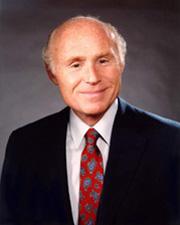 Sen. Herb Kohl (D-WI)
Sen. Herb Kohl (D-WI)Submitted April 3, 2008
Legislative Activity
Stay on top of the latest movement without scrolling through every action
Floor
Latest Action
Senate amendment submitted
April 3, 2008
Text
Submitted
SA 4411. Mr. KOHL (for himself and Mrs. Lincoln) submitted an
amendment intended to be proposed to amendment SA 4387 submitted by Mr.
Dodd (for himself and Mr. Shelby) to the bill H.R. 3221, moving the
United States toward greater energy independence and security,
developing innovative new technologies, reducing carbon emissions,
creating green jobs, protecting consumers, increasing clean renewable
energy production, and modernizing our energy infrastructure, and to
amend the Internal Revenue Code of 1986 to provide tax incentives for
the production of renewable energy and energy conservation; which was
ordered to lie on the table; as follows:

On page 82, between lines 7 and 8, insert the following:

TITLE VII--FORECLOSURE RESCUE FRAUD

SEC. 701. DEFINITIONS.

In this title:
(1) Commission.--The term ``Commission'' means the Federal
Trade Commission.
(2) Foreclosure consultant.--The term ``foreclosure
consultant''--
(A) means a person who directly or indirectly makes any
solicitation, representation, or offer to a homeowner facing
foreclosure on residential real property to perform, with or
without compensation, or who performs, with or without
compensation, any service that such person represents will
prevent, postpone, or reverse the effect of such foreclosure;
and
(B) does not include--
(i) an attorney licensed to practice law in the State in
which the property is located who has established an
attorney-client relationship with the homeowner;
(ii) a housing counseling agency approved by the Secretary;
or
(iii) a person licensed as a real estate broker or
salesperson in the State where the property is located, and
such person engages in acts permitted under the licensure
laws of such State.
(3) Homeowner.--The term ``homeowner'', with respect to
residential real property for which an action to foreclose on
the mortgage or deed of trust on such real property is filed,
means the person holding record title to such property as of
the date on which such action is filed.
(4) Loan servicer.--The term ``loan servicer'' has the same
meaning as the term ``servicer'' in section 6(i)(2) of the
Real Estate Settlement Procedures Act of 1974 (12 U.S.C.
2605(i)(2)).
(5) Residential mortgage loan.--The term ``residential
mortgage loan'' means any loan primarily for personal,
family, or household use that is secured by a mortgage, deed
of trust, or other equivalent consensual security interest on
a dwelling (as defined in section 103(v) of the Truth in
Lending Act (15 U.S.C. 1602)(v)) or residential real estate
upon which is constructed or intended to be constructed a
dwelling (as so defined).

[[Page S2520]]

(6) Residential real property.--The term ``residential real
property'' has the meaning given the term ``dwelling'' in
section 103 of the Consumer Credit Protection Act (15 U.S.C.
1602).
(7) Secretary.--The term ``Secretary'' means the Secretary
of Housing and Urban Development.

SEC. 702. MORTGAGE RESCUE FRAUD PROTECTION.

(a) Limits on Foreclosure Consultants.--A foreclosure
consultant may not--
(1) claim, demand, charge, collect, or receive any
compensation from a homeowner for services performed by such
foreclosure consultant with respect to residential real
property until such foreclosure consultant has fully
performed each service that such foreclosure consultant
contracted to perform or represented would be performed with
respect to such residential real property;
(2) hold any power of attorney from any homeowner, except
to inspect documents, as provided by applicable law;
(3) receive any consideration from a third party in
connection with services rendered to a homeowner by such
third party with respect to the foreclosure of residential
real property, unless such consideration is fully disclosed
to such homeowner in writing before such services are
rendered;
(4) accept any wage assignment, any lien of any type on
real or personal property, or other security to secure the
payment of compensation with respect to services provided by
such foreclosure consultant in connection with the
foreclosure of residential real property; or
(5) acquire any interest, directly or indirectly, in the
residence of a homeowner with whom the foreclosure consultant
has contracted.
(b) Contract Requirements.--
(1) Written contract required.--Notwithstanding any other
provision of law, a foreclosure consultant may not provide to
a homeowner a service related to the foreclosure of
residential real property--
(A) unless--
(i) a written contract for the purchase of such service has
been signed and dated by the homeowner; and
(ii) such contract complies with the requirements described
in paragraph (2); and
(B) before the end of the 3-business day period beginning
on the date on which the contract is signed.
(2) Terms and conditions of contract.--The requirements
described in this paragraph, with respect to a contract, are
as follows:
(A) The contract includes, in writing--
(i) a full and detailed description of the exact nature of
the contract and the total amount and terms of compensation;
(ii) the name, physical address, phone number, email
address, and facsimile number, if any, of the foreclosure
consultant to whom a notice of cancellation can be mailed or
sent under subsection (d); and
(iii) a conspicuous statement in at least 12 point bold
face type in immediate proximity to the space reserved for
the homeowner's signature on the contract that reads as
follows: ``You may cancel this contract without penalty or
obligation at any time before midnight of the 3rd business
day after the date on which you sign the contract. See the
attached notice of cancellation form for an explanation of
this right.''.
(B) The contract is written in the principal language used
by both the homeowner and the foreclosure consultant.
(C) The contract is accompanied by the form required by
subsection (c)(2).
(c) Right to Cancel Contract.--
(1) In general.--With respect to a contract between a
homeowner and a foreclosure consultant regarding the
foreclosure on the residential real property of such
homeowner, such homeowner may cancel such contract without
penalty or obligation by mailing a notice of cancellation not
later than midnight of the 3rd business day after the date on
which such contract is executed or would become enforceable
against the parties to such contract.
(2) Cancellation form and other information.--Each contract
described in paragraph (1) shall be accompanied by a form, in
duplicate, that--
(A) has the heading ``Notice of Cancellation'' in boldface
type; and
(B) contains in boldface type the following statement:
``You may cancel this contract, without any penalty or
obligation, at any time before midnight of the 3rd day after
the date on which the contract is signed by you.
``To cancel this contract, mail or deliver a signed and
dated copy of this cancellation notice or any other
equivalent written notice to [insert name of foreclosure
consultant] at [insert address of foreclosure consultant]
before midnight on [insert date].
``I hereby cancel this transaction on [insert date] [insert
homeowner signature].''.
(d) Waiver of Rights and Protections Prohibited.--
(1) In general.--A waiver by a homeowner of any protection
provided by this section or any right of a homeowner under
this section--
(A) shall be treated as void; and
(B) may not be enforced by any Federal or State court or by
any person.
(2) Attempt to obtain a waiver.--Any attempt by any person
to obtain a waiver from any homeowner of any protection
provided by this section or any right of the homeowner under
this section shall be treated as a violation of this section.
(3) Contracts not in compliance.--Any contract that does
not comply with the applicable provisions of this title shall
be void and may not be enforceable by any party.

SEC. 703. WARNINGS TO HOMEOWNERS OF FORECLOSURE RESCUE SCAMS.

(a) In General.--If a loan servicer finds that a homeowner
has failed to make 2 consecutive payments on a residential
mortgage loan and such loan is at risk of being foreclosed
upon, the loan servicer shall notify such homeowner of the
dangers of fraudulent activities associated with foreclosure.
(b) Notice Requirements.--Each notice provided under
subsection (a) shall--
(1) be in writing;
(2) be included with a mailing of account information;
(3) have the heading ``Notice Required by Federal Law'' in
a 14-point boldface type in English and Spanish at the top of
such notice; and
(4) contain the following statement: ``Mortgage foreclosure
is a complex process. Some people may approach you about
saving your home. You should be careful about any such
promises. There are government and nonprofit agencies you may
contact for helpful information about the foreclosure
process. Contact your lender immediately at [____], call the
Department of Housing and Urban Development Housing
Counseling Line at (800) 569-4287 to find a housing
counseling agency certified by the Department to assist you
in avoiding foreclosure, or visit the Department's Tips for
Avoiding Foreclosure website at <a href='http://www.hud.gov/
'>http://www.hud.gov/
</a> foreclosure for additional assistance.'' (the blank space to
be filled in by the loan servicer).

SEC. 704. CIVIL LIABILITY.

(a) Liability Established.--Any foreclosure consultant who
fails to comply with any provision of section 702 or 703 with
respect to any other person shall be liable to such person in
an amount equal to the sum of the amounts determined under
each of the following paragraphs:
(1) Actual damages.--The greater of--
(A) the amount of any actual damage sustained by such
person as a result of such failure; or
(B) any amount paid by the person to the foreclosure
consultant.
(2) Punitive damages.--
(A) Individual actions.--In the case of any action by an
individual, such amount (in addition to damages described in
paragraph (1)) as the court may allow.
(B) Class actions.--In the case of a class action, the sum
of--
(i) the aggregate of the amount which the court may allow
for each named plaintiff; and
(ii) the aggregate of the amount which the court may allow
for each other class member, without regard to any minimum
individual recovery.
(3) Attorneys' fees.--In the case of any successful action
to enforce any liability under paragraph (1) or (2), the
costs of the action, together with reasonable attorneys'
fees.
(b) Factors to Be Considered in Awarding Punitive
Damages.--In determining the amount of any liability of any
foreclosure consultant under subsection (a)(2), the court
shall consider, among other relevant factors--
(1) the frequency and persistence of noncompliance by the
foreclosure consultant;
(2) the nature of the noncompliance;
(3) the extent to which such noncompliance was intentional;
and
(4) in the case of any class action, the number of
consumers adversely affected.

SEC. 705. ADMINISTRATIVE ENFORCEMENT.

(a) Enforcement by Federal Trade Commission.--
(1) Unfair or deceptive act or practice.--A violation of a
prohibition described in section 702 or a failure to comply
with any provision of section 702 or 703 shall be treated as
a violation of a rule defining an unfair or deceptive act or
practice described under section 18(a)(1)(B) of the Federal
Trade Commission Act (15 U.S.C. 57a(a)(1)(B)).
(2) Actions by the federal trade commission.--The Federal
Trade Commission shall enforce the provisions of sections 702
and 703 in the same manner, by the same means, and with the
same jurisdiction, powers, and duties as though all
applicable terms and provisions of the Federal Trade
Commission Act (15 U.S.C. 41 et seq.) were incorporated into
and made part of this title.
(b) State Action for Violations.--
(1) Authority of states.--In addition to such other
remedies as are provided under State law, whenever the chief
law enforcement officer of a State, or an official or agency
designated by a State, has reason to believe that any person
has violated or is violating the provisions of section 702 or
703, the State--
(A) may bring an action to enjoin such violation;
(B) may bring an action on behalf of its residents to
recover damages for which the person is liable to such
residents under section 704 as a result of the violation; and
(C) in the case of any successful action under subparagraph
(A) or (B), shall be awarded the costs of the action and
reasonable attorney fees, as determined by the court.
(2) Rights of federal trade commission.--
(A) Notice to commission.--The State shall serve prior
written notice of any civil action under paragraph (1) upon
the Commission and provide the Commission with a copy of

[[Page S2521]]

its complaint, except in any case in which such prior notice
is not feasible, in which case the State shall serve such
notice immediately upon instituting such action.
(B) Intervention.--The Commission shall have the right--
(i) to intervene in any action referred to in subparagraph
(A);
(ii) upon so intervening, to be heard on all matters
arising in the action; and
(iii) to file petitions for appeal in such actions.
(3) Investigatory powers.--For purposes of bringing any
action under this subsection, nothing in this subsection
shall prevent the chief law enforcement officer, or an
official or agency designated by a State, from exercising the
powers conferred on the chief law enforcement officer or such
official by the laws of such State to conduct investigations
or to administer oaths or affirmations, or to compel the
attendance of witnesses or the production of documentary and
other evidence.
(4) Limitation.--Whenever the Federal Trade Commission has
instituted a civil action for a violation of section 702 or
703, no State may, during the pendency of such action, bring
an action under this section against any defendant named in
the complaint of the Commission for any violation of section
702 or 703 that is alleged in that complaint.

SEC. 706. PREEMPTION.

Nothing in this title affects any provision of State or
local law respecting any foreclosure consultant, residential
mortgage loan, or residential real property that provides
equal or greater protection to homeowners than what is
provided under this title.
______