S.Amdt. 4493Senate110th Congress (2007-2009)2nd degree
S.Amdt. 4493
Sponsored by 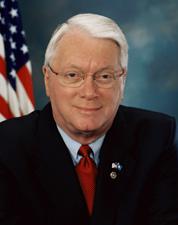 Sen. Jim Bunning (R-KY)
Sen. Jim Bunning (R-KY)Submitted April 7, 2008
Legislative Activity
Stay on top of the latest movement without scrolling through every action
Floor
Latest Action
Senate amendment submitted
April 7, 2008
Text
Submitted
SA 4493. Mr. BUNNING (for himself and Ms. Stabenow) submitted an
amendment intended to be proposed to amendment SA 4387 submitted by Mr.
Dodd (for himself and Mr. Shelby) to the bill H.R. 3221, moving the
United States toward greater energy independence and security,
developing innovative new technologies, reducing carbon emissions,
creating green jobs, protecting consumers, increasing clean renewable
energy production, and modernizing our energy infrastructure, and to
amend the Internal Revenue Code of 1986 to provide tax incentives for
the production of renewable energy and energy conservation; which was
ordered to lie on the table; as follows:

On page 82, between lines 7 and 8, insert the following:

TITLE VII--CURRENCY MANIPULATION

SEC. __01. SHORT TITLE.

This title may be cited as the ``China Currency
Manipulation Act of 2008''.

SEC. __02. FINDINGS.

Congress makes the following findings:
(1) The People's Republic of China has a material global
current account surplus.
(2) The People's Republic of China has, since the beginning
of 2000, accumulated a current account surplus with the
United States of nearly $1,200,000,000,000, more than twice
the size of the cumulative current account surplus of any
other United States trading partner during the same period.
(3) The People's Republic of China has engaged in
protracted large-scale intervention in currency markets,
thereby subsidizing Chinese-made products and erecting a
formidable nontariff barrier to trade for United States
exports to the People's Republic of China, in contravention
of the spirit and intent of the General Agreement on Tariffs
and Trade and the Articles of Agreement of the International
Monetary Fund.

SEC. __03. ACTION TO ACHIEVE FAIR CURRENCY.

(a) Determination.--Notwithstanding any other provision of
law, the Secretary of the Treasury shall--
(1) make an affirmative determination that the People's
Republic of China is manipulating the rate of exchange
between its currency and the United States dollar within the
meaning of section 3004(b) of the Exchange Rates and
International Economic Policies Coordination Act of 1988 (22
U.S.C. 5304(b)); and
(2) take the action described in subsections (b), (c), and
(d) of this section.
(b) Action.--
(1) In general.--The Secretary of the Treasury shall, not
later than 30 days after the date of the enactment of this
Act, establish a plan of action to remedy currency
manipulation by the People's Republic of China, and submit a
report regarding that plan, to the Committee on Banking,
Housing, and Urban Affairs and the Committee on Finance of
the Senate and the Committee on Financial Services and the
Committee on Ways and Means of the House of Representatives.
(2) Benchmarks.--The report described in paragraph (1)
shall include specific benchmarks and timeframes for
correcting the currency manipulation.
(c) Initial Negotiations.--The Secretary shall initiate, on
an expedited basis, bilateral negotiations with the People's
Republic of China for the purpose of ensuring that the
country regularly and promptly adjusts the rate of exchange
between its currency and the United States dollar to permit
effective balance of payment adjustments and to eliminate the
unfair competitive advantage.
(d) Coordination With the International Monetary Fund.--The
Secretary of the Treasury shall, not later than 30 days after
the date of the enactment of this Act, instruct the Executive
Director to the International Monetary Fund to use the voice
and vote of the United States, including requesting
consultations under Article IV of the Articles of Agreement
of the International Monetary Fund, for the purpose of
ensuring the People's Republic of China regularly and
promptly adjusts the rate of exchange between its currency
and the United States dollar to permit effective balance of
payments adjustments and to eliminate the unfair competitive
advantage in trade.

____________________