To ensure that United States attorneys are promptly nominated by the President, and are appointed by and with the advice and consent of the Senate.
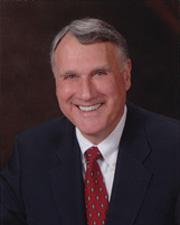 Sen. Jon Kyl (R-AZ)
Legislative Activity
Stay on top of the latest movement without scrolling through every action
Senate amendment not agreed to: Amendment SA 459 not agreed to in Senate by Yea-Nay Vote. 40 - 56. Record Vote Number: 79.(consideration: CR S3302)
March 20, 2007
View full timeline
Senate amendment not agreed to: Amendment SA 459 not agreed to in Senate by Yea-Nay Vote. 40 - 56. Record Vote Number: 79.(consideration: CR S3302)
March 20, 2007
Roll call votes on amendments in Senate: Amendment SA 459 not agreed to in Senate by Yea-Nay Vote. 40 - 56. Record Vote Number: 79.(consideration: CR S3302)
March 20, 2007
Considered by Senate. (consideration: CR S3292, S3302)
March 20, 2007
Amendment SA 459 not agreed to in Senate by Yea-Nay Vote. 40 - 56. Record Vote Number: 79. (consideration: CR S3302)
March 20, 2007
Senate amendment proposed (on the floor): Amendment SA 459 proposed by Senator Kyl.(consideration: CR S3251-3253; text: CR S3251)
March 19, 2007
Amendment SA 459 proposed by Senator Kyl. (consideration: CR S3251-3253; text: CR S3251) To ensure that United States attorneys are promptly nominated by the President, and are appointed by and with the advice and consent of the Senate.
March 19, 2007
Senate amendment submitted
March 15, 2007
Votes
1 roll call on this amendment
Text
Proposed
PRESERVING UNITED STATES ATTORNEY INDEPENDENCE ACT OF 2007

The ACTING PRESIDENT pro tempore. Under the previous order, the
Senate will proceed to the consideration of S. 214.
The clerk will report the bill by title.
The assistant legislative clerk read as follows:

A bill (S. 214) to amend chapter 35 of title 28, United
States Code, to preserve the independence of the United
States Attorneys.

There being no objection, the Senate proceeded to consider the bill
which had been reported from the Committee on the Judiciary, with an
amendment, as follows:
(The part of the bill intended to be stricken is shown in boldface
brackets and the part of the bill intended to be inserted is shown in
italic.)

S. 214

Be it enacted by the Senate and House of Representatives of
the United States of America in Congress assembled,

SECTION 1. SHORT TITLE.

This Act may be cited as the ``Preserving United States
Attorney Independence Act of 2007''.

SEC. 2. VACANCIES.

[Section 546 of title 28, United States Code, is amended to
read as follows:

``Sec. 546. Vacancies

``The United States district court for a district in which
the office of the United States attorney is vacant may
appoint a United States attorney to serve until that vacancy
is filled. The order of appointment by the court shall be
filed with the clerk of the court.''.]
Section 546 of title 28, United States Code, is amended by
striking subsection (c) and inserting the following:
``(c) A person appointed as United States attorney under
this section may serve until the earlier of--
``(1) the qualification of a United States attorney for
such district appointed by the President under section 541 of
this title; or
``(2) the expiration of 120 days after appointment by the
Attorney General under this section.
``(d) If an appointment expires under subsection (c)(2),
the district court for such district may appoint a United
States attorney to serve until the vacancy is filled. The
order of appointment by the court shall be filed with the
clerk of the court.''.

SEC. 3. APPLICABILITY.

(a) In General.--The amendments made by this Act shall take
effect on the date of enactment of this Act.
(b) Application.--
(1) In general.--Any person serving as a United States
attorney on the day before the date of enactment of this Act
who was appointed under section 546 of title 28, United
States Code, may serve until the earlier of--
(A) the qualification of a United States attorney for such
district appointed by the President under section 541 of that
title; or
(B) 120 days after the date of enactment of this Act.
(2) Expired appointments.--If an appointment expires under
paragraph (1), the district court for that district may
appoint a United States attorney for that district under
section 546(d) of title 28, United States Code, as added by
this Act.

The ACTING PRESIDENT pro tempore. Under the previous order, the
committee-reported amendment is agreed to and the motion to reconsider
is laid upon the table.
Mrs. FEINSTEIN. Mr. President, I suggest the absence of a quorum.
The ACTING PRESIDENT pro tempore. The clerk will call the roll.
The assistant legislative clerk proceeded to call the roll.
Mrs. FEINSTEIN. Mr. President, I ask unanimous consent that the order
for the quorum call be rescinded.
The ACTING PRESIDENT pro tempore. Without objection, it is so
ordered.
Mrs. FEINSTEIN. Mr. President, I rise today to speak in support of S.
214, the bill the leader just referred to. This is a bill that simply
reinstates the Senate's role in the confirmation process of U.S.
attorneys. It is a bill I introduced with Senator Leahy on January 9,
2007, days after I first learned in early December that officials from
main Justice called a handful of U.S. attorneys from around the country
and forced them to resign their positions without cause.

[[Page S3241]]

At that time, I had very little information and was unaware of
exactly what had occurred and why. As I looked into it, I learned that
in March of 2006, the PATRIOT Act was reauthorized and a change was
made in the law. It was made in conference without Democratic Senators
present. To the best of my knowledge, it was made without the knowledge
of any Senator, Republican or Democrat. It is my understanding this was
a request from the Justice Department that was presented by Will
Moschella to the staff of the Judiciary Committee and, without the
knowledge of Senators, was put into the bill. It then gave the
President the authority essentially to appoint a U.S. attorney without
confirmation for the remainder of his term.
The bill, S. 214, that is before the Senate today simply returns the
law the way it was before this action took place in March of 2006.
Today, just a little more than 2 months after I first learned about
this situation, additional information has come to light. But rather
than alleviating the concerns and answering questions, we are now faced
with new and more serious allegations. In fact, the big question
looming over this debate is whether the Attorney General and others in
the Bush administration have misled the Congress and the public. If
true, this is very serious.
There are also allegations that the firings were done because the
Department of Justice and the White House were both unhappy with some
of the U.S. attorneys' handling of public corruption cases. If true
this, too, is very serious.
We now know that at least eight U.S. attorneys were forced from
office, and that despite shifting rationales for why, it has become
clear that politics has, in fact, played some role.
Last week, we learned that the White House was involved in this
process and that discussions took place with such prominent figures as
Presidential adviser Karl Rove and former White House Counsel Harriet
Miers. We also learned last week that these discussions began well over
2 years ago, almost immediately following the 2004 election, and it
appears from recently released e-mails that Attorney General Gonzales
was personally consulted, even while he was still serving as White
House Counsel.
This information also shed new light on who was being targeted for
firing and why. It is this last point--why some were targeted--that has
served to raise more questions and more significant concerns. We have
learned that as many as six of the eight U.S. attorneys who were
involved with public corruption cases. While we don't know what role
this played in their selection, it is an unavoidable fact that raises
serious questions.
Today, as the Senate begins the debate on the Preserving United
States Attorney Independence Act, I would like to discuss some of what
we have learned in greater detail and some of the reasons this bill is
so necessary.
I believe it is important to look at how interim U.S. attorneys have
been appointed over the years. There appears to be an assumption by the
Bush administration that the Attorney General should have an exclusive
authority to appoint interim U.S. attorneys. But, in fact, history
paints a much different picture.
When first looking into this issue, I found that the statutes had
given the courts the authority to appoint an interim U.S. attorney and
that this dated back as far as the Civil War. Specifically, the
authority was first vested with the circuit courts in March of 1863.
Then, in 1898, a House of Representatives report explained that while
Congress believed it was important to have the courts appoint an
interim U.S. attorney, there was a problem relying on circuit courts
``since the circuit justice is not always to be found in the circuit
and time is wasted in ascertaining his whereabouts.'' Therefore, at
that time, the interim appointment authority was switched to the
district courts; that is, in 1898 it was switched to the district
courts. Thus, for almost 100 years, the district courts were in charge
of appointing interim U.S. attorneys, and they did so with virtually no
problems.
This structure was left undisturbed until 1986 when the statute was
changed during the Reagan administration. In a bill that was introduced
by Senator Strom Thurmond, the statute was changed to give the
appointment authority to the Attorney General, but even then it was
restricted and the Attorney General had a 120-day time limit. After
that time, if a nominee was not confirmed, the district courts would
appoint an interim U.S. attorney. The adoption of this language was
part of a larger package that was billed as technical amendments to
criminal law, and thus there was no recorded debate in either the House
or the Senate and both Chambers passed the bill by voice vote.
Then, 20 years later, in March 2006--again without much debate and
again as a part of a larger package--a statutory change was inserted
into the PATRIOT Act reauthorization. This time, the Executive's power
was expanded even further, giving the Attorney General the authority to
appoint an interim replacement indefinitely and without Senate
confirmation.
Unfortunately, not 1 year after securing this new authority, abuses
have come to light. Almost immediately after I first spoke about what I
had learned in January, the Attorney General called me to tell me that
I had my facts wrong. However, he also sent up his staff to confirm
that ``less than 10'' U.S. attorneys had been asked to resign on
December 7, 2006.
Despite this, the Attorney General adamantly denied politics had any
role in the process. In fact, in an interview with an Associated Press
reporter on January 16, 2007, the Attorney General was asked about the
charges of political motivation, and he responded:

Nothing could be further from the truth.

He further stated in response to your comment, Mr. President, that
the Department tried to avoid Senate confirmation to reward political
allies:

We in no way politicized these decisions.

Two days later, the Attorney General reiterated this position when he
came before the Senate Judiciary Committee on January 18 of this year
and said:

I would never, ever make a change in the United States
attorney position for political reasons.

That is a categorical and definitive monosyllabic statement. However,
the Department had to backtrack when it became evident that the former
U.S. attorney from your State, Mr. President, Arkansas, Bud Cummins,
was simply replaced in order to make room for Tim Griffin, who had
served as Karl Rove's special assistant and had been in charge of
opposition research against Democratic candidates for the Republican
National Committee.

Less than a month later, the Deputy Attorney General confirmed this
fact when he testified before the Senate Judiciary Committee on
February 7, 2007. At that time, he said:

The fact is there was a change made [in Arkansas] that was
not connected, as we said, to the performance of the
incumbent, but more related to the opportunity to provide a
fresh start with a new person in that position.

Deputy Attorney General McNulty, however, went on to say that all the
others who were fired were fired for ``performance-related reasons.''
But this, too, was not the final explanation. The Department next tried
to justify the firings by arguing that the U.S. attorneys were let go
because there were ``policy disagreements.'' Then the Attorney General
said that these U.S. attorneys had ``lost [his] confidence.'' So there
are three different reasons so far. Now, most recently, the explanation
has been that the Department thought it ``could do better''--the fourth
explanation.
These explanations are as slippery as they are misleading. Rather,
what documents and e-mails demonstrate is that none of these reasons
was the deciding factor that led some U.S. attorneys to be targeted for
firing. Instead, it appears these individuals lost their jobs because a
number of Department of Justice officials and possibly--we don't know
but possibly--White House officials did not judge them to be
sufficiently loyal or did not like the cases they were prosecuting or
simply wanted to put in new, politically connected, young lawyers. It
appears this way because contained in the documents that were released
last week is an outline of the Department of Justice's plan for how to
determine who should be let go and who should stay.
The first step of that plan was to create a new rating system to
evaluate all

[[Page S3242]]

93 U.S. attorneys. This was to be separate from the independent
performance reports, called EARS reports. Those reports routinely
occurred and objectively examined each U.S. Attorney's Office by
evaluating their prosecution caseloads, their management, their
willingness to follow Department priorities, and their ability to work
cooperatively with the FBI, with the DEA, and with other client
agencies.
This rating system was developed back in February of 2005, and one of
the primary factors to be considered was loyalty to the administration.
One e-mail describing the ratings stated:

Recommended retaining strong U.S. attorneys who have
produced, managed well, and exhibited loyalty to the
President and Attorney General. Recommended removing weak
U.S. attorneys who have been ineffectual managers and
prosecutors, chafe against administration initiatives.

Under this system, two of the eight fired U.S. attorneys received
strong evaluations and recommended retaining while three received
recommended removing.
One of the U.S. attorneys who received a recommended removing rating
was Carol Lam from the Southern District of California. She received
this low rating despite her many accomplishments and despite her
positive performance evaluations. I am familiar with Carol Lam's career
because she served in San Diego. In that position, she has taken on
some of the biggest cases and really made a positive impact on the
community she has served. But that is not just my opinion. Leaders
throughout San Diego have sung her praises. Let me give a few examples.
Dan Dzwilewski, head of the FBI office in San Diego:

Carol has an excellent reputation and has done an excellent
job given her limited resources.

Then, when asked whether she had given proper attention to gun cases,
he said:

What do you expect her to do? Let corruption exist?

Adele Fasano, the San Diego Director of Field Operations, U.S.
Customs and Border Protection, said:

[We have] enjoyed a strong, collaborative relationship with
the U.S. Attorney's Office to combat smuggling activity
through the ports of entry.

City attorney for San Diego, Michael Aguirre, said:

[Carol Lam] has been by far the most outstanding U.S.
Attorney we've ever had . . . she's won a national reputation
as one of the top prosecutors in the country.

This is the city attorney.
Michael Unzueta, Special Agent in Charge, Immigration and Customs
Enforcement:

Carol Lam is truly an example of a dedicated public servant
and a law enforcement professional. We will miss her
leadership.

John Cooper, Special Agent in Charge, Naval Criminal Investigative
Service:

The departure of Ms. Lam will be a great loss . . . Ms. Lam
is the consummate law enforcement executive who leads by
example.

And Alan Poleszak, Acting Special Agent in Charge, Drug Enforcement
Agency:

The on-going prosecution of [the] Javier Arellano Felix
drug trafficking organization is both historic and noteworthy
. . . [Ms. Lam's] commitment to Federal law enforcement in
this judicial district, county, and city, will be missed.

We should take note of the fact that the Arellano Felix organization
is one of the largest and most dangerous Mexican drug cartels known.
They operate out of Tijuana. They have killed hundreds of people. They
have murdered Mexican DAs, they have murdered Mexican judges, and they
are a blight. This U.S. attorney took them on. I will tell my
colleagues more about that in a moment. The reason Carol Lam was well
respected is because she worked hard and she took on the tough fights.
She has had success after success. Let me give some examples.

In September of 2005, the president of the San Diego chapter of
Hell's Angels pled guilty to conspiracy to commit racketeering. Guy
Russell Castiglione admitted he conspired to kill members of a rival
motorcycle gang, the Mongols, to sell methamphetamine. In December
2005, Daymond Buchanan, member of Hell's Angels, was sentenced to 92
months in Federal prison for participating in a pattern of racketeering
as well as inflicting serious bodily injury upon one victim. At that
time, Ms. Lam announced:

With the president, sergeant at arms, secretary, treasurer,
and six other members of the Hell's Angels convicted of
racketeering charges and facing long prison sentences, the
San Diego chapter of the Hell's Angels has been effectively
shut down for the foreseeable future.

If that isn't enough, in September of 2006, Jose Ernesto Beltran-
Quinonez, a Mexican national, pled guilty to making false statements
about weapons of mass destruction. Mr. Quinonez was sentenced to 3
years in Federal prison for making up a story about Chinese terrorists
sneaking into the United States with a nuclear warhead. The hoax
prompted a massive investigation, Federal warnings, discussions at one
of President Bush's security briefings, and a nationwide hunt for the
group of Chinese supposedly plotting the attack.
In December 2006 Mel Kay, of Golden State Fence Company, and Michael
McLaughlin pled guilty to felony charges of hiring illegal immigrants
and agreed to pay fines of $200,000 and $100,000 respectively. The
company, which built much of the fence near Otay Mesa, agreed
separately to pay $5 million on a misdemeanor count, one of the largest
fines ever imposed on a company for an immigration violation.
Was Carol Lam praised for this work? No, she was sent packing without
an explanation. Those were not her only cases.
She gained a national reputation for her work on public corruption
cases. I think it is important to note that public corruption is the
FBI's second highest priority after terrorism-related investigations.
Now, I didn't know this, but the Judiciary Committee had an oversight
hearing of the FBI on December 6, 2006, where the Director, Bob
Mueller, came before us and he mentioned what their priorities were,
and he said: Terrorism first, and then public corruption second, and
crime was way down on the list.
As a matter of fact, I found it rather startling, and I questioned
him about that. He said, with some emphasis, those are our priorities,
and we believe if we don't do public corruption, nobody else will. So
the FBI has as its second highest priority public corruption. The FBI
is going to be out there putting together cases. Who prosecutes these
cases? U.S. attorneys. The FBI's second highest priority, and Carol Lam
rose to this challenge.
In March of 2004, her office convicted Steven Mark Lash, the former
chief financial officer of FPA Medical Management, for his role in
defrauding shareholders and lenders of FPA. The collapse of the company
left more than 1,600 doctors being owed more than $60 million and
patients reporting they were unable to obtain medical care because this
company had ceased paying providers.
In January of 2005, Mark Anthony Kolowich, owner of World Express Rx,
pled guilty to conspiracy to sell counterfeit pharmaceuticals,
conspiracy to commit mail fraud and smuggle pharmaceuticals, and
conspiracy to launder money. Mr. Kolowich had run an Internet pharmacy
Web site where customers could order prescription drugs without a valid
prescription. The judge called him the kingpin and architect of an
illicit pharmaceutical ring that recruited many others to smuggle drugs
across the United States-Mexico border at San Ysidro.
Another case. In July 2005, Mrs. Lam brought a case against San Diego
councilman Ralph Inzunza and Las Vegas lobbyist Lance Malone. They were
convicted on multiple counts of extortion, wire fraud conspiracy and
wire fraud and were accused of trading money for efforts to repeal a
law.
Then, in her most well-known case, in November of 2005, Ms. Lam
secured a guilty plea from former Representative Randy ``Duke''
Cunningham for taking more than $2 million in bribes in a criminal
conspiracy case involving at least three defense contractors after he
accepted cash and gifts and then tried to influence the Defense
Department on behalf of donors. He also pled guilty to a separate tax
evasion violation for failing to disclose income in 2004.
Now, here is where it gets interesting. Finally, 2 days before she
left office, that would be around February 13, Carol Lam announced
indictments of Kyle ``Dusty'' Foggo, a former top officer of the
Central Intelligence

[[Page S3243]]

Agency, and Brent Wilkes, a defense contractor accused of bribing Duke
Cunningham and the prime benefactor of secret CIA contracts. It is this
latest incident, involving the ongoing investigations stemming from the
Cunningham case, that has raised the most significant concerns about
Carol Lam's removal.
When I first came to the floor in January, I mentioned rumors were
circulating around California that Carol Lam was pushed out because of
her efforts in the Duke Cunningham case and subsequent investigations.
I have tried to be very careful about talking about these allegations
because they are so serious and because, at the time, they were based
on mere speculation.
Despite recent materials coming to light, I want to continue to be
very careful in talking about these allegations. At the same time, I
must say that today there are even more questions to be answered
regarding what role public corruption cases played in the
administration's decisions about which U.S. attorneys to fire. We have
now learned that six of the eight fired U.S. attorneys were involved in
public corruption cases.

The Washington Post noted this, I think, very well, as I will point
out here on this chart.
David Iglesias, New Mexico--oversaw probes of State Democrats and
alleges two Republican lawmakers pressured him about the case. He was
respected by the Judiciary agencies and staff, complied with Department
priorities.
Daniel Bogden, Nevada--overall evaluation was very positive. Notable
cases, opened a probe related to Nevada Governor Jim Gibbons, former
Member of Congress.
Paul Charlton, Arizona--opened preliminary probes of Representatives
Jim Kolbe and Rick Renzi before November election. Well respected,
established goals that were appropriate to meet the priorities of the
Department.
These are quotes from the official performance reports. I am not
making them up, and I am not taking them from any individual. These are
27 people who go into an office and evaluate the performance of a U.S.
attorney. What did they say about notable cases?
Bud Cummins, Eastern Arkansas--Cummins was very competent, highly
regarded.
That was his performance review. He conducted a probe related to
Missouri Governor Roy Blunt, which he later closed without charges.
There is Carol Lam, Southern California, whom I have already
mentioned.
John McKay, Western Washington--here is the job performance:
effective, well regarded, capable leader, established strategic goals
that were appropriate. Here is the case: Declined to intervene in
disputed gubernatorial election, angry GOP.
Those are the six. In Carol Lam's case, these allegations have become
even more troubling.
Following the conviction of Duke Cunningham, in April 2006, Federal
prosecutors in Carol Lam's office began investigating whether Brent
Wilkes, a defense contractor, and Kyle ``Dusty'' Foggo, the third
highest ranking official at the CIA, and others were involved in
bribery and corruption. Throughout the first week of May 2006,
information began to surface in the press regarding this ongoing
investigation. Then, on May 10, 2006, Carol Lam quietly sent an urgent
notice to officials at Main Justice to inform the Deputy Attorney
General and the Attorney General she was about to execute search
warrants on May 12--that is 2 days later--to search the home and CIA
office of Dusty Foggo. The very next day, after she sent this internal
notice, Department of Justice staff sent an e-mail to the White House
that said this:

Please call me to discuss the following: . . . The real
problem we have right now with Carol Lam that leads me to
conclude that we should have somebody ready to be nominated
on 11/18, the day her 4-year term expires.

The real problem we have right now with Carol Lam. And that is the
day after she notified Main Justice that she was executing two search
warrants.
Mr. President, I ask unanimous consent that the complete e-mail be
printed in the Record.
There being no objection, the material was ordered to be printed in
the Record, as follows:

From: Sampson, Kyle.
Sent: Thursday, May 11, 2006 11:36 AM.
To: `William_K._K
[email protected]
'.
Subject: FW: Removal and Replacement of U.S. Attorneys Whose
4-year Terms Have Expired.
Sensitivity: Confidential.

Per-your inquiry yesterday after JSC, this is the e-mail I
sent to Dabney last month at Harriet's request. Please call
me at your convenience to discuss the following:
------
Tim Griffin for E.D. Ark.; and
The real problem we have right now with Carol Lam that
leads me to conclude that we should have someone ready to be
nominated on 11/18, the day her 4-year term expires.
____

From: Sampson, Kyle.
Sent: Friday, April 14, 2006 9:31 AM.
To: `Dabney_F
[email protected]
'.
Subject: RE: Removal and Replacement of U.S. Attorneys Whose
4-year Terms Have Expired.
Sensitivity: Confidential.
Also, I would note that two others on my original list
already have left office. They are:
------and------
____

From: Sampson, Kyle.
Sent: Friday, April 14, 2006 9:30 AM.
To: `Dabney_F
[email protected]
'.
Subject: Removal and Replacement of U.S. Attorneys Whose 4-
year Terms Have Expired.
Sensitivity: Confidential.
Dabney, DOJ recommends that the White House consider
removing and replacing the following U.S. Attorneys upon the
expiration of their 4-year terms:
Margaret M. Chiara, W.D. Mich., term expired 11/2/2005;
Harry E. ``Bud'' Cummins III, E.D. Ark., term expired 1/9/
2006; and
Carol C. Lam, S.D. Cal., term expires 11/18/2006.
We also should similarly seek to remove and replace:
------
Call me if you have any questions. If you pushed me, I'd
have 3-5 additional names that the White House might want to
consider.

Mrs. FEINSTEIN. Mr. President, there could be a straightforward
explanation for this e-mail that has nothing to do with public
corruption cases Carol Lam was pursuing. However, the timing looks
really suspicious and it raises serious questions, questions that need
to be answered. Because if any U.S. attorney were removed because of a
public corruption investigation or prosecution, this could very well
comprise obstruction of justice.
I believe that irrespective of the intent behind the decision to fire
Carol Lam and the other U.S. attorneys working on public corruption
cases, such a removal sends a message to all other Federal prosecutors,
whether intended or not, that creates a chilling effect. Because of
this, there should have been very careful consideration given to what
steps should have been taken to ensure it was clear there was good
reason to remove the prosecutor, that the office itself had a
comprehensive plan in place to ensure no cases or investigations would
be harmed or slowed in any way and that ongoing public corruption cases
had absolutely nothing to do with the removal of the U.S. attorney.
However, in the case of Carol Lam and in the case of five other U.S.
attorneys, the administration failed to meet even these bare minimum
standards. I strongly believe that removal of a United States attorney
who is involved in an ongoing public corruption case should occur
only--only if there is a very good reason, and not simply ``we could do
better.''
Because of the public corruption cases and allegations that
individuals were removed to put in politically connected young lawyers,
another issue that must be examined is the appearance of politics
impacting how U.S. attorneys are treated and what that means for the
prosecution of justice.
As was reported in the McClatchy newspapers, former Federal
prosecutors and defense lawyers have said:

Allegations of political interference could undermine the
reputation of U.S. attorneys as impartial enforcers of the
law.

And, yes, I really agree with that.
One former Federal prosecutor said:

One of the things the Department has stood for was being
apolitical. Sure, politics does get involved in the
appointment process, but this is just nuts.

He is right. Yes, appointees are selected and nominated by the party
in power. But once an individual U.S. attorney takes that oath of
office, he or she must be independent, objective, and must be free to
pursue justice wherever the facts lead.
Bruce Fein, the former Associate Deputy Attorney General for the

[[Page S3244]]

Reagan administration, said in an interview last week:

[W]e expect the rule of law to be administered
evenhandedly. That's what ties our country together and gives
legitimacy to decisions by the court and to the government
itself. When it's obvious that the prosecution function is
being manipulated for political purposes, that undermines the
entire rule of law.

In defending its actions, administration officials and others have
tried to argue that both Presidents Reagan and Clinton fired all 93
U.S. attorneys when they came into office, and that is no different
than what occurred in December. Right?
Wrong. The implication of this argument has been that it is not
unheard of to fire U.S. attorneys in this manner, and that, at some
level, it is commonplace. Right?
Wrong, it is not commonplace. In fact, the Department of Justice and
the White House knew that this was not commonplace and that comparing
its actions to Reagan and Clinton was an inaccurate analogy. A memo,
written by Kyl Sampson on January 1, 2006, to the Counsel to the
President, clearly stated:

During the Reagan and Clinton Administrations, President
Reagan and Clinton did not seek to remove and replace U.S.
Attorneys they had appointed, whose four-year terms had
expired, but instead permitted such U.S. Attorneys to serve
indefinitely under the holdover provision.

That is a memo from the Attorney General's Chief of Staff, Kyle
Sampson, again, on January 1, 2006.
So they knew. They knew that just to say President Reagan and
President Clinton each formed a new team when they became President
couldn't be used as precedent because it was not an accurate precedent.
Despite this, the administration and its defenders have continued to
argue that firing U.S. attorneys was ``entirely appropriate'' and that
it was justified because executive branch appointees ``serve at the
pleasure of the President.'' In fact, this had never been done before.
In fact, as far as we have been able to find out so far, and they are
still researching it--but the Congressional Research Service has told
us that in the past 25 years, only two U.S. attorneys who served less
than a full term have been fired.
Interestingly, this talking point about ``serving at the pleasure of
the President'' is repeated throughout the documents that have been
released as to what the administration should say when asked about the
firing of U.S. attorneys. Specifically, it was listed in several
versions of a memo that outlined the steps to be taken to execute the
plan. This, again, is a memo from the Chief of Staff to the Attorney
General:

``Step 3: Prepare to withstand political upheaval.'' We
should expect that there will be ``direct and indirect
appeals of the Administration's determination to seek these
resignations. . . . Recipients of such `appeals' must respond
identically . . . U.S. attorneys serve at the pleasure of the
President.''

So those to whom somebody appeals must reinforce this argument: U.S.
attorneys serve at the pleasure of the President. That little statement
is meant to cover, I am sorry to say, a multitude of sins.
Of course, in the most literal sense, it is true: executive branch
employees serve at the pleasure of the President. However, blind
adherence and single-minded pursuit of this principle ignores that it
is equally true that our Nation's prosecutors must be independent, they
must be objective, and they must pursue justice wherever the facts
lead.
And it ignores that our country is based on the principle of checks
and balances. Of course, in this instance this means that we must
return Senate confirmation as a certainty to the law, and this is
exactly what we do in S. 214--we simply return the law to what it was
before that unknown addition was added to the PATRIOT Act
reauthorization without the knowledge of Senators.
Since January when this issue was first raised, the Department of
Justice has repeatedly stated publicly that it did not intend to avoid
Senate confirmation. For example, before the Judiciary Committee on
January 18, 2007, the Attorney General testified that DOJ was ``fully
committed to try and find presidentially appointed, Senate confirmed
U.S. Attorneys for every position.''
However, in e-mails and memos written by his staff, a strategy was
outlined that does not show a commitment to Senate confirmation. For
example, on September 13, 2006, 3 months before the firing call on
December 7, the Attorney General's Chief of Staff sent an e-mail to
Monica Goodling, liaison between the Department of Justice and the
White House, suggesting that the Department use the new authority
slipped into the PATRIOT Act reauthorization to facilitate firing U.S.
attorneys and replacing them with new ones. The e-mail said:

I strongly recommend that as a matter of administration, we
utilize the new statutory provisions that authorize the AG to
make [U.S. attorney] appointments.

Then, the inference is, by avoiding Senate confirmation, the e-mail
goes on:

[W]e can give far less deference to home State Senators and
thereby get (1) our preferred person appointed and (2) do it
far faster and more efficiently at less political costs to
the White House.

This is only one example of discussions among White House and DOJ
officials about the benefits of avoiding the Senate, especially when
the home State Senators are Democrats.

In another example there is an e-mail chain from December 2006
between the Department of Justice and the White House which discusses
how to deal with the opposition of Arkansas' Democratic Senators to the
interim appointment of Tim Griffin. I quote:

``I think we should gum this to death.'' . . . The longer
we can forestall [the Senators saying they will never support
Griffin] the better. We should run out the clock . . . ``all
of this should be done in `good faith,' of course.''

The e-mail went on to say:

Our guy is in there so the status quo is good for us . . .
pledge to desire a Senate-confirmed U.S. Attorney; and
otherwise hunker down.

That is an e-mail that deserves a lot of questions. In addition, in a
November 15, 2006, memo regarding the plan to replace U.S. attorneys,
``Step 2: Senator calls,'' outlines that for my State of California and
for Michigan and Washington, the strategy was to have Bill Kelly from
the White House call ``the home State `Bush political lead,' '' since
there was no Republican home State Senators.
So while the Justice Department has said: We consulted with home
State Senators--that is true only if they were Republican. If they were
Democratic home State Senators they were not, in fact, called.
I believe all of this adds up to a very complex and very serious
situation that now has even more questions that need to be asked and
answered under oath. For example, we need to know who from the White
House was involved in these decisions? Was the plan orchestrated by the
White House? Who made these determinations about who to fire and who
was involved in the loyalty evaluation? What other U.S. attorneys were
targeted for dismissal?
We know there were several but their names have been redacted from
the documents we have received. We need to know who are they, why were
they on the list, and why did they come off the list?
What were the real reasons used to determine who would be fired,
since the evaluations don't line up with the EARS reports? What role,
if any, did open public corruption cases play in determining who would
be fired? What was the Attorney General's role in the process? What did
he know and when did he know it? How can he say he didn't know what was
going on with the firing of the U.S. attorneys, even though the White
House did, and even though there are e-mails showing that he was
consulted?
Was the change to the law in March of 2006 done in order to
facilitate the wholesale replacement of all or a large number of U.S.
attorneys without Senate confirmation? We know that somebody suggested
all 93 U.S. attorneys should be replaced, at one point. My question is,
was this done to facilitate that?
These are just some of the questions I hope our committee will delve
into as the investigation continues.
Finally, in an e-mail that discussed avoiding the Senate confirmation
process, the Attorney General's Chief of Staff wrote:

There is some risk that we'll lose the authority [to
appoint interim U.S. attorneys indefinitely], but if we don't
ever exercise it then what's the point of having it?

[[Page S3245]]

Think about that: There is some risk that we will lose the authority
to appoint U.S. attorneys indefinitely, but if we don't ever exercise
it, then what is the point of having it?
I believe the time has come for the administration to lose that
authority. All these unanswered questions and allegations have
demonstrated at the very least one real thing: the law must be returned
to what it was prior to the reauthorization of the PATRIOT Act, and the
bipartisan bill before the Senate would do just that. Through
negotiations with Senator Specter we are now considering legislation
that would give the Attorney General authority to appoint an interim
U.S. attorney but only for 120 days. If after that time the President
has not sent up a nominee to the Senate and had that nominee confirmed,
then the authority to appoint an interim U.S. attorney will fall to the
district court.
Given all we have learned in the past few months, I believe this is
the least we can do to restore the public's faith in an independent
system of justice. This bill will also help prevent any future abuse or
appearance of politicization of U.S. attorney positions.
The legislation also makes it clear that the 120-day limitation
applies to all the interim U.S. attorneys who are currently in place,
including those who are the result of the Department's actions in
December. These changes are in line with the way the law used to be and
would simply be restoring the proper checks and balances that are
needed in our system of government.
I urge my colleagues to oppose all amendments and pass a clean bill.
I have noted the distinguished ranking member of the committee is on
the Senate floor. Before I yield, I ask unanimous consent that the
committee amendments be considered as original text for the purpose of
further amendments.
The PRESIDING OFFICER (Mr. Webb). Without objection, it is so
ordered.
Mrs. FEINSTEIN. I yield the floor.
The PRESIDING OFFICER. The Senator from Pennsylvania.
Mr. SPECTER. Mr. President, I join with the Senator from California
in urging the adoption of the present legislation.
I am a cosponsor of the legislation. I immediately agreed to join
Senator Feinstein on this matter when she called to my attention the
situation in the Southern District of California in San Diego, which
had resulted from the provision which was added in the PATRIOT Act re-
authorization. That provision had been added in the PATRIOT Act
conference report and had been available for inspection from December
8, 2005, when the conference report was filed in the House, and March
2, 2006, when the report was adopted in the Senate. Though that
conference report was available for some 85 days, it was not noted
until we saw its application. Then, when the Senator from California
called it to my attention, I immediately said there is a problem here
and we ought to correct it, and she introduced the bill. I immediately
cosponsored it.
There is no doubt there are major problems which we have to confront
on the requested resignations of eight U.S. attorneys.
The President has traditionally had the authority to replace U.S.
attorneys. That has generally been interpreted, to me, that the
President may replace U.S. attorneys without giving any reason. But I
think implicit in the application of replacement of attorneys is you
cannot replace them for a bad reason, you cannot replace because they
are seeking to ferret out corrupt politicians, or if they are refusing
to yield, or not bringing a case the administration thinks ought to be
brought. So those are the parameters. When President Clinton took
office in 1993, the President replaced some 93 U.S. attorneys, as a
matter of fact--of course, without giving any specific reason--and no
one drew any objection to that.
We have a situation with respect to the eight U.S. attorneys who have
been asked to resign and caused the current issues as to whether they
are being replaced for bad reasons.
The situation with the U.S. attorney for the Southern District of
California, Ms. Carol Lam, raised some issues as to whether she was
being asked to resign because she was pursuing corruption charges which
resulted in the conviction of former Congressman Duke Cunningham and an
8-year jail sentence.
It has been reported, for example, that U.S. Attorney Lam sent a
notice to the Department of Justice saying that there would be two
search warrants and a criminal investigation of a defense contractor
who was linked to former Congressman Duke Cunningham.
It was further reported that on the very next day, D. Kyle Sampson,
the Chief of Staff to Attorney General Gonzales, sent an e-mail message
to William Kelley in the White House Counsel's Office saying Ms. Lam
should be removed as quickly as possible. Now the communique from Mr.
Sampson further reportedly asked Mr. Kelley to call Mr. Sampson to
discuss:

The real problem we have right now with [U.S. attorney]
Carol Lam, that leads me to conclude we should have someone
ready to be nominated on 11/18, the day her 4-year term
expires.

Well, the sequence of events raises a question as to whether Ms. Lam
was asked to resign because she was hot on the trail of criminal
conduct relating to the Cunningham case. We do not know. But that is a
question which ought to be inquired into.
It is my view, as I review all of these matters, that there are
disputed questions as to whether the eight U.S. attorneys who were
asked to resign were doing their job or whether they were not.
There was a very lengthy article in the New York Times yesterday--
starts on the first page and continues in the interior of the paper for
a substantial part of another page--where there are issues raised as to
whether New Mexico's U.S. Attorney, David C. Iglesias was doing his job
properly. There were reports that he was not pursuing prosecutions as
he should. Those were relayed to officials in Washington. Those
officials, in turn, then relayed them to the Department of Justice. I
think it appropriate that if there are complaints, they be relayed to
the Department of Justice so an evaluation can be made as to whether
they are justified or are not justified. But the person who relays
those complaints is acting in the normal course of business and I
suggest is doing what ought to be done.

The Judiciary Committee is capable of ferreting out all of the
conflicting factors, is capable of getting at the facts and making an
evaluation. We have a number of members of the Judiciary Committee who
are experienced attorneys, and enough have specific experience as
former prosecutors to be able to make an expert evaluation, so to
speak, as to whether the U.S. attorneys were doing their job properly.
That is what we ought to undertake at the present time.
That, of course, can proceed in due course without affecting the
legislation which is pending here today.
I think there is no doubt we ought to change the provision of the
PATRIOT Act which gave the Attorney General the authority to appoint an
interim U.S. attorney until the President had submitted another nominee
and they are confirmed by the Senate, to go back to the old system
where the Attorney General could appoint for 120 days, on an interim
basis, and then after that period of time the replacement U.S. attorney
would be appointed by the district court.
What has occurred here raises broader questions as to whether there
ought to be some standards set by Congress on circumstances which would
warrant terminating a U.S. attorney either by firing or by asking the
U.S. attorney to resign. I certainly think there would be general
agreement that you should not be able to remove a U.S. attorney either
by way of firing or asking to resign if that U.S. attorney is pursuing
corruption cases or if the U.S. attorney was appropriately not
initiating a prosecution. That is a discretionary judgment.
A prosecuting attorney vested with broad discretion can abuse that
discretion, and there is case law to that effect. A prosecuting
attorney's discretion is not unlimited. There is comment published in
Volume 64 of the Yale Law Journal which goes into that issue in some
detail.
The question on my mind is whether we ought to use the occasion of
this

[[Page S3246]]

legislation and the attendant controversy about the replacement or
asking for the resignation of U.S. attorneys to legislate. Congress has
the authority to circumscribe, to some extent, the President's
authority to remove prosecuting attorneys. The independent counsel
statute, for example, provides that the Congress has provided that the
independent counsel may be removed by the Attorney General for cause.
That is a legitimate exercise of Congress's constitutional authority
under article I and does not impinge upon the President's
constitutional authority under article II.
With respect to independent commissions, such as the Federal Trade
Commission, the Commissioners may be removed, but it has to have a
higher level of showing of impropriety--something in the nature of
malfeasance or its equivalent. In taking a look at what might be done,
there could be a provision that U.S. attorneys may be removed or asked
to resign only for cause. But that would impinge upon the President's
traditional authority to remove for no reason at all. I have doubts as
to whether we ought to go that far, but I believe there is a strong
case to be made for limiting the authority of the President to remove
for a reason which is a bad reason, such as the ones I have mentioned.
That kind of legislation would call for a listing of a variety of
situations which would justify removal: for example, the U.S. attorney
could not be removed for pursuing a corruption investigation; the U.S.
attorney could not be removed for declining to prosecute in a situation
where that was within the justifiable discretion of the U.S. attorney.
This issue has percolated now for some time, and the deeper we get
into this issue, the more we think about various aspects which so far
have not been examined. My staff and I are looking at the present time
at such an amendment. I was informed today that a unanimous consent
agreement was entered into on Thursday which will preclude further
amendments. On this state of the record, any such amendment would be
out of order. But we intend to pursue it to see if we can structure an
amendment which would make sense. If we do, there is always the option
of asking for unanimous consent that an additional amendment be
permitted on this bill under a limited time agreement.
I know the majority leader is anxious to move through this
legislation and move ahead to other items on the docket. I mention that
possibility because it is a work in process, and we may find it
structurally possible to provide such an amendment which would address
some of the underlying problems confronting us in the present
situation.
Mr. President, I ask unanimous consent that a sequence of events
relating to the interim appointment of U.S. attorneys in the PATRIOT
Act reauthorization be printed in the Record.
There being no objection, the material was ordered to be printed in
the Record, as follows:

Sequence of Events Relating to the Interim Appointment of U.S.
Attorneys in the PATRIOT Act Reauthorization

The interim US Attorney provision was first raised with
staff on November 9, 2005. The provision was discussed at a
staff level and was included in the draft PATRIOT Conference
report as a separate section and under the title of ``Interim
Appointment of US Attorneys'' and was in each of the draft
Conference reports circulated by the House Judiciary
Committee, which chaired the PATRIOT Conference.
The House filed the Conference Report, H. Rept. 109-333 on
December 8, 2005. The Conference Report was agreed to on
December 14, 2005 in the House (House Roll no. 627). The
Conference Report contained Sec. 502, which was clearly
visible in the table of contents of the Report and titled as
``Interim Appointment of US Attorneys''; it was not hidden,
but was in plain view for all Members to consider.
Floor Statements on the Conference Report began in the
Senate on November 17, 2005 and ran through the Cloture
Motion's initial defeat on December 16, 2005 (Senate vote
358) until December 20, 2005. No mention was made of the
Interim U.S. Attorney provision in any floor statement during
the 24 days the Senate debated the Conference Report in the
First Session of the 109th.
The Conference Report was raised in floor speeches in the
Senate again starting on January 31, 2006. Debate ran until
March 2, 2006 when the Senate adopted the Conference Report
(Senate vote 29). No mention was made of the Interim U.S.
Attorney provision in any floor statement during the 21 days
the Senate debated the Conference Report in the Second
Session of the 109th.
In all, the Senate discussed the PATRIOT Conference Report
in some form on the Floor for a total of 45 days. No mention
was made of the Interim U.S. Attorney provision even though
it was not snuck into a managers' package or included as a
technical fix, but was instead clearly labeled and provided
its own separate section.
Between December 8, 2005, when the Conference Report was
filed in the House, and March 2, 2006 when the Report was
adopted in the Senate, the Conference Report was open to
review for 85 days. During that entire time, the provision
was available for all to see.
My staff searched the Congressional Record for the 85 day
period in which the Conference Report was under
consideration. There was no objection made to Section 502 or
the Interim U.S. Attorney provision in either the House or
the Senate during that period. The provision was in no way
``slipped'' into the PATRIOT Act Reauthorization.
Indeed, subsequent to the adoption of the PATRIOT
Conference Report, the Congress adopted a legislative package
to make additional modifications to the PATRIOT Act. No one
requested any modification or elimination of the interim US
Attorney provision from the Conference Report in that
legislation.

Mr. SPECTER. Mr. President, I note the presence of my distinguished
colleague, Senator Leahy, and yield the floor.
The PRESIDING OFFICER. The Senator from Vermont is recognized.
Mr. LEAHY. Mr. President, I thank my friend from Pennsylvania.
First, I thank the Senators who began this debate. I have been told a
number of family matters changed the ability of some to be here.
Over the last several months, the Judiciary Committee has used
hearings, investigation, and oversight to uncover an abuse of power
that threatens the independence of U.S. Attorney's Offices around the
country and the trust of all Americans in the independence of our
Federal law enforcement officials. We have probed the mass firings of
U.S. attorneys. We are trying to get to the truth in order to prevent
these kinds of abuses from happening again.
So today, the Senate finally begins debate on S. 214; that is, the
Preserving United States Attorney Independence Act of 2007. The bill
was initially introduced by Senator Feinstein and me on January 9. On
January 18 during a hearing on oversight of the Department of Justice,
we asked the Attorney General about these firings. We then followed up
with two hearings devoted to the matter on February 6 and March 6. I
placed the bill on the agenda for the Judiciary Committee's first
business meeting on January 25 but action on the measure was delayed
until our meeting on February 8. At the time we debated the bill,
considered and rejected amendments, and the committee on a bipartisan
basis voted 13 to 6 to report favorably the Feinstein-Specter-Leahy
substitute.
We have sought Senate consideration of this bill for more than a
month now, but Republican objections have prevented that debate and
vote. But through the majority leader's persistence, he was ultimately
able to obtain consent to proceed to this measure today. I thank all
Senators for finally allowing it to go forward.
My friend from California, Senator Feinstein, gave our bill a
straightforward title: ``The Preserving United States Attorney
Independence Act of 2007.'' We need to close the loophole exploited by
the Department of Justice and the White House that facilitated this
abuse.
The bill we have before us was initially fought by the Department of
Justice when it was in committee. It appears that even after these
scandals, there are people there who want to continue to have this
loophole that has been so badly misused. But likely because of the
public outcry against the administration's attempt to maintain that
loophole and the ability to do what no one intended them to do, we

[[Page S3247]]

had a meeting in my office on March 8 in which the Attorney General
finally said the administration would no longer oppose this bill. So I
trust that tomorrow when the Senate votes on this legislation, we will
pass it and take a step toward restoring the independence of Federal
law enforcement in this country.
Even if we pass the bill, the Judiciary Committee will continue to
investigate the firings. We will summon whoever is needed to learn the
truth. What we have already learned from the few documents we have seen
from the Department of Justice appear to confirm the Attorney General,
officials at the Department of Justice, and officials at the White
House had previously misled Congress and the American people about the
mass firings and the reasons behind them.
The most fundamental problem is that this administration has
apparently insisted on corrupting Federal law enforcement by injecting
crassly partisan objectives into the selection and evaluation and
firing and replacement of top Federal law enforcement officers around
our country--our U.S. attorneys.
When you corrupt it at that level, at the prosecutor level, you
affect everybody--all the police, all the investigators, all the agents
who report to the U.S. Attorney's Office--because if they think the
investigations they carry out have to reflect certain partisan
politics, then they cannot do their job. Ultimately, it hurts not just
the people in law enforcement, it hurts every man and woman in the
United States of America.
We have heard the Attorney General and even the President use what
William Schneider has called the ``past exonerative'' tense in
conceding ``mistakes were made.'' The ``past exonerative'' tense. I
remember conjugating my verbs in grade school. We learned about verbs,
adjectives, adverbs, everything else. I guess it took this
administration to bring up the ``past exonerative'' tense. Sister Mary
Gonzaga probably would have wondered what I was saying had I come up
with that when I was in school.
Now let's take a look at their use of this ``past exonerative''
tense. Attorney General Gonzales has yet to specify what mistakes he
made. So what mistakes were made? Was it a mistake to allow the White
House, through the President's top political operative and his White
House counsel, to force the firing of a number of high-performing,
Bush-appointed U.S. attorneys? Or when he says ``mistakes were made,''
did he mean it was a mistake for the President and his top political
operatives to tell the Attorney General and others in the Department
about concerns that U.S. attorneys are not pushing fast enough or hard
enough to indict Democrats but were pushing too hard and too fast in
indicting corrupt Republicans? Was that the past mistake the President
and the Attorney General meant? Or when the Attorney General and the
President say ``past mistakes were made,'' did they mean it was a
mistake to generate, with White House political operatives, a hit list
for firing hard-working U.S. attorneys and to ensure that what they
call--and these were their words--``loyal Bushies'' are retained? Or
when they say ``mistakes were made,'' did they mean it was a mistake to
name more ``loyal Bushies'' to replace those U.S. attorneys who have
shown the kind of independence they are supposed to show in exercising
their law enforcement authority and who have acted without fear or
favor based on political party?

Because when a crime is committed, you do not ask whether the victim
was a Republican or a Democrat. You ask if a crime was committed. If a
crime was committed, you expect the prosecutor to prosecute. You do not
expect them to be fired if they step on the toes of either political
party.
This is an administration that seeks to justify its unilateralism by
an expansive application of what it calls a ``unitary executive
theory''--everything comes from the President on down. But do you know
what. With all that authority and all that control, when they get
caught with their hand in the cookie jar all of a sudden no one knows
anything, no one can remember anything, no one did anything, and no one
told the President. ``Oh, my goodness gracious, we didn't know this
happened until we picked up the papers.'' Obviously, they did not know
it happened when they were testifying up here under oath the first time
around to tell us what happened.
Instead, ``mistakes were made.'' Is the only ``mistake'' they are now
willing to concede their failure to cover up the White House influence
over the Justice Department? Is the only ``mistake'' they will admit
that they got caught in a series of misleading statements to Congress,
the media, and the American people? I still wonder if those in the
administration or the Attorney General understand the seriousness of
this problem.
Of course, mistakes were made. That is why we are here. It is our
oversight duty to discover who made those mistakes and how and why they
made them. I have said many times, the Members of the Senate and the
Members of the other body should never be rubberstamps. We are elected
independently. We respond to the American people. We are supposed to
ask questions when something happens.
What we have seen so far corrupts the Federal law enforcement
function. It has cast a cloud over all U.S. attorneys. Now every U.S.
attorney is under that cloud. People are asking: If they were not
fired, if they were kept on, is that because they are ``loyal
Bushies''? Does that mean they will only go after crime if it hurts
Democrats but not if it hurts Republicans? What an awful signal to send
to law enforcement. This is a crippling signal to send to law
enforcement.
Those fired have had their reputations rehabilitated to some degree
by coming forward as we have publicly examined the facts of their
firings. But those circumstances raise questions with respect to those
retained and what they had to do to please the White House political
operatives in order to keep their jobs. The mass firings have thus
served to undermine the confidence of the American people in the
Department of Justice and their local U.S. attorneys.
A recent study of Federal investigations of elected officials and
candidates shows a political slant in the Bush Justice Department in
public corruption cases. The study found that between 2001 and 2006, 79
percent of the elected officials and candidates who have faced a
Federal investigation were Democrats and only 18 percent Republicans.
It seems their track record is wanting, and they have been caught again
with their hand in the cookie jar.
Of course the President has the power to appoint U.S. attorneys.
Nobody questions that. What is raising concerns is the apparent abuse
of that authority by removing U.S. attorneys for improper reasons. In
the same way any employer has the power to hire, we know people cannot
be fired because they are Catholic or because of their race or because
they are whistleblowers.
The power of employment is not without limit. It can be abused. When
it is abused in connection with political influence over Federal law
enforcement, the American people and those of us who are entrusted with
the power to represent them have a right to be concerned. We need the
facts. We do not need more spin. We do not need another cover story. We
do not need another ``We will come up to the Hill. We will brief you on
this. Let's have a quiet little briefing. We will tell you what is
going on.'' And then we pick up the paper 2 days later and find out
what they left out.
Oh, I want a briefing, all right. I want a briefing where they stand
before us and raise their right hand and swear to tell the truth, the
whole truth, and nothing but the truth, so help them God. Then we will
ask them questions; both Democrats and Republicans will. And the
American people will be able to determine who is telling the truth.
I made no secret during our confirmation proceedings of my concern
whether Mr. Gonzales could serve as an independent Attorney General on
behalf of the American people and leave behind his role as counselor to
President Bush.
As the Nation's chief Federal law enforcement officer, he must carry
out his responsibilities and exercise his awesome authority on behalf
of the American people. He has to enforce the law. He has to honor the
rule of law. He

[[Page S3248]]

must act with the independence necessary to investigate and prosecute
wrongdoing without fear or favor.
The political interests of the President cannot be his guiding light.
When he said as recently as January 18 at our hearing that the
President is his ``principal,'' when he says in an interview he wears
two hats--as a member of the President's staff and as head of the
Justice Department--then he has forgotten what the Attorney General is.
The President has a lawyer. The President has counsel. It is not the
Attorney General. This is not the Attorney General of the President.
This is the Attorney General of the United States of America. His
clients are the American people and his principles must be devoid of
partisan politics. He is not there as the President's loyal counsel. He
is there as the Attorney General of the United States of America, for
every single one of us. His mission is not to provide legalistic
excuses or defenses for unlawful actions of the administration, such as
the warrantless wiretapping of Americans or the use of torture and the
issuing of signing statements to excuse following the law. He is not
the one who should be excusing this kind of outrageous conduct. He
should enforce the law. He should ensure that Federal law enforcement
is above politics. What kind of signal do we send to our Federal law
enforcement agencies if we suggest to them they cannot do their job
without checking the political credentials of the people they are
investigating?

The President can pick anybody he wants to serve on his White House
staff--and he does. But when it comes to the U.S. Department of Justice
and to the U.S. attorneys in our home States, Senators have a say and a
stake in ensuring fairness and independence to prevent the Federal law
enforcement function from untoward political influence. That is why the
law and the practice has always been these appointments require Senate
confirmation. The advice and consent check on the appointment power is
a critical function of the Senate. That is what this administration
insisted be eliminated. They wanted to do away with that check and
balance. They wanted to do away with the confirmation process. So they
had inserted in the reauthorization of the PATRIOT Act a provision to
remove limits on the ability of the Attorney General to name an interim
U.S. attorney. That is what our bill intends to restore.
We have seen again the effects of letting politics infiltrate the
Department and undermine its independence and the independence of its
law enforcement function. As we have learned more about these events
over the last few months, I was reminded of a dark time some 30 years
ago when President Nixon forced the firing of the Watergate prosecutor
Archibald Cox. Not since what came to be known as the ``Saturday Night
Massacre'' have we witnessed anything of that magnitude. The calls to
the U.S. attorneys across the country last December, by which they were
forced to resign, were extraordinary.
Unlike during the Watergate scandal, there is no Elliott Richardson
or William Ruckelshaus seeking to defend the independence of the
Federal prosecutors. Instead, we have a cabal of the Attorney General,
the Deputy Attorney General, the Executive Office of U.S. Attorneys in
the White House, all apparently collaborating in efforts to sack a
number of outstanding U.S. attorneys. Then when it becomes public and
when the first time in 6 years the House and Senate actually dare ask
questions about what is going on, the administration, amazed they have
been questioned about their actions, starts a series of shifting
explanations and excuses. Lack of accountability or acknowledgment of
the seriousness of this matter makes it all the more troubling.
The Attorney General's initial response at our January 18 hearing
when we asked about these matters was to brush aside any suggestion
that politics and the appearance of ongoing corruption investigations
were factors in the mass firings. But now we know that contrary to what
he told us then, these factors did play a role in this troubling
project.
Today and tomorrow we can take a step forward by fixing the statutory
excess that opened the door to these untoward actions. I commend
Senator Feinstein for leading this effort. I commend Senator Specter
for joining her. We have all cosponsored the substitute to restore the
statutory checks that have existed for the last 20 years. It is time to
take that first step toward restoring independence by rolling back a
change in law that has contributed to this abuse.
There have been no good answers to our questions about why the
administration removed U.S. attorneys without having anybody lined up
to replace them or why home State Democratic Senators were not
consulted in advance. There is no explanation for why there are now 22
out of the 93 districts with acting or interim U.S. attorneys instead
of Senate-confirmed U.S. attorneys.
I look at this in light of my own experience. I am very proud of the
fact I was a prosecutor. The only thing in my personal office that has
my name on it is a plaque from my prosecutor's office presented to me
by the police when I left office, and it also has my shield, my badge
as a prosecutor. I used to instill in the police and those prosecutors
who worked for me: You don't take sides. Nobody is a Democrat or a
Republican when crimes are committed. We don't take sides. If you keep
emphasizing this and proving it by the way you carry out your office,
then police work better, investigators work better, courts work better,
the grand juries work better, because they know you are not playing
politics. The American public, whoever is within the area the
prosecutor represents, feels safer because they know you are not
playing favorites. I lived my life that way as a prosecutor and I know
many Republicans and Democratic Senators in this Chamber who are former
prosecutors did the same.
I am worried that even successfully restoring the law is not going to
undo the damage done to the American people's confidence in Federal law
enforcement. For that, we need to get to the truth and real
accountability. But then I think all of us in both parties now, and no
matter who holds the White House 2 years from now, must renew a
commitment to insulate Federal law enforcement officers from the
corrupting influence of partisan politics and the corrosive influence
of White House intrusion into law enforcement activities.
Mr. President, I will have more to say on this later. I see my friend
from Arizona who has been waiting patiently, and I yield the floor.
Mr. KYL. Mr. President, I ask unanimous consent that at the
conclusion of my remarks a letter I wrote to all of my colleagues in
the Senate, dated March 19, regarding interviewing U.S. attorneys be
added to my statement as well.
The PRESIDING OFFICER. Without objection, it is so ordered.
(See exhibit 1.)
Mr. KYL. Mr. President, there has been a lot of discussion over the
course of the last couple of hours about the firing of seven U.S.
attorneys and a lot of speculation about why that occurred. I suggest
it is important to find out the facts and then we can quit speculating
and we will know what those facts were.
I wish to change the subject a little bit to what we are going to do
about it. Actually, the Judiciary Committee passed a bill which is on
the floor and will be amended tomorrow, I hope, and then we will vote
on that bill tomorrow. It relates to what was conceived to be at least
part of the problem here. The problem was that in the PATRIOT Act, a
provision of law relating to appointment of U.S. attorneys was amended
to allow the Attorney General to put into office what is called an
interim U.S. attorney who would never have to come before the Senate
for confirmation. Early on, there was speculation that the reason these
seven U.S. attorneys were asked to resign was so the administration
could put someone else in their place without going through the regular
confirmation process of a nominee by the President. Except for the U.S.
attorney in Arkansas, however, there appears to be no evidence that was
the case.
In the case of Arizona, for example, it is clear it was not the case.
There was no one ready to be appointed as interim U.S. attorney. In
fact, Senator McCain and I have recommended an individual to the
President for his consideration to be nominated to fill the

[[Page S3249]]

vacancy that now exists. Nonetheless, there was concern this statute
shouldn't remain on the books, that it shouldn't be that the Attorney
General can appoint an interim U.S. attorney who never has to come to
the Senate for confirmation.
I think there is a general consensus that that statute should be
changed and that the President should nominate people and the Senate
should have an opportunity to act on the nomination.
An interesting thing has occurred, however. The legislation which has
been proposed doesn't achieve the objective. It doesn't even begin to
achieve the objective. So I drafted an amendment which I will be
offering tomorrow that actually achieves the objectives. It says: The
President has to nominate to fill the vacancy and the Congress has to
act on the nomination, and it provides a very strong incentive for the
President to comply with the law because if he doesn't, then Congress's
requirement to act on any of his U.S. attorney nominations for the
entire remainder of his term is vitiated. So if he wants strong and
quick action by Congress on his nominees, he has to do his part and
actually nominate somebody within the 120 days required by my
amendment.
Now, that achieves both objectives we are trying to achieve here:
that the President will actually nominate and the Congress will have a
chance to act on the nomination. The underlying bill, unfortunately,
does not achieve that objective. It reverts to the old law which
doesn't require the President to nominate, and if he doesn't, it has
U.S. district court judges nominating U.S. attorneys, something they
don't want to do and they haven't been very good at, and, in any event,
confuses their article 3 responsibilities with the article 2
responsibilities of U.S. attorneys. It is not a good idea, and it
doesn't solve the problem that people perceive existed.
My amendment also eliminates the current statute relating to interim
nominees so the President could no longer appoint these interim
nominees who would have to be confirmed by the Senate, or at least
acted upon by the Senate. So I believe my amendment goes directly to
the concern that our Democratic colleagues have had regarding this
issue. I would hope politics wouldn't play a part in the consideration
of my amendment. This issue generally has been so politicized--
everybody has chosen up teams. I would hope that conversation would not
be confused with the practical solution to the problem everybody has
agreed exists, and that Members on both sides, in a very clear-eyed
way, could consider which of the solutions represents the best option
of solving the problem.
My colleague Senator Sessions has a proposed solution which, in the
event my amendment were not adopted, I would support as well, because
it at least improves somewhat on the underlying bill. But the reality
is we shouldn't have Federal district judges making these nominations,
and if our goal is to have the President make the nomination and enable
the Senate to act on the nomination, the only amendment that does that
is my amendment.
I ask my colleagues on both sides of the aisle to remember we are not
always going to have a Republican President and a Democratic Senate. We
are going to have a Democratic President some day and a Democratic
Senate or a Republican Senate or a Republican President and a
Republican Senate. All the permutations will exist and politics should
play no role in it. We should want the President to nominate to fill
the vacancy and we should want the Congress to have a chance to act on
that nomination. That is what my amendment provides.
The committee-passed bill, the number is S. 214, restores the interim
U.S. attorney appointment statute that existed between 1986 and 2006.
As I said, that system, which delegates to Federal judges the authority
to appoint interim attorneys, has several flaws. First, as I said, S.
214 does not ensure the President will nominate a U.S. attorney.
Whoever serves in a district should be someone who is nominated by the
President, not a district judge. It is the President, not the district
court, who is charged by the Constitution with ensuring that the laws
are faithfully executed. It is the President's job to enforce the law.
To do that effectively, he needs to have in place U.S. attorneys who
are accountable to him. If he is not bringing important prosecutions or
enforcing particular statutes, he and his superiors need to be held
accountable. But if that U.S. attorney were appointed by a district
judge, there is no one to complain to. Judges, after all, have lifetime
tenure. It is only by ensuring that U.S. attorneys are appointed by the
President that we can ensure there is ultimate accountability in the
system.
This is, after all, the way in which the Constitution envisioned that
accountability for enforcing the laws would be charged--by charging the
President with the duty to enforce the law.
The second flaw in the underlying bill is that the Senate has no say
in the selection of U.S. attorneys appointed by a district judge. One
of the major complaints about the administration's handling of the
interim U.S. attorney appointment authority is that it did not consult
with home State Senators; that, in fact, some individuals sought to use
the authority to avoid consulting with Senators.
It is right that the Senate take action in an effort to protect its
prerogatives, but letting judges pick U.S. attorneys does not protect
the Senate's rights. Senators have absolutely no say in the selection
of a U.S. attorney who is picked by a judge. There is no confirmation
of the judge's selection as there is when the President nominates
someone. This system, which S. 214 puts back in place, is a solution
that doesn't solve the problem that we have set out to address.
There is a third problem with this underlying bill. The judges don't
want the authority. In the past, when district judges have had the
authority to appoint interim U.S. attorneys, some have simply refused
to do so. Incidentally, the statutory language is ``may,'' not
``shall.'' If they don't appoint judges, then the very concern that the
Democratic Senators have had that an interim U.S. attorney is appointed
and serves is exactly what happens. So judges don't want the authority,
and there have been at least three such occasions during the current
Bush administration when a district judge has refused to appoint an
interim U.S. attorney and, in fact, they have had good reason. It is at
least a potential conflict of interest for the district judge, who
presides over criminal cases, to also select a U.S. attorney who
prosecutes those cases. It is for this reason that some judges have
refused to intervene in this area and select U.S. attorneys.
Yet with the committee-reported bill, we once again foist this
authority on the judges. Why are we doing this--restoring power to the
district judges that those judges don't want and have refused to use in
the first place? Why are we forcing them to take actions that judges
themselves, for good reason, see as a potential conflict of interest?
There is a fourth reason why this is not a good idea. Unfortunately,
some district judges have not acquitted themselves very well when they
have exercised the power to appoint U.S. attorneys. A Federal district
judge may have the measure of the legal abilities of the lawyers who
practice in his district, but he has no way to gauge their managerial
skills, which is an important quality in a successful U.S. attorney. A
district judge doesn't even have access to a candidate's personnel file
and would not know of potentially disqualifying information or
conflicts of interest in that file.
Allow me to describe two cases under the old system where the
appointment of a U.S. attorney by a district judge led to a situation
that can only be described as a fiasco:
In the Southern District of West Virginia, in 1987, the U.S. attorney
for the District of West Virginia was confirmed to be a Federal judge.
When the term of the interim U.S. attorney expired, the chief district
judge appointed another individual as U.S. attorney. This individual
was not a Justice Department employee and had not undergone an FBI
background investigation. The court's appointee came into office and
started asking about ongoing public integrity investigations, including
investigations involving the mayor of Charleston and the State's
Governor. Not only were this mayor

[[Page S3250]]

and Governor under investigation by the U.S. Attorney's Office at the
time, both were later indicted and convicted of various Federal crimes.
The first assistant U.S. attorney, who knew that the district court's
U.S. attorney had not undergone a background investigation, believed
that these inquiries about pending investigations of local politicians
were inappropriate and reported them to the Executive Office for United
States Attorneys in Washington, DC. The Justice Department eventually
had to remove the investigative files involving the Governor from that
U.S. Attorney's Office for safekeeping. The Justice Department also had
to direct the court's appointee to recuse herself from some criminal
matters until a background check could be completed. This situation
wasn't resolved until another U.S. attorney was confirmed by the
Senate.
Mr. President, at the very time that some Democrats are suggesting
that it just might be--there is no evidence, but it just might be that
one or more of these U.S. attorneys was removed because they were hot
on the trail of some Republican officeholder, they were involved in a
political investigation or an investigation of a political person, and
that was the reason they were removed--again, there is no evidence, but
that is the suggestion--why would you want to substitute for that
situation a statute that goes back to the way it used to be, which
allowed the same thing to occur as in the case in West Virginia that I
just cited? Why not change the situation so that the President must
nominate, and the Senate explicitly has a right to act on that nominee
by either confirming or rejecting the nominee?

That is the check and balance we need, rather than going back to the
way it used to be, where the judge can appoint and we end up with
problems like this involving investigations of political corruption.
Another case occurred in the District of South Dakota. In 2005, when
the term of an interim U.S. attorney was about to expire, the chief
district judge told the Justice Department he wanted to appoint an
individual who didn't have any Federal prosecutorial experience, had
not undergone a background check, and did not have the necessary
security clearances. The Justice Department strenuously objected. Once
the Justice Department believed the matter had been resolved, the
Attorney General appointed another candidate. A Federal judge executed
the oath of office for this appointee and copies of the Attorney
General's order were sent to the district court.
Ten days later, the Justice Department received a fax indicating that
the chief district judge had changed his mind and ``appointed'' the
earlier, unacceptable candidate as U.S. attorney.
This created a situation where two different people claimed to be the
U.S. attorney for the District of South Dakota. Defense lawyers
representing criminal defendants in the district indicated that they
would challenge ongoing investigations and cases on the basis that they
could not know who was in charge. The chief judge then refused to
negotiate a resolution to the situation. Eventually, in order to
protect ongoing criminal cases, the President was forced to resolve the
situation by firing the district judge's U.S. attorney. The matter was
not completely resolved until another U.S. attorney was confirmed by
the Senate the next year.
Don't we want to avoid this situation in the future? We are going to
be asking for this kind of problem if we pass S. 214, the bill pending
before us now. Far better it would be to adopt the amendment that I
will offer that precludes this from occurring.
Let me point out another very serious problem that I don't think the
authors of the legislation have even thought of or they clearly would
have tried to fix it. S. 214 does not prevent the Attorney General from
making multiple consecutive appointments of the same interim U.S.
attorney. In other words, the very thing they are afraid of--that the
President got rid of these people so the Attorney General could put his
own person in office--is precisely what would be permitted under the
bill pending before the Senate because it reinstates the exact language
that existed before the statute was amended in 2006: the Attorney
General could make consecutive 120-day appointments of interim U.S.
attorneys.
Has this ever been done? There is at least one case where the
Attorney General appointed a U.S. attorney to four consecutive 120-day
interim terms. Well, that is a year and a half, by my reckoning. This
incident occurred in the Eastern District of Oklahoma during the years
2000 and 2001. As a result, that district had an interim U.S. attorney
who had been appointed by the Attorney General for over a year.
Similarly, in Florida, in 2005, an interim U.S. attorney was appointed
by the Attorney General. After the 120-day term ran out, the Attorney
General appointed that individual to another interim term. After that
term ran out, the Attorney General appointed him to a third interim
term.
This practice is what the language of the 1986 law allowed. It is the
same language that is in the bill that is before us now. It is obvious
that much of the impetus for the present legislation is a desire to
rein in the Attorney General's authority to appoint interim U.S.
attorneys without Senate confirmation. Yet I submit that such power
hasn't exactly been ``reined in,'' and the Senate's prerogatives are
not protected, by a system that allows the Attorney General to make
consecutive appointments of non-Senate-confirmed U.S. attorneys, which
is precisely what the bill before us would allow. That system clearly
falls short of ensuring that U.S. attorneys are subject to U.S. Senate
confirmation, which is one of our two goals.
Finally, I note that S. 214's system of judge-made interim
appointments is duplicative of the designation of acting U.S. attorneys
under the Vacancies Act. We are effectively creating two different and
redundant systems for appointing ``temporary'' U.S. attorneys. That
makes no sense and creates obvious potential problems. For example,
this system would make it possible for an individual to be
consecutively designated as an acting U.S. attorney and serve in that
post for 210 days and then be appointed as interim U.S. attorney and
serve another 120 days. So he can be reappointed and reappointed again,
if the Attorney General wanted to do so. This is nearly a whole year
that someone could serve as U.S. attorney without ever being confirmed
or acted upon by the Senate, without the nomination ever being sent to
us.
Mr. President, we can all agree there is a problem. The solution,
which was very quickly devised, is not a solution at all, as I have
demonstrated. We can do better. There is nothing partisan about what I
suggest. It would work equally for Republican and Democratic Presidents
and Republican and Democratic Senates. To that end, I will offer an
amendment on Tuesday that will achieve these goals of ensuring that
U.S. attorneys are promptly nominated by the President and that the
Senate has an opportunity to act on the nomination.
My amendment, again, requires that the President nominate a U.S.
attorney candidate within 120 days of vacancy. It then requires that
the Senate consider the nomination within 120 days after it is
submitted. In order to encourage the President to abide by these time
limits, the amendment provides that if the President fails to nominate
an attorney candidate in any district within the time limit, then the
120-day limit on Senate consideration is vitiated for all U.S. attorney
nominations for the remainder of the President's term in office. In
effect, in order to enjoy the substantial benefits of prompt Senate
consideration of his nominees, the President would be required to,
himself, nominate promptly.
My amendment makes one other important change. It completely repeals
the interim U.S. attorney statute, as I said, which is what people have
gotten all concerned about in the first instance but seem to have
forgotten. The interim authority is unnecessary in light of the
Vacancies Act and has caused a host of problems. By repealing this
authority, my amendment would effectively bar the President or a judge
from appointing any long-term U.S. attorney without Senate
confirmation. Any temporary gap in the office of U.S. attorney would be
addressed by the Vacancies Act, which applies to all Senate-confirmed
executive appointments and allows another employee or officer--
presumptively the first assistant--to carry out the function and duties
of the office subject to various time limits and other requirements.

[[Page S3251]]

Mr. President, especially those who are upset about recent events
should support a complete repeal of the interim authority. It is only a
complete repeal that will ensure that U.S. attorneys are appointed by
the President by and with the advice and consent of the Senate. It is
only a complete repeal that will prevent consecutive appointments of
U.S. attorneys by the Attorney General. It is only a complete repeal
that will prevent the stacking of the interim and acting terms as U.S.
attorney. Only a complete repeal ensures that Senators will always have
a say in who serves for the long term as the U.S. attorney in their
State.
The interim appointment authority has lately become a contentious and
very politicized issue. It need not be. It is particularly in times
such as these that the Senate must do what was designated by the
Framers to do: cool the passions and look to the long term. I hope my
colleagues will do this when I present my amendment tomorrow. I hope we
will lay partisanship aside and that my amendment will be supported.

Exhibit 1

U.S. Senate

Washington, DC, March 19, 2007.
Re Interim U.S. Attorneys.

Dear Colleague: There is a consensus that the changes made
to the interim U.S. attorney statute, 28 U.S.C. Sec. 546, by
the Patriot Improvement and Reauthorization Act, Pub. L. 109-
177, were a mistake. It is my hope that we will not compound
that mistake with another--namely, involving Federal district
judges in the appointment of U.S. attorneys.
During Monday's debate and Tuesday's vote, I urge you to
consider that in the future both Democrats and Republicans
will control the Senate, and both a Democrat and a Republican
will serve as President. The solution that we adopt should be
one that we are ready to live with under all combinations of
these circumstances. It should be a solution that ensures
that the President timely nominates U.S. attorneys, and that
those U.S. attorneys are subject to confirmation by the
Senate.
S. 214, the committee-reported U.S. attorneys bill, does
not meet these goals. My proposed amendment does. S. 214
restores the interim U.S. attorney appointment statute that
existed between 1986 and 2006. That statute, which delegates
to Federal judges the authority to appoint interim U.S.
attorneys, has several flaws. First, it does not ensure that
the President will nominate a U.S. attorney. Second, the
Senate has no say in the selection of a U.S. attorney who is
appointed by a district judge.
Moreover, judges do not want this authority. Some have
simply refused to appoint interim U.S. attorneys, finding it
a potential conflict of interest for the district judge who
presides over criminal cases to also select the U.S. attorney
who would prosecute those cases. And finally, some district
judges have not acquitted themselves well when they have
exercised the power to appoint U.S. attorneys. A Federal
district judge may have the measure of the legal abilities of
the lawyers who practice in his district, but he is in no
position to gauge an individual's management skill--an
important quality in a successful U.S. attorney. A district
judge does not even have access to a candidate's personnel
file and would not know of disqualifying information in that
file or of potential conflicts of interest.
An additional problem, which may be of concern to those who
are eager to respond to recent events, is that the permissive
language of the pre-2006 statute--the same language that S.
214 restores--was understood to allow the Attorney General to
make consecutive 120-day appointments of interim U.S.
attorneys. In at least one case, the Attorney General
appointed a U.S. attorney to four consecutive 120-day
``interim'' terms. Such a system falls short of ensuring that
U.S. attorneys are subject to Senate confirmation. And
finally, S. 214's approach is duplicative of the designation
of Acting U.S. attorneys under the Vacancies Act, 5 U.S.C.
Sec. 3345 et seq., and potentially allows an individual to be
consecutively designated as an Acting U.S. attorney, and then
as an interim U.S. attorney--again avoiding Senate
confirmation for a substantial period of time.
I believe that we can do better. To that end, I will offer
an amendment on Tuesday that will achieve our goals of
ensuring that U.S. attorneys are promptly nominated by the
President and that the Senate has an opportunity to act on
those nominations. My amendment: (1) Would require the
President to nominate a U.S. attorney candidate within 120
days of a vacancy. It then would require the Senate to
consider the nomination within 120 days after it is
submitted. In order to encourage the President to abide by
these time limits, the amendment also would provide that if
the President fails to nominate a U.S. attorney candidate in
any district within the time limit, the l20-day limit on
Senate consideration is vitiated for all U.S. attorney
nominations for the remainder of that President's term in
office. In effect, in order to enjoy the substantial benefits
of prompt Senate consideration of his nominees, the President
would be required to nominate promptly.
Finally, my amendment: (2) Would completely repeal the
interim U.S. attorney statute, 28 U.S.C. Sec. 546. The
interim authority is unnecessary in light of the Vacancies
Act and has caused a host of problems. By repealing this
authority, my amendment would effectively bar the President
(or a judge) from appointing any long-term U.S. attorney
without Senate confirmation. Any temporary gap in the office
of U.S. attorney would be addressed by the Vacancies Act,
which applies to all Senate-confirmed executive appointments
and allows another employee or officer (presumptively the
First Assistant) to carry out the functions and duties of the
office subject to various time limits and other requirements.
The interim appointment authority has lately become a
contentious and very politicized issue. It need not be. It is
particularly in times like these that the Senate must do what
it was designed by the Framers to do: To cool the passions
and look to the long term. I hope that you will do so--and
that you will support my amendment.
Sincerely,
Jon Kyl.

Amendment No. 459

Mr. KYL. Mr. President, I call up my amendment which, I understand,
is at the desk.
The PRESIDING OFFICER. The clerk will report.
The legislative clerk read as follows:

The Senator from Arizona [Mr. Kyl] proposes an amendment
numbered 459.

Mr. KYL. Mr. President, I ask unanimous consent that reading of the
amendment be dispensed with.
The PRESIDING OFFICER. Without objection, it is so ordered.
The amendment is as follows:

(Purpose: To ensure that United States attorneys are promptly nominated
by the President, and are appointed by and with the advice and consent
of the Senate)

On page 2, strike line 10 and all that follows and insert
the following:

SEC. 2. PROMPT NOMINATION AND CONFIRMATION OF UNITED STATES
ATTORNEYS.

Section 541 of title 28, United States Code is amended--
(1) by redesignating subsections (b) and (c) as subsections
(c) and (d), respectively; and
(2) by inserting after subsection (a) the following:
``(b)(1) Not later than 120 days after the date on which a
vacancy occurs in the office of United States attorney for a
judicial district, the President shall submit an appointment
for that office to the Senate.
``(2) Except as provided in paragraph (3), not later than
120 days after the date of the submission of an appointment
under paragraph (1), the Senate shall vote on that
appointment.
``(3) If the President fails to comply with paragraph (1)
with regard to the submission of any appointment for the
office of United States attorney, paragraph (2) of this
subsection shall have no force or effect with regard to any
appointment to the office of United States attorney during
the remainder of the term of office of that President.''.

SEC. 3. REPEAL OF INTERIM APPOINTMENT AUTHORITY.

Section 546 of title 28, United States Code, is repealed.

The PRESIDING OFFICER. The Senator from Alabama is recognized.
Mr. SESSIONS. Mr. President, I thank Senator Kyl for his work and
thoughtfulness on this subject. A situation that has always caused
enemies is when judges--the judicial branch--appoint officials of the
executive branch. In particular, a judge is supposed to be a neutral
arbiter for the contest going on before him. If he appoints the coach
or the quarterback of one of the teams it seems as though he may not be
facilitating a fair trial. It creates a perception that I believe is
not healthy. Some judges have actually refused to appoint a U.S.
attorney. They didn't think they should be taking sides in lawsuits
that would come before them or stating to the world that they were, in
effect, choosing and validating the integrity and their support for one
of the advocates who appears before them.
That is pretty basic to our system. But we have had a different
procedure for appointing interim attorneys for many years. It has been
discussed over time as being unwise, but nothing ever happened until
the PATRIOT Act reauthorization. Then, when we finally changed the
procedure for interim appointments, I think we didn't do it well. We
fixed the problem but left a big loophole that does need to be worked
on. On balance, the Kyl amendment is preferable to going back to the
old system, and I support it.
I also note there has been a lot of talk about politics and the
Department of Justice. I served as a U.S. attorney for 12 years. I
served as an assistant U.S. attorney for 2\1/2\ years. I came to know
and love and respect that office. It is a very great and important
office. To be able to go into a court of the United States of America
and to stand before that jury and that judge and all the parties who
are there and the court says: Is the United States ready? And you say:
The United States is ready, Your Honor--to speak for the United States
of America, to represent the United States of America in court is a
high honor and a tremendous responsibility.
My impression, my entire experience was that when faced with
difficult choices, if I called the people in Washington and sought
their advice or help or insight into how to handle a difficult matter,
they were very respectful of my decisionmaking process.

[[Page S3252]]

They would provide support and advice, and they usually deferred to the
decision of the prosecutor.
They have strict regulations that require cases to be reviewed at
various levels in the Department before an indictment can be returned
because the U.S. attorney is not a free agent. They are not entitled to
indict anyone they choose without any review within the Department of
Justice, any oversight at all. A lot of us thought sometimes there was
too much of that, but it was mainly a bureaucratic headache you had to
go through with some cases.
The U.S. attorney is appointed by the President. Presidents who take
office routinely replace U.S. attorneys who were there and appoint
people they believe are able and who will execute their approaches,
their policies of law enforcement and litigation. That is what a
Presidential election entails.
When we elect a President, we understand they are going to appoint
U.S. attorneys who will be responsible for their effort, and if they
refuse to prosecute immigration cases, for whatever reason they might
decide, and the United States public knows about this, what recourse do
they have? They can vote against the President if he appoints somebody
who won't enforce the law, gun prosecutions, or any other kind of
prosecutions. That is an accountability of sorts. But to have a judge
who has a lifetime appointment make these appointments and who has no
accountability to the public is not healthy. I believe it undermines
accountability.
I guess I had the occasion to be fired. They have been talking about
a lot of people being fired. When President Bush took over from
President Reagan--I had been appointed a U.S. attorney by President
Reagan--even though I had been a Republican and was supported by a
Republican President, he wanted everybody to resign so he could replace
all the U.S. attorneys. This was a perfectly logical decision for him
to have made.
As a matter of fact, I remember it being discussed, although not
acted on, at the midterm of President Reagan's Administration whether
U.S. attorneys should be asked to resign after 4 years and bring in new
blood. They chose not to do that.
When President Bush took office, many U.S. attorneys did not stay on.
Over a period of weeks and months, they submitted their resignations,
and he appointed new U.S. attorneys, many excellent U.S. attorneys. I
asked that I be allowed to stay on, and after some time, they said: You
can stay on. So I stayed for 12 years. There were a handful of U.S.
attorneys who stayed during that period--I mean literally half a dozen
or fewer who stayed 12 years.
I say that to say these appointments are appointments of the
President. The U.S. attorneys have to be responsible, if Presidential
elections mean anything at all, in executing the policies the President
sets forth with regard to criminal cases or civil cases, for that
matter. That is what he does.
We have this sense in which an appointment of a U.S. attorney is both
political and nonpolitical. Let me tell my colleagues how it works.
This is very important. Most U.S. attorneys are recommended to the
President or known to the President to have certain abilities. People
make recommendations. If it is a Republican President, they tend to
appoint Republican U.S. attorneys. If it is a Democratic President,
they tend to appoint Democratic U.S. attorneys. Local Congressmen and
Senators--particularly Senators, since we are in the confirmation
process--make these recommendations to the President. He listens to
them and gives great weight to the recommendations.
So most of the people who are appointed have some sort of political
heritage or background, but when you take that oath, when a person
becomes a U.S. attorney and they are asked to evaluate the merits of an
existing case before them as to whether a person should be charged, as
to what kind of plea bargain should be entered into in the course of a
prosecution, they should follow the law, they should follow their
personal integrity and do the right thing regardless of any politics,
regardless of whether that defendant or the person involved in a civil
lawsuit is a Republican, a Democrat, rich or poor, whatever. They have
taken an oath to enforce the laws fairly against everyone. I took it
seriously. It was an important oath to me. I don't think I have ever
done anything of which I am more proud than serving as a U.S. attorney.
I believe I fulfilled that oath as God gave me the ability to do so,
and I made some tough calls. I handled cases against people I knew--
friends. I felt it was my duty, and I did my duty as best I could. I am
convinced that most U.S. attorneys do the same.

The appointment process has a political component, as everyone in
this body knows, because I submit to my colleagues and to anyone who is
listening, there has not been a U.S. attorney appointed who doesn't
have some sort of Senate recommendation to it. In fact, they have to
get our approval to move the nomination through the Senate. That is a
political process. So some of these e-mails which are being talked
about I think are not so unusual at that level, where they are talking
about appointments. Are we appointing people who are loyal to President
Clinton or are we appointing people who are loyal to the administration
of President Bush, who wants his administration to succeed and wants
his priorities to succeed? That is how appointments are made. But once
you take that position, nobody in the Department of Justice, for
corrupt or ill intent, should ever try to influence a legitimate,
proper decision of a grand jury or a U.S. attorney with any improper
motive because of politics. That is a tradition which most of the
public may not know but is deeply understood throughout the Department
of Justice.
Years ago, assistant U.S. attorneys would resign when Presidents were
not reelected. The whole office would resign. As a matter of fact, when
I came on in 1980, several offices still had that tradition, and in
several offices, when the new U.S. attorney walked in, there was nobody
there. They thought that was the right thing to do--to turn it over and
let the new President and new U.S. attorney hire whom he or she wanted
to run the office.
That has ended, I think correctly. Now in every U.S. Attorney's
Office, there is a deep cadre of experienced career prosecutors. The
U.S. Attorney's Office is much larger today. They have grown in size,
and they have a deep cadre of professional assistants, many of whom are
appointed by different political parties of different Presidents,
different Attorneys General, and selected by different U.S. attorneys.
Everybody, if they are doing their job correctly--and I am convinced
that most do, overwhelmingly they do--they make decisions on cases
based on the merits. If someone in the office tries to upset that or if
some U.S. attorney tries to squash or cover up a case that should be
prosecuted or a U.S. attorney tries to prosecute someone and there is
not a legitimate basis for it, there are Federal agents involved in
these prosecutions, assistant U.S. attorneys, people talk about these
things, and it comes to the surface. Really, it is very difficult for
anybody to not do what is right. I am not saying it can't be done, but
I am just emphasizing that U.S. attorneys have a responsibility to do
what is right. Their assistants are raised in that concept, they are
trained in that concept, and if some political shenanigans are
attempted, those assistants will usually push back and can appeal to
the Department of Justice in Washington or state their claims. That is
just the way it is.
What about this deal of President Bush firing 8 of U.S. attorneys?
Let me say it this way: The President was in midterm. He had been
reelected. Apparently, there was a discussion as to whether U.S.
attorneys should be kept or replaced. Somebody said: Why don't we
replace them all? He said: No, that is not a good idea. We ought to
evaluate them and see which ones we want to keep and which ones we want
to replace. There is nothing wrong with that. In fact, in my view,
Presidents and Attorneys General have a greater responsibility than
they have exercised to ensure that U.S. attorneys are carrying out
aggressively the policies they set forth. It is mainly a question of
policy.
They made that decision. They battled it down and came out with eight
U.S. attorneys whom they wanted to replace out of 93 U.S. attorneys.
That is not a holocaust of U.S. attorneys.
When I was U.S. attorney and President Clinton was elected President,
he sent out a notice that everybody would resign almost immediately. In
the past,

[[Page S3253]]

President Carter, President Reagan, and President Bush gave people 6
months or more notice to get their affairs in order and trundle on off
in a nice fashion, give you an opportunity to find another job. But
President Clinton sent out a notice immediately: You are out of there.
It caused an uproar, and then they backed off and said: OK, take your
time; we respect you more than that. We will let you take some time
before you are out of here, but you are out of here. I have seen that
twice. I saw it when President Bush took over from President Reagan and
when President Clinton took over from President Bush.
I wish to talk about this question of how you fill a vacancy in the
U.S. Department of Justice, a U.S. attorney position. I always thought
it odd that the court makes that appointment under certain
circumstances. Deputy Attorney General Paul McNulty, in a Judiciary
Committee hearing on February 6, said:

Allowing the district court to appoint U.S. attorneys would
deprive the Attorney General of the authority to appoint his
chief law enforcement officials in the field when a vacancy
occurs, assigning it instead to another branch of
Government. The President is elected to do this. He is the
chief law enforcement officer. He sets the prosecutorial
policy, not the courts.

McNulty further testified:

Some district courts recognize the conflicts inherent in
the appointment of an interim United States attorney who
would then have matters before that court--not to mention the
oddity of one branch of government appointing the officers of
another branch of government--and they have simply refused to
exercise the appointment authority.

Some judges felt so strongly that this is an unhealthy way of doing
business, that they should appoint the prosecutor who is going to be
appearing before them trying to convict somebody, yet they are supposed
to be a neutral arbiter of the facts and the law, that they wouldn't
make the appointment.
McNulty pointed out:

Other district courts ignored the inherent conflict and
sought to appoint as interim United States attorneys wholly
unacceptable candidates who lacked the required clearances or
appropriate qualifications.

You have to have a secret clearance to be a U.S. attorney. This is
very serious business, who gets appointed U.S. attorney in these
matters. Let's say there was a U.S. attorney who had a meeting with the
judge--and I have had these judges who like to tell you what the policy
should be. They like to tell you, you are prosecuting too many drug
cases; you are prosecuting too many gun cases. We are the judges; we
think you, prosecutor, you work for us, basically you are prosecuting
too many immigration cases. You need to do other kinds of things more
fitting for the Federal Court, Mr. Prosecutor.
Well, who is the prosecutor working for? Is he working for that judge
or is he working, in effect, to set forth the policy of the person duly
elected President of the United States and thereby empowered to appoint
him and thereby to set those policies? So you have to tell the judge,
you know, I like you, Judge, and I appreciate all that. I know you, but
that is not our policy. We believe we should prosecute gun cases. We
think there is too much violence in America, and drugs and gangs are
out there killing people and doing all these things, and our policy is
to prosecute drug cases.
What about immigration cases? Nobody else will prosecute an
immigration case. One U.S. attorney had a lax record because she did
not prosecute those cases to the level of other similar districts and
was criticized for it by a lot of people. Let's say there was a
vacancy, and under S. 214 the Senate majority now refused to confirm a
Bush appointment to that district and the judge appoints somebody who
agrees with him who wouldn't prosecute immigration cases or gun cases
or drug cases, and they could be in there permanently.
This idea that the Executive Branch, or President, can abuse the
system is as true and possible as the idea that a judge can abuse the
system. If the President does it, at least we in this Congress have a
vote, and the American people have a right to vote on a President. So
there is accountability at least in this system that is not in the
Judicial branch of government.
Paul McNulty, the Deputy Attorney General, said this:

The Department of Justice is aware of no other agency where
Federal judges, members of a separate branch of government,
appoint the interim staff of an agency.

I would ask my colleagues here to name one where the Federal judges
fill a vacancy somewhere in the Government. In addition to the
constitutional separation of powers that is of concern with this
approach, McNulty says:

At a minimum, it gives rise to an appearance of potential
conflict that undermines the performance or perceived
performance of both the executive and judicial branches.

Tough cases come up before courts and they are litigated before
judges with great intensity. There is a lawyer for the defendant and
there is a lawyer for the Government, the prosecutor, and imagine now
that the judge has appointed the prosecutor. It creates some unease, I
submit, and it is not a little bitty matter.
I am talking about a matter that will linger for 100 years. I am not
talking about the immediate media flack we are having now, that we are
digging into and seeing whether everybody can figure out exactly what
happened, and get a complete story of how the eight U.S. attorneys were
asked to move on. We will get into that. That will all happen. I don't
know exactly what happened there, but I am saying that, as a matter of
policy, the appointments of executive branch officers should be
maintained, so far as possible, by the executive branch.
I will say one more thing. I do support the Kyl amendment. I think
that is a principled approach. I think the PATRIOT Act language we
passed was not carefully thought through and did leave a loophole that
could allow the President to avoid confirmation process, and I think
that is not healthy. I believe the Kyl amendment, consistent with the
separation of powers, will confront and deal with that problem. I will
say this, regardless of how my colleagues might vote on that, I do
believe we ought to consider an amendment I have offered.

Amendment No. 460

Mr. SESSIONS. Mr. President, I call up my amendment at this time.
The PRESIDING OFFICER. Without objection, the pending amendment is
set aside, and the clerk will report the amendment.
The assistant legislative clerk read as follows:

The Senator from Alabama [Mr. Sessions] proposes an
amendment numbered 460.

Mr. SESSIONS. Mr. President, I ask unanimous consent that the reading
of the amendment be dispensed with.
The PRESIDING OFFICER. Without objection, it is so ordered.
The amendment is as follows:

(Purpose: to require appropriate qualifications for interim United
States attorneys)

On page 2, line 23, strike the quotation marks and the
second period and insert the following:
``(e)(1) A district court appointing a United States
attorney under subsection (d) shall not appoint a candidate--
``(A) unless that candidate is an employee of the
Department of Justice or is a Federal law enforcement officer
(as that term is defined in section 115 of title 18); or
``(B) if the court learns that candidate is under
investigation or has been sanctioned by the Department of
Justice or another Federal agency.
``(2) Not less than 7 days before making an appointment
under subsection (d), a district court shall confidentially
inform the Attorney General of identity of the candidate for
that appointment.''.

Mr. SESSIONS. Mr. President, if the Kyl amendment is not approved, my
amendment would require interim U.S. attorney appointments made by a
district court have appropriate and proper background checks. That is,
whoever the judge appoints would have background checks and security
clearances in order to maintain efficient operation of the office
during this transition period.
The Feinstein bill that reverts to the previous process does not
allow for that to happen, and we do know that in the past judges have
nominated candidates who have serious difficulties. In 1987, an interim
U.S. attorney for the Southern District of West Virginia, who was not a
Department of Justice employee, did not have a background
investigation, and was appointed by a district judge, started demanding
to find out everything that was going on in the files related to a
prosecution of prominent public officials. The First Assistant U.S.
attorney there, a career

[[Page S3254]]

person, was taken aback by this. The judge appointed interim U.S.
Attorney didn't have security clearance to see the files, yet he had
been appointed by the judge. So they had to remove the files from the
office. Not everybody can go in and see an investigatory file or see
grand jury transcripts. Those are, by law, available only to law
enforcement officers who meet certain security clearances.
There was another example where the chief district judge in South
Dakota told the Department of Justice he wanted to appoint an
individual who did not have any Federal prosecutorial experience, had
not undergone a background check, and did not have the necessary
security clearances. The Department of Justice strongly objected. It
goes against the policy of the Department of Justice and the efficiency
and effectiveness of the nominee. The Department of Justice appointed a
different candidate, under an existing law, and the Federal judge
executed the oath of office for this appointee and copies of the
Attorney General's order were sent out to the district court. Ten days
later, the Department of Justice received a fax indicating that the
chief district judge had decided to appoint the earlier unacceptable
candidate as U.S. attorney. They had two of them appointed. So I think
we can fix that problem. That turned out to be an unpleasant mess, if
you want to know the truth, and we can do better about that.
I see Senator Kennedy is here, so I won't go on at length about this,
except to say if we go back to the previous system that had been in
effect for many years, it has been effective but we will face the same
serious problems I just mentioned. Also, as a matter of principle, it
is inconsistent with the responsibilities we give to the President of
the United States to appoint these officers and to give it to a
separate branch of Government that is not given the constitutional
authority to make those appointments. But I think we can fix it. We can
do better. We can fix this.
I think the Kyl amendment represents the appropriate principled
approach to it. However, if the Kyl amendment does not succeed, I would
suggest my amendment, which makes for a limited modification to Senator
Feinstein's amendment by ensuring that only qualified people be named,
people who meet the requirements, people who have a security clearance
as part of the executive branch of the Government, who may be picked by
a judge, whoever they choose, but they at least would be qualified
through security clearances and professional background to be a U.S.
attorney. Maybe that would be a compromise that would help eliminate
some of the practical difficulties, even if it does not eliminate the
philosophical difficulties of having appointments made by a different
branch of Government.
Mr. President, I yield the floor.
Mr. KENNEDY. Mr. President, I strongly support S. 214 as an urgently
needed step in our effort to restore our constitutional system of
checks and balances and to protect the rule of law.
In recent weeks, Congress has finally begun to investigate the
damaging politicization of the administration of justice by the White
House and the Department of Justice. The problem did not begin with the
recently disclosed firings of eight U.S. attorneys. It was well
underway in 2002 when Attorney General Ashcroft abolished the process
for hiring new career attorneys for the Department of Justice.
That process had been established by the Eisenhower administration
half a century ago to eliminate partisanship and cronyism in the
Department's hiring. Under Attorney General Ashcroft, however, the
process was placed entirely in the hands of political appointees who
set out to remake the ranks of career attorneys by hiring new attorneys
based on partisan and ideological qualifications. Predictably, the
result has been partisan and ideological law enforcement.
The civil rights division virtually stopped enforcing the Voting
Rights Act on behalf of African Americans. It even sued African-
American officials in Mississippi for discriminating against White
voters. Contrary to the recommendations of career attorneys, the new
regime also approved the Texas redistricting law that was later struck
down by the Supreme Court. It also approved a Georgia photo
identification law for voting that was subsequently struck down by a
Federal Court as a poll tax. Approval of the Georgia photo
identification law was driven by the same partisan motivation that
produced the current U.S. attorney scandal.
Georgia's Republican-dominated State legislature said it was enacting
the law to respond to allegations of voter fraud. But evidence of fraud
to justify the law did not exist. The ID law was passed anyway, with
full awareness that it would disproportionately prevent minorities from
voting.
When the law was submitted to the Civil Rights Division for approval
under the Voting Rights Act, the career staff of attorneys and analysts
recommended an objection by the Department, which would have prevented
the law from going into effect, but the recommendation was rejected by
the political appointees.
The Federal Court struck down the law as the equivalent of a poll
tax, because the State offered to sell ID's for $20 to prospective
voters who did not have them. Tellingly, the State did not establish
offices selling ID's in many of the State's most heavily minority
districts.
After the law was blocked, the State reenacted it without the $20
fee, in a blatant effort to gain partisan advantage by manipulating the
law. Once again, the political appointees in the Civil Rights Division
approved it. Fortunately, a court struck down the new law, finding that
it placed an undue burden on the voting rights of minority and elderly
voters.
The story does not end there. Shortly after political officials
rejected the career attorneys' recommendation to block the law, they
transferred Robert Berman--the leader of the career team that reviewed
the Georgia law and a 28-year veteran of the Civil Rights Division--out
of his job as a Deputy Chief of the Voting Section and into a dead-end
training job.
When the Attorney General testified before the Judiciary Committee
last July, I asked whether this transfer was retaliation for the career
attorney's role in recommending that the Department object to the
Georgia photo ID law. I still haven't received an answer. When Wan Kim,
the head of the Civil Rights Division, testified before the Committee
in November, I asked him if Mr. Berman was transferred in retaliation
for the Georgia matter. I still haven't received an answer.
As the problems in the Civil Rights Division make clear, the real
danger with this administration's politicization of Justice
Department's hiring is the corruption of the rule of law. U.S.
Attorneys and other Department of Justice officials are selected by the
President, but they are the people's lawyers. Their first duty is to
enforce the rule of law--not to push a partisan agenda. This
administration has forgotten that basic truth, and the rule of law has
suffered.
The conclusion is inescapable that the Department of Justice ended
Mr. Berman's long and distinguished career as a voting section attorney
because he applied the law faithfully and well, and refused to serve
the partisan interests of his political superiors. His plight is one of
many examples of loyal career public servants who have been pushed
aside for their failure to toe the partisan line in the Department of
Justice.
Incredibly, Bradley Schlozman, the inexperienced political appointee
who oversaw approval of the Georgia ID law and the retaliation against
the career staff, was rewarded with an appointment as interim U.S.
attorney for the Western District of Missouri. He has served in that
capacity for a year without Senate confirmation. Mr. Schlozman's
appointment is symptomatic of the problem that the bill before us will
solve--the appointment as U.S. attorneys of unqualified partisan
operatives who would be unlikely to win Senate confirmation, but who
can serve for extended periods of time anyway.
The continuing revelations about the 8 fired U.S. attorneys show how
thoroughly partisanship has infected the administration of justice in
the Bush administration. As explanation after explanation has
unraveled, it has become increasingly clear that the purge of U.S.
attorneys had its genesis in the White House and its roots in a desire
to remove U.S. attorneys who were not sufficiently committed to the
political agenda of the administration.

[[Page S3255]]

The initial explanation that 7 of the 8 were fired for poor
performance was a smokescreen manufactured out of thin air. Their
performance assessments were largely outstanding. Evidence is mounting
that the administration was concerned that Carol Lam was too successful
in her investigation and prosecution of Republicans in the Duke
Cunningham scandal. John McKay was on the list because of his refusal
to open an unwarranted investigation into voter fraud after a close
2004 election victory by a Democrat. David Iglesias was the subject of
Republican complaints about his unwillingness to pursue voter fraud
investigations of Democrats, and he was pressured by Republicans in
Congress to indict Democrats before last November's election to help
the Republican candidate in a tight congressional race.
Recently released e-mails show that part of this scheme was to use
the little-noticed change in the law inserted in the reauthorization of
the Patriot Act last year which permitted the Attorney General to
appoint interim U.S. attorneys to serve indefinitely without Senate
confirmation. The bill before us eliminates that provision and
reinstates the 120-day limit on service by interim U.S. attorneys
appointed by the Attorney General. This change will force the
administration to send nominees to the Senate to fill vacant slots, or
have them filled by a court instead.
This change in the law is an important first step we can take to
remedy the problem, as we continue to investigate the political purge
of U.S. attorneys. That investigation must continue. A full
investigation is essential if we hope to restore confidence in Federal
law enforcement. U.S. attorneys protect the Nation from violent crime,
terrorism, violations of civil rights, organized crime and public
corruption. They must be above partisan or ethical reproach, if the
rule of law is to have any meaning in our modern society.
There are few greater threats to our democracy than such efforts to
turn our system of Federal law enforcement into a partisan political
tool. As Justice Robert Jackson said:

The prosecutor has more control over life, liberty and
reputation than any other person in America.

That awesome power must not be used in the service of partisan goals.
U.S. attorneys are political appointees, but once they are appointed,
they can no longer be part of the political process. Politics can shape
policies and priorities but the decision whether or not to investigate
or prosecute cannot be influenced by the slightest hint of
partisanship. No U.S. attorneys should be subjected to partisan
political pressure to make a particular decision in a prosecution, and
no U.S. attorney should be retaliated against for making decisions that
are politically unpopular in the eyes of his superiors.
The bill before us will help guard against such partisanship, by
restoring the requirement for the administration to submit nominees for
U.S. attorneys promptly to the Senate for confirmation, and I urge my
colleagues to pass this bill without amendment.

iraq

Mr. President, as our Nation begins its fifth year of the war in Iraq
it is abundantly clear to the American people that our current policy
has failed, and that we need a new policy that will better serve both
our national security and our service men and women.
President Bush continues to look for good news with a microscope.
Despite his repeated claims that success is just around the corner,
Iraq is falling deeper and deeper into the chaos of civil war. Our
troops are in the untenable position of policing a nation at war with
itself.
More than 3,200 American soldiers have made the ultimate sacrifice,
and more than 24,000 have been wounded during the 4 years of his failed
policy.
Tens of thousands of Iraqi civilians have been killed, and nearly 4
million have been displaced inside Iraq and across the region.
The insurgency is growing in strength, and its lethal explosives are
growing in sophistication.
Attacks on American soldiers continue to increase.
Militias are increasing their power, and their ability to brutalize
the Iraqi people is increasing as well.
No amount of American military might can end Iraq's civil war. Only a
political settlement by Iraqi leaders and the Iraqi people can end the
bloodshed and suffering.
Rather than fanning the flames of chaos by sending more U.S. troops
into Iraq's civil war, it is time for the President to begin to
redeploy our troops out of harm's way.
The war in Iraq has been a disastrous and deeply dangerous debacle in
American foreign policy. It has made America more hated in the world
than at any other time in our history. It has emboldened terrorists
across the globe. It has stretched our military to the breaking point.
As a result, our national security is increasingly at risk.
The President's policy of escalating the war will not make success
any more likely. It will only result in more death and more tragedy for
American soldiers, and it will undermine our national security even
further.
The American people have been patient. But America has now been in
Iraq longer than it took us to win World War II. Instead of progress,
we continue to see unacceptably high levels of violence, death, and
destruction.
The American military and the American people deserve far better. The
President seeks more funding for the war without strings and without
delay.
Because the President stubbornly insists on escalating the same
failed strategy, Congress must stand up to the President and stand up
for our troops by requiring him to redeploy our combat forces out of
Iraq as soon as possible. We have an opportunity to do so on the
supplemental appropriations bill that will soon be before us, and it is
an opportunity we cannot afford to miss.
Mr. President, I suggest the absence of a quorum.
The PRESIDING OFFICER. The clerk will call the roll.
The assistant legislative clerk proceeded to call the roll.
Mr. DURBIN. Mr. President, I ask unanimous consent that the order for
the quorum call be rescinded.
The ACTING PRESIDENT pro tempore. Without objection, it is so
ordered.
Mr. DURBIN. Mr. President, I am going to speak on two timely issues.
I would like to first speak on the issue of S. 214, the bill pending
before the Senate.
I would like to ask my colleagues in the Senate who followed this
debate over the firing of eight U.S. attorneys to reflect a little bit
about history. It was over a century ago that the U.S. Department of
Justice undertook plans to fire certain Federal prosecutors in the U.S.
Attorney's Office in Alabama for political reasons. It was August 9,
1904, when Republican President Theodore Roosevelt wrote a letter to
his Attorney General, William H. Moody. In this letter, President
Theodore Roosevelt opposed the political firing of Federal prosecutors.
This is what he said:

Of all of the officers of the Government, those of the
Department of Justice should be kept most free from any
suspicion of improper action on partisan or factional grounds
. . . so that there will be gradually a growth, even though a
slow growth, in the knowledge that the Federal courts and the
representatives of the Federal Department of Justice insist
on meting out even-handed justice to all.

Those words were spoken over 100 years ago. They ring true today. Our
democracy is based on the rule of law. It is based on meting out
evenhanded justice, as President Theodore Roosevelt said.
The forced firing of eight U.S. attorneys, nearly all of whom had
been judged qualified and favorably reviewed, calls into question the
credibility and integrity of Federal prosecutors. It calls into
question our Nation's commitment to even-handed justice.
I have heard my colleagues on the floor today and in committee say:
This is much ado about nothing because whenever a new President comes
along, they replace all of the U.S. attorneys; that is clearly
political. They are replacing those serving as U.S. attorneys with
people of their own choosing after they have replaced the Attorney
General. There is truth to that.
The fact is, with the new Attorney General, a new team is in place.
We have 93 U.S. attorneys. As President George W. Bush took office a
little over 6 years ago, he replaced all of those U.S. attorneys
appointed by President Clinton with his own. No one called for an
investigation. No one screamed

[[Page S3256]]

``scandal.'' It is a tradition. It is one we accept. A new President
has that chance. But we know those U.S. attorneys serve at the
President's discretion and can be removed at any time for any reason.
We have an unusual circumstance we face right now. Never before in
history has a President and an Attorney General fired a group of U.S.
attorneys en masse, in a group, other than the expected turnover, as I
mentioned, with the change of administration.
We asked the Congressional Research Service if they could undertake
an analysis of U.S. attorney firings that occurred other than the
changeover of a Presidency. This is what they found: Only 2 U.S.
attorneys out of 486 confirmed by the Senate over the past 25 years
have been fired in the middle of a Presidential term for reasons
unrelated to misconduct--2 out of 486. So for some to argue that this
is routine, to fire those attorneys, the facts say otherwise. Only 2
out of 486 have been fired in the midst of their term.
Why is that the case? Why have U.S. attorneys been insulated from
Presidential politics? Because Federal prosecutors are supposed to be
independent. They are nominated by the President and confirmed by the
Senate, but, unlike other Federal public servants, they have a measure
of independence.
Former Supreme Court Justice and Attorney General Robert Jackson once
said: The prosecutor has more control over life, liberty, and
reputation than any other person in America.
Discussing Justice Jackson's words, a scholar of the Justice
Department named Lincoln Caplan has written:

The power of law enforcement to tarnish reputations, end
people's liberty and ruin lives, in other words, is so great
that it has to be exercised judiciously and, above all,
nonpolitically. That's one basic element of the rule of law.

That is what is at stake here. Eight U.S. attorneys who did not play
ball with the political agenda of this White House were dropped from
the team. Members of Congress have a responsibility to ask: What was
that political agenda? Why were they dismissed? Does this scandal rest
at the feet of the Attorney General, Mr. Gonzales; Harriet Miers, the
former counsel to the President; Karl Rove, the President's political
adviser; or does it reach the President's office itself?
Over the next several weeks, we are going to look into this. Passage
of S. 214, the bill we will vote on at the end of this debate, will not
end the inquiry. We have a lot more work to do. We need to learn
whether Attorney General Gonzales and his deputies told Congress the
truth when they testified just a few weeks ago. We need to have Karl
Rove, Harriet Miers, and other top administration officials testify
under oath about their role in these firings. I hope they will come
voluntarily. If they do not, the Senate Judiciary Committee should
subpoena each and every one of them. I am a member of that committee.
We plan to vote on these subpoenas this Thursday.
The White House is reluctant to have senior officials testify. That
is understandable. But when the shoe was on the other foot--a
Democratic President and a Republican Congress--administration
officials testified all the time. Under President Clinton, 47 White
House officials testified before congressional committees during their
service. We need to hear the truth--all of it and nothing but the
truth--about the firing of the eight U.S. attorneys.
There is a second question we have to ask which is equally important:
How many other U.S. attorneys were approached by the White House and
asked to play ball and did play ball? Of the Nation's 93 U.S.
attorneys, how many of them kept their jobs as a result of political
cooperation?

We gained some insight into this question from a new study by two
professors, John Cragan of Illinois State University and Donald Shields
at the University of Missouri. They compiled a database of Federal
indictments and investigations undertaken by U.S. attorneys against
elected officials and political candidates since President Bush took
office in 2001. Here is what their study found: U.S. attorneys across
the Nation have investigated 298 Democrats and just 67 Republicans--
nearly 5 times as many Democratic officials as Republicans. These
statistics are troubling, and we have to look into them. The firings of
the U.S. attorneys and documents that have been turned over to Congress
really call into question the legitimacy of all prosecutions brought by
the U.S. attorney in cases involving partisan interests.
This is regrettable. There is no place for politics when it comes to
prosecution, especially when it comes to public corruption and voting
rights cases. If there is belief that people in the White House in
either party are pushing for prosecutions to seek a political
advantage, we have seriously undermined the integrity and credibility
of our system of justice.
As President Teddy Roosevelt warned: Even the appearance of political
interference in the process of justice is damaging to public faith in
Government. Last night, as I left a Chicago restaurant, a young man and
his wife were sitting at a table. He asked me to come over. He
introduced himself and said he was an assistant U.S. attorney in
Chicago. That is a hard job to get. It is not a political job at all.
In fact, you have to be really talented to be qualified to serve in the
U.S. Attorney's Office for the Northern District of Illinois.
He said to me: Senator, I would like to ask you to do your best to
get to the bottom of this. We think we are doing a professional job.
This suggestion that some U.S. attorneys were fired for political
reasons really casts a shadow over all of us who are trying to
represent the people of the United States effectively through our
Department of Justice.
We owe it to him. We owe it to the U.S. attorneys across this country
who have been independent in their judgment and all of the assistants
who work with them to get to the bottom of this and ask the important
questions. I hope the Senate Judiciary Committee will be able to move
this week, perhaps next week, to get to the bottom of this and call
these witnesses before us.
Mr. President, today marks a somber milestone. It was 4 years ago
today that President Bush ordered our military to launch a preemptive
invasion of Iraq. I can recall the vote on the Senate floor--I have
spoken of it many times--which led to that decision by the President.
We cast thousands of votes as Members of the Senate, the House, and
most of them are hard to remember. One can never forget a vote cast
about war. You know people will die as a result of that decision. We
focus on eliminating the enemy--as we do in our war in Afghanistan--but
we know good American soldiers will give their lives as well, and
innocent people will die.

I can remember well that decision. It was a tough one, a very
difficult one. But now we face 4 years of this war having been
completed. As of today, we start the fifth year of this war, a war that
has lasted longer than World War II.
Yesterday, on the ABC News program ``This Week,'' Stephen Hadley, the
President's National Security Adviser, was asked: If the President had
known 5 years ago how much this war would cost--in dollars and in
lives--would he have still ordered this invasion of Iraq?
Mr. Hadley replied:

I think he would. The point is, this war has made the U.S.
safer.

Those were the words of Stephen Hadley. Unfortunately, they are
wrong.
A National Intelligence Estimate released last spring warns that the
war in Iraq has helped create a whole new generation of terrorists
around this world.
The latest report from the Defense Department confirms our troops are
now trapped in a civil war. For the longest time, we danced around
using the words ``civil war.'' But even that term does not adequately
express the complexity of the deadly situation we find ourselves in
today.
Before our military was diverted to fight this war of choice in Iraq,
they had driven the Taliban from power in Afghanistan and splintered
the leadership of al-Qaida. We were in the hunt for Osama bin Laden. We
knew who was responsible for 9/11, and we were determined to get him
and those who worked for him. We were on track to demolish the
terrorists who brought such grief to our Nation on 9/11.
What is the story today? According to Mr. Hadley in his comments
yesterday on television, the war has made us ``safer.'' The fact is,
today al-Qaida is regrouping and the Taliban is still fiercely fighting
for control of Afghanistan.
Our military--especially the Army--is stretched to the breaking
point.

[[Page S3257]]

There is not one Active or Reserve Army combat unit outside of Iraq and
Afghanistan today that is rated ``combat ready''--not one. If we were
called on to respond to another military emergency in the world with
our great military, they would be hard pressed to respond because they
have been depleted in terms of personnel and resources and training and
equipment by this war in Iraq.
National Guard units in Illinois and across the Nation have about
one-third of the equipment they need to respond to a domestic crisis or
to train for an overseas mission. A recent audit by the Department of
Defense inspector general found the Pentagon has failed to properly
equip the soldiers it already has in Iraq and Afghanistan. Many
soldiers have found themselves short on guns and ammunition, body
armor, communications equipment, armored vehicles, and electronic
jammers to disable IEDs.
Two hours ago, I was at Walter Reed Hospital. I make visits there and
try to meet with soldiers and talk to them about how they are doing. I
go to the rehab unit where amputees are trying to learn to walk. Some
have lost one leg, some two. Some have lost an arm. They are struggling
to get their lives back together. These are real heroes for America,
and they are profiles in courage, as they struggle every single day to
try to put their lives back together again.
I sat down with a group of these soldiers, all of whom had lost a
leg, in this rehab room. I went around, and I said: What happened to
you? Each one of them said the same thing: Well, it was an IED that hit
my humvee. It was an IED that hit my humvee. It was an IED that hit my
humvee.
I thought to myself: When this war started, in my first visit to
Walter Reed, I met a member of the Ohio National Guard who lost his
left leg. He could not wait to get back to his unit. I doubted if he
ever would. I asked him what happened? He said: Well, this homemade
bomb, this IED, hit my humvee. That was 4 years ago, and we still have
soldiers coming into our hospitals with similar injuries without the
protection they need.
The President's response to this terrible situation is to order
30,000 more troops into battle.
We will pay for this war for the rest of our lives. But the people
who have paid the highest price, by far, are the men and women of the
military and their families. Many soldiers and marines, sailors and
airmen in Iraq are on their second, even their third or fourth tour of
duty. We are pushing them to the absolute limit. They have endured
great danger. Their families have endured great hardships.
As of this morning, it is sad but must be reported that 3,210
American soldiers, including 123 from my home State of Illinois, have
given everything. They have given their lives in Iraq.
This is a hallowed rollcall. These are the names of every Illinois
servicemember killed in Iraq since the start of this war. As we begin
the fifth year of this war, I ask unanimous consent to honor these
great men and women by having printed immediately after my remarks in
the Congressional Record this list of those Illinois brave soldiers and
marines, airmen and sailors who have given their lives in Iraq.
The ACTING PRESIDENT pro tempore. Without objection, it is so
ordered.
(See exhibit 1.)
Mr. DURBIN. In addition to these fallen heroes, thousands of our
troops have come home with serious injuries, disabilities--blindness,
amputations, and the signature injury of this war, traumatic brain
injury. We have been outraged in recent weeks to read about the shabby
way some of these wounded veterans have been treated.
I went out today and I asked to finally see this infamous Building
18, which is about a block away from Walter Reed Hospital. It is a
rundown, old motel that our military took over. Under Secretary
Rumsfeld, they had this passion to privatize--taking the men and women
who were responsible for maintaining this building and removing them
and bringing in a private contractor. That is when the worst happened.
The men and women who were involved in the private contract clearly did
not do the job.
As a result, the Washington Post ran this well-publicized series
about mold and mice droppings and evidence of bugs and the general
rundown condition of Building 18--an outpatient facility for our
soldiers at Walter Reed Hospital.
Every day, we learn--as I have learned back in Illinois--of wounded
soldiers who have been denied proper medical care, housed in
substandard and even deplorable living conditions, and forced to fight
a massive bureaucracy and endure long waits for decisions about
disability compensation. Meanwhile, their families suffer and many of
the wounded soldiers go without medical care.

Sadly, these problems are not unique to Walter Reed, nor are they new
to many of the top Pentagon officials.
Mark Benjamin is a reporter who has written some of the
groundbreaking stories on the veterans health care crisis. He wrote an
article in 2003, 4 years ago, about wounded National Guard soldiers
being housed in sweltering cinder-block buildings at Fort Stewart in
Georgia.
The Pentagon pledged then, in 2003, that no wounded soldier would be
subjected to that shabby treatment again. That was 4 years ago. Yet 2
years later, in 2005, Jeff Romig, a physician's assistant from
Danville, IL, and a captain in the Army National Guard, found himself
living in similar conditions at a military base in Indiana after he
ruptured his Achilles tendon during training.
Captain Romig had a cast on up to his hip following surgery, but he
had to walk a half a mile on crutches every day to eat lunch. When it
rained, mud washed into the cinder-block barracks and coated the cement
floors where he was asked to live. His foot became infected. He has had
five surgeries on it. He still has a hole in the back of his foot and
his foot drops. He needs a brace to walk properly.
When he was released from active duty, the Army told Captain Romig
the VA would pay for the brace. But then the Veterans' Administration
refused. They told Captain Romig he was not entitled to VA health care
until he received a disability rating, which takes 2 years. In the
meantime, he would have to pay the bills himself or go without the
brace and any other VA health care.
Now, who is Captain Romig? He happens to be a soldier who has served
23 years in the military--12 in the regular Army and 11 in the National
Guard. He was one of the lucky ones, though. Through his employer he
had private health coverage. They paid for the brace and his medical
care when the VA and our Government failed him.
He worries about other wounded veterans. In an e-mail he sent me
recently, he said:

Who is going to help pay the bills for a soldier's family
if he or she is disabled? The mortgage companies won't wait
two years to receive their payment and the VA made it
perfectly clear to me that if I didn't pay my bill, they
would send me to [a collection agency]; they don't want to
wait two years for payment, either. So why should a soldier
be expected to wait two years for care and financial
assistance?

There is another story I would like to share. It is about SGT Garrett
Anderson of Champaign, IL. He and his wife Sam share a similar worry.
He is 30 years old. She is 29. They have a 6-month-old daughter. On
Wednesday, they will celebrate their second wedding anniversary.
Three months after they were married, he went to Iraq with the
Illinois National Guard. Four months after that, an IED exploded next
to his armored humvee in Baghdad.
The blast tore off Sergeant Anderson's right arm below the elbow,
shattered his jaw, severed part of his tongue, took away much of his
hearing, and punctured his body with shrapnel.
He spent 7 months at Walter Reed, and he praises the care that was
given him there recently in Ward 57. He said the amputee ward could not
have treated him better. I have heard the same thing. There are many
outstanding individuals at Walter Reed who should not be lumped into
the critical articles about Building 18. These are men and women,
medical professionals, who are literally working miracles every day on
these soldiers. So criticizing the situation at Walter Reed should not
bring them in as well. Many of them are extraordinary and receive the
highest praise from men and women who are treated there.

[[Page S3258]]

But after the treatment at Walter Reed for Sergeant Anderson, the
months of outpatient care that followed were filled with ``massive
paperwork and red tape.'' After 3 years in the Army and 4 in the
National Guard, Garrett Anderson finally retired from the military last
June.
Last week, 9 months later, he received his disability rating from the
VA. You will recall the injuries I told you he sustained. His
disability rating, after waiting, 90 percent. His wife Sam said the VA
ruled that some of her husbands's shrapnel wounds were not service
related because Walter Reed had not taken the time to document each and
every one of them.
The Andersons are appealing the rating. They are hoping for a 100-
percent disability rating, which would make Sergeant Anderson eligible
for better health coverage and other benefits. Do you know how long
that appeal will take? Two years--2 more years for Sergeant Anderson to
wait to determine whether the VA is going to rate him as 100 percent
disabled.
In the meantime, he is looking for a civilian doctor with experience
treating amputees, and doing without the speech therapy and PTSD
counseling he needs.
He is also going to college. His wife is trying to finish law school.
They are both speaking out to try to change the system. Here is what
his wife Sam says:

Each obstacle renews our desire to fix the system so that
future soldiers can serve proudly and take comfort knowing
that their country will take care of them just as they took
care of their country.

I applaud Defense Secretary Gates for the decisive steps he has taken
to fix the problems at Walter Reed and to determine how widespread they
are. But firing a few people--even a few generals--is not enough. The
stories about wounded soldiers being mistreated raise serious questions
about our planning for this war, about the capacity of the Pentagon and
the VA to deal with the long-term health needs of our soldiers--post-
traumatic stress disorder, traumatic brain injury, amputations. Ten
years ago, the VA could never have anticipated all these challenges.
Today they face them.
Every year since the war in Iraq began, the President has failed to
request adequate funding for the VA. The President's proposed budget
for next year would enable the VA to serve 54,000 Iraq and Afghanistan
veterans--54,000. It sounds like a large number. It is. But it is
50,000 patients short of the VA's expected demand.
The President's budget provides for half of what is needed.
Unbelievably, it would cut funding for defense health facilities such
as Walter Reed by 13 percent. I think about that $12 billion in cash--
$12 billion in U.S. taxpayer dollars--that was flown into Iraq and
cannot be accounted for, sent to Mr. Bremer and his Coalition
Provisional Authority. How far would that money go to help the VA?
Here is another great statistic. In late January, the Army Times
reported that in the last few years, the number of soldiers approved
for permanent disability retirement decreased by more than two-thirds--
from 642 in 2001, to 209 in 2005. Think about that: a two-thirds drop
in permanent disability ratings in the midst of a war? It does not make
sense.
With the horrific wounds our troops are suffering--and thanks to the
outstanding care they receive in the field--surviving, how can
permanent disability rates be declining? Declining disability rates are
part of the pattern of failing to plan properly for this war.

I know Dr. David Chu, who is an economist and mathematician by
training, and he holds one of the top positions at the Pentagon. He is
the Under Secretary for Defense for Personnel and Readiness. He is one
of the two top Pentagon officials responsible for making sure that
returning vets receive prompt outpatient care and fair compensation.
In January 2005, Dr. Chu told the Wall Street Journal that America
was spending too much on benefits for soldiers and veterans. He said:

The amounts have gotten to the point where they are
hurtful. They are taking away from the Nation's ability to
defend itself.

The truth is, health care and disability benefits for wounded
soldiers are not threats to our national security; they are an
essential part of the cost of war and part of our national security.
Somehow the Pentagon has to come to realize this.
I want to tell my colleagues one more story and then turn the floor
over to my colleague from Arkansas. This is about an Illinois soldier,
Army 1LT Terry Peterson of Warrenville, IL. I first met Lieutenant
Peterson in January 2006 when he was recuperating at Walter Reed. I
invited him to come to the President's State of the Union Address last
year as my guest. He was 23 years old. He is a graduate of the Citadel.
From the time he was a little boy, he wanted to be a soldier.
On December 8, 2005, 3 weeks after he arrived in Iraq, an IED ripped
apart a humvee in which he was riding in Baghdad. The blast killed one
soldier in the humvee and nearly killed Lieutenant Peterson. It
shattered his right foot, ripped three knuckles off his right hand, and
severed an artery in his left arm. He has had 20 surgeries so far. If
he is lucky, he will only need two more surgeries. He has five screws
in his foot, and he deals with pain all the time. He can't stand for
more than 30 minutes, and it will take a miracle for him to ever be
able to run again.
Lieutenant Peterson received outpatient care at Walter Reed for 9
months. Someone from home was always with him--usually his mother, his
girlfriend, or his sister--trying to cut through the redtape, trying to
make sure he received the very best care. His mom spent $8,000 flying
back and forth between Illinois and Washington to be with her son.
Lieutenant Peterson spent $10,000 out of pocket to rent hotel rooms
near Walter Reed for 6 months because there was no room for him in the
infamous Building 18. He has yet to be reimbursed for that expenditure.
The Army says he still needs to turn in more paperwork.
Terry Peterson suffers from PTSD. He didn't see a psychiatrist until
months after his injury, and then only because his father insisted.
When he went back for a follow-up appointment a month later, they told
him his records had been lost.
Today Lieutenant Peterson is back at Fort Stewart in Georgia waiting
to finish his surgeries and get his disability rating to leave the
Army. He says:

It took me a long time to stop making excuses for the
system.

Some days he says he feels like he was abandoned by the Army. But he
is determined to try to fix this system so other soldiers won't go
through the same thing.
Before the State of the Union Address, some 15 months ago, Terry and
I met with some reporters. Terry said: I don't know if I ought to say
this, but I am a conservative and a Republican. He said:

What I'm really looking forward to is just hearing that the
President is behind us.

He said he didn't want the sacrifices that he and other soldiers had
made to be for nothing.
As we enter the fifth year of this war, America needs to demonstrate
to all our troops and families that we are behind them, and that takes
more than words. It requires that we stand with our soldiers on the
battlefield and when they come home wounded, for as long as they need
our help.
I yield the floor.

Exhibit 1

Operation Iraqi Freedom Casualties Listed in Chronological Order

Marine Corporal Brian Kennedy, 25, of Glenview, IL.
Marine Captain Ryan Anthony Beaupre, 30, of St. Anne, IL.
Marine Private Jonathan L. Gifford, 30, of Decatur, IL.
Marine Corporal Evan James, 20, La Harpe, IL.
Army Specialist Brandon Rowe, 20, of Roscoe, IL.
Army Reserve Specialist Rachael Lacy, 22, of Lynwood, IL.
Marine First Sergeant Edward Smith, 38, of Chicago, IL.
Army Staff Sergeant Lincoln Hollinsaid, 27, of Malden, IL.
Marine Lance Corporal Jakub Henryk Kowalik, 21, of
Schaumburg, IL.
Marine Lance Corporal Nicholas Brian Kleiboeker, 19, of Iuka,
IL.
Marine 1st Lieutenant Timothy Louis Ryan, 30, of North
Aurora, IL.
Army Staff Sergeant Andrew R. Pokorny, 30, of Naperville, IL.
Army Private First Class Shawn Pahnke, 25, of Manhattan, IL.
Army Specialist Cory A. Hubbell, 20, of Urbana, IL.
Army Private Matthew Bush, 20, East Alton, IL.

[[Page S3259]]

Illinois Army National Guard Specialist Brandon Ramsey, 21,
Calumet City, IL.
Army Pfc. Christopher A. Sisson, 20, of Oak Park, IL.
Army Spc. Ryan G. Carlock, 25, of Macomb, IL.
Illinois Army National Guard 1st Lt. Brian Silavenas, 30, of
Genoa, IL.
Army Spc. John R. Sullivan, 26, of Countryside, IL.
Army Spc. William D. Dusenbery, 30, of Fairview Heights, IL.
Army Pvt. Scott M. Tyrrell, 21, of Sterling, IL.
Army Spc. Uday Singh, 21, of Lake Forest, IL.
Michigan Army National Guard Staff Sgt. Michael Sutter, 28,
of Tinley Park, IL.
Marine Corps Captain Adam Miller, 29, of Midlothian, IL.
Army Sergeant First Class James Hoffman, 41, of Palatine, IL.
Illinois Army National Guard Sgt. Ivory L. Phipps, 44, of
Chicago, IL.
Marine Pfc. Geoffrey S. Morris, 19, of Gurnee, IL.
Army Cpl. Forest J. Jostes, 22, of Albion, IL.
Marine Lance Cpl. Phillip E. Frank, 20, of Elk Grove, IL.
Army Reserve Spc. Gregory R. Goodrich, 37, of Bartonville,
IL.
Marine Lance Cpl. Torrey L. Stoffel-Gray, 19, of Patoka, IL.
Army Pfc. Shawn C. Edwards, 20, of Bensenville, IL.
Army National Guard Sgt. Landis W. Garrison, 23, of Rapids
City, IL.
Army Staff Sgt. Oscar D. Vargas-Medina, 32, of Chicago, IL.
Army Capt. John E. Tipton, 32, of Collinsville, IL.
Army National Guard Sgt. 1st Class William D. Chaney, 59, of
Schaumberg, IL.
Army National Guard Spc. Jeremy L. Ridlen, 23, of Paris, IL.
Pfc. Jeffrey R. Wallace, 20, of Hoopeston, IL.
Army Maj. Paul R. Syverson III, 32, of Lake Zurich, IL.
Army 1st Sgt. Ernest E. Utt, 38, of Hammond, IL.
Army Sgt. Christopher A. Wagener, 24, of Fairview Heights,
IL.
Army Pfc. Collier E. Barcus, 21, of McHenry, IL.
Army Pfc. Torry D. Harris, 21, of Chicago, IL.
Army Corporal Demetrius Rice, 24, of Chicago, IL.
Marine Lance Cpl. Jonathan W. Collins, 19, of Crystal Lake,
IL.
Marine Cpl. Christopher Belchik, 30, of Jersey, IL.
Army Spc. Charles L. Neeley, 19, of Mattoon, IL.
Army National Guard Sgt. Shawna Morrison, 26, of Paris, IL.
Army National Guard Spc. Charles Lamb, 23, of Casey, IL.
Marine Lance Cpl. Drew M. Uhles, 20, of DuQuoin, IL.
Marine Sgt. Benjamin K. Smith, 24, of Carterville, IL.
Marine 2nd Lieutenant Ryan Leduc, 28, of Pana, IL.
Army Sgt. Jack T. Hennessy, 21, of Naperville, IL.
Army Spc. Jessica L. Cawvey, 21, of Mahomet, IL.
Army Spc. Jaime Moreno, 28, of Round Lake Beach, IL.
Marine Lance Cpl. Branden P. Ramey, 22, of Boone, IL.
Marine Cpl. Joshua D. Palmer, 24, of Blandinsville, IL.
Marine Sgt. David M. Caruso, 25, of Naperville, IL.
Marine Lance Cpl. Nicholas D. Larson, 19, of Wheaton, IL.
Marine Lance Cpl. Aaron C. Pickering, 20, of Marion, IL.
Marine Cpl. Peter J. Giannopoulos, 22, of Inverness, IL.
Marine Cpl. Matthew A. Wyatt, 21, of Millstadt, IL.
Army Sgt. Donald B. Farmer, 33, of Zion, IL.
Marine Lance Cpl. Neil D. Petsche, 21, of Lena, IL.
Marine Lance Cpl. Hector Ramos, 20, of Aurora, IL.
Marine Cpl. Nathaniel K. Moore, 22, of Champaign, IL.
Marine Cpl. Jonathan S. Beatty, 22, of Streator, IL.
Cpl. Christopher E. Zimny, 27, of Cook, IL.
Lance Cpl. Sean P. Maher, 19, of Grays Lake, IL.
Sgt. Jessica M. Housby, 23, of Rock Island, IL.
Marine Cpl. Kevin M. Clarke, 21, of Tinley Park, IL.
Marine Cpl. John T. Olson, 21, of Elk Grove Village, IL.
Army Staff Sgt. Daniel G. Gresham, 23, of Lincoln, IL.
Army Spc. Jacob C. Palmatier, 29, of Springfield, IL.
Army 2nd Lt. Richard B. Gienau, 29, of Peoria, IL.
Army Spc. Adriana N. Salem, 21, of Elk Grove Village, IL.
Army Sgt. Kenneth L. Ridgley, 30, of Olney, IL.
Army Pfc. Wyatt D. Eisenhauer, 26, of Pinckneyville, IL.
Army Spc. Brian M. Romines, 20, of Simpson, IL.
Navy Petty Officer 1st Class Thomas C. Hull, 41, of
Princeton, IL.
Marine Gunnery Sgt. Terry W. Ball Jr., 36, of East Peoria,
IL.
Army Spc. Miguel Carrasquillo, 25, of River Grove, IL.
Army 1st Lt. David L. Giaimo, 24, of Waukegan, IL.
Army Spc. Jeffrey A. Williams, 20, of Warrenville, IL.
Army Staff Sgt. Gary R. Harper Jr., 29, of Virden, IL.
Army Spc. James T. Grijalva, 26, of Burbank, IL.
Army 1st Lt. Debra A. Banaszak, 35, of Bloomington, IL.
Army Staff Sgt. Kyle B. Wehrly, 28, of Galesburg, IL.
Army Sgt. Joshua A. Terando, 27, of Morris, IL.
Pvt. Christopher M. Alcozer, 21, of DeKalb, IL.
Sgt. 1st Class Eric P. Pearrow, 40, of Peoria, IL.
Sgt. Grzegorz Jakoniuk, 25, of Schiller Park, IL.
Lance Cpl. Adam W. Kaiser, 19, of Naperville, IL.
Lance Cpl. Andrew G. Patten, 19, of Byron, IL.
Spc. Brian A. Wright, 19, of Keensburg, IL.
Sgt. 1st Class Shawn C. Dostie, 32, of Granite City, IL.
Lance Cpl. Jonathan K. Price, 19, of Woodlawn, IL.
Pfc. Sean T. Cardelli, 20, of Downers Grove, IL.
Lance Cpl. Philip J. Martini, 24, of Lansing, IL.
Sgt. Edward G. Davis III, 31, of Antioch, IL.
Spc. Ronald W. Gebur, 23, of Delavan, IL.
Pfc. Caleb A. Lufkin, 24, of Knoxville, IL.
Cpl. Ryan J. Cummings, 22, of Streamwood, IL.
Petty Officer 1st Class Gary T. Rovinski, 44, of Roseville,
IL.
Sgt. Sirlou C. Cuaresma, 25, of Chicago, IL.
Staff Sgt. Mario J. Bievre, 34, of Constantinople, IL.
Cpl. Ryan J. Buckley, 21, of Nokomis, IL.
Sgt. Terry M. Lisk, 26, of Fox Lake, IL.
Sgt. Bradley H. Beste, 22, of Naperville, IL.
Sgt. Steven P. Mennemeyer, 26, of Granite City, IL.
Army Spc. Kristofer C. Walker, 20, of Creve Coeur, IL.
Spc. George R. Obourn Jr., 20, of Creve Coeur, IL.
Pvt. Edwardo J. Lopez, 21, of Aurora, IL.
Sgt. Thomas M. Gilbert, 24, of Downers Grove, IL.
Sgt. Kraig D. Foyteck, 26, of Skokie, IL.
Pfc. William R. Newgard, 20, of Arlington Heights, IL.
Senior Airman Daniel B. Miller Jr., 24, Galesburg, IL.
Petty Officer 1st Class Jennifer A. Valdivia, 27, of
Cambridge, IL.
Capt. Kevin C. Landeck, 26, of Wheaton, IL.
Sgt. Pedro J. Colon, 25, of Cicero, IL.
SSG Paul M. Latourney, 28, of Roselle, IL.
Marine Lance Cpl. Raymond J. Holzhauer, of Dwight, IL.

Total OIF Casualties: 123 Soldiers

The PRESIDING OFFICER (Ms. Stabenow). The Senator from Arkansas is
recognized.
Mr. PRYOR. Madam President, I come to the floor to voice my strong
support of S. 214, Preserving U.S. Attorneys Independence Act.
We all know the story by now. In the dead of night, the Justice
Department slipped into the PATRIOT Act, which was under consideration
in the House--it was in the conference, apparently, when this happened.
They slipped in a provision to allow itself carte blanche authority to
strategically handpick judges and bypass Senate confirmation, which I
believe was done to carry out a political scheme to fire and replace
U.S. attorneys. I don't say this lightly. We have seen the e-mails now.
Most of my colleagues in the Senate and, in fact, most people around
the country have seen all or some or bits and pieces of these e-mails.
They are damning.
The Department of Justice has taken deliberate steps to mislead
Senators and abuse its misbegotten authority. Put quite simply, we
can't trust this administration to use its authority in a fair and
constructive manner. They have proven that to us. It is time we restore
justice at the Justice Department. We can begin that process with two
steps: First, we can move this legislation to which I referred a moment
ago very swiftly and restore the confirmation process that our Founding
Fathers envisioned. Allowing interim U.S. attorneys to serve for a
limited 120 days is a reasonable solution and will put an end to the
slippery tactics of this administration and, might I say, future
administrations.
By the way, I think one of the reasons we all should support this
legislation is not because this administration--I think they have
abused the law they have--but there is always that tendency for the
President to try to bully something through the Senate. The easiest way
of all is to get around the Senate completely and circumvent the
Senate's authority which, by the language of the PATRIOT Act, as I
mentioned, was slipped in. I think most Senators inadvertently allowed
that to happen.

[[Page S3260]]

The second of these two steps I refer to is--I said this on the
Senate floor the other day, and I still believe it--the Attorney
General should resign. In an e-mail dated August 18, 2006, to the
Attorney General's Chief of Staff, it says that we have a ``Senator
problem'' in Arkansas. Well, guess who the Senator problem is. You are
looking at him.
I was by that time making calls, checking around. I had heard these
rumors that the Justice Department was going to fire Bud Cummins and
was going to replace him with Tim Griffin, and we will get to that
specific case in a moment. But the bottom line is that--I know I was
the problem, but the bottom line is that today the Attorney General,
Attorney General Gonzales, has a bigger problem than the junior Senator
from Arkansas. He has a credibility problem. He has a trust problem. He
has a growing national scandal problem. I think it is best for the
Justice Department, for the administration, probably for all the U.S.
attorneys and all the things that Justice does all around the country
and, quite frankly, it is probably best for him as a person to go ahead
and step down and move on.
The Attorney General is different from any other Cabinet-level
officer. He is mentioned in the Constitution. This is a role that our
Founding Fathers envisioned, I believe, to be about the pursuit of
justice. The Attorney General should always be held to a higher
standard. We should look to him--and we understand that the Attorney
General is by nature a political appointment. That is the way the
Founding Fathers set it up. But we also look to him to have integrity
for that department and to not play politics with the office. He is a
political appointee but not to play politics with that office.
One of the things that concerns me the most is some of the things I
have been reading in these e-mails that have come out in the last
several days between the White House and the Justice Department. Again,
many of us have read these e-mails or read parts of them. They talk
about the ``Bushies.'' They actually use that term in an e-mail. They
talk about loyalty to the Bush administration and how that criteria is
paramount in deciding whether to keep or to let go these U.S.
attorneys.
Well, I would say this: that is exactly the wrong standard. There is
no question in my mind that is the wrong standard. Again, being a U.S.
attorney should not be about being loyal to the administration or being
political; it should be the exact opposite. It should be about being
nonpolitical and about being loyal to the Constitution and the law of
the land; to be loyal to the duty you were sworn to uphold. I think
this administration has it backwards.
I think U.S. attorneys on the local level have demonstrated over the
last couple of centuries that they have been very good at trying to
stay above politics and stay out of the political fray. Let me tell my
colleagues, I have seen U.S. attorneys all over the country during my
lifetime who have taken on very dicey, very difficult cases, and more
often than not they do an outstanding job and are very professional in
their pursuit of justice.
Things have changed with this administration. From the very top, they
want the U.S. attorneys out in the districts, out in the 93 districts
around the country to play politics. This is not a hypothetical
situation. One would think hypothetically we would want to change this
law we are talking about today to make sure those U.S. attorneys would
qualify, to make sure they wouldn't play politics with their office,
and one would think hypothetically it could be that at some point in
the future, maybe some of these U.S. attorneys might decide to go after
and prosecute and investigate people who are in the other party but not
prosecute and investigate and go after people in their own party. That
would be absurd. Apparently, according to these e-mails, that is
exactly what was happening in at least some cases.
Let me speak for a moment--I know there are other Senators waiting to
speak and, certainly, I want to give them plenty of time. But let me
talk about the situation in Arkansas just for a few moments because it
was the first one that I became aware of. In fact, it was the first one
that any Senator became aware of.
I mentioned to the Judiciary Committee and very briefly to Pat Leahy
in the summer and in the early fall about some of the things I was
hearing in Arkansas and that I had concerns because, by all accounts,
from everything I understood, Bud Cummins, the then-U.S. attorney in
the Eastern District of Arkansas, in Little Rock, had done a good job.
Everybody I talked to in the legal community--the judges, people who
are familiar with what that office does--thought Bud Cummins had been
very professional and thought he had done his job. They thought he had
done exactly what he was supposed to do.

I began hearing rumors over the summer that they were going to
replace Bud Cummins with Tim Griffin. At that moment in time, I didn't
know Tim Griffin. I am not sure I had ever met him. I don't think I had
ever met him. I barely even knew who he was. I probably heard some
people from Congressman Bozeman's office mention him, but I really had
almost no knowledge or no recollection of who he was at all. That is
all beside the point. I had never met him. I had been the attorney
general in my State. I had been a practicing lawyer in Little Rock for
a decade or more before I was attorney general, and I had never run
across this guy in the legal community. It turns out nobody else had
either because he really hadn't been in Arkansas but maybe about 1 year
for his whole professional life; 1 out of maybe 15 years or something
like that.
So the bottom line is he didn't have any stature in the legal
community. People didn't know who he was. They didn't know anything
about him. So that was my concern. I didn't know who he was. I knew he
had a very political background. The first question I would have had
is, can he check that at the door? And that is something I would want
to talk to him about and I think the Senate Judiciary Committee would
want to talk to him about. But the bottom line is from the very
beginning, what I wanted--the President can nominate whomever he wants
to nominate. That is his business. I think it would be smart to check
with Senators before he makes a nomination, but it is his business. He
can nominate whomever he wants.
From the very beginning, what I was asking for is that they nominate
Tim Griffin and send him through the normal confirmation process. I
think the people of the Eastern District of Arkansas are owed that. I
think we owe it to them to do our best and to have the very best U.S.
attorney there. He may be very qualified, but again, because he was an
unknown and because he had no real presence in the Arkansas legal
community, I thought certainly he was the type of guy who should go
through the confirmation process.
So that is really what I have been saying from the very beginning,
and this bill, S. 214, does that. It restores the traditional balance.
I think that is a healthy balance. I think that is a good balance. I
think it is something we need to go back to immediately.
Now, I mentioned Bud Cummins and Tim Griffin. Listen. In my mind this
issue is much larger than those two people, and it is much larger than
Democrats and Republicans. This issue is really fundamental to the
Constitution; that is, should the Senate have the ability to confirm,
give the advice and consent, on U.S. attorneys. I say the answer to
that is, yes. I think that is something we as Senators should fight
for. I think we need to do this to the best of our ability. We need to
be fair. We need to move them through the process.
By and large, when one looks at the history of U.S. attorneys being
confirmed, we haven't had big knock-down, drag-outs over U.S.
attorneys. But given the fact that U.S. attorneys go through Senate
confirmation, it keeps the administration honest on whom they nominate.
I think that is a very important point.
Here again, with S. 214, we are trying to restore that balance that
had worked so well before.
One last thing. In the e-mails you see, in my view, a real abuse of
power. Over and over you see e-mails between the Justice Department and
the White House, and among themselves, where they say they need to do
this, and they need to have this appointment power, and if they don't
use it, why in the world should they have it. There again, I think that
approach to Government

[[Page S3261]]

is dangerous. It is shortsighted, and it seems to me someone who would
make that type of statement is more interested in the power of the
office rather than doing what is right. If there is one agency in the
Federal Government about doing what is right, it ought to be the
Department of Justice.
With all that said, I urge my colleagues to please support S. 214. It
is good legislation. It restores the natural balance of what has worked
so well for a long time around here. Once we can restore that natural
balance, I think the people all over this country will feel better
about their local U.S. attorney.
I yield the floor.
The PRESIDING OFFICER. The Senator from Arkansas, Mrs. Lincoln, is
recognized.
Mrs. LINCOLN. Madam President, I come to the floor this evening as a
cosponsor of Senator Feinstein's legislation, S. 214, regarding the
interim appointment of U.S. attorneys. I am here this evening to
vigorously restate my support for this bill and urge my colleagues to
support its passage. I signed on to this legislation in January
following the interim appointment of Tim Griffin as U.S. Attorney for
the Eastern District of Arkansas, who replaced former U.S. Attorney Bud
Cummins.
I take this opportunity to compliment Senator Pryor, who has done a
tremendous job in working with Senator Feinstein and others on this
legislation. His background as attorney general in our State, along
with his real ability within the Senate to work through these issues to
bring a calm and respectful response to the concerns that exist here
has been a tremendous asset to this body in being able to bring the
bill forward. I thank him and compliment him so much for his service. I
am very proud to serve alongside him here in the Senate.
When the Congress reauthorized the PATRIOT Act last year, we granted
the administration the authority to appoint U.S. attorney vacancies on
an interim basis. Remember, this was for emergency circumstances. The
administration asked for this authority based upon the idea that if a
national security issue arose requiring a new U.S. attorney, the
Attorney General could step up and provide a replacement in a time of
crisis without the delay of the confirmation process. For those of us
who come from places such as Arkansas, close to Oklahoma, the Oklahoma
City bombing comes to mind where a Federal building may be destroyed,
and all of a sudden you need to make sure the proper authorities in
public service are in place to be able to continue to serve the public
there. So we have certainly references of where emergencies might
occur. But in these instances we have seen reviewed, I don't think
anybody else could substantiate a real emergency circumstance.
One of the first questions I asked the Justice Department, when they
asked to do an interim appointment so quickly, was: Was there an
emergency in this situation? I had not heard about one.
In a January Senate Judiciary hearing, Attorney General Gonzales
stated this emergency provision would not be used for political
purposes or to circumvent the nomination process. Yet how else could it
be explained?
Furthermore, the Attorney General pledged he would work with home
State Senators to provide replacement U.S. attorneys. I listened to the
Attorney General's comments, but we now know the actions of his Justice
Department in recent months do not match the rhetoric he delivered.
Specific information revealed last week shows the Justice Department
deliberately and deftly planned to circumvent the rules for appointing
U.S. attorneys by politicizing the emergency provision we authorized.
In one e-mail exchange between White House staff and officials at the
Department of Justice, the administration specifically plotted to ``gum
this to death'' and otherwise to ``run out the clock'' in an effort to
avoid the confirmation process to replace former U.S. Attorney Bud
Cummins in Arkansas.
These actions are a disservice to the Justice Department, to this
administration, and to all Americans. They demonstrate a willful lack
of transparency and respect for the system of checks and balances our
forefathers instituted. They foresaw the need to make sure the three
coequal branches of Government would remain separate, that there would
be a balance and a check to make sure these different branches of our
Government were operating as they should.
I recognize the U.S. attorneys serve at the pleasure of the President
and they are political appointees. Lord, we have heard that ad nauseam
in this debate, that these U.S. attorneys serve at the pleasure of the
President. But that does not mean they can politicize the law. It does
not mean they serve the President and they serve in these positions for
political purposes. They serve in these positions as stewards of the
law of this land. They serve in these positions as public servants to
defend the rule of law in this country. However, they have a duty and a
responsibility, as well, to implement the laws of our Nation without
political favor or bias.
That is why the confirmation process is so very important, to ensure
that nominees are qualified and are committed to the rule of law. We
know they are going to be nominees of the President and that perhaps
they certainly are acquaintances or those whom the President or
administration would know, but they still have to be qualified and they
still have to be able to implement the rule of law. It is an important
check and balance that has served our Nation well, and any attempt to
undermine it represents a breakdown in our system.

The e-mails released last week show either a blatant attempt to
deceive the Senate or, at the very least, serious mismanagement under
the Attorney General. This controversy has caused a serious breach
between the Justice Department, Congress and, most importantly, the
American people--a breach I am not sure can be repaired if Mr. Gonzales
remains Attorney General.
That is why I am here this evening to preserve the Senate's role in
the confirmation process and to restore our system to the way our
forefathers envisioned it.
I compliment Senators Feinstein, Leahy, and Specter for their
leadership on this issue. This bill represents a compromise on this
issue, and the bipartisan leadership they have shown should serve as an
example to this entire body.
I also thank the numerous U.S. attorneys and their staffs all across
this great Nation for the critical work they do to protect our
communities by enforcing the laws of our Nation. Far too often, they do
not receive the credit they deserve.
It is unfortunate the Senate is having to set aside time to debate
this legislation because we have so many pressing priorities that must
be addressed as this year progresses. Yet we have had to step aside and
look at what has gone wrong and how we can prevent it from happening
again.
How has this breach of trust affected our overall system? Most
importantly, we have to look at what it has done to the sentiments of
the American people--those who want desperately to trust us, to trust
those of us in the legislative branch, to trust those in the executive
branch, and to trust those in the judicial branch to do our jobs, to be
there for them as part of the American democracy and what it is we
stand for in this country, so they can trust that the laws we create
will be implemented without political bias, and that we would work
together as branches of Government.
When we look at, unfortunately, what has happened, the mismanagement
that has occurred time and time again, from this administration
particularly--whether it was the civilian mismanagement we saw early on
in Iraq, or the mismanagement of FEMA in Katrina, and the response the
Government has to the people of the gulf region, we look at these areas
where the mismanagement that occurred has eroded the faith of the
American people in this incredible democracy we are all so proud of.
Our democracy relies on independent and unbiased law enforcement. It
is our duty to ensure that these problems are corrected. I encourage my
colleagues to support Senator Feinstein's bill, S. 214.
I yield the floor.
The PRESIDING OFFICER. The Senator from Rhode Island is recognized.
Mr. WHITEHOUSE. Madam President, first, I thank the Senator from

[[Page S3262]]

Iowa for his courtesy in allowing me to proceed.
I rise to commend Chairman Leahy of our Judiciary Committee, and
Senators Chuck Schumer and Dianne Feinstein, my senior Senators on that
committee, for their very deep concern about the politicization of the
Department of Justice by the Bush administration.
As you know, I am new to this body, but having served as Rhode
Island's U.S. attorney for 4 years, I want to share some thoughts based
on that experience.
First, I want to point out that even if everything the administration
has said about their firing of these U.S. attorneys were true--and we
certainly have cause to doubt that--there is still a very real concern
here that merits the attention of this body over the independence of
the U.S. attorneys.
My experience convinces me--and it convinces me firmly--that Main
Justice and the U.S. attorneys in the field check and balance each
other in a way that is very healthy for the administration of justice
in this country. Even if the mass firings--the purge of U.S.
attorneys--had been done to punish policy differences with the
Department of Justice, the firings would still defeat that healthy
check and balance.
Bear in mind that nothing has been shown that suggests the exercise
of graduated discipline one would expect in any kind of a well-managed
setting. For instance, Carol Lam was ostensibly fired for not
prosecuting enough low-level immigration cases. But when she was here
testifying before us, she testified she was not told that when she was
fired; nor, evidently, was she ever told beforehand this issue was a
serious problem for her or that it might cost her job.
Even enemy ships usually get a warning shot. So the message of these
firings to the U.S. attorneys from the Bush administration is this: You
serve at our whim. You displease us at your peril. A sudden firing
awaits you if you cross us.
That is a very bad message to send in the context of this traditional
balance. Intimidation by purge is a tactic far better suited for a
Soviet ministry of justice than for the U.S. Department of Justice--
that is, if everything they have said is true, which brings us now to
the question of the Department of Justice telling the truth.
Let me start by saying, as I have said to the Attorney General
directly, unless you are first a department of truth, you will never be
a Department of Justice. Without truth, there can be no justice. We
know already--because they have admitted it--the Department of Justice
came before the Senate days ago and told us things that were not true.
We also know they have said things that are inconsistent. They have not
yet told us which statement is true and which statement is not true,
but they have said things that cannot both be true. At least one must
inevitably be false. We also know they have said things that boggle the
imagination. Perhaps they are true, but it seems mighty unlikely.

The big question within this shameful cloud of admitted falsehood,
inevitable falsehood, and probable falsehood is this: What truth hides
behind the bodyguard of lies? Is it this: U.S. attorneys who prosecuted
public corruption cases against Republicans or those who did not bring
public corruption cases against Democrats were terminated with extreme
political prejudice? Is that what made them fail the Department of
Justice test that they be ``loyal Bushies''? Is that what made Carol
Lam a ``real problem'' for the Department of Justice on the day
Republican corruption indictments were announced?
Like dead flesh that must be excised before a wound can heal, like
rotten wood that must be scraped away before rebuilding can begin, the
cloud of falsehood that now wraps around the Department of Justice must
be dispelled. It must first, again, become a department of truth or
else it can never again be our American Department of Justice. We
cannot tolerate a Department of Justice or an Attorney General who will
not give the complete truth and face the consequences.
I think at least three questions must be pursued by the Judiciary
Committee or, if and when necessary, the entire Senate.
One, let's review authoritatively the historic relationship between
U.S. attorneys and the Department of Justice, if necessary with expert
assistance from historians and input from U.S. attorneys who served in
past administrations.
The President of the United States has said this selective mass
firing of U.S. attorneys is--this is his quote--``customary practice.''
As a former U.S. attorney myself, I believe that statement by the
President of the United States to be false. His own Department of
Justice officials seem to have conceded in their e-mail traffic that it
is false. But let's take a thorough look because--I should not have to
state the obvious--our President should not be saying things that are
not true and also because that historic balance between independent
U.S. attorneys serving in the field, in their districts, before their
judges, and knowing their communities, against the group here in
Washington that runs Main Justice, that historic balance has value
which should not be destroyed.
Two, let's get the full, exact, unvarnished truth of what happened,
and let's fix accountability for things that were said that were false.
Falsehood has no place within the halls of the Department of Justice.
Whatever needs to be done to dispel the clouds of falsehood, we must
do.
Three, if, indeed, the worst is to be feared and this Department has
infected its pursuit of political corruption with partisan bias, let's
find that out. Let's start by looking at the cold, hard, numerical
statistics on public corruption matters under this administration,
again with expert help, if necessary, and certainly with full regard
for the confidentiality of such investigations, and let's see what the
factual record is and what it suggests. We can then proceed as
necessary.
God forbid this should be so, but the air is thick with reasonable
suspicion which must be laid to rest, and if the worst should prove
true, God forbid the Senate fail in its duty to preserve, protect, and
defend the integrity of our Government where its integrity should least
be questioned--in the U.S. Department of Justice.
I look forward to working with my learned colleagues on the Judiciary
Committee to do whatever is necessary to restore the honor and
credibility of a once-proud department and the tradition of its able
and independent U.S. attorney corps. In the meantime, I hope we will
all support Senator Feinstein's commendable legislation, S. 214, to
close the PATRIOT Act loophole that may have invigorated the Bush
administration in its unprecedented assault on the U.S. attorney corps.
I thank the Chair.
The PRESIDING OFFICER (Mr. Sanders). The distinguished Senator from
Iowa.

The Smithsonian Institution: Cancel the Champagne

Mr. GRASSLEY. Mr. President, every year hundreds of thousands of
Americans come to our Nation's Capital for what will be for many a
once-in-a-lifetime vacation. A highlight of that visit for most
families is seeing the Smithsonian museums.
The Smithsonian, as everybody knows, is home to many of our Nation's
treasures, from Lincoln's top hat to the Hope Diamond. I have a picture
of the Hope Diamond here. The Smithsonian receives over 70 percent of
its support from the Federal taxpayers, over $700 million a year of
taxpayers' money just in the last year. In addition, the Smithsonian
receives over $200 million in donations each year. These donations are
tax deductible, so the taxpayers also subsidize these charitable gifts
as well. Thus, Federal taxpayers either pay for or subsidize almost the
entire Smithsonian budget. Given that money is fungible, when
taxpayers' dollars are paying for one thing at the Smithsonian, that
frees up other money for the Smithsonian to spend elsewhere.
Despite the strong support the Smithsonian receives, the Government
Accountability Office recently found in a record that there was
significant damage to Smithsonian buildings and some exhibits because
of water leakage. In fact, one of the Smithsonian buildings on the
Mall, the Arts and Industry Building, has been closed to the public
because of damage to the roof.
The Smithsonian seems, on one hand, to have recognized the need to
tell their employees they need to pinch

[[Page S3263]]

pennies. The Washington Post, in a story in this morning's paper, cites
a Smithsonian memo sent to employees urging them to save energy by
turning off decorative and accent lighting.
Unfortunately, while the rank-and-file at the Smithsonian and the
strength of this great institution were told to count the pennies and
turn off the lights, the Secretary of the Smithsonian, Mr. Lawrence
Small, was throwing hundreds of thousands of dollars out the window.
Money was thrown at his house, his office, and first-class travel for
Mr. Small and his wife.
One of the great treasures in the Smithsonian is Dorothy's ruby
slippers from ``The Wizard of Oz,'' as shown in this picture. What
Dorothy learned in that classic movie is that ``there is no place like
home.''
Just like for Dorothy, for Mr. Small, there is no place like home.
The Secretary of the Smithsonian has taken that sentiment to heart,
spending hundreds of thousands of dollars on paintings, repairs, house
cleaning, lawn service, even his cable, and presenting the bill to the
Smithsonian for payment.
The Smithsonian Board of Regents wants to justify the million-dollar-
plus in expenses paid for at Mr. Small's house, which he owns, because
the Board of Regents claims he does official Smithsonian entertainment
at his home.
What are some of the expenditures at Mr. Small's house? Perhaps most
incredible is that the Smithsonian has paid for roof repairs for the
Small's house at a time when the Smithsonian can't find the money to
fix the roof at the Smithsonian museum. But along with the roof, let me
list some other items we are paying for: a chandelier cleaning for
$2,535; a pool heater for $4,225.77; three new French doors for
$14,525.
Having the taxpayers and the Smithsonian donors pay for what I
describe as a champagne lifestyle? Priceless.
Let me turn now to Mr. Small's office at the Smithsonian castle
because he has turned that castle into a palace. Again, the Smithsonian
tells its hard-working employees that they need to save every cent
possible by turning down the lights but wasted every dollar possible on
Mr. Small's office suite.
We have just one example here. These chairs reported in the
Washington Post this morning are ``probably some of the best quality
chairs you can buy.'' Those are the words of the Washington Post. These
chairs are $2,000 each. There is a conference table for $13,000,
thousands of dollars on carpeting and upholstery, and even finding the
money to spend $1,502 on a wall sconce. I don't know if they turn that
off, as he has told the employees to turn off lights.
In addition, Mr. Small has decorated his office suite with enough
paintings and artifacts from the Smithsonian collection that it would
be the envy of many museums. Making one's personal office a museum
annex goes against the best practices of museum directors. The
Smithsonian's collection is for the people's enjoyment, not for private
enjoyment.
It is a sad statement of the Secretary and the board's priorities
when one of the newest rooms at the Smithsonian is the Secretary's
office--this at a time when the Smithsonian is struggling to keep the
buildings open.
In addition to spending on his house and office, what hasn't been
reported yet are the enormous amounts of funds spent on top-of-the-line
travel by both Mr. and Mrs. Small. The accountant hired by the
inspector general found example after example of Mr. Small and his wife
traveling with expenses that far exceeded what Federal employees are
allowed to spend. I will highlight just two trips for my colleagues,
but I want you to know there are many more about which I could speak.
Mr. Small and his wife decided to take a trip to Las Vegas in 2002.
The reason ostensibly was to attend the opening of a portrait and a
press conference. That, of course, meant a $3,464.50 first-class
airline ticket for each. They then stayed at one of the best hotels in
Las Vegas, the Venetian, at nearly $500 a night, and enjoyed a $170.79
dinner for two at the Belaggio.
They say what happens in Vegas stays in Vegas, but I am going to make
an exception. I posted on the Finance Committee Web site these travel
vouchers.
While the Vegas getaway is bad enough, I think the trip to California
in 2001 shows a real window into the problems at the Smithsonian. Mr.
Small spent over $2,800 in chauffeured limousine service in 4 days,
including a whopping $1,319 in 1 day. I want everybody to know I have a
car I would be glad to sell to the Smithsonian for what they paid for
that car service.
What is even worse, if that is possible, is the excuse given for this
out-of-control spending.
In a memo justifying the car service in California, the claim is made
that there would be ``a safety risk for [Small] to carry as much cash
as would have been needed to pay for a taxi. . . .'' Even children who
claim dogs ate the homework are embarrassed by that excuse. These are
very serious problems, and I would say the more we look, the worse it
gets in regard to the leadership at the Smithsonian.

I am pleased that the Smithsonian Board of Regents is announcing
today the creation of two boards: one a group of outsiders to review
the work of the board, and a second group, comprised I understand
mostly of Board of Regents members to look at board governance at the
Smithsonian.
I am pleased that the Board of Regents is taking these needed steps.
I may not agree with the members of the board and how they have handled
things, but let me say that I have looked at the governance setup,
established over 100 years ago for the Board of Regents, and I feel
that architecture is one of the biggest dinosaurs in the Smithsonian.
We have to look at that architecture of that governance. The board
structures and duties have clearly not kept up with the times in terms
of the best governance practices in the nonprofit sector.
In addition, the board's actions of blessing, after the fact, of Mr.
Small's expenditures and actions is extremely troubling. In my State of
Iowa, we call this the legislature passing a ``legalization act,'' and
it raises very real concerns in my mind of whether the board is running
the Smithsonian and its secretary or whether the Secretary is running
the board.
The actions of the Smithsonian Board of Regents calls to mind my work
with some problems with the American Red Cross. This is another
organization on which I have conducted oversight. I am pleased that the
Senate recently passed legislation that I sponsored that reforms the
governance of the American Red Cross. The Red Cross is a great American
institution that also needed to modernize its governance, and I worked
closely and successfully with the Red Cross leadership and was pleased
that they recognized the need for fundamental change. I hope the
Smithsonian Institution will look at the Red Cross's experience for
guidance.
While the board has much to account for, that does not excuse where
the responsibility lies--with the Secretary of the Smithsonian, Mr.
Small. While the board should have been more vigilant in its work and
overseeing its public trust, make no mistake, it is Mr. Small who
ordered the champagne and handed the bill to the Smithsonian.
So let's put to rest this argument that I have heard from some that
Mr. Small should not be held accountable for his actions because the
board allowed it to happen. I think that excuse is way beyond the pale.
We have a right to expect the Secretary of the Smithsonian to have the
common sense to know if he wants Dom Perignon, he needs to pay for it
out of his own pocket.
The other argument I hear is that Mr. Small should be excused of his
taxpayer-supported lifestyle because he has raised money. First, let's
remember that 70 percent of the dollars come from the Federal
Government. Secondly, I think it is insulting that Mr. Small's
supporters are trying to give him credit for every dollar raised at the
Smithsonian. There are dozens of people being paid top dollar at the
Smithsonian, including the museum directors, to help raise money as
well. They are all helping to pull that very big weight.
Finally, Mr. Small's supporters act as if no one raised a dime before
he showed up. The Smithsonian is our Nation's great museum. Many
patriotic Americans want to show their support and give to this
institution regardless

[[Page S3264]]

of who is in charge, if they have the confidence that the money is
going to be spent wisely. For example, the Smithsonian received $123
million in donations in 1999, and that was more than double the amount
the year before in 1998. This included, by the way, $60 million from
Steven Udvar-Hazy to build the new Air and Space Museum near the Dulles
Airport, as well as $10 million from Ralph Lauren to preserve the Star-
Spangled Banner. All of this fundraising was done before Mr. Small's
arrival.
Thanks to the growing economy and new tax laws that I have helped
champion that encourage greater charitable giving, it should be
expected that charitable giving will be up at the Smithsonian. In fact,
charitable giving is up across the country.
The supporters of Mr. Small who want to point to fundraising to wash
away the thousands of dollars spent painting Mr. Small's own house
reminds me of the rooster who crows and thinks he caused the Sun to
rise.
The Smithsonian is the people's museum, and it contains America's
treasures. The American people have a right to have someone as a
Secretary of the Smithsonian who enjoys their confidence. I believe the
Secretary of the Smithsonian has lost the confidence of the American
people with his actions, actions that have been contrary to the public
trust that he has been given. It is proper and needed for the Board of
Regents to take a hard look at itself and the actions from the board.
More immediately, however, I would suggest the Board of Regents needs
to consider whether the Secretary of the Smithsonian should continue in
his position, a position that he should continue in only if he has the
trust and confidence of the American people and their representatives.
I think the board itself has learned a lot recently, and if the Board
of Regents looks closely at the facts and listens to what the people
are saying, it will have to consider very hard whether the time has
come to turn off the lights in the Office of the Secretary of the
Smithsonian.
Mr. President, I yield the floor.
Mrs. McCASKILL. Mr. President, first, I have had the opportunity to
listen to my colleague from the great State of Iowa, and I want to tell
Senator Grassley that I couldn't agree with him more in the speech he
just gave concerning the leadership of the Smithsonian museum. I find
it is not dissimilar to some of the problems we found from time to time
with college presidents of public universities, that somehow we get off
the beaten path in terms of taxpayer funding. I certainly commend him
for the work he is doing in that area.
I rise this afternoon, however, to talk a little bit about something
that is so close to the heart of our democracy, and that is the rule of
law. As a very young lawyer out of law school, I was very blessed to
have the opportunity to begin my legal career as an assistant
prosecuting attorney in the courtrooms of Jackson County, in Kansas
City, MO. I learned so much in those first few years that I toiled as
an assistant prosecutor. I had a felony docket, and I was learning from
great prosecutors. It is inspiring when I think back on the quality of
legal work that was going on in those courtrooms on behalf of the
public by the prosecuting attorneys who worked there for very little
money.
I was mentored on the rules of evidence and on courtroom strategy,
but, most importantly, I was mentored on the rules as they relate to
the ethics of a prosecutor. Where is that line and how do you draw it?
How does a prosecutor make the decision as to whether this is justice
in terms of a sentence or this is not justice, and it must be put in
the hands of a jury when you are trying to decide plea bargains.
Charging decisions: how do you decide when someone is charged with a
felony or whether you let it go with a misdemeanor, or perhaps not
charge at all?
Those lessons were so fundamental to the work that was done. It was
from that experience that I began to revere--revere the rule of law in
the United States of America. It is fundamental to our democracy. It is
the engine that runs our democracy. It is the envy of the rest of the
world.
As I have traveled from time to time in other countries, I have seen
this firsthand. I will never forget a time when I was in a foreign
country and we got pulled over by a police officer. We asked the native
who was helping us around the country that day: What is this? He said
we have to pay him. I remember thinking to myself how fortunate we are
in America that there isn't an ingrained system of bribery on the
streets of our cities because we have this rule of law.
What is the heart of the rule of law? At its very essence, if you
strip away everything else, what is core and central to the rule of
law? It is the independent prosecutor. It doesn't matter if you become
a prosecutor by election or selection. Once you take that oath, once
you raise your hand and swear to the job that you are about to take,
you must become blindfolded to any political considerations. You must
see all lawbreakers as equal whether the lawbreaker is a Congressman, a
police officer, or a high school dropout who is unemployed.
What is so offensive about the e-mail traffic that has been
discovered at the Department of Justice surrounding the firing of eight
prosecutors in the Federal criminal justice system has been their
reference to loyalty--``loyal Bushies''--loyalty to the President and,
by implication, to his party.
Prosecutors I have known, and I am lucky that I have known hundreds,
have loyalty to only one thing, and that is to the law. Good American
prosecutors are slaves to the facts of the case and loyal only to the
law of this great country. They have great power, prosecutors in our
country. The decisions they make, as they apply those facts to our law,
can achieve justice. Those same decisions can also ruin lives.
What is happening right now in the United States as it relates to
these eight U.S. attorneys, frankly, isn't that important in the grand
scheme of things to those eight U.S. attorneys, or those eight
prosecutors. Am I sorry that they have been caught up in what appears
to be a political scandal as it relates to their firing? Am I sorry
that they have been maligned, and it was said that they were
underperforming when, in reality, this was about being a ``loyal
Bushie''?
By the way, I am quoting the e-mail when I say ``loyal Bushie.'' That
is the only reason I would use that term on the floor of the Senate,
quoting that document.
What really is happening is very important to all the other
prosecutors across the United States of America, particularly those
prosecutors in the Federal system because, frankly, what the Justice
Department is implying is if you still have your job as U.S. attorney,
you are loyal to the President of the United States and that is why you
kept your job; not that you were loyal to the law. The Attorney
General's action implies they kept their jobs because they were loyal
to the President.
It is not OK to judge a prosecutor through a prism of political
loyalty. The facts show that these decisions included discussions of
the prosecutor's loyalty to the President, and because of that fact,
and that fact alone, the Attorney General owes them and the rest of
America much more than an apology. He owes them his resignation.

Tribute To Former Senator Tom Eagleton

Also, as a young prosecutor, I was very fortunate to have a man who
was a mentor to me and continued to be a mentor until, very sadly, the
end of his life just a few days ago. He was a great politician, and
there is no place he would prefer to be called that than on the floor
of the Senate.
There is a hole in the heart of Missouri with the death of Senator
Tom Eagleton. He was a giant among leaders and leaves a legacy that
should guide public servants and Senators for generations to come.
Beginning in 1956, at the age of 27, he also became a prosecutor. He
was elected the prosecutor of St. Louis city, a circuit attorney. In a
brief 12-year span, he became elected prosecutor of St. Louis, went on
to be elected to the attorney general's position and then on to
Lieutenant Governor and on to U.S. Senate--a whirling dervish of
energy, intellect, and ambition.
In 1968, when Missourians sent our ``boy wonder'' to Washington, we
knew he would achieve greatness, and he certainly didn't disappoint us.
Within his first term, he had already begun to turn the tide on the
environmental damage that had ensued within the

[[Page S3265]]

half century after the industrial revolution by helping craft the Clean
Air Act of 1970 and the Clean Water Act of 1972. He was a strong
advocate for children with disabilities and created the National
Institute on Aging.
While much of what Senator Eagleton did in the Senate made a true
impact on America and the world, no action may have been as great as
his handwritten amendment that stopped the bombing in Cambodia. This
courageous act changed the course of history by subsequently ending the
Vietnam war. His complete grasp of the complexities of foreign policy
continued until his death.
As he talked to me in February of 2005 and tried to convince me to
run for the Senate, he said to me: Claire, this war in Iraq is a
disaster and, believe me, it is going to get much worse before it gets
better.
Even in the later years of his life, he was a virtual fountain of
information about foreign policy across the world. Despite the fact
that Senator Eagleton was a scholar at Amherst College in Massachusetts
and Oxford and a cum laude graduate from Harvard Law School and
prominent attorney and politician, he could relate to anybody. ``Just
call me Tom,'' he would always say, with a warm grin and a firm
handshake. That was his style--plainspoken, genuine, and usually the
funniest man in the room.
His ability to be the voice of everyday Americans was the reason he
was elected to three terms in the U.S. Senate and the same reason it
was so hard for him to leave public service in 1986. But,
characteristically, he left office with very modest words. He said:

There is no sadness in leaving public life while you still
have something worthwhile to do and the time and motivation
to do it.

And that he certainly did. In the famous style and personality that
was Tom Eagleton, he went from public office but not from public life.
A university lecturer, political commentator, writer, philanthropic
fundraiser, community advocate, sports enthusiast, Tom continued to
pursue dreams of a different kind.
While Tom shied away from claiming due credit, his good friend and
colleague from the other side of the aisle, Senator John Danforth,
summed up his amazing political career by saying:

What has set Tom Eagleton apart from the rest of us is not
his intellect and his energy, as impressive as they are. It
is his moral passion, his capacity for outrage, his
insistence that justice be done, that wrongs be made right.

More than what Americans gained from his victories, achievements,
degrees, and accolades is the lessons we find in his words that we can
take into the future:

Be civil and modest. Act with courage and integrity. Pursue
your dreams and do right by your neighbors. And most of all,
don't take yourself too seriously.

His memorial service was a wonderful tribute to Tom Eagleton. We all
laughed and we cried. Some giants from the Senate were in attendance,
and some Democratic ward workers from a nearby political ward who had
been working the phones and putting up yard signs for 30, 40 years--all
sat together and listened to great stories about a great man.
We all appreciated the fact that Senator Tom Eagleton wanted the last
word. So, a year before his death, he wrote a letter--I would like to
make it part of the Record today--that everyone who attended the
memorial service was lucky enough to receive. It talks about his life,
it talks about his service in the Senate, it talks about the things
that were important to him, and about his family--which was most
important to him. But you got the sense of the man even from his
farewell address, and I will close today by using the last line he used
in the letter he wrote that he wanted distributed at his memorial
service:

So go forth in love and peace--be kind to dogs--and vote
Democratic.

I ask unanimous consent the letter be printed in the Record.
There being no objection, the material was ordered to be printed in
the Record, as follows:

[From STLtoday.com, Mar. 11, 2007]

Thomas F. Eagleton Farewell Address

Senator Tom Eagleton wrote the following words of farewell
in May, 2006, with instructions that they be shared with his
family and friends at Saturday's memorial service.
Barbara, Terence, Christy, Michael, grandchildren Barbara,
James and Greg, and friends all:
This is my last audience and, thus, I think I am entitled
to the last word.
Using Lou Gehrig's famous quote, ``I consider myself the
luckiest man on the face of the earth.''
I have had a wonderful, understanding wife. She has endured
all of my foibles and I love her for it. I have been an
absentee father. Politics is an all-absorbing, all-consuming
profession. It takes a total, exclusive grip on one's life.
So I apologize to Terence and Christy and express how much I
love them.
I most fondly remember my mother. I was her favorite. I am
reluctant to use Nixon phraseology, but my mother was a
saint. She was a gentle woman and had the strength to put up
with such determined personalities as my father, my brother
and me.
From early days, I wanted to be a senator. My father would
have made a great one. He was a magnificent trial lawyer. He
was, in my mind, as great a speaker as FDR. He did not do so
well in politics because he insisted on making every campaign
decision by himself. I think, in a subliminal sense, I oozed
into politics because I knew I could not be as great a lawyer
as him and maybe I could prove to be a good politician.
My father was one of my three idols along with FDR and
Eugene Hecker, my English teacher at Country Day School. Mr.
Hecker thought every American should be able to read, write
and speak the English language--including his students.
My dad did not think in insular or parochial terms. He
thought a youngster should be exposed to all sorts of views.
Once he took me to the old Coronado Hotel to hear Norman
Thomas, the frequent Socialist candidate for president.
Another time he took me to see a Gerald L.K. Smith protest at
Kiel Auditorium. Smith was a racist ``preacher'' in the style
of Bob Jones of Bob Jones University.
Until 1944, dad was a Teddy Roosevelt Republican. He took
me to the 1940 Republican convention in Philadelphia where
Wendell Willkie was nominated. Dad thought Willkie was the
``second coming'' of Teddy Roosevelt.
In 1938, dad drove me by a German Bund (pro Nazi) meeting
at Grand and Lafayette and explained the dangers of Hitler
and anti-Semitism.
He did not take me, but he arranged to have someone else
take me to Winston Churchill's ``Iron Curtain'' speech at
Westminster College in Fulton, Missouri. I wrote up the
speech for the Country Day News, but left out the ``Iron
Curtain'' part as being lesser importance than other
portions of his speech.
Let me make it clear that my father did not push me into
politics. His advice to me was to first get established as a
lawyer and then consider politics. When I ran for Circuit
Attorney at age 26 he said, ``You are making a mistake. Wait
a few years.''
In the Senate, I tried my best to express and vote my
conscience. I confess to several ``hold your nose'' votes,
like support for the dreadful price support program for
cotton which, at one time, was the crop of choice in the
Bootheel of Missouri. I think Senator Phil Hart, Senator Mike
Mansfield, my wonderful friend Gaylord Nelson and Jack
Danforth were amongst senators who voted their true
conscience on every vote.
You may wonder why I mention Jack Danforth. There is a
possibility that God is a Republican, and at this point I
feel it best to cover all my bases.
I am most proud that the ``Eagleton Amendment'' was the
legislative act that finally ended U.S. participation in the
dreadful Vietnam War. I am proud of the original version of
the War Powers Act which, had it been enacted as the bill
left the Senate, would have re-established the shared powers
of the President and the Congress when our nation went to
war. This is what our Founding Father envisioned.
I am proud that, when Senator Muskie ran for President in
1972, he directed me to take over our Environmental
Subcommittee and we passed the first major Clean Air and
Clean Water Acts. By Muskie's anointment, I was the first
Vice Chairman for a standing committee in the Senate.
After leaving the Senate, I never missed being there--
except for the debate on the nomination of Bork and the
horrible, disastrous Iraq War. That war will go down in
American history as one of our greatest blunders. It will be
remembered, in part, as a curse to our Constitution when
Attorney General John Ashcroft attempted to put a democratic
face on torture. Vice President Richard Cheney and Secretary
of Defense Donald Rumsfeld also will go down in history for
their total lack of planning for post-war Iraq.
I think, frankly, people stay too long in Congress. The
world changes so rapidly that I think there should be a
consistent and continuing infusion of new blood and fresh
brain power into the legislative process. Eighteen years for
me was enough.
I set forth my own critique of my Senate service. I could
and should have done more. I had the energy. I had the
desire. In analyzing myself, I blame it on my quickly moving
attention span. Ted Kennedy has spent 30 plus years on
National Health Insurance. I could not do that. I was too
impatient. I wanted quick action and if I didn't get it in a
few years, I would move on. That is a major fault for any
legislator.

[[Page S3266]]

Finally, a word about the Catholic Church. This may seem to
be a strange topic to be raised by me, but we are here in
church and this is my final word. I do not pretend to be the
world's greatest Catholic. Nevertheless, I think the Catholic
Church is a vital part of American life, conscience and
thought. Just as our Constitution is a remarkable, living
code of governance and made relevant to the time in which we
live, so too the doctrine of the Catholic Church is a living
code of moral behavior and belief which must be relevant to
the time in which we live. Its timeliness relies upon its
capacity to adapt.
I am a Pope John XXIII and an Archbishop John L. May
Catholic, believing in what they said and what I believe they
would have said had they lived longer.
The outreach of the Catholic Church from Pope Pius IX to
Pope Pius XII was not the outreach of Pope John XXIII. It is
John XXIII who made the Catholic Church relevant to the 20th
Century and future popes must make it relevant to the 21st
Century. It was Archbishop May who made the Catholic Church
relevant to the 20th Century in St. Louis. In the era of a
Christian right, we seem to have merged God's power into
political power.
I am an optimist about death and believe there is a there
there. Somehow, in some manner, I will be meeting my parents,
my brother and my friends. Somehow, Bob Koster will be
waiting for me to tell me where I can buy everything 10% off.
So go forth in love and peace--be kind to dogs--and vote
Democratic.
Tom E.

The PRESIDING OFFICER. The Senator from Hawaii.
Mr. AKAKA. Mr. President, I ask unanimous consent that I may speak as
in morning business.
The PRESIDING OFFICER. Without objection, it is so ordered.

____________________