S.Amdt. 4721Senate110th Congress (2007-2009)2nd degree
Of a perfecting nature.
Sponsored by 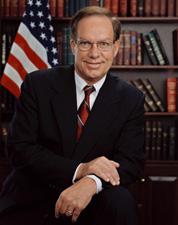 Sen. Wayne Allard (R-CO)
Sen. Wayne Allard (R-CO)Submitted May 7, 2008
Legislative Activity
Stay on top of the latest movement without scrolling through every action
Floor
Latest Action
Considered by Senate. (consideration: CR S4048)
May 13, 2008
View full timeline
Floor
Considered by Senate. (consideration: CR S4048)
May 13, 2008
Floor
Proposed amendment SA 4721 withdrawn in Senate.
May 13, 2008
Floor
Considered by Senate. (consideration: CR S3946)
May 8, 2008
Floor
Senate amendment submitted
May 7, 2008
Floor
Senate amendment proposed (on the floor): Amendment SA 4721 proposed by Senator Allard to Amendment SA 4720.(consideration: CR S3851-3853)
May 7, 2008
Floor
Amendment SA 4721 proposed by Senator Allard to Amendment SA 4720. (consideration: CR S3851-3853) Of a perfecting nature.
May 7, 2008
Text
Submitted
SA 4721. Mr. ALLARD proposed an amendment to amendment SA 4720
proposed by Mr. McConnell to the bill S. 2284, to amend the National
Flood Insurance Act of 1968, to restore the financial solvency to the
flood insurance fund, and for other purposes; as follows:

On Page 1, strike all after ``TITLE I--TRADITIONAL
RESOURCES'' and insert:

Subtitle A--Outer Continental Shelf

Sec. 101. Publication of projected State lines on outer Continental
Shelf.
Sec. 102. Production of oil and natural gas in new producing areas.
Sec. 103. Conforming amendment.

Subtitle B--Leasing Program for Land Within Coastal Plain

Sec. 111. Definitions.
Sec. 112. Leasing program for land within the Coastal Plain.
Sec. 113. Lease sales.
Sec. 114. Grant of leases by the Secretary.
Sec. 115. Lease terms and conditions.
Sec. 116. Coastal plain environmental protection.
Sec. 117. Expedited judicial review.
Sec. 118. Rights-of-way and easements across Coastal Plain.
Sec. 119. Conveyance.
Sec. 120. Local government impact aid and community service assistance.
Sec. 121. Prohibition on exports.
Sec. 122. Allocation of revenues.

Subtitle C--Permitting

Sec. 131. Refinery permitting process.
Sec. 132. Removal of additional fee for new applications for permits to
drill.

Subtitle D--Strategic Petroleum Reserve

Sec. 141. Suspension of petroleum acquisition for Strategic Petroleum
Reserve.

Subtitle E--Restoration of State Revenue

Sec. 151. Restoration of State revenue.

TITLE II--ALTERNATIVE RESOURCES

Subtitle A--Renewable Fuel and Advanced Energy Technology

Sec. 201. Definition of renewable biomass.
Sec. 202. Advanced battery manufacturing incentive program.
Sec. 203. Biofuels infrastructure and additives research and
development.
Sec. 204. Study of increased consumption of ethanol-blended gasoline
with higher levels of ethanol.
Sec. 205. Study of diesel vehicle attributes.

Subtitle B--Clean Coal-Derived Fuels for Energy Security

Sec. 211. Short title.
Sec. 212. Definitions.
Sec. 213. Clean coal-derived fuel program.

Subtitle C--Oil Shale

Sec. 221. Removal of prohibition on final regulations for commercial
leasing program for oil shale resources on public land.

Subtitle D--Department of Defense Facilitation of Secure Domestic Fuel
Development

Sec. 231. Procurement and acquisition of alternative fuels.
Sec. 232. Multiyear contract authority for the Department of Defense
for the procurement of synthetic fuels.

SEC. 2. DEFINITION OF SECRETARY.

In this Act, the term ``Secretary'' means the Secretary of
Energy.

TITLE I--TRADITIONAL RESOURCES

Subtitle A--Outer Continental Shelf

SEC. 101. PUBLICATION OF PROJECTED STATE LINES ON OUTER
CONTINENTAL SHELF.

Section 4(a)(2)(A) of the Outer Continental Shelf Lands Act
(43 U.S.C. 1333(a)(2)(A)) is amended--
(1) by designating the first, second, and third sentences
as clause (i), (iii), and (iv), respectively;
(2) in clause (i) (as so designated), by inserting before
the period at the end the following: ``not later than 90 days
after the date of enactment of the Domestic Energy Production
Act of 2008''; and
(3) by inserting after clause (i) (as so designated) the
following:
``(ii)(I) The projected lines shall also be used for the
purpose of preleasing and leasing activities conducted in new
producing areas under section 32.
``(II) This clause shall not affect any property right or
title to Federal submerged land on the outer Continental
Shelf.
``(III) In carrying out this clause, the President shall
consider the offshore administrative boundaries beyond State
submerged lands for planning, coordination, and
administrative purposes of the Department of the Interior,
but may establish different boundaries.''.

SEC. 102. PRODUCTION OF OIL AND NATURAL GAS IN NEW PRODUCING
AREAS.

The Outer Continental Shelf Lands Act (43 U.S.C. 1331 et
seq.) is amended by adding at the end the following:

``SEC. 32. PRODUCTION OF OIL AND NATURAL GAS IN NEW PRODUCING
AREAS.

``(a) Definitions.--In this section:
``(1) Coastal political subdivision.--The term `coastal
political subdivision' means a political subdivision of a new
producing State any part of which political subdivision is--
``(A) within the coastal zone (as defined in section 304 of
the Coastal Zone Management Act of 1972 (16 U.S.C. 1453)) of
the new producing State as of the date of enactment of this
section; and
``(B) not more than 200 nautical miles from the geographic
center of any leased tract.
``(2) Moratorium area.--
``(A) In general.--The term `moratorium area' means an area
covered by sections 104 through 105 of the Department of the
Interior, Environment, and Related Agencies Appropriations
Act, 2008 (Public Law 110-161; 121 Stat. 2118) (as in effect
on the day before the date of enactment of this section).
``(B) Exclusion.--The term `moratorium area' does not
include an area located in the Gulf of Mexico.
``(3) New producing area.--The term `new producing area'
means any moratorium area within the offshore administrative
boundaries beyond the submerged land of a State that is
located greater than 50 miles from the coastline of the
State.
``(4) New producing state.--The term `new producing State'
means a State that has, within the offshore administrative
boundaries beyond the submerged land of the State, a new
producing area available for oil and gas leasing under
subsection (b).
``(5) Offshore administrative boundaries.--The term
`offshore administrative boundaries' means the administrative
boundaries established by the Secretary beyond State
submerged land for planning, coordination, and administrative
purposes of the Department of the Interior and published in
the Federal Register on January 3, 2006 (71 Fed. Reg. 127).
``(6) Qualified outer continental shelf revenues.--
``(A) In general.--The term `qualified outer Continental
Shelf revenues' means all rentals, royalties, bonus bids, and
other sums due and payable to the United States from leases
entered into on or after the date of enactment of this
section for new producing areas.
``(B) Exclusions.--The term `qualified outer Continental
Shelf revenues' does not include--
``(i) revenues from a bond or other surety forfeited for
obligations other than the collection of royalties;
``(ii) revenues from civil penalties;

[[Page S3920]]

``(iii) royalties taken by the Secretary in-kind and not
sold;
``(iv) revenues generated from leases subject to section
8(g); or
``(v) any revenues considered qualified outer Continental
Shelf revenues under section 102 of the Gulf of Mexico Energy
Security Act of 2006 (43 U.S.C. 1331 note; Public Law 109-
432).
``(b) Petition for Leasing New Producing Areas.--
``(1) In general.--Beginning on the date on which the
President delineates projected State lines under section
4(a)(2)(A)(ii), the Governor of a State with a new producing
area within the offshore administrative boundaries beyond the
submerged land of the State may submit to the Secretary a
petition requesting that the Secretary make the new producing
area available for oil and gas leasing.
``(2) Action by secretary.--Notwithstanding section 18, as
soon as practicable after receipt of a petition under
paragraph (1), the Secretary shall approve the petition if
the Secretary determines that leasing the new producing area
would not create an unreasonable risk of harm to the marine,
human, or coastal environment.
``(c) Disposition of Qualified Outer Continental Shelf
Revenues From New Producing Areas.--
``(1) In general.--Notwithstanding section 9 and subject to
the other provisions of this subsection, for each applicable
fiscal year, the Secretary of the Treasury shall deposit--
``(A) 50 percent of qualified outer Continental Shelf
revenues in the general fund of the Treasury; and
``(B) 50 percent of qualified outer Continental Shelf
revenues in a special account in the Treasury from which the
Secretary shall disburse--
``(i) 75 percent to new producing States in accordance with
paragraph (2); and
``(ii) 25 percent to provide financial assistance to States
in accordance with section 6 of the Land and Water
Conservation Fund Act of 1965 (16 U.S.C. 460l -8), which
shall be considered income to the Land and Water Conservation
Fund for purposes of section 2 of that Act (16 U.S.C. 460l-
5).
``(2) Allocation to new producing states and coastal
political subdivisions.--
``(A) Allocation to new producing states.--Effective for
fiscal year 2008 and each fiscal year thereafter, the amount
made available under paragraph (1)(B)(i) shall be allocated
to each new producing State in amounts (based on a formula
established by the Secretary by regulation) proportional to
the amount of qualified outer Continental Shelf revenues
generated in the new producing area offshore each State.
``(B) Payments to coastal political subdivisions.--
``(i) In general.--The Secretary shall pay 20 percent of
the allocable share of each new producing State, as
determined under subparagraph (A), to the coastal political
subdivisions of the new producing State.
``(ii) Allocation.--The amount paid by the Secretary to
coastal political subdivisions shall be allocated to each
coastal political subdivision in accordance with
subparagraphs (B) and (C) of section 31(b)(4).
``(3) Minimum allocation.--The amount allocated to a new
producing State for each fiscal year under paragraph (2)
shall be at least 5 percent of the amounts available under
for the fiscal year under paragraph (1)(B)(i).
``(4) Timing.--The amounts required to be deposited under
subparagraph (B) of paragraph (1) for the applicable fiscal
year shall be made available in accordance with that
subparagraph during the fiscal year immediately following the
applicable fiscal year.
``(5) Authorized uses.--
``(A) In general.--Subject to subparagraph (B), each new
producing State and coastal political subdivision shall use
all amounts received under paragraph (2) in accordance with
all applicable Federal and State laws, only for 1 or more of
the following purposes:
``(i) Projects and activities for the purposes of coastal
protection, including conservation, coastal restoration,
hurricane protection, and infrastructure directly affected by
coastal wetland losses.
``(ii) Mitigation of damage to fish, wildlife, or natural
resources.
``(iii) Implementation of a federally-approved marine,
coastal, or comprehensive conservation management plan.
``(iv) Mitigation of the impact of outer Continental Shelf
activities through the funding of onshore infrastructure
projects.
``(v) Planning assistance and the administrative costs of
complying with this section.
``(B) Limitation.--Not more than 3 percent of amounts
received by a new producing State or coastal political
subdivision under paragraph (2) may be used for the purposes
described in subparagraph (A)(v).
``(6) Administration.--Amounts made available under
paragraph (1)(B) shall--
``(A) be made available, without further appropriation, in
accordance with this subsection;
``(B) remain available until expended; and
``(C) be in addition to any amounts appropriated under--
``(i) other provisions of this Act;
``(ii) the Land and Water Conservation Fund Act of 1965 (16
U.S.C. 460l-4 et seq.); or
``(iii) any other provision of law.
``(d) Disposition of Qualified Outer Continental Shelf
Revenues From Other Areas.--Notwithstanding section 9, for
each applicable fiscal year, the terms and conditions of
subsection (c) shall apply to the disposition of qualified
outer Continental Shelf revenues that--
``(1) are derived from oil or gas leasing in an area that
is not included in the current 5-year plan of the Secretary
for oil or gas leasing; and
``(2) are not assumed in the budget of the United States
Government submitted by the President under section 1105 of
title 31, United States Code.''.

SEC. 103. CONFORMING AMENDMENT.

Sections 104 through 105 of the Department of the Interior,
Environment, and Related Agencies Appropriations Act, 2008
(Public Law 110-161; 121 Stat. 2118) are repealed.

Subtitle B--Leasing Program for Land Within Coastal Plain

SEC. 111. DEFINITIONS.

In this subtitle:
(1) Coastal plain.--The term ``Coastal Plain'' means that
area identified as the ``1002 Coastal Plain Area'' on the
map.
(2) Federal agreement.--The term ``Federal Agreement''
means the Federal Agreement and Grant Right-of-Way for the
Trans-Alaska Pipeline issued on January 23, 1974, in
accordance with section 28 of the Mineral Leasing Act (30
U.S.C. 185) and the Trans-Alaska Pipeline Authorization Act
(43 U.S.C. 1651 et seq.).
(3) Final statement.--The term ``Final Statement'' means
the final legislative environmental impact statement on the
Coastal Plain, dated April 1987, and prepared pursuant to
section 1002 of the Alaska National Interest Lands
Conservation Act (16 U.S.C. 3142) and section 102(2)(C) of
the National Environmental Policy Act of 1969 (42 U.S.C.
4332(2)(C)).
(4) Map.--The term ``map'' means the map entitled ``Arctic
National Wildlife Refuge'', dated September 2005, and
prepared by the United States Geological Survey.
(5) Secretary.--The term ``Secretary'' means the Secretary
of the Interior (or the designee of the Secretary), acting
through the Director of the Bureau of Land Management in
consultation with the Director of the United States Fish and
Wildlife Service and in coordination with a State coordinator
appointed by the Governor of the State of Alaska.

SEC. 112. LEASING PROGRAM FOR LAND WITHIN THE COASTAL PLAIN.

(a) In General.--
(1) Authorization.--Congress authorizes the exploration,
leasing, development, production, and economically feasible
and prudent transportation of oil and gas in and from the
Coastal Plain.
(2) Actions.--The Secretary shall take such actions as are
necessary--
(A) to establish and implement, in accordance with this
subtitle, a competitive oil and gas leasing program that will
result in an environmentally sound program for the
exploration, development, and production of the oil and gas
resources of the Coastal Plain while taking into
consideration the interests and concerns of residents of the
Coastal Plain, which is the homeland of the Kaktovikmiut
Inupiat; and
(B) to administer this subtitle through regulations, lease
terms, conditions, restrictions, prohibitions, stipulations,
and other provisions that--
(i) ensure the oil and gas exploration, development, and
production activities on the Coastal Plain will result in no
significant adverse effect on fish and wildlife, their
habitat, subsistence resources, and the environment; and
(ii) require the application of the best commercially
available technology for oil and gas exploration,
development, and production to all exploration, development,
and production operations under this subtitle in a manner
that ensures the receipt of fair market value by the public
for the mineral resources to be leased.
(b) Repeal.--
(1) Repeal.--Section 1003 of the Alaska National Interest
Lands Conservation Act (16 U.S.C. 3143) is repealed.
(2) Conforming amendment.--The table of contents contained
in section 1 of that Act (16 U.S.C. 3101 note) is amended by
striking the item relating to section 1003.
(c) Compliance With Requirements Under Certain Other
Laws.--
(1) Compatibility.--For purposes of the National Wildlife
Refuge System Administration Act of 1966 (16 U.S.C. 668dd et
seq.)--
(A) the oil and gas pre-leasing and leasing program, and
activities authorized by this section in the Coastal Plain,
shall be considered to be compatible with the purposes for
which the Arctic National Wildlife Refuge was established;
and
(B) no further findings or decisions shall be required to
implement that program and those activities.
(2) Adequacy of the department of the interior's
legislative environmental impact statement.--The Final
Statement shall be considered to satisfy the requirements
under the National Environmental Policy Act of 1969 (42
U.S.C. 4321 et seq.) that apply with respect to pre-leasing
activities, including exploration programs and actions
authorized to be taken by the Secretary to develop and
promulgate the regulations for the establishment of a leasing
program authorized by this subtitle before the conduct of the
first lease sale.
(3) Compliance with nepa for other actions.--

[[Page S3921]]

(A) In general.--Before conducting the first lease sale
under this subtitle, the Secretary shall prepare an
environmental impact statement in accordance with the
National Environmental Policy Act of 1969 (42 U.S.C. 4321 et
seq.) with respect to the actions authorized by this subtitle
that are not referred to in paragraph (2).
(B) Identification and analysis.--Notwithstanding any other
provision of law, in carrying out this paragraph, the
Secretary shall not be required--
(i) to identify nonleasing alternative courses of action;
or
(ii) to analyze the environmental effects of those courses
of action.
(C) Identification of preferred action.--Not later than 18
months after the date of enactment of this Act, the Secretary
shall--
(i) identify only a preferred action and a single leasing
alternative for the first lease sale authorized under this
subtitle; and
(ii) analyze the environmental effects and potential
mitigation measures for those 2 alternatives.
(D) Public comments.--In carrying out this paragraph, the
Secretary shall consider only public comments that are filed
not later than 20 days after the date of publication of a
draft environmental impact statement.
(E) Effect of compliance.--Notwithstanding any other
provision of law, compliance with this paragraph shall be
considered to satisfy all requirements for the analysis and
consideration of the environmental effects of proposed
leasing under this subtitle.
(d) Relationship to State and Local Authority.--Nothing in
this subtitle expands or limits any State or local regulatory
authority.
(e) Special Areas.--
(1) Designation.--
(A) In general.--The Secretary, after consultation with the
State of Alaska, the North Slope Borough, Alaska, and the
City of Kaktovik, Alaska, may designate not more than 45,000
acres of the Coastal Plain as a special area if the Secretary
determines that the special area would be of such unique
character and interest as to require special management and
regulatory protection.
(B) Sadlerochit spring area.--The Secretary shall designate
as a special area in accordance with subparagraph (A) the
Sadlerochit Spring area, comprising approximately 4,000 acres
as depicted on the map.
(2) Management.--The Secretary shall manage each special
area designated under this subsection in a manner that--
(A) respects and protects the Native people of the area;
and
(B) preserves the unique and diverse character of the area,
including fish, wildlife, subsistence resources, and cultural
values of the area.
(3) Exclusion from leasing or surface occupancy.--
(A) In general.--The Secretary may exclude any special area
designated under this subsection from leasing.
(B) No surface occupancy.--If the Secretary leases all or a
portion of a special area for the purposes of oil and gas
exploration, development, production, and related activities,
there shall be no surface occupancy of the land comprising
the special area.
(4) Directional drilling.--Notwithstanding any other
provision of this subsection, the Secretary may lease all or
a portion of a special area under terms that permit the use
of horizontal drilling technology from sites on leases
located outside the special area.
(f) Limitation on Closed Areas.--The Secretary may not
close land within the Coastal Plain to oil and gas leasing or
to exploration, development, or production except in
accordance with this subtitle.
(g) Regulations.--
(1) In general.--Not later than 15 months after the date of
enactment of this Act, in consultation with appropriate
agencies of the State of Alaska, the North Slope Borough,
Alaska, and the City of Kaktovik, Alaska, the Secretary shall
issue such regulations as are necessary to carry out this
subtitle, including rules and regulations relating to
protection of the fish and wildlife, fish and wildlife
habitat, and subsistence resources of the Coastal Plain.
(2) Revision of regulations.--The Secretary may
periodically review and, as appropriate, revise the rules and
regulations issued under paragraph (1) to reflect any
significant scientific or engineering data that come to the
attention of the Secretary.

SEC. 113. LEASE SALES.

(a) In General.--Land may be leased pursuant to this
subtitle to any person qualified to obtain a lease for
deposits of oil and gas under the Mineral Leasing Act (30
U.S.C. 181 et seq.).
(b) Procedures.--The Secretary shall, by regulation,
establish procedures for--
(1) receipt and consideration of sealed nominations for any
area in the Coastal Plain for inclusion in, or exclusion (as
provided in subsection (c)) from, a lease sale;
(2) the holding of lease sales after that nomination
process; and
(3) public notice of and comment on designation of areas to
be included in, or excluded from, a lease sale.
(c) Lease Sale Bids.--Bidding for leases under this
subtitle shall be by sealed competitive cash bonus bids.
(d) Acreage Minimum in First Sale.--For the first lease
sale under this subtitle, the Secretary shall offer for lease
those tracts the Secretary considers to have the greatest
potential for the discovery of hydrocarbons, taking into
consideration nominations received pursuant to subsection
(b)(1), but in no case less than 200,000 acres.
(e) Timing of Lease Sales.--The Secretary shall--
(1) not later than 22 months after the date of enactment of
this Act, conduct the first lease sale under this subtitle;
(2) not later than September 30, 2012, conduct a second
lease sale under this subtitle; and
(3) conduct additional sales at appropriate intervals if
sufficient interest in exploration or development exists to
warrant the conduct of the additional sales.

SEC. 114. GRANT OF LEASES BY THE SECRETARY.

(a) In General.--Upon payment by a lessee of such bonus as
may be accepted by the Secretary, the Secretary may grant to
the highest responsible qualified bidder in a lease sale
conducted pursuant to section 113 a lease for any land on the
Coastal Plain.
(b) Subsequent Transfers.--
(1) In general.--No lease issued under this subtitle may be
sold, exchanged, assigned, sublet, or otherwise transferred
except with the approval of the Secretary.
(2) Condition for approval.--Before granting any approval
described in paragraph (1), the Secretary shall consult with
and give due consideration to the opinion of the Attorney
General.

SEC. 115. LEASE TERMS AND CONDITIONS.

(a) In General.--An oil or gas lease issued pursuant to
this subtitle shall--
(1) provide for the payment of a royalty of not less than
16\1/2\ percent of the amount or value of the production
removed or sold from the lease, as determined by the
Secretary in accordance with regulations applicable to other
Federal oil and gas leases;
(2) provide that the Secretary may close, on a seasonal
basis, such portions of the Coastal Plain to exploratory
drilling activities as are necessary to protect caribou
calving areas and other species of fish and wildlife;
(3) require that each lessee of land within the Coastal
Plain shall be fully responsible and liable for the
reclamation of land within the Coastal Plain and any other
Federal land that is adversely affected in connection with
exploration, development, production, or transportation
activities within the Coastal Plain conducted by the lessee
or by any of the subcontractors or agents of the lessee;
(4) provide that the lessee may not delegate or convey, by
contract or otherwise, that reclamation responsibility and
liability to another person without the express written
approval of the Secretary;
(5) provide that the standard of reclamation for land
required to be reclaimed under this subtitle shall be, to the
maximum extent practicable--
(A) a condition capable of supporting the uses that the
land was capable of supporting prior to any exploration,
development, or production activities; or
(B) upon application by the lessee, to a higher or better
standard, as approved by the Secretary;
(6) contain terms and conditions relating to protection of
fish and wildlife, fish and wildlife habitat, subsistence
resources, and the environment as required under section
112(a)(2);
(7) provide that each lessee, and each agent and contractor
of a lessee, use their best efforts to provide a fair share
of employment and contracting for Alaska Natives and Alaska
Native Corporations from throughout the State of Alaska, as
determined by the level of obligation previously agreed to in
the Federal Agreement; and
(8) contain such other provisions as the Secretary
determines to be necessary to ensure compliance with this
subtitle and regulations issued under this subtitle.
(b) Project Labor Agreements.--The Secretary, as a term and
condition of each lease under this subtitle, and in
recognizing the proprietary interest of the Federal
Government in labor stability and in the ability of
construction labor and management to meet the particular
needs and conditions of projects to be developed under the
leases issued pursuant to this subtitle (including the
special concerns of the parties to those leases), shall
require that each lessee, and each agent and contractor of a
lessee, under this subtitle negotiate to obtain a project
labor agreement for the employment of laborers and mechanics
on production, maintenance, and construction under the lease.

SEC. 116. COASTAL PLAIN ENVIRONMENTAL PROTECTION.

(a) No Significant Adverse Effect Standard to Govern
Authorized Coastal Plain Activities.--In accordance with
section 112, the Secretary shall administer this subtitle
through regulations, lease terms, conditions, restrictions,
prohibitions, stipulations, or other provisions that--
(1) ensure, to the maximum extent practicable, that oil and
gas exploration, development, and production activities on
the Coastal Plain will result in no significant adverse
effect on fish and wildlife, fish and wildlife habitat, and
the environment;
(2) require the application of the best commercially
available technology for oil and gas exploration,
development, and production on all new exploration,
development, and production operations; and
(3) ensure that the maximum surface acreage covered in
connection with the leasing program by production and support
facilities, including airstrips and any areas covered by
gravel berms or piers for support of

[[Page S3922]]

pipelines, does not exceed 2,000 acres on the Coastal Plain.
(b) Site-Specific Assessment and Mitigation.--The Secretary
shall require, with respect to any proposed drilling and
related activities on the Coastal Plain, that--
(1) a site-specific environmental analysis be made of the
probable effects, if any, that the drilling or related
activities will have on fish and wildlife, fish and wildlife
habitat, subsistence resources, subsistence uses, and the
environment;
(2) a plan be implemented to avoid, minimize, and mitigate
(in that order and to the maximum extent practicable) any
significant adverse effect identified under paragraph (1);
and
(3) the development of the plan occur after consultation
with--
(A) each agency having jurisdiction over matters mitigated
by the plan;
(B) the State of Alaska;
(C) North Slope Borough, Alaska; and
(D) the City of Kaktovik, Alaska.
(c) Regulations To Protect Coastal Plain Fish and Wildlife
Resources, Subsistence Users, and the Environment.--Before
implementing the leasing program authorized by this subtitle,
the Secretary shall prepare and issue regulations, lease
terms, conditions, restrictions, prohibitions, stipulations,
or other measures designed to ensure, to the maximum extent
practicable, that the activities carried out on the Coastal
Plain under this subtitle are conducted in a manner
consistent with the purposes and environmental requirements
of this subtitle.
(d) Compliance With Federal and State Environmental Laws
and Other Requirements.--The proposed regulations, lease
terms, conditions, restrictions, prohibitions, and
stipulations for the leasing program under this subtitle
shall require--
(1) compliance with all applicable provisions of Federal
and State environmental law (including regulations);
(2) implementation of and compliance with--
(A) standards that are at least as effective as the safety
and environmental mitigation measures, as described in items
1 through 29 on pages 167 through 169 of the Final Statement,
on the Coastal Plain;
(B) seasonal limitations on exploration, development, and
related activities, as necessary, to avoid significant
adverse effects during periods of concentrated fish and
wildlife breeding, denning, nesting, spawning, and migration;
(C) design safety and construction standards for all
pipelines and any access and service roads that minimize, to
the maximum extent practicable, adverse effects on--
(i) the passage of migratory species (such as caribou); and
(ii) the flow of surface water by requiring the use of
culverts, bridges, or other structural devices;
(D) prohibitions on general public access to, and use of,
all pipeline access and service roads;
(E) stringent reclamation and rehabilitation requirements
in accordance with this subtitle for the removal from the
Coastal Plain of all oil and gas development and production
facilities, structures, and equipment on completion of oil
and gas production operations, except in a case in which the
Secretary determines that those facilities, structures, or
equipment--
(i) would assist in the management of the Arctic National
Wildlife Refuge; and
(ii) are donated to the United States for that purpose;
(F) appropriate prohibitions or restrictions on--
(i) access by all modes of transportation;
(ii) sand and gravel extraction; and
(iii) use of explosives;
(G) reasonable stipulations for protection of cultural and
archaeological resources;
(H) measures to protect groundwater and surface water,
including--
(i) avoidance, to the maximum extent practicable, of
springs, streams, and river systems;
(ii) the protection of natural surface drainage patterns
and wetland and riparian habitats; and
(iii) the regulation of methods or techniques for
developing or transporting adequate supplies of water for
exploratory drilling; and
(I) research, monitoring, and reporting requirements;
(3) that exploration activities (except surface geological
studies) be limited to the period between approximately
November 1 and May 1 of each year and be supported, if
necessary, by ice roads, winter trails with adequate snow
cover, ice pads, ice airstrips, and air transport methods
(except that those exploration activities may be permitted at
other times if the Secretary determines that the exploration
will have no significant adverse effect on fish and wildlife,
fish and wildlife habitat, subsistence resources, and the
environment of the Coastal Plain);
(4) consolidation of facility siting;
(5) avoidance or reduction of air traffic-related
disturbance to fish and wildlife;
(6) treatment and disposal of hazardous and toxic wastes,
solid wastes, reserve pit fluids, drilling muds and cuttings,
and domestic wastewater, including, in accordance with
applicable Federal and State environmental laws (including
regulations)--
(A) preparation of an annual waste management report;
(B) development and implementation of a hazardous materials
tracking system; and
(C) prohibition on the use of chlorinated solvents;
(7) fuel storage and oil spill contingency planning;
(8) conduct of periodic field crew environmental briefings;
(9) avoidance of significant adverse effects on subsistence
hunting, fishing, and trapping;
(10) compliance with applicable air and water quality
standards;
(11) appropriate seasonal and safety zone designations
around well sites, within which subsistence hunting and
trapping shall be limited; and
(12) development and implementation of such other
protective environmental requirements, restrictions, terms,
or conditions as the Secretary, after consultation with the
State of Alaska, North Slope Borough, Alaska, and the City of
Kaktovik, Alaska, determines to be necessary.
(e) Considerations.--In preparing and issuing regulations,
lease terms, conditions, restrictions, prohibitions, or
stipulations under this section, the Secretary shall take
into consideration--
(1) the stipulations and conditions that govern the
National Petroleum Reserve-Alaska leasing program, as set
forth in the 1999 Northeast National Petroleum Reserve-Alaska
Final Integrated Activity Plan/Environmental Impact
Statement;
(2) the environmental protection standards that governed
the initial Coastal Plain seismic exploration program under
parts 37.31 through 37.33 of title 50, Code of Federal
Regulations (or successor regulations); and
(3) the land use stipulations for exploratory drilling on
the KIC-ASRC private land described in Appendix 2 of the
agreement between Arctic Slope Regional Corporation and the
United States dated August 9, 1983.
(f) Facility Consolidation Planning.--
(1) In general.--After providing for public notice and
comment, the Secretary shall prepare and periodically update
a plan to govern, guide, and direct the siting and
construction of facilities for the exploration, development,
production, and transportation of oil and gas resources from
the Coastal Plain.
(2) Objectives.--The objectives of the plan shall be--
(A) the avoidance of unnecessary duplication of facilities
and activities;
(B) the encouragement of consolidation of common facilities
and activities;
(C) the location or confinement of facilities and
activities to areas that will minimize impact on fish and
wildlife, fish and wildlife habitat, subsistence resources,
and the environment;
(D) the use of existing facilities, to the maximum extent
practicable; and
(E) the enhancement of compatibility between wildlife
values and development activities.
(g) Access to Public Land.--The Secretary shall--
(1) manage public land in the Coastal Plain in accordance
with subsections (a) and (b) of section 811 of the Alaska
National Interest Lands Conservation Act (16 U.S.C. 3121);
and
(2) ensure that local residents shall have reasonable
access to public land in the Coastal Plain for traditional
uses.

SEC. 117. EXPEDITED JUDICIAL REVIEW.

(a) Filing of Complaints.--
(1) Deadline.--A complaint seeking judicial review of a
provision of this subtitle or an action of the Secretary
under this subtitle shall be filed--
(A) except as provided in subparagraph (B), during the 90-
day period beginning on the date on which the action being
challenged was carried out; or
(B) in the case of a complaint based solely on grounds
arising after the 90-day period described in subparagraph
(A), during the 90-day period beginning on the date on which
the complainant knew or reasonably should have known about
the grounds for the complaint.
(2) Venue.--A complaint seeking judicial review of a
provision of this subtitle or an action of the Secretary
under this subtitle shall be filed in the United States Court
of Appeals for the District of Columbia.
(3) Scope.--
(A) In general.--Judicial review of a decision of the
Secretary under this subtitle (including an environmental
analysis of such a lease sale) shall be--
(i) limited to a review of whether the decision is in
accordance with this subtitle; and
(ii) based on the administrative record of the decision.
(B) Presumptions.--Any identification by the Secretary of a
preferred course of action relating to a lease sale, and any
analysis by the Secretary of environmental effects, under
this subtitle shall be presumed to be correct unless proven
otherwise by clear and convincing evidence.
(b) Limitation on Other Review.--Any action of the
Secretary that is subject to judicial review under this
section shall not be subject to judicial review in any civil
or criminal proceeding for enforcement.

SEC. 118. RIGHTS-OF-WAY AND EASEMENTS ACROSS COASTAL PLAIN.

For purposes of section 1102(4)(A) of the Alaska National
Interest Lands Conservation Act (16 U.S.C. 3162(4)(A)), any
rights-of-way or easements across the Coastal Plain for the
exploration, development, production, or transportation of
oil and gas shall be considered to be established incident to
the management of the Coastal Plain under this section.

[[Page S3923]]

SEC. 119. CONVEYANCE.

Notwithstanding section 1302(h)(2) of the Alaska National
Interest Lands Conservation Act (16 U.S.C. 3192(h)(2)), to
remove any cloud on title to land, and to clarify land
ownership patterns in the Coastal Plain, the Secretary
shall--
(1) to the extent necessary to fulfill the entitlement of
the Kaktovik Inupiat Corporation under sections 12 and 14 of
the Alaska Native Claims Settlement Act (43 U.S.C. 1611,
1613), as determined by the Secretary, convey to that
Corporation the surface estate of the land described in
paragraph (1) of Public Land Order 6959, in accordance with
the terms and conditions of the agreement between the
Secretary, the United States Fish and Wildlife Service, the
Bureau of Land Management, and the Kaktovik Inupiat
Corporation, dated January 22, 1993; and
(2) convey to the Arctic Slope Regional Corporation the
remaining subsurface estate to which that Corporation is
entitled under the agreement between that corporation and the
United States, dated August 9, 1983.

SEC. 120. LOCAL GOVERNMENT IMPACT AID AND COMMUNITY SERVICE
ASSISTANCE.

(a) Establishment of Fund.--
(1) In general.--As a condition on the receipt of funds
under section 122(2), the State of Alaska shall establish in
the treasury of the State, and administer in accordance with
this section, a fund to be known as the ``Coastal Plain Local
Government Impact Aid Assistance Fund'' (referred to in this
section as the ``Fund'').
(2) Deposits.--Subject to paragraph (1), the Secretary of
the Treasury shall deposit into the Fund, $35,000,000 each
year from the amount available under section 122(2)(A).
(3) Investment.--The Governor of the State of Alaska
(referred to in this section as the ``Governor'') shall
invest amounts in the Fund in interest-bearing securities of
the United States or the State of Alaska.
(b) Assistance.--The Governor, in cooperation with the
Mayor of the North Slope Borough, shall use amounts in the
Fund to provide assistance to North Slope Borough, Alaska,
the City of Kaktovik, Alaska, and any other borough,
municipal subdivision, village, or other community in the
State of Alaska that is directly impacted by exploration for,
or the production of, oil or gas on the Coastal Plain under
this subtitle, or any Alaska Native Regional Corporation
acting on behalf of the villages and communities within its
region whose lands lie along the right of way of the Trans
Alaska Pipeline System, as determined by the Governor.
(c) Application.--
(1) In general.--To receive assistance under subsection
(b), a community or Regional Corporation described in that
subsection shall submit to the Governor, or to the Mayor of
the North Slope Borough, an application in such time, in such
manner, and containing such information as the Governor may
require.
(2) Action by north slope borough.--The Mayor of the North
Slope Borough shall submit to the Governor each application
received under paragraph (1) as soon as practicable after the
date on which the application is received.
(3) Assistance of governor.--The Governor shall assist
communities in submitting applications under this subsection,
to the maximum extent practicable.
(d) Use of Funds.--A community or Regional Corporation that
receives funds under subsection (b) may use the funds--
(1) to plan for mitigation, implement a mitigation plan, or
maintain a mitigation project to address the potential
effects of oil and gas exploration and development on
environmental, social, cultural, recreational, and
subsistence resources of the community;
(2) to develop, carry out, and maintain--
(A) a project to provide new or expanded public facilities;
or
(B) services to address the needs and problems associated
with the effects described in paragraph (1), including
firefighting, police, water and waste treatment, first
responder, and other medical services;
(3) to compensate residents of the Coastal Plain for
significant damage to environmental, social, cultural,
recreational, or subsistence resources; and
(4) in the City of Kaktovik, Alaska--
(A) to develop a mechanism for providing members of the
Kaktovikmiut Inupiat community an opportunity to--
(i) monitor development on the Coastal Plain; and
(ii) provide information and recommendations to the
Governor based on traditional aboriginal knowledge of the
natural resources, flora, fauna, and ecological processes of
the Coastal Plain; and
(B) to establish a local coordination office, to be managed
by the Mayor of the North Slope Borough, in coordination with
the City of Kaktovik, Alaska--
(i) to coordinate with and advise developers on local
conditions and the history of areas affected by development;
(ii) to provide to the Committee on Resources of the House
of Representatives and the Committee on Energy and Natural
Resources of the Senate annual reports on the status of the
coordination between developers and communities affected by
development;
(iii) to collect from residents of the Coastal Plain
information regarding the impacts of development on fish,
wildlife, habitats, subsistence resources, and the
environment of the Coastal Plain; and
(iv) to ensure that the information collected under clause
(iii) is submitted to--

(I) developers; and
(II) any appropriate Federal agency.

SEC. 121. PROHIBITION ON EXPORTS.

An oil or gas lease issued under this subtitle shall
prohibit the exportation of oil or gas produced under the
lease.

SEC. 122. ALLOCATION OF REVENUES.

Notwithstanding the Mineral Leasing Act (30 U.S.C. 181 et
seq.) or any other provision of law, of the adjusted bonus,
rental, and royalty receipts from Federal oil and gas leasing
and operations authorized under this subtitle:
(1) 50 percent shall be deposited in the general fund of
the Treasury.
(2) The remainder shall be available as follows:
(A) $35,000,000 shall be deposited by the Secretary of the
Treasury into the fund created under section 120(a)(1).
(B) The remainder shall be disbursed to the State of
Alaska.

Subtitle C--Permitting

SEC. 131. REFINERY PERMITTING PROCESS.

(a) Definitions.--In this section:
(1) Administrator.--The term ``Administrator'' means the
Administrator of the Environmental Protection Agency.
(2) Indian tribe.--The term ``Indian tribe'' has the
meaning given the term in section 4 of the Indian Self-
Determination and Education Assistance Act (25 U.S.C. 450b).
(3) Permit.--The term ``permit'' means any permit, license,
approval, variance, or other form of authorization that a
refiner is required to obtain--
(A) under any Federal law; or
(B) from a State or Indian tribal government agency
delegated authority by the Federal Government, or authorized
under Federal law, to issue permits.
(4) Refiner.--The term ``refiner'' means a person that--
(A) owns or operates a refinery; or
(B) seeks to become an owner or operator of a refinery.
(5) Refinery.--
(A) In general.--The term ``refinery'' means--
(i) a facility at which crude oil is refined into
transportation fuel or other petroleum products; and
(ii) a coal liquification or coal-to-liquid facility at
which coal is processed into synthetic crude oil or any other
fuel.
(B) Inclusions.--The term ``refinery'' includes an
expansion of a refinery.
(6) Refinery expansion.--The term ``refinery expansion''
means a physical change in a refinery that results in an
increase in the capacity of the refinery.
(7) Refinery permitting agreement.--The term ``refinery
permitting agreement'' means an agreement entered into
between the Administrator and a State or Indian tribe under
subsection (b).
(8) Secretary.--The term ``Secretary'' means the Secretary
of Commerce.
(9) State.--The term ``State'' means--
(A) a State;
(B) the District of Columbia;
(C) the Commonwealth of Puerto Rico; and
(D) any other territory or possession of the United States.
(b) Streamlining of Refinery Permitting Process.--
(1) In general.--At the request of the Governor of a State
or the governing body of an Indian tribe, the Administrator
shall enter into a refinery permitting agreement with the
State or Indian tribe under which the process for obtaining
all permits necessary for the construction and operation of a
refinery shall be streamlined using a systematic
interdisciplinary multimedia approach as provided in this
section.
(2) Authority of administrator.--Under a refinery
permitting agreement--
(A) the Administrator shall have authority, as applicable
and necessary, to--
(i) accept from a refiner a consolidated application for
all permits that the refiner is required to obtain to
construct and operate a refinery;
(ii) in consultation and cooperation with each Federal,
State, or Indian tribal government agency that is required to
make any determination to authorize the issuance of a permit,
establish a schedule under which each agency shall--

(I) concurrently consider, to the maximum extent
practicable, each determination to be made; and
(II) complete each step in the permitting process; and

(iii) issue a consolidated permit that combines all permits
issued under the schedule established under clause (ii); and
(B) the Administrator shall provide to State and Indian
tribal government agencies--
(i) financial assistance in such amounts as the agencies
reasonably require to hire such additional personnel as are
necessary to enable the government agencies to comply with
the applicable schedule established under subparagraph
(A)(ii); and
(ii) technical, legal, and other assistance in complying
with the refinery permitting agreement.
(3) Agreement by the state.--Under a refinery permitting
agreement, a State or governing body of an Indian tribe shall
agree that--
(A) the Administrator shall have each of the authorities
described in paragraph (2); and
(B) each State or Indian tribal government agency shall--
(i) in accordance with State law, make such structural and
operational changes in

[[Page S3924]]

the agencies as are necessary to enable the agencies to carry
out consolidated project-wide permit reviews concurrently and
in coordination with the Environmental Protection Agency and
other Federal agencies; and
(ii) comply, to the maximum extent practicable, with the
applicable schedule established under paragraph (2)(A)(ii).
(4) Deadlines.--
(A) New refineries.--In the case of a consolidated permit
for the construction of a new refinery, the Administrator and
the State or governing body of an Indian tribe shall approve
or disapprove the consolidated permit not later than--
(i) 360 days after the date of the receipt of the
administratively complete application for the consolidated
permit; or
(ii) on agreement of the applicant, the Administrator, and
the State or governing body of the Indian tribe, 90 days
after the expiration of the deadline established under clause
(i).
(B) Expansion of existing refineries.--In the case of a
consolidated permit for the expansion of an existing
refinery, the Administrator and the State or governing body
of an Indian tribe shall approve or disapprove the
consolidated permit not later than--
(i) 120 days after the date of the receipt of the
administratively complete application for the consolidated
permit; or
(ii) on agreement of the applicant, the Administrator, and
the State or governing body of the Indian tribe, 30 days
after the expiration of the deadline established under clause
(i).
(5) Federal agencies.--Each Federal agency that is required
to make any determination to authorize the issuance of a
permit shall comply with the applicable schedule established
under paragraph (2)(A)(ii).
(6) Judicial review.--Any civil action for review of any
permit determination under a refinery permitting agreement
shall be brought exclusively in the United States district
court for the district in which the refinery is located or
proposed to be located.
(7) Efficient permit review.--In order to reduce the
duplication of procedures, the Administrator shall use State
permitting and monitoring procedures to satisfy substantially
equivalent Federal requirements under this title.
(8) Severability.--If 1 or more permits that are required
for the construction or operation of a refinery are not
approved on or before any deadline established under
paragraph (4), the Administrator may issue a consolidated
permit that combines all other permits that the refiner is
required to obtain other than any permits that are not
approved.
(9) Savings.--Nothing in this subsection affects the
operation or implementation of otherwise applicable law
regarding permits necessary for the construction and
operation of a refinery.
(10) Consultation with local governments.--Congress
encourages the Administrator, States, and tribal governments
to consult, to the maximum extent practicable, with local
governments in carrying out this subsection.
(11) Authorization of appropriations.--There are authorized
to be appropriated such sums as are necessary to carry out
this subsection.
(12) Effect on local authority.--Nothing in this subsection
affects--
(A) the authority of a local government with respect to the
issuance of permits; or
(B) any requirement or ordinance of a local government
(such as a zoning regulation).
(c) Fischer-Tropsch Fuels.--
(1) In general.--In cooperation with the Secretary of
Energy, the Secretary of Defense, the Administrator of the
Federal Aviation Administration, Secretary of Health and
Human Services, and Fischer-Tropsch industry representatives,
the Administrator shall--
(A) conduct a research and demonstration program to
evaluate the air quality benefits of ultra-clean Fischer-
Tropsch transportation fuel, including diesel and jet fuel;
(B) evaluate the use of ultra-clean Fischer-Tropsch
transportation fuel as a mechanism for reducing engine
exhaust emissions; and
(C) submit recommendations to Congress on the most
effective use and associated benefits of these ultra-clean
fuel for reducing public exposure to exhaust emissions.
(2) Guidance and technical support.--The Administrator
shall, to the extent necessary, issue any guidance or
technical support documents that would facilitate the
effective use and associated benefit of Fischer-Tropsch fuel
and blends.
(3) Requirements.--The program described in paragraph (1)
shall consider--
(A) the use of neat (100 percent) Fischer-Tropsch fuel and
blends with conventional crude oil-derived fuel for heavy-
duty and light-duty diesel engines and the aviation sector;
and
(B) the production costs associated with domestic
production of those ultra clean fuel and prices for
consumers.
(4) Reports.--The Administrator shall submit to the
Committee on Environment and Public Works and the Committee
on Energy and Natural Resources of the Senate and the
Committee on Energy and Commerce of the House of
Representatives--
(A) not later than 1 year, an interim report on actions
taken to carry out this subsection; and
(B) not later than 2 years, a final report on actions taken
to carry out this subsection.

SEC. 132. REMOVAL OF ADDITIONAL FEE FOR NEW APPLICATIONS FOR
PERMITS TO DRILL.

The second undesignated paragraph of the matter under the
heading ``management of lands and resources'' under the
heading ``Bureau of Land Management'' of title I of the
Department of the Interior, Environment, and Related Agencies
Appropriations Act, 2008 (Public Law 110-161; 121 Stat. 2098)
is amended by striking ``to be reduced'' and all that follows
through ``each new application,''.

Subtitle D--Strategic Petroleum Reserve

SEC. 141. SUSPENSION OF PETROLEUM ACQUISITION FOR STRATEGIC
PETROLEUM RESERVE.

(a) In General.--Except as provided in subsection (b) and
notwithstanding any other provision of law, during the 180-
day period beginning on the date of enactment of this Act--
(1) the Secretary of the Interior shall suspend acquisition
of petroleum for the Strategic Petroleum Reserve through the
royalty-in-kind program; and
(2) the Secretary of Energy shall suspend acquisition of
petroleum for the Strategic Petroleum Reserve through any
other acquisition method.
(b) Resumption.--Effective beginning on the day after the
end of the period described in subsection (a)--
(1) the Secretary of the Interior may resume acquisition of
petroleum for the Strategic Petroleum Reserve through the
royalty-in-kind program; and
(2) the Secretary of Energy may resume acquisition of
petroleum for the Strategic Petroleum Reserve through any
other acquisition method.

Subtitle E--Restoration of State Revenue

SEC. 151. RESTORATION OF STATE REVENUE.

The matter under the heading ``administrative provisions''
under the heading ``Minerals Management Service'' of title I
of the Department of the Interior, Environment, and Related
Agencies Appropriations Act, 2008 (Public Law 110-161; 121
Stat. 2109) is amended by striking ``Notwithstanding'' and
all that follows through ``Treasury.''.

TITLE II--ALTERNATIVE RESOURCES

Subtitle A--Renewable Fuel and Advanced Energy Technology

SEC. 201. DEFINITION OF RENEWABLE BIOMASS.

Section 211(o)(1) of the Clean Air Act (42 U.S.C.
7545(o)(1)) is amended by striking subparagraph (I) and
inserting the following:
``(I) Renewable biomass.--The term `renewable biomass'
means--
``(i) nonmerchantable materials or precommercial thinnings
that--

``(I) are byproducts of preventive treatments, such as
trees, wood, brush, thinnings, chips, and slash, that are
removed--

``(aa) to reduce hazardous fuels;
``(bb) to reduce or contain disease or insect infestation;
or
``(cc) to restore forest health;

``(II) would not otherwise be used for higher-value
products; and
``(III) are harvested from National Forest System land or
public land (as defined in section 103 of the Federal Land
Policy and Management Act of 1976 (43 U.S.C. 1702))--

``(aa) where permitted by law; and
``(bb) in accordance with applicable land management plans
and the requirements for old-growth maintenance, restoration,
and management direction of paragraphs (2), (3), and (4) of
subsection (e) and the requirements for large-tree retention
of subsection (f) of section 102 of the Healthy Forests
Restoration Act of 2003 (16 U.S.C. 6512); or
``(ii) any organic matter that is available on a renewable
or recurring basis from non-Federal land or from land
belonging to an Indian tribe, or an Indian individual, that
is held in trust by the United States or subject to a
restriction against alienation imposed by the United States,
including--

``(I) renewable plant material, including--

``(aa) feed grains;
``(bb) other agricultural commodities;
``(cc) other plants and trees; and
``(dd) algae; and

``(II) waste material, including--

``(aa) crop residue;
``(bb) other vegetative waste material (including wood
waste and wood residues);
``(cc) animal waste and byproducts (including fats, oils,
greases, and manure); and
``(dd) food waste and yard waste.''.

SEC. 202. ADVANCED BATTERY MANUFACTURING INCENTIVE PROGRAM.

(a) Definitions.--In this section:
(1) Advanced battery.--The term ``advanced battery'' means
an electrical storage device suitable for vehicle
applications.
(2) Engineering integration costs.--The term ``engineering
integration costs'' includes the cost of engineering tasks
relating to--
(A) incorporation of qualifying components into the design
of advanced batteries; and
(B) design of tooling and equipment and developing
manufacturing processes and material suppliers for production
facilities that produce qualifying components or advanced
batteries.
(b) Advanced Battery Manufacturing Facility.--The Secretary
shall provide facility funding awards under this section to
advanced battery manufacturers to pay not more than 30
percent of the cost of reequipping, expanding, or
establishing a manufacturing facility in the United States to
produce advanced batteries.
(c) Period of Availability.--An award under subsection (b)
shall apply to--
(1) facilities and equipment placed in service before
December 30, 2020; and

[[Page S3925]]

(2) engineering integration costs incurred during the
period beginning on the date of enactment of this Act and
ending on December 30, 2020.
(d) Direct Loan Program.--
(1) In general.--Not later than 1 year after the date of
enactment of this Act, and subject to the availability of
appropriated funds, the Secretary shall carry out a program
to provide a total of not more than $25,000,000 in loans to
eligible individuals and entities (as determined by the
Secretary) for the costs of activities described in
subsection (b).
(2) Selection of eligible projects.--The Secretary shall
select eligible projects to receive loans under this
subsection in cases in which, as determined by the Secretary,
the award recipient--
(A) is financially viable without the receipt of additional
Federal funding associated with the proposed project;
(B) will provide sufficient information to the Secretary
for the Secretary to ensure that the qualified investment is
expended efficiently and effectively; and
(C) has met such other criteria as may be established and
published by the Secretary.
(3) Rates, terms, and repayment of loans.--A loan provided
under this subsection--
(A) shall have an interest rate that, as of the date on
which the loan is made, is equal to the cost of funds to the
Department of the Treasury for obligations of comparable
maturity;
(B) shall have a term equal to the lesser of--
(i) the projected life, in years, of the eligible project
to be carried out using funds from the loan, as determined by
the Secretary; and
(ii) 25 years;
(C) may be subject to a deferral in repayment for not more
than 5 years after the date on which the eligible project
carried out using funds from the loan first begins
operations, as determined by the Secretary; and
(D) shall be made by the Federal Financing Bank.
(e) Fees.--The cost of administering a loan made under this
section shall not exceed $100,000.
(f) Set Aside for Small Manufacturers.--
(1) Definition of covered firm.--In this subsection, the
term ``covered firm'' means a firm that--
(A) employs fewer than 500 individuals; and
(B) manufactures automobiles or components of automobiles.
(2) Set aside.--Of the amount of funds used to provide
awards for each fiscal year under subsection (b), the
Secretary shall use not less than 10 percent to provide
awards to covered firms or consortia led by a covered firm.
(g) Authorization of Appropriations.--There are authorized
to be appropriated such sums as are necessary to carry out
this section for each of fiscal years 2009 through 2013.

SEC. 203. BIOFUELS INFRASTRUCTURE AND ADDITIVES RESEARCH AND
DEVELOPMENT.

(a) In General.--The Assistant Administrator of the Office
of Research and Development of the Environmental Protection
Agency (referred to in this section as the ``Assistant
Administrator''), in consultation with the Secretary and the
National Institute of Standards and Technology, shall carry
out a program of research and development of materials to be
added to biofuels to make the biofuels more compatible with
infrastructure used to store and deliver petroleum-based
fuels to the point of final sale.
(b) Requirements.--In carrying out the program described in
subsection (a), the Assistant Administrator shall address--
(1) materials to prevent or mitigate--
(A) corrosion of metal, plastic, rubber, cork, fiberglass,
glues, or any other material used in pipes and storage tanks;
(B) dissolving of storage tank sediments;
(C) clogging of filters;
(D) contamination from water or other adulterants or
pollutants;
(E) poor flow properties relating to low temperatures;
(F) oxidative and thermal instability in long-term storage
and use; and
(G) microbial contamination;
(2) problems associated with electrical conductivity;
(3) alternatives to conventional methods for refurbishment
and cleaning of gasoline and diesel tanks, including tank
lining applications;
(4) strategies to minimize emissions from infrastructure;
(5) issues with respect to certification by a nationally
recognized testing laboratory of components for fuel-
dispensing devises that specifically reference compatibility
with alcohol-blended fuels and other biofuels that contain
greater than 15 percent alcohol;
(6) challenges for design, reforming, storage, handling,
and dispensing hydrogen fuel from various feedstocks,
including biomass, from neighborhood fueling stations,
including codes and standards development necessary beyond
that carried out under section 809 of the Energy Policy Act
of 2005 (42 U.S.C. 16158);
(7) issues with respect to at which point in the fuel
supply chain additives optimally should be added to fuels;
and
(8) other problems, as identified by the Assistant
Administrator, in consultation with the Secretary and the
National Institute of Standards and Technology.

SEC. 204. STUDY OF INCREASED CONSUMPTION OF ETHANOL-BLENDED
GASOLINE WITH HIGHER LEVELS OF ETHANOL.

(a) In General.--The Secretary, in cooperation with the
Secretary of Agriculture, the Administrator of the
Environmental Protection Agency, and the Secretary of
Transportation, and after providing notice and an opportunity
for public comment, shall conduct a study of the feasibility
of increasing consumption in the United States of ethanol-
blended gasoline with levels of ethanol that are not less
than 10 percent and not more than 40 percent.
(b) Study.--The study under subsection (a) shall include--
(1) a review of production and infrastructure constraints
on increasing consumption of ethanol;
(2) an evaluation of the economic, market, and energy-
related impacts of State and regional differences in ethanol
blends;
(3) an evaluation of the economic, market, and energy-
related impacts on gasoline retailers and consumers of
separate and distinctly labeled fuel storage facilities and
dispensers;
(4) an evaluation of the environmental impacts of mid-level
ethanol blends on evaporative and exhaust emissions from on-
road, off-road, and marine engines, recreational boats,
vehicles, and equipment;
(5) an evaluation of the impacts of mid-level ethanol
blends on the operation, durability, and performance of on-
road, off-road, and marine engines, recreational boats,
vehicles, and equipment;
(6) an evaluation of the safety impacts of mid-level
ethanol blends on consumers that own and operate off-road and
marine engines, recreational boats, vehicles, or equipment;
and
(7) an evaluation of the impacts of increased use of
renewable fuels derived from food crops on the price and
supply of agricultural commodities in both domestic and
global markets.
(c) Report.--Not later than 1 year after the date of
enactment of this Act, the Secretary shall submit to Congress
a report describing the results of the study conducted under
this section.

SEC. 205. STUDY OF DIESEL VEHICLE ATTRIBUTES.

(a) In General.--The Secretary, in consultation with the
Administrator of the Environmental Protection Agency and the
Secretary of Transportation, shall conduct a study to
identify--
(1) the environmental and efficiency attributes of diesel-
fueled vehicles as the vehicles compare to comparable
gasoline fueled, E-85 fueled, and hybrid vehicles;
(2) the technical, economic, regulatory, environmental, and
other obstacles to increasing the usage of diesel-fueled
vehicles;
(3) the legislative, administrative, and other actions that
could reduce or eliminate the obstacles identified under
paragraph (2); and
(4) the costs and benefits associated with reducing or
eliminating the obstacles identified under paragraph (2).
(b) Report.--Not later than 90 days after the date of
enactment of this Act, the Secretary shall submit to the
Committee on Energy and Natural Resources of the Senate and
the Committee on Energy and Commerce of the House of
Representatives a report describing the results of the study
conducted under subsection (a).
(c) Authorization of Appropriations.--There are authorized
to be appropriated such sums as are necessary to carry out
this section.

Subtitle B--Clean Coal-Derived Fuels for Energy Security

SEC. 211. SHORT TITLE.

This subtitle may be cited as the ``Clean Coal-Derived
Fuels for Energy Security Act of 2008''.

SEC. 212. DEFINITIONS.

In this subtitle:
(1) Clean coal-derived fuel.--
(A) In general.--The term ``clean coal-derived fuel'' means
aviation fuel, motor vehicle fuel, home heating oil, or
boiler fuel that is--
(i) substantially derived from the coal resources of the
United States; and
(ii) refined or otherwise processed at a facility located
in the United States that captures up to 100 percent of the
carbon dioxide emissions that would otherwise be released at
the facility.
(B) Inclusions.--The term ``clean coal-derived fuel'' may
include any other resource that is extracted, grown,
produced, or recovered in the United States.
(2) Covered fuel.--The term ``covered fuel'' means--
(A) aviation fuel;
(B) motor vehicle fuel;
(C) home heating oil; and
(D) boiler fuel.
(3) Small refinery.--The term ``small refinery'' means a
refinery for which the average aggregate daily crude oil
throughput for a calendar year (as determined by dividing the
aggregate throughput for the calendar year by the number of
days in the calendar year) does not exceed 75,000 barrels.

SEC. 213. CLEAN COAL-DERIVED FUEL PROGRAM.

(a) Program.--
(1) In general.--Not later than 1 year after the date of
enactment of this Act, the President shall promulgate
regulations to ensure that covered fuel sold or introduced
into commerce in the United States (except in noncontiguous
States or territories), on an annual average basis, contains
the applicable

[[Page S3926]]

volume of clean coal-derived fuel determined in accordance
with paragraph (4).
(2) Provisions of regulations.--Regardless of the date of
promulgation, the regulations promulgated under paragraph
(1)--
(A) shall contain compliance provisions applicable to
refineries, blenders, distributors, and importers, as
appropriate, to ensure that--
(i) the requirements of this subsection are met; and
(ii) clean coal-derived fuels produced from facilities for
the purpose of compliance with this subtitle result in life
cycle greenhouse gas emissions that are not greater than
gasoline; and
(B) shall not--
(i) restrict geographic areas in the contiguous United
States in which clean coal-derived fuel may be used; or
(ii) impose any per-gallon obligation for the use of clean
coal-derived fuel.
(3) Relationship to other regulations.--Regulations
promulgated under this paragraph shall, to the maximum extent
practicable, incorporate the program structure, compliance
and reporting requirements established under the final
regulations promulgated to implement the renewable fuel
program established by the amendment made by section
1501(a)(2) of the Energy Policy Act of 2005 (Public Law 109-
58; 119 Stat. 1067).
(4) Applicable volume.--
(A) Calendar years 2015 through 2022.--For the purpose of
this subsection, the applicable volume for any of calendar
years 2015 through 2022 shall be determined in accordance
with the following table:

Applicable volume of clean coal-derived fuel
Calendar year:                                (in billions of gallons):
2015.............................................................0.75
2016..............................................................1.5
2017.............................................................2.25
2018.............................................................3.00
2019.............................................................3.75
2020..............................................................4.5
2021.............................................................5.25
2022..............................................................6.0

(B) Calendar year 2023 and thereafter.--Subject to
subparagraph (C), for the purposes of this subsection, the
applicable volume for calendar year 2023 and each calendar
year thereafter shall be determined by the President, in
coordination with the Secretary and the Administrator of the
Environmental Protection Agency, based on a review of the
implementation of the program during calendar years 2015
through 2022, including a review of--
(i) the impact of clean coal-derived fuels on the energy
security of the United States;
(ii) the expected annual rate of future production of clean
coal-derived fuels; and
(iii) the impact of the use of clean coal-derived fuels on
other factors, including job creation, rural economic
development, and the environment.
(C) Minimum applicable volume.--For the purpose of this
subsection, the applicable volume for calendar year 2023 and
each calendar year thereafter shall be equal to the product
obtained by multiplying--
(i) the number of gallons of covered fuel that the
President estimates will be sold or introduced into commerce
in the calendar year; and
(ii) the ratio that--

(I) 6,000,000,000 gallons of clean coal-derived fuel; bears
to
(II) the number of gallons of covered fuel sold or
introduced into commerce in calendar year 2022.

(b) Applicable Percentages.--
(1) Provision of estimate of volumes of certain fuel
sales.--Not later than October 31 of each of calendar years
2015 through 2021, the Administrator of the Energy
Information Administration shall provide to the President an
estimate, with respect to the following calendar year, of the
volumes of covered fuel projected to be sold or introduced
into commerce in the United States.
(2) Determination of applicable percentages.--
(A) In general.--Not later than November 30 of each of
calendar years 2015 through 2022, based on the estimate
provided under paragraph (1), the President shall determine
and publish in the Federal Register, with respect to the
following calendar year, the clean coal-derived fuel
obligation that ensures that the requirements of subsection
(a) are met.
(B) Required elements.--The clean coal-derived fuel
obligation determined for a calendar year under subparagraph
(A) shall--
(i) be applicable to refineries, blenders, and importers,
as appropriate;
(ii) be expressed in terms of a volume percentage of
covered fuel sold or introduced into commerce in the United
States; and
(iii) subject to paragraph (3)(A), consist of a single
applicable percentage that applies to all categories of
persons specified in clause (i).
(3) Adjustments.--In determining the applicable percentage
for a calendar year, the President shall make adjustments--
(A) to prevent the imposition of redundant obligations on
any person specified in paragraph (2)(B)(i); and
(B) to account for the use of clean coal-derived fuel
during the previous calendar year by small refineries that
are exempt under subsection (f).
(c) Volume Conversion Factors for Clean Coal-Derived Fuels
Based on Energy Content.--
(1) In general.--For the purpose of subsection (a), the
President shall assign values to specific types of clean
coal-derived fuel for the purpose of satisfying the fuel
volume requirements of subsection (a)(4) in accordance with
this subsection.
(2) Energy content relative to diesel fuel.--For clean
coal-derived fuels, 1 gallon of the clean coal-derived fuel
shall be considered to be the equivalent of 1 gallon of
diesel fuel multiplied by the ratio that--
(A) the number of British thermal units of energy produced
by the combustion of 1 gallon of the clean coal-derived fuel
(as measured under conditions determined by the Secretary);
bears to
(B) the number of British thermal units of energy produced
by the combustion of 1 gallon of diesel fuel (as measured
under conditions determined by the Secretary to be comparable
to conditions described in subparagraph (A)).
(d) Credit Program.--
(1) In general.--The President, in consultation with the
Secretary and the clean coal-derived fuel requirement of this
section.
(2) Market transparency.--In carrying out the credit
program under this subsection, the President shall facilitate
price transparency in markets for the sale and trade of
credits, with due regard for the public interest, the
integrity of those markets, fair competition, and the
protection of consumers.
(e) Waivers.--
(1) In general.--The President, in consultation with the
Secretary and the Administrator of the Environmental
Protection Agency, may waive the requirements of subsection
(a) in whole or in part on petition by 1 or more States by
reducing the national quantity of clean coal-derived fuel
required under subsection (a), based on a determination by
the President (after public notice and opportunity for
comment), that--
(A) implementation of the requirement would severely harm
the economy or environment of a State, a region, or the
United States; or
(B) extreme and unusual circumstances exist that prevent
distribution of an adequate supply of domestically-produced
clean coal-derived fuel to consumers in the United States.
(2) Petitions for waivers.--The President, in consultation
with the Secretary and the Administrator of the Environmental
Protection Agency, shall approve or disapprove a State
petition for a waiver of the requirements of subsection (a)
within 90 days after the date on which the petition is
received by the President.
(3) Termination of waivers.--A waiver granted under
paragraph (1) shall terminate after 1 year, but may be
renewed by the President after consultation with the
Secretary and the Administrator of the Environmental
Protection Agency.
(f) Small Refineries.--
(1) Temporary exemption.--
(A) In general.--The requirements of subsection (a) shall
not apply to small refineries until calendar year 2018.
(B) Extension of exemption.--
(i) Study by secretary.--Not later than December 31, 2013,
the Secretary shall submit to the President and Congress a
report describing the results of a study to determine whether
compliance with the requirements of subsection (a) would
impose a disproportionate economic hardship on small
refineries.
(ii) Extension of exemption.--In the case of a small
refinery that the Secretary determines under clause (i) would
be subject to a disproportionate economic hardship if
required to comply with subsection (a), the President shall
extend the exemption under subparagraph (A) for the small
refinery for a period of not less than 2 additional years.
(2) Petitions based on disproportionate economic
hardship.--
(A) Extension of exemption.--A small refinery may at any
time petition the President for an extension of the exemption
under paragraph (1) for the reason of disproportionate
economic hardship.
(B) Evaluation of petitions.--In evaluating a petition
under subparagraph (A), the President, in consultation with
the Secretary, shall consider the findings of the study under
paragraph (1)(B) and other economic factors.
(C) Deadline for action on petitions.--The President shall
act on any petition submitted by a small refinery for a
hardship exemption not later than 90 days after the date of
receipt of the petition.
(3) Opt-in for small refineries.--A small refinery shall be
subject to the requirements of subsection (a) if the small
refinery notifies the President that the small refinery
waives the exemption under paragraph (1).
(g) Penalties and Enforcement.--
(1) Civil penalties.--
(A) In general.--Any person that violates a regulation
promulgated under subsection (a), or that fails to furnish
any information required under such a regulation, shall be
liable to the United States for a civil penalty of not more
than the total of--
(i) $25,000 for each day of the violation; and
(ii) the amount of economic benefit or savings received by
the person resulting from the violation, as determined by the
President.
(B) Collection.--Civil penalties under subparagraph (A)
shall be assessed by, and collected in a civil action brought
by, the Secretary or such other officer of the United States
as is designated by the President.
(2) Injunctive authority.--

[[Page S3927]]

(A) In general.--The district courts of the United States
shall have jurisdiction to--
(i) restrain a violation of a regulation promulgated under
subsection (a);
(ii) award other appropriate relief; and
(iii) compel the furnishing of information required under
the regulation.
(B) Actions.--An action to restrain such violations and
compel such actions shall be brought by and in the name of
the United States.
(C) Subpoenas.--In the action, a subpoena for a witness who
is required to attend a district court in any district may
apply in any other district.
(h) Effective Date.--Except as otherwise specifically
provided in this section, this section takes effect on
January 1, 2016.

Subtitle C--Oil Shale

SEC. 221. REMOVAL OF PROHIBITION ON FINAL REGULATIONS FOR
COMMERCIAL LEASING PROGRAM FOR OIL SHALE
RESOURCES ON PUBLIC LAND.

Section 433 of the Department of the Interior, Environment,
and Related Agencies Appropriations Act, 2008 (Public Law
110-161; 121 Stat. 2152) is repealed.

Subtitle D--Department of Defense Facilitation of Secure Domestic Fuel
Development

SEC. 231. PROCUREMENT AND ACQUISITION OF ALTERNATIVE FUELS.

Section 526 of the Energy Independence and Security Act of
2007 (42 U.S.C. 17142) is repealed.

SEC. 232. MULTIYEAR CONTRACT AUTHORITY FOR THE DEPARTMENT OF
DEFENSE FOR THE PROCUREMENT OF SYNTHETIC FUELS.

(a) Multiyear Contracts for the Procurement of Synthetic
Fuels Authorized.--
(1) In general.--Chapter 141 of title 10, United States
Code, is amended by adding at the end the following new
section:

``Sec. 2410r. Multiyear contract authority: purchase of
synthetic fuels

``(a) Multiyear Contracts Authorized.--The head of an
agency may enter into contracts for a period not to exceed 25
years for the purchase of synthetic fuels.
``(b) Definitions.--In this section:
``(1) The term `head of an agency' has the meaning given
that term in section 2302(1) of this title.
``(2) The term `synthetic fuel' means any liquid, gas, or
combination thereof that--
``(A) can be used as a substitute for petroleum or natural
gas (or any derivative thereof, including chemical
feedstocks); and
``(B) is produced by chemical or physical transformation of
domestic sources of energy.''.
(2) Clerical amendment.--The table of sections at the
beginning of chapter 141 of such title is amended by adding
at the end the following new item:

``2410r. Multiyear contract authority: purchase of synthetic fuels.''.

(b) Regulations.--Not later than 12 days after the date of
the enactment of this Act, the Secretary of Defense shall
prescribe regulations providing that the head of an agency
may initiate a multiyear contract as authorized by section
2410r of title 10, United States Code (as added by subsection
(a)), only if the head of the agency has determined in
writing that--
(1) there is a reasonable expectation that throughout the
contemplated contract period the head of the agency will
request funding for the contract at the level required to
avoid contract cancellation;
(2) the technical risks associated with the technologies
for the production of synthetic fuel under the contract are
not excessive; and
(3) the contract will contain appropriate pricing
mechanisms to minimize risk to the Government from
significant changes in market prices for energy.
(c) Limitation on Use of Authority.--No contract may be
entered into under the authority in section 2410r of title
10, United States Code (as so added), until the regulations
required by subsection (b) are prescribed.
______