S.Amdt. 5151
What it does: Adds SEC. __. LIMITATIONS ON LEGISLATION THAT WOULD INCREASE NATIONAL AVERAGE FUEL PRICES FOR AUTOMOBILES wherever appropriate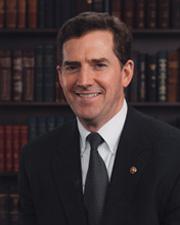 Sen. Jim DeMint (R-SC)
What it changes
1 change to S. 3268
Adds SEC. __. LIMITATIONS ON LEGISLATION THAT WOULD INCREASE NATIONAL AVERAGE FUEL PRICES FOR AUTOMOBILES wherever appropriate
Adds a sectionInserted: SEC. __. LIMITATIONS ON LEGISLATION THAT WOULD INCREASE NATIONAL AVERAGE FUEL PRICES FOR AUTOMOBILES.
Inserted: (a) Definition of Legislation.--In this section, the term "legislation" means a bill, joint resolution, amendment, motion, or conference report.
Inserted: (b) Point of Order.--
Inserted: (1) In general.--Subject to subsection (c), if the Senate is considering legislation, on a point of order being made by any Senator against legislation, or any part of the legislation, that it has been determined in accordance with paragraph (2) that the legislation, if enacted, would result in an increase in the national average fuel price for automobiles, and the point of order is sustained by the Presiding Officer, the Senate shall cease consideration of the legislation.
Inserted: (2) Determination.--For the purpose of paragraph (1), the determination described in this paragraph means a determination by the Director of the Congressional Budget Office, in consultation with the Energy Information Administration and the heads of other appropriate Federal Government agencies, that is made on the request of a Senator for review of legislation, that the legislation, or part of the legislation, would, if enacted, result in an increase in the national average fuel price for automobiles.
Inserted: (c) Waivers and Appeals.--
Inserted: (1) Waivers.--
Inserted: (A) In general.--Before the Presiding Officer rules on a point of order described in subsection (b)(1), any Senator may move to waive the point of order.
Inserted: (B) Amendments.--The motion to waive under this paragraph shall not be subject to amendment.
Inserted: (C) Voting requirement.--A point of order described in subsection (b)(1) shall be waived only by the affirmative vote of at least 60 Members of the Senate, duly chosen and sworn.
Inserted: (2) Appeals.--
Inserted: (A) In general.--After the Presiding Officer rules on a point of order described in subsection (b)(1), any Senator may appeal the ruling of the Presiding Officer on the point of order as the ruling applies to some or all of the provisions on which the Presiding Officer ruled.
Show 4 more inserted paragraphsShow less
Inserted: (B) Voting requirement.--A ruling of the Presiding Officer on a point of order described in subsection (b)(1) shall be sustained unless at least 60 Members of the Senate, duly chosen and sworn, vote not to sustain the ruling.
Inserted: (3) Debate.--
Inserted: (A) In general.--Debate on the motion to waive under paragraph (1) or on an appeal of the ruling of the Presiding Officer under paragraph (2) shall be limited to 1 hour.
Inserted: (B) Division of time.--The time shall be equally divided between, and controlled by, the Majority Leader and the Minority Leader of the Senate, or designees.
The amendment doesn't say where this goes; the clerk decides.
Original wording
At the appropriate place, insert the following:
Read automatically from the Congressional Record. Check the original before relying on it.
As printed
SA 5151. Mr. DeMINT submitted an amendment intended to be proposed by him to the bill S. 3268, to amend the Commodity Exchange Act, to prevent excessive price speculation with respect to energy commodities, and for other purposes; which was ordered to lie on the table; as follows:
At the appropriate place, insert the following:
SEC. __. LIMITATIONS ON LEGISLATION THAT WOULD INCREASE NATIONAL AVERAGE FUEL PRICES FOR AUTOMOBILES.
(a) Definition of Legislation.--In this section, the term “legislation” means a bill, joint resolution, amendment, motion, or conference report.
(b) Point of Order.--
(1) In general.--Subject to subsection (c), if the Senate is considering legislation, on a point of order being made by any Senator against legislation, or any part of the legislation, that it has been determined in accordance with paragraph (2) that the legislation, if enacted, would result in an increase in the national average fuel price for automobiles, and the point of order is sustained by the Presiding Officer, the Senate shall cease consideration of the legislation.
(2) Determination.--For the purpose of paragraph (1), the determination described in this paragraph means a determination by the Director of the Congressional Budget Office, in consultation with the Energy Information Administration and the heads of other appropriate Federal Government agencies, that is made on the request of a Senator for review of legislation, that the legislation, or part of the legislation, would, if enacted, result in an increase in the national average fuel price for automobiles.
(c) Waivers and Appeals.--
(1) Waivers.--
(A) In general.--Before the Presiding Officer rules on a point of order described in subsection (b)(1), any Senator may move to waive the point of order.
(B) Amendments.--The motion to waive under this paragraph shall not be subject to amendment.
(C) Voting requirement.--A point of order described in subsection (b)(1) shall be waived only by the affirmative vote of at least 60 Members of the Senate, duly chosen and sworn.
(2) Appeals.--
(A) In general.--After the Presiding Officer rules on a point of order described in subsection (b)(1), any Senator may appeal the ruling of the Presiding Officer on the point of order as the ruling applies to some or all of the provisions on which the Presiding Officer ruled.
(B) Voting requirement.--A ruling of the Presiding Officer on a point of order described in subsection (b)(1) shall be sustained unless at least 60 Members of the Senate, duly chosen and sworn, vote not to sustain the ruling.
(3) Debate.--
(A) In general.--Debate on the motion to waive under paragraph (1) or on an appeal of the ruling of the Presiding Officer under paragraph (2) shall be limited to 1 hour.
(B) Division of time.--The time shall be equally divided between, and controlled by, the Majority Leader and the Minority Leader of the Senate, or designees.
Legislative Activity
Stay on top of the latest movement without scrolling through every action
Senate amendment submitted
July 24, 2008