S.Amdt. 5522
What it does: Adds SEC. 1041. SENSE OF SENATE ON IRAQ AND THE NEED FOR AN EFFECTIVE STRATEGY FOR IRAQ AND AFGHANISTAN TO ADDRESS THE TERRORIST THREAT at the end of subtitle D of title X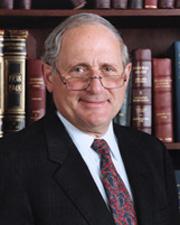 Sen. Carl Levin (D-MI)
What it changes
1 change to S. 3001 · shown in the bill's text
Adds SEC. 1041. SENSE OF SENATE ON IRAQ AND THE NEED FOR AN EFFECTIVE STRATEGY FOR IRAQ AND AFGHANISTAN TO ADDRESS THE TERRORIST THREAT at the end of subtitle D of title X
Adds a sectionIn S. 3001 · Placed on Calendar Senate
(2) if the Secretary determines that such an initiative is in the national interest, take appropriate actions to coordinate with the Federal Aviation Administration to achieve the type certification for such aircraft required by section 21.27 of title 14, Code of Federal Regulations.
Inserted: SEC. 1041. SENSE OF SENATE ON IRAQ AND THE NEED FOR AN EFFECTIVE STRATEGY FOR IRAQ AND AFGHANISTAN TO ADDRESS THE TERRORIST THREAT.
Inserted: (a) Findings.--The Senate makes the following findings:
Inserted: (1) The United States Armed Forces have performed brilliantly in Iraq and Afghanistan and have worked tirelessly to carry out the missions they were given. The families of those in the Armed Forces have provided strong support and contributed to the success of the Armed Forces.
Inserted: (2) The cost of the war in Iraq is enormous, more than $600,000,000,000 since 2003.
Inserted: (3) More than 4,000 Americans have died in Iraq, and more than 30,000 have been wounded.
Inserted: (4) Multiple and extended deployments have overstreched the military and depleted equipment, leading the Army Vice Chief of Staff to say in April 2008 that "Today our Army is out of balance. The current demand for forces in Iraq and Afghanistan exceeds our sustainable supply of soldiers, of units and equipment, and limits our ability to provide ready forces for other contingencies. Our readiness, quite frankly, is being consumed as fast as we can build it".
Inserted: (5) In his address to the Nation on January 10, 2007, the President announced the surge of five United States combat brigades consisting of approximately 30,000 additional United States combat troops.
Inserted: (6) The President stated that the surge would create a situation where "the (Iraqi) government will have the breathing space it needs to make progress in other critical areas" and "reducing the violence in Baghdad will help make reconciliation possible".
Inserted: (7) The President described Iraq's commitment as follows: "To establish its authority, the Iraqi government plans to take responsibility for security in all of Iraq's provinces by November (2007). To give every Iraqi citizen a stake in the country's economy, Iraq will pass legislation to share oil revenues among all Iraqis. To show that it is committed to delivering a better life, the Iraqi government will spend $10 billion of its own money on reconstruction and infrastructure projects that will create new jobs. To empower local leaders, Iraqis plan to hold provincial elections later this year (2007). And to allow more Iraqis to re-enter their nation's political life, the government will reform de-Baathification laws, and establish a fair process for considering amendments to Iraq's constitution".
Inserted: (8) A number of factors led to the decrease in violence in Iraq. Increased numbers of United States Armed Forces deployed to Iraq, the use of enhanced United States special operations, the emergence of the Anbar Awakening starting in 2006, the 2007 and 2008 ceasefires of the Jaysh al-Mahdi, and the improved capability of the Iraqi Army produced tangible improvements in the security situation in Iraq.
Inserted: (9) The Government of Iraq has not reached the political accommodation that was the stated purpose of the surge. The Government of Iraq has still not enacted an oil revenue sharing law, enacted a provincial election law necessary for regional elections, considered changes to its constitution, completed steps to disband and integrate militias, or adequately dealt with the enormous number of refugees and internally displaced citizens.
Inserted: (10) Preserving the hard-fought gains of United States troops in Iraq depends upon compromise and accommodation among the Iraqi political leaders and an increase in governmental capacity by the Government of Iraq.
Show 17 more inserted paragraphsShow less
Inserted: (11) The open-ended commitment of United States forces to Iraq takes the pressure off the Iraq leaders to take the political steps essential to ending the conflict.
Inserted: (12) The United States is spending an average of $10,000,000,000 per month while the Iraqi government is projected to achieve a budget surplus of $79,000,000,000 by the end of this year.
Inserted: (13) To date, United States taxpayers have paid approximately $48,000,000,000 for stabilization and reconstructions activities in Iraq.
Inserted: (14) Iraq's overall rate of budget execution has declined in each of the last three years, from 73 percent in 2005 to 65 percent in 2007. The Government of Iraq spent only 28 percent of its $12,200,000,000 capital investment budget in 2007. Furthermore, the rate of execution for budgeted capital investments by Iraq's central ministries decreased from 14 percent in 2005 to 11 percent in 2007.
Inserted: (15) The United States Ambassador to Iraq, Ryan Crocker, who previously served as United States Ambassador to Pakistan, testified before Congress on April 8, 2008, that al Qaeda poses a greater strategic threat in the Afghanistan-Pakistan border area than in Iraq.
Inserted: (16) Afghanistan and Pakistan are the central front in the fight against terrorism.
Inserted: (17) Al Qaeda has regrouped in Pakistan. According to the July 2007 National Intelligence Estimate, al Qaeda, "has protected or regenerated key elements of its Homeland attack capability, including: a safehaven in the Pakistan Federally Administered Tribal Areas (FATA), operational lieutenants, and its top leadership. . . As a result, we judge that the United States currently is in a heightened threat environment".
Inserted: (18) The Taliban has surged in Afghanistan and violence is increasing. June was the second deadliest month in Afghanistan since the war began, with 23 American deaths from hostilities, compared with 22 in Iraq. Improvised explosive device attacks have risen sharply, reaching a high of 2,615 in 2007, up from 1,931 in 2006.
Inserted: (19) Poppy fields in Afghanistan produce 93 percent of the world's opium, which is used by the Taliban to finance the insurgency.
Inserted: (20) Admiral Michael Mullen, Chairman of the Joint Chiefs of Staff, said on August 28, 2008, that there is a "very real, urgent requirement" for more troops in Afghanistan.
Inserted: (21) Admiral Michael Mullen cautioned on September 10, 2008 the United States was "running out of time" in Afghanistan. . . and "I'm not convinced we are winning it in Afghanistan. I am convinced we can".
Inserted: (b) Sense of Senate.--It is the sense of the Senate--
Inserted: (1) to honor the exemplary service, commend the bravery, and recognize the successes of the men and women of the United States Armed Forces in Iraq and Afghanistan and thank their families for their sacrifices; and
Inserted: (2) that the President of the United States should promptly promulgate and implement a strategy which--
Inserted: (A) resets and rebuilds the United States Armed forces to confront national security challenges around the world, including Afghanistan;
Inserted: (B) will promote success in Iraq by redeploying United States combat troops from Iraq in a deliberate manner on a timeline that is militarily sound within the context of all threats facing the nation and ensures the safety of our forces, and will help pressure the Iraqis to take control and responsibility for their country and make the difficult decisions to resolve the political differences between Iraqi factions; and
Inserted: (C) will succeed in the central front in the global war on terror, specifically in Afghanistan and Pakistan, and will capture or kill Usama bin Laden and the senior Al Qaeda leadership.
Original wording
At the end of subtitle D of title X, add the following:
Read automatically from the Congressional Record. Check the original before relying on it.
As printed
SA 5522. Mr. LEVIN (for himself and Mr. Reed) submitted an amendment intended to be proposed by him to the bill S. 3001, to authorize appropriations for fiscal year 2009 for military activities of the Department of Defense, for military construction, and for defense activities of the Department of Energy, to prescribe military personnel strengths for such fiscal year, and for other purposes; which was ordered to lie on the table; as follows:
At the end of subtitle D of title X, add the following:
SEC. 1041. SENSE OF SENATE ON IRAQ AND THE NEED FOR AN EFFECTIVE STRATEGY FOR IRAQ AND AFGHANISTAN TO ADDRESS THE TERRORIST THREAT.
(a) Findings.--The Senate makes the following findings:
(1) The United States Armed Forces have performed brilliantly in Iraq and Afghanistan and have worked tirelessly to carry out the missions they were given. The families of those in the Armed Forces have provided strong support and contributed to the success of the Armed Forces.
(2) The cost of the war in Iraq is enormous, more than $600,000,000,000 since 2003.
(3) More than 4,000 Americans have died in Iraq, and more than 30,000 have been wounded.
(4) Multiple and extended deployments have overstreched the military and depleted equipment, leading the Army Vice Chief of Staff to say in April 2008 that “Today our Army is out of balance. The current demand for forces in Iraq and Afghanistan exceeds our sustainable supply of soldiers, of units and equipment, and limits our ability to provide ready forces for other contingencies. Our readiness, quite frankly, is being consumed as fast as we can build it”.
(5) In his address to the Nation on January 10, 2007, the President announced the surge of five United States combat brigades consisting of approximately 30,000 additional United States combat troops.
(6) The President stated that the surge would create a situation where “the (Iraqi) government will have the breathing space it needs to make progress in other critical areas” and “reducing the violence in Baghdad will help make reconciliation possible”.
(7) The President described Iraq's commitment as follows: “To establish its authority, the Iraqi government plans to take responsibility for security in all of Iraq's provinces by November (2007). To give every Iraqi citizen a stake in the country's economy, Iraq will pass legislation to share oil revenues among all Iraqis. To show that it is committed to delivering a better life, the Iraqi government will spend $10 billion of its own money on reconstruction and infrastructure projects that will create new jobs. To empower local leaders, Iraqis plan to hold provincial elections later this year (2007). And to allow more Iraqis to re-enter their nation's political life, the government will reform de-Baathification laws, and establish a fair process for considering amendments to Iraq's constitution”.
(8) A number of factors led to the decrease in violence in Iraq. Increased numbers of United States Armed Forces deployed to Iraq, the use of enhanced United States special operations, the emergence of the Anbar Awakening starting in 2006, the 2007 and 2008 ceasefires of the Jaysh al-Mahdi, and the improved capability of the Iraqi Army produced tangible improvements in the security situation in Iraq.
(9) The Government of Iraq has not reached the political accommodation that was the stated purpose of the surge. The Government of Iraq has still not enacted an oil revenue sharing law, enacted a provincial election law necessary for regional elections, considered changes to its constitution, completed steps to disband and integrate militias, or adequately dealt with the enormous number of refugees and internally displaced citizens.
(10) Preserving the hard-fought gains of United States troops in Iraq depends upon compromise and accommodation among the Iraqi political leaders and an increase in governmental capacity by the Government of Iraq.
(11) The open-ended commitment of United States forces to Iraq takes the pressure off the Iraq leaders to take the political steps essential to ending the conflict.
(12) The United States is spending an average of $10,000,000,000 per month while the Iraqi government is projected to achieve a budget surplus of $79,000,000,000 by the end of this year.
(13) To date, United States taxpayers have paid approximately $48,000,000,000 for stabilization and reconstructions activities in Iraq.
(14) Iraq's overall rate of budget execution has declined in each of the last three years, from 73 percent in 2005 to 65 percent in 2007. The Government of Iraq spent only 28 percent of its $12,200,000,000 capital investment budget in 2007. Furthermore, the rate of execution for budgeted capital investments by Iraq's central ministries decreased from 14 percent in 2005 to 11 percent in 2007.
(15) The United States Ambassador to Iraq, Ryan Crocker, who previously served as United States Ambassador to Pakistan, testified before Congress on April 8, 2008, that al Qaeda poses a greater strategic threat in the Afghanistan-Pakistan border area than in Iraq.
(16) Afghanistan and Pakistan are the central front in the fight against terrorism.
(17) Al Qaeda has regrouped in Pakistan. According to the July 2007 National Intelligence Estimate, al Qaeda, “has protected or regenerated key elements of its Homeland attack capability, including: a safehaven in the Pakistan Federally Administered Tribal Areas (FATA), operational lieutenants, and its top leadership. . . As a result, we judge that the United States currently is in a heightened threat environment”.
(18) The Taliban has surged in Afghanistan and violence is increasing. June was the second deadliest month in Afghanistan since the war began, with 23 American deaths from hostilities, compared with 22 in Iraq. Improvised explosive device attacks have risen sharply, reaching a high of 2,615 in 2007, up from 1,931 in 2006.
(19) Poppy fields in Afghanistan produce 93 percent of the world's opium, which is used by the Taliban to finance the insurgency.
(20) Admiral Michael Mullen, Chairman of the Joint Chiefs of Staff, said on August 28, 2008, that there is a “very real, urgent requirement” for more troops in Afghanistan.
(21) Admiral Michael Mullen cautioned on September 10, 2008 the United States was “running out of time” in Afghanistan. . . and “I'm not convinced we are winning it in Afghanistan. I am convinced we can”.
(b) Sense of Senate.--It is the sense of the Senate--
(1) to honor the exemplary service, commend the bravery, and recognize the successes of the men and women of the United States Armed Forces in Iraq and Afghanistan and thank their families for their sacrifices; and
(2) that the President of the United States should promptly promulgate and implement a strategy which--
(A) resets and rebuilds the United States Armed forces to confront national security challenges around the world, including Afghanistan;
(B) will promote success in Iraq by redeploying United States combat troops from Iraq in a deliberate manner on a timeline that is militarily sound within the context of all threats facing the nation and ensures the safety of our forces, and will help pressure the Iraqis to take control and responsibility for their country and make the difficult decisions to resolve the political differences between Iraqi factions; and
(C) will succeed in the central front in the global war on terror, specifically in Afghanistan and Pakistan, and will capture or kill Usama bin Laden and the senior Al Qaeda leadership.
Legislative Activity
Stay on top of the latest movement without scrolling through every action
Senate amendment submitted
September 15, 2008