S.Amdt. 5586
What it does: Adds Subtitle E--Reconstruction and Stabilization Civilian Management SEC. 1241. SHORT TITLE at the end of title XII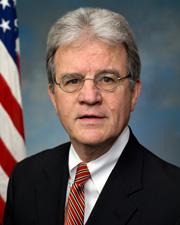 Sen. Tom Coburn (R-OK)
What it changes
1 change to S. 3001 · shown in the bill's text
Adds Subtitle E--Reconstruction and Stabilization Civilian Management SEC. 1241. SHORT TITLE at the end of title XII
Adds a sectionIn S. 3001 · Placed on Calendar Senate
(C) Civic assistance authorities under combatant commander initiative fund.--The authority to engage in urgent and unanticipated civic assistance under the Combatant Commander Initiative Fund under section 166a(b)(6) of title 10, United States Code, as a result of the amendments made by section 902 of the John Warner National Defense Authorization Act for Fiscal Year 2007 (120 Stat. 2351).
Inserted: Subtitle E--Reconstruction and Stabilization Civilian Management SEC. 1241. SHORT TITLE.
Inserted: This subtitle may be cited as the "Reconstruction and Stabilization Civilian Management Act of 2008".
Inserted: SEC. 1242. FINDINGS.
Inserted: Congress finds the following:
Inserted: (1) In June 2004, the Office of the Coordinator for Reconstruction and Stabilization (referred to as the "Coordinator") was established in the Department of State with the mandate to lead, coordinate, and institutionalize United States Government civilian capacity to prevent or prepare for post-conflict situations and help reconstruct and stabilize a country or region that is at risk of, in, or is in transition from, conflict or civil strife.
Inserted: (2) In December 2005, the Coordinator's mandate was reaffirmed by the National Security Presidential Directive 44, which instructed the Secretary of State, and at the Secretary's direction, the Coordinator, to coordinate and lead integrated United States Government efforts, involving all United States departments and agencies with relevant capabilities, to prepare, plan for, and conduct reconstruction and stabilization operations.
Inserted: (3) National Security Presidential Directive 44 assigns to the Secretary, with the Coordinator's assistance, the lead role to develop reconstruction and stabilization strategies, ensure civilian interagency program and policy coordination, coordinate interagency processes to identify countries at risk of instability, provide decision-makers with detailed options for an integrated United States Government response in connection with reconstruction and stabilization operations, and carry out a wide range of other actions, including the development of a civilian surge capacity to meet reconstruction and stabilization emergencies. The Secretary and the Coordinator are also charged with coordinating with the Department of Defense on reconstruction and stabilization responses, and integrating planning and implementing procedures.
Inserted: (4) The Department of Defense issued Directive 3000.05, which establishes that stability operations are a core United States military mission that the Department of Defense must be prepared to conduct and support, provides guidance on stability operations that will evolve over time, and assigns responsibilities within the Department of Defense for planning, training, and preparing to conduct and support stability operations.
Inserted: (5) The President's Fiscal Year 2009 Budget Request to Congress includes, as part of the request for the Department of State and Other International Programs, $248,600,000 for a Civilian Stabilization Initiative that would vastly improve civilian partnership with the Armed Forces in post-conflict stabilization situations, including by establishing an Active Response Corps of 250 persons, a Standby Response Corps of 2000 persons, and a Civilian Response Corps of 2000 persons.
Inserted: SEC. 1243. DEFINITIONS.
Inserted: In this subtitle:
Inserted: (1) Administrator.--The term "Administrator" means the Administrator of the United States Agency for International Development.
Show 86 more inserted paragraphsShow less
Inserted: (2) Agency.--The term "agency" means any entity included in chapter 1 of title 5, United States Code.
Inserted: (3) Appropriate congressional committees.--The term "appropriate congressional committees" means the Committee on Foreign Affairs of the House of Representatives and the Committee on Foreign Relations of the Senate.
Inserted: (4) Department.--Except as otherwise provided in this subtitle, the term "Department" means the Department of State.
Inserted: (5) Personnel.--The term "personnel" means individuals serving in any service described in section 2101 of title 5, United States Code, other than in the legislative or judicial branch.
Inserted: (6) Response to a stabilization and reconstruction crisis.--The term "response to a stabilization and reconstruction crisis" refers to activities implemented by the Response Readiness Corp relating to internal security, rule of law and political participation, and economic stability.
Inserted: (7) Secretary.--The term "Secretary" means the Secretary of State.
Inserted: (8) Stabilization and reconstruction crisis.--The term "stabilization and reconstruction crisis" refers to complex emergencies and transitions of failing states, failed states, or regions across the spectrum of conflict, particularly those involving transitions from peacekeeping and other military interventions.
Inserted: SEC. 1244. AUTHORITY TO PROVIDE ASSISTANCE FOR RECONSTRUCTION AND STABILIZATION CRISES.
Inserted: Chapter 1 of part III of the Foreign Assistance Act of 1961 (22 U.S.C. 2351 et seq.) is amended by inserting after section 617 the following new section:
Inserted: "SEC. 618. ASSISTANCE FOR A RECONSTRUCTION AND STABILIZATION CRISIS.
Inserted: "(a) Assistance.--
Inserted: "(1) In general.--If the President determines that it is important to the national interests of the United States for United States civilian agencies or non-Federal employees to assist in stabilizing and reconstructing a country or region that is at risk of, in, or is in transition from, conflict or civil strife, the President may, in accordance with the provisions set forth in section 614(a)(3), notwithstanding any other provision of law, and on such terms and conditions as the President may determine, furnish assistance to respond to the crisis using funds referred to in paragraph (2).
Inserted: "(2) Funds.--The funds referred to in this paragraph are funds as follows:
Inserted: "(A) Funds made available under this section.
Inserted: "(B) Funds made available under other provisions of this Act and transferred or reprogrammed for purposes of this section.
Inserted: "(b) Special Authorities.--In furtherance of a determination made under subsection (a), the President may exercise the authorities contained in sections 552(c)(2) and 610 without regard to the percentage and aggregate dollar limitations contained in such sections.".
Inserted: SEC. 1245. RECONSTRUCTION AND STABILIZATION.
Inserted: Title I of the State Department Basic Authorities Act of 1956 (22 U.S.C. 2651a et seq.) is amended by adding at the end the following new section:
Inserted: "SEC. 62. RECONSTRUCTION AND STABILIZATION.
Inserted: "(a) Office of the Coordinator for Reconstruction and Stabilization.--
Inserted: "(1) Establishment.--There is established within the Department of State the Office of the Coordinator for Reconstruction and Stabilization.
Inserted: "(2) Coordinator for reconstruction and stabilization.--The head of the Office shall be the Coordinator for Reconstruction and Stabilization, who shall be appointed by the President, by and with the advice and consent of the Senate. The Coordinator shall report directly to the Secretary.
Inserted: "(3) Functions.--The functions of the Office of the Coordinator for Reconstruction and Stabilization shall include the following:
Inserted: "(A) Monitoring, in coordination with relevant bureaus and offices of the Department of State and the United States Agency for International Development (USAID), political and economic instability worldwide to anticipate the need for mobilizing United States and international assistance for the reconstruction and stabilization of a country or region that is at risk of, in, or is in transition from, conflict or civil strife.
Inserted: "(B) Assessing the various types of reconstruction and stabilization crises that could occur and cataloging and monitoring the non-military resources and capabilities of agencies (as such term is defined in section 1243 of the Reconstruction and Stabilization Civilian Management Act of 2008) that are available to address such crises.
Inserted: "(C) Planning, in conjunction with USAID, to address requirements, such as demobilization, disarmament, rebuilding of civil society, policing, human rights monitoring, and public information, that commonly arise in reconstruction and stabilization crises.
Inserted: "(D) Coordinating with relevant agencies to develop interagency contingency plans and procedures to mobilize and deploy civilian personnel and conduct reconstruction and stabilization operations to address the various types of such crises.
Inserted: "(E) Entering into appropriate arrangements with agencies to carry out activities under this section and the Reconstruction and Stabilization Civilian Management Act of 2008.
Inserted: "(F) Identifying personnel in State and local governments and in the private sector who are available to participate in the Civilian Reserve Corps established under subsection (b) or to otherwise participate in or contribute to reconstruction and stabilization activities.
Inserted: "(G) Taking steps to ensure that training and education of civilian personnel to perform such reconstruction and stabilization activities is adequate and is carried out, as appropriate, with other agencies involved with stabilization operations.
Inserted: "(H) Taking steps to ensure that plans for United States reconstruction and stabilization operations are coordinated with and complementary to reconstruction and stabilization activities of other governments and international and nongovernmental organizations, to improve effectiveness and avoid duplication.
Inserted: "(I) Maintaining the capacity to field on short notice an evaluation team consisting of personnel from all relevant agencies to undertake on-site needs assessment.
Inserted: "(J) Planning and managing, in coordination with the Secretary of Defense, deployments supported by the Department of Defense for stabilization and reconstruction crises.
Inserted: "(K) Monitoring grantee, subgrantee, contractor, and subcontractor performance and guarding against corruption, mismanagement, and ineffective use of Federal funds and resources.
Inserted: "(L) Reporting to Congress and the public on reconstruction and stabilization projects and the outcomes of such projects.
Inserted: "(b) Response Readiness Corps.--
Inserted: "(1) Response readiness corps.--The Secretary, in consultation with the Administrator of the United States Agency for International Development and the heads of other appropriate agencies of the United States Government, may establish and maintain a Response Readiness Corps (referred to in this section as the 'Corps') to respond to a stabilization and reconstruction crisis, as that term is defined in section 618 of the Foreign Assistance Act of 1961. The Corps shall be composed of active and standby components consisting of United States Government personnel, including employees of the Department of State, the United States Agency for International Development, and other agencies who are recruited and trained (and employed in the case of the active component) to provide such assistance when deployed to do so by the Secretary to support the purposes of this Act.
Inserted: "(2) Civilian reserve corps.--The Secretary, in consultation with the Administrator of the United States Agency for International Development, may establish a Civilian Reserve Corps for which purpose the Secretary is authorized to employ and train individuals who have the skills necessary for carrying out reconstruction and stabilization activities, and who have volunteered for that purpose. The Secretary may deploy members of the Civilian Reserve Corps in support of a response to a stabilization and reconstruction crisis, as that term is defined in section 618 of the Foreign Assistance Act of 1961, pursuant to a determination by the President under such section.
Inserted: "(3) Mitigation of domestic impact.--The establishment and deployment of any Civilian Reserve Corps shall be undertaken in a manner that will avoid substantively impairing the capacity and readiness of any State and local governments from which Civilian Reserve Corps personnel may be drawn.
Inserted: "(c) Existing Training and Education Programs.--The Secretary shall ensure that personnel of the Department, and, in coordination with the Administrator of USAID, that personnel of USAID, make use of the relevant existing training and education programs offered within the Government, such as those at the Center for Stabilization and Reconstruction Studies at the Naval Postgraduate School and the Interagency Training, Education, and After Action Review Program at the National Defense University.".
Inserted: SEC. 1246. INTERAGENCY PARTNERSHIP; RULE OF CONSTRUCTION.
Inserted: (a) Interagency Partnership.--No funds may be expended for a deployment of the Response Readiness Corps established under section 62 of the State Department Basic Authorities Act of 1956, as added by section 1245, to a location outside the United States until the Secretary of Defense certifies in writing to the appropriate congressional committees that the deployment is an indispensable element of a response to a stabilization and reconstruction crisis, as that term is defined in section 618 of the Foreign Assistance Act of 1961, as added by section 1244 of this Act.
Inserted: (b) Rule of Construction.--Nothing in this subtitle, or the amendments made by this subtitle, shall be construed to authorize a civilian department or agency of the Federal Government to augment its funding authorities to conduct activities that are not a response to a stabilization and reconstruction crisis.
Inserted: SEC. 1247. AUTHORITIES RELATED TO PERSONNEL.
Inserted: (a) Extension of Certain Foreign Service Benefits.--The Secretary, or the head of any agency with respect to personnel of that agency, may extend to any individuals assigned, detailed, or deployed to carry out reconstruction and stabilization activities pursuant to section 62 of the State Department Basic Authorities Act of 1956 (as added by section 1245 of this Act), the benefits or privileges set forth in sections 413, 704, and 901 of the Foreign Service Act of 1980 (22 U.S.C. 3973, 22 U.S.C. 4024, and 22 U.S.C. 4081) to the same extent and manner that such benefits and privileges are extended to members of the Foreign Service.
Inserted: (b) Authority Regarding Details.--The Secretary is authorized to accept details or assignments of any personnel, and any employee of a State or local government, on a reimbursable or nonreimbursable basis for the purpose of carrying out this subtitle, and the head of any agency is authorized to detail or assign personnel of such agency on a reimbursable or nonreimbursable basis to the Department of State for purposes of section 62 of the State Department Basic Authorities Act of 1956, as added by section 1245 of this Act.
Inserted: SEC. 1248. RECONSTRUCTION AND STABILIZATION STRATEGY.
Inserted: (a) In General.--The Secretary of State, in consultation with the Administrator of the United States Agency for International Development, shall develop an interagency strategy to respond to reconstruction and stabilization operations.
Inserted: (b) Contents.--The strategy required under subsection (a) shall include the following:
Inserted: (1) Identification of and efforts to improve the skills sets needed to respond to and support reconstruction and stabilization operations in countries or regions that are at risk of, in, or are in transition from, conflict or civil strife.
Inserted: (2) Identification of specific agencies that can adequately satisfy the skills sets referred to in paragraph (1).
Inserted: (3) Efforts to increase training of Federal civilian personnel to carry out reconstruction and stabilization activities.
Inserted: (4) Efforts to develop a database of proven and best practices based on previous reconstruction and stabilization operations.
Inserted: (5) A plan to coordinate the activities of agencies involved in reconstruction and stabilization operations.
Inserted: SEC. 1249. ANNUAL REPORTS TO CONGRESS.
Inserted: Not later than 180 days after the date of the enactment of this Act and annually for each of the five years thereafter, the Secretary of State shall submit to the appropriate congressional committees a report on the implementation of this subtitle. The report shall include detailed information on the following:
Inserted: (1) Any steps taken to establish a Response Readiness Corps and a Civilian Reserve Corps, pursuant to section 62 of the State Department Basic Authorities Act of 1956 (as added by section 1245 of this Act).
Inserted: (2) The structure, operations, and cost of the Response Readiness Corps and the Civilian Reserve Corps, if established.
Inserted: (3) How the Response Readiness Corps and the Civilian Reserve Corps coordinate, interact, and work with other United States foreign assistance programs.
Inserted: (4) An assessment of the impact that deployment of the Civilian Reserve Corps, if any, has had on the capacity and readiness of any domestic agencies or State and local governments from which Civilian Reserve Corps personnel are drawn.
Inserted: (5) The reconstruction and stabilization strategy required by section 1247 and any annual updates to that strategy.
Inserted: (6) Recommendations to improve implementation of subsection (b) of section 62 of the State Department Basic Authorities Act of 1956, including measures to enhance the recruitment and retention of an effective Civilian Reserve Corps.
Inserted: (7) A description of anticipated costs associated with the development, annual sustainment, and deployment of the Civilian Reserve Corps.
Inserted: SEC. 1250. QUARTERLY REPORTING AND TRANSPARENCY TO CONGRESS.
Inserted: (a) Quarterly Reporting Requirement.--Not later than 90 days after the date of the enactment of this Act, and every 90 days thereafter, the Coordinator for Reconstruction and Stabilization shall submit to Congress a report on reconstruction and stabilization efforts.
Inserted: (b) Content.--Each report submitted under subsection (a) shall include the following information:
Inserted: (1) The number of reconstruction or stabilization projects initiated or ongoing during the reporting period.
Inserted: (2) For each deployment initiated or ongoing during the reporting period--
Inserted: (A) a description of the purpose of the deployment and its projected activities, including the measurable objectives or objective;
Inserted: (B) a status report, in quantifiable terms, on the progress toward the achievement of the objectives outlined under subparagraph (A) during the reporting period and to date;
Inserted: (C) the amount of funds that were transferred under section 1207, and the amount of such funds that were obligated or expended during the reporting period and to date;
Inserted: (D) copies of every contract, memorandum of agreement, grant, or cooperative agreement entered into for the purpose of carrying out the deployment and the project being carried out by deployed personnel as authorized under section 618 of the Foreign Assistance Act of 1961, as added by section 1244; and
Inserted: (E) the number of persons deployed from the Response Readiness Corps, including number of persons from the Federal active and standby components and the Civilian Reserve Corps.
Inserted: (3) The total number of persons in the Response Readiness Corps, including the number of person from the Federal active and standby components and the Civilian Reserve Corps, as well as the number of persons trained.
Inserted: (4) Copies of all contracts, grants, cooperative agreements, and memoranda of agreement entered into for the purpose of carrying out this subtitle and the amendments made by this subtitle.
Inserted: (5) Copies of financial and programmatic reports, evaluations, audits and Inspector General reports related to the office of the Coordinator, the deployment, and all other activities carried out by the Coordinator.
Inserted: (6) The amount of funds provided or transferred to the Coordinator for Reconstruction and Stabilization or the Response Readiness Corps for costs not directly supporting deployments under section 618 of the Foreign Assistance Act of 1961, including administration, recruitment, and training costs, and compensation of members of the Response Readiness Corps not deployed as part of such deployments, during the reporting period and to date.
Inserted: (7) Each certification made under section 1246(a).
Inserted: (c) Publication.--
Inserted: (1) Availability to congress.--The Coordinator for Reconstruction and Stabilization shall make each report submitted under subsection (a) available to Congress.
Inserted: (2) Internet website.--The Coordinator for Reconstruction and Stabilization shall post a public version of each report submitted under subsection (a) on a searchable and publicly available Internet website. Sensitive and classified information shall be redacted from the report prior to posting.
Inserted: (d) Certification.--
Inserted: (1) In general.--Prior to the obligation or expenditure of funds appropriated or otherwise made available to carry out this Act for fiscal year 2009 and for each subsequent fiscal year, the Comptroller General of the United States shall certify to the President and to Congress that reports required under subsection (a) for all previous fiscal years have been submitted in a timely and comprehensive manner and all requests to the Coordinator for follow-up information have been provided in a timely manner to Congress. Funds may not be made obligated or expended for a response to a stabilization or reconstruction crisis for a fiscal year until the Comptroller General of the United States has made a certification for the previous fiscal year.
Inserted: (2) Publication.--The Comptroller General shall post all certifications under paragraph (1) on a publicly available and searchable Internet website.
Inserted: SEC. 1251. FIVE-YEAR SUNSET.
Inserted: This subtitle and the amendments made by this subtitle shall cease to have effect 5 years after the date of the enactment of this Act.
Original wording
At the end of title XII, add the following:
Read automatically from the Congressional Record. Check the original before relying on it.
As printed
SA 5586. Mr. COBURN submitted an amendment intended to be proposed by him to the bill S. 3001, to authorize appropriations for fiscal year 2009 for military activities of the Department of Defense, for military construction, and for defense activities of the Department of Energy, to prescribe military personnel strengths for such fiscal year, and for other purposes; which was ordered to lie on the table; as follows:
At the end of title XII, add the following:
Subtitle E--Reconstruction and Stabilization Civilian Management SEC. 1241. SHORT TITLE.
This subtitle may be cited as the “Reconstruction and Stabilization Civilian Management Act of 2008”.
SEC. 1242. FINDINGS.
Congress finds the following:
(1) In June 2004, the Office of the Coordinator for Reconstruction and Stabilization (referred to as the “Coordinator”) was established in the Department of State with the mandate to lead, coordinate, and institutionalize United States Government civilian capacity to prevent or prepare for post-conflict situations and help reconstruct and stabilize a country or region that is at risk of, in, or is in transition from, conflict or civil strife.
(2) In December 2005, the Coordinator's mandate was reaffirmed by the National Security Presidential Directive 44, which instructed the Secretary of State, and at the Secretary's direction, the Coordinator, to coordinate and lead integrated United States Government efforts, involving all United States departments and agencies with relevant capabilities, to prepare, plan for, and conduct reconstruction and stabilization operations.
(3) National Security Presidential Directive 44 assigns to the Secretary, with the Coordinator's assistance, the lead role to develop reconstruction and stabilization strategies, ensure civilian interagency program and policy coordination, coordinate interagency processes to identify countries at risk of instability, provide decision-makers with detailed options for an integrated United States Government response in connection with reconstruction and stabilization operations, and carry out a wide range of other actions, including the development of a civilian surge capacity to meet reconstruction and stabilization emergencies. The Secretary and the Coordinator are also charged with coordinating with the Department of Defense on reconstruction and stabilization responses, and integrating planning and implementing procedures.
(4) The Department of Defense issued Directive 3000.05, which establishes that stability operations are a core United States military mission that the Department of Defense must be prepared to conduct and support, provides guidance on stability operations that will evolve over time, and assigns responsibilities within the Department of Defense for planning, training, and preparing to conduct and support stability operations.
(5) The President's Fiscal Year 2009 Budget Request to Congress includes, as part of the request for the Department of State and Other International Programs, $248,600,000 for a Civilian Stabilization Initiative that would vastly improve civilian partnership with the Armed Forces in post-conflict stabilization situations, including by establishing an Active Response Corps of 250 persons, a Standby Response Corps of 2000 persons, and a Civilian Response Corps of 2000 persons.
SEC. 1243. DEFINITIONS.
In this subtitle:
(1) Administrator.--The term “Administrator” means the Administrator of the United States Agency for International Development.
(2) Agency.--The term “agency” means any entity included in chapter 1 of title 5, United States Code.
(3) Appropriate congressional committees.--The term “appropriate congressional committees” means the Committee on Foreign Affairs of the House of Representatives and the Committee on Foreign Relations of the Senate.
(4) Department.--Except as otherwise provided in this subtitle, the term “Department” means the Department of State.
(5) Personnel.--The term “personnel” means individuals serving in any service described in section 2101 of title 5, United States Code, other than in the legislative or judicial branch.
(6) Response to a stabilization and reconstruction crisis.--The term “response to a stabilization and reconstruction crisis” refers to activities implemented by the Response Readiness Corp relating to internal security, rule of law and political participation, and economic stability.
(7) Secretary.--The term “Secretary” means the Secretary of State.
(8) Stabilization and reconstruction crisis.--The term “stabilization and reconstruction crisis” refers to complex emergencies and transitions of failing states, failed states, or regions across the spectrum of conflict, particularly those involving transitions from peacekeeping and other military interventions.
SEC. 1244. AUTHORITY TO PROVIDE ASSISTANCE FOR RECONSTRUCTION AND STABILIZATION CRISES.
Chapter 1 of part III of the Foreign Assistance Act of 1961 (22 U.S.C. 2351 et seq.) is amended by inserting after section 617 the following new section:
“SEC. 618. ASSISTANCE FOR A RECONSTRUCTION AND STABILIZATION CRISIS.
“(a) Assistance.--
“(1) In general.--If the President determines that it is important to the national interests of the United States for United States civilian agencies or non-Federal employees to assist in stabilizing and reconstructing a country or region that is at risk of, in, or is in transition from, conflict or civil strife, the President may, in accordance with the provisions set forth in section 614(a)(3), notwithstanding any other provision of law, and on such terms and conditions as the President may determine, furnish assistance to respond to the crisis using funds referred to in paragraph (2).
“(2) Funds.--The funds referred to in this paragraph are funds as follows:
“(A) Funds made available under this section.
“(B) Funds made available under other provisions of this Act and transferred or reprogrammed for purposes of this section.
“(b) Special Authorities.--In furtherance of a determination made under subsection (a), the President may exercise the authorities contained in sections 552(c)(2) and 610 without regard to the percentage and aggregate dollar limitations contained in such sections.”.
SEC. 1245. RECONSTRUCTION AND STABILIZATION.
Title I of the State Department Basic Authorities Act of 1956 (22 U.S.C. 2651a et seq.) is amended by adding at the end the following new section:
“SEC. 62. RECONSTRUCTION AND STABILIZATION.
“(a) Office of the Coordinator for Reconstruction and Stabilization.--
“(1) Establishment.--There is established within the Department of State the Office of the Coordinator for Reconstruction and Stabilization.
“(2) Coordinator for reconstruction and stabilization.--The head of the Office shall be the Coordinator for Reconstruction and Stabilization, who shall be appointed by the President, by and with the advice and consent of the Senate. The Coordinator shall report directly to the Secretary.
“(3) Functions.--The functions of the Office of the Coordinator for Reconstruction and Stabilization shall include the following:
“(A) Monitoring, in coordination with relevant bureaus and offices of the Department of State and the United States Agency for International Development (USAID), political and economic instability worldwide to anticipate the need for mobilizing United States and international assistance for the reconstruction and stabilization of a country or region that is at risk of, in, or is in transition from, conflict or civil strife.
“(B) Assessing the various types of reconstruction and stabilization crises that could occur and cataloging and monitoring the non-military resources and capabilities of agencies (as such term is defined in section 1243 of the Reconstruction and Stabilization Civilian Management Act of 2008) that are available to address such crises.
“(C) Planning, in conjunction with USAID, to address requirements, such as demobilization, disarmament, rebuilding of civil society, policing, human rights monitoring, and public information, that commonly arise in reconstruction and stabilization crises.
“(D) Coordinating with relevant agencies to develop interagency contingency plans and procedures to mobilize and deploy civilian personnel and conduct reconstruction and stabilization operations to address the various types of such crises.
“(E) Entering into appropriate arrangements with agencies to carry out activities under this section and the Reconstruction and Stabilization Civilian Management Act of 2008.
“(F) Identifying personnel in State and local governments and in the private sector who are available to participate in the Civilian Reserve Corps established under subsection (b) or to otherwise participate in or contribute to reconstruction and stabilization activities.
“(G) Taking steps to ensure that training and education of civilian personnel to perform such reconstruction and stabilization activities is adequate and is carried out, as appropriate, with other agencies involved with stabilization operations.
“(H) Taking steps to ensure that plans for United States reconstruction and stabilization operations are coordinated with and complementary to reconstruction and stabilization activities of other governments and international and nongovernmental organizations, to improve effectiveness and avoid duplication.
“(I) Maintaining the capacity to field on short notice an evaluation team consisting of personnel from all relevant agencies to undertake on-site needs assessment.
“(J) Planning and managing, in coordination with the Secretary of Defense, deployments supported by the Department of Defense for stabilization and reconstruction crises.
“(K) Monitoring grantee, subgrantee, contractor, and subcontractor performance and guarding against corruption, mismanagement, and ineffective use of Federal funds and resources.
“(L) Reporting to Congress and the public on reconstruction and stabilization projects and the outcomes of such projects.
“(b) Response Readiness Corps.--
“(1) Response readiness corps.--The Secretary, in consultation with the Administrator of the United States Agency for International Development and the heads of other appropriate agencies of the United States Government, may establish and maintain a Response Readiness Corps (referred to in this section as the ‘Corps') to respond to a stabilization and reconstruction crisis, as that term is defined in section 618 of the Foreign Assistance Act of 1961. The Corps shall be composed of active and standby components consisting of United States Government personnel, including employees of the Department of State, the United States Agency for International Development, and other agencies who are recruited and trained (and employed in the case of the active component) to provide such assistance when deployed to do so by the Secretary to support the purposes of this Act.
“(2) Civilian reserve corps.--The Secretary, in consultation with the Administrator of the United States Agency for International Development, may establish a Civilian Reserve Corps for which purpose the Secretary is authorized to employ and train individuals who have the skills necessary for carrying out reconstruction and stabilization activities, and who have volunteered for that purpose. The Secretary may deploy members of the Civilian Reserve Corps in support of a response to a stabilization and reconstruction crisis, as that term is defined in section 618 of the Foreign Assistance Act of 1961, pursuant to a determination by the President under such section.
“(3) Mitigation of domestic impact.--The establishment and deployment of any Civilian Reserve Corps shall be undertaken in a manner that will avoid substantively impairing the capacity and readiness of any State and local governments from which Civilian Reserve Corps personnel may be drawn.
“(c) Existing Training and Education Programs.--The Secretary shall ensure that personnel of the Department, and, in coordination with the Administrator of USAID, that personnel of USAID, make use of the relevant existing training and education programs offered within the Government, such as those at the Center for Stabilization and Reconstruction Studies at the Naval Postgraduate School and the Interagency Training, Education, and After Action Review Program at the National Defense University.”.
SEC. 1246. INTERAGENCY PARTNERSHIP; RULE OF CONSTRUCTION.
(a) Interagency Partnership.--No funds may be expended for a deployment of the Response Readiness Corps established under section 62 of the State Department Basic Authorities Act of 1956, as added by section 1245, to a location outside the United States until the Secretary of Defense certifies in writing to the appropriate congressional committees that the deployment is an indispensable element of a response to a stabilization and reconstruction crisis, as that term is defined in section 618 of the Foreign Assistance Act of 1961, as added by section 1244 of this Act.
(b) Rule of Construction.--Nothing in this subtitle, or the amendments made by this subtitle, shall be construed to authorize a civilian department or agency of the Federal Government to augment its funding authorities to conduct activities that are not a response to a stabilization and reconstruction crisis.
SEC. 1247. AUTHORITIES RELATED TO PERSONNEL.
(a) Extension of Certain Foreign Service Benefits.--The Secretary, or the head of any agency with respect to personnel of that agency, may extend to any individuals assigned, detailed, or deployed to carry out reconstruction and stabilization activities pursuant to section 62 of the State Department Basic Authorities Act of 1956 (as added by section 1245 of this Act), the benefits or privileges set forth in sections 413, 704, and 901 of the Foreign Service Act of 1980 (22 U.S.C. 3973, 22 U.S.C. 4024, and 22 U.S.C. 4081) to the same extent and manner that such benefits and privileges are extended to members of the Foreign Service.
(b) Authority Regarding Details.--The Secretary is authorized to accept details or assignments of any personnel, and any employee of a State or local government, on a reimbursable or nonreimbursable basis for the purpose of carrying out this subtitle, and the head of any agency is authorized to detail or assign personnel of such agency on a reimbursable or nonreimbursable basis to the Department of State for purposes of section 62 of the State Department Basic Authorities Act of 1956, as added by section 1245 of this Act.
SEC. 1248. RECONSTRUCTION AND STABILIZATION STRATEGY.
(a) In General.--The Secretary of State, in consultation with the Administrator of the United States Agency for International Development, shall develop an interagency strategy to respond to reconstruction and stabilization operations.
(b) Contents.--The strategy required under subsection (a) shall include the following:
(1) Identification of and efforts to improve the skills sets needed to respond to and support reconstruction and stabilization operations in countries or regions that are at risk of, in, or are in transition from, conflict or civil strife.
(2) Identification of specific agencies that can adequately satisfy the skills sets referred to in paragraph (1).
(3) Efforts to increase training of Federal civilian personnel to carry out reconstruction and stabilization activities.
(4) Efforts to develop a database of proven and best practices based on previous reconstruction and stabilization operations.
(5) A plan to coordinate the activities of agencies involved in reconstruction and stabilization operations.
SEC. 1249. ANNUAL REPORTS TO CONGRESS.
Not later than 180 days after the date of the enactment of this Act and annually for each of the five years thereafter, the Secretary of State shall submit to the appropriate congressional committees a report on the implementation of this subtitle. The report shall include detailed information on the following:
(1) Any steps taken to establish a Response Readiness Corps and a Civilian Reserve Corps, pursuant to section 62 of the State Department Basic Authorities Act of 1956 (as added by section 1245 of this Act).
(2) The structure, operations, and cost of the Response Readiness Corps and the Civilian Reserve Corps, if established.
(3) How the Response Readiness Corps and the Civilian Reserve Corps coordinate, interact, and work with other United States foreign assistance programs.
(4) An assessment of the impact that deployment of the Civilian Reserve Corps, if any, has had on the capacity and readiness of any domestic agencies or State and local governments from which Civilian Reserve Corps personnel are drawn.
(5) The reconstruction and stabilization strategy required by section 1247 and any annual updates to that strategy.
(6) Recommendations to improve implementation of subsection (b) of section 62 of the State Department Basic Authorities Act of 1956, including measures to enhance the recruitment and retention of an effective Civilian Reserve Corps.
(7) A description of anticipated costs associated with the development, annual sustainment, and deployment of the Civilian Reserve Corps.
SEC. 1250. QUARTERLY REPORTING AND TRANSPARENCY TO CONGRESS.
(a) Quarterly Reporting Requirement.--Not later than 90 days after the date of the enactment of this Act, and every 90 days thereafter, the Coordinator for Reconstruction and Stabilization shall submit to Congress a report on reconstruction and stabilization efforts.
(b) Content.--Each report submitted under subsection (a) shall include the following information:
(1) The number of reconstruction or stabilization projects initiated or ongoing during the reporting period.
(2) For each deployment initiated or ongoing during the reporting period--
(A) a description of the purpose of the deployment and its projected activities, including the measurable objectives or objective;
(B) a status report, in quantifiable terms, on the progress toward the achievement of the objectives outlined under subparagraph (A) during the reporting period and to date;
(C) the amount of funds that were transferred under section 1207, and the amount of such funds that were obligated or expended during the reporting period and to date;
(D) copies of every contract, memorandum of agreement, grant, or cooperative agreement entered into for the purpose of carrying out the deployment and the project being carried out by deployed personnel as authorized under section 618 of the Foreign Assistance Act of 1961, as added by section 1244; and
(E) the number of persons deployed from the Response Readiness Corps, including number of persons from the Federal active and standby components and the Civilian Reserve Corps.
(3) The total number of persons in the Response Readiness Corps, including the number of person from the Federal active and standby components and the Civilian Reserve Corps, as well as the number of persons trained.
(4) Copies of all contracts, grants, cooperative agreements, and memoranda of agreement entered into for the purpose of carrying out this subtitle and the amendments made by this subtitle.
(5) Copies of financial and programmatic reports, evaluations, audits and Inspector General reports related to the office of the Coordinator, the deployment, and all other activities carried out by the Coordinator.
(6) The amount of funds provided or transferred to the Coordinator for Reconstruction and Stabilization or the Response Readiness Corps for costs not directly supporting deployments under section 618 of the Foreign Assistance Act of 1961, including administration, recruitment, and training costs, and compensation of members of the Response Readiness Corps not deployed as part of such deployments, during the reporting period and to date.
(7) Each certification made under section 1246(a).
(c) Publication.--
(1) Availability to congress.--The Coordinator for Reconstruction and Stabilization shall make each report submitted under subsection (a) available to Congress.
(2) Internet website.--The Coordinator for Reconstruction and Stabilization shall post a public version of each report submitted under subsection (a) on a searchable and publicly available Internet website. Sensitive and classified information shall be redacted from the report prior to posting.
(d) Certification.--
(1) In general.--Prior to the obligation or expenditure of funds appropriated or otherwise made available to carry out this Act for fiscal year 2009 and for each subsequent fiscal year, the Comptroller General of the United States shall certify to the President and to Congress that reports required under subsection (a) for all previous fiscal years have been submitted in a timely and comprehensive manner and all requests to the Coordinator for follow-up information have been provided in a timely manner to Congress. Funds may not be made obligated or expended for a response to a stabilization or reconstruction crisis for a fiscal year until the Comptroller General of the United States has made a certification for the previous fiscal year.
(2) Publication.--The Comptroller General shall post all certifications under paragraph (1) on a publicly available and searchable Internet website.
SEC. 1251. FIVE-YEAR SUNSET.
This subtitle and the amendments made by this subtitle shall cease to have effect 5 years after the date of the enactment of this Act.
Legislative Activity
Stay on top of the latest movement without scrolling through every action
Senate amendment submitted
September 15, 2008