To amend the Ethics in Government Act of 1978 to establish criminal penalties for knowingly and willfully falsifying or failing to file or report certain information required to be reported under that Act, and for other purposes.
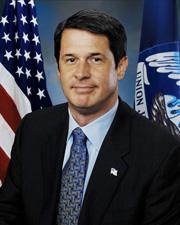 Sen. David Vitter (R-LA)
Legislative Activity
Stay on top of the latest movement without scrolling through every action
Senate amendment agreed to: Amendment SA 7 agreed to in Senate by Yea-Nay Vote. 93 - 2. Record Vote Number: 2.
January 10, 2007
View full timeline
Senate amendment agreed to: Amendment SA 7 agreed to in Senate by Yea-Nay Vote. 93 - 2. Record Vote Number: 2.
January 10, 2007
Roll call votes on amendments in Senate: Amendment SA 7 agreed to in Senate by Yea-Nay Vote. 93 - 2. Record Vote Number: 2.
January 10, 2007
Considered by Senate. (consideration: CR S319, S324-325, S331-332; text: CR S331)
January 10, 2007
Amendment SA 7 agreed to in Senate by Yea-Nay Vote. 93 - 2. Record Vote Number: 2.
January 10, 2007
Senate amendment submitted
January 9, 2007
Senate amendment proposed (on the floor): Amendment SA 7 proposed by Senator Vitter to Amendment SA 3.(consideration: CR S265-268; text: CR S266)
January 9, 2007
Amendment SA 7 proposed by Senator Vitter to Amendment SA 3. (consideration: CR S265-268; text: CR S266) To amend the Ethics in Government Act of 1978 to establish criminal penalties for knowingly and willfully falsifying or failing to file or report certain information required to be reported under that Act, and for other purposes.
January 9, 2007
Votes
1 roll call on this amendment
Text
Proposed
LEGISLATIVE TRANSPARENCY AND ACCOUNTABILITY ACT OF 2007--Continued

The PRESIDING OFFICER. Under the previous order, there will be 30
minutes of debate with the Senator from Connecticut, Mr. Lieberman, and
the Senator from Maine, Ms. Collins, to be recognized for 15 minutes
each.
The Senator from Utah is recognized.
Mr. BENNETT. Madam President, I suggest the absence of a quorum.
The PRESIDING OFFICER. The clerk will call the roll.
The assistant legislative clerk proceeded to call the roll.
Ms. COLLINS. Madam President, I ask unanimous consent the order for
the quorum call be rescinded.
The PRESIDING OFFICER. Without objection, it is so ordered.
Ms. COLLINS. Madam President, I know the order provides for Senator
Lieberman to go first, followed by myself. Since Senator Lieberman has
not yet arrived on the floor, I ask unanimous consent that I be
permitted to begin. When Senator Lieberman arrives on the floor, I will
yield to him and then reclaim my time.
The PRESIDING OFFICER. Without objection, it is so ordered.
Ms. COLLINS. Madam President, today the Senate once again considers
significant legislation to reform ethical practices and lobbying
practices. Any sense of deja vu among my colleagues is understandable,
for the bill before us, S. 1, is identical to the bill passed by the
Senate by a vote of 90 to 8 in March of last year. That bill was the
bipartisan product of the Senate Committee on Homeland Security and
Governmental Affairs and the Senate Committee on Rules and
Administration. Because it never became law and because the issues that
it addressed have only grown more troubling, the bill stands before us
reincarnated but still very much needed.
The recent elections took place in the shadow of far too many
revelations of questionable or even downright illegal conduct by
Members of Congress. In reaction to those scandals, the American people
sent a clear message to Congress that they had lost confidence in their
Government. You may ask, Why does it matter? Why does it matter if the
American people have confidence in their Government officials? It
matters because without the trust of the American people, we cannot
tackle the major issues facing this country. As long as our
constituents are convinced that the decisions we are making are tainted
by special influences or undue influence, then we simply cannot
accomplish the work of this Nation.
I think it is appropriate that the first bill that is brought before
this Chamber to be debated and considered is one that would reform the
lobbying and ethics rules to increase disclosure and to ban practices
that might be called into question or create an appearance of
wrongdoing. We need to assure the American people that the decisions we
make are decisions of integrity, in which their interests are put
first.
It is important to remember that the conduct of most Members of
Congress and their staffs is beyond reproach. I believe the vast
majority of people serving in the House and the Senate are here for the
right reason. They are here because they care deeply about their
country and they want to contribute to the formulation of public policy
they believe will improve the lives of the American people.
The same can be said for the conduct of most lobbyists. In fact,
lobbying--whether done on behalf of the business community, an
environmental organization, a children's advocacy group, or any other
cause--can often provide Members of Congress with useful information
and analysis. That information and analysis aids but does not dictate
the decisionmaking process.
Unfortunately, today the word ``lobbying'' too often conjures up
images of expensive paid vacations masquerading as fact-finding trips,
special access the average citizen can never have, and undue influence
that leads to tainted decisions. We cannot underestimate the corrosive
effect this perception has on the public's confidence in the
legislative process.
One of the most important functions of the bill before us is to
increase transparency, make it evident what is going on, how our
decisions are made. As Justice Oliver Wendell Holmes once noted,
``Sunlight is the best disinfectant.'' That, indeed, is the premise of
this bill. It calls for greatly increased disclosure. It provides, for
example, for a searchable, accessible public database where information
on lobbying contacts and filings will be maintained and disclosed. It
requires far more detailed disclosure of lobbyist activities in more
frequent filings under the Lobbying Disclosure Act, and it ensures that
this information is made readily available to the public via the
Internet. The knowledge that the public will be able to scrutinize in
detail the activities of a lobbying firm and contacts between Members
and lobbyists will help to provide much needed transparency in this
whole area. In addition, the enhanced disclosures will allow citizens
to decide for themselves what is acceptable and what is not.

This bill also contains some needed reforms of earmarks. Too many
times an earmark--the designation of taxpayer dollars for a specific
purpose--has been included in the final version of an appropriations
bill, or another bill, despite the fact that it was never discussed or
debated in either the Senate or the House. By requiring that any
earmarks in legislation disclose the name of the Member of Congress who
proposed the earmark and also requiring an explanation of the essential
governmental purpose of the earmark, and by making this information
available on the Internet, this legislation will shed sunlight on the
source of and the reason for earmarks and allow them to be fairly
evaluated.
I go through a very rigorous process when I decide to press for
earmarks. I make sure there is community support, I review them in
depth, and I am going to be very comfortable having my name attached to
earmarks that I propose. In fact, I hope then that will help my
constituents know I am working very hard for a project with which I
agree.
It is not the process of earmarks per se that is a problem. The
problem is when earmarks are sneaked into the final version of
legislation without public debate, without a vote, without any
consideration, and no one is sure where the earmark came from, who
sponsored it or, in some cases, even who the beneficiary is going to
be. That is the problem. That is what this bill would cure.
The enhanced disclosure in this legislation not only applies to the
activities of lobbyists but to our own activities as well. I am pleased
this legislation takes steps to eliminate the practice of anonymous
holds on Senate legislation. This occurs when a Member notifies the
cloakroom that he or she wishes to block a piece of legislation from
coming to the floor and yet does so anonymously. I can tell you as
someone who has had to deal with anonymous holds time and again, it is
very frustrating when you can't find out who is holding up your
legislation, why they are holding it up, and you cannot begin to
resolve whatever the problems are. The hallmark of this body should be
free and open debate. A process that allows a secret hold to kill a
bill without a word of debate on the Senate floor is contrary to that
principle.
The bill also includes some important provisions to slow the so-
called revolving door problem, where Members of Congress and high-
ranking staff leave their jobs in the Senate or the House one day and
then turn around and lobby the institution they once served. Once
again, the limitations in this bill get to the heart of the image
problem here and help to ensure the integrity of our decisions.
Many of our former colleagues have become lobbyists. There is nothing
wrong with that. But there should be a cooling-off period before they
come back.
I notice my colleague from Connecticut has now arrived on the floor.
Through the Chair, I ask my colleague if he wants me to finish my
statement or if he wants to do his now, since he was first in the
queue?
Mr. LIEBERMAN. Madam President, to my friend from Maine, it is an
expression of the partnership we have had over the years on the
committee that the hearing in our committee went until 2 o'clock so
Senator Collins was able to get here before I was. If she will please
finish her statement and I will go after her.
Ms. COLLINS. I thank my colleague from Connecticut.

[[Page S259]]

I am also very pleased to join Senators Reid, McConnell, Feinstein,
Lieberman, and Bennett in cosponsoring a bipartisan substitute
amendment that will be laid down this afternoon. This substitute
amendment will further strengthen the legislation we have before us. I
thank all of my colleagues for working together to achieve this goal.
Nevertheless, I make clear, while I strongly support the legislation
before the Senate as well as the substitute, the legislation could be
further strengthened in a very important way.
Last year, Senators Lieberman, McCain and I proposed an Office of
Public Integrity. That concept is also included in another bill that
was sponsored this year by Senators McCain, Lieberman, Feingold, and
myself. I anticipate Senator Lieberman, Senator McCain, Senator
Feingold, and I will be offering this proposal during the course of
this debate.
I will debate that issue later at the appropriate time, but right now
let me say any true comprehensive reform of our lobbying and ethics
rules should include an independent investigatory body. The American
people view the way we investigate ethics violations as an inherently
conflicted process. Think about it--and I know the Presiding Officer
has a law enforcement background--we are our own advisers, our own
investigators, our own prosecutors, our own judges, our own juries. We
play every role.
As good a job as a Member of the Ethics Committee in the Senate has
done in overseeing the conduct of Members and their staff, it remains
difficult, if not impossible, to guarantee the system works in a way
that gives the public confidence that there is an impartial, thorough
review of allegations against Members of Congress when we are
fulfilling every role in the process.
Now, I respect and understand the constitutional requirement that
Members of Congress sit in judgment of one another and our proposal
does not change. The Office of Public Integrity would bring the results
of its investigation to the Ethics Committee, which would then decide
whether to proceed further, whether there is an actual violation, and
what kind of remedy, if any, is necessary. That is an important
provision. I look forward to working with the Senator from Connecticut,
the Senator from Wisconsin, and the Senator from Arizona in that area.
We need also to make sure we stop having trips that are paid
vacations. However, we don't want to interfere with true fact-finding
trips. Those are generally useful to our work. We are close to working
out the right balance in that area.
I look forward to passing effective legislation that will help to
restore the public's confidence in the Senate. By scheduling this bill
first on our agenda we have recognized the importance of these issues
to the American people. We need to act without delay to help restore
their faith in how we do business.
The PRESIDING OFFICER. The Senator from Connecticut is recognized for
15 minutes.
Mr. LIEBERMAN. Madam President, I thank my colleague and friend from
Maine, Senator Collins, for her excellent statement and for her work as
she led the committee, which produced a significant part of the bill
before the Senate. I will speak about it and put it in a larger
context.
We all know that the trust that people have in Congress is at a low
point. I don't know that it is a historic low point, but it is a lot
lower than anyone wants it to be, both for the national interest and
out of a sense of pride we have in the service we attempt to give.
The reasons for the low level of public trust and confidence in
Members of Congress and, more to the point, in Congress as an
institution are more than one. One of the significant reasons for the
low level of confidence in Congress is the partisanship that has
divided this institution and, too often, made it impossible to do
anything for the people who sent us here, who gave us the privilege of
coming here to serve them. Partisanship is one part of the lack of
esteem and trust the public has in us.
A second part is the public's doubt about the ethics of Members of
Congress and the process we have for judging our ethics. Scandal after
scandal unfolded last year. The public was left with the impression
that the self-interest of lawmakers and lobbyists too often triumphed
over the national good and the national interests. That is not true,
but that was certainly the impression made by some of the awful
exposures and scandals that were uncovered and by the prosecution of
Members and lobbyists.
Unless we take action to restore the public's trust in us--that
central confidence between those who are privileged to govern and those
who, if you will, are governed--we will not be able to do the things we
need to do to take on and to respond, in a constructive way, to the
challenges we have before the Senate, including a new strategy for
Iraq, a momentous decision that will affect our national security to be
kicked off, if you will, redirected, by the statement that the
President will make to the Nation tomorrow night; fighting the war on
terrorism, reducing the deficit, doing something to fix our health care
system, which is broken; improving our public system of education
which, for still does not offer an equal opportunity to too many of our
children; taking stress off the middle class which is the heart and
soul of our country. All of those things will not happen in a good way
unless we can rebuild the public's trust in us.
It involves less partisanship, a better self-policing of ethics--and
I will come to that in a minute--but also doing some of the things I
have talked about, responding to some of the problems, taking advantage
of some of these opportunities that will restore the relationship
between the people of the United States and those who serve them in the
Congress.
And so much of law--we legislate the law--as someone taught me years
ago, is the way we express our values, the way we express our
aspirations for ourselves as a society, the rights and wrongs, what we
hope we will be, is apparent in the system by which we legislate
ourselves and those who lobby us. But the reality is that the best
system for doing that is our own ethical norms, which most of us, of
course, have; that, ultimately, we have to self-police ourselves by not
trifling with and demeaning the extraordinary opportunity to serve that
our constituents have given us.
Now we come to S. 1. I truly commend our new majority leader, Senator
Reid, for introducing an ethics and lobbying reform bill as S. 1 and
scheduling it as the very first legislative item of business for the
Senate in this 110th Congress. I will give a little background to how
we got here, particularly legislatively how we got here.
In January of last year, I was privileged to join Senator McCain in
cosponsoring a sweeping lobbying reform bill that he crafted following
his and Senator Dorgan's courageous investigation into the scandal
surrounding the lobbyist Jack Abramoff. Senator Feingold and Senator
Reid also introduced comprehensive bills that added many constructive,
progressive ideas to the debate.

Senator Collins seized the moment as Chairman of the Homeland
Security and Governmental Affairs Committee, and by early March of last
year, our committee reported, with near unanimous bipartisan support,
the most significant piece of lobbying reform legislation to come
before Congress in over a decade. In the Rules Committee, Senators Lott
and Dodd worked together to mark up a tough set of reforms to the
Senate ethics rules. Senators Feinstein and Bennett, as the incoming
and ranking members of that committee, have picked up the baton of
reform where their predecessors left off.
As a result of a truly bipartisan effort last year, the Senate
combined provisions reported out of the two committees--Homeland
Security and Rules--and passed the legislation overwhelmingly by a vote
of 90 to 8. Unfortunately, the House did not pursue the same course. It
passed a weak bill on a mostly partisan vote and the House and Senate
never moved to conference.
Now, we begin the new year with a fresh chance to finish old business
and clean up our House and Senate for tomorrow. Last year's Senate-
passed bill is the text of S. 1 before the Senate now, a set of reforms
that would bring greater honesty and transparency to the way we do
business in Washington.
This year, we should go beyond last year's proposals, as Senator
Collins

[[Page S260]]

said, and enact even stronger reforms because the demand and need is
greater. Our legislation should go further to include an independent
Office of Public Integrity.
What we start with today in S. 1 is a very strong statement that the
110th Congress will put the public interest over special interest.
I will spend a few moments describing the provisions of S. 1 that
were reported out of our Homeland Security and Governmental Affairs
Committee in March of last year, dealing primarily with the Lobbying
Disclosure Act which comes before our committee under the rules.
The Lobbying Disclosure Act was passed in 1995, more than a decade
ago. Since then, the number of lobbyists has skyrocketed. Last year,
6,554 lobbying firms or organizations, not individuals--firms or
organizations--registered to lobby. That is almost double the 3,554
registrants in 1996, the first full year of reporting under the
Lobbying Disclosure Act. The Office of Public Records received a total
of 46,835 lobbying reports last year which represents a tremendous
amount of activity. The amount of money spent each year on lobbying has
skyrocketed, as well. Here we make estimates that put the number well
over $2 billion a year for lobbying.
Now, to state the obvious, but the obvious often needs to be stated,
lobbying Congress is not an evil thing to do. Being a lobbyist is not a
dishonorable profession. In fact, lobbying Congress is a
constitutionally protected right. The first amendment protects the
right of all people to petition the Government for redress of
grievances. Therefore, we have to be respectful when we legislate in
this area. But it is entirely consistent with the first amendment
right, and, of course, essential to our Government to provide ethics
and transparency for lobbying practices.
First and foremost, are the politicians. In S. 1, we bring the
Lobbying Disclosure Act into the age of the Internet by requiring
electronic filing and creating a public-searchable database on the
Internet, making the information as accessible as a click of the mouse
to everyone interested.
We bring greater transparency to the relationship between lawmakers
and lobbyists by expanding the types of activities lobbyists must
disclose, including their campaign contributions, the fundraisers they
host for Federal candidates, travel arranged for Members of Congress,
payments to events to honor Members of Congress, and contributions to
entities such as charities that are established by, for or controlled
by a Member. We would get more timely disclosure from lobbyists by
requiring them to submit filings on a quarterly, rather than a
semiannual, basis.
S. 1 would also close a major loophole in the Lobbying Disclosure Act
by requiring lobbyists, for the first time, to disclose paid efforts to
generate grassroots lobbying.
Our former colleague, the late and really great Lloyd Bentsen, a
Senator from Texas, once described this kind of grassroots lobbying as
``Astroturf lobbying.'' Why? Because it generates manufactured,
artificial rather than real, self-grown, grassroots pressures on
Congress.

As it stands now, the Lobbying Disclosure Act requires disclosure
only by lobbyists directly in contact with Members. S. 1 would require
disclosure of the identity of organizers of media campaigns, mass
mailings, phone banks, and other large-scale efforts encouraging the
public to contact Members of Congress about specific issues. This is
important because it would provide the American people, Members of
Congress, ourselves, and the media with a better understanding of whose
money is financing which efforts to influence Congress. This bill calls
for transparency, but puts no limits on activity.
We would also remove the cloak obscuring so-called stealth lobbying
campaigns which occur when a group of individuals, companies, unions,
or associations ban together to form a lobbying coalition. These
coalitions frequently have innocent-sounding names that give the
impression they are promoting positive mom-and-pop, apple pie goals.
But, in fact, they lobby on a range of issues that could never be
identified by the name of the coalition.
S. 1 would also toughen the enforcement provisions under the Lobbying
Disclosure Act by doubling to $100,000 the civil penalty that a
lobbyist is subject to for violations of the law's requirements. And,
for the first time, this proposal would forbid a lobbyist from
providing gifts or travel to a Member of Congress in violation of House
or Senate rules.
We would slow the revolving door between Congress and K Street by
doubling from 1 to 2 years the so-called cooling off period for former
Members of Congress, during which time they would face lobbying
restrictions.
In total, the provisions of S. 1, I believe, provide a strong
foundation for reform. Can this bill be improved? Of course it can. And
I believe it will in the amendment process that will come before this
Chamber on S. 1.
The majority leader, I know, is working to craft a comprehensive
substitute bill that will go even further toward tightening earmark
disclosure and revolving-door rules. I am confident that, through the
amendment process, we will emerge with a bill that is even stronger
than the good bill we passed last year.
A final word. In my opinion, significant changes to our ethics rules
must be accompanied by significant changes to the way we enforce those
rules. The public is understandably skeptical about a system in which
we investigate, consider, and pass final judgments on allegations of
ethical responsibility. They have seen too many Members, in the last
few years particularly, caught up in scandal. In order to win the
public's confidence, and, frankly, to do what is right to demonstrate
our seriousness in this effort, I believe it is time, this year, to
create an independent, investigative, and enforcement Office of Public
Integrity. That would in no way usurp the ultimate authority of the
Senate Ethics Committee, under rules consistent with the Constitution
to be the final arbiter of questions about the ethics of Members of the
Senate.
Mr. President, in closing, I would say this: We have an opportunity
to begin anew--a fresh start at rebuilding the bonds of trust that have
been broken between the Congress and the American people because of the
unethical behavior of a few Members of this great institution.
S. 1 is the beginning, and a strong beginning, of what I believe will
be an even stronger ending to accomplishing that critically important
goal.
I thank the Chair and yield the floor.
The PRESIDING OFFICER. The majority leader is recognized.
Mr. REID. Madam President, is S. 1 now before the Senate?
The PRESIDING OFFICER. Yes.

Amendment No. 3

Mr. REID. Madam President, I send an amendment to the desk in the
form of a substitute.
The PRESIDING OFFICER. The clerk will report.
The assistant legislative clerk read as follows:

The Senator from Nevada [Mr. Reid], for himself, Mr.
McConnell, Mrs. Feinstein, Mr. Bennett, Mr. Lieberman, and
Ms. Collins, proposes an amendment numbered 3.

Mr. REID. Madam President, I ask unanimous consent that reading of
the amendment be dispensed with.
The PRESIDING OFFICER. Without objection, it is so ordered.
(The amendment is printed in today's Record under ``Text of
Amendments.'')
Mr. REID. Madam President, I am very happy the Senate has now begun
debate on S. 1. It is a strong, bipartisan package of ethics reforms
and will help reassure the American people that we answer to them.
The matter now before the Senate, S. 1, without the substitute I have
offered, would be the most significant changes in ethics and lobbying
reform since Watergate. So if we do nothing else other than adopt the
Reid-McConnell S. 1, we should feel very good about what we are able to
accomplish in this body.
I repeat, if we accomplish nothing else, the legislation now before
this body will be the most significant, important change in ethics and
lobbying rules for about three decades. So without any question, S. 1
is a good start.
But we should even do better, and that is what the substitute I sent
to the desk on my behalf and that of Senator McConnell will do. It will
even do better for the American people.
For those who are watching this debate in the Senate and are
expecting

[[Page S261]]

real, meaningful results, that is what is going to happen. I think the
American people for sure are not interested in quick fixes or window
dressing or a few public relations moves. They want bold changes. They
want us to fundamentally alter the way business is done in the Nation's
Capital and to ensure that the people's interests--not the special
interests--come first in the Halls of Congress.
So today Senator McConnell and I introduced S. 1. And now I have
offered on our behalf--Senators McConnell and Reid--a substitute
amendment designed to make the Senate's ethics legislation even
stronger.
First of all, I want the Record spread with my appreciation and the
acknowledgment of the bipartisan effort of the Republican leader. I
think it speaks volumes that the two of us are here before this body
asking our Members to support two very fine pieces of legislation, S. 1
and now the substitute amendment. We are asking our Members to join
with us.
As I indicated earlier--and I repeat for the third time--if we do
nothing other than pass S. 1, tremendous changes in the way we do
business in Washington will occur. But now, to add to that, is the
bipartisan substitute which will make that even stronger. So I cannot
say enough publicly or privately in the way of extending my
appreciation to the Republican leader for working with me.
And we worked together on this issue. Our staffs have worked together
on this for weeks--weeks. And we did not finalize what we were going to
do until today as the Senate convened. The Republican leader suggested
to me: Here are some things I think we should do. Here are some things
we should not do. What do you think?
I said: I will think about it. I have thought about it. He was right.
I acknowledged that he was right and called him a short time later and
indicated that to be the case.
What are a few of the highlights of the Reid-McConnell substitute
amendment?
First, the substitute will place new prohibitions and disclosure
requirements on lawmakers and senior staff when they seek private
sector employment. The underlying bill slowed the revolving door
between top Government jobs and lucrative private sector employment,
but the substitute amendment will do even more to reduce the undue
influence that results from the revolving door.
Second, the Reid-McConnell substitute will eliminate dead of night
changes to conference reports. Once a conference report has been
signed, it will be completely impermissible to change it.
What is this all about? We have had so many instances in recent years
where the conference is closed, and sure enough, we come to the Senate
floor and the conference report includes matters that were put in the
bill after the conference had been closed. That is wrong. That will no
longer be possible. What we do with conference reports will have to be
done in a public fashion.
Also, you will note this legislation does things other than what has
been done on a bipartisan basis with Reid and McConnell. For example,
one of the finest relationships we have in this body is between
Democrat Kent Conrad and Republican Judd Gregg. They are both experts
with the Government's money. They work together as much as they can, in
a bipartisan fashion, and I think it is better than any two budget
people have worked together since we have had a budget process in the
Senate.
The substitute includes a reform proposal by the chairman and ranking
member of the Budget Committee, Senators Conrad and Gregg, requiring
that conference reports be accompanied by a CBO score. We need to
restore fiscal discipline and reduce the large deficits that have
developed over the past several years.
In the past we have had conference reports that have had matters
included with no ability for Senators to determine how much it was
going to cost. Just put these in there and, we were told: Well, the CBO
did not have time to do it. It is the end of the session. It is a big
bill. They do not have the time to do it.
They are going to have to have the time to do it now or it will not
be done. That matter will not be in unless we have a score from the
Congressional Budget Office.
There are a number of other things in this substitute. I will not
mention them all. But the substitute amendment will strengthen the
provision in the underlying bill requiring disclosure of earmarks.
The American public should be concerned about earmarks. Now, I am not
opposed to earmarks. They have been in appropriations bills since we
have been a country. They have just gotten way, way out of hand.
Thousands of them. And it has not shined a good light on our Congress.
In recent years, we have seen lawmakers--working on behalf of
lobbyists--insert anonymous earmarks, costing taxpayers millions and
millions of dollars, into legislation at the last minute. In these
instances, the earmarking process has been subject to abuses that we
must all work together to bring to an end.
I have been a Member of the Appropriations Committee for two decades,
and there is not a single earmark I have ever put in a bill that I
would be afraid to put my name on. And that is in effect what we are
asking: if an earmark has merit, a Senator should be willing to stand
by it publicly. That is why, under this bill, if a Member of Congress
wants to direct taxpayer funds to a specific need--they have a right to
do that, and I believe an obligation to do that--if a Member of
Congress wants to direct taxpayer funds to a specific need that they
believe is important to their State or to this country, they will be
required to attach their name to that in the light of day. That is
appropriate.
Now, the substitute that Senator McConnell and I have offered to the
Senate has more than that. But that is a rough outline of what we have.
Madam President, I ask for the yeas and nays on the substitute
amendment.
The PRESIDING OFFICER. Is there a sufficient second?
There appears to be a sufficient second.
The yeas and nays were ordered.

Amendment No. 4 To Amendment No. 3

(Purpose: To strengthen the gift and travel bans.)

Mr. REID. Madam President, I send an amendment to the desk.
The PRESIDING OFFICER. The clerk will report.
The assistant legislative clerk read as follows:

The Senator from Nevada [Mr. Reid], for himself, Mr.
Durbin, and Mr. Salazar, proposes an amendment numbered 4 to
amendment No. 3.

(The amendment is printed in today's Record under ``Text of
Amendments.'')
Mr. REID. Madam President, my presence on this floor relating to this
bill is about to come to an end. I would hope that when I finish my
brief statement Senators will come and participate in the debate
dealing with S. 1, the substitute Senator McConnell and I offered, and
this amendment, and then whatever other amendments.
I have indicated there will be an open process here, and I want
Senators to feel comfortable that they have the opportunity to offer
amendments. I will say, I think we should move forward as quickly as
possible. I would very much like to finish this bill next week and have
every intention to do so. In fact, everyone should be aware of and
alerted to the fact that we are going to finish the bill next week,
even if it goes past Friday at 12 o'clock.
We need to finish this legislation. Next week is a short week because
of Dr. King's holiday. So we need to work on this legislation. We do
not have a lot of time just to wait around and have a lot of quorum
calls.
Last November, the American people called for bold changes in the way
Washington does business. In the Senate, we have made answering this
call for change our first priority, S. 1.
Senator McConnell and I have joined with S. 1, and Democrats and
Republicans together introduced a sweeping package of ethics reforms as
our first item of legislation. And today, as I have indicated, Senator
McConnell and I have made the bill even stronger.
I would like to go even further. That is what this one, final
amendment I have offered does. My second-degree amendment contains
three major provisions.
First, it strengthens the gift ban in the underlying bill. Whereas S.
1 bans

[[Page S262]]

gifts from lobbyists to Members of Congress and staff, this amendment
would go one step further and ban gifts from companies and other
organizations that even employ or retain lobbyists.
Two, this amendment strengthens the travel ban in the underlying
bill. Whereas S. 1 bans travel paid for by lobbyists, this amendment
will go further and ban--with some commonsense exceptions--travel paid
for by companies and other organizations that employ or retain
lobbyists.
Finally, this Reid amendment will include a very significant reform
about which there has been much discussion in recent days.
This amendment will require Members of the Senate to pay the full
charter fare if they wish to travel on private airplanes. If a Senator
needs to fly on a private airplane for any purpose, he or she should be
required to pay the full cost of that trip, not a discounted one. These
reforms are not aimed at any particular lawmakers. I have traveled on
private airplanes a lot over the years. These reforms are not directed
to any particular lawmaker or any political party. We have all done it
over the years, with some exception. They are designed to remove even
the appearance of impropriety from this Congress.
What we in this body have to do is not only do away with what is
wrong but what appears to be wrong. And to the American public, flying
around on these aircraft appears to be wrong. I hope it hasn't changed
any votes. I am confident it has not. But we want to do away with what
even appears to be wrong.
I repeat, this particular reform is not aimed at any particular
lawmaker, any particular political party, any particular campaign
committee. It is designed to remove even the appearance of impropriety
from Members of this body and send a strong signal to the American
public that their elected representatives are not unduly influenced by
meals, travel, and gifts that lobbyists and large corporations are
willing to lavish. We all remember the scandals making headlines across
America a year ago. The newspapers were filled with the stories of
lawmakers being flown around the world for rounds of golf, corrupt
lobbyists bilking their clients for millions of dollars, and of top
congressional staff being wined and dined and treated to sporting
events by special interests trying to influence their bosses. These
stories have a corrosive effect on the great institution in which we
all serve. We must make sure they are never repeated by reassuring the
American people that legislation can't be traded and that their leaders
can't be bought.
I look forward to a spirited debate on these amendments and eventual
passage of this bill. Together we must do all we can to restore the
faith of the American people in their Government. We need to answer the
people's call for change. If an earmark has merit, a lawmaker should be
willing to stand by it publicly. If a person wants to fly on an
airplane, it should be under the rules that apply to most everybody
else in the country.
These are significant proposals of change. They are for the good of
the institution. I hope the vast majority of the Senate will support
the amendment offered by Senator McConnell and this Senator and also
the amendment I offered by myself.
The PRESIDING OFFICER. The majority whip is recognized.
Mr. DURBIN. Madam President, I commend my colleague, Senator Reid,
the majority leader. I was happy to join in cosponsoring not only the
Reid-McConnell substitute but also the Reid amendment that has just
been offered. What we are attempting to do is restore the confidence of
the American public in Congress. We have a lot of work to do. The sad
and troubling events of the last several years which have involved
investigations, prosecutions, and convictions of so many on Capitol
Hill and those who work nearby are a grim reminder that there are
people who will try to exploit this system.
I echo the sentiments of the Senator from Maine, Ms. Collins, when
she said that the overwhelming majority of the Members of the House and
Senate, both political parties, are honest, hard-working people. I have
spent many years working with my colleagues in the Senate as well as in
the House. I do believe they understand that public service is not
supposed to be an avenue to wealth; it is supposed to be an opportunity
to serve. If you want to get rich, don't run for office. That is the
basic rule which all of us understand. Those who fail to understand it
unfortunately tarnish the reputation of Congress and those others who
serve honorably.
We are attempting through this effort, which Senator Feinstein and
Senator Bennett are leading on the floor, to make changes in the rules
of the Senate and the procedures of the Senate so we can start to
restore the confidence of the American people in this institution. It
is fitting and proper that this is the first bill we consider. This is
the first thing we should do. Everything else should follow after we
have addressed this important ethical concern.
I wish to say a word about earmarks because there has been a lot
said. Some believe--even the President, in a recent Wall Street Journal
article--that earmarks are the root of the real problem on Capitol
Hill. I don't agree with the President. I think as long as earmarks in
appropriations spending bills are fully transparent, clearly for a
public purpose, they are a good thing.
I have been involved in the Appropriations Committees in both the
House and Senate, trying to bring back a fair share of funds to my home
State of Illinois through the earmark process. Where some may try to
squirrel away or secret away an earmark in a bill, I view it much
differently. It is usually a race to the press release to take credit
for things we have included in the bill because I take great pride in
the effort we have made. This legislation addresses the earmark
process. It will add transparency and accountability to it and, in so
doing, allow us to return to the earmarks and appropriations bills with
pride, understanding we have improved that process overall.
The last point I would like to make is that those who would take
bribes in public life are clearly criminal. They have violated the law.
They should be prosecuted and convicted for that bribery and
corruption. We are attempting now to limit the contacts between those
who have an interest in legislation and those of us who vote on
legislation to make sure that relationship is more professional, less
personal, and that there is more disclosure on both sides in terms of
that relationship.
I would like to say for a moment that it doesn't get to the heart of
the issue. The heart of the issue is not whether any Member of Congress
is going to take money or a lavish gift or trip. That happens so
rarely. But there is something built into our political system that
really has to be debated, that goes to the real heart of this issue;
that is, the way we finance our campaigns as elected officials.

Unless you are one of the fortunate few--so wealthy that you can
finance your own campaign and never ask for a contribution--most of us
spend a good part of our public lives asking for donations. We go to
every one we see, from those of modest means who give us small checks
to the richest people in America who write much larger checks. It is
almost an imperative if you are not wealthy, if you want to finance a
campaign, to find millions of dollars to buy the television and radio
time to deliver your message in your State. If we really want to get to
the heart of restoring the confidence of the American people in our
Government, we have to go to the heart of the problem--the way we
finance political campaigns.
For many years on Capitol Hill, I resisted the notion of public
financing of campaigns. I had some pretty good arguments against it.
Why do I want to see public moneys or taxpayer dollars going to crazy
candidates representing outlandish causes who have no business in this
political process? Well, those arguments held up for a while, but over
time I came to understand that while I was arguing against that lunatic
fringe in American politics, I was creating a trap for everyone else
who was honest and trying to raise enough money to wage an effective
campaign.
The time has come for real change. In this last election cycle, which
the Presiding Officer knows full well, more money was spent in that
off-year election than in the previous Presidential election year. The
amount of money

[[Page S263]]

going into our political process is growing geometrically. It means
that more and more special interest groups and individuals with an
agenda are pouring dollars into the political process. It means that
our poor, unsuspecting voters are the victims of these driveby ads that
come at them night and day for months before a campaign. It means that
candidates, both incumbents and challengers, spend month after weary
month on the telephone begging for money.
It is no surprise that the same people we are begging money for are
the people who are the subject of this ethics legislation--the
lobbyists of the special interest groups. We live in this parallel
world.
Today, with the passage of this underlying legislation, we will ban a
lobbyist buying me lunch. Tomorrow that same lobbyist can have me over
for lunch at his lobbying firm to provide campaign funds for my
reelection campaign, and it is perfectly legal. What is the difference?
From the viewpoint of the person standing on the street looking through
the window, there is none. It is the same lobbyist and the same Member
of Congress. The fact that one is a political campaign fundraising
event and another is a personal lunch is a distinction which will be
lost on most of America.
The reason I raise this is I will support these ethics reforms. They
are absolutely essential. They are the product of the scandals we have
seen on Capitol Hill in the last several years. But if we stop there,
if we do nothing about the financing of our political campaigns, we
have still left a trap out there for honest people serving in Congress
to fall into as they try to raise money for their political campaigns.
In a few weeks I will be introducing public financing legislation to
try to move us to a place where some States have already gone--the
States of Arizona, for example, and Maine--moving toward clean
campaigns, understanding that the voters are so hungry for changes and
reforms that will shorten campaigns, make them more substantive, take
the special interest money out of those campaigns, make them a real
forum and debate of ideas and not a contest of fundraising. Sadly, that
is what they have become in many instances.
I urge my colleagues in their zeal for reform not to believe that the
passage of S. 1 and its amendments will be the end of the debate. I
hope it will only be the beginning and that we can move, even in this
session of Congress, to meaningful hearings and the passage of public
financing of campaigns that will truly reform the way we elect men and
women to office at the Federal level and restore respect to this great
institution of the U.S. Congress, both the House and the Senate.
I yield the floor and suggest the absence of a quorum.
The PRESIDING OFFICER. The clerk will call the roll.
The assistant legislative clerk proceeded to call the roll.
Mr. OBAMA. Madam President, I ask unanimous consent that the order
for the quorum call be rescinded.
The PRESIDING OFFICER. Without objection, it is so ordered.
Mr. OBAMA. Madam President, in November, the American people sent a
clear message to their representatives in Washington. After a year in
which too many scandals revealed the influence special interests have
in this town, the American people told us that we better clean up our
act, and we better do it fast.
But it would be a mistake if we conclude this message was intended
for just one party or one politician. After all, the votes hadn't even
been counted in the last election before we started hearing reports
that corporations were already recruiting lobbyists with Democratic
connections to carry their water in the next Congress. This is why it
is not enough to just change the players; we have to change the game.
Americans put their faith in us this time around because they want us
to restore their faith in Government, and that means more than window
dressing when it comes to ethics reform.
I was hopeful that last year's scandals would have made it obvious to
us that we need meaningful ethics legislation, but last year, despite
some good efforts on this side of the aisle, the bill we ended up with,
I thought, was too weak. It left too many loopholes, and it did too
little to enforce the rules. It was a lost opportunity. It would not
have restored the people's faith in Congress, and in that end I had no
choice but to vote against it.
I don't want that to happen this time. Fortunately, the substitute
amendment the majority leader, Harry Reid, has offered today brings us
close to the bill that will achieve his stated goal, and that is to
pass the most significant ethics and lobbying reform since Watergate.
We owe the American people real reform, and if we work hard this week
and next, we will get it done.
This time out, we must stop any and all practices that would lead a
responsible person to believe a public servant has become indebted to a
lobbyist. That means a full gift and meal ban. That means prohibiting
lobbyist-funded travel that is more about playing golf than learning
policy. And that means closing the revolving door to ensure that
Capitol Hill service, whether as a Member of Congress or as a staffer,
isn't all about lining up a high-paying lobbying job. We should not
tolerate a committee chairman shepherding the Medicare prescription
drug bill through Congress at the same time he is negotiating a job
with the pharmaceutical industry to be their top lobbyist.
The substitute bill offered by Majority Leader Reid contains many of
these reforms. I thank him for working with Senator Feingold and me in
crafting this package. But in two important respects, I think we still
need to go further.
First, we need to go further with respect to enforcement. I will save
my remarks on this subject for a later time, but I fully support the
creation of an office of public integrity, as Senators Lieberman and
Collins have proposed. It is similar to the independent ethics
commission I proposed last February. Regardless of what approach we
adopt, we have to take politics out of the initial factfinding phase of
ethics investigations, and we have to ensure sufficient transparency in
the findings of those investigations so the American people can have
confidence that Congress can police itself.
The second area in which we need to go further is corporate jets.
Myself and Senator Feingold introduced a comprehensive ethics bill
that, among other things, would close the loopholes that allow for
subsidized travel on corporate jets. Today, I am very pleased to see
the majority leader has offered an amendment that would serve the same
purpose. I fully support him in his effort.
Let me point out that I fully understand the appeal of corporate
jets. Like many of my colleagues, I traveled a good deal recently from
Illinois to Washington, from Chicago to downstate, from fundraisers to
political events for candidates all across the country. I realize
finding a commercial flight that gets you home in time to tuck in the
kids at the end of a long day can be extremely difficult. This is
simply an unfortunate reality that goes along with our jobs.
Yet we have to realize these corporate jets don't simply provide a
welcome convenience for us; they provide undue access for the lobbyists
and corporations that offer them. These companies don't just fly us
around out of the goodness of their hearts. Most of the time we have
lobbyists riding along with us so they can make their company's case
for a particular bill or a particular vote.
It would be one thing if Congressmen and Senators paid the full rate
for these flights, but we don't. We get a discount--a big discount.
Right now a flight on a corporate jet usually costs us the equivalent
of a first-class ticket on a commercial airplane. But if we paid the
real price, the full charter rate would cost us thousands upon
thousands of dollars more.
In a recent USA Today story about use of corporate jets, it was
reported that over the course of 3 days in November 2005, BellSouth's
jet carried six Senators and their wives to various Republican and
Democratic fundraising events in the Southeast. If they had paid the
full charter rate, it would have cost the Democratic and Republican
campaign committees more than $40,000. But because of the corporate jet
perk, it only cost a little more than $8,000.
There is going to be a lot of talk in the coming days about how
important

[[Page S264]]

it is to ban free meals and fancy gifts, and I couldn't agree more, but
if we are going to go ahead and call a $50 lunch unethical, I can't see
why we wouldn't do the same for the $32,000 that BellSouth is offering
in the form of airplane discounts. That is why I applaud Senator Reid
on his amendment to require Members to pay the full charter rate for
the use of corporate jets.
As I said, I understand that for many Members, these jets are an
issue of convenience. They allow us to get home to our constituents, to
our families, and to the events that are often necessary for our jobs.
But in November, the American people told us very clearly they are
tired of the influence special interest wields over the legislative
process. The vast majority of Americans can't afford to buy cheap rides
on corporate jets. They don't get to sit with us on 3-hour flights and
talk about the heating bills they can't pay, or the health care costs
that keep rising, or the taxes they can't afford, or their concerns
about college tuition. They can't buy our attention, and they shouldn't
have to. And the corporation lobbyists shouldn't be able to either.
That is why we need to end this corporate jet perk if we are to pass
real, meaningful ethics reform.
The truth is, we cannot change the way Washington works unless we
first change the way Congress works. On November 7, voters gave us the
chance to do this, but if we miss this opportunity to clean up our act
and restore this country's faith in Government, the American people
might not give us another opportunity.
I urge my colleagues to support both the substitute amendment and the
Reid amendment to close the corporate jet loophole. I ask unanimous
consent that I be added as a cosponsor to the Reid-McConnell amendment
No. 3 and Reid amendment No. 4.
The PRESIDING OFFICER. Without objection, it is so ordered.
Mr. OBAMA. I thank the Chair.
The PRESIDING OFFICER. The Senator from Utah is recognized.
Mr. BENNETT. Madam President, there are some Senators here who want
to offer an amendment. I simply want to make a brief response to my
friend from Illinois and his comments about corporate jets.
I have seen firsthand exactly what he is talking about, where a
corporate jet picks you up, takes you to a fairly remote location, and
it is not only well stocked with food and drink but with experts who
will fill you in on what it is they want you to know.
There is another side of it, however. As the Senate knows, I am
unburdened with a legal education, but there is one phrase that comes
out of the legal profession and I think applies here, which is: Hard
cases make bad law. I am speaking now for the most senior Republican
who will very much speak for himself on this issue, but I think in this
context it is appropriate to insert these remarks.
In the State of Alaska, the only way one can get to 70 percent of the
population locations in Alaska is by air. I suppose one could get there
by dogsled, but as a practical matter, the only way you get there is by
air.
That being the case, there are planes flying all over Alaska every
day, and virtually all of them are owned by corporations.
The corporate executive is flying from Anchorage to point A or from
Juneau to point B, or whatever, and says to the Senator: I am going
there; can I give you a ride? There is no charter rate for these kinds
of activities. Some of the planes are pretty small. But this is the
only way you can get around in that State.
A Senator said this morning in our breakfast meeting: In my State, I
can get to every location in the State in less than an hour by
automobile. I have been in the State of Delaware. It is hard to stay in
the State of Delaware by automobile. But if you go to some of the large
States of the West--Alaska being obviously the largest--and an
absolute, firm ban on any kind of flight on corporate jets unless you
are paying commercial hourly rates for the charter is to say to the
Senators of Alaska: You cannot travel around your State; you can't
communicate.
Utah is a smaller State than Alaska. I don't take flights around Utah
very often. I spend a lot of time in the car. From one end of the State
to the other, it takes about 4 hours by car. Sometimes it is easier to
do that than try to deal with the hassle of getting in and out of
airports, and many of the places I go don't have airports. But I would
hope, as we have this debate about corporate jets, that we do not think
solely in terms of Halliburton's corporate jet with a single Senator
surrounded by lobbyists, and we recognize at the other end of the
spectrum there are circumstances that require--indeed, common sense
dictates--the use of corporate jets fully reported, paid for in an
intelligent way that will allow us to not take a single case and apply
it to every situation.
Madam President, I yield the floor.
The PRESIDING OFFICER. The Senator from California.
Mrs. FEINSTEIN. Madam President, I regret the Senator from Illinois
left the floor because I thought I might ask a question of him. But he
has left the floor. I see a Senator on the other side ready to speak,
so I will defer at this time.
The PRESIDING OFFICER. The Senator from Louisiana is recognized.
Mr. VITTER. Madam President, I have looked forward to joining this
debate. I compliment those leaders who had the foresight to bring this
very important issue to the floor of the Senate at the very beginning
of this new Congress.
I worked with many Senators on both sides of the aisle last year. We
had a bipartisan working group very focused on ethics and lobbying
reform. We tried to push forward some bold, significant proposals.
In the end, I was rather disappointed, quite frankly, with the final
product as it left the Senate floor. But I am very hopeful that we will
produce a stronger, bolder final product now in this new Senate this
month, particularly having listened to the voters and their very clear
statements on the issue in the last election.

amendment no. 5 to amendment no. 3

Mr. VITTER. Madam President, in that regard, I will send up three
amendments to the desk and I ask that they be considered. I call up the
first of those three amendments and I will explain it. I ask that the
pending amendment be set aside for that purpose.
The PRESIDING OFFICER. Without objection, it is so ordered. The clerk
will report.
The legislative clerk read as follows:

The Senator from Louisiana [Mr. Vitter] proposes an
amendment numbered 5 to amendment No. 3.

Mr. VITTER. Madam President, I ask unanimous consent that the reading
of the amendment be dispensed with.
The PRESIDING OFFICER. Without objection, it is so ordered.
The amendment is as follows:

(Purpose: To modify the application of the Federal Election Campaign
Act of 1971 to Indian tribes)

At the appropriate place, insert the following:

SEC. ___. APPLICATION OF FECA TO INDIAN TRIBES.

(a) Contributions and Expenditures by Corporations.--
Section 316 of the Federal Election Campaign Act of 1971 (2
U.S.C. 441b) is amended by adding at the end the following:
``(d) Treatment of Indian Tribes as Corporations.--
``(1) In general.--In this section, the term `corporation'
includes an unincorporated Indian tribe.
``(2) Treatment of members as stockholders.--In applying
this subsection, a member of an unincorporated Indian tribe
shall be treated in the same manner as a stockholder of a
corporation.''.
(b) Effective Date.--The amendment made by subsection (a)
shall apply with respect to any election that occurs after
December 31, 2007.

Mr. VITTER. Madam President, this amendment is very simple. It
attacks what is a very significant loophole in current campaign finance
law, and that is a big and gaping loophole with regard to Indian
tribes. As you know, under Federal campaign finance law, entities such
as corporations, labor unions, et cetera, can participate in the
Federal political process, but they need to do that, in terms of
contributions and finances, through PACs, through political action
committees. That is not true with regard to Indian tribes. Indian
tribes, unlike every other entity, unlike corporations, unlike labor
unions, unlike every entity under the Sun, can give money directly from
their tribal revenues--including, of course, their biggest source of
revenue right now, which is gambling revenue. So they can take that
significant

[[Page S265]]

source of money and use that directly, through the leadership vote of
the tribe, to give money to political candidates.
In addition, there is another part of this big loophole, and that is
that some of the cumulative giving limits that apply to every other
entity out there--corporations, labor unions, et cetera--do not apply
to Indian tribes. Again, this is a very glaring loophole under present
Federal campaign finance law. I do not think there is any good
rationale or argument under the Sun to retain it.
I strongly urge all of my colleagues, Democrats and Republicans, to
take a good, hard look at this and vote for and support this very
simple amendment which simply closes that loophole.
We may have some Member stand on the Senate floor and say: It may be
a good idea, but we need to put it off. We are going to look at
campaign finance later. We need to talk about this later in a different
context.
I strongly disagree. When we think about the events of the last year,
when we think about the debate, the national concern about corruption
and cronyism, certainly there are big stories having to do with Indian
tribes at the center of this. Some of the worst abusers of those
situations were not the tribal members nor the tribal leadership
themselves, but certainly it involved Indian tribes, and certainly the
enormous amount of money available to the tribes because of gambling
revenue was at the heart of those very bad situations.
I think we need to address this now. We need to hit it dead on. It is
very much part of the stories and concerns we have heard about over the
last year or two. Again, this is very simple, straightforward and very
fair--which is to treat Indian tribes exactly as we treat other
entities, such as corporations, such as labor unions, et cetera.
Certainly allow them to participate in the political process, certainly
allow them to fully support candidates of their choice but make them do
that through setting up PACs, not simply allow them to spend their
gambling revenue or other proceeds directly and in many cases without
some of the overall limits that apply to other entities such as
corporations.
With that, I will be happy to answer any questions or participate in
any debate on the floor. I, also, have two other amendments at the
desk. Whenever it is in order, I ask to call up those so we may discuss
those as well.
Mrs. FEINSTEIN. Madam President, I suggest the absence of a quorum.
The PRESIDING OFFICER. The clerk will call the roll.
The legislative clerk proceeded to call the roll.
Mr. VITTER. Madam President, I ask unanimous consent the order for
the quorum call be rescinded.
The PRESIDING OFFICER. Without objection, it is so ordered.

Amendment No. 6 to Amendment No. 3

Mr. VITTER. Madam President, I ask unanimous consent to lay aside the
pending amendment and call up my second amendment at the desk.
The PRESIDING OFFICER. Without objection, it is so ordered.
The clerk will report.
The legislative clerk read as follows:

The Senator from Louisiana [Mr. Vitter] proposes an
amendment numbered 6 to amendment No. 3.

Mr. VITTER. I ask unanimous consent the reading of the amendment be
dispensed with.
The PRESIDING OFFICER. Without objection, it is so ordered.
The amendment is as follows:

(Purpose: To prohibit authorized committees and leadership PACs from
employing the spouse or immediate family members of any candidate or
Federal office holder connected to the committee)

At the appropriate place, insert the following:

SEC. ___. PROHIBITION ON EMPLOYMENT OF FAMILY MEMBERS OF A
CANDIDATE OR FEDERAL OFFICE HOLDER BY CERTAIN
POLITICAL COMMITTEES.

(a) In General.--Title III of the Federal Election Campaign
Act of 1971 (2 U.S.C. 431 et seq.) is amended by inserting
after section 324 the following new section:

``SEC. 325. PROHIBITION ON EMPLOYMENT OF FAMILY MEMBERS OF A
CANDIDATE OR FEDERAL OFFICE HOLDER BY CERTAIN
POLITICAL COMMITTEES.

``(a) In General.--It shall be unlawful for any authorized
committee of a candidate or any other political committee
established, maintained, or controlled by a candidate or a
person who holds a Federal office to employ--
``(1) the spouse of such candidate or Federal office
holder; or
``(2) any immediate family member of such candidate or
Federal office holder.
``(b) Immediate Family Member.--For purposes of subsection
(a), the term `immediate family member' means a son,
daughter, stepson, stepdaughter, son-in-law, daughter-in-law,
mother, father, stepmother, stepfather, mother-in-law,
father-in-law, brother, sister, stepbrother, or stepsister of
the Member.''.
(b) Effective Date.--The amendment made by this section
shall take effect on the date of the enactment of this Act.

Mr. VITTER. Madam President, this is a second amendment of a package
of amendments I am presenting to the full Senate. As I did with the
first amendment, what I would like to do--and I have had discussions
with the Chair and ranking member, the participants who are leading the
floor debate--is I will briefly explain this amendment. I will
certainly be happy to engage in a fuller debate at a later time and
have a full vote on this amendment, as with the previous one, at a
later time, hopefully, in the next few days.
This amendment, also, directly addresses a situation that has clearly
arisen and clearly caused great concern among the American people in
the last couple of years. That is family members of Members of
Congress, Members of the House, Members of the Senate, making money--
being paid, in some cases, very large amounts of money--while being
employed by that candidate's PAC. Under present law, it is perfectly
legal. It certainly doesn't pass the ``smell'' test in the hearts and
minds of many Americans, but it is perfectly legal for a Member's
campaign to hire a family member, a spouse, a child, any close family
member--to help take care of the business of that PAC and be
compensated for it, in some cases, with very significant salaries.
Let me say at the outset, I believe there are ways that could be done
properly and ethically. The problem is, as is the case in so many of
these questions, that there are also many ways where it can be and is
and has been abused, so it basically puts a family member on the
payroll of an entity that the Member of the House or the Senate
controls. There is no real governing entity that polices the situation.
No one knows whether that person shows up for work or for how many
hours or how significant that work is. At the end of the day, through
that family member, the family enjoys a significant additional income
because that Member of the House or Senate is in politics and controls
that PAC.
Again, this is not a theoretical problem yet to happen. This is not a
solution waiting for a problem. This has been done in real life. This
has clearly been abused in the past. It has clearly been a conduit for
Members to gain family income through entities they control. I think,
because of that abuse, because of the real erosion of public confidence
we have seen in Congress because of abuses such as this over the last
several years, there is only one sure and clean way to solve the
problem and that is to simply have a bright-line test and say:
Immediate family members can't get paid by the Member's PAC. We are not
going to allow that. You have to hire a nonfamily member for these
administrative roles so that no one can abuse the situation and put an
immediate family member on the payroll, often at a very significant
salary.
Again, my amendment is very simple. It says no immediate family
member can be hired by the candidate's campaign or leadership PAC, and
it defines immediate family member the same way section 110 of last
year's Senate-passed bill defined that term, and that is son, daughter,
stepson, stepdaughter, son-in-law, daughter-in-law, mother, father,
stepmother, stepfather, mother-in-law, father-in-law, brother, sister,
stepbrother or stepsister or spouse. It is straightforward, a bright-
line rule. To me it is very clear that is the only way we are going to
stop this abuse that has occurred in the past and rebuild the
confidence of the American people.

Amendment No. 7 to Amendment No. 3

With that, if it is appropriate, I ask unanimous consent to lay aside
that amendment and call up my third amendment at the desk.
The PRESIDING OFFICER. Without objection, it is so ordered. The clerk
will report.

[[Page S266]]

The legislative clerk read as follows:

The Senator from Louisiana [Mr. Vitter] proposes an
amendment numbered 7 to amendment No. 3.

Mr. VITTER. I ask unanimous consent the reading of the amendment be
dispensed with.
The PRESIDING OFFICER. Without objection, it is so ordered.
The amendment is as follows:

(Purpose: To amend the Ethics in Government Act of 1978 to establish
criminal penalties for knowingly and willfully falsifying or failing to
file or report certain information required to be reported under that
Act, and for other purposes)

At the appropriate place, insert the following:

SEC. __. KNOWING AND WILLFUL FALSIFICATION OR FAILURE TO
REPORT.

Section 104(a) of the Ethics in Government Act of 1978 (5
U.S.C. App.) is amended--
(1) by inserting ``(1)'' after ``(a)'';
(2) in paragraph (1), as so designated, by striking
``$10,000'' and inserting ``$50,000''; and
(3) by adding at the end the following:
``(2)(A) It shall be unlawful for any person to knowingly
and willfully falsify, or to knowingly and willingly fails to
file or report, any information that such person is required
to report under section 102.
``(B) Any person who violates subparagraph (A) shall be
fined under title 18, United States Code, imprisoned for not
more than 1 year, or both.''

Mr. VITTER. Madam President, this third amendment is also very clear
and straightforward. It increases the penalties significantly in cases
in which there is not just a mistake on a financial disclosure form but
a knowing and willful and purposeful attempt to hide information that
the Member knows is supposed to be made public under the law. It
increases those penalties on the civil side, and it, also, under the
appropriate circumstances, creates criminal penalties for that.
Again, I think this goes to the heart of the erosion of public
confidence because of lobbyists and ethics lapses and abuses over the
last several years which have clearly involved Members of Congress.
Some are in jail now as we speak because of those abuses.
This is a very clear and necessary way to remedy those past abuses
and that erosion of public confidence. I think it is very important
that these penalties are serious on the civil side and on the criminal
side but that they only apply to cases where there is knowing and
willful misrepresentation, where there is an active and a clear attempt
to hide facts, to not comply with the law. Clerical or other mistakes
don't cut it. That is not worthy of these very serious civil and, in
some cases, criminal penalties. But a knowing and willful
misrepresentation, an active attempt to hide facts from the public that
the law clearly mandates be made public, that is a different story. We
need a zero tolerance policy for that.
Again, my amendment increases those penalties on the civil side and
on the criminal side, and I urge all the Members of the Senate to
support this very important amendment to rebuild that credibility of
this body and of the House.
In closing, let me say, again, I welcome this activity on the Senate
floor. I welcome this debate. I compliment Majority Leader Reid and all
others who made this decision to put this issue front and center,
first, on the Senate floor in the new Senate. I am eager to pass a
strong, responsible bill to restore, to build up over time--it will not
happen overnight--the confidence of the American people in our
institutions.
Since I first came to the Senate, I have worked with various
Senators, including a bipartisan working group on these issues, on
these proposals last year. But I don't think we went far enough last
year. Clearly, we didn't pass a bill through the entire process. But
even the bill we passed through the Senate I don't think was strong
enough. It did not address some of these crucial areas, including the
Indian tribal campaign finance loophole, including the area of abuse
where candidates and Members can put family members on the PAC campaign
payroll, including making sure we increase civil and criminal penalties
for knowing and willful violations.
My amendments will do this, and I urge all of my colleagues to take a
good, hard look at them. Tomorrow, I will be introducing two, possibly
three, other amendments, and I look forward to debating those as
well. I appreciate the helpfulness of the managers. I look forward to
coming back to these amendments to call them up for full debate and
vote.

I yield my remaining time.
The PRESIDING OFFICER (Mr. Tester). The Senator from Wisconsin is
recognized.
Mr. FEINGOLD. Mr. President, I am happy to see the Senator from
Montana presiding.
I am very pleased to speak about ethics and lobbying reform and the
bill we will consider over the next week or so.
To start, what a pleasure it is to have a majority here that not only
supports reform but recognizes the importance of dealing with this
issue immediately in this new Congress. There is no better way to show
the American people that things have changed in Washington and will
continue to change than by taking up and passing strong ethics and
lobbying reforms right away. I thank Majority Leader Reid for making a
decision to start our work in this new Congress with this issue. This
is the right thing to do.
Ethical conduct in Government should not be an aspiration, it should
be a given. For too long, the public has had to open the morning papers
and read about how Congress is mired in scandal rather than about how
we are going to deal with the really tough problems) facing our
country. We might wish that rules aren't necessary, but time has
proven, over and over again, that they are. And once there are rules,
there seem always to be people who want to bend those rules or skate as
close to the line as they can. And sometimes they fall or jump over
that line. And so the rules need to be revisited and toughened, based
on experience.
Just over a year ago, it looked like the Jack Abramoff scandal had
finally lit a fuse under the Congress. Soaring promises were made that
reform was on the way last year. Bills were introduced, hearings were
held, and ultimately both the House and Senate considered legislation
on the floor. But there was always a sense that what was going on was
just a show. It was clear that many of those in charge wanted to change
as little as possible. It seemed like the Republican leaders in the
House believed that the public really didn't care about these issues.
First they attached major campaign finance reform provisions to the
bill the Senate passed, and then they let it die.
We found out on November 7 just how wrong they were. The new faces in
this Senate are the direct result of the public's distaste for how the
last Congress handled this issue, and many others. So now it is time
for real action. And the public will again be watching closely to see
how we perform.
We start our work today on S. 1, which is the same bill that the
Senate approved last year, by a vote of 90-8. Last year, I was one of
the eight. I thought the bill was too weak in some very significant
ways. And so today, along with the junior Senators from Illinois and
Connecticut, Senators Obama and Lieberman, I have introduced the
Lobbying and Ethics Reform Act. This is our attempt to say what we
think the Senate's final product should look like when we finish our
work on S. 1.

I do not intend to offer this new bill as a complete substitute.
Instead, I will seek to I have important provisions of this bill added
as amendments to S. 1. I am happy to say that a number of the
suggestions that we make in our bill have been accepted by the majority
leader. Some are included in his substitute, which is the base bill for
this legislation. Some very important additional improvements are
included in the Reid first degree amendment. This is a very good start
for this debate, to improve the bill right at the outset.
I take a few minutes as we start this debate to talk about some of
the most important issues that we must address in this bill. First, we
need an airtight lobbyist gift ban. No loopholes, no ambiguity. We took
a first step towards banning gifts from lobbyists, including meals,
tickets, and everything else, in last year's bill, but we left open a
big loophole. If we do nothing else to improve last year's effort, we
have to close that loophole.
I am not going to stand here and say that any Senator's vote can be
purchased for a free meal or a ticket to a football game. But I don't
think anyone can argue that lobbyists are providing these perks out of
the goodness

[[Page S267]]

of their hearts, either. At this point, no reform bill is going to be
credible unless it contains a strict lobbyist gift ban.
No one has ever explained to me why Members of Congress need to be
allowed to accept free meals, tickets, or any other gift from a
lobbyist. If you really want to have dinner with a lobbyist, no one is
saying that you can't. Just take out your credit card and pay your own
way. I can tell my colleagues from personal experience that you
will survive just fine under a no-gifts policy. The Wisconsin
Legislature has such a policy and I brought it here with me to
Washington. I don't go hungry. We need to just stop the practice of
eating out at the expense of others. It is not necessary. It looks bad.
And it leads to abuses.

I am happy to say that Senator Reid agrees that the lobbyist gift ban
is not a ban if organizations that retain or employ lobbyists can still
give gifts. He is prepared to close the loophole in S. 1 that would
allow that to continue. His amendment does that and I support it.
Another important shortcoming of S. 1 is in the area of privately
funded travel. That was the issue that leapt to the fore when Jack
Abramoff pled guilty just a little over a year ago. Abramoff took
Members of Congress on ``fact finding trips'' to Scotland where they
went shopping and golfed at St. Andrews. It was a scandal and Members
of Congress were falling all over each other in a race to do something
about it. But just a few months later, the Senate passed a bill that
did almost nothing at all about it.
My staff keeps a file of invitations for fact-finding trips for
staff. Here are a few from over the years. A ``legislative issues
seminar'' on St. Michaels Island, sponsored by MCI World Com, with
dinner at the Inn at Perry Cabin; a trip to Silicon Valley sponsored by
the Information Technology Industry Council, with dinner sponsored by
the Wine Institute; a ``congressional field trip'' sponsored by GTE to
Tampa and Clearwater Beach. The invitation reads:

To take advantage of the terrific location beside Tampa Bay
and the Gulf of Mexico, we'll demonstrate that you can place
a cellular call over water, either while dining aboard a boat
or fishing for that night's dinner.

These kinds of ``fact finding trips'' paid for by industry groups
were left untouched by the bill the Senate passed. That was one of the
reasons I voted against the bill.
Fortunately, the new House leadership recognized the need to do
something about privately funded travel, even if they weren't prepared
to prohibit it entirely. The House passed a rules change on the first
day of the session to allow only trips sponsored by groups that don't
employ or retain lobbyists. The only trips that groups that lobby can
offer are to a one day event--to make a speech, for example. This is a
major improvement, especially because lobbyist participation in
organizing, arranging, or planning these trips would be strictly
limited.

There are many things that could be done about privately funded
travel, but at the very least we should not have more lenient travel
rules than the House of Representatives. Again, I am pleased that
Senator Reid supports the House travel rules and I hope we will adopt
his amendment that brings us in line with those rules.
When I introduced my lobbying reform bill back in July 2005, it
included a provision addressing the abuse of Members flying on
corporate jets. At that time, I have to say, it seemed like a fantasy
that we would actually pass such a provision. I heard complaint after
complaint about it, that we shouldn't do it.
Slowly but surely, many people have come around to where the public
is: Corporate jet travel is a real abuse. Sure, it is convenient, but
it is based on a fiction--that the fair market value of such a trip is
just the cost of a first class ticket. And when that fiction is applied
to political travel, it creates a loophole in the ban on corporate
contributions that we have had in this country for over a century. Any
legislation on corporate jets must include campaign trips as well as
official travel because one thing is for certain--the lobbyist for the
company that provides the jet is likely to be on the flight, whether it
is taking you to see a factory back home or a fundraiser for your
campaign.
Our bill does that. It covers all of the possible uses of corporate
jets, and amends all of the Senate rules needed to put in place a
strong reform, and the Federal election laws as well. From now on, if
you want to fly on a corporate jet, you will have to pay the charter
rate. And these flights shouldn't be an opportunity for the lobbyist or
CEO of the company that owns the jet to have several hours alone with a
Senator. Our bill prohibits that as well. This is what the American
people have been calling for. There are no loopholes or ambiguities
here. Politicians flying on private planes for cheap will be a thing of
the past if we can get this provision into the bill. Senator Reid's
amendment includes a tough corporate jet provision. I am pleased to
support that portion of the amendment. This is a big deal, and I
commend the majority leader for taking this step.

Another issue on which I hope we will make some improvements in this
bill is the revolving door between between Government service and
lobbying firms. One of the things that really sticks in the craw of the
people back home is the idea that politicians use their government
service as a stepping stone to lucrative lobbying careers. And they
also believe, rightly in some cases, that former Members who are
lobbyists have special access and influence over their former
colleagues. We have a criminal statute that prohibits former Senators
from lobbying the Congress for a year after they leave office. The same
tough provisions apply to top officials in the executive branch.
But experience has shown that these provisions don't really get at
the problem. The cooling off period is too short. Our bill doubles it.
And the cooling off period has become more of a warming up period for
some Members of Congress who move on to work for an organization with
interests in legislation. They basically run the lobbying show behind
the scenes during the time they can't lobby their colleagues directly.
Is it too much to ask a Member of Congress who leaves office to take
a 2-year breather before accepting money from an employer for trying to
influence Congress? I don't think so. We are talking here about highly
talented and highly employable people. There are so many employers,
so many worthy causes, that would benefit from their talents and
experience, doing things other than trying to influence legislation.
Fortunately, the Lobbying Disclosure Act has a ready made definition of
``lobbying activities'' that is broader than lobbying contacts. Our
bill's revolving door provision prohibits Members of Congress from
engaging in lobbying activities for 2 years after leaving office, not
just lobbying contacts. That would make the revolving door restrictions
really mean something.

I believe that is what the public wants--restrictions that mean
something, not rules for show, with hidden loopholes and not a system
of rules with lax enforcement. That is why our bill includes the
Lieberman-Collins proposal for an Office of Public Integrity to
investigate ethics complaints and make recommendations to the Ethics
Committee on whether to take action. It is certainly time that this
proposal receive very serious consideration. We are on the cusp of
making some very significant changes to our own rules. Let's not
undermine what we are accomplishing by leaving unaddressed the very
real need for tough and independent enforcement.
I also believe this bill must go further in addressing earmarks.
Senator McCain's bill, which I have cosponsored, includes a provision
that would allow the Senate to strip out earmarks for unauthorized
spending. This is an important reform and I hope it can be added to the
bill.
Thus far, I have talked only about ethics rules, but the bill on the
floor contains some very significant improvements to our lobbying
disclosure laws as well. The current law, the Lobbying Disclosure Act,
which was enacted in 1995, was itself a landmark reform, the first
change in nearly 50 years to the original Federal Regulation of
Lobbying Act. I was here when the LDA passed, under the leadership of
the Senator of Michigan, Mr. Levin. It is an important and effective
law.
A decade of experience has shown, however, that it has shortcomings.
The

[[Page S268]]

bill on the floor includes some important improvements. My bill
incorporates those improvements and also adds some--requiring
disclosure by lobbyists of the earmarks they try to get for their
clients, and requiring lobbyists and lobbying organizations to file
separate reports on their political contributions and fundraising. The
use of campaign contributions as a lobbying tool is well known in this
city and in this Senate. It is time that our lobbying disclosure laws
reflected that. And we should cover all of the tools in the lobbyist's
work bench, not just direct contributions but the collection or
bundling of the contributions of others. Lobbyists wield influence by
serving as fundraisers, not just be giving money themselves.
I have high hopes for this debate. After a false start last year, we
can get this job done. The House has moved quickly to pass new ethics
rules. It is our turn now. And we can lead the way with serious
lobbying disclosure reforms. I am looking forward to working with my
colleagues on both sides to start this Congress with a real
accomplishment. If we do this, the public's confidence in how we tackle
the many pressing issues before us will be greatly enhanced. That, in
the end, is the best reason to undertake these reforms. They are the
foundation on which the rest of our work together stands.
I yield the floor.
The PRESIDING OFFICER. The Senator from West Virginia.
Mr. BYRD. I thank the Chair.
(The remarks of Mr. Byrd are printed in today's Record under
``Morning Business.'')
Mr. BYRD. Mr. President, I yield the floor and suggest the absence of
a quorum.
The PRESIDING OFFICER. The clerk will call the roll.
The assistant legislative clerk proceeded to call the roll.
Mrs. FEINSTEIN. Mr. President, I ask unanimous consent that the order
for the quorum call be rescinded.
The PRESIDING OFFICER. Without objection, it is so ordered.
Mrs. FEINSTEIN. Mr. President, I ask that Members know that the floor
is open, that now is the time, and that hopefully they will file any
amendment and come down forthwith and speak to them.
I thank the Chair and suggest the absence of a quorum.
The PRESIDING OFFICER. The clerk will call the roll.
The assistant legislative clerk proceeded to call the roll.
Mr. LEAHY. Mr. President, I ask unanimous consent that the order for
the quorum call be rescinded.
The PRESIDING OFFICER. Without objection, it is so ordered.
Mr. LEAHY. Mr. President, I ask unanimous consent to speak as in
morning business for a few minutes.
The PRESIDING OFFICER. Without objection, it is so ordered.
(The remarks of Mr. Leahy are printed in today's Record under
``Morning Business.'')
Mr. LEAHY. I yield the floor and suggest the absence of a quorum.
The PRESIDING OFFICER. The clerk will call the roll.
The assistant legislative clerk proceeded to call the roll.
Mr. GREGG. Mr. President, I ask unanimous consent that the order for
the quorum call be rescinded.
The PRESIDING OFFICER. Without objection, it is so ordered.

Pay-Go

Mr. GREGG. Mr. President, I wish to speak briefly, not specifically
on this bill, although it is related to this bill. I will have an
amendment to this bill. Hopefully, I can offer that tomorrow. But since
there is a lull in activities, I want to speak briefly on something the
House has recently done as part of its 100-hour agenda. It has passed
language which is euphemistically referred to as pay-go.
I think it is important to understand what the implications of that
language are because it gives definition to the House leadership rather
quickly in this whole process of where we are going in the area of
fiscal responsibility as a country because what this language
essentially does is guarantee tax increases, but it has virtually no
impact on spending restraint.
It has been given this motherhood title ``pay-go'' when, in fact, it
should be called and more accurately is described as ``tax-go.''
The implications of this language are pretty simple. It says that
when a tax cut lapses or comes to the end of its term, that tax cut
will be raised back to the original rate. So, for example, we today
have a tax rate of 10 percent for low-income individuals. That tax cut
was put in place back in the early 2000 period under the President's
tax cuts. That tax cut comes to a close from a statutory standpoint--in
the sense that the authorization level of the rate terminates in 2010--
and that rate will jump back up to the basic rate, which I believe was
15 percent at the time. So there will be a 5-percent tax increase on
low-income Americans who pay taxes. That would be people with over
$40,000 of income, for all intents and purposes. That is a tax
increase.
One would think that type of mechanism would also be applied, if one
is going to use a euphemism such as pay-go, to the spending side of the
aisle, so when the spending program used up its authorized life--let's
take, for example, the farm program--and it reaches the end of its
term, as the farm program is about to do, at that point, that program,
which is a subsidized program, would have the cost of the original
program go back in place or it would be cut back to having no subsidy
at all. But that is not the way it works.
Under the proposal, entitlement programs are perceived to go on
forever and to spend money forever at whatever the rate is, even if
their authorization ends. But tax reductions are perceived to end and
tax rates are perceived to go up. You basically treat the two sides of
the ledger entirely differently. On one side of the ledger, taxes go up
under this ``tax-go'' proposal if there is no change, and on the other
side of the ledger, if there is no change, the entitlement spending
goes on for that designated program forever without it falling back and
being limited. There is no review of it.
The practical implication of this language is that the only thing it
affects, when you put in place this so-called pay-go, which is really
``tax-go,'' is the tax side of the ledger. That is the only thing that
can be impacted because the entitlement program under the scoring
mechanisms of our Government don't lapse, don't end. The spending is
perceived to go on. So pay-go cannot apply to it. You cannot review the
program. It is only on the tax side that it applies.
The effect of that is this is a mechanism to force a tax increase
because what this basically says is without 60 votes, you cannot
continue the lower tax rate. But on the entitlement side, you can
continue to spend the money not subject to a 60-vote threshold. Those
are two different approaches to the two sides of the ledger in the
Congress.
So by taking this action in the House and passing this language, they
have essentially said it is their goal to dramatically increase taxes,
to use the mechanism of alleged pay-go, or ``tax-go,'' to drive major
tax increases on the American public.
If you are on the Democratic side of the aisle in the House, or maybe
even on the Democratic side in the Senate, that may make sense; you may
want to raise taxes. It is the tradition, of course, of the party to
like to raise taxes, I guess. That is how they got the title ``tax and
spend'' fixed to their nomenclature. But this is rather a brash way to
do it; to start right out with the first major enforcement mechanism
for budget, supposedly, restraint being a mechanism that doesn't reduce
spending at all, doesn't restrain spending at all. All it does is force
us to raise taxes or at least be subject to a 60-vote point of order if
we want to maintain taxes at their present level.
Some may say: We need to raise taxes; the tax burden in America is
not large enough on earning Americans, especially on high-income
Americans. I fundamentally disagree. Why? Because when one looks at the
present law and what is generated in revenues, we are seeing a dramatic
increase in revenues in this country. Revenues have jumped in the last
3 years more than they have jumped in any period in our history. That
is because we have in place a tax system which has created an incentive
for people to go out and invest and undertake economic activity which
has, in turn, generated revenues to the Federal Government.
Historically, the Federal Government revenues have been about 18.2
percent of the gross national product. That is

[[Page S269]]

how much the Federal Government has historically taken out of our
economy and spent for the purposes of governance. That is the average.
We are now getting back in tax receipts, because of these large
increases over the last 3 years, close to 18.4, 18.5 percent of gross
national product, so we have actually gone over what is the historical
level of revenues to the Federal Government. We are generating more
revenues than the Federal Government historically gets. That is good
news.
It has been done in the right way, by the way. We have generated this
extra revenue by creating an atmosphere out there where people are
willing to invest in taxable activity. We have seen it over the years.
In fact, President Kennedy was the first one to appreciate this,
followed by President Reagan, and then President Bush. When you get tax
levels too high--the American people are creative. We are a market
economy with an entrepreneurial spirit, and when you raise taxes too
high, people say: I am not going to pay that tax rate. I am going to
invest in something that avoids taxes, some highly depreciated
something that expenses items like municipal bonds, something that
allows me to put my money where I don't have to pay that exorbitant tax
rate.
What has happened, however, under the Kennedy tax cut and the Reagan
tax cut and the Bush tax cut is when you get taxes at the right level,
when you say to the American entrepreneur and American earner: We are
going to charge you what is a reasonable tax rate on your investment,
then the American people go out and they invest in taxable activity.
That taxable activity generates jobs and jobs create growth. It also is
a much more efficient way to have money used. You don't have money
inefficiently being invested for the purpose of avoiding taxes. Money
is instead invested for the purpose of generating activity, which is
productive.
As a result, the entire economy rises, as has happened in the last
few years, and you generate significant revenues to the Federal
Treasury, as has happened in the last few years, and is projected, by
the way, to continue--both by the CBO and OMB.
Some will say: Sure, but that doesn't point out the fact that the
high-income people in America got a huge tax cut under this tax
proposal. Remember, we are generating more revenue from this tax cut,
more revenue than we got before. We had a down period. There are going
to be a lot of debates about that. My view is it came out of the bubble
of the late 1990s and the attack of 9/11 and the initial impact of the
tax cut. But that has all been reversed to a point where we now have an
economic situation where we are generating more revenues to the Federal
Government than we have as an historical norm. So we are getting more
revenues from this tax system.
Interestingly enough, the tax system is more progressive. It is the
most progressive it has been in history. The American people with
incomes in the top 20 percent are paying 85.2 percent of the Federal
tax burden. The top 20 percent pay 85 percent of the tax burden. That
compares to the Clinton years where the top 20 percent were paying 84
percent. So, actually, the top 20 percent are absorbing more of the tax
burden of America, generating more revenues to the Government, and not
only that but the bottom 40 percent of American income-earning
individuals are getting more back than they did under the Clinton
years, almost twice as much.
If you earn less than $40,000 in America, you are receiving more back
than you did in the Clinton years because of the fact of the earned-
income tax credit--in fact, almost, as I said, twice as much.
We have a law now that is doing two extraordinary things: it is
generating huge revenues to the Federal Treasury because of the
economic activity it is encouraging--creating jobs, creating
investment, creating taxable events--and it has created a more
progressive tax system. That is the good news.
So why do we want to raise taxes? Why do we want to go back and raise
taxes on that situation? I don't think we should. But if you follow the
pay-go proposal that has been brought forward by the House, that is the
only option that occurs as these tax policies start to lapse in the
year 2010.
I would probably be willing to fight that fight. In fact, I am
willing to fight that fight if we treated the spending side of the
ledger the same way under pay-go, or under ``tax go,'' as I call it,
but we don't. As I mentioned earlier, because of the way the baseline
works around here, the spending side of the ledger does not have to be
looked at under the pay-go rules. You can continue to spend on those
entitlement programs whatever is in their traditional spending
patterns, whatever they are, plus increases as a result of more people
using them. Granted, you can't create new entitlement programs. Those
would be subject to pay-go. And you can't dramatically expand the
programs. For example, the Part D premium would have been subject to
pay-go--was subject to pay-go. But that is only a small portion of the
spending issue. The real essence of the spending issue is the
underlying entitlement, as is, of course, the essence of the tax side,
the underlying rate.

What you have essentially done is create a mechanism which, because
of the way we score spending versus taxes, causes taxes to be subject
to a 60-vote point of order but does not cause spending to be subject
to the same discipline. So the practical implications of it are that it
will basically be used primarily as a force for forcing tax increases
on the American people. That is almost automatically, by the way,
because in 2010 these taxes that are in place, these tax rate changes,
lapse. Under the rules they will be subject to a 60-vote point of order
and getting 60 votes around here for a tax cut, as we know, is pretty
difficult.
This is the problem with pay-go as it is presently structured.
Interestingly enough, the House has also done this in a way that
doesn't even go to the traditional pay-go rules, which would involve
sequester, as I understand it. They have done this outside the
statutory process. They have done it as a rule and therefore the true
enforcement mechanism against a new entitlement, to the extent pay-go
would apply against a new entitlement, would be sequester.
What is sequester? It essentially says that either you offset the new
spending with spending cuts somewhere or else you have an automatic
event which does it for you across the board. That is the right way to
do this. You should have a sequester. So the failure to get sequester
as part of the exercise just once again shows that there isn't a
seriousness of purpose in this rule as it was passed by the House
relative to spending restraint. There is only a seriousness of purpose
relative to making sure that taxes go up. You really can't defend that
position unless you are willing to take the position that really what
we are interested in is raising taxes because otherwise, to defend that
position, you would have to say: Yes, but we didn't want it to apply to
entitlement programs that already exist. And even if there is a new
entitlement program we didn't want it to apply to that new entitlement
program with any enforcement mechanism that might actually require us
to cut spending. We will just sort of finesse that one. The only thing
we really want this to be required to attach to is whether taxes go up
in 2010.
So I do think it is ironic, if not a bit disingenuous, to have one of
the first major items of principle upon which the House Democratic
leadership is going to stand be that they want a rule that puts in
place the requirement that we raise taxes. In my opinion, it shows
there maybe is a superficial purpose relative to actually defending and
controlling spending.
I have not been one to shrink from pointing out that my side has not
done a great job on spending restraint. I have been rather definitive
about that. But I do think that it is inappropriate to start this
Congress with the statement that we are going to be fiscally
disciplined and then claim that fiscal discipline is going to be hung
on one rule. And that appears to be the only thing done over there on
the issue of, as they say, ``fiscal discipline,'' one rule which as a
practical matter has no practical effect on spending restraint. None.
There are ways to correct this. There are ways to make this rule a
statute. In fact, the Senator from North Dakota has proposed that.
There are ways to make this rule apply appropriately to

[[Page S270]]

restraining entitlements as well as restraining the issue of tax
policy, if that is what you want to do. I might be inclined to support
such a rule if it were balanced, if it said we are going to be as
aggressive on the issue of spending restraint and entitlements as we
are going to be aggressive on the issue of defining how taxes are
applied, but that is not the case. That is not the case at all.
This is a rule that comes at us, that treats these two accounts
differently and inappropriately in the sense that it treats one as
apples, one as oranges, and then says we are only going to deal with
the apples.
It is not good policy. For some reason, unfortunately, it has managed
to take on a life of its own relative to this nomenclature--pay-go--so
that there is almost a sacrosanctness to it. We had an idea around here
for years called the lockbox which took on that same sort of sacrosanct
concept even though it also was a bit illusory as to what it
accomplished versus what it claimed to accomplish. This proposal has
the same problem. It is illusory as to what it accomplishes compared to
what it claims to accomplish. It does accomplish the raising of taxes.
It does not accomplish the disciplining of the entitlement side of the
spending accounts.
I understand that this matter is probably not going to be raised on
our side until we get to the budget process. That may or may not be the
right place to raise this issue because if you are going to do it
statutorily, which is actually the way you should do it, the budget
process can't accomplish that. But should we, and when we do approach
this topic, I hope we can amend this in a manner which would allow us
to have it play fairly so that we had apples on both sides of the
agenda, both sides of the ledger, or oranges on both sides of the
ledger, so that an entitlement program, when it reached its authorizing
term, would have to be subject to the issue--not new entitlements, but
the actual underlying entitlement. When you have a tax program, when it
hits its authorized life, it would be subject to the same. That would
be the right way to do it, but it is not the way the House did it, and
it wasn't done that way intentionally.
I would like to think that it was just inadvertent that they left out
entitlements, but it is not. They left it out because the driving
thrust--and I think the reason it has taken on such a life of its own
in the nomenclature--the driving thrust is to use this as a mechanism
to basically attack the tax cuts of the early 2000 period. It is not an
attempt to restrain the rate of growth of this Government on the
entitlement accounts.
Why do we need to restrain the rate of growth on the entitlement
accounts? It is very simple. The numbers are stark, they are there, and
everybody agrees to them. By the year 2025, three accounts in this
Government--Social Security, Medicare, and Medicaid--will absorb 20
percent of the gross national product, 20 percent. By the year 2040
they will be absorbing almost 30 percent of the gross national product.
If you recall what I said earlier--which I can understand that you
don't because I have been going on for a long time--the revenues of the
Federal Government are only 18.4 percent of the Federal gross national
product. So, by 2025, because of the retirement of the baby boom
generation, we will simply be unable to afford this Government unless
we are going to radically increase the tax burden on all Americans,
working Americans. It is pretty obvious to me you can't tax your way
out of this problem. You cannot put a burden on the next generation of
22, 23, 24 percent of gross national product as being their tax burden
because that means you deny them the ability to live a lifestyle like
we are living. You deny them the extra dollars they would need to send
their children to college, to buy their homes, to be able to do what
they want to do with their life, because all of that money is going to
go to taxes to pay for all the entitlements on the books which we have
to pay for as a result of the retired generation.

You cannot tax your way out of this issue, even if we agree with the
static models that say as you raise taxes, you get more revenue. I
happen to not believe in that. We have proven with Kennedy, Reagan, and
Bush cuts that does not work. Even if you were to accept you cannot tax
your way out of this problem, you have to address the spending side of
the ledger. That is why you have to have a real pay-go rule--not a tax-
go rule, a pay-go rule--that actually does address the spending side of
the ledger aggressively as it addresses the tax side of the ledger or
you should not have the rule at all, because you are basically
prejudicing us to move down the road of tax increases and not
addressing the fundamental problem, the fundamental issue that is
driving the problem our children will confront, which is they are going
to get a country they cannot afford. Our generation is going to give
them a country they cannot afford. That is not right for one generation
to do to another generation.
There are ways to address this. There are substantive ways to address
it. The Senator from North Dakota has been one of the leaders and now,
as chairman of the Budget Committee, gets to be the leader--I welcome
him to that role--in trying to come to some resolution on this whole
issue of how you get to the balance between spending and taxes in the
face of the human demographic, this huge retirement that will occur and
the pressures it will put on our society.
We are getting off on the wrong foot if we simply say we are just
going to do it on the tax side of the ledger. That is essentially what
this proposal that came out of the House does. There are better ways to
do it. There are better ways to structure the proposal. The issue has
to be addressed. It means as a society we have to address it. We simply
cannot do it on the tax side of the ledger.
I yield the floor.
The PRESIDING OFFICER. The Senator from North Dakota.
Mr. LOTT. If the Senator from North Dakota will yield,
I wonder if we have any information that is available with regard to
a vote or votes tonight that Members can be made aware of. Does the
Senator from North Dakota have any information on that?
Mr. CONRAD. I do not.
Mr. LOTT. I understand Senator Feinstein might have had some
information she could provide on that. I know there are Senators
waiting to hear the expected schedule for tonight.
Parliamentary inquiry: Are we still in debate on the underlying
ethics and lobbying bill?
The PRESIDING OFFICER. It is the pending question.
Mr. LOTT. Mr. President, Senator Feinstein is in the Senate.
If the Senator from North Dakota would yield briefly.
Mr. CONRAD. I am happy to yield so colleagues know plans for the
evening.
Mrs. FEINSTEIN. Mr. President, through the Chair to the distinguished
Senator from Mississippi, we have three amendments so far by Senator
Vitter. They are being vetted with respect to committees. We are not at
the present time prepared for a vote. My view is the likelihood of a
vote tonight is remote. I have been in our cloakroom trying to learn if
I can say there are no more votes. The closest I can come is to say the
likelihood of a vote is not high. Does that help the Senator?
Mr. President, I very sincerely urge Members, please come to the
floor if Members have amendments. Please file amendments. Please speak
to your amendments. We will never finish this bill unless Members are
here. The floor has been open all afternoon for amendments. With the
exception of one Senator, there are no amendments before the Senate. I
hope Members are listening. I thank the Chair. I yield the floor.
The PRESIDING OFFICER. The Senator from North Dakota.
Mr. DURBIN. I am sorry to interrupt my colleague. If I could ask the
Senator to yield for a moment, through the Chair, I ask the Senator
from California as the manager of this bill if she would have any
objection if we made it official that there will be no votes further
this evening.
Mrs. FEINSTEIN. I have been asking to do just that for 1 hour. Yes,
of course.
Mr. DURBIN. I think we should do that in respect to schedules.
Mrs. FEINSTEIN. I respect the Senator for getting the job done.
Mr. DURBIN. Let us also encourage, admonish our colleagues that we
will have some votes in the morning and get the bill moving. We want to
get

[[Page S271]]

this bill finished. We will stay in session next week until this bill
is finished. It is better to frontload it with activity. That means if
anyone has a serious amendment, come on down tomorrow morning because
we would like to bring it to the Senate floor for consideration.
Mrs. FEINSTEIN. If I may, the Senator from Illinois is absolutely
right. I made three appeals for amendments thus far. What I am
concerned about is at the very end of the consideration of the bill, we
will be flooded with amendments and not have the time to debate the
matter. Now is that time. The Senator is absolutely correct. Hopefully
we will both be listened to.
I yield the floor.
The PRESIDING OFFICER. The Senator from North Dakota.

Pay-Go

Mr. CONRAD. Mr. President, I come to the Senate to respond to my
colleague, the Senator from New Hampshire, with respect to the issue of
pay-go. People deserve to hear the other side of the story.
I say to my colleague from New Hampshire, who has left the Senate
floor, that is one of the most creative presentations on pay-go I have
ever heard. And very little of it matches the description I would give
of pay-go.
The first thing I point out, the Senator from New Hampshire used to
be a strong supporter of pay-go. In fact, this is what he said in 2002,
4\1/2\ years ago:

The second budget discipline, which is pay-go, essentially
says if you are going to add a new entitlement program or if
you are going to cut taxes during a period, especially of
deficits, you must offset that event so that it becomes a
budget-neutral event that also lapses.
. . . If we do not do this, if we do not put back in place
caps and pay-go mechanisms, we will have no budget discipline
in this Congress, and, as a result, will dramatically
aggravate the deficit which, of course, impacts important
issues, but especially impacts Social Security.

He was right. Now we have seen a dramatic transformation in his
position. He was exactly right.
Look at the evidence. He said it would aggravate the deficits if we
did not have pay-go. We can now look at the record. We have now been 6
years without effective pay-go discipline in this Senate. What has
happened? The debt of the country has exploded. The debt is now $8.5
trillion and it is headed for $11.6 trillion under the budget plan our
colleagues on the side opposite offered in this Senate.
They did exactly what he predicted almost 5 years ago without pay-go
discipline. Deficits and debt have exploded, and increasingly this debt
is being financed from abroad. In fact, it took 42 Presidents--all
these Presidents pictured here--224 years to run up $1 trillion of U.S.
debt held abroad. This President has more than doubled that amount in
just 5 years.
The absence of pay-go or effective pay-go is not the sole reason for
this, but it is one reason. The Senator from New Hampshire himself
predicted that back in 2002. He said that pay-go requires a tax
increase. Wrong. Pay-go doesn't require a tax increase. What pay-go
does is say this: If you want new tax cuts, you have to pay for them or
get a supermajority vote.
The Senator from New Hampshire then says, there is no spending
discipline. Wrong again, because pay-go says you can't have new
mandatory spending. Remember, mandatory spending is well over half of
the budget: Medicare, Social Security--those are examples of mandatory
spending. And pay-go says you can't have new mandatory spending unless
you pay for it, or you get a supermajority vote.
The Senator from New Hampshire said to us that pay-go is a stalking-
horse for tax increases. That is not true. Pay-go is a stalking-horse
for budget discipline. He himself said as much 5 years ago.
The Republicans--at least some now--say that tax cuts are treated
unequally because they do not continue indefinitely in the baseline.
Why is that? It is because our friends on the other side sunset the tax
cuts in order to jam more of them into a period of time.
Now they say, after they are the ones who constructed these sunsets,
gee, there are sunsets on these tax cuts. Guess what. They are the
architects of the sunsets. They are the ones who wrote the sunset
provisions into the law. If they had not used reconciliation--which is
a large word that simply means special provisions here to avoid
extended debate--to avoid Senators' right to amend to put pressure on
the Senate to act in a very short period of time, if they had not used
those special provisions then, the tax cuts would be part of the
baseline on an ongoing basis. They are hoisted on their own petard.
That is the reality of what is occurring.
Now, the Senator from New Hampshire said there has been an explosion
of revenue under their watch. No, there hasn't been. Last year we got
back to the revenue base we had in 2000. It has taken all this time to
get back to the revenue base we had then.
What the Senator is talking about is shown on this chart. Here are
the real revenues of the United States, and we can see there has been
virtually no growth since 2000. In 2000 we had just over $2 trillion of
revenue. They put in their tax cuts in 2001 and revenue declined. It
declined more the next year. It declined more the next year. And it
stayed down the fourth year. Only in 2005 did we start to get close,
and only in 2006 did we get back to the revenue base we had in 2000.
Now, just because they cut the revenue base did not stop them from
increasing spending. They increased spending 40 percent during this
same period. The result was, as I have shown in the previous charts, an
explosion of deficits, an explosion of debt.
Here is what happened to the deficits. Here they are. They inherited
budget surpluses. In 2002, we were back in red ink; in 2003, record
deficits; in 2004, a new record; in 2005, one of the three worst
deficits in the history of the country; in 2006, again, huge deficits.
And here we are in 2007. This is a projection at about the same level
as last year, actually somewhat worse.
But that doesn't even tell the story because, unfortunately, the
buildup of the debt is far greater than the size of the deficit.
This was the stated deficit for last year, $248 billion. But the debt
grew by $546 billion. We will never hear the word ``debt'' leave the
lips of our friends on the other side of the aisle. We will never hear
the word ``debt'' leave the lips of our President. Because they know
these facts and I know these facts. The ``debt'' is growing much faster
than the size of the deficit. It is the debt that is the threat.
As we have indicated, increasingly we are borrowing it from abroad.
Last year we borrowed 65 percent of all the money that was borrowed by
countries in the world. The next biggest borrower was Spain, at one-
tenth as much as we borrowed.
The hard reality is, we are on a collision course because none of
this adds up. The result is, we borrowed over $600 billion from Japan.
We borrowed over $300 billion from China. We borrowed over $200 billion
from the United Kingdom. We have even now borrowed $50 billion from our
neighbors to the north in Canada. In fact, we now owe Mexico over $40
billion.
Look, their fiscal prescription has failed--failed completely--and
the question is, Do we change course? I believe we must. Part of
changing course is to go back to the pay-go discipline we had in
previous years. That pay-go discipline--and I want to repeat--says this
very clearly: If you want new tax cuts, you have to pay for them. If
you want new mandatory spending, you have to pay for it. If you do not
pay for it, in either case you have to get a supermajority vote.
Let me just make clear on middle-class tax cuts, I believe we ought
to pay for them to extend them, but even if you did not, there is no
question you would command a supermajority vote on the floor of the
Senate. There is no question that you would get 60 votes for the 10-
percent bracket, 60 votes for childcare credits, 60 votes to end the
marriage penalty. We know you would command 60 votes on any one of
those. I personally think we ought to pay for it. But pay-go does not
require that you pay for it if you can command a supermajority. What
our friends on the other side are worried about are the outsized tax
cuts for the wealthiest among us because they believe, and perhaps
rightly, that you could not get 60 votes to extend those, which means
you would have to pay for them, which, in the context of the growth of
deficit and debt, probably makes perfect sense.

[[Page S272]]

What is most interesting is the change in my colleague's position
because, as I indicated, 5 years ago these were his statements. I will
end as I began. Five years ago my colleague said:

The second budget discipline, which is pay-go, essentially
says if you are going to add a new entitlement program or you
are going to cut taxes during a period, especially of
deficits, you must offset that event.

That is what pay-go does. That is exactly what he said 5 years ago.
He was right then. He is wrong now because he has changed his position.
He said then:

If we do not do this, if we do not put back in place caps
and pay-go mechanisms, we will have no budget discipline in
this Congress. . . .

He went on to say:

. . . and, as a result, we will dramatically aggravate the
deficit which, of course, impacts a lot of important issues,
but especially impacts Social Security.

The tragedy is, they gutted pay-go. They gutted it. And the result is
precisely what he predicted at the time. The deficits and the debt have
exploded.
What the House has tried to do and what we will try to do here is
restore some basic budget discipline. Pay-go is one part of that. It is
not the only part. It is not the salvation to our budget woes, but it
is a tool that will help. It helped in the 1990s. It will help now. It
does not require tax increases. That is just a false statement. It does
not require tax increases. It says if you want new tax cuts, you have
to pay for them or get a supermajority vote.
He says there are no spending restraints. Wrong again. In pay-go, it
says very clearly that you cannot have new mandatory spending unless
you offset it. And if you cannot offset it, you have to get a
supermajority vote. That is the kind of budget discipline we need. That
is the kind of budget discipline we have had in the past, and it led us
from major deficits--in fact, record deficits at the time--to record
surpluses.
To say pay-go is a stalking-horse for tax increases is just false.
Pay-go is a budget process tool that is designed to help bring some
discipline back to this body, to keep us from running up this massive
debt. If you think about it, increasingly we are financing these
deficits and debt abroad. Fifty-two percent of our debt now is being
financed abroad. As a result, we have doubled foreign holders of our
debt in just 5 years. That is an utterly unsustainable course.
What could it mean? Well, if these countries which are now advancing
us hundreds of billions of dollars decided to diversify out of dollar-
denominated securities, what would we have to do? We would have to
raise interest rates in order to attract the capital to float this
boat. That is what we would have to do. That would have very serious
consequences for our economy. That is why we cannot continue on this
course.
Pay-go is one part of the solution to these problems. It is only one
part. I would not even suggest it is the major part. What is really
lacking around here is will. What is really lacking around here is
telling the American people the truth about our fiscal condition, and
only if we tell them the truth will they respond with the urgency that
circumstances require.
I very much hope we are going to be truth tellers in this Congress
and we are going to go to the American people and be frank with them
about this buildup of debt and the risks it creates for our country and
the fundamental challenge it presents to our long-term economic
security. The one place I agree entirely with the Senator from New
Hampshire is that the long-term entitlement programs must be reformed
because we face a demographic tsunami: the retirement of the baby boom
generation. Make no mistake, it is going to change everything. This is
fundamentally different from anything we have seen before. And this is
not a projection because the baby boomers have been born. They are out
there. They are alive today. They are going to retire. They are going
to be eligible for Social Security and Medicare.
The hard reality is, we cannot foot the bill for all the promises
that have been made by past Congresses. The Senator from New Hampshire
is dead-on on that issue, and he and I and others are going to work our
very best together to try to address these long-term challenges.
I thank the Chair and yield the floor.
I suggest the absence of a quorum.
The PRESIDING OFFICER (Mr. Whitehouse). The clerk will call the roll.
The legislative clerk proceeded to call the roll.
Mr. WYDEN. Mr. President, I ask unanimous consent that the order for
the quorum call be rescinded.
The PRESIDING OFFICER. Without objection, it is so ordered.
Mr. WYDEN. Mr. President, I ask unanimous consent to speak as in
morning business.
The PRESIDING OFFICER. Without objection, it is so ordered.
Mr. WYDEN. Mr. President, if you walked down the main streets of
Oregon or Rhode Island or anywhere else in our country and asked what a
secret hold was, my guess is that most citizens would have no idea what
it was, or maybe they would think it is some kind of hairspray or maybe
a smackdown wrestling move.
But the fact is that a secret hold is one of the most powerful tools
that exists in our democracy. I and Senator Grassley have worked for a
decade to ensure that if a Senator puts a hold on a piece of
legislation, they would have to do it in the open. They would have to
do it in a way that was considered accountable. A hold in the Senate
is, in fact, what it sounds like; it keeps a piece of legislation or an
important measure from coming up. In some instances, it can affect
millions of people and billions of dollars.
It would be one thing if a Member of the Senate, such as the Senator
from Rhode Island or the Senator from Iowa, felt very strongly about
something and they came to the floor and said: I am going to do
everything I can to block it because I don't think it is in the public
interest and I am opposed. That is one thing. It is quite another thing
for a Senator to exercise the power and to keep something from even
coming before this body in total secrecy. When he was asked why he
robbed banks, Willie Sutton said, ``That's where the money is.'' The
reason I and Senator Grassley have called for openness with respect to
holds is we believe the secret hold is where the power is.
We particularly want to reduce the power of lobbyists who so often
hot-wire, the way things work here in the Senate, to block everything
through a secret hold that the public knows nothing about. Getting a
Senator to put a secret hold on a bill is akin to hitting the jackpot
for the lobbyists. Not only is the Senator protected by a cloak of
anonymity but so are the lobbyists. A secret hold, in fact, can let
lobbyists play both sides of the street. They may have multiple
clients. They may have multiple interests, and they can figure out how
to orchestrate a victory without alienating potential or future
clients. This is one of the most powerful tools a lobbyist can have,
and it is particularly powerful at the end of a session in the Senate.
We are delighted that the Presiding Officer, the new Senator from
Rhode Island, is here. He will see what it is like at the end of a
session. Suffice it to say that it is pretty darn chaotic. Measures and
proposals are flying every which way, and through a secret hold you can
keep something from ever being heard at all. What I was struck by when
I had a chance to come to this distinguished body is that in a number
of instances in the past, it has not even been a Senator to exercise
one of these secret holds; it has been a member of a staff--a personal
staff or committee staff--or somebody else. So what you have is this
extraordinary power exercised by someone who doesn't even have an
election certificate. I think that is an abuse of power, and that is
what I and Senator Grassley have sought to change.
We want to make it clear we are not trying to reduce the ability of a
Member of the Senate who feels strongly about a measure to make sure
they can weigh in and be heard on that particular concern. Under our
proposal, you are not going to have the end of holds. In fact, last
year, I put a public hold on something I felt very strongly about.
Mr. President, I am sure the Chair heard about it in the course of
his experience over the last couple of years. I felt very strongly
about protecting Internet democracy and making sure there wasn't
discrimination against those who use the Internet. A piece of
legislation passed the Senate Commerce Committee that, in my view,

[[Page S273]]

would be very detrimental to Internet users. Right now, you pay your
Internet access charge and you go where you want, when you want, how
you want. Nobody faces discrimination. That would have changed under
the bill that was passed by the Senate Commerce Committee. So I came to
the floor of this body a few minutes after it passed committee, and I
announced I was putting a public hold on that legislation because I
wanted to do everything in my power to make sure that the Internet, as
we know it today, would continue. So anybody who disagreed with me--and
as the Presiding Officer knows, the cable and phone lobbies were
spending millions and millions of dollars on advertising. They could
tell who was accountable because while I was exercising my hold,
everybody knew about it. It wasn't done in the dead of night, wasn't
done by skulking around in a fashion where there was no way to hold
somebody accountable. I came to the floor of the Senate.
I see my good friend, the distinguished Senator from Iowa. When he
and I started working on this, he said: I am going to try this. I think
doing public business in public is the way to go and, by the way, I
don't think this is going to hurt. I don't think it is going to bite
you. I remember the words of the distinguished Senator from Iowa
because he and others have seen it. We have had a number of colleagues
on both sides of the aisle join us in this effort, including Senator
Inhofe, who has been a strong supporter, and Senator Salazar from
Colorado, a strong supporter. It is almost as if there is a new
openness caucus that has come together in the Senate behind the simple
proposition that Senator Grassley has stood for and that is that public
business ought to be done in public. Senator Grassley and I have worked
for a full decade to bring this about.
We are very pleased that as a result of the bipartisan cooperation
between the distinguished majority leader, Senator Reid, and the
distinguished minority leader, Senator McConnell, it has been included
in the legislation in the ethics bill before the Senate. Senator
Grassley and I know that no matter what you put into law, there will be
efforts by some, we are sure, to try to find a way to get around it.
But I will tell you that we have seen such an abuse of this practice in
recent years, where Senators in secret can avoid any accountability at
all. It seems to me that this legislation that is part of the ethics
package that requires a Senator who weighs in on a measure to be held
publicly accountable is long overdue. We have allowed, particularly
through the help of the Senator from Maine, Ms. Collins, that it will
be possible for Senators to consult on measures very easily.
Senator Grassley and I have no intention of blocking the ability to
conduct those consultations that give Senators an opportunity to learn
more about a piece of legislation and work together on a bipartisan
basis. But what we do feel strongly about is when Senators weigh in,
when they make it clear they are going to block something, as I sought
to do--and, fortunately, I was successful on the communications debate
last year--when Senators weigh in and they want to block something that
can affect, as that particular bill would have, billions of dollars and
millions of people, then everyone ought to know who is going to be held
accountable.
I see my good friend from Iowa. Similar to myself, he has put a full
decade into this campaign for a new openness in the Senate, for more
sunlight in the Senate. We will have to continue to prosecute our cause
as the debate goes forward, and we still have a conference with the
other body. I think the fact that this has been included as a result of
the strong support of Senator Reid, the majority leader, and the
Senator from Kentucky, Mr. McConnell, is a strong blow for the cause of
open Government and accountability.
With that, I yield the floor and look forward to the remarks of my
partner in this whole effort, the Senator from Iowa.
Mr. GRASSLEY. Mr. President, I compliment the Senator from Oregon,
Senator Wyden, for being a bulldog on this issue and working so closely
with me. Besides complimenting him on his efforts, and finally being
victorious on these efforts, it gives me an opportunity to say to the
country at large, people who generally believe that everything done in
Washington is done on a partisan basis, this is an example of where one
Democrat and one Republican, working together, have been successful,
and we have been working together. So everything in Washington is not
partisan.
Also, I think it brings to a point that as far as the Senate is
concerned, as opposed to the other body, the fact that this probably
would not have gotten done if it had not been done in a bipartisan way.
For things to be successful in the Senate, it takes some bipartisanship
and the broader the bipartisanship the better. But also as a substitute
for bipartisan opposition to what we are doing, our bulldogging this
issue for a long period of time has proven to override the bipartisan
opposition to it because when we put an issue such as this to public
debate, common sense has to prevail.
Getting back to what Senator Wyden quoted me as saying over the last
several years, that the public's business ought to be done in public,
that people who are surreptitiously trying to do things and then try to
explain that to the public, the public is not going to buy into it. But
the public does buy into doing what the public thinks Congress is all
about, and that is being a very public body because we are
representatives of the people.
I say those things aside from the merits of the issue. I cannot
express those merits for myself any better than Senator Wyden has done.
I don't intend to try to attempt to do that, but I will give you my
version of why this is a very important issue. In doing this, I fully
support everything Senator Wyden has said, and I associate myself with
those remarks.
As an extension of what he said, I will say for myself, every Senator
does have a right and, if he or she is representing their constituents,
ought to exercise this right to object to a unanimous consent request
to bringing matters before the Senate that they might feel are
detrimental to their constituency or detrimental to the good of the
country. Of course, an extension of unanimous consent is putting a hold
as a way of protecting that right.
Since Senators cannot be on the floor all the time, a hold is
essentially a way of putting the leaders on notice that a Senator
intends to object to a unanimous consent request to proceed to a
matter. Of course, I have exercised, and the Senator from Oregon has
said he has exercised, putting on holds for various reasons. For a long
time, I have made my holds public by putting a very short statement in
the Congressional Record of why I was holding something up, No. 1,
because I think the public's business ought to be public, and, No. 2,
because I am saying holds ought to be public, so it would be unethical
for me to have a secret hold, and No. 3, people who disagree with my
hold ought to have an opportunity to discuss with me why they think
their position is right, and I ought to have a right to discuss with
them why I think something ought to be changed in their bill or some
reason I am holding it up, so one can talk and know they are getting
together to solve the problem so the work of the Senate can be done.
Since I have done that, I have to say I fully support the right of
Senators to place holds on items that they do not consent to consider.
However, a Senator has no right to register an objection anonymously.
That has not been that way for decades in the Senate because some
Senators feel that the public good ought to require that sometimes
things ought to be done in secret. I don't happen to agree with that
thought. So I am taking the position that the public's business ought
to be public.
If I could expand on that a little bit, I suppose there are some
legitimate exceptions to it, but except for the privacy laws, except
for national security and connected with that maybe our intelligence
operation and maybe in the case of executive privilege--meaning people
who are in the White House very close to the President--I think there
is no reason for business not to be public. That is, 99 percent of the
rest of the business that the Federal Government does, from my point of
view, ought to be public.
In practice, a hold can prevent a measure from coming before the
Senate indefinitely. This gives tremendous

[[Page S274]]

power to a single Senator that no single Senator should be able to
exercise for a very long period of time, maybe in the purist way--but
in the less pure way should not be able to exercise secretly because
the public's business ought to be done in the public.
There is no good reason why a Senator should be able to
singlehandedly block the Senate's business without public
accountability. For several years now, as I have said, I have practiced
using holds for various reasons, but I placed a statement in the Record
of why I was doing it.
We must have transparency in the legislative process for the right of
the public to know what we are doing but also to expedite the public's
work. The use of secret holds damages public confidence in the
institution of the Senate. I figure a secondary, subsidiary benefit of
what we are doing is when people get the idea that we are not trying to
do something secret, that the public's business is public, they are
going to be less cynical about the institutions of Government
generally. The less cynicism we have, the more confidence people are
going to have in the institutions of Government and the better our
Government is going to operate, the better the representative system of
Government is going to operate.
But where does less cynicism start? It doesn't start necessarily with
changing the rules. It starts with people such as Senator Grassley,
Senator Wyden, and Senator Whitehouse because when we do things in the
way the public expects us to do them and more Senators do that all the
time, Senator by Senator we are going to reduce the cynicism and
enhance public respect for the institutions of Government.
The purpose of the underlying bill before the Senate is to provide
greater transparency in the legislative process. Therefore, the
amendment by Senator Wyden and this Senator from Iowa is a natural
extension of that purpose. It is quite appropriate that this underlying
bill include disclosure requirements for holds that he and I have been
working on for several years.
In the process, we have to compliment Senator Reid for including this
in the underlying bill and Senator McConnell, and I am not sure how
they individually felt about this in the past. But I think it is very
clear that with the vote we had last year--I think it was in the mid-
eighties--of Senators who support what we are doing, it is a foregone
conclusion that regardless of how leaders might feel about it, if they
were on the other side, they were very much in the minority.
Realism finally comes through when we have consistency and
determination, as Senator Wyden has demonstrated and that vote
demonstrates, and it is a tribute to our leaders that if they don't
necessarily like what we are doing, that they have included it in their
legislation. Obviously, I have to give thanks to them. I, also, give
thanks to Senator Lott who, over a period of couple of years, has been
working with us. I, also, wish to give credit to the President pro
tempore, Senator Byrd, who a couple years back gave us some
encouragement along this line.
I hope, now that everything is coming together, that within a few
short weeks we can have a very open process of making holds public,
bringing people together and producing results in the Senate because of
one giant step we are taking here.
Doing away with holds might not sound like one giant step, but it is
from the standpoint if you knew what the four-letter word ``hold'' does
to the legislative process around here, it grinds everything to a
halt--everything to a halt. Try to explain to your constituents back
home that some Senator has a hold on a bill and try to explain that is
why we can't get something done. They wonder what planet we come from.
It is very difficult to explain.
We are still going to have holds, we still have to explain it, but at
least I can say to people it is Senator Smith or Senator Jones or
Senator Wilson who has a hold on the bill, and I am going to talk with
them and see what we can do about it and get something done.
I compliment the Senator from Oregon very much and hopefully the
Senate is going to work better.
Mr. GRASSLEY. Mr. President, I wish to speak as in morning business
for such time as I might consume, and for other Members, it will be in
the neighborhood of about 25 minutes.
The PRESIDING OFFICER. Without objection, it is so ordered.

____________________