To require the study on barriers to innovation to include an examination of the impact of the Internal Revenue Code of 1986 on innovation.
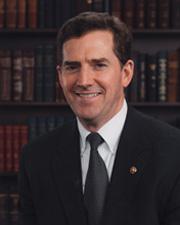 Sen. Jim DeMint (R-SC)
Legislative Activity
Stay on top of the latest movement without scrolling through every action
Senate amendment submitted
April 24, 2007
View full timeline
Senate amendment submitted
April 24, 2007
Senate amendment proposed (on the floor): Amendment SA 929 proposed by Senator DeMint.(consideration: CR S4875, S4880; text: CR S4875)
April 24, 2007
Senate amendment agreed to: Amendment SA 929 agreed to in Senate by Yea-Nay Vote. 96 - 0. Record Vote Number: 137.(consideration: CR S5045)
April 24, 2007
Roll call votes on amendments in Senate: Amendment SA 929 agreed to in Senate by Yea-Nay Vote. 96 - 0. Record Vote Number: 137.(consideration: CR S5045)
April 24, 2007
Amendment SA 929 proposed by Senator DeMint. (consideration: CR S4875, S4880; text: CR S4875) To require the study on barriers to innovation to include an examination of the impact of the Internal Revenue Code of 1986 on innovation.
April 24, 2007
Amendment SA 929 agreed to in Senate by Yea-Nay Vote. 96 - 0. Record Vote Number: 137. (consideration: CR S5045)
April 24, 2007
Votes
1 roll call on this amendment
Text
Proposed
AMERICA COMPETES ACT

The ACTING PRESIDENT pro tempore. Under the previous order, the
Senate will resume consideration of S. 761, which the clerk will
report.
The bill clerk read as follows:

A bill (S. 761) to invest in innovation and education to
improve the competitiveness of the United States in the
global economy.

Pending:

Bingaman amendment No. 908, to make certain improvements to
the bill.

The ACTING PRESIDENT pro tempore. The Senator from Tennessee.
Mr. ALEXANDER. Mr. President, I am waiting on the Democratic manager
of the bill, Senator Bingaman, who should be here right away. Following
that, we hope to go to the Senator from South Carolina, who has some
amendments to offer, but it is not appropriate for me to do that until
Senator Bingaman is here. That will take a moment. Then we will go
forward, if that is all right with the Senator from South Carolina.
We had a good discussion yesterday on the America COMPETES Act. To
remind all Senators, this is the Reid-McConnell legislation, with 56
cosponsors, which seeks to help our country keep our brainpower
advantage so we can keep our jobs. It is the result of 2 years of work
within this body through three committees principally but really five
or six.
We asked the National Academy of Sciences to tell us exactly what we
need to do to keep our competitive advantage in the world in
competition with China and India so our jobs don't go there, so we can
keep this remarkable situation we have of producing 30 percent of all
the money each year for 5 percent of the people, with at least half of
that based on our technological advantage. The National Academy of
Sciences gave us a list of recommendations in priority order. The
Council on Competitiveness formed the basis of a Lieberman-Ensign bill,
the President made his own recommendations, and all that now has been
worked through into this legislation.
I see Senator Bingaman. If I may, I would like to finish 3 or 4
minutes of remarks and then go to Senator Bingaman.

Yesterday, Senator Inouye, Senator Stevens, Senator Domenici, all of
whom have been leaders on this legislation, spoke on the floor. Senator
Chambliss as well spoke on the floor. Senator Bingaman, of course, has
been a leader from the very beginning, asking the questions that helped
produce this result. So we have before us a leadership bill on a
subject that is as important as any.
Almost all Members of the Senate over the last 2 years have had
plenty of opportunity to influence this bill, and most have in one way
or the other. It has been a remarkable exercise. But there still is
time today and tomorrow for us to consider more options.
The President, last night by e-mail--someone in the White House--sent
a Statement of Administration Policy to Capitol Hill which outlines the
administration's views on the pending legislation.
Mr. President, I ask unanimous consent to have printed in the Record
the President's remarks on January 31, 2006, from his State of the
Union Address in which he spoke about the importance of the
competitiveness initiative.
The ACTING PRESIDENT pro tempore. Without objection, it is so
ordered.
(See exhibit 1.)
Mr. ALEXANDER. As a courtesy to the administration, I ask unanimous
consent to have printed in the Record the administration's Statement of
Administration Policy following my remarks.
The ACTING PRESIDENT pro tempore. Without objection, it is so
ordered.
(See exhibit 2.)
Mr. ALEXANDER. Mr. President, I know how important the President
believes this is. I have talked with him about it at least a half dozen
times personally, usually in bipartisan sessions with a number of
Senators, sometimes individually. I know the Vice President has been
deeply involved.
When there is some more time on the floor this afternoon, if we have
a lull in the debate, I will go through the Statement of Administration
Policy and talk about it a little bit. Basically, it is very helpful to
us. It points out that there is not much difference between the amount
of money the President proposes to spend over the next 4 years and the
amount we would propose to authorize to spend in this bill. As one
might expect, the President likes his new programs but doesn't like
some other new programs, and there are some other suggestions that are
well taken that we can talk about, perhaps accept amendments, at least
discuss with the Democratic majority those amendments, and there will
be some amendments that are offered on the Senate floor.
I will reserve my comments on the President's Statement of
Administration Policy. It is good to have it. We will make it part of
the debate--and taking the President at his word--given the President's
statement and the administration policy statement that ``The
administration looks forward to working with Congress to address these
various policy concerns as the legislative process moves forward.''
I defer to Senator Bingaman, if I may. Senator DeMint is ready to
offer amendments and speak about them whenever that is appropriate.

Exhibit 1

State of the Union Address by the President, Jan. 31, 2006

``And to keep America competitive, one commitment is
necessary above all: We must continue to lead the world in
human talent and creativity. Our greatest advantage in the
world has always been our educated, hardworking, ambitious
people--and we're going to keep that edge. Tonight I announce
an American Competitiveness Initiative, to encourage
innovation throughout our economy, and to give our Nation's
children a firm grounding in math and science.
First, I propose to double the federal commitment to the
most critical basic research programs in the physical
sciences over the next 10 years. This funding will support
the work of America's most creative minds as they explore
promising areas such as nanotechnology, supercomputing, and
alternative energy sources.
Second, I propose to make permanent the research and
development tax credit--to encourage bolder private--sector
initiatives in technology. With more research in both the
public and private sectors, we will improve our quality of
life--and ensure that America will lead the world in
opportunity and innovation for decades to come.
Third, we need to encourage children to take more math and
science, and to make sure those courses are rigorous enough
to compete with other nations. We've made a good start in the
early grades with the No Child Left Behind Act, which is
raising standards and lifting test scores across our country.
Tonight I propose to train 70,000 high school teachers to
lead advanced-placement courses in math and science, bring
30,000 math and science professionals to teach in classrooms,
and give early help to students who struggle with math, so
they have a better chance at good, high-wage jobs. If we
ensure that America's children succeed in life, they will
ensure that America succeeds in the world.
Preparing our Nation to compete in the world is a goal that
all of us can share. I urge you to support the American
Competitiveness Initiative, and together we will show the
world what the American people can achieve.''
____

Exhibit 2

Executive Office of the President, Office of Management
and Budget,
Washington, DC, April 23, 2007.

Statement of Administration Policy

S. 761 America Creating Opportunities to Meaningfully Promote
Excellence in Technology, Education, and Science Act

(Sen. Reid (D) Nevada and 55 cosponsors)

One of the more important domestic priorities of the
Administration over the last two

[[Page S4872]]

years has been the American Competitiveness Initiative (ACI),
a comprehensive strategy to keep our Nation the most
innovative in the world by increasing investments in research
and development (R&D), strengthening education, and
encouraging entrepreneurship. Thus, the Administration shares
the goals of S. 761 to ensure the continued economic
competitiveness of the United States through research and
education and has been encouraged by the bipartisan support
for addressing this vital topic. However, the Administration
has serious concerns with S. 761 in its current form. The
Administration believes that the bill does not prioritize
basic research, authorizes excessive and inappropriate
spending, and creates unnecessary bureaucracy and education
programs. The Administration looks forward to working with
Congress to address these various policy concerns as the
legislative process moves forward.
The research component of the ACI is a targeted effort to
focus increased funding on enhancing physical sciences and
engineering research at the three highest-leverage agencies--
the National Science Foundation (NSF), the Department of
Energy's (DOE) Office of Science, and the Department of
Commerce's National Institute of Standards and Technology
(NIST). Unfortunately, the Senate bill creates at least 20
new programs across many agencies that, if enacted, would
divert resources from and undermine and delay the priority
basic research. The Senate bill would cost over $61 billion
over the next four years--about $9 billion more than the
President's ACI proposals. The bill conflicts with the
Administration's well regarded Research and Development
Investment Criteria by diverting funds from critical basic
research to commercially-oriented research and other efforts
that are less deserving of Federal support.
The education components of the ACI are targeted toward
filling clear and specific gaps in the Federal funding
portfolio with programs that will improve the quality of math
and science education in the Nation's K-12 schools. The
Administration appreciates that the bill authorizes most of
the Department of Education programs the President called for
in the ACI. These include authorizations for: (1) The
Advanced Placement Program to increase the number of teachers
instructing and students enrolled in advanced placement or
international baccalaureate courses in mathematics, science,
or critical foreign languages; (2) the Math Now programs to
improve instruction in mathematics; and (3) part of the
President's National Security Language Initiative proposal to
strengthen the teaching and study of critical foreign
languages. However, the Administration is disappointed that
the bill does not authorize the President's Adjunct Teacher
Corps, to encourage math, science, and other professionals to
teach in our neediest middle and high schools.
Also, the Administration is concerned that the bill expands
many existing science, technology, engineering, and
mathematics (STEM) education programs that have not been
proven effective and creates new STEM education programs that
overlap with existing Federal programs. In its soon-to-be-
released report, the Academic Competitiveness Council has
identified 105 existing STEM education programs spending over
$3 billion annually, including 45 programs that support
training of STEM teachers, and found that very few of these
programs demonstrated evidence-based effectiveness. Given
this, the Administration believes it is premature to expand
or begin new STEM education programs that do not have a plan
in place for rigorous, independent evaluation or are
duplicative of existing Federal programs.
In addition to the excessive authorization levels, lack of
focus on basic research, and unnecessary new bureaucracy,
created by S. 761, the specific provisions of serious concern
include the following:
Advanced Research Projects Agency--Energy (ARPA-E). The
Administration supports the conceptual goal of ARPA-E ``to
overcome the long-term and high-risk technological barriers
in the development of energy technologies.'' However, the
Administration continues to strongly object to this provision
due to serious doubts about the applicability of the national
defense model to the energy sector and because a new
bureaucracy at the DOE would drain resources from priority
basic research efforts. The Administration believes that the
goal of developing novel advanced energy technologies should
be addressed by giving the Secretary of Energy the
flexibility to empower and reward programs within existing
DOE offices to fund unique, crosscutting, and high-risk
research.
Innovation Acceleration Research. The Administration
strongly objects to requiring each Federal science agency to
set aside 8 percent of its research and development budget--a
new program of over $10 billion of the Federal R&D budget at
dozens of agencies--for projects that are ``too novel or span
too diverse a range of disciplines to fare well in the
traditional peer review process.'' Such a large earmark of
the agencies' ongoing research efforts would certainly have
negative, unintended consequences and could well impede the
ability of these agencies to carry out their missions.
Equitable Distribution of New Funds. The Administration
strongly objects to a requirement specifying particular
funding increases for Education and Human Resources (EHR)
activities at NSF. This is especially inappropriate while the
Administration is responding to the findings and
recommendations of the Academic Competitiveness Council to
ensure that funding is targeted toward programs with plans to
demonstrate effectiveness.
Experimental Program to Stimulate Competitive Technology.
The Administration believes that additional resources
provided to NIST should focus on existing internal
innovation-enabling research activities and strongly objects
to creating new programs that would drain resources from such
activities.
Specialty Schools for Mathematics and Science. The
Administration strongly objects to creating a responsibility
for DOE to establish or expand K-12 schools.
Discovery Science and Engineering Innovation Institutes.
The Administration strongly objects to using DOE funds to
support State and local economic development activities. In
addition to diverting funds from priority research areas,
such a focus on commercialization is not a priority of the
Federal government and could result in putting the government
in the position of competing with private investment and
influencing market decisions in potentially inefficient and
ineffective ways.
Experiential-Based Learning Opportunities. The
Administration objects to creating new K-12 education
programs unless the need is clear and compelling, which is
not the case for this program. As illustrated by the Academic
Competitiveness Council's findings, the solution to improving
the Federal government's impact on STEM education must come
from identifying what works and improving the effectiveness
of existing efforts before starting new programs.
Federal Information and Communications Technology Research.
The Administration objects to the creation of a new program
specifically aimed at ``enhancing or facilitating the
availability and affordability of advanced communications
services.'' Such an industry- and sector-directed program is
well beyond NSF's traditional role of advancing the frontiers
of knowledge in the academic disciplines.
National Laboratories Centers of Excellence. The
Administration objects to the use of DOE funds to establish
Centers of Excellence at K-12 schools. The establishment of
school-based centers is not a proper role for DOE and would
divert national laboratory resources that currently benefit
their surrounding communities. The Administration believes
that the President's Adjunct Teacher Corps proposal is a more
promising approach to bringing subject experts into our
neediest schools.
Experimental Program to Stimulate Competitive Research
(EPSCoR). The purpose of the EPSCoR program is to build
research capacity; it is not an education program. If EPSCoR
funds are diverted for the purpose of hiring faculty or
providing supplemental K-12 courses to precollege students,
there will be less money available for increasing the
research capacity in EPSCoR States.
Robert Noyce Teacher Scholarship Program. NSF's Robert
Noyce scholarship program is too new to have been evaluated
for its impact on improving the efficacy or retention of
teachers who are program graduates. Therefore, it is
unreasonable to increase the authorizations of appropriations
at the pace and magnitude called for in this provision.
NASA Funding for Basic Science and Research and Aeronautics
Research Institute. The Administration objects to the
redirection of unobligated balances from existing NASA
programs, because it would disrupt funding for ongoing
activities. The establishment of an Aeronautics Institute for
Research within NASA is objectionable because it would be
duplicative of the agency's existing Aeronautics Research
Mission Directorate.
Constitutional Concerns. Several provisions of the bill
incorporate classifications and preferences based on race,
national origin, or gender that are subject to the rigorous
standards applicable to such provisions under the equal
protection component of the Due Process Clause of the Fifth
Amendment. (See sections 1405(d), 2003(a) and (d), 4005(b),
and 4009.) Unless the legislative record adequately
demonstrates that those standards are satisfied, those
provisions are objectionable on constitutional grounds.

Mr. BINGAMAN. Mr. President, I thank my colleague and I thank the
Senator from South Carolina for their courtesy.
My understanding is that the Senator from South Carolina wishes to
set aside the pending amendment and offer an amendment; is that
correct?
Mr. DeMINT. Mr. President, the Senator is correct. I wish to bring up
three amendments and briefly speak on them, if I can.
Mr. BINGAMAN. Mr. President, I will have to object to offering three
amendments. I have no problem if he wants to set aside the pending
amendment and bring one amendment up, whichever amendment he would
like, and we will deal with them one at a time. I think that will be
the appropriate procedure for us to follow.
Mr. DeMINT. That is fine. I thank the Senator.
The ACTING PRESIDENT pro tempore. The Senator from South Carolina.

[[Page S4873]]

Amendment No. 928

Mr. DeMINT. Mr. President, I ask unanimous consent to set aside the
pending amendment.
The ACTING PRESIDENT pro tempore. Without objection, it is so
ordered.
Mr. DeMINT. I ask unanimous consent to bring up amendment No. 928.
The ACTING PRESIDENT pro tempore. The clerk will report.
The bill clerk read as follows:

The Senator from South Carolina [Mr. DeMint], for himself,
Mr. Martinez, Mr. Cornyn, and Mr. Ensign, proposes an
amendment numbered 928.

Mr. DeMINT. Mr. President, I ask unanimous consent that the reading
of the amendment be dispensed with.
The ACTING PRESIDENT pro tempore. Without objection, it is so
ordered.
The amendment is as follows:

(Purpose: To amend the Sarbanes-Oxley Act of 2002, with respect to
smaller public company options regarding internal controls)

At the appropriate place, insert the following:

SEC. ___. SMALLER PUBLIC COMPANY OPTION REGARDING INTERNAL
CONTROL PROVISION.

Section 404 of the Sarbanes-Oxley Act of 2002 (15 U.S.C.
7262) is amended by adding at the end the following:
``(c) Smaller Public Company Option.--
``(1) Voluntary compliance.--A smaller issuer shall not be
subject to the requirements of subsection (a), unless the
smaller issuer voluntarily elects to comply with such
requirements, in accordance with regulations prescribed by
the Commission. Any smaller issuer that does not elect to
comply with subsection (a) shall state such election,
together with the reasons therefor, in its annual report to
the Commission under section 13(a) or 15(d) of the Securities
Exchange Act of 1934 (15 U.S.C. 78m or 78o(d)).
``(2) Definition of smaller issuer.--
``(A) In general.--For purposes of this subsection, and
subject to subparagraph (B), the term `smaller issuer' means
an issuer for which an annual report is required by section
13(a) or 15(d) of the Securities Exchange Act of 1934 (15
U.S.C. 78m or 78o(d)), that--
``(i) has a total market capitalization at the beginning of
the relevant reporting period of less than $700,000,000;
``(ii) has total product and services revenue for that
reporting period of less than $125,000,000; or
``(iii) has, at the beginning of the relevant reporting
period, fewer than 1500 record beneficial holders.
``(B) Annual adjustments.--The amounts referred to in
clauses (i) and (ii) of subparagraph (A) shall be adjusted
annually to account for changes in the Consumer Price Index
for all urban consumers, United States city average, as
published by the Bureau of Labor Statistics.''.

Mr. DeMINT. Mr. President, I thank the managers of this bill for
giving me time to speak on this important issue. The issue of American
competitiveness is very important to me, as I know it is to all
Americans. It is the security of our jobs and our economic future. I am
here today to propose some amendments. I will begin with one that I
think will improve the bill.
I wish to first discuss Sarbanes-Oxley and how it relates to
competitiveness in America. The bill we are discussing, which is S.
761, the America COMPETES Act, seeks to improve America's international
competitiveness by strengthening the quality of our labor force.
However, labor is only one component of economic growth. Capital
investment is another critical component of any vibrant and growing
economy. America's competitiveness is being challenged by other
countries, not only on the labor front but with capital formation as
well.
We could say, as Senator Alexander mentioned, this bill focuses on
brainpower. What we are trying to do is say brainpower plus capital
equals success in America.
In 2000, $9 out of every $10 in stock offerings from foreign
companies were invested inside the United States. In 2005, that number
completely flipped, and $9 of every $10 in stock offerings from foreign
companies were invested outside the United States. Some might argue
this is simply the result of foreign companies wishing to list closer
to home, but I am afraid that is not the case. Cross-border listings
are at an alltime high, and we are losing the competition for foreign
capital.
This chart demonstrates how the United States is doing compared to
others when it comes to attracting foreign capital. We begin in 2002
when Sarbanes-Oxley took effect. One can see this dark-blue line at the
bottom is the U.S. exchanges, which have stayed basically flat, while
markets in Hong Kong, London, and Singapore have continued to grow.
There is no reason we should continue to lose ground to these other
countries when it comes to investing.
We need to remember as Americans that the dollars which are used for
research and development come from investment capital. There is no need
for us to be spending billions and billions of dollars to encourage
Americans to be better at math and science if the research and
development is moving to other countries.
Some say these trends are simply the result of more sophisticated
markets springing up abroad, but the evidence suggests otherwise. When
one speaks with international CEOs making the decisions to list on
foreign exchanges, they repeatedly cite Sarbanes-Oxley as the reasons
they have listed abroad. That is why a report commissioned by Senator
Schumer and Mayor Bloomberg cited section 404 of Sarbanes-Oxley as the
reason international companies are no longer bringing their capital to
the United States.
Section 404 requires public companies to conduct an additional audit
on their internal controls. These audits are most expensive for smaller
companies. Numerous reports have found that section 404 produced a
heavy cost upon small, publicly traded companies without a proportional
benefit. As a result, the regulatory burdens of section 404 on small
businesses and companies--well, companies are choosing to raise capital
in other markets.

A recent GAO study, requested by Senator Snowe, found the cost for
small public companies to comply with Sarbanes-Oxley has been
disproportionately higher than for large companies. Small businesses in
the United States, afraid of complying with the complicated provisions
of Sarbanes-Oxley, are choosing not to grow by listing publicly and
are, instead, staying small and remaining private. This prevents
capital formation, it stunts job growth, and it makes our country less
competitive in the global economy.
This is why Alan Greenspan recently said:

One good thing; Sarbox requires a CEO to certify the
financial statement. That's new and that's helpful. Having
said that, the rest we could do without. Section 404 is a
nightmare.

This is not a politically inspired amendment. This is an amendment
that recognizes we are hurting ourselves and we need to fix it. This is
why an SEC advisory committee recommended that small businesses be
exempt from section 404, and this is why I am offering the amendment
today.
My amendment, No. 928, would make section 404 of Sarbanes-Oxley
optional for smaller companies with market capitalization of less than
$700 million, revenue of less than $125 million, or fewer than 1,500
shareholders. Section 404 reporting would be optional for these smaller
companies, but they would have to notify their shareholders in their
annual report.
The Senate's Committee on Small Business held a hearing on this topic
this past week, and I applaud Senator Kerry for looking into this
important issue. As my colleagues may know, both Republicans and
Democrats have suggested the need for reform, which makes my amendment
consistent with the bipartisan nature of this bill. My proposal has
been introduced as a freestanding bill in this Congress as well as the
last Congress. It has also been introduced as part of a bill in the
House by Representative Gregory Meeks, Democrat from New York, and
enjoys broad bipartisan support.
Despite broad bipartisan support for my amendment, I expect some will
object to it based on timing. They may believe the Securities and
Exchange Commission is preparing to deal with this problem, so we
should give them more time to work. This is something I believed
several years ago. But that is not only a weak excuse, it is a complete
copout. It has been 5 years since Sarbanes-Oxley was enacted, and each
year that goes by we are chasing more capital out of our country.
The SEC has a responsibility to address this issue, but so do we. We
wrote the law. Congress created this problem, and we should not hide
behind some regulation when we have the ability to fix it. Furthermore,
it is not clear that future action by the SEC will solve the problem.
According to the Independent Community Bankers of America, the proposed
internal control guidance

[[Page S4874]]

under section 404 is unlikely to reduce audit costs, particularly for
smaller public companies.
Some may also object because this provision has not been fully
examined in the committee of jurisdiction. This is a poor excuse as
well. American competitiveness should not suffer because a committee in
Congress has failed to do its job. A bill such as Senate Bill 761,
which seeks to improve the competitiveness of our labor force but does
nothing for capital formation, may result in a highly qualified labor
force but without capital to spur economic growth and create the jobs
they need to make.
This is a competitiveness issue. It should be debated on this bill
and we should all support it. There is no plan to consider this
legislation later this year, and it is probably the last opportunity we
will have to address it before the next election. My amendment is
cosponsored by Senators Martinez, Cornyn, and Ensign, and I urge my
colleagues to support it.
Mr. President, I yield the floor.
Mr. BINGAMAN. Mr. President, I appreciate the thought that has gone
into the amendment, but, frankly, this is an amendment that is in the
jurisdiction of the Banking Committee. Obviously, the Sarbanes-Oxley
legislation came out of the Banking Committee and it is squarely within
their jurisdiction. We are informed they have not had a chance to
review the amendment, have not had a chance to have hearings on the
amendment, and wish a chance to come to the floor and discuss it before
there is any vote. There is some objection to going to any kind of vote
on it at this point, so I am not prepared to discuss the merits of it.
I do believe we need to provide an opportunity for those Senators on
the Banking Committee who want to come and discuss the merits to come
and engage in that debate.
However, I mention to the Senator from South Carolina, I am informed
he also has an amendment related to looking at the Tax Code for
possible problems with barring innovation; is that correct?
Mr. DeMINT. Yes, I do.
Mr. BINGAMAN. Mr. President, we are not in a position to say yet--we
are trying to talk to the Finance Committee, because, of course, they
have jurisdiction over tax issues--but we are trying to determine if
there is any objection to Senator DeMint's amendment relating to taxes.
Perhaps the right thing to do, since the majority leader has tried--
not just on this bill but as a general matter--to avoid the
circumstance where we are bringing up amendments, setting aside
amendments; bringing up amendments, setting aside amendments, without
ever having disposed of anything for a long period, perhaps the Senator
could go ahead and describe this other amendment related to taxes. By
the time he has completed that, we might know whether we are in a
position to proceed to some kind of action on that.
Mr. DeMINT. So the Senator would prefer my not bringing it up but
only describing it?
Mr. BINGAMAN. As I say, if it is another amendment that is going to
require a debate and vote here, I think maybe we would want to go ahead
and try to get the Banking Committee people here to deal with the
Sarbanes-Oxley amendment before we get the Finance Committee people
here to deal with the Tax Code amendment.
Perhaps the Senator could put the Senate on notice as to what the
amendment entails, and by the time he is through with that discussion,
we may know enough to be able to tell him whether we could accept the
amendment or whether there is going to be objection.
Mr. DeMINT. Mr. President, I thank the Senator, and I think he will
find this amendment has a lot of bipartisan support. It actually was a
part of the original bill. It is amendment No. 929, and it expands the
study on barriers to innovation, which is in section 1102 of the bill.
What we do is ask that this study include the impact of the IRS Tax
Code on innovation. It is very consistent with the bill. My amendment
does not remove anything currently called for in the study, it simply
adds the provision that allows this study to include the effect of our
Tax Code on innovation in America.
Specifically, the amendment calls on the Director of the Office of
Science and Technology, through the National Academy of Sciences, to
study all provisions of the Internal Revenue Code of 1986, including
tax provisions, compliance costs, and reporting requirements that
discourage innovation.
The IRS code increasingly overwhelms Americans with its growing
complexity. It stymies entrepreneurship and economic growth, and it
threatens to prevent future generations of Americans from enjoying the
sort of upward mobility their parents and grandparents enjoyed. This
important provision was originally included in the study in last year's
bill but it was dropped. My amendment puts it back in, and it will help
us identify ways the IRS Tax Code is discouraging innovation and
weakening American competitiveness.
I ask the Senator if he would still prefer I not bring it up? In the
interest of time, it may be helpful to have it on the table, and we
could perhaps then agree to it at a later time. Would the Senator still
prefer I wait to bring it up?
Mr. BINGAMAN. Mr. President, I know the Senator from Tennessee has
some comments on the amendment. Maybe we could continue with that
discussion and debate for a few more minutes to see if we can get a
little more of a response from people in the Finance Committee.
Mr. DeMINT. I thank the Senator, and I yield the floor for the
Senator from Tennessee.
Mr. ALEXANDER. Mr. President, I want to thank the Senator from South
Carolina for his amendments and for his initiative for being here and
offering them. He is helping us jump-start the discussion, and I want
him to know what we are doing is working on ways to get to action on
his bills, not the reverse.
In fact, as far as his suggestion about considering the impact of
taxes as barriers to innovation, I think he is right about that. That
was a part of the original legislation. It had 70 sponsors at one time,
the PACE Act. It was the Domenici-Bingaman act at that time. It is also
a part of the Augustine report. These were the recommendations of the
National Academy of Sciences team, which included 21 individuals who
spent the entire summer and early fall of 2005 looking at exactly what
we needed to do, and they recommended tax incentives for U.S.-based
innovation.
This was a practical group, this Augustine committee. They made 20
recommendations. They knew there were a number of things that, if they
recommended them, we wouldn't pass because we would have differences of
opinion about them. So they stayed away from some areas. For example,
since kindergarten through the 12th grade was their No. 1 priority in
terms of improving education and encouraging innovation there, they
might have felt giving low-income families scholarships or vouchers to
go to private schools would be a good thing to do. But they didn't put
that in their top 20 because they knew it was unlikely we would be able
to agree on that here.
I think the same is true here with taxes. They specifically said on
page 10 of the summary of their ``Rising Above the Gathering Storm''
that while they recommended making permanent the research and
development tax credit as one change in tax policy, they realized that
wasn't enough to consider it. They mention other alternatives that
should be examined to see if it would be beneficial to the United
States. These alternatives, the summary said:

. . . could include changes in overall corporate tax rates
and special tax provisions providing research of high-
technology and manufacturing equipment, treatment of capital
gains, and incentives for long-term investment innovation.
The Council of Economic Advisers and the Congressional Budget
Office should conduct a comprehensive analysis to examine how
the United States compares with other nations as a location
for innovation and related activities with a view to ensuring
the United States is one of the most attractive places in the
world for long-term innovation related investment and the
jobs relating from that investment from a tax standpoint.

That is not now the case, is what the Augustine report said. So I
believe the Senator from South Carolina is making a real contribution
to the debate here. His amendment which he proposes to bring up would
improve the bill, in my

[[Page S4875]]

opinion. It was once a part of the legislation that was similar, and I
am hopeful the Finance Committee will recognize this simply amends a
study that is already in the bill so tax barriers can be included as
part of that study.
Mr. President, I look forward to the response by the Democratic
manager as to how we shall proceed.
Mr. BINGAMAN. Mr. President, I am informed we do not have a clear
response from the Finance Committee. I agree with the substance of what
the Senator from Tennessee said. I don't see this causes any difficulty
in the overall thrust of the legislation, so I would be inclined to
urge the Senator from South Carolina to go ahead and ask permission to
set aside the pending amendment, bring this up, and then conclude any
debate he wants to on this amendment related to the study, and then we
can dispose of it--by voice vote, as far as I am concerned, unless the
Senator wants a recorded vote.
The ACTING PRESIDENT pro tempore. The Senator from South Carolina.

Amendment No. 929

Mr. DeMINT. Mr. President, I ask unanimous consent to call up
amendment No. 929.
The PRESIDING OFFICER. Without objection, it is so ordered.
The clerk will report.
The legislative clerk read as follows:

The Senator from South Carolina [Mr. DeMint] proposes an
amendment numbered 929.

Mr. DeMINT. I ask unanimous consent the reading of the amendment be
dispensed with.
The PRESIDING OFFICER. Without objection, it is so ordered.
The amendment is as follows:

(Purpose: To require the study on barriers to innovation to include an
examination of the impact of the Internal Revenue Code of 1986 on
innovation)

On page 8, strike lines 7 through 9, and insert the
following:
(10) all provisions of the Internal Revenue Code of 1986,
including tax provisions, compliance costs, and reporting
requirements, that discourage innovation;
(11) the extent to which Federal funding promotes or
hinders innovation; and
(12) the extent to which individuals are being

Mr. DeMINT. Mr. President, I have explained what this amendment does.
It is very simple. In addition to a study, if we are commissioning a
study and paying for it, to find out what obstacles we have to
innovation, the Tax Code is certainly something that is cited often by
folks who invest and do the research and development, who are actually
associated with innovation in the marketplace, so it makes sense that
we include any obstacles in the Tax Code or any opportunities we may
have, as the Senator from Tennessee suggested, to create incentives for
investment and innovation.
There is a relationship between this amendment and the first one I
brought up. I think we all know that investment, incentives for
investment, are the catalyst for the research and development that
results in innovation in the marketplace. As a nation, if we do not do
more to attract capital, if we do not do more to encourage investment
in our country, then those investments are not going to be here.
For many years we have been concerned that because of certain trade
policies and other things we do internally, we have lost low-wage jobs.
But increasingly we are hearing that because the investment dollars are
moving overseas, behind those investment dollars go the high-tech jobs
that are involved with research and development.
Both of these amendments are important. I would particularly like
votes on this because it was stripped out once. I am concerned that if
we do not have a vote and give the Members an opportunity to show
support, particularly for this tax study, it will disappear again in
conference.
My hope is we can have a vote and the yeas and nays on these
amendments.
I yield the floor.
Mr. BINGAMAN. Mr. President, we need to determine when we would want
to go ahead since, as I understand the Senator, he wishes a rollcall
vote. We want to have a chance to check with our floor managers, the
assistant majority leader, and determine when this is appropriate, so I
suggest the absence of a quorum.
The PRESIDING OFFICER (Mr. Casey). The clerk will call the roll.
The legislative clerk proceeded to call the roll.
Mr. DeMINT. Mr. President, I ask unanimous consent the order for the
quorum call be rescinded.
The PRESIDING OFFICER. Without objection, it is so ordered.

Amendment No. 930

Mr. DeMINT. Mr. President, in the interest of time--I know we are
discussing two other amendments and the bill managers have asked me not
to bring up a third. I will not bring it up at this time but I wish to
speak on it, if that would expedite procedures here on the floor.
My third amendment, which is amendment No. 930, which we will bring
up at a later time, establishes a 60-vote point of order against
appropriations bills that contain congressional earmarks for funds
authorized in this bill, S. 761, the America COMPETES Act.
The goal of this amendment is to ensure that funds authorized in the
bill are allocated according to a competitive or merit-based process.
As my colleagues know, congressional earmarks circumvent the normal
competitive or merit-based process and award funds based on politics.
My amendment is consistent with the stated intent of the bill, which
says on page 183 that nothing in divisions A or D shall be interpreted
to require the National Science Foundation to ``alter or modify its
merit-review system or peer-review process'' or ``exclude the awarding
of any proposal by means of the merit-review or peer-review process.''
My goal here is to make sure this new fund does not become a new pot
for earmarks, that we start directing this new money back to our States
or congressional districts because we put new funds on the table. If
these and other funds authorized in the bill are going to be allocated
in the most efficient and most competitive way, the Senate must take
steps to discourage the use of earmarks when appropriating funds for
these programs. My amendment will not only preserve the integrity of
the competitiveness allocation process but it will make America more
competitive by making these programs more effective.
In a bill that is about competition, this amendment makes sure the
money is allocated on a merit-based competitive system instead of
turning it into a new slush fund for Congress.
Out of respect for the managers, I will not bring that amendment up
at this point but I hope to do that at a later time.
I yield the floor.
Mr. BINGAMAN. Mr. President, let me briefly speak to the amendment of
the Senator from South Carolina related to earmarks. I obviously would
have to object to it. I think he will find probably any and all
Senators involved with appropriations would have to object to it. The
way I read it, it says it is not in order to consider any bill that
proposes a congressional earmark on appropriated funds unless you have
60 votes. The definition of a congressional earmark is contained in the
legislation, but any appropriations bill that comes to the floor
virtually by definition is going to contain something that falls into
this definition of congressional earmark. It is one thing to be
concerned about the addition of earmarks once the Appropriations
Committee has presented legislation to the Congress or to the full
Senate. But to say we cannot bring up a bill, an appropriations bill,
if it has anything in it that might meet this definition is
substantially more onerous than I would think would be good policy.
Mr. DeMINT. Will the Senator yield?
Mr. BINGAMAN. I am glad to yield.
Mr. DeMINT. For a clarification. The way this amendment is written,
it is not all appropriations bills, just appropriations bills that are
appropriating money for this act, the America COMPETES Act. We are not
bringing in all the appropriations bills that will be brought to the
floor.
The point is, we are creating this new fund for competition. Instead
of us in the future redirecting these funds in all directions, the bill
has been very careful to lay out where this money will go in a way that
we think is most efficient. This money will be allocated on a merit-
based system. We have seen some of it before, how the National Science
Foundation and others are merit based. We want to keep it that

[[Page S4876]]

way. What we are trying to do is avoid, in the future, that this new
money we have authorized starts being redirected. If something comes up
that is important, that we agree on, we can always overcome a 60-vote
point of order. But if we allow this to fester, as we have seen in the
past, instead of going to create competition in America, it will be
going off to special projects. So it focuses on this bill and prevents
politically driven earmarks.

Certainly we have directed the money for this whole bill. It doesn't
change that. This is all authorized. We are not talking about
authorized dollars, we are talking about redirecting it based on
political motives in the future.
I thank the Senator for allowing that clarification.
Mr. BINGAMAN. Mr. President, I thank the Senator for the
clarification, but I do think the problem remains because this bill is
far reaching because this bill covers quite a few Federal agencies and
tries to lay out a blueprint for what we hope we will be able to
provide by way of appropriations to these agencies in the future,
whether it is the National Science Foundation, whether it is the Office
of Science in the Department Energy, whether it is the Department of
Education, Health and Human Services--there are various agencies that
would obtain funding to carry out the purposes of this legislation if
we are successful through the appropriations process.
For us to be putting a provision in this authorizing bill saying you
cannot bring an appropriations bill to the floor that contains anything
we would define as a congressional earmark is unduly restricting the
authority and the prerogatives of the Appropriations Committee in
putting together legislation they think makes sense.
I am well aware there are three sort of distinct hurdles that need to
be surmounted in order for us to actually get funds to be spent on
these good purposes that are outlined in this bill. One of those
hurdles is the Budget Act. We need to be sure there is room in the
Budget Act for the funding we are calling for in this legislation. We
offered an amendment to do that. We got very good support here in the
Senate. Senator Alexander and I offered that and I think that was a
major step forward.
The second hurdle, of course, is trying to authorize these programs
so if the funds are appropriated for these purposes nobody can raise an
objection that these are not authorized uses of the funds.
Then the third and perhaps most difficult is, each year over the next
several years, the period that is covered by the legislation--each year
we are going to have to try to see that the funds are properly
appropriated for these agencies to carry out the work as outlined in
this bill.
I think it would be foolhardy for us to be requiring that before you
can bring a bill to the floor that contained funding related to this
authorization bill, if it could be construed to fall under this
definition of congressional earmark, you would have to have 60 votes to
proceed to that appropriations bill. That would be an unprecedented
procedure for us in the Senate and one that would be very wrongheaded.
As I say, people involved in the appropriations process would probably
see it that way as well.
I yield the floor.
Mr. DURBIN. Can I make a comment?
The PRESIDING OFFICER. The Senator from Illinois.
Mr. DURBIN. It is my understanding the Senator is not calling up the
amendment but is only speaking to it for the Record.
Mr. DeMINT. Could I make one additional comment?
Again, I appreciate the Senator's remarks, and obviously we don't
want to tie the hands of Congress unnecessarily, but when we are
speaking of earmarks--and we defined it in this amendment ourselves.
When we take this bill that was created for the purpose of improving
competitiveness in America and we earmark, which means we target it to
a specific State, locality, or congressional district other than
through a statutory or administrative formula-driven or competitive
award process--when we take what we have done and basically pervert it
into a system where I want it to go to South Carolina, or the Senator
wants it to go to Tennessee, that has nothing to do with the original
intent of the bill, we call that an earmark. We would like to prevent
that if we could with this one bill, but I appreciate the courtesy of
both managers to allow us to explain. I hope we will have an
opportunity to bring it up and offer it later.

I yield the floor.
The PRESIDING OFFICER. The Senator from Illinois.
Mr. DURBIN. Mr. President, I am honored to be a cosponsor of this
legislation. All of us understand we have an obligation in Congress to
devise policies and means by which the American economy can compete and
create good-paying jobs. Whether one lives in Pennsylvania or Illinois
or New Mexico or Tennessee, we have lost a lot of good manufacturing
jobs over the last few years. We know there have been growth
industries. We can look at the whole Silicon Valley phenomena. Whether
it is information technology or computers, the United States has taken
a leadership position. But in many areas, we are not in leadership
positions.
Senators Alexander and Bingaman came together over a year ago to sit
down with some of the experts in Washington and talk about what we
needed to do to make America more competitive, the next generation of
good-paying jobs, the horizons we ought to look to to build for the
future. They put together a strong bipartisan bill. If Members read the
cosponsors, they will find plenty of support on both sides of the
aisle. This may be one of the best examples of bipartisan cooperation
we have had in the Senate so far this session. I hope we have more. I
am honored to support it and be a cosponsor.
I hope we can move beyond the many amendments that are going to be
offered and consider this bill on a timely basis. It is the nature of
the Senate that it is a deliberative body. Occasionally, when there is
a lapse, we actually break into real debate on the Senate floor. People
across the Nation applaud when they hear that happen. In this
situation, I am not suggesting that we should not debate amendments to
the bill. In fact, I will describe one in a moment. But I am prepared
to pull my amendment back because I don't want to stop this bill. I
want it to pass the Senate and the House. I want it enacted into law. I
hope other Members who have a positive belief about this legislation
will think twice about whether they need to gild the lily and add
something to a positive and substantive bill.
The issue I would like to speak to is one I believe in very strongly.
I have an amendment, but I won't stop this bill to offer it. If it
appears to have any objection or resistance, I will save it for another
day. It is one that fits into this competitiveness issue.
The United States graduates some of the world's best engineers,
scientists, and mathematicians. However, countries such as China and
India are catching up. They are educating a higher proportion of their
students in these fields.
We have heard the statistics from the National Academy of Sciences
report ``Rising Above the Gathering Storm.'' In 2004, China graduated
600,000 engineers. India graduated 350,000 engineers. The United States
graduated 70,000. In 2004, only a third of the undergraduate degrees
awarded in the United States were in science or engineering. In China,
the number was 59 percent; in Japan, 66 percent in science and
engineering.
Our country can understand when our economic security and our future
are at stake, and we have risen to the occasion. I remember back in the
1950s when the Russians launched Sputnik. We didn't think they were
capable of that. When they put the first satellite in space, it caused
great fear across the United States. As a result, Congress did
something it had never done before: It created Federal assistance to
higher education. It created a loan program to encourage students to go
to college. I know about that program because that is the way I went to
college. It was called the National Defense Education Act. I borrowed
enough money to get through college and law school, paid it back at a
modest interest rate, and believe it was a good investment. I have had
a pretty good life as a result of it and maybe have added something to
this great country in the process. Thousands of others went through the
same experience. Congress responded.

[[Page S4877]]

We knew we needed to invest in our country by first investing in
education.
The same thing is true with competitiveness. We can talk about a lot
of actions that might achieve our goals, but education is the starting
point. We have documented the technological challenges to our country
from many different angles. The founder of Microsoft, Bill Gates; the
chairman of Intel, Craig Barrett; a journalist, writer Tom Friedman;
and the National Academy of Sciences have all told us this. All agree
we need to strengthen students' proficiency in science, technology,
engineering, math, and foreign languages. The America COMPETES Act
invests in the R&D and education our country needs to make sure we
remain the world's technological innovator.
In our increasingly global economy, we need more youth to pursue
math, science, engineering, technological, and critical foreign
language degrees. Our young people also need an appropriate knowledge
and understanding of the world beyond our borders. You have heard me
speak many times on the floor about one of our Nation's greatest public
servants, my predecessor, the late Senator Paul Simon. Paul understood
that our country needed to invest in math and science. He also
envisioned a United States populated by a generation of Americans with
a greater knowledge of the world, a generation of our Nation's future
leaders that has been abroad and has a personal connection to another
part of the world.
In the months before his untimely death, Senator Simon came to
Washington. I met with him. We talked as well with his former
colleagues about the need to strengthen our Nation's international
understanding in the 21st century. Paul Simon knew that America's
security, global competitiveness, and diplomatic effforts in working
toward a peaceful society rest on our young people's global competence
and ability to appreciate language and culture beyond the United
States.
I filed as an amendment to this bill an amendment which we have
entitled the ``Senator Paul Simon Study Abroad Foundation Act.'' It is
an initiative that honors Paul's commitment to international education
and brings his vision one step closer to reality. The Simon Act
encourages and supports the experience of studying abroad in developing
countries, countries where people with a different culture, language,
government, and religion will give a person a different life
experience. It aims to have at least 1 million undergraduate students
study abroad annually within 10 years and expands study-abroad
opportunities for students currently underrepresented.
The Simon Act establishes study abroad as a national priority and
provides the catalyst for the education community to commit to making
study abroad an institutional priority. An independent public-private
entity, the Senator Paul Simon Foundation, would carry out the goal of
making studying abroad in high-quality programs in diverse locations
around the world routine rather than the exception. Students who were
previously unable to study abroad due to financial constraints would be
eligible for grants. The grants would also provide colleges and
universities and other nongovernmental institutions financial
incentives to develop programs that make it easier for college students
to study abroad.

We can't afford not to invest in thoughtful Federal initiatives that
foster innovation. We must ensure that future leaders understand
science and engineering and the world in which they live. The future of
our country depends on having globally literate citizens. I believe the
Paul Simon Study Abroad Foundation Act would help to achieve that goal.
There is one other area that would be helpful when it comes to
competitiveness. Most of us know today what a miracle computers have
turned out to be. They really bring so much information to our
fingertips which long ago was hard to find. I can recall as a college
student walking across the street to the Library of Congress, sending
in the little slips of paper and ordering a big stack of books and
searching through them to find information which I can now Google in a
matter of seconds. That is great. That information is helpful. But if
one is going to be able to take advantage of that opportunity, one
needs to have access to high-speed computers.
There are many parts of America--Washington and Capitol Hill would be
good examples--that have broadband access now. We take it for granted.
I represent a diverse State, Illinois, which has the great city of
Chicago as our largest city but also has a lot of small towns and rural
areas, not unlike Tennessee or New Mexico. It is important for the
development of education, health care, and business for us to expand
broadband access in America to areas that are currently not served.
I have introduced a bill, which is being considered before the Senate
Commerce Committee, on broadband access. I would like to share a
statistic which Members might consider. According to the OECD, the
United States fell from 4th in the world in broadband access per capita
in 2001 to 12th in 2006. As of 2006, the International
Telecommunication Union listed the United States 16th worldwide in
terms of broadband access. We are now behind South Korea, Belgium,
Israel, and Switzerland, among other nations.
In today's highly competitive international markets, our children,
businesses, and communities are competing with their peers around the
world for jobs, market share, business, and information. It concerns me
that with the size and dynamism of our economy, we are falling behind
in an area where we should have a natural advantage. As we committed
ourselves to a National Defense Education Act to make sure we had
trained people, educated people to compete against the Soviet Union in
that era and now in the world, we also need to make sure the tools for
competition are available.
I will be offering this broadband access act not as an amendment to
this bill but at a later date. I hope those representing States across
the Nation who believe there are digital divides will join me in making
sure this important tool is available to every American.
I yield the floor.
The PRESIDING OFFICER. The Senator from New Mexico.
Mr. BINGAMAN. Mr. President, I ask unanimous consent that at 2:17
p.m., the Senate proceed to vote on or in relation to amendment No.
929; that at 2:15 p.m., there be 2 minutes of debate equally divided
between Senators Baucus and DeMint or their designees and that no
amendment be in order to the amendment prior to the vote; that upon the
conclusion of the vote, Senator Kennedy be recognized to speak on the
bill; that following Senator Kennedy, Senator Coburn be recognized as
provided for under the previous order.
The PRESIDING OFFICER. Without objection, it is so ordered.
The Senator from Mississippi.
Mr. LOTT. Mr. President, let me inquire of the parliamentary
situation. I believe, under the agreement, we will now go off this
legislation, and we are ready to have some remarks with regard to the
judicial nomination for the Southern District of Mississippi.
The PRESIDING OFFICER. Under the previous order, that is to begin at
noon.
Mr. LOTT. So are we ready to proceed? I ask unanimous consent that I
be allowed to begin my remarks in support of this nominee.

____________________