To strike provisions related to market exclusivity.
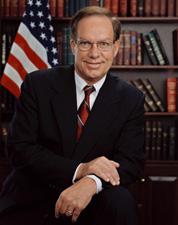 Sen. Wayne Allard (R-CO)
Legislative Activity
Stay on top of the latest movement without scrolling through every action
Senate amendment proposed (on the floor): Amendment SA 982 proposed by Senator Allard.(consideration: CR S5445-5452, S5455-5461; text: CR S5445)
May 2, 2007
View full timeline
Senate amendment proposed (on the floor): Amendment SA 982 proposed by Senator Allard.(consideration: CR S5445-5452, S5455-5461; text: CR S5445)
May 2, 2007
Senate amendment not agreed to: Amendment SA 982 not agreed to in Senate by Yea-Nay Vote. 41 - 53. Record Vote Number: 148.
May 2, 2007
Roll call votes on amendments in Senate: Amendment SA 982 not agreed to in Senate by Yea-Nay Vote. 41 - 53. Record Vote Number: 148.
May 2, 2007
Amendment SA 982 proposed by Senator Allard. (consideration: CR S5445-5452, S5455-5461; text: CR S5445) To strike provisions related to market exclusivity.
May 2, 2007
Amendment SA 982 not agreed to in Senate by Yea-Nay Vote. 41 - 53. Record Vote Number: 148.
May 2, 2007
Senate amendment submitted
April 30, 2007
Votes
1 roll call on this amendment
Text
Proposed
PRESCRIPTION DRUG USER FEE AMENDMENTS OF 2007

The PRESIDING OFFICER. Under the previous order, the Senate will
resume consideration of S. 1082, which the clerk will report.
The assistant legislative clerk read as follows:

A bill (S. 1082) to amend the Federal Food, Drug, and
Cosmetic Act to reauthorize and amend the prescription drug
user fee provisions, and for other purposes.

Pending:

Landrieu amendment No. 1004, to require the Food and Drug
Administration to permit the sale of baby turtles as pets so
long as the seller uses proven methods to effectively treat
salmonella.
Dorgan amendment No. 990, to provide for the importation of
prescription drugs.

Amendment No. 1010 to Amendment No. 990

(Purpose: To protect the health and safety of the public)

Mr. COCHRAN. Mr. President, I send an amendment to the desk and ask
that it be stated.
The PRESIDING OFFICER. The clerk will report.
The assistant legislative clerk read as follows:

The Senator from Mississippi [Mr. Cochran], for himself,
Mr. Carper, Mr. Nelson of Nebraska, Mr. Hatch, Mr. Bennett,
Mr. Enzi, Mr. Burr, and Mr. Menendez, proposes an amendment
numbered 1010 to amendment 990.
At the end of the amendment, add the following:

SEC. __. PROTECTION OF HEALTH AND SAFETY.

This title, and the amendments made by this title, shall
become effective only if the Secretary of Health and Human
Services certifies to Congress that the implementation of
this title (and amendments) will--
(1) pose no additional risk to the public's health and
safety; and
(2) result in a significant reduction in the cost of
covered products to the American consumer.

The PRESIDING OFFICER. The Senator from Mississippi.
Mr. COCHRAN. Mr. President, I am offering this amendment for myself,
as well as for these cosponsors: Mr. Carper, Mr. Nelson of Nebraska,
Mr. Hatch, Mr. Bennett, Mr. Enzi, Mr. Burr, and Mr. Menendez. This is
an amendment to the amendment proposed by Mr. Dorgan.
Improving the health and quality of life for Americans is very
important to all of us, and access to safe and effective prescription
drugs is a major step in accomplishing these goals. With recent
scientific advances, a number of medical therapies have been made
available to treat and, in some cases, to cure diseases. We want
Americans to continue to have access to safe and effective drugs that
are approved by the Food and Drug Administration.
But we must not create opportunities for potentially dangerous drug
products from foreign countries to reach the American consumer. For
example, counterfeit products, those that have been tampered with or
those of unknown origin, should not be brought into this country. I am
concerned that allowing the importation of prescription drugs would
allow such risks to become more likely.
The amendment proposed by the Senator from North Dakota will put in
jeopardy the process we now have to ensure the safety of prescription
medications and protect the health of the American people.
I am offering this second-degree amendment to require the Secretary
of Health and Human Services to certify that the importation of drug
products will not pose additional risks to Americans and will, indeed,
lower costs to consumers.
If, as some argue, a policy of importation is safe and will reduce
costs, this amendment should not be a problem.
We have debated this issue before on several previous occasions. For
example, during the consideration of annual appropriations bills for
the Department of Agriculture, the Food and Drug Administration, and
related agencies, when considering the Greater Access to
Pharmaceuticals Act, and even during the debate and passage of the
Medicare Modernization Act of 2003, a similar amendment to require the
safety of imported drugs was considered and unanimously approved each
time.
In all these instances, the Senate has adopted this amendment by a
unanimous vote. The safety of the American consumer must be our No. 1
priority. These safeguards should also be applied to this proposal.
We should be certain that any change we make in the law does not
result in less protection in terms of the safety of the drugs supplied
to the American people and will, indeed, make prescription drugs more
affordable. Liberalization of protections that are designed to keep
unsafe drugs out of this country, especially considering the terrorist
threats we face now, should occur only if the necessary safeguards are
in place. This amendment will ensure that the concerns of the last two
administrations regarding safety and cost-effectiveness are addressed
prior to the implementation of this proposal.
Counterfeiting of drugs has become a more common practice throughout
the world, and the transshipment of these counterfeit products through
Canada is one of the most serious dangers we face. The Canadian
Government itself has said that drug products shipped to

[[Page S5445]]

Canada for resale in other countries do not fall under the Canadian
regulatory system, and they can provide no assurance as to the safety
or authenticity of such drugs.
In fact, President Bush yesterday released a Statement of
Administration Policy strongly opposing any provision that allows the
importation of drug products outside the current safety system of the
Food and Drug Administration. The statement declares that the
President's senior advisers would recommend that he veto the bill if
this provision is included.
Mr. President, I ask unanimous consent that a copy of the Statement
of Administration Policy be printed in the Record.
There being no objection, the material was ordered to be printed in
the Record, as follows:

Executive Office of the President, Office of Management
and Budget,
Washington, DC, May 1, 2007.

Statement of Administration Policy

s. 1082--food and drug administration revitalization act

(Sen. Kennedy (D)-MA)

The Administration strongly supports reauthorization of the
Prescription Drug User Fee Act (PDUFA) and the Medical Device
User Fee and Modernization Act (MDUFMA). These two programs
account for nearly one quarter of the Food and Drug
Administration's (FDA) annual budget and support more than
2,000 Agency employees who work diligently to ensure the
safety and efficacy of the medical products on which the
American people rely. Reauthorizing PDUFA and MDUFMA will
enhance FDA's ability to more efficiently and effectively
regulate drugs, biological products, and medical devices, a
critical component of the Agency's public health mission.
Additionally, the Administration is committed to
reauthorizing the Best Pharmaceuticals for Children Act
(BPCA) and the Pediatric Research Equity Act (PREA), which
have provided invaluable information to the Agency about
medical products' interaction with pediatric populations.
The Administration shares the goal of S. 1082 to provide
FDA with the appropriate tools and resources to enhance the
safety and efficacy of the products the agency regulates.
However, the Administration has serious concerns with S. 1082
in its current form and will work with Congress to address
them as the legislative process moves forward.
The Administration appreciates that portions of S. 1082 are
consistent with the Administration's recommendations for
reauthorization, which strengthen FDA's ability to ensure the
safety and availability of new drugs and medical devices,
create a new program for review of television advertisements,
and strengthen post-market review. These user fee programs
expire at the end of the current fiscal year, and their
timely reauthorization is critical to the ability of FDA to
continue to carefully and expeditiously review and approve
new drugs and devices to benefit the health of the American
people.
The Administration is committed to further improving drug
safety through better tools for surveillance of drug events,
improved scientific tools for evaluating drug safety
problems, and better means of communicating drug safety
problems to providers and patients. However, the
Administration is concerned that the bill, as written, would
require significant resources to implement burdensome process
changes that will not contribute meaningfully to improving
drug safety. For example, the prescriptive timeframes to
develop and process Risk Evaluation and Mitigation Strategies
are particularly burdensome and are not likely to contribute
to improving drug safety. Additionally, the Administration is
concerned about the provision in S. 1082 that would use
increased user fees to fund certain additional drug safety
activities that were not agreed to during the statutorily
required Agency-industry negotiations. This provision reopens
and is inconsistent with the Administration PDUFA proposal
that was developed through extensive consultation.
There are other provisions in S. 1082 that also raise
serious concerns. Specifically, the bill would make changes
to the BPCA and PREA to reduce the incentives to conduct
clinical trials for children, thus reducing the effectiveness
of the program. It also would impose administrative burdens
that would make the programs inefficient and in many ways
unworkable. These provisions would reduce the flexibility the
agency needs to conduct these programs, require an
inefficient duplication of scientific expertise, and cause
delays in the review of pediatric assessments. Both BPCA and
PREA have been very successful in providing the necessary
incentives for drug companies to conduct pediatric clinical
trials to improve our understanding of how drugs work in
children, thus enhancing the quality of their medical care.
BPCA and PREA should be extended without modification.
Potential Amendments: Follow-on Protein Products and
Importation of Prescription Drugs
The Administration supports the goal of making safe and
effective drugs available and affordable for American
consumers. While some in Congress may be interested in
attaching legislation related to follow-on protein products
to this bill, the Administration believes that these complex
issues should be considered thoroughly through a robust
scientific, regulatory, and legal discussion. Sufficient
discussion has not yet occurred and should not be abbreviated
for the convenience of a particular legislative vehicle. Any
legislative proposal considered to authorize a regulatory
pathway for follow-on protein products must, as a first
priority, ensure the safety and efficacy of the resulting
products, thus protecting patient safety. Furthermore, it
should also include adequate intellectual property
protections for innovators, in order to maintain the research
enterprise that has generated life-saving medications. The
Administration believes further discussion must take place
before addressing these issues in legislation. The
Administration strongly opposes the inclusion in this bill of
any provision related to follow-on protein products.
The Administration would also strongly oppose any provision
that might be added on the Senate Floor regarding the
importation of prescription drugs that does not address the
serious safety concerns identified in the December 2004
Department of Health and Human Services Task Force Report on
Prescription Drug Importation. The Administration believes
that allowing importation of drugs outside the current safety
system established by the FDA without addressing these
serious safety concerns would threaten public health and
result in unsafe, unapproved, and counterfeit drugs being
imported into the United States. As a result, if any such
importation provision were included in the final version of
the bill presented to the President, the President's senior
advisors would recommend that he veto the bill.
The Administration strongly opposes the inclusion of any
unrelated provisions that would disrupt the timely
reauthorization of the user fee program. The Administration
looks forward to working with Congress to reauthorize PDUFA
and MDUFMA expeditiously to avoid any disruptions to these
successful programs.

Mr. COCHRAN. Mr. President, these conditions contained in this
amendment are the same as those the Senate has previously adopted on
other occasions on other bills. I urge the Senate to again support this
language and approve this amendment.
The PRESIDING OFFICER. The Senator from Massachusetts.
Mr. KENNEDY. Mr. President, I thank the Senator from Mississippi for
his cooperation. For the information of our colleagues, if we get
cloture on the Dorgan amendment tomorrow, sometime prior to the
expiration of the 30 hours, we will vote on the Cochran amendment. That
is a notice for Members about when we will address this issue. I thank
the Senator.
The Senator from Colorado raised important issues during the markup,
and he has a very significant amendment to offer to the Senate. I hope
we will hear from him at this time.
The PRESIDING OFFICER. The Senator from Colorado.

Amendment No. 982

Mr. ALLARD. Mr. President, I ask unanimous consent to lay aside the
pending amendment, and I call up amendment No. 982.
The PRESIDING OFFICER. Without objection, it is so ordered. The clerk
will report.
The assistant legislative clerk read as follows:

The Senator from Colorado [Mr. Allard] proposes an
amendment numbered 982.

Mr. ALLARD. Mr. President, I ask unanimous consent that the reading
of the amendment be dispensed with.
The PRESIDING OFFICER. Without objection, it is so ordered.
The amendment is as follows:

(Purpose: To strike provisions related to market exclusivity)

Strike subparagraphs (D) and (E) of section 402(a)(6).

Mr. ALLARD. Mr. President, first, I thank the chairman, Senator
Kennedy, and the ranking Republican, Senator Enzi, for the bipartisan
way in which they have worked in the committee, of which I am a new
member. It is the HELP Committee, standing for Health, Education,
Labor, and Pensions. I appreciate the opportunity to have offered this
amendment in committee, as well the opportunity to offer it on the
floor. It is a very important committee.
The bill, coming out of committee, can withstand some improvement. I
know both Senator Enzi and Senator Kennedy have sat down and made many
changes that I think will help relieve some of the concerns we have
about the bill. That is now in the form of a managers' amendment which
is before the Senate.
The issue I remain concerned about is an issue that was in the
original bill.

[[Page S5446]]

It remains in the bill, in the managers' amendment, and that is an
amendment to the Best Pharmaceuticals for Children Act passed in 1997.
This is an incentive program we put in place for the last decade that
says to the pharmaceutical industry that if you would put some effort
into getting children's medications, pediatric medications properly
labeled for the market, then we will give you, in effect, an extension
of 6 months on your patent rights. This has been an extremely
successful program. For the life of me, I don't understand why the
bill's sponsors feel it is important to put this provision in the bill.
This is a chart that reflects the drug studies that have been
completed for kids, which equates to more drugs available for
pediatricians to use in treating childhood diseases. As one can see,
the red square on the chart is with no incentives, and very little
effort was being made. But when the 6-month exclusivity provision was
provided in the Best Pharmaceuticals for Children Act, we can see how
dramatic the increase was and how the marketplace responded to this
incentive.

In my view, we should not be removing or reducing the incentive for
any pharmaceutical company to invest in children. Right now, with what
the current managers' amendment has in it, it takes the 6-month
exclusivity and reduces it to 3 months, and it has it applied to those
that are referred to as the blockbuster drugs. In my view, I think we
need to make sure everybody understands how very important this program
is. If we go messing with it, we are going to reduce the incentives
that are in it that have been working so well.
The Best Pharmaceuticals for Children Act allows the FDA to grant
drug sponsors pediatric exclusivity. This is 6 months of additional
market exclusivity--as I said, an extension basically of the patent
rights--in exchange for conducting and submitting reports on pediatric
drug studies. Current law is working. There is no reason I see to
change significantly a program that is working.
The goal of the program is to develop additional health information
on the use of such drugs in pediatric populations so they can be
administered safely and effectively to children. This goal is reflected
on this chart as being reached. Also, using pediatric research and
development legislation to attack large pharmaceutical companies, in my
view, is an abuse of power at the expense of kids. The data shows
pediatric legislation has resulted in a substantial increase in
pediatric prescribing information on the labels of those products,
which have fulfilled the requirements necessary to be granted the
pediatric exclusivity extension.
Here is what the GAO study on the Best Pharmaceuticals for Children
Act has said about how the program has been working for the last
decade. This study was issued on March 22 of 2007, so it is a current
evaluation, and here is what they say:

Prior to enactment of the Food and Drug Administration
Modernization Act of 1997, which first established incentives
for conducting pediatric drug studies in the form of
additional market exclusivity, few drugs were studied for
pediatric use.

Very few were done, as reflected on the chart.

As a result, there was a lack of information on optimal
dosage, possible side effects, and the effectiveness of drugs
for pediatric use. Almost all the drugs--about 87 percent--
that have been granted pediatric exclusivity under the Best
Pharmaceuticals for Children Act have had important labeling
changes as a result of pediatric drug studies conducted under
this Act.

As a result, exclusivity is working. In fact, it is working so well
that, in my view, with increased exclusivity we may have even had more
research and development in the area of pediatric pharmaceuticals. But
that issue is for another day.
My amendment doesn't request an increase in what has been working. We
merely ask that we return in this piece of legislation to that
exclusivity-linked period, which is 6 months, which has been working so
very well under current law.
Some Members want to try to damage the blockbuster drug companies by
reducing the exclusivity for those businesses, but in reality the ones
who are really being hurt are our kids because we take away the number
of choices a pediatrician has in providing drug therapy for those kids
who could be seriously ill.
I ask my colleagues to support me in my amendment and to return us to
the 6-month exclusivity and away from the 3-month exclusivity period we
currently have in the managers' amendment.
Mr. President, I yield the floor.
Mr. KENNEDY. Mr. President, in a few moments we will hear from
Senator Dodd, who was the architect for the whole undertaking in terms
of testing for children, and also for the children's prescription drug
program which has been immensely successful. He deserves great credit
for it. I am sure he gets a great deal of satisfaction from it. It was
bipartisan, with Senator DeWine, going back many years, and certainly
Senator Clinton has added an additional dimension to this whole
proposal. But Senator Dodd has studied this issue very carefully, and
he really is the originator of the concept. He has followed it closely,
and he will speak to the Senate on this matter in a very short time.
I see my friend from Ohio on the Senate floor, who also wishes to
address it, but I will just say a brief word. I believe what we have in
the legislation, which was earlier fashioned by the Senator from
Connecticut, is the way to go, and I would hope the Allard amendment
will not be accepted.
One of the major elements in the FDA bill is the program providing
incentives for developing the new drugs, and Senator Dodd, Senator
Clinton, Senator Alexander, and many others have been champions of this
program, as was our former colleague, Senator DeWine. The
reauthorization of an effective program is an opportunity to strengthen
those aspects that work well and to improve those that need adjustment.
Senator Dodd took up this challenge and renewed the information about
how the program has worked over the years since Congress last reviewed
it.
He found that companies were sometimes rewarded with billions of
dollars in additional sales in return for doing studies that cost them
only a few million. Clearly, one must provide incentives to develop new
drugs for children, but we must be responsible in doing so. That is why
in this reauthorization, Senator Dodd included a proposal to adjust the
period of market exclusivity for drugs that generate over a billion
dollars in sales. If they generate over a billion dollars in sales,
these blockbuster drugs will receive only 3 months of exclusivity
instead of 6 months, available to other drugs.
The Allard amendment would delete this sensible provision and give
all drugs the full 6 months. That could be worth billions of dollars
for a major medication. Those extra 6 months don't just apply to sales
for use in children, they apply to all sales. That means a heart drug
tested in children would get 6 months protection from competition, so
it can wrack up big returns.
The amendment we face embodies a policy that has no proportionality.
It gives the same broad protection to a drug such as Lipitor or Xanax
as it does to a specialty drug that might be helpful in treating ear
infections in children. Senator Dodd's proposal has that sense of
proportional reward, but the amendment overturns it. That is the wrong
approach, and I hope the Senate will reject it.
Mr. President, I see my friend and colleague from Ohio wishes to
address this issue, and I yield the floor.
Mr. BROWN. Mr. President, I thank Senator Kennedy, and I want to join
my colleagues, and I will precede Senator Dodd and join him and Senator
Kennedy and others in urging a ``no'' vote on the amendment offered by
the Senator from Colorado.
Drugmakers, as we know, have exclusive rights to market a
prescription drug under a patent. That means no generic drugs are
allowed on the market. There is no price competition and nothing to
prevent drugmakers from charging top dollar for their products. Top
dollar, as many of our constituents know all too well, for a
prescription drug can be breathtaking. A 30-day supply of Nexium, the
little purple pill, costs about $193; a 30-day supply of Exelon, an
Alzheimer's drug, is $214; a 30-day supply of Pravachol, a statin drug,
is $168. Under current law--under current law--drugmakers are rewarded
an additional 6 months of competition-

[[Page S5447]]

free time on the market when they agree to evaluate a prescription drug
for use in children--6 months.
That is a tradeoff. It is a tradeoff the House and Senate agreed to,
where adult consumers of this drug--adult consumers of the drug--are
denied a less costly generic version of, for example, Prilosec, for an
additional 6 months. This means their out-of-pocket health care costs--
or their employer, or their insurance company, or the government--are
significantly higher than they otherwise would be. That is the
tradeoff.
At the same time, drugmakers agree to conduct pediatric testing they
wouldn't have done voluntarily, sometimes for reasons all their own,
and those tests provide invaluable information to pediatricians for the
proper use and dose of medicines prescribed to children. That was the
agreement--the 6-month exclusivity agreement. That incentive has worked
to increase, we all agree, the number of pediatric tests drugmakers
conduct. That is important. Pediatricians now have access to new
information that has enabled them to make better use of prescription
drugs to help our Nation's children.
My colleague, Senator Dodd, championed the 6-month exclusivity law in
his efforts in this area, as did my predecessor in the Senate, and so
many others, and their work has improved the lives of children.
Needless to say, the Senator from Connecticut would not arbitrarily or
recklessly make changes to the pediatric exclusivity law. It was his
idea and his work. He clearly isn't going to compromise it. But he is
recommending one change, and this amendment, the Allard amendment,
undoes that change, which is included in S. 1082.
He is recommending if a drug generates more than $1 billion in
revenues--that is, it is a blockbuster drug--if the drug generates more
than $1 billion in revenue, that drug should receive an additional 3
months of market exclusivity instead of 6 months. The reason is both
simple and compelling.
It costs about $13 million--think about these numbers--it costs about
$13 million to conduct pediatric testing on a new drug. If a drugmaker
is taking in $1 billion a year on that drug, $13 million is about 1
percent of their revenues on that drug. Giving that drugmaker an
additional 6 months of market exclusivity on a $1 billion drug costs
health care consumers and taxpayers--the taxpayers who cover the cost
of public health programs such as Medicare, Medicaid, and the VA--it
costs them millions of dollars each day.
This is not, as Senator Allard said, a provision to punish the drug
companies. It is a provision to help people with their out-of-pocket
drug costs. It is a provision to help taxpayers who fund Medicare,
Medicaid, and the VA. It is a provision to help those businesses that
are funding health care and drug plans for their employees.
The Federal Government could do it another away. The Federal
Government could reimburse drugmakers for the cost of pediatric tests.
It could reward them with a 600-percent profit on conducting those
tests, and it would still cost appreciably less than rewarding them an
additional 6 months of exclusivity. That is why we made the decision
not to do it that way. But in light of the astounding imbalance between
the cost of conducting a pediatric test--$13 million--and the reward
that 6 months of exclusivity provides when it comes to a $1 billion
drug, Senator Dodd recommended we cut that in half. We provide 3 months
of exclusivity for billion-dollar drugs instead.
It is still a breathtaking reward: A $1 billion drug gets a 3-month
exclusivity instead of a 6-month exclusivity for a $13 million test--a
breathtaking reward for one pediatric test, but it is measurably more
justifiable than the 6-month moratorium on price competition.
Common sense, fiscal responsibility, and the fact that all of us in
this Chamber report to U.S. taxpayers dictate that we support Senator
Dodd on this modest change in his own program. The Allard amendment
gives $1 billion drugs a 6-month exclusivity instead of 3. The logic
is, if 6 months of market exclusivity is working to prompt drugmakers
to conduct pediatric testing, we shouldn't change it. By that logic, we
might as well give drugmakers 100 years of market exclusivity. I am
sure that would work, too.
The point is, we have to draw the line to encourage pediatric
testing, which this will, and to save money for our employers, for our
taxpayers, and for senior citizens' out-of-pocket costs. When a
drugmaker earns hundreds of millions of dollars, in many cases out of
the pockets of U.S. taxpayers, for a pediatric test that costs about
$10 million, that is unnecessary, it is unjustifiable, and it is
outright wrong.
Please vote for common sense, for protecting our children, for U.S.
taxpayers, for consumers, and against the Allard amendment.
Mr. ALLARD. Mr. President, the Senator from Wyoming, who is managing
the time, has granted permission for me to speak for 5 minutes.
Mr. President, I forgot to ask unanimous consent that the following
individuals be added as cosponsors on my amendment: Senator Bond,
Senator Hatch, and Senator Alexander.
The PRESIDING OFFICER. Without objection, it is so ordered.
Mr. ALLARD. Mr. President, I would like to respond to this concern
about drug companies investing relatively little and having huge
returns. That doesn't apply to every drug.
Obviously, when you are developing a product for the market, there
will be some that work out rather easily and the development costs may
not be too much. But there are other drugs that require a substantial
amount of work and analysis, and a considerable amount of thought has
to go into the labeling. When those costs get high and when you hit
those, the profit margin is not so large. I hate to see us pick out a
few companies that may have had a windfall and then punish our children
and say we are going to take away an incentive that has resulted in 80
percent of the children's drugs that have come to the market being
approved and getting the proper licensing they require.
In my view, we pick out a few outrageous circumstances and then we
try and take away an incentive that has been working so well for us.
My point, again, is why mess with that incentive when it is working
so very well? As I had indicated here on the charts, we had such
tremendous results in getting children's pediatric drugs to the market.
This allows the pediatrician more choice in selecting therapies for
their patients. It means better medicine. I also believe that the more
products you have on the market, the more competition you have, and the
more competition you have, that then holds down the price of drugs.
What we need to do is rely on the markets to control the price of
drugs, to control supply. I hate to see the Government or this Congress
try to apply any kind of artificial parameters that somehow or other
would mean we would have fewer drugs for the treatment of our kids and
their ailments.
I yield the floor.
The PRESIDING OFFICER. The Senator from Wyoming is recognized.
Mr. ENZI. Mr. President, I rise today in support of this amendment by
Senator Allard which would strike a cap on pediatric research
incentives for blockbuster drugs with more than $1 billion in annual
sales. That sounds like a lot. We are going to quibble here about
whether they get 3 months of additional time or 6 months of additional
time. They have had 6 months of additional time.
Incidentally, this is one time per drug. This is not every time they
can come up with a child's use they can extend another 3 months or 6
months; this is one time on any drug, they can get an extension of 6
months.
Now we are going to decide that a company that comes up with a really
great drug is only going to get 3 months versus 6 months because they
make $1 billion in annual sales? Three months' worth would be $250
million in annual sales, and that sounds like a lot, but when you
figure out what is profit out of that, it is a much smaller number.
I congratulate Senator Dodd for originally coming up with this
incentive. He came up with the idea for 6 months, and it worked. You
have seen the chart that shows how dramatically there was an increase
in the number of drugs that were studied for kids and how proper doses
were derived for kids. The Allard amendment ensures that pediatric
studies that are essential to our children's health and well-being will
continue to take place, that they

[[Page S5448]]

will continue the same as they have with the same incentives and the
same requirements. Under current law, in exchange for performing a
pediatric study, a manufacturer can receive an additional 6 months of
market exclusivity, one time per drug. This is a powerful incentive to
ensure pediatric studies are completed. The substitute amendment we are
debating today limits this exclusivity to just 3 months, and I am
concerned that this will reduce or limit the number of pediatric
studies. Senator Allard's amendment would revert back to current law.
If we support and pass the amendment of Senator Allard, we go to
current law, so manufacturers can receive the additional 6 months of
market exclusivity.
Before incentives, there were very few pediatric studies. In the 7
years before Congress authorized incentives, only 11 pediatric studies
were completed; 7 years, 11 studies--embarrassing. But at least 132
pediatric studies were completed, and more are ongoing. The current
incentive system works.
This is not an abstract policy issue. Pediatric drug studies can mean
the difference between life and death for our children. For example,
initial research indicates that Viagra, which is a blockbuster drug,
can work miracles for children with pulmonary fibrosis, a rare and
potentially fatal lung disorder. Viagra seems to relax and expand blood
vessels in afflicted children's lungs. Incentives spurred Pfizer to
perform studies that are now underway and could save approximately
28,000 children who might otherwise die or suffer greatly. Without
powerful incentives, such studies might not get done.
The Democratic witnesses at the HELP Committee's--the Health,
Education, Labor, and Pension Committee--recent hearing agreed that
caps are a risky experiment. The number--zero incentives, 11 studies;
strong incentives, 132 studies--that speaks for itself. Reducing
incentives will certainly reduce the number of pediatric studies. We
should not undercut a system that is proven to help kids and then say
we are improving the program. I don't think so.
I strongly agree we need to do everything we can to make health care
more affordable and accessible, but harming a worthwhile program that
saves kids' lives is the wrong way to do it. It is wrong to play the
politics of drug pricing at the expense of our kids. We should protect
these incentives which are proven to work.
Again, I congratulate Senator Dodd for coming up with the idea of
providing these incentives. I wish to note for the record it was at 6
months that we provided that. I ask that you support the Allard
amendment.
I yield the floor.
The PRESIDING OFFICER (Mr. Brown). The senior Senator from
Connecticut is recognized.
Mr. DODD. Mr. President, let me first begin by thanking Senator
Kennedy and Senator Enzi for including the Best Pharmaceuticals for
Children Act and the Pediatric Medical Device Safety and Improvement
Act in the bill before us. I congratulate them, particularly Senator
Kennedy for his efforts of putting all this together, this major
legislation which is going to be so important for the health and well-
being of all our citizenry. I am very grateful to him, and to Senator
Enzi as well, for leading the minority on this issue and making it
possible for us to be here today to discuss these issues.
My friend from Colorado and I worked together on this issue. I
appreciate the comments about the effort we made over the past decade
or more to try to do what this bill was designed to do and has done,
and that is to increase the clinical trials and testing of products
used in our younger Americans--children.
In too many cases, prescription drugs were being tested for adults,
and there was an assumption that a smaller dosage of that product would
be all that was necessary to take care of children. Obviously, that was
not the case, as we heard in significant testimony over the years.
Countless hours have gone into the work on this legislation. The
Presiding Officer has been a tremendous help. I thank him for his
efforts, along with others on this committee helping us put this
together.
It must be an Ohio tradition. As he has heard me say on occasion,
Senator Brown has been tremendously supportive, working on this issue.
He was active on the issue when he served in the other body, and he
brought his talents and knowledge to the issue when he arrived here
recently. His predecessor, Senator DeWine, was my cosponsor on this
bill for a decade, on a bipartisan basis putting the legislation
together that has produced the results which have been identified by
Senator Allard and Senator Enzi already this morning.
We find ourselves here having worked very carefully together on a
bipartisan basis for more than a decade to craft legislation. None of
us are claiming perfection here. The idea was to try to induce the
industry to step forward and do something they had not done before--to
test their products in children. We were not certain when we started
out how this would actually work. Ten years ago, we saw a situation
where the majority of drugs being used in children were not being
tested for their use.
Children are not simply little adults. The results of drug studies
conducted under the Best Pharmaceuticals for Children Act have shown
they should not be treated as such. The initiative contained in the
bill before us on pediatric medical devices is a similar effort to
ensure children are not left behind as cutting-edge research and
revolutionary technologies for medical devices advance.
Senator DeWine, as I mentioned, and I authored this bill more than a
decade ago, at a time when only 11 drugs on the market that were being
used for children had actually been tested and studied for that use.
Prior to the enactment of this legislation a decade ago, pediatricians
were essentially flying blind because they lacked information regarding
the safety and effectiveness of drugs they were prescribing. It was
often the children who suffered the most.
What we have learned over this past decade after 10 years of
experience is that children have been exposed to ineffective drugs,
ineffective dosing, overdosing, or drug side effects that were
previously unknown. In 10 years, nearly 800 studies involving more than
45,000 children in clinical trials have been completed as a result of
this legislation. Useful new pediatric information is now part of
product labeling for more than 119 drugs.
In sum, there has been a 20-fold increase in drugs studied in
infants, children, and adolescents as a result of the legislation I
authored 10 years ago. Children with a wide range of diseases such as
HIV/AIDS, cancer, allergies, asthma, neurological and psychological
disorders, and obesity can now lead healthier and more productive lives
as a result of new information about the safety and efficacy of drugs
they use to treat and manage their diseases when previously there was
none. This successful program for children will expire on the 30th of
September unless we reauthorize it.
I have spent months crafting a proposal to reauthorize this
legislation, which is now reflected in the underlying bill. It had been
my hope that this initiative would continue in that bipartisan
tradition that began more than a decade ago. Fashioning legislation
when there are 100 of us here, trying to come up with ideas, and yet
balance disparate views and opinions. There are some, frankly, who
would have no periods of exclusivity and believe the industry ought to
be doing this as a matter of obligation to one out of four Americans.
You have heard from others who think we ought to provide extended
periods of exclusivity, longer than 6 months. It is not easy to fashion
these compromises here, where you can put something together that does
what we want to do, all the while ensuring that the program can
continue to generate more benefits than were originally contemplated.
There has to be some limitation in terms of how we deal with all this.
I thank Senators Kennedy, Harkin, Bingaman, Murray, Reed, Clinton,
and Brown, who all cosponsored the legislation I introduced which, as I
previously mentioned, has been incorporated on this bill.
Mr. President, I will ask unanimous consent that these letters be
printed in the Record so my colleagues will know the bill we are
considering is not something we threw together haphazardly. This was
major, extensive work with major organizations in this country

[[Page S5449]]

that spend every waking hour working on children's diseases and issues
that affect their health. I am grateful to the AIDS Alliance for
Children, Youth & Families; the American Academy of Child and
Adolescent Psychiatry; American Academy of Pediatrics; the American
Brain Coalition; American Pediatric Society; the American Psychiatric
Association; the American Thoracic Society; the Arthritis Foundation;
the Association of Medical School Pediatric Department Chairs;
Children's Cause for Cancer Advocacy; Elizabeth Glaser Pediatric AIDS
Foundation; National Association of Children's Hospitals; National
Organization for Rare Disorders; Society for Pediatric Research--the
list goes on.
I ask unanimous consent to have printed in the Record two letters
from this myriad of organizations which every day are involved with
children's health and are strong advocates of what we are doing here
and respectfully disagree with the amendment offered by Senator Allard
today.
There being no objection, the material was ordered to be printed in
the Record, as follows:

April 17, 2007.
Hon. Edward Kennedy,
Hon. Christopher J. Dodd,
Hon. Michael B. Enzi,
Hon. Hillary Rodham Clinton,
U.S. Senate,
Washington, DC.
Dear Senators Kennedy, Enzi, Dodd and Clinton:  As
organizations working to ensure better health care for the
nation's children, we write to thank you for your
longstanding commitment to children's health and to express
our support for legislation to reauthorize the Best
Pharmaceuticals for Children Act (BPCA) and the Pediatric
Research Equity Act (PREA) and to improve children's access
to safe medical devices. We are very pleased that BPCA and
PREA reauthorization language and S. 830, the Pediatric
Medical Device Safety and Improvement Act, have been included
in the Chairman's mark of S. 1082, the ``Food and Drug
Administration Revitalization Act,'' for consideration by the
Senate Health, Education, Labor and Pensions Committee
tomorrow.
Over the past decade, Congress has enacted bipartisan
legislation that has dramatically increased the number of
drugs tested and labeled for children. The results from BPCA
are extraordinary--over 336 requests have been generated for
over 780 pediatric studies, resulting in over 115 new drug
labels for children. Sen. Dodd's BPCA reauthorization
language strengthens this very successful existing program in
several important ways, including ensuring prompt label
changes, requiring that all study protocols and results be
made public, improving adverse events reporting for children,
and identifying and addressing important gaps in treatments
for children's diseases. In addition, the BPCA language
includes a reasoned approach to address the small percentage
of drugs for which the exclusivity provision has far exceeded
the incentive it was intended to provide pharmaceutical
companies.
S. 993, the Pediatric Research Improvement Act (PRIA),
introduced by Sen. Clinton and included in the Chairman's
mark, reauthorizes the Pediatric Research Equity Act of 2003
(PREA), which requires drug manufacturers to test their
products for use in children. This law ensures that children
are not a therapeutic afterthought and has generated
impressive and invaluable safety and dosing information for
children. Since the 2003 passage of PREA, 55 drugs have new
or improved pediatric labeling. These drugs range from
treatment of ear infections to the prevention of rejection of
organ transplants. S. 993 places children on equal
therapeutic footing with adults by creating the presumption
that medicines coming onto the market for illnesses and
conditions that occur in children will be labeled for
pediatric use and be available in formulations (e.g.,
liquids, chewable tablets) that children can take.
The Pediatric Medical Device Safety and Improvement Act of
2007 provides a comprehensive approach to ensuring that
children are not left behind as cutting-edge research and
revolutionary technologies for medical devices advance. Like
drugs, where for too long children were treated like small
adults, many essential medical devices used extensively by
pediatricians are not designed or sized for children.
According to pediatricians, the development of new medical
devices suitable for children's smaller and growing bodies
can lag 5-10 years behind those for adults. S. 830 improves
incentives for devices for small markets--while still
preserving the ability to ensure the safety of new products
once on the market. It provides assistance to innovators,
streamlines regulatory processes, and elevates pediatric
device issues at the Food and Drug Administration (FDA) and
the National Institutes of Health.
Despite support for the Chairman's mark, we are
disappointed that a key provision to make PRIA permanent has
been omitted. As this legislation moves to the floor of the
Senate, we urge you to restore the permanent authority of the
FDA to ensure that children have properly studied medications
as a matter of fact, not chance.
We are grateful for your longstanding leadership and
commitment to improving the health of our nation's children
and look forward to working with you toward swift Committee
action and passage of these pediatric therapeutic bills by
the full Senate.
Sincerely,
American Academy of Pediatrics; Elizabeth Glaser
Pediatric AIDS Foundation; AIDS Alliance for Children,
Youth & Families; American Academy of Child and
Adolescent Psychiatry; American Brain Coalition;
American Pediatric Society; American Psychiatric
Association; American Thoracic Society; Arthritis
Foundation; Association of Medical School Pediatric
Department Chairs; Children's Cause for Cancer
Advocacy; National Association of Children's Hospitals
(N.A.C.H.); National Organization for Rare Disorders;
National Research Center for Women and Families;
Society for Pediatric Research.
____

May 1, 2007.
Hon. Christopher J. Dodd,
U.S. Senate,
Washington, DC.
Dear Senator Dodd: As organizations working to ensure
better health care for the nation's children, we write to
express our support for your legislation to reauthorize the
Best Pharmaceuticals for Children Act (BPCA), which has been
included in S. 1082, the ``Food and Drug Administration
Revitalization Act.'' Since its original enactment in 1997,
this legislation has directly resulted in an extraordinary
increase in the number of drugs tested and labeled for
children. In the past ten years, BPCA has prompted over 780
pediatric studies and yielded 115 new drug labels for
children, fundamentally changing the practice of pediatric
medicine and the quality of health care for our nation's
children.
Since the inception of BPCA, Congress has recognized the
need to ensure that it strikes the appropriate balance
between cost to consumers and benefits to children. This year
we have the data to show that we can adjust the exclusivity
provision without losing pediatric studies. In February, the
Journal of the American Medical Association (JAMA) published
a study of the profits drug manufacturers received from the
additional 6 months of pediatric exclusivity. The study found
that ``the Pediatric Exclusivity Program overcompensates
blockbuster products for performing clinical trials in
children.''
The approach taken by your BPCA reauthorization legislation
appropriately addresses the small number of products for
which the benefit of additional exclusivity has far exceeded
the incentive it was intended to provide. By limiting
exclusivity only for those products with sales over $1
billion, your proposal can address concerns about excessive
profits without jeopardizing the extraordinary benefits of
BPCA for children's health. The adjustment will significantly
reduce the overall cost of pediatric exclusivity to
consumers. We therefore oppose Senator Allard's amendment to
strike this reasonable exclusivity adjustment from S. 1082.
We are grateful for your leadership and commitment to
improving the health of our nation's children and look
forward to swift passage of BPCA by the full Senate.
Sincerely,
AIDS Alliance for Children, Youth & Families; American
Academy of Child and Adolescent Psychiatry; American
Academy of Pediatrics; American Brain Coalition;
American Pediatric Society; American Psychiatric
Association; American Thoracic Society; Arthritis
Foundation; Association of Medical School Pediatric
Department Chairs; Children's Cause for Cancer
Advocacy; Elizabeth Glaser Pediatric AIDS Foundation;
National Association of Children's Hospitals
(N.A.C.H.); National Organization for Rare Disorders;
Society for Pediatric Research.

Mr. DODD. To anyone offering to flyspeck this proposal and offer
variations to it, I would say that months and months have gone into
this legislation which we think has had the dual effect of ensuring
that the ramifications of expanding the length of exclusivity, as some
have proposed, have been carefully considered along with proposals to
limit the length of exclusivity to 3 months for all drugs, as others
have proposed. The bill before us balances many viewpoints on this
program and is a proposal that 15 major organizations involved with the
effort strongly support.
Throughout the 10-year history of the Best Pharmaceuticals for
Children Act, Congress has recognized the need to ensure it strikes the
appropriate balance between the cost to consumers and benefits to
children. By instituting a 5-year sunset in both the original
legislation in 1997 and the first reauthorization in 2002, Congress was
acknowledging the ongoing need to evaluate the cost of the incentive
under this act to consumers in relation to the benefit of having
medications properly studied and labeled for children.
The 6-month incentive of exclusivity has been very successful in
generating pediatric studies. Yet after 10 years,

[[Page S5450]]

experience and data have shown us that for a small number of drugs,
pediatric exclusivity has far exceeded the carrot that was designed to
encourage people to move forward.
In February of this year, the Journal of the American Medical
Association published a study of the profits drug manufacturers
received from the additional 6 months of pediatric exclusivity.
The study found that most of the drugs studied under the Best
Pharmaceuticals for Children Act in recent years received relatively
modest returns. In fact, data shows that many drugs came close to
breaking even with respect to financial returns on investment for
conducting pediatric trials. In one place they may have had a negative
return.
However, the study also found, and I quote them here, that ``the
pediatric exclusivity program overcompensates blockbuster products from
performing clinical trials in children.''
S. 1082 contains a very reasonable, workable mechanism to address
cost concerns. By adjusting exclusivity from 6 months to 3 months only
for those products with U.S. sales over $1 billion, I think S. 1082 can
address consumer concerns about excessive profits without jeopardizing
the extraordinary benefits of this legislation.
I don't think it is too much to ask. That is why we have the sunset
provisions in this program, to be able to go back and analyze how this
is working every 5 years. So for those products in excess of a $1
billion, we shorten exclusivity. I am satisfied.
Pfizer, a leading drug company in this country, supports this
proposal. The producer of the largest blockbuster drug in the world
says this is a good compromise. Why are my colleagues having a hard
time? If a major drug company who has benefitted under this exclusivity
and manufactured blockbuster drugs says this bill is a sound
compromise, what is the problem my colleagues have with this proposal?
If Pfizer, a company that has benefitted from this program says this
balance is a healthy one, why can't my colleagues be happy with it?
This bill is a good bill. It has done a good job for people. But
let's remind ourselves that we also have a responsibility to consumers.
And when consumers find themselves in a situation where they can't
afford lifesaving medicines, then it is time for us to strike a
balance. This bill has a sunset provision in it. I am for the sunset
provision. I am for it because we need to come back again in 5 years
and assess where we are on this issue rather than make a determination
that in perpetuity this is a program and a balance that makes sense
forever.
According to the Congressional Budget Office, eliminating the
exclusivity adjustment, as the amendment offered by my colleague from
Colorado would do, would increase the cost of exclusivity to the
Federal Government by $50 million over 10 years. So in addition to the
consumers, taxpayers are going to be asked to pay an additional $50
million under the Allard amendment.
Again, if we have drug companies saying they think this proposal is a
good balance, why are we adding a $50 million pricetag to the taxpayers
with the Allard amendment, not to mention the cost of these drugs
increasing as a result of extending exclusivity from 3 months to 6
months for products with sales in excess of $1 billion?
As I said, this is something I have worked on for a long time in a
bipartisan fashion: to strike a balance as we've tried to do for 10
years between benefits to children and cost to consumers. To now say
all of us who have worked on this program are wrong, all of the
organizations involved with children's health are wrong, and drug
companies that have benefitted from this program are wrong--but we know
best. We know best. We think those billion-dollar products deserve to
be protected. We think the taxpayers should foot the $50 million bill
and the cost of these drugs are irrelevant in this debate. Well, they
are not irrelevant.
We may do great damage to something we are trying to achieve after a
decade of hard work on a bipartisan basis to put this together. I say
respectfully to my friend from Colorado and the Senator from Wyoming,
we have worked hard to strike these balances. It is not easy. These are
complicated issues. It requires cooperation on both sides of the aisle
to get the job done. That is what I have done for a decade with Members
of that side of the aisle to see to it that we have a good, strong
bill. The result is a program which has gone far beyond what we
anticipated might happen.
The slight adjustment we have made after analyzing this bill after 10
years is little to ask. If one of the largest beneficiaries of the
program is satisfied, and if the organizations who support this program
believe it is all right, why are we adding a $50 million pricetag and
asking consumers to pay more?
I urge my colleagues to reject the Allard amendment when the vote
occurs. I thank Senator Kennedy and others who have worked so hard to
make this possible. This is a very important piece of legislation, and
one that can do an awful lot of good. The amendment offered by my
colleague from Colorado puts that at risk. Our children in this country
deserve better than what he is offering, which is to try to break up
the delicate balance I have tried to put together for a decade.
Mr. President, I yield the floor.
The PRESIDING OFFICER. The Senator from Utah is recognized.
Mr. HATCH. Mr. President, I thank my dear colleague from Tennessee
for allowing me to go first, and also my two colleagues on the
Democratic side, Senators Carper and Stabenow.
I ask unanimous consent that Senator Alexander be permitted to go
next and then Senator Carper and then Senator Stabenow.
The PRESIDING OFFICER. Is there objection?
Mr. KENNEDY. Reserving the right to object, I think it would be
useful if we rotate it back and forth.
Mr. HATCH. I think we have an agreement among the four of us.
Mr. KENNEDY. If the Senator from Delaware is satisfied, that is fine
with me.
Mr. ENZI. One of the things we are trying to do is keep the debate on
the children's amendment so we can get a conclusion to the children's
amendment before time deadlines come up. So if those who wanted to
speak on other issues can reserve their time until later, that would be
very helpful.
Mr. HATCH. I would add to that request the Senator from Oklahoma
after Senator Stabenow.
Mr. KENNEDY. We still have the Pastore rules in effect, which means
the debate on the first 2 hours is supposed to be on matters which are
subject to it. I mean it is not generally enforced, but Senator Enzi
and I are trying to move forward.
The PRESIDING OFFICER. Is there objection to the unanimous consent
request from the Senator from Utah?
Without objection, it is so ordered. The Senator from Utah is
recognized.
Mr. HATCH. Mr. President, I thank my colleagues, including the two
managers of the bill on both the Democratic and the Republican side.
I rise in support of the Allard amendment. I want to take a few
minutes to talk about pediatric testing and research provisions
included in this bill. I have strongly supported both the Best
Pharmaceuticals for Children Act and the Pediatric Research Improvement
Act.
As my colleagues know, current law provides 6 months of exclusivity
for drugs that do research and development in the area of pediatric
use. I am very interested in keeping it that way. That has proven very
efficacious in the Hatch-Waxman bill. It keeps companies involved in
developing great drugs for children in this area. So it is a very
important part of this.
I was deeply involved in those negotiations in 1997 with my former
colleague, our former colleague, Senator Mike DeWine. I have supported
these efforts from Ohio Senator Mike DeWine that brought additional
pediatric testing of prescription drugs to our attention during
consideration of the FDA Modernization Act of 1997. He fought long and
hard to encourage drug companies to conduct clinical trials on
pediatric uses of their drugs.
His efforts paid off and this program has been extremely successful.
As a result, pediatric drugs are safer and more effective for children.
The bill before us today reduces the 6-month exclusivity period for
blockbuster drugs to 3 months.
I emphasize again this market exclusivity has provided the incentive
needed to increase research and development for pediatric drugs. We
used the

[[Page S5451]]

same type of an approach on the orphan drug bill many years ago. At
that time there were only a few orphan drugs. Today there are over 300
being developed. It is the same principle here.
The Allard amendment restores current law and provides 6 months of
exclusivity for all drugs. As I mentioned last night, my good friend
and colleague from Connecticut, Senator Chris Dodd, has also shown
great leadership on this issue when FDAMA was being considered in 1997.
He held a hearing on this issue earlier this year with his ranking
Republican member, Senator Lamar Alexander, who has served long and
well on this committee.
That hearing was very insightful, and I believe many of us are trying
to do the right thing as we reauthorize both programs. I urge my
colleagues not to lose sight of the purpose of these two programs as we
make decisions on this part of the bill. We want good solid information
about the safest way to prescribe drugs for children.
By giving companies market exclusivity to conduct clinical trials, we
will know the safest dosage levels for children. So let's not lose
sight of the original purpose of these programs: to help children have
the safest dosages for prescriptions.
Now, it is no secret I support the Allard amendment. I would just
like to add a few more facts. Nearly two-thirds of the drugs prescribed
for children have not been studied and labeled for pediatric use. I
know the importance of accurate clinical information about a drug's use
in the pediatric population. This smaller body mass and higher
metabolic rates of children mean they often respond differently to drug
dosing than adults do.
A drug that is safe and effective in adults may not always be safe
for children. The question is not whether we should study the safety of
drugs for children but how we make that research happen.
In 1997, Congress considered this issue and created an incentives
program for companies to study the use of their drugs in pediatric
populations. The program offers an additional 6-month patent protection
or exclusivity to drug manufacturers to help recoup the cost of
investing in these critical pediatric studies. It is a win-win
situation. Drug companies have the incentive to invest time and extra
resources for a small share of the market, and, more importantly,
children get the research they need.
The evidence is that the incentives for exclusivity should be
maintained, not lowered. Despite the fact that the bill providing the
incentive for pediatric studies was enacted a decade ago, nearly two-
thirds of the drugs prescribed for children have not been studied and
labeled for pediatric use.
We have had a great deal of study about the need for this incentive
and how it should work.
The fact remains that there is a persistent public health need for
accurate clinical information about how adult drugs will work in
children.
Children are not adults, for reasons that the Senator from Oklahoma,
Dr. Coburn, has well explained to this body.
Much of what our colleague from Connecticut, Senator Dodd, has just
said underscores the need for a continued, strong, exclusivity
provision.
The statistics he cited about the success of this program are truly
remarkable and a significant milestone in the history of public health.
The only place where there seems to be disagreement on Best
Pharmaceuticals for Children Act is the exclusivity period for what
some define as ``blockbuster drugs.'' I know the Senator may call the 6
months period ``gouging'' but that ``gouging'' may very well be the
incentive that has led to the FDA receiving more than 400 proposed
pediatric-study requests and receiving 144 completed studies.
Those who support the Senator's amendment--and I know it is well-
intentioned--suggest that without the 6 months' incentive, the
pediatric testing will still continue and will be robust. Who knows if
this is true?
I wonder if we want to call their bluff and take away this powerful
incentive? I don't think we can take that chance.
The PRESIDING OFFICER. The Senator from Tennessee is recognized.
Mr. ALEXANDER. Mr. President, first I would like to congratulate
Senator Dodd and others who over the past 10 years have developed this
piece of legislation. It has been remarkably effective. I think it is
important as we talk about this that we remind ourselves what we are
saying. What we are saying is, we live in this country with all of
these wonderful pharmaceutical drugs for adults, but in many cases,
before this legislation had been enacted, doctors were flying blind.
They were guessing about the effect of these drugs on children.
That sometimes had very unfortunate results. I know that in my home
State of Tennessee a drug for whooping cough was given to a number of
children. There had been a clinical trial for the effect it would have
on adults but not on children. And the children were so seriously
harmed by the drug that the Centers for Disease Control later found
that the drug was the reason they needed stomach surgery.
So it is remarkable that 10 years ago Senator Dodd and others--
Senator DeWine, Senator Hatch, and many others who have been
mentioned--came up with the idea that if we strike this balance that
Senator Dodd has referred to several times and give the companies that
make the drugs a little more time, 6 months with their patent, that
they in return would then conduct trials on these drugs on how they
affect children.
No one knew at that time exactly what would happen. They were
guessing. This is long before I came to the Senate. But they guessed
well. As a result, as has been said, about one-third of the drugs that
are given to children now have had testing and trials for use in
children. Now doctors, when we bring our babies and grandbabies in,
have a better idea of what they are doing. They are guessing less. It
is better for the children.
In my family we have two new grandchildren under the age of 2.
Senator Dodd, being younger than I am, has two children who are young
like that. Maybe he has heard what I have heard. My mother used to say
to me when I would go to the babies and they were happy, she would say:
``Son, don't try to make a happy baby happier.''
In effect, what she was saying is, leave it alone if it is happy.
Well, this is a happy piece of legislation for which Senator Dodd and
others should have a lot of credit. My suggestion would be let's not
try to make a happy piece of legislation happier. It is happy because
one-third of medicines are being studied, and doctors know more about
what they are giving to their patients who are children.
What the Allard amendment would do is keep the law the way it is. It
is the bill that is on the Senate floor that would change things.
I understand this is an estimate, but I listened to the testimony.
The Senator from Connecticut suggested we are all racing here at the
last minute and changing it. Wait a minute. We had a hearing on this
some time ago. It was a terrific hearing. I was there. We heard various
points of view, a lot of celebration about the effect of this act over
the last 10 years. The only reason I was not a cosponsor of this
legislation was because I wanted to hear the testimony about what the
effect would be of changing this law that is a happy law that has
worked so well for so long. As a result, it created the situation where
a third of the children have drugs that doctors know more about.
After listening to all the testimony, if I were going to change the
law, I would make the incentive 7 months or 8 months or 9 months. Why
would I do that? The reason is, at the hearing it was said that while a
third of the drugs that are administered to children have had been
tested for use in children, probably we need two-thirds of the drugs
that are ready for adults to have that sort of testing. In other words,
we are about halfway where we want to go if we want to have drugs that
are tested to see what their effect will be on children.
So my question was, if giving 6 months' incentive has gotten us
halfway where we want to go, then maybe to get all the way where we
want to go, we should go to a 7 months' or 8 months' incentive. But my
feeling at the end of the hearing was, well, the existing law has
worked well by providing an incentive of 6 months. Let's leave it like
it is. The end result of the legislation that is on the floor is not to

[[Page S5452]]

leave it like it is but to change it, to reduce it from 6 months to 3
months, which is exactly backwards.
What the effect of this reduction will be is to reduce the
opportunities for tests of drugs for children, which would fail to move
us along toward the goal of having two-thirds of drugs studied for use
in children.
I applaud Senator Dodd. I give him great credit for this. When he
retires from the Senate in another 30 years, this will be one great
feather in his cap, as well as for Senator Clinton and others who have
worked on this. But I would go back to what my mother said: ``Don't try
to make a happy baby happy.'' Let's not try to make a happy piece of
legislation happy. Let's leave it the way it is. It has worked for 10
years. Let's let it work for another 5 years the way it is. Adopting
the Allard amendment would keep it the way it is.
I have one suggestion for Senators Kennedy and Enzi, if I may. Maybe
they would want to consider it as part of the managers' amendment. We
heard testimony at our hearing that perhaps our goal should be someday
to get two-thirds or three-fourths of the drugs that are for adults
studied for use in children. Today it is one-third. I think it would be
useful for us at a future time to know exactly what our goal ought to
be. Maybe it ought to be 90 percent. Maybe it ought to be 50 percent.
But I wanted to suggest to the Senator from Massachusetts and the
Senator from Connecticut that we might want to include in this
legislation asking the FDA or the appropriate agency to study what
percent of drugs approved for adults should also be tested for
children, what is that proper goal, so that the next time this issue
comes up we have some informed judgment about it. A quick review of the
medical literature shows there hasn't been any such study. I could be
corrected if there has been. If there hasn't been, I suggest we make
that a part of the legislation. I make that simply by suggestion, not
amendment. I intend to vote for the Allard amendment, and I have stated
the reasons why. If we have a happy piece of legislation, let's keep it
happy. That will do it.
I yield the floor.
The PRESIDING OFFICER. The Senator from Delaware.

Amendment No. 990

Mr. CARPER. Mr. President, I wish to change the subject for a moment,
if I may. The overall subject is the same; that is, the legislation
that is before us. I salute Senators Kennedy and Enzi and their staffs
for providing an excellent piece of legislation. It was not an easy
thing to do on a difficult subject. I thank them for their efforts and
for getting us to this point.
Yesterday evening, our colleagues and friends, Senators Dorgan and
Snowe, filed an amendment to S. 1082 that would allow for reimportation
of prescription drugs from Canada and from certain other countries. In
previous years, a number of us, including me, supported reimportation
legislation, so long as the Secretary of Health and Human Services
certifies that the reimportation of prescription drugs can be done both
safely and cost-effectively.
Earlier this morning Senator Cochran filed a second-degree amendment
to the Dorgan-Snowe legislation that seeks to require that
certification in the context of this legislation that is before us
today. Senator Cochran's amendment would require the Secretary of
Health and Human Services to certify that the provisions within the
Dorgan-Snowe reimportation program would pose no additional risk to the
public's health and safety.
In addition, the Cochran amendment would require the Secretary of
Health and Human Services to certify that this reimportation program
would result in a significant reduction in the cost of prescription
drugs to the American consumer. So there are two goals. These few lines
that Senator Cochran just introduced were passed by unanimous consent 4
years ago in 2003. In 2002, this language passed the Senate by a vote
of 99 to nothing. It is clear, at least to me, from these past votes
that this is not the first time the Senate has taken up this issue and,
again, with some consensus.

Since the last time reimportation was before this body, Senators
Dorgan and Snowe have worked hard to address many of the safety
concerns folks had raised in previous iterations. I commend both of
them and their staffs for working diligently to try to address a number
of these concerns. I believe they have made significant progress. For
instance, concerns were voiced earlier that the FDA would not have
enough funds to operate a reimportation program. To provide the FDA
with additional resources, the revised Dorgan-Snowe proposal would
increase user fees paid by those drug wholesalers and pharmacies
participating in the program from 1 percent to 2.5 percent of the total
price of the drugs that are reimported. This moves us closer to
ensuring that FDA will have the resources they need to operate this
program effectively.
Senators Dorgan and Snowe's new legislation would also allow the FDA
more time to phase in the number of drug exporters and importers that
want to participate in the program. A slower phase-in would give the
FDA more time to ensure that the importers and exporters are aboveboard
and should help alleviate concerns that we would unknowingly allow
unscrupulous vendors into this reimportation program.
Although Senators Dorgan and Snowe address a number of the drug
safety concerns, I believe a couple of possible shortfalls remain,
especially when it comes to stopping the proliferation of counterfeit,
adulterated drugs. Specifically, this legislation relies on what are
called paper pedigrees to show a drug's chain of custody, but there is
no guarantee that these paper pedigrees could not be forged to hide
possible counterfeiting, possibly leaving American consumers with a
less safe drug supply. Moreover, this bill relies on what some believe
are unproven and untested anticounterfeiting technologies to guarantee
drug safety. While I give credit to my friends for trying hard to build
safety into the proposal, it is not yet clear that anticounterfeit
technologies, which the proposal relies so heavily upon, is yet at the
point of being both widely available and, more importantly, cost
effective.
In addition, it is unclear to me if this reimportation program would
give the FDA the authority to conduct inspections of foreign
manufacturing plants. It is unclear to me whether the countries
permitted under this bill to export drugs into the United States have
the same kind of safety and quality control standards that we enjoy at
home.
In the end, drug reimportation will only work if we are able to
ensure that the drugs we import are as safe as those manufactured and
sold in the United States. If the Secretary of Health and Human
Services, the person who directly overseas the FDA to ensure the
public's health and safety, is not prepared to certify that the
importation is safe, then that gives me pause, and I believe it should
give us pause. We don't have a reimportation program operating right
now, but the incidence of drug counterfeiting and adulterated drugs
still exists. In the last few years, prescription drugs that contained
bogus or dangerous ingredients as well as actual drugs that were
deceptively labeled to hide their origin have made their way into the
United States. For example, 4 years ago, counterfeits of the
cholesterol drug Lipitor were found in the United States and made their
way to a number of American consumers. Recently, FDA warned consumers
about counterfeit drugs from multiple Internet sellers.
Many would argue that the FDA already has its hands full. If that is
true, how do we in good faith add another layer of complexity such as
reimportation to an already overburdened and underresourced system
without also demanding that the Secretary of Health and Human Services
certify that reimported drugs are safe for American consumption.
Similar to most of my colleagues, I am not opposed to reimportation,
but I do firmly believe that despite the very real progress that has
been made with respect to the earlier Dorgan-Snowe proposal, some
uncertainties remain in the revised legislation they offered yesterday.
Because of those remaining concerns, I support the Cochran amendment
and ask my colleagues to do the same.
Similar to some of my colleagues, I have held in my hands medicines
that appear to be the same as the prescription medicines manufactured
in this

[[Page S5453]]

country. They were the same size, same shape, same color. They have the
same markings. The wrapping and the materials they come in are the
same. They appear to be, for all intents and purposes, the same
legitimate prescription medicines. They were not. In some cases, they
contained materials that were unsafe, and in other cases they contained
materials that were not helpful to the person suffering from a
particular malady. I would like to say that those concerns for that
kind of behavior have gone away. They haven't. The profit motives for
those who would like to sell bogus drugs, counterfeit drugs, the
economic attraction of doing that is enormous. As a result, I think we
need to proceed with caution.
I again commend Senators Dorgan and Snowe. They are trying hard.
Their staffs are trying hard to get us to the point where the Secretary
of Health and Human Services can actually certify that we can reimport
these drugs in a way that is safe and cost effective. We will be voting
later today to determine whether we have gotten that far. The Cochran
amendment made sense before, and I think it still makes sense.
I yield the floor.
The PRESIDING OFFICER (Mr. Casey). The Senator from Massachusetts.
Mr. KENNEDY. Mr. President, for the benefit of the Members and the
greatest convenience, we will vote on the Allard amendment at 12:25.
What I would like to do is propose a consent agreement that we vote at
that time. I know the Senator from Oklahoma and the Senator from
Michigan want to talk. We have 35 or 40 minutes. Probably Senator
Allard and Senator Dodd would want to make a comment before we get to
the vote.
I ask unanimous consent that at 12:25 the Senate vote in relation to
the Allard amendment 982 and that the time until then be for debate
with respect to the amendment, with the 40 minutes divided as 20
minutes being divided equally between Senator Allard and Senator Dodd
and 20 minutes between the Senator from Michigan and the Senator from
Oklahoma; furthermore, that no amendments be in order to the amendment
prior to the vote.
The PRESIDING OFFICER. Without objection, it is so ordered.
The Senator from Michigan.

Amendment No. 1011

Ms. STABENOW. Mr. President, first, I ask unanimous consent that the
pending amendment be temporarily set aside and call up amendment No.
1011 for the purposes of offering the amendment.
The PRESIDING OFFICER. Without objection, the pending amendment is
set aside. The clerk will report the amendment.
The legislative clerk read as follows:

The Senator from Michigan [Ms. Stabenow], for herself, Mr.
Thune, Mr. Lott, Mr. Brown, and Mr. Kohl, proposes an
amendment numbered 1011.

Ms. STABENOW. Mr. President, I ask unanimous consent that reading of
the amendment be dispensed with.
The PRESIDING OFFICER. Without objection, it is so ordered.
The amendment is as follows:

(Purpose: To insert provisions related to citizens petitions)

At the appropriate place, insert the following:

SEC. __. CITIZENS PETITIONS AND PETITIONS FOR STAY OF AGENCY
ACTION.

Section 505 of the Federal Food, Drug, and Cosmetic Act (21
U.S.C. 355), as amended by this Act, is amended by adding at
the end the following:
``(r) Citizen Petitions and Petitions for Stay of Agency
Action.--
``(1) In general.--
``(A) No delay of consideration or approval.--
``(i) In general.--With respect to a pending application
submitted under subsection (b)(2) or (j), if a petition is
submitted to the Secretary that seeks to have the Secretary
take, or refrain from taking, any form of action relating to
the approval of the application, including a delay in the
effective date of the application, clauses (ii) and (iii)
shall apply.
``(ii) No delay of consideration.--The receipt of a
petition is not just cause to delay consideration of an
application submitted under subsection (b)(2) or (j) and
consideration of a petition described in clause (i) shall be
separate and apart from the review of an application
submitted under either such subsection.
``(iii) No delay of approval without determination.--The
Secretary shall not delay approval of an application
submitted under subsection (b)(2) or (j) while a petition
described in clause (i) is reviewed and considered unless the
Secretary determines, not later than 30 days after the
submission of the petition, that a delay is necessary to
protect the public health.
``(B) Determination of delay.--With respect to a
determination by the Secretary under subparagraph (A)(iii)
that a delay is necessary to protect the public health the
following shall apply:
``(i) Not later than 5 days after making such
determination, the Secretary shall publish on the Internet
website of the Food and Drug Administration a detailed
statement providing the reasons underlying the determination.
The detailed statement shall include a summary of the
petition and comments and supplements, the specific
substantive issues that the petition raises which need to be
considered prior to approving a pending application submitted
under subsection (b)(2) or (j), and any clarifications and
additional data that is needed by the Secretary to promptly
review the petition.
``(ii) Not later than 10 days after making such
determination, the Secretary shall provide notice to the
sponsor of the pending application submitted under subsection
(b)(2) or (j) and provide an opportunity for a meeting with
appropriate staff as determined by the Commissioner to
discuss the determination.
``(2) Timing of final agency action on petitions.--
``(A) In general.--Notwithstanding a determination made by
the Secretary under paragraph (1)(A)(iii), the Secretary
shall take final agency action with respect to a petition not
later than 180 days of submission of that petition unless the
Secretary determines, prior to the date that is 180 days
after the date of submission of the petition, that a delay is
necessary to protect the public health.
``(B) Determination of delay.--With respect to a
determination by the Secretary under subparagraph (A) that a
delay is necessary to protect the public health the following
shall apply:
``(i) Not later than 5 days after making the determination
under subparagraph (A), the Secretary shall publish on the
Internet website of the Food and Drug Administration a
detailed statement providing the reasons underlying the
determination. The detailed statement should include the
state of the review of the petition, the specific outstanding
issues that still need to be resolved, a proposed timeframe
to resolve the issues, and any additional information that
has been requested by the Secretary of the petitioner or
needed by the Secretary in order to resolve the petition and
not further delay an application filed under subsection
(b)(2) or (j).
``(ii) Not later than 10 days after making the
determination under subparagraph (A), the Secretary shall
provide notice to the sponsor of the pending application
submitted under subsection (b)(2) or (j) and provide an
opportunity for a meeting with appropriate staff as
determined by the Commissioner to discuss the determination.
``(3) Verifications.--
``(A) Petitions for review.--The Secretary shall not accept
a petition for review unless it is signed and contains the
following verification: `I certify that, to my best knowledge
and belief: (a) this petition includes all information and
views upon which the petition relies; and (b) this petition
includes representative data and/or information known to the
petitioner which are unfavorable to the petition. I further
certify that the information upon which I have based the
action requested herein first became known to the party on
whose behalf this petition is filed on or about __________. I
received or expect to receive payments, including cash and
other forms of consideration, from the following persons or
organizations to file this petition: ________. I verify under
penalty of perjury that the foregoing is true and correct.',
with the date of the filing of such petition and the
signature of the petitioner inserted in the first and second
blank space, respectively.
``(B) Supplemental information.--The Secretary shall not
accept for review any supplemental information or comments on
a petition unless the party submitting such information or
comments does so in written form and that the subject
document is signed and contains the following verification:
`I certify that, to my best knowledge and belief: (a) I have
not intentionally delayed submission of this document or its
contents. I further certify that the information upon which I
have based the action requested herein first became known to
me on or about __________. I received or expect to receive
payments, including cash and other forms of consideration,
from the following persons or organizations to submit this
information or its contents: _____. I verify under penalty of
perjury that the foregoing is true and correct.', with the
date of the submission of such document and the signature of
the petitioner inserted in the first and second blank space,
respectively.
``(4) Annual report on delays in approvals per petition.--
The Secretary shall annually submit to the Congress a report
that specifies--
``(A) the number of applications under subsection (b)(2)
and (j) that were approved during the preceding 1-year
period;
``(B) the number of petitions that were submitted during
such period;

[[Page S5454]]

``(C) the number of applications whose effective dates were
delayed by petitions during such period and the number of
days by which the applications were so delayed; and
``(D) the number of petitions that were filed under this
subsection that were deemed by the Secretary under paragraph
(1)(A)(iii) to require delaying an application under
subsection (b)(2) or (j) and the number of days by which the
applications were so delayed.
``(5) Exception.--This subsection does not apply to a
petition that is made by the sponsor of the application under
subsection (b)(2) or (j) and that seeks only to have the
Secretary take or refrain from taking any form of action with
respect to that application.
``(6) Report by inspector general.--The Office of Inspector
General of the Department of Health and Human Services shall
issue a report not later than 2 years after the date of
enactment of this subsection evaluating evidence of the
compliance of the Food and Drug Administration with the
requirement that the consideration by the Secretary of
petitions that do not raise public health concerns remain
separate and apart from the review and approval of an
application submitted under subsection (b)(2) or (j).
``(7) Definition.--For purposes of this subsection, the
term `petition' includes any request to the Secretary,
without regard to whether the request is characterized as a
petition.''.

Ms. STABENOW. First, Mr. President, I thank Senator Kennedy for his
incredible leadership and work on this very important legislation, and
Senator Enzi, as well, for his leadership and work and partnership with
Senator Kennedy on this legislation. I also thank Senator Dodd for his
years of advocacy for children. I join with him in opposing the Allard
amendment, and believe Senator Dodd has given us the first step as to
where we need to go in terms of more medicines being available for
children. I thank him for all of his leadership.
Mr. President, I today am offering an amendment--a bipartisan
amendment, with Senator Thune, as well as Senator Lott and Senator
Brown; we also have Senator Kohl joining us--to close a loophole that
the brandname pharmaceutical companies are using to prevent competition
by delaying the entry of generic drugs.
Our amendment is based on the citizen petition provision that is
included in a bill Senator Lott and I introduced last session and again
this session, but it has been greatly improved by contributions from
Senator Brown. I particularly thank him for his hard work and
contributions to this amendment.
The citizen petition process is intended to allow citizens to raise
legitimate issues regarding drug products, and it is very important we
have that. However, the brandname pharmaceutical companies have
increasingly used citizen petitions to delay access to safe, effective,
and affordable generic drugs.
Simply put, citizen petitions have become PhRMA petitions to block
consumers from having access to affordable medicines, unfortunately.
The cost to employers, consumers, health insurance plans, and
Government health plans, as a result of delayed entry of generics,
amounts to hundreds of millions of dollars--and in some cases billions
of dollars.
For that reason, our amendment has the support of a very broad range
of consumer groups, business groups, labor, pharmacy, and other
organizations, including the AARP, the chain drugstores, General
Motors, Ford, DaimlerChrysler, the AFL-CIO, the Alliance for Retired
Americans, CalPERS, the National Committee to Preserve Social Security
and Medicare, Families USA, the Pharmaceutical Care Management
Association, the UAW, and the Coalition for a Competitive
Pharmaceutical Market, which is a broad coalition of our employers and
insurers across the country.
What would our amendment do? Our amendment would, first, preserve the
right to file citizen petitions and raise legitimate safety issues.
This is very important. We do nothing to take away the citizen
petition. It would reduce the filings, though, of frivolous citizen
petitions, and it would stop frivolous petitions from delaying generic
entry--and thus costing businesses, consumers, and taxpayers--by
allowing needed competition to bring down prices in the pharmaceutical
market.
It would do so by, first, requiring the generic approval process to
move forward while a petition is considered, unless the petition has
raised legitimate public health concerns about the drug.
Second, it would require that final action on a petition be taken
within 6 months of the petition being received.
Third, it would require petitions to be signed and include a
verification that the petitioner has taken reasonable steps to ensure
all relevant information is included in the petition and whether any
payments have been made in exchange for filing the petition. This is
very important.
And, fourth, it would ensure transparency surrounding FDA's decisions
on whether to delay generic drugs on the basis of a citizen petition.
Our amendment improves upon the language in the Stabenow-Lott bill in
that it sets timelines for FDA to evaluate petitions and absolutely
ensures that if it is a legitimate public safety issue, then medicines
will not be approved unless and until the safety issues are resolved.
Why do we need this amendment? Any person or organization can file a
citizen petition with the FDA raising concern. We certainly want people
to be able to do that. However, the process right now is being used in
ways that are unintended.
The Medicare Modernization Act closed a lot of loopholes that the
brandname companies were using to delay generics from going into the
marketplace. So, unfortunately, they have looked to another tool. They
are now using these frivolous citizen petitions.
Between passage of the Medicare Modernization Act and April 30, 2006,
brandname companies filed 45 citizen petitions requesting that the FDA
delay approval of a competing generic drug. Of the 45 petitions, the
FDA has ruled on 25 of them. Of the 25 petitions, 92 percent of them
were denied.
The brandname companies often file these petitions right on the eve
of the generic drug being approved, making it very clear that delay is
the goal. These are ``11th hour'' petitions, as they have been called,
and 12 of those ``11th hour'' petitions--12 of them--were denied in
whole and 1 in part by the FDA.
What do the petitions ask for? Do they raise new and important
issues? Unfortunately, the answer is no. Although the petitions are
filed before or after a generic drug has received tentative approval
from the FDA, they commonly simply request additional studies or
additional data, based on mere speculation by the brand companies.
The FDA typically will not approve a generic drug until all the
underlying issues of a citizen petition have been addressed. As a
result, although the FDA regulators provide that citizen petitions
should be addressed within 6 months--and that is what our amendment
says--the average review time is 10 months. And 10 months means lots of
lost dollars. It leaves consumers paying more, businesses paying more,
and insurers paying more.
The fact is the vast majority of petitions filed by brand companies
have nothing to do with science and everything to do with delaying
generic drugs, stopping the competition. Consumers lose as a result of
that.
In December 2005, Merrill Lynch released a report analyzing brand
company use of the FDA citizen petition processes. The analysis
involved a review of citizen petitions filed by brand companies since
2001. They said there was a ``sharp uptick'' in the number of citizen
petitions filed by brand companies in 2004 and 2005 and,

In many instances, the filing of [these citizen petitions]
by branded companies coincided with the expiration of a
product's patent (or other marketing exclusivity) effectively
delaying generic competition for months and sometimes
years.

Why is this important? Well, I want to give you a few examples.
Flonase is a drug that is used to treat nasal symptoms and allergies.
It is a very commonly used drug. In this case, the brand company filed
multiple citizen petitions in an effort to delay the generic
competition, a lower priced drug, from going on the market. All three
citizen petitions were denied.
According to the FDA:

[The brand company] has not articulated sound public policy
grounds for supporting a stay. In addition, [the brand name
company] has not demonstrated that the delay resulting from
the stay is not outweighed by public health and other public
interests.

In other words, no sound public policy, but, unfortunately, the delay
took months to resolve.
The following quote from Gary Buehler, Director of the Office of
Generic Drugs at FDA, was reported in

[[Page S5455]]

the New York Times on February 23, 2006:

The agency was required to consider the petitions and to
write responses. That took time and delayed the approval
[process].

So what happened? Even though all of these petitions were denied by
the FDA, it took so much time, and generic entry was delayed by 656
days, and the brand company was able to get $1.65 billion more in
sales.
We see with all of these drugs shown on this chart delays that have,
in fact, allowed the brandname company to be able to continue sales.
Unfortunately, these higher costs are paid by our seniors, consumers,
and businesses that offer medication, as well as by insurers
themselves.
We have not only large delays, but even in the case of 5 days, $17
million more in sales. So there is great incentive to use delaying
tactics in order to be able to continue this process.
Mr. President, I see my time is up. Let me say this amendment was
carefully constructed to allow citizen petitions to continue. The
overwhelming evidence from the Federal Trade Commission, the Office of
Inspector General, as well as the FDA, and others--the overwhelming
evidence is we are seeing this as a new loophole that is being used to
delay effective competition and lower cost medicine from going into the
marketplace. We can fix that and keep the citizen petition for
legitimate issues. We certainly want that. We certainly are concerned
about safety, as is the FDA. But it is time to close this loophole.
I thank my colleagues who are cosponsoring this amendment and urge
support for the amendment.
The PRESIDING OFFICER. The Senator from Oklahoma.

Amendment No. 982

Mr. COBURN. Mr. President, I rise to speak for a minute in support of
Senator Allard's amendment. I also want to recognize Senator Dodd's
work, and I believe he truly cares about us getting pharmaceuticals to
children. But I think the bill as written today has some very great
risks for our children.
I practice medicine. I can remember 25 years ago, for so many of the
drugs, we did not know what we were doing as they related to children.
We had sometimes great outcomes and sometimes poor outcomes as to the
availability and knowledge of pharmaceuticals for children.
We have a system that started 10 years ago that has been highly
successful. Mr. President, 144 drugs have now been studied in kids. We
know what we are doing with 144 drugs. With 25 of those drugs, we now
know not to use them for children.
How did we get there? We created an incentive that said: We will give
you a 6-month patent extension if you will study pediatric indications
and do a study on pediatric patients for this drug. It worked. As a
matter of fact, it worked great.
Now, I am having trouble understanding, as a physician, the therapy
Senator Dodd wants to put on this. He is back to practicing medicine
the way we did pediatrics 25 years ago with his amendment. I certainly
hope he is right if he wins because there are going to be a lot of
children in trouble if he is not.
What his amendment actually says is, if you made $1 billion off a
drug, you only get a 3-month extension. I can see how we could look and
say they are making too much money. But only 1 out of every 10 drugs we
studied in pediatrics was a blockbuster drug. So what is happening with
these high-profile drugs they are making a lot of money off of is they
are the things that are funding the other 130 studies of drugs that are
not blockbusters, that are not profitable.
So what Senator Dodd has put in this bill--and I know it is well-
meaning--is to limit that profitability, hoping drugs will become more
reasonable, and gambling--a very risky gamble--that the research on
pediatric drugs will continue with that 3-month extension.
He may be right. But as someone who cares for kids in my own
practice, I am not willing to take that gamble. I am not willing to
say: What if he is wrong? What if the studies go from 144 to 15?
Now that we are seeing all these new drugs coming out, we are not
going to have a study for kids? We are going to take away opportunities
for young children to have the benefits of a new drug because they are
not studied? Or we are going to use the drugs anyhow, even though they
are not indicated and we do not know what we are doing, in a hope--not
in a knowledgeable, scientific way but in a hope we are doing some
good?
We have a system that has worked very well. Senator Dodd was
supportive of that system. I do not know that he is right. He could be
right. But the question will be: What if he is wrong? What if the next
100 drugs that come out for maladies that could have an application for
children--especially some very small used drugs, specialty drugs for
chemotherapy, and have a very low incidence of usage in kids--what if
they are not available? What if they are not made available? How many
children are not going to get that drug? Now the system is paying for
90 percent of the studies on drugs that aren't the blockbusters, and we
are going to cut the incentive in half. It may work. I don't know where
the knowledge is, the scientific inquiry, or the study that says that
going from 6 months to 3 months is the right amount. What about 2
months? What about 1 month? What about 5 months? We don't know. So what
are we going to do? We are now going to go back and practice on
pediatric drug studies the way we used to practice on children. We are
going to guess.

What the Allard amendment says is: We are not real happy there is
this amount of tremendous profit, but we do understand that the profit
off the blockbuster drugs is actually paying for 90 percent of the
studies on nonblockbuster drugs for kids, that we are going to take
away that incentive. It is really comforting as a physician to know now
what I didn't know before in terms of giving a kid a medicine and
knowing how it is going to be metabolized, knowing its half-life,
knowing it is different in a child and being able to dose it correctly,
and confidently saying to a parent: I have given you something that is
going to fix your child, that is going to cure this illness, and I know
you are not going to have a side effect from it.
What we have done has worked. Why would we mess with it unless we
know? I have listened to this debate. I don't see anybody telling me
how we know we are not going to disincentivize further drug studies. If
somebody can show me that, then I will be happy to vote against the
Allard amendment. But there is not anybody who can show me
scientifically that we are going to have another 144 drugs studied if
we cut this in half. Maybe we will, maybe we won't. I can't see into
the future, but I am cautious enough to know I love the progress we
have made.
If we change this, if we change it--and it sounds as if, from the
debate here, the Allard amendment isn't going to be approved--we better
darn sure know what we are doing, and we better darn sure say that
taking money away from drug companies in terms of extending patents is
not going to have a negative impact in terms of positive benefits.
I am not the greatest defender of the drug companies. I authored the
first bill that was signed by President Clinton which allowed
reimportation of drugs into this country. Why did I do it? I think we
need to have a worldwide market on pharmaceuticals. We don't. We have a
controlled market everywhere except in this country. The American
taxpayers end up subsidizing the research and subsidizing the profits.
But I also recognize that some of these drugs' profits are the very
things that allow me to now give comfort to a mother and a father when
they have a very sick child.
I hope Senator Dodd has the wisdom to know that he has done it just
right and that there is not going to be one cancer chemotherapeutic
agent that wasn't studied in children because it is not a blockbuster
drug, and now that we are going to cut it to 3 months, that there will
still be an incentive to make sure that the next child with a sarcoma
or the next child with an aplastic anemia or the next child with a
leukemia that is resistant to bone marrow transplant or anything else
is going to be able to have the medicine.
We are going to go back to the way we practiced medicine 10 or 12
years ago. We are not going to know, and we are going to shoot from the
hip and pray and hope. What we have today is we don't have to pray and
hope anymore. We now have the studies.

[[Page S5456]]

I don't know the answer to it, and I am not saying Senator Dodd is
wrong, but I think a legitimate question to ask is, What if he is
wrong? What if he is wrong? How many children aren't going to have
drugs? How many children are going to have a drug complication? How
many children are going to have a drug interaction? How many children's
lives aren't going to be saved because we decided the drug companies
are making too much money and we are going to tell them how much they
should make?
Mr. President, I yield the floor.
The PRESIDING OFFICER. Who yields time?
Mr. DODD. Mr. President, if I may, I would like to divide my 10
minutes, and I would like to spend a few minutes on another part of the
bill, the Pediatric Medical Device Safety and Improvement Act.
I thank Senator Kennedy and Senator Enzi for including this bill
which I authored in the underlying legislation.
The pediatric medical devices provision of the underlying bill is not
subject to an amendment, but I want my colleagues to know what we have
done with this provision, which is a complementary piece of legislation
dealing with a similar set of issues as under the Best Pharmaceuticals
for Children Act. That is, ensuring that medical devices used in
children are safe and designed specifically for children. One of the
fundamental hurdles with respect to children is that the market for
products designed for them is relatively small. However, I believe the
proposals in the underlying bill will make a huge difference in the
lives of children.
This initiative provides a very comprehensive approach to ensuring
that children are not left behind as cutting-edge research and
revolutionary technologies for medical devices advance.
Like drugs, where for too long children were treated like small
adults and were just given reduced dosages, many essential medical
devices used by pediatricians are not designed or sized for children,
and that has been the case for many years. Pediatric providers have had
to resort to jury-rigging or fashioning makeshift device solutions for
pediatric use. When that is not an option, providers may be forced to
use more invasive treatments or less effective therapies. This
legislation addresses the need to promote pediatric device development
by providing incentives to manufacturers while at the same time
equipping the Food and Drug Administration with appropriate authority
to monitor and ensure the postmarket safety of medical devices used
significantly in children.

One such example which highlights the need for this legislation is a
device known as the Vertical Expandable Prosthetic Titanium Rib, a
device invented, developed, and brought to market by Dr. Robert
Campbell, Professor of Orthopaedics at the University of Texas Health
Science Center. Dr. Campbell appeared before the Health, Education,
Labor and Pensions Committee in late March and testified about the
arduous 14 years it took to bring the titanium rib to market. Dr.
Robert Campbell made remarkable breakthroughs with this technology but
the hurdles he faced were, at times, seemingly insurmountable.
I want to put up a photograph of a boy named Devin Alvarez, of
Hialeah Gardens, Florida, which shows the remarkable difference this
device has made for him. Devin was born with six ribs missing and a
very small left lung and kidney. At birth, the doctors did not believe
he was going to survive his first night. In May 2002, Devin underwent
titanium rib implant surgery and the curve of his spine was reduced to
45 degrees. Devin stood straight for the first time in his life and, at
present, Devin is a very typical 9-year-old boy who enjoys playing
sports such as golf and baseball.
Again, remarkable ideas for pediatric medical devices happen
regularly, but the incentives to transform ideas into new FDA-approved
devices simply don't exist. So the motivation for the Best
Pharmaceuticals for Children Act legislation 10 years ago dealing with
pharmaceutical products for children is the same motivation behind this
legislation--to encourage the medical device industry to develop and to
engage in the kind of research to allow these technologies to emerge.
In describing the pediatric medical devices bill which is now
included in this legislation, Dr. Campbell, who has been so
instrumental in all of this, said:

This bill represents an historic step forward for
children's medical and surgical devices similar to those
steps taken on drugs. It will help future medical inventors
of pediatric devices to avoid my mistakes and my frustrations
so that they can get their devices ``off the napkin,'' if you
will, and into the pediatric patients who need them, in a
safe and timely fashion.

I thank my colleagues from Massachusetts and Wyoming for working hard
to make sure this will be a part of the underlying bill. I am grateful
to them. It is my understanding that concerns have been raised by some
in the medical device industry regarding a particular provision of the
bill related to equipping the Food and Drug Administration with
authority to ensure the safety of medical devices in children once they
are already on the market.
The provisions in the bill mirror the recommendations made by the
Institute of Medicine in its 2005 report on pediatric medical device
safety. The Institute of Medicine found serious flaws in the current
postmarket safety surveillance of these devices and the provisions in
my bill correct those serious flaws. I am disheartened by those who
would attempt to deprive children and physicians with information that
pertains to device safety.
I think we have made some tremendous advances for children and their
families in this legislation.
Mr. President, I ask unanimous consent that relevant material
relating to the medical device provision of this legislation be printed
in the Record.
There being no objection, the material was ordered to be printed in
the Record, as follows:

Elizabeth Glaser Pediatric

AIDS Foundation,

Washington, DC, March 5, 2007.
Hon. Christopher Dodd,
Russell Senate Office Building,
Washington, DC.
Dear Senator Dodd: On behalf of the Elizabeth Glaser
Pediatric AIDS Foundation, I would 1ike to thank you for your
leadership in introducing the Pediatric Medical Device Safety
and Improvement Act of 2007 and offer our strong support for
this legislation, which will improve the health and we11-
being of children across the country.
This legislation will ensure that children enjoy the same
protections as adults do when using necessary medical
devices. Over the last few decades, countless innovative
medical device products have been developed as a result of
cutting-edge research and new technologies. As you know,
children are being left out of the equation. Many challenges
limit children's access to safe and effective medical
devices, including differences in size, weight, metabolism
rates, etc. With very few devices available for pediatric
use, pediatric providers must resort to fashioning make-shift
devices for their patients. Left with no alternative options,
providers may be forced to use older or less optimal
interventions, which can be less effective and could pose
greater risk.
The Pediatric Medical Device Safety and Improvement Act of
2007 recognizes the urgency for greater development of
medical devices created with children's special needs in
mind. It provides a comprehensive approach to improving
children's access to medical devices and includes provisions
to assist innovators with technical and financial resources,
streamline the regulatory processes, elevate pediatric device
issues at the FDA and NIH, and improve incentives for devices
for small pediatric populations--while still preserving the
ability to ensure the safety of new products.
Thank you for your leadership and commitment to this issue.
We look forward to working closely with you to ensure that
children across the U.S. benefit from this important piece of
legislation.
Sincerely,
Pamela W. Barnes,
President and Chief Executive Officer.
____

The Society for Cardiovascular

Angiography and Interventions,

Washington, DC, March 15, 2007.
Hon. Christopher J. Dodd,
Chair, Subcommittee on Education and Early Childhood
Development, Senate Committee on Health, Education, Labor
and Pensions, Washington, DC.
Dear Chairman Dodd: I am writing to express our support for
passage of your Pediatric Medical Device Safety Act of 2007.
We greatly appreciate your efforts to expand pediatric
patients' access to safe medical devices. Your proposal will
be an important step forward.
The Society for Cardiovascular Angiography and
Interventions is a professional association representing over
3,700 invasive and interventional cardiologists. SCAI
promotes excellence in cardiac catheterization, angiography,
and interventional cardiology through physician education and
representation, and quality initiatives to enhance patient
care.
Fortunately, cardiovascular disease is far less common in
the pediatric population

[[Page S5457]]

than it is in the adult population. This good fortune does
however frequently lead to unique challenges for the
pediatric interventional cardiologist who treats these
patients. Some of the challenges are clinical and we are more
frequently solving those problems, saving children's lives
and avoiding the trauma of surgery. Other challenges, and
perhaps the most frustrating ones are related to obtaining
the safe medical devices necessary to treat these patients.
Devices that are available to our colleagues in Europe are
not available in America. We support the FDA's efforts to
ensure that only safe and effective medical devices are used
on patients in our country, but when the entry barriers into
the American markets are so high that manufacturers refuse to
enter--some patients suffer and die needlessly. Required is
an appropriate balance between the sometimes mutually
exclusive goals of safety and availability.
We are especially pleased that your legislation will
require the FDA to issue guidance to institutional review
committees (IRCs) on how to appropriately consider the use of
the humanitarian device exemption (HDE) at their institution.
When HDE devices are not part of an ongoing trial, IRCs
(which focus on reviewing the care of patients in trials) are
sometimes confused.
We believe that giving the FDA explicit statutory authority
to extrapolate from adult to pediatric patients in
appropriate situations could help FDA officials expedite
their review of some pediatric medical devices.
We applaud the provision that allows companies to make a
profit on HDE devices designed for children. This change will
encourage the development of more devices by providing an
opportunity for profit and also by reducing concerns about
audits, specifically those using different assumptions which
could determine a profit was made when a manufacturer
calculated their financial situation differently. We note
that the 4,000 cap is arbitrary and far below the 200,000
patient limit that is placed on orphan drugs. We believe that
more devices could be made available to pediatric patients
and those with congenital heart disease if that cap is
raised. We encourage you to consider such an increase either
as a part of this legislation or broader FDA reform
legislation.
We also understand that there are some concerns on the part
of industry about the section 522 provisions of this
proposal. As clinicians, we are not in a position to evaluate
the precise impact of those provisions but we certainly hope
those concerns can be resolved.
We look forward to working with you and your staff to
support passage of this legislation and thank you once again
for your efforts. Our Senior Director for Advocacy and
Guidelines, Wayne Powell will be coordinating this effort for
the Society and he may be reached at (202) 375-6341 or

[email protected]
.
Sincerely,
Gregory J. Dehmer, M.D., FSCAI,
President.
____

February 28, 2007.
Hon. Christopher J. Dodd,
U.S. Senate,
Washington, DC.
Dear Senator Dodd: On behalf of the 60,000 primary care
pediatricians, pediatric medical subspecialists, and surgical
specialists of the American Academy of Pediatrics who are
committed to the attainment of optimal physical, mental and
social health and well-being for all infants, children,
adolescents, and young adults, we write today to express our
gratitude and support for the ``Pediatric Medical Devices''
legislation. This legislation is an important step towards
improving the process for the development of needed pediatric
medical devices.
Children and adults often suffer from many of the same
diseases and conditions, however their medical device needs
vary considerably. Children are not just small adults and
medical device technologies manufactured for adults often do
not fit the needs of children. This problem forces
pediatricians to ``jury-rig'' adult medical devices that are
often too large, in order to make them fit smaller bodies.
This practice, however, is not always effective and leaves
children without optimal treatment. Additionally, children's
device needs vary considerably due, not only to size, but
also to different rates of growth, anatomy, physiological
differences and physical activity levels.
This legislation offers incentives to device manufactures
to create needed medical devices specifically designed to
meet the needs of pediatric patients and it gives the FDA the
authority to require post-market studies to ensure continued
efficacy and safety of these devices. The need for pediatric
medical devices to treat or diagnose diseases and conditions
affecting children is clear; it is essential that medical
devices be manufactured with children's needs in mind.
Thank you for your continued commitment to improving the
health and well-being of children. We look forward to working
with you as this important legislation moves through
Congress.
Sincerely,
American Academy of Pediatrics.
American Pediatric Society.
Association of Medical School Pediatric Department Chairs.
Society for Pediatric Research.
____

Stryker Corporation,

Washington, DC, March 6, 2007.
Senator Christopher J. Dodd,
Russell Senate Office Building,
Washington, DC.
Dear Senator Dodd: On behalf of Stryker Corporation
(``Stryker''), I am pleased to announce our support for your
legislation to improve the availability and safety of
pediatric medical devices--the Pediatric Medical Device
Safety and Improvement Act of 2007. Like you and your
colleagues, we want our children to have access to the
fullest and best range of possible medical treatments, even
if that means doing or inventing something new just for them.
We view this as our responsibility both as the leading
manufacturer of orthopaedic oncology prostheses in the United
States and as a global medical technology company with a
significant presence in other medical specialties, including
craniofacial deformities such as cleft lip and palate. We
take pride in partnering with and sponsoring a range of
medical organizations, including one which last year was able
to provide free cleft lip surgeries to 8,531 children in 23
countries. The surgery took only about 45 minutes and cost
$750 per child, but the corrective surgery changed, in a
positive way, forevermore the lives of each and every child
and the lives of their families, too.
We sincerely appreciate your leadership role on children's
issues. We take very seriously not only our commitment to
children with cancer and craniofacial deformities but also
our responsibility to ensure that our devices are safe and
effective for use in pediatric patients.
As you may know, there has been significant progress over
the past two decades in the management of patients with
musculoskeletal cancers that has improved both the survival
rates and quality of life of afflicted individuals. Twenty
years ago, the standard treatment for any primary malignant
bone and soft tissue sarcomas of the extremity was amputation
of the affected arm or leg. Since that time, Stryker is proud
to have partnered with leading pediatric oncology surgeons to
develop limb-sparing, surgical solutions, including the
implantation of a growing prosthesis that can be elongated to
account for children's growth.
As with cancer, the treatment of craniofacial deformities
is an area in which Stryker has also significantly improved
and broadened its range of available medical products and
solutions. With continued innovation of new and improved
craniomaxillofacial technologies, Stryker hopes to continue
to transform the lives of children with craniofacial
deformities, such as craniosynostis and cleft lip and palate.
It is our hope that your legislation will further spur the
evolution of novel health care solutions for children. The
bill's efforts to streamline approvals for devices with
pediatric indications, improve incentives for the development
of devices for small pediatric populations, and encourage the
establishment of non-profit consortia for pediatric device
development should be commended.
Stryker stands ready to assist you in your drive to
stimulate the further development of child-centered medical
technologies while closely monitoring the safety of such
products after they have entered the market. Thank you again
for your leadership on this important issue, and we look
forward to working with you to advance your bill as medical
device reauthorization legislation moves forward in the 110th
Congress.
Sincerely,

Ed Rozynski,

Vice President,
Global Government Affairs.
____

Advanced Medical

Technology Association,

Washington, DC, March 6, 2007.
Hon. Christopher J. Dodd,
Chair, Subcommittee on Education and Early Childhood
Development, Senate Committee on Health, Education,
Labor, & Pensions, Washington, DC.
Dear Chairman Dodd: On behalf of the Advanced Medical
Technology Association (AdvaMed), I am writing in support of
the Pediatric Medical Device Safety Act of 2007. We
particularly appreciate your willingness to work together
with all stakeholders in the development of this legislation.
Your bill is an important step in ensuring expanded access to
medical devices for children.
As you may know, AdvaMed represents over 1,300 of the
world's leading medical technology innovators and
manufacturers of medical devices, diagnostic products and
medical information systems. Its member companies are devoted
to helping patients lead longer, healthier, and more
productive lives through the development of new lifesaving
and life-enhancing technologies.
AdvaMed fully supports the development of medical devices
for pediatric patients. Your bill goes a long way to
encourage the development of pediatric devices. As your
legislation is considered, AdvaMed would like to continue to
work with you to strengthen your legislation to enhance
development of and access to pediatric devices. For example,
we have a number of proposals to highlight existing FDA
regulatory tools that could improve the number of devices
cleared and approved for pediatric use. We also have
recommendations to improve the proposed pediatric
Humanitarian Device Exemption (HDE) and propose a
compassionate use provision for extremely small pediatric
populations to enhance your legislation.
Sec. 522 of the Federal Food, Drug, and Cosmetic Act
(FFDCA) provides the FDA with broad authority to require
postmarket

[[Page S5458]]

surveillance for any product for which FDA has concerns. We
believe that the FDA's authority under Sec. 522 is sufficient
to cover pediatric patients. In fact, we are concerned that
the language in your bill may unintentionally reduce access
to medical devices for pediatric patients.
Finally, although we recognize and appreciate your efforts
to restrict the types of studies in your postmarket database
to only ``scientific'' studies, we believe the language in
your bill duplicates both the database that FDA is currently
working to establish and the clinical trial registry
legislation and legislation currently being contemplated by
the HELP Committee.
In closing, thank you once again for your work on ensuring
access to medical devices for children. We look forward to
working with you on these and other improvements to your
legislation as the bill moves through the Committee and the
Senate.
Sincerely,
Stephen J. Ubl.
____

Respironics, Inc.,

Murrysville, PA, August 16, 2006.
Hon. Mike DeWine,
Russell Senate Office Building,
Washington, DC.
Dear Senator DeWine: Respironics, Inc. is a global medical
device company based in Pittsburgh, Pennsylvania. We are the
worldwide leader at anticipating needs and providing valued
solutions to the sleep and respiratory markets. We employ
approximately 4,700 employees and have annual sales in excess
of one billion dollars.
In our business, we often are called upon to work with
pediatric patients. Based on this work, it is clear that
changes are needed to facilitate an improvement in the
availability of diagnostic and therapeutic medical devices
for children.
Currently, a draft of a bill entitled ``To improve the
process for the development of needed pediatric medical
devices'' is being circulated among some Senators for
discussion. After reviewing this bill, Respironics believes
that the changes contemplated by this bill could help improve
the availability of medical devices for children. Therefore,
Respironics supports enactment of the bill.
We hope that you will join Respironics in supporting this
important legislation.
Sincerely,
David P. White, M.D.,
Chief Medical Officer.
____

Breas Medical AB,

Molnlycke, Sweden, August 17, 2006.
Hon. Christopher J. Dodd,
Hon. Mike DeWine,
Russell Senate Office Building,
Washington, DC.
Dear Senators Dodd and DeWine: On behalf of Breas Medical,
I would like to thank you for your efforts to expand the
availability of medical devices for children. We appreciate
your long-standing leadership on behalf of children and
welcome your interest in ensuring that they are not left
behind when it comes to critical medical advances. Our
devices were developed in Europe and are available for home
use in the pediatric population there. We have partnered with
companies in the United States, including Sleep Services of
America, and now have FDA approval for device use in adults.
We are seeking approval for the use of our devices in
children where there is a great need.
While children and adults suffer from many of the same
diseases and conditions, their device needs can vary
considerably. Cutting-edge research and revolutionary
technologies have led to the development of many innovative
medical products, however, very few are designed specifically
for children. We support your efforts to address the barriers
to pediatric device development through legislation,
particularly in the following areas:
1. Improving the ability of the Food and Drug
Administration (FDA) to track how many and what types of
devices are approved for children each year;
2. Streamlining pediatric device approvals by allowing the
extrapolation of adult data to support pediatric indications,
as appropriate;
3. Encouraging device manufacturers to create products for
conditions that affect small numbers of children by removing
existing restrictions on profit;
4. Improving federal support for pediatric device
development by creating a coordinated research agenda and
establishing a contact point at the National Institutes of
Health to help innovators access existing funding;
5. Improving pediatric device availability by establishing
demonstration grants to promote pediatric device development,
including connecting inventors and manufacturers, product
identification, prototype development, and testing; and
6. Improving post-market safety of pediatric devices by
allowing FDA to call for postmarket pediatric studies,
establishing a publicly accessible database of postmarket
studies, and giving FDA the ability to require studies longer
than 3 years if needed to answer longer-term pediatric
questions.
Thank you for your leadership and commitment to this issue.
We look forward to working closely with you toward passage of
legislation to improve children's access to medical devices.
Sincerely,
Ulf Jonsson,
President.
____

Seleon, Inc.,

Baltimore, MD, September 23, 2006.
Hon. Mike DeWine,
Russell Senate Office Building,
Washington, DC.
Dear Senator DeWine: On behalf of Seleon Inc., I want to
encourage you to continue your efforts to improve access to
medical therapies for children by introducing the bill, ``to
improve the process for the development of needed pediatric
medical devices'' this fall.
Seleon Inc., a medical device manufacturing company,
strongly supports this bill. Thank you for your ongoing
support of children's health and this important issue.
Sincerely,
Michael Lauk, Ph.D.,
President.
____

Elizabeth Glaser Pediatric

AIDS, Foundation,

Washington, DC, April 17, 2007.
Hon. Edward Kennedy,
U.S. Senate,
Washington, DC.
Hon. Christopher J. Dodd,
U.S. Senate,
Washington, DC.
Hon. Michael B. Enzi,
U.S. Senate,
Washington, DC.
Hon. Hillary Rodham Clinton,
U.S. Senate,
Washington, DC.
Dear Senators Kennedy, Enzi, Dodd and Clinton: As
organizations working to ensure better health care for the
nation's children, we write to thank you for your long-
standing commitment to children's health and to express our
support for legislation to reauthorize the Best
Pharmaceuticals for Children Act (BPCA) and the Pediatric
Research Equity Act (PREA) and to improve children's access
to safe medical devices. We are very pleased that BPCA and
PREA reauthorization language and S. 830, the Pediatric
Medical Device Safety and Improvement Act, have been included
in the Chairman's mark of S. 1082, the ``Food and Drug
Administration Revitalization Act,'' for consideration by the
Senate Health, Education, Labor and Pensions Committee
tomorrow.
Over the past decade, Congress has enacted bipartisan
legislation that has dramatically increased the number of
drugs tested and labeled for children. The results from BPCA
are extraordinary--over 336 requests have been generated for
over 780 pediatric studies, resulting in over 115 new drug
labels for children. Senator Dodd's BPCA reauthorization
language strengthens this very successful existing program in
several important ways, including ensuring prompt label
changes, requiring that all study protocols and results be
made public, improving adverse events reporting for children,
and identifying and addressing important gaps in treatments
for children's diseases. In addition, the BPCA language
includes a reasoned approach to address the small percentage
of drugs for which the exclusivity provision has far exceeded
the incentive it was intended to provide pharmaceutical
companies.
S. 993, the Pediatric Research Improvement Act (PRIA),
introduced by Senator Clinton and included in the Chairman's
mark, reauthorizes the Pediatric Research Equity Act of 2003
(PREA), which requires drug manufacturers to test their
products for use in children. This law ensures that children
are not a therapeutic afterthought and has generated
impressive and invaluable safety and dosing information for
children. Since the 2003 passage of PREA, 55 drugs have new
or improved pediatric labeling. These drugs range from
treatment of ear infections to the prevention of rejection of
organ transplants. S. 993 places children on equal
therapeutic footing with adults by creating the
presumption that medicines coming onto the market for
illnesses and conditions that occur in children will be
labeled for pediatric use and be available in formulations
(e.g., liquids, chewable tablets) that children can take.
The Pediatric Medical Device Safety and Improvement Act of
2007 provides a comprehensive approach to ensuring that
children are not left behind as cutting-edge research and
revolutionary technologies for medical devices advance. Like
drugs, where for too long children were treated like small
adults, many essential medical devices used extensively by
pediatricians are not designed or sized for children.
According to pediatricians, the development of new medical
devices suitable for children's smaller and growing bodies
can lag 5-10 years behind those for adults. S. 830 improves
incentives for devices for small markets--while still
preserving the ability to ensure the safety of new products
once on the market. It provides assistance to innovators,
streamlines regulatory processes and elevates pediatric
device issues at the Food and Drug Administration (FDA) and
the National Institutes of Health.
Despite our support for the Chairman's mark, we are
disappointed that a key provision to make PRIA permanent has
been omitted. As this legislation moves to the floor of the
Senate, we urge you to restore the permanent authority of the
FDA to ensure that children have properly studied medications
as a matter of fact, not chance.
We are grateful for your long-standing leadership and
commitment to improving the health of our nation's children
and look forward to working with you toward swift

[[Page S5459]]

Committee action and passage of these pediatric therapeutic
bills by the full Senate.
Sincerely,
American Academy of Pediatrics.
Elizabeth Glaser Pediatric AIDS Foundation.
AIDS Alliance for Children, Youth & Families.
American Academy of Child and Adolescent Psychiatry.
American Brain Coalition.
American Pediatric Society.
American Psychiatric Association.
American Thoracic Society.
Arthritis Foundation.
Association of Medical School Pediatric Department Chairs.
Children's Cause for Cancer Advocacy.
National Association of Children's Hospitals (N.A.C.H.).
National Organization for Rare Disorders.
National Research Center for Women and Families.
Society for Pediatric Research.

Mr. DODD. Mr. President, let me go back, if I can, to my proposal on
the Best Pharmaceuticals for Children Act and the objections raised by
my colleague from Colorado to it. Just for the record and so we
understand what we are talking about, according to a study recently
published in the Journal of the American Medical Association that
looked at the costs and benefits of these pediatric trials. It showed
that the overwhelming majority of drugs studied under this incentive
program are not blockbusters.
In fact, the study found that less than 20 percent were. That leaves
80 percent of drugs completely unaffected by the underlying bill which
the Allard amendment seeks to amend. To be clear, the proposal in the
underlying bill that would adjust exclusivity from 6 months to 3 months
affects less than about 20 percent of drugs studied under this program.
Using data from this recent study, 80 percent of drugs studied under
BPCA--those which do not fall into the blockbuster category--the 6
months' exclusivity would remain unchanged. It doesn't change that at
all; only in cases where there has been over $1 billion in prior year
drug sales will the underlying bill change the exclusivity to 3 months.
This is to strike a balance. Obviously, I feel very strongly, having
authored this legislation, about ensuring that appropriate clinical
trials occur to protect children's health. Our notion was, when we
wrote the legislation 10 years ago, that the 6 months of exclusivity
would be the carrot that would incentivize the industry to go forward.
There were some concerns expressed at the time that 6 months wasn't
going to be anywhere near enough and that we would need more
exclusivity. Some in the industry suggested a year or even 3 years of
exclusivity. We settled on 6 months as the appropriate balance at the
time.
What happened, of course, is we had this wonderful explosion of work
that occurred. It resulted in nearly 800 clinical trials involving more
than 45,000 children, with new pediatric labeling information on more
than 119 drugs where previously there was none. I recall the debate on
this program ten years ago very well, the industry said: Six months is
never going to be enough; none of us will step up to the plate on this.
And they really argued very strenuously for something longer than the 6
months. In fact, the 6 months has worked well, and almost all requests
issued to drug companies to conduct pediatric trials under this program
have been accepted.
What I have had growing concern about is the 20 percent of drugs
receiving exclusivity where the profit realized as far exceeded the
carrot intended to provide to drug companies. So to strike that balance
between the cost to taxpayers and the benefits to children, we are
saying that where sales of a drug being studied under this program
exceed $1 billion in prior years, the company can get 3 months'
exclusivity.
I don't know what the right answer will be on this issue. Neither me
nor my colleague from Oklahoma can say with absolute certainty. But I
recall the debate 10 years ago when many said 6 months will never be
enough. Six months has done very well by the industry, as it turned
out.
So by striking this balance and having the sunset provision which I
strongly support in this legislation--and I have from the beginning--it
will allow us to review periodically how we are doing with all of this.
There is an increase in Federal spending of $50 million over 10 years
as a result of the Allard amendment. I can't invoke a point of order
because the impact on federal spending is outside our current budget
window, but the Allard amendment comes with a $50 million pricetag to
taxpayers.
I believe this program is working well. We think by adjusting the
length of exclusivity from 6 months to 3 months for a limited number of
drugs, we are striking the right balance. The 5-year sunset will give
us a chance to assess the program again and make a judgment: How are we
doing here? Are we getting more or less of what we thought we would in
the process? At that time, we will make a judgment again as to how we
ought to go forward.
It is not easy to strike these balances. I know my colleagues who
have engaged in these debates, try to come up with answers that will
satisfy the various elements and concerns various Members have. That is
what Mike DeWine and I did 10 years ago and why I had such a good
partner in this where we struck that balance. Mike was under a lot of
pressure to have a lot more than 6 months of exclusivity. I was under
pressure in saying: Why do we give them any exclusivity? So we
compromised on 6 months to see what happened. We got great results.
I would love to predict with absolute certainty that what we craft
here will produce those same results. I can't say that absolutely. But
based on the analyses of others who have looked at this, their
conclusion is this is a pretty healthy balance between consumer
interests, taxpayer interests, and the needs of children. We will see
what happens over the next 4 or 5 years as to whether this is
continuing to produce the desired results. I believe it will. I think
we will get that.
Here again, based on recent data, under my proposal, 80 percent of
drugs studied under this program will see no change in the exclusivity
award of 6 months. Again, for the 20 percent of drugs in the
blockbuster category, they can receive 3 months of exclusivity. I still
believe many will go forward, given that incentive.
So respectfully I say to my friend from Colorado--we serve on two
committees together and we work well together on a lot of issues here.
I respect him immensely. I do not question at all his motivations in
offering this amendment. This disagreement is over the impact of his
language versus the language I have crafted in this legislation as part
of the committee print.
So I urge my colleagues to reject the Allard amendment and to stick
what with what we put together in the underlying bill. It is a good
balance between taxpayer interests, consumer interests, and the
interests of children and their families.
Mr. President, I yield the floor.
The PRESIDING OFFICER. The Senator from Colorado is recognized.
Mr. ALLARD. I understand I have 10 minutes allocated to me. I would
like to take 4 minutes and allocate those to the Senator from North
Carolina.
The PRESIDING OFFICER. The Senator from North Carolina is recognized.
Mr. BURR. Mr. President, let me say, as Senator Dodd finishes, that
nobody has worked more tirelessly than he on behalf of children's
health and specifically as it relates to prescription drugs. He did
list a long list of people, including taxpayers and so forth.
This is about children, plain and simple. It is one group. It is our
children, this country's kids. In 1997, I authored what became the Food
and Drug Cosmetic Modernization Act. Prior to that, there weren't any
clinical studies done for pediatric purposes. It was on the heels of
that that Senator Dodd and others created the exclusivity--exclusivity
that Senator Allard is not changing. What we are changing is in the
base bill and going from 6 to 3 months.
The reality is that, prior to the enactment, we didn't have companies
that were studying the right dosages, what side effects there were, and
whether it was effective in children. Sure, we had it for adults but
not for kids. We have made tremendous progress. Under this pediatric
exclusivity, though, we would cap it at 3 months. Companies that
exceeded a dollar value--we pulled this out of the sky. Why $1 billion
and not $2 billion? If it was $2 billion, why not $4 billion? Why not
$100,000? The reality is that none of us knows. There is no expert

[[Page S5460]]

who can tell us what is the right amount of incentive needed for a
company to go through the types of trials to get these indications for
kids. Why? Because every drug is different, and, more importantly,
every child is different. So if we are going to err, I suggest that we
err on the side of what has worked. Eighty-seven percent of all
pediatric drugs have pediatric indications. It has been the carrot of 6
months.
Members will come to the floor and vote for or against the Allard
amendment. I believe it is crucial that if we err, we err on the side
of what already has worked and what continues to work. If Senator Dodd
prevails, I hope he is right. I hope he is right because we won't know,
until this bill sunsets, whether in fact the incentive wasn't great
enough for companies to go through this process to find out the
indications for children.
The people who will suffer because of our willingness to arbitrarily
change will be the kids. That is the same group I started with--the
ones we should be solely focused on. It was the kids when this was
created 10 years ago; it should be the kids today. If we are going to
err, let's err on the side of the kids and not use this as a way to
potentially alter the profitability of an industry or a given company.
Let's make sure that the true beneficiary of the work of this body is
in fact the children of this country.
I thank the Senator from Colorado for yielding me the time.
I yield the floor.
Mr. ALLARD. Mr. President, I join my colleagues in recognizing the
fine work that Senator Dodd has done in the area of children and
children's health. He recognized one decade ago how important it was to
have incentives in place for drug companies to properly label drugs so
they are available and a physician has some guidance when they are
putting therapy out.
I particularly thank Dr. Coburn for bringing a message to the floor
that reflects his practical experience, in a period of time when there
weren't a lot of drugs specifically labeled for children, to help him
establish the proper dosage and to be aware of the side effects that
may happen to various age groups. Also, I thank the Senator from North
Carolina for his comments.
I think I bring a certain degree of practical experience to this
debate as a veterinarian. We are frequently put in a position where we
have to recommend drugs for therapy without having had research done.
You have to extrapolate what you think might happen. The drug companies
will do research on those products on which they can make a profit. I
am talking about veterinary prescription drugs right now. There is a
plethora of medications available in the human market. Many times, in
treating eye conditions or some exotic problem in a species where there
isn't much of a market, we have to take the scientific literature that
we know, and perhaps we know what the reaction may be in humans or
maybe in some other species, where the drug company has done the
research to reflect what the adequate dosage is, and we extrapolate
that and predict as best we can what the reaction and how effective
that drug may be at a certain dosage.
I think our children's health is too valuable to put a physician in a
position where they have to make those sorts of subjective evaluations.
I happen to believe the incentives we put in place a decade ago are
working. That belief is substantiated by people who have looked at the
program--the Best Pharmaceuticals for Children Act--and what happened
as a result of that. I am not the only one who believes that. We had a
study by the GAO, whose responsibility it is to look at programs to see
whether they are working. They give this program a strong A. It is
working. I don't think we ought to be messing with a program that has
worked. Three months may be adequate, but there are a lot of other
drugs that we have to still get on the market.
Several years back, during the Reagan administration--and it might
have been President Reagan who said it--there was a general belief in
Washington that if it is making a profit, let's tax it; if it is
working, let's regulate it to death. Here is a program that is working
because we have backed off on the rules and regulations. I don't think
we ought to be making a decision, in light of the work that has yet to
be done in moving pediatric medications to the market, to mess with
this. Maybe 10 years from now it might be even more appropriate; I
don't know. This is, to a certain degree, subjectivity. I think we have
a huge need in making sure we have adequate medications available to
treat children.
I agree with many of my colleagues that we should not be messing with
a program that works, and we need to support this. I also wish to point
out that this doesn't have an impact. There is not a budget point of
order on this particular amendment. It doesn't add to the deficit of
this country. So it is a program we can move forward on, without
increasing the cost to the Federal Government.
I hope my colleagues will join me in supporting this most important
amendment because it is very important, it is important to the
practitioner who is trying to provide the best care that scientists
will allow him to provide to patients--in this case, children. If we
don't keep these choices available for the practitioner, then what
happens is he doesn't have the options he should have to give the best
care to our children?
So for our children's health in the future, I think we need to pass
this amendment and go back to current law, which has been working so
very well for us today.
Mr. KENNEDY. Mr. President, I ask unanimous consent that we be able
to proceed for 2 minutes. I yield myself 1 minute and 1 minute to the
Senator from Wyoming.
The PRESIDING OFFICER. Without objection, it is so ordered.
Mr. KENNEDY. Mr. President, for the benefit of the membership, we are
having a good, substantive debate this morning. We are going to vote on
this amendment in a few minutes.
Because of the meetings of the leadership at the White House, we will
not be able to have votes until 4 o'clock this afternoon. That doesn't
mean that Senator Enzi and I are not prepared to move ahead in lining
up some other amendments. We have that intention.
After this vote, the next vote will be at 4 o'clock. If there are
those who have additional amendments, we ask them to come over. We are
moving along. We have several items that are almost complete, which we
will include. If there are any final amendments, we hope Senators will
be in touch.
I thank my friend and colleague from Wyoming for his good cooperation
and for making progress on a very important bill for the health and
safety of American families.
The PRESIDING OFFICER. The Senator from Wyoming is recognized.
Mr. ENZI. Mr. President, I, too, encourage people to get their
amendments to us, so we can talk about the amendments. The amendment
process is a difficult thing around here because it doesn't allow for
some of the tweaks noticed by people who have expertise in that area.
If we get to talk about them first, sometimes there can be
modifications to them before they are put in. We want to move this
along and have some things to vote on at 4 o'clock today. I hope
everybody will cooperate on it.
I thank Senator Kennedy and his staff and my staff who have been
working together with anybody who has an amendment. They were working
at 3 and 4 o'clock this morning on different things, trying to get them
ironed out so that it would be possible to move the bill forward.
Mr. President, what's wrong with limiting exclusivity for blockbuster
drugs? It is the exact opposite of what we should do. The whole point
of the law is to leverage the large adult market for the benefit of the
smaller kids' market. The effect of the cap will be to discourage
companies from studying the effects of the most-widely used drugs on
kids. Seventy-five percent of the drugs are not being studied under the
current incentive. We need more studied, not less.
Are not companies only studying blockbuster drugs that make the most
money, not the drugs needed most in kids? No. According to a Tufts
University study, only about 10 percent of drugs with pediatric
exclusivity are blockbusters. GAO says most products obtaining
exclusivity have annual sales of less than $200 million.
Do companies get to choose the drugs they study? What is to stop
companies

[[Page S5461]]

from ``cherry picking'' to make money, not help kids? No drug is
eligible for pediatric exclusivity unless FDA requests, in writing, a
pediatric study of the drug. FDA's decision is based on whether more
information about safety and efficacy for children is necessary.
Doesn't the Duke/JAMA study demonstrate that 6 months of additional
exclusivity is a windfall? It's been said that a cynic is someone who
knows the cost of everything, and the value of nothing. That applies
here. The Duke/JAMA study concluded that the financial benefit of
exclusivity for blockbuster drugs often exceeded the cost of the
pediatric study. This completely misses the point. This law is not
about micromanaging drug company profits. It's about helping kids. In
fact, the very last sentence of the study reads: ``Clearly, however,
the greatest return of the exclusivity program is the benefit derived
in obtaining new information relevant and applicable to the care of
children, and this benefit should not be compromised.''
Companies can spend only a few million dollars on a study and get
many millions in return. Shouldn't the reward be equal to the amount
spent on studies? The incentive is designed to raise the priority of
pediatric studies among all the competing research priorities for drug
development within companies. Just covering the cost of the studies
will not do it--the drug company knows it can put those same dollars
into the development of a drug for adults that will earn much higher
profits. Incentives work by making pediatric study more attractive than
other studies for drug companies.
Aren't windfall profits unfair? No. The benefits to kids, and to
society in general, from pediatric studies far outweighs the cost.
What are workability issues with the exclusivity cap? FDA says the
cap has ``serious workability issues.'' It is unclear how FDA will
obtain the right type of sale data or how the data's accuracy can be
verified. FDA would spend lots of time litigating the validity of
exclusivity decisions, and less time making drugs safe for kids.
Why shouldn't we restrict excessive drug company profit? The problem
is not excessive profits. The problem is that most drugs aren't tested
for kids. It is wrong to play the politics of drug pricing at the
expense of kids.
Mr. ALLARD. Mr. President, I ask for the yeas and nays.
The PRESIDING OFFICER. Is there a sufficient second? There is a
sufficient second.
The question is on agreeing to the amendment.
The clerk will call the roll.
The assistant legislative clerk called the roll.
Mr. DURBIN. I announce that the Senator from Delaware (Mr. Biden),
the Senator from South Dakota (Mr. Johnson), and the Senator from
Washington (Mrs. Murray) are necessarily absent.
Mr. LOTT. The following Senators are necessarily absent: the Senator
from Kansas (Mr. Brownback), the Senator from New Mexico (Mr.
Domenici), and the Senator from Arizona (Mr. McCain).
The PRESIDING OFFICER (Mr. Menendez). Are there any other Senators in
the Chamber desiring to vote?
The result was announced--yeas 41, nays 53, as follows:

[Rollcall Vote No. 148 Leg.]

YEAS--41

Alexander
Allard
Bennett
Bond
Bunning
Burr
Chambliss
Coburn
Cochran
Coleman
Corker
Cornyn
Craig
Crapo
DeMint
Dole
Ensign
Enzi
Graham
Grassley
Gregg
Hagel
Hatch
Hutchison
Inhofe
Isakson
Kyl
Lugar
Martinez
McConnell
Murkowski
Roberts
Sessions
Shelby
Smith
Specter
Stevens
Sununu
Thomas
Voinovich
Warner

NAYS--53

Akaka
Baucus
Bayh
Bingaman
Boxer
Brown
Byrd
Cantwell
Cardin
Carper
Casey
Clinton
Collins
Conrad
Dodd
Dorgan
Durbin
Feingold
Feinstein
Harkin
Inouye
Kennedy
Kerry
Klobuchar
Kohl
Landrieu
Lautenberg
Leahy
Levin
Lieberman
Lincoln
Lott
McCaskill
Menendez
Mikulski
Nelson (FL)
Nelson (NE)
Obama
Pryor
Reed
Reid
Rockefeller
Salazar
Sanders
Schumer
Snowe
Stabenow
Tester
Thune
Vitter
Webb
Whitehouse
Wyden

NOT VOTING--6

Biden
Brownback
Domenici
Johnson
McCain
Murray
The amendment (No. 982) was rejected.
Mr. DODD. Mr. President, I move to reconsider the vote.
Mr. KENNEDY. I move to lay that motion on the table.
The motion to lay on the table was agreed to.

Amendment No. 990

The PRESIDING OFFICER. The Senator from North Dakota.
Mr. DORGAN. Mr. President, I offered an amendment yesterday that a
number of my colleagues have spoken on, both in favor and against. When
I laid down the amendment yesterday, I did not speak on it, so I wish
to take some time to describe what the amendment is, why it is
important, and why those who have spoken against it are wrong.
Let me describe, first of all, what the amendment is about, and let
me do it, if I might, by asking unanimous consent that I be allowed to
show on the floor of the Senate two bottles of medicine.
The PRESIDING OFFICER. Without objection, it is so ordered.
Mr. DORGAN. Mr. President, these two bottles of medicine contain
Lipitor. Most people know about Lipitor. It is a cholesterol-lowering
drug. This particular prescription drug is produced in Ireland, and it
is sent from that production point, in a plant, by the way, that is
approved by our Food and Drug Administration. We inspect that plant, as
we do others. So they produce an FDA-approved drug--this drug has been
approved--in a plant in Ireland that has been inspected by the FDA.
These two bottles of medicine containing Lipitor, 20 milligrams,
identical bottles with a difference in color, are sent to two different
places in this case but sent to many places around the world. This one
is sent to the United States to be sold to consumers in the United
States that want to lower their cholesterol. This one is sent to
consumers in Canada for those Canadians who wish to take Lipitor to
lower their cholesterol.
There is a difference. Oh, not in the medicine, not in the bottle,
and not in the instruction. What is the difference? The American
consumer is told: You have to pay twice as much. Let me say that again.
The difference is the price. The Canadian consumer is told: You pay
half the price. The American consumer is told: You pay double the
price.
Now, I use the Lipitor as an example only to describe a very
significant problem. We have price controls on prescription drugs in
this country. Those price controls are not established by the
Government. They are not established by the Congress. These price
controls are imposed by the pharmaceutical industry.
I have a problem with the pharmaceutical industry saying to the
American consumer: We have a deal for you; we want you to pay the
highest prices in the world for prescription drugs. We are going to
sell them all over the world: Italy, Japan, Germany, France, China. We
are going to sell our prescription drugs, and in almost every
circumstance, in other countries, we are going to give them a lower
price. But to you consumers in the United States, we say: You pay the
highest prices.
Let me give you a couple of examples, and I will use Canada, but I
could be using any number of countries around the world. Lipitor. We
pay 96 percent more. Plavix, 46 percent more. Prevacid, 97 percent more
than if you were to buy it in Canada. Zoloft, 52 percent more. It goes
on and on.
I said yesterday that I actually sat on a bale of straw on a farm
talking to a bunch of folks, and there was a fellow in his 80s sitting
on a straw bale talking about life and things, and he said: You know,
Mr. Senator, my wife has been fighting breast cancer for 3 years. Every
3 months, we have driven to Canada to buy Tamoxifen because we save 80
percent by buying Tamoxifen to help my wife fight her breast cancer--we
save 80 percent by buying it in Canada. So every 3 months, for 3 years,
we have been driving back and forth to Canada because it is the only
way we can afford that drug. He said: How do you justify that? How do
you explain the

[[Page S5462]]

difference in price? I said: I can't. It doesn't make any sense to me.
I don't come here to be critical of the pharmaceutical industry, I
come here to be critical of their pricing policy. Their pricing
policies are unfair to the American consumer. Yes, the pharmaceutical
industry produces miracle drugs; a fair amount of them are produced
with research we pay for through the American taxpayer at the National
Institutes of Health. Others are produced with the research and
development done by the drug industry themselves. But I would say that
miracle drugs offer no miracles to those who can't afford to buy them,
and that is the point.
What is fair pricing for pharmaceutical drugs, and why is it so
unfair at this point to the American people? I introduced a piece of
legislation with many of my colleagues, and let me read a list of the
bipartisan cosponsors, Republicans and Democrats, who sponsored the
legislation that we introduced in this Congress, the very legislation I
have now offered as an amendment to this bill. Let me go through a list
of some of the names. Myself, Senator Snowe, Senator Kennedy, Senators
Stabenow, Bingaman, Feinstein, Nelson, Kohl, Schumer, Inouye, Brown,
Sanders, Senators Grassley, McCain, Specter, Collins, Durbin, Pryor,
Levin, Leahy, Tester, Conrad, McCaskill, Johnson, Casey, Boxer,
Salazar, Clinton, Lincoln, Feingold. Thirty-three sponsors for this
legislation that I have offered as an amendment here today.
Let me now begin to describe a few of the opponents' arguments and
then respond to them. My colleague, Senator Cochran, came out and
offered an amendment that says in order for this to be effective, the
Secretary would have to certify that it poses no additional risk to the
public health and safety. Well, that is an amendment that is designed
to kill the bill because the Health and Human Services Secretary will
not certify to anything.

Does anyone think the Health and Human Services Secretary or the FDA
or anybody is going to certify that the chicken feed served to 3
million chickens with contaminated material from China, which now goes
into our food source that humans are eating in this country today, that
poses a risk? Or how about we say that we want them to certify that the
vegetables imported into this country from Mexico pose no additional
risk? Does anyone think anybody is going to certify to that? Do you,
really?
I could go on at great length. Does anybody know of any circumstance
in which any part of our food supply is certified by anybody saying
that the import of this poses no additional risk? No. So this is an
amendment designed to make this inoperative.
What my amendment does is actually make our drug supply safer with
respect to the importation. Because the fact is people are now going
back and forth across the border, those who can get there by car. Most
Americans can't, but most are bringing prescription drugs back across
the border for a 3-month supply. This makes that even safer.
I am going to go through a number of the safety areas here, but first
let me say this. I understand that the pharmaceutical industry wants to
continue its pricing policies. I understand that. It is perfectly
understandable. I have some differences with them.
In the morning, perhaps while you are brushing your teeth or shaving,
getting ready for work, you might turn on the television and what do
you hear them saying on television? They say, well, you need to go talk
to your doctor. You are brushing your teeth and thinking, why on Earth
should I go talk to my doctor? Because the television advertisement
says that you need to see if the little purple pill is right for you.
You need to ask your doctor whether you ought to take the purple pill.
I don't know what the purple pill is, but you get this urge that you
think, maybe I should go ask somebody. If everybody is taking the
purple pill, maybe I should find out if the purple pill is right for
me. Maybe it is right for my colleague from Wyoming or West Virginia.
Maybe we all ought to be taking the purple pill. I don't know.
If they ever describe what the purple pill does, they also have to
then describe what the potential risks might be of the pill. But in
most cases, the TV just says, go talk to your doctor to see if it is
right for you. So we have a lot of advertising going on, and we
dramatically increase the use of prescription drugs. Go talk to any
doctor and ask them if patients are coming to them and telling them
what kind of prescription medication they want to take because they
heard it on television. Go ask a doctor, and I tell you what the doctor
will say. Absolutely.
Of course, these are medicines that you can only get because a doctor
has said you need them and, therefore, I prescribe them. Television
advertising is creating a demand. I am not here with an amendment on
television advertising, but I am observing that every morning they ask
whether the purple pill, or whatever other medicine they are talking
about, is right for you and that you ought to be visiting with your
doctor about it.
In addition to the issue of demand, there is the issue of pricing. I
don't know. Somebody doesn't have to give me five reasons or three
reasons or even two reasons. I want somebody to give me one reason,
just one, that says we think it is perfectly defensible that the
American people ought to be charged the highest prices for prescription
drugs. Or in the specific case I mentioned, we think it is perfectly
defensible that the American consumer taking Lipitor ought to be
charged twice as much as the Canadian consumer. Give me one reason. I
am not asking for five, just one reason. I can't believe there is one
person on the floor of this Senate that has the ability to construct
one thoughtful reason in support of that policy.
Let me put in the Record a letter the AARP has written yesterday. Let
me read a little bit of it:

On behalf of the AARP's more than 38 million members, we
urge you to support the Dorgan-Snowe importation amendment.
This amendment provides for the safe, legal importation of
lower price prescription drugs from abroad.
In the quest for lower-priced prescription drugs, many
Americans are already importing prescription drugs from
abroad. [The Dorgan-Snowe] amendment would create a framework
for the safe, legal importation of prescription drugs that
will better protect the health and pocketbooks of those
desperate for lower-priced prescription drugs. We are also
very pleased to see that the [Dorgan-Snowe] amendment
includes a number of safety requirements including
inspections and measures to prevent the counterfeiting of
imported drugs.

I ask unanimous consent that the entire letter be printed in the
Record.
There being no objection, the material was ordered to be printed in
the Record, as follows:

AARP,

April 30, 2007.
Hon. Byron Dorgan,
U.S. Senate,
Washington, DC.
Dear Senator Dorgan: AARP is pleased to endorse your
importation amendment to S. 1028, the Prescription Drug User
Fee Amendments of 2007. Your amendment will provide for the
safe, legal importation of lower-priced prescription drugs
from abroad. We applaud your continued leadership on this
important measure to help reduce prescription drug costs.
Brand name prescription drug prices continue to rise at
unsustainable rates. AARP's latest Rx Watchdog report
released in March 2007 found that manufacturers' prices for
nearly 200 of the brand-name medications most commonly used
by older Americans rose 6.2 percent in 2006--nearly twice the
3.2 percent rate of general inflation. These prescription
drug price increases particularly burden the tens of millions
of Americans who lack access to affordable prescription drug
coverage.
In the quest for lower-priced prescription drugs, many
Americans are already importing prescription drugs from
abroad. Your amendment would create a framework for the safe,
legal importation of prescription drugs that will better
protect the health and pocketbooks of those desperate for
lower priced prescription drugs. We are also very pleased to
see that your amendment includes a number of safety
requirements including inspections and measures to prevent
the counterfeiting of imported drugs.
We believe the phase-in set forth in your amendment will
enable better management of those important new activities.
It is important that any importation system begin with
Canada. However, ultimately in order to be sustainable, any
importation system would have to go beyond Canada. Finally,
no importation system could function if entities
(particularly pharmaceutical manufacturers) were allowed to
shut off or manipulate supply of their product. Your
amendment grants the Federal Trade Commission the authority
to prevent such abuse.
We understand that there may be attempts to limit
consumers' ability to import prescription drugs by attaching
a certification

[[Page S5463]]

requirement to your amendment. AARP believes that your
amendment strikes the right balance between providing a
workable system of importation while at the same time
ensuring the safety of imported pharmaceuticals. Thus, we
believe that any amendment that would require Administrative
certification in any form would be nothing more than an
attempt to prohibit the implementation of an importation
system. We oppose such a change to your amendment.
As you know, our members widely support legislation that
would allow for the safe, legal importation of prescription
drugs. They have expressed strong interest in knowing how
their elected officials vote on key issues that affect older
Americans. As part of our ongoing effort to let our members
know of action taken on key issues, we will be informing them
how their Senators vote on your amendment when it comes to
the Senate floor.
We look forward to working with you and your colleagues on
both sides of the aisle to enact this needed legislation. If
you have any further questions, please feel free to contact
me, or have your staff contact Anna Schwamlein Howard of our
Federal Affairs staff at 202-434-3770.
Sincerely,
William D. Novelli,
Chief Executive Officer.

Mr. DORGAN. It is interesting to me that those who have spoken
against this come to the floor of the Senate with the specter of
counterfeiting. Counterfeiting exists at this point. My amendment will
make it less likely. This puts in place the very safety features and
the very capability to try to shut that down. But if they are talking
about counterfeiting that is existing now, it is existing without these
kind of safety precautions on importation.
Let me describe a man, a very courageous man named Dr. Peter Rost. He
came to testify at a hearing we held on the subject of reimportation.
Peter Rost was responsible for a region in northern Europe where they
did this routinely. They had an approach in Europe called parallel
trading. If you are in Germany and want to buy a prescription drug in
France, that is not a problem. If you are in Italy and want to buy a
prescription drug in Spain, that is not a problem. They have done this
for a couple of decades. Dr. Peter Rost was in charge of a region in
northern Europe. He said:

I never once--not once--heard the drug industry, regulatory
agencies, the government or anyone else saying that this
practice was unsafe. And personally, I think it is outright
derogatory to claim that Americans would not be able to
handle reimportation of drugs, when the rest of the educated
world can do this.

This from Dr. Rost. He actually paid a price for speaking out and
speaking the truth. He actually was working for Pfizer Pharmaceuticals
at the time. He has had a little problem with his employer, but that is
another story perhaps for another day. But Dr. Rost said it right, in
my judgment.
Let me, if I might, show this quote from Tommy Thompson, former
Health and Human Services Secretary. He says:

The law is this: In order to import drugs from any country,
and especially Canada, I have to certify that all those drugs
are safe. That's an impossible thing. If Congress wants to
import drugs, they should take that provision out, because
the Secretary of Health and Human Services cannot certify
that all drugs coming into America are safe.

Let me tell you something about Tommy Thompson. I like Tommy
Thompson. He was a Governor from Wisconsin. That's a guy with spirit. I
kind of like him. In fact, I think he is thinking about running for
President. I probably will not vote for him because I am going to vote
for a Democrat in this coming election, but I like Tommy Thompson. Do
you know what he said to me at the elevator, right outside this Senate
door after he left Health and Human Services? He was getting off the
elevator as I was coming on the elevator, and I had been down to see
him about this issue of reimportation of prescription drugs. I said:
Secretary Thompson, why don't you work with us to get this done?
He said: I can't.
He explained there are lots of things going on, including the White
House makes the call on this policy, et cetera. At any rate, after he
left as Secretary of HHS, he was coming off an elevator out here and I
was getting on the elevator. We said hello. I like him. I think he was
a good Secretary.
He turned around and said to me: Byron, he said, keep going on that
imported drug issue. You are right about that. You are right about
that.
That is after he left office. He comes from Wisconsin. He knows. That
is a State that borders Canada. He knows his constituents are able to
just go miles up into Canada and seek prescription drugs for a fraction
of the price.
Let me respond for a moment to this issue of safety because my
colleague from Mississippi and others have spoken about it. David
Kessler, he served for 8 years as FDA Commissioner. He is a terrific
public servant. In my judgment, there has been none better than Dr.
Kessler over at the FDA. Here is what he said:

[The Dorgan-Snowe bill] provides a sound framework for
assuring that imported drugs are safe and effective. Most
notably, it provides additional resources to the agency to
run such a program, oversight by the FDA of the chain of
custody of imported drugs back to FDA-inspected plants, a
mechanism to review imported drugs to ensure that they meet
FDA's approval standards, and the registration and oversight
of importers and exporters to assure that imported drugs meet
those standards and are not counterfeit.

Let me make one with respect to this. A couple of my colleagues stood
on the floor and said: Well, you would create a giant bureaucracy in
order to do this. That is interesting. The Congressional Budget Office
actually scored this bill we have introduced. Do you know what the
score was? This will save $50 billion in a 10-year period.
Mr. BYRD. With a ``b''?
Mr. DORGAN. With a ``b,'' $50 billion; just over $5 billion of that
savings is to the Federal Government; just about $45 billion of that
savings is to the American consumer. Is that an illusion? No, that is
the score we have.
We come to the floor of the Senate and the question is asked: Whom do
you stand for? Whom do you stand with? Some will say: You know what, we
believe--they will not say that. I do not believe they will stand and
say: We believe the current surprising strategy is right, by which
Americans are charged the highest price. I don't think they will say
that. I think what they will see is we think there are serious safety
issues with this.
Let me again refer back to the expert who would perhaps know more
about this than any other American. I have heard things read on the
floor of the Senate by the assistant this or the assistant that. The
last assistant we had come over to a hearing I held had not even read
the bill. That is some assistant. At any rate, we don't have to worry
about assistants. Let's worry about Dr. David Kessler, who I think is
the preeminent authority. He said we can do this; we can do this, and
it will make the drug supply in this country safer.

I wish to talk about the issue of safety. It is not as if
prescription drugs are not coming into this country from other
countries. They, of course, are. Our pharmaceutical industry, and
others, manufacture all over the world and then they ship these drugs
into our country to be sold here. But there is a law that prohibits
anyone other than the manufacturer to ship them in. Lipitor is made in
Dublin, Ireland; Nexium is made in France; Tricor is made in France;
Actos is made in Japan; Vytorin is made in Singapore and Italy and the
United Kingdom. Those are pills made elsewhere, the medicines are made
there and they are shipped here. Are they safe? Sure. I believe they
are safe. I believe we have an enormously safe drug supply, despite the
fright that is discussed on the floor of the Senate about
counterfeiting.
Is counterfeiting an issue? Sure, it is. It has nothing to do with
this subject. Counterfeiting exists now and we have to take action and
steps to fight it and we should fight it aggressively. But the fact is,
this legislation that we introduce has a range of safety features that
will guarantee the safety of FDA-approved prescription drugs that are
imported into this country.
First of all, we provide that only FDA-approved medicines with a
``chain of custody'' will be sent into this country. Dr. Mark
McClellan, who used to head the FDA, and I was very critical of him
because he continued to speak as if he represented the pharmaceutical
industry instead of regulating it as head of the FDA, he and I had
substantial differences, but even he said the chain of custody in
Canada is safe, almost identical to the chain of custody for
prescription drugs in the United States.
If that is the case, and he said it, then tell me with respect to
this risk,

[[Page S5464]]

I go to a little one-room drug store in Emerson, Canada, with a woman
named ``Sylvia'' and a number of other senior citizens. We take a
little bus up to a one-room drugstore in Emerson, Canada, and they
bring their prescriptions.
That drug store has a licensed pharmacist, as the drug store a few
miles south of the border has, a licensed pharmacist and a chain of
custody from the drug manufacturer to the wholesaler to the retailer to
the drug store. We go to that drug store and Sylvia and her friends buy
prescription drugs at a fraction of the price they would have bought it
in Fargo, ND, that morning. Tell me, is there a risk in that
transaction? The answer is no. Don't represent there is because there
is not.
The chain of custody is nearly identical. I am speaking now of
Canada. Tell me there is a risk and you are wrong, there is not.
All the protestation on the floor of the Senate on this issue is
protestation in support of the pharmaceutical industry. I like the
industry. I have been helpful to them. I support research and
development tax credits to find new prescription drugs. I have done a
number of things to say I want us to be able to have a successful
pharmaceutical industry in this country. But I am not willing to go so
far as to say it is OK to me, I will be quiet if you decide the pricing
strategy is we are going to price our prescription drugs at the highest
prices for the American consumer. I will not sit in this chair and say
it is fine with me. It is not, and that ought not be fine for any
Member of the Senate. It should not.
Mr. BYRD. No. No.
Mr. DORGAN. Let me make some comments on safety. One-quarter of the
prescription drugs taken in this country are produced outside this
country in foreign manufacturing plants. In the last 5 years, the FDA
has inspected more than 850 foreign drug factories in 41 different
countries. The drug industry wants to take advantage of the global
economy to manufacture their drugs in lower cost countries, but they do
not want a licensed U.S. pharmacist and drug wholesalers to be able to
take advantage of the global economy to get the best price for the
American consumer.
Let me say that again. The pharmaceutical industry wants to take
advantage of the global economy for the purpose of their manufacture
and profitability, but they do not want a licensed U.S. pharmacist or
licensed wholesaler to be able to access those same drugs from a
licensed wholesaler or pharmacist in another country in order to pass
along lower prices to the American consumer. I do not think that is
right.
We have addressed all the issues that have been raised by two former
Secretaries of Health and Human Services, saying in order for me to
certify, we need to have this and that. We have addressed those safety
issues in this legislation. Yet if you listen to the opponents who
stand on the floor of the Senate with the talking points, there are
safety and security issues and all these issues--I mean I have gotten
the talking points, too, from the pharmaceutical industry. Heck, if I
were in their position, I would want to keep this situation as long as
possible. You have a good deal, don't give it up.
But one of my colleagues yesterday, speaking on the floor, said: The
people who are offering this amendment--and again this amendment goes
from Senator Kennedy to Senator McCain to Senator Grassley to Senator
Stabenow back and forth, Republicans and Democrats. One Senator, one of
my colleagues, stood up and said there are political motives.
I said I hope you don't mean that, and I hope you will withdraw that.
This is a thoughtful serious debate. There are plenty of people who
feel strongly in opposition to my amendment. Fine. But then you should
stand and debate the proposition that you support. We support the
current situation. We support the circumstance in which a pricing
policy that prices the prescription drugs higher for the U.S. consumer
is already with us. That ought to be the proposition you stand and
support.
You ought not stand and say there are significant safety issues here
because that is not the case. It is not.
There is much to say, and a number of my colleagues will continue to
debate this issue. My own view is this is a hard issue to get passed on
the floor of the Senate. I say that having had some experience with it.
I must say I admire the pharmaceutical industry. They have been tough
opponents. They feel strongly about their profitability. They say a
couple of things. No. 1, this is unsafe. It is not. No. 2, it would
somehow exacerbate counterfeiting. It will not. Counterfeiting now
exists. We need to address that, but this would in many ways make the
supply of drugs safer. They say a number of other things they believe--
that this would cause the American people to change their buying habits
in ways that would be unhelpful to them. They believe you do not have a
chain of custody that you can control or see that is transparent. That
is not true.
You know, I mentioned earlier about this issue of the industry
itself. I want the pharmaceutical industry to succeed. They succeeded.
This has been a very successful industry. They have made a great deal
of money. But on this issue of research and development, I want them to
engage in research and development. We are doing it here in the public
sector of the NIH. We turn that material over to the pharmaceutical
industry. They do research and development. Good for them. They spend a
massive amount of money on promotion and development. I think that is
of some concern for a number of people, but I am not here saying I do
not want the pharmaceutical industry to succeed. There are those who
also say, in addition to safety and other issues, they will say, all
right, if you do not allow a pricing policy that prices prescription
drugs at the highest level for the American consumer, it will mean less
research and development by the pharmaceutical industry.
The fact is, more research and development has gone on in other
countries in which they charged lower prices for the same prescription
drugs. So how does that hold water? It does not. My hope is, at long
last, perhaps, this Senate will stand up for the interests of the
American consumer. At long last, we can put to bed these specious
arguments about safety because they are not applicable. Read the bill.
These arguments about safety are not accurate. Let's put to bed this
connection between counterfeiting. It is not accurate. Let's also stop
talking about how this would shut off research and development. That is
not accurate.
Let's talk about what this bill would do, what this piece of
legislation, this amendment we have now offered is. It would save about
$50 billion over 10 years, $5 billion a year. It would probably require
the drug industry to reprice for sure because, the fact is, if they are
pricing at the highest levels to the American people, and they say that
is the only way they can recover their costs, perhaps others ought to
be paying more to recover costs. I don't know. I am saying that the
industry, I believe the top seven U.S. pharmaceutical companies, a
couple of years ago made $34 billion together. The industry has done
very well. But there are a whole lot of folks in this country who
haven't.
It was about 9:30 one night in a tiny town north of Highway 2 in
North Dakota. I had a town meeting. At the end of the town meeting, an
older woman came up to me, and she was probably in her early eighties.
She said: Mr. Senator, may I speak to you? I said: Sure. She grabbed my
elbow with her hand. She began to speak. Her eyes welled up with tears
and her chin began to quiver. She said: I am in my eighties. I don't
have much money. She said: I have got heart disease and diabetes. My
doctor prescribes medicines for me that are too expensive. I cannot
afford them. Is there any way you can help me, Mr. Senator? Is there a
way you can help me?
This woman, with tears in her eyes, was asking: Is there someone who
can help me manage this disease of mine because I cannot afford these
medicines?
We have taken steps to try to be helpful. I might say that some in
the drug industry have taken steps by offering programs to low-income
people. It is not enough. But I commend those who have and recognize
it. But we should not have to do that in this country. We should not
have the highest prices for prescription drugs. We should not have an
80-year-old woman driving

[[Page S5465]]

to Canada to pay four-fifths less in cost for Tamoxifen to treat her
breast cancer. That should not happen.
So let's do this. Let's create a regime of safety--which we have
done. Wonder about it? Go talk to Dr. David Kessler. You find a better
expert, you tell me his name. We have created a regime of safety here
that will work. Then let us decide to proceed, as Europe has done, as
others have done, to allow the global marketplace to work for real
people, to work for ordinary folks, not only the big interests. The big
interests always do well. At the end of the day, when all of the dust
settles, and all of the shouting is over, guess who almost always wins.
Yes: Them that's got is them that gets and I ain't got nothing lately.
I think that was Ray Charles.
Isn't that always the case? When the dust settles, the big interests
always win. Let's hope when the dust settles here tomorrow morning, and
we have a vote on something that is important, is something that will
help a lot of American people, millions, tens of millions, hundreds of
millions, let's hope when the dust settles here, ordinary Americans
will say, you know what. We won today in the Senate. Hallelujah, we won
a vote in the Senate. Let's hope that is the case tomorrow morning.
I yield the floor.
The PRESIDING OFFICER. The Senator from Vermont is recognized.
Mr. SANDERS. Mr. President, there is not much I can add to the
brilliant remarks made by Senator Dorgan. I think he, in a very
comprehensive manner, made clear why the Senate and this country should
move to prescription drug reimportation. I think he very ably answered
the objections that we know are sure to come and made the case as well
as could be made.
I want to touch on some personal reflections on this issue. Some
years ago, as the Congressman then from the State of Vermont--and I
live an hour and a half away from the Canadian border. My State borders
Canada. Some years ago, I put together what, in fact, turns out to be
the very first bus trip to take constituents over the Canadian border
to buy low-cost prescription drugs.
All of us have days which are transformative where something happens
we will never forget, and that is the day I will never forget. On that
day we took a busload of Vermonters, mostly women, many of the women
struggling with breast cancer. We went from St. Albans, VT, to
Montreal, Canada. I will never forget the look on the faces of those
women who were struggling for their lives when they bought breast
cancer medicine at 10 percent of the cost they were paying in the State
of Vermont. The drug was Tamoxifen, a widely prescribed drug for those
people who are struggling with breast cancer.
These women walked in fighting for their lives, many of whom did not
have a lot of money. They walked in there and they could not believe,
literally could not believe, the cost of that medicine which they
needed to keep them alive. At that moment some years ago--it may well
have changed since then--the cost was one-tenth what it was in the
United States of America.

The question is a very simple question: How do you have a drug
manufactured by a company, manufactured in the same factory, put in the
same bottles, sold in Canada, in some cases for one-tenth the price
that same medicine is sold in the United States of America? How
possibly can that happen?
Now, as it occurs, I am not a great fan of unfettered free trade. I
have very serious concerns about what our trade policy is doing in
terms of throwing American workers out on the street, moving plants to
China and other low-wage countries. But I am always amazed that on the
floor of Congress, when it comes to representing the interests of
multinational corporations, people are always speaking about how great
unfettered free trade is; it is not a problem; American workers going
down the street; workers in China paid 30 cents an hour. That is okay.
That is part of globalization.
Well, why isn't it part of globalization that prescription drug
distributors and pharmacists can pick up FDA safety-approved medicine
at a fraction of the price they are currently forced to pay, and lower
the cost of prescription drugs in this country very substantially? Why
is that not a process of globalization that every Member of the Senate
should be supporting?
We should not kid ourselves as to what this debate is about. I think
most Americans understand that large multinational corporations have
enormous power over the Congress. You have big oil running up
recordbreaking profits, receiving tax breaks and corporate welfare. You
have credit card companies with tremendous power over what goes on in
Congress, able to charge Americans 25, 28 percent usurious interest
rates. You have insurance companies blocking national health care
efforts so all of our American people can have health care as a right
of citizenship. But at the top of the list of powerful, greedy special
interests, at the top of that list, that very impressive list, stands
the pharmaceutical industry. They are at the top.
So when you talk about powerful interests, look at the pharmaceutical
industry and the impact and the power they have in terms of what goes
on here in Congress. Since 1998, the pharmaceutical industry has spent
over $900 million on lobbying activities; $900 million since 1998. That
is more than any other industry in the United States of America.
It is hard to believe, but there are now over 1,200 prescription drug
lobbyists right here in America, many of them right here on Capitol
Hill. That amounts to more than two lobbyists for every Member of the
House and the Senate. They have us well covered. These people are paid
top dollar as lobbyists. These are former leaders of the Republican
Party, former leaders of the Democratic Party.
Let me tell you, they are hard at work today. They will be hard at
work tomorrow. What they have done successfully, year after year after
year, is when an effort comes up in the House and an effort comes up in
the Senate, they descend like locusts into the offices of Members of
Congress and say: Don't vote for change. Keep the status quo alive.
Make sure the American people continue to pay the highest prices for
medicine in the entire world.
Since 2000--I don't know if you are supposed to talk about these
things on the floor of the Senate. I will. Since the year 2000, the
pharmaceutical companies have contributed almost $250 million in
campaign contributions. Let me repeat that. Since the year 2000, the
pharmaceutical companies have contributed almost $250 million in
campaign contributions.
What this debate is about is not just whether we are going to lower
the cost of medicine in this country and save billions and billions of
dollars for the consumers of our country, for people with acute and
chronic illnesses, for our seniors; it is also about whether the
Congress of the United States is, in fact, prepared to stand up to the
most powerful, the greediest special interest in the United States of
America.
In my view, the time is long overdue for us to begin to make some
fundamental changes in our prescription drug policies in this country.
The time is long overdue for us to lower the price of medicine for our
people, which not only will help people, of course, pay for their
prescription drugs, it will lower the entire cost of health care in the
United States.
We spend far more money per capita on health care than does any other
country on Earth. If we lower the cost of prescription drugs, we will
have an impact on that.
Tomorrow I will be speaking at greater length on this issue, but I
think the arguments are so clear that prescription drug reimportation
makes sense. The idea, as Senator Dorgan has mentioned, that somehow we
can import tomatoes and lettuce from farms in Mexico and in Latin
America, that is okay, but we cannot reimport prescription drugs from
Canada with FDA regulations, that is impossible, makes sense to nobody
at all. Food coming in from China, no problem; FDA-regulated
prescription drugs coming from Canada, oh, my word, it can't be done.
Give me a break. Of course, it can be done.

What this issue is about is not drug safety. What this issue is about
is the profits of the pharmaceutical industry and the enormous power
they have over Congress. Now is the time for us to say to the drug
companies: You have dominated what goes on year after year after year.
You, in the drug industry, wrote the prescription drug Medicare bill.
You have resisted year after year every effort to reform how we price
medicine in the United States.

[[Page S5466]]

Maybe the year 2007 might be the moment in which Members of Congress
have the courage to stand up and say enough is enough. Let's support
the men and women and children, the seniors of our country. Let's lower
the cost of prescription drugs. Let's pass prescription drug
reimportation.
I yield the floor.
The PRESIDING OFFICER. The Senator from West Virginia.
Mr. BYRD. Mr. President, thank God for Bernie Sanders, the Senator
from Vermont. Thank God. Sail on, brother.
I thank the Chair.
Mr. SANDERS. I thank the Senator.
The PRESIDING OFFICER. The Senator from Wyoming.
Mr. ENZI. Mr. President, I will have a lot more comments on this bill
at a later time. In light of the comments by the Senator from North
Dakota about the importance of reading the bill, I wasn't sure that I
had read the most recent copy of it. I think I have the most recent
copy of it now. It is a fascinating 140 pages that is being attached to
our 300-page drug safety bill. The reason I am checking it is because
in the past we have noticed some strong implications for safety
problems with drug importation, and I want to make sure we are not
opening the door for even more safety problems. I had hoped that the
bill on safety wouldn't have to get into the safety of imported drugs,
but I can see that is not the direction we are going. I am more than
happy to address it.
I am fascinated by the discussion today because the people who
normally are talking about free trade are now talking about some
restrictions. That would be my side of the aisle. Those who normally
rail at any kind of opening of the market to anyplace outside of the
United States are the ones who are supporting this bill. It is kind of
a reversal of situations.
I have heard the Senator from North Dakota talk about the way the
Canadian Government is subsidizing the grain in that country and how
that gives them an unfair advantage in the United States market and how
we have to be sure that doesn't happen. Yes, the Canadian Government
subsidizes. Yes, the Canadian Government gives an unfair advantage to
their citizens. On drugs, the Canadians do some interesting things,
too. They are a very small, limited market compared to the United
States.
Sometimes in business when you are trying to price things, you say: I
could pick up a little bit more in the market if I changed my price a
little bit. But I am only willing to go after the fringe in order to do
that. That is kind of what has happened in Canada. Canada has made it a
little more difficult for the drug companies because they say: We are
going to negotiate the price. I love that word ``negotiate.'' Normally
that means there is a little give and take on both sides and some
advantages that are picked up on both sides in order for the outcome
that is derived.
In terms of pharmaceuticals, usually ``negotiation'' is the code word
for ``price fixing.'' That is what they have done in Canada. They have
fixed the price. If you want to be able to sell your drug up there,
they will tell you what bid you better come in at and they are willing
to have various pharmaceuticals bid against each other for the right to
enter that fringe market, a small portion of what is in the United
States but a potential customer. If you can cover your costs and pick
up a few more sales, perhaps you can increase profits. It is a little
accounting trick, but it happens. But they negotiate the price.
There are five drugs for heart that do similar things. They make the
five drugs for heart bid against each other. That means one or two of
them will win the bid. If your doctor prescribed one of the other three
in Canada, you are out of luck. The decision by the doctor is taken
away because you will get a good price on the pharmaceutical that may
not be quite right for you, but it will be cheaper than what you could
have gotten. That is not the way we work it in the United States. We
try to have competition between all of the different products and hope
that brings the price down.
There is some positive indication that it does bring the price down.
We have the Medicare plan D. When they did the calculations on how much
that was going to cost, it was considerably higher than what it
actually came in at when there was competition among the providers, who
in some cases represent more people than Medicare or Medicaid or the
veterans and negotiate prices, but they negotiate realizing that we are
forcing them to provide all of the pharmaceuticals, not just one or two
out of five. If they are providing a plan, they have to provide for the
prescription drugs.
When I was doing hearings across Wyoming, I had a little surprise
almost at every meeting that I had to explain Medicare Part D. That was
somebody saying: I can't get the prescriptions I really want. I was
doing all of this promotion before Part D even went into effect. So I
knew something was wrong with that kind of a response. It occurred to
me that maybe those were veterans. We negotiate the price on drugs for
veterans. That means when the Government is doing it, they have to say:
You know, I don't think your price is low enough so we are just not
going to make that available to our people.
Did you know that a whole bunch of veterans are taking prescriptions
under plan D because they can't get what they want under veterans? It
is an interesting situation. When you negotiate these things, you
change some of the dynamics and you do not make everything available. I
don't think we in the United States are going to settle for just having
some, although if we can tap the cheap one in Canada where they fix the
price, that will lend an advantage to people in the United States. I am
ready to admit that. I am ready to admit if we didn't have restrictions
on ethanol and subsidies in this country, we would bring in a whole
bunch of ethanol from Brazil. But we are going to protect the ethanol.
Again, it is a different group of people who are talking about that
than are talking about drug importation.

Let me get back to drug importation because that is important. The
Senator from North Dakota several times--in fact, all the time--used to
say ``where are all the dead Canadians'' when he was talking about
safety. That is what my colleague from North Dakota used to come down
to the Senate floor and say when he was talking about importation. He
always asked that question. It may have escaped the notice of those of
us in this body that he didn't ask that question anywhere in
yesterday's debate or today's debate. Why not? Because two summers ago,
five people in Hamilton, Ontario, died from taking counterfeit Norvasc.
Norvasc is a blood pressure drug taken by millions upon millions of
people who rely on it for their health and well-being. Since so many
people take it, it is a target for counterfeiters looking to make a
quick buck. I know he did say that counterfeiting is going to happen
anyway. Probably. It happens in virtually every industry, and there are
some countries that actually specialize in it. But imagine opening an
opportunity for counterfeiters, an opportunity for them.
In the portions of the bill I have gotten through already, I know
there are some pretty tight restrictions on who can be an exporter and
who can be an importer and how packages will be labeled and all of
those sorts of things. It is a marvelous effort to try to tighten it up
so that what you buy is what you think you are getting. But how many of
us, when the program was to first start, would know what to look for or
even who to order from in order to be sure the drugs we are getting are
safe? How do you do that? It is a tremendous opportunity for
counterfeiters. We already have a problem with counterfeiters. There is
no way you can write off the counterfeit argument.
I ask unanimous consent that I be able to show some three-dimensional
objects on the Senate floor, the same as the Senator from North Dakota.
The PRESIDING OFFICER. Without objection, it is so ordered.
Mr. ENZI. I will leave this on the desk so people can take a look at
it. This is the Norvasc product with which the Canadians had a problem.
It killed people. I want Members to take a look at the packaging. I
have the external packaging. I have the internal packaging. I have the
pills themselves. I challenge anybody to see the difference. We are
going to put some special labels on anything that gets shipped into the
country. I am sure nobody would ever be able to counterfeit any labels
that were coming into the

[[Page S5467]]

country. It just couldn't happen. There are now dead Canadians, and it
saddens me to say that I believe there will be even more. These
unfortunate individuals got their fake pills from a brick-and-mortar
pharmacy. If that is what is happening when you buy drugs in person in
Canada, who knows what you might get when ordering from a Web site that
says it is in Canada but could really be based anywhere in the world.
In fact, some of the drugs that have been intercepted by the FDA have
come through Canada but actually were from Saudi Arabia. Communication
worldwide is transparent these days. Whom you think you are ordering
from is not always whom you are ordering from. Right now that practice
is referred to as hiding the maple leaf.
I would like to invite my colleagues to visit with me when I am
finished my remarks. I have these pills I would like them to take a
look at. There are other examples, too.
So anybody who holds up two bottles and says, this one is this and
this one is this, they can't be sure if the one that is being imported
is really from the country they are talking about. It has to be a
concern. That has to be tightened up. There have to be some ways people
can really tell.
There is also a difference between whether you are importing for an
individual or you are importing for a pharmacy. If you are importing
for a pharmacy and they get a counterfeit load, it is not just one
person who dies. It is the whole community, everybody who is taking
that medication. So there needs to be some concern with these things.
As I said earlier, we all want to have affordable drugs. We would
like to bring down the cost of medicine every way that we possibly
can. But a counterfeit or tainted drug is unsafe at any price.

I want to add another thing on the counterfeit drugs. You can take
the pills and you can grind them up and do a chemical analysis of one
pill against the other, and they will come out identical. Now, part of
the problem is the way you put these together to make them dissolve
properly so what you need in your bloodstream gets into your
bloodstream.
A number of the imported drugs that have been confiscated are shown
they will not even dissolve. If you take a pill, and it goes completely
through your whole system, you could die. It is a serious problem. It
looks good, it even checks out good, but there are processes for
putting these things together.
From my brief reading of the bill, I am also worried about some of
the biologic information that may be in there that could be imported as
well.
The Food and Drug Administration Revitalization Act is about
restoring the trust of the American people in the FDA. That is where it
belongs. We should have a lot of concern.
There is an amendment that is going to come up everybody is working
on right now to make sure it would work, and it talks about some
increased safety with food. Now, food, some of it, such as tomato
packaging, is pretty well there. It is not put in another container. It
is hard to fake. But there can be problems. We had problems with
spinach in this country. We have a big problem with pet food right now,
and it is because of China.
China--how much do you trust them with your drugs? We have been
trusting them with our pet food, and they are killing our pets. It took
a little thing called melamine that increases the protein count in the
food. It does not increase the protein, it just increases the protein
count. It makes it look like a much richer food than it is.
Unfortunately, it kills. Unfortunately, they have not just been using
it in pet food; they have it in their regular food chain, and
children--young children--got it, and the children died. When they
checked on it, they found out they died of starvation, even though they
had what should have been a good protein diet. There was a little
melamine in it, and it was starvation rather than poisoning.
But if they do that to food products, how much would we worry about
drug products that come in from there? I know there are some
limitations on where they can come from, but if they get into the
European Union, there does not appear to be any constraint on it then,
and it could be transferred on over to the United States. So throwing
our borders open to drug importation would, instead, falsely place
trust in criminals trafficking in illegal pharmaceuticals.
I think the American people deserve better. I hope we do not make
this move at this point in time, and that we constrain the bill to
those things we know will add safety to our pharmaceuticals and medical
devices and things for children in this country.
I yield the floor.
The ACTING PRESIDENT pro tempore. The Senator from New Hampshire.
Mr. GREGG. Mr. President, I join with the ranking member of the HELP
Committee--the Health, Education, Labor, and Pensions Committee--in
raising the concerns and agreeing with the concerns he has raised about
the reimportation proposal which has come forward from the Senator from
North Dakota, which has been debated on this floor a number of times.
The issue, of course, is the safety and efficacy of products which
Americans buy. The FDA has been given the responsibility and has
executed that responsibility extraordinarily well to make sure when an
American citizen buys a pharmaceutical product or a medication, it is
what it says it is and it does what the doctor prescribes.
If you start buying medications internationally, you are in the
position where you have no capacity for the FDA to monitor that
purchase. So the drug may be represented to be an FDA-approved drug,
but it could easily not be. In fact, case after case has been
discovered of adulterated and changed medication coming into this
country under the representation the medication which is being
purchased is medication which has been approved by the FDA. So you are
basically opening up a massive loophole in the area of safety for the
American citizenry.
Now, the demand for this comes from the cost of the drugs. People
want to be able to go across the border to Canada, which is obviously a
very sophisticated nation, and buy a pharmaceutical product there,
which costs significantly less than the same pharmaceutical product may
cost in the United States. That is a natural instinct of the market
economy and of people. But critical to this exercise, of course, is the
ability to get a safe drug.
If you go across the border, and you buy a pharmaceutical product
which is alleged to be one thing, and it turns out to be another thing,
the damage it causes you is going to be economically much more
significant than the savings which you may have accomplished by
purchasing that drug across the border.
Also, it should be noted that with the Part D pharmaceutical program
which we now have relative to Medicare, the pressure--because
pharmaceutical products are now insured and people receive them under
the insurance plan as created under the Part D program, which has been
an extraordinary success to supplying pharmaceuticals, though its cost
remains extraordinarily expensive for the next generation of
Americans--but pharmaceutical products are now available under an
insurance program to most American seniors, and, as a result, if you
are a senior, one of the people most likely to use a large number of
drugs, and most often are on a fixed income and have problems
purchasing drugs as a result of the fixed income situation--those
issues were addressed by Part D to a large degree relative to the
senior purchasing drugs; and it did create the ancillary problem of
creating a huge cost which has to be borne by the next generation--but
relative to the supplying of drugs, the pressure which was forcing
people to take the chance of purchasing a drug internationally has been
relieved to some degree, significantly in the area of senior citizens.
I proposed language which would create a safe pharmaceutical
approach, where you would create an Internet pharmacy approach, where
you would create a regime under the FDA where people could go on the
Internet and buy pharmaceutical products knowing they have been
approved by the FDA.

Today, unfortunately, that is not the case. If you go on the
Internet, and you purchase something through a pharmaceutical firm off
the Internet, you do not know whether that product--even though it may
be represented to be FDA-approved--is FDA-approved because there is no
way to certify the

[[Page S5468]]

site you are purchasing from is an FDA-approved supplier.
So this reimportation bill is essentially going to create an
atmosphere where those Internet pharmacies are going to become
basically the ``wild west'' of supplying drugs in this country, and you
are going to see people going on to these Internet pharmacy sites and
purchasing drugs they think are being represented as an American-
approved drug that has been reimported--and is at a lower price--but
may actually be a totally adulterated drug which will do significant
harm to you.
We have seen instances of that already--dramatic instances. Case
after case has been reported of people being significantly harmed and
in some instances dying as a result of buying pharmaceuticals off the
Internet that turned out not to be what they were represented to be
from international sites.
So at a minimum, this reimportation proposal, which has received
significant support in the past because it has a motherhood name on
it--even though it might be actually creating significant problems for
children and for other people in this country as a result of the risk
it puts people at--at a minimum, this proposal should be subject to
creating some sort of a regime where FDA has the ability to monitor and
to approve and to make available to the public the knowledge that
Internet pharmaceutical sites have been approved by the FDA. That is
what my amendment does. It tries to address that.
So we should not move forward precipitously in the way that is
proposed by the Senator from North Dakota. We should not be supporting
this simply because it has a nice name on it and because he can hold up
two bottles which are the same drug but costs differently in a managed
economy in Canada and a market economy here in the United States. We
should, rather, set up a structure where FDA can be sure that when you
buy that pharmaceutical product through an Internet site that is
international or from a Canadian pharmacy, that you are getting what
they claim you are getting, so when you take that drug, you benefit
from it and are not harmed by it.
This all, however, gets to a bigger issue. Probably, there is not
time right now to go into it in depth. But the bigger issue is, where
do pharmaceutical products come from? Where do all these amazing
products, the biologic products that are saving lives in this country
and are creating such a much better lifestyle come from? Remember, they
do not come from trees, and they are not grown in North Dakota in the
sugar beet fields. They are developed through processes which involve
years--years of investigation and research.
The average pharmaceutical product in this country takes 12 years and
$800 million to bring to the market. Think about that: 12 years and
$800 million before you can produce a product Americans can take. That
is a pharmaceutical product. If you are getting in the biologics area,
which is a much more complicated area, it takes even longer. It is even
more complex, and in many instances it is even more expensive.
It is these products that are changing the life expectancy of people
and making the quality of life of people so much better. We have
basically gone from a medical regime in this Nation where invasive
action was always the first call, was always the first event, where you
basically went under the surgical knife, to a regime where you are
given pharmaceuticals or biologics to try to address a very serious
illness. It is a huge step, an exponential step in the direction of
better health care and a better lifestyle for Americans and for the
world.
Where are these products developed? Well, they are developed here in
the United States. Why are they developed here in the United States?
Why are almost all the major pharmaceutical breakthroughs and all the
biologic breakthroughs coming in the United States? Because we have a
market system which allows people to take the risks to develop those
products.
We do not fix prices, as they do in Canada or in England, at a rate
that is so low that nobody would be willing to invest in developing
that product because the return on that investment is too low. We allow
people who make the investment, who take the risk, who put the 12 years
in, who invest $800 million, to get a reasonable return on their
investment and on their effort. As a result, we have the explosion in
advances in technology, in medical technology, in biologics, and in
pharmaceuticals.
It is a result of the fact that people who want to take that risk,
and who have the ability to pursue that type of opportunity to make
life better for people by creating these pharmaceutical products and
these biologic products, have the capacity to get resources to do it.
It is called capital markets.
Now, capital does not flow for goodwill. People do not invest in
things because it makes them feel good, in most instances. People
invest where they are going to get the best return on the dollars they
invest, or a reasonable return on the dollars they invest. So we have
to maintain an atmosphere in this country where people are willing to
put money--cash, capital resources--into the investment and research
and development of pharmaceutical and biological and device products.
But if you listen to the other side of the aisle, almost every
proposal they come forward with seems to be of the view that these
products are grown in some wheatfield in North Dakota, that they do not
take any effort, that they do not require any capital, they do not
require any expertise, research, or time. All they require is to be
price fixed, to be limited in their ability to be distributed relative
to the price that is charged.
Time and again, the other side of the aisle has come forward with
proposals which basically undermine the incentive for capital to flow
into these research areas. Believe me, if capital is disincentivized
from going into these areas because they do not get a reasonable
return, they will go somewhere else--they will go into developing
software, into gaming, into whatever it is that happens to give them a
reasonable return, into investing in some other country's activities in
some area.
Capital does not flow out of goodwill into pharmaceutical production,
into biologic production, into device production. It flows into those
accounts because they expect a reasonable return.

Now, sure, the countries of Canada, England, and the European common
market, to some degree, are living off of the fact that we give people
a reasonable return on our pharmaceuticals and biologics in this
country. That is absolutely true, and it is reasonably disgraceful. In
fact, in Canada, they threaten to take people's patents away if they
don't--they basically capture American patents if they don't sell these
drugs at a price which nobody would have invested in them in the first
place to produce them were the price fixed at that level. But that is
their policy.
Now, we could subscribe to that policy, which is what the other side
of the aisle wants us to do. They proposed it in Medicare negotiations,
they proposed it now and passed it here in the child drug review. They
proposed it in this reimportation, and they proposed it in the
negotiated language relative to Medicare, and in biologic generics. In
all of these areas they are basically saying: Well, drugs must appear
in the marketplace. We don't have to be concerned with the fact of
getting capital into the investment exercise. We don't have to be
concerned with the fact that it takes years and years to research these
products and hundreds of millions of dollars to bring them to the
market, they just appear. We can basically, for lack of a better term,
kill the goose that is laying the drug or the biologic or the
pharmaceutical or the device that is saving people and not worry about
it.
Well, that is not true. If you were to follow all of the proposals
from the other side of the aisle, or even a significant amount of them,
we would see investment in this area start to dry up. We would see a
contraction of the production of pharmaceuticals that save lives, of
biologics that save lives, of devices that save lives. We would see
fewer and fewer of those coming to the American people and to the world
because people wouldn't invest in that activity any longer, or the
investments would be significantly curtailed because money would flow
in other directions.

[[Page S5469]]

This concept of the marketplace totally escapes the other side of the
aisle. This concept that drugs have to actually have some flow of
capital behind them to be produced because it takes so long to get them
to the market, and it takes so much money to actually research them--
and that is especially true in biologics and equally true in devices.
It totally escapes the other side of the aisle. Their idea is, we have
a good line, we have a motherhood statement, let's let people go buy
the drugs somewhere else at a price that is fixed at which nobody would
have ever produced the drug in the first place if that was the price.
Let's negotiate so we have a regime of price setting at the Federal
level, which basically eliminates the capacity for that drug to be
competitive.
Let's create a biologic generic which basically wipes out the
capacity of the true biologic to actually come to the market and be
successful. Let's create an atmosphere where testing on children of the
drugs will basically not have a fiscal return which will make it
worthwhile to test them on children. Let's do all of those things in
the name of the motherhood language of getting a better price for drugs
for Americans, ignoring the fact that what you are actually going to
end up doing is dramatically limiting the number of drugs coming to the
market for Americans, and therefore significantly impacting the quality
of life of Americans and our ability to advance the dramatic and
revolutionary activity that we are seeing in bringing biologics to the
marketplace, which are basically curing and have the potential to cure
diseases which have been extraordinarily threatening to the American
population for so long.
It makes no sense, if you look at the substance of the issue, what
they are proposing. It is totally inconsistent. They are saying they
are doing this to help people. What they are actually ending up doing
is harming not only the people of today who won't be able to get the
drugs because they won't be produced but people in the future because
the drugs won't be brought to the market. There is a blindness to the
fact that market forces are at work. I guess it is just a function of
the fact that you want to get out a good press release, so you are
going to send it out. Of course, anybody who takes the position I just
outlined is immediately demagogued, and the pejorative tool of the drug
industry is thrown out there.
Well, I am hardly that, since I was one of the few people in this
Chamber who actually aggressively opposed and tried to stop the
Medicare Part D Program, which was the biggest windfall the drug
industry ever got and which was voted for by many of my colleagues on
the other side of the aisle and which ended up putting an $8 trillion
bill which is unpaid for onto our children's future.
More importantly, the reason I take the position I take is because I
believe very strongly that America should not give up its lead in one
of the industries where it is at the cutting edge and where it is
producing jobs and where it is producing the intellectual capital that
is going to keep us a vibrant, strong economy. In addition, we should
not give up an industry or undermine an industry and geniuses and
creative individuals who are producing products which are saving lives
and are giving people a better livelihood. So I am not going to sign on
to these various jingoistic proposals which are brought to the floor
for the purposes of putting out good press releases about how I did
this or that for motherhood at the expense of undermining the quality
of care for future generations by basically limiting dramatically the
ability of people to get capital who want to be creative, who want to
invest, and who want to do research in the area of producing biologic
products, pharmaceutical products, and medical devices.

That is why I take the position I take, to say nothing of the fact
that if you start haphazardly importing products from the Internet and
from countries such as Canada, as strong as Canada is, without any FDA
oversight or approval of those products, you are going to harm a lot of
people at the end of the day. A lot of people are going to be hurt, and
some people are going to die as a result of buying products which have
not gone through FDA approval and which are not subject to FDA
oversight because they are bought from a pharmacy or a provider in
Canada, and that product may have come out of India or it may have come
out of Afghanistan. It may have come out of Pakistan. It may be
adulterated, and it may kill. The same can be said by a factor of 10
relative to purchasing on Internet pharmacies.
So there are some big issues at play. There are big issues at play
relative to the future of the health of Americans on the issue of
importation, on the issue of negotiation and Medicare, on the issue of
biologic generics, and on the issue of making sure that children are
adequately tested relative to the application of drugs which are
brought to the market. There are big issues relative to safety and big
issues relative to whether this country remains on the cutting edge of
producing products that help people and give them a better lifestyle
with a biological, pharmaceutical, or medical device. We shouldn't just
pass these proposals willy-nilly for the sake of putting out a nice
press release.
Mr. President, I yield the floor.
The ACTING PRESIDENT pro tempore. The Senator from South Carolina is
recognized.
Mr. DeMint. Mr. President, I ask unanimous consent that the pending
amendment be set aside.
The ACTING PRESIDENT pro tempore. Without objection, it is so
ordered.

Amendment No. 1018

Mr. DeMINT. Mr. President, I have an amendment at the desk and ask
for its immediate consideration.
The ACTING PRESIDENT pro tempore. The clerk will report the
amendment.
The legislative clerk read as follows:

The Senator from South Carolina [Mr. DeMint] proposes an
amendment numbered 1018.

Mr. DeMINT. Mr. President, I ask unanimous consent that the reading
of the amendment be dispensed with.
The ACTING PRESIDENT pro tempore. Without objection, it is so
ordered.
The amendment is as follows:

(Purpose: To amend the notification provision with respect to drugs
deemed to have risk evaluation and mitigation strategies)

In section 214(b)(3)(B) of the bill, insert ``, except with
respect to the drug Mifeprex (mifepristone), such assessment
shall be submitted 6 months after the applicant is so
notified'' before the period at the end.

Mr. DeMINT. Mr. President, my amendment calls for the Food and Drug
Administration to conduct an assessment of the risk evaluation and
mitigation strategy, which we refer to as REMS, for Mifeprex, commonly
known as RU-486, within 7 months of the effective date of this
legislation.
According to the legislation before us, any drug that is currently on
the market with restrictions on its distribution or use, which includes
RU-486, would be required to have a risk evaluation and mitigation
strategy. This means that RU-486 would be subject to periodic
assessment of how well the risk management plan, including its
restrictions, is working. Unfortunately, the bill does not establish a
deadline for the risk evaluation for RU-486.
The current RU-486 abortion regimen was approved by the Food and Drug
Administration in September of 2000. Since that time, the regimen has
been linked to the deaths of seven women, including three Americans.
The public has learned since November of 2004, through the release of
documents by the FDA through a Freedom of Information Act request, that
over 1,000 additional women have experienced adverse effects from the
RU-486 regimen, including 9 life-threatening incidences, 232
hospitalizations, 116 blood transfusions, and 88 cases of infection. It
should be noted this dangerous drug is attacking young, healthy women.
I also want to point out the approval process for RU-486 was highly
irregular in the first place. The drug regimen was approved under FDA
subpart H, which is a regulation that applies to certain new drugs used
for treating serious or life-threatening illnesses. While certain
conditions may arise during pregnancy that are dangerous, pregnancy
itself is hardly a serious or life-threatening illness.
The RU-486 regimen actually requires the use of two drugs: RU-486,
which kills the child, and misoprostol,

[[Page S5470]]

which causes the uterus to expel the dead baby. G.D. Searle, the
manufacturer of misoprostol, never sought to have its drug approved by
the FDA for abortions. Nevertheless, the FDA, in what appears to be an
unprecedented decision, mandated that misoprostol be used for
unapproved ``off-label'' use in an abortion regimen along with RU-486.
Finally, the FDA approved the RU-486 regimen based on data submitted
from clinical trials in which there was no control group comparison.
This directly violates Federal law and appears to be unprecedented as
well.
In my opinion, the FDA has not done enough to curb the use of this
deadly drug, and for far too long the FDA has put politics ahead of
science and ahead of women's health. When the Clinton administration
expedited the approval process for RU-486 in the final days of its
tenure, many medical professionals expressed serious concerns about the
FDA's rush to bring RU-486 to market. Since then, the statistics have
proven these concerns to be well-founded.
The legislation we are considering today has everything to do with
drug safety. Yet we have a drug on the market that has killed several
women and injured many others. My amendment simply sets a 7-month
deadline for the FDA to assess the risk evaluation and mitigation
strategy for RU-486. Given all the adverse events associated with this
drug, this is the least we can do.
This is not an abortion issue, it is a women's health issue. Even
those who support abortion agree there are serious problems with this
drug. Let me read several quotes from abortion supporters which were
part of a New York Times story that ran last year: ``None of these
women should be dying; it's shocking,'' said Dr. Peter Bours, an
abortion provider in Portland, OR, who is rethinking whether to offer
pill-based or medical abortions.
Dr. Warren Hern, an abortion provider in Denver, said the latest
reports demonstrated that abortions by RU-486, or Mifeprex, were far
riskier than the surgical ones. ``I think surgery should be the
procedure of choice,'' Dr. Hern said. ``Pills,'' he said, ``are a lousy
way to perform an abortion.''
I quote again from another source: ``The complications associated
with RU-486 far exceed the complications of surgical abortion,'' said
Dr. Damon Stutes. He is an abortion provider in Reno, NV. He refuses to
offer pill-based abortions.
Dr. Stutes, whose clinic has been bombed, said he was uneasy about
agreeing with abortion proponents on anything. But the truth is the
truth, he said.
Another quote:

One needs to tell patients that the medical procedure, even
though it seems more natural, may be more likely to result in
death.

That is Dr. Phillip G. Stubblefield, a professor of obstetrics and
gynecology at Boston University.
It is clear that even the supporters of abortion believe this drug is
dangerous. It also appears that even the leader of the abortion
industry--Planned Parenthood--supports actions by the FDA to further
examine the safety of the drug. Dr. Vanessa Cullins, vice president for
Medical Affairs at Planned Parenthood, told the San Francisco
Chronicle:

We are glad there will be continuing investigations by the
FDA. We will work with the CDC, the FDA, and academicians to
figure this out.

The FDA needs to quickly complete its risk evaluation on RU-486. That
is what my amendment guarantees. I urge my colleagues to support it. I
understand that Senator Kennedy will accept a voice vote on this. I
look forward to supporting it, along with all of my colleagues.
I yield the floor.
The ACTING PRESIDENT pro tempore. The Senator from North Dakota is
recognized.

Amendment No. 990

Mr. DORGAN. Mr. President, I have listened to some of the debate on
the floor of the Senate in opposition to the amendment I have offered
with many colleagues dealing with the reimportation of prescription
drugs. Especially entertaining was to hear the Senator from New
Hampshire, Mr. Gregg, describe North Dakota wheatfields. The Senate is
a place of fascinating and interesting debate. I expect we will have
more of that in the coming hours, leading up to a vote tomorrow on a
cloture motion on this amendment.
The continued and insistent reference to this amendment posing safety
risks, or risks of unsafe prescription drugs, is at odds with
everything we know to be the case. I described Dr. David Kessler, and I
suggested if anybody knows a more important, better informed expert
than Dr. David Kessler, who was head of the FDA for nearly 8 years,
tell me his or her name. I described the statement that Dr. David
Kessler made that says this will make the prescription drug supply
safer. In fact, the regime of safety we have put into this amendment is
appropriate, important, and will mean that we will be able to allow
reimportation without a safety risk.
Despite the evidence, we continue to hear this issue. I was thinking,
as I was listening to this a while ago, about the Lincoln-Douglas
debates, when Lincoln became enormously exasperated at one point and he
said to Douglas: Tell me, how many legs does a horse have?
Douglas said: Well, four, of course.
Lincoln said: Now, if you were to call the tail of a horse a leg,
then how many legs would a horse have?
Douglas said: Well, five.
Lincoln said: You see, that is where you are wrong. Just because you
call the tail a leg doesn't make it a leg at all.
The same principle holds true now on the floor of the Senate. You can
say what you want, but that doesn't make it true. Safety issues? That
doesn't exist in the amendment we are talking about. This will make the
drug supply safer. While I am speaking of Lincoln and Douglas, let me
say something else that Lincoln said, which has always been interesting
to me. He was describing his opponent's arguments. He said: Your
argument is as thin as the homeopathic soup made from boiling the
shadow of a pigeon that has been starved to death.
Wasn't Abraham Lincoln wonderful? That description can still exist
for some of the arguments we are hearing these days on some of these
issues.
I hope my colleague was not serious a few moments ago when he said
this is an amendment that is not worthy and is put out by a bunch of
people who want to put out press releases and aren't concerned about
the safety of the drug supply. My colleague surely doesn't mean to say
that Senators Grassley, McCain, Snowe, and Collins on his side and
Senators Kennedy, Stabenow, Brown, and so many on our side--the 33
Senators who have come to a serious issue with a thoughtful proposal--
did so because they want a press release. My colleague knows better
than that. He perhaps ought to tell the Senate he knows better than
that.
I respect those who disagree with this amendment. I hope they will
respect as well our determination to correct something we see as a
serious problem. When my colleague says we don't want to give up our
lead, describing our lead in pharmaceuticals and the development of
prescription drugs, I don't want to give that up. Let me tell you
another lead we don't want to give up; that is, the lead in providing
the highest prices in the world to the American consumer who needs
prescription drugs. That is a lead we ought to relinquish right now. I
wonder if my colleague would agree with that.
Mr. President, this is an interesting debate, a useful debate. It
will conclude tomorrow with the vote. My colleague from Michigan,
Senator Stabenow, has gone across the bridge that connects our two
countries, taken busloads of senior citizens and has been involved in
this issue for many years, believing that we ought to insist on fair
pricing for prescription drugs for the American people. I am pleased
that she was one of the people who helped put together the bill
introduced by 33 Senators, and I am pleased that she is a strong
advocate for the amendment that we have added to this piece of
underlying legislation.
I yield the floor.
The ACTING PRESIDENT pro tempore. The Senator from Michigan is
recognized.
Ms. STABENOW. Mr. President, I rise to support the amendment we have
put together, led by the Senator from North Dakota. I thank him for his
passionate leadership and advocacy and the way he is able to speak in
very commonsense terms about what this is all about. What we are
talking about is common sense. We are talking about whether we have the
most competition

[[Page S5471]]

that will allow the best price for people related to their medicine. I
also am looking around for Senator Brown, who is also here to speak. I
thank him publicly for his help on another amendment that relates to
competition and closing patent loopholes relating to generic drugs. I
thank him again. Senator Brown has been a wonderful advocate on these
issues.
I find it so interesting whenever we hear that we cannot lower the
price of prescription drugs without losing research. Let me comment on
that first. Here is what is happening today as it relates to the
development of new medicine. We all want that. We all want that, those
of us who supported overwhelmingly, the 63 Members of the Senate who
voted for stem cell research to provide new lifesaving research and
tools for our researchers. We came together and said, yes, we want new
lifesaving research.
That is not what this debate is about. The debate is about whether
there is going to be a closed market to folks who get to set the price
without competition or whether there will be competition so people can
afford to buy medicine. The reality is that our structure is such right
now, as it relates to the way we bring drugs to market, that you start
with basic research, of which last year $29 billion was paid for by the
American taxpayer--$29 billion. Now, the industry then added another
$39 billion, according to the PhARMA Web site. They are allowed to
write off their research as a business expense, or take an additional
amount--the R&D tax credit on top of that to write off their research.
So the taxpayers are paying, it is fair to say, the majority of what it
costs in basic research right now for new lifesaving medicine.
Personally, I am willing to do that because I think it is incredibly
important. It is in our public interest. Having all of us together as
taxpayers invest in the National Institutes of Health and other
lifesaving research makes sense to me. After we do that, we allow the
companies to take that information and research and begin to develop
medicine. That is fine, too. We then allow up to a 20-year patent, so
that the company that does this development can recoup their costs
without the same kind of competition from a generic company, another
kind of company. So we give them a privileged status. We cover their
costs, after we as taxpayers have helped them or may have fully funded
the research done in the beginning. So we go through all this, and all
that I ask on behalf of the people of Michigan and all I think we are
asking for is, when they get done with the patent, people be able to
afford to buy the medicine and that we have the kind of competition
that allows that to happen.
One piece is to make sure patents are not extended beyond 20 years
unfairly by manipulation. I will have an amendment that deals with
closing some loopholes. The other is to make sure we open our borders
to allow our pharmacies, our hospitals, our medical schools, all those
who are providing prescription drugs to consumers, to be able to
purchase those and get the best price.
In Michigan, it may be from Michigan or it may be from Ohio or
Wisconsin, but it may be 5 minutes across the bridge in Canada. In
fact, Mr. President, that is what we find 5 minutes across the bridge.
I have had a lot of opportunities to put seniors on buses to go to a
pharmacy in Canada to see the fact that you are looking at 30-,
40-, 50-percent cheaper prices. I think of my sister-in-law when I say
this. She was diagnosed with breast cancer, and thank God is doing well
and has recovered. But when I look at the drug Tamoxifen that many
breast cancer patients are required to take, or are asked to take, in
Michigan, the last time I looked, it was about $360 a month for that
medicine. Five minutes across the bridge, it is $60. That is a huge
difference. That is a huge difference in somebody's ability to get the
treatment they need for breast cancer. That can be replayed over and
over again as it relates to medicine.
Now, what is also interesting is that prescription drugs are being
brought across the border every day legally by the companies
themselves. Lipitor, which was developed in Michigan--and I am proud of
that--is manufactured in Ireland. They bring it back. There is no
argument about safety when they are bringing it back. We have, right
now, around the world, from Slovakia to China to India, medications
that are being brought into this country by the companies themselves,
under safe conditions.
Our legislation puts into place safety requirements that will allow
the same thing to happen if it is a wholesaler, a pharmacy doing
business with another pharmacy. There is no rocket science here. The
very same safety provisions can be put into place. We also know that,
in doing that, it is important to put that language directly into this
bill. It is important. We have put in there a chain-of-custody
requirement to ensure that drugs are handled not only by authorized
persons but shipments must use anticounterfeiting technology to assure
the products' integrity.
We do a number of things that relate to registering with the FDA and
agreeing to strict requirements to ensure safety. But those
requirements are not all in the bill. Why is that? Because we know that
in the past we have seen--we see again now--a second-degree amendment
to say that citizens cannot get the best price, and pharmacies cannot
do business with pharmacies across the border, unless the Secretary
certifies safety. And we know that for whatever political reasons, that
has not happened over the years. That is actually current law.

To get beyond the politics of this, we have worked on a bipartisan
basis, with wonderful bipartisan support, to actually put the safety
provisions that are required into the bill so the certification by the
Secretary is not necessary.
We have had legislation passed by the Senate with wonderful
bipartisan support in the last few years on related issues that involve
reimportation. Last July, 68 Senators voted for an amendment to
prohibit U.S. Customs and Border Protection from stopping individuals
from importing FDA-approved drugs--individual reimportation.
I thank Senator Vitter for his leadership. I have been pleased to
work with him on this issue of individuals being able to import
medicines for themselves. Senator Vitter and I also worked together to
make sure trade agreements cannot be used as a backdoor way to stop
reimportation of cheaper prescription drugs into this country.
We are already on record as supporting this effort to lower
prescription drug prices and create competition. It is my hope that,
once again, in this bill we will reaffirm that we support the FDA
creating safety regimens--we know they exist--to be able to bring
medicine safely into the United States from other countries, and we
will no longer allow a group--it is the only group I know that is able
to stop trade at the border. Everyone talks about free and open trade,
and yet in Michigan you can bring auto supplies back and forth every
day, you can bring all kinds of agricultural products, you can bring
anything back and forth across the border except medicine, except
prescription drugs, unless you are a drug company. Drug companies can,
but if you are somebody trying to make sure you get the lowest possible
prices to consumers through a pharmacy, a hospital, medical school, or
other businesses, you are not allowed to do it. It doesn't make any
sense.
I believe we need to take off this protectionism which has been in
place for years which has put consumers and businesspeople, frankly,
into a situation where they are paying higher prices for medicine than
they should.
This is not about research. I conclude by saying that according to
SEC filings, 2\1/2\ times more is spent on marketing and advertising
brand-name prescription drugs in the United States than is spent on
research. This is not about research. We as taxpayers are leading the
way on funding research, and we all support doing that. This is about
competition versus protectionism and whether consumers will get the
very best price for lifesaving medicine.
I urge the adoption of our amendment.
The ACTING PRESIDENT pro tempore. The Senator from Ohio.

Amendment No. 1018

Mr. BROWN. Mr. President, I understand there is no further debate
with respect to the pending amendment No.

[[Page S5472]]

1018, so I ask that the amendment be agreed to and the motion to
reconsider be laid upon the table.
The ACTING PRESIDENT pro tempore. Is there objection?
Mr. COBURN. Reserving the right to object.
Mr. BROWN. Mr. President, amendment No. 1018 is the DeMint amendment.
Mr. COBURN. I have no objection.
The ACTING PRESIDENT pro tempore. Without objection, it is so
ordered.
The amendment (No. 1018) was agreed to.
The ACTING PRESIDENT pro tempore. The Senator from Iowa.
Mr. LEAHY. Mr. President, will the Senator from Iowa yield to me for
1 minute?
Mr. GRASSLEY. Yes.
The ACTING PRESIDENT pro tempore. The Senator from Vermont.
(The remarks of Mr. Leahy are printed in today's Record under
``Morning Business.'')
Mr. LEAHY. Mr. President, I thank my dear friend from Iowa.
The ACTING PRESIDENT pro tempore. The Senator from Iowa is
recognized.

Amendment No. 990

Mr. GRASSLEY. Mr. President, I am a cosponsor of Senator Dorgan's
amendment called the Pharmaceutical Market Access and Drug Safety Act.
We want to add the provisions on the importation of drugs to this
measure. Obviously, I support that effort. That legislation is the
result of a collaborative effort by this Senator, Senator Dorgan,
Senator Snowe, and Senator Kennedy to finally make drug importation
legal in this country. This is one effort which I hope the new
Democratic Congress can finally get passed because last time, my own
party did not want to see this passed, even though I worked hard to get
that done.
Now is the time for us to make this happen. This is a golden
opportunity this year to get it done. I think we are well on the way to
getting it done.
I have been a longtime proponent of drug importation. In the years
2000, 2002, and 2003, I supported amendments permitting importation of
prescription drugs from one country--Canada.
In 2004, Senator Kennedy and I worked together on a bill that would
authorize drug importation, but it did not survive the partisan
politics of that year.
I then introduced my own drug importation bill in 2004 with the
number S. 2307. After introducing my bill, I began working in
conjunction with the efforts of Senator Dorgan, Senator Snowe, and
Senator Kennedy. So in this provision before us, we combined our
efforts so that we could all get behind the same bill and have a better
chance of getting it passed. Of course, that is where we are, working
together this very minute.
Making it legal for Americans to import their prescription drugs is a
top priority at the grassroots level, as it shows up in my 99 town
meetings I have every year in each of our 99 counties, and I have been
doing that for 26 years. So I think I have a feel for what the
grassroots of my State wants Congress to hear.
This is one issue about which I constantly hear, although I am
probably hearing it a little bit less now that we have the Part D
provisions of the Medicare bill because for people who couldn't afford
drugs, who maybe relied on imports or at least drugs from other
countries, they are able to get them a little better through the
subsidization under the Part D Program. But I still hear about this
issue, and that is why I am still working to get it passed. So this
needs to be a top priority in Washington as it is at the grassroots of
America.
I have long advocated allowing American consumers access to safe
drugs from other countries, but I have not looked at this solely or
even most importantly as a health issue. I have looked at it more often
as a free-trade issue. Imports of any kind coming into our country
create competition and keep domestic industry of all segments of our
economy more responsive to the consumer, giving the consumer what they
want at a price they are willing to pay and a quality they care about.
In the United States, we seem to import anything that the consumer
wants to buy in America, but we don't do it for pharmaceuticals. So why
not, with this legislation, do for pharmaceuticals what we do for
everything else American consumers want to buy? That is what breaking
down the barriers to trade is all about. That is where our country has
been for 50 years, breaking down barriers to trade around the world.
Yet we keep this barrier up. Consumers in the United States then pay
far more for prescription drugs than those in other countries.
If Americans could legally and safely access prescription drugs
outside the United States, then drug companies would be forced to
reevaluate pricing strategies. More competition would have an impact.
They would no longer be able to gouge the American consumer by making
them pay more than a fair share of the higher costs of research and
development, which is a resource we need for research and development,
but why should just the American consumers pay for that?
It is true that pharmaceutical companies do not like the idea of
opening up America to the global marketplace. They want to keep the
United States closed to other markets in order to charge higher prices
here. However, with this amendment, prescription drug companies will be
forced to be competitive and establish fair prices in America.
The drug companies will try to find, of course, loopholes to protect
their bottom line, but I think our amendment is comprehensive enough to
keep that action illegal. It would not allow, for instance,
manufacturers to discriminate against registered exporters or
importers. It would prohibit drug companies from engaging in any
activities to restrict, to prohibit, or to delay the importation of a
qualifying drug. The amendment would give the Federal Trade Commission
the authority to prevent this kind of possible abuse of the system.
I also understand that there will be an attempt to kill this
amendment, as it has been, I believe, in the years 2000, 2002, and
2003, by an amendment that would require a certification about health
and safety. That amendment is designed to kill the underlying Dorgan
amendment. It is a clever amendment and for sure can legitimately be
determined to be a poison pill.
Our efforts develop an effective and safe system that gives Americans
access to lower prices. This amendment requires that all imported drugs
be approved by the Food and Drug Administration. The amendment sets a
stringent set of safety requirements that must be met before Americans
can import drugs from that country.
The amendment requires all exporting pharmacies and importing
wholesalers to be registered with the Food and Drug Administration, as
well as being inspected. It gives the authority for the FDA to inspect
entire distribution chains of imported drugs, and it sets very
stringent penalties for violation of the safety requirements in this
bill, including criminal penalties and up to 10 years in prison.
Don't be fooled by the poison pill amendment to which I just
referred. Voting for that amendment is a vote to kill drug importation.
With the Dorgan amendment, we are going to get this job done because
we need to make sure Americans have even greater, more affordable
access to wonder drugs by further opening the doors to competition in
the global pharmaceutical industry.
I think Americans have been waiting for this for a long period of
time. When a country such as ours allows every other product to come
into this country that the consumer wants for the best price and the
best quality, there is no reason we should make an exception for
pharmaceuticals. We must make sure they have access to these affordable
prescription drugs. So I urge my colleagues to support the Dorgan
amendment.
Mr. COBURN. Mr. President, I want to chime in for a minute on this
amendment, and I want to set a little background. Why do we want to
import prescription drugs? What is the reason behind it? The reason is
that there is not a true international market in pharmaceuticals.
Senator Stabenow quoted a figure of $29 billion worth of Government
research. That is not quite accurate. There is $29 billion that goes to
NIH, but that is not all related to drug development. Probably half of
that is. So we do have a great investment in drugs. There is no
question

[[Page S5473]]

that the American consumer subsidizes the pharmaceuticals of almost
every other nation in this world. So the purpose behind this amendment
is a good one.
I would draw attention to the fact that Senator Brown and I passed a
drug reimportation bill in the late 1990s that became law, and
President Clinton signed it. Donna Shalala, however, under the same
guidelines, refused to carry out that mandate--that bill is still on
the books, by the way--claiming there was nothing they could do that
would make them safe and that they could assure they were safe.
I am going to vote for this amendment, and I think it is right that
we should develop a worldwide market on pharmaceuticals, but I am not
sure we are going to accomplish this. Having authored the first bill on
drug reimportation when I was a Member in the House, what I have seen
is that the problem is much bigger than what we are attacking. I find
it kind of peculiar and strange that we haven't gone a little further.
What really needs to happen is we need to tell all our friends around
the world that tell the pharmaceutical companies what price they will
pay for drugs, we need to tell them what price we will pay for their
products. As soon as we did that, guess what. There would be a
worldwide market on pharmaceuticals. We may get there through
reimportation, but I don't think so. I think it is going to get
squeezed down. I think greed conquers technological difficulty almost
every time.
So I think this is a good step, but if we really want to solve this
problem, let us put an amendment on the floor which says that any
country that essentially fixes the price on pharmaceuticals, their
products coming into our country will have their prices fixed. Can you
imagine if we were to tell BMW what they are going to get for a BMW
531, or Volkswagen what they are going to get for one of their
vehicles, or Toyota what they are going to sell a car for? That is
essentially what they are doing to the pharmaceutical industry in this
country.
I believe this is a good amendment, and I am supportive of
reimportation, but I don't believe it solves the problem. I don't want
the American people to think that if we pass this, all of a sudden the
price of drugs is going to come down. It will not. It is great that we
are doing it, but we are not going far enough. We need to ask the
administration to carry out the strength of their ability through
Executive orders to create true competition throughout the country and
throughout the world on pharmaceutical prices.
Regardless of all the precautions and the well-thought-out plans of
Senator Dorgan--and I know Senator Brown has worked on this for years,
as has Senator Stabenow and Senator Vitter and several others--I
believe they will get around it. I believe they will sign contracts for
fixed quantities of drugs, and then the countries that have the
potential to take a drug that was produced here or produced by a
manufacturer that is based out of this country, they will limit the
amount of drugs that are available to them based on the contract they
sign for the number of drugs. So we will have made everybody feel
better, but we will not really have created a worldwide market for
pharmaceuticals. That is what I think we have to do.
I would like to put out to the author of this amendment, as well as
the sponsors, that we ought to think bigger on how to handle this
because what we really have is one industry where there is not true
free trading. We are not ever going to get the benefits, we are not
ever going to relieve the burden of the American consumer, who is
paying to subsidize drugs in Germany, in England, in France, and in
Japan, we are not ever going to take that burden off until we really
create a true worldwide market in pharmaceuticals. I am just hesitant
to believe this is going to accomplish it.
Like I said, I am going to vote for it. I believe it is a step in the
right direction, but I think we need to be more bold. If we really
believe in the benefits of international free trade, then we should do
whatever is in our power to insist it become an international market
for pharmaceuticals. That way, the pharmaceutical companies won't have
to use the only market there is in our country to subsidize the
variable costs and the research that they contribute to a lot of the
drugs that come today.
So I am supportive, I think it will pass, but I would reach out to
the other Members who are interested and say: Let's do something
bigger. Let's do something that will really fix it and do it fairly
quickly. We will have a thriving pharmaceutical industry that way. It
truly will be based on competition. Intellectual properties that are
truly researched and supported by the country--we as Americans, if we
have done that, we will get the better benefit from it if we have a
true international market. I think the drug companies would like to see
that as well.
I understand they are trying to get return on invested assets. I
believe it is important that everyone has a fair price for a
pharmaceutical and that people make money when they sell a
pharmaceutical. But we have to have an international market, and we
have to solve it that way.
I thank Senator Brown for allowing me the time, and I yield the
floor.

Amendment No. 985

Mr. BROWN. Mr. President, I thank Senator Coburn for his always
innovative approach and his support of this and for all he does in
working on health care issues generally and especially on prescription
drugs.
Mr. President, I ask unanimous consent that the pending amendment be
set aside, and on behalf of Senator Brownback and myself, I call up
amendment No. 985.
The ACTING PRESIDENT pro tempore. Is there objection?
Hearing no objection, it is so ordered.
The clerk will report.
The assistant legislative clerk read as follows:

The Senator from Ohio [Mr. Brown], for himself and Mr.
Brownback, proposes an amendment numbered 985.

Mr. BROWN. Mr. President, I ask unanimous consent that the reading of
the amendment be dispensed with.
The ACTING PRESIDENT pro tempore. Without objection, it is so
ordered.
The amendment is as follows:

(Purpose: To establish a priority drug review process to encourage
treatments of tropical diseases)

At the appropriate place, insert the following:

SEC. __. PRIORITY REVIEW TO ENCOURAGE TREATMENTS FOR TROPICAL
DISEASES.

Subchapter A of chapter V of the Federal Food, Drug, and
Cosmetic Act (21 U.S.C. 351 et seq.) is amended by adding at
the end the following:

``SEC. 524. PRIORITY REVIEW TO ENCOURAGE TREATMENTS FOR
TROPICAL DISEASES.

``(a) Definitions.--In this section:
``(1) AIDS.--The term `AIDS' means the acquired immune
deficiency syndrome.
``(2) AIDS drug.--The term `AIDS drug' means a drug
indicated for treating HIV.
``(3) HIV.--The term `HIV' means the human immunodeficiency
virus, the pathogen that causes AIDS.
``(4) Neglected or tropical disease.--The term `neglected
or tropical disease' means--
``(A) HIV, malaria, tuberculosis, and related diseases; or
``(B) any other infectious disease that disproportionately
affects poor and marginalized populations, including those
diseases targeted by the Special Programme for Research and
Training in Tropical Diseases cosponsored by the United
Nations Development Program, UNICEF, the World Bank, and the
World Health Organization.
``(5) Priority review.--The term `priority review', with
respect to a new drug application described in paragraph (6),
means review and action by the Secretary on such application
not later than 180 days after receipt by the Secretary of
such application, pursuant to the Manual of Policies and
Procedures of the Food and Drug Administration.
``(6) Priority review voucher.--The term `priority review
voucher' means a voucher issued by the Secretary to the
sponsor of a tropical disease product that entitles such
sponsor, or a person described under subsection (b)(2), to
priority review of a new drug application submitted under
section 505(b)(1) after the date of approval of the tropical
disease product.
``(7) Tropical disease product.--The term `tropical disease
product' means a product that--
``(A) is a new drug, antibiotic drug, biological product,
vaccine, device, diagnostic, or other tool for treatment of a
neglected or tropical disease; and
``(B) is approved by the Secretary for use in the treatment
of a neglected or tropical disease.
``(b) Priority Review Voucher.--
``(1) In general.--The Secretary shall award a priority
review voucher to the sponsor of a tropical disease product
upon approval by the Secretary of such tropical disease
product.
``(2) Transferability.--The sponsor of a tropical disease
product that receives a priority review voucher under this
section may

[[Page S5474]]

transfer (including by sale) the entitlement to such voucher
to a sponsor of a new drug for which an application under
section 505(b)(1) will be submitted after the date of the
approval of the tropical disease product.
``(3) Limitation.--A sponsor of a tropical disease product
may not receive a priority review voucher under this section
if the tropical disease product was approved by the Secretary
prior to the date of enactment of this section.
``(c) Priority Review User Fee.--
``(1) In general.--The Secretary shall establish a user fee
program under which a sponsor of a drug that is the subject
of a priority review voucher shall pay to the Secretary a fee
determined under paragraph (2). Such fee shall be in addition
to any fee required to be submitted by the sponsor under
chapter VII.
``(2) Fee amount.--The amount of the priority review user
fee shall be determined each fiscal year by the Secretary and
based on the anticipated costs to the Secretary of
implementing this section.
``(3) Annual fee setting.--The Secretary shall establish,
before the beginning of each fiscal year beginning after
September 30, 2007, for that fiscal year, the amount of the
priority review user fee.
``(4) Payment.--
``(A) In general.--The fee required by this subsection
shall be due upon the filing of the new drug application
under section 505(b)(1) for which the voucher is used.
``(B) Complete application.--An application described under
subparagraph (A) for which the sponsor requests the use of a
priority review voucher shall be considered incomplete if the
fee required by this subsection is not included in such
application.''.

Mr. BROWN. Mr. President, I rise today to offer the Brownback-Brown
amendment, No. 985, which provides incentives for pharmaceutical
companies to develop and manufacture treatments for neglected tropical
diseases. According to the World Health Organization, more than 1
billion people--that is one of every six people worldwide--are affected
by at least one neglected tropical disease. In addition, neglected
tropical diseases claim roughly 500,000 lives every year. However, less
than 1 percent of the roughly 1,400 drugs registered between 1975 and
1999 treated such diseases.
This disparity is obviously due to the lack of financial incentives
for pharmaceutical companies to bring neglected tropical disease
treatments to market because these diseases disproportionately affect
low-income countries, mainly in Africa. Creating incentives for
companies to invest in treatments for these diseases is not only in our
country's national interest, but it is consistent with the longstanding
tradition of this country of caring for those less fortunate around the
world.
This amendment would award a priority review voucher to any company
that brings a neglected tropical disease treatment to market. Priority
review is an existing FDA process by which drugs are reviewed in 6
months as opposed to the average time of 18 months. This priority
review voucher would be transferable and could be applied to any drug
in a company's pipeline.
This voucher, which would be worth hundreds of millions of dollars
for a company with a new blockbuster drug, would also benefit
consumers. That is because it would give consumers earlier access to a
new prescription drug. Most importantly, creating incentives for
pharmaceutical companies to develop and manufacture neglected tropical
disease treatments will obviously save lives.
I commend Senator Brownback for his hard work on behalf of
impoverished populations who desperately need our attention. He is
offering Members of this body the opportunity to simultaneously save
lives in developing nations, get U.S. consumers access to new medicines
more quickly, and engage the drug industry in a win-win proposition. It
is a rare opportunity, and I urge Members on both sides of the aisle to
support the Brownback-Brown amendment.

Amendment No. 1011

Mr. President, I would like to make a few comments on two other
amendments, the first being the Stabenow amendment, which I have also
cosponsored, along with Senators Lott and Thune. That amendment will
save U.S. taxpayers hundreds of millions of dollars while restoring the
integrity of the citizen petition process. That is important because
the citizen petition process is fundamental to our Nation's democratic
system.
Under U.S. law, individuals and organizations have the right and
should have the right to petition the Federal Government, which is
another way of saying they have a right to communicate their views and
have their views heard. The Federal Government is, after all, an
employee of the American people. Americans absolutely should have the
right to weigh in on Government policies and actions.
Unfortunately, some brand-name pharmaceutical companies have
regularly exploited the citizen petition process, filing frivolous
petitions solely for the purpose of delaying the approval of generic
drugs. They have been quite successful at it. Since 2003, brand drug
companies have filed dozens and dozens of citizen petitions trying to
stop or delay FDA approval of competing generic products. Ninety-five
percent--roughly 19 in 20--of these petitions have been denied
outright. What about the other 5 percent? FDA either hasn't acted on
them or has approved them in whole or in part because they had no other
choice--the brand companies had simply reiterated a factual issue that
had already been addressed by FDA. In other words, even the approved
petitions, the approved 5 percent, were frivolous.
While drugmakers waste FDA's time and taxpayers' money, American
patients are forced to continue paying top dollar--the name-brand
price--for the medicines they need. Frivolous citizen petitions have
created delays that often range from 11 to 15 months, preventing price
competition for drugs that generate millions of dollars in revenue each
day. American consumers--American taxpayers, who help finance Medicare,
Medicaid, and VA health care--can't afford it. These costs are borne
not just by consumers and taxpayers but also employers.
I have worked closely with Senator Stabenow to make sure this
amendment doesn't interfere with the right of individuals or companies
to petition FDA and that the amendment ensures these individuals that
the concerns raised in their petitions will still be taken seriously by
FDA. What this amendment does do is fight back against the
unjustifiable and costly delays caused by frivolous petitions submitted
for the express purpose of blocking price competition in the
marketplace.
No one, not the drug industry or any other industry, should be
allowed to make a mockery of one of our democratic rights--the right to
petition our Government--particularly at the expense of patients and
taxpayers. Ms. Stabenow's amendment, cosponsored by Senator Thune and
Senator Lott, will put a stop to a tactic which is as costly as it is
unethical. I urge every Member of this body to support it.

Amendment No. 990

Mr. President, I also would briefly speak out on the Dorgan
reimportation amendment, joining Senators Grassley and Stabenow and so
many others in both parties in supporting the reimportation amendment.
Some time ago, about 10 years ago, from my northeast Ohio
congressional district when I served in the House of Representatives,
along with the Presiding Officer, I used to sponsor bus trips to Canada
where we would take mostly senior citizens to a Canadian drugstore
right across the river from Detroit--Windsor--which was about a 3- or
4-hour bus drive from Lorain County, where I lived. We would take a
busload of 40 seniors and others--mostly seniors, as I said. We would
buy prescription drugs in Canada--same dosage, same package, same drug
manufacturer, for half or even sometimes a third the cost because the
Canadian Government directly negotiated on behalf of 30 million
Canadians, negotiated directly with the drug company for specifically
less expensive drugs. It was clear to me then that reimportation was
legislation we needed so seniors did not have to go to Canada; instead,
that wholesalers, the Drug Marts and the CVS's of the world and the
mom-and-pop drugstores can negotiate, could get those prices wholesale
from Canadian drugmakers or companies and bring those prices
significantly down for American consumers.

As Senator Coburn said, when we were House Members we passed
legislation 8 or 9 years ago. That legislation was never implemented
the way it should have been. The Dorgan amendment will save money for
America's seniors, for America's drug consumers, for prescription drug
users. It is an important amendment, and I ask for support for the
Stabenow amendment, the

[[Page S5475]]

Dorgan amendment, and the Brownback-Brown amendment.
I suggest the absence of a quorum.
The ACTING PRESIDENT pro tempore. The clerk will call the roll.
The bill clerk proceeded to call the roll.
Mr. CASEY. Mr. President, I ask unanimous consent the order for the
quorum call be rescinded.
The ACTING PRESIDENT pro tempore. Without objection, it is so
ordered.
The Senator from Pennsylvania is recognized.
Mr. CASEY. Mr. President, I stand today in support of an amendment to
S. 1082 offered by Senator Dorgan and several of our colleagues. This
amendment is identical to a bill sponsored by the Senator from North
Dakota, a bill I am proud to cosponsor.
We have a serious problem today with drug prices all across our land.
The American people have asked us to do something constructive about
this crisis. Why is it Americans pay the world's highest prices for
prescription drugs? This is simply not fair, and I have to believe we
can do better in America. While the issues contributing to prescription
drug prices are many and complex, this amendment, the Pharmaceutical
Market Access and Drug Safety Act, offers a genuine and workable piece
of the solution.
It is no secret to anyone that Americans already import many
prescription drugs, and I have heard from constituents in my home State
of Pennsylvania about buying drugs outside of this country. A recent
study shows that would cost from 35 to 55 percent less than
constituents of mine are paying. They can pay a much lower price if
they are able to get prescriptions from another country. Seniors who
are living on limited incomes are especially vulnerable and need to cut
costs wherever they can.
We all know the high cost of health care across all of our States is
prohibitive for so many vulnerable citizens--children, working
families, and older citizens. The reality is when the monthly budget
has been spent on necessities such as food or childcare, doctors'
visits, housing, transportation--when all those costs are incurred,
many families do not have money left over for medicine. These
individuals may have no choice but to forgo needed medicine and hope
for the best.
Another recent study found 43 percent of uninsured Americans ages 19
to 64, and even 18 percent of insured adults, did not fill a
prescription because of cost. This is in the richest country in the
world. We can do a lot better than that, and we must do better than
that.
I support this legislation because it gives us the opportunity to
help families in America, and to do so safely. There are a number of
safety features that are intended to guarantee that only safe and
effective--let me say that again, only safe and effective--FDA-approved
drugs are imported across our borders. These safety features are
comprehensive. For purposes of time, I want to highlight a few.
First, this act allows only the importation of FDA-approved medicines
with a chain of custody, to ensure that drugs are handled only by
authorized persons. In most cases, the medicines that are imported
under this act are identical to the medications sold in the United
States--literally the same medications made by the same manufacturers.
Exporters would be required to maintain detailed records and a sample
of each lot sent to the U.S., so that the FDA can conduct testing on
any lot at any time. The FDA would have broad authorities, including
the power to cease importation of a drug or to suspend a registered
exporter without notice. The FDA also has the authority to inspect all
facilities in the chain of custody of a drug.
The bottom line is this bill gives the FDA broad authority and the
resources to ensure that imported drugs are in fact safe. It is
unacceptable that working parents have to make a choice between
medicine they cannot afford for their child and making the rent payment
on time. It is unacceptable that older citizens have to choose between
paying for needed medication and paying for food.
This Chamber can do something about this challenge, can do something
about this Hobson's choice so many families face every day in America.
The Dorgan amendment provides an effective regulatory framework to
ensure that imported drugs are safe for our families. I urge all my
colleagues to support this amendment which will provide an invaluable
piece of the solution to making FDA-approved prescription drugs
affordable for everyone.
The PRESIDING OFFICER. The Senator from Oklahoma is recognized.
Mr. INHOFE. Mr. President, I ask unanimous consent that I be
permitted to speak as in morning business for up to 10 minutes.
The PRESIDING OFFICER (Mr. Brown). Without objection, it is so
ordered.
(The remarks of Mr. Inhofe are printed in today's Record under
``Morning Business.'')
Mr. INHOFE. Mr. President, I yield the floor, and suggest the absence
of a quorum.
The PRESIDING OFFICER. The clerk will call the roll.
The bill clerk proceeded to call the roll.
The PRESIDING OFFICER (Mr. Whitehouse.) The senior Senator from Maine
is recognized.
Ms. SNOWE. Mr. President, I ask unanimous consent that the order for
the quorum call be rescinded.
The PRESIDING OFFICER. Without objection, it is so ordered.
Ms. SNOWE. Mr. President, I rise in support of the amendment that has
been introduced by Senator Dorgan with whom I have joined as a
cosponsor regarding drug importation.
First of all, I commend Senator Dorgan for his longstanding
leadership and advocacy on this issue which has been for the better
part of a decade. Regretfully, we are still at a point where we have
been unable to pass legislation that would create a drug safety regime
for drug importation.
That is the purpose of our amendment, Members of the Senate, as we
today consider legislation to address an essential new function in how
the FDA will finance the cost of reviewing new drugs; that is, the
critical process of bringing new medications to market to Americans.
At the same time, this bill has directly raised a number of issues in
how we assure that drugs are as safe as they should be, how we can
bring new low-cost generic biologics to market. Key to this debate on
this legislation that is pending before the Senate is the adage, which
we have heard time and time again, that is: A drug which is not
affordable is neither safe nor effective.
The simple fact is, even with the new Part D prescription drug
benefit as part of the Medicare Program that has been in place for more
than 2 years now, we still have at least 60 million Americans overall
that today pay the full price of medications, have no help whatsoever
because many have no health insurance or their insurance does not
provide coverage for prescription drugs.
At the same time, the price that Americans are paying is the highest
price in the world. For those of us who are fortunate to have
prescription drug coverage, the estimated cost of medications is part
of the major exorbitant increase in the cost of health care.
Many of my colleagues have recognized that our system lacks
competition that would assure our constituents more affordable access
to lifesaving medications. That is why I am very pleased to join with
the Senator from North Dakota, and we have the support of a bipartisan
group of colleagues in the Senate, along with Senators Grassley and
Kennedy and Senators McCain and Stabenow who are unified with us in
supporting this bipartisan approach.
Today, our voices echo those of 8 out of 10 Americans who are calling
for safe importation. After nearly 3 years of awaiting Senate
consideration of our legislation in 11 related hearings on this subject
in the Senate, we simply must move forward. The reason is abundantly
clear. We know the cost of health care is rapidly rising in America.
Prescription drug prices have contributed to that exorbitant
increase. Compared to 1990, nearly twice as much of our health care
dollar goes to medications. As the GAO has readily told us, the cost of
prescription drugs commonly used by seniors has consistently increased
at two to three times the rate of inflation, as indicated by this

[[Page S5476]]

chart, when you are comparing brand drugs, generics, and the CPI.
That is why we can no longer afford to postpone any action. We have
acted before. We acted on legislation back in 2000. Then we also took
action with respect to the Medicare Modernization Act in 2003 which
created a Part D prescription drug program. We have found the
requirements for the Secretary of Health and Human Services to certify
the safety and savings of drug importation have blocked any action; it
has become a roadblock to safe importation.
While FDA was unable to point to a single individual harmed by
Canadian drugs--and in Europe, where they have had a track record of
more than 30 years of parallel trading--it has proven that this trade
can be conducted safely.
Time and time again, they have demonstrated that their process of
parallel trading has worked without any harm to their consumers.
Without a doubt, Americans would not be turning to imports if there was
not substantial savings. Indeed, the CBO has told us that countries
from which we would import under this bill would pay 35 to 55 percent
less for a brand prescription drug. Let me repeat that--35 to 55
percent less than we pay today.
In other words, American consumers are paying 35 to 55 percent more
than foreign consumers when it comes to medications. That is
remarkable. We have seen so many objections to this legislation for the
better part of a decade. That is why we have taken it upon ourselves to
develop a regime that has been incorporated in this amendment and in
our legislation that would address every facet, every issue that is
associated with safety in order to allow drug importation to occur.
As I said earlier, the European Union has already engaged in parallel
trading for three decades without incident. As seen here on this chart,
where we have incorporated 31 different key safety provisions in our
legislation, and compare that to the Medicare Modernization Act that
passed in 2003 that created the Part D prescription drug benefit to the
Medicare Program, only 6 provisions that related to safety were
incorporated in that landmark initiative.
We include 31 different initiatives to address every single safety-
related issue that has emerged in this debate. Whether it has been on
the floor of the Senate, whether it has been in the course of hearings
or elsewhere, we have addressed every safety-related issue to create a
regime that should create the assurance that this can be done safely
and without harm to Americans so they can benefit from lower priced
medications.
Americans deserve to have the lower priced medications. The FDA can
conduct this program. They can conduct this regime. They should work
proactively to assure these drugs are safe. We give them the means and
the wherewithal and the resources in order to accomplish this. We
comprehensively address the various concerns that have been raised
months and years about drug importation so we can get something done.
People say: Well, let's just certify safety. Well, as I have said
earlier, it is a roadblock. It is an impediment to get anything done.
It essentially becomes the poison pill. We have tried certification. We
have given the Secretary of Health and Human Services under two
administrations--this administration and the previous administration--
the ability to do that, to certify it. They are unwilling to do so
because they have said they do not have the resources, they do not have
the means.
Well, we are giving them the means and the resources. But to pass
another amendment that simply calls for the Secretary of Health and
Human Services to certify drug importation is a roadblock. It is a road
to nowhere with respect to this initiative. That is why Senator Dorgan
and I took a different route.
We address all the safety questions. We do not certify to ensure
safety, we take action with these provisions. What we do is employ the
measures to actually make drug importation safe.
Opponents claim importation will cause harm. But they fail to note
that the greatest threat to the safety of Americans is the inability to
take a drug as it is prescribed. That exacts a toll on thousands, if
not millions, of Americans each and every year, not to mention lives
lost.

Some say Americans would receive drugs from illegitimate sources, but
under our legislation, Americans will receive imported drugs from 32
countries with high standards. In most cases Americans will purchase an
imported prescription drug from their local pharmacies just as they do
today. The pharmacies will receive these drugs from the U.S.
wholesalers which import them. These wholesalers will have been
registered. They will be inspected. They will be monitored by the FDA.
This higher level of safety is also a first step in establishing a
higher standard for handling of prescription drugs right here in the
United States where we have had the preponderance of problems.
Our legislation allows individuals to directly order medications
using an FDA-registered and approved Canadian pharmacy. Again, just as
with wholesalers handling prescription drugs, the FDA will examine,
register, and inspect these facilities on a frequent basis. The FDA
will assure the highest standards for such functions as making sure the
medical history is recorded of the individual, verifying prescriptions,
and tracking the shipments.
Some say consumers will get medications they should not be getting.
Regardless of whether one purchases imported drugs from the local
pharmacist or uses a Canadian pharmacy, we assure that a legitimate
prescription and a qualified pharmacist will be vital ingredients to
ensuring safety. In fact, we have many standards incorporated in this
legislation in which it would occur.
We adopted language that had been introduced by the Senator from
California, Mrs. Feinstein, with respect to Web sites and domestic
Internet pharmacies so that we assure that properly licensed pharmacies
and pharmacists are behind Web sites that are offering these
medications.
Some say importation will allow unapproved drugs to enter the United
States. Again, on that point, our legislation is abundantly clear.
Every drug received will always be FDA-approved. If any difference
exists in a foreign drug, even the most minute, our legislation assures
FDA will evaluate the product and determine its acceptability. If the
drug is not bioequivalent to a U.S. drug, the Secretary may reject
approval of that medication.
Some say we will import counterfeits. The truth is, today the FDA
does not know even the level of domestic counterfeiting where, as I
said earlier, the preponderance of the problem exists. It is simply not
employing the very anticounterfeiting technologies which our
legislation demands in order to ensure that we protect against the
threat of counterfeits. The fact is, we employ technologies today like
the ones we use now for twenty-dollar bills. We can use the same for
prescription drugs.
Moreover, this bill supports development of future anticounterfeiting
and track-and-trace technologies, very effective methods which we hope
will be used to protect all drugs. For those who say consumers would
not know who has handled the imported prescription drug, again, our
bill requires a chain of custody, a pedigree to be maintained and
inspected to help ensure the integrity of imported medications. A
pedigree for prescription drugs was mandated, believe it or not, by law
in 1988 and still has not been implemented by the FDA. Under our
legislation, at last we will require pedigrees to be implemented for
all medications.
Some opponents will even attempt to alarm Americans about the
countries from which we import drugs, citing Latvia, Estonia, Slovakia,
and members of the European Union. But consider that another member is
Ireland where Lipitor is made. Again, I call your attention to this
chart which indicates the European Union and other countries from which
we import drugs designated in blue. They either meet our standards or
have even higher ones, ones as you can see in this chart, all of the
blue countries from which we would import. They have our standards or
they exceed our standards.
In contrast, this chart denotes the countries in red from which,
again, our manufacturers import medications. That is interesting. The
FDA inspects pharmaceutical manufacturing plants in these countries
denoted in red. These are countries from which manufacturers will
import products. It includes China, India, Bulgaria, Jordan,

[[Page S5477]]

and other countries. In fact, they have lower standards. So what I have
indicated, based on what this map shows, is that we have the blue
countries from which we would allow importation of drugs that would be
FDA-approved, facilities inspected, documented. We would have pedigrees
and technologies to track the shipments. These are countries that meet
or exceed our standards. Today we already have FDA pharmaceutical
manufacturing plants in these countries in red that, in fact, have
lower standards. So we already, amazingly enough, allow medications to
come in from countries that have lower standards. Why do we? Because
they are inspected by FDA. So the same process can't work for countries
that meet or exceed our standards already, that already have a track
record in parallel trading in and amongst their own countries, and we
can't do it today for those countries when FDA already does it for
other countries that have lower standards? Because that is where many
of our medications are manufactured. That is where our manufacturers
import and FDA inspects those facilities before those medications enter
the United States. So this is already done. It is done with countries
that have lower standards, and we find that acceptable. Yet we say we
are not finding it acceptable from countries that already have a track
record of parallel trading amongst their own country without injury to
any of their consumers over the last 30 years that meet or exceed our
standards. It simply doesn't make sense.
We are setting a model for improving safety because we are saying we
are going to create 36 different measures for establishing safety for
the American consumer to assure all those concerned that we have the
measures in place and the resources with which to do it. So to those
who say importation is unsafe, we show them how it shall be safe under
our legislation. It sets a model and a standard.
Some say consumers will not see significant savings. But drugs
imported under this program will be labeled as imports so consumers
will have the opportunity to do some comparative shopping. They will be
able to take those prices and do a side-by-side comparison between the
imports and those medications they buy in the United States. Consumers
have become well aware of foreign pricing and the competition that
exists between imported and wholesalers. We know they will achieve
consumer savings; there is no question. That is why so many Americans,
including many of my constituents from the State of Maine who have been
able to access medications from Canada, have had to take bus trip after
bus trip. They have been compelled to do that in order to achieve
savings because of our unwillingness to address this issue in the
Senate and the overall Congress. This legislation should have been
accomplished a long time ago.

In terms of savings, it should be interesting to note the independent
analysis of the Congressional Budget Office which has confirmed that
the savings, indeed, should be substantial--not surprising. It would be
very substantial, indeed. They estimate a 10-year direct savings alone
of $50 billion to the American consumer--$50 billion. That is probably
on the conservative side. The Federal Government stands to save $6.1
billion in the Medicare and Medicaid Programs alone. This is only the
savings that CBO projected from purchases of imports. With increased
competition in our markets, we could indeed save more, having
competition, having the pharmaceutical industry have some competition
in their pricing. Understand, individuals can't import medications.
Pharmacists can't import medications. Only manufacturers can. So we are
saying: Let's set a standard. Let's allow imports that benefit the
individual consumer with safety-related provisions put in place.
In fact, in a recent Commerce Committee subcommittee hearing, we had
the opportunity to hear from a number of experts. We heard from a
pharmaceutical economist who estimated that importation could result in
a 12- to 20-percent reduction in domestic drug costs. That is an annual
savings, not over 10 years, of up to $40 billion per year, as
competition is created for consumer savings. So as a direct result of
the competition that would develop as a result of importation,
consumers alone could save up to $40 billion a year.
So at a time when health care spending is reaching 16 percent of GDP
and is climbing, this competition is an imperative. It is central. It
is central to the consumer who is facing double-digit increases in
prescription drugs. Prescription drugs are not getting cheaper in
America. They are getting more expensive. As I said, the American
consumer is spending 35 to 55 percent more than the foreign consumer.
Health care spending is 16 percent of the GDP. Much of the increase in
health care spending is attributed to the rising cost in prescription
drugs.
So that is why this becomes all the more important to the American
consumer and, indeed, to the Federal Government that will save $50
billion over 10 years and 6 billion alone in Medicare and Medicaid
spending. That is important to our own interests and to our budgetary
concerns about the growth in these respective programs.
Some have argued that we haven't provided the resources necessary to
run an importation program. But we have established a means of
financing, a small fee based on the value of imported drugs which will
now be set at a cap of 2.5 percent. We have always agreed that the FDA
should have adequate resources. In fact, we heard from previous
Secretaries of Health and Human Services, we don't have the resources
to certify safety. So now we are providing a certification for that by
including this cap of 2.5 percent for a fee on the total import of
medications. This is what CBO has indicated to us would be necessary in
order to accomplish and implement these safety-related measures. We
think it is important the FDA have the resources that are essential for
regulation, for monitoring inspections of both domestic wholesalers,
who would import the prescription drugs, as well as the Canadian
pharmacies from which American consumers could order.
Some say our bill is intended to adopt Canadian prices. Again, quite
the contrary. We open importation to 32 countries which meet our safety
standards. We are not simply adopting the price of another country.
Rather, we are purchasing in a world market. That is a critical point.
We are allowing American consumers to benefit from worldwide prices
because of the competition that would be allowed. Obviously, something
is happening in other countries where we want to import these
medications because they are paying 35 to 55 percent less than American
consumers. Why should that be the case? These are countries, by the
way, that meet or exceed our standards when it comes to drug safety.
Yet American consumers are paying 35 to 55 percent more for the same
medications.
Some say we compel manufacturers to sell the product. But our bill is
very clear on that specific point. We never compel any manufacturer to
sell any particular product. But when a manufacturer chooses to sell
product, the bipartisan bill prohibits discriminatory acts against
pharmacists and wholesalers who sell these medications. Those actions
have reduced supplies of essential drugs for some Americans, at peril
to their health.

We are saying they cannot take action that discriminates against a
pharmacy because they have sold those drugs to an American consumer.
They are not penalized because their supplies are cut off by the
manufacturer as a means of punishment and discrimination.
Now, some say importation will threaten research and development. But
the fact is, manufacturers will invest just as other industries do, in
order to develop innovative products and remain competitive. The
taxpayer is a partner in that investment. The American taxpayer is a
partner. The taxpayer makes investments in research and development. In
fact, we fund nearly $30 billion a year to do basic and applied
research at the National Institutes of Health alone--$30 billion.
So as you can see on this chart, as to R&D spending from all the
companies, we--the United States consumer and taxpayer--fund and
underwrite much of their research and development.
As I said earlier, other industrialized countries pay 35 to 55
percent less for their drugs. But because of the higher prices
Americans pay for their medications, the American consumer ends up

[[Page S5478]]

paying $99 billion more for their prescription drugs each year than
otherwise would be the case. Let me repeat that. Because we pay 35 to
55 percent more than foreign consumers, American consumers end up
paying $99 billion more for their medications.
With all that additional profit, the industry spends about $9 billion
more on research and development than they do in Europe. That is 10
cents return on the dollar for all that added profit margin. So while
the American consumers spend $99 billion more for their prescription
drugs than foreign consumers, in Europe, for example, American
pharmaceuticals spend only $9 billion more--from that $99 billion--on
research and development than they do in Europe. We spend only $9
billion more here than they do in Europe on research and development.
That means American pharmaceuticals are netting $90 billion more, that
they are only investing $9 billion more in research and development.
So it is not undercutting their ability for research and development,
not to also mention, by the way, the American taxpayer invests more
than $30 billion at the National Institutes of Health alone for basic
research as well.
In fact, if you look at the R&D spending of the largest
pharmaceutical firms--as indicated again by this chart--it is not
markedly different from many other firms. If you look at other firms,
such as Intel, Microsoft, Lucent, and others with high research and
development costs and relatively low production costs, their research
and development spending averages about 14.3 percent of gross
revenues--not much different--yet their products are highly
competitive, very competitive. You have seen the software, cell phones,
computers, laptops, whatever. You have seen the very competitive
pricing today, yet they make an investment of 14.3 percent for research
and development as a percentage of their gross revenues.
Yet, paying the world's highest prices for drugs does not ensure
additional research, but it certainly does decrease access to drugs. So
while they do not invest in considerably more research and
development--since we pay $99 billion more in prices for prescription
medications, and they only spend $9 billion more on research and
development, and the taxpayer spends $30 billion at NIH alone, as I
indicated; but even, comparatively speaking, it is 14.4 percent of
their gross revenues that are invested in research and development--if
you compare that to, as I said, Intel, Microsoft, Lucent, and other
companies, which is 14.3 percent, you find more competitive products in
the technology arena. Their prices are coming down. The American
consumer is not benefiting from the investments that are being made by
the pharmaceuticals, yet it is a highly profitable industry. So we are
not seeing the same benefits that would yield lower prices for the
American consumer.
Now, in conclusion, let me say, I hope this Senate will adopt this
amendment that creates the kind of safety regime that would ensure drug
importation will become a reality. Simply certifying safety on the part
of the Secretary of Health and Human Services has been tried and yet
has never accomplished that goal. It has been an impediment to drug
importation. It has occurred twice in the last 10 years, and for
whatever reasons the Secretaries in the previous administration and
this administration have concluded they will not certify the safety
regime because there has been no safety regime. It could be done, but
it has not been done through the agencies. FDA could do it. It has not
accomplished it. It has not implemented it. It has not had the impetus
to pursue it. That is why we have taken it a step further. This
legislation has been examined, reexamined, based on the concerns that
have been expressed by those who have been opposed to it in the past
saying they have concern about safety.
We understand that. So we have gone a step further and incorporated
every safety-related measure possible that is achievable, measurable,
and provide the FDA with the resources to accomplish it.
The Senate has voiced its view to provide market access on this issue
on many occasions, even by virtue of passing the certification
standard. Obviously, I think there has been an indication on the part
of the Senate to support some type of initiative that allows for drug
importation. But we want to mitigate the concerns that have been
expressed repeatedly about the issues of safety by incorporating all of
those measures in this amendment that is pending before the Senate.
In fact, 68 Members of this body voted to adopt the amendment that
was offered by the Senator from Louisiana, Mr. Vitter, to the Homeland
Security appropriations bill. But we need more than to simply allow
importation. We must provide an effective framework that will address
the concerns that will ultimately ensure the safety of our consumers.
Sixty-eight Members of this body supported blocking the Customs
agency from banning drug importation, so it is obvious Members of this
Senate truly want to pass a measure that will allow for drug
importation. That is why I think this legislation logically affords us
the ability to provide the safety and, at the same time, allow
consumers in America to benefit from competition, from lower prices,
based on the track record and the experience of other countries that
have been adopting this approach for many decades.
Competition is what is missing in this process. It will work for the
consumer. To date, the process has not worked for the consumer where
they have benefited from lower prices for medications because there has
been no competition. Competition has been virtually absent. I note the
comment of the former Pfizer CEO, Hank McKinnell, who wrote:

Competition is good medicine for economies. . . . Name an
industry in which competition is allowed to flourish--
computers, telecommunications, small package shipping,
retailing, entertainment--and I'll show you lower prices,
higher quality, more innovation, and better customer service.
There's nary an exception. Okay, there's one. So far the
healthcare industry seems immune to the discipline of
competition.

Those are the words of the former Pfizer CEO, Hank McKinnell.
It is indeed time to make competition work to benefit consumers and
taxpayers. Americans deserve and will seek out affordable life-
sustaining medications. We must assure that access is safe. That is
what we accomplish in this amendment that is pending before the Senate.
Again, I thank my colleague from North Dakota, Senator Dorgan, for
his leadership on this question and for all those who are supporting
this initiative.
Mr. President, I yield the floor.
The PRESIDING OFFICER. The Senate majority whip.

Amendment No. 1022

(Purpose: To ensure the safety of human and pet food.)

Mr. DURBIN. Mr. President, in a brief period of time I will be
offering an amendment which I hope to bring to a vote very shortly,
perhaps in the next 15 or 20 minutes, depending on the wishes of the
chairman of the committee and the ranking member, Senator Enzi.
This amendment relates to the issue of food safety. This has been one
of my concerns for a long time as a Member of the House and the Senate.
I know everyone across America trusts that the food they buy for their
families and everyone in their house is safe, that they can eat it and
not get sick.
We all know what has happened over the last several months. Whether
we are talking about contaminated E. coli in spinach, salmonella in
peanut butter, or the latest pet food contamination, people are asking
questions of Members of Congress and this Government: Are we doing our
job? What is happening here? Why are so many dangerous food products
showing up so frequently? How can we protect ourselves?
For many years I have thought the real answer is to tackle the whole
issue. I have said it before on the floor, 12 to 15 different Federal
agencies inspect our food--imagine that--and they all have different
standards. Some inspect food every single day. Go to a meatpacking
plant, poultry processing plant; the food is inspected every single
day, every minute of every day, as it passes along those lines by the
U.S. Department of Agriculture.
Fish is another story. Fish is inspected by the Food and Drug
Administration. How do they inspect it? By

[[Page S5479]]

what they call the ``sniff test.'' They lean over and smell the fish,
and if they have what they call a ``head snap,'' they know they have a
bad load of fish. Sounds kind of comical, but it is what we get down
to, by and large, in terms of inspecting fish.
So when you go throughout our Government and look at different
products and how they are inspected, it makes no sense why different
agencies are doing different parts of the food chain. From a consumer's
point of view, I do not want to know there are 12 or 15 different
agencies at work, with their lights on, in Washington, with a lot of
different employees. I want to know there is one good agency,
scientifically driven, that is making the right call as to whether
there should be an inspection every day, every month, every year--
whenever.
They do not have that today, and the system breaks down. What we have
seen happen over the last several months is a clear indication that our
food safety system--as good as it may be--needs to be a lot better. So
I am offering this amendment on food safety.
I thank the Senator from Wyoming who has been very cooperative and
helpful in making certain this is a bipartisan amendment. There is
nothing partisan about food safety. We should all agree that the goal
is one both parties share, all Americans share. Senator Kennedy has
given me the time to offer this amendment on this important bill early
on, and I certainly appreciate it. Senator Allard from Colorado, a
veterinarian, has been involved in this negotiation, as has Senator
Harkin, the chairman of the Agriculture Committee. Many people have
come together to take a look at this and make sure it is moving in the
right direction.
There was an early warning. The early warning came a few weeks ago
when we had a pet food crisis. People who own dogs and cats know what I
am talking about. All of a sudden there was a suspicion that the food
you were giving your dog--that animal you love, an animal that is part
of your family--could be poisoning that animal. Well, for 90 million
Americans that is a big deal, and they were concerned about it. So we
started looking into why this pet food was contaminated.
That crisis was an early warning signal to America. It was a warning
signal that we came to learn had a lot to do with the imports coming
into America. More and more imports of food products are coming in from
overseas. If you believe we have inspectors sitting in China and France
and Germany and Brazil taking a look at these things as they come off
the assembly line, taking a little test sample and running it to the
lab, you are wrong. It does not happen. In fact, once the shipment is
on the boat, or on the plane, coming to America, the odds are 99 to 1
no inspector will ever look at it before it is put into a food
product--99 to 1. Only 1 to 1.5 percent of food products sent to
America is actually inspected by our Government.
Now, we look at what came over from the Chinese and find out they
were adding a chemical to wheat gluten, a protein product called
melamine. Melamine is a chemical derived from coal, which is used in
the manufacturing of plastic. It has no business in anything that is
edible. It was put into the shipment of protein, this wheat gluten, in
order to enhance its value because when they tested this wheat gluten
on its arrival, this melamine chemical indicated the presence of
nitrogen, therefore, more protein, and, therefore, it was worth
more. They would sprinkle in the melamine and make more money off the
shipment. If this were the end of the story, you would say: Well, that
was a pretty nice move; they just made a bigger profit off the
shipment. It wasn't the end of the story. It turns out that wheat
gluten, when used for pet foods, is toxic. Over 4,000 animals died
across America because of melamine and possibly other contaminants. We
are still investigating.

So we went to find out how it got into the shipment, and the Chinese
did not cooperate. They have started to. I am glad they have. They have
agreed to visas for our inspectors. But this pet food crisis was a
warning sign, a signal to us in America that this dramatic increase in
imports of food products leaves us vulnerable. Today, it was your cat
or your dog. Tomorrow, it could be someone in your family whom you
love. So we address part of this in this bill.
Secondly, it is an indication that the Food and Drug Administration
doesn't have the authority or the resources to do their job as well as
they should. This is a great agency. They have an awesome
responsibility. We heap more and more responsibility on them each year,
we provide them very little by way of additional resources, and they
are being stretched to the absolute limit. Of course, this pet food
crisis is an early warning that the whole food safety system has to be
investigated and honestly looked at. So this is a start. It is an
effort to try to make a difference.
I wish to thank Senator Kohl from Wisconsin and Senator Bennett from
Utah. When the pet food crisis came out, they called a timely hearing
after our Easter recess, and we started working on this amendment just
at that moment, and thanks to them for realizing the importance of this
issue.
I also thank those who helped us draft this legislation--the Center
for Science and the Public Interest, the Humane Society, which has been
terrific from start to finish, the American Veterinary Medical
Association, and the Coalition for a Stronger FDA.
Special thanks, while I am giving out bouquets here, to my staffer
David Lazarus. This young staffer has really put his heart and soul
into this effort. It is his first major legislative undertaking, and I
commend him for the very fine job he has done.
Let me say very briefly what this amendment will do. First, it deals
with pet food because we have just come off of a pet food crisis, but
it doesn't stop there because this contamination doesn't stop with pet
food. Sure, we found it in the cans of dog food and cat food, but guess
what. It ended up in livestock feed. It ended up moving into the
feedlots for hogs, turning into pork products we buy in the store. It
ended up in poultry plants, being fed to chickens. We are naive to
believe that any problem in the pet food industry can't possibly make
it to the human food side of the equation. It can. God forbid that it
ever does. We hope we have stopped it in this instance, but it is pure
luck if we were able to save ourselves from that calamity this time. We
don't want it to happen again.
There are provisions in this amendment which go directly to the pet
food issue, provisions which require the FDA to update their labeling
standards for pet food, including nutritional and ingredient
information, working closely with the American Association of Feed
Control so that the representations on the labels of these cans of pet
food are honest representations about what is good for your animal and
what is safe. Also, it requires that the Secretary of Health and Human
Services establish an enhanced system capable of detecting food
contamination and outbreaks of pet illness and death.
This amendment also requires the FDA to develop an efficient,
effective communication plan to coordinate with veterinarians and
consumers, owners across America, so that we can find out if we are
dealing with a need for a recall. Recall data would be consolidated and
presented in a searchable format. They were recalling pet food so
quickly that if you went to the FDA Web site, you had to plow through
all of the corporate press releases to figure out just exactly what was
a dangerous product. When I mentioned this to the FDA, they changed
their Web site, and we put it into law, to make sure they are consumer
friendly and have up-to-date information consumers can understand.
We work with the Secretary as well and the States on activities and
programs to improve the safety of raw agricultural commodities. We go
beyond just pet food into all edible products, agricultural products.
What we attempt to do is to have the Secretary share resources with the
States to improve State food programs and help States establish
standards for inspection. Fifty States, 50 standards, is unacceptable.
There should be one scientific matrix we follow so we know that whether
the product comes from Oregon or Illinois or New Hampshire, that it is
safe.
We also establish something that I think is historic. It applies to
pet and human food as well. It is an adulterated food register, to
collect information on cases of food adulteration and suspected
adulteration that are potentially dangerous and improve the speed

[[Page S5480]]

by which consumers learn about them. We want an early-warning system,
and in this age of computers and the Internet, we can achieve it.
I believe this is critically important. In this case, there was a
Canadian company called Menu which made dog food. Menu discovered in
the middle of February that the cats and dogs were turning up their
noses at their product, and then they found those that were eating
their products started to show signs of illness, and then some of the
animals died. Do you know how long it took them to report this to the
Food and Drug Administration? Three weeks. Three weeks, while their
products spread across Canada and North America, on the shelves of
stores, and unsuspecting customers were buying them, they weren't
reporting them. Our law now requires reporting within 2 days, and if
they fail to report, they face civil penalties, which I hope will be
imposed on a timely basis so that we let all companies know this kind
of delay is intolerable.
We also do something here that is important. If we find evidence of
adulterated food, we report it as well to Homeland Security. Why? Well,
Governor Tommy Thompson told us why. When he left as Secretary of
Health and Human Services under this administration, he said: I find it
unimaginable that someone hasn't tried to use our food supply--the
terrorists haven't turned to our food supply to cause injury and death.
He understood, as I do, and everyone should at this moment, it is a
vulnerability for America we need to avoid. So this food registry will
move us into a notification phase so the Department of Homeland
Security can at least have notice if there is a problem.

We also require better access to business records for the
investigation to get to the bottom of it. Where did it come from? How
is it used? How can we contain the need?
We talk about a sense of the Senate in this amendment that points in
another direction, maybe going beyond this current crisis into looking
at an overhaul of our whole food safety system, and we require the
Secretary of Health and Human Services to report annually to Congress
with information about their inspections and enforcement.
I am going to yield the floor at this point, and I again thank
Senators Kennedy and Enzi for their help on this important legislation.
I wish to tell my colleagues that there were things I wanted to add
in with this amendment, but in the interest of avoiding political
conflict and in the interest of not slowing down this important
legislation and in the interest of making certain we did achieve
something today, I am saving those arguments for another day.
One of them is the issue of mandatory recall, which I think our
Government should have the power to do and currently does not. Our
Government and its agencies do not have the power to recall
contaminated food from the shelves. I believe that law needs to be
changed. It is not included in this amendment. We will save that debate
for another day.
Again, my thanks to my colleagues.
Madam President, I ask unanimous consent that the pending amendment
be set aside, and I send an amendment to the desk and ask for its
immediate consideration.
The PRESIDING OFFICER (Mrs. McCaskill). Without objection, it is so
ordered.
The clerk will report the amendment.
The legislative clerk read as follows:

The Senator from Illinois [Mr. Durbin], for himself and Mr.
Enzi, Mr. Kennedy, Mr. Allard, and Mr. Nelson of Florida,
proposes an amendment numbered 1022.

Mr. DURBIN. I ask unanimous consent that the reading of the amendment
be dispensed with.
The PRESIDING OFFICER. Without objection, it is so ordered.
(The amendment is printed in today's Record under ``Text of
Amendments.'')
Mr. DURBIN. Madam President, I ask for the yeas and nays.
The PRESIDING OFFICER. Is there a sufficient second? There appears to
be a sufficient second.
The yeas and nays are ordered.
Mr. DURBIN. Madam President, before yielding the floor, of course I
will leave it to Senator Enzi and Senator Kennedy for the timing of
this rollcall, but I am ready at any time for it to be called after
they have had a chance to make a statement.
I yield the floor.
The PRESIDING OFFICER. The Senator from Wyoming is recognized.
Mr. ENZI. Madam President, I thank the Senator from Illinois, Mr.
Durbin, for his tremendous work and creativity and willingness to make
revisions to his amendment so that we can clear up outstanding concerns
or clarify outstanding concerns people might have had with it. I think
we are at the point where that is the case. I would like to make a few
comments on it myself.
Food safety is an issue that affects us all. It is not a partisan
issue. We all want the safest food supply possible. It is, instead, our
shared goal, a goal that requires cooperation and teamwork through a
complicated process, and we have had that.
For many of us, the safety and reliability of our food system is
something we all too often take for granted. Day by day, we consume our
favorite beverages, enjoy a quick snack, or sit down to a meal at a
local restaurant. We rely on a system of checks and balances that takes
place behind the scenes that we are often unaware of until something
goes wrong. Then and only then do we realize how dependent we are on
the food safety system that is supported by the activities carried out
by the Federal, State, and local government agencies, as well as by the
food industry itself. Together, they inspect, test, research, and
monitor our food supply from the farm or ranch where it is produced to
the family dinner table where it is consumed. The type and amount of
oversight they exercise depends on the food product, and the degree of
regulatory scrutiny they demand is commensurate with the degree of
risk.
In addition to these longstanding authorities and the activities of
food safety, the Public Health Security and Bioterrorism Preparedness
and Response Act of 2002 required the Food and Drug Administration to
register food processors, inspect their records, and detain adulterated
food. It also requires the Food and Drug Administration to issue
regulations to ensure the safety of imported foods.
Food safety has been making news lately. From E. coli in fresh
spinach to salmonella in peanut butter to melamine-contaminated pet
food, we hear a constant drumbeat of food safety problems.
The United States has one of the best food safety systems in the
world, but even in the best of systems, there is room for improvement.
Those improvements can take many forms. For example, we can address how
food becomes contaminated in the first place, and we can make advances
in the processing and handling of food. Our surveillance, testing, and
reporting systems represent areas we should evaluate, as well as
internal and external communications. Interagency cooperation and
coordination between Federal and State officials is critical in
identifying, tracking, and responding to outbreaks of foodborne
illness.
The amendment offered by my colleague, Senator Durbin, contains
several important elements in that response, but it is the beginning,
not the end, of the process of food safety. This amendment does a
number of important things. It establishes standards for pet food and
sets up early-warning systems for any problems with pet food. The
amendment improves communications systems about all food recalls, and
it coordinates State and Federal activities on fresh and processed
produce. Finally, the amendment creates a database of instances of
adulterated food so that the FDA can better track patterns of problems
and target its limited resources where they are most needed.
I am pleased we are able to work across party lines to develop an
amendment today that we can all support, and I ask unanimous consent to
be a cosponsor, along with Senator Allard.
The PRESIDING OFFICER. Without objection, it is so ordered.
Mr. ENZI. However, there is much more work to be done. This amendment
is a good first step on the road to a comprehensive response to food
safety.
In March 2005, Senator Kennedy and I announced that we were working
to develop a comprehensive response on another FDA issue, which is drug
safety. The bill on the floor this week is a direct result of that
announcement and

[[Page S5481]]

that pledge to work together. So when I pledge today to work to develop
a comprehensive response on food safety, you can have some sense that I
do mean that. I want my colleagues to work quickly and diligently to
get this amendment to the point where we can accept it. I know we have
it scheduled for a vote at the moment, too.
Madam President, I yield the floor.
The PRESIDING OFFICER. The Senator from Massachusetts is recognized.
Mr. KENNEDY. Madam President, I wish to join with Senator Enzi and
thank our friend and colleague, Senator Durbin, for his strong
leadership on this issue. This is an issue of enormous importance to
families across the country.
As Senator Enzi just mentioned, over a year ago we made a strong
commitment to the Senate that we were going to work on this drug safety
issue, and we have come here in a bipartisan way to put forward a very
strong bill that will ensure greater safety for American families in
the area of prescription drugs. I think we are here to say that we will
join with our friend and colleague from Illinois to build on what is an
enormously important amendment and commitment to ensuring that we are
going to have food safety as well as pet food safety in this country.
I think this amendment, as has been outlined by Senator Durbin and
Senator Enzi, reaches the heart of the challenges we face. One is on
the issue of surveillance. We understand that is an essential aspect,
whether it is food safety or prescription drugs, or whether it is in
the area of avian flu, bioterrorism--whatever the challenge that is out
there, surveillance is the first thing that needs to be done. We know
that today the system is grossly inadequate.
Second, we know the information about food and food safety is
scattered through a number of agencies and through a number of
different kinds of delivery systems, and that the coordination between
the Federal and State is loose. In all of these areas, this amendment
addresses these issues and questions in a very effective way, to bring
common sense to and put real teeth into the safety provisions.
The pet food standards that are in this legislation are strong and
effective and would be very much appreciated by all Americans who are
concerned about this issue. The standards are variable at the present
time. The reporting is not good today, and this particular amendment is
particularly responsive to that kind of challenge.
Finally, this addresses the central concern all of us have read about
and are concerned about, which the Senator has spoken to, and that is
the issue of importation. When you add up all of those kinds of
elements, we find this is a very solid and meaningful amendment. I
think it strengthens the legislation immensely. We have every purpose,
as we move forward, to find ways we can provide even a greater kind of
protection and safety to the food supply for American families.
I commend the Senator from Illinois. I think we will be ready to have
a vote on this at the earliest time.
The PRESIDING OFFICER. The Senator from Illinois.
Mr. DURBIN. Madam President, I ask unanimous consent that Senators
Kohl, Cantwell, Schumer, and Biden be added as cosponsors of this
amendment.
The PRESIDING OFFICER. Without objection, it is so ordered.
Mr. DURBIN. Madam President, I ask unanimous consent that the Senate
proceed to vote in relation to the Durbin amendment No. 1022; that no
other amendments be in order prior to the vote; that the time until
then be equally divided and controlled between Senators Kennedy and
Enzi; and that the vote be scheduled for 4:30 p.m.
The PRESIDING OFFICER. Is there objection?
Without objection, it is so ordered.
Mr. DURBIN. Madam President, I yield the floor.
The PRESIDING OFFICER. The Senator from Massachusetts is recognized.
Mr. KENNEDY. Madam President, we expect the vote at 4:30, for our
colleagues. After that, we are going to have a conversation with those
who have been primarily interested and concerned about the whole issue
of biologics. So I give the assurance we are going to address that
issue in a timely way. That will ultimately be part of this
legislation.
We also will be able to report on progress we have made on several
other amendments. There are a few items that are going to necessitate
our attention through the evening. We had a very good debate earlier
today on the children's provisions; we had an important vote and
discussion on that.
This addition this afternoon is enormously important, and I think the
time that has been taken to work through this legislation has made it
even stronger and better than I think it otherwise might have been. I
am grateful to all of our colleagues who are working with us on both
sides of the aisle, and particularly the staffs. We are moving forward.
We are going to be busy this evening trying to work through some of the
items, and we will have the cloture vote tomorrow and the follow-on
Cochran amendment.
There is a glimmer in sight about reaching a conclusion to this
legislation. Again, we are very appreciative of all who have helped us
up to this point.
I suggest the absence of a quorum.
The PRESIDING OFFICER. The clerk will call the roll.
The assistant legislative clerk proceeded to call the roll.
Mr. DURBIN. Madam President, I ask unanimous consent that the order
for the quorum call be rescinded.
The PRESIDING OFFICER. Without objection, it is so ordered.

Modification to Amendment No. 1022

Mr. DURBIN. Madam President, we found a typo on page 5 in the
amendment that we want to clear up before the amendment is considered.
I ask unanimous consent to modify the amendment as submitted to the
Senate. I send the modification to the desk.
The PRESIDING OFFICER. Without objection, the amendment is so
modified.
The modification is as follows:

(3) post information regarding recalled products on the
Internet website of the Food and Drug Administration in a
consolidated, searchable form that is easily accessed and
understood by the public.

SEC. _04. STATE AND FEDERAL COOPERATION.

(a) In General.--The Secretary shall work with the States
in undertaking activities and programs that assist in
improving the safety of fresh and processed produce so that
State food safety programs involving the safety of fresh and
processed produce and activities conducted by the Secretaries
function in a coordinated and cost-effective manner. With the
assistance provided under subsection (b), the Secretary shall
encourage States to--
(1) establish, continue, or strengthen State food safety
programs, especially with respect to the regulation of retail
commercial food establishments; and
(2) establish procedures and requirements for ensuring that
processed produce under the jurisdiction of the State food
safety programs is not unsafe for human consumption.
(b) Assistance.--The Secretary may provide to a State, for
planning, developing, and implementing such a food safety
program--
(1) advisory assistance;

Mr. DURBIN. Madam President, I suggest the absence of a quorum.
The PRESIDING OFFICER. The clerk will call the roll.
The assistant legislative clerk proceeded to call the roll.
Mr. KOHL. Madam President, I rise today and would like to briefly
speak about Senator Durbin's amendment regarding food safety. I was
happy to cosponsor this amendment, and I agree with all of the
sentiments expressed by the Senator earlier today.
This amendment deals with many of the underlying problems that allow
food safety issues, such as the ones we have dealt with in recent
months that have affected not only humans, but their pets as well.
It requires the FDA to set standards for pet food and to update them
as necessary, and it directs the Secretary of Health and Human Services
to establish a system capable of detecting pet food contamination and
outbreaks of pet illnesses and death--this will prevent the type of
confusion that continues to surround the recent melamine outbreak, and
will help detect these problems much earlier. It requires FDA to
develop effective communication plans to coordinate with stakeholders
during outbreaks of both pet and human foods, so people know what is
going on--quickly--and know what to do. It directs the Secretary to
work with States to collaborate on activities and programs that assist
in improving the safety of raw agricultural products such as spinach,
which was the cause of a major food safety recall last fall.
Importantly, it requires FDA

[[Page S5482]]

to establish a registry to collect information on cases of potentially
dangerous food adulteration to help get any dangerous food off of the
shelves more quickly and to allow FDA to target inspection resources
where most needed.
This amendment does many important things--and takes many important
first steps. I know that Senator Durbin would have liked this amendment
to go a little further, and I agree with his sentiments, but it is
important to at least take the first step.
In March of this year, I held a hearing in Madison, WI, on food
safety issues at the FDA. The Commissioner of FDA attended, as well as
the Director of the FDA's Center for Food Safety. At that time, I
pointed out that outbreaks of foodborne illness caused by produce have
doubled since 1998. During this same time, the FDA's food budget has
suffered. The number of people getting sick is going up, but the number
of inspections and food safety tests being conducted is dwindling. So
too are the number of food inspectors and overall staff at the FDA's
Center for Food Safety. Imports have risen dramatically over the years,
but the FDA is only able to inspect less than 1 percent of them.
Events after that hearing seemed to exacerbate what I pointed out.
The recent pet food scare, and the ongoing melamine investigation,
serve as constant reminders that we have been taking this issue for
granted, assuming that the FDA has the authority and funding necessary
to do its job, when that is clearly not the case.
Senator Durbin's amendment begins to take care of some of the
problems with FDA authority and actions.
As the chairman of the Agriculture Appropriations Subcommittee, which
has jurisdiction over the FDA's budget, it is my job to make certain
that the FDA has the money to carry out its vital role of protecting
our food. The Food Center at FDA doesn't have user fees from industry
to boost its funding--it all comes from the Congress, and has been
stagnant for far too long.
I have been working diligently to make sure that when the fiscal year
2008 Agriculture Appropriations bill is written, food safety will be
one of its highlights. I do not believe the administration has ever
requested enough funding for food safety at the FDA, this year
notwithstanding. I plan to correct that. It may not happen all in the
first year being fiscally responsible can be tough--but it will happen.
We will provide a significant increase to the FDA this year, so they
can implement some of what Senator Durbin's amendment proposes, and
quite simply, so they can hire inspectors where they are needed, to do
the necessary research to prevent outbreaks from occurring wherever
possible, and so we don't continue to see large recall notices in our
newspapers every day. It is not a problem that can be fixed
immediately, but I fully intend to meet my end of the obligation in
making sure that FDA has the money that it needs, and can use
responsibly, to tackle this problem head on.
Mr. DURBIN. Madam President, I ask unanimous consent that the order
for the quorum call be rescinded.
The PRESIDING OFFICER. Without objection, it is so ordered.
Mr. DURBIN. Madam President, pursuant to the unanimous consent
request, I ask that the roll be called on amendment No. 1022.
The PRESIDING OFFICER. Under the previous order, the question is on
agreeing to amendment No. 1022, as modified, offered by the Senator
from Illinois.
The yeas and nays have been ordered. The clerk will call the roll.
The assistant legislative clerk called the roll.
Mr. DURBIN. I announce that the Senator from Delaware (Mr. Biden),
the Senator from Connecticut (Mr. Dodd) and the Senator from South
Dakota (Mr. Johnson) are necessarily absent.
I further announce that, if present and voting, the Senator from
Delaware (Mr. Biden) would vote ``yea.''
Mr. LOTT. The following Senators are necessarily absent: the Senator
from Kansas (Mr. Brownback), the Senator from South Carolina (Mr.
Graham), and the Senator from Arizona (Mr. McCain).
The result was announced--yeas 94, nays 0, as follows:

[Rollcall Vote No. 149 Leg.]

YEAS--94

Akaka
Alexander
Allard
Baucus
Bayh
Bennett
Bingaman
Bond
Boxer
Brown
Bunning
Burr
Byrd
Cantwell
Cardin
Carper
Casey
Chambliss
Clinton
Coburn
Cochran
Coleman
Collins
Conrad
Corker
Cornyn
Craig
Crapo
DeMint
Dole
Domenici
Dorgan
Durbin
Ensign
Enzi
Feingold
Feinstein
Grassley
Gregg
Hagel
Harkin
Hatch
Hutchison
Inhofe
Inouye
Isakson
Kennedy
Kerry
Klobuchar
Kohl
Kyl
Landrieu
Lautenberg
Leahy
Levin
Lieberman
Lincoln
Lott
Lugar
Martinez
McCaskill
McConnell
Menendez
Mikulski
Murkowski
Murray
Nelson (FL)
Nelson (NE)
Obama
Pryor
Reed
Reid
Roberts
Rockefeller
Salazar
Sanders
Schumer
Sessions
Shelby
Smith
Snowe
Specter
Stabenow
Stevens
Sununu
Tester
Thomas
Thune
Vitter
Voinovich
Warner
Webb
Whitehouse
Wyden

NOT VOTING--6

Biden
Brownback
Dodd
Graham
Johnson
McCain
The amendment (No. 1022), as modified, was agreed to.
Mr. DURBIN. Madam President, I move to reconsider the vote and to lay
that motion on the table.
The motion to lay on the table was agreed to.
Mr. VITTER. Madam President, I ask unanimous consent that the pending
amendment be set aside and that I may call up amendment No. 983.
The PRESIDING OFFICER. Is there objection to setting aside the
pending amendment?
Mr. KENNEDY. Reserving the right to object, I suggest the absence of
a quorum.
The PRESIDING OFFICER. The Senator from Louisiana has the floor.
Mr. KENNEDY. I object to the unanimous consent request.
The PRESIDING OFFICER. Objection is heard.
Mr. KENNEDY. Madam President, I suggest the absence of a quorum.
The PRESIDING OFFICER. The clerk will call the roll.
The assistant legislative clerk proceeded to call the roll.
Mr. KENNEDY. Madam President, I ask unanimous consent that the order
for the quorum call be rescinded.
The PRESIDING OFFICER. Without objection, it is so ordered.

Amendment No. 983

Mr. VITTER. Madam President, I renew my unanimous consent request
that any pending amendment be set aside and that amendment No. 983 be
called up.
The PRESIDING OFFICER. Is there objection?
Without objection, the amendment is set aside, and the clerk will
report.
The assistant legislative clerk read as follows:

The Senator from Louisiana [Mr. Vitter] proposes amendment
numbered 983.

Mr. VITTER. Madam President, I ask unanimous consent that the reading
of the amendment be dispensed with.
The PRESIDING OFFICER. Without objection, it is so ordered.
The amendment is as follows:

(Purpose: To require counterfeit-resistant technologies for
prescription drugs)

At the end of subtitle E of title II, insert the following:

SEC. __. COUNTERFEIT-RESISTANT TECHNOLOGIES FOR PRESCRIPTION
DRUGS.

(a) Required Technologies.--The Secretary of Health and
Human Services shall require that the packaging of any
prescription drug incorporate--
(1) radio frequency identification (RFID) tagging
technology, or similar trace and track technologies that have
an equivalent function;
(2) tamper-indicating technologies; and
(3) blister security packaging when possible.
(b) Use of Technologies.--
(1) Authorized uses.--The Secretary shall require that
technologies described in subsection (a)(1) be used
exclusively to authenticate the pedigree of prescription
drugs, including by--
(A) implementing inventory control;
(B) tracking and tracing prescription drugs;
(C) verifying shipment or receipt of prescription drugs;
(D) authenticating finished prescription drugs; and
(E) electronically authenticating the pedigree of
prescription drugs.
(2) Privacy protection.--The Secretary shall prohibit
technologies required by subsection (a)(1) from containing or
transmitting any information that may be used to

[[Page S5483]]

identify a health care practitioner or the prescription drug
consumer.
(3) Prohibition against advertising.--The Secretary shall
prohibit technologies required by subsection (a)(1) from
containing or transmitting any advertisement or information
about prescription drug indications or off-label prescription
drug uses.
(c) Recommended Technologies.--The Secretary shall
encourage the manufacturers and distributors of prescription
drugs to incorporate into the packaging of such drugs, in
addition to the technologies required under subsection (a),
overt optically variable counterfeit-resistant technologies
that--
(1) are visible to the naked eye, providing for visual
identification of prescription drug authenticity without the
need for readers, microscopes, lighting devices, or scanners;
(2) are similar to technologies used by the Bureau of
Engraving and Printing to secure United States currency;
(3) are manufactured and distributed in a highly secure,
tightly controlled environment; and
(4) incorporate additional layers of non-visible covert
security features up to and including forensic capability.
(d) Standards for Packaging.--
(1) Multiple elements.--For the purpose of making it more
difficult to counterfeit the packaging of prescription drugs,
the Secretary shall require manufacturers of prescription
drugs to incorporate the technologies described in paragraphs
(1), (2), and (3) of subsection (a), and shall encourage
manufacturers and distributors of prescription drugs to
incorporate the technologies described in subsection (c),
into multiple elements of the physical packaging of the
drugs, including--
(A) blister packs, shrink wrap, package labels, package
seals, bottles, and boxes; and
(B) at the item level.
(2) Labeling of shipping container.--Shipments of
prescription drugs shall include a label on the shipping
container that incorporates the technologies described in
subsection (a)(1), so that members of the supply chain
inspecting the packages will be able to determine the
authenticity of the shipment. Chain of custody procedures
shall apply to such labels and shall include procedures
applicable to contractual agreements for the use and
distribution of the labels, methods to audit the use of the
labels, and database access for the relevant governmental
agencies for audit or verification of the use and
distribution of the labels.
(e) Penalty.--A prescription drug is deemed to be
misbranded for purposes of the Federal Food, Drug, and
Cosmetic Act (21 U.S.C. 301 et seq.) if the packaging or
labeling of the drug is in violation of a requirement or
prohibition applicable to the drug under subsection (a), (b),
or (d).
(f) Transitional Provisions; Effective Dates.--
(1) National specified list of susceptible prescription
drugs.--
(A) Initial publication.--Not later than 180 days after the
date of the enactment of this Act, the Secretary shall
publish in the Federal Register a list, to be known as the
National Specified List of Susceptible Prescription Drugs,
consisting of not less than 30 of the prescription drugs that
are most frequently subject to counterfeiting in the United
States (as determined by the Secretary).
(B) Revision.--Not less than annually through the end of
calendar year 2010, the Secretary shall review and, as
appropriate, revise the National Specified List of
Susceptible Prescription Drugs. The Secretary may not revise
the List to include fewer than 30 prescription drugs.
(2) Effective dates.--The Secretary shall implement the
requirements and prohibitions of subsections (a), (b), and
(d)--
(A) with respect to prescription drugs on the National
Specified List of Susceptible Prescription Drugs, beginning
not later than the earlier of--
(i) 1 year after the initial publication of such List; or
(ii) December 31, 2008; and
(B) with respect to all prescription drugs, beginning not
later than December 31, 2011.
(3) Authorized uses during transitional period.--In lieu of
the requirements specified in subsection (b)(1), for the
period beginning on the effective date applicable under
paragraph (2)(A) and ending on the commencement of the
effective date applicable under paragraph (2)(B), the
Secretary shall require that technologies described in
subsection (a)(1) be used exclusively to verify the
authenticity of prescription drugs.
(g) Definitions.--In this Act:
(1) The term ``pedigree''--
(A) means the history of each prior sale, purchase, or
trade of the prescription drug involved to a distributor or
retailer of the drug (including the date of the transaction
and the names and addresses of all parties to the
transaction); and
(B) excludes information about the sale, purchase, or trade
of the drug to the drug consumer.
(2) The term ``prescription drug'' means a drug subject to
section 503(b)(1) of the Federal Food, Drug, and Cosmetic Act
(21 U.S.C. 353(b)(1)).
(3) The term ``Secretary'' means the Secretary of Health
and Human Services.

Mr. VITTER. Madam President, first, in terms of laying the groundwork
for this amendment, let me speak very briefly about the broader
reimportation debate. I commend my colleagues who have brought this
issue to the floor, and I certainly join them in pushing strongly for
reimportation language in this bill. I have worked with many Members of
this body, Republican and Democrat, on this issue since I was elected,
including the primary authors of the reimportation amendment that we
will be voting on later under this bill. I certainly want to join many
voices, again, on both sides of the aisle, in terms of the need for
this sort of important legislation that helps stabilize and bring down
the price of prescription drugs.
My amendment, No. 983, to which I will now turn, is very directly
related to that. It is not a reimportation amendment per se, but it
goes directly to one of the primary issues that opponents of
reimportation regularly bring up, which is safety. My amendment, No.
983, is about tamper-resistent technology--packaging technology--which
can go a long way in meeting all of those safety concerns. I think
there are many legitimate ways we can meet them, but this is a very
effective and a very economical way to help meet any of those concerns.
This amendment, No. 983, would require the incorporation of
counterfeit resistent technologies into the packaging of prescription
drugs. Not just reimported prescription drugs, but all prescription
drugs because counterfeit prescription drugs is an issue not simply
with regard to reimportation. Specifically, wholesale prescription
drugs would contain RFID radio-tagging technology, tamper-resistent
packaging, and blister security packaging, when possible.
This is language directly from my legislation of the last Congress,
the Reducing Fraudulent and Imitation Drugs Act. Of course, the purpose
of that bill and this amendment is to address that safety concern,
which comes up in a number of contexts, but certainly including
reimportation. By ensuring that prescription drugs are authentic, this
amendment would ensure the drug supply within the United States, as
well as prescriptions reimported from Canada and other industrialized
nations, are indeed safe.
Again, the amendment would require that such technologies be used
exclusively to authenticate the pedigree of prescription drugs. It
would actually prohibit such technologies from containing or
transmitting any identifying information of a health care practitioner
or consumer or any advertisement or information about indications or
off-label uses. So it is specifically for authentication. This is what
you are getting. It cannot be used for any other purpose that might
bring up privacy or other concerns.

It would also require prescription drug shipments to include a label
on the shipper container that incorporates similar packaging
technologies.
Finally, the amendment would require the Secretary to publish a
national specified list of susceptible prescription drugs consisting of
not less than 30 of the most frequently counterfeited prescription
drugs in the United States. This would provide significant assistance
to efforts by U.S. law enforcement and the FDA to deal with this issue.
I hope all of us can join together around this very promising new
technology that can help meet any legitimate safety concerns out there.
Much more broadly speaking, of course, I certainly hope we come
together to pass broad-based reimportation language in this bill, which
I have supported well before coming to the Senate and, being in the
Senate, certainly support in this context.
Mr. NELSON of Florida. Will the Senator yield?
Mr. VITTER. Certainly I yield.
Mr. NELSON of Florida. Certainly the Senator remembers when he and
this Senator from Florida introduced an amendment a year ago to allow
the importation of drugs from Canada for a limited supply, stated as 90
days or less, for personal use, and how we passed that here in the
Senate. It was watered down once it got into conference in the House.
It only allowed Americans going to and from Canada to carry drugs in
that capacity--personal use, limited supply.
Now we are going to be approaching this, and I ask the Senator, he is
joining on the Dorgan amendment on the reimportation as one of the
cosponsors of this amendment, is that correct?

[[Page S5484]]

Mr. VITTER. I honestly do not know if I am technically a cosponsor. I
am certainly supporting it. I supported our common efforts for several
years. Many of the elements of my separate bill have been incorporated
into the Dorgan-Snowe language, going back to last year. So we are
certainly all working in concert.
I again recognize and thank the Senator from Florida for our common
work on the amendment last year, which he referenced.
Mr. NELSON of Florida. If the Senator will further yield, does he
remember in the debate we had when we agreed to that amendment, that
Customs had even gotten into the act and was seizing thousands and
thousands of these pharmaceutical packages for individual use and
limited supply? Of course, in my State of Florida that happened with
great frequency since a number of our senior citizens, in fact, do
that. Finally we got Customs to come out and say they were no longer
going to do that, they were going to defer it to the Food and Drug
Administration. The Acting Administrator of the FDA had actually said
no, they didn't have an objection to a limited supply for personal use,
whether it was ordered by phone or Internet or by the mail, or someone
walking across the border.
Isn't it interesting that after all of that--and we finally agreed to
the amendment--we still come to the year 2007 and we are having to
address this issue again?
Mr. VITTER. I agree with the Senator, absolutely. We should have
taken care of this a long time ago. But we are where we are, and I
certainly urge my colleagues on both sides of the aisle to address this
in a full and comprehensive way.
Mr. NELSON of Florida. The Congressional Budget Office is estimating
that this legislation is going to save consumers in this country $50
billion over the next 10 years because so often the price they get it
for at the retail outlet here is twice what they can get it for from a
Canadian pharmacy.
It has been a pleasure for me to work with the Senator. I look
forward to working with Senator Dorgan on his amendment.
Mr. VITTER. I thank the Senator from Florida. I certainly have
similar beliefs.
I urge adoption of this amendment I presented and certainly urge my
colleagues to also support the broader reimportation language, as will
I.
I yield the floor.
The PRESIDING OFFICER (Mr. Obama). The Senator from Wyoming.
Mr. ENZI. I thank the Senator from Louisiana for his patience on this
amendment, and also his understanding that he would work with my staff
and the staff of Senator Kennedy to see what can be done to make our
drug supply safer. I appreciate that.
I also thank him for all the efforts he has made on behalf of the
Louisiana turtle farmers, which was a new industry to me--although they
have been exporting turtles all over the world for years--for the work
he did drafting and putting together a mechanism for eliminating
salmonella in turtles so they can be, once again, pets in the United
States.
The PRESIDING OFFICER. The Senator from New York.
Mr. SCHUMER. Mr. President, I rise to engage in a colloquy with my
colleagues from Utah, New York, Massachusetts, and Wyoming on
biologics. I thank every one of them for their cooperation and help as
we move forward.
Mr. President, I rise today with my colleagues to speak about
biologic drugs, a large and growing sector of the drug market. Biologic
drugs can cost tens of thousands of dollars a year for a single
patient, and treat devastating diseases such as cancer and its
complications. There is currently no clear pathway for lower cost
competitors to biologic drugs to enter the market, as there is for
generic versions of traditional chemical drugs. I have introduced a
bill to create such a pathway. I am glad to see my friends Senator
Kennedy, Senator Enzi, and Senator Hatch on the floor to discuss this
issue with us. I yield to my colleague from Utah.
Mr. HATCH. I am happy to discuss this issue with my colleagues. As
they are aware, this has been my high priority for a number of years,
given that I am the author with Representative Henry Waxman of the Drug
Price Competition and Patent Term Restoration Act--or ``Hatch-Waxman''.
The Schumer-Clinton bill, which I know has been introduced by
Representative Waxman in the House, is an important contribution to
this dialogue. I want to work to reach an acceptable compromise on an
expedited basis, and it is clear to me it must be a bipartisan effort.
Mrs. CLINTON. I thank the Senator for his leadership on generic drugs
and for his presence here today. In 1984 when the Hatch-Waxman generic
drug law was written, very few biologic drugs existed and there was no
need to empower the FDA to approve lower cost versions of existing
biologic drugs. This is no longer the case and it is time to enact
legislation that will allow the FDA to approve safe and effective
follow-on versions of biotech drugs.
Mr. KENNEDY. I thank my colleagues and I agree that creating a
pathway for follow-on biologics is an important issue worthy of our
consideration.
Mr. SCHUMER. I say to Chairman Kennedy, the junior Senator from New
York and I stand ready to offer a bipartisan amendment to this bill
that would establish a pathway for follow-on biologic drugs. We would
prefer to work with you, and with the distinguished Senators from
Wyoming and Utah. To that end, we would like to work together to
discuss a pathway that protects patient safety, enables consumer access
to more affordable biologic drugs, and provides appropriate incentives
for continued innovation of lifesaving drugs.
Mrs. CLINTON. I agree with my friend Senator Schumer, and note with
gratitude that the HELP Committee began bipartisan discussions on how
to accomplish this goal. And while I was disappointed that follow-on
biologic legislation was not included during committee consideration of
S. 1082, it was in good faith that I did not offer an amendment with
the understanding that our bipartisan efforts would continue.
As my colleagues and I move forward on this important effort, I think
it is important to identify the key principles that must be contained
in the legislation: We must provide the FDA with the authority and
flexibility to approve biopharmaceuticals subject to a workable,
abbreviated approval pathway that is efficient, effective and
scientifically grounded. We must also include measures to ensure timely
resolution of patent disputes, as well as adequate incentives for
continued innovation.
Mr. KENNEDY. I assure the Senators from New York that the conference
report on the FDA Revitalization Act will include a pathway to follow-
on biologics that has been reported out of the HELP Committee and that
is acceptable to the Senators from New York. I plan to hold a markup on
this issue on June 13.
Mr. ENZI. The heart of the debate is how to construct a regulatory
framework so that biologic drugs can be safely available under an
accelerated pathway. It is more difficult to approve biosimilars than
to approve generic versions of typical drugs. The balance we are trying
to find is a compromise that promotes access with innovation, while
also maintaining the high standards of safety at the Food and Drug
Administration.
Biologics are complex molecules modeled after key processes occurring
daily within the human body. One analogy is that if a typical drug was
a 3 bedroom, 2 bath starter home, a biologic would be a skyscraper. The
size, scope and complexity are completely different. The nomenclature
is, too. As key scientists stated at our HELP Committee hearing on this
topic, these are not generic biologics but biosimilars.
With many drugs, we can describe their structure with a high degree
of precision--but not with follow-on biologics. You can't make an exact
``copy'' of a biologic, like you can for most typical generic drugs.
For example, if I was to try to build the skyscraper of a biologic
without the blueprints, as any generic company would need to do to
create a follow-on biologic, I would have to ensure that every copy was
identical or there could be fatal results.
Because of this, science must be an essential part of any safety
standard.

[[Page S5485]]

One piece out of place would cause the entire structure to fall.
But to be clear, a safe pathway for an accelerated approval process
for biologics, that also preserves innovation, is possible. It is not
just me who believes it--the FDA, generic and pharmaceutical industries
have all said so as well. I have been working across party lines with
Senators Hatch, Kennedy and Clinton to develop legislation that does
just that. Our staffs have been working tirelessly on this topic:
individually meeting with experts and stakeholders; and as a group,
talking with experts from the United States and global leaders. After
all, we want the same end result--legislation that ensures medicines
are safe and affordable, and that medical innovation continues to
flourish.
I have a track record of working across party lines to build
consensus and find common ground on tricky legislative issues. I know
that with a little more time, and through regular order, we will
develop a bipartisan package that accomplishes our common goals.
I concur with the chairman and am committed to moving a bipartisan
bill through the HELP Committee in the near future with the goal that
it can be joined with the conference on the FDA Revitalization Act.
Mr. HATCH. I look forward to working with my colleagues to include
bipartisan follow-on biologics legislation in the conference agreement
on the FDA Revitalization Act. It is clear that consumers would benefit
tremendously from an abbreviated pathway for consideration of
biosimilar products. Any effort, though, must be based on a sound
understanding of the science involved and it must contain incentives
for development of the innovator products which will be copied.
Mr. SCHUMER. I thank my colleagues for these commitments. I look
forward to working together with Chairman Kennedy, Senator Enzi,
Senator Clinton, and Senator Hatch to develop workable legislative
language that can be scheduled for a June 13 markup in the HELP
Committee and included in the FDA Revitalization Act conference report.

Amendment No. 1025

With that, I ask unanimous consent to set aside the pending amendment
and send my amendment, a sense of the Senate, to the desk.
The PRESIDING OFFICER. Without objection, it is so ordered. The
pending amendment is set aside. The clerk will report the amendment.
The bill clerk read as follows.

The Senator from New York [Mr. Schumer], for himself, Mrs.
Clinton, Mr. Enzi, Mr. Hatch, and Mr. Kennedy, proposes an
amendment numbered 1025.

Mr. SCHUMER. I ask unanimous consent the reading of the amendment be
dispensed with.
The PRESIDING OFFICER. Without objection, it is so ordered.
The amendment is as follows:

(Purpose: To express the sense of the Senate with respect to follow-on
biologies)

At the end of the bill, add the following:

SEC. __. SENSE OF THE SENATE WITH RESPECT TO FOLLOW-ON
BIOLOGICS.

(a) Findings.--The Senate finds the following:
(1) The Food and Drug Administration has stated that it
requires legislative authority to review follow-on biologics.
(2) Business, consumer, and government purchasers require
competition and choice to ensure more affordable prescription
drug options.
(3) Well-constructed policies that balance the needs of
innovation and affordability have broad bipartisan support.
(b) Sense of the Senate.--It is the sense of the Senate
that--
(1) legislation should be enacted to--
(A) provide the Food and Drug Administration with the
authority and flexibility to approve biopharmaceuticals
subject to an abbreviated approval pathway;
(B) ensure that patient safety remains paramount in the
system;
(C) establish a regulatory pathway that is efficient,
effective, and scientifically-grounded and that also includes
measures to ensure timely resolution of patent disputes; and
(D) provide appropriate incentives to facilitate the
research and development of innovative biopharmaceuticals.

Mr. SCHUMER. Mr. President, I ask that the amendment be adopted.
The PRESIDING OFFICER. Is there further debate on the amendment?
If not, the question is agreeing to the amendment of the Senator from
New York.
The amendment (No. 1025) was agreed to.
Mr. KENNEDY. Mr. President, I move to reconsider the vote by which
the amendment was agreed to.
Mr. ENZI. Mr. President, I move to lay that motion on the table.
The motion to lay on the table was agreed to.
The PRESIDING OFFICER. The Senator from Massachusetts is recognized.
Mr. KENNEDY. Mr. President, I thank all of our colleagues for their
cooperation and their help on this particular subject matter. It is a
matter of enormous importance, incredible consequence, and enormous
complexity. We thank them for all of their help and assistance in
bringing us to where we are so that the Members understand better where
we are. We are absolutely committed to having that hearing and having
the results of that go into our conference.
I am enormously appreciative of the patience and the cooperation we
have received. I am grateful again to all of those here, colleagues on
both sides, for their cooperation in helping us move this forward.
I thank the Senator from Utah. I want to congratulate him. He is
receiving an honorary degree tomorrow from a great university in his
State. We were talking about biologics. We think of the Hatch-Waxman
proposal and acknowledge his work, attention, and help in the
fashioning of that important piece of legislation, particularly when we
are thinking about his involvement in the biologics, a clear indication
we are going to have some good bipartisan support and we are going to
have a team that has a breadth of knowledge and understanding of these
kinds of subject matters. We wish him well on his trip to Utah and
congratulate him on his degree tomorrow.
Mr. HATCH. Will the Senator yield?
Mr. KENNEDY. I will yield.
Mr. HATCH. Mr. President, I thank my dear friend and colleague. It is
so nice of him to say that. I take tremendous interest in this bill, as
I do every piece of legislation, but this bill in particular.
I congratulate the chairman and the ranking member for the way they
have conducted not only the committee through this process but this
bill itself. I hope this bill will pass and that we can correct
whatever needs to be corrected, and that we will be able to do this
follow-on biological work together. If we can do that, this will be a
major breakthrough bill, and will do a great deal of good for the FDA.
If that happens, then I think the chairman and the ranking member
deserve a great deal of credit. I am very grateful my friend from
Massachusetts has been so kind to me today.
The PRESIDING OFFICER. The Senator from New York is recognized.
Mr. SCHUMER. I add my thanks to the chairman and ranking member of
the HELP Committee for all of their help and constructive resolution of
this. It allows us to pass a very important FDA bill and at the same
time move on the biologics.
I join my colleague from Massachusetts in congratulating my friend
from Utah on his honorary degree. He will get a doctorate, I imagine,
and perhaps after he will not only get an honorary degree and be a
doctor but maybe he can even create a few biologics after we pass the
law.
The PRESIDING OFFICER. The Senator from Utah is recognized.
Mr. HATCH. Mr. President, to say the distinguished Senator from New
York knows how to stick it to a person on the floor is all I can say.
I am grateful for this friendship and grateful for his and Senator
Clinton's work on this as well, and willingness to work together in a
bipartisan way. This is big-time stuff. If we get it right, it will
surely do a lot of good, as Hatch-Waxman has done over the last 23
years.
The PRESIDING OFFICER. The Senator from New Mexico is recognized.
Mr. DOMENICI. Mr. President, I ask unanimous consent that I be
permitted to speak for up to 10 minutes as in morning business.
The PRESIDING OFFICER. Without objection, it is so ordered.

Honoring Jack Valenti

Mr. DOMENICI. Mr. President, I was present yesterday at the funeral
mass at St. Matthew's for Jack Joseph Valenti. I did not know he had a
middle name, Joseph, but I am learning more

[[Page S5486]]

and more about him now after his passing. I was a friend of his. I
thought I knew much about him. But the more I read, the more I find out
what a spectacular man and a marvelous life he lived.
I thought I would share with the Senate, since somebody said at the
mass, as they were permitted to speak--they were one of the few who
were selected--I would bet that everybody in this church would like to
come up here and be given 10 minutes to say something about their
friend Jack Valenti.
That person who said that was absolutely right. That is exactly how I
felt sitting there: Wouldn't it be nice if I could walk up there and
tell all of these people and whoever else was listening, share what I
knew about him. Of course, that was not to be.
But today I am going to do that in the Senate for a few minutes, and
tell the Senate about how this man, who was known to try to help
everybody in very different circumstances, how he came to know me and
how I came to know him.
I was elected in 1972, and of course right now it sort of goes by
easy; my last name is Italian. You know it was pretty well understood
when I was elected that I was Italian--Domenici from out in the West,
when all of the Italians who are in politics are from out here in the
East, from New York, New Jersey. People wondered: Where did that guy
come from?
Well, the truth is, Jack Valenti also wondered. He called me on the
telephone and said: Are you Pete Domenici, the new Senator?
I said: Yes, sir. He told me who he was. He said: You know, I don't
know you, you don't know me, but you probably could easily find out who
I am. All I want to tell you is: I would like to help you.
Now, we are thousands of miles away. I have never seen him. I was
elected. He is telling me on the phone: I would sure like to help you
if I can.
Of course, I said: Give me your phone number and let me get ahold of
you. By the time I asked a few people, they said: You are lucky. He is
one of the people in Washington who knows more about what is going on
here, than the man who called you.
I quickly arranged a meeting at the Willard Hotel. It was prior to
its remodeling so it wasn't as nice as it is today. But I didn't know
better. I made arrangements there. Then I invited him to come and
visit. Here comes Mr. Valenti to come and meet me there at the Willard
Hotel. I mean, it was a joyous occasion. You would have thought I was a
long-lost relative. It was all because he was glad to see a young
Italian boy get elected to the Senate. He came from an immigrant
Italian family himself.
So we talked. He said: Well, let me try to help you. I would like to
tell you what his first offer was. Let's go meet some people and see
what we can do about talking about the committee assignments you might
get.
I told him: Here is the one I want. I want the Joint Committee on
Atomic Energy, because that has a lot to do with my State. So we talked
and we worked. Sure enough, we were making a little headway and we read
that the House had had a meeting of leadership and they had decided
there would no longer be a Joint Committee on Atomic Energy so they
abolished it. So all of my work and all of his work was for naught,
because we decided we were not going do business in a joint manner on
atomic energy.
But what a joy it was, the first meeting--not successful in terms of
our mission but greatly successful in terms of establishing our
friendship.
I will mention two things in my life and then yield to the Senator.
Years later, one of my sons was working here in Washington. Some
people know him. His name is David. He had established and built a
charter school here, a school in town that ended up being called Maya
Angelou School, a school named after the great poet laureate. And, of
course, as you would guess from the name of the school, it was sort of
a special school. It was a charter school my son started with the help
of another man, and it was for the purpose of taking the troubled young
teenagers, who were either going to jail, because they had already done
enough bad things, criminal things, they were going to jail, or the
judge would assign them to this school.
This son of mine built this charter school. It got to be a pretty
good size. At a point in time he was opening a new building, and he
called me and talked to me and said: You know, maybe I could get some
help from somebody for some computers for these students.
This is my second meeting with my friend. I called him up and said: I
would like you to meet my son David. I told him why. He said: Of
course. They met, talked on the telephone. Within a very short period
of time, the charter school I am describing to you, which was a very
difficult thing for my son and his friend to run--had a great success.
He opened two of them; two of them exist in Washington now. But, lo and
behold, shortly after this meeting and our discussion with Mr. Valenti,
the computers that were needed for the school to totally fill out all
of the computer needs arrived as a special donation from somebody.
Well, of course, we know the somebody. We found out later our friend
Mr. Valenti worked to get in touch with those who could help donate to
these students' needs.
He is gone now, but we do not know how many thousands of things like
this he did during his life, along with the other things that are more
notorious that he did in his job, which was a very open and public job
for many years of his life, and a hard one when he worked for the
motion picture industry. So we do not know how many people he helped.
But I thought maybe I would borrow this few minutes of the Senate's
time to put down my thoughts for his wife, who I obviously did not know
as well as I knew him. But I did get to know her. I saw her at the
funeral. Of course, she is having a difficult time. I do not know their
children. I did have a chance to talk to his wife and say I hope that
everything went well. I think it will. With this, I say maybe no one
else in the Senate will do this, but as part of my day, I salute Mr.
Jack Valenti for all he did, and I am very grateful I had the chance to
say a few words about him.
I yield the floor.
The PRESIDING OFFICER. The Senator from Massachusetts is recognized.
Mr. KENNEDY. Mr. President, I thank my friend from New Mexico. I had
the good opportunity to attend that service as well. I will include my
comments about Jack Valenti. He was a dear and valued friend of the
Kennedys. We went back a long time with Jack, to the 1960 campaign. It
was a long friendship, that endured a lot of very glorious times and
difficult and challenging ones as well. He was a person of great
purpose, with a love for his country, devotion to his industry, which
he represented so effectively, and a wonderful friend to many of us. I
thank the Senator for his comments.
Mr. President, for the benefit of our Members here, we are going to
recess shortly and go over to 9:30 tomorrow morning. The hour before
the cloture vote will run from 9:30 to 10:30, and we will yield a half
hour on our side to the proponent of the amendment, Senator Dorgan.
Then at 10:30 or just about 10:30 we expect we will have a roll call
vote on the Dorgan amendment, or the motion to invoke cloture on the
Dorgan amendment. Then, depending on how that comes out, we will move
ahead to hopefully conclude work on some of the items we have had good
discussions about today--the Stabenow amendment. I am grateful to
Senator Stabenow. We spoke about this earlier in the day. We have
worked with her and made some very important progress and are grateful
to her for her cooperation.
We indicated now to the membership how we are going to proceed on the
extremely important item of biologics. We now have the drug safety. We
have enhanced this bill with food safety. We are going to address in
our conference the issue of biologics. This is going to be an extremely
important pathway. We have been working with Senator Roberts and
Senator Harkin on the direct consumer advertising issue. There are some
very important constitutional issues. I am grateful to Senator Roberts
for his cooperation and help. Senator Kohl has an amendment on reverse
payments. There is Senator Vitter's amendment and potentially one or
two others that Members have indicated they are giving thought to
offering, but haven't decided whether they would.

[[Page S5487]]

We are getting close to the end of this, but we still have important
matters to do. We are going to try to work with our colleagues. We have
made great strides in the evenings. I am very grateful to Senator Enzi
and particularly to our staffs who have, each evening, including
through the weekend, worked tirelessly to try and ease the differences
on many of these amendments and have done a brilliant job. This
legislation is extraordinarily important. We have had several
amendments, important amendments, but we have also worked out some
others that have strengthened the legislation.
In a few moments, we will go into adjournment until tomorrow. But
Senators should look forward to the debate at 9:30 and vote at 10:30 on
the cloture petition relative to the Dorgan amendment.
I suggest the absence of a quorum.
The PRESIDING OFFICER. The clerk will call the roll.
The legislative clerk proceeded to call the roll.
Mr. KENNEDY. I ask unanimous consent that the order for the quorum
call be rescinded.
The PRESIDING OFFICER. Without objection, it is so ordered.
Mr. KENNEDY. Mr. President, for the information of the Members, there
will be no further votes this evening.
The PRESIDING OFFICER. The Senator from Oklahoma.
Mr. INHOFE. Mr. President, I ask unanimous consent that the pending
amendment be set aside for the consideration of amendment 988.
Mr. KENNEDY. If the Senator would withhold, we have a pending
amendment. I will have to object until we clarify exactly where we are.
Would the Senator give us 30 seconds?
Mr. INHOFE. That would be fine. My intention was to set aside the
pending amendment so I could consider this. Then set this aside and go
back to the pending amendment.
Mr. KENNEDY. I have no objection to that.
The PRESIDING OFFICER. Without objection, it is so ordered.

Amendment No. 988

Mr. INHOFE. I thank the Senator from Massachusetts for his tolerance.
Mr. President, I introduced last year a bill I called the Child
Medication Safety Act. We are offering it as an amendment to this
underlying bill. It is my anticipation that we will get a vote on it
ultimately. This is to protect children and their parents from being
coerced into administering a controlled substance or psychotropic drug
in order to attend school. The House passed their version of H.R. 1790
by 407 to 12 under suspension of the rules in November of 2005.
Parents today face many challenges when raising their children, one
of which is ensuring that their children receive the best education
possible. My views on education come from a somewhat unique perspective
in that my wife Kay was a teacher at Edison High School. My daughters
are both teachers. I can assure my colleagues that I am one of the
strongest supporters of quality education. However, it has come to my
attention that schools have been acting as physicians or psychologists
by strongly suggesting that children with behavioral problems be put
immediately on some form of psychotropic drugs. Schools and teachers
are not equipped to make these diagnoses and should make it mandatory
for the student to continue attending the school. This is clearly
beyond their area of expertise. Therefore, I am introducing this
legislation to ensure that parents are not required by school personnel
to medicate their children.
The Child Medication Safety Act requires, as a condition of receiving
funds from the Department of Education, that States develop and
implement policies and procedures prohibiting school personnel from
requiring a child to obtain a prescription as a condition of attending
school. It should be noted that this bill does not prevent teachers or
other school personnel from sharing with parents or guardians
classroom-based observations regarding a student's academic performance
or regarding the need for evaluation of for special education.
Additionally, this bill calls for a study by the Comptroller General
of the United States reviewing: No. 1, the variation among States in
the definition of psychotropic medication as used in public education;
No. 2, the prescription rates of medication used in public schools to
treat children with attention deficit disorders and other such
disorders; No. 3, which medications listed under the Controlled
Substances Act are being prescribed to such children; and, No. 4, which
medications not listed under the Controlled Substances Act are being
used to treat these children and their properties and effects. This GAO
report is due no later than 1 year after enactment of this act.
I believe it is an extremely important amendment. It protects the
rights of our children against improper intrusion regarding health
issues by those not qualified. If a parent or guardian believes their
child is in need of medication, then they ought to have the right to
make that decision and consult with a licensed medical practitioner who
is qualified to prescribe an appropriate drug. I am hoping others will
join me in support of the amendment. It is a parental rights amendment
that should be supported by all.
With that, it is my intention that we will be putting this in line to
get a vote. I ask unanimous consent now to return to the previous
pending amendment.

The PRESIDING OFFICER. Without objection, it is so ordered.
Mr. KENNEDY. I thank the Senator for his cooperation. I suggest the
absence of a quorum.
The PRESIDING OFFICER. The clerk will call the roll.
The legislative clerk proceeded to call the roll.
Mr. GREGG. Mr. President, I ask unanimous consent that the order for
the quorum call be rescinded.
The PRESIDING OFFICER. Without objection, it is so ordered.
Mr. GREGG. I understand the Senator from Oklahoma wants to go into
morning business to make a statement. I ask unanimous consent that
after he has completed his statement, that I be recognized for purposes
of offering my Internet pharmacy protection and safety bill to the
underlying bill.
The PRESIDING OFFICER. Without objection, it is so ordered.
Mr. INHOFE. Mr. President, may I ask a point of inquiry of the
Senator from Massachusetts. Apparently the desk is not in agreement
with what we did. We set aside the pending amendment for consideration
of my amendment which I brought up and presented. Then we returned to
that amendment. I would like to ask the Chair if that is accurate.
The PRESIDING OFFICER. The Senator did not offer his amendment. The
Senator may offer his amendment, but it was not offered.
Mr. KENNEDY. I ask unanimous consent that his amendment be at the
desk and be subject to being called up.
The PRESIDING OFFICER. The clerk will report.
The legislative clerk read as follows:

The Senator from Oklahoma [Mr. Inhofe] proposes an
amendment numbered 988.

Mr. INHOFE. I ask unanimous consent that reading of the amendment be
dispensed with.
The PRESIDING OFFICER. Without objection, it is so ordered.
The amendment is as follows:

(Purpose: To protect children and their parents from being coerced into
administering a controlled substance in order to attend school, and for
other purposes)

SEC.   . CHILD MEDICATION SAFETY.

(a) Required Policies and Procedures.--
(1) In general.--As a condition of receiving funds under
any program or activity administered by the Secretary of
Education, not later than 1 year after the date of enactment
of this section, each State shall develop and implement
policies and procedures prohibiting school personnel from
requiring a child to obtain a prescription for substances
covered by section 202(c) of the Controlled Substances Act
(21 U.S.C. 812(c)) or a psychotropic drug as a condition of
attending school or receiving services.
(2) Rule of construction.--Nothing in paragraph (1) shall
be construed to create a Federal prohibition against teachers
and other school personnel consulting or sharing classroom-
based observations with parents or guardians regarding a
student's academic performance or behavior in the classroom
or school, or regarding the need for evaluation for special
education or related services under section 612(a)(3) of the
Individuals with Disabilities Education Act (20 U.S.C.
1412(a)(3)).
(3) Prohibition of payment of funds.--No Federal education
funds may be paid to any local educational agency or other
instrument of government that uses the refusal of a parent or
legal guardian to provide a substance covered by section
202(c) of the Controlled Substances Act (21 U.S.C. 812(c)) or
a psychotropic drug for such individual's child

[[Page S5488]]

as the basis of a charge of child abuse, child neglect,
education neglect, or medical neglect until the agency or
instrument demonstrates that it is no longer using such
refusal as a basis of a child abuse, child neglect, education
neglect, or medical neglect charge.
(b) Definitions.--In this section:
(1) Child.--The term ``child'' means any person within the
age limits for which the State provides free public
education.
(2) Psychotropic drug.--The term ``psychotropic drug''
means a drug subject to section 505 of the Federal Food,
Drug, and Cosmetic Act (21 U.S.C. 355) that is not a
substance covered by section 202(c) of the Controlled
Substances Act (21 U.S.C. 812(c)) but is--
(A) used in the diagnosis, treatment, or prevention of a
disease; and
(B) intended to have an altering effect on perception,
emotion, or behavior.
(3) State.--The term ``State'' means each of the 50 States,
the District of Columbia, and the Commonwealth of Puerto
Rico.
(c) GAO Study and Review.--
(1) Review.--The Comptroller General of the United States
shall conduct a review of--
(A) the variation among States in definitions of
psychotropic medications as used in regard to State
jurisdiction over public education;
(B) the prescription rates of medications used in public
schools to treat children diagnosed with attention deficit
disorder, attention deficit hyperactivity disorder, and other
disorders or illnesses;
(C) which medications used to treat such children in public
schools are listed under the Controlled Substances Act; and
(D) which medications used to treat such children in public
schools are not listed under the Controlled Substances Act,
including the properties and effects of any such medications,
including the incidence of hallucinations, psychosis,
violence, suicide, heart problems, significant weight gain,
or diabetes that students may experience while on these
medications.
(2) Report.--Not later than 1 year after the date of
enactment of this section, the Comptroller General of the
United States shall prepare and submit a report that contains
the results of the review under paragraph (1).

Mr. INHOFE. I do apologize to the managers of the bill as well as to
the Chair. It was my understanding that I actually had that done
previously. With that, if it is proper form now to get into the mix, I
ask unanimous consent that I be permitted to speak as in morning
business for up to 12 minutes.
The PRESIDING OFFICER. Without objection, it is so ordered.
(The remarks of Mr. Inhofe pertaining to the introduction of S. 1269
are located in today's Record under ``Statements on Introduced Bills
and Joint Resolutions.'')
Mr. INHOFE. I thank the managers of this bill for giving me this time
to make this presentation.
I yield the floor.
The PRESIDING OFFICER (Ms. Cantwell). The Senator from New Hampshire.
Mr. GREGG. Madam President, I understand that I may go forward. I
appreciate the courtesy of the Senator from Massachusetts.

Amendment No. 993

(Purpose: To provide for the regulation of Internet
pharmacies)
Madam President, today we have been discussing, at some depth, and
appropriately so, how to protect American citizens who purchase drugs
overseas--from overseas pharmacies or from Canadian pharmacies--or
purchase drugs on the Internet. This is a very significant issue for
Americans, especially as more and more Americans use the Internet for
the purposes of buying all sorts of items, including pharmaceuticals.
So we need to be sure this extraordinary regime we have set up in
this country stays intact that allows a person, when he or she goes
into an American drugstore or goes into an American supermarket, to be
fairly confident the product they buy is not adulterated and the
product they buy is what it says it is and that in the instance of a
pharmaceutical or a medication, it is going to be what the doctor told
them to take. That has been one of the great successes of American
Government. It is because the Food and Drug Administration is
overseeing this effort to protect the food supply and the
pharmaceutical supply.
Whether the Food and Drug Administration has the wherewithal, the
legal ability, and the technical and physical ability to protect an
American who buys an overseas product, a medicine, and imports it into
the United States is very much an issue. The FDA is very concerned
about their capacity to police effectively drugs coming into this
country, especially over the Internet.
So I have an amendment to this bill which basically is the Safe
Internet Pharmaceutical Act, the purpose of which is to give the FDA
the authority necessary to protect people who are buying pharmaceutical
products over the Internet. This is, in my opinion, very important.
The importance of this has only been further stressed and exemplified
by a warning that came out today, fortuitously, from the FDA on the
issue of Internet pharmacies. I want to read extensively from this
warning because it goes to the essence of the debate we have heard on
the floor, especially from Senators supporting the proposal from the
Senator from North Dakota relative to reimportation and safety and
their representation that it is safe to buy over the Internet and that
their amendment will make it legal to buy drugs from outside the United
States over the Internet through their reimportation language.
This warning from the FDA states as follows: ``FDA Warns Consumers
about Counterfeit Drugs from Multiple Internet Sellers.'' I am going to
read quite a bit of the text because I think, first, it is so on point
and it is so important:

The Food and Drug Administration (FDA) is cautioning U.S.
consumers about dangers associated with buying prescription
drugs over the internet. This alert is being issued based on
information the agency received showing that 24 apparently
related Web sites may be involved in the distribution of
counterfeit prescription drugs.
On three occasions during recent months, FDA received
information that counterfeit versions of--

I may not get all these medical terms correct, but I hope I do.

On three occasions during recent months, FDA received
information that counterfeit versions of Xenical 120 mg
capsules, a drug manufactured by Hoffmann-LaRoche Inc.
(Roche), were obtained by three consumers from two different
Web sites. Xenical is an FDA-approved drug used to help obese
individuals who meet certain weight and height requirements
lose weight and maintain weight loss.
None of the capsules ordered off the Web sites contained
orlistat, the active ingredient in authentic Xenical. In
fact, laboratory analysis conducted by Roche and submitted to
the FDA confirmed that one capsule contained sibutramine,
which is the active ingredient in Meridia, an FDA-approved
prescription drug manufactured by Abbott Laboratories.
While this product is also used to help people lose weight
and maintain that loss, it should not be used in certain
patient populations and therefore is not a substitute for
other weight loss products. In addition the drug interactions
profile is different between Xenical and sibutramine, as is
the dosing frequency; sibutramine is administered once daily
while Xenical is dosed three times a day.
Other samples of drug product obtained from two of the
Internet orders were composed of only talc and starch.
According to Roche, these two samples displayed a valid Roche
lot number of B2306 and were labeled with an expiration date
of April 2007. The correct expiration date for this lot
number is actually March 2005.

Pictures of the counterfeit Xenical capsules can be seen on the Web
site at FDA. I would note they look exactly like the Xenical that is
legitimate. We had a Senator here earlier holding up two prescription
bottles of, I think it was Lipitor, saying: These two bottles are
exactly the same, and one could be bought in Canada for about a third
of what it costs in the United States. Well, you can buy this Xenical
over the Internet for probably about a third of what it costs in the
United States. The only problem is it might kill you. I am going to
read further:
Roche identified the two Web sites involved in this incident as
brandpills.com and pillspharm.com. Further investigation by FDA
disclosed that these Web sites are two of 24 Web sites that appear on
the pharmacycall365.com home page under the ``Our Websites'' heading.
Four of these Web sites previously have been identified by FDA's Office
of Criminal Investigations as being associated with the distribution of
counterfeit Tamiflu and counterfeit Cialis.
At this point, it appears that these Web sites are operated from
outside of the United States. Consumers should be wary, if there is no
way to contact the Web site pharmacy by phone, if prices are
dramatically lower than the competition, or if no prescription from
your doctor is required. As a result, FDA strongly cautions consumers
about purchasing drugs from any of these Web sites which may be
involved in the distribution of counterfeit drugs and reiterates
previous public warnings about buying prescription drugs online.

Then it lists the 24 Web sites, and some of them have very seductive

[[Page S5489]]

names: ``Pharmacea.org,'' ``MensHealthDrugs.net,'' ``MediClub.md''--
very seductive names, in order to draw people into purchasing drugs on
these sites.
Madam President, I ask unanimous consent that this press release from
the FDA be printed in the Record.
There being no objection, the material was ordered to be printed in
the Record, as follows:

[From the FDA News, May 1, 2007]

FDA Warns Consumers About Counterfeit Drugs from Multiple Internet
Sellers

The Food and Drug Administration (FDA) is cautioning U.S.
consumers about dangers associated with buying prescription
drugs over the Internet. This alert is being issued based on
information the agency received showing that 24 apparently
related Web sites may be involved in the distribution of
counterfeit prescription drugs.
On three occasions during recent months, FDA received
information that counterfeit versions of Xenical 120 mg
capsules, a drug manufactured by Hoffmann-La Roche Inc.
(Roche), were obtained by three consumers from two different
Web sites. Xenical is an FDA-approved drug used to help obese
individuals who meet certain weight and height requirements
lose weight and maintain weight loss.
None of the capsules ordered off the Web sites contained
orlistat, the active ingredient in authentic Xenical. In
fact, laboratory analysis conducted by Roche and submitted to
the FDA confirmed that one capsule contained sibutramine,
which is the active ingredient in Meridia, an FDA-approved
prescription drug manufactured by Abbott Laboratories.
While this product is also used to help people lose weight
and maintain that loss, it should not be used in certain
patient populations and therefore is not a substitute for
other weight loss products. In addition the drug interactions
profile is different between Xenical and sibutramine, as is
the dosing frequency; sibutramine is administered once daily
while Xenical is dosed three times a day.
Other samples of drug product obtained from two of the
Internet orders were composed of only talc and starch.
According to Roche, these two samples displayed a valid Roche
lot number of B2306 and were labeled with an expiration date
of April 2007. The correct expiration date for this lot
number is actually March 2005. (Pictures of the counterfeit
Xenical capsules provided by Roche can be viewed at <a href='http://
www.fda.gov/bbs/topics/news/photos/xenical.html'>http://
www.fda.gov/bbs/topics/news/photos/xenical.html</a>.)
Roche identified the two Web sites involved in this
incident as brandpills.com and pillspharm.com. Further
investigation by FDA disclosed that these Web sites are two
of 24 Web sites that appear on the pharmacycall365.com home
page under the ``Our Websites'' heading. Four of these Web
sites previously have been identified by FDA's Office of
Criminal Investigations as being associated with the
distribution of counterfeit Tamiflu and counterfeit Cialis.
At this point, it appears that these Web sites are operated
from outside of the United States. Consumers should be wary,
if there is no way to contact the Web site pharmacy by phone,
if prices are dramatically lower than the competition, or if
no prescription from your doctor is required. As a result,
FDA strongly cautions consumers about purchasing drugs from
any of these Web sites which may be involved in the
distribution of counterfeit drugs and reiterates previous
public warnings about buying prescription drugs online
[Consumers are urged to review the FDA Web page at

www.fda.gov/buyonline/
for additional information prior to
making purchases of prescription drugs over the Internet.]
The 24 Web sites appear on pharmacycall365.com:
AllPills.net, Pharmacy-4U.net, DirectMedsMall.com,
Brandpills.com, Emediline.com, RX-ed.com, RXePharm.com,
Pharmacea.org, PillsPharm.com, MensHealthDrugs.net,
BigXplus.net, MediClub.md, InterTab.de, Pillenpharm.com,
Bigger-X.com, PillsLand.com, EZMEDZ.com, UnitedMedicals.com,
Best-Medz.com, USAPillsrx.net, USAMedz.com, BluePills-Rx.com,
Genericpharmacy.us and I-Kusui.jp.

Mr. GREGG. It is, of course, ironic that in the middle of this debate
over how you make safe drugs that Americans are purchasing, and assure
that the FDA has the proper oversight, that the FDA would be issuing
this warning. It is a coincidence. The FDA did not do it because we are
in the middle of this debate. They did it because they had received the
necessary information to fairly well substantiate that at least in
three incidents the medication that was purchased was not the
medication that was approved by the FDA, even though it was represented
as that medication, even though it came in a bottle that looked exactly
like that medication, even though it had a tamperproof seal, and it had
a label and a date as to when that medication would expire and a lot
number. So it certainly looked legitimate. So this just confirms the
concern which many of us have that we have to set up a regime where the
FDA can properly review what is happening relative to drugs that are
being purchased over the Internet, especially. It is not impossible to
do that. In fact, it is very doable. That is why I will offer this
amendment.

The amendment I will offer basically sets up a system whereby the FDA
will require that pharmaceutical products sold over the Internet be
subject to the jurisdiction of the United States and that they get an
FDA seal of approval which is tamper-proof. So if a citizen wants to
use a pharmaceutical site, he or she can go on line and call up a
pharmaceutical site, such as drugs.com or whatever--that may actually
be a site, so I probably shouldn't use that term--but a site where you
think you can purchase drugs at a better price than what you are going
to have to pay for them somewhere else, they will see on that Web site
a seal like the Good Housekeeping Seal of Approval, only it will be a
tamper-proof seal which will reflect the fact that the FDA monitors
that site, monitors that pharmacy.
Also, the pharmacy has subjected itself to American jurisdiction, so
that if there is an illegal act, they can be prosecuted, or if there
are issues of liability, they can be sued; also, that there is contact
information which is based in America relative to that and that there
is a searchable database where you can go in and find out what that
pharmacy has done in the past relative to its prescription-filling
activity.
This would all be supported by a fee system which gives the FDA the
resources to accomplish this type of monitoring. It really seems like
the most logical thing to do.
There is no way you can stop the imagination and desire of the
American people to get the best price. That is part of the essence of
our character. So it is reasonable that Americans are going to use
online pharmacies, but we have to make sure we have a system where we
do not have one approval process for legitimate purchasing of drugs
through pharmaceutical activity at your local pharmacy and then another
process for purchasing drugs which has absolutely no oversight from the
FDA if you purchase on the Internet. We have to make sure that if you
are using an Internet site, the site has been subject to the same
review as the local pharmacy down at the corner is subject to, relative
to the quality and management of that pharmaceutical product they are
selling. That is what this amendment does.
I hope no one will object to it, but I know other people will. But
they shouldn't because this is really something whose time has come. So
I am going to offer this amendment tonight. It is timely, of course, in
light of this FDA warning which says there are potentially 24 Web sites
they have identified, at least 3 of which are selling adulterated
drugs, that they know of, which could seriously harm and possibly, if
taken in the wrong dosage, since they aren't the proper drug, actually
do more than just harm you, they could permanently injure you.
In light of that warning which came out today, it is totally
reasonable and appropriate that the Congress should certainly, if it is
going to do a drug safety bill relative to the FDA, include in it an
Internet pharmacy safety regime which will give the American people
some confidence that when they go on line to purchase a drug on line,
the site, the portal they are purchasing it through, is subject to FDA
review and the drug they are purchasing is an FDA-approved drug, which
is made clear by having this tamper-proof seal of approval. It would
also reflect the fact that the FDA actually has physical oversight over
that pharmacy, that online pharmacy, and gives the FDA the resources to
do that oversight. You can't just say: Go and do it, if they don't have
the money to do it; you have to give them the resources to do it.
In addition, it sets up a one-stop shopping site at the FDA where
people can go on line to the FDA site, check out that Internet
pharmacy, if they wish, and make sure the Internet pharmacy does
qualify and does carry FDA-approved drugs.
I think it is a very proper approach. It is something, as I
mentioned, which is clearly timely in light of this FDA warning.
Madam President, at this time, I ask unanimous consent that the
pending

[[Page S5490]]

amendment be set aside and that I may call up amendment No. 993 and ask
for its immediate consideration.
The PRESIDING OFFICER. Without objection, it is so ordered.
The clerk will report the amendment.
The legislative clerk read as follows:

The Senator from New Hampshire [Mr. Gregg], for himself and
Mr. Coleman, proposes an amendment numbered 993.

Mr. GREGG. I ask unanimous consent that the reading of the amendment
be dispensed with.
The PRESIDING OFFICER. Without objection, it is so ordered.
(The amendment is printed in the Record of Tuesday, May 1, 2007,
under ``Text of Amendments.'')
Mr. GREGG. I thank my colleagues for allowing me to go forward at
this time.
Madam President, I yield the floor and make a point of order that a
quorum is not present.
The PRESIDING OFFICER. The clerk will call the roll.
The legislative clerk proceeded to call the roll.
Mr. MENENDEZ. Madam President, I ask unanimous consent that the order
for the quorum call be rescinded.
The PRESIDING OFFICER. Without objection, it is so ordered.

Amendment No. 1010

Mr. MENENDEZ. Madam President, I rise today to talk about an issue of
great importance but also of great concern: the importation of
prescription drugs.
In their search for more affordable prescription drugs, many
Americans have turned to pharmacies in other countries, either via the
Internet or trips across the border. While I certainly understand their
need for affordable drugs, I do have concerns about this particular
solution. We must find a way to ensure that the drugs Americans are
buying are safe.
I believe the Cochran amendment will do just that. Senator Cochran's
amendment allows importation to take effect only if the Health and
Human Services Secretary can ensure that it will pose no additional
risk to the public health and result in a significant reduction in the
cost of prescription drugs. So with this amendment, we get safe drugs
at a reduced price, and our ultimate objective is achieved.
Looking closely at the issue of safety, I am also concerned about the
importation of counterfeit drugs. Americans deserve to know the label
on the bottle--we have seen colleagues put bottles up and show
differences. Well, Americans deserve to know the label on the bottle
matches the pills inside they are taking. The only way to ensure that
is to provide strong protections. We have all heard horror stories
about innocent Americans, starved for cheaper prescription drugs, going
online or getting in their cars to go to foreign pharmacies to buy
their medications. They are coming back home with what they think is
their usual medication, but the reality might be quite different.
A recent New York Times article talked about the increasing number of
counterfeit drugs. While in the past we may have noticed a misspelled
label or off-color pill, today's counterfeit drugs are largely
undetectable. The pills look correct, the cardboard boxes are the same,
even the blister packaging and foil backing are all normal. But this is
not your grandmother's forged medication. These are modern, scary,
life-threatening tactics that place American lives in great danger.
While the supporters of the underlying amendment believe their
proposal addresses some of these concerns, there are a number of safety
concerns that I believe must be addressed by the Secretary of Health
and Human Services, and that is why the Cochran amendment is so
important.
The underlying proposal would undo current safety protections that
ensure Americans are getting products that are essentially the same
substance and quantity as what their doctor has prescribed.
While the proposal requires an importer to retain samples of
products, it does not require that those be tested to ensure the drugs
are the same as what the doctor ordered.
The proposal does not require that imported drugs be approved in
their country of origin. It relies only on a paper trail to enforce
chain-of-custody requirements, leaving consumers susceptible to
unscrupulous dealers who can simply forge documents or copy
anticounterfeit technology.
While supporters of the proposal claim that they give FDA the
authority to conduct inspections of foreign manufacturing plants, the
reality is that the United States would actually have to get permission
for those inspections from foreign countries, and that is assuming we
can even trace the purchase of those products to their country of
origin in the first place.
Importers are not required to disclose the origin of the products
they sell, so consumers would have no way to opt out if they wanted to
ensure they were getting Food and Drug Administration-approved
products.
Finally, the underlying amendment allows importation from far more
than just Canada. Written into the proposal is permission to import
from Canada and other countries, including certain countries in the EU,
even if the drugs leave the chain of custody of the manufacturer or
fall outside of the Food and Drug Administration's jurisdiction.
Because of the EU structure, we would actually be opening ourselves to
drugs from countries such as Latvia, Estonia, and other recent
additions to the EU. Some of these countries from the former Soviet
Union have counterfeit rates up to 20 percent.
The Cochran amendment would ensure these safety concerns are resolved
and that the Government provides for the protection of the public's
health and safety.
Now, in my mind, as we have this debate, the real problem is
affordability of prescription drugs, and the real solution to that
problem is expanding access to affordable drugs in the United States.
In that effort, I take a back seat to no one. But at the same time, I
strongly believe we must also protect the health and safety of those we
represent.
These two goals are not mutually exclusive. We can and must do both.
I believe this amendment--the Cochran amendment--accomplishes what we
all want, which is expanding access to safe, affordable drugs. I
encourage my colleagues to support the Cochran amendment.

amendment no. 1011

Mr. KOHL. Madam President, I rise today to join Senators Stabenow,
Lott, Brown, and Thune in offering amendment No. 1011. This amendment
will help speed the introduction of cost-saving generic drugs by
preventing abuses of the Food and Drug Administration citizen petition
process.
Consumers continue to suffer all across our country from the high--
and ever rising--cost of prescription drugs. A recent independent study
found that prescription drug spending has more than quadrupled since
1990, and now accounts for 11 percent of all health care spending. At
the same time, the pharmaceutical industry is one of the most
profitable industries in the world, returning more than 15 percent on
their investments.
One key method to bring prescription drug prices down is to promote
the introduction of generic alternatives to expensive brand name drugs.
Consumers realize substantial savings once generic drugs enter the
market. Generic drugs cost on average of 63 percent less than their
brandname equivalents. One study estimates that every 1 percent
increase in the use of generic drugs could save as much as $4 billion
in health care costs.
This is why I have been so active in pursuing legislation designed to
combat practices which impede the introduction of generic drugs. The
amendment offered today, includes provisions based on legislation that
I first introduced with Senator Leahy in the last Congress, and targets
one particularly pernicious practice by brandname drug companies to
impede or block the marketing of generic drugs--abuse of the FDA
citizen petition process.
FDA rules permit any person to file a so-called citizen petition to
raise concerns about the safety or efficacy of a generic drug that a
manufacturer is seeking FDA approval to bring to market. While this
citizen petition process was put in place for a laudable purpose,
unfortunately in recent years it has been abused by frivolous petitions
submitted by brandname drug manufacturers, or individuals acting at
their behest, whose only purpose is to delay the introduction of
generic competition. The FDA has a policy of not granting any new
generic manufacturer's drug application until after it has

[[Page S5491]]

considered and evaluated any citizen petitions regarding that drug. The
process of resolving a citizen petition, even if ultimately found to be
groundless, can delay the approval by months or years. Indeed,
brandname drug manufacturers often wait to file citizen petitions until
just before the FDA is about to grant the application to market the new
generic drug manufacturer's solely for the purpose of delaying the
introduction of the generic competitor for the maximum amount of time
possible. This gaming of the system should not be tolerated.
In recent years, FDA officials have expressed serious concerns about
the abuse of the citizen petition process. In 2005, FDA Chief Counsel
Sheldon Bradshaw noted that ``[t]he citizen petition process is in some
cases being abused. Sometimes, stakeholders try to use this mechanism
to unnecessarily delay approval of a competitor's products.'' He added
that he found it ``particularly troublesome'' that he had ``seen
several examples of citizen petitions that appear designed not to raise
timely concerns with respect to the legality or scientific soundness of
approving a drug application, but rather to delay approval by
compelling the agency to take the time to consider the arguments raised
in the petition, regardless of their merits, and regardless of whether
the petitioner could have made those very arguments months and months
before.''
And a simple look at the statistics gives credence to these concerns.
Of the 21 citizen petitions for which the FDA has reached a decision
since 2003, 20--or 95 percent of them--have been found to be without
merit. Of these, 10 were identified as ``eleventh hour petitions''--
defined as those filed less than 6 months prior to the estimated entry
date of the generic drug. None of these 10 ``eleventh hour petitions''
were found to have merit, but each caused unnecessary delays in the
marketing of the generic drug by months or over a year, causing
consumers to spend millions and millions of dollars for their
prescription drugs than they would have spent without these abusive
filings.
Among other things, our amendment will, for the first time, require
all those who file citizen petitions to affirm certain basic facts
about the truthfulness and good faith of the petition, similar to what
is required of every litigant who makes a filing in court. Our
amendment also includes a provision from my bill that directs the HHS
that all citizen petitions on generic drug applications be adjudicated
within 6 months of filing, which will put an end to excessive delays in
bringing needed generic drugs to market because of the filings of these
petitions.
While I strongly support this amendment and I am pleased that many of
my provisions were included, I do wish the amendment could have gone
even farther and include my provision to allow the Department of Health
and Human Services--the FDA's parent agency--the power to sanction
those who abuse the process. While this proposal would not have an
effect on any person filing a truly meritorious citizen petition, this
provision would serve as a strong deterrent to attempts by brand name
drug manufacturers or any other party that seeks to abuse the citizen
petition process to thwart competition. Having said that, I do believe
our amendment today is an important step in the right direction to
remove a significant obstacle exploited by brand name drug companies to
prevent or delay the introduction of generic drugs. I urge my
colleagues to support this amendment.

amendment no. 1016

Mr. SPECTER. Madam President, the Food and Drug Administration
Revitalization Act is an important step toward protecting American
consumers and patients and ensuring the safety of prescription drugs.
To increase the safety and efficacy of prescription drug approval, I
will offer an amendment to establish the National Centers of
Pharmaceutical Innovation. These Centers, in consultation with the Food
and Drug Administration, FDA, Commissioner, will modernize medical
product development and enhance product safety.
I am very concerned about long delays and the safety of bringing new
drugs to patients. The FDA has been faced with the withdrawal of
prescription drugs from the market due to concerns about increased
health risks. This situation illustrates the difficulty in achieving
the right balance in investigating new drugs that, while intended to
help patients, can also come with very serious risks. Furthermore, such
incidents could lead to the erosion of public confidence in the safety
of medicines developed by drug companies. Drug companies spend enormous
sums of money to test potential new candidate medicines. Not only is
the process of developing and testing a new drug costly, it is lengthy
as well. As a result of delays in the clinical trials process, there
are fewer drug discoveries each passing year, ultimately hindering our
Nation's competitiveness in this field.
According to Ernst R. Berndt, Ph.D., Adrian H. B. Gottschalk, S.M.,
Matthew W. Strobeck, Ph.D., Massachusetts Institute of Technology, MIT,
Sloan School of Management, ``scientific advances and enhanced
[research and development] efforts, the number of average annual new
drug applications, NDAs, and new biologic license applications, BLAs,
approved by the U.S. Food and Drug Administration has been smaller
after 2000 than in the mid-1990s. Moreover, recent estimates suggest
the average costs of bringing a new medicine to market have increased
sharply to between $800 million and $1.7 billion, with the lower
estimate being 2\1/2\ times higher than similar inflation-adjusted
estimates published a dozen years earlier.'' Clearly, there is great
need to improve the methods and science that are used to approve
prescription drugs.
I am further concerned that new technologies, including genomics,
proteomics, and bioinformatics are not being fully incorporated into
the drug approval process. Using these new technologies as part of the
clinical drug approval process has the potential to substantially
reduce costs and the time needed to develop and test new drugs.
Additionally, we must improve the workforce available to pharmaceutical
companies, which is not well trained in the modern tools needed for
sophisticated drug development. The FDA does not have a structured
research program to bridge this knowledge and workforce gap and has few
extramural research activities in place to tap the expertise available
in our Nation's university health programs.
This amendment will establish the National Centers for Pharmaceutical
Innovation to improve the development and testing of new drugs so that
they make it to market more quickly and remain there. Up to five
centers will be operated by universities in partnership with the FDA to
develop methods to utilize new technology to improve the drug approval
system. They will also expand the quality and number of professionals
trained to work in this field. The centers will introduce new
technologies to improve the manufacture of pharmaceutical and
biotechnology products.
I believe these centers can provide a significant part of the
solution to this complex problem. These centers will be established
from qualified universities that have graduate training programs with
extensive experience in the development and evaluation of medicines;
and proficiencies in pharmaceutical and biotechnology science and
engineering. It is the expectation that the work completed by these
centers and the FDA would lead to an increased number of drugs brought
to market by industry, at a decreased cost. Another effect will be an
enormous gain to the public's health, while decreasing the chance of
unintentional harm and costs of medical care.
The National Centers for Pharmaceutical Innovation hold a promising
solution to the problems in drug discovery and safety facing our Nation
today. I encourage my colleagues to support this important amendment.

Overturning DSHEA

Mr. HATCH. My office has been inundated by calls from people
throughout the country who believe that this legislation, specifically
the provision establishing a Reagan-Udall Institute, will overturn the
Dietary Supplement Health and Education Act of 1994. That has not been
my reading of the bill, but I wonder if other Senators have heard
similar concerns?
Mr. HARKIN. Yes, I have received a good many calls as well. And, I
have to say that I would be very concerned, as I know the Senator from
Utah is, if

[[Page S5492]]

anything in the bill we are considering, S. 1082, would overturn DSHEA,
a law we fought side-by-side to see enacted.
Mr. ENZI. It might be helpful if I explained the provision you are
discussing, as my office has received many calls as well and I believe
the callers are not informed about this matter. Subtitle B of title II
of S. 1028 establishes the Reagan-Udall Foundation for the Food and
Drug Administration. That simple purpose of that nonprofit Foundation
is to lead collaborations among the FDA, academic research institutions
and industry designed to bolster research and development productivity,
provide new tools for improving safety in regulated product evaluation,
and in the long term make the development of those products more
predictable and manageable.
Mr. KENNEDY. That is exactly the purpose of the Foundation, which was
included in the drug safety legislation Senator Enzi and I introduced
last year. The Foundation will be financially supported by industry and
philanthropic donated funds. A chief scientist at FDA will promote
intramural research and coordinate it with efforts at the Foundation.
Mr. HATCH. That explanation is very helpful. What, specifically,
would the role of the Foundation be with respect to dietary
supplements?
Mr. KENNEDY. Let me make absolutely clear that the Reagan-Udall
Foundation will in no way override, overturn or conflict with the
Dietary Supplement Health and Education Act. Nothing in this bill would
have that effect.
Mr. ENZI. Yes, we took great pains to make certain there would be no
conflict with DSHEA. Regarding foods, and dietary supplements are
generally regulated as foods, the general directive of the Foundation
is to identify holes in the evaluation of food safety and identify ways
to address those deficiencies through collaborative research with
industry.
Mr. HARKIN. So to make this absolutely clear, what you are saying is
that the bill we are debating would in no way interfere with consumers'
access to dietary supplements?
Mr. HATCH. To add to that point, it seems that the language could, in
fact, help dietary supplement consumers, because it would allow
collaboration between government and industry to conduct research on
issues that might be helpful to supplement consumers?
Mr. KENNEDY. Yes, that is the case.
Mr. ENZI. I agree with Chairman Kennedy's assessment.
Mr. HATCH. I thank you for those assurances and that clarification.
Mr. HARKIN. This has been a very helpful discussion, because Senator
Hatch and I could never support legislation that would interfere with
DSHEA and we are glad to receive the assurances of the chairman and the
ranking Republican on the committee.

____________________