An amendment numbered 7 printed in House Report 111-98 to delay the enactment of titles I, II, and III of the bill until the Federal Reserve certifies that they will not reduce the availability or increase the price of credit for qualified mortgages.
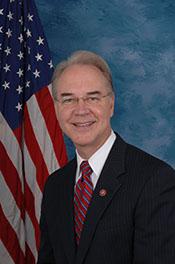 Rep. Tom Price (R-GA)
Description
Amendment sought to delay the enactment of titles I, II, and III of the bill until the Federal Reserve certifies that it will not reduce the availability of, or increase the price of credit for, qualified mortgages.
Legislative Activity
Stay on top of the latest movement without scrolling through every action
House amendment offered
May 7, 2009
View full timeline
House amendment offered
May 7, 2009
Roll call votes on amendments in House
May 7, 2009 • 3:03 PM
Amendment failed in Committee of the Whole
May 7, 2009 • 3:03 PM
House amendment not agreed to: On agreeing to the Price (GA) amendment (A007) Failed by recorded vote: 167 - 259 (Roll no. 240).
May 7, 2009 • 3:03 PM
House amendment offered/reported by : Amendment (A007) offered by Mr. Price (GA).(consideration: CR H5357-5358, H5367-5368; text: CR H5357)
May 7, 2009 • 1:14 PM
Amendment (A007) offered by Mr. Price (GA). (consideration: CR H5357-5358, H5367-5368; text: CR H5357)
May 7, 2009 • 1:14 PM
On agreeing to the Price (GA) amendment (A007) Failed by recorded vote: 167 - 259 (Roll no. 240).
May 7, 2009 • 3:03 PM
Votes
1 roll call on this amendment
Text
Offered
MORTGAGE REFORM AND ANTI-PREDATORY LENDING ACT
The Committee resumed its sitting.
Amendment No. 2 Offered by Mr. Frank of Massachusetts
The CHAIR. It is now in order to consider amendment No. 2 printed in
House Report 111-98.
Mr. FRANK of Massachusetts. Mr. Chairman, I offer amendment No. 2.
The CHAIR. The Clerk will designate the amendment.
The text of the amendment is as follows:
Amendment No. 2 offered by Mr. Frank of Massachusetts:
Strike section 216(e) and insert the following:
(e) Limitation on Distribution of Assistance.--
(1) In general.--None of the amounts made available under
this section shall be distributed to--
(A) any organization which has been convicted for a
violation under Federal law relating to an election for
Federal office; or
(B) any organization which employs applicable individuals.
(2) Definition of applicable individuals.--In this
subsection, the term ``applicable individual'' means an
individual who--
(A) is--
(i) employed by the organization in a permanent or
temporary capacity;
(ii) contracted or retained by the organization; or
(iii) acting on behalf of, or with the express or apparent
authority of, the organization; and
(B) has been convicted for a violation under Federal law
relating to an election for Federal office.
Strike section 106(a)(4)(D) of the Housing and Urban
Development Act of 1968 (as added by section 404 of the bill)
and insert the following:
``(D) Limitation on distribution of assistance.--
``(i) In general.--None of the amounts made available under
this paragraph shall be distributed to--
``(I) any organization which has been convicted for a
violation under Federal law relating to an election for
Federal office; or
``(II) any organization which employs applicable
individuals.
``(i) Definition of applicable individuals.--In this
subparagraph, the term `applicable individual' means an
individual who--
``(I) is--
``(aa) employed by the organization in a permanent or
temporary capacity;
``(bb) contracted or retained by the organization; or
``(cc) acting on behalf of, or with the express or apparent
authority of, the organization; and
``(II) has been convicted for a violation under Federal law
relating to an election for Federal office.''.
The CHAIR. Pursuant to House Resolution 406, the gentleman from
Massachusetts (Mr. Frank) and a Member opposed each will control 5
minutes.
[[Page H5351]]
The Chair recognizes the gentleman from Massachusetts.
Mr. FRANK of Massachusetts. Mr. Chairman, I am here to correct a
mistake I made in my haste to get the markup concluded so we could have
plenty of time to get the reports done, the bill on the floor. I agreed
to an amendment that I had not read carefully.
The amendment would ban any organization, any organization in
America, from receiving housing counseling funds if anybody in that
organization is indicted by any prosecutor anywhere for Federal
election or voter fraud.
So I rise to vindicate an important principle of American law that
indictment should not be a cause of serious penalty, that people should
continue to be presumed innocent until proven guilty.
To allow any prosecutor, anywhere in America, to tell any
organization that it is ineligible for these funds, simply by an
indictment, is, it seems to me, inappropriate.
I would point out that while there is an effort to claim that somehow
this is specific to one organization, that may be the intent, but this
bill earmarks no funds for any organization.
And it says, here is what it says about the funds: The Secretary
shall make financial assistance available to HUD-approved housing
counseling agencies and State housing finance agencies. So we have HUD-
approved counseling agencies--these are approved now on the list from
the last administration--and State housing finance agencies.
I have some confidence in them and those who are worried, my
amendment says if there is a conviction and the person isn't fired, you
cut off the funds.
But to cut off funds that were given by an approved HUD counseling
agency because once persons anywhere in America were indicted by some
prosecutor, is a violation of the basic principle of fairness.
I reserve the balance of my time.
Mrs. BACHMANN. Mr. Chairman, I claim the time in opposition.
The CHAIR. The gentlewoman from Minnesota is recognized for 5
minutes.
Mrs. BACHMANN. I rise in opposition to this amendment, which strips
down language in the bill designed to keep tax dollars from falling
into the hands of organizations indicted for voter fraud or its related
crimes.
It was last week during our Financial Services Committee markup of
the underlying bill, I offered a straightforward amendment to limit
eligibility for the housing counseling grants and the legal assistance
grants authorized by the bill to exclude organizations indicted for
voter fraud or that employed people indicted for such crimes.
Plain and simple, Mr. Chair, it should sound familiar to everyone
here in this Chamber, because the exact same language was passed as
part of the Housing and Economic Recovery Act of 2008 to prohibit
groups, such as ACORN, from obtaining taxpayer-funded grants.
272 Members of this body, including the gentleman from Massachusetts
who just spoke, voted for that legislation, which became law last July.
But not only is it legitimate for Congress to decide the threshold for
accessing taxpayer funds, it's incumbent upon this body to do so in our
fiduciary capacity to the taxpayers of this great country. And for far
too long Congress has cavalierly distributed taxpayer money.
Every day we can go on record saying we will no longer set the bar
this low. We are all saying, fool me once, shame on you; fool me twice,
shame on me. But ACORN and organizations like it have fooled us not
once, not twice, but seemingly after every election. The stories of
their indictments for voter fraud for violating their tax status for
voter registration improprieties abound. Grand juries across the Nation
have found them and their employees lacking. Yet we continue to funnel
millions of dollars to their coffers.
Just last week, on Monday, the headlines out of Nevada read ``39
counts of voter registration fraud against ACORN and two of its former
employees.'' It was just several hours ago, hot off the presses, that
the Pittsburgh Post-Gazette reported breaking news, an Allegheny County
district attorney charged seven employees with ACORN ``with forgery and
election law violations, saying they filed hundreds of fraudulent voter
registrations during last year's general election.''
Can't this body do something about this, Mr. Chairman? How many
felony charges does it take to see that this organization has violated
the public trust?
Congress isn't the arbitrator of guilt or innocence. Congress does
decide to spend the people's money. At what point do we finally say
that this organization is simply not worthy of the hard-earned money of
the American people.
According to recent testimony at the House Judiciary Committee, ACORN
has been under investigation in States, for, among other things,
violations of the Tax Code, 501(c)(3); violations of the Federal
Election Campaign Act of 1971; fraudulent voter registration
activities; and failure to comply with State law in voter registration
drives.
And here are just a few more headlines of late: January, 2009, a
voter registration worker for ACORN in East Saint Louis was indicted on
two counts of voter fraud for submitting forged cards for residents at
nursing homes without their knowledge.
According to the AP in October of 2008, ``a suburban Philadelphia man
was charged with forgery, allegedly altering 18 voter-registration
applications during his employment with an organization [ACORN] whose
voter-outreach efforts have become a flash point in the presidential
campaign.''
CNN reported October 28 about an ACORN worker who helped register
nearly 2,000 voters for the community group ACORN, not one of them
actually existing, and he was convicted last year and spent nearly 3
months in prison.
The gentleman from Massachusetts says that his amendment is about due
process. But I am sorry, Mr. Chairman, the American people are smarter
than that. They deserve better than such an oratory sleight of hand.
His amendment is about our duty as stewards of the taxpayers' dollar
and mine.
Others say this is about the importance of the underlying grant
program. But there are plenty of legitimate law-abiding nonprofits who
have never seen an indictment that could still apply for these grants.
{time} 1230
The bottom line is this: either you're against allowing organizations
that engage in or employ individuals under investigation for voter
fraud to receive tax dollars, or you aren't.
Mr. Chair, our votes on this amendment make our positions crystal
clear to the people we serve. Are we on the people's side or are we on
ACORN's side? We owe it to our constituents who are already tired,
frustrated, and outraged by this cycle of spending and bailout and
taxing and borrowing to at least show them that we aren't going to pick
their pockets to fund groups that are about abusing their trust over
and over again.
Mr. Chairman, I reserve the balance of my time.
Mr. FRANK of Massachusetts. I reserve the balance of my time.
Mrs. BACHMANN. Mr. Chair, I would just end by saying I urge the
people of this body to oppose this amendment, because as we stand in
our fiduciary duty before the taxpayers, we need to make our vote
clear--and our vote will say we either stand with the taxpayers of this
great country, or we stand with ACORN.
Mr. Chair, I would yield 15 seconds to the gentleman from Alabama.
Mr. BACHUS. First of all, I want to acknowledge that the funding for
this bill is a good thing for mortgage foreclosure efforts. I would
point out that I think the Bachmann amendment is the same amendment we
adopted in the GSE Affordable Housing Fund. So we did adopt that in
that legislation. So her amendment would be consistent with what this
body did last year.
Mr. FRANK of Massachusetts. How much time remains to me, Mr.
Chairman?
The CHAIR. The gentleman from Massachusetts has 3\1/2\ minutes
remaining.
Mr. FRANK of Massachusetts. I yield myself such time as I may
consume. The gentlewoman from Minnesota said, ``Do we want to allow
funding for people who employ people who are under investigation?''
Yes. I don't want to live in a society where the mere instituting of an
investigation by any prosecutor anywhere shuts down lawful activities.
Now, she said an organization that's under indictment, but the
amendment
[[Page H5352]]
goes far beyond that. Any individual member of an organization, no
matter how far flung, apparently, according to the gentlewoman from
Minnesota, if an investigation begins of anybody, you shut them down.
The gentlewoman from Minnesota mentioned someone who has been
convicted. Under the amendment I offered, that would end it. We would
either have to fire that person or lose the funding.
Mrs. BACHMANN. Will the gentleman yield?
Mr. FRANK of Massachusetts. No. The conviction triggers it. No
question. That's what is in the amendment. My amendment says if you are
convicted, it's triggered. But to say that any individual who works for
any organization who's indicted, shuts it down. The gentlewoman said,
Are you on the side of ACORN?
Mrs. BACHMANN. Will the gentleman yield to answer your point?
Mr. FRANK of Massachusetts. No.
The CHAIR. The gentleman from Massachusetts controls the time.
Mr. FRANK of Massachusetts. The issue is this: the gentlewoman, I
think, inaccurately says, Are you for ACORN or the American people?
This bill says nothing about ACORN. This bill says that approved HUD
counseling agencies and State financing agencies can make the choice.
What I think the amendment says is this: Are you for the principle of
American justice that says the mere institution of an indictment by any
prosecutor anywhere, at any level?
Mrs. BACHMANN. Would the gentleman yield?
Mr. FRANK of Massachusetts. Mr. Chair, I have told the gentlewoman I
would not yield. Could she be instructed that that is the answer that
she's going to get, and to stop interrupting?
The CHAIR. It is apparent the gentleman is not going to yield. When a
Member has asked a Member under recognition to yield several times, and
it becomes apparent that the Member under recognition is not going to
yield, the Member shouldn't continue to ask him to yield or otherwise
interrupt him.
Mr. FRANK of Massachusetts. There are some basic rules like the ones
of debate. Also, the fact that I said that to empower any prosecutor
anywhere, at any level. And this isn't about ACORN. We don't sit here
to judge on this or that organization. The gentlewoman said we don't
judge guilt or innocence. Well, the amendment tries to do that.
The amendment says: a guilty finding by statute; in the absence of a
guilty finding, in a court of law. Because if there's a guilty finding
in a court of law, under my amendment, then this denies funding to
people.
There are a lot of prosecutors. And it's not just ACORN. There are a
lot of organizations, including political parties in the State of New
Hampshire, near me. The Republican Party operatives were convicted of
election fraud. I don't think that means you go after everybody else.
It certainly didn't mean pending indictment you do this. There ought to
be a bright line between penalties for indictment and for conviction.
Now if the amendment had said a pattern of indictments, that's a
different story. It might have been a better argument. But this says a
single indictment of any individual by any prosecutor for any
organization anywhere in American has these negative consequences.
I think we have seen enough of prosecutorial misconduct, whether it
was Senator Stevens or whether it was Members on both sides of the
aisle, whether it has been organizations that have been prosecuted. I
don't think we want to set that principle. Remember, this is
precedential. Once we set as a body the legal principle--apparently, it
was in the earlier bill. It shouldn't have been. If I missed that, I
apologize.
I want to now repudiate the notion that the action of a single
prosecutor who may be politically motivated to indict anybody anywhere
for election fraud, disables that organization, forces the organization
to fire an individual who may later be vindicated.
Yes, the gentlewoman said one of the employees of the organization
that has motivated her amendment was convicted. My amendment says: in
that case, you either fire the person or you lose the money.
Conviction ought to be the standard. But a single indictment by a
single prosecutor anywhere, I do not think that is the rule of law
under which Americans wants to live.
I yield back the balance of my time.
The CHAIR. The question is on the amendment offered by the gentleman
from Massachusetts (Mr. Frank ).
The question was taken; and the Chair announced that the ayes
appeared to have it.
Mrs. BACHMANN. Mr. Chairman, I demand a recorded vote.
The CHAIR. Pursuant to clause 6 of rule XVIII, further proceedings on
the amendment offered by the gentleman from Massachusetts will be
postponed.
Amendment No. 3 Offered by Mr. Bachus
The CHAIR. It is now in order to consider amendment No. 3 printed in
House Report 111-98.
Mr. BACHUS. Mr. Chairman, I have an amendment at the desk made in
order under the rule.
The CHAIR. The Clerk will designate the amendment.
The text of the amendment is as follows:
Amendment No. 3 offered by Mr. Bachus:
At the end of title IV, add the following new section:
SEC. 410. WARNINGS TO HOMEOWNERS OF FORECLOSURE RESCUE SCAMS.
(a) Assistance to NRC.--Notwithstanding any other provision
of law, of any amounts made available for any fiscal year
pursuant to section 106(a)(4)(F) of the Housing and Urban
Development Act of 1968 (12 U.S.C. 1701x(a)(4)(F)) (as added
by section 404 of this Act), 10 percent shall be used only
for assistance to the Neighborhood Reinvestment Corporation
for activities, in consultation with servicers of residential
mortgage loans, to provide notice to borrowers under such
loans who are delinquent with respect to payments due under
such loans that makes such borrowers aware of the dangers of
fraudulent activities associated with foreclosure.
(b) Notice.--The Neighborhood Reinvestment Corporation, in
consultation with servicers of residential mortgage loans,
shall use the amounts provided pursuant to subsection (a) to
carry out activities to inform borrowers under residential
mortgage loans--
(1) that the foreclosure process is complex and can be
confusing;
(2) that the borrower may be approached during the
foreclosure process by persons regarding saving their home
and they should use caution in any such dealings;
(3) that there are Federal Government and nonprofit
agencies that may provide information about the foreclosure
process, including the Department of Housing and Urban
Development; and
(4) that they should contact their lender immediately,
contact the Department of Housing and Urban Development to
find a housing counseling agency certified by the Department
to assist in avoiding foreclosure, or visit the Department's
website regarding tips for avoiding foreclosure; and
(5) of the telephone number of the loan servicer or
successor, the telephone number of the Department of Housing
and Urban Development housing counseling line, and the
Uniform Resource Locators (URLs) for the Department of
Housing and Urban Development websites for housing counseling
and for tips for avoiding foreclosure.
The CHAIR. Pursuant to House Resolution 406, the gentleman from
Alabama (Mr. Bachus) and a Member opposed each will control 5 minutes.
The Chair recognizes the gentleman from Alabama.
Mr. BACHUS. Before I discuss my amendment, I'd like to thank Chairman
Frank and really, first of all, acknowledge his efforts over the past
few years to combat predatory lending practices. I think as early as
2005, he was aggressively trying to stop some of these practices.
I also appreciate the chairman working with me to bring this
amendment to the floor. Originally, my amendment funded foreclosure
rescue scam awareness and prevention efforts. And that's what the
amendment is about. It's about so-called foreclosure rescue scams. I
had proposed using money from the legal assistance fund and, after
consultation with Chairman Frank, I revised my amendment to use the
bill's counseling authorization as a funding source.
Although the chairman and I disagree on the underlying merits of the
bill, I do appreciate the spirit of bipartisanship which the chairman
has shown in our discussions on this amendment and the bill as a whole.
I earlier acknowledged your efforts since I think at least 2005 to
come up with a bipartisan bill. I don't think we were successful this
year, but I think had our efforts been successful in prior years, we
could have avoided some of
[[Page H5353]]
this. And I'm sorry the other body didn't show the urgency that we did.
Mr. FRANK of Massachusetts. If the gentleman would yield, he said he
is sorry the other body didn't move. There's a lot of that going around
Mrs. BACHMANN. That's right. There is. But I'd say to the Members,
there's an unprecedented number of homeowners that are delinquent on
their mortgages and entering foreclosures. In fact, the Mortgage
Bankers Association estimates that at least 11 percent of the mortgages
now are delinquent and will probably go into foreclosure. This is
creating really a desperate situation across the country.
Unfortunately, as all desperate situations, this situation has
created opportunities for scam artists to take advantage of homeowners
in desperate situations through so-called foreclosure rescue schemes.
My amendment is designed to at least offer some protection to those
homeowners from being victimized in this way.
It's just amazing that, whether it was in Katrina or other natural
disasters or gas shortages, that people seem to take advantage and act
their worst during times of struggle and crisis.
This amendment allows mortgage servicers to work together with the
Neighborhood Reinvestment Corporation, which is a congressionally
chartered organization, to make delinquent borrowers aware that they
may be targets of fraud and inform them on how best to protect
themselves.
The amendment is funded by dedicating 10 percent of the funds
authorized under section 404 to this much needed form of housing
counseling.
Many scam artists use publicly available information about defaults
and foreclosures starts to contact troubled borrowers. In States with
judicial foreclosures, lenders file a foreclosure action in a local
court. In States where there's nonjudicial foreclosure regimes, lenders
file a notice of default with the county recorder. All these records
are available to the public and provide raw material for fraud artists
to prey upon troubled borrowers.
In a classic loan modification scam, borrowers are duped into paying
up-front fees for a loan modification that never occurs. In some cases,
borrowers are told that in order to complete a mortgage refinancing
needed to avoid foreclosure, they must sign over the title of the
property. Another scam promises homeowners they can stay in their home
as renters and buy back their properties at a later date.
On February 10, 2009, the administration released the Home Affordable
Refinance Program and a Home Affordable Modification Program.
Unfortunately, with the introduction of these new programs,
unscrupulous persons or companies have yet again found new
opportunities to defraud unsuspecting borrowers.
In fact, April 6, about a month ago, Treasury's FinCEN announced
guidance to financial institutions on filing suspicious activity
reports regarding loan modification and foreclosure rescue scams.
The CHAIR. The time of the gentleman has expired.
{time} 1245
Mr. FRANK of Massachusetts. Mr. Chairman, in the absence of anyone
else, I will claim this time in opposition.
The CHAIR. The gentleman is recognized for 5 minutes.
Mr. FRANK of Massachusetts. Mr. Chairman, the gentleman from Alabama
has very accurately stated this. He worked with us until we got an
amendment that did some good, that avoided some problems we thought we
would have. So I hope the amendment is agreed to.
Mr. BACHUS. If the gentleman would yield me 30 seconds?
Mr. FRANK of Massachusetts. I yield to the gentleman for 30 seconds.
Mr. BACHUS. Mr. Chairman, I think this is a very good amendment. I
want to close and thank the gentleman for that time.
Mr. Frank and I both agree, and I think most Members of this body, we
must stop these outrageous mortgage fraud rescue scams. Congress shuts
off one avenue for fraud, and we did that with the National Mortgaging
Licensing and Registration System now being instituted by the
Conference of State Banking Supervisors. But every time you shut one
door, these innovative crooks find a back door, and now they have moved
into the fertile field of foreclosure.
We must protect unsuspecting and vulnerable homeowners from being
cheated by these rogues and frauds.
I close by urging my colleagues to vote ``yes.''
Mr. FRANK of Massachusetts. I yield back the balance of my time.
The CHAIR. The question is on the amendment offered by the gentleman
from Alabama (Mr. Bachus).
The amendment was agreed to.
Amendment No. 4 Offered by Mr. Perlmutter
The CHAIR. It is now in order to consider amendment No. 4 printed in
House Report 111-98.
Mr. PERLMUTTER. Mr. Chairman, I have an amendment at the desk.
The CHAIR. The Clerk will designate the amendment.
The text of the amendment is as follows:
Amendment No. 4 offered by Mr. Perlmutter:
In section 220(a)(2)(B)--
(1) insert ``(i)'' before ``such notice to vacate''; and
(2) insert before the period the following: ``; and (ii)
with respect to a single-family residence for which the
borrower rented the unit in violation of the mortgage
contract, such notice to vacate shall be provided by the
purchaser to the tenant in such unit at least 30 days before
the effective date of such notice, and shall include a copy
of the mortgage contract prohibiting the rental of the
unit''.
Amend section 129(l) of the Truth in Lending Act (as added
by section 303 of the bill) to read as follows:
``(l) Acceleration of Debt.--No high-cost mortgage may
contain a provision which permits the creditor to accelerate
the indebtedness, except when repayment of the loan has been
accelerated by default in payment, or pursuant to a due-on-
sale provision, or pursuant to a material violation of some
other provision of the loan document unrelated to payment
schedule.''.
The CHAIR. Pursuant to House Resolution 406, the gentleman from
Colorado (Mr. Perlmutter) and a Member opposed each will control 5
minutes.
The Chair recognizes the gentleman from Colorado.
Mr. PERLMUTTER. Mr. Chairman, the amendment that I propose to the
House today is twofold. The first part deals with a section of the bill
that provides 90 days for tenants to stay in a home or an apartment
house that has been foreclosed upon.
The purpose of this amendment, and it is very narrowly drawn, is only
as to those properties that are owner-occupied homes where the owner
has covenanted with the lender that they are going to occupy the house.
What happens is often the owner moves out, leases the property to
someone, foreclosure begins. The lender has no chain of title, no
connection with this particular tenant, nor is there any expectation
that there would be a tenant because the owner said ``I am going to
live there.''
Under the law today, there is no additional time beyond the
foreclosure for a tenant to remain in that owner-occupied house. Under
the bill that is proposed, that timeline is extended to 90 days beyond
the foreclosure. My amendment shrinks that back to 30 days. So it is 30
days more than the law allows today, but less than what is proposed in
the bill, because the lender has never had any dealings with that
particular tenant. This is not like a multifamily apartment house where
the lender expects that there are going to be tenants or an investor
type of a loan where the lender expects a tenant to be in place. Ninety
days is probably a reasonable amount in that situation, but not here,
so I have asked to shrink it down to 30 days. That is the first part of
the amendment.
The second part of the amendment is something I talked to Mr. Miller
about, which is to clarify the language about when acceleration of a
loan can occur. Now what we have said is acceleration occurs upon a
default in payment or a due-on-sale clause or a material violation in
the contract. So those are the two sections of this amendment.
I reserve the balance of my time.
Mr. ELLISON. Mr. Chairman, I rise to claim the time in opposition.
The CHAIR. The gentleman is recognized for 5 minutes.
Mr. ELLISON. Let me first thank my friend from Colorado who has
worked diligently. He is an excellent legislator and was a fine lawyer
and I think still is licensed to practice law, and so it is a pleasure
working with him. On this issue, unfortunately, we don't quite see it
the same.
[[Page H5354]]
I think that the 90-day provision is fine and should remain in the
bill as it exists now. To cut down by 60 days the opportunity for a
renter to find a new place to live after they may have done nothing
wrong, made every payment, paid every penny on time, really is not fair
and is not good for public policy.
The fact is that, when a house goes into foreclosure, that
neighborhood and that home are best preserved by keeping that occupant
in there. If they are required to leave just after 30 days, which is
very, very fast, that means that we could end up with an empty building
where it is subject to copper strippers. It will be an attractive
nuisance for people who want to commit, perhaps, crime. It will be a
very difficult and bad situation. And we know that once a house goes
into foreclosure and then is not occupied, that is a direct blow to the
property values of people who live everywhere in the neighborhood.
So this provision, this 90 days actually makes a lot of sense. It
should stay in harmony with the bill as it exists and not be reduced. I
will acknowledge appreciation that the author of this amendment does
allow for 30 days. I appreciate that, but I think it should be more. It
should be the 90 days that is already there.
This amendment, if adopted, would work to penalize the one person who
has not had anything to do with the foreclosure crisis. They were not
party to the foreclosure. They were not party to the mortgage in the
beginning. They weren't party to the securitization, nor did they
engage in any derivatives or anything like that which have brought us
to this very difficult point.
The fact is that the tenant who may have been paying every rent every
month, month after month, has no control or responsibility over the
owner who may have violated certain conditions of the mortgage
agreement, and this extra 60 days that the existing bill provides is
not a major detriment to the lender.
Let me just also say, the fact is this is not just an individual
problem. To take a very legalistic view of this problem and say they
are not in the chain of title, therefore, they are out, ignores the
fact that this problem of foreclosures has spread across the Nation, is
a community problem, is a problem of everyone, not just a narrow, fixed
party-to-party agreement. Therefore, there needs to be a solution that
takes into consideration the broader interests as well.
Again, I thank the gentleman from Colorado for his diligent work on
this issue.
I reserve the balance of my time.
Mr. PERLMUTTER. I would ask my friend from Minnesota whether he has
any other speakers? If not, I have the right to close on my amendment.
Mr. ELLISON. Mr. Chair, I thought I had the right to close.
The CHAIR. The gentleman from Minnesota actually has the right to
close. The gentleman is the manager opposed to the amendment.
Mr. PERLMUTTER. Well, I would say to my friend from Minnesota that I
appreciate your comments, although I would disagree with you.
When it comes to a situation where tenants are expected to be in a
property, whether it is a multifamily apartment house or something
where there is this expectation on the lender, I would agree with my
friend's points. But not here, not where there has been a covenant that
it is going to be owner occupied. And often, that covenant comes along
with a reduction in the interest rate, so there is consideration for
it.
So I appreciate your point about not being too narrow and legalistic,
but this is an important point, and it is one that deals with the
contract itself and the certainty of the contract.
Secondly, the lender may have somebody else who is ready to come in
and buy, and there are a lot of people who want to buy these homes,
too. I would say to my friend from Minnesota, and they shouldn't be
deprived of the opportunity to purchase them. The lender also may want
to continue to lease the property out to the individual who is
occupying the home.
So there are a number of reasons why, at 30 days, I think we are
giving substantial time to these individuals to vacate the premises.
That should be the cutoff date.
I would also remind my friend that, in the manager's amendment, Mr.
Filner has an amendment that is part of it that gives notice to the
tenant at the outset of the foreclosure that something is going on with
the property so that there is not a surprise. So I would urge a ``yes''
vote on the Perlmutter amendment.
I yield back the balance of my time.
Mr. ELLISON. Let me just point out that tenants are hard hit by this
foreclosure crisis even though the mortgage is not their
responsibility.
As of February 2009, at least 20 percent of the properties in
foreclosure were rental properties, and roughly 40 percent of the
families facing eviction due to foreclosure are tenants. Only seven
States and the District of Columbia provide clear protection for
tenants.
The fact is that, if this amendment is adopted, it will add to the
pain of some tenants when we don't have to do it. The 90 days in the
bill is more than adequate, and 30 days is too short. We will put
pressure on our homeless shelters if we adopt this amendment. We will
put pressure on families who really had no part in making this
foreclosure crisis occur.
I thank my friend from Colorado.
I yield back the balance of my time.
The CHAIR. The question is on the amendment offered by the gentleman
from Colorado (Mr. Perlmutter).
The amendment was agreed to.
Amendment No. 5 Offered by Mr. Hensarling
The CHAIR. It is now in order to consider amendment No. 5 printed in
House Report 111-98.
Mr. HENSARLING. Mr. Chairman, I have an amendment at the desk.
The CHAIR. The Clerk will designate the amendment.
The text of the amendment is as follows:
Amendment No. 5 offered by Mr. Hensarling:
In section 129C(d) of the Truth in Lending Act (as added by
section 204 of the bill), strike paragraphs (2) and (3) and
insert the following (and redesignate succeeding paragraphs
accordingly):
``(2) Assignee and securitizer exemption.--No assignee or
securitizer of a residential mortgage loan shall be liable
under this subsection.''.
In section 129C(d)(6) of the Truth in Lending Act (as added
by section 204 of the bill), strike ``, assignee, or
securitizer'' each place it appears.
In section 129C(d)(7) of the Truth in Lending Act (as added
by section 204 of the bill), strike ``, assignee, or
securitizer'' each place it appears.
Strike section 129C(d)(8) of the Truth in Lending Act (as
added by section 204 of the bill) (and redesignate succeeding
paragraphs accordingly).
In section 129C(d)(9) of the Truth in Lending Act (as added
by section 204 of the bill)--
(1) strike ``, assignee, or securitizer''; and
(2) strike ``or an assignee or securitizer under paragraph
(2)''.
In section 129C(d)(10) of the Truth in Lending Act (as
added by section 204 of the bill), strike ``the terms
`assignee' and `securitizer', as used in this section, do not
include''.
In section 129C(e) of the Truth in Lending Act (as added by
section 205 of the bill), strike ``or any assignee or
securitizer'' each place it appears.
The CHAIR. Pursuant to House Resolution 406, the gentleman from Texas
(Mr. Hensarling) and a Member opposed each will control 5 minutes.
The Chair recognizes the gentleman from Texas.
Mr. HENSARLING. Mr. Chairman, the subject of mortgage reform is a
very serious subject. And although there are certain laudable aspects
of the underlying legislation, I fear that although it is a serious
subject, it is difficult to take the legislation seriously.
How can you have mortgage reform when you leave out the single
biggest root cause of the economic debacle we find ourselves in, and
that is reform of Fannie and Freddie? How can you seriously deal with
mortgage reform and be absolutely silent to at least half of the fraud
equation, and that is those who lied about their income, lied about
their occupancy, lied about their net worth?
The underlying legislation, Mr. Chairman, unfortunately, is going to
ensure that consumers lose their choices. It will make interest more
expensive. It will protect--``protect,'' a term we hear from our
friends on the side of the aisle--protect people out of their homes and
effectively take away the American Dream from millions and millions of
Americans.
Now, we need effective disclosure. We need effective policing of
fraud and misrepresentation. We also need some personal responsibility,
and we need to quit bailing out failed institutions, and
[[Page H5355]]
we shouldn't force people who are struggling to pay their own mortgages
to pay their neighbors' as well.
Now, Mr. Chairman, one particularly bad and onerous aspect of this
legislation is something called assignee liability. What this means is
that once the mortgage is entered into, that those who securitize the
mortgage, those who may invest in the mortgage, that all of a sudden
new legal liability will attach to them as well.
The bill introduces legal liability for the originator. It doesn't
introduce any new legal liability on behalf of the borrower, but
introduces new legal liability saying that, with respect to
refinancing, that there must be a ``net tangible benefit''; and, if the
lender fails this standard, he has legal liability. On all financing,
there must be a ``reasonable ability to pay.''
Well, what do these standards mean? Net tangible benefit. So if
somebody decides to refinance, take equity out of their home and start
a small business, is that a net tangible benefit? Or does it depend on
how successful the small business is?
How about if an individual refinances their home, they take out
equity, and they decide to put a swimming pool in the backyard? Well,
maybe that is not a net tangible benefit. Maybe it is, maybe it isn't.
I don't know.
Maybe they refinance, because in their particular situation they need
a lower monthly payment but yet they are willing to pay a larger sum.
Is that a net tangible benefit?
I would be happy to yield to anybody on the other side of the aisle
who could tell me if those examples constitute net tangible benefits.
Hearing nobody on the other side of the aisle take me up on it, it kind
of proves my point: We don't know what these terms mean, nor do we know
about reasonable ability to pay.
So all of a sudden, if a lender figures out that there is a tragic
divorce going on in a family, does he have a legal obligation now to
deny homeownership opportunity because maybe there is no longer a
reasonable ability to pay?
How about if somebody has the tragic discovery that they have breast
cancer? All of a sudden, is there a legal obligation that maybe this
person can no longer have a reasonable ability to pay?
We don't know what these legal standards are, Mr. Chairman. And so
now they are getting passed on to the assignees, these fuzzy, muddy,
cloudy, amorphous terms. It is a plaintiff's lawyer's dream, and so we
will have an explosion of liability exposure. Why would people want to
invest? Why would people want to securitize?
You know, when people invested in the stock of Enron, they were the
victims. They weren't the victimizers. And now, all of a sudden, we are
turning this on their head, and at the end of the day there is going to
be less mortgage money available to anybody who wants to have their
American Dream realized.
I reserve the balance of my time.
Mr. WATT. Mr. Chairman, I rise to claim time in opposition to the
amendment.
The CHAIR. The gentleman is recognized for 5 minutes.
Mr. WATT. Mr. Chairman, I keep waiting on the gentleman to address
his proposed amendment. I haven't heard anything about the proposed
amendment, but I want to address the points that he addressed since he
wants to have a general debate.
First of all, he says he can't support this bill because we didn't
deal with Fannie and Freddie. That is kind of like me saying I am not
going to vote for the earned income tax credit because it doesn't deal
with all of what caused poverty in America.
You can't deal with every subject in every bill. We passed a bill
that has dealt with Fannie and Freddie, and it has been over there in
the Senate for a long time. And we are going to pass some other
legislation to deal with Fannie and Freddie at some point, but it is
not addressed in this bill, just like the whole totality of poverty is
not addressed when we passed an earned income tax credit or when we
passed health care. That is just a non sequitur, as far as I am
concerned.
{time} 1300
He talks about, we didn't deal with disclosure so I'm not going to
vote for the bill.
Everybody in America that got a loan that is in foreclosure now,
everybody who is in default now got full disclosures of what the terms
of their loans were. And they were ineffective to prevent the kind of
predatory lending and policies that this bill addresses. So I don't
know what the gentleman is talking about when he says ``we didn't deal
with disclosure.''
We intentionally didn't deal with disclosure because we acknowledge
that disclosure and telling people that we are giving you a bad loan is
not enough to protect them any more than disclosure that a doctor may
not be the best doctor in America is going to stop people from going to
the doctor.
So now that I have dealt with those, maybe he will want to address
the amendment itself.
And I will reserve the balance of my time to address the amendment.
Mr. HENSARLING. I yield myself such time as I may consume.
To my friend from North Carolina, there are many reasons not to
support the bill. I didn't say I wasn't supporting it for these
reasons. I said it was hard to take a mortgage reform bill seriously
that didn't treat this.
At the end of the day, Mr. Chairman, again, what is going to happen
is that we are functionally outlawing certain types of loans here, and
we know particularly subprime, with these amorphous legal standards,
applying them to securitizers, applying them to investors,
functionally, you are outlawing this.
Well, that hurts people. It hurts the Taylor family of Forney, Texas,
that wrote to me, ``If it hadn't been for subprime lending, I wouldn't
have my house now. My credit was destroyed because of a divorce. I
worked hard for 5 years to clean up bad credit.''
These people still ought to have an opportunity to realize their
American Dream, and we ought to quit protecting them out of their
homes.
I urge adoption of the amendment.
Mr. WATT. Would the Chair advise me how much time remains.
The CHAIR. The gentleman from North Carolina has 2\1/2\ minutes
remaining.
Mr. WATT. I will yield 1 minute to the gentleman from North Carolina
(Mr. Miller).
Mr. MILLER of North Carolina. Mr. Chairman, on two successive days
now, Mr. Hensarling has said in the course of addressing the body,
``Can anyone over there tell me what `net tangible benefit' is?'' And
then a second later saying, ``Hearing nothing, they must not have an
answer.'' I don't believe anybody watching on C-SPAN is under the
impression that we are all paying rapt attention to every word that
comes out of Mr. Hensarling's mouth. And the reason we didn't hop up
isn't because we didn't know what the answer is. It is more the case
that we kind of lean over to each other and say, What did he just say?
``Net tangible benefit'' is based very closely on a rule of law in
securities law called, that gets at churning or making transactions in
a stock market account just to generate fees for the broker. The
problem this gets at is flipping of loans, of coming back to a
homeowner and persuading them to refinance just to create more fees for
everyone involved in the mortgage system, to refinance so they can get
the home owner deeper and deeper in debt. Rather than trying to
delineate every possible net tangible benefit, the bill gives the
regulatory authorities, the banking agencies, the authority to say
exactly what a net tangible benefit is.
Announcement by the Chair
The CHAIR. Members are reminded to direct their remarks to the Chair.
Mr. WATT. Mr. Chairman, I yield myself such time as I may consume.
I would now like to address the gentleman's amendment which he still
never has addressed. I acknowledged from the very beginning that we
walked a delicate balance between protecting consumers and protecting
the availability of funds. But the balance that the gentleman would
have us address says this, ``no assignee or securitizer of a
residential mortgage loan shall be liable under this subsection.''
Let me tell you what that would lead to. I will close a loan one day,
I will assign it to somebody the next day, and we will be right back
where we are right now because nobody in the chain of custody of that
loan, other than the original lender, will have any liability.
[[Page H5356]]
That would be as irresponsible as not passing any bill or not doing
anything, which is exactly what a number of my colleagues would like to
have us do, but which is not an option in this posture at this moment.
So I want my colleagues to be clear. This is a destructive amendment
and should be opposed.
With that, Mr. Chairman, I yield back the balance of my time.
The CHAIR. The question is on the amendment offered by the gentleman
from Texas (Mr. Hensarling).
The question was taken; and the Chair announced that the noes
appeared to have it.
Mr. HENSARLING. Mr. Chairman, I demand a recorded vote.
The CHAIR. Pursuant to clause 6 of rule XVIII, further proceedings on
the amendment offered by the gentleman from Texas will be postponed.
Amendment No. 6 Offered by Mr. Moore of Kansas
The CHAIR. It is now in order to consider amendment No. 6 printed in
House Report 111-98.
Mr. Moore of Kansas. I have an amendment at the desk.
The CHAIR. The Clerk will designate the amendment.
The text of the amendment is as follows:
Amendment No. 6 offered by Mr. Moore of Kansas:
In section 129C(a) of the Truth in Lending Act (as added by
section 201(a) of the bill), insert after paragraph (3) the
following (and redesignate succeeding paragraphs
accordingly):
``(4) Income verification.--In order to safeguard against
fraudulent reporting, any consideration of a consumer's
income history in making a determination under this
subsection shall include the verification of such income by
the use of--
``(A) Internal Revenue Service transcripts of tax returns
provided by a third party; or
``(B) such other similar method that quickly and
effectively verifies income documentation by a third party as
the Federal banking agencies may jointly prescribe.''.
The CHAIR. Pursuant to House Resolution 406, the gentleman from
Kansas (Mr. Moore) and a Member opposed each will control 5 minutes.
The Chair recognizes the gentleman from Kansas.
Mr. MOORE of Kansas. Mr. Chairman, I yield myself as much time as I
may consume.
The CHAIR. The gentleman from Kansas is recognized for 5 minutes.
Mr. MOORE of Kansas. I rise today with my colleagues from Maryland
and Ohio, Congressman Frank Kratovil and Congresswoman Mary Jo Kilroy,
in offering this income verification amendment to H.R. 1728.
It is well known that the misrepresentation and the unverified nature
of a borrower's income was a contributing factor to the mortgage
crisis. Some borrowers purposely misstated or altered their incomes on
documents in order to qualify for loans they couldn't afford, and some
lenders either ignored or encouraged that practice.
Columnist Gretchen Morgenson wrote last year: ``While borrowers may
have misrepresented their incomes, either on their own or at the urging
of their mortgage brokers, lenders had the tools to identify these fibs
before making the loans. All they had to do was ask the IRS.''
Our amendment would require lenders to do this by simply verifying
the borrower's income documentation with the IRS. They already have a
program to do this, the Income Verification Express Service. This
program utilizes IRS tax transcripts to verify a borrower's income
within 2 business days, often the same day, for less than $5. This
simple step will help catch fraudulent behavior before a lender closes
on a loan that a borrower may not be able to afford.
In his recent report to Congress, the special investigator inspector
general for TARP recommended third-party verification of income like
this IRS tax transcript program to prevent fraud. Income verification
will strengthen the integrity of our mortgage system by ensuring
borrowers receive a loan they can repay, lenders underwrite loans that
are less likely to default, investors regain their confidence in the
securitization process, and in the case of government-supported loans,
taxpayers are protected.
I urge my colleagues to support our income verification amendment.
I reserve the balance of my time.
Mr. NEUGEBAUER. Mr. Chairman, I claim time in opposition, although I
am not opposed to the amendment.
The CHAIR. Without objection, the gentleman from Texas is recognized
for 5 minutes.
There was no objection.
Mr. NEUGEBAUER. I appreciate the gentleman offering this amendment. I
think it does make the underlying bill better. Income verification is
an important criteria in determining whether somebody qualifies for a
mortgage or not and has the ability to repay. Providing a low-cost way
to be able to do that, I think, is an important step in this process.
And I commend the gentleman.
With that, I yield back my time.
Mr. MOORE of Kansas. Mr. Chairman, I yield 1 minute to Congressman
Frank Kratovil of Maryland.
Mr. KRATOVIL. Mr. Chairman, studies suggest that almost 50 percent of
all subprime loans were accepted by lenders without verification of
stated income. In some cases, borrowers provided their lenders with
fraudulent information in order to qualify for a mortgage and deceive
the lenders. In other cases, the lenders actually encouraged the
borrowers to do so, or simply looked the other way despite obvious
questions of credibility. How can we avoid this from happening again?
Mr. Chairman, we can do this by passing the Moore-Kratovil-Kilroy
amendment to H.R. 1728, which can appropriately be referred to, as a
prosecutor might say, a ``trust but verify'' amendment.
The Moore-Kratovil-Kilroy amendment to H.R. 1728 would help stabilize
the mortgage markets and help protect against fraud by requiring
mortgage lenders to verify the income history of each home loan
applicant by obtaining a IRS tax return transcript from a third-party
provider prior to closing a loan. IRS tax transcripts can be used to
verify income and avoid possible fraud or eventual foreclosure.
Verification of stated income through IRS tax transcripts will protect
the taxpayers, investors, and mortgage market by discouraging fraud,
reducing foreclosures and strengthening the market.
This past April, as was mentioned, the TARP special inspector----
The CHAIR. The time of the gentleman has expired.
Mr. MOORE of Kansas. I yield the gentleman 30 additional seconds.
Mr. KRATOVIL. This past April, the TARP Special Inspector General
recommended the Treasury use third-party income verification to prevent
fraud in the newly announced mortgage modification system. As a former
prosecutor, I certainly had experience prosecuting fraud in the
courtroom. What this amendment does is stop fraud before it even gets
there by eliminating the ability to misrepresent or encourage a
misrepresentation of income.
I urge my colleagues to support it.
Mr. MOORE of Kansas. Mr. Chairman, I yield 2 minutes to Congresswoman
Mary Jo Kilroy from Ohio.
Ms. KILROY. Thank you, Chairman Moore and Chairman Frank, for your
leadership on these issues.
I'm glad to join with my colleague, Mr. Kratovil, on this commonsense
amendment that provides a cost-effective and simple way to verify
income to address the issue of mortgage fraud.
It is well known that misrepresentation and the unverified nature of
a borrower's income was a contributing factor to the mortgage crisis
and the foreclosure crisis that we find ourselves in. Lenders either
routinely ignored or encouraged this practice, leading to a higher risk
of default, delinquency and foreclosure for borrowers and for America's
families. In fact, according to the Comptroller of the Currency, nearly
50 percent of all subprime mortgages relied on stated income, no
verification. And the Mortgage Asset Research Institute found that 90
percent of the borrowers reported incomes higher than those found in
the IRS files. And even more disturbing, almost 60 percent of the
income amounts were exaggerated by more than 50 percent.
In my district, foreclosure is a very serious issue. There were over
79,000 foreclosure filings in 2006, compared to 15,000 in 1995. One in
seven of these homes was subprime lending.
A quick, reliable and confidential income verification process will
improve things so much. It will catch fraudulent behavior before the
lender closes on a loan or before a borrower gets involved in a loan
that he or she can't afford, strengthening the integrity of the
[[Page H5357]]
mortgage market. And one of the things that this amendment will
accomplish will help to restore integrity and confidence to the
mortgage lending process, and in the case of the government-supported
loans, give more support and confidence to the American taxpayer as
well.
This third-party income verification can be obtained simply and
quickly. And it is affordable and confidential.
The CHAIR. All time has expired.
The question is on the amendment offered by the gentleman from Kansas
(Mr. Moore).
The amendment was agreed to.
Amendment No. 7 Offered by Mr. Price of Georgia
The CHAIR. It is now in order to consider amendment No. 7 printed in
House Report 111-98.
Mr. PRICE of Georgia. I have an amendment made in order by the rule.
The CHAIR. The Clerk will designate the amendment.
The text of the amendment is as follows:
Amendment No. 7 offered by Mr. Price of Georgia:
Add at the end the following:
TITLE VIII--EFFECTIVE DATE
SEC. 801. EFFECTIVE DATE.
Notwithstanding any other provision of this Act, titles I,
II, and III of this Act shall not take effect until 90 days
after the Board of Governors of the Federal Reserve System
provides written certification to the Committee on Financial
Services of the House of Representatives and the Committee on
Banking, Housing, and Urban Affairs of the Senate that such
titles will not reduce the availability or increase the price
of credit for qualified mortgages (as defined in section
129C(c)(2) of the Truth in Lending Act).
The CHAIR. Pursuant to House Resolution 406, the gentleman from
Georgia (Mr. Price) and a Member opposed each will control 5 minutes.
The Chair recognizes the gentleman from Georgia.
Mr. PRICE of Georgia. Mr. Chairman, we all agree that we want to
increase credit and get the housing market moving again. My amendment
is a simple amendment and addresses that specific issue. It simply says
that the Federal Reserve ought to be able to provide written
certification to the appropriate committees in the House and the Senate
that this bill will not reduce the availability or increase the price
of credit for qualified mortgages.
As we are considering ways to free up credit in the market, this
legislation may just be the wrong thing at the wrong time. When the
Federal Reserve testified before our committee on the impact of this
legislation, the witnesses had reservations regarding the impact of
this bill on access to credit. In fact, they felt that there was a
significant possibility that the adoption of this bill would actually
decrease the availability of credit.
{time} 1315
My amendment would ensure that prime borrowers will not be punished
with increased rates. It simply requires that the Federal Reserve
certify that the provisions of this bill will not reduce the
availability or increase the price of credit for qualified mortgages.
This certification will protect responsible borrowers that played no
role whatsoever in the meltdown of the mortgage market.
It is clear to me and others from the language in this bill that a
routine, vanilla, 30-year fixed-rate mortgage is being put forward as
the mortgage of choice. If that is going to be the case moving forward,
and originators are not going to be comfortable offering other types of
mortgage products because of the narrowness of the safe harbor
provisions and the risk-retention provisions, then we need to ensure
that qualified borrowers will have access to those types of mortgages.
Many of us are concerned because of the other provisions in this bill
that it is going to become more difficult for qualified borrowers to
have access to affordable credit. So if the proponents of this bill
don't believe it will restrict credit or raise the cost on borrowers,
then they shouldn't have any trouble voting for this amendment. The
amendment simply stipulates that the Federal Reserve will certify that
that would be the case.
But if they don't think that the bill will pass this review from the
Federal Reserve with flying colors, then I think it would be time for
them to reconsider whether or not this legislation is what we need at
this time.
I urge my colleagues to support this commonsense amendment.
I reserve the balance of my time.
Mr. FRANK of Massachusetts. Mr. Chairman, I rise to claim the time in
opposition.
The CHAIR. The gentleman is recognized for 5 minutes.
Mr. FRANK of Massachusetts. First, Mr. Chairman, the gentleman's
description of the safe harbor refers to an earlier version of the
bill. In the committee, a bipartisan amendment offered by the gentleman
from Delaware (Mr. Castle) and the gentlewoman from Illinois (Ms. Bean)
significantly increased the safe harbor so it is not a 30-year fixed
mortgage only that is allowed. Variants of time, certain ARMs, it is
much more flexible.
The gentleman's comments apply accurately to a provision that is no
longer in the bill; but it does not apply to what is in the bill.
My second point is that I am surprised at the back-and-forth attitude
some of my most conservative colleagues have toward the Federal Reserve
system. On the one hand, there has been a great deal of concern, which
I share, about the unlimited power of the Federal Reserve in some
areas. But time and again we are being told, as in this amendment, we
should yield to the Federal Reserve our constitutional power to
legislate.
This amendment says we will vote, but the bill will not go into
effect until the Federal Reserve gives us permission. Now I have a good
deal of confidence in Mr. Bernanke, but the notion that we would cede
to the Federal Reserve the power to enact legislation, where is Ron
Paul when we need him? When did the Federal Reserve become the
constitutional equal of the Congress of the United States?
So on that ground alone, I would oppose this amendment.
I reserve the balance of my time.
Mr. PRICE of Georgia. Mr. Chairman, I want to thank the chairman of
the committee for requesting from the Rules Committee that amendments
be made in order. I appreciate that because I think these are getting
to important issues.
The gentleman talks about the expansion of the safe harbor
provisions, and they are. But that doesn't have anything to do with
whether or not the Federal Reserve, or some entity, ought to stipulate
that the cost of credit won't be greater, or the availability of credit
won't be less, if this bill is adopted. That is the heart of the
amendment.
My friend from Massachusetts talks about being surprised by various
protestations about the role of the Federal Reserve. Well, I would be
the first to stand with him if in fact he wants to support maintaining,
or returning the Federal Reserve to stipulating only about monetary
policy. But the fact of the matter is that the Federal Reserve has
jurisdiction over this area. In fact, the Federal Reserve has put
forward particular rules regarding mortgages. And, in fact, many of
them address the very issues that are being addressed in this bill
today.
So again, the heart of my amendment says if in fact this bill will
not decrease the availability of credit or will not increase the cost
of credit, then it's fine. Just move it on forward. But if it will
decrease the availability of credit, or increase the cost of credit to
folks out there across this land, then we ought not move forward with
it. We ought not punish those individuals who, through no fault of
their own, find themselves in a challenging situation finding credit. I
once again urge adoption of the amendment.
I reserve the balance of my time.
Mr. FRANK of Massachusetts. Mr. Chairman, first I guess I have to
apologize to the gentleman from Georgia after listening to what he
said. He chided me, mildly, in a friendly manner, for mentioning the
dimensions of the safe harbor, he said it wasn't part of the bill, but
I was only responding to his description of it. So I listened to him;
he said the safe harbor was too narrow, it would push people into a 30-
year. I responded. I thought when he raised it that it was relevant.
Beyond that, though, we do have this issue: do you tell the Federal
Reserve that it will decide whether or not this goes forward? It also
says, and there is a lack of balance here. If it says it will reduce
the availability by any amount. Well, to some extent the purpose of
[[Page H5358]]
this bill is to reduce the availability of credit.
If Members believe that people got mortgages who shouldn't have been
able to get them, then they ought to support a bill that will reduce
the availability of credit. Frankly, the profligate availability of
credit is a major reason for the current problem. So, yes, there are
people who used to get mortgages who won't get them under this bill.
Some lenders don't like that. There are lenders who made loans and they
won't be able to make the loans under this bill, but that is precisely
the point. The point is not to allow credit to be as loosely granted as
it was even for qualified mortgages. People got mortgages who shouldn't
have gotten them.
Now if you believe that not everyone who got a mortgage in the past
should get a mortgage now, then it would seem to me you want to reduce
the availability of credit. The question is: how do you do it? Do you
do it in a sensible way? What is the balance? That is what we think is
achieved in this bill.
I reserve the balance of my time.
Mr. PRICE of Georgia. May I inquire as to the time available on each
side?
The CHAIR. The gentleman from Georgia has 1 minute remaining. The
gentleman from Massachusetts has 90 seconds.
Mr. PRICE of Georgia. Thank you, Mr. Chairman.
I appreciate the comments of my friend, the chairman of the
committee. But I would point out that the heart of this amendment gets
to whether or not through this bill we are going to increase the
availability of credit and decrease the cost of credit. If we are not
going to do those things, then it seems to me that the American people
ought to be very suspect about the nature of the bill.
The amendment simply says that the Federal Reserve, the entity in the
Federal Government that has jurisdiction over this area, would simply
have to say that we will not decrease the availability of credit and we
will not increase the cost of credit, especially at this time, at this
time when so many of our fellow citizens across this land are having
extreme difficulty finding credit, realizing their dream and being able
to either stay in their home or find a home in which they will be able
to gain credit to purchase.
It is a simple amendment, Mr. Chairman. It gets to the heart of the
matter. Are we as a Congress going to increase the availability of
credit and decrease the cost? Or are we going to simply decrease the
availability of credit and, therefore, decrease the ability of the
American people to realize their dream? I urge adoption of the
amendment.
I yield back the balance of my time.
Mr. FRANK of Massachusetts. I yield myself the balance of my time.
Yes, that is exactly the issue. The gentleman says, surprisingly to
me, we want to increase the availability of credit.
Let's understand the problem. Too many loans were made to people who
shouldn't have gotten them. In some cases it was the fault of the
borrower; in some cases it was the fault of the lender; and in some
cases the fault lies elsewhere. Yes, one of the important purposes of
this bill is to reduce the pattern of people getting loans who
shouldn't have gotten them because they couldn't repay them.
So to say that the purpose of this bill is to increase the
availability of credit, is it to have more subprime loans, more
borrowers who can't pay back?
Now you want to do it with balance and you want to do it in a
reasonable way. I believe we deal with that. If there are questions do
we go too far one way or the other, those are legitimate. We discussed
a lot of those in committee. There were a lot of amendments that were
adopted.
But I accept my colleague from Georgia's definition as the heart of
the matter: Does this bill, if it is enacted, mean that fewer mortgage
loans will be granted going forward than were granted in that period
from 2002 to 2006, as the gentleman from Texas' amendment shows, when
subprime mortgages shot up? I hope so. I hope that we will have fewer
mortgages granted to people who couldn't have paid them.
Now other people, we hope things will go better. With the FHA piece,
we hope to do even more in making credit available.
Mr. PRICE of Georgia. Will the gentleman yield?
Mr. FRANK of Massachusetts. Yes.
Mr. PRICE of Georgia. My amendment addresses qualified borrowers.
Mr. FRANK of Massachusetts. No, it says ``qualified mortgages.'' But
part of the problem has been that people got mortgages with bad
judgments by the people who made them.
The CHAIR. The question is on the amendment offered by the gentleman
from Georgia (Mr. Price).
The question was taken; and the Chair announced that the noes
appeared to have it.
Mr. PRICE of Georgia. Mr. Chairman, I demand a recorded vote.
The CHAIR. Pursuant to clause 6 of rule XVIII, further proceedings on
the amendment offered by the gentleman from Georgia will be postponed.
Amendment No. 8 Offered by Mr. McNerney
The CHAIR. It is now in order to consider amendment No. 8 printed in
House Report 111-98.
Mr. McNERNEY. I have an amendment at the desk.
The CHAIR. The Clerk will designate the amendment.
The text of the amendment is as follows:
Amendment No. 8 offered by Mr. McNerney:
In the matter proposed to be inserted by the amendment made
by section 404 of the bill, after the period at the end of
paragraph (4)(C) insert the following: ``In distributing such
assistance, the Secretary may give priority consideration to
entities serving areas with the highest home foreclosure
rates.''.
The CHAIR. Pursuant to House Resolution 406, the gentleman from
California (Mr. McNerney) and a Member opposed each will control 5
minutes.
The Chair recognizes the gentleman from California.
Mr. McNERNEY. Mr. Chairman, I yield myself such time as I may
consume.
Mr. Chairman, I am proud to offer this amendment to the Mortgage
Reform and Anti-Predatory Lending Act. This important bill will crack
down on many of the most common predatory lending practices that have
contributed to the housing crisis. H.R. 1728 also includes essential
provisions to establish an office of housing counseling to provide
consumers with the information they need to make informed mortgage
decisions.
I am proud to represent the city of Stockton, California, a city that
unfortunately suffers from one of the Nation's highest foreclosure
rates. Back home, I have hosted several foreclosure assistance
workshops where mortgage counselors approved by the Department of
Housing and Urban Development provided unbiased advice to struggling
homeowners. I have seen firsthand how effective these counselors are.
But counseling resources remain very stretched.
The amendment I offer today simply helps counseling agencies serving
areas with high rates of foreclosures to get their fair share of grant
funding. I am proud to support the bill we are considering today, and I
would ask all of my colleagues to join me in making sure that the areas
most hard hit by the housing crisis receive the counseling resources
they need.
Mr. Chairman, I reserve the balance of my time.
Mrs. BIGGERT. Mr. Chairman, I rise to claim the time in opposition,
though I am not opposed to the amendment.
The CHAIR. Without objection, the gentlewoman from Illinois is
recognized for 5 minutes.
There was no objection.
Mrs. BIGGERT. I rise in support of the gentleman from California's
amendment, which gives the HUD Secretary the option of prioritizing
funding for HUD-certified housing counseling entities located in areas
experiencing high foreclosure rates.
As was said, we really have to look at the resources that we have and
make sure that they are going to be used in a very well-thought-out
way. I support the amendment.
I would also like to thank Ranking Member Bachus for his earlier
amendment to title IV, to dedicate housing counseling funds to help
homeowners avoid fraudulent foreclosure rescue scams.
Both amendments strengthen title IV. As the author of title IV of the
bill, which is the same as my bill, H.R. 47, I cannot emphasize enough
the importance of housing counseling, especially when it comes to
helping homeowners in trouble.
[[Page H5359]]
In my congressional district, HUD-certified housing counselors have
the patience, expertise, and experience to help homeowners who are at
the end of their rope. These counselors have been a lifeline to
struggling families, often helping families get their budget in order,
improve communications with the lender or servicer, and most
importantly, help save their homes.
So many of the problems out there could have been avoided if
consumers secured this kind of financial literacy before signing on the
dotted line for a mortgage. They would be armed with the ability to
make better decisions about a mortgage. However, many homeowners did
not secure this advice and are in dire straits today.
Therefore, I ask my colleagues to support this amendment.
I yield back the balance of my time.
{time} 1330
Mr. McNERNEY. Mr. Chairman, I just want to say I thank the
gentlewoman from Illinois for her leadership on this issue for housing
counseling. Again, I have seen too many families that are in trouble
and could have used help early on in the process or that are in trouble
and could use help now to salvage the best of a bad situation.
With that, I yield back the balance of my time.
The CHAIR. The question is on the amendment offered by the gentleman
from California (Mr. McNerney).
The amendment was agreed to.
Amendment No. 9 Offered by Mr. McHenry
The CHAIR. It is now in order to consider amendment No. 9 printed in
House Report 111-98.
Mr. McHENRY. Mr. Chairman, I have an amendment at the desk.
The CHAIR. The Clerk will designate the amendment.
The text of the amendment is as follows:
Amendment No. 9 Offered by Mr. McHenry:
Strike title III (relating to high-cost mortgages).
The CHAIR. Pursuant to House Resolution 406, the gentleman from North
Carolina (Mr. McHenry) and a Member opposed each will control 5
minutes.
The Chair recognizes the gentleman from North Carolina.
Mr. McHENRY. Mr. Chairman, in 2007 this bill passed the House with no
subsequent action in the Senate. Since then, the Federal Reserve has
finalized rules establishing a new category of ``high-priced
mortgages'' under HOEPA that will virtually eliminate all subprime
lending.
When the Fed released these new regulations, Chairman Frank described
the Fed's response to tighten the HOEPA restrictions as a ``very strong
consumer protection position.'' I have heard the arguments made by my
colleagues on the other side of the aisle that the Fed's regulations
eliminating all subprime lending don't go far enough, that even more
lending in the marketplace needs to be eliminated. Now, I say
``eliminated'' instead of ``prohibited'' because by defining a class of
loans under HOEPA, you are essentially killing that class of loans,
never mind the fact that they may be a reasonable option for a number
of consumers.
Now, I say ``eliminate'' because these loans under HOEPA are simply
not originated, financed, or securitized in a normal marketplace, much
less the severely restricted marketplace we currently have in lending
that is very clear to the American people. The reason why there is not
lending under HOEPA is due to the significant risk of loss on the
holder of these loans.
In 2006, when we had a normal functioning mortgage marketplace, of
the 10 million loans made, less than 1 percent were HOEPA loans. By
expanding the loans that would fall under HOEPA even further than the
Fed has already done, we would be killing options for millions of
people to get future lending and ensuring that in an already restricted
marketplace, things will become even more restricted.
Mr. Chairman, Members need to ask themselves, if the marketplace for
mortgages is going to become so heavily regulated, further regulated
with so many new protections included in the rest of this bill, then
why in the world do we need title III of this bill? My amendment
strikes title III.
During the committee hearing earlier this month, Massachusetts Bank
Supervisor Steven Antonakes expressed his concern that the dramatic
expansion of HOEPA will result in much fewer loans being made. Is this
really the direction the Congress wants to take right now, further
restricting the mortgage marketplace?
Mr. Chairman, I ask support of my colleagues for striking title III
of this bill.
I reserve the balance of my time.
Mr. MILLER of North Carolina. Mr. Chairman, I rise to claim time in
opposition.
The CHAIR. The gentleman is recognized for 5 minutes.
Mr. MILLER of North Carolina. Mr. Chairman, Mr. McHenry and other
opponents of this bill have said that the bill will have the effect of
outlawing certain kinds of loans and limiting choices. Yes, Mr.
Chairman, we do intend to limit choices. They say they would defend to
the death the right of consumers to choose to get cheated blind, to get
cheated out of their income, to get cheated out of their life savings.
And we want to limit that choice because we don't think that consumers
really choose that. When someone needs to borrow money to buy a house
or borrow money against their house or get a credit card or on
overdraft fees, or whatever else, they shouldn't have to swim in waters
filled with fins. There should be some protections.
This amendment changes, in a fairly modest way, the protections of
HOEPA for high-cost loans, which are highly regulated loans. And
because they are highly regulated, they are fairly rarely made. But it
allows loans up to 6.5 percent higher interest rate than prime--that is
well more than twice prime--on subordinate loans, 8.5 percent above
prime. And it raises the up-front cost that triggers a HOEPA loan, a
high-cost loan, from 8 percent to 5 percent and closes some of the
triggers. Do we want fewer loans like that made? Yes, Mr. Chairman, we
do. That is exactly what we intend.
North Carolina did something very much like this in 1999. The
Commissioner of Banks of North Carolina has testified repeatedly before
Congress. There was a study at the University of North Carolina at
Chapel Hill Business School. At least one business publication,
industry publication, looked into it and found there was no change,
there was no diminution in the availability or terms of mortgage credit
in North Carolina. Did people make fewer loans like this? Yes. That was
the whole point; they got better loans. That is the point, making sure
that people get better loans.
Mr. Chairman, I reserve the balance of my time.
Mr. McHENRY. As a proponent of the legislation, do I have the right
to close?
The CHAIR. The gentleman from North Carolina (Mr. Miller) has the
right to close because he is the manager in opposition to the amendment
and a member of the committee.
Mr. McHENRY. Mr. Chairman, in summation, my colleague from North
Carolina has made the argument why you should strike section III. His
quote is, ``Yes, we intend to limit choices, Mr. Chairman.'' I think
that is the wrong attitude this Congress should take.
The fact is, for those that have less than perfect credit, this
section of the legislation will hamper their ability to get mortgages
and purchase homes. That is the simple fact. In fact, my colleague from
North Carolina says that, yes, they intend to limit choices, they want
to eliminate choices in the marketplace for lending and for further
restricting lending. I think that is the wrong path, Mr. Chairman. I
think that is the wrong attitude this Congress should take. I think it
limits choices for our consumers.
Mr. Chairman, when this becomes law, if we do not strike this
section, Members will have to go home and answer to their constituents,
Why can't I get the lending I need to purchase a home? And we can point
to this very vote on whether or not they are in favor of more options
in the marketplace or fewer, restricting choices, restricting
opportunities, eliminating certain types of mortgages in the
marketplace. I think we should eliminate section III.
Mr. Chairman, I yield back the balance of my time.
Mr. MILLER of North Carolina. Mr. Chairman, I am happy to go home to
North Carolina and explain to voters
[[Page H5360]]
that I did vote against allowing loans that would be more than 6.5
percent higher than prime, except very highly regulated loans in very
unusual circumstances. These loans are made, they are rare, they should
be rare. We need better loans.
Does anyone really think there were not enough bad loans made in the
last few years? It has been in the papers. We have had a foreclosure
crisis. We now have a financial crisis. We need better loans. Those
loans were not about making credit available to people who couldn't get
it otherwise; it was people being taken advantage of and cheated, and
we need to do better by the American people.
Mr. Chairman, I yield back the balance of my time.
The CHAIR. The question is on the amendment offered by the gentleman
from North Carolina (Mr. McHenry).
The question was taken; and the Chair announced that the noes
appeared to have it.
Mr. McHENRY. Mr. Chairman, I demand a recorded vote.
The CHAIR. Pursuant to clause 6 of rule XVIII, further proceedings on
the amendment offered by the gentleman from North Carolina will be
postponed.
Amendment No. 10 Offered by Mrs. Dahlkemper
The CHAIR. It is now in order to consider amendment No. 10 printed in
House Report 111-98.
Mrs. DAHLKEMPER. Mr. Chairman, I have an amendment at the desk.
The CHAIR. The Clerk will designate the amendment.
The text of the amendment is as follows:
Amendment No. 10 Offered by Mrs. Dahlkemper:
In section 5(b)(1) of the Real Estate Settlement Procedures
Act of 1974 (as amended by section 408 of the bill)--
(1) in subparagraph (B), strike ``and''; and
(2) insert after subparagraph (B) the following (and
redesignate succeeding subparagraphs accordingly):
``(C) the advantages of prepayment; and''.
The CHAIR. Pursuant to House Resolution 406, the gentlewoman from
Pennsylvania (Mrs. Dahlkemper) and a Member opposed each will control 5
minutes.
The Chair recognizes the gentlewoman from Pennsylvania.
Mrs. DAHLKEMPER. Mr. Chairman, I yield myself such time as I may
consume.
Mr. Chairman, I rise today to offer an amendment to H.R. 1728, the
Mortgage Reform and Anti-Predatory Lending Act, legislation that will
curb predatory lending and other egregious industry practices that
caused the subprime lending boom and the Nation's highest home
foreclosure rate in 25 years.
My amendment in this crucial legislation adds a financial literacy
component to the underlying bill. Especially during this period of
economic recession, it is critical that borrowers have all the
necessary information to make smart financial decisions when purchasing
a home.
H.R. 1728 requires that the Department of Housing and Urban
Development publish a guide for prospective borrowers at least every 5
years. This guide explains the concepts of balloon payments, prepayment
penalties, and the tradeoff between paying up-front closing costs and
the resulting interest rate over the life of the loan.
Prepayment penalties are limited in many circumstances under the base
bill and even prohibited in others. Prepayment penalties often limit a
consumer's choice to refinance when interest rates become more
favorable or make partial payments when the consumer has the means and
the desire to do so.
My amendment adds a requirement that the advantages of loan
prepayment also be included in the HUD consumer education guide. I
believe it is important to provide prospective borrowers with an
advance explanation of the substantial and positive economic impact
that even modest prepayments during the early years of a loan term may
have. Having this knowledge prior to committing to a mortgage will
allow borrowers to weigh the pros and cons of the prepayment penalty
clause that are often found in mortgage documents before they lose the
opportunity to either bargain them out of their loan document or seek
out other options.
I urge my colleagues to join me in supporting my amendment to promote
greater financial literacy as well as the underlying legislation.
Mr. Chairman, I reserve the balance of my time.
Mr. NEUGEBAUER. Mr. Chairman, I rise to claim the time in opposition,
although I am not opposed to the amendment.
The CHAIR. Without objection, the gentleman from Texas is recognized
for 5 minutes.
There was no objection.
Mr. NEUGEBAUER. The gentlewoman offers a thoughtful amendment.
Prepayment is an important option for mortgage holders. I appreciate
her amendment, and we support that.
Mr. Chairman, I yield back the balance of my time.
Mrs. DAHLKEMPER. I want to thank my colleague from Texas, and I yield
back the balance of my time.
The CHAIR. The question is on the amendment offered by the
gentlewoman from Pennsylvania (Mrs. Dahlkemper).
The amendment was agreed to.
Amendment No. 11 Offered by Ms. Ginny Brown-Waite of Florida
The CHAIR. It is now in order to consider amendment No. 11 printed in
House Report 111-98.
Ms. GINNY BROWN-WAITE of Florida. Mr. Chairman, I have an amendment
at the desk.
The CHAIR. The Clerk will designate the amendment.
The text of the amendment is as follows:
Amendment No. 11 Offered by Ms. Ginny Brown-Waite of
Florida:
In section 218(a), strike ``homebuyers and mortgage
lending'' and insert ``consumers, small businesses,
homebuyers, and mortgage lending''.
The CHAIR. Pursuant to House Resolution 406, the gentlewoman from
Florida (Ms. Ginny Brown-Waite) and a Member opposed each will control
5 minutes.
The Chair recognizes the gentlewoman from Florida.
Ms. GINNY BROWN-WAITE of Florida. Mr. Chairman, in the face of
continuing economic uncertainty, I rise today in support of careful
consideration, reasoned reluctance, and above all, the need for due
diligence.
As we have seen over the last 18 months, rapid changes in the
structure of mortgage lending can have a profound consequence for the
broader economy. No matter how one feels about the underlying
legislation or its implications, we can all agree that this bill is
designed to change the structure of lending.
Among other things, H.R. 1728 will require lenders who make and sell
nonqualified mortgages to retain a 5-percent stake in those mortgages
if they choose to securitize or sell them. All other things being
equal, that policy will increase banks' risk exposure. And given the
close proximity between banks' risk exposure and the capital that they
are required to hold in reserve, any significant change in one piece
will clearly have an effect on the other. In other words, if mortgage
risk increases, financial institutions will either have to hold more
capital in reserve, or they will have to reduce their risk exposure
elsewhere. That includes consumer loans and small business lending.
While the underlying bill addresses the impact on lenders' capital
reserves, the study required under this bill stops a little bit short
of directing GAO to monitor and report on any changes in other types of
lending, such as consumer or small business loans.
Mr. Chairman, while it is not at all clear what the effects of this
legislation will be, it is certainly reasonable to expect that there
will be consequences--hopefully some good, and perhaps some not so
good. The availability of small business loans may well increase as
creditors shift away from nonqualified mortgage lending and into other
forms of lending. Then again, it may not. The point is that we just
don't know.
This amendment acknowledges that there are uncertainties inherent in
any major reform, and that affects people's lives and businesses. And
it makes certain then that if there are any unanticipated consequences,
those consequences will be quantified and reported so that Congress can
make any adjustments, as necessary.
In closing, I would like to ask my colleagues to remember that
hundreds of billions of taxpayer dollars have either been loaned or
invested in banks precisely to ensure that those financial
[[Page H5361]]
institutions remain sound, that they meet their regulatory capital
requirements, and that they regain their ability to loan to those who
need it most.
I urge adoption of the amendment.
I reserve the balance of my time.
{time} 1345
Mr. WATT. Mr. Chairman, I rise to claim the time in opposition,
although I do not intend to oppose the amendment.
The CHAIR. Without objection, the gentleman is recognized for 5
minutes.
There was no objection.
Mr. WATT. I want to just thank the gentlewoman for offering the
amendment. We have been saying throughout this process that there are
uncertainties and we need to know if we've made the balance the wrong
way, and this study would help us determine that in a constructive way.
Mr. Chairman, I yield back the balance of my time.
Ms. GINNY BROWN-WAITE of Florida. I thank the gentleman from North
Carolina. I enjoyed serving with him while I was on the Financial
Services Committee.
At this point I would urge the adoption of the amendment.
Mr. Chairman, I yield back the balance of my time.
The CHAIR. The question is on the amendment offered by the
gentlewoman from Florida (Ms. Ginny Brown-Waite).
The amendment was agreed to.
Amendment No. 12 Offered by Ms. Titus
The CHAIR. It is now in order to consider amendment No. 12 printed in
House Report 111-98.
Ms. TITUS. Mr. Chairman, I have an amendment at the desk.
The CHAIR. The Clerk will designate the amendment.
The text of the amendment is as follows:
Amendment No. 12 offered by Ms. Titus:
In that portion of subparagraph (C) of section 129B(b)(1)
of the Truth in Lending Act (as added by section 102(a) of
the bill) that appears before clause (i) of such
subparagraph, insert ``in writing, the receipt and
understanding of which shall be acknowledged by the signature
of the mortgage originator and the consumer,'' after ``timely
disclosure to each such consumer''.
In clause (i) of section 129B(b)(1)(C) of the Truth in
Lending Act (as added by section 102(a) of the bill) insert
``(and such comparative costs and benefits for each such
product shall be presented side by side and the disclosures
for each such product shall have equal prominence)'' before
the semicolon at the end.
The CHAIR. Pursuant to House Resolution 406, the gentlewoman from
Nevada (Ms. Titus) and a Member opposed each will control 5 minutes.
The Chair recognizes the gentlewoman from Nevada.
Ms. TITUS. Mr. Chairman, I yield myself such time as I may consume.
Mr. Chairman, I rise today with an amendment that's offered along
with my friend from California (Mr. Cardoza) to H.R. 1728, the Mortgage
Reform and Anti-Predatory Lending Act.
As currently written, H.R. 1728 requires mortgage originators to
diligently work to present the consumer with a range of mortgage
products for which the consumer likely qualifies. These products must
be appropriate to the consumer's existing circumstances. The originator
must disclose the comparative costs and benefits of these options.
Our amendment simply specifies how this new disclosure must be made.
The amendment requires that the costs and benefits of each option are
presented side by side in a simple fashion like this chart, side by
side, and that the disclosures for each product have equal prominence.
It would further require that this disclosure be made in writing, the
understanding of which will be acknowledged by the signature of the
mortgage originator and the consumer.
This amendment would add further transparency to the process of
securing a residential mortgage loan and ensure that information is
presented to consumers in a way that will give them the ability to
easily and clearly compare all the options that are available to them.
By requiring the disclosure to be presented in writing and requiring
the signature of both the originator and the consumer on the document,
we will ensure that the importance of this information is highlighted
for the consumer.
The Las Vegas area is ground zero of the home foreclosure crisis. It
is projected that just this year there will be nearly 75,000 homes lost
to foreclosure in my State. The vast majority of these are in southern
Nevada and in my district. It is more than likely that many of these
foreclosures could have been avoided from the start if important rules
such as those set forth in this bill had been implemented earlier. I
believe that this amendment will help facilitate discussions about
what's good for a family and, together with the underlying bill with
its elimination of incentive payments and antisteering provisions, will
help curb predatory lending and prevent future foreclosures in Nevada
and across the country.
I would like to thank Chairman Frank, Mr. Watt, and Mr. Miller for
their dedication and persistence on this important piece of legislation
and Chairwoman Slaughter for accepting our amendment as part of the
order.
COMPARISON OF SAMPLE MORTGAGE FEATURES
[For illustrative and educational purposes only--does not represent actual terms of loans available from any particular lender.]
------------------------------------------------------------------------------------------------------------------------------------------------------------------------------------------------
A Typical Mortgage Transaction
---------------------------------------------------------------------------------------------------------------------------------
Loan Amount $180,000--30-Year Term
---------------------------------------------------------------------------------------------------------------------------------
Mortgage with a Fixed Interest Rate Mortgage with an Adjustable Interest Rate (ARM)
---------------------------------------------------------------------------------------------------------------------------------
Principal and Interest Interest Only 5/1 ARM Interest Only Option Payment
------------------------------------------------------------------------------------------------------------------------------------------------------------------------------------------------
Fixed Rate (6.7%) Fixed Rate (6.7%) Fixed Rate for First 5 Interest Only and Fixed Adjustable Rate for
Interest Only for First Years; Adjustable Each Rate for First 5 Years; Entire Term of the
5 Years. Year After First 5 Years Adjustable Rate Each Mortgage (Rate in month
(Initial rate for years Year After First 5 Years 1 is 1.25%; Rate in
1 to 5 is 6.5%; Maximum (Initial rate for years month 2 through year 5
Rate is 11.5%) 1 to 5 is 6.6%; Maximum is 6.4%; Maximum Rate is
Rate is 11.6%) 11.4%)
------------------------------------------------------------------------------------------------------------------------------------------------------------------------------------------------
Minimum Monthly Payment Years 1-5, except as noted............ $1,162* $1,005 $1,138 $990 $600*** (1st year only)
Monthly Payment Year 6--no change in rates.................... $1,162 $1,238** $1,138 $1,227 $1,324
Monthly Payment Year 6--2% rise in rates...................... $1,162 $1,238 $1,357 $1,462 $1,581
Maximum Monthly Payment Year 8--5% rise in rates.............. $1,162 $1,238 $1,702 $1,832 1,985
How Much Will You Owe after 5 Years?.......................... $168,862 $180,000 $168,500 $180,000 $197,945
Have You Reduced Your Loan Balance after 5 Years of Payments?. Yes No Yes No No
Your loan balance was You did not reduce your Your loan balance was You did not reduce your Your loan balance
reduced by $11,118 loan balance reduced by $11,500 loan balance increased by $17,945
------------------------------------------------------------------------------------------------------------------------------------------------------------------------------------------------
* This illustrates an interest rate and payments that are fixed for the life of the loan.
** This illustrates payments that are fixed after the first 5 years of the loan at a higher amount because they cover both principal and interest.
*** This illustrates minimum monthly payments that are based on an interest rate that is in effect during the first month only. The payments required during the first year will not be
sufficient to cover all of the interest that's due when the rate increases in the second month of the loan. Any unpaid interest amount will be added to the loan balance. Minimum payments for
years 2-5 are based on the higher interest rate in effect at the time, subject to any contract limits on payment increases. Minimum payments will be recast (recalculated) after 5 years, or
when the loan balance reaches a certain limit, to cover both principal and interest at the applicable rate.
Mr. Chairman, I reserve the balance of my time.
Mr. NEUGEBAUER. Mr. Chairman, I rise in opposition to the amendment.
The CHAIR. The gentleman from Texas is recognized for 5 minutes.
Mr. NEUGEBAUER. Mr. Chairman, I appreciate the spirit by which the
gentlewoman is introducing this amendment, but what we are all trying
to do with disclosure, I think, is simplify it in a way that consumers
actually understand the terms and conditions of the contract.
I have worked with Representative Biggert and Congressman Hinojosa to
ensure that HUD, for example, and the Fed work together to have a
simple
[[Page H5362]]
disclosure that is uniform and universal so that when people are taking
credit out, they understand the terms and conditions of that and it's
the same terms and conditions that they're presented when they get to
closing.
Now, what the gentlewoman's amendment says is that all products
offered or discussed or referred by the originator must be put in this
spreadsheet. What does that mean? Well, that means that in order to cut
down on the amount of paperwork that an originator is going to want to
do, they're not going to discuss very many options and they're going to
be asked to make assumptions of what are the benefits of a particular
product over the other product.
One of the things that this bill does is it moves in a direction to
begin to simplify that disclosure process, and now we're kind of
truncating that with this new disclosure; so now we are going to add
another piece of paper.
I would submit to you that a lot of people took on mortgages that
they didn't understand the terms and conditions of. I don't know that
there was any predatory lending necessarily going on. In some cases
there may have been. But in many cases the disclosures are very hard to
read, they're multipages, and the terms and conditions, unless you read
many, many pages, you didn't understand.
One of the things that I believe is the best way to do that is that
on a one-page form you have all of the more important conditions of
this loan so that the person that's taking out that mortgage
understands what they are getting. But I think we are going down a road
here of what's going to happen in this legislation, if this amendment
is passed is, we are going to tell the American people the government
knows best what mortgage you should take out because we're going to
make it so onerous for originators to display their products and to sit
down and counsel with their prospective borrowers that they are going
to only give them one choice. And, in fact, I think in many ways that's
what this bill does.
It begins to say, you know what, the Federal Government is going to
tell you what kind of mortgage that you should have. That's not the
role of the Federal Government. The role of the Federal Government here
is to make sure there are fair and ethical practices going on and not
for the Federal Government to force originators of mortgages to be
telling borrowers what kind of mortgages they should take out because
they're afraid that they will fall under some of the provisions of this
bill.
So I am very much opposed to this. I think it goes down the wrong
direction. We are working in a bipartisan way to simplify disclosure
for mortgages and we should stay that course.
Mr. Chairman, I reserve the balance of my time.
Ms. TITUS. Mr. Chairman, just briefly, I would present this simple
chart of side by side. With all due respect, I think it's easy to draw
up and even easier for an individual to understand. This is in the best
interest of the banks so they can make good loans and the families so
they can take out good loans to stay in their homes. Buying a house is
a big decision, and people deserve all the information in a simple
form.
Mr. Chairman, I now yield 2 minutes to the gentleman from North
Carolina (Mr. Miller).
Mr. MILLER of North Carolina. Mr. Chairman, this is a simplified
disclosure. Ms. Titus's amendment is good work. It is a helpful
clarification.
The bill elsewhere already requires disclosure at the outset in a
timely way. It requires the originator to present the consumer, the
homebuyer, the homeowner with an array of mortgage products that are
suitable to that consumer, mortgages that the consumer likely qualifies
for and are appropriate to the consumer's existing circumstances, and
requires a disclosure of comparative costs and benefits of each of the
mortgage products offered. This simply requires that it be in a form.
It doesn't bring down the thumb on one side of the scale. It really
lets the consumer make the decision and make the decision based upon
good information.
Elsewhere in the bill, we also require standardized forms designed by
the bank regulators, not by the lenders, so we make sure that this is
being presented in a way that's designed so that consumers can
understand it, not designed in a way so consumers won't understand it.
This amendment is a helpful clarification. It will help consumers
understand what they're doing. I support Ms. Titus's amendment.
Mr. NEUGEBAUER. Mr. Chairman, somehow adding more forms doesn't sound
simpler to me, and basically that's what we are doing here.
In the underlying legislation, we're working together for a simple,
uniform form. And by the way, what would happen in that case is, as the
lender is talking about different products, they would have that
simplified one-page disclosure for this product and that product, and
then it's up to the consumer to be able to say, I'm going to look
through this information and make a determination.
And if the gentleman would like to answer this question: Do you
believe that a lender that maybe has 15 or 20 products available to him
for an individual borrower is going to display 15 or 20 products to you
if he's going to have to do a spreadsheet that's 15 or 16 columns wide?
I yield to the gentleman.
Mr. MILLER of North Carolina. The bill elsewhere requires a full,
complete, and timely disclosure to each consumer of the comparative
costs and benefits of each residential mortgage loan product.
Mr. NEUGEBAUER. That wasn't the question. The question was, do you
think that someone is going to offer 15 choices if they're going to
have to do a spreadsheet that's 15 columns wide?
Mr. MILLER of North Carolina. Well, if it's done on a standardized
form, it probably is very helpful if it's on a standardized form.
What's the disadvantage of putting it in writing rather than its being
oral?
Mr. NEUGEBAUER. Reclaiming my time, Mr. Chairman, the answer to that
question is going to be ``no,'' because the people that are offering
those are going to offer one or two choices because now they've got
additional paperwork and they're going to have to be drawing
assumptions of the cost/benefits.
If we go back to the underlying bill, which says you've got to make a
disclosure, and it's going to be in a simplified form hopefully, and
with government that's a stretch to simplify anything, but if we do get
HUD and the Fed together to come up with one form, then we're going to
be able to offer them products where we have a uniform disclosure. So
they're going to be able to draw their own conclusions and not rely on
the lender or the originator to make some kind of assumptions on a
spreadsheet.
The CHAIR. The gentleman's time has expired.
Ms. TITUS. Mr. Chairman, I would just still say that the banks want
to make good loans and families want to get loans so they can that stay
in their homes. And the paperwork is just a simple chart, side by side,
that a second grader could make, and I show that to you again.
I would like to once again thank Chairman Frank, Mr. Watt, and Mr.
Miller for their assistance on this legislation. I would urge my
colleagues to support this amendment.
Mr. Chairman, I yield back the balance of my time.
The CHAIR. The question is on the amendment offered by the
gentlewoman from Nevada (Ms. Titus).
The amendment was agreed to.
Amendment No. 13 Offered by Mr. Mario Diaz-Balart of Florida
The CHAIR. It is now in order to consider amendment No. 13 printed in
House Report 111-98.
Mr. MARIO DIAZ-BALART of Florida. Mr. Chairman, I have an amendment
at the desk.
The CHAIR. The Clerk will designate the amendment.
The text of the amendment is as follows:
Amendment No. 13 offered by Mr. Mario Diaz-Balart of
Florida:
At the end of the bill add the following new title:
TITLE VIII--STUDY OF EFFECT OF DRYWALL PRESENCE ON FORECLOSURES
SEC. 801. STUDY OF EFFECT OF DRYWALL PRESENCE ON
FORECLOSURES.
(a) Study.--The Secretary of Housing and Urban Development,
in consultation with the Secretary of the Treasury, shall
conduct a study of the effect on residential mortgage loan
foreclosures of--
(1) the presence in residential structures subject to such
mortgage loans of drywall
[[Page H5363]]
that was imported from China during the period beginning with
2004 tand ending at the end of 2007; and
(2) the availability of property insurance for residential
structures in which such drywall is present.
(b) Report.--Not later than the expiration of the 120-day
period beginning on the date of the enactment of this Act,
the Secretary of Housing and Urban Development shall submit
to the Congress a report on the study conducted under
subsection (a) containing its findings, conclusions, and
recommendations.
The CHAIR. Pursuant to House Resolution 406, the gentleman from
Florida (Mr. Mario Diaz-Balart) and a Member opposed each will control
5 minutes.
The Chair recognizes the gentleman from Florida.
Mr. MARIO DIAZ-BALART of Florida. Before anything else, I want to
thank the chairman and also I want to thank Mr. Wexler. Mr. Wexler has
been a leader on this issue from day one, and he's a leader also on
this amendment, but it's more than just this amendment. He has done an
incredible job on this issue. And I want to explain the issue and the
amendment.
Mr. Chairman, we have all heard about this problem, I'm sure, with
the Chinese drywall. Recent reports are that about 100,000 homes could
be affected. This imported drywall from China contains sulfuric gas,
which actually has corroded copper electrical wiring. It's corroded air
conditioning units and copper pipes, including to the point where there
have been fire hazards. It's also a health issue. It has created sinus
problems, created bloody noses, headaches. It has created bronchitis
and pneumonia in children, and now we hear that it's also harmful to
pregnant women. As a matter of fact, Mr. Chairman, on April 17, the
Wall Street Journal stated that the University of Southern California's
School of Medicine, a professor there, stated ``that sulfur compound
gasses, even at low levels, have been found to cause respiratory
problems such as asthma.''
So here's the problem. There is this drywall that has been imported
from China that has been installed in a number of homes, again maybe up
to 100,000. Homeowners are stuck with these homes. It's more than just
smell. It's potentially dangerous, and, again, it eats even wiring and
copper.
{time} 1400
Individuals, homeowners, are stuck with these homes. They can't sell
them. They can't live in them, and they are stuck with them.
So what this amendment does, very simply, is the following. It
authorizes a study by the Secretary of HUD, in consultation with the
Secretary of the Treasury, on the effects of Chinese drywall on
residential mortgage loan foreclosures and the availability of property
insurance. And, again, then, it's to report to Congress within 120
days. It's critical that we have all the information, that we have the
actual information in a timely fashion.
I want to thank, again, the chairman for his consideration. And, as I
said before, I want to thank Mr. Wexler for his leadership. There are
dozens and hundreds of homeowners who are desperately seeking relief,
and this is one more way to try to do that.
Mr. Chairman, I reserve the balance of my time.
Mr. FRANK of Massachusetts. Mr. Chairman, I rise, in the absence of
any other claimant, to claim the time in opposition.
The CHAIR. Without objection, the gentleman from Massachusetts is
recognized for 5 minutes.
There was no objection.
Mr. FRANK of Massachusetts. Mr. Chairman, I commend this bipartisan
effort to address an issue that is particularly important in their
district.
I yield back the balance of my time.
Mr. MARIO DIAZ-BALART of Florida. I would like to yield as much time
as he would consume to the gentleman from Florida (Mr. Buchanan).
Mr. BUCHANAN. I want to thank the gentleman for yielding.
I rise in support of this important bipartisan amendment.
Defective Chinese drywall has taken a toll on thousands of
homeowners. Many, including my constituent, John Medico of Bradenton,
are now finding their homes uninhabitable.
John left his new home and now rents a place. He is forced to not
only to pay the mortgage, but he is paying rent on his new place. And
this has happened to a lot of people in my area in southwest Florida.
Earlier this year I wrote the U.S. Trade Representative and the
Federal Trade Commission asking them to take the appropriate steps to
confront this problem.
I am concerned about the public health effects of the problem.
Anecdotal evidence points to the Chinese drywall being responsible for
the chronic respiratory problems in our region. Also, pregnant women
have been advised to move out of their homes for the safety of the
unborn.
I am grateful to the gentleman for bringing this amendment forward. I
look forward to working with my colleagues on both sides of the aisle
of Florida on this important issue and helping our constituents resolve
this problem.
Mr. FRANK of Massachusetts. Mr. Chairman, I ask unanimous consent to
reconsider my hasty action and take back my time.
The CHAIR. Without objection, the gentleman from Massachusetts may
reclaim his remaining time.
There was no objection.
Mr. FRANK of Massachusetts. I yield 3 minutes to the gentleman from
Florida (Mr. Wexler).
Mr. WEXLER. I especially thank the chairman, and I want to point out
the extraordinary effort that Congressman Diaz-Balart has made to push
this issue forward. I rise in strong support of this amendment, because
my constituents in Florida and citizens throughout our Nation are
facing a real and a growing emergency from dangerous and harmful
drywall imported from China.
The level of threat to the health and homes of our citizens is akin
to a natural disaster. This danger is much more like a silent
hurricane, and it is touching down not just in Florida, but in
Louisiana, Mississippi, Texas, Virginia and a growing list of other
States.
The Federal Government must take immediate steps to protect Americans
whose homes are afflicted with defective drywall. This amendment is an
important step forward.
I again want to thank Mr. Diaz-Balart for his leadership on this
crucial issue.
The affected drywall emits a foul odor. It produces gases that
corrode copper, electrical wiring, and is likely responsible for
chronic health problems for the occupants of the homes. This is an
acute and growing crisis with an estimated 35,000 homes in Florida
affected and tens of thousands more throughout the country.
Over the past few weeks, I have had the opportunity to meet parents
and visit with them in their homes, where young children have developed
bronchitis, pneumonia and other respiratory illnesses that have
required hospitalization and surgery. Pregnant women in my district
have been advised by their physicians to move out of their homes, and
children have been waking up regularly to bloody noses and sinus
infections.
It is in this vein that I, along with Mr. Diaz-Balart, under his
leadership, have introduced H.R. 1977, the Drywall Safety Act of 2009,
which would require the Consumer Product Safety Commission to ban
dangerous drywall, study drywall imported from China and make
recommendations on new safety standards.
Currently the Consumer Product Safety Commission, the Centers for
Disease Control and Prevention and the EPA are conducting tests. While
these tests are essential, the current timeframe for completion is
unacceptable and results may not be known for months, especially
considering the problem is expected to grow during the hot and humid
summer months.
We are, therefore, urging the EPA and CDC to exhaust all possible
resources to expedite drywall testing. Furthermore, we have requested
critical emergency funding that would allow relevant agencies to
conduct the necessary investigations into the health and safety impacts
of this drywall, as well as provide public information resources to
alert those impacted about the risks they may be facing.
I want to applaud the efforts of Governor Charlie Crist and the
Florida Department of Public Health for their
[[Page H5364]]
leadership. This is a complex and growing problem. We still don't know
the extent.
I want to thank the chairman, thank Mr. Diaz-Balart, and please
support this amendment.
Mr. FRANK of Massachusetts. Mr. Chairman, I yield back the balance of
my time.
Mr. MARIO DIAZ-BALART of Florida. Again, I do want to thank the
chairman of the committee, Mr. Frank; again, Mr. Wexler in particular
for his leadership.
This is a critical issue not only for Florida, but for thousands and
thousands of other homeowners. With that, I would urge a ``yes'' vote.
I yield back the balance of my time.
The CHAIR. The question is on the amendment offered by the gentleman
from Florida (Mr. Mario Diaz-Balart).
The amendment was agreed to.
Amendment No. 14 Offered by Mr. Weiner, as Modified
The CHAIR. It is now in order to consider amendment No. 14 printed in
House Report 111-98.
Mr. WEINER. Mr. Chairman, I offer the said amendment made in order
under the rule.
The CHAIR. The Clerk will designate the amendment.
The text of the amendment is as follows:
Amendment No. 14 offered by Mr. Weiner:
At the end of the bill, add the following new title:
TITLE VIII--FANNIE MAE GUIDELINES FOR PURCHASE OF CONDOMINIUM AND
COOPERATIVE HOUSING MORTGAGES
SEC. 801. GUIDELINES FOR PURCHASE OF CONDOMINIUM AND
COOPERATIVE HOUSING MORTGAGES.
The Federal National Mortgage Association and the Federal
Home Loan Mortgage Corporation shall take actions as are
appropriate to establish and revise fee schedules, occupancy
and pre-sale guidelines, and other relevant underwriting
standards in order to ensure the availability of affordable
mortgage credit for condominium and cooperative housing,
consistent with appropriate levels of credit risk. In setting
such fees, guidelines, and standards, each association may
consider factors such as the relative health of the local or
regional housing market in which such housing is located, and
whether the housing is in a new or existing development.
The CHAIR. Pursuant to House Resolution 406, the gentleman from New
York (Mr. Weiner) and a Member opposed each will control 5 minutes.
The Chair recognizes the gentleman from New York.
Mr. WEINER. Mr. Chairman, I request unanimous consent to modify the
amendment with the version that is at the desk.
The CHAIR. The Clerk will report the modification.
The Clerk read as follows:
Amendment No. 14 offered by Mr. Weiner, as modified:
At the end of the bill, add the following new title:
TITLE VIII--FANNIE MAE GUIDELINES FOR PURCHASE OF CONDOMINIUM AND
COOPERATIVE HOUSING MORTGAGES
SEC. 801. GUIDELINES FOR PURCHASE OF CONDOMINIUM AND
COOPERATIVE HOUSING MORTGAGES.
The Federal National Mortgage Association and the Federal
Home Loan Mortgage Corporation shall take actions as are
appropriate to establish and revise fee schedules, occupancy
and pre-sale guidelines, and other relevant underwriting
standards for the purchase of condominium and cooperative
housing, consistent with appropriate levels of credit risk.
In setting such fees, guidelines, and standards, each
association may consider factors such as the relative health
of the local or regional housing market in which such housing
is located, and whether the housing is in a new or existing
development.
Mr. WEINER (during the reading). I request unanimous consent that the
modification be considered as read.
The CHAIR. Is there objection to the request of the gentleman from
New York?
There was no objection.
The CHAIR. Is there objection to the modification?
Mr. NEUGEBAUER. I do not object, but I would like for the gentleman
to clarify what his amendment does.
The CHAIR. Without objection, the amendment is modified.
There was no objection.
Mr. WEINER. First, I want to begin by offering my gratitude to the
chairman of the committee and the minority, including their staff:
Scott Olson, majority staff; and Dave Oxner on the minority staff.
I don't intend to take the full time. You know, we have a phenomenon
going on that we are trying, at the same time, to get people the credit
that they want in order to be able to make purchases.
We also want Fannie and Freddie not to take unnecessary risks. We are
trying to strike that balance. This legislation does it, I believe.
One of the challenges we have in some parts of the country, though,
we have a large number of co-ops and condos that are in the stock that
are now starting to find buyers. People are saying, you know what, the
prices have come down, we want to make these purchases.
At the same time, the standards have been raised by Fannie and
Freddie such that, according to the regulation, that you need to have
70 percent of the units in any co-op or condo purchased before the
first one will be financed and guaranteed by Fannie and Freddie.
The problem is that you create this dynamic that people say I am
interested, I am interested, I am interested. In order to reach that 70
percent threshold it's very, very difficult and you wind up chasing
away people who simply don't want to wait that long. They leave with
their deposits in hand, and, frankly we get into this cycle where these
units remain on the markets.
We need to clear out the stock. We also want to give credit where
it's due.
So what my amendment does is, it says listen, taking a look at the
guidelines, taking a look at our desires not to have unnecessary risk
taken, if you want to change, based on regional consideration, say, the
gentleman from Florida, me from New York, Las Vegas, places that have a
disproportionate number of these condos and co-ops on the market, we
encourage Fannie and Freddie with this amendment to make those regional
changes and requirements.
Let me stress we are not saying we want them to make bad loans. That
doesn't do that in this amendment, and I don't think we want to do that
in this Congress. But we do want them to be flexible to say, you know
what, if you have communities like New York, where people are saying I
want to get involved in that market, I want to buy co-ops and condos,
to make the limit, the threshold so high you wind up putting a damper
on the investment that we want to see happen.
I encourage a ``yes'' vote.
I reserve the balance of my time.
Mr. NEUGEBAUER. Mr. Chairman, I rise to claim time in opposition,
although I am not opposed to the amendment.
The CHAIR. Without objection, the gentleman from Texas is recognized
for 5 minutes.
There was no objection.
Mr. NEUGEBAUER. I am sorry I didn't make the question clear to the
gentleman, in his UC, he was trying to fix a PAYGO issue.
Could you explain how your unanimous consent request addressed that
PAYGO issue?
Mr. WEINER. I will do that the best I can, although it was a fairly
obscure thing. I was commenting to the chairman earlier, we have
outsourced so much of our authority to bureaucrats at the CBO, but they
apparently were concerned that language in my bill would have required
them to make loans or make certain changes in regulations.
So what we did is we dialed down some of the language, and we said
take actions that are appropriate to establish and revise schedules. I
think we made some changes to make it clear we weren't requiring any
specific action that might trigger a budget implication.
I think the Parliamentarian has told us that this new language
doesn't trigger PAYGO. And I didn't want--even at the thought that it
might happen, I didn't want it to drag down the whole bill, so we made
the changes they recommended.
Mr. NEUGEBAUER. Thank you.
I yield to the gentleman from Massachusetts.
Mr. FRANK of Massachusetts. The gentleman is correct. This does
resolve the PAYGO issue. It makes it clear that this is not mandating,
it's encouraging and that solves the problem.
Mr. NEUGEBAUER. So instead of being mandatory, it's discretionary.
[[Page H5365]]
Mr. FRANK of Massachusetts. The gentleman is correct.
Mr. SKELTON. Madam Chair, let me take this opportunity to express my
support for an amendment offered by my good friend and colleague from
New York, Congressman Anthony Weiner.
Like the gentleman, I have heard concerns about how Fannie Mae and
Freddie Mac have established new, nationwide requirements relating to
the guarantee of mortgages for condominiums. These new rules require
condominium buildings to place 70 percent of the units under contract
before any one mortgage will be guaranteed. Fannie and Freddie had
previously required 51 percent of condo units to be under contract.
In areas of the country experiencing a severe glut in the condominium
market and large numbers of foreclosures, restrictive requirements may
be appropriate. But in parts of our nation that have not experienced
the same degree of foreclosures, like rural Missouri, this one-size-
fits-all approach is hindering the sale of condominiums to creditworthy
borrowers.
Congressman Weiner's amendment would give Fannie and Freddie the
flexibility to consider the health of a local or regional housing
market when determining pre-sale thresholds. This flexibility is very
important to realtors, bankers, and prospective homeowners in Missouri
and especially those near the Lake of the Ozarks.
I would ask that letters from Central Bank of Lake of the Ozarks and
from Lake Ozark Property, which explain how the rules are hindering
business in Missouri, be submitted.
I commend Congressman Weiner for offering this amendment and look
forward to working with him and with Financial Services Committee
Chairman Frank to ensure the language can be retained in a conference
with the Senate.
I urge my colleagues to support passage of this amendment.
Central Bank
of Lake of the Ozarks,
Osage Beach, MO, April 20, 2009.
Re Legislative appeal
Hon. Ike Skelton,
House of Representatives, Rayburn House Office Building,
Washington, DC.
Dear Congressman Skelton: I would like to bring your
attention to a couple of issues that have negatively impacted
the economy and the lives of thousands of condominium owners
at Lake of the Ozarks. These issues have to do with the
changes concerning the financing of condominiums implemented
by two of the GSEs (Government-Sponsored Enterprise): Freddie
Mac and Fannie, Mae.
For as long as we can remember, we have been operating
under a Master Agreement that contained special waivers
approved by Freddie Mac and Fannie Mae, which allowed us to
make condominium loans on new condo projects. These waivers
had been predicated on the resiliency of our condominium
market at the Lake of the Ozarks and Central Bank of Lake of
the Ozarks' history of quality underwriting on loans sold to
Freddie Mac and Fannie Mae. While our condominium sales have
slowed too in response to economic conditions, neither Fannie
Mae nor Freddie Mac have incurred any significant losses on
the portfolio of condominium loans our bank has sold them. In
spite of this stellar performance, both Freddie Mac and
Fannie Mae have now eliminated the waiver that allowed us to
finance condominiums in new projects already under
construction and for condominium projects that have an on-
site nightly rental desk. By taking these actions without
regard to the specific performance of local markets they are
sure to make the issues of a handful of states a national
crisis.
While it is undeniable that Fannie Mae and Freddie Mac have
incurred unprecedented losses in the so called ``sand
states'' of Florida, California, Nevada and Arizona, our
market has remained stable but that stability is now being
threatened by these shortsighted, ``one size fits all''
restrictions.
Freddie Mac and Fannie Mae have implemented presale
requirements of 70 percent on new condominium developments.
This single change in midstream for many projects that are in
various stages of development will cause catastrophic damage
to an otherwise stable market. You talk about changing the
rules in the middle of the game and tanking a segment of the
real estate market. This means that consumers who want to
purchase a new condo in a new development cannot get 30 year
fixed rate financing. If the consumer cannot purchase, then a
developer cannot sell, and if a developer cannot sell, then a
bank cannot be repaid for the commercial loan, and everyone
involved loses. This change will work to make a regional
crisis a national crisis. The Freddie and Fannie Account
Representative abilities to negotiate agreements that are
common and customary to local markets have been eliminated.
Freddie Mac and Fannie Mae have removed the ability to lend
in established condominium projects where there are nightly
rental desks that are diminutive in size and impact the
project very little. This will decrease the marketability and
value of the units in those projects where consumers cannot
get 30 year fixed-rate financing.
The consumers, condominium owners, and developers are
losing out on the opportunity to purchase, refinance, and
sell condominiums in a very favorable interest rate
environment. We think the President of the United States,
Department of the Treasury, Federal Reserve, and Congress are
working hard to create a favorable market to sell real estate
and stabilize the market. Freddie Mac and Fannie Mae policy
changes, as they pertain to the condominium market at the
Lake of the Ozarks, have done just the opposite. They have
managed to take a market segment of the real estate market at
the Lake of the Ozarks and bring it to a standstill.
The primary reason we have been given for the removal of
these waivers by Freddie Mac and Fannie Mae is because of
problems they have experienced with condos in the ``sand
states''. This is a prime example of Freddie Mac and Fannie
Mae painting every market and bank (underwriter) with a broad
brush and then making decisions that have a negative impact
on good markets and banks (underwriters) with a long history
of outstanding performance.
We need your help. Please contact the people in charge at
Freddie Mac and Fannie Mae and ask them to get in touch with
us to address these issues.
Thank you for your time and help in this matter.
Very truly yours,
Gregory J. Gagnon,
President & CEO.
Russell Clay,
Vice President, Mortgage Department Head
____
Lake Ozark Property,
Gravois Mills, MO, March 31, 2009.
Re Regulation Changes for Freddie Mac and Fannie Mae
Congressman Ike Skelton,
4th District of Missouri, N. Adams Street, Lebanon, Missouri.
Dear Congressman Skelton: I am a real estate broker with my
own company here at Lake of the Ozarks. My main source of
business is the sale of new condominiums.
Just today I spoke to Mr. Russ Clay from Central Bank. He
informed me that the regulations for Freddie Mac will follow
along with Fannie Mae by changing from the newly imposed 51
percent sold to 70 percent sold on any new condominium
project.
As the Lake of the Ozark is a large portion of your
district, you are aware that our economy is based on resort
and vacation visitors. Many people come to the lake to
purchase second homes and spend their discretionary income.
The area directly around the lake has not suffered with the
foreclosure problems like Florida and California and yet
Freddie and Fannie have decided to paint a broad stroke to
include our area in these newly imposed restrictions.
The economic problems they are trying to dig out of in
those areas will be created here by these new changes. The
very tools they are using to stop the bleeding in other areas
will create problems right here in our area. Many of our
condominium projects are new and have not yet reached the 52
percent mark let alone the 70 percent mark and yet they are
selling and are successful.
I am asking you to speak out for us here at the Lake.
Freddie and Fannie should create criteria based on the needs
of the area. Surely they have enough employees available to
prepare market reports on the main districts within each
state and create programs based on how well or how poorly we
have preformed in the past.
Also, as you meet regarding the regulations of appraisals
for boat slips and dock values, please keep in mind that we
are, basically, a community of water. Our area was created
from the lake, therefore, for two-thirds of the year a place
to park our boat is the same as a place to park our cars.
Thank you for reading this letter through. Please let me
know what I can do to make Freddie Mac or Fannie Mae more
aware of our plight here at Lake of the Ozarks.
Regards,
Vicki Brown,
Broker/Owner.
Mr. NEUGEBAUER. I yield back the balance of my time
Mr. WEINER. I yield back the balance of my time.
The Acting CHAIR (Ms. DeGette). The question is on the amendment
offered by the gentleman from New York (Mr. Weiner), as modified.
The amendment, as modified, was agreed to.
Announcement by the Acting Chair
The Acting CHAIR. Pursuant to clause 6 of rule XVIII, proceedings
will now resume on those amendments printed in House Report 111-98 on
which further proceedings were postponed, in the following order:
Amendment No. 2 by Mr. Frank of Massachusetts.
Amendment No. 5 by Mr. Hensarling of Texas.
Amendment No. 7 by Mr. Price of Georgia.
Amendment No. 9 by Mr. McHenry of North Carolina.
[[Page H5366]]
The Chair will reduce to 5 minutes the time for any electronic vote
after the first vote in this series.
Amendment No. 2 Offered by Mr. Frank of Massachusetts
The Acting CHAIR. The unfinished business is the demand for a
recorded vote on the amendment offered by the gentleman from
Massachusetts (Mr. Frank) on which further proceedings were postponed
and on which the ayes prevailed by voice vote.
The Clerk will redesignate the amendment.
The Clerk redesignated the amendment.
Recorded Vote
The Acting CHAIR. A recorded vote has been demanded.
A recorded vote was ordered.
The vote was taken by electronic device, and there were--ayes 245,
noes 176, not voting 18, as follows:
[Roll No. 238]
AYES--245
Abercrombie
Ackerman
Adler (NJ)
Altmire
Andrews
Arcuri
Baca
Baird
Baldwin
Barrow
Bean
Becerra
Berkley
Berman
Bishop (GA)
Bishop (NY)
Blumenauer
Boccieri
Bordallo
Boren
Boswell
Boucher
Boyd
Brady (PA)
Braley (IA)
Brown, Corrine
Butterfield
Capuano
Cardoza
Carnahan
Carney
Carson (IN)
Castor (FL)
Chandler
Childers
Christensen
Clarke
Clay
Cleaver
Clyburn
Cohen
Connolly (VA)
Conyers
Cooper
Costa
Costello
Courtney
Crowley
Cuellar
Cummings
Dahlkemper
Davis (AL)
Davis (CA)
Davis (IL)
Davis (TN)
DeFazio
DeGette
Delahunt
DeLauro
Dicks
Dingell
Doggett
Donnelly (IN)
Doyle
Driehaus
Edwards (MD)
Edwards (TX)
Ellison
Ellsworth
Engel
Eshoo
Etheridge
Faleomavaega
Farr
Fattah
Filner
Foster
Frank (MA)
Fudge
Gonzalez
Gordon (TN)
Grayson
Green, Al
Green, Gene
Griffith
Grijalva
Gutierrez
Hall (NY)
Halvorson
Hare
Harman
Hastings (FL)
Heinrich
Herseth Sandlin
Higgins
Hill
Himes
Hinchey
Hirono
Hodes
Holden
Honda
Hoyer
Inslee
Israel
Jackson (IL)
Jackson-Lee (TX)
Johnson, E. B.
Kagen
Kanjorski
Kaptur
Kennedy
Kildee
Kilpatrick (MI)
Kilroy
Kind
Kirkpatrick (AZ)
Kissell
Klein (FL)
Kosmas
Kratovil
Kucinich
Langevin
Larsen (WA)
Larson (CT)
Lee (CA)
Levin
Lewis (GA)
Lipinski
Loebsack
Lofgren, Zoe
Lowey
Lujan
Lynch
Maffei
Maloney
Markey (CO)
Markey (MA)
Marshall
Massa
Matheson
Matsui
McCarthy (NY)
McCollum
McDermott
McGovern
McMahon
McNerney
Meek (FL)
Meeks (NY)
Melancon
Michaud
Miller (NC)
Miller, George
Moore (WI)
Moran (VA)
Murphy (CT)
Murphy (NY)
Murphy, Patrick
Murtha
Napolitano
Neal (MA)
Norton
Nye
Oberstar
Obey
Olver
Ortiz
Pallone
Pascrell
Pastor (AZ)
Payne
Perlmutter
Perriello
Peters
Peterson
Pingree (ME)
Polis (CO)
Pomeroy
Price (NC)
Quigley
Rahall
Rangel
Reyes
Richardson
Rodriguez
Ross
Rothman (NJ)
Roybal-Allard
Ruppersberger
Rush
Ryan (OH)
Sablan
Salazar
Sanchez, Linda T.
Sanchez, Loretta
Sarbanes
Schakowsky
Schauer
Schiff
Schrader
Schwartz
Scott (GA)
Scott (VA)
Serrano
Sestak
Shea-Porter
Sherman
Shuler
Sires
Skelton
Slaughter
Smith (WA)
Snyder
Space
Speier
Spratt
Stupak
Sutton
Tanner
Tauscher
Taylor
Teague
Thompson (CA)
Tierney
Titus
Tonko
Towns
Tsongas
Van Hollen
Velazquez
Visclosky
Walz
Wasserman Schultz
Waters
Watson
Watt
Waxman
Weiner
Welch
Wexler
Wilson (OH)
Woolsey
Wu
Yarmuth
NOES--176
Aderholt
Akin
Alexander
Austria
Bachmann
Bachus
Barrett (SC)
Bartlett
Barton (TX)
Biggert
Bilbray
Bilirakis
Bishop (UT)
Blackburn
Boehner
Bonner
Bono Mack
Boozman
Boustany
Brady (TX)
Bright
Broun (GA)
Brown (SC)
Brown-Waite, Ginny
Buchanan
Burgess
Burton (IN)
Buyer
Calvert
Camp
Campbell
Cantor
Cao
Capito
Carter
Cassidy
Castle
Chaffetz
Coble
Coffman (CO)
Cole
Conaway
Crenshaw
Davis (KY)
Deal (GA)
Dent
Diaz-Balart, L.
Diaz-Balart, M.
Dreier
Duncan
Ehlers
Emerson
Fallin
Flake
Fleming
Forbes
Foxx
Franks (AZ)
Frelinghuysen
Gallegly
Garrett (NJ)
Gerlach
Giffords
Gingrey (GA)
Gohmert
Goodlatte
Granger
Graves
Guthrie
Hall (TX)
Harper
Hastings (WA)
Hensarling
Herger
Hoekstra
Hunter
Inglis
Issa
Jenkins
Johnson (IL)
Johnson, Sam
Jones
Jordan (OH)
King (IA)
King (NY)
Kingston
Kirk
Kline (MN)
Lamborn
Lance
Latham
LaTourette
Latta
Lee (NY)
Lewis (CA)
Linder
LoBiondo
Lucas
Luetkemeyer
Lummis
Lungren, Daniel E.
Mack
Manzullo
Marchant
McCarthy (CA)
McCaul
McClintock
McCotter
McHenry
McHugh
McKeon
McMorris Rodgers
Mica
Miller (FL)
Miller (MI)
Miller, Gary
Minnick
Mitchell
Moran (KS)
Murphy, Tim
Myrick
Neugebauer
Nunes
Olson
Paul
Paulsen
Pence
Petri
Pitts
Platts
Poe (TX)
Posey
Price (GA)
Putnam
Radanovich
Rehberg
Reichert
Roe (TN)
Rogers (AL)
Rogers (KY)
Rogers (MI)
Rohrabacher
Rooney
Ros-Lehtinen
Roskam
Royce
Ryan (WI)
Schmidt
Schock
Sensenbrenner
Sessions
Shadegg
Shimkus
Shuster
Simpson
Smith (NE)
Smith (NJ)
Smith (TX)
Souder
Stearns
Sullivan
Terry
Thompson (PA)
Thornberry
Tiahrt
Tiberi
Turner
Upton
Walden
Westmoreland
Whitfield
Wilson (SC)
Wittman
Wolf
Young (AK)
Young (FL)
NOT VOTING--18
Berry
Blunt
Capps
Culberson
Fortenberry
Heller
Hinojosa
Holt
Johnson (GA)
McIntyre
Mollohan
Moore (KS)
Nadler (NY)
Pierluisi
Scalise
Stark
Thompson (MS)
Wamp
Announcement by the Acting Chair
The Acting CHAIR (during the vote). Members are advised that there
are 2 minutes left in this vote.
{time} 1445
Ms. MARKEY of Colorado changed her vote from ``no'' to ``aye.''
So the amendment was agreed to.
The result of the vote was announced as above recorded.
Stated against:
Mr. HELLER. Madam Chair, on rollcall No. 238, the Frank Amendment No.
2 to H.R. 1728, I was absent from the House at a family obligation. Had
I been present, I would have voted ``no.''
amendment no. 5 offered by mr. hensarling
The Acting CHAIR. The unfinished business is the demand for a
recorded vote on the amendment offered by the gentleman from Texas (Mr.
Hensarling) on which further proceedings were postponed and on which
the noes prevailed by voice vote.
The Clerk will redesignate the amendment.
The Clerk redesignated the amendment.
Recorded Vote
The Acting CHAIR. A recorded vote has been demanded.
A recorded vote was ordered.
The Acting CHAIR. This will be a 5-minute vote.
The vote was taken by electronic device, and there were--ayes 171,
noes 252, not voting 16, as follows:
[Roll No. 239]
AYES--171
Aderholt
Akin
Alexander
Austria
Bachmann
Bachus
Barrett (SC)
Bartlett
Barton (TX)
Biggert
Bilbray
Bilirakis
Bishop (UT)
Blackburn
Boehner
Bonner
Bono Mack
Boozman
Boustany
Brady (TX)
Bright
Broun (GA)
Brown (SC)
Brown-Waite, Ginny
Buchanan
Burgess
Burton (IN)
Buyer
Calvert
Camp
Campbell
Cantor
Cao
Capito
Carter
Cassidy
Castle
Chaffetz
Coble
Coffman (CO)
Cole
Conaway
Crenshaw
Culberson
Davis (KY)
Deal (GA)
Dent
Diaz-Balart, L.
Diaz-Balart, M.
Dreier
Duncan
Emerson
Fallin
Flake
Fleming
Forbes
Foxx
Franks (AZ)
Frelinghuysen
Gallegly
Garrett (NJ)
Gerlach
Gingrey (GA)
Gohmert
Goodlatte
Granger
Graves
Guthrie
Hall (TX)
Harper
Hastings (WA)
Hensarling
Herger
Hoekstra
Hunter
Inglis
Issa
Jenkins
Johnson, Sam
Jordan (OH)
King (IA)
King (NY)
Kingston
Kirk
Kirkpatrick (AZ)
Kline (MN)
Kratovil
Lamborn
Lance
Latham
LaTourette
Latta
Lee (NY)
Lewis (CA)
Linder
LoBiondo
Lucas
Luetkemeyer
Lummis
Lungren, Daniel E.
Mack
Manzullo
Marchant
McCarthy (CA)
McCaul
McClintock
McCotter
McHenry
McHugh
McKeon
McMahon
McMorris Rodgers
Mica
Miller (FL)
Miller (MI)
Miller, Gary
Moran (KS)
Murphy, Tim
Myrick
Neugebauer
Nunes
Olson
Paul
Paulsen
Pence
Petri
Pitts
Platts
Poe (TX)
Posey
Price (GA)
Putnam
Radanovich
Rehberg
Reichert
Roe (TN)
Rogers (AL)
Rogers (KY)
Rogers (MI)
Rohrabacher
Rooney
Ros-Lehtinen
Roskam
Royce
Ryan (WI)
Schmidt
Schock
Sensenbrenner
Sessions
Shimkus
Shuster
Simpson
Smith (NE)
Smith (NJ)
Smith (TX)
Souder
Sullivan
Terry
Thompson (PA)
Thornberry
Tiahrt
Tiberi
Upton
Walden
Westmoreland
Whitfield
Wilson (SC)
Wittman
Wolf
Young (AK)
Young (FL)
[[Page H5367]]
NOES--252
Abercrombie
Ackerman
Adler (NJ)
Altmire
Andrews
Arcuri
Baca
Baird
Baldwin
Barrow
Bean
Becerra
Berkley
Berman
Bishop (GA)
Bishop (NY)
Blumenauer
Boccieri
Bordallo
Boren
Boswell
Boucher
Boyd
Brady (PA)
Braley (IA)
Brown, Corrine
Butterfield
Capuano
Cardoza
Carnahan
Carney
Carson (IN)
Castor (FL)
Chandler
Childers
Christensen
Clarke
Clay
Cleaver
Clyburn
Cohen
Connolly (VA)
Conyers
Cooper
Costa
Costello
Courtney
Crowley
Cuellar
Cummings
Dahlkemper
Davis (AL)
Davis (CA)
Davis (IL)
Davis (TN)
DeGette
Delahunt
DeLauro
Dicks
Dingell
Doggett
Donnelly (IN)
Doyle
Driehaus
Edwards (MD)
Ehlers
Ellison
Ellsworth
Engel
Eshoo
Etheridge
Faleomavaega
Farr
Fattah
Filner
Foster
Frank (MA)
Fudge
Giffords
Gonzalez
Gordon (TN)
Grayson
Green, Al
Green, Gene
Griffith
Grijalva
Gutierrez
Hall (NY)
Halvorson
Hare
Harman
Hastings (FL)
Heinrich
Herseth Sandlin
Higgins
Hill
Himes
Hinchey
Hirono
Hodes
Holden
Honda
Hoyer
Inslee
Israel
Jackson (IL)
Jackson-Lee (TX)
Johnson (GA)
Johnson (IL)
Johnson, E. B.
Jones
Kagen
Kanjorski
Kaptur
Kennedy
Kildee
Kilpatrick (MI)
Kilroy
Kind
Kissell
Klein (FL)
Kosmas
Kucinich
Langevin
Larsen (WA)
Larson (CT)
Lee (CA)
Levin
Lewis (GA)
Lipinski
Loebsack
Lofgren, Zoe
Lowey
Lujan
Lynch
Maffei
Maloney
Markey (CO)
Markey (MA)
Marshall
Massa
Matheson
Matsui
McCarthy (NY)
McCollum
McDermott
McGovern
McIntyre
McNerney
Meek (FL)
Meeks (NY)
Melancon
Michaud
Miller (NC)
Miller, George
Minnick
Mitchell
Mollohan
Moore (KS)
Moore (WI)
Moran (VA)
Murphy (CT)
Murphy (NY)
Murphy, Patrick
Murtha
Napolitano
Neal (MA)
Norton
Nye
Oberstar
Obey
Olver
Ortiz
Pallone
Pascrell
Pastor (AZ)
Payne
Perlmutter
Perriello
Peters
Peterson
Pingree (ME)
Polis (CO)
Pomeroy
Price (NC)
Quigley
Rahall
Rangel
Reyes
Richardson
Rodriguez
Ross
Rothman (NJ)
Roybal-Allard
Ruppersberger
Rush
Ryan (OH)
Sablan
Salazar
Sanchez, Linda T.
Sanchez, Loretta
Sarbanes
Schakowsky
Schauer
Schiff
Schrader
Schwartz
Scott (GA)
Scott (VA)
Serrano
Sestak
Shadegg
Shea-Porter
Sherman
Shuler
Sires
Skelton
Slaughter
Smith (WA)
Snyder
Space
Speier
Spratt
Stearns
Stupak
Sutton
Tanner
Tauscher
Taylor
Teague
Thompson (CA)
Tierney
Titus
Tonko
Towns
Tsongas
Turner
Van Hollen
Visclosky
Walz
Wasserman Schultz
Waters
Watson
Watt
Waxman
Weiner
Welch
Wexler
Wilson (OH)
Woolsey
Wu
Yarmuth
NOT VOTING--16
Berry
Blunt
Capps
DeFazio
Edwards (TX)
Fortenberry
Heller
Hinojosa
Holt
Nadler (NY)
Pierluisi
Scalise
Stark
Thompson (MS)
Velazquez
Wamp
Announcement by the Acting Chair
The Acting CHAIR (during the vote). Two minutes remain on this vote.
{time} 1453
Mrs. MALONEY changed her vote from ``aye'' to ``no.''
Mr. McMAHON changed his vote from ``no'' to ``aye.''
So the amendment was rejected.
The result of the vote was announced as above recorded.
Stated for:
Mr. HELLER. Madam Chair, on rollcall No. 239, the Hensarling
Amendment No. 5 to H.R. 1728, I was absent from the House at a family
obligation. Had I been present, I would have voted ``aye.''
amendment no. 7 offered by mr. price of georgia
The Acting CHAIR. The unfinished business is the demand for a
recorded vote on the amendment offered by the gentleman from Georgia
(Mr. Price) on which further proceedings were postponed and on which
the noes prevailed by voice vote.
The Clerk will redesignate the amendment.
The Clerk redesignated the amendment.
Recorded Vote
The Acting CHAIR. A recorded vote has been demanded.
A recorded vote was ordered.
The Acting CHAIR. This will be a 5-minute vote.
The vote was taken by electronic device, and there were--ayes 167,
noes 259, not voting 13, as follows:
[Roll No. 240]
AYES--167
Aderholt
Akin
Alexander
Arcuri
Austria
Bachmann
Bachus
Barrett (SC)
Bartlett
Barton (TX)
Biggert
Bilbray
Bilirakis
Bishop (UT)
Blackburn
Boehner
Bonner
Bono Mack
Boozman
Boustany
Brady (TX)
Bright
Broun (GA)
Brown (SC)
Buchanan
Burgess
Burton (IN)
Buyer
Calvert
Camp
Campbell
Cantor
Cao
Capito
Carter
Cassidy
Castle
Chaffetz
Coble
Coffman (CO)
Cole
Conaway
Crenshaw
Culberson
Davis (KY)
Deal (GA)
Diaz-Balart, L.
Diaz-Balart, M.
Dreier
Duncan
Emerson
Fallin
Flake
Fleming
Forbes
Foxx
Franks (AZ)
Frelinghuysen
Gallegly
Garrett (NJ)
Gingrey (GA)
Gohmert
Goodlatte
Granger
Graves
Guthrie
Hall (TX)
Harper
Hastings (WA)
Hensarling
Herger
Hoekstra
Hunter
Inglis
Issa
Jenkins
Johnson (IL)
Johnson, Sam
Jordan (OH)
King (IA)
King (NY)
Kingston
Kirk
Kirkpatrick (AZ)
Kline (MN)
Lamborn
Latham
LaTourette
Latta
Lee (NY)
Lewis (CA)
Linder
Lucas
Luetkemeyer
Lummis
Lungren, Daniel E.
Mack
Manzullo
Marchant
McCarthy (CA)
McCaul
McClintock
McCotter
McHenry
McHugh
McKeon
McMorris Rodgers
Mica
Miller (FL)
Miller (MI)
Miller, Gary
Moran (KS)
Murphy (NY)
Myrick
Neugebauer
Nunes
Olson
Paul
Paulsen
Pence
Petri
Pitts
Poe (TX)
Posey
Price (GA)
Putnam
Radanovich
Rehberg
Reichert
Roe (TN)
Rogers (AL)
Rogers (KY)
Rogers (MI)
Rohrabacher
Rooney
Ros-Lehtinen
Roskam
Royce
Ryan (WI)
Schmidt
Schock
Sensenbrenner
Sessions
Shadegg
Shimkus
Shuster
Simpson
Smith (NE)
Smith (TX)
Souder
Stearns
Sullivan
Terry
Thompson (PA)
Thornberry
Tiahrt
Tiberi
Turner
Upton
Walden
Westmoreland
Whitfield
Wilson (SC)
Wittman
Wolf
Young (AK)
Young (FL)
NOES--259
Abercrombie
Ackerman
Adler (NJ)
Altmire
Andrews
Baca
Baird
Baldwin
Barrow
Bean
Becerra
Berkley
Berman
Bishop (GA)
Bishop (NY)
Blumenauer
Boccieri
Bordallo
Boren
Boswell
Boucher
Boyd
Brady (PA)
Braley (IA)
Brown, Corrine
Brown-Waite, Ginny
Butterfield
Capuano
Cardoza
Carnahan
Carney
Carson (IN)
Castor (FL)
Chandler
Childers
Christensen
Clarke
Clay
Cleaver
Clyburn
Cohen
Connolly (VA)
Conyers
Cooper
Costa
Costello
Courtney
Crowley
Cuellar
Cummings
Dahlkemper
Davis (AL)
Davis (CA)
Davis (IL)
Davis (TN)
DeFazio
DeGette
Delahunt
DeLauro
Dent
Dicks
Dingell
Doggett
Donnelly (IN)
Doyle
Driehaus
Edwards (MD)
Edwards (TX)
Ehlers
Ellison
Ellsworth
Engel
Eshoo
Etheridge
Faleomavaega
Farr
Fattah
Filner
Foster
Frank (MA)
Fudge
Gerlach
Giffords
Gonzalez
Gordon (TN)
Grayson
Green, Al
Green, Gene
Griffith
Grijalva
Gutierrez
Hall (NY)
Halvorson
Hare
Harman
Hastings (FL)
Heinrich
Herseth Sandlin
Higgins
Hill
Himes
Hinchey
Hirono
Hodes
Holden
Honda
Hoyer
Inslee
Israel
Jackson (IL)
Jackson-Lee (TX)
Johnson (GA)
Johnson, E. B.
Jones
Kagen
Kanjorski
Kaptur
Kennedy
Kildee
Kilpatrick (MI)
Kilroy
Kind
Kissell
Klein (FL)
Kosmas
Kratovil
Kucinich
Lance
Langevin
Larsen (WA)
Larson (CT)
Lee (CA)
Levin
Lewis (GA)
Lipinski
LoBiondo
Loebsack
Lofgren, Zoe
Lowey
Lujan
Lynch
Maffei
Maloney
Markey (CO)
Markey (MA)
Marshall
Massa
Matheson
Matsui
McCarthy (NY)
McCollum
McDermott
McGovern
McIntyre
McMahon
McNerney
Meek (FL)
Meeks (NY)
Melancon
Michaud
Miller (NC)
Miller, George
Minnick
Mitchell
Mollohan
Moore (KS)
Moore (WI)
Moran (VA)
Murphy (CT)
Murphy, Patrick
Murphy, Tim
Murtha
Napolitano
Neal (MA)
Norton
Nye
Oberstar
Obey
Olver
Ortiz
Pallone
Pascrell
Pastor (AZ)
Payne
Perlmutter
Perriello
Peters
Peterson
Pingree (ME)
Platts
Polis (CO)
Pomeroy
Price (NC)
Quigley
Rahall
Rangel
Reyes
Richardson
Rodriguez
Ross
Rothman (NJ)
Roybal-Allard
Ruppersberger
Rush
Ryan (OH)
Sablan
Salazar
Sanchez, Linda T.
Sanchez, Loretta
Sarbanes
Schakowsky
Schauer
Schiff
Schrader
Schwartz
Scott (GA)
Scott (VA)
Serrano
Sestak
Shea-Porter
Sherman
Shuler
Sires
Skelton
Slaughter
Smith (NJ)
Smith (WA)
Snyder
Space
Speier
Spratt
Stupak
Sutton
Tanner
Tauscher
Taylor
Teague
Thompson (CA)
Tierney
Titus
Tonko
Towns
Tsongas
Van Hollen
Velazquez
Visclosky
Walz
Wasserman Schultz
Waters
Watson
Watt
Waxman
Weiner
Welch
Wexler
Wilson (OH)
Woolsey
Wu
Yarmuth
[[Page H5368]]
NOT VOTING--13
Berry
Blunt
Capps
Fortenberry
Heller
Hinojosa
Holt
Nadler (NY)
Pierluisi
Scalise
Stark
Thompson (MS)
Wamp
Announcement by the Acting Chair
The Acting CHAIR (during the vote). Two minutes are remaining.
{time} 1503
Ms. WATSON changed her vote from ``aye'' to ``no.''
So the amendment was rejected.
The result of the vote was announced as above recorded.
Stated for:
Mr. HELLER. Madam Chair, on rollcall No. 240, the Price (GA)
Amendment No. 7 to H.R. 1728, I was absent from the House at a family
obligation. Had I been present, I would have voted ``aye.''
Amendment No. 9 Offered by Mr. Mc Henry
The Acting CHAIR. The unfinished business is the demand for a
recorded vote on the amendment offered by the gentleman from North
Carolina (Mr. McHenry) on which further proceedings were postponed and
on which the noes prevailed by voice vote.
The Clerk will redesignate the amendment.
The Clerk redesignated the amendment.
Recorded Vote
The Acting CHAIR. A recorded vote has been demanded.
A recorded vote was ordered.
The Acting CHAIR. This will be a 5-minute vote.
The vote was taken by electronic device, and there were--ayes 171,
noes 255, not voting 13, as follows:
[Roll No. 241]
AYES--171
Aderholt
Akin
Alexander
Austria
Bachmann
Bachus
Barrett (SC)
Bartlett
Barton (TX)
Biggert
Bilbray
Bilirakis
Bishop (UT)
Blackburn
Boehner
Bonner
Bono Mack
Boozman
Boustany
Brady (TX)
Bright
Broun (GA)
Brown (SC)
Brown-Waite, Ginny
Buchanan
Burgess
Burton (IN)
Buyer
Calvert
Camp
Campbell
Cantor
Cao
Capito
Carter
Cassidy
Castle
Chaffetz
Coble
Coffman (CO)
Cole
Conaway
Crenshaw
Culberson
Davis (KY)
Deal (GA)
Dent
Diaz-Balart, L.
Diaz-Balart, M.
Dreier
Duncan
Ehlers
Emerson
Fallin
Flake
Fleming
Forbes
Foxx
Franks (AZ)
Frelinghuysen
Gallegly
Garrett (NJ)
Gerlach
Gingrey (GA)
Gohmert
Goodlatte
Granger
Graves
Guthrie
Hall (TX)
Harper
Hastings (WA)
Hensarling
Herger
Hoekstra
Hunter
Inglis
Issa
Jenkins
Johnson (IL)
Johnson, Sam
Jordan (OH)
King (IA)
King (NY)
Kingston
Kirk
Kirkpatrick (AZ)
Kline (MN)
Lamborn
Lance
Latham
LaTourette
Latta
Lee (NY)
Lewis (CA)
Linder
LoBiondo
Lucas
Luetkemeyer
Lummis
Lungren, Daniel E.
Mack
Manzullo
Marchant
McCarthy (CA)
McCaul
McClintock
McCotter
McHenry
McHugh
McKeon
McMorris Rodgers
Mica
Miller (FL)
Miller (MI)
Miller, Gary
Moran (KS)
Myrick
Neugebauer
Nunes
Olson
Paul
Paulsen
Pence
Petri
Pitts
Platts
Poe (TX)
Posey
Price (GA)
Putnam
Radanovich
Rehberg
Roe (TN)
Rogers (AL)
Rogers (KY)
Rogers (MI)
Rohrabacher
Rooney
Ros-Lehtinen
Roskam
Royce
Ryan (WI)
Schmidt
Schock
Sensenbrenner
Sessions
Shadegg
Shimkus
Shuster
Simpson
Smith (NE)
Smith (NJ)
Smith (TX)
Souder
Stearns
Sullivan
Terry
Thompson (PA)
Thornberry
Tiahrt
Tiberi
Upton
Walden
Westmoreland
Whitfield
Wilson (SC)
Wittman
Wolf
Young (AK)
Young (FL)
NOES--255
Abercrombie
Ackerman
Adler (NJ)
Altmire
Andrews
Arcuri
Baca
Baird
Baldwin
Barrow
Bean
Becerra
Berkley
Berman
Bishop (GA)
Bishop (NY)
Blumenauer
Boccieri
Bordallo
Boren
Boswell
Boucher
Boyd
Brady (PA)
Braley (IA)
Brown, Corrine
Butterfield
Capuano
Cardoza
Carnahan
Carney
Carson (IN)
Castor (FL)
Chandler
Childers
Christensen
Clarke
Clay
Cleaver
Clyburn
Cohen
Connolly (VA)
Conyers
Cooper
Costa
Costello
Courtney
Crowley
Cuellar
Cummings
Dahlkemper
Davis (AL)
Davis (CA)
Davis (IL)
Davis (TN)
DeFazio
DeGette
Delahunt
DeLauro
Dicks
Dingell
Doggett
Donnelly (IN)
Doyle
Driehaus
Edwards (MD)
Edwards (TX)
Ellison
Ellsworth
Engel
Eshoo
Etheridge
Faleomavaega
Farr
Fattah
Filner
Foster
Frank (MA)
Fudge
Giffords
Gonzalez
Gordon (TN)
Grayson
Green, Al
Green, Gene
Griffith
Grijalva
Gutierrez
Hall (NY)
Halvorson
Hare
Harman
Hastings (FL)
Heinrich
Herseth Sandlin
Higgins
Hill
Himes
Hinchey
Hirono
Hodes
Holden
Honda
Hoyer
Inslee
Israel
Jackson (IL)
Jackson-Lee (TX)
Johnson (GA)
Johnson, E. B.
Jones
Kagen
Kanjorski
Kaptur
Kennedy
Kildee
Kilpatrick (MI)
Kilroy
Kind
Kissell
Klein (FL)
Kosmas
Kratovil
Kucinich
Langevin
Larsen (WA)
Larson (CT)
Lee (CA)
Levin
Lewis (GA)
Lipinski
Loebsack
Lofgren, Zoe
Lowey
Lujan
Lynch
Maffei
Maloney
Markey (CO)
Markey (MA)
Marshall
Massa
Matheson
Matsui
McCarthy (NY)
McCollum
McDermott
McGovern
McIntyre
McMahon
McNerney
Meek (FL)
Meeks (NY)
Melancon
Michaud
Miller (NC)
Miller, George
Minnick
Mitchell
Mollohan
Moore (KS)
Moore (WI)
Moran (VA)
Murphy (CT)
Murphy (NY)
Murphy, Patrick
Murphy, Tim
Murtha
Napolitano
Neal (MA)
Norton
Nye
Oberstar
Obey
Olver
Ortiz
Pallone
Pascrell
Pastor (AZ)
Payne
Perlmutter
Perriello
Peters
Peterson
Pingree (ME)
Polis (CO)
Pomeroy
Price (NC)
Quigley
Rahall
Rangel
Reichert
Reyes
Richardson
Rodriguez
Ross
Rothman (NJ)
Roybal-Allard
Ruppersberger
Rush
Ryan (OH)
Sablan
Salazar
Sanchez, Linda T.
Sanchez, Loretta
Sarbanes
Schakowsky
Schauer
Schiff
Schrader
Schwartz
Scott (GA)
Scott (VA)
Serrano
Sestak
Shea-Porter
Sherman
Shuler
Sires
Skelton
Slaughter
Smith (WA)
Snyder
Space
Speier
Spratt
Stupak
Sutton
Tanner
Tauscher
Taylor
Teague
Thompson (CA)
Tierney
Titus
Tonko
Towns
Tsongas
Turner
Van Hollen
Velazquez
Visclosky
Walz
Wasserman Schultz
Waters
Watson
Watt
Waxman
Weiner
Welch
Wexler
Wilson (OH)
Woolsey
Wu
Yarmuth
NOT VOTING--13
Berry
Blunt
Capps
Fortenberry
Heller
Hinojosa
Holt
Nadler (NY)
Pierluisi
Scalise
Stark
Thompson (MS)
Wamp
Announcement by the Acting Chair
The Acting CHAIR (during the vote). Two minutes are remaining.
{time} 1511
So the amendment was rejected.
The result of the vote was announced as above recorded.
Stated for:
Mr. HELLER. Madam Chair, on rollcall No. 241, the McHenry Amendment
No. 9 to H.R. 1728, I was absent from the House at a family obligation.
Had I been present, I would have voted ``aye.''
The Acting CHAIR. The question is on the committee amendment in the
nature of a substitute, as amended.
The committee amendment in the nature of a substitute, as amended,
was agreed to.
The Acting CHAIR. Under the rule, the Committee rises.
Accordingly, the Committee rose; and the Speaker pro tempore (Mrs.
Tauscher) having assumed the chair, Ms. DeGette, Acting Chair of the
Committee of the Whole House on the state of the Union, reported that
that Committee, having had under consideration the bill (H.R. 1728) to
amend the Truth in Lending Act to reform consumer mortgage practices
and provide accountability for such practices, to provide certain
minimum standards for consumer mortgage loans, and for other purposes,
pursuant to House Resolution 406, she reported the bill back to the
House with an amendment adopted by the Committee of the Whole.
The SPEAKER pro tempore. Under the rule, the previous question is
ordered.
Is a separate vote demanded on any amendment to the amendment
reported from the Committee of the Whole? If not, the question is on
the amendment.
The amendment was agreed to.
The SPEAKER pro tempore. The question is on the engrossment and third
reading of the bill.
The bill was ordered to be engrossed and read a third time, and was
read the third time.
Motion to Recommit
Mr. SESSIONS. Madam Speaker, I have a motion to recommit at the desk.
The SPEAKER pro tempore. Is the gentleman opposed to the bill?
Mr. SESSIONS. I am in its current form.
The SPEAKER pro tempore. The Clerk will report the motion to
recommit.
[[Page H5369]]
The Clerk read as follows:
Mr. Sessions moves to recommit the bill, H.R. 1728, to the
Committee on Financial Services with instructions to report
the same back to the House forthwith with the following
amendment:
After section 407, insert the following new section:
SEC. 408. ACCOUNTABILITY AND TRANSPARENCY FOR GRANT
RECIPIENTS.
Section 106 of the Housing and Urban Development Act of
1968 (12 U.S.C. 1701x), as amended by the preceding
provisions of this title, is further amended by adding at the
end the following:
``(i) Accountability for Recipients of Covered
Assistance.--
``(1) Tracking of funds.--The Secretary shall--
``(A) develop and maintain a system to ensure that any
organization or entity that receives any covered assistance
uses all amounts of covered assistance in accordance with
this section or section 216 of the Mortgage Reform and Anti-
Predatory Lending Act, as applicable, the regulations issued
under this section or such section 216, as applicable, and
any requirements or conditions under which such amounts were
provided; and
``(B) require any organization or entity, as a condition of
receipt of any covered assistance, to agree to comply with
such requirements regarding covered assistance as the
Secretary shall establish, which shall include--
``(i) appropriate periodic financial and grant activity
reporting, record retention, and audit requirements for the
duration of the covered assistance to the organization or
entity to ensure compliance with the limitations and
requirements of this section or section 216 of the Mortgage
Reform and Anti-Predatory Lending Act, as applicable, the
regulations under this section or such section 216, as
applicable, and any requirements or conditions under which
such amounts were provided; and
``(ii) any other requirements that the Secretary determines
are necessary to ensure appropriate administration and
compliance.
``(2) Misuse of funds.--If any organization or entity that
receives any covered assistance is determined by the
Secretary to have used any covered assistance in a manner
that is materially in violation of this section or section
216 of the Mortgage Reform and Anti-Predatory Lending Act, as
applicable, the regulations issued under this section or such
section 216, as applicable, or any requirements or conditions
under which such assistance was provided--
``(A) the Secretary shall require that, within 12 months
after the determination of such misuse, the organization or
entity shall reimburse the Secretary for such misused amounts
and return to the Secretary any such amounts that remain
unused or uncommitted for use; and
``(B) such organization or entity shall be ineligible, at
any time after such determination, to apply for or receive
any further covered assistance.
The remedies under this paragraph are in addition to any
other remedies that may be available under law.
``(3) Covered assistance.--For purposes of this subsection,
the term `covered assistance' means any grant or other
financial assistance provided under--
``(A) this section; or
``(B) section 216 of the Mortgage Reform and Anti-Predatory
Lending Act.''.
Mr. SESSIONS (during the reading). Madam Speaker, I ask unanimous
consent to dispense with the reading of the motion.
The SPEAKER pro tempore. Is there objection to the request of the
gentleman from Texas?
There was no objection.
The SPEAKER pro tempore. The gentleman from Texas is recognized for 5
minutes.
Mr. SESSIONS. Madam Speaker, yesterday in the Rules Committee I
offered two amendments to this legislation. My first amendment asked
for the courts to limit fees for attorneys filing lawsuits created by
this legislation to reasonable levels to ensure that real victims of
predatory lending, not trial lawyers, are fairly compensated for
wrongdoing.
{time} 1515
Unsurprisingly, this amendment was rejected by the committee
Democrats on a party-line vote of 9-4. In rejecting this amendment, my
Democrat colleagues chose to put trial lawyer fees over victims'
compensation in cases where homeowners have been defrauded.
My second amendment would require that ACORN meet the same
transparency and reporting requirements that Democrats demanded from
any financial institutions receiving TARP funds. My amendment would
have ensured accountability and transparency for any taxpayer funds
distributed as a result of this legislation. I will repeat that: my
amendment would have ensured accountability and transparency for any
taxpayer funds distributed as a result of this legislation, just like
TARP funding that we have already passed in this body. But, once again,
my colleagues in the Rules Committee decided to vote against this and
in favor of special interests, and the amendment failed.
Madam Speaker, the main component of this amendment really was not
received because it singled out ACORN as a group. And I note that it
has a well-documented history of deceit and fraud, which, just again
this week, ACORN has been accused in 26 counts of breaking the law in
the State of Nevada, and today, seven more counts brought against them
by a Democratic prosecutor in Pennsylvania.
So to answer this criticism, I am offering this motion to recommit to
extend transparency and good government provisions from my original
amendment to any group that is receiving government grants for legal or
housing counseling.
Mr. FRANK of Massachusetts. Will the gentleman yield?
Mr. SESSIONS. I would yield to the gentleman.
Mr. FRANK of Massachusetts. I appreciate the gentleman accommodating
my objection. I support the recommit, and I hope it is adopted.
Mr. SESSIONS. I appreciate the gentleman doing that, for him
accepting this, in the spirit of what you have done. I appreciate that
because it lives up to the gentleman's word of accepting. It is my hope
that by what I am going to do now, it will ensure it will be in the
final bill. Madam Speaker, I will ask for a recorded vote.
I yield back the balance of my time.
Mr. FRANK of Massachusetts. Madam Speaker, I believe it was premature
to ask for a recorded vote because I had not yet been given my time and
maybe cooler heads will prevail.
The SPEAKER pro tempore. Does the gentleman seek time in opposition?
Mr. FRANK of Massachusetts. Yes, in the absence of any other Member,
I will seek the time in opposition.
The SPEAKER pro tempore. Without objection, the gentleman is
recognized for 5 minutes.
There was no objection.
Mr. FRANK of Massachusetts. We are going to support the amendment. I
am puzzled as to what a rollcall would accomplish, except some missed
planes.
So I will now yield back the balance of my time and promise to vote
``yes'' very loudly.
The SPEAKER pro tempore. Without objection, the previous question is
ordered on the motion to recommit.
There was no objection.
The SPEAKER pro tempore. The question is on the motion to recommit.
The motion to recommit was agreed to.
The SPEAKER pro tempore. The question is on the passage of the bill.
The question was taken; and the Speaker pro tempore announced that
the ayes appeared to have it.
Mr. FRANK of Massachusetts. Madam Speaker, I demand a recorded vote.
A recorded vote was ordered.
The SPEAKER pro tempore. Members will record their vote by electronic
device.
This is a 15-minute vote.
Without objection, the premature proceedings on passage are vacated
and the Chair will entertain a forthwith report from the manager of the
bill.
There was no objection.
Mr. FRANK of Massachusetts. Madam Speaker, pursuant to the
instructions of the House in the motion to recommit, I report the bill,
H.R. 1728, back to the House with an amendment.
The SPEAKER pro tempore. The Clerk will report the amendment.
The Clerk read as follows:
Amendment offered by Mr. Frank of Massachusetts:
After section 407, insert the following new section:
SEC. 408. ACCOUNTABILITY AND TRANSPARENCY FOR GRANT
RECIPIENTS.
Section 106 of the Housing and Urban Development Act of
1968 (12 U.S.C. 1701x), as amended by the preceding
provisions of this title, is further amended by adding at the
end the following:
``(i) Accountability for Recipients of Covered
Assistance.--
``(1) Tracking of funds.--The Secretary shall--
``(A) develop and maintain a system to ensure that any
organization or entity that receives any covered assistance
uses all amounts of covered assistance in accordance
[[Page H5370]]
with this section or section 216 of the Mortgage Reform and
Anti-Predatory Lending Act, as applicable, the regulations
issued under this section or such section 216, as applicable,
and any requirements or conditions under which such amounts
were provided; and
``(B) require any organization or entity, as a condition of
receipt of any covered assistance, to agree to comply with
such requirements regarding covered assistance as the
Secretary shall establish, which shall include--
``(i) appropriate periodic financial and grant activity
reporting, record retention, and audit requirements for the
duration of the covered assistance to the organization or
entity to ensure compliance with the limitations and
requirements of this section or section 216 of the Mortgage
Reform and Anti-Predatory Lending Act, as applicable, the
regulations under this section or such section 216, as
applicable, and any requirements or conditions under which
such amounts were provided; and
``(ii) any other requirements that the Secretary determines
are necessary to ensure appropriate administration and
compliance.
``(2) Misuse of funds.--If any organization or entity that
receives any covered assistance is determined by the
Secretary to have used any covered assistance in a manner
that is materially in violation of this section or section
216 of the Mortgage Reform and Anti-Predatory Lending Act, as
applicable, the regulations issued under this section or such
section 216, as applicable, or any requirements or conditions
under which such assistance was provided--
``(A) the Secretary shall require that, within 12 months
after the determination of such misuse, the organization or
entity shall reimburse the Secretary for such misused amounts
and return to the Secretary any such amounts that remain
unused or uncommitted for use; and
``(B) such organization or entity shall be ineligible, at
any time after such determination, to apply for or receive
any further covered assistance.
The remedies under this paragraph are in addition to any
other remedies that may be available under law.
``(3) Covered assistance.--For purposes of this subsection,
the term `covered assistance' means any grant or other
financial assistance provided under--
``(A) this section; or
``(B) section 216 of the Mortgage Reform and Anti-Predatory
Lending Act.''.
Mr. FRANK of Massachusetts (during the reading). Madam Speaker, I ask
unanimous consent that the amendment be considered as read.
The SPEAKER pro tempore. Is there objection to the request of the
gentleman from Massachusetts?
There was no objection.
The SPEAKER pro tempore. The question is on the amendment.
The amendment was agreed to.
The SPEAKER pro tempore. The question is on the engrossment and third
reading of the bill.
The bill was ordered to be engrossed and read a third time, and was
read the third time.
The SPEAKER pro tempore. The question is on the passage of the bill.
The question was taken; and the Speaker pro tempore announced that
the ayes appeared to have it.
Mr. FRANK of Massachusetts. Madam Speaker, on that I demand the yeas
and nays.
The yeas and nays were ordered.
The vote was taken by electronic device, and there were--yeas 300,
nays 114, not voting 19, as follows:
[Roll No. 242]
YEAS--300
Abercrombie
Ackerman
Adler (NJ)
Altmire
Andrews
Arcuri
Austria
Baird
Baldwin
Barrow
Bartlett
Bean
Becerra
Berkley
Berman
Biggert
Bilbray
Bilirakis
Bishop (GA)
Bishop (NY)
Blumenauer
Boccieri
Bono Mack
Boren
Boswell
Boucher
Brady (PA)
Braley (IA)
Brown, Corrine
Brown-Waite, Ginny
Buchanan
Burgess
Burton (IN)
Butterfield
Buyer
Calvert
Capito
Capuano
Cardoza
Carnahan
Carney
Carson (IN)
Castle
Castor (FL)
Chandler
Childers
Clarke
Clay
Cleaver
Clyburn
Cohen
Connolly (VA)
Conyers
Cooper
Costa
Costello
Courtney
Crowley
Cuellar
Culberson
Cummings
Dahlkemper
Davis (AL)
Davis (CA)
Davis (IL)
Davis (TN)
DeFazio
DeGette
Delahunt
DeLauro
Dent
Diaz-Balart, L.
Diaz-Balart, M.
Dicks
Dingell
Doggett
Donnelly (IN)
Doyle
Dreier
Driehaus
Edwards (MD)
Edwards (TX)
Ehlers
Ellison
Ellsworth
Emerson
Engel
Eshoo
Etheridge
Farr
Fattah
Filner
Forbes
Foster
Frank (MA)
Fudge
Gerlach
Giffords
Gonzalez
Goodlatte
Gordon (TN)
Grayson
Green, Al
Griffith
Grijalva
Gutierrez
Hall (NY)
Halvorson
Hare
Harman
Hastings (FL)
Heinrich
Herseth Sandlin
Higgins
Hill
Himes
Hinchey
Hirono
Hodes
Holden
Honda
Hoyer
Inslee
Israel
Jackson (IL)
Jackson-Lee (TX)
Johnson (GA)
Johnson (IL)
Johnson, E. B.
Jones
Kagen
Kanjorski
Kaptur
Kennedy
Kildee
Kilpatrick (MI)
Kilroy
King (NY)
Kirk
Kissell
Klein (FL)
Kosmas
Kratovil
Kucinich
Lance
Langevin
Larsen (WA)
Larson (CT)
Latham
LaTourette
Lee (CA)
Levin
Lewis (GA)
Lipinski
LoBiondo
Loebsack
Lofgren, Zoe
Lowey
Lujan
Lungren, Daniel E.
Lynch
Maffei
Maloney
Markey (CO)
Markey (MA)
Marshall
Massa
Matheson
Matsui
McCarthy (NY)
McCollum
McCotter
McDermott
McGovern
McHugh
McIntyre
McMahon
McNerney
Meek (FL)
Meeks (NY)
Melancon
Michaud
Miller (MI)
Miller (NC)
Miller, Gary
Miller, George
Minnick
Mitchell
Mollohan
Moore (KS)
Moore (WI)
Moran (VA)
Murphy (CT)
Murphy (NY)
Murphy, Patrick
Murphy, Tim
Murtha
Napolitano
Neal (MA)
Nye
Oberstar
Obey
Olver
Ortiz
Pallone
Pascrell
Pastor (AZ)
Payne
Perlmutter
Perriello
Peters
Peterson
Petri
Pingree (ME)
Platts
Polis (CO)
Pomeroy
Price (NC)
Quigley
Rahall
Rangel
Reichert
Reyes
Richardson
Rodriguez
Rogers (AL)
Rogers (MI)
Rohrabacher
Rooney
Ros-Lehtinen
Ross
Rothman (NJ)
Roybal-Allard
Ruppersberger
Rush
Ryan (OH)
Salazar
Sanchez, Linda T.
Sanchez, Loretta
Sarbanes
Schakowsky
Schauer
Schiff
Schock
Schwartz
Scott (GA)
Scott (VA)
Serrano
Sestak
Shea-Porter
Sherman
Shimkus
Shuler
Simpson
Sires
Skelton
Smith (NJ)
Smith (WA)
Snyder
Souder
Space
Speier
Spratt
Stearns
Stupak
Sutton
Tanner
Tauscher
Taylor
Teague
Terry
Thompson (CA)
Tiberi
Tierney
Titus
Tonko
Towns
Tsongas
Turner
Upton
Van Hollen
Velazquez
Visclosky
Walden
Walz
Wasserman Schultz
Waters
Watson
Watt
Waxman
Weiner
Welch
Wexler
Wilson (OH)
Wittman
Wolf
Woolsey
Wu
Yarmuth
Young (FL)
NAYS--114
Aderholt
Akin
Alexander
Bachmann
Bachus
Barrett (SC)
Barton (TX)
Bishop (UT)
Blackburn
Boehner
Bonner
Boozman
Boustany
Brady (TX)
Bright
Broun (GA)
Brown (SC)
Camp
Cantor
Cao
Carter
Cassidy
Chaffetz
Coble
Coffman (CO)
Cole
Conaway
Crenshaw
Davis (KY)
Deal (GA)
Duncan
Fallin
Flake
Fleming
Foxx
Franks (AZ)
Frelinghuysen
Gallegly
Garrett (NJ)
Gingrey (GA)
Gohmert
Granger
Graves
Guthrie
Hall (TX)
Harper
Hastings (WA)
Hensarling
Herger
Hoekstra
Hunter
Inglis
Issa
Jenkins
Johnson, Sam
Jordan (OH)
King (IA)
Kingston
Kirkpatrick (AZ)
Kline (MN)
Lamborn
Latta
Lee (NY)
Lewis (CA)
Lucas
Luetkemeyer
Lummis
Mack
Manzullo
Marchant
McCarthy (CA)
McCaul
McClintock
McHenry
McKeon
McMorris Rodgers
Mica
Miller (FL)
Moran (KS)
Myrick
Neugebauer
Nunes
Olson
Paul
Paulsen
Pence
Pitts
Poe (TX)
Posey
Price (GA)
Putnam
Radanovich
Rehberg
Roe (TN)
Rogers (KY)
Roskam
Royce
Ryan (WI)
Schmidt
Schrader
Sensenbrenner
Sessions
Shadegg
Shuster
Smith (NE)
Smith (TX)
Sullivan
Thompson (PA)
Thornberry
Tiahrt
Westmoreland
Whitfield
Wilson (SC)
Young (AK)
NOT VOTING--19
Baca
Berry
Blunt
Boyd
Campbell
Capps
Fortenberry
Green, Gene
Heller
Hinojosa
Holt
Kind
Linder
Nadler (NY)
Scalise
Slaughter
Stark
Thompson (MS)
Wamp
{time} 1543
Messrs. BROUN of Georgia and REHBERG changed their vote from ``yea''
to ``nay.''
Messrs. PERLMUTTER and BURTON of Indiana changed their vote from
``nay'' to ``yea.''
So the bill was passed.
The result of the vote was announced as above recorded.
A motion to reconsider was laid on the table.
Stated for
Mr. HELLER. Mr. Speaker, on rollcall No. 242, final passage of H.R.
1728, I was absent from the House at a family obligation. Had I been
present, I would have voted ``yea.''
Mr. BOYD. Mr. Speaker, due to personal reasons, I was unable to
attend a vote. Had I been present, my vote would have been ``yea'' on
rollcall 242 for final passage of H.R. 1728, Mortgage Reform and Anti-
Predatory Lending Act.
Ms. SLAUGHTER. Mr. Speaker, I was unavoidably detained and missed
rollcall vote 242. Had I been present, I would have voted ``aye'' on
rollcall No. 242.
[[Page H5371]]
____________________