An amendment numbered 10 printed in House Report 111-106 to require the Secretary to reserve 5 percent of section 102 grant funds for grants to local educational agencies serving geographic areas with significant economic distress or recovering from a natural disaster.
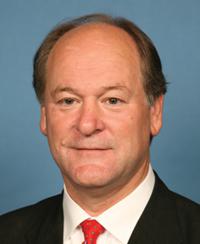 Rep. Bobby Bright (D-AL)
Description
Amendment requires the Secretary to reserve 5 percent of section 102 grant funds for grants to local educational agencies serving those geographic areas with significant economic distress or those recovering from a natural disaster.
Legislative Activity
Stay on top of the latest movement without scrolling through every action
Amendment agreed to Committee of the Whole
May 14, 2009 • 11:07 AM
View full timeline
Amendment agreed to Committee of the Whole
May 14, 2009 • 11:07 AM
Roll call votes on amendments in House
May 14, 2009 • 11:07 AM
House amendment agreed to: On agreeing to the Bright amendment (A010) Agreed to by recorded vote: 433 - 0 (Roll no. 256).(consideration: CR H5589-5590; text: CR H5589-5590)
May 14, 2009 • 11:07 AM
On agreeing to the Bright amendment (A010) Agreed to by recorded vote: 433 - 0 (Roll no. 256). (consideration: CR H5589-5590; text: CR H5589-5590)
May 14, 2009 • 11:07 AM
House amendment offered
May 13, 2009
House amendment offered/reported by : Amendment (A010) offered by Mr. Bright.(consideration: CR H5516-5517; text: CR H5516)
May 13, 2009 • 1:49 PM
Amendment (A010) offered by Mr. Bright. (consideration: CR H5516-5517; text: CR H5516)
May 13, 2009 • 1:49 PM
Votes
1 roll call on this amendment
Text
Offered
21ST CENTURY GREEN HIGH-PERFORMING PUBLIC SCHOOL FACILITIES ACT
The SPEAKER pro tempore. Pursuant to House Resolution 427 and rule
XVIII, the Chair declares the House in the Committee of the Whole House
on the State of the Union for the consideration of the bill, H.R. 2187.
{time} 1205
In the Committee of the Whole
Accordingly, the House resolved itself into the Committee of the
Whole House on the State of the Union for the consideration of the bill
(H.R. 2187) to direct the Secretary of Education to make grants to
State educational agencies for the modernization, renovation, or repair
of public school facilities, and for other purposes, with Mr. Holden in
the chair.
The Clerk read the title of the bill.
The CHAIR. The gentleman from California (Mr. George Miller) and the
gentleman from California (Mr. McKeon) each will control 30 minutes.
The Chair recognizes the gentleman from California (Mr. George
Miller).
Mr. GEORGE MILLER of California. Mr. Chairman, I yield 3 minutes to
the gentleman from Iowa (Mr. Loebsack), who has been a driving force
behind this legislation and one of the original cosponsors of this
legislation.
Mr. LOEBSACK. Mr. Chairman, I am very happy to have had the
opportunity to work on the 21st Century Green High-Performing School
Facilities Act with Mr. Chandler, Chairman Miller and, especially,
subcommittee Chairman Kildee.
Last year, when we considered a similar version of this legislation,
I had the great opportunity to include many of the provisions of my
Public School Repair and Renovation Act and the GREEN School
Improvement Act into the underlying bill, and I am glad that the bill
that we introduced this year also contains those provisions.
I am especially proud of this bill's focus on the importance of
greening schools. Many schools in my district and across the State and,
indeed, across the country have already begun to go green. For example,
the Cardinal Community School District has a wind-powered classroom
that I visited that saves energy and gives students hands-on experience
in an emerging industry.
The Cedar Rapids Community School District is also making large
strides towards more energy-efficient facilities. Kennedy High School,
Taft Middle School, Harding Middle School, Jefferson High School, and
Washington High School are all looking at geothermal systems.
The Elizabeth Tate High School in Iowa City has also taken several
important strides towards greening their facilities and have
specifically focused on the benefits of natural lighting for their
students with disabilities. Other schools in my district that are going
green include Evans Middle School, Willowwind School, and Van Allen
Elementary School, and I visited almost all of those.
These schools all know that even while they struggle to find funding
for their projects, their school modernization efforts will lead to
increased
[[Page H5501]]
health, learning ability, and productivity.
I truly believe the Federal Government should help provide schools in
Iowa and across the country with seed money, and that's what this is,
seed money, to leverage local dollars, to modernize, repair, and
renovate.
I am proud that this legislation does just that, and I urge my
colleagues to support it.
Mr. McKEON. Mr. Chairman, I yield such time as he may consume to the
subcommittee ranking member, the gentleman from Delaware (Mr. Castle).
Mr. CASTLE. I thank you very much, Mr. McKeon, for the time.
Mr. Chairman, let me just talk about the positives about this for a
moment. We all believe in school construction. We all believe that our
children should be able to attend the best school facilities we can
possibly provide, and I happen to believe in the green energy aspect as
well. I give Mr. Loebsack credit. I give Mr. Miller credit for that.
But there is another factor here that I think we need to consider
before we go forward with legislation such as this, and this is where
we are financially in this country today. I had an amendment, which was
not approved by the Rules Committee. There was another amendment, also
not approved by the Rules Committee, and mine would have dealt with
funding title I fully. That's to help the lower, the schools with
lower-income students in it.
We now fund that at $13.9 billion, I think, and the authorization is
$25 billion. This has been underfunded forever under the previous
Democratic Congress, under the Republican Congress, and now under the
Democratic Congress again. So we simply have not lived up to our
promise to these schools to bring in money to help with their
education.
The same thing is true of IDEA, the Individuals with Disabilities
Education Act. And, yes, we have increased that somewhat. As a
percentage, we are supposed to be up to 40 percent. I don't think we
have reached quite the halfway point yet with respect to that. And,
again, that has crossed a lot of Congresses, a lot of Presidents, and
we can point fingers at one another. There are Members on both sides
who tried to help with that, many good Democrats and many good
Republicans, but the bottom line is we have not funded those programs
adequately.
Obviously low-income schools and children with disabilities need all
the help they can possibility get, and yet we are starting a new
program today, and I believe the authorization is something like $40
billion or something of that nature in this. We won't live up to that.
We won't be able to live up to it. So this is good headlining, The
Public Government to Help with Schools.
School construction has been the responsibility of local school
districts and, of course, the surrounding properties that may pay the
taxes for that and the States. I know in my State the State has stepped
up and is a big part of school construction. That's vitally important.
We try to keep our schools up with local taxpayers' dollars.
The Federal Government has assigned roles dealing with certain things
that we already do that we are not really living up to as fully as we
should, try as we might. My judgment is, if we start this program, you
are going to see an increase in requests for school construction that
is going to blow everything out of the water, probably a tripling and a
quadrupling in a year, if I had to guess. All kinds of schools that
believe they are okay now are going to find, gee, there's Federal
dollars to be had. We will put together a green energy program, make an
application for it, and you are going to see the demand triple and
quadruple in a period of a year or so, in my belief.
So I think we need to consider seriously what we are doing. Again, we
are all for this. I can't imagine anyone who would be opposed to it
conceptually. But can we afford to add another education program that's
going to be underfunded?
And that says nothing about the overall deficit of our country. We
have seen reports in the last day or two that this deficit is the
highest that we have ever had.
This administration has indicated it's more than willing to spend
money, but how are we going to get the revenues to offset that? And now
we are going to add a new program that we simply, unfortunately, cannot
afford at this time.
So for all these reasons, I would hope that we would think carefully
before we would advance this legislation, a good cause but unaffordable
at this time for this country.
Mr. GEORGE MILLER of California. At this time, I would like to yield
3 minutes to the subcommittee Chair, Mr. Kildee, who is the original
sponsor of this legislation.
Mr. KILDEE. I thank the gentleman for yielding.
Mr. Chairman, I rise in strong support of the 21st Century Green
High-Performing School Facilities Act.
I was very pleased to join Congressman Chandler, the chief sponsor of
this bill, my committee chairman, Chairman Miller, and Congressman
Loebsack, an effective and creative member of the Education and Labor
Committee, to cosponsor this bill.
This legislation will bring critically needed resources to schools
around the country, to provide students and teachers with safe,
healthy, modern energy-efficient and environmentally friendly learning
spaces. And it would help our local, State, and national economies by
creating jobs for thousands of workers to build these improvements.
Mr. Chairman, some years ago in Flint, Michigan, my hometown, a judge
ordered a jail to be torn down because it was unfit for human
occupation, yet many local educators at that time told me that that
jail was in better shape than some of the schools in which they work
hard every day.
Last Congress, we passed this bill out of the House with strong
bipartisan support. I am confident that we will do the same today, and
I look forward to working with my colleague to see it become law.
Mr. McKEON. Mr. Chair, I rise in opposition to H.R. 2187 and yield
myself such time as I may consume.
Mr. Chair, there is a trend here that troubles me. Over the past few
months, the Federal Government has stepped in to take control of more
and more industries in America. So far these have included the banking
industry, the auto industry, and the credit industry. And there is talk
of the Federal Government becoming even more involved in other areas,
too. These include the health care industry and possibly the student
loan industry.
Today we are considering H.R. 2187, the 21st Century Green High-
Performing School Facilities Act. This is a bill that would get the
Federal Government involved in yet one more industry, school
construction.
{time} 1215
Little by little, the Federal Government is becoming more involved in
people's lives than ever before--and that's just the start of this
bill's concerns.
First, there's the cost. Based on the Congressional Budget Office
estimates, it's predicted that this bill will cost taxpayers $40
billion--and that's just the start. And $40 billion may not seem like
much in these days of multibillion-dollar bailouts and trillion-dollar
Federal budgets, but all of this new spending pushes our country
further and further into debt.
This week, the Obama administration estimated that the United States
has a deficit of $1.84 trillion this year alone. When I came to
Congress, the whole budget 16 years ago was $1.4 trillion. This year,
the deficit alone will exceed that.
The national debt is now about $11 trillion--and growing. We could
update it during the course of this debate because it's growing by the
minute--and thanks to bills like this one.
We need to get the Federal budget under control. If we don't, the
children we're trying to help today will spend the rest of their lives
paying off our debts and deficits--instead of paying for their own
dreams and destinies.
But this bill has other costs that go far beyond the balance sheet,
if passed. This bill could divert important funding from the title I
program for disadvantaged students and for those programs under the
Individuals with Disabilities Education Act, or IDEA.
This is a serious blow, especially after the Obama administration's
budget failed to increase support for these programs. In fact, under
the administration's budget, IDEA is flat-funded, keeping the Federal
share of excess costs at just 17 percent.
[[Page H5502]]
And, worse still, the title I basic grant is actually cut by $1.5
billion. The administration is redirecting those funds elsewhere,
leaving 1,038 school districts--those that receive funds only under the
basic grant--with less money next year than they have this year.
Republicans think we should meet our existing commitments to these
two vital programs and maintain the Federal focus on programs that
improve student achievement. States and local communities--not Federal
bureaucrats--have the primary responsibility to set public policy over
education. Federal law should reflect that.
And here's another cost problem. Like other Federal construction
projects, this new program carries the burden of Davis-Bacon wage
mandates from the Depression era. Davis-Bacon has been shown to drive
up the cost of school construction projects between 22 percent and 26
percent when compared to similar projects completed under market
conditions. That's money that could otherwise go toward putting
additional teachers in the classrooms.
The Labor Department's own Inspector General has found these wage
requirements to be flawed. They shortchange either taxpayers, workers--
or both.
That's not all. These wage mandates create regulatory hurdles that
make it hard for smaller contractors, many owned by minorities and
women, to win Federal contracts.
Mr. Chair, I cannot support this bill. I know that my friend and
colleagues across the aisle are sincere in their efforts to improve the
schools, as I am. I know there's a need for school construction and
renovation. I also know that this must continue to be dealt with at the
State and local level, where more than $144 billion has been spent to
build, repair, and renovate schools just over the last 7 years.
This bill creates more problems than it solves. It costs too much, it
borrows too much, and it controls too much. That troubles me and, I
hope, other Members in this Chamber. I urge a ``no'' vote on this bill.
I reserve the balance of my time.
Mr. GEORGE MILLER of California. I yield 3 minutes to the original
author of this legislation, who has been pushing school construction
legislation for a number of years, the gentleman from Kentucky (Mr.
Chandler).
Mr. CHANDLER. Thank you, Mr. Chairman. I am very proud to be here
today to urge passage of the 21st Century Green High-Performing Public
School Facilities Act, which authorizes $6.4 billion to help renovate
and modernize our schools.
This bill, in my view, is a home run. It will give much needed money
to our schools' struggle with huge budget deficits and deteriorating
facilities while encouraging energy efficiency and creating jobs for
Americans that cannot be shipped overseas.
I'd like to thank Chairman Miller, subcommittee Chairman Kildee, Mr.
Loebsack, and all of our cosponsors and committee members for their
work on this legislation.
Mr. Chairman, we have the mightiest military in the world. We enjoy
some of the most comprehensive freedoms and we have some of the world's
best and brightest students who possess unlimited potential.
But today, many of our children are learning in crowded classrooms
with lead and asbestos, falling plaster, broken windows, outdated
technology, and crumbling infrastructure.
Where children learn has a large impact on what they learn. The U.S.
Department of Education tells us that modern, functional school
facilities are critical for effective student learning.
In 1995, the GAO found that schools were in desperate need of repairs
totaling $112 billion. Over a decade later, we can be sure that the
need is much, much greater.
Each day, we're competing on a global stage with countries like India
and China that are pouring billions of dollars into educating their
children. Investing in the education of our children at home is the key
to staying in the game.
If we want to brighten the future of the next generation, we have to
invest in our children. If we want to ensure America's competitiveness
on the world stage, we have to invest in our children. If we want to
create jobs, if we want to save energy, and if we want to support our
most crucial economic resource, we have to invest in our children.
Today, I urge all of my colleagues to vote ``yes'' on this
legislation. Our children cannot wait any longer.
Mr. McKEON. Mr. Chairman, I'm happy at this time to yield 3 minutes
to a member of the committee, the gentleman from Tennessee (Mr. Roe).
Mr. ROE of Tennessee. I rise today in opposition to the legislation.
School construction is being billed as something that can dramatically
improve student performance and, while it will have an effect, I would
guess it would impact the performance less than parental involvement,
less than having a quality teacher, and less than having good textbooks
and curricula.
Since arriving in Washington, all I've heard is that programs are
dramatically underfunded, so I question why we would add a new program
to fund that could divert more resources from these other programs.
I was personally educated in a two-room country school with no
running water, no indoor plumbing. I think my parents placing a high
value on education had far more to do with my success in the classroom
than the condition of my school did.
In our debate yesterday before the Rules Committee, we were
discussing the merits of Federal involvement in school construction.
The point was made that State and local officials are being forced to
cut back on school construction because they're required to balance
their budgets, so we at the Federal level should start funding this
construction to make up for their shortfalls.
At home, where I was a mayor, I had a very simple philosophy: Spend
less than you take in. Here in Washington, we have a different
philosophy: Borrow more than we take, then spend it.
At a time of record deficits, I believe the Federal Government should
act more like our State and local officials, many of whom are setting
priorities and trying to fund programs to get the most bang to their
buck.
Some communities, like Johnson City, Tennessee, where I was mayor
before coming to Washington, are investing their own resources in
school construction. We were just able to fund $50 million worth of
improvements because we acted in a fiscally responsible manner
balancing budgets--and we now have a surplus. Other communities have
chosen to put off these needs while they weather this economic crisis.
I think it speaks volumes when communities collectively decide that
other programs are more of a priority to student achievement than
school construction, yet we at the Federal level are making just the
opposite determination. It seems to me that if we want to do something
that will really help students, we'd be better off with funding the
IDEA and No Child Left Behind programs, which are proven to boost
student achievement.
I appreciate what both sides are doing--and everyone wants to improve
the education level. I urge a ``no'' vote on this legislation.
Mr. GEORGE MILLER of California. I yield 2 minutes to the
subcommittee Chair of the Education and Labor Committee, the gentleman
from New Jersey (Mr. Andrews).
(Mr. ANDREWS asked and was given permission to revise and extend his
remarks.)
Mr. ANDREWS. I'd like to thank my friend, the chairman, for yielding.
I rise in support of the legislation.
This is really more than just a bill about modernization and repair
of schools. It's a bill that helps address a number of the chronic and
substantial problems that face our country. One is unemployment.
This bill will create jobs for workers who will go about the process
of fixing these schools and repairing them. Second, the bill creates a
model for the construction and renovation of facilities that will save
energy, that will reduce our carbon footprint, reduce pollution, and
make our country greener. Third, this bill will help local education
agencies--schools--by freeing up dollars they would otherwise have to
spend on repairs, making those dollars available for the programs that
educate the young people who attend those schools.
This is a bill that is not simply about the very desirable work of
installing insulation or energy efficient windows
[[Page H5503]]
or green technology. It's really about addressing in an important way
our unemployment problem, our energy problem, and our education
indication problem, and we are giving students a better environment in
which to learn.
I'm hopeful that this legislation will provide a benchmark against
which future efforts can be measured. It makes great sense. It's
something that should achieve support on both sides of the aisle.
I would urge a ``yes'' vote.
Mr. McKEON. Mr. Chairman, I'm happy at this time to yield such time
as he may consume to the gentleman from Texas (Mr. Culberson).
Mr. CULBERSON. Thank you, Mr. McKeon. I would like to build a new
extension on my house, Mr. Chair. I'd like to have a lot of things, but
cannot afford it. All of us as individual Americans in our private life
and business life live within our means.
As the gentleman from Tennessee said so eloquently, our local and
State governments must operate within balanced budget requirements.
They must live within their means. They don't build facilities or
operate programs that they cannot afford to pay for. And the Federal
Government is at a pivotal moment in the history of this Nation.
This new leadership in Congress, the new liberal leadership here in
the Congress, our new President has, as Mr. McKeon said so well, taken
over and nationalized huge segments of the banking industry, the
automobile industry, the insurance industry, the mortgage industry. And
here today, this leadership has presented to the Congress, to the
Nation, for the first time, the Federal Government is going to get into
the school construction business.
At a time of record debt, at a time when the Nation must focus on its
fundamental financial security, we are stepping into an area where the
Federal Government has never really gone before.
The bill, section 1, reading from the bill, Mr. Chair, page 5,
``Grants under this title shall be for the purpose of modernizing,
renovating, or repairing public school facilities, based on their
need.'' Absolutely noble purpose. But we cannot afford it.
Page 10, section 103, ``Allowable uses of funds. A local education
agency receiving a grant under this title shall use the grant for
modernization, renovation, or repair of public school facilities.'' And
a long list--repairing, replacing, installing roofs, walls, plumbing
systems, et cetera. This is a bottomless pit.
Ross Perot's famous phrase, ``a giant sucking sound.'' We're going to
hear a giant sucking sound out of the United States Treasury paying for
utterly endless repairs and construction of local school buildings
while we could use this $40 billion just in southeast Texas.
In 8 years, Medicare is exhausted. Let that sink in. In 96 months,
the trustees of the Social Security and Medicare system just reported
yesterday that Medicare is exhausted, Mr. Chair--in 96 months.
This is an urgent, critical emergency. The United States of America
needs to follow Dave Ramsey's advice and live on a little beans and
rice. Focus on the fundamentals. This stuff isn't complicated.
{time} 1230
We are in this magnificent Chamber surrounded by the greatest minds
in the history of the civilized world. I look here at a portrait of my
hero, Thomas Jefferson, and of George Mason. My hero, Mr. Jefferson,
liked to say that if you apply core constitutional principles, the knot
will always untie itself.
Here today Congress needs to focus on the fundamentals, keeping
America on a path to financial security and solvency. It is not
complicated. Let us follow Mr. Jefferson's wisdom, follow the
Constitution and the separation of powers, and limit the Federal
Government to those functions set out in the Constitution. At a time of
critical financial emergency, when literally Medicare payments will
stop in 96 months, let's focus on the fundamentals, America. Congress
needs to quit spending money; no new taxes, no new debt, no new
spending, and save our children from being buried in a mountain of debt
that they cannot pay.
This is a noble purpose, but we cannot afford it, anymore than I can
afford to build an extension on my house. I cannot borrow money to pay
off borrowed money. That is what this bill, what this Congress, what
this liberal leadership has been doing since January when we all got
sworn in, spent more money in less time than any Congress in history.
I am not playing favorites. I voted against $2.3 trillion of new
spending under George Bush. I have already voted against $1.6 trillion
of new spending under this bunch. This cannot be sustained. We are
living on borrowed money. These Treasury bonds are being bought by
foreign investors and foreign national sovereign wealth funds that our
kids are going to have to repay.
This isn't complicated. Let's get back to the fundamentals. As Mr.
Jefferson said, the knot will always untie itself, if we will only
follow the Constitution. There is nowhere in the Constitution that it
is authorized for the Federal Government to get into the business of
school construction. This will literally become a bottomless pit, Mr.
Speaker.
I am, as every Member of Congress, as committed as anyone to making
sure our local schools are well built and maintained and our kids have
a safe environment that is a good place for them to get an education.
But let that be done by the local and State governments who are best
suited to do it, who know the needs better than anyone else, and will
pay as they go. And let us in Congress follow Dave Ramsey's advice and
live on a little beans and rice and don't spend money we don't have,
Mr. Speaker; and let's just stick with the fundamentals that these
great men and women left for us, this great Nation, this great
treasure, this great trust we all have.
Let's not destroy the financial solvency of this Nation by continuing
to expand the power and scope of the Federal Government into areas it
was never intended at a time of critical financial emergency, when a
mere 96 months from now Medicare payments run out. We can do something
about it, but it takes action today. It is something we can all do
together as Americans to make sure our kids do not inherit a debt they
cannot afford to repay.
I am proud to join my colleague Mr. McKeon and the Republican--excuse
me, conservative members of the minority. I am going to try to avoid
saying party labels. I think it is too important at a time of national
emergency. We need to focus on no new debt, no new taxes, no new
spending. I am going to quit saying Republican or Democrat. It is being
fiscally conservative and responsible. I am proud to join the fiscally
conservative and responsible members of the minority who are ready to
lead this Nation back into solvency in opposing this utterly
irresponsible liberal piece of legislation.
Mr. GEORGE MILLER of California. I yield 3 minutes to the gentleman
from New Jersey (Mr. Pascrell), a great supporter of this legislation.
Mr. PASCRELL. Mr. Chairman, I rise today in strong support of H.R.
2187, the 21st Century Green High-Performing Public School Facilities
Act.
My friend from Texas, I think he is still my friend, my friend from
Texas would have to admit that we already have a sucking sound and that
is we have been sucked into waste after waste after waste, which is
costing us a tremendous amount of money, and this is preventible in the
21st century. I want to thank Congressman Chandler for sponsoring this
critical legislation, and Chairman Miller, of course, for his
leadership on the entire issue.
Most of the students in this country attend a school that was built
over half a century ago; in my district it is even worse than that,
complete with leaky roofs and faulty electric. You can't just shove
this off to the side saying it is trivial and unimportant. This is
outdated technology which is costing us millions, in fact billions, of
dollars.
This legislation would provide the dollars and grants for fiscal year
2010 to local school districts so that they can make the repairs,
provide the modernization, and green their facilities so that our kids
can learn in safe, modern, well-equipped and environmentally friendly
school facilities. Many of these schools are not safe, and the States
don't have the money, local communities don't have the money to make
them safe. This is not acceptable to anybody, regardless of which side
of the aisle you are on.
[[Page H5504]]
The legislation builds on the principles of the American Recovery and
Reinvestment Act. It will create 100,000 new jobs in making these
places safer, in making them more cost efficient.
Joe Zarra, the superintendent of the Nutley School System in my
district, has launched an ambitious plan to green the town's elementary
schools. He already started a couple of years ago, using cutting-edge
technology to reduce both greenhouse gas emissions and the school
district's utility bills. That is critical.
I agree with my friend from Texas that the health issue is a critical
issue. The patient is in the emergency room, particularly with the
numbers out today on Medicare and Medicaid. But this too is a very
important issue.
H.R. 2187 will help school districts across the country undertake
similar projects and ensure that our children learn in modern
environments where they can truly reach their potential.
Mr. McKEON. Mr. Chairman, may I inquire as to how much time we have
left.
The CHAIR. The gentleman has 12 minutes remaining, and the gentleman
from California (Mr. George Miller) has 20\1/2\ minutes remaining.
Mr. McKEON. Maybe he could use up a little more of his time. I will
reserve my time.
Mr. GEORGE MILLER of California. I yield 2 minutes to the gentleman
from Oregon (Mr. Wu), a member of the committee.
Mr. WU. Mr. Chairman, I rise in strong support of H.R. 2187 and the
underlying legislation. I thank Representatives Chandler and Loebsack
for introducing this bill. I especially appreciate Chairman Miller
working with me to add seismic retrofitting, more efficient storm water
runoff systems and additional clean energy sources to the allowable
uses of funds in this bill.
So many of our Nation's schools are in urgent need of upgrading. The
funds in this bill will do more than help create safe schools. It will
help our schools actually return money to our communities by saving
energy and creating jobs.
I have firsthand knowledge of how creating safe and green schools can
improve learning environments and student outcomes while saving money
for taxpayers. In McMinnville, Oregon, the newly built Sue Buel
Elementary School, which I had the pleasure of visiting in February, a
building built in 1929, was replaced by a new school which was the
first school in the State of Oregon to earn a gold LEED certification.
The school was built with low-chemical-emitting materials, an energy-
efficient heating and ventilating system, and 96 rooftop solar panels
that return over 19,000 watts of power back to the local electricity
grid.
Perhaps the most exciting thing about visiting Buel Elementary was
seeing how engaged the students, many of whom are on free and reduced
lunch, how engaged those students are in their school and in learning
about their environment. The school itself creates a sense of pride in
the students and keeps them excited about learning.
This bill will help ensure that our children have a safe and healthy
learning environment, with the added benefit of creating jobs during
these difficult economic times.
Mr. GEORGE MILLER of California. Mr. Chairman, I now yield 2 minutes
to the gentleman from New York (Mr. Tonko), a member of the committee.
Mr. TONKO. Mr. Chairman, I rise today in support of H.R. 2187, which
would provide school districts that serve low-income communities with
much-needed money for green school modernization, renovation and repair
projects. I particularly want to thank Chairman Miller, Subcommittee
Chair Kildee, and our sponsors that have introduced the legislation,
both Mr. Chandler and Mr. Loebsack, for their outstanding support here
on behalf of our students across the country.
These new funds will allow schools to make badly needed repairs to
their buildings at a time when State governments are cutting back on
education aid. This will help schools to not only become more energy
efficient, but also, importantly, more healthy.
Thirty-two million children in our country attend schools which are
reportedly having environment problems with their facilities that
affect students' health and their learning. These funds will allow our
schools to make their buildings healthier by allowing them to reduce
greenhouse gas pollution, to mitigate indoor air quality problems,
address mold infestations, replace old furnaces and pollution-emitting
equipment, and deal with water contamination problems, amongst a host
of other things.
Healthy and high-performance schools reduce indoor environmental
hazards and are indeed energy efficient. I was proud to have worked
with the New York State Energy Research and Development Authority to
develop New York State's high-performance school guidelines, some of
the best in the country; and I am pleased that this bill now will
provide States with funds to develop similar measures.
Every child deserves a safe, clean and healthy environment in which
to learn, and this bill is a major step in achieving that goal.
Mr. GEORGE MILLER of California. I yield 3 minutes to the gentleman
from New Jersey (Mr. Holt), a member of the committee.
Mr. HOLT. Mr. Chairman, I thank the chairman of the committee for his
leadership on this issue.
As we all know, schools are hampered in carrying out the mission that
they have because of constrained operating budgets and aging
infrastructure and ever-increasing energy bills.
In 2005, I introduced the School Building Enhancement Act after
learning that energy bills were the second highest expenditure of
schools after personnel costs, and I am pleased to say that that
legislation has been incorporated in this bill before us today.
The bill will provide $6.4 billion for school construction. For New
Jersey that means an estimated $125 million to build and modernize
local schools. Most importantly, of course, it will allow States to
provide the technical assistance to local educational agencies, local
schools, to develop energy-efficiency plans and look at their carbon
footprint.
So I want to thank Chairman Miller and Representative Loebsack for
carrying this bill forward. There is no question that the economic
downturn has put added pressure on our schools from a year ago when we
considered similar legislation.
I am also pleased that the chairman has included my language to allow
veteran-owned businesses to have contracting preference, along with
small, minority and women-owned businesses.
This is a good bill. I encourage my colleagues to support the bill.
Mr. GEORGE MILLER of California. I yield 2 minutes to the gentleman
from Indiana (Mr. Visclosky).
Mr. VISCLOSKY. I appreciate the gentleman yielding.
Mr. Chairman, I rise today in strong support of H.R. 2187, the 21st
Century Green High-Performing Public Schools Facility Act and commend
Representative Chandler as well as the Chair of the full committee, Mr.
Miller, and Subcommittee Chair Kildee, for their wonderful work on this
measure in ensuring that our students have the most healthy and
environmentally friendly schools possible.
Particularly I am most pleased that language is included in this
measure that requires the use of American-made iron, steel and
manufactured goods. Last year, similar language was included in the
legislation as well.
Last year in April the Congressional Steel Caucus held hearings on
imported steel and their substandard nature in many instances relative
to safety. If we are going to be using steel-related products for
schools, we ought to ensure that those schools are safe. This measure
does that.
In addition to ensuring American-quality steel is used to make sure
that those students have a safe and healthy environment, it provides a
second critical stimulus, and that is to help maintain and create jobs
in the domestic steel industry that is losing them at an alarming rate.
Last week, steel production across this country was at 42 percent,
compared to 91 percent just a year ago.
If school construction projects provided under this act are to be
truly safe for our children, the steel used should be made in America.
If it is to be beneficial to the American economy to create jobs, the
steel we use in this bill should be made in America. Again, I
particularly thank the Chair and Chair of the subcommittee for their
endeavor
[[Page H5505]]
to make sure this provision was included.
{time} 1245
Mr. GEORGE MILLER of California. I yield 2 minutes to the gentleman
from Oregon (Mr. Blumenauer).
Mr. BLUMENAUER. Mr. Chairman, I appreciate the courtesy and
leadership of Chairman Miller and the committee, following up on the
good work you did earlier, to make sure that we do have schools of the
future.
The schools are the foundation, the building block of a livable
community, and green schools are the schools of the future. It is where
America and the world is going in terms of being sustainable,
efficient, and healthier.
But green schools are also the schools of today. This is an
opportunity under this legislation, the 21st Century Green High-
Performing Public School Facilities Act, to be able to illustrate our
environmental values, that young people who are in school will be able
to see through the operation of this legislation that we are going to
walk the talk, we are going to implement our values.
The provisions of this legislation will save money almost immediately
because there is lots of low-hanging fruit. Indeed, in schools across
the country in terms of green sustainable practices, it is not low-
hanging fruit; it is picking the fruit up off the ground that will save
energy, that will save water, that will be gentler on the land. It will
put people to work. This is activity that is amazingly labor intensive.
There are few investments that we can make greening our schools that
will make more of a difference for people of all skill levels, whether
they are casual laborers, they are skilled efforts, they are
professional positions, to be able to make a difference.
In the State of Oregon alone, it is 62 badly needed million dollars
that is not only going to circulate through the economy, but it is
going to do things that school districts need and it is going to save
them money for years to come.
I appreciate the fact that the bill includes how young people get to
school as part of energy efficiency. A generation ago in virtually
every school district in America, more than 50 percent of our children
got to school on their own, walking or riding a bike. Today the
national average is 15 percent. I work in some communities where it is
far less than that.
By investing in ways to make young people be able to get to school
safely on a bike or walking, we are going to reduce the carbon
footprint while we make their footprint a little lighter. We are
dealing with an epidemic of childhood obesity, and these provisions
cycle back to make young people healthier.
This legislation will make the schools of today the schools of the
future, and it will do it in the very near future. I am pleased to
support it. I thank the committee for its work. The implementation of
this legislation is going to make our community schools truly the
building block of livable communities and make our families safer,
healthier, and more economically secure.
Mr. GEORGE MILLER of California. I yield 2 minutes to Mr. Al Green of
Texas.
Mr. Al GREEN of Texas. Mr. Chairman, I thank Chairman Miller for his
outstanding work in Congress and thank Mr. Chandler for sponsoring this
piece of legislation.
Mr. Chairman, the cost of energy is increasing. This bill will help
us by saving energy. It will help us in the years to come by reducing
the amount of energy that we will use. Unemployment is at 8.9 percent.
This bill will put people to work in a crucial and critical area, the
area of construction, because the bill is all about construction and
reconstruction of some of our facilities, and more, of course.
This bill is one that we all agree is needed. The need for it is
undeniable. The question becomes, then, are we going to make our
children a priority. That is really the question that I ask Members to
consider. Will we make our children a priority?
Yes, there are times when we cannot afford to do things, but there
are also times when we cannot afford not to do things. This is one of
those things that we cannot afford not to do. And there are times when
you have done everything that you can, you have not done enough. When
you have done all that you can do, you have not done enough. On
occasions when you have done all that you can do and you haven't done
enough, you have a duty to do all that you can. This bill does all that
we can do at this time to help this generation compete in the global
economy.
I beg, I besiege, and I implore my colleagues to make our children a
priority and support this bill.
Mr. McKEON. Mr. Chairman, I yield myself the balance of my time.
I have been listening to all of the comments that have been made, and
there are good, sound arguments on both sides of this issue. Nobody, I
think, says that we shouldn't have the very, very best schools that we
can send our children to. I think we talk about priorities and how we
decide where the money comes from and how it should be done.
I have been here in Congress a little over 16 years, and I remember
back in my first term a bill was proposed that was also very good. It
was to put more cops on the street. I remember the mayor of Los Angeles
calling me at the time and he said, If you'll vote for this and support
it, just get it started, we'll carry it from then on.
I didn't vote for it. I didn't think that they would be able to carry
it on, and that is what has happened. That bill was passed. It did good
things, put more cops on the street, but the final where we are now is
we have put more and more money into that each year. The Federal
Government has become more and more involved in local law enforcement,
and now we are to the point where we have even eliminated the local
match. We have totally taken over the cops on the street, and the
Federal Government now has increased year by year, and I can see this
program doing the same thing.
I served for 9 years on a local school board and we always were
looking for ways to get more money to cover our needs. There were
always more needs than money available. I know we had problems with our
long-term maintenance and we had to make some sacrifices. We had to
make some adjustments so we could spend money for some long-term
investment to build up our roofs on the schools so we wouldn't have
them collapsing or the rain wouldn't be coming through.
And I know how people think. I know how human nature is, and I know,
if I were still on that school board and this bill were passed and it
became law, that I would be, you know, probably looking to the Federal
Government to meet those needs and then using the local moneys for
other things and turning more and more over to the Federal Government.
That's just human nature. As I said, there were always more needs than
money.
And so I see this program starting out at $40 billion and, as it
grows over the years, ultimately taking that total responsibility off
of the local school boards and looking to the Federal Government for
all school construction, all school improvements. And even though it is
a good thing, I think, by virtue of the Constitution and tradition,
that is a local problem, not a Federal responsibility.
And the money all comes from the taxpayers. When it comes to the
Federal Government, it seems like, at least in California, we send
about 12 percent of the money here and 10 percent finds its way back.
It would be better if we tried to keep our expenses down here, tried to
cut spending, tried to get back within our means of how we live.
Some things have been said about how we really should be building
better schools. I agree with that, but I don't think it is totally
necessary when we think of Mr. Roe, Dr. Roe, who said he went to a two-
room schoolhouse and seemed to get a good education. He is a physician.
I think back to President Lincoln, who was taught by candlelight with a
Bible how to read by his mother and had just a couple of years of
formal education. I think we would all agree that Mr. Lincoln turned
out all right.
So I think when we say that there is no way to educate our children
unless we pump $40 billion more from the Federal Government into this
program, that is the way to make it happen.
I have to say, as I said earlier, this bill costs too much, borrows
too much, and controls too much. I urge my colleagues to oppose this
bill.
[[Page H5506]]
I yield back the balance of my time.
Mr. GEORGE MILLER of California. Mr. Chairman, I yield myself such
time as I may consume.
Mr. Chairman, and Members of the House, the 21st Century Green High-
Performing Public School Facilities Act is exactly what the Federal
Government should be doing.
We have seen now over the last year, and in some cases a little
longer, and for the foreseeable future, that the tax resources of local
school districts, cities, and counties have plummeted because of the
foreclosure crisis that confronts this Nation and because of the
financial scandals and the financial collapse of our institutions
across this Nation. We have seen that credit is not available. The
school districts that have voted for bonds have had difficulty in
getting those bonds to market so that they can engage in the
construction. And we see, in fact, the backlog of repairs to schools,
renovations, modernizations of schools and school facilities is
starting to lag.
We also know and we understand that for the foreseeable future,
unemployment will continue to go up in this country, at a diminished
rate, but we still know half a million people a month are losing their
jobs. Auto sales are down because American families are trying to save
more because of the recession, the depression we are in. They are
trying to take care of their needs, so school districts are denied
those resources as are States.
So what the Federal Government is doing in this time of emergency is
trying to say that we will join with you in a partnership based upon
the priorities of locally elected school boards, of superintendents of
schools, for the repair and restoration of schools that are so
necessary in so many areas of this country. If a school board or if a
school district doesn't need the money, they need not take it. We hope
that they wouldn't because maybe it can go to another school district
that might need it more. But the fact of the matter is, these repairs
and restorations, and if we use green technology and use the guidelines
of the green standards, not only can repair and restore these schools,
they can make them much more efficient in the use of energy and the use
of water and the use of natural daylight so students will have a better
learning environment and better opportunities at learning.
Yes, the data is pretty darn clear that in those kinds of facilities
students do have a better opportunity in learning the material that is
presented to them in that environment than they do in an old and run-
down facility that is crumbling and bathrooms that are not safe and
can't be used and windows that are not replaced.
Yes, that may not sound like the local school district that some of
you represent, but it sounds like a lot of the local school districts
that a lot of us represent, and those school districts are doing all
that they can. People are voting for bond issues and paying higher
taxes, but the fact of the matter is they don't have sufficient
resources to do that. That does not mean that we should just sentence
those kids to a second-class education, to deny them educational
opportunities, because when we do that, we then spill over into the
national interest of this country, and that is to make sure that every
child receives a first-class education, that every child at the end of
12 years has the opportunity to choose a career or schools or schools
and a career in whatever combination, but they are prepared to do that.
And we know from all of the surveys that it is far more difficult for
young children to learn in dilapidated, ill-repaired, badly restored
schools when they are trying to get down the basics of their education.
So this is a Federal partnership. In some cases, local government
joins with private sector money to repair and restore schools and
provide new technologies. We want to join in part of that. You can say
this is the Federal taking over the role. It is not taking over any
role. This is insignificant compared to the efforts being made by local
governments. We are simply saying we think this can be catalytic in
terms of getting some of these projects done at this particular time
and for the foreseeable future so that we can ensure our students have
an opportunity to do that.
{time} 1300
I want to thank the foresight of Mr. Kildee, not only the
subcommittee Chair, but the author of this legislation, Mr. Chandler,
Mr. Loebsack, who worked with local districts, who worked with local
schools, who looked at examples of what had been done to make a more
efficient use of those local dollars, of Federal dollars, of education
dollars, to bring that together and try to build high-performing
schools.
We want to make the same decisions for these schools that so many in
the private sector are making about their renovation, the renewal, the
repair of commercial facilities, of facilities throughout our
communities where the real estate industry is saving billions of
dollars by greening those buildings, where we're saving energy, where
we're saving water--in States like California, those two things are
very important--and providing a safe environment for children. That's
why we should pass this legislation.
H.R. 2187 requires local educational agencies to ensure a full and
open competition for qualified bidders. We expect that process to
maximize the number of qualified bidders to include local, small,
minority-owned, women- owned, and veteran-owned contractors, and to do
so without diminishing or precluding the local educational agencies'
ability to seek out responsible contractors by, for example, requiring
contractors to participate in bona fide apprenticeship training
programs and to demonstrate other legitimate responsibility and
qualification standards. Such requirements can be used to ensure high-
quality work and successful project delivery as well as foster good
training and employment opportunities in local communities.
I would like to yield such time as she may consume to the gentlewoman
from Nevada, a member of the committee and a strong supporter of this
legislation (Ms. Titus).
Ms. TITUS. Thank you very much, Chairman Miller, for your hard work
on this legislation. I certainly am supportive of it. I want to add
some provisions to it that will be brought forward in an amendment
later.
As an educator myself, I believe that it is important that we have
safe and healthy schools because only in those environments can
children learn better, and certainly that is all our goal.
I am pleased to be supportive of this.
Mr. MATHESON. Mr. Chairman, I rise in support of H.R. 2187, the 21st
Century Green High-Performing Public School Facilities Act, which will
help modernize many of our nation's schools.
I would like to thank my colleague from Kentucky--Ben Chandler--for
his sponsorship of this legislation. I believe it will help to ensure
that our children can learn in healthier, more cost effective, and more
energy-efficient schools.
An investment in education and educational facilities is critical. As
the father of two young boys, I want to know that they will receive a
quality education in a safe school building. Too many of our nation's
schools are outdated, and some are even unsafe.
I would also like to thank Chairman Miller for including my amendment
to this bill in the manager's amendment. My amendment will allow
schools to prioritize projects that eliminate asbestos, polychlorinated
biphenyls, mold, mildew, lead-based hazards, or other known
carcinogens.
Extensive research has shown that children and teachers perform
better in ``green'' schools. Our children already encounter many
challenges, and we should do everything we can to provide a safe and
healthy learning environment for them.
Mr. AL GREEN of Texas. Mr. Chair, I spoke on the floor earlier today
in support of H.R. 2187: The 21st Century Green High-Performing Public
School Facilities Act and the amendment that I cosponsored with Mr.
Bright (AL), Ms. Kosmas (FL) and Mr. Cuellar (TX).
Because my time on the floor was limited, I was unable to explain my
reasons for supporting this legislation in detail. Since this
legislation will have a profound and positive impact on school
districts and school children in my district, I would like to take this
opportunity to cover the details regarding its merits.
Our schools should be safe and healthy learning environments for our
children. H.R. 2187 gives us a chance to upgrade our school buildings
and boost student achievement while creating good local jobs in new,
clean energy industries.
In particular, this bill provides $6.4 billion in Federal funds for
school modernization projects that will make schools safer, more
energy-efficient, and up-to-date technologically. According to
estimates from the House Education and Labor Committee, Texas schools
[[Page H5507]]
will receive approximately $605 million and school districts in my
congressional district, TX-09, would receive approximately $66 million
in total. Houston Independent School District (HISD) is estimated to
receive $54,109,000; Alief ISD will receive $8,482,000; Fort Bend ISD
will receive $3,262,000; and Stafford MSD will receive $155,000. Title
II of this bill also authorizes separate funds--$600 million over 6
years--for schools that were damaged or destroyed by Hurricanes Katrina
and Rita in 2005. Schools in Louisiana, Mississippi, and Alabama trying
to recover from the devastation caused by these two hurricanes would be
eligible to apply for funding under this section.
In addition, since this funding does not extend to schools impacted
by Hurricane Ike in 2008, I am cosponsoring an amendment along with
Representatives Bobby Bright, Suzanne Kosmas and Henry Cuellar that
will set aside 5 percent of the $6.4 billion (or about $320 million)
for schools impacted by, natural disasters other than Katrina and Rita
and for schools experiencing significant economic distress. This
amendment will allow schools in my district that were devastated or
destroyed by Hurricane Ike in 2008 to be eligible to receive funding
for new construction, modernization and repairs. For example, Houston
Independent School District (HISD) had damages that cost $30-$60
million. In fact, while 14 of HISD's schools are designated as
``shelters of last resort'' by the City of Houston, none of HISD's
facilities are designed to sustain winds in a storm above Category 2.
To ensure safety in future natural disasters, facility upgrades are
needed to shore up roofs and replace windows that can withstand
Category 3+ winds. Generators are needed, as well, in the event of
power outages. Federal funding is especially needed in light of the
fact that 80 percent of students in HISD schools are economically
disadvantaged. Additional reports indicate that over 40 buildings
within the Alief Independent School District (Alief ISD) experienced
some level of damage from Hurricane Ike and eight facilities endured
significant damage totaling $5.8 million in costs.
All told, schools in my district and in districts across the Nation
that have experienced natural disasters and significant economic
distress will benefit from our amendment to this legislation. More
importantly, it is the children and teachers in these adversely
affected communities that will benefit the most once funding from this
amendment is used to fix their schools.
Mr. Chairman, I urge all my colleagues to support this much-needed
legislation.
Mr. GEORGE MILLER of California. Mr. Chairman, I yield back the
balance of my time.
The CHAIR. All time for general debate has expired.
Pursuant to the rule, the amendment in the nature of a substitute
printed in the bill shall be considered as an original bill for the
purpose of amendment under the 5-minute rule and shall be considered
read.
The text of the committee amendment is as follows:
H.R. 2187
Be it enacted by the Senate and House of Representatives of
the United States of America in Congress assembled,
SECTION 1. SHORT TITLE; TABLE OF CONTENTS.
(a) Short Title.--This Act may be cited as the ``21st
Century Green High-Performing Public School Facilities Act''.
(b) Table of Contents.--The table of contents for this Act
is as follows:
Sec. 1. Short title; table of contents.
Sec. 2. Definitions.
TITLE I--GRANTS FOR MODERNIZATION, RENOVATION, OR REPAIR OF PUBLIC
SCHOOL FACILITIES
Sec. 101. Purpose.
Sec. 102. Allocation of funds.
Sec. 103. Allowable uses of funds.
TITLE II--SUPPLEMENTAL GRANTS FOR LOUISIANA, MISSISSIPPI, AND ALABAMA
Sec. 201. Purpose.
Sec. 202. Allocation to local educational agencies.
Sec. 203. Allowable uses of funds.
TITLE III--GENERAL PROVISIONS
Sec. 301. Impermissible uses of funds.
Sec. 302. Supplement, not supplant.
Sec. 303. Prohibition regarding State aid.
Sec. 304. Maintenance of effort.
Sec. 305. Special rule on contracting.
Sec. 306. Use of American iron, steel, and manufactured goods.
Sec. 307. Labor standards.
Sec. 308. Charter schools.
Sec. 309. Green schools.
Sec. 310. Reporting.
Sec. 311. Authorization of appropriations.
Sec. 312. Special rules.
Sec. 313. YouthBuild programs.
SEC. 2. DEFINITIONS.
In this Act:
(1) The term ``Bureau-funded school'' has the meaning given
to such term in section 1141 of the Education Amendments of
1978 (25 U.S.C. 2021).
(2) The term ``charter school'' has the meaning given such
term in section 5210 of the Elementary and Secondary
Education Act of 1965 (20 U.S.C. 7221).
(3) The term ``CHPS Criteria'' means the green building
rating program developed by the Collaborative for High
Performance Schools.
(4) The term ``Energy Star'' means the Energy Star program
of the United States Department of Energy and the United
States Environmental Protection Agency.
(5) The term ``Green Globes'' means the Green Building
Initiative environmental design and rating system referred to
as Green Globes.
(6) The term ``LEED Green Building Rating System'' means
the United States Green Building Council Leadership in Energy
and Environmental Design green building rating standard
referred to as LEED Green Building Rating System.
(7) The term ``local educational agency''--
(A) has the meaning given to that term in section 9101 of
the Elementary and Secondary Education Act of 1965 (20 U.S.C.
7801), and shall also include the Recovery School District of
Louisiana and the New Orleans Public Schools; and
(B) includes any public charter school that constitutes a
local educational agency under State law.
(8) The term ``outlying area''--
(A) means the United States Virgin Islands, Guam, American
Samoa, and the Commonwealth of the Northern Mariana Islands;
and
(B) includes the freely associated states of the Republic
of the Marshall Islands, the Federated States of Micronesia,
and the Republic of Palau.
(9) The term ``public school facilities'' means an existing
public school facility, including a public charter school
facility, or another existing facility planned for adaptive
reuse as such a school facility.
(10) The term ``State'' means each of the 50 States, the
District of Columbia, and the Commonwealth of Puerto Rico.
TITLE I--GRANTS FOR MODERNIZATION, RENOVATION, OR REPAIR OF PUBLIC
SCHOOL FACILITIES
SEC. 101. PURPOSE.
Grants under this title shall be for the purpose of
modernizing, renovating, or repairing public school
facilities, based on their need for such improvements, to be
safe, healthy, high-performing, and up-to-date
technologically.
SEC. 102. ALLOCATION OF FUNDS.
(a) Reservation.--
(1) In general.--From the amount appropriated to carry out
this title for each fiscal year pursuant to section 311(a),
the Secretary shall reserve 1 percent of such amount,
consistent with the purpose described in section 101--
(A) to provide assistance to the outlying areas; and
(B) for payments to the Secretary of the Interior to
provide assistance to Bureau-funded schools.
(2) Use of reserved funds.--In each fiscal year, the amount
reserved under paragraph (1) shall be divided between the
uses described in subparagraphs (A) and (B) of such paragraph
in the same proportion as the amount reserved under section
1121(a) of the Elementary and Secondary Education Act of 1965
(20 U.S.C. 6331(a)) is divided between the uses described in
paragraphs (1) and (2) of such section 1121(a) in such fiscal
year.
(b) Allocation to States.--
(1) State-by-state allocation.--Of the amount appropriated
to carry out this title for each fiscal year pursuant to
section 311(a), and not reserved under subsection (a), each
State shall be allocated an amount in proportion to the
amount received by all local educational agencies in the
State under part A of title I of the Elementary and Secondary
Education Act of 1965 (20 U.S.C. 6311 et seq.) for the
previous fiscal year relative to the total amount received by
all local educational agencies in every State under such part
for such fiscal year.
(2) State administration.--A State may reserve up to 1
percent of its allocation under paragraph (1) to carry out
its responsibilities under this title, which include--
(A) providing technical assistance to local educational
agencies;
(B) developing an online, publicly searchable database that
includes an inventory of public school facilities in the
State, including for each, its design, condition,
modernization, renovation and repair needs, usage,
utilization, energy use, and carbon footprint; and
(C) creating voluntary guidelines for high-performing
school buildings, including guidelines concerning the
following:
(i) Site location, storm water management, outdoor
surfaces, outdoor lighting, and transportation (location near
public transit and easy access for pedestrians and bicycles).
(ii) Outdoor water systems, landscaping to minimize water
use, including elimination of irrigation systems for
landscaping, and indoor water use reduction.
(iii) Energy efficiency (including minimum and superior
standards, such as for heating, ventilation, and air
conditioning systems), use of alternative energy sources,
commissioning, and training.
(iv) Use of durable, sustainable materials and waste
reduction.
(v) Indoor environmental quality, such as day lighting in
classrooms, lighting quality, indoor air quality, acoustics,
and thermal comfort.
(vi) Operations and management, such as use of energy
efficient equipment, indoor environmental management plan,
maintenance plan, and pest management.
(3) Grants to local educational agencies.--
(A) In general.--From the amount allocated to a State under
paragraph (1), each eligible local educational agency in the
State shall receive an amount in proportion to the amount
received by such local educational agency under
[[Page H5508]]
part A of title I of the Elementary and Secondary Education
Act of 1965 (20 U.S.C. 6311 et seq.) for the previous fiscal
year relative to the total amount received by all local
educational agencies in the State under such part for such
fiscal year, except that no local educational agency that
received funds under title I of that Act for such fiscal year
shall receive a grant of less than $5,000 in any fiscal year
under this title.
(B) Eligible local educational agency.--For purposes of
subparagraph (A), the term ``eligible local educational
agency'' means a local educational agency that--
(i) meets the requirements of section 1112(a) of the
Elementary and Secondary Education Act of 1965 (20 U.S.C.
6311 et seq.); and
(ii) conducts an independent audit by a third-party entity,
and is certified by the State, substantiating the overall
condition of the public school facilities and the need for
modernization, renovation, or repair.
(4) Special rule.--Section 1122(c)(3) of the Elementary and
Secondary Education Act of 1965 (20 U.S.C. 6332(c)(3)) shall
not apply to paragraph (1) or (3).
(c) Special Rules.--
(1) Distributions by secretary.--The Secretary shall make
and distribute the reservations and allocations described in
subsections (a) and (b) not later than 30 days after an
appropriation of funds for this title is made.
(2) Distributions by states.--A State shall make and
distribute the allocations described in subsection (b)(3)
within 30 days of receiving such funds from the Secretary.
SEC. 103. ALLOWABLE USES OF FUNDS.
A local educational agency receiving a grant under this
title shall use the grant for modernization, renovation, or
repair of public school facilities, including, where
applicable, early learning facilities--
(1) repairing, replacing, or installing roofs, including
extensive, intensive or semi-intensive green roofs,
electrical wiring, plumbing systems, sewage systems, storm
water runoff systems, lighting systems, or components of such
systems, windows, ceilings, flooring, or doors, including
security doors;
(2) repairing, replacing, or installing heating,
ventilation, air conditioning systems, or components of such
systems (including insulation), including indoor air quality
assessments;
(3) bringing public schools into compliance with fire,
health, seismic, and safety codes, including professional
installation of fire/life safety alarms, including
modernizations, renovations, and repairs that ensure that
schools are prepared for emergencies, such as improving
building infrastructure to accommodate security measures;
(4) modifications necessary to make public school
facilities accessible to comply with the Americans with
Disabilities Act of 1990 (42 U.S.C. 12101 et seq.) and
section 504 of the Rehabilitation Act of 1973 (29 U.S.C.
794);
(5) abatement, removal, or interim controls of asbestos,
polychlorinated biphenyls, mold, mildew, or lead-based
hazards, including lead-based paint hazards;
(6) measures designed to reduce or eliminate human exposure
to classroom noise and environmental noise pollution;
(7) modernizations, renovations, or repairs necessary to
reduce the consumption of coal, electricity, land, natural
gas, oil, or water;
(8) upgrading or installing educational technology
infrastructure to ensure that students have access to up-to-
date educational technology;
(9) modernization, renovation, or repair of science and
engineering laboratory facilities, libraries, and career and
technical education facilities, including those related to
energy efficiency and renewable energy, and improvements to
building infrastructure to accommodate bicycle and pedestrian
access;
(10) renewable energy generation and heating systems,
including solar, photovoltaic, wind, geothermal, or biomass,
including wood pellet, woody biomass, waste-to-energy, and
solar-thermal systems or components of such systems, and
energy audits;
(11) other modernization, renovation, or repair of public
school facilities to--
(A) improve teachers' ability to teach and students'
ability to learn;
(B) ensure the health and safety of students and staff;
(C) make them more energy efficient; or
(D) reduce class size; and
(12) required environmental remediation related to public
school modernization, renovation, or repair described in
paragraphs (1) through (11).
TITLE II--SUPPLEMENTAL GRANTS FOR LOUISIANA, MISSISSIPPI, AND ALABAMA
SEC. 201. PURPOSE.
Grants under this title shall be for the purpose of
modernizing, renovating, repairing, or constructing public
school facilities, including, where applicable, early
learning facilities, based on their need for such
improvements, to be safe, healthy, high-performing, and up-
to-date technologically.
SEC. 202. ALLOCATION TO LOCAL EDUCATIONAL AGENCIES.
(a) In General.--Of the amount appropriated to carry out
this title for each fiscal year pursuant to section 311(b),
the Secretary shall allocate to local educational agencies in
Louisiana, Mississippi, and Alabama an amount equal to the
infrastructure damage inflicted on public school facilities
in each such district by Hurricane Katrina or Hurricane Rita
in 2005 relative to the total of such infrastructure damage
so inflicted in all such districts, combined.
(b) Distribution by Secretary.--The Secretary shall
determine and distribute the allocations described in
subsection (a) not later than 60 days after an appropriation
of funds for this title is made.
SEC. 203. ALLOWABLE USES OF FUNDS.
A local educational agency receiving a grant under this
title shall use the grant for one or more of the activities
described in section 103, except that an agency receiving a
grant under this title also may use the grant for the
construction of new public school facilities.
TITLE III--GENERAL PROVISIONS
SEC. 301. IMPERMISSIBLE USES OF FUNDS.
No funds received under this Act may be used for--
(1) payment of maintenance costs;
(2) stadiums or other facilities primarily used for
athletic contests or exhibitions or other events for which
admission is charged to the general public;
(3) improvement or construction of facilities the purpose
of which is not the education of children, including central
office administration or operations or logistical support
facilities; or
(4) purchasing carbon offsets.
SEC. 302. SUPPLEMENT, NOT SUPPLANT.
A local educational agency receiving a grant under this Act
shall use such Federal funds only to supplement and not
supplant the amount of funds that would, in the absence of
such Federal funds, be available for modernization,
renovation, repair, and construction of public school
facilities.
SEC. 303. PROHIBITION REGARDING STATE AID.
A State shall not take into consideration payments under
this Act in determining the eligibility of any local
educational agency in that State for State aid, or the amount
of State aid, with respect to free public education of
children.
SEC. 304. MAINTENANCE OF EFFORT.
(a) In General.--A local educational agency may receive a
grant under this Act for any fiscal year only if either the
combined fiscal effort per student or the aggregate
expenditures of the agency and the State involved with
respect to the provision of free public education by the
agency for the preceding fiscal year was not less than 90
percent of the combined fiscal effort or aggregate
expenditures for the second preceding fiscal year.
(b) Reduction in Case of Failure To Meet Maintenance of
Effort Requirement.--
(1) In general.--The State educational agency shall reduce
the amount of a local educational agency's grant in any
fiscal year in the exact proportion by which a local
educational agency fails to meet the requirement of
subsection (a) by falling below 90 percent of both the
combined fiscal effort per student and aggregate expenditures
(using the measure most favorable to the local agency).
(2) Special rule.--No such lesser amount shall be used for
computing the effort required under subsection (a) for
subsequent years.
(c) Waiver.--The Secretary shall waive the requirements of
this section if the Secretary determines that a waiver would
be equitable due to--
(1) exceptional or uncontrollable circumstances, such as a
natural disaster; or
(2) a precipitous decline in the financial resources of the
local educational agency.
SEC. 305. SPECIAL RULE ON CONTRACTING.
Each local educational agency receiving a grant under this
Act shall ensure that, if the agency carries out
modernization, renovation, repair, or construction through a
contract, the process for any such contract ensures the
maximum number of qualified bidders, including local, small,
minority, and women- and veteran-owned businesses, through
full and open competition.
SEC. 306. USE OF AMERICAN IRON, STEEL, AND MANUFACTURED
GOODS.
(a) In General.--None of the funds appropriated or
otherwise made available by this Act may be used for a
project for the modernization, renovation, repair or
construction of a public school facility unless all of the
iron, steel, and manufactured goods used in the project are
produced in the United States.
(b) Exceptions.--Subsection (a) shall not apply in any case
or category of cases in which the Secretary finds that--
(1) applying subsection (a) would be inconsistent with the
public interest;
(2) iron, steel, and the relevant manufactured goods are
not produced in the United States in sufficient and
reasonably available quantities and of a satisfactory
quality; or
(3) inclusion of iron, steel, and manufactured goods
produced in the United States will increase the cost of the
overall project by more than 25 percent.
(c) Publication of Justification.--If the Secretary
determines that it is necessary to waive the application of
subsection (a) based on a finding under subsection (b), the
Secretary shall publish in the Federal Register a detailed
written justification of the determination.
(d) Construction.--This section shall be applied in a
manner consistent with United States obligations under
international agreements.
SEC. 307. LABOR STANDARDS.
The grant programs under this Act are applicable programs
(as that term is defined in section 400 of the General
Education Provisions Act (20 U.S.C. 1221)) subject to section
439 of such Act (20 U.S.C. 1232b).
SEC. 308. CHARTER SCHOOLS.
A local educational agency receiving an allocation under
this Act shall distribute an amount of that allocation to
charter schools within its jurisdiction. The total amount to
be distributed under the preceding sentence shall be
determined based on the percentage of students eligible under
part A of title I of the Elementary and Secondary Education
Act of 1965 (20 U.S.C. 6311 et seq.) in the schools of the
agency who are enrolled in charter schools. Of such total,
individual charter schools shall receive a share
[[Page H5509]]
based on the needs of the schools, as determined by the
agency in consultation with the charter school community.
Funds shall be used only for allowable activities in
accordance with this Act.
SEC. 309. GREEN SCHOOLS.
(a) In General.--In a given fiscal year, a local
educational agency shall use not less than the applicable
percentage (described in subsection (b)) of funds received
under this Act for public school modernization, renovation,
repairs, or construction that are certified, verified, or
consistent with any applicable provisions of--
(1) the LEED Green Building Rating System;
(2) Energy Star;
(3) the CHPS Criteria;
(4) Green Globes; or
(5) an equivalent program adopted by the State or another
jurisdiction with authority over the local educational
agency, which shall include a verifiable method to
demonstrate compliance with such program.
(b) Applicable Percentages.--The applicable percentage
described in subsection (a) is--
(1) in fiscal year 2010, 50 percent;
(2) in fiscal year 2011, 60 percent;
(3) in fiscal year 2012, 70 percent;
(4) in fiscal year 2013, 80 percent;
(5) in fiscal year 2014, 90 percent; and
(6) in fiscal year 2015, 100 percent.
(c) Technical Assistance.--The Secretary, in consultation
with the Secretary of Energy and the Administrator of the
Environmental Protection Agency, shall provide outreach and
technical assistance to States and local educational agencies
concerning the best practices in school modernization,
renovation, repair, and construction, including those related
to student academic achievement, student and staff health,
energy efficiency, and environmental protection.
SEC. 310. REPORTING.
(a) Reports by Local Educational Agencies.--Local
educational agencies receiving a grant under this Act shall
annually compile a report describing the projects for which
such funds were used, including--
(1) the number of public schools in the agency, including
the number of charter schools, and for each, in the
aggregate, the number of students from low-income families;
(2) the total amount of funds received by the local
educational agency under this Act and the amount of such
funds expended, including the amount expended for
modernization, renovation, repair, or construction of charter
schools;
(3) the number of public schools in the agency with a
metro-centric locale code of 41, 42, or 43 as determined by
the National Center for Education Statistics and the
percentage of funds received by the agency under title I or
title II of this Act that were used for projects at such
schools;
(4) the number of public schools in the agency that are
eligible for schoolwide programs under section 1114 of the
Elementary and Secondary Education Act of 1965 (20 U.S.C.
6314) and the percentage of funds received by the agency
under title I or title II of this Act that were used for
projects at such schools;
(5) for each project--
(A) the cost;
(B) the standard described in section 309(a) with which the
use of the funds complied or, if the use of funds did not
comply with a standard described in section 309(a), the
reason such funds were not able to be used in compliance with
such standards and the agency's efforts to use such funds in
an environmentally sound manner;
(C) if flooring was installed, whether--
(i) it was low- or no-VOC (Volatile Organic Compounds)
flooring;
(ii) it was made from sustainable materials; and
(iii) use of flooring described in clause (i) or (ii) was
cost-effective; and
(D) any demonstrable or expected benefits as a result of
the project (such as energy savings, improved indoor
environmental quality, improved climate for teaching and
learning, etc.); and
(6) the total number and amount of contracts awarded, and
the number and amount of contracts awarded to local, small,
minority, women, and veteran-owned businesses.
(b) Availability of Reports.--A local educational agency
shall--
(1) submit the report described in subsection (a) to the
State educational agency, which shall compile such
information and report it annually to the Secretary; and
(2) make the report described in subsection (a) publicly
available, including on the agency's website.
(c) Reports by Secretary.--Not later than December 31 of
each fiscal year, the Secretary shall submit to the Committee
on Education and Labor of the House of Representatives and
the Committee on Health, Education, Labor, and Pensions of
the Senate, and make available on the Department of
Education's website, a report on grants made under this Act,
including the information described in subsection (b)(1), the
types of modernization, renovation, repair, and construction
funded, and the number of students impacted, including the
number of students counted under section 1113(a)(5) of the
Elementary and Secondary Education Act of 1965 (20 U.S.C.
6313(a)(5)).
SEC. 311. AUTHORIZATION OF APPROPRIATIONS.
(a) Title I.--To carry out title I, there are authorized to
be appropriated $6,400,000,000 for fiscal year 2010 and such
sums as may be necessary for each of fiscal years 2011
through 2015.
(b) Title II.--To carry out title II, there are authorized
to be appropriated $100,000,000 for each of fiscal years 2010
through 2015.
SEC. 312. SPECIAL RULES.
Notwithstanding any other provision of this Act, none of
the funds authorized by this Act may be--
(1) used to employ workers in violation of section 274A of
the Immigration and Nationality Act (8 U.S.C. 1324a); or
(2) distributed to a local educational agency that does not
have a policy that requires a criminal background check on
all employees of the agency.
SEC. 313. YOUTHBUILD PROGRAMS.
The Secretary of Education, in consultation with the
Secretary of Labor, shall work with recipients of funds under
this Act to promote appropriate opportunities for
participants in a YouthBuild program (as defined in section
173A of the Workforce Investment Act of 1998 (29 U.S.C.
2918a)) to gain employment experience on modernization,
renovation, repair, and construction projects funded under
this Act.
The CHAIR. No amendment to the committee amendment is in order except
those printed in House Report 111-106. Each amendment may be offered
only in the order printed in the report, by a Member designated in the
report, shall be considered read, shall be debatable for the time
specified in the report, equally divided and controlled by the
proponent and an opponent of the amendment, shall not be subject to
amendment, and shall not be subject to a demand for division of the
question.
Amendment No. 1 Offered by Mr. George Miller of California
The CHAIR. It is now in order to consider amendment No. 1 printed in
House Report 111-106.
Mr. GEORGE MILLER of California. Mr. Chairman, I have an amendment at
the desk.
The CHAIR. The Clerk will designate the amendment.
The text of the amendment is as follows:
Amendment No. 1 offered by Mr. George Miller of California:
In the table of contents in section 1(b) of the bill, after
the item relating to section 103, insert the following:
Sec. 104. Priority projects.
In section 102(a)(1), strike ``1 percent'' and insert ``2
percent''.
In section 103, in the matter preceding paragraph (1),
strike ``facilities--'' and insert ``facilities, including--
''.
In section 103(1), insert ``water supply and'' after
``wiring,''.
In section 103(1), insert ``building envelope,'' after
``such systems,''.
After section 103, insert the following:
SEC. 104. PRIORITY PROJECTS.
In selecting a project under section 103, a local
educational agency may give priority to projects involving
the abatement, removal, or interim controls of asbestos,
polychlorinated biphenyls, mold, mildew, lead-based hazards,
including lead-based paint hazards, or a proven carcinogen.
Strike section 308 and insert the following:
SEC. 308. CHARTER SCHOOLS.
(a) In General.--A local educational agency receiving an
allocation under this Act shall reserve an amount of that
allocation for charter schools within its jurisdiction for
modernization, renovation, repair, and construction of
charter school facilities.
(b) Determination of Reserved Amount.--The amount to be
reserved by a local educational agency under subsection (a)
shall be determined based on the combined percentage of
students eligible under part A of title I of the Elementary
and Secondary Education Act of 1965 (20 U.S.C. 6311 et seq.)
in the schools of the agency who--
(1) are enrolled in charter schools; and
(2) the local educational agency, in consultation with the
authorized public chartering agency, expects to be enrolled,
during the year with respect to which the reservation is
made, in charter schools that are scheduled to commence
operation during such year.
(c) School Share.--Individual charter schools shall receive
a share of the amount reserved under subsection (a) based on
the need of each school for modernization, renovation,
repair, or construction, as determined by the local
educational agency in consultation with charter school
administrators.
(d) Excess Funds.--After the consultation described in
subsection (c), if the local educational agency determines
that the amount of funds reserved under subsection (a)
exceeds the modernization, renovation, repair, and
construction needs of charter schools within the local
educational agency's jurisdiction, the agency may use the
excess funds for other public school facility modernization,
renovation, repair, or construction consistent with this Act
and is not required to carry over such funds to the following
fiscal year for use for charter schools.
The CHAIR. Pursuant to House Resolution 427, the gentleman from
California (Mr. George Miller) and a Member opposed each will control 5
minutes.
The Chair recognizes the gentleman from California.
Mr. GEORGE MILLER of California. Mr. Chairman, Members of the House,
as has been stated earlier in this debate, this is a very important
piece of legislation that is geared to improve the condition of school
buildings all across the country, and it does so while promoting energy
efficiency through green buildings and creating jobs to help stimulate
our economy.
[[Page H5510]]
I have a manager's amendment which I believe further improves the
bill by providing equitable treatment of charter schools while ensuring
that the school district can put all of its funds to good use; by
allowing schools to give priority to projects designed to remove
hazardous material like asbestos and carcinogens; by setting aside more
funds for tribal and outlying areas; and finally, allowing funds to be
used for water supply and building envelopes. I think these are
valuable changes. I want to thank Representatives Polis, Matheson,
Kirkpatrick and Pingree for their insights and leadership on these
changes.
Mr. Chairman, critics of this legislation have argued that it
intrudes on the traditional role and responsibility of the States. But
this is not about Federal versus State and local control of school
construction and repair. It is about meeting the urgent needs that will
help revamp this Nation's schools, improve student learning and global
competitiveness, lower the costs for schools and taxpayers, and help us
create jobs. I urge support of the manager's amendment.
Mr. Chairman, I reserve the balance of my time.
Mr. McKEON. Mr. Chairman, I claim the time in opposition to this
amendment, and I yield myself such time as I may consume.
The CHAIR. The gentleman from California is recognized for 5 minutes.
Mr. McKEON. Mr. Chairman, I object to this amendment for several
reasons. It adds additional uses of funds, project priorities, and
funding allocations.
While none of these on its own is particularly objectionable, on the
whole we are making the bill more complex and deviating even further
from what the Federal Government ought to be doing in education, and
that's focusing on academics. But the most troubling element of this
amendment is its unfair treatment of charter schools.
During our committee's markup of this bill, we endorsed, on a fully
bipartisan basis, an amendment from the gentleman from Colorado,
Representative Polis. His amendment ensured fair treatment for charter
schools under this program. After all, if we are providing facilities
funding for public schools, we ought to be providing it equitably for
all public schools, and that includes charter schools.
Charter schools are public schools created by teachers, parents, and
other members of the community to educate students and stimulate reform
in the public school system. As public schools, they must serve
students from all backgrounds and educational abilities. Unfortunately,
the amendment we are debating weakens the equal protections for charter
schools that were inserted on a bipartisan basis during our committee's
vote.
The amendment empowers local school districts--some of them
notoriously hostile towards charter schools--to determine what their
charter schools' facilities needs are. If the district determines that
a charter has no facilities needs, the money specifically set aside for
charter schools reverts back to the local district.
We know that charter schools are desperately in need of facilities
funding. On average, public charter school funding falls short of
traditional public school funding by 22 percent. A primary cause of
this inequity is that charter schools lack access to local and capital
funding primarily due to the fact that charter schools cannot issue
bonds to pay for school construction.
Charter schools drive innovation and reform. They have been
championed by President Obama and Education Secretary Duncan. They were
protected in this legislation by an amendment offered by a Member of
the majority. This amendment undermines the bipartisan support for
charter schools by putting their fair access to funds under this
program in jeopardy.
I strongly urge my colleagues to oppose this amendment.
Mr. Chairman, I reserve the balance of my time.
Mr. GEORGE MILLER of California. Mr. Chairman, the manager's
amendment I would hope would pass. The discussion about what was the
Polis amendment in the committee to make sure that charter schools got
a fair share of this money in fact remains intact. The problem with
that amendment in the committee was that new charter schools would have
in fact been precluded from having access to that money since they
weren't in existence and the amendment originally spoke to those
charter schools in existence.
As with the original amendment, this will be done in consultation
with the school board. If there isn't a demonstrated need among the
charter schools, the money goes back into the pot for the use of the
schools. That's, in fact, how it was done in the original amendment.
Mr. Polis, as the author of that amendment, has agreed to this change
to make sure that we include all charter schools at that time. I urge
passage of the amendment.
Mr. Chairman, I reserve the balance of my time.
Mr. McKEON. Mr. Chairman, I yield myself the balance of my time.
This amendment will make it more difficult for charter schools,
which, remember, are public schools held to higher standards for
student academic achievement, to receive facilities funding under this
bill. If taxpayers are being asked to renovate and repair public
schools, at a minimum, we need to ensure fair treatment for all public
schools.
I urge my colleagues to reject this amendment.
Mr. Chairman, I yield back the balance of my time.
Mr. GEORGE MILLER of California. Mr. Chairman, I yield back the
balance of my time and I ask for an ``aye'' vote.
The CHAIR. The question is on the amendment offered by the gentleman
from California (Mr. George Miller).
The amendment was agreed to.
Amendment No. 2 offered by Mr. McKeon
The CHAIR. It is now in order to consider amendment No. 2 printed in
House Report 111-106.
Mr. McKEON. Mr. Chairman, I have an amendment made in order under the
rule.
The CHAIR. The Clerk will designate the amendment.
The text of the amendment is as follows:
Amendment No. 2 offered by Mr. McKeon:
Amend section 102(b)(3)(B)(i) to read as follows:
(i) meets the requirements for--
(I) a local educational agency plan under section 1112(a)
of the Elementary and Secondary Education Act of 1965 (20
U.S.C. 6312(a));
(II) public school choice under section 1116(b)(1)(E) of
the Elementary and Secondary Education Act of 1965 (20 U.S.C.
6316(b)(1)(E));
(III) transportation funding for public school choice under
section 1116(b)(9) of the Elementary and Secondary Education
Act of 1965 (20 U.S.C. 6316(b)(9));
(IV) supplemental educational services funding under
section 1116(b)(10) of the Elementary and Secondary Education
Act of 1965 (20 U.S.C. 6316(b)(10));
(V) supplemental educational services under section 1116(e)
of the Elementary and Secondary Education Act of 1965 (20
U.S.C. 6316(e));
(VI) private school participation under section 9501 of the
Elementary and Secondary Education Act of 1965 (20 U.S.C.
7881); and
(VII) armed forces recruiter access under section 9528 of
the Elementary and Secondary Education Act of 1965 (20 U.S.C.
7908); and
The CHAIR. Pursuant to the rule, the gentleman from California (Mr.
McKeon) and a Member opposed each will control 5 minutes.
The Chair recognizes the gentleman from California.
Mr. McKEON. Mr. Chairman, I yield myself such time as I may consume.
There is a lot of talk about accountability in education, but what
does that word really mean? At the Federal level, I think it means
accountability to taxpayers to get what they're paying for.
We give tens of billions of dollars to States and school districts
each year; with this bill, we are going to give them $40 billion more.
But what are we getting in return? Federal elementary and secondary
education policy places a few simple, but critical, requirements on
schools in exchange for billions in taxpayer dollars. Schools have to
assess student achievement and report to parents on how they're
performing. In schools where children are being left behind, we require
that they be given access to free tutoring or the right to transfer to
a better performing public school.
We require equitable participation for private schools, recognizing
that programs like title I, IDEA, and others were meant to benefit all
students and teachers, not just those in the public school system.
[[Page H5511]]
In high school, we require schools to give military recruiters the
same access given to colleges and career recruiters. And we call on
schools to provide our Armed Forces with basic contact information for
students, with the option for parents to opt out, so that students have
a chance to learn about all options available for their future.
In exchange for billions in taxpayer dollars, I don't think it's too
much to ask for schools to comply with these requirements. A bipartisan
majority of Congress agreed when we reauthorized the elementary and
secondary education programs in 2001 with the No Child Left Behind Act.
My amendment simply repeats the requirements already in place under
the law if schools wish to tap into the additional $40 billion to
renovate or build new facilities. It's about accountability to
taxpayers.
I hope the majority will accept this amendment; and they may by
arguing that every State and every school is already complying with the
law. I wish that were true, but it's not. For example, according to
data from the U.S. Department of Education, within the last year we
have seen violations in the State of Illinois--from Chicago to Cicero
to Aurora East--where districts are not offering the public school
choice or free tutoring required under the law. We have seen similar
violations in Mississippi, Oregon, New Mexico, and Colorado.
We also know there are school districts that openly flaunt their
refusal to provide basic information and equal access to America's
military, even though it is a requirement under the law. Representative
Duncan Hunter recognized this problem, and he has introduced
legislation to tighten the requirements under NCLB to ensure fair
treatment of our military and fair access to information by students.
But in the meantime, Congress needs to send a signal to schools that
we're serious about accountability, we're serious about ensuring they
comply with these basic requests--free tutoring, public school
transfers, fair treatment of private schools, and access for military
recruiters--in exchange for the billions we funnel their way each year.
I urge my colleagues to join me in supporting this amendment. It
protects taxpayers, and even more importantly, it protects students.
Mr. Chairman, I reserve the balance of my time.
Mr. KILDEE. Mr. Chairman, I rise to claim the time in opposition,
although I am not opposed to the amendment.
The CHAIR. Without objection, the gentleman from Michigan is
recognized for 5 minutes.
There was no objection.
Mr. KILDEE. Mr. Chairman, I rise to support this amendment.
We accept this amendment. It is really saying that if you take money
under this program, you have to follow the standards that Congress has
already adopted for ESEA. It is a logical amendment. We have debated
these things before. We decided that these things were valid under ESEA
and, therefore, to accept money under this program, you would have to
abide by those same standards under ESEA. Therefore, I would urge my
colleagues to accept this amendment.
Mr. Chairman, I reserve the balance of my time.
Mr. McKEON. Mr. Chairman, I yield myself the balance of my time.
I want to thank the gentleman, Mr. Kildee, for his support of the
amendment. I think it makes the bill better. And I also ask all of our
colleagues to support this amendment.
Mr. Chairman, I yield back the balance of my time.
{time} 1315
Mr. KILDEE. I will yield 1 minute to the gentleman from Colorado (Mr.
Polis).
Mr. POLIS. Mr. Chairman, I rise today in support of both this
amendment as well as Chairman Miller's amendment to the 21st Century
Green High-Performing Public School Facilities Act.
I would like to thank Chairman Miller and Congressman Kildee and
their staff for crafting Mr. Miller's amendment that will ensure that
all public schools, regardless of their governance structure, including
public charter schools, get their fair share of the funding available
under this act to modernize and green our schools.
Unfortunately sometimes districts have complex and difficult
relationships with some of the different public charter schools or
other jurisdictional entities under their mandate.
I've experienced such problems firsthand and know how necessary it is
to address this challenge.
This amendment requires school districts to reserve funding for the
public charter schools under their jurisdiction. It's equal to those
schools' aggregate share of the district's student population for low-
income families.
This commonsense amendment clarifies the rules for the fair treatment
of public charter schools and will go a long way towards avoiding
litigation and in-fighting and promoting cooperation between all public
schools to serve all children.
Mr. KILDEE. I yield back the balance of my time.
The CHAIR. The question is on the amendment offered by the gentleman
from California (Mr. McKeon).
The amendment was agreed to.
Amendment No. 3 Offered by Ms. Titus
The CHAIR. It is now in order to consider amendment No. 3 printed in
House Report 111-106.
Ms. TITUS. Mr. Chairman, I have an amendment at the desk.
The CHAIR. The Clerk will designate the amendment.
The text of the amendment is as follows:
Amendment No. 3 offered by Ms. Titus:
After section 313, insert the following:
SEC. 314. ADVISORY COUNCIL ON GREEN, HIGH-PERFORMING SCHOOLS.
(a) Establishment of Advisory Council.-- The Secretary
shall establish an advisory council to be known as the
``Advisory Council on Green, High-Performing Schools'' (in
this section referred to as the ``Advisory Council'') which
shall be composed of--
(1) appropriate officials from the Department of Education;
(2) representatives of the academic, architectural,
business, education, engineering, environmental, labor and
scientific communities; and
(3) such other representatives as the Secretary deems
appropriate.
(b) Duties of Advisory Council.--
(1) Advisory duties.--The Advisory Council shall advise the
Secretary on the impact of green, high-performing schools,
on--
(A) teaching and learning;
(B) health;
(C) energy costs;
(D) environmental impact; and
(E) other areas that the Secretary and the Advisory Council
deem appropriate.
(2) Other duties.--The Advisory Council shall assist the
Secretary in--
(A) making recommendations on Federal policies to increase
the number of green, high-performing schools;
(B) identifying Federal policies that are barriers to
helping States and local educational agencies make schools
green and high-performing;
(C) providing technical assistance and outreach to States
and local educational agencies under section 309(c) ; and
(D) providing the Secretary such other assistance as the
Secretary deems appropriate.
(c) Consultation.--In carrying out its duties under
subsection (b), the Advisory Council shall consult with the
Chair of the Council on Environmental Quality and the heads
of appropriate Federal agencies, including the Secretary of
Commerce, the Secretary of Energy, the Secretary of Health
and Human Services, the Secretary of Labor, the Administrator
of the Environmental Protection Agency, and the Administrator
of the General Services Administration (through the Office of
Federal High-Performance Green Buildings).
In the table of contents in section 1(b), after the item
relating to section 313, insert the following:
Sec. 314. Advisory Council on Green, High-Performing Schools.
The CHAIR. Pursuant to House Resolution 427, the gentlewoman from
Nevada (Ms. Titus) and a Member opposed each will control 5 minutes.
The Chair recognizes the gentlewoman from Nevada.
Ms. TITUS. Mr. Chairman, I yield myself as much time as I may
consume.
This amendment, which I am offering with my friend and colleague from
Colorado (Ms. Markey), will establish an advisory council to the
Secretary of Education on green high-performing schools. The council
will advise the Secretary on the impact of green high-performing
schools on several outcomes, including teaching and learning, health
effects, energy costs, and environmental impacts. The council will also
work with the Secretary to identify Federal policies that are barriers
to helping States to make schools green and high performing, and it
will recommend Federal policies to increase the number of such schools.
Additionally, the council will provide technical
[[Page H5512]]
assistance to States and school districts.
The 21st Century High-Performing Public School Facilities Act is an
important bill that will provide our students with a healthy, safe
learning environment, will create jobs, and will provide environmental
responsibility. At the same time, it is moving us closer to the clean
energy economy of the future.
Our amendment will provide the Secretary with the tools he needs to
ensure the opportunities outlined in this important bill are available
to as many schools as possible. It will also ensure that the upgrades
made to school facilities meet the highest standards of quality and
that the Secretary is always getting feedback about how to improve the
program.
I'd like to thank Chairman Miller and Messrs. Chandler, Kildee and
Loebsack for their hard work on this bill.
I reserve the balance of my time.
Mr. McKEON. Mr. Chair, I rise to claim time in opposition to this
amendment.
The CHAIR. The gentleman from California is recognized for 5 minutes.
Mr. McKEON. I yield myself as much time as I may consume.
Mr. Chair, creating an advisory council to the Secretary of Education
on green high-performing schools makes the government even bigger than
it already is. Such a council would expand the Federal Government's
role in school construction to unprecedented levels.
The Federal Government is big enough, thank you very much. Creating a
new council dedicated to this purpose will only serve to expand and
cement Federal interference in how school facilities are maintained.
The council also would help determine a key concept in successful
education policy. The States and the local districts take the lead. The
Federal Government offers limited but helpful support.
For these reasons, I oppose this amendment and urge my colleagues to
vote ``no.''
I reserve the balance of my time.
Ms. TITUS. Mr. Chairman, I would yield 2 minutes to the gentlelady
from Colorado (Ms. Markey).
Ms. MARKEY of Colorado. Mr. Chairman, I rise today in strong support
of H.R. 2187 and to speak on behalf of my amendment with my colleague
Ms. Titus of Nevada.
The 21st Century Green High-Performing Public School Facilities Act
is important and necessary legislation that will improve the learning
environment for our children, reduce energy costs and create new jobs
across the country.
Green schools not only save school districts money but also teach the
importance of sustainable living to children at a young age.
I know that schools in my own district of Colorado have been forced
to make tough decisions in today's economy.
The Poudre school district in my hometown of Fort Collins, Colorado,
has seen firsthand the benefits of green schools. In 2007 the district
received 19 ENERGY STAR awards from EPA and Department of Energy. I am
proud to say that Kinard Junior High is the most energy-efficient
school in Colorado.
Over the past 15 years, the school district has saved nearly $2
million through its energy conservation efforts and has seen improved
performance and attendance for students who attend these healthier
schools.
This amendment would create an advisory council for the Secretary of
Education to evaluate the benefits of these greener schools and
identify the roadblocks schools face in achieving these benefits.
On the eastern plains of Colorado, we also have several schools that
have incorporated wind power into their energy systems and educational
curriculum. These schools have installed wind turbines to minimize
their energy costs and to teach students about renewable energy
firsthand.
One of the biggest hurdles the district faces is the lack of
technical assistance in becoming more energy efficient.
I am pleased that the bill and this amendment specifically provide
technical assistance to school districts, and I look forward to
modernizing Colorado schools with the help of this legislation.
I thank Chairman Miller and Congressman Chandler for their leadership
on this bill and Congresswoman Titus for her efforts on this amendment.
I urge my colleagues to vote yes on the bill and the amendment.
Mr. McKEON. Mr. Chair, I yield myself the balance of the time.
You know, as I listen to some of this debate, it's like by the
Federal Government providing money for the local government, it's free
to the local people.
The Federal Government only gets the money from two places, taxing
and borrowing, and it all comes eventually from the same people across
the country.
I think that the Federal Government has been steadily consuming more
taxpayer dollars and slowly taking control--actually not slowly, it's
been quite rapidly in the last few months--over what used to be State
or local decisions. Adding an advisory council for green schools does
not help. In fact, it makes the problems worse.
Once again, I urge a no vote to help keep Federal growth under
control.
I yield back the balance of my time.
Ms. TITUS. Mr. Chairman, I would urge just urge my colleagues to vote
in favor of this because we see this council as a facilitator that will
help with coordination, efficiency, best practices and accountability.
I again thank Chairman Miller, Mr. Kildee, Mr. Chandler and Mr.
Loebsack.
I yield back the balance of my time.
The CHAIR. The question is on the amendment offered by the
gentlewoman from Nevada (Ms. Titus).
The question was taken; and the Chair announced that the ayes
appeared to have it.
Ms. TITUS. Mr. Chairman, I demand a recorded vote.
The CHAIR. Pursuant to clause 6 of rule XVIII, further proceedings on
the amendment offered by the gentlewoman from Nevada will be postponed.
Amendment No. 4 Offered by Mr. Roe of Tennessee
The CHAIR. It is now in order to consider amendment No. 4 printed in
House Report 111-106.
Mr. ROE of Tennessee. Mr. Chairman, I have an amendment at the desk.
The CHAIR. The Clerk will designate the amendment.
The text of the amendment is as follows:
Amendment No. 4 offered by Mr. Roe of Tennessee:
After section 313, insert the following:
SEC. 314. EVALUATION.
(a) Evaluation.--
(1) In general.--The Secretary shall enter into an
agreement with the Institute of Educational Sciences of the
Department of Education to evaluate the impact of projects
funded under this Act on student academic achievement,
including a comparison of students attending public schools
receiving funding under this Act with students attending
public schools that are not receiving such funding.
(2) Research design; dissemination.--The Secretary, through
a grant, contract, or cooperative agreement, shall--
(A) ensure that the evaluation described in paragraph (1)
is conducted using the strongest possible research design for
determining the effectiveness of the projects funded under
this Act; and
(B) disseminate information on the impact of the projects
in increasing the academic achievement of students.
(b) Report.--Not later than 1 year after the final year for
which a grant is made under this Act, the Secretary shall
submit to the Committee on Appropriations, and the Committee
on Education and Labor, of the House of Representatives, and
the Committee on Appropriations, and the Committee on Health,
Education, Labor, and Pensions, of the Senate, a report on
the results of the evaluation described in subsection (a).
(c) Public Availability.--Following the submission of the
report under subsection (b), all reports and underlying data
gathered pursuant to this section shall be made available, in
a timely manner, to the public upon request.
(d) Rule of Construction.--Nothing in this section shall be
construed to permit the disclosure of any personally
identifiable information regarding a student, except to the
parents of the student.
(e) Limit on Amount Expended.--The amount expended by the
Secretary to carry out this section for a fiscal year shall
not exceed 0.5 percent of the total amount appropriated to
carry out this Act for such fiscal year.
In the table of contents in section 1(b), after the item
relating to section 313, insert the following:
[[Page H5513]]
Sec. 314. Evaluation.
The CHAIR. Pursuant to House Resolution 427, the gentleman from
Tennessee (Mr. Roe) and a Member opposed each will control 5 minutes.
The Chair recognizes the gentleman from Tennessee.
Mr. ROE of Tennessee. I yield myself as much time as I may consume.
Mr. Chairman, the amendment is simple, straightforward and hopefully
noncontroversial. It adds a bit of accountability to this legislation
by requiring the Institute of Education Sciences within the Department
of Education to study the impact the Federal school construction
dollars have on the institutions that are receiving the funds.
I know proponents of this legislation will say that school
construction does impact performance, and they may be correct. I am
skeptical of the claim. So I am asking for the opportunity to study the
effects of school construction on student performance.
This amendment would require the institute to issue a report a year
after the schools have issued construction funding and report the
impact the funding has. I am hopeful that such a report could provide
valuable insights into the best use of taxpayer dollars.
I know Mr. Cuellar wanted to be here today to speak in favor. It's
nice to have bipartisan support for accountability.
I urge adoption of the amendment.
I reserve the balance of my time.
Mr. KILDEE. Mr. Chairman, I claim time in opposition, although I am
not opposed to the amendment.
The CHAIR. Without objection, the gentleman from Michigan is
recognized for 5 minutes.
There was no objection.
Mr. KILDEE. Mr. Chairman, this amendment calls for the Department of
Education's Institute of Education Sciences to study the impact of
projects funded by this bill on student achievement.
Student achievement is one of the benefits of this bill. It will also
bring health, economic, energy and environmental benefits. I believe it
is clear that students learn better when they are in better facilities,
but I certainly have no objection to a regular study of the issue.
I urge my colleagues to support this amendment.
I yield back the balance of my time.
Mr. ROE of Tennessee. Mr. Chairman, I urge adoption of my amendment.
I yield back the balance of my time.
The CHAIR. The question is on the amendment offered by the gentleman
from Tennessee (Mr. Roe).
The question was taken; and the Chair announced that the ayes
appeared to have it.
Mr. KILDEE. Mr. Chairman, I demand a recorded vote.
The CHAIR. Pursuant to clause 6 of rule XVIII, further proceedings on
the amendment offered by the gentleman from Tennessee will be
postponed.
Amendment No. 5 Offered by Mr. Ellsworth
Mr. ELLSWORTH. Mr. Chairman, I have an amendment at the desk.
The CHAIR. The Clerk will designate the amendment.
The text of the amendment is as follows:
Amendment No. 5 offered by Mr. Ellsworth:
In section 309, redesignate subsection (c) as subsection
(d).
In section 309, insert after subsection (b) the following:
(c) Rule of Construction.--Nothing in this section shall be
construed to prohibit a local educational agency from using
sustainable, domestic hardwood lumber as ascertained through
the forest inventory and analysis program of the Forest
Service of the Department of Agriculture under the Forest and
Rangeland Renewable Resources Research Act of 1978 (16 U.S.C.
1641 et seq.) for public school modernization, renovation,
repairs, or construction.
In section 310(a)(5)(C)(ii), insert ``and renewable'' after
``sustainable''.
The CHAIR. Pursuant to House Resolution 427, the gentleman from
Indiana (Mr. Ellsworth) and a Member opposed each will control 5
minutes.
The Chair recognizes the gentleman from Indiana.
Mr. ELLSWORTH. Mr. Chairman, I yield myself as much time as I may
consume.
I would like to thank the bill's sponsors, Congressman Chandler,
Chairman Miller and the members of the Education and Labor Committee
for their hard work to help provide students with modern facilities
that will help them succeed.
My amendment seeks to clarify that nothing in the underlying bill
shall be construed to prohibit a local educational agency from using
sustainable, domestic hardwood lumber for public school modernization,
renovation, repairs or construction.
Our Nation's hardwood lumber producers are careful stewards of a
valuable resource, and their efforts make domestic hardwood lumber
abundant and sustainable.
These producers are small family landowners and business, and their
small size has made it difficult to be certified by green building
programs.
Because of this, domestic hardwood lumber is not currently listed as
a preferred material by programs such as LEED or Green Globes, although
hardwood producers are working to correct the situation.
H.R. 2187 wisely offers educational agencies with some flexibility in
choosing a green building certification program. And as these programs
adopt new provisions and account for new advances in environmentally
friendly building, my amendment clarifies for local education officials
that domestic hardwood lumber is not prohibited for use in this
construction.
It is my hope that green building certification programs will soon
recognize the environmental value of sustainable use of domestic
hardwood lumber.
In the meantime, I urge my colleagues to make sure this resource
remains available to our school facilities.
Again, I'd like to thank Congressman Chandler, Chairman Miller and of
all my colleagues for their hard work on this bill.
I reserve the balance of my time.
Mr. McKEON. Mr. Chairman, I claim time in opposition, although I do
not oppose the amendment.
The CHAIR. Without objection, the gentleman from California is
recognized for 5 minutes.
There was no objection.
Mr. McKEON. I yield myself as much time as I may consume.
Mr. Chairman, this amendment would allow school districts to use
sustainable domestic hardwood for projects approved under this program
and would require districts to report when they have used renewable
resources.
Schools should be able to use the products that work best for their
projects, and domestic hardwood should be no exception.
While I am supporting the amendment, I do not believe an additional
reporting requirement is necessary. The underlying bill already has
several reporting requirements, and we're debating an amendment for an
additional GAO report later today as well.
Each report adds costs to the district and the government, which
means that is less money for the actual project.
I support knowing what our Federal dollars are being used for, but I
do not think we need a mandate to report for every step in the process.
I yield back the balance of my time.
Mr. ELLSWORTH. I yield back the balance of my time.
The CHAIR. The question is on the amendment offered by the gentleman
from Indiana (Mr. Ellsworth).
The question was taken; and the Chair announced that the ayes
appeared to have it.
Mr. ELLSWORTH. Mr. Chairman, I demand a recorded vote.
The CHAIR. Pursuant to clause 6 of rule XVIII, further proceedings on
the amendment offered by the gentleman from Indiana will be postponed.
{time} 1330
Amendment No. 6 Offered by Mr. McKeon
The CHAIR. It is now in order to consider amendment No. 6 printed in
House Report 111-106.
Mr. McKEON. As the designee of Mr. Flake, I have an amendment at the
desk.
The CHAIR. The Clerk will designate the amendment.
The text of the amendment is as follows:
Amendment No. 6 offered by Mr. McKeon:
In section 311, add at the end the following:
(c) Prohibition on Earmarks.--None of the funds
appropriated under this section may be used for a
Congressional earmark as defined in clause 9(d) of rule XXI
of the Rules of the House of Representatives.
The CHAIR. Pursuant to House Resolution 427, the gentleman from
California (Mr. McKeon) and a Member opposed each will control 5
minutes.
[[Page H5514]]
The Chair recognizes the gentleman from California.
Mr. McKEON. Mr. Chairman, this amendment will prevent any funds
appropriated under this act from being targeted to congressional
earmarks.
This is a commonsense amendment that surely we can all agree on.
Members should not see this program as a new pot of money for earmark
projects in their district.
Mr. Chairman, I reserve the balance of my time.
Mr. KILDEE. Mr. Chairman, I rise to claim the time in opposition,
although I am not opposed to the amendment.
The CHAIR. Without objection, the gentleman from Michigan is
recognized for 5 minutes.
There was no objection.
Mr. KILDEE. We have no objection to this amendment on this bill, Mr.
Chairman, and I yield back the balance of my time.
Mr. McKEON. Mr. Chairman, this is a commonsense amendment that
ensures our Federal dollars are not authorizing pet projects for our
colleagues. I appreciate the gentleman from Arizona's offering it, and
I urge its support.
Mr. Chairman, I yield back the balance of my time.
The CHAIR. The question is on the amendment offered by the gentleman
from California (Mr. McKeon).
The amendment was agreed to.
Amendment No. 7 Offered by Ms. Giffords
The CHAIR. It is now in order to consider amendment No. 7 printed in
House Report 111-106.
Ms. GIFFORDS. Mr. Chair, I have an amendment at the desk.
The CHAIR. The Clerk will designate the amendment.
The text of the amendment is as follows:
Amendment No. 7 offered by Ms. Giffords:
In the table of contents in section 1(b) of the bill, add
at the end the following:
Sec. 314. Education regarding projects.
At the end of the bill, add the following:
SEC. 314. EDUCATION REGARDING PROJECTS.
A local educational agency receiving funds under this Act
may encourage schools at which projects are undertaken with
such funds to educate students about the project, including,
as appropriate, the functioning of the project and its
environmental, energy, sustainability, and other benefits.
The CHAIR. Pursuant to House Resolution 427, the gentlewoman from
Arizona (Ms. Giffords) and a Member opposed each will control 5
minutes.
The Chair recognizes the gentlewoman from Arizona.
Ms. GIFFORDS. Mr. Chair, I yield myself 2\1/2\ minutes.
First I would like to thank Chairman Miller for his work to bring
this important legislation back to the floor of this Congress. I
appreciate his willingness to work with me and my cosponsor,
Representative Cleaver, on this amendment.
Second, I would like to extend a special thank you to my colleague
Steve Israel from New York. Representative Israel has done a lot of
excellent work on green schools and green education, and he has
contributed substantially to the quality of this amendment. I am
indebted and grateful to him for his work.
Greening our society represents both a tremendous opportunity and an
urgent imperative. For the sake of our economy, our national security,
the environment, our public health, we must make the transition to
greener technologies without delay.
The bill before us recognizes the importance of making this
transition in our Nation's schools. This legislation will facilitate
the adoption of green technologies in the buildings where our children
spend their days learning. This will reduce the environmental footprint
and improve the learning environment of schools across the Nation.
But more than that, green projects represent a significant
opportunity to enhance our students' education. The purpose of this
amendment is to capitalize on this opportunity. The amendment would
encourage schools receiving funds to educate their students about the
projects that they have undertaken. This includes both how the projects
function as well as the environmental, energy, and sustainability
benefits. Adding an educational component to these projects will serve
two important goals:
First, it will provide an opportunity to teach students about how to
use our natural resources in terms of the way it affects the world
around us economically, environmentally, and even geopolitically.
Second, it will expose students to new technologies and show them how
they can solve problems through creativity and innovation. We live in
an increasingly technological world; we must take every opportunity to
inspire our kids and equip them with the skills that they're going to
need for 21st-century problems.
I know firsthand from the experience of schools in my own district
the value of green technologies and school building and curriculum.
Schools like Civano Elementary and Empire High are reaping the benefits
of exposing their students to solar power and other green technologies.
This amendment would encourage others to follow their lead.
Mr. Chair, I reserve the balance of my time.
Mr. McKEON. Mr. Chairman, I ask unanimous consent to claim the time
in opposition to the amendment, though I am not opposed to the
amendment.
The CHAIR. Without objection, the gentleman from California is
recognized for 5 minutes.
There was no objection.
Mr. McKEON. Mr. Chairman, while there's debate on whether funding
school construction is a proper role of the Federal Government, it's
difficult to argue that any such program should not contain an
educational component. I commend the gentlewoman for her amendment, and
I would support that amendment and ask my colleagues to support that
amendment.
Mr. Chairman, we are moving along a little quicker than we thought,
and that's why Mr. Flake wasn't able to get here for his amendment, but
he has arrived, and at this time I yield him such time as he may
consume.
Mr. FLAKE. I appreciate the gentleman for yielding. I appreciate that
he offered the amendment on my behalf and that it was accepted.
The prior amendment is simply to ensure that the programs done here
are not earmarked later. Now, we've had that problem in prior bills.
People say, well, this isn't set up for earmarks. This is going to be
distributed, this money, in a merit-based way. But then a few years
later, that account from which the money is drawn is completely
earmarked, and those schools, in this case, or other groups who apply
for the money can no longer get access to it because it's completely
earmarked. So I think that this is an important amendment, and I
appreciate the ranking minority member offering it on my behalf and the
majority for accepting it.
Mr. McKEON. Mr. Chairman, I urge support of the gentlewoman's
amendment, and I yield back the balance of my time.
Ms. GIFFORDS. Mr. Chairman, I yield 2 minutes to my colleague from
Missouri (Mr. Cleaver).
Mr. CLEAVER. Mr. Chairman, there is perhaps no need for me to use the
2 minutes since there's no opposition. I would like to commend my
colleague from Arizona for the vision of submitting this amendment.
Mr. Chairman, the truth of the matter is that 20 percent, 20 percent,
of Americans go to school each day, not unlike the pages who are here
in Washington, who go to school every single day. And when you consider
that 20 percent of the population is in school, if we take advantage of
the fact that they are in school to teach them why and how we are
greening America by beginning to green their schools, it cannot help
but build an America, our Nation, in a manner that will utilize to the
best of the ability of its people the resources we have.
So I commend the gentlewoman from Arizona. I also appreciate the
support for this amendment from the other side.
Ms. GIFFORDS. Mr. Chairman, I yield myself the balance of my time.
The 21st Century Green High-Performing Public School Facilities Act
addresses critical infrastructure needs in our Nation's schools. Let us
ensure that it addresses critical educational needs as well.
I urge my colleagues to adopt this amendment and once again thank
Chairman Miller for his leadership on this legislation.
Mr. Chairman, I yield back the balance of my time.
The CHAIR. The question is on the amendment offered by the
gentlewoman from Arizona (Ms. Giffords).
[[Page H5515]]
The question was taken; and the Chair announced that the ayes
appeared to have it.
Ms. GIFFORDS. Mr. Chairman, I demand a recorded vote.
The CHAIR. Pursuant to clause 6 of rule XVIII, further proceedings on
the amendment offered by the gentlewoman from Arizona will be
postponed.
Amendment No. 8 Offered by Mr. Reichert
The CHAIR. It is now in order to consider amendment No. 8 printed in
House Report 111-106.
Mr. REICHERT. Mr. Chairman, I have an amendment at the desk.
The CHAIR. The Clerk will designate the amendment.
The text of the amendment is as follows:
Amendment No. 8 offered by Mr. Reichert:
In section 103(3), before the semicolon at the end, insert
the following: ``and installing or upgrading technology to
ensure that schools are able to respond to emergencies such
as acts of terrorism, campus violence, and natural
disasters''.
The CHAIR. Pursuant to House Resolution 427, the gentleman from
Washington (Mr. Reichert) and a Member opposed each will control 5
minutes.
The Chair recognizes the gentleman from Washington.
Mr. REICHERT. Mr. Chairman, today we are considering legislation to
improve the condition of our elementary and secondary schools. I can
think of nothing more fundamental to creating an optimal learning
environment for our children than ensuring that our schools are safe,
secure places for them to learn and grow. Safety is an integral part to
fostering a positive learning environment. Students can learn best and
teachers can teach best when they don't feel endangered or threatened.
Parents also deserve the peace of mind knowing that their children will
be safe when they drop them off at school in the mornings.
The rise in school violence in recent years highlights the need for
improvements in school safety measures. While the bill provides funds
for bringing schools into compliance with fire and health safety codes,
the bill does not currently provide funding to help ensure that schools
are prepared for other emergencies like, unfortunately, school
shootings.
My amendment is simple. It permits funds to be used for upgrading or
installing technology to ensure schools are prepared and able to
respond to emergencies like campus violence, acts of terrorism, and
natural disasters. It is essential that we equip our schools with the
tools needed to protect our teachers, our students, and school
administrators during times of crisis and violence.
You know, it's sad that we come to understand the need for these
funds to be spent on these heartbreaking tragedies like those at
Virginia Tech and Columbine, where so many innocent lives were lost and
families were torn apart by the loss of a son or daughter, husband or
wife. And as a former cop of 33 years, I can stand here today and tell
you that communication during emergencies is so critical. They're
needed to bring everybody together to communicate to make sure that
everyone involved in a tragedy, in an emergency, is safe.
For example, during the Columbine tragedy, first responders knew that
students were trapped in the library with the shooters. However, they
didn't know where the library was located; so they didn't know where to
go. Twelve students and one teacher lost their lives that day while 21
more students were injured.
Incident planning and mapping systems, ``school mapping,'' as it's
more commonly known, and notification and alert systems are essential.
Cameras and other Web-based emergency preparedness and crisis
management systems exist today to improve school security and prevent
future tragedies from occurring by enabling schools to prepare for the
unthinkable. My amendment would provide the funds so that schools are
able to provide the highest level of protection to their students and
their teachers.
In my home State of Washington, a tragedy was successfully avoided at
Lewis and Clark High School in Spokane, Washington, using these types
of safety measures. In September of 2003, a school shooting at Lewis
and Clark High School was successfully resolved without loss of life. A
student fired a gun in a classroom, and thanks to the system that they
put in place at that school, they were able to respond quickly, know
where the rooms were, know where the shooter was, know where the
incident was taking place, and evacuate students, 2,000 students, by
the way, and resolve this crisis with no injuries and no deaths.
Emergencies come in many forms. We have a responsibility to ensure
that our schools are equipped with all the tools necessary to prevent
and effectively respond to all emergencies. In addition to building
modern schools with minimal environmental impact, we should build
schools for the 21st century with technology and modern equipment that
create safe environments for teaching and encouraging learning.
Mr. Chairman, this amendment is simple, it's straightforward, and it
will ultimately improve school safety and protect our children. It's
been endorsed by the National Sheriffs Association, and I urge my
colleagues to support this commonsense amendment.
Mr. Chairman, I reserve the balance of my time.
Mr. KILDEE. Mr. Chairman, I rise to claim time in opposition to the
amendment, although I will not oppose it.
The CHAIR. Without objection, the gentleman from Michigan is
recognized for 5 minutes.
There was no objection.
Mr. KILDEE. Mr. Reichert and I have done this similarly before.
I think a few months ago, I accepted one of your amendments.
I believe this is a good amendment that will contribute to our
children's and their teachers' safety, and I urge support of the
amendment.
Mr. Chairman, I yield back the balance of my time.
Mr. REICHERT. Mr. Chairman, I wish to thank the chairman for his
support of this amendment and also the previous amendment I presented
last Congress, which goes to reduce class size. So I appreciate the
support on both amendments.
Mr. Chairman, I yield back the balance of my time.
The CHAIR. The question is on the amendment offered by the gentleman
from Washington (Mr. Reichert).
The amendment was agreed to.
{time} 1345
Amendment No. 9 Offered by Mr. Maffei
The CHAIR. It is now in order to consider amendment No. 9 printed in
House Report 111-106.
Mr. MAFFEI. Mr. Chairman, I have an amendment at the desk.
The CHAIR. The Clerk will designate the amendment.
The text of the amendment is as follows:
Amendment No. 9 offered by Mr. Maffei:
In the table of contents in section 1(b) of the bill, add
at the end the following:
Sec. 314. Job Corps.
Sec. 315. Junior and community college students.
At the end of the bill, add the following:
SEC. 314. JOB CORPS.
The Secretary of Education, in consultation with the
Secretary of Labor, shall work with recipients of funds under
this Act to promote appropriate opportunities for individuals
enrolled in the Job Corps program carried out under subtitle
C of title I of the Workforce Investment Act of 1998 (29
U.S.C. 2881 et seq.) to gain employment experience on
modernization, renovation, repair, and construction projects
funded under this Act.
SEC. 315. JUNIOR AND COMMUNITY COLLEGE STUDENTS.
The Secretary of Education, in consultation with the
Secretary of Labor, shall work with recipients of funds under
this Act to promote appropriate opportunities for individuals
enrolled in a junior or community college (as defined in
section 312(f) of the Higher Education Act of 1965 (20 U.S.C.
1088(f))) certificate or degree program relating to projects
described in section 309(a) to gain employment experience
working on such projects funded under this Act.
The CHAIR. Pursuant to House Resolution 427, the gentleman from New
York (Mr. Maffei) and a Member opposed each will control 5 minutes.
The Chair recognizes the gentleman from New York.
Mr. MAFFEI. Mr. Chairman, I yield myself as much time as I would
consume.
Mr. Chairman, this is a very simple amendment that would require the
Secretary of Education, in consultation with the Secretary of Labor, to
work with funding recipients to promote opportunities for individuals
enrolled in Job Corps to gain employment experience on modernization,
repair, and construction projects funded under this act.
[[Page H5516]]
The amendment would also require the Secretary of Education, in
consultation with the Secretary of Labor, to work with recipients of
funds to promote appropriate opportunities for individuals enrolled in
a junior or community college. This is, I think, a pretty
noncontroversial amendment that just allows additional help in getting
people to work, young people to work, and giving them needed skills.
I reserve the balance of my time.
Mr. McKEON. Mr. Chairman, I claim the time in opposition, although I
do not oppose the amendment.
The CHAIR. Without objection, the gentleman from California is
recognized for 5 minutes.
There was no objection.
Mr. McKEON. I ask that our colleagues support this amendment. While I
do not support the underlying bill, I think this amendment makes the
bill stronger. I appreciate the gentleman offering it, and I urge all
our colleagues to support it.
I yield back the balance of my time.
Mr. MAFFEI. Mr. Chairman, I urge my colleagues to support my
amendment.
I rise to offer an amendment that enables job opportunities provided
under the 21st Century Green High-Performing Schools Act to be
accessible to students enrolled in Job Corps and community colleges.
The Maffei/Schwartz amendment adds to the existing requirements of
the bill which requires the Secretary of Education, in consultation
with the Secretary of Labor, to work with grant recipients under this
Act to promote opportunities for participants in Youthbuild programs to
gain experience on projects funded by the bill.
In the state of New York and through a nationwide campus network, Job
Corps provides a complete range of career development services to at-
risk young women and men, ages 16 to 24, to prepare them for successful
careers. Job Corps differs from Youthbuild in that it targets at-risk
youth and operates programs at residential facilities.
Job Corps is a critical program that reaches young adults who need
opportunities by providing them with academic training and vocational
opportunity.
My district is in Upstate New York and includes Syracuse, where each
year we place approximately 400 at-risk youth into the Job Corps
program. There are real success stories from this program, and by
allowing funds from the Green Schools Act to be utilized for the Job
Corps program, we will bring opportunity and hope to more vulnerable
youth in my area and across the country.
Community Colleges are an important generator of trained, skilled
students who can enter the workforce in critical fields. In my
district, Onondaga Community College has created the Sustainability
Institute. The institute will train students in installation of
geothermal and wind systems, which are both expanding fields but
severely lack adequately trained workers in Central New York. The
Sustainability Institute has been endorsed by the New York US Green
Buildings Council because a green workforce is our future, but we are
woefully under-trained and -prepared to embrace this new economic
engine.
Renovating, modernizing, and constructing green schools offers hands-
on learning opportunities for students, ensuring that they are provided
opportunities to learn new techniques, new trades, in a new green
economy. This amendment will help to further ensure that our nation's
young people are prepared for the jobs of the future.
I yield back the balance of my time.
The CHAIR. The question is on the amendment offered by the gentleman
from New York (Mr. Maffei).
The amendment was agreed to.
Amendment No. 10 Offered by Mr. Bright
The CHAIR. It is now in order to consider amendment No. 10 printed in
House Report 111-106.
Mr. BRIGHT. Mr. Chairman, I have an amendment at the desk.
The CHAIR. The Clerk will designate the amendment.
The text of the amendment is as follows:
Amendment No. 10 offered by Mr. Bright:
In section 102(a), add at the end the following:
(3) Distressed areas and natural disasters.--From the
amount appropriated to carry out this title for each fiscal
year pursuant to section 311(a), the Secretary shall reserve
5 percent of such amount for grants to--
(A) local educational agencies serving geographic areas
with significant economic distress, to be used consistent
with the purpose described in section 101 and the allowable
uses of funds described in section 103; and
(B) local educational agencies serving geographic areas
recovering from a natural disaster, to be used consistent
with the purpose described in section 201 and the allowable
uses of funds described in section 203.
The CHAIR. Pursuant to House Resolution 427, the gentleman from
Alabama (Mr. Bright) and a Member opposed each will control 5 minutes.
The Chair recognizes the gentleman from Alabama.
Mr. BRIGHT. I yield myself such time as I may consume.
Mr. Chairman, I rise today in support of my amendment to H.R. 2187,
the 21st Century Green High-Performing School Facilities Act. This
amendment allows the Secretary of Education to reserve 5 percent of
section 102 grant funds for local educational agencies serving
geographic areas with significant economic distress or recovering from
a natural disaster.
In its current form, the bill sets aside money for schools damaged in
Hurricanes Katrina and Rita. Indeed, those two storms caused
unprecedented damage to the gulf coast, including my home State of
Alabama.
However, Congress would be shortsighted if we don't recognize that
natural disasters happen across the country. Whether it's wildfires in
the West, floods in the Midwest, ice storms in the North, hurricanes in
the South and the gulf, or tornados across the country, our schools are
damaged when Mother Nature strikes.
The specific need for this amendment came to my attention because of
the ongoing struggles that a community in my district has experienced.
In March of 2007, a tornado destroyed Enterprise High School in
Enterprise, Alabama, killing eight school-aged children. Two years
later, Enterprise High School is still in the process of rebuilding and
has exhausted all avenues for the additional needed funds to complete
the school.
I cite the example in Enterprise because other school districts
across the country will have similar issues as they recover from
natural disasters. Over the past 2 months, my district alone has seen
flooding, storms, and tornados that have led to at least one Federal
disaster declaration, and another is being considered. Small towns
across America are simply not equipped to rebuild a mainstay in their
community, such as a school, when they are severely damaged or
destroyed.
This is a way for the Federal Government to lend a helping hand when
local school districts need their help. Moreover, I am a believer in
the old adage that if you are going to do something, do it right.
Rebuilding and repairing these schools to 21st century and
environmentally efficient standards will help create a positive and
healthy learning experience for our children. The families and students
who utilize these schools will be able to take pride in them for years
to come.
This is a simple but important amendment. I urge its passage.
I reserve the balance of my time
Mr. McKEON. Mr. Chairman, I claim the time in opposition to the
amendment, although I don't oppose the amendment.
The CHAIR. Without objection, the gentleman from California is
recognized for 5 minutes.
There was no objection.
Mr. McKEON. Although I oppose the underlying bill because it spends
too much, borrows too much, and takes too much control for the Federal
Government, in fairness, if it's going to be done, this is a good
amendment.
From brush fires in California to flooding in Iowa to tornados in
Kansas, natural disasters like this take place all over the country,
and this would be a good thing to help those local districts if, in
fact, the money is going to be spent. For that purpose, I support the
amendment.
I yield back the balance of my time.
Mr. BRIGHT. Mr. Chairman, I am happy to yield 1 minute to the
gentleman from New Jersey (Mr. Andrews).
Mr. ANDREWS. On behalf of the committee, we want to commend the
gentleman for offering this amendment.
Mr. Chairman, there are some misconceptions about Hurricanes Katrina
and Rita. One of the misconceptions is that the devastation people felt
in New Orleans was pretty much the sole extent of that.
The gentleman, I think, has done the institution a great service by
pointing out that the disaster was very widespread. There is still an
urgent need in
[[Page H5517]]
his area and other areas throughout the region, and as we invest funds
in renovation and improvement of schools, I would think that a very
high priority should go to the types of communities that are covered by
this amendment.
So the committee believes that this amendment is very well
considered, it will do a great service, it's an accurate reflection of
priorities, and we wish to commend the gentleman for offering the
amendment. As a new Member, I think he has come up with a creative
solution. We enthusiastically support the amendment.
Mr. BRIGHT. Mr. Chairman, I am happy to yield 1 minute to the
gentleman from Texas (Mr. Cuellar).
Mr. CUELLAR. Mr. Chairman, I rise in support of this important
amendment to help school districts hit by the economic downturn or by
natural disasters so they can recover faster.
To paraphrase the gentleman from California, Chairman Miller, school
construction is the economic stimulus for struggling communities. It
achieves two key objectives: creating jobs and laying out the
educational foundation for future prosperity.
As the chairman of the Emergency Communications, Preparedness, and
Response Subcommittee of Homeland Security, I have seen firsthand how
challenging it is to rebuild a school after a disaster, a problem that
is only magnified in those difficult economic times. As communities
pick up the pieces after a disaster, many students are left with
damaged schools or no place to learn, leading them to fall farther and
farther behind.
We cannot erase the pain and suffering, but one of the things we can
do with this particular amendment that we are all cosponsoring is that
we provide American students a decent place to learn.
Mr. BRIGHT. Mr. Chairman, I am happy to yield 30 seconds of my time
to the gentleman from Texas (Mr. Al Green).
Mr. AL GREEN of Texas. I thank the chairman for yielding. This is a
great piece of legislation that you have allowed me to cosponsor with
you.
This is going to help the schools in my district. Many of them have
suffered enormous damage.
This Member has done us a service. I salute him for what he has done.
I also thank the ranking member, Mr. McKeon, for agreeing to the
amendment.
The CHAIR. The gentleman's time has expired.
Mr. BRIGHT. Mr. Chairman, I ask unanimous consent that the time be
extended by 1 minute on each side.
The CHAIR. Is there objection to the request of the gentleman from
Alabama?
There was no objection.
Mr. BRIGHT. Mr. Chairman, I yield my remaining time to the gentlelady
from Florida (Ms. Kosmas).
Ms. KOSMAS. Thank you, Congressman Bright.
I rise today in support of the Bright-Kosmas-Cuellar-Green amendment.
I am proud to be a cosponsor of this important amendment that will set
aside funds for the schools that need it most.
The bill we are considering will provide critical funds to modernize
our schools and to turn them into green buildings, which will help our
environment, reduce energy consumption and costs for school districts,
and create jobs in the process. However, we must take into account that
many school districts across the country are suffering greatly from the
economic downturn or have been affected by recent natural disasters.
Central Florida, where I reside, has been hit very hard by two
devastating forces, both the recession and natural disasters. As a
result, our education system is experiencing a budget crisis that has
only been temporarily relieved through the American Recovery and
Reinvestment Act.
Many of our schools still do not have the money in their budgets to
complete basic repairs, let alone repairs needed following hurricanes
in recent years.
This funding will ensure that schools will not only be able to make
those repairs, but also to make them green, bring them up to safety
codes, and create overall healthier learning environments.
This is not only a problem in central Florida. Numerous regions
throughout the country are experiencing similar problems.
Mr. McKEON. I yield back the balance of my time.
The CHAIR. The question is on the amendment offered by the gentleman
from Alabama (Mr. Bright).
The question was taken; and the Chair announced that the ayes
appeared to have it.
Mr. ANDREWS. Mr. Chairman, I demand a recorded vote.
The CHAIR. Pursuant to clause 6 of rule XVIII, further proceedings on
the amendment offered by the gentleman from Alabama will be postponed.
Amendment No. 11 Offered by Mr. Griffith
The CHAIR. It is now in order to consider amendment No. 11 printed in
House Report 111-106.
Mr. GRIFFITH. Mr. Chairman, I have an amendment at the desk.
The CHAIR. The Clerk will designate the amendment.
The text of the amendment is as follows:
Amendment No. 11 offered by Mr. Griffith:
In section 102(b)(2)(C)(v) of the bill, strike ``air
quality,'' and insert ``air quality (including with reference
to reducing the incidence and effects of asthma and other
respiratory illnesses),''.
In section 103(12), strike ``through (11)'' and insert
``through (12)''.
In section 103, redesignate paragraphs (11) and (12) as
paragraphs (12) and (13), respectively.
In section 103, insert after paragraph (10) the following:
(11) measures designed to reduce or eliminate human
exposure to airborne particles such as dust, sand, and
pollens;
In section 310(a)(5)(D) of the bill, after ``quality,''
insert ``student and staff health (including with reference
to reducing the incidence and effects of asthma and other
respiratory illnesses),''.
The CHAIR. Pursuant to House Resolution 427, the gentleman from
Alabama (Mr. Griffith) and a Member opposed each will control 5
minutes.
The Chair recognizes the gentleman from Alabama.
Mr. GRIFFITH. Mr. Chairman, I yield myself such time as I might
consume.
Mr. Chairman, this amendment would instruct State educational
agencies on how improvements in indoor environmental quality can help
reduce asthma and other respiratory illnesses in the classroom and in
our children.
Asthma has reached an epidemic proportion in our country, affecting
20 million of all ages, but children in particular.
I have two good friends who lost children due to asthma-related
attacks at school. We must do everything we can to help improve air
quality for our students so no one else ever has to suffer this tragic
loss.
{time} 1400
Almost 1 in 13 children the age of 18 has asthma, and the percentage
of children with this illness is rising more rapidly with our
preschoolers than in any other age group.
Asthma is the leading cause of missed school days due to chronic
illnesses, causing our kids to miss more than 14 million days of
school. When our children are absent, they are no longer able to keep
up; falling behind. And American can no longer afford this. Our
children also get left behind when their teachers and school staff are
sick.
We cannot sit on the sidelines and handicap our schools by failing to
address the detrimental effect of poor indoor air quality on our
students' concentration, attendance, and performance in school.
This is an easily fixable situation. The adoption of this amendment
would help improve indoor air quality and better the lives of 56
million Americans who spend their days in elementary and secondary
schools.
Mr. Chairman, I reserve the balance of my time.
Mr. McKEON. Mr. Chairman, I claim time in opposition to the
amendment, although I do not oppose the amendment.
The Acting CHAIR (Mr. Pastor of Arizona). Without objection, the
gentleman from California is recognized for 5 minutes.
There was no objection.
Mr. McKEON. I support this amendment, I encourage our colleagues to
support the amendment, and I reserve the balance of my time.
Mr. GRIFFITH. Mr. Chairman, I thank my colleague. I am happy to yield
2 minutes to the gentleman from New Mexico (Mr. Teague).
[[Page H5518]]
Mr. TEAGUE. Mr. Chairman, I rise in support of the Griffith-Teague
amendment to H.R. 2187, the 21st Century Green High-Performing Public
School Facilities Act. I'd like to thank Chairman Miller and Chairwoman
Slaughter for their help in this bill and on this amendment.
This amendment is about protecting the health of our children. In my
district, schools are oftentimes surrounded by sand and dust. When the
wind comes, which is almost every day in New Mexico, this sand and dust
is picked up and becomes a part of the air our children breathe. These
particles can cause asthma attacks and can give them other health
problems.
Under our amendment, schools would be able to work on facilities to
mitigate the amount of dust and particles in the air.
Our schools must be places where the health of our children is
protected. Our kids should not be subjected to dust and other particles
constantly being blown in their faces. The air they breathe should be
clean and free of contaminants.
I think it is important that this bill provides schools with the
resources they need to help lessen this problem and protect the health
of children. That is exactly what this amendment does. I urge my
colleagues to support this amendment to H.R. 2187, and the underlying
bill.
Mr. McKEON. I continue to urge our colleagues to support this
amendment. I appreciate the gentleman offering it, and I yield back the
balance of my time.
Mr. GRIFFITH. Mr. Chairman, I thank my colleagues from California,
and would yield 1 minute of my time to the gentleman from New Jersey
(Mr. Andrews).
Mr. ANDREWS. I thank the author of the amendment for yielding. Mr.
Chairman, on behalf of the committee, we would urge support of the
amendment. Not only does this amendment do a lot of good for children
and teachers, it does a lot of good for the health care system.
Seventy-five percent of health care expenditures in this country, as
I'm sure the gentleman knows, are attributable to chronic illness. Four
chronic illnesses are accountable for 80 percent of that 75 percent.
Among them is asthma.
So by this very well-crafted amendment, not only is the gentleman
improving conditions within schools, but he is making a good first
start toward dealing with the problem of the health care cost explosion
here in our country. We commend a ``yes'' vote.
Mr. GRIFFITH. I thank my colleague from New Jersey. Mr. Chairman, I
ask that my colleagues support this amendment and the underlying bill.
I yield back the balance of my time.
The Acting CHAIR. The question is on the amendment offered by the
gentleman from Alabama (Mr. Griffith).
The question was taken; and the Acting Chair announced that the ayes
appeared to have it.
Mr. GRIFFITH. Mr. Chairman, I demand a recorded vote.
The Acting CHAIR. Pursuant to clause 6 of rule XVIII, further
proceedings on the amendment offered by the gentleman from Alabama will
be postponed.
Amendment No. 12 Offered by Mr. Heinrich
The Acting CHAIR. It is now in order to consider amendment No. 12
printed in House Report 111-106.
Mr. HEINRICH. Mr. Chairman, I have an amendment at the desk.
The Acting CHAIR. The Clerk will designate the amendment.
The text of the amendment is as follows:
Amendment No. 12 offered by Mr. Heinrich:
In section 103(12), strike ``through (11)'' and insert
``through (12)''.
In section 103, redesignate paragraphs (11) and (12) as
paragraphs (12) and (13), respectively.
In section 103, insert after paragraph (10) the following:
(11) upgrading or installing recreational structures,
including physical education facilities for students, made
from post consumer recovered materials in accordance with the
comprehensive procurement guidelines prepared by the
Administrator of the Environmental Protection Agency under
section 6002(e) of the Solid Waste Disposal Act (42 U.S.C.
6962(e));
The Acting CHAIR. Pursuant to House Resolution 427, the gentleman
from New Mexico (Mr. Heinrich) and a Member opposed each will control 5
minutes.
The Chair recognizes the gentleman from New Mexico.
Mr. HEINRICH. Mr. Chairman, I yield myself such time as I may
consume. Thank you to Chairman Miller and Representative Chandler for
championing this legislation.
Mr. Chair, this amendment that I offer today provides a downpayment
on our children's health and education. The bill itself is a forward-
thinking investment in our children that will create clean energy jobs
and turn our schools into high-performing, energy-efficient learning
environments.
My amendment would strengthen this long-term investment by including
the installation of environmentally friendly physical education
facilities, recreational structures, and equipment for our children.
Modernized schools using the most state-of-the-art, environmentally
friendly building methods and materials will put our children in the
best position to compete in a 21st century economy.
Research shows that recreational structures are critical to our
children's educational environment. Many studies show that a child's
ability to spend time in physical activity contributes significantly to
their development, creativity and, most importantly, their ability to
focus on academics when back in the classroom.
By exerting energy outside the classroom, students have better
attention spans inside the classroom. Physical activity is an
increasingly important issue in my home State of New Mexico, where 22
percent of New Mexico children between the ages of 2 and 5 and 23
percent of high school students are overweight.
Parent and teacher organizations across the country recognize the
link between recreational opportunities, education, and their students'
health. But often, due to budget constraints, parents find themselves
having to fundraise for this kind of permanent physical education and
recreation equipment and facilities on their own.
How many of my colleagues here today have had to bake rice crispy
treats for a bake sale or even pass the hat at a PTA meeting to raise
the money for fitness activities for their own kids?
Why do we do this? Because we want our kids to play soccer and
basketball; we want them to play on swings and run on the track; and we
want our kids to learn how to play fair and how to win and lose with
grace and dignity. We do this because we want our kids to be healthy
and happy and successful. With my amendment today, this will be easier
to achieve for our children.
We also know the impact that recreational opportunities have on
reducing classroom discipline problems, increasing teacher job
satisfaction, and increasing students' engagement in learning.
Permanent physical educational and recreational structures not only
add to children's education, but also contribute greatly to their
surrounding communities. For many neighborhoods, school playgrounds are
the only nearby recreational areas where children are able to engage in
physical activity.
My amendment would allow this grant money to fund the installation of
permanent recreational structures for schools and physical educational
programs that are made from post-consumer waste materials. This funding
would be utilized to upgrade and install recreational equipment, such
as surfaces used for track, basketball, tennis, soccer, and general
physical educational activities.
Many American companies have achieved the creation of permanent
recreational equipment using recycled plastics and rubber rather than
wood and metal. In New Mexico, companies install structures today that
transform tens of thousands of recycled milk containers into highly
durable plastic lumber. This is just one example of the kind of clean
energy jobs that would result from this amendment.
Mr. Chair, I strongly believe that this amendment is good for our
schools and good for our economy and, most importantly, good for our
children. I ask my colleagues to vote ``yes'' on this amendment.
I reserve the balance of my time.
Mr. McKEON. Mr. Chairman, I claim the time in opposition to this
amendment.
The Acting CHAIR. The gentleman is recognized for 5 minutes.
[[Page H5519]]
Mr. McKEON. I yield myself such time as I may consume.
Mr. Chairman, again, Federal dollars are not free. They don't appear
out of nowhere. They come from either taxing or borrowing. While, in
all due respect, I understand what the gentleman is saying, but it
probably is cheaper for his constituents to pass the hat or to have
bake sales to raise the money than to pay for it out of their Federal
tax dollars that get siphoned through Washington to get back to New
Mexico.
Mr. Chair, we do not need to spend Federal dollars on upgrading
swimming pools when this Nation is drowning in debt. Our deficit is
soaring higher every day. Proposals like this send it even higher.
Recreational structures and physical education facilities are worthy
tools that can promote good health among our children, but are they
worthy of taxpayer dollars intended to improve academic achievement?
I urge a ``no'' vote on this amendment.
I reserve the balance of my time.
Mr. HEINRICH. I would yield 1 minute to the gentleman from New
Jersey.
Mr. ANDREWS. I thank the author of the amendment for yielding. On
behalf of the committee, I rise in support of the amendment.
Mr. Chairman, my friend from California suggested that these funds
should go to academic improvement. I think he implied that these do
not. The research is rather ample. The children who are fit and
healthy, do better in the classroom than those who do not. There's a
connection between academic performance and fitness.
The second point that I would make mirrors the one we made with
reference to the previous amendment. Of the four chronic illnesses that
drive the explosion of health care costs in this country, in addition
to asthma, another is diabetes and the obesity that often comes with
it, childhood obesity in particular.
So in addition to the academic dividends that I think the gentleman's
amendment produces, it also produces the dividend of yet another down
payment on control of the health care cost explosion.
We believe that the amendment is entirely suitable. It will be used
in an innovative way that will provide national models for school
districts around the country. We'd urge a ``yes'' vote in favor of the
amendment.
Mr. McKEON. I yield myself the balance of my time. I ask my
colleagues to vote ``no'' on this amendment. Federal interference in
school facility maintenance is troubling enough, but at least there is
some semblance of an academic focus in the underlying bill. But I
cannot justify expanding that spending to recreation and physical
education. I urge a ``no'' vote.
I yield back the balance of my time.
Mr. HEINRICH. I would close by saying that in New Mexico and across
this country we have an enormous problem with obesity. I urge an
``aye'' vote.
The Acting CHAIR. The time of the gentleman has expired. The question
is on the amendment offered by the gentleman from New Mexico (Mr.
Heinrich).
The amendment was agreed to.
Amendment No. 13 Offered by Ms. Schwartz
The Acting CHAIR. It is now in order to consider amendment No. 13
printed in House Report 111-106.
Ms. SCHWARTZ. As the designee of Mr. Lujan of New Mexico, I have an
amendment at the desk.
The Acting CHAIR. The Clerk will designate the amendment.
The text of the amendment is as follows:
Amendment No. 13 offered by Ms. Schwartz:
In section 103(12), strike ``through (11)'' and insert
``through (12)''.
In section 103, redesignate paragraphs (11) and (12) as
paragraphs (12) and (13), respectively.
In section 103, insert after paragraph (10) the following:
(11) creating greenhouses, gardens (including trees), and
other facilities for environmental, scientific, or other
educational purposes, or to produce energy savings;
The Acting CHAIR. Pursuant to House Resolution 427, the gentlewoman
from Pennsylvania (Ms. Schwartz) and a Member opposed each will control
5 minutes.
The Chair recognizes the gentlewoman from Pennsylvania.
Ms. SCHWARTZ. I yield myself such time as I may consume. Good schools
take learning beyond classroom walls, and good planners go beyond
buildings to look for energy savings opportunities. This is the point
of my amendment with Congressman Lujan. I'm very pleased to be able to
be offering it.
The amendment is simple. It adds, ``greenhouses, gardens (including
trees), and other facilities for environmental, scientific, and other
educational purposes or to produce energy cost savings'' to the list of
allowable uses of these funds.
To improve our school buildings, this amendment helps fund additional
savings from the natural environment. If we're going to build ``green''
schools, then there's nothing better than planting trees, gardens, and
greenhouses on school property.
These uses would enable our schools to save energy and it would
improve school appearance and it would create more learning
opportunities for our students.
According to the U.S. Department of Energy, carefully positioned
trees save up to 25 percent of a household's energy consumption for
heating and cooling. It can certainly do the same--or at least much of
it--for our school buildings as well. We also know that planting and
gardening does create contact with nature and creates a good supportive
learning environment for our children.
This is a good amendment. It enhances the bill. It does not add extra
funding.
I would like to yield 1 minute to my colleague who wrote this
amendment with me, and also to speak in support of this bill, the
gentleman from New Mexico (Mr. Lujan).
Mr. LUJAN. Mr. Chairman, I rise today to offer an amendment to the
21st Century Green High-Performing Public School Facilities Act. The
legislation will renew the foundation of our Nation's public school
system by rebuilding our critical educational infrastructure. By
providing assistance to our school districts for the construction of
modern school facilities, we're creating a healthier, safer, and more
energy-efficient learning environment for the next generation of
Americans.
I strongly commend Chairman Miller for his work in bringing this
important measure to the floor. This amendment, which I have developed
in cooperation with Congresswoman Schwartz, would allow these funds to
be used for the construction of greenhouses and gardens as well as
planting trees and greenery. Our schools will benefit from an improved
environment, additional energy efficiency, and valuable educational
experiences for children.
By expanding the classroom for our children and putting them into a
greenhouse and garden, we will impart upon them the value of water,
biodiversity, and respect for the environment. We will be creating
better futures for our children and all of us.
Mr. Chairman, this commonsense amendment would allow for energy
efficiency and environmental improvements on our Nation's school and
campuses. This amendment will add no additional cost to the bill, but
will greatly benefit the education of our Nation's students.
I strongly urge my colleagues to support this amendment.
Mr. McKEON. Mr. Chair, I claim the time in opposition to the
amendment, and I yield myself such time as I may consume.
The Acting CHAIR. The gentleman from California is recognized for 5
minutes.
Mr. McKEON. Mr. Chairman, let me remind the Chamber of a few numbers.
A million seconds is 12 days. A billion seconds is 36 years. And a
trillion seconds is over 36,000 years.
While we have been talking on this bill, our national debt has gone
up $300 million.
A few other numbers. Forty billion dollars; $1.84 trillion; $11
trillion. That's the cost of this bill--the $40 billion; this year's
deficit currently--$1.84 trillion; and our national debt--$11 trillion.
Every time we debate a new use of funds, we should think about these
numbers.
Now I'm sure that many schools would enjoy a greenhouse or a nice
garden or some new landscaping on their grounds. But when it comes to
education, the job of the Federal Government is to help educate.
[[Page H5520]]
If there's an educational purpose for a greenhouse on school grounds,
this bill already allows one to be built. But if these greenhouses and
gardens are not academically needed, I do not believe the Federal
Government ought to be building them--especially not with deficit
spending.
I'm not asking my grandchildren to finance a greenhouse with no
academic purpose, and I hope none of you will either.
I reserve the balance of my time.
{time} 1415
Ms. SCHWARTZ. Just to speak to this amendment, let's be really clear
here. The purpose of our amendment, of course, is to actually enhance
this bill by creating more opportunities for energy savings. Every time
we save dollars for a school, we save dollars for our school district,
we save dollars for our taxpayers.
This bill is smart. It is to make energy efficiency investments that
will save taxpayers dollars. In addition, it will help to educate our
young people in the positive aspects of greening. It is extremely
important to understand the purpose of planting a tree is not only
because it looks good, but it in fact can save on energy costs.
Planting vegetables is done not only because it is a fun thing to do,
but it actually can put food on the table that is healthy and
nutritious.
All of this is part of what we are trying to do in this bill, create
energy savings for our children, for our school districts and for our
taxpayers. I encourage support of this amendment and the underlying
bill.
I yield 15 seconds to the gentleman from New Jersey (Mr. Andrews).
Mr. ANDREWS. The committee supports this bill. The bill requires the
money be spent for academic purposes. I don't know really how you teach
biology effectively without giving children the chance to interact with
plant life. I think it just makes an awful lot of sense to have that
kind of lab.
We support the bill and urge a ``yes'' vote.
Mr. McKEON. Mr. Chairman, I yield myself the balance of my time.
If there is a serious academic purpose for gardens and greenhouses,
they can already be built under the far-reaching legislation in the
underlying bill. Let's not dilute the Federal investment in education
further by getting into the landscaping business. I urge a ``no'' vote
on this amendment.
I yield back the balance of my time.
Ms. SCHWARTZ. Mr. Speaker, I yield 30 seconds to my colleague, the
gentleman from New Mexico (Mr. Lujan).
Mr. LUJAN. Mr. Chairman, I would encourage and hope that my colleague
would support an opportunity to be able to teach our kids about the
importance of food, of growing it, and even the business aspect of
this, Mr. Chairman.
It is not just about growing food, fruits and vegetables. This is
about teaching them how to be responsible and how to make sure we can
get these into the schools to keep our kids healthy and nourished, as
well as business opportunities, Mr. Chairman. This is a learning
opportunity that we could take advantage of across the country. I
strongly urge my colleagues to vote ``yes'' on this amendment.
Ms. SCHWARTZ. I yield back the balance of my time.
The Acting CHAIR. The question is on the amendment offered by the
gentlewoman from Pennsylvania (Ms. Schwartz).
The amendment was agreed to.
Amendment No. 14 Offered by Mr. Schrader
The Acting CHAIR. It is now in order to consider amendment No. 14
printed in House Report 111-106.
Mr. SCHRADER. Mr. Chairman, I have an amendment at the desk.
The Acting CHAIR. The Clerk will designate the amendment.
The text of the amendment is as follows:
Amendment No. 14 offered by Mr. Schrader:
In the table of contents of the bill, add at the end the
following:
Sec. 314. GAO study.
At the end of the bill, add the following:
SEC. 314. GAO STUDY.
Not later than one year after the date of the enactment of
this Act, the Comptroller General of the United States shall
conduct a study to determine, and report to the Congress on,
the extent and types of projects in keeping with the uses of
funds authorized under this Act being undertaken in schools
around the United States, the geographic distribution of
green, high-performing schools in the United States,
including by urban, suburban, and rural areas, and the
relative access to such schools of the demographic groups
described in section 1111(b)(2)(C)(v) of the Elementary and
Secondary Education Act of 1965 (20 USC 6311(b)(2)(C)(v)).
The Acting CHAIR. Pursuant to House Resolution 427, the gentleman
from Oregon (Mr. Schrader) and a Member opposed each will control 5
minutes.
The Chair recognizes the gentleman from Oregon.
Mr. SCHRADER. Mr. Chairman, I yield myself such time as I may
consume.
Mr. Chairman, I would like to thank Chairman Miller, Subcommittee
Chairman Kildee and Representative Chandler for their hard work on this
important legislation. The 21st Century Green High-Performing Public
School Facilities Act provides the country a wonderful opportunity to
not only modernize our schools by creating a healthier, more
environmentally friendly learning environment for our children, but it
also creates good jobs at a time when they are needed the most by this
country.
While there is no disputing the merits the underlying bill and the
proven benefits of green schools on students and teachers, I believe it
is crucial that Congress has a clear picture on how and where these
funds are going to be spent, the long-term economic savings and the
types of projects funded to be sure we are keeping with the intent of
the legislation. That is why I am offering a straightforward good
government amendment that requires the GAO to report to Congress on how
these funds are being utilized.
Under my amendment, the GAO will be required to report to Congress no
later than 1 year after the enactment on the extent and types of
projects being undertaken in the schools around the country, the
geographic distribution around the country and the urban, suburban and
rural mix. As we continue to improve and modernize our schools, this
information is going to be critical for the future decisionmaking of
this Congress.
I urge my colleagues to support the amendment and the underlying
legislation.
I reserve the balance of my time.
Mr. McKEON. Mr. Chairman, I claim the time in opposition to the
amendment, although I will not oppose the amendment.
The Acting CHAIR. Without objection, the gentleman is recognized for
5 minutes.
There was no objection.
Mr. McKEON. This amendment will require the GAO to keep a list of
projects that were funded through the bill and look at who has access
to these projects. The underlying bill already contains lengthy
reporting requirements that include much of this information, making
this amendment largely unnecessary.
I do agree it will create jobs. There will be people hired that will
have to fill out these reports and there will be people hired that will
have to read these reports. However, if the gentleman is interested in
getting additional information on the sort of projects funded under
this act, we have no objection to having the GAO provide it, other than
the fact it is going to cause government to grow even more.
I urge support of the amendment.
I yield back the balance of my time.
Mr. SCHRADER. Mr. Chairman, I yield 1 minute to the gentleman from
New Jersey (Mr. Andrews).
Mr. ANDREWS. Mr. Chairman, I thank the author for yielding and would
urge a ``yes'' vote on this amendment.
With all due respect, the amendment does not require simply a keeping
of lists of where the money is spent. It requires an analysis of the
effectiveness of the expenditure of the money, it requires an analysis
of whether all children are getting proportionately equal access to the
funds that are expended, and it gives the Congress the basis, the
factual basis, to make further decisions about whether to expand,
eliminate or modify such programs in the future.
The minority protest is concerned about the ever-growing size of
government. The minority knows a lot about growing the size of
government. That is what they did for 8 years when they
[[Page H5521]]
doubled the national debt. That is what they did for 8 years when they
inherited the largest surplus in American history and turned it into
the largest deficit in American history.
One of the ways to turn about deficit financing is economic growth.
We believe this bill will do that.
We urge a ``yes'' vote on the amendment.
Mr. SCHRADER. Mr. Chairman, I just would reiterate that this is a
good government bill actually looking at saving the taxpayers money. I
am surprised my colleague from California is not interested in the
energy savings and the benefit of this amendment to make sure that
there is actually accountability in the legislation.
Mr. McKEON. Mr. Chairman, would the gentleman yield?
Mr. SCHRADER. I yield to the gentleman.
Mr. McKEON. I am interested in saving energy. I just think that this
bill costs too much, borrows too much, and controls too much.
I thank the gentleman for yielding.
Mr. SCHRADER. I thank the gentleman.
I will get back to the bill itself. I just would appreciate support
of my colleagues to show fiscal accountability by adopting this
amendment.
I yield back the balance of my time.
The Acting CHAIR. The question is on the amendment offered by the
gentleman from Oregon (Mr. Schrader).
The amendment was agreed to.
Announcement by the Acting Chair
The Acting CHAIR. Pursuant to clause 6 of rule XVIII, proceedings
will now resume on three amendments printed in House Report 111-106 on
which further proceedings were postponed, in the following order:
Amendment No. 3 by Ms. Titus of Nevada.
Amendment No. 4 by Mr. Roe of Tennessee.
Amendment No. 5 by Mr. Ellsworth of Indiana.
The Chair will reduce to 5 minutes the time for any electronic vote
after the first vote in this series.
Amendment No. 3 Offered by Ms. Titus
The Acting CHAIR. The unfinished business is the demand for a
recorded vote on the amendment offered by the gentlewoman from Nevada
(Ms. Titus) on which further proceedings were postponed and on which
the ayes prevailed by voice vote.
The Clerk will redesignate the amendment.
The Clerk redesignated the amendment.
Recorded Vote
The Acting CHAIR. A recorded vote has been demanded.
A recorded vote was ordered.
The vote was taken by electronic device, and there were--ayes 270,
noes 160, not voting 9, as follows:
[Roll No. 249]
AYES--270
Abercrombie
Ackerman
Altmire
Andrews
Arcuri
Baca
Baird
Baldwin
Barrow
Bean
Becerra
Berkley
Berman
Berry
Bilbray
Bishop (GA)
Bishop (NY)
Blumenauer
Boccieri
Bordallo
Boren
Boswell
Boucher
Boyd
Brady (PA)
Braley (IA)
Bright
Brown, Corrine
Brown-Waite, Ginny
Butterfield
Cao
Capps
Capuano
Cardoza
Carnahan
Carney
Carson (IN)
Castle
Castor (FL)
Chandler
Childers
Christensen
Clarke
Clay
Cleaver
Clyburn
Cohen
Connolly (VA)
Conyers
Cooper
Costa
Costello
Courtney
Crowley
Cuellar
Cummings
Dahlkemper
Davis (AL)
Davis (CA)
Davis (IL)
Davis (TN)
DeFazio
DeGette
Delahunt
DeLauro
Dent
Dicks
Dingell
Doggett
Donnelly (IN)
Doyle
Driehaus
Edwards (MD)
Edwards (TX)
Ehlers
Ellison
Ellsworth
Engel
Eshoo
Etheridge
Faleomavaega
Farr
Fattah
Filner
Fortenberry
Foster
Frank (MA)
Fudge
Gerlach
Giffords
Gonzalez
Gordon (TN)
Grayson
Green, Al
Green, Gene
Griffith
Grijalva
Gutierrez
Hall (NY)
Halvorson
Hare
Harman
Hastings (FL)
Heinrich
Herseth Sandlin
Higgins
Hill
Hinchey
Hinojosa
Hirono
Hodes
Holden
Holt
Honda
Hoyer
Inslee
Israel
Jackson (IL)
Jackson-Lee (TX)
Johnson (IL)
Johnson, E. B.
Kagen
Kanjorski
Kennedy
Kildee
Kilpatrick (MI)
Kilroy
Kind
Kirk
Kirkpatrick (AZ)
Kissell
Klein (FL)
Kosmas
Kratovil
Kucinich
Lance
Langevin
Larsen (WA)
Larson (CT)
Lee (CA)
Levin
Lewis (GA)
Lipinski
LoBiondo
Loebsack
Lofgren, Zoe
Lowey
Lujan
Lynch
Maffei
Maloney
Markey (CO)
Markey (MA)
Marshall
Massa
Matheson
Matsui
McCarthy (NY)
McCaul
McCollum
McDermott
McGovern
McHugh
McIntyre
McMahon
McNerney
Meek (FL)
Meeks (NY)
Melancon
Michaud
Miller (NC)
Miller, George
Minnick
Mitchell
Mollohan
Moore (KS)
Moore (WI)
Moran (VA)
Murphy (CT)
Murphy (NY)
Murphy, Patrick
Murtha
Nadler (NY)
Napolitano
Neal (MA)
Norton
Nye
Oberstar
Obey
Olver
Ortiz
Pallone
Pascrell
Pastor (AZ)
Payne
Perlmutter
Perriello
Peters
Peterson
Pierluisi
Pingree (ME)
Platts
Polis (CO)
Pomeroy
Price (NC)
Quigley
Rahall
Rangel
Reichert
Reyes
Richardson
Rodriguez
Ros-Lehtinen
Ross
Rothman (NJ)
Roybal-Allard
Ruppersberger
Rush
Ryan (OH)
Sablan
Salazar
Sanchez, Loretta
Sarbanes
Schakowsky
Schauer
Schiff
Schrader
Schwartz
Scott (GA)
Scott (VA)
Serrano
Sestak
Shea-Porter
Sherman
Shuler
Sires
Skelton
Slaughter
Smith (NJ)
Snyder
Space
Speier
Spratt
Stupak
Sutton
Tauscher
Taylor
Teague
Thompson (CA)
Thompson (MS)
Tierney
Titus
Tonko
Tsongas
Upton
Van Hollen
Velazquez
Visclosky
Walz
Wasserman Schultz
Waters
Watson
Watt
Waxman
Weiner
Welch
Wexler
Wilson (OH)
Wu
Yarmuth
NOES--160
Aderholt
Adler (NJ)
Akin
Alexander
Austria
Bachmann
Bachus
Barrett (SC)
Bartlett
Barton (TX)
Biggert
Bilirakis
Bishop (UT)
Blackburn
Blunt
Boehner
Bonner
Bono Mack
Boozman
Boustany
Brady (TX)
Broun (GA)
Brown (SC)
Buchanan
Burgess
Burton (IN)
Buyer
Calvert
Camp
Campbell
Cantor
Capito
Carter
Cassidy
Chaffetz
Coble
Coffman (CO)
Cole
Conaway
Crenshaw
Culberson
Davis (KY)
Deal (GA)
Diaz-Balart, L.
Diaz-Balart, M.
Dreier
Duncan
Emerson
Fallin
Flake
Fleming
Forbes
Foxx
Franks (AZ)
Frelinghuysen
Gallegly
Gingrey (GA)
Gohmert
Goodlatte
Granger
Graves
Guthrie
Hall (TX)
Harper
Hastings (WA)
Heller
Hensarling
Herger
Hoekstra
Hunter
Inglis
Issa
Jenkins
Johnson, Sam
Jones
Jordan (OH)
King (IA)
King (NY)
Kingston
Kline (MN)
Lamborn
Latham
LaTourette
Latta
Lee (NY)
Lewis (CA)
Linder
Lucas
Luetkemeyer
Lummis
Lungren, Daniel E.
Mack
Manzullo
Marchant
McCarthy (CA)
McClintock
McCotter
McHenry
McKeon
McMorris Rodgers
Mica
Miller (FL)
Miller (MI)
Miller, Gary
Moran (KS)
Murphy, Tim
Myrick
Neugebauer
Nunes
Olson
Paul
Paulsen
Pence
Petri
Pitts
Poe (TX)
Posey
Price (GA)
Putnam
Radanovich
Rehberg
Roe (TN)
Rogers (AL)
Rogers (KY)
Rogers (MI)
Rohrabacher
Rooney
Roskam
Royce
Ryan (WI)
Scalise
Schmidt
Schock
Sensenbrenner
Sessions
Shadegg
Shimkus
Shuster
Simpson
Smith (NE)
Smith (TX)
Smith (WA)
Souder
Stearns
Sullivan
Terry
Thompson (PA)
Thornberry
Tiahrt
Tiberi
Turner
Walden
Wamp
Westmoreland
Whitfield
Wilson (SC)
Wittman
Wolf
Young (AK)
Young (FL)
NOT VOTING--9
Garrett (NJ)
Himes
Johnson (GA)
Kaptur
Sanchez, Linda T.
Stark
Tanner
Towns
Woolsey
{time} 1454
Messrs. SESSIONS, MANZULLO, SCHOCK and ADLER of New Jersey changed
their vote from ``aye'' to ``no.''
Messrs. SPRATT, BILBRAY and RUSH changed their vote from ``no'' to
``aye.''
So the amendment was agreed to.
The result of the vote was announced as above recorded.
Amendment No. 4 Offered by Mr. Roe of Tennessee
The Acting CHAIR. The unfinished business is the demand for a
recorded vote on the amendment offered by the gentleman from Tennessee
(Mr. Roe) on which further proceedings were postponed and on which the
ayes prevailed by voice vote.
The Clerk will redesignate the amendment.
The Clerk redesignated the amendment.
Recorded Vote
The Acting CHAIR. A recorded vote has been demanded.
A recorded vote was ordered.
The Acting CHAIR. This will be a 5-minute vote.
The vote was taken by electronic device, and there were--ayes 432,
noes 2, not voting 5, as follows:
[[Page H5522]]
[Roll No. 250]
AYES--432
Abercrombie
Ackerman
Aderholt
Adler (NJ)
Akin
Alexander
Altmire
Andrews
Arcuri
Austria
Baca
Bachmann
Bachus
Baird
Baldwin
Barrett (SC)
Barrow
Bartlett
Barton (TX)
Bean
Becerra
Berkley
Berman
Berry
Biggert
Bilbray
Bilirakis
Bishop (GA)
Bishop (NY)
Bishop (UT)
Blackburn
Blumenauer
Blunt
Boccieri
Boehner
Bonner
Bono Mack
Boozman
Bordallo
Boren
Boswell
Boucher
Boustany
Boyd
Brady (PA)
Brady (TX)
Braley (IA)
Bright
Broun (GA)
Brown (SC)
Brown, Corrine
Brown-Waite, Ginny
Buchanan
Burgess
Burton (IN)
Butterfield
Buyer
Calvert
Camp
Campbell
Cantor
Cao
Capito
Capps
Capuano
Cardoza
Carnahan
Carney
Carson (IN)
Carter
Cassidy
Castle
Castor (FL)
Chaffetz
Chandler
Childers
Christensen
Clarke
Clay
Cleaver
Clyburn
Coble
Coffman (CO)
Cohen
Cole
Conaway
Conyers
Cooper
Costa
Costello
Courtney
Crenshaw
Crowley
Cuellar
Culberson
Cummings
Dahlkemper
Davis (AL)
Davis (CA)
Davis (IL)
Davis (KY)
Davis (TN)
Deal (GA)
DeFazio
DeGette
Delahunt
DeLauro
Dent
Diaz-Balart, L.
Diaz-Balart, M.
Dicks
Dingell
Doggett
Donnelly (IN)
Doyle
Dreier
Driehaus
Duncan
Edwards (MD)
Edwards (TX)
Ehlers
Ellison
Ellsworth
Emerson
Engel
Eshoo
Etheridge
Faleomavaega
Fallin
Farr
Fattah
Filner
Flake
Fleming
Forbes
Fortenberry
Foster
Foxx
Frank (MA)
Franks (AZ)
Frelinghuysen
Fudge
Gallegly
Garrett (NJ)
Gerlach
Giffords
Gingrey (GA)
Gohmert
Gonzalez
Goodlatte
Gordon (TN)
Granger
Graves
Grayson
Green, Al
Green, Gene
Griffith
Grijalva
Guthrie
Gutierrez
Hall (NY)
Hall (TX)
Halvorson
Hare
Harman
Harper
Hastings (FL)
Hastings (WA)
Heinrich
Heller
Hensarling
Herger
Herseth Sandlin
Higgins
Hill
Hinchey
Hinojosa
Hirono
Hodes
Hoekstra
Holden
Holt
Hoyer
Hunter
Inglis
Inslee
Israel
Issa
Jackson (IL)
Jackson-Lee (TX)
Jenkins
Johnson (GA)
Johnson (IL)
Johnson, E. B.
Johnson, Sam
Jones
Jordan (OH)
Kagen
Kanjorski
Kaptur
Kennedy
Kildee
Kilpatrick (MI)
Kilroy
Kind
King (IA)
King (NY)
Kingston
Kirk
Kirkpatrick (AZ)
Kissell
Klein (FL)
Kline (MN)
Kosmas
Kratovil
Kucinich
Lamborn
Lance
Langevin
Larsen (WA)
Larson (CT)
Latham
LaTourette
Latta
Lee (CA)
Lee (NY)
Levin
Lewis (CA)
Lewis (GA)
Linder
Lipinski
LoBiondo
Loebsack
Lofgren, Zoe
Lowey
Lucas
Luetkemeyer
Lujan
Lummis
Lungren, Daniel E.
Lynch
Mack
Maffei
Maloney
Manzullo
Marchant
Markey (CO)
Markey (MA)
Marshall
Massa
Matheson
Matsui
McCarthy (CA)
McCarthy (NY)
McCaul
McClintock
McCollum
McCotter
McDermott
McGovern
McHenry
McHugh
McIntyre
McKeon
McMahon
McMorris Rodgers
McNerney
Meek (FL)
Meeks (NY)
Melancon
Mica
Michaud
Miller (FL)
Miller (MI)
Miller (NC)
Miller, Gary
Miller, George
Minnick
Mitchell
Mollohan
Moore (KS)
Moore (WI)
Moran (KS)
Moran (VA)
Murphy (CT)
Murphy (NY)
Murphy, Patrick
Murphy, Tim
Murtha
Myrick
Nadler (NY)
Napolitano
Neal (MA)
Neugebauer
Norton
Nunes
Nye
Oberstar
Obey
Olson
Olver
Ortiz
Pallone
Pascrell
Pastor (AZ)
Paul
Paulsen
Payne
Pence
Perlmutter
Perriello
Peters
Peterson
Petri
Pierluisi
Pingree (ME)
Pitts
Platts
Poe (TX)
Polis (CO)
Pomeroy
Posey
Price (GA)
Price (NC)
Putnam
Quigley
Radanovich
Rahall
Rangel
Rehberg
Reichert
Reyes
Richardson
Rodriguez
Roe (TN)
Rogers (AL)
Rogers (KY)
Rogers (MI)
Rohrabacher
Rooney
Ros-Lehtinen
Roskam
Ross
Rothman (NJ)
Roybal-Allard
Royce
Ruppersberger
Rush
Ryan (OH)
Ryan (WI)
Sablan
Salazar
Sanchez, Loretta
Sarbanes
Scalise
Schakowsky
Schauer
Schiff
Schmidt
Schock
Schrader
Schwartz
Scott (GA)
Scott (VA)
Sensenbrenner
Serrano
Sessions
Sestak
Shadegg
Shea-Porter
Sherman
Shimkus
Shuler
Shuster
Simpson
Sires
Skelton
Slaughter
Smith (NE)
Smith (NJ)
Smith (TX)
Smith (WA)
Snyder
Souder
Space
Speier
Spratt
Stearns
Stupak
Sullivan
Sutton
Tauscher
Taylor
Teague
Terry
Thompson (CA)
Thompson (MS)
Thompson (PA)
Thornberry
Tiahrt
Tiberi
Tierney
Titus
Tonko
Towns
Tsongas
Turner
Upton
Van Hollen
Velazquez
Visclosky
Walz
Wamp
Wasserman Schultz
Waters
Watson
Watt
Waxman
Weiner
Welch
Westmoreland
Wexler
Whitfield
Wilson (OH)
Wilson (SC)
Wittman
Wolf
Woolsey
Wu
Yarmuth
Young (AK)
Young (FL)
NOES--2
Honda
Walden
NOT VOTING--5
Connolly (VA)
Himes
Sanchez, Linda T.
Stark
Tanner
Announcement by the Acting Chair
The Acting CHAIR (during the vote). There are 2 minutes remaining in
the vote.
{time} 1504
So the amendment was agreed to.
The result of the vote was announced as above recorded.
(By unanimous consent, Mr. Lincoln Diaz-Balart of Florida was allowed
to speak out of order.)
Honorable Bill Young Casts 20,000th Recorded Vote
Mr. LINCOLN DIAZ-BALART of Florida. Mr. Chairman, I have the honor of
co-chairing the Florida delegation along with my friend, Congressman
Alcee Hastings.
I rise to inform my colleagues that our good friend, the gentleman
from Florida, Congressman Bill Young, the longest-serving Republican in
the House and the dean of the Florida Delegation, has just cast his
recorded vote number 20,000 in the House of Representatives.
It is, indeed, a small and select group, Mr. Speaker, of
distinguished Members in the history of the House of Representatives
who have reached that important milestone.
Bill Young was first elected in 1970 to the Congress. He cast his
first recorded vote in January 1971. His vote total would be even
higher today had the House not waited until 1973 to institute
electronic voting.
He cast his vote number 10,000 on November 18, 1991, to give approval
to the conference report on the fiscal year 1992 defense authorization
bill, which I believe is fitting, considering that he has devoted his
career on the Appropriations Committee to the well-being of the men and
women who serve our Nation in the Armed Forces.
It has been my deep honor to serve with him. And I ask all of you, as
I now yield to my dear friend, colleague and cochairman, Mr. Hastings,
for all of us to congratulate Bill on this extraordinary achievement.
Mr. HASTINGS of Florida. I thank my colleague for yielding.
As the cochair of the Florida delegation, I echo the sentiments that
he has expressed and say to Bill Young, who I refer to all the time as
Dean because he is the dean of the Florida delegation, to say to him my
congratulations, and I am sure from all of us, recognizing the
extraordinariness of having had that opportunity here in this body to
cast that many votes.
It reminds me, Bill, of Mr. Natcher who instructed me when I first
came here, as he may have others. Mr. Natcher, as you know, had the
longest running streak of consecutive votes.
And I talked with Dale Kildee, who has been here with you, Bill. He
has 26,000 at this time. But Mr. Natcher said to me, ``Miss a vote and
get that albatross off from around your neck.'' I'm glad you have kept
that albatross around your neck, and it's a proud day for all of us
that you have cast your 20,000 votes.
Mr. LINCOLN DIAZ-BALART of Florida. I yield to the distinguished
Republican leader, the gentleman from Ohio.
Mr. BOEHNER. I think all of us can realize that 20,000 votes over the
course of your career are quite a number of votes. But I think all of
us can also realize that when you cast that many votes, there are going
to be a lot of very important votes that will be cast over the period
of 20,000.
But beyond all of that, I think the real measure of what we have
today is the measure of Bill Young's career in the House. Thirty-eight
years of service to this institution, 38 years of friendship with
Members on both sides of the aisle, and 38 years of distinguished
service to us all.
Bill, congratulations.
Mr. LINCOLN DIAZ-BALART of Florida. I yield to the distinguished
majority leader, the gentleman from Maryland.
Mr. HOYER. I thank the gentleman from Florida for yielding.
Twenty thousand votes is a quantifiable criteria. What, for those of
you who are new, is not as quantifiable is the real measure of the man.
Twenty thousand votes, a conscientious Member. But the real measure
of
[[Page H5523]]
Bill Young, which Americans would have observed had they been with him
during each of those votes, is the decency of Bill Young, is the
collegiality of Bill Young, of his inclination to reach across the
aisle, reach across ideology, reach across and say, How can we do this
together?
Bill Young is an example for us all of how to treat one another and
how to engage in this process, though we may have differences, in a way
that built a better institution, not tore it down.
That is why those 20,000 votes are deserving of so much respect,
because the character with which they were cast and the character that
characterize and continues to characterize the gentleman from Florida's
service.
Bill Young, we are in your debt. You have served your country well,
and we look forward to years of service with you, my friend. Thank you.
Mr. LINCOLN DIAZ-BALART of Florida. I yield to the gentlewoman from
California, the distinguished Speaker of the House.
Speaker PELOSI. I thank the gentleman for yielding. I thank him for
giving us this opportunity, he and Mr. Hastings, to express our
appreciation to a great leader for our country.
Here he is, modestly sitting in the furthest corner of the House--
well, it is his regular spot--but a person we all seek out, wherever he
sits or wherever he is standing for his advice and his guidance.
Speaking from the standpoint of a member of the Appropriations
Committee, when Mr. Young was our distinguished chairman, I know
everyone who served at that time on the committee agrees that he was a
great chairman and that he listened to his members very carefully, that
he moderated the debate, that the dignity he brought to that
chairmanship was something that made us all proud on both sides of the
aisle. And whatever the outcome, we knew that he would give everyone a
chance to make his or her case.
I wish to associate myself with all the other remarks that were made
about Mr. Young. Oh, my goodness. Thousands and thousands of votes.
But I also want to point out that all of us who care about our
troops, our men and women in uniform, and particularly those who are
harmed in the service of our country, not only of Mr. Young but his
wife Beverly, who has been an angel in meeting the needs of our troops.
Mr. Young officially on duty here, Beverly on a day-to-day basis,
bringing comfort and refreshment to our troops.
They are living examples of what we say in the military, that on the
battlefield, we will leave no soldier behind, and when they come home,
we will leave no veteran behind.
{time} 1515
My thanks to Mr. Young for what you do to protect America, what you
have done to advance the debate, and for your ongoing service to our
country. I know I speak for everyone here when I say we are proud, each
and every one of us, to call you ``colleague.''
Thank you, Mr. Chairman.
Mr. LINCOLN DIAZ-BALART of Florida. Thank you, Madam Speaker. And
thank you, our dear friend, Bill Young.
____________________