An amendment numbered 4 printed in Part C of House Report 111-126 to express the sense of Congress that FAA whistleblowers be granted the full protection of the law.
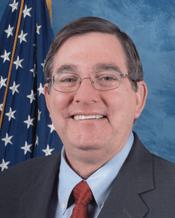 Rep. Michael C. Burgess (R-TX)
Legislative Activity
Stay on top of the latest movement without scrolling through every action
House amendment offered
May 21, 2009
View full timeline
House amendment offered
May 21, 2009
Roll call votes on amendments in House
May 21, 2009 • 5:00 PM
Amendment agreed to Committee of the Whole
May 21, 2009 • 5:00 PM
House amendment agreed to: On agreeing to the Burgess amendment (A004) Agreed to by recorded vote: 420 - 0 (Roll no. 288).
May 21, 2009 • 5:00 PM
House amendment offered/reported by : Amendment (A004) offered by Mr. Burgess.(consideration: CR H5969-5970, H5977; text: CR H5969)
May 21, 2009 • 3:41 PM
Amendment (A004) offered by Mr. Burgess. (consideration: CR H5969-5970, H5977; text: CR H5969)
May 21, 2009 • 3:41 PM
On agreeing to the Burgess amendment (A004) Agreed to by recorded vote: 420 - 0 (Roll no. 288).
May 21, 2009 • 5:00 PM
Votes
1 roll call on this amendment
Text
Offered
FAA REAUTHORIZATION ACT OF 2009
The SPEAKER pro tempore. Pursuant to House Resolution 464 and rule
XVIII, the Chair declares the House in the Committee of the Whole House
on the state of the Union for the consideration of the bill, H.R. 915.
{time} 1354
In the Committee of the Whole
Accordingly, the House resolved itself into the Committee of the
Whole House on the state of the Union for the consideration of the bill
(H.R. 915) to amend title 49, United States Code, to authorize
appropriations for the Federal Aviation Administration for fiscal years
2009 through 2012, to improve aviation safety and capacity, to provide
stable funding for the national aviation system, and for other
purposes, with Mr. Cardoza in the chair.
The Clerk read the title of the bill.
The CHAIR. Pursuant to the rule, the bill is considered read the
first time.
The gentleman from Minnesota (Mr. Oberstar) and the gentleman from
Florida (Mr. Mica) each will control 30 minutes.
The Chair recognizes the gentleman from Minnesota.
Mr. OBERSTAR. Mr. Chairman, I yield myself as much time as I may
consume.
We bring to the House, once again, to the Committee of the Whole, the
authorization for FAA for the next 4 years. We're getting very good at
this. We did it 2 years ago. It passed the House overwhelmingly.
Unfortunately, the other body did not act on it. So we held further
hearings and reshaped the bill. Essentially we have 95 percent of what
we had in 2007 in this bill. It was worked out then in cooperation with
the Republican members of the committee and with the ranking
Republican, Mr. Mica, and again this year with Mr. Mica, Mr. Petri and
the Aviation Subcommittee under the extraordinarily gifted leadership
of Mr.
[[Page H5914]]
Costello, who held numerous hearings to air the various aspects of this
bill and other aviation issues.
So that we bring a bill for which there is broad bipartisan support
except perhaps for four areas in which there are differences and on
which my good friend, Mr. Mica, will elaborate in his own good time. We
bring a bill of $70 billion investment in aviation over the next 4
years; $16.2 billion for the Airport Improvement Program to build
runways, taxiways, air traffic on the aviation hard side, as I call it,
of airports; $13.4 billion for facilities and equipment account over 4
years. That's for the continuing modernization of the air traffic
control system. Air traffic control is not a snapshot in time. It's a
continuously evolving technology that keeps pace with the growth of
aviation and with the need for greater safety at altitude, on approach,
on departure, on the ground, in the airport runway safety areas. We
provide substantial funding not only for the present but for the future
investment and modernization of the air traffic control system going on
to the next-generation technology that will be satellite-based. Higher
reliability, greater accuracy, shorten the flight time, shorten fuel
burned in the air and vastly improve safety.
On the capacity side, we provide authority for airport authorities,
at their choice, at their decision, to increase the passenger facility
charge that was initiated in 1990, at the time when I chaired the
Aviation Subcommittee and the first Bush administration, with then-
Secretary Sam Skinner advocating for this increase and this authority
for airports, to increase this charge on the grounds that they are
accountable directly to the people who use their airports. It is a
local decision, and we're allowing them to do it. It's not required.
Airport authorities can impose or not impose a passenger facility
charge. But it's used for all the authority airports are granted under
the Airport Improvement Program, to expand capacity, improve the
terminals, improve movement of passengers on the airport grounds to and
from their parking area, from the drop-off area onto the aircraft
itself.
{time} 1400
It has been a very well-used and useful tool.
As part of the increase or the authority to use passenger facility
charges in 1990 and with concurrence of the administration, we require
that every airport that imposes a PFC will lose 50 cents on each dollar
of their AIP entitlement account, and that goes into a special account
in the Aviation Trust Fund for the use of small airports that don't
have the capacity to level a passenger facility charge. That has
resulted in some $800 million a year available for general aviation
airports, regional airports, and smaller nonhub airports, and has
enabled them to participate in the Nation's aviation system.
There is a provision in this bill that we had in the 2007 bill that
requires the Federal Aviation Administration to negotiate a new
contract with its air traffic controllers. And if they do not reach an
agreement 45 days after enactment, the issue will be sent to binding
arbitration. The Republican administration objected to that provision.
The ranking Republican on our committee, Mr. Mica, stoutly defended his
administration's position, and his own view, that we should not have
binding arbitration apply to this circumstance. I think it is fair to
say he would accept that going forward.
Well, the bill never made its way through the Senate of 2007 or 2008.
And we are an equal opportunity committee. So what we didn't trust the
previous administration to do, we don't trust this administration to
do. And we are keeping that language in this bill to keep the heat on
them to negotiate this contract, renegotiate in due fairness to the air
traffic controllers.
Then there is the matter of the foreign repair stations. There are
145 foreign repair stations certificated by the U.S. FAA in other
countries where U.S. aircraft are maintained, supposedly to U.S.
standards, to the standards of the airline as approved by FAA and to
standards that we set for certification of aircraft maintenance
personnel and certification of the facility in which the maintenance
work is performed.
Over time, questions have arisen about the adequacy of standards in
other countries. This legislation takes those concerns and wraps them
into this language we have in the bill, saying they must meet our
standards for criminal background checks, for drug and alcohol testing,
for certification of the facility, and certification of the aircraft
maintenance specialists. That is in the interests of every American who
flies on an aircraft in our country or outside of our country that is
maintained in a non-U.S. maintenance facility. And in the time since we
passed that bill in 2007, the U.S. and the EU have negotiated an
aviation agreement that moves toward harmonization of the aviation
maintenance standards of our two countries.
That agreement provides, in Article 15, ``nothing in this agreement
shall be construed to limit the authority of a party to (A) determine
through its legislative, regulatory and administrative procedures the
level of protection it considers appropriate for civil aviation safety
and environmental testing and approvals, and (B) take all appropriate
and immediate measures necessary to eliminate or minimize any
derogation of safety.'' That is what we are doing, simply put, in this
legislation using our legislative authority, require twice-a-year
onsite inspections of facilities in which U.S. aircraft are maintained
in facilities overseas.
If the Europeans want reciprocity under this agreement, they have
that authority. They can inspect U.S. maintenance facilities which are
doing work on foreign aircraft, European aircraft, in the United
States. Basically, that is what it is. It is comity, fairness, equity,
and safety in the best interests of our citizens.
There may be other issues. But I will reserve my time. And Mr.
Costello will address more details of this legislation subsequently.
Mr. Chairman, I submit for the Record an exchange of letters on this
particular piece of legislation.
House of Representatives, Committee on Transportation and
Infrastructure,
Washington, DC, May 7, 2009.
Hon. Bart Gordon,
Chairman, Committee on Science and Technology, House of
Representatives, Rayburn House Office Building,
Washington, DC.
Dear Chairman Gordon: I write to you regarding H.R. 915,
the ``FAA Reauthorization Act of 2009''.
I appreciate your willingness to waive rights to further
consideration of H.R. 915, notwithstanding the jurisdictional
interest of the Committee on Science and Technology. Of
course, this waiver does not prejudice any further
jurisdictional claims by your Committee over this or similar
legislation. Further, I will support your request to be
represented in a House-Senate conference on those provisions
over which the Committee on Science and Technology has
jurisdiction in H.R. 915.
This exchange of letters will be placed in the Committee
Report on H.R. 915 and inserted in the Congressional Record
as part of the consideration of this legislation in the
House. Thank you for the cooperative spirit in which you have
worked regarding this matter and others between our
respective committees.
I look forward to working with you as we prepare to pass
this important legislation.
Sincerely,
James L. Oberstar,
Chairman
____
House of Representatives, Committee on Science and
Technology,
Washington, DC, May 7, 2009.
Hon. James L. Oberstar,
Chairman, Committee on Transportation and Infrastructure,
House of Representatives, Rayburn House Office Building,
Washington, DC.
Dear Chairman Oberstar: I write to you regarding H.R. 915,
the FAA Reauthorization Act of 2009. This legislation was
initially referred to both the Committee on Transportation
and Infrastructure and the Committee on Science and
Technology.
H.R. 915 was marked up by the Committee on Transportation
and Infrastructure on March 5, 2009. I recognize and
appreciate your desire to bring this legislation before the
House in an expeditious manner, and, accordingly, I will
waive further consideration of this bill in Committee.
However, agreeing to waive consideration of this bill should
not be construed as the Committee on Science and Technology
waiving its jurisdiction over H.R. 915.
Further, I request your support for the appointment of
Science and Technology Committee conferees during any House-
Senate conference convened on this legislation. I also ask
that a copy of this letter and your response be placed in the
legislative report on H.R. 915 and the Congressional Record
during consideration of this bill.
I look forward to working with you as we prepare to pass
this important legislation.
Sincerely,
Bart Gordon,
Chairman.
[[Page H5915]]
____
House of Representatives, Committee on Transportation and
Infrastructure,
Washington, DC, May 15, 2009.
Hon. John Conyers, Jr.,
Chairman, Committee on the Judiciary, House of
Representatives, Rayburn House Office Building,
Washington, DC.
Dear Chairman Conyers: I write to you regarding H.R. 915,
the ``FAA Reauthorization Act of 2009''.
I agree that provisions in H.R. 915 are of jurisdictional
interest to the Committee on the Judiciary I acknowledge that
by forgoing a sequential referral, your Committee is not
relinquishing its jurisdiction and I will fully support your
request to be represented in a House-Senate conference on
those provisions over which the Committee on the Judiciary
has jurisdiction in RR 915.
This exchange of letters will be placed in the Committee
Report on H.R. 915 and inserted in the Congressional Record
as part of the consideration of this legislation in the
House.
I look forward to working with you as we prepare to pass
this important legislation.
Sincerely,
James L. Oberstar,
Chairman.
____
House of Representatives,
Committee on the Judiciary,
Washington, DC, May 14, 2009.
Hon. James L. Oberstar,
Chairman, Committee on Transportation and Infrastructure,
House of Representatives, Washington, DC.
Dear Chairman Oberstar: As you know, the Judiciary
Committee requested referral of H.R. 915, the FAA
Authorization Act of 2009, due in part to the addition in
markup of the text of H.R. 831, which directs a study on the
use of a provision in current law to confer antitrust
immunity on international airline alliances, and sunsets all
such antitrust immunity in three years--on which the
Judiciary Committee had received a referral as falling within
our Rule X jurisdiction.
We understand that, although the report, for H.R. 915 has
not yet been filed, there is a desire to bring this bill to
the floor for consideration next week. While we have concerns
about how the antitrust provision is written, from the
standpoint of sound antitrust policy, and we would prefer to
take referral to give appropriate consideration to that
provision and other matters within our jurisdiction, we are
willing to waive referral in order that the bill may proceed
to the House floor.
The Judiciary Committee takes this action with our mutual
understanding that by forgoing further consideration of H.R.
915 at this time, we do not waive any jurisdiction over any
subject matter contained in this or similar legislation. We
appreciate your continued willingness to consult with us on
these provisions, and on any refinements or clarifications to
them, as the legislation moves forward. Finally, we reserve
the right to seek appointment of an appropriate number of
conferees to any House-Senate conference involving this
legislation, and request your support if such a request is
made.
I would appreciate your including this letter in the
Congressional Record during consideration of the bill on the
House floor. Thank you for your attention to this request,
and for the cooperative relationship between our two
committees.
Sincerely,
John Conyers, Jr.
Chairman.
____
House of Representatives, Committee on Transportation and
Infrastructure,
Washington, May 18, 2009.
Hon. Bennie G. Thompson,
Chairman, Committee on Homeland Security, Ford House Office
Building, Washington, DC.
Dear Chairman Thompson: I write to you regarding H.R. 915,
the ``FAA Reauthorization Act of 2009''.
I agree that provisions in H.R. 915 are of jurisdictional
interest to the Committee on Homeland Security. I acknowledge
that by forgoing a sequential referral, your Committee is not
relinquishing its jurisdiction and I will fully support your
request to be represented in a House-Senate conference on
those provisions over which the Committee on Homeland
Security has jurisdiction in H.R. 915.
This exchange of letters will be inserted in the Committee
Report on H.R. 915 and in the Congressional Record as part of
the consideration of this legislation in the House.
I look forward to working with you as we prepare to pass
this important legislation.
Sincerely,
James L. Oberstar,
Chairman.
____
House of Representatives,
Committee on Homeland Security,
Washington, DC, May 19, 2009.
Hon. James L. Oberstar,
Chairman, Committee on Transportation and Infrastructure,
Rayburn Bldg., House of Representatives, Washington, DC.
Dear Chairman Oberstar: I write to you regarding H.R. 915,
the ``FAA Reauthorization Act of 2009.''
H.R. 915 contains provisions that fall within the
jurisdiction of the Committee on Homeland Security. I
recognize and appreciate your desire to bring this
legislation before the House in an expeditious manner and,
accordingly, I will not seek a sequential referral of the
bill. However, agreeing to waive consideration of this bill
should not be construed as the Committee on Homeland Security
waiving, altering, or otherwise affecting its jurisdiction
over subject matters contained in the bill which fall within
its Rule X jurisdiction.
Further, I request your support for the appointment of
Homeland Security conferees during any House-Senate
conference convened on this or similar legislation. I also
ask that a copy of this letter and your response be included
in the legislative report on H.R. 915 and in the
Congressional Record during floor consideration of this bill.
I look forward to working with you as we prepare to pass
this important legislation.
Sincerely,
Bennie G. Thompson,
Chairman.
Mr. Chairman, I reserve the balance of my time.
Mr. MICA. Mr. Chairman, I yield myself such time as I may consume.
Thank you again for the opportunity to rise today and speak about a
very important piece of legislation, and that is reauthorization of our
Federal Aviation Administration operations.
Americans take for granted sometimes the ability to have the best,
the largest, and the most accessible air transportation system in the
world. But it is our job in Congress to make certain that that system
is safe and that we also pass laws from time to time authorizing the
policy, the projects, the funding, and other safety measures that are
important for that system.
I want to speak in favor of enacting good reauthorization. At the end
of the day, I will not vote in support of this particular measure
because I do have some concerns that I will briefly outline.
First, let me say that I have enjoyed my working relationship with
Mr. Oberstar. He chairs the committee, and I try to work with him in a
bipartisan manner to make certain that our key responsibilities, like
this important safety air industry legislation, passes Congress, and I
will continue to do that.
I do have some concerns about some specifics. The bill does have some
very good provisions. And Mr. Oberstar, Mr. Costello, and Mr. Petri,
our ranking member, have all worked hard to do the best they can in
looking out for our current system, making certain that it is sound,
making certain that there is funding in place and making certain that
we have what we call ``NextGen,'' next generational air traffic
control, in the system for the future, and that bill does take us a
long way towards those positive efforts.
Unfortunately, there are a couple of provisions that we haven't
reached agreement on. And I have been married 37 years. Almost every
other day my wife and I have a disagreement on something. So it is not
a big deal to have disagreement. Hopefully we can work some of these
problems out.
What concerns me are, first of all, the labor provisions that were
included in this bill. Now, as we know, we had a difficult situation
with the air traffic controllers' contract. It expired. It was being
negotiated. They couldn't reach an agreement some years ago. They sent
it to Congress. We don't want it in Congress. It caused a great deal of
conflict and problems. We shouldn't be the arbiters of these labor
negotiations. And I will say that President Obama has stepped forward.
He has set in motion a mechanism to resolve this pending impasse. I
support his efforts.
By I believe June 5, if we don't reach negotiations, this issue will
go to binding arbitration. I support binding arbitration. I support
taking this out of the realm of Congress. But I think it was wrong to
include that provision here when we are in the middle of negotiations
that our new President is trying to get going and get this issue behind
us and resolve. So this sets a horrible precedent for Congress to be
dictating here, at this point, with this new President, these terms
which do have a $1 billion-plus price tag and do set a standard of
unfairness. Not only are there 15,000 air traffic controllers who
should be treated fairly, but then we have 20,000 other FAA employees
who should be treated fairly and hundreds of thousands of hard-working
Federal employees who should be treated fairly, not Congress dictating
a special level of compensation or some deal for a smaller group. So
this does have consequences. And I'm disappointed that
[[Page H5916]]
that remains. I'm supportive of taking this away from Congress in the
future and sending it to compulsory arbitration.
Unfortunately, there are two job killers in this bill. At a time when
there isn't a Member of Congress that isn't getting a heartfelt request
that someone is losing their job, they are losing their home, or they
are not able to live the American Dream, unfortunately, this bill has
two job-killer provisions.
First is a very controversial, and I know that Mr. Oberstar tried to
explain this in his particular provision that he has put in here,
requirement that the FAA make biennial inspections of all foreign
repair stations. It sounds good. The only problem is that we already
have existing agreements in place that that provision would supersede.
We are negotiating now a treaty which also, the provisions the way they
are written, would impose sanctions on us and cost us jobs.
Now, that is not what John Mica is saying. The U.S. Chamber of
Commerce says that, as written, the bill jeopardizes 129,000 jobs. And
we will put that in the Record a little bit later.
The National Association of Manufacturers, not John Mica, says
retaliation threat from the EU is real and we must work together to
maintain our working partnerships and preserve jobs. Again, they say it
is a job killer.
Then I have a whole list of companies. They are in everybody's
district, I could go on and on, Rockwell Collins, Boeing, Gulfstream,
GE. Here is just one. GE sent a letter to Mr. Oberstar and me regarding
how much this will cost in each of these stations. Now I don't mind
spending money for safety. I don't mind imposing regulations or laws
for safety. But this is a step backward, and it is a step away from
what we should be doing, rather than saying on every Tuesday in the
sixth month that we should be in Amsterdam inspecting, or we should be
in London inspecting, or we should be in Ireland inspecting, or in
Berlin inspecting, as this bill requires, twice-year annual inspections
even to countries that we have already got agreements that we would
have the same high standards and some of the countries have even higher
standards imposed, their own higher than the U.S.
So we take our limited resources and we do these mandated inspections
whether or not we need them. And our whole system in this country we
changed some years ago for our large aircraft was to get away from
that. We are risk based, and that is why we are the safest aviation
industry in the United States. Yes, we have problems with commuters.
And we should be using some of our resources to enhance the training,
the requirements, and the inspections of the commuters where we are
having crashes. We can't let up in any area. But we are diverting
resources by this and going back to a system that did not work.
So not only does this I think impair safety, it also is a job killer.
The second and last thing that I am concerned about is 95 percent of
this bill, we said in the Rules Committee, is pretty much the same bill
we had last time. Added to this bill, and again I don't know why, is a
provision that would sunset airline antitrust immunity. Unfortunately,
this bill, and it is not what Mica says again, here is the Air
Transport Association. This bill could cost as many as 15,000 airline
jobs. Again, this is what is said by those who are in the industry. And
this is a second job killer provision. This was not in the original
bill. It has been added here.
And more troubling is that this provision would also automatically
invalidate all antitrust immunity grants to airline alliances 3 years
after the enactment of this bill. It is not necessary. It shouldn't
have been added in this bill.
There are several other provisions that are controversial. We can
work through this, and we need to work through this. This is the
longest period that I can remember in the history of my service, and
maybe Congress, that we have not had an FAA reauthorization. Hopefully
we will also have in the next few days the President's designee for FAA
Administrator. We haven't had one there. The other side of the Congress
has not acted the way it should in promptly confirming an FAA
Administrator. We all know how difficult it is when we have an
Administrator in an agency to deal with him, and when you have no one
in place for a long time we see some of the unfortunate results.
{time} 1415
Those are some of my concerns and, again, I pledge to work with Mr.
Oberstar, Mr. Costello and others, and Mr. Petri, our ranking member.
We're all committed to work. They all do a great job. We all have the
interests and safety of the American public at heart.
I reserve the balance of my time.
Mr. OBERSTAR. I yield myself 1 minute.
I thank the gentleman for his comments and, again, it's been a great
pleasure working through this legislation over the past 2 years, trying
to bring a bill through the House and to conference and to conclusion,
and I want to commend Mr. Mica, our ranking member, for participating
in various discussions that we had and negotiations with the Secretary
of Transportation, the representative from the Office of Management and
Budget, the air traffic controllers, and members of our committee, Mr.
Costello in particular, several such negotiations with the previous
administration that unfortunately resulted in no agreement. And the
gentleman really made a serious effort, and I greatly respect and
appreciate his participation, but I just want to point out, Mr.
Chairman, to the gentleman that the language we have on the arbitration
is not unique.
The CHAIR. The time of the gentleman has expired.
Mr. OBERSTAR. I yield myself another 1 minute. Several times, over
many years, this committee and its predecessor committee with authority
over railroad issues has approved and the House has voted on
Presidential Emergency Board to settle railroad labor disputes.
And in 1989, we moved legislation to establish an arbitration process
to resolve the management labor dispute involving Eastern Airlines. Mr.
Gingrich was the ranking member on the Aviation Subcommittee, and he
voted in favor of it. Unfortunately, even though it passed the Senate,
President Bush, the First, vetoed it. We are simply acting on precedent
that has been the case in the House to attempt to resolve matters of
this kind.
I yield such time as he may consume to the distinguished chair of the
subcommittee, Mr. Costello.
Mr. COSTELLO. Mr. Chairman, I thank Chairman Oberstar for recognizing
me and thank you for all of your leadership and your support. No one
knows more about aviation or transportation issues in this country than
Chairman Oberstar, and I think everyone acknowledges that and respects
not only his valuable input but the work that he does for this
committee and on behalf of the American people.
To Mr. Mica and Mr. Petri, as Mr. Mica has indicated, we have worked
closely together on this legislation. As Chairman Oberstar stated,
about 95 percent of what is in this bill was contained in the bill when
the House passed it in September of 2007 by a vote of 267 Members
passing the legislation. It truly was a bipartisan piece of
legislation.
The bill provides increased funding levels, as Chairman Oberstar
indicated, for the Airport Improvement Program, for the facilities and
equipment program, and for the FAA operations. The funds will help
improve our airports, upgrade our facilities, and modernize our air
traffic control system.
In addition, we provide a consumer protection provision in this bill
that forces airports and airlines to come up with an emergency
contingency plan, and we install a consumer hotline for consumers to
call the FAA for any complaints that they may have and any violations
of the emergency contingency plans filed by the airports and airlines.
For any violations, there are civil penalties.
It does establish a process to settle a labor dispute between the FAA
and the controllers, and it takes steps to move us forward in upgrading
our ground-based radar system to the next generation ATC.
The United States, I think we have to continue to point out, has the
safest aviation system in the world; but in order to maintain that
system and improve it, we need to pass this reauthorization bill. Let
me make just a few comments regarding a few items that Mr. Mica
mentioned.
[[Page H5917]]
Number one, the NATCA issue with the air traffic controllers. There
is a process that is moving forward now with this administration. We
hope that negotiations are successful, and we hope that there is a
voluntary agreement. However, this bill does not contain provisions
dealing with compensation. Congress is not dictating to either the
administration or to anyone what wages should be, nor do we address
that in our bill at all. It has everything to do with the process, and
nothing to do with salaries and benefits.
Number two, it deals with in fact two fundamental principles: the
rights of workers and the right to collectively bargain. So if, in
fact, you believe in collective bargaining, you will support the
provisions in this bill, as we did through committee and we did in
2007.
Secondly, as far as two issues concerning the foreign repair
stations, I think Chairman Oberstar addressed that issue, but let me
just comment that I probably have more workers in my district that work
in repair stations, domestic repair stations, than any other district
in the country. If I thought for a moment that this was a job killer,
the fact that we insist that we have two inspections per year, on
ground, in person, inspections on foreign repair stations, if I thought
that would jeopardize the jobs that I have in my district or any place
in this country, I certainly would not be supporting the provision in
the bill. It is not a job killer. We have the right in the Congress and
this legislative body under the agreements that we have with the
European Union and others to move forward and insist that we have
inspections of these foreign repair stations so that we can protect the
American people. It is a safety issue.
And with that, let me just conclude by saying this is a good bill. We
are 2 years behind in passing this legislation. We appreciate the
support and the bipartisan relationship in working together on this
bill. We look forward to passing this bill today and then working with
our colleagues in the other body to get an agreement so we can get a
bill on the President's desk.
Mr. Chair, today is an important day for the future of our aviation
system. We are considering H.R. 915, the ``FAA Reauthorization Act of
2009''. This comprehensive bill would provide approximately $70 billion
to modernize our air traffic control system, fund airport development,
research programs, small community service and Federal Aviation
Administration, FAA, operating expenses. H.R. 915 was produced after
many hearings, in-depth analysis, and a continued dialogue with the
FAA, our colleagues, and stakeholders.
Mr. Chair, this legislation is now almost two years behind schedule.
In September 2007, the House approved a similar bill with a few
additions, H.R. 2881, by a vote of 267 to 151. However, the
reauthorization process has been bogged down because of inaction by the
other body. Since that time we have been acting under short-term
funding extensions and continuing resolutions that are delaying key
Next Generation Air Transportation System, NextGen, and airport capital
development projects.
Although there are a few contentious issues that have marked this
reauthorization process, virtually the entire aviation community--
airlines, airports, general aviation, state aviation officials--have
communicated to us in a unified voice the need to get a multi-year
reauthorization bill done as soon as possible.
The FAA forecasts that the airlines are expected to carry more than 1
billion passengers in 2021, up from almost 760 million in 2008. To deal
with this growth, strengthen our economy, and create jobs, the FAA
Reauthorization Act of 2009 provides historic funding levels for FAA's
capital programs. This includes $16.2 billion for the Airport
Improvement Program, nearly $13.4 billion for FAA Facilities &
Equipment, and $1 billion for Research, Engineering, and Development.
The bill also provides $39.3 billion for FAA Operations over the next
four years.
These funding levels will accelerate the implementation of NextGen,
enable the FAA to replace and repair existing facilities and equipment,
improve airport development, and provide for the implementation of
high-priority safety-related systems.
H.R. 915 also changes the organizational structure of the FAA's Joint
Planning and Development Office, JPDO, the body charged with planning
NextGen. To increase the authority and visibility of the JPDO, H.R. 915
elevates the Director of the JPDO to the status of Associate
Administrator for NextGen within the FAA, to be appointed by, and
reporting directly to, the FAA Administrator. To increase
accountability and coordination of NextGen planning and implementation,
H.R. 915 requires the JPDO to develop a work plan that details, on a
year-by-year basis, specific NextGen-related deliverables and
milestones required by the FAA and its partner agencies.
Like the 2007 bill, we increase the passenger facility charge cap
from $4.50 to $7.00 to help airports that choose to participate in the
PFC program meet their capital needs. According to the FAA, if every
airport currently collecting a $4.00 or $4.50 PFC raised its PFC to
$7.00, it would generate approximately $1.3 billion in additional
revenue for airport development each year which strengthens our economy
and creates additional jobs at a time when both are critically needed.
H.R. 915 provides significant increases in AIP funding for smaller
airports that rely on AIP for capital financing. The ability to raise
the PFC and the increase in AIP funding provides financing for airport
capital development that will help reduce delays.
The bill also dramatically increases funding for and improves the
Essential Air Service program and reauthorizes the Small Community Air
Service Development program through 2012.
To prevent another ``meltdown'' of the aviation system like what we
saw during the summer of 2007, when the system was fraught with
congestion, delays and poor customer service, H.R. 915 mandates that
air carriers and airports create emergency contingency plans that are
approved and enforced by the Department of Transportation, DOT. This
legislation also requires the DOT to publicize and maintain a hotline
for consumer complaints; expand consumer complaints investigated;
require air carriers to report diverted and canceled flight information
monthly; and create an Aviation Consumer Protection Advisory Committee.
H.R. 915 also requires DOT to conduct schedule reduction meetings if
aircraft operations exceed hourly capacity and are adversely affecting
national or regional airspace. Finally, H.R. 915 also provides civil
penalties for violations.
Here at home and across the globe, more is being done to reduce
energy consumption and emissions. The aviation community continues to
be a leader in greening its operations. We further those efforts by
establishing the CLEEN Engine and Airframe Technology Partnership and
the Green Towers Program, which was modeled after what is currently
being done at O'Hare International Airport.
The United States has the safest air transportation system in the
world; however, we must not become complacent about our past success.
To keep proper oversight on safety at FAA, H.R. 915 directs the FAA to
increase the number of aviation safety inspectors, initiates studies on
fatigue, and requires the FAA to inspect part 145 certified foreign
repair stations at least twice a year. We also provide $46 million over
four years for runway incursion reduction programs; $325 million over
four years for runway status lights; and require the FAA to submit a
strategic runway safety plan to Congress.
Combined with the tax title from Ways & Means, H.R. 915 does not
impose new fees on airspace users. This concept has generated
tremendous controversy and, frankly, has helped to seriously delay the
reauthorization process. Instead, H.R. 915 would adjust the general
aviation, GA, jet fuel tax rate from 21.8 cents per gallon to 35.9
cents per gallon, and the aviation gasoline tax rate from 19.3 cents
per gallon to 24.1 cents per gallon.
We believe that Airport and Airway Trust Fund revenues, coupled with
additional revenue from the recommended GA fuel tax rate increases, and
a reasonable General Fund contribution, will be sufficient to provide
for the historic capital funding levels required to modernize the air
traffic control system.
There are two provisions in the H.R. 915 that I believe are necessary
for improving morale at the FAA; providing fair bargaining rights to
employees of the FAA and at all express carriers; and helping to
maintain safety in our aviation system.
The first provision requires that if the FAA and one of its
bargaining units do not reach agreement during contract negotiations,
the Federal Mediation and Conciliation Services are used or another
agreed to alternative dispute resolution process; this process applies
to the ongoing dispute between the National Air Traffic Controllers
Association, NATCA, and the FAA. This legislation sends the FAA and
NATCA back to the bargaining table where the FAA declared an impasse.
It calls for $20 million in backpay and calls for binding arbitration
if the FAA and NATCA cannot reach an agreement. These are the same
provisions that were in H.R. 2881 that passed the House during the
110th Congress.
I have spent many hours trying to bring both sides together to work
out their differences. Chairman Oberstar and I have convened countless
meetings between the FAA and NATCA in hopes of reaching a voluntary
agreement. I know Mr. Mica and Mr. Petri have also spent time on this
issue.
[[Page H5918]]
Unfortunately, an agreement could not be reached and that left us
with only one clear course of action--binding arbitration.
I strongly believe in collective bargaining and bargaining in good
faith with a fair dispute resolution process for both sides.
Unfortunately, that did not happen in 2006 and we corrected that wrong
in the T&I Committee by adopting the Costello amendment with a strong
bipartisan vote of 53-16. This amendment is included in H.R. 915 and
will ensure fair treatment of FAA employees.
I am pleased Transportation Secretary Ray LaHood has appointed former
Federal Aviation Administrator Jane Garvey to oversee a team of
mediators to immediately address the contract dispute between the
Federal Aviation Administration and National Air Traffic Controllers
Association. President Obama has shown great leadership that will guide
a positive way forward in which aviation safety professionals will be
included as valued stakeholders.
The second provision provides consistency in collective bargaining
rights throughout the express carrier industry by allowing ground
handling and trucking workers to organize under the National Labor
Relations Act, which allows for organization at the local level. Those
workers who are directly involved with the aircraft operation portion
of those companies, like pilots and mechanics, would continue to be
under the jurisdiction of the Railway Labor Act. This is consistent
with how UPS is structured today and is identical to the provision in
H.R. 2881.
With that Mr. Chair, I again want to thank you for working with me on
this legislation. The bottom line is we need to get the FAA
reauthorized and we need to do it now.
I urge my colleagues to support the bill.
Mr. MICA. Mr. Chairman, I yield myself 1 minute, and then I yield 5
minutes to our ranking member, Mr. Petri.
Just for the record, I want to call to the attention of Members--and
we will try to get this distributed today--this bill, the way it is
written, voids the 2006 contract with the FAA and air traffic
controllers, and it reinstates the generous terms and pay raises of the
1998 contract which had about a 70 percent pay increase. Today, at noon
the Government Accountability Office released this report on the
effects of pay and compensation, particularly for air traffic
controllers and FAA employees, and this substantiates what I've said
and also substantiates the very generous compensation that was provided
under the terms of the 1998 contract. This bill interferes, again, with
pending negotiations that the President has started, and we're hoping
to resolve this matter.
I yield 5 minutes to the gentleman from Wisconsin (Mr. Petri), our
distinguished ranking member.
Mr. PETRI. I thank my colleague from Florida, the senior member of
the Transportation and Infrastructure Committee, for yielding me this
time.
In September of 2007, we passed a bill very similar to the one that
we are considering today. Unfortunately, the Senate never acted so we
find ourselves once again trying to enact a much-needed authorization
bill. In the meantime, the program continues to operate under a series
of extensions, the most recent one expiring September 30 this year.
While the current economic downturn has alleviated some of the delays
in congestion and complaints of the flying public, we know that once
the economy recovers the system will again feel overwhelming strain. So
the urgency for this legislation remains.
The American Society of Civil Engineers issues an infrastructure
report every so often, and the most recent 2009 report card gives
aviation a grade of only a D. This is actually a lower grade than the
D-plus earned in the 2005 report card. So the condition of our aviation
infrastructure is getting worse here in the United States, not better.
The bill before us increases Federal investment in aviation
infrastructure, with funding for the Airport Improvement Program, which
provides grants from the Aviation Trust Fund for airport improvements,
increased to a total of $16.2 billion over 4 years. The Facilities and
Equipment Program is increased to $13.4 billion.
It also increases the cap on the level of passenger facility charges
that an airport can impose for capacity and safety projects. The cap
was last raised 9 years ago, and the $4.50 maximum charge is now worth
far less due to high construction costs and inflation.
One of the most important initiatives under way at the FAA is
something known as NextGen to modernize the air traffic control system.
We need to move away from a 50-year-old ground-based system to one that
is modern, satellite-based, and which will increase the capacity of the
system, lower costs, and increase safety. The bill before us will move
that modernization process forward.
Mr. Chairman, there are a variety of other provisions, too numerous
to enumerate, in this bill that will improve the aviation system in
this country and which I strongly support.
However, as occurred last Congress, I am in the rather odd position
of voting ``no'' on final passage for my subcommittee's bill. Back in
the last Congress, the committee leadership worked together on a
bipartisan basis to craft and introduce a good bill. But since that
time, and continuing in this new bill, various provisions have been
added which make it impossible for me at this time to support the bill.
One provision is regarding air traffic controllers. Part of the
provision putting changes in future impasse procedures I do not object
to, but it also reopens the currently imposed contract and includes
back pay under terms of the 1998 contract, which was estimated to cost
the taxpayers some $1 billion over the life of the bill.
The second provision provides that we would move express carriers
from being covered by the Railway Labor Act of the National Labor
Relations Act, which is really directed at just one company, and that
is Federal Express; and, really, I don't think that should be included
in this legislation. I think we'll hear more about that from other
Members.
Other provisions raise concerns, such as the foreign repair station
language which could have unintended consequences as far as trade
relations with Europe are concerned, and another that would
automatically sunset airline alliance antitrust immunity agreements 3
years after the enactment of this legislation, which again could set in
train consequences we cannot understand at this time.
In conclusion, I'd like to thank Chairman Oberstar; my chairman,
Jerry Costello; Ranking Member Mica, and certainly the staff on the
committee for their dedicated work on this bill. And in conclusion,
while I support the general goal and the overwhelming majority of this
bill, I do not support it at this particular time.
Mr. OBERSTAR. Mr. Chairman, I yield myself 15 seconds to thank the
distinguished gentleman from Wisconsin for his comments, for his
contribution and for his ever-present Norwegian wisdom that he has
brought to the shaping of this legislation. He's been a splendid
partner.
{time} 1430
Now I yield 3 minutes to the distinguished chair of the Committee on
Rules, the gentlewoman from New York (Ms. Slaughter).
Ms. SLAUGHTER. I want to talk a moment about the safety of our skies
and the frightening gap in training and oversight surrounding the
commuter airline business.
One of the worst plane accidents in recent history occurred earlier
this year on the night of February 12, just outside of Buffalo, New
York. We lost 49 lives that snowy and icy night, and my thoughts are
with the families and the victims.
Last week the National Transportation Safety Board conducted
hearings, and we were shocked and saddened by the testimony and the
revelations. I'm not here to revisit the sad last moments of the crew
or the 45 passengers who were lost that day. We still have many
questions that must be answered and a lot of work to be done to ensure
it never happens again. That is our responsibility and our mission.
I want to address the shocking conditions that many of these pilots
are facing each and every day because of the lack of rigor and training
and certification programs of commercial airline pilots. I hope we can
shine a light on the appalling job that the FAA has done in recent
years in regulating that industry. That's why I've joined with my
friends from New York, Mr. Lee and Mr. Higgins, to introduce an
amendment mandating a detailed investigation by the General Accounting
Office into this gap in training.
We need to look at the number of training hours required for new
pilots,
[[Page H5919]]
how the carriers update and train the pilots, and what kind of remedial
action is taken when pilots rate unsatisfactorily, among other things.
It is my belief that a thorough, top-to-bottom review of this issue
is absolutely essential if we are to understand the troubled reality of
today's regional airline industry.
Most importantly, if we don't get all the facts out and into the
open, we are unlikely to be able to take meaningful steps toward
reform. My intention is to work with colleagues on this issue and
explore legislative remedies that we can take.
As I look around the Chamber, I'm reminded that many Members of
Congress also take flights to get home to their districts that are the
regional airlines. And I take two of them every week. And in the
gallery I'm sure there are visitors who have flown to Washington from
their hometowns. Every day people from coast to coast in small cities
and major hubs catch a plane from work to see a loved one, or simply to
get away. All deserve the confidence that the pilots in the front of
the plane are trained and ready for work when that aircraft pushes back
from the tarmac.
It's my understanding that the salary of one of the pilots on that
plane was $16,000 a year. I can only imagine how little the attendants
were paid. These young pilots earn far less than pilots at major
carriers and struggle to make ends meet. My guess is it would surprise
many of the passengers on a typical commuter flight to know the captain
was paid less than a bus driver.
Worse still, we learned during the hearing that many of the pilots
fly when they are sick and when they have not been able to have food.
Imagine that. A pilot responsible for a plane full of men, women and
children, who is sick but can't take the day off; hungry and can't stop
and get lunch.
We have discovered the training is stunningly inadequate.
We have also discovered that the training for some of these pilots is
stunningly inadequate.
For example, the pilot in the Buffalo crash had apparently failed a
hands-on proficiency exam not once but three times. He covered that up
on his job application and the fact was not discovered until after the
accident, according to the testimony we heard last week.
And even after that pilot was hired by Colgan, he actually failed two
additional check rides but still was certified to fly. That's five
failed tests--five too many if you ask me.
Passengers on a typical flight would be horrified to learn that the
pilot flying their plane was a repeat failure on such a basic skill
test.
And finally the way that these pilots are assigned routes--which in
many cases are hundreds if not thousands of miles from their homes--
appears to me to be a recipe for disaster. In the case of the Buffalo
crash, both pilots had flown from across the country just to arrive at
their route--one from Florida and one from Seattle. Both had apparently
slept in a lounge--if they slept at all. Trying to rest in a lounge or
an airplane is not safe and we should not tolerate pilots being treated
that way.
We need to reform this system so airlines and pilots can escape from
this insane business of criss-crossing the country to work in different
time zones for meager pay and the hope that one day they'll work for a
major airline.
It's my intention to buckle down on this issue so we can put the
focus less on the glamorous lifestyle of pilots and more on the quality
of their training and certification and safety.
I encourage all of my colleagues to support this common-sense
amendment and get some answers on the regional airline industry.
Mr. OBERSTAR. May I inquire of the Chair how much time remains on
both sides.
The CHAIR. The gentleman from Minnesota has 10\3/4\ minutes and the
gentleman from Florida has 14.
Mr. MICA. Mr. Chairman, I yield myself 15 seconds, and then I would
like to yield 1 minute to the gentleman from Texas (Mr. Brady).
Just 15 seconds to add in the Record that the repair station
provision I will cite for different Members, in Mr. Costello's
district, according to Midcoast Aviation, will cost us and kill 1,339
jobs.
GE,
Washington, DC, March 3, 2009.
Hon. James L. Oberstar,
Chairman, House Transportation and Infrastructure Committee
Hon. John Mica,
Ranking Member, House Transportation and Infrastructure
Committee
Chairman Oberstar and Representative Mica: This is to
express great concern over the foreign repair station
language contained in Sections 303 and 310 of H.R. 915 the FM
Reauthorization Act of 2009. On behalf of GE Aviation, a
world-leading producer of commercial and military jet engines
and components as well as integrated digital, electric power,
and mechanical systems for aircraft, we are very concerned
that these provisions will significantly compromise the U.S.
competition in position. GE Aviation also has a global
service network to support these offerings, including 29
repair stations in the United States and 20 in foreign
countries. Our U.S. repair stations employ over 3280 high-
wage, highly skilled employees. If enacted as written, these
sections could lead to retaliatory actions by the European
Community, raise repair station initial certification and
renewal costs twenty-fold, place U.S. repair stations at a
competitive disadvantage in a very difficult economy, and put
many thousands of American jobs at risk.
In recent conversations with the FAA, European officials
have made it clear that, should these provisions be enacted,
the European Aviation Safety Agency (EASA) would reciprocate
and require the same twice-annual inspections of its U.S.-
based certificated facilities. Based on EASA's own estimates,
certification costs for repair stations would rise from an
average of $960 to $32,100 per station, if they conducted
only one annual inspection per facility. Such a drastic
increase in certification costs would pose significant
hardships on repair facilities throughout the U.S.
There are approximately 2,000 FAA-certificated repair
stations worldwide--over 1200 of them are in the U.S. On the
other side of the globe, the aerospace industry has
experienced substantial growth in the emerging Asian and
Pacific Rim markets. While reciprocal agreements are not yet
in place to the same degree as with the EU, this legislation
as currently proposed will negatively impact any attempt at
amicable agreements there in the future. We believe that the
proposed language would do irreparable harm to the hundreds
of small businesses that make up the U.S. aviation
maintenance industry and the thousands of Americans they
employ. In addition to the cost of certification, a greater
concern is the fact that EASA does not have sufficient staff
to conduct twice annual inspections of its 1,237 certificated
U.S.-based repair facilities (as compared to only 425 FAA
certificated repair locations in Europe). Stations unable to
be reviewed by EASA personnel at such a rate would no longer
be able to work on European-registered aircraft and
components, thus damaging stations whose customers require
both U.S. and EASA certification, and place tens of thousands
of U.S. jobs at risk.
Finally, if enacted as written, Section 310 would prevent a
manufacturer from either rebuilding a part under its current
authority or repairing a part it manufactured as a
subcontractor to a repair station or air carrier. To remedy
this unintended consequence, we recommend adding employees of
manufacturers to the list of persons authorized to perform
work for part 121 air carriers, either directly or as a
subcontractor to a repair station.
Gentlemen, in order to protect the tens of thousands of
U.S.-based aviation maintenance professionals, we
respectfully request that you amend Sections 303 and 310 to
ensure it will be applied in a manner consistent with United
States obligations under international agreements. As always,
GE stands committed to working with Congress to stimulate the
economy while protecting U.S. manufacturing jobs.
Sincerely,
Sean O'Keefe,
Vice President.
____
Chamber of Commerce
of the United States of America,
Washington, DC, May 20, 2009.
To the Members of the U.S. House of Representatives: The
U.S. Chamber of Commerce, the world's largest business
federation representing more than three million businesses
and organizations of every size, sector, and region, supports
the intent of H.R. 915, ``The Federal Aviation Research and
Development Reauthorization Act of 2009,'' which would
accelerate implementation of the Next Generation Air
Transportation System (NextGen) initiative, support vital
investments in aviation infrastructure, and provide for day-
to-day operations, maintenance and research. However, the
Chamber has significant concerns with three provisions in
H.R. 915 relating to foreign repair stations, antitrust
immunity, and roll-back of the contract between the National
Air Traffic Controllers Association (NATCA) and the FAA. The
Chamber urges Congress to address these concerns as the
legislative process continues.
Improving and modernizing the air traffic control system,
which is at the heart of America's aviation woes, must be a
national priority. Congress must act to transform the U.S.
aviation system to meet the expected 36 percent increase in
fliers by 2015 by expediting air traffic control
modernization and providing the necessary investment to
increase national aviation system capacity. The FAA needs to
move forward with the NextGen initiative by deploying
available state-of-the-art ground, air, and satellite-
[[Page H5920]]
based technologies as soon as possible. The Chamber believes
that H.R. 915 would support this priority.
The Chamber supports the robust General Fund contribution
to aviation programs contained in H.R. 915. Historically,
General Fund revenues have been used to pay for a significant
portion of the FAA's costs and reflect the public's interest
in a safe and efficient air transportation system. Throughout
the FAA reauthorization discussions and development of the
bill, the Chamber has consistently stated that a robust
General Fund contribution is key. Specifically, this
contribution meets several vital national interests
including: national defense; emergency preparedness; postal
delivery; medical emergencies; and full implementation of a
national air transportation system. According to the
Congressional Budget Office estimates, the average General
Fund contribution to aviation programs from 2009-2012 will be
32%. With this General Fund commitment, the FAA will be in a
position to work with industry to meet the public interest
and manage the impending increase in passengers and the
systems developed to provide for them.
However, the Chamber is concerned with three provisions in
this legislation.
The Chamber opposes Section 303 of the legislation unless
amended to address serious international trade concerns. As
written, the bill jeopardizes many of the 129,000 jobs at
more than 1,200 European Aviation Safety Agency (EASA)-
certified aviation repair stations in 46 states. Section 303
calls for biannual FAA inspections of its certificated repair
stations overseas.
This provision violates the 2008 bilateral aviation safety
agreement with the European Union (EU), which calls for
reciprocity of both aircraft certification and inspection of
repair stations. If this inspection requirement is applied to
Europe, the E.U. would be forced to impose reciprocal
requirements for European aviation personnel to inspect U.S.-
based, E.U.-certified aviation repair facilities. This
requirement would result in a major increase in the
associated fees charged to those U.S. facilities and could
threaten thousands of American jobs by making international
aircraft repairs in the U.S. more costly and less
competitive. Preventing these job losses and protecting
American businesses is simple and straightforward: Section
303 should be amended to be consistent with U.S.
international obligations like the U.S.-E.U. bilateral
aviation safety agreement.
The Chamber also opposes Section 424, which would
automatically sunset existing grants of antitrust immunity
and prohibit renewal unless the Secretary of Transportation
determines whether to adopt new standards for authorizing
international airline alliances and granting antitrust
immunity. Alliances provide a way for U.S. airlines to serve
their customers globally, strengthen air carriers' financial
performance and competitive position, and serve passengers
through more frequent and convenient services and connecting
options. Based on data from the Air Transport Association's
member airlines, this bill could cost as many as 15,000 U.S.
airline jobs alone, not to mention the indirect effect on
employment at other U.S. and international companies.
Finally, the Chamber strongly opposes Section 601 of the
legislation, which would require application of a new dispute
resolution process to the ongoing dispute between the NATCA
and the FAA. Although the Chamber strongly supports and
appreciates the work the air traffic controllers undertake
every day to make the America's airways safe, rolling back a
lawfully implemented contract and requiring binding
arbitration to resolve contract disputes would not serve the
best interests of the system, its users, or the taxpayers.
Overturning this contract could cause controller hiring to be
significantly reduced or even terminated, and technician
hiring to be slowed or eliminated. Undoing the current
contract would be costly--CBO estimates the cost at $1
billion--and would divert more of the FAA's budget away from
modernizing the U.S. air traffic control system. Such efforts
would ultimately undermine the FAA's ability to modernize the
air traffic control system.
Maintaining, modernizing and expanding the infrastructure
and capacity of the U.S. aviation system are, and will
continue to be, top priorities for the business community.
The Chamber looks forward to working with Congress to improve
this legislation as the legislative process continues.
Sincerely,
R. Bruce Josten,
Executive Vice President,
Government Affairs.
____
National Association
of Manufacturers,
Washington, DC, April 20, 2009.
Hon. Nancy Pelosi,
The Speaker of the House of Representatives, Washington, DC.
Dear Madam Speaker: The six month Federal Aviation
Administration (FAA) authorization extension recently signed
by President Obama provides additional time to resolve
outstanding issues as Congress, the Administration and
stakeholders work to achieve a consensus to reauthorize the
FAA and its critical programs. We believe that a robust FAA
reauthorization is critical to rebuilding and supporting a
modern transportation infrastructure that meets today's
demands for moving people and goods. However, the National
Association of Manufacturers (NAM) would like to note two
issues of national competitiveness that Congress must
appropriately address as H.R. 915, the FAA Reauthorization
Act, is further contemplated.
While we enjoy the safest aviation system in the world and
continue to maintain our high levels of safety, the United
States must seize the opportunity to transition from an
antiquated air traffic system designed in the 1950s to a
fully modern, digitally integrated 21st century Next
Generation Air Transportation System (NextGen). The NAM fully
supports the goals of NextGen contained in H.R. 915 and
appreciates the designation of NextGen as a national
infrastructure priority. However. the legislation must also
call for an accelerated deployment effort that is focused on
achieving critical outcomes over the next two to five years.
The President's identification and $800 million commitment to
NextGen in the FY2010 budget request is a commendable first
step hut that funding level will not adequately accelerate
NextGen efforts. Providing reasonable incentives for airlines
and operators to invest in the necessary technology must he a
priority. NextGen is not a typical federal procurement and a
program of this magnitude and complexity requires a steady,
reliable, and robust funding stream in order to be
successful.
The benefits of NextGen are real and the opportunity to
reduce greenhouse gas emissions, reduce travel times, and
provide greater system-wide throughput will reap rewards for
years to come and help keep the United States on competitive
footing as the nation emerges from an unprecedented economic
recession. As the Europeans introduce their version of
NextGen, other nations with growing air traffic, like China
and India, will look to the U.S. and European Union to guide
the evolution of their air transportation systems. If the
U.S. is not perceived as the leader in deploying this
technology, then opportunities for U.S. manufacturers and
workers will he lost forever.
In addition to the acceleration of NextGen, I would like to
bring to your attention an issue of great concern to our
members who manufacture for the aviation sector and operate
aircraft repair stations both here in the United States and
overseas. The bilateral air safety agreement between the U.S.
and E.U. signed in June 2008 will be compromised if language
contained in Section 303 of H.R. 915 is enacted as written.
The legislation calls for semi-annual FAA inspections of its
certified repair stations overseas. Such FAA inspections in
Europe will directly violate this agreement which calls for
reciprocity of both aircraft certification and inspections of
repair stations.
If H.R. 915 becomes law, the E.U. has stated that it will
retaliate by imposing a requirement for European aviation
personnel to inspect U.S.-based E.U.-certified aircraft
repair facilities twice a year--entailing a dramatic increase
in associated fees charged to those U.S. facilities. Such a
development would threaten businesses and thousands of
American jobs by making international aircraft repairs in the
United States costly and uncompetitive. Preventing job losses
and maintaining a manufacturing and a skilled labor workforce
in the current economic climate must he paramount.
Additionally, if the current agreement breaks down to a point
where it is unworkable between the U.S. and E.U., then
American access to European markets will be further
challenged by the re-introduction of a redundant and
inconsistent regulatory structure that will jeopardize
exports of American aircraft, engines; and other components.
The retaliation threat from the E.U. is real and we must work
together to maintain the integrity of our existing a
agreements with our key trading partners.
The United States remains the leader in international
aviation in terms of safety and competitiveness, but our
rivals in Europe and Asia are not far behind and seek
opportunities to get ahead of the iconic American aviation
industry. The NAM is concerned that H.R. 915 unwittingly
provides the opportunity for our competitors to gain an
advantage that will translate to fewer high-skill and high-
wage jobs in the U.S., less exports, and a further weakened
aviation industry that is already challenged by the current
economic environment.
Sincerely,
John Engler,
President and CEO.
I yield now to the gentleman from Texas (Mr. Brady).
Mr. BRADY of Texas. Mr. Chairman, Ranking Member Mica, Chairman
Oberstar, today I rise reluctantly in opposition to the FAA
Reauthorization Act of 2009.
I have several concerns about the bill that I believe undermine the
international competitiveness of the American airline industry.
Section 425(e) of this bill would sunset in 3 years the antitrust
immunity for U.S. air carriers that participate in international
alliances. This provision could threaten the viability of our U.S.
airline industry and hurt customers.
At a time when the economy is struggling and people are traveling
less, it's not wise to further impair American carriers' ability to
deliver the best possible service. Unfortunately, that's exactly what
this provision does, and I
[[Page H5921]]
hope it is removed before the bill is presented to the President.
Alliances help better serve Americans traveling both at home and
abroad, and allow airlines to pool resources to better deliver customer
service. When airlines partner together, consumers have improved
booking and connecting options, industry competition is increased, and
lower fares are more accessible.
The CHAIR. The time of the gentleman has expired.
Mr. MICA. I yield the gentleman another 30 seconds.
Mr. BRADY of Texas. If U.S. carriers lose these benefits because of a
shortsighted sunsetting of immunity, American jobs will be at stake.
The Air Transport Association estimates that we may lose as many as
15,000 U.S. airline jobs if this sunsetting occurs. With the economy as
it is today, we cannot afford losing these good American jobs.
Mr. OBERSTAR. I yield 1 minute to the distinguished gentleman from
Illinois (Mr. Costello).
Mr. COSTELLO. Mr. Mica, let me just say that when you state that
Midcoast Aviation will lose 1,300-and-something jobs, you're supposing
a lot of things will happen here. There is no evidence at all that any
repair station in this country will lose one job. You suppose that
there will be retaliation. You suppose that it will break an agreement
that we have with the European Union, and, in fact, it does not, and I
think Chairman Oberstar made that clear.
So I think we could stand here tonight or today and say that if this
airline went bankrupt or if this business went bankrupt, so many jobs
would be lost, or certain action was taken toward a company, that these
jobs would be lost. But there's a lot of things that have to happen
before one job is lost.
And as I said earlier, and I will repeat again, if I thought for a
minute that either the repair station in my district, and there is more
than one, or the repair stations in any district in the country would
suffer as a result of this, I would not be supporting the provision.
Mr. MICA. Mr. Chairman, I would like to yield myself 15 seconds.
So for 15 seconds, I see Ms. Johnson in the Chamber, and her
district, I have the list of aviation centers in her district that will
lose a total, or could lose a total of 1,735 job. Again, job-killer
provisions in this legislation.
I yield 3 minutes to the gentleman from Illinois (Mr. Schock) a
member of our committee.
Mr. SCHOCK. I, too, rise with concerns about section 303. As the
author of an amendment that would have worked to rectify this job-
killing portion of the bill, I went before the Rules Committee
yesterday and heard from our distinguished chairman, Mr. Oberstar, our
ranking member, Mr. Mica, Mr. Costello and Mr. Petri, all who spoke to
the issues of these FAA inspections.
I find yet today on the House floor much of the time today is being
spent talking about this very issue. And I first might say that perhaps
the other 430 Members of this body too deserve the opportunity to weigh
in on whether or not this provision is good or bad for America, and
specifically, good or bad for their district.
I'm not going to suggest to another Member that it's going to be bad
for their district. I can only speak for myself, and I will tell you,
it will be. One company in my district, it may be small, Standard Aero
in Springfield, Illinois, does $5 million of business, even given the
economic downturn, working on aircraft from other countries. This
provision that will require FAA inspections of foreign service
stations, there's no question what the result will be. The European
Union, with whom we have an agreement now, will reciprocate, will
retaliate. It's not a question; they've been very clear. They've said
it in public. They've gone so far as to write a letter to this
administration and this body stating that.
When that happens, they've also been very clear what will happen.
They don't have the inspectors to come over here to service our
stations, to inspect our service stations. And as a result, our service
stations who currently work on foreign aircraft will no longer be able
to. There are over 1,200 of these stations, one of them in my town of
Springfield, Illinois. So this question about what will happen is
bogus. It's been very clear.
The argument of safety has yet to be justified. The idea that
additional inspections and duplicative inspections somehow makes us
safer has been yet to be justified. And since this agreement between
the European Union and our country, which has made our inspections
process more efficient, has been in effect for a number of years now,
there's been little evidence to suggest that we're any less safe.
And at a time when we have a crisis on our hands with commuter
aircraft and an inability within the FAA to provide adequate
inspections and safety for the American citizens who travel on that
aircraft, I would suggest that is where our money, our attention and
the FAA's time and talent ought to be focused.
I, too, agree there's much good in this bill. But I'm, unfortunately,
going to have to oppose it because of these provisions which will cost
jobs in my district.
Mr. OBERSTAR. I yield 2 minutes to the distinguished chair of our
Water Resources Subcommittee, Ms. Johnson of Texas.
Ms. EDDIE BERNICE JOHNSON of Texas. I rise to have a colloquy with
the chairman.
The Dallas Area Rapid Transit, DART, has been a leader in promoting
intermodalism throughout the North Texas area region. And the City of
Dallas plans to construct an intermodal connector that will provide
passengers with an easy connection with the Dallas Love Field Airport.
And I respectfully ask the distinguished chairman to work with me to
ensure that Dallas Love Field Airport receives priority consideration
for the program outlined in section 114 of this bill.
I want to thank you, Aviation Subcommittee Chairman Costello and
Ranking Member Petri for your work on this bill, particularly in the
area of intermodalism as outlined in Section 114 of the bill.
Expansion of passenger facility charge (PFC) eligibility to include
Intermodal Ground Access Projects at Airports is of utmost importance
to my congressional district.
This Committee cares deeply about intermodalism and I care deeply
about intermodalism.
Mr. OBERSTAR. If the gentlewoman will yield.
Ms. EDDIE BERNICE JOHNSON of Texas. I will yield.
Mr. OBERSTAR. The provision in section 114 establishes a pilot
program envisioning four to five pilot projects to be determined by the
Secretary of Transportation. I will gradually join with the gentlewoman
and appeal to the Secretary on behalf of the Dallas project. I think it
makes good sense. I think it would be a splendid candidate and would be
happy to support her in advocating for selection of the Dallas Love
Field project.
Mr. MICA. Mr. Chairman, I yield myself 15 seconds.
I see in the Chamber, Mr. Chairman, Congressman Cohen. And while he
has some provisions in this that will do much damage to his district,
the repair station job-killer provision will kill, could kill 218, I
have a list of the companies, high-paying jobs.
I yield 2 minutes to the gentlelady from Wyoming (Mrs. Lummis).
Mrs. LUMMIS. Mr. Chairman, I rise today to engage in a colloquy with
the chairman of the Committee on Transportation and Infrastructure, Mr.
Oberstar.
Mr. Chairman, section 311 of the bill directs the FAA to complete its
analysis and recommendations for updating the aircraft, rescue and
firefighting standards at our Nation's airports. I agree that the FAA
should complete an update on firefighting standards, and commend the
chairman for his dedication to improved safety at our airports.
However, I am concerned that the prescriptive language in section 311
would unnecessarily create a significant financial burden on small
rural airports least capable of absorbing cost increases.
Will the chairman confirm that it is not the intent of H.R. 915 to
saddle small airports and rural communities with unnecessary unfunded
mandates?
Further, can the chairman assure me that he will work with me and
other Members from rural districts to ensure that there is adequate
flexibility in aircraft rescue and firefighting standards to account
for the unique needs of small rural airports?
I yield to the chairman.
[[Page H5922]]
{time} 1445
Mr. OBERSTAR. I thank the gentlewoman for raising this issue and for
yielding.
I, too, represent a district with a large rural area and many small
airports. The standards for firefighting on board aircraft have not
been updated for years, and it is time to do that. It is not our intent
that this updating should impose exceptional, unusual, or heavy burdens
on small airports. In fact, the language in section 311(d) states that,
during the rulemaking proceeding, the FAA shall assess the potential
impact of any revisions to the firefighting standards on airports and
on air transportation service.
We are going to be very clear that they take into account the unique
circumstances. Many small communities can share firefighting services
with local firefighting organizations.
The CHAIR. The time of the gentlewoman has expired.
Mr. OBERSTAR. I yield the distinguished gentlewoman another 30
seconds.
There are airports where that doesn't exist, where that capability
does not exist. So we will be watching the rulemaking process very
carefully. I will be glad to work with the gentlewoman to ensure that
in the process small airports are heard and that in the end their
concerns are reflected.
Mrs. LUMMIS. I thank the chairman for his willingness to work
together. I would also like to thank the gentleman from Nebraska, Mr.
Adrian Smith, for his valuable assurance on this important issue.
Mr. OBERSTAR. I now yield 1\1/2\ minutes to the distinguished
gentleman from Georgia (Mr. Johnson), the chair of a subcommittee of
the Judiciary Committee.
Mr. JOHNSON of Georgia. Mr. Chairman, I rise today in support of the
FAA Authorization Act of 2009, which deals with international airline
alliances, which under current law, are eligible for antitrust
immunity.
I want to focus on section 425 in my limited time. It directs a study
on the procedure by which these airline alliances are approved and
given antitrust immunity. It would also sunset all such antitrust
immunity in 3 years. After that time, the airlines would have to
reapply under whatever new standards the Secretary of Transportation
adopts as a result of the study.
Mr. Chairman, sound antitrust policy is a critical part of ensuring
that customers receive the full benefits of a competitive marketplace.
As chairman of the Judiciary Committee's Courts and Competition Policy
Subcommittee, I'm committed to ensuring that international air
transportation policy is properly reconciled with sound antitrust
policy.
I appreciate the Transportation Committee's commitment to this, and I
also appreciate the Judiciary Committee for allowing us to share in
this. I thank you very much.
Mr. MICA. I would like to yield myself 30 seconds to respond. Then I
would like to yield 2 minutes to the gentleman from Ohio (Mr.
LaTourette).
Mr. Chairman, I had my staff compile the number of jobs that would be
killed in the Transportation and Infrastructure Committee members'
districts. The previous speaker from Georgia represents probably one of
the busiest airports and activities in the United States, and he has
expressed concerns. I don't know how many jobs will be killed in his
district. In Ms. Richardson's district in California, which is
suffering from a downturn in the economy, they could lose 1,015 jobs.
I will yield now 2 minutes to the gentleman from Ohio (Mr.
LaTourette).
Mr. LaTOURETTE. I want to thank Mr. Mica for yielding to me.
I want to commend the chairman of the full committee, Mr. Oberstar;
the chairman of the subcommittee, Mr. Costello; the ranking member of
the full committee, Mr. Mica; and the subcommittee ranking member, Mr.
Petri, for bringing us, again, this well-crafted bill. It looks a lot
like the bill that was successfully passed by a big margin here in the
House during the last Congress. Sadly, the Senate couldn't see its way
clear to pass it.
I want to speak specifically on one issue. My time on the
Transportation and Infrastructure Committee has come to an end, sadly,
but I'd like to consider myself an ex officio member as we talk about
this one issue. That is the issue of the air traffic controllers. I'm a
Republican, and I'm proud to be a Republican but I have to tell you
that one of my great disappointments during the last administration is
that I do believe President Bush was ill-served by his advisers who
told him to declare an impasse in the negotiations between the
administration and the air traffic controllers and to basically impose
a contract on them.
I think everybody on this floor now engaged in the debate has been
inside an air traffic control center and has seen these dedicated men
and women who are peering in the dark at screens, controlling 10, 12,
15 jetliners filled with 138 or 150 Americans and travelers to our
country, making sure that they get there safely.
Now, it's not my belief that everybody who works in this country is
entitled to have a contract that they're happy with. It is my belief,
however, that everybody who works under a contract, a labor-negotiated
contract, has the right to be happy about the process in which it was
reached. This contract imposed by the last administration was not fair.
I give credit to the Obama administration for appointing Jane Garvey to
move that process forward.
These people do an important job. Some people say they make too much
money, but I'll tell you what, that's what you work out in
negotiations. So they're entitled to have a contract where their
representatives sit down and, eyeball to eyeball, talk to folks in the
administration and get this done.
Mr. OBERSTAR. I yield 1\1/2\ minutes to the distinguished gentleman
from Utah (Mr. Matheson).
Mr. MATHESON. Mr. Chairman, I rise today to engage in a colloquy with
the chairman, Mr. Oberstar. First, I want to thank you for recognizing
the importance of the St. George Airport to my constituents in Utah.
As you know, on October 17, 2008, the City of St. George, Utah and
the Federal Aviation Administration broke ground on the construction of
a new replacement airport that will provide air service to the over
300,000 residents of southern Utah. This is one of the few new airports
being built in the country. The total project will cost $168 million,
and airport operations are scheduled to begin on January 1, 2011.
The project is being funded largely through Federal grants, covered
by a letter of intent from the FAA, in the amount of $119 million.
Unfortunately, St. George still needs funding for navigation aids,
including an instrument landing system. These are critical of the
safety of operations at the airport.
I appreciate the committee's recognition of Secretary LaHood's
commitment to fully fund the navigation aids component of the airport.
I remain committed, as I hope the committee will, to ensuring that the
FAA funds these important safety enhancements by 2010.
With that, I would yield to the chairman.
Mr. OBERSTAR. I want to compliment the gentleman for his vigorous and
persistent advocacy for the St. George Airport. I'm delighted that
Secretary LaHood has committed to fund the navigation aids for the St.
George Airport. We encourage him to stay on track, and we'll continue
to work with the gentleman in pursuit of that objective.
Congratulations on your advocacy.
Mr. MATHESON. Well, I thank the chairman always for his support.
Mr. MICA. Mr. Chairman, I yield myself 30 seconds.
Again, the figures that I'm using about the job-killing provisions,
particularly on the repair station provision, are not my guesstimates.
These are provided by industry.
I don't see Ms. Brown on the floor, but my colleague Ms. Brown and I
share a district in Florida, its boundaries, and it's estimated that
935 jobs could be lost. This is when our area is suffering from 10 to
15 percent unemployment, and these are high-paying jobs.
Mr. OBERSTAR. I yield now 2 minutes to the distinguished gentleman
from Colorado (Mr. Salazar).
Mr. SALAZAR. Mr. Chairman, today I rise to enter into a colloquy with
the distinguished chairman of the Transportation Committee.
First of all, Mr. Chairman, I would like to thank you and Mr.
Costello for your strong leadership and for improving the safety of air
ambulance operations. I want to thank you for working with us on this
issue over the last
[[Page H5923]]
couple of years. I've had an opportunity to discuss my legislation with
you.
Mr. Chairman, I rise today to support your amendment, which includes
a section that will enhance the safety of helicopters to the air
medical safety community. As you know, there have been far too many
fatal accidents over the years, and I thank the chairman for working on
this issue over the past 4 years.
We have seen three fatal air ambulance crashes in my district. A
flight crew from Steamboat Springs crashed on January 11, 2005. A few
months later, on June 30, 2005, an EMS helicopter crashed in Mancos,
Colorado. On October 4, 2007, we lost three lives near Pagosa Springs.
Two of those involved fixed-wing aircraft, and that is why it's so
critical to improve the safety standards on all aircraft that provide
air ambulance services.
Mr. Lungren and I introduced legislation to increase the safety of
all aircraft, not only of helicopters, and of pilots providing air
ambulance services. Our legislation includes both helicopters and fixed
wings.
I would like to ask if you would be willing to work with us to
include all aircraft that provide air medical services in the future.
I yield to the chairman.
Mr. OBERSTAR. Mr. Chairman, the distinguished gentleman from Colorado
has been most persistent and vigilant on this issue of aviation safety.
As the gentleman rightly noted, there have been a number of air
ambulance crashes in his district, two of which were fixed-wing
aircraft.
The CHAIR. The time of the gentleman has expired.
Mr. OBERSTAR. I yield the gentleman an additional 30 seconds.
We intend to concentrate the attention of the FAA on helicopters
because the preponderance of the problem has been helicopter services,
but the FAA can and should take action also on fixed-wing aero medical
service safety. Mr. Costello and I will work with the gentleman not
only to ensure that helicopter ambulance service is held to the highest
standard but also that of fixed-wing aircraft.
I appreciate the gentleman's persistence on this subject and his
knowledge on the issue.
Mr. SALAZAR. I appreciate the chairman's commitment, and I look
forward to continuing to work together.
Mr. MICA. Mr. Chairman, I would like to yield myself 30 seconds.
Well again, I've talked about the job-killing provisions of the
repair station mandate in this bill. On our small Aviation
Subcommittee, it has the potential for killing 7,100 high-paying jobs
in Democrat districts. This is an equal opportunity job killer because
in Mr. Petri's district, a gentleman who is here in a Republican
district, it could do away with 850 jobs. I also know Wisconsin needs
those high-paying aviation industry jobs.
Mr. OBERSTAR. I yield 1 minute to the distinguished gentleman from
Illinois (Mr. Costello).
Mr. COSTELLO. I would ask you, Mr. Mica: In the figures that you were
using from Midcoast Aviation and all of the other figures you just
said, 7,000 and something jobs in Democrat districts on the Aviation
Subcommittee, are you assuming that all of those facilities will close,
that they will completely shut down and that every job will be lost?
I yield to the gentleman.
Mr. MICA. Well, first of all, we got the information both from the
FAA and from industry.
Mr. COSTELLO. I understand.
Mr. MICA. We may lose that many jobs if there is retaliation.
Mr. COSTELLO. Reclaiming my time.
Meaning, for every single person employed at Midcoast Aviation and
for every facility on the list, if our European friends retaliate, all
of those facilities are going to shut down, and everybody is going to
lose their jobs? Is that what you're saying?
Mr. MICA. Well, we're not certain, but again I'm telling you what the
industry says. We have countless groups that have said that this is a
job killer to the industry.
Mr. COSTELLO. You're listing the number of people who work at those
facilities?
Mr. MICA. I don't know how many jobs will be lost.
{time} 1500
Mr. MICA. I would like to yield 1 minute, if I may to Mr. Cohen.
(Mr. COHEN asked and was given permission to revise and extend his
remarks.)
Mr. COHEN. This is an excellent bill, and Mr. Oberstar and Mr.
Costello have done a great job. But there is a provision which affects
the number one industry in my district, Federal Express, in a way that
could be very adverse to my community and to that corporation. It lifts
them out of the Railway Labor Act where they've been in their entire
history and changes 80 years of case and court law. The Railway Labor
Act was created to keep our labor moving and have labor and management
in express carrier airline and railroad services work in a very special
way to protect interstate commerce and keep it flowing. This could
jeopardize that particular situation.
If we want to repeal the Railway Labor Act, that's one thing, but to
lift a company out of it specifically is not fair when there has not
been a hearing. My airport authority, my Chamber of Commerce, and most
of the business leaders in my community are against the bill for this
reason, and for that reason, I will have to vote ``no.'' But there is
so much good in it, it's a regrettable vote.
Mr. OBERSTAR. We reserve the balance of our time.
Mr. MICA. Can I inquire as to the balance of time on both sides,
please.
The CHAIR. The gentleman from Florida has 2\1/2\ minutes. The
gentleman from Minnesota has 1\1/2\ minutes.
Mr. MICA. Mr. Chairman, I will conclude and yield myself the balance
of my time.
Again, we've worked hard. We have a common goal here. Mr. Oberstar
cares deeply about the safety and viability of our American aviation
industry.
Mr. Costello shares that concern, our chair of the Aviation
Subcommittee. Mr. Petri, our ranking Republican. We have the leaders of
aviation. When I came to Congress, Mr. Oberstar was the chairman at the
Aviation Subcommittee. I had the opportunity for 6 years during a very
difficult time in the history of the country from 2001 for 6 years to
lead that committee.
Our interest is safety. Now, there are very good provisions in this
bill, and we've worked together to put them there. There are some
hiccups here and some things we wish were not in the bill. I have great
concern about this repair station provision and the jobs that it may
kill. I don't know how many. All I have is the information. We took the
information from the districts of just the members on the subcommittee,
and it's 11,000. This is a bipartisan job-killing provision--11,442
just on our small subcommittee in Congress. We can't take that chance
now.
Now, you heard Mr. Johnson, I believe, from Georgia talk about the
antitrust provisions. And we're told by the Air Transport Association
the job-killing potential of that antitrust provision that was not in
the bill that was voted on by Congress last time, it's a new provision
and a job-killing provision.
Our interest here is putting people to work and making this system
safe, not doing away with jobs. So we've got to ensure that the
provisions of this are sound for safety, sound for the current
operations of our Federal Aviation Administration system, and sound,
also, for the future.
With that, I pledge to work with my colleagues because this bill will
probably pass today. I wouldn't want to go back during Memorial Day and
say I voted, however, for a measure--and we just heard Mr. Cohen from
Tennessee make a plea because this has job-killing provisions for him--
and say this may kill high-paying jobs in your district.
I yield back the balance of my time.
Mr. OBERSTAR. I yield myself the minute and a half remaining.
I would not want to come back on this floor at some future date and
have to respond to an air tragedy because an aircraft wasn't properly
inspected in a foreign repair station that was not properly crewed or
supervised by U.S. personnel. We have the personnel in Europe to do the
inspections. If the European community says--and they're
[[Page H5924]]
crying wolf, they're screaming inanities here that they don't have the
personnel to inspect mutually in the U.S., then that's their problem.
It's not ours.
But I want to say that the Congressional Antitrust Modernization
Commission recently made this recommendation: ``Statutory immunities
from the antitrust laws should be disfavored. They should be granted
rarely and only where, and for so long as, a clear case has been made
that the conduct in question would subject the actors to antitrust
liability and is necessary to satisfy a specific societal goal that
trumps the benefit of the free market to consumers and to the U.S.
economy in general.''
We are not terminating alliances. The language in this bill says that
the antitrust authority shall expire at the end of 3 years. The
alliance can continue. There is nothing wrong with alliances, but no
one in this society deserves permanent immunity from the antitrust laws
of this country, and that is what Bob Crandall, one of the greatest
innovators in aviation history said that the antitrust immunity should
not be allowed.
Mr. COHEN. Mr. Chair, I rise to express my concern with the FAA
reauthorization bill in its current form.
The FAA Reauthorization bill contains many good improvements that
will benefit aviation and the nation as a whole. However, the bill
includes a provision that is completely unrelated to the FAA and could
have the most damaging effect on the constituents in my district of
Memphis.
I am very concerned about the inclusion of language that seeks to
change the laws with respect to only one company, FedEx Express, which
is the largest employer in my district. The Federal Express
Corporation, which includes FedEx Express, employs approximately 30,000
hard working Memphians.
The FAA reauthorization bill, as currently drafted, includes a
provision that would shift the employees of one company, FedEx, from
coverage under the Railway Labor Act (RLA) to governance under the
National Labor Relations Act (NLRA).
FedEx Express and FedEx Corporation have been governed under the
Railway Labor Act (RLA) since their inception. Some have said this
change will put FedEx Express on an even playing field with competitor
United Parcel Service (UPS). However, this is not accurate. Unlike UPS,
which started as a walking/bike messenger system, FedEx Express has
always been an air cargo carrier. I can understand why UPS would want
their top competitor to be under the same labor laws. However, the two
companies have different origination histories.
There are over two decades of findings by the Federal courts, the
National Labor Relations Board and the National Mediation Board that
reaffirm Federal Express is an ``express carrier'' under the Railway
Labor Act. The Ninth Circuit United States District Court in California
has also reemphasized this and it is the law of the land.
If it is the intent of Congress to do away with the Railway Labor Act
that is one thing, but it's another to simply pick out one term because
of one company. There is a long history with respect to our nation's
labor laws, and the inclusion of three types of entities under the
Railway Labor Act: railroads, airlines and express carriers.
This is a very complex issue that could have drastic consequences,
which could negatively impact our interstate commerce. A hearing should
have been held in order to have an adequate public exploration of the
policy surrounding the issue or the effect on private industry and the
nation, or in this case, one company.
Mr. Chair, through my long legislative career, I have always been a
strong supporter of collective bargaining and I have been a longtime
friend to labor. I have stood with them on important issues, like
minimum wage, Davis Bacon, and trade agreements to protect American
jobs and support American standards.
However, this is not about denying workers an opportunity for
collective bargaining, this provision is about switching the
jurisdiction of a technical term in our labor laws in order to affect
one company. Because this provision was included in the FAA
reauthorization bill, I was asked by the Memphis Chamber of Commerce
and the Memphis Airport Authority to oppose it.
The question is one of fairness. Laws should not single out a person
or a company, particularly when the law does not properly fit the
circumstances. In this instance, making this so-called technical change
will have a devastating effect upon the biggest employer in my
District. In this already tough economic climate, the effects will be
felt beyond Tennessee's Ninth Congressional District because FedEx is a
great economic presence in our country and our world. Now more than
ever, we need a steady stream of interstate commerce, which could very
well be disrupted by this legislation. Such a disruption could cripple
our economy.
Mr. KLEIN of Florida. Mr. Chair, I rise today in strong support of
H.R. 915, the FAA Reauthorization Act of 2009, and to commend Chairman
Oberstar and Aviation Subcommittee Chairman Costello for their
leadership in bringing this bill to the floor today. This ambitious
legislation will address the complex challenges facing our nation's
aviation system, from the way we track our planes to the way we treat
our passengers.
I was proud to author a provision in this legislation that would add
an important layer of protection for consumers who endure unacceptable
travel conditions. It came as a response to the alarming rate of
complaints our constituents had over the past few years.
Clearly, there are problems with our airline system. An aging
infrastructure, outdated technology, unrealistic flight schedules, an
overstretched workforce, and poor weather have all been cited as
problems.
It's true that despite these challenges, lots of passengers reach
their destination without difficulty, and it's a great compliment to
the men and women who work at the airlines to keep the system moving as
scheduled. But one can't deny that many Americans are frustrated. One
of my constituents sat on the tarmac for three hours before her flight
was canceled and couldn't board another flight until the next day.
Mr. Chair, the American people deserve better. They've paid their
hard-earned money to fly on a plane, so they should get to their
destination without serious problems.
My provision in H.R. 915 will add an important layer of protection by
requiring the Department of Transportation to investigate consumer
complaints for a broad range of issues, including flight cancellations,
overbooking, lost baggage, ticket refund problems, and incorrect or
incomplete fare information.
My provision won't try to reinvent the wheel. The Department of
Transportation already operates a division that handles airline
consumer complaints with authority to issue warnings and fines.
What I am proposing is a simple expansion of the division so that
they have the authority and resources to investigate a wide range of
legitimate consumer grievances. I think that's a fair and reasonable
response to the overwhelming problems the American people have endured.
As we move forward to conference with the Senate, I also want to
emphasize the important safety measures in this legislation.
Proper safety begins with having enough inspectors on the ground.
This is a continuing concern at a general aviation airport in my
district, where inspectors are not based at the airport, and random and
scheduled inspections don't seem to meet the airport's needs.
Fortunately, H.R. 915 will provide a much needed boost in the number
of safety inspectors to ensure that every plane in the sky has been
thoroughly cleared for takeoff.
This legislation will also hold the FAA accountable to the highest
safety standards possible. Over the last several years, the FAA
unfortunately had wavered from their core mission by treating the
airlines, and not the American public, as its customers. The results
were serious safety lapses. In the worst case, Southwest was allowed to
fly 117 of its planes in violation of mandatory safety checks.
H.R. 915 will create an independent whistleblower investigation
office to help serve as a watchdog, and it will close the revolving
door between FAA officials and the airline industry. Make no mistake:
the buddy system between FAA and the airlines must end.
Finally, I am pleased that both Congress and the Obama Administration
are reaffirming our commitment to the dedicated men and women who
operate our air traffic control towers. Staffing shortages at many
towers are at a critical mass, forcing controllers to work longer hours
and potentially exposing them to dangerous levels of fatigue.
We must turn the page on the old way of treating our air traffic
controllers and end the standoff between them and the FAA. Central to
this will be a collective bargaining agreement that's fair and worthy
of the men and women who keep our skies safe.
I am hopeful that the current negotiations ordered by Secretary
LaHood will be fruitful. But if not, the binding arbitration process
set up in this bill will be important. I participated in numerous
arbitration hearings as an attorney, and I believe this strategy will
be a smart way forward to a new collective bargaining agreement.
For these reasons, I urge my colleagues to support H.R. 915.
Mrs. BLACKBURN. Mr. Chairman, I rise in opposition to H.R. 915. The
legislation before the House today detrimentally impacts American job
creation, and will further exacerbate the federal deficit during an
economic downturn. Both effects of the legislation are inexcusable
while Americans strive to cope with
[[Page H5925]]
difficult economic times, and I urge my colleagues to defeat the bill
when it is considered later this afternoon.
The legislation includes two provisions that if adopted, will almost
certainly lead to job loss and the prevention of economic expansion for
successful American corporations. Primarily, H.R. 915 rewrites modern
aviation labor law by requiring FedEx Express employees to organize
under the National Labor Relations Act (NLRA) rather than the Railway
Labor Act (RLA). Organization under the RLA allows for a symbiotic and
prosperous relationship between FedEx Express management and its
employees, and has been a successful organizing tool for both since
1971.
Amending current law to force FedEx Express employees under the
auspices of the RLA will almost certainly disrupt the company's plans
for economic expansion. According to FedEx, the change in law would
threaten ``FedEx's ability to provide competitively priced shipping
options and ready access to global markets.'' Both of these elements
are critical to the company's growth over the past 38 years, and would
be detrimentally altered by the legislation before the House today.
Furthermore, H.R. 915 would terminate airline code-share alliance
agreements between airlines and the U.S. Government after three years.
In so doing the legislation will disrupt antitrust protection that is
considered critical by the airline industry, and threaten at least
15,000 domestic airline jobs.
Finally, the legislation authorizes an $84 billion outlay from a
federal budget already stretched thin by trillions of dollars in
deficit spending. This massive spending increase impacts both mandatory
and discretionary spending, and will only add to the credit card tab
mounting at an astonishing pace in only five months of unified Democrat
leadership.
I urge my colleagues to oppose H.R. 915.
Ms. JACKSON-LEE of Texas, Mr. Chair, I rise today in support of H.R.
915, the Federal Aviation Administration (FAA) Reauthorization Act of
2009. I also want to thank Chairman Oberstar and the Committee on
Transportation and Infrastructure as they continue to mire in the
details of our national transportation projects. They face not only the
reauthorization of the FAA but also reauthorization of SAFETEA-LU and
other major legislation in the areas of transportation--I look forward
to working with them on the many projects going on in Texas and my
district of Houston.
Mr. Chairman, as the Subcommittee chair for Transportation Security
and Infrastructure protection, with jurisdiction over TSA; I am pleased
to see that this Act authorizes $70 Action for the FAA through FY 2012.
Funding `Guarantees'
Mr. Chair, this legislation amends current law that ``guarantees''
the availability of funding in the Airport and Airway Trust Fund by
requiring that the total budget resources available from the trust fund
are equal to the level of estimated receipts, plus interest. The
uncommitted cash balance in the trust fund has declined substantially
in recent years due to over-optimistic revenue projections. This allows
not only the committee but the Agency to ensure committed projects get
the funding they need. This legislation also:
Provides for the robust capital funding required to modernize the Air
Traffic Control system, as well as to stabilize and strengthen the
Airport and Airway Trust Fund. It includes $16.2 Action for the Airport
Improvement Program, and $39.3 Action for FAA Operations. It also
provides significant increases in funding for smaller airports.
Provides $13.4 Action for air traffic control including for
accelerating the implementation of the Next Generation Air
Transportation System, enabling FAA to repair and replace existing
facilities and equipment, and implementing high-priority safety-related
systems.
Includes a fiscally responsible increase in the general aviation jet
fuel tax rate in order to modernize air traffic control.
Increases the maximum Passenger Facility Charge to $7.00 from $4.50
to combat inflation and to help airports meet increased capital needs.
Based on the needs of the airport, local governments and airport
authorities decide on these fees, which could raise an additional $1.1
Action for airport modernization to help fill the gap left by the
federal program.
Creates an independent Aviation Safety Whistleblower Investigation
Office within the FAA; also mandates a two-year ``post-service''
cooling off period after FAA inspectors leave FAA, during which they
cannot go work for the airline that they were previously responsible
for overseeing.
Requires the FAA to submit a strategic runway safety plan to
Congress.
Requires the FAA to contract with the National Academy of Sciences to
conduct a study on pilot fatigue, and update, where appropriate, its
regulations regarding flight and duty time requirements for pilots.
Requires airlines and airports to have emergency contingency plans to
take care of passengers who are involved in long onboard tarmac delays,
including plans on deplaning after a lengthy delay. These plans must
account for the provision of food, water, clean restrooms and medical
care for passengers. DOT can fine those who fail to develop or comply
with these plans.
This bill will not impede ongoing alliances such as United Airlines
and Continental Airlines by any Antitrust provisions in the bill. This
is an important alliance to keep U.S. Airlines competitive.
Directs the FAA to meet with air carriers, if flights exceed FAA's
maximum arrival/departure rates and are adversely impacting the
airspace, to ensure flight schedule reductions.
In 2005 the FAA, Texas Airports Development Office selected the
Houston Airport System (HAS) as Airport of the Year. The Texas Airports
Development Office makes a selection of the outstanding primary-
commercial service airport each year. There are twenty-six primary-
commercial service airports in the state of Texas--each enplaning in
excess of 10,000 passengers annually. I believe the Houston Airport
System can achieve this again next year.
As Members of Congress, we are continually flying back and forth from
our District offices to Washington, DC. As a subcommittee Chair
responsible for TSA and Transportation Security I pay particular
attention to the safety of the employees and the public in our
airports. I believe this Act will improve both of these issues. Mr.
Chair, I proudly support this reauthorization Act for what it does to
support transportation and aviation safety goals for our nation.
Mr. GORDON of Tennessee. Mr. Chair, I rise today in support of the
``FAA Reauthorization Act of 2009''. The bill that is before us
represents Congress working together on a bipartisan basis across
committee boundaries to meet the needs of the American people. I am
pleased that the base text of H.R. 915 includes the updated set of
provisions of H.R. 2698, the ``Federal Aviation Research and
Development Reauthorization Act of 2007'', which was passed unanimously
by the Science and Technology Committee in the 110th Congress.
I appreciate the leadership of Transportation and Infrastructure
Committee Chairman Jim Oberstar and Aviation Subcommittee Chairman
Jerry Costello and their willingness to work with my committee to
ensure that our provisions were included so that we can present this
House with a comprehensive piece of legislation. I also want to express
my appreciation to Transportation and Infrastructure Committee Ranking
Member John Mica and Aviation Subcommittee Ranking Member Tom Petri. In
addition, none of this would have been possible without the support and
cooperation of Ranking Member Ralph Hall. I feel that our work together
across party lines and across committee jurIsdictions is in many ways a
model of how committees should cooperate to move important legislation.
Mr. Chair, in view of the limited time, I will not dwell on the many
good provisions included in this bill. I would simply assure my
colleagues that this legislation authorizes funding in sections 102 and
104 for a number of important R&D programs related to improving safety,
reducing noise and other environmental impacts, and increasing the
efficiency of the air transportation system. In addition, the bill
establishes important new research initiatives on the impact of
aviation on the climate, research on runway materials and engineered
materials restraining systems, and aviation gas, as well as calling for
independent assessments of FAA's safety R&D programs and its energy and
environmental R&D programs.
This legislation also incorporates provisions intended to ensure that
the Next Generation Air Transportation System [NextGen] initiative
succeeds. Everyone recognizes that changes are needed to our air
transportation system. Thus this bill includes measures to address the
needs of the NextGen system, including strengthening both the authority
and the accountability of the NextGen Joint Planning and Development
Office--JPDO--because the success or failure of NextGen is going to
determine in large measure whether or not the nation will have a safe
and efficient air traffic management system in the future.
However, it is clear that FAA cannot ensure the successful
development of the nation's future air transportation system on its
own. As the establishment of the interagency JPDO by Congress in the
Vision 100 Act indicates, it is going to take the combined efforts of
multiple federal agencies, working in partnership with industry and the
academic community, to make the NextGen initiative a success. NASA, in
particular, has an important R&D role to play, and that is something
that the Science and Technology Committee will devote attention to as
we work on reauthorizing NASA in this Congress.
For now, however, our focus is on the FAA, and I think that H.R. 915
is a good bill that will
[[Page H5926]]
help ensure that America's aviation system remains safe and preeminent
in the world. I support the bill, as well as the manager's amendment
that will be offered by Chairman Oberstar that contains several
provisions in the jurisdiction of the Science and Technology Committee.
I urge my colleagues to support H.R. 915.
Mr. TIBERI. Mr. Chair, I rise today to express my support for the
provisions in this bill that would establish a fair process for
addressing contract disputes between the FAA and our country's air
traffic controllers.
Air traffic controllers ensure the safety of air passengers every
day. I thank the air traffic controllers in my Central Ohio district,
across Ohio and across the country for their hard work and dedication
to keeping our skies safe.
In 2006, I cosponsored legislation that would have required the
contract dispute between the FAA and the Air Traffic Controllers
Association to be submitted to binding arbitration if the two parties
did not reach an agreement. Unfortunately, this did not happen.
The provisions in H.R. 915 are a good start and I rise in support of
them today.
Ms. HARMAN. Mr. Chair, I rise in support of Chairman Oberstar and
this important legislation--and to address provisions that relate to
staffing air traffic control towers.
Safety is the most crucial and fundamental feature of America's
aviation system. Experience is a huge component of safety. This was
demonstrated by the heroic landing by Captain Sullenberger on the
Hudson River this past January. It was also demonstrated by air traffic
controllers on 9/11, when the national aviation system was shut down
and they landed all planes across the country safely.
In this decade, we have seen a significant increase in the number of
air traffic controllers retiring. As a result, there has been a need to
hire and train new air traffic controllers. Our aviation system has
been forced to hire a very large number of new controllers very
quickly--no small feat, given the high level of skill and training
necessary to do the job. But we can't cut corners with filling crucial
positions. I have concerns because the FAA counts controllers who are
still training and not fully certified as staff when determining if an
air traffic facility is fully staffed.
According to the FAA's ``A Plan for the Future 10-year Strategy for
the Air Traffic Control Workforce 2009-2018,'' Appendix A states
``These (staffing) ranges include the number of controllers needed to
perform the work. While most of the work is accomplished by CPCs, work
is also being performed in facilities by CPC-ITs and position-qualified
developments who are proficient, or ``checked out'', in specific
sectors or positions and handles workload independently.'' For the
clarification, CPCs are certified professional controllers and CPC-ITs
are certified professional controllers in training, those that
transferred from other facilities, and developmentals are new hires.
Trainees are used in the airport in my district, Los Angeles
International Airport (LAX)--the fourth busiest airport tower in the
United States. According to an April 2009 Department of Transportation
Inspector General report: ``As of December 2008 . . . 20 percent of
LAX's controller workforce was in training.'' Trainees lack the same
amount of experience as certified controllers, and these skills should
not be learned on the job. We need to ensure that safety is not
compromised at LAX and at other towers across the country.
That is why I support sections, 607, ``FAA Air Traffic Controller
Staffing'' and 608, ``Assessment of Training Programs for Air Traffic
Controllers.''
Section 607 authorizes a National Academy of Sciences study on FAA's
assumptions and methods to determine staffing needs for air traffic
controllers. Section 608 authorizes a study by the FAA to assess the
adequacy of training programs for air traffic controllers.
These studies will provide us with information to determine if we
have enough experienced air controllers staffing our aviation system.
If we don't, we must ensure that only those with the training and
experience necessary keep the flying public safe and fill these
positions. I want to thank Chairman Oberstar for his leadership on this
legislation and for including these important provisions in the bill.
Mr. ORTIZ. Mr. Chair, I rise to support my colleague from Texas.
With the continuing emphasis on renewable energy programs as part of
our national energy policy, it is unavoidable that we will have
situations where FAA radars and renewable energy facilities, especially
wind turbines, will compete for prime locations.
This amendment gives the FAA the executive direction necessary to
address these situations.
Under our amendment, the FAA is directed to study their radar
facilities and review conflicts with renewable energy facilities. To
mitigate these situations, the Administrator is directed to develop an
administrative process for relocating radar facilities when it is
appropriate and necessary.
I ask my colleagues to support this amendment.
Mr. LIPINSKI. Mr. Chair, I rise in strong support of H.R. 915, the
FAA Reauthorization Act of 2009. I would like to commend Chairman
Oberstar and Chairman Costello for their excellent leadership on this
bill and for their continued dedicated service on transportation
issues.
H.R. 915 contains a number of critical provisions that will not only
upgrade and modernize our nation's air transportation system, but will
significantly enhance and expand protections for consumers and the
environment.
As a member of the Transportation Subcommittee on Aviation, I was
especially pleased to work with the Chairmen and others to write a
number of these pro-consumer/pro-environment provisions, which include:
holding airlines more accountable for delayed passenger bags, requiring
airports to consider implementing recycling programs, establishing a
federal research center to develop alternative jet fuels, funding
research to eliminate the use of lead in aviation gas, and requiring an
open, competitive process for airport projects with the use of QBS.
Additionally, I am pleased the bill will take a close look at the
impact of airline antitrust immunity on competition and then require
DOT to adjust its existing policies accordingly.
Mr. Chair, this long overdue bill will ensure that America's air
transportation system remains the finest and safest in the world. And I
am proud to have been able to work on and include provisions that will
protect passengers, taxpayers, and the environment.
I would again like to thank Chairman Oberstar and Chairman Costello
for their hard work on this legislation and urge my colleagues to join
me in voting for its passage.
Mr. CARNAHAN. Mr. Chair, as a Congressman from St. Louis a major
aviation hub and a member of the Aviation Subcommittee, I rise today in
strong support of the FAA Reauthorization.
Thanks to Chairmen Oberstar and Costello for their leadership and
dedication to bring this bill to the floor again.
A long term reauthorization of the FAA is long overdue. We need a
four year reauthorization to provide stability to airport development
projects and modernizing the aging air traffic control system.
This legislation authorizes nearly $70 billion in needed investments
in FAA programs over the next four years to help meet the growing
demand on our system. The Federal Aviation Administration estimates
over the next seven to twelve years our airlines will carry more than
one billion passengers. Without expanded capacity airports will not be
able to serve the increases in passengers.
Airport capital investment is critical to accommodate growth and
improve service. As you all know passenger facility charges are
critical to funding these projects. Additionally, this legislation will
increase the cap on passenger facility charges from $4.50 to $7.00.
This increase would generate $1.1 billion in additional revenue for
airport development annually.
I am pleased to see a significant increase in the Airport Improvement
Program. Over the four year life of the bill's authorization this
amounts to an additional $1 billion in authorized funds for AIP. This
increase in funding will be especially helpful to airports, like
Lambert St. Louis International Airport, that are especially reliant on
AIP funding. Also, critical to handling the expected increases in the
number of passengers is modernizing our air transportation system.
The FAA Reauthorization includes $13.4 billion for FAA Facilities and
Equipment to accelerate the implementation of Next Generation Air
Transportation System to modernize our air transportation system.
Again, thank you for the time and I urge my colleagues to support
this transformational FAA Reauthorization.
Mr. GARRETT of New Jersey. Mr. Chair, I rise today to express my
disappointment with this legislation, the FAA Reauthorization Act of
2009. For many years now, I have fought the FAA on their so-called New
York/New Jersey/Philadelphia airspace redesign plan. This plan would
redirect thousands of flights per year over the houses of many of my
constituents. This increased aircraft noise affects people's daily
lives in many ways. It is more than a nuisance. Aircraft noise can
adversely affect children in schools; the elderly in nursing
facilities; and families in their homes. Additionally, these homes may
decrease in value as a result of this aircraft noise.
Proponents of the airspace redesign have long maintained that it is
necessary to redesign the airspace because a significant portion of the
delays in our national airspace derive from the tri-state area. We have
long maintained that redesigning the airspace would have very little
effect on delays but would adversely affect the lives of thousands of
people.
Yesterday, I, along with Congressmen Jim Himes and Rodney
Frelinghuysen submitted an amendment to the Rules Committee. This
amendment would have prohibited the FAA from continuing with its
implementation of the
[[Page H5927]]
airspace redesign until it conducted a study on alternatives to reduce
delays at the four airports considered in the redesign; including
studying whether reducing overscheduling and the use of smaller
aircraft by air carriers would have a greater effect on reducing delays
than the redesign. In 2007, the Port Authority of New York and New
Jersey, who operate 3 of the major airports included in the redesign
submitted a proposal to the FAA with many of these suggestions, but the
FAA largely ignored it. This was a sensible amendment, but
unfortunately it will not be considered today. Furthermore, an
amendment offered by Congressman Joe Sestak, which would have stopped
the redesign's implementation until the FAA conducted a cost-benefit
analysis--something recommended by the GAO, mind you--will also not be
considered today.
Mr. Chair, it is imperative that the FAA take seriously the concerns
of those people on the ground who are affected by their actions. I urge
a ``no'' vote.
Mr. BOCCIERI. Mr. Chair, I rise today in support of this bill, HR
915. I specifically support provisions in the bill which will require
FAA inspectors to monitor overseas stations that repair U.S. aircraft.
Over the years, U.S. airlines have steadily increased outsourcing of
maintenance work performed at facilities here and abroad. According to
the Department of Transportation IG, major air carriers outsourced an
average of 64 percent of their maintenance expenses in 2007 compared to
37 percent in 1996.
In order to uphold the highest safety standards at all FAA-certified
facilities, FAA inspectors must be permitted to physically inspect
foreign repair stations every two years. The FAA must hold foreign
repair stations and their workers to the same safety standards as those
imposed on domestic repair stations. There is simply no substitute for
direct FAA oversight of work performed on U.S. aircraft. Our government
should not be outsourcing safety inspections to foreign governments.
Opponents of Section 303 also claim that requiring two FAA
inspections per year will cause the EU to retaliate by conducting
reciprocal twice-a-year inspections of EASA-certified U.S. stations.
But this is a matter of public safety.
The U.S. has an obligation to ensure that FAA-certified repair
stations meet U.S. standards, and we cannot abrogate this
responsibility based on threats of retaliation from foreign governments
looking to protect their own economic interests.
Mr. MACK. Mr. Chair, I rise today to speak about the FAA
Reauthorization bill. First, I want to thank Chairman Oberstar and
Ranking Member Mica for their leadership and continued work on this
legislation. While we need to pass a long-term FAA reauthorization
bill, I am opposed to this bill in its current form.
I have significant concerns with the tax hikes, new government
regulations, and massive giveaways to Big Labor included in the bill.
This legislation will significantly raise the cost of air travel,
through a proposed Passenger Facility Charge or ``PFC'' tax increase.
The increase, from $4.50 to $7 per passenger, is a 56 percent tax hike
and will result in all of our constituents paying an additional two
billion dollars annually. In addition to the PFC tax hike, this
legislation would also raise taxes on general aviation gasoline and jet
fuel. Mr. Chair, I can't reiterate it enough: we cannot keep raising
taxes on the American people!
In addition to raising taxes and fees, this bill overturns the Air
Traffic Control Agreement, which will cost tax payers more than a
billion dollars and forces the FAA into a more expensive union
contract.
Mr. Chair, we are at a critical juncture in revamping our air traffic
control system. This bill does not go far enough to expedite investment
in NextGen technology. We must create an environment that modernizes
and updates our air traffic control system, increases efficiencies, and
ensures safety in our nation's skies. But hiking taxes on hard working
Americans and more union giveaways does nothing to promote these goals.
Mr. Chair, I urge my colleagues to vote against this legislation.
Mr. SALAZAR. Mr. Chair, I thank the Gentleman from New York for
yielding and I would like to recognize Chairman Oberstar and Chairman
Costello for their exceptional leadership on this very important bill.
Mr. Chair, I rise today in strong support of H.R. 915, the FAA
Reauthorization Act of 2009, and urge its passage.
There are many good and important issues addressed in this bill:
safety, nextgen, consumer protections, and increased funding to the
Airport Improvement Program.
But I'd like to especially thank the leadership on the committee for
working with me on several issues that are particularly important to my
constituents back home.
H.R. 915 provides increased funding to local governments throughout
the country to maintain and develop their airports, which serve as
cornerstones for economic growth.
As many of us come from and represent small, rural communities, we
appreciate the need to preserve and improve rural aviation programs,
such as Essential Air Service.
EAS serves rural communities across the country that otherwise would
not receive any scheduled air service.
There are more than 140 rural communities nationwide, including
Cortez, Alamosa and Pueblo in my state of Colorado, that rely on this
program and will benefit from this legislation.
And I again want to thank the Chairman for working with me to ensure
our EMS flights meet the highest safety standards.
Overall, I'm pleased to see the improvements made in this bill and I
hope the Senate will follow our lead and move this important piece of
legislation.
I believe H.R. 915 ensures that we remain the world's safest aviation
system, and I urge my colleagues to support this bill.
Mr. WAXMAN. Mr. Chair, I would like to thank the Chairman for
accepting an amendment I have offered regarding the need for the FAA to
take meaningful action to address safety concerns at Santa Monica
Airport. I appreciate the Committee's ongoing interest in addressing
this serious issue.
Santa Monica Airport is a unique General Aviation facility located in
my congressional district. Built in 1922, the airport has no runway
safety areas, which are now required by the FAA to reduce damage and
loss of life in the event that an aircraft overshoots the runway or
fails to lift off. The airport's single runway is bordered by steep
hills, public streets, and densely populated neighborhoods, with homes
as close as 250 feet from the runway. As flight traffic at the airport
has increased, particularly among larger jets, so have concerns that
any plane overshooting the runway would be at great risk of landing in
the neighborhood.
For nearly a decade, I have joined the community, the City of Santa
Monica and the Airport Administration to push the FAA to address this
serious safety gap. While the FAA has had discussions with the City,
its response has at times been marked by delay and unfortunate acts of
bad faith. Its proposals have simply fallen short of addressing the
safety needs of the airport. Some proposed changes could seriously
undermine emergency response capability at the airport, while others
would be insufficient to stop a larger jet from an overrun into the
surrounding streets and homes.
My constituents and the crews and passengers that use Santa Monica
Airport deserve to have the confidence that airport operations meet FAA
safety guidelines and go beyond the barest minimum enhancements
previously offered by the FAA. The amendment expresses the sense of
Congress that the incoming Administrator of the FAA should take a fresh
look at this issue. I urge the new Administrator, once confirmed, to
swiftly enter into good faith discussions with the City of Santa Monica
to achieve runway safety area solutions consistent with FAA design
guidelines to address the safety concerns at Santa Monica Airport. When
safety is at stake, time is always of the essence.
Mr. LARSEN of Washington. Mr. Chair, I rise today to speak in support
of H.R. 915, the Federal Aviation Administration Reauthorization Act.
This bill provides historic levels of funding for FAA's critical work
to improve safety, invest in our nation's airports, and modernize our
air transportation system.
H.R. 915 will help accelerate the implementation of FAA's Air Traffic
Control Modernization and Next Generation Air Transportation System.
NextGen will increase the capacity and efficiency of our national air
transportation system, which will help accommodate expected increases
in air traffic. H.R. 915 also increases oversight of NextGen and
mandates that FAA develop a detailed plan for how they will deliver
results for the airline industry and the flying public.
This legislation invests in our nation's airports by providing $16.2
billion for the Airport Improvement Program. This historic funding
level also includes a significant increase in AIP funding for smaller
airports, like many in my district. H.R. 915 also makes critical
improvements in aviation safety, including strong air carrier safety
oversight provisions and an increase in the number of aviation safety
inspectors.
I commend Chairmen Oberstar and Costello for addressing the ongoing
dispute between the National Air Traffic Controllers Association and
the FAA over failed contract negotiations by establishing a binding
dispute resolution process and requiring the parties to go back to the
negotiating table.
The bill also fixes a long-standing disparity in the way employees of
express delivery companies are treated under our nation's labor laws.
This provision will help restore collective bargaining rights to this
critical workforce.
This legislation is not perfect, but it makes critical improvements
to our nation's air transportation system to create jobs and strengthen
our economy. I urge my colleagues to support this bill.
[[Page H5928]]
Mr. TANNER. Mr. Chair, I rise today to thank Chairman Oberstar and
Ranking Member Mica for bringing the FAA Reauthorization bill to the
floor today. For the most part I am supportive of their efforts;
however, I must express concern with a provision in this bill that
would change the labor status of the employees of FedEx, a company
based in Memphis, Tennessee, and important to our regional economy.
FedEx has been covered by provisions of the Railroad Labor Act for
decades. I am disappointed that this legislation attempts to overturn
these years of legislative and legal precedent by now putting FedEx
under the National Labor Relations Act. FedEx was founded in 1973, and
every court and agency to address the issue since then has found FedEx
to be subject to the RLA, because national labor and transportation
policy mandates that integrated, multi-modal transportation networks be
subject to the processes of the RLA.
I do hope the Committee will consider my views and the views of those
I represent in Tennessee, who depend on FedEx staying competitive.
Because of the adverse effects this provision would have, I urge House
conferees to eliminate this provision during its conference with the
Senate. These provisions, which I oppose, should stand alone in
separate legislation so all parties can come to the table and offer
their ideas and concerns.
Mr Chair, the complexity of this issue requires further debate from
all parties affected.
The CHAIR. All time for general debate has expired.
In lieu of the amendment recommended by the Committee on
Transportation and Infrastructure, printed in the bill, the amendment
in the nature of a substitute printed in part A of House Report 111-
126, modified by the amendment printed in part B of that report, shall
be considered as adopted and shall be considered as an original bill
for purpose of further amendment under the 5-minute rule and shall be
considered as read.
The text of the bill, as amended, is as follows:
Strike all after the enacting clause and insert the
following:
SECTION 1. SHORT TITLE; TABLE OF CONTENTS.
(a) Short Title.--This Act may be cited as the ``FAA
Reauthorization Act of 2009''.
(b) Table of Contents.--The table of contents for this Act
is as follows:
Sec. 1. Short title; table of contents.
Sec. 2. Amendments to title 49, United States Code.
Sec. 3. Effective date.
TITLE I--AUTHORIZATIONS
Subtitle A--Funding of FAA Programs
Sec. 101. Airport planning and development and noise compatibility
planning and programs.
Sec. 102. Air navigation facilities and equipment.
Sec. 103. FAA operations.
Sec. 104. Research, engineering, and development.
Sec. 105. Funding for aviation programs.
Subtitle B--Passenger Facility Charges
Sec. 111. PFC authority.
Sec. 112. PFC eligibility for bicycle storage.
Sec. 113. Award of architectural and engineering contracts for airside
projects.
Sec. 114. Intermodal ground access project pilot program.
Sec. 115. Impacts on airports of accommodating connecting passengers.
Subtitle C--Fees for FAA Services
Sec. 121. Update on overflights.
Sec. 122. Registration fees.
Subtitle D--AIP Modifications
Sec. 131. Amendments to AIP definitions.
Sec. 132. Solid waste recycling plans.
Sec. 133. Amendments to grant assurances.
Sec. 134. Government share of project costs.
Sec. 135. Amendments to allowable costs.
Sec. 136. Uniform certification training for airport concessions under
disadvantaged business enterprise program.
Sec. 137. Preference for small business concerns owned and controlled
by disabled veterans.
Sec. 138. Minority and disadvantaged business participation.
Sec. 139. Calculation of State apportionment fund.
Sec. 140. Reducing apportionments.
Sec. 141. Minimum amount for discretionary fund.
Sec. 142. Marshall Islands, Micronesia, and Palau.
Sec. 143. Use of apportioned amounts.
Sec. 144. Sale of private airport to public sponsor.
Sec. 145. Airport privatization pilot program.
Sec. 146. Airport security program.
Sec. 147. Sunset of pilot program for purchase of airport development
rights.
Sec. 148. Extension of grant authority for compatible land use planning
and projects by State and local governments.
Sec. 149. Repeal of limitations on Metropolitan Washington Airports
Authority.
Sec. 150. Midway Island Airport.
Sec. 151. Puerto Rico minimum guarantee.
Sec. 152. Miscellaneous amendments.
Sec. 153. Airport Master Plans.
TITLE II--NEXT GENERATION AIR TRANSPORTATION SYSTEM AND AIR TRAFFIC
CONTROL MODERNIZATION
Sec. 201. Mission statement; sense of Congress.
Sec. 202. Next Generation Air Transportation System Joint Planning and
Development Office.
Sec. 203. Next Generation Air Transportation Senior Policy Committee.
Sec. 204. Automatic dependent surveillance-broadcast services.
Sec. 205. Inclusion of stakeholders in air traffic control
modernization projects.
Sec. 206. GAO review of challenges associated with transforming to the
Next Generation Air Transportation System.
Sec. 207. GAO review of Next Generation Air Transportation System
acquisition and procedures development.
Sec. 208. DOT inspector general review of operational and approach
procedures by a third party.
Sec. 209. Expert review of enterprise architecture for Next Generation
Air Transportation System.
Sec. 210. NextGen technology testbed.
Sec. 211. Clarification of authority to enter into reimbursable
agreements.
Sec. 212. Definition of air navigation facility.
Sec. 213. Improved management of property inventory.
Sec. 214. Clarification to acquisition reform authority.
Sec. 215. Assistance to foreign aviation authorities.
Sec. 216. Front line manager staffing.
Sec. 217. Flight service stations.
Sec. 218. NextGen Research and Development Center of Excellence.
Sec. 219. Airspace redesign.
TITLE III--SAFETY
Subtitle A--General Provisions
Sec. 301. Judicial review of denial of airman certificates.
Sec. 302. Release of data relating to abandoned type certificates and
supplemental type certificates.
Sec. 303. Inspection of foreign repair stations.
Sec. 304. Runway safety.
Sec. 305. Improved pilot licenses.
Sec. 306. Flight crew fatigue.
Sec. 307. Occupational safety and health standards for flight
attendants on board aircraft.
Sec. 308. Aircraft surveillance in mountainous areas.
Sec. 309. Off-airport, low-altitude aircraft weather observation
technology.
Sec. 310. Noncertificated maintenance providers.
Sec. 311. Aircraft rescue and firefighting standards.
Subtitle B--Unmanned Aircraft Systems
Sec. 321. Commercial unmanned aircraft systems integration plan.
Sec. 322. Special rules for certain unmanned aircraft systems.
Sec. 323. Public unmanned aircraft systems.
Sec. 324. Definitions.
Subtitle C--Safety and Protections
Sec. 331. Aviation safety whistleblower investigation office.
Sec. 332. Modification of customer service initiative.
Sec. 333. Post-employment restrictions for flight standards inspectors.
Sec. 334. Assignment of principal supervisory inspectors.
Sec. 335. Headquarters review of air transportation oversight system
database.
Sec. 336. Improved voluntary disclosure reporting system.
TITLE IV--AIR SERVICE IMPROVEMENTS
Sec. 401. Monthly air carrier reports.
Sec. 402. Flight operations at Reagan National Airport.
Sec. 403. EAS contract guidelines.
Sec. 404. Essential air service reform.
Sec. 405. Small community air service.
Sec. 406. Air passenger service improvements.
Sec. 407. Contents of competition plans.
Sec. 408. Extension of competitive access reports.
Sec. 409. Contract tower program.
Sec. 410. Airfares for members of the Armed Forces.
Sec. 411. Repeal of essential air service local participation program.
Sec. 412. Adjustment to subsidy cap to reflect increased fuel costs.
Sec. 413. Notice to communities prior to termination of eligibility for
subsidized essential air service.
Sec. 414. Restoration of eligibility to a place determined by the
Secretary to be ineligible for subsidized essential air
service.
Sec. 415. Office of Rural Aviation.
Sec. 416. Adjustments to compensation for significantly increased
costs.
Sec. 417. Review of air carrier flight delays, cancellations, and
associated causes.
Sec. 418. European Union rules for passenger rights.
[[Page H5929]]
Sec. 419. Establishment of advisory committee for aviation consumer
protection.
Sec. 420. Denied boarding compensation.
Sec. 421. Compensation for delayed baggage.
Sec. 422. Schedule reduction.
Sec. 423. Expansion of DOT airline consumer complaint investigations.
Sec. 424. Prohibitions against voice communications using mobile
communications devices on scheduled flights.
Sec. 425. Antitrust exemptions.
TITLE V--ENVIRONMENTAL STEWARDSHIP AND STREAMLINING
Sec. 501. Amendments to air tour management program.
Sec. 502. State block grant program.
Sec. 503. Airport funding of special studies or reviews.
Sec. 504. Grant eligibility for assessment of flight procedures.
Sec. 505. CLEEN research, development, and implementation partnership.
Sec. 506. Prohibition on operating certain aircraft weighing 75,000
pounds or less not complying with stage 3 noise levels.
Sec. 507. Environmental mitigation pilot program.
Sec. 508. Aircraft departure queue management pilot program.
Sec. 509. High performance and sustainable air traffic control
facilities.
Sec. 510. Regulatory responsibility for aircraft engine noise and
emissions standards.
Sec. 511. Continuation of air quality sampling.
Sec. 512. Sense of Congress.
Sec. 513. Airport noise compatibility planning study, Port Authority of
New York and New Jersey.
Sec. 514. GAO study on compliance with FAA record of decision.
TITLE VI--FAA EMPLOYEES AND ORGANIZATION
Sec. 601. Federal Aviation Administration personnel management system.
Sec. 602. Applicability of back pay requirements.
Sec. 603. MSPB remedial authority for FAA employees.
Sec. 604. FAA technical training and staffing.
Sec. 605. Designee program.
Sec. 606. Staffing model for aviation safety inspectors.
Sec. 607. Safety critical staffing.
Sec. 608. FAA air traffic controller staffing.
Sec. 609. Assessment of training programs for air traffic controllers.
Sec. 610. Collegiate training initiative study.
Sec. 611. FAA Task Force on Air Traffic Control Facility Conditions.
TITLE VII--AVIATION INSURANCE
Sec. 701. General authority.
Sec. 702. Extension of authority to limit third party liability of air
carriers arising out of acts of terrorism.
Sec. 703. Clarification of reinsurance authority.
Sec. 704. Use of independent claims adjusters.
Sec. 705. Extension of program authority.
TITLE VIII--MISCELLANEOUS
Sec. 801. Air carrier citizenship.
Sec. 802. Disclosure of data to Federal agencies in interest of
national security.
Sec. 803. FAA access to criminal history records and database systems.
Sec. 804. Clarification of air carrier fee disputes.
Sec. 805. Study on national plan of integrated airport systems.
Sec. 806. Express carrier employee protection.
Sec. 807. Consolidation and realignment of FAA facilities.
Sec. 808. Accidental death and dismemberment insurance for National
Transportation Safety Board employees.
Sec. 809. GAO study on cooperation of airline industry in international
child abduction cases.
Sec. 810. Lost Nation Airport, Ohio.
Sec. 811. Pollock Municipal Airport, Louisiana.
Sec. 812. Human intervention and motivation study program.
Sec. 813. Washington, DC, Air Defense Identification Zone.
Sec. 814. Merrill Field Airport, Anchorage, Alaska.
Sec. 815. 1940 Air Terminal Museum at William P. Hobby Airport,
Houston, Texas.
Sec. 816. Duty periods and flight time limitations applicable to flight
crewmembers.
Sec. 817. Pilot program for redevelopment of airport properties.
Sec. 818. Helicopter operations over Long Island and Staten Island, New
York.
Sec. 819. Cabin temperature standards study.
Sec. 820. Civil penalties technical amendments.
Sec. 821. Study and report on alleviating congestion.
Sec. 822. Airline personnel training enhancement.
Sec. 823. Study on Feasibility of Development of a Public Internet Web-
based Search Engine on Wind Turbine Installation
Obstruction.
Sec. 824. Wind turbine lighting.
Sec. 825. Limiting access to flight decks of all-cargo aircraft.
TITLE IX--FEDERAL AVIATION RESEARCH AND DEVELOPMENT
Sec. 901. Short title.
Sec. 902. Definitions.
Sec. 903. Interagency research initiative on the impact of aviation on
the climate.
Sec. 904. Research program on runways.
Sec. 905. Research on design for certification.
Sec. 906. Centers of excellence.
Sec. 907. Airport cooperative research program.
Sec. 908. Unmanned aircraft systems.
Sec. 909. Research grants program involving undergraduate students.
Sec. 910. Aviation gas research and development program.
Sec. 911. Review of FAA's Energy- and Environment-Related Research
Programs.
Sec. 912. Review of FAA's aviation safety-related research programs.
Sec. 913. Research program on alternative jet fuel technology for civil
aircraft.
Sec. 914. Center for excellence in aviation employment.
SEC. 2. AMENDMENTS TO TITLE 49, UNITED STATES CODE.
Except as otherwise expressly provided, whenever in this
Act an amendment or repeal is expressed in terms of an
amendment to, or a repeal of, a section or other provision,
the reference shall be considered to be made to a section or
other provision of title 49, United States Code.
SEC. 3. EFFECTIVE DATE.
Except as otherwise expressly provided, this Act and the
amendments made by this Act shall apply only to fiscal years
beginning after September 30, 2008.
TITLE I--AUTHORIZATIONS
Subtitle A--Funding of FAA Programs
SEC. 101. AIRPORT PLANNING AND DEVELOPMENT AND NOISE
COMPATIBILITY PLANNING AND PROGRAMS.
(a) Authorization.--Section 48103 is amended--
(1) by striking ``September 30, 2003'' and inserting
``September 30, 2008''; and
(2) by striking paragraphs (1) through (6) and inserting
the following:
``(1) $3,900,000,000 for fiscal year 2009;
``(2) $4,000,000,000 for fiscal year 2010;
``(3) $4,100,000,000 for fiscal year 2011; and
``(4) $4,200,000,000 for fiscal year 2012.''.
(b) Allocations of Funds.--Section 48103 is amended--
(1) by striking ``The total amounts'' and inserting ``(a)
Availability of Amounts.--The total amounts''; and
(2) by adding at the end the following:
``(b) Airport Cooperative Research Program.--Of the amounts
made available under subsection (a), $15,000,000 for each of
fiscal years 2009 through 2012 may be used for carrying out
the Airport Cooperative Research Program.
``(c) Airports Technology Research.--Of the amounts made
available under subsection (a), $19,348,000 for each of
fiscal years 2009 through 2012 may be used for carrying out
airports technology research.''.
(c) Obligational Authority.--Section 47104(c) is amended by
striking ``March 31, 2009'' and inserting ``September 30,
2012''.
SEC. 102. AIR NAVIGATION FACILITIES AND EQUIPMENT.
(a) Authorization of Appropriations.--Section 48101(a) is
amended by striking paragraphs (1) through (5) and inserting
the following:
``(1) $3,246,000,000 for fiscal year 2009.
``(2) $3,259,000,000 for fiscal year 2010.
``(3) $3,353,000,000 for fiscal year 2011.
``(4) $3,506,000,000 for fiscal year 2012.''.
(b) Use of Funds.--Section 48101 is amended by striking
subsections (c) through (i) and inserting the following:
``(c) Wake Vortex Mitigation.--Of amounts appropriated
under subsection (a), such sums as may be necessary for each
of fiscal years 2009 through 2012 may be used for the
development and analysis of wake vortex mitigation, including
advisory systems.
``(d) Weather Hazards.--
``(1) In general.--Of amounts appropriated under subsection
(a), such sums as may be necessary for each of fiscal years
2009 through 2012 may be used for the development of in-
flight and ground-based weather threat mitigation systems,
including ground de-icing and anti-icing systems and other
systems for predicting, detecting, and mitigating the effects
of certain weather conditions on both airframes and engines.
``(2) Specific hazards.--Weather conditions referred to in
paragraph (1) include--
``(A) ground-based icing threats such as ice pellets and
freezing drizzle;
``(B) oceanic weather, including convective weather, and
other hazards associated with oceanic operations (where
commercial traffic is high and only rudimentary satellite
sensing is available) to reduce the hazards presented to
commercial aviation, including convective weather ice crystal
ingestion threats; and
``(C) en route turbulence prediction.
``(e) Safety Management Systems.--Of amounts appropriated
under subsection (a) and section 106(k)(1), such sums as may
be necessary for each of fiscal years 2009 through 2012 may
be used to advance the development and implementation of
safety management systems.
[[Page H5930]]
``(f) Runway Incursion Reduction Programs.--Of amounts
appropriated under subsection (a), $10,000,000 for fiscal
year 2009, $12,000,000 for fiscal year 2010, $12,000,000 for
fiscal year 2011, and $12,000,000 for fiscal year 2012 may be
used for the development and implementation of runway
incursion reduction programs.
``(g) Runway Status Lights.--Of amounts appropriated under
subsection (a), $50,000,000 for fiscal year 2009,
$125,000,000 for fiscal year 2010, $100,000,000 for 2011, and
$50,000,000 for fiscal year 2012 may be used for the
acquisition and installation of runway status lights.
``(h) NextGen Systems Development Programs.--Of amounts
appropriated under subsection (a), $41,400,000 for fiscal
year 2009, $102,900,000 for fiscal year 2010, $104,000,000
for fiscal year 2011, and $105,300,000 for fiscal year 2012
may be used for systems development activities associated
with NextGen.
``(i) NextGen Demonstration Programs.--Of amounts
appropriated under subsection (a), $28,000,000 for fiscal
year 2009, $30,000,000 for fiscal year 2010, $30,000,000 for
fiscal year 2011, and $30,000,000 for fiscal year 2012 may be
used for demonstration activities associated with NextGen.
``(j) Center for Advanced Aviation System Development.--Of
amounts appropriated under subsection (a), $76,000,000 for
fiscal year 2009, $79,000,000 for fiscal year 2010,
$79,000,000 for fiscal year 2011, and $80,800,000 for fiscal
year 2012 may be used for the Center for Advanced Aviation
System Development.
``(k) Additional Programs.--Of amounts appropriated under
subsection (a), $21,900,000 for fiscal year 2009, $22,500,000
for fiscal year 2010, $22,500,000 for fiscal year 2011, and
$22,500,000 for fiscal year 2012 may be used for--
``(1) system capacity, planning, and improvement;
``(2) operations concept validation;
``(3) NAS weather requirements; and
``(4) Airspace Management Lab.''.
SEC. 103. FAA OPERATIONS.
(a) In General.--Section 106(k)(1) is amended by striking
subparagraphs (A) through (E) and inserting the following:
``(A) $8,998,462,000 for fiscal year 2009;
``(B) $9,531,272,000 for fiscal year 2010;
``(C) $9,936,259,000 for fiscal year 2011; and
``(D) $10,350,155,000 for fiscal year 2012.''.
(b) Authorized Expenditures.--Section 106(k)(2) is
amended--
(1) by striking subparagraph (A) and inserting the
following:
``(A) Such sums as may be necessary for fiscal years 2009
through 2012 to support development and maintenance of
helicopter approach procedures, including certification and
recertification of instrument flight rule, global positioning
system, and point-in-space approaches to heliports necessary
to support all weather, emergency services.'';
(2) by striking subparagraphs (B), (C), and (D);
(3) by redesignating subparagraphs (E), (F), and (G) as
subparagraphs (B), (C), and (D), respectively; and
(4) in subparagraphs (B), (C), and (D) (as so redesignated)
by striking ``2004 through 2007'' and inserting ``2009
through 2012''.
(c) Airline Data and Analysis.--There is authorized to be
appropriated to the Secretary of Transportation out of the
Airport and Airway Trust Fund established by section 9502 of
the Internal Revenue Code of 1986 (26 U.S.C. 9502) to fund
airline data collection and analysis by the Bureau of
Transportation Statistics in the Research and Innovative
Technology Administration of the Department of Transportation
$6,000,000 for each of fiscal years 2009, 2010, 2011, and
2012.
SEC. 104. RESEARCH, ENGINEERING, AND DEVELOPMENT.
Section 48102(a) is amended--
(1) in paragraph (11)--
(A) in subparagraph (K) by inserting ``and'' at the end;
and
(B) in subparagraph (L) by striking ``and'' at the end;
(2) in paragraph (12)(L) by striking ``and'' at the end;
and
(3) by striking paragraph (13) and inserting the following:
``(13) for fiscal year 2009, $212,929,000, including--
``(A) $8,457,000 for fire research and safety;
``(B) $4,050,000 for propulsion and fuel systems;
``(C) $2,920,000 for advanced materials and structural
safety;
``(D) $4,838,000 for atmospheric hazards and digital system
safety;
``(E) $14,683,000 for aging aircraft;
``(F) $2,158,000 for aircraft catastrophic failure
prevention research;
``(G) $11,000,000 for flightdeck maintenance, system
integration, and human factors;
``(H) $12,488,000 for aviation safety risk analysis;
``(I) $15,323,000 for air traffic control, technical
operations, and human factors;
``(J) $8,395,000 for aeromedical research;
``(K) $22,336,000 for weather program;
``(L) $6,738,000 for unmanned aircraft systems research;
``(M) $18,100,000 for the Next Generation Air
Transportation System Joint Planning and Development Office;
``(N) $10,560,000 for wake turbulence;
``(O) $10,425,000 for NextGen--Air ground integration;
``(P) $8,025,000 for NextGen--Self separation;
``(Q) $8,049,000 for NextGen--Weather technology in the
cockpit;
``(R) $22,939,000 for environment and energy;
``(S) $16,050,000 for NextGen--Environmental research--
Aircraft technologies, fuels, and metrics;
``(T) $1,847,000 for system planning and resource
management; and
``(U) $3,548,000 for the William J. Hughes Technical Center
Laboratory Facility;
``(14) for fiscal year 2010, $214,587,000, including--
``(A) $8,546,000 for fire research and safety;
``(B) $4,075,000 for propulsion and fuel systems;
``(C) $2,965,000 for advanced materials and structural
safety;
``(D) $4,921,000 for atmospheric hazards and digital system
safety;
``(E) $14,688,000 for aging aircraft;
``(F) $2,153,000 for aircraft catastrophic failure
prevention research;
``(G) $11,000,000 for flightdeck maintenance, system
integration, and human factors;
``(H) $12,589,000 for aviation safety risk analysis;
``(I) $15,471,000 for air traffic control, technical
operations, and human factors;
``(J) $8,699,000 for aeromedical research;
``(K) $23,286,000 for weather program;
``(L) $6,236,000 for unmanned aircraft systems research;
``(M) $18,100,000 for the Next Generation Air
Transportation System Joint Planning and Development Office;
``(N) $10,412,000 for wake turbulence;
``(O) $10,400,000 for NextGen--Air ground integration;
``(P) $8,000,000 for NextGen--Self separation;
``(Q) $7,567,000 for NextGen--Weather technology in the
cockpit;
``(R) $20,278,000 for environment and energy;
``(S) $19,700,000 for NextGen--Environmental research--
Aircraft technologies, fuels, and metrics;
``(T) $1,827,000 for system planning and resource
management; and
``(U) $3,674,000 for the William J. Hughes Technical Center
Laboratory Facility;
``(15) for fiscal year 2011, $225,993,000, including--
``(A) $8,815,000 for fire research and safety;
``(B) $4,150,000 for propulsion and fuel systems;
``(C) $2,975,000 for advanced materials and structural
safety;
``(D) $4,949,000 for atmospheric hazards and digital system
safety;
``(E) $14,903,000 for aging aircraft;
``(F) $2,181,000 for aircraft catastrophic failure
prevention research;
``(G) $12,000,000 for flightdeck maintenance, system
integration, and human factors;
``(H) $12,497,000 for aviation safety risk analysis;
``(I) $15,715,000 for air traffic control, technical
operations, and human factors;
``(J) $8,976,000 for aeromedical research;
``(K) $23,638,000 for weather program;
``(L) $6,295,000 for unmanned aircraft systems research;
``(M) $18,100,000 for the Next Generation Air
Transportation System Joint Planning and Development Office;
``(N) $10,471,000 for wake turbulence;
``(O) $10,600,000 for NextGen--Air ground integration;
``(P) $8,300,000 for NextGen--Self separation;
``(Q) $8,345,000 for NextGen--Weather technology in the
cockpit;
``(R) $27,075,000 for environment and energy;
``(S) $20,368,000 for NextGen--Environmental research--
Aircraft technologies, fuels, and metrics;
``(T) $1,836,000 for system planning and resource
management; and
``(U) $3,804,000 for the William J. Hughes Technical Center
Laboratory Facility; and
``(16) for fiscal year 2012, $244,860,000, including--
``(A) $8,957,000 for fire research and safety;
``(B) $4,201,000 for propulsion and fuel systems;
``(C) $2,986,000 for advanced materials and structural
safety;
``(D) $4,979,000 for atmospheric hazards and digital system
safety;
``(E) $15,013,000 for aging aircraft;
``(F) $2,192,000 for aircraft catastrophic failure
prevention research;
``(G) $12,000,000 for flightdeck maintenance, system
integration, and human factors;
``(H) $12,401,000 for aviation safety risk analysis;
``(I) $16,000,000 for air traffic control, technical
operations, and human factors;
``(J) $9,267,000 for aeromedical research;
``(K) $23,800,000 for weather program;
``(L) $6,400,000 for unmanned aircraft systems research;
``(M) $18,100,000 for the Next Generation Air
Transportation System Joint Planning and Development Office;
``(N) $10,471,000 for wake turbulence;
``(O) $10,800,000 for NextGen--Air ground integration;
``(P) $8,500,000 for NextGen--Self separation;
``(Q) $8,569,000 for NextGen--Weather technology in the
cockpit;
``(R) $44,409,000 for environment and energy;
``(S) $20,034,000 for NextGen--Environmental research--
Aircraft technologies, fuels, and metrics;
``(T) $1,840,000 for system planning and resource
management; and
``(U) $3,941,000 for the William J. Hughes Technical Center
Laboratory Facility.''.
[[Page H5931]]
SEC. 105. FUNDING FOR AVIATION PROGRAMS.
(a) Airport and Airway Trust Fund Guarantee.--Section
48114(a)(1)(A) is amended to read as follows:
``(A) In general.--The total budget resources made
available from the Airport and Airway Trust Fund each fiscal
year through fiscal year 2012 pursuant to sections 48101,
48102, 48103, and 106(k) shall--
``(i) in each of fiscal years 2009 and 2010, be equal to 90
percent of the estimated level of receipts plus interest
credited to the Airport and Airway Trust Fund for that fiscal
year; and
``(ii) in each of fiscal years 2011 and 2012, be equal to
the sum of--
``(I) 90 percent of the estimated level of receipts plus
interest credited to the Airport and Airway Trust Fund for
that fiscal year; and
``(II) the actual level of receipts plus interest credited
to the Airport and Airway Trust Fund for the second preceding
fiscal year minus the total amount made available for
obligation from the Airport and Airway Trust Fund for the
second preceding fiscal year.
Such amounts may be used only for aviation investment
programs listed in subsection (b).''.
(b) Additional Authorizations of Appropriations From the
General Fund.--Section 48114(a)(2) is amended by striking
``2007'' and inserting ``2012''.
(c) Estimated Level of Receipts Plus Interest Defined.--
Section 48114(b)(2) is amended--
(1) in the paragraph heading by striking ``Level'' and
inserting ``Estimated level''; and
(2) by striking ``level of receipts plus interest'' and
inserting ``estimated level of receipts plus interest''.
(d) Enforcement of Guarantees.--Section 48114(c)(2) is
amended by striking ``2007'' and inserting ``2012''.
Subtitle B--Passenger Facility Charges
SEC. 111. PFC AUTHORITY.
(a) PFC Defined.--Section 40117(a)(5) is amended to read as
follows:
``(5) Passenger facility charge.--The term `passenger
facility charge' means a charge or fee imposed under this
section.''.
(b) Increase in PFC Maximum Level.--Section 40117(b)(4) is
amended by striking ``$4.00 or $4.50'' and inserting ``$4.00,
$4.50, $5.00, $6.00, or $7.00''.
(c) Pilot Program for PFC at Nonhub Airports.--Section
40117(l) is amended--
(1) by striking paragraph (7); and
(2) by redesignating paragraph (8) as paragraph (7).
(d) Correction of References.--
(1) Section 40117.--Section 40117 is amended--
(A) in the section heading by striking ``FEES'' and
inserting ``CHARGES'';
(B) in the heading for subsection (e) by striking ``Fees''
and inserting ``Charges'';
(C) in the heading for subsection (l) by striking ``Fee''
and inserting ``Charge'';
(D) in the heading for paragraph (5) of subsection (l) by
striking ``fee'' and inserting ``charge'';
(E) in the heading for subsection (m) by striking ``Fees''
and inserting ``Charges'';
(F) in the heading for paragraph (1) of subsection (m) by
striking ``fees'' and inserting ``charges'';
(G) by striking ``fee'' each place it appears (other than
the second sentence of subsection (g)(4)) and inserting
``charge''; and
(H) by striking ``fees'' each place it appears and
inserting ``charges''.
(2) Other references.--Subtitle VII is amended by striking
``fee'' and inserting ``charge'' each place it appears in
each of the following sections:
(A) Section 47106(f)(1).
(B) Section 47110(e)(5).
(C) Section 47114(f).
(D) Section 47134(g)(1).
(E) Section 47139(b).
(F) Section 47524(e).
(G) Section 47526(2).
SEC. 112. PFC ELIGIBILITY FOR BICYCLE STORAGE.
(a) In General.--Section 40117(a)(3) is amended by adding
at the end the following:
``(H) A project to construct secure bicycle storage
facilities that are to be used by passengers at the airport
and that are in compliance with applicable security
standards.''.
(b) Report to Congress.--Not later than one year after the
date of enactment of this Act, the Administrator of the
Federal Aviation Administration shall submit to Congress a
report on the progress being made by airports to install
bicycle parking for airport customers and airport employees.
SEC. 113. AWARD OF ARCHITECTURAL AND ENGINEERING CONTRACTS
FOR AIRSIDE PROJECTS.
(a) In General.--Section 40117(d) is amended--
(1) by striking ``and'' at the end of paragraph (3);
(2) by striking the period at the end of paragraph (4) and
inserting ``; and''; and
(3) by adding at the end the following:
``(5) in the case of an application to finance a project to
meet the airside needs of the airport, the application
includes written assurances, satisfactory to the Secretary,
that each contract and subcontract for program management,
construction management, planning studies, feasibility
studies, architectural services, preliminary engineering,
design, engineering, surveying, mapping, and related services
will be awarded in the same way that a contract for
architectural and engineering services is negotiated under
chapter 11 of title 40 or an equivalent qualifications-based
requirement prescribed for or by the eligible agency.''.
(b) Applicability.--The amendment made by subsection (a)
shall apply to an application submitted to the Secretary of
Transportation by an eligible agency under section 40117 of
title 49, United States Code, after the date of enactment of
this Act.
SEC. 114. INTERMODAL GROUND ACCESS PROJECT PILOT PROGRAM.
Section 40117 is amended by adding at the end the
following:
``(n) Pilot Program for PFC Eligibility for Intermodal
Ground Access Projects.--
``(1) PFC eligibility.--Subject to the requirements of this
subsection, the Secretary shall establish a pilot program
under which the Secretary may authorize, at no more than 5
airports, a passenger facility charge imposed under
subsection (b)(1) or (b)(4) to be used to finance the
eligible cost of an intermodal ground access project.
``(2) Intermodal ground access project defined.--In this
section, the term `intermodal ground access project' means a
project for constructing a local facility owned or operated
by an eligible agency that is directly and substantially
related to the movement of passengers or property traveling
in air transportation.
``(3) Eligible costs.--
``(A) In general.--For purposes of paragraph (1), the
eligible cost of an intermodal ground access project shall be
the total cost of the project multiplied by the ratio that--
``(i) the number of individuals projected to use the
project to gain access to or depart from the airport; bears
to
``(ii) the total number of the individuals projected to use
the facility.
``(B) Determinations regarding projected project use.--
``(i) In general.--Except as provided by clause (ii), the
Secretary shall determine the projected use of a project for
purposes of subparagraph (A) at the time the project is
approved under this subsection.
``(ii) Public transportation projects.--In the case of a
project approved under this section to be financed in part
using funds administered by the Federal Transit
Administration, the Secretary shall use the travel
forecasting model for the project at the time such project is
approved by the Federal Transit Administration to enter
preliminary engineering to determine the projected use of the
project for purposes of subparagraph (A).''.
SEC. 115. IMPACTS ON AIRPORTS OF ACCOMMODATING CONNECTING
PASSENGERS.
(a) Study.--Not later than 90 days after the date of
enactment of this Act, the Secretary of Transportation shall
initiate a study to evaluate--
(1) the impacts on airports of accommodating connecting
passengers; and
(2) the treatment of airports at which the majority of
passengers are connecting passengers under the passenger
facility charge program authorized by section 40117 of title
49, United States Code.
(b) Contents of Study.--In conducting the study, the
Secretary shall review, at a minimum, the following:
(1) the differences in facility needs, and the costs for
constructing, maintaining, and operating those facilities,
for airports at which the majority of passengers are
connecting passengers as compared to airports at which the
majority of passengers are originating and destination
passengers;
(2) whether the costs to an airport of accommodating
additional connecting passengers differs from the cost of
accommodating additional originating and destination
passengers;
(3) for each airport charging a passenger facility charge,
the percentage of passenger facility charge revenue
attributable to connecting passengers and the percentage of
such revenue attributable to originating and destination
passengers;
(4) the potential effects on airport revenues of requiring
airports to charge different levels of passenger facility
charges on connecting passengers and originating and
destination passengers; and
(5) the added costs to air carriers of collecting passenger
facility charges under a system in which different levels of
passenger facility charges are imposed on connecting
passengers and originating and destination passengers.
(c) Report to Congress.--
(1) In general.--Not later than one year after the date of
initiation of the study, the Secretary shall submit to
Congress a report on the results of the study.
(2) Contents.--The report shall include--
(A) the findings of the Secretary on each of the subjects
listed in subsection (b); and
(B) recommendations, if any, of the Secretary based on the
results of the study for any changes to the passenger
facility charge program, including recommendations as to
whether different levels of passenger facility charges should
be imposed on connecting passengers and originating and
destination passengers.
Subtitle C--Fees for FAA Services
SEC. 121. UPDATE ON OVERFLIGHTS.
(a) Establishment and Adjustment of Fees.--Section 45301(b)
is amended to read as follows:
``(b) Establishment and Adjustment of Fees.--
``(1) In general.--In establishing and adjusting fees under
subsection (a), the Administrator shall ensure that the fees
are reasonably related to the Administration's
[[Page H5932]]
costs, as determined by the Administrator, of providing the
services rendered. Services for which costs may be recovered
include the costs of air traffic control, navigation, weather
services, training, and emergency services which are
available to facilitate safe transportation over the United
States and the costs of other services provided by the
Administrator, or by programs financed by the Administrator,
to flights that neither take off nor land in the United
States. The determination of such costs by the Administrator,
and the allocation of such costs by the Administrator to
services provided, are not subject to judicial review.
``(2) Adjustment of fees.--The Administrator shall adjust
the overflight fees established by subsection (a)(1) by
expedited rulemaking and begin collections under the adjusted
fees by May 1, 2010. In developing the adjusted overflight
fees, the Administrator may seek and consider the
recommendations offered by an aviation rulemaking committee
for overflight fees that are provided to the Administrator by
May 1, 2009, and are intended to ensure that overflight fees
are reasonably related to the Administrator's costs of
providing air traffic control and related services to
overflights.
``(3) Aircraft altitude.--Nothing in this section shall
require the Administrator to take into account aircraft
altitude in establishing any fee for aircraft operations in
en route or oceanic airspace.
``(4) Costs defined.--In this subsection, the term `costs'
includes those costs associated with the operation,
maintenance, leasing costs, and overhead expenses of the
services provided and the facilities and equipment used in
such services, including the projected costs for the period
during which the services will be provided.
``(5) Publication; comment.--The Administrator shall
publish in the Federal Register any fee schedule under this
section, including any adjusted overflight fee schedule, and
the associated collection process as an interim final rule,
pursuant to which public comment will be sought and a final
rule issued.''.
(b) Adjustments.--Section 45301 is amended by adding at the
end the following:
``(e) Adjustments.--In addition to adjustments under
subsection (b), the Administrator may periodically adjust the
fees established under this section.''.
SEC. 122. REGISTRATION FEES.
(a) In General.--Chapter 453 is amended by adding at the
end the following:
``Sec. 45305. Registration, certification, and related fees
``(a) General Authority and Fees.--Subject to subsection
(b), the Administrator of the Federal Aviation Administration
shall establish the following fees for services and
activities of the Administration:
``(1) $130 for registering an aircraft.
``(2) $45 for replacing an aircraft registration.
``(3) $130 for issuing an original dealer's aircraft
certificate.
``(4) $105 for issuing an aircraft certificate (other than
an original dealer's aircraft certificate).
``(5) $80 for issuing a special registration number.
``(6) $50 for issuing a renewal of a special registration
number.
``(7) $130 for recording a security interest in an aircraft
or aircraft part.
``(8) $50 for issuing an airman certificate.
``(9) $25 for issuing a replacement airman certificate.
``(10) $42 for issuing an airman medical certificate.
``(11) $100 for providing a legal opinion pertaining to
aircraft registration or recordation.
``(b) Limitation on Collection.--No fee may be collected
under this section unless the expenditure of the fee to pay
the costs of activities and services for which the fee is
imposed is provided for in advance in an appropriations Act.
``(c) Fees Credited as Offsetting Collections.--
``(1) In general.--Notwithstanding section 3302 of title
31, any fee authorized to be collected under this section
shall--
``(A) be credited as offsetting collections to the account
that finances the activities and services for which the fee
is imposed;
``(B) be available for expenditure only to pay the costs of
activities and services for which the fee is imposed; and
``(C) remain available until expended.
``(2) Continuing appropriations.--The Administrator may
continue to assess, collect, and spend fees established under
this section during any period in which the funding for the
Federal Aviation Administration is provided under an Act
providing continuing appropriations in lieu of the
Administration's regular appropriations.
``(3) Adjustments.--The Administrator shall periodically
adjust the fees established by subsection (a) when cost data
from the cost accounting system developed pursuant to section
45303(e) reveal that the cost of providing the service is
higher or lower than the cost data that were used to
establish the fee then in effect.''.
(b) Clerical Amendment.--The analysis for chapter 453 is
amended by adding at the end the following:
``45305. Registration, certification, and related fees.''.
(c) Fees Involving Aircraft Not Providing Air
Transportation.--Section 45302(e) is amended--
(1) by striking ``A fee'' and inserting the following:
``(1) In general.--A fee''; and
(2) by adding at the end the following:
``(2) Effect of imposition of other fees.--A fee may not be
imposed for a service or activity under this section during
any period in which a fee for the same service or activity is
imposed under section 45305.''.
Subtitle D--AIP Modifications
SEC. 131. AMENDMENTS TO AIP DEFINITIONS.
(a) Airport Development.--Section 47102(3) is amended--
(1) in subparagraph (B)(iv) by striking ``20'' and
inserting ``9''; and
(2) by adding at the end the following:
``(M) construction of mobile refueler parking within a fuel
farm at a nonprimary airport meeting the requirements of
section 112.8 of title 40, Code of Federal Regulations.
``(N) terminal development under section 47119(a).
``(O) acquiring and installing facilities and equipment to
provide air conditioning, heating, or electric power from
terminal-based, non-exclusive use facilities to aircraft
parked at a public use airport for the purpose of reducing
energy use or harmful emissions as compared to the provision
of such air conditioning, heating, or electric power from
aircraft-based systems.''.
(b) Airport Planning.--Section 47102(5) is amended by
inserting before the period at the end the following: ``,
developing an environmental management system''.
(c) General Aviation Airport.--Section 47102 is amended--
(1) by redesignating paragraphs (23) through (25) as
paragraphs (25) through (27), respectively;
(2) by redesignating paragraphs (8) through (22) as
paragraphs (9) through (23), respectively; and
(3) by inserting after paragraph (7) the following:
``(8) `general aviation airport' means a public airport
that is located in a State and that, as determined by the
Secretary--
``(A) does not have scheduled service; or
``(B) has scheduled service with less that 2,500 passenger
boardings each year.''.
(d) Revenue Producing Aeronautical Support Facilities.--
Section 47102 is amended by inserting after paragraph (23)
(as redesignated by subsection (c)(2) of this section) the
following:
``(24) `revenue producing aeronautical support facilities'
means fuel farms, hangar buildings, self-service credit card
aeronautical fueling systems, airplane wash racks, major
rehabilitation of a hangar owned by a sponsor, or other
aeronautical support facilities that the Secretary determines
will increase the revenue producing ability of the
airport.''.
(e) Terminal Development.--Section 47102 is further amended
by adding at the end the following:
``(28) `terminal development' means--
``(A) development of--
``(i) an airport passenger terminal building, including
terminal gates;
``(ii) access roads servicing exclusively airport traffic
that leads directly to or from an airport passenger terminal
building; and
``(iii) walkways that lead directly to or from an airport
passenger terminal building; and
``(B) the cost of a vehicle described in section
47119(a)(1)(B).''.
SEC. 132. SOLID WASTE RECYCLING PLANS.
(a) Airport Planning.--Section 47102(5) (as amended by
section 131(b) of this Act) is amended by inserting before
the period at the end the following: ``, and planning to
minimize the generation of, and to recycle, airport solid
waste in a manner that is consistent with applicable State
and local recycling laws''.
(b) Master Plan.--Section 47106(a) is amended--
(1) by striking ``and'' at the end of paragraph (4);
(2) by striking the period at the end of paragraph (5) and
inserting ``; and''; and
(3) by adding at the end the following:
``(6) in any case in which the project is for an airport
that has an airport master plan, the master plan addresses
the feasibility of solid waste recycling at the airport and
minimizing the generation of solid waste at the airport.''.
SEC. 133. AMENDMENTS TO GRANT ASSURANCES.
(a) General Written Assurances.--Section
47107(a)(16)(D)(ii) is amended by inserting before the
semicolon at the end the following: ``, except in the case of
a relocation or replacement of an existing airport facility
that meets the conditions of section 47110(d)''.
(b) Written Assurances on Acquiring Land.--
(1) Use of proceeds.--Section 47107(c)(2)(A)(iii) is
amended by striking ``paid to the Secretary'' and all that
follows before the semicolon and inserting ``reinvested in
another project at the airport or transferred to another
airport as the Secretary prescribes under paragraph (4)''.
(2) Eligible projects.--Section 47107(c) is amended by
adding at the end the following:
``(4) Priorities for reinvestment.--In approving the
reinvestment or transfer of proceeds under subsection
(c)(2)(A)(iii), the Secretary shall give preference, in
descending order, to the following actions:
``(A) Reinvestment in an approved noise compatibility
project.
``(B) Reinvestment in an approved project that is eligible
for funding under section 47117(e).
[[Page H5933]]
``(C) Reinvestment in an approved airport development
project that is eligible for funding under section 47114,
47115, or 47117.
``(D) Transfer to a sponsor of another public airport to be
reinvested in an approved noise compatibility project at such
airport.
``(E) Payment to the Secretary for deposit in the Airport
and Airway Trust Fund.''.
(c) Clerical Amendment.--Section 47107(c)(2)(B)(iii) is
amended by striking ``the Fund'' and inserting ``the Airport
and Airway Trust Fund established under section 9502 of the
Internal Revenue Code of 1986 (26 U.S.C. 9502)''.
SEC. 134. GOVERNMENT SHARE OF PROJECT COSTS.
Section 47109 is amended--
(1) in subsection (a) by striking ``provided in subsection
(b) or subsection (c) of this section'' and inserting
``otherwise specifically provided in this section''; and
(2) by adding at the end the following:
``(e) Special Rule for Transition From Small Hub to Medium
Hub Status.--If the status of a small hub airport changes to
a medium hub airport, the Government's share of allowable
project costs for the airport may not exceed 90 percent for
the first 2 fiscal years following such change in hub status.
``(f) Special Rule for Economically Depressed
Communities.--The Government's share of allowable project
costs shall be 95 percent for a project at an airport that--
``(1) is receiving subsidized air service under subchapter
II of chapter 417; and
``(2) is located in an area that meets one or more of the
criteria established in section 301(a) of the Public Works
and Economic Development Act of 1965 (42 U.S.C. 3161(a)), as
determined by the Secretary of Commerce.''.
SEC. 135. AMENDMENTS TO ALLOWABLE COSTS.
(a) Allowable Project Costs.--Section 47110(b)(2)(D) is
amended to read as follows:
``(D) if the cost is for airport development and is
incurred before execution of the grant agreement, but in the
same fiscal year as execution of the grant agreement, and
if--
``(i) the cost was incurred before execution of the grant
agreement due to the short construction season in the
vicinity of the airport;
``(ii) the cost is in accordance with an airport layout
plan approved by the Secretary and with all statutory and
administrative requirements that would have been applicable
to the project if the project had been carried out after
execution of the grant agreement;
``(iii) the sponsor notifies the Secretary before
authorizing work to commence on the project; and
``(iv) the sponsor's decision to proceed with the project
in advance of execution of the grant agreement does not
affect the priority assigned to the project by the Secretary
for the allocation of discretionary funds;''.
(b) Relocation of Airport-Owned Facilities.--Section
47110(d) is amended to read as follows:
``(d) Relocation of Airport-Owned Facilities.--The
Secretary may determine that the costs of relocating or
replacing an airport-owned facility are allowable for an
airport development project at an airport only if--
``(1) the Government's share of such costs will be paid
with funds apportioned to the airport sponsor under section
47114(c)(1) or 47114(d);
``(2) the Secretary determines that the relocation or
replacement is required due to a change in the Secretary's
design standards; and
``(3) the Secretary determines that the change is beyond
the control of the airport sponsor.''.
(c) Nonprimary Airports.--Section 47110(h) is amended--
(1) by inserting ``construction of'' before ``revenue
producing''; and
(2) by striking ``, including fuel farms and hangars,''.
SEC. 136. UNIFORM CERTIFICATION TRAINING FOR AIRPORT
CONCESSIONS UNDER DISADVANTAGED BUSINESS
ENTERPRISE PROGRAM.
(a) In General.--Section 47107(e) is amended--
(1) by redesignating paragraph (8) as paragraph (9); and
(2) by inserting after paragraph (7) the following:
``(8) Mandatory training program for airport concessions.--
``(A) In general.--Not later than one year after the date
of enactment of the FAA Reauthorization Act of 2009, the
Secretary shall establish a mandatory training program for
persons described in subparagraph (C) on the certification of
whether a small business concern in airport concessions
qualifies as a small business concern owned and controlled by
a socially and economically disadvantaged individual for
purposes of paragraph (1).
``(B) Implementation.--The training program may be
implemented by one or more private entities approved by the
Secretary.
``(C) Participants.--A person referred to in paragraph (1)
is an official or agent of an airport owner or operator who
is required to provide a written assurance under paragraph
(1) that the airport owner or operator will meet the
percentage goal of paragraph (1) or who is responsible for
determining whether or not a small business concern in
airport concessions qualifies as a small business concern
owned and controlled by a socially and economically
disadvantaged individual for purposes of paragraph (1).
``(D) Authorization of appropriations.--There are
authorized to be appropriated such sums as may be necessary
to carry out this paragraph.''.
(b) Report.--Not later than 24 months after the date of
enactment of this Act, the Secretary shall submit to the
Committee on Transportation and Infrastructure of the House
of Representatives, the Committee on Commerce, Science, and
Transportation of the Senate, and other appropriate
committees of Congress a report on the results of the
training program conducted under the amendment made by
subsection (a).
SEC. 137. PREFERENCE FOR SMALL BUSINESS CONCERNS OWNED AND
CONTROLLED BY DISABLED VETERANS.
Section 47112(c) is amended by adding at the end the
following:
``(3) A contract involving labor for carrying out an
airport development project under a grant agreement under
this subchapter must require that a preference be given to
the use of small business concerns (as defined in section 3
of the Small Business Act (15 U.S.C. 1632)) owned and
controlled by disabled veterans.''.
SEC. 138. MINORITY AND DISADVANTAGED BUSINESS PARTICIPATION.
Section 47113 is amended by adding at the end the
following:
``(e) Personal Net Worth Cap.--
``(1) Regulations.--Not later than 180 days after the date
of enactment of this subsection, the Secretary shall issue
final regulations to adjust the personal net worth cap used
in determining whether an individual is economically
disadvantaged for purposes of qualifying under the definition
contained in subsection (a)(2). The regulations shall correct
for the impact of inflation since the Small Business
Administration established the personal net worth cap at
$750,000 in 1989.
``(2) Annual adjustment.--Following the initial adjustment
under paragraph (1), the Secretary shall adjust, on June 30
of each year thereafter, the personal net worth cap to
account for changes, occurring in the preceding 12-month
period, in the Consumer Price Index of All Urban Consumers
(United States city average, all items) published by the
Secretary of Labor.''.
SEC. 139. CALCULATION OF STATE APPORTIONMENT FUND.
Section 47114(d) is amended--
(1) in paragraph (2)--
(A) by striking ``Except as provided in paragraph (3), the
Secretary'' and inserting ``The Secretary''; and
(B) by striking ``18.5 percent'' and inserting ``10
percent''; and
(2) by striking paragraph (3) and inserting the following:
``(3) Additional amount.--
``(A) In general.--In addition to amounts apportioned under
paragraph (2), and subject to subparagraph (B), the Secretary
shall apportion to each airport, excluding primary airports
but including reliever and nonprimary commercial service
airports, in States the lesser of--
``(i) $150,000; or
``(ii) \1/5\ of the most recently published estimate of the
5-year costs for airport improvement for the airport, as
listed in the national plan of integrated airport systems
developed by the Federal Aviation Administration under
section 47103.
``(B) Reduction.--In any fiscal year in which the total
amount made available for apportionment under paragraph (2)
is less than $300,000,000, the Secretary shall reduce, on a
prorated basis, the amount to be apportioned under
subparagraph (A) and make such reduction available to be
apportioned under paragraph (2), so as to apportion under
paragraph (2) a minimum of $300,000,000.''.
SEC. 140. REDUCING APPORTIONMENTS.
Section 47114(f)(1) is amended--
(1) by striking ``and'' at the end of subparagraph (A);
(2) in subparagraph (B)--
(A) by inserting ``except as provided by subparagraph
(C),'' before ``in the case''; and
(B) by striking the period at the end and inserting ``;
and''; and
(3) by adding at the end the following:
``(C) in the case of a charge of more than $4.50 imposed by
the sponsor of an airport enplaning at least one percent of
the total number of boardings each year in the United States,
100 percent of the projected revenues from the charge in the
fiscal year but not more than 100 percent of the amount that
otherwise would be apportioned under this section.''.
SEC. 141. MINIMUM AMOUNT FOR DISCRETIONARY FUND.
Section 47115(g)(1) is amended by striking ``sum of--'' and
all that follows through the period at the end of
subparagraph (B) and inserting ``sum of $520,000,000.''.
SEC. 142. MARSHALL ISLANDS, MICRONESIA, AND PALAU.
Section 47115(j) is amended by striking ``fiscal years 2004
through 2008, and for the portion of fiscal year 2009 ending
before April 1, 2009,'' and inserting, ``fiscal years 2008
through 2012,''.
SEC. 143. USE OF APPORTIONED AMOUNTS.
Section 47117(e)(1)(A) is amended--
(1) in the first sentence--
(A) by striking ``35 percent'' and inserting
``$300,000,000'';
(B) by striking ``and'' after ``47141,''; and
(C) by inserting before the period at the end the
following: ``, and for water quality mitigation projects to
comply with the Federal Water Pollution Control Act (33
U.S.C. 1251 et seq.) as approved in an environmental record
of decision for an airport development project under this
title''; and
[[Page H5934]]
(2) in the second sentence by striking ``such 35 percent
requirement is'' and inserting ``the requirements of the
preceding sentence are''.
SEC. 144. SALE OF PRIVATE AIRPORT TO PUBLIC SPONSOR.
(a) In General.--Section 47133(b) is amended--
(1) by striking ``Subsection (a) shall not apply if'' and
inserting the following:
``(1) Prior laws and agreements.--Subsection (a) shall not
apply if''; and
(2) by adding at the end the following:
``(2) Sale of private airport to public sponsor.--In the
case of a privately owned airport, subsection (a) shall not
apply to the proceeds from the sale of the airport to a
public sponsor if--
``(A) the sale is approved by the Secretary;
``(B) funding is provided under this subtitle for any
portion of the public sponsor's acquisition of airport land;
and
``(C) an amount equal to the remaining unamortized portion
of any airport improvement grant made to that airport for
purposes other than land acquisition, amortized over a 20-
year period, plus an amount equal to the Federal share of the
current fair market value of any land acquired with an
airport improvement grant made to that airport on or after
October 1, 1996, is repaid to the Secretary by the private
owner.
``(3) Treatment of repayments.--Repayments referred to in
paragraph (2)(C) shall be treated as a recovery of prior year
obligations.''.
(b) Applicability to Grants.--The amendments made by
subsection (a) shall apply to grants issued on or after
October 1, 1996.
SEC. 145. AIRPORT PRIVATIZATION PILOT PROGRAM.
(a) Approval Requirements.--Section 47134 is amended in
subsections (b)(1)(A)(i), (b)(1)(A)(ii), (c)(4)(A), and
(c)(4)(B) by striking ``65 percent'' each place it appears
and inserting ``75 percent''.
(b) Prohibition on Receipt of Funds.--
(1) Section 47134.--Section 47134 is amended by adding at
the end the following:
``(n) Prohibition on Receipt of Certain Funds.--An airport
receiving an exemption under subsection (b) shall be
prohibited from receiving apportionments under section 47114
or discretionary funds under section 47115.''.
(2) Conforming amendments.--Section 47134(g) is amended--
(A) in the subsection heading by striking
``Apportionments;'';
(B) in paragraph (1) by striking the semicolon at the end
and inserting ``; or'';
(C) by striking paragraph (2); and
(D) by redesignating paragraph (3) as paragraph (2).
(c) Federal Share of Project Costs.--Section 47109(a) is
amended--
(1) by striking the semicolon at the end of paragraph (3)
and inserting ``; and'';
(2) by striking paragraph (4); and
(3) by redesignating paragraph (5) as paragraph (4).
SEC. 146. AIRPORT SECURITY PROGRAM.
(a) General Authority.--Section 47137(a) is amended by
inserting ``, in consultation with the Secretary of Homeland
Security,'' after ``Transportation''.
(b) Implementation.--Section 47137(b) is amended to read as
follows:
``(b) Implementation.--
``(1) In general.--In carrying out this section, the
Secretary of Transportation shall provide funding through a
grant, contract, or another agreement described in section
106(l)(6) to a nonprofit consortium that--
``(A) is composed of public and private persons, including
an airport sponsor; and
``(B) has at least 10 years of demonstrated experience in
testing and evaluating anti-terrorist technologies at
airports.
``(2) Project selection.--The Secretary shall select
projects under this subsection that--
``(A) evaluate and test the benefits of innovative aviation
security systems or related technology, including explosives
detection systems, for the purpose of improving aviation and
aircraft physical security, access control, and passenger and
baggage screening; and
``(B) provide testing and evaluation of airport security
systems and technology in an operational, testbed
environment.''.
(c) Matching Share.--Section 47137(c) is amended by
inserting after ``section 47109'' the following: ``or any
other provision of law''.
(d) Administration.--Section 47137(e) is amended by adding
at the end the following: ``The Secretary may enter into an
agreement in accordance with section 106(m) to provide for
the administration of any project under the program.''.
(e) Eligible Sponsor.--Section 47137 is amended by striking
subsection (f) and redesignating subsection (g) as subsection
(f).
(f) Authorization of Appropriations.--Section 47137(f) (as
so redesignated) is amended by striking ``$5,000,000'' and
inserting ``$8,500,000''.
SEC. 147. SUNSET OF PILOT PROGRAM FOR PURCHASE OF AIRPORT
DEVELOPMENT RIGHTS.
Section 47138 is amended by adding at the end the
following:
``(f) Sunset.--This section shall not be in effect after
September 30, 2008.''.
SEC. 148. EXTENSION OF GRANT AUTHORITY FOR COMPATIBLE LAND
USE PLANNING AND PROJECTS BY STATE AND LOCAL
GOVERNMENTS.
Section 47141(f) is amended by striking ``March 31, 2009''
and inserting ``September 30, 2012''.
SEC. 149. REPEAL OF LIMITATIONS ON METROPOLITAN WASHINGTON
AIRPORTS AUTHORITY.
Section 49108, and the item relating to such section in the
analysis for chapter 491, are repealed.
SEC. 150. MIDWAY ISLAND AIRPORT.
Section 186(d) of the Vision 100--Century of Aviation
Reauthorization Act (117 Stat. 2518) is amended by striking
``for fiscal years ending before October 1, 2008, and for the
portion of fiscal year 2009 ending before April 1, 2009,''
and inserting ``October 1, 2012,''.
SEC. 151. PUERTO RICO MINIMUM GUARANTEE.
Section 47114(e) is amended--
(1) in the subsection heading by inserting ``and Puerto
Rico'' after ``Alaska''; and
(2) by adding at the end the following:
``(5) Puerto rico minimum guarantee.--In any fiscal year in
which the total amount apportioned to airports in Puerto Rico
under subsections (c) and (d) is less than 1.5 percent of the
total amount apportioned to all airports under subsections
(c) and (d), the Secretary shall apportion to the Puerto Rico
Ports Authority for airport development projects in such
fiscal year an amount equal to the difference between 1.5
percent of the total amounts apportioned under subsections
(c) and (d) in such fiscal year and the amount otherwise
apportioned under subsections (c) and (d) to airports in
Puerto Rico in such fiscal year.''.
SEC. 152. MISCELLANEOUS AMENDMENTS.
(a) Technical Changes to National Plan of Integrated
Airport Systems.--Section 47103 is amended--
(1) in subsection (a)--
(A) by striking ``each airport to--'' and inserting ``the
airport system to--'';
(B) in paragraph (1) by striking ``system in the particular
area;'' and inserting ``system, including connection to the
surface transportation network; and'';
(C) in paragraph (2) by striking ``; and'' and inserting a
period; and
(D) by striking paragraph (3);
(2) in subsection (b)--
(A) in paragraph (1) by striking the semicolon and
inserting ``; and'';
(B) by striking paragraph (2) and redesignating paragraph
(3) as paragraph (2); and
(C) in paragraph (2) (as so redesignated) by striking ``,
Short Takeoff and Landing/Very Short Takeoff and Landing
aircraft operations,''; and
(3) in subsection (d) by striking ``status of the''.
(b) Update Veterans Preference Definition.--Section
47112(c) is amended--
(1) in paragraph (1)--
(A) in subparagraph (B) by striking ``separated from'' and
inserting ``discharged or released from active duty in''; and
(B) by adding at the end the following:
``(C) `Afghanistan-Iraq war veteran' means an individual
who served on active duty (as defined by section 101 of title
38) in the Armed Forces for a period of more than 180
consecutive days, any part of which occurred during the
period beginning on September 11, 2001, and ending on the
date prescribed by presidential proclamation or by law as the
last date of Operation Iraqi Freedom, and who was separated
from the Armed Forces under honorable conditions.''; and
(2) in paragraph (2) by striking ``veterans and'' and
inserting ``veterans, Afghanistan-Iraq war veterans, and''.
(c) Consolidation of Terminal Development Provisions.--
Section 47119 is amended--
(1) by redesignating subsections (a), (b), (c), and (d) as
subsections (b), (c), (d), and (e), respectively; and
(2) by inserting before subsection (b) (as so redesignated)
the following:
``(a) Terminal Development Projects.--
``(1) In general.--The Secretary may approve a project for
terminal development (including multimodal terminal
development) in a nonrevenue-producing public-use area of a
commercial service airport--
``(A) if the sponsor certifies that the airport, on the
date the grant application is submitted to the Secretary,
has--
``(i) all the safety equipment required for certification
of the airport under section 44706;
``(ii) all the security equipment required by regulation;
and
``(iii) provided for access by passengers to the area of
the airport for boarding or exiting aircraft that are not air
carrier aircraft;
``(B) if the cost is directly related to moving passengers
and baggage in air commerce within the airport, including
vehicles for moving passengers between terminal facilities
and between terminal facilities and aircraft; and
``(C) under terms necessary to protect the interests of the
Government.
``(2) Project in revenue-producing areas and nonrevenue-
producing parking lots.--In making a decision under paragraph
(1), the Secretary may approve as allowable costs the
expenses of terminal development in a revenue-producing area
and construction, reconstruction, repair, and improvement in
a nonrevenue-producing parking lot if--
``(A) except as provided in section 47108(e)(3), the
airport does not have more than .05 percent of the total
annual passenger boardings in the United States; and
``(B) the sponsor certifies that any needed airport
development project affecting safety, security, or capacity
will not be deferred because of the Secretary's approval.'';
(3) in paragraphs (3) and (4)(A) of subsection (b) (as
redesignated by paragraph (1)
[[Page H5935]]
of this subsection) by striking ``section 47110(d)'' and
inserting ``subsection (a)'';
(4) in paragraph (5) of subsection (b) (as redesignated by
paragraph (1) of this subsection) by striking ``subsection
(b)(1) and (2)'' and inserting ``subsections (c)(1) and
(c)(2)'';
(5) in paragraphs (2)(A), (3), and (4) of subsection (c)
(as redesignated by paragraph (1) of this subsection) by
striking ``section 47110(d) of this title'' and inserting
``subsection (a)'';
(6) in paragraph (2)(B) of subsection (c) (as redesignated
by paragraph (1) of this subsection) by striking ``section
47110(d)'' and inserting ``subsection (a)'';
(7) in subsection (c)(5) (as redesignated by paragraph (1)
of this subsection) by striking ``section 47110(d)'' and
inserting ``subsection (a)''; and
(8) by adding at the end the following:
``(f) Limitation on Discretionary Funds.--The Secretary may
distribute not more than $20,000,000 from the discretionary
fund established under section 47115 for terminal development
projects at a nonhub airport or a small hub airport that is
eligible to receive discretionary funds under section
47108(e)(3).''.
(d) Annual Report.--Section 47131(a) is amended--
(1) by striking ``April 1'' and inserting ``June 1''; and
(2) by striking paragraphs (1), (2), (3), and (4) and
inserting the following:
``(1) a summary of airport development and planning
completed;
``(2) a summary of individual grants issued;
``(3) an accounting of discretionary and apportioned funds
allocated;
``(4) the allocation of appropriations; and''.
(e) Correction to Emission Credits Provision.--Section
47139 is amended--
(1) in subsection (a) by striking ``47102(3)(F),''; and
(2) in subsection (b)--
(A) by striking ``47102(3)(F),''; and
(B) by striking ``47103(3)(F),''.
(f) Conforming Amendment to Civil Penalty Assessment
Authority.--Section 46301(d)(2) is amended by inserting
``46319,'' after ``46318,''.
(g) Other Conforming Amendments.--
(1) Sections 40117(a)(3)(B) is amended by striking
``section 47110(d)'' and inserting ``section 47119(a)''.
(2) Section 47108(e)(3) is amended--
(A) by striking ``section 47110(d)(2)'' and inserting
``section 47119(a)''; and
(B) by striking ``section 47110(d)'' and inserting
``section 47119(a)''.
(h) Correction to Surplus Property Authority.--Section
47151(e) is amended by striking ``(other than real property''
and all that follows through ``(10 U.S.C. 2687 note))''.
(i) Airport Capacity Benchmark Reports.--Section 47175(2)
is amended by striking ``Airport Capacity Benchmark Report
2001'' and inserting ``2001 and 2004 Airport Capacity
Benchmark Reports or table 1 of the Federal Aviation
Administration's most recent airport capacity benchmark
report''.
SEC. 153. AIRPORT MASTER PLANS.
Section 47101 is amended by adding at the end the
following:
``(i) Additional Goals for Airport Master Plans.--In
addition to the goals set forth in subsection (g)(2), the
Secretary shall encourage airport sponsors and State and
local officials, through Federal Aviation Administration
advisory circulars, to consider customer convenience, airport
ground access, and access to airport facilities in airport
master plans.''.
TITLE II--NEXT GENERATION AIR TRANSPORTATION SYSTEM AND AIR TRAFFIC
CONTROL MODERNIZATION
SEC. 201. MISSION STATEMENT; SENSE OF CONGRESS.
(a) Findings.--Congress finds the following:
(1) The United States faces a great national challenge as
the Nation's aviation infrastructure is at a crossroads.
(2) The demand for aviation services, a critical element of
the United States economy, vital in supporting the quality of
life of the people of the United States, and critical in
support of the Nation's defense and national security, is
growing at an ever increasing rate. At the same time, the
ability of the United States air transportation system to
expand and change to meet this increasing demand is limited.
(3) The aviation industry accounts for more than 11,000,000
jobs in the United States and contributes approximately
$741,000,000,000 annually to the United States gross domestic
product.
(4) The United States air transportation system continues
to drive economic growth in the United States and will
continue to be a major economic driver as air traffic triples
over the next 20 years.
(5) The Next Generation Air Transportation System (in this
section referred to as the ``NextGen System'') is the system
for achieving long-term transformation of the United States
air transportation system that focuses on developing and
implementing new technologies and that will set the stage for
the long-term development of a scalable and more flexible air
transportation system without compromising the unprecedented
safety record of United States aviation.
(6) The benefits of the NextGen System, in terms of
promoting economic growth and development, are enormous.
(7) The NextGen System will guide the path of the United
States air transportation system in the challenging years
ahead.
(b) Sense of Congress.--It is the sense of Congress that--
(1) modernizing the air transportation system is a national
priority and the United States must make a commitment to
revitalizing this essential component of the Nation's
transportation infrastructure;
(2) one fundamental requirement for the success of the
NextGen System is strong leadership and sufficient resources;
(3) the Joint Planning and Development Office of the
Federal Aviation Administration and the Next Generation Air
Transportation System Senior Policy Committee, each
established by Congress in 2003, will lead and facilitate
this important national mission to ensure that the programs
and capabilities of the NextGen System are carefully
integrated and aligned;
(4) Government agencies and industry must work together,
carefully integrating and aligning their work to meet the
needs of the NextGen System in the development of budgets,
programs, planning, and research;
(5) the Department of Transportation, the Federal Aviation
Administration, the Department of Defense, the Department of
Homeland Security, the Department of Commerce, and the
National Aeronautics and Space Administration must work in
cooperation and make transformational improvements to the
United States air transportation infrastructure a priority;
and
(6) due to the critical importance of the NextGen System to
the economic and national security of the United States,
partner departments and agencies must be provided with the
resources required to complete the implementation of the
NextGen System.
SEC. 202. NEXT GENERATION AIR TRANSPORTATION SYSTEM JOINT
PLANNING AND DEVELOPMENT OFFICE.
(a) Establishment.--
(1) Associate administrator for the next generation air
transportation system.--Section 709(a) of Vision 100--Century
of Aviation Reauthorization Act (49 U.S.C. 40101 note; 117
Stat. 2582) is amended--
(A) by redesignating paragraphs (2), (3), and (4) as
paragraphs (3), (4), and (5), respectively; and
(B) by inserting after paragraph (1) the following:
``(2) The director of the Office shall be the Associate
Administrator for the Next Generation Air Transportation
System, who shall be appointed by the Administrator of the
Federal Aviation Administration. The Associate Administrator
shall report to the Administrator.''.
(2) Responsibilities.--Section 709(a)(3) of such Act (as
redesignated by paragraph (1) of this subsection) is
amended--
(A) in subparagraph (G) by striking ``; and'' and inserting
a semicolon;
(B) in subparagraph (H) by striking the period at the end
and inserting a semicolon; and
(C) by adding at the end the following:
``(I) establishing specific quantitative goals for the
safety, capacity, efficiency, performance, and environmental
impacts of each phase of Next Generation Air Transportation
System implementation activities and measuring actual
operational experience against those goals, taking into
account noise pollution reduction concerns of affected
communities to the greatest extent practicable in
establishing the environmental goals;
``(J) working to ensure global interoperability of the Next
Generation Air Transportation System;
``(K) working to ensure the use of weather information and
space weather information in the Next Generation Air
Transportation System as soon as possible;
``(L) overseeing, with the Administrator of the Federal
Aviation Administration, the selection of products or
outcomes of research and development activities that would be
moved to the next stage of a demonstration project; and
``(M) maintaining a baseline modeling and simulation
environment for testing and evaluating alternative concepts
to satisfy Next Generation Air Transportation enterprise
architecture requirements.''.
(3) Cooperation with other federal agencies.--Section
709(a)(4) of such Act (as redesignated by paragraph (1) of
this subsection) is amended--
(A) by striking ``(4)'' and inserting ``(4)(A)''; and
(B) by adding at the end the following:
``(B) The Secretary of Defense, the Administrator of the
National Aeronautics and Space Administration, the Secretary
of Commerce, the Secretary of Homeland Security, and the head
of any other Federal agency from which the Secretary of
Transportation requests assistance under subparagraph (A)
shall designate a senior official in the agency to be
responsible for--
``(i) carrying out the activities of the agency relating to
the Next Generation Air Transportation System in coordination
with the Office, including the execution of all aspects of
the work of the agency in developing and implementing the
integrated work plan described in subsection (b)(5);
``(ii) serving as a liaison for the agency in activities of
the agency relating to the Next Generation Air Transportation
System and coordinating with other Federal agencies involved
in activities relating to the System; and
[[Page H5936]]
``(iii) ensuring that the agency meets its obligations as
set forth in any memorandum of understanding executed by or
on behalf of the agency relating to the Next Generation Air
Transportation System.
``(C) The head of a Federal agency referred to in
subparagraph (B) shall ensure that--
``(i) the responsibilities of the agency relating to the
Next Generation Air Transportation System are clearly
communicated to the senior official of the agency designated
under subparagraph (B); and
``(ii) the performance of the senior official in carrying
out the responsibilities of the agency relating to the Next
Generation Air Transportation System is reflected in the
official's annual performance evaluations and compensation.
``(D) The head of a Federal agency referred to in
subparagraph (B) shall--
``(i) establish or designate an office within the agency to
carry out its responsibilities under the memorandum of
understanding under the supervision of the designated
official; and
``(ii) ensure that the designated official has sufficient
budgetary authority and staff resources to carry out the
agency's Next Generation Air Transportation System
responsibilities as set forth in the integrated plan under
subsection (b).
``(E) Not later than 6 months after the date of enactment
of this subparagraph, the head of each Federal agency that
has responsibility for carrying out any activity under the
integrated plan under subsection (b) shall execute a
memorandum of understanding with the Office obligating that
agency to carry out the activity.''.
(4) Coordination with omb.--Section 709(a) of such Act (117
Stat. 2582) is further amended by adding at the end the
following:
``(6)(A) The Office shall work with the Director of the
Office of Management and Budget to develop a process whereby
the Director will identify projects related to the Next
Generation Air Transportation System across the agencies
referred to in paragraph (4)(A) and consider the Next
Generation Air Transportation System as a unified, cross-
agency program.
``(B) The Director, to the maximum extent practicable,
shall--
``(i) ensure that--
``(I) each Federal agency covered by the plan has
sufficient funds requested in the President's budget, as
submitted under section 1105(a) of title 31, United States
Code, for each fiscal year covered by the plan to carry out
its responsibilities under the plan; and
``(II) the development and implementation of the Next
Generation Air Transportation System remains on schedule;
``(ii) include, in the President's budget, a statement of
the portion of the estimated budget of each Federal agency
covered by the plan that relates to the activities of the
agency under the Next Generation Air Transportation System
initiative; and
``(iii) identify and justify as part of the President's
budget submission any inconsistencies between the plan and
amounts requested in the budget.
``(7) The Associate Administrator of the Next Generation
Air Transportation System shall be a voting member of the
Joint Resources Council of the Federal Aviation
Administration.''.
(b) Integrated Plan.--Section 709(b) of such Act (117 Stat.
2583) is amended--
(1) in the matter preceding paragraph (1)--
(A) by striking ``meets air'' and inserting ``meets
anticipated future air''; and
(B) by striking ``beyond those currently included in the
Federal Aviation Administration's operational evolution
plan'';
(2) by striking ``and'' at the end of paragraph (3);
(3) by striking the period at the end of paragraph (4) and
inserting ``; and''; and
(4) by adding at the end the following:
``(5) a multiagency integrated work plan for the Next
Generation Air Transportation System that includes--
``(A) an outline of the activities required to achieve the
end-state architecture, as expressed in the concept of
operations and enterprise architecture documents, that
identifies each Federal agency or other entity responsible
for each activity in the outline;
``(B) details on a year-by-year basis of specific
accomplishments, activities, research requirements,
rulemakings, policy decisions, and other milestones of
progress for each Federal agency or entity conducting
activities relating to the Next Generation Air Transportation
System;
``(C) for each element of the Next Generation Air
Transportation System, an outline, on a year-by-year basis,
of what is to be accomplished in that year toward meeting the
Next Generation Air Transportation System's end-state
architecture, as expressed in the concept of operations and
enterprise architecture documents, as well as identifying
each Federal agency or other entity that will be responsible
for each component of any research, development, or
implementation program;
``(D) an estimate of all necessary expenditures on a year-
by-year basis, including a statement of each Federal agency
or entity's responsibility for costs and available resources,
for each stage of development from the basic research stage
through the demonstration and implementation phase;
``(E) a clear explanation of how each step in the
development of the Next Generation Air Transportation System
will lead to the following step and of the implications of
not successfully completing a step in the time period
described in the integrated work plan;
``(F) a transition plan for the implementation of the Next
Generation Air Transportation System that includes date-
specific milestones for the implementation of new
capabilities into the national airspace system;
``(G) date-specific timetables for meeting the
environmental goals identified in subsection (a)(3)(I); and
``(H) a description of potentially significant operational
or workforce changes resulting from deployment of the Next
Generation Air Transportation System.''.
(c) NextGen Implementation Plan.--Section 709(d) of such
Act (117 Stat. 2584) is amended to read as follows:
``(d) NextGen Implementation Plan.--The Administrator of
the Federal Aviation Administration shall develop and publish
annually the document known as the `NextGen Implementation
Plan', or any successor document, that provides a detailed
description of how the agency is implementing the Next
Generation Air Transportation System.''.
(d) Authorization of Appropriations.--Section 709(e) of
such Act (117 Stat. 2584) is amended by striking ``2010'' and
inserting ``2012''.
(e) Contingency Planning.--The Associate Administrator for
the Next Generation Air Transportation System shall, as part
of the design of the System, develop contingency plans for
dealing with the degradation of the System in the event of a
natural disaster, major equipment failure, or act of
terrorism.
SEC. 203. NEXT GENERATION AIR TRANSPORTATION SENIOR POLICY
COMMITTEE.
(a) Meetings.--Section 710(a) of Vision 100--Century of
Aviation Reauthorization Act (49 U.S.C. 40101 note; 117 Stat.
2584) is amended by inserting before the period at the end
the following ``and shall meet at least twice each year''.
(b) Annual Report.--Section 710 of such Act (117 Stat.
2584) is amended by adding at the end the following:
``(e) Annual Report.--
``(1) Submission to congress.--Not later than one year
after the date of enactment of this subsection, and annually
thereafter on the date of submission of the President's
budget request to Congress under section 1105(a) of title 31,
United States Code, the Secretary shall submit to the
Committee on Transportation and Infrastructure and the
Committee on Science and Technology of the House of
Representatives and the Committee on Commerce, Science, and
Transportation of the Senate a report summarizing the
progress made in carrying out the integrated work plan
required by section 709(b)(5) and any changes in that plan.
``(2) Contents.--The report shall include--
``(A) a copy of the updated integrated work plan;
``(B) a description of the progress made in carrying out
the integrated work plan and any changes in that plan,
including any changes based on funding shortfalls and
limitations set by the Office of Management and Budget;
``(C) a detailed description of--
``(i) the success or failure of each item of the integrated
work plan for the previous year and relevant information as
to why any milestone was not met; and
``(ii) the impact of not meeting the milestone and what
actions will be taken in the future to account for the
failure to complete the milestone;
``(D) an explanation of any change to future years in the
integrated work plan and the reasons for such change; and
``(E) an identification of the levels of funding for each
agency participating in the integrated work plan devoted to
programs and activities under the plan for the previous
fiscal year and in the President's budget request.''.
SEC. 204. AUTOMATIC DEPENDENT SURVEILLANCE-BROADCAST
SERVICES.
(a) Report on FAA Program and Schedule.--
(1) In general.--The Administrator of the Federal Aviation
Administration shall prepare a report detailing the program
and schedule for integrating automatic dependent
surveillance-broadcast (in this section referred to as ``ADS-
B'') technology into the national airspace system.
(2) Contents.--The report shall include--
(A) a description of segment 1 and segment 2 activity to
acquire ADS-B services;
(B) a description of plans for implementation of advanced
operational procedures and ADS-B air-to-air applications; and
(C) a detailed description of the protections that the
Administration will require as part of any contract or
program in the event of a contractor's default, bankruptcy,
acquisition by another entity, or any other event
jeopardizing the uninterrupted provision of ADS-B services.
(3) Submission to congress.--Not later than 90 days after
the date of enactment of this Act, the Administrator shall
submit to the Committee on Transportation and Infrastructure
of the House of Representatives and the Committee on
Commerce, Science, and Transportation of the Senate the
report prepared under paragraph (1).
(b) Requirements of FAA Contracts for ADS-B Services.--Any
contract entered into by the Administrator with an entity to
acquire ADS-B services shall contain terms and conditions
that--
(1) require approval by the Administrator before the
contract may be assigned to or assumed by another entity,
including any successor entity, subsidiary of the contractor,
or other corporate entity;
[[Page H5937]]
(2) provide that the assets, equipment, hardware, and
software used in the performance of the contract be
designated as critical national infrastructure for national
security and related purposes;
(3) require the contractor to provide continued broadcast
services for a reasonable period, as determined by the
Administrator, until the provision of such services can be
transferred to another vendor or to the Government in the
event of a termination of the contract;
(4) require the contractor to provide continued broadcast
services for a reasonable period, as determined by the
Administrator, until the provision of such services can be
transferred to another vendor or to the Government in the
event of material nonperformance, as determined by the
Administrator; and
(5) permit the Government to acquire or utilize for a
reasonable period, as determined by the Administrator, the
assets, equipment, hardware, and software necessary to ensure
the continued and uninterrupted provision of ADS-B services
and to have ready access to such assets, equipment, hardware,
and software through its own personnel, agents, or others, if
the Administrator provides reasonable compensation for such
acquisition or utilization.
(c) Review by DOT Inspector General.--
(1) In general.--The Inspector General of the Department of
Transportation shall conduct a review concerning the Federal
Aviation Administration's award and oversight of any contract
entered into by the Administration to provide ADS-B services
for the national airspace system.
(2) Contents.--The review shall include, at a minimum--
(A) an examination of how program risks are being managed;
(B) an assessment of expected benefits attributable to the
deployment of ADS-B services, including the implementation of
advanced operational procedures and air-to-air applications
as well as to the extent to which ground radar will be
retained;
(C) a determination of whether the Administration has
established sufficient mechanisms to ensure that all design,
acquisition, operation, and maintenance requirements have
been met by the contractor;
(D) an assessment of whether the Administration and any
contractors are meeting cost, schedule, and performance
milestones, as measured against the original baseline of the
Administration's program for providing ADS-B services;
(E) an assessment of whether security issues are being
adequately addressed in the overall design and implementation
of the ADS-B system; and
(F) any other matters or aspects relating to contract
implementation and oversight that the Inspector General
determines merit attention.
(3) Reports to congress.--The Inspector General shall
periodically, on at least an annual basis, submit to the
Committee on Transportation and Infrastructure of the House
of Representatives and the Committee on Commerce, Science,
and Transportation of the Senate a report on the results of
the review conducted under this subsection.
SEC. 205. INCLUSION OF STAKEHOLDERS IN AIR TRAFFIC CONTROL
MODERNIZATION PROJECTS.
(a) In General.--The Administrator of the Federal Aviation
Administration shall establish a process for including in the
planning, development, and deployment of air traffic control
modernization projects (including the Next Generation Air
Transportation System) and collaborating with qualified
employees selected by each exclusive collective bargaining
representative of employees of the Administration who are
likely to be impacted by such planning, development, and
deployment.
(b) Participation.--
(1) Bargaining obligations and rights.--Participation in
the process described in subsection (a) shall not be
construed as a waiver of any bargaining obligations or rights
under section 40122(a)(1) or 40122(g)(2)(C) of title 49,
United States Code.
(2) Capacity and compensation.--Exclusive collective
bargaining representatives and selected employees
participating in the process described in subsection (a)
shall--
(A) serve in a collaborative and advisory capacity; and
(B) receive appropriate travel and per diem expenses in
accordance with the travel policies of the Administration in
addition to any regular compensation and benefits.
(c) Report.--Not later than 180 days after the date of
enactment of this Act, the Administrator shall submit to the
Committee on Transportation and Infrastructure of the House
of Representatives and the Committee on Commerce, Science,
and Transportation of the Senate a report on the
implementation of this section.
SEC. 206. GAO REVIEW OF CHALLENGES ASSOCIATED WITH
TRANSFORMING TO THE NEXT GENERATION AIR
TRANSPORTATION SYSTEM.
(a) In General.--The Comptroller General shall conduct a
review of the progress and challenges associated with
transforming the Nation's air traffic control system into the
Next Generation Air Transportation System (in this section
referred to as the ``NextGen System'').
(b) Review.--The review shall include the following:
(1) An evaluation of the continued implementation and
institutionalization of the processes that are key to the
ability of the Air Traffic Organization to effectively
maintain management structures and systems acquisitions
procedures utilized under the current air traffic control
modernization program as a basis for the NextGen System.
(2) An assessment of the progress and challenges associated
with collaboration and contributions of the partner agencies
working with the Joint Planning and Development Office of the
Federal Aviation Administration (in this section referred to
as the ``JPDO'') in planning and implementing the NextGen
System.
(3) The progress and challenges associated with
coordinating government and industry stakeholders in
activities relating to the NextGen System, including an
assessment of the contributions of the NextGen Institute.
(4) An assessment of planning and implementation of the
NextGen System against established schedules, milestones, and
budgets.
(5) An evaluation of the recently modified organizational
structure of the JPDO.
(6) An examination of transition planning by the Air
Traffic Organization and the JPDO.
(7) Any other matters or aspects of planning and
coordination of the NextGen System by the Federal Aviation
Administration and the JPDO that the Comptroller General
determines appropriate.
(c) Reports.--
(1) Report to congress on priorities.--Not later than one
year after the date of enactment of this Act, the Comptroller
General shall determine the priority of topics to be reviewed
under this section and report such priorities to the
Committee on Transportation and Infrastructure and the
Committee on Science and Technology of the House of
Representatives and the Committee on Commerce, Science, and
Transportation of the Senate.
(2) Periodic reports to congress on results of the
review.--The Comptroller General shall periodically submit to
the committees referred to in paragraph (1) a report on the
results of the review conducted under this section.
SEC. 207. GAO REVIEW OF NEXT GENERATION AIR TRANSPORTATION
SYSTEM ACQUISITION AND PROCEDURES DEVELOPMENT.
(a) Study.--The Comptroller General shall conduct a review
of the progress made and challenges related to the
acquisition of designated technologies and the development of
procedures for the Next Generation Air Transportation System
(in this section referred to as the ``NextGen System'').
(b) Specific Systems Review.--The review shall include, at
a minimum, an examination of the acquisition costs, schedule,
and other relevant considerations for the following systems:
(1) En Route Automation Modernization (ERAM).
(2) Standard Terminal Automation Replacement System/Common
Automated Radar Terminal System (STARS/CARTS).
(3) Automatic Dependent Surveillance-Broadcast (ADS-B).
(4) System Wide Information Management (SWIM).
(5) Traffic Flow Management Modernization (TFM-M).
(c) Review.--The review shall include, at a minimum, an
assessment of the progress and challenges related to the
development of standards, regulations, and procedures that
will be necessary to implement the NextGen System, including
required navigation performance, area navigation, the
airspace management program, and other programs and
procedures that the Comptroller General identifies as
relevant to the transformation of the air traffic system.
(d) Periodic Reports to Congress on Results of the
Review.--The Comptroller General shall periodically submit to
the Committee on Transportation and Infrastructure and the
Committee on Science and Technology of the House of
Representatives and the Committee on Commerce, Science, and
Transportation of the Senate a report on the results of the
review conducted under this section.
SEC. 208. DOT INSPECTOR GENERAL REVIEW OF OPERATIONAL AND
APPROACH PROCEDURES BY A THIRD PARTY.
(a) Review.--The Inspector General of the Department of
Transportation shall conduct a review regarding the
effectiveness of the oversight activities conducted by the
Federal Aviation Administration in connection with any
agreement with or delegation of authority to a third party
for the development of flight procedures, including public
use procedures, for the national airspace system.
(b) Assessments.--The Inspector General shall include, at a
minimum, in the review--
(1) an assessment of the extent to which the Federal
Aviation Administration is relying or intends to rely on a
third party for the development of new procedures and a
determination of whether the Administration has established
sufficient mechanisms and staffing to provide safety
oversight functions, which may include quality assurance
processes, flight checks, integration of procedures into the
National Aviation System, and operational assessments of
procedures developed by third parties; and
(2) an assessment regarding whether the Administration has
sufficient existing personnel and technical resources or
mechanisms to develop such flight procedures in a safe and
efficient manner to meet the demands of the national airspace
system without the use of third party resources.
[[Page H5938]]
(c) Report.--Not later than one year after the date of
enactment of this Act, the Inspector General shall submit to
the Committee on Transportation and Infrastructure of the
House of Representatives and the Committee on Commerce,
Science, and Transportation of the Senate a report on the
results of the review conducted under this section, including
the assessments described in subsection (b).
SEC. 209. EXPERT REVIEW OF ENTERPRISE ARCHITECTURE FOR NEXT
GENERATION AIR TRANSPORTATION SYSTEM.
(a) Review.--The Administrator of the Federal Aviation
Administration shall enter into an arrangement with the
National Research Council to review the enterprise
architecture for the Next Generation Air Transportation
System.
(b) Contents.--At a minimum, the review to be conducted
under subsection (a) shall--
(1) highlight the technical activities, including human-
system design, organizational design, and other safety and
human factor aspects of the system, that will be necessary to
successfully transition current and planned modernization
programs to the future system envisioned by the Joint
Planning and Development Office of the Administration;
(2) assess technical, cost, and schedule risk for the
software development that will be necessary to achieve the
expected benefits from a highly automated air traffic
management system and the implications for ongoing
modernization projects; and
(3) include judgments on how risks with automation efforts
for the Next Generation Air Transportation System can be
mitigated based on the experiences of other public or private
entities in developing complex, software-intensive systems.
(c) Report.--Not later than one year after the date of
enactment of this Act, the Administrator shall submit to
Congress a report containing the results of the review
conducted pursuant to subsection (a).
SEC. 210. NEXTGEN TECHNOLOGY TESTBED.
Of amounts appropriated under section 48101(a) of title 49,
United States Code, the Administrator of the Federal Aviation
Administration shall use such sums as may be necessary for
each of the fiscal years 2009 through 2012 to contribute to
the establishment by a public-private partnership (including
a university component with significant aviation expertise in
air traffic management, simulation, meteorology, and
engineering and aviation business) an airport-based testing
site for existing Next Generation Air Transport System
technologies. The Administrator shall ensure that next
generation air traffic control integrated systems developed
by private industries are installed at the site for
demonstration, operational research, and evaluation by the
Administration. The testing site shall serve a mix of general
aviation and commercial traffic.
SEC. 211. CLARIFICATION OF AUTHORITY TO ENTER INTO
REIMBURSABLE AGREEMENTS.
Section 106(m) is amended in the last sentence by inserting
``with or'' before ``without reimbursement''.
SEC. 212. DEFINITION OF AIR NAVIGATION FACILITY.
Section 40102(a)(4) is amended--
(1) by redesignating subparagraph (D) as subparagraph (E);
(2) by striking subparagraphs (B) and (C) and inserting the
following:
``(B) runway lighting and airport surface visual and other
navigation aids;
``(C) aeronautical and meteorological information to air
traffic control facilities or aircraft;
``(D) communication, navigation, or surveillance equipment
for air-to-ground or air-to-air applications;'';
(3) in subparagraph (E) (as redesignated by paragraph (1)
of this section)--
(A) by striking ``another structure'' and inserting ``any
structure, equipment,''; and
(B) by striking the period at the end and inserting ``;
and''; and
(4) by adding at the end the following:
``(F) buildings, equipment, and systems dedicated to the
national airspace system.''.
SEC. 213. IMPROVED MANAGEMENT OF PROPERTY INVENTORY.
Section 40110(a)(2) is amended by striking ``compensation''
and inserting ``compensation, and the amount received shall
be credited as an offsetting collection to the account from
which the amount was expended and shall remain available
until expended''.
SEC. 214. CLARIFICATION TO ACQUISITION REFORM AUTHORITY.
Section 40110(c) is amended--
(1) by striking the semicolon at the end of paragraph (3)
and inserting ``; and'';
(2) by striking paragraph (4); and
(3) by redesignating paragraph (5) as paragraph (4).
SEC. 215. ASSISTANCE TO FOREIGN AVIATION AUTHORITIES.
Section 40113(e) is amended--
(1) in paragraph (1)--
(A) by inserting ``public and private'' before ``foreign
aviation authorities''; and
(B) by striking the period at the end of the first sentence
and inserting ``or efficiency. The Administrator may
participate in, and submit offers in response to,
competitions to provide such services and may contract with
foreign aviation authorities to provide such services
consistent with section 106(l)(6). Notwithstanding any other
provision of law or policy, the Administrator may accept
payments received under this subsection in arrears.''; and
(2) in paragraph (3) by striking ``credited'' and all that
follows through the period at the end and inserting
``credited as an offsetting collection to the account from
which the expenses were incurred in providing such services
and shall remain available until expended.''.
SEC. 216. FRONT LINE MANAGER STAFFING.
(a) Study.--Not later than 90 days after the date of
enactment of this Act, the Administrator of the Federal
Aviation Administration shall initiate a study on front line
manager staffing requirements in air traffic control
facilities.
(b) Considerations.--In conducting the study, the
Administrator shall take into consideration--
(1) the number of supervisory positions of operation
requiring watch coverage in each air traffic control
facility;
(2) coverage requirements in relation to traffic demand;
(3) facility type;
(4) complexity of traffic and managerial responsibilities;
(5) proficiency and training requirements; and
(6) such other factors as the Administrator considers
appropriate.
(c) Determinations.--The Administrator shall transmit any
determinations made as a result of the study to the Chief
Operating Officer for the air traffic control system.
(d) Report.--Not later than one year after the date of
enactment of this Act, the Administrator shall submit to the
Committee on Transportation and Infrastructure of the House
of Representatives and the Committee on Commerce, Science,
and Transportation of the Senate a report on the results of
the study and a description of any determinations submitted
to the Chief Operating Officer under subsection (c).
SEC. 217. FLIGHT SERVICE STATIONS.
(a) Establishment of Monitoring System.--Not later than 60
days after the date of enactment of this Act, the
Administrator of the Federal Aviation Administration shall
develop and implement a monitoring system for flight service
specialist staffing and training under service contracts for
flight service stations.
(b) Components.--At a minimum, the monitoring system shall
include mechanisms to monitor--
(1) flight specialist staffing plans for individual
facilities;
(2) actual staffing levels for individual facilities;
(3) the initial and recurrent certification and training of
flight service specialists on the safety, operational, and
technological aspects of flight services, including any
certification and training necessary to meet user demand; and
(4) system outages, excessive hold times, dropped calls,
poor quality briefings, and any other safety or customer
service issues under a contract for flight service station
services.
(c) Report to Congress.--Not later than 90 days after the
date of enactment of this Act, the Administrator shall submit
to the Committee on Transportation and Infrastructure of the
House of Representatives and the Committee on Commerce,
Science, and Transportation of the Senate a report
containing--
(1) a description of monitoring system;
(2) if the Administrator determines that contractual
changes or corrective actions are required for the
Administration to ensure that the vendor under a contract for
flight service station services provides safe and high
quality service to consumers, a description of the changes or
actions required; and
(3) a description of the contingency plans of the
Administrator and the protections that the Administrator will
have in place to provide uninterrupted flight service station
services in the event of--
(A) material non-performance of the contract;
(B) a vendor's default, bankruptcy, or acquisition by
another entity; or
(C) any other event that could jeopardize the uninterrupted
provision of flight service station services.
SEC. 218. NEXTGEN RESEARCH AND DEVELOPMENT CENTER OF
EXCELLENCE.
(a) Establishment.--Of the amount appropriated under
section 48101(a) of title 49, United States Code, the
Administrator of the Federal Aviation Administration shall
use such sums as may be necessary for each of fiscal years
2009 through 2012 to contribute to the establishment of a
center of excellence for the research and development of Next
Generation Air Transportation System technologies.
(b) Functions.--The center established under subsection (a)
shall--
(1) leverage the centers of excellence program of the
Federal Aviation Administration, as well as other resources
and partnerships, to enhance the development of Next
Generation Air Transportation System technologies within
academia and industry; and
(2) provide educational, technical, and analytical
assistance to the Federal Aviation Administration and other
Federal agencies with responsibilities to research and
develop Next Generation Air Transportation System
technologies.
SEC. 219. AIRSPACE REDESIGN.
(a) Findings.--Congress finds the following:
(1) The airspace redesign efforts of the Federal Aviation
Administration will play a critical near-term role in
enhancing capacity, reducing delays, transitioning to more
[[Page H5939]]
flexible routing, and ultimately saving money in fuel costs
for airlines and airspace users.
(2) The critical importance of airspace redesign efforts is
underscored by the fact that they are highlighted in
strategic plans of the Administration, including Flight Plan
2009-2013 and the document known as the ``NextGen
Implementation Plan''.
(3) Funding cuts have led to delays and deferrals of
critical capacity enhancing airspace redesign efforts.
(4) Several new runways planned for the period of fiscal
years 2009 to 2012 will not provide estimated capacity
benefits without additional funds.
(b) Authorization of Appropriations.--In addition to
amounts authorized by section 106(k) of title 49, United
States Code, there are authorized to be appropriated to the
Administrator of the Federal Aviation Administration
$14,500,000 for fiscal year 2009 and $20,000,000 for each of
fiscal years 2010, 2011, and 2012 to carry out such airspace
redesign initiatives as the Administrator determines
appropriate.
(c) Additional Amounts.--Of the amounts appropriated under
section 48101(a) of such title, the Administrator may use
$5,000,000 for each of fiscal years 2009, 2010, 2011, and
2012 to carry out such airspace redesign initiatives as the
Administrator determines appropriate.
TITLE III--SAFETY
Subtitle A--General Provisions
SEC. 301. JUDICIAL REVIEW OF DENIAL OF AIRMAN CERTIFICATES.
(a) Judicial Review of NTSB Decisions.--Section 44703(d) is
amended by adding at the end the following:
``(3) Judicial review.--A person who is substantially
affected by an order of the Board under this subsection, or
the Administrator if the Administrator decides that an order
of the Board will have a significant adverse impact on
carrying out this subtitle, may seek judicial review of the
order under section 46110. The Administrator shall be made a
party to the judicial review proceedings. The findings of
fact of the Board in any such case are conclusive if
supported by substantial evidence.''.
(b) Conforming Amendment.--Section 1153(c) is amended by
striking ``section 44709 or'' and inserting ``section
44703(d), 44709, or''.
SEC. 302. RELEASE OF DATA RELATING TO ABANDONED TYPE
CERTIFICATES AND SUPPLEMENTAL TYPE
CERTIFICATES.
(a) Release of Data.--Section 44704(a) is amended by adding
at the end the following:
``(5) Release of data.--
``(A) In general.--Notwithstanding any other provision of
law, the Administrator may make available upon request to a
person seeking to maintain the airworthiness of an aircraft,
engine, propeller, or appliance, engineering data in the
possession of the Administration relating to a type
certificate or a supplemental type certificate for such
aircraft, engine, propeller, or appliance, without the
consent of the owner of record, if the Administrator
determines that--
``(i) the certificate containing the requested data has
been inactive for 3 or more years;
``(ii) after using due diligence, the Administrator is
unable to find the owner of record, or the owner of record's
heir, of the type certificate or supplemental certificate;
and
``(iii) making such data available will enhance aviation
safety.
``(B) Engineering data defined.--In this section, the term
`engineering data' as used with respect to an aircraft,
engine, propeller, or appliance means type design drawing and
specifications for the entire aircraft, engine, propeller, or
appliance or change to the aircraft, engine, propeller, or
appliance, including the original design data, and any
associated supplier data for individual parts or components
approved as part of the particular certificate for the
aircraft engine, propeller, or appliance.''.
(b) Design Organization Certificates.--Section 44704(e)(1)
is amended by striking ``Beginning 7 years after the date of
enactment of this subsection,'' and inserting ``Beginning
January 1, 2014,''.
SEC. 303. INSPECTION OF FOREIGN REPAIR STATIONS.
(a) In General.--Chapter 447 is amended by adding at the
end the following:
``Sec. 44730. Inspection of foreign repair stations
``Not later than one year after the date of enactment of
this section, and annually thereafter, the Administrator of
the Federal Aviation Administration shall--
``(1) submit to Congress a certification that each foreign
repair station that is certified by the Administrator under
part 145 of title 14, Code of Federal Regulations, and
performs work on air carrier aircraft or components has been
inspected by safety inspectors of the Administration not
fewer than 2 times in the preceding calendar year; and
``(2) modify the certification requirements under such part
to include testing for the use of alcohol or a controlled
substance in accordance with section 45102 of any individual
performing a safety-sensitive function at a foreign aircraft
repair station, including an individual working at a station
of a third-party with whom an air carrier contracts to
perform work on air carrier aircraft or components.''.
(b) Clerical Amendment.--The analysis for such chapter is
amended by adding at the end the following:
``44730. Inspection of foreign repair stations.''.
SEC. 304. RUNWAY SAFETY.
(a) Strategic Runway Safety Plan.--
(1) In general.--Not later than 6 months after the date of
enactment of this Act, the Administrator of the Federal
Aviation Administration shall develop and submit to Congress
a report containing a strategic runway safety plan.
(2) Contents of plan.--The strategic runway safety plan--
(A) shall include, at a minimum--
(i) goals to improve runway safety;
(ii) near- and longer-term actions designed to reduce the
severity, number, and rate of runway incursions;
(iii) timeframes and resources needed for the actions
described in clause (ii); and
(iv) a continuous evaluative process to track performance
toward the goals referred to in clause (i); and
(B) shall address the increased runway safety risk
associated with the expected increased volume of air traffic.
(b) Plan for Installation and Deployment of Systems To
Provide Alerts of Potential Runway Incursions.--Not later
than December 31, 2009, the Administrator of the Federal
Aviation Administration shall submit to Congress a report
containing a plan for the installation and deployment of
systems the Administration is installing to alert controllers
or flight crews, or both, of potential runway incursions. The
plan shall be integrated into the annual NextGen
Implementation Plan document of the Administration or any
successor document.
SEC. 305. IMPROVED PILOT LICENSES.
(a) In General.--Not later than 6 months after the date of
enactment of this Act, the Administrator of the Federal
Aviation Administration shall begin to issue improved pilot
licenses consistent with the requirements of title 49, United
States Code, and title 14, Code of Federal Regulations.
(b) Requirements.--Improved pilots licenses issued under
subsection (a) shall--
(1) be resistant to tampering, alteration, and
counterfeiting;
(2) include a photograph of the individual to whom the
license is issued; and
(3) be capable of accommodating a digital photograph, a
biometric identifier, or any other unique identifier that the
Administrator considers necessary.
(c) Tampering.--To the extent practical, the Administrator
shall develop methods to determine or reveal whether any
component or security feature of a license issued under
subsection (a) has been tampered, altered, or counterfeited.
(d) Use of Designees.--The Administrator may use designees
to carry out subsection (a) to the extent feasible in order
to minimize the burdens on pilots.
(e) Report.--Not later than 9 months after the date of
enactment of this Act and every 6 months thereafter until
September 30, 2012, the Administrator shall submit to the
Committee on Transportation and Infrastructure of the House
of Representatives and the Committee on Commerce, Science,
and Transportation of the Senate a report on the issuance of
improved pilot licenses under this section.
SEC. 306. FLIGHT CREW FATIGUE.
(a) In General.--Not later than 3 months after the date of
enactment of this Act, the Administrator of the Federal
Aviation Administration shall conclude arrangements with the
National Academy of Sciences for a study of pilot fatigue.
(b) Study.--The study shall include consideration of--
(1) research on pilot fatigue, sleep, and circadian
rhythms;
(2) sleep and rest requirements of pilots recommended by
the National Aeronautics and Space Administration and the
National Transportation Safety Board; and
(3) Federal Aviation Administration and international
standards regarding flight limitations and rest for pilots.
(c) Report.--Not later than 18 months after initiating the
study, the National Academy of Sciences shall submit to the
Administrator a report containing its findings and
recommendations regarding the study under subsections (a) and
(b), including recommendations with respect to Federal
Aviation Administration regulations governing flight time
limitations and rest requirements for pilots.
(d) Rulemaking.--After the Administrator receives the
report of the National Academy of Sciences, the Administrator
shall consider the findings in the report and update as
appropriate based on scientific data Federal Aviation
Administration regulations governing flight time limitations
and rest requirements for pilots.
(e) Flight Attendant Fatigue.--
(1) Study.--The Administrator, acting through the Civil
Aerospace Medical Institute, shall conduct a study on the
issue of flight attendant fatigue.
(2) Contents.--The study shall include the following:
(A) A survey of field operations of flight attendants.
(B) A study of incident reports regarding flight attendant
fatigue.
(C) Field research on the effects of such fatigue.
(D) A validation of models for assessing flight attendant
fatigue.
(E) A review of international policies and practices
regarding flight limitations and rest of flight attendants.
[[Page H5940]]
(F) An analysis of potential benefits of training flight
attendants regarding fatigue.
(3) Report.--Not later than June 30, 2010, the
Administrator shall submit to Congress a report on the
results of the study.
(f) Authorization of Appropriations.--There are authorized
to be appropriated such sums as may be necessary to carry out
this section.
SEC. 307. OCCUPATIONAL SAFETY AND HEALTH STANDARDS FOR FLIGHT
ATTENDANTS ON BOARD AIRCRAFT.
(a) In General.--Chapter 447 (as amended by section 303 of
this Act) is further amended by adding at the end the
following:
``Sec. 44731. Occupational safety and health standards for
flight attendants on board aircraft
``(a) In General.--The Administrator of the Federal
Aviation Administration shall prescribe and enforce standards
and regulations to ensure the occupational safety and health
of individuals serving as flight attendants in the cabin of
an aircraft of an air carrier.
``(b) Standards and Regulations.--Standards and regulations
issued under this section shall require each air carrier
operating an aircraft in air transportation--
``(1) to provide for an environment in the cabin of the
aircraft that is free from hazards that could cause physical
harm to a flight attendant working in the cabin; and
``(2) to meet minimum standards for the occupational safety
and health of flight attendants who work in the cabin of the
aircraft.
``(c) Rulemaking.--In carrying out this section, the
Administrator shall conduct a rulemaking proceeding to
address, at a minimum, the following areas:
``(1) Record keeping.
``(2) Blood borne pathogens.
``(3) Noise.
``(4) Sanitation.
``(5) Hazard communication.
``(6) Anti-discrimination.
``(7) Access to employee exposure and medical records.
``(8) Temperature standards for the aircraft cabin.
``(d) Regulations.--
``(1) Deadline.--Not later than 3 years after the date of
enactment of this section, the Administrator shall issue
final regulations to carry out this section.
``(2) Contents.--Regulations issued under this subsection
shall address each of the issues identified in subsection (c)
and others aspects of the environment of an aircraft cabin
that may cause illness or injury to a flight attendant
working in the cabin.
``(3) Employer actions to address occupational safety and
health hazards.--Regulations issued under this subsection
shall set forth clearly the circumstances under which an air
carrier is required to take action to address occupational
safety and health hazards.
``(e) Additional Rulemaking Proceedings.--After issuing
regulations under subsection (c), the Administrator may
conduct additional rulemaking proceedings as the
Administrator determines appropriate to carry out this
section.
``(f) Oversight.--
``(1) Cabin occupational safety and health inspectors.--The
Administrator shall establish the position of Cabin
Occupational Safety and Health Inspector within the Federal
Aviation Administration and shall employ individuals with
appropriate qualifications and expertise to serve in the
position.
``(2) Responsibilities.--Inspectors employed under this
subsection shall be solely responsible for conducting proper
oversight of air carrier programs implemented under this
section.
``(g) Consultation.--In developing regulations under this
section, the Administrator shall consult with the
Administrator of the Occupational Safety and Health
Administration, labor organizations representing flight
attendants, air carriers, and other interested persons.
``(h) Safety Priority.--In developing and implementing
regulations under this section, the Administrator shall give
priority to the safe operation and maintenance of an
aircraft.
``(i) Flight Attendant Defined.--In this section, the term
`flight attendant' has the meaning given that term by section
44728.
``(j) Authorization of Appropriations.--There is authorized
to be appropriated such sums as may be necessary to carry out
this section. Such sums shall remain available until
expended.''.
(b) Clerical Amendment.--The analysis for chapter 447 is
amended by adding at the end the following:
``44731. Occupational safety and health standards for flight attendants
on board aircraft.''.
SEC. 308. AIRCRAFT SURVEILLANCE IN MOUNTAINOUS AREAS.
(a) Establishment.--The Administrator of the Federal
Aviation Administration may establish a pilot program to
improve safety and efficiency by providing surveillance for
aircraft flying outside of radar coverage in mountainous
areas.
(b) Authorization of Appropriations.--There is authorized
to be appropriated such sums as may be necessary to carry out
this section. Such sums shall remain available until
expended.
SEC. 309. OFF-AIRPORT, LOW-ALTITUDE AIRCRAFT WEATHER
OBSERVATION TECHNOLOGY.
(a) Study.--The Administrator of the Federal Aviation
Administration shall conduct a review of off-airport, low-
altitude aircraft weather observation technologies.
(b) Specific Review.--The review shall include, at a
minimum, an examination of off-airport, low-altitude weather
reporting needs, an assessment of technical alternatives
(including automated weather observation stations), an
investment analysis, and recommendations for improving
weather reporting.
(c) Report.--Not later than one year after the date of
enactment of this Act, the Administrator shall submit to
Congress a report containing the results of the review.
SEC. 310. NONCERTIFICATED MAINTENANCE PROVIDERS.
(a) Issuance of Regulations.--Not later than 3 years after
the date of enactment of this Act, the Administrator of the
Federal Aviation Administration shall issue regulations
requiring that all covered maintenance work on aircraft used
to provide air transportation under part 121 of title 14,
Code of Federal Regulations, be performed by individuals in
accordance with subsection (b).
(b) Persons Authorized To Perform Certain Work.--Covered
maintenance work for a part 121 air carrier shall only be
performed by--
(1) an individual employed by the air carrier;
(2) an individual employed by another part 121 air carrier;
(3) an individual employed by a part 145 repair station; or
(4) an individual employed by a company that provides
contract maintenance workers to a part 145 repair station or
part 121 air carrier, if the individual--
(A) meets the requirements of the part 145 repair station
or the part 121 air carrier;
(B) works under the direct supervision and control of the
part 145 repair station or part 121 air carrier; and
(C) carries out the work in accordance with the part 121
air carrier's maintenance manual and, if applicable, the part
145 certificate holder's repair station and quality control
manuals.
(c) Plan.--
(1) Development.--The Administrator shall develop a plan
to--
(A) require air carriers to identify and provide to the
Administrator a complete listing of all noncertificated
maintenance providers that perform, before the effective date
of the regulations to be issued under subsection (a), covered
maintenance work on aircraft used to provide air
transportation under part 121 of title 14, Code of Federal
Regulations;
(B) validate the lists that air carriers provide under
subparagraph (A) by sampling air carrier records, such as
maintenance activity reports and general vendor listings; and
(C) include surveillance and oversight by field inspectors
of the Federal Aviation Administration for all
noncertificated maintenance providers that perform covered
maintenance work on aircraft used to provide air
transportation in accordance with such part 121.
(2) Report to congress.--Not later than 6 months after the
date of enactment of this Act, the Administrator shall
transmit to Congress a report containing the plan developed
under paragraph (1).
(d) Definitions.--In this section, the following
definitions apply:
(1) Covered maintenance work.--The term ``covered
maintenance work'' means maintenance work that is essential,
regularly scheduled, or a required inspection item, as
determined by the Administrator.
(2) Part 121 air carrier.--The term ``part 121 air
carrier'' means an air carrier that holds a certificate
issued under part 121 of title 14, Code of Federal
Regulations.
(3) Part 145 repair station.--The term ``part 145 repair
station'' means a repair station that holds a certificate
issued under part 145 of title 14, Code of Federal
Regulations.
(4) Noncertificated maintenance provider.--The term
``noncertificated maintenance provider'' means a maintenance
provider that does not hold a certificate issued under part
121 or part 145 of title 14 Code of Federal Regulations.
(e) Authorization of Appropriations.--There is authorized
to be appropriated such sums as may be necessary for the
Administrator to hire additional field safety inspectors to
ensure adequate and timely inspection of maintenance
providers that perform covered maintenance work.
SEC. 311. AIRCRAFT RESCUE AND FIREFIGHTING STANDARDS.
(a) Rulemaking Proceeding.--Not later than 180 days after
the date of enactment of this Act, the Administrator of the
Federal Aviation Administration shall initiate a rulemaking
proceeding for the purpose of issuing a proposed and final
rule that revises the aircraft rescue and firefighting
standards (``ARFF'') under part 139 of title 14, Code of
Federal Regulations, to improve the protection of the
traveling public, other persons, aircraft, buildings, and the
environment from fires and hazardous materials incidents.
(b) Contents of Proposed and Final Rule.--The proposed and
final rule to be issued under subsection (a) shall address
the following:
(1) The mission of aircraft rescue and firefighting
personnel, including responsibilities for passenger egress in
the context of other Administration requirements.
(2) The proper level of staffing.
(3) The timeliness of a response.
[[Page H5941]]
(4) The handling of hazardous materials incidents at
airports.
(5) Proper vehicle deployment.
(6) The need for equipment modernization.
(c) Consistency With Voluntary Consensus Standards.--The
proposed and final rule issued under subsection (a) shall be,
to the extent practical, consistent with national voluntary
consensus standards for aircraft rescue and firefighting
services at airports.
(d) Assessments of Potential Impacts.--In the rulemaking
proceeding initiated under subsection (a), the Administrator
shall assess the potential impact of any revisions to the
firefighting standards on airports and air transportation
service.
(e) Inconsistency With Standards.--If the proposed or final
rule issued under subsection (a) is not consistent with
national voluntary consensus standards for aircraft rescue
and firefighting services at airports, the Administrator
shall submit to the Office of Management and Budget an
explanation of the reasons for such inconsistency in
accordance with section 12(d) of the National Technology
Transfer and Advancement Act of 1995 (15 U.S.C. 272 note; 110
Stat. 783).
(f) Final Rule.--Not later than 24 months after the date of
enactment of this Act, the Administrator shall issue the
final rule required by subsection (a).
Subtitle B--Unmanned Aircraft Systems
SEC. 321. COMMERCIAL UNMANNED AIRCRAFT SYSTEMS INTEGRATION
PLAN.
(a) Integration Plan.--
(1) Comprehensive plan.--Not later than 9 months after the
date of enactment of this Act, the Secretary, in consultation
with representatives of the aviation industry, shall develop
a comprehensive plan to safely integrate commercial unmanned
aircraft systems into the national airspace system.
(2) Minimum requirements.--In developing the plan under
paragraph (1), the Secretary shall, at a minimum--
(A) review technologies and research that will assist in
facilitating the safe integration of commercial unmanned
aircraft systems into the national airspace system;
(B) provide recommendations or projections for the
rulemaking to be conducted under subsection (b) to--
(i) define the acceptable standards for operations and
certification of commercial unmanned aircraft systems;
(ii) ensure that any commercial unmanned aircraft system
includes a detect, sense, and avoid capability; and
(iii) develop standards and requirements for the operator,
pilot, and programmer of a commercial unmanned aircraft
system, including standards and requirements for registration
and licensing;
(C) recommend how best to enhance the technologies and
subsystems necessary to effect the safe and routine
operations of commercial unmanned aircraft systems in the
national airspace system; and
(D) recommend how a phased-in approach to the integration
of commercial unmanned aircraft systems into the national
airspace system can best be achieved and a timeline upon
which such a phase-in shall occur.
(3) Deadline.--The plan to be developed under paragraph (1)
shall provide for the safe integration of commercial unmanned
aircraft systems into the national airspace system as soon as
possible, but not later than September 30, 2013.
(4) Report to congress.--Not later than one year after the
date of enactment of this Act, the Secretary shall submit to
Congress a copy of the plan developed under paragraph (1).
(b) Rulemaking.--Not later than 18 months after the date on
which the integration plan is submitted to Congress under
subsection (a)(4), the Administrator of the Federal Aviation
Administration shall publish in the Federal Register a notice
of proposed rulemaking to implement the recommendations of
the integration plan.
(c) Authorization.--There are authorized to be appropriated
such sums as may be necessary to carry out this section.
SEC. 322. SPECIAL RULES FOR CERTAIN UNMANNED AIRCRAFT
SYSTEMS.
(a) In General.--Notwithstanding the requirements of
sections 321 and 323, and not later than 6 months after the
date of enactment of this Act, the Secretary shall determine
if certain unmanned aircraft systems may operate safely in
the national airspace system before completion of the plan
and rulemaking required by section 321 or the guidance
required by section 323.
(b) Assessment of Unmanned Aircraft Systems.--In making the
determination under subsection (a), the Secretary shall
determine, at a minimum--
(1) which types of unmanned aircraft systems, if any, as a
result of their size, weight, speed, operational capability,
proximity to airports and population areas, and operation
within visual line-of-sight do not create a hazard to users
of the national airspace system or the public or pose a
threat to national security; and
(2) whether a certificate of authorization or an
airworthiness certification under section 44704 of title 49,
United States Code, is required for the operation of unmanned
aircraft systems identified under paragraph (1).
(c) Requirements for Safe Operation.--If the Secretary
determines under this section that certain unmanned aircraft
systems may operate safely in the national airspace system,
the Secretary shall establish requirements for the safe
operation of such aircraft systems in the national airspace
system.
SEC. 323. PUBLIC UNMANNED AIRCRAFT SYSTEMS.
Not later than 9 months after the date of enactment of this
Act, the Secretary shall issue guidance regarding the
operation of public unmanned aircraft systems to--
(1) expedite the issuance of a certificate of authorization
process;
(2) provide for a collaborative process with public
agencies to allow for an incremental expansion of access to
the national airspace system as technology matures and the
necessary safety analysis and data become available and until
standards are completed and technology issues are resolved;
and
(3) facilitate the capability of public agencies to develop
and use test ranges, subject to operating restrictions
required by the Federal Aviation Administration, to test and
operate unmanned aircraft systems.
SEC. 324. DEFINITIONS.
In this subtitle, the following definitions apply:
(1) Certificate of authorization.--The term ``certificate
of authorization'' means a Federal Aviation Administration
grant of approval for a specific flight operation.
(2) Detect, sense, and avoid capability.--The term
``detect, sense, and avoid capability'' means the technical
capability to perform separation assurance and collision
avoidance, as defined by the Federal Aviation Administration.
(3) Public unmanned aircraft system.--The term ``public
unmanned aircraft system'' means an unmanned aircraft system
that meets the qualifications and conditions required for
operation of a public aircraft, as defined by section 40102
of title 49, United States Code.
(4) Secretary.--The term ``Secretary'' means the Secretary
of Transportation.
(5) Test range.--The term ``test range'' means a defined
geographic area where research and development are conducted.
(6) Unmanned aircraft.--The term ``unmanned aircraft''
means an aircraft that is operated without the possibility of
direct human intervention from within or on the aircraft.
(7) Unmanned aircraft system.--The term ``unmanned aircraft
system'' means an unmanned aircraft and associated elements
(such as communication links and a ground control station)
that are required to operate safely and efficiently in the
national airspace system.
Subtitle C--Safety and Protections
SEC. 331. AVIATION SAFETY WHISTLEBLOWER INVESTIGATION OFFICE.
Section 106 of title 49, United States Code, is amended by
adding at the end the following:
``(s) Aviation Safety Whistleblower Investigation Office.--
``(1) Establishment.--There is established in the Federal
Aviation Administration (in this section referred to as the
`Agency') an Aviation Safety Whistleblower Investigation
Office (in this subsection referred to as the `Office').
``(2) Director.--
``(A) Appointment.--The head of the Office shall be the
Director, who shall be appointed by the Secretary of
Transportation.
``(B) Qualifications.--The Director shall have a
demonstrated ability in investigations and knowledge of or
experience in aviation.
``(C) Term.--The Director shall be appointed for a term of
5 years.
``(D) Vacancy.--Any individual appointed to fill a vacancy
in the position of the Director occurring before the
expiration of the term for which the individual's predecessor
was appointed shall be appointed for the remainder of that
term.
``(3) Complaints and investigations.--
``(A) Authority of director.--The Director shall--
``(i) receive complaints and information submitted by
employees of persons holding certificates issued under title
14, Code of Federal Regulations, and employees of the Agency
concerning the possible existence of an activity relating to
a violation of an order, regulation, or standard of the
Agency or any other provision of Federal law relating to
aviation safety;
``(ii) assess complaints and information submitted under
clause (i) and determine whether a substantial likelihood
exists that a violation of an order, regulation, or standard
of the Agency or any other provision of Federal law relating
to aviation safety may have occurred; and
``(iii) based on findings of the assessment conducted under
clause (ii), make recommendations to the Administrator in
writing for further investigation or corrective actions.
``(B) Disclosure of identities.--The Director shall not
disclose the identity of an individual who submits a
complaint or information under subparagraph (A)(i) unless--
``(i) the individual consents to the disclosure in writing;
or
``(ii) the Director determines, in the course of an
investigation, that the disclosure is unavoidable.
``(C) Independence of director.--The Secretary, the
Administrator, or any officer or employee of the Agency may
not prevent or prohibit the Director from initiating,
carrying out, or completing any assessment of a complaint or
information submitted subparagraph (A)(i) or from reporting
to Congress on any such assessment.
[[Page H5942]]
``(D) Access to information.--In conducting an assessment
of a complaint or information submitted under subparagraph
(A)(i), the Director shall have access to all records,
reports, audits, reviews, documents, papers, recommendations,
and other material necessary to determine whether a
substantial likelihood exists that a violation of an order,
regulation, or standard of the Agency or any other provision
of Federal law relating to aviation safety may have occurred.
``(4) Responses to recommendations.--The Administrator
shall respond to a recommendation made by the Director under
subparagraph (A)(iii) in writing and retain records related
to any further investigations or corrective actions taken in
response to the recommendation.
``(5) Incident reports.--If the Director determines there
is a substantial likelihood that a violation of an order,
regulation, or standard of the Agency or any other provision
of Federal law relating to aviation safety may have occurred
that requires immediate corrective action, the Director shall
report the potential violation expeditiously to the
Administrator and the Inspector General of the Department of
Transportation.
``(6) Reporting of criminal violations to inspector
general.--If the Director has reasonable grounds to believe
that there has been a violation of Federal criminal law, the
Director shall report the violation expeditiously to the
Inspector General.
``(7) Annual reports to congress.--Not later than October 1
of each year, the Director shall submit to Congress a report
containing--
``(A) information on the number of submissions of
complaints and information received by the Director under
paragraph (3)(A)(i) in the preceding 12-month period;
``(B) summaries of those submissions;
``(C) summaries of further investigations and corrective
actions recommended in response to the submissions; and
``(D) summaries of the responses of the Administrator to
such recommendations.''.
SEC. 332. MODIFICATION OF CUSTOMER SERVICE INITIATIVE.
(a) Findings.--Congress finds the following:
(1) Subsections (a) and (d) of section 40101 of title 49,
United States Code, directs the Federal Aviation
Administration (in this section referred to as the
``Agency'') to make safety its highest priority.
(2) In 1996, to ensure that there would be no appearance of
a conflict of interest for the Agency in carrying out its
safety responsibilities, Congress amended section 40101(d) of
such title to remove the responsibilities of the Agency to
promote airlines.
(3) Despite these directives from Congress regarding the
priority of safety, the Agency issued a vision statement in
which it stated that it has a ``vision'' of ``being
responsive to our customers and accountable to the public''
and, in 2003, issued a customer service initiative that
required aviation inspectors to treat air carriers and other
aviation certificate holders as ``customers'' rather than
regulated entities.
(4) The initiatives described in paragraph (3) appear to
have given regulated entities and Agency inspectors the
impression that the management of the Agency gives an unduly
high priority to the satisfaction of regulated entities
regarding its inspection and certification decisions and
other lawful actions of its safety inspectors.
(5) As a result of the emphasis on customer satisfaction,
some managers of the Agency have discouraged vigorous
enforcement and replaced inspectors whose lawful actions
adversely affected an air carrier.
(b) Modification of Initiative.--Not later than 90 days
after the date of enactment of this Act, the Administrator of
the Federal Aviation Administration shall modify the customer
service initiative, mission and vision statements, and other
statements of policy of the Agency--
(1) to remove any reference to air carriers or other
entities regulated by the Agency as ``customers'';
(2) to clarify that in regulating safety the only customers
of the Agency are individuals traveling on aircraft; and
(3) to clarify that air carriers and other entities
regulated by the Agency do not have the right to select the
employees of the Agency who will inspect their operations.
(c) Safety Priority.--In carrying out the Administrator's
responsibilities, the Administrator shall ensure that safety
is given a higher priority than preventing the
dissatisfaction of an air carrier or other entity regulated
by the Agency with an employee of the Agency.
SEC. 333. POST-EMPLOYMENT RESTRICTIONS FOR FLIGHT STANDARDS
INSPECTORS.
(a) In General.--Section 44711 of title 49, United States
Code, is amended by adding at the end the following:
``(d) Post-Employment Restrictions for Flight Standards
Inspectors.--
``(1) Prohibition.--A person holding an operating
certificate issued under title 14, Code of Federal
Regulations, may not knowingly employ, or make a contractual
arrangement which permits, an individual to act as an agent
or representative of the certificate holder in any matter
before the Federal Aviation Administration (in this
subsection referred to as the `Agency') if the individual, in
the preceding 2-year period--
``(A) served as, or was responsible for oversight of, a
flight standards inspector of the Agency; and
``(B) had responsibility to inspect, or oversee inspection
of, the operations of the certificate holder.
``(2) Written and oral communications.--For purposes of
paragraph (1), an individual shall be considered to be acting
as an agent or representative of a certificate holder in a
matter before the Agency if the individual makes any written
or oral communication on behalf of the certificate holder to
the Agency (or any of its officers or employees) in
connection with a particular matter, whether or not involving
a specific party and without regard to whether the individual
has participated in, or had responsibility for, the
particular matter while serving as a flight standards
inspector of the Agency.''.
(b) Applicability.--The amendment made by subsection (a)
shall not apply to an individual employed by a certificate
holder as of the date of enactment of this Act.
SEC. 334. ASSIGNMENT OF PRINCIPAL SUPERVISORY INSPECTORS.
(a) In General.--An individual serving as a principal
supervisory inspector of the Federal Aviation Administration
(in this section referred to as the ``Agency'') may not be
responsible for overseeing the operations of a single air
carrier for a continuous period of more than 5 years.
(b) Transitional Provision.--An individual serving as a
principal supervisory inspector of the Agency with respect to
an air carrier as of the date of enactment of this Act may be
responsible for overseeing the operations of the carrier
until the last day of the 5-year period specified in
subsection (a) or last day of the 2-year period beginning on
such date of enactment, whichever is later.
(c) Issuance of Order.--Not later than 30 days after the
date of enactment of this Act, the Administrator of the
Federal Aviation Administration shall issue an order to carry
out this section.
(d) Authorization of Appropriations.--There are authorized
to be appropriated to the Administrator such sums as may be
necessary to carry out this section.
SEC. 335. HEADQUARTERS REVIEW OF AIR TRANSPORTATION OVERSIGHT
SYSTEM DATABASE.
(a) Reviews.--The Administrator of the Federal Aviation
Administration shall establish a process by which the air
transportation oversight system database of the Federal
Aviation Administration (in this section referred to as the
``Agency'') is reviewed by a team of employees of the Agency
on a monthly basis to ensure that--
(1) any trends in regulatory compliance are identified; and
(2) appropriate corrective actions are taken in accordance
with Agency regulations, advisory directives, policies, and
procedures.
(b) Monthly Team Reports.--
(1) In general.--The team of employees conducting a monthly
review of the air transportation oversight system database
under subsection (a) shall submit to the Administrator, the
Associate Administrator for Aviation Safety, and the Director
of Flight Standards a report on the results of the review.
(2) Contents.--A report submitted under paragraph (1) shall
identify--
(A) any trends in regulatory compliance discovered by the
team of employees in conducting the monthly review; and
(B) any corrective actions taken or proposed to be taken in
response to the trends.
(c) Quarterly Reports to Congress.--The Administrator, on
a quarterly basis, shall submit to the Committee on
Transportation and Infrastructure of the House of
Representatives and the Committee on Commerce, Science, and
Transportation of the Senate a report on the results of
reviews of the air transportation oversight system database
conducted under this section, including copies of reports
received under subsection (b).
SEC. 336. IMPROVED VOLUNTARY DISCLOSURE REPORTING SYSTEM.
(a) Voluntary Disclosure Reporting Program Defined.--In
this section, the term ``Voluntary Disclosure Reporting
Program'' means the program established by the Federal
Aviation Administration through Advisory Circular 00-58A,
dated September 8, 2006, including any subsequent revisions
thereto.
(b) Verification.--The Administrator of the Federal
Aviation Administration shall modify the Voluntary Disclosure
Reporting Program to require inspectors to--
(1) verify that air carriers implement comprehensive
solutions to correct the underlying causes of the violations
voluntarily disclosed by such air carriers; and
(2) confirm, before approving a final report of a
violation, that the violation, or another violation occurring
under the same circumstances, has not been previously
discovered by an inspector or self-disclosed by the air
carrier.
(c) Supervisory Review of Voluntary Self Disclosures.--The
Administrator shall establish a process by which voluntary
self-disclosures received from air carriers are reviewed and
approved by a supervisor after the initial review by an
inspector.
(d) GAO Study.--
(1) In general.--The Comptroller General shall conduct a
study of the Voluntary Disclosure Reporting Program.
(2) Review.--In conducting the study, the Comptroller
General shall examine, at a minimum, whether--
(A) there is evidence that voluntary disclosure is
resulting in regulated entities discovering and correcting
violations to a greater
[[Page H5943]]
extent than would otherwise occur if there was no program for
immunity from enforcement action;
(B) the voluntary disclosure program makes the Federal
Aviation Administration (FAA) aware of violations that the
FAA would not have discovered if there was not a program, and
if a violation is disclosed voluntarily, whether the FAA
insists on stronger corrective actions than would have
occurred if the regulated entity knew of a violation, but FAA
did not;
(C) the information the FAA gets under the program leads to
fewer violations by other entities, either because the
information leads other entities to look for similar
violations or because the information leads FAA investigators
to look for similar violations at other entities; and
(D) there is any evidence that voluntary disclosure has
improved compliance with regulations, either for the entities
making disclosures or for the industry generally.
(3) Report.--Not later than one year after the date of
enactment of this Act, the Comptroller General shall submit
to the Committee on Transportation and Infrastructure of the
House of Representatives and Committee on Commerce, Science,
and Transportation of the Senate a report on the results of
the study conducted under this section.
TITLE IV--AIR SERVICE IMPROVEMENTS
SEC. 401. MONTHLY AIR CARRIER REPORTS.
(a) In General.--Section 41708 is amended by adding at the
end the following:
``(c) Diverted and Cancelled Flights.--
``(1) Monthly reports.--The Secretary shall require an air
carrier referred to in paragraph (2) to file with the
Secretary a monthly report on each flight of the air carrier
that is diverted from its scheduled destination to another
airport and each flight of the air carrier that departs the
gate at the airport at which the flight originates but is
cancelled before wheels-off time.
``(2) Applicability.--An air carrier that is required to
file a monthly airline service quality performance report
under subsection (b) shall be subject to the requirement of
paragraph (1).
``(3) Contents.--A monthly report filed by an air carrier
under paragraph (1) shall include, at a minimum, the
following information:
``(A) For a diverted flight--
``(i) the flight number of the diverted flight;
``(ii) the scheduled destination of the flight;
``(iii) the date and time of the flight;
``(iv) the airport to which the flight was diverted;
``(v) wheels-on time at the diverted airport;
``(vi) the time, if any, passengers deplaned the aircraft
at the diverted airport; and
``(vii) if the flight arrives at the scheduled destination
airport--
``(I) the gate-departure time at the diverted airport;
``(II) the wheels-off time at the diverted airport;
``(III) the wheels-on time at the scheduled arrival
airport; and
``(IV) the gate arrival time at the scheduled arrival
airport.
``(B) For flights cancelled after gate departure--
``(i) the flight number of the cancelled flight;
``(ii) the scheduled origin and destination airports of the
cancelled flight;
``(iii) the date and time of the cancelled flight;
``(iv) the gate-departure time of the cancelled flight; and
``(v) the time the aircraft returned to the gate.
``(4) Publication.--The Secretary shall compile the
information provided in the monthly reports filed pursuant to
paragraph (1) in a single monthly report and publish such
report on the website of the Department of Transportation.''.
(b) Effective Date.--The Secretary of Transportation shall
require monthly reports pursuant to the amendment made by
subsection (a) beginning not later than 90 days after the
date of enactment of this Act.
SEC. 402. FLIGHT OPERATIONS AT REAGAN NATIONAL AIRPORT.
(a) Beyond Perimeter Exemptions.--Section 41718(a) is
amended by striking ``24'' and inserting ``34''.
(b) Limitations.--Section 41718(c)(2) is amended by
striking ``3 operations'' and inserting ``5 operations''.
(c) Allocation of Beyond-Perimeter Exemptions.--Section
41718(c) is amended--
(1) by redesignating paragraphs (3) and (4) as paragraphs
(4) and (5), respectively; and
(2) by inserting after paragraph (2) the following:
``(3) Slots.--The Administrator of the Federal Aviation
Administration shall reduce the hourly air carrier slot quota
for Ronald Reagan Washington National Airport in section
93.123(a) of title 14, Code of Federal Regulations, by a
total of 10 slots that are available for allocation. Such
reductions shall be taken in the 6:00 a.m., 10:00 p.m., or
11:00 p.m. hours, as determined by the Administrator, in
order to grant exemptions under subsection (a).''.
(d) Scheduling Priority.--Section 41718 is amended--
(1) by redesignating subsections (e) and (f) as subsections
(f) and (g), respectively; and
(2) by inserting after subsection (d) the following:
``(e) Scheduling Priority.--Operations conducted by new
entrant air carriers and limited incumbent air carriers shall
be afforded a scheduling priority over operations conducted
by other air carriers granted exemptions pursuant to this
section, with the highest scheduling priority to be afforded
to beyond-perimeter operations conducted by new entrant air
carriers and limited incumbent air carriers.''.
SEC. 403. EAS CONTRACT GUIDELINES.
(a) Compensation Guidelines.--Section 41737(a)(1) is
amended--
(1) by striking ``and'' at the end of subparagraph (B);
(2) in subparagraph (C) by striking the period at the end
and inserting a semicolon; and
(3) by adding at the end the following:
``(D) include provisions under which the Secretary may
encourage an air carrier to improve air service for which
compensation is being paid under this subchapter by
incorporating financial incentives in an essential air
service contract based on specified performance goals,
including goals related to improving on-time performance,
reducing the number of flight cancellations, establishing
reasonable fares (including joint fares beyond the hub
airport), establishing convenient connections to flights
providing service beyond hub airports, and increasing
marketing efforts; and
``(E) include provisions under which the Secretary may
execute a long-term essential air service contract to
encourage an air carrier to provide air service to an
eligible place if it would be in the public interest to do
so.''.
(b) Deadline for Issuance of Revised Guidance.--Not later
than 90 days after the date of enactment of this Act, the
Secretary of Transportation shall issue revised guidelines
governing the rate of compensation payable under subchapter
II of chapter 417 of title 49, United States Code, that
incorporate the amendments made by subsection (a).
(c) Report.--Not later than 2 years after the date of
issuance of revised guidelines pursuant to subsection (b),
the Secretary shall submit to the Committee on Transportation
and Infrastructure of the House of Representatives and the
Committee on Commerce, Science, and Transportation of the
Senate a report on the extent to which the revised guidelines
have been implemented and the impact, if any, such
implementation has had on air carrier performance and
community satisfaction with air service for which
compensation is being paid under subchapter II of chapter 417
of title 49, United States Code.
SEC. 404. ESSENTIAL AIR SERVICE REFORM.
(a) Authorization of Appropriations.--Section 41742(a)(2)
of title 49, United States Code, is amended by striking
``there is authorized to be appropriated $77,000,000'' and
inserting ``there is authorized to be appropriated out of the
Airport and Airway Trust Fund $150,000,000''.
(b) Distribution of Excess Funds.--
(1) In general.--Section 41742(a) is amended by adding at
the end the following:
``(4) Distribution of excess funds.--Of the funds, if any,
credited to the account established under section 45303 in a
fiscal year that exceed the $50,000,000 made available for
such fiscal year under paragraph (1)--
``(A) one-half shall be made available immediately for
obligation and expenditure to carry out section 41743; and
``(B) one-half shall be made available immediately for
obligation and expenditure to carry out subsection (b).''.
(2) Conforming amendment.--Section 41742(b) is amended--
(A) in the first sentence by striking ``moneys credited''
and all that follows before ``shall be used'' and inserting
``amounts made available under subsection (a)(4)(B)''; and
(B) in the second sentence by striking ``any amounts from
those fees'' and inserting ``any of such amounts''.
SEC. 405. SMALL COMMUNITY AIR SERVICE.
(a) Priorities.--Section 41743(c)(5) is amended--
(1) by striking ``and'' at the end of subparagraph (D);
(2) in subparagraph (E) by striking ``fashion.'' and
inserting ``fashion; and''; and
(3) by adding at the end the following:
``(F) multiple communities cooperate to submit a regional
or multistate application to improve air service.''.
(b) Extension of Authorization.--Section 41743(e)(2) is
amended by striking ``2009'' and inserting ``2012''.
SEC. 406. AIR PASSENGER SERVICE IMPROVEMENTS.
(a) In General.--Subtitle VII is amended by inserting after
chapter 421 the following:
``CHAPTER 423--AIR PASSENGER SERVICE IMPROVEMENTS
``Sec.
``42301. Emergency contingency plans.
``42302. Consumer complaints.
``42303. Use of insecticides in passenger aircraft.
``Sec. 42301. Emergency contingency plans
``(a) Submission of Air Carrier and Airport Plans.--Not
later than 90 days after the date of enactment of this
section, each air carrier providing covered air
transportation at a large hub airport or medium hub airport
and each operator of a large hub airport or medium hub
airport shall submit to the Secretary of Transportation for
review and approval an emergency contingency plan in
accordance with the requirements of this section.
[[Page H5944]]
``(b) Covered Air Transportation Defined.--In this section,
the term `covered air transportation' means scheduled
passenger air transportation provided by an air carrier using
aircraft with more than 30 seats.
``(c) Air Carrier Plans.--
``(1) Plans for individual airports.--An air carrier shall
submit an emergency contingency plan under subsection (a)
for--
``(A) each large hub airport and medium hub airport at
which the carrier provides covered air transportation; and
``(B) each large hub airport and medium hub airport at
which the carrier has flights for which it has primary
responsibility for inventory control.
``(2) Contents.--An emergency contingency plan submitted by
an air carrier for an airport under subsection (a) shall
contain a description of how the air carrier will--
``(A) provide food, water that meets the standards of the
Safe Drinking Water Act (42 U.S.C. 300f et seq.), restroom
facilities, cabin ventilation, and access to medical
treatment for passengers onboard an aircraft at the airport
that is on the ground for an extended period of time without
access to the terminal;
``(B) allow passengers to deplane following excessive
delays; and
``(C) share facilities and make gates available at the
airport in an emergency.
``(d) Airport Plans.--An emergency contingency plan
submitted by an airport operator under subsection (a) shall
contain--
``(1) a description of how the airport operator, to the
maximum extent practicable, will provide for the deplanement
of passengers following excessive delays and will provide for
the sharing of facilities and make gates available at the
airport in an emergency; and
``(2) in the case of an airport that is used by an air
carrier or foreign air carrier for flights in foreign air
transportation, a description of how the airport operator
will provide for use of the airport's terminal, to the
maximum extent practicable, for the processing of passengers
arriving at the airport on such a flight in the case of an
excessive tarmac delay.
``(e) Updates.--
``(1) Air carriers.--An air carrier shall update the
emergency contingency plan submitted by the air carrier under
subsection (a) every 3 years and submit the update to the
Secretary for review and approval.
``(2) Airports.--An airport operator shall update the
emergency contingency plan submitted by the airport operator
under subsection (a) every 5 years and submit the update to
the Secretary for review and approval.
``(f) Approval.--
``(1) In general.--Not later than 9 months after the date
of enactment of this section, the Secretary shall review and
approve or require modifications to emergency contingency
plans submitted under subsection (a) and updates submitted
under subsection (e) to ensure that the plans and updates
will effectively address emergencies and provide for the
health and safety of passengers.
``(2) Civil penalties.--The Secretary may assess a civil
penalty under section 46301 against an air carrier or airport
that does not adhere to an emergency contingency plan
approved under this subsection.
``(g) Minimum Standards.--The Secretary may establish, as
necessary or desirable, minimum standards for elements in an
emergency contingency plan required to be submitted under
this section.
``(h) Public Access.--An air carrier or airport required to
submit emergency contingency plans under this section shall
ensure public access to such plan after its approval under
this section on the Internet website of the carrier or
airport or by such other means as determined by the
Secretary.
``Sec. 42302. Consumer complaints
``(a) Consumer Complaints Hotline Telephone Number.--The
Secretary of Transportation shall establish a consumer
complaints hotline telephone number for the use of passengers
in air transportation.
``(b) Public Notice.--The Secretary shall notify the public
of the telephone number established under subsection (a).
``(c) Notice to Passengers of Air Carriers.--An air carrier
providing scheduled air transportation using aircraft with 30
or more seats shall include on the Internet Web site of the
carrier and on any ticket confirmation and boarding pass
issued by the air carrier--
``(1) the hotline telephone number established under
subsection (a);
``(2) the email address, telephone number, and mailing
address of the air carrier; and
``(3) the email address, telephone number, and mailing
address of the Aviation Consumer Protection Division of the
Department of Transportation for the submission of reports by
passengers about air travel service problems.
``(d) Authorization of Appropriations.--There are
authorized to be appropriated such sums as may be necessary
to carry out this section. Such sums shall remain available
until expended.
``Sec. 42303. Use of insecticides in passenger aircraft
``(a) Information to Be Provided on the Internet.--The
Secretary shall establish, and make available to the general
public, an Internet Web site that contains a listing of
countries that may require an air carrier or foreign air
carrier to treat an aircraft passenger cabin with
insecticides prior to a flight in foreign air transportation
to that country or to apply an aerosol insecticide in an
aircraft cabin used for such a flight when the cabin is
occupied with passengers.
``(b) Required Disclosures.--An air carrier, foreign air
carrier, or ticket agent selling, in the United States, a
ticket for a flight in foreign air transportation to a
country listed on the Internet Web site established under
subsection (a) shall--
``(1) disclose, on its own Internet Web site or through
other means, that the destination country may require the air
carrier or foreign air carrier to treat an aircraft passenger
cabin with insecticides prior to the flight or to apply an
aerosol insecticide in an aircraft cabin used for such a
flight when the cabin is occupied with passengers; and
``(2) refer the purchaser of the ticket to the Internet Web
site established under subsection (a) for additional
information.''.
(b) Clerical Amendment.--The analysis for subtitle VII is
amended by inserting after the item relating to chapter 421
the following:
``423. Air Passenger Service Improvements..................42301''.....
(c) Penalties.--Section 46301 is amended in subsections
(a)(1)(A) and (c)(1)(A) by inserting ``chapter 423,'' after
``chapter 421,''.
(d) Applicability of Requirements.--Except as otherwise
specifically provided, the requirements of chapter 423 of
title 49, United States Code, as added by this section, shall
begin to apply 60 days after the date of enactment of this
Act.
SEC. 407. CONTENTS OF COMPETITION PLANS.
Section 47106(f)(2) is amended--
(1) by striking ``patterns of air service,'';
(2) by inserting ``and'' before ``whether''; and
(3) by striking ``, and airfare levels'' and all that
follows before the period.
SEC. 408. EXTENSION OF COMPETITIVE ACCESS REPORTS.
Section 47107(s)(3) is amended by striking ``April 1,
2009'' and inserting ``September 30, 2012''.
SEC. 409. CONTRACT TOWER PROGRAM.
(a) Cost-Benefit Requirement.--Section 47124(b) is
amended--
(1) by striking ``(1) The Secretary'' and inserting the
following:
``(1) Contract tower program.--
``(A) Continuation and extension.--The Secretary'';
(2) by adding at the end of paragraph (1) the following:
``(B) Special rule.--If the Secretary determines that a
tower already operating under the program continued under
this paragraph has a benefit to cost ratio of less than 1.0,
the airport sponsor or State or local government having
jurisdiction over the airport shall not be required to pay
the portion of the costs that exceeds the benefit for a
period of 18 months after such determination is made.
``(C) Use of excess funds.--If the Secretary finds that all
or part of an amount made available to carry out the program
continued under this paragraph is not required during a
fiscal year, the Secretary may use, during such fiscal year,
the amount not so required to carry out the program
established under paragraph (3).''; and
(3) by striking ``(2) The Secretary'' and inserting the
following:
``(2) General authority.--The Secretary''.
(b) Contract Air Traffic Control Tower Cost-Sharing
Program.--
(1) Funding.--Section 47124(b)(3)(E) is amended--
(A) by striking ``and''; and
(B) by inserting ``, $8,500,000 for fiscal year 2008,
$9,000,000 for fiscal year 2009, $9,500,000 for fiscal year
2010, $10,000,000 for fiscal year 2011, and $10,000,000 for
fiscal year 2012'' after ``2007''.
(2) Use of excess funds.--Section 47124(b)(3) is amended--
(A) by redesignating subparagraph (E) (as amended by
paragraph (1) of this subsection) as subparagraph (F); and
(B) by inserting after subparagraph (D) the following:
``(E) Use of excess funds.--If the Secretary finds that all
or part of an amount made available under this subparagraph
is not required during a fiscal year to carry out this
paragraph, the Secretary may use, during such fiscal year,
the amount not so required to carry out the program continued
under paragraph (1).''.
(c) Federal Share.--Section 47124(b)(4)(C) is amended by
striking ``$1,500,000'' and inserting ``$2,000,000''.
(d) Safety Audits.--Section 47124 is amended by adding at
the end the following:
``(c) Safety Audits.--The Secretary shall establish uniform
standards and requirements for safety assessments of air
traffic control towers that receive funding under this
section.''.
SEC. 410. AIRFARES FOR MEMBERS OF THE ARMED FORCES.
(a) Findings.--Congress finds that--
(1) the Armed Forces is comprised of approximately
1,400,000 members who are stationed on active duty at more
than 6,000 military bases in 146 different countries;
(2) the United States is indebted to the members of the
Armed Forces, many of whom are in grave danger due to their
engagement in, or exposure to, combat;
(3) military service, especially in the current war against
terrorism, often requires members of the Armed Forces to be
separated from their families on short notice, for long
periods of time, and under very stressful conditions;
[[Page H5945]]
(4) the unique demands of military service often preclude
members of the Armed Forces from purchasing discounted
advance airline tickets in order to visit their loved ones at
home and require members of the Armed Forces to travel with
heavy bags; and
(5) it is the patriotic duty of the people of the United
States to support the members of the Armed Forces who are
defending the Nation's interests around the world at great
personal sacrifice.
(b) Sense of Congress.--It is the sense of Congress that
each United States air carrier should--
(1) establish for all members of the Armed Forces on active
duty reduced air fares that are comparable to the lowest
airfare for ticketed flights; and
(2) offer flexible terms that allow members of the Armed
Forces on active duty to purchase, modify, or cancel tickets
without time restrictions, fees, and penalties and waive
baggage fees for a minimum of 3 bags.
SEC. 411. REPEAL OF ESSENTIAL AIR SERVICE LOCAL PARTICIPATION
PROGRAM.
(a) Repeal.--Section 41747 of title 49, United States Code,
and the item relating to such section in the analysis for
chapter 417 of such title, are repealed.
(b) Applicability.--Title 49, United States Code, shall be
applied as if section 41747 of such title had not been
enacted.
SEC. 412. ADJUSTMENT TO SUBSIDY CAP TO REFLECT INCREASED FUEL
COSTS.
(a) In General.--The $200 per passenger subsidy cap
initially established by Public Law 103-122 (107 Stat. 1198;
1201) and made permanent by section 332 of Public Law 106-69
(113 Stat. 1022) shall be increased by an amount necessary to
account for the increase, if any, in the cost of aviation
fuel in the 24 months preceding the date of enactment of this
Act, as determined by the Secretary.
(b) Adjustment of Cap.--Not later than 60 days after the
date of enactment of this Act, the Secretary shall publish in
the Federal Register the increased subsidy cap as an interim
final rule, pursuant to which public comment will be sought
and a final rule issued.
(c) Limitation on Eligibility.--A community that has been
determined, pursuant to a final order issued by the
Department of Transportation before the date of enactment of
this Act, to be ineligible for subsidized air service under
subchapter II of chapter 417 of title 49, United States Code,
shall not be eligible for the increased subsidy cap
established pursuant to this section.
SEC. 413. NOTICE TO COMMUNITIES PRIOR TO TERMINATION OF
ELIGIBILITY FOR SUBSIDIZED ESSENTIAL AIR
SERVICE.
Section 41733 of title 49, United States Code, is amended
by adding at the end the following:
``(f) Notice to Communities Prior to Termination of
Eligibility.--
``(1) In general.--The Secretary shall notify each
community receiving basic essential air service for which
compensation is being paid under this subchapter on or before
the 45th day before issuing any final decision to end the
payment of such compensation due to a determination by the
Secretary that providing such service requires a rate of
subsidy per passenger in excess of the subsidy cap.
``(2) Procedures to avoid termination.--The Secretary shall
establish, by order, procedures by which each community
notified of an impending loss of subsidy under paragraph (1)
may work directly with an air carrier to ensure that the air
carrier is able to submit a proposal to the Secretary to
provide essential air service to such community for an amount
of compensation that would not exceed the subsidy cap.
``(3) Assistance provided.--The Secretary shall provide, by
order, to each community notified under paragraph (1)
information regarding--
``(A) the procedures established pursuant to paragraph (2);
and
``(B) the maximum amount of compensation that could be
provided under this subchapter to an air carrier serving such
community that would comply with the subsidy cap.
``(4) Subsidy cap defined.--In this subsection, the term
`subsidy cap' means the subsidy cap established by section
332 of Public Law 106-69, including any increase to that
subsidy cap established by the Secretary pursuant to the FAA
Reauthorization Act of 2009.''.
SEC. 414. RESTORATION OF ELIGIBILITY TO A PLACE DETERMINED BY
THE SECRETARY TO BE INELIGIBLE FOR SUBSIDIZED
ESSENTIAL AIR SERVICE.
Section 41733 (as amended by section 413 of this Act) is
further amended by adding at the end the following:
``(g) Proposals of State and Local Governments To Restore
Eligibility.--
``(1) In general.--If the Secretary, after the date of
enactment of this subsection, ends payment of compensation to
an air carrier for providing basic essential air service to
an eligible place because the Secretary has determined that
providing such service requires a rate of subsidy per
passenger in excess of the subsidy cap (as defined in
subsection (f)), a State or local government may submit to
the Secretary a proposal for restoring compensation for such
service. Such proposal shall be a joint proposal of the State
or local government and an air carrier.
``(2) Determination by secretary.--If a State or local
government submits to the Secretary a proposal under
paragraph (1) with respect to an eligible place, and the
Secretary determines that--
``(A) the rate of subsidy per passenger under the proposal
does not exceed the subsidy cap (as defined in subsection
(f)); and
``(B) the proposal is consistent with the legal and
regulatory requirements of the essential air service program,
the Secretary shall issue an order restoring the eligibility
of the otherwise eligible place to receive basic essential
air service by an air carrier for compensation under
subsection (c).''.
SEC. 415. OFFICE OF RURAL AVIATION.
(a) In General.--Subchapter II of chapter 417 is amended by
adding at the end the following:
``Sec. 41749. Office of Rural Aviation
``(a) Establishment.--The Secretary of Transportation shall
establish within the Department of Transportation an office
to be known as the `Office of Rural Aviation' (in this
section referred to as the `Office').
``(b) Functions.--The Office shall--
``(1) monitor the status of air service to small
communities;
``(2) develop proposals to improve air service to small
communities; and
``(3) carry out such other functions as the Secretary
considers appropriate.''.
(b) Clerical Amendment.--The analysis for subchapter II of
chapter 417 is amended by adding at the end the following:
``41749. Office of Rural Aviation.''.
SEC. 416. ADJUSTMENTS TO COMPENSATION FOR SIGNIFICANTLY
INCREASED COSTS.
(a) Emergency Across-the-Board Adjustment.--Subject to the
availability of funds, the Secretary may increase the rates
of compensation payable to air carriers under subchapter II
of chapter 417 of title 49, United States Code, to compensate
such carriers for increased aviation fuel costs, without
regard to any agreement or requirement relating to the
renegotiation of contracts or any notice requirement under
section 41734 of such title.
(b) Expedited Process for Adjustments to Individual
Contracts.--
(1) In general.--Section 41734(d) of title 49, United
States Code, is amended by striking ``continue to pay'' and
all that follows through ``compensation sufficient--'' and
inserting ``provide the carrier with compensation
sufficient--''.
(2) Effective date.--The amendment made by paragraph (1)
shall apply to compensation to air carriers for air service
provided after the 30th day following the date of enactment
of this Act.
SEC. 417. REVIEW OF AIR CARRIER FLIGHT DELAYS, CANCELLATIONS,
AND ASSOCIATED CAUSES.
(a) Review.--The Inspector General of the Department of
Transportation shall conduct a review regarding air carrier
flight delays, cancellations, and associated causes to update
its 2000 report numbered CR-2000-112 and entitled ``Audit of
Air Carrier Flight Delays and Cancellations''.
(b) Assessments.--In conducting the review under subsection
(a), the Inspector General shall assess--
(1) the need for an update on delay and cancellation
statistics, such as number of chronically delayed flights and
taxi-in and taxi-out times;
(2) air carriers' scheduling practices;
(3) the need for a re-examination of capacity benchmarks at
the Nation's busiest airports; and
(4) the impact of flight delays and cancellations on air
travelers, including recommendations for programs that could
be implemented to address the impact of flight delays on air
travelers.
(c) Report.--Not later than one year after the date of
enactment of this Act, the Inspector General shall submit to
the Committee on Transportation and Infrastructure of the
House of Representatives and the Committee on Commerce,
Science, and Transportation of the Senate a report on the
results of the review conducted under this section, including
the assessments described in subsection (b).
SEC. 418. EUROPEAN UNION RULES FOR PASSENGER RIGHTS.
(a) In General.--The Comptroller General shall conduct a
study to evaluate and compare the regulations of the European
Union and the United States on compensation and other
consideration offered to passengers who are denied boarding
or whose flights are cancelled or delayed.
(b) Specific Study Requirements.--The study shall include
an evaluation and comparison of the regulations based on
costs to the air carriers, preferences of passengers for
compensation or other consideration, and forms of
compensation. In conducting the study, the Comptroller
General shall also take into account the differences in
structure and size of the aviation systems of the European
Union and the United States.
(c) Report.--Not later than one year after the date of
enactment of this Act, the Comptroller General shall submit a
report to Congress on the results of the study.
SEC. 419. ESTABLISHMENT OF ADVISORY COMMITTEE FOR AVIATION
CONSUMER PROTECTION.
(a) In General.--The Secretary of Transportation shall
establish an advisory committee for aviation consumer
protection (in this section referred to as the ``advisory
committee'') to advise the Secretary in carrying out air
passenger service improvements, including those required by
chapter 423 of title 49, United States Code.
(b) Membership.--The Secretary shall appoint 8 members to
the advisory committee as follows:
[[Page H5946]]
(1) Two representatives of air carriers required to submit
emergency contingency plans pursuant to section 42301 of
title 49, United States Code.
(2) Two representatives of the airport operators required
to submit emergency contingency plans pursuant to section
42301 of such title.
(3) Two representatives of State and local governments who
have expertise in aviation consumer protection matters.
(4) Two representatives of nonprofit public interest groups
who have expertise in aviation consumer protection matters.
(c) Vacancies.--A vacancy in the advisory committee shall
be filled in the manner in which the original appointment was
made.
(d) Travel Expenses.--Members of the advisory committee
shall serve without pay but shall receive travel expenses,
including per diem in lieu of subsistence, in accordance with
subchapter I of chapter 57 of title 5, United States Code.
(e) Chairperson.--The Secretary shall designate, from among
the individuals appointed under subsection (b), an individual
to serve as chairperson of the advisory committee.
(f) Duties.--The duties of the advisory committee shall
include the following:
(1) Evaluating existing aviation consumer protection
programs and providing recommendations for the improvement of
such programs, if needed.
(2) Providing recommendations to establish additional
aviation consumer protection programs, if needed.
(g) Report.--Not later than February 1 of each year
beginning after the date of enactment of this Act, the
Secretary shall transmit to Congress a report containing--
(1) each recommendation made by the advisory committee
during the preceding calendar year; and
(2) an explanation of how the Secretary has implemented
each recommendation and, for each recommendation not
implemented, the Secretary's reason for not implementing the
recommendation.
SEC. 420. DENIED BOARDING COMPENSATION.
Not later than May 19, 2010, and every 2 years thereafter,
the Secretary shall evaluate the amount provided for denied
boarding compensation and issue a regulation to adjust such
compensation as necessary.
SEC. 421. COMPENSATION FOR DELAYED BAGGAGE.
(a) Study.--The Comptroller General shall conduct a study
to--
(1) examine delays in the delivery of checked baggage to
passengers of air carriers; and
(2) make recommendations for establishing minimum standards
to compensate a passenger in the case of an unreasonable
delay in the delivery of checked baggage.
(b) Consideration.--In conducting the study, the
Comptroller General shall take into account the additional
fees for checked baggage that are imposed by many air
carriers and how the additional fees should improve an air
carrier's baggage performance.
(c) Report.--Not later than 180 days after the date of
enactment of this Act, the Comptroller General shall transmit
to Congress a report on the results of the study.
SEC. 422. SCHEDULE REDUCTION.
(a) In General.--If the Administrator of the Federal
Aviation Administration determines that: (1) the aircraft
operations of air carriers during any hour at an airport
exceeds the hourly maximum departure and arrival rate
established by the Administrator for such operations; and (2)
the operations in excess of the maximum departure and arrival
rate for such hour at such airport are likely to have a
significant adverse effect on the national or regional
airspace system, the Administrator shall convene a conference
of such carriers to reduce pursuant to section 41722, on a
voluntary basis, the number of such operations to less than
such maximum departure and arrival rate.
(b) No Agreement.--If the air carriers participating in a
conference with respect to an airport under subsection (a)
are not able to agree to a reduction in the number of flights
to and from the airport to less than the maximum departure
and arrival rate, the Administrator shall take such action as
is necessary to ensure such reduction is implemented.
(c) Quarterly Reports.--Beginning 3 months after the date
of enactment of this Act and every 3 months thereafter, the
Administrator shall submit to Congress a report regarding
scheduling at the 35 airports that have the greatest number
of passenger enplanements, including each occurrence in which
hourly scheduled aircraft operations of air carriers at such
an airport exceed the hourly maximum departure and arrival
rate at any such airport.
SEC. 423. EXPANSION OF DOT AIRLINE CONSUMER COMPLAINT
INVESTIGATIONS.
(a) In General.--Subject to the availability of
appropriations, the Secretary of Transportation shall
investigate consumer complaints regarding--
(1) flight cancellations;
(2) compliance with Federal regulations concerning
overbooking seats on flights;
(3) lost, damaged, or delayed baggage, and difficulties
with related airline claims procedures;
(4) problems in obtaining refunds for unused or lost
tickets or fare adjustments;
(5) incorrect or incomplete information about fares,
discount fare conditions and availability, overcharges, and
fare increases;
(6) the rights of passengers who hold frequent flier miles
or equivalent redeemable awards earned through customer-
loyalty programs; and
(7) deceptive or misleading advertising.
(b) Budget Needs Report.--The Secretary shall provide, as
an annex to its annual budget request, an estimate of
resources which would have been sufficient to investigate all
such claims the Department of Transportation received in the
previous fiscal year. The annex shall be transmitted to
Congress when the President submits the budget of the United
States to the Congress under section 1105 of title 31, United
States Code.
SEC. 424. PROHIBITIONS AGAINST VOICE COMMUNICATIONS USING
MOBILE COMMUNICATIONS DEVICES ON SCHEDULED
FLIGHTS.
(a) In General.--Subchapter I of chapter 417 of title 49,
United States Code, is amended by adding at the end the
following:
``Sec. 41724. Prohibitions against voice communications using
mobile communications devices on scheduled flights
``(a) Interstate and Intrastate Air Transportation.--
``(1) In general.--An individual may not engage in voice
communications using a mobile communications device in an
aircraft during a flight in scheduled passenger interstate
air transportation or scheduled passenger intrastate air
transportation.
``(2) Exceptions.--The prohibition described in paragraph
(1) shall not apply to--
``(A) a member of the flight crew or flight attendants on
an aircraft; or
``(B) a Federal law enforcement officer acting in an
official capacity.
``(b) Foreign Air Transportation.--
``(1) In general.--The Secretary of Transportation shall
require all air carriers and foreign air carriers to adopt
the prohibition described in subsection (a) with respect to
the operation of an aircraft in scheduled passenger foreign
air transportation.
``(2) Alternate prohibition.--If a foreign government
objects to the application of paragraph (1) on the basis that
paragraph (1) provides for an extraterritorial application of
the laws of the United States, the Secretary may waive the
application of paragraph (1) to a foreign air carrier
licensed by that foreign government until such time as an
alternative prohibition on voice communications using a
mobile communications device during flight is negotiated by
the Secretary with such foreign government through bilateral
negotiations.
``(c) Definitions.--In this section, the following
definitions apply:
``(1) Flight.--The term `flight' means the period beginning
when an aircraft takes off and ending when an aircraft lands.
``(2) Voice communications using a mobile communications
device.--
``(A) Inclusions.--The term `voice communications using a
mobile communications device' includes voice communications
using--
``(i) a commercial mobile radio service or other wireless
communications device;
``(ii) a broadband wireless device or other wireless device
that transmits data packets using the Internet Protocol or
comparable technical standard; or
``(iii) a device having voice override capability.
``(B) Exclusion.--Such term does not include voice
communications using a phone installed on an aircraft.
``(d) Safety Regulations.--This section shall not be
construed to affect the authority of the Secretary to impose
limitations on voice communications using a mobile
communications device for safety reasons.
``(e) Regulations.--The Secretary shall prescribe such
regulations as are necessary to carry out this section.''.
(b) Clerical Amendment.--The analysis for such subchapter
is amended by adding at the end the following:
``41724. Prohibitions against voice communications using mobile
communications devices on scheduled flights.''.
SEC. 425. ANTITRUST EXEMPTIONS.
(a) Study.--The Comptroller General shall conduct a study
of the legal requirements and policies followed by the
Department in deciding whether to approve international
alliances under section 41309 of title 49, United States
Code, and grant exemptions from the antitrust laws under
section 41308 of such title in connection with such
international alliances.
(b) Issues to Be Considered.--In conducting the study under
subsection (a), the Comptroller General, at a minimum, shall
examine the following:
(1) Whether granting exemptions from the antitrust laws in
connection with international alliances has resulted in
public benefits, including an analysis of whether such
benefits could have been achieved by international alliances
not receiving exemptions from the antitrust laws.
(2) Whether granting exemptions from the antitrust laws in
connection with international alliances has resulted in
reduced competition, increased prices in markets, or other
adverse effects.
(3) Whether international alliances that have been granted
exemptions from the antitrust laws have implemented pricing
or other practices with respect to the hub airports at which
the alliances operate that have resulted in increased costs
for consumers or foreclosed competition by rival
(nonalliance) air carriers at such airports.
[[Page H5947]]
(4) Whether increased network size resulting from
additional international alliance members will adversely
affect competition between international alliances.
(5) The areas in which immunized international alliances
compete and whether there is sufficient competition among
immunized international alliances to ensure that consumers
will receive benefits of at least the same magnitude as those
that consumers would receive if there were no immunized
international alliances.
(6) The minimum number of international alliances that is
necessary to ensure robust competition and benefits to
consumers on major international routes.
(7) Whether the different regulatory and antitrust
responsibilities of the Secretary and the Attorney General
with respect to international alliances have created any
significant conflicting agency recommendations, such as the
conditions imposed in granting exemptions from the antitrust
laws.
(8) Whether, from an antitrust standpoint, requests for
exemptions from the antitrust laws in connection with
international alliances should be treated as mergers, and
therefore be exclusively subject to a traditional merger
analysis by the Attorney General and be subject to advance
notification requirements and a confidential review process
similar to those required under section 7A of the Clayton Act
(15 U.S.C. 18a).
(9) Whether the Secretary should amend, modify, or revoke
any exemption from the antitrust laws granted by the
Secretary in connection with an international alliance.
(10) The effect of international alliances on the number
and quality of jobs for United States air carrier flight crew
employees, including the share of alliance flying done by
those employees.
(c) Report.--Not later than one year after the date of
enactment of this Act, the Comptroller General shall submit
to the Secretary of Transportation, the Committee on
Transportation and Infrastructure of the House of
Representatives, and the Committee on Commerce, Science, and
Transportation of the Senate a report on the results of the
study under subsection (a), including any recommendations of
the Comptroller General as to whether there should be changes
in the authority of the Secretary under title 49, United
States Code, or policy changes that the Secretary can
implement administratively, with respect to approving
international alliances and granting exemptions from the
antitrust laws in connection with such international
alliances.
(d) Adoption of Recommended Policy Changes.--Not later than
one year after the date of receipt of the report under
subsection (c), and after providing notice and an opportunity
for public comment, the Secretary shall issue a written
determination as to whether the Secretary will adopt the
policy changes, if any, recommended by the Comptroller
General in the report or make any other policy changes with
respect to approving international alliances and granting
exemptions from the antitrust laws in connection with such
international alliances.
(e) Sunset Provision.--
(1) In general.--An exemption from the antitrust laws
granted by the Secretary on or before the last day of the 3-
year period beginning on the date of enactment of this Act in
connection with an international alliance, including an
exemption granted before the date of enactment of this Act,
shall cease to be effective after such last day unless the
exemption is renewed by the Secretary.
(2) Timing for renewals.--The Secretary may not renew an
exemption under paragraph (1) before the date on which the
Secretary issues a written determination under subsection
(d).
(3) Standards for renewals.--The Secretary shall make a
decision on whether to renew an exemption under paragraph (1)
based on the policies of the Department in effect after the
Secretary issues a written determination under subsection
(d).
(f) Definitions.--In this section, the following
definitions apply:
(1) Exemption from the antitrust laws.--The term
``exemption from the antitrust laws'' means an exemption from
the antitrust laws granted by the Secretary under section
41308 of title 49, United States Code.
(2) Immunized international alliance.--The term ``immunized
international alliance'' means an international alliance for
which the Secretary has granted an exemption from the
antitrust laws.
(3) International alliance.--The term ``international
alliance'' means a cooperative agreement between an air
carrier and a foreign air carrier to provide foreign air
transportation subject to approval or disapproval by the
Secretary under section 41309 of title 49, United States
Code.
(4) Department.--The term ``Department'' means the
Department of Transportation.
(5) Secretary.--The term ``Secretary'' means the Secretary
of Transportation.
TITLE V--ENVIRONMENTAL STEWARDSHIP AND STREAMLINING
SEC. 501. AMENDMENTS TO AIR TOUR MANAGEMENT PROGRAM.
Section 40128 is amended--
(1) in subsection (a)(1)(C) by inserting ``or voluntary
agreement under subsection (b)(7)'' before ``for the park'';
(2) in subsection (a) by adding at the end the following:
``(5) Exemption.--
``(A) In general.--Notwithstanding paragraph (1), a
national park that has 50 or fewer commercial air tour
flights a year shall be exempt from the requirements of this
section, except as provided in subparagraph (B).
``(B) Withdrawal of exemption.--If the Director determines
that an air tour management plan or voluntary agreement is
necessary to protect park resources and values or park
visitor use and enjoyment, the Director shall withdraw the
exemption of a park under subparagraph (A).
``(C) List of parks.--The Director shall inform the
Administrator, in writing, of each determination under
subparagraph (B). The Director and Administrator shall
publish an annual list of national parks that are covered by
the exemption provided by this paragraph.
``(D) Annual report.--A commercial air tour operator
conducting commercial air tours in a national park that is
exempt from the requirements of this section shall submit to
the Administrator and the Director an annual report regarding
the number of commercial air tour flights it conducts each
year in such park.'';
(3) in subsection (b) by adding at the end the following:
``(7) Voluntary agreements.--
``(A) In general.--As an alternative to an air tour
management plan, the Director and the Administrator may enter
into a voluntary agreement with a commercial air tour
operator (including a new entrant applicant and an operator
that has interim operating authority) that has applied to
conduct air tour operations over a national park to manage
commercial air tour operations over such national park.
``(B) Park protection.--A voluntary agreement under this
paragraph with respect to commercial air tour operations over
a national park shall address the management issues necessary
to protect the resources of such park and visitor use of such
park without compromising aviation safety or the air traffic
control system and may--
``(i) include provisions such as those described in
subparagraphs (B) through (E) of paragraph (3);
``(ii) include provisions to ensure the stability of, and
compliance with, the voluntary agreement; and
``(iii) provide for fees for such operations.
``(C) Public.--The Director and the Administrator shall
provide an opportunity for public review of a proposed
voluntary agreement under this paragraph and shall consult
with any Indian tribe whose tribal lands are, or may be,
flown over by a commercial air tour operator under a
voluntary agreement under this paragraph. After such
opportunity for public review and consultation, the voluntary
agreement may be implemented without further administrative
or environmental process beyond that described in this
subsection.
``(D) Termination.--A voluntary agreement under this
paragraph may be terminated at any time at the discretion of
the Director or the Administrator if the Director determines
that the agreement is not adequately protecting park
resources or visitor experiences or the Administrator
determines that the agreement is adversely affecting aviation
safety or the national aviation system. If a voluntary
agreement for a national park is terminated, the operators
shall conform to the requirements for interim operating
authority under subsection (c) until an air tour management
plan for the park is in effect.'';
(4) in subsection (c) by striking paragraph (2)(I) and
inserting the following:
``(I) may allow for modifications of the interim operating
authority without further environmental review beyond that
described in this section if--
``(i) adequate information regarding the operator's
existing and proposed operations under the interim operating
authority is provided to the Administrator and the Director;
``(ii) the Administrator determines that there would be no
adverse impact on aviation safety or the air traffic control
system; and
``(iii) the Director agrees with the modification, based on
the Director's professional expertise regarding the
protection of the park resources and values and visitor use
and enjoyment.'';
(5) in subsection (c)(3)(A) by striking ``if the
Administrator determines'' and all that follows through the
period at the end and inserting ``without further
environmental process beyond that described in this paragraph
if--
``(i) adequate information on the operator's proposed
operations is provided to the Administrator and the Director
by the operator making the request;
``(ii) the Administrator agrees that there would be no
adverse impact on aviation safety or the air traffic control
system; and
``(iii) the Director agrees, based on the Director's
professional expertise regarding the protection of park
resources and values and visitor use and enjoyment.'';
(6) by redesignating subsections (d), (e), and (f) as
subsections (e), (f), and (g), respectively; and
(7) by inserting after subsection (c) the following:
``(d) Commercial Air Tour Operator Reports.--
``(1) Report.--Each commercial air tour operator providing
a commercial air tour over a national park under interim
operating authority granted under subsection (c) or in
accordance with an air tour management
[[Page H5948]]
plan under subsection (b) shall submit a report to the
Administrator and Director regarding the number of its
commercial air tour operations over each national park and
such other information as the Administrator and Director may
request in order to facilitate administering the provisions
of this section.
``(2) Report submission.--Not later than 3 months after the
date of enactment of the FAA Reauthorization Act of 2009, the
Administrator and Director shall jointly issue an initial
request for reports under this subsection. The reports shall
be submitted to the Administrator and Director on a frequency
and in a format prescribed by the Administrator and
Director.''.
SEC. 502. STATE BLOCK GRANT PROGRAM.
(a) General Requirements.--Section 47128(a) is amended--
(1) in the first sentence by striking ``prescribe
regulations'' and inserting ``issue guidance''; and
(2) in the second sentence by striking ``regulations'' and
inserting ``guidance''.
(b) Applications and Selection.--Section 47128(b)(4) is
amended by inserting before the semicolon the following: ``,
including the National Environmental Policy Act of 1969 (42
U.S.C. 4321 et seq.), State and local environmental policy
acts, Executive orders, agency regulations and guidance, and
other Federal environmental requirements''.
(c) Environmental Analysis and Coordination Requirements.--
Section 47128 is amended by adding at the end the following:
``(d) Environmental Analysis and Coordination
Requirements.--A Federal agency, other than the Federal
Aviation Administration, that is responsible for issuing an
approval, license, or permit to ensure compliance with a
Federal environmental requirement applicable to a project or
activity to be carried out by a State using amounts from a
block grant made under this section shall--
``(1) coordinate and consult with the State;
``(2) use the environmental analysis prepared by the State
for the project or activity if such analysis is adequate; and
``(3) supplement such analysis, as necessary, to meet
applicable Federal requirements.''.
SEC. 503. AIRPORT FUNDING OF SPECIAL STUDIES OR REVIEWS.
Section 47173(a) is amended by striking ``services of
consultants in order to'' and all that follows through the
period at the end and inserting ``services of consultants--
``(1) to facilitate the timely processing, review, and
completion of environmental activities associated with an
airport development project;
``(2) to conduct special environmental studies related to
an airport project funded with Federal funds;
``(3) to conduct special studies or reviews to support
approved noise compatibility measures described in part 150
of title 14, Code of Federal Regulations; or
``(4) to conduct special studies or reviews to support
environmental mitigation in a record of decision or finding
of no significant impact by the Federal Aviation
Administration.''.
SEC. 504. GRANT ELIGIBILITY FOR ASSESSMENT OF FLIGHT
PROCEDURES.
Section 47504 is amended by adding at the end the
following:
``(e) Grants for Assessment of Flight Procedures.--
``(1) In general.--In accordance with subsection (c)(1),
the Secretary may make a grant to an airport operator to
assist in completing environmental review and assessment
activities for proposals to implement flight procedures at
such airport that have been approved as part of an airport
noise compatibility program under subsection (b).
``(2) Additional staff.--The Administrator may accept funds
from an airport operator, including funds provided to the
operator under paragraph (1), to hire additional staff or
obtain the services of consultants in order to facilitate the
timely processing, review, and completion of environmental
activities associated with proposals to implement flight
procedures at such airport that have been approved as part of
an airport noise compatibility program under subsection (b).
``(3) Receipts credited as offsetting collections.--
Notwithstanding section 3302 of title 31, any funds accepted
under this section--
``(A) shall be credited as offsetting collections to the
account that finances the activities and services for which
the funds are accepted;
``(B) shall be available for expenditure only to pay the
costs of activities and services for which the funds are
accepted; and
``(C) shall remain available until expended.''.
SEC. 505. CLEEN RESEARCH, DEVELOPMENT, AND IMPLEMENTATION
PARTNERSHIP.
(a) Cooperative Agreement.--Subchapter I of chapter 475 is
amended by adding at the end the following:
``Sec. 47511. CLEEN research, development, and implementation
partnership
``(a) In General.--The Administrator of the Federal
Aviation Administration, in coordination with the
Administrator of the National Aeronautics and Space
Administration, shall enter into a cooperative agreement,
using a competitive process, with an institution, entity, or
consortium to carry out a program for the development,
maturing, and certification of CLEEN engine and airframe
technology for aircraft over the next 10 years.
``(b) CLEEN Engine and Airframe Technology Defined.--In
this section, the term `CLEEN engine and airframe technology'
means continuous lower energy, emissions, and noise engine
and airframe technology.
``(c) Performance Objective.--The Administrator of the
Federal Aviation Administration, in coordination with the
Administrator of the National Aeronautics and Space
Administration, shall establish the following performance
objectives for the program, to be achieved by September 30,
2016:
``(1) Development of certifiable aircraft technology that
reduces fuel burn by 33 percent compared to current
technology, reducing energy consumption and greenhouse gas
emissions.
``(2) Development of certifiable engine technology that
reduces landing and takeoff cycle nitrogen oxide emissions by
60 percent, at a pressure ratio of 30, over the International
Civil Aviation Organization standard adopted at the 6th
Meeting of the Committee on Aviation Environmental
Protection, with commensurate reductions over the full
pressure ratio range, while limiting or reducing other
gaseous or particle emissions.
``(3) Development of certifiable aircraft technology that
reduces noise levels by 32 Effective Perceived Noise Level in
Decibels cumulative, relative to Stage 4 standards.
``(4) Determination of the feasibility of the use of
alternative fuels in aircraft systems, including successful
demonstration and quantification of the benefits of such
fuels.
``(5) Determination of the extent to which new engine and
aircraft technologies may be used to retrofit or re-engine
aircraft to increase the integration of retrofitted and re-
engined aircraft into the commercial fleet.
``(d) Funding.--Of amounts appropriated under section
48102(a), not more than the following amounts may be used to
carry out this section:
``(1) $20,000,000 for fiscal year 2009.
``(2) $25,000,000 for fiscal year 2010.
``(3) $33,000,000 for fiscal year 2011.
``(4) $50,000,000 for fiscal year 2012.
``(e) Report.--Beginning in fiscal year 2010, the
Administrator of the Federal Aviation Administration shall
publish an annual report on the program established under
this section until completion of the program.''.
(b) Clerical Amendment.--The analysis for such subchapter
is amended by adding at the end the following:
``47511. CLEEN research, development, and implementation
partnership.''.
SEC. 506. PROHIBITION ON OPERATING CERTAIN AIRCRAFT WEIGHING
75,000 POUNDS OR LESS NOT COMPLYING WITH STAGE
3 NOISE LEVELS.
(a) In General.--Subchapter II of chapter 475 is amended by
adding at the end the following:
``Sec. 47534. Prohibition on operating certain aircraft
weighing 75,000 pounds or less not complying with stage 3
noise levels
``(a) Prohibition.--Except as provided in subsection (b),
(c), or (d), after December 31, 2013, a person may not
operate a civil subsonic jet airplane with a maximum weight
of 75,000 pounds or less, and for which an airworthiness
certificate (other than an experimental certificate) has been
issued, to or from an airport in the United States unless the
Secretary of Transportation finds that the aircraft complies
with stage 3 noise levels.
``(b) Exception.--Subsection (a) shall not apply to
aircraft operated only outside the 48 contiguous States.
``(c) Exceptions.--The Secretary may allow temporary
operation of an airplane otherwise prohibited from operation
under subsection (a) to or from an airport in the contiguous
United States by granting a special flight authorization for
one or more of the following circumstances:
``(1) To sell, lease, or use the aircraft outside the 48
contiguous States.
``(2) To scrap the aircraft.
``(3) To obtain modifications to the aircraft to meet stage
3 noise levels.
``(4) To perform scheduled heavy maintenance or significant
modifications on the aircraft at a maintenance facility
located in the contiguous 48 States.
``(5) To deliver the aircraft to an operator leasing the
aircraft from the owner or return the aircraft to the lessor.
``(6) To prepare, park, or store the aircraft in
anticipation of any of the activities described in paragraphs
(1) through (5).
``(7) To provide transport of persons and goods in the
relief of emergency situations.
``(8) To divert the aircraft to an alternative air port in
the 48 contiguous States on account of weather, mechanical,
fuel, air traffic control, or other safety reasons while
conducting a flight in order to perform any of the activities
described in paragraphs (1) through (7).
``(d) Statutory Construction.--Nothing in the section may
be construed as interfering with, nullifying, or otherwise
affecting determinations made by the Federal Aviation
Administration, or to be made by the Administration, with
respect to applications under part 161 of title 14, Code of
Federal Regulations, that were pending on the date of
enactment of this section.''.
(b) Conforming Amendments.--
(1) Section 47531 is amended--
(A) in the section heading by striking ``for violating
sections 47528-47530''; and
(B) by striking ``47529, or 47530'' and inserting ``47529,
47530, or 47534''.
(2) Section 47532 is amended by inserting ``or 47534''
after ``47528-47531''.
(3) The analysis for chapter 475 is amended--
[[Page H5949]]
(A) by striking the item relating to section 47531 and
inserting the following:
``47531. Penalties.'';
and
(B) by inserting after the item relating to section 47533
the following:
``47534. Prohibition on operating certain aircraft weighing 75,000
pounds or less not complying with stage 3 noise
levels.''.
SEC. 507. ENVIRONMENTAL MITIGATION PILOT PROGRAM.
(a) Establishment.--The Secretary of Transportation shall
establish a pilot program to carry out not more than 6
environmental mitigation demonstration projects at public-use
airports.
(b) Grants.--In implementing the program, the Secretary may
make a grant to the sponsor of a public-use airport from
funds apportioned under section 47117(e)(1)(A) of title 49,
United States Code, to carry out an environmental mitigation
demonstration project to measurably reduce or mitigate
aviation impacts on noise, air quality, or water quality in
the vicinity of the airport.
(c) Eligibility for Passenger Facility Fees.--An
environmental mitigation demonstration project that receives
funds made available under this section may be considered an
eligible airport-related project for purposes of section
40117 of such title.
(d) Selection Criteria.--In selecting among applicants for
participation in the program, the Secretary shall give
priority consideration to applicants proposing to carry out
environmental mitigation demonstration projects that will--
(1) achieve the greatest reductions in aircraft noise,
airport emissions, or airport water quality impacts either on
an absolute basis or on a per dollar of funds expended basis;
and
(2) be implemented by an eligible consortium.
(e) Federal Share.--Notwithstanding any provision of
subchapter I of chapter 471 of such title, the United States
Government share of allowable project costs of an
environmental mitigation demonstration project carried out
under this section shall be 50 percent.
(f) Maximum Amount.--The Secretary may not make grants for
a single environmental mitigation demonstration project under
this section in a total amount that exceeds $2,500,000.
(g) Publication of Information.--The Secretary may develop
and publish information on the results of environmental
mitigation demonstration projects carried out under this
section, including information identifying best practices for
reducing or mitigating aviation impacts on noise, air
quality, or water quality in the vicinity of airports.
(h) Definitions.--In this section, the following
definitions apply:
(1) Eligible consortium.--The term ``eligible consortium''
means a consortium of 2 or more of the following entities:
(A) A business incorporated in the United States.
(B) A public or private educational or research
organization located in the United States.
(C) An entity of a State or local government.
(D) A Federal laboratory.
(2) Environmental mitigation demonstration project.--The
term ``environmental mitigation demonstration project'' means
a project that--
(A) demonstrates at a public-use airport environmental
mitigation techniques or technologies with associated
benefits, which have already been proven in laboratory
demonstrations;
(B) utilizes methods for efficient adaptation or
integration of innovative concepts to airport operations; and
(C) demonstrates whether a technique or technology for
environmental mitigation identified in research is--
(i) practical to implement at or near multiple public-use
airports; and
(ii) capable of reducing noise, airport emissions,
greenhouse gas emissions, or water quality impacts in
measurably significant amounts.
SEC. 508. AIRCRAFT DEPARTURE QUEUE MANAGEMENT PILOT PROGRAM.
(a) In General.--The Secretary of Transportation shall
carry out a pilot program at not more than 5 public-use
airports under which the Federal Aviation Administration
shall use funds made available under section 48101(a) to test
air traffic flow management tools, methodologies, and
procedures that will allow air traffic controllers of the
Administration to better manage the flow of aircraft on the
ground and reduce the length of ground holds and idling time
for aircraft.
(b) Selection Criteria.--In selecting from among airports
at which to conduct the pilot program, the Secretary shall
give priority consideration to airports at which improvements
in ground control efficiencies are likely to achieve the
greatest fuel savings or air quality or other environmental
benefits, as measured by the amount of reduced fuel, reduced
emissions, or other environmental benefits per dollar of
funds expended under the pilot program.
(c) Maximum Amount.--Not more than a total of $5,000,000
may be expended under the pilot program at any single public-
use airport.
(d) Report to Congress.--Not later than 3 years after the
date of the enactment of this section, the Secretary shall
submit to the Committee on Transportation and Infrastructure
of the House of Representatives and the Committee on
Commerce, Science, and Transportation of the Senate a report
containing--
(1) an evaluation of the effectiveness of the pilot
program, including an assessment of the tools, methodologies,
and procedures that provided the greatest fuel savings and
air quality and other environmental benefits, and any impacts
on safety, capacity, or efficiency of the air traffic control
system or the airports at which affected aircraft were
operating;
(2) an identification of anticipated benefits from
implementation of the tools, methodologies, and procedures
developed under the pilot program at other airports;
(3) a plan for implementing the tools, methodologies, and
procedures developed under the pilot program at other
airports or the Secretary's reasons for not implementing such
measures at other airports; and
(4) such other information as the Secretary considers
appropriate.
SEC. 509. HIGH PERFORMANCE AND SUSTAINABLE AIR TRAFFIC
CONTROL FACILITIES.
(a) In General.--The Administrator of the Federal Aviation
Administration shall implement, to the maximum extent
practicable, sustainable practices for the incorporation of
energy-efficient design, equipment, systems, and other
measures in the construction and major renovation of air
traffic control facilities of the Administration in order to
reduce energy consumption and improve the environmental
performance of such facilities.
(b) Authorization.--Of amounts appropriated under section
48101(a) of title 49, United States Code, such sums as may be
necessary may be used to carry out this section.
SEC. 510. REGULATORY RESPONSIBILITY FOR AIRCRAFT ENGINE NOISE
AND EMISSIONS STANDARDS.
(a) Independent Review.--The Administrator of the FAA shall
make appropriate arrangements for the National Academy of
Public Administration or another qualified independent entity
to review, in consultation with the FAA and the EPA, whether
it is desirable to locate the regulatory responsibility for
the establishment of engine noise and emissions standards for
civil aircraft within one of the agencies.
(b) Considerations.--The review shall be conducted so as to
take into account--
(1) the interrelationships between aircraft engine noise
and emissions;
(2) the need for aircraft engine noise and emissions to be
evaluated and addressed in an integrated and comprehensive
manner;
(3) the scientific expertise of the FAA and the EPA to
evaluate aircraft engine emissions and noise impacts on the
environment;
(4) expertise to interface environmental performance with
ensuring the highest safe and reliable engine performance of
aircraft in flight;
(5) consistency of the regulatory responsibility with other
missions of the FAA and the EPA;
(6) past effectiveness of the FAA and the EPA in carrying
out the aviation environmental responsibilities assigned to
the agency; and
(7) the international responsibility to represent the
United States with respect to both engine noise and emissions
standards for civil aircraft.
(c) Report to Congress.--Not later than 6 months after the
date of enactment of this Act, the Administrator of the FAA
shall submit to Congress a report on the results of the
review. The report shall include any recommendations
developed as a result of the review and, if a transfer of
responsibilities is recommended, a description of the steps
and timeline for implementation of the transfer.
(d) Definitions.--In this section, the following
definitions apply:
(1) EPA.--The term ``EPA'' means the Environmental
Protection Agency.
(2) FAA.--The term ``FAA'' means the Federal Aviation
Administration.
SEC. 511. CONTINUATION OF AIR QUALITY SAMPLING.
The Administrator of the Federal Aviation Administration
shall complete the air quality studies and analysis started
pursuant to section 815 of the Vision 100--Century of
Aviation Reauthorization Act (49 U.S.C. 40101 note; 117 Stat.
2592), including the collection of samples of the air onboard
passenger aircraft by flight attendants and the testing and
analyzation of such samples for contaminants.
SEC. 512. SENSE OF CONGRESS.
It is the sense of Congress that--
(1) the proposed European Union directive extending the
European Union's emissions trading proposal to international
civil aviation without working through the International
Civil Aviation Organization (in this section referred to as
the ``ICAO'') in a consensus-based fashion is inconsistent
with the Convention on International Civil Aviation, done at
Chicago on December 7, 1944 (TIAS 1591; commonly known as
``Chicago Convention''), and other relevant air services
agreements and antithetical to building international
cooperation to address effectively the problem of greenhouse
gas emissions by aircraft engaged in international civil
aviation; and
[[Page H5950]]
(2) the European Union and its member states should instead
work with other contracting states of the ICAO to develop a
consensual approach to addressing aircraft greenhouse gas
emissions through the ICAO.
SEC. 513. AIRPORT NOISE COMPATIBILITY PLANNING STUDY, PORT
AUTHORITY OF NEW YORK AND NEW JERSEY.
It is the sense of the House of Representatives that the
Port Authority of New York and New Jersey should undertake an
airport noise compatibility planning study under part 150 of
title 14, Code of Federal Regulations, for the airports that
the Port Authority operates as of November 2, 2009. In
undertaking the study, the Port Authority should pay
particular attention to the impact of noise on affected
neighborhoods, including homes, businesses, and places of
worship surrounding LaGuardia Airport, Newark Liberty
Airport, and JFK Airport.
SEC. 514. GAO STUDY ON COMPLIANCE WITH FAA RECORD OF
DECISION.
(a) Study.--The Comptroller General shall conduct a study
to determine whether the Federal Aviation Administration and
the Massachusetts Port Authority are complying with the
requirements of the Federal Aviation Administration's record
of decision dated August 2, 2002.
(b) Report.--Not later than one year after the date of the
enactment of this Act, the Comptroller General shall submit
to Congress a report on the results of the study.
TITLE VI--FAA EMPLOYEES AND ORGANIZATION
SEC. 601. FEDERAL AVIATION ADMINISTRATION PERSONNEL
MANAGEMENT SYSTEM.
(a) Dispute Resolution.--Section 40122(a) is amended--
(1) by redesignating paragraphs (3) and (4) as paragraphs
(5) and (6), respectively; and
(2) by striking paragraph (2) and inserting the following:
``(2) Dispute resolution.--
``(A) Mediation.--If the Administrator does not reach an
agreement under paragraph (1) or the provisions referred to
in subsection (g)(2)(C) with the exclusive bargaining
representative of the employees, the Administrator and the
bargaining representative--
``(i) shall use the services of the Federal Mediation and
Conciliation Service to attempt to reach such agreement in
accordance with part 1425 of title 29, Code of Federal
Regulations (as in effect on the date of enactment of the FAA
Reauthorization Act of 2009); or
``(ii) may by mutual agreement adopt alternative procedures
for the resolution of disputes or impasses arising in the
negotiation of the collective-bargaining agreement.
``(B) Binding arbitration.--
``(i) Assistance from federal service impasses panel.--If
the services of the Federal Mediation and Conciliation
Service under subparagraph (A)(i) do not lead to an
agreement, the Administrator and the exclusive bargaining
representative of the employees (in this subparagraph
referred to as the `parties') shall submit their issues in
controversy to the Federal Service Impasses Panel. The Panel
shall assist the parties in resolving the impasse by
asserting jurisdiction and ordering binding arbitration by a
private arbitration board consisting of 3 members.
``(ii) Appointment of arbitration board.--The Executive
Director of the Panel shall provide for the appointment of
the 3 members of a private arbitration board under clause (i)
by requesting the Director of the Federal Mediation and
Conciliation Service to prepare a list of not less than 15
names of arbitrators with Federal sector experience and by
providing the list to the parties. Within 10 days of
receiving the list, the parties shall each select one person
from the list. The 2 arbitrators selected by the parties
shall then select a third person from the list within 7 days.
If either of the parties fails to select a person or if the 2
arbitrators are unable to agree on the third person within 7
days, the parties shall make the selection by alternately
striking names on the list until one arbitrator remains.
``(iii) Framing issues in controversy.--If the parties do
not agree on the framing of the issues to be submitted for
arbitration, the arbitration board shall frame the issues.
``(iv) Hearings.--The arbitration board shall give the
parties a full and fair hearing, including an opportunity to
present evidence in support of their claims and an
opportunity to present their case in person, by counsel, or
by other representative as they may elect.
``(v) Decisions.--The arbitration board shall render its
decision within 90 days after the date of its appointment.
Decisions of the arbitration board shall be conclusive and
binding upon the parties.
``(vi) Costs.--The parties shall share costs of the
arbitration equally.
``(3) Ratification of agreements.--Upon reaching a
voluntary agreement or at the conclusion of the binding
arbitration under paragraph (2)(B), the final agreement,
except for those matters decided by an arbitration board,
shall be subject to ratification by the exclusive bargaining
representative of the employees, if so requested by the
bargaining representative, and approval by the head of the
agency in accordance with the provisions referred to in
subsection (g)(2)(C).
``(4) Enforcement.--
``(A) Enforcement actions in united states courts.--Each
United States district court and each United States court of
a place subject to the jurisdiction of the United States
shall have jurisdiction of enforcement actions brought under
this section. Such an action may be brought in any judicial
district in the State in which the violation of this section
is alleged to have been committed, the judicial district in
which the Federal Aviation Administration has its principal
office, or the District of Columbia.
``(B) Attorney fees.--The court may assess against the
Federal Aviation Administration reasonable attorney fees and
other litigation costs reasonably incurred in any case under
this section in which the complainant has substantially
prevailed.''.
(b) Application.--On and after the date of enactment of
this Act, any changes implemented by the Administrator of the
Federal Aviation Administration on and after July 10, 2005,
under section 40122(a) of title 49, United States Code (as in
effect on the day before such date of enactment), without the
agreement of the exclusive bargaining representative of the
employees of the Administration certified under section 7111
of title 5, United States Code, shall be null and void and
the parties shall be governed by their last mutual agreement
before the implementation of such changes. The Administrator
and the bargaining representative shall resume negotiations
promptly, and, subject to subsection (c), their last mutual
agreement shall be in effect until a new contract is adopted
by the Administrator and the bargaining representative. If an
agreement is not reached within 45 days after the date on
which negotiations resume, the Administrator and the
bargaining representative shall submit their issues in
controversy to the Federal Service Impasses Panel in
accordance with section 7119 of title 5, United States Code,
for binding arbitration in accordance with paragraphs (2)(B),
(3), and (4) of section 40122(a) of title 49, United States
Code (as amended by subsection (a) of this section).
(c) Savings Clause.--All cost of living adjustments and
other pay increases, lump sum payments to employees, and
leave and other benefit accruals implemented as part of the
changes referred to in subsection (b) may not be reversed
unless such reversal is part of the calculation of back pay
under subsection (d). The Administrator shall waive any
overpayment paid to, and not collect any funds for such
overpayment, from former employees of the Administration who
received lump sum payments prior to their separation from the
Administration.
(d) Back Pay.--
(1) In general.--Employees subject to changes referred to
in subsection (b) that are determined to be null and void
under subsection (b) shall be eligible for pay that the
employees would have received under the last mutual agreement
between the Administrator and the exclusive bargaining
representative of such employees before the date of enactment
of this Act and any changes were implemented without
agreement of the bargaining representative. The Administrator
shall pay the employees such pay subject to the availability
of amounts appropriated to carry out this subsection. If the
appropriated funds do not cover all claims of the employees
for such pay, the Administrator and the bargaining
representative, pursuant to negotiations conducted in
accordance with section 40122(a) of title 49, United States
Code (as amended by subsection (a) of this section), shall
determine the allocation of the appropriated funds among the
employees on a pro rata basis.
(2) Authorization of appropriations.--There is authorized
to be appropriated $20,000,000 to carry out this subsection.
(e) Interim Agreement.--If the Administrator and the
exclusive bargaining representative of the employees subject
to the changes referred to in subsection (b) reach a final
and binding agreement with respect to such changes before the
date of enactment of this Act, such agreement shall supersede
any changes implemented by the Administrator under section
40122(a) of title 49, United States Code (as in effect on the
day before such date of enactment), without the agreement of
the bargaining representative, and subsections (b) and (c)
shall not take effect.
SEC. 602. APPLICABILITY OF BACK PAY REQUIREMENTS.
(a) Applicability of Back Pay Requirements.--Section
40122(g)(2) is amended--
(1) by striking ``and'' at the end of subparagraph (G);
(2) by striking the period at the end of subparagraph (H)
and inserting ``; and''; and
(3) by adding at the end the following:
``(I) section 5596, relating to back pay.''.
(b) Applicability.--
(1) In general.--The amendment made by subsection (a) shall
apply to--
(A) all proceedings pending on, or commenced after, the
date of enactment of this Act in which an employee of the
Federal Aviation Administration is seeking relief under
section 5596 of title 5, United States Code, that was
available as of March 31, 1996; and
(B) subject to paragraph (2), personnel actions of the
Federal Aviation Administration under section 5596 of such
title occurring before the date of enactment of this Act.
(2) Special rule.--The authority of the Merit Systems
Protection Board to provide a remedy under section 5596 of
such title, with respect to a personnel action of the Federal
Aviation Administration occurring before the date of
enactment of this Act, shall be limited to cases in which--
(A) the Board, before such date of enactment, found that
the Federal Aviation Administration committed an unjustified
or
[[Page H5951]]
unwarranted personnel action but ruled that the Board did not
have the authority to provide a remedy for the personnel
action under section 5596 of such title; and
(B) a petition for review is filed with the clerk of the
Board not later than 6 months after such date of enactment.
SEC. 603. MSPB REMEDIAL AUTHORITY FOR FAA EMPLOYEES.
Section 40122(g)(3) of title 49, United States Code, is
amended by adding at the end the following: ``Notwithstanding
any other provision of law, retroactive to April 1, 1996, the
Board shall have the same remedial authority over such
employee appeals that it had as of March 31, 1996.''.
SEC. 604. FAA TECHNICAL TRAINING AND STAFFING.
(a) Study.--
(1) In general.--The Comptroller General shall conduct a
study on the training of the airway transportation systems
specialists of the Federal Aviation Administration (in this
section referred to as ``FAA systems specialists'').
(2) Contents.--The study shall--
(A) include an analysis of the type of training provided to
FAA systems specialists;
(B) include an analysis of the type of training that FAA
systems specialists need to be proficient on the maintenance
of latest technologies;
(C) include a description of actions that the
Administration has undertaken to ensure that FAA systems
specialists receive up-to-date training on the latest
technologies;
(D) identify the amount and cost of FAA systems specialists
training provided by vendors;
(E) identify the amount and cost of FAA systems specialists
training provided by the Administration after developing
courses for the training of such specialists;
(F) identify the amount and cost of travel that is required
of FAA systems specialists in receiving training; and
(G) include a recommendation regarding the most cost-
effective approach to providing FAA systems specialists
training.
(3) Report.--Not later than 1 year after the date of
enactment of this Act, the Comptroller General shall submit
to the Committee on Transportation and Infrastructure of the
House of Representatives and the Committee on Commerce,
Science, and Transportation of the Senate a report on the
results of the study.
(b) Workload of Systems Specialists.--
(1) Study by national academy of sciences.--Not later than
90 days after the date of enactment of this Act, the
Administrator of the Federal Aviation Administration shall
make appropriate arrangements for the National Academy of
Sciences to conduct a study of the assumptions and methods
used by the Federal Aviation Administration to estimate
staffing needs for FAA systems specialists to ensure proper
maintenance and certification of the national airspace
system.
(2) Contents.--The study shall be conducted so as to
provide the following:
(A) A suggested method of modifying FAA systems specialists
staffing models for application to current local conditions
or applying some other approach to developing an objective
staffing standard.
(B) The approximate cost and length of time for developing
such models.
(3) Consultation.--In conducting the study, the National
Academy of Sciences shall consult with the exclusive
bargaining representative of employees of the Federal
Aviation Administration certified under section 7111 of title
5, United States Code, and the Administrator of the Federal
Aviation Administration.
(4) Report.--Not later than one year after the initiation
of the arrangements under subsection (a), the National
Academy of Sciences shall submit to Congress a report on the
results of the study.
SEC. 605. DESIGNEE PROGRAM.
(a) Report.--Not later than 18 months after the date of
enactment of this Act, the Comptroller General shall submit
to the Committee on Transportation and Infrastructure of the
House of Representatives and the Committee on Commerce,
Science, and Transportation of the Senate a report on the
status of recommendations made by the Government
Accountability Office in its October 2004 report, ``Aviation
Safety: FAA Needs to Strengthen Management of Its Designee
Programs'' (GAO-05-40).
(b) Contents.--The report shall include--
(1) an assessment of the extent to which the Federal
Aviation Administration has responded to recommendations of
the Government Accountability Office referred to in
subsection (a);
(2) an identification of improvements, if any, that have
been made to the designee programs referred to in the report
of the Office as a result of such recommendations;
(3) an identification of further action that is needed to
implement such recommendations, improve the Administration's
management control of the designee programs, and increase
assurance that designees meet the Administration's
performance standards; and
(4) an assessment of the Administration's organizational
delegation and designee programs and a determination as to
whether the Administration has sufficient monitoring and
surveillance programs in place to properly oversee these
programs.
SEC. 606. STAFFING MODEL FOR AVIATION SAFETY INSPECTORS.
(a) In General.--Not later than October 31, 2009, the
Administrator of the Federal Aviation Administration shall
develop a staffing model for aviation safety inspectors. In
developing the model, the Administrator shall follow the
recommendations outlined in the 2007 study released by the
National Academy of Sciences entitled ``Staffing Standards
for Aviation Safety Inspectors'' and consult with interested
persons, including the exclusive collective bargaining
representative of the aviation safety inspectors.
(b) Authorization of Appropriations.--There are authorized
to be appropriated such sums as may be necessary to carry out
this section.
SEC. 607. SAFETY CRITICAL STAFFING.
(a) Safety Inspectors.--The Administrator of the Federal
Aviation Administration shall increase the number of safety
critical positions in the Flight Standards Service and
Aircraft Certification Service for a fiscal year commensurate
with the funding levels provided in subsection (b) for the
fiscal year. Such increases shall be measured relative to the
number of persons serving in safety critical positions as of
September 30, 2008.
(b) Authorization of Appropriations.--In addition to
amounts authorized by section 106(k) of title 49, United
States Code, there is authorized to be appropriated to carry
out subsection (a)--
(1) $45,000,000 for fiscal year 2010;
(2) $138,000,000 for fiscal year 2011; and
(3) $235,000,000 for fiscal year 2012.
Such sums shall remain available until expended.
(c) Implementation of Staffing Standards.--Notwithstanding
any other provision of this section, upon completion of the
flight standards service staffing model under section 605 of
this Act, and validation of the model by the Administrator,
there are authorized to be appropriated such sums as may be
necessary to support the number of aviation safety
inspectors, safety technical specialists, and operation
support positions that such model determines are required to
meet the responsibilities of the Flight Standards Service.
(d) Safety Critical Positions Defined.--In this section,
the term ``safety critical positions'' means--
(1) aviation safety inspectors, safety technical
specialists, and operations support positions in the Flight
Standards Service (as such terms are used in the
Administration's fiscal year 2009 congressional budget
justification); and
(2) manufacturing safety inspectors, pilots, engineers,
Chief Scientist Technical Advisors, safety technical
specialists, and operational support positions in the
Aircraft Certification Service (as such terms are used in the
Administration's fiscal year 2009 congressional budget
justification).
SEC. 608. FAA AIR TRAFFIC CONTROLLER STAFFING.
(a) Study by National Academy of Sciences.--Not later than
90 days after the date of enactment of this Act, the
Administrator of the Federal Aviation Administration shall
enter into appropriate arrangements with the National Academy
of Sciences to conduct a study of the assumptions and methods
used by the Federal Aviation Administration (in this section
referred to as the ``FAA'') to estimate staffing needs for
FAA air traffic controllers to ensure the safe operation of
the national airspace system.
(b) Consultation.--In conducting the study, the National
Academy of Sciences shall consult with the exclusive
bargaining representative of employees of the FAA certified
under section 7111 of title 5, United States Code, the
Administrator of the Federal Aviation Administration, and
representatives of the Civil Aeronautical Medical Institute.
(c) Contents.--The study shall include an examination of
representative information on human factors, traffic
activity, and the technology and equipment used in air
traffic control.
(d) Recommendations and Estimates.--In conducting the
study, the National Academy of Sciences shall develop--
(1) recommendations for the development by the FAA of
objective staffing standards to maintain the safety and
efficiency of the national airspace system with current and
future projected air traffic levels; and
(2) estimates of cost and schedule for the development of
such standards by the FAA or its contractors.
(e) Report.--Not later than 18 months after the date of
enactment of this Act, the National Academy of Sciences shall
submit to the Committee on Transportation and Infrastructure
of the House of Representatives and the Committee on
Commerce, Science, and Transportation of the Senate a report
on the results of the study.
SEC. 609. ASSESSMENT OF TRAINING PROGRAMS FOR AIR TRAFFIC
CONTROLLERS.
(a) Study.--The Administrator of the Federal Aviation
Administration shall conduct a study to assess the adequacy
of training programs for air traffic controllers.
(b) Contents.--The study shall include--
(1) a review of the current training system for air traffic
controllers;
(2) an analysis of the competencies required of air traffic
controllers for successful performance in the current air
traffic control environment;
(3) an analysis of competencies required of air traffic
controllers as the Federal Aviation Administration
transitions to the Next Generation Air Transportation System;
and
[[Page H5952]]
(4) an analysis of various training approaches available to
satisfy the controller competencies identified under
paragraphs (2) and (3).
(c) Report.--Not later than 180 days after the date of
enactment of this Act, the Administrator shall submit to the
Committee on Transportation and Infrastructure of the House
of Representatives and the Committee on Commerce, Science,
and Transportation of the Senate a report on the results of
the study.
SEC. 610. COLLEGIATE TRAINING INITIATIVE STUDY.
(a) Study.--The Administrator of the Federal Aviation
Administration shall conduct a study on training options for
graduates of the Collegiate Training Initiative program
conducted under section 44506(c) of title 49 United States
Code. The study shall analyze the impact of providing as an
alternative to the current training provided at the Mike
Monroney Aeronautical Center of the Administration a new
controller orientation session for graduates of such programs
at the Mike Monroney Aeronautical Center followed by on-the-
job training for newly hired air traffic controllers who are
graduates of such program and shall include--
(1) the cost effectiveness of such an alternative training
approach; and
(2) the effect that such an alternative training approach
would have on the overall quality of training received by
graduates of such programs.
(b) Report.--Not later than 180 days after the date of
enactment of this Act, the Administrator shall submit to the
Committee on Transportation and Infrastructure of the House
of Representatives and to the Committee on Commerce, Science,
and Transportation of the Senate a report on the results of
the study.
SEC. 611. FAA TASK FORCE ON AIR TRAFFIC CONTROL FACILITY
CONDITIONS.
(a) Establishment.--The Administrator of the Federal
Aviation Administration shall establish a special task force
to be known as the ``FAA Task Force on Air Traffic Control
Facility Conditions'' (in this section referred to as the
``Task Force'').
(b) Membership.--
(1) Composition.--The Task Force shall be composed of 12
members of whom--
(A) 8 members shall be appointed by the Administrator; and
(B) 4 members shall be appointed by labor unions
representing employees who work at field facilities of the
Administration.
(2) Qualifications.--Of the members appointed by the
Administrator under paragraph (1)(A)--
(A) 4 members shall be specialists on toxic mold abatement,
``sick building syndrome,'' and other hazardous building
conditions that can lead to employee health concerns and
shall be appointed by the Administrator in consultation with
the Director of the National Institute for Occupational
Safety and Health; and
(B) 2 members shall be specialists on the rehabilitation of
aging buildings.
(3) Terms.--Members shall be appointed for the life of the
Task Force.
(4) Vacancies.--A vacancy in the Task Force shall be filled
in the manner in which the original appointment was made.
(5) Travel expenses.--Members shall serve without pay but
shall receive travel expenses, including per diem in lieu of
subsistence, in accordance with subchapter I of chapter 57 of
title 5, United States Code.
(c) Chairperson.--The Administrator shall designate, from
among the individuals appointed under subsection (b)(1), an
individual to serve as chairperson of the Task Force.
(d) Task Force Personnel Matters.--
(1) Staff.--The Task Force may appoint and fix the pay of
such personnel as it considers appropriate.
(2) Staff of federal agencies.--Upon request of the
Chairperson of the Task Force, the head of any department or
agency of the United States may detail, on a reimbursable
basis, any of the personnel of that department or agency to
the Task Force to assist it in carrying out its duties under
this section.
(3) Other staff and support.--Upon request of the Task
Force or a panel of the Task Force, the Administrator shall
provide the Task Force or panel with professional and
administrative staff and other support, on a reimbursable
basis, to the Task Force to assist it in carrying out its
duties under this section.
(e) Obtaining Official Data.--The Task Force may secure
directly from any department or agency of the United States
information (other than information required by any statute
of the United States to be kept confidential by such
department or agency) necessary for the Task Force to carry
out its duties under this section. Upon request of the
chairperson of the Task Force, the head of that department or
agency shall furnish such information to the Task Force.
(f) Duties.--
(1) Study.--The Task Force shall undertake a study of--
(A) the conditions of all air traffic control facilities
across the Nation, including towers, centers, and terminal
radar air control;
(B) reports from employees of the Administration relating
to respiratory ailments and other health conditions resulting
from exposure to mold, asbestos, poor air quality, radiation
and facility-related hazards in facilities of the
Administration;
(C) conditions of such facilities that could interfere with
such employees' ability to effectively and safely perform
their duties;
(D) the ability of managers and supervisors of such
employees to promptly document and seek remediation for
unsafe facility conditions;
(E) whether employees of the Administration who report
facility-related illnesses are treated fairly;
(F) utilization of scientifically approved remediation
techniques in a timely fashion once hazardous conditions are
identified in a facility of the Administration; and
(G) resources allocated to facility maintenance and
renovation by the Administration.
(2) Facility condition indicies (fci).--The Task Force
shall review the facility condition indicies of the
Administration (in this section referred to as the ``FCI'')
for inclusion in the recommendations under subsection (g).
(g) Recommendations.--Based on the results of the study and
review of the FCI under subsection (f), the Task Force shall
make recommendations as it considers necessary to--
(1) prioritize those facilities needing the most immediate
attention in order of the greatest risk to employee health
and safety;
(2) ensure that the Administration is using scientifically
approved remediation techniques in all facilities; and
(3) assist the Administration in making programmatic
changes so that aging air traffic control facilities do not
deteriorate to unsafe levels.
(h) Report.--Not later than 6 months after the date on
which initial appointments of members to the Task Force are
completed, the Task Force shall submit to the Administrator,
the Committee on Transportation and Infrastructure of the
House of Representatives, and the Committee on Commerce,
Science, and Transportation of the Senate a report on the
activities of the Task Force, including the recommendations
of the Task Force under subsection (g).
(i) Implementation.--Within 30 days of the receipt of the
Task Force report under subsection (h), the Administrator
shall submit to the Committee on Transportation and
Infrastructure of the House of Representatives and the
Committee on Commerce, Science, and Transportation of the
Senate a report that includes a plan and timeline to
implement the recommendations of the Task Force and to align
future budgets and priorities of the Administration
accordingly.
(j) Termination.--The Task Force shall terminate on the
last day of the 30-day period beginning on the date on which
the report under subsection (h) was submitted.
(k) Applicability of the Federal Advisory Committee Act.--
The Federal Advisory Committee Act (5 U.S.C. App.) shall not
apply to the Task Force.
(l) Authorization of Appropriations.--There are authorized
to be appropriated to the Secretary of Transportation
$250,000 to carry out this section.
TITLE VII--AVIATION INSURANCE
SEC. 701. GENERAL AUTHORITY.
(a) Extension of Policies.--Section 44302(f)(1) is
amended--
(1) by striking ``March 31, 2009'' and inserting
``September 30, 2012''; and
(2) by striking ``May 31, 2009'' and inserting ``December
31, 2019''.
(b) Successor Program.--Section 44302(f) is amended by
adding at the end the following:
``(3) Successor program.--
``(A) In general.--After December 31, 2019, coverage for
the risks specified in a policy that has been extended under
paragraph (1) shall be provided in an airline industry
sponsored risk retention or other risk-sharing arrangement
approved by the Secretary.
``(B) Transfer of premiums.--
``(i) In general.--On December 31, 2019, and except as
provided in clause (ii), premiums that are collected by the
Secretary from the airline industry after September 22, 2001,
for any policy under this subsection, and interest earned
thereon, as determined by the Secretary, shall be transferred
to an airline industry sponsored risk retention or other
risk-sharing arrangement approved by the Secretary.
``(ii) Determination of amount transferred.--The amount
transferred pursuant to clause (i) shall be less--
``(I) the amount of any claims paid out on such policies
from September 22, 2001, through December 31, 2019;
``(II) the amount of any claims pending under such policies
as of December 31, 2019; and
``(III) the cost, as determined by the Secretary, of
administering the provision of insurance policies under this
chapter from September 22, 2001, through December 31,
2019.''.
SEC. 702. EXTENSION OF AUTHORITY TO LIMIT THIRD PARTY
LIABILITY OF AIR CARRIERS ARISING OUT OF ACTS
OF TERRORISM.
Section 44303(b) is amended by striking ``May 31, 2009''
and inserting ``December 31, 2012''.
SEC. 703. CLARIFICATION OF REINSURANCE AUTHORITY.
Section 44304 is amended in the second sentence by striking
``the carrier'' and inserting ``any insurance carrier''.
SEC. 704. USE OF INDEPENDENT CLAIMS ADJUSTERS.
Section 44308(c)(1) is amended in the second sentence by
striking ``agent'' and inserting ``agent, or a claims
adjuster who is independent of the underwriting agent,''.
[[Page H5953]]
SEC. 705. EXTENSION OF PROGRAM AUTHORITY.
Section 44310 is amended by striking ``December 31, 2013''
and inserting ``December 31, 2019''.
TITLE VIII--MISCELLANEOUS
SEC. 801. AIR CARRIER CITIZENSHIP.
Section 40102(a)(15) is amended by adding at the end the
following:
``For purposes of subparagraph (C), an air carrier shall not
be deemed to be under the actual control of citizens of the
United States unless citizens of the United States control
all matters pertaining to the business and structure of the
air carrier, including operational matters such as marketing,
branding, fleet composition, route selection, pricing, and
labor relations.''.
SEC. 802. DISCLOSURE OF DATA TO FEDERAL AGENCIES IN INTEREST
OF NATIONAL SECURITY.
Section 40119(b) is amended by adding at the end the
following:
``(3) Limitation on applicability of freedom of information
act.--Section 552a of title 5, United States Code, shall not
apply to disclosures that the Administrator of the Federal
Aviation Administration may make from the systems of records
of the Administration to any Federal law enforcement,
intelligence, protective service, immigration, or national
security official in order to assist the official receiving
the information in the performance of official duties.''.
SEC. 803. FAA ACCESS TO CRIMINAL HISTORY RECORDS AND DATABASE
SYSTEMS.
(a) In General.--Chapter 401 is amended by adding at the
end the following:
``Sec. 40130. FAA access to criminal history records or
databases systems
``(a) Access to Records or Databases Systems.--
``(1) Access to information.--Notwithstanding section 534
of title 28, and regulations issued to implement such
section, the Administrator of the Federal Aviation
Administration may access a system of documented criminal
justice information maintained by the Department of Justice
or by a State but may do so only for the purpose of carrying
out civil and administrative responsibilities of the
Administration to protect the safety and security of the
national airspace system or to support the missions of the
Department of Justice, the Department of Homeland Security,
and other law enforcement agencies.
``(2) Release of information.--In accessing a system
referred to in paragraph (1), the Administrator shall be
subject to the same conditions and procedures established by
the Department of Justice or the State for other governmental
agencies with access to the system.
``(3) Limitation.--The Administrator may not use the access
authorized under paragraph (1) to conduct criminal
investigations.
``(b) Designated Employees.--The Administrator shall
designate, by order, employees of the Administration who
shall carry out the authority described in subsection (a).
The designated employees may--
``(1) have access to and receive criminal history, driver,
vehicle, and other law enforcement information contained in
the law enforcement databases of the Department of Justice,
or any jurisdiction of a State, in the same manner as a
police officer employed by a State or local authority of that
State who is certified or commissioned under the laws of that
State;
``(2) use any radio, data link, or warning system of the
Federal Government, and of any jurisdiction in a State, that
provides information about wanted persons, be-on-the-lookout
notices, warrant status, or other officer safety information
to which a police officer employed by a State or local
authority in that State who is certified or commission under
the laws of that State has access and in the same manner as
such police officer; or
``(3) receive Federal, State, or local government
communications with a police officer employed by a State or
local authority in that State in the same manner as a police
officer employed by a State or local authority in that State
who is commissioned under the laws of that State.
``(c) System of Documented Criminal Justice Information
Defined.--In this section, the term `system of documented
criminal justice information' means any law enforcement
database, system, or communication containing information
concerning identification, criminal history, arrests,
convictions, arrest warrants, wanted or missing persons,
including the National Crime Information Center and its
incorporated criminal history databases and the National Law
Enforcement Telecommunications System.''.
(b) Clerical Amendment.--The analysis for chapter 401 is
amended by adding at the end the following:
``40130. FAA access to criminal history records or databases
systems.''.
SEC. 804. CLARIFICATION OF AIR CARRIER FEE DISPUTES.
(a) In General.--Section 47129 is amended--
(1) in the section heading by striking ``air carrier'' and
inserting ``carrier'';
(2) in subsection (a) by striking ``(as defined in section
40102 of this title)'' and inserting ``(as such terms are
defined in section 40102)'';
(3) in the heading for subsection (d) by striking ``Air
Carrier'' and inserting ``Air Carrier and Foreign Air
Carrier'';
(4) in the heading for paragraph (2) of subsection (d) by
striking ``air carrier'' and inserting ``air carrier and
foreign air carrier'';
(5) by striking ``air carriers'' each place it appears and
inserting ``air carriers or foreign air carriers'';
(6) by striking ``air carrier'' each place it appears and
inserting ``air carrier or foreign air carrier''; and
(7) by striking ``air carrier's'' each place it appears and
inserting ``air carrier's or foreign air carrier's''.
(b) Clerical Amendment.--The analysis for chapter 471 is
amended by striking the item relating to section 47129 and
inserting the following:
``47129. Resolution of airport-carrier disputes concerning airport
fees.''.
SEC. 805. STUDY ON NATIONAL PLAN OF INTEGRATED AIRPORT
SYSTEMS.
(a) In General.--Not later than 90 days after the date of
enactment of this Act, the Secretary of Transportation shall
initiate a study to evaluate the formulation of the National
Plan of Integrated Airport Systems (in this section referred
to as the ``plan'') under section 47103 of title 49, United
States Code.
(b) Contents of Study.--The study shall include a review of
the following:
(1) The criteria used for including airports in the plan
and the application of such criteria in the most recently
published version of the plan.
(2) The changes in airport capital needs between fiscal
years 2003 and 2008, as reported in the plan, as compared
with the amounts apportioned or otherwise made available to
individual airports over the same period of time.
(3) A comparison of the amounts received by airports under
the airport improvement program in airport apportionments,
State apportionments, and discretionary grants during such
fiscal years with capital needs as reported in the plan.
(4) The effect of transfers of airport apportionments under
title 49, United States Code.
(5) Any other matters pertaining to the plan that the
Secretary determines appropriate.
(c) Report to Congress.--
(1) Submission.--Not later than 36 months after the date of
initiation of the study, the Secretary shall submit to the
Committee on Transportation and Infrastructure of the House
of Representatives and the Committee on Commerce, Science,
and Transportation of the Senate a report on the results of
the study.
(2) Contents.--The report shall include--
(A) the findings of the Secretary on each of the subjects
listed in subsection (b);
(B) recommendations for any changes to policies and
procedures for formulating the plan; and
(C) recommendations for any changes to the methods of
determining the amounts to be apportioned or otherwise made
available to individual airports.
SEC. 806. EXPRESS CARRIER EMPLOYEE PROTECTION.
(a) In General.--Section 201 of the Railway Labor Act (45
U.S.C. 181) is amended--
(1) by striking ``All'' and inserting ``(a) In General.--
All'';
(2) by inserting ``and every express carrier'' after
``common carrier by air''; and
(3) by adding at the end the following:
``(b) Special Rules for Express Carriers.--
``(1) In general.--An employee of an express carrier shall
be covered by this Act only if that employee is in a position
that is eligible for certification under part 61, 63, or 65
of title 14, Code of Federal Regulations, and only if that
employee performs duties for the express carrier that are
eligible for such certification. All other employees of an
express carrier shall be covered by the provisions of the
National Labor Relations Act (29 U.S.C. 151 et seq.).
``(2) Air carrier status.--Any person that is an express
carrier shall be governed by paragraph (1) notwithstanding
any finding that the person is also a common carrier by air.
``(3) Express carrier defined.--In this section, the term
`express carrier' means any person (or persons affiliated
through common control or ownership) whose primary business
is the express shipment of freight or packages through an
integrated network of air and surface transportation.''.
(b) Conforming Amendment.--Section 1 of such Act (45 U.S.C.
151) is amended in the first paragraph by striking ``, any
express company that would have been subject to subtitle IV
of title 49, United States Code, as of December 31, 1995,''.
SEC. 807. CONSOLIDATION AND REALIGNMENT OF FAA FACILITIES.
(a) Establishment of Working Group.--Not later than 9
months after the date of enactment of this Act, the Secretary
of Transportation shall establish within the Federal Aviation
Administration (in this section referred to as the ``FAA'') a
working group to develop criteria and make recommendations
for the realignment of services and facilities (including
regional offices) of the FAA to assist in the transition to
next generation facilities and to help reduce capital,
operating, maintenance, and administrative costs in instances
in which cost reductions can be implemented without adversely
affecting safety.
(b) Membership.--The working group shall be composed of--
(1) the Administrator of the FAA;
(2) 2 representatives of air carriers;
(3) 2 representatives of the general aviation community;
[[Page H5954]]
(4) 2 representatives of labor unions representing
employees who work at regional or field facilities of the
FAA; and
(5) 2 representatives of the airport community.
(c) Report to Congress Containing Recommendations of the
Working Group.--
(1) Submission.--Not later than 6 months after convening
the working group, the Administrator shall submit to the
Committee on Transportation and Infrastructure of the House
of Representatives and the Committee on Commerce, Science,
and Transportation of the Senate a report containing the
criteria and recommendations developed by the working group
under this section.
(2) Contents.--The report shall include a justification for
each recommendation to consolidate or realign a service or
facility (including a regional office) and a description of
the costs and savings associated with the consolidation or
realignment.
(d) Public Notice and Comment.--The Administrator shall
publish the report submitted under subsection (c) in the
Federal Register and allow 45 days for the submission of
public comments. In addition, the Administrator upon request
shall hold a public hearing in a community that would be
affected by a recommendation in the report.
(e) Objections.--Any interested person may file with the
Administrator a written objection to a recommendation of the
working group.
(f) Report to Congress Containing Recommendations of the
Administrator.--Not later than 60 days after the last day of
the period for public comment under subsection (d), the
Administrator shall submit to the committees referred to in
subsection (c)(1) a report containing the recommendations of
the Administrator on realignment of services and facilities
(including regional offices) of the FAA and copies of any
public comments and objections received by the Administrator
under this section.
(g) Limitation on Implementation of Realignments and
Consolidations.--The Administrator may not realign or
consolidate any services or facilities (including regional
offices) of the FAA before the Administrator has submitted
the report under subsection (f).
(h) FAA Defined.--In this section, the term ``FAA'' means
the Federal Aviation Administration.
SEC. 808. ACCIDENTAL DEATH AND DISMEMBERMENT INSURANCE FOR
NATIONAL TRANSPORTATION SAFETY BOARD EMPLOYEES.
Section 1113 is amended by adding at the end the following:
``(i) Accidental Death and Dismemberment Insurance.--
``(1) Authority to provide insurance.--The Board may
procure accidental death and dismemberment insurance for an
employee of the Board who travels for an accident
investigation or other activity of the Board outside the
United States or inside the United States under hazardous
circumstances, as defined by the Board.
``(2) Crediting of insurance benefits to offset united
states tort liability.--Any amounts paid to a person under
insurance coverage procured under this subsection shall be
credited as offsetting any liability of the United States to
pay damages to that person under section 1346(b) of title 28,
chapter 171 of title 28, chapter 163 of title 10, or any
other provision of law authorizing recovery based upon tort
liability of the United States in connection with the injury
or death resulting in the insurance payment.
``(3) Treatment of insurance benefits.--Any amounts paid
under insurance coverage procured under this subsection shall
not--
``(A) be considered additional pay or allowances for
purposes of section 5536 of title 5; or
``(B) offset any benefits an employee may have as a result
of government service, including compensation under chapter
81 of title 5.
``(4) Entitlement to other insurance.--Nothing in this
subsection shall be construed as affecting the entitlement of
an employee to insurance under section 8704(b) of title 5.''.
SEC. 809. GAO STUDY ON COOPERATION OF AIRLINE INDUSTRY IN
INTERNATIONAL CHILD ABDUCTION CASES.
(a) Study.--The Comptroller General shall conduct a study
to help determine how the Federal Aviation Administration (in
this section referred to as the ``FAA'') could better ensure
the collaboration and cooperation of air carriers and foreign
air carriers providing air transportation and relevant
Federal agencies to develop and enforce child safety control
for adults traveling internationally with children.
(b) Contents.--In conducting the study, the Comptroller
General shall examine--
(1) the nature and scope of exit policies and procedures of
the FAA, air carriers, and foreign air carriers and how the
enforcement of such policies and procedures is monitored,
including ticketing and boarding procedures;
(2) the extent to which air carriers and foreign air
carriers cooperate in the investigations of international
child abduction cases, including cooperation with the
National Center for Missing and Exploited Children and
relevant Federal, State, and local agencies;
(3) any effective practices, procedures, or lessons learned
from the assessment of current practices and procedures of
air carriers, foreign air carriers, and operators of other
transportation modes that could improve the ability of the
aviation community to ensure the safety of children traveling
internationally with adults and, as appropriate, enhance the
capability of air carriers and foreign air carriers to
cooperate in the investigations of international child
abduction cases; and
(4) any liability issues associated with providing
assistance in such investigations.
(c) Report.--Not later than one year after the date of the
enactment of this Act, the Comptroller General shall submit
to Congress a report on the results of the study.
SEC. 810. LOST NATION AIRPORT, OHIO.
(a) Approval of Sale.--The Secretary of Transportation may
approve the sale of Lost Nation Airport from the city of
Willoughby, Ohio, to Lake County, Ohio, if--
(1) Lake County meets all applicable requirements for
sponsorship of the airport; and
(2) Lake County agrees to assume the obligations and
assurances of the grant agreements relating to the airport
executed by the city of Willoughby under chapter 471 of title
49, United States Code, and to operate and maintain the
airport in accordance with such obligations and assurances.
(b) Grants.--
(1) In general.--The Secretary may make a grant, from funds
made available under section 48103 of title 49, United States
Code, to Lake County to assist in Lake County's purchase of
the Lost Nation Airport under subsection (a).
(2) Federal share.--The Federal share of the grant under
this subsection shall be for 90 percent of the cost of Lake
County's purchase of the Lost Nation Airport, but in no event
may the Federal share of the grant exceed $1,220,000.
(3) Approval.--The Secretary may make a grant under this
subsection only if the Secretary receives such written
assurances as the Secretary may require under section 47107
of title 49, United States Code, with respect to the grant
and Lost Nation Airport.
(c) Treatment of Proceeds From Sale.--The Secretary may
grant to the city of Willoughby an exemption from the
provisions of sections 47107 and 47133 of such title, any
grant obligations of the city of Willoughby, and regulations
and policies of the Federal Aviation Administration to the
extent necessary to allow the city of Willoughby to use the
proceeds from the sale approved under subsection (a) for any
purpose authorized by the city of Willoughby.
SEC. 811. POLLOCK MUNICIPAL AIRPORT, LOUISIANA.
(a) Findings.--Congress finds that--
(1) Pollock Municipal Airport located in Pollock, Louisiana
(in this section referred to as the ``airport''), has never
been included in the National Plan of Integrated Airport
Systems pursuant to section 47103 of title 49, United States
Code, and is therefore not considered necessary to meet the
current or future needs of the national aviation system; and
(2) closing the airport will not adversely affect aviation
safety, aviation capacity, or air commerce.
(b) Request for Closure.--
(1) Approval.--Notwithstanding any other provision of law,
requirement, or agreement and subject to the requirements of
this section, the Administrator of the Federal Aviation
Administration shall--
(A) approve a request from the town of Pollock, Louisiana,
to close the airport as a public airport; and
(B) release the town from any term, condition, reservation,
or restriction contained in a surplus property conveyance or
transfer document, and from any order or finding by the
Department of Transportation on the use and repayment of
airport revenue applicable to the airport, that would
otherwise prevent the closure of the airport and
redevelopment of the facilities to nonaeronautical uses.
(2) Continued airport operation prior to approval.--The
town of Pollock shall continue to operate and maintain the
airport until the Administrator grants the town's request for
closure of the airport.
(3) Use of proceeds from sale of airport.--Upon the
approval of the request to close the airport, the town of
Pollock shall obtain fair market value for the sale of the
airport property and shall immediately upon receipt transfer
all such proceeds from the sale of the airport property to
the sponsor of a public airport designated by the
Administrator to be used for the development or improvement
of such airport.
(4) Relocation of aircraft.--Before closure of the airport,
the town of Pollock shall provide adequate time for any
airport-based aircraft to relocate.
SEC. 812. HUMAN INTERVENTION AND MOTIVATION STUDY PROGRAM.
(a) In General.--Not later than 6 months after the date of
enactment of this Act, the Administrator of the Federal
Aviation Administration shall develop a human intervention
and motivation study program for flight crewmembers involved
in air carrier operations in the United States under part 121
of title 14, Code of Federal Regulations.
(b) Authorization of Appropriations.--There are authorized
to be appropriated to carry out this section such sums as may
be necessary for each of fiscal years 2009 through 2012. Such
sums shall remain available until expended.
SEC. 813. WASHINGTON, DC, AIR DEFENSE IDENTIFICATION ZONE.
(a) Submission of Plan to Congress.--Not later than 90 days
after the date of enactment of this Act, the Administrator of
the Federal Aviation Administration, in consultation with
Secretary of Homeland Security and Secretary of Defense,
shall submit
[[Page H5955]]
to the Committee on Transportation and Infrastructure and
Committee on Homeland Security of the House of
Representatives and the Committee on Commerce, Science, and
Transportation of the Senate a plan for the Washington, DC,
Air Defense Identification Zone.
(b) Contents of Plan.--The plan shall outline specific
changes to the Washington, DC, Air Defense Identification
Zone that will decrease operational impacts and improve
general aviation access to airports in the National Capital
Region that are currently impacted by the zone.
SEC. 814. MERRILL FIELD AIRPORT, ANCHORAGE, ALASKA.
(a) In General.--Notwithstanding any other provision of
law, including the Federal Airport Act (as in effect on
August 8, 1958), the United States releases, without monetary
consideration, all restrictions, conditions, and limitations
on the use, encumbrance, or conveyance of certain land
located in the municipality of Anchorage, Alaska, more
particularly described as Tracts 22 and 24 of the Fourth
Addition to the Town Site of Anchorage, Alaska, as shown on
the plat of U.S. Survey No. 1456, accepted June 13, 1923, on
file in the Bureau of Land Management, Department of
Interior.
(b) Grants.--Notwithstanding any other provision of law,
the municipality of Anchorage shall be released from the
repayment of any outstanding grant obligations owed by the
municipality to the Federal Aviation Administration with
respect to any land described in subsection (a) that is
subsequently conveyed to or used by the Department of
Transportation and Public Facilities of the State of Alaska
for the construction or reconstruction of a federally
subsidized highway project.
SEC. 815. 1940 AIR TERMINAL MUSEUM AT WILLIAM P. HOBBY
AIRPORT, HOUSTON, TEXAS.
It is the sense of Congress that the Nation--
(1) supports the goals and ideals of the 1940 Air Terminal
Museum located at William P. Hobby Airport in the city of
Houston, Texas;
(2) congratulates the city of Houston and the 1940 Air
Terminal Museum on the 80-year history of William P. Hobby
Airport and the vital role of the airport in Houston's and
the Nation's transportation infrastructure; and
(3) recognizes the 1940 Air Terminal Museum for its
importance to the Nation in the preservation and presentation
of civil aviation heritage and recognizes the importance of
civil aviation to the Nation's history and economy.
SEC. 816. DUTY PERIODS AND FLIGHT TIME LIMITATIONS APPLICABLE
TO FLIGHT CREWMEMBERS.
Not later than 180 days after the date of enactment of this
Act, the Administrator of the Federal Aviation Administration
shall initiate a rulemaking proceeding for the following
purposes:
(1) To require a flight crewmember who is employed by an
air carrier conducting operations under part 121 of title 14,
Code of Federal Regulations, and who accepts an additional
assignment for flying under part 91 of such title from the
air carrier or from any other air carrier conducting
operations under part 121 or 135 of such title, to apply the
period of the additional assignment (regardless of whether
the assignment is performed by the flight crewmember before
or after an assignment to fly under part 121 of such title)
toward any limitation applicable to the flight crewmember
relating to duty periods or flight times under part 121 of
such title.
(2) To require a flight crewmember who is employed by an
air carrier conducting operations under part 135 of title 14,
Code of Federal Regulations, and who accepts an additional
assignment for flying under part 91 of such title from the
air carrier or any other air carrier conducting operations
under part 121 or 135 of such title, to apply the period of
the additional assignment (regardless of whether the
assignment is performed by the flight crewmember before or
after an assignment to fly under part 135 of such title)
toward any limitation applicable to the flight crewmember
relating to duty periods or flight times under part 135 of
such title.
SEC. 817. PILOT PROGRAM FOR REDEVELOPMENT OF AIRPORT
PROPERTIES.
(a) In General.--Not later than one year after the date of
enactment of this Act, the Administrator of the Federal
Aviation Administration shall establish a pilot program at up
to 4 public-use airports (as defined in section 47102 of
title 49, United States Code) that have a noise compatibility
program approved by the Administrator under section 47504 of
such title.
(b) Grants.--Under the pilot program, the Administrator may
make a grant in a fiscal year, from funds made available
under section 47117(e)(1)(A) of such title, to the operator
of an airport participating in the pilot program--
(1) to support joint planning (including planning described
in section 47504(a)(2)(F) of such title), engineering design,
and environmental permitting for the assembly and
redevelopment of real property purchased with noise
mitigation funds made available under section 48103 or
passenger facility revenues collected for the airport under
section 40117 of such title; and
(2) to encourage compatible land uses with the airport and
generate economic benefits to the airport operator and an
affected local jurisdiction.
(c) Grant Requirements.--The Administrator may not make a
grant under this section unless the grant is made--
(1) to enable the airport operator and an affected local
jurisdiction to expedite their noise mitigation redevelopment
efforts with respect to real property described in subsection
(b)(1);
(2) subject to a requirement that the affected local
jurisdiction has adopted zoning regulations that permit
compatible redevelopment of real property described in
subsection (b)(1); and
(3) subject to a requirement that funds made available
under section 47117(e)(1)(A) with respect to real property
assembled and redeveloped under subsection (b)(1) plus the
amount of any grants made for acquisition of such property
under section 47504 of such title are repaid to the
Administrator upon the sale of such property.
(d) Cooperation With Local Affected Jurisdiction.--An
airport operator may use funds granted under this section for
a purpose described in subsection (b) only in cooperation
with an affected local jurisdiction.
(e) United States Government Share.--
(1) In general.--The United States Government share of the
allowable costs of a project carried out under the pilot
program shall be 80 percent.
(2) Determination.--In determining the allowable project
costs of a project carried out under the pilot program for
purposes of this subsection, the Administrator shall deduct
from the total costs of the project that portion of the total
costs of the project that are incurred with respect to real
property that is not owned or to be acquired by the airport
operator pursuant to the noise compatibility program for the
airport or that is not owned by an affected local
jurisdiction or other public entity.
(3) Maximum amount.--Not more than $5,000,000 in funds made
available under section 47117(e) of title 49, United States
Code, may be expended under this pilot program at any single
public-use airport.
(f) Special Rules for Repaid Funds.--The amounts repaid to
the Administrator with respect to an airport under subsection
(c)(3)--
(1) shall be available to the Administrator for the
following actions giving preference to such actions in
descending order:
(A) reinvestment in an approved noise compatibility project
at the airport;
(B) reinvestment in another project at the airport that is
available for funding under section 47117(e) of title 49,
United States Code;
(C) reinvestment in an approved airport development project
at the airport that is eligible for funding under section
47114, 47115, or 47117 of such title;
(D) reinvestment in approved noise compatibility project at
any other public airport; and
(E) deposit in the Airport and Airway Trust Fund
established under section 9502 of the Internal Revenue Code
of 1986 (26 U.S.C. 9502);
(2) shall be in addition to amounts authorized under
section 48103 of title 49, United States Code; and
(3) shall remain available until expended.
(g) Use of Passenger Facility Revenue.--An operator of an
airport participating in the pilot program may use passenger
facility revenue collected for the airport under section
40117 of title 49, United States Code, to pay the portion of
the total cost of a project carried out by the operator under
the pilot program that are not allowable under subsection
(e)(2).
(h) Sunset.--The Administrator may not make a grant under
the pilot program after September 30, 2012.
(i) Report to Congress.--Not later than the last day of the
30th month following the date on which the first grant is
made under this section, the Administrator shall report to
Congress on the effectiveness of the pilot program on
returning real property purchased with noise mitigation funds
made available under section 47117(e)(1)(A) or 47505 or
passenger facility revenues to productive use.
(j) Noise Compatibility Measures.--Section 47504(a)(2) is
amended--
(1) by striking ``and'' at the end of subparagraph (D);
(2) by striking the period at the end of subparagraph (E)
and inserting ``; and''; and
(3) by adding at the end the following:
``(F) joint comprehensive land use planning, including
master plans, traffic studies, environmental evaluation and
economic and feasibility studies, with neighboring local
jurisdictions undertaking community redevelopment in the area
where any land or other property interest acquired by the
airport operator under this subsection is located, to
encourage and enhance redevelopment opportunities that
reflect zoning and uses that will prevent the introduction of
additional incompatible uses and enhance redevelopment
potential.''.
SEC. 818. HELICOPTER OPERATIONS OVER LONG ISLAND AND STATEN
ISLAND, NEW YORK.
(a) Study.--The Administrator of the Federal Aviation
Administration shall conduct a study on helicopter operations
over Long Island and Staten Island, New York.
(b) Contents.--In conducting the study, the Administrator
shall examine, at a minimum, the following:
(1) The effect of helicopter operations on residential
areas, including--
(A) safety issues relating to helicopter operations;
[[Page H5956]]
(B) noise levels relating to helicopter operations and ways
to abate the noise levels; and
(C) any other issue relating to helicopter operations on
residential areas.
(2) The feasibility of diverting helicopters from
residential areas.
(3) The feasibility of creating specific air lanes for
helicopter operations.
(4) The feasibility of establishing altitude limits for
helicopter operations.
(c) Exceptions.--Any determination under this section on
the feasibility of establishing limitations or restrictions
for helicopter operations over Long Island and Staten Island,
New York, shall not apply to helicopters performing
operations for news organizations, the military, law
enforcement, or providers of emergency services.
(d) Limitation on Statutory Construction.--Nothing in this
section shall be construed to interfere with the Federal
Aviation Administration's authority to ensure the safe and
efficient use of the national airspace system.
(e) Report.--Not later than 6 months after the date of the
enactment of this Act, the Administrator shall submit to
Congress a report on the results of the study, including
information and recommendations concerning the issues
examined under subsection (b).
SEC. 819. CABIN TEMPERATURE STANDARDS STUDY.
(a) Study.--Not later than 6 months after the date of
enactment of this Act, the Administrator of the Federal
Aviation Administration shall conduct a study to determine
whether onboard temperature standards are necessary to
protect cabin and cockpit crew members and passengers on an
aircraft of an air carrier used to provide air transportation
from excessive heat onboard such aircraft during standard
operations or during an excessive flight delay.
(b) Temperature Review.--In conducting the study under
subsection (a), the Administrator shall--
(1) survey onboard cabin and cockpit temperatures of a
representative sampling of different aircraft types and
operations;
(2) address the appropriate placement of temperature
monitoring devices onboard the aircraft to determine the most
accurate measurement of onboard temperature and develop a
system for the reporting of excessive temperature onboard
passenger aircraft by cockpit and cabin crew members; and
(3) review the impact of implementing such onboard
temperature standards on the environment, fuel economy, and
avionics and determine the costs associated with such
implementation and the feasibility of using ground equipment
or other mitigation measures to offset any such costs.
(c) Report to Congress.--Not later than 18 months after the
date of enactment of this Act, the Administrator shall submit
to Congress a report on the findings of the study.
SEC. 820. CIVIL PENALTIES TECHNICAL AMENDMENTS.
Section 46301 is amended--
(1) in subsection (a)(1)(A) by inserting ``chapter 451,''
before ``section 47107(b)'';
(2) in subsection (a)(5)(A)(i)--
(A) by striking ``or chapter 449'' and inserting ``chapter
449''; and
(B) by inserting after ``44909)'' the following: ``, or
chapter 451''; and
(3) in subsection (d)(2)--
(A) by inserting after ``44723)'' the following: ``,
chapter 451 (except section 45107)''; and
(B) by inserting after ``44909),'' the following: ``section
45107 or''.
SEC. 821. STUDY AND REPORT ON ALLEVIATING CONGESTION.
Not later than 18 months after the date of enactment of
this Act, the Comptroller General shall conduct a study and
submit a report to Congress regarding effective strategies to
alleviate congestion in the national airspace at airports
during peak travel times, by evaluating the effectiveness of
reducing flight schedules and staggering flights, developing
incentives for airlines to reduce the number of flights
offered, and instituting slots and quotas at airports. In
addition, the Comptroller General shall compare the
efficiency of implementing the strategies in the preceding
sentence with redesigning airspace and evaluate any legal
obstacles to implementing such strategies.
SEC. 822. AIRLINE PERSONNEL TRAINING ENHANCEMENT.
Not later than one year after the date of enactment of this
Act, the Secretary of Transportation shall issue regulations
under chapter 447 of title 49, United States Code, that
require air carriers to provide initial and annual recurring
training for flight attendants and gate attendants regarding
serving alcohol, dealing with disruptive passengers, and
recognizing intoxicated persons. The training shall include
situational training on methods of handling an intoxicated
person who is belligerent.
SEC. 823. STUDY ON FEASIBILITY OF DEVELOPMENT OF A PUBLIC
INTERNET WEB-BASED SEARCH ENGINE ON WIND
TURBINE INSTALLATION OBSTRUCTION.
(a) Study.--The Administrator of the Federal Aviation
Administration shall carry out a study on the feasibility of
developing a publicly searchable, Internet Web-based resource
that provides information regarding the acceptable height and
distance that wind turbines may be installed in relation to
aviation sites and the level of obstruction such turbines may
present to such sites.
(b) Considerations.--In conducting the study, the
Administrator shall consult, if appropriate, with the
Secretaries of the Army, Navy and Air Force, Homeland
Security, Agriculture, and Energy to coordinate the
requirements of each agency for future air space needs,
determine what the acceptable risks are to existing
infrastructure of each agency, and define the different
levels of risk for such infrastructure.
(c) Impact of Wind Turbines on Radar Signals.--In
conducting the study, the Administrator shall consider the
impact of the operation of wind turbines, individually and in
collections, on radar signals and evaluate the feasibility of
providing quantifiable measures of numbers of turbines and
distance from radars that are acceptable.
(d) Report.--Not later than one year after the date of
enactment of this Act, the Secretary shall submit a report on
the results of the study to the Committee on Transportation
and Infrastructure, Committee on Homeland Security, Committee
on Armed Services, Committee on Agriculture, and Committee on
Science and Technology of the House of Representatives and
the Committee on Commerce, Science, and Transportation,
Committee on Homeland Security and Governmental Affairs,
Committee on Agriculture, Nutrition, and Forestry,
andCommittee on Armed Services of the Senate.
SEC. 824. WIND TURBINE LIGHTING.
(a) Study.--The Administrator of the Federal Aviation
Administration shall conduct a study on wind turbine lighting
systems.
(b) Contents.--In conducting the study, the Administrator
shall examine the following:
(1) The effect of wind turbine lighting on residential
areas.
(2) The safety issues associated with alternative lighting
strategies, technologies, and regulations.
(3) Potential energy savings associated with alternative
lighting strategies, technologies, and regulations.
(4) The feasibility of implementing alternative lighting
strategies or technologies.
(5) Any other issue relating to wind turbine lighting.
(c) Report.--Not later than 180 days after the date of
enactment of this Act, the Administrator shall submit to
Congress a report on the results of the study, including
information and recommendations concerning the issues
examined under subsection (b).
SEC. 825. LIMITING ACCESS TO FLIGHT DECKS OF ALL-CARGO
AIRCRAFT.
(a) Study.--Not later than 180 days after the date of
enactment of this Act, the Administrator of the Federal
Aviation Administration, in consultation with appropriate air
carriers, aircraft manufacturers, and air carrier labor
representatives, shall conduct a study to identify a physical
means, or a combination of physical and procedural means, of
limiting access to the flight decks of all-cargo aircraft to
authorized flight crew members.
(b) Report.--Not later than one year after the date of
enactment of this Act, the Administrator shall submit to
Congress a report on the results of the study.
TITLE IX--FEDERAL AVIATION RESEARCH AND DEVELOPMENT
SEC. 901. SHORT TITLE.
This title may be cited as the ``Federal Aviation Research
and Development Reauthorization Act of 2009''.
SEC. 902. DEFINITIONS.
As used in this title, the following definition apply:
(1) Administrator.--The term ``Administrator'' means the
Administrator of the Federal Aviation Administration.
(2) FAA.--The term ``FAA'' means the Federal Aviation
Administration.
(3) NASA.--The term ``NASA'' means the National Aeronautics
and Space Administration.
(4) National research council.--The term ``National
Research Council'' means the National Research Council of the
National Academies of Science and Engineering.
(5) NOAA.--The term ``NOAA'' means the National Oceanic and
Atmospheric Administration.
(6) NSF.--The term ``NSF'' means the National Science
Foundation.
(7) Secretary.--The term ``Secretary'' means the Secretary
of Transportation.
SEC. 903. INTERAGENCY RESEARCH INITIATIVE ON THE IMPACT OF
AVIATION ON THE CLIMATE.
(a) In General.--The Administrator, in coordination with
NASA and the United States Climate Change Science Program,
shall carry out a research initiative to assess the impact of
aviation on the climate and, if warranted, to evaluate
approaches to mitigate that impact.
(b) Research Plan.--Not later than one year after the date
of enactment of this Act, the participating Federal entities
shall jointly develop a plan for the research program that
contains the objectives, proposed tasks, milestones, and 5-
year budgetary profile.
SEC. 904. RESEARCH PROGRAM ON RUNWAYS.
(a) Research Program.--The Administrator shall maintain a
program of research grants to universities and nonprofit
research foundations for research and technology
demonstrations related to--
(1) improved runway surfaces; and
(2) engineered material restraining systems for runways at
both general aviation airports and airports with commercial
air carrier operations.
[[Page H5957]]
(b) Authorization of Appropriations.--There is authorized
to be appropriated such sums as may be necessary for each of
the fiscal years 2009 through 2012 to carry out this section.
SEC. 905. RESEARCH ON DESIGN FOR CERTIFICATION.
(a) Establishment of Program.--Not later than 6 months
after the date of enactment of this Act, the FAA, in
consultation with other agencies as appropriate, shall
establish a research program on methods to improve both
confidence in and the timeliness of certification of new
technologies for their introduction into the national
airspace system.
(b) Research Plan.--Not later than 1 year after the date of
enactment of this Act, as part of the activity described in
subsection (a), the FAA shall develop a plan for the research
program that contains the objectives, proposed tasks,
milestones, and five-year budgetary profile.
(c) Review.--The Administrator shall have the National
Research Council conduct an independent review of the
research program plan and provide the results of that review
to the Committee on Science and Technology and the Committee
on Transportation and Infrastructure of the House of
Representatives and the Committee on Commerce, Science, and
Transportation of the Senate not later than 18 months after
the date of enactment of this Act.
SEC. 906. CENTERS OF EXCELLENCE.
(a) Government's Share of Costs.--Section 44513(f) is
amended to read as follows:
``(f) Government's Share of Costs.--The United States
Government's share of establishing and operating the center
and all related research activities that grant recipients
carry out shall not exceed 75 percent of the costs. The
United States Government's share of an individual grant under
this section shall not exceed 90 percent of the costs.''.
(b) Annual Report.--The Administrator shall transmit
annually to the Committee on Science and Technology and the
Committee on Transportation and Infrastructure of the House
of Representatives and the Committee on Commerce, Science,
and Transportation of the Senate at the time of the
President's budget request a report that lists--
(1) the research projects that have been initiated by each
Center of Excellence in the preceding year;
(2) the amount of funding for each research project and the
funding source;
(3) the institutions participating in each project and
their shares of the overall funding for each research
project; and
(4) the level of cost-sharing for each research project.
SEC. 907. AIRPORT COOPERATIVE RESEARCH PROGRAM.
Section 44511(f) is amended--
(1) in paragraph (1) by striking ``establish a 4-year
pilot'' and inserting ``maintain an''; and
(2) in paragraph (4)--
(A) by striking ``expiration of the program'' and inserting
``expiration of the pilot program''; and
(B) by striking ``program, including recommendations as to
the need for establishing a permanent airport cooperative
research program'' and inserting ``program''.
SEC. 908. UNMANNED AIRCRAFT SYSTEMS.
(a) Research Initiative.--Section 44504(b) is amended--
(1) in paragraph (6) by striking ``and'' after the
semicolon;
(2) in paragraph (7) by striking the period at the end and
inserting ``; and''; and
(3) by adding at the end the following:
``(8) in conjunction with other Federal agencies, as
appropriate, to develop technologies and methods to assess
the risk of and prevent defects, failures, and malfunctions
of products, parts, and processes, for use in all classes of
unmanned aircraft systems that could result in a catastrophic
failure of the unmanned aircraft that would endanger other
aircraft in the national airspace system.''.
(b) Systems, Procedures, Facilities, and Devices.--Section
44505(b) is amended--
(1) in paragraph (4) by striking ``and'' after the
semicolon;
(2) in paragraph (5)(C) by striking the period at the end
and inserting a semicolon; and
(3) by adding at the end the following:
``(6) to develop a better understanding of the relationship
between human factors and unmanned aircraft systems safety;
and
``(7) to develop dynamic simulation models for integrating
all classes of unmanned aircraft systems into the national
airspace system without any degradation of existing levels of
safety for all national airspace system users.''.
SEC. 909. RESEARCH GRANTS PROGRAM INVOLVING UNDERGRADUATE
STUDENTS.
(a) In General.--The Administrator shall establish a
program to utilize colleges and universities, including
Historically Black Colleges and Universities, Hispanic
serving institutions, tribally controlled colleges and
universities, and Alaska Native and Native Hawaiian serving
institutions in conducting research by undergraduate students
on subjects of relevance to the FAA. Grants may be awarded
under this section for--
(1) research projects to be carried out primarily by
undergraduate students;
(2) research projects that combine undergraduate research
with other research supported by the FAA;
(3) research on future training requirements related to
projected changes in regulatory requirements for aircraft
maintenance and power plant licensees; and
(4) research on the impact of new technologies and
procedures, particularly those related to aircraft flight
deck and air traffic management functions, and on training
requirements for pilots and air traffic controllers.
(b) Authorization of Appropriations.--There is authorized
to be appropriated $5,000,000 for each of the fiscal years
2009 through 2012, for research grants under this section.
SEC. 910. AVIATION GAS RESEARCH AND DEVELOPMENT PROGRAM.
(a) Continuation of Program.--The Administrator, in
coordination with the NASA Administrator, shall continue
research and development activities into technologies for
modification of existing general aviation piston engines to
enable their safe operation using unleaded aviation fuel.
(b) Roadmap.--Not later than 120 days after the date of
enactment of this Act, the Administrator shall develop a
research and development roadmap for the program continued in
subsection (a), containing the specific research and
development objectives and the anticipated timetable for
achieving the objectives.
(c) Report.--Not later than 130 days after the date of
enactment of this Act, the Administrator shall provide the
roadmap specified in subsection (b) to the Committee on
Science and Technology of the House of Representatives and
the Committee on Commerce, Science, and Transportation of the
Senate.
(d) Authorization of Appropriations.--There is authorized
to be appropriated $750,000 for each of the fiscal years 2009
through 2012 to carry out this section.
SEC. 911. REVIEW OF FAA'S ENERGY- AND ENVIRONMENT-RELATED
RESEARCH PROGRAMS.
(a) Study.--The Administrator shall enter into an
arrangement with the National Research Council for a review
of the FAA's energy- and environment-related research
programs. The review shall assess whether--
(1) the programs have well-defined, prioritized, and
appropriate research objectives;
(2) the programs are properly coordinated with the energy-
and environment-related research programs of NASA, NOAA, and
other relevant agencies;
(3) the programs have allocated appropriate resources to
each of the research objectives; and
(4) there exist suitable mechanisms for transitioning the
research results into the FAA's operational technologies and
procedures and certification activities.
(b) Report.--A report containing the results of the review
shall be provided to the Committee on Science and Technology
of the House of Representatives and the Committee on
Commerce, Science, and Transportation of the Senate within 18
months of the enactment of this Act.
SEC. 912. REVIEW OF FAA'S AVIATION SAFETY-RELATED RESEARCH
PROGRAMS.
(a) Review.--The Administrator shall enter into an
arrangement with the National Research Council for an
independent review of the FAA's aviation safety-related
research programs. The review shall assess whether--
(1) the programs have well-defined, prioritized, and
appropriate research objectives;
(2) the programs are properly coordinated with the safety
research programs of NASA and other relevant Federal
agencies;
(3) the programs have allocated appropriate resources to
each of the research objectives; and
(4) there exist suitable mechanisms for transitioning the
research results from the programs into the FAA's operational
technologies and procedures and certification activities in a
timely manner.
(b) Aviation Safety-Related Research Programs To Be
Assessed.--The FAA aviation safety-related research programs
to be assessed under the review shall include, at a minimum,
the following:
(1) Air traffic control/technical operations human factors.
(2) Runway incursion reduction.
(3) Flightdeck/maintenance system integration human
factors.
(4) Airports technology research--safety.
(5) Airport cooperative research program--safety.
(6) Weather program.
(7) Atmospheric hazards/digital system safety.
(8) Fire research and safety.
(9) Propulsion and fuel systems.
(10) Advanced materials/structural safety.
(11) Aging aircraft.
(12) Aircraft catastrophic failure prevention research.
(13) Aeromedical research.
(14) Aviation safety risk analysis.
(15) Unmanned aircraft systems research.
(c) Report.--Not later than 14 months after the date of
enactment of this Act, the Administrator shall submit to
Congress a report on the results of the review.
(d) Authorization of Appropriations.--In addition to
amounts authorized to be appropriated by the amendments made
by this Act, there is authorized to be appropriated $700,000
for fiscal year 2009 to carry out this section.
[[Page H5958]]
SEC. 913. RESEARCH PROGRAM ON ALTERNATIVE JET FUEL TECHNOLOGY
FOR CIVIL AIRCRAFT.
(a) Establishment of Research Program.--Using amounts made
available under section 48102(a) of title 49, United States
Code, the Secretary of Transportation shall conduct a
research program related to developing jet fuel from
alternative sources (such as coal, natural gas, biomass,
ethanol, butanol, and hydrogen) through grants or other
measures authorized under section 106(l)(6) of such title,
including reimbursable agreements with other Federal
agencies.
(b) Participation by Educational and Research
Institutions.--In conducting the program, the Secretary shall
provide for participation by educational and research
institutions that have existing facilities and experience in
the development and deployment of technology for alternative
jet fuels.
(c) Designation of Institute as a Center of Excellence.--
Not later than 6 months after the date of enactment of this
Act, the Administrator of the Federal Aviation Administration
shall designate an institution described in subsection (a) as
a Center of Excellence for Alternative Jet Fuel Research.
SEC. 914. CENTER FOR EXCELLENCE IN AVIATION EMPLOYMENT.
(a) Establishment.--The Administrator shall establish a
Center for Excellence in Aviation Employment (in this section
referred to as the ``Center'').
(b) Applied Research and Training.--The Center shall
conduct applied research and training on--
(1) human performance in the air transportation
environment;
(2) air transportation personnel, including air traffic
controllers, pilots, and technicians; and
(3) any other aviation human resource issues pertinent to
developing and maintaining a safe and efficient air
transportation system.
(c) Duties.--The Center shall--
(1) in conjunction with the Collegiate Training Initiative
and other air traffic controller training programs, develop,
implement, and evaluate a comprehensive, best-practices based
training program for air traffic controllers;
(2) work with the Office of Human Resource Management of
the FAA as that office develops and implements a strategic
recruitment and marketing program to help the FAA compete for
the best qualified employees and incorporate an employee
value proposition process that results in attracting a broad-
based and diverse aviation workforce in mission critical
positions, including air traffic controller, aviation safety
inspector, airway transportation safety specialist, and
engineer;
(3) through industry surveys and other research
methodologies and in partnership with the ``Taskforce on the
Future of the Aerospace Workforce'' and the Secretary of
Labor, establish a baseline of general aviation employment
statistics for purposes of projecting and anticipating future
workforce needs and demonstrating the economic impact of
general aviation employment;
(4) conduct a comprehensive analysis of the airframe and
powerplant technician certification process and employment
trends for maintenance repair organization facilities,
certificated repair stations, and general aviation
maintenance organizations;
(5) establish a best practices model in aviation
maintenance technician school environments; and
(6) establish a workforce retraining program to allow for
transition of recently unemployed and highly skilled
mechanics into aviation employment.
(d) Authorization of Appropriations.--There are authorized
to be appropriated to the Administrator such sums as may be
necessary to carry out this section. Such sums shall remain
available until expended.
TITLE X--AIRPORT AND AIRWAY TRUST FUND FINANCING
SEC. 1001. SHORT TITLE.
This title may be cited as the ``Airport and Airway Trust
Fund Financing Act of 2009''.
SEC. 1002. EXTENSION AND MODIFICATION OF TAXES FUNDING
AIRPORT AND AIRWAY TRUST FUND.
(a) Rate of Tax on Aviation-Grade Kerosene and Aviation
Gasoline.--
(1) Aviation-grade kerosene.--Subparagraph (A) of section
4081(a)(2) of the Internal Revenue Code of 1986 (relating to
rates of tax) is amended by striking ``and'' at the end of
clause (ii), by striking the period at the end of clause
(iii) and inserting ``, and'', and by adding at the end the
following new clause:
``(iv) in the case of aviation-grade kerosene, 35.9 cents
per gallon.''.
(2) Aviation gasoline.--Clause (ii) of section
4081(a)(2)(A) of such Code is amended by striking ``19.3
cents'' and inserting ``24.1 cents''.
(3) Fuel removed directly into fuel tank of airplane used
in noncommercial aviation.--Subparagraph (C) of section
4081(a)(2) of such Code is amended to read as follows:
``(C) Taxes imposed on fuel used in commercial aviation.--
In the case of aviation-grade kerosene which is removed from
any refinery or terminal directly into the fuel tank of an
aircraft for use in commercial aviation by a person
registered for such use under section 4101, the rate of tax
under subparagraph (A)(iv) shall be 4.3 cents per gallon.''.
(4) Conforming amendments.--
(A) Clause (iii) of section 4081(a)(2)(A) of such Code is
amended by inserting ``other than aviation-grade kerosene''
after ``kerosene''.
(B) The following provisions of such Code are each amended
by striking ``kerosene'' and inserting ``aviation-grade
kerosene'':
(i) Section 4081(a)(3)(A)(ii).
(ii) Section 4081(a)(3)(A)(iv).
(iii) Section 4081(a)(3)(D).
(C) Section 4081(a)(3)(D) of such Code is amended--
(i) by striking ``paragraph (2)(C)(i)'' in clause (i) and
inserting ``paragraph (2)(C)'', and
(ii) by striking ``paragraph (2)(C)(ii)'' in clause (ii)
and inserting ``paragraph (2)(A)(iv)''.
(D) Section 4081(a)(4) of such Code is amended--
(i) by striking ``paragraph (2)(C)(i)'' and inserting
``paragraph (2)(C)'', and
(ii) by striking ``kerosene'' in the heading and inserting
``aviation-grade kerosene''.
(E) Section 4081(d)(2) of such Code is amended by inserting
``, (a)(2)(A)(iv),'' after ``subsections (a)(2)(A)(ii)''.
(b) Extension.--
(1) Fuels taxes.--Paragraph (2) of section 4081(d) of such
Code is amended by striking ``gallon--'' and all that follows
and inserting ``gallon after September 30, 2012''.
(2) Taxes on transportation of persons and property.--
(A) Persons.--Clause (ii) of section 4261(j)(1)(A) of such
Code is amended by striking ``September 30, 2009'' and
inserting ``September 30, 2012''.
(B) Property.--Clause (ii) of section 4271(d)(1)(A) of such
Code is amended by striking ``September 30, 2009'' and
inserting ``September 30, 2012''.
(c) Exemption for Aviation-Grade Kerosene Removed Into an
Aircraft.--Subsection (e) of section 4082 of such Code is
amended--
(1) by striking ``kerosene'' and inserting ``aviation-grade
kerosene'',
(2) by striking ``section 4081(a)(2)(A)(iii)'' and
inserting ``section 4081(a)(2)(A)(iv)'', and
(3) by striking ``Kerosene'' in the heading and inserting
``Aviation-Grade Kerosene''.
(d) Retail Tax on Aviation Fuel.--
(1) Exemption for previously taxed fuel.--Paragraph (2) of
section 4041(c) of such Code is amended by inserting ``at the
rate specified in subsection (a)(2)(A)(iv) thereof'' after
``section 4081''.
(2) Rate of tax.--Paragraph (3) of section 4041(c) of such
Code is amended to read as follows:
``(3) Rate of tax.--The rate of tax imposed by this
subsection shall be the rate of tax in effect under section
4081(a)(2)(A)(iv) (4.3 cents per gallon with respect to any
sale or use for commercial aviation).''.
(e) Refunds Relating to Aviation-Grade Kerosene.--
(1) Kerosene used in commercial aviation.--Clause (ii) of
section 6427(l)(4)(A) of such Code is amended by striking
``specified in section 4041(c) or 4081(a)(2)(A)(iii), as the
case may be,'' and inserting ``so imposed''.
(2) Kerosene used in aviation.--Paragraph (4) of section
6427(l) of such Code is amended--
(A) by striking subparagraph (B) and redesignating
subparagraph (C) as subparagraph (B), and
(B) by amending subparagraph (B), as redesignated by
subparagraph (A), to read as follows:
``(B) Payments to ultimate, registered vendor.--With
respect to any kerosene used in aviation (other than kerosene
to which paragraph (6) applies), if the ultimate purchaser of
such kerosene waives (at such time and in such form and
manner as the Secretary shall prescribe) the right to payment
under paragraph (1) and assigns such right to the ultimate
vendor, then the Secretary shall pay (without interest) the
amount which would be paid under paragraph (1) to such
ultimate vendor, but only if such ultimate vendor--
``(i) is registered under section 4101, and
``(ii) meets the requirements of subparagraph (A), (B), or
(D) of section 6416(a)(1).''.
(3) Aviation-grade kerosene not used in aviation.--
Subsection (l) of section 6427 of such Code is amended by
redesignating paragraph (5) as paragraph (6) and by inserting
after paragraph (4) the following new paragraph:
``(5) Refunds for aviation-grade kerosene not used in
aviation.--If tax has been imposed under section 4081 at the
rate specified in section 4081(a)(2)(A)(iv) and the fuel is
used other than in an aircraft, the Secretary shall pay
(without interest) to the ultimate purchaser of such fuel an
amount equal to the amount of tax imposed on such fuel
reduced by the amount of tax that would be imposed under
section 4041 if no tax under section 4081 had been
imposed.''.
(4) Conforming amendments.--
(A) Section 6427(i)(4) of such Code is amended--
(i) by striking ``paragraph (4)(C) or (5)'' both places it
appears and inserting ``paragraph (4)(B) or (6)'', and
(ii) by striking ``, (l)(4)(C)(ii), and (l)(5)'' and
inserting ``and (l)(6)''.
(B) Section 6427(l)(1) of such Code is amended by striking
``paragraph (4)(C)(i)'' and inserting ``paragraph
(4)(B)(i)''.
(C) Section 4082(d)(2)(B) of such Code is amended by
striking ``6427(l)(5)(B)'' and inserting ``6427(l)(6)(B)''.
(f) Airport and Airway Trust Fund.--
(1) Extension of trust fund authorities.--
[[Page H5959]]
(A) Expenditures from trust fund.--Paragraph (1) of section
9502(d) of such Code is amended--
(i) by striking ``October 1, 2009'' in the matter preceding
subparagraph (A) and inserting ``October 1, 2012'', and
(ii) by inserting ``or the FAA Reauthorization Act of
2009'' before the semicolon at the end of subparagraph (A).
(B) Limitation on transfers to trust fund.--Paragraph (2)
of section 9502(e) of such Code is amended by striking
``October 1, 2009'' and inserting ``October 1, 2012''.
(2) Transfers to trust fund.--Subparagraph (C) of section
9502(b)(1) of such Code is amended to read as follows:
``(C) section 4081 with respect to aviation gasoline and
aviation-grade kerosene, and''.
(3) Transfers on account of certain refunds.--
(A) In general.--Subsection (d) of section 9502 of such
Code is amended--
(i) by striking ``(other than subsection (l)(4) thereof)''
in paragraph (2), and
(ii) by striking ``(other than payments made by reason of
paragraph (4) of section 6427(l))'' in paragraph (3).
(B) Conforming amendments.--
(i) Section 9503(b)(4) of such Code is amended by striking
``or'' at the end of subparagraph (C), by striking the period
at the end of subparagraph (D) and inserting a comma, and by
inserting after subparagraph (D) the following:
``(E) section 4081 to the extent attributable to the rate
specified in clause (ii) or (iv) of section 4081(a)(2)(A), or
``(F) section 4041(c).''.
(ii) Section 9503(c) of such Code is amended by striking
the last paragraph (relating to transfers from the Trust Fund
for certain aviation fuel taxes).
(iii) Section 9502(a) of such Code is amended by striking
``, section 9503(c)(7),''.
(4) Transfers on account of aviation-grade kerosene not
used in aviation.--Section 9502(d) of such Code is amended by
adding at the end the following new paragraph:
``(7) Transfers from airport and airway trust fund on
account of aviation-grade kerosene not used in aviation.--The
Secretary of the Treasury shall pay from time to time from
the Airport and Airway Trust Fund into the Highway Trust Fund
amounts as determined by the Secretary of the Treasury
equivalent to amounts transferred to the Airport and Airway
Trust Fund with respect to aviation-grade kerosene not used
in aviation.''.
(5) Expenditures for air traffic control modernization.--
Section 9502(d) of such Code, as amended by this title, is
amended by adding at the end the following new paragraph:
``(8) Expenditures for air traffic control modernization.--
The following amounts may be used only for making
expenditures to carry out air traffic control modernization:
``(A) So much of the amounts appropriated under subsection
(b)(1)(C) as the Secretary estimates are attributable to--
``(i) 14.1 cents per gallon of the tax imposed at the rate
specified in section 4081(a)(2)(A)(iv) in the case of
aviation-grade kerosene used other than in commercial
aviation (as defined in section 4083(b)), and
``(ii) 4.8 cents per gallon of the tax imposed at the rate
specified in section 4081(a)(2)(A)(ii) in the case of
aviation gasoline used other than in commercial aviation (as
so defined).
``(B) Any amounts credited to the Airport and Airway Trust
Fund under section 9602(b) with respect to amounts described
in this paragraph.''.
(g) Effective Date.--
(1) Modifications.--Except as provided in paragraph (2),
the amendments made by this section shall apply to fuels
removed, entered, or sold after December 31, 2009.
(2) Extensions.--The amendments made by subsections (b) and
(f)(1) shall take effect on the date of the enactment of this
Act.
(h) Floor Stocks Tax.--
(1) Imposition of tax.--In the case of aviation fuel which
is held on January 1, 2010, by any person, there is hereby
imposed a floor stocks tax on aviation fuel equal to--
(A) the tax which would have been imposed before such date
on such fuel had the amendments made by this section been in
effect at all times before such date, reduced by
(B) the sum of--
(i) the tax imposed before such date on such fuel under
section 4081 of the Internal Revenue Code of 1986, as in
effect on such date, and
(ii) in the case of kerosene held exclusively for such
person's own use, the amount which such person would (but for
this clause) reasonably expect (as of such date) to be paid
as a refund under section 6427(l) of such Code with respect
to such kerosene.
(2) Liability for tax and method of payment.--
(A) Liability for tax.--A person holding aviation fuel on
January 1, 2010, shall be liable for such tax.
(B) Time and method of payment.--The tax imposed by
paragraph (1) shall be paid on April 30, 2010, and in such
manner as the Secretary of the Treasury shall prescribe.
(3) Transfer of floor stock tax revenues to trust funds.--
For purposes of determining the amount transferred to the
Airport and Airway Trust Fund, the tax imposed by this
subsection shall be treated as imposed by the provision of
section 4081 of the Internal Revenue Code of 1986 which
applies with respect to the aviation fuel involved.
(4) Definitions.--For purposes of this subsection--
(A) Aviation fuel.--The term ``aviation fuel'' means
aviation-grade kerosene and aviation gasoline, as such terms
are used within the meaning of section 4081 of the Internal
Revenue Code of 1986.
(B) Held by a person.--Aviation fuel shall be considered as
held by a person if title thereto has passed to such person
(whether or not delivery to the person has been made).
(C) Secretary.--The term ``Secretary'' means the Secretary
of the Treasury or the Secretary's delegate.
(5) Exception for exempt uses.--The tax imposed by
paragraph (1) shall not apply to any aviation fuel held by
any person exclusively for any use to the extent a credit or
refund of the tax is allowable under the Internal Revenue
Code of 1986 for such use.
(6) Exception for certain amounts of fuel.--
(A) In general.--No tax shall be imposed by paragraph (1)
on any aviation fuel held on January 1, 2010, by any person
if the aggregate amount of such aviation fuel held by such
person on such date does not exceed 2,000 gallons. The
preceding sentence shall apply only if such person submits to
the Secretary (at the time and in the manner required by the
Secretary) such information as the Secretary shall require
for purposes of this subparagraph.
(B) Exempt fuel.--For purposes of subparagraph (A), there
shall not be taken into account any aviation fuel held by any
person which is exempt from the tax imposed by paragraph (1)
by reason of paragraph (6).
(C) Controlled groups.--For purposes of this subsection--
(i) Corporations.--
(I) In general.--All persons treated as a controlled group
shall be treated as 1 person.
(II) Controlled group.--The term ``controlled group'' has
the meaning given to such term by subsection (a) of section
1563 of such Code; except that for such purposes the phrase
``more than 50 percent'' shall be substituted for the phrase
``at least 80 percent'' each place it appears in such
subsection.
(ii) Nonincorporated persons under common control.--Under
regulations prescribed by the Secretary, principles similar
to the principles of subparagraph (A) shall apply to a group
of persons under common control if 1 or more of such persons
is not a corporation.
(7) Other laws applicable.--All provisions of law,
including penalties, applicable with respect to the taxes
imposed by section 4081 of such Code on the aviation fuel
involved shall, insofar as applicable and not inconsistent
with the provisions of this subsection, apply with respect to
the floor stock taxes imposed by paragraph (1) to the same
extent as if such taxes were imposed by such section.
The CHAIR. No further amendment to the bill, as amended, is in order
except those printed in part C of the report. Each further amendment
may be offered only in the order printed in the report, by a Member
designated in the report, shall be considered read, shall be debatable
for the time specified in the report, equally divided and controlled by
the proponent and an opponent, shall not be subject to amendment, and
shall not be subject to a demand for division of the question.
Amendment No. 1 Offered by Mr. Oberstar
The Acting CHAIR (Mr. Jackson of Illinois). It is now in order to
consider amendment No. 1 printed in part C of House Report 111-126.
Mr. OBERSTAR. Mr. Chairman, I have an amendment at the desk.
The Acting CHAIR. The Clerk will designate the amendment.
The text of the amendment is as follows:
Amendment No. 1 offered by Mr. Oberstar:
Page 6, strike line 18.
Page 6, line 19, strike ``(2)'' and insert ``(1)''.
Page 6, line 20, strike ``(3)'' and insert ``(2)''.
Page 6, line 21, strike ``(4)'' and insert ``(3)''.
Page 7, line 7, strike ``2009'' and insert ``2010''.
Page 7, line 12, strike ``2009'' and insert ``2010''.
Page 7, line 16, strike ``March 31'' and insert ``September
30''.
Page 7, after line 17, insert the following:
(d) Rescission of Unobligated Balances.--Of the amounts
authorized under sections 48103 and 48112 of title 49, United
States Code, for fiscal year 2009, $305,500,000 are hereby
rescinded. Of the unobligated balances from funds available
under such sections for fiscal years prior to fiscal year
2009, $102,000,000 are hereby rescinded.
Page 7, strike line 22.
Page 7, line 23, strike ``(2)'' and insert ``(1)''.
Page 7, line 24, strike ``(3)'' and insert ``(2)''.
Page 7, line 25, strike ``(4)'' and insert ``(3)''.
Page 8, line 6, strike ``2009'' and insert ``2010''.
Page 8, line 12, strike ``2009'' and insert ``2010''.
Page 9, line 9, strike ``2009'' and insert ``2010''.
[[Page H5960]]
Page 9, line 13, strike ``$10,000,000 for fiscal year
2009,''.
Page 9, lines 19 and 20, strike ``$50,000,000 for fiscal
year 2009,''.
Page 10, line 1, strike ``$41,400,000 for fiscal year
2009,''.
Page 10, lines 6 and 7, strike ``$28,000,000 for fiscal
year 2009,''.
Page 10, line 13, strike ``$76,000,000 for fiscal year
2009,''.
Page 10, lines 18 and 19, strike ``$21,900,000 for fiscal
year 2009,''.
Page 11, strike line 6.
Page 11, line 7, strike ``(B)'' and insert ``(A)''.
Page 11, line 8, strike ``(C)'' and insert ``(B)''.
Page 11, line 10, strike ``(D)'' and insert ``(C)''.
Page 11, line 17, strike ``2009'' and insert ``2010''.
Page 12, line 6, strike ``2009'' and insert ``2010''.
Page 12, line 15, strike ``2009,''.
Page 13, strike line 3 and all that follows through line 19
on page 14.
Page 14, line 20, strike ``(14)'' and insert ``(13)''.
Page 16, line 12, strike ``(15)'' and insert ``(14)''.
Page 18, line 6, strike ``(16)'' and insert ``(15)''.
Page 20, lines 10 and 11, strike ``in each of fiscal years
2009 and 2010,'' and insert ``in fiscal year 2010,''.
Page 27, after line 4, insert the following (with the
correct sequential provision designations [replacing the
numbers currently shown for such designations]) and conform
the table of contents accordingly:
SEC. 115. PARTICIPATION OF DISADVANTAGED BUSINESS ENTERPRISES
IN CONTRACTS, SUBCONTRACTS, AND BUSINESS
OPPORTUNITIES FUNDED USING PASSENGER FACILITY
REVENUES AND IN AIRPORT CONCESSIONS.
Section 40117 (as amended by this Act) is further amended
by adding at the end the following:
``(o) Participation by Disadvantaged Business
Enterprises.--
``(1) Applicability of requirements.--Except to the extent
otherwise provided by the Secretary, requirements relating to
disadvantaged business enterprises, as set forth in parts 23
and 26 of title 49, Code of Federal Regulations (or a
successor regulation), shall apply to an airport collecting
passenger facility revenue.
``(2) Regulations.--The Secretary shall issue any
regulations necessary to implement this subsection,
including--
``(A) goal setting requirements for an eligible agency to
ensure that contracts, subcontracts, and business
opportunities funded using passenger facility revenues, and
airport concessions, are awarded consistent with the levels
of participation of disadvantaged business enterprises and
airport concessions disadvantaged business enterprises that
would be expected in the absence of discrimination;
``(B) provision for an assurance that requires that an
eligible agency will not discriminate on the basis of race,
color, national origin, or sex in the award and performance
of any contract funded using passenger facility revenues; and
``(C) a requirement that an eligible agency will take all
necessary and reasonable steps to ensure nondiscrimination in
the award and administration of contracts funded using
passenger facility revenues.
``(3) Effective date.--Paragraph (1) shall take effect on
the day following the date on which the Secretary issues
final regulations under paragraph (2).
``(4) Definitions.--In this subsection, the following
definitions apply:
``(A) Airport concessions disadvantaged business
enterprise.--The term `airport concessions disadvantaged
business enterprise' has the meaning given that term in part
23 of title 49, Code of Federal Regulations (or a successor
regulation).
``(B) Disadvantaged business enterprise.--The term
`disadvantaged business enterprise' has the meaning given
that term in part 26 of title 49, Code of Federal Regulations
(or a successor regulation).''.
Page 30, line 13, strike ``May 1, 2009'' and insert
``September 1, 2009''.
Page 42, strike line 9 and all that follows through line 5
on page 44 (with the correct sequential provision
designations [replacing the numbers currently shown for such
designations]) and conform the table of contents accordingly.
Page 44, line 15, strike ``1632'' and insert ``632''.
Page 44, strike line 17 and all that follows through line
14 on page 45 and insert the following (with the correct
sequential provision designations [replacing the numbers
currently shown for such designations]) and conform the table
of contents accordingly:
SEC. 138. AIRPORT DISADVANTAGED BUSINESS ENTERPRISE PROGRAM.
(a) Purpose.--It is the purpose of the airport
disadvantaged business program to ensure that minority- and
women-owned businesses have a full and fair opportunity to
compete in federally assisted airport contracts and
concessions and to ensure that the Federal Government does
not subsidize discrimination in private or locally funded
airport-related industries.
(b) Findings.--Congress finds the following:
(1) While significant progress has occurred due to the
enactment of the airport disadvantaged business enterprise
program (49 U.S.C. 47107(e) and 47113), discrimination
continues to be a significant barrier for minority- and
women-owned businesses seeking to do business in airport-
related markets. This continuing discrimination merits the
continuation of the airport disadvantaged business enterprise
program.
(2) Discrimination poses serious barriers to the full
participation in airport-related businesses of women business
owners and minority business owners, including African
Americans, Hispanic Americans, Asian Americans, and Native
Americans.
(3) Discrimination impacts minority and women business
owners in every geographic region of the United States and in
every airport-related industry.
(4) Discrimination has impacted many aspects of airport-
related business, including--
(A) the availability of venture capital and credit;
(B) the availability of bonding and insurance;
(C) the ability to obtain licensing and certification;
(D) public and private bidding and quoting procedures;
(E) the pricing of supplies and services;
(F) business training, education, and apprenticeship
programs; and
(G) professional support organizations and informal
networks through which business opportunities are often
established.
(5) Congress has received voluminous evidence of
discrimination against minority and women business owners in
airport-related industries, including--
(A) statistical analyses demonstrating significant
disparities in the utilization of minority- and women-owned
businesses in federally and locally funded airport related
contracting;
(B) statistical analyses of private sector disparities in
business success by minority- and women-owned businesses in
airport related industries;
(C) research compiling anecdotal reports of discrimination
by individual minority and women business owners;
(D) individual reports of discrimination by minority and
women business owners and the organizations and individuals
who represent minority and women business owners;
(E) analyses demonstrating significant reductions in the
participation of minority and women businesses in
jurisdictions that have reduced or eliminated their minority-
and women-owned business programs;
(F) statistical analyses showing significant disparities in
the credit available to minority- and women-owned businesses;
(G) research and statistical analyses demonstrating how
discrimination negatively impacts firm formation, growth, and
success;
(H) experience of airports and other localities
demonstrating that race- and gender-neutral efforts alone are
insufficient to remedy discrimination; and
(I) other qualitative and quantitative evidence of
discrimination against minority- and women-owned businesses
in airport-related industries.
(6) All of this evidence provides a strong basis for the
continuation of the airport disadvantaged business enterprise
program and the airport concessions disadvantaged business
enterprise program.
(7) Congress has received and reviewed recent comprehensive
and compelling evidence of discrimination from many different
sources, including congressional hearings and roundtables,
scientific reports, reports issued by public and private
agencies, news stories, reports of discrimination by
organizations and individuals, and discrimination lawsuits.
(c) Disadvantaged Business Enterprise Personal Net Worth
Cap; Bonding Requirements.--Section 47113 is amended by
adding at the end the following:
``(e) Personal Net Worth Cap.--
``(1) Regulations.--Not later than 180 days after the date
of enactment of this subsection, the Secretary shall issue
final regulations to adjust the personal net worth cap used
in determining whether an individual is economically
disadvantaged for purposes of qualifying under the definition
contained in subsection (a)(2) and under section 47107(e).
The regulations shall correct for the impact of inflation
since the Small Business Administration established the
personal net worth cap at $750,000 in 1989.
``(2) Annual adjustment.--Following the initial adjustment
under paragraph (1), the Secretary shall adjust, on June 30
of each year thereafter, the personal net worth cap to
account for changes, occurring in the preceding 12-month
period, in the Consumer Price Index of All Urban Consumers
(United States city average, all items) published by the
Secretary of Labor.
``(f) Exclusion of Retirement Benefits.--
``(1) In general.--In calculating a business owner's
personal net worth, any funds held in a qualified retirement
account owned by the business owner shall be excluded,
subject to regulations to be issued by the Secretary.
``(2) Regulations.--Not later than one year after the date
of enactment of this subsection, the Secretary shall issue
final regulations to implement paragraph (1), including
consideration of appropriate safeguards, such as a limit on
the amount of such accounts, to prevent circumvention of
personal net worth requirements.
``(g) Prohibition on Excessive or Discriminatory Bonding
Requirements.--
``(1) In general.--The Secretary shall establish a program
to eliminate barriers to
[[Page H5961]]
small business participation in airport-related contracts and
concessions by prohibiting excessive, unreasonable, or
discriminatory bonding requirements for any project funded
under this chapter or using passenger facility revenues under
section 40117.
``(2) Regulations.--Not later than one year after the date
of enactment of this subsection, the Secretary shall issue a
final rule to establish the program under paragraph (1).''.
Page 45, after line 14, insert the following (with the
correct sequential provision designations [replacing the
numbers currently shown for such designations]) and conform
the table of contents accordingly:
SEC. 139. TRAINING PROGRAM FOR CERTIFICATION OF DISADVANTAGED
BUSINESS ENTERPRISES.
(a) Mandatory Training Program.--Section 47113 (as amended
by this Act) is further amended--
(1) in subsection (b) by striking ``Secretary'' and
inserting ``Secretary of Transportation''; and
(2) by adding at the end the following:
``(h) Mandatory Training Program.--
``(1) In general.--Not later than one year after the date
of enactment of this subsection, the Secretary shall
establish a mandatory training program for persons described
in paragraph (3) on certifying whether a small business
concern qualifies as a small business concern owned and
controlled by socially and economically disadvantaged
individuals under this section and section 47107(e).
``(2) Implementation.--The training program may be
implemented by one or more private entities approved by the
Secretary.
``(3) Participants.--A person referred to in paragraph (1)
is an official or agent of an airport sponsor--
``(A) who is required to provide a written assurance under
this section or section 47107(e) that the airport owner or
operator will meet the percentage goal of subsection (b) or
section 47107(e)(1); or
``(B) who is responsible for determining whether or not a
small business concern qualifies as a small business concern
owned and controlled by socially and economically
disadvantaged individuals under this section or section
47107(e).
``(4) Authorization of appropriations.--Out of amounts
appropriated under section 106(k), not less than $2,000,000
for each of fiscal years 2010, 2011, and 2012 shall be used
to carry out this subsection and to support other programs
and activities of the Secretary related to the participation
of small business concerns owned and controlled by socially
and economically disadvantaged individuals in airport related
contracts or concessions.''.
(b) Report.--Not later than 24 months after the date of
enactment of this Act, the Secretary shall submit to the
Committee on Transportation and Infrastructure of the House
of Representatives, the Committee on Commerce, Science, and
Transportation of the Senate, and other appropriate
committees of Congress a report on the results of the
training program conducted under the amendment made by
subsection (b).
Page 47, line 23 through page 48, line 1, strike ``fiscal
years 2004 through 2008, and for the portion of fiscal year
2009 ending before April 1, 2009,'' and insert ``fiscal years
2004 through 2009,''.
Page 48, line 1, strike ``inserting,'' and insert
``inserting''.
Page 48, line 2, strike ``2008'' and insert ``2010''.
Page 53, line 6, strike ``March 31'' and insert ``September
30''.
Page 53, lines 15 through 17, strike ``for fiscal years
ending before October 1, 2008, and for the portion of fiscal
year 2009 ending before April 1, 2009,'' and insert ``October
1, 2009,''.
Page 76, line 12, strike ``and'' at the end.
Page 76, after line 12, insert the following:
(C) a description of possible options for expanding
surveillance coverage beyond the ground stations currently
under contract, including enhanced ground signal coverage at
airports; and
Page 76, line 13, strike ``(C)'' and insert ``(D)''.
Page 88, line 11, strike ``2009'' and insert ``2010''.
Page 94, line 22, strike ``2009'' and insert ``2010''.
Page 96, line 7, strike ``2009'' and insert ``2010''.
Page 96, line 13, strike ``$14,500,000 for fiscal year 2009
and''.
Page 96, line 19, strike ``2009,''.
Page 99, line 16, insert ``(a) In General.--'' before ``Not
later than''.
Page 99, line 25, strike ``and'' at the end.
Page 100, line 9, strike the first period and all that
follows through the final period and insert ``; and''.
Page 100, after line 9, insert the following:
``(3) continue to hold discussions with countries that have
foreign repair stations that perform work on air carrier
aircraft and components to ensure harmonization of the safety
standards of such countries with those of the United States,
including standards governing maintenance requirements,
education and licensing of maintenance personnel, training,
oversight, and mutual inspection of work sites.
``(b) Regulatory Authority With Respect to Certain Foreign
Repair Stations.--With respect to repair stations that are
located in countries that are party to the agreement entitled
``Agreement between the United States of America and the
European Community on Cooperation in the Regulation of Civil
Aviation Safety'', dated June 30, 2008, the requirements of
subsection (a) are an exercise of the rights of the United
States under paragraph A of Article 15 of the Agreement,
which provides that nothing in the Agreement shall be
construed to limit the authority of a party to determine
through its legislative, regulatory, and administrative
measures, the level of protection it considers appropriate
for civil aviation safety.''.
Page 115, after line 7, insert the following (with the
correct sequential provision designations [replacing the
numbers currently shown for such designations]) and conform
the table of contents accordingly:
SEC. 312. SAFETY OF HELICOPTER AIR AMBULANCE OPERATIONS.
(a) In General.--Chapter 447 (as amended by this Act) is
further amended by adding at the end the following:
``Sec. 44732. Helicopter air ambulance operations
``(a) Rulemaking.--The Administrator of the Federal
Aviation Administration shall conduct a rulemaking proceeding
to improve the safety of flight crewmembers, medical
personnel, and passengers onboard helicopters providing
helicopter air ambulance services under part 135 of title 14,
Code of Federal Regulations.
``(b) Matters to Be Addressed.--In conducting the
rulemaking proceeding under subsection (a), the Administrator
shall address the following:
``(1) Flight request and dispatch procedures, including
performance-based flight dispatch procedures.
``(2) Pilot training standards, including--
``(A) mandatory training requirements, including a minimum
time for completing the training requirements;
``(B) training subject areas, such as communications
procedures and appropriate technology use;
``(C) establishment of training standards in--
``(i) crew resource management;
``(ii) flight risk evaluation;
``(iii) preventing controlled flight into terrain;
``(iv) recovery from inadvertent flight into instrument
meteorological conditions;
``(v) operational control of the pilot in command; and
``(vi) use of flight simulation training devices and line
oriented flight training.
``(3) Safety-enhancing technology and equipment,
including--
``(A) helicopter terrain awareness and warning systems;
``(B) radar altimeters;
``(C) devices that perform the function of flight data
recorders and cockpit voice recorders, to the extent
feasible; and
``(D) safety equipment that should be worn or used by
flight crewmembers and medical personnel on a flight,
including the possible use of shoulder harnesses, helmets,
seatbelts, and fire resistant clothing to enhance crash
survivability.
``(4) Such other matters as the Administrator considers
appropriate.
``(c) Minimum Requirements.--In issuing a final rule under
subsection (a), the Administrator, at a minimum, shall
provide for the following:
``(1) Flight risk evaluation program.--The Administrator
shall ensure that a part 135 certificate holder providing
helicopter air ambulance services--
``(A) establishes a flight risk evaluation program, based
on FAA Notice 8000.301 issued by the Administration on August
1, 2005, including any updates thereto;
``(B) as part of the flight risk evaluation program,
develops a checklist for use by pilots in determining whether
a flight request should be accepted; and
``(C) requires the pilots of the certificate holder to use
the checklist.
``(2) Operational control center.--The Administrator shall
ensure that a part 135 certificate holder providing
helicopter air ambulance services using 10 or more
helicopters has an operational control center that meets such
requirements as the Administrator may prescribe.
``(3) Compliance.--The Administrator shall ensure that a
part 135 certificate holder providing helicopter air
ambulance services complies with applicable regulations under
part 135 of title 14, Code of Federal Regulations, including
regulations on weather minima and flight and duty time
whenever medical personnel are onboard the aircraft.
``(d) Deadlines.--The Administrator shall--
``(1) not later than 180 days after the date of enactment
of this section, issue a notice of proposed rulemaking under
subsection (a); and
``(2) not later than 16 months after the close of the
comment period on the proposed rule, issue a final rule.
``(e) Part 135 Certificate Holder Defined.--In this
section, the term `part 135 certificate holder' means a
person holding a certificate issued under part 135 of title
14, Code of Federal Regulations.
``Sec. 44733. Collection of data on helicopter air ambulance
operations
``(a) In General.--The Administrator of the Federal
Aviation Administration shall require a part 135 certificate
holder providing helicopter air ambulance services to submit
to the Administrator, not later than one year after the date
of enactment of this section, and annually thereafter, a
report containing, at a minimum, the following data:
``(1) The number of helicopters that the certificate holder
uses to provide helicopter
[[Page H5962]]
air ambulance services and the base locations of the
helicopters.
``(2) The number of flights and hours flown, by
registration number, during which helicopters operated by the
certificate holder were providing helicopter air ambulance
services.
``(3) The number of flight requests for a helicopter
providing helicopter air ambulance services that were
accepted or declined by the certificate holder and the type
of each such flight request (such as scene response, inter-
facility transport, organ transport, or ferry or
repositioning flight).
``(4) The number of accidents involving helicopters
operated by the certificate holder while providing helicopter
air ambulance services and a description of the accidents.
``(5) The number of flights and hours flown under
instrument flight rules by helicopters operated by the
certificate holder while providing helicopter air ambulance
services.
``(6) The time of day of each flight flown by helicopters
operated by the certificate holder while providing helicopter
air ambulance services.
``(b) Reporting Period.--Data contained in a report
submitted by a part 135 certificate holder under subsection
(a) shall relate to such reporting period as the
Administrator determines appropriate.
``(c) Database.--Not later than 6 months after the date of
enactment of this section, the Administrator shall develop a
method to collect and store the data collected under
subsection (a), including a method to protect the
confidentiality of any trade secret or proprietary
information provided in response to this section.
``(d) Report to Congress.--Not later than 24 months after
the date of enactment of this section, and annually
thereafter, the Administrator shall submit to the Committee
on Transportation and Infrastructure of the House of
Representatives and the Committee on Commerce, Science, and
Transportation of the Senate a report containing a summary of
the data collected under subsection (a).
``(e) Part 135 Certificate Holder Defined.--In this
section, the term `part 135 certificate holder' means a
person holding a certificate issued under part 135 of title
14, Code of Federal Regulations.''.
(b) Clerical Amendment.--The analysis for chapter 447 (as
amended by this Act) is further amended by adding at the end
the following:
``Sec. 44732. Helicopter air ambulance operations.
``Sec. 44733. Collection of data on helicopter air
ambulance operations.''.
SEC. 313. FEASIBILITY OF REQUIRING HELICOPTER PILOTS TO USE
NIGHT VISION GOGGLES.
(a) Study.--The Administrator of the Federal Aviation
Administration shall carry out a study on the feasibility of
requiring pilots of helicopters providing helicopter air
ambulance services under part 135 of title 14, Code of
Federal Regulations, to use night vision goggles during
nighttime operations.
(b) Considerations.--In conducting the study, the
Administrator shall consult with owners and operators of
helicopters providing helicopter air ambulance services under
such part 135 and aviation safety professionals to determine
the benefits, financial considerations, and risks associated
with requiring the use of night vision goggles.
(c) Report to Congress.--Not later than one year after the
date of enactment of this Act, the Administrator shall submit
to the Committee on Transportation and Infrastructure of the
House of Representatives and the Committee on Commerce,
Science, and Transportation of the Senate a report on the
results of the study.
SEC. 314. STUDY OF HELICOPTER AND FIXED WING AIR AMBULANCE
SERVICES.
(a) In General.--The Comptroller General shall conduct a
study of the helicopter and fixed-wing air ambulance
industry. The study shall include information, analysis, and
recommendations pertinent to ensuring a safe air ambulance
industry.
(b) Required Information.--In conducting the study, the
Comptroller General shall obtain detailed information on the
following aspects of the air ambulance industry:
(1) A review of the industry, for part 135 certificate
holders and indirect carriers providing helicopter and fixed-
wing air ambulance services, including--
(A) a listing of the number, size, and location of
helicopter and fixed-wing aircraft and their flight bases;
(B) affiliations of certificate holders and indirect
carriers with hospitals, governments, and other entities;
(C) coordination of air ambulance services, with each
other, State and local emergency medical services systems,
referring entities, and receiving hospitals;
(D) nature of services contracts, sources of payment,
financial relationships between certificate holders and
indirect carriers providing air ambulance services and
referring entities, and costs of operations; and
(E) a survey of business models for air ambulance
operations, including expenses, structure, and sources of
income.
(2) Air ambulance request and dispatch practices, including
the various types of protocols, models, training,
certifications, and air medical communications centers
relating to part 135 certificate holders and indirect
carriers providing helicopter and fixed-wing air ambulance
services, including--
(A) the practices that emergency and medical officials use
to request an air ambulance;
(B) information on whether economic or other nonmedical
factors lead to air ambulance transport when it is not
medically needed, appropriate, or safe; and
(C) the cause, occurrence, and extent of delays in air
ambulance transport.
(3) Economic and medical issues relating to the air
ambulance industry, including--
(A) licensing;
(B) certificates of need;
(C) public convenience and necessity requirements;
(D) assignment of geographic coverage areas;
(E) accreditation requirements;
(F) compliance with dispatch procedures; and
(G) requirements for medical equipment and personnel
onboard the aircraft.
(4) Such other matters as the Comptroller General considers
relevant to the purpose of the study.
(c) Analysis and Recommendations.--Based on information
obtained under subsection (b) and other information the
Comptroller General considers appropriate, the report shall
also include an analysis and specific recommendations, as
appropriate, related to--
(1) the relationship between State regulation and Federal
preemption of rates, routes, and services of air ambulances;
(2) the extent to which Federal law may impact existing
State regulation of air ambulances and the potential effect
of greater State regulation--
(A) in the air ambulance industry, on the economic
viability of air ambulance services, the availability and
coordination of service, and costs of operations both in
rural and highly populated areas;
(B) on the quality of patient care and outcomes; and
(C) on competition and safety; and
(3) whether systemic or other problems exist on a
statewide, regional, or national basis with the current
system governing air ambulances.
(d) Report.--Not later than June 1, 2010, the Comptroller
General shall submit to the Secretary of Transportation and
the appropriate committees of Congress a report containing
its findings and recommendations regarding the study under
this section.
(e) Adoption of Recommended Policy Changes.--Not later than
60 days after the date of receipt of the report under
subsection (d), the Secretary shall issue a report to the
appropriate committees of Congress, that--
(1) specifies which, if any, policy changes recommended by
the Comptroller General and any other policy changes with
respect to air ambulances the Secretary will adopt and
implement; and
(2) includes recommendations for legislative change, if
appropriate.
(f) Part 135 Certificate Holder Defined.--In this section,
the term ``part 135 certificate holder'' means a person
holding a certificate issued under part 135 of title 14, Code
of Federal Regulations.
Page 121, strike line 2 and all that follows through line
15 on page 125 and insert the following (with the correct
sequential provision designations [replacing the numbers
currently shown for such designations]) and conform the table
of contents accordingly:
SEC. 331. AVIATION SAFETY WHISTLEBLOWER INVESTIGATION OFFICE.
Section 106 is amended by adding at the end the following:
``(s) Aviation Safety Whistleblower Investigation Office.--
``(1) Establishment.--There is established in the Federal
Aviation Administration (in this subsection referred to as
the `Agency') an Aviation Safety Whistleblower Investigation
Office (in this subsection referred to as the `Office').
``(2) Director.--
``(A) Appointment.--The head of the Office shall be the
Director, who shall be appointed by the Secretary of
Transportation.
``(B) Reports and recommendations to secretary.--The
Director shall provide regular reports to the Secretary of
Transportation. The Director may recommend that the Secretary
take any action necessary for the Office to carry out its
functions, including protection of complainants and
witnesses.
``(C) Qualifications.--The Director shall have a
demonstrated ability in investigations and knowledge of or
experience in aviation.
``(D) Term.--The Director shall be appointed for a term of
5 years.
``(E) Vacancy.--Any individual appointed to fill a vacancy
in the position of the Director occurring before the
expiration of the term for which the individual's predecessor
was appointed shall be appointed for the remainder of that
term.
``(3) Complaints and investigations.--
``(A) Authority of director.--The Director shall--
``(i) receive complaints and information submitted by
employees of persons holding certificates issued under title
14, Code of Federal Regulations, and employees of the Agency
concerning the possible existence of an activity relating to
a violation of an order, regulation, or standard of the
Agency or any other provision of Federal law relating to
aviation safety;
``(ii) assess complaints and information submitted under
clause (i) and determine whether a substantial likelihood
exists that a violation of an order, regulation, or standard
of the Agency or any other provision of Federal law relating
to aviation safety may have occurred; and
[[Page H5963]]
``(iii) based on findings of the assessment conducted under
clause (ii), make recommendations to the Secretary and
Administrator in writing for--
``(I) further investigation by the Office, the Inspector
General of the Department of Transportation, or other
appropriate investigative body; or
``(II) corrective actions.
``(B) Disclosure of identities.--The Director shall not
disclose the identity or identifying information of an
individual who submits a complaint or information under
subparagraph (A)(i) unless--
``(i) the individual consents to the disclosure in writing;
or
``(ii) the Director determines, in the course of an
investigation, that the disclosure is unavoidable, in which
case the Director shall provide the individual with
reasonable advance notice.
``(C) Independence of director.--The Secretary, the
Administrator, or any officer or employee of the Agency may
not prevent or prohibit the Director from initiating,
carrying out, or completing any assessment of a complaint or
information submitted under subparagraph (A)(i) or from
reporting to Congress on any such assessment.
``(D) Access to information.--In conducting an assessment
of a complaint or information submitted under subparagraph
(A)(i), the Director shall have access to, and can order the
retention of, all records, reports, audits, reviews,
documents, papers, recommendations, and other material
necessary to determine whether a substantial likelihood
exists that a violation of an order, regulation, or standard
of the Agency or any other provision of Federal law relating
to aviation safety may have occurred. The Director may order
sworn testimony from appropriate witnesses during the course
of an investigation.
``(E) Procedure.--The Office shall establish procedures
equivalent to sections 1213(d) and 1213(e) of title 5 for
investigation, report, employee comment, and evaluation by
the Secretary for any investigation conducted pursuant to
paragraph (3)(A).
``(4) Responses to recommendations.--The Administrator
shall--
``(A) respond within 60 days to a recommendation made by
the Director under paragraph (3)(A)(iii) in writing and
retain records related to any further investigations or
corrective actions taken in response to the recommendation,
in accordance with established record retention requirements;
and
``(B) ensure that the findings of all referrals for further
investigation or corrective actions taken are reported to the
Director.
``(5) Incident reports.--If the Director determines there
is a substantial likelihood that a violation of an order,
regulation, or standard of the Agency or any other provision
of Federal law relating to aviation safety may have occurred
that requires immediate corrective action, the Director shall
report the potential violation expeditiously to the
Secretary, the Administrator, and the Inspector General of
the Department of Transportation.
``(6) Reporting of criminal violations to inspector
general.--If the Director has reasonable grounds to believe
that there has been a violation of Federal criminal law, the
Director shall report the violation expeditiously to the
Inspector General.
``(7) Retaliation against agency employees.--Any
retaliatory action taken or threatened against an employee of
the Agency for good faith participation in activities under
this subsection is prohibited. The Director shall make all
policy recommendations and specific requests to the Secretary
for relief necessary to protect employees of the Agency who
initiate or participate in investigations under this
subsection. The Secretary shall respond in a timely manner
and shall share the responses with the appropriate committees
of Congress.
``(8) Disciplinary actions.--The Secretary shall exercise
the Secretary's authority under section 2302 of title 5 for
the prevention of prohibited personnel actions in any case in
which the prohibited personnel action is taken against an
employee of the Agency who, in good faith, has reported the
possible existence of an activity relating to a violation of
an order, regulation, or standard of the Agency or any other
provision of Federal law relating to aviation safety. In
exercising such authority, the Secretary may subject an
employee of the Agency who has taken or failed to take, or
threatened to take or fail to take, a personnel action in
violation of such section to a disciplinary action up to and
including termination.
``(9) Annual reports to congress.--Not later than October 1
of each year, the Director shall submit to Congress a public
report containing--
``(A) information on the number of submissions of
complaints and information received by the Director under
paragraph (3)(A)(i) in the preceding 12-month period;
``(B) summaries of those submissions;
``(C) summaries of further investigations, corrective
actions recommended, and referrals in response to the
submissions; and
``(D) summaries of the responses of the Administrator to
such recommendations; and
``(E) an evaluation of personnel and resources necessary to
effectively support the mandate of the Office.''.
Page 130, line 17, after ``Agency'' insert ``, including at
least one employee selected by the exclusive bargaining
representative for aviation safety inspectors,''.
Page 132, line 21, strike ``GAO'' and insert ``Inspector
General''.
Page 132, line 22, strike ``Comptroller General'' and
insert ``Inspector General of the Department of
Transportation''.
Page 133, line 2, strike ``Comptroller General'' and insert
``Inspector General''.
Page 134, lines 6 and 7, strike ``Comptroller General'' and
insert ``Inspector General''.
Page 134, after line 13, insert the following (with the
correct sequential provision designations [replacing the
numbers currently shown for such designations]) and conform
the table of contents accordingly:
SEC. 401. SMOKING PROHIBITION.
(a) In General.--Section 41706 is amended--
(1) in the section heading by striking ``SCHEDULED'' and
inserting ``PASSENGER''; and
(2) by striking subsections (a) and (b) and inserting the
following:
``(a) Smoking Prohibition in Intrastate and Interstate
Transportation by Aircraft.--An individual may not smoke in
an aircraft --
``(1) in scheduled passenger interstate air transportation
or scheduled passenger intrastate air transportation; and
``(2) in nonscheduled intrastate or interstate
transportation of passengers by aircraft for compensation, if
a flight attendant is a required crewmember on the aircraft
(as determined by the Administrator of the Federal Aviation
Administration).
``(b) Smoking Prohibition in Foreign Air Transportation.--
The Secretary of Transportation shall require all air
carriers and foreign air carriers to prohibit smoking in an
aircraft--
``(1) in scheduled passenger foreign air transportation;
and
``(2) in nonscheduled passenger foreign air transportation,
if a flight attendant is a required crewmember on the
aircraft (as determined by the Administrator or a foreign
government).''.
(b) Clerical Amendment.--The analysis for chapter 417 is
amended by striking the item relating to section 41706 and
inserting the following:
``41706. Prohibitions against smoking on flights.''.
Page 147, line 3, strike ``Secretary'' and insert
``Secretary of Transportation''.
Page 148, lines 19 and 20, strike ``April 1, 2009'' and
insert ``October 1, 2009''.
Page 150, strike lines 1 through 10 and insert the
following:
(1) Section 47124(b)(3)(E) is amended to read as follows:
``(E) Funding.--Of the amounts appropriated pursuant to
section 106(k), not more than $9,500,000 for fiscal year
2010, $10,000,000 for fiscal year 2011, and $10,000,000 for
fiscal year 2012 may be used to carry out this paragraph.''.
Page 174, after line 4, insert the following (with the
correct sequential provision designations [replacing the
numbers currently shown for such designations]) and conform
the table of contents accordingly:
SEC. 426. MUSICAL INSTRUMENTS.
(a) In General.--Subchapter I of chapter 417 (as amended
by this Act) is further amended by adding at the end the
following:
``Sec. 41725. Musical instruments
``(a) In General.--
``(1) Instruments in the passenger compartment.--An air
carrier providing air transportation shall permit a passenger
to carry a musical instrument in the aircraft passenger
compartment in a closet, baggage, or cargo stowage
compartment approved by the Administrator without charge if--
``(A) the instrument can be stowed in accordance with the
requirements for carriage of carry-on baggage or cargo set
forth by the Administrator of the Federal Aviation
Administration; and
``(B) there is space for such stowage on the aircraft.
``(2) Large instruments in the passenger compartment.--An
air carrier providing air transportation shall permit a
passenger to carry a musical instrument in the aircraft
passenger compartment that is too large to be secured in a
closet, baggage, or cargo stowage compartment approved by the
Administrator, if--
``(A) the instrument can be stowed in a seat, in accordance
with the requirements for carriage of carry-on baggage or
cargo set forth by the Administrator for such stowage; and
``(B) the passenger wishing to carry the instrument in the
aircraft cabin has purchased a seat to accommodate the
instrument.
``(3) Instruments as checked baggage.--An air carrier shall
transport as baggage a musical instrument that is the
property of a passenger on a flight and that may not be
carried in the aircraft passenger compartment if--
``(A) the sum of the length, width, and height measured in
inches of the outside linear dimensions of the instrument
(including the case) does not exceed 150 inches and the size
restrictions for that aircraft;
``(B) the weight of the instrument does not exceed 165
pounds and the weight restrictions for that aircraft; and
``(C) the instrument can be stowed in accordance with the
requirements for carriage of baggage or cargo set forth by
the Administrator for such stowage.
``(4) Air carrier terms.--Nothing in this section shall be
construed as prohibiting an air carrier from limiting its
liability for carrying a musical instrument or requiring a
passenger to purchase insurance to cover the value of a
musical instrument transported by the air carrier.
[[Page H5964]]
``(b) Regulations.--The Secretary may prescribe such
regulations as may be necessary or appropriate to implement
subsection (a).''.
(b) Clerical Amendment.--The analysis for such subchapter
is amended by adding at the end the following:
``41725. Musical instruments.''.
(c) Effective Date.--The amendments made by this section
shall take effect 30 days after the date of enactment of this
Act.
Page 183, after line 21, insert the following (with the
correct sequential provision designations [replacing the
numbers currently shown for such designations]) and conform
the table of contents accordingly:
SEC. 505. SOUNDPROOFING OF RESIDENCES.
(a) Soundproofing and Acquisition of Certain Residential
Buildings and Properties.--Section 47504(c)(2)(D) is amended
to read as follows:
``(D) to an airport operator and unit of local government
referred to in paragraph (1)(A) or (1)(B) to soundproof--
``(i) a building in the noise impact area surrounding the
airport that is used primarily for educational or medical
purposes and that the Secretary decides is adversely affected
by airport noise; and
``(ii) residential buildings located on residential
properties in the noise impact area surrounding the airport
that the Secretary decides is adversely affected by airport
noise, if--
``(I) the residential properties are within airport noise
contours prepared by the airport owner or operator using the
Secretary's methodology and guidance, and the noise contours
have been found acceptable by the Secretary;
``(II) the residential properties cannot be removed from
airport noise contours for at least a 5-year period by
changes in airport configuration or flight procedures;
``(III) the land use jurisdiction has taken, or will take,
appropriate action, including the adoption of zoning laws, to
the extent reasonable to restrict the use of land to uses
that are compatible with normal airport operations; and
``(IV) the Secretary determines that the project is
compatible with the purposes of this chapter; and''
(b) Requirements Applicable to Certain Grants.--Section
44705 (as amended by this Act) is further amended by adding
at the end the following:
``(f) Requirements Applicable to Certain Grants.--
``(1) Establishment of criteria.--Before awarding a grant
under subsection (c)(2)(D), the Secretary shall establish
criteria to determine which residences in the 65 DNL area
suffer the greatest noise impact.
``(2) Analysis from comptroller general.--Prior to making a
final decision on the criteria required by paragraph (1), the
Secretary shall develop proposed criteria and obtain an
analysis from the Comptroller General as to the
reasonableness and validity of the criteria.
``(3) Priority.--If the Secretary determines that the
grants likely to be awarded under subsection (c)(2)(D) in
fiscal years 2010 though 2012 will not be sufficient to
soundproof all residences in the 65 DNL area, the Secretary
shall first award grants to soundproof those residences
suffering the greatest noise impact under the criteria
established under paragraph (1).''.
Page 186, strike line 6.
Page 186, line 7, strike ``(2)'' and insert ``(1)''.
Page 186, line 8, strike ``(3)'' and insert ``(2)''.
Page 186, line 9, strike ``(4)'' and insert ``(3)''.
Page 196, strike line 23 and all that follows through line
6 on page 197 and insert the following (with the correct
sequential provision designations [replacing the numbers
currently shown for such designations]) and conform the table
of contents accordingly:
SEC. 511. CABIN AIR QUALITY TECHNOLOGY.
(a) In General.--Not later than 180 days after the date of
enactment of this Act, the Administrator of the Federal
Aviation Administration shall initiate research and
development work on effective air cleaning and sensor
technology for the engine and auxiliary power unit for bleed
air supplied to the passenger cabin and flight deck of a
pressurized aircraft.
(b) Technology Requirements.--The technology should, at a
minimum, be capable of--
(1) removing oil-based contaminants from the bleed air
supplied to the passenger cabin and flight deck; and
(2) detecting and recording oil-based contaminants in the
bleed air fraction of the total air supplied to the passenger
cabin and flight deck.
(c) Report.--Not later than 3 years after the date of
enactment of this Act, the Administrator shall transmit to
Congress a report on the results of the research and
development work carried out under this section.
(d) Authorization of Appropriations.--There is authorized
to be appropriated such sums as may be necessary to carry out
this section.
Page 197, line 9, strike ``proposed''.
Page 198, after line 25, insert the following (with the
correct sequential provision designations [replacing the
numbers currently shown for such designations]) and conform
the table of contents accordingly:
SEC. 515. AVIATION NOISE COMPLAINTS.
(a) Telephone Number Posting.--Not later than 3 months
after the date of enactment of this Act, each owner or
operator of a large hub airport (as defined in section
40102(a) of title 49, United States Code) shall publish on an
Internet Web site of the airport a telephone number to
receive aviation noise complaints related to the airport.
(b) Summaries and Reports.--Not later than one year after
the last day of the 3-month period referred to in subsection
(a), and annually thereafter, an owner or operator that
receives one or more noise complaints under subsection (a)
shall submit to the Administrator of the Federal Aviation
Administration a report regarding the number of complaints
received and a summary regarding the nature of such
complaints. The Administrator shall make such information
available to the public by print and electronic means.
Page 206, after line 6, insert the following (with the
correct sequential provision designations [replacing the
numbers currently shown for such designations]) and conform
the table of contents accordingly:
SEC. 602. MERIT SYSTEM PRINCIPLES AND PROHIBITED PERSONNEL
PRACTICES.
Section 40122(g)(2)(A) is amended to read as follows:
``(A) sections 2301 and 2302, relating to merit system
principles and prohibited personnel practices, including the
provisions for investigation and enforcement as provided in
chapter 12 of title 5;''.
Page 207, strike line 21 and all that follows through line
3 on page 208 (with the correct sequential provision
designations [replacing the numbers currently shown for such
designations]) and conform the table of contents accordingly.
Page 223, line 24, strike ``March 31'' and insert
``September 30''.
Page 224, line 1, strike ``May 31'' and insert ``December
31''.
Page 225, line 16, strike ``May 31'' and insert ``December
31''.
Page 236, strike lines 19 and 20 and insert the following:
(h) Definitions.--In this section, the following
definitions apply:
(1) FAA.--The term ``FAA'' means the Federal Aviation
Administration.
(2) Realignment; consolidation.--
(A) In general.--The terms ``realignment'' and
``consolidation'' include any action that--
(i) relocates functions, services, or personnel positions;
(ii) severs existing facility functions or services; or
(iii) any combination thereof.
(B) Exclusion.--The term does not include a reduction in
personnel resulting from workload adjustments.
Page 243, lines 15 and 16, strike ``flight crew members''
and insert ``pilots and flight attendants''.
Page 243, line 22, strike ``2009'' and insert ``2010''.
Page 254, line 1, strike ``temperature'' and insert
``temperature and humidity'' (and conform the table of
contents accordingly).
Page 254, line 8, insert ``and humidity'' before
``onboard''.
Page 254, lines 13 and 14, strike ``temperatures'' and
insert ``temperature and humidity''.
Page 254, line 19, strike ``temperature'' and insert
``temperature and humidity''.
Page 254, line 20, strike ``temperature'' and insert
``temperature and humidity''.
Page 254, line 23, strike ``temperature'' and insert
``temperature and humidity''.
Page 259, after line 22, insert the following (with the
correct sequential provision designations [replacing the
numbers currently shown for such designations]) and conform
the table of contents accordingly:
SEC. 826. ST. GEORGE, UTAH.
(a) In General.--Notwithstanding section 16 of the Federal
Airport Act (as in effect on August 28, 1973) or sections
47125 and 47153 of title 49, United States Code, the
Secretary of Transportation is authorized, subject to
subsection (b), to grant releases from any of the terms,
conditions, reservations, and restrictions contained in the
deed of conveyance dated August 28, 1973, under which the
United States conveyed certain property to the city of St.
George, Utah, for airport purposes.
(b) Condition.--Any release granted by the Secretary under
the subsection (a) shall be subject to the following
conditions:
(1) The city of St. George shall agree that in conveying
any interest in the property that the United States conveyed
to the city by deed dated August 28, 1973, the city will
receive an amount for such interest that is equal to the fair
market value.
(2) Any such amount so received by the city of St. George
shall be used by the city for the development, improvement,
operation, or maintenance of a replacement public airport.
SEC. 827. REPLACEMENT OF TERMINAL RADAR APPROACH CONTROL AT
PALM BEACH INTERNATIONAL AIRPORT.
The Administrator of the Federal Aviation Administration
shall take such actions as may be necessary to ensure that
any air traffic control tower or facility placed into
operation at Palm Beach International Airport after September
30, 2009, to replace an air traffic control tower or facility
placed into operation before September 30, 2009, includes an
operating terminal radar approach control.
SEC. 828. SANTA MONICA AIRPORT, CALIFORNIA.
It is the sense of Congress that the Administrator of the
Federal Aviation Administration should enter into good faith
discussions
[[Page H5965]]
with the city of Santa Monica, California, to achieve runway
safety area solutions consistent with Federal Aviation
Administration design guidelines to address safety concerns
at Santa Monica Airport.
Page 261, line 24, strike ``2009'' and insert ``2010''.
Page 266, line 19, strike ``2009'' and insert ``2010''.
Page 267, line 18, strike ``2009'' and insert ``2010''.
Page 270, line 14, strike ``2009'' and insert ``2010''.
The Acting CHAIR. Pursuant to House Resolution 464, the gentleman
from Minnesota (Mr. Oberstar) and a Member opposed each will control 10
minutes.
The Chair recognizes the gentleman from Minnesota.
Mr. OBERSTAR. Thank you, Mr. Chairman.
Because the fiscal year 2009 Omnibus Appropriations Act was already
enacted in March, P.L. 111-8, this amendment strikes the 2009 funding
authorization in the base bill. Therefore, with adoption of the
manager's amendment, total funding provided for Federal Aviation
Administration programs in H.R. 915 is approximately $53.5 billion,
including $12.3 billion for the airport improvement program, $10.1
billion for facilities and equipment, $794 million for research and
development, and $30.3 billion for operations.
The manager's amendment also addresses safety, the Airport
Disadvantaged Business Enterprise System, and noise.
On the safety provision, it includes a requirement that FAA initiate
a rulemaking to improve the safety of flight crew members, of medical
personnel, passengers, and helicopters providing air ambulance
services. The FAA must issue a final rule on these issues within 16
months after date of enactment of the act.
The manager's amendment requires the Comptroller General to study
helicopter and fixed-wing air ambulance service, including the state of
the industry to request and dispatch practices and economic and medical
issues and report back to the Committee on Transportation and
Infrastructure within 1 year.
DOT is required to review the study, to issue a report to the
committee indicating policy changes it intends to make as a result of
the study. It strengthens the aviation safety whistleblower protection
office.
The manager's amendment includes very specific language with
reference to the foreign repair station issue citing the agreement, the
bilateral aviation agreement, which I've already cited. I don't need to
cite it again. The amendment makes clear that the language in this bill
is in keeping not only with the language of, but the spirit of, the
U.S./EU aviation agreement.
The amendment applies the Disadvantaged Business Enterprise program
and the Airport Concessions Disadvantaged Business Enterprise program
to airports collecting passenger facility revenue. It provides more
protection from noise for airport neighbors. Under existing law, the
FAA is not permitted to fund soundproofing of residences to reduce
airport noise unless the airport undertakes an extensive analysis, a
Part 150 Study. The amendment allows grants for soundproofing without a
Part 150 Study if the airport takes certain actions, such as preparing
noise contours and implementing land-use zoning restrictions.
I reserve the balance of my time.
Mr. PETRI. Mr. Chairman, I rise in opposition to the amendment
offered by the gentleman from Minnesota.
The Acting CHAIR. The gentleman from Wisconsin is recognized for 10
minutes.
Mr. PETRI. Thank you.
While there are clearly many useful provisions in the manager's
amendment which we do support, there are, unfortunately, several which
we do not. And the most important, or one of the important areas has
been mentioned on a number of occasions already on this floor as we've
gone forward, and that's the foreign repair station inspection
language.
The manager's amendment continues to require twice annual inspections
of repair stations in Europe. What does this mean? It means that the
European Union will and does oppose this provision and has suggested
that the provision will nullify the need for the bilateral aviation
safety agreement. It certainly violates the spirit of the United
States-European Union Bilateral Aviation Safety Agreement.
Under that agreement in section 15, countries are always allowed to
inspect the other country's territory based on safety concerns. So
there is flexibility and this is within the letter of the law of the
treaty, as the chairman has pointed out. But it's certainly not within
the spirit of the treaty. Our government is never going to concede
jurisdiction over safety of American equipment and people and planes.
And if there is a legitimate reason to inspect, we reserve the right to
do it under that treaty. But not just automatic inspections whether
there is any reason or not, which is what the amendment provides for.
This section 15 provides for inspection, but it does not envisage
twice-annual inspections absent a legitimate risk-based safety concern.
And that's the logic of the language of the treaty. If we don't abide
by the spirit of the treaty, the EU has--and I believe will--walk away
from the bilateral agreement and we will have to renegotiate another
agreement which may end up giving us less, rather than more,
flexibility to inspect when we determine based on information or
concerns that have come forward that a particular inspection of a
particular facility is warranted, which we have the right to do at any
time under this treaty.
The Europeans do not have the personnel to conduct--well, I don't
think our government has the personnel currently to inspect all of the
stations that would be required to be inspected. And so we would revoke
the certificates for repair stations that are not inspected and the
Europeans would not be able to do that in our country. The result would
be that a lot of work--all around, both parties to the agreement--would
be moved around, at least; and the net loss, so far as between the
United States and Europe is concerned would, it's my understanding,
fall on American stations because currently a lot of European equipment
is in fact maintained here in the United States. That's where the
threat to the jobs comes from.
{time} 1515
The provisions in the amendment having to do with inspection of
stations is opposed by the airline industry; the aviation associations
that have looked at it; the United States Chamber of Commerce; airline
manufacturers; as I mentioned, the European Union; and some 50 of our
colleagues, who signed a letter in opposition, I think probably
inspired by concern about the jobs in their district at repair stations
and dislocation of work at these stations, particularly the smaller
ones, that was circulated by our colleague Mr. Barrow.
There are a number of other concerns about the amendment,
particularly some concerns about the clarity of the whistleblower
amendments and how those would actually be put into effect. Also, a
concern about realignment and consolidation language which ties the
FAA's hands.
The major concern we have, as I said, is especially in these tense
times, where a small match could ignite a big fire in terms of trade
relations. We are really playing with fire in the language that's
contained in the manager's amendment having to do with inspection on a
mandatory basis twice a year of all of these repair stations.
I reserve the balance of my time.
Mr. OBERSTAR. I yield such time as he may consume to the
distinguished Chair of the Aviation Subcommittee, the gentleman from
Illinois (Mr. Costello).
Mr. COSTELLO. Thank you, Chairman Oberstar. I rise in support of the
manager's amendment. Let me address a couple of issues that my friend,
Mr. Petri, and Mr. Mica spoke about as far as the agreement that we
have and the foreign repair stations--the mandate that we inspect those
repair stations at least twice a year.
Number one, the FAA not only has a right, but they have a
responsibility to the flying public in the United States not only to
inspect those repair stations when there is a problem or a complaint or
an issue that is brought up, but they have a responsibility to inspect
those repair stations and make sure that all of the repair stations
both here in the United States and abroad are meeting the FAA
regulations.
I wonder if the groups and organizations who wrote letters in
opposition
[[Page H5966]]
to this read the Department of Transportation Inspector General's
report where, and I quote, ``The DOT inspector general stated that
foreign inspectors oftentimes do not provide the FAA with sufficient
information to determine the items inspected, problems discovered, and
corrective actions taken.''
The report goes on to say, ``In the files that the Department of
Transportation inspector general reviewed, the inspection documents
provided to the FAA were incomplete or incomprehensible 88 percent of
the time, hampering the FAA's ability to verify the inspections
conducted on its behalf adhered to FAA safety standards.''
So let me just say that for those who are concerned about this
requirement of having two physical inspections of foreign repair
stations, this is the same language that was in the bill that was
passed by this House by a vote of 267 Members in favor of the
legislation. It is the exact same language--to have two inspections per
year of foreign repair stations.
The final point that I would make is we, again, in this legislation
provide additional funding to the FAA to hire additional inspectors to
carry out these inspections.
Mr. PETRI. I would like to speak for a brief moment on a comment my
colleague just made, and that is there is a bit of an impression being
left that if we don't have these two inspections a year of these
foreign European repair stations, they won't be inspected.
They are inspected. In fact, in a number of jurisdictions, the
standards that are imposed on these facilities by the European Union
and the governments and jurisdictions in which they exist are stricter
than our own standards are.
So we do reserve the right now to inspect those stations if there is
a problem. But to go ahead and require two inspections a year of
stations that are already inspected by standards that we have concluded
after experts have looked at it are perfectly adequate is really
setting up a dynamic which will end up being disruptive to the industry
and to good cooperative relations with our European allies.
I reserve the balance of my time.
Mr. OBERSTAR. I reserve the right to close.
The Acting CHAIR. The gentleman from Wisconsin has the right to
close.
Mr. OBERSTAR. It's my amendment.
The Acting CHAIR. The gentleman from Wisconsin has the right to
close.
Parliamentary Inquiry
Mr. OBERSTAR. Parliamentary inquiry. Is the right to close reserved
to the opposition to the amendment?
The Acting CHAIR. A manager in opposition to the amendment has the
right to close. Mr. Petri is a manager in opposition.
Mr. OBERSTAR. I yield 1 minute to the gentleman from Illinois (Mr.
Costello).
Mr. COSTELLO. I thank Chairman Oberstar again. Mr. Petri, I would
just finally say again that we have the Department of Transportation
inspector general report. We understand that there are a number of
inspections that take place by other agencies outside of the FAA.
But let me again read to you from the Department of Transportation
inspector general. ``In the files that the DOT IG reviewed, the
inspection documentation provided to the FAA was incomplete or
incomprehensible 88 percent of the time, hampering the FAA's ability to
verify that inspections conducted on its behalf adhered to FAA safety
standards.''
What we are simply saying is that we want the FAA to go to foreign
repair stations and physically inspect them twice a year. And we are
saying to our friends in Europe if they want to inspect repair stations
that they are using here in the United States twice a year, or more
than twice a year, they are more than welcome to do that.
We believe that we have the right--not only the right, but an
obligation to the flying public to require these inspections.
I would also finally note we're talking about agreements that were
negotiated by the past administration with our friends in Europe, and
the past administration did not consult the Aviation Subcommittee or
the Transportation Committee or the Congress when they negotiated these
agreements.
So we believe this is a reasonable thing to do. It was in the last
bill that passed the Congress in September, 2007; 267 Members voted in
favor of that bill with this provision in it. And we believe that it is
the right thing to do and a reasonable thing to do, and it's an
obligation we have to ensure the safety of the flying public.
Mr. PETRI. I understand that since the gentleman from Minnesota is
amending the bill and I'm a member of the committee, I have the right
to close.
The Acting CHAIR. The gentleman does have the right to close.
The gentleman from Minnesota has approximately 2 minutes remaining.
Mr. OBERSTAR. I yield 1 minute to the distinguished gentleman from
Pennsylvania (Mr. Altmire).
Mr. ALTMIRE. I rise to highlight my provision in the manager's
amendment of the FAA authorization which directs the GAO to conduct a
nationwide study of helicopter medical services.
On April 22, the Aviation Subcommittee held a hearing on oversight of
medical helicopters, which confirmed my concerns about this industry. A
recent and disturbing increase in safety-related incidents involving
helicopter medical services impacts real patients who have been harmed
or put at risk in areas where there is fierce and unregulated
competition among medical helicopters.
The language that I provided Chairman Oberstar provides for a study
to illuminate the troubles in the helicopter medical services industry
and prevent unnecessary deaths and injuries among our country's most
vulnerable medical patients.
I look forward to working with the Department of Transportation
following this study to fully implement these issues literally of life
and death.
Mr. OBERSTAR. Mr. Chairman, I will close to say that although we have
beaten this repair station horse to death with 30-second cameo
commentaries about threats of job losses, the point is safety. We must
never negotiate away the right of the United States FAA, the gold
standard for safety in the world, to assure that aircraft on which our
fellow citizens travel are maintained properly and in accord with FAA
standards and with certificated facilities and properly certificated
maintenance personnel. And our right to inspect them should not be
inhibited.
The previous administration should never have negotiated away any
such right or presumed to limit our ability.
We are acting in this language in this bill under the authority of
the U.S.-EU Aviation Agreement. It specifically says so. And for us to
come in and inspect only when there is a problem is the graveyard
mentality that got the FAA out of problems and fatalities in the
eighties. We're not going to repeat that in the future.
Mr. PETRI. The concern about this amendment is that we do have the
ability to inspect if there's a reason now to inspect. It's very
unlikely if this were to become law we would immediately have in place
the inspectors necessary to inspect all of these European stations
twice a year. As a result, the certification of many of them would be
pulled. It would force retaliation by the Europeans on our own
stations.
If it was a sincere amendment, it would provide that it not go into
effect until the government had an opportunity to inspect all of these
stations twice. And it does not do that. We know how effective
government is. It will take them years to man up and find all of these
European stations. And so we oppose the amendment.
I yield back the balance of my time.
The Acting CHAIR. The question is on the amendment offered by the
gentleman from Minnesota (Mr. Oberstar).
The amendment was agreed to.
Amendment No. 2 Offered by Mr. Lee of New York
The Acting CHAIR. It is now in order to consider amendment No. 2
printed in part C of House Report 111-126.
Mr. LEE of New York. I have an amendment at the desk.
The Acting CHAIR. The Clerk will designate the amendment.
The text of the amendment is as follows:
Amendment No. 2 offered by Mr. Lee of New York:
Page 259, after line 22, insert the following (with the
correct sequential designations and conform the table of
contents of the bill accordingly):
[[Page H5967]]
SEC. 826. PILOT TRAINING AND CERTIFICATION.
(a) Initiation of Study.--Not later than 3 months after the
date of enactment of this Act, the Comptroller General shall
initiate a study on commercial airline pilot training and
certification programs. The study shall include the data
collected under subsection (b).
(b) Data Collected.--In conducting the study, the
Comptroller General shall collect data on--
(1) commercial pilot training and certification programs at
United States air carriers, including regional and commuter
air carriers;
(2) the number of training hours required for pilots
operating new aircraft types before assuming pilot in command
duties;
(3) how United States air carriers update and train pilots
on new technologies in aircraft types in which they hold
certifications;
(4) what remedial actions are taken in cases of repeated
unsatisfactory check-rides by commercial airline pilots;
(5) what stall warning systems are included in flight
simulator training compared to classroom instruction; and
(6) the information required to be provided by pilots on
their job applications and the ability of United States air
carriers to verify the information provided.
(c) Contents of Study.--The study shall include, at a
minimum--
(1) a review of Federal Aviation Administration and
international standards regarding commercial airline pilot
training and certification programs;
(2) the results of interviews that the Comptroller General
shall conduct with United States air carriers, pilot
organizations, the National Transportation Safety Board, the
Federal Aviation Administration, and such other parties as
the Comptroller General determines appropriate; and
(3) such other matters as the Comptroller General
determines are appropriate.
(d) Report.--Not later than 12 months after the date of
initiation of the study, the Comptroller General shall submit
to the Administrator, the Committee on Transportation and
Infrastructure of the House of Representatives, and the
Committee on Commerce, Science, and Transportation of the
Senate a report on the results of the study, together with
the findings and recommendations of the Comptroller General
regarding the study.
{time} 1530
The Acting CHAIR. Pursuant to House Resolution 464, the gentleman
from New York (Mr. Lee) and a Member opposed each will control 5
minutes.
The Chair recognizes the gentleman from New York.
Mr. LEE of New York. Thank you.
I want to start by thanking my colleagues from western New York, Ms.
Slaughter and Mr. Higgins, for signing on to this amendment and the
support they have given to the families of the victims of flight 3407.
The need for this amendment arose due to the revelations that came out
of the NTSB hearings held last week and the causes of the crash. As I'm
sure many Members of this distinguished body know by now, the crew of
flight 3407 was not adequately trained to execute maneuvers that may
have prevented this tragedy. All 49 people onboard lost their lives in
addition to one person on the ground. Here we had a case of a regional
carrier, Colgan Air, operating under the banner of a major commercial
airline. So the passengers were flying on a Colgan plane but were
holding Continental Airline tickets. This is not unusual. In fact,
regional carriers now make up almost half of the Nation's daily
flights. These revelations, combined with the fact that all of the
multiple fatality commercial plane crashes that have occurred in this
country since 2002 have been on regional carriers, have left the
families and the public with more questions than answers.
This amendment would instruct the GAO to conduct a thorough
investigation of all commercial airline pilots' training and
certification programs, including the standards the FAA uses for such
programs, how quickly air carriers update and train pilots on new
technologies, and what warning technologies are in place to signal
impending danger. This top-to-bottom review will provide the American
people with an independent look at the disparity in training between
the regional carriers and major commercial airlines and, more
importantly, what impact it has on passenger safety.
I want to submit a message from Kevin Kuwik, whose girlfriend lost
her life in the crash. Kevin has been speaking on behalf of the
families.
``In the past 3 months, our group of families has struggled to come
to terms with the fact that this tragic accident was, seemingly, very
preventable. This action represents an important step in ensuring that
all pilots are trained at the highest level possible, especially in the
critical areas of stall recovery and cold weather operations, to
prevent other families from having to suffer through what we have.''
I want to echo the forward-looking aspect of Kevin's statement. This
is not about assigning blame to any one individual or entity. While it
is horrifying to think that this tragedy may have been avoided, this
comprehensive review would expose information that would help the
aviation industry reform its training practices to ensure passenger
safety and confidence.
I want to close by again thanking my colleagues from western New
York, Ms. Slaughter and Mr. Higgins, for agreeing that there is a need
for this action and, more importantly, for the support they have given
to our community in the months since the tragedy occurred. I urge the
adoption of this amendment.
I reserve the balance of my time.
Mr. HIGGINS. I rise to claim the time in opposition, although I am
not opposed to the amendment.
The Acting CHAIR. Without objection, the gentleman from New York is
recognized for 5 minutes.
There was no objection.
Mr. HIGGINS. I yield myself as much time as I may consume.
Mr. Chairman, I am pleased to join my western New York colleagues,
Congressman Chris Lee and Congresswoman Louise Slaughter, in offering
this amendment to require a Government Accountability Office study of
commercial airline pilot training and certification programs.
On February 12, 2009, 50 lives were lost when Continental Connection
flight 3407 crashed into a house in Clarence, New York, 5 miles from
the Buffalo Niagara International Airport. What was to be a joyous
reuniting of family and friends became a time of unspeakable grief and
sorrow. It is a tragedy our community continues to grapple with today.
Last week, the National Transportation Safety Board held public
hearings on the crash. The investigation raised the issue that the
crew's level of hands-on training and experience with the plane's
safety system may have contributed to the crash. Given these findings,
we must conduct a comprehensive review of the procedures governing the
certification and training of pilots. This review will determine
whether our pilots are receiving the training and experience they need
to operate their aircraft under times of extreme difficulty and stress.
We have an obligation to ensure that they are properly prepared to
prevent, respond to and recover from the emergencies and circumstances
they may encounter in flight.
This amendment will provide Congress with the information and
analysis we need to determine whether pilot training and certification
regulations are sufficient, or whether and how they should be
strengthened. The devastation felt in the aftermath of this tragedy can
never be undone. But we owe it to the families of the victims and to
all air passengers to learn from this experience and to gather
information that we can use to change the system and improve flight
safety.
I thank Congressman Chris Lee for his leadership and for bringing
this amendment to the floor. This is a good, commonsense amendment. I
urge its adoption.
I reserve the balance of my time.
The Acting CHAIR. The gentleman from New York (Mr. Lee) has 2 minutes
remaining.
Mr. LEE of New York. I would like to yield 1 minute to the
distinguished gentleman from Wisconsin (Mr. Petri).
Mr. PETRI. I thank my colleague Chris Lee from New York for yielding
and rise in support of his amendment. It's an important step to prevent
similar accidents in the future. It is something that we need to do,
and I very much appreciate his offering the amendment at this time.
Mr. BOCCIERI. Mr. Chair, the resolution seeks a GAO study on all
commercial airline pilot training and certification programs in the
wake of new revelations surrounding the events that led up to the
Continental Connection Flight 13407 tragedy.
FAA minimum pilot standards are long overdue for an overhaul.
It is my hope Congress will take a comprehensive look at these
standards and make necessary changes. This study will help us determine
what shortcomings currently exist.
[[Page H5968]]
The Colgan Air crash in Buffalo underscored the danger of not having
fully trained pilots in the cockpit.
The flying public has a reasonable expectations that pilots will have
all the critical training necessary to protect their lives in the air
and make in-flight adjustments based on conditions; while
investigations are ongoing--it is becoming clear Colgan did not meet
those expectations in the Buffalo crash.
(1) Commercial pilot training and certification programs at United
States air carriers, including regional and commuter air carriers;
(2) The number of training hours required for pilots operating new
aircraft types before assuming pilot in command duties;
(3) How United States air carriers update and train pilots on new
technologies in aircraft types in which they hold certifications;
(4) What remedial actions are taken in cases of repeated
unsatisfactory check-rides by commercial airline pilots;
(5) What stall warning systems are included in-flight simulator
training compared to classroom instruction;
(6) The information required to be provided by pilots on their job
applications and the ability of United States air carriers to verify
the information provided.
Mr. HIGGINS. Mr. Chairman, I yield back the balance of my time.
Mr. LEE of New York. I yield back the balance of my time.
The Acting CHAIR. The question is on the amendment offered by the
gentleman from New York (Mr. Lee).
The amendment was agreed to.
Amendment No. 3 Offered by Ms. Richardson
The Acting CHAIR. It is now in order to consider amendment No. 3
printed in part C of House Report 111-126.
Ms. RICHARDSON. I have an amendment at the desk.
The Acting CHAIR. The Clerk will designate the amendment.
The text of the amendment is as follows:
Amendment No. 3 offered by Ms. Richardson:
Page 142, at the end of the matter following line 5, insert
the following:
42304. Notification of flight status by text message or email.
Page 147, line 25, strike the closing quotation marks and
the final period and insert the following:
``Sec. 42304. Notification of flight status by text message
or email
``Not later than 180 days after the date of enactment of
this section, the Secretary of Transportation shall issue
regulations to require that each air carrier that has at
least 1 percent of total domestic scheduled-service passenger
revenue provide each passenger of the carrier--
``(1) an option to receive a text message or email or any
other comparable electronic service, subject to any fees
applicable under the contract of the passenger for the
electronic service, from the air carrier a notification of
any change in the status of the flight of the passenger
whenever the flight status is changed before the boarding
process for the flight commences; and
``(2) the notification if the passenger requests the
notification.''.
The Acting CHAIR. Pursuant to House Resolution 464, the gentlewoman
from California (Ms. Richardson) and a Member opposed each will control
5 minutes.
The Chair recognizes the gentlewoman from California.
Ms. RICHARDSON. Mr. Chairman, I have offered an amendment today which
would give the FAA administrator 180 days to issue regulations to
mandate giving consumers an option for text message and/or e-mail
notification from carriers in the event of a delay or canceled flight.
The amendment would, consistent with the existing regulations, apply to
18 major carriers who earn at least 1 percent of the domestic passenger
service revenue and in that way those carriers could, in fact, provide
a commonsense option for all passengers.
The reason for the amendment is that a limited number of carriers
offer this service, and those who do often only provide the service to
those who are willing to participate in membership clubs or incentives
to join. With well-known horror stories of delayed and canceled
flights, combined with the widespread capabilities for the use of cell
phones and BlackBerrys nationwide, it's time to provide a 21st century
solution to the American flying public. Americans and worldwide
travelers are calling for solutions that would enable critical
information people need to ensure proper planning in the case of a
delay or cancellation.
There is overwhelming evidence that delays and cancellations continue
to be a common nuisance.
About 24 percent of all flights, that is almost 1 out of 4, were
delayed or cancelled in 2008. In a 2006 example that garnered media
attention, thunderstorms shut down American Airlines' operations in
Dallas-Fort Worth and passengers were stranded for nine hours or more.
Major chokepoints for travelers have been large, hub airports. Even
when Chicago, New York, Atlanta or San Francisco is not your final
destination, thousands of passengers are routed through those hubs for
a connection.
Although, with a decline in air traffic due to our economic
condition, progress is still slow in many of our major airports such as
JFK or LaGuardia in New York, or Chicago's O'Hare. Even worse, San
Francisco International actually saw an increase in delay times by 6
percent from 2007 to 2008.
There are many reasons that a delay could occur and unfortunately
most passengers are not aware, for example, of poor weather conditions
in other cities that indirectly affect their flight. In one example, a
direct flight last year from Denver to Alabama was delayed 8 hours
because the airline did not have a plane available. The plane was
grounded in Aspen, Colorado due to snow and could not make the trip to
Denver.
This is a common example of an airline having prior notice of an
upcoming delay. The airline could have sent each passenger who
requested it an email or text message, and those passengers could have
more time to plan a different route or contact their family with the
news.
This past March, snow slammed the East Coast unexpectedly. In the New
York region alone, the storm caused 350 cancelled flights at Newark
Airport, 115 at JFK, and 450 at LaGuardia.
One woman, Ms. Marreta Rashad, did not find out her flight home to
Houston was cancelled until she had already made the long trek to
LaGuardia. ``I'm not unhappy about the snow,'' she said. ``I'm unhappy
about the fact they don't notify you.''
Customer service matters. Why? It is in the economic interests of
this nation for the continuation of a stable aviation industry while
protecting their customers and providing them with the tools to make
informed traveling decisions. The summer travel season is coming and it
is important for every American business, large and small, that folks
travel around the country to keep our tourism sector strong.
It is important to note that this amendment does not call for the
aviation carriers to provide the service at no cost; similar to if
someone makes a 4-1-1 information call on their cell phone, passengers
will pay whatever their telecommunications or electronic plan requires.
But, passengers should have the piece of mind to know that if they
choose, they will be armed with the latest information.
I want to thank Chairman Oberstar and Chairman Costello for their
feedback on this amendment. I urge all my colleagues to support this
commonsense amendment.
Mr. COSTELLO. Will the gentlewoman yield?
Ms. RICHARDSON. I yield to the gentleman from Illinois.
Mr. COSTELLO. Let me say that you have made a very strong case, and
we accept your amendment.
Ms. RICHARDSON. I reserve the balance of my time.
Mr. PETRI. Mr. Chairman, I rise with concerns about the amendment.
The Acting CHAIR. The gentleman from Wisconsin is recognized for 5
minutes in opposition.
Mr. PETRI. I think we can all agree that notifying passengers of
their flight's status is quite important. But I would like to express a
number of concerns about the amendment. It's an important area, and we
would like to work on it, but we want it to be an effective amendment
that would not have unintended consequences. So it is in that spirit
that I express concerns about the amendment.
We worry that the amendment will have negative, as I said, unintended
consequences on some air carriers. Although it only applies to carriers
that earn at least 1 percent of domestic passenger service revenue,
this amendment will still affect many regional carriers that do not
have the capability of carrying out the mandates of the amendment. The
vast majority of regional carriers do not issue tickets. This is done
by their mainline air partner. Thus, these regional carriers do not
even have their passengers' contact information, making the requirement
impossible to adhere to by them. They would have to be relying on their
mainline partner.
The Regional Airline Association believes that this amendment, as
currently written, would require a fundamental restructuring of the
contracts and partnership language between the regionals and the
mainline carriers that could affect the relationships in a number of
ways.
I hope that my colleagues will join me in working as we go forward to
refine this amendment so that it
[[Page H5969]]
achieves its intended notification to passengers without economically
damaging consequences on the balance of power between the small
regionals and the mainline partners that they have.
Mr. OBERSTAR. Will the gentleman yield?
Mr. PETRI. I yield to the gentleman from Minnesota.
Mr. OBERSTAR. Could the gentleman explain whether his position is
just raising questions or is he in opposition to the amendment?
Mr. PETRI. We're just raising questions. We agree the amendment is an
important one, and it addresses a real need. We just want it not to
have the unintended consequence of benefiting the mainline ticket
processing operations at the expense of the small regional carriers
which, if it was a mandate, it might have the effect of doing. It is
not the intention of it, but it would be an unintended consequence
because these people would need to get the information to comply from
someone else, and that person, foreseeably, could affect the contract
relationship.
Mr. OBERSTAR. If the gentleman would further yield, it's a legitimate
concern, and we will address that concern--I assure the gentleman--as
we move forward to hopefully conference with the Senate. I would like
the distinguished ranking member to give us some further elaboration of
these issues. We will address those.
Mr. PETRI. With the assurance of the chairman, at this time we would
be happy to see the amendment move forward, knowing that it will be
refined as we go forward.
I yield back the balance of my time.
Ms. RICHARDSON. I yield back the balance of my time.
The Acting CHAIR. The question is on the amendment offered by the
gentlewoman from California (Ms. Richardson).
The amendment was agreed to.
Amendment No. 4 Offered by Mr. Burgess
The Acting CHAIR. It is now in order to consider amendment No. 4
printed in part C of House Report 111-126.
Mr. BURGESS. I have an amendment at the desk.
The Acting CHAIR. The Clerk will designate the amendment.
The text of the amendment is as follows:
Amendment No. 4 offered by Mr. Burgess:
Page 259, after line 22, insert the following (with the
correct sequential designations and conform the table of
contents of the bill accordingly):
SEC. 826. WHISTLEBLOWERS AT FAA.
It is the sense of Congress that whistleblowers at the
Federal Aviation Administration be granted the full
protection of the law.
The Acting CHAIR. Pursuant to House Resolution 464, the gentleman
from Texas (Mr. Burgess) and a Member opposed each will control 5
minutes.
The Chair recognizes the gentleman from Texas.
Mr. BURGESS. Thank you.
Today Congress will vote on H.R. 915, which will reauthorize the
funding and Safety Oversight Program of the Federal Aviation
Administration for 4 years. This will cost the American taxpayers $70
billion. Yet again, another omnibus bill for yet another historic
amount of money, and this time spent for the FAA. Where will this money
come from? The money will not come from large commercial airlines.
These fees will not be generated alone by labor and the efforts of big
businesses. These fees will come from the average American already
struggling to make ends meet. For instance, this bill will increase the
Passenger Facility Charge on airline flights from $4.50 to $7. So every
American flying will now have to pay $2.50 more for each trip. In these
tough and trying economic times, every dollar counts. So how can we
justify making our constituents and airline consumers pay more money to
fly and visit their relatives?
This bill will also create new fees for registering an aircraft. A
new fee for the issuance of aircraft certificates, a new fee for the
issuance of special registrations, a new fee for recording security
interests, and a new fee for legal opinions for aircraft registration
or recordation. There is even a new fee for replacing or issuing airman
certificates. It begs the question, what won't we be imposing a new fee
upon?
At least with this bill, a vote for it will affect everyone. Everyday
travelers, tourists, small businesses and large businesses alike will
have their pocketbooks affected. I refer specifically to the language
in this bill regarding the antitrust immunity sunset, which would
terminate airline code-sharing alliance agreements between airlines and
the United States Government. Most major U.S. airlines are members of
one of three partnerships. They entered into these alliance agreements
in the late eighties and the early nineties under both Republican and
Democratic Presidential leadership, with full review of the U.S.
Department of Transportation as well as the Antitrust Division of the
U.S. Department of Justice.
Now it has been estimated that these airlines will lose almost $5
billion in 2009 alone due to the precipitous drop in passengers.
Mr. OBERSTAR. Will the gentleman yield?
Mr. BURGESS. No. Let me continue because my time is short.
We are punishing the American consumer by increasing the Passenger
Facility Charge, and now we're punishing the American consumer by
inconveniencing their ability to book travel. I can only begin to
imagine the increase in costs when we eradicate these alliances.
However, there is one issue in the bill which is clearly bipartisan and
which none of us would ever stand in disagreement upon, and that is the
issue of safety.
{time} 1545
Every citizen should be safe when they fly, and those who act to
ensure our continued safety must be recognized and protected. If any
element of safety is compromised, then we deserve to know.
The amendment I offer today does not give whistleblowers any new laws
to pursue legal action. The amendment only proposes to preserve the
laws that they already have and certainly not give them any less. They
should not be faced with retaliatory firings. They should not have
retribution taken in their private, non-work lives.
Individuals in the world of the Federal Aviation Administration
should be able to speak up and speak out when safety is being
compromised. Whether it is the Federal Government, a private company,
or their fellow colleagues who compromise safety, these brave people
are entitled to the full protection of the law when they inform the
public as to how our safety is compromised.
In my district we have had several instances of constituents who have
acted as whistleblowers. Some have had their claims fully investigated
and overseen by the FAA. Some have not. Some have been punished for
speaking out. Some have not. We must make certain that every
whistleblower is treated fairly and equally. Each and every claim
reported to the FAA should be properly reviewed. I asked in November of
2008 to conduct an oversight and investigations hearing focusing on
whistleblowers.
I would like for this letter that I sent to my Subcommittee of
Oversight and Investigations to be included in the Record.
November 18, 2008.
Hon. Bart Stupak,
Chairman, Oversight and Investigations,
Washington, DC.
Dear Chairman Stupak, When we spoke a few weeks ago, I
mentioned a situation relating to the Dallas-Fort Worth's
Terminal Radar Approach Control (DFW TRACON) that could place
the safety of the flying public at risk. I believe that this
issue should be of interest to you as Chairman of the Energy
and Commerce Committee's Oversight and Investigation
Subcommittee as an example of how certain whistleblowers
courageously reported abuses of the public trust in an
attempt to change FAA's safety and management culture. If you
are contemplating a hearing during the 111th Congress
focusing on federal whistleblowers, I believe the addition of
any one of the brave Americans involved in this particular
situation would provide a valuable perspective.
This dangerous situation came to light when one of my
constituents, Anne Whiteman, raised concerns about the
Federal Aviation Administration management at DFW TRACON. Her
concerns were that senior managers and air-traffic
controllers intentionally misclassified near-miss events as
pilot error when in fact they were due to controller error in
order to avoid investigation of these incidents and potential
disciplinary action. The Office of the Inspector General at
the Department of Transportation, at the direction of the
Office of Special Council, initiated an investigation and in
April 2008 they concluded that Anne Whiteman's concerns were
well-founded. Their report confirmed that senior management
officials at the FAA jeopardized the safety of our citizens
by misclassifying air traffic events
[[Page H5970]]
merely so they could falsely improve their quality ranking.
As per DOT procedure, this report by the DOT's OIG was
referred to the Office of Special Counsel, and on November
14, 2008, they issued their report also finding Anne
Whiteman's facts to be reasonable. OSC found that the DFW
TRACON acted to systematically mischaracterize operational
errors as pilot errors. The OSC found this systematic
behavior directly resulted from a general lack of oversight
at the FAA and also made recommendations to mitigate and
avoid this type of situation in the future. I have included a
copy of the OSC final report and the OIG April 2008
Memorandum for your review.
Thank you for your consideration of this request. As
always, it is a pleasure working with you. Even though we do
not always see eye-to-eye on every issue, I know both you and
I share a desire to ensure that those entrusted with the
public's safety are held accountable.
Sincerely,
Michael C Burgess,
Member of Congress.
I wanted this Congress to look into how certain courageous
whistleblowers report abuses of the public trust and how the FAA's
safety and management culture responds.
Now, I am well aware that we have stopgap funding for the FAA.
Perhaps as a result of this, the FAA has not had the time, the energy,
or the resources to do proper oversight and investigations. Perhaps
they have not had a chance to look into each and every whistleblower
action. If this is the case, then the solution is not to create new
laws, thus new actions for the FAA to undergo. The solution is not to
give them unheard of amounts of money by taxing consumers.
Instead, let us give the FAA the resources they need to do the proper
oversight and investigations and ensure that the safety of our citizens
is our first and foremost concern. My amendment will recognize the role
whistleblowers play in creating a safe flying environment, and I hope
Members will join me in supporting their important role.
Mr. PETRI. Will the gentleman yield?
Mr. BURGESS. I yield to the gentleman from Wisconsin.
Mr. PETRI. The amendment affirms the sense of Congress that
whistleblowers at the FAA should be fully protected by law, and we
support the amendment.
The Acting CHAIRMAN. The time of the gentleman from Texas has
expired.
Mr. OBERSTAR. I ask unanimous consent to claim time in opposition to
the amendment, although I do not intend to oppose the amendment.
The Acting CHAIRMAN. Without objection, the gentleman from Minnesota
is recognized for 5 minutes.
There was no objection.
Mr. OBERSTAR. It was unclear to me what the gentleman was proposing.
His amendment deals with whistleblowers, but his conversation rambled
all over the lot on other provisions of the bill, and I was simply
going to ask the gentleman if he was ever going to get to his
amendment. And eventually he did.
We accept the whistleblower amendment. However, the gentleman is
misguided about the passenger facility charge. We do not require
airports to impose passenger facility charges, Mr. Chairman. It is a
local option. They either do or they do not as airport needs require.
If they want to expand airport runway capacity, taxiway capacity,
parking apron capacity on the air side of airports and need, in
addition to the airport improvement funds, additional revenues to do
that, they will have to justify to their board, to their community, to
those who use that airport, they have to justify their proposal to
increase the passenger facility charge, show how it is going to be
used, show how the revenues will contribute to improvement of aviation
service and do it all in a public process.
I'm puzzled as to the gentleman's concerns about that provision and
many others.
I yield to the gentleman from Illinois, the Chair of the
subcommittee.
Mr. COSTELLO. I thank you for yielding, Mr. Chairman.
The point that I would make about the passenger facility charges is
exactly the point that Chairman Oberstar just made. It is permissive.
It is up to the local airport authority. And if, in fact, there is a
passenger facility charge collected, it stays there at the local
airport.
Mr. PAYNE: Mr. Chair, I rise in strong support of the Burgess
amendment to ensure whistleblower protection for FAA employees, and I
commend Dr. Burgess for offering this amendment. I have been deeply
disturbed at the situation at Newark Liberty International Airport in
my congressional district of Newark, New Jersey. The safety concerns
raised by a number of our air traffic controllers, the professionals we
rely on to get us safely to and from our destinations, have been
virtually ignored.
We have a situation where wrong turns caused by pilots' confusion
over the FAA's new procedure have resulted in near-collisions. Yet,
when the air traffic controllers have expressed alarm, the response of
FAA management has been to retaliate against the employees who are
trying to guard the safety of the flying public. Let me also add that I
am disappointed that New Jersey communities, especially those in Essex
and Union counties in my congressional district, are being forced to
bear an unfair share of the noise burden under the airspace redesign
plan. I hope that the new FAA administrator will address both the
whistleblower protection issue and the need to reexamine the airspace
redesign plan.
Mr. OBERSTAR. I yield back the balance of my time.
The Acting CHAIR. The question is on the amendment offered by the
gentleman from Texas (Mr. Burgess).
The question was taken; and the Acting Chair announced that the ayes
appeared to have it.
Mr. OBERSTAR. Mr. Chairman, I demand a recorded vote.
The Acting CHAIR. Pursuant to clause 6 of rule XVIII, further
proceedings on the amendment offered by the gentleman from Texas will
be postponed.
Amendment No. 5 Offered by Mr. Cuellar, As Modified
The Acting CHAIR. It is now in order to consider amendment No. 5
printed in part C of House Report 111-126.
Mr. CUELLAR. Mr. Chairman, I have an amendment at the desk.
The Acting CHAIR. The Clerk will designate the amendment.
The text of the amendment is as follows:
Amendment No. 5 offered by Mr. Cuellar:
Page 258, after line 11, insert the following (with the
correct sequential provision designations [replacing the
numbers currently shown for such designations]) and conform
the table of contents accordingly:
SEC. 824. FAA RADAR SIGNAL LOCATIONS.
(a) Study.--The Administrator of the Federal Aviation
Administration shall conduct a study on the locations of
Federal Aviation Administration radar signals (in this
section referred to as ``FAA radars'') in the United States,
including the impact of such locations on--
(1) the development and installation of renewable energy
technologies, including wind turbines; and
(2) the ability of State and local authorities to identify
and plan for the location of such renewable energy
technologies.
(b) Consultation.--In conducting the study, the
Administrator may consult with the heads of appropriate
agencies as needed.
(c) Report.--Not later than 18 months after the date of
enactment of this Act, the Administrator shall transmit to
Congress a report on the results of the study.
(d) Administrative Process.--The Administrator shall
develop an effective administrative process for relocation of
FAA radars, as necessary, and testing and deployment of
alternate solutions, as necessary.
The Acting CHAIR. Pursuant to House Resolution 464, the gentleman
from Texas (Mr. Cuellar) and a Member opposed each will control 5
minutes.
The Chair recognizes the gentleman from Texas.
Mr. CUELLAR. Mr. Chairman, I ask for unanimous consent to modify the
amendment with the modification at the desk.
The Acting CHAIR. The Clerk will report the modification.
The Clerk read as follows:
Amendment No. 5 Offered by Mr. Cuellar, as modified:
Page 258, after line 11, insert the following (with the
correct sequential provision designations [replacing the
numbers currently shown for such designations]) and conform
the table of contents accordingly:
SEC. 824. FAA RADAR SIGNAL LOCATIONS.
(a) Study.--The Administrator of the Federal Aviation
Administration shall conduct a study on the locations of
Federal Aviation Administration radar signals (in this
section referred to as ``FAA radars'') in the United States,
including the impact of such locations on--
(1) the development and installation of renewable energy
technologies, including wind turbines; and
(2) the ability of State and local authorities to identify
and plan for the location of such renewable energy
technologies.
(b) Consultation.--In conducting the study, the
Administrator may consult with the heads of appropriate
agencies as needed.
(c) Report.--Not later than 18 months after the date of
enactment of this Act, the
[[Page H5971]]
Administrator shall transmit to Congress a report on the
results of the study.
(d) Administrative Process.--The Administrator shall
develop an effective administrative process for relocation of
FAA radars, when appropriate, and testing and deployment of
alternate solutions, as necessary.
(e) Limitation on Statutory Construction.--Nothing in this
section shall be construed to affect the authority of the
Administrator to issue hazard determinations.
Mr. CUELLAR (during the reading). Mr. Chairman, I ask unanimous
consent to dispense with the reading of the modification.
The Acting CHAIR. Is there objection to the request of the gentleman
from Texas?
There was no objection.
The Acting CHAIR. Without objection, the amendment is modified.
There was no objection.
Mr. CUELLAR. Mr. Chairman, I yield myself such time as I may consume.
Mr. Chairman, I want to thank first, of course, our chairman, Mr.
Oberstar, for his leadership on this bill.
My amendment will assess the effect of the FAA's radars and
alternative technology development especially on wind farm development
and when appropriate direct the administrator to develop a process for
the relocation of those radars if a suitable alternative site is
identified. This bipartisan amendment was bourn out of conversation
with the FAA and the Transportation and Infrastructure's Aviation
Subcommittee. I certainly want to thank the chairman also.
Mr. Chairman, I want to be clear that nothing in this amendment shall
be construed to constrain the issuing of a determination of no hazard
to air navigation for wind construction projects while the study is
underway. I have included clarifying language in my modified amendment,
and I intend to work with Chairman Oberstar and the Senate in the
conference to ensure that the legislative intent of this amendment
stays there so we don't halt the issuance of permits for wind
technology.
Mr. COSTELLO. I ask the gentleman to yield.
Mr. CUELLAR. Yes, sir.
Mr. COSTELLO. The gentleman has made a strong case. We accept the
amendment, and we will submit a statement in the Record.
Mr. CUELLAR. I would like to yield 1 minute to Mr. McCaul.
The Acting CHAIR. The gentleman from Texas is recognized for 1
minute.
Mr. McCAUL. I thank the gentleman from Texas, my good friend, Mr.
Cuellar.
Mr. Chairman, I rise in support of this amendment that I'm proud to
cosponsor. I urge its adoption. As we all know, the development of
alternative energy is of supreme importance to this country both as an
economic and a national security issue. I believe in the all-of-the-
above energy policy that includes more energy domestically.
Unfortunately, in our home State of Texas, the construction of wind
farms has been delayed because such farms interfere with radars used by
the FAA. The amendment is simple. It requires the FAA to study and
report to the Congress on the impact radar replacement can have on the
development of renewable energy facilities. If they can still achieve
their national security and public safety goals from an alternative
location while still accommodating the development of renewable energy,
then Congress should know this so we can then take appropriate action.
Mr. CUELLAR. I just want to thank Mr. Oberstar and Mr. Costello for
their time and Mr. McCaul, Mr. Ortiz, and Mr. Rodriguez, who also
cosponsored this amendment.
I yield back the balance of my time.
The Acting CHAIR. Does any Member seek time in opposition?
If not, the question is on the amendment, as modified, offered by the
gentleman from Texas (Mr. Cuellar).
The amendment, as modified, was agreed to.
Amendment No. 6 Offered by Mr. McCaul
The Acting CHAIR. It is now in order to consider amendment No. 6
printed in part C of House Report 111-126.
Mr. McCAUL. Mr. Chairman, I have an amendment at the desk.
The Acting CHAIR. The Clerk will designate the amendment.
The text of the amendment is as follows:
Amendment No. 6 offered by Mr. McCaul:
Page 259, after line 9, insert the following (with the
correct sequential provision designations [replacing the
numbers currently shown for such designations]) and conform
the table of contents accordingly:
SEC. 826. PROHIBITION ON USE OF CERTAIN FUNDS.
The Secretary may not use any funds authorized in this Act
to name, rename, designate, or redesignate any project or
program under this act for an individual then serving as a
Member, Delegate, Resident Commissioner, or Senator of the
United States Congress.
The Acting CHAIR. Pursuant to House Resolution 464, the gentleman
from Texas (Mr. McCaul) and a Member opposed each will control 5
minutes. The Chair recognizes the gentleman from Texas.
Mr. McCAUL. Mr. Chairman, I rise today to offer this amendment that
would prohibit naming airports, Federal programs, and other projects
under the FAA's jurisdiction after sitting Members of Congress.
Although such instances are rare, this practice further erodes the
public trust in this institution and its Members.
Recent press reports from the John Murtha Johnstown-Cambria County
Airport highlight this problem. The airport received $800,000 from the
stimulus package to upgrade its alternative runway. Whether or not that
is a wise use of money is not the question this amendment is intended
to address. Rather, the problem is that the perception of the American
people is that this little airport is getting special treatment because
it is named after Congressman Murtha.
This perception feeds the belief that Members of Congress are
arrogant and out of touch with the American people that we represent.
This is a problem that exists in other areas of the Federal Government
as well. There are courthouses, such as the ones named after Senator
Thad Cochran of Mississippi, and then there is the Charlie Rangel
Center for Public Service. There are also various roads and bridges
across the country named after Members of Congress and everything from
schools to clinics to prisons in West Virginia named for Senator Byrd.
Unlike the bill I have introduced to end this practice, this
amendment is limited only to the scope of projects authorized by the
underlying bill. But with this first step, we can start to correct this
and hopefully begin anew to restore some of the standing that this
great institution has lost with the people that it serves.
I ask my colleagues to support this amendment, and I reserve the
balance of my time.
I yield to the gentleman from Wisconsin (Mr. Petri).
Mr. PETRI. The amendment that the gentleman offered would help
restore confidence in the public's mind that the projects and programs
included in the authorization bill are for the public benefit.
I would like to thank you for offering the amendment.
I urge my colleagues to support the amendment.
The Acting CHAIR. The gentleman from Texas reserves the balance of
his time.
Mr. OBERSTAR. I ask unanimous consent to claim time in opposition to
the amendment, although I think I do not intend to oppose it.
The Acting CHAIR. Without objection, the gentleman from Minnesota is
recognized for 5 minutes.
There was no objection.
Mr. OBERSTAR. I just want to make it clear that the language of the
amendment is general in nature. And Mr. Chairman, I ask of the offeror
of the amendment, although he referenced sitting Members of the House
and Senate, he does not intend this language to apply to any specific
Member, is that correct?
Mr. McCAUL. Will the gentleman yield?
Mr. OBERSTAR. I yield to the gentleman.
Mr. McCAUL. This amendment is not intended to be applied
retroactively. It would only apply to then Members--
Mr. OBERSTAR. The language is not intended to apply, my question is,
to any specific Member?
Mr. McCAUL. That's correct.
Mr. OBERSTAR. It was a few years ago, quite a few years ago, 1996 to
be exact, that the Republican majority foisted upon the Washington
Airport Authority a requirement to designate, redesignate the name of
the airport serving the Nation's capital. They started out this
amendment by the
[[Page H5972]]
gentleman from Georgia, Mr. Barr, to name it ``Reagan National
Airport.'' We pointed out that is renaming the airport. It is named for
the first President of the United States.
That language was changed to call it the ``Washington-Reagan National
Airport.'' Not only did the amendment require the Washington National
Airport Authority to change the name of the airport, but it was made
very clear to me that if they did not do that, and if they did not
change the signs at their expense, that funds would be withheld from
Washington National Airport. That was mean. That was vicious. It was
done because there was the power to do it. And it was the wrong thing
to do.
Now we should not be naming facilities for sitting Members of the
House or of the other body. The plain language of the amendment is
right, and that is the practice that we have followed. And I accept
that. But I would just point out, as I did in that debate in 1996, that
when the question of naming the new airport in Loudoun County came up,
Senator Dole offered the amendment to give the Washington National
Airport Authority the authority to designate a name for that airport.
He did not say what name it should be. The airport authority named it.
I was of a mind to include such language in this bill, but I withheld
doing it, to reestablish the power of the Washington National Airport
Authority to rename that airport, should they choose to do so. It is
their authority. It is not ours. And the then-majority ran roughshod.
And I said to the gentleman from Georgia, you would scream to high
heaven if the Congress tried to do this to an airport in your
community, in your district. You would scream to high heaven if we told
you what name to give it and to change the signs around the airport at
your expense. But you are doing it out of harshness to the Nation's
capital.
{time} 1600
That's the wrong attitude, and the gentleman's amendment is in the
right spirit.
But I just want to say for some of the interventions that I've heard
on this floor that I've had it a little bit with posturing. This is not
posturing. This is right. This is fair. We ought to do it, and we
accept the amendment, but just know that there is a painful history and
a wrong history about naming facilities.
I yield back the balance of my time.
Mr. McCAUL. Mr. Chairman, I share in the same spirit with Chairman
Oberstar. I think it's the height of arrogance for us to name, at
taxpayer expense, buildings after sitting Members of Congress, people
in the Congress, currently serving, and that's what the American people
resent about this institution. And I appreciate the bipartisanship you
bring to this.
I would also say that President Reagan was not in office at the time
of the naming, and I thought it was very fitting to have named it after
President Reagan, as it would be if a Member of Congress retires from
this institution and the Congress decides to name a building after a
retired Member of Congress.
But it is entirely inappropriate for a Member of Congress to use
taxpayer dollars to name a building after himself or herself to glorify
themselves.
So, with that, I thank the chairman for his bipartisanship on this
issue.
I yield back the balance of my time.
The Acting CHAIR. The question is on the amendment offered by the
gentleman from Texas (Mr. McCaul).
The question was taken; and the Acting Chair announced that the ayes
appeared to have it.
Mr. McCAUL. Mr. Chairman, I demand a recorded vote.
The Acting CHAIR. Pursuant to clause 6 of rule XVIII, further
proceedings on the amendment offered by the gentleman from Texas will
be postponed.
Amendment No. 7 Offered by Mr. Murphy of Connecticut
The Acting CHAIR. It is now in order to consider amendment No. 7
printed in part C of House Report 111-126.
Mr. MURPHY of Connecticut. Mr. Chairman, I have an amendment at the
desk made in order under the rule.
The Acting CHAIR. The Clerk will designate the amendment.
The text of the amendment is as follows:
Amendment No. 7 offered by Mr. Murphy of Connecticut:
Page 183, after line 21, insert the following (with the
correct sequential provision designations [replacing the
numbers currently shown for such designations]) and conform
the table of contents accordingly:
SEC. 505. DETERMINATION OF FAIR MARKET VALUE OF RESIDENTIAL
PROPERTIES.
Section 47504 (as amended by this Act) is further amended
by adding at the end the following:
``(g) Determination of Fair Market Value of Residential
Properties.--In approving a project to acquire residential
real property using financial assistance made available under
this section or chapter 471, the Secretary shall ensure that
the appraisal of the property to be acquired disregards any
decrease or increase in the fair market value of the real
property caused by the project for which the property is to
be acquired, or by the likelihood that the property would be
acquired for the project, other than that due to physical
deterioration within the reasonable control of the owner.''.
The Acting CHAIR. Pursuant to House Resolution 464, the gentleman
from Connecticut (Mr. Murphy) and a Member opposed each will control 5
minutes.
The Chair recognizes the gentleman from Connecticut.
Mr. MURPHY of Connecticut. I yield myself such time as I may consume.
I'd like to thank Chairman Oberstar and Chairman Costello and the
minority members on the committee for allowing this amendment to come
before us today.
Every year, the FAA works with local communities and local airports
to address and try to remediate noise and safety issues. In my
district, that's happening with respect to the Waterbury-Oxford
Airport, which has changed over time: a lot more jet traffic, a lot
more noise and increased safety concerns for, in particular, a
neighborhood, the Triangle Hills neighborhood, which sits in the town
of Middlebury.
We are undergoing a process right now to potentially purchase and
relocate some of the people who live in that neighborhood. A problem,
though, potentially arises in that during the process of notifying the
neighborhood and the community about a relocation effort, the value of
those homes is going to normally drop. It is standard practice in the
FAA to make sure that in assessing the value of those homes that you do
not allow for the decrease in value due to the notice regarding a
potential relocation. This amendment simply seeks to take that standard
practice issued in guidelines to local Departments of Transportation
and put it into statute.
This is going to make sure that these processes of relocation ensure
that people in the Triangle Hills neighborhood and like neighborhoods
around the country get the fair market value for their homes, but also,
I think it will allow this program to work more efficiently as it goes
forward. I think residents will be much more willing to enter into
these type of noise remediation and safety remediation plans if they
have some assurance that they are going to get a fair price for their
homes.
So I thank again the chairman and the ranking member for working with
us on this amendment; and on behalf of the dozens of residents of the
Triangle Hills neighborhood, we thank you for allowing us to bring this
amendment before us.
I reserve the balance of my time.
Mr. OBERSTAR. Mr. Chairman, I ask unanimous consent to claim time in
opposition, though I do not intend to oppose.
The Acting CHAIR. Without objection, the gentleman from Minnesota is
recognized for 5 minutes.
There was no objection.
Mr. OBERSTAR. We accept the gentleman's amendment, if the gentleman
is prepared to yield his time.
Mr. MURPHY of Connecticut. I yield back the balance of my time.
Mr. OBERSTAR. I yield back the balance of my time.
The Acting CHAIR. The question is on the amendment offered by the
gentleman from Connecticut (Mr. Murphy).
The amendment was agreed to.
Amendment No. 8 Offered by Mr. Cassidy
The Acting CHAIR. It is now in order to consider amendment No. 8
printed in part C of House Report 111-126.
Mr. CASSIDY. Mr. Chairman, I have an amendment at the desk.
[[Page H5973]]
The Acting CHAIR. The Clerk will designate the amendment.
The text of the amendment is as follows:
Amendment No. 8 offered by Mr. Cassidy:
Page 159, line 8, strike ``and''.
Page 159, line 12, strike the period at the end and insert
``; and''.
Page 159, after line 12, insert the following:
(5) the effect that limited air carrier service options on
routes have on the frequency of delays and cancellations on
such routes.
The Acting CHAIR. Pursuant to House Resolution 464, the gentleman
from Louisiana (Mr. Cassidy) and a Member opposed each will control 5
minutes.
The Chair recognizes the gentleman from Louisiana.
Mr. CASSIDY. Mr. Chairman, like many Members of the House, I
represent a city with a small hub airport. While multiple airlines
provide service at small hub airports, most flight routes have only one
airline option. Many of my constituents perceive that this lack of
competition creates a higher rate of delayed flights. I share their
concern and offer this amendment to require the Department of
Transportation to study the issue.
Specifically, the Department would analyze whether the lack of
competitive flight options on some routes affects the frequency of
delays and cancellations. The Department is already required to report
on flight delays and cancellations, and my amendment would strengthen
this report.
Mr. Chairman, the availability of competitive options on flight
routes is affected by a number of factors which may include industry
consolidation and lack of competition on certain routes, as well as the
size of the community served.
This amendment would give us greater understanding about the cause of
flight delays at small and medium hub airports so that we may continue
to improve air service for those communities. I urge adoption of the
amendment.
Mr. PETRI. Would the gentleman yield?
Mr. CASSIDY. I would yield to the gentleman from Wisconsin.
Mr. PETRI. I thank my colleague for yielding to me.
The amendment he has offered supplements a Department of
Transportation Inspector General study on flight delays and
cancellations in the base bill by adding to the Inspector General's
review a requirement to assess the effect limited air carrier service
options has on the frequency of delays and cancelations on such routes.
This is a useful amendment and important to many service airports in
our country, and I support the amendment and urge its adoption.
Mr. OBERSTAR. Mr. Speaker, I ask unanimous consent to claim time in
opposition, though I do not intend to oppose.
The Acting CHAIR. Without objection, the gentleman from Minnesota is
recognized for 5 minutes.
There was no objection.
Mr. OBERSTAR. We accept the amendment. If the gentleman is prepared
to conclude his remarks and yield back, we can proceed. I yield back.
Mr. CASSIDY. I yield back.
The Acting CHAIR. The question is on the amendment offered by the
gentleman from Louisiana (Mr. Cassidy).
The amendment was agreed to.
Amendment No. 9 Offered by Ms. Kilroy
The Acting CHAIR. It is now in order to consider amendment No. 9
printed in part C of House Report 111-126.
Ms. KILROY. Mr. Chairman, I have an amendment at the desk.
The Acting CHAIR. The Clerk will designate the amendment.
The text of the amendment is as follows:
Amendment No. 9 offered by Ms. Kilroy:
Page 115, after line 7, insert the following (with the
correct sequential provision designations [replacing the
numbers currently shown for such designations]) and conform
the table of contents accordingly:
SEC. 312. COCKPIT SMOKE.
(a) Study.--The Comptroller General shall conduct a study
on the effectiveness of oversight activities of the Federal
Aviation Administration relating to preventing or mitigating
the effects of dense continuous smoke in the cockpit of a
commercial aircraft.
(b) Report.--Not later than one year after the date of
enactment of this Act, the Comptroller General shall submit
to Congress a report on the results of the study.
The Acting CHAIR. Pursuant to House Resolution 464, the gentlewoman
from Ohio (Ms. Kilroy) and a Member opposed each will control 5
minutes.
The Chair recognizes the gentlewoman from Ohio.
Ms. KILROY. Mr. Chairman, I yield myself 2 minutes.
I rise today in support of my amendment to raise the profile of
dangerous incidents involving smoke in the cockpits of aircraft. Smoke
in cockpits is a factor in an unscheduled emergency or emergency
landing every single day in North America. This dangerous in-flight
occurrence has already claimed over 1,230 lives.
In 2007, a top NASCAR official and his pilot were killed after their
plane crashed within minutes of radioing an emergency because of smoke
cascading into the cockpit. The crash also killed a mother, her 6-
month-old infant and a 4-year-old next-door neighbor when the plane
struck into the heart of their Florida neighborhood.
The National Transportation Safety Board has addressed the issue and
considers smoke inside the cockpit and cabins to be a ``serious
issue.'' The NTSB has made recommendations to the Federal Aviation
Administration for decades on this very issue. The FAA does not
consider smoke interfering with the pilot's vision as a ``unsafe
condition,'' despite more than 70 major events in the last 4 decades
and NTSB recommendations.
This amendment would gather the data that could prove the need for
better equipment and save thousands of lives in the future.
Today, I look forward to voting for this important reauthorization of
the FAA. I want to thank Chairman Oberstar and Chairman Costello for
their excellent work on this bill, including protections and rights
guaranteed to the 2 million airline passengers that fly in this country
every day. The Committee on Transportation and Infrastructure and the
Aviation Subcommittee have taken historic steps to improve flying
experiences for passengers, as well as invest in modernizing critical
safety systems like air traffic control.
Once a plane has taken off and is in control of the pilot, smoke in
the cockpit can be deadly. There will be nothing our safety systems on
the ground or air traffic controllers in the tower could do to help.
Mr. Chairman, I reserve the balance of my time.
Mr. COSTELLO. I claim time in opposition, although I do not intend to
oppose the gentlelady's amendment.
The Acting CHAIR. For what purpose does the gentleman from Wisconsin
rise?
Mr. PETRI. Well, I was going to rise in opposition, even though I
don't oppose the amendment either. We would support the amendment and
urge its speedy passage.
This amendment seeks to improve aviation safety by requiring the
Government Accountability Office (GAO) to conduct a study on FAA
oversight of programs intended to prevent or mitigate the dangerous
effects of smoke in airline cockpits.
Cockpit smoke can occur due to a variety of reasons, some which are
not always imminent threats.
While the FAA has approved several technologies to deal with cockpit
smoke, such as specially designed pilot goggles, not every technology
is appropriate for all types of aircraft or pilot skill levels. The
study proposed by Ms. Kilroy's amendment will assist FAA in determining
the most smoke mitigation technology for various operators and
aircrafts.
I thank my colleague for her efforts to improve aviation safety and
ask all Members to support this amendment.
The Acting CHAIR. Without objection, the gentleman from Illinois (Mr.
Costello) is recognized for 5 minutes.
There was no objection.
Mr. COSTELLO. Mr. Chairman, we commend the gentlewoman on her
amendment. We accept it and yield back the balance of our time.
Ms. HIRONO. Mr. Chair, I rise today in support of the Kilroy
amendment to H.R. 916, the FAA Reauthorization Act, which directs the
GAO to study, within one year of enactment, the effectiveness of FAA
oversight activities related to preventing or mitigating the effects of
dense continuous smoke in the cockpit of commercial aircraft.
There are several incidents every week where an aircraft must land
due to the presence of smoke in the cockpit. In the great majority of
these cases, pilots are able to land the aircraft or disperse the smoke
before a catastrophic accident results. There have, however, been
several accidents over the years caused by the inability of pilots to
see
[[Page H5974]]
due to the presence of unstoppable, dense, continuous smoke.
Interestingly, the aircraft of the Secretary of Transportation, the
Secretary of Homeland Security, senior military leaders, and the
Federal Aviation Administration have technology aboard that ensures
that, even in cases of dense unstoppable blinding smoke, pilots can
see.
I was surprised to learn, however, that there is no FAA requirement
that passenger airliners or military aircraft have an equivalent system
to ensure that pilots can see under these conditions. The technology in
question costs approximately $25,000 to $30,000 per aircraft--which
equates to a penny or so per ticket over the life of the system.
As I understand it, the FAA's minimum safety standard is that any
failure of systems or components that result in catastrophic
consequences must be ``extremely improbable,'' and that ``extremely
improbable'' is defined by the FAA as not one catastrophic event in one
billion flight hours.
According to Boeing data, American certified planes have not flown
one billion flight hours worldwide in the last 50 years. There have,
however, been numerous catastrophic fatal airliner accidents in which
smoke in the cockpit has been a cause or a factor during that period.
Like with U.S. Airways Flight 1549, seconds count. Fortunately, in
that case the pilot could see to land, even if under very difficult
conditions. If the emergency had been continuous, unstoppable smoke in
the cockpit and the pilot had been unable to see, it is unlikely we
would have had such a happy outcome.
I raised this issue during a Transportation and Infrastructure
Committee hearing on the bill in February. The FAA contends that
existing systems and procedures are adequate. I am not convinced, and I
welcome an investigation of this issue by the GAO.
Ms. KILROY. Mr. Chairman, I appreciate the support, and I yield back
the balance of my time.
The Acting CHAIR. The question is on the amendment offered by the
gentlewoman from Ohio (Ms. Kilroy).
The amendment was agreed to.
Amendment No. 10 Offered by Mr. Frelinghuysen
The Acting CHAIR. It is now in order to consider amendment No. 10
printed in part C of House Report 111-126.
Mr. FRELINGHUYSEN. Mr. Chairman, I have an amendment at the desk that
I intend to withdraw at the appropriate time.
The Acting CHAIR. The Clerk will designate the amendment.
The text of the amendment is as follows:
Amendment No. 10 offered by Mr. Frelinghuysen:
Page 259, after line 22, insert the following (with the
correct sequential provision designations [replacing the
numbers currently shown for such designations]) and conform
the table of contents accordingly:
SEC. 826. NEW YORK/NEW JERSEY/PHILADELPHIA METROPOLITAN
AIRSPACE.
(a) In General.--The Administrator of the Federal Aviation
Administration shall conduct a study on the proposed New
York/New Jersey/Philadelphia Class B modification design
change.
(b) Contents.--In conducting the study, the Administrator
shall determine the effect of such proposed change on the
environment, and, in particular, with regard to airplane
noise, and shall state whether this proposed change was
considered in conjunction with the on-going New York/New
Jersey/Philadelphia Metropolitan Airspace Redesign.
(c) Report.--The Administrator shall submit to the
Committee on Transportation and Infrastructure of the House
of Representatives and the Committee on Commerce, Science,
and Transportation of the Senate a report on the results of
the study under subsection (a) not later than 30 days after
the date of enactment of this Act.
The Acting CHAIR. Pursuant to House Resolution 464, the gentleman
from New Jersey (Mr. Frelinghuysen) and a Member opposed each will
control 5 minutes.
The Chair recognizes the gentleman from New Jersey.
Mr. FRELINGHUYSEN. Mr. Chairman, I rise to engage in a colloquy with
the chairman of the Committee on Transportation and Infrastructure, Mr.
Oberstar.
Mr. Chairman, as you know, I have long been concerned about aircraft
noise over northern New Jersey. However, time and time again the
Federal Aviation Administration has turned a deaf ear to the tremendous
impact air noise has made on our quality of life.
Lately, there has been considerable discussion about increasing
transparency in our government. However, it has been extremely
difficult to obtain information from the FAA about proposals that will
have significant negative impacts on my constituents.
I offer this amendment because there have been conflicting reports
about the proposed changes by the FAA to the Class B airspace in the
New York and New Jersey metropolitan area.
Following several inquiries to the FAA, including a letter from the
gentleman from New Jersey (Mr. Garrett) and me to FAA Acting
Administrator Lynne Osmus, the FAA has not been forthcoming with its
plans about this proposed airspace change.
Together, with many of my colleagues in the region, I feel very
strongly that the FAA must make its plans public and be held
accountable for the effects. As the FAA continues to redesign the
airspace in our region, it cannot push forward another proposal that
may lead to even more noise for my constituents on the ground. They
have a right to know what changes are being considered and certainly
what changes are being implemented, as these changes will affect their
lives and livelihoods.
I look forward to working with the chairman and the ranking member in
the future to get information on these proposals and to ensure that all
of our constituents are fully informed about the FAA's future plans.
I yield to the chairman.
Mr. OBERSTAR. I thank the gentleman for yielding, Mr. Chairman, and
want to commend him for pursuing so vigorously this issue, and I
deplore the lack of response from the FAA, as we heard earlier in the
day on the rule from the gentleman from Florida, who appealed many
times to the FAA, and got no response to his concerns.
This process of redesign of the east coast airspace has been going on
for 9 years, this particular plan. There are other plans that have been
going on for 20 years. They should have been adequately discussed in
the public domain. The Members of Congress should have been engaged in
the process, and we're going to change that. We're going to make this
happen.
And I want to assure the gentleman that we will work hand-in-glove
with the gentleman, the chairman of the Aviation Subcommittee, the
distinguished ranking member of the subcommittee, the ranking member of
the full committee.
I would just like to inquire of the gentleman about Atlantic City
airport. Is that in the gentleman's district?
{time} 1615
Mr. FRELINGHUYSEN. That's a little farther south from where I live.
Mr. OBERSTAR. If service were routed to Atlantic City, would that
divert noise from the gentleman's constituents?
Mr. FRELINGHUYSEN. We've always believed in an ocean route. Whether
the people in the Atlantic would want to have what we've been having to
bear, I would doubt it.
Mr. OBERSTAR. Well, I think there is additional capacity. This is the
world's busiest airspace. The New York TRACON handles more aircraft
movement than all of Europe combined. Finding places for those aircraft
to approach and depart is extremely difficult. But there is capacity at
Stuart Air Force Base, which is a joint use facility, and there is
capacity at Atlantic City. All it needs is a surface rail line. And
that would allow ocean approaches that would take noise away from the
gentleman's constituencies, and from those in New York and from
elsewhere. I'm going on way too long because we want to conclude this
debate and get to the final votes.
But I know that the gentleman's colleague, Mr. LoBiondo, is very
strong in support of service from Atlantic City. It would relieve noise
from the gentleman's airport to move aircraft in that facility. It has
a 10,000 foot runway. It has a taxiway. It has unused capacity. And it
could relieve the New York airport situation, relieve the noise from
the gentleman's constituency.
So let's work together. Let's have the FAA in for some discussions
and pursue this matter further.
I thank the gentleman for yielding.
Mr. FRELINGHUYSEN. I thank the chairman very much for his time, as
well as Mr. Costello's interest. I was involved in helping fund through
the appropriations process this air design. So when we're shut out of
the process when they're making plans, I think we have a right to be
concerned.
If I may, I would like to yield to the gentleman from Wisconsin, the
ranking member.
[[Page H5975]]
The Acting CHAIR. The gentleman has 5 seconds.
Mr. PETRI. I would like to give my hardworking and conscientious
colleague from New Jersey every assurance that I will work with him.
Mr. FRELINGHUYSEN. I ask unanimous consent to withdraw my amendment.
The Acting CHAIR. Is there objection to the request of the gentleman
from New Jersey?
There was no objection.
The Acting CHAIR. The amendment is withdrawn.
Amendment No. 11 Offered by Mrs. Lowey
The Acting CHAIR. It is now in order to consider amendment No. 11
printed in part C of House Report 111-126.
Mrs. LOWEY. Mr. Chairman, I have an amendment at the desk.
The Acting CHAIR. The Clerk will designate the amendment.
The text of the amendment is as follows:
Amendment No. 11 offered by Mrs. Lowey:
Page 198, after line 25, insert the following (with the
correct sequential provision designations [replacing the
numbers currently shown for such designations]) and conform
the table of contents accordingly:
SEC. 515. WESTCHESTER COUNTY AIRPORT, NEW YORK.
(a) Rulemaking.--The Administrator of the Federal Aviation
Administration shall conduct a rulemaking proceeding to
determine whether Westchester County Airport should be
authorized to limit aircraft operations between the hours of
12 a.m. and 6:30 a.m.
(b) Deadlines.--The Administrator shall--
(1) not later than 180 days after the date of enactment of
this Act, issue a notice of proposed rulemaking under
subsection (a); and
(2) not later than 16 months after the close of the comment
period on the proposed rule, issue a final rule.
The Acting CHAIR. Pursuant to House Resolution 464, the gentlewoman
from New York (Mrs. Lowey) and a Member opposed each will control 5
minutes.
The Chair recognizes the gentlewoman from New York.
Mrs. LOWEY. Mr. Chairman, this amendment would initiate a rulemaking
process by the FAA to determine whether Westchester County Airport may
reinstate its overnight aircraft restrictions.
Owned and operated by Westchester County, the airport has had
voluntary restrictions between midnight and 6:30 a.m. since its
mandatory curfew was removed in the early 1980's. For nearly twenty
years, all of the operators at the airport were abiding by the
voluntary curfew. However, business at the airport has expanded
tremendously, with more and more flights disregarding the curfew, which
disrupts communities throughout the overnight hours and makes the
County's environmental upkeep in the area more demanding.
Just miles from New York City, this airport is an important gateway
for commercial and business aircraft in the area. However, it was never
designed to accommodate so many aircraft. Bound by the borders of New
York and Connecticut, the airport's physical infrastructure cannot
expand further.
Westchester County, in conjunction with its commercial carriers, has
imposed limits on terminal capacity. Yet, with business and corporate
jets comprising fifty percent of the estimated 167,000 take offs and
landings at the airport this year, the agreed upon guidelines and
voluntary restrictions have not been fully honored.
This amendment directs FAA to evaluate Westchester County's request
to reinstate its overnight curfew, potentially easing congestion in the
heavily-trafficked New York airspace and providing the residents in
both New York and Connecticut with needed relief from overnight
operations. I urge my colleagues to support it.
Mr. OBERSTAR. Will the gentlewoman yield?
Mrs. LOWEY. I would be delighted to yield.
Mr. OBERSTAR. We are prepared to accept the gentlewoman's amendment.
It's a reasonable and thoughtful approach, and it will work. And we
will support the gentlewoman.
Mrs. LOWEY. Thank you so much, Mr. Chairman. I have always been
impressed with your wisdom and your thoughtfulness, and I thank you
very much for accepting this amendment.
I reserve the balance of my time.
Mr. PETRI. Mr. Chairman, I rise in opposition to the amendment
offered by my esteemed colleague from New York (Mrs. Lowey).
The Acting CHAIRMAN. The gentleman from Wisconsin is recognized for 5
minutes.
Mr. PETRI. In 1981, Westchester County enacted a curfew that banned
all aircraft from operating between the hours of midnight and 7 a.m.
This curfew was made against the advice of the FAA, and was immediately
struck down by a Federal court. The Court also issued a permanent
injunction in part because Westchester was unable to justify the curfew
with any evidence of a noise problem. Furthermore, the Court found that
the curfew was in violation of the commerce clause because it imposed
an undue burden on New York metropolitan air transportation.
Simply put, this amendment would remove the permanent injunction on
this unjustified curfew and arbitrarily restrict airspace access
without requiring Westchester County to make its case. This matter has
been dealt with in the appropriate place, the Federal courts. The
airport has a process available to make its case for such a
restriction, but has chosen not to comply.
The amendment sidesteps a process that applies to every other airport
and would disrupt air travel in the New York area airspace. On those
grounds, I urge my colleagues to join me in opposing the amendment.
The Acting CHAIRMAN. The gentlewoman from New York has 4\1/2\ minutes
remaining.
Mrs. LOWEY. I'd like to thank the chairman for accepting this
amendment. I would be delighted to work with Mr. Petri and Mr. Mica,
who also said that although he had concerns, he wouldn't object to the
amendment.
All this amendment does is direct it to be studied. It directs it to
be studied. It's not implementing the changes.
I reserve the balance of my time.
Mr. PETRI. I yield to my colleague from Florida.
Mr. MICA. Mr. Chairman, and gentlelady from New York, I just want to
express, through the Chair, that we do have concerns. We've expressed
concerns. We are willing to work with the gentlelady and accept her
amendment at this time. But our reservations have been noted for the
record.
Mr. PETRI. I yield back the balance of my time.
Mrs. LOWEY. I thank the chairman for accepting the amendment.
Mr. ENGEL. Mr. Chair, for over 25 years the overnight flight
restrictions at Westchester County Airport have been voluntary.
Unfortunately some airlines have disregarded the voluntary restrictions
and have scheduled flights between midnight and 6:30 a.m.
It is because of these few airlines disrespecting the residents of
Westchester County and disrespecting the airlines who do comply with
the voluntary curfew that this amendment is needed.
It would direct the FAA to follow the proper processes to determine
if the Westchester County Airport should receive the authority to make
the overnight flight curfew mandatory.
While I recognize that the Westchester County Airport is vital to the
economy of the region, I don't believe that the residents should have
to endure the noise of planes taking off and landing at 3 a.m.
Additionally, allowing more planes to take off and land at all hors
of the night will increase not just noise pollution, but air and water
too.
On another matter: the FAA concocted the New York, New Jersey,
Philadelphia airspace redesign with zero input from the residents it
harms the most, especially because it would put an additional 200-400
flights a day over my constituents in Rockland County. This New York.
New Jersey, Philadelphia airspace redesign should be scrapped.
The hundreds of additional planes flying over Rockland will
contribute to the already increasing pollution levels in the area. The
noise level will also be substantially increased, yet the FAA has been
unable to give me or the affected residents the information on how loud
each plan will be, just 24-hour averages.
It is likely that first responders would have to be trained for the
event of an airplane crash, causing added costs to local police, fire,
and EMT departments that are already stretched thin. In addition, we
have not gotten a clear signal whether the flight plans will route
commercial aircraft over Indian Point, an extremely dangerous scenario.
This airspace redesign proposal for New York, New Jersey, and
Philadelphia should not be implemented.
Mrs. LOWEY. I yield back the balance of my time.
The Acting CHAIR. The question is on the amendment offered by the
gentlewoman from New York (Mrs. Lowey).
The amendment was agreed to.
Amendment No. 12 Offered by Mr. Ackerman
The Acting CHAIR. It is now in order to consider amendment No. 12
printed in part C of House Report 111-126.
[[Page H5976]]
Mr. ACKERMAN. I rise in support of the amendment which I have at the
desk.
The Acting CHAIR. The Clerk will designate the amendment.
The text of the amendment is as follows:
Amendment No. 12 offered by Mr. Ackerman:
Page 259, after line 22, insert the following (with the
correct sequential provision designations [replacing the
numbers currently shown for such designations]) and conform
the table of contents accordingly:
SEC. 826. COLLEGE POINT MARINE TRANSFER STATION, NEW YORK.
(a) Finding.--Congress finds that the Federal Aviation
Administration, in determining whether the proposed College
Point Marine Transfer Station in New York City, New York, if
constructed, would constitute a hazard to air navigation, has
not followed published policy statements of the Federal
Aviation Administration, including--
(1) Advisory Circular Number 150/5200-33B 2, entitled
``Hazardous Wildlife Attractants on or Near Airports'';
(2) Advisory Circular Number 150/5300-13, entitled
``Airport Design''; and
(3) the publication entitled ``Policies and Procedures
Memorandum--Airports Division'', Number 5300.1B, dated Feb.
5, 1999.
(b) Designation of Transfer Station as Hazard to Air
Navigation.--The Administrator of the Federal Aviation
Administration shall take such actions as may be necessary to
designate the proposed College Point Marine Transfer Station
in New York City, New York, as a hazard to air navigation.
The Acting CHAIRMAN. Pursuant to House Resolution 464, the gentleman
from New York (Mr. Ackerman) and a Member opposed each will control 5
minutes.
The Chair recognizes the gentleman from New York.
Mr. ACKERMAN. Mr. Chairman, I offer this simple amendment on behalf
of myself and the gentleman from New York (Mr. Crowley). This has to do
with safety trumping garbage. It has to do with common sense.
The City of New York Department of Sanitation has proposed a marine
transfer station. These are generally built on the shoreline because
trash is compacted there and put on barges and then carted away on the
Long Island Sound or the East River or the Hudson River.
Of all the shoreline places to build this, would you suspect the one
place that would be picked by the Department of Sanitation would be
directly opposite one of the biggest active runways, one of the most
active runways in the whole United States of America, where planes take
off and land approximately every 20 seconds. I'm talking about
LaGuardia Airport, the airport with the largest number of flights in
New York City.
This is an aerial view of the airport. This is LaGuardia Airport's
runway. LaGuardia Airport, most people don't know, has only two runways
for all of these great number of flights.
The garbage plant is planned right over here, opposite the runway,
2,000 feet away. The rules and regulations of the FAA, which is what
we're asking for in this amendment to be implemented and utilized, say
that you should not put a garbage treatment plant anywhere near the
runway protection zone which is currently 2,000 feet away. This is
2,000 feet--less than that--according to this map which we downloaded
from Google.
There will be a new flight slope plan implemented that the FAA has
approved which says it can't be within 2,500 feet. Why would you put a
garbage facility, an attractant to birds, less than 2,000 feet away
from one of the most active runways?
The gentleman from New York (Mr. Hall) requested of the FAA, they
declined, and Secretary of Transportation LaHood overruled them and
released the number of bird strikes at airports around the country.
Last year there were 87 bird strikes at LaGuardia Airport alone.
Now, our pilots are good. You might have seen a little news report
that said they can even land on water. And indeed, that's what happened
when one of our jets was struck by birds.
Garbage is an attractant to birds. The FAA rules and recommendations
say don't put these things in the runway protection zone. Our amendment
simply says to the FAA, you have to follow your own guidelines.
Put it anywhere else. There's a political concern here, and the
political concern is not a NIMBY concern. This will most likely be in
mine or Mr. Crowley's district. It borders both of our districts right
now.
This site is the least politically damaging to us because it's in a
commercial area. Any other place that they will move it will cause us
some political concerns. But those political concerns that we will have
to suffer if they move this anywhere up and down the coast in either of
our districts is not as important to the safety of the flying public.
I reserve the balance of my time.
Mr. MICA. I rise in opposition to the amendment.
The Acting CHAIRMAN. The gentleman from Florida is recognized for 5
minutes.
Mr. MICA. This amendment, unfortunately, is a local issue that we're
putting into a Federal piece of legislation that is very important for
safety; and the gentleman, who I greatly respect, Mr. Ackerman, is
trying to do the best he can to make arguments that this dump poses
safety concerns and hazards to aviation. I don't have the capability of
making that determination, nor does Congress. We rely on the FAA. They
have looked at this. They say that it does not pose a hazard to air
navigation.
That being said, I like Mr. Ackerman, and sometimes I find myself in
the situation like Mr. Ackerman, and you try to use any means you can
to satisfy concerns about a project, whether it be local, State or
Federal to the best benefit of your constituents.
So therefore, I am not going to call for a vote. I'm not going to
actively oppose. I probably will quietly say no to this and let it
pass.
I reserve the balance of my time.
Mr. ACKERMAN. I yield briefly to the Congressman from New York (Mr.
Crowley).
Mr. CROWLEY. I thank the gentleman for yielding. I listened very
carefully to the objections. And let me just say that if LaGuardia
Airport is forced to close for 10 minutes, it sets off an explosion
that affects the entire flight paths of the Eastern seacoast. So
whatever does happen, we were very fortunate that we had Captain
Sullenberger, who was able to land Flight 1549 safely.
This is not just a local concern. This is a concern, I think
nationally as well. The number of geese or fowl that disrupt air travel
happens more often than the public was led to believe.
I think that building a facility for waste transfer within 2,000 feet
of the runway is simply ludicrous. We shouldn't be doing that. I think
that the City of New York and the Department of Sanitation needs to
rethink this one and send it back to the drawing board.
Gary Ackerman and myself are calling foul right now. This should not
happen. We're sending that message home to our folks back in New York.
Mr. MICA. I reserve the balance of my time to close.
Mr. ACKERMAN. I would yield back the balance of my time.
Mr. MICA. Mr. Chairman, might I inquire as to the time remaining?
The Acting CHAIRMAN. The gentleman from Florida has 3\1/2\ minutes
remaining.
Mr. MICA. I yield myself the balance of my time.
{time} 1630
Well, this is the conclusion, really, on the debate of the FAA
authorization. It ends with a question of whether we should close the
dump or keep the dump open.
As I said, I have the greatest respect for Mr. Ackerman and also for
Mr. Crowley, and I know what they're trying to do for their
constituents. So I rise in very quiet opposition, but I do have to
state the facts, that this is not a matter that really should be in the
bill, but we'll try to assist our colleagues as they're trying to do
the best they can for their constituents.
On the larger question of the bill, Mr. Chairman and my colleagues, I
also rise in opposition to the bill, somewhat quietly. Every Member can
vote the way they'd like. I'm not telling or asking Republican Members
to vote one way or another, but you do have to be the judge of what
we're doing here today. It is important that we do reauthorize the
Federal Aviation Administration. We've had a 2-year delay, not of any
fault of my colleagues under the great leadership of Mr. Oberstar, Mr.
Costello, and Mr. Petri, our ranking
[[Page H5977]]
member. We've done our level best to make certain that we have the
policy, the projects, and the funding to have the safest aviation
system in the world. They can be very proud of their work.
Now, we do have some differences of opinion on some particular
provisions. This was voted on before, and some circumstances have
changed. We have a new President. He is trying to resolve a very
contentious labor issue. I don't like putting that issue in now. That's
different than when we voted on it before. We did have a different
President and a different situation. So here I am, a Republican, saying
we need to support our President, but we need to do that and to not set
a bad precedence for all labor issues to be drug before Congress in
this manner.
Then, on the question of job creation and job killing, I don't know
how many jobs are in the provisions for insisting on this mandated
inspection of foreign repair stations. That sounds good, but it reverts
us back to a time when we used to do that in the United States. Twice a
year, we would inspect every one of these stations whether we needed to
or not, and that was a diversion of our resources. We changed that to a
risk-based system, and that's what we need to maintain both
domestically and internationally.
Finally, 95 percent of this bill was debated before. There is an
antitrust immunity provision that does repeal some provisions we've
given to airline alliances. It's a job killer. It's estimated to be
over 100,000 jobs. I don't know how many. At a time when people will
come to us as we return to our districts over Memorial Day weekend, we
can't leave here and say that we've eliminated more jobs. Many of these
jobs, whether they're repair stations or the airline industry, are
good-paying jobs that people need so desperately today.
So the question before us is how we vote on this particular
legislation at this time and place and with these particular
provisions. Some are good. Some are bad. I choose to vote ``no'' today.
I'm sorry.
I yield back the balance of my time.
The Acting CHAIR. The question is on the amendment offered by the
gentleman from New York (Mr. Ackerman).
The amendment was agreed to.
Announcement by the Acting Chair
The Acting CHAIR. Pursuant to clause 6 of rule XVIII, proceedings
will now resume on those amendments printed in part C of House Report
111-126 on which further proceedings were postponed, in the following
order:
Amendment No. 4 by Mr. Burgess of Texas.
Amendment No. 6 by Mr. McCaul of Texas.
The Chair will reduce to 5 minutes the time for any electronic vote
after the first vote in this series.
Amendment No. 4 Offered by Mr. Burgess
The Acting CHAIR. The unfinished business is the demand for a
recorded vote on the amendment offered by the gentleman from Texas (Mr.
Burgess) on which further proceedings were postponed and on which the
ayes prevailed by voice vote.
The Clerk will redesignate the amendment.
The Clerk redesignated the amendment.
Recorded Vote
The Acting CHAIR. A recorded vote has been demanded.
A recorded vote was ordered.
The vote was taken by electronic device, and there were--ayes 420,
noes 0, not voting 19, as follows:
[Roll No. 288]
AYES--420
Abercrombie
Ackerman
Aderholt
Adler (NJ)
Akin
Alexander
Altmire
Arcuri
Austria
Baca
Bachus
Baird
Baldwin
Barrow
Bartlett
Barton (TX)
Bean
Becerra
Berman
Berry
Biggert
Bilbray
Bilirakis
Bishop (GA)
Bishop (NY)
Bishop (UT)
Blackburn
Blumenauer
Blunt
Boccieri
Boehner
Bonner
Bono Mack
Boozman
Bordallo
Boren
Boswell
Boucher
Boustany
Brady (PA)
Brady (TX)
Braley (IA)
Bright
Broun (GA)
Brown (SC)
Brown, Corrine
Brown-Waite, Ginny
Buchanan
Burgess
Burton (IN)
Butterfield
Buyer
Calvert
Camp
Campbell
Cantor
Cao
Capito
Capps
Capuano
Cardoza
Carnahan
Carney
Carson (IN)
Carter
Cassidy
Castle
Castor (FL)
Chaffetz
Chandler
Childers
Christensen
Clarke
Clay
Cleaver
Clyburn
Coble
Coffman (CO)
Cohen
Cole
Conaway
Connolly (VA)
Conyers
Cooper
Costa
Costello
Courtney
Crenshaw
Crowley
Cuellar
Culberson
Cummings
Dahlkemper
Davis (AL)
Davis (CA)
Davis (IL)
Davis (KY)
Davis (TN)
DeFazio
DeGette
Delahunt
DeLauro
Dent
Diaz-Balart, L.
Diaz-Balart, M.
Dicks
Dingell
Doggett
Donnelly (IN)
Doyle
Dreier
Duncan
Edwards (MD)
Edwards (TX)
Ehlers
Ellison
Ellsworth
Emerson
Engel
Eshoo
Etheridge
Faleomavaega
Fallin
Farr
Fattah
Filner
Fleming
Forbes
Fortenberry
Foster
Foxx
Frank (MA)
Franks (AZ)
Frelinghuysen
Fudge
Gallegly
Garrett (NJ)
Gerlach
Giffords
Gingrey (GA)
Gohmert
Gonzalez
Goodlatte
Gordon (TN)
Granger
Graves
Grayson
Green, Al
Green, Gene
Griffith
Grijalva
Guthrie
Gutierrez
Hall (NY)
Hall (TX)
Halvorson
Hare
Harman
Harper
Hastings (FL)
Hastings (WA)
Heinrich
Heller
Hensarling
Herger
Herseth Sandlin
Higgins
Hill
Himes
Hinchey
Hinojosa
Hirono
Hodes
Hoekstra
Holden
Holt
Honda
Hoyer
Hunter
Inglis
Inslee
Israel
Issa
Jackson (IL)
Jackson-Lee (TX)
Jenkins
Johnson (IL)
Johnson, E. B.
Johnson, Sam
Jones
Jordan (OH)
Kagen
Kanjorski
Kennedy
Kildee
Kilpatrick (MI)
Kilroy
Kind
King (IA)
King (NY)
Kirk
Kirkpatrick (AZ)
Kissell
Klein (FL)
Kline (MN)
Kosmas
Kratovil
Kucinich
Lamborn
Lance
Langevin
Larsen (WA)
Larson (CT)
Latham
LaTourette
Latta
Lee (CA)
Lee (NY)
Levin
Lewis (CA)
Lewis (GA)
Linder
Lipinski
LoBiondo
Loebsack
Lowey
Lucas
Luetkemeyer
Lujan
Lummis
Lungren, Daniel E.
Lynch
Mack
Maffei
Maloney
Manzullo
Marchant
Markey (MA)
Marshall
Massa
Matheson
Matsui
McCarthy (CA)
McCarthy (NY)
McCaul
McClintock
McCollum
McCotter
McDermott
McGovern
McHenry
McIntyre
McKeon
McMahon
McMorris Rodgers
McNerney
Meek (FL)
Meeks (NY)
Melancon
Mica
Michaud
Miller (FL)
Miller (MI)
Miller (NC)
Miller, Gary
Miller, George
Minnick
Mitchell
Mollohan
Moore (KS)
Moore (WI)
Moran (KS)
Moran (VA)
Murphy (CT)
Murphy (NY)
Murphy, Patrick
Murphy, Tim
Murtha
Myrick
Nadler (NY)
Napolitano
Neal (MA)
Neugebauer
Norton
Nunes
Nye
Oberstar
Obey
Olson
Olver
Ortiz
Pallone
Pascrell
Pastor (AZ)
Paul
Paulsen
Payne
Pence
Perriello
Peters
Peterson
Petri
Pierluisi
Pingree (ME)
Pitts
Platts
Poe (TX)
Polis (CO)
Pomeroy
Posey
Price (GA)
Price (NC)
Putnam
Quigley
Radanovich
Rahall
Rangel
Rehberg
Reichert
Reyes
Richardson
Rodriguez
Roe (TN)
Rogers (AL)
Rogers (KY)
Rogers (MI)
Rohrabacher
Rooney
Ros-Lehtinen
Roskam
Ross
Rothman (NJ)
Roybal-Allard
Royce
Ruppersberger
Rush
Ryan (OH)
Ryan (WI)
Salazar
Sanchez, Loretta
Sarbanes
Scalise
Schakowsky
Schauer
Schiff
Schmidt
Schock
Schrader
Schwartz
Scott (GA)
Scott (VA)
Sensenbrenner
Serrano
Sessions
Sestak
Shadegg
Shea-Porter
Sherman
Shimkus
Shuler
Shuster
Simpson
Sires
Skelton
Slaughter
Smith (NE)
Smith (NJ)
Smith (TX)
Smith (WA)
Snyder
Souder
Space
Spratt
Stearns
Stupak
Sullivan
Sutton
Tanner
Tauscher
Taylor
Teague
Terry
Thompson (CA)
Thompson (MS)
Thompson (PA)
Thornberry
Tiahrt
Tiberi
Tierney
Titus
Tonko
Towns
Tsongas
Turner
Upton
Van Hollen
Velazquez
Visclosky
Walden
Walz
Wamp
Wasserman Schultz
Waters
Watson
Watt
Waxman
Weiner
Welch
Westmoreland
Wexler
Whitfield
Wilson (OH)
Wilson (SC)
Wittman
Wolf
Woolsey
Wu
Yarmuth
Young (AK)
Young (FL)
NOT VOTING--19
Andrews
Bachmann
Barrett (SC)
Berkley
Boyd
Deal (GA)
Driehaus
Flake
Johnson (GA)
Kaptur
Kingston
Lofgren, Zoe
Markey (CO)
McHugh
Perlmutter
Sablan
Sanchez, Linda T.
Speier
Stark
The Acting CHAIR. There are 2 minutes remaining in this vote.
{time} 1659
Messrs. ALTMIRE, BUTTERFIELD, and MINNICK changed their vote from
``no'' to ``aye.''
So the amendment was agreed to.
The result of the vote was announced as above recorded.
Amendment No. 6 Offered by Mr. Mc Caul
The Acting CHAIR. The unfinished business is the demand for a
recorded vote on amendment No. 6 printed in part C of House Report 111-
126 by the gentleman from Texas (Mr. McCaul) on which further
proceedings were
[[Page H5978]]
postponed and on which the ayes prevailed by voice vote.
The Clerk will redesignate the amendment.
Recorded Vote
The Acting CHAIR. A recorded vote has been demanded.
A recorded vote was ordered.
The Acting CHAIR. This will be a 5-minute vote.
The vote was taken by electronic device, and there were--ayes 417,
noes 2, not voting 20, as follows:
[Roll No. 289]
AYES--417
Abercrombie
Ackerman
Aderholt
Adler (NJ)
Akin
Alexander
Altmire
Andrews
Arcuri
Austria
Baca
Bachus
Baird
Baldwin
Barrow
Bartlett
Barton (TX)
Bean
Becerra
Berman
Berry
Biggert
Bilbray
Bilirakis
Bishop (GA)
Bishop (NY)
Bishop (UT)
Blackburn
Blumenauer
Blunt
Boccieri
Boehner
Bonner
Bono Mack
Boozman
Bordallo
Boren
Boswell
Boucher
Boustany
Brady (PA)
Brady (TX)
Braley (IA)
Bright
Broun (GA)
Brown (SC)
Brown, Corrine
Brown-Waite, Ginny
Buchanan
Burgess
Burton (IN)
Butterfield
Buyer
Calvert
Camp
Campbell
Cantor
Cao
Capito
Capps
Capuano
Cardoza
Carnahan
Carney
Carson (IN)
Carter
Cassidy
Castle
Castor (FL)
Chaffetz
Chandler
Childers
Christensen
Clarke
Cleaver
Clyburn
Coble
Coffman (CO)
Cohen
Cole
Conaway
Connolly (VA)
Conyers
Cooper
Costa
Costello
Courtney
Crenshaw
Crowley
Cuellar
Culberson
Cummings
Dahlkemper
Davis (AL)
Davis (CA)
Davis (IL)
Davis (KY)
Davis (TN)
DeFazio
DeGette
Delahunt
DeLauro
Dent
Diaz-Balart, L.
Diaz-Balart, M.
Dicks
Dingell
Doggett
Donnelly (IN)
Doyle
Dreier
Duncan
Edwards (MD)
Edwards (TX)
Ehlers
Ellison
Ellsworth
Emerson
Engel
Eshoo
Etheridge
Faleomavaega
Fallin
Farr
Fattah
Filner
Fleming
Forbes
Fortenberry
Foster
Foxx
Frank (MA)
Franks (AZ)
Frelinghuysen
Fudge
Gallegly
Garrett (NJ)
Gerlach
Giffords
Gingrey (GA)
Gohmert
Gonzalez
Goodlatte
Gordon (TN)
Granger
Graves
Grayson
Green, Al
Green, Gene
Griffith
Grijalva
Guthrie
Gutierrez
Hall (NY)
Hall (TX)
Halvorson
Hare
Harman
Harper
Hastings (FL)
Hastings (WA)
Heinrich
Heller
Hensarling
Herger
Herseth Sandlin
Hill
Himes
Hinchey
Hinojosa
Hirono
Hodes
Hoekstra
Holden
Holt
Honda
Hoyer
Hunter
Inglis
Inslee
Israel
Issa
Jackson (IL)
Jackson-Lee (TX)
Jenkins
Johnson (GA)
Johnson (IL)
Johnson, E. B.
Johnson, Sam
Jones
Jordan (OH)
Kagen
Kanjorski
Kennedy
Kildee
Kilpatrick (MI)
Kilroy
Kind
King (IA)
King (NY)
Kirk
Kirkpatrick (AZ)
Kissell
Klein (FL)
Kline (MN)
Kosmas
Kratovil
Kucinich
Lamborn
Lance
Langevin
Larsen (WA)
Larson (CT)
Latham
LaTourette
Latta
Lee (CA)
Lee (NY)
Levin
Lewis (CA)
Lewis (GA)
Linder
Lipinski
LoBiondo
Loebsack
Lowey
Lucas
Luetkemeyer
Lujan
Lummis
Lungren, Daniel E.
Lynch
Mack
Maffei
Maloney
Manzullo
Marchant
Markey (MA)
Marshall
Massa
Matheson
Matsui
McCarthy (CA)
McCarthy (NY)
McCaul
McClintock
McCollum
McCotter
McDermott
McGovern
McHenry
McIntyre
McKeon
McMahon
McMorris Rodgers
McNerney
Meek (FL)
Meeks (NY)
Melancon
Mica
Michaud
Miller (FL)
Miller (MI)
Miller (NC)
Miller, Gary
Miller, George
Minnick
Mitchell
Mollohan
Moore (KS)
Moore (WI)
Moran (KS)
Murphy (CT)
Murphy (NY)
Murphy, Patrick
Murphy, Tim
Murtha
Myrick
Nadler (NY)
Napolitano
Neal (MA)
Neugebauer
Norton
Nye
Oberstar
Obey
Olson
Olver
Ortiz
Pallone
Pascrell
Pastor (AZ)
Paul
Paulsen
Payne
Pence
Perriello
Peters
Peterson
Petri
Pierluisi
Pingree (ME)
Pitts
Platts
Poe (TX)
Polis (CO)
Pomeroy
Posey
Price (GA)
Price (NC)
Putnam
Quigley
Radanovich
Rangel
Rehberg
Reichert
Reyes
Richardson
Rodriguez
Roe (TN)
Rogers (AL)
Rogers (KY)
Rogers (MI)
Rohrabacher
Rooney
Ros-Lehtinen
Roskam
Ross
Rothman (NJ)
Roybal-Allard
Royce
Ruppersberger
Rush
Ryan (OH)
Ryan (WI)
Salazar
Sanchez, Loretta
Sarbanes
Scalise
Schakowsky
Schauer
Schiff
Schmidt
Schock
Schrader
Schwartz
Scott (GA)
Scott (VA)
Sensenbrenner
Serrano
Sessions
Sestak
Shadegg
Shea-Porter
Sherman
Shimkus
Shuler
Shuster
Simpson
Sires
Skelton
Slaughter
Smith (NE)
Smith (NJ)
Smith (TX)
Smith (WA)
Snyder
Souder
Space
Spratt
Stearns
Stupak
Sullivan
Sutton
Tanner
Tauscher
Taylor
Teague
Terry
Thompson (CA)
Thompson (MS)
Thompson (PA)
Thornberry
Tiahrt
Tiberi
Tierney
Titus
Tonko
Towns
Tsongas
Turner
Upton
Van Hollen
Velazquez
Visclosky
Walden
Walz
Wamp
Wasserman Schultz
Waters
Watson
Watt
Waxman
Weiner
Welch
Westmoreland
Wexler
Whitfield
Wilson (OH)
Wilson (SC)
Wittman
Wolf
Woolsey
Wu
Yarmuth
Young (AK)
Young (FL)
NOES--2
Moran (VA)
Rahall
NOT VOTING--20
Bachmann
Barrett (SC)
Berkley
Boyd
Clay
Deal (GA)
Driehaus
Flake
Higgins
Kaptur
Kingston
Lofgren, Zoe
Markey (CO)
McHugh
Nunes
Perlmutter
Sablan
Sanchez, Linda T.
Speier
Stark
Announcement by the Acting Chair
The Acting CHAIR (during the vote). There are 2 minutes remaining in
this vote.
{time} 1707
So the amendment was agreed to.
The result of the vote was announced as above recorded.
The Acting CHAIR. There being no further amendments, under the rule,
the Committee rises.
Accordingly, the Committee rose; and the Speaker pro tempore (Mr.
Weiner) having assumed the chair, Mr. Jackson of Illinois, Acting Chair
of the Committee of the Whole House on the state of the Union, reported
that that Committee, having had under consideration the bill (H.R. 915)
to amend title 49, United States Code, to authorize appropriations for
the Federal Aviation Administration for fiscal years 2009 through 2012,
to improve aviation safety and capacity, to provide stable funding for
the national aviation system, and for other purposes, pursuant to House
Resolution 464, he reported the bill back to the House with sundry
amendments adopted by the Committee of the Whole.
The SPEAKER pro tempore. Under the rule, the previous question is
ordered.
Is a separate vote demanded on any amendment reported from the
Committee of the Whole? If not, the Chair will put them en gros.
The amendments were agreed to.
The SPEAKER pro tempore. The question is on the engrossment and third
reading of the bill.
The bill was ordered to be engrossed and read a third time, and was
read the third time.
Motion to Recommit
Mr. CAMPBELL. Mr. Speaker, I have a motion to recommit at the desk.
The SPEAKER pro tempore. Is the gentleman opposed to the bill?
Mr. CAMPBELL. I am, in its current form.
The SPEAKER pro tempore. The Clerk will report the motion to
recommit.
The Clerk read as follows:
Mr. Campbell moves to recommit the bill H.R. 915 to the
Committee on Transportation and Infrastructure with
instructions to report the same back to the House forthwith
with the following amendment:
At the end of title IV of the bill, add the following (with
the correct sequential provision designations [replacing the
numbers currently shown for such designations]) and conform
the table of contents accordingly:
SEC. 426. PROHIBITION OF FUNDING FOR OTHERWISE ELIGIBLE
PLACE.
(a) Findings.--Congress finds the following:
(1) When the Airline Deregulation Act of 1978 (Public Law
95-504) was enacted, 746 communities in the United States and
its territories were listed on air carrier certificates
issued under the Federal Aviation Act of 1958 (Public Law 85-
726).
(2) In order to address concern that communities with lower
traffic levels would lose service entirely, Congress created
a program where, as needed, the Department of Transportation
pays a subsidy to an air carrier to ensure that the specified
level of service is provided.
(5) Most of the small communities eligible for the program
do not require subsidized service.
(6) As of April 1, 2009, the Department of Transportation
was subsidizing service at 108 communities in the contiguous
48 States, Hawaii, and Puerto Rico and 45 communities in
Alaska.
(7) Air service to Johnstown, Pennsylvania, is subsidized
by the United States taxpayer. Each week, 6 commercial
flights take off from or land at the John Murtha Johnstown-
Cambria County Airport to or from Washington Dulles
International Airport.
(8) Service to John Murtha Johnstown-Cambria County Airport
is subsidized at a rate of $1,394,000 a year through June 30,
2010.
(9) Since 1990, the John Murtha Johnstown-Cambria County
Airport has undergone $160,000,000 in improvements that
include airport improvement program, military, commercial,
and infrastructure projects.
[[Page H5979]]
(10) The total Federal investment in airport projects at
John Murtha Johnstown-Cambria County Airport has been
approximately $150,000,000.
(11) Over the last 10 years, the John Murtha Johnstown-
Cambria County Airport has received Federal funding,
including--
(A) $800,000 for a grant under the American Recovery and
Reinvestment Act of 2009 (Public Law 111-5) to rehabilitate a
runway;
(B) $20,000,000 for a runway extension project;
(C) $750,000 for a 99-year lease of adjoining airport land;
(D) $6,000,000 for a state-of-the-art digital radar
surveillance system;
(E) $5,000,000 for a new air traffic control tower;
(F) $14,000,000 for Marine Corps helicopter hangar and
reserve training center;
(G) $1,200,000 in 2007 for airport improvement projects;
(H) $2,760,000 in 2006 for airport improvement projects;
(I) $1,000,000 in 2005 for airport improvement projects;
(J) $1,600,000 in 2004 for airport improvement projects;
and
(K) $739,452 in 2003 for airport improvement projects.
(12) It is both wasteful and irresponsible to use United
States taxpayer dollars to continue to subsidize air service
to an airport that has received approximately $150,000,000 in
Federal funding, but has achieved no improvement in
commercial service provided to the airport without
subsidization.
(b) Prohibition of Funding for Otherwise Eligible Place.--
Section 41742(a) is amended by adding at the end the
following:
``(4) Prohibition on funding for otherwise eligible
place.--Notwithstanding any other provision in law, no
amounts authorized under paragraphs (1) and (2) shall be used
for the provision of subsidized air service to an otherwise
eligible place if the eligible place has a public airport
located 3 miles northeast of Johnstown, Pennsylvania, that
offers scheduled commercial air carrier service and general
aviation service and has a joint military control tower.''.
The SPEAKER pro tempore. Pursuant to the rule, the gentleman from
California is recognized for 5 minutes in support of his motion.
{time} 1715
Mr. CAMPBELL. Mr. Speaker, as of April 1, 2009, the Department of
Transportation subsidized air service to 108 communities in 48 the
continental United States, Hawaii and Puerto Rico and 45 communities in
Alaska. One of those subsidized airports is the John Murtha Johnstown-
Cambria County Airport in Johnstown, Pennsylvania.
This airport handles six commercial flights a week--six a week--to
one place, Washington, D.C., a location all of 3 hours' drive from
Johnstown, Pennsylvania. But for those six commercial flights a week,
less than one a day to a place only 3 hours' drive away, the Federal
taxpayer has spent $150 million in improvements since 1990. Included in
that $150 million is $20 million for a runway extension, making the
runway large enough to accommodate any aircraft in North America,
$800,000 in the most recent stimulus package for runway rehabilitation,
$6 million for a radar surveillance system, $5 million for a new air
traffic control tower, and over $1 million every year for improvements
since 2004. And that's just for the capital improvements.
In addition, the Federal taxpayer spends $1,394,000 every year in
subsidies to the single air carrier making, remember, less than one
flight a day out of this airport. That, by the way, computes to nearly
$5,000 in subsidy per flight, which takes less than 45 minutes since
it's only 3 hours' drive away.
The defenders of this airport say that it has military use in
addition; and in fact, it does. The defenders of this airport point out
that there were 28 military deployments out of this airport over the
last decade. That would be three deployments per year. So six flights a
day, three deployments per year. We all know about the bridge to
nowhere. Mr. Speaker, there was a bridge to nowhere, and this is surely
the airport for no one.
To say that this is wasteful understates how bad it is. I wish we
could get all our money back, but we can't. But what we can do is pass
this motion to recommit, which simply says that no money in this bill
is going to be used to further subsidize or improve the John Murtha
Johnstown-Cambria County Airport.
Mr. Speaker, we have debts and deficits as far as the eye can see. If
we can't stop wasting the taxpayers' money on boondoggles as obvious as
this one, why should the public trust us at all with any of their
money?
Please support this motion to recommit.
I yield back the balance of my time.
Mr. OBERSTAR. I rise in opposition to the amendment.
The SPEAKER pro tempore. The gentleman from Minnesota is recognized
for 5 minutes.
Mr. OBERSTAR. This is a surprising amendment. This is the first
negative earmarking that I have witnessed in Congress. It is no less
than an assault upon essential air service to rural America. To those
on the other side, Mr. Speaker, who are laughing now, I wonder what
their reaction will be when another amendment comes to deny funding for
essential air service to an airport in their communities. They won't be
laughing.
This is essentially a harsh amendment. It's aimed at an airport named
for a sitting Member of Congress. The airport was not named by action
of the Congress. It was not named by a Federal agency. It was named by
the county commissioners of Cambria County. This airport serves 1,000
military personnel. It serves the Pennsylvania National Guard. It
serves the U.S. Marine Corps Reserve and the U.S. Army Reserve, and
these units have been deployed 28 times in the last 10 years in service
of the United States abroad.
The amendment provides that no amount authorized under paragraphs 1
and 2, meaning paragraphs 1 and 2 of the essential air service act now
in law, may be used. That's funding for airports in small communities
and their residents who had commercial air service prior to
deregulation in 1978--I'm the author of that provision in the Airline
Deregulation Act of 1978--to ensure that small towns in rural areas
would not be cut out of America's national system of airports and
airport service and airline service. It has worked effectively.
Congress has trimmed it back where it's been necessary.
These contracts are awarded by the Department of Transportation for 2
years at a time, revocable, subject to termination at the end of the 2-
year period, and reviewed again by the Department of Transportation. If
the airport, the airline, the community are not using the funds
effectively, DOT can and has terminated EAS service where that service
does not meet the standards of their contract.
By act of Congress to say we're going to terminate essential air
service funding to a rural community in this America, 150 of us are at
risk. If by legislative fiat you can say no to funding this community,
no to the people in rural America who want access to greater America,
then we're all at risk. This is wrong. This is mean-spirited. Vote it
down.
I yield back the balance of my time.
The SPEAKER pro tempore. Without objection, the previous question is
ordered on the motion to recommit.
There was no objection.
The SPEAKER pro tempore. The question is on the motion to recommit.
The question was taken; and the Speaker pro tempore announced that
the noes appeared to have it.
Recorded Vote
Mr. CAMPBELL. Mr. Speaker, I demand a recorded vote.
A recorded vote was ordered.
The SPEAKER pro tempore. Pursuant to clause 9 of rule XX, the Chair
will reduce to 5 minutes the minimum time for any electronic vote on
the question of passage.
The vote was taken by electronic device, and there were--ayes 154,
noes 263, not voting 16, as follows:
[Roll No. 290]
AYES--154
Akin
Austria
Bachus
Barton (TX)
Biggert
Bilbray
Bilirakis
Bishop (UT)
Blackburn
Blunt
Boehner
Bono Mack
Boozman
Boustany
Brady (TX)
Bright
Broun (GA)
Brown-Waite, Ginny
Buchanan
Burgess
Burton (IN)
Buyer
Calvert
Camp
Campbell
Cantor
Capito
Carter
Cassidy
Castle
Chaffetz
Coble
Coffman (CO)
Cole
Conaway
Cooper
Culberson
Davis (KY)
Diaz-Balart, L.
Diaz-Balart, M.
Dreier
Duncan
Ehlers
Fallin
Fleming
Forbes
Fortenberry
Foxx
Franks (AZ)
Gallegly
Garrett (NJ)
Gerlach
Gingrey (GA)
Gohmert
Goodlatte
Granger
Graves
Guthrie
Halvorson
Harper
Hastings (WA)
Heller
Hensarling
Herger
Hoekstra
Hunter
Inglis
Issa
Jenkins
Johnson (IL)
Johnson, Sam
Jordan (OH)
Kilroy
King (IA)
King (NY)
Kirk
Kirkpatrick (AZ)
[[Page H5980]]
Kissell
Kline (MN)
Kosmas
Lamborn
Lance
Latham
Latta
Lee (NY)
Linder
Lucas
Luetkemeyer
Lummis
Lungren, Daniel E.
Mack
Manzullo
Marchant
McCarthy (CA)
McCaul
McClintock
McCotter
McHenry
McKeon
McMorris Rodgers
Mica
Miller (FL)
Miller (MI)
Miller, Gary
Minnick
Mitchell
Moran (KS)
Myrick
Neugebauer
Olson
Paulsen
Pence
Perriello
Petri
Pitts
Poe (TX)
Posey
Price (GA)
Putnam
Radanovich
Reichert
Roe (TN)
Rogers (AL)
Rogers (MI)
Rohrabacher
Rooney
Ros-Lehtinen
Roskam
Royce
Ryan (WI)
Scalise
Schmidt
Schock
Sensenbrenner
Sessions
Shadegg
Shimkus
Smith (NE)
Smith (TX)
Souder
Stearns
Sullivan
Terry
Thornberry
Tiberi
Titus
Turner
Upton
Walden
Wamp
Westmoreland
Wilson (SC)
Wittman
Wolf
NOES--263
Abercrombie
Ackerman
Aderholt
Adler (NJ)
Alexander
Altmire
Andrews
Arcuri
Baca
Baird
Baldwin
Barrow
Bartlett
Bean
Becerra
Berman
Berry
Bishop (GA)
Bishop (NY)
Blumenauer
Boccieri
Bonner
Boren
Boswell
Boucher
Brady (PA)
Braley (IA)
Brown (SC)
Brown, Corrine
Butterfield
Cao
Capps
Capuano
Cardoza
Carnahan
Carney
Carson (IN)
Castor (FL)
Chandler
Childers
Clarke
Clay
Cleaver
Clyburn
Cohen
Connolly (VA)
Conyers
Costa
Costello
Courtney
Crenshaw
Crowley
Cuellar
Cummings
Dahlkemper
Davis (AL)
Davis (CA)
Davis (IL)
Davis (TN)
DeFazio
DeGette
Delahunt
DeLauro
Dent
Dicks
Dingell
Doggett
Donnelly (IN)
Doyle
Edwards (MD)
Edwards (TX)
Ellison
Ellsworth
Emerson
Engel
Eshoo
Etheridge
Farr
Fattah
Filner
Foster
Frank (MA)
Frelinghuysen
Fudge
Giffords
Gonzalez
Gordon (TN)
Grayson
Green, Al
Green, Gene
Griffith
Grijalva
Gutierrez
Hall (NY)
Hall (TX)
Hare
Harman
Hastings (FL)
Heinrich
Herseth Sandlin
Higgins
Hill
Himes
Hinchey
Hinojosa
Hirono
Hodes
Holden
Holt
Honda
Hoyer
Inslee
Israel
Jackson (IL)
Jackson-Lee (TX)
Johnson (GA)
Johnson, E. B.
Jones
Kagen
Kanjorski
Kennedy
Kildee
Kilpatrick (MI)
Kind
Klein (FL)
Kratovil
Kucinich
Langevin
Larsen (WA)
Larson (CT)
LaTourette
Lee (CA)
Levin
Lewis (CA)
Lewis (GA)
Lipinski
LoBiondo
Loebsack
Lowey
Lujan
Lynch
Maffei
Maloney
Markey (MA)
Marshall
Massa
Matheson
Matsui
McCarthy (NY)
McCollum
McDermott
McGovern
McIntyre
McMahon
McNerney
Meek (FL)
Meeks (NY)
Melancon
Michaud
Miller (NC)
Miller, George
Mollohan
Moore (KS)
Moore (WI)
Moran (VA)
Murphy (CT)
Murphy (NY)
Murphy, Patrick
Murphy, Tim
Murtha
Nadler (NY)
Napolitano
Neal (MA)
Nye
Oberstar
Obey
Olver
Ortiz
Pallone
Pascrell
Pastor (AZ)
Paul
Payne
Peters
Peterson
Pingree (ME)
Platts
Polis (CO)
Pomeroy
Price (NC)
Quigley
Rahall
Rangel
Rehberg
Reyes
Richardson
Rodriguez
Rogers (KY)
Ross
Rothman (NJ)
Roybal-Allard
Ruppersberger
Rush
Ryan (OH)
Salazar
Sanchez, Loretta
Sarbanes
Schakowsky
Schauer
Schiff
Schrader
Schwartz
Scott (GA)
Scott (VA)
Serrano
Sestak
Shea-Porter
Sherman
Shuler
Shuster
Simpson
Sires
Skelton
Slaughter
Smith (NJ)
Smith (WA)
Snyder
Space
Speier
Spratt
Stupak
Sutton
Tanner
Tauscher
Taylor
Teague
Thompson (CA)
Thompson (MS)
Thompson (PA)
Tiahrt
Tierney
Tonko
Towns
Tsongas
Van Hollen
Velazquez
Visclosky
Walz
Wasserman Schultz
Waters
Watson
Watt
Waxman
Weiner
Welch
Wexler
Whitfield
Wilson (OH)
Woolsey
Wu
Yarmuth
Young (AK)
Young (FL)
NOT VOTING--16
Bachmann
Barrett (SC)
Berkley
Boyd
Deal (GA)
Driehaus
Flake
Kaptur
Kingston
Lofgren, Zoe
Markey (CO)
McHugh
Nunes
Perlmutter
Sanchez, Linda T.
Stark
Announcement by the Speaker Pro Tempore
The SPEAKER pro tempore (during the vote). Members are reminded there
are less than 2 minutes to vote.
{time} 1741
Messrs. WHITFIELD and TEAGUE changed their vote from ``aye'' to
``no.''
Messrs. BUYER and BACHUS changed their vote from ``no'' to ``aye.''
So the motion to recommit was rejected.
The result of the vote was announced as above recorded.
(By unanimous consent, Mr. Hoyer was allowed to speak out of order.)
Legislative Program
Mr. HOYER. Mr. Speaker, ladies and gentlemen of the House, we will
not have a closing colloquy, obviously, because we are going on a
break. We end what was, from the perspective of many, agree or
disagree, a very productive period. As we face now this Memorial Day
break, I want to thank all the Members.
I think we have done a lot of work over the last 5 months. I think it
has been a very humane schedule. I hope all of you believe that, as
well, that we have pretty much done it in a time frame. That is the
good news.
The bad news is we are going to be moving into June and July. I want
to put all of you on notice, as I have told many Members, that I expect
June and July to be very busy months with much work and authorization
bills coming out of committees, and I also expect for us to do the
appropriation bills during the months of June and July.
The reason I rise is to say, as you know, that most Fridays in June
and July, with the Fourth of July break, of course, being the
exception, most Fridays will be days that my expectation is we will be
doing work. This Friday was a day that we were going to work, but we
won't be doing work. The supplemental is not able to be considered at
this point in time.
The other thing that I wanted to rise and tell all Members is that we
have gotten into a syndrome. Many of you on both sides of the aisle
have talked to me about this. And I agree with you. I count myself in
this, so I'm not pointing fingers at anybody exclusively. But frankly,
all of us have gotten into a syndrome that when the bells ring, we
watch how many have voted rather than how much time is left. That
obviously is not thoughtful to those who do come here to vote within
the time frame available. And very importantly, to the extent that the
votes drag out, we have our committees in session with hearings that
have taken a break. Chairman Frank and a number of other Members have
talked to me about it. We leave secretaries of departments and other
very busy and important witnesses, and all of our witnesses are treated
without courtesy. That is not a good thing for any of us to do.
{time} 1745
So I say when we come back--and we've tried this before and it's very
difficult, but Members obviously don't get there on time, and some of
you are going to be angry with me on both sides of the aisle, but I'm
going to try to work with our presiding officers so that we keep to a
much shorter period of time. We have been averaging 25, 26 minutes; and
I would hope that all of us would cooperate with one another as a
courtesy to each of us, our witnesses, and the work of this House.
I hope you have a wonderful Memorial Day break. Come back ready to
report on time. Thank you very much.
Announcement by the Speaker Pro Tempore
The SPEAKER pro tempore. Without objection, 5-minute voting will
resume.
There was no objection.
The SPEAKER pro tempore. The question is on the passage of the bill.
The question was taken; and the Speaker pro tempore announced that
the ayes appeared to have it.
Recorded Vote
Mr. PETRI. Mr. Speaker, I demand a recorded vote.
A recorded vote was ordered.
The SPEAKER pro tempore. This will be a 5-minute vote exactly.
The vote was taken by electronic device, and there were--ayes 277,
noes 136, not voting 20, as follows:
[Roll No. 291]
AYES--277
Abercrombie
Ackerman
Adler (NJ)
Altmire
Andrews
Arcuri
Baca
Baird
Baldwin
Barrow
Bean
Becerra
Berman
Berry
Biggert
Bishop (GA)
Bishop (NY)
Blumenauer
Boccieri
Bono Mack
Boren
Boswell
Boucher
Brady (PA)
Braley (IA)
Brown, Corrine
Butterfield
Buyer
Cao
Capito
Capps
Capuano
Cardoza
Carnahan
Carney
Carson (IN)
Castle
Castor (FL)
Chandler
Childers
Clarke
Clay
Cleaver
Clyburn
Connolly (VA)
Conyers
Cooper
Costa
Costello
Courtney
Crowley
Cuellar
Cummings
Dahlkemper
Davis (AL)
Davis (CA)
Davis (IL)
Davis (KY)
Davis (TN)
DeFazio
DeGette
Delahunt
DeLauro
Dent
Diaz-Balart, L.
Diaz-Balart, M.
[[Page H5981]]
Dicks
Dingell
Doggett
Donnelly (IN)
Doyle
Duncan
Edwards (MD)
Edwards (TX)
Ellison
Ellsworth
Engel
Eshoo
Etheridge
Farr
Fattah
Filner
Foster
Frank (MA)
Fudge
Gerlach
Giffords
Gonzalez
Gordon (TN)
Grayson
Green, Al
Green, Gene
Griffith
Grijalva
Gutierrez
Hall (NY)
Halvorson
Hare
Harman
Hastings (FL)
Heinrich
Herseth Sandlin
Higgins
Hill
Himes
Hinchey
Hinojosa
Hirono
Hodes
Holden
Holt
Honda
Hoyer
Inslee
Israel
Jackson (IL)
Jackson-Lee (TX)
Jenkins
Johnson (GA)
Johnson (IL)
Johnson, E. B.
Kagen
Kanjorski
Kennedy
Kildee
Kilpatrick (MI)
Kilroy
Kind
King (NY)
Kirk
Kirkpatrick (AZ)
Kissell
Klein (FL)
Kosmas
Kratovil
Kucinich
Lance
Langevin
Larsen (WA)
Larson (CT)
LaTourette
Lee (CA)
Lee (NY)
Levin
Lewis (CA)
Lewis (GA)
Lipinski
LoBiondo
Loebsack
Lowey
Lujan
Lynch
Maffei
Maloney
Markey (MA)
Marshall
Massa
Matheson
Matsui
McCarthy (NY)
McCollum
McCotter
McDermott
McGovern
McIntyre
McMahon
McNerney
Meek (FL)
Meeks (NY)
Melancon
Michaud
Miller (MI)
Miller (NC)
Miller, George
Mitchell
Mollohan
Moore (KS)
Moore (WI)
Moran (KS)
Moran (VA)
Murphy (CT)
Murphy (NY)
Murphy, Patrick
Murphy, Tim
Murtha
Nadler (NY)
Napolitano
Neal (MA)
Nye
Oberstar
Obey
Olver
Ortiz
Pallone
Pascrell
Pastor (AZ)
Payne
Perriello
Peters
Peterson
Pingree (ME)
Platts
Polis (CO)
Price (NC)
Quigley
Radanovich
Rahall
Rangel
Reichert
Reyes
Richardson
Rodriguez
Rogers (KY)
Ros-Lehtinen
Ross
Rothman (NJ)
Roybal-Allard
Ruppersberger
Rush
Ryan (OH)
Salazar
Sanchez, Loretta
Sarbanes
Schakowsky
Schiff
Schrader
Schwartz
Scott (GA)
Scott (VA)
Serrano
Shea-Porter
Sherman
Shimkus
Shuler
Sires
Skelton
Slaughter
Smith (NJ)
Smith (WA)
Snyder
Space
Speier
Spratt
Stupak
Sutton
Tanner
Tauscher
Taylor
Teague
Thompson (CA)
Thompson (MS)
Thompson (PA)
Tiahrt
Tierney
Titus
Tonko
Towns
Tsongas
Van Hollen
Velazquez
Visclosky
Walz
Wasserman Schultz
Waters
Watson
Watt
Waxman
Weiner
Welch
Wexler
Wilson (OH)
Wittman
Wolf
Woolsey
Wu
Yarmuth
Young (AK)
NOES--136
Aderholt
Akin
Alexander
Austria
Bachus
Bartlett
Barton (TX)
Bilbray
Bilirakis
Bishop (UT)
Blackburn
Blunt
Boehner
Bonner
Boozman
Boustany
Brady (TX)
Bright
Broun (GA)
Brown (SC)
Brown-Waite, Ginny
Buchanan
Burgess
Burton (IN)
Calvert
Camp
Campbell
Cantor
Carter
Cassidy
Chaffetz
Coble
Coffman (CO)
Cohen
Cole
Conaway
Crenshaw
Culberson
Dreier
Ehlers
Emerson
Fallin
Fleming
Forbes
Fortenberry
Foxx
Franks (AZ)
Frelinghuysen
Gallegly
Garrett (NJ)
Gingrey (GA)
Gohmert
Goodlatte
Granger
Graves
Guthrie
Hall (TX)
Harper
Hastings (WA)
Heller
Hensarling
Herger
Hoekstra
Hunter
Inglis
Issa
Johnson, Sam
Jones
Jordan (OH)
King (IA)
Kline (MN)
Lamborn
Latham
Latta
Linder
Lucas
Luetkemeyer
Lummis
Lungren, Daniel E.
Mack
Manzullo
Marchant
McCarthy (CA)
McCaul
McClintock
McHenry
McKeon
McMorris Rodgers
Mica
Miller (FL)
Miller, Gary
Minnick
Myrick
Neugebauer
Olson
Paul
Paulsen
Pence
Petri
Pitts
Poe (TX)
Posey
Price (GA)
Putnam
Rehberg
Roe (TN)
Rogers (AL)
Rogers (MI)
Rohrabacher
Rooney
Roskam
Royce
Ryan (WI)
Scalise
Schmidt
Sensenbrenner
Sessions
Sestak
Shadegg
Shuster
Simpson
Smith (NE)
Smith (TX)
Souder
Stearns
Sullivan
Terry
Thornberry
Tiberi
Turner
Upton
Wamp
Westmoreland
Whitfield
Wilson (SC)
Young (FL)
NOT VOTING--20
Bachmann
Barrett (SC)
Berkley
Boyd
Deal (GA)
Driehaus
Flake
Kaptur
Kingston
Lofgren, Zoe
Markey (CO)
McHugh
Nunes
Perlmutter
Pomeroy
Sanchez, Linda T.
Schauer
Schock
Stark
Walden
{time} 1753
So the bill was passed.
The result of the vote was announced as above recorded.
The title was amended so as to read: ``A bill to amend title 49,
United States Code, to authorize appropriations for the Federal
Aviation Administration for fiscal years 2010 through 2012, to improve
aviation safety and capacity, to provide stable funding for the
national aviation system, and for other purposes.''.
A motion to reconsider was laid on the table.
Stated for:
Mr. BOYD. Mr. Speaker, due to personal reasons, I was unable to
attend to a vote. Had I been present, my vote would have been ``aye''
on H.R. 915, FAA Reauthorization Act of 2009.
____________________