An amendment numbered 10 printed in House Report 111-127 to prohibit the TSA from using Whole Body-Imaging machines for primary screening at airports, and would require the TSA to give passengers the option of a pat-down search in place of going through a WBI machine, information on the images generated by the WBI, the privacy policies in place, and the right to request a pat-down search, and would prohibit the TSA from storing, transferring, or copying the images.
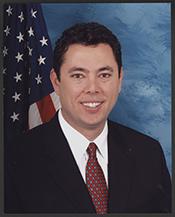 Rep. Jason Chaffetz (R-UT)
Description
Amendment prohibits the TSA from using Whole Body-Imaging machines for primary screening at airports; and would require the TSA to give passengers the option of a pat-down search in lieu of going through a WBI machine. The amendment also prohibits the TSA from storing, transferring, or copying any images resulting from going through a WBI machine.
Legislative Activity
Stay on top of the latest movement without scrolling through every action
House amendment offered
June 4, 2009
View full timeline
House amendment offered
June 4, 2009
Amendment agreed to Committee of the Whole
June 4, 2009 • 4:10 PM
Roll call votes on amendments in House
June 4, 2009 • 4:10 PM
House amendment agreed to: On agreeing to the Chaffetz amendment (A010) Agreed to by recorded vote: 310 - 118 (Roll no. 305).
June 4, 2009 • 4:10 PM
House amendment offered/reported by : Amendment (A010) offered by Mr. Chaffetz.(consideration: CR H6206-6208, H6213; text: CR H6206-6207)
June 4, 2009 • 2:53 PM
Amendment (A010) offered by Mr. Chaffetz. (consideration: CR H6206-6208, H6213; text: CR H6206-6207)
June 4, 2009 • 2:53 PM
On agreeing to the Chaffetz amendment (A010) Agreed to by recorded vote: 310 - 118 (Roll no. 305).
June 4, 2009 • 4:10 PM
Votes
1 roll call on this amendment
Text
Offered
TRANSPORTATION SECURITY ADMINISTRATION AUTHORIZATION ACT

The SPEAKER pro tempore. Pursuant to House Resolution 474 and rule
XVIII, the Chair declares the House in the Committee of the Whole House
on the State of the Union for the consideration of the bill, H.R. 2200.

{time}  1225

In the Committee of the Whole

Accordingly, the House resolved itself into the Committee of the
Whole House on the State of the Union for the consideration of the bill
(H.R. 2200) to authorize the Transportation Security Administration's
programs relating to the provision of transportation security, and for
other purposes, with Mr. Hastings of Florida in the chair.
The Clerk read the title of the bill.
The CHAIR. Pursuant to the rule, the bill is considered read the
first time.
The gentleman from Mississippi (Mr. Thompson) and the gentleman from
New York (Mr. King) each will control 30 minutes.
The Chair recognizes the gentleman from Mississippi.
Mr. THOMPSON of Mississippi. Mr. Chairman, I yield myself as much
time as I may consume.
I rise today in support of H.R. 2200, the Transportation Security
Administration Authorization Act. This legislation is a product of
months of negotiations, and includes significant contribution from
Republicans, industry stakeholders, labor, the Government
Accountability Office and the Department of Homeland Security's
Inspector General.
I want to recognize the bipartisan efforts of my colleagues on the
committee, most especially, Ms. Jackson-Lee, the chair, and Mr. Dent,
the ranking member. They worked hard to produce a thorough,
comprehensive, well-considered bill.
H.R. 2200 is the first measure to come to the House floor that fully
authorizes the Transportation Security Administration since its
establishment in 2001. Since that time, TSA has made significant
strides and rolled out several important programs to address security
challenges. As a result, today our transportation systems are more
secure than they were on September 11, 2001. However, they are not as
secure as they need to be.
With the change in administrations, TSA is at a critical crossroads
in its 8-year history. H.R. 2200 steers TSA on a course to becoming an
effective agency that works to enhance security in all our
transportation sectors, partners with key stakeholders, and does a
better job of utilizing technology to address gaps in security.
Mr. Chairman, this bill fulfills our constitutional responsibility to
provide a thorough road map to TSA on where it should go the next 2
years. H.R. 2200 authorizes $15.6 billion for TSA for fiscal year 2010
and fiscal year 2011. With these resources, the bill directs TSA, for
the first time, to work to achieve greater parity between security
efforts to protect aviation and surface transportation systems.
In the past few years, attacks on rail stations worldwide have
underscored the vulnerabilities to these systems. In response, H.R.
2200 triples funding for surface transportation over what was provided
in fiscal year 2009, and authorizes 300 more surface transportation
inspectors.
Among its key provisions is the creation of a Transit Security
Advisory Committee to provide greater stakeholder input and a Surface
Transportation Security Inspection Office to train and manage
inspectors.
The bill also strengthens security training for transportation
security officers, flight attendants, all cargo pilots, surface
transportation workers, and Federal flight deck officers.
I'm particularly pleased that we were able to include provisions to
enhance flight attendants' training and reimbursement for pilots
participating in Federal flight deck officers recurrent training.
To bolster airport security and screening, H.R. 2200 authorizes a
demonstration project and plan for the implementation of a secure
verification system for law enforcement officers flying while armed.
Further, it directs TSA to develop a strategic risk-based plan to
enhance security of airport perimeter access controls and a
demonstration program for biometric-based access control systems.
For too long we've been told that the wide-scale deployment of
biometrics is too difficult and impractical. But just last week, Mr.
Chairman, I saw biometrics, including readers, in use in Argentina at a
port and a federal building. This bill embraces the promise of this and
other 21st-century technologies to address our security challenges.
Additionally, there are a number of other noteworthy provisions that
grew out of extensive committee oversight that covers such programs as
Registered Traveler, Secure Flight, and the TWIC program.

{time}  1230

For example, the bill directs DHS to work with port operators to help
workers who are waiting for TWIC cards to be escorted so they can
continue to work. The TWIC provision also puts in place strict
timelines and flexibility on how cards are transmitted.
A key theme that runs throughout the bill is greater stakeholder
participation.
The Aviation Security Advisory Committee is codified in this bill.
So, too, is the Air Cargo and General Aviation Working Groups.
General aviation, in particular, gets a great deal of attention in
this bill. Members from both sides of the aisle have expressed serious
concern about TSA's approach when it comes to general aviation. Until
recently, TSA displayed a lack of understanding of the uniqueness of
the general aviation environment. H.R. 2200 takes some major steps
forward, with the authorization of a strong General Aviation Working
Group and the establishment of a new grant program for security
improvements to general aviation airports.
Finally, H.R. 2200 makes key improvements to air cargo and checked
baggage security. Specifically, H.R. 2200 eliminates the use of bag
match as an alternative means of checked baggage screening.
It also directs TSA to develop a process to consider reimbursement
claims by airports who invested in in-line explosive detection
equipment on a promise that TSA would defray the costs.
With respect to air cargo, it requires TSA to report on the status of
the Certified Cargo Screening Program.
TSA, Mr. Chairman, has testified that the 100 percent screening
requirement for passenger planes will not be

[[Page H6171]]

achieved by 2010 because TSA has had to expend extensive resources on
trying to negotiate international agreements with foreign authorities
on inbound international cargo. TSA, as a domestic security agency,
lacks jurisdiction or expertise to negotiate such agreements.
Achievement of this requirement is, therefore, dependent upon
assistance from CBP, the State Department and others, and, most
specifically, foreign governments.
To ensure that TSA meets the statutory 100 percent screening
requirement, section 201 of the bill gives TSA up to 2 more years to
negotiate agreements on inbound international cargo. Enactment of H.R.
2200, therefore, will help TSA put needed focus on working to meet
mandates for screening all cargo transported between U.S. airports on
passenger planes, whether originating in the U.S. or abroad.
This provision in no way eliminates the 100 percent screening
requirement. Instead, it sets TSA up for success and is responsive to
the real-world challenges of implementing the mandate in jurisdictions
where TSA has no jurisdiction.
Mr. Chairman, I look forward to our work today, and I encourage my
colleagues to pass H.R. 2200 in a swift, bipartisan fashion in order to
better ensure the security of all Americans.
Mr. Chairman, I submit for the Record exchanges of letters on this
legislation.
Mr. Chair, I rise to address concerns put forth in the Minority Views
section of the Committee Report for H.R. 2200. Specifically, I want to
address the Minority's assertion that the Majority rejected
consideration of proposed amendments during committee consideration of
the bill.
As is its custom, the Committee used a roster for amendments during
both full and subcommittee consideration of the TSA Authorization bill.
Each amendment submitted to be placed on the roster was considered by
the Committee unless the sponsor decided to withdraw it from
consideration.
Each of the twenty amendments filed prior to the Full Committee
markup were placed on the roster for Committee consideration. Of the
twenty amendments filed, thirteen were sponsored by Minority Members.
All but two of the thirteen amendments filed for the roster by Minority
Members were offered. Of the eleven amendments offered by Minority
Members for committee consideration, eight were agreed to and included
in the reported version of the bill.
H.R. 2200, the TSA Authorization Act, is the product of months of bi-
partisan cooperation and negotiations. Provisions proposed by the
Minority were included in the bill at each and every stage of its
consideration. Contrary to the assertion in the Minority Views, at no
point during Committee consideration did the Majority prevent the
Minority from putting forth amendments for consideration.
In closing, I would remind the Chair that the Committee on Homeland
Security has a strong record of working in a bi-partisan fashion to
ensure sound homeland security legislation is put before the House. As
Chairman, I am committed to ensuring that practice continues.

House of Representatives,

Committee on Homeland Security,

Washington, DC, May 15, 2009.
Hon. Bart Gordon,
Chairman, Committee on Science and Technology, Washington,
DC.
Dear Mr. Chairman: Thank you for your letter regarding H.R.
2200, the ``Transportation Security Administration
Authorization Act,'' introduced by Congresswoman Sheila
Jackson-Lee on April 30, 2009.
I appreciate your willingness to work cooperatively on this
legislation. I acknowledge that the Committee on Science and
Technology has a jurisdictional interest in certain
provisions of H.R. 2200. I appreciate your agreement to not
seek a sequential referral of this legislation and I
acknowledge that your decision to forgo a sequential referral
does not waive, alter, or otherwise affect the jurisdiction
of the Committee on Science and Technology.
I will ensure that this exchange of letters is included in
the legislative report on H.R. 2200 and in the Congressional
Record during floor consideration of the bill. I look forward
to working with you on this legislation and other matters of
great importance to this nation.
Sincerely,
Bennie G. Thompson,
Chairman.
____

House of Representatives, Committee on Science and
Technology,
Washington, DC, May 15, 2009.
Hon. Bennie G. Thompson,
Chairman, Committee on Homeland Security, Washington, DC.
Dear Mr. Chairman, I am writing to you concerning the
jurisdictional interest of the Committee on Science and
Technology in H.R. 2200, the Transportation Security
Administration Authorization Act. H.R. 2200 was introduced
and referred to the Committee on Homeland Security on April
30, 2009.
H.R. 2200 contains provisions that fall within the
jurisdiction of the Committee on Science and Technology. I
acknowledge the importance of H.R. 2200 and the need for the
legislation to move expeditiously. Therefore, while we have a
valid claim to jurisdiction over this bill, I agree not to
request a sequential referral. This, of course, is
conditional on our mutual understanding that nothing in this
legislation or my decision to forgo a sequential referral
waives, reduces, or otherwise affects the jurisdiction of the
Committee on Science and Technology, and that a copy of this
letter and of your response will be included in the
legislative report on H.R. 2200 and in the Congressional
Record when the bill is considered on the House Floor.
I also ask for your commitment to support our request to be
conferees during any House-Senate conference on H.R. 2200 or
similar legislation.
Thank you for your attention to this matter.
Sincerely,
Bart Gordon,
Chairman.
____

House of Representatives,

Committee on Homeland Security,

Washington, DC, May 19, 2009.
Hon. James L. Oberstar,
Chairman, Committee on Transportation and Infrastructure,
Washington, DC.
Dear Chairman Oberstar: Thank you for your letter regarding
H.R. 2200, the ``Transportation Security Administration
Authorization Act,'' introduced by Congresswoman Sheila
Jackson-Lee on April 30, 2009.
I appreciate your willingness to work cooperatively on this
legislation. I acknowledge that the Committee on
Transportation and Infrastructure has a jurisdictional
interest in certain provisions of H.R. 2200. I appreciate
your agreement to not seek a sequential referral of this
legislation and I acknowledge that your decision to forgo a
sequential referral does not waive, alter, or otherwise
affect the jurisdiction of the Committee on Transportation
and Infrastructure.
Further, I recognize that your Committee reserves the right
to seek appointment of conferees on the bill for the portions
of the bill over which your Committee has a jurisdictional
interest and I agree to support such a request.
I will ensure that this exchange of letters is included in
the legislative report on H.R. 2200 and in the Congressional
Record during floor consideration of the bill. I look forward
to working with you on this legislation and other matters of
great importance to this nation.
Sincerely,
Bennie G. Thompson,
Chairman.
____

House of Representatives, Committee on Transportation and
Infrastructure,
Washington, DC, May 19, 2009.
Hon. Bennie G. Thompson,
Chairman, Committee on Homeland Security, Washington, DC.
Dear Chairman Thompson: I write to you regarding H.R. 2200,
the ``Transportation Security Administration Authorization
Act of 2009''.
H.R. 2200 contains provisions that fall within the
jurisdiction of the Committee on Transportation and
Infrastructure. I recognize and appreciate your desire to
bring this legislation before the House in an expeditious
manner and, accordingly, I will not seek a sequential
referral of the bill. However, I agree to waive consideration
of this bill with the mutual understanding that my decision
to forgo a sequential referral of the bill does not waive,
reduce, or otherwise affect the jurisdiction of the Committee
on Transportation and Infrastructure over H.R. 2200.
Further, the Committee on Transportation and Infrastructure
reserves the right to seek the appointment of conferees
during any House-Senate conference convened on this
legislation on provisions of the bill that are within the
Committee's jurisdiction. I ask for your commitment to
support any request by the Committee on Transportation and
Infrastructure for the appointment of conferees on H.R. 2200
or similar legislation.
Please place a copy of this letter and your response
acknowledging the Committee on Transportation and
Infrastructure's jurisdictional interest in the Committee
Report on H.R. 2200 and in the Congressional Record during
consideration of the measure in the House.
I look forward to working with you as we prepare to pass
this important legislation.
Sincerely,
James L. Oberstar,
Chairman.
____

House of Representatives,

Committee on Homeland Security,

Washington, DC, May 19, 2009.
Hon. Nydia M. Velazquez,
Chairwoman, Committee on Small Business, Washington, DC.
Dear Chairwoman Velazquez: Thank you for your letter
regarding H.R. 2200, the ``Transportation Security
Administration Authorization Act,'' introduced by
Congresswoman Sheila Jackson-Lee on April 30, 2009.
I acknowledge that Section 103 of the reported version of
the bill contains a provision within the jurisdictional
interest of the

[[Page H6172]]

Committee on Small Business. I appreciate your agreement to
not seek a sequential referral of this legislation and I
acknowledge that your decision to forgo a sequential referral
does not waive, alter, or otherwise affect the jurisdiction
of the Committee on Small Business. I will be offering a
manager's amendment to the legislation that will strike
Section 103 of the bill.
I will ensure that this exchange of letters is included in
the legislative report on H.R. 2200 and in the Congressional
Record during floor consideration of the bill. I look forward
to working with you on this legislation and other matters of
great importance to this nation.
Sincerely,
Bennie G. Thompson,
Chairman.
____

House of Representatives,

Committee on Small Business,

Washington, DC, April 19, 2009.
Hon. Bennie Thompson,
Chairman, Committee on Homeland Security, Washington, DC.
Dear Mr. Chairman: I am writing to you concerning the
jurisdictional interest of the Committee on Small Business in
H.R. 2200, Transportation Security Administration Act of
2009.
The Committee on Small Business recognizes the importance
of the legislation and the need to move the legislation
expeditiously. Therefore, while the Committee on Small
Business has a valid claim to jurisdiction of Section 103 of
the bill, I will agree not to request a sequential referral
even though the Speaker and the Parliamentarian of the House
recognize this Committee's valid assertion of jurisdiction
over parts of the bill. I appreciate your willingness to
striking section 103 of H.R. 2200 from the bill in the
manager's amendment.
Nothing in this legislation or my decision to forgo a
sequential referral waives, reduces, or otherwise affects the
jurisdiction of the Committee on Small Business. I request
that a copy of this letter and of your response acknowledging
our valid jurisdictional interest be included as part of the
Congressional Record during consideration of this bill by the
House.
I share the Chairman's commitment to increase contracting
opportunities for small businesses in the federal marketplace
and look forward to working with him on this and other
matters to achieve this.
Sincerely,
Nydia M. Velazquez,
Chairwoman, Small Business Committee.

Mr. Chairman, I'd also like at this time to acknowledge my ranking
Member, Mr. King from New York, who played a very important role in
shepherding this legislation through the committee, and I'd like to
acknowledge that at this time.
Mr. Chairman, I reserve the balance of my time.
Mr. KING of New York. Mr. Chairman, I yield myself such time as I may
consume.
Mr. Chairman, at the very outset, let me commend Chairman Thompson
and his staff and the majority side for the cooperation that they
extended on this bill for making a truly bipartisan effort. I also want
to commend the chair of the subcommittee, Sheila Jackson-Lee, for her
bipartisan spirit and also, in a special way, Congressman Dent, the
ranking member of the subcommittee.
This, as the chairman said, was a collaborative effort. There was
tremendous cooperation. Obviously, there's some differences between
what we wanted and what ended up in this bill, but basically, it's a
fine bill.
And, Mr. Chairman, I also want to commend the outstanding men and
women of the TSA for the job that they do day in and day out in
protecting us. I see Mr. Pascrell is here. Just in the New York-New
Jersey region alone, last year they inspected 110 million passengers
coming through those airports, and again, last week alone, they
confiscated 23 illegal firearms that were going through airports. So
they do a very, very dedicated and outstanding job. And also, as far as
rail transportation, VIPER Teams have become a vital part of our
homeland security apparatus.
Having said that, let me just mention some of the concerns I do have
about the bill.
One is, Mr. Chairman, that there is, as of now, as of yet, no TSA
administrator. Also, my understanding is that there is not even anyone
in the wings. There's no one being considered, no one's being mentioned
to be the TSA administrator, and yet we put together this bill, which I
think is a good bill, but without any input from the head of TSA. And
since this is a 2-year authorization, we're going to be basically
laying out a plan, a plan of action for the next 2 years, I would have
preferred that we could have waited until we got an administrator in
place to work with us on it.
Additionally, Mr. Chairman, I raised the issue--and I think these two
issues are now interrelated--the issue of an authorization bill and the
issue of jurisdiction. This will be, as I see it, the second year in a
row that the committee will not have done an authorization bill. And
yet next week in the appropriations subcommittee, the Homeland Security
appropriations bill will be marked up, and the appropriators will act
without our committee's input on 80 percent of the Department of
Homeland Security's budget. They will act without our input on 75
percent of the Department of Homeland Security's personnel. And they
will consider funding of programs, like the 287(g) program, border
security, student visa enforcement, FEMA's hurricane response
capabilities, the Coast Guard's port security programs, Secret Service
protection of the President, to name a few, all without guidance from
this committee.
Now, I believe the main reason for this--and I understand the
position that the chairman is in--the main, I think, as I see the
reason is that because of the multiplicity of jurisdictional claims to
homeland security, it is very difficult for our committee to move
forward. Now, the 9/11 Commission, one of their strongest
recommendations was that homeland security be consolidated in one
committee.
Several years ago, there were 88 committees and subcommittees that
claimed some piece of jurisdiction over homeland security. That number
is now up to 108, and this should not be a partisan issue. Both
Secretary Chertoff in the previous administration and Secretary
Napolitano in the Obama administration have called for consolidation,
and yet it's not being done.
So, for instance, if we had gone forward and tried to do an
authorization bill, we couldn't authorize the Coast Guard or FEMA
because the Committee on Transportation and Infrastructure would
object. We couldn't authorize Immigration and Customs Enforcement, the
Secret Service, or U.S. Citizen Immigration Services because the
Committee on Judiciary would object. And we can't authorize Customs and
Border Protection because the Ways and Means Committee would object.
So I think it's really important that we make an effort over the next
year during this Congress to implement, again, one of the most
fundamental concerns of the 9/11 Commission, and that was to
consolidate jurisdiction in one committee, the Homeland Security
Committee.
And I believe that in 2005 and 2006, when this side of the aisle did
control the committee, we did get authorization bills done, and there
were jurisdictional disputes. We won them, and I think that was the
direction we were going in, and the direction we should continue to go
in.
I gave the chairman tremendous credit 2 years ago when we adopted
H.R. 1, which implemented many of the 9/11 Commission recommendations,
but this fundamental one still has not been done. And I realize that no
one likes to cede jurisdiction, no one likes to give up turf, but the
fact is we're talking about an issue that threatens the survival of our
country, homeland security. And so long as we have this dysfunctional
system where jurisdiction is spread out over so many committees of the
Congress, I don't believe we can fully do the job that we should do.
The chairman does a good job, the staff does a good job, I believe we
do a very good job on our side of the aisle, but we are limited because
of these jurisdictional limitations. And so as we go forward on this
debate today, I would hope we would keep that in mind, and as we go
forward over the course of the year, we keep that in mind, also, as we
try to do the job that we were established to do when we became a
permanent committee back in 2005.
Mr. Chairman, I ask unanimous consent that Mr. Dent, the ranking
member of the subcommittee, be authorized to control the remainder of
my time, and I reserve the balance of our time.
The CHAIRMAN. Is there objection to the request of the gentleman from
New York (Mr. King)?
There was no objection.
Mr. THOMPSON of Mississippi. Mr. Chairman, may I inquire as to how
much time each side has remaining?

[[Page H6173]]

The CHAIR. The gentleman from Mississippi (Mr. Thompson) has 21\1/2\
minutes remaining, and the gentleman from Pennsylvania (Mr. Dent) has
24\1/2\ minutes remaining.
Mr. THOMPSON of Mississippi. Mr. Chairman, I'm happy to recognize the
vice chair of the full committee for 2 minutes, Ms. Sanchez, for a
colloquy.
Ms. LORETTA SANCHEZ of California. Mr. Chairman, I rise in support of
H.R. 2200, the Transportation Security Administration Authorization
Act, and I would like to engage the honorable Member from Mississippi,
the chairman, Mr. Thompson, in a colloquy regarding the Transportation
Worker Identity Credential, or TWIC as it is known here in the
Congress.
During the full committee markup, I offered an amendment addressing
several important issues within the TWIC program, and I was pleased
that my amendment was passed unanimously.
A key provision in my amendment requires that the Secretary of
Homeland Security work with owners and operators of facilities and
vessels to develop procedures which allow those who are waiting for
their TWIC card to have access to secure and restricted areas, as long
as they are escorted. This also applies to those who are waiting for a
reissuance of an existing card.
Without clear collaboration between DHS and port officials,
individuals waiting for their TWIC card have been unable to work. Some
workers have waited up to 15 months to receive their TWIC card.
And the goal of my amendment is to ensure that these workers are
still able to support themselves and their families.
Many people have been negatively affected by TSA's delays in issuing
the TWIC. For example, there's the case of a longshoreman in the Port
of Seattle who applied for a TWIC on October 25, 2008, more than 4
months before he was required to do so at his port. And unfortunately,
the gentleman was unable to work for several weeks since it took 4
months for TSA to come back to him and to ask for a copy of his birth
certificate. You see, he had been born on a military base abroad, and I
understand that the gentleman had to drain his savings account to
support his family while he waited for his TWIC, and thus, this is
unacceptable.
I hope this legislation becomes law soon, and in the meantime, we
must act immediately to ensure that our port workers are able to work
and support their families.
I want to thank Chairman Thompson for his support on this issue.
Mr. THOMPSON of Mississippi. I yield an additional 30 seconds to
respond.
I appreciate the gentlewoman from California's leadership on this
critical issue. I share her concerns about the impact that applications
backlogs has had on port workers around the Nation and appreciate the
comprehensive approach she has taken to addressing the weaknesses in
the program that she has identified through her oversight work on the
committee and look forward to solving the problem.
Ms. LORETTA SANCHEZ of California. Thank you, Mr. Chairman.
Mr. THOMPSON of Mississippi. I reserve the balance of my time.
Mr. DENT. Mr. Chairman, I yield 4 minutes to the distinguished
gentleman from the State of Georgia (Mr. Broun).
Mr. BROUN of Georgia. Recently, while I was on a hunting trip up
north, I flew out of an airport in Montana. The number of screeners
actually outnumbered the number of passengers. So, when this bill came
before the Homeland Security Committee, I offered several amendments,
one of which would have required a GAO study of the current staffing
levels at TSA to determine their appropriateness and whether or not
staffing levels could be reduced by consolidation of duties and
functions or by enhanced use of technology.
In March 2009, GAO reported that, ``TSA has not followed Federal
internal control standards to assist it in implementing DHS's risk
management framework and informing resource allocation.'' I wanted to
ensure that hard-earned taxpayer funds were being used in the most
cost-effective and efficient manner and ensure that TSA wouldn't become
known as Thousands Standing Around.

{time}  1245

I'm disappointed that my amendment was not accepted. A number of
commonsense provisions were not included by the majority, or were
watered down to avoid the jurisdiction of other committees. Rather than
produce a good bill and negotiate final language with other committees,
our committee only allowed provisions to be considered in committee
that were wholly within the Committee on Homeland Security's rule 10
jurisdiction. This bill could be much better.
For example, the majority showed that they saw no value in affirming
TSA employees' rights to protect themselves during a public health
emergency. One of my amendments offered in committee would have simply
allowed any TSA employee to choose to wear a protective face mask in
the event of a pandemic flu outbreak or other public health emergency.
TSA employees encounter 2 million domestic and international
passengers every day and should not be prohibited by their supervisors
from wearing the appropriate personal protective equipment in the event
of a public health emergency, particularly when the disease is both
contagious and deadly.
The National Treasury Employees Union, which represents many of the
employees, voiced strong support for this provision designed to protect
the TSA's frontline officers. The only reason this provision was
essentially gutted by the majority with a ``perfecting'' amendment and
any references to public health emergency was removed is because the
provision could have allowed the Committee on Energy and Commerce to
review the language requiring the Secretary of Homeland Security to
collaborate with the Secretary of Health and Human Services.
Other changes were made to weaken other Republican amendments as
well. At the markup, I, along with my fellow Republican members of the
committee, unanimously supported an amendment authored by
Representative Mark Souder that would have placed any detainee that is
housed down at Guantanamo Bay on or after January 1, 2009, to place
them on TSA's No Fly List. I think that makes sense.
Again, this amendment was gutted, giving the President the sole
authority to determine if a former Guantanamo detainee should be
assigned to the No Fly List. The committee must assert its jurisdiction
and conduct vigorous oversight of the transfer or release of detainees
currently housed at Guantanamo Bay.
The Homeland Security Committee is the primary authorizing committee
for the Department of Homeland Security, which was created after the 9/
11 attacks to protect our homeland. We cannot shirk our responsibility.
It is justified and necessary for this committee to take a lead role in
protecting and securing American citizens.
I'm pleased, however, that my cybersecurity amendment was included
with others in the bipartisan en bloc amendment adopted by the
committee. My amendment adds the vulnerability of cyberattack to the
list of risks to be assessed and ranked by TSA.
Reports indicate that civilian air traffic computer networks have
been penetrated multiple times in recent years.
The CHAIR. The time of the gentleman has expired.
Mr. DENT. I yield an additional 30 seconds to Dr. Broun.
Mr. BROUN of Georgia. They include an attack that partially shut down
air traffic data systems in Alaska. Our transportation systems are
networked. Train switches can operate remotely. Even some metro buses
can change a traffic light as they approach. It is a very important
amendment, and I thank my colleagues for accepting it.
In closing, I would like to thank my colleagues and the staff on this
committee from both sides of the aisle for working together on this
bill and on numerous other amendments in a bipartisan manner. I'm sorry
we cannot come to agreement on all of our amendments.
Going forward, I hope that we can work together to address the
jurisdiction concerns that have caused so many problems for our
committee.
Mr. THOMPSON of Mississippi. Mr. Chairman, I yield 2 minutes to the
distinguished gentleman from Paterson, New Jersey (Mr. Pascrell).
Mr. PASCRELL. Mr. Chairman, I rise to speak in strong support of H.R.
2200,

[[Page H6174]]

the Transportation Security Administration Authorization Act, as this
is a necessary piece of legislation that is long overdue. In fact, we
have never fully authorized the TSA since the enactment of the Aviation
and Transportation Security Act of 2001.
I want to particularly thank Mr. Thompson, who chaired this and led
this legislation through committee; along with Peter King, the ranking
member; Ms. Jackson-Lee as the subcommittee chairwoman; and Mr. Dent
from Pennsylvania. I want to congratulate all of them for working hard
to have a bipartisan piece of legislation.
We recognize that the safety of the American people must be our
number one job. Nothing that we do here can supercede that.
The bill authorizes $7.6 billion in fiscal year 2010 and $8.1 billion
in fiscal 2011 for the activities of the TSA, including key increases,
many of which have already been mentioned.
As an original member of the Homeland Security Committee, one thing I
observed was that ever since TSA was created in 2001, its focus has
been almost solely on aviation security, to the detriment of surface
transportation taken by millions of Americans each day.
A strong aspect of this legislation is beginning to put surface
transportation security on an equal footing with aviation security,
with key surface transportation security enhancements.
I'm glad to see that this authorization also addresses the long
unattended issue of airport perimeter security, whose vulnerability to
infiltration I have tried to highlight for many years. I think that
this is important. We're looking at it. We're studying this issue so we
do not overreact but make sure that the perimeters are just as much
protected as the inside.
The CHAIR. The time of the gentleman has expired.
Mr. THOMPSON of Mississippi. I yield the gentleman an additional 30
seconds.
Mr. PASCRELL. I think all of us should read Secretary Napolitano's
speech yesterday at Aspen, where there were bipartisan group folks
studying the security of this country. She laid out five principal
areas of concern if we're going to protect America and its
neighborhoods. It is a great guidepost to inclusive security. I ask
that we do this.
I also ask to consider, Mr. Chairman, in the future the issue and the
quality of resilience, which Joshua Cooper Ramo presented in his book
which was just published in March. If we truly want to protect America,
what about the resiliency and how much can we take that into
consideration, God forbid we have another attack.
Mr. DENT. Mr. Chairman, I yield 2 minutes to the distinguished
gentleman from the State of Alaska (Mr. Young).
Mr. YOUNG of Alaska. Mr. Chairman, I rise to enter into a colloquy
with the distinguished chairman of Homeland Security, Mr. Thompson.
Mr. Thompson, as we prepare to authorize appropriations for the
Transportation Security Administration, I'd like to thank you for your
leadership in the committee and your efforts to bring this legislation
to the floor.
I would also like to bring to your attention an issue that needs to
be corrected. In 2003, when I was chairman of the Transportation and
Infrastructure Committee, language was included in the Vision 100 Act,
Public Law 108-176, which required deployment of TSA screeners in the
Alaskan communities of Kenai, Homer, and Valdez. Since that time, the
Ted Stevens International Airport has improved bag screening
capabilities and can adequately screen bags for the three previously
mentioned airports.
Kenai, Homer, and Valdez are serviced by air carriers under a partial
program. There are no regulatory requirements to screen bags for
partial program carriers, so section 613 of the Vision 100 Act imposes
a requirement not in effect for other similarly situated airports. The
screeners are no longer needed, and TSA has asked that I repeal the
language from Vision 100.
This will not cost any money. Rather, this will save TSA money. TSA
has informed me that by including this legislation in the TSA
Authorization, it would save $1 million a year.
I'd like to ask the gentleman to comment on this.
Mr. THOMPSON of Mississippi. Let me say that I appreciate the
gentleman from Alaska bringing this to my attention. This is a novel
issue for us, but I believe there could be some efficiencies in making
the change. I'm pleased to work with you on this issue as the bill
moves to conference.
Mr. YOUNG of Alaska. I thank the gentleman for working with us. And
this is requested by the TSA, and hopefully when this bill gets to
conference, this will be included.
I thank the gentleman for working with me.
Mr. THOMPSON of Mississippi. Mr. Chairman, I yield 1\1/2\ minutes to
the gentlewoman from Nevada (Ms. Titus).
Ms. TITUS. I rise today in support of the TSA reauthorization bill
and to thank Chairman Thompson for his leadership in this important
issue. I also would like to highlight two elements of the bill that I
particularly support.
It's been over 7 years since the attacks of September 11 and there
are still no guidelines for security training for flight attendants.
H.R. 2200 requires that these individuals undergo mandatory and
standardized security training.
Flight attendants are the only working group in the cabin aboard
every commercial flight. They are literally on the front lines. They
are an integral part of air security.
This legislation provides for meaningful training that will equip
these flight attendants with danger detection and self-defense
techniques and other important skills needed in the event of a crisis.
This mandatory security training, which is needed and wanted by flight
attendants, is an important step in ensuring our skies are as safe as
they can be.
The second aspect of this legislation that I'd like to address is
general aviation. In 2008, there were more than 400,000 general
aviation flights from the Las Vegas area serving an estimated 1.3
million passengers. From our three local airports, you can take one of
these flights to view the grandeur of the Grand Canyon and the desert
which surrounds our city.
General aviation flights are also critical to supplying goods to Las
Vegas. And they also are an efficient means for business travelers to
reach our great city, one of the most popular business travel
destinations.
This is a vital industry to my district, and I will be a voice for it
here in Congress. I am hopeful that the TSA will involve this important
industry in rulemaking, and I'm confident that they will.
Mr. DENT. Mr. Chairman, may I inquire as to how much time I have
remaining on this side?
The CHAIR. The gentleman from Pennsylvania has 18\1/2\ minutes. The
gentleman from Mississippi has 15 minutes.
Mr. DENT. Mr. Chairman, I yield 2 minutes to the distinguished
gentleman from the State of Delaware (Mr. Castle).
Mr. CASTLE. I thank the distinguished gentleman from the great
Commonwealth of Pennsylvania for yielding. I also rise in support of
H.R. 2200.
Following the attacks on September 11, 2001, our Nation took
unprecedented steps to secure our Nation's airlines. Since then,
Congress has continued to provide the needed level of funding to ensure
that our airlines are among the safest in the world. But until
recently, however, rail and transit security grant programs remain
badly underfunded given both the volume of riders carried each day and
the known terrorist threat to such passengers.
Each weekday, more than 14 million people use public transportation.
Nearly 30 million people ride Amtrak each year, including millions of
commuters along the heavily traveled Northeast corridor. Given the
attacks on rail and transit in Spain, the United Kingdom, and India,
this is a vulnerability that cannot be ignored.
In response, I have worked closely with Congressmen Peter King, Rush
Holt, and other Members of this body to focus more of our security
efforts on protecting rail and transit riders and infrastructure.
Over the last several years, we have made progress on this front by
increasing rail and transit security grant funding, studying foreign
rail security practices, and expanding rail and transit canine teams
and public awareness campaigns.

[[Page H6175]]

I must say, however, that I was extremely discouraged to learn in
March that TSA and FEMA have struggled when it comes to spending
Federal grant dollars in a timely fashion. In fact, recent reports
indicate that large percentages of grant dollars appropriated in fiscal
years 2006, 2007, and 2008 had yet to be awarded to local authorities.
For this reason, I strongly support section 307 of this legislation,
which requires the Department of Homeland Security's Inspector General
to investigate the administration of these security grants and make
recommendations for streamlining the grant award process within 180
days.
Mr. Chairman, I look forward to reading the results of the IG's
report on the rail and transit security grant distribution process, and
I encourage my colleagues to support this important legislation.

{time}  1300

Mr. THOMPSON of Mississippi. Mr. Chairman, I recognize for 1\1/2\
minutes the gentleman from Oregon (Mr. Blumenauer) for the purposes of
a colloquy.
Mr. BLUMENAUER. I appreciate the gentleman's courtesy as I appreciate
the chairman's leadership.
I rise in a colloquy to discuss with you the TSA revised list of
prohibited items on airplanes.
In 2005, they revised rules to allow items up to 7 inches--knitting
needles, scissors, screwdrivers--but they continue to prohibit tiny pen
knives under 2.5 inches. I find it frustrating for the traveling public
who can't understand the distinctions between these items, and it has
had a significant commercial impact.
This little Leatherman tool, which is very popular, is manufactured
in my district. It is certainly less dangerous, one would think, than
the items that they're already letting in the air. Since they have made
those rules, it has had a significant impact on the sales because
consumers don't think about this when they go through airport security
lines and lose the items.
I wonder if it's possible to work with you, Mr. Chairman, to
encourage the TSA to conduct periodic comprehensive reviews of this
prohibited items list to ensure that it reflects the most current risk-
based assessment?
Mr. THOMPSON of Mississippi. I can assure the gentleman--and I thank
him for his concerns--that the committee will work with TSA in
conducting appropriate and periodic reviews of prohibited items. Your
graphic display of those prohibited items speaks volumes as to why this
review should occur.
Mr. BLUMENAUER. Thank you, Mr. Chairman. I appreciate your words of
encouragement as I appreciate your leadership, and I look forward to
working with you.
Mr. DENT. Mr. Chairman, I yield 90 seconds to the distinguished
gentleman from Beavercreek, Ohio (Mr. Austria).
Mr. AUSTRIA. I thank the ranking member for yielding.
Mr. Chairman, first of all, I want to thank Chairman Thompson,
Ranking Member King, as well as the subcommittee that worked on this,
for working in a bipartisan manner.
All of our lives changed after 9/11. This committee plays a very
important role in ensuring the safety of all Americans. As a new Member
of Congress and as a new member of the Homeland Security Committee, it
is good to see this committee work in a bipartisan manner as we push
good legislation forward that I support.
Let me just say that, as a member of that subcommittee who heard this
bill, we had an opportunity to talk to and to listen to industry
groups, to business coalitions, to union representatives, and to
subject matter experts. However, it seems to me that we would have had
a better opportunity to create an even better bill had we had an
opportunity to wait for the administrator of TSA to be appointed and to
understand what policies that new administrator was going to put in
place. We then would have been able to work around those policies. With
that being said, the other side of the aisle decided it was important
to move this legislation forward.
I think we've got a good bill before us that does some good things.
It will help ensure that the screening processes that are being used
for passengers are working. It will help us to address other
vulnerabilities in our transportation system, such as underwater
tunnels and open rail lines. It will prohibit the outsourcing of
terrorist watch lists--No Fly Lists, selectee lists, verifications--to
other nongovernmental entities or to private companies. I think those
are good things.
I also think there were some good amendments that were offered in
this committee that could have strengthened this bill, and we're going
to hear about some of those amendments as we proceed.
The CHAIR. The time of the gentleman has expired.
Mr. DENT. Mr. Chairman, I would like to yield the gentleman an
additional 15 seconds.
Mr. AUSTRIA. Just to close, I think we have an opportunity to
strengthen this bill, and I would hope that we will continue to work
together in a bipartisan manner with this committee to strengthen this
bill.
Mr. THOMPSON of Mississippi. Mr. Chairman, I yield 3 minutes to the
distinguished chairwoman of the subcommittee, who also is the author of
this legislation, the gentlewoman from Houston, Texas (Ms. Jackson-
Lee).
Ms. JACKSON-LEE of Texas. I thank the distinguished chairman for his
leadership on this issue, as well the leadership of the ranking full
committee member. As well, I am thankful to have had the opportunity to
work with the ranking member of the subcommittee, Mr. Dent.
This has been a bipartisan effort. It has been a tough effort for my
colleagues. It is important to realize that the work has been intense
and that it has been concerted, direct and, I think, open. I want to
applaud the process. Likewise, I would like to acknowledge the Homeland
Security Committee's staff and particularly Mike Finan--the
subcommittee staff director--for their leadership as well.
So I rise today with great pride in the efforts of my subcommittee
and of the full committee, and I look forward to today's swift passage
of H.R. 2200, the Transportation Security Administration Authorization
Act.
H.R. 2200 provides TSA with the resources it needs by authorizing
over $15.6 billion for the Transportation Security Administration for
FY 2010 and FY 2011. At the beginning of this Congress, Chairman
Thompson stated that the committee will be moving to pass authorizing
legislation for the Department of Homeland Security.
It is good to make good on a promise. It is good that this committee
recognizes that it is sometimes the only firewall between the security
of this Nation and the terrible, heinous acts of
9/11. Sometimes we forget that we are only a few short years away from
that terribly tragic day that no one in America will ever forget. We
continue to mourn those who have been lost, and we continue to give our
support to those families who have experienced those severe and
devastating losses.
Therefore, this bill comes before us in the backdrop of recognizing
the ultimate challenge of our responsibility. The bill before us, the
Transportation Security Administration Authorization Act, helps to
further this important effort. I am proud that it is substantiated by
over a dozen hearings held over the past 2 years, by countless
briefings and by reports from the GAO and from the IG. I am proud of
the bipartisan manner in which this comprehensive TSA bill was crafted.
I am especially pleased that the gentleman from Pennsylvania (Mr.
Dent), as I mentioned earlier, is an original cosponsor of this
legislation.
Chairman Thompson and Secretary Napolitano agreed during the
beginning of this Congress that surface transportation security needed
to be on equal footing with aviation at TSA. This bill furthers this
important objective.
As the chairwoman of this subcommittee, I have visited a number of
surface transportation sites, including the 2nd Street site being built
in New York--a multibillion dollar project--as there are many new
starts coming about in this country. The existing rail system is
utilized by millions of Americans every single day.
Mr. Chairman, this bill acts on recommendations issued in 2008 by the
inspector general that were reaffirmed earlier this year by
establishing the Surface Transportation Security Inspection Office to
house the Surface

[[Page H6176]]

Transportation Security Inspection Program, by streamlining its mission
and by clarifying its command structure.
The CHAIR. The time of the gentlewoman has expired.
Mr. THOMPSON of Mississippi. Mr. Chairman, I yield the gentlewoman an
additional 2 minutes.
Ms. JACKSON-LEE of Texas. In an effort to reach out more
constructively to surface transportation security stakeholders, this
bill creates the Surface Transportation Security Advisory Committee to
give them a formal outlet for giving TSA feedback on security issues.
My subcommittee has heard many worthy criticisms about the
dissemination of surface transportation security grants over the last 2
years. Accordingly, this bill has included language that will begin to
improve the process so that we can get the inventiveness of America
back into the security mainstream so that we can secure this Nation.
This bill also directs the GAO to study the efforts of the
Department, its components and other relevant entities to learn from
foreign nations whose passenger rail and transit systems have been
attacked by terrorists and to access lessons to address security gaps
in the United States, such as the tragedy of Mumbai, where I visited to
assess the horrificness of the impact of that terrorist act and of the
victims who were impacted. In the last several years, we have seen
attacks on rail systems from Europe to Asia. H.R. 2200 takes steps to
learn important lessons that can be applied at home.
In addition, I have worked with the gentleman from California (Mr.
Daniel E. Lungren) on a provision that creates a new class of materials
requiring a security background check for truckers. This provision will
target the transport of truly sensitive materials, and it will enable
companies and their drivers to have a more seamless gateway to the
market. I thank the gentleman for his bipartisan cooperation.
In addition to the great strides this bill makes to secure our
surface transportation, it also builds on the work we have done over
the years. Earlier this year, the Inspector General confirmed that TSA
has in the past compromised covert testing operations. We have
corrected that. The bill prohibits advanced notice of covert testing.
H.R. 2200 also codifies the Aviation Security Advisory Committee. It
requires it to perform specific duties. We also have concerns about
TSA's proposed rulemaking covering general aviation. We have responded
to that in this bill.
The bill also requires the rigorous oversight of the Secure Flight
passenger watch list matching program by requiring updates to Congress
every 90 days. In fact, we are not allowing Guantanamo Bay detainees to
travel without, if you will, regulation at all. We are working with the
White House.
I also believe it is important to note that we are training flight
attendants, that we are working on technologies and are helping TSA
employees.
Mr. Chairman, this is a great bill, and I ask my colleagues to
support it.
Mr. DENT. Mr. Chairman, I yield 2\1/2\ minutes to the gentlewoman
from Macomb County, Michigan (Mrs. Miller).
Mrs. MILLER of Michigan. Mr. Chairman, I rise today in strong support
of H.R. 2200, the Transportation Security Administration Authorization
Act.
The men and women of the TSA are really dedicated professionals who
ensure that our flying public arrive at their destinations safely.
Although at times it might be a hassle for us to remove our shoes or to
show our boarding passes and identification, these measures have made
it much more difficult for terrorists to take advantage of dangerous
situations or to bring weapons and explosives on commercial aircraft.
It has been almost 8 years from that horrific day on 9/11 when
terrorists turned our airplanes into missiles, taking the lives of
almost 3,000 of our fellow Americans. Thankfully, we've not been
attacked again, and it's not just because we're lucky. It's because
dedicated professionals throughout the government are working day and
night to prevent attacks, and we need to provide them with the means to
prevent, to deter and to respond to terrorist attacks.
A key piece of our success is that we have not become complacent. We
must remain vigilant. Part of that vigilance requires that we make
certain that those charged with ensuring our safety are adequately
trained. So I was especially pleased to see that a section mandating
advanced security training for flight attendants was included in this
bill.
As we are all too painfully aware, flight attendants were among the
first victims on 9/11. Flight attendants need to know how to handle a
crowd and how to be aware of all of the activity that might be
surrounding them in such an enclosed space. So security training, good
security training, will help prepare them for such a scenario on how to
work with the other flight attendants in controlling a crowd or, again,
being conscious of other things that are going on in the cabin as well.
In fact, Richard Reid, the convicted shoe bomber, was prevented from
detonating his shoe, filled with explosives, because alert flight
attendants interrupted him from detonating those explosives.
Also, providing adequate security to the flying public should be a
principle goal of this body, so I was dismayed to see that our friends
on the other side of the aisle rejected an amendment that would have
placed all of the detainees from Guantanamo Bay on the No Fly List.
Instead, they watered down this commonsense amendment and left that
decision up to the discretion of the President. Now, I don't know about
you, but I shudder to think that we might allow these detainees to
actually board a commercial aircraft and to sit next to us and our
families.
Isn't the whole purpose of the No Fly List to keep dangerous people
off these airplanes? I would say, if the Gitmo detainees don't qualify
for the No Fly List, who in the world does qualify for that list?
Congress shouldn't allow these dangerous detainees to fly on commercial
aircraft. I think we should err on the side of caution and put them on
the No Fly List.
I want to recognize the good work of Chairman Thompson and certainly
of Ranking Member King. I urge my colleagues to support H.R. 2200.
Mr. THOMPSON of Mississippi. Mr. Chairman, I yield 30 seconds to the
distinguished gentleman from Rhode Island (Mr. Kennedy).
Mr. KENNEDY. I thank the gentleman from Mississippi, and I thank all
of those who have worked on this very important bill.
I had the opportunity to serve on the committee on oversight. Last
week, we had a hearing on H1N1, the flu. Most people have forgotten
about the flu already. What was very startling to me was that, like
many things, they come and they go in our public consciousness. This
flu is coming back by all the scientists' projections, and when it
comes back, it's going to have mutated into an even more deadly strain.
The CHAIR. The time of the gentleman has expired.
Mr. THOMPSON of Mississippi. I yield an additional 15 seconds to the
gentleman.
Mr. KENNEDY. The average age of death of people from this flu is 19
years old. The average person in an ICU is 24 years old. So this is a
whole new phenomenon in terms of your father's Chevrolet. This is a
whole new issue we are dealing with. I would hope that Homeland
Security would be working with public health and with everyone else to
help address this.
Mr. DENT. Mr. Chairman, at this time, I would like to yield 2 minutes
to the distinguished naval aviator from Sugar Land, Texas (Mr. Olson).
Mr. OLSON. Thank you to my friend from Pennsylvania. I will be quick
here.
Mr. Chairman, I rise in support of H.R. 2200, the Transportation
Security Administration Authorization Act, and I urge its immediate
passage.
As a member of the Homeland Security Committee, I was pleased by the
serious bipartisan manner in which this legislation was considered. In
fact, the hard work and dedication that the committee members showed in
crafting this bill makes me hopeful that we can enact a much-needed,
full Department of Homeland Security authorization bill rather than
continue to legislate piece by piece.

{time}  1315

I rise specifically today to speak about the general aviation
security provisions in the bill and the TSA's Large Aircraft Security
Program.

[[Page H6177]]

The TSA's notice of proposed rulemaking to address the perceived
threats posed by general aviation aircraft essentially took the
Department's principles of risk-based security measures and threw them
out the window. The deficiencies of the proposal were the direct result
of consultation without collaboration. The TSA met with industry
stakeholders and interested parties and then dismissed their input.
Given the terrible flaws in this process, it is not surprising that
the proposed product is less than satisfactory as well. Many of the
provisions will place a heavy financial burden on the general aviation
community yet result in little genuine improvement in security.
Now is not the time to put a financial squeeze on an industry that
contributes so much to our national economy. The TSA has proposed using
third-party private contractors to review general aviation manifests
and conduct watch list verifications. I find it unacceptable that
unaccountable contractors would have access to travelers' personal
information and have the authority to bar them from a private flight.
Any check against a No Fly List or Terrorist Watch List is an
inherently governmental function and must be performed by a
democratically accountable agency. I am glad the committee adopted my
amendment that will prohibit such a practice.
But let me be clear, I strongly support improving security for
general aviation and airports. What I object to is a heavy-handed
approach that abandons the risk-based principles upon which TSA
operates.
The provision I was able to include in H.R. 2200 is a step in the
right direction but there is more to be done in the future. I thank the
committee for hearing my concerns and I am pleased to join them in
supporting this bill today.
I would like to thank subcommittee Chairman Jackson-Lee and Chairman
Thompson for making this a bi-partisan bill and bringing both sides to
the negotiating table at an early stage. I would also like to thank
subcommittee ranking member Dent and Committee ranking member King for
their work on this important issue.
I urge passage of the bill.
Mr. DENT. Mr. Chairman, may I inquire how much time we have
remaining?
The CHAIR. The gentleman from Pennsylvania has 10\1/4\ minutes. The
gentleman from Mississippi has 7\3/4\ minutes.
Mr. THOMPSON of Mississippi. Mr. Chairman, I yield 2 minutes to the
distinguished gentleman from Houston, Texas (Mr. Al Green).
Mr. AL GREEN of Texas. Mr. Chairman, I rise in support of this bill
because this bill is inclusive in approach and comprehensive in scope.
It's not perfect, Mr. Chairman, yet it does help perfect Homeland
Security.
It provides for surface transportation, security enhancement by
tripling the funds available. It provides security training and
performance enhancement for significant employees. It provides that
airport security and screening enhancement policies be put in place. It
provides, Mr. Chairman, that foreign repair stations' security be
elevated to U.S. standards. It provides transportation security
credential improvements to guard against intruders. It provides for
domestic air cargo and checked baggage security to better protect the
traveling public. It provides for a general aviation enhancement grant
program to help general aviation airports. It provides K-9 detection
resources to sniff out drugs. It provides research and development to
integrate transportation and security technologies.
It's not perfect, yet it does help to perfect Homeland Security. It
is inclusive in approach in that we had the inclusion of all parties
interested--the partners, all of the stakeholders were brought into
this, Republicans and Democrats alike, labor and industry as well. It
is comprehensive in scope.
I support this bill. I thank the chairman for the wonderful work he
has done, the ranking member, and also the subcommittee chair, Sheila
Jackson-Lee, the Congresswoman from Texas, my colleague, as well as Mr.
Dent, the ranking member.
Mr. DENT. Mr. Chairman, I yield 3 minutes to the distinguished
gentleman from Florida (Mr. Bilirakis).
Mr. BILIRAKIS. Mr. Chairman, I rise in support of H.R. 2200, the
Transportation Security Administration Authorization Act. This bill
will help to enhance our Nation's transportation security and contains
many important provisions.
I'm particularly pleased that the manager's amendment includes a
provision I authored to clarify the roles and responsibilities of the
Department of Homeland Security and the Department of Transportation
with respect to the security of pipelines. I thank Chairman Thompson
for working with me on this issue and for including this in the
manager's amendment.
Over the past 36 years, there have been multiple instances of
individuals rupturing pipelines in areas surrounding my district. Most
recently in November 2007, three teenagers drilled into an anhydrous
ammonia pipeline after being told that the pipeline contained money.
The pipeline breach necessitated the evacuation of nearly 300 people in
my district.
At the time, local officials received conflicting guidance from the
Department of Homeland Security and the Department of Transportation
about whether this was a security incident or a safety incident.
My provision seeks to resolve issues of this sort by requiring the
Comptroller General to study the roles and responsibilities of the
Department of Homeland Security and the Department of Transportation
with respect to pipelines and report the results of the study to the
Committee on Homeland Security within 6 months.
Finally, my amendment requires the Secretary of Homeland Security to
review and analyze the GAO study and report to the Committee on
Homeland Security on her review and analysis, including recommendations
for changes to the Annex to the Memorandum of Understanding between DHS
and DOT or other improvements to pipeline security activities at DHS.
Clarifying the respective roles of DHS and DOT will help to ensure that
the officials in the areas that we represent do not receive conflicting
guidance in the event of a future pipeline breach.
I'm also pleased that the bill includes my provision that would
provide reimbursement to airports that used their own funding to
install explosive detective systems after 9/11. These airports
installed such systems after receiving assurances from the Federal
Government that they would be reimbursed. However, to date, they have
not been reimbursed.
Congress addressed this issue in section 1604 of the Implementing
Recommendations of the 9/11 Commission Act. But despite this explicit
direction in 2007, TSA has not yet reimbursed a single eligible
airport. My provision requires TSA to establish a process for resolving
reimbursement claims within 6 months of receiving them. It also
requires TSA to report to the Committee on Homeland Security an outline
of the process used for the consideration for reimbursement claims,
including a reimbursement schedule. This is a commonsense provision
that will ensure that airports that did the right thing to protect the
traveling public after the September 11th attacks will finally get the
reimbursement they were promised by TSA and Congress.
Mr. THOMPSON of Mississippi. Mr. Chairman, I yield 1\1/2\ minutes to
the distinguished gentlewoman from the District of Columbia (Ms.
Norton).
Ms. NORTON. I thank the gentleman for yielding, but above all, I
thank him for his masterful work in further cleaning up airport
transportation security and for the cooperation he established with the
minority.
I particularly thank the chair for including helicopters in the
General Aviation Working Group section and for the working group itself
because, Mr. Chairman, the large-scale airport requirements have begun
to creep into general aviation. The best example of that is right here
in the Nation's Capital, where we're down from 200 general aviation
flights per month to 200 per year--only, I must say, in the District of
Columbia because we don't have enough guidance as to how general
aviation should be treated.
General Aviation was reopened here in the Nation's Capital for the
first time only a couple years ago after the Transportation Committee
threatened to hold TSA in contempt if it didn't open Reagan National
Airport to general aviation. Then TSA issued regulations that
essentially kept general

[[Page H6178]]

aviation out of the Nation's Capital, signalling that, 7 or 8 years
after 9/11, we still don't know how to keep our capital safe, which
surely is not the case. The irrationality begins to mount. In addition,
commercial helicopters had been allowed to come to Reagan with the
Secret Service's permission, which had kept the helicopter port open
because it served certain security purposes but has closed down
commercial service now.
So I thank you, Mr. Chairman, for the General Aviation working group
to straighten out these issues.
Mr. DENT. Mr. Chairman, I ask unanimous consent to have Mr. McCaul
control the balance of my time for our side.
The CHAIR. Is there objection to the request of the gentleman from
Pennsylvania?
There was no objection.
Mr. McCAUL. Mr. Chairman, I yield myself 2 minutes.
Recently, I participated in a congressional delegation down in
Guantanamo, the first congressional delegation since the President
ordered that Guantanamo will be closed. We saw the detainees down
there. We saw the top 16 al Qaeda operatives. We saw Khalid Sheikh
Mohammed praying, bowing to Mecca. To look at the man who was
responsible for the death of 3,000 Americans was perhaps the most
chilling experience of my congressional career.
As a former Federal prosecutor, to extend constitutional protections
to these detainees as criminal defendants is, in my view, setting a
very dangerous precedent. They were captured on the battlefield, and
they're enemies of war.
The Souder amendment--while I do support the overall bill--the denial
of the Souder amendment raises big concerns, in my view. The idea that
detainees held in Guantanamo cannot be placed on the No Fly List begs
the question who is qualified to be put on the No Fly List. And since
that time, we've released 500 detainees from Guantanamo, 60 of whom
have been captured on the battlefield trying to kill our soldiers in
Afghanistan.
So I would like to pose a question to the distinguished chairman of
the Homeland Security Committee, and I would be happy to yield time to
him.
And the question is simply this: We have debated whether the
detainees currently being held should be on the No Fly List. In my view
it's a no-brainer that we should reach agreement on in a bipartisan
way. But as to the 530 who have been released from Guantanamo, does the
chairman know whether or not they have been placed on the Terrorist
Watch List or the No Fly List?
I yield.
Mr. THOMPSON of Mississippi. At this point, I'll take it in two
phases.
There are some obvious misunderstandings of this legislation.
The CHAIR. The time of the gentleman has expired.
Mr. McCAUL. I am happy to yield myself an additional 2 minutes.
And I yield to Mr. Thompson.
Mr. THOMPSON of Mississippi. I thank the gentleman for yielding the
time.
If you read the legislation, it talks about those detainees from
Gitmo being on the No Fly List. So I don't know what is it we can do to
solve the issue other than to refer people to page 87 of House bill
2200 and you can see--and we don't have a disagreement.
Mr. McCAUL. Reclaiming my time, as to the 530 detainees who we know
are dangerous actors who have already been released from Guantanamo, do
we know if they've been placed on the No Fly List and the Terrorist
Watch List?
Mr. THOMPSON of Mississippi. But that has nothing to do with the
legislation before us today.
Mr. McCAUL. I submit they should be.
The administration has been vague in its response on this issue and
perhaps we should entertain the idea of a bill that I would be happy to
work with the chairman on to ensure that those who have been captured
on the battlefield in Afghanistan, those terrorist suspects who were at
Guantanamo who have since been released--many of whom have been
returned to the battlefield to kill our soldiers--that at the very
least if we're going to put anybody on the No Fly List and the
Terrorist Watch List, that these individuals should be placed on this
list.
And I will be happy to yield.
Mr. THOMPSON of Mississippi. I agree with you. If those individuals
have been captured who have been released, then the procedure
automatically places them on the No Fly List. There is no question.
As to how many there are, I don't know. But, again, I say to my
colleague from Texas, there is no real debate on the issue of being on
the No Fly List.
Mr. McCAUL. There is a debate on the current detainees--and I know
it's pending disposition from the President--in my view, they should
automatically be placed on the list. This is not a difficult decision.
With respect to those who have been released, Congress should take a
stand and not defer to the administration on this and ensure that the
suspected terrorists are never allowed on a U.S. commercial aircraft.
And with that, I reserve.

{time}  1330

Mr. THOMPSON of Mississippi. I would like to acknowledge and
recognize the gentleman from Oregon (Mr. DeFazio) for 1 minute to make
another attempt to clarify for this body the issue around Gitmo and
detainees on the No Fly List.
Mr. DeFAZIO. I thank the chairman.
``Inclusion of Detainees on No Fly List: The Assistant Secretary, in
coordination with the Terrorist Screening Center, shall include on the
No Fly List any individual who was a detainee housed at the Naval
Station, Guantanamo Bay, Cuba, on or after January 1, 2009, after a
final disposition has been issued by the President.'' The quibbling
seems to be over the final disposition.
The only point at which any of these people might have some
opportunity to try and get on an airplane will be after they get out of
Guantanamo. The President determines the final disposition, and if they
are sent to a third country or transferred elsewhere at that point,
they go on the No Fly List. We have terrorists in our super maximum
security prisons in the United States who aren't on the No Fly List
because they're in a super maximum security prison. If they ever get
parole or otherwise get released, they'll go on the No Fly List. But we
don't junk up the No Fly List, which already has problems, with a whole
bunch of people who are in shackles in ultra-secure locations and are
in security already. It doesn't make a lot of sense.
I know you're trying to get political advantage here to say somehow
we're soft on terrorism. These people will go on the list if they ever
get out.
Mr. McCAUL. Mr. Chairman, may I inquire as to the remaining time.
The CHAIR. The gentleman from Texas has 3\1/4\ minutes. The gentleman
from Mississippi has 3\1/2\ minutes.
Mr. McCAUL. Mr. Chairman, I yield 2\1/2\ minutes to my distinguished
colleague from Indiana (Mr. Souder).
Mr. SOUDER. I thank my colleague from Texas.
First, I get tired of hearing my own language read back to me. The
only language that's relevant here was the part that gutted my
amendment which says, ``after a final disposition has issued,'' which
eliminates, one, what are they doing until there is a final
disposition? If they've been released into America, they are on the
planes with us, and we're hoping that the final disposition might occur
in--I don't know--2 years, 6 years, 8 years, if they're released. The
amendment only covers those who are released. That's if they're on the
list. They automatically go on the list. But the big concern is not if
they're imprisoned, unless they escape, but whether they're released
and that the final disposition, if it is that either we didn't
challenge it--in other words, we just released them because we didn't
want to have them in trial or that they were found not guilty.
To quote Mr. Pascrell, my good friend--and we are good friends--he
doesn't want, nor does Mr. DeFazio want, these potential and actual
terrorists--I mean, understand in Gitmo, the people that are there,
they are the ones we haven't released. Maybe they were innocently
carrying an IED or a Kalashnikov, but these were picked up in
Afghanistan on the battlefield. These are military detainees. These
aren't kind of casual people here that we're talking about. They have
been picked up on the battlefield. The only

[[Page H6179]]

question is, how are we going to try them? How are we going to process
them?
By the way, the only thing we can get out of the administration as
far as the question of being in prison, many are likely already on the
No Fly List. The key words here are ``many are likely on the No Fly
List.'' They should all be on the No Fly List. Whether they're detained
or imprisoned or not, they should be on the No Fly List. We also heard
a reference to the Aspen Conference yesterday. Secretary Napolitano
said that DHS's role would be--apparently this is a summary--to address
the security aspects of the immigration issue regarding the detainees.
Now I was in the El Paso Detention Center. There I saw Arellano
Felix, one of the major drug people, about to be released in Ciudad
Juarez. We hope they picked him up. But this has been the process. We
also had a Chinese illegal who was about to be released. He was in the
high-risk detention center with Arellano Felix because he had been
violent, beating up guards, particularly beating up other prisoners.
I said, What's going to happen?
They said, Well, China won't take him back. We have to release him
into the United States.
So is anybody going to be warned? Are we going to track him?
No, we can't. We can only hold detainees for so long; and then if we
want to proceed with another court case, they're released until then.
What happens to him?
Well, he may wind up in a prison if he beats up somebody or does
something.
We have an obligation, as Congress, to make sure that none of these
detainees are on an airplane with us.
Mr. Chair, during the Committee on Homeland Security consideration of
H.R. 2200, Mr. Pascrell spoke against my amendment to require all
detainees at Guantanamo Bay, GTMO, to be placed on the Transportation
Security Administration, TSA, No Fly List. Mr. Pascrell argued that it
was presumptive and that the President should have the opportunity to
make a final disposition on each case rather than automatically require
that all GTMO detainees be prevented from flying on U.S. commercial
aircraft.
Specifically, Mr. Pascrell stated, ``We know that many--and it could
be all--are bad actors of those 270. But we don't know that yet, do we?
We don't know that. And the point of the matter is, the President has a
right to exercise his authority. I'm saying, let the President act, and
then we can always respond.''
I originally intended to include this quote in my oral statement to
demonstrate the lack of clarity and understanding regarding what will
happen with the GTMO detainees given the President's decision to close
the GTMO facility. I agree with Mr. Pascrell that no one knows yet what
will happen. Where I strongly disagree is that Congress should not wait
to see what the President decides, which could open up a huge security
loophole. Congress must take proactive measures to ensure the safety
and security of the American traveling public and my amendment would
have ensured that they were not going to be sitting next to a suspected
terrorist from GTMO on their next flight.
Mr. THOMPSON of Mississippi. Mr. Chairman, may I inquire how much
time is remaining?
The CHAIR. The gentleman from Mississippi has 3\1/2\ minutes. The
gentleman from Pennsylvania has 45 seconds.
Mr. THOMPSON of Mississippi. Mr. Chair, I recognize the gentlelady
from California (Ms. Richardson) for 1 minute.
Ms. RICHARDSON. Mr. Chair, I rise in support of H.R. 2200, and I
welcome the opportunity for us to get back on topic of what we're
really here to discuss today. I want to applaud Chairman Thompson who
has brought forward this legislation in a bipartisan manner. And if
it's not my mistake, I believe this very legislation was brought
forward to our committee and supported in a bipartisan fashion. So
let's really talk about what this bill is about.
This bill is about ensuring that passengers in the United States,
Americans everywhere, that we can have a greater ease and comfort as we
travel. The power of this particular bill ensures that, yes, we will
have the legislation in place to ensure that we can have training and
adequate inspection.
In my district I have the Long Beach Airport and the Compton Woodley
Airport less than 30 miles from Los Angeles International where we move
over 3,000 tons of air cargo and 3 million passengers.
Now is not the time to play games. Now is the time to pass this
legislation. I urge my colleagues, let's get past the rhetoric. Let's
read the bill and look at the facts. The facts are, this bill will
assist travelers, increase training and ensure that we have a vibrant
economy.
Mr. Chair, I rise in strong support of H.R. 2200, the Transportation
Security Administration Act of 2009, which fully reauthorizes the
Transportation Security Administration (TSA) for the first time since
enactment of the Aviation and Transportation Security Act of 2001. I
want to thank my Chairman, Mr. Thompson for his leadership and skill in
shepherding this important legislation to the floor.
I also want to acknowledge the efforts of Congresswoman Jackson-Lee,
the chair of the Transportation Security Subcommittee, who worked so
hard to produce a bill that will strengthen the ability of TSA to
fulfill its mission of securing all modes of transportation including
rail, mass transit, trucking, bus, and aviation.
Mr. Chair, H.R. 2200 authorizes nearly $16 billion for TSA for the
next two fiscal years. This legislation is the result of months of
bipartisan negotiations and cooperation and consultations with key
stakeholders, including labor organizations, industry groups, the
Government Accountability Office, and the Department of Homeland
Security.
Mr. Chair, let me list a few reasons why I believe all Members should
support this bill.
My district is home to two airports--Long Beach International and
Compton Woodley--and is less than 30 miles from Los Angeles
International. Long Beach International alone handles more than 3,000
tons of air cargo each month and 3 million air travelers every year. So
this legislation has a particular impact on my district. It protects
the travelers and the cargo coming in and out of California that helps
to drive the local, regional, and national economy.

SURFACE TRANSPORTATION SECURITY

Regarding surface transportation, the bill provides for a tripling in
the amount of funding over FY09 levels and authorizes the hiring of an
additional 200 surface transportation security inspectors for FY20l0
and an additional l00 inspectors for FY2011.
Second, the bill establishes a Surface Transportation Security
Inspection Office within TSA to train and manage inspectors to conduct
and assist with security activities in surface transportation systems.
This is important because personnel with surface transportation
security inspection responsibilities should be trained and mentored by
persons with substantial expertise in surface transportation security.
That has not always been true in the past.
Third, the bill creates a Transit Security Advisory Committee to
facilitate stakeholder input to TSA on surface transportation policy.

AIRPORT SECURITY AND SCREENING ENHANCEMENTS

Mr. Chair, airport security is of special interest to me because my
district includes the Long Beach International Airport. In the area of
air transport security, the bill directs TSA to develop a strategic,
risk-based plan to enhance security of airport perimeters and it
prohibits federal employees and contractors from providing advance
notice of covert testing to airport security screeners.
The bill also enhances air travel security training and performance
capabilities by:
1. Directing TSA to establish an oversight program for carrier-
provided security training for flight attendants and crews;
2. Authorizing resources for the administration of the Federal Flight
Deck Officer program and requires additional training sites for
recurring training;
3. Directing TSA to develop a security training plan for all-cargo
aircraft crews; and
4. Creating an Ombudsman for the federal air marshals.

MINORITY, SMALL AND DISADVANTAGED BUSINESS CONTRACTING

Finally, Mr. Chair, I support this bill because of the inclusion of
section 103, which establishes reporting requirements for TSA on
contracts valued at $300,000 or more to ensure compliance with existing
Federal government-wide participation goals for small and disadvantaged
businesses.
For all of these reasons, I strongly support H.R. 2200 and urge my
colleagues to join me in voting for the bill and in thanking the
Homeland Security Chairman and Ranking Member for producing this
excellent legislation.
Mr. DENT. I would like to reserve the balance of my time at this
time.
Mr. THOMPSON of Mississippi. Mr. Chair, I recognize the gentlelady
from New York (Mrs. Lowey) for 1 minute.
Mrs. LOWEY. Mr. Chair, I rise in strong support of this legislation,
and I thank the chairman for including two initiatives on which I've
worked closely with the chairman.
One was to make sure there is notification of covert testing within
our

[[Page H6180]]

transportation system, and last year we successfully implemented a
pilot program to test the effectiveness of physically screening
employees who have access to secure and sterile areas in airports
nationwide.
While the underlying legislation makes significant improvements in
the safety of our air system, I'm disappointed; but I'm very pleased
that the chairman is going to address the inability of TSA workers to
collectively bargain. Without this change, TSA workers will continue to
suffer, and we need to have a strong workforce.
So I thank you, Mr. Chairman. Thank you for including several
initiatives, and I look forward to continue working together.
Mr. Chair, I rise in support of H.R. 2200, the Transportation
Security Administration Authorization Act. This important legislation
will ensure that the traveling public is protected in our skies and on
our roads and railways.
The measure incorporates two initiatives on which I have worked
closely with Chairman Thompson. First, H.R. 2200 includes legislation I
authored to prohibit the advance notification of covert testing within
our transportation systems. The core principles and goals of covert
testing are undermined when individuals are alerted in advance to
tests, and these provisions will bolster accountability for and
integrity of covert operations.
Last year, we successfully implemented a pilot program to test the
effectiveness of physically screening employees with access to secure
and sterile areas of airports nationwide. H.R. 2200 builds upon this
pilot by testing the use of biometrics for these individuals.
We know there is criminal activity taking place at some airports,
which could lead to possible terrorist activity. We cannot wait for the
next security breach to take action, and biometric technology will
ensure that only those who have permission to be in the most sensitive
parts of our airports are granted access.
While the underlying legislation makes significant improvements in
the safety of our air systems, I am disappointed that it does not
address the inability of TSA workers to collectively bargain. Without
this change, TSA workers will continue to suffer from high rates of
injury, attrition, and lowest morale of all federal agencies.
These factors and poor workforce management in recent years have
created potential gaps in our aviation security. My legislation, the
Transportation Security Workforce Enhancement Act, would provide the
same rights and protections as other DHS employees to TSA workers, and
I look forward to working with Chairman Thompson to enact this
legislation.
I commend the Committee for crafting H.R. 2200 to enhance our
transportation security, and I urge my colleagues to support it.
Mr. DENT. I would just like at this time to thank Chairman Bennie
Thompson, Chairwoman Sheila Jackson-Lee, Pete King, everybody else for
their collaboration on this important piece of legislation. It is a
good bill. I won't get into some of the deficiencies here right now
except to say that we need to deal with the Large Aircraft Security
Program. I know the Chair has agreed to holding a committee hearing on
that very important issue. It's important that we address that issue.
But there are a few things about this bill that are very, very
important. It does prohibit tipping off TSA employees of covert testing
efforts. I think that's important. This legislation also requires a
secure biometrically enhanced system to verify the status of law
enforcement officers traveling armed on commercial passenger aircraft.
It also authorizes demonstration projects to test technology design to
mitigate a terrorist attack against underwater tunnels or open rail
lines. It also prohibits the TSA's outsourcing of the terrorist watch
list, No Fly List and selectee list verifications to non-governmental
entities.
I yield back the balance of my time.
Mr. THOMPSON of Mississippi. Mr. Chairman, I yield myself the balance
of the time.
In closing, I would emphasize the importance of passing the
Transportation Security Administration Authorization Act. This bill is
the first comprehensive authorization bill for TSA since its creation
in 2001. It is the product of extensive bipartisan negotiation and
reflects input from GAO, DHS, IG and oversight conducted by the
Committee on Homeland Security. It makes major investments in surface
transportation and triples the overall funding for TSA activities.
Mr. Chairman, let me for the record say that there are 239 detainees
presently housed at Gitmo. Under this legislation, all those
individuals, if they were found innocent or guilty, will go on the No
Fly List. So there is no question about the intent of this legislation
to put those individuals on the No Fly List.
Apart from that, this is a good bill, and I urge its adoption.
Mr. NADLER of New York. Mr. Chair, I rise in opposition to the
Transportation Security Administration (TSA) Authorization Act (HR
2200). For the most part, this bill is a good bill. However, it
contains a troubling provision extending the deadline to screen 100
percent of air cargo on passenger planes bound for the United States.
Each year, over 6 billion pounds of cargo are transported on
passenger planes within, or to, the United States. Almost half of this
amount, 3.3 billion pounds of cargo, is carried on passenger planes
that originate in foreign countries bound for the United States. There
is no active requirement that this cargo be screened for explosives.
After the 9/11 terrorist attacks, Congress passed legislation to
strengthen aviation security, but it failed to address this glaring
loophole.
Just two years ago, Congress finally passed legislation implementing
all of the 9/11 Commission recommendations (H.R. 1 in the 110th
Congress), requiring 100 percent screening of air cargo by August 2010.
Even though this deadline is more than a full year away, Section 201 of
H.R. 2200 as reported by the Committee appears to grant TSA up to an
additional two years from the date of enactment of this bill to screen
inbound cargo for explosives. It makes no good sense to provide an
extension a full year in advance of the current deadline.
We must not wait to impose security measures until cargo reaches the
United States. If we wait to check for a bomb on a plane when it
arrives in Newark, or Miami, or Los Angeles, it may be too late.
Congress recognized this and intentionally set a deadline for screening
all air cargo abroad. We will have to reach international agreements to
implement the requirement, and in some cases that could be challenging,
but it is precisely for this reason that Congress set an aggressive
deadline. It has been almost eight years since the terrorist attacks of
9/11. We should have implemented 100 percent air cargo screening years
ago. Only with vigorous oversight can we be sure that all stakeholders
involved finally take action on this vital national security measure.
The Coalition of Airline Pilots Associations (CAPA) and Families of
September 11th also oppose the inclusion of this provision. We search
little old ladies' shampoo bottles. Certainly, we can screen cargo in
the belly of the plane for explosives.
I am also concerned about Section 405 of the bill, which would
require that any person detained at the Guantanamo Bay facility on or
after January 1, 2009 must be placed on the no-fly list. As the
Distinguished Chairman has made clear, ``regardless of the nature of
the disposition'' of their case. This provision could lead to extremely
bizarre results. For example, a person who was cleared of any
wrongdoing, and who has been shown to be not a threat to the United
States, would still be required to be placed on the no-fly list. Where
is the sense in that? We now know that most of the people who have been
held at Guantanamo at one time or another were not a threat, and were
not in fact guilty of engaging in hostilities against the United
States. There are people still imprisoned at Guantanamo today who are
there, not because they are a threat, but because our government can't
figure out what to do with them. The Uigers, who are viewed as
terrorists only by the repressive regime in Beijing, would be labeled
as terrorists and added to the no-fly list. Is that the policy we want
on the 20th anniversary of the Tiananmen Square massacre?
I must reluctantly vote ``no'' on final passage.
Ms. ROYBAL-ALLARD. Mr. Chair, I rise today in strong support of H.R.
2200, the Transportation Security Administration Authorization Act.
America's vast, interconnected transportation networks are the
lifeblood of our economy, safely conveying millions of Americans to
countless destinations from coast to coast. Unfortunately, these
arteries of commerce--so critical to our national well-being--also
represent a tremendous vulnerability and the difficult task of securing
them falls to a single agency: the Transportation Security
Administration.
Thankfully, that organization is staffed by thousands of dedicated
professionals and their efforts to defend our transportation system
will be sensibly strengthened by this legislation. With greater
resources, newer technology and more innovative strategies at its
disposal, TSA will be better equipped to take on the immense challenge
of preserving our freedom of movement.

[[Page H6181]]

American aviation faces an array of threats, but guided by this bill,
TSA is working to address them in ways that save tax dollars and don't
unnecessarily inconvenience travelers.
The Act establishes the Aviation Security Advisory Committee, which
will enhance the agency's decision-making processes by bringing
together key stakeholders, both in private industry and the law
enforcement community. The bill also bars TSA from providing advance
notice of covert tests, thus increasing their usefulness as a
performance indicator. In addition, it requires TSA to report on the
deployment of advanced systems to screen air travelers' baggage,
another crucial step in preventing future terror attacks.
While commercial aviation should undoubtedly remain TSA's top
priority, the London and Madrid bombings tragically illustrated the
vulnerability of mass transit systems. This legislation emphasizes the
importance of modes of transportation that were neglected as the agency
understandably focused the lion's share of its resources on securing
our nation's airports in the years after 9/11.
H.R. 2200 establishes a Surface Transportation Inspection Office and
directs the Secretary of Homeland Security to hire additional
inspectors. By identifying vulnerabilities and enforcing regulations,
these men and women play a crucial role in protecting our mass transit
systems and I'm pleased that this legislation will bolster their ranks.
In addition, this bill creates a grant program that would aid the
efforts of state and local governments to augment the security of their
public transportation networks.
While I'm confident that every member-of this body is deeply
concerned about the security of the nation's transportation system, the
issue is especially important to me as a representative of one of
America's great cities. Los Angeles is home to our largest container
port complex, one of our busiest airports, and a sprawling transit
network that covers hundreds of square miles.
Beset by threats both foreign and domestic, all Americans--but
especially the inhabitants of urban areas like L.A.--expect that their
government will do what is necessary to safeguard the buses they ride
across town and the jets they fly across the country. By enacting this
legislation, we are working to fulfill that responsibility to our
constituents and to the dedicated TSA personnel charged with protecting
them.
Please join me in supporting H.R. 2200.
Mr. LIPINSKI. Mr. Chair, I rise today in strong support of H.R. 2200,
the Transportation Security Administration Authorization Act. This
legislation takes great steps to enhance the ability of TSA to secure
our skies, rail lines, and roads and to protect the Americans that rely
on these transportation systems daily.
I am especially pleased H.R. 2200 contains a provision to help
provide flight attendants with the self defense training needed to keep
the traveling public safe.
Mr. Chair, for years, flight attendants across the country have
raised concerns over the lack of self defense training provided by
carriers. Adequate self defense training for flight attendants will
increase the ability of flight attendants to work together to manage a
potentially threatening situation. And because a flight attendant's
main objective during an attack is to slow it down so the aircraft can
land safely and quickly, self defense training is just common sense.
I would also like to point out this bill simply takes the first step
in providing flight attendants with much needed self defense training.
The legislation requires one day of five hour training every other
year. The cost associated with this additional training--which could
occur in conjunction with existing safety training programs--is a small
price to pay for increased aviation security.
Mr. MICA. Mr. Chair, I would like to bring to the attention of the
House a letter I received this week from dozens of airports across the
country concerning a provision in the pending legislation (H.R. 2200)
pertaining to background screening services for aviation workers. I ask
unanimous consent that the letter, which is addressed to me as well as
the distinguished leaders of the Homeland Security Committee and
Chairman Oberstar, be included in the Record.
This is an important issue with which I have a great deal of
familiarity as the former Chairman of the House Aviation Subcommittee.
Following the tragic events of 9/11, Congress mandated that all workers
with access to secure areas of airports be given criminal history
background checks. While that now seems like a necessary and reasonable
requirement, gaining those checks for nearly a million workers at
airports was a daunting task given the fact that the Office of
Personnel Management (OPM)--the entity then in charge of processing
background checks for aviation workers--routinely took more than 50
days to complete the process for each worker.
Without major upgrades to the process, meeting the congressional
mandate was simply not achievable without significant disruptions to
the aviation system. Recognizing that fact, the Federal Aviation
Administration took the initiative to create a better system to
facilitate the required checks and reached out to the private sector to
help accomplish that goal. The result was a unique public/private
partnership with the creation of the Transportation Security
Clearinghouse to process background checks for aviation workers.
The Transportation Security Clearinghouse established the first high-
speed, secure connection to the federal fingerprint processing system
and ensured that more than 500 airports were able to access that system
and complete the necessary background checks. It is my understanding
that the TSC reduced a process that took more than 50 days down to an
average of four hours, with many checks occurring in a matter of
minutes. I am told that error rates with transmissions were reduced to
2 percent, well below the average government error rate of 8 percent.
As a result, the initial mandate for completing background checks was
completed successfully. Numerous subsequent security enhancements--
issued directly by the Transportation Security Administration, the
agency now in charge of aviation security--have likewise been completed
successfully. Notably, all aviation workers and many others in the
airport environment undergo detailed Security Threat Assessments, a
process that has been facilitated by the TSC.
Over the past seven-plus years, the TSC has processed more than 4
million record checks for aviation workers. The costs of the checks for
aviation workers have been reduced twice and at $27 are dramatically
lower than for workers in other modes of transportation that require
similar checks, including port workers and hazardous material truckers.
I raise these points to make clear that I concur with the view
outlined by numerous airports on this letter. The current process for
aviation workers works well and should not be disrupted as TSA seeks to
comply with this legislation. Additionally, the agency needs to ensure
that there is no diminution of security by requiring that any entity
that seeks to provide these services in the future is capable of
facilitating all current checks and can meet any other additional
requirements deemed critical by the agency.
I appreciate the work of the Homeland Security Committee on this
issue and look forward to working with them as this process moves
forward.

June 2, 2009.
Hon. Bennie Thompson,
Chairman, House Homeland Security Committee, Washington, DC.
Hon. Peter King,
Ranking Member, House Homeland Security Committee,
Washington, DC.
Hon. James Oberstar,
Chairman, House Transportation and Infrastructure Committee,
Washington, DC.
Hon. John Mica,
Ranking Member, House Transportation and Infrastructure
Committee, Washington, DC.
Dear Chairman Thompson, Chairman Oberstar, Ranking Member
King, and Ranking Member Mica: with the House poised to
consider important TSA authorization legislation (H.R. 2200)
in the near future, we are writing to express our strong
support for the Transportation Security Clearinghouse (TSC)
and to ask that attempts to address competition in security
background screening services legislatively do not interfere
with the critical security services that the TSC currently
facilitates.
Created in the aftermath of September 11th in partnership
with the federal government to meet a congressional mandate
for the completion of background checks for aviation workers,
the TSC has built an incredible record of success over the
past seven-plus years. To date, more than four million
records have been vetted against federal criminal and
terrorist data bases at a cost much lower than other
comparable vetting programs. A process that took weeks to
complete prior to the creation of the TSC, now takes minutes,
collectively saving airports and our industry hundreds of
millions of dollars in operational and employee time savings
that would otherwise have been spent waiting for background
checks and away from their jobs.
For the federal government, the TSC serves as an invaluable
partner in ensuring the highest level of security in the
background screening process for aviation workers. As TSA has
expanded background check requirements for aviation workers
and others in the airport environment over the years, the
Clearinghouse has repeatedly risen to the occasion--most
often at its own expense--to ensure that additional checks
are performed quickly and effectively and in a manner that
limits disruptions to airport operations. Additionally, the
TSC adheres to all federal data and privacy standards and has
passed rigorous DHS certification requirements.
For airports, the TSC has repeatedly proven its value in
keeping costs low and services high. Difficult TSA mandates
have been met with minimal disruption, and Clearinghouse fees
have been reduced twice in recent years--currently $27 per
employee and significantly below the costs of similar
programs. The TSC was established to serve a

[[Page H6182]]

critical need of airports, and the incentives inherent in the
TSC model ensure that it will continue to put the needs of
airports and the aviation industry at the forefront.
While competition in this area is a worthy goal, it must
not come at the expense of a process that works well and that
has served our industry and the cause of aviation security
admirably for nearly eight years. As you have the opportunity
to consider legislation aimed at enhancing competition in
security background screening services, we ask that you take
steps to ensure that the current process facilitated by the
TSC is not disrupted and that any service providers approved
to perform similar functions are able to meet the same levels
of security and service that are currently provided by the
TSC.
We appreciate your attention to this important matter.
Sincerely,
Mr. Benjamin DeCosta, A.A.E. Aviation General Manager
Hartsfield-Jackson Atlanta Intl Airport;
Mr. John L Martin, Airport Director, San Francisco Int'l
Airport;
Mr. Jose Abreu, Aviation Director, Miami International
Airport;
Mr. Mark Gale, A.A.E., Memphis International Airport,
Acting Director, Philadelphia Int'l Airport;
Mr. Thomas Kinton, Executive Director/CEO, Massachusetts
Port Authority;
Mr. James Bennett, A.A.E., President & C.E.O.,
Metropolitan Washington Airports Auth., Dulles
International Airport/Washington Regan National
Airport.
Mr. Timothy Campbell, A.A.E., Executive Director,
Baltimore/Washington Int'l Thurgood Marshall;
Mr. Brian Sekiguchi, Deputy Director, State Dept. of
Transportation, Honolulu International Airport;
Mr. Ricky Smith, Director of Airports, Cleveland Airport
System;
Mr. Larry Cox, A.A.E., President & C.E.O., Memphis-Shelby
County Airport Auth., Memphis International Airport;
Mr. Bradley Penrod, A.A.E., Executive Director/C.E.O.,
Allegheny County Airport Authority, Pittsburgh
International Airport;
Ms. Elaine Roberts, A.A.E., President & C.E.O., Columbus
Regional Airport Authority, Port Columbus International
Airport.
Mr. Sean Hunter, M.B.A., ACE, Director of Aviation, Louis
Armstrong New Orleans Int'l Airport;
Mr. Bruce Pelly, Director of Airports, Palm Beach
International Airport;
Mr. Stephen Korta, A.A.E., State Aviation Administrator,
Connecticut Department of Transportation, Bradley
International Airport;
Ms. Christine Klein, A.A.E., Alaska DOT&PF Deputy
Commissioner, Acting Airport Director, Ted Stevens
Anchorage International Airport;
Mr. Kevin Dillon, A.A.E., President & C.E.O., Rhode
Island Airport Corp., T.F. Green State;
Ms. Krys Bart, A.A.E., President & C.E.O., Reno-Tahoe
Airport Authority, Reno-Tahoe Int'l Airport;
Mrs. Bonnie Allin, A.A.E., President/C.E.O., Tucson
Airport Authority.
Mr. Mark Brewer, A.A.E., Airport Director, Manchester-
Boston Regional Airport;
Mr. Jon Mathiasen, A.A.E., President & C.E.O., Capital
Region Airport Commission, Richmond International
Airport;
Ms. Monica Lombrana, A.A.E., Director of Aviation, El
Paso International Airport;
Mr. Jeffrey Mulder, A.A.E., Airport Director, Tulsa
Airport Authority, Tulsa International Airport;
Ms. Susan Stevens, AAE, Director of Airports, Charleston
County Aviation Authority;
Mr. Mark Earle, C.M., Aviation Director, Colorado Springs
Airport;
Mr. James Koslosky, A.A.E., Executive Director, Gerald R.
Ford International Airport.
Mr. George Speake, Jr., C.M., VP of Operations &
Maintenance, Orlando Sanford International Airport;
Mr. Timothy Edwards, A.A.E., Executive Director,
Susquehanna Area Reg. Airport Auth., Harrisburg
International Airport;
Mr. Victor White, A.A.E., Wichita Airport Authority,
Wichita Mid-Continent Airport;
Mr. Brian Searles, Director of Aviation, Burlington
International Airport;
Mr. Richard McQueen, Airport Director, Akron-Canton
Regional Airport;
Mr. Richard Tucker, Executive Director, Huntsville
International Airport;
Mr. James Loomis, A.A.E., Director of Aviation, Lubbock
Preston Smith Int'l Airport.
Ms. Kelly Johnson, A.A.E., Airport Director, N.W.
Arkansas Regional Airport Auth;
Mr. Eric Frankl, A.A.E., Executive Director, Lexington
Blue Grass Airport;
Mr. Dan Mann, A.A.E., Airport Director, The Eastern Iowa
Airport;
Mr. Anthony Marino, Director of Aviation, Baton Rouge
Metropolitan Airport;
Mr. Bruce Carter, A.A.E., Director of Aviation, Quad City
Int'l Airport;
Mr. Gary Cyr, A.A.E., Director of Aviation, Springfield/
Branson National Airport;
Mr. Thomas Binford, A.A.E., Director of Aviation &
Transit, Billings Logan Int'l Airport.
Mr. Philip Brown, C.M., Director of Aviation, McAllen
Int'l Airport/City of McAllen;
Mr. John Schalliol, A.A.E., Executive Director, St.
Joseph County Airport Authority, South Bend Regional
Airport;
Mr. Jon Rosborough, Airport Director, Wilmington
International Airport;
Mr. Timothy Doll, A.A.E., Airport Director, Eugene
Airport;
Mr. Torrance Richardson, A.A.E., Executive Director of
Airports, Fort Wayne International Airport;
Mr. Lew Bleiweis, A.A.E., Deputy Airport Director,
Asheville Regional Airport Authority;
Mr. Thomas Braaten, Airport Director, Coastal Carolina
Regional Airport.
Mr. Joseph Brauer, Airport Director, Rhinelander/Oneida
County Airport;
Mr. Robert Bryant, A.A.E., Airport Director, Salisbury-
Ocean City Wicomico Regional Airport, Wicomico Regional
Airport;
Mr. Barry Centini, Airport Director, Wilkes-Barre/
Scranton Int'l Airport;
Mr. Patrick Dame, Executive Director, Grand Forks
International Airport;
Mr. David Damelio, Director of Aviation, Greater
Rochester International Airport;
Mr. Rod Dinger, A.A.E., Airport Manager, Redding
Municipal Airport;
Mr. Shawn Dobberstein, A.A.E., Executive Director, Hector
International Airport.
Mr. John Duval, A.A.E., ACE, Director of Operations,
Planning and Development, Beverly Municipal Airport;
Ms. Jennifer Eckman, A.A.E., Finance and Administration
Manager, Rapid City Regional Airport;
Mr. Luis Elguezabal, A.A.E., Airport Director, San Angelo
Regional Airport;
Mr. Jim Elwood, A.A.E., Airport Director, Aspen/Pitkin
County Airport;
Mr. Jose Flores, Airport Manager, Laredo International
Airport;
Mr. David Gordon, A.A.E., Airport Director, Fort Collins
Loveland Municipal Airport.
Mr. Thomas Greer, A.A.E., General Manager, Monterey
Peninsula Airport District;
Mr. Rick Griffith, A.A.E., Airport Manager, Bert Mooney
Airport Authority;
Mr. Thomas Hart, Executive Director, Williamsport
Regional Airport;
Mr. Gregory Haug, Airport Manager, Bismarck Airport;
Mr. Glenn Januska, A.A.E., Airport Manager, Casper/
Natrona County Int'l Airport.
Mr. Cris Jensen, A.A.E., Airport Director, Missoula
County Airport Authority, Missoula International
Airport;
Mr. Gary Johnson, C.M., Airport Director, Stillwater
Regional Airport;
Mr. Stephen Luebbert, Airport Director, Texarkana
Regional Airport-Webb Field;
Mrs. Cindi Martin, C.M., Airport Director, Glacier Park
International Airport;
Mr. Derek Martin, A.A.E., Airport Director, Klamath Falls
Airport;
Mr. Ronald Mercer, Airport Director, Helena Regional
Airport;
Mr. Clifton Moshoginis, Airport Director, Kalamazoo
Battle Creek Int'l Airport;
Mr. Lenard Nelson, A.A.E., Aviation Director, Idaho Falls
Regional Airport;
Mr. Robert Nicholas, A.A.E., Airport Manager, Ithaca
Tompkins Regional Airport.
Mr. Robb Parish, Airport Manager, Pullman-Moscow
Regional;
Mr. Timothy Reid, C.M., Assistant Airport Manager,
Cheyenne Regional Airport;
Mr. Richard Roof, Airport Manager/Security Coord.,
Barkley Regional Airport Authority;
Mr. David Ruppel, C.M., Airport Manager, Yampa Valley
Regional Airport;
Mr. Darwin Skelton, Airport Director, Western Nebraska
Regional Airport;
Mr. Jack Skinner, Airport Manager, Laramie Regional
Airport;
Mr. John Sutton, Director of Aviation, Killeen-Fort Hood
Regional Airport;
Mr. Robin Turner, A.A.E., Airport Manager, Lewiston-Nez
Perce County Reg. Airport;
Mr. Bradley Whited, A.A.E., Airport Director,
Fayetteville Regional Airport.

Mr. REICHERT. Mr. ChaIr, as of February 28, 2009 all port workers
must have a Transportation worker Identification Credential, TWIC, to
be granted port access. However, many longshoremen have not yet
received a TWIC due to large backlogs at TSA.
This backlog is causing undue hardship on longshoremen and their
families--many are being prevented from doing their jobs and earning a
living. In order to get by, many are depleting their savings to support
their families. This problem also unduly disrupts the operations of the
ports and the flow of commerce.

[[Page H6183]]

Today we will consider important legislation to reauthorize the
Transportation Security Administration, TSA, and enhance our surface
and aviation transportation security.
I commend the committee for including language in the bill which
clarifies that those who perform work in secure areas of our ports be
allowed escorted access to such areas while their application for a
TWIC is pending.
There is a real need to ensure the safety and security of our ports,
however, we must balance this with our need to ensure workers, who pose
no threat to the U.S., are able to do their job and earn an honest
living.
Mr. THOMPSON of Mississippi. I yield back the balance of my time.
The CHAIR. All time for general debate has expired.
Pursuant to the rule, the amendment in the nature of a substitute
printed in the bill shall be considered as an original bill for the
purpose of amendment under the 5-minute rule and shall be considered
read.
The text of the committee amendment is as follows:

H.R. 2200

Be it enacted by the Senate and House of Representatives of
the United States of America in Congress assembled,

SECTION 1. SHORT TITLE; TABLE OF CONTENTS.

(a) Short Title.--This Act may be cited as the
``Transportation Security Administration Authorization Act''.
(b) Table of Contents.--

Sec. 1. Short title; table of contents.
Sec. 2. Definitions.
Sec. 3. Authorities vested in Assistant Secretary.

TITLE I--AUTHORIZATION OF APPROPRIATIONS

Sec. 101. Authorization of appropriations.
Sec. 102. Risk-based system for allocation of resources.
Sec. 103. Ensuring contracting with small business concerns and
disadvantaged business concerns.

TITLE II--AVIATION SECURITY

Subtitle A--Amendments to Chapter 449

Sec. 201. Screening air cargo and checked baggage.
Sec. 202. Prohibition of advance notice of covert testing to security
screeners.
Sec. 203. Secure verification system for law enforcement officers.
Sec. 204. Ombudsman for Federal Air Marshal Service.
Sec. 205. Federal flight deck officer program enhancements.
Sec. 206. Foreign repair stations.
Sec. 207. Assistant Secretary defined.
Sec. 208. TSA and homeland security information sharing.
Sec. 209. Aviation security stakeholder participation.
Sec. 210. General aviation security.
Sec. 211. Security and self-defense training.
Sec. 212. Security screening of individuals with metal implants
traveling in air transportation.
Sec. 213. Prohibition on outsourcing.

Subtitle B--Other Matters

Sec. 221. Security risk assessment of airport perimeter access
controls.
Sec. 222. Advanced passenger prescreening system.
Sec. 223. Biometric identifier airport access enhancement demonstration
program.
Sec. 224. Transportation security training programs.
Sec. 225. Deployment of technology approved by science and technology
directorate.
Sec. 226. In-line baggage screening study.
Sec. 227. In-line checked baggage screening systems.
Sec. 228. GAO report on certain contracts and use of funds.
Sec. 229. IG report on certain policies for Federal air marshals.
Sec. 230. Explosives detection canine teams minimum for aviation
security.
Sec. 231. Assessments and GAO Report of inbound air cargo screening.
Sec. 232. Status of efforts to promote air cargo shipper certification.
Sec. 233. Full and open competition in security background screening
service.
Sec. 234. Registered traveler.
Sec. 235. Report on cabin crew communication.
Sec. 236. Air cargo crew training.
Sec. 237. Reimbursement for airports that have incurred eligible costs.
Sec. 238. Report on whole body imaging technology.
Sec. 239. Protective equipment.

TITLE III--SURFACE TRANSPORTATION SECURITY

Sec. 301. Assistant Secretary defined.
Sec. 302. Surface transportation security inspection program.
Sec. 303. Visible intermodal prevention and response teams.
Sec. 304. Surface Transportation Security stakeholder participation.
Sec. 305. Human capital plan for surface transportation security
personnel.
Sec. 306. Surface transportation security training.
Sec. 307. Security assistance IG Report.
Sec. 308. International lessons learned for securing passenger rail and
public transportation systems.
Sec. 309. Underwater tunnel security demonstration project.
Sec. 310. Passenger rail security demonstration project.
Sec. 311. Explosives detection canine teams.

TITLE IV--TRANSPORTATION SECURITY CREDENTIALING

Subtitle A--Security Credentialing

Sec. 401. Report and recommendation for uniform security background
checks.
Sec. 402. Animal-propelled vessels.
Sec. 403. Requirements for issuance of transportation security cards;
access pending issuance.
Sec. 404. Harmonizing security card expirations.
Sec. 405. Securing aviation from extreme terrorist threats.

Subtitle B--SAFE Truckers Act of 2009

Sec. 431. Short title.
Sec. 432. Surface transportation security.
Sec. 433. Conforming amendment.
Sec. 434. Limitation on issuance of hazmat licenses.
Sec. 435. Deadlines and effective dates.
Sec. 436. Task force on disqualifying crimes.

SEC. 2. DEFINITIONS.

In this Act, the following definitions apply:
(1) Assistant secretary.--The term ``Assistant Secretary''
means Assistant Secretary of Homeland Security
(Transportation Security Administration).
(2) Administration.--The term ``Administration'' means the
Transportation Security Administration.
(3) Aviation security advisory committee.--The term
``Aviation Security Advisory Committee'' means the advisory
committee established by section 44946 of title 49, United
States Code, as added by this Act.
(4) Secretary.--The term ``Secretary'' means the Secretary
of Homeland Security.

SEC. 3. AUTHORITIES VESTED IN ASSISTANT SECRETARY.

Any authority vested in the Assistant Secretary under this
Act shall be carried out under the direction and control of
the Secretary.

TITLE I--AUTHORIZATION OF APPROPRIATIONS

SEC. 101. AUTHORIZATION OF APPROPRIATIONS.

There are authorized to be appropriated to the Secretary
$7,604,561,000 for fiscal year 2010 and $8,060,835,000 for
fiscal year 2011 for the necessary expenses of the
Transportation Security Administration for such fiscal years.

SEC. 102. RISK-BASED SYSTEM FOR ALLOCATION OF RESOURCES.

(a) Report.--Not later than 180 days after the date of
enactment of this Act, the Assistant Secretary shall submit
to the appropriate congressional committees, including the
Committee on Homeland Security of the House of
Representatives, a report on the status of its implementation
of recommendations from the Comptroller General with respect
to the use by the Transportation Security Administration of a
risk-based system for allocating security resources
effectively.
(b) Assessments.--The report shall include assessments of
the Transportation Security Administration's progress in--
(1) adopting security goals that define specific outcomes,
conditions, end points, and performance targets;
(2) conducting comprehensive risk assessments for the
transportation sector that meet the criteria established
under Homeland Security Presidential Directive-7 in effect as
of January 1, 2009, and combine individual assessments of
threat, vulnerability, and consequence;
(3) analyzing the assessments described in paragraph (2) to
produce a comparative analysis of risk across the entire
transportation sector to guide current and future investment
decisions;
(4) establishing an approach for gathering data on
investments by State, local, and private sector security
partners in transportation security;
(5) establishing a plan and corresponding benchmarks for
conducting risk assessments for the transportation sector
that identify the scope of the assessments and resource
requirements for completing them;
(6) working with the Department of Homeland Security to
effectuate the Administration's risk management approach by
establishing a plan and timeframe for assessing the
appropriateness of the Administration's intelligence-driven
risk management approach for managing risk at the
Administration and documenting the results of the assessment
once completed;
(7) determining the best approach for assigning uncertainty
or confidence levels to analytic intelligence products
related to the Transportation Security Administration's
security mission and applying such approach; and
(8) establishing internal controls, including--
(A) a focal point and clearly defined roles and
responsibilities for ensuring that the Administration's risk
management framework is implemented;
(B) policies, procedures, and guidance that require the
implementation of the Administration's framework and
completion of related work activities; and
(C) a system to monitor and improve how effectively the
framework is being implemented.
(c) Assessment and Prioritization of Risks.--
(1) In general.--Consistent with the risk and threat
assessments required under sections 114(s)(3)(B) and 44904(c)
of title 49, United States Code, the report shall include--
(A) a summary that ranks the risks within and across
transportation modes, including vulnerability of a cyber
attack; and
(B) a description of the risk-based priorities for securing
the transportation sector, both within and across modes, in
the order that the priorities should be addressed.
(2) Methods.--The report also shall--
(A) describe the underlying methodologies used to assess
risks across and within each transportation mode and the
basis for any assumptions regarding threats, vulnerabilities,

[[Page H6184]]

and consequences made in assessing and prioritizing risks
within and across such modes; and
(B) include the Assistant Secretary's working definition of
the terms ``risk-based'' and ``risk-informed''.
(d) Format.--The report shall be submitted in classified or
unclassified formats, as appropriate.

SEC. 103. ENSURING CONTRACTING WITH SMALL BUSINESS CONCERNS
AND DISADVANTAGED BUSINESS CONCERNS.

(a) Requirements for Prime Contracts.--The Assistant
Secretary shall include in each contract, valued at
$300,000,000 or more, awarded for procurement of goods or
services acquired for the Transportation Security
Administration--
(1) a requirement that the contractor shall implement a
plan for the award, in accordance with other applicable
requirements, of subcontracts under the contract to small
business concerns, including small business concerns owned
and controlled by socially and economically disadvantaged
individuals, small business concerns owned and controlled by
women, small business concerns owned and controlled by
service-disabled veterans, HUBZone small business concerns,
small business concerns participating in the program under
section 8(a) of the Small Business Act (15 U.S.C. 637(a)),
institutions of higher education receiving assistance under
title III or V of the Higher Education Act of 1965 (20 U.S.C.
1051 et seq.; 1101 et seq.), and Alaska Native Corporations
created pursuant to the Alaska Native Claims Settlement Act
(43 U.S.C. 1601 et seq.), including the terms of such plan;
and
(2) a requirement that the contractor shall submit to the
Assistant Secretary, during performance of the contract,
periodic reports describing the extent to which the
contractor has complied with such plan, including
specification (by total dollar amount and by percentage of
the total dollar value of the contract) of the value of
subcontracts awarded at all tiers of subcontracting to small
business concerns, institutions, and corporations referred to
in subsection (a)(1).
(b) Utilization of Alliances.--The Assistant Secretary
shall seek to facilitate award of contracts by the
Administration to alliances of small business concerns,
institutions, and corporations referred to in subsection
(a)(1).
(c) Annual Report.--
(1) In general.--The Assistant Secretary shall submit to
the Committee on Homeland Security of the House of
Representatives and the Committee on Commerce, Science, and
Transportation of the Senate by October 31 each year a report
on the award of contracts to small business concerns,
institutions, and corporations referred to in subsection
(a)(1) during the preceding fiscal year.
(2) Contents.--The Assistant Secretary shall include in
each report--
(A) specification of the value of such contracts, by dollar
amount and as a percentage of the total dollar value of all
contracts awarded by the United States in such fiscal year;
(B) specification of the total dollar value of such
contracts awarded to each of the categories of small business
concerns, institutions, and corporations referred to in
subsection (a)(1); and
(C) if the percentage specified under subparagraph (A) is
less than 25 percent, an explanation of--
(i) why the percentage is less than 25 percent; and
(ii) what will be done to ensure that the percentage for
the following fiscal year will not be less than 25 percent.

TITLE II--AVIATION SECURITY

Subtitle A--Amendments to Chapter 449

SEC. 201. SCREENING AIR CARGO AND CHECKED BAGGAGE.

(a) Inbound Air Cargo on Passenger Aircraft.--Section
44901(g) of title 49, United States Code, is amended--
(1) by redesignating paragraphs (3), (4), and (5) as
paragraphs (4), (5), and (6), respectively; and
(2) by inserting after paragraph (2) the following:
``(3) Inbound air cargo on passenger aircraft.--Not later
than 2 years after the date of enactment of the
Transportation Security Administration Authorization Act, the
Assistant Secretary shall establish a system to verify that
all cargo transported on passenger aircraft operated by an
air carrier or foreign air carrier inbound to the United
States be screened for explosives. The system shall include a
risk assessment for inbound air cargo on passenger and all
air cargo airplanes, and the Assistant Secretary shall use
this assessment to address vulnerabilities in cargo
screening. The Assistant Secretary shall identify
redundancies in inbound cargo inspection on passenger
aircraft by agencies and address these to ensure that all
cargo is screened without subjecting carriers to multiple
inspections by different agencies.''.
(b) Mandatory Screening Where EDS Is Not Yet Available.--
Section 44901(e)(1) of title 49, United States Code, is
amended to read as follows:
``(1) A bag match program, ensuring that no checked baggage
is placed aboard an aircraft unless the passenger who checked
the baggage is aboard the aircraft, is not authorized as an
alternate method of baggage screening where explosive
detection equipment is available unless there are exigent
circumstances as determined by the Assistant Secretary. The
Assistant Secretary shall report to the Committee on Homeland
Security of the House of Representatives within 90 days of
the determination that bag match must be used as an alternate
method of baggage screening.''.

SEC. 202. PROHIBITION OF ADVANCE NOTICE OF COVERT TESTING TO
SECURITY SCREENERS.

(a) Covert Testing.--Section 44935 of title 49, United
States Code, is amended--
(1) by redesignating the second subsection (i) (as
redesignated by section 111(a)(1) of Public Law 107-71 (115
Stat. 616), relating to accessibility of computer-based
training facilities) as subsection (k); and
(2) by adding at the end the following new subsection:
``(l) Prohibition of Advance Notice to Security Screeners
of Covert Testing and Evaluation.--
``(1) In general.--The Assistant Secretary shall ensure
that information concerning a covert test of a transportation
security system to be conducted by a covert testing office,
the Inspector General of the Department of Homeland Security,
or the Government Accountability Office is not provided to
any individual prior to the completion of the test.
``(2) Exceptions.--Notwithstanding paragraph (1)--
``(A) an authorized individual involved in a covert test of
a transportation security system may provide information
concerning the covert test to--
``(i) employees, officers, and contractors of the Federal
Government (including military personnel);
``(ii) employees and officers of State and local
governments; and
``(iii) law enforcement officials who are authorized to
receive or directed to be provided such information by the
Assistant Secretary, the Inspector General of the Department
of Homeland Security, or the Comptroller General, as the case
may be; and
``(B) for the purpose of ensuring the security of any
individual in the vicinity of a site where a covert test of a
transportation security system is being conducted, an
individual conducting the test may disclose his or her status
as an individual conducting the test to any appropriate
individual if a security screener or other individual who is
not a covered employee identifies the individual conducting
the test as a potential threat.
``(3) Special rules for tsa.--
``(A) Monitoring and security of testing personnel.--The
head of each covert testing office shall ensure that a person
or group of persons conducting a covert test of a
transportation security system for the covert testing office
is accompanied at the site of the test by a cover team
composed of one or more employees of the covert testing
office for the purpose of monitoring the test and confirming
the identity of personnel involved in the test under
subparagraph (B).
``(B) Responsibility of cover team.--Under this paragraph,
a cover team for a covert test of a transportation security
system shall--
``(i) monitor the test; and
``(ii) for the purpose of ensuring the security of any
individual in the vicinity of a site where the test is being
conducted, confirm, notwithstanding paragraph (1), the
identity of any individual conducting the test to any
appropriate individual if a security screener or other
individual who is not a covered employee identifies the
individual conducting the test as a potential threat.
``(C) Aviation screening.--Notwithstanding subparagraph
(A), the Transportation Security Administration is not
required to have a cover team present during a test of the
screening of persons, carry-on items, or checked baggage at
an aviation security checkpoint at or serving an airport if
the test--
``(i) is approved, in coordination with the designated
security official for the airport operator by the Federal
Security Director for such airport; and
``(ii) is carried out under an aviation screening
assessment program of the Department of Homeland Security.
``(D) Use of other personnel.--The Transportation Security
Administration may use employees, officers, and contractors
of the Federal Government (including military personnel) and
employees and officers of State and local governments to
conduct covert tests.
``(4) Definitions.--In this subsection, the following
definitions apply:
``(A) Appropriate individual.--The term `appropriate
individual', as used with respect to a covert test of a
transportation security system, means any individual that--
``(i) the individual conducting the test determines needs
to know his or her status as an individual conducting a test
under paragraph (2)(B); or
``(ii) the cover team monitoring the test under paragraph
(3)(B)(i) determines needs to know the identity of an
individual conducting the test.
``(B) Covered employee.--The term `covered employee' means
any individual who receives notice of a covert test before
the completion of a test under paragraph (2)(A).
``(C) Covert test.--
``(i) In general.--The term `covert test' means an exercise
or activity conducted by a covert testing office, the
Inspector General of the Department of Homeland Security, or
the Government Accountability Office to intentionally test,
compromise, or circumvent transportation security systems to
identify vulnerabilities in such systems.
``(ii) Limitation.--Notwithstanding clause (i), the term
`covert test' does not mean an exercise or activity by an
employee or contractor of the Transportation Security
Administration to test or assess compliance with relevant
regulations.
``(D) Covert testing office.--The term `covert testing
office' means any office of the Transportation Security
Administration designated by the Assistant Secretary to
conduct covert tests of transportation security systems.
``(E) Employee of a covert testing office.--The term
`employee of a covert testing office' means an individual who
is an employee of a covert testing office or a contractor or
an employee of a contractor of a covert testing office.''.

[[Page H6185]]

(b) Uniforms.--Section 44935(j) of such title is amended--
(1) by striking ``The Under Secretary'' and inserting the
following:
``(1) Uniform requirement.--The Assistant Secretary''; and
(2) by adding at the end the following:
``(2) Allowance.--The Assistant Secretary may grant a
uniform allowance of not less than $300 to any individual who
screens passengers and property pursuant to section 44901.''.

SEC. 203. SECURE VERIFICATION SYSTEM FOR LAW ENFORCEMENT
OFFICERS.

Section 44917 of title 49, United States Code, is amended
by adding at the end the following:
``(e) Secure Verification System for Law Enforcement
Officers.--
``(1) In general.--The Assistant Secretary shall develop a
plan for a system to securely verify the identity and status
of law enforcement officers flying while armed. The Assistant
Secretary shall ensure that the system developed includes a
biometric component.
``(2) Demonstration.--The Assistant Secretary shall conduct
a demonstration program to test the secure verification
system described in paragraph (1) before issuing regulations
for deployment of the system.
``(3) Consultation.--The Assistant Secretary shall consult
with the Aviation Security Advisory Committee, established
under section 44946 of title 49, United States Code, when
developing the system and evaluating the demonstration
program.
``(4) Report.--The Assistant Secretary shall submit a
report to the Committee on Homeland Security of the House of
Representatives, evaluating the demonstration program of the
secure verification system required by this section.
``(5) Authorization of appropriations.--From the amounts
authorized under section 101 of the Transportation Security
Administration Authorization Act, there is authorized to be
appropriated to carry out this subsection $10,000,000, to
remain available until expended.''.

SEC. 204. OMBUDSMAN FOR FEDERAL AIR MARSHAL SERVICE.

Section 44917 of title 49, United States Code, as amended
by section 203 of this Act, is further amended by adding at
the end the following:
``(f) Ombudsman.--
``(1) Establishment.--The Assistant Secretary shall
establish in the Federal Air Marshal Service an Office of the
Ombudsman.
``(2) Appointment.--The head of the Office shall be the
Ombudsman, who shall be appointed by the Assistant Secretary.
``(3) Duties.--The Ombudsman shall carry out programs and
activities to improve morale, training, and quality of life
issues in the Service, including through implementation of
the recommendations of the Inspector General of the
Department of Homeland Security and the Comptroller
General.''.

SEC. 205. FEDERAL FLIGHT DECK OFFICER PROGRAM ENHANCEMENTS.

(a) Establishment.--Section 44921(a) of title 49, United
States Code, is amended by striking the following: ``The
Under Secretary of Transportation for Security'' and
inserting ``The Secretary of Homeland Security, acting
through the Assistant Secretary of Transportation Security''.
(b) Administrators.--Section 44921(b) of title 49, United
States Code, is amended--
(1) by striking ``Under'' in paragraphs (1), (2), (4), (6),
and (7); and
(2) by adding at the end the following:
``(8) Administrators.--The Assistant Secretary shall
implement an appropriately sized administrative structure to
manage the program, including overseeing--
``(A) eligibility and requirement protocols administration;
and
``(B) communication with Federal flight deck officers.''.
(c) Training, Supervision, and Equipment.--Section
44921(c)(2)(C) of such title is amended by adding at the end
the following:
``(iv) Use of federal air marshal service field office
facilities.--In addition to dedicated Government and contract
training facilities, the Assistant Secretary shall require
that field office facilities of the Federal Air Marshal
Service be used for the administrative and training needs of
the program. Such facilities shall be available to Federal
flight deck officers at no cost for firearms training and
qualification, defensive tactics training, and program
administrative assistance.''.
(d) Reimbursement.--Section 44921 of such title is amended
by adding at the end the following:
``(l) Reimbursement.--The Secretary, acting through the
Assistant Secretary, shall reimburse all Federal flight deck
officers for expenses incurred to complete a recurrent and
requalifying training requirement necessary to continue to
serve as a Federal flight deck officer. Eligible expenses
under this subsection include ground transportation, lodging,
meals, and ammunition, to complete any required training as
determined by the Assistant Secretary.''.

SEC. 206. FOREIGN REPAIR STATIONS.

Section 44924(f) of title 49, United States Code, is
amended to read as follows:
``(f) Regulations.--The Assistant Secretary shall issue
regulations establishing security standards for foreign
repair stations performing maintenance for aircraft used to
provide air transportation and shall ensure that comparable
standards apply to maintenance work performed by employees of
repair stations certified under part 121 of title 14, Code of
Federal Regulations, and maintenance work performed by
employees of repair stations certified under part 145 of such
title.''.

SEC. 207. ASSISTANT SECRETARY DEFINED.

(a) In General.--Subchapter II of chapter 449 of title 49,
United States Code, is amended by inserting before section
44933 the following:

``Sec. 44931. Assistant Secretary defined

``(a) In General.--In this chapter--
``(1) the term `Assistant Secretary' means the Assistant
Secretary of Homeland Security (Transportation Security
Administration); and
``(2) any reference to the Administrator of the
Transportation Security Administration, the Under Secretary
of Transportation for Security, the Under Secretary of
Transportation for Transportation Security, or the Under
Secretary for Transportation Security shall be deemed to be a
reference to the Assistant Secretary.
``(b) Authorities Vested in Assistant Secretary.--Any
authority vested in the Assistant Secretary under this
chapter shall be carried out under the direction and control
of the Secretary of Homeland Security.''.
(b) Clerical Amendment.--The analysis for such subchapter
is amended by inserting before the item relating to section
44933 the following:

``44931. Assistant Secretary defined.''.

SEC. 208. TSA AND HOMELAND SECURITY INFORMATION SHARING.

(a) Federal Security Director.--Section 44933 of title 49,
United States Code, is amended--
(1) in the section heading, by striking ``Managers'' and
inserting ``Directors'';
(2) by striking ``Manager'' each place it appears and
inserting ``Director'';
(3) by striking ``Managers'' each place it appears and
inserting ``Directors''; and
(4) by adding at the end the following:
``(c) Information Sharing.--Not later than one year after
the date of enactment of the Transportation Security
Administration Authorization Act, the Assistant Secretary
shall--
``(1) require an airport security plan to have clear
reporting procedures to provide that the Federal Security
Director of the airport is immediately notified whenever any
Federal, State, or local law enforcement personnel are called
to an aircraft at a gate or on an airfield at the airport to
respond to any security matter;
``(2) require each Federal Security Director of an airport
to meet at least quarterly with law enforcement agencies
serving the airport to discuss incident management protocols;
and
``(3) require each Federal Security Director at an airport
to inform, consult, and coordinate, as appropriate, with the
airport operator in a timely manner on security matters
impacting airport operations and to establish and maintain
operational protocols with airport operators to ensure
coordinated responses to security matters.''.
(b) Conforming Amendments.--
(1) Section 114(f)(6) of title 49, United States Code, is
amended by striking ``Managers'' and inserting ``Directors''.
(2) Section 44940(a)(1)(F) of title 49, United States Code,
is amended by striking ``Managers'' and inserting
``Directors''.
(c) Technical Amendment.--The chapter analysis for chapter
449 is amended by striking the item relating to section 44933
and inserting the following:

``44933. Federal Security Directors.''.

SEC. 209. AVIATION SECURITY STAKEHOLDER PARTICIPATION.

(a) In General.--Subchapter II of chapter 449 of title 49,
United States Code, is amended by adding at the end the
following:

``Sec. 44946. Aviation Security Advisory Committee

``(a) Establishment of Aviation Security Advisory
Committee.--
``(1) In general.--The Assistant Secretary shall establish
in the Transportation Security Administration an advisory
committee, to be known as the Aviation Security Advisory
Committee (in this chapter referred to as the `Advisory
Committee'), to assist the Assistant Secretary with issues
pertaining to aviation security, including credentialing.
``(2) Recommendations.--The Assistant Secretary shall
require the Advisory Committee to develop recommendations for
improvements to civil aviation security methods, equipment,
and processes.
``(3) Meetings.--The Assistant Secretary shall require the
Advisory Committee to meet at least semiannually and may
convene additional meetings as necessary.
``(4) Unpaid position.--Advisory Committee members shall
serve at their own expense and receive no salary,
reimbursement of travel expenses, or other compensation from
the Federal Government.
``(b) Membership.--
``(1) Member organizations.--The Assistant Secretary shall
ensure that the Advisory Committee is composed of not more
than one individual representing not more than 27 member
organizations, including representation of air carriers, all
cargo air transportation, indirect air carriers, labor
organizations representing air carrier employees, aircraft
manufacturers, airport operators, general aviation, and the
aviation technology security industry, including biometrics.
``(2) Appointments.--Members shall be appointed by the
Assistant Secretary, and the Assistant Secretary shall have
the discretion to review the participation of any Advisory
Committee member and remove for cause at any time.
``(c) Nonapplicability of FACA.--The Federal Advisory
Committee Act (5 U.S.C. App.) shall not apply to the Advisory
Committee under this section.
``(d) Air Cargo Security Working Group.--
``(1) In general.--The Assistant Secretary shall establish
within the Advisory Committee an air cargo security working
group to provide recommendations for air cargo security
issues, including the implementation of the air cargo
screening initiatives proposed by the Transportation Security
Administration to screen air cargo on passenger aircraft in
accordance with established cargo screening mandates.

[[Page H6186]]

``(2) Meetings.--The working group shall meet at least
semiannually and provide annual reports to the Assistant
Secretary with recommendations to improve the
Administration's cargo screening initiatives established to
meet all cargo screening mandates set forth in section
44901(g) of title 49, United States Code.
``(3) Membership.--The working group shall include members
from the Advisory Committee with expertise in air cargo
operations and representatives from other stakeholders as
determined by the Assistant Secretary.
``(4) Reports.--
``(A) In general.--The working group shall prepare and
submit reports to the Assistant Secretary in accordance with
this paragraph that provide cargo screening mandate
implementation recommendations.
``(B) Submission.--Not later than one year after the date
of enactment of this section and on an annual basis
thereafter, the working group shall submit its first report
to the Assistant Secretary, including any recommendations of
the group--
``(i) to reduce redundancies and increase efficiencies with
the screening and inspection of inbound cargo; and
``(ii) on the potential development of a fee structure to
help sustain cargo screening efforts.''.
(b) Clerical Amendment.--The analysis for such subchapter
is amended by adding at the end the following:

``44946. Aviation Security Advisory Committee.''.

SEC. 210. GENERAL AVIATION SECURITY.

(a) In General.--Subchapter II of chapter 449 of title 49,
United States Code, as amended by section 209 of this Act, is
further amended by adding at the end the following:

``Sec. 44947. General aviation security

``(a) General Aviation Security Grant Program.--
``(1) In general.--The Assistant Secretary shall carry out
a general aviation security grant program to enhance
transportation security at general aviation airports by
making grants to operators of general aviation airports for
projects to enhance perimeter security, airfield security,
and terminal security.
``(2) Eligible projects.--Not later than one year after the
date of submission of the first report of the working group
under subsection (b), the Assistant Secretary shall develop
and make publically available a list of approved eligible
projects for such grants under paragraph (1) based upon
recommendations made by the working group in such report.
``(3) Federal share.--The Federal share of the cost of
activities for which grants are made under this subsection
shall be 90 percent.
``(b) General Aviation Security Working Group.--
``(1) In general.--The Assistant Secretary shall establish,
within the Aviation Security Advisory Committee established
under section 44946, a general aviation working group to
advise the Transportation Security Administration regarding
transportation security issues for general aviation
facilities general aviation aircraft, and helicopter
operations at general aviation and commercial service
airports.
``(2) Meetings.--The working group shall meet at least
semiannually and may convene additional meetings as
necessary.
``(3) Membership.--The Assistant Secretary shall appoint
members from the Aviation Security Advisory Committee with
general aviation experience.
``(4) Reports.--
``(A) Submission.--The working group shall submit a report
to the Assistant Secretary with recommendations on ways to
improve security at general aviation airports.
``(B) Contents of report.--The report of the working group
submitted to the Assistant Secretary under this paragraph
shall include any recommendations of the working group for
eligible security enhancement projects at general aviation
airports to be funded by grants under subsection (a).
``(C) Subsequent reports.--After submitting the report, the
working group shall continue to report to the Assistant
Secretary on general aviation aircraft and airports.
``(c) Authorization of Appropriations.--From amounts made
available under section 101 of the Transportation Security
Administration Authorization Act, there is authorized to be
appropriated for making grants under subsection (a)
$10,000,000 for each of fiscal years 2010 and 2011.''.
(b) Clerical Amendment.--The analysis for such subchapter
is further amended by adding at the end the following:

``44947. General aviation security.''.

SEC. 211. SECURITY AND SELF-DEFENSE TRAINING.

(a) Section 44918(b) of title 49, United States Code, is
amended--
(1) by striking paragraph (1) and inserting the following:
``(1) Self-defense training program.--Not later than 1 year
after the date of enactment of the Transportation Security
Administration Authorization Act, the Assistant Secretary
shall provide advanced self-defense training of not less than
5 hours during each 2-year period for all cabin crewmembers.
The Assistant Secretary shall consult with the Advisory
Committee, established under section 44946. and cabin crew
and air carrier representatives in developing a plan for
providing self-defense training in conjunction with existing
recurrent training.'';
(2) by striking paragraph (3) and inserting the following:
``(3) Participation.--A crewmember shall not be required to
engage in any physical contact during the training program
under this subsection.''; and
(3) by striking paragraph (4) and redesignating paragraphs
(5) through (7) as paragraphs (4) through (6), respectively.
(b) Security Training.--Section 44918(a)(6) of title 49,
United States Code, is amended by adding at the end the
following: ``The Assistant Secretary shall establish an
oversight program for security training of cabin crewmembers
that includes developing performance measures and strategic
goals for air carriers, and standard protocols for
Transportation Security Administration oversight inspectors,
in accordance with recommendations by the Inspector General
of the Department of Homeland Security and the Comptroller
General.''.

SEC. 212. SECURITY SCREENING OF INDIVIDUALS WITH METAL
IMPLANTS TRAVELING IN AIR TRANSPORTATION.

(a) In General.--Section 44903 of title 49, United States
Code, is amended by adding at the end the following:
``(m) Security Screening of Individuals With Metal
Implants.--
``(1) In general.--The Assistant Secretary shall ensure
fair treatment in the screening of individuals with metal
implants traveling in air transportation.
``(2) Plan.--The Assistant Secretary shall submit a plan to
the Committee on Homeland Security of the House of
Representatives for improving security screening procedures
for individuals with metal implants to limit disruptions in
the screening process while maintaining security. The plan
shall include benchmarks for implementing changes to the
screening process and analysis of approaches to limit such
disruptions for individuals with metal implants including
participation in the Registered Traveler program, as
established pursuant to section 109(a)(3) of the Aviation
Transportation Security Act (115 Stat. 597), and the
development of a new credential or system that incorporates
biometric technology and other applicable technologies to
verify the identity of an individual who has a metal implant.
``(3) Metal implant defined.--In this subsection, the term
`metal implant' means a metal device or object that has been
surgically implanted or otherwise placed in the body of an
individual, including any metal device used in a hip or knee
replacement, metal plate, metal screw, metal rod inside a
bone, and other metal orthopedic implants.''.
(b) Effective Date.--Not later than 180 days after the date
of enactment of the Transportation Security Administration
Authorization Act, the Secretary of Homeland Security shall
submit the plan for security screening procedures for
individuals with metal implants, as required by section
44903(m) of title 49, United States Code.

SEC. 213. PROHIBITION ON OUTSOURCING.

Section 44903(j)(2)(C) of title 49, United States Code, is
amended by adding at the end the following new clause:
``(v) Outsourcing prohibited.--Upon implementation of the
advanced passenger prescreening system required by this
section, the Assistant Secretary shall prohibit any non-
governmental entity from administering the function of
comparing passenger information to the automatic selectee and
no fly lists, consolidated and integrated terrorist
watchlists, or any list or database derived from such
watchlists for activities related to aviation security. The
Assistant Secretary shall report to the Committee on Homeland
Security of the House of Representatives and the Committee on
Commerce, Science, and Transportation of the Senate when any
non-governmental entity is authorized access to the
watchlists described in this clause.''.

Subtitle B--Other Matters

SEC. 221. SECURITY RISK ASSESSMENT OF AIRPORT PERIMETER
ACCESS CONTROLS.

(a) In General.--The Assistant Secretary shall develop a
strategic risk-based plan to improve transportation security
at airports that includes best practices to make airport
perimeter access controls more secure at all commercial
service and general aviation airports.
(b) Contents.--The plan shall--
(1) incorporate best practices for enhanced perimeter
access controls;
(2) evaluate and incorporate major findings of all relevant
pilot programs of the Transportation Security Administration;
(3) address recommendations of the Comptroller General on
perimeter access controls;
(4) include a requirement that airports update their
security plans to incorporate the best practices, as
appropriate, based on risk and adapt the best practices to
meet the needs specific to their facilities; and
(5) include an assessment of the role of new and emerging
technologies, including unmanned and autonomous perimeter
security technologies, that could be utilized at both
commercial and general aviation facilities.

SEC. 222. ADVANCED PASSENGER PRESCREENING SYSTEM.

(a) Initial Report.--Not later than 90 days after the date
of enactment of this Act, the Comptroller General shall
submit to the Committee on Homeland Security of the House of
Representatives and the Committee on Commerce, Science, and
Transportation of the Senate a report that--
(1) describes the progress made by the Department of
Homeland Security in implementing the advanced passenger
prescreening system;
(2) compares the total number of misidentified passengers
who must undergo secondary screening or have been prevented
from boarding a plane during the 3-month period beginning 90
days before the date of enactment of the Transportation
Security Administration Authorization Act with the 3-month
period beginning 90 days after such date; and
(3) includes any other relevant recommendations that the
Inspector General of the Department of Homeland Security or
the Comptroller General determines appropriate.

[[Page H6187]]

(b) Subsequent Reports.--The Comptroller General shall
submit subsequent reports on the implementation to such
Committees every 90 days thereafter until the implementation
is complete.

SEC. 223. BIOMETRIC IDENTIFIER AIRPORT ACCESS ENHANCEMENT
DEMONSTRATION PROGRAM.

(a) In General.--The Assistant Secretary shall carry out a
demonstration program under which biometric identifier access
systems for individuals with unescorted access to secure or
sterile areas of an airport, including airport employees and
flight crews, are evaluated for the purposes of enhancing
transportation security at airports and to determine how
airports can implement uniform biometric identifier and
interoperable security systems.
(b) Airports Participating in Program.--The Assistant
Secretary shall select at least 7 airports, including at
least 2 large airports, to participate in the demonstration
program.
(c) Initiation and Duration of Program.--
(1) Deadline for initiation.--The Assistant Secretary shall
conduct the demonstration program not later than one year
after the date of enactment of this Act.
(2) Duration.--The program shall have a duration of not
less than 180 days and not more than one year.
(d) Required Elements.--In conducting the demonstration
program, the Assistant Secretary shall--
(1) assess best operational, administrative, and management
practices in creating uniform, standards-based, and
interoperable biometric identifier systems for all
individuals with access to secure or sterile areas of
commercial service airports; and
(2) conduct a risk-based analysis of the selected airports
and other airports, as the Assistant Secretary determines
appropriate, to identify where the implementation of
biometric identifier systems could benefit security.
(e) Considerations.--In conducting the demonstration
program, the Assistant Secretary shall consider, at a
minimum, the following:
(1) Parallel systems.--Existing parallel biometric
transportation security systems applicable to workers with
unescorted access to transportation systems, including--
(A) transportation worker identification credentials issued
under section 70105 of title 46, United States Code;
(B) armed law enforcement travel credentials issued under
section 44903(h)(6) of title 49, United States Code; and
(C) other credential and biometric identifier systems used
by the Federal Government, as the Assistant Secretary
considers appropriate.
(2) Efforts by transportation security administration.--Any
biometric identifier system or proposals developed by the
Assistant Secretary.
(3) Infrastructure and technical requirements.--The
architecture, modules, interfaces, and transmission of data
needed for airport security operations.
(4) Existing airport systems.--Credentialing and access
control systems in use in secure and sterile areas of
airports.
(5) Associated costs.--The costs of implementing uniform,
standards-based, and interoperable biometric identifier
systems at airports, including--
(A) the costs to airport operators, airport workers, air
carriers, and other aviation industry stakeholders; and
(B) the costs associated with ongoing operations and
maintenance and modifications and enhancements needed to
support changes in physical and electronic infrastructure.
(6) Information from other sources.--Recommendations,
guidance, and information from other sources, including the
Inspector General of the Department of Homeland Security, the
Comptroller General, the heads of other governmental
entities, organizations representing airport workers, and
private individuals and organizations.
(f) Identification of Best Practices.--In conducting the
demonstration program, the Assistant Secretary shall identify
best practices for the administration of biometric identifier
access at airports, including best practices for each of the
following processes:
(1) Registration, vetting, and enrollment.
(2) Issuance.
(3) Verification and use.
(4) Expiration and revocation.
(5) Development of a cost structure for acquisition of
biometric identifier credentials.
(6) Development of redress processes for workers.
(g) Consultation.--In conducting the demonstration program,
the Assistant Secretary shall consult with the Aviation
Security Advisory Committee regarding how airports may
transition to uniform, standards-based, and interoperable
biometric identifier systems for airport workers and others
with unescorted access to secure or sterile areas of an
airport.
(h) Evaluation.--The Assistant Secretary shall conduct an
evaluation of the demonstration program to specifically
assess best operational, administrative, and management
practices in creating a standard, interoperable, biometric
identifier access system for all individuals with access to
secure or sterile areas of commercial service airports.
(i) Report to Congress.--Not later than 180 days after the
last day of that demonstration program ends, the Assistant
Secretary shall submit to the appropriate congressional
committees, including the Committee on Homeland Security of
the House of Representatives, a report on the results of the
demonstration program. The report shall include possible
incentives for airports that voluntarily seek to implement
uniform, standards-based, and interoperable biometric
identifier systems.
(j) Biometric Identifier System Defined.--In this section,
the term ``biometric identifier system'' means a system that
uses biometric identifier information to match individuals
and confirm identity for transportation security and other
purposes.
(k) Authorization of Appropriations.--From amounts
authorized under section 101, there is authorized to be
appropriated a total of $20,000,000 to carry out this section
for fiscal years 2010 and 2011.

SEC. 224. TRANSPORTATION SECURITY TRAINING PROGRAMS.

Not later than one year after the date of enactment of this
Act, the Assistant Secretary shall establish recurring
training of transportation security officers regarding
updates to screening procedures and technologies in response
to weaknesses identified in covert tests at airports. The
training shall include--
(1) internal controls for monitoring and documenting
compliance of transportation security officers with training
requirements;
(2) the availability of high-speed Internet and Intranet
connectivity to all airport training facilities of the
Administration; and
(3) such other matters as identified by the Assistant
Secretary with regard to training.

SEC. 225. DEPLOYMENT OF TECHNOLOGY APPROVED BY SCIENCE AND
TECHNOLOGY DIRECTORATE.

(a) In General.--The Assistant Secretary, in consultation
with the Directorate of Science and Technology of the
Department of Homeland Security, shall develop and submit to
the appropriate committees of Congress, including the
Committee on Homeland Security of the House of
Representatives, a strategic plan for the certification and
integration of technologies for transportation security with
high approval or testing results from the Directorate and the
Transportation Security Laboratory of the Department.
(b) Contents of Strategic Plan.--The strategic plan
developed under subsection (a) shall include--
(1) a cost-benefit analysis to assist in prioritizing
investments in new checkpoint screening technologies that
compare the costs and benefits of screening technologies
being considered for development or acquisition with the
costs and benefits of other viable alternatives;
(2) quantifiable performance measures to assess the extent
to which investments in research, development, and deployment
of checkpoint screening technologies achieve performance
goals for enhancing security at airport passenger
checkpoints; and
(3) a method to ensure that operational tests and
evaluations have been successfully completed in an
operational environment before deploying checkpoint screening
technologies to airport checkpoints.
(c) Report to Congress.--
(1) In general.--The Assistant Secretary shall submit to
the appropriate committees of Congress, including the
Committee on Homeland Security of the House of
Representatives, an annual report on the status of all
technologies that have undergone testing and evaluation,
including technologies that have been certified by the
Department, and any technologies used in a demonstration
program administered by the Administration. The report shall
also specify whether the technology was submitted by an
academic institution, including an institution of higher
education eligible to receive assistance under title III or V
of the Higher Education Act of 1965 (20 U.S.C. 1051 et seq.
and 1101 et seq.)
(2) First report.--The first report submitted under this
subsection shall assess such technologies for a period of not
less than 2 years.

SEC. 226. IN-LINE BAGGAGE SCREENING STUDY.

The Assistant Secretary shall consult with the Advisory
Committee and report to the appropriate committees of
Congress, including the Committee on Homeland Security of the
House of Representatives, on deploying optimal baggage
screening solutions and replacing baggage screening equipment
nearing the end of its life cycle at commercial service
airports. Specifically, the report shall address the
Administration's plans, estimated costs, and current
benchmarks for replacing explosive detection equipment that
is nearing the end of its life cycle.

SEC. 227. IN-LINE CHECKED BAGGAGE SCREENING SYSTEMS.

(a) Findings.--Congress finds the following:
(1) Since its inception, the Administration has procured
and installed over 2,000 explosive detection systems
(referred to in this section as ``EDS'') and 8,000 explosive
trace detection (referred to in this section as ``ETD'')
systems to screen checked baggage for explosives at the
Nation's commercial airports.
(2) Initial deployment of stand-alone EDS machines in
airport lobbies resulted in operational inefficiencies and
security risks as compared to using EDS machines integrated
in-line with airport baggage conveyor systems.
(3) The Administration has acknowledged the advantages of
fully integrating in-line checked baggage EDS systems,
especially at large airports. According to the
Administration, in-line EDS systems have proven to be cost-
effective and more accurate at detecting dangerous items.
(4) As a result of the large upfront capital investment
required, these systems have not been deployed on a wide-
scale basis. The Administration estimates that installing and
operating the optimal checked baggage screening systems could
potentially cost more than $20,000,000,000 over 20 years.
(5) Nearly $2,000,000,000 has been appropriated for the
installation of in-line explosive detection systems,
including necessary baggage handling system improvements,
since 2007.
(6) Despite substantial funding, the Administration has
made limited progress in deploying optimal screening
solutions, including in-line systems, to 250 airports
identified in its February 2006 strategic planning framework.

[[Page H6188]]

(b) GAO Report.--The Comptroller General shall submit to
the Committee on Homeland Security of the House of
Representatives and the Committee on Commerce, Science, and
Transportation of the Senate a report on the Administration's
progress in deploying optimal baggage screening solutions and
replacing aging baggage screening equipment at the Nation's
commercial airports. The report shall also include an
analysis of the Administration's methodology for expending
public funds to deploy in-line explosive detection systems
since 2007. The report shall address, at a minimum--
(1) the Administration's progress in deploying optimal
screening solutions at the Nation's largest commercial
airports, including resources obligated and expended through
fiscal year 2009;
(2) the potential benefits and challenges associated with
the deployment of optimal screening solutions at the Nation's
commercial airports; and
(3) the Administration's plans, estimated costs, and
current milestones for replacing EDS machines that are
nearing the end of their estimated useful product lives.
(c) Updates Required.--Not later than 6 months after
submitting the report required in subsection (b) and every 6
months thereafter until the funds appropriated for such
systems are expended, the Comptroller General shall provide
the Committee on Homeland Security of the House of
Representatives an update regarding its analysis of the
Administration's expenditures for explosive detection and in-
line baggage systems.

SEC. 228. GAO REPORT ON CERTAIN CONTRACTS AND USE OF FUNDS.

Not later than 60 days after the date of enactment of this
Act, and every 6 months thereafter, the Comptroller General
shall submit to the Committee on Homeland Security of the
House of Representatives and the Committee on Commerce,
Science, and Transportation of the Senate a report regarding
any funds made available by the Consolidated Security,
Disaster Assistance, and Continuing Appropriations Act, 2009
(Public Law 110-329), the Omnibus Appropriations Act, 2009
(Public Law 111-8), or the Economic Stimulus Act of 2008
(Public Law 110-185) used by the Transportation Security
Administration to award a contract for any explosive
detection screening system or to implement any other
screening or detection technology for use at an airport.

SEC. 229. IG REPORT ON CERTAIN POLICIES FOR FEDERAL AIR
MARSHALS.

Not later than 120 days after the date of enactment of this
Act, the Inspector General of the Department of Homeland
Security shall review the minimum standards and policies
regarding rest periods between deployments and any other
standards or policies applicable to Federal air marshals
reporting to duty. After such review, the Inspector General
shall make any recommendations to such standards and policies
the Inspector General considers necessary to ensure an alert
and responsible workforce of Federal air marshals.

SEC. 230. EXPLOSIVES DETECTION CANINE TEAMS MINIMUM FOR
AVIATION SECURITY.

The Assistant Secretary shall ensure that the number of
explosives detection canine teams for aviation security is
not less than 250 through fiscal year 2011.

SEC. 231. ASSESSMENTS AND GAO REPORT OF INBOUND AIR CARGO
SCREENING.

Section 1602 of the Implementing Recommendations of the 9/
11 Commission Act of 2007 (121 Stat. 478) is amended by
inserting at the end the following:
``(c) Assessment of Inbound Compliance.--Upon establishment
of the inbound air cargo screening system, the Assistant
Secretary shall submit a report to the Committee on Homeland
Security in the House of Representatives on the impact,
rationale, and percentage of air cargo being exempted from
screening under exemptions granted under section 44901(i)(1)
of title 49, United States Code.
``(d) GAO Report.--Not later than 120 days after the date
of enactment of this Act and quarterly thereafter, the
Comptroller General shall review the air cargo screening
system for inbound passenger aircraft and report to the
Committee on Homeland Security in the House of
Representatives on the status of implementation, including
the approximate percentage of cargo being screened, as well
as the Administration's methods to verify the screening
system's implementation.''.

SEC. 232. STATUS OF EFFORTS TO PROMOTE AIR CARGO SHIPPER
CERTIFICATION.

Not later than 180 days after the date of enactment of this
Act, the Assistant Secretary shall submit to the Committee on
Homeland Security of the House of Representatives and the
Committee on Commerce, Science, and Transportation of the
Senate a report on the status of the implementation of the
Administration's plan to promote a program to certify the
screening methods used by shippers in a timely manner, in
accordance with section 44901(g) of title 49, United States
Code, including participation by shippers with robust and
mature internal security programs.

SEC. 233. FULL AND OPEN COMPETITION IN SECURITY BACKGROUND
SCREENING SERVICE.

Not later than 9 months after the date of enactment of this
section, the Secretary shall publish in the Federal Register
a notice that the selection process for security background
screening services for persons requiring background screening
in the aviation industry is subject to full and open
competition. The notice shall include--
(1) a statement that airports and other affected entities
are not required to use a single service provider of
background screening services and may use the services of
other providers approved by the Assistant Secretary;
(2) requirements for disposal of personally identifiable
information by the approved provider by a date certain; and
(3) information on all technical specifications and other
criteria required by the Assistant Secretary to approve a
background screening service provider.

SEC. 234. REGISTERED TRAVELER.

(a) Assessments and Background Checks.--
(1) In general.--Subject to paragraph (2) and not later
than 120 days after the date of enactment of this Act, to
enhance aviation security through risk management at airport
checkpoints through use of the Registered Traveler program,
established pursuant to section 109(a)(3) of the Aviation
Transportation Security Act (115 Stat. 597), the Assistant
Secretary shall--
(A) reinstate an initial and continuous security threat
assessment program as part of the Registered Traveler
enrollment process; and
(B) allow Registered Traveler providers to perform private
sector background checks as part of their enrollment process
with assurance that the program shall be undertaken in a
manner consistent with constitutional privacy and civil
liberties protections and be subject to approval and
oversight by the Assistant Secretary.
(2) Requirements.--The Assistant Secretary shall not
reinstate the threat assessment component of the Registered
Traveler program or allow certain background checks unless
the Assistant Secretary--
(A) determines that the Registered Traveler program, in
accordance with this subsection, is integrated into risk-
based aviation security operations; and
(B) expedites checkpoint screening, as appropriate, for
Registered Traveler members who have been subjected to a
security threat assessment and the private sector background
check under this subsection.
(b) Notification.--
(1) Contents.--Not later than 180 days after the date of
enactment of this Act, if the Assistant Secretary determines
that the Registered Traveler program can be integrated into
risk-based aviation security operations under subsection (a),
the Assistant Secretary shall report to the Committee on
Homeland Security of the House of Representatives and the
Committee on Commerce, Science, and Transportation of the
Senate regarding--
(A) the level of risk reduction provided by carrying out
section (a); and
(B) how the Registered Traveler program has been integrated
into risk-based aviation security operations.
(2) Changes to protocol.--The Assistant Secretary shall
also set forth what changes to the program, including
screening protocols, have been implemented to realize the
full potential of the Registered Traveler program.
(c) Rule of Construction.--Nothing in this section shall be
construed to authorize any nongovernmental entity to perform
vetting against the terrorist screening database maintained
by the Administration.

SEC. 235. REPORT ON CABIN CREW COMMUNICATION.

Not later than one year after the date of enactment of this
Act, the Assistant Secretary, in consultation with the
Advisory Committee established under section 44946 of title
49, United States Code, shall prepare a report that assesses
technologies and includes standards for the use of wireless
devices to enhance transportation security on aircraft for
the purpose of ensuring communication between and among cabin
crew and pilot crewmembers, embarked Federal air marshals,
and authorized law enforcement officials, as appropriate.

SEC. 236. AIR CARGO CREW TRAINING.

The Assistant Secretary, in consultation with the Advisory
Committee established under section 44946 of title 49, United
States Code, shall develop a plan for security training for
the all-cargo aviation threats for pilots and, as
appropriate, other crewmembers operating in all-cargo
transportation.

SEC. 237. REIMBURSEMENT FOR AIRPORTS THAT HAVE INCURRED
ELIGIBLE COSTS.

Section 1604(b)(2) of the Implementing Recommendations of
the 9/11 Commission Act of 2007 (121 Stat. 481) is amended to
read as follows:
``(2) Airports that have incurred eligible costs.--
``(A) In general.--Not later than 60 days after the date of
enactment of the Transportation Security Administration
Authorization Act, the Assistant Secretary of Homeland
Security (Transportation Security Administration) shall
establish a process for resolving reimbursement claims for
airports that have incurred, before the date of enactment of
this Act, eligible costs associated with development of
partial or completed in-line baggage systems.
``(B) Process for receiving reimbursement.--The process
shall allow an airport--
``(i) to submit a claim to the Assistant Secretary for
reimbursement for eligible costs described in subparagraph
(A); and
``(ii) not later than 180 days after date on which the
airport submits the claim, to receive a determination on the
claim and, if the determination is positive, to be
reimbursed.
``(C) Report.--Not later than 60 days after the date on
which the Assistant Secretary establishes the process under
subparagraph (B), the Assistant Secretary shall submit to the
Committee on Homeland Security of the House of
Representatives a report containing a description of the
process, including a schedule for the timely reimbursement of
airports for which a positive determination has been made.''.

SEC. 238. REPORT ON WHOLE BODY IMAGING TECHNOLOGY.

Upon completion of the ongoing whole body imaging
technology pilot, the Assistant Secretary shall submit a
report to the Committee on

[[Page H6189]]

Homeland Security of the House of Representatives and the
Committee on Commerce, Science, and Transportation of the
Senate on the results of the pilot, including how privacy
protections were integrated.

SEC. 239. PROTECTIVE EQUIPMENT.

(a) In General.--Not later than 180 days after the date of
enactment of the Transportation Security Administration
Authorization Act, the Secretary of Homeland Security shall
develop protocols for the use of protective equipment for
personnel of the Transportation Security Administration and
for other purposes.
(b) Definition.--In this section the term ``protective
equipment'' includes surgical masks and N95 masks.

TITLE III--SURFACE TRANSPORTATION SECURITY

SEC. 301. ASSISTANT SECRETARY DEFINED.

Section 1301 of the Implementing Recommendations of the 9/
11 Commission Act of 2007 (6 U.S.C. 1111) is amended--
(1) by redesignating paragraphs (2) through (6) as
paragraphs (3) through (7), respectively; and
(2) by inserting after paragraph (1) the following:
``(2) Assistant secretary.--The term `Assistant Secretary'
means the Assistant Secretary of Homeland Security
(Transportation Security Administration).''.

SEC. 302. SURFACE TRANSPORTATION SECURITY INSPECTION PROGRAM.

(a) Findings.--Congress finds the following:
(1) Surface transportation security inspectors assist
passenger rail stakeholders in identifying security gaps
through Baseline Assessment for Security Enhancement
(``BASE'') reviews, monitor freight rail stakeholder efforts
to reduce the risk that toxic inhalation hazard shipments
pose to high threat urban areas through Security Action Item
(``SAI'') reviews, and assist in strengthening chain of
custody security.
(2) Surface transportation security inspectors play a
critical role in building and maintaining working
relationships with transit agencies and acting as liaisons
between such agencies and the Transportation Security
Operations Center, relationships which are vital to effective
implementation of the surface transportation security
mission.
(3) In December 2006, the Transportation Security
Administration shifted from a system in which surface
transportation security inspectors reported to surface-
focused supervisors to a system in which inspectors report to
aviation-focused supervisors in the field; a shift which has
resulted in a strained chain of command, misappropriation of
inspectors to nonsurface activities, the hiring of senior-
level inspectors with no surface qualifications, and
significant damage to relationships with transit agencies and
inspector morale.
(b) Surface Transportation Security Inspection Office.--
Section 1304 of the Implementing Recommendations of the 9/11
Commission Act of 2007 (6 U.S.C. 1113) is amended--
(1) by redesignating subsections (c) through (j) as
subsections (b) through (i), respectively; and
(2) by striking subsections (a) and (b) and inserting the
following:
``(a) Surface Transportation Security Inspection Office.--
``(1) Establishment.--The Secretary, acting through the
Assistant Secretary, shall establish an office to be known as
the Surface Transportation Security Inspection Office (in
this section referred to as the `Office').
``(2) Mission.--The Secretary shall use the Office to
train, employ, and utilize surface transportation security
inspectors to--
``(A) assist surface transportation carriers, operators,
owners, entities, and facilities to enhance their security
against terrorist attacks and other security threats; and
``(B) assist the Secretary in enforcing applicable surface
transportation security regulations and directives.
``(3) Officers.--
``(A) Director.--The head of the Office shall be the
Director, who shall--
``(i) oversee and coordinate the activities of the Office,
including all officers and any corresponding surface
transportation modes in which the Office carries out such
activities, and the surface transportation security
inspectors who assist in such activities; and
``(ii) act as the primary point of contact between the
Office and other entities that support the Department's
surface transportation security mission to ensure efficient
and appropriate use of surface transportation security
inspectors and maintain strong working relationships with
surface transportation security stakeholders.
``(B) Deputy director.--There shall be a Deputy Director of
the Office, who shall--
``(i) assist the Director in carrying out the
responsibilities of the Director under this subsection; and
``(ii) serve as acting Director in the absence of the
Director and during any vacancy in the office of Director.
``(4) Appointment.--
``(A) In general.--The Director and Deputy Director shall
be responsible on a full-time basis for the duties and
responsibilities described in this subsection.
``(B) Classification.--The position of Director shall be
considered a position in the Senior Executive Service as
defined in section 2101a of title 5, United States Code, and
the position of Deputy Director shall be considered a
position classified at grade GS-15 of the General Schedule.
``(5) Limitation.--No person shall serve as an officer
under subsection (a)(3) while serving in any other position
in the Federal Government.
``(6) Field offices.--
``(A) Establishment.--The Secretary shall establish primary
and secondary field offices in the United States to be
staffed by surface transportation security inspectors in the
course of carrying out their duties under this section.
``(B) Designation.--The locations for, and designation as
`primary' or `secondary' of, such field offices shall be
determined in a manner that is consistent with the
Department's risk-based approach to carrying out its homeland
security mission.
``(C) Command structure.--
``(i) Primary field offices.--Each primary field office
shall be led by a chief surface transportation security
inspector, who has significant experience with surface
transportation systems, facilities, and operations and shall
report directly to the Director.
``(ii) Secondary field offices.--Each secondary field
office shall be led by a senior surface transportation
security inspector, who shall report directly to the chief
surface transportation security inspector of a geographically
appropriate primary field office, as determined by the
Director.
``(D) Personnel.--Not later than 18 months after the date
of enactment of the Transportation Security Administration
Authorization Act, field offices shall be staffed with--
``(i) not fewer than 7 surface transportation security
inspectors, including one chief surface transportation
security inspector, at every primary field office; and
``(ii) not fewer than 5 surface transportation security
inspectors, including one senior surface transportation
security inspector, at every secondary field office.''.
(c) Number of Inspectors.--Section 1304(e) of such Act (6
U.S.C. 1113(e)), as redesignated by subsection (b) of this
section, is amended to read as follows:
``(e) Number of Inspectors.--Subject to the availability of
appropriations, the Secretary shall hire not fewer than--
``(1) 200 additional surface transportation security
inspectors in fiscal year 2010; and
``(2) 100 additional surface transportation security
inspectors in fiscal year 2011.''.
(d) Coordination.--Section 1304(f) of such Act (6 U.S.C.
1113(f)), as redesignated by subsection (b) of this section,
is amended by striking ``114(t)'' and inserting ``114(s)''.
(e) Report.--Section 1304(h) of such Act (6 U.S.C.
1113(h)), as redesignated by subsection (b) of this section,
is amended by striking ``2008'' and inserting ``2011''.
(f) Plan.--Section 1304(i) of such Act (6 U.S.C. 1113(i)),
as redesignated by subsection (b) of this section, is amended
to read as follows:
``(i) Plan.--
``(1) In general.--Not later than 180 days after the date
of enactment of the Transportation Security Administration
Authorization Act, the Secretary shall submit to the
Committee on Homeland Security of the House of
Representatives and the Committee on Homeland Security and
Governmental Affairs of the Senate a plan for expanding the
duties and leveraging the expertise of surface transportation
security inspectors to further support the Department's
surface transportation security mission.
``(2) Contents.--The plan shall include--
``(A) an analysis of how surface transportation security
inspectors could be used to conduct oversight activities with
respect to surface transportation security projects funded by
relevant grant programs administered by the Department;
``(B) an evaluation of whether authorizing surface
transportation security inspectors to obtain or possess law
enforcement qualifications or status would enhance the
capacity of the Office to take an active role in the
Department's surface transportation security operations; and
``(C) any other potential functions relating to surface
transportation security the Secretary determines
appropriate.''.
(g) Authorization of Appropriations.--Section 1304 of such
Act (6 U.S.C. 1113) is amended by adding at the end the
following:
``(j) Authorization of Appropriations.--From amounts made
available under section 101 of the Transportation Security
Administration Authorization Act, there are authorized to be
appropriated such sums as may be necessary to the Secretary
to carry out this section for fiscal years 2010 and 2011.''.
(h) Conforming Amendment.--Section 1304(b) of such Act (6
U.S.C. 1113(b)), as redesignated by subsection (b) of this
section, is amended by striking ``subsection (e)'' and
inserting ``subsection (d)''.

SEC. 303. VISIBLE INTERMODAL PREVENTION AND RESPONSE TEAMS.

Section 1303 of the Implementing Recommendations of the 9/
11 Commission Act of 2007 (6 U.S.C. 1112) is amended--
(1) in subsection (a) by striking ``Administrator of the
Transportation Security Administration,'' and inserting
``Assistant Secretary,'';
(2) in subsection (a)(4) by striking ``team,'' and
inserting ``team as to specific locations and times within
their facilities at which VIPR teams should be deployed to
maximize the effectiveness of such deployment and other
matters,''; and
(3) by striking subsection (b) and inserting the following:
``(b) Performance Measures.--Not later than one year after
the date of enactment of the Transportation Security
Administration Authorization Act, the Secretary shall develop
and implement a system of qualitative performance measures
and objectives by which to assess the roles, activities, and
effectiveness of VIPR team operations on an ongoing basis,
including a mechanism through which the transportation
entities listed in subsection (a)(4) may submit feedback on
VIPR team operations involving their systems or facilities.
``(c) Plan.--Not later than one year after the date of
enactment of the Transportation Security Administration
Authorization Act, the Secretary shall develop and implement
a plan for ensuring the interoperability of communications

[[Page H6190]]

among all participating VIPR team components as designated
under subsection (a)(1) and between VIPR teams and any
relevant transportation entities as designated in subsection
(a)(4) whose systems or facilities are involved in VIPR team
operations, including an analysis of the costs and resources
required to carry out the plan.
``(d) Authorization of Appropriations.--From amounts made
available under section 101 of the Transportation Security
Administration Authorization Act, there are authorized to be
appropriated to the Secretary to carry out this section such
sums as may be necessary for fiscal years 2010 and 2011.''.

SEC. 304. SURFACE TRANSPORTATION SECURITY STAKEHOLDER
PARTICIPATION.

(a) In General.--Title XIII of the Implementing
Recommendations of the 9/11 Commission Act of 2007 (6 U.S.C.
1111 et seq.) is amended by adding at the end the following:

``SEC. 1311. TRANSIT SECURITY ADVISORY COMMITTEE.

``(a) Establishment.--
``(1) In general.--The Assistant Secretary shall establish
in the Transportation Security Administration an advisory
committee, to be known as the Transit Security Advisory
Committee (in this section referred to as the `Advisory
Committee'), to assist the Assistant Secretary with issues
pertaining to surface transportation security.
``(2) Recommendations.--
``(A) In general.--The Assistant Secretary shall require
the Advisory Committee to develop recommendations for
improvements to surface transportation security planning,
methods, equipment, and processes.
``(B) Priority issues.--Not later than one year after the
date of enactment of the Transportation Security
Administration Authorization Act, the Advisory Committee
shall submit to the Assistant Secretary recommendations on--
``(i) improving homeland security information sharing
between components of the Department of Homeland Security and
surface transportation security stakeholders, including those
represented on the Advisory Committee; and
``(ii) streamlining or consolidating redundant security
background checks required by the Department under relevant
statutes governing surface transportation security, as well
as redundant security background checks required by States
where there is no legitimate homeland security basis for
requiring such checks.
``(3) Meetings.--The Assistant Secretary shall require the
Advisory Committee to meet at least semiannually and may
convene additional meetings as necessary.
``(4) Unpaid position.--Advisory Committee Members shall
serve at their own expense and receive no salary,
reimbursement for travel expenses, or other compensation from
the Federal Government.
``(b) Membership.--
``(1) In general.--The Assistant Secretary shall ensure
that the Advisory Committee is composed of not more than one
individual representing not more than 27 member
organizations, including representatives from public
transportation agencies, passenger rail agencies or
operators, railroad carriers, motor carriers, owners or
operators of highways, over-the-road bus operators and
terminal owners and operators, pipeline operators, labor
organizations representing employees of such entities, and
the surface transportation security technology industry.
``(2) Appointments.--Members shall be appointed by the
Assistant Secretary and the Assistant Secretary shall have
the discretion to review the participation of any Advisory
Committee member and remove for cause at any time.
``(c) Nonapplicability of FACA.--The Federal Advisory
Committee Act (5 U.S.C. App.) shall not apply to the Advisory
Committee under this section.
``(d) Passenger Carrier Security Working Group.--
``(1) In general.--The Assistant Secretary shall establish
within the Advisory Committee a passenger carrier security
working group to provide recommendations for successful
implementation of initiatives relating to passenger rail,
over-the-road bus, and public transportation security
proposed by the Transportation Security Administration in
accordance with statutory requirements, including relevant
grant programs and security training provisions.
``(2) Meetings.--The working group shall meet at least
semiannually and provide annual reports to the Assistant
Secretary with recommendations to improve the Transportation
Security Administration's initiatives relating to passenger
rail, over-the-road bus, and public transportation security,
including grant, training, inspection, or other relevant
programs authorized in titles XIII and XIV, and subtitle C of
title XV of this Act.
``(3) Membership.--The working group shall be composed of
members from the Advisory Committee with expertise in public
transportation, over-the-road bus, or passenger rail systems
and operations, all appointed by the Assistant Secretary.
``(4) Reports.--
``(A) In general.--The working group shall prepare and
submit reports to the Assistant Secretary in accordance with
this paragraph that provide recommendations as described in
paragraphs (1) and (2).
``(B) Submission.--Not later than one year after the date
of enactment of the Transportation Security Administration
Authorization Act, and on an annual basis thereafter, the
working group shall submit a report on the findings and
recommendations developed under subparagraph (A) to the
Assistant Secretary.
``(e) Freight Rail Security Working Group.--
``(1) In general.--The Assistant Secretary shall establish
within the Advisory Committee a freight rail security working
group to provide recommendations for successful
implementation of initiatives relating to freight rail
security proposed by the Transportation Security
Administration in accordance with statutory requirements,
including relevant grant programs and security training
provisions.
``(2) Meetings.--The working group shall meet at least
semiannually and provide annual reports to the Assistant
Secretary with recommendations to improve the Transportation
Security Administration's initiatives relating to freight
rail security, including grant, training, inspection, or
other relevant programs authorized in titles XIII and XV of
this Act.
``(3) Membership.--The working group shall be composed of
members from the Advisory Committee with expertise in freight
rail systems and operations, all appointed by the Assistant
Secretary.
``(4) Reports.--
``(A) In general.--The working group shall prepare and
submit reports to the Assistant Secretary in accordance with
this paragraph that provide recommendations as described in
paragraphs (1) and (2).
``(B) Submission.--Not later than one year after the date
of enactment of the Transportation Security Administration
Authorization Act, and on an annual basis thereafter, the
working group shall submit a report on the findings and
recommendations developed under subparagraph (A) to the
Assistant Secretary.''.
(b) Conforming Amendment.--Section 1(b) of the Implementing
Recommendations of the 9/11 Commission Act of 2007 (Public
Law 110-53) is amended by adding at the end of title XIII
(Transportation Security Enchantments) the following:

``Sec. 1311. Transit Security Advisory Committee.''.

SEC. 305. HUMAN CAPITAL PLAN FOR SURFACE TRANSPORTATION
SECURITY PERSONNEL.

(a) In General.--Not later than one year after the date of
enactment of this Act, the Assistant Secretary shall submit
to the Committee on Homeland Security of the House of
Representatives and the Committee on Homeland Security and
Governmental Affairs of the Senate a human capital plan for
hiring, training, managing, and compensating surface
transportation security personnel, including surface
transportation security inspectors.
(b) Consultation.--In developing the human capital plan,
the Assistant Secretary shall consult with the chief human
capital officer of the Department of Homeland Security, the
Director of the Surface Transportation Security Inspection
Office, the Inspector General of the Department of Homeland
Security, and the Comptroller General.
(c) Approval.--Prior to submission, the human capital plan
shall be reviewed and approved by the chief human capital
officer of the Department of Homeland Security.

SEC. 306. SURFACE TRANSPORTATION SECURITY TRAINING.

(a) Status Report.--Not later than 30 days after the date
of enactment of this Act, the Secretary shall submit a report
to the Committee on Homeland Security of the House of
Representatives and the Committee on Homeland Security and
Governmental Affairs of the Senate on the status of the
Department's implementation of sections 1408, 1517, and 1534
of the Implementing Recommendations of the 9/11 Commission
Act of 2007 (6 U.S.C. 1137, 1167, and 1184), including
detailed timeframes for development and issuance of the
transportation security training regulations required under
such sections.
(b) Private Providers.--Not later than one year after the
date of enactment of this Act, the Assistant Secretary shall
identify criteria and establish a process for approving and
maintaining a list of approved private third-party providers
of security training with whom surface transportation
entities may enter into contracts, as needed, for the purpose
of satisfying security training requirements of the
Department of Homeland Security, including requirements
developed under sections 1408, 1517, and 1534 of the
Implementing Recommendations of the 9/11 Commission Act of
2007 (6 U.S.C. 1137, 1167, and 1184), in accordance with
section 103 of this Act.

SEC. 307. SECURITY ASSISTANCE IG REPORT.

(a) In General.--Not later than 180 days after the date of
enactment of this Act, the Inspector General of the
Department of Homeland Security shall submit to the Committee
on Homeland Security of the House of Representatives and the
Committee on Homeland Security and Governmental Affairs of
the Senate a report on the roles and responsibilities of the
Transportation Security Administration and any other relevant
component of the Department of Homeland Security in
administering security assistance grants under section 1406
of the Implementing Recommendations of the 9/11 Commission
Act of 2007 (6 U.S.C. 1135).
(b) Contents.--The report shall--
(1) clarify and describe the roles and responsibilities of
each relevant component of the Department, including the
Transportation Security Administration, at different stages
of the grant process, including the allocation stage, the
award stage, and the distribution stage;
(2) identify areas in which relevant components of the
Department, including the Transportation Security
Administration, may better integrate or coordinate their
activities in order to streamline the grant administration
process and improve the efficiency of the project approval
process for grantees;
(3) assess the current state of public transportation and
passenger rail security expertise possessed by relevant
personnel involved in the grant administration or project
approval processes carried out by relevant components of the

[[Page H6191]]

Department, including the Transportation Security
Administration; and
(4) include recommendations for how each relevant component
of the Department, including the Transportation Security
Administration, may further clarify, coordinate, or maximize
its roles and responsibilities in administering grant funds
and approving grant projects under section 1406.

SEC. 308. INTERNATIONAL LESSONS LEARNED FOR SECURING
PASSENGER RAIL AND PUBLIC TRANSPORTATION
SYSTEMS.

(a) Findings.--Congress finds that--
(1) numerous terrorist attacks since September 11, 2001,
have targeted passenger rail or public transportation
systems;
(2) nearly 200 people were killed and almost 2,000 more
were injured when terrorists set off 10 simultaneous
explosions on 4 commuter trains in Madrid, Spain, on March
11, 2004;
(3) 50 people were killed and more than 700 injured in
successive bombings of 3 transit stations and a public bus in
London, England, on July 7, 2005, and a second attack against
4 similar targets on July 21, 2005, failed because of faulty
detonators;
(4) more than 200 people were killed and more than 700
injured in simultaneous terrorist bombings of commuter trains
on the Western Line in the suburbs of Mamba, India, on July
11, 2006;
(5) the acts of terrorism in Mamba, India, on November 26,
2008, included commando-style attacks on a major railway
station; and
(6) a disproportionately low amount of attention and
resources have been devoted to surface transportation
security by the Department of Homeland Security, including
the security of passenger rail and public transportation
systems, as compared with aviation security, which has been
the primary focus of Federal transportation security efforts
generally, and of the Transportation Security Administration
in particular.
(b) Study.--The Comptroller General shall conduct a study
on the efforts undertaken by the Secretary and Assistant
Secretary, as well as other entities determined by the
Comptroller General to have made significant efforts, since
January 1, 2004, to learn from foreign nations that have been
targets of terrorist attacks on passenger rail and public
transportation systems in an effort to identify lessons
learned from the experience of such nations to improve the
execution of Department functions to address transportation
security gaps in the United States.
(c) Report.--
(1) In general.--Not later than one year after the date of
enactment of this Act, the Comptroller General shall submit
to the Committee on Homeland Security of the House of
Representatives and the Committee on Homeland Security and
Governmental Affairs of the Senate a report on the results of
the study. The report shall also include an analysis of
relevant legal differences that may affect the ability of the
Department to apply lessons learned.
(2) Recommendations.--The Comptroller General shall include
in the report recommendations on how the Department and its
components, including the Transportation Security
Administration, can expand efforts to learn from the
expertise and the security practices of passenger rail and
public transportation systems in foreign nations that have
experienced terrorist attacks on such systems.

SEC. 309. UNDERWATER TUNNEL SECURITY DEMONSTRATION PROJECT.

(a) Demonstration Project.--The Assistant Secretary, in
consultation with the Under Secretary for Science and
Technology, shall conduct a full-scale demonstration project
to test and assess the feasibility and effectiveness of
certain technologies to enhance the security of underwater
public transportation tunnels against terrorist attacks
involving the use of improvised explosive devices.
(b) Inflatable Plugs.--
(1) In general.--At least one of the technologies tested
under subsection (a) shall be inflatable plugs that may be
rapidly deployed to prevent flooding of a tunnel.
(2) First technology tested.--Not later than 180 days after
the date of enactment of this Act, the Assistant Secretary
shall carry out a demonstration project that tests the
effectiveness of using inflatable plugs for the purpose
described in paragraph (1).
(c) Report to Congress.--Not later than 180 days after
completion of the demonstration project under this section,
the Assistant Secretary shall submit a report to the
appropriate committees of Congress, including the Committee
on Homeland Security of the House of Representatives, on the
results of the demonstration project.
(d) Authorization of Appropriation.--Of the amounts made
available under section 101 for fiscal year 2010, $8,000,000
shall be available to carry out this section.

SEC. 310. PASSENGER RAIL SECURITY DEMONSTRATION PROJECT.

(a) Demonstration Project.--The Assistant Secretary, in
consultation with the Under Secretary for Science and
Technology, shall conduct a demonstration project in a
passenger rail system to test and assess the feasibility and
effectiveness of technologies to strengthen the security of
passenger rail systems against terrorist attacks involving
the use of improvised explosive devices.
(b) Security Technologies.--The demonstration project under
this section shall test and assess technologies to--
(1) detect improvised explosive devices on station
platforms, through the use of foreign object detection
programs in conjunction with cameras; and
(2) defeat improvised explosive devices left on rail
tracks.
(c) Report to Congress.--Not later than 180 days after
completion of the demonstration project under this section,
the Assistant Secretary shall submit a report to the
appropriate committees of Congress, including the Committee
on Homeland Security of the House of Representatives, on the
results of the demonstration project.

SEC. 311. EXPLOSIVES DETECTION CANINE TEAMS.

Section 1307 of the Implementing Recommendations of the 9/
11 Commission Act of 2007 (6 U.S.C. 1116) is amended--
(1) in subsection (b)--
(A) in paragraph (1)(A), by striking ``2010'' and inserting
``2011''; and
(B) by adding at the end the following new paragraph:
``(3) Allocation.--
``(A)  In general.--The Secretary shall increase the number
of canine teams certified by the Transportation Security
Administration for the purpose of passenger rail and public
transportation security activities to not less than 200
canine teams by the end of fiscal year 2011.
``(B) Cooperative agreements.--The Secretary shall expand
the use of canine teams to enhance passenger rail and public
transportation security by entering into cooperative
agreements with passenger rail and public transportation
agencies eligible for security assistance under section 1406
of this Act for the purpose of deploying and maintaining
canine teams to such agencies for use in passenger rail or
public transportation security activities and providing for
assistance in an amount not less than $75,000 for each canine
team deployed, to be adjusted by the Secretary for inflation.
``(C) Authorization of appropriations.--From amounts made
available under section 101 of the Transportation Security
Administration Authorization Act, there are authorized to be
appropriated to the Secretary such sums as may be necessary
to carry out this paragraph for fiscal years 2010 and
2011.'';
(2) in subsection (d)--
(A) in paragraph (3), by striking ``and'';
(B) in paragraph (4), by striking the period at the end and
inserting the following: ``; and''; and
(C) by adding at the end the following new paragraph:
``(5) expand the use of canine teams trained to detect
vapor wave trails in passenger rail and public transportation
security environments, as the Secretary, in consultation with
the Assistant Secretary, determines appropriate.'';
(3) in subsection (e), by striking ``, if appropriate,''
and inserting ``, to the extent practicable,''; and
(4) by striking subsection (f) and inserting the following
new subsection (f):
``(f) Report.--Not later than one year after the date of
the enactment of the Transportation Security Administration
Authorization Act, the Comptroller General shall submit to
the appropriate congressional committees a report on--
``(1) utilization of explosives detection canine teams to
strengthen security in passenger rail and public
transportation environments;
``(2) the capacity of the national explosive detection
canine team program as a whole; and
``(3) how the Assistant Secretary could better support
State and local passenger rail and public transportation
entities in maintaining certified canine teams for the life
of the canine, including by providing financial
assistance.''.

TITLE IV--TRANSPORTATION SECURITY CREDENTIALING

Subtitle A--Security Credentialing

SEC. 401. REPORT AND RECOMMENDATION FOR UNIFORM SECURITY
BACKGROUND CHECKS.

Not later than one year after the date of enactment of this
Act, the Comptroller General shall submit to the Committee on
Homeland Security of the House of Representatives a report
that contains--
(1) a review of background checks and forms of
identification required under State and local transportation
security programs;
(2) a determination as to whether the background checks and
forms of identification required under such programs
duplicate or conflict with Federal programs; and
(3) recommendations on limiting the number of background
checks and forms of identification required under such
programs to reduce or eliminate duplication with Federal
programs.

SEC. 402. ANIMAL-PROPELLED VESSELS.

Notwithstanding section 70105 of title 46, United States
Code, the Secretary shall not require an individual to hold a
transportation security card, or be accompanied by another
individual who holds such a card if--
(1) the individual has been issued a license, certificate
of registry, or merchant mariner's document under part E of
subtitle II of title 46, United States Code;
(2) the individual is not allowed unescorted access to a
secure area designated in a vessel or facility security plan
approved by the Secretary; and
(3) the individual is engaged in the operation of a live
animal-propelled vessel.

SEC. 403. REQUIREMENTS FOR ISSUANCE OF TRANSPORTATION
SECURITY CARDS; ACCESS PENDING ISSUANCE.

Section 70105 of title 46, United States Code, is amended
by adding at the end the following new subsections:
``(n) Escorting.--The Secretary shall coordinate with
owners and operators subject to this section to allow any
individual who has a pending application for a transportation
security card under this section or is waiting for reissuance
of such card, including any individual whose card has been
lost or stolen, and who needs to perform work in a secure or
restricted area to have access to such area for that purpose
through escorting of such individual in accordance with
subsection (a)(1)(B) by another

[[Page H6192]]

individual who holds a transportation security card.
``(o) Processing Time.--The Secretary shall review an
initial transportation security card application and respond
to the applicant, as appropriate, including the mailing of an
Initial Determination of Threat Assessment letter, within 30
days after receipt of the initial application. The Secretary
shall, to the greatest extent practicable, review appeal and
waiver requests submitted by a transportation security card
applicant, and send a written decision or request for
additional information required for the appeal or waiver
determination, within 30 days after receipt of the
applicant's appeal or waiver written request. For an
applicant that is required to submit additional information
for an appeal or waiver determination, the Secretary shall
send a written decision, to the greatest extent practicable,
within 30 days after receipt of all requested information.
``(p) Receipt of Cards.--Within 180 days after the date of
enactment of the Transportation Security Administration
Authorization Act, the Secretary shall develop a process to
permit an individual approved for a transportation security
card under this section to receive the card at the
individual's place of residence.
``(q) Fingerprinting.--The Secretary shall establish
procedures providing for an individual who is required to be
fingerprinted for purposes of this section to be
fingerprinted at facilities operated by or under contract
with an agency of the Department of the Secretary that
engages in fingerprinting the public for transportation
security or other security purposes.''.

SEC. 404. HARMONIZING SECURITY CARD EXPIRATIONS.

Section 70105(b) of title 46, United States Code, is
amended by adding at the end the following new paragraph:
``(6) The Secretary may extend for up to one year the
expiration of a biometric transportation security card
required by this section to align the expiration with the
expiration of a license, certificate of registry, or merchant
mariner document required under chapter 71 or 73.''.

SEC. 405. SECURING AVIATION FROM EXTREME TERRORIST THREATS.

Section 44903(j)(2)(C) of title 49, United States Code, as
amended by section 213 of this Act, is further amended by
adding at the end the following:
``(vi) Inclusion of detainees on no fly list.--The
Assistant Secretary, in coordination with the Terrorist
Screening Center, shall include on the no fly list any
individual who was a detainee housed at the Naval Station,
Guantanamo Bay, Cuba, on or after January 1, 2009, after a
final disposition has been issued by the President. For
purposes of this clause, the term `detainee' means an
individual in the custody or under the physical control of
the United States as a result of armed conflict.''.

Subtitle B--SAFE Truckers Act of 2009

SEC. 431. SHORT TITLE.

This subtitle may be cited as the ``Screening Applied
Fairly and Equitably to Truckers Act of 2009'' or the ``SAFE
Truckers Act of 2009''.

SEC. 432. SURFACE TRANSPORTATION SECURITY.

(a) In General.--The Homeland Security Act of 2002 (6
U.S.C. 101 et seq.) is amended by adding at the end the
following:

``TITLE XXI--SURFACE TRANSPORTATION SECURITY

``SEC. 2101. TRANSPORTATION OF SECURITY SENSITIVE MATERIALS.

``(a) Security Sensitive Materials.--Not later than 120
days after the date of enactment of this section, the
Secretary shall issue final regulations, after notice and
comment, defining security sensitive materials for the
purposes of this title.
``(b) Motor Vehicle Operators.--The Secretary shall
prohibit an individual from operating a motor vehicle in
commerce while transporting a security sensitive material
unless the individual holds a valid transportation security
card issued by the Secretary under section 70105 of title 46,
United States Code.
``(c) Shippers.--The Secretary shall prohibit a person
from--
``(1) offering a security sensitive material for
transportation by motor vehicle in commerce; or
``(2) causing a security sensitive material to be
transported by motor vehicle in commerce,
unless the motor vehicle operator transporting the security
sensitive material holds a valid transportation security card
issued by the Secretary under section 70105 of title 46,
United States Code.

``SEC. 2102. ENROLLMENT LOCATIONS.

``(a) Fingerprinting Locations.--The Secretary shall--
``(1) work with appropriate entities to ensure that
fingerprinting locations for individuals applying for a
transportation security card under section 70105 of title 46,
United States Code, have flexible operating hours; and
``(2) permit an individual applying for such transportation
security card to utilize a fingerprinting location outside of
the individual's State of residence to the greatest extent
practicable.
``(b) Receipt and Activation of Cards.--The Secretary shall
develop guidelines and procedures to permit an individual to
receive a transportation security card under section 70105 of
title 46, United States Code, at the individual's place of
residence and to activate the card at any enrollment center.
``(c) Number of Locations.--The Secretary shall develop and
implement a plan--
``(1) to offer individuals applying for a transportation
security card under section 70105 of title 46, United States
Code, the maximum number of fingerprinting locations
practicable across diverse geographic regions; and
``(2) to conduct outreach to appropriate stakeholders,
including owners, operators, and relevant entities (and labor
organizations representing employees of such owners,
operators, and entities), to keep the stakeholders informed
of the timeframe and locations for the opening of additional
fingerprinting locations.
``(d) Authorization.--There are authorized to be
appropriated such sums as may be necessary to carry out this
section.

``SEC. 2103. AUTHORITY TO ENSURE COMPLIANCE.

``(a) In General.--The Secretary is authorized to ensure
compliance with this title.
``(b) Memorandum of Understanding.--The Secretary may enter
into a memorandum of understanding with the Secretary of
Transportation to ensure compliance with section 2101.

``SEC. 2104. CIVIL PENALTIES.

``A person that violates this title or a regulation or
order issued under this title is liable to the United States
Government pursuant to the Secretary's authority under
section 114(v) of title 49, United States Code.

``SEC. 2105. COMMERCIAL MOTOR VEHICLE OPERATORS REGISTERED TO
OPERATE IN MEXICO OR CANADA.

``The Secretary shall prohibit a commercial motor vehicle
operator licensed to operate in Mexico or Canada from
operating a commercial motor vehicle transporting a security
sensitive material in commerce in the United States until the
operator has been subjected to, and not disqualified as a
result of, a security background records check by a Federal
agency that the Secretary determines is similar to the
security background records check required for commercial
motor vehicle operators in the United States transporting
security sensitive materials in commerce.

``SEC. 2106. OTHER SECURITY BACKGROUND CHECKS.

``The Secretary shall determine that an individual applying
for a transportation security card under section 70105 of
title 46, United States Code, has met the background check
requirements for such card if the individual was subjected
to, and not disqualified as a result of, a security
background records check by a Federal agency that the
Secretary determines is equivalent to or more stringent than
the background check requirements for such card.

``SEC. 2107. REDUNDANT BACKGROUND CHECKS.

``(a) In General.--After the date of enactment of this
title, the Secretary shall prohibit a State or political
subdivision thereof from requiring a separate security
background check of an individual seeking to transport
hazardous materials.
``(b) Waivers.--The Secretary may waive the application of
subsection (a) with respect to a State or political
subdivision thereof if the State or political subdivision
demonstrates a compelling homeland security reason that a
separate security background check is necessary to ensure the
secure transportation of hazardous materials in the State or
political subdivision.
``(c) Limitation on Statutory Construction.--Nothing in
this section shall limit the authority of a State to ensure
that an individual has the requisite knowledge and skills to
safely transport hazardous materials in commerce.

``SEC. 2108. TRANSITION.

``(a) Treatment of Individuals Receiving Prior Hazardous
Materials Endorsements.--The Secretary shall treat an
individual who has obtained a hazardous materials endorsement
in accordance with section 1572 of title 49, Code of Federal
Regulations, before the date of enactment of this title, as
having met the background check requirements of a
transportation security card under section 70105 of title 46,
United States Code, subject to reissuance or expiration dates
of the hazardous materials endorsement.
``(b) Reduction in Fees.--The Secretary shall reduce, to
the greatest extent practicable, any fees associated with
obtaining a transportation security card under section 70105
of title 46, United Sates Code, for any individual referred
to in subsection (a).

``SEC. 2109. SAVINGS CLAUSE.

``Nothing in this title shall be construed as affecting the
authority of the Secretary of Transportation to regulate
hazardous materials under chapter 51 of title 49, United
States Code.

``SEC. 2110. DEFINITIONS.

``In this title, the following definitions apply:
``(1) Commerce.--The term `commerce' means trade or
transportation in the jurisdiction of the United States--
``(A) between a place in a State and a place outside of the
State; or
``(B) that affects trade or transportation between a place
in a State and a place outside of the State.
``(2) Hazardous material.--The term `hazardous material'
has the meaning given that term in section 5102 of title 49,
United States Code.
``(3) Person.--The term `person', in addition to its
meaning under section 1 of title 1, United States Code--
``(A) includes a government, Indian tribe, or authority of
a government or tribe offering security sensitive material
for transportation in commerce or transporting security
sensitive material to further a commercial enterprise; but
``(B) does not include--
``(i) the United States Postal Service; and
``(ii) in section 2104, a department, agency, or
instrumentality of the Government.
``(4) Security sensitive material.--The term `security
sensitive material' has the meaning given that term in
section 1501 of the Implementing Recommendations of the 9/11
Commission Act of 2007 (6 U.S.C. 1151).
``(5) Transports; transportation.--The term `transports' or
`transportation' means the movement of property and loading,
unloading, or storage incidental to such movement.''.

SEC. 433. CONFORMING AMENDMENT.

The table of contents contained in section 1(b) of the
Homeland Security Act of 2002 (116 Stat.

[[Page H6193]]

2135) is amended by adding at the end the following:

``TITLE XXI--SURFACE TRANSPORTATION SECURITY

``Sec. 2101. Transportation of security sensitive materials.
``Sec. 2102. Enrollment locations.
``Sec. 2103. Authority to ensure compliance.
``Sec. 2104. Civil penalties.
``Sec. 2105. Commercial motor vehicle operators registered to operate
in Mexico or Canada.
``Sec. 2106. Other security background checks.
``Sec. 2107. Redundant background checks.
``Sec. 2108. Transition.
``Sec. 2109. Savings clause.
``Sec. 2110. Definitions.''.

SEC. 434. LIMITATION ON ISSUANCE OF HAZMAT LICENSES.

Section 5103a of title 49, United States Code, and the item
relating to that section in the analysis for chapter 51 of
such title, are repealed.

SEC. 435. DEADLINES AND EFFECTIVE DATES.

(a) Issuance of Transportation Security Cards.--Not later
than May 31, 2010, the Secretary shall begin issuance of
transportation security cards under section 70105 of title
46, United States Code, to individuals who seek to operate a
motor vehicle in commerce while transporting security
sensitive materials.
(b) Effective Date of Prohibitions.--The prohibitions
contained in sections 2101 and 2106 of the Homeland Security
Act of 2002 (as added by this subtitle) shall take effect on
the date that is 3 years after the date of enactment of this
Act.
(c) Effective Date of Section 434 Amendments.--The
amendments made by section 434 of this Act shall take effect
on the date that is 3 years after the date of enactment of
this Act.

SEC. 436. TASK FORCE ON DISQUALIFYING CRIMES.

(a) Establishment.--The Secretary shall establish a task
force to review the lists of crimes that disqualify
individuals from transportation-related employment under
current regulations of the Transportation Security
Administration and assess whether such lists of crimes are
accurate indicators of a terrorism security risk.
(b) Membership.--The task force shall be composed of
representatives of appropriate industries, including labor
unions representing employees of such industries, Federal
agencies, and other appropriate entities, as determined by
the Secretary.
(c) Report.--Not later than 180 days after the date of
enactment of this Act, the task force shall submit to the
Secretary and the Committee on Homeland Security of the House
of Representatives a report containing the results of the
review, including recommendations for a common list of
disqualifying crimes and the rationale for the inclusion of
each crime on the list.

The CHAIR. No amendment to the committee amendment is in order except
those printed in House Report 111-127. Each amendment shall be
considered only in the order printed in the report; by a Member
designated in the report; shall be considered read; shall be debatable
for the time specified in the report, equally divided and controlled by
the proponent and an opponent of the amendment; shall not be subject to
amendment; and shall not be subject to a demand for division of the
question.

Amendment No. 1 Offered by Mr. Thompson of Mississippi

The CHAIR. It is now in order to consider amendment No. 1 printed in
House Report 111-127.
Mr. THOMPSON of Mississippi. Mr. Chairman, I have an amendment at the
desk.
The CHAIR. The Clerk will designate the amendment.
The text of the amendment is as follows:

Amendment No. 1 offered by Mr. Thompson of Mississippi:

Strike section 103 of the bill (with the correct sequential
provision designations [replacing the numbers currently shown
for such designations]) and conform the table of contents
accordingly.
In section 206 of the bill in the matter to be proposed to
be inserted in section 44924(f), strike ``FOREIGN'' in the
section heading.
In section 206 of the bill in the matter to be proposed to
be inserted in section 44924(f), insert ``and domestic''
after ``foreign''.
In section 206 of the bill, insert ``security'' after
``comparable''.
In section 210 of the bill in the matter proposed to be
inserted as section 44947(b)(1) of title 49, United States
Code, strike ``facilities general aviation aircraft,''and
insert ``facilities, general aviation aircraft, heliports,''.
In section 212 of the bill, in the matter proposed to be
inserted in section 44903(m) of title 49, United States Code,
strike paragraphs (1) through (3) and insert the following:
``(m) Security Screening of Individuals With Metal Implants
Traveling in Air Transportation.--
``(1) In general.--The Assistant Secretary shall carry out
a program to ensure fair treatment in the screening of
individuals with metal implants traveling in air
transportation.
``(2) Plan.--Not later than 6 months after the date of
enactment of the Transportation Security Administration
Authorization Act, the Assistant Secretary shall submit a
plan to the Committee on Homeland Security of the House of
Representatives for improving security screening procedures
for individuals with metal implants to limit disruptions in
the screening process while maintaining security. The plan
shall include an analysis of approaches to limit such
disruptions for individuals with metal implants, and
benchmarks for implementing changes to the screening process
and the establishment of a credential or system that
incorporates biometric technology and other applicable
technologies to verify the identity of an individual who has
a metal implant.
``(3) Program.--Not later than 12 months after the date of
enactment of the Transportation Security Administration
Authorization Act, the Assistant Secretary shall implement a
program to improve security screening procedures for
individuals with metal implants to limit disruptions in the
screening process while maintaining security, including a
credential or system that incorporates biometric technology
or other applicable technologies to verify the identity of an
individual who has a metal implant.
``(4) Metal implant defined.--In this paragraph, the term
`metal implant' means a metal device or object that has been
surgically implanted or otherwise placed in the body of an
individual, including any metal device used in a hip or knee
replacement, metal plate, metal screw, metal rod inside a
bone, and other metal orthopedic implants.''.
Strike section 228 of the bill (with the correct sequential
provision designations [replacing the numbers currently shown
for such designations]) and conform the table of contents
accordingly.
In section 233(2) of the bill, insert ``any'' before
``requirements''.
In section 234 of the bill, strike the section heading and
insert the following: ``TRUSTED PASSENGER/REGISTERED TRAVELER
PROGRAM.''.
In section 234 of the bill, insert ``a trusted passenger
program, commonly referred to as'' before ``the Registered''.
Strike section 307 of the bill and insert the following:
(and conform the table of contents accordingly):

SEC. 307. IMPROVEMENT OF PUBLIC TRANSPORTATION SECURITY
ASSISTANCE.

(a) In General.--Section 1406 of the Implementing
Recommendations of the 9/11 Commission Act of 2007 (6 U.S.C.
1135; Public Law 110-53) is amended--
(1) in subsection (b)(1)--
(A) in subparagraph (B), by inserting ``bollards,'' after
``including''; and
(B) in subparagraph (D), by inserting after ``including''
the following: ``projects for the purpose of demonstrating or
assessing the capability of such systems and'';
(2) by redesignating subsections (e) through (k) as
subsections (f) through (l), respectively;
(3) by redesignating subsections (l) and (m) as subsections
(n) and (o), respectively;
(4) by inserting after subsection (d) the following new
subsection (e):
``(e) Procedure.--
``(1) Timeline.--
``(A) Availability of applications.--Applications for
grants under this section for a grant cycle shall be made
available to eligible applicants not later than 30 days after
the date of the enactment of the appropriations Act for the
Department of Homeland Security for the same fiscal year as
the grant cycle.
``(B) Submission of applications.--A public transportation
agency that is eligible for a grant under this section shall
submit an application for a grant not later than 45 days
after the applications are made available under subparagraph
(A).
``(C) Action.--The Secretary shall make a determination
approving or rejecting each application submitted under
subparagraph (B), notify the applicant of the determination,
and immediately commence any additional processes required to
allow an approved applicant to begin to receive grant funds
by not later than 60 days after date on which the Secretary
receives the application.
``(2) Prohibition of cost-sharing requirement.--No grant
under this section may require any cost-sharing contribution
from the grant recipient or from any related State or local
agency.
``(3) Annual report.--Not later than the date that is 180
days after the last determination made under paragraph (1)(C)
for a grant cycle, the Secretary shall submit to the
Committees on Appropriations and Homeland Security of the
House of Representatives and the Committees on Appropriations
and Homeland Security and Governmental Affairs of the Senate
a report that includes a list of all grant awarded under this
section for that grant cycle for which the grant recipient is
not, as of such date, able to receive grant funds and an
explanation of why such funds have not yet been released for
use by the recipient.
``(4) Performance.--
``(A) Duration.--The performance period for grants made
under this section shall be a period of time not less than 36
months in duration.
``(B) Timing.--The performance period for any grant made
under this section shall not begin to run until the recipient
of the grant has been formally notified that funds provided
under the terms of the grant have been released for use by
the recipient.''.
(5) by inserting after subsection (l), as redesignated by
paragraph (2) of this section, the following new subsection
(m):

[[Page H6194]]

``(m) Access.--The Secretary shall ensure that, for each
grant awarded under this section, the Inspector General of
the Department is authorized to--
``(1) examine any records of the grant recipient or any
contractors or subcontractors with which the recipient enters
into a contract, or any State or local agency, that directly
pertain to and involve transactions relating to grants under
this section; and
``(2) interview any officer or employee of the recipient,
any contractors or subcontractors with which the recipient
enters into a contract, or State or local agency regarding
such transactions.''; and
(6) in subsection (o), as redesignated by paragraph (3) of
this section--
(A) by striking paragraph (1) and inserting the following
new paragraph (1):
``(1) In general.--There is authorized to be appropriated
to the Secretary to make grants under this section--
``(A) $900,000,000 for fiscal year 2010, except that not
more than 30 percent of such funds may be used for
operational costs under subsection (b)(2) of this section;
and
``(B) $1,100,000,000 for fiscal year 2011, except that not
more than 30 percent of such funds may be used for
operational costs under subsection (b)(2) of this section.'';
(B) by redesignating paragraphs (3) and (4) as paragraphs
(4) and (5), respectively; and
(C) by inserting after paragraph (2) the following new
paragraph (3):
``(3) Exception.--The limitation on the percentage of funds
that may be used for operational costs under paragraph (1)
shall not apply to any costs involved with or relating to
explosives detection canine teams acquired or used for the
purpose of securing public transportation systems or
facilities.''.
(b) Technical Assistance Pilot Program.--
(1) Pilot program required.--
(A) In general.--Not later than one year after the date of
the enactment of this Act, the Assistant Secretary shall
conduct and complete a pilot program to provide grants to not
more than 7 public transportation agencies eligible for
security grants under section 1406 of the Implementing
Recommendations of the 9/11 Commission Act of 2007 (6 U.S.C.
1135; Public Law 110-53) for the purpose of obtaining
external technical support and expertise to assist such
agencies in conducting comprehensive security risk
assessments of public transportation systems, resources, and
facilities.
(B) Methodology.--Not later than 60 days after the date of
the enactment of this Act, the Assistant Secretary shall
identify--
(i) a comprehensive risk methodology for conducting
comprehensive security risk assessments using grants made
under this subsection that accounts for all three elements of
risk, including threat, vulnerability, and consequence; and
(ii) an approved third-party provider of technical support
and expertise for the purpose of providing external
assistance to grantees in conducting comprehensive security
risk assessments.
(C) Participants.--
(i) In general.--In selecting public transportation
agencies to participate in the pilot program, the Assistant
Secretary shall approve eligible agencies based on a
combination of factors, including risk, whether the agency
has completed a comprehensive security risk assessment
referred to in subparagraph (B)(i) within a year preceding
the date of enactment of this Act, and geographic
representation.
(ii) Prior efforts.--No eligible public transportation
agency may be denied participation in the pilot program on
the grounds that it has applied for other grants administered
by the Department for the purpose of conducting a
comprehensive security risk assessment.
(D) Prohibitions.--In carrying out the pilot program the
Assistant Secretary shall ensure that--
(i) grants awarded under the pilot program shall supplement
and not replace other sources of Federal funding;
(ii) other sources of Federal funding are not taken into
consideration when assistance is awarded under the pilot
program; and
(iii) no aspect of the pilot program is conducted or
administered by a component of the Department other than the
Transportation Security Administration.
(2) Report.--Not later than 180 days after the completion
of the pilot program, the Assistant Secretary shall submit to
the Committee on Homeland Security of the House of
Representatives a report on the results of the pilot program,
including an analysis of the feasibility and merit of
expanding the pilot program to a permanent program and any
recommendations determined appropriate by the Assistant
Secretary.
(3) Authorization of appropriations.--Of amounts made
available pursuant to section 101 for fiscal year 2010,
$7,000,000 shall be available to the Assistant Secretary to
carry out this subsection. Any amount made available to the
Assistant Secretary pursuant to this paragraph shall remain
available until the end of fiscal year 2011.
(c) Report on Recommendations of Comptroller General.--
(1) Report required.--Not later than 90 days after the date
of the enactment of this Act, the Secretary of Homeland
Security shall submit to the Committee on Homeland Security
of the House of Representatives and the Committee on Homeland
Security and Governmental Affairs of the Senate a report on
the status of the Secretary's implementation of the
recommendations of the Comptroller General with respect to
the improvement of the administration of security grants
under section 1406 of the Implementing Recommendations of the
9/11 Commission Act of 2007 (6 U.S.C. 1135; Public Law 110-
53).
(2) Review by inspector general.--Before the Secretary
submits the report required under paragraph (1), the report
shall be reviewed by the Inspector General of the Department
of Homeland Security. When the Secretary submits the report
to Congress under paragraph (1), the Secretary shall include
with the report documentation verifying that the report was
reviewed by the Inspector General in accordance with this
paragraph.
At the end of title III of the bill, insert the following
(with the correct sequential provision designations
[replacing the numbers currently shown for such
designations]) and conform the table of contents
accordingly):

SEC. 312. DEPUTY ASSISTANT SECRETARY FOR SURFACE
TRANSPORTATION SECURITY.

(a) Sense of Congress.--It is the sense of Congress that--
(1) the Transportation Security Administration's capacity
to address surface transportation security would be enhanced
significantly by establishing a position of Deputy Assistant
Secretary for Surface Transportation Security to lead the
Transportation Security Administration's surface
transportation security mission; and
(2) a Deputy Assistant Secretary for Surface Transportation
Security could provide the focused leadership and resource
management necessary to implement the policies and programs
that are critical to securing surface transportation modes
and ensure the effectiveness of the Surface Transportation
Security Inspection Office, security policy and grant
functions affecting surface transportation modes, and the
Transit Security Advisory Committee.
(b) Report.--
(1) In general.--Not later than 270 days after the date of
enactment of this Act, the Inspector General of the
Department of Homeland Security shall submit to the Committee
on Homeland Security of the House of Representatives and the
Committee on Homeland Security and Governmental Affairs of
the Senate a report on the feasibility and merit of
establishing a Deputy Assistant Secretary for Surface
Transportation Security in the Transportation Security
Administration to reflect the reality of security threats
that are faced by all modes of transportation in the United
States and also whether establishing the position of a Deputy
Assistant Secretary for Aviation Security would more
effectively streamline or enhance the operational and
policymaking capabilities of the Transportation Security
Administration for all transportation modes.
(2) Recommendations.--The Inspector General shall include
in the report recommendations on--
(A) the most effective and efficient ways to organize
offices, functions, personnel, and programs of the
Transportation Security Administration under or among all
respective Deputy Assistant Secretary positions to be
created;
(B) what offices, functions, personnel, and programs of the
Transportation Security Administration would best remain
outside of the scope of any new Deputy Assistant Secretary
positions in order that such offices, functions, personnel,
and programs maintain the status of reporting directly to the
Assistant Secretary; and
(C) any other relevant matters, as the Inspector General
determines appropriate.
In the heading of title IV of the bill, strike
``CREDENTIALING'' and insert ``ENHANCEMENTS''.
In the heading of subtitle A of title IV of the bill,
strike ``Credentialing'' and insert ``Enhancements''.
Add at the end of subtitle A of title IV of the bill the
following (with the correct sequential provision designations
[replacing the numbers currently shown for such
designations]) and conform the table of contents accordingly:

SEC. 406. PIPELINE SECURITY STUDY.

(a) Study.--The Comptroller General shall conduct a study
regarding the roles and responsibilities of the Department of
Homeland Security and the Department of Transportation with
respect to pipeline security. The study shall address
whether--
(1) the Annex to the Memorandum of Understanding executed
on August 9, 2006, between the Department of Homeland
Security and the Department of Transportation adequately
delineates strategic and operational responsibilities for
pipeline security, including whether it is clear which
Department is responsible for--
(A) protecting against intentional pipeline breaches;
(B) responding to intentional pipeline breaches; and
(C) planning to recover from the effects of intentional
pipeline breaches;
(2) the respective roles and responsibilities of each
Department are adequately conveyed to relevant stakeholders
and to the public; and
(3) the processes and procedures for determining whether a
particular pipeline breach is a terrorist incident are clear
and effective.
(b) Report on Study.--Not later than 180 days after the
date of enactment of this section, the Comptroller General
shall submit to the Committee on Homeland Security in

[[Page H6195]]

the House of Representatives a report containing the findings
of the study conducted under subsection (a).
(c) Report to Congress.--Not later than 90 days after the
issuance of the report regarding the study conducted pursuant
to this section, the Secretary of Homeland Security shall
review and analyze the study and submit to the Committee on
Homeland Security of the House of Representatives a report on
such review and analysis, including any recommendations for--
(1) changes to the Annex to the Memorandum of Understanding
described in subsection (a)(1); and
(2) other improvements to pipeline security activities at
the Department of Homeland Security.
At the end of subtitle A of title IV (with the correct
sequential provision designations [replacing the numbers
currently shown for such designations]) and conform the table
of contents accordingly:

SEC. 407. TRANSPORTATION SECURITY ADMINISTRATION CENTRALIZED
TRAINING FACILITY.

(a)  Study.--The Secretary of Homeland Security shall carry
out a study on the feasibility of establishing a centralized
training center for advanced security training provided by
the Transportation Security Administration for the purpose of
enhancing aviation security.
(b) Considerations.--In conducting the study, the Secretary
shall take into consideration the benefits, costs, equipment,
personnel needs, and building requirements for establishing
such a training center and if the benefits of establishing
the center are an efficient use of resources for training
transportation security officers.
(c) Report.--Not later than one year after the date of
enactment of this Act, the Secretary shall submit to the
Committee on Homeland Security of the House of
Representatives and the Committee on Commerce, Science, and
Transportation of the Senate a report regarding the results
of the study.

The CHAIR. Pursuant to House Resolution 474, the gentleman from
Mississippi (Mr. Thompson) and a Member opposed each will control 5
minutes.
The Chair recognizes the gentleman from Mississippi.
Mr. THOMPSON of Mississippi. Mr. Chairman, I rise to offer my
manager's amendment which makes a few perfecting changes to H.R. 2200,
the Transportation Security Administration authorization bill. My
amendment helps make the bill even more comprehensive by addressing
five areas.
First, in the area of public transportation security assistance, my
amendment improves the Department of Homeland Security's Transportation
Security Grant Program by streamlining the award process. My amendment
ensures accountability and transparency by requiring annual reports
from TSA on the status of outstanding grant awards. It was developed in
response to concerns expressed by public transportation agencies about
when the clock should start ticking on the grant performance period.
Under my amendment, it doesn't begin until grantees are actually able
to access their awards. Additionally, this amendment would prohibit
cost sharing for transportation security grants to ensure that grants
are awarded efficiently and fairly. It also provides public
transportation agencies with the tools and support they need to conduct
comprehensive risk assessments in order to better secure their systems.
Second, Mr. Chair, this amendment tackles the question of whether TSA
needs to be reorganized to get TSA away from behaving like the Aviation
Security Administration. Specifically, it requires an honest assessment
of creating two equal positions at the deputy assistant secretary
level, one for surface transportation security and one for aviation
security. It also articulates a sense of congress that the creation of
a deputy assistant secretary for surface transportation security will
provide the focused leadership and resource management necessary to
secure surface transportation in a manner commensurate with aviation
security.
Third, in the area of pipeline security, the amendment contains a
provision offered at the markup by the gentleman from Florida (Mr.
Bilirakis). This provision instructs the Comptroller General to study
the roles and responsibilities of DHS and the Department of
Transportation with respect to pipeline security in order to better
secure our pipelines against intentional breaches.
Fourth, Mr. Chair, regarding workforce improvement, the amendment
instructs the DHS Secretary to study the feasibility and merits of
establishing a centralized advanced aviation training facility.
Finally, Mr. Chair, the amendment contains a provision to address the
special needs of travelers with artificial metal implants.

{time}  1345

The amendment contains a provision requiring TSA to establish a
program to screen passengers with metal implants.
I urge my colleagues to support this amendment that makes key
improvements to an already robust security bill.
Mr. Chairman, I reserve the balance of my time.
Mr. DENT. Mr. Chairman, I rise to claim the time in opposition to the
amendment, although I am not opposed.
The CHAIR. Without objection, the gentleman from Pennsylvania is
recognized for 5 minutes.
There was no objection.
Mr. DENT. Mr. Chairman, this amendment addresses a number of concerns
raised by transit agencies and the GAO in an upcoming report. One of
the biggest concerns of stakeholders was that TSA and FEMA were taking
too long in distributing grant funding. This amendment requires that
applications for grants be made available within 30 days of passage of
an appropriations act. It then requires the transit agency to submit an
application within 45 days and the Secretary to act within 60 days of
receipt. These are the same deadlines that are usually required in any
appropriations bills.
This amendment also codifies current practice prohibiting cost
sharing required for grants. Previously, public transit agencies were
required to share up to 25 percent of the cost of a project. Many
agencies found this requirement prohibitive, given that they are
largely funded by State and local taxpayers and that the costs
associated with improving open architecture public transportation
systems were considered too expensive.
This amendment also establishes a technical assistance pilot program
that gives grants to transit agencies to conduct comprehensive risk
assessments using approved third parties. The Office of Domestic
Preparedness previously provided grants for such assessments, but these
ended when ODP was combined with FEMA and Preparedness. Many State and
local agencies do not necessarily have the in-house expertise to
conduct comprehensive risk assessments and require outside assistance.
This amendment requires the GAO to examine the roles of the
Department of Homeland Security and the Department of Transportation
with respect to pipeline security. During a recent release of anhydrous
ammonium from a pipeline in Florida, local response personnel were
given differing opinions of which Federal agency regulated the security
of pipelines. The GAO would examine if current responsibilities for
protection against and responding to intentional pipeline breaches are
adequately identified in interagency MOUs. The time to identify a lead
Federal agency for pipeline security is never after an intentional
breach.
So, again, I would just like to say I support this manager's
amendment. I think it is a good revision to this legislation of which
the underlying bill, of course, is a strong bill too. I support it.
At this time, I would yield back the balance of my time.
Mr. THOMPSON of Mississippi. Mr. Chairman, as you have heard, my
amendment helps to strengthen the underlying bill and addresses the
issues of interest to my colleague. I urge its adoption.
Mr. OBERSTAR. Mr. Chair, I rise in support of the manager's amendment
to H.R. 2200, the ``Transportation Security Administration
Authorization Act of 2009'', offered by the gentleman from Mississippi
(Mr. Thompson), the Chairman of the Committee on Homeland Security.
The manager's amendment modifies section 212 of the reported bill and
directs the Transportation Security Administration (TSA) to carry out a
program to ensure fair treatment in the screening of passengers with
metal implants while traveling in air transportation. The purpose of
this provision is to ensure that, consistent with security regulations,
such individuals can travel by air with greater ease and be treated
with dignity and respect.
According to the Joint Implant Surgery & Research Foundation, there
are approximately

[[Page H6196]]

500,000 total hip and knee replacements performed in the United States
each year. An estimated 11 million people in the United States
currently have a medical implant, and this number will grow as the
population with implants increases.
In a 2007 study, researchers at the Harvard Medical School found that
100 percent of hip replacements and 90 percent of knee replacements
cause commercial airport metal detectors to alert. Whenever a passenger
triggers the walk-through metal detector, additional screening must be
conducted to locate and resolve the source of the alarm. A
Transportation Security Officer (TSO) checks the passenger with a hand-
held metal detector and conducts a pat-down inspection of any area that
alarms; the TSO then conducts a whole-body pat-down. This additional
screening consumes an average five minutes more of a passenger's time
at security checkpoints. This excess screening of individuals with
metal implants is also an inefficient use of a TSO's time.
This provision is based on H.R. 2335, a bill that I introduced to
require the Department of Homeland Security (DHS) to establish a travel
credential that incorporates biometric or other applicable technologies
to verify the identity of an individual with a metal implant.
The manager's amendment requires TSA to submit a plan to Congress,
within six months of the date of enactment, on ways to improve security
screening procedures for individuals with metal implants. Within 12
months, TSA must implement the program, including the establishment of
a biometric credential to limit disruptions for such travelers.
I thank Chairman Thompson for working with me on this provision,
which is of great importance to me and millions of travelers with metal
implants.
While I support the manager's amendment, I have significant concerns
with Subtitle B of Title IV of the underlying bill, entitled the ``Safe
Truckers Act of 2009''. The Safe Trucker provisions, offered as an
amendment by the gentleman from California (Mr. Lungren) during
Committee consideration of the bill, eliminate background checks for
most commercial drivers who haul hazardous materials.
Currently, drivers who haul hazardous materials in a commercial motor
vehicle in quantities requiring vehicle placards under Department of
Transportation (DOT) regulations must have a hazardous materials
endorsement (HME). In 2001, Congress enacted the USA Patriot Act (P.L.
107-56), which prohibited states from issuing a license to transport
hazardous materials in commerce to any individual without a
determination by DHS that the individual does not pose a security risk.
Drivers seeking to apply for, renew, or transfer an HME on their state-
issued Commercial Driver's License (CDL) must undergo a security threat
assessment by TSA.
H.R. 2200 significantly narrows the scope of this requirement. The
bill requires background checks only for a small subset of drivers--as
few as five percent--who haul ``security sensitive materials''.
Limiting background checks to only those drivers who haul extremely
dangerous materials stands to weaken security on our roadways.
It will be extremely difficult to enforce a requirement that only
some drivers carrying hazardous materials undergo background checks. If
a driver is able to carry these security sensitive materials without
special credential on his or her CDL that requires successful
completion of a background check, we will have to rely on roadside
inspectors to find drivers hauling these materials and verify that the
driver has passed a background check. Only a small group of drivers
undergo inspections, conducted by the Federal Motor Carrier Safety
Administration (FMCSA) and its state partners. Moreover, it will be
difficult for inspectors to determine whether a driver is carrying a
class of hazmat requiring special verification. To make this system
work, it would be necessary to develop a special identification for
trucks carrying hazmat for which a driver must have undergone a
background check.

The bill repeals the hazardous materials law that sets forth the
existing process of conditioning the issuance of a commercial license
on the successful completion of a background check. Instead, the bill
institutes a vague enforcement requirement that the Secretary of
Homeland Security ``shall prohibit an individual from operating a motor
vehicle in commerce while transporting a security sensitive material''
unless the individual holds a Transportation Worker Identification Card
(TWIC). Commercial drivers are not like port or airport workers who
enter a defined, secure area on a regular basis for their employment,
and where verification that they have undergone a background check by
TSA inspectors or TWIC card readers can routinely occur.
Roadside inspections target particular carriers with a record of
safety problems, not compliance with TSA regulations. Current resources
do not result in adequate oversight of this geographically broad
industry: in 2008, less than two percent of motor carriers underwent
compliance reviews, and 3.5 million roadside inspections were conducted
on an industry of 7 million drivers and over 700,000 motor carriers.
Under this system, unfortunately, carriers and drivers that are not in
compliance with regulations commonly go undetected.
DHS and DOT may recognize these enforcement problems and choose to
implement the Safe Trucker requirements by requiring state Departments
of Motor Vehicles to have separate processes for granting HMEs to
drivers who haul hazardous materials and security sensitive materials.
This approach would create a significant administrative burden for
states. The associated costs will be shouldered by states, supplemented
by Federal motor carrier safety grants funded out of the Highway Trust
Fund. The resources diverted to meet this mandate will take away badly-
needed funds from critical commercial driver safety activities.
Finally, the Safe Trucker provisions require operators hauling
security sensitive materials licensed in Canada or Mexico to undergo a
similar background check to U.S. drivers. The Committee on
Transportation and Infrastructure included this requirement, applicable
to all drivers hauling hazardous materials, in the Safe, Accountable,
Flexible, Efficient Transportation Equity Act: A Legacy for Users (P.L.
109-59). TSA has failed to properly implement this requirement.
Instead, TSA currently grants commercial drivers from Mexico authority
to transport hazardous materials in the United States (currently
limited to commercial zones on the U.S.-Mexico border) without
conducting a check of their criminal history in Mexico. Our Committee
will seek to address this in our broader efforts to ensure the safety
of Mexico-domiciled carriers on U.S. roads.
I understand the arguments that the background checks associated with
the HME and the TWIG are not well coordinated by TSA and the associated
problems, including duplicate charges for drivers. I support finding a
solution to these implementation issues. However, the solutions
included in H.R. 2200 far exceed this problem and stand to strain
insufficient motor carrier oversight and enforcement resources while
potentially weakening security.
I support Chairman Thompson's efforts to move this bill expeditiously
through the House, and have made every effort to facilitate the
consideration of this legislation. I look forward to working with the
gentleman from Mississippi on issues of mutual interest to our
Committees as this bill moves ahead.
Mr. THOMPSON of Mississippi. I yield back the balance of my time.
The CHAIR. The question is on the amendment offered by the gentleman
from Mississippi (Mr. Thompson).
The amendment was agreed to.

Amendment No. 2 Offered by Mr. Mica

The CHAIR. It is now in order to consider amendment No. 2 printed in
House Report 111-127.
Mr. MICA. I have an amendment at the desk.
The CHAIR. The Clerk will designate the amendment.
The text of the amendment is as follows:

Amendment No. 2 offered by Mr. Mica:
At the end of subtitle B of title II of the bill, add the
following (with the correct sequential provision designations
[replacing the numbers currently shown for such
designations]) and conform the table of contents accordingly:

SEC. 240. ISSUANCE OF REGULATIONS AND SECURITY DIRECTIVES
USING EMERGENCY PROCEDURES.

(a) In General.--Section 114(l) of title 49, United States
Code, is amended--
(1) in paragraph (2)--
(A) in subparagraph (A) by striking ``immediately in order
to protect transportation security'' and inserting ``in order
to respond to an imminent threat of finite duration''; and
(B) in subparagraph (B) by inserting ``to determine if the
regulation or security directive is needed to respond to an
imminent threat of finite duration'' before the period at the
end of the first sentence;
(2) by striking paragraph (3) and inserting the following:
``(3) Factors to consider.--
``(A) In general.--In determining whether to issue,
rescind, or revise a regulation or security directive under
this subsection, the Under Secretary shall consider, as
factors in the final determination--
``(i) whether the costs of the regulation or security
directive are excessive in relation to the enhancement of
security the regulation or security directive will provide;
``(ii) whether the regulation or security directive will
remain effective for more than a 90-day period; and
``(iii) whether the regulation or security directive will
require revision in the subsequent 90-day period.
``(B) Authority to waive certain requirements.--For
purposes of subparagraph (A)(i), the Under Secretary may
waive requirements for an analysis that estimates the number
of lives that will be saved by the regulation or security
directive and the monetary value of such lives if the Under
Secretary determines that it is not feasible to make such an
estimate.''; and

[[Page H6197]]

(3) by adding at the end the following:
``(5) Rulemaking required.--Any regulation or security
directive issued under paragraph (2) that remains effective,
with or without revision, for a period of more than 180 days
shall be subject to a rulemaking pursuant to subchapter II of
chapter 5 of title 5.''.
(b) Applicability.--The amendment made by subsection (a)(3)
shall apply to a regulation issued under section 114(l)(2) of
title 49, United States Code, before, on, or after the date
of enactment of this Act.

The CHAIR. Pursuant to House Resolution 474, the gentleman from
Florida (Mr. Mica) and a Member opposed each will control 5 minutes.
The Chair recognizes the gentleman from Florida.
Mr. MICA. Mr. Chairman, I rise in support of this amendment, which is
also offered by Congressman Ehlers, Congressman Graves and Congressman
Petri. This amendment would tighten standards for when TSA can issue an
emergency regulation or security directive.
After 9/11, Congress wanted to ensure the TSA could act quickly to
respond to terrorist threats. I was instrumental in crafting some of
that legislation, and we wanted to give TSA the ability to waive the
Administrative Procedures Act and issue a security directive any time
they believed there was an ``immediate threat to transportation
security.''
Now we come some 8 years after 9/11 and we see the TSA issuing
security directives when the ``immediate threat'' they are seeking to
address is sometimes unclear. And also there are some problems with use
of this authority.
First, we have security directives that change from week to week. TSA
is also issuing many directives that are unfunded mandates without an
opportunity to comment; others are ``published'' and then remain open
for months. And then we have seen examples of even security directives
that have been revised seven or eight times.
TSA's use of the security directive makes us ask the question: What
immediate threat is TSA addressing with these security directives in
the manner they are proceeding?
This amendment would ensure that the waiver of the Administrative
Procedures Act occurs only when there is an ``imminent threat of finite
duration.'' TSA would still have the ability to quickly respond to such
threats, but if the directive is in place for longer than 6 months, it
would be required to conduct a regular rulemaking process.
This amendment would refine TSA's security directive issuance process
to make it truly responsive to imminent threats and not just the whim
of the agency. That is not what we intended. So I ask my colleagues to
join other colleagues here in trying to strengthen and clarify this
law.
I reserve the balance of my time.
Mr. THOMPSON of Mississippi. Mr. Chair, I rise in opposition to the
amendment.
The CHAIR. The gentleman from Mississippi is recognized for 5
minutes.
Mr. THOMPSON of Mississippi. Mr. Chair, I yield such time as he may
consume to the gentleman from Oregon for the purpose of opposition
debate.
Mr. DeFAZIO. I thank the gentleman for yielding me this time.
I share with the gentleman--he and I helped create the Transportation
Security Administration--tremendous frustration with bureaucracy that
gets over the edge for no real purpose, and I will not say that the
current process is perfect. Particularly as relates to general
aviation, we have had a couple of problems, one in which the chairman
has been very involved, having to do with standards for what
constitutes a potential threat aircraft and also the issue of
background checks for those who work in the general aviation field.
But beyond that, many of these directives are based on sensitive
security information or even classified information. So they could not
very well, if you were dealing, say, with the gel and liquids rule,
subject that to the bureaucratic rulemaking process. I don't think the
way to solve inadequacies and problems with the current directive
process is to create an even more lengthy, expensive bureaucratic
process. I don't think on a normal day the gentleman from Florida would
ever present the idea to this Congress that we should expand rulemaking
and go back and revisit rules that have already been made and put them
through a very lengthy and expensive process. What he wants is more
transparency. He wants common sense, and he wants stakeholder groups to
have an opportunity to intervene. The legislation does bring
stakeholder groups into the process, particularly as relates to general
aviation.
The chairman is using his oversight authority to go after nonsensical
rules and problems that have occurred. One happened recently with a
group of aged veterans on a charter aircraft where the chairman has
called the agency to account and asked for a review of the procedures
they are using. So I would say there is a new era here.
We are going to make them responsive and responsible and make their
work make more sense and meet our true security needs. But if you
impose this on the entire structure, you're going to divert a lot of
resources in the Transportation Security Administration over into a
bureaucratic, lengthy rulemaking process. They are not going to have
the flexibility to change, say, the liquids rule as they did from ``all
liquids are banned'' to ``well, prescriptions can go'' to ``so many
ounces can go.'' Each of those would have required a 6-month to 2-year
change in the process during which we would be locked into whatever the
first emergency rule was for only 6 months under the gentleman's
proposal. It is not a practical way to address this.
Mr. MICA. Might I inquire as to the balance of our time?
The CHAIR. The gentleman from Florida has 2\1/2\ minutes remaining.
The gentleman from Mississippi has 2\1/2\ minutes remaining.
Mr. MICA. I yield 1\1/2\ minutes to the gentleman from Michigan (Mr.
Ehlers), also a cosponsor of this amendment.
Mr. EHLERS. Somebody asked, Why do this? Just look at the history and
the record of the TSA and some of the things they have done. How many
of you remember whenever we would fly into Washington National Airport
we had to sit in our seats for 30 minutes before landing and we had to
sit in the seats for 30 minutes after takeoff? That was a totally
nonsensical rule which many of us tried to change.
The point is they make nonsensical rules that are totally
unresponsive to our efforts to change it. And that rule was not changed
until I offered an amendment on the floor. This was the only case in
history I know of where an amendment was passed by acclamation and
laughter because everybody supported it.
Now they have done some more regulations about general aviation
without consulting the committee, without consulting general aviation
interest and doing what I think is really very strange, often stupid
regulations. It is clear that they need better review and that they
have to use more caution and consult with those affected when they are
developing rules. I believe that this amendment is badly needed and
will force them to think more carefully and more thoroughly about what
they are doing and what they are proposing to do.
So I strongly support this amendment, particularly as it affects
general aviation, because that is where a lot of the problems have
developed recently.
I urge the body to adopt this amendment.
Mr. THOMPSON of Mississippi. Mr. Chair, I yield 1\1/2\ minutes to the
gentleman from Oregon.
Mr. DeFAZIO. Mr. Chair, may I inquire as to who has the right to
close?
The CHAIR. The gentleman from Mississippi has the right to close.
Mr. DeFAZIO. I thank the gentleman for yielding.
First off, last week, I was subjected to the absolutely stupid 30-
minute rule. United Airlines can't get it into their manual that it was
repealed 4 years ago. I did ask to have my card sent up to the pilot,
but I have complained several times. Some pilots still think that since
it is apparently still in the United manual, that it was not created by
the TSA. And our former Chairman Mica knows that. That was a Secret
Service directive which preempted all of the agencies of the government
and the newly created TSA.
The TSA agreed with us that it was an absolutely asinine rule, but we
were told it was a higher authority. So that would never have gone
through a rulemaking process. That was imposed.
Now, those sorts of things could be imposed for 6 months still under
the gentleman's rule. And I don't know

[[Page H6198]]

that the Secret Service would claim that they could preempt even the 6-
month limit. So we can't prevent all stupidity, but we push back
against it.
Again, back to the gel rule. Under the gentleman's proposed
amendment, they would still be amending the gel rule to get down to the
4 ounces or get to 4 ounces or whatever the current limit is. Maybe it
is 3.4. I can't remember. That seems to change, too. But you don't need
a 2-year process and shouldn't impose a 2-year process and an
extraordinary expense to the taxpayers in that sort of a case.
Yes, there are problems. There is stupidity when it comes to the GA
rule. The committee is dealing with it through oversight and pressure.
Mr. MICA. Mr. Chairman, do we have 1 minute left on our side?
The CHAIR. The gentleman has 1 minute remaining, and the gentleman
from Mississippi has 1 minute remaining.
Mr. MICA. To close for our side, I would like to yield the balance of
my time to another distinguished leader of the Transportation and
Infrastructure Committee, the gentleman from Missouri (Mr. Graves).
Mr. GRAVES. Mr. Chair, I want to quote the conclusion of the Civil
Aviation Threat Assessment released in December 2008 by the Department
of Homeland Security. ``While terrorist groups maintain the capability
and intent to conduct terrorist attacks against U.S. civil aviation and
have shown some interest in conducting attacks using general aviation
overseas, there is little evidence to suggest that terrorists are
turning their attention specifically to the general aviation sector in
the homeland.''
Mr. Chairman, to the best of my knowledge, to date there has not been
a single terrorist attack on U.S. soil using general aviation aircraft.
As a pilot more than 20 years myself, I know firsthand how general
aviation security operates. The bottom line is that it works.
My remarks before Congress today are not meant to downplay the
importance of the TSA. As we all know, the TSA is tasked with ensuring
the safety of the traveling public. It is an extremely important and
difficult task and one that we all take very seriously.
However, recently the TSA has been focusing their resources, efforts,
and taxpayer dollars on further regulating the general aviation
industry, which the agency itself concludes there is little evidence to
suggest a threat.
Mr. Chairman, the amendment offered by Mr. Mica, co-offered by
myself, Mr. Petri, and Mr. Ehlers, is simple. It does not prohibit the
TSA from issuing security directives if and when a threat exists. It
simply requires them to go through the normal rulemaking process if a
security directive is in place for more than 180 days.

{time}  1400

Mr. THOMPSON of Mississippi. I yield 1 minute to the gentleman from
Oregon (Mr. DeFazio) for the purpose of closing.
Mr. DeFAZIO. Where the gentleman concluded is where the debate should
end, the normal rule-making process. On any ordinary day, the
Republicans would not stand up and say that we need more bureaucracy;
we need more 2-year rule-making on things that are important to the
American people.
We are creating transparency here. We're creating a stakeholder
committee.
Yes, they have done some stupid things in GA. But does that mean
you're going to go to all of the things that relate to passengers and
airports and baggage screening and explosives and everything else and
put those out into a public rule-making process with all the sensitive
security information that's involved? That's impossible. It's
impractical, and it would jeopardize the safety of the American public.
Yes, let's fix the problems with GA. Somebody down there needs to be
picked up and shaken upside down to understand what GA's all about. The
chairman's doing that. We'll continue to do that. We'll work with you.
We're creating a stakeholder group so that GA will have a voice. But
don't throw out all of the other critical security directives and the
flexibility to put them in place and change them without a bureaucratic
process.
Mr. PETRI. Mr. Chair, I rise in support of the amendment offered by
my colleague Mr. Mica and co-sponsored by myself and fellow
subcommittee members, Congressman Ehlers and Congressman Graves.
This amendment seeks to clarify the standard for when TSA is allowed
to circumvent the rulemaking process under the Administrative
Procedures Act and issue a security directive in order to respond to an
``imminent threat'' of limited duration. While there are circumstances
in which these security directives are necessary to address immediate
threats to our transportation systems, they too often have been issued
under unclear circumstances and have even been known to change from
week to week. This places an unnecessary burden on commercial and
general aviation alike--as well as other modes of transportation.
For example, TSA recently issued a security directive that required
background checks and restrictive badging requirements for general
aviation at airports with commercial service. This directive placed
unneeded restrictions on thousands of pilots and others without
identifying what imminent threat existed. The TSA subsequently eased
the requirements somewhat, but the fact remains that a security
directive was used to regulate an entirely new population of airport
personnel and users. This is basically regulation by policy statement--
not the more proper rulemaking that provides for the opportunity for
public comment, consideration of costs and operational impacts, and
greater transparency and accountability. By the way, this one Security
Directive has been revised 8 times!
We are all aware of the threats our nation's transportation systems
face. TSA must have the authority to address imminent threats by
bypassing the formal rulemaking process. But this authority should not
be used to impose new security requirements that do not meet the
security directive threshold as contemplated by Congress.
This amendment not only will ensure that TSA retains this needed
authority, but also establishes a proper balance between security and
the protection of our civil liberties by tightening the issuance
standard.
I want to express my appreciation to Mr. Mica and others for their
work to bring this amendment to the floor, and urge my colleagues to
support its adoption.
The CHAIR. The question is on the amendment offered by the gentleman
from Florida (Mr. Mica).
The question was taken; and the Chair announced that the ayes
appeared to have it.
Mr. THOMPSON of Mississippi. Mr. Chairman, I demand a recorded vote.
The CHAIR. Pursuant to clause 6 of rule XVIII, further proceedings on
the amendment offered by the gentleman from Florida will be postponed.

Amendment No. 3 Offered by Mr. Mica

The CHAIR. It is now in order to consider amendment No. 3 printed in
House Report 111-127.
Mr. MICA. Mr. Chairman, I have an amendment at the desk.
The CHAIR. The Clerk will designate the amendment.
The text of the amendment is as follows:

Amendment No. 3 offered by Mr. Mica:
At the end of subtitle A of title II of the bill, add the
following (with the correct sequential provision designations
[replacing the numbers currently shown for such
designations]) and conform the table of contents accordingly:

SEC. 214. KNOWN AIR TRAVELER CREDENTIAL.

(a) Establishment.--Section 44903(h) of title 49, United
States Code, is amended--
(1) by redesignating paragraph (7) as paragraph (8); and
(2) by inserting after paragraph (6) the following:
``(7) Known air traveler credential.--Not later than 6
months after the date of enactment of the Transportation
Security Administration Authorization Act, the Assistant
Secretary shall--
``(A) establish a known air traveler credential that
incorporates biometric identifier technology;
``(B) establish a process by which the credential will be
used to verify the identity of known air travelers and allow
them to bypass airport passenger and carry-on baggage
screening;
``(C) establish procedures--
``(i) to ensure that only known air travelers are issued
the known air traveler credential;
``(ii) to resolve failures to enroll, false matches, and
false nonmatches relating to use of the known air traveler
credential; and
``(iii) to invalidate any known air traveler credential
that is lost, stolen, or no longer authorized for use;
``(D) begin issuance of the known air traveler credential
to each known air traveler that applies for a credential; and
``(E) take such other actions with respect to the known air
traveler credential as the Assistant Secretary considers
appropriate.''.
(b) Known Air Traveler Defined.--Section 44903(h)(8) of
such title (as redesignated by subsection (a) of this
section) is amended--
(1) by redesignating subparagraph (F) as subparagraph (G);
and

[[Page H6199]]

(2) by inserting after subparagraph (E) the following:
``(F) Known air traveler.--The term `known air traveler'
means a United States citizen who--
``(i) has received a security clearance from the Federal
Government;
``(ii) is a Federal Aviation Administration certificated
pilot, flight crew member, or cabin crew member;
``(iii) is a Federal, State, local, tribal, or territorial
government law enforcement officer not covered by paragraph
(6);
``(iv) is a member of the armed forces (as defined by
section 101 of title 10) who has received a security
clearance from the Federal Government; or
``(v) the Assistant Secretary determines has appropriate
security qualifications for inclusion under this
subparagraph.''.
(c) Authorization of Appropriations.--There are authorized
to be appropriated such sums as may be necessary to carry out
the amendments made by this section.

The CHAIR. Pursuant to House Resolution 474, the gentleman from
Florida (Mr. Mica) and a Member opposed each will control 5 minutes.
The Chair recognizes the gentleman from Florida.

Modification to Amendment No. 3 Offered by Mr. Mica

Mr. MICA. Mr. Chairman, I ask unanimous consent to modify the
amendment with the modification which I have provided at the desk.
The CHAIR. The Clerk will report the modification.
The Clerk read as follows:

Modification to amendment No. 3 offered by Mr. Mica:
The amendment as modified is as follows:
In section 234 of the bill, redesignate subsection (c) as
subsection (d) and insert after subsection (b) the following:
(c) Treatment of Individuals With Top Secret Security
Clearances.--Not later than 180 days after the date of
enactment of this Act, the Assistant Secretary shall
establish protocols to--
(1) verify the identity of United States citizens who
participate in the Registered Traveler program and possess a
valid top secret security clearance granted by the Federal
Government; and
(2) allow alternative screening procedures for individuals
described in paragraph (1), including random, risk-based
screening determined necessary to respond to a specific
threat to security identified pursuant to a security threat
assessment.

The CHAIR. Without objection, the amendment is modified.
There was no objection.
Mr. MICA. I yield myself such time as I may consume.
First of all, I do want to express my sincere gratitude to Chairman
Thompson, to the majority staff, and to the staff on our side of the
aisle and Members from the minority. They worked together, I think, in
the best interest of trying to bring forward the best possible
Transportation Security Administration authorization and legislation
they could, and also worked very closely to modify an amendment that I
originally proposed.
My colleagues, Congress has repeatedly directed the Transportation
Security Administration to use biometric identifier technology for
identification cards, travel documents and access control programs.
In fact, Mr. Chairman and Members of the House, these are the times,
and I was one of the original authors of the TSA legislation, in which
we included a similar directive back immediately after 9/11. But these
are the times I have passed, or Congress has passed, into law
directives, law after law, directive after directive to TSA to use
biometric. And I'd like to submit a list of those for the Record.

Congressional Mandates for the Utilization of Biometric Identifier
Technology for Identification Cards, Travel Documents, and Access
Control Programs * * *

USA PATRIOT Act of 2001
Aviation and Transportation Security Act of 2001
Enhanced Border Security and Visa Entry Reform Act of 2002
Maritime and Transportation Security Act of 2002
Intelligence Reform and Terrorism Prevention Act of 2004
Department of Homeland Security Appropriations Act for
FY2006

Unfortunately, to date, TSA has still failed to fully implement this
technology for airport security purposes. And while I'm very supportive
of the Registered Traveler Program and its use of biometric technology,
the TSA still has failed to utilize this program to its fullest
potential.
Biometric technology, fingerprint technology, that uses the thumb,
the eye, and is used for registered travelers, is very common, not only
for, again, our Registered Traveler Program, but also for various
Federal agencies. And I have copies of their IDs, which we use,
scanning the Department of Energy, the Department of Defense. However,
it is, in fact, used also for secure Federal installations, including
very sensitive operations at national laboratories, at military bases
and other government facilities. However, we still don't have this
technology for use, again, with TSA.
The use of biometric identifier technology, I believe, will not only
improve the security of our air transportation, but also the
efficiency. If we know who a person is, having a thoroughly vetted
background of that individual, we can, in fact, confirm their
identification through the use of these credentials that incorporate
this biometric technology. Then we can cut down on the amount of
unnecessary screening at airports and some of the costs incurred and
inefficiency. Wait times for all air travelers, hopefully, will be
lessened, and the TSA will actually be able to focus their scarce
resources on unknown people who do potentially pose a threat to the
system.
To this end, my amendment is a simple one. It requires again the
Transportation Security Administration to establish protocols, first,
to verify the identity of United States citizens who participate in a
Registered Traveler Program, and who possess valid Top Secret Security
Clearance, and there are hundreds of thousands that do that. And that
clearance is granted by the Federal Government.
It would also allow an alternative screening procedure for those
alternatives. And I hope that would be part of the Registered Traveler
Program, again, making it more effective, and leveraging existing
biometric identifier technology.
So I think we can stop some of the duplication of efforts, the
unnecessary screening, creating multiple credentials.
I want to thank, again, Chairman Thompson, Ranking Member King and
staffs on both sides of the aisle for working with us to perfect this
amendment. I believe it's a win-win for everybody.
And, again, I can't be more grateful for the cooperation in trying to
get an amendment that, hopefully, will make a significant difference in
our transportation security system.
I reserve the balance of my time.
Mr. THOMPSON of Mississippi. Mr. Chairman, while not in opposition to
the amendment, I ask unanimous consent to claim the time in opposition.
The CHAIR. Without objection, the gentleman from Mississippi is
recognized for 5 minutes.
There was no objection.
Mr. THOMPSON of Mississippi. Mr. Chair, I rise today in support of my
colleague's amendment requiring TSA to establish expedited screening
protocols for passengers with a Top Secret Security Clearance.
This amendment enhances section 234 by requiring TSA to establish
special protocols for individuals in the Registered Traveler Program
who possess a valid Top Secret Security Clearance issued by the Federal
Government.
These individuals have access to some of the most sensitive secrets
this country has. TSA should be able to figure out how to adopt a
screening system to take into account that these passengers are well-
known to the Federal Government, have this special status and, as added
layers of security, are traveling with a biometric card that confirms
their identity.
I'm pleased that Mr. Mica worked with me to fine-tune this amendment,
and I urge my colleagues to adopt this amendment.
Mr. Chair, I yield back the balance of my time.
Mr. MICA. I only have a short period of time, but I would like to
yield it to Mr. Dent.
Mr. DENT. Real quickly, I just want to say that individuals with Top
Secret Security Clearance go through an extensive background check and
investigation every 5 years and friends, family members, coworkers and
even neighbors are interviewed during this process.
This amendment recognizes the expansive nature of the top secret
investigation and the reduced risk individuals with these clearances
pose. For these reasons, I strongly support this amendment and urge its
adoption.

[[Page H6200]]

The CHAIR. The question is on the amendment, as modified, offered by
the gentleman from Florida (Mr. Mica).
The amendment, as modified, was agreed to.

Amendment No. 4 Offered by Mr. Bachus

The Acting CHAIR (Mr. Holden). It is now in order to consider
amendment No. 4 printed in House Report 111-127.
Mr. BACHUS. Mr. Chairman, I have an amendment at the desk.
The Acting CHAIR. The Clerk will designate the amendment.
The text of the amendment is as follows:

Amendment No. 4 offered by Mr. Bachus:
At the end of subtitle B of title II of the bill, add the
following (with the correct sequential provision designations
[replacing the numbers currently shown for such
designations]) and conform the table of contents accordingly:

SEC. 240. SECURITY SCREENING FOR MEMBERS OF THE ARMED FORCES.

(a) In General.--Section 44903 of title 49, United States
Code (as amended by this Act), is further amended by adding
at the end the following:
``(n) Security Screening for Members of the Armed Forces.--
``(1) In general.--The Assistant Secretary shall develop
and implement a plan to provide expedited security screening
services for a member of the Armed Forces, and any
accompanying family member, when the member of the Armed
Forces is traveling on official orders while in uniform
through a primary airport (as defined by section 47102).
``(2) Protocols.--In developing the plan, the Assistant
Secretary shall consider--
``(A) leveraging existing security screening models used by
airports and air carriers to reduce passenger wait times
before entering a security screening checkpoint;
``(B) establishing standard guidelines for the screening of
military uniform items, including combat boots; and
``(C) incorporating any new screening protocols into an
existing trusted passenger program, as established pursuant
to section 109(a)(3) of the Aviation and Transportation
Security Act (115 Stat. 613), or into the development of any
new credential or system that incorporates biometric
technology and other applicable technologies to verify the
identity of individuals traveling in air transportation.
``(3) Report to congress.--The Assistant Secretary shall
submit to the appropriate committees of Congress a report on
the implementation of the plan.''.
(b) Effective Date.--Not later than one year after the date
of enactment of this Act, the Assistant Secretary shall
establish the plan required by the amendment made by
subsection (a).

The Acting CHAIR. Pursuant to House Resolution 474, the gentleman
from Alabama (Mr. Bachus) and a Member opposed each will control 5
minutes.
The Chair recognizes the gentleman from Alabama.
Mr. BACHUS. Mr. Chair, I think there are some issues that may divide
us, but there are other issues that unite us as Members, and this is a
perfect example of an amendment, I think, that brings us all together.
In fact, this amendment is cosponsored by Dennis Moore, my Democratic
colleague from Kansas. And Homeland Security Committee Chairman Bennie
Thompson was very helpful in crafting this amendment. And I express my
appreciation to you, also, the ranking member, Peter King, and to the
ranking member of the subcommittee, Charlie Dent, and also to the
chairman of the subcommittee, Ms. Sheila Jackson-Lee. They and the
Homeland Security Committee were most helpful.
Mr. Chairman, often, as we go through the airports of America, we and
our constituents see our members of the military passing through those
airports. Many of them are going to Iraq and Afghanistan. They're
leaving their loved ones, facing sometimes an uncertain future. Others
are coming in from Iraq and Afghanistan, going home to see loved ones.
Sometimes they haven't seen them for over a year. They're often loaded
down with heavy gear.
Now, also, at the same time, we see the registered travelers that we
talked about earlier, we see United Premium members, we see Delta
Platinum members and Gold Medallion members. We all see them getting
priority, and that's okay. I have no problem with that.
But if there is any group of Americans who ought to get priority to
go to the front of the line, not to skip security, but to go to the
front of the line, it's men and women in uniform. So this amendment
extends to them the same basic courtesy that we extend to over a
million other Americans right now.
In fact, this is my Southwest A-list member. I, because I travel, I
get to use that. United members do, Delta members do. But I want to see
our military have this same privilege.
I will reserve the balance of my time.
Mr. THOMPSON of Mississippi. Mr. Chair, while not opposed to the
amendment, I ask unanimous consent to claim time in opposition.
The Acting CHAIR. Without objection, the gentleman from Mississippi
is recognized for 5 minutes.
There was no objection.
Mr. THOMPSON of Mississippi. Mr. Chair, I am pleased to support the
amendment offered by the gentleman from Alabama (Mr. Bachus). It
directs TSA to craft special security screening protocols for men and
women of the Armed Forces.
All of us have been in airports. We've seen our men and women
returning subject to all kinds of searches. It is absolutely important
that we say thank you for putting themselves in harm's way. And I
support 100 percent the directive requiring TSA to set up a protocol to
recognize their value to the country.
I yield back the balance of my time.
Mr. BACHUS. Mr. Chairman, I yield such time as the gentleman, the
ranking member of the subcommittee, Mr. Dent from Pennsylvania, may
consume.
Mr. DENT. Mr. Chairman, I strongly support this amendment by Mr.
Bachus. It's a good amendment. Expedited screening services are
provided to frequent flier travelers and registered travelers at our
Nation's commercial airports all the time. And yet our servicemen and
women, many with metal items such as combat boots, medals and badges,
often need additional screening when they set off the magnetometer.
Our brave servicemen and women are on the front lines in the fight
against terrorism. Surely some kind of expedited treatment at an
airport checkpoint is the least our country can do for them.
Currently there is no formal TSA requirement or process in place to
screen our servicemen and women in any expedited fashion. At some
airports, Transportation Security Officers may escort members of the
Armed Forces to the front of the checkpoint, but at other airports no
such special treatment is given.

{time}  1415

So Mr. Bachus' amendment is an excellent one. It's just common sense
that a formal checkpoint screening process should be established for
servicemen and women who sacrifice so much for their country.
And finally, these men and women place themselves in harm's way to
the benefit of our American way of life. The very least we can do is
make the airport checkpoint experience as smooth and as pleasurable as
possible.
Mr. BACHUS. Mr. Chairman, let me close by saying this.
We received a letter in the last 2 days from Major General Abner
Blalock, who says this amendment will make a big difference for our
military and for their families. And I hope it does. I think it's a
small gesture that we can make.
I also received an e-mail from a young marine who was coming back
from Iraq, and this is what he said:
As I returned from Iraq, where I had been for over a year, I had to
remove my boots and my blouse--a military term for battle dress
uniform--and then a hand wand was used over my entire body.
That was after he waited in line for some period of time. He said he
felt humiliated.
There is a way to have proper security, and this amendment does
nothing to change those requirements. But we can give those young men
in uniform some expedited service, and we also ask TSA to look at when
men and women are in uniform, under orders, to consider an expedited
way to get them through security.
With that, Mr. Chairman, I ask all the Members to join with me in
expressing our appreciation to the men and women who serve us and risk
their life for us every day.
Mr. MOORE of Kansas. Mr. Chair, I rise today in support of the
amendment I offered with my good friend from Alabama, Representative
Spencer Bachus.
Like many of my colleagues, I travel home to my district almost every

[[Page H6201]]

weekend, and am forced to spend a considerable amount of time in
airports. I frequently see members of our armed forces at the airport
traveling to fulfill assignments, in full military uniform and often
loaded down with gear and equipment.
The amendments Representative Bachus and I introduced would help ease
the burden on these service men and women traveling on official orders.
The Bachus/Moore amendment would direct the Transportation Security
Administration (TSA) to establish a dedicated screening process at
airport security checkpoints for military personnel travelling in
uniform on official orders. The amendment would also enable family
members to accompany the service man or woman through the expedited
screening process.
While some airports and airlines have expedited screening policies in
place for certain types of passengers, there is no group that deserves
greater consideration than our brave men and women in uniform. Our
servicemen and women, as well as their families, sacrifice so much as a
part of their military service.
This amendment represents a small, simple gesture of kindness in
order to make travel more convenient and efficient for our heroes.
Mr. BACH. I yield back the balance of my time.
The Acting CHAIR. The question is on the amendment offered by the
gentleman from Alabama (Mr. Bachus).
The amendment was agreed to.

Amendment No. 5 Offered by Mr. Hastings of Florida

The Acting CHAIR. It is now in order to consider amendment No. 5
printed in House Report 111-127.
Mr. HASTINGS of Florida. Mr. Chairman, I have an amendment at the
desk.
The Acting CHAIR. The Clerk will designate the amendment.
The text of the amendment is as follows:

Amendment No. 5 offered by Mr. Hastings of Florida:
In title II, at the end of subtitle B add the following new
section:

SEC. __. REPORT ON COMPLAINTS AND CLAIMS FOR LOSS OF PROPERTY
FROM PASSENGER BAGGAGE.

Not later than six months after the date of enactment of
this Act, the Assistant Secretary shall report to the
Committee on Homeland Security of the House of
Representatives on complaints and claims received by the
Administration for loss of property with respect to passenger
baggage screened by the Administration, including--
(1) the number of such claims that are outstanding;
(2) the total value of property alleged in such outstanding
claims to be missing;
(3) an estimate of the amount of time that will be required
to resolve all such outstanding claims;
(4) the amount of Administration resources that will be
devoted to resolving such outstanding claims, including the
number of personnel and funding; and
(5) efforts that the Administration is making or is
planning to make to address passenger grievances regarding
such losses, enhance passenger property security, and provide
effective oversight of baggage screeners and other
Administration personnel who come in contact with passenger
property.

The Acting CHAIR. Pursuant to House Resolution 474, the gentleman
from Florida (Mr. Hastings) and a Member opposed each will control 5
minutes
The Chair recognizes the gentleman from Florida.
Mr. HASTINGS of Florida. Mr. Chairman, I'm pleased to offer an
amendment to the Transportation Security Administration authorization
legislation requiring the TSA to report on the status of passenger
property claims. Between 2003 and 2008, passengers filed almost $3.5
million in claims for property lost after their bags were mishandled by
the TSA, including jewelry, electronics, and other personal effects.
This is unacceptable. The American people already deal with numerous
hassles at the airports. Worrying about theft from their luggage should
not be one of them.
This amendment ensures adequate oversight of the TSA's efforts to
address passenger complaints and claims. This amendment requires the
TSA to report on the outstanding claims, their value, and the agency's
efforts to enhance our passenger property security and provide
effective oversight of baggage screeners and other TSA personnel.
Mr. Chairman, the TSA does an outstanding job of protecting our
Nation's airports and ensuring the safety and security of the tens of
millions of passengers who access our air transportation network each
year. This authorization bill--and I compliment Chairman Thompson and
his staff, as well as the ranking member and their staff, for offering
this very good bill--but it offers us an opportunity to improve the
TSA's operations and ensure that all Americans can rest assured that
their property is safely cared for under the control of TSA personnel.
I urge my colleagues to support this amendment.
I reserve the balance of my time.
Mr. DENT. Mr. Chairman, I rise to claim time in opposition to the
amendment, although I'm not opposed to the amendment.
The Acting CHAIR. Without objection, the gentleman from Pennsylvania
is recognized for 5 minutes.
There was no objection.
Mr. DENT. Mr. Chairman, this amendment requires the TSA to report on
the number of claims it receives for lost and damaged property, as well
as the value of that property and an estimation on the time and
resources necessary to resolve such claims.
The men and women of the TSA work hard every day to protect the
property entrusted into their care. While the underlying premise is
faulty, in that it assumes TSA personnel are to blame for loss or
damage associated with baggage, the information gleaned from this
report might prove useful in allocating additional resources to manage
these claims.
The TSA has instituted a process in which a tag is placed inside
every bag they open and inspect. This includes bags that are sealed and
require a forcible entry.
Unfortunately, the traveling public is sometimes quick to blame the
TSA for any loss or damage associated with their luggage, as opposed to
the air carriers, baggage handlers, or simple errors in bar code
scanning.
This report may prove useful in identifying any possible improvements
to the TSA notification and claims process.
So, as I said, I support the amendment.
At this time, I yield back the balance of my time.
Mr. HASTINGS of Florida. Mr. Chairman, I'm prepared to yield back the
balance of my time, and I do so.
The Acting CHAIR. The question is on the amendment offered by the
gentleman from Florida (Mr. Hastings).
The amendment was agreed to.

Amendment No. 6 Offered by Mr. Lincoln-Diaz Balart of Florida, as
Modified

The Acting CHAIR. It is now in order to consider amendment No. 6
printed in House Report 111-127.
Mr. LINCOLN DIAZ-BALART of Florida. Mr. Chairman, I offer an
amendment, and I ask unanimous consent that my amendment be modified in
the form I have placed at the desk.
The Acting CHAIR. The Clerk will designate the amendment.
The text of the amendment is as follows:

Amendment No. 6 offered by Mr. Lincoln Diaz-Balart of
Florida:
In section 237 of the bill, insert ``(a) Process.--''
before ``Section 1604(b)(2)''.
In section 237 of the bill, insert at the end the
following:
(b) Reimbursements of Airports for Eligible Costs
Reimbursed at Less Than 90 Percent.--If the Secretary or
Assistant Secretary reimbursed, after August 3, 2007, an
airport that incurred before August 3, 2007, an amount for
eligible costs under section 44923 of title 49, United States
Code, that was less than 90 percent of such costs, the
Secretary or Assistant Secretary shall reimburse such airport
under such section an amount equal to the difference for such
eligible costs.
The Acting CHAIR. The Clerk will report the modification.
The Clerk read as follows:

Modification to amendment No. 6 offered by Mr. Lincoln
Diaz-Balart of Florida:
The amendment as modified is as follows:
In section 237 of the bill, insert ``(a) Process.--''
before ``Section 1604(b)(2)''.
In section 237 of the bill, insert at the end the
following:
(b) Reimbursements of Airports for Eligible Costs
Reimbursed at Less Than 90 Percent.--If the Secretary or
Assistant Secretary reimbursed, after August 3, 2007, an
airport that incurred an amount for eligible costs under
section 44923 of title 49, United States Code, that was less
than 90 percent of such costs, the Secretary or Assistant
Secretary shall reimburse such airport under such section an
amount equal to the difference for such eligible costs.

The Acting CHAIR. Without objection, the amendment is modified.

[[Page H6202]]

There was no objection.
The Acting CHAIR. Pursuant to House Resolution 474, the gentleman
from Florida (Mr. Lincoln Diaz-Balart) and a Member opposed each will
control 5 minutes.
The Chair recognizes the gentleman from Florida.
Mr. LINCOLN DIAZ-BALART of Florida. Mr. Chairman, I'd like to thank
the distinguished chairman of the committee for his consideration and
another clear demonstration of bipartisanship on this House floor.
Mr. Chairman, I rise to offer an amendment that is a matter of simple
fairness to airports that are installing congressionally mandated In-
Line Explosive Detection Systems, known as EDS.
Airports that were offered TSA discretionary funding for EDS projects
in 2008 were not treated equally. This was due to funding language
that, in effect, pitted airports against each other, depending upon who
was awarded in fiscal year 2008 or fiscal year 2007 appropriations.
In the fall of 2008, TSA had funding at its disposal from fiscal year
2007 and fiscal year 2008 to distribute EDS reimbursement funds. Some
airports received Federal discretionary grants for 90 percent of the
costs of installing the EDS for airport baggage systems from the fiscal
year 2008 appropriations. At the same time, other airports were given
grants for 75 percent of their costs from fiscal year 2007
appropriations. Both of these awards were distributed at the same time,
in the fall of 2008.
Miami International Airport, which is located in the district that I
am honored to represent, and several other large airports around the
country fell into the 75 percent category, and these airports are now
at a competitive disadvantage which increases costs to the airlines
and, of course, to the flying public who ultimately pays the bills.
The TSA and the OMB made an arbitrary funding decision. They picked
winners and losers based on no known criteria. This amendment simply
restores fairness to TSA's discretionary funding of EDS projects and
assures that these critical airport security projects can be completed
in a timely basis.
Again, I'd like to thank Chairman Thompson and Ranking Member King
and their staffs for working with my office to perfect this amendment.
I reserve the balance of my time.
Mr. THOMPSON of Mississippi. Mr. Chairman, while not opposed to the
amendment, I ask unanimous consent to claim time in opposition.
The Acting CHAIR. Without objection, the gentleman from Mississippi
is recognized for 5 minutes.
There was no objection.
Mr. THOMPSON of Mississippi. Mr. Chairman, this is a classic example
of a commonsense amendment. There is no reason why some airports should
be reimbursed at 90 percent and others at 75 percent. This corrects
that inequity. We support it.
I yield back the balance of my time.
Mr. LINCOLN DIAZ-BALART of Florida. I yield back.
The Acting CHAIR. The question is on the amendment, as modified,
offered by the gentleman from Florida (Mr. Lincoln Diaz-Balart).
The amendment, as modified, was agreed to.

Amendment No. 7 Offered by Ms. Castor of Florida

The Acting CHAIR. It is now in order to consider amendment No. 7
printed in House Report 111-127.
Ms. CASTOR of Florida. Mr. Chairman, I have an amendment at the desk.
The Acting CHAIR. The Clerk will designate the amendment.
The text of the amendment is as follows:

Amendment No. 7 offered by Ms. Castor of Florida:
In the heading to section 403 of the bill, insert before
the period at the end the following (and conform the table of
contents of the bill accordingly): ``; REDUNDANT BACKGROUND
CHECKS''.
At the end of section 403 of the bill, strike the closing
quotation marks and the final period and insert the
following:
``(r) Redundant Background Checks.--The Secretary shall
prohibit a State or political subdivision thereof from
requiring a separate security background check for any
purpose for which a transportation security card is issued
under this section. The Secretary may waive the application
of this subsection with respect to a State or political
subdivision thereof if the State or political subdivision
demonstrates a compelling homeland security reason that a
separate security background check is necessary.''.

The Acting CHAIR. Pursuant to House Resolution 474, the gentlewoman
from Florida (Ms. Castor) and a Member opposed each will control 5
minutes.
The Chair recognizes the gentlewoman from Florida.
Ms. CASTOR of Florida. Mr. Chairman, I'm pleased to offer an
amendment that promotes economic growth and fairness.
My amendment eliminates redundant and expensive additional background
checks that are making the Transportation Worker ID Card less effective
and keeping qualified verified workers from jobs at our ports.
The Transportation Worker ID Card was designed to ensure that people
working at our ports are not security risks. We now verify that port
workers have not been involved in activities related to terrorism or
other serious criminal activity.
The TWIC harmonizes port security across the Nation, so that any port
authority in the country can be secure in the knowledge that job
applicants have been examined by the TSA and deemed qualified and safe
to access our ports.
While the Transportation Worker ID Card has standardized port
security for the vast majority of States, in Florida a worker who holds
that national TWIC card is still not allowed to access ports without
additional background checks and additional fees under a parallel and
duplicative State-run system. That's not fair.
A trucker delivering a load to a port in Georgia or South Carolina
can simply present the TWIC card and make his or her delivery, as
Congress intended when the TWIC program was designed. However, the same
trucker in Florida will have to pay additional fees because the State
refuses to recognize the TWIC as a sufficient security credential.
Florida is the only State in the country to require two security
clearances to enter public seaports. These duplicative clearances not
only defeat the purpose of having a Federal port security credential,
but they put Florida's seaports, tenants, trucking companies and
workers at a competitive disadvantage, and this is hurting Florida's
economy. It's a terrible burden on business.
Now, in 2007, this Congress directed TSA to work with Florida to come
to a mutually agreeable solution that would allow the TWIC to serve its
purpose, but the ensuing years of negotiations led Florida to reaffirm
this spring that it would not accept the national standard for port
security but would continue to require expensive duplicative and
unnecessary extra background checks.

{time}  1430

The criminal background checks are almost identical. Both screen for
crimes such as trafficking and narcotics, robbery and assault. Both
agencies also have the ability to issue waivers to applicants when
offenses are judged to represent no threat to port commerce or national
security.
The price of the DHS TWIC port credential 5-year card is $132.50. And
if you're in Florida, you have to pay an additional $100 to $130 for
the Florida clearance for the same 5-year period. This additional
financial and bureaucratic burden on Florida port businesses and
workers is unnecessary.
The amendment I'm offering will restore a reasonable, rational, and
cost-efficient maritime business environment. Duplicative and
unnecessary costs erode the efforts to stimulate and grow Florida's
economy and decrease the effectiveness of national standards put in
place by Congress through the TWIC program.
Now, for those that might be concerned, if Florida can justify
additional background checks with legitimate homeland security
concerns, this amendment gives them the opportunity to do so, and the
parallel program could be maintained. But if the duplicative and
expensive background checks required by Florida are not making our
ports safer, workers should not have to pay for them.
Mr. Chairman, I urge my colleagues to adopt the amendment.
I reserve the balance of my time.
Mr. DENT. Mr. Chairman, I rise to claim time in opposition to the
amendment.

[[Page H6203]]

The Acting CHAIR. The gentleman from Pennsylvania is recognized for 5
minutes.
Mr. DENT. While the Transportation Worker Identification Credential,
TWIC, card was intended to be the one security credential required of
port workers nationwide, some State governments could not wait for the
Federal Government to establish its programs, and they moved forward
with their own.
Currently, as has been stated, Florida is one State requiring a
separate and, some argue, duplicative security background check and
card for workers entering port facilities. While it's unfortunate that
Florida port employees are required to pay for background checks twice,
TSA cannot share the results of its background checks with Florida.
Florida State law allows for individuals to be disqualified even if
they were found qualified by the TSA due to differences in
disqualifying crimes. Perhaps a better amendment would have been to
allow TSA to share the results of its TWIC background checks with
Florida. I would suggest that as a better amendment than the one
currently before us.
As written, this amendment would preempt Florida from continuing
their security background check program, a program that the Florida
State Legislature strongly supports. Additionally, some workers in port
facilities receive criminal background checks, drug and alcohol
testing, and credit checks as part of their screening process.
Many have distinguished this type of employment screening from the
security-focused screening of the TWIC program. It is unclear if DHS
would see the Waterfront Commission's background check as being
preempted under this amendment because it is an employment-safety
criminal background check, not a security background check.
While the amendment does allow a State to demonstrate a ``compelling
homeland security reason'' that a separate background check is
warranted, this places an extraordinary burden on a State legislature.
State legislatures should have the right to determine what offenses
qualify as disqualifying offenses in their ports, and this amendment
would preempt that.
I reserve the balance of my time.
Ms. CASTOR of Florida. Mr. Chairman, I'd like to thank the chair of
the committee, Mr. Thompson from Mississippi, for his leadership on
this issue and the professional Homeland Security staff who are the
committee supportive of the amendment.
I'd also submit, for the Record, letters of support from the
Transportation Trades Department, the Florida Ports Council, Port
Everglades, Port Manatee, Port of Miami, the Tampa Port Authority, and
the Passenger Vessel Association.
I urge my colleagues to support the amendment and come down on the
side of economic growth in a time of economic disaster; to come down on
the side of the hardworking folks at our ports, to say that it's not
fair in America that just because you live in one State, that you're
going to be subjected to additional bureaucratic barriers to get to
your job. I urge approval of the amendment.
Transportation Trades

Department, AFL-CIO,

Washington, DC, June 4, 2009.

Support the TSA Authorization Act and the Castor Amendment

Dear Representative: On behalf of the Transportation Trades
Department, AFL-CIO (TTD), I urge you to support the
Transportation Security Administration Authorization Act
(H.R. 2200) which will make significant improvements to the
security of our transportation network. I also urge you to
vote for an amendment offered by Representative Castor which
seeks to eliminate duplicative security credentials.
As we approach the 8th anniversary of the September 11,
2001 attacks on our country, we are reminded that much work
remains to better secure our entire transportation system and
to ensure that front-line workers are well-positioned to help
address our security vulnerabilities. Toward this end, we
applaud Chairman Bennie Thompson and the members of the
Homeland Security Committee for reporting out legislation
that will impose new security requirements and move to ensure
that rules already on the books are quickly implemented.
Specifically, we support the provision in the bill that
will finally ensure that flight attendants receive the
uniform and mandatory security training they need to respond
to threats in the aircraft cabin. Despite claims by some in
industry, the costs of this program are minimal--it would add
five hours of training to pre-existing safety training and
would only occur every other year. This provision is a
significant compromise from the original multi-day proposal
and we simply do not see how industry can responsibly oppose
it. The concept that workers themselves should have to pay
for this mandatory training is ludicrous and we thank the
Committee for rejecting this concept.
We also support the expanded training and support for the
Federal Flight Deck Officer (FFDO) program. The bill provides
that Federal Air Marshal Service field office facilities can
be used for the FFDO activities. The section also allows for
reimbursement of costs incurred by flight deck officers
during requalification for this program, which is required to
work as a flight deck officer. The bill also provides
additional training for cargo pilots. For years, security
regulations pertaining to cargo operations have been
inadequate and this mandate will take an important step to
address this problem.
Section 206 mandates the issuance of security standards for
foreign and domestic aircraft repair stations performing
maintenance work on U.S. aircraft. The provision also
mandates that security standards at foreign stations working
on U.S. aircraft are comparable to the security standards for
maintenance work done in this country. These regulations were
originally mandated by Congress in 2003 and were supposed to
be finalized in August 2004. With over 70 percent of
maintenance work now outsourced to domestic and foreign
stations, security rules and the required inspections must
be immediately implemented.
The TSA Authorization makes several urgently needed
improvements to the Transportation Worker Identification
Credential (TWIC) program. Section 403 requires the Coast
Guard to coordinate with owners and operators of port
facilities and vessels to allow TWIC applicants to be
escorted on port facilities by a TWIC holder. This will
provide relief to workers who have waited up to several
months in some cases to receive their credential. Many now
are suffering severe financial harm because, through no fault
of their own, they cannot access their job sites. This
section also reiterates the need for TSA to process
applications in a timely manner by instructing TSA to respond
to applicants within 30 days after receiving a completed
application and creating a 30-day timeline for the review of
requests for appeals and waivers. Additionally, this
provision addresses serious deficiencies in the TWIC
distribution process by allowing credentials to be sent to a
card holder's home and subsequently activated at a TWIC
enrollment center. These changes are absolutely essential to
the creation of a functional and trustworthy TWIC program
that improves our nation's maritime and port security.
Rep. Castor's amendment would prohibit a state or local
government from imposing a separate, additional security
check for a purpose for which a federal transportation
security card has already been issued. Workers, for example,
who have already applied for and received a TWIC should not
be subject to additional and duplicate security checks for
entering a port or a maritime vessel. The purpose of the TWIC
and other federal security checks was to create a uniform
credential that minimizes costs and creates one level of
security. To allow states to impose their own security checks
without any limitation would defeat one of the main goals of
the TWIC and make it hard for workers and cargo to move from
state to state. This is a modest prohibition and can be
waived by DHS if a state can demonstrate compelling homeland
security reason for imposing additional security checks.
Again, I urge you to vote for H.R. 2200 and for the Castor
amendment.
Sincerely,
Edward Wytkind,
President.
____

Florida Ports Council,

Tallahassee, FL, June 4, 2009.
Hon. Kathy Castor,
U.S. Congresswoman--11th District,
Cannon HOB, Washington, DC.
Dear Congresswoman Castor: On behalf of Florida's fourteen
deepwater seaports, I write to express our support for your
amendment to H.R. 2200 concerning redundant criminal history
checks.
As you know, Florida's seaports help to foster growth in
trade and tourism. Our ports generate more than 350,550 jobs
with an average wage of more than $48,000 per year--well
above the Florida average wage of approximately $34,000. In
addition, goods and services that move through Florida
seaports generates more that $1.3 billion in state and local
revenues. Thus, we are concerned with any unnecessary or
redundant costs that impact our ability to stimulate and grow
Florida's economy.
Florida has been a leader on seaport security since 2000.
Florida's seaports have invested millions in infrastructure
and security forces to ensure that our seaports are safe, and
that passengers and cargo are protected. However, the State
of Florida also has been slow to change unnecessary and
duplicative seaport security requirements in light of the
significant changes made by the federal government since 9/
11. The Florida criminal history background check is a
product of out-of-date analysis and requirements.

[[Page H6204]]

We believe that the threat assessment conducted by the
Transportation Security Administration (TSA) under the
Transportation Workers Identification Credential (TWIC)
provides a significant level of protection for the country--
including Floridians and visitors to Florida. This TSA threat
assessment, coupled with the significant investment by
Florida's seaports in infrastructure and operational security
provides a level of safety and security in Florida second to
none.
The redundant criminal history background check has been
the law in Florida for over nine (9) years, and has become
unnecessary and redundant now that the federal TSA threat
assessment is in place and operational. We do not believe
that an additional criminal history check provides any
additional safety in Florida. However, if the FDLE can
provide some compelling reason to continue requiring a second
check, your amendment does allow the State of Florida to
request a waiver and continue requiring a second check.
Again, thank you for your leadership on this issue, and for
offering this business-friendly amendment. We appreciate your
efforts to ensure that Florida's seaport have to ability to
stimulate and grow Florida's economy.
Respectfully yours,
Michael L. Rubin,
Vice President.
____

Broward County Florida,

Port Everglades,

Fort Lauderdale, FL, June 4, 2009.
Dear Mr. Phillips: On our behalf, please sincerely thank
Congresswoman Castor for her amendment to prohibit redundant
background checks for any purpose for which a transportation
security card (TWIC) is issued.
Port Everglades and all of Florida's seaports have invested
millions in infrastructure and security forces to ensure that
our seaports are safe, and that passengers and cargo are
protected. We believe that the threat assessment conducted by
the TSA under the TWIC program provides a significant level
of protections for the country--including Floridians and
visitors to Florida. This TSA threat assessment, coupled with
the investment by Florida's seaports in infrastructure and
operations security provides a level of security in Florida
second to none.
The redundant background check in Florida has been in
Florida law for over nine (9) years. It has become
unnecessary now that the federal TWIC process is in place. We
do not believe that this redundant check provides for any
additional security. However, if the FDLE can provide some
compelling reason to continue requiring a second check of
port workers, then Congresswoman Castor's amendment does
allow the State of Florida to request a waiver and continue
requiring a second check.
This issue is eroding efforts to stimulate and grow
Florida's economy as the duplicative and unnecessary costs
affect the competitive balance between Florida and other
Southeastern ports as the additional cost to Florida port
employers and port workers is significant. We appreciate
Congresswoman Castor's attention to this issue and her
business-friendly amendment.
Sincerely,
Phillip C. Allen,
Port Director.
____

Hon. Kathy Castor,
House of Representatives,
Washington, DC.
Dear Congresswoman Castor: I'm writing to make you aware of
Port Manatee's support of your amendment to H.R. 2200, which
prohibits states from requiring separate security background
checks for access to the nation's seaports.
This important legislation eliminates a competitive
disadvantage suffered by all Florida ports when competing for
business with ports from other states. The Sunshine State is
the only state in the Union requiring both federal and state
background checks for Transportation Worker Identification
Credentials and Florida port access identification cards.
Please contact me directly if I may be of further
assistance regarding this matter and thank you for your
continued leadership with regard to Florida's seaport system
and in particular, all that you do to make Port Manatee
successful.
Respectfully,

David L. McDonald,

Executive Director,
Port Manatee.
____

Dear Congresswoman Castor: Thank you for your sponsorship
of the amendment to H.R. 2200 which prohibits states from
requiring separate security background checks for access to
seaports. Florida's duplicative system places the state at a
competitive disadvantage by increasing the cost of doing
business at our public seaports.
Thank you for your leadership on this important issue for
the Port of Miami.
Regards,

Addys Kuryla,

Manager, Intergovernmental Affairs,
Port of Miami.
____

Tampa Port Authority,

Tampa, FL, June 4, 2009.
Re: Amendment to H.R. 2200--Redundant Background Checks

Hon. Kathy Castor,
Cannon House Office Building,
Washington, DC.
Dear Representative Castor: The Tampa Port Authority
supports the amendment to H.R. 2200 that you have offered to
prohibit a State or political subdivision thereof from
requiring a separate security background check for any
purpose for which a Transportation Workers Identification
Credential (TWIC) card is issued under section 403 of the
bill. Only one security background check and one
transportation security card should be required for entry
into Florida ports. Redundant security background and
transportation security cards do not enhance security at
Florida ports and may place Florida ports at a competitive
economic disadvantage with other deepwater ports across the
United States. Consequently, we support the proposed
legislation.
Sincerely,
Richard A. Wainio,
Port Director and CEO.
____

Passenger Vessel Association,

Alexandria, VA, May 29, 2009.
Hon. Kathy Castor,
House of Representatives,
Washington, DC.
Dear Congresswoman Castor: The Passenger Vessel Association
(PVA)--the national trade association for owners and
operators of U.S.-flagged passenger vessel operators of all
types--commends you for your intended amendment to the TSA
authorization legislation (H.R. 2200) to prohibit a state
from requiring security background checks for maritime
workers that duplicate those already performed by the federal
government.
PVA has numerous members throughout Florida and in the
Tampa area whose crew members have to obtain the expensive
federal Transportation Worker Identification Credentials
(TWIC). A prerequisite for obtaining a TWIC is a successful
background check of an individual's criminal record and
status on the terrorist watch list.
Requiring a TWIC for certain individuals that work on a
dinner cruise, harbor excursion, or sightseeing vessel is
burdensome and expensive enough. However, PVA's Florida
operators have also had to contend with the duplicative
state-mandated FUPAC credential. What additional value does
this state requirement provide?
On behalf of our Florida members, including former PVA
President Troy Manthey of Yacht Starship Dining Cruises of
Tampa, thank you for your advocacy of your amendment. Please
let us know how we can assist it in its passage.
Sincerely,
Edmund B. Welch,
Legislative Director.

I yield back the balance of my time.
Mr. DENT. Mr. Chairman, I yield the balance of my time to the
gentleman from Florida (Mr. Mica).
Mr. MICA. Mr. Chairman, I do rise in opposition to the amendment, the
way it is crafted. I thank the gentlelady from Florida. My colleague
has very good intentions, but let's look at the results here.
First of all, this isn't going to eliminate the duplication that was
referred to. Florida can still issue an identity card, its own identity
card. And it would be better to have just one identity card, but they
can still issue one identity card.
What this amendment does is it says that the State is prohibited from
conducting a separate background check. So what this becomes is a
protection and cover for basically thugs and criminals who are at our
ports. You cannot do a criminal background check. This actually
prohibits that. That's why I'm opposed to it.
The reason we're concerned in Florida about having criminal
background checks--this is the Camber Report. I was in Congress when
this was conducted in 2000. One of our ports had over 60 percent of
those working at the port with criminal backgrounds.
Here's part of the security assessment. I will name this port;
Jacksonville. It has a large physical layout of its facilities, three
noncontiguous terminals. The port represents a lucrative target to
would-be smugglers and terrorists.
So this amendment, by the way it is crafted--and it should be
revised--would prohibit Florida from, even if they want to, and still
can with this amendment, they can issue their own card, but they can't
conduct a criminal background check. That's wrong. That's wrong.
We can't provide cover for thugs and criminals. And you hear from
this report that it does pose both a criminal and terrorist threat, and
that needs to be addressed.
This amendment, the way it's crafted, does not do that.
Mr. DENT. I yield back the balance of my time.
The Acting CHAIR. The question is on the amendment offered by the
gentlewoman from Florida (Ms. Castor).

[[Page H6205]]

The amendment was agreed to.

Amendment No. 8 Offered by Mr. Flake

The Acting CHAIR. It is now in order to consider amendment No. 8
printed in House Report 111-127.
Mr. FLAKE. I have an amendment at the desk.
The Acting CHAIR. The Clerk will designate the amendment.
The text of the amendment is as follows:

Amendment No. 8 offered by Mr. Flake:

In the proposed section 44947 of title 49, United States
Code, as proposed to be inserted by section 210 of the bill,
add at the end of subsection (a) the following new paragraph:
``(5) Presumption of congress relating to competitive
procedures.--
``(A) Presumption.--It is the presumption of Congress that
grants awarded under this section will be awarded using
competitive procedures based on risk.
``(B) Report to congress.--If grants are awarded under this
section using procedures other than competitive procedures,
the Assistant Secretary shall submit to Congress a report
explaining why competitive procedures were not used.''.
In subsection (c) of such proposed section 44947, add at
the end the following new sentence: ``None of the funds
appropriated pursuant to this subsection may be used for a
congressional earmark as defined in clause 9d, of Rule XXI of
the rules of the House of Representatives of the 111th
Congress.''.

The Acting CHAIR. Pursuant to House Resolution 474, the gentleman
from Arizona (Mr. Flake) and a Member opposed each will control 5
minutes.
The Chair recognizes the gentleman from Arizona.
Mr. FLAKE. Mr. Chairman, let me say from the outset, this is, I
believe, a bipartisan amendment. A similar amendment has been adopted
in previous authorizations. So I'm pleased to offer it.
H.R. 2200, as we know, establishes a new grant program that would
provide grants to operators of general aviation airports for projects
to enhance perimeter security, airfield security, and terminal
security. Notably absent from the language, however, is the
determination of how this grant money is to be spent.
Too often we have seen legitimate grant programs become vehicles for
Member projects. Members will simply earmark these funds for projects
back home. A great example of this is FEMA's Pre-Disaster Mitigation
grant program. Originally, this program was intended to ``save lives
and reduce property damage'' by providing funds ``for hazard mitigation
planning, acquisition, and relocation of structures out of the
floodplain.''
Rather than continuing to award grants that have traditionally been
awarded on the basis of merit, using a 70-page guidance document that
details requirements and criteria, Congress decided in 2007 to earmark
about half of that funding.
That same grant program was earmarked in last year's Homeland
Security appropriations bill. I have little doubt that it will be
earmarked again this year as well, because once earmarks start to flow,
you can rarely cut them off. And so you have legitimate grant programs
with a legitimate purpose. You have applicants waiting to apply, only
to find that the money in the account has been drained by Member
earmarks.
Let me just say another example of this is the COPS grant program. It
was slated to cost $5.5 billion over the past 5 years. These are some
of the most heavily earmarked programs that the Congress authorizes.
Specifically, the COPS Law Enforcement and Technology grant program
appropriated about $187 million in fiscal year 2009. That accounted for
more than 500 earmarks, included in both the House and the Senate, at
the cost of more than $185 million. This means that nearly 100 percent
of the funds for that particular COPS program were earmarked for
particular towns and cities.
I'm mentioning this because that's an example of other areas where,
in some cases like the Homeland Security program, we said many times we
will not earmark these dollars, and yet unless we have a specific
prohibition or language prohibiting it, it happens. And so these
accounts go wanting later.
I'm offering this amendment obviously to prevent the wasteful use of
taxpayer dollars. If we're going to authorize grant programs to meet
specific needs, we need to ensure that these are met in a
straightforward manner.
This amendment is simple. It would establish the presumption that the
general aviation security grants will be awarded using competitive
means and based on risk. Should the TSA decide to use an alternative
means of awarding these grants, the amendment requires that the TSA
provide to Congress a report explaining that decision.
Lastly, the amendment would prohibit this grant program from ever
being earmarked. If Congress is serious about enhancing security at
general aviation airports, including this kind of instructive language
is necessary. History shows that without it, these programs, these
accounts will become earmarked and it will nullify any legitimate need
for the program to begin with, and I urge support for this bipartisan
amendment.
I reserve the balance of my time.
Mr. THOMPSON of Mississippi. Mr. Chairman, while not opposed to the
amendment, I ask unanimous consent to claim the time in opposition.
The Acting CHAIR. Without objection, the gentleman from Mississippi
is recognized for 5 minutes.
There was no objection.
Mr. THOMPSON of Mississippi. Mr. Chair, I'm pleased to support this
amendment which reaffirms that grants awarded to general aviation
airports under this bill are done so through a competitive process.
Mr. Flake's amendment, based on the competition and the risk, is the
right thing to do. I support the amendment.
I yield back the balance of my time.
Mr. FLAKE. I thank the gentleman. I also want to thank the chairman
for working with my staff to insert language to make sure that these
programs, the awarding of these programs will be based on risk. That
was a great addition to this amendment.
I appreciate being able to work with the chairman of the committee on
this.
I yield back the balance of my time.
The Acting CHAIR. The question is on the amendment offered by the
gentleman from Arizona (Mr. Flake).
The amendment was agreed to.

Amendment No. 9 Offered by Mr. Lynch

The Acting CHAIR. It is now in order to consider amendment No. 9
printed in House Report 111-127.
Mr. LYNCH. I have an amendment at the desk.
The Acting CHAIR. The Clerk will designate the amendment.
The text of the amendment is as follows:

Amendment No. 9 offered by Mr. Lynch:
In section 239 of the bill, strike subsections (a) and
insert the following:
(a) Use of Personal Protective Equipment.--
(1) In general.--Any personnel of the Transportation
Security Administration voluntarily may wear personal
protective equipment during any emergency.
(2) Written guidance.--Not later than 90 days after the
date of enactment of this Act, the Secretary of Homeland
Security shall establish, coordinate, and disseminate written
guidance to personnel of the Transportation Security
Administration to allow for the voluntary usage of personal
protective equipment.
(3) Definition.--In this subsection, the term ``personal
protective equipment'' includes surgical and N95 masks,
gloves, and hand sanitizer.

The Acting CHAIR. Pursuant to House Resolution 474, the gentleman
from Massachusetts (Mr. Lynch) and a Member opposed each will control 5
minutes.
The Chair recognizes the gentleman from Massachusetts.
Mr. LYNCH. Mr. Chairman, I want to thank Mr. Thompson, the chair of
the Homeland Security Committee, for his great work on this bill.
Specifically, this amendment that I have offered would address a
difficult situation that is faced by our transit security officers,
especially those on the Mexican border, but in every port of entry in
the United States.
We have about 50,000 of these officers that actually come in contact,
physically wanding and screening travelers. As you may remember, after
the outbreak of the H1N1 virus, the epicenter was actually in Mexico
City; yet the officers that we put on the border, especially Laredo,
Texas, and other affected States, were not allowed--they were not
allowed to wear masks, to wear gloves, or to use hand sanitizer as they
proceeded to screen travelers coming through from Mexico.

[[Page H6206]]

A bizarre situation developed where our officers actually were able
to look across at the Mexican security officers who all had masks on,
they all had gloves on, yet our own TSA did not allow our workers to
wear masks or gloves.
In fact, when our officers actually took the initiative to protect
themselves, they were told by their superiors, Take off those gloves.
Take off those masks. You're alarming the traveling public.

{time}  1445

Many of these officers actually screen up to 2,000-3,000 visitors,
travelers, per shift. So, to a high degree, they were actually exposed
to people who were exhibiting influenza. There are a couple of stark
instances we received on the committee, affidavits from officers who
actually confronted travelers who were visibly sick. Yet they were
told, even in those instances, they were not allowed to wear gloves and
masks. So what this amendment would do would be to direct the
Transportation Security Administration to basically issue guidance that
would allow these workers to protect themselves.
I reserve the balance of my time.
Mr. CHAFFETZ. Mr. Chairman, I rise to claim time in opposition to the
amendment, although I am not opposed.
The Acting CHAIR. Without objection, the gentleman from Utah is
recognized for 5 minutes.
There was no objection.
Mr. CHAFFETZ. Mr. Chairman, I thank Chairman Lynch for his great work
in identifying this as a challenge.
We have so many great men and women who serve at the TSA on the front
lines. They are dealing with literally tens of thousands of people at a
time, some of whom inevitably are going to be sick. It seems reasonable
to me that we should put first and foremost the protection and the
safety and the consideration of those TSA employees so that, if they
choose to don a mask or to put on gloves to protect themselves and
consequently to protect their loved ones and their livelihoods, we
should afford them that opportunity.
We saw in the committee hearing that there was a great deal of
confusion with the TSA. This amendment, which I appreciate that Mr.
Lynch has brought forward, helps clarify that so there is no ambiguity
and so we can make sure that the TSA employees can have the safety and
security that they deserve.
With that, Mr. Chairman, I reserve the balance of my time.
Mr. LYNCH. Mr. Chairman, I just want to point out the odd situation
we have here. We have the World Health Organization that has actually
brought us up to a level 5. They are now considering going to a level 6
on this influenza. Yet you have the Transportation Security
Administration and DHS saying they did not think it was medically
necessary for our folks to wear these. You have the Centers for Disease
Control here in the United States, in Atlanta, alerting Americans just
generally to cover their mouths, to avoid unnecessary travel to Mexico,
to take prudent steps to protect themselves. Yet we have these officers
on the border who are screening 3,000 people per day, and they aren't
allowing these individuals to wear masks.
I think it points out a terrible incongruity in our policy. We've
been trying to get them to change that policy. They would not do it
voluntarily, so we have been put in a position where we have to do this
legislatively.
Mr. Chairman, may I ask how much time I have remaining.
The Acting CHAIR. The gentleman from Massachusetts has 1\1/2\ minutes
remaining, and the gentleman from Utah has 4 minutes remaining.
Mr. LYNCH. I will reserve my time at this point.
Mr. CHAFFETZ. Mr. Chairman, I would like to yield as much time as he
may consume to the gentleman from California (Mr. Bilbray).
Mr. BILBRAY. Mr. Chairman, I stand in support of the gentleman's
amendment. I think it's a commonsense amendment on government
oversight. We saw how there was an inconsistency with the stated
purpose of protecting not only the public in general but also our
employees. We also saw that there was a degree of, let's just say,
insensitivity to the fact of allowing individuals the decency to be
able to protect their own health.
Let me just say this to the author: I think that this issue also kind
of addresses a problem that we didn't talk about in our committee,
which is the public relations concern that has sort of trumped good
common sense and public health, and I think that we should make this
clear with your amendment:
Now you have got a supervisor who may be concerned with, if somebody
wears a mask, I might get a complaint, and I don't want to put up with
that kind of heat. With your amendment, the supervisor may say: If I
get a complaint, I have the ability to point to a congressional
directive here, and I have the reason as to why I can protect myself--
by allowing the employee to make this call himself on behalf of his own
public health.
I say this, Mr. Chairman, as a former public employee: It serves not
only the public health of the employee, but it also serves the
administrative structure because it eliminates and basically reduces
the degree of threat they have of being attacked for allowing the
employee to have that. I think the heat should stop here. I think the
buck stops here. I think we set the example.
I appreciate the gentleman for proposing this amendment. I would like
to point out that this is the kind of bipartisan cooperation we have in
government oversight, and I am very proud of it. I am very proud to
support your amendment, Mr. Chairman.
Mr. CHAFFETZ. Mr. Chairman, I urge passage, and I yield back the
balance of my time.
Mr. LYNCH. Mr. Chairman, I just want to point out something that the
gentleman from California (Mr. Bilbray) just raised.
On several occasions, there have been justifications for not allowing
people to wear masks and for not allowing these screeners to protect
themselves on the border. The justification seems to be that the
airlines and transportation officials don't want to alarm the public. I
just want to point out that, when you travel around the globe, these
are not large, evil-looking devices. These are very simple dust masks
that can be used, and they look fairly common. You see them a lot
overseas. It's quite a common thing. As they become more widely used,
it will sort of, I think, become commonplace, and it will not bring
alarm.
The last point I want to make is this: these employees don't have the
right to collectively bargain. They don't have the right to send in a
representative to file a grievance when they're told to take off their
masks or gloves or when they refuse to allow them to use Purell or
anything to protect themselves. If these folks had had a collective
bargaining representative, they wouldn't have had to come to me. I feel
like I'm the business manager for the Transportation employees. While
I'm honored to have that responsibility, I think it would be much
better handled if they had the right to collectively bargain and if
they had the right to have their own employee representatives intervene
on their behalf when their own personal safety and the safety of their
families are threatened.
Mr. Chairman, I yield back the balance of our time.
The Acting CHAIR. The question is on the amendment offered by the
gentleman from Massachusetts (Mr. Lynch).
The amendment was agreed to.

Amendment No. 10 Offered by Mr. Chaffetz

The Acting CHAIR. It is now in order to consider amendment No. 10
printed in House Report 111-127.
Mr. CHAFFETZ. Mr. Chairman, I have an amendment at the desk.
The Acting CHAIR. The Clerk will designate the amendment.
The text of the amendment is as follows:

Amendment No. 10 offered by Mr. Chaffetz:
In title II, at the end of subtitle A add the following new
section:

SEC. __. LIMITATIONS ON USE OF WHOLE-BODY IMAGING TECHNOLOGY
FOR AIRCRAFT PASSENGER SCREENING.

Section 44901 of title 49, United States Code, is amended
by adding at the end the following:
``(l) Limitations on Use of Whole-Body Imaging Technology
for Screening Passengers.--
``(1) In general.--The Assistant Secretary of Homeland
Security (Transportation Security Administration) shall
ensure that

[[Page H6207]]

whole-body imaging technology is used for the screening of
passengers under this section only in accordance with this
subsection.
``(2) Prohibition on use for routine screening.--Whole-body
imaging technology may not be used as the sole or primary
method of screening a passenger under this section. Whole-
body imaging technology may not be used to screen a passenger
under this section unless another method of screening, such
as metal detection, demonstrates cause for preventing such
passenger from boarding an aircraft.
``(3) Provision of information.--A passenger for whom
screening by whole-body imaging technology is permissible
under paragraph (2) shall be provided information on the
operation of such technology, on the image generated by such
technology, on privacy policies relating to such technology,
and on the right to request a pat-down search under paragraph
(4) prior to the utilization of such technology with respect
to such passenger.
``(4) Pat-down search option.--A passenger for whom
screening by whole-body imaging technology is permissible
under paragraph (2) shall be offered a pat-down search in
lieu of such screening.
``(5) Prohibition on use of images.--An image of a
passenger generated by whole-body imaging technology may not
be stored, transferred, shared, or copied in any form after
the boarding determination with respect to such passenger is
made.
``(6) Report.--Not later than one year after the date of
enactment of this section, and annually thereafter, the
Assistant Secretary shall submit to Congress a report
containing information on the implementation of this
subsection, on the number of passengers for whom screening by
whole-body imaging technology was permissible under paragraph
(2) as a percentage of all screened passengers, on the number
of passengers who chose a pat-down search when presented the
offer under paragraph (4) as a percentage of all passengers
presented such offer, on privacy protection measures taken
with respect to whole-body imaging technology, on privacy
violations that occurred with respect to such technology, and
on the effectiveness of such technology.
``(7) Definitions.--In this subsection, the following
definitions apply:
``(A) Pat-down search.--The term `pat-down search' means a
physical inspection of the body of an aircraft passenger
conducted in accordance with the Transportation Security
Administration's standard operating procedure as described in
the Transportation Security Administration's official
training manual.
``(B) Whole-body imaging technology.--The term `whole-body
imaging technology' means a device, including a device using
backscatter x-rays or millimeter waves, used to detect
objects carried on individuals and that creates a visual
image of the individual's full body, showing the surface of
the skin and revealing objects that are on the body.''.

The Acting CHAIR. Pursuant to House Resolution 474, the gentleman
from Utah (Mr. Chaffetz) and a Member opposed each will control 5
minutes.
The Chair recognizes the gentleman from Utah.
Mr. CHAFFETZ. Mr. Chairman, I would like to recognize for 2 minutes
the gentlewoman from New Hampshire (Ms. Shea-Porter).
Ms. SHEA-PORTER. Mr. Chair, I would like to thank Chairman Thompson
and his staff for their hard work on this very important bill. I would
also like to thank my colleague Mr. Chaffetz. We share a deep concern
and respect for the privacy of individuals.
When this full-body imaging technology was first introduced, the TSA
said that it would only be used as a secondary screening method for
those people who set off the metal detectors. Now it has become very
clear that the TSA intends for this technology to replace metal
detectors at airports all over the country. The New York Times reported
as much in an April 7, 2009, article.
The Chaffetz/Shea-Porter amendment would ensure that full-body
imaging remains a secondary screening method. It would also ensure that
the people who do go through it are well informed and are given the
option of a pat-down.
Mr. Chair, we do not take this amendment lightly. As a member of the
Armed Services Committee, I am very aware of the security threats that
are facing our country. We, too, want to ensure that the Department of
Homeland Security and the TSA have the tools they need to prevent
future terrorist attacks. However, the steps that we take to ensure our
safety should not be so intrusive that they infringe upon the very
freedom that we aim to protect.
Two weeks ago, I went to Washington National Airport to view one of
these machines. I saw how the technology is being used. I saw the
pictures it produces and the inadequate procedures TSA has put into
place to protect our privacy. The images are incredibly revealing as I
will show you here. This is a gross violation of a person's right to
privacy. It is also illogical because, if we allow this intrusion into
our lives, then there should be this same scan at every single train
station, at every building that we enter and on every single bus that
we board.
So I ask that my fellow Members join me in voting for this resolution
and for this amendment.
Mr. DENT. Mr. Chairman, I rise to claim time, reluctantly, in
opposition to the amendment.
The Acting CHAIR. The gentleman from Pennsylvania is recognized for 5
minutes.
Mr. DENT. Just yesterday, I visited Reagan National Airport and took
a look at the whole-body imaging machines over there, and I just have
to say a couple of things about this.
I was impressed by the technology. It seems that we have a great deal
of satisfaction from passengers who utilize that type of screening.
There are limitations to the magnetometer. A magnetometer can pick up
metallic items, like keys, but other prohibited items, like liquids and
C4 for potential explosives, will be detected under the whole-body
imaging technology but not under a magnetometer. So I do believe that
this technology is valid.
As for the privacy concerns that have been raised, while I understand
them, I think they have been overstated. There are strong, strong
restrictions in place to make sure that those individuals, the
transportation security officers who actually help the passengers go
through the whole-body imaging scanning, are not in contact with the
person who is actually viewing the image. Those people are in a
separate room, so they're separated. The face of the individual is also
blurred, so that's another protection.
So I do think that this technology is very valuable. It will help
make us safer. Again, I think it is a step in the right direction. So I
would reluctantly oppose the amendment. I understand the concerns
expressed, but nevertheless, I feel that this technology is valuable
and that it enhances security.
At this time, I would like to yield as much time as he may consume to
the gentleman from California (Mr. Daniel E. Lungren), who previously
served as the ranking member on the Transportation Security and
Infrastructure Protection Subcommittee.
Mr. DANIEL E. LUNGREN of California. I thank the gentleman for
yielding. I rise in opposition to this amendment.
I happen to be one of those people who happens to have an artificial
hip. Every time I go through, I set off the screener. Every time I go
through, I get hand-patted down, and even though they do it in a very
nice way, frankly, that's far more intrusive than going out to the
Reagan National Airport and going through that particular system that
we're talking about with those pictures.
We have been working for many years since 9/11 to try and come up
with devices which will allow us to be able to detect those kinds of
things that, if brought on airliners, would be a threat to all
passengers. The whole-body imaging technology, which this amendment
seeks to stop in terms of its application as a primary means of
screening, can detect many things such as small IEDs, plastic
explosives, ceramic knives, and other objects that traditional metal
detection cannot detect. Let me underscore that: this device that this
amendment seeks to take off the table as a primary means of screening
can detect small IEDs, plastic explosives, ceramic knives, and other
objects that traditional metal detection cannot detect. That ought to
be enough for us to understand this.
If you look at the privacy questions, let's be clear: the person who
actually is there, the employee of TSA who is there when you go through
this machine, is not the one who reads the picture. That person, he or
she, is in another room--isolated. They never see you. They actually
talk to one another by way of radio. So this idea that somebody is
sitting in this little room, waiting to see what you look like,
frankly, is sort of overblown.
All I can say is this: I have been through many, many pat-downs
because I happen to have an artificial hip. Going through this at
Reagan National Airport was so much quicker

[[Page H6208]]

and so less intrusive of my privacy than what we go through now. For us
to sit here now and to pass an amendment which is going to stop this
development and application, frankly, I think, is misguided.
With all due respect to the gentleman from Utah, who I know is
sincere about that, and to the gentlewoman, who is also sincere, I
would ask you to rethink this. From my experience, this is far more
protective of my privacy than what I have to go through every time I go
to the airport, number one; but more importantly, it protects me and
every other passenger to a greater extent than any other procedure we
have now. We aren't doing this because we want to do it. We're doing it
because we have people around the world who want to kill us, who want
to destroy our way of life, and they have utilized commercial airliners
for that purpose in the greatest attack in our Nation's history since
Pearl Harbor.

{time}  1500

This is a device which helps us take advantage of our technological
know-how to gain an advance on the enemy. I would hope we would not do
this by way of this amendment.
Mr. CHAFFETZ. Mr. Chairman, I would like to yield myself as much time
as I need.
Whole-body imaging does exactly what it's going to do. It takes a
360-degree image of your body. Now, I want to have as much safety and
security on the airplanes I'm flying every week, but there comes a
point in which in the name and safety and security we overstep that
line and we have an invasion of privacy. This happens to be one of
those invasions of privacy.
Now I understand why the gentleman from California expressed his
concern. Let me be clear that this amendment on whole-body imaging only
limits primary screening. It can be used for secondary screening. You
may get people with artificial hips or knees or something else, and
they may elect this kind of screening. It's perfect for them.
But to suggest that every single American--that my wife, my 8-year-
old daughter--needs to be subjected to this, I think, is just
absolutely wrong. Now, the technology will actually blur out your face.
The reason it does this is because there is such great specificity on
their face, that they have to do that for some privacy. But down in
other, more limited parts you could see specifics with a degree of
certainty that, according to the TSA as quoted in USA Today, ``You
could actually see the sweat on somebody's back.'' They can tell the
difference between a dime and a nickel. If they can do that, they can
see things that, quite frankly, I don't think they should be looking at
in order to secure a plane. You don't need to look at my wife and 8-
year-old daughter naked in order to secure that airplane.
Some people say there is radio communication. There is distance.
Well, it's just as easy to say there is a celebrity or some Member of
Congress or some weird-looking person. There is communication.
You say you can't record the devices. Many of us have mobile phones
or have these little cameras. There is nothing in this technology that
would prohibit the recording of these. With 45,000 good, hardworking
TSA employees, 450 airports, some two million air traffic travelers a
day, there is inevitably going to be a breach of security. And I want
our planes to be as safe and secure as we can, but at the same time, we
cannot overstep that bound and have this invasion of privacy.
I urge my colleagues to vote in support of this amendment.
The Acting CHAIR. The question is on the amendment offered by the
gentleman from Utah (Mr. Chaffetz).
The question was taken; and the Acting Chair announced that the noes
appeared to have it.
Mr. CHAFFETZ. Mr. Chairman, I demand a recorded vote.
The Acting CHAIR. Pursuant to clause 6 of rule XVIII, further
proceedings on the amendment offered by the gentleman from Utah will be
postponed.

Amendment No. 11 Offered by Ms. Bordallo

The Acting CHAIR. It is now in order to consider amendment No. 11
printed in House Report 111-127.
Ms. BORDALLO. Mr. Chairman, I have an amendment at the desk.
The Acting CHAIR. The Clerk will designate the amendment.
The text of the amendment is as follows:

Amendment No. 11 offered by Ms. Bordallo:
At the end of subtitle B of title II of the bill, insert
the following (with the correct sequential provision
designations and conform the table of contents accordingly):

SEC. ____. REPORT ON CERTAIN SECURITY PLAN.

Not later than 90 days after the date of enactment of this
Act, the Assistant Secretary shall submit a report to the
appropriate committees of Congress that--
(1) reviews whether the most recent security plans
developed by the commercial aviation airports in the United
States territories meet the security concerns described in
guidelines and other official documents issued by the
Transportation Security Administration pertaining to parts
1544 and 1546 of title 49, Code of Federal Regulations,
particularly with regard to the commingling of passengers;
(2) makes recommendations regarding best practices
supported by the Transportation Security Administration and
any adequate alternatives that address the problems or
benefits of commingling passengers at such airports to
satisfy the concerns described in paragraph (1);
(3) reviews the potential costs of implementing the
preferred and alternative methods to address the
Administration concerns regarding parts 1544 and 1546 of
title 49, Code of Federal Regulations, particularly in
regards to the commingling of passengers at the airport; and
(4) identifies funding sources, including grant programs,
to implement improved security methods at such airports.

The Acting CHAIR. Pursuant to House Resolution 474, the gentlewoman
from Guam (Ms. Bordallo) and a Member opposed each will control 5
minutes.
The Chair recognizes the gentlewoman from Guam.
Ms. BORDALLO. First I want to thank Congressman Bennie Thompson of
Mississippi and Congresswoman Sheila Jackson-Lee of Texas for their
support of this amendment.
Mr. Chairman, my amendment is very simple and straightforward. It
would require the assistant secretary of TSA to conduct a study and to
make recommendations on specific methods by which airports in the U.S.
territories, including the Guam International Airport in my district,
can best and most cost-effectively comply with existing security
regulations. Specifically, it asks TSA to review compliance with parts
1544 and 1546 of title 49 of the Code of Federal Regulations relating
to the issue of commingling of passengers at U.S. airports. The report
would evaluate alternatives and identify the costs for their
implementation.
Additionally, TSA is to identify sources of Federal and non-Federal
financing to implement the preferred alternative at each of these
airports. Guam is a small hub, Mr. Chairman, for a domestic airline.
Our airport on Guam facilitates the daily transiting of international
passengers to destinations in the United States, other Pacific islands,
and major cities in the Pacific Rim, including Japan, Korea, the
Philippines, Taiwan, and Australia.
The current security arrangement at the airport on Guam requires
significant resources to be expended in constant around-the-clock
monitoring by security personnel to prevent the commingling of
transiting and departing passengers. The security enhancements made
subsequent to the terrorist attacks of September 11, 2001--particularly
with respect to preventing the commingling of passengers at our
airports all across the country--have been costly, and in some cases,
difficult to fully implement. Moreover, the current decrease in tourist
arrivals and departures due to the economic downturn further erodes the
financial capability of small airports to implement such improvements.
The Guam International Airport Authority has been operating under a
waiver from the Transportation Security Administration for several
years. Both the TSA and the Guam International Airport Authority agree
that the temporary solution, which amounts to placement of removable
partitions and use of security staff to prevent commingling of
passengers in their movements throughout the terminal, is not feasible
for the long term. However, the cost of implementing security
arrangements and improvements at the Guam airport to ensure compliance
is costly, and since other security enhancements and expansion of the
airport, have completely obligated the passenger facility charge.
The amendment before us, Mr. Chairman, simply looks to provide
options

[[Page H6209]]

for solving this problem on Guam and potentially other airports in the
U.S. territories as well. More importantly, it would provide guidance
for funding implementation of these security improvements.
And again, Mr. Chairman, I want to thank the chairman and his
committee staff for their work with me and my staff on this amendment.
And for the record, I urge passage of the next amendment, No. 12,
sponsored by Congressman Jackson-Lee and Congressman Hastings.
I yield back the balance of my time.
Mr. DENT. Mr. Chairman, I rise to claim the time in opposition to the
amendment, although I have no real objections to the amendment.
The Acting CHAIR. Without objection, the gentleman from Pennsylvania
is recognized for 5 minutes.
There was no objection.
Mr. DENT. First, I would like to say I support the amendment. Guam
International Airport does not segregate passengers traveling
internationally from those passengers traveling domestically. There is
no physical separation by either a separate floor or by a solid wall.
Prior to 9/11, the commingling of domestic and international travelers
was not a concern. Guam International is concerned about the security
implications of the current system and is looking for a long-term
solution to prevent the commingling of domestic and international
passengers.
This amendment would simply require that the TSA review the current
procedures in place at the airports of the U.S. territories and make
recommendations to the airports on how best to address the commingling
of passengers. I have no objections. I support the amendment.
I would yield, at this time, to Ms. Jackson-Lee.
Ms. JACKSON-LEE of Texas. I thank the ranking member very much for
yielding. And I would like to applaud the gentlelady from Guam for this
very thoughtful amendment.
Mr. Chairman, if we are going to have homeland security, we must have
expanded homeland security, and that includes our territories. This
amendment directs TSA to identify in its report funding sources to
recover the costs of any long-term security improvements that will be
needed at these airports in the territories.
I believe this is crucial. This is a seamless and important part of
homeland security, and I would ask my colleagues to support it, which
includes U.S. territories, especially the Guam International Airport,
which is subject to significant fluctuations in passenger volumes
because of the tourism market.
This is a good amendment, and I ask my colleagues to support it.
Mr. FALEOMAVAEGA. Mr. Chair, I rise in strong support of the Bordallo
Amendment (#25) that would direct the Secretary of Homeland Security to
report to Congress on a review to be conducted by the Transportation
Security Administration (TSA) for preferred and alternative methods of
having commercial airports in the territories comply with TSA security
regulations.
I thank my colleague from Guam for her leadership and continuing to
look out for the interest of all the territories. This amendment is
pretty straight forward. It requires TSA to report on options for
improving security airports in the U.S. territories with particular
attention to the commingling of passengers that are connecting from
international flights.
Moreover, this amendment recognizes the importance of the Territories
to the national security of the United States. Commercial airports in
the U.S. territories, especially the Guam International Airport, are
subject to fluctuations in the tourism market, and making substantial
security improvements is a costly endeavor for them to finance.
Consequently, the amendment asks also that the TSA report would address
the cost differences and financing opportunities for the territories to
fully comply with the TSA regulations.
This amendment is especially important in light of the military
buildup in Guam and I thank my good friend Ms. Bordallo for bringing
this amendment that would strengthen airport security not only in Guam
but also in the other territories.
I strongly urge members to support this amendment.
Mr. DENT. I yield back.
The Acting CHAIR. The question is on the amendment offered by the
gentlewoman from Guam (Ms. Bordallo).
The amendment was agreed to.

Amendment No. 12 Offered by Mr. Hastings of Washington

The Acting CHAIR. It is now in order to consider amendment No. 12
printed in House Report 111-127.
Mr. HASTINGS of Washington. Mr. Chairman, I have an amendment at the
desk.
The Acting CHAIR. The Clerk will designate the amendment.
The text of the amendment is as follows:

Amendment No. 12 offered by Mr. Hastings of Washington:
In section 230 of the bill, strike ``The'' and insert the
following:
(a) Aviation Security.--The
In section 230 of the bill, add at the end the following:
(b) Cargo Screening.--The Secretary shall increase the
number of canine detection teams, as of the date of enactment
of this Act, deployed for the purpose of meeting the 100
percent air cargo screening requirement set forth in section
44901(g) of title 49, United States Code, by not less than
100 canine teams through fiscal year 2011.

The Acting CHAIR. Pursuant to House Resolution 474, the gentleman
from Washington (Mr. Hastings) and a Member opposed each will control 5
minutes.
The Chair recognizes the gentleman from Washington.
Mr. HASTINGS of Washington. Mr. Chairman, I want to thank my
colleagues, Ms. Jackson-Lee of Texas and Mr. Rogers of Alabama, for
cosponsoring this very important amendment.
Mr. Chairman, highly trained K-9 teams have been successfully
employed in the United States to screen airports and cargo since 1973.
Dogs are extremely reliable and their mobility makes them invaluable in
screening all types of cargo quickly and effectively.
As we approach the August 2010 deadline to screen 100 percent of
cargo transported on passenger airplanes, it is critical that the TSA
is able to deal with all types of cargo without necessarily slowing
down exports. Within my district, cherry growers transport half of the
cherries they export on passenger aircraft, and K-9s are by far the
most workable screening method for these highly perishable products.
My amendment would increase the number of K-9 teams specifically
dedicated to air cargo by a minimum of 100 dogs. The need for
additional K-9s to screen air cargo is clear. For example, the Seattle-
Tacoma International Airport began screening all of its cargo earlier
this year. In order to meet the needs of all exporters, TSA will bring
K-9 teams to the Pacific Northwest and other parts of the country
during the cherry harvest to ensure that all cherries are screened in a
timely manner. Once a 100 percent screening requirement goes into
effect next year, the burden on all existing K-9 teams will only
increase.
At a time when our economy is struggling, we should not be adding new
roadblocks for American farmers and businesses. I strongly urge my
colleagues to support keeping our skies secure without interrupting
commerce and vote ``yes'' on the Hastings/Jackson-Lee/Rogers amendment.
Ms. JACKSON-LEE of Texas. I rise to claim the time in opposition. I
will not oppose the amendment, and I thank the chairman.
The Acting CHAIR. Without objection, the gentlewoman from Texas is
recognized for 5 minutes.
There was no objection.
Ms. JACKSON-LEE of Texas. Again, let me thank the chairman of the
full committee, Mr. Thompson, and as well Mr. King and my colleague,
Mr. Dent. It was a pleasure to work with Mr. Hastings and Rogers of
Alabama.
So I rise in support of the Hastings/Rogers/Jackson-Lee amendment. I
appreciate their collegiality and their willingness to work with me on
this important amendment. We have toured the Homeland Security sites
that have had K-9s. I have heard from airports who said, Give me one
good dog, and we will provide security for America.
TSA's explosive detection K-9 teams are important and effective tools
for securing all modes of transportation in the United States. The use
of K-9 teams has managed what few other security measures can boast:
They are well-liked by the community and traveling public. Our
committee worked hard to reaffirm our support of K-9 teams for
explosive detection in the different transportation modes through H.R.
2200. I'm proud to have led these efforts.
This amendment rounds out these important provisions. As we speak,

[[Page H6210]]

TSA continues its work meeting the hundred percent cargo screening
requirement established by the 9/11 Act. And let me, as an insert,
indicate that I am very proud of the language that we have about 100
percent cargo screening. It is one that we worked on with the
Department of Homeland Security. We worked with Mr. Markey, we worked
with our chairman and our ranking member of both committees--the
subcommittee and full committee.
We want to have 100 percent cargo screening. A hundred additional K-9
teams that will be deployed under this amendment will help ensure TSA's
success. Mr. Hastings, Mr. Rogers, and I have offered what I perceive
to be a thoughtful amendment, and I urge my colleagues to support it. I
thank Mr. Hastings and Mr. Rogers for their collaboration.
With that, I am going to yield back.
Mr. HASTINGS of Washington. I yield myself the balance of my time.
I want to thank my friend from Texas for her thoughtful remarks and
for working on this issue. Agri-business is big in our area, and cherry
season is a very tight time frame. It is important that nothing slows
down the process of getting these cherries to market. So with that, I
want to thank my friend from Guam for also endorsing this amendment,
and with that, I urge my colleagues to vote for the amendment.
Ms. BORDALLO. Mr. Chair, I rise to express my support for this
amendment, and to speak very briefly on its relevance to my district.
Presently, a commercial air carrier contracts with the U.S. Postal
Service to transport mail from Honolulu to Guam, and vice versa.
Movement of U.S. Mail to and from Guam is handled solely by this
contract--which includes transportation on both dedicated air cargo
freighters as well as daily by passenger aircraft. Right now, the U.S.
Postal Service requires mail patrons to affix Customs Declarations to
all Guam-bound mail pieces weighing 16 ounces or more--not for customs
purposes, but as a security measure to obtain a sender's identity. The
reason for this onerous requirement is, in part, because the TSA and
airport authorities lack the means and resources to screen all Guam
mail. A few years ago, TSA trained and stood-up a canine detection team
at our airport on Guam to help with the mail backlog, but this team
cannot screen all the mail and keep up with the volume. Additionally,
the airport in Honolulu needs a canine team dedicated to screening mail
there. This amendment would help our situation. I support this
amendment, urge its adoption, and thank my colleague for yielding me
the time.
Mr. HASTINGS of Washington. I yield back my time.
The Acting CHAIR. The question is on the amendment offered by the
gentleman from Washington (Mr. Hastings).
The amendment was agreed to.

____________________