An amendment to secure aviation from extreme terrorist threats.
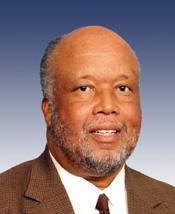 Rep. Bennie G. Thompson (D-MS)
Description
Amendment requires the TSA to include on the No Fly List any individual who was a detainee held at the Naval Station, Guantanamo Bay, Cuba, unless the President certifies in writing to Congress that the detainee poses no threat to the United States.
Legislative Activity
Stay on top of the latest movement without scrolling through every action
House amendment offered
June 4, 2009
View full timeline
House amendment offered
June 4, 2009
Roll call votes on amendments in House
June 4, 2009 • 4:38 PM
Amendment agreed to by House: On agreeing to the Thompson (MS) amendment (A015) Agreed to by recorded vote: 412 - 12 (Roll no. 306).
June 4, 2009 • 4:38 PM
House amendment agreed to: On agreeing to the Thompson (MS) amendment (A015) Agreed to by recorded vote: 412 - 12 (Roll no. 306).
June 4, 2009 • 4:38 PM
House amendment offered/reported by : Amendment (A015) offered by Mr. Thompson (MS).(consideration: CR H6215; text: CR H6215)
June 4, 2009 • 4:20 PM
Amendment (A015) offered by Mr. Thompson (MS). (consideration: CR H6215; text: CR H6215)
June 4, 2009 • 4:20 PM
On agreeing to the Thompson (MS) amendment (A015) Agreed to by recorded vote: 412 - 12 (Roll no. 306).
June 4, 2009 • 4:38 PM
Votes
1 roll call on this amendment
Text
Offered
{time} 1515
Amendment No. 13 Offered by Mr. Butterfield
The Acting CHAIR. It is now in order to consider amendment No. 13
printed in House Report 111-127.
Mr. BUTTERFIELD. Mr. Chairman, I have an amendment at the desk.
The Acting CHAIR. The Clerk will designate the amendment.
The text of the amendment is as follows:
Amendment No. 13 offered by Mr. Butterfield:
At the end of subtitle B of title II, insert the following
new section (with the correct sequential provision
designations [replacing the numbers currently shown for such
designations]) and conform the table of contents accordingly:
SEC. 240. STUDY ON COMBINATION OF FACIAL AND IRIS
RECOGNITION.
(a) Study Required.--The Assistant Secretary shall carry
out a study on the use of the combination of facial and iris
recognition to rapidly identify individuals in security
checkpoint lines. Such study shall focus on--
(1) increased accuracy of facial recognition;
(2) enhancement of existing iris recognition technology;
and
(3) establishment of integrated face and iris features for
accurate identification of individuals.
(b) Purpose of Study.--The purpose of the study required by
subsection (a) is to facilitate the use of a combination of
facial and iris recognition to provide a higher probability
of success in identification than either approach on its own
and to achieve transformational advances in the flexibility,
authenticity, and overall capability of integrated biometric
detectors and satisfy one of major issues with war against
terrorists. The operational goal of the study should be to
provide the capability to non-intrusively collect biometrics
(face image, iris) in less than ten seconds without impeding
the movement of individuals.
The Acting CHAIR. Pursuant to House Resolution 474, the gentleman
from North Carolina (Mr. Butterfield) and a Member opposed each will
control 5 minutes.
The Chair recognizes the gentleman from North Carolina.
Mr. BUTTERFIELD. Mr. Chairman, I rise today in support of the
underlying bill, H.R. 2200, the Transportation Security Administration
Authorization Act of 2009. This is a necessary bill that will help to
safeguard the American people. I want to commend my friend and
colleague Chairman Bennie Thompson from Mississippi for steering this
legislation through this process. Mr. Thompson, your leadership does
not go unnoticed by Members of this body and the American people, and
we thank you. We also thank the ranking member of this committee, Mr.
King of New York, for his leadership and for his work on homeland
security as well as the other members of the committee. I particularly
want to thank the hardworking staff of the Homeland Security Committee
for all that they do and for the work that they've done in getting this
legislation to the floor today.
Mr. Chairman, I offer a very simple amendment to H.R. 2200. It
authorizes a study on the feasibility of combining facial and iris
recognition technologies for rapid and accurate identification in
airport security checkpoint lines. The study would focus on merits of
using the combined technologies and the potential for use. Researchers
tell us, Mr. Chairman, that this new technology holds great promise for
providing a highly reliable, efficient, unobstructed and accurate way
to establish and verify identities. Unlike names and dates of birth,
which can be changed from time to time, biometrics are unique and
virtually impossible to duplicate. Biometric information is already
being collected by DHS, the Department of Homeland Security, through
its US-VISIT Program. This invaluable information helps prevent people
from using fraudulent documents to attempt to enter our country
illegally. Collecting biometrics also helps protect travelers'
identities in the event travel documents are lost or stolen. One of my
constituents had his passport stolen, and it was used fraudulently. He
has been unable to travel overseas to visit his family now for more
than 1 year. This technology would have made the issuance of new travel
documents a less cumbersome process.
Utilizing advanced technologies like special cameras or imaging
systems with enhanced interoperability of 2-D and 3-D facial
recognition technology and systems, TSA could collect and analyze the
biometric data in a few short seconds. The collection, analysis and
identification of an individual, Mr. Chairman, would only take as much
time as it takes a person to go through that dreaded security line at
the airport. In fact, the security process would be sped up and would
significantly lessen the time an individual spends in line. By
combining the facial and iris recognition data, TSA officials will get
an accurate identification of an individual and will have the
opportunity to investigate further, if necessary. The effective use of
these databases to confirm or discover personal identities is critical
in maintaining our national security. Travel is made safer and, again,
the technology is nonintrusive.
This study, Mr. Chairman, requested under this amendment will also
help to identify any specific environmental and operational factors
that might limit these biometric capabilities and provide insight and
information for biometric acquisitions and procedures.
It is my hope, therefore, that Members will support this amendment.
It is a commonsense approach, using technology to increase the level of
security at checkpoints. I want to remind my colleagues that this
technology is totally nonintrusive and has the potential for improving
accuracy and efficiency and safety for TSA personnel and travelers
alike.
At this time I am going to reserve the balance of my time.
[[Page H6211]]
Mr. DENT. Mr. Chair, I rise to claim time in opposition to the
amendment, although I am not opposed to the amendment.
The Acting CHAIR. Without objection, the gentleman from Pennsylvania
is recognized for 5 minutes.
There was no objection.
Mr. DENT. I do support this amendment. It's a good amendment. I
appreciate the gentleman offering it.
New advances in biometric identifications make this technology an
exciting new possibility for rapidly identifying individuals
approaching a security checkpoint. Imagine if someone with a want or a
warrant or a fleeing felon would approach a security checkpoint and be
identified as a threat before entering the sterile area of an airport.
We may be years away from any real breakthroughs in this technology,
but it certainly does hold some real promise.
Some would argue that this technology goes too far or invades one's
privacy, but every individual approaching a TSA checkpoint must already
provide a valid form of identification. This system, if proven
effective, could ensure that documentation provided at the checkpoint
is, in fact, authentic.
For all those reasons, I would urge my colleagues to support this
Butterfield amendment. It makes sense, and I strongly urge its
adoption.
At this time I would yield back the balance of my time.
Mr. BUTTERFIELD. I want to thank the gentleman for his support of
this amendment and thank him very much for his work here in this body.
At this time, Mr. Chairman, I would like to yield 2 minutes to the
gentlelady from California (Ms. Richardson), a hardworking member of
this Homeland Security Committee.
The Acting CHAIR. The gentleman from North Carolina only has 45
seconds remaining.
Mr. BUTTERFIELD. I will yield those 45 seconds to the gentlelady from
California (Ms. Richardson).
Ms. RICHARDSON. Mr. Chairman, I rise in support of the Butterfield
amendment. This amendment authorizes a study to combine facial and iris
recognition that would rapidly identify individuals at security
checkpoints. Additionally, this study authorizes the ability to
consider environmental and operational factors and any capabilities
that would hinder future acquisitions.
As a member of this committee, I support Mr. Butterfield and our
chairman in his leadership with this bill, and I urge all of my
colleagues to do the same.
Mr. BUTTERFIELD. Mr. Chairman, I yield back the balance of my time.
The Acting CHAIR. The question is on the amendment offered by the
gentleman from North Carolina (Mr. Butterfield).
The amendment was agreed to.
Amendment No. 14 Offered by Mr. Roskam
The Acting CHAIR. It is now in order to consider amendment No. 14
printed in House Report 111-127.
Mr. ROSKAM. I have an amendment at the desk.
The Acting CHAIR. The Clerk will designate the amendment.
The text of the amendment is as follows:
Amendment No. 14 offered by Mr. Roskam:
At the end of title III of the bill, insert the following:
SEC. __. PUBLIC HEARINGS ON SECURITY ASSISTANCE GRANT PROGRAM
AND THE RESTRICTION OF SECURITY IMPROVEMENT
PRIORITIES.
(a) Public Hearings.--Not later than 180 days after the
date of the enactment of this Act, the Assistant Secretary
shall conduct public hearings on the administration of the
security assistance grant program under section 1406 of the
Implementing Recommendations of the 9/11 Commission Act of
2007 (6 U.S.C. 1135). The Assistant Secretary shall--
(1) solicit information and input from the 5 urban areas
that receive the largest amount of grant funds under such
section, including recipients providing mass transportation
and passenger rail services; and
(2) solicit feedback from such recipients on whether
current allowable uses of grant funds under the regulations
or guidance implementing the grant program are sufficient to
address security improvement priorities identified by transit
agencies.
(b) Report to Congress.--The Assistant Secretary shall
submit to the Committees on Appropriations and Homeland
Security of the House of Representatives and the Committees
on Appropriations and Homeland Security and Governmental
Affairs of the Senate a report on the findings of the public
hearings conducted under paragraph (1). The report shall
include--
(1) the Assistant Secretary's determinations with respect
to the extent to which security improvement priorities
identified by transit agencies are not met by the regulations
or guidance implementing the grant program; and
(2) how such regulations or guidance should be changed to
accommodate such priorities, or the Assistant Secretary's
justification for not addressing such priorities with the
grant program.
The Acting CHAIR. Pursuant to House Resolution 474, the gentleman
from North Carolina (Mr. Butterfield) and a Member opposed each will
control 5 minutes.
The Chair recognizes the gentleman from Illinois.
Mr. ROSKAM. Mr. Chairman, I yield myself as much time as I may
consume.
First of all, I want to thank Chairman Thompson and the Homeland
Security Committee for working with me on this amendment. I appreciate
their attitude very much and their openness to this suggestion.
This is a fairly straightforward amendment. What it is trying to do
is to mirror the resources of the Federal Government and to make sure
that they're in sync with the needs of local transit systems. This
actually developed out of a homeland security working group dialogue
that I had in my congressional district. I represent the west and
northwest suburbs of Chicago and a wide range of commuters. We've got
bus lines and rail lines in the Chicago area, and there is a certain
level of vulnerability. So last March I invited some of the leadership
of the public transit systems and some of the security agencies to
really offer ideas, and this is one of the ideas that they had.
They said, Look, we have needs at the local level, and there are
resources at the Federal Government, but sometimes those two things
aren't really in sync. So what this is, it says simply that the
Assistant Secretary of Homeland Security will hold hearings, if this
amendment is passed, and those hearings are really about the subject of
whether current allowable uses of grant funds are sufficient to meet
the daily security needs and the transit security needs of these local
agencies. Then after that happens, after this conversation happens and
these hearings, to come back to Congress and to report.
I think that this is one of these areas where there's a great deal of
common ground. There is uncertainty sometimes at the State and local
level about how Federal funds fit into their agenda. We all know that
we, in the Congress, are trying to help. And this is a structured way
to have that conversation, because when it comes down to it, there's
nearly 12 million Americans that are riding on passenger trains each
day, and that's six times as many that fly in our skies. I think that
this is a wise use of resources and urge the adoption of the amendment.
I reserve the balance of my time.
Mr. THOMPSON of Mississippi. Mr. Chairman, while not opposed to the
amendment, I ask unanimous consent to claim in time in opposition.
The Acting CHAIR. Without objection, the gentleman is recognized for
5 minutes.
There was no objection.
Mr. THOMPSON of Mississippi. Mr. Chair, the Roskam amendment builds
on this effort to require TSA to engage in an open and constructive
dialogue on the security priorities that matter most to State and local
transit agencies. In these difficult times, it is more important than
ever that we endeavor to make sure our State and local transit agencies
are able to maximize their limited resources to implement effective and
cost-effective security programs. The Roskam amendment supports that
effort. Therefore, I urge my colleagues to vote ``aye'' on this
amendment.
I reserve the balance of my time.
Mr. ROSKAM. Mr. Chairman, I first of all, I want to thank the
gentleman for his support. And just one other point for the record: The
amendment is endorsed by the American Public Transportation
Association. I am not aware of any opponents. I appreciate the
gentleman's support.
I yield back the balance of my time.
Mr. THOMPSON of Mississippi. Mr. Chair, again, I support the
amendment.
I yield back the balance of my time.
The Acting CHAIR. The question is on the amendment offered by the
gentleman from Illinois (Mr. Roskam).
The amendment was agreed to.
[[Page H6212]]
Announcement by the Acting Chair
The Acting CHAIR. Pursuant to clause 6 of rule XVIII, proceedings
will now resume on those amendments printed in House Report 111-127 on
which further proceedings were postponed, in the following order:
Amendment No. 2 by Mr. Mica of Florida.
Amendment No. 10 by Mr. Chaffetz of Utah.
The first electronic vote will be conducted as a 15-minute vote. The
second electronic vote will be conducted as a 5-minute vote.
Amendment No. 2 Offered by Mr. Mica
The Acting CHAIR. The unfinished business is the demand for a
recorded vote on the amendment offered by the gentleman from Florida
(Mr. Mica) on which further proceedings were postponed and on which the
ayes prevailed by voice vote.
The Clerk will redesignate the amendment.
The Clerk redesignated the amendment.
Recorded Vote
The Acting CHAIR. A recorded vote has been demanded.
A recorded vote was ordered.
The vote was taken by electronic device, and there were--ayes 219,
noes 211, not voting 9, as follows:
[Roll No. 304]
AYES--219
Abercrombie
Aderholt
Akin
Alexander
Altmire
Arcuri
Austria
Bachmann
Bachus
Barrett (SC)
Barrow
Bartlett
Barton (TX)
Berkley
Biggert
Bilbray
Bilirakis
Bishop (UT)
Blackburn
Blunt
Boccieri
Boehner
Bonner
Bono Mack
Boozman
Boustany
Boyd
Brady (TX)
Bright
Broun (GA)
Brown (SC)
Brown-Waite, Ginny
Buchanan
Burgess
Burton (IN)
Buyer
Calvert
Camp
Campbell
Cantor
Cao
Capito
Carter
Cassidy
Castle
Chaffetz
Chandler
Coble
Coffman (CO)
Cole
Conaway
Cooper
Costello
Crenshaw
Culberson
Dahlkemper
Davis (KY)
Deal (GA)
Dent
Diaz-Balart, L.
Diaz-Balart, M.
Donnelly (IN)
Dreier
Driehaus
Duncan
Ehlers
Ellsworth
Emerson
Fallin
Flake
Fleming
Forbes
Fortenberry
Foxx
Franks (AZ)
Frelinghuysen
Gallegly
Garrett (NJ)
Gerlach
Giffords
Gingrey (GA)
Gohmert
Goodlatte
Granger
Graves
Griffith
Guthrie
Hall (TX)
Harper
Hastings (WA)
Heinrich
Heller
Hensarling
Herger
Hill
Hirono
Hoekstra
Hunter
Inglis
Inslee
Issa
Jenkins
Johnson (IL)
Johnson, Sam
Jones
Jordan (OH)
King (IA)
King (NY)
Kingston
Kirk
Kissell
Klein (FL)
Kline (MN)
Kratovil
Lamborn
Lance
Latham
LaTourette
Latta
Lee (NY)
Lewis (CA)
Linder
LoBiondo
Loebsack
Lucas
Luetkemeyer
Lummis
Lungren, Daniel E.
Mack
Manzullo
Marchant
Markey (CO)
Marshall
Matheson
McCarthy (CA)
McCaul
McClintock
McCotter
McHenry
McHugh
McIntyre
McKeon
McMorris Rodgers
Melancon
Mica
Miller (FL)
Miller (MI)
Miller, Gary
Minnick
Mitchell
Moran (KS)
Murphy (NY)
Murphy, Tim
Myrick
Neugebauer
Nunes
Nye
Oberstar
Olson
Paul
Paulsen
Pence
Peterson
Petri
Pitts
Platts
Poe (TX)
Posey
Price (GA)
Putnam
Radanovich
Rehberg
Reichert
Roe (TN)
Rogers (AL)
Rogers (KY)
Rogers (MI)
Rohrabacher
Rooney
Ros-Lehtinen
Roskam
Ross
Royce
Ryan (WI)
Salazar
Scalise
Schmidt
Schock
Sensenbrenner
Sessions
Shadegg
Shimkus
Shuler
Shuster
Simpson
Smith (NE)
Smith (NJ)
Smith (TX)
Souder
Stearns
Tanner
Taylor
Terry
Thompson (PA)
Thornberry
Tiahrt
Tiberi
Turner
Upton
Walden
Walz
Wamp
Westmoreland
Whitfield
Wilson (SC)
Wittman
Wolf
Young (AK)
Young (FL)
NOES--211
Ackerman
Adler (NJ)
Andrews
Baca
Baird
Baldwin
Bean
Becerra
Berman
Berry
Bishop (GA)
Bishop (NY)
Blumenauer
Bordallo
Boren
Boucher
Brady (PA)
Braley (IA)
Brown, Corrine
Butterfield
Capps
Capuano
Cardoza
Carnahan
Carney
Carson (IN)
Castor (FL)
Childers
Christensen
Clarke
Clay
Cleaver
Clyburn
Cohen
Connolly (VA)
Conyers
Costa
Crowley
Cuellar
Cummings
Davis (AL)
Davis (CA)
Davis (IL)
Davis (TN)
DeFazio
DeGette
Delahunt
DeLauro
Dicks
Dingell
Doggett
Doyle
Edwards (MD)
Edwards (TX)
Ellison
Engel
Eshoo
Etheridge
Faleomavaega
Farr
Fattah
Filner
Foster
Frank (MA)
Fudge
Gonzalez
Gordon (TN)
Grayson
Green, Al
Green, Gene
Grijalva
Gutierrez
Hall (NY)
Halvorson
Hare
Harman
Hastings (FL)
Herseth Sandlin
Higgins
Himes
Hinchey
Hinojosa
Hodes
Holden
Holt
Honda
Hoyer
Israel
Jackson (IL)
Johnson (GA)
Johnson, E. B.
Kagen
Kanjorski
Kaptur
Kennedy
Kildee
Kilpatrick (MI)
Kilroy
Kind
Kirkpatrick (AZ)
Kosmas
Kucinich
Langevin
Larsen (WA)
Larson (CT)
Lee (CA)
Levin
Lewis (GA)
Lipinski
Lofgren, Zoe
Lowey
Lujan
Lynch
Maffei
Maloney
Markey (MA)
Massa
Matsui
McCarthy (NY)
McCollum
McDermott
McGovern
McMahon
McNerney
Meek (FL)
Meeks (NY)
Michaud
Miller (NC)
Miller, George
Mollohan
Moore (KS)
Moore (WI)
Moran (VA)
Murphy (CT)
Murphy, Patrick
Murtha
Nadler (NY)
Napolitano
Neal (MA)
Norton
Obey
Olver
Ortiz
Pallone
Pascrell
Pastor (AZ)
Payne
Perlmutter
Perriello
Peters
Pierluisi
Pingree (ME)
Polis (CO)
Pomeroy
Price (NC)
Quigley
Rahall
Rangel
Reyes
Richardson
Rodriguez
Rothman (NJ)
Roybal-Allard
Rush
Ryan (OH)
Sanchez, Loretta
Sarbanes
Schakowsky
Schauer
Schiff
Schrader
Schwartz
Scott (GA)
Scott (VA)
Serrano
Sestak
Shea-Porter
Sherman
Sires
Skelton
Smith (WA)
Snyder
Space
Speier
Spratt
Stark
Stupak
Sutton
Tauscher
Teague
Thompson (CA)
Thompson (MS)
Tierney
Titus
Tonko
Towns
Tsongas
Van Hollen
Velazquez
Visclosky
Wasserman Schultz
Waters
Watson
Watt
Waxman
Weiner
Welch
Wexler
Woolsey
Wu
Yarmuth
NOT VOTING--9
Boswell
Courtney
Jackson-Lee (TX)
Ruppersberger
Sablan
Sanchez, Linda T.
Slaughter
Sullivan
Wilson (OH)
Announcement by the Acting Chair
The Acting CHAIR (during the vote). One minute remains on this vote.
Parliamentary Inquiry
Mr. WESTMORELAND (during the vote). Parliamentary inquiry, Mr.
Chairman.
The Acting CHAIR. The gentleman will state his parliamentary inquiry.
Mr. WESTMORELAND. Mr. Chairman, we've not had any activity on the
board in the last 3 minutes. Can you tell me what determines the vote
staying open for over 30 minutes?
{time} 1601
Mrs. McCARTHY of New York, Messrs. BERMAN, KANJORSKI, SIRES,
GRIJALVA, TEAGUE, LARSON of Connecticut, Ms. DeGETTE, Messrs. GORDON of
Tennessee, GEORGE MILLER of California, LEVIN, Mrs. HALVORSON, Messrs.
CLEAVER, RUSH, CHILDERS, SHERMAN, Mrs. KIRKPATRICK of Arizona, Messrs.
CONYERS, LARSEN of Washington, DELAHUNT, HOLT, PAYNE, SCHRADER, HALL of
New York, DAVIS of Tennessee, FOSTER, PERRIELLO, ACKERMAN, GUTIERREZ,
BRALEY of Iowa, BERRY and McNERNEY changed their vote from ``aye'' to
``no.''
Messrs. MURPHY of New York, HILL, HENSARLING, MATHESON, HERGER,
COOPER, PAUL, BARROW, BUCHANAN, GRIFFITH, and TAYLOR changed their vote
from ``no'' to ``aye.''
So the amendment was agreed to.
The result of the vote was announced as above recorded.
Parliamentary Inquiries
Mr. WESTMORELAND. Mr. Chairman, parliamentary inquiry.
The Acting CHAIRMAN. The gentleman will state his parliamentary
inquiry.
Mr. WESTMORELAND. Mr. Chairman, in the previous Congress, was there
not a rule in place to prohibit a vote from being held open for the
sole purpose of changing the outcome?
The Acting CHAIRMAN. It is not the purpose of the Chair to serve as a
historian.
Mr. WESTMORELAND. I'm sorry, sir, could you repeat that?
The Acting CHAIRMAN. The Chair will not serve as a historian.
Mr. WESTMORELAND. Okay, let's try one more. Parliamentary inquiry,
Mr. Chairman.
The Acting CHAIR. The gentleman will state his inquiry.
Mr. WESTMORELAND. Does the rule still exist today that was in place
in the 110th Congress, that was struck from the 111th Congress rules
package, thus making it within the rules to hold a vote open for the
purpose of changing the outcome?
The Acting CHAIR. There is no rule of that description.
[[Page H6213]]
announcement by the acting chair
The Acting CHAIR. Without objection, 5-minute voting will resume.
There was no objection.
Amendment No. 10 Offered by Mr. Chaffetz
The Acting CHAIR. The unfinished business is the demand for a
recorded vote on the amendment offered by the gentleman from Utah (Mr.
Chaffetz) on which further proceedings were postponed and on which the
noes prevailed by voice vote.
The Clerk will redesignate the amendment.
The Clerk redesignated the amendment.
recorded vote
The Acting CHAIR. A recorded vote has been demanded.
A recorded vote was ordered.
The Acting CHAIR. This will be a 5-minute vote.
The vote was taken by electronic device, and there were--ayes 310,
noes 118, not voting 11, as follows:
[Roll No. 305]
AYES--310
Abercrombie
Adler (NJ)
Alexander
Altmire
Arcuri
Austria
Baca
Bachmann
Bachus
Baird
Baldwin
Barrow
Bartlett
Barton (TX)
Becerra
Berkley
Berman
Bishop (GA)
Blunt
Boccieri
Boehner
Boozman
Bordallo
Boucher
Boyd
Brady (PA)
Brady (TX)
Braley (IA)
Broun (GA)
Brown (SC)
Brown, Corrine
Brown-Waite, Ginny
Buchanan
Burgess
Buyer
Calvert
Camp
Campbell
Cao
Capps
Capuano
Cardoza
Carson (IN)
Carter
Cassidy
Castor (FL)
Chaffetz
Chandler
Childers
Christensen
Clarke
Clay
Cleaver
Coble
Cohen
Conaway
Connolly (VA)
Conyers
Cooper
Costa
Crenshaw
Crowley
Cuellar
Culberson
Cummings
Dahlkemper
Davis (AL)
Davis (CA)
Davis (IL)
Davis (KY)
Deal (GA)
Delahunt
Diaz-Balart, L.
Diaz-Balart, M.
Dingell
Doggett
Donnelly (IN)
Doyle
Dreier
Driehaus
Duncan
Edwards (MD)
Ellison
Ellsworth
Emerson
Engel
Etheridge
Faleomavaega
Fallin
Farr
Fattah
Filner
Flake
Forbes
Fortenberry
Fudge
Garrett (NJ)
Giffords
Gingrey (GA)
Gohmert
Gonzalez
Goodlatte
Grayson
Green, Al
Green, Gene
Griffith
Grijalva
Guthrie
Gutierrez
Hall (NY)
Hall (TX)
Hare
Harper
Hastings (FL)
Heinrich
Heller
Hensarling
Herseth Sandlin
Higgins
Hill
Hinchey
Hinojosa
Hirono
Hodes
Holt
Hoyer
Hunter
Inglis
Inslee
Israel
Issa
Jackson (IL)
Jenkins
Johnson (GA)
Johnson (IL)
Johnson, E. B.
Johnson, Sam
Jones
Jordan (OH)
Kagen
Kanjorski
Kaptur
Kildee
Kilpatrick (MI)
Kilroy
Kind
King (IA)
Kingston
Kirkpatrick (AZ)
Kissell
Kline (MN)
Kosmas
Kucinich
Lamborn
Langevin
Larsen (WA)
Larson (CT)
Latta
Lee (CA)
Levin
Lewis (CA)
Lewis (GA)
Linder
Lipinski
Loebsack
Lofgren, Zoe
Luetkemeyer
Lujan
Lummis
Lynch
Mack
Maffei
Maloney
Manzullo
Marchant
Markey (MA)
Marshall
Massa
Matheson
McCarthy (CA)
McCaul
McClintock
McCollum
McCotter
McDermott
McGovern
McHenry
McHugh
McIntyre
McKeon
McMorris Rodgers
McNerney
Meek (FL)
Meeks (NY)
Melancon
Michaud
Miller (NC)
Miller, Gary
Miller, George
Mitchell
Moore (KS)
Moore (WI)
Moran (KS)
Moran (VA)
Murphy (CT)
Murphy (NY)
Murphy, Tim
Murtha
Myrick
Nadler (NY)
Napolitano
Neal (MA)
Neugebauer
Nunes
Olson
Ortiz
Pallone
Pascrell
Pastor (AZ)
Paul
Payne
Pence
Perlmutter
Perriello
Peters
Petri
Pierluisi
Pingree (ME)
Pitts
Poe (TX)
Polis (CO)
Pomeroy
Posey
Price (GA)
Putnam
Quigley
Radanovich
Rangel
Rehberg
Reichert
Reyes
Richardson
Rodriguez
Roe (TN)
Rooney
Roskam
Ross
Rothman (NJ)
Roybal-Allard
Rush
Ryan (WI)
Salazar
Sanchez, Loretta
Sarbanes
Scalise
Schiff
Schmidt
Schock
Scott (GA)
Scott (VA)
Serrano
Sessions
Shea-Porter
Sherman
Shimkus
Shuler
Shuster
Sires
Smith (NE)
Smith (NJ)
Smith (TX)
Smith (WA)
Space
Speier
Stark
Stearns
Stupak
Sutton
Tanner
Tauscher
Taylor
Teague
Terry
Thompson (PA)
Thornberry
Tiahrt
Tiberi
Tierney
Titus
Tonko
Tsongas
Turner
Upton
Van Hollen
Velazquez
Walz
Wamp
Wasserman Schultz
Watson
Watt
Waxman
Weiner
Welch
Westmoreland
Wexler
Whitfield
Wilson (SC)
Wolf
Woolsey
Yarmuth
NOES--118
Ackerman
Aderholt
Akin
Andrews
Barrett (SC)
Bean
Berry
Biggert
Bilbray
Bilirakis
Bishop (NY)
Blackburn
Blumenauer
Bonner
Bono Mack
Boren
Boustany
Bright
Burton (IN)
Butterfield
Cantor
Capito
Carnahan
Carney
Castle
Clyburn
Coffman (CO)
Cole
Costello
Davis (TN)
DeFazio
DeGette
DeLauro
Dent
Dicks
Edwards (TX)
Ehlers
Eshoo
Fleming
Foster
Foxx
Frank (MA)
Franks (AZ)
Frelinghuysen
Gallegly
Gerlach
Gordon (TN)
Granger
Graves
Halvorson
Harman
Hastings (WA)
Herger
Himes
Hoekstra
Holden
Honda
King (NY)
Kirk
Klein (FL)
Kratovil
Lance
Latham
LaTourette
Lee (NY)
LoBiondo
Lowey
Lucas
Lungren, Daniel E.
Markey (CO)
Matsui
McCarthy (NY)
Mica
Miller (FL)
Miller (MI)
Minnick
Mollohan
Murphy, Patrick
Norton
Nye
Oberstar
Obey
Olver
Paulsen
Peterson
Platts
Price (NC)
Rahall
Rogers (AL)
Rogers (KY)
Rogers (MI)
Rohrabacher
Ros-Lehtinen
Royce
Ryan (OH)
Schakowsky
Schauer
Schrader
Schwartz
Sensenbrenner
Sestak
Shadegg
Simpson
Skelton
Slaughter
Snyder
Souder
Spratt
Thompson (CA)
Thompson (MS)
Towns
Visclosky
Walden
Waters
Wittman
Wu
Young (AK)
Young (FL)
NOT VOTING--11
Bishop (UT)
Boswell
Courtney
Jackson-Lee (TX)
Kennedy
McMahon
Ruppersberger
Sablan
Sanchez, Linda T.
Sullivan
Wilson (OH)
Announcement by the Acting Chair
The Acting CHAIR (during the vote). There are 2 minutes remaining in
this vote.
{time} 1610
Messrs. BLUMENAUER, RAHALL and MOLLOHAN changed their vote from
``aye'' to ``no.''
Mrs. MALONEY, Messrs. HASTINGS of Florida and BACA changed their vote
from ``no'' to ``aye.''
So the amendment was agreed to.
The result of the vote was announced as above recorded.
Stated for:
Mr. McMAHON. Mr. Chair, on rollcall No. 305, I was detained
unavoidably from reaching the Chamber. Had I been present, I would have
voted ``aye.''
Mr. KENNEDY. Mr. Chair, I regret that I was unable to participate in
a vote on the floor of the House of Representatives today.
Had I been present to vote on rollcall No. 305, a Chaffetz (UT)/Shea-
Porter (NH) Amendment to H.R. 2200, the Transportation Security
Administration Authorization Act of 2009, I would have voted ``aye'' on
the question.
The Acting CHAIR. The question is on the committee amendment in the
nature of a substitute, as amended.
The committee amendment in the nature of a substitute, as amended,
was agreed to.
The Acting CHAIR. Under the rule, the Committee rises.
Accordingly, the Committee rose; and the Speaker pro tempore (Mr.
Weiner) having assumed the chair, Mr. Holden, Acting Chair of the
Committee of the Whole House on the state of the Union, reported that
that Committee, having had under consideration the bill (H.R. 2200) to
authorize the Transportation Security Administration's programs
relating to the provision of transportation security, and for other
purposes, pursuant to House Resolution 474, he reported the bill back
to the House with an amendment adopted by the Committee of the Whole.
The SPEAKER pro tempore. Under the rule, the previous question is
ordered.
Is a separate vote demanded on any amendment to the amendment
reported from the Committee of the Whole? If not, the question is on
the amendment.
The amendment was agreed to.
The SPEAKER pro tempore. The question is on the engrossment and third
reading of the bill.
The bill was ordered to be engrossed and read a third time, and was
read the third time.
Motion to Recommit
Mr. KING of New York. Mr. Speaker, I have a motion to recommit at the
desk.
The SPEAKER pro tempore. Is the gentleman opposed to the bill?
Mr. KING of New York. I am in its present form.
The SPEAKER pro tempore. The Clerk will report the motion to
recommit.
The Clerk read as follows:
Mr. King of New York moves to recommit the bill H.R. 2200
to the Committee on Homeland Security with instructions to
report the same back to the House forthwith with the
following amendment:
[[Page H6214]]
Strike section 405 of the bill and insert the following:
SEC. 405. SECURING AVIATION FROM EXTREME TERRORIST THREATS.
(a) Findings.--Congress finds the following:
(1) In 2001, Congress gave the Assistant Secretary,
Transportation Security Administration, the task to ``develop
policies, strategies, and plans for dealing with threats to
transportation security''. The individuals currently held at
the Naval Station, Guantanamo Bay, Cuba, were detained during
armed conflict and pose a serious and continuing threat to
the transportation security interests of the United States
and its allies.
(2) Terrorists, including Khalid Sheikh Mohammad, the
admitted mastermind of the September 11, 2001 terrorist
attacks, have clearly demonstrated their desire and intent to
use airplanes as weapons to kill innocent Americans. The
August 2006 liquid explosive plot to take down 10 commercial
airliners over the United States is positive proof that air
transportation continues to be a target.
(3) In light of al Qaeda's propensity to conduct aviation-
related attacks and the fact that, according to the
Department of Defense, at least 74 former Guantanamo Bay
detainees once considered ``non-threatening'' are recidivists
to terrorism, restrictions on the air travel of former
detainees are necessary to protect the public from future
attacks.
(4) Therefore, individuals who are or have been detained at
Guantanamo should not be allowed to fly commercially in the
United States and should be added to the Transportation
Security Administration's No Fly List, until the President
certifies that each individual detainee poses no threat to
the United States, its citizens, or its allies.
(b) Prohibition of Detainee Use of Commercial Aviation.--
Section 44903(j)(2)(C) of title 49, United States Code, as
amended by section 213 of the bill, is further amended by
adding at the end the following:
``(vi) Inclusion of detainees on no fly list.--The
Assistant Secretary, in coordination with the Terrorist
Screening Center, shall include on the No Fly List any
individual who was a detainee held at the Naval Station,
Guantanamo Bay, Cuba, unless the President certifies in
writing to Congress that the detainee poses no threat to the
United States, its citizens, or its allies. For purposes of
this clause, the term `detainee' means an individual in the
custody or under the physical control of the United States as
a result of armed conflict.''.
Mr. KING of New York (during the reading). Mr. Speaker, I ask
unanimous consent that the reading be dispensed with.
The SPEAKER pro tempore. Is there objection to the request of the
gentleman from New York?
There was no objection.
The SPEAKER pro tempore. The gentleman from New York is recognized
for 5 minutes in support of his motion.
Mr. KING of New York. Mr. Speaker, this motion to recommit is very
basic. It's very direct. It specifies that any detainee who is housed
at Guantanamo Bay will go on the No Fly List. Very simply, anyone
released from Guantanamo will not be able to fly on an American
commercial flight.
And I have listened to the debate in committee. I've listened to the
debate on the floor, and quite frankly, I cannot understand the
opposition to this amendment. We are talking about approximately 240
people who are still at Guantanamo. These are the worst of the worst,
the most hardcore.
Mr. Speaker, we can have various positions on Guantanamo, whether the
President was right, whether the President's wrong, whether he's
partially right, whether he's wrong, whether there's going to be
tribunals, what's going to happen. But the reality is that there's a
likelihood that some of these detainees could be released into the
United States, and very simply, we are saying if they are, they should
not be allowed to fly on American commercial flights.
{time} 1615
Now, recent reports from the Defense Intelligence Agency say that one
of seven of those who have been released thus far have returned to the
battlefield, have returned to take part in terrorist activities. Now,
whether that number is actually one in seven or one in 14 or one in 15,
I say to anyone in this House, do you want your son or your daughter or
your grandson or your granddaughter possibly being on the same plane as
one of those seven or one of those 15? It is too high a risk to pay.
What the majority did when this was brought up by Mr. Souder, who
argued it very articulately in committee and on the floor, was to say
that they would go on the No Fly List, the detainees, after disposition
by the President.
``Disposition'' is not defined. What does ``disposition'' mean? If
the President says that this person is dangerous, does that mean he
doesn't go on the No Fly List? Suppose that case is still pending in
court. Suppose he was released on bail. What does final disposition
mean? What does it mean?
Why are we having this debate? I can see if we were talking about
something involving the civil rights of an American citizen or somebody
who was legally in the country and we were talking about electronic
surveillance or stop-and-frisk. We're talking about a person who is a
detainee at Guantanamo and we're saying they cannot fly on an American
plane. What human right is being violated by that? Let's balance the
equities.
I know in the Dear Colleague that my good friend the chairman sent
out to his members, he uses a quote from the President, saying that we
must have an abiding confidence in the rule of law and due process and
checks and balances and accountability.
Mr. Speaker, I fail to see the question of a balance here. What
equities are we balancing?
Let's assume the worst from those who oppose this motion to recommit.
Let's assume that someone who is in Guantanamo and really pure of heart
and has no malice anywhere in the system, that person will not be
allowed to fly on an American plane. Life is tough. If that's the worst
he has to endure, I don't think that's going to shock the conscience of
the Republic.
But suppose that person does return to violence and does blow up an
airliner and hundreds of Americans are killed. Where is the cost-
benefit ratio? What equities are we balancing here?
I would say the clear and correct thing to do here is to make it very
clear that anyone released from Guantanamo should go on the No Fly
List.
Now, if there are foreign policy considerations, if there are
diplomatic considerations, the motion to recommit specifically says
that the President can certify that that detainee is no longer a threat
to American security and the President can take the person off the No
Fly List.
So, if there is an injustice being done, if the President feels very
strongly about this, then the President has the prerogative to exercise
his power and take the person off the list.
Again, I just think this is a debate about politics for those who
somehow think, if we talk about Guantanamo, that we're trying to inject
some kind of fear. We're trying to protect the American people. And, to
me, it's a clear issue if you ask any one of your constituency, people
in your district, say to them, would they rather be certain that their
relatives going on a plane will not have a detainee from Guantanamo
sitting next to them or would they rather have the fact that that
person may have to drive his own car or take a bus rather than fly in a
plane.
So I would say in the interest of justice, in the interest of basic
security for the American people and the interest of doing all we can
to make this good bill much better and to give us the security that we
need, that we vote ``yes'' on the motion to recommit.
In his statements, the chairman says that by not adopting this motion
to recommit, or not using this language, that would make our skies more
secure. How can our skies possibly be more secure unless we do
everything we possibly can to keep Guantanamo detainees off our planes,
off our commercial planes.
Those of us who lived in New York, any American, knows the horror of
September 11. If we can do anything at all to prevent that without
violating the civil rights of any American citizen, anyone lawfully in
this country, then we should do it.
Mr. Speaker, in the interest of justice and homeland security, I ask
adoption of the motion to recommit.
Mr. THOMPSON of Mississippi. I rise in opposition, Mr. Speaker, but
I'm not opposed to the motion.
The SPEAKER pro tempore. Without objection, the gentleman from
Mississippi is recognized for 5 minutes.
There was no objection.
Mr. THOMPSON of Mississippi. Mr. Speaker, at the beginning, let me
say that I am not in opposition to the motion to recommit. This motion
to recommit builds on the underlying provisions of this bill. But it
also recognizes that the President has significant responsibility in
making sure that Americans are kept safe.
[[Page H6215]]
I also support the fact that anyone who was detained at Guantanamo
should be on the No Fly List. This motion to recommit does that. And I
support it. I can accept it.
I yield back the balance of my time.
The SPEAKER pro tempore. Without objection, the previous question is
ordered on the motion to recommit.
There was no objection.
The SPEAKER pro tempore. The question is on the motion to recommit.
The motion to recommit was agreed to.
Mr. THOMPSON of Mississippi. Mr. Speaker, pursuant to the
instructions of the House in the motion to recommit, I report the bill,
H.R. 2200, back to the House with an amendment.
The SPEAKER pro tempore. The Clerk will report the amendment.
The Clerk read as follows:
Amendment offered by Mr. Thompson of Mississippi:
Strike section 405 of the bill and insert the following:
SEC. 405. SECURING AVIATION FROM EXTREME TERRORIST THREATS.
(a) Findings.--Congress finds the following:
(1) In 2001, Congress gave the Assistant Secretary,
Transportation Security Administration, the task to ``develop
policies, strategies, and plans for dealing with threats to
transportation security''. The individuals currently held at
the Naval Station, Guantanamo Bay, Cuba, were detained during
armed conflict and pose a serious and continuing threat to
the transportation security interests of the United States
and its allies.
(2) Terrorists, including Khalid Sheikh Mohammad, the
admitted mastermind of the September 11, 2001 terrorist
attacks, have clearly demonstrated their desire and intent to
use airplanes as weapons to kill innocent Americans. The
August 2006 liquid explosive plot to take down 10 commercial
airliners over the United States is positive proof that air
transportation continues to be a target.
(3) In light of al Qaeda's propensity to conduct aviation-
related attacks and the fact that, according to the
Department of Defense, at least 74 former Guantanamo Bay
detainees once considered ``non-threatening'' are recidivists
to terrorism, restrictions on the air travel of former
detainees are necessary to protect the public from future
attacks.
(4) Therefore, individuals who are or have been detained at
Guantanamo should not be allowed to fly commercially in the
United States and should be added to the Transportation
Security Administration's No Fly List, until the President
certifies that each individual detainee poses no threat to
the United States, its citizens, or its allies.
(b) Prohibition of Detainee Use of Commercial Aviation.--
Section 44903(j)(2)(C) of title 49, United States Code, as
amended by section 213 of the bill, is further amended by
adding at the end the following:
``(vi) Inclusion of detainees on no fly list.--The
Assistant Secretary, in coordination with the Terrorist
Screening Center, shall include on the No Fly List any
individual who was a detainee held at the Naval Station,
Guantanamo Bay, Cuba, unless the President certifies in
writing to Congress that the detainee poses no threat to the
United States, its citizens, or its allies. For purposes of
this clause, the term `detainee' means an individual in the
custody or under the physical control of the United States as
a result of armed conflict.''.
Mr. KING of New York (during the reading). I ask unanimous consent to
dispense with the reading.
The SPEAKER pro tempore. Is there objection to the request of the
gentleman from New York?
There was no objection.
The SPEAKER pro tempore. The question is on the amendment.
The question was taken; and the Speaker pro tempore announced that
the ayes appeared to have it.
The amendment was agreed to.
Recorded Vote
Mr. THOMPSON of Mississippi. Mr. Speaker, I demand a recorded vote.
A recorded vote was ordered.
The SPEAKER pro tempore. This will be a 5-minute vote.
The vote was taken by electronic device, and there were--ayes 412,
noes 12, not voting 9, as follows:
[Roll No. 306]
AYES--412
Abercrombie
Ackerman
Aderholt
Adler (NJ)
Akin
Alexander
Altmire
Andrews
Arcuri
Austria
Baca
Bachmann
Bachus
Baird
Baldwin
Barrett (SC)
Barrow
Bartlett
Barton (TX)
Bean
Becerra
Berkley
Berman
Berry
Biggert
Bilbray
Bilirakis
Bishop (GA)
Bishop (NY)
Bishop (UT)
Blackburn
Blumenauer
Blunt
Boccieri
Boehner
Bonner
Bono Mack
Boozman
Boren
Boucher
Boustany
Boyd
Brady (PA)
Brady (TX)
Braley (IA)
Bright
Broun (GA)
Brown (SC)
Brown, Corrine
Brown-Waite, Ginny
Buchanan
Burgess
Burton (IN)
Butterfield
Buyer
Calvert
Camp
Campbell
Cantor
Cao
Capito
Capps
Capuano
Cardoza
Carnahan
Carney
Carson (IN)
Carter
Cassidy
Castle
Castor (FL)
Chaffetz
Chandler
Childers
Clyburn
Coble
Coffman (CO)
Cohen
Cole
Conaway
Connolly (VA)
Cooper
Costa
Costello
Crenshaw
Crowley
Cuellar
Culberson
Cummings
Dahlkemper
Davis (AL)
Davis (CA)
Davis (IL)
Davis (KY)
Davis (TN)
Deal (GA)
DeFazio
DeGette
Delahunt
DeLauro
Dent
Diaz-Balart, L.
Diaz-Balart, M.
Dicks
Dingell
Doggett
Donnelly (IN)
Doyle
Dreier
Driehaus
Duncan
Edwards (MD)
Edwards (TX)
Ehlers
Ellison
Ellsworth
Emerson
Engel
Eshoo
Etheridge
Fallin
Farr
Fattah
Flake
Fleming
Forbes
Fortenberry
Foster
Foxx
Frank (MA)
Franks (AZ)
Frelinghuysen
Fudge
Gallegly
Garrett (NJ)
Gerlach
Giffords
Gingrey (GA)
Gohmert
Gonzalez
Goodlatte
Gordon (TN)
Granger
Graves
Grayson
Green, Al
Green, Gene
Griffith
Grijalva
Guthrie
Gutierrez
Hall (NY)
Hall (TX)
Halvorson
Hare
Harman
Harper
Hastings (FL)
Hastings (WA)
Heinrich
Heller
Hensarling
Herger
Herseth Sandlin
Higgins
Hill
Himes
Hinchey
Hinojosa
Hirono
Hodes
Hoekstra
Holden
Holt
Honda
Hoyer
Hunter
Inglis
Inslee
Israel
Issa
Jackson (IL)
Jenkins
Johnson (GA)
Johnson (IL)
Johnson, E. B.
Johnson, Sam
Jones
Jordan (OH)
Kagen
Kanjorski
Kaptur
Kennedy
Kildee
Kilpatrick (MI)
Kilroy
Kind
King (IA)
King (NY)
Kingston
Kirk
Kirkpatrick (AZ)
Kissell
Klein (FL)
Kline (MN)
Kosmas
Kratovil
Kucinich
Lamborn
Lance
Langevin
Larsen (WA)
Larson (CT)
Latham
LaTourette
Latta
Lee (NY)
Levin
Lewis (CA)
Lewis (GA)
Linder
Lipinski
LoBiondo
Loebsack
Lofgren, Zoe
Lowey
Lucas
Luetkemeyer
Lujan
Lummis
Lungren, Daniel E.
Lynch
Mack
Maffei
Maloney
Manzullo
Marchant
Markey (CO)
Markey (MA)
Marshall
Massa
Matheson
Matsui
McCarthy (CA)
McCarthy (NY)
McCaul
McClintock
McCollum
McCotter
McDermott
McGovern
McHenry
McHugh
McIntyre
McKeon
McMahon
McMorris Rodgers
McNerney
Meek (FL)
Meeks (NY)
Melancon
Mica
Michaud
Miller (FL)
Miller (MI)
Miller (NC)
Miller, Gary
Miller, George
Minnick
Mitchell
Mollohan
Moore (KS)
Moran (KS)
Murphy (CT)
Murphy (NY)
Murphy, Patrick
Murphy, Tim
Murtha
Myrick
Napolitano
Neal (MA)
Neugebauer
Nunes
Nye
Oberstar
Obey
Olson
Olver
Ortiz
Pallone
Pascrell
Pastor (AZ)
Paulsen
Payne
Pence
Perlmutter
Perriello
Peters
Peterson
Petri
Pingree (ME)
Pitts
Platts
Poe (TX)
Polis (CO)
Pomeroy
Posey
Price (GA)
Price (NC)
Putnam
Quigley
Radanovich
Rahall
Rangel
Rehberg
Reichert
Reyes
Richardson
Rodriguez
Roe (TN)
Rogers (AL)
Rogers (KY)
Rogers (MI)
Rohrabacher
Rooney
Ros-Lehtinen
Roskam
Ross
Rothman (NJ)
Roybal-Allard
Royce
Rush
Ryan (OH)
Ryan (WI)
Salazar
Sanchez, Loretta
Sarbanes
Scalise
Schakowsky
Schauer
Schiff
Schmidt
Schock
Schrader
Schwartz
Scott (GA)
Scott (VA)
Sensenbrenner
Serrano
Sessions
Sestak
Shadegg
Shea-Porter
Sherman
Shimkus
Shuler
Shuster
Simpson
Sires
Skelton
Slaughter
Smith (NE)
Smith (NJ)
Smith (TX)
Snyder
Souder
Speier
Spratt
Stearns
Stupak
Sutton
Tanner
Tauscher
Taylor
Teague
Terry
Thompson (CA)
Thompson (MS)
Thompson (PA)
Thornberry
Tiahrt
Tiberi
Tierney
Titus
Tonko
Towns
Tsongas
Turner
Upton
Van Hollen
Velazquez
Visclosky
Walden
Walz
Wamp
Wasserman Schultz
Watson
Watt
Waxman
Weiner
Welch
Westmoreland
Wexler
Whitfield
Wilson (SC)
Wittman
Wolf
Woolsey
Wu
Yarmuth
Young (AK)
Young (FL)
NOES--12
Clarke
Clay
Cleaver
Conyers
Filner
Lee (CA)
Moore (WI)
Moran (VA)
Nadler (NY)
Paul
Smith (WA)
Waters
NOT VOTING--9
Boswell
Courtney
Jackson-Lee (TX)
Ruppersberger
Sanchez, Linda T.
Space
Stark
Sullivan
Wilson (OH)
{time} 1638
Mr. MORAN of Virginia, Ms. LEE of California, Ms. MOORE of Wisconsin,
and Mr. CONYERS changed their vote from ``aye'' to ``no.''
So the amendment was agreed to.
The result of the vote was announced as above recorded.
The SPEAKER pro tempore. The question is on the engrossment and third
reading of the bill.
[[Page H6216]]
The bill was ordered to be engrossed and read a third time, and was
read the third time.
The SPEAKER pro tempore. The question is on the passage of the bill.
The question was taken; and the Speaker pro tempore announced that
the ayes appeared to have it.
Recorded Vote
Mr. THOMPSON of Mississippi. Mr. Speaker, I demand a recorded vote.
A recorded vote was ordered.
The vote was taken by electronic device, and there were--ayes 397,
noes 25, not voting 11, as follows:
[Roll No. 307]
AYES--397
Abercrombie
Ackerman
Aderholt
Akin
Alexander
Altmire
Andrews
Arcuri
Austria
Baca
Bachmann
Bachus
Baird
Baldwin
Barrett (SC)
Barrow
Bartlett
Barton (TX)
Bean
Becerra
Berkley
Berman
Berry
Biggert
Bilbray
Bilirakis
Bishop (GA)
Bishop (NY)
Bishop (UT)
Blunt
Boccieri
Boehner
Bonner
Bono Mack
Boozman
Boren
Boucher
Boustany
Boyd
Brady (PA)
Braley (IA)
Bright
Brown (SC)
Brown, Corrine
Brown-Waite, Ginny
Buchanan
Burgess
Burton (IN)
Butterfield
Buyer
Calvert
Camp
Cantor
Cao
Capito
Capps
Capuano
Cardoza
Carnahan
Carney
Carson (IN)
Carter
Cassidy
Castle
Castor (FL)
Chaffetz
Chandler
Childers
Clarke
Clay
Cleaver
Clyburn
Coble
Coffman (CO)
Cohen
Cole
Connolly (VA)
Cooper
Costa
Costello
Crenshaw
Crowley
Cuellar
Culberson
Cummings
Dahlkemper
Davis (AL)
Davis (CA)
Davis (IL)
Davis (KY)
Davis (TN)
DeFazio
DeGette
Delahunt
DeLauro
Dent
Diaz-Balart, L.
Diaz-Balart, M.
Dicks
Dingell
Doggett
Donnelly (IN)
Doyle
Dreier
Driehaus
Edwards (MD)
Edwards (TX)
Ehlers
Ellison
Ellsworth
Emerson
Engel
Eshoo
Etheridge
Fallin
Farr
Filner
Fleming
Forbes
Fortenberry
Foster
Frank (MA)
Franks (AZ)
Frelinghuysen
Fudge
Gallegly
Garrett (NJ)
Gerlach
Giffords
Gingrey (GA)
Gohmert
Gonzalez
Goodlatte
Gordon (TN)
Granger
Graves
Grayson
Green, Al
Green, Gene
Griffith
Grijalva
Guthrie
Gutierrez
Hall (NY)
Hall (TX)
Halvorson
Hare
Harman
Harper
Hastings (FL)
Hastings (WA)
Heinrich
Heller
Hensarling
Herger
Herseth Sandlin
Higgins
Hill
Himes
Hinchey
Hinojosa
Hirono
Hodes
Hoekstra
Holden
Honda
Hoyer
Hunter
Inglis
Inslee
Israel
Issa
Jackson (IL)
Jenkins
Johnson (GA)
Johnson (IL)
Johnson, E. B.
Jones
Jordan (OH)
Kagen
Kanjorski
Kaptur
Kildee
Kilpatrick (MI)
Kilroy
Kind
King (NY)
Kirk
Kirkpatrick (AZ)
Kissell
Klein (FL)
Kline (MN)
Kosmas
Kratovil
Kucinich
Lamborn
Lance
Langevin
Larsen (WA)
Larson (CT)
Latham
LaTourette
Latta
Lee (CA)
Lee (NY)
Levin
Lewis (CA)
Lewis (GA)
Lipinski
LoBiondo
Loebsack
Lofgren, Zoe
Lowey
Lucas
Luetkemeyer
Lujan
Lummis
Lungren, Daniel E.
Lynch
Mack
Maffei
Maloney
Manzullo
Marchant
Markey (CO)
Marshall
Massa
Matheson
Matsui
McCarthy (CA)
McCarthy (NY)
McCaul
McCollum
McCotter
McDermott
McGovern
McHugh
McIntyre
McKeon
McMahon
McMorris Rodgers
McNerney
Meek (FL)
Meeks (NY)
Melancon
Mica
Michaud
Miller (FL)
Miller (MI)
Miller (NC)
Miller, Gary
Miller, George
Minnick
Mitchell
Mollohan
Moore (KS)
Moore (WI)
Moran (KS)
Moran (VA)
Murphy (CT)
Murphy (NY)
Murphy, Patrick
Murphy, Tim
Murtha
Myrick
Napolitano
Neal (MA)
Neugebauer
Nye
Oberstar
Obey
Olson
Olver
Ortiz
Pallone
Pascrell
Pastor (AZ)
Paulsen
Payne
Pence
Perlmutter
Perriello
Peters
Peterson
Petri
Pingree (ME)
Pitts
Platts
Poe (TX)
Polis (CO)
Pomeroy
Posey
Price (NC)
Putnam
Quigley
Radanovich
Rahall
Rangel
Rehberg
Reichert
Reyes
Richardson
Rodriguez
Roe (TN)
Rogers (AL)
Rogers (KY)
Rogers (MI)
Rohrabacher
Rooney
Ros-Lehtinen
Roskam
Ross
Rothman (NJ)
Roybal-Allard
Rush
Ryan (OH)
Ryan (WI)
Salazar
Sanchez, Loretta
Sarbanes
Scalise
Schakowsky
Schauer
Schiff
Schmidt
Schock
Schrader
Schwartz
Scott (GA)
Scott (VA)
Sensenbrenner
Serrano
Sessions
Sestak
Shadegg
Shea-Porter
Sherman
Shimkus
Shuler
Simpson
Sires
Skelton
Slaughter
Smith (NE)
Smith (NJ)
Smith (TX)
Smith (WA)
Snyder
Souder
Space
Speier
Spratt
Stearns
Stupak
Sutton
Tanner
Tauscher
Taylor
Teague
Terry
Thompson (CA)
Thompson (MS)
Thompson (PA)
Thornberry
Tiahrt
Tiberi
Tierney
Titus
Tonko
Towns
Tsongas
Turner
Upton
Van Hollen
Velazquez
Visclosky
Walden
Walz
Wamp
Wasserman Schultz
Waters
Watson
Watt
Waxman
Weiner
Welch
Westmoreland
Wexler
Whitfield
Wilson (SC)
Wittman
Wolf
Woolsey
Wu
Yarmuth
Young (AK)
Young (FL)
NOES--25
Blackburn
Brady (TX)
Broun (GA)
Campbell
Conaway
Conyers
Deal (GA)
Duncan
Flake
Foxx
Holt
Johnson, Sam
King (IA)
Kingston
Linder
Markey (MA)
McClintock
McHenry
Nadler (NY)
Nunes
Paul
Price (GA)
Royce
Shuster
Stark
NOT VOTING--11
Adler (NJ)
Blumenauer
Boswell
Courtney
Fattah
Jackson-Lee (TX)
Kennedy
Ruppersberger
Sanchez, Linda T.
Sullivan
Wilson (OH)
Announcement by the Speaker Pro Tempore
The SPEAKER pro tempore (Ms. DeGette) (during the vote). Two minutes
are remaining.
{time} 1655
Mr. KINGSTON changed his vote from ``aye'' to ``no.''
So the bill was passed.
The result of the vote was announced as above recorded.
A motion to reconsider was laid on the table.
____________________