An amendment numbered 2 printed in Part B of House Report 111-183 to maintain current (FY2009) funding for the Federal Air Marshals.
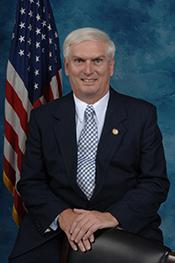 Rep. John J. Duncan, Jr. (R-TN)
Description
Amendment sought to maintain FY 2009 funding levels for the Federal Air Marshals.
Legislative Activity
Stay on top of the latest movement without scrolling through every action
House amendment offered
June 24, 2009
View full timeline
House amendment offered
June 24, 2009
House amendment not agreed to: On agreeing to the Duncan amendment (A006) Failed by recorded vote: 134 - 294 (Roll no. 440).
June 24, 2009 • 9:18 PM
Roll call votes on amendments in House
June 24, 2009 • 9:18 PM
Amendment failed in Committee of the Whole
June 24, 2009 • 9:18 PM
House amendment offered/reported by : Amendment (A006) offered by Mr. Duncan.(consideration: CR H7196-7197, H7225-7226; text: CR H7196)
June 24, 2009 • 5:30 PM
Amendment (A006) offered by Mr. Duncan. (consideration: CR H7196-7197, H7225-7226; text: CR H7196)
June 24, 2009 • 5:30 PM
On agreeing to the Duncan amendment (A006) Failed by recorded vote: 134 - 294 (Roll no. 440).
June 24, 2009 • 9:18 PM
Votes
1 roll call on this amendment
Text
Offered
DEPARTMENT OF HOMELAND SECURITY APPROPRIATIONS ACT, 2010
The Committee resumed its sitting.
Mr. KING of New York. Madam Chair, I recognize the gentlelady from
New York, the cosponsor of the amendment, and a really zealous fighter
on this issue, Ms. Clarke, for 90 seconds.
Ms. CLARKE. Madam Chairman, I would like to thank Ranking Member King
for yielding. I want to urge Members of the House to support the King-
Clarke amendment to the fiscal year 2010 Homeland Security
Appropriations Act, H.R. 2892. Neither the President's budget request
for fiscal year 2010 nor H.R. 2892 includes funding for the Securing
the Cities Initiative. This initiative has created the department's
Domestic Nuclear Detection Office, which is charged with directing the
Nation's capability to detect and report
[[Page H7191]]
unauthorized attempts to develop or transport nuclear or radiological
materials.
This amendment restores the Federal commitment to this critical
antiterrorism initiative and funds it.
Since coming to Congress in 2001, I have worked with my colleagues on
homeland security to protect our Nation against dirty bomb threats. In
fact, my bill, the Radiological Materials Security Act, would help
secure domestic sources of radiological materials that could be used to
make a dirty bomb.
We recognize that in the 21st century there are many very technical
ways, many technologically advanced ways, in which communities across
this Nation can sustain attack. And we are stating through this
amendment today that this program has created a protocol that is a
model for the Nation.
So I urge my colleagues as we continue to grow in the 21st century
and protect our critical cities and infrastructure that we will
redirect funds to this particular program and that you will vote this
amendment in order.
Mr. PRICE of North Carolina. I will continue to reserve.
Mr. KING of New York. Madam Chair, I yield 90 seconds to the
gentleman from California and the ranking member on the committee, Mr.
Lungren, 90 seconds.
Mr. DANIEL E. LUNGREN of California. I thank the gentleman for
yielding.
Madam Chair, some may wonder why someone from California would be
here supporting an amendment that appears to be directed towards
assisting the other side of the country. It is because of the success
of the program to this point. That is, this is not only for the City of
New York, but it is for that entire region, and I believe it has shown
how it can be replicated in other parts of the country. Also, the
greatest concern I have of an attack by terrorists who wish to do us
ill would be a nuclear attack of some sort in one of our major
metropolitan areas.
The interdiction capabilities of this program could prevent a bomb
from entering New York or from leaving the city to head to other parts
of the region or Nation. And its lessons, I think, can help other
cities around the country where similar initiatives could be
implemented. And importantly, and this was used as a point of criticism
I believe by the chairman, this amendment would provide $10 million for
the procurement of radiation portal monitors, not just in the New York
area, but from around the country. It seems to me that because of the
success of this program, because of its opportunity for duplication and
replication in other parts of the country, this is a worthy amendment.
I believe that these initiatives are designed to save lives. They
are, in fact, not just regional but national in scope and deserve
national support.
Radiation detection cannot be taken lightly. We must ensure that the
federal commitment to a dedicated funding stream is there. So I would
urge support of this amendment in restoring funding to the Securing Our
Cities project, a critical national initiative and one of a kind.
Mr. KING of New York. Madam Chair how much time remains?
The CHAIR. The gentleman has 1 minute remaining.
Mr. KING of New York. Madam Chair, I yield myself the balance of my
time.
Madam Chair, this initiative is extremely essential not just for New
York but the entire Nation because it is very much expected that the
next attack upon a major city will be launched from the suburbs,
whether it is New York, Los Angeles, Chicago or wherever.
Now, on the issues raised by the chairman, I have great respect for
the chairman. The fact is all of the 2008 funds have been designated.
All of them, once all the materials come in, will be paid. Every penny
has been designated.
Similarly for 2009, that money has been designated as well. There was
a delay, not because of New York City, but because the department took
so long in getting out the application. Once they were out, the city
applied, and the money has been allocated and has been designated.
When the chairman mentioned the increase in New York funding since
2006, he picked 2006. That was the year that New York was cut by 40
percent. So that is really not a good barometer to be using. The fact
is New York is the number one terrorist target in the country. New York
remains the number one terrorist target in the country. My district
lost well over 100 people on September 11. We dread the thought of
another attack, certainly a nuclear attack.
This program works. I urge the adoption of the amendment.
Mr. PRICE of North Carolina. How much time is remaining, Madam
Chairman?
The CHAIR. The gentleman has 90 seconds remaining.
Mr. PRICE of North Carolina. Madam Chairwoman, I will close and have
no further speakers. But I do want, once again, to commend the
gentleman for the spirit in which he offers this amendment and the zeal
with which Members whom we all know and respect, like Mr. Israel, Mr.
Serrano and Mrs. Lowey, protect their cities and have defended this
program.
We take a backseat to no one with respect to those efforts. We
understand New York's unique needs and how successful this pilot
program has been.
As a matter of fact, though, the money for carrying out the remaining
aspects of this program is already in the pipeline. And these very
arguments for the importance of this program are exactly why we need to
take a more long-term approach and get away from a pilot program, get
away from yearly amendments, yearly earmarks, and make this part of our
permanent, long-term protective efforts. Of course, we will work with
the New York delegation to find the resources that will let them do
just that.
So I pledge my cooperation in that endeavor.
I hope the spirit of this opposition is well understood. We do want
to work on this matter. We just believe that this amendment is not the
right approach. And therefore we do ask for its defeat.
The CHAIR. The question is on the amendment offered by the gentleman
from New York (Mr. King).
The question was taken; and the Chair announced that the noes
appeared to have it.
Mr. KING of New York. Madam Chairman, I demand a recorded vote.
The CHAIR. Pursuant to clause 6 of rule XVIII, further proceedings on
the amendment offered by the gentleman from New York will be postponed.
Part B Amendment No. 1 Offered by Mr. Bilirakis
Mr. BILIRAKIS. Madam Chair, I have an amendment at the desk.
The CHAIR. The Clerk will designate the amendment.
The text of the amendment is as follows:
Part B amendment No. 1 offered by Mr. Bilirakis:
Page 2, line 9, after the dollar amount, insert ``(reduced
by $1,700,000)''.
Page 15, line 20, after the dollar amount, insert
``(increased by $1,700,000)''.
Page 17, line 16, after the dollar amount, insert
``(increased by $1,700,000)''.
The CHAIR. Pursuant to House Resolution 573, the gentleman from
Florida (Mr. Bilirakis) and a Member opposed each will control 5
minutes.
The Chair recognizes the gentleman from Florida.
Mr. BILIRAKIS. Madam Chair, I yield myself as much time as I may
consume.
I rise to offer this important amendment which will help increase our
Nation's visa screening capabilities overseas to stop the entry into
our country of terrorists, criminals, and others who may wish to do us
harm.
As a member of the Homeland Security Committee and a ranking member
of the Subcommittee on Management, Investigations and Oversight, I have
come to understand the importance of being proactive in strengthening
our homeland security. At the same time, I have also become concerned
about the inadequacies in the screening process and background checks
conducted on those seeking temporary admission to our country.
While many visa seekers simply want to come here to study or work and
comply with the terms of their visas, some do not. And some, as we
tragically saw on 9/11, want to enter our country to wage war against
us.
{time} 1715
That's why we need to strengthen the process by which temporary
visitors
[[Page H7192]]
are screened prior to their entry into the United States. Congress
recognized this weakness and created the Visa Security Program, which
places Immigration and Customs Enforcement personnel overseas at risk
locations to more carefully screen and investigate visa applicants.
This important terrorist detection program allows ICE to proactively
investigate and review visa applications to identify potential
terrorists or criminal suspects before they gain entry into the United
States. That is the key.
Unfortunately, the administration did not seek increased funding for
this valuable program in its budget request. While I am pleased that
the bill we are considering today ensures that a portion of the funding
for this program will be reserved to open several new visa security
units in high-risk locations, I think we should provide additional
resources to accelerate ICE's plan for expanding to other critical
locations, which is what my amendment does.
ICE currently operates 14 visa security units overseas. My amendment
increases funding for the Visa Security Program by $1.7 million which
will allow ICE to stand up an additional visa security unit. ICE has
identified additional locations for new units but has not yet opened
its units in these areas, largely due to the resource constraints.
To offset this increase, my amendment would take a corresponding
amount from the Office of the Secretary, which under this bill receives
$147 million, a $24 million increase over fiscal year 2009, including
$3 million for establishing a new intermodal security coordination
office that largely will duplicate existing department efforts.
We must be mindful of the way we spend our scarce resources. When it
comes to security, we must avoid creating more bureaucracy and ensure
that we are allocating funds where the risk is greatest. This amendment
will help do that and ensure that the department is operating as
effectively and efficiently as possible.
My amendment will provide needed resources to keep terrorists out of
the country while still allowing sufficient funding for establishing an
office for which the need is questionable.
I urge all of my colleagues to help strengthen our Nation's homeland
security by supporting this amendment.
Mr. ROGERS of Kentucky. Will the gentleman yield?
Mr. BILIRAKIS. I yield to the gentleman from Kentucky.
Mr. ROGERS of Kentucky. I want to salute the gentleman for a well-
thought out and wise amendment. I will support the amendment, and I
hope it wins.
Mr. BILIRAKIS. I reserve the balance of my time.
The CHAIR. Without objection, the gentleman from North Carolina is
recognized for 5 minutes.
There was no obligation.
Mr. PRICE of North Carolina. Madam Chairman, I rise also to thank the
gentleman for this amendment, which would increase the budget for the
ICE Visa Security Program by $1.7 million. This addition would be
offset by corresponding reductions to the Office of Secretary and
Executive Management, but not a devastating cut.
The committee has fully funded the $30.2 million request for the Visa
Security Program, which is $3.4 million over the 2009 appropriations
level already. This program places ICE agents and investigators
overseas in embassies and consulates to assist State Department
officials by investigating the criminal and terrorist backgrounds of
those who apply for visas to come to the United States.
The committee also expanded the program by more than 45 percent in
the 2009 Appropriations Act, and I recognize its ongoing importance for
the security of our country. The additional funds proposed in this
amendment will allow ICE to continue to accelerate its Visa Security
Program deployments in 2010. In other words, it would build in a very
positive way on the progress we were making. And with this in mind, I
am happy to accept the gentleman's amendment.
I reserve the balance of my time.
Mr. BILIRAKIS. I yield myself the balance of my time to close.
I want to thank the chairman and the ranking member, and I urge my
colleagues to help strengthen our Nation's homeland security by
supporting this amendment.
I yield back the balance of my time.
Mr. PRICE of North Carolina. Madam Chairman, I yield back the balance
of my time.
The CHAIR. The question is on the amendment offered by the gentleman
from Florida (Mr. Bilirakis).
The question was taken; and the Chair announced that the ayes
appeared to have it.
Mr. BILIRAKIS. Madam Chairman, I demand a recorded vote.
The CHAIR. Pursuant to clause 6 of rule XVIII, further proceedings on
the amendment offered by the gentleman from Florida will be postponed.
The Clerk will read.
The Clerk read as follows:
Office of the Under Secretary for Management
For necessary expenses of the Office of the Under Secretary
for Management, as authorized by sections 701 through 705 of
the Homeland Security Act of 2002 (6 U.S.C. 341 through 345),
$268,690,000, of which not less than $1,000,000 shall be for
logistics training; and of which not to exceed $3,000 shall
be for official reception and representation expenses:
Provided, That of the total amount made available under this
heading, $6,000,000 shall remain available until expended
solely for the alteration and improvement of facilities,
tenant improvements, and relocation costs to consolidate
Department headquarters operations at the Nebraska Avenue
Complex; and $17,131,000 shall remain available until
expended for the Human Resources Information Technology
program.
Office of the Chief Financial Officer
For necessary expenses of the Office of the Chief Financial
Officer, as authorized by section 103 of the Homeland
Security Act of 2002 (6 U.S.C. 113), $63,530,000, of which
$11,000,000 shall remain available until expended for
financial systems consolidation efforts.
Office of the Chief Information Officer
For necessary expenses of the Office of the Chief
Information Officer, as authorized by section 103 of the
Homeland Security Act of 2002 (6 U.S.C. 113), and Department-
wide technology investments, $299,593,000; of which
$86,912,000 shall be available for salaries and expenses; and
of which $212,681,000, to remain available until expended,
shall be available for development and acquisition of
information technology equipment, software, services, and
related activities for the Department of Homeland Security:
Provided, That none of the funds appropriated shall be used
to support or supplement the appropriations provided for the
United States Visitor and Immigrant Status Indicator
Technology project or the Automated Commercial Environment:
Provided further, That the Chief Information Officer shall
submit to the Committees on Appropriations of the Senate and
the House of Representatives, not more than 60 days after the
date of enactment of this Act, an expenditure plan for all
information technology acquisition projects that: (1) are
funded under this heading; or (2) are funded by multiple
components of the Department of Homeland Security through
reimbursable agreements: Provided further, That such
expenditure plan shall include each specific project funded,
key milestones, all funding sources for each project, details
of annual and lifecycle costs, and projected cost savings or
cost avoidance to be achieved by the project.
Analysis and Operations
For necessary expenses for intelligence analysis and
operations coordination activities, as authorized by title II
of the Homeland Security Act of 2002 (6 U.S.C. 121 et seq.),
$345,556,000, of which not to exceed $5,000 shall be for
official reception and representation expenses; and of which
$199,677,000 shall remain available until September 30, 2011.
Office of the Federal Coordinator for Gulf Coast Rebuilding
For necessary expenses of the Office of the Federal
Coordinator for Gulf Coast Rebuilding, $2,000,000.
Office of Inspector General
For necessary expenses of the Office of Inspector General
in carrying out the provisions of the Inspector General Act
of 1978 (5 U.S.C. App.), $111,874,000, of which not to exceed
$150,000 may be used for certain confidential operational
expenses, including the payment of informants, to be expended
at the direction of the Inspector General.
TITLE II--SECURITY, ENFORCEMENT, AND INVESTIGATIONS
U.S. Customs and Border Protection
salaries and expenses
For necessary expenses for enforcement of laws relating to
border security, immigration, customs, agricultural
inspections and regulatory activities related to plant and
animal imports, and transportation of unaccompanied minor
aliens; purchase and lease of up to 4,500 (4,000 for
replacement only) police-type vehicles; and contracting with
individuals for personal services abroad; $7,576,897,000, of
which $3,226,000 shall be derived from the Harbor Maintenance
Trust Fund for administrative expenses related to the
collection of the Harbor Maintenance Fee pursuant to section
9505(c)(3) of the Internal Revenue Code of 1986 (26 U.S.C.
[[Page H7193]]
9505(c)(3)) and notwithstanding section 1511(e)(1) of the
Homeland Security Act of 2002 (6 U.S.C. 551(e)(1)); of which
not to exceed $45,000 shall be for official reception and
representation expenses; of which not less than $309,629,000
shall be for Air and Marine Operations; of which such sums as
become available in the Customs User Fee Account, except sums
subject to section 13031(f)(3) of the Consolidated Omnibus
Budget Reconciliation Act of 1985 (19 U.S.C. 58c(f)(3)),
shall be derived from that account; of which not to exceed
$1,000,000 shall be for awards of compensation to informants,
to be accounted for solely under the certificate of the
Secretary of Homeland Security; and of which not more than
$800,000 shall be for procurement of portable solar charging
rechargeable battery systems, to be awarded under full and
open competition: Provided, That for fiscal year 2010, the
overtime limitation prescribed in section 5(c)(1) of the Act
of February 13, 1911 (19 U.S.C. 267(c)(1)) shall be $35,000;
and notwithstanding any other provision of law, none of the
funds appropriated by this Act may be available to compensate
any employee of U.S. Customs and Border Protection for
overtime, from whatever source, in an amount that exceeds
such limitation, except in individual cases determined by the
Secretary of Homeland Security, or the designee of the
Secretary, to be necessary for national security purposes, to
prevent excessive costs, or in cases of immigration
emergencies.
Part B Amendment No. 3 Offered by Mr. King of Iowa
Mr. KING of Iowa. Madam Chairman, I have an amendment at the desk
made in order by the rule.
The CHAIR. The Clerk will designate the amendment.
The text of the amendment is as follows:
Part B Amendment No. 3 offered by Mr. King of Iowa:
Page 5, line 20, after the first dollar amount, insert
``(reduced by $1,000,000) (increased by $1,000,000)''.
The CHAIR. Pursuant to House Resolution 573, the gentleman from Iowa
(Mr. King) and a Member opposed each will control 5 minutes.
The Chair recognizes the gentleman from Iowa.
Mr. KING of Iowa. Madam Chair, I yield myself 2 minutes.
This is an amendment that takes a million dollars out and puts a
million dollars in, and it comes from time I spent on the border and
time I worked with our Border Patrol officers, our law enforcement
officers on the border over the last several years. I have been down to
the border, traveled along primarily the Arizona border, and had our
law enforcement officers point to the pinnacles and say, There are drug
lookouts, drug smuggling lookouts and people smuggling lookouts up on
top of the promontories. These are the equivalent of military
positions.
I have actually personally walked a map around and had them put X's
on the map to show me where these lookouts are, and over time, I
developed this map that I have handed to the Secretary of Homeland
Security. The locations are not disputed. This is a cat-and-mouse game
that is going on between our law enforcement personnel all along the
border, between ICE, the Shadow Wolves, and our Border Patrol
personnel.
I had a conversation with John Morton, who is the new director of
ICE. He recognizes this concern. I am encouraged that this
administration has taken notice of the lookouts that control the
smuggling routes and tip them off when our law enforcement personnel
converge in.
Sometimes they will run a decoy, and this cat-and-mouse game has got
to end. No nation can maintain its sovereignty if we are going to allow
military positions, lookout positions to exist. So this million dollars
is at the encouragement of ICE's people as well. A million dollars will
be directed at taking out these lookout sites and removing this as a
tool from our drug smugglers and our people smugglers on the border.
I think it is something that is a bipartisan piece of legislation and
it ends the cat-and-mouse game. By the way, their request was Congress
should have a voice on this when I had that conversation with ICE. And
so I encourage support for this amendment.
Mr. ROGERS of Kentucky. Would the gentleman yield?
Mr. KING of Iowa. I would be happy to yield to the ranking member.
Mr. ROGERS of Kentucky. The gentleman has worked hard on this issue
and has brought forth some information that is very helpful to us, and
I support the amendment he has offered and salute him for offering it.
Mr. KING of Iowa. I thank the gentleman, and I reserve my time.
Mr. PRICE of North Carolina. Madam Chairman, I rise in opposition to
the amendment.
The CHAIR. The gentleman from North Carolina is recognized for 5
minutes.
Mr. PRICE of North Carolina. The amendment simply increases and
decreases funding for CBP salaries and expenses by $1 million with no
statutory direction.
Now, my colleague would have us understand this amendment would
somehow provide funding for a targeted border enforcement effort. I
must respectfully disagree. In fact, it will do nothing of the kind.
The procedure used in this amendment is meaningless, having no
effect, and establishing no legislative mandate. With no statutory
significance, it also will have no impact whatsoever on the conference
outcome with the Senate. It neither identifies the activity being
defunded nor the one being augmented.
On that basis alone, and to discourage the use of this kind of
parliamentary tactic to stretch out the time for general debate, I urge
colleagues to defeat this amendment.
I reserve the balance of my time.
Mr. KING of Iowa. I yield myself 1\1/2\ minutes.
I would respectfully disagree with the gentleman. As I read my
amendment, I think the dialogue I heard was it increases and then
decreases funding. Actually, this amendment decreases and then
increases funding. I don't know if that changes the gentleman's
analysis of what the amendment actually does. I don't add to this
funding. I simply decrease it and then add it back in.
I would have been happy to work with some language that would have
perhaps been made in order, but in order for this Congress to have a
voice on these lookouts--and this is drug smugglers that hold military
positions, the equivalent of military positions that have stones
stacked up like sandbags and people in there with semiautomatic weapons
and have their supplies brought up to them by patrols that make sure
that they have food and water and sometimes other things. They come and
go as they see fit. We let them sit on top of these mountains and
smuggle into the United States 90 percent of the illegal drugs that are
consumed in the United States of America. And accompanying that are all
of the violence, the death, the things that are associated with illegal
drugs.
This amendment is clearly in order, and how this Congress speaks to
this amendment is how ICE and the balance of the law enforcement
personnel on the border will react.
I'm asking that we simply join our voices together and ask for
enforcement so we don't concede these locations to the people who are
smuggling 90 percent of the illegal drugs into America.
Mr. ROGERS of Kentucky. Would the gentleman yield?
Mr. KING of Iowa. I would be very happy to yield.
Mr. ROGERS of Kentucky. Are these lookout posts on U.S. soil?
Mr. KING of Iowa. On U.S. soil.
I reserve the balance of my time.
Mr. PRICE of North Carolina. Madam Chairman, I yield back the balance
of my time.
Mr. KING of Iowa. Madam Chair, I yield myself the balance of my time
in order to close.
As the ranking member from Kentucky said, this is something that I
have done a lot of work on, and I am not the only Member of Congress
who has gone to these lookouts. I have gone there and walked across the
desert with our Shadow Wolves, for example, and had them point up and
say, On that mountain, they have a position and they have state-of-the-
art optical equipment, state-of-the-art radio equipment. They are
watching every move that our Border Patrol, ICE, Customs and Border
Protection, and Shadow Wolves are making on that southern border.
Whenever we deploy manpower, if we set up our ground-base radar that
picks up humans, personnel walking across the desert, they know where
our locations are. They shift their traffic accordingly. I have watched
them run the decoy. I have been part of picking up
[[Page H7194]]
230 or 240 pounds of marijuana in one load that probably helped 2,000-
some pounds go through another load.
We simply cannot tolerate in the United States of America, at least
as much as 70 miles inside the United States--and I will be going down
next week to look at some of these locations that are actually north of
Tucson on the road to Phoenix. This is the United States of America,
our sovereign territory, and playing cat and mouse with people there
with semiautomatic weapons, supplies, smuggling drugs through the
United States has got to stop. And this Congress should join together
and, with this amendment, ask them to do so to stop that activity and
defend our soil and put an end to this. It would be a very good help to
dramatically reduce the amount of illegal drug smuggling into the
United States.
I urge adoption of the amendment.
The CHAIR. The question is on the amendment offered by the gentleman
from Iowa (Mr. King).
The question was taken; and the Chair announced that the noes
appeared to have it.
Mr. KING of Iowa. Madam Chairman, I demand a recorded vote.
The CHAIR. Pursuant to clause 6 of rule XVIII, further proceedings on
the amendment offered by the gentleman from Iowa will be postponed.
The Clerk will read.
The Clerk read as follows:
automation modernization
For expenses for U.S. Customs and Border Protection
automated systems, $462,445,000, to remain available until
expended, of which not less than $267,960,000 shall be for
the development of the Automated Commercial Environment:
Provided, That of the total amount made available under this
heading, $167,960,000 may not be obligated for the Automated
Commercial Environment program until 30 days after the
Committees on Appropriations of the Senate and the House of
Representatives receive a report on the results to date and
plans for the program from the Department of Homeland
Security.
border security fencing, infrastructure, and technology
For expenses for border security fencing, infrastructure,
and technology, $732,000,000, to remain available until
expended: Provided, That of the total amount made available
under this heading, $150,000,000 shall not be obligated until
the Committees on Appropriations of the Senate and the House
of Representatives receive and approve a plan for
expenditure, prepared by the Secretary of Homeland Security,
reviewed by the Government Accountability Office, and
submitted not later than 90 days after the date of the
enactment of this Act, for a program to establish and
maintain a security barrier along the borders of the United
States, of fencing and vehicle barriers where practicable,
and of other forms of tactical infrastructure and technology,
that includes--
(1) a detailed accounting of the program's implementation
to date for all investments, including technology and
tactical infrastructure, for funding already expended
relative to system capabilities or services, system
performance levels, mission benefits and outcomes,
milestones, cost targets, program management capabilities,
identification of the maximum investment, including life-
cycle costs, related to the Secure Border Initiative program
or any successor program, and description of the methodology
used to obtain these cost figures;
(2) a description of how specific projects will further the
objectives of the Secure Border Initiative, as defined in the
Department of Homeland Security Secure Border Plan, and how
the expenditure plan allocates funding to the highest
priority border security needs;
(3) an explicit plan of action defining how all funds are
to be obligated to meet future program commitments, with the
planned expenditure of funds linked to the milestone-based
delivery of specific capabilities, services, performance
levels, mission benefits and outcomes, and program management
capabilities;
(4) an identification of staffing, including full-time
equivalents, contractors, and detailees, by program office;
(5) a description of how the plan addresses security needs
at the Northern border and ports of entry, including
infrastructure, technology, design and operations
requirements, specific locations where funding would be used,
and priorities for Northern border activities;
(6) a report on budget, obligations and expenditures, the
activities completed, and the progress made by the program in
terms of obtaining operational control of the entire border
of the United States;
(7) a listing of all open Government Accountability Office
and Office of Inspector General recommendations related to
the program and the status of Department of Homeland Security
actions to address the recommendations, including milestones
to fully address such recommendations;
(8) a certification by the Chief Procurement Officer of the
Department including all supporting documents or memoranda,
and documentation and a description of the investment review
processes used to obtain such certifications, that--
(A) the program has been reviewed and approved in
accordance with the investment management process of the
Department, and that the process fulfills all capital
planning and investment control requirements and reviews
established by the Office of Management and Budget, including
as provided in Circular A-11, part 7;
(B) the plans for the program comply with the Federal
acquisition rules, requirements, guidelines, and practices,
and a description of the actions being taken to address areas
of non-compliance, the risks associated with such actions,
together with any plans for addressing these risks, and the
status of the implementation of such actions; and
(C) procedures to prevent conflicts of interest between the
prime integrator and major subcontractors are established and
that the Secure Border Initiative Program Office has adequate
staff and resources to effectively manage the Secure Border
Initiative program and all contracts under such program,
including the exercise of technical oversight;
(9) a certification by the Chief Information Officer of the
Department including all supporting documents or memoranda,
and documentation and a description of the investment review
processes used to obtain such certifications that--
(A) the system architecture of the program has been
determined to be sufficiently aligned with the information
systems enterprise architecture of the Department to minimize
future rework, including a description of all aspects of the
architectures that were or were not assessed in making the
alignment determination, the date of the alignment
determination, and any known areas of misalignment together
with the associated risks and corrective actions to address
any such areas;
(B) the program has a risk management process that
regularly and proactively identifies, evaluates, mitigates,
and monitors risks throughout the system life cycle and
communicates high-risk conditions to U.S. Customs and Border
Protection and Department of Homeland Security investment
decision-makers, as well as a listing of all the program's
high risks and the status of efforts to address such risks;
and
(C) an independent verification and validation agent is
currently under contract for the projects funded under this
heading;
(10) a certification by the Chief Human Capital Officer of
the Department that the human capital needs of the Secure
Border Initiative program are being addressed so as to ensure
adequate staff and resources to effectively manage the Secure
Border Initiative; and
(11) an analysis by the Secretary for each segment, defined
as not more than 15 miles, of fencing or tactical
infrastructure, of the selected approach compared to other,
alternative means of achieving operational control, including
cost, level of operational control, possible unintended
effects on communities, and other factors critical to the
decisionmaking process:
Provided further, That the Secretary shall report to the
Committees on Appropriations of the Senate and the House of
Representatives on program progress, and obligations and
expenditures for all outstanding task orders as well as
specific objectives to be achieved through the award of
current and remaining task orders planned for the balance of
available appropriations at least 15 days before the award of
any task order requiring an obligation of funds in an amount
greater than $25,000,000 and before the award of a task order
that would cause cumulative obligations of funds to exceed 50
percent of the total amount appropriated: Provided further,
That none of the funds made available under this heading may
be obligated unless the Department has complied with section
102(b)(1)(C)(i) of the Illegal Immigration Reform and
Immigrant Responsibility Act of 1996 (8 U.S.C. 1103 note),
and the Secretary certifies such to the Committees on
Appropriations of the Senate and the House of
Representatives: Provided further, That none of the funds
made available under this heading may be obligated for any
project or activity for which the Secretary has exercised
waiver authority pursuant to section 102(c) of the Illegal
Immigration Reform and Immigrant Responsibility Act of 1996
(8 U.S.C. 1103 note) until 15 days have elapsed from the date
of the publication of the decision in the Federal Register.
air and marine interdiction, operations, maintenance, and procurement
For necessary expenses for the operations, maintenance, and
procurement of marine vessels, aircraft, unmanned aircraft
systems, and other related equipment of the air and marine
program, including operational training and mission-related
travel, and rental payments for facilities occupied by the
air or marine interdiction and demand reduction programs, the
operations of which include the following: the interdiction
of narcotics and other goods; the provision of support to
Federal, State, and local agencies in the enforcement or
administration of laws enforced by the Department of Homeland
Security; and at the discretion of the Secretary of Homeland
Security, the provision of assistance to Federal, State, and
local agencies in other law enforcement and emergency
humanitarian efforts, $513,826,000, to remain available until
expended: Provided, That no aircraft or other related
equipment, with the exception of aircraft that are one of a
kind and have been identified as excess to U.S.
[[Page H7195]]
Customs and Border Protection requirements and aircraft that
have been damaged beyond repair, shall be transferred to any
other Federal agency, department, or office outside of the
Department of Homeland Security during fiscal year 2010
without the prior approval of the Committees on
Appropriations of the Senate and the House of
Representatives.
facilities management
For necessary expenses to plan, construct, renovate, equip,
and maintain buildings and facilities necessary for the
administration and enforcement of the laws relating to
customs and immigration, $682,133,000, of which not to exceed
$150,000 shall be available for payment for rental space in
connection with preclearance operations; and of which
$279,870,000 shall remain available until expended; of which
not more than $3,500,000 shall be for acquisition, design,
and construction of U.S. Customs and Border Protection Air
and Marine facilities at El Paso International Airport,
Texas.
U.S. Immigration and Customs Enforcement
salaries and expenses
For necessary expenses for enforcement of immigration and
customs laws, detention and removals, and investigations; and
purchase and lease of up to 3,790 (2,350 for replacement
only) police-type vehicles; $5,311,493,000, of which not to
exceed $7,500,000 shall be available until expended for
conducting special operations under section 3131 of the
Customs Enforcement Act of 1986 (19 U.S.C. 2081); of which
not to exceed $15,000 shall be for official reception and
representation expenses; of which not to exceed $1,000,000
shall be for awards of compensation to informants, to be
accounted for solely under the certificate of the Secretary
of Homeland Security; of which not less than $305,000 shall
be for promotion of public awareness of the child pornography
tipline and anti-child exploitation activities; of which not
less than $5,400,000 shall be used to facilitate agreements
consistent with section 287(g) of the Immigration and
Nationality Act (8 U.S.C. 1357(g)); and of which not to
exceed $11,216,000 shall be available to fund or reimburse
other Federal agencies for the costs associated with the
care, maintenance, and repatriation of smuggled aliens
unlawfully present in the United States: Provided, That none
of the funds made available under this heading shall be
available to compensate any employee for overtime in an
annual amount in excess of $35,000, except that the
Secretary, or the designee of the Secretary, may waive that
amount as necessary for national security purposes and in
cases of immigration emergencies: Provided further, That of
the total amount provided, $15,770,000 shall be for
activities in fiscal year 2010 to enforce laws against forced
child labor, of which not to exceed $6,000,000 shall remain
available until expended: Provided further, That of the total
amount available, not less than $1,500,000,000 shall be
available to identify aliens convicted of a crime who may be
deportable, and to remove them from the United States once
they are judged deportable, of which $200,000,000 shall
remain available until September 30, 2011: Provided further,
That the Secretary, or the designee of the Secretary, shall
report to the Committees on Appropriations of the Senate and
the House of Representatives, not later than 30 days after
the end of each fiscal quarter, on progress implementing the
preceding proviso and the funds obligated during that quarter
to make that progress: Provided further, That the Secretary
shall prioritize the identification and removal of aliens
convicted of a crime by the severity of that crime: Provided
further, That of the total amount provided, not less than
$2,549,180,000 shall be for detention and removal operations,
including transportation of unaccompanied minor aliens:
Provided further, That of the total amount provided,
$6,800,000 shall remain available until September 30, 2011,
for the Visa Security Program: Provided further, That none of
the funds provided under this heading may be used to continue
a delegation of law enforcement authority authorized under
section 287(g) of the Immigration and Nationality Act (8
U.S.C. 1357(g)) if the Department of Homeland Security
Inspector General determines that the terms of the agreement
governing the delegation of authority have been violated:
Provided further, That none of the funds provided under this
heading may be used to continue any contract for the
provision of detention services if the two most recent
overall performance evaluations received by the contracted
facility are less than ``adequate'' or the equivalent median
score in any subsequent performance evaluation system:
Provided further, That nothing under this heading shall
prevent U.S. Immigation and Customs Enforcement from
exercising those authorities provided under immigration laws
(as defined in section 101(a)(17) of the Immigration and
Nationality Act (8 U.S.C. 1101(a)(17))) during priority
operations pertaining to aliens convicted of a crime:
Provided further, That none of the funds provided under this
heading may be obligated to co-locate field offices of U.S.
Immigration and Customs Enforcement until the Secretary of
Homeland Security submits to the Committees on Appropriations
of the Senate and the House of Representatives a plan for the
nationwide implementation of the Alternatives to Detention
Program that identifies: (1) the funds required for
nationwide program implementation, (2) the timeframe for
achieving nationwide program implementation; and (3) an
estimate of the number of individuals who could be enrolled
in a nationwide program.
federal protective service
The revenues and collections of security fees credited to
this account shall be available until expended for necessary
expenses related to the protection of Federally-owned and
leased buildings and for the operations of the Federal
Protective Service: Provided, That the Secretary of Homeland
Security and the Director of the Office of Management and
Budget shall certify in writing to the Committees on
Appropriations of the Senate and the House of Representatives
no later than December 31, 2009, that the operations of the
Federal Protective Service will be fully funded in fiscal
year 2010 through revenues and collection of security fees,
and shall adjust the fees to ensure fee collections are
sufficient to ensure that the Federal Protective Service
maintains not fewer than 1,200 full-time equivalent staff and
900 full-time equivalent Police Officers, Inspectors, Area
Commanders, and Special Agents who, while working, are
directly is engaged on a daily basis protecting and enforcing
laws at Federal buildings (referred to as ``in-service field
staff''): Provided further, That none of the funds made
available in this Act may be used to modify or restructure
the bureaucratic organization of the Federal Protective
Service as part of U.S. Immigration and Customs Enforcement.
automation modernization
For expenses of immigration and customs enforcement
automated systems, $105,000,000, to remain available until
expended.
construction
For necessary expenses to plan, construct, renovate, equip,
and maintain buildings and facilities necessary for the
administration and enforcement of the laws relating to
customs and immigration, $11,818,000, to remain available
until expended: Provided, That none of the funds made
available in this Act may be used to solicit or consider any
request to privatize facilities currently owned by the United
States Government and used to detain aliens unlawfully
present in the United States until the Committees on
Appropriations of the Senate and the House of Representatives
receive a plan for carrying out that privatization.
Transportation Security Administration
aviation security
For necessary expenses of the Transportation Security
Administration related to providing civil aviation security
services pursuant to the Aviation and Transportation Security
Act (Public Law 107-71; 115 Stat. 597; 49 U.S.C. 40101 note),
$5,265,740,000, to remain available until September 30, 2011,
of which not to exceed $10,000 shall be for official
reception and representation expenses: Provided, That of the
total amount made available under this heading, not to exceed
$4,409,776,000 shall be for screening operations, of which
$1,138,106,000 shall be available for explosives detection
systems; and not to exceed $855,964,000 shall be for aviation
security direction and enforcement: Provided further, That of
the amount made available in the preceding proviso for
explosives detection systems, $800,000,000 shall be available
for the purchase and installation of these systems: Provided
further, That of the total amount provided, $1,250,000 shall
be made available for Safe Skies Alliance to develop and
enhance research and training capabilities for Transportation
Security Officer improvised explosive recognition training:
Provided further, That security service fees authorized under
section 44940 of title 49, United States Code, shall be
credited to this appropriation as offsetting collections and
shall be available only for aviation security: Provided
further, That any funds collected and made available from
aviation security fees pursuant to section 44940(i) of title
49, United States Code, may, notwithstanding paragraph (4) of
such section 44940(i), be expended for the purpose of
improving screening at airport screening checkpoints, which
may include the purchase and utilization of emerging
technology equipment; the refurbishment and replacement of
current equipment; the installation of surveillance systems
to monitor checkpoint activities; the modification of
checkpoint infrastructure to support checkpoint
reconfigurations; and the creation of additional checkpoints
to screen aviation passengers and airport personnel: Provided
further, That the sum appropriated under this heading from
the general fund shall be reduced on a dollar-for-dollar
basis as such offsetting collections are received during
fiscal year 2010, so as to result in a final fiscal year
appropriation from the general fund estimated at not more
than $3,165,740,000: Provided further, That any security
service fees collected in excess of the amount made available
under this heading shall become available during fiscal year
2011: Provided further, That Members of the House of
Representatives and Senate, including the leadership; the
heads of Federal agencies and commissions, including the
Secretary, Under Secretaries, and Assistant Secretaries of
Homeland Security; the Attorney General and Assistant
Attorneys General and the United States attorneys; and senior
members of the Executive Office of the President, including
the Director of the Office of Management and Budget; shall
not be exempt from Federal passenger and baggage screening.
surface transportation security
For necessary expenses of the Transportation Security
Administration related to
[[Page H7196]]
providing surface transportation security activities,
$103,416,000, to remain available until September 30, 2011.
transportation threat assessment and credentialing
For necessary expenses for the development and
implementation of screening programs of the Office of
Transportation Threat Assessment and Credentialing,
$171,999,000, to remain available until September 30, 2011:
Provided, That if the Assistant Secretary of Homeland
Security (Transportation Security Administration) determines
that the Secure Flight program does not need to check airline
passenger names against the full terrorist watch list, the
Assistant Secretary shall certify to the Committees on
Appropriations of the Senate and the House of Representatives
that no significant security risks are raised by screening
airline passenger names only against a subset of the full
terrorist watch list.
transportation security support
For necessary expenses of the Transportation Security
Administration related to providing transportation security
support and intelligence pursuant to the Aviation and
Transportation Security Act (Public Law 107-71; 115 Stat.
597; 49 U.S.C. 40101 note), $992,980,000, to remain available
until September 30, 2011: Provided, That not to exceed
$5,000,000 may be obligated for headquarters administration
until the Secretary of Homeland Security submits to the
Committees on Appropriations of the Senate and the House of
Representatives detailed expenditure plans for checkpoint
support and explosives detection systems refurbishment,
procurement, and installations on an airport-by-airport basis
for fiscal year 2010: Provided further, That these plans
shall be submitted no later than 60 days after the date of
enactment of this Act.
federal air marshals
For necessary expenses of the Federal Air Marshals,
$860,111,000.
{time} 1730
Part B Amendment No. 2 Offered by Mr. Duncan
Mr. DUNCAN. Madam Chairman, I have an amendment at the desk.
The CHAIR. The Clerk will designate the amendment.
The text of the amendment is as follows:
Part B amendment No. 2 offered by Mr. Duncan:
Page 24, line 9, strike the dollar amount and insert
``$819,481,000''.
The CHAIR. Pursuant to House Resolution 573, the gentleman from
Tennessee (Mr. Duncan) and a Member opposed each will control 5
minutes.
The Chair recognizes the gentleman from Tennessee.
Mr. DUNCAN. Madam Chairman, former Congressman Sonny Callahan, a very
respected former subcommittee chairman on the Appropriations Committee,
told me that we had done all we needed to do on airplane security when
we secured the cockpit doors. Whether you agree with him or not, that
one very inexpensive action took away the ability to hijack and use
airplanes the way they were used on 9/11.
Now we are about to appropriate $860 million for the Federal Air
Marshal Service, and I believe this money could be much better spent in
any one of hundreds of other ways. However, my amendment does not
eliminate this agency, even though I do believe it is a needless,
useless agency. And my amendment does not even cut its funding. All it
does is freeze this agency at its current level of funding, $819
million.
Air marshals arrest an average of a little over four people each
year. Even after my amendment, they would still be getting about $200
million per arrest. There must not be a softer, easier, more cushy job
in the entire Federal Government than just to ride airplanes back and
forth, back and forth, back and forth, many of them in first class. I
would rather give this money to local law enforcement people who are
fighting real crime, the street crime that people want fought.
Families all over this country are having to tighten their belts, and
many millions are having to reduce spending. It would seem to me that
the least we can do is stop giving big increases to agencies like this
that really are doing almost no good at all. Actually, more air
marshals have been arrested since 9/11 than there have been arrests by
air marshals. This is an agency that has gone from just 33 before 9/11
to over 4,000 today.
Now, what TSA is doing at the airports, what all the other Federal,
State and local law enforcement agencies are doing, what private
companies are doing on security and all the many other things that are
done on this bill on aviation security are more than enough. We need to
realize that we cannot make everyone totally safe even if we spent the
entire Federal budget on security.
I chaired the Aviation Subcommittee for 6 years and have always been
a strong supporter of law enforcement and aviation security, but as one
high-ranking former TSA official told me 2 days ago, this air marshal
agency is simply ``gilding the lily.''
The Wall Street Journal said in an editorial a few months after 9/11:
``We would like to suggest a new post-September 11 rule for Congress:
Any bill with the word ``security'' should get double the public
scrutiny and maybe four times the normal weight, lest all kinds of bad
legislation become law under the phony guise of fighting terrorism.''
That was from The Wall Street Journal when they noticed that almost
every Department agency was requesting additional funds and using the
word ``security'' to justify it, even unnecessary appropriations.
Everyone on both sides of the aisle, Madam Chairman, likes to call
themselves fiscally conservative. Well, even if my amendment were to
pass, this agency would be getting an almost 60 percent increase since
2003, more than double the rate of inflation since that time.
This amendment is bare bones fiscal conservatism, very minimal fiscal
conservatism. And I might add that I have never had a run-in with an
air marshal. In fact, I don't even believe that I know an air marshal,
so this is nothing personal. But USA Today a few months ago had an
article about this agency and all the troubles and problems they're
having, and I can tell you that I think this agency at least should not
keep getting huge increases in funding.
Madam Chairman, I reserve the balance of my time.
Mr. PRICE of North Carolina. Madam Chairman, I rise in opposition to
the amendment.
The CHAIR. The gentleman is recognized for 5 minutes.
Mr. PRICE of North Carolina. Madam Chairman, I rise in opposition to
the amendment with great respect for the gentleman from Tennessee who,
after all, has labored in this body for many years in the areas of
transportation and transportation security. I take what he believes
very, very seriously. And I know that he offers this amendment in all
earnestness.
I want to say more in a minute about what our committee has done to
make certain some of the elements that he is looking for are indeed
addressed; namely, by requiring a long-term assessment of the air
marshal staffing needs. This is not something we should go on funding
indefinitely without assessment or analysis; and we intend for that to
occur. But I do not believe this amendment to simply flat-fund the
Federal air marshals is the best approach.
The exact number of Federal air marshals is security-sensitive, but a
reduction of $40.6 million, which the gentleman proposes, would result
in a significant number of air marshals being let go, and TSA would
have to put in place a hiring freeze for all of fiscal 2010. As a
result, we would have fewer high-risk international and domestic
flights covered. In fact, flight coverage would be below what it was in
2009.
With this funding reduction, it is possible that air marshals may not
be on all flights during some high-consequence events, such as the 2010
Olympics or national special security events. Now, I'm sure that TSA
would make every effort not to reduce coverage for such events, but we
would need to worry about resources being spread thinly under the
gentleman's amendment.
The funding reduction would limit the air marshals' ability to
rapidly respond to unanticipated events as they did in the past, such
as the U.K. liquid explosives threat, evacuation of U.S. citizens from
Lebanon, or in response to hurricanes like Ike and Katrina. In
addition, funding restrictions would affect air marshals' ability to
support TSA's VIPR teams. These are teams that conduct unannounced,
high-visibility exercises in mass transit and passenger rail facilities
and are designed to disrupt possible threats determined by reports from
our intelligence community. So these air marshals do perform vital
functions, and we need to know what we're doing if we cut back
personnel levels.
[[Page H7197]]
Having said that, I do want to call the attention of colleagues to
our report, page 74 to be explicit, where we discuss the long-term
prospects for this air marshals program. We go into some detail about
these additional security measures that the gentleman outlined which,
indeed, may change the picture in the longer term. We don't know. We
want DHS to reassess what is the appropriate long-term staffing level
for the Federal air marshals in light of its new risk assessment model
that better targets staff deployments.
So we have ordered up this study. Until we receive it, we believe it
is premature to reduce funding for air marshals without the kind of
sound analysis that would demonstrate what threats might be addressed
or what might not be addressed if there is a diminished effort by the
air marshal program.
So, again, with appreciation for the gentleman's history on this
issue, I do respectfully urge a ``no'' vote on the amendment. But I do
pledge to Members that we are going to undertake an assessment of this
program for the long-term. And this time next year we will expect to
have a much better analysis of what the long-term prospects should be.
With that, Madam Chairman, I reserve the balance of my time.
Mr. DUNCAN. Madam Chairman, I will close by saying that, first of
all, I appreciate the kind comments by the chairman of the subcommittee
for whom I have the greatest and deepest respect.
I served on the conference committee that created the TSA. I do
believe that aviation security is very important, and I do believe that
this bill does many good things in that respect. But I also know that
the Air Marshal Service has a horrendous record so far. And as I said
earlier, when you think of the very few arrests that they've made, it
comes out to an average of a little over four a year, or about $200
million per arrest. I can't think, really, of any Department or agency
in the Federal Government that does less good with more money than this
agency. And yet, in spite of that, I am not trying to eliminate the
agency; I am not trying to cut its funding. All I've done by this
amendment is advocate a freeze that would save a little over $40
million. And if we can't do that, then really we can't do anything that
is truly fiscally conservative in this Congress. I think when we
recently raised our national debt limit to over $13 trillion, I think
we at least need to start taking a few baby steps like this. So I urge
my colleagues to support my amendment.
I yield back the balance of my time.
Mr. PRICE of North Carolina. Madam Chairman, I yield back the balance
of my time.
The CHAIR. The question is on the amendment offered by the gentleman
from Tennessee (Mr. Duncan).
The question was taken; and the Chair announced that the noes
appeared to have it.
Mr. DUNCAN. Madam Chairman, I demand a recorded vote.
The CHAIR. Pursuant to clause 6 of rule XVIII, further proceedings on
the amendment offered by the gentleman from Tennessee will be
postponed.
The Clerk will read.
The Clerk read as follows:
Coast Guard
operating expenses
For necessary expenses for the operation and maintenance of
the Coast Guard, not otherwise provided for; purchase or
lease of not to exceed 25 passenger motor vehicles, which
shall be for replacement only; purchase or lease of small
boats for contingent and emergent requirements (at a unit
cost of no more than $700,000) and for repairs and service-
life replacements for small boats for such requirements, not
to exceed a total of $26,000,000; minor shore construction
projects not exceeding $1,000,000 in total cost at any
location; payments pursuant to section 156 of Public Law 97-
377 (42 U.S.C. 402 note; 96 Stat. 1920); and recreation and
welfare; $6,822,026,000, of which $340,000,000 shall be for
defense-related activities; of which $241,503,000 is
designated as being for overseas deployments and other
activities pursuant to section 423(a)(1) of S. Con. Res. 13
(111/th/ Congress), the concurrent resolution on the budget
for fiscal year 2010; of which $24,500,000 shall be derived
from the Oil Spill Liability Trust Fund to carry out the
purposes of section 1012(a)(5) of the Oil Pollution Act of
1990 (33 U.S.C. 2712(a)(5)); of which not to exceed $20,000
shall be for official reception and representation expenses:
Provided, That none of the funds made available by this or
any other Act shall be available for administrative expenses
in connection with shipping commissioners in the United
States: Provided further, That none of the funds made
available by this Act shall be for expenses incurred for
recreational vessels under section 12114 of title 46, United
States Code, except to the extent fees are collected from
yacht owners and credited to this appropriation: Provided
further, That the Coast Guard shall comply with the
requirements of section 527 of Public Law 108-136 with
respect to the Coast Guard Academy.
environmental compliance and restoration
For necessary expenses to carry out the environmental
compliance and restoration functions of the Coast Guard under
chapter 19 of title 14, United States Code, $13,198,000, to
remain available until expended.
reserve training
For necessary expenses of the Coast Guard Reserve, as
authorized by law; operations and maintenance of the reserve
program; personnel and training costs; and equipment and
services; $133,632,000.
acquisition, construction, and improvements
For necessary expenses of acquisition, construction,
renovation, and improvement of aids to navigation, shore
facilities, vessels, and aircraft, including equipment
related thereto; and maintenance, rehabilitation, lease and
operation of facilities and equipment, as authorized by law;
$1,347,480,000, of which $20,000,000 shall be derived from
the Oil Spill Liability Trust Fund to carry out the purposes
of section 1012(a)(5) of the Oil Pollution Act of 1990 (33
U.S.C. 2712(a)(5)); of which $103,000,000 shall be available
until September 30, 2014, to acquire, repair, renovate, or
improve vessels, small boats, and related equipment; of which
$119,500,000 shall be available until September 30, 2012, for
other equipment; of which $10,000,000 shall be available
until September 30, 2012, for shore facilities and aids to
navigation facilities; of which $100,000,000 shall be
available for personnel compensation and benefits and related
costs; and of which $1,014,980,000 shall be available until
September 30, 2014, for the Integrated Deepwater Systems
program: Provided, That of the funds made available for the
Integrated Deepwater Systems program, $269,000,000 is for
aircraft and $591,380,000 is for surface ships: Provided
further, That the Secretary of Homeland Security shall submit
to the Committees on Appropriations of the Senate and the
House of Representatives, in conjunction with the President's
fiscal year 2011 budget, a review of the Revised Deepwater
Implementation Plan that identifies any changes to the plan
for the fiscal year; an annual performance comparison of
Integrated Deepwater Systems program assets to pre-Deepwater
legacy assets; a status report of such legacy assets; a
detailed explanation of how the costs of such legacy assets
are being accounted for within the Integrated Deepwater
Systems program; and the earned value management system gold
card data for each Integrated Deepwater Systems program
asset: Provided further, That the Secretary shall submit to
the Committees on Appropriations of the Senate and the House
of Representatives a comprehensive review of the Revised
Deepwater Implementation Plan every 5 years, beginning in
fiscal year 2011, that includes a complete projection of the
acquisition costs and schedule for the duration of the plan
through fiscal year 2027: Provided further, That the
Secretary shall annually submit to the Committees on
Appropriations of the Senate and the House of
Representatives, at the time that the President's budget is
submitted under section 1105(a) of title 31, United States
Code, a future-years capital investment plan for the Coast
Guard that identifies for each capital budget line item--
(1) the proposed appropriation included in that budget;
(2) the total estimated cost of completion;
(3) projected funding levels for each fiscal year for the
next 5 fiscal years or until project completion, whichever is
earlier;
(4) an estimated completion date at the projected funding
levels; and
(5) changes, if any, in the total estimated cost of
completion or estimated completion date from previous future-
years capital investment plans submitted to the Committees on
Appropriations of the Senate and the House of
Representatives:
Provided further, That the Secretary shall ensure that
amounts specified in the future-years capital investment plan
are consistent to the maximum extent practicable with
proposed appropriations necessary to support the programs,
projects, and activities of the Coast Guard in the
President's budget as submitted under section 1105(a) of
title 31, United States Code, for that fiscal year: Provided
further, That any inconsistencies between the capital
investment plan and proposed appropriations shall be
identified and justified: Provided further, That subsections
(a) and (b) of section 6402 of the U.S. Troop Readiness,
Veterans' Care, Katrina Recovery, and Iraq Accountability
Appropriations Act, 2007 (Public Law 110-28) shall apply to
fiscal year 2010.
alteration of bridges
For necessary expenses for alteration or removal of
obstructive bridges, as authorized by section 6 of the
Truman-Hobbs Act (33 U.S.C. 516), $10,000,000, to remain
available until expended.
research, development, test, and evaluation
For necessary expenses for applied scientific research,
development, test, and evaluation; and for maintenance,
rehabilitation,
[[Page H7198]]
lease, and operation of facilities and equipment; as
authorized by law; $19,745,000, to remain available until
expended, of which $500,000 shall be derived from the Oil
Spill Liability Trust Fund to carry out the purposes of
section 1012(a)(5) of the Oil Pollution Act of 1990 (33
U.S.C. 2712(a)(5)): Provided, That there may be credited to
and used for the purposes of this appropriation funds
received from State and local governments, other public
authorities, private sources, and foreign countries for
expenses incurred for research, development, testing, and
evaluation.
retired pay
For retired pay, including the payment of obligations
otherwise chargeable to lapsed appropriations for this
purpose, payments under the Retired Serviceman's Family
Protection and Survivor Benefits Plans, payment for career
status bonuses, concurrent receipts and combat-related
special compensation under the National Defense Authorization
Act, and payments for medical care of retired personnel and
their dependents under chapter 55 of title 10, United States
Code, $1,361,245,000, to remain available until expended.
United States Secret Service
salaries and expenses
For necessary expenses of the United States Secret Service,
including: purchase of not to exceed 652 vehicles for police-
type use for replacement only; hire of passenger motor
vehicles; purchase of motorcycles made in the United States;
hire of aircraft; services of expert witnesses at such rates
as may be determined by the Director of the Secret Service;
rental of buildings in the District of Columbia, and fencing,
lighting, guard booths, and other facilities on private or
other property not in Government ownership or control, as may
be necessary to perform protective functions; payment of per
diem or subsistence allowances to employees where a
protective assignment during the actual day or days of the
visit of a protectee requires an employee to work 16 hours
per day or to remain overnight at a post of duty; conduct of
and participation in firearms matches; presentation of
awards; travel of United States Secret Service employees on
protective missions without regard to the limitations on such
expenditures in this or any other Act if approval is obtained
in advance from the Committees on Appropriations of the
Senate and the House of Representatives; research and
development; grants to conduct behavioral research in support
of protective research and operations; and payment in advance
for commercial accommodations as may be necessary to perform
protective functions; $1,457,409,000, of which not to exceed
$25,000 shall be for official reception and representation
expenses; of which not to exceed $100,000 shall be to provide
technical assistance and equipment to foreign law enforcement
organizations in counterfeit investigations; of which
$2,366,000 shall be for forensic and related support of
investigations of missing and exploited children; and of
which $6,000,000 shall be for a grant for activities related
to the investigations of missing and exploited children and
shall remain available until expended: Provided, That up to
$18,000,000 provided for protective travel shall remain
available until September 30, 2011: Provided further, That up
to $1,000,000 for National Special Security Events shall
remain available until expended: Provided further, That the
United States Secret Service is authorized to obligate funds
in anticipation of reimbursements from Federal agencies and
entities, as defined in section 105 of title 5, United States
Code, receiving training sponsored by the James J. Rowley
Training Center, except that total obligations at the end of
the fiscal year shall not exceed total budgetary resources
available under this heading at the end of the fiscal year:
Provided further, That none of the funds made available under
this heading shall be available to compensate any employee
for overtime in an annual amount in excess of $35,000, except
that the Secretary of Homeland Security, or the designee of
the Secretary, may waive that amount as necessary for
national security purposes: Provided further, That none of
the funds made available to the United States Secret Service
by this Act or by previous appropriations Acts may be made
available for the protection of the head of a Federal agency
other than the Secretary of Homeland Security: Provided
further, That the Director of the United States Secret
Service may enter into an agreement to perform such service
on a fully reimbursable basis.
acquisition, construction, improvements, and related expenses
For necessary expenses for acquisition, construction,
repair, alteration, and improvement of facilities,
$3,975,000, to remain available until expended.
TITLE III--PROTECTION, PREPAREDNESS, RESPONSE, AND RECOVERY
National Protection and Programs Directorate
management and administration
For salaries and expenses of the Office of the Under
Secretary for the National Protection and Programs
Directorate, support for operations, information technology,
and the Office of Risk Management and Analysis, $44,577,000:
Provided, That not to exceed $5,000 shall be for official
reception and representation expenses.
infrastructure protection and information security
For necessary expenses for infrastructure protection and
information security programs and activities, as authorized
by title II of the Homeland Security Act of 2002 (6 U.S.C.
121 et seq.), $883,346,000, of which $744,085,000 shall
remain available until September 30, 2011: Provided, That of
the amount made available under this heading, $155,000,000
may not be obligated for the National Cyber Security
Initiative program and $25,000,000 may not be obligated for
the Next Generation Networks program until the Committees on
Appropriations of the Senate and the House of Representatives
receive and approve a plan for expenditure for that program
that describes the strategic context of the program; the
specific goals and milestones set for the program; and the
funds allocated to achieving each of those goals: Provided
further, That of the total amount provided, $1,000,000 is for
Philadelphia infrastructure monitoring; $3,500,000 is for
State and local cyber security training; $3,000,000 is for
the Power and Cyber Systems Protection, Analysis, and Testing
Program at the Idaho National Laboratory; $3,500,000 is for
the Cyber Security Test Bed and Evaluation Center; $3,000,000
is for the Multi-State Information Sharing and Analysis
Center; $500,000 is for the Virginia Operational Integration
Cyber Center of Excellence; $100,000 is for the Upstate New
York Cyber Initiative; and $1,000,000 is for interoperable
communications, technical assistance and outreach programs.
united states visitor and immigrant status indicator technology
For necessary expenses for the development of the United
States Visitor and Immigrant Status Indicator Technology
project, as authorized by section 110 of the Illegal
Immigration Reform and Immigrant Responsibility Act of 1996
(8 U.S.C. 1365a), $351,800,000, to remain available until
expended: Provided, That of the total amount made available
under this heading, $75,000,000 may not be obligated for the
United States Visitor and Immigrant Status Indicator
Technology program until the Committees on Appropriations of
the Senate and the House of Representatives receive a plan
for expenditure prepared by the Secretary of Homeland
Security that includes--
(1) a detailed accounting of the program's progress to date
relative to system capabilities or services, system
performance levels, mission benefits and outcomes,
milestones, cost targets, and program management
capabilities;
(2) an explicit plan of action defining how all funds are
to be obligated to meet future program commitments, with the
planned expenditure of funds linked to the milestone-based
delivery of specific capabilities, services, performance
levels, mission benefits and outcomes, and program management
capabilities;
(3) a listing of all open Government Accountability Office
and Office of Inspector General recommendations related to
the program and the status of Department of Homeland Security
actions to address the recommendations, including milestones
for fully addressing such recommendations;
(4)(A) a certification by the Chief Procurement Officer of
the Department that--
(i) the program has been reviewed and approved in
accordance with the investment management process of the
Department;
(ii) the process fulfills all capital planning and
investment control requirements and reviews established by
the Office of Management and Budget, including as provided in
Circular A-11, part 7; and
(iii) the plans for the program comply with Federal
acquisition rules, requirements, guidelines, and practices;
and
(B) a description by the Chief Procurement Officer of the
actions being taken to address areas of non-compliance, the
risks associated with such areas as well as any plans for
addressing such risks, and the status of the implementation
of such actions;
(5)(A) a certification by the Chief Information Officer of
the Department that--
(i) an independent verification and validation agent is
currently under contract for the program;
(ii) the system architecture of the program is sufficiently
aligned with the information systems enterprise architecture
of the Department to minimize future rework, including a
description of all aspects of the architecture that were or
were not assessed in making the alignment determination, the
date of the alignment determination, and any known areas of
misalignment along with the associated risks and corrective
actions to address any such areas; and
(iii) the program has a risk management process that
regularly identifies, evaluates, mitigates, and monitors
risks throughout the system life cycle, and communicates
high-risk conditions to agency and Department investment
decision makers; and
(B) a listing by the Chief Information Officer of all the
program's high risks and the status of efforts to address
them;
(6) a certification by the Chief Human Capital Officer of
the Department that the human capital needs of the program
are being strategically and proactively managed, and that
current human capital capabilities are sufficient to execute
the plans discussed in the report; and
(7) a detailed accounting of operation and maintenance,
contractor services, and program costs associated with the
management of identity services.
[[Page H7199]]
Office of Health Affairs
For necessary expenses of the Office of Health Affairs,
$128,400,000, of which $30,411,000 is for salaries and
expenses: Provided, That $97,989,000 shall remain available
until September 30, 2011, for biosurveillance, BioWatch,
medical readiness planning, chemical response, and other
activities, including $5,000,000 for the North Carolina
Collaboratory for Bio-Preparedness, University of North
Carolina, Chapel Hill: Provided further, That not to exceed
$3,000 shall be for official reception and representation
expenses.
Federal Emergency Management Agency
management and administration
For necessary expenses for management and administration of
the Federal Emergency Management Agency, $844,500,000,
including activities authorized by the National Flood
Insurance Act of 1968 (42 U.S.C. 4001 et seq.), the Robert T.
Stafford Disaster Relief and Emergency Assistance Act (42
U.S.C. 5121 et seq.), the Cerro Grande Fire Assistance Act of
2000 (Div. C Title I, 114 Stat. 583), the Earthquake Hazards
Reduction Act of 1977 (42 U.S.C. 7701 et seq.), the Defense
Production Act of 1950 (50 U.S.C. App. 2061 et seq.),
sections 107 and 303 of the National Security Act of 1947 (50
U.S.C. 404, 405), Reorganization Plan No. 3 of 1978 (5 U.S.C.
App.), the Homeland Security Act of 2002 (6 U.S.C. 101 et
seq.), and the Post-Katrina Emergency Management Reform Act
of 2006 (Public Law 109-295; 120 Stat. 1394): Provided, That
not to exceed $3,000 shall be for official reception and
representation expenses: Provided further, That the
President's budget submitted under section 1105(a) of title
31, United States Code, shall be detailed by office for the
Federal Emergency Management Agency: Provided further, That
of the total amount made available under this heading,
$32,500,000 shall be for the Urban Search and Rescue Response
System, of which not to exceed $1,600,000 may be made
available for administrative costs; and $6,995,000 shall be
for the Office of National Capital Region Coordination.
Part B Amendment No. 7 Offered by Mr. Poe of Texas
Mr. POE of Texas. Madam Speaker, I have an amendment at the desk made
in order under the rule.
The CHAIR. The Clerk will designate the amendment.
The text of the amendment is as follows:
Part B amendment No. 7 offered by Mr. Poe of Texas:
Page 38, line 19, after the dollar amount, insert
``(reduced by $32,000,000)''.
Page 52, line 2, after the dollar amount, insert
``(increased by $32,000,000)''.
The CHAIR. Pursuant to House Resolution 573, the gentleman from Texas
(Mr. Poe) and a Member opposed each will control 5 minutes.
The Chair recognizes the gentleman from Texas.
Mr. POE of Texas. Madam Chairman, the amendment I am offering today
seeks to add additional funding to the highly successful and widely
supported National Predisaster Mitigation Fund. In a time of deficits
and rampant government spending, predisaster mitigation is good for the
taxpayer.
According to a study first released in 2005, the ``National Hazard
Mitigation Saves: An Independent Study to Assess the Future Savings
from Mitigation Activities,'' performed by the group called the Multi-
Hazard Mitigation Council, stated that for every $1 spent on
mitigation, $3 to $4 is saved. Further, the Congressional Budget Office
issued its own report on predisaster mitigation and its cost savings
and confirmed the savings derived from this program.
According to these studies, this amendment that I'm offering could
save anywhere from $96 million to $128 million in future disaster
costs. In communities such as I represent along the gulf coast of
Texas, predisaster mitigation is essential in weathering future
devastating hurricanes which have ravaged my district in recent years
in helping to reduce the cost towards recovery. Just since I've been
elected, the following hurricanes have hit my southeast district in
Texas: Katrina, Rita, Humbert, Gustav, and the latest is Ike.
Every year it seems, Madam Chairman, a new hurricane comes down
Hurricane Alley through my congressional district, but also hits other
gulf States. The purpose of this program is to implement hazard
reduction measures prior to an event. Funds can be used to help
retrofit buildings, such as the courthouse that is used as the Center
for Emergency Management Services. Those retrofitting buildings can
withstand high wind damage. Also it moves properties out of flood
plains, and flood-proof buildings, among many other things.
The problem is requests for funding from this program is three times
the amount of money that is actually available under current law. This
amendment takes $32 million out of the $850 million of salaries. The
$32 million figure comes from the amount that's over the President's
request. And communities throughout Hurricane Alley and other areas in
the country prone to devastation, such as earthquakes and wildfires,
are all looking at ways to strengthen their defenses and avoid the
often long and painful recovery.
{time} 1745
The predisaster recovery program is a community-based program and
emphasizes commitment to local input on what's needed. Over the last
decade, the predisaster mitigation program has developed and grown as
mitigation itself has become accepted as Federal policy. Adoption and
expansion of mitigation as a beneficial approach for government has
been bolstered by studies that demonstrated cost reductions following
disasters due to earlier mitigation investments.
So I ask support of this amendment and support of communities that
would benefit from this amendment before disaster strikes.
I reserve the balance of my time.
Mr. PRICE of North Carolina. Madam Chairman, I rise in opposition to
the gentleman's amendment.
The CHAIR. The gentleman is recognized for 5 minutes.
Mr. PRICE of North Carolina. Madam Chairman, the gentleman seeks to
add $32 million for predisaster mitigation grants by cutting the same
amount from FEMA's management and operations programs.
Again, I appreciate the gentleman's support for predisaster
mitigation. I come from a State where both predisaster and postdisaster
mitigation have been very important and often successful programs. And
I believe the funding levels recommended by our committee in recent
years have reflected this favorable evaluation.
But the offset the gentleman proposes is just untenable. I have to
say that, and I want to spend some time in explaining it because I do
respect the motivation that he brings to this effort.
We have, today, correspondence from State and local emergency
managers who also think this offset is unacceptable. They oppose this
amendment because it cuts critical FEMA programs, and, in particular, I
have a letter dated today from the International Association of
Emergency Managers along these lines.
The Congress has spent the last 4 years since Hurricane Katrina
rebuilding FEMA's management and operations capabilities. At the time
of Katrina, the agency was understaffed and unable to effectively
manage a catastrophic disaster. It's my belief that the increases over
the last 2 fiscal years were a major factor in FEMA's return to
strength as demonstrated during the response to Hurricane Ike and the
Midwest floods.
I am afraid the gentleman's amendment could send us backwards. The
gentleman would cut the account that supports the National Hurricane
Program, the National Dam Safety Program, national continuity programs,
disaster operations and disaster mitigation.
The committee supports predisaster mitigation. That's why we included
a $10 million increase for predisaster mitigation grants above fiscal
year 2009.
But the gentleman proposes a further increase, and I believe that
should not come at the detriment of FEMA's operational readiness.
Besides, the grant program that the gentleman seeks to increase had
$143 million that was unobligated or not spent at the time this bill
was reported. In other words, there is a good deal of money in the
pipeline.
So as a supporter of increased mitigation, and as the chairman of a
committee that has championed increased mitigation, I believe we have
enough funds for now to support ongoing mitigation work, and I think
the offset would be detrimental to FEMA's readiness to respond to
disasters.
So I respectfully urge a ``no'' vote on the amendment.
I reserve the balance of my time.
Mr. POE of Texas. I yield myself as much time as I may consume.
I appreciate the chairman's input on my amendment.
[[Page H7200]]
As I mentioned earlier, the request for predisaster mitigation funds
is three times what is available under current law. And I probably have
dealt with FEMA as much as anybody in this House, not by choice, but
because of the fact that our district keeps getting hammered by
hurricanes, starting with Katrina. And the management system of FEMA
has a lot to be desired. That has to be dealt with eventually in
another issue.
Hurricane Rita, 2005, people in my congressional district are still
living with blue plastic tarps on their roofs because of the inadequate
response. That is why this bill is so important, because it allows for
predisaster mitigation. It allows the hospitals to get a generator so
that when they lose their power, they are able to take care of the
patients that are in the emergency room. That is a portion of
predisaster mitigation.
And I think it's imperative that we be proactive because it takes
FEMA too long to respond to disasters, which drives up the cost of
recovery. Some people in my district still say FEMA is the disaster.
We talked earlier on other amendments about the fact that a next
terrorist attack may occur in New York City. That may be so. But Mother
Nature, as we say in Texas, ``has a mad on'' for Hurricane Alley
because we keep getting hammered every year with hurricanes.
And one way to help is to ratchet up the amount of money available in
areas in the Gulf Coast and other parts of the country that have the
likelihood of being hit by a major disaster. Where recovery takes a
long time, and if we are prepared with just a third of the money that
is needed to recover, we can be prepared, and communities can get back
together a lot quicker.
So I would respectfully disagree with the chairman and say that we
need to adopt this amendment.
I yield back the balance of my time.
Mr. PRICE of North Carolina. Madam Chairman, I yield back the balance
of my time.
The CHAIR. The question is on the amendment offered by the gentleman
from Texas (Mr. Poe).
The question was taken; and the Chair announced that the noes
appeared to have it.
Mr. KING of Iowa. Madam Chairman, I demand a recorded vote.
The CHAIR. Pursuant to clause 6 of rule XVIII, further proceedings on
the amendment offered by the gentleman from Texas will be postponed.
The Clerk will read.
The Clerk read as follows:
state and local programs
(including transfer of funds)
For grants, contracts, cooperative agreements, and other
activities, $2,829,000,000 shall be allocated as follows:
(1) $950,000,000 shall be for the State Homeland Security
Grant Program under section 2004 of the Homeland Security Act
of 2002 (6 U.S.C. 605): Provided, That of the amount provided
by this paragraph, $60,000,000 shall be for Operation
Stonegarden: Provided further, That notwithstanding
subsection (c)(4) of such section 2004, for fiscal year 2010,
the Commonwealth of Puerto Rico shall make available to local
and tribal governments amounts provided to the Commonwealth
of Puerto Rico under this paragraph in accordance with
subsection (c)(1) of such section 2004.
(2) $887,000,000 shall be for the Urban Area Security
Initiative under section 2003 of the Homeland Security Act of
2002 (6 U.S.C. 604), of which, notwithstanding subsection
(c)(1) of such section, $15,000,000 shall be for grants to
organizations (as described under section 501(c)(3) of the
Internal Revenue Code of 1986 and exempt from taxation under
section 501(a) of such code) determined by the Secretary of
Homeland Security to be at high risk of a terrorist attack.
(3) $40,000,000 shall be for the Metropolitan Medical
Response System under section 635 of the Post-Katrina
Emergency Management Reform Act of 2006 (6 U.S.C. 723).
(4) $15,000,000 shall be for the Citizen Corps Program.
(5) $250,000,000 shall be for Public Transportation
Security Assistance and Railroad Security Assistance under
sections 1406 and 1513 of the Implementing Recommendations of
the 9/11 Commission Act of 2007 (6 U.S.C. 1135 and 1163):
Provided, That such public transportation security assistance
shall be provided directly to public transportation agencies.
(6) $250,000,000 shall be for Port Security Grants in
accordance with 46 U.S.C. 70107, notwithstanding 46 U.S.C
70107(c).
(7) $12,000,000 shall be for Over-the-Road Bus Security
Assistance under section 1532 of the Implementing
Recommendations of the 9/11 Commission Act of 2007 (6 U.S.C.
1182).
(8) $50,000,000 shall be for Buffer Zone Protection Program
Grants.
(9) $50,000,000 shall be for grants in accordance with
section 204 of the REAL ID Act of 2005 (49 U.S.C. 30301
note).
(10) $50,000,000 shall be for the Interoperable Emergency
Communications Grant Program under section 1809 of the
Homeland Security Act of 2002 (6 U.S.C. 579).
(11) $40,000,000 shall remain available until expended for
grants for Emergency Operations Centers under section 614 of
the Robert T. Stafford Disaster Relief and Emergency
Assistance Act (42 U.S.C. 5196c), as detailed in the
statement accompanying this Act.
(12) $235,000,000 shall be for training, exercises,
technical assistance, and other programs, of which--
(A) $132,000,000 shall be for the National Domestic
Preparedness Consortium in accordance with section 1204 of
the Implementing Recommendations of the 9/11 Commission Act
of 2007 (6 U.S.C. 1102), of which $23,000,000 shall be for
the National Energetic Materials Research and Testing Center,
New Mexico Institute of Mining and Technology; $23,000,000
shall be for the National Center for Biomedical Research and
Training, Louisiana State University; $23,000,000 shall be
for the National Emergency Response and Rescue Training
Center, Texas A&M University; $23,000,000 shall be for the
National Exercise, Test, and Training Center, Nevada Test
Site; and $40,000,000 shall be for the Center for Domestic
Preparedness, Alabama; and
(B) $3,000,000 shall be for the Rural Domestic Preparedness
Consortium, Eastern Kentucky University:
Provided, That not to exceed 3 percent of the amounts
provided under this heading may be transferred to the Federal
Emergency Management Agency ``Management and Administration''
account for program administration, and an expenditure plan
for program administration shall be provided to the
Committees on Appropriations of the Senate and the House of
Representatives within 60 days after the date of enactment of
this Act: Provided further, That for grants under paragraphs
(1) through (4), the applications for grants shall be made
available to eligible applicants not later than 25 days after
the date of enactment of this Act, eligible applicants shall
submit applications not later than 90 days after the grant
announcement, and the Administrator of the Federal Emergency
Management Agency shall act within 90 days after receipt of
an application: Provided further, That for grants under
paragraphs (5) through (7) and (10), the applications for
grants shall be made available to eligible applicants not
later than 30 days after the date of enactment of this Act,
eligible applicants shall submit applications within 45 days
after the grant announcement, and the Federal Emergency
Management Agency shall act not later than 60 days after
receipt of an application: Provided further, That for grants
under paragraphs (1) and (2), the installation of
communications towers is not considered construction of a
building or other physical facility: Provided further, That
grantees shall provide reports on their use of funds, as
determined necessary by the Secretary: Provided further, That
(a) the Center for Domestic Preparedness may provide training
to emergency response providers from the Federal Government,
foreign governments, or private entities, if the Center for
Domestic Preparedness is reimbursed for the cost of such
training, and any reimbursement under this subsection shall
be credited to the account from which the expenditure being
reimbursed was made and shall be available, without fiscal
year limitation, for the purposes for which amounts in the
account may be expended, (b) the head of the Center for
Domestic Preparedness shall ensure that any training provided
under (a) does not interfere with the primary mission of the
Center to train State and local emergency response providers.
firefighter assistance grants
For necessary expenses for programs authorized by the
Federal Fire Prevention and Control Act of 1974 (15 U.S.C.
2201 et seq.), $800,000,000, of which $380,000,000 shall be
available to carry out section 33 of that Act (15 U.S.C.
2229) and $420,000,000 shall be available to carry out
section 34 of that Act (15 U.S.C. 2229a), to remain available
until September 30, 2011: Provided, That not to exceed 5
percent of the amount available under this heading shall be
available for program administration, and an expenditure plan
for program administration shall be provided to the
Committees on Appropriations of the Senate and the House of
Representatives within 60 days of the date of enactment of
this Act.
emergency management performance grants
For necessary expenses for emergency management performance
grants, as authorized by the National Flood Insurance Act of
1968 (42 U.S.C. 4001 et seq.), the Robert T. Stafford
Disaster Relief and Emergency Assistance Act (42 U.S.C. 5121
et seq.), the Earthquake Hazards Reduction Act of 1977 (42
U.S.C. 7701 et seq.), and Reorganization Plan No. 3 of 1978
(5 U.S.C. App.), $330,000,000: Provided, That total
administrative costs shall not exceed 3 percent of the total
amount appropriated under this heading.
radiological emergency preparedness program
The aggregate charges assessed during fiscal year 2010, as
authorized in title III of the Departments of Veterans
Affairs and Housing and Urban Development, and Independent
Agencies Appropriations Act, 1999
[[Page H7201]]
(42 U.S.C. 5196e), shall not be less than 100 percent of the
amounts anticipated by the Department of Homeland Security
necessary for its radiological emergency preparedness program
for the next fiscal year: Provided, That the methodology for
assessment and collection of fees shall be fair and equitable
and shall reflect costs of providing such services, including
administrative costs of collecting such fees: Provided
further, That fees received under this heading shall be
deposited in this account as offsetting collections and will
become available for authorized purposes on October 1, 2010,
and remain available until expended.
united states fire administration
For necessary expenses of the United States Fire
Administration and for other purposes, as authorized by the
Federal Fire Prevention and Control Act of 1974 (15 U.S.C.
2201 et seq.) and the Homeland Security Act of 2002 (6 U.S.C.
101 et seq.), $45,588,000.
disaster relief
(including transfer of funds)
For necessary expenses in carrying out the Robert T.
Stafford Disaster Relief and Emergency Assistance Act (42
U.S.C. 5121 et seq.), $2,000,000,000, to remain available
until expended: Provided, That the Federal Emergency
Management Agency shall submit an expenditure plan to the
Committees on Appropriations of the Senate and the House of
Representatives detailing the use of the funds for disaster
readiness and support within 60 days after the date of
enactment of this Act: Provided further, That the Federal
Emergency Management Agency shall submit to such Committees a
quarterly report detailing obligations against the
expenditure plan and a justification for any changes in
spending: Provided further, That of the total amount
provided, $16,000,000 shall be transferred to the Department
of Homeland Security Office of Inspector General for audits
and investigations related to disasters, subject to section
503 of this Act: Provided further, That up to $90,080,000 may
be transferred to the Federal Emergency Management Agency
``Management and Administration'' account for management and
administration functions: Provided further, That the amount
provided in the previous proviso shall not be available for
transfer to the ``Management and Administration'' account
until the Federal Emergency Management Agency submits an
expenditure plan to the Committees on Appropriations of the
Senate and the House of Representatives: Provided further,
That the Administrator of the Federal Emergency Management
Agency shall report monthly beginning July 1, 2009, to the
Committee on Appropriations of the House of Representatives
regarding the number of individuals and households in need of
Federal disaster assistance as a result of such severe
storms, tornados, flooding, and mudslides (under FEMA-1841-
DR) but denied assistance due to failure to meet flood
insurance requirements. Such report shall include the reasons
and circumstances for each denial per individual and
household: Provided further, That for any request for
reimbursement from a Federal agency to the Department of
Homeland Security to cover expenditures under the Robert T.
Stafford Disaster Relief and Emergency Assistance Act (42
U.S.C. 5121 et seq.), or any mission assignment orders issued
by the Department for such purposes, the Secretary of
Homeland Security shall take appropriate steps to ensure that
each agency is periodically reminded of Department policies
on--
(1) the detailed information required in supporting
documentation for reimbursements; and
(2) the necessity for timeliness of agency billings.
disaster assistance direct loan program account
For activities under section 319 of the Robert T. Stafford
Disaster Relief and Emergency Assistance Act (42 U.S.C.
5162), $295,000 is for the cost of direct loans: Provided,
That gross obligations for the principal amount of direct
loans shall not exceed $25,000,000: Provided further, That
the cost of modifying such loans shall be as defined in
section 502 of the Congressional Budget Act of 1974 (2 U.S.C.
661a).
flood map modernization fund
For necessary expenses under section 1360 of the National
Flood Insurance Act of 1968 (42 U.S.C. 4101), $220,000,000,
and such additional sums as may be provided by State and
local governments or other political subdivisions for cost-
shared mapping activities under section 1360(f)(2) of such
Act (42 U.S.C. 4101(f)(2)), to remain available until
expended: Provided, That total administrative costs shall not
exceed 3 percent of the total amount appropriated under this
heading.
national flood insurance fund
For activities under the National Flood Insurance Act of
1968 (42 U.S.C. 4001 et seq.), and the Flood Disaster
Protection Act of 1973 (42 U.S.C. 4001 et seq.),
$159,469,000, which shall remain available until September
30, 2011, and shall be derived from offsetting collections
assessed and collected under section 1308(b)(3) of the
National Flood Insurance Act of 1968 (42 U.S.C. 4015(b)(3)),
which shall be available as follows: (1) not to exceed
$52,149,000 for salaries and expenses associated with flood
mitigation and flood insurance operations; and (2) no less
than $107,320,000 for flood plain management and flood
mapping: Provided, That any additional fees collected
pursuant to section 1308(b)(3) of the National Flood
Insurance Act of 1968 (42 U.S.C. 4015(b)(3)) shall be
credited as an offsetting collection to this account, to be
available for flood plain management and flood mapping:
Provided further, That if the Administrator of the Federal
Emergency Management Agency determines that such amount for
salaries and expenses is insufficient, the Administrator of
the Federal Emergency Management Agency may use amounts made
available under this heading for flood plain management and
flood mapping to pay for such salaries and expenses, but only
if the Administrator submits to the Committees on
Appropriations of the Senate and the House of Representatives
notice of the Administrator's intention to use such funds for
such purpose 30 days in advance of any such use: Provided
further, That in fiscal year 2010, no funds shall be
available from the National Flood Insurance Fund under
section 1310 of that Act (42 U.S.C. 4017) in excess of: (1)
$85,000,000 for operating expenses; (2) $969,370,000 for
commissions and taxes of agents; (3) such sums as are
necessary for interest on Treasury borrowings; and (4)
$120,000,000, which shall remain available until expended for
flood mitigation actions, of which $70,000,000 shall be for
severe repetitive loss properties under section 1361A of the
National Flood Insurance Act of 1968 (42 U.S.C. 4102a), of
which $10,000,000 shall be for repetitive insurance claims
properties under section 1323 of the National Flood Insurance
Act of 1968 (42 U.S.C. 4030), and of which $40,000,000 is for
flood mitigation assistance under section 1366 of the
National Flood Insurance Act of 1968 (42 U.S.C. 4104c)
notwithstanding subparagraphs (B) and (C) of subsection
(b)(3) and subsection (f) of section 1366 of the National
Flood Insurance Act of 1968 (42 U.S.C. 4104c) and
notwithstanding subsection (a)(7) of section 1310 of the
National Flood Insurance Act of 1968 (42 U.S.C. 4017):
Provided further, That amounts collected under section 102 of
the Flood Disaster Protection Act of 1973 and section 1366(i)
of the National Flood Insurance Act of 1968 (42 U.S.C
1366(i)) shall be deposited in the National Flood Insurance
Fund to supplement other amounts specified as available for
section 1366 of the National Flood Insurance Act of 1968,
notwithstanding 42 U.S.C. 4012a(f)(8), 4104c(i), and
4104d(b)(2)-(3): Provided further, That total administrative
costs shall not exceed 4 percent of the total appropriation.
national predisaster mitigation fund
For the predisaster mitigation grant program under section
203 of the Robert T. Stafford Disaster Relief and Emergency
Assistance Act (42 U.S.C. 5133), $100,000,000, to remain
available until expended and as detailed in the statement
accompanying this Act: Provided, That the total
administrative costs associated with such grants shall not
exceed 3 percent of the total amount made available under
this heading.
emergency food and shelter
To carry out the emergency food and shelter program
pursuant to title III of the McKinney-Vento Homeless
Assistance Act (42 U.S.C. 11331 et seq.), $200,000,000, to
remain available until expended: Provided, That total
administrative costs shall not exceed 3.5 percent of the
total amount made available under this heading.
TITLE IV--RESEARCH AND DEVELOPMENT, TRAINING, AND SERVICES
United States Citizenship and Immigration Services
For necessary expenses for citizenship and immigration
services, $248,000,000, of which $100,000,000 shall be for
processing applications for asylum or refugee status; and of
which $112,000,000 is for the basic pilot program, as
authorized by section 402 of the Illegal Immigration Reform
and Immigrant Responsibility Act of 1996 (8 U.S.C. 1324a
note), to assist United States employers with maintaining a
legal workforce: Provided, That notwithstanding any other
provision of law, funds available to United States
Citizenship and Immigration Services may be used to acquire,
operate, equip, and dispose of up to five vehicles, for
replacement only, for areas where the Administrator of
General Services does not provide vehicles for lease:
Provided further, That the Director of United States
Citizenship and Immigration Services may authorize employees
who are assigned to those areas to use such vehicles to
travel between the employees' residences and places of
employment: Provided further, That none of the funds made
available under this heading may be obligated for processing
applications for asylum or refugee status unless the
Secretary of Homeland Security has published a final rule
updating part 103 of title 8, Code of Federal Regulations, to
discontinue the asylum/refugee surcharge: Provided further,
That none of the funds made available under this heading for
may be obligated for development of the ``REAL ID hub'' until
the Committees on Appropriations of the Senate and the House
of Representatives receive and approve a plan for expenditure
for that program that describes the strategic context of the
program, the specific goals and milestones set for the
program, and the funds allocated for achieving each of these
goals and milestones.
Federal Law Enforcement Training Center
salaries and expenses
For necessary expenses of the Federal Law Enforcement
Training Center, including materials and support costs of
Federal law enforcement basic training; the purchase of not
to exceed 117 vehicles for police-type use and hire of
passenger motor vehicles; expenses
[[Page H7202]]
for student athletic and related activities; the conduct of
and participation in firearms matches and presentation of
awards; public awareness and enhancement of community support
of law enforcement training; room and board for student
interns; a flat monthly reimbursement to employees authorized
to use personal mobile phones for official duties; and
services as authorized by section 3109 of title 5, United
States Code; $239,356,000, of which up to $47,751,000 shall
remain available until September 30, 2011, for materials and
support costs of Federal law enforcement basic training; of
which $300,000 shall remain available until expended for
Federal law enforcement agencies participating in training
accreditation, to be distributed as determined by the Federal
Law Enforcement Training Center for the needs of
participating agencies; and of which not to exceed $12,000
shall be for official reception and representation expenses:
Provided, That the Center is authorized to obligate funds in
anticipation of reimbursements from agencies receiving
training sponsored by the Center, except that total
obligations at the end of the fiscal year shall not exceed
total budgetary resources available at the end of the fiscal
year: Provided further, That section 1202(a) of Public Law
107-206 (42 U.S.C. 3771 note), as amended by Public Law 110-
329 (122 Stat. 3677), is further amended by striking
``December 31, 2011'' and inserting ``December 31, 2012'':
Provided further, That the Federal Law Enforcement Training
Accreditation Board, including representatives from the
Federal law enforcement community and non-Federal
accreditation experts involved in law enforcement training,
shall lead the Federal law enforcement training accreditation
process to continue the implementation of measuring and
assessing the quality and effectiveness of Federal law
enforcement training programs, facilities, and instructors:
Provided further, That the Director of the Federal Law
Enforcement Training Center shall schedule basic or advanced
law enforcement training, or both, at all four training
facilities under the control of the Federal Law Enforcement
Training Center to ensure that such training facilities are
operated at the highest capacity throughout the fiscal year.
acquisitions, construction, improvements, and related expenses
For acquisition of necessary additional real property and
facilities, construction, and ongoing maintenance, facility
improvements, and related expenses of the Federal Law
Enforcement Training Center, $43,456,000, to remain available
until expended: Provided, That the Center is authorized to
accept reimbursement to this appropriation from Government
agencies requesting the construction of special use
facilities.
Science and Technology
management and administration
For salaries and expenses of the Office of the Under
Secretary for Science and Technology and for management and
administration of programs and activities, as authorized by
title III of the Homeland Security Act of 2002 (6 U.S.C. 181
et seq.), $142,200,000: Provided, That not to exceed $10,000
shall be for official reception and representation expenses.
research, development, acquisition, and operations
For necessary expenses for science and technology research,
including advanced research projects; development; test and
evaluation; acquisition; and operations; as authorized by
title III of the Homeland Security Act of 2002 (6 U.S.C. 181
et seq.); $825,356,000, to remain available until expended:
Provided, That of the amount provided, $12,000,000 shall be
for construction expenses of the Pacific Northwest National
Laboratory: Provided further, That not less than $10,000,000
shall be available for the National Institute for Hometown
Security, Kentucky: Provided further, That not less than
$2,000,000 shall be available for the Naval Postgraduate
School: Provided further, That not less than $1,000,000 shall
be available to continue a homeland security research,
development, and manufacturing pilot project: Provided
further, That $500,000 shall be available for a demonstration
project to develop situational awareness and decision support
capabilities through remote sensing technologies: Provided
further, That $4,000,000 shall be available for a pilot
program to develop a replicable port security system that
would improve maritime domain awareness: Provided further,
That none of the funds available under this heading, in this
Act, or in any previously enacted law shall be obligated for
construction of a National Bio- and Agro-defense Facility
located on the United States mainland until the Secretary of
Homeland Security receives a risk assessment prepared by a
person who is not an officer or employee of the Department of
Homeland Security of whether foot-and-mouth disease work can
be done safely on the United States mainland.
Domestic Nuclear Detection Office
management and administration
For salaries and expenses of the Domestic Nuclear Detection
Office as authorized by title XIX of the Homeland Security
Act of 2002 (6 U.S.C. 591 et seq.) as amended, for management
and administration of programs and activities, $39,599,000:
Provided, That not to exceed $3,000 shall be for official
reception and representation expenses.
research, development, and operations
For necessary expenses for radiological and nuclear
research, development, testing, evaluation, and operations,
$326,537,000, to remain available until expended.
TITLE V--GENERAL PROVISIONS
(including rescissions of funds)
Sec. 501. No part of any appropriation contained in this
Act shall remain available for obligation beyond the current
fiscal year unless expressly so provided herein.
Sec. 502. Subject to the requirements of section 503 of
this Act, the unexpended balances of prior appropriations
provided for activities in this Act may be transferred to
appropriation accounts for such activities established
pursuant to this Act, may be merged with funds in the
applicable established accounts, and thereafter may be
accounted for as one fund for the same time period as
originally enacted.
Sec. 503. (a) None of the funds provided by this Act,
provided by previous appropriations Acts to the agencies in
or transferred to the Department of Homeland Security that
remain available for obligation or expenditure in fiscal year
2010, or provided from any accounts in the Treasury of the
United States derived by the collection of fees available to
the agencies funded by this Act, shall be available for
obligation or expenditure through a reprogramming of funds
that: (1) creates a new program, project, office, or
activity; (2) eliminates a program, project, office, or
activity; (3) increases funds for any program, project, or
activity for which funds have been denied or restricted by
the Congress; (4) proposes to use funds directed for a
specific activity by either of the Committees on
Appropriations of the Senate or the House of Representatives
for a different purpose; or (5) contracts out any function or
activity for which funding levels were requested for Federal
full-time equivalents in the object classification tables
contained in the fiscal year 2010 Budget Appendix for the
Department of Homeland Security, as modified by the
explanatory statement accompanying this Act, unless the
Committees on Appropriations of the Senate and the House of
Representatives are notified 15 days in advance of such
reprogramming of funds.
(b) None of the funds provided by this Act, provided by
previous appropriations Acts to the agencies in or
transferred to the Department of Homeland Security that
remain available for obligation or expenditure in fiscal year
2010, or provided from any accounts in the Treasury of the
United States derived by the collection of fees or proceeds
available to the agencies funded by this Act, shall be
available for obligation or expenditure for programs,
projects, or activities through a reprogramming of funds in
excess of $5,000,000 or 10 percent, whichever is less, that:
(1) augments existing programs, projects, or activities; (2)
reduces by 10 percent funding for any existing program,
project, or activity, or numbers of personnel by 10 percent
as approved by the Congress; or (3) results from any general
savings from a reduction in personnel that would result in a
change in existing programs, projects, or activities as
approved by the Congress, unless the Committees on
Appropriations of the Senate and the House of Representatives
are notified 15 days in advance of such reprogramming of
funds.
(c) Not to exceed 5 percent of any appropriation made
available for the current fiscal year for the Department of
Homeland Security by this Act or provided by previous
appropriations Acts may be transferred between such
appropriations, but no such appropriation, except as
otherwise specifically provided, shall be increased by more
than 10 percent by such transfers: Provided, That any
transfer under this section shall be treated as a
reprogramming of funds under subsection (b) and shall not be
available for obligation unless the Committees on
Appropriations of the Senate and the House of Representatives
are notified 15 days in advance of such transfer.
(d) Notwithstanding subsections (a), (b), and (c) of this
section, no funds shall be reprogrammed within or transferred
between appropriations after June 30, except in extraordinary
circumstances that imminently threaten the safety of human
life or the protection of property.
(e) Within 90 days after the date of the enactment of this
Act, the Secretary of Homeland Security shall submit to the
Committees on Appropriations of the Senate and the House of
Representatives a report listing all dollar amounts specified
in this Act and accompanying explanatory statement that are
identified in the detailed funding table at the end of the
explanatory statement accompanying this Act or any other
amounts specified in this Act or accompanying explanatory
statement: Provided, That such dollar amounts specified in
this Act and accompanying explanatory statement shall be
subject to the conditions and requirements of subsections
(a), (b), and (c) of this section.
Sec. 504. The Department of Homeland Security Working
Capital Fund, established pursuant to section 403 of Public
Law 103-356 (31 U.S.C. 501 note), shall continue operations
as a permanent working capital fund for fiscal year 2010:
Provided, That none of the funds appropriated or otherwise
made available to the Department of Homeland Security may be
used to make payments to the Working Capital Fund, except for
the activities and amounts allowed in the President's fiscal
year 2010 budget: Provided further, That funds provided to
the Working Capital Fund shall be available for obligation
until expended to carry out the purposes of the Working
Capital Fund: Provided further, That all departmental
components shall
[[Page H7203]]
be charged only for direct usage of each Working Capital Fund
service: Provided further, That funds provided to the Working
Capital Fund shall be used only for purposes consistent with
the contributing component: Provided further, That such fund
shall be paid in advance or reimbursed at rates which will
return the full cost of each service: Provided further, That
the Working Capital Fund shall be subject to the requirements
of section 503 of this Act.
Sec. 505. Except as otherwise specifically provided by
law, not to exceed 50 percent of unobligated balances
remaining available at the end of fiscal year 2010 from
appropriations for salaries and expenses for fiscal year 2010
in this Act shall remain available through September 30,
2011, in the account and for the purposes for which the
appropriations were provided: Provided, That prior to the
obligation of such funds, a request shall be submitted to the
Committees on Appropriations of the Senate and the House of
Representatives for approval in accordance with section 503
of this Act.
Sec. 506. Funds made available by this Act for
intelligence activities are deemed to be specifically
authorized by the Congress for purposes of section 504 of the
National Security Act of 1947 (50 U.S.C. 414) during fiscal
year 2010 until the enactment of an Act authorizing
intelligence activities for fiscal year 2010.
Sec. 507. None of the funds made available by this Act may
be used to make a grant allocation, grant award, contract
award, other transactional agreement, or to issue a letter of
intent totaling in excess of $1,000,000, or to announce
publicly the intention to make such an award, including a
contract covered by the Federal Acquisition Regulation,
unless the Secretary of Homeland Security notifies the
Committees on Appropriations of the Senate and the House of
Representatives at least 3 full business days in advance of
making such an award or issuing such a letter: Provided, That
if the Secretary of Homeland Security determines that
compliance with this section would pose a substantial risk to
human life, health, or safety, an award may be made without
notification and the Committees on Appropriations of the
Senate and the House of Representatives shall be notified not
later than 5 full business days after such an award is made
or letter issued: Provided further, That no notification
shall involve funds that are not available for obligation:
Provided further, That the notification shall include the
amount of the award, the fiscal year for which the funds for
the award were appropriated, and the account from which the
funds are being drawn: Provided further, That the Federal
Emergency Management Agency shall brief the Committees on
Appropriations of the Senate and the House of Representatives
5 full business days in advance of announcing publicly the
intention of making an award under the State and Local
Programs.
Sec. 508. Notwithstanding any other provision of law, no
agency shall purchase, construct, or lease any additional
facilities, except within or contiguous to existing
locations, to be used for the purpose of conducting Federal
law enforcement training without the advance approval of the
Committees on Appropriations of the Senate and the House of
Representatives, except that the Federal Law Enforcement
Training Center is authorized to obtain the temporary use of
additional facilities by lease, contract, or other agreement
for training which cannot be accommodated in existing Center
facilities.
Sec. 509. None of the funds appropriated or otherwise made
available by this Act may be used for expenses for any
construction, repair, alteration, or acquisition project for
which a prospectus otherwise required under chapter 33 of
title 40, United States Code, has not been approved, except
that necessary funds may be expended for each project for
required expenses for the development of a proposed
prospectus.
Sec. 510. Sections 519, 520, 522, 528, 530, and 531 of the
Department of Homeland Security Appropriations Act, 2008
(division E of Public Law 110-161; 121 Stat. 2072, 2073,
2074, 2082) shall apply with respect to funds made available
in this Act in the same manner as such sections applied to
funds made available in that Act.
Sec. 511. None of the funds made available in this Act may
be used in contravention of the applicable provisions of the
Buy American Act (41 U.S.C. 10a et seq.).
Sec. 512. None of the funds appropriated by this Act may
be used to process or approve a competition under Office of
Management and Budget Circular A-76 for services provided as
of June 1, 2004, by employees (including employees serving on
a temporary or term basis) of United States Citizenship and
Immigration Services of the Department of Homeland Security
who are known as of that date as immigration information
officers, contact representatives, or investigative
assistants.
Sec. 513. (a) The Secretary of Homeland Security shall
research, develop, and procure new technologies to inspect
and screen air cargo carried on passenger aircraft by the
earliest date possible.
(b) Checked baggage explosive detection equipment and
screeners that exist as of the date of the enactment of this
Act shall be used to screen air cargo carried on passenger
aircraft to the greatest extent practicable at each airport
until technologies developed under subsection (a) are
available for such purpose.
(c) The Assistant Secretary of Homeland Security
(Transportation Security Administration) shall work with air
carriers and airports to ensure that the screening of cargo
carried on passenger aircraft, as defined in section
44901(g)(5) of title 49, United States Code, increases
incrementally each quarter.
(d) Not later than 45 days after the end of each quarter,
the Assistant Secretary shall submit to the Committees on
Appropriations of the Senate and the House of Representatives
a report on air cargo inspection statistics by airport and
air carrier detailing the incremental progress being made to
meet the requirements of section 44901(g)(2) of title 49,
United States Code.
(e) Not later than 180 days after the date of the enactment
of this Act, the Assistant Secretary of Homeland Security
(Transportation Security Administration) shall submit to the
Committees on Appropriations of the Senate and the House of
Representatives, a report on how the Transportation Security
Administration plans to meet the requirement for screening
all air cargo on passenger aircraft by the deadline under
section 44901(g) of title 49, United States Code. The report
shall identify the elements of the system to screen 100
percent of cargo transported between domestic airports at a
level of security commensurate with the level of security for
the screening of passenger checked baggage.
Sec. 514. Except as provided in section 44945 of title 49,
United States Code, funds appropriated or transferred to the
Transportation Security Administration ``Aviation Security'',
``Administration'' and ``Transportation Security Support''
accounts for fiscal years 2004, 2005, 2006, and 2007 that are
recovered or deobligated shall be available only for the
procurement or installation of explosives detection systems
for air cargo, baggage, and checkpoint screening systems,
subject to notification: Provided, That quarterly reports
shall be submitted to the Committees on Appropriations of the
Senate and the House of Representatives on any funds that are
recovered or deobligated.
Sec. 515. Any funds appropriated to the Coast Guard
``Acquisition, Construction, and Improvements'' account for
fiscal years 2002, 2003, 2004, 2005, and 2006 for the 110-123
foot patrol boat conversion that are recovered, collected, or
otherwise received as the result of negotiation, mediation,
or litigation, shall be available until expended for the Fast
Response Cutter program.
Sec. 516. Within 45 days after the end of each month, the
Chief Financial Officer of the Department of Homeland
Security shall submit to the Committees on Appropriations of
the Senate and the House of Representatives a monthly budget
and staffing report for that month that includes total
obligations, on-board versus funded full-time equivalent
staffing levels, and the number of contract employees for
each office of the Department.
Sec. 517. Section 532(a) of Public Law 109-295 (120 Stat.
1384) is amended by striking ``2009'' and inserting ``2010''.
Sec. 518. The functions of the Federal Law Enforcement
Training Center instructor staff shall be classified as
inherently governmental for the purpose of the Federal
Activities Inventory Reform Act of 1998 (31 U.S.C. 501 note).
Sec. 519. (a) None of the funds provided by this or any
other Act may be obligated for the development, testing,
deployment, or operation of any portion of a human resources
management system authorized by Section 9701(a) of title 5,
United States Code, or by regulations prescribed pursuant to
such section, for an employee, as that term is defined in
section 7103(a)(2) of such title.
(b) The Secretary of Homeland Security shall collaborate
with employee representatives in the manner prescribed in
section 9701(e) of title 5, United States Code, in the
planning, testing, and development of any portion of a human
resources management system that is developed, tested, or
deployed for persons excluded from the definition of employee
as that term is defined in section 7103(a)(2) of such title.
Sec. 520. For fiscal year 2010, none of the funds made
available in this or any other Act may be used to enforce
section 4025(1) of Public Law 108-458 unless the Assistant
Secretary of Homeland Security (Transportation Security
Administration) reverses the determination of July 19, 2007,
that butane lighters are not a significant threat to civil
aviation security.
Sec. 521. Funds made available in this Act may be used to
alter operations within the Civil Engineering Program of the
Coast Guard nationwide, including civil engineering units,
facilities design and construction centers, maintenance and
logistics commands, and the Coast Guard Academy, except that
none of the funds provided in this Act may be used to reduce
operations within any Civil Engineering Unit unless
specifically authorized by a statute enacted after the date
of the enactment of this Act.
Sec. 522. (a) Except as provided in subsection (b), none of
the funds appropriated in this or any other Act to the Office
of the Secretary and Executive Management, the Office of the
Under Secretary for Management, or the Office of the Chief
Financial Officer, may be obligated for a grant or contract
funded under such headings by any means other than full and
open competition.
(b) Subsection (a) does not apply to obligation of funds
for a contract awarded--
(1) by a means that is required by a Federal statute,
including obligation for a purchase made under a mandated
preferential program, including the AbilityOne Program,
[[Page H7204]]
that is authorized under the Javits-Wagner-O'Day Act (41
U.S.C. 46 et seq.);
(2) pursuant to the Small Business Act (15 U.S.C. 631 et
seq.);
(3) in an amount less than the simplified acquisition
threshold described under section 302A(a) of the Federal
Property and Administrative Services Act of 1949 (41 U.S.C.
252a(a)); or
(4) by another Federal agency using funds provided through
an interagency agreement.
(c)(1) Subject to paragraph (2), the Secretary of Homeland
Security may waive the application of this section for the
award of a contract in the interest of national security or
if failure to do so would pose a substantial risk to human
health or welfare.
(2) Not later than 5 days after the date on which the
Secretary of Homeland Security issues a waiver under this
subsection, the Secretary shall submit notification of that
waiver to the Committees on Appropriations of the Senate and
the House of Representatives, including a description of the
applicable contract and an explanation of why the waiver
authority was used. The Secretary may not delegate the
authority to grant such a waiver.
(d) In addition to the requirements established by
subsections (a), (b), and (c) of this section, the Inspector
General of the Department of Homeland Security shall review
departmental contracts awarded through means other than a
full and open competition to assess departmental compliance
with applicable laws and regulations: Provided, That the
Inspector General shall review selected contracts awarded in
the previous fiscal year through other than full and open
competition: Provided further, That in selecting which
contracts to review, the Inspector General shall consider the
cost and complexity of the goods and services to be provided
under the contract, the criticality of the contract to
fulfilling Department missions, past performance problems on
similar contracts or by the selected vendor, complaints
received about the award process or contractor performance,
and such other factors as the Inspector General deems
relevant: Provided further, That the Inspector General shall
report the results of the reviews to the Committees on
Appropriations of the Senate and the House of
Representatives.
Sec. 523. None of the funds provided by this or previous
appropriations Acts shall be used to fund any position
designated as a Principal Federal Official for any Robert T.
Stafford Disaster Relief and Emergency Assistance Act (42
U.S.C. 5121 et seq.) declared disasters or emergencies.
Sec. 524. None of the funds made available in this Act may
be used by United States Citizenship and Immigration Services
to grant an immigration benefit unless the results of
background checks required by law to be completed prior to
the granting of the benefit have been received by United
States Citizenship and Immigration Services, and the results
do not preclude the granting of the benefit.
Sec. 525. None of the funds made available in this Act may
be used to destroy or put out to pasture any horse or other
equine belonging to the Federal Government that has become
unfit for service, unless the trainer or handler is first
given the option to take possession of the equine through an
adoption program that has safeguards against slaughter and
inhumane treatment.
Sec. 526. None of the funds provided in this Act shall be
available to carry out section 872 of the Homeland Security
Act of 2002 (6 U.S.C. 452).
Sec. 527. None of the funds appropriated by this Act may
be used to conduct, or to implement the results of, a
competition under Office of Management and Budget Circular A-
76 for activities performed with respect to the Coast Guard
National Vessel Documentation Center.
Sec. 528. The Secretary of Homeland Security shall require
that all contracts of the Department of Homeland Security
that provide award fees link such fees to successful
acquisition outcomes (which outcomes shall be specified in
terms of cost, schedule, and performance).
Sec. 529. None of the funds made available to the Office
of the Secretary and Executive Management under this Act may
be expended for any new hires by the Department of Homeland
Security that are not verified through the basic pilot
program under section 401 of the Illegal Immigration Reform
and Immigrant Responsibility Act of 1996 (8 U.S.C. 1324a
note).
Sec. 530. None of the funds made available in this Act for
U.S. Customs and Border Protection may be used to prevent an
individual not in the business of importing a prescription
drug (within the meaning of section 801(g) of the Federal
Food, Drug, and Cosmetic Act (21 U.S.C. 381(g)) from
importing a prescription drug from Canada that complies with
the Federal Food, Drug, and Cosmetic Act (21 U.S.C. 301 et
seq.): Provided, That this section shall apply only to
individuals transporting on their person a personal-use
quantity of the prescription drug, not to exceed a 90-day
supply: Provided further, That the prescription drug may not
be--
(1) a controlled substance, as defined in section 102 of
the Controlled Substances Act (21 U.S.C. 802); or
(2) a biological product, as defined in section 351 of the
Public Health Service Act (42 U.S.C. 262).
Sec. 531. None of the funds made available in this Act may
be used by the Secretary of Homeland Security or any delegate
of the Secretary to issue any rule or regulation which
implements the Notice of Proposed Rulemaking related to
Petitions for Aliens To Perform Temporary Nonagricultural
Services or Labor (H-2B) set out beginning on 70 Fed. Reg.
3984 (January 27, 2005).
Sec. 532. Section 831 of the Homeland Security Act of 2002
(6 U.S.C. 391) is amended--
(1) in subsection (a), by striking ``Until September 30,
2009'' and inserting ``Until September 30, 2010,''; and
(2) in subsection (d)(1), by striking ``September 30,
2009,'' and inserting ``September 30, 2010,''.
Sec. 533. None of the funds made available in this Act may
be used for planning, testing, piloting, or developing a
national identification card.
Sec. 534. (a) Notwithstanding any other provision of this
Act, except as provided in subsection (b), and 30 days after
the date that the President determines whether to declare a
major disaster because of an event and any appeal is
completed, the Administrator shall submit to the Committee on
Homeland Security and Governmental Affairs of the Senate, the
Committee on Homeland Security of the House of
Representatives, the Committee on Transportation and
Infrastructure of the House of Representatives, the
Committees on Appropriations of the Senate and the House of
Representatives, and publish on the website of the Federal
Emergency Management Agency, a report regarding that
decision, which shall summarize damage assessment information
used to determine whether to declare a major disaster.
(b) The Administrator may redact from a report under
subsection (a) any data that the Administrator determines
would compromise national security.
(c) In this section--
(1) the term ``Administrator'' means the Administrator of
the Federal Emergency Management Agency; and
(2) the term ``major disaster'' has the meaning given that
term in section 102 of the Robert T. Stafford Disaster Relief
and Emergency Assistance Act (42 U.S.C. 5122).
Sec. 535. Notwithstanding any other provision of law, in
the fiscal year 2010 or a subsequent fiscal year, if the
Secretary of Homeland Security determine that the National
Bio- and Agro-defense Facility should be located at a site
other than Plum Island, New York, the Secretary shall
liquidate the Plum Island asset by directing the
Administrator of General Services to sell, through public
sale, all real and related personal property and
transportation assets that support Plum Island operations,
subject to such terms and conditions as the Secretary
determines are necessary to protect government interests and
meet program requirements: Provided, That the proceeds of
such sale shall be deposited as offsetting collections into
the Department of Homeland Security Science and Technology
``Research, Development, Acquisition, and Operations''
account and, subject to appropriation, shall be available
until expended, for site acquisition, construction, and costs
related to the construction of the National Bio- and Agro-
defense Facility, including the costs associated with the
sale, including due diligence requirements, necessary
environmental remediation at Plum Island, and reimbursement
of expenses incurred by the General Services Administration:
Provided further, That after the completion of construction
and environmental remediation, the unexpended balances of
funds appropriated for costs referred to in the preceding
proviso shall be available for transfer to the appropriate
account for design and construction of a consolidated
Department of Homeland Security Headquarters project,
excluding daily operations and maintenance costs,
notwithstanding section 503 of this Act, and the Committees
on Appropriations of the Senate and the House of
Representatives shall be notified 15 days prior to such
transfer.
Sec. 536. Any official who is required by this Act to
report or certify to the Committees on Appropriations of the
Senate and the House of Representatives may not delegate such
authority to perform that act unless specifically authorized
herein.
Sec. 537. The Secretary of Homeland Security, in
consultation with the Secretary of the Treasury, shall notify
the Committees on Appropriations of the Senate and the House
of Representatives of any proposed transfers of funds
available under subsection (g)(4)(B) of title 31, Unites
States Code (as added by Public Law 102-393) from the
Department of the Treasury Forfeiture Fund to any agency
within the Department of Homeland Security: Provided, That
none of the funds identified for such a transfer may be
obligated until the Committees on Appropriations of the
Senate and the House of Representatives approve the proposed
transfers.
Sec. 538. If the Assistant Secretary of Homeland Security
(Transportation Security Administration) determines that an
airport does not need to participate in the basic pilot
program under section 402 of the Illegal Immigration Reform
and Immigrant Responsibility Act of 1996 (8 U.S.C. 1324a
note), the Assistant Secretary shall certify to the
Committees on Appropriations of the Senate and the House of
Representatives that no security risks will result from such
non-participation.
Sec. 539. From the unobligated balances of prior year
appropriations made available for ``Analysis and
Operations'', $2,203,000 is rescinded.
[[Page H7205]]
Sec. 540. The explanatory statement referenced in section
4 of Public Law 110-161 for ``National Predisaster Mitigation
Fund'' under Federal Emergency Management Agency is deemed to
be amended--
(1) by striking ``Dalton Fire District'' and all that
follows through ``750,000'' and inserting the following:
``Franklin Regional Council of Governments, MA....... 250,000
Town of Lanesborough, MA............................. 175,000
University of Massachusetts, MA...................... 175,000'';
(2) by striking ``Santee and'';
(3) by striking ``3,000,000'' and inserting ``1,500,000'';
(4) by inserting after the item relating to Adjutant
General's Office of Emergency Preparedness the following:
``Town of Branchville, SC............................ 1,500,000'';
and
(5) by striking ``Public Works Department of the City of
Santa Cruz, CA'' and inserting ``Monterey County Water
Resources Agency, CA''.
Sec. 541. Section 203(m) of the Robert T. Stafford
Disaster Relief and Emergency Assistance Act (42 U.S.C.
5133(m)) is amended by striking ``September 30, 2009'' and
inserting ``September 30, 2010''.
Sec. 542. From the unobligated balances of prior year
appropriations made available for the ``Infrastructure
Protection and Information Security'' account, $5,963,000 is
rescinded.
Sec. 543. From unobligated amounts that are available to
the Coast Guard for fiscal year 2008 or 2009 for acquisition,
construction, and improvements for shoreside facilities and
aids to navigation at Coast Guard Sector Buffalo, the
Secretary of Homeland Security shall use such sums as may be
necessary to make improvements to the land along the northern
portion of Sector Buffalo to enhance public access to the
Buffalo Lighthouse and the waterfront.
Sec. 544. For fiscal year 2010 and hereinafter, the
Secretary may provide to personnel appointed or assigned to
serve abroad, allowances and benefits similar to those
provided under chapter 9 of title I of the Foreign Service
Act of 1990 (22 U.S.C. 4081 et seq.).
Sec. 545. (a) Extension of Programs.--Section 143 of
Division A of the Consolidated Security, Disaster Assistance,
and Continuing Appropriations Act, 2009 (Public Law 110-329;
122 Stat. 3580 et seq.), as amended by section 101 of
division J of the Omnibus Appropriations Act, 2009 (Public
Law 111-8), is amended by striking ``September 30, 2009'' and
inserting ``September 30, 2011''.
(b) Protection of Social Security Administration
Programs.--
(1) Funding under agreement.--Effective for fiscal years
beginning on or after October 1, 2009, the Commissioner of
Social Security and the Secretary of Homeland Security shall
enter into and maintain an agreement which shall--
(A) provide funds to the Commissioner for the full costs of
the responsibilities of the Commissioner under section 404 of
the Illegal Immigration Reform and Immigrant Responsibility
Act of 1996 (8 U.S.C. 1324a note), including--
(i) acquiring, installing, and maintaining technological
equipment and systems necessary for the fulfillment of the
responsibilities of the Commissioner under such section 404,
but only that portion of such costs that are attributable
exclusively to such responsibilities; and
(ii) responding to individuals who contest a tentative
nonconfirmation provided by the basic pilot confirmation
system established under such section;
(B) subject to the availability of appropriations for such
purpose, provide such funds quarterly in advance of the
applicable quarter based on estimating methodology agreed to
by the Commissioner and the Secretary (except in such
instances where the delayed enactment of an annual
appropriation may preclude such quarterly payments); and
(C) require an annual accounting and reconciliation of the
actual costs incurred and the funds provided under the
agreement, which shall be jointly reviewed by the Office of
the Inspector General of the Social Security Administration
and the Office of Inspector General of the Department of
Homeland Security.
(2) Continuation of employment verification in absence of
timely agreement.--In any case in which the agreement
required under paragraph (1) for any fiscal year beginning on
or after October 1, 2009, has not been reached as of October
1 of such fiscal year, the most recent agreement between the
Commissioner and the Secretary of Homeland Security providing
for funding to cover the costs of the responsibilities of the
Commissioner under section 404 of the Illegal Immigration
Reform and Immigrant Responsibility Act of 1996 (8 U.S.C.
1324a note) shall be deemed in effect on an interim basis for
such fiscal year until such time as an agreement required
under paragraph (1) is subsequently reached, except that the
terms of such interim agreement shall be modified by the
Director of the Office of Management and Budget to adjust for
inflation and any increase or decrease in the volume of
requests under the basic pilot confirmation system. In any
case in which an interim agreement applies for any fiscal
year under this paragraph, the Commissioner and the Secretary
shall, not later than October 1 of such fiscal year, notify
the Committee on Ways and Means of the House of
Representatives, the Committees on the Judiciary of the
Senate and the House of Representatives, the Committees on
Appropriations of the Senate and the House of
Representatives, and the Committee on Finance of the Senate
of the failure to reach the agreement required under
paragraph (1) for such fiscal year. Until such time as the
agreement required under paragraph (1) has been reached for
such fiscal year, the Commissioner and the Secretary shall,
not later than the end of each 90-day period after October 1
of such fiscal year, notify such Committees of the status of
negotiations between the Commissioner and the Secretary in
order to reach such an agreement.
(c) GAO Study of Basic Pilot Confirmation System.--
(1) In general.--As soon as practicable after the date of
the enactment of this Act, the Comptroller General shall
conduct a study regarding erroneous tentative
nonconfirmations under the basic pilot confirmation system
established under section 404(a) of the Illegal Immigration
Reform and Immigrant Responsibility Act of 1996 (8 U.S.C.
1324a note).
(2) Matters to be studied.--In the study required under
paragraph (1), the Comptroller General shall determine and
analyze--
(A) the causes of erroneous tentative nonconfirmations
under the basic pilot confirmation system;
(B) the processes by which such erroneous tentative
nonconfirmations are remedied; and
(C) the effect of such erroneous tentative nonconfirmations
on individuals, employers, and Federal agencies.
(3) Report.--Not later than 2 years after the date of the
enactment of this Act, the Comptroller General shall submit
the results of the study required under paragraph (1) to the
Committee on Ways and Means of the House of Representatives,
the Committees on the Judiciary of the Senate and the House
of Representatives, the Committee on Finance of the Senate,
and the Committees on Appropriations of the Senate and the
House of Representatives.
(d) GAO Study of Effects of Basic Pilot Program on Small
Entities.--
(1) In general.--Not later than 2 years after the date of
the enactment of this Act, the Comptroller General shall
submit to the Committees on the Judiciary of the Senate and
the House of Representatives and the Committees on
Appropriations of the Senate and the House of Representatives
a report containing the Comptroller General's analysis of the
effects of the basic pilot program described in section
404(a) of the Illegal Immigration Reform and Immigrant
Responsibility Act of 1996 (8 U.S.C. 1324a note) on small
entities (as defined in section 601 of title 5, United States
Code). The report shall detail--
(A) the costs of compliance with such program on small
entities;
(B) a description and an estimate of the number of small
entities enrolled and participating in such program or an
explanation of why no such estimate is available;
(C) the projected reporting, recordkeeping, and other
compliance requirements of such program on small entities;
(D) factors that impact small entities' enrollment and
participation in such program, including access to
appropriate technology, geography, entity size, and class of
entity; and
(E) the steps, if any, the Secretary of Homeland Security
has taken to minimize the economic impact of participating in
such program on small entities.
(2) Direct and indirect effects.--The report shall cover,
and treat separately, direct effects (such as wages, time,
and fees spent on compliance) and indirect effects (such as
the effect on cash flow, sales, and competitiveness).
(3) Specific contents.--The report shall provide specific
and separate details with respect to--
(A) small businesses (as defined in section 601 of title 5,
United States Code) with fewer than 50 employees; and
(B) small entities operating in States that have mandated
use of the basic pilot program.
Sec. 546. (a) In General.--Strike subparagraphs (A) through
(C) that appear within section 426(b) of division J of the
Consolidated Appropriations Act, 2005 (Public Law 108-447)
and insert the following:
`` `(A) Secretaray of state.--One-third of the amounts
deposited into the Fraud Prevention and Detection Account
shall remain available to the Secretary of State until
expended for programs and activities--
`` `(i) to increase the number of consular and diplomatic
security personnel assigned primarily to the function of
preventing and detecting fraud by applicants for visas
described in subparagraph (H)(i), (H)(ii), or (L) of section
101(a)(15);
`` `(ii) otherwise to prevent and detect visa fraud,
including fraud by applicants for visas described in
subparagraph (H)(i), (H)(ii), or (L) of section 101(a)(15),
as well as the purchase, lease, construction, and staffing of
facilities for the processing of these classes of visa, in
consultation with the Secretary of Homeland Security as
appropriate; and
`` `(iii) upon request by the Secretary of Homeland
Security, to assist such Secretary in carrying out the fraud
prevention and detection programs and activities described in
subparagraph (B).
`` `(B) Secretary of homeland security.--One-third of the
amounts deposited into the
[[Page H7206]]
Fraud Prevention and Detection Account shall remain available
to the Secretary of Homeland Security until expended for
programs and activities to prevent and detect immigration
benefit fraud, including fraud with respect to petitions
filed under paragraph (1) or (2)(A) of section 214(c) to
grant an alien nonimmigrant status described in subparagraph
(H) or (L) of section 101(a)(15).
`` `(C) Secretary of labor.--One-third of the amounts
deposited into the Fraud Prevention and Detection Account
shall remain available to the Secretary of Labor until
expended for wage and hour enforcement programs and
activities otherwise authorized to be conducted by the
Secretary of Labor that focus on industries likely to employ
nonimmigrants, including enforcement programs and activities
described in section 212(n) and enforcement programs and
activities related to section 214(c)(14)(A)(i).' ''.
(b) Effective Date.--The amendment made by subsection (a)
shall take effect on the date of the enactment of this Act.
clarification of fee authority
Sec. 547. (a) In General.--In addition to collection of
registration fees described in section 244(c)(1)(B) of the
Immigration and Nationality Act (8 U.S.C. 1254a(c)(1)(B)),
fees for fingerprinting services, biometric services, and
other necessary services may be collected when administering
the program described in section 244 of such Act.
(b) Construction.--Subsection (a) shall be construed to
apply for fiscal year 1998 and each fiscal year thereafter.
Sec. 548. Section 550(b) of the Department of Homeland
Security Appropriations Act, 2007 (Public Law 109-295; 6
U.S.C. 121 note) is amended by striking ``three years after
the date of enactment of this Act'' and inserting ``October
4, 2010''.
Sec. 549. For Fiscal Year 2010 and thereafter, the
Secretary of Homeland Security may collect fees from any non-
Federal participant in a conference, seminar, exhibition,
symposium, or similar meeting conducted by the Department of
Homeland Security in advance of the conference, either
directly or by entering into a contract, and those fees shall
be credited to the appropriation or account from which the
costs of the conference, seminar, exhibition, symposium, or
similar meeting are paid and shall be available to pay the
costs of the Department of Homeland Security with respect to
the conference or to reimburse the Department for costs
incurred with respect to the conference. In the event the
total amount of fees collected with respect to a conference
exceeds the actual costs of the Department of Homeland
Security with respect to the conference, the amount of such
excess shall be deposited into the Treasury as miscellaneous
receipts.
Sec. 550. From unobligated balances for fiscal year 2009
made available for the Federal Emergency Management Agency
``Trucking Industry Security Grants'' account, $5,572,000 is
rescinded.
Sec. 551. None of the funds made avilable in this Act may
be obligated for full-scale procurement of Advanced
Spectroscopic Portal monitors until the Secretary of Homeland
Security submits to the Committees on Appropriations of the
Senate and the House of Representatives a report certifying
that a significant increase in operational effectiveness will
be achieved: Provided, That the Secretary shall submit
separate and distinct certifications prior to the procurement
of Advaced Spectroscopic Portal monitors for primary and
secondary deployment that address the unique requirements for
operational effectiveness of each type of deployment:
Provided further, That the Secretary shall consult with the
National Academy of Sciences before making such
certifications: Provided further, That none of the funds
provided in this Act may be obligated for high-risk
concurrent development and production of mutually dependent
software and hardware.
Sec. 552. (a) As part of a plan regarding the proposed
disposition of any individual who is detained, as of April
30, 2009, at Naval Station, Guantanamo Bay, Cuba, the
Secretary of Homeland Security shall conduct a threat
assessment for each such individual who is proposed to be
transferred to the continental United States, Alaska, Hawaii,
the District of Columbia, or the United States Territories
that--
(1) determines the risk that the individual might instigate
an act of terrorism within the continental United States,
Alaska, Hawaii, the District of Columbia, or the United
States Territories if the individual were so transferred; and
(2) determines the risk that the individual might advocate,
coerce, or incite violent extremism, ideologically motivated
criminal activity, or acts of terrorism, among inmate
populations at incarceration facilities within the
continental United States, Alaska, Hawaii, the District of
Columbia, or the United States Territories if the individual
were transferred to such a facility.
(b) Section 44903(j)(2)(C) of title 49, United States Code,
is amended by adding at the end the following new clause:
``(v) Inclusion of detainees on no fly list.--The Assistant
Secretary, in coordination with the Terrorist Screening
Center, shall include on the No Fly List any individual who
was a detainee held at the Naval Station, Guantanamo Bay,
Cuba, unless the President certifies in writing to Congress
that the detainee poses no threat to the United States, its
citizens, or its allies. For purposes of this clause, the
term `detainee' means an individual in the custody or under
the physical control of the United States as a result of
armed conflict.''.
(c) None of the funds made available in this Act may be
used to provide any immigration benefit (including a visa,
admission into the United States, parole into the United
States, or classification as a refugee or applicant for
asylum) to any individual who is detained, as of April 20,
2009, at Naval Station, Guantanamo Bay, Cuba.
(d) Nothing in subsections (b) and (c) shall be construed
to prohibit a detainee held at Guantanamo Bay from being
brought to the United States for prosecution.
{time} 1800
Part B Amendment No. 4 Offered by Mr. King of Iowa
Mr. KING of Iowa. Madam Chair, I have an amendment at the desk made
in order by the rule.
The CHAIR. The Clerk will designate the amendment.
The text of the amendment is as follows:
Part B amendment No. 4 offered by Mr. King of Iowa:
At the end of the bill, before the short title, insert the
following:
Sec. ___. None of the funds made available in this Act may
be used to employ workers described in section 274A(h)(3) of
the Immigration and Nationality Act (8 U.S.C. 1324a(h)(3)).
The CHAIR. Pursuant to House Resolution 573, the gentleman from Iowa
(Mr. King) and a Member opposed each will control 5 minutes.
The Chair recognizes the gentleman from Iowa.
Mr. KING of Iowa. I yield myself 2 minutes.
My amendment prohibits the Department of Homeland Security funds in
this bill from being used to hire illegal immigrants. The Immigration
and Nationality Act is very clear. Section 274(a) makes it a crime to
knowingly hire or employ an illegal immigrant. There are no exceptions.
Despite the law, over 8 million illegal immigrants currently have
jobs in the United States, and some of those are no doubt employed by
and with DHS funds under Federal contracts.
Unemployment today is at over 15 percent for lower-skilled American
workers. Congress should do anything possible to end the hiring of
illegal immigrants and save those jobs for American workers, Madam
Chair.
A 2006 audit report by the Office of Inspector General indicates that
the U.S. Government was the Nation's most egregious employer of illegal
aliens. Seventeen of the top 100 offending employers were Federal,
State, or local government entities. This report also found that, of
the sample, 44 percent of the government workers were unauthorized
workers, and 3 percent of government workers had no immigration status
whatsoever.
These numbers are alarming. The IG report raises a national security
issue. The report states, ``Noncitizens who work without DHS
authorization could affect homeland security because they may obtain
employment in sensitive areas.''
The report goes on to say that the People's Republic of China ranked
fourth and Iran ranked sixth among the top 10 countries of birth for
employees that were audited in this report.
With the unemployment rate at 9.4 percent, we have got to stop the
hiring of illegals, and the Federal Government has to lead the charge.
I reserve the balance of my time.
Mr. PRICE of North Carolina. I ask unanimous consent to claim the
time in opposition.
The CHAIR. Without objection, the gentleman from North Carolina is
recognized for 5 minutes.
There was no objection.
Mr. PRICE of North Carolina. I would reserve the balance of my time.
Mr. KING of Iowa. Madam Chair, I'd yield such time as he may consume
to the ranking member, the gentleman from Kentucky (Mr. Rogers).
Mr. ROGERS of Kentucky. I thank the gentleman for yielding and I
thank him for this amendment, and I support it fully. The
administration's new policy on worksite enforcement, from my point of
view, amounts to de facto amnesty.
The raid that was made in Seattle after this administration took
office, where the 24 or so illegal aliens who got their job by false
papers were seized and arrested and then turned loose and, on top of
that, given a work permit, that's the new policy of this
administration. So that an illegal alien knows that if he or she is
working in a
[[Page H7207]]
place that's raided, they can get a permit to go back to work, which
makes them legal.
So, as far as I'm concerned, the new policy of the administration is
de facto amnesty, and the gentleman's amendment reaches a part of that
issue, and I salute him for it. But I hope and trust that the
administration will come to their senses and give us a rational
immigration policy that requires worksite enforcement at a time when
American citizens of the country are out of work, that will enforce the
illegal alien laws on the books.
And I thank the gentleman for yielding.
Mr. KING of Iowa. Reclaiming my time, and thanking the ranking member
from Kentucky, I would just add that we as employers on this Hill are
now required to use E-Verify with our employees. This isn't too high a
standard to ask of the balance of the Federal Government, particularly
within this appropriation.
I reserve the balance of my time.
Mr. PRICE of North Carolina. Madam Chairman, I yield such time as she
may consume to the chairwoman of the Immigration Subcommittee of the
Judiciary Committee, the gentlewoman from California (Ms. Zoe Lofgren).
Ms. ZOE LOFGREN of California. Thank you, Mr. Price.
In looking at this amendment, I think it's important for Members to
know that they can either vote for it or against it. It doesn't really
matter because it's a restatement of existing law.
I would direct the attention of Members to section 274A(h)(3) of the
Immigration and Nationality Act, 8 U.S. Code 1324a(h)(3), which says,
and I read it, in part, authorized alien means with respect to the
employment of an alien at a particular time the alien is not at that
time either lawfully admitted for permanent residence or authorized to
be so employed by this act or by the Attorney General.
As I say, this provision is not necessary. Current law also requires
all employers to verify the employment authorization of employees here
in the Federal Government, and there already are criminal and civil
penalties for hiring unauthorized immigrants. Again, that is current
law.
Current law also permits employers to electronically verify the
employment eligibility of employees pursuant to section 401 and 402 of
Public Law 104-208, the Illegal Immigration Reform and Immigrant
Responsibility Act of 1996. That is the E-Verify program that Members
are aware of.
Current law requires the legislative and executive branches of the
Federal Government to use E-Verify to verify the employment eligibility
of their employees pursuant to section 402(e)(1) of Public Law 104-208;
again, the Illegal Immigration Reform and Immigration Responsibility
Act of 1996.
So, I provide this information to Members not as an advocate for or
against the amendment, simply to note that this is a restatement of
existing law.
Mr. PRICE of North Carolina. I thank our colleague for those
clarifying remarks and yield back the balance of my time.
Mr. KING of Iowa. Madam Chair, may I inquire as to how much time
remains?
The CHAIR. The gentleman has 90 seconds remaining.
Mr. KING of Iowa. Thank you, Madam Chair. I yield myself the balance
of my time.
I would just reiterate that the Federal Government is among the most
egregious violators of hiring illegal workers, and that's been brought
out in this IG report that I spoke to in my opening remarks.
Seventeen of the top 100 violating entities were government entities,
with 44 percent of the government workers that were part of this study
were unauthorized. It didn't mean they were all illegal; it meant they
were not verified.
And so I recall back in 1986 when the amnesty bill was passed, the
last big amnesty bill was passed, I remember the fear that the INS
would come into my office, and I made sure that I dotted all the I's,
crossed all the T's, verified the identification, and kept the I-9 file
on record. And they're still on record someplace in my archives. I
think that is the kind of due diligence that the Federal Government--
all government ought to support.
This is an amendment that one might argue that it doesn't directly
change policy. I would agree with the gentlelady, the Chair of the
Immigration Subcommittee, on that, but it reinforces and it reiterates
a policy. There are no exceptions to violation of that section of the
code.
This is an amendment also that passed on this particular
appropriations bill in 2007. It's something that has had broad support
across this country, and it really should not be controversial. It
should be something that we should all join together with, and
hopefully we will be able to move along and get to the point where the
right, left, and middle hand knows what the others are doing.
I urge adoption of the amendment.
{time} 1815
I yield back the balance of my time.
The CHAIR. The question is on the amendment offered by the gentleman
from Iowa (Mr. King).
The question was taken; and the Chair announced that the noes
appeared to have it.
Mr KING of Iowa. Madam Chair, I demand a recorded vote.
The CHAIR. Pursuant to clause 6 of rule XVIII, further proceedings on
the amendment offered by the gentleman from Iowa will be postponed.
Part B Amendment No. 6 Offered by Mr. Neugebauer
Mr. NEUGEBAUER. Madam Chairman, I have an amendment at the desk made
in order by the rule.
The CHAIR. The Clerk will designate the amendment.
The text of the amendment is as follows:
Part B Amendment No. 6 offered by Mr. Neugebauer:
At the end of the bill (before the short title) add the
following new section:
Sec. __. The amounts otherwise provided in this Act for
the following accounts are hereby reduced by the following
amounts:
(1) ``Office of the Under Secretary for Management'',
$200,000,000.
(2) ``Office of Inspector General'', $5,000,000.
(3) ``U.S. Customs and Border Protection_Salaries and
Expenses'', $160,000,000.
(4) ``U.S. Customs and Border Protection_Border Security
Fencing, Infrastructure, and Technology'', $100,000,000.
(5) ``U.S. Customs and Border Protection_Facilities
Management'', $420,000,000.
(6) ``U.S. Immigration and Customs Enforcement_Automation
Modernization'', $20,000,000.
(7) ``Transportation Security Administration_Aviation
Security'', $1,000,000,000.
(8) ``Coast Guard_Acquisition, Construction, and
Improvements'', $98,000,000.
(9) ``Federal Emergency Management Agency_State and Local
Programs'', $300,000,000.
(10) ``Federal Emergency Management Agency_Firefighter
Assistance Grants'', $210,000,000.
(11) and ``Federal Emergency Management Agency_Emergency
Food and Shelter'', $100,000,000.
The CHAIR. Pursuant to House Resolution 573, the gentleman from Texas
(Mr. Neugebauer) and a Member opposed each will control 5 minutes.
The Chair recognizes the gentleman from Texas.
Mr. NEUGEBAUER. Madam Chairman, I yield myself 3 minutes.
These are unprecedented times in our country. We have people that are
out of work. We have people that are losing their homes. Businesses are
closing. And a lot of people wonder, how did that happen? When some
people look for the cause of that, they say that unbridled spending and
borrowing by individuals, by companies and even by government brought
us to this point in our country where our economy is in a deep slump.
Many of those families are having to make a lot of changes in their
lives, making sacrifices.
Unfortunately, the Federal Government is not doing the same thing. At
a time when across this country American families are tightening their
belts, stopping the unlimited spending and borrowing, the Federal
Government continues to do just that. In fact, Madam Chairman, this
year we're on track to have a $2 trillion deficit. Now just for those
folks that don't know what $1 trillion is, if you had to count to 1
trillion, it would take you 17,000 years. So if you are going to count
to 2 trillion, it is going to take you 34,000 years.
So what does my amendment do? What this does is it just says, this
stimulus money that we put into Homeland Security, some $2.7 billion on
top of the $43 billion that we had already approved for FY09 and we're
now talking about approving $43 billion for
[[Page H7208]]
2010, basically it says, you know what, we're going to have to tighten
our belts. So it takes that stimulus money out.
Now you say, Well, why would you do that? Well, what we've already
heard from a number of people, including administration officials, is,
Hey, we may not be spending this correctly. We may not have gotten it
right. Well, let me tell you, when people back home are having to
tighten their belts and when they are looking at some of the largest
deficits in the history of this country, they want Congress to get this
right. What this does, it preserves the many programs that are already
important and that many people have spoken on behalf of; but it doesn't
let them continue to spend this $2.7 billion that, quite honestly, we
didn't have to begin with. It's one thing to spend additional money
when you have it; but when you don't have it, it's another issue.
The people back home are faced with that very same issue. I got a
letter from one of my constituents in Abilene, Texas, the other day. It
said, Congressman, you know what, we got caught up in the credit card
and borrowing; and it said, We've stopped that. We've quit charging a
lot of things we used to charge. We have not taken the vacations we
were taking. We've dropped a lot of items. We were doing it, and now
we're saving.
The question she asked, Congressman, why isn't the Federal Government
doing the same thing? Do they not understand that we cannot continue to
run these deficits at these levels, continue to spend money that we do
not have? Madam Chairman, we have to stop this. We cannot leave a
legacy for future generations where they have no future. It is
projected in just a few years that we will be paying interest to the
tune of $1 billion a day--$1 billion a day in interest. And that
interest doesn't do anything for our country. It pays back countries
like China and Japan for the money that they have provided to support
our borrowing and spending habit. It's time that we stop that. This is
a commonsense approach. It keeps the funding at a constant level, but
it takes away this $2.7 billion that we didn't have in the first place.
I reserve the balance of my time.
Mr. PRICE of North Carolina. Madam Chairman, I rise in opposition to
the gentleman's amendment.
The CHAIR. The gentleman is recognized for 5 minutes.
Mr. PRICE of North Carolina. Madam Chairman, it's clear what the
gentleman's amendment does. It reduces funding levels in various
accounts in this bill by the amounts appropriated in the Recovery Act.
Just as a few examples, he cuts $200 million from the Under Secretary
for Management because there was $200 million in the Recovery Act for
the new DHS headquarters at St. Elizabeth's. But there's no money in
this bill for the new DHS headquarters. He's just cutting management
and oversight for the Department by more than 75 percent.
He cuts $5 million from the Inspector General because there was $5
million specifically included to help monitor Recovery Act
expenditures. But there's no money in this bill specifically for
Recovery Act oversight. It simply comes out of the Inspector General's
Office and the critical work that he does.
He cuts $420 million from the CBP budget for facilities management
because there was $420 million included in the Recovery Act to replace
and renovate land ports of entry into the U.S.. But there's no money in
this bill for such construction. So it's really just an indiscriminate
and enormous cut to the general upkeep of Border Patrol and Customs
facilities.
The gentleman cuts $210 million from the Firefighter Assistance
Grants program because there was $210 million included in the Recovery
Act for fire station construction. But there's not a penny in this bill
for fire station construction. This amendment would reduce grant
funding for firefighter equipment by over 50 percent, at a time when
local firefighter budgets are already on the chopping block.
The effect of this amendment is very different from the effect of
simply rescinding Recovery Act funds. Rather than erasing the effect of
stimulus moneys provided through this title in the current year, it
guts the ability of the agency to function in the coming year. It would
nearly eliminate the budgets for hiring personnel, managing equipment
purchases, departmental security, and DHS facilities. If this amendment
passes, the Kansas City Royals--not exactly the biggest spending team
in baseball--would spend more on player payroll than the third-largest
department in the Federal Government would have to manage its affairs.
CBP couldn't pay rent for their existing facilities. Modernization of
airport screening for explosives and advancements permitting passengers
to safely carry larger containers of liquids onto planes would grind to
a halt. I think that's probably enough to illustrate just how
destructive this amendment would be and how indiscriminate it would be.
I urge my colleagues to oppose this devastating amendment.
I reserve the balance of my time.
Mr. NEUGEBAUER. The chairman brings up the point that we are gutting
this bill. In fact, we are not gutting this bill. We're just trying to
give the American taxpayers some of their money back, $2.7 billion. And
unfortunately it was $2.7 billion that we didn't have. If he has some
other areas that would be better served by cutting those programs, I
would love to have that discussion with him. But the bottom line is, I
was on an airplane coming back to Washington. I had two people come up
and say, Congressman, y'all have got to stop this spending. We can't
afford it.
And you know who even gets that more than anybody? I have a 10-year-
old grandson Nathan, and I gave Nathan a gift card not too long ago. He
and I went to the store, and he went around the store and gathered up a
lot of things that he thought would be something that he would like to
have. And when he got to the counter, he realized that had he more
items in his basket than he had money on his gift card. So he didn't
turn to his granddaddy and say, Granddaddy, can you spot me a little
extra? He took those items that he couldn't afford back to the shelf
where they belonged. That's what the American people want us to do.
They want us to do what my 10-year-old grandson Nathan did, and that is
to understand that we have a finite amount of money. We cannot break
this country. And if we keep spending like this, we are going to break
this country.
When we passed this $782 billion stimulus package, we then came back
and we started bailing out automobile companies. We had an omnibus
bill, $400 billion. We passed a $3.7 trillion budget. People in
America, Madam Chairman, are saying, What in the world are y'all doing?
The young family back in Abilene, Texas--they get it. Nathan
Neugebauer, my 10-year-old grandson, he gets it. I'm wondering when the
United States Congress is going to get it.
I yield back the balance of my time.
Mr. PRICE of North Carolina. Madam Chairman, I yield back the balance
of my time.
The CHAIR. The question is on the amendment offered by the gentleman
from Texas (Mr. Neugebauer).
The question was taken; and the Chair announced that the noes
appeared to have it.
Mr. NEUGEBAUER. Madam Chairman, I demand a recorded vote.
The CHAIR. Pursuant to clause 6 of rule XVIII, further proceedings on
the amendment offered by the gentleman from Texas will be postponed.
Part C Amendment No. 7 Offered by Mr. Flake
Mr. FLAKE. I have an amendment at the desk.
The CHAIR. The Clerk will designate the amendment.
The text of the amendment is as follows:
Part C Amendment No. 7 offered by Mr. Flake:
At the end of the bill (before the short title), insert the
following:
Sec. __. None of the funds provided in this Act under the
heading ``Federal Emergency Management Agency--National
Predisaster Mitigation Fund'' shall be available for a grant
to the City of Emeryville, California.
The CHAIR. Pursuant to House Resolution 573, the gentleman from
Arizona (Mr. Flake) and a Member opposed each will control 5 minutes.
The Chair recognizes the gentleman from Arizona.
Mr. FLAKE. Madam Chairman, this amendment would remove $600,000 from
[[Page H7209]]
the city of Emeryville, California, and return the money to FEMA's Pre-
Disaster Mitigation account. The Pre-Disaster Mitigation account used
to be awarded solely on the basis of merit. When we established the
Department of Homeland Security, we were told time and time again,
Don't worry. We're not going to earmark any funding in this
legislation, or this bill will not be earmarked. We were told that for
a couple of years. Now guess what--it was earmarked a couple of years
ago. Now more, now more, now even more. Now there are well over 100
earmarks in the bill.
Of course the State of California is no stranger to floods. In fact,
according to FEMA, since the year 2000, parts of California have been
declared a major disaster due to flooding five times. But there are
many other areas of the country that also suffer from flooding.
Louisiana, we all know, is a State that often gets pounded with
hurricanes and has also had five major disaster declarations due to
flooding in the past 10 years alone. Yet Louisiana doesn't receive a
single earmark in this year's Pre-Disaster Mitigation fund. How can
this be? The answer is easy. When you abide by a process that rewards
some Members over others, you wind up with a spoils system. And I would
submit that's what we have with the Pre-Disaster Mitigation fund is a
classic spoils system. Unless we can determine that mother nature
somehow finds those districts represented by appropriators and sends
more floods, more earthquakes, more natural disasters somehow to those
districts or to the districts of powerful people on powerful
committees, then we have a spoils system. That is an example here.
When we look at this year's Pre-Disaster Mitigation earmarks, we see
of the $150 million appropriated for the grant program, altogether in
this year's bill, more than $24 million is earmarked. There are a total
of 58 pre-disaster earmarks. Nearly 30 percent of them go to members of
the Appropriations Committee. When you consider the dollar value of
these 58 earmarks, the picture becomes even bleaker. Nearly 40 percent
of the funds earmarked for Pre-Disaster Mitigation are going to
districts represented by members on the Appropriations Committee.
Again, unless Mother Nature knows which districts are represented by
appropriators, we've got a problem here. Appropriators make up just 13
percent of this legislative body. So 13 percent of the House will take
home 40 percent of Pre-Disaster Mitigation spoils. Homeland Security
earmarks, as a whole, favor Members who serve in a position of power,
either as an appropriator, in leadership, as a chairman or a ranking
minority member of the committee. If that's not a spoils system, I
don't know what is. We ought to let this Pre-Disaster Mitigation
program work as it should.
A while ago the Department of Homeland Security asked if this account
could be distributed with a risk-based formula, but the committee said
no. They wanted to keep the same competitive grant formula, a
competitive grant formula that really isn't competitive at all because
a quarter of it is already earmarked; and within a few years, it will
probably all be earmarked. And guess what--it will largely go to the
districts represented by appropriators or those in powerful committee
positions.
I urge the adoption of the amendment.
I reserve the balance of my time.
Mr. PRICE of North Carolina. Madam Chairman, I rise in opposition to
the amendment.
The CHAIR. The gentleman is recognized for 5 minutes.
Mr. PRICE of North Carolina. Madam Chairman, if this amendment were
to be adopted, the locality that is targeted, namely, the city of
Emeryville, would not receive funding, nor would the locality even be
able to compete for a Pre-Disaster Mitigation grant through FEMA
because the amendment would strike any Pre-Disaster Mitigation funding
for that locality for the fiscal year 2010.
Now, Madam Chairwoman, FEMA has reviewed every mitigation project in
this bill. Each project was deemed eligible based on the requirements
in the Stafford Act and will be used to protect lives and reduce
property damages in some of the most hazard-prone areas of the country.
There should be no question that this request underwent rigorous
scrutiny and meets the test of being aligned with and supporting the
missions of DHS.
{time} 1830
So I urge colleagues to defeat this amendment.
Mr. ROGERS of Kentucky. Will the gentleman yield?
Mr. PRICE of North Carolina. I would yield, yes.
Mr. ROGERS of Kentucky. I want to join the gentleman in saying that
we have scrubbed these congressionally directed spending in this bill
unlike anything before. They are clean, and they are needed in the
areas where they have been congressionally directed. So I join the
gentleman in opposing this amendment.
Mr. PRICE of North Carolina. I thank the gentleman.
Madam Chairman, I am happy now to yield to our colleague from
California (Ms. Lee).
Ms. LEE of California. Let me thank both gentlemen for their support
and for understanding the necessity really for this congressionally
directed spending, Federal funding, better known as an earmark to some.
Let me just say that I do rise in opposition to the amendment offered
by the gentleman from Arizona and in support of the request for funding
that was made by the city of Emeryville in my district for funding
through FEMA's Predisaster Mitigation Program.
Let me just start by saying that I respect the gentleman from Arizona
(Mr. Flake). We have worked together in the past on many issues related
to lifting the embargo on Cuba and normalizing relations with that
country and on many, many issues. But I believe he is wrong about the
funding I requested in the Homeland Security Appropriations for the
city of Emeryville's Community Emergency Safety Facilities Project.
The city of Emeryville is in my district. It has a dense population
of nearly 10,000 residents and a 1.2 square-mile region. Although much
smaller in size than the neighboring city of San Francisco, this small
city has become a leader in interagency cooperation and for the new
economy innovation. On behalf of the city of Emeryville--now, this was
the only request that I made--I requested $600,000 to help finance the
seismic retrofitting of the city's principal, and this is the only,
emergency community gathering and housing facility in the event of a
natural disaster. It's the Emery Unified High School gymnasium. The
city has requested these funds to finance 15 percent of the initial
cost for phase one of the project for ``seismic planning and
development,'' which in total would cost about $4 million. The balance
of the funding will come from redevelopment funds directly from the
city of Emeryville and also an anticipated local bond between $40
million and $75 million that will also direct some funds to the
project.
The remainder of the necessary capital, which is expected to finish
this project, will come from State, local, and Federal sources,
including school facilities funding, competitive State bond programs,
and Federal development or infrastructure grants.
Several years ago an evaluation of the Emery Secondary School
gymnasium was conducted based on FEMA's criteria for structurally sound
facilities and came to the following conclusion: without seismic
strengthening of the buildings, they could experience high levels of
localized structural and nonstructural damage in a moderate or large
earthquake sufficient to pose unacceptable high levels of risk to the
life safety of the buildings' occupants.
The Hayward Fault, which runs through Emeryville and the two
neighboring cities of Berkeley and Oakland, is considered one of the
most dangerous earthquake faults in the world. Scientists agree that
the Hayward Fault could soon experience a large earthquake with an
impact on many densely populated cities throughout the bay area. The
Hayward Fault has ruptured about every 140 years for its previous five
large earthquakes, and this past October marked the 140th anniversary
of the 1868 earthquake, which was approximated to be a magnitude of
about 7.
The recent earthquake disasters around the world highlight the need
for
[[Page H7210]]
the highest level of structural safety in our schools and emergency
facilities.
This is the only request and I'm just asking that we support this,
Madam Chairman. I would certainly support any disaster mitigation
efforts for Mr. Flake's district should a disaster hit his district. I
would also support funding to alleviate that.
Mr. FLAKE. Madam Chair, let me just say again here's a chart. This is
FEMA predisaster earmarks secured by appropriators, leadership,
committee Chairs, and ranking members. If we look here at fiscal year
2009 and 2010, again 49 and 51 percent respectively, the money is going
to powerful appropriators or committee Chairs or ranking minority
members that represent just 25 percent of the body.
Again, I will yield anybody time who can stand and say with a
straight face that Mother Nature targets districts represented by
appropriators or committee Chairs or ranking minority members. I don't
think that's the way it is.
I have great respect for the gentlewoman from California. We have
worked together on a number of issues. And this is not just an issue
that anybody has with this particular earmark, but it is with many in
this piece of legislation. We need to ensure that FEMA looks and does
this on a risk-based way where they look at risk and award accordingly.
When Members of Congress do an earmark, it simply becomes a spoils
system; and, unfortunately, I think that's what we are seeing here.
So I would urge support for the amendment.
Madam Chair, I yield back the balance of my time.
The CHAIR. The question is on the amendment offered by the gentleman
from Arizona (Mr. Flake).
The question was taken; and the Chair announced that the noes
appeared to have it.
Mr. FLAKE. Madam Chairman, I demand a recorded vote.
The CHAIR. Pursuant to clause 6 of rule XVIII, further proceedings on
the amendment offered by the gentleman from Arizona will be postponed.
Part C Amendment No. 5 Offered by Mr. Flake
Mr. FLAKE. Madam Chairman, I have an amendment at the desk.
The CHAIR. The Clerk will designate the amendment.
Parliamentary Inquiry
Mr. CULBERSON. Madam Chair, parliamentary inquiry.
The CHAIR. The gentleman will state his parliamentary inquiry.
Mr. CULBERSON. Madam Chair, could we ask the Clerk to please read the
text of the amendment so we can be sure which amendment is before the
House.
The CHAIR. Without objection, the Clerk will report the amendment.
There was no objection.
The Clerk read as follows:
Part C amendment No. 5 offered by Mr. Flake:
At the end of the bill (before the short title), insert the
following:
Sec. __. None of the funds provided in this Act under the
heading ``Federal Emergency Management Agency--National
Predisaster Mitigation Fund'' shall be available for a grant
to the Harris County Flood Control District, Texas.
The CHAIR. Pursuant to House Resolution 573, the gentleman from
Arizona (Mr. Flake) and a Member opposed each will control 5 minutes.
The Chair recognizes the gentleman from Arizona.
Mr. FLAKE. Madam Chair, this amendment would remove an earmark of $1
million for the Harris County Flood Control District and would return
money to FEMA's Predisaster Mitigation Fund. This is a similar
amendment to the one that I just offered. These are earmarks to the
Predisaster Mitigation Fund, as I mentioned before.
It used to be that when organizations at the local level wanted to
apply for this funding, they submitted a proposal to FEMA. FEMA has a
70-page guidance document for people applying for these grants.
Unfortunately, when people apply now, 25 percent of the money that was
in this grant program is gone because it's earmarked. It's been taken
away, taken off the top. Where it really wasn't before. And as I
mentioned before, when you have one-quarter of this funding taken, we
find that 40 percent of the value goes to just 25 percent of the
Members or actually 40 percent of the value goes to just 13 percent of
the Members in this body, those districts represented by appropriators.
And, again, I will gladly yield time to anybody who can stand and say
that Mother Nature targets districts by appropriators or other powerful
Members more than Mother Nature does other districts. It simply doesn't
happen.
But, again, FEMA has asked if they could establish a more risk-based
program where they could evaluate risk and allocate funding
accordingly. That's how it should be done. But we in Congress have said
no, because why? We like the system how it is because it's easy to
earmark and it makes it more likely that Members, particularly of the
Appropriations Committee, can get earmarks for their district. And
that's what we have here.
In this particular case, this flood control district, before we
started earmarking this account, applied for a grant under the
Predisaster Mitigation Program and got a grant. So competitively they
established that they had need for it. That's how it should be. But
then the next year I don't know if it was going to get the grant or
just didn't want to apply, but money was earmarked and then the next
year earmarked again. Now this year there's another earmark for that
same flood control district.
I think it's time to let FEMA decide under a risk-based formula where
this funding should go. We all know the process here. It's why we have
a commission to close military bases because we simply can't discipline
ourselves as Members to say that base in my district may need to be
closed, and then we move to protect other people's bases if they'll
protect ours. The process of logrolling takes effect. That's why it's
best to establish criteria and let the agency do the work. If we don't
like how they do it, we exercise oversight and force them to change the
program and to do it equitably. But to do it this way just means that a
spoils system occurs, and that's what we have here.
Madam Chair, I reserve the balance of my time.
Mr. CULBERSON. Madam Chairman, I rise to claim the time in opposition
to the amendment.
The CHAIR. The gentleman is recognized for 5 minutes.
Mr. CULBERSON. Madam Chairman, the gentleman from Arizona's amendment
purports to be fiscally conservative.
I have, as a Member of Congress over the years, established one of
the best fiscal conservative ratings in Congress. I voted against $2.6
trillion of spending under President Bush, $1.3 trillion so far under
this President. I've consistently been ranked as one of the most
fiscally conservative Members of Congress. And we, each of us, are
elected by our districts to use our good judgment, to use discretion
and, in my case, fiscally conservative standards in those spending
requests that we push forward, those that we set aside. I've worked
aggressively with my ranking member and members of this committee to
try to save money in this bill and others.
But the city of Houston, Harris County, has suffered in just the most
recent hurricane, Hurricane Ike, which just hit the gulf coast. It hit
Houston the hardest, $2.1 billion worth of damage to southeast Texas
that the Federal Government has reimbursed. The city of Houston alone,
Harris County, home damage: $8.5 billion worth of damage to homes in
Harris County.
Now, I asked for very little as a Member of Congress to try to help
the people of Houston. One area where we need help is in flood control.
One area where we clearly need help is in mitigation to prevent
additional damage.
In fact, because of the work I've done as a member of the
Appropriations Committee and in the very few areas I asked for help on
are national security, border security, medical and scientific
research, and in flood control. And in flood control, the homes along
Braes Bayou, for example, didn't flood. The Texas Medical Center, Mr.
Flake, did not flood as a result of this hurricane because of work that
I was able to do with the help of my colleagues on the Appropriations
Committee, the Harris County delegation working together.
Mr. Flake's amendment would strike all Federal funding for all of
Harris County flood control. His amendment not only would save no
money. To all my fellow fiscal conservatives out there watching, that
would be one thing.
[[Page H7211]]
Your amendment saves no money, and you would eliminate all Federal
flood control money for all Harris County, which just got hammered by
the biggest hurricane to hit southeast Texas in my lifetime.
{time} 1845
Now let me yield briefly to my ranking member, Mr. Rogers, and I
would be proud to yield to my chairman, Mr. Price.
Mr. ROGERS of Kentucky. I join the gentleman in opposing the
amendment.
I think the gentleman would be derelict in his duties to the Congress
and to the people of his district and the country if he didn't make
these efforts to help the people that he represents. That is not a
unique thing to try to help the people that you represent in the U.S.
Congress. And I salute the gentleman.
Mr. CULBERSON. In a fiscally conservative way I may add. And I'm
proud to yield to my chairman, Mr. Price, from North Carolina.
Thank you, Mr. Rogers.
Mr. PRICE of North Carolina. I commend the gentleman for looking out
for his people, looking out for his home area and crafting an amendment
that is responsive to some very real perils. And I will just say, once
again, these proposals have been vetted by FEMA. There is no question
they underwent rigorous scrutiny. This is consistent with the Stafford
Act and will protect lives and reduce property damages in this
locality. So I commend him for his advocacy.
Mr. CULBERSON. Thank you, Mr. Chairman.
I would also say that each one of us, as Members of Congress, how I
for myself have said from the moment I was appointed to the
Appropriations Committee, I have published every request that I submit
for designated spending on my Web site. I was the first Member of
Congress to send a Twitter message from the Oval Office, the first one
to send a Twitter message from the floor of Congress. I love
technology. My hero, Thomas Jefferson, always said to try all abuses at
the bar of public opinion. And I believe very strongly in transparency
and openness. I published every appropriations request I have ever made
on my Web site since 2003. I was the first Member of Congress to do so.
I published every appropriation, designated funding request, that I
received on my Web site since 2003. I believe I was the first Member of
Congress to do so, because I don't ask for much. I will not make a
funding request for a private individual or a private company. I limit
them to national security, border security, local units of government,
State Government, or the Texas Medical Center, God bless them, the
great work they are doing at M.D. Anderson Hospital, medical or
scientific research, the Nation's space program or flood control. The
Houston ship channel will silt up in 6 months unless we on the
Appropriations Committee direct the Army Corps of Engineers to dredge
it. They would not have built a railroad bridge connecting Galveston
Island to the Texas mainland unless the Homeland Security Committee,
and I want to thank Mr. Rogers and Chairman Price again, for connecting
the Galveston Island to the mainland. That is not even in my district,
nor is the Houston ship channel.
These are fiscally conservative, prudent requests, Mr. Flake. You in
Arizona, I have to tell you, are just not familiar with Harris County.
I don't think you will find any Member of Congress with higher fiscally
conservative standards than I have. And I think the request is entirely
appropriate. It is absolutely necessary for an area that got hammered
by the hurricane.
And I urge defeat of the Member's amendment because it won't even
save money.
The CHAIR. The time of the gentleman has expired.
Announcement by the Chair
The CHAIR. Members are reminded to address their remarks to the
Chair.
Mr. FLAKE. May I ask the time remaining.
The CHAIR. The gentleman has 2 minutes remaining.
Mr. FLAKE. I will be glad to yield to the gentleman 30 more seconds
if you want to go on. You are making my case.
Announcement by the Chair
The CHAIR. Members are reminded to address their remarks to the
Chair.
Mr. CULBERSON. Thank you. Madam Chairman, Kitt Peak--I'm not sure
what part Arizona Mr. Flake has, but every piece of legislation passed
by Congress directs the Congress--Jeff, which part of Arizona do you
have? Excuse me.
Mr. FLAKE. The East Valley.
Mr. CULBERSON. Due south. I'm an amateur astronomer, a passionate fan
of Kitt Peak Observatory. Let's say Congress passes a piece of
legislation to designate funding for Kitt Peak Observatory. Every bill
Congress passes designates funding. All of us have an obligation----
Mr. FLAKE. Reclaiming my time.
Mr. CULBERSON. We have to be fiscally conservative, Mr. Flake, on
every bill, not just appropriations.
Mr. FLAKE. I'm a slow learner.
Let me remind the gentleman that this district, Harris County,
received $1 million when they applied for the funding before the
earmarks started, 2 years ago, last year, I'm sorry, 3 years ago--2
years ago got a $1 million earmark, last year got another $1 million
earmark, this year asking for a third $1 million earmark. And we just
had another member of the Texas delegation stand just moments ago and
offer an amendment to move money to the predisaster mitigation account
because he couldn't get the funding for his district in Texas because
25 percent of the funding, by the time people in his district even
applied for the funding, is gone. It is earmarked, cut off the top.
And I already explained the spoils system that is here, and still
nobody has taken me up on my offer. I will yield time to anybody who
can tell me that Mother Nature targets districts represented by
appropriators.
It simply doesn't happen.
Mr. CULBERSON. I will happily take the challenge. I'm ready.
Mr. FLAKE. No thanks. I know better. But I believe my time is out.
I urge adoption of the amendment. We simply have to be more fiscally
responsible. And we have to have a system at FEMA that is based on risk
and merit rather than spoils. This is a system based on spoils right
now. That is why the adoption of the amendment should be done.
I yield back the balance of my time.
The CHAIR. The question is on the amendment offered by the gentleman
from Arizona (Mr. Flake).
The question was taken; and the Chair announced that the ayes
appeared to have it.
Mr. FLAKE. Madam Chair, I demand a recorded vote.
The CHAIR. Pursuant to clause 6 of rule XVIII, further proceedings on
the amendment offered by the gentleman from Arizona will be postponed.
Part C Amendment No. 2 Offered by Mr. Flake
Mr. FLAKE. I have an amendment at the desk.
The CHAIR. The Clerk will designate the amendment.
The text of the amendment is as follows:
Part C amendment No. 2 Offered by Mr. Flake:
At the end of the bill (before the short title), insert the
following:
Sec. __. None of the funds provided in this Act under the
heading ``Science and Technology--Research, Development,
Acquisition, and Operations'' shall be available for the
National Institute for Hometown Security, Kentucky, and the
amount otherwise provided under such heading is hereby
reduced by $10,000,000.
The CHAIR. Pursuant to House Resolution 573, the gentleman from
Arizona (Mr. Flake) and a Member opposed each will control 5 minutes.
The Chair recognizes the gentleman from Arizona.
Mr. FLAKE. Madam Chair, this amendment would remove $10 million in
funding for the National Institute for Homeland Security based in
Somerset, Kentucky, and reduce the overall cost of the bill by a
commensurate amount.
This is not the first time I have brought this earmark to the floor.
This earmark is always noticeable if for nothing else the cost.
Compared to most earmarks in the bill, this is one of the largest
earmarks we have in the Homeland Security bill year after year. This
year the earmark alone would cost taxpayers $10 million, and if
approved, this would actually be the lowest dollar amount the institute
has received since its creation in 2004. According to the Web site, the
National Institute for Homeland Security is an
[[Page H7212]]
independent, nonprofit corporation designed to allow universities in
Kentucky to ``more effectively compete for research funds and projects
aimed at improving homeland security.''
It goes on to say that the institute's end goal is to match up local
universities with projects, then commercialize the resulting product.
Madam Chairman, we all know that Congress has a problem with spending
overall. We have a $7.87 billion stimulus package. We had a massive
omnibus appropriations bill, we have had numerous bailouts of private
companies. Now we are facing nearly $2 trillion in deficits just this
year. When I came to this body just 8 years ago, our total budget was
around $2 trillion. Now we will have a deficit by the same amount. Yet
here we are; we are funding a nonprofit organization, which again,
according to its own Web site, apparently would not exist without the
assistance of Congress. And it seems that the purpose of this center is
to attract other earmarks. It is an institute that seems to beget other
earmarks.
I simply don't think that we can continue to do this. Since it was
created, the institute has received $74 million in taxpayer funding:
$12 million in 2005; $20 million in both 2006 and 2007; $11 million in
both 2008 and 2009. When will this end? When will we say enough is
enough? We have funded this institute enough, and it will have to
compete on its own for other grants.
I reserve the balance of my time.
Mr. ROGERS of Kentucky. Madam Chair, I rise to claim opposition to
the amendment.
The CHAIR. The gentleman is recognized for 5 minutes.
Mr. ROGERS of Kentucky. Madam Chairman, the Consortium of Kentucky
Colleges and Universities was asked by the Department of Homeland
Security if they would take on research projects that the department
needed answers on, and the consortium said, yes, we will. They said, we
can't compete probably singly working by ourselves with the MITs or the
Cal Techs or the Harvards or maybe Phoenix University or the University
of Arizona. But collectively, as a group, we can.
And so the department gives the project to the consortium, and the
best pieces of the consortium then collect together to work on that
project. The University of Kentucky may be teamed up with Western
Kentucky University, the University of Louisville or perhaps an out-of-
state university, and they work on and solve the project that the
department has need for.
To set the record straight, the institute receives specified research
task orders from the science and technology directorate at DHS. The
task orders are then farmed out to the consortium of colleges and
universities throughout the State of Kentucky and other public and
private entities across the country for their input on that particular
problem.
This process taps into and unleashes the intellectual firepower of
our best and brightest people to address new and emerging threats to
the homeland.
These are competitive grants. Make no mistake. These are competitive
grants. All decisions on funding are made by the Department of Homeland
Security. So far, 22 projects are underway with dozens of colleges and
universities participating. These are low-cost solutions with a minimal
footprint and maximum results.
A couple of examples. University of Kentucky researchers have
developed a system to maintain the security of raw milk as it is
transported from the dairy farm to the processing plant to combat a
problem that we found in China where many dozens of young people were
sickened by milk that had been tainted. This issue is critical in
securing our food supply. That system is now available across America
and is being used.
University of Louisville researchers are developing a system that
samples air particles in large enclosed spaces such as shopping malls
and sports venues to detect the presence of explosive materials. We
know from the London and Madrid mass-transit bombings that terrorists
seek enclosed and populated places. Western Kentucky University teamed
up with the University of Louisville, and they have designed devices to
detect leaks in rail transport tanker cars. A chlorine or ammonium
nitrate spill in any neighborhood could be disastrous. Research funds
have been awarded to reduce the explosive potential of ammonium nitrate
and fuel oil by coating the material with coal combustion byproducts.
These two chemicals, when mixed, form a common explosive material for
terrorists and were the deadly combination used in the tragic Oklahoma
City bombing.
MITOC, Man-Portable Interoperable Tactical Operation Center, provides
communication services to disaster sites to make interoperable
communications where it did not exist in these public venues. MITOC has
been deployed to areas around the country to help them solve the
interoperable need for communications in the disaster scene when no
other communication systems were working, including Texas during
Hurricane Ike and recently in Kentucky during the massive ice storm
throughout the entire State.
So these are research projects that are producing results that the
department needs and asks this consortium to do, and is engaging the
intellectual firepower of these universities and colleges in Kentucky
and their counterparts throughout the country. It is one of the best
things the department has ever done. And I'm happy to say it is in my
home State of Kentucky.
Mr. PRICE of North Carolina. If the gentleman will yield, I want to
commend him for his advocacy of these outstanding programs and join him
in opposition to this ill-conceived amendment.
Mr. ROGERS of Kentucky. I thank the gentleman.
I reserve.
Mr. FLAKE. May I inquire of the time remaining?
The CHAIR. The gentleman has 3 minutes remaining.
Mr. FLAKE. Let me just say first there have been a few statements
first that imply that the Department of Homeland Security or FEMA in
the case of the last two amendments somehow endorsed these amendments
or endorsed these projects. According to OMB, the administration
responses about earmark requests ``should not be construed as an
evaluation or recommendation of specific earmark requests based on
merit or value.'' So we can say that, hey, the agency wants this. But
the official position of the administration is, We are taking no
position. And of course, they really can't because these earmark
dollars are sometimes taken from the account that they would otherwise
use to give grants based on merit or based on risk.
Again, this chart is even starker when we look at the overall bill
that we are considering today. Homeland security earmark dollars
secured by appropriators, leadership, committee chairs, and ranking
members. FY 09, 45 percent--45 percent--of the total in earmark dollars
in the bill went to this group. This group represents just 25 percent
of the body.
{time} 1900
Mr. CULBERSON. Would the gentleman yield?
Mr. FLAKE. I yield to the gentleman.
Mr. CULBERSON. Did you do an analysis by geography? For example,
those of us on the Texas gulf coast that get hammered by hurricanes
need help with flood mitigation. Did you analyze it geographically and
see what percentage goes to the coastal areas of the United States or
the floodplains of the Mississippi River?
Mr. FLAKE. I thank the gentleman. I think we all know that the
alignment of appropriators and Members in powerful positions does not
align with the gulf coast or any other geographic position.
Getting back to the chart, 45 percent last year went to those in
powerful positions; 45 percent to 25 percent. This year it is even
starker: 71 percent of all earmark dollars in this bill are going to 25
percent of this body. That is a spoil system. I don't know how else you
can claim otherwise, unless as I said, and I will yield simply for the
purpose if somebody can stand up and say that Mother Nature targets
this group more than others, then this is a spoil system. When we have
here an earmark that has been over and over and over awarded, $74
million in taxpayer funding, $12 million in 2005, $20 million in both
2006 and 2007.
Mr. CULBERSON. Would the gentleman yield?
Mr. FLAKE. I will yield to the gentleman only if he will answer the
question yes or no: Does Mother Nature target districts represented by
appropriators?
[[Page H7213]]
Mr. CULBERSON. Mother Nature targets all districts equally, Mr.
Flake. But when it comes to floods and hurricanes, they target the gulf
coast. When it comes to floods from the big rivers, they target the
Mississippi River Valley.
The CHAIR. The question is on the amendment offered by the gentleman
from Arizona (Mr. Flake).
The question was taken; and the Chair announced that the noes
appeared to have it.
Mr. FLAKE. Madam Chairman, I demand a recorded vote.
The CHAIR. Pursuant to clause 6 of rule XVIII, further proceedings on
the amendment offered by the gentleman from Arizona will be postponed.
Part C Amendment No. 1 Offered by Mr. Flake
Mr. FLAKE. I have an amendment at the desk, amendment No. 1.
The CHAIR. The Clerk will designate the amendment.
The text of the amendment is as follows:
Part C amendment No. 1 offered by Mr. Flake:
At the end of the bill (before the short title), insert the
following:
Sec. __. None of the funds provided in this Act under the
heading ``United States Customs and Border Protection--
Salaries and Expenses'' shall be available for award to
Global Solar, Arizona, for the portable solar charging
rechargeable battery systems, and the amount otherwise
provided under such heading is hereby reduced by $800,000.
The CHAIR. Pursuant to House Resolution 573, the gentleman from
Arizona (Mr. Flake) and a Member opposed each will control 5 minutes.
The Chair recognizes the gentleman from Arizona.
Mr. FLAKE. Madam Chairman, I hesitate to challenge this earmark. It
was secured by my colleague from Arizona, Mr. Pastor, for whom I have
great admiration and we have a great friendship, but this amendment
would remove $800,000 for the portable solar charging rechargeable
battery system, and it would lower the bill by a commensurate amount.
According to the earmark table itself, the recipient of this earmark
is Global Solar, who, according to the Web site, is a ``privately held
company that was incorporated in 1996 that has evolved into a major
producer of solar cells.''
The certification letter filed by the earmark's sponsor says the
money will be used ``for the acquisition of man-packable, solar-
charging, rechargeable battery systems for use by the U.S. Border
Patrol.''
My concern is not with the technology nor with the needs of the
Border Patrol, nor with this company in particular. My concern lies
with why a specific for-profit entity was designated to receive this
earmark funding.
The President recently referred to earmarks for for-profit entities
as the ``single most corrupting element of this practice.''
The PMA scandal that has plagued the House of Representatives for
months has largely centered on campaign contributions and earmarks for
for-profit entities. We simply cannot move ahead as if nothing is
happening outside of this body, or even within this body. We have our
own Ethics Committee, and the Justice Department is investigating the
relationship between campaign contributions and earmarks, and that is
largely the case when you have earmarks that go to for-profit
companies, earmarks that are little more than sole-source contracts or
no-bid contracts.
This is the only one gratefully in this legislation that I have been
able to find, an earmark that goes to a for-profit entity, and I would
submit, Madam Chair, that we simply shouldn't be earmarking funds for
private companies in this legislation.
I urge adoption of the amendment.
I reserve the balance of my time.
Mr. PRICE of North Carolina. Madam Chairman, I rise in opposition to
the amendment.
The CHAIR. The gentleman from North Carolina is recognized for 5
minutes.
Mr. PRICE of North Carolina. I want to very quickly turn to Mr.
Pastor, the author of this provision, but I want to assure Members that
this provision, like other directed spending, has been vetted down at
the Department of Homeland Security. It has been certified to be
consistent with the agency's mission; otherwise, it simply isn't
eligible.
Now, on this item in particular, I would invite the attention of
Members to the actual language of the bill, page 6. This earmark is for
$800,000 for procurement of portable solar-charging, rechargeable
battery systems to be awarded under full and open competition.
That language is pretty plain; isn't it?
This item is required by law to be subject to a competitive
procurement process. And, indeed, any item now in appropriations bills
involving for-profit entities are subject to the same requirement. We
all need to understand that and read the plain language of the bill.
I yield to the gentleman from Kentucky (Mr. Rogers).
Mr. ROGERS of Kentucky. I join the chairman in opposing the
amendment. As he says, all of these congressionally directed spending
earmarks have been vetted by the Department. They have been scrubbed by
our subcommittee unlike anything before, and I join in opposition.
Mr. PRICE of North Carolina. I thank the gentleman, and I yield now
to my colleague, Mr. Pastor, to expand on this provision and the
reasons that the proposed amendment should be rejected.
Mr. PASTOR of Arizona. First of all, I want to state for the record
that I have never met personally with the company listed as the
recipient for this earmark. It has spurred my interest, the technology
and the use of technology, that I brought this request to the
subcommittee. And while this is a for-profit company which is listed as
a recipient, under the new rules instituted in this Congress this year,
this company or any company will have to compete for the contract, and
I know of at least three U.S. companies with products suitable for such
competition and a great number of foreign companies that could compete.
This request has been vetted by the Department of Homeland Security
and the Border Patrol. The Border Patrol's special response teams and
technical teams have stated requirements for this technology which
allows them to recharge their power-intensive equipment while deployed
in the field on extended missions. These teams man-pack over 100 pounds
of equipment into the field on their missions, so every pound saved is
significant.
This technology, which is basically photovoltaic film, lightweight,
portable, allows them to leave behind at the camp previously used car
battery-type systems in favor of this lightweight, portable,
photovoltaic film. And this allows the person using it to be able to
extend the mission for a longer period of time and to be able to
recharge their battery so that they can use their communication system,
can use sensors, and will allow the Border Patrol to be more effective
in its law enforcement efforts. This type of technology is currently
used by the military, especially the Marine Corps.
So the intent for this earmark is not to reward a company because
they met with me or because they contributed, which they did not, but
to bring forth to the attention of the Border Patrol that this
equipment is available for competition for the companies that qualify
according to their purchase order so that we can make the Border
Patrol, as they extend into the desert, to be more effective and be
able to continue the law enforcement. That is the only reason for this
earmark, and I oppose the amendment.
Mr. FLAKE. Madam Chair, we have that language saying that this
earmark would be awarded under full and open competition. But if you
meet with the Department of Defense, as I have, and you ask them,
Currently, do you compete out? Do you subject to competition the
earmarks that you see? They will say, Yes; yes, unless we don't,
basically.
So I asked them--if we look at the 2008 Defense bill, for example, I
asked the Department of Defense to actually look and do a random
sampling of the earmarks that came that they say are subject to
competition to see how many of them actually went to the earmark
recipient listed. With uncanny precision, the answer came back all of
them that they sampled did go to the earmark recipient listed. If these
are to be competed out, why do we have to mention the company at all?
[[Page H7214]]
I don't know if it is in order to ask for a unanimous consent to
simply remove the name of the company. If these are going to be
competed out anyway and if there are at least three companies that have
this technology, would it not be in order to say----
Mr. PASTOR of Arizona. Would the gentleman yield?
Mr. FLAKE. Yes, I would yield.
Mr. PASTOR of Arizona. I would have no objection if you removed the
name.
Mr. FLAKE. Would it be in order to modify the amendment under a
unanimous consent?
The CHAIR. The gentleman may ask unanimous consent to modify his
amendment.
Mr. FLAKE. I would ask unanimous consent to modify the amendment to
strike the name of the company listed in order that this may be subject
to full and open competition.
The CHAIR. Is there objection to the request of the gentleman from
Arizona?
Mr. PASTOR of Arizona. I object. At the urging of your colleagues,
they asked me to object, so I will object.
The CHAIR. Objection is heard.
Mr. FLAKE. I understand.
As I mentioned before, I have the utmost respect for my colleague
from Arizona. He is a straight shooter, and I know that if it were up
to him, he would do this. And I think that some things go on their own
without sometimes us realizing what we are doing.
But in this case, the language stands that this earmark is to go to a
specific company despite other language that may be in the legislation
to say this is to be competed out. We know, based on experience, that
the Department of Defense or the Department of Homeland Security, in
this case, the agency, looks to see what the committee wanted and they
will award it based on that, and so it really isn't full and open
competition. We shouldn't be listing the company here.
So I would have to urge adoption of the amendment to strike this
earmark unless we can remove the company listed.
Mr. PRICE of North Carolina. Would the gentleman yield?
Mr. FLAKE. Yes.
Mr. PRICE of North Carolina. The gentleman is aware the company is
not listed in the bill. The only place the company is listed is in the
report, which is a matter of disclosure, and it is not amendable. It
can't be modified here on the floor. The bill, as I read earlier, the
plain language of the bill says this will be competed.
The CHAIR. The gentleman's time has expired. The amendment will not
be altered because objection has been heard.
The question is on the amendment offered by the gentleman from
Arizona (Mr. Flake).
The question was taken; and the Chair announced that the noes
appeared to have it.
Mr. FLAKE. Madam Chairman, I demand a recorded vote.
The CHAIR. Pursuant to clause 6 of rule XVIII, further proceedings on
the amendment offered by the gentleman from Arizona will be postponed.
{time} 1915
Part D Amendment No. 1 offered by Mr. Flake
Mr. FLAKE. Madam Speaker, I have an amendment at the desk as designee
of Mr. Campbell.
The CHAIR. The Clerk will designate the amendment.
The text of the amendment is as follows:
Part D amendment No. 1 offered by Mr. Flake:
At the end of the bill (before the short title), insert the
following:
Sec. __. None of the funds provided in this Act under the
heading ``National Protection and Programs Directorate--
Infrastructure Protection and Information Security'' shall be
available to SEARCH of Sacramento, California, for
interoperable communications, technical assistance and
outreach programs, and the amount otherwise provided under
such heading is hereby reduced by $1,000,000.
The CHAIR. Pursuant to House Resolution 573, the gentleman from
Arizona (Mr. Flake) and a Member opposed each will control 5 minutes.
The Chair recognizes the gentleman from Arizona.
Mr. FLAKE. I feel obligated, since I ran out of time, to explain why
simply because the language isn't in the bill itself or the name of the
company that that still means that the earmark will likely go to the
company listed.
In the past few years, the previous President said that he would
instruct the agencies not to fund any earmarks that weren't in the bill
text. And so as a way to get around it and make sure that those
earmarks were funded, the Appropriations Committee actually inserted
language saying that language in the report would carry the force of
law. And so that's what we've been operating under for the past couple
of years to make sure that those earmarks that are simply in a table or
in a report still get funded.
In this case, we have language that will be in the table, the table
that accompanies the bill in the report. The table in the report lists
the company, Global Solar, that is to receive the earmark. And there is
a certification that the Member filed saying this earmark is to go to
this company at this address. And so, notwithstanding the fact that the
language isn't in the bill itself, we still have an issue where the
earmark will likely go to the intended recipient.
This amendment would remove $1 million for funding for the National
Institute for Communications Interoperability, a nonprofit organization
and a subsidiary of SEARCH, the National Consortium for Justice
Information and Statistics. In recent testimony before the House
Appropriations Committee, the executive director of SEARCH described
the organization as a ``State criminal justice support program with a
mission to promote the effective use of information and identification
technology by criminal justice agencies nationwide.''
This entity just received a $500,000 earmark in the omnibus bill that
Congress approved just a few short months ago. According to the
sponsor's office, this particular earmark would support the launch of a
nationwide institute to train emergency responders to better command
and control emergency resources. The proposed pilot project would
provide training, certification and outreach programs to State,
regional and local coordinators in the first responder community.
Now, this sounds strikingly familiar to a program within the
Department of Homeland Security, one that they already administer. The
Department of Homeland Security SAFECOM program has developed the
Statewide Communications Interoperability Planning Methodology, a
comprehensive 10-phase process created to assist States in the creation
of their statewide emergency communication plan.
Now, why should Federal funds be earmarked for a private organization
that seems to duplicate an effort already undertaken by the agency for
which we are appropriating now? If the Department of Homeland Security
requires services that only SEARCH could provide, the administration
could request funds for it.
So, Madam Chairman, I don't think that we need to earmark funds here.
There is a program within the Department of Homeland Security already
that does what this private organization--which has just received an
earmark in a bill we did a few months ago--is seeking to do.
With that, I reserve the balance of my time.
Mr. PRICE of North Carolina. Madam Chairman, I rise in opposition to
this amendment.
The CHAIR. The gentleman is recognized for 5 minutes.
Mr. PRICE of North Carolina. As with earlier items that we have
discussed this evening, there is simply no question that this request
underwent rigorous scrutiny, meets the test of being aligned with
supporting the missions of the Department of Homeland Security, and I
urge my colleagues to defeat the amendment.
I am happy to yield at this point to my colleague, Mr. Rothman, to
expand on the reasons that this amendment is ill advised.
Mr. ROGERS of Kentucky. Would the Chair yield?
Mr. ROTHMAN of New Jersey. I yield to the ranking member.
The CHAIR. The gentleman from North Carolina controls the time.
Mr. PRICE of North Carolina. I am happy to yield to the ranking
member.
Mr. ROGERS of Kentucky. I simply want to join my chairman in
opposition to the amendment for the reasons that he said.
[[Page H7215]]
Mr. PRICE of North Carolina. I thank the gentleman.
Now I yield to Mr. Rothman.
Mr. ROTHMAN of New Jersey. I thank the chairman.
First, I would like to thank Chairman Price and Ranking Member Rogers
and my fellow subcommittee members for their leadership on this entire
Homeland Security legislation and for their support for this project.
As you know, the Department of Homeland Security reviewed this project
and had no objection to it. This is a good bill and a good project.
Mr. Flake's amendment would remove funding for this project that
would otherwise help local, State, and Federal emergency response
agencies better communicate and coordinate in the aftermath of a
terrorist attack or natural disaster.
My district is across the river from what were the Twin Towers in New
York City, and we know firsthand the difficulties that arose in that
terrible tragedy because of the inoperability, the lack of
communication technologies working together amongst police, fire, and
other emergency services.
There was a landmark publication, ``Why Can't We Talk,'' which was
produced in the wake of 9/11 by a national task force of 18
associations representing public safety and elected officials. It noted
five key reasons why first responders struggle to communicate sometimes
with their own agencies.
This $1 million project would support specific initiatives
established in the National Emergency Communications Plan delivered to
Congress in July 2008 by the U.S. Department of Homeland Security's
Office of Emergency Communications. Working in partnership with that
office, the National Institute for Communications Interoperability
would address the most critical issue facing the first responder
community today, their ability to command and control emergency
resources in response to terrorist attacks, natural disasters and
crimes through interagency communication.
This project will not only help to make our Nation safer by
demonstrating how various regional emergency responses can better
coordinate, but it will help to ensure that local, State and Federal
tax dollars that have already been allocated in previous Homeland
Security measures and in previous budgets throughout the United States
are used more wisely. The primary goal of this project is to ensure the
best possible use of taxpayer money by public safety officers and first
responder organizations.
Federal, State, and local governments have invested a substantial
amount of capital, as they should have, on first responder equipment,
emergency plans, and safety personnel. It makes sense for Congress to
support a project that will help to coordinate these efforts and
maximize the return on these essential investments.
I urge the defeat of this amendment.
Madam Chairman, I yield back the balance of my time.
Mr. FLAKE. May I inquire as to the time remaining.
The CHAIR. The gentleman from Arizona has 2 minutes remaining.
Mr. FLAKE. I would urge adoption of the amendment. As I mentioned,
when you look at the bill itself, you see again the spoils system
that's occurring here: 71 percent of the dollar value of earmarks in
this legislation go to just 25 percent of this body; 71 percent goes to
25 percent. That's not an equal distribution.
As we know, Mother Nature does not target those districts represented
by appropriators or powerful Members, yet we have a system that awards
earmarks based on those criteria.
Mr. ROTHMAN of New Jersey. May I ask the gentleman to yield for a
short question?
Mr. FLAKE. Yes.
Mr. ROTHMAN of New Jersey. Is the gentleman aware that there will be
five areas across this country that will be supported by this program
as determined by this organization which has been established by 50
States and the territories?
Mr. FLAKE. That's right. And I'm also aware that the Department of
Homeland Security has a similar program that does similar things, yet
we are earmarking over and above on top of that.
I simply think that if we don't like the way the Department of
Homeland Security is allocating resources, we need to change that or we
need to give them guidance; we need to oversee what they do. For
example, in my district a couple of years ago, the Department of
Homeland Security spent money to synchronize street lights in a small
town in my district. That wasn't an appropriate use of funds. But
instead of spending time rooting out that kind of waste, we're saying
we don't like the way you did that, so we're going to do some of our
own. And so it is a duplicative program. And in the end, we end up
spending more money and more money; and that's why the budget increases
for this agency every year.
We simply cannot continue to do this when we have a $2 trillion
budget deficit this year alone. At some point we've got to say we've
got to save taxpayer money, spend it wisely, and do it in a way that
actually addresses risk, not seniority.
Mr. ROTHMAN of New Jersey. Will the gentleman yield for one more
question?
The CHAIR. The time of the gentleman has expired.
The gentleman from North Carolina has 1 minute remaining.
Mr. PRICE of North Carolina. I am happy to yield to my friend from
New Jersey (Mr. Rothman).
Mr. ROTHMAN of New Jersey. I thank the gentleman.
My friend from Arizona does not, Madam Chairman, dispute the validity
and the importance of coordinating emergency communication throughout
the United States, nor does my friend from Arizona dispute that this
project represents five pilot projects across the country. So I find it
difficult to believe that there would be any objection to this very
valuable program that has already met with success and that is
deserving of additional new outreach to the first responders emergency
personnel across the country.
Ms. MATSUI. Madam Chair, SEARCH, the National Consortium for Justice
Information and Statistics, is headquartered in my district in
Sacramento, CA. I know this organization, and I support the earmark
that will allow SEARCH to continue to perform its important work across
the country supporting the homeland security efforts of state and local
entities.
Over the past 40 years, this fine organization has accomplished a
great deal to promote information sharing solutions among first
responders. As a non-profit organization of the states with a
membership body of gubernatorial appointees, SEARCH has served local,
state, tribal, and federal information sharing and communications
interoperability initiatives nationwide and continues to benefit the
whole country.
SEARCH is uniquely qualified to develop and implement the program
funded by this earmark. That is why I rise in support of the SEARCH
National Institute for Communications Interoperability to promote
interoperability in communications among first responders.
I urge Members to vote ``no'' on this amendment and support funding
to SEARCH for the National Institute for Communications
Interoperability.
The CHAIR. The question is on the amendment offered by the gentleman
from Arizona (Mr. Flake).
The question was taken; and the Chair announced that the noes
appeared to have it.
Mr. FLAKE. Madam Chairman, I demand a recorded vote.
The CHAIR. Pursuant to clause 6 of rule XVIII, further proceedings on
the amendment offered by the gentleman from Arizona will be postponed.
Mr. PRICE of North Carolina. Madam Chairman, I move that the
Committee do now rise.
The motion was agreed to.
Accordingly, the Committee rose; and the Speaker pro tempore (Mr.
Serrano) having assumed the chair, Ms. DeGette, Chair of the Committee
of the Whole House on the State of the Union, reported that that
Committee, having had under consideration the bill (H.R. 2892) making
appropriations for the Department of Homeland Security for the fiscal
year ending September 30, 2010, and for other purposes, had come to no
resolution thereon.
____________________