An amendment numbered 9 printed in House Report 111-182 to provide that it is U.S. policy to continue missile defense testing. It would increase funding for the Missile Defense Agency by $1.2 billion. Offsetting reductions would come from defense environmental cleanup.
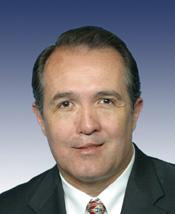 Rep. Trent Franks (R-AZ)
Description
Amendment sought to provide that it is U.S. policy to continue missile defense testing and sought to increase funding for the Missile Defense Agency by $1.2 billion with offsetting reductions coming from defense environmental cleanup.
Legislative Activity
Stay on top of the latest movement without scrolling through every action
House amendment offered
June 25, 2009
View full timeline
House amendment offered
June 25, 2009
Roll call votes on amendments in House
June 25, 2009 • 2:56 PM
House amendment not agreed to: On agreeing to the Franks (AZ) amendment (A006) Failed by recorded vote: 171 - 244 (Roll no. 455).
June 25, 2009 • 2:56 PM
Amendment failed in Committee of the Whole
June 25, 2009 • 2:56 PM
House amendment offered/reported by : Amendment (A006) offered by Mr. Franks (AZ).(consideration: CR H7351-7353, H7384; text: CR H7351-7352)
June 25, 2009 • 11:54 AM
Amendment (A006) offered by Mr. Franks (AZ). (consideration: CR H7351-7353, H7384; text: CR H7351-7352)
June 25, 2009 • 11:54 AM
On agreeing to the Franks (AZ) amendment (A006) Failed by recorded vote: 171 - 244 (Roll no. 455).
June 25, 2009 • 2:56 PM
Votes
1 roll call on this amendment
Text
Offered
NATIONAL DEFENSE AUTHORIZATION ACT FOR FISCAL YEAR 2010
The SPEAKER pro tempore. Pursuant to House Resolution 572 and rule
XVIII, the Chair declares the House in the Committee of the Whole House
on the state of the Union for the further consideration of the bill,
H.R. 2647.
[[Page H7258]]
{time} 1034
In the Committee of the Whole
Accordingly, the House resolved itself into the Committee of the
Whole House on the State of the Union for the further consideration of
the bill (H.R. 2647) to authorize appropriations for fiscal year 2010
for military activities of the Department of Defense, to prescribe
military personnel strengths for fiscal year 2010, and for other
purposes, with Mr. Serrano (Acting Chair) in the chair.
The Clerk read the title of the bill.
The Acting CHAIR. When the Committee of the Whole rose on Wednesday,
June 24, 2009, all time for general debate had expired.
Pursuant to the rule, the amendment in the nature of a substitute
printed in the bill is considered as an original bill for the purpose
of amendment and is considered read.
The text of the amendment in the nature of a substitute is as
follows:
H.R. 2647
Be it enacted by the Senate and House of Representatives of
the United States of America in Congress assembled,
SECTION 1. SHORT TITLE.
This Act may be cited as the ``National Defense
Authorization Act for Fiscal Year 2010''.
SEC. 2. ORGANIZATION OF ACT INTO DIVISIONS; TABLE OF
CONTENTS.
(a) Divisions.--This Act is organized into three divisions
as follows:
(1) Division A--Department of Defense Authorizations.
(2) Division B--Military Construction Authorizations.
(3) Division C--Department of Energy National Security
Authorizations and Other Authorizations.
(b) Table of Contents.--The table of contents for this Act
is as follows:
Sec. 1. Short title.
Sec. 2. Organization of Act into divisions; table of contents.
Sec. 3. Congressional defense committees.
DIVISION A--DEPARTMENT OF DEFENSE AUTHORIZATIONS
TITLE I--PROCUREMENT
Subtitle A--Authorization of Appropriations
Sec. 101. Army.
Sec. 102. Navy and Marine Corps.
Sec. 103. Air Force.
Sec. 104. Defense-wide activities.
Sec. 105. National Guard and Reserve equipment.
Sec. 106. Rapid Acquisition Fund.
Subtitle B--Army Programs
Sec. 111. Restriction on obligation of funds for army tactical radio
systems.
Sec. 112. Procurement of future combat systems spin out early-infantry
brigade combat team equipment.
Subtitle C--Navy Programs
Sec. 121. Littoral combat ship program.
Sec. 122. Ford-class aircraft carrier report and limitation on use of
funds.
Sec. 123. Advance procurement funding.
Sec. 124. Multiyear procurement authority for F/A-18E, F/A-18F, and EA-
18G aircraft.
Sec. 125. Multiyear procurement authority for DDG-51 Burke-class
destroyers.
Subtitle D--Air Force Programs
Sec. 131. Repeal of certification requirement for F-22A fighter
aircraft.
Sec. 132. Preservation and storage of unique tooling for F-22 fighter
aircraft.
Sec. 133. Report on 4.5 generation fighter procurement.
Sec. 134. Reports on strategic airlift aircraft.
Sec. 135. Strategic airlift force structure.
Sec. 136. Repeal of requirement to maintain certain retired C-130E
aircraft.
Subtitle E--Joint and Multiservice Matters
Sec. 141. Body armor procurement.
Sec. 142. Unmanned cargo-carrying-capable aerial vehicles.
TITLE II--RESEARCH, DEVELOPMENT, TEST, AND EVALUATION
Subtitle A--Authorization of Appropriations
Sec. 201. Authorization of appropriations.
Subtitle B--Program Requirements, Restrictions, and Limitations
Sec. 211. Limitation on obligation of funds for the Navy Next
Generation Enterprise Network.
Sec. 212. Limitation on expenditure of funds for Joint Multi-Mission
Submersible program.
Sec. 213. Separate program elements required for research and
development of individual body armor and associated
components.
Sec. 214. Separate procurement and research, development, test and
evaluation line items and program elements for the F-35B
and F-35C joint strike fighter aircraft.
Sec. 215. Restriction on obligation of funds pending submission of
Selected Acquisition Report.
Sec. 216. Restriction on obligation of funds for Future Combat Systems
program pending receipt of report.
Sec. 217. Limitation of the obligation of funds for the Net-Enabled
Command and Control system.
Sec. 218. Limitation on obligation of funds for F-35 Lightning II
program.
Sec. 219. Programs required to provide the Army with ground combat
vehicle and self-propelled artillery capabilities.
Subtitle C--Missile Defense Programs
Sec. 221. Integrated Air and Missile Defense System project.
Sec. 222. Ground-based midcourse defense sustainment and modernization
program.
Sec. 223. Limitation on availability of funds for acquisition or
deployment of missile defenses in Europe.
Sec. 224. Sense of Congress reaffirming continued support for
protecting the United States against limited ballistic
missile attacks whether accidental, unauthorized, or
deliberate.
Sec. 225. Ascent phase missile defense strategy.
Sec. 226. Availability of funds for a missile defense system for Europe
and the United States.
Subtitle D--Reports
Sec. 231. Comptroller General assessment of coordination of energy
storage device requirements and investments.
Sec. 232. Annual Comptroller General report on the F-35 Lightning II
aircraft acquisition program.
Sec. 233. Report on integration of Department of Defense intelligence,
surveillance, and reconnaissance capabilities.
Sec. 234. Report on future research and development of man-portable and
vehicle-mounted guided missile systems.
Subtitle E--Other Matters
Sec. 241. Access of the Director of the Test Resource Management Center
to Department of Defense information.
Sec. 242. Inclusion in annual budget request and future-years defense
program of sufficient amounts for continued development
and procurement of competitive propulsion system for F-35
Lightning II.
Sec. 243. Establishment of program to enhance participation of
historically black colleges and universities and
minority-serving institutions in defense research
programs.
Sec. 244. Extension of authority to award prizes for advanced
technology achievements.
Sec. 245. Executive Agent for Advanced Energetics.
Sec. 246. Study on thorium-liquid fueled reactors for naval forces.
Sec. 247. Visiting NIH Senior Neuroscience Fellowship Program.
TITLE III--OPERATION AND MAINTENANCE
Subtitle A--Authorization of Appropriations
Sec. 301. Operation and maintenance funding.
Subtitle B--Environmental Provisions
Sec. 311. Clarification of requirement for use of available funds for
Department of Defense participation in conservation
banking programs.
Sec. 312. Reauthorization of title I of Sikes Act.
Sec. 313. Authority of Secretary of a military department to enter into
interagency agreements for land management on Department
of Defense installations.
Sec. 314. Reauthorization of pilot program for invasive species
management for military installations in Guam.
Sec. 315. Reimbursement of Environmental Protection Agency for certain
costs in connection with the Former Nansemond Ordnance
Depot Site, Suffolk, Virginia.
Subtitle C--Workplace and Depot Issues
Sec. 321. Public-private competition required before conversion of any
Department of Defense function performed by civilian
employees to contractor performance.
Sec. 322. Time limitation on duration of public-private competitions.
Sec. 323. Inclusion of installation of major modifications in
definition of depot-level maintenance and repair.
Sec. 324. Modification of authority for Army industrial facilities to
engage in cooperative activities with non-Army entities.
Sec. 325. Cost-benefit analysis of alternatives for performance of
planned maintenance interval events and concurrent
modifications performed on the AV-8B Harrier weapons
system.
Sec. 326. Termination of certain public-private competitions for
conversion of Department of Defense functions to
performance by a contractor.
Sec. 327. Temporary suspension of public-private competitions for
conversion of Department of Defense functions to
performance by a contractor.
Sec. 328. Requirement for debriefings related to conversion of
functions from performance by Federal employees to
performance by a contractor.
Sec. 329. Amendments to bid protest procedures by Federal employees and
agency officials in conversions of functions from
performance by Federal employees to performance by a
contractor.
Subtitle D--Energy Security
Sec. 331. Authorization of appropriations for Director of Operational
Energy.
[[Page H7259]]
Sec. 332. Report on implementation of Comptroller General
recommendations on fuel demand management at forward-
deployed locations.
Sec. 333. Consideration of renewable fuels.
Sec. 334. Department of Defense goal regarding procurement of renewable
aviation fuels.
Subtitle E--Reports
Sec. 341. Annual report on procurement of military working dogs.
Subtitle F--Other Matters
Sec. 351. Authority for airlift transportation at Department of Defense
rates for non-Department of Defense Federal cargoes.
Sec. 352. Requirements for standard ground combat uniform.
Sec. 353. Restriction on use of funds for counterthreat finance
efforts.
Sec. 354. Limitation on obligation of funds pending submission of
classified justification material.
Sec. 355. Condition-based maintenance demonstration programs.
TITLE IV--MILITARY PERSONNEL AUTHORIZATIONS
Subtitle A--Active Forces
Sec. 401. End strengths for active forces.
Sec. 402. Revision in permanent active duty end strength minimum
levels.
Sec. 403. Additional authority for increases of Army active duty end
strengths for fiscal years 2011 and 2012.
Subtitle B--Reserve Forces
Sec. 411. End strengths for Selected Reserve.
Sec. 412. End strengths for Reserves on active duty in support of the
Reserves.
Sec. 413. End strengths for military technicians (dual status).
Sec. 414. Fiscal year 2010 limitation on number of non-dual status
technicians.
Sec. 415. Maximum number of reserve personnel authorized to be on
active duty for operational support.
Sec. 416. Submission of options for creation of Trainees, Transients,
Holdees, and Students account for Army National Guard.
Subtitle C--Authorization of Appropriations
Sec. 421. Military personnel.
Sec. 422. Repeal of delayed one-time shift of military retirement
payments.
TITLE V--MILITARY PERSONNEL POLICY
Subtitle A--Military Personnel Policy Generally
Sec. 501. Extension of temporary increase in maximum number of days'
leave members may accumulate and carryover.
Sec. 502. Rank requirement for officer serving as Chief of the Navy
Dental Corps to correspond to Army and Air Force
requirements.
Sec. 503. Computation of retirement eligibility for enlisted members of
the Navy who complete the Seaman to Admiral (STA-21)
officer candidate program.
Subtitle B--Joint Qualified Officers and Requirements
Sec. 511. Revisions to annual reporting requirement on joint officer
management.
Subtitle C--General Service Authorities
Sec. 521. Medical examination required before separation of members
diagnosed with or asserting post-traumatic stress
disorder or traumatic brain injury.
Sec. 522. Evaluation of test of utility of test preparation guides and
education programs in improving qualifications of
recruits for the Armed Forces.
Sec. 523. Inclusion of email address on Certificate of Release or
Discharge from Active Duty (DD Form 214).
Subtitle D--Education and Training
Sec. 531. Appointment of persons enrolled in Advanced Course of the
Army Reserve Officers' Training Corps at military junior
colleges as cadets in Army Reserve or Army National Guard
of the United States.
Sec. 532. Increase in number of private sector civilians authorized for
admission to National Defense University.
Sec. 533. Appointments to military service academies from nominations
made by Delegate from the Commonwealth of the Northern
Mariana Islands.
Sec. 534. Pilot program to establish and evaluate Language Training
Centers for members of the Armed Forces and civilian
employees of the Department of Defense.
Sec. 535. Use of Armed Forces Health Professions Scholarship and
Financial Assistance program to increase number of health
professionals with skills to assist in providing mental
health care.
Sec. 536. Establishment of Junior Reserve Officer's Training Corps
units for students in grades above sixth grade.
Subtitle E--Defense Dependents' Education
Sec. 551. Continuation of authority to assist local educational
agencies that benefit dependents of members of the Armed
Forces and Department of Defense civilian employees.
Sec. 552. Determination of number of weighted student units for local
educational agencies for receipt of basic support
payments under impact aid.
Sec. 553. Permanent authority for enrollment in defense dependents'
education system of dependents of foreign military
members assigned to Supreme Headquarters Allied Powers,
Europe.
Subtitle F--Missing or Deceased Persons
Sec. 561. Additional requirements for accounting for members of the
Armed Forces and Department of Defense civilian employees
listed as missing in conflicts occurring before enactment
of new system for accounting for missing persons.
Sec. 562. Clarification of guidelines regarding return of remains and
media access at ceremonies for the dignified transfer of
remains at Dover Air Force Base.
Subtitle G--Decorations and Awards
Sec. 571. Award of Vietnam Service Medal to veterans who participated
in Mayaguez rescue operation.
Sec. 572. Authorization and request for award of Medal of Honor to
Anthony T. Koho'ohanohano for acts of valor during the
Korean War.
Sec. 573. Authorization and request for award of distinguished-service
cross to Jack T. Stewart for acts of valor during the
Vietnam War.
Sec. 574. Authorization and request for award of distinguished-service
cross to William T. Miles, Jr., for acts of valor during
the Korean War.
Subtitle H--Military Families
Sec. 581. Pilot program to secure internships for military spouses with
Federal agencies.
Sec. 582. Report on progress made in implementing recommendations to
reduce domestic violence in military families.
Sec. 583. Modification of Servicemembers Civil Relief Act regarding
termination or suspension of service contracts and effect
of violation of interest rate limitation.
Sec. 584. Protection of child custody arrangements for parents who are
members of the armed forces deployed in support of a
contingency operation.
Sec. 585. Definitions in Family and Medical Leave Act of 1993 related
to active duty, servicemembers, and related matters.
Subtitle I--Other Matters
Sec. 591. Navy grants to Naval Sea Cadet Corps.
Sec. 592. Improved response and investigation of allegations of sexual
assault involving members of the Armed Forces.
Sec. 593. Modification of matching fund requirements under National
Guard Youth Challenge Program.
TITLE VI--COMPENSATION AND OTHER PERSONNEL BENEFITS
Subtitle A--Pay and Allowances
Sec. 601. Fiscal year 2010 increase in military basic pay.
Sec. 602. Special monthly compensation allowance for members with
combat-related catastrophic injuries or illnesses pending
their retirement or separation for physical disability.
Sec. 603. Stabilization of pay and allowances for senior enlisted
members and warrant officers appointed as officers and
officers reappointed in a lower grade.
Sec. 604. Report on housing standards used to determine basic allowance
for housing.
Subtitle B--Bonuses and Special and Incentive Pays
Sec. 611. One-year extension of certain bonus and special pay
authorities for reserve forces.
Sec. 612. One-year extension of certain bonus and special pay
authorities for health care professionals.
Sec. 613. One-year extension of special pay and bonus authorities for
nuclear officers.
Sec. 614. One-year extension of authorities relating to title 37
consolidated special pay, incentive pay, and bonus
authorities.
Sec. 615. One-year extension of authorities relating to payment of
other title 37 bonuses and special pay.
Sec. 616. One-year extension of authorities relating to payment of
referral bonuses.
Sec. 617. Technical corrections and conforming amendments to reconcile
conflicting amendments regarding continued payment of
bonuses and similar benefits for certain members.
Sec. 618. Proration of certain special and incentive pays to reflect
time during which a member satisfies eligibility
requirements for the special or incentive pay.
Subtitle C--Travel and Transportation Allowances
Sec. 631. Transportation of additional motor vehicle of members on
change of permanent station to or from nonforeign areas
outside the continental United States.
Sec. 632. Travel and transportation allowances for designated
individuals of wounded, ill, or injured members for
duration of inpatient treatment.
[[Page H7260]]
Sec. 633. Authorized travel and transportation allowances for non-
medical attendants for very seriously and seriously
wounded, ill, or injured members.
Sec. 634. Increased weight allowance for transportation of baggage and
household effects for certain enlisted members.
Subtitle D--Retired Pay and Survivor Benefits
Sec. 641. Recomputation of retired pay and adjustment of retired grade
of Reserve retirees to reflect service after retirement.
Sec. 642. Election to receive retired pay for non-regular service upon
retirement for service in an active reserve status
performed after attaining eligibility for regular
retirement.
Subtitle E--Commissary and Nonappropriated Fund Instrumentality
Benefits and Operations
Sec. 651. Additional exception to limitation on use of appropriated
funds for Department of Defense golf courses.
Sec. 652. Limitation on Department of Defense entities offering
personal information services to members and their
dependents.
Sec. 653. Report on impact of purchasing from local distributors all
alcoholic beverages for resale on military installations
on Guam.
Subtitle F--Other Matters
Sec. 661. Limitations on collection of overpayments of pay and
allowances erroneously paid to members.
Sec. 662. Army authority to provide additional recruitment incentives.
Sec. 663. Benefits under Post-Deployment/Mobilization Respite Absence
program for certain periods before implementation of
program.
Sec. 664. Sense of Congress regarding support for compensation,
retirement, and other military personnel programs.
TITLE VII--HEALTH CARE PROVISIONS
Subtitle A--Improvements to Health Benefits
Sec. 701. Prohibition on conversion of military medical and dental
positions to civilian medical and dental positions.
Sec. 702. Chiropractic health care for members on active duty.
Sec. 703. Expansion of survivor eligibility under TRICARE dental
program.
Sec. 704. TRICARE standard coverage for certain members of the Retired
Reserve who are qualified for a non-regular retirement
but are not yet age 60.
Sec. 705. Cooperative health care agreements between military
installations and non-military health care systems.
Sec. 706. Health care for members of the reserve components.
Sec. 707. National casualty care research center.
Subtitle B--Reports
Sec. 711. Report on post-traumatic stress disorder efforts.
Sec. 712. Report on the feasibility of TRICARE Prime in certain
commonwealths and territories of the United States.
Sec. 713. Report on the health care needs of military family members.
Sec. 714. Report on stipends for members of reserve components for
health care for certain dependents.
Sec. 715. Report on the required number of military mental health
providers.
TITLE VIII--ACQUISITION POLICY, ACQUISITION MANAGEMENT, AND RELATED
MATTERS
Subtitle A--Acquisition Policy and Management
Sec. 801. Temporary authority to acquire products and services produced
in countries along a major route of supply to
Afghanistan; Report.
Sec. 802. Assessment of improvements in service contracting.
Sec. 803. Display of annual budget requirements for procurement of
contract services and related clarifying technical
amendments.
Sec. 804. Demonstration authority for alternative acquisition process
for defense information technology programs.
Sec. 805. Limitation on performance of product support integrator
functions.
Subtitle B--Amendments to General Contracting Authorities, Procedures,
and Limitations
Sec. 811. Revision of Defense Supplement relating to payment of costs
prior to definitization.
Sec. 812. Revisions to definitions relating to contracts in Iraq and
Afghanistan.
Sec. 813. Amendment to notification requirements for awards of single
source task or delivery orders.
Sec. 814. Clarification of uniform suspension and debarment
requirement.
Sec. 815. Extension of authority for use of simplified acquisition
procedures for certain commercial items.
Sec. 816. Revision to definitions of major defense acquisition program
and major automated information system.
Sec. 817. Small Arms Production Industrial Base.
Sec. 818. Publication of justification for bundling of contracts of the
Department of Defense.
Sec. 819. Contract authority for advanced component development or
prototype units.
Subtitle C--Other Matters
Sec. 821. Enhanced expedited hiring authority for defense acquisition
workforce positions.
Sec. 822. Acquisition Workforce Development Fund amendments.
Sec. 823. Reports to Congress on full deployment decisions for major
automated information system programs.
Sec. 824. Requirement for Secretary of Defense to deny award and
incentive fees to companies found to jeopardize health or
safety of Government personnel.
Sec. 825. Authorization for actions to correct the industrial resource
shortfall for high-purity beryllium metal in amounts not
in excess of $85,000,000.
Sec. 826. Review of post employment restrictions applicable to the
Department of Defense.
Sec. 827. Requirement to buy military decorations, ribbons, badges,
medals, insignia, and other uniform accouterments
produced in the United States.
Sec. 828. Findings and report on the usage of rare earth materials in
the defense supply chain.
Sec. 829. Furniture standards.
TITLE IX--DEPARTMENT OF DEFENSE ORGANIZATION AND MANAGEMENT
Subtitle A--Department of Defense Management
Sec. 901. Role of commander of special operations command regarding
personnel management policy and plans affecting special
operations forces.
Sec. 902. Special operations activities.
Sec. 903. Redesignation of the Department of the Navy as the Department
of the Navy and Marine Corps.
Sec. 904. Authority to allow private sector civilians to receive
instruction at Defense Cyber Investigations Training
Academy of the Defense Cyber Crime Center.
Sec. 905. Organizational structure of the Office of the Assistant
Secretary of Defense for Health Affairs and the TRICARE
Management Activity.
Sec. 906. Requirement for Director of Operational Energy Plans and
Programs to report directly to Secretary of Defense.
Sec. 907. Increased flexibility for Combatant Commander Initiative
Fund.
Sec. 908. Repeal of requirement for a Deputy Under Secretary of Defense
for Technology Security Policy within the Office of the
Under Secretary of Defense for Policy.
Sec. 909. Recommendations to Congress by members of Joint Chiefs of
Staff.
Subtitle B--Space Activities
Sec. 911. Submission and review of space science and technology
strategy.
Sec. 912. Converting the space surveillance network pilot program to a
permanent program.
Subtitle C--Intelligence-Related Matters
Sec. 921. Plan to address foreign ballistic missile intelligence
analysis.
Subtitle D--Other Matters
Sec. 931. Joint Program Office for Cyber Operations Capabilities.
Sec. 932. Defense Integrated Military Human Resources System Transition
Council.
Sec. 933. Department of Defense School of Nursing revisions.
Sec. 934. Report on special operations command organization, manning,
and management.
Sec. 935. Study on the recruitment, retention, and career progression
of uniformed and civilian military cyber operations
personnel.
TITLE X--GENERAL PROVISIONS
Subtitle A--Financial Matters
Sec. 1001. General transfer authority.
Sec. 1002. Incorporation of funding decisions into law.
Subtitle B--Counter-Drug and Counter-Terrorism Activities
Sec. 1011. One-year extension of Department of Defense counter-drug
authorities and requirements.
Sec. 1012. Joint task forces support to law enforcement agencies
conducting counter-terrorism activities.
Sec. 1013. Border coordination centers in Afghanistan and Pakistan.
Sec. 1014. Comptroller General report on effectiveness of
accountability measures for assistance from counter-
narcotics central transfer account.
Subtitle C--Miscellaneous Authorities and Limitations
Sec. 1021. Operational procedures for experimental military prototypes.
Sec. 1022. Temporary reduction in minimum number of operational
aircraft carriers.
[[Page H7261]]
Sec. 1023. Limitation on use of funds for the transfer or release of
individuals detained at United States Naval Station,
Guantanamo Bay, Cuba.
Sec. 1024. Charter for the National Reconnaissance Office.
Subtitle D--Studies and Reports
Sec. 1031. Report on statutory compliance of the report on the 2009
quadrennial defense review.
Sec. 1032. Report on the force structure findings of the 2009
quadrennial defense review.
Sec. 1033. Sense of Congress and amendment relating to quadrennial
defense review.
Sec. 1034. Strategic review of basing plans for United States European
Command.
Sec. 1035. National Defense Panel.
Sec. 1036. Report required on notification of detainees of rights under
Miranda v. Arizona.
Sec. 1037. Annual report on the electronic warfare strategy of the
Department of Defense.
Sec. 1038. Studies to analyze alternative models for acquisition and
funding of technologies supporting network-centric
operations.
Subtitle E--Other Matters
Sec. 1041. Prohibition relating to propaganda.
Sec. 1042. Extension of certain authority for making rewards for
combating terrorism.
Sec. 1043. Technical and clerical amendments.
Sec. 1044. Repeal of pilot program on commercial fee-for-service air
refueling support for the Air Force.
Sec. 1045. Extension of sunset for congressional commission on the
strategic posture of the United States.
Sec. 1046. Authorization of appropriations for payments to Portuguese
nationals employed by the Department of Defense.
Sec. 1047. Combat air forces restructuring.
Sec. 1048. Sense of Congress honoring the Honorable Ellen O. Tauscher.
Sec. 1049. Sense of Congress concerning the disposition of Submarine
NR-1.
Sec. 1050. Compliance with requirement for plan on the disposition of
detainees at Naval Station, Guantanamo Bay, Cuba.
Sec. 1051. Sense of Congress regarding carrier air wing force
structure.
Sec. 1052. Sense of Congress on Department of Defense financial
improvement and audit readiness; plan.
Sec. 1053. Justice for victims of torture and terrorism.
Sec. 1054. Repeal of certain laws pertaining to the Joint Committee for
the Review of Counterproliferation Programs of the United
States.
TITLE XI--CIVILIAN PERSONNEL MATTERS
Sec. 1101. Authority to employ individuals completing the National
Security Education Program.
Sec. 1102. Authority for employment by Department of Defense of
individuals who have successfully completed the
requirements of the science, mathematics, and research
for transformation (SMART) defense scholarship program.
Sec. 1103. Authority for the employment of individuals who have
successfully completed the Department of Defense
information assurance scholarship program.
Sec. 1104. Additional personnel authorities for the Special Inspector
General for Afghanistan Reconstruction.
Sec. 1105. One-year extension of authority to waive annual limitation
on premium pay and aggregate limitation on pay for
Federal civilian employees working overseas.
Sec. 1106. Extension of certain benefits to Federal civilian employees
on official duty in Pakistan.
Sec. 1107. Authority to expand scope of provisions relating to
unreduced compensation for certain reemployed annuitants.
Sec. 1108. Requirement for Department of Defense strategic workforce
plans.
Sec. 1109. Adjustments to limitations on personnel and requirement for
annual manpower reporting.
Sec. 1110. Modification to Department of Defense laboratory personnel
authority.
Sec. 1111. Pilot program for the temporary exchange of information
technology personnel.
Sec. 1112. Provisions relating to the National Security Personnel
System.
Sec. 1113. Provisions relating to the Defense Civilian Intelligence
Personnel System.
Sec. 1114. Sense of Congress on pay parity for Federal employees
service at Joint Base McGuire/Dix/Lakehurst.
TITLE XII--MATTERS RELATING TO FOREIGN NATIONS
Subtitle A--Assistance and Training
Sec. 1201. Modification and extension of authority for security and
stabilization assistance.
Sec. 1202. Increase of authority for support of special operations to
combat terrorism.
Sec. 1203. Modification of report on foreign-assistance related
programs carried out by the Department of Defense.
Sec. 1204. Report on authorities to build the capacity of foreign
military forces and related matters.
Subtitle B--Matters Relating to Iraq, Afghanistan, and Pakistan
Sec. 1211. Limitation on availability of funds for certain purposes
relating to Iraq.
Sec. 1212. Reauthorization of Commanders' Emergency Response Program.
Sec. 1213. Reimbursement of certain Coalition nations for support
provided to United States military operations.
Sec. 1214. Pakistan Counterinsurgency Fund.
Sec. 1215. Program to provide for the registration and end-use
monitoring of defense articles and defense services
transferred to Afghanistan and Pakistan.
Sec. 1216. Reports on campaign plans for Iraq and Afghanistan.
Sec. 1217. Required assessments of United States efforts in
Afghanistan.
Sec. 1218. Report on responsible redeployment of United States Armed
Forces from Iraq.
Sec. 1219. Report on Afghan Public Protection Program.
Sec. 1220. Updates of report on command and control structure for
military forces operating in Afghanistan.
Sec. 1221. Report on payments made by United States Armed Forces to
residents of Afghanistan as compensation for losses
caused by United States military operations.
Sec. 1222. Assessment and report on United States-Pakistan military
relations and cooperation.
Sec. 1223. Required assessments of progress toward security and
stability in Pakistan.
Sec. 1224. Repeal of GAO war-related reporting requirement.
Sec. 1225. Plan to govern the disposition of specified defense items in
Iraq.
Sec. 1226. Civilian ministry of defense advisor program.
Sec. 1227. Report on the status of interagency coordination in the
Afghanistan and Operation Enduring Freedom theater of
operations.
Sec. 1228. Sense of Congress supporting United States policy for
Afghanistan.
Sec. 1229. Analysis of required force levels and types of forces needed
to secure southern and eastern regions of Afghanistan.
Subtitle C--Other Matters
Sec. 1231. NATO Special Operations Coordination Center.
Sec. 1232. Annual report on military power of the Islamic Republic of
Iran.
Sec. 1233. Annual report on military and security developments
involving the People's Republic of China.
Sec. 1234. Report on impacts of drawdown authorities on the Department
of Defense.
Sec. 1235. Risk assessment of United States space export control
policy.
Sec. 1236. Patriot air and missile defense battery in Poland.
Sec. 1237. Report on potential foreign military sales of the F-22A
fighter aircraft to Japan.
Sec. 1238. Expansion of United States-Russian Federation joint center
to include exchange of data on missile defense.
TITLE XIII--COOPERATIVE THREAT REDUCTION
Sec. 1301. Specification of Cooperative Threat Reduction programs and
funds.
Sec. 1302. Funding allocations.
Sec. 1303. Utilization of contributions to the Cooperative Threat
Reduction Program.
Sec. 1304. National Academy of Sciences study of metrics for the
Cooperative Threat Reduction Program.
Sec. 1305. Cooperative Threat Reduction program authority for urgent
threat reduction activities.
Sec. 1306. Cooperative Threat Reduction Defense and Military Contacts
Program.
TITLE XIV--OTHER AUTHORIZATIONS
Subtitle A--Military Programs
Sec. 1401. Working capital funds.
Sec. 1402. National Defense Sealift Fund.
Sec. 1403. Defense Health Program.
Sec. 1404. Chemical agents and munitions destruction, defense.
Sec. 1405. Drug Interdiction and Counter-Drug Activities, Defense-wide.
Sec. 1406. Defense Inspector General.
Subtitle B--National Defense Stockpile
Sec. 1411. Authorized uses of National Defense Stockpile funds.
Sec. 1412. Extension of previously authorized disposal of cobalt from
National Defense Stockpile.
Sec. 1413. Report on implementation of reconfiguration of the National
Defense Stockpile.
Subtitle C--Armed Forces Retirement Home
Sec. 1421. Authorization of appropriations for Armed Forces Retirement
Home.
TITLE XV--AUTHORIZATION OF ADDITIONAL APPROPRIATIONS FOR OVERSEAS
CONTINGENCY OPERATIONS
Sec. 1501. Purpose.
Sec. 1502. Army procurement.
Sec. 1503. Joint Improvised Explosive Device Defeat Fund.
Sec. 1504. Limitation on obligation of funds for Joint Improvised
Explosive Device Defeat Organization pending report to
Congress.
[[Page H7262]]
Sec. 1505. Navy and Marine Corps procurement.
Sec. 1506. Air Force procurement.
Sec. 1507. Defense-wide activities procurement.
Sec. 1508. Mine Resistant Ambush Protected Vehicle Fund.
Sec. 1509. Research, development, test, and evaluation.
Sec. 1510. Operation and maintenance.
Sec. 1511. Working capital funds.
Sec. 1512. Military personnel.
Sec. 1513. Afghanistan Security Forces Fund.
Sec. 1514. Iraq Freedom Fund.
Sec. 1515. Other Department of Defense programs.
Sec. 1516. Limitations on Iraq Security Forces Fund.
Sec. 1517. Continuation of prohibition on use of United States funds
for certain facilities projects in Iraq.
Sec. 1518. Special transfer authority.
Sec. 1519. Treatment as additional authorizations.
DIVISION B--MILITARY CONSTRUCTION AUTHORIZATIONS
Sec. 2001. Short title.
Sec. 2002. Expiration of authorizations and amounts required to be
specified by law.
Sec. 2003. Effective date.
TITLE XXI--ARMY
Sec. 2101. Authorized Army construction and land acquisition projects.
Sec. 2102. Family housing.
Sec. 2103. Improvements to military family housing units.
Sec. 2104. Authorization of appropriations, Army.
Sec. 2105. Modification of authority to carry out certain fiscal year
2009 project.
Sec. 2106. Extension of authorizations of certain fiscal year 2006
projects.
TITLE XXII--NAVY
Sec. 2201. Authorized Navy construction and land acquisition projects.
Sec. 2202. Family housing.
Sec. 2203. Improvements to military family housing units.
Sec. 2204. Authorization of appropriations, Navy.
Sec. 2205. Modification and extension of authority to carry out certain
fiscal year 2006 project.
TITLE XXIII--AIR FORCE
Sec. 2301. Authorized Air Force construction and land acquisition
projects.
Sec. 2302. Family housing.
Sec. 2303. Improvements to military family housing units.
Sec. 2304. Authorization of appropriations, Air Force.
Sec. 2305. Extension of authorizations of certain fiscal year 2007
projects.
Sec. 2306. Extension of authorizations of certain fiscal year 2006
projects.
TITLE XXIV--DEFENSE AGENCIES
Subtitle A--Defense Agency Authorizations
Sec. 2401. Authorized Defense Agencies construction and land
acquisition projects.
Sec. 2402. Authorization of appropriations, Defense Agencies.
Sec. 2403. Modification of authority to carry out certain fiscal year
2008 project.
Sec. 2404. Modification of authority to carry out certain fiscal year
2009 project.
Sec. 2405. Extension of authorizations of certain fiscal year 2007
project.
Subtitle B--Chemical Demilitarization Authorizations
Sec. 2411. Authorization of appropriations, chemical demilitarization
construction, defense-wide.
TITLE XXV--NORTH ATLANTIC TREATY ORGANIZATION SECURITY INVESTMENT
PROGRAM
Sec. 2501. Authorized NATO construction and land acquisition projects.
Sec. 2502. Authorization of appropriations, NATO.
TITLE XXVI--GUARD AND RESERVE FORCES FACILITIES
Sec. 2601. Authorized Army National Guard construction and land
acquisition projects.
Sec. 2602. Authorized Army Reserve construction and land acquisition
projects.
Sec. 2603. Authorized Navy Reserve and Marine Corps Reserve
construction and land acquisition projects.
Sec. 2604. Authorized Air National Guard construction and land
acquisition projects.
Sec. 2605. Authorized Air Force Reserve construction and land
acquisition projects.
Sec. 2606. Authorization of appropriations, National Guard and Reserve.
Sec. 2607. Extension of authorizations of certain fiscal year 2007
projects.
Sec. 2608. Extension of authorizations of certain fiscal year 2006
project.
TITLE XXVII--BASE CLOSURE AND REALIGNMENT ACTIVITIES
Subtitle A--Authorizations
Sec. 2701. Authorization of appropriations for base closure and
realignment activities funded through Department of
Defense Base Closure Account 1990.
Sec. 2702. Authorized base closure and realignment activities funded
through Department of Defense Base Closure Account 2005.
Sec. 2703. Authorization of appropriations for base closure and
realignment activities funded through Department of
Defense Base Closure Account 2005.
Subtitle B--Amendments to Base Closure and Related Laws
Sec. 2711. Use of economic development conveyances to implement base
closure and realignment property recommendations.
Subtitle C--Other Matters
Sec. 2721. Sense of Congress on ensuring joint basing recommendations
do not adversely affect operational readiness.
Sec. 2722. Modification of closure instructions regarding Paul Doble
Army Reserve Center, Portsmouth, New Hampshire.
TITLE XXVIII--MILITARY CONSTRUCTION GENERAL PROVISIONS
Subtitle A--Military Construction Program and Military Family Housing
Changes
Sec. 2801. Modification of unspecified minor construction authorities.
Sec. 2802. Congressional notification of facility repair projects
carried out using operation and maintenance funds.
Sec. 2803. Authorized scope of work variations for military
construction projects and military family housing
projects.
Sec. 2804. Imposition of requirement that acquisition of reserve
component facilities be authorized by law.
Sec. 2805. Report on Department of Defense contributions to States for
acquisition, construction, expansion, rehabilitation, or
conversion of reserve component facilities.
Sec. 2806. Authority to use operation and maintenance funds for
construction projects inside the United States Central
Command area of responsibility.
Sec. 2807. Expansion of First Sergeants Barracks Initiative.
Sec. 2808. Reports on privatization initiatives for military
unaccompanied housing.
Subtitle B--Real Property and Facilities Administration
Sec. 2811. Imposition of requirement that leases of real property to
the United States with annual rental costs of more than
$750,000 be authorized by law.
Sec. 2812. Consolidation of notice-and-wait requirements applicable to
leases of real property owned by the United States.
Sec. 2813. Clarification of authority of military departments to
acquire low-cost interests in land and interests in land
when need is urgent.
Sec. 2814. Modification of utility systems conveyance authority.
Sec. 2815. Decontamination and use of former bombardment area on island
of Culebra.
Sec. 2816. Disposal of excess property of Armed Forces Retirement Home.
Sec. 2817. Acceptance of contributions to support cleanup efforts at
former Almaden Air Force Station, California.
Sec. 2818. Limitation on establishment of Navy outlying landing fields.
Sec. 2819. Prohibition on outlying landing field at Sandbanks or Hale's
Lake, North Carolina, for Oceana Naval Air Station.
Sec. 2820. Selection of military installations to serve as locations of
brigade combat teams.
Subtitle C--Provisions Related to Guam Realignment
Sec. 2831. Role of Under Secretary of Defense for Policy in management
and coordination of Department of Defense activities
relating to Guam realignment.
Sec. 2832. Clarifications regarding use of special purpose entities to
assist with Guam realignment.
Sec. 2833. Workforce issues related to military construction and
certain other transactions on Guam.
Sec. 2834. Composition of workforce for construction projects funded
through the Support for United States Relocation to Guam
Account.
Sec. 2835. Interagency Coordination Group of Inspector Generals for
Guam Realignment.
Sec. 2836. Compliance with Naval Aviation Safety requirements as
condition on acceptance of replacement facility for
Marine Corps Air Station, Futenma, Okinawa.
Sec. 2837. Report and sense of Congress on Marine Corps training
requirements in Asia-Pacific region.
Subtitle D--Energy Security
Sec. 2841. Adoption of unified energy monitoring and management system
specification for military construction and military
family housing activities.
Sec. 2842. Department of Defense use of electric and hybrid motor
vehicles.
Sec. 2843. Department of Defense goal regarding use of renewable energy
sources to meet facility energy needs.
Sec. 2844. Comptroller General report on Department of Defense
renewable energy initiatives.
[[Page H7263]]
Sec. 2845. Study on development of nuclear power plants on military
installations.
Subtitle E--Land Conveyances
Sec. 2851. Transfer of administrative jurisdiction, Port Chicago Naval
Magazine, California.
Sec. 2852. Land conveyances, Naval Air Station, Barbers Point, Hawaii.
Sec. 2853. Modification of land conveyance, former Griffiss Air Force
Base, New York.
Sec. 2854. Land conveyance, Army Reserve Center, Chambersburg,
Pennsylvania.
Sec. 2855. Land conveyance, Naval Air Station Oceana, Virginia.
Sec. 2856. Land conveyance, Haines Tank Farm, Haines, Alaska.
Sec. 2857. Completion of land exchange and consolidation, Fort Lewis,
Washington.
Subtitle F--Other Matters
Sec. 2871. Revised authority to establish national monument to honor
United States Armed Forces working dog teams.
Sec. 2872. Naming of child development center at Fort Leonard Wood,
Missouri, in honor of Mr. S. Lee Kling.
Sec. 2873. Conditions on establishment of Cooperative Security Location
in Palanquero, Colombia.
Sec. 2874. Military activities at United States Marine Corps Mountain
Warfare Training Center.
TITLE XXIX--OVERSEAS CONTINGENCY OPERATIONS MILITARY CONSTRUCTION
AUTHORIZATIONS
Sec. 2901. Authorized Army construction and land acquisition projects.
Sec. 2902. Authorized Air Force construction and land acquisition
projects.
Sec. 2903. Construction authorization for facilities for Office of
Defense Representative-Pakistan.
DIVISION C--DEPARTMENT OF ENERGY NATIONAL SECURITY AUTHORIZATIONS AND
OTHER AUTHORIZATIONS
TITLE XXXI--DEPARTMENT OF ENERGY NATIONAL SECURITY PROGRAMS
Subtitle A--National Security Programs Authorizations
Sec. 3101. National Nuclear Security Administration.
Sec. 3102. Defense environmental cleanup.
Sec. 3103. Other defense activities.
Sec. 3104. Defense nuclear waste disposal.
Sec. 3105. Energy security and assurance.
Subtitle B--Program Authorizations, Restrictions, and Limitations
Sec. 3111. Stockpile stewardship program.
Sec. 3112. Stockpile management program.
Sec. 3113. Plan for execution of stockpile stewardship and stockpile
management programs.
Sec. 3114. Dual validation of annual weapons assessment and
certification.
Sec. 3115. Annual long-term plan for the modernization and
refurbishment of the nuclear security complex.
Subtitle C--Reports
Sec. 3121. Comptroller General review of management and operations
contract costs for national security laboratories.
Sec. 3122. Plan to ensure capability to monitor, analyze, and evaluate
foreign nuclear weapons activities.
TITLE XXXII--DEFENSE NUCLEAR FACILITIES SAFETY BOARD
Sec. 3201. Authorization.
TITLE XXXIV--NAVAL PETROLEUM RESERVES
Sec. 3401. Authorization of appropriations.
TITLE XXXV--MARITIME ADMINISTRATION
Sec. 3501. Authorization of appropriations for fiscal year 2010.
Sec. 3502. Liquidation of unused leave balance at the United States
Merchant Marine Academy.
Sec. 3503. Adjunct professors.
Sec. 3504. Maritime loan guarantee program.
Sec. 3505. Defense measures against unauthorized seizures of Maritime
Security Fleet vessels.
Sec. 3506. Technical corrections to State maritime academies student
incentive program.
Sec. 3507. Limitation on disposal of interest in certain vessels.
SEC. 3. CONGRESSIONAL DEFENSE COMMITTEES.
For purposes of this Act, the term ``congressional defense
committees'' has the meaning given that term in section
101(a)(16) of title 10, United States Code.
DIVISION A--DEPARTMENT OF DEFENSE AUTHORIZATIONS
TITLE I--PROCUREMENT
Subtitle A--Authorization of Appropriations
Sec. 101. Army.
Sec. 102. Navy and Marine Corps.
Sec. 103. Air Force.
Sec. 104. Defense-wide activities.
Sec. 105. National Guard and Reserve equipment.
Sec. 106. Rapid Acquisition Fund.
Subtitle B--Army Programs
Sec. 111. Restriction on obligation of funds for army tactical radio
systems.
Sec. 112. Procurement of future combat systems spin out early-infantry
brigade combat team equipment.
Subtitle C--Navy Programs
Sec. 121. Littoral combat ship program.
Sec. 122. Ford-class aircraft carrier report and limitation on use of
funds.
Sec. 123. Advance procurement funding.
Sec. 124. Multiyear procurement authority for F/A-18E, F/A-18F, and EA-
18G aircraft.
Sec. 125. Multiyear procurement authority for DDG-51 Burke-class
destroyers.
Subtitle D--Air Force Programs
Sec. 131. Repeal of certification requirement for F-22A fighter
aircraft.
Sec. 132. Preservation and storage of unique tooling for F-22 fighter
aircraft.
Sec. 133. Report on 4.5 generation fighter procurement.
Sec. 134. Reports on strategic airlift aircraft.
Sec. 135. Strategic airlift force structure.
Sec. 136. Repeal of requirement to maintain certain retired C-130E
aircraft.
Subtitle E--Joint and Multiservice Matters
Sec. 141. Body armor procurement.
Sec. 142. Unmanned cargo-carrying-capable aerial vehicles.
Subtitle A--Authorization of Appropriations
SEC. 101. ARMY.
Funds are hereby authorized to be appropriated for fiscal
year 2010 for procurement for the Army as follows:
(1) For aircraft, $4,828,632,000.
(2) For missiles, $1,320,109,000.
(3) For weapons and tracked combat vehicles,
$2,500,952,000.
(4) For ammunition, $2,070,095,000.
(5) For other procurement, $9,762,539,000.
SEC. 102. NAVY AND MARINE CORPS.
(a) Navy.--Funds are hereby authorized to be appropriated
for fiscal year 2010 for procurement for the Navy as follows:
(1) For aircraft, $18,102,112,000.
(2) For weapons, including missiles and torpedoes,
$3,453,455,000.
(3) For shipbuilding and conversion, $13,786,867,000.
(4) For other procurement, $5,689,176,000.
(b) Marine Corps.--Funds are hereby authorized to be
appropriated for fiscal year 2010 for procurement for the
Marine Corps in the amount of $1,712,138,000.
(c) Navy and Marine Corps Ammunition.--Funds are hereby
authorized to be appropriated for fiscal year 2010 for
procurement of ammunition for the Navy and the Marine Corps
in the amount of $840,675,000.
SEC. 103. AIR FORCE.
Funds are hereby authorized to be appropriated for fiscal
year 2010 for procurement for the Air Force as follows:
(1) For aircraft, $11,991,991,000.
(2) For ammunition, $822,462,000.
(3) For missiles, $6,211,628,000.
(4) For other procurement, $17,299,841,000.
SEC. 104. DEFENSE-WIDE ACTIVITIES.
Funds are hereby authorized to be appropriated for fiscal
year 2010 for Defense-wide procurement in the amount of
$4,150,562,000.
SEC. 105. NATIONAL GUARD AND RESERVE EQUIPMENT.
Funds are hereby authorized to be appropriated for fiscal
year 2010 for the procurement of aircraft, missiles, wheeled
and tracked combat vehicles, tactical wheeled vehicles,
ammunition, other weapons, and other procurement for the
reserve components of the Armed Forces in the amount of
$600,000,000.
SEC. 106. RAPID ACQUISITION FUND.
Funds are hereby authorized to be appropriated for fiscal
year 2010 for the Rapid Acquisition Fund in the amount of
$55,000,000.
Subtitle B--Army Programs
SEC. 111. RESTRICTION ON OBLIGATION OF FUNDS FOR ARMY
TACTICAL RADIO SYSTEMS.
(a) Limitation on Obligation of Funds.--Except as provided
in subsection (b), none of the funds authorized to be
appropriated by this Act or otherwise made available for
fiscal year 2010 for procurement, Army, may be obligated or
expended for tactical radio systems.
(b) Exceptions.--The limitation on obligation of funds in
subsection (a) does not apply to the following:
(1) A tactical radio system that is approved by the joint
program executive officer of the joint tactical radio system
if the Secretary of Defense notifies the congressional
defense committees in writing of such approval.
(2) A tactical radio system procured specifically to meet--
(A) an operational need (as described in Army Regulation
71-9 or a successor regulation); or
(B) a joint urgent operational need (as described in
Chairman of the Joint Chiefs of Staff Instruction 3470.01 or
a successor instruction).
(3) A tactical radio system for an unmanned ground vehicle
system.
(4) Commercially available tactical radios with joint
tactical radio system capabilities.
SEC. 112. PROCUREMENT OF FUTURE COMBAT SYSTEMS SPIN OUT
EARLY-INFANTRY BRIGADE COMBAT TEAM EQUIPMENT.
(a) Limitation on Low-Rate Initial Production Quantities.--
Notwithstanding section 2400 of title 10, United States Code,
with respect to covered Future Combat Systems equipment, the
Secretary of Defense may procure for low-rate initial
production only such equipment that is necessary for one
brigade.
(b) Limitation on Obligation of Funds.--Of the amounts
authorized to be appropriated by this Act or otherwise made
available for fiscal years 2010 or 2011 for the procurement
of covered Future Combat Systems equipment, the Secretary of
Defense may obligate or expend funds only for the procurement
of such equipment that is necessary for one brigade.
(c) Exception for Meeting Operational Need Statement
Requirements.--The limitation on low-rate initial production
in subsection (a) and the limitation on obligation of funds
in
[[Page H7264]]
subsection (b) do not apply if the procurement of covered
Future Combat Systems equipment is specifically intended to
address an operational need statement requirement.
(d) Covered Future Combat Systems Equipment Defined.--For
the purposes of this section, the term ``covered Future
Combat Systems equipment'' means the following:
(1) Future Combat Systems non-line of sight launcher
systems.
(2) Future Combat Systems unattended ground sensors.
(3) Future Combat Systems class I unmanned aerial systems.
(4) Future Combat Systems small unmanned ground vehicles.
(5) Future Combat Systems integrated control system
computers.
(6) Any vehicular kits needed to integrate and operate a
system listed in paragraph (1), (2), (3), (4), or (5).
Subtitle C--Navy Programs
SEC. 121. LITTORAL COMBAT SHIP PROGRAM.
(a) Limitation of Costs.--Except as provided in subsection
(b) or (c), of the amounts authorized to be appropriated in
this Act or otherwise made available for fiscal year 2010 or
any fiscal year thereafter for the procurement of Littoral
Combat Ship vessels, not more than $460,000,000 may be
obligated or expended for each vessel procured (not including
amounts obligated or expended for elements designated by the
Secretary of the Navy as a mission package).
(b) Specific Requirement for Fiscal Year 2010.--Of the
amounts authorized to be appropriated in this Act or
otherwise made available for fiscal year 2010 or any fiscal
year thereafter for shipbuilding conversion, Navy, the
Secretary of the Navy may obligate not more than $80,000,000
to produce a technical data package for each type of Littoral
Combat Ship vessel, if the Secretary--
(1) is unable to--
(A) submit to the congressional defense committees a
certification under subsection (g) during fiscal year 2010;
and
(B) enter into a contract for the construction of a
Littoral Combat Ship vessel in fiscal year 2010 because of
the limitation of costs in section 124 of the National
Defense Authorization Act for Fiscal Year 2006 (Public Law
109-163; 119 Stat. 3157), as amended; or
(2) is unable to enter into a contract for the construction
of a Littoral Combat Ship vessel in fiscal year 2010 because
of the limitation of costs in subsection (a) after submitting
to the congressional defense committees a certification under
subsection (g).
(c) Adjustment of Limitation Amount.--With respect to the
procurement of a Littoral Combat Ship vessel referred to in
subsection (a), the Secretary may adjust the amount set forth
in such subsection by the following:
(1) The amounts of increases or decreases in costs
attributable to economic inflation after September 30, 2009.
(2) The amounts of increases or decreases in costs
attributable to compliance with changes in Federal, State, or
local laws enacted after September 30, 2009.
(3) The amounts of outfitting costs and post-delivery costs
incurred for the vessel.
(4) The amounts of increases or decreases in costs
attributable to the insertion of new technology into the
vessel, as compared to the technology used in the first and
second Littoral Combat Ship vessels procured by the
Secretary, if the Secretary determines, and certifies to the
congressional defense committees, that insertion of the new
technology--
(A) would lower the life-cycle cost of the vessel; or
(B) is required to meet an emerging threat and the
Secretary of Defense certifies to those committees that such
threat poses grave harm to national security.
(d) Annual Reports.--At the same time that the budget is
submitted under section 1105(a) of title 31, United States
Code, for each fiscal year, the Secretary shall submit to the
congressional defense committees a report on Littoral Combat
Ship vessels. Such report shall include the following:
(1) Written notice of any change in the amount set forth in
subsection (a) that is made under subsection (c).
(2) Information, current as of the date of the report,
regarding--
(A) the content of any element of the vessels that is
designated as a mission package;
(B) the estimated cost of any such element; and
(C) the total number of such elements anticipated.
(3) Actual and estimated costs associated with--
(A) the material and equipment for basic construction of
each vessel; and
(B) the material and equipment for propulsion, weapons, and
communications systems of each vessel.
(4) Actual and estimated man-hours of labor and labor rates
associated with each vessel being procured (listed separately
from any other man-hours and labor rates data).
(5) Actual and estimated fees paid to contractors for
meeting contractually obligated cost and schedule performance
milestones.
(e) Definitions.--In this section:
(1) The term ``mission package'' means the interchangeable
combat systems that deploy with a Littoral Combat Ship
vessel.
(2) The term ``technical data package'' means a compilation
of detailed engineering plans for construction of a Littoral
Combat Ship vessel.
(f) Conforming Repeal.--Section 124 of the National Defense
Authorization Act for Fiscal Year 2006 (Public Law 109-163)
is repealed.
(g) Effective Date.--
(1) Limitation on costs.--Subsections (a) and (c) shall
take effect on the date that is 15 days after the date on
which the Secretary of the Navy certifies in writing to the
congressional defense committees the following:
(A) The Secretary has accepted delivery of the USS Freedom
(LCS 1) and the USS Independence (LCS 2) following successful
completion of acceptance trials.
(B) The repeal of section 124 of the National Defense
Authorization Act for Fiscal Year 2006 (Public Law 109-163;
119 Stat. 3157) made by subsection (f) is necessary for the
Secretary to--
(i) award a contract for a Littoral Combat Ship vessel in
fiscal year 2010; and
(ii) maintain sufficient government oversight of the
Littoral Combat Ship vessel program.
(C) The Secretary has conducted a thorough analysis of the
requirements for the performance, system, and design of both
Littoral Combat Ship variants and determined that further
changes to such requirements will not reduce--
(i) the cost of either such variant; and
(ii) the warfighting utility of such vessel.
(D) A construction contract for a Littoral Combat Ship
vessel in fiscal year 2010 will be awarded only to a
contractor that--
(i) with respect to a contract for the Littoral Combat Ship
vessel awarded in fiscal year 2009--
(I) is maintaining excellent cost and schedule performance;
and
(II) the Secretary determines that the affordability and
efficiency of the construction of such a vessel are improving
at a satisfactory rate; and
(ii) based on the data available from the developmental and
operational assessment testing of such contractor's vessel
and associated mission packages, the Secretary, in
consultation with the Chief of Naval Operations, has
determined that it is in the best interest of the Navy to
procure such additional Littoral Combat Ship vessels prior to
the completion of operational test and evaluation.
(E) With respect to funds that are available for
shipbuilding and conversion, Navy, for fiscal year 2010 for
the procurement of Littoral Combat Ship vessels--
(i) such funds are sufficient to award contracts for three
additional Littoral Combat Ship vessels; or
(ii) if such funds are insufficient to award contracts for
three additional Littoral Combat Ship vessels, the Secretary
has the ability to promote competition for the Littoral
Combat Ship vessels that are procured in order to ensure the
best value to the Government.
(2) Repeal.--The repeal of section 124 of the National
Defense Authorization Act for Fiscal Year 2006 (Public Law
109-163; 119 Stat. 3157) made by subsection (f) shall take
effect on the date that is 15 days after the date on which
the certification under paragraph (1) is received by the
congressional defense committees.
SEC. 122. FORD-CLASS AIRCRAFT CARRIER REPORT AND LIMITATION
ON USE OF FUNDS.
(a) Report Required.--Not later than February 1, 2010, the
Secretary of the Navy shall submit to the congressional
defense committees a report on the effects of using a five-
year interval for the construction of Ford-class aircraft
carriers. The report shall include, at a minimum, an
assessment of the effects of such interval on the following:
(1) With respect to the supplier base--
(A) the viability of the base, including suppliers exiting
the market or other potential reductions in competition; and
(B) cost increases to the Ford-class aircraft carrier
program.
(2) Training of individuals in trades related to ship
construction.
(3) Loss of expertise associated with ship construction.
(4) The costs of--
(A) any additional technical support or production planning
associated with the start of construction;
(B) material and labor;
(C) overhead; and
(D) other ship construction programs, including the costs
of existing and future contracts.
(b) Limitation on Use of Funds.--With respect to the
aircraft carrier designated CVN-79, none of the amounts
authorized to be appropriated for fiscal year 2010 for
research, development, test, and evaluation or advance
procurement for such aircraft carrier may be obligated or
expended for activities that would limit the ability of the
Secretary of the Navy to award a construction contract for--
(1) such aircraft carrier in fiscal year 2012; or
(2) the aircraft carrier designated CVN-80 in fiscal year
2016.
SEC. 123. ADVANCE PROCUREMENT FUNDING.
(a) Advance Procurement.--With respect to a naval vessel
for which amounts are authorized to be appropriated or
otherwise made available for fiscal year 2010 or any fiscal
year thereafter for advance procurement in shipbuilding and
conversion, Navy, the Secretary of the Navy may enter into a
contract, in advance of a contract for construction of any
vessel, for any of the following:
(1) Components, parts, or materiel.
(2) Production planning and other related support services
that reduce the overall procurement lead time of such vessel.
(b) Aircraft Carrier Designated CVN-79.--With respect to
components of the aircraft carrier designated CVN-79 for
which amounts are authorized to be appropriated or otherwise
made available for fiscal year 2010 or any fiscal year
thereafter for advance procurement in shipbuilding and
conversion, Navy, the Secretary of the Navy may enter into a
contract for the advance construction of such components if
the Secretary determines that cost savings, construction
efficiencies, or workforce stability may be achieved for such
aircraft carrier through the use of such contracts.
(c) Condition of Out-Year Contract Payments.--A contract
entered into under subsection (b) shall provide that any
obligation of
[[Page H7265]]
the United States to make a payment under such contract for
any fiscal year after fiscal year 2010 is subject to the
availability of appropriations for that purpose for such
fiscal year.
SEC. 124. MULTIYEAR PROCUREMENT AUTHORITY FOR F/A-18E, F/A-
18F, AND EA-18G AIRCRAFT.
(a) Authority for Multiyear Procurement.--Notwithstanding
paragraphs (1) and (7) of section 2306b(i) of title 10,
United States Code, the Secretary of the Navy may enter into
a multiyear contract, beginning with the fiscal year 2010
program year, for the procurement of F/A-18E, F/A-18F, or EA-
18G aircraft and Government-furnished equipment associated
with such aircraft.
(b) Report of Findings.--Not less than 30 days before the
date on which a contract is awarded under subsection (a), the
Secretary of the Navy shall submit to the congressional
defense committees a report containing the findings required
under subsection (a) of section 2306b of title 10, United
States Code.
SEC. 125. MULTIYEAR PROCUREMENT AUTHORITY FOR DDG-51 BURKE-
CLASS DESTROYERS.
(a) Authority for Multiyear Procurement.--Notwithstanding
paragraphs (1) and (7) of section 2306b(i) of title 10,
United States Code, the Secretary of the Navy may enter into
a multiyear contract, beginning with the fiscal year 2010
program year, for the procurement of DDG-51 Burke-class
destroyers and Government-furnished equipment associated with
such destroyers.
(b) Report of Findings.--Not less than 30 days before the
date on which a contract is awarded under subsection (a), the
Secretary of the Navy shall submit to the congressional
defense committees a report containing the findings required
under subsection (a) of section 2306b of title 10, United
States Code.
Subtitle D--Air Force Programs
SEC. 131. REPEAL OF CERTIFICATION REQUIREMENT FOR F-22A
FIGHTER AIRCRAFT.
Section 134 of the Duncan Hunter National Defense
Authorization Act for Fiscal Year 2009 (Public Law 110-417;
122 Stat. 4378) is repealed.
SEC. 132. PRESERVATION AND STORAGE OF UNIQUE TOOLING FOR F-22
FIGHTER AIRCRAFT.
(a) Plan.--The Secretary of the Air Force shall develop a
plan for the preservation and storage of unique tooling
related to the production of hardware and end items for F-22
fighter aircraft. The plan shall--
(1) ensure that the Secretary preserves and stores such
tooling in a manner that allows the production of such
hardware and end items to be restarted after a period of
idleness;
(2) with respect to the supplier base of such hardware and
end items, identify the costs of restarting production; and
(3) identify any contract modifications, additional
facilities, or funding that the Secretary determines
necessary to carry out the plan.
(b) Restriction on the Use of Funds.--None of the amounts
authorized to be appropriated by this Act or otherwise made
available for fiscal year 2010 for aircraft procurement, Air
Force, for F-22 fighter aircraft may be obligated or expended
for activities related to disposing of F-22 production
tooling until a period of 45 days has elapsed after the date
on which the Secretary submits to Congress a report
describing the plan required by subsection (a).
SEC. 133. REPORT ON 4.5 GENERATION FIGHTER PROCUREMENT.
(a) In General.--Not later than 90 days after the enactment
of this Act, the Secretary of Defense shall submit to the
congressional defense committees a report on 4.5 generation
fighter aircraft procurement. The report shall include the
following:
(1) The number of 4.5 generation fighter aircraft for
procurement for fiscal years 2011 through 2025 necessary to
fulfill the requirement of the Air Force to maintain not less
than 2,200 tactical fighter aircraft.
(2) The estimated procurement costs for those aircraft if
procured through single year procurement contracts.
(3) The estimated procurement costs for those aircraft if
procured through multiyear procurement contracts.
(4) The estimated savings that could be derived from the
procurement of those aircraft through a multiyear procurement
contract, and whether the Secretary determines the amount of
those savings to be substantial.
(5) A discussion comparing the costs and benefits of
obtaining those aircraft through annual procurement contracts
with the costs and benefits of obtaining those aircraft
through a multiyear procurement contract.
(6) A discussion regarding the availability and feasibility
of F-35s in fiscal years 2015 through fiscal year 2025 to
proportionally and concurrently recapitalize the Air National
Guard.
(7) The recommendations of the Secretary regarding whether
Congress should authorize a multiyear procurement contract
for 4.5 generation fighter aircraft.
(b) Certifications.--If the Secretary recommends under
subsection (a)(7) that Congress authorize a multiyear
procurement contract for 4.5 generation fighter aircraft, the
Secretary shall submit to Congress the certifications
required by section 2306b of title 10, United States Code, at
the same time that the budget is submitted under section
1105(a) of title 31, United States Code, for fiscal year
2011.
(c) 4.5 Generation Fighter Aircraft Defined.--In this
section, the term ``4.5 generation fighter aircraft'' means
current fighter aircraft, including the F-15, F-16, and F-18,
that--
(1) have advanced capabilities, including--
(A) AESA radar;
(B) high capacity data-link; and
(C) enhanced avionics; and
(2) have the ability to deploy current and reasonably
foreseeable advanced armaments.
SEC. 134. REPORTS ON STRATEGIC AIRLIFT AIRCRAFT.
At least 120 days before the date on which a C-5 aircraft
is retired, the Secretary of the Air Force, in coordination
with the Director of the Air National Guard, shall submit to
the congressional defense committees a report on the proposed
force structure and basing of strategic airlift aircraft (as
defined in section 8062(g)(2) of title 10, United States
Code). Each report shall include the following:
(1) A list of each aircraft in the inventory of strategic
airlift aircraft, including for each such aircraft--
(A) the type;
(B) the variant; and
(C) the military installation where such aircraft is based.
(2) A list of each strategic airlift aircraft proposed for
retirement, including for each such aircraft--
(A) the type;
(B) the variant; and
(C) the military installation where such aircraft is based.
(3) A list of each unit affected by a proposed retirement
listed under paragraph (2) and how such unit is affected.
(4) For each military installation listed under paragraph
(2)(C), any changes to the mission of the installation as a
result of a proposed retirement.
(5) Any anticipated reductions in manpower as a result of a
proposed retirement listed under paragraph (2).
(6) Any anticipated increases in manpower or military
construction at a military installation as a result of an
increase in force structure related to a proposed retirement
listed under paragraph (2).
SEC. 135. STRATEGIC AIRLIFT FORCE STRUCTURE.
Subsection (g)(1) of section 8062 of title 10, United
States Code, is amended--
(1) by striking ``2008'' and inserting ``2009''; and
(2) by striking ``299'' and inserting ``316''.
SEC. 136. REPEAL OF REQUIREMENT TO MAINTAIN CERTAIN RETIRED
C-130E AIRCRAFT.
Section 134 of the National Defense Authorization Act for
Fiscal Year 2008 (Public Law 110-181; 122 Stat. 31) is
amended--
(1) by striking subsection (c);
(2) by redesignating subsection (d) as subsection (c); and
(3) in subsection (b), by striking ``subsection (d)'' and
inserting ``subsection (c)''.
Subtitle E--Joint and Multiservice Matters
SEC. 141. BODY ARMOR PROCUREMENT.
(a) Procurement.--The Secretary of Defense shall ensure
that body armor is procured using funds authorized to be
appropriated by this title.
(b) Procurement Line Item.--In the budget materials
submitted to the President by the Secretary of Defense in
connection with the submission to Congress, pursuant to
section 1105 of title 31, United States Code, of the budget
for fiscal year 2011, and each subsequent fiscal year, the
Secretary shall ensure that within each procurement account,
a separate, dedicated procurement line item is designated for
body armor.
SEC. 142. UNMANNED CARGO-CARRYING-CAPABLE AERIAL VEHICLES.
None of the amounts authorized to be appropriated for
procurement may be obligated or expended for an unmanned
cargo-carrying-capable aerial vehicle until a period of 15
days has elapsed after the date on which the Vice Chairman of
the Joint Chiefs of Staff and the Under Secretary of Defense
for Acquisition, Technology, and Logistics certify to the
congressional defense committees that the Joint Requirements
Oversight Council has approved a joint and common requirement
for an unmanned cargo-carrying-capable aerial vehicle type.
TITLE II--RESEARCH, DEVELOPMENT, TEST, AND EVALUATION
Subtitle A--Authorization of Appropriations
Sec. 201. Authorization of appropriations.
Subtitle B--Program Requirements, Restrictions, and Limitations
Sec. 211. Limitation on obligation of funds for the Navy Next
Generation Enterprise Network.
Sec. 212. Limitation on expenditure of funds for Joint Multi-Mission
Submersible program.
Sec. 213. Separate program elements required for research and
development of individual body armor and associated
components.
Sec. 214. Separate procurement and research, development, test and
evaluation line items and program elements for the F-35B
and F-35C joint strike fighter aircraft.
Sec. 215. Restriction on obligation of funds pending submission of
Selected Acquisition Report.
Sec. 216. Restriction on obligation of funds for Future Combat Systems
program pending receipt of report.
Sec. 217. Limitation of the obligation of funds for the Net-Enabled
Command and Control system.
Sec. 218. Limitation on obligation of funds for F-35 Lightning II
program.
Sec. 219. Programs required to provide the Army with ground combat
vehicle and self-propelled artillery capabilities.
Subtitle C--Missile Defense Programs
Sec. 221. Integrated Air and Missile Defense System project.
Sec. 222. Ground-based midcourse defense sustainment and modernization
program.
[[Page H7266]]
Sec. 223. Limitation on availability of funds for acquisition or
deployment of missile defenses in Europe.
Sec. 224. Sense of Congress reaffirming continued support for
protecting the United States against limited ballistic
missile attacks whether accidental, unauthorized, or
deliberate.
Sec. 225. Ascent phase missile defense strategy.
Sec. 226. Availability of funds for a missile defense system for Europe
and the United States.
Subtitle D--Reports
Sec. 231. Comptroller General assessment of coordination of energy
storage device requirements and investments.
Sec. 232. Annual Comptroller General report on the F-35 Lightning II
aircraft acquisition program.
Sec. 233. Report on integration of Department of Defense intelligence,
surveillance, and reconnaissance capabilities.
Sec. 234. Report on future research and development of man-portable and
vehicle-mounted guided missile systems.
Subtitle E--Other Matters
Sec. 241. Access of the Director of the Test Resource Management Center
to Department of Defense information.
Sec. 242. Inclusion in annual budget request and future-years defense
program of sufficient amounts for continued development
and procurement of competitive propulsion system for F-35
Lightning II.
Sec. 243. Establishment of program to enhance participation of
historically black colleges and universities and
minority-serving institutions in defense research
programs.
Sec. 244. Extension of authority to award prizes for advanced
technology achievements.
Sec. 245. Executive Agent for Advanced Energetics.
Sec. 246. Study on thorium-liquid fueled reactors for naval forces.
Sec. 247. Visiting NIH Senior Neuroscience Fellowship Program.
Subtitle A--Authorization of Appropriations
SEC. 201. AUTHORIZATION OF APPROPRIATIONS.
Funds are hereby authorized to be appropriated for fiscal
year 2010 for the use of the Department of Defense for
research, development, test, and evaluation as follows:
(1) For the Army, $10,506,731,000.
(2) For the Navy, $19,622,528,000.
(3) For the Air Force, $28,508,561,000.
(4) For Defense-wide activities, $21,016,672,000, of which
$190,770,000 is authorized for the Director of Operational
Test and Evaluation.
Subtitle B--Program Requirements, Restrictions, and Limitations
SEC. 211. LIMITATION ON OBLIGATION OF FUNDS FOR THE NAVY NEXT
GENERATION ENTERPRISE NETWORK.
(a) Limitation.--Of the amounts authorized to be
appropriated described in subsection (b), not more than 50
percent of the amounts remaining unobligated as of the date
of the enactment of this Act may be obligated until the
Secretary of the Navy submits to the congressional defense
committees a detailed architectural specification for the
Next Generation Enterprise Network.
(b) Covered Authorizations or Appropriations.--The amounts
authorized to be appropriated described in this subsection
are amounts authorized to be appropriated for fiscal year
2010 for--
(1) operation and maintenance for the Continuity of Service
Contract for the Navy-Marine Corps Intranet; and
(2) research, development, test, and evaluation for the
Next Generation Enterprise Network.
SEC. 212. LIMITATION ON EXPENDITURE OF FUNDS FOR JOINT MULTI-
MISSION SUBMERSIBLE PROGRAM.
None of the funds authorized to be appropriated by this or
any other Act for fiscal year 2010 may be obligated or
expended for the Joint Multi-Mission Submersible program
until the Secretary of Defense, in consultation with the
Director of National Intelligence--
(1) completes an assessment on the feasibility of a cost-
sharing agreement between the Department of Defense and the
intelligence community (as that term is defined in section
3(4) of the National Security Act of 1947 (50 U.S.C.
401a(4))), for the Joint Multi-Mission Submersible program;
(2) submits to the congressional defense committees and the
intelligence committees the assessment referred to in
paragraph (1); and
(3) certifies to the congressional defense committees and
the intelligence committees that the agreement developed
pursuant to the assessment referred to in paragraph (1)
represents the most effective and affordable means of
delivery for meeting a validated program requirement.
SEC. 213. SEPARATE PROGRAM ELEMENTS REQUIRED FOR RESEARCH AND
DEVELOPMENT OF INDIVIDUAL BODY ARMOR AND
ASSOCIATED COMPONENTS.
In the budget materials submitted to the President by the
Secretary of Defense in connection with the submission to
Congress, pursuant to section 1105 of title 31, United States
Code, of the budget for fiscal year 2011, and each subsequent
fiscal year, the Secretary shall ensure that within each
research, development, test, and evaluation account a
separate, dedicated program element is assigned to the
research and development of individual body armor and
associated components.
SEC. 214. SEPARATE PROCUREMENT AND RESEARCH, DEVELOPMENT,
TEST AND EVALUATION LINE ITEMS AND PROGRAM
ELEMENTS FOR THE F-35B AND F-35C JOINT STRIKE
FIGHTER AIRCRAFT.
In the budget materials submitted to the President by the
Secretary of Defense in connection with the submission to
Congress, pursuant to section 1105 of title 31, United States
Code, of the budget for fiscal year 2011, and each subsequent
fiscal year, the Secretary shall ensure that within the Navy
research, development, test, and evaluation account and the
Navy aircraft procurement account, a separate, dedicated line
item and program element is assigned to each of the F-35B
aircraft and the F-35C aircraft, to the extent such accounts
include funding for each such aircraft.
SEC. 215. RESTRICTION ON OBLIGATION OF FUNDS PENDING
SUBMISSION OF SELECTED ACQUISITION REPORT.
(a) Restriction on Obligation of Funds.--Of the amounts
authorized to be appropriated for fiscal year 2010 for
Research and Development, Army, for the defense acquisition
programs specified in subsection (b), not more than 50
percent may be obligated prior to the date on which the
Secretary of Defense submits to the congressional defense
committees the comprehensive annual Selected Acquisition
Report for each such program for fiscal year 2009, as
required by section 2432 of title 10, United States Code.
(b) Programs Specified.--The defense acquisition programs
specified in this subsection are the following:
(1) Future Combat Systems program.
(2) Warfighter information network tactical program.
(3) Stryker vehicle program.
(4) Joint Air-to-Ground Missile program.
(5) Bradley Base Sustain program.
(6) Abrams Tank Improvement program.
(7) Javelin program.
SEC. 216. RESTRICTION ON OBLIGATION OF FUNDS FOR FUTURE
COMBAT SYSTEMS PROGRAM PENDING RECEIPT OF
REPORT.
Not more than 25 percent of the funds authorized to be
appropriated by this Act or otherwise made available for
Research and Development, Army, for fiscal year 2010 for the
Future Combat Systems program may be obligated or expended
until 15 days after the receipt of the report required by
section 214(c) of the John Warner National Defense
Authorization Act for Fiscal Year 2007 (Public Law 109-364).
SEC. 217. LIMITATION OF THE OBLIGATION OF FUNDS FOR THE NET-
ENABLED COMMAND AND CONTROL SYSTEM.
(a) Limitation.--Of the amounts authorized to be
appropriated described in subsection (b), not more than 25
percent of the amounts remaining unobligated as of the date
of the enactment of this Act may be obligated until the
Secretary of Defense submits to the congressional defense
committees a plan for reorganizing and consolidating the
management of the Net-Enabled Command and Control system and
the Global Command and Control System family of systems.
(b) Covered Authorizations or Appropriations.--The amounts
authorized to be appropriated described in this subsection
are amounts authorized to be appropriated for fiscal year
2010 for the Net-Enabled Command and Control system in the
following program elements:
(1) 33158k.
(2) 33158a.
(3) 33158n.
(4) 33158m.
(5) 33158f.
SEC. 218. LIMITATION ON OBLIGATION OF FUNDS FOR F-35
LIGHTNING II PROGRAM.
Of the amounts authorized to be appropriated or otherwise
made available for fiscal year 2010 for research,
development, test, and evaluation for the F-35 Lightning II
program, not more than 75 percent may be obligated until the
date that is 15 days after the later of the following dates:
(1) The date on which the Under Secretary of Defense for
Acquisition, Technology, and Logistics submits to the
congressional defense committees certification in writing
that all funds made available for fiscal year 2010 for the
continued development and procurement of a competitive
propulsion system for the F-35 Lightning II have been
obligated.
(2) The date on which the Secretary of Defense submits to
the congressional defense committees the report required by
section 123 of the Duncan Hunter National Defense
Authorization Act for Fiscal Year 2009 (Public Law 110-417;
122 Stat. 4376).
(3) The date on which the Secretary of Defense submits to
the congressional defense committees the annual plan and
certification for fiscal year 2010 required by section 231a
of title 10, United States Code.
SEC. 219. PROGRAMS REQUIRED TO PROVIDE THE ARMY WITH GROUND
COMBAT VEHICLE AND SELF-PROPELLED ARTILLERY
CAPABILITIES.
(a) Program Required.--In accordance with the Weapons
Systems Acquisition Reform Act of 2009 (Public Law 111-43),
the Secretary of Defense shall carry out programs to develop,
test, and, when demonstrated operationally effective,
suitable, survivable, and affordable, field new or upgraded
Army ground combat vehicle and self-propelled artillery
capabilities.
(b) Report Required.--Not later than February 1, 2010, the
Secretary of Defense shall deliver a report to the
congressional defense committees that--
(1) specifies what vehicles, or upgraded vehicles, will
constitute the Army's ground combat vehicle fleet in 2015;
(2) includes the status, schedule, cost estimates, and
requirements for the programs specified in paragraph (1);
[[Page H7267]]
(3) includes any Army force structure modifications planned
that impact the requirements for new ground combat vehicles;
(4) specifies, for each program included, the alternatives
considered during any analysis of alternatives, and why those
alternatives were not selected as the preferred program
option;
(5) quantifies and describes the loss of knowledge to the
industrial base should a future self-propelled artillery
cannon not be developed immediately following the
cancellation of the Non-Line-of-Sight Cannon, a Manned Ground
Vehicle of Future Combat Systems; and
(6) with respect to the Army's future self-propelled
howitzer artillery fleet, explains the Army's plan to develop
and field--
(A) automated ammunition handling;
(B) laser ignition;
(C) improved ballistic accuracy;
(D) automated crew compartments;
(E) hybrid-electric power; and
(F) band track.
(c) Restriction on Use of Funds.--Of the amounts authorized
to be appropriated under this Act for research, test,
development, and evaluation for the Army for the program
elements specified in subsection (d), not more than 50
percent may be obligated or expended until 15 days after the
Secretary of Defense submits the report required under
subsection (b).
(d) Programs Specified.--The restriction on use of funds in
subsection (c) covers the following Army program elements:
(1) Combat Vehicle Improvement Program, program element
0203735A.
(2) Advanced Tank Armament System, program element
0603653A.
(3) Artillery Systems, program element 0604854A.
Subtitle C--Missile Defense Programs
SEC. 221. INTEGRATED AIR AND MISSILE DEFENSE SYSTEM PROJECT.
Of the amounts authorized to be appropriated for research
and development of the Army Integrated Air and Missile
Defense project (program element 63327A), not more than 25
percent may be obligated until the Secretary of Defense has
certified to the congressional defense committees that the
Secretary has--
(1) carried out a review of the project;
(2) determined that the project is an affordable,
executable project;
(3) determined that the project meets a current required
capability; and
(4) determined that no other project could be executed, at
a lower cost, that would be capable of fulfilling the
required capability to the same or approximate level of
effectiveness as the Army Integrated Air and Missile Defense
project.
SEC. 222. GROUND-BASED MIDCOURSE DEFENSE SUSTAINMENT AND
MODERNIZATION PROGRAM.
(a) Program Required.--The Secretary of Defense shall carry
out a sustainment and modernization program to ensure the
long-term reliability, availability, maintainability, and
supportability of the ground-based midcourse defense system
to protect the United States against limited ballistic
missile attacks whether accidental, unauthorized, or
deliberate.
(b) Program Elements.--The program required by subsection
(a) shall include each of the following elements:
(1) Sustainment and operations.
(2) Aging and surveillance.
(3) System and component level assessments, engineering
analysis, and modeling and simulation.
(4) Ground and flight testing.
(5) Readiness exercises.
(6) Modernization and enhancement.
(7) Any other element the Secretary determines is
appropriate.
(c) Consultation.--In implementing the program required by
subsection (a), the Secretary of Defense shall consult with
the commanders of the appropriate combatant commands to
ensure the sustainment and modernization requirements of such
commands are reflected in such program.
(d) Budget Submission Requirement.--For each budget
submitted by the President to Congress under section 1105 of
title 31, the Secretary of Defense shall concurrently submit
to the congressional defense committees a report that clearly
identifies the amounts requested for each of the program
elements referred to in subsection (b).
(e) Report.--Not later than 120 days after the date of the
enactment of this Act, the Secretary of Defense shall submit
to the congressional defense committees a report outlining
the long-term sustainment and modernization plan of the
Department of Defense for the ground-based midcourse defense
system.
SEC. 223. LIMITATION ON AVAILABILITY OF FUNDS FOR ACQUISITION
OR DEPLOYMENT OF MISSILE DEFENSES IN EUROPE.
No funds authorized to be appropriated by this Act or
otherwise made available for the Department of Defense for
fiscal year 2010 or any fiscal year thereafter may be
obligated or expended for the acquisition (other than initial
long-lead procurement) or deployment of operational missiles
of a long-range missile defense system in Europe until the
Secretary of Defense, after receiving the views of the
Director of Operational Test and Evaluation, submits to the
congressional defense committees a report certifying that the
proposed interceptor to be deployed as part of such missile
defense system has demonstrated, through successful,
operationally realistic flight testing, a high probability of
working in an operationally effective manner and the ability
to accomplish the mission.
SEC. 224. SENSE OF CONGRESS REAFFIRMING CONTINUED SUPPORT FOR
PROTECTING THE UNITED STATES AGAINST LIMITED
BALLISTIC MISSILE ATTACKS WHETHER ACCIDENTAL,
UNAUTHORIZED, OR DELIBERATE.
(a) Findings.--Congress makes the following findings:
(1) Congress passed and the President signed the National
Missile Defense Act of 1999 (Public Law 106-38), which
stated: ``It is the policy of the United States to deploy as
soon as is technologically possible an effective National
Missile Defense system capable of defending the territory of
the United States against limited ballistic missile attack
(whether accidental, unauthorized, or deliberate).
(2) The United States has thus far deployed 26 long-range,
Ground-based, Midcourse Defense (GMD) interceptors in Alaska
and California to defend against potential long-range
missiles from rogue states such as North Korea.
(3) Congress has fully funded the President's budget
request for the GMD sites in Alaska and California in fiscal
years 2008 and 2009, as well as continued development of the
Standard Missile-3 Block IIA missile with Japan, which will
provide the Aegis Ballistic Missile Defense system the
capability to engage long-range ballistic missiles like the
North Korean Taepo Dong-2.
(4) Senior defense and intelligence officials have
indicated that the threat to the United States from long-
range missiles from rogue states is limited.
(5) Senior military officials have testified that the
original threat assessments of the long-range missile threat
made by the Missile Defense Agency in 2002 were ``off by a
factor of 10 or 20''.
(6) It is imperative that missile defense force structure
and inventory be linked to the most likely threats and
validated military requirements.
(7) The Secretary of Defense, the Chairman of the Joint
Chiefs, the Commander of the United States Strategic
Command's Joint Functional Component Command for Integrated
Missile Defense, and the Director of the Missile Defense
Agency have either testified or stated that 30 operationally
deployed GMD interceptors would be adequate to defend against
any rogue missile threat to the United States in the near- to
mid-term.
(8) The Director of the Missile Defense Agency testified
that, for the first time since the establishment of the
Missile Defense Agency in 2002, key elements of the
Department of Defense, such as the combatant commanders and
the military services, played a major role in shaping the
missile defense budget for fiscal year 2010.
(9) There is currently no existing military requirement
justifying the need to deploy 44 GMD interceptors, nor has
that number been validated by the Department of Defense's
requirements process.
(10) In testimony before Congress this year, the Director
of the Missile Defense Agency indicated that a number of GMD
interceptors were removed from their silos for unscheduled
maintenance and refurbishment because of unanticipated
problems with the interceptors were discovered.
(b) Sense of Congress.--It is the sense of Congress that
the United States--
(1) reaffirms the principles articulated in the National
Missile Defense Act of 1999;
(2) should continue to fund robust research, development,
test, and evaluation of the current GMD system deployed in
Alaska in California to ensure that the system will work in
an operationally effective, suitable, maintainable, and
survivable manner to defend the territory of the United
States against limited ballistic missile attack (whether
accidental, unauthorized, or deliberate);
(3) should continue the development of the Standard
Missile-3 Block IIA missile with Japan, which will provide
the Aegis Ballistic Missile Defense system a capability to
counter long-range ballistic missiles like the North Korean
Taepo Dong-2; and
(4) should set future missile defense force structure and
inventory requirements based on a clear linkage to the threat
and the military requirements process that takes into account
the views of key Department of Defense stakeholders such as
the combatant commanders and the military services.
SEC. 225. ASCENT PHASE MISSILE DEFENSE STRATEGY.
(a) Department of Defense Strategy for Ascent Phase Missile
Defense.--Not later than 180 days after the date of the
enactment of this Act, the Secretary of Defense shall submit
to the congressional defense committees a strategy for ascent
phase missile defense.
(b) Matters Included.--The strategy required by subsection
(a) shall include each of the following:
(1) A description of the programs and activities contained,
as of the date of the submission of the strategy, in the
program of record of the Missile Defense Agency that provide
or are planned to provide a capability to intercept ballistic
missiles in their ascent phase.
(2) A description of the capabilities that are needed to
accomplish the intercept of ballistic missiles in their
ascent phase, including--
(A) the key technologies and associated technology
readiness levels, plans for maturing such technologies, and
any technology demonstrations for such capabilities;
(B) concepts of operation for how ascent phase capabilities
would be employed, including the dependence of such
capabilities on, and integration with, other functions,
capabilities, and information, including those provided by
other elements of the ballistic missile defense system;
(C) the criteria to be used to assess the technical
progress, suitability, and effectiveness of such
capabilities;
(D) a comprehensive plan for development and investment in
such capabilities, including an identification of specific
program and technology investments to be made in such
capabilities;
[[Page H7268]]
(E) a description of how, and to what extent, ascent phase
missile defense can leverage the capabilities and investments
made in boost phase, midcourse, and any other layer or
elements of the ballistic missile defense system;
(F) a description of any other challenges or limitations
associated with ascent phase missile defense; and
(G) any other information the Secretary determines is
necessary.
(c) Form.--The strategy shall be submitted in unclassified
form, but may include a classified annex.
SEC. 226. AVAILABILITY OF FUNDS FOR A MISSILE DEFENSE SYSTEM
FOR EUROPE AND THE UNITED STATES.
(a) Findings.--Congress makes the following findings:
(1) Missile defense promotes the collective security of the
United States and NATO and improves linkages among member
nations of NATO by defending all members of NATO against the
full range of missile threats.
(2) The Islamic Republic of Iran possesses the largest
inventory of short-and medium-range ballistic missiles in the
Middle East and these missiles represent a threat to Europe
and United States interests and deployed forces in the
region. Neither NATO nor the United States currently
possesses sufficient theater missile defense capability to
counter this threat from Iran.
(3) Iran does not currently possess a long-range ballistic
missile capable of reaching the United States and, if it were
to develop such a capability in the near future, the long-
range Ground-based Midcourse Defense (GMD) interceptors
currently deployed in Alaska have sufficient range to protect
the United States against an emerging threat.
(4) It is in the interest of the United States to work
cooperatively with NATO to counter these threats consistent
with the direction provided in the statement by the Heads of
State and Government participating in the meeting of the
North Atlantic Council in Strasbourg/Kehl on April 4, 2009,
that: ``we judge that missile threats should be addressed in
a prioritized manner that includes consideration of the level
of imminence of the threat and the level of acceptable
risk.''
(5) The Director of Operational Test and Evaluation for the
Department of Defense has raised concerns about the
operational effectiveness, suitability, and survivability of
the current GMD system, and the Director of the Missile
Defense Agency testified before the House Armed Services
Committee on May 21, 2009, that health and status indicators
forced the agency to remove several long-range interceptors
for unscheduled maintenance and refurbishment.
(6) The Fiscal Year 2008 Annual Report to Congress by the
Director of Operational Test and Evaluation (DOT&E) stated:
``The inherent BDMS defensive capability against theater
threats increased during the last fiscal year and DOT&E
expects this trend to continue'' largely due to the continued
progress of the AEGIS and Terminal High Altitude Area Defense
(THAAD) systems in operational testing.
(7) The proposed European locations of the long-range
missile defense system allow for the defense of both Europe
and the United States against long-range threats launched
from the Middle East, but a limited deployment of GMD
interceptors on the east coast of the United States would
provide comparable defense of our homeland and the most
pressing threat to Europe is from medium-range ballistic
missiles.
(b) Reservation of Funds.--Of the funds made available for
fiscal years 2009 and 2010 for the Missile Defense Agency for
the purpose of developing missile defenses in Europe,
$353,100,000 shall be available only for a missile defense
system for Europe and the United States as described in
paragraph (1) or (2) of subsection (c).
(c) Use of Funds.--Funds reserved under subsection (b) may
be obligated and expended by the Secretary of Defense--
(1) on the research, development, test, and evaluation of--
(A) the proposed midcourse radar element of the ground-
based midcourse defense system in the Czech Republic; and
(B) the proposed long-range missile defense interceptor
site element of such defense system in Poland; or
(2) on the research, development, test, and evaluation,
procurement, site activation, construction, preparation of,
equipment for, or deployment of an alternative integrated
missile defense system that would protect Europe and the
United States from the threats posed by all types of
ballistic missiles, if the Secretary submits to the
congressional defense committees a report certifying that the
alternative missile defense system is expected to be--
(A) consistent with the direction of the North Atlantic
Council to address ballistic missile threats to Europe and
the United States in a prioritized manner that includes
consideration of the level of imminence of the threat and the
level of acceptable risk;
(B) at least as cost-effective, technically reliable, and
operationally available in protecting Europe and the United
States from missile threats as the ground-based midcourse
defense system described in paragraph (1);
(C) deployable in a sufficient amount of time to counter
current and emerging ballistic missile threats (as determined
by the intelligence community) launched from the Middle East
that could threaten Europe and the United States; and
(D) interoperable with other components of missile defense
and compliments NATO's missile defense strategy.
Subtitle D--Reports
SEC. 231. COMPTROLLER GENERAL ASSESSMENT OF COORDINATION OF
ENERGY STORAGE DEVICE REQUIREMENTS AND
INVESTMENTS.
(a) Assessment Required.--The Comptroller General shall
conduct an assessment of the degree to which requirements,
technology goals, and research and procurement investments in
energy storage technologies are coordinated within and among
the military departments, appropriate Defense Agencies, and
other elements of the Department of Defense. In carrying out
such assessment, the Comptroller General shall--
(1) assess expenses incurred by the Department of Defense
in the research, development, testing, and procurement of
energy storage devices;
(2) compare quantities of types of devices in use or under
development that rely on commercial energy storage
technologies and that use military-unique, proprietary, or
specialty devices;
(3) assess the process by which a determination is made by
an acquisition official of the Department of Defense to
pursue a commercially available or custom-made energy storage
device;
(4) assess the coordination of Department of Defense-wide
activities in energy storage device research, development,
and use;
(5) assess whether there is a need for enhanced
standardization of the form, fit, and function of energy
storage devices, and if so, formulate a recommendation as to
how, from an organizational standpoint, the Department should
address that need; and,
(6) assess whether there are commercial advances in
portable power technology, including hybrid systems, fuel
cells, and electrochemical capacitors, that could be better
leveraged by the Department.
(b) Report.--Not later than March 1, 2010, the Comptroller
General shall submit to the Committees on Armed Services of
the Senate and House of Representatives a report on the
findings and recommendations of the Comptroller General with
respect to the assessment conducted under subsection (a).
(c) Coordination.--In carrying out subsection (a), the
Comptroller General shall coordinate with the Secretary of
Energy and the heads of other appropriate Federal agencies.
SEC. 232. ANNUAL COMPTROLLER GENERAL REPORT ON THE F-35
LIGHTNING II AIRCRAFT ACQUISITION PROGRAM.
(a) Annual GAO Review.--The Comptroller General shall
conduct an annual review of the F-35 Lightning II aircraft
acquisition program and shall, not later than March 15 of
each of 2010 through 2015, submit to the congressional
defense committees a report on the results of the most recent
review.
(b) Matters to Be Included.--Each report on the F-35
program under subsection (a) shall include each of the
following:
(1) The extent to which the acquisition program is meeting
development and procurement cost, schedule, and performance
goals.
(2) The progress and results of developmental and
operational testing and plans for correcting deficiencies in
aircraft performance, operational effectiveness, and
suitability.
(3) Aircraft procurement plans, production results, and
efforts to improve manufacturing efficiency and supplier
performance.
SEC. 233. REPORT ON INTEGRATION OF DEPARTMENT OF DEFENSE
INTELLIGENCE, SURVEILLANCE, AND RECONNAISSANCE
CAPABILITIES.
Of the amounts authorized to be appropriated in this Act
for program element 35884L for intelligence planning and
review activities, not more than 25 percent of such amounts
may be obligated or expended until the date that is 30 days
after the date on which the Under Secretary of Defense for
Intelligence submits the report required under section
923(d)(1) of the National Defense Authorization Act for 2004
(Public Law 108-136; 117 Stat. 1576), including the elements
of the report described in subparagraphs (D), (E), and (F) of
such section 923(d)(1).
SEC. 234. REPORT ON FUTURE RESEARCH AND DEVELOPMENT OF MAN-
PORTABLE AND VEHICLE-MOUNTED GUIDED MISSILE
SYSTEMS.
(a) Report.--Not later than 90 days after the date of the
enactment of this Act, the Secretary of the Army shall submit
to Congress a report on future research and development of
man-portable and vehicle-mounted guided missile systems to
replace the current Javelin and TOW systems. Such report
shall include--
(1) an examination of current requirements for anti-armor
missile systems;
(2) an analysis of battlefield uses other than anti-armor;
(3) an analysis of changes required to the current Javelin
and TOW systems to maximize effectiveness and lethality in
situations other than anti-armor;
(4) an analysis of the current family of Javelin and TOW
warheads and specifically detail how they address threats
other than armor;
(5) an examination of the need for changes to current or
development of additional warheads or a family of warheads to
address threats other than armor;
(6) a description of any missile system design changes
required to integrate current missile systems with current
manned ground systems;
(7) a detailed and current analysis of the costs associated
with the development of next-generation Javelin and TOW
systems and additional warheads or family of warheads to
address threats other than armor, integration costs for
current vehicles, integration costs for future vehicles and
possible efficiencies of developing and procuring these
systems at low rate and full rate based on current system
production; and
(8) an analysis of the ability of the industrial base to
support development and production of current and future
Javelin and TOW systems.
(b) Restriction on Use of Funds.--Of the amounts authorized
to be appropriated under this Act for research, test,
development, and evaluation for the Army, for missile and
rocket
[[Page H7269]]
advanced technology (program element 0603313A), not more than
70 percent may be obligated or expended until the Secretary
of the Army submits the report required by subsection (a).
Subtitle E--Other Matters
SEC. 241. ACCESS OF THE DIRECTOR OF THE TEST RESOURCE
MANAGEMENT CENTER TO DEPARTMENT OF DEFENSE
INFORMATION.
Section 196 of title 10, United States Code, is amended--
(1) by redesignating subsections (d) through (h) as
subsections (e) through (i), respectively; and
(2) by inserting after subsection (c) the following new
subsection (d):
``(h) Access to Information.--The Director shall have
access to all records and data of the Department of Defense
(including the records and data of each military department)
that the Director considers necessary to review in order to
carry out the duties of the Director under this section.''.
SEC. 242. INCLUSION IN ANNUAL BUDGET REQUEST AND FUTURE-YEARS
DEFENSE PROGRAM OF SUFFICIENT AMOUNTS FOR
CONTINUED DEVELOPMENT AND PROCUREMENT OF
COMPETITIVE PROPULSION SYSTEM FOR F-35
LIGHTNING II.
(a) Annual Budget.--Chapter 9 of title 10, United States
Code, is amended by adding at the end the following new
section:
``Sec. 235. Budget for competitive propulsion system for F-35
Lightning II
``(a) Annual Budget.--Effective for the budget of the
President submitted to Congress under section 1105(a) of
title 31, United States Code, for fiscal year 2011 and each
fiscal year thereafter, the Secretary of Defense shall
include, in the materials submitted by the Secretary to the
President, a request for such amounts as are necessary for
the full funding of the continued development and procurement
of a competitive propulsion system for the F-35 Lightning II.
``(b) Future-Years Defense Program.--In each future-years
defense program submitted to Congress under section 221 of
this title, the Secretary of Defense shall ensure that the
estimated expenditures and proposed appropriations for the F-
35 Lighting II, for each fiscal year of the period covered by
that program, include sufficient amounts for the full funding
of the continued development and procurement of a competitive
propulsion system for the F-35 Lightning II.
``(c) Requirement to Obligate and Expend Funds.--Of the
amounts authorized to be appropriated for fiscal year 2010 or
any year thereafter, for research, development, test, and
evaluation and procurement for the F-35 Lightning II Program,
the Secretary of Defense shall ensure the obligation and
expenditure in each such fiscal year of sufficient annual
amounts for the continued development and procurement of two
options for the propulsion system for the F-35 Lightning II
in order to ensure the development and competitive production
for the propulsion system for the F-35 Lightning II.''.
(b) Clerical Amendment.--The table of sections at the
beginning of such chapter is amended by at the end the
following new item:
``235. Budget for competitive propulsion system for F-35 Lightning
II.''.
(c) Conforming Repeal.--The National Defense Authorization
Act for Fiscal Year 2008 (Public Law 110-181) is amended by
striking section 213.
SEC. 243. ESTABLISHMENT OF PROGRAM TO ENHANCE PARTICIPATION
OF HISTORICALLY BLACK COLLEGES AND UNIVERSITIES
AND MINORITY-SERVING INSTITUTIONS IN DEFENSE
RESEARCH PROGRAMS.
(a) Program Established.--Chapter 139 of title 10, United
States Code, is amended by inserting after section 2361 the
following new section:
``Sec. 2362. Research and educational programs and
activities: historically black colleges and universities
and minority-serving institutions of higher education
``(a) Program Established.--The Secretary of Defense,
acting through the Director of Defense Research and
Engineering and the Secretary of each military department,
shall carry out a program to provide assistance to covered
educational institutions to assist the Department in defense-
related research, development, testing, and evaluation within
the science, technology, engineering, and mathematics fields.
``(b) Program Objective.--The objective of the program
established under subsection (a) is to enhance science,
technology, mathematics, and engineering research and
education at covered educational institutions. Such objective
shall be accomplished through initiatives designed to--
``(1) enhance research and educational capabilities of the
institutions in areas of science, technology, engineering, or
mathematics that are important to national defense, as
determined by the Secretary;
``(2) encourage the participation of such institutions in
the research, development, testing, and evaluation programs
and activities of the Department of Defense;
``(3) increase the capacity of such institutions to
contribute to the national security functions of the
Department of Defense through participation in research,
development, testing, and evaluation programs and activities
in which such institutions might not otherwise have the
opportunity to participate;
``(4) increase the number of graduates engaged in
scientific, technological, mathematic, and engineering
disciplines important to the national security functions of
the Department of Defense, as determined by the Secretary;
``(5) conduct collaborative research and educational
opportunities between such institutions and defense research
facilities;
``(6) encourage research and educational collaborations
between such institutions and other institutions of higher
education; or
``(7) encourage research and educational collaborations
between such institutions and business enterprises that
historically perform defense-related research, development,
testing and evaluation.
``(c) Assistance Provided.--Under the program established
by subsection (a), the Secretary of Defense may provide
covered educational institutions with funding or technical
assistance, including any of the following:
``(1) The competitive awarding of grants, cooperative
agreements or contracts to establish Centers of Excellence
for Research and Education in scientific disciplines
important to national defense, as determined by the
Secretary.
``(2) The competitive awarding of undergraduate
scholarships or graduate fellowships in support of research
in scientific disciplines important to national defense, as
determined by the Secretary.
``(3) The competitive awarding of grants, cooperative
agreements, or contracts for research in areas of science,
technology, engineering, and mathematics that are important
to national defense, as determined by the Secretary.
``(4) The competitive awarding of grants, cooperative
agreements, or contracts for the acquisition of equipment or
instrumentation necessary for the conduct of research,
development, testing, evaluation or educational enhancements
in scientific disciplines important to national defense, as
determined by the Secretary.
``(5) Support to assist in attraction and retention of
faculty in scientific disciplines critical to the national
security functions of the Department of Defense.
``(6) Making Department of Defense personnel available to
advise and assist faculty at such institutions in the
performance of defense research in scientific disciplines
critical to the national security functions of the Department
of Defense.
``(7) Establishing partnerships between defense
laboratories and such institutions to encourage involvement
of faculty and students in scientific research important to
the national security functions of the Department of Defense.
``(8) Encouraging the establishment of a program or
programs creating partnerships between such institutions and
corporations that have routinely been awarded research,
development, testing, or evaluation contracts by the
Secretary of Defense for the purpose of involving faculty and
students in scientific research critical to the national
security functions of the Department of Defense.
``(9) Encouraging the establishment of a program or
programs creating partnerships between such institutions and
other institutions of higher education that have experience
in conducting research, development, testing, or evaluation
programs with the Department of Defense for the purpose of
involving faculty and students in scientific research
critical to the national security functions of the Department
of Defense.
``(10) Other such non-monetary assistance in support of
defense research as the Secretary finds appropriate to
enhance science, mathematics, or engineering programs at such
institutions, which may be provided directly through the
Department of Defense or through contracts or other
agreements entered into by the Secretary with private-sector
entities that have experience and expertise in the
development and delivery of technical assistance services to
such institutions.
``(d) Definition of Covered Educational Institution.--In
this section the term `covered educational institution' means
an institution of higher education eligible for assistance
under title III or V of the Higher Education Act of 1965 (20
U.S.C. 1051 et seq.).''.
(b) Clerical Amendment.--The table of sections at the
beginning of such chapter is amended by inserting after the
item relating to section 2361 the following new item:
``2362. Research and educational programs and activities: historically
black colleges and universities and minority-serving
institutions of higher education.''.
SEC. 244. EXTENSION OF AUTHORITY TO AWARD PRIZES FOR ADVANCED
TECHNOLOGY ACHIEVEMENTS.
Subsection (f) of section 2374a of title 10, United States
Code, is amended by striking ``September 30, 2010'' and
inserting ``September 30, 2013''.
SEC. 245. EXECUTIVE AGENT FOR ADVANCED ENERGETICS.
(a) Executive Agent.--Not later than 90 days after the date
of the enactment of this Act, the Secretary of Defense shall
designate a senior official of the Department of Defense to
act as the executive agent for advanced energetics.
(b) Roles, Responsibilities, and Authorities.--
(1) Establishment.--Not later than one year after the date
of the enactment of this Act, and in accordance with
Directive 5101.1, the Secretary of Defense shall prescribe
the roles, responsibilities, and authorities of the executive
agent designated under subsection (a).
(2) Specification.--The roles and responsibilities of the
executive agent designated under subsection (a) shall include
each of the following:
(A) Assessment of the current state of, and advances in,
research, development, and manufacturing technology of
energetic materials in both foreign countries and the United
States.
(B) Development of strategies to address matters identified
as a result of the assessment described in subparagraph (A).
(C) Development of recommended funding strategies to retain
sufficient explosive domestic
[[Page H7270]]
production capacity, continue the development of innovative
munitions, and recruit the next generation of scientists and
engineers of advanced energetics.
(D) Recommending changes to strengthen the energetic
capabilities of the Department of Defense.
(E) Such other roles and responsibilities as the Secretary
of Defense considers appropriate.
(c) Support Within Department of Defense.--In accordance
with Directive 5101.1, the Secretary of Defense shall ensure
that the military departments, Defense Agencies, and other
components of the Department of Defense provide the executive
agent designated under subsection (a) with the appropriate
support and resources needed to perform the roles,
responsibilities, and authorities of the executive agent.
(d) Definitions.--In this section:
(1) The term ``Directive 5101.1'' means Department of
Defense Directive 5101.1, dated September 3, 2002, or any
successor directive relating to the responsibilities of an
executive agent of the Department of Defense.
(2) The term ``executive agent'' had the meaning given the
term ``DoD Executive Agent'' in Directive 5101.1.
SEC. 246. STUDY ON THORIUM-LIQUID FUELED REACTORS FOR NAVAL
FORCES.
(a) Study Required.--The Secretary of Defense and the
Chairman of the Joint Chiefs of Staff shall jointly carry out
a study on the use of thorium-liquid fueled nuclear reactors
for naval power needs pursuant to section 1012, of the
National Defense Authorization Act for Fiscal Year 2008
(Public Law 110-181; 122 Stat. 303).
(b) Contents of Study.--In carrying out the study required
under subsection (a), the Secretary of Defense and the
Chairman of the Joint Chiefs of Staff shall, with respect to
naval power requirements for the Navy strike and amphibious
force--
(1) compare and contrast thorium-liquid fueled reactor
concept to the 2005 Quick Look, 2006 Navy Alternative
Propulsion Study, and the navy CG(X) Analysis of Alternatives
study;
(2) identify the benefits to naval operations which
thorium-liquid fueled nuclear reactors or uranium reactors
would provide to major surface combatants compared to
conventionally fueled ships, including such benefits with
respect to--
(A) fuel cycle, from mining to waste disposal;
(B) security of fuel supply;
(C) power needs for advanced weapons and sensors;
(D) safety of operation, waste handling and disposal, and
proliferation issues compared to uranium reactors;
(E) no requirement to refuel and reduced logistics;
(F) ship upgrades and retrofitting;
(G) reduced manning;
(H) global range at flank speed, greater forward presence,
and extended combat operations;
(I) power for advanced sensors and weapons, including
electromagnetic guns and lasers;
(J) survivability due to increased performance and reduced
signatures;
(K) high power density propulsion;
(L) operational tempo;
(M) operational effectiveness; and
(N) estimated cost-effectiveness; and
(3) conduct a ROM cost-effectiveness comparison of nuclear
reactors in use by the Navy as of the date of the enactment
of this Act, thorium-liquid fueled reactors, and conventional
fueled major surface combatants, which shall include a
comparison of--
(A) security, safety, and infrastructure costs of fuel
supplies;
(B) nuclear proliferation issues;
(C) reactor safety;
(D) nuclear fuel safety, waste handling, and storage;
(E) power requirements and distribution for sensors,
weapons, and propulsion; and
(F) capabilities to fully execute the Navy Maritime
Strategic Concept.
(c) Report.--Not later than February 1, 2011, the Secretary
of Defense and the Chairman of the Joint Chiefs of Staff
shall jointly submit to the congressional defense committees
a report on the results of the study required under
subsection (a).
SEC. 247. VISITING NIH SENIOR NEUROSCIENCE FELLOWSHIP
PROGRAM.
(a) Authority to Establish.--The Secretary of Defense may
establish a program to be known as the Visiting NIH Senior
Neuroscience Fellowship Program at--
(1) the Defense Advanced Research Projects Agency; and
(2) the Defense Center of Excellence for Psychological
Health and Traumatic Brain Injury.
(b) Activities of the Program.--In establishing the
Visiting NIH Senior Neuroscience Fellowship Program under
subsection (a), the Secretary shall require the program to--
(1) provide a partnership between the National Institutes
of Health and the Defense Advanced Research Projects Agency
to enable identification and funding of the broadest range of
innovative, highest quality clinical and experimental
neuroscience studies for the benefit of members of the Armed
Forces;
(2) provide a partnership between the National Institutes
of Health and the Defense Center of Excellence for
Psychological Health and Traumatic Brain Injury that will
enable identification and funding of clinical and
experimental neuroscience studies for the benefit of members
of the Armed Forces;
(3) use the results of the studies described in paragraph
(1) and (2) to enhance the mission of the National Institutes
of Health for the benefit of the public; and
(4) provide a military and civilian collaborative
environment for neuroscience-based medical problem-solving in
critical areas affecting both military and civilian life,
particularly post-traumatic stress disorder.
(c) Period of Fellowship.--The period of any fellowship
under the Program shall not last more than 2 years and shall
not continue unless agreed upon by the parties concerned.
TITLE III--OPERATION AND MAINTENANCE
Subtitle A--Authorization of Appropriations
Sec. 301. Operation and maintenance funding.
Subtitle B--Environmental Provisions
Sec. 311. Clarification of requirement for use of available funds for
Department of Defense participation in conservation
banking programs.
Sec. 312. Reauthorization of title I of Sikes Act.
Sec. 313. Authority of Secretary of a military department to enter into
interagency agreements for land management on Department
of Defense installations.
Sec. 314. Reauthorization of pilot program for invasive species
management for military installations in Guam.
Sec. 315. Reimbursement of Environmental Protection Agency for certain
costs in connection with the Former Nansemond Ordnance
Depot Site, Suffolk, Virginia.
Subtitle C--Workplace and Depot Issues
Sec. 321. Public-private competition required before conversion of any
Department of Defense function performed by civilian
employees to contractor performance.
Sec. 322. Time limitation on duration of public-private competitions.
Sec. 323. Inclusion of installation of major modifications in
definition of depot-level maintenance and repair.
Sec. 324. Modification of authority for Army industrial facilities to
engage in cooperative activities with non-Army entities.
Sec. 325. Cost-benefit analysis of alternatives for performance of
planned maintenance interval events and concurrent
modifications performed on the AV-8B Harrier weapons
system.
Sec. 326. Termination of certain public-private competitions for
conversion of Department of Defense functions to
performance by a contractor.
Sec. 327. Temporary suspension of public-private competitions for
conversion of Department of Defense functions to
performance by a contractor.
Sec. 328. Requirement for debriefings related to conversion of
functions from performance by Federal employees to
performance by a contractor.
Sec. 329. Amendments to bid protest procedures by Federal employees and
agency officials in conversions of functions from
performance by Federal employees to performance by a
contractor.
Subtitle D--Energy Security
Sec. 331. Authorization of appropriations for Director of Operational
Energy.
Sec. 332. Report on implementation of Comptroller General
recommendations on fuel demand management at forward-
deployed locations.
Sec. 333. Consideration of renewable fuels.
Sec. 334. Department of Defense goal regarding procurement of renewable
aviation fuels.
Subtitle E--Reports
Sec. 341. Annual report on procurement of military working dogs.
Subtitle F--Other Matters
Sec. 351. Authority for airlift transportation at Department of Defense
rates for non-Department of Defense Federal cargoes.
Sec. 352. Requirements for standard ground combat uniform.
Sec. 353. Restriction on use of funds for counterthreat finance
efforts.
Sec. 354. Limitation on obligation of funds pending submission of
classified justification material.
Sec. 355. Condition-based maintenance demonstration programs.
Subtitle A--Authorization of Appropriations
SEC. 301. OPERATION AND MAINTENANCE FUNDING.
Funds are hereby authorized to be appropriated for fiscal
year 2010 for the use of the Armed Forces and other
activities and agencies of the Department of Defense for
expenses, not otherwise provided for, for operation and
maintenance, in amounts as follows:
(1) For the Army, $31,398,432,000.
(2) For the Navy, $35,330,997,000.
(3) For the Marine Corps, $5,570,823,000.
(4) For the Air Force, $34,451,654,000.
(5) For Defense-wide activities, $29,016,532,000.
(6) For the Army Reserve, $2,572,196,000.
(7) For the Naval Reserve, $1,292,501,000.
(8) For the Marine Corps Reserve, $228,925,000.
(9) For the Air Force Reserve, $3,088,528,000.
(10) For the Army National Guard, $6,268,884,000.
(11) For the Air National Guard, $5,919,461,000.
(12) For the United States Court of Appeals for the Armed
Forces, $13,932,000.
(13) For the Acquisition Development Workforce Fund,
$100,000,000.
(14) For Environmental Restoration, Army, $415,864,000.
(15) For Environmental Restoration, Navy, $285,869,000.
(16) For Environmental Restoration, Air Force,
$494,276,000.
[[Page H7271]]
(17) For Environmental Restoration, Defense-wide,
$11,100,000.
(18) For Environmental Restoration, Formerly Used Defense
Sites, $267,700,000.
(19) For Overseas Humanitarian, Disaster, and Civic Aid
programs, $109,869,000.
(20) For Cooperative Threat Reduction programs,
$434,093,000.
(21) For the Overseas Contingency Operations Transfer Fund,
$5,000,000.
Subtitle B--Environmental Provisions
SEC. 311. CLARIFICATION OF REQUIREMENT FOR USE OF AVAILABLE
FUNDS FOR DEPARTMENT OF DEFENSE PARTICIPATION
IN CONSERVATION BANKING PROGRAMS.
Section 2694c of title 10, United States Code, is amended--
(1) in subsection (a), by striking ``to carry out this
section'';
(2) by redesignating subsection (d) as subsection (e); and
(3) by inserting after subsection (c) the following new
subsection (d):
``(d) Source of Funds.--(1) Amounts described in paragraph
(2) shall be available for activities under this section.
``(2) Amounts described in this paragraph are amounts
available for any of the following:
``(A) Operation and maintenance.
``(B) Military construction.
``(C) Research, development, test, and evaluation.
``(D) The Support for United States Relocation to Guam
Account established under section 2824 of the Duncan Hunter
National Defense Authorization Act for Fiscal Year 2009
(Public Law 110-417; 122 Stat. 4730; 10 U.S.C. 2687 note).''.
SEC. 312. REAUTHORIZATION OF TITLE I OF SIKES ACT.
(a) Reauthorization.--Section 108 of the Sikes Act (16
U.S.C. 670f) is amended by striking ``fiscal years 2004
through 2008'' each place it appears and inserting ``fiscal
years 2010 through 2015''.
(b) Clarification of Authorizations.--Such section is
further amended--
(1) in subsection (b), by striking ``There are authorized''
and inserting ``Of the amounts authorized to be appropriated
to the Department of Defense, there are authorized''; and
(2) in subsection (c), by striking ``There are authorized''
and inserting ``Of the amounts authorized to be appropriated
to the Department of the Interior, there are authorized''.
SEC. 313. AUTHORITY OF SECRETARY OF A MILITARY DEPARTMENT TO
ENTER INTO INTERAGENCY AGREEMENTS FOR LAND
MANAGEMENT ON DEPARTMENT OF DEFENSE
INSTALLATIONS.
(a) Authority.--Section 103 of the Sikes Act (16 U.S.C.
670c-1) is amended--
(1) in subsection (a)--
(A) by inserting after ``and individuals'' the following:
``, and into interagency agreements with the heads of other
Federal departments and agencies,''; and
(B) in paragraph (2), by inserting ``or interagency
agreement'' after ``cooperative agreement'';
(2) in subsection (b), by inserting ``or interagency
agreement'' after ``cooperative agreement''; and
(3) in subsection (c), by inserting ``and interagency
agreements'' after ``cooperative agreements'' the first place
it appears.
(b) Clerical Amendments.--The heading for such section is
amended by inserting ``AND INTERAGENCY'' after
``COOPERATIVE''and the table of contents for such Act is
conformed accordingly.
SEC. 314. REAUTHORIZATION OF PILOT PROGRAM FOR INVASIVE
SPECIES MANAGEMENT FOR MILITARY INSTALLATIONS
IN GUAM.
Section 101(g)(1) of the Sikes Act (16 U.S.C. 670a(g)(1))
is amended by striking ``fiscal years 2004 through 2008'' and
inserting ``fiscal years 2010 through 2015''.
SEC. 315. REIMBURSEMENT OF ENVIRONMENTAL PROTECTION AGENCY
FOR CERTAIN COSTS IN CONNECTION WITH THE FORMER
NANSEMOND ORDNANCE DEPOT SITE, SUFFOLK,
VIRGINIA.
(a) Authority to Reimburse.--
(1) Transfer amount.--Using funds described in subsection
(b) and notwithstanding section 2215 of title 10, United
States Code, the Secretary of Defense may transfer not more
than $68,623 during fiscal year 2010 to the Former Nansemond
Ordnance Depot Site Special Account, within the Hazardous
Substance Superfund.
(2) Purpose of reimbursement.--The payment under paragraph
(1) is final payment to reimburse the Environmental
Protection Agency for all costs incurred in overseeing a time
critical removal action performed by the Department of
Defense under the Defense Environmental Restoration Program
for ordnance and explosive safety hazards at the Former
Nansemond Ordnance Depot Site, Suffolk, Virginia.
(3) Interagency agreement.--The reimbursement described in
paragraph (2) is provided for in an interagency agreement
entered into by the Department of the Army and the
Environmental Protection Agency for the Former Nansemond
Ordnance Depot Site in December 1999.
(b) Source of Funds.--Any payment under subsection (a)
shall be made using funds authorized to be appropriated by
section 301(17) of this Act for operation and maintenance for
Environmental Restoration, Formerly Used Defense Sites.
(c) Use of Funds.--The Environmental Protection Agency
shall use the amount transferred under subsection (a) to pay
costs incurred by the agency at the Former Nansemond Ordnance
Depot Site.
Subtitle C--Workplace and Depot Issues
SEC. 321. PUBLIC-PRIVATE COMPETITION REQUIRED BEFORE
CONVERSION OF ANY DEPARTMENT OF DEFENSE
FUNCTION PERFORMED BY CIVILIAN EMPLOYEES TO
CONTRACTOR PERFORMANCE.
(a) Requirement.--Section 2461(a)(1) of title 10, United
States Code, is amended--
(1) by striking ``A function'' and inserting ``No
function'';
(2) by striking ``10 or more''; and
(3) by striking ``may not be converted'' and inserting
``may be converted''.
(b) Effective Date.--The amendments made by subsection (a)
shall apply with respect to a function for which a public-
private competition is commenced on or after the date of the
enactment of this Act.
SEC. 322. TIME LIMITATION ON DURATION OF PUBLIC-PRIVATE
COMPETITIONS.
(a) Time Limitation.--Section 2461(a) of title 10, United
States Code, is amended by adding at the end the following
new paragraph:
``(5)(A) The duration of a public-private competition
conducted pursuant to Office of Management and Budget
Circular A-76 or any other provision of law for any function
of the Department of Defense performed by Department of
Defense civilian employees may not exceed a period of 540
days, commencing on the date on which the preliminary
planning for the public-private competition begins through
the date on which a performance decision is rendered with
respect to the function.
``(B) The time period specified in subparagraph (A) for a
public-private competition does not include any day during
which the public-private competition is delayed by reason of
a protest before the Government Accountability Office or the
United States Court of Federal Claims unless the Secretary of
Defense determines that the delay is caused by issues being
raised during the appellate process that were not previously
raised during the competition.
``(C) In this paragraph, the term `preliminary planning'
with respect to a public-private competition means any action
taken to carry out any of the following activities:
``(i) Determining the scope of the competition.
``(ii) Conducting research to determine the appropriate
grouping of functions for the competition.
``(iii) Assessing the availability of workload data,
quantifiable outputs of functions, and agency or industry
performance standards applicable to the competition.
``(iv) Determining the baseline cost of any function for
which the competition is conducted.''.
(b) Effective Date.--Paragraph (5) of section 2461(a) of
title 10, United States Code, as added by subsection (a),
shall apply with respect to a public-private competition
covered by such section that is being conducted on or after
the date of the enactment of this Act.
SEC. 323. INCLUSION OF INSTALLATION OF MAJOR MODIFICATIONS IN
DEFINITION OF DEPOT-LEVEL MAINTENANCE AND
REPAIR.
Section 2460 of title 10, United States Code, is amended in
the second sentence--
(1) by striking ``and'' before ``(2)''; and
(2) by inserting before the period at the end the
following: ``, and (3) the installation of major
modifications, including performance or safety
modifications''.
SEC. 324. MODIFICATION OF AUTHORITY FOR ARMY INDUSTRIAL
FACILITIES TO ENGAGE IN COOPERATIVE ACTIVITIES
WITH NON-ARMY ENTITIES.
The second sentence of section 4544(a) of title 10, United
States Code, is amended by inserting before the period at the
end the following: ``in addition to the contracts and
cooperative agreements in effect as of the date of the
enactment of the National Defense Authorization Act for
Fiscal Year 2008 (Public Law 110-181)''.
SEC. 325. COST-BENEFIT ANALYSIS OF ALTERNATIVES FOR
PERFORMANCE OF PLANNED MAINTENANCE INTERVAL
EVENTS AND CONCURRENT MODIFICATIONS PERFORMED
ON THE AV-8B HARRIER WEAPONS SYSTEM.
(a) Cost-Benefit Analysis Required.--The Secretary of the
Navy, in consultation with the Commandant of the Marine
Corps, shall carry out a thorough economic analysis of the
costs and benefits associated with each alternative the
Secretary is considering for the performance of planned
maintenance interval events and concurrent or stand alone
modifications performed on the AV-8B Harrier weapons system.
Such analysis shall be performed in accordance with
Department of Defense Instruction 7043.1, entitled ``Economic
Analysis for Decisionmaking'', and Office of Management and
Budget Circular A-94, entitled ``Guidelines and Discount
Rates for Benefit-Cost Analysis of Federal Programs'' and
dated October 29, 1992, and, for each such alternative, shall
include an assessment of the following:
(1) The effect of the loss of workload on organic depot
labor rates associated with each alternative.
(2) The effect on the depot net operating result for each
such alternative.
(3) The effect on long-term sustainment of depot-level
capabilities for future support of core workload throughout
the life cycle of the AV8B Harrier weapons system.
(4) The risk to readiness, the aviation safety risk, and
the enterprise-wide financial risk associated with each such
alternative.
(b) Report Required.--Not later than 180 days after the
date of the enactment of this Act, the Secretary of the Navy
shall submit to the congressional defense committees a report
on the cost-benefit analysis required in subsection (a). The
report shall include each of the following:
(1) The criteria and rationale used to classify work as
organization-level maintenance or depot-level maintenance.
[[Page H7272]]
(2) An explanation of the core logistics capabilities and
associated workload requirements for the AV-8B weapons
system, including an explanation of how such requirements
were determined and rationale for classifying the planned
maintenance interval events and concurrent or stand alone
modifications on the AV-8B as above core workload.
(3) An assessment of the effects of proposed workload
transfer on the Department of the Navy's division of depot
maintenance funding between public and private sectors in
accordance with section 2466(a) of title 10, United States
Code.
(c) Prohibition on Contracting Activities.--The Secretary
of the Navy may not enter into a contract for the performance
of planned maintenance interval events or associated depot-
level maintenance activities, including concurrent or stand
alone modifications, by non-Federal Government personnel
until 90 days after the date on which the Secretary completes
the assessment required under subsection (a) and submits the
report required under subsection (b).
SEC. 326. TERMINATION OF CERTAIN PUBLIC-PRIVATE COMPETITIONS
FOR CONVERSION OF DEPARTMENT OF DEFENSE
FUNCTIONS TO PERFORMANCE BY A CONTRACTOR.
(a) Temporary Suspension of Pending Studies.--The Secretary
of Defense shall halt all pending public-private competitions
being conducted pursuant to section 2461 of title 10, United
States Code, or Office of Management and Budget Circular A-76
that had not resulted in conversion to performance to a
contractor as of March 26, 2009, until such time as the
Secretary may review such competitions.
(b) Review and Approval Process.--
(1) Review required.--Before recommencing any pending study
for a public-private competition halted under subsection (a),
the Secretary of Defense shall review all the studies halted
by reason of that subsection and take the following actions
with respect to each such study:
(A) Describe the methodology and data sources along with
outside resources to gather and analyze information necessary
to estimate cost savings.
(B) Certify that the estimated savings are still
achievable.
(C) Document the rationale for rejecting an individual
command's request to cancel, defer, or reduce the scope of a
decision to conduct the study.
(D) Consider alternatives to the study that would provide
savings and improve performance such as internal
reorganizations.
(E) Include any other relevant information to justify
recommencement of the study.
(2) Termination of certain studies.--The Secretary of
Defense shall terminate any study for a public-private
competition that has been conducted for longer than 18 months
(beginning with preliminary planning and ending with the
exhaustion of General Accountability Office protests), or
submit to Congress a written justification for continuing of
the study.
(c) Congressional Notification.--The Secretary of Defense
may not recommence a study halted pursuant to subsection (a)
until the Secretary submits to Congress a report describing
the actions taken by the Secretary under paragraphs (1) and
(2) of subsection (b).
SEC. 327. TEMPORARY SUSPENSION OF PUBLIC-PRIVATE COMPETITIONS
FOR CONVERSION OF DEPARTMENT OF DEFENSE
FUNCTIONS TO PERFORMANCE BY A CONTRACTOR.
During the period beginning on the date of the enactment of
this Act and ending on September 30, 2012, no study or
competition regarding the conversion to performance by a
contractor of any Department of Defense function may be begun
or announced pursuant to 2461 of title 10, United States
Code, or otherwise pursuant to Office of Management and
Budget Circular A-76.
SEC. 328. REQUIREMENT FOR DEBRIEFINGS RELATED TO CONVERSION
OF FUNCTIONS FROM PERFORMANCE BY FEDERAL
EMPLOYEES TO PERFORMANCE BY A CONTRACTOR.
The Administrator for Federal Procurement Policy shall
revise the Federal Acquisition Regulation to allow for pre-
award and post-award debriefings of Federal employee
representatives in the case of a conversion of any function
from performance by Federal employees to performance by a
contractor. Such debriefings will conform to the requirements
of section 2305(b)(6)(A) of title 10, United States Code,
section 303B(f) of the Federal Property and Administrative
Services Act of 1949 (41 U.S.C. 253b(f)), and subparts 15.505
and 15.506 (as in effect on the date of the enactment of this
Act ) of the Federal Acquisition Regulation.
SEC. 329. AMENDMENTS TO BID PROTEST PROCEDURES BY FEDERAL
EMPLOYEES AND AGENCY OFFICIALS IN CONVERSIONS
OF FUNCTIONS FROM PERFORMANCE BY FEDERAL
EMPLOYEES TO PERFORMANCE BY A CONTRACTOR.
(a) Protest Jurisdiction of the Comptroller General.--
Section 3551(1) of title 31, United States Code, is amended
by adding at the end the following new subparagraph:
``(E) Conversion of a function that is being performed by
Federal employees to private sector performance.''.
(b) Eligibility to Protest Public-Private Competitions.--
Clause (i) of paragraph (2)(B) of section 3551 of title 31,
United States Code, is amended to read as follows:
``(i) any official who is responsible for submitting the
agency tender in such competition; and''.
(c) Prejudice to Federal Employees.--
(1) In general.--Section 3557 of title 31, United States
Code, is amended--
(A) by inserting ``(a) Expedited Action.--'' before ``For
any protest''; and
(B) by adding at the end the following new subsection:
``(b) Injury to Federal Employees.--In the case of a
protest filed by an interested party described in
subparagraph (B) of section 3551(2) of this title, a showing
that a Federal employee has been displaced from performing a
function or part thereof, and that function is being
performed by the private sector, is sufficient evidence that
a conversion has occurred resulting in concrete injury and
prejudice to the Federal employee as a consequence of agency
action.''.
(2) Conforming and clerical amendments.--
(A) The heading of section 3557 of such title is amended to
read as follows:
``Sec. 3557. Protests of public-private competitions''.
(B) The item relating to section 3557 in the table of
sections at the beginning of chapter 35 of such title is
amended to read as follows:
``3557. Protests of public-private competitions.''.
(d) Decisions on Protests.--Section 3554(b) of title 31,
United States Code, is amended--
(1) by redesignating subparagraphs (F) and (G) as
subparagraphs (G) and (H), respectively;
(2) by inserting after subparagraph (E) the following new
subparagraph (F):
``(F) cancel the solicitation issued pursuant to the
public-private competition conducted under Office of
Management and Budget Circular A-76 or any successor
circular;''; and
(3) in subparagraph (G), as redesignated by paragraph (1),
by striking ``, and (E)'' an inserting ``, (E), and (G)''.
(e) Applicability.--The amendments made by this section
shall apply--
(1) to any protest or civil action that relates to a
public-private competition conducted after the date of the
enactment of this Act under Office of Management and Budget
Circular A-76, or any successor circular; or
(2) to a decision made after the date of the enactment of
this Act to convert a function performed by Federal employees
to private sector performance without a competition under
Office of Management and Budget Circular A-76.
Subtitle D--Energy Security
SEC. 331. AUTHORIZATION OF APPROPRIATIONS FOR DIRECTOR OF
OPERATIONAL ENERGY.
Of the amounts authorized to be appropriated for Operation
and Maintenance, Defense-wide, $5,000,000 is for the Director
of Operational Energy Plans and Programs to carry out the
duties prescribed for the Director under section 139b of
title 10, United States Code, to be made available upon the
confirmation of an individual to serve as the Director of
Operational Energy Plans and Programs.
SEC. 332. REPORT ON IMPLEMENTATION OF COMPTROLLER GENERAL
RECOMMENDATIONS ON FUEL DEMAND MANAGEMENT AT
FORWARD-DEPLOYED LOCATIONS.
Not later than February 1, 2010, the Director of
Operational Energy Plans and Programs of the Department of
Defense (or, in the event that no individual has been
confirmed as the Director, the Secretary of Defense) shall
submit to the Committees on Armed Services of the Senate and
House of Representatives a report on any specific actions
that have been taken to implement the following three
recommendations made by the Comptroller General:
(1) The recommendation that each of the combatant
commanders establish requirements for managing fuel demand at
forward-deployed locations within their respective areas of
responsibility.
(2) The recommendation that the head of each military
department develop guidance to implement such requirements.
(3) The recommendation that the Chairman of the Joint
Chiefs of Staff require that fuel demand considerations be
incorporated into the Joint Staff's initiative to develop
joint standards of life support at forward-deployed
locations.
SEC. 333. CONSIDERATION OF RENEWABLE FUELS.
(a) In General.--The Secretary of Defense shall consider
renewable fuels, including domestically produced algae-based,
biodiesel, and biomass-derived fuels, for testing,
certification, and use in aviation, maritime, and ground
transportation fleets.
(b) Report.--Not later than February 1, 2010, the Secretary
of Defense shall submit to the Committees on Armed Services
of the Senate and House of Representatives a report on the
Secretary's consideration of renewable fuels that includes
each of the following:
(1) An assessment of the use of renewable fuels, including
domestically produced algae-based, biodiesel, and biomass-
derived fuels, as alternative fuels in aviation, maritime,
and ground transportation fleets (including tactical vehicles
and applications). Such assessment shall include technical,
logistical, and policy considerations.
(2) An assessment of whether it would be beneficial to
establish a renewable fuel commodity class that is distinct
from petroleum-based products.
SEC. 334. DEPARTMENT OF DEFENSE GOAL REGARDING PROCUREMENT OF
RENEWABLE AVIATION FUELS.
(a) Subchapter II of chapter 173 of title 10, United States
Code, is amended by adding at the end the following new
section:
``Sec. 2922g. Goal regarding procurement of renewable
aviation fuels
``It shall be the goal of the Department of Defense--
``(1) for fiscal year 2025, and each subsequent fiscal
year, to procure from renewable aviation fuel sources not
less than 25 percent of the total quantity of aviation fuel
consumed by the Department of Defense in the contiguous
United States; and
``(2) to procure fuels from renewable aviation fuel sources
whenever the use of such renewable
[[Page H7273]]
aviation fuels is consistent with the operational energy
strategy required by section 139b(d) of this title.''.
(b) Clerical Amendment.--The table of sections at the
beginning of such chapter is amended by inserting after the
item relating to section 2922f the following new item:
``2922g. Goal regarding procurement of renewable aviation fuels.''.
Subtitle E--Reports
SEC. 341. ANNUAL REPORT ON PROCUREMENT OF MILITARY WORKING
DOGS.
Section 358 of the Duncan Hunter National Defense
Authorization Act for Fiscal Year 2009 (Public Law 110-417;
122 Stat. 4427; 10 U.S.C. 2302 note) is amended--
(1) by redesignating subsection (c) as subsection (d); and
(2) by inserting after subsection (b) the following new
subsection (c):
``(c) Annual Report.--Not later than 90 days after the date
of the enactment of the National Defense Authorization Act
for Fiscal Year 2010, and annually thereafter, the Secretary,
acting through the Executive Agent, shall submit to the
congressional defense committees a report on the procurement
of military working dogs for the fiscal year preceding the
fiscal year during which the report is submitted. Such a
report may be combined with the report required under section
2582(f) of title 10, United States Code, for the same fiscal
year as the fiscal year covered by the report under this
subsection. Each report under this subsection shall include
the following for the fiscal year covered by the report:
``(1) The number of military working dogs procured from
domestic breeders by each military department or Defense
Agency.
``(2) The number of military working dogs procured from
non-domestic breeders by each military department or Defense
Agency.
``(3) The total cost of procuring military working dogs
from domestic breeders and the total cost of procuring such
dogs from non-domestic breeders.
``(4) The total cost of procuring military working dogs for
each military department or Defense Agency.''.
Subtitle F--Other Matters
SEC. 351. AUTHORITY FOR AIRLIFT TRANSPORTATION AT DEPARTMENT
OF DEFENSE RATES FOR NON-DEPARTMENT OF DEFENSE
FEDERAL CARGOES.
(a) In General.--Section 2642(a) of title 10, United States
Code, is amended by adding at the end the following new
paragraph:
``(3) During the five-year period beginning on the date of
the enactment of the National Defense Authorization Act for
Fiscal Year 2010, for military airlift services provided to
any element of the Federal Government outside the Department
of Defense in circumstances other than those specified in
paragraphs (1) and (2), but only if the Secretary of Defense
determines that the provision of such services will promote
the improved use of airlift capacity without any negative
effect on national security objectives or the national
security interests contained within the United States
commercial air industry.''.
(b) Annual Report.--Not later than March 1 of each year for
which the paragraph (3) of section 2642(a) of title 10,
United States Code, as added by subsection (a), is in effect,
the Secretary of Defense shall submit to the Committees on
Armed Services of the Senate and House of Representatives an
annual report describing, in detail, the Secretary's use of
the authority under that paragraph, including--
(1) how the authority was used;
(2) the frequency of use of the authority;
(3) the Secretary's rationale for the use of the authority;
and
(4) for which agencies the authority was used.
SEC. 352. REQUIREMENTS FOR STANDARD GROUND COMBAT UNIFORM.
The Secretary of Defense, in consultation with the Director
of the Defense Logistics Agency, shall standardize the design
of future ground combat uniforms. The future ground combat
uniforms designed pursuant to this section shall be designed
to--
(1) increase the interoperability of ground combat forces;
(2) eliminate any uniqueness that could pose a tactical
risk in a theater of operations;
(3) maximize conformance with personal protective gear and
body armor;
(4) ensure standard coloration and pattern for the uniform;
(5) be appropriate to the terrain, climate, and conditions
in which the forces may be operating;
(6) minimize production costs; and
(7) minimize costs to the services for issuing the new
standard ground combat uniform.
SEC. 353. RESTRICTION ON USE OF FUNDS FOR COUNTERTHREAT
FINANCE EFFORTS.
(a) Restriction.--Of the amounts authorized to be
appropriated by this Act for fiscal year 2010, not more than
90 percent may be obligated or expended to support personnel
and operations for Department of Defense counterthreat
finance efforts, except for activities carried out by
Department of Defense personnel and by personnel employed
pursuant to a contract entered into by the Secretary of
Defense, until the Secretary of Defense, in consultation with
the Secretary of State, the Secretary of the Treasury, and
the Attorney General, submits to the congressional defense
committees a report on--
(1) the nature and extent of the mission of such
counterthreat finance efforts;
(2) the nature and extent of future cost requirements
associated with the mission;
(3) the nature and extent of Department of Defense
resources required to support the mission;
(4) the nature and extent of support, including personnel
and funding support, from other departments and agencies
required to execute the mission, including Department of
Defense force planning and funding initiatives; and
(5) the nature and extent of both existing and future
contractor support necessary to meet the mission requirements
of the mission.
(b) Counterthreat Finance Efforts Defined.--In this
section, the term ``counterthreat finance efforts'' has the
meaning given that term pursuant to the Department of Defense
memorandum dated December 2, 2008, and entitled ``Directive-
Type Memorandum 08-034 - DOD Counterthreat Finance Policy''
or any successor memorandum or related guidelines or
regulations.
SEC. 354. LIMITATION ON OBLIGATION OF FUNDS PENDING
SUBMISSION OF CLASSIFIED JUSTIFICATION
MATERIAL.
Of the amounts authorized to be appropriated in this title
for fiscal year 2010 for the Office of the Secretary of
Defense for budget activity four, line 270, not more than 90
percent may be obligated until 15 days after the information
cited in the classified annex accompanying this Act relating
to the provision of classified justification material to
Congress is provided to the congressional defense committees.
SEC. 355. CONDITION-BASED MAINTENANCE DEMONSTRATION PROGRAMS.
(a) Tactical Wheeled Vehicles Program.--The Secretary of
the Army may conduct a 12-month condition-based maintenance
demonstration program on tactical wheeled vehicles,
specifically the high mobility multi-purpose wheeled vehicle,
the heavy expanded mobility tactical truck and the family of
medium tactical vehicles.
(b) Guided Missile Destroyer Program.--The Secretary of the
Navy may conduct a 12-month demonstration program on at least
four systems or components of the guided missile destroyer
class of surface combatant ships.
(c) Issues to Be Addressed.--The demonstration programs
described in subsections (a) and (b) shall address--
(1) the top 10 maintenance issues;
(2) non-evidence of failures; and
(3) projected return on investment analysis for a 10-year
period.
(d) Open Architecture.--The demonstration programs' design,
system integration, and operations shall be conducted with an
open architecture designed to--
(1) interface with the extensible markup language industry
standard to provide diagnostic and prognostic reasoning for
systems, subsystems or components;
(2) facilitate common software systems, diagnostics tools,
reference models, diagnostics reasoners, electronic
libraries, and user interfaces for multiple ship and vehicle
types; and
(3) support the Department of Defense's Class V interactive
electronic technical manual operations.
(e) Report.--The Secretary of the Army and the Secretary of
the Navy shall submit a report to the congressional defense
committees, not later than October 1, 2010, that assesses
whether the respective military department could reduce
maintenance costs and improve operational readiness by
implementing condition-based maintenance for the current and
future tactical wheeled vehicle fleets and Navy surface
combatants.
TITLE IV--MILITARY PERSONNEL AUTHORIZATIONS
Subtitle A--Active Forces
Sec. 401. End strengths for active forces.
Sec. 402. Revision in permanent active duty end strength minimum
levels.
Sec. 403. Additional authority for increases of Army active duty end
strengths for fiscal years 2011 and 2012.
Subtitle B--Reserve Forces
Sec. 411. End strengths for Selected Reserve.
Sec. 412. End strengths for Reserves on active duty in support of the
Reserves.
Sec. 413. End strengths for military technicians (dual status).
Sec. 414. Fiscal year 2010 limitation on number of non-dual status
technicians.
Sec. 415. Maximum number of reserve personnel authorized to be on
active duty for operational support.
Sec. 416. Submission of options for creation of Trainees, Transients,
Holdees, and Students account for Army National Guard.
Subtitle C--Authorization of Appropriations
Sec. 421. Military personnel.
Sec. 422. Repeal of delayed one-time shift of military retirement
payments.
Subtitle A--Active Forces
SEC. 401. END STRENGTHS FOR ACTIVE FORCES.
The Armed Forces are authorized strengths for active duty
personnel as of September 30, 2010, as follows:
(1) The Army, 547,400.
(2) The Navy, 328,800.
(3) The Marine Corps, 202,100.
(4) The Air Force, 331,700.
SEC. 402. REVISION IN PERMANENT ACTIVE DUTY END STRENGTH
MINIMUM LEVELS.
Section 691(b) of title 10, United States Code, is amended
by striking paragraphs (1) through (4) and inserting the
following new paragraphs:
``(1) For the Army, 547,400.
``(2) For the Navy, 328,800.
``(3) For the Marine Corps, 202,100.
``(4) For the Air Force, 331,700.''.
SEC. 403. ADDITIONAL AUTHORITY FOR INCREASES OF ARMY ACTIVE
DUTY END STRENGTHS FOR FISCAL YEARS 2011 AND
2012.
(a) Authority to Increase Army Active Duty End Strengths.--
(1) Authority.--For each of fiscal years 2011 and 2012, the
Secretary of Defense may, as the Secretary determines
necessary for the purposes specified in paragraph (2),
establish the active-duty end strength for the Army at a
number
[[Page H7274]]
greater than the number otherwise authorized by law up to the
number equal to the fiscal-year 2010 baseline plus 30,000.
(2) Purpose of increases.--The purposes for which increases
may be made in Army active duty end strengths under
paragraphs (1) and (2) are--
(A) to support operational missions; and
(B) to achieve reorganizational objectives, including
increased unit manning, force stabilization and shaping, and
supporting wounded warriors.
(3) Fiscal-year 2010 baseline.--In this subsection, the
term ``fiscal-year 2010 baseline'', with respect to the Army,
means the active-duty end strength authorized for those
services in section 401(1).
(4) Active-duty end strength.--In this subsection, the term
``active-duty end strength'' means the strength for active-
duty personnel of one the Armed Forces as of the last day of
a fiscal year.
(b) Relationship to Presidential Waiver Authority.--Nothing
in this section shall be construed to limit the President's
authority under section 123a of title 10, United States Code,
to waive any statutory end strength in a time of war or
national emergency.
(c) Relationship to Other Variance Authority.--The
authority under subsection (a) is in addition to the
authority to vary authorized end strengths that is provided
in subsections (e) and (f) of section 115 of title 10, United
States Code.
(d) Budget Treatment.--If the Secretary of Defense
determines under subsection (a) that an increase in the Army
active duty end strength for a fiscal year is necessary, then
the budget for the Department of Defense for that fiscal year
as submitted to the President shall include the amounts
necessary for funding that active duty end strength in excess
of the fiscal year 2010 active duty end strength authorized
for the Army under section 401(1).
Subtitle B--Reserve Forces
SEC. 411. END STRENGTHS FOR SELECTED RESERVE.
(a) In General.--The Armed Forces are authorized strengths
for Selected Reserve personnel of the reserve components as
of September 30, 2010, as follows:
(1) The Army National Guard of the United States, 358,200.
(2) The Army Reserve, 205,000.
(3) The Navy Reserve, 65,500.
(4) The Marine Corps Reserve, 39,600.
(5) The Air National Guard of the United States, 106,700.
(6) The Air Force Reserve, 69,500.
(7) The Coast Guard Reserve, 10,000.
(b) End Strength Reductions.--The end strengths prescribed
by subsection (a) for the Selected Reserve of any reserve
component shall be proportionately reduced by--
(1) the total authorized strength of units organized to
serve as units of the Selected Reserve of such component
which are on active duty (other than for training) at the end
of the fiscal year; and
(2) the total number of individual members not in units
organized to serve as units of the Selected Reserve of such
component who are on active duty (other than for training or
for unsatisfactory participation in training) without their
consent at the end of the fiscal year.
(c) End Strength Increases.--Whenever units or individual
members of the Selected Reserve of any reserve component are
released from active duty during any fiscal year, the end
strength prescribed for such fiscal year for the Selected
Reserve of such reserve component shall be increased
proportionately by the total authorized strengths of such
units and by the total number of such individual members.
SEC. 412. END STRENGTHS FOR RESERVES ON ACTIVE DUTY IN
SUPPORT OF THE RESERVES.
Within the end strengths prescribed in section 411(a), the
reserve components of the Armed Forces are authorized, as of
September 30, 2010, the following number of Reserves to be
serving on full-time active duty or full-time duty, in the
case of members of the National Guard, for the purpose of
organizing, administering, recruiting, instructing, or
training the reserve components:
(1) The Army National Guard of the United States, 32,060.
(2) The Army Reserve, 16,261.
(3) The Navy Reserve, 10,818.
(4) The Marine Corps Reserve, 2,261.
(5) The Air National Guard of the United States, 14,555.
(6) The Air Force Reserve, 2,896.
SEC. 413. END STRENGTHS FOR MILITARY TECHNICIANS (DUAL
STATUS).
The minimum number of military technicians (dual status) as
of the last day of fiscal year 2010 for the reserve
components of the Army and the Air Force (notwithstanding
section 129 of title 10, United States Code) shall be the
following:
(1) For the Army Reserve, 8,395.
(2) For the Army National Guard of the United States,
27,210.
(3) For the Air Force Reserve, 10,417.
(4) For the Air National Guard of the United States,
22,313.
SEC. 414. FISCAL YEAR 2010 LIMITATION ON NUMBER OF NON-DUAL
STATUS TECHNICIANS.
(a) Limitations.--
(1) National guard.--Within the limitation provided in
section 10217(c)(2) of title 10, United States Code, the
number of non-dual status technicians employed by the
National Guard as of September 30, 2010, may not exceed the
following:
(A) For the Army National Guard of the United States,
2,191.
(B) For the Air National Guard of the United States, 350.
(2) Army reserve.--The number of non-dual status
technicians employed by the Army Reserve as of September 30,
2010, may not exceed 595.
(3) Air force reserve.--The number of non-dual status
technicians employed by the Air Force Reserve as of September
30, 2010, may not exceed 90.
(b) Non-Dual Status Technicians Defined.--In this section,
the term ``non-dual status technician'' has the meaning given
that term in section 10217(a) of title 10, United States
Code.
SEC. 415. MAXIMUM NUMBER OF RESERVE PERSONNEL AUTHORIZED TO
BE ON ACTIVE DUTY FOR OPERATIONAL SUPPORT.
During fiscal year 2010, the maximum number of members of
the reserve components of the Armed Forces who may be serving
at any time on full-time operational support duty under
section 115(b) of title 10, United States Code, is the
following:
(1) The Army National Guard of the United States, 17,000.
(2) The Army Reserve, 13,000.
(3) The Navy Reserve, 6,200.
(4) The Marine Corps Reserve, 3,000.
(5) The Air National Guard of the United States, 16,000.
(6) The Air Force Reserve, 14,000.
SEC. 416. SUBMISSION OF OPTIONS FOR CREATION OF TRAINEES,
TRANSIENTS, HOLDEES, AND STUDENTS ACCOUNT FOR
ARMY NATIONAL GUARD.
(a) Report Required.--Not later than February 1, 2010, the
Secretary of the Army shall submit to the congressional
defense committees a report evaluating options, and including
a recommendation, for the creation of a Trainees, Transients,
Holdees, and Students Account within the Army National Guard.
(b) Elements of Report.--At a minimum, the report shall
address--
(1) the timelines, cost, force structure changes, and end
strength changes associated with each option;
(2) the force structure and end strength changes and growth
of the Army National Guard needed to support such an account;
(3) how creation of such an account may affect plans under
the Grow the Force initiative; and
(4) the impact of such an account on readiness and training
ratings for Army National Guard forces.
(c) Sense of Congress Regarding Army National Guard End
Strength.--
(1) Findings.--Congress finds the following:
(A) The President's budget for fiscal year 2010 included a
2.82 percent increase in end strength for the Army, but only
a 1.59 percent end strength increase for the Army National
Guard.
(B) The disproportionate growth in the end strengths of the
reserve components is inconsistent with the emphasis placed
by the Department of Defense on responding to asymmetric
threats at home and abroad.
(2) Sense of congress.--In light of such findings, Congress
is concerned about unit readiness and the effect of pre-
deployment cross-leveling on the Army National Guard and it
is the sense of Congress that an increase in Army National
Guard end strength should be considered in the deliberations
of the next quadrennial defense review conducted under
section 118 of title 10, United States Code.
Subtitle C--Authorization of Appropriations
SEC. 421. MILITARY PERSONNEL.
There is hereby authorized to be appropriated to the
Department of Defense for military personnel for fiscal year
2010 a total of $135,723,781,000. The authorization in the
preceding sentence supersedes any other authorization of
appropriations (definite or indefinite) for such purpose for
fiscal year 2010.
SEC. 422. REPEAL OF DELAYED ONE-TIME SHIFT OF MILITARY
RETIREMENT PAYMENTS.
(a) Repeal.--Section 1002 of the Duncan Hunter National
Defense Authorization Act for Fiscal Year 2009 (Public Law
110-417; 122 Stat. 4581) is repealed.
(b) Effect on Earlier Transfer.--The repeal of section 1002
of the Duncan Hunter National Defense Authorization Act for
Fiscal Year 2009 by subsection (a) shall not affect the
validity of the transfer of funds made pursuant to subsection
(e) of such section before the date of the enactment of this
Act.
TITLE V--MILITARY PERSONNEL POLICY
Subtitle A--Military Personnel Policy Generally
Sec. 501. Extension of temporary increase in maximum number of days'
leave members may accumulate and carryover.
Sec. 502. Rank requirement for officer serving as Chief of the Navy
Dental Corps to correspond to Army and Air Force
requirements.
Sec. 503. Computation of retirement eligibility for enlisted members of
the Navy who complete the Seaman to Admiral (STA-21)
officer candidate program.
Subtitle B--Joint Qualified Officers and Requirements
Sec. 511. Revisions to annual reporting requirement on joint officer
management.
Subtitle C--General Service Authorities
Sec. 521. Medical examination required before separation of members
diagnosed with or asserting post-traumatic stress
disorder or traumatic brain injury.
Sec. 522. Evaluation of test of utility of test preparation guides and
education programs in improving qualifications of
recruits for the Armed Forces.
Sec. 523. Inclusion of email address on Certificate of Release or
Discharge from Active Duty (DD Form 214).
[[Page H7275]]
Subtitle D--Education and Training
Sec. 531. Appointment of persons enrolled in Advanced Course of the
Army Reserve Officers' Training Corps at military junior
colleges as cadets in Army Reserve or Army National Guard
of the United States.
Sec. 532. Increase in number of private sector civilians authorized for
admission to National Defense University.
Sec. 533. Appointments to military service academies from nominations
made by Delegate from the Commonwealth of the Northern
Mariana Islands.
Sec. 534. Pilot program to establish and evaluate Language Training
Centers for members of the Armed Forces and civilian
employees of the Department of Defense.
Sec. 535. Use of Armed Forces Health Professions Scholarship and
Financial Assistance program to increase number of health
professionals with skills to assist in providing mental
health care.
Sec. 536. Establishment of Junior Reserve Officer's Training Corps
units for students in grades above sixth grade.
Subtitle E--Defense Dependents' Education
Sec. 551. Continuation of authority to assist local educational
agencies that benefit dependents of members of the Armed
Forces and Department of Defense civilian employees.
Sec. 552. Determination of number of weighted student units for local
educational agencies for receipt of basic support
payments under impact aid.
Sec. 553. Permanent authority for enrollment in defense dependents'
education system of dependents of foreign military
members assigned to Supreme Headquarters Allied Powers,
Europe.
Subtitle F--Missing or Deceased Persons
Sec. 561. Additional requirements for accounting for members of the
Armed Forces and Department of Defense civilian employees
listed as missing in conflicts occurring before enactment
of new system for accounting for missing persons.
Sec. 562. Clarification of guidelines regarding return of remains and
media access at ceremonies for the dignified transfer of
remains at Dover Air Force Base.
Subtitle G--Decorations and Awards
Sec. 571. Award of Vietnam Service Medal to veterans who participated
in Mayaguez rescue operation.
Sec. 572. Authorization and request for award of Medal of Honor to
Anthony T. Koho'ohanohano for acts of valor during the
Korean War.
Sec. 573. Authorization and request for award of distinguished-service
cross to Jack T. Stewart for acts of valor during the
Vietnam War.
Sec. 574. Authorization and request for award of distinguished-service
cross to William T. Miles, Jr., for acts of valor during
the Korean War.
Subtitle H--Military Families
Sec. 581. Pilot program to secure internships for military spouses with
Federal agencies.
Sec. 582. Report on progress made in implementing recommendations to
reduce domestic violence in military families.
Sec. 583. Modification of Servicemembers Civil Relief Act regarding
termination or suspension of service contracts and effect
of violation of interest rate limitation.
Sec. 584. Protection of child custody arrangements for parents who are
members of the armed forces deployed in support of a
contingency operation.
Sec. 585. Definitions in Family and Medical Leave Act of 1993 related
to active duty, servicemembers, and related matters.
Subtitle I--Other Matters
Sec. 591. Navy grants to Naval Sea Cadet Corps.
Sec. 592. Improved response and investigation of allegations of sexual
assault involving members of the Armed Forces.
Sec. 593. Modification of matching fund requirements under National
Guard Youth Challenge Program.
Subtitle A--Military Personnel Policy Generally
SEC. 501. EXTENSION OF TEMPORARY INCREASE IN MAXIMUM NUMBER
OF DAYS' LEAVE MEMBERS MAY ACCUMULATE AND
CARRYOVER.
Section 701(d) of title 10, United States Code, is amended
by striking ``December 31, 2010'' and inserting ``December
31, 2012''.
SEC. 502. RANK REQUIREMENT FOR OFFICER SERVING AS CHIEF OF
THE NAVY DENTAL CORPS TO CORRESPOND TO ARMY AND
AIR FORCE REQUIREMENTS.
Section 5138(a) of title 10, United States Code, is
amended--
(1) by striking ``not below the grade of rear admiral
(lower half) shall be detailed'' and inserting ``shall be
appointed''; and
(2) by adding at the end the following new sentence: ``An
appointee who holds a lower regular grade shall be appointed
as Chief of the Dental Corps in the regular grade of rear
admiral.''.
SEC. 503. COMPUTATION OF RETIREMENT ELIGIBILITY FOR ENLISTED
MEMBERS OF THE NAVY WHO COMPLETE THE SEAMAN TO
ADMIRAL (STA-21) OFFICER CANDIDATE PROGRAM.
Section 6328 of title 10, United States Code, is amended by
adding the following new subsection:
``(c) Time Spent in Seaman to Admiral Program.--The months
of active service after January 1, 2011, in pursuit of a
baccalaureate-level degree under the Seaman to Admiral (STA-
21) program of the Navy for officer candidates selected for
the program after January 11, 2010, shall be excluded in
computing the years of service of an officer who was
appointed to the grade of ensign in the Navy upon completion
of the program to determine the eligibility of the officer
for voluntary retirement. Such active service shall be
counted in computing the years of active service of the
officer for all other purposes.''.
Subtitle B--Joint Qualified Officers and Requirements
SEC. 511. REVISIONS TO ANNUAL REPORTING REQUIREMENT ON JOINT
OFFICER MANAGEMENT.
Section 667 of title 10, United States Code, is amended--
(1) in paragraph (1)--
(A) in subparagraph (A), by striking ``and their education
and experience''; and
(B) by adding at the end the following new subparagraph:
``(C) A comparison of the number of officers who were
designated as a joint qualified officer who had served in a
Joint Duty Assignment List billet and completed Joint
Professional Military Education Phase II, with the number
designated as a joint qualified officer based on their
aggregated joint experiences and completion of Joint
Professional Military Education Phase II.''.
(2) by striking paragraphs (3), (4), (6), and (12);
(3) by redesignating paragraph (5) as paragraph (3);
(4) by redesignating paragraphs (7) through (11) as
paragraphs (4) through (8), respectively;
(5) by inserting after paragraph (8), as so redesignated,
the following new paragraph:
``(9) With regard to the principal courses of instruction
for Joint Professional Military Education Level II, the
number of officers graduating from each of the following:
``(A) The Joint Forces Staff College.
``(B) The National Defense University.
``(C) Senior Service Schools.''; and
(6) by redesignating paragraph (13) as paragraph (10).
Subtitle C--General Service Authorities
SEC. 521. MEDICAL EXAMINATION REQUIRED BEFORE SEPARATION OF
MEMBERS DIAGNOSED WITH OR ASSERTING POST-
TRAUMATIC STRESS DISORDER OR TRAUMATIC BRAIN
INJURY.
(a) Medical Examination Required.--
(1) In general.--Chapter 59 of title 10, United States
Code, is amended by inserting after section 1176 the
following new section:
``Sec. 1177. Members diagnosed with or asserting post-
traumatic stress disorder or traumatic brain injury:
medical examination required before separation
``(a) Medical Examination Required.--(1) If a member of the
armed forces who has been deployed overseas in support of a
contingency operation is diagnosed by a physician, clinical
psychologist, or psychiatrist as experiencing post-traumatic
stress disorder or traumatic brain injury or otherwise
asserts the influence of such a condition, the Secretary
concerned may not authorize the involuntarily separation of
the member or separation of the member under conditions other
than honorable until after the member receives a medical
examination to evaluate a diagnosis of post-traumatic stress
disorder or traumatic brain injury.
``(2) In a case involving post-traumatic stress disorder,
the medical examination shall be performed by a clinical
psychologist or psychiatrist. In other cases, the examination
may be performed by a physician, clinical psychologist,
psychiatrist, or other health care professional, whoever is
determined to be most appropriate.
``(b) Purpose of Medical Examination.--The medical
examination required by subsection (a) shall endeavor to
assess the degree to which the behavior of the member, on
which the initial recommendation for an involuntarily
separation or separation under conditions other than
honorable is based, has been affected by post-traumatic
stress disorder or traumatic brain injury.
``(c) Secretarial Discretion.--The Secretary concerned
shall review the medical examination performed under
subsection (a) with respect to a member, and the findings and
conclusions of any physical evaluation board conducted with
respect the member, to determine the appropriate course of
action with regard to the separation of the member.''.
(2) Clerical amendment.--The table of sections at the
beginning of such chapter is amended by inserting after the
item relating to section 1176 the following new item:
``1177. Members diagnosed with or asserting post-traumatic stress
disorder or traumatic brain injury: physical evaluation
board review before separation.''.
(b) Review of Previous Discharges and Dismissals.--Section
1553 of such title is amended by adding at the end the
following new subsection:
``(d)(1) In the case of a former member of the armed forces
who, while a member, was deployed in support of a contingency
operation and who, at any time after such deployment, was
diagnosed by a physician, clinical psychologist, or
psychiatrist as experiencing post-traumatic stress disorder
or traumatic brain injury, a board established under this
section to review
[[Page H7276]]
the former member's discharge or dismissal shall include a
member who is a physician, clinical psychologist, or
psychiatrist.
``(2) In the case of a former member described in paragraph
(1) or a former member whose case involves personal health
care issues as supporting rationale or as justification for
priority consideration, the Secretary concerned shall render
a final decision within six months of the receipt of an
application to review a discharge or dismissal. The Secretary
may delay a final decision beyond six months if the Secretary
determines that, due to administrative reasons or to serve
the best interest of the former member, a final decision
cannot be rendered within such six-month period.
``(3) When authorized by a former member described in
paragraph (1) or (2), a Member of Congress shall be advised
of the decision of the board conducting the review of the
former member's discharge or dismissal and the rationale used
to support the decision.''.
SEC. 522. EVALUATION OF TEST OF UTILITY OF TEST PREPARATION
GUIDES AND EDUCATION PROGRAMS IN IMPROVING
QUALIFICATIONS OF RECRUITS FOR THE ARMED
FORCES.
Section 546(d) of the John Warner National Defense
Authorization Act for Fiscal Year 2007 (Public Law 109-364;
120 Stat. 2215) is amended--
(1) in the second sentence, by striking ``in training and
unit settings'' and inserting ``during training and unit
assignments''; and
(2) by adding at the end the following new sentence: ``Data
to make the comparison between the two groups shall be
derived from existing sources, which may include performance
ratings, separations, promotions, awards and decorations, and
reenlistment statistics.''.
SEC. 523. INCLUSION OF EMAIL ADDRESS ON CERTIFICATE OF
RELEASE OR DISCHARGE FROM ACTIVE DUTY (DD FORM
214).
Section 596 of the National Defense Authorization Act for
Fiscal Year 2008 (Public Law 110-181; 10 U.S.C. 1168 note) is
amended--
(1) by inserting ``(a) Election to Forward Certificate to
VA Offices.--'' before ``The Secretary of Defense''; and
(2) by adding at the end the following new subsection:
``(b) Inclusion of Email Address.--The Secretary of Defense
shall further modify the DD Form 214 in order to permit a
member of the Armed Forces to include an email address on the
form.''.
Subtitle D--Education and Training
SEC. 531. APPOINTMENT OF PERSONS ENROLLED IN ADVANCED COURSE
OF THE ARMY RESERVE OFFICERS' TRAINING CORPS AT
MILITARY JUNIOR COLLEGES AS CADETS IN ARMY
RESERVE OR ARMY NATIONAL GUARD OF THE UNITED
STATES.
Section 2107a(h) of title 10, United States Code, is
amended--
(1) by striking ``17 cadets'' and inserting ``22 cadets'';
(2) by striking ``17 members'' and inserting ``22
members''; and
(3) by striking ``17 such members'' and inserting ``22 such
members''.
SEC. 532. INCREASE IN NUMBER OF PRIVATE SECTOR CIVILIANS
AUTHORIZED FOR ADMISSION TO NATIONAL DEFENSE
UNIVERSITY.
Section 2167(a) of title 10, United States Code, is amended
by striking ``10 full-time student positions'' and inserting
``20 full-time student positions''.
SEC. 533. APPOINTMENTS TO MILITARY SERVICE ACADEMIES FROM
NOMINATIONS MADE BY DELEGATE FROM THE
COMMONWEALTH OF THE NORTHERN MARIANA ISLANDS.
(a) United States Military Academy.--Section 4342(a)(10) of
title 10, United States Code, is amended by striking ``One
cadet'' and inserting ``Two cadets''.
(b) United States Naval Academy.--Section 6954(a)(10) of
such title is amended by striking ``One'' and inserting
``Two''.
(c) United States Air Force Academy.--Section 9342(a)(10)
of such title is amended by striking ``One cadet'' and
inserting ``Two cadets''.
(d) Effective Date.--The amendments made by this section
shall apply with respect to appointments to the United States
Military Academy, the United States Naval Academy, and the
United States Air Force Academy beginning with the first
class of candidates nominated for appointment to these
military service academies after the date of the enactment of
this Act.
SEC. 534. PILOT PROGRAM TO ESTABLISH AND EVALUATE LANGUAGE
TRAINING CENTERS FOR MEMBERS OF THE ARMED
FORCES AND CIVILIAN EMPLOYEES OF THE DEPARTMENT
OF DEFENSE.
(a) Pilot Program Required.--The Secretary of Defense shall
carry out a pilot program to establish at least three
Language Training Centers at accredited universities, senior
military colleges, or other similar institutions of higher
education to create the foundational critical and strategic
language and regional area expertise, as defined by the
Secretary of Defense, for members of the Armed Forces,
including reserve component members and Reserve Officers'
Training Corps candidates, and civilian employees of the
Department of Defense.
(b) Duration.--
(1) Termination date.--The Language Training Centers under
the pilot program shall be established not later than October
1, 2010, and the authority to support the Language Training
Centers under the pilot program shall terminate on September
30, 2015.
(2) Effect on participants.--Students participating in the
pilot program before the termination date specified in
paragraph (1) may be allowed to complete their studies under
the program after that date.
(c) Pilot Program Requirements.--At a minimum, the Language
Training Centers shall--
(1) develop a program to graduate members of the Armed
Forces and civilian employees of the Department who are
skilled in critical and strategic languages from beginning
through advanced skill levels;
(2) develop language proficiency training programs in
designated critical and strategic languages tailored to meet
operational readiness requirements;
(3) develop alternative training delivery systems and
modalities to meet language and regional area requirements,
prior to deployment, during deployment, and post-deployment;
(4) develop critical and strategic language programs that
can be incorporated into Reserve Officers' Training Corps
units to develop language skills among future military
officers;
(5) develop training and education programs that would
expand the pool of qualified instructors and educators for
the Armed Forces; and
(6) develop a program to encourage native and heritage
speakers of critical and strategic languages for recruitment
into the Department of Defense or support the Civilian
Linguist Reserve Corps.
(d) Program Expansion.--The Language Training Centers may
partner with elementary and secondary educational
institutions to help develop critical and strategic language
skills in students who may pursue a military career.
(e) Program Coordination.--The Secretary of Defense shall
ensure that the Language Training Centers build upon and take
advantage of the experience and leadership of the National
Security Education Program and the Defense Language
Institute.
(f) Evaluation.--The Secretary of Defense shall evaluate
each Language Training Center in order to assess the cost and
the effectiveness of the pilot program, including the
following:
(1) The success of the Language Training Center in
providing critical and strategic language capabilities to
members and Department of Defense employees.
(2) The ability of the Language Training Center to create
foundational critical and strategic language and regional
area expertise in support of the Defense Language
Transformation Roadmap;
(g) Report to Congress.--Not later than December 31, 2015,
the Secretary of Defense shall submit to the congressional
defense committees a report on the pilot program. The report
shall include the following:
(1) A description of each Language Training Center.
(2) An assessment of the effectiveness and the cost of the
pilot program taken to create the foundational critical and
strategic language and regional area expertise in support of
the Defense Language Transformation Roadmap.
(3) The success of each Language Training Center to provide
critical and strategic language capabilities to members and
Department of Defense employees.
(4) Recommendations as to whether the pilot programs should
be continued, and any modifications that may be necessary to
continue the program.
SEC. 535. USE OF ARMED FORCES HEALTH PROFESSIONS SCHOLARSHIP
AND FINANCIAL ASSISTANCE PROGRAM TO INCREASE
NUMBER OF HEALTH PROFESSIONALS WITH SKILLS TO
ASSIST IN PROVIDING MENTAL HEALTH CARE.
(a) Additional Element Within Scholarship Program.--Section
2121(a) of title 10, United States Code, is amended--
(1) by inserting ``(1)'' after ``(a)'';
(2) by striking ``in the various health professions'' and
inserting ``(A) in the various health professions or (B) as a
health professional with specific skills to assist in
providing mental health care to members of the armed
forces''; and
(3) by adding at the end the following new paragraph:
``(2) Under the program of a military department, the
Secretary of that military department shall allocate a
portion of the total number of scholarships to members of the
program described in paragraph (1)(B) for the purpose of
assisting such members to pursue a degree at the masters and
doctoral level in any of the following disciplines:
``(A) Social work.
``(B) Clinical psychology.
``(C) Psychiatry.
``(D) Other disciplines that contribute to mental health
care programs in that military department.''.
(b) Authorized Number of Members of the Program.--Section
2124 of such title is amended--
(1) by striking ``The number'' and inserting ``(a)
Authorized Number of Members of the Program.--The number'';
(2) by striking ``6,000'' and inserting ``6,300''; and
(3) by adding at the end the following new subsection:
``(b) Mental Health Professionals.--Of the number of
persons designated as members of the program at any time, 300
may be members of the program described in section
2121(a)(1)(B) of this title.''.
(c) Funding Source.--Of the amounts authorized to be
appropriated to the Department of Defense for military
personnel accounts for fiscal year 2010, not more than
$20,000,000 shall be available to cover the additional costs
incurred to implement the amendments made by this section.
SEC. 536. ESTABLISHMENT OF JUNIOR RESERVE OFFICER'S TRAINING
CORPS UNITS FOR STUDENTS IN GRADES ABOVE SIXTH
GRADE.
Section 2031 of title 10, United States Code, is amended by
adding at the end the following new subsection:
[[Page H7277]]
``(g)(1) In addition to units of the Junior Reserve
Officers' Training Corps established at public and private
secondary educational institutions under subsection (a), the
Secretary of each military department may carry out a pilot
program to establish and support units at public and private
educational institutions that are not secondary educational
institutions to permit the enrollment of students in the
Corps who, notwithstanding the limitation in subsection
(b)(1), are in a grade above the sixth grade.
``(2) A unit of the Junior Reserve Officers' Training Corps
established and supported under the pilot program must meet
the requirements of this section, except--
``(A) as provided in paragraph (1) with respect to the
grades in which students are enrolled; and
``(B) that the Secretary of the military department
concerned may authorize a course of military instruction of
not less than two academic years' duration, notwithstanding
subsection (b)(3).
``(3) The Secretary of the military department concerned
shall conduct a review of the pilot program. The review shall
include an evaluation of what impacts, if any, the pilot
program may have on the operation of the Junior Reserve
Officers' Training Corps in secondary educational
institutions.''.
Subtitle E--Defense Dependents' Education
SEC. 551. CONTINUATION OF AUTHORITY TO ASSIST LOCAL
EDUCATIONAL AGENCIES THAT BENEFIT DEPENDENTS OF
MEMBERS OF THE ARMED FORCES AND DEPARTMENT OF
DEFENSE CIVILIAN EMPLOYEES.
(a) Assistance to Schools With Significant Numbers of
Military Dependent Students.--Of the amount authorized to be
appropriated for fiscal year 2010 pursuant to section 301(5)
for operation and maintenance for Defense-wide activities,
$50,000,000 shall be available only for the purpose of
providing assistance to local educational agencies under
subsection (a) of section 572 of the National Defense
Authorization Act for Fiscal Year 2006 (Public Law 109-163;
119 Stat. 3271; 20 U.S.C. 7703b).
(b) Assistance to Schools With Enrollment Changes Due to
Base Closures, Force Structure Changes, or Force
Relocations.--Of the amount authorized to be appropriated for
fiscal year 2010 pursuant to section 301(5) for operation and
maintenance for Defense-wide activities, $15,000,000 shall be
available only for the purpose of providing assistance to
local educational agencies under subsection (b) of such
section 572.
(c) Local Educational Agency Defined.--In this section, the
term ``local educational agency'' has the meaning given that
term in section 8013(9) of the Elementary and Secondary
Education Act of 1965 (20 U.S.C. 7713(9)).
SEC. 552. DETERMINATION OF NUMBER OF WEIGHTED STUDENT UNITS
FOR LOCAL EDUCATIONAL AGENCIES FOR RECEIPT OF
BASIC SUPPORT PAYMENTS UNDER IMPACT AID.
Section 8003(a)(2)(C)(i) of the Elementary and Secondary
Education Act of 1965 (20 U.S.C. 7703(a)(2)(C)(i)) is amended
by striking ``6,500'' and inserting ``5,000''.
SEC. 553. PERMANENT AUTHORITY FOR ENROLLMENT IN DEFENSE
DEPENDENTS' EDUCATION SYSTEM OF DEPENDENTS OF
FOREIGN MILITARY MEMBERS ASSIGNED TO SUPREME
HEADQUARTERS ALLIED POWERS, EUROPE.
(a) Permanent Enrollment Authority.--Subsection (a)(2) of
section 1404A of the Defense Dependents' Education Act of
1978 (20 U.S.C. 923a) is amended by striking ``, and only
through the 2010-2011 school year''.
(b) Combatant Commander Advice and Assistance.--Subsection
(c)(1) of such section is amended by adding at the end the
following new sentence: ``The Secretary shall prescribe such
methodology with the advice and assistance of the commander
of the geographic combatant command with jurisdiction over
Mons, Belgium.''.
Subtitle F--Missing or Deceased Persons
SEC. 561. ADDITIONAL REQUIREMENTS FOR ACCOUNTING FOR MEMBERS
OF THE ARMED FORCES AND DEPARTMENT OF DEFENSE
CIVILIAN EMPLOYEES LISTED AS MISSING IN
CONFLICTS OCCURRING BEFORE ENACTMENT OF NEW
SYSTEM FOR ACCOUNTING FOR MISSING PERSONS.
(a) Imposition of Additional Requirements.--Section 1509 of
title 10, United States Code, is amended to read as follows:
``Sec. 1509. Program to resolve preenactment missing person
cases
``(a) Program Required; Covered Conflicts.--The Secretary
of Defense shall implement a comprehensive, coordinated,
integrated, and fully resourced program to account for
persons described in subparagraph (A) or (B) of section
1513(1) of this title who are unaccounted for from the
following conflicts:
``(1) World War II during the period beginning on December
7, 1941, and ending on December 31, 1946, including members
of the Armed Forces who were lost during flight operations in
the Pacific theater of operations covered by section 576 of
the National Defense Authorization Act for Fiscal Year 2000
(Public Law 106-65; 113 Stat. 624; 10 U.S.C. 1501 note).
``(2) The Cold War during the period beginning on September
2, 1945, and ending on August 21, 1991.
``(3) The Korean War during the period beginning on June
27, 1950, and ending on January 31, 1955.
``(4) The Indochina War era during the period beginning on
July 8, 1959, and ending on May 15, 1975.
``(5) The Persian Gulf War during the period beginning on
August 2, 1990, and ending on February 28, 1991.
``(6) Such other conflicts in which members of the armed
forces served as the Secretary of Defense may designate.
``(b) Implementation Process.--(1) The Secretary of Defense
shall implement the program within the Department of Defense
POW/MIA accounting community.
``(2) For purposes of paragraph (1), the term `POW/MIA
accounting community' means--
``(A) The Defense Prisoner of War/Missing Personnel Office
(DPMO).
``(B) The Joint POW/MIA Accounting Command (JPAC).
``(C) The Armed Forces DNA Identification Laboratory
(AFDIL).
``(D) The Life Sciences Equipment Laboratory of the Air
Force (LSEL).
``(E) The casualty and mortuary affairs offices of the
military departments.
``(F) Any other element of the Department of Defense the
mission of which (as designated by the Secretary of Defense)
involves the accounting for and recovery of members of the
armed forces who are missing in action or prisoners of war or
who are unaccounted for, such as the Stony Beach Program.
``(c) Treatment as Missing Persons.--Each unaccounted for
person covered by subsection (a) shall be considered to be a
missing person for purposes of the applicability of other
provisions of this chapter to the person.
``(d) Establishment of Personnel Files.--(1) The Secretary
of Defense shall ensure that a personnel file is established
and maintained for each person covered by subsection (a) if
the Secretary--
``(A) possesses any information relevant to the status of
the person; or
``(B) receives any new information regarding the missing
person as provided in subsection (d).
``(2) The Secretary of Defense shall ensure that each file
established under this subsection contains all relevant
information pertaining to a person covered by subsection (a)
and is readily accessible to all elements of the department,
the combatant commands, and the armed forces involved in the
effort to account for the person.
``(3) Each file established under this subsection shall be
handled in accordance with, and subject to the provisions of,
section 1506 of this title in the same manner as applies to
the file of a missing person otherwise subject to such
section.
``(e) Review of Status Requirements.--(1) If new
information (as described in paragraph (3)) is found or
received that may be related to one or more unaccounted for
persons covered by subsection (a), whether or not such
information specifically relates (or may specifically relate)
to any particular such unaccounted for person, that
information shall be provided to the Secretary of Defense.
``(2) Upon receipt of new information under paragraph (1),
the Secretary shall ensure that--
``(A) the information is treated under paragraph (2) of
subsection (c) of section 1505 of this title, relating to
addition of the information to the personnel file of a person
and notification requirements, in the same manner as
information received under paragraph (1) under such
subsection; and
``(B) the information is treated under paragraph (3) of
subsection (c) and subsection (d) of such section, relating
to a board review under such section, in the same manner as
information received under paragraph (1) of such subsection
(c).
``(3) For purposes of this subsection, new information is
information that is credible and that--
``(A) is found or received after November 18, 1997, by a
United States intelligence agency, by a Department of Defense
agency, or by a person specified in section 1504(g) of this
title; or
``(B) is identified after November 18, 1997, in records of
the United States as information that could be relevant to
the case of one or more unaccounted for persons covered by
subsection (a).
``(f) Coordination Requirements.--(1) In establishing and
carrying out the program, the Secretary of Defense shall
coordinate with the Secretaries of the military departments,
the Chairman of the Joint Chiefs of Staff, and the combatant
commanders.
``(2) In carrying out the program, the Secretary of Defense
shall establish close coordination with the Department of
State, the Central Intelligence Agency, and the National
Security Council to enhance the ability of the Department of
Defense POW/MIA accounting community to account for persons
covered by subsection (a).''.
(b) Clerical Amendment.--The table of sections at the
beginning of chapter 76 of such title is amended by striking
the item relating to section 1509 and inserting the following
new section:
``1509. Program to resolve preenactment missing person cases.''.
(c) Conforming Amendment.--Section 1513(1) of such title is
amended in the matter after subparagraph (B) by striking
``section 1509(b) of this title who is required by section
1509(a)(1) of this title'' and inserting ``subsection (a) of
section 1509 of this title who is required by subsection (b)
of such section''.
(d) Implementation.--
(1) Priority.--A priority of the program required by
section 1509 of title 10, United States Code, as amended by
subsection (a), to resolve missing person cases arising
before the enactment of chapter 76 of such title by section
569 of the National Defense Authorization Act for Fiscal Year
1996 (Public Law 104-106; 110 Stat. 336) shall be the return
of missing persons to United States control alive.
(2) Accounting for goal.--In implementing the program, the
Secretary of Defense, in coordination with the officials
specified in subsection (f)(1) of section 1509 of title 10,
United
[[Page H7278]]
States Code, shall take such measures as the Secretary
considers appropriate to increase significantly the
capability and capacity of the Department of Defense, the
Armed Forces, and combatant commanders to account for missing
persons, as defined by section 1513(3)(B) of such title. Such
measures shall include fully funding, manning, and resourcing
the Department of Defense-wide effort to ensure that, at a
minimum--
(A) 200 missing persons are accounted for under the program
annually beginning with fiscal year 2015; and
(B) 350 missing persons are accounted for under the program
annually beginning with fiscal year 2020.
SEC. 562. CLARIFICATION OF GUIDELINES REGARDING RETURN OF
REMAINS AND MEDIA ACCESS AT CEREMONIES FOR THE
DIGNIFIED TRANSFER OF REMAINS AT DOVER AIR
FORCE BASE.
(a) Prompt Return.--The remains of a deceased member of the
Armed Forces shall be recovered from the theater of combat
operations and returned to the United States via the Dover
Port Mortuary without delay unless very specific extenuating
circumstances presented by the person designated pursuant to
section 1482(c) of title 10, United States Code, to direct
disposition of the remains of the decedent (in this section
referred to as the ``primary next of kin'') dictate otherwise
and can reasonably be accommodated by the Department.
(b) Media Access.--
(1) Decision of primary next of kin.--The primary next of
kin of a deceased member of the Armed Forces shall make the
family decision regarding media access at ceremonies for the
dignified transfer of the remains of the decedent at Dover
Air Force Base. The option to allow media access shall be
briefed to the primary next of kin at the time of initial
notification or as soon as practicable thereafter. Media
access to dignified transfers shall only be permitted with
the approval of the primary next of kin. Media contact,
filming or recording of family members shall be permitted
only if specifically requested by the primary next of kin.
(2) Relation to current dod casualty information policy.--
Media access approved by the primary next of kin shall waive
the Department of Defense policy on 24-hour delay in release
of casualty information to the media and general public for
that specific case.
(3) Member preference.--The Secretary of Defense shall
develop a long-term plan to obtain the preference of members
of the Armed Forces regarding media access at ceremonies for
the dignified transfer of the remains of the member if they
ever become a casualty.
(c) Travel and Transportation Allowance.--The Secretary of
a military department shall provide the primary next of kin
and two additional family members of a deceased member of the
Armed Forces with travel to, and from, Dover Air Force Base
via Invitational Travel Authorizations to attend the
dignified transfer ceremony. The Secretary may include
additional family members on a case-by-case basis. At the
discretion of the Secretary, and at the request of the
primary next of kin, the service casualty assistance officer
or family liaison officer may escort and accompany the
primary next of kin to the dignified transfer ceremony.
(d) Effective Date.--This section shall take effect one
year after the date of the enactment of this Act.
Subtitle G--Decorations and Awards
SEC. 571. AWARD OF VIETNAM SERVICE MEDAL TO VETERANS WHO
PARTICIPATED IN MAYAGUEZ RESCUE OPERATION.
(a) In General.--The Secretary of the military department
concerned shall, upon the application of an individual who is
an eligible veteran, award that individual the Vietnam
Service Medal, notwithstanding any otherwise applicable
requirements for the award of that medal. Any such award
shall be made in lieu of any Armed Forces Expeditionary Medal
awarded the individual for the individual's participation in
the Mayaguez rescue operation.
(b) Eligible Veteran.--For purposes of this section, the
term ``eligible veteran'' means a member or former member of
the Armed Forces who was awarded the Armed Forces
Expeditionary Medal for participation in military operations
known as the Mayaguez rescue operation of May 12-15, 1975.
SEC. 572. AUTHORIZATION AND REQUEST FOR AWARD OF MEDAL OF
HONOR TO ANTHONY T. KOHO'OHANOHANO FOR ACTS OF
VALOR DURING THE KOREAN WAR.
(a) Authorization.--Notwithstanding the time limitations
specified in section 3744 of title 10, United States Code, or
any other time limitation with respect to the awarding of
certain medals to persons who served in the Armed Forces, the
President is authorized and requested to award the Medal of
Honor under section 3741 of such title to former Private
First Class Anthony T. Koho'ohanohano for the acts of valor
during the Korean War described in subsection (b).
(b) Acts of Valor Described.--The acts of valor referred to
in subsection (a) are the actions of then Private First Class
Anthony T. Koho'ohanohano of Company H of the 17th Infantry
Regiment of the 7th Infantry Division on September 1, 1951,
during the Korean War for which he was originally awarded the
distinguished-service cross.
SEC. 573. AUTHORIZATION AND REQUEST FOR AWARD OF
DISTINGUISHED-SERVICE CROSS TO JACK T. STEWART
FOR ACTS OF VALOR DURING THE VIETNAM WAR.
(a) Authorization.--Notwithstanding the time limitations
specified in section 3744 of title 10, United States Code, or
any other time limitation with respect to the awarding of
certain medals to persons who served in the Armed Forces, the
Secretary of the Army is authorized and requested to award
the distinguished-service cross under section 3742 of such
title to former Captain Jack T. Stewart of the United States
Army for the acts of valor during the Vietnam War described
in subsection (b).
(b) Acts of Valor Described.--The acts of valor referred to
in subsection (a) are the actions of Captain Jack T. Stewart
as commander of a two-platoon Special Forces Mike Force
element in combat with two battalions of the North Vietnamese
Army on March 24, 1967, during the Vietnam War.
SEC. 574. AUTHORIZATION AND REQUEST FOR AWARD OF
DISTINGUISHED-SERVICE CROSS TO WILLIAM T.
MILES, JR., FOR ACTS OF VALOR DURING THE KOREAN
WAR.
(a) Authorization.--Notwithstanding the time limitations
specified in section 3744 of title 10, United States Code, or
any other time limitation with respect to the awarding of
certain medals to persons who served in the Armed Forces, the
Secretary of the Army is authorized and requested to award
the distinguished-service cross under section 3742 of such
title to former to former Sergeant First William T. Miles,
Jr., of the United States Army for the acts of valor during
the Korean War described in subsection (b).
(b) Acts of Valor Described.--The acts of valor referred to
in subsection (a) are the actions of Sergeant First Class
William T. Miles, Jr,. as a member of United States Special
Forces from June 18, 1951, to July 6, 1951, during the Korean
War, when he fought a delaying action against enemy forces in
order to allow other members of his squad to escape an
ambush.
Subtitle H--Military Families
SEC. 581. PILOT PROGRAM TO SECURE INTERNSHIPS FOR MILITARY
SPOUSES WITH FEDERAL AGENCIES.
(a) Cost-Reimbursement Agreements With Federal Agencies.--
The Secretary of Defense may enter into an agreement with the
head of an executive department or agency that has an
established internship program to reimburse the department or
agency for authorized costs associated with the first year of
employment of an eligible military spouse who is selected to
participate in the internship program of the department or
agency.
(b) Eligible Military Spouses.--
(1) Eligibility.--Except as provided in paragraph (2), any
person who is married to a member of the Armed Forces on
active duty is eligible for selection to participate in an
internship program under a reimbursement agreement entered
into under subsection (a).
(2) Exclusions.--Reimbursement may not be provided with
respect to the following persons:
(A) A person who is legally separated from a member of the
Armed Forces under court order or statute of any State, the
District of Columbia, or possession of the United States when
the person begins the internship.
(B) A person who is also a member of the Armed Forces on
active duty.
(C) A person who is a retired member of the Armed Forces.
(c) Funding Source.--Amounts authorized to be appropriated
for operation and maintenance, for Defense-wide activities,
shall be available to carry out this section.
(d) Definitions.--In this section:
(1) The term ``authorized costs'' includes the costs of the
salary, benefits and allowances, and training for an eligible
military spouse during the first year of the participation of
the military spouse in an internship program pursuant to an
agreement under subsection (a).
(2) The term ``internship'' means a professional,
analytical, or administrative position in the Federal
Government that operates under a developmental program
leading to career advancement.
(e) Termination of Agreement Authority.--No agreement may
be entered into under subsection (a) after September 30,
2011. Authorized costs incurred after that date may be
reimbursed under an agreement entered into before that date
in the case of eligible military spouses who begin their
internship by that date.
(f) Reporting Requirement.--Not later than January 1, 2012,
the Secretary of Defense shall submit to the congressional
defense committees a report that provides information on how
many eligible military spouses received internships pursuant
to agreements entered into under subsection (a) and the types
of internship positions they occupied. The report shall
specify the number of interns who subsequently obtained
permanent employment with the department or agency
administering the internship program or with another
department or agency. The Secretary shall include a
recommendation regarding whether, given the investment of
Department of Defense funds, the authority to enter into
agreements should be extended, modified, or terminated.
SEC. 582. REPORT ON PROGRESS MADE IN IMPLEMENTING
RECOMMENDATIONS TO REDUCE DOMESTIC VIOLENCE IN
MILITARY FAMILIES.
(a) Assessment.--The Comptroller General shall review and
assess the progress made by the Department of Defense in
implementing the recommendations contained in the report by
the Comptroller General entitled ``Military Personnel:
Progress Made in Implementing Recommendations to reduce
Domestic Violence, but Further Management Action Needed''
(GAO-06-540).
(b) Report.--Not later than 180 days after the date of the
enactment of this Act, the Comptroller General shall submit
to the congressional defense committees a report containing
the results of the review and assessment under subsection
(a).
[[Page H7279]]
SEC. 583. MODIFICATION OF SERVICEMEMBERS CIVIL RELIEF ACT
REGARDING TERMINATION OR SUSPENSION OF SERVICE
CONTRACTS AND EFFECT OF VIOLATION OF INTEREST
RATE LIMITATION.
(a) Termination or Suspension of Service Contracts.--
Section 305A of the Servicemembers Civil Relief Act (50
U.S.C. App. 535a) is amended to read as follows:
``SEC. 305A. TERMINATION OR SUSPENSION OF SERVICE CONTRACTS.
``(a) Termination or Suspension by Servicemember.--A
servicemember who is party to or enters into a contract
described in subsection (c) may terminate or suspend, at the
servicemember's option, the contract at any time after the
date of the servicemember's military orders, as described in
subsection (c).
``(b) Special Rules.--
``(1) A suspension under subsection (a) of a contract by a
servicemember shall continue for the length of the
servicemember's deployment pursuant to the servicemember's
military orders.
``(2) A service provider under a contract suspended or
terminated under subsection (a) by a servicemember may not
impose a suspension fee or early termination fee in
connection with the suspension or termination of the
contract, other than a nominal fee for the suspension; except
that the service provider may impose a reasonable fee for any
equipment remaining on the premises of the servicemember
during the period of the suspension. The servicemember may
defer, without penalty, payment of such a nominal fee or
reasonable fee for the length of the servicemember's
deployment pursuant to the servicemember's military orders.
``(3) In any case in which the contract being suspended
under subsection (a) is for cellular telephone service or
telephone exchange service, the servicemember, after the date
on which the suspension of the contract ends, may keep, to
the extent practicable and in accordance with all applicable
laws and regulations, the same telephone number the
servicemember had before the servicemember suspended the
contract.
``(c) Covered Contracts.--This section applies to a
contract for cellular telephone service, telephone exchange
service, multichannel video programming service, Internet
access service, water, electricity, oil, gas, or other
utility if the servicemember enters into the contract and
thereafter receives military orders--
``(1) to deploy with a military unit, or as an individual,
in support of a contingency operation for a period of not
less than 90 days; or
``(2) for a change of permanent station to a location that
does not support the contract.
``(d) Manner of Termination or Suspension.--
``(1) In general.--Termination or suspension of a contract
under subsection (a) is made by delivery by the servicemember
of written notice of such termination or suspension and a
copy of the servicemember's military orders to the other
party to the contract (or to that party's grantee or agent).
``(2) Nature of notice.--Delivery of notice under paragraph
(1) may be accomplished--
``(A) by hand delivery;
``(B) by private business carrier;
``(C) by facsimile; or
``(D) by placing the written notice and a copy of the
servicemember's military orders in an envelope with
sufficient postage and with return receipt requested, and
addressed as designated by the party to be notified (or that
party's grantee or agent), and depositing the envelope in the
United States mails.
``(e) Date of Contract Termination or Suspension.--
Termination or suspension of a service contract under
subsection (a) is effective as of the date on which the
notice under subsection (d) is delivered.
``(f) Other Obligations and Liabilities.--The service
provider under the contract may not impose an early
termination or suspension charge, but any tax or any other
obligation or liability of the servicemember that, in
accordance with the terms of the contract, is due and unpaid
or unperformed at the time of termination or suspension of
the contract shall be paid or performed by the servicemember.
``(g) Fees Paid in Advance.--A fee or amount paid in
advance for a period after the effective date of the
termination of the contract shall be refunded to the
servicemember by the other party (or that party's grantee or
agent) within 60 days of the effective date of the
termination of the contract.
``(h) Relief to Other Party.--Upon application by the other
party to the contract to a court before the termination date
provided in the written notice, relief granted by this
section to a servicemember may be modified as justice and
equity require.
``(i) Criminal Penalty.--Whoever knowingly violates this
section shall be fined not more than $5,000 in the case of an
individual or $10,000 in the case of an organization.
``(j) Private Right of Action.--
``(1) In general.--A servicemember harmed by a violation of
this section may in a civil action--
``(A) obtain any appropriate equitable relief with respect
to the violation; and
``(B) recover an amount equal to three times the damages
sustained as a result of the violation.
``(2) Costs and attorney fees.--The court shall award to a
servicemember who prevails in an action under paragraph (1)
the costs of the action, including a reasonable attorney fee.
``(3) Preservation of other remedies.--Nothing in this
section shall be construed to preclude or limit any remedy
otherwise available under law to the servicemember with
respect to conduct prohibited under this section.
``(k) Definitions.--In this section:
``(1) Multichannel video programming service.--The term
`multichannel video programming service' means video
programming service provided by a multichannel video
programming distributor, as such term is defined in section
602(13) of the Communications Act of 1934 (47 U.S.C.
522(13)).
``(2) Internet access service.--The term `Internet access
service' has the meaning given that term under section
231(e)(4) of the Communications Act of 1934 (47 U.S.C.
231(e)(4)).
``(3) Cellular telephone service.--The term `cellular
telephone service' means commercial mobile service, as that
term is defined in section 332(d) of the Communications Act
of 1934 (47 U.S.C. 332(d)).
``(4) Telephone exchange service.--The term `telephone
exchange service' has the meaning given that term under
section 3 of the Communications Act of 1934 (47 U.S.C.
153).''.
(b) Clerical Amendment.--The table of contents in section
1(b) of such Act is amended by striking the item relating to
section 305A and inserting the following new item:
``Sec. 305A. Termination or suspension of service contracts.''.
(c) Violation of Interest Rate Limitation.--Section 207 of
such Act is amended--
(1) by amending subsection (e) to read as follows:
``(e) Criminal Penalty.--
``(1) In general.--Whoever knowingly violates this section
shall be fined not more than $5,000 in the case of an
individual or $10,000 in the case of an organization.
``(2) Determination of number of violations.--The court
shall count as a separate violation each obligation or
liability of a servicemember with respect to which--
``(A) the servicemember properly provided to the creditor
written notice and a copy of the military orders calling the
servicemember to military service and any orders further
extending military service under subsection (b); and
``(B) the creditor fails to act in accordance with
subsection (a).'';
(2) by redesignating subsection (f) as subsection (g);
(3) by inserting after subsection (e) the following new
subsection (f):
``(f) Rights of Servicemembers.--
``(1) Private right of action .--A servicemember harmed by
a violation of this section may in a civil action--
``(A) obtain any appropriate equitable relief with respect
to the violation; and
``(B) recover an amount equal to three times the damages
sustained as a result of the violation.
``(2) Costs and attorney fees.--The court shall award to a
servicemember who prevails in an action under paragraph (1)
the costs of the action, including a reasonable attorney fee.
``(3) Preservation of other remedies.--Nothing in this
section shall be construed to preclude or limit any remedy
otherwise available under law to the servicemember with
respect to conduct prohibited under this section.''; and
(4) in subsection (g), as redesignated by paragraph (2) of
this subsection, by inserting ``and (f)'' after ``subsection
(e)''.
(d) Effective Date.--The amendment made by subsection (a)
shall apply with respect to a contract entered into on or
after the date of the enactment of this Act.
SEC. 584. PROTECTION OF CHILD CUSTODY ARRANGEMENTS FOR
PARENTS WHO ARE MEMBERS OF THE ARMED FORCES
DEPLOYED IN SUPPORT OF A CONTINGENCY OPERATION.
(a) Child Custody Protection.--Title II of the
Servicemembers Civil Relief Act (50 U.S.C. App. 521 et seq.)
is amended by adding at the end the following new section:
``SEC. 208. CHILD CUSTODY PROTECTION.
``(a) Restriction on Change of Custody.--If a motion for
change of custody of a child of a servicemember is filed
while the servicemember is deployed in support of a
contingency operation, no court may enter an order modifying
or amending any previous judgment or order, or issue a new
order, that changes the custody arrangement for that child
that existed as of the date of the deployment of the
servicemember, except that a court may enter a temporary
custody order if the court finds that it is in the best
interest of the child.
``(b) Completion of Deployment.--In any preceding covered
under subsection (a), a court shall require that, upon the
return of the servicemember from deployment in support of a
contingency operation, the custody order that was in effect
immediately preceding the date of the deployment of the
servicemember is reinstated, unless the court finds that such
a reinstatement is not in the best interest of the child,
except that any such finding shall be subject to subsection
(c).
``(c) Exclusion of Military Service From Determination of
Child's Best Interest.--If a motion for the change of custody
of the child of a servicemember is filed, no court may
consider the absence of the servicemember by reason of
deployment, or possibility of deployment, in determining the
best interest of the child.
``(d) No Federal Right of Action.--Nothing in this section
shall create a Federal right of action.
``(e) Preemption.--In any case where State or Federal law
applicable to a child custody proceeding under State or
Federal law provides a higher standard of protection to the
rights of the parent who is a servicemember than the rights
provided under this section, the State or Federal court shall
apply the State or Federal standard.
``(f) Contingency Operation Defined.--In this section, the
term `contingency operation' has the meaning given that term
in section 101(a)(13) of title 10, United States Code, except
that the term may include such other deployments as the
Secretary may prescribe.''.
(b) Clerical Amendment.--The table of contents in section
1(b) of such Act is amended by
[[Page H7280]]
adding at the end of the items relating to title II the
following new item:
``208. Child custody protection.''.
SEC. 585. DEFINITIONS IN FAMILY AND MEDICAL LEAVE ACT OF 1993
RELATED TO ACTIVE DUTY, SERVICEMEMBERS, AND
RELATED MATTERS.
(a) Definition of Covered Active Duty.--
(1) Definition.--Paragraph (14) of section 101 of the
Family and Medical Leave Act of 1993 (29 U.S.C. 2611) is
amended--
(A) by striking all that precedes ``under a call'' and
inserting the following:
``(14) Covered active duty.--The term `covered active duty'
means--
``(A) in the case of a member of a regular component of the
Armed Forces, duty during the deployment of the member with
the Armed Forces to a foreign country; and
``(B) in the case of a member of a reserve component of the
Armed Forces, duty during the deployment of the member with
the Armed Forces to a foreign country''; and
(B) by striking ``101(a)(13)(B)'' and inserting
``101(a)(13)''.
(2) Leave.--Section 102 of the Family and Medical Leave Act
of 1993 (29 U.S.C. 2612) is amended--
(A) in subsection (a)(1)(E), by striking ``active duty''
each place it appears and inserting ``covered active duty'';
and
(B) in subsection (e)(3)--
(i) in the paragraph heading, by striking ``active duty''
and inserting ``covered active duty''; and
(ii) by striking ``active duty'' each place it appears and
inserting ``covered active duty''.
(3) Conforming amendment.--Section 103(f) of the Family and
Medical Leave Act of 1993 (29 U.S.C. 2613(f)) is amended, in
the subsection heading, by striking ``Active Duty'' both
places it appears and inserting ``Covered Active Duty''.
(b) Definition of Covered Servicemember.--Section 101 of
the Family and Medical Leave Act of 1993 is further amended
by striking paragraph (16) and inserting the following new
paragraph:
``(16) Covered servicemember.--The term `covered
servicemember' means--
``(A) a member of the Armed Forces (including a member of
the National Guard or Reserves) who is undergoing medical
treatment, recuperation, or therapy, is otherwise in
outpatient status, or is otherwise on the temporary
disability retired list, for a serious injury or illness; or
``(B) a veteran who is undergoing medical treatment,
recuperation, or therapy, for a serious injury or illness and
who was a member of the Armed Forces (including a member of
the National Guard or Reserves) at any time during the period
of 5 years preceding the date on which the veteran undergoes
that medical treatment, recuperation, or therapy.''.
(c) Definitions of Serious Injury or Illness; Veteran.--
Section 101 of the Family and Medical Leave Act of 1993 is
further amended by striking paragraph (19) and inserting the
following new paragraphs:
``(19) Serious injury or illness.--The term `serious injury
or illness'--
``(A) in the case of a member of the Armed Forces
(including a member of the National Guard or Reserves), means
an injury or illness incurred by the member in line of duty
on covered active duty in the Armed Forces that may render
the member medically unfit to perform the duties of the
member's office, grade, rank, or rating; and
``(B) in the case of a veteran who was a member of the
Armed Forces (including a member of the National Guard or
Reserves) at any time during a period described in paragraph
(16)(B), means an injury or illness incurred by the member in
line of duty on covered active duty in the Armed Forces, that
manifested itself after the member became a veteran, and that
may have rendered the member medically unfit to perform the
duties of the member's office, grade, rank, or rating on the
date the injury or illness was incurred if the injury or
illness had manifested itself on that date.
``(20) Veteran.--The term `veteran' has the meaning given
the term in section 101 of title 38, United States Code.''.
(d) Technical Amendment.--Section 102(e)(2)(A) of the
Family and Medical Leave Act of 1993 (29 U.S.C.
2612(e)(2)(A)) is amended by striking ``or parent'' and
inserting ``parent, or next of kin (for leave taken under
subsection (a)(3))''.
(e) Effective Date and Regulations.--The amendments made by
this section shall take effect on the date of the enactment
of this Act. Not later than 120 days after such date, the
Secretary of Labor shall issue direct final conforming
regulations solely to implement such amendments.
Subtitle I--Other Matters
SEC. 591. NAVY GRANTS TO NAVAL SEA CADET CORPS.
(a) Grants Authorized.--Chapter 647 of title 10, United
States Code, is amended by inserting after section 7541a the
following new section:
``Sec. 7541b. Authority to make grants to Naval Sea Cadet
Corps
``Subject to the availability of funds for this purpose,
the Secretary of the Navy may make grants to support the
purposes of the Naval Sea Cadet Corps, a federally chartered
corporation under chapter 1541 of title 36.''.
(b) Clerical Amendment.--The table of sections at the
beginning of such chapter is amended by inserting after the
item relating to section 7541a the following new item:
``7541b. Authority to make grants to Naval Sea Cadet Corps.''.
SEC. 592. IMPROVED RESPONSE AND INVESTIGATION OF ALLEGATIONS
OF SEXUAL ASSAULT INVOLVING MEMBERS OF THE
ARMED FORCES.
(a) Comptroller General Report.--
(1) Report required.--Not later than one year after the
date of the enactment of this Act, the Comptroller General
shall submit to the congressional defense committees a report
containing a review of the capacity of each service of the
Armed Forces to investigate and adjudicate allegations of
sexual assault to determine whether there are any barriers
that negatively affect the ability of that service to
facilitate the investigation and adjudication of such
allegations to the full extent of the Uniform Code of
Military Justice.
(2) Elements of report.--The report required by paragraph
(1) shall include a review of the following:
(A) The command processes of each of the Armed Forces for
handling allegations of sexual assault (including command
guidance, standing orders, and related matters), the staff
judge advocate structure of each Armed Force for cases of
sexual assault, and the personnel and budget resources
allocated to handle allegations of sexual assault.
(B) The extent to which command decisions regarding the
disposition of cases properly direct cases to the most-
appropriate venue for adjudication.
(C) The effectiveness of personnel training methods
regarding investigation and adjudication of sexual assault
cases.
(D) The capacity to investigate and adjudicate sexual
assault cases in combat zones.
(E) The recommendations of the Defense Task Force on Sexual
Assault in the Military regarding investigation and
adjudication of sexual assault.
(b) Prevention.--Not later than 180 days after the dates of
the enactment of this Act, the Secretary of Defense shall
develop and submit to the congressional defense committees a
sexual assault prevention program, which shall include, at
minimum, the following components:
(1) Action plans for reducing the number of sexual
assaults, with timelines for implementation of the plans,
development tools, and a comprehensive evaluation process.
(2) A mechanism to measure the effectiveness of the
program, to include outcome measurement and metrics.
(3) Training programs for commanders and senior enlisted
leaders, including pre-command courses.
(4) The budget necessary to permit full implementation of
the program.
(c) Sexual Assault Forensic Exams.--
(1) Availability of sexual assault forensic exams in combat
zones.--Not later than 180 days after the date of the
enactment of this Act, the Secretary of Defense shall submit
to the congressional defense committees a report evaluating
the availability of sexual assault forensic examinations in
combat zones. The report shall include, at a minimum, the
following:
(A) The current availability of sexual assault forensic
examinations in combat zones.
(B) The barriers to providing sexual assault forensic
examinations at all echelons of care in combat zones.
(C) Any legislative actions required to improve the
availability of sexual assault forensic examinations in
combat zones.
(2) Tricare coverage for forensic examination following
sexual assault or domestic violence.--Not later than 30 days
after the date of the enactment of this Act, the Secretary of
Defense shall submit to the congressional defense committees
a report describing the progress made in implementing section
1079(a)(17) of title 10, United States Code, as added by
section 701 of the John Warner National Defense Authorization
Act for Fiscal Year 2007 (Public Law 109-324; 120 Stat.
2279).
(d) Military Protective Orders.--
(1) Collection of statistical information.--Not later than
30 days after the date of enactment of this Act, the
Secretary of Defense shall require that sexual assault
statistics collected by the Department of Defense include
information on whether a military protective order was issued
that involved either the victim or alleged perpetrator of a
sexual assault. The Secretary shall include such information
in the annual report submitted to Congress on sexual assaults
involving members of the Armed Forces.
(2) Information to members.--The Secretary of Defense shall
ensure that, when a military protective order is issued to
protect a member of the Armed Forces, the member is informed
of the right of the member to request a base transfer from
the command.
SEC. 593. MODIFICATION OF MATCHING FUND REQUIREMENTS UNDER
NATIONAL GUARD YOUTH CHALLENGE PROGRAM.
(a) Authority to Increase DOD Share of Program.--Section
509(d)(1) of title 32, United States Code, is amended by
striking ``60 percent of the costs'' and inserting ``75
percent of the costs''.
(b) Effective Date.--The amendment made by subsection (a)
shall take effect on October 1, 2009, and shall apply with
respect to fiscal years beginning on or after that date.
TITLE VI--COMPENSATION AND OTHER PERSONNEL BENEFITS
Subtitle A--Pay and Allowances
Sec. 601. Fiscal year 2010 increase in military basic pay.
Sec. 602. Special monthly compensation allowance for members with
combat-related catastrophic injuries or illnesses pending
their retirement or separation for physical disability.
Sec. 603. Stabilization of pay and allowances for senior enlisted
members and warrant officers appointed as officers and
officers reappointed in a lower grade.
[[Page H7281]]
Sec. 604. Report on housing standards used to determine basic allowance
for housing.
Subtitle B--Bonuses and Special and Incentive Pays
Sec. 611. One-year extension of certain bonus and special pay
authorities for reserve forces.
Sec. 612. One-year extension of certain bonus and special pay
authorities for health care professionals.
Sec. 613. One-year extension of special pay and bonus authorities for
nuclear officers.
Sec. 614. One-year extension of authorities relating to title 37
consolidated special pay, incentive pay, and bonus
authorities.
Sec. 615. One-year extension of authorities relating to payment of
other title 37 bonuses and special pay.
Sec. 616. One-year extension of authorities relating to payment of
referral bonuses.
Sec. 617. Technical corrections and conforming amendments to reconcile
conflicting amendments regarding continued payment of
bonuses and similar benefits for certain members.
Sec. 618. Proration of certain special and incentive pays to reflect
time during which a member satisfies eligibility
requirements for the special or incentive pay.
Subtitle C--Travel and Transportation Allowances
Sec. 631. Transportation of additional motor vehicle of members on
change of permanent station to or from nonforeign areas
outside the continental United States.
Sec. 632. Travel and transportation allowances for designated
individuals of wounded, ill, or injured members for
duration of inpatient treatment.
Sec. 633. Authorized travel and transportation allowances for non-
medical attendants for very seriously and seriously
wounded, ill, or injured members.
Sec. 634. Increased weight allowance for transportation of baggage and
household effects for certain enlisted members.
Subtitle D--Retired Pay and Survivor Benefits
Sec. 641. Recomputation of retired pay and adjustment of retired grade
of Reserve retirees to reflect service after retirement.
Sec. 642. Election to receive retired pay for non-regular service upon
retirement for service in an active reserve status
performed after attaining eligibility for regular
retirement.
Subtitle E--Commissary and Nonappropriated Fund Instrumentality
Benefits and Operations
Sec. 651. Additional exception to limitation on use of appropriated
funds for Department of Defense golf courses.
Sec. 652. Limitation on Department of Defense entities offering
personal information services to members and their
dependents.
Sec. 653. Report on impact of purchasing from local distributors all
alcoholic beverages for resale on military installations
on Guam.
Subtitle F--Other Matters
Sec. 661. Limitations on collection of overpayments of pay and
allowances erroneously paid to members.
Sec. 662. Army authority to provide additional recruitment incentives.
Sec. 663. Benefits under Post-Deployment/Mobilization Respite Absence
program for certain periods before implementation of
program.
Sec. 664. Sense of Congress regarding support for compensation,
retirement, and other military personnel programs.
Subtitle A--Pay and Allowances
SEC. 601. FISCAL YEAR 2010 INCREASE IN MILITARY BASIC PAY.
(a) Waiver of Section 1009 Adjustment.--The adjustment to
become effective during fiscal year 2010 required by section
1009 of title 37, United States Code, in the rates of monthly
basic pay authorized members of the uniformed services shall
not be made.
(b) Increase in Basic Pay.--Effective on January 1, 2010,
the rates of monthly basic pay for members of the uniformed
services are increased by 3.4 percent.
SEC. 602. SPECIAL MONTHLY COMPENSATION ALLOWANCE FOR MEMBERS
WITH COMBAT-RELATED CATASTROPHIC INJURIES OR
ILLNESSES PENDING THEIR RETIREMENT OR
SEPARATION FOR PHYSICAL DISABILITY.
(a) In General.--Chapter 7 of title 37, United States Code,
is amended by adding at the end the following new section:
``Sec. 439. Special monthly compensation: members with
combat-related catastrophic injuries or illnesses pending
their retirement or separation for physical disability
``(a) Compensation Authorized.--(1) The Secretary concerned
may pay to any member of the uniformed services described in
paragraph (2) a special monthly compensation in an amount
determined under subsection (b).
``(2) Subject to paragraph (3), a member eligible for the
compensation authorized by paragraph (1) is a member--
``(A) who has a combat-related catastrophic injury or
illness; and
``(B) who has been certified by a licensed physician as
being in need of assistance from another person to perform
the personal functions required in everyday living; and
``(3) The Secretary of Defense (or the Secretary of
Homeland Security, with respect to the Coast Guard) may
establish additional eligibility criteria in the regulations
required by subsection (e).
``(b) Authorized Amount of Compensation.--(1) The amount of
the special monthly compensation authorized by subsection (a)
shall be determined under criteria prescribed in the
regulations required by subsection (e), except that the
amount may not exceed the amount of the aid and attendance
allowance authorized by section 1114(r) of title 38 for
veterans in need of regular aid and attendance.
``(2) In determining the amount of the special monthly
compensation to be provided to a member, the Secretary
concerned shall consider the extent to which--
``(A) home health care and related services are being
provided to the member by the Government; and
``(B) aid and attendance services are being provided by
family and friends of the member who may be compensated with
funds provided through the special monthly compensation
authorized by this section.
``(c) Termination.--The eligibility of a member to receive
special monthly compensation under subsection (a) terminates
on the earlier of the following:
``(1) The first month following the end of the 90-day
period beginning on the date of the separation or retirement
of the member.
``(2) The first month beginning after the death of the
member.
``(3) The first month beginning after the date on which the
member is determined to be no longer afflicted with a
catastrophic injury or illness.
``(d) Definitions.--In this section:
``(1) The term `catastrophic injury or illness' means a
permanent, severely disabling injury, disorder, or illness
that the Secretary concerned determines compromises the
ability of the afflicted person to carry out the activities
of daily living to such a degree that the person requires--
``(A) personal or mechanical assistance to leave home or
bed; or
``(B) constant supervision to avoid physical harm to self
or others.
``(2) The term `combat-related', with respect to a
catastrophic injury or illness, means a wound, injury, or
illness for which the member involved was awarded the Purple
Heart or that was incurred as described in section
1413a(e)(2) of title 10.
``(e) Regulations.--The Secretary of Defense (or the
Secretary of Homeland Security, with respect to the Coast
Guard) shall prescribe regulations to carry out this
section.''.
(b) Clerical Amendment.--The table of sections at the
beginning of such chapter is amended by adding at the end the
following new item:
``439. Special monthly compensation: members with combat-related
catastrophic injuries or illnesses pending their
retirement or separation for physical disability.''.
SEC. 603. STABILIZATION OF PAY AND ALLOWANCES FOR SENIOR
ENLISTED MEMBERS AND WARRANT OFFICERS APPOINTED
AS OFFICERS AND OFFICERS REAPPOINTED IN A LOWER
GRADE.
(a) In General.--Section 907 of title 37, United States
Code, is amended to read as follows:
``Sec. 907. Members appointed or reappointed as officers: no
reduction in pay and allowances
``(a) Stabilization of Pay and Allowances.--A member of the
armed forces who accepts an appointment or reappointment as
an officer without a break in service shall, for service as
an officer, be paid the greater of--
``(1) the pay and allowances to which the officer is
entitled as an officer; or
``(2) the pay and allowances to which the officer would be
entitled if the officer were in the last grade the officer
held before the appointment or reappointment as an officer.
``(b) Covered Pays.--(1) Subject to paragraphs (2) and (3),
for the purposes of this section, the pay of a grade formerly
held by an officer described in subsection (a) include
special and incentive pays under chapter 5 of this title.
``(2) In determining the amount of the pay of a grade
formerly held by an officer, special and incentive pays may
be considered only so long as the officer continues to
perform the duty that creates the entitlement to, or
eligibility for, that pay and would otherwise be eligible to
receive that pay in the former grade.
``(3) Special and incentive pays that are dependent on a
member being in an enlisted status may not be considered in
determining the amount of the pay of a grade formerly held by
an officer.
``(c) Covered Allowances.--(1) Subject to paragraph (2),
for the purposes of this section, the allowances of a grade
formerly held by an officer described in subsection (a)
include allowances under chapter 7 of this title.
``(2) The clothing allowance under section 418 of this
title may not be considered in determining the amount of the
allowances of a grade formerly held by an officer described
in subsection (a) if the officer is entitled to a uniform
allowance under section 415 of this title.
``(d) Rates of Pay and Allowances.--For the purposes of
this section, the rates of pay and allowances of a grade that
an officer formerly held are those rates that the officer
would be entitled to had the officer remained in that grade
and continued to receive the increases in pay and allowances
authorized for that grade, as otherwise provided in this
title or other provisions of law.''.
[[Page H7282]]
(b) Clerical Amendment.--The table of sections at the
beginning of chapter 17 of such title is amended by striking
the item relating to section 907 and inserting the following
new item:
``907. Members appointed or reappointed as officers: no reduction in
pay and allowances.''.
SEC. 604. REPORT ON HOUSING STANDARDS USED TO DETERMINE BASIC
ALLOWANCE FOR HOUSING.
(a) Report Required.--Not later than July 1, 2010, the
Secretary of Defense shall submit to the congressional
defense committees a report containing--
(1) a review of the housing standards used to determine the
monthly rates of basic allowance for housing under section
403 of title 37, United States Code; and
(2) such recommended changes to the standards, including an
estimate of the cost of each recommended change, as the
Secretary considers appropriate.
(b) Elements of Review.--The Secretary shall consider
whether the housing standards are suitable in terms of--
(1) recognizing the societal needs and expectations of
families in the United States;
(2) providing for an appropriate quality of life for
members of the Armed Forces in all grades; and
(3) recognizing the appropriate rewards and prestige
associated with promotion to higher military grades
throughout the rank structure.
Subtitle B--Bonuses and Special and Incentive Pays
SEC. 611. ONE-YEAR EXTENSION OF CERTAIN BONUS AND SPECIAL PAY
AUTHORITIES FOR RESERVE FORCES.
The following sections of title 37, United States Code, are
amended by striking ``December 31, 2009'' and inserting
``December 31, 2010'':
(1) Section 308b(g), relating to Selected Reserve
reenlistment bonus.
(2) Section 308c(i), relating to Selected Reserve
affiliation or enlistment bonus.
(3) Section 308d(c), relating to special pay for enlisted
members assigned to certain high-priority units.
(4) Section 308g(f)(2), relating to Ready Reserve
enlistment bonus for persons without prior service.
(5) Section 308h(e), relating to Ready Reserve enlistment
and reenlistment bonus for persons with prior service.
(6) Section 308i(f), relating to Selected Reserve
enlistment and reenlistment bonus for persons with prior
service.
(7) Section 910(g), relating to income replacement payments
for reserve component members experiencing extended and
frequent mobilization for active duty service.
SEC. 612. ONE-YEAR EXTENSION OF CERTAIN BONUS AND SPECIAL PAY
AUTHORITIES FOR HEALTH CARE PROFESSIONALS.
(a) Title 10 Authorities.--The following sections of title
10, United States Code, are amended by striking ``December
31, 2009'' and inserting ``December 31, 2010'':
(1) Section 2130a(a)(1), relating to nurse officer
candidate accession program.
(2) Section 16302(d), relating to repayment of education
loans for certain health professionals who serve in the
Selected Reserve.
(b) Title 37 Authorities.--The following sections of title
37, United States Code, are amended by striking ``December
31, 2009'' and inserting ``December 31, 2010'':
(1) Section 302c-1(f), relating to accession and retention
bonuses for psychologists.
(2) Section 302d(a)(1), relating to accession bonus for
registered nurses.
(3) Section 302e(a)(1), relating to incentive special pay
for nurse anesthetists.
(4) Section 302g(e), relating to special pay for Selected
Reserve health professionals in critically short wartime
specialties.
(5) Section 302h(a)(1), relating to accession bonus for
dental officers.
(6) Section 302j(a), relating to accession bonus for
pharmacy officers.
(7) Section 302k(f), relating to accession bonus for
medical officers in critically short wartime specialties.
(8) Section 302l(g), relating to accession bonus for dental
specialist officers in critically short wartime specialties.
SEC. 613. ONE-YEAR EXTENSION OF SPECIAL PAY AND BONUS
AUTHORITIES FOR NUCLEAR OFFICERS.
The following sections of title 37, United States Code, are
amended by striking ``December 31, 2009'' and inserting
``December 31, 2010'':
(1) Section 312(f), relating to special pay for nuclear-
qualified officers extending period of active service.
(2) Section 312b(c), relating to nuclear career accession
bonus.
(3) Section 312c(d), relating to nuclear career annual
incentive bonus.
SEC. 614. ONE-YEAR EXTENSION OF AUTHORITIES RELATING TO TITLE
37 CONSOLIDATED SPECIAL PAY, INCENTIVE PAY, AND
BONUS AUTHORITIES.
The following sections of title 37, United States Code, are
amended by striking ``December 31, 2009'' and inserting
``December 31, 2010'':
(1) Section 331(h), relating to general bonus authority for
enlisted members.
(2) Section 332(g), relating to general bonus authority for
officers.
(3) Section 333(i), relating to special bonus and incentive
pay authorities for nuclear officers.
(4) Section 334(i), relating to special aviation incentive
pay and bonus authorities for officers.
(5) Section 335(k), relating to special bonus and incentive
pay authorities for officers in health professions.
(6) Section 351(i), relating to hazardous duty pay.
(7) Section 352(g), relating to assignment pay or special
duty pay.
(8) Section 353(j), relating to skill incentive pay or
proficiency bonus.
(9) Section 355(i), relating to retention incentives for
members qualified in critical military skills or assigned to
high priority units.
SEC. 615. ONE-YEAR EXTENSION OF AUTHORITIES RELATING TO
PAYMENT OF OTHER TITLE 37 BONUSES AND SPECIAL
PAY.
The following sections of chapter 5 of title 37, United
States Code, are amended by striking ``December 31, 2009''
and inserting ``December 31, 2010'':
(1) Section 301b(a), relating to aviation officer retention
bonus.
(2) Section 307a(g), relating to assignment incentive pay.
(3) Section 308(g), relating to reenlistment bonus for
active members.
(4) Section 309(e), relating to enlistment bonus.
(5) Section 324(g), relating to accession bonus for new
officers in critical skills.
(6) Section 326(g), relating to incentive bonus for
conversion to military occupational specialty to ease
personnel shortage.
(7) Section 327(h), relating to incentive bonus for
transfer between armed forces.
(8) Section 330(f), relating to accession bonus for officer
candidates.
SEC. 616. ONE-YEAR EXTENSION OF AUTHORITIES RELATING TO
PAYMENT OF REFERRAL BONUSES.
The following sections of title 10, United States Code, are
amended by striking ``December 31, 2009'' and inserting
``December 31, 2010'':
(1) Section 1030(i), relating to health professions
referral bonus.
(2) Section 3252(h), relating to Army referral bonus.
SEC. 617. TECHNICAL CORRECTIONS AND CONFORMING AMENDMENTS TO
RECONCILE CONFLICTING AMENDMENTS REGARDING
CONTINUED PAYMENT OF BONUSES AND SIMILAR
BENEFITS FOR CERTAIN MEMBERS.
(a) Technical Corrections to Reconcile Conflicting
Amendments.--Section 303a(e) of title 37, United States Code,
is amended--
(1) in paragraph (1)(A), by striking ``paragraph (2)'' and
inserting ``paragraphs (2) and (3)'';
(2) by redesignating paragraphs (3) and (4) as paragraphs
(4) and (5), respectively;
(3) in paragraph (5), as so redesignated, by striking
``paragraph (3)(B)'' and inserting ``paragraph (4)(B)'';
(4) by redesignating paragraph (2), as added by section
651(b) of the Duncan Hunter National Defense Authorization
Act for Fiscal Year 2009 (Public Law 110-417; 122 Stat.
4495), as paragraph (3); and
(5) by redesignating the second subparagraph (B) of
paragraph (1), originally added as paragraph (2) by section
2(a)(3) of the Hubbard Act (Public Law 110-317; 122 Stat.
3526) and erroneously designated as subparagraph (B) by
section 651(a)(3) of the Duncan Hunter National Defense
Authorization Act for Fiscal Year 2009 (Public Law 110-417;
122 Stat. 4495), as paragraph (2).
(b) Inclusion of Hubbard Act Amendment in Consolidated
Special Pay and Bonus Authorities.--Section 373(b) of such
title is amended--
(1) in paragraph (2), by striking the paragraph heading and
inserting ``Special rule for deceased and disabled members.--
''; and
(2) by adding at the end the following new paragraph:
``(3) Special rule for members who receive sole
survivorship discharge.--(A) If a member of the uniformed
services receives a sole survivorship discharge, the
Secretary concerned--
``(i) shall not require repayment by the member of the
unearned portion of any bonus, incentive pay, or similar
benefit previously paid to the member; and
``(ii) may grant an exception to the requirement to
terminate the payment of any unpaid amounts of a bonus,
incentive pay, or similar benefit if the Secretary concerned
determines that termination of the payment of the unpaid
amounts would be contrary to a personnel policy or management
objective, would be against equity and good conscience, or
would be contrary to the best interests of the United States.
``(B) In this paragraph, the term `sole survivorship
discharge' means the separation of a member from the Armed
Forces, at the request of the member, pursuant to the
Department of Defense policy permitting the early separation
of a member who is the only surviving child in a family in
which--
``(i) the father or mother or one or more siblings--
``(I) served in the Armed Forces; and
``(II) was killed, died as a result of wounds, accident, or
disease, is in a captured or missing in action status, or is
permanently 100 percent disabled or hospitalized on a
continuing basis (and is not employed gainfully because of
the disability or hospitalization); and
``(ii) the death, status, or disability did not result from
the intentional misconduct or willful neglect of the parent
or sibling and was not incurred during a period of
unauthorized absence.''.
SEC. 618. PRORATION OF CERTAIN SPECIAL AND INCENTIVE PAYS TO
REFLECT TIME DURING WHICH A MEMBER SATISFIES
ELIGIBILITY REQUIREMENTS FOR THE SPECIAL OR
INCENTIVE PAY.
(a) Special Pay for Duty Subject to Hostile Fire or
Imminent Danger.--Section 310 of title 37, United States
Code, is amended--
(1) in subsection (a)--
(A) by striking ``and Special Pay Amount'' in the
subsection heading; and
[[Page H7283]]
(B) by striking ``at the rate of $225 for any month'' in
the matter preceding paragraph (1) and inserting ``under
subsection (b) for any month or portion of a month'';
(2) in subsection (c), by striking paragraph (3);
(3) by redesignating subsections (b), (c), and (d) as
subsections (c), (d), and (e), respectively; and
(4) by inserting after subsection (a) the following new
subsection:
``(b) Special Pay Amount; Proration.--(1) The special pay
authorized by subsection (a) may not exceed $225 a month.
``(2) Except as provided in subsection (c), if a member
does not satisfy the eligibility requirements specified in
paragraphs (1) and (2) of subsection (a) for an entire month
for receipt of special pay under subsection (a), the
Secretary concerned may prorate the payment amount to reflect
the duration of the member's actual qualifying service during
the month.''.
(b) Hazardous Duty Pay.--Section 351 of such title is
amended--
(1) by striking subsections (c) and (d) and redesignating
subsections (e) through (i) as subsections (d) through (h),
respectively; and
(2) by inserting after subsection (b) the following new
subsection:
``(c) Method of Payment; Proration.--
``(1) Monthly payment.--Subject to paragraph (2), hazardous
duty pay shall be paid on a monthly basis.
``(2) Proration.--If a member does not satisfy the
eligibility requirements specified in paragraph (1), (2), or
(3) of subsection (a) for an entire month for receipt of
hazardous duty pay, the Secretary concerned may prorate the
payment amount to reflect the duration of the member's actual
qualifying service during the month.''.
(c) Assignment or Special Duty Pay.--Section 352(b)(1) of
such title is amended by adding at the end the following new
sentence: ``If paid monthly, the Secretary concerned may
prorate the monthly amount of the assignment or special duty
pay for a member who does not satisfy the eligibility
requirement for an entire month to reflect the duration of
the member's actual qualifying service during the month.''.
(d) Skill Incentive Pay.--Section 353 of such title is
amended--
(1) by striking subsection (f) and redesignating
subsections (g) through (j) as subsections (f) through (i),
respectively; and
(2) in subsection (c), by striking paragraph (1) and
inserting the following new paragraph:
``(1) Skill incentive pay.--(A) Skill incentive pay under
subsection (a) may not exceed $1,000 a month.
``(B) If a member does not satisfy the eligibility
requirements specified in paragraphs (1) and (2) of
subsection (a) for an entire month for receipt of skill
incentive pay, the Secretary concerned may prorate the
payment amount to reflect the duration of the member's actual
qualifying service during the month. A member of a reserve
component entitled to compensation under section 206 of this
title who is authorized skill incentive pay under subsection
(a) may be paid an amount of such pay that is proportionate
to the compensation received by the member under section 206
of this title for inactive-duty training.''.
(e) Application of Amendments.--The amendments made by this
section shall apply with respect to months beginning 90 or
more days after the date of the enactment of this Act.
Subtitle C--Travel and Transportation Allowances
SEC. 631. TRANSPORTATION OF ADDITIONAL MOTOR VEHICLE OF
MEMBERS ON CHANGE OF PERMANENT STATION TO OR
FROM NONFOREIGN AREAS OUTSIDE THE CONTINENTAL
UNITED STATES.
(a) Authority to Transport Additional Motor Vehicle.--
Subsection (a) of section 2634 of title 10, United States
Code, is amended--
(1) by striking the sentence following paragraph (4);
(2) by redesignating paragraphs (1), (2), (3), and (4) as
subparagraphs (A), (B), (C), and (D), respectively;
(3) by inserting ``(1)'' after ``(a)''; and
(4) by adding at the end the following new paragraph:
``(2) One additional motor vehicle of a member (or a
dependent of the member) may be transported as provided in
paragraph (1) if--
``(A) the member is ordered to make a change of permanent
station to or from a nonforeign area outside the continental
United States and the member has at least one dependent of
driving age who will use the motor vehicle; or
``(B) the Secretary concerned determines that a replacement
for the motor vehicle transported under paragraph (1) is
necessary for reasons beyond the control of the member and is
in the interest of the United States and the Secretary
approves the transportation in advance.''.
(b) Technical and Conforming Amendments.--Such subsection
is further amended--
(1) by striking ``his dependents'' and inserting ``a
dependent of the member'';
(2) by striking ``him'' and inserting ``the member'';
(3) by striking ``his)'' and inserting ``the member)'';
(4) by striking ``his new'' and inserting ``the member's
new''; and
(5) in paragraph (1)(C), as redesignated by subsection (a),
by striking ``clauses (1) and (2)'' and inserting
``subparagraphs (A) and (B)''.
(c) Effective Date.--Paragraph (2)(A) of subsection (a) of
section 2634 of title 10, United States Code, as added by
subsection (a)(4), shall apply with respect to orders issued
on or after the date of the enactment of this Act for members
of the Armed Forces to make a change of permanent station to
or from nonforeign areas outside the continental United
States.
SEC. 632. TRAVEL AND TRANSPORTATION ALLOWANCES FOR DESIGNATED
INDIVIDUALS OF WOUNDED, ILL, OR INJURED MEMBERS
FOR DURATION OF INPATIENT TREATMENT.
(a) Authority to Provide Travel to Designated
Individuals.--Subsection (a) of section 411h of title 37,
United States Code, is amended--
(1) in paragraph (1)--
(A) by striking ``family members of a member described in
paragraph (2)'' and inserting ``individuals who, with respect
to a member described in paragraph (2), are designated
individuals for that member'';
(B) by striking ``that the presence of the family member''
and inserting ``that the presence of the designated
individual''; and
(C) by striking ``of family members'' and inserting ``of
designated individuals''; and
(2) by adding at the end the following new paragraph:
``(4) In the case of a designated individual who is also a
member of the uniformed services, that member may be provided
travel and transportation under this section in the same
manner as a designated individual who is not a member.''.
(b) Definition of Designated Individual.--Subsection (b) of
such section is amended by striking paragraphs (1) and (2)
and inserting the following new paragraphs:
``(1) In this section, the term `designated individual',
with respect to a member, means--
``(A) an individual designated by the member for the
purposes of this section; or
``(B) in the case of a member who has not made a
designation under subparagraph (A) and, as determined by the
attending physician or surgeon, is not able to make such a
designation, an individual who, as designated by the
attending physician or surgeon and the commander or head of
the military medical facility exercising control over the
member, is someone with a personal relationship to the member
whose presence would aid and support the health and welfare
of the member during the duration of the member's inpatient
treatment.
``(2) The designation of an individual as a designated
individual for purposes of this section may be changed at any
time.''.
(c) Coverage of Members Hospitalized Outside the United
States Who Were Wounded or Injured in a Combat Operation or
Combat Zone.--
(1) Coverage for hospitalization outside the united
states.--Subparagraph (B) of section (a)(2) of such section
is amended--
(A) in clause (i), by striking ``in or outside the United
States''; and
(B) in clause (ii), by striking ``in the United States''.
(2) Clarification of members covered.--Such subparagraph is
further amended--
(A) in clause (i), by inserting ``seriously wounded,''
after ``(i) is''; and
(B) in clause (ii)--
(i) by striking ``an injury'' and inserting ``a wound or an
injury''; and
(ii) by striking ``that injury'' and inserting ``that wound
or injury''.
(d) Frequency of Authorized Travel.--Paragraph (3) of
subsection (a) of such section is amended to read as follows:
``(3)(A) Not more than a total of three round trips may be
provided under paragraph (1) in any 60-day period at
Government expense to the individuals who are the designated
individuals of a member during that period.
``(B) If the Secretary concerned has waived the limitation
in paragraph (1) on the number of designated individuals for
a member, then for any 60-day period during which the waiver
is in effect, the limitation in subparagraph (A) shall be
adjusted accordingly.
``(C) During any period during which there is in effect a
non-medical attendant designation for a member, not more than
a total of two round trips may be provided under paragraph
(1) in any 60-day period at Government expense until a non-
medical attendant is no longer designated or that designation
transfers to another individual, in which case during the
transfer period three round trips may be provided.''.
(e) Stylistic and Conforming Amendments.--Such section is
further amended----
(1) in subsection (a), by inserting ``Travel and
Transportation Authorized.--'' after ``(a)'' ;
(2) in subsection (b), by inserting ``Definitions.--''
after ``(b)'';
(3) in subsection (c)--
(A) by inserting ``Round Trip Transportation and Per Diem
Allowance.--'' after ``(c)'' ; and
(B) in paragraph (1), by striking ``family member'' and
inserting ``designated individual''; and
(4) in subsection (d), by inserting ``Method of
Transportation Authorized.--'' after ``(d)''.
(f) Clerical Amendments.--
(1) Section heading.--The heading of such section is
amended to read as follows:
``Sec. 411h. Travel and transportation allowances:
transportation of designated individuals incident to
hospitalization of members for treatment of wounds,
illness, or injury''.
(2) Table of sections.--The table of sections at the
beginning of chapter 7 of such title is amended by striking
the item relating to section 411h and inserting the following
new item:
``411h. Travel and transportation allowances: transportation of
designated individuals incident to hospitalization of
members for treatment of wounds, illness, or injury.''.
(g) Conforming Amendment to Wounded Warrior Act.--Paragraph
(4) of section 1602 of the Wounded Warrior Act (title XVI of
Public Law 110-181; 10 U.S.C. 1071 note) is amended to read
as follows:
[[Page H7284]]
``(4) Eligible family member.--(A) The term `eligible
family member' means a family member who is on invitational
travel orders or serving as a non-medical attendee while
caring for a recovering service member for more than 45 days
during a one-year period.
``(B) For purposes of subparagraph (A), the term `family
member', with respect to a recovering service member, means
the following:
``(i) The member's spouse.
``(ii) Children of the member (including stepchildren,
adopted children, and illegitimate children).
``(iii) Parents of the member or persons in loco parentis
to the member, including fathers and mothers through adoption
and persons who stood in loco parentis to the member for a
period not less than one year immediately before the member
entered the uniformed service, except that only one father
and one mother or their counterparts in loco parentis may be
recognized in any one case.
``(iv) Siblings of the member. Such term includes a person
related to the member as described in clauses (i), (ii),
(iii), or (iv) who is also a member of the uniformed
services.''.
(h) Applicability of Amendments.--No reimbursement may be
provided under section 411h of title 37, United States Code,
by reason of the amendments made by this section for travel
and transportation costs incurred before the date of the
enactment of this Act.
SEC. 633. AUTHORIZED TRAVEL AND TRANSPORTATION ALLOWANCES FOR
NON-MEDICAL ATTENDANTS FOR VERY SERIOUSLY AND
SERIOUSLY WOUNDED, ILL, OR INJURED MEMBERS.
(a) Payment of Travel Costs Authorized.--
(1) In general.--Chapter 7 of title 37, United States Code,
is amended by inserting after section 411j the following new
section:
``Sec. 411k. Travel and transportation allowances: non-
medical attendants for members who are determined to be
very seriously or seriously wounded, ill, or injured
``(a) Allowance for Non-Medical Attendant.--(1) Under
uniform regulations prescribed by the Secretaries concerned,
travel and transportation described in subsection (d) may be
provided for a qualified non-medical attendant for a covered
member of the uniformed services described in subsection (c)
if the attending physician or surgeon and the commander or
head of the military medical facility exercising control over
the member determine that the presence of such an attendant
may contribute to the member's health and welfare.
``(b) Qualified Non-Medical Attendant.--For purposes of
this section, a qualified non-medical attendant, with respect
to a covered member, is an individual who--
``(1) is designated by the member to be a non-medical
attendant for the member for purposes of this section; and
``(2) is determined by the attending physician or surgeon
and the commander or head of the military medical facility to
be appropriate to serve as a non-medical attendant for the
member and whose presence may contribute to the health and
welfare of the member.
``(c) Covered Members.--A member of the uniformed services
covered by this section is a member who--
``(1) as a result of a wound, illness, or injury, has been
determined by the attending physician or surgeon to be in the
category known as `very seriously wounded, ill, or injured'
or `seriously wounded, ill, or injured'; and
``(2) is hospitalized for treatment of the wound, illness,
or injury or requires continuing outpatient treatment for the
wound, illness, or injury.
``(d) Authorized Travel and Transportation.--(1) The
transportation authorized by subsection (a) for a qualified
non-medical attendant for a member is round-trip
transportation between the home of the attendant and the
location at which the member is receiving treatment and may
include transportation, while accompanying the member, to any
other location to which the member is subsequently
transferred for further treatment. A designated non-medical
attendant under this section may not also be a designated
individual for travel and transportation allowances section
411h(a) of this title.
``(2) The transportation authorized by subsection (a)
includes any travel necessary to obtain treatment for the
member at the location to which the member is permanently
assigned.
``(3) In addition to the transportation authorized by
subsection (a), the Secretary concerned may provide a per
diem allowance or reimbursement for the actual and necessary
expenses of the travel, or a combination thereof, but not to
exceed the rates established under section 404(d) of this
title.
``(4) The transportation authorized by subsection (a) may
be provided by any of the following means:
``(A) Transportation in-kind.
``(B) A monetary allowance in place of transportation in-
kind at a rate to be prescribed by the Secretaries concerned.
``(C) Reimbursement for the commercial cost of
transportation.
``(5) An allowance payable under this subsection may be
paid in advance.
``(6) Reimbursement payable under this subsection may not
exceed the cost of Government-procured commercial round-trip
air travel.''.
(2) Clerical amendment.--The table of sections at the
beginning of such chapter is amended by inserting after the
item related to section 411j the following new item:
``411k. Travel and transportation allowances: non-medical attendants
for members determined to be very seriously or seriously
wounded, ill, or injured.''.
(b) Applicability.--No reimbursement may be provided under
section 411k of title 37, United States Code, as added by
subsection (a), for travel and transportation costs incurred
before the date of the enactment of this Act.
SEC. 634. INCREASED WEIGHT ALLOWANCE FOR TRANSPORTATION OF
BAGGAGE AND HOUSEHOLD EFFECTS FOR CERTAIN
ENLISTED MEMBERS.
(a) Allowance.--The table in section 406(b)(1)(C) of title
37, United States Code, is amended by striking the items
relating to pay grades E-5 through E-9 and inserting the
following new items:
------------------------------------------------------------------------
Pay Grade Without Dependents With Dependents
------------------------------------------------------------------------
E-9............................. 13,500............ 15,500
E-8............................. 12,500............ 14,500
E-7............................. 11,500............ 13,500
E-6............................. 8,500............. 11,500
E-5............................. 7,500............. 9,500''.
------------------------------------------------------------------------
(b) Effective Date.--The amendment made by subsection (a)
shall take effect on October 1, 2009.
(c) Funding Source.--Of the amounts authorized to be
appropriated to the Department of Defense for military
personnel accounts for fiscal year 2010, not more than
$31,000,000 shall be available to cover the additional costs
incurred to implement the amendment made by subsection (a).
Subtitle D--Retired Pay and Survivor Benefits
SEC. 641. RECOMPUTATION OF RETIRED PAY AND ADJUSTMENT OF
RETIRED GRADE OF RESERVE RETIREES TO REFLECT
SERVICE AFTER RETIREMENT.
(a) Recomputation of Retired Pay.--Section 12739 of title
10, United States Code, is amended by adding at the end the
following new subsection:
``(e)(1) If a member of the Retired Reserve is recalled to
an active status in the Selected Reserve of the Ready Reserve
under section 10145(d) of this title and completes not less
than two years of service in such active status, the member
is entitled to the recomputation under this section of the
retired pay of the member.
``(2) The Secretary concerned may reduce the two-year
service requirement specified in paragraph (1) in the case of
a member who--
``(A) is recalled to serve in a position of adjutant
general required under section 314 of title 32 or in a
position of assistant adjutant general subordinate to such a
position of adjutant general;
``(B) completes at least six months of service in such
position; and
``(C) fails to complete the minimum two years of service
solely because the appointment of the member to such position
is terminated or vacated as described in section 324(b) of
title 32.''.
(b) Adjustment of Retired Grade.--Section 12771 of such
title is amended--
(1) by striking ``Unless'' and inserting ``(a) Grade on
Transfer.--Unless''; and
(2) by adding at the end the following new subsection:
``(b) Effect of Subsequent Recall to Active Status.--(1) If
a member of the Retired Reserve who is a commissioned officer
is recalled to an active status in the Selected Reserve of
the Ready Reserve under section 10145(d) of this title and
completes not less than two years of service in such active
status, the member is entitled to an adjustment in the
retired grade of the member in the manner provided in section
1370(d) of this title.
``(2) The Secretary concerned may reduce the two-year
service requirement specified in paragraph (1) in the case of
a member who--
``(A) is recalled to serve in a position of adjutant
general required under section 314 of title 32 or in a
position of assistant adjutant general subordinate to such a
position of adjutant general;
``(B) completes at least six months of service in such
position; and
``(C) fails to complete the minimum two years of service
solely because the appointment of the member to such position
is terminated or vacated as described in section 324(b) of
title 32.''.
(c) Retroactive Applicability.--The amendments made by this
section shall take effect as of January 1, 2008.
SEC. 642. ELECTION TO RECEIVE RETIRED PAY FOR NON-REGULAR
SERVICE UPON RETIREMENT FOR SERVICE IN AN
ACTIVE RESERVE STATUS PERFORMED AFTER ATTAINING
ELIGIBILITY FOR REGULAR RETIREMENT.
(a) Election Authority; Requirements.--Subsection (a) of
section 12741 of title 10, United States Code, is amended to
read as follows:
``(a) Authority to Elect to Receive Reserve Retired Pay.--
(1) Notwithstanding the requirement in paragraph (4) of
section 12731(a) of this title that a person may not receive
retired pay under this chapter when the person is entitled,
under any other provision of law, to retired pay or retainer
pay, a person may elect to receive retired pay under this
chapter, instead of receiving retired or retainer pay under
chapter 65, 367, 571, or 867 of this title, if the person--
``(A) satisfies the requirements specified in paragraphs
(1) and (2) of such section for entitlement to retired pay
under this chapter;
``(B) served in an active status in the Selected Reserve of
the Ready Reserve after becoming eligible for retirement
under chapter 65, 367, 571, or
[[Page H7285]]
867 of this title (without regard to whether the person
actually retired or received retired or retainer pay under
one of those chapters); and
``(C) completed not less than two years of satisfactory
service (as determined by the Secretary concerned) in such
active status (excluding any period of active service).
``(2) The Secretary concerned may reduce the minimum two-
year service requirement specified in paragraph (1)(C) in the
case of a person who--
``(A) completed at least six months of service in a
position of adjutant general required under section 314 of
title 32 or in a position of assistant adjutant general
subordinate to such a position of adjutant general; and
``(B) failed to complete the minimum years of service
solely because the appointment of the person to such position
was terminated or vacated as described in section 324(b) of
title 32.''.
(b) Actions to Effectuate Election.--Subsection (b) of such
section is amended by striking paragraph (1) and inserting
the following new paragraph:
``(1) terminate the eligibility of the person to retire
under chapter 65, 367, 571, or 867 of this title, if the
person is not already retired under one of those chapters,
and terminate entitlement of the person to retired or
retainer pay under one of those chapters, if the person was
already receiving retired or retainer pay under one of those
chapters; and''.
(c) Conforming Amendment to Reflect New Variable Age
Requirement for Retirement.--Subsection (d) of such section
is amended--
(1) in paragraph (1), by striking ``attains 60 years of
age'' and inserting ``attains the eligibility age applicable
to the person under section 12731(f) of this title''; and
(2) in paragraph (2)(A), by striking ``attains 60 years of
age'' and inserting ``attains the eligibility age applicable
to the person under such section''.
(d) Clerical Amendments.--
(1) Section heading.--The heading for section 12741 of such
title is amended to read as follows:
``Sec. 12741. Retirement for service in an active status
performed in the Selected Reserve of the Ready Reserve
after eligibility for regular retirement''.
(2) Table of sections.--The table of sections at the
beginning of chapter 1223 of such title is amended by
striking the item relating to section 12741 and inserting the
following new item:
``12741. Retirement for service in an active status performed in the
Selected Reserve of the Ready Reserve after eligibility
for regular retirement.''.
(e) Retroactive Applicability.--The amendments made by this
section shall take effect as of January 1, 2008.
Subtitle E--Commissary and Nonappropriated Fund Instrumentality
Benefits and Operations
SEC. 651. ADDITIONAL EXCEPTION TO LIMITATION ON USE OF
APPROPRIATED FUNDS FOR DEPARTMENT OF DEFENSE
GOLF COURSES.
Section 2491a of title 10, United States Code, is amended--
(1) by redesignating paragraph (2) of subsection (b) as
subsection (c) and, in such subsection (as so redesignated)--
(A) by inserting ``Regulations.--'' before ``The
Secretary''; and
(B) by striking ``this subsection'' and inserting
``subsection (b)''; and
(2) by inserting after paragraph (1) of subsection (b) the
following new paragraph:
``(2) Subsection (a) does not apply to the purchase,
operation, or maintenance of equipment intended to ensure
compliance with the Americans With Disabilities Act of 1990
(42 U.S.C. 12101 et seq.).''.
SEC. 652. LIMITATION ON DEPARTMENT OF DEFENSE ENTITIES
OFFERING PERSONAL INFORMATION SERVICES TO
MEMBERS AND THEIR DEPENDENTS.
(a) Imposition of Limitation.--Subchapter III of chapter
147 of title 10, United States Code, is amended by inserting
after section 2492 the following new section:
``Sec. 2492a. Limitation on Department of Defense entities
competing with private sector in offering personal
information services
``(a) Limitation.--Notwithstanding section 2492 of this
title, the Secretary of Defense may not authorize a
Department of Defense entity to offer or provide personal
information services using Department resources, personnel,
or equipment, or compete for contracts to provide such
personal information services, if users will be charged a fee
for the personal information services to recover the cost
incurred to provide the services or to earn a profit.
``(b) Exceptions.--Subsection (a) shall not apply if the
Secretary of Defense determines that--
``(1) a private sector vendor is not available to provide
the personal information services at specific locations; or
``(2) the interests of the user population would be best
served by allowing the Government to provide such services.
``(c) Personal Information Services Defined.--In this
section, the term `personal information services' means the
provision of Internet, telephone, or television services to
consumers.''.
(b) Clerical Amendment.--The table of sections at the
beginning of such subchapter is amended by inserting after
section 2492 the following new item:
``2492a. Limitation on Department of Defense entities competing with
private sector in offering personal information
services.''.
(c) Effect on Existing Contracts.--Section 2492a of title
10, United States Code, as added by subsection (a), does not
affect the validity or terms of any contract for the
provision of personal information services entered into
before the date of the enactment of this Act.
SEC. 653. REPORT ON IMPACT OF PURCHASING FROM LOCAL
DISTRIBUTORS ALL ALCOHOLIC BEVERAGES FOR RESALE
ON MILITARY INSTALLATIONS ON GUAM.
(a) Report Required.--Not later than 90 days after the date
of the enactment of this Act, the Comptroller General shall
submit to the Committees on Armed Services of the Senate and
the House of Representatives a report evaluating the impact
of reimposing the requirement, effective for fiscal year 2008
pursuant to section 8073 of the Department of Defense
Appropriations Act, 2008 (division A of Public Law 110-116;
121 Stat. 1331) but not extended for fiscal year 2009, that
all alcoholic beverages intended for resale on military
installations on Guam be purchased from local sources.
(b) Evaluation Requirements.--As part of the report, the
Comptroller General shall specifically evaluate the
following:
(1) The rationale for and validity of the concerns of
nonappropriated funds activities over the one-year imposition
of the local-purchase requirement and the impact the
requirement had on alcohol resale prices.
(2) The justification for the increase in the price of
alcoholic beverages for resale on military installations on
Guam.
(3) The actions of the nonappropriated fund activities in
complying with the local purchase requirements for resale of
alcoholic beverages and their purchase of such affected
products before and after the effective date of provision of
law referred to in subsection (a).
(4) The potential cost savings in transportation costs,
including use of second destination transportation funds,
accruing from the purchase of alcoholic beverages from local
distributors on Guam.
(5) The ability of local distributors on Guam to meet
demands for stocks of certain alcoholic beverages in the
event that the local purchase requirement became permanent
for Guam.
(6) The consistency in application of the alcohol resale
requirement for nonappropriated fund activities on military
installations with regards to Department of Defense
Instruction 1330.09 (or any successor to that instruction)
and the methods used to determine the resale price of
alcoholic beverages.
Subtitle F--Other Matters
SEC. 661. LIMITATIONS ON COLLECTION OF OVERPAYMENTS OF PAY
AND ALLOWANCES ERRONEOUSLY PAID TO MEMBERS.
(a) Maximum Monthly Percentage of Member's Pay Authorized
for Deduction.--Paragraph (3) of subsection (c) of section
1007 of title 37, United States Code, is amended by striking
``20 percent'' and inserting ``10 percent''.
(b) Consultation Regarding Deduction or Repayment Terms.--
Such paragraph is further amended--
(1) by inserting ``(A)'' after ``(3)''; and
(2) by adding at the end the following new subparagraph:
``(B) In all cases described in subparagraph (A), the
Secretary concerned shall consult with the member regarding
the repayment rate to be imposed under such subparagraph to
recover the indebtedness, taking into account the financial
ability of the member to pay and avoiding the imposition of
an undue hardship on the member and the member's
dependents.''.
(c) Delay in Instituting Collections From Wounded or
Injured Members.--Paragraph (4) of such subsection is amended
to read as follows:
``(4)(A) If a member of the uniformed services, while in
the line of duty, is injured or wounded by hostile fire,
explosion of a hostile mine, or any other hostile action, or
otherwise incurs a wound, injury, or illness in a combat
operation or combat zone designated by the President or the
Secretary of Defense, any overpayment of pay or allowances
made to the member while the member recovers from the wound,
injury, or illness may not be deducted from the member's pay
until--
``(i) the member is notified of the overpayment; and
``(ii) the later of the following occurs:
``(I) The end of the 180-day period beginning on the date
of the completion of the tour of duty of the member in the
combat operation or combat zone.
``(II) The end of the 90-day period beginning on the date
of the reassignment of the member from a military treatment
facility or other medical unit outside of the theater of
operations.
``(B) Subparagraph (A) shall not apply if the member, after
receiving notification of the overpayment, requests or
consents to initiation at an earlier date of the collection
of the overpayment of the pay or allowances.''.
(d) Five-Year Deadline on Seeking Repayment.--Such
subsection is further amended by adding at the end the
following new paragraph:
``(5) The Secretary concerned may not deduct from the pay
of a member of the uniformed services or otherwise recover,
seek to recover, or assist in the recovery from a member or
former member any overpayment of pay or allowances made to
the member through no fault of the member unless the
Secretary notifies the member of the indebtedness before the
end of the five-year period beginning on the date on which
the overpayment was made. If the notice is not provided
before the end of such period, the Secretary concerned shall
cancel the indebtedness of the member to the United
States.''.
(e) Expanded Discretion Regarding Remission or Cancellation
of Indebtedness.--
(1) Army.--Section 4837(a) of title 10, United States Code,
is amended by striking ``, but only if the Secretary
considers such action to be in
[[Page H7286]]
the best interest of the United States.'' and inserting ``if
the Secretary determines that the person--
``(1) relies on social security benefits or disability
compensation under this title or title 38 (or a combination
thereof) for more than half of the person's annual income; or
``(2) would suffer an undue hardship in repaying the
indebtedness.''.
(2) Naval service.--Section 6161(a) of such title is
amended by striking ``, but only if the Secretary considers
such action to be in the best interest of the United
States.'' and inserting ``if the Secretary determines that
the person--
``(1) relies on social security benefits or disability
compensation under this title or title 38 (or a combination
thereof) for more than half of the person's annual income; or
``(2) would suffer an undue hardship in repaying the
indebtedness.''.
(3) Air force.--Section 9837(a) of such title is amended by
striking ``, but only if the Secretary considers such action
to be in the best interest of the United States.'' and
inserting ``if the Secretary determines that the person--
``(1) relies on social security benefits or disability
compensation under this title or title 38 (or a combination
thereof) for more than half of the person's annual income; or
``(2) would suffer an undue hardship in repaying the
indebtedness.''.
(f) Effective Date.--The amendments made by this section
shall apply only with respect to an overpayment of pay or
allowances made to a member of the uniformed services after
the date of the enactment of this Act.
SEC. 662. ARMY AUTHORITY TO PROVIDE ADDITIONAL RECRUITMENT
INCENTIVES.
(a) Extension of Authority.--Subsection (i) of section 681
of the National Defense Authorization Act for Fiscal Year
2006 (Public Law 109-163; 119 Stat. 3321) is amended by
striking ``December 31, 2009'' and inserting ``December 31,
2012''.
(b) Limitation on Use of Authority.--Subsection (e) of such
section is amended by inserting ``at the same time'' after
``provided''.
SEC. 663. BENEFITS UNDER POST-DEPLOYMENT/MOBILIZATION RESPITE
ABSENCE PROGRAM FOR CERTAIN PERIODS BEFORE
IMPLEMENTATION OF PROGRAM.
(a) In General.--Under regulations prescribed by the
Secretary of Defense, the Secretary concerned may provide any
member or former member of the Armed Forces with the benefits
specified in subsection (b) if the member or former member
would, on any day during the period beginning on January 19,
2007, and ending on the date of the implementation of the
Post-Deployment/Mobilization Respite Absence (PDMRA) program
by the Secretary concerned, have qualified for a day of
administrative absence under the Post-Deployment/Mobilization
Respite Absence program had the program been in effect during
such period.
(b) Benefits.--The benefits authorized under this section
are the following:
(1) In the case of an individual who is a former member of
the Armed Forces at the time of the provision of benefits
under this section, payment of an amount not to exceed $200
for each day the individual would have qualified for a day of
administrative absence as described in subsection (a) during
the period specified in that subsection.
(2) In the case of an individual who is a member of the
Armed Forces at the time of the provision of benefits under
this section, either one day of administrative absence or
payment of an amount not to exceed $200, as selected by the
Secretary concerned, for each day the individual would have
qualified for a day of administrative absence as described in
subsection (a) during the period specified in that
subsection.
(c) Exclusion of Certain Former Members.--A former member
of the Armed Forces is not eligible under this section for
the benefits specified in subsection (b)(1) if the former
member was discharged or released from the Armed Forces under
other than honorable conditions.
(d) Maximum Number of Days of Benefits.--Not more than 40
days of benefits may be provided to a member or former member
of the Armed Forces under this section.
(e) Form of Payment.--The paid benefits authorized under
this section may be paid in a lump sum or installments, at
the election of the Secretary concerned.
(f) Construction With Other Pay and Leave.--The benefits
provided a member or former member of the Armed Forces under
this section are in addition to any other pay, absence, or
leave provided by law.
(g) Definitions.--In this section:
(1) The term ``Post-Deployment/Mobilization Respite Absence
program'' means the program of a military department to
provide days of administrative absence not chargeable against
available leave to certain deployed or mobilized members of
the Armed Forces in order to assist such members in
reintegrating into civilian life after deployment or
mobilization.
(2) The term ``Secretary concerned'' has the meaning given
that term in section 101(5) of title 37, United States Code.
(h) Termination.--
(1) In general.--The authority to provide benefits under
this section shall expire on the date that is one year after
the date of the enactment of this Act.
(2) Construction.--Expiration under this subsection of the
authority to provide benefits under this section shall not
affect the utilization of any day of administrative absence
provided a member of the Armed Forces under subsection
(b)(2), or the payment of any payment authorized a member or
former member of the Armed Forces under subsection (b),
before the expiration of the authority in this section.
SEC. 664. SENSE OF CONGRESS REGARDING SUPPORT FOR
COMPENSATION, RETIREMENT, AND OTHER MILITARY
PERSONNEL PROGRAMS.
It is the sense of Congress that members of the Armed
Forces and their families and military retirees deserve
ongoing recognition and support for their service and
sacrifices on behalf of the United States, and Congress will
continue to be vigilant in identifying appropriate direct
spending offsets that can be used to address shortcoming
within those military personnel programs that incur mandatory
spending obligations.
TITLE VII--HEALTH CARE PROVISIONS
Subtitle A--Improvements to Health Benefits
Sec. 701. Prohibition on conversion of military medical and dental
positions to civilian medical and dental positions.
Sec. 702. Chiropractic health care for members on active duty.
Sec. 703. Expansion of survivor eligibility under TRICARE dental
program.
Sec. 704. TRICARE standard coverage for certain members of the Retired
Reserve who are qualified for a non-regular retirement
but are not yet age 60.
Sec. 705. Cooperative health care agreements between military
installations and non-military health care systems.
Sec. 706. Health care for members of the reserve components.
Sec. 707. National casualty care research center.
Subtitle B--Reports
Sec. 711. Report on post-traumatic stress disorder efforts.
Sec. 712. Report on the feasibility of TRICARE Prime in certain
commonwealths and territories of the United States.
Sec. 713. Report on the health care needs of military family members.
Sec. 714. Report on stipends for members of reserve components for
health care for certain dependents.
Sec. 715. Report on the required number of military mental health
providers.
Subtitle A--Improvements to Health Benefits
SEC. 701. PROHIBITION ON CONVERSION OF MILITARY MEDICAL AND
DENTAL POSITIONS TO CIVILIAN MEDICAL AND DENTAL
POSITIONS.
(a) Prohibition.--The Secretary of a military department
may not convert any military medical or dental position to a
civilian medical or dental position on or after October 1,
2007.
(b) Restoration of Certain Positions to Military
Positions.--In the case of any military medical or dental
position that is converted to a civilian medical or dental
position during the period beginning on October 1, 2004, and
ending on September 30, 2008, if the position is not filled
by a civilian by September 30, 2008, the Secretary of the
military department concerned shall restore the position to a
military medical or dental position that may be filled only
by a member of the Armed Forces who is a health professional.
(c) Definitions.--In this section:
(1) The term ``military medical or dental position'' means
a position for the performance of health care functions (or
coded to work within a military treatment facility) within
the Armed Forces held by a member of the Armed Forces.
(2) The term ``civilian medical or dental position'' means
a position for the performance of health care functions
within the Department of Defense held by an employee of the
Department or of a contractor of the Department.
(3) The term ``conversion'', with respect to a military
medical or dental position, means a change of the position to
a civilian medical or dental position, effective as of the
date of the manning authorization document of the military
department making the change (through a change in designation
from military to civilian in the document, the elimination of
the listing of the position as a military position in the
document, or through any other means indicating the change in
the document or otherwise).
(d) Repeal.--Section 721 of the National Defense
Authorization Act for Fiscal Year 2008 (Public Law 110-181;
122 Stat. 198; 10 U.S.C. 129c note) is repealed.
SEC. 702. CHIROPRACTIC HEALTH CARE FOR MEMBERS ON ACTIVE
DUTY.
(a) Requirement for Chiropractic Care.--Subject to such
regulations as the Secretary of Defense may prescribe, the
Secretary shall provide chiropractic services for members of
the uniformed services who are entitled to care under section
1074(a) of title 10, United States Code. Such chiropractic
services may be provided only by a doctor of chiropractic.
(b) Demonstration Projects.--The Secretary of Defense may
conduct one or more demonstration projects to provide
chiropractic services to deployed members of the uniformed
services. Such chiropractic services may be provided only by
a doctor of chiropractic.
(c) Definitions.--In this section:
(1) The term ``chiropractic services''--
(A) includes diagnosis (including by diagnostic X-ray
tests), evaluation and management, and therapeutic services
for the treatment of a patient's health condition, including
neuromusculoskeletal conditions and the subluxation complex,
and such other services determined appropriate by the
Secretary and as authorized under State law; and
(B) does not include the use of drugs or surgery.
(2) The term ``doctor of chiropractic'' means only a doctor
of chiropractic who is licensed as a doctor of chiropractic,
chiropractic physician, or chiropractor by a State, the
District of Columbia, or a territory or possession of the
United States.
[[Page H7287]]
SEC. 703. EXPANSION OF SURVIVOR ELIGIBILITY UNDER TRICARE
DENTAL PROGRAM.
Paragraph (3) of section 1076a(k) of title 10, United
States Code, is amended to read as follows:
``(3) Such term does not include a dependent by reason of
paragraph (2) after the end of the three-year period
beginning on the date of the member's death, except that, in
the case of a dependent of the deceased who is described by
subparagraph (D) or (I) of section 1072(2) of this title, the
period of continued eligibility shall be the longer of the
following periods beginning on such date:
``(A) Three years.
``(B) The period ending on the date on which such dependent
attains 21 years of age.
``(C) In the case of such dependent who, at 21 years of
age, is enrolled in a full-time course of study in a
secondary school or in a full-time course of study in an
institution of higher education approved by the administering
Secretary and was, at the time of the member's death, in fact
dependent on the member for over one-half of such dependent's
support, the period ending on the earlier of the following
dates:
``(i) The date on which such dependent ceases to pursue
such a course of study, as determined by the administering
Secretary.
``(ii) The date on which such dependent attains 23 years of
age.''.
SEC. 704. TRICARE STANDARD COVERAGE FOR CERTAIN MEMBERS OF
THE RETIRED RESERVE WHO ARE QUALIFIED FOR A
NON-REGULAR RETIREMENT BUT ARE NOT YET AGE 60.
(a) In General.--Chapter 55 of title 10, United States
Code, is amended by inserting after section 1076d the
following new section:
``Sec. 1076e. TRICARE program: TRICARE standard coverage for
certain members of the Retired Reserve who are qualified
for a non-regular retirement but are not yet age 60
``(a) Eligibility.--(1) Except as provided in paragraph
(2), a member of the Retired Reserve of a reserve component
of the armed forces who is qualified for a non-regular
retirement at age 60 under chapter 1223 of this title, but is
not age 60, is eligible for health benefits under TRICARE
Standard as provided in this section.
``(2) Paragraph (1) does not apply to a member who is
enrolled, or is eligible to enroll, in a health benefits plan
under chapter 89 of title 5.
``(b) Termination of Eligibility Upon Obtaining Other
TRICARE Standard Coverage.--Eligibility for TRICARE Standard
coverage of a member under this section shall terminate upon
the member becoming eligible for TRICARE Standard coverage at
age 60 under section 1086 of this title.
``(c) Family Members.--While a member of a reserve
component is covered by TRICARE Standard under this section,
the members of the immediate family of such member are
eligible for TRICARE Standard coverage as dependents of the
member. If a member of a reserve component dies while in a
period of coverage under this section, the eligibility of the
members of the immediate family of such member for TRICARE
Standard coverage under this section shall continue for the
same period of time that would be provided under section 1086
of this title if the member had been eligible at the time of
death for TRICARE Standard coverage under such section
(instead of under this section).
``(d) Premiums.--(1) A member of a reserve component
covered by TRICARE Standard under this section shall pay a
premium for that coverage.
``(2) The Secretary of Defense shall prescribe for the
purposes of this section one premium for TRICARE Standard
coverage of members without dependents and one premium for
TRICARE Standard coverage of members with dependents referred
to in subsection (f)(1). The premium prescribed for a
coverage shall apply uniformly to all covered members of the
reserve components covered under this section.
``(3) The monthly amount of the premium in effect for a
month for TRICARE Standard coverage under this section shall
be the amount equal to the cost of coverage that the
Secretary determines on an appropriate actuarial basis.
``(4) The Secretary shall prescribe the requirements and
procedures applicable to the payment of premiums under this
subsection.
``(5) Amounts collected as premiums under this subsection
shall be credited to the appropriation available for the
Defense Health Program Account under section 1100 of this
title, shall be merged with sums in such Account that are
available for the fiscal year in which collected, and shall
be available under subsection (b) of such section for such
fiscal year.
``(e) Regulations.--The Secretary of Defense, in
consultation with the other administering Secretaries, shall
prescribe regulations for the administration of this section.
``(f) Definitions.--In this section:
``(1) The term `immediate family', with respect to a member
of a reserve component, means all of the member's dependents
described in subparagraphs (A), (D), and (I) of section
1072(2) of this title.
``(2) The term `TRICARE Standard' means--
``(A) medical care to which a dependent described in
section 1076(a)(2) of this title is entitled; and
``(B) health benefits contracted for under the authority of
section 1079(a) of this title and subject to the same rates
and conditions as apply to persons covered under that
section.''.
(b) Clerical Amendment.--The table of sections at the
beginning of such chapter is amended by inserting after the
item relating to section 1076d the following new item:
``1076e. TRICARE program: TRICARE standard coverage for certain members
of the Retired Reserve who are qualified for a non-
regular retirement but are not yet age 60.''.
(c) Effective Date.--Section 1076e of title 10, United
States Code, as inserted by subsection (a), shall apply to
coverage for months beginning on or after October 1, 2009, or
such earlier date as the Secretary of Defense may specify.
SEC. 705. COOPERATIVE HEALTH CARE AGREEMENTS BETWEEN MILITARY
INSTALLATIONS AND NON-MILITARY HEALTH CARE
SYSTEMS.
(a) Authority.--The Secretary of Defense may establish
cooperative health care agreements between military
installations and local or regional health care systems.
(b) Requirements.--In establishing such agreements, the
Secretary shall--
(1) consult with--
(A) the Secretaries of the military departments;
(B) representatives from the military installation selected
for the agreement, including the TRICARE managed care support
contractor with responsibility for such installation; and
(C) Federal, State, and local government officials;
(2) identify and analyze health care services available in
the area in which the military installation is located,
including such services available at a military medical
treatment facility or in the private sector (or a combination
thereof);
(3) determine the cost avoidance or savings resulting from
innovative partnerships between the Department of Defense and
the private sector; and
(4) determine the opportunities for and barriers to
coordinating and leveraging the use of existing health care
resources, including such resources of Federal, State, local,
and private entities.
(c) Annual Reports.--Not later than December 31 of each
year an agreement entered into under this section is in
effect, the Secretary shall submit to the congressional
defense committees a report on each such agreement. Each
report shall include, at a minimum, the following:
(1) A description of the agreement.
(2) Any cost avoidance, savings, or increases as a result
of the agreement.
(3) A recommendation for continuing or ending the
agreement.
(d) Rule of Construction.--Nothing in this section shall be
construed as authorizing the provision of health care
services at military medical treatment facilities or other
facilities of the Department of Defense to individuals who
are not otherwise entitled or eligible for such services
under chapter 55 of title 10, United States Code.
SEC. 706. HEALTH CARE FOR MEMBERS OF THE RESERVE COMPONENTS.
(a) In General.--Subsection (d) of section 1074 of title
10, United States Code, is amended to read as follows:
``(d)(1) For the purposes of this chapter, a member of a
reserve component of the armed forces who is issued or
covered by a delayed-effective-date active-duty order or an
official notification shall be treated as being on active
duty for a period of more than 30 days beginning on the later
of the following dates:
``(A) The earlier of the date that is--
``(i) the date of the issuance of such order; or
``(ii) the date of the issuance of such official
notification.
``(B) The date that is 180 days before the date on which
the period of active duty is to commence under such order or
official notification for that member.
``(2) In this subsection:
``(A) The term `delayed-effective-date active-duty order'
means an order to active duty for a period of more than 30
days in support of a contingency operation under a provision
of law referred to in section 101(a)(13)(B) of this title
that provides for active-duty service to begin under such
order on a date after the date of the issuance of the order
``(B) The term `official notification' means a memorandum
from the Secretary concerned that notifies a unit or a member
of a reserve component of the armed forces that such unit or
member shall receive a delayed-effective-date active-duty
order.''.
(b) Effective Date.--The amendment made by this section
shall apply with respect to a delayed-effective-date active-
duty order or official notification issued on or after the
date of the enactment of this Act.
SEC. 707. NATIONAL CASUALTY CARE RESEARCH CENTER.
(a) Designation.--Not later than October 1, 2010, the
Secretary of Defense shall designate a center to be known as
the ``National Casualty Care Research Center'' (in this
section referred to as the ``Center''), which shall consist
of the program known as combat casualty care of the Army
Medical Research and Materiel Command.
(b) Director.--The Secretary shall appoint a director of
the Center.
(c) Activities of the Center.--In addition to other
functions performed by the combat casualty care program, the
Center shall--
(1) provide a public-private partnership for funding
clinical trials and clinical research in combat injury;
(2) integrate basic and clinical research from both
military and civilian populations to accelerate improvements
to trauma care;
(3) ensure that data from both military and civilian
entities, including the Joint Theater Trauma Registry and the
National Trauma Data Bank, are optimally used to establish
research strategies and measure improvements in outcomes;
(4) fund the full range of injury research and evaluation,
including--
(A) basic, translational, and clinical research;
(B) point of injury and pre-hospital care;
(C) early resuscitative management;
(D) initial and definitive surgical care; and
[[Page H7288]]
(E) rehabilitation and reintegration into society; and
(5) coordinate the collaboration of military and civilian
institutions conducting trauma research.
(d) Authorization.--In addition to any other funds
authorized to be appropriated for the combat casualty care
program of the Army Medical Research and Materiel Command,
there is hereby authorized to be appropriated to the
Secretary $1,000,000 for fiscal year 2010 for the purpose of
carrying out activities under this section.
Subtitle B--Reports
SEC. 711. REPORT ON POST-TRAUMATIC STRESS DISORDER EFFORTS.
(a) Report Required.--Not later than December 31, 2010, the
Secretary of Defense and the Secretary of Veterans Affairs,
in consultation with the Secretary of Health and Human
Services, shall jointly submit to the appropriate committees
a report on the treatment of post-traumatic stress disorder.
The report shall include the following:
(1) A list of each program and method available for the
prevention, screening, diagnosis, treatment, or
rehabilitation of post-traumatic stress disorder, including--
(A) the rates of success for each such program or method
(including an operational definition of the term ``success''
and a discussion of the process used to quantify such rates);
(B) the number of members of the Armed Forces and veterans
diagnosed by the Department of Defense or the Department of
Veterans Affairs as having post-traumatic stress disorder and
the number of such veterans who have been successfully
treated; and
(C) any collaborative efforts between the Department of
Defense and the Department of Veterans Affairs to prevent,
screen, diagnose, treat, or rehabilitate post-traumatic
stress disorder.
(2) The status of studies and clinical trials involving
innovative treatments of post-traumatic stress disorder that
are conducted by the Department of Defense, the Department of
Veterans Affairs, or the private sector, including--
(A) efforts to identify physiological markers of post-
traumatic stress disorder;
(B) with respect to efforts to determine causation of post-
traumatic stress disorder, brain imaging studies and the
correlation between brain region atrophy and post-traumatic
stress disorder diagnoses and the results (including any
interim results) of such efforts;
(C) the effectiveness of administering pharmaceutical
agents before, during, or after a traumatic event in the
prevention and treatment of post-traumatic stress disorder;
and
(D) identification of areas in which the Department of
Defense and the Department of Veterans Affairs may be
duplicating studies, programs, or research with respect to
post-traumatic stress disorder.
(3) A description of each treatment program for post-
traumatic stress disorder, including a comparison of the
methods of treatment by each program, at the following
locations:
(A) Fort Hood, Texas.
(B) Fort Bliss, Texas.
(C) Fort Campbell, Tennessee.
(D) Other locations the Secretary of Defense considers
appropriate.
(4) The respective annual expenditure by the Department of
Defense and the Department of Veterans Affairs for the
treatment and rehabilitation of post-traumatic stress
disorder.
(5) A description of gender-specific and racial and ethnic
group-specific mental health treatment and services available
for members of the Armed Forces, including--
(A) the availability of such treatment and services;
(B) the access to such treatment and services;
(C) the need for such treatment and services; and
(D) the efficacy and adequacy of such treatment and
services.
(6) A description of areas for expanded future research
with respect to post-traumatic stress disorder.
(7) Any other matters the Secretaries consider relevant.
(b) Updated Report Required.--Not later than December 31,
2012, the Secretary of Defense and the Secretary of Veterans
Affairs, in consultation with the Secretary of Health and
Human Services, shall jointly submit to the appropriate
committees an update of the report required by subsection
(a).
(c) Appropriate Committees Defined.--In this section, the
term ``appropriate committees'' means--
(1) the Committee on Armed Services, the Committee on
Appropriations, the Committee on Veterans' Affairs, and the
Committee on Energy and Commerce of the House of
Representatives; and
(2) the Committee on Armed Services, the Committee on
Appropriations, the Committee on Veterans' Affairs, and the
Committee on Health, Education, Labor, and Pensions of the
Senate.
SEC. 712. REPORT ON THE FEASIBILITY OF TRICARE PRIME IN
CERTAIN COMMONWEALTHS AND TERRITORIES OF THE
UNITED STATES.
(a) Study Required.--The Secretary of Defense shall conduct
a study examining the feasibility and cost-effectiveness of
offering TRICARE Prime in each of the following locations:
(1) American Samoa.
(2) Guam.
(3) The Commonwealth of the Northern Mariana Islands.
(4) The Commonwealth of Puerto Rico.
(5) The Virgin Islands.
(b) Report.--Not later than 180 days after the date of the
enactment of this Act, the Secretary shall submit to the
congressional defense committees a report on the study.
(c) TRICARE Prime Defined.--In this section, the term
``TRICARE Prime'' has the meaning given that term in section
1097a(f)(1) of title 10, United States Code.
SEC. 713. REPORT ON THE HEALTH CARE NEEDS OF MILITARY FAMILY
MEMBERS.
(a) Report Required.--Not later than one year after the
date of the enactment of this Act, the Secretary of Defense
shall submit to the congressional defense committees a report
on the health care needs of dependents (as defined in section
1072(2) of title 10, United States Code). The report shall
include, at a minimum, the following:
(1) With respect to both the direct care system and the
purchased care system, an analysis of the type of health care
facility in which dependents seek care.
(2) The 10 most common medical conditions for which
dependents seek care.
(3) The availability of and access to health care providers
to treat the conditions identified under paragraph (2), both
in the direct care system and the purchased care system.
(4) Any shortfalls in the ability of dependents to obtain
required health care services.
(5) Recommendations on how to improve access to care for
dependents.
(b) Pilot Program.--
(1) Elements.--The Secretary of the Army shall carry out a
pilot program on the mental health care needs of military
children and adolescents. In carrying out the pilot program,
the Secretary shall establish a center to--
(A) develop teams to train primary care managers in mental
health evaluations and treatment of common psychiatric
disorders affecting children and adolescents;
(B) develop strategies to reduce barriers to accessing
behavioral health services and encourage better use of the
programs and services by children and adolescents; and
(C) expand the evaluation of mental heath care using common
indicators, including--
(i) psychiatric hospitalization rates;
(ii) non-psychiatric hospitalization rates; and
(iii) mental health relative value units.
(2) Reports.--
(A) Interim report.--Not later than 90 days after
establishing the pilot program, the Secretary of the Army
shall submit to the congressional defense committees a report
describing the--
(i) structure and mission of the program; and
(ii) the resources allocated to the program.
(B) Final report.--Not later than September 30, 2012, the
Secretary of the Army shall submit to the congressional
defense committees a report that addresses the elements
described under paragraph (1).
SEC. 714. REPORT ON STIPENDS FOR MEMBERS OF RESERVE
COMPONENTS FOR HEALTH CARE FOR CERTAIN
DEPENDENTS.
Not later than 90 days after the date of the enactment of
this Act, the Secretary of Defense shall submit to the
congressional defense committees a report on stipends paid
under section 704 of the National Defense Authorization Act
for Fiscal Year 2008 (Public Law 110-181; 122 Stat. 188; 10
U.S.C. 1076 note). The report shall include--
(1) the number of stipends paid;
(2) the amount of the average stipend; and
(3) the number of members who received such stipends.
SEC. 715. REPORT ON THE REQUIRED NUMBER OF MILITARY MENTAL
HEALTH PROVIDERS.
Not later than one year after the date of the enactment of
this Act, the Secretary of Defense shall submit to the
congressional defense committees a report on the appropriate
number of military mental health providers required to meet
the mental health care needs of members of the Armed Forces,
retired members, and dependents. The report shall include, at
a minimum, the following:
(1) An evaluation of the recommendation titled ``Ensure an
Adequate Supply of Uniformed Providers'' made by the
Department of Defense Task Force on Mental Health established
by section 723 of the National Defense Authorization Act for
Fiscal Year 2006 (Public Law 109-163; 119 Stat. 3348).
(2) The criteria and models used to determine the
appropriate number of military mental health providers.
(3) A plan for how the Secretary of Defense will achieve
the appropriate number of military mental health providers,
including timelines, budgets, and any additional legislative
authority the Secretary determines is required for such plan.
TITLE VIII--ACQUISITION POLICY, ACQUISITION MANAGEMENT, AND RELATED
MATTERS
Subtitle A--Acquisition Policy and Management
Sec. 801. Temporary authority to acquire products and services produced
in countries along a major route of supply to
Afghanistan; Report.
Sec. 802. Assessment of improvements in service contracting.
Sec. 803. Display of annual budget requirements for procurement of
contract services and related clarifying technical
amendments.
Sec. 804. Demonstration authority for alternative acquisition process
for defense information technology programs.
Sec. 805. Limitation on performance of product support integrator
functions.
Subtitle B--Amendments to General Contracting Authorities, Procedures,
and Limitations
Sec. 811. Revision of Defense Supplement relating to payment of costs
prior to definitization.
Sec. 812. Revisions to definitions relating to contracts in Iraq and
Afghanistan.
[[Page H7289]]
Sec. 813. Amendment to notification requirements for awards of single
source task or delivery orders.
Sec. 814. Clarification of uniform suspension and debarment
requirement.
Sec. 815. Extension of authority for use of simplified acquisition
procedures for certain commercial items.
Sec. 816. Revision to definitions of major defense acquisition program
and major automated information system.
Sec. 817. Small Arms Production Industrial Base.
Sec. 818. Publication of justification for bundling of contracts of the
Department of Defense.
Sec. 819. Contract authority for advanced component development or
prototype units.
Subtitle C--Other Matters
Sec. 821. Enhanced expedited hiring authority for defense acquisition
workforce positions.
Sec. 822. Acquisition Workforce Development Fund amendments.
Sec. 823. Reports to Congress on full deployment decisions for major
automated information system programs.
Sec. 824. Requirement for Secretary of Defense to deny award and
incentive fees to companies found to jeopardize health or
safety of Government personnel.
Sec. 825. Authorization for actions to correct the industrial resource
shortfall for high-purity beryllium metal in amounts not
in excess of $85,000,000.
Sec. 826. Review of post employment restrictions applicable to the
Department of Defense.
Sec. 827. Requirement to buy military decorations, ribbons, badges,
medals, insignia, and other uniform accouterments
produced in the United States.
Sec. 828. Findings and report on the usage of rare earth materials in
the defense supply chain.
Sec. 829. Furniture standards.
Subtitle A--Acquisition Policy and Management
SEC. 801. TEMPORARY AUTHORITY TO ACQUIRE PRODUCTS AND
SERVICES PRODUCED IN COUNTRIES ALONG A MAJOR
ROUTE OF SUPPLY TO AFGHANISTAN; REPORT.
(a) In General.--In the case of a product or service to be
acquired in support of military or stability operations in
Afghanistan for which the Secretary of Defense makes a
determination described in subsection (b), the Secretary may
conduct a procurement in which--
(1) competition is limited to products or services that are
from one or more countries along a major route of supply to
Afghanistan; or
(2) a preference is provided for products or services that
are from one or more countries along a major route of supply
to Afghanistan.
(b) Determination.--A determination described in this
subsection is a determination by the Secretary that--
(1) the product or service concerned is to be used only by
personnel that ship goods, or provide support for shipping
goods, for military forces, police, or other security
personnel of Afghanistan, or for military or civilian
personnel of the United States, United States allies, or
Coalition partners operating in military or stability
operations in Afghanistan;
(2) it is in the national security interest of the United
States to limit competition or provide a preference as
described in subsection (a) because such limitation or
preference is necessary--
(A) to reduce overall United States transportation costs
and risks in shipping goods in support of military or
stability operations in Afghanistan;
(B) to encourage countries along a major route of supply to
Afghanistan to cooperate in expanding supply routes through
their territory in support of military or stability
operations in Afghanistan; or
(C) to help develop more robust and enduring routes of
supply to Afghanistan; and
(3) limiting competition or providing a preference as
described in subsection (a) will not adversely affect--
(A) military or stability operations in Afghanistan; or
(B) the United States industrial base.
(c) Products, Services, and Sources From a Country Along a
Major Route of Supply to Afghanistan.--For the purposes of
this section:
(1) A product is from a country along a major route of
supply to Afghanistan if it is mined, produced, or
manufactured in a covered country.
(2) A service is from a country along a major route of
supply to Afghanistan if it is performed in a covered country
by citizens or permanent resident aliens of a covered
country.
(3) A source is from a country along a major route of
supply to Afghanistan if it--
(A) is located in a covered country; and
(B) offers products or services that are from a covered
country.
(d) Covered Country Defined.--In this section, the term
``covered country'' means Georgia, Kyrgyzstan, Pakistan,
Armenia, Azerbaijan, Kazakhstan, Tajikistan, Uzbekistan, or
Turkmenistan.
(e) Construction With Other Authority.--The authority
provided in subsection (a) is in addition to the authority
set forth in section 886 of the National Defense
Authorization Act for Fiscal Year 2008 (Public Law 110-181;
122 Stat. 266; 10 U.S.C. 2302 note).
(f) Termination of Authority.--The Secretary of Defense may
not exercise the authority provided in subsection (a) on and
after the date occurring 18 months after the date of the
enactment of this Act.
(g) Report on Authority.--Not later than April 1, 2010, the
Secretary of Defense shall submit to the congressional
defense committees a report on the use of the authority
provided in subsection (a). The report shall address, at a
minimum, following:
(1) The number of determinations made by the Secretary
pursuant to subsection (b).
(2) A description of the products and services acquired
using the authority.
(3) The extent to which the use of the authority has met
the objectives of subparagraph (A), (B), or (C) of subsection
(b)(2).
(4) A list of the countries providing products or services
as a result of a determination made pursuant to subsection
(b).
(5) Any recommended modifications to the authority.
SEC. 802. ASSESSMENT OF IMPROVEMENTS IN SERVICE CONTRACTING.
(a) Assessment Required.--The Under Secretary of Defense
for Acquisition, Technology, and Logistics shall provide for
an independent assessment of improvements in the procurement
and oversight of services by the Department of Defense. The
assessment shall be conducted by a federally funded research
and development center selected by the Under Secretary.
(b) Matters Covered.--The assessment required by subsection
(a) shall include the following:
(1) An assessment of the quality and completeness of
guidance relating to the procurement of services, including
implementation of statutory and regulatory authorities and
requirements.
(2) A determination of the extent to which best practices
are being developed for setting requirements and developing
statements of work.
(3) A determination of whether effective standards to
measure performance have been developed.
(4) An assessment of the effectiveness of peer reviews
within the Department of Defense of contracts for services
and whether such reviews are being conducted at the
appropriate dollar threshold.
(5) An assessment of the management structure for the
procurement of services, including how the military
departments and Defense Agencies have implemented section
2330 of title 10, United States Code.
(6) A determination of whether the performance savings
goals required by section 802 of the National Defense
Authorization Act for Fiscal Year 2002 (10 U.S.C. 2330 note)
are being achieved.
(7) An assessment of the effectiveness of the Acquisition
Center of Excellence for Services established pursuant to
section 1431(b) of the Services Acquisition Reform Act of
2003 (title XIV of Public Law 108-136; 117 Stat. 1671; 41
U.S.C. 405 note) and the feasibility of creating similar
centers of excellence in the military departments.
(8) An assessment of the quality and sufficiency of the
acquisition workforce for the procurement and oversight of
services.
(9) Such other related matters as the Under Secretary
considers appropriate.
(c) Report.--Not later than March 10, 2010, the Under
Secretary shall submit to the congressional defense
committees a report on the results of the assessment,
including such comments and recommendations as the Under
Secretary considers appropriate.
SEC. 803. DISPLAY OF ANNUAL BUDGET REQUIREMENTS FOR
PROCUREMENT OF CONTRACT SERVICES AND RELATED
CLARIFYING TECHNICAL AMENDMENTS.
(a) Codification of Requirement for Specification of
Amounts Requested for Procurement of Contract Services.--
(1) In general.--Chapter 9 of title 10, United States Code,
is amended by adding at the end the following new section:
``Sec. 235. Procurement of contract services: specification
of amounts requested in budget
``(a) Submission With Annual Budget Justification
Documents.--The Secretary of Defense shall submit to the
President, as a part of the defense budget materials for a
fiscal year, information described in subsection (b) with
respect to the procurement of contract services.
``(b) Information Provided.--For each budget account, the
materials submitted shall clearly and separately identify--
``(1) the amount requested for the procurement of contract
services for each Department of Defense component,
installation, or activity;
``(2) the amount requested for each type of service to be
provided; and
``(3) the number of full-time contractor employees (or the
equivalent of full-time in the case of part-time contractor
employees) projected and justified for each Department of
Defense component, installation, or activity based on the
inventory of contracts for services required by subsection
(c) of section 2330a of this title and the review required by
subsection (e) of such section.
``(c) Definitions.--In this section:
``(1) The term `contract services'--
``(A) means services from contractors; but
``(B) excludes services relating to research and
development and services relating to military construction.
``(2) The term `defense budget materials', with respect to
a fiscal year, means the materials submitted to the President
by the Secretary of Defense in support of the budget for that
fiscal year.
``(3) The term `budget', with respect to a fiscal year,
means the budget for that fiscal year that is submitted to
Congress by the President under section 1105(a) of title
31.''.
(2) Clerical amendment.--The table of sections at the
beginning of such chapter is amended by adding at the end the
following new item:
[[Page H7290]]
``235. Procurement of contract services: specification of amounts
requested in budget''.
(3) Repeal of superseded provision.--Section 806 of the
National Defense Authorization Act for Fiscal Year 2008
(Public Law 110-181; 10 U.S.C. 221 note) is repealed.
(b) Clarification of Contract Services Review and Planning
Requirements.--Section 2330a(e) of title 10, United States
Code, is amended in paragraph (4) by inserting after ``plan''
the following: ``and a contracts services requirements
approval process''.
SEC. 804. DEMONSTRATION AUTHORITY FOR ALTERNATIVE ACQUISITION
PROCESS FOR DEFENSE INFORMATION TECHNOLOGY
PROGRAMS.
(a) Authority.--The Secretary of Defense may designate up
to 10 information technology programs annually to be included
in a demonstration of an alternative acquisition process for
rapidly acquiring information technology capabilities. In
designating the programs, the Secretary may select any
information technology program in any of the military
departments or Defense Agencies that has received milestone A
approval, but has not yet received milestone B approval.
(b) Procedures.--The Secretary of Defense shall establish
procedures for the exercise of the authority under subsection
(a), including a process for measuring the effectiveness of
the alternative acquisition process to be demonstrated. The
Secretary of Defense shall notify the congressional defense
committees of those procedures before any exercise of that
authority.
(c) Requirement to Pay Full Cost in Year of Delivery.--No
contract to acquire an information technology system may be
entered into using the authority under subsection (a) unless
the funds for the full cost of such system are obligated or
expended in the fiscal year of delivery of the system.
(d) Annual Report.--By March 1 of each year, beginning
March 1, 2010, and ending March 1, 2016, the Secretary of
Defense shall submit to the congressional defense committees
a report on the activities carried out under the authority
under subsection (a) during the preceding year. Each report
shall include, at a minimum, the following:
(1) A description of each information technology program in
the demonstration, including goals, funding, and military
department or Defense Agency sponsors.
(2) A description of the methods for measuring the
effectiveness of the alternative acquisition process for each
information technology program in the demonstration.
(3) Identification of any significant systemic or process
issues impeding the effectiveness of the alternative
acquisition process.
(e) Period of Authority.--The authority under subsection
(a) shall be in effect during each of fiscal years 2010
through 2015.
SEC. 805. LIMITATION ON PERFORMANCE OF PRODUCT SUPPORT
INTEGRATOR FUNCTIONS.
(a) Limitation.--
(1) In general.--Chapter 141 of title 10, United States
Code, is amended by adding at the end the following new
section:
``Sec. 2410r. Contractor sustainment support arrangements:
limitation on product support integrator functions
``(a) Limitation.--A product support integrator function
for a covered major system may be performed only by a member
of the armed forces or an employee of the Department of
Defense.
``(b) Definitions.--In this section:
``(1) The term `product support integrator function' means
the function of integrating all sources of support for a
major system, both public and private, and includes the
integration of sustainment support arrangements at the level
of the program office responsible for sustainment of such
system.
``(2) The term `covered major system' means a major system
for which a sustainment support arrangement is employed.
``(3) The term `sustainment support arrangement' means a
contract, task order, or other contractual arrangement for
the integration of sustainment or logistics support such as
materiel management, configuration management, data
management, supply, distribution, repair, overhaul, product
improvement, calibration, maintenance, readiness,
reliability, availability, mean down time, customer wait
time, foot print reduction, reduced ownership costs and other
tasks normally performed as part of the logistics support
required for a major system. The term includes any of the
following arrangements:
``(A) Contractor performance-based logistics.
``(B) Contractor sustainment support.
``(C) Contractor logistics support.
``(D) Contractor life cycle product support.
``(E) Contractor weapons system product support.
``(3) The term `major system' means that combination of
elements that will function together to produce the
capabilities required to fulfill a mission need as defined in
section 2302(d) this title.''.
(2) Clerical amendment.--The table of sections at the
beginning of such chapter is amended by adding after the item
relating to section 2410q the following new item:
``2410r. Contractor sustainment support arrangements: limitation on
product support integrator functions.''.
(b) Effective Date.--Section 2410r of title 10, United
States Code, as added by subsection (a), shall apply to
contracts entered into after September 30, 2010.
Subtitle B--Amendments to General Contracting Authorities, Procedures,
and Limitations
SEC. 811. REVISION OF DEFENSE SUPPLEMENT RELATING TO PAYMENT
OF COSTS PRIOR TO DEFINITIZATION.
(a) Requirement.--Not later than 180 days after the date of
the enactment of this Act, the Secretary of Defense shall
revise the Defense Supplement to the Federal Acquisition
Regulation to require that, if a clause relating to payment
of costs prior to definitization of costs is included in a
contract of the Department of Defense, the clause shall
apply--
(1) to the contract regardless of the type of contract; and
(2) to each contractual action pursuant to the contract.
(b) Contractual Action.--In this section, the term
``contractual action'' includes a task order or delivery
order.
SEC. 812. REVISIONS TO DEFINITIONS RELATING TO CONTRACTS IN
IRAQ AND AFGHANISTAN.
(a) Revisions to Definition of Contract in Iraq or
Afghanistan.--Section 864(a)(2) of the National Defense
Authorization Act for Fiscal Year 2008 (Public Law 110-181;
122 Stat. 258; 10 U.S.C. 2302 note) is amended--
(1) by striking ``or a task order or delivery order at any
tier issued under such a contract'' and inserting ``a task
order or delivery order at any tier issued under such a
contract, a grant, or a cooperative agreement'';
(2) by striking in the parenthetical ``or task order or
delivery order'' and inserting ``task order, delivery order,
grant, or cooperative agreement'';
(3) by striking ``or task or delivery order'' after the
parenthetical and inserting ``task order, delivery order,
grant, or cooperative agreement''; and
(4) by striking ``14 days'' and inserting ``30 days''.
(b) Revision to Definition of Covered Contract.--Section
864(a)(3) of such Act (Public Law 110-181; 122 Stat. 259; 10
U.S.C. 2302 note) is amended--
(1) by striking ``or'' at the end of subparagraph (B);
(2) by striking the period and inserting a semicolon at the
end of subparagraph (C); and
(3) by adding at the end the following new subparagraphs:
``(D) a grant for the performance of services in an area of
combat operations, as designated by the Secretary of Defense
under subsection (c) of section 862; or
``(E) a cooperative agreement for the performance of
services in such an area of combat operations.''.
(c) Revision to Definition of Contractor.--Paragraph (4) of
section 864(a) of such Act (Public Law 110-181; 122 Stat.
259; 10 U.S.C. 2302 note) is amended to read as follows:
``(4) Contractor.--The term `contractor', with respect to a
covered contract, means--
``(A) in the case of a covered contract that is a contract,
subcontract, task order, or delivery order, the contractor or
subcontractor carrying out the covered contract;
``(B) in the case of a covered contract that is a grant,
the grantee; and
``(C) in the case of a covered contract that is a
cooperative agreement, the recipient.''.
(d) Revision in Value of Contracts Covered by Certain
Report.--Section 1248(c)(1)(B) of such Act (Public Law 110-
181; 122 Stat. 400) is amended by striking ``$25,000'' and
inserting ``$100,000''.
SEC. 813. AMENDMENT TO NOTIFICATION REQUIREMENTS FOR AWARDS
OF SINGLE SOURCE TASK OR DELIVERY ORDERS.
(a) Congressional Defense Committees.--Subparagraph (B) of
section 2304a(d)(3) of title 10, United States Code, is
amended to read as follows:
``(B) The head of the agency shall notify the congressional
defense committees within 30 days after any determination
under clause (i), (ii), (iii), or (iv) of subparagraph
(A).''.
(b) Congressional Intelligence Committees.--Any
notification provided under subparagraph (B) of section
2304a(d)(3) of title 10, United States Code, as amended by
subsection (a), shall also be provided to the Permanent
Select Committee on Intelligence of the House of
Representatives and the Select Committee on Intelligence of
the Senate if the source of funds for the task or delivery
order contract concerned is the National Intelligence Program
or the Military Intelligence Program.
SEC. 814. CLARIFICATION OF UNIFORM SUSPENSION AND DEBARMENT
REQUIREMENT.
Section 2455(a) of the Federal Acquisition Streamlining Act
of 1994 (31 U.S.C. 6101 note) is amended by inserting ``at
any level, including subcontracts at any tier,'' in the
second sentence after ``any procurement or nonprocurement
activity''.
SEC. 815. EXTENSION OF AUTHORITY FOR USE OF SIMPLIFIED
ACQUISITION PROCEDURES FOR CERTAIN COMMERCIAL
ITEMS.
Section 4202 of the Clinger-Cohen Act of 1996 (Division D
of Public Law 104-106; 110 Stat. 652; 10 U.S.C. 2304 note) as
amended by section 822 of the National Defense Authorization
Act for Fiscal Year 2008 (Public Law 110-181; 122 Stat. 226)
is amended in subsection (e) by striking ``2010'' and
inserting ``2012''.
SEC. 816. REVISION TO DEFINITIONS OF MAJOR DEFENSE
ACQUISITION PROGRAM AND MAJOR AUTOMATED
INFORMATION SYSTEM.
(a) Major Defense Acquisition Program.--Section 2430 of
title 10, United States Code, is amended by adding at the end
the following new subsection:
``(d) In the case of a Department of Defense acquisition
program that, by reason of paragraph (2) of section 2445a(a)
of this title, is a major automated information system
program under chapter 144A of this title and that, by reason
of paragraph (2) of subsection (a), is a major defense
acquisition program under this
[[Page H7291]]
chapter, the Secretary of Defense may designate that program
to be treated only as a major automated information system
program or to be treated only as a major defense acquisition
program.''.
(b) Major Automated Information System.--Section 2445a(a)
of such title is amended by inserting ``that is not a highly
sensitive classified program (as determined by the Secretary
of Defense)'' after ``(either as a product or service)''.
SEC. 817. SMALL ARMS PRODUCTION INDUSTRIAL BASE.
Section 2473 of title 10, United States Code, is amended--
(1) by amending subsection (c) to read as follows:
``(c) Small Arms Production Industrial Base.--In this
section, the term `small arms production industrial base'
means the persons and organizations that are engaged in the
production or maintenance of small arms within the United
States.''; and
(2) in subsection (d), by adding at the end the following
new paragraph:
``(6) Pistols.''.
SEC. 818. PUBLICATION OF JUSTIFICATION FOR BUNDLING OF
CONTRACTS OF THE DEPARTMENT OF DEFENSE.
(a) Requirement to Publish Justification for Bundling.--A
contracting officer of the Department of Defense carrying out
a covered acquisition shall publish the justification
required by paragraph (f) of subpart 7.107 of the Federal
Acquisition Regulation on the website known as FedBizOpps.gov
(or any successor site) 30 days prior to the release of a
solicitation for such acquisition.
(b) Covered Acquisition Defined.--In this section, the term
``covered acquisition'' means an acquisition that is--
(1) funded entirely using funds of the Department of
Defense; and
(2) covered by subpart 7.107 of the Federal Acquisition
Regulation (relating to acquisitions involving bundling).
(c) Construction.--(1) Nothing in this section shall be
construed to alter the responsibility of a contracting
officer to provide the justification referred to in
subsection (a) with respect to a covered acquisition, or
otherwise provide notification, to any party concerning such
acquisition under any other requirement of law or regulation.
(2) Nothing in this section shall be construed to require
the public availability of information that is exempt from
public disclosure under section 552(b) of title 5, United
States Code, or is otherwise restricted from public
disclosure by law or executive order.
(3) Nothing in this section shall be construed to require a
contracting officer to delay the issuance of a solicitation
in order to meet the requirements of subsection (a) if the
expedited issuance of such solicitation is otherwise
authorized under any other requirement of law or regulation.
SEC. 819. CONTRACT AUTHORITY FOR ADVANCED COMPONENT
DEVELOPMENT OR PROTOTYPE UNITS.
(a) Authority.--A contract initially awarded from the
competitive selection of a proposal resulting from a general
solicitation referred to in section 2302(2)(B) of title 10,
United States Code, may contain a contract option for--
(1) the provision of advanced component development and
prototype of technology developed in the initial underlying
contract; or
(2) the delivery of initial or additional prototype items
if the item or a prototype thereof is created as the result
of work performed under the initial competed research
contract.
(b) Delivery.--A contract option as described in subsection
(a)(2) shall require the delivery of the minimal amount of
initial or additional prototype items to allow for the timely
competitive solicitation and award of a follow-on development
or production contract for those items. Such contract option
may have a value only up to three times the value of the base
contract ceiling and any subsequent development or
procurement must be subject to the terms of section 2304 of
title 10, United States Code.
(c) Term.--A contract option as described in subsection
(a)(1) shall be for a term of not more than 12 months.
(d) Use of Authority.--Each military department may use the
authority provided in subsection (a) to exercise a contract
option described in that subsection up to four times a year,
and the Secretary of Defense may approve up to an additional
four total options a year for projects supported by agencies
of the Department of Defense, until September 30, 2014.
(e) Report.--The Secretary of Defense shall submit to the
congressional defense committees a report on the use of the
authority provided by subsection (a) not later than March 1,
2014. The report shall, at a minimum, describe--
(1) the number of times the contract options were exercised
under such authority and the scope of each such option;
(2) the circumstances that rendered the military department
or defense agency unable to solicit and award a follow-on
development or production contract in a timely fashion, but
for the use of such authority;
(3) the extent to which such authority increased
competition and improved technology transition; and
(4) any recommendations regarding the modification or
extension of such authority.
Subtitle C--Other Matters
SEC. 821. ENHANCED EXPEDITED HIRING AUTHORITY FOR DEFENSE
ACQUISITION WORKFORCE POSITIONS.
(a) In General.--Section 1705(h)(1) of title 10, United
States Code, is amended--
(1) in subparagraph (A), by striking ``acquisition
positions within the Department of Defense as shortage
category positions'' and inserting ``acquisition workforce
positions as positions for which there exists a shortage of
candidates or there is a critical hiring need''; and
(2) in subparagraph (B), by striking ``highly''.
(b) Technical Amendment.--Such section is further amended
by striking ``United States Code,'' in the matter preceding
subparagraph (A).
SEC. 822. ACQUISITION WORKFORCE DEVELOPMENT FUND AMENDMENTS.
(a) Revisions to Credits to Fund.--
(1) Remittance by fiscal year instead of quarter.--
Subparagraph (B) of section 1705(d)(2) of title 10, United
States Code, is amended--
(A) in the first sentence, by striking ``the third fiscal
year quarter'' and all that follows through ``thereafter''
and inserting ``each fiscal year''; and
(B) by striking ``quarter'' before ``for services''.
(2) Authority to suspend remittance requirement.--Section
1705(d)(2) of such title is further amended by adding at the
end the following new subparagraph:
``(E) The Secretary of Defense may suspend the requirement
to remit amounts under subparagraph (B), or reduce the amount
required to be remitted under that subparagraph, for fiscal
year 2010 or any subsequent fiscal year for which amounts
appropriated to the Fund are in excess of the amount
specified for that fiscal year in subparagraph (D).''.
(b) Revision to Employees Covered by Prohibition of Payment
of Base Salary.--Paragraph (5) of section 1705(e) of such
title is amended by striking ``who was an employee of the
Department as of the date of the enactment of the National
Defense Authorization Act for Fiscal Year 2008'' and
inserting ``who, as of January 28, 2008, was an employee of
the Department serving in a position in the acquisition
workforce''.
(c) Technical Amendments.--Section 1705 of such title is
further amended--
(1) in subsection (a), by inserting ``Development'' after
``Workforce''; and
(2) in subsection (f), by striking ``beginning with fiscal
year 2008'' in the matter preceding paragraph (1).
SEC. 823. REPORTS TO CONGRESS ON FULL DEPLOYMENT DECISIONS
FOR MAJOR AUTOMATED INFORMATION SYSTEM
PROGRAMS.
(a) Implementation Schedule.--Section 2445b(b)(2) of title
10, United States Code, is amended by striking ``, initial
operational capability, and full operational capability'' and
inserting ``and full deployment decision''.
(b) Critical Changes in Program.--Section 2445c(d)(2)(A) of
such title is amended by striking ``initial operational
capability'' and inserting ``a full deployment decision''.
SEC. 824. REQUIREMENT FOR SECRETARY OF DEFENSE TO DENY AWARD
AND INCENTIVE FEES TO COMPANIES FOUND TO
JEOPARDIZE HEALTH OR SAFETY OF GOVERNMENT
PERSONNEL.
(a) Requirement to Deny Award and Incentive Fees.--
(1) Prime contractors.--The Secretary of Defense shall
prohibit the payment of award and incentive fees to any
defense contractor--
(A) that has been determined, through a criminal, civil, or
administrative proceeding that results in a disposition
listed in subsection (c), in the performance of a covered
contract to have caused serious bodily injury or death to any
civilian or military personnel of the Government through
gross negligence or with reckless disregard for the safety of
such personnel; or
(B) that awarded a subcontract under a covered contract to
a subcontractor that has been determined, through a criminal,
civil, or administrative proceeding that results in a
disposition listed in subsection (c), in the performance of
the subcontract to have caused serious injury or death to any
civilian or military personnel of the Government, through
gross negligence or with reckless disregard for the safety of
such personnel, but only to the extent that the defense
contractor has been determined (through such a proceeding
that results in such a disposition) that the defense
contractor is also liable for such actions of the
subcontractor.
(2) Subcontractors.--The Secretary of Defense shall
prohibit the payment of award and incentive fees to any
subcontractor under a covered contract that has been
determined, through a criminal, civil, or administrative
proceeding that results in a disposition listed in subsection
(c), in the performance of a covered contract to have caused
serious bodily injury or death to any civilian or military
personnel of the Government through gross negligence or with
reckless disregard for the safety of such personnel.
(b) Determination of Debarment.--Not later than 90 days
after a determination pursuant to subsection (a)(1) has been
made, the Secretary shall determine whether the defense
contractor should be debarred from contracting with the
Department of Defense.
(c) List of Dispositions in Criminal, Civil, or
Administrative Proceedings.--For purposes of subsection (a),
the dispositions listed in this subsection are as follows:
(1) In a criminal proceeding, a conviction.
(2) In a civil proceeding, a finding of fault and liability
that results in the payment of a monetary fine, penalty,
reimbursement, restitution, or damages of $5,000 or more.
(3) In an administrative proceeding, a finding of fault and
liability that results in--
(A) the payment of a monetary fine or penalty of $5,000 or
more; or
(B) the payment of a reimbursement, restitution, or damages
in excess of $100,000.
(4) To the maximum extent practicable and consistent with
applicable laws and regulations, in a criminal, civil, or
administrative proceeding, a disposition of the matter by
consent or compromise with an acknowledgment of fault by the
person if the proceeding could have led to
[[Page H7292]]
any of the outcomes specified in paragraph (1), (2), or (3).
(d) Waiver.--The prohibition required by subsection (a) may
be waived by the Secretary of Defense on a case-by-case basis
if the Secretary finds that the prohibition would jeopardize
national security. The Secretary shall notify the
congressional defense committees of any exercise of the
waiver authority under this subsection.
(e) Definitions.--In this section:
(1) The term ``defense contractor'' means a company awarded
a covered contract.
(2) The term ``covered contract'' means a contract awarded
by the Department of Defense for the procurement of goods or
services.
(3) The term ``serious bodily injury'' means a grievous
physical harm that results in a permanent disability.
(f) Regulations.--Not later than 180 days after the date of
the enactment of this Act, the Secretary of Defense shall
prescribe regulations to implement the prohibition required
by subsection (a) and shall establish in such regulations--
(1) that the prohibition applies only to award and
incentive fees under the covered contract concerned;
(2) the extent of the award and incentive fees covered by
the prohibition, but shall include, at a minimum, all award
and incentive fees associated with the performance of the
covered contract in the year in which the serious bodily
injury or death resulting in a disposition listed in
subsection (c) occurred; and
(3) mechanisms for recovery by or repayment to the
Government of award and incentive fees paid to a contractor
or subcontractor under a covered contract prior to the
determination.
(g) Effective Date.--The prohibition required by subsection
(a) shall apply to covered contracts awarded on or after the
date occurring 180 days after the date of the enactment of
this Act.
SEC. 825. AUTHORIZATION FOR ACTIONS TO CORRECT THE INDUSTRIAL
RESOURCE SHORTFALL FOR HIGH-PURITY BERYLLIUM
METAL IN AMOUNTS NOT IN EXCESS OF $85,000,000.
With respect to actions by the President under section 303
of the Defense Production Act of 1950 (50 U.S.C. App. 2093)
to correct the industrial resource shortfall for high-purity
beryllium metal, the limitation in subsection (a)(6)(C) of
such section shall be applied by substituting ``$85,000,000''
for ``$50,000,000''.
SEC. 826. REVIEW OF POST EMPLOYMENT RESTRICTIONS APPLICABLE
TO THE DEPARTMENT OF DEFENSE.
(a) Review Required.--The Panel on Contracting Integrity,
established pursuant to section 813 of the John Warner
National Defense Authorization Act for Fiscal Year 2007
(Public Law 109-364), shall review policies relating to post-
employment restrictions on former Department of Defense
personnel to determine whether such policies adequately
protect the public interest, without unreasonably limiting
future employment options for former Department of Defense
personnel.
(b) Matters Considered.--In performing the review required
by subsection (a), the Panel shall consider the extent to
which current post-employment restrictions--
(1) appropriately protect the public interest by preventing
personal conflicts of interests and preventing former
Department of Defense officials from exercising undue or
inappropriate influence on the Department of Defense;
(2) appropriately require disclosure of personnel accepting
employment with contractors of the Department of Defense
involving matters related to their official duties;
(3) use appropriate thresholds, in terms of salary or
duties, for the establishment of such restrictions;
(4) are sufficiently straightforward and have been
explained to personnel of the Department of Defense so that
such personnel are able to avoid potential violations of
post-employment restriction and conflicts of interest in
interactions with former personnel of the Department;
(5) adequately address personnel performing duties in
acquisition-related activities that are not covered by
current restrictions relating to private sector employment
following employment with the Department of Defense and
procurement integrity, such as personnel involved in--
(A) the establishment of requirements;
(B) testing and evaluation; and
(C) the development of doctrine;
(6) ensure that the Department of Defense has access to
world-class talent, especially with respect to highly
qualified technical, engineering, and acquisition expertise;
and
(7) ensure that service in the Department of Defense
remains an attractive career option.
(c) Completion of the Review.--The Panel shall complete the
review required by subsection (a) not later than one year
after the date of the enactment of this Act.
(d) Report to Committees on Armed Services.--Not later than
30 days after the completion of the review, the Panel shall
submit to the Committees on Armed Services of the Senate and
the House of Representatives a report containing the findings
of the review and the recommendations of the Panel to the
Secretary of Defense, including recommended legislative or
regulatory changes, resulting from the review.
(e) National Academy of Public Administration Assessment.--
(1) Not later than 30 days after the completion of the
review, the Secretary of Defense shall enter into an
arrangement with the National Academy of Public
Administration to assess the findings and recommendations of
the review.
(2) Not later than 210 days after the completion of the
review, the National Academy of Public Administration shall
provide its assessment of the review to the Secretary, along
with such additional recommendations as the National Academy
may have.
(3) Not later than 30 days after receiving the assessment,
the Secretary shall provide the assessment, along with such
comments as the Secretary considers appropriate, to the
Committees on Armed Services of the Senate and the House of
Representatives.
SEC. 827. REQUIREMENT TO BUY MILITARY DECORATIONS, RIBBONS,
BADGES, MEDALS, INSIGNIA, AND OTHER UNIFORM
ACCOUTERMENTS PRODUCED IN THE UNITED STATES.
(a) Requirement.--Subchapter III of chapter 147 of title
10, United States Code, is amended by adding at the end the
following new section:
``Sec. 2495c. Requirement to buy military decorations and
other uniform accouterments from American sources;
exceptions
``(a) Buy-American Requirement.--A military exchange store
or other nonappropriated fund instrumentality of the
Department of Defense may not purchase for resale any
military decorations, ribbons, badges, medals, insignia, and
other uniform accouterments that are not produced in the
United States. Competitive procedures shall be used in
selecting the United States producer of the decorations.
``(b) Heraldic Quality Control.--No certificate of
authority (contained in part 507 of title 32, Code of Federal
Regulations) for the manufacture and sale of any item
reference in subsection (a) by the Institute of Heraldry, the
Navy Clothing and Textile Research Facility, or the Marine
Corps Combat Equipment and Support Systems for quality
control and specifications purposes shall be permitted unless
these items are from domestic material manufactured in the
United States.
``(c) Exception.--Subsections (a) and (b) do not apply to
the extent that the Secretary of Defense determines that a
satisfactory quality and sufficient quantity of an item
covered by subsection (a) and produced in the United States
cannot be procured at a reasonable cost.
``(d) United States Defined.--In this section, the term
`United States' includes the Commonwealth of Puerto Rico,
Guam, the United States Virgin Islands, the Commonwealth of
the Northern Mariana Islands, American Samoa, and any other
territory or possession of the United States.''.
(b) Clerical Amendment.--The table of sections at the
beginning of such subchapter is amended by adding at the end
the following new item:
``2495c. Requirement to buy military decorations and other uniform
accouterments from American sources; exceptions.''.
(c) Conforming Amendment.--Section 2533a(b)(1) of such
title is amended--
(1) in subparagraph (D), by striking ``or'' at the end;
(2) in subparagraph (E), by striking the period at the end
and inserting ``; or''; and
(3) by adding at the end the following new subparagraph:
``(F) military decorations, ribbons, badges, medals,
insignia, and other uniform accouterments.''.
SEC. 828. FINDINGS AND REPORT ON THE USAGE OF RARE EARTH
MATERIALS IN THE DEFENSE SUPPLY CHAIN.
(a) Findings.--Regarding the availability of rare earth
materials and components containing rare earth materials in
the defense supply chain Congress finds--
(1) it is necessary, to the maximum extent practicable, to
ensure the uninterrupted supply of strategic materials
critical to national security, including rare earth materials
and other items covered under section 2533b of title 10,
United States Code, to support the defense supply-chain,
particularly when many of those materials are supplied by
primary producers in unreliable foreign nations;
(2) many less common metals, including rare earths and
thorium, are critical to modern technologies, including
numerous defense critical technologies and these technologies
cannot be built without the use of these metals and materials
produced from them and therefore could qualify as strategic
materials, critical to national security, in which case the
Strategic Materials Protection Board should recommend a
strategy to the President to ensure the domestic availability
of these materials; and
(3) there is a need to identify the strategic value placed
on rare earth materials by foreign nations (including China),
and the Department of Defense's supply-chain vulnerability
related to rare earths and end items containing rare earths.
(b) Report Required.--Not later than April 1, 2010, the
Comptroller General shall submit to the Committees on Armed
Services of the Senate and House of Representatives a report
on the usage of rare earth materials in the supply chain of
the Department of Defense.
(c) Objectives of Report.--The objectives of the report
required by subsection (b) shall be to determine the
availability of rare earth materials, including ores, semi-
finished rare earth products, components containing rare-
earth materials, and other uses of rare earths by the
Department of Defense in its weapon systems. The following
items shall be considered:
(1) An analysis of past procurements and attempted
procurements by foreign governments or government- controlled
entities, including mines and mineral rights, of rare-earth
resources outside such nation's territorial boundaries.
(2) An analysis of the worldwide availability of rare
earths, such as samarium, neodymium, thorium and lanthanum,
including current and potential domestic sources for use in
defense systems, including a projected analysis of projected
availability of these materials in the export market.
(3) A determination as to which defense systems are
currently dependent on rare earths
[[Page H7293]]
supplied by nondomestic sources, particularly neodymium iron
boron magnets.
(d) Rare Earth Defined.--In this section, the term ``rare
earth'' means the chemical elements, all metals, beginning
with lanthanum, atomic number 57, and including all of the
natural chemical elements in the periodic table following
lanthanum up to and including lutetium, element number 71.
The term also includes the elements yttrium and scandium.
SEC. 829. FURNITURE STANDARDS.
All Department of Defense purchases of furniture in the
United States and its territories made from Department of
Defense funds, including under design-build contracts, must
meet the same quality standards as specified by the General
Services Administration schedule program and the Department
of Defense.
TITLE IX--DEPARTMENT OF DEFENSE ORGANIZATION AND MANAGEMENT
Subtitle A--Department of Defense Management
Sec. 901. Role of commander of special operations command regarding
personnel management policy and plans affecting special
operations forces.
Sec. 902. Special operations activities.
Sec. 903. Redesignation of the Department of the Navy as the Department
of the Navy and Marine Corps.
Sec. 904. Authority to allow private sector civilians to receive
instruction at Defense Cyber Investigations Training
Academy of the Defense Cyber Crime Center.
Sec. 905. Organizational structure of the Office of the Assistant
Secretary of Defense for Health Affairs and the TRICARE
Management Activity.
Sec. 906. Requirement for Director of Operational Energy Plans and
Programs to report directly to Secretary of Defense.
Sec. 907. Increased flexibility for Combatant Commander Initiative
Fund.
Sec. 908. Repeal of requirement for a Deputy Under Secretary of Defense
for Technology Security Policy within the Office of the
Under Secretary of Defense for Policy.
Sec. 909. Recommendations to Congress by members of Joint Chiefs of
Staff.
Subtitle B--Space Activities
Sec. 911. Submission and review of space science and technology
strategy.
Sec. 912. Converting the space surveillance network pilot program to a
permanent program.
Subtitle C--Intelligence-Related Matters
Sec. 921. Plan to address foreign ballistic missile intelligence
analysis.
Subtitle D--Other Matters
Sec. 931. Joint Program Office for Cyber Operations Capabilities.
Sec. 932. Defense Integrated Military Human Resources System Transition
Council.
Sec. 933. Department of Defense School of Nursing revisions.
Sec. 934. Report on special operations command organization, manning,
and management.
Sec. 935. Study on the recruitment, retention, and career progression
of uniformed and civilian military cyber operations
personnel.
Subtitle A--Department of Defense Management
SEC. 901. ROLE OF COMMANDER OF SPECIAL OPERATIONS COMMAND
REGARDING PERSONNEL MANAGEMENT POLICY AND PLANS
AFFECTING SPECIAL OPERATIONS FORCES.
Section 167(e) of title 10, United States Code, is
amended--
(1) in paragraph (2), by striking subparagraph (J); and
(2) inserting at the end the following new paragraph:
``(5)(A) The Secretaries of the military departments shall
coordinate with the commander of the special operations
command regarding personnel management policy and plans as
such policy and plans relate to the following:
``(i) Accessions, assignments, and command selection for
special operations forces.
``(ii) Compensation, promotions, retention, professional
development, and training of members of special operations
forces.
``(iii) Readiness as it relates to manning guidance and
priority of fill for units of the special operations forces.
``(B) The coordination required by subparagraph (A) shall
be conducted in such a manner so as not to interfere with the
authorities of the Secretary concerned regarding personnel
management policy and plans.''.
SEC. 902. SPECIAL OPERATIONS ACTIVITIES.
Section 167(j) of title 10, United States Code, is amended
by striking paragraphs (1) through (10) and inserting the
following new paragraphs:
``(1) Special reconnaissance.
``(2) Unconventional warfare.
``(3) Foreign internal defense.
``(4) Civil affairs operations.
``(5) Counterterrorism.
``(6) Psychological operations.
``(7) Information operations.
``(8) Counter proliferation of weapons of mass destruction.
``(9) Security force assistance.
``(10) Counterinsurgency operations.
``(11) Such other activities as may be specified by the
President or the Secretary of Defense.''.
SEC. 903. REDESIGNATION OF THE DEPARTMENT OF THE NAVY AS THE
DEPARTMENT OF THE NAVY AND MARINE CORPS.
(a) Redesignation of the Department of the Navy as the
Department of the Navy and Marine Corps.--
(1) Redesignation of military department.--The military
department designated as the Department of the Navy is
redesignated as the Department of the Navy and Marine Corps.
(2) Redesignation of secretary and other statutory
offices.--
(A) Secretary.--The position of the Secretary of the Navy
is redesignated as the Secretary of the Navy and Marine
Corps.
(B) Other statutory offices.--The positions of the Under
Secretary of the Navy, the four Assistant Secretaries of the
Navy, and the General Counsel of the Department of the Navy
are redesignated as the Under Secretary of the Navy and
Marine Corps, the Assistant Secretaries of the Navy and
Marine Corps, and the General Counsel of the Department of
the Navy and Marine Corps, respectively.
(b) Conforming Amendments to Title 10, United States
Code.--
(1) Definition of ``military department''.--Paragraph (8)
of section 101(a) of title 10, United States Code, is amended
to read as follows:
``(8) The term `military department' means the Department
of the Army, the Department of the Navy and Marine Corps, and
the Department of the Air Force.''.
(2) Organization of department.--The text of section 5011
of such title is amended to read as follows: ``The Department
of the Navy and Marine Corps is separately organized under
the Secretary of the Navy and Marine Corps.''.
(3) Position of secretary.--Section 5013(a)(1) of such
title is amended by striking ``There is a Secretary of the
Navy'' and inserting ``There is a Secretary of the Navy and
Marine Corps''.
(4) Chapter headings.--
(A) The heading of chapter 503 of such title is amended to
read as follows:
``CHAPTER 503--DEPARTMENT OF THE NAVY AND MARINE CORPS''.
(B) The heading of chapter 507 of such title is amended to
read as follows:
``CHAPTER 507--COMPOSITION OF THE DEPARTMENT OF THE NAVY AND MARINE
CORPS''.
(5) Other amendments.--
(A) Title 10, United States Code, is amended by striking
``Department of the Navy'' and ``Secretary of the Navy'' each
place they appear other than as specified in paragraphs (1),
(2), (3), and (4) (including in section headings, subsection
captions, tables of chapters, and tables of sections) and
inserting ``Department of the Navy and Marine Corps'' and
``Secretary of the Navy and Marine Corps'', respectively, in
each case with the matter inserted to be in the same typeface
and typestyle as the matter stricken.
(B)(i) Sections 5013(f), 5014(b)(2), 5016(a), 5017(2),
5032(a), and 5042(a) of such title are amended by striking
``Assistant Secretaries of the Navy'' and inserting
``Assistant Secretaries of the Navy and Marine Corps''.
(ii) The heading of section 5016 of such title, and the
item relating to such section in the table of sections at the
beginning of chapter 503 of such title, are each amended by
inserting ``and Marine Corps'' after ``of the Navy'', with
the matter inserted in each case to be in the same typeface
and typestyle as the matter amended.
(c) Other Provisions of Law and Other References.--
(1) Title 37, united states code.--Title 37, United States
Code, is amended by striking ``Department of the Navy'' and
``Secretary of the Navy'' each place they appear and
inserting ``Department of the Navy and Marine Corps'' and
``Secretary of the Navy and Marine Corps'', respectively.
(2) Other references.--Any reference in any law other than
in title 10 or title 37, United States Code, or in any
regulation, document, record, or other paper of the United
States, to the Department of the Navy shall be considered to
be a reference to the Department of the Navy and Marine
Corps. Any such reference to an office specified in
subsection (b)(2) shall be considered to be a reference to
that officer as redesignated by that section.
(d) Effective Date.--This section and the amendments made
by this section shall take effect on the first day of the
first month beginning more than 60 days after the date of the
enactment of this Act.
SEC. 904. AUTHORITY TO ALLOW PRIVATE SECTOR CIVILIANS TO
RECEIVE INSTRUCTION AT DEFENSE CYBER
INVESTIGATIONS TRAINING ACADEMY OF THE DEFENSE
CYBER CRIME CENTER.
(a) Admission of Private Sector Civilians.--Chapter 108 of
title 10, United States Code, is amended by inserting after
section 2167 the following new section:
``Sec. 2167a. Defense Cyber Investigations Training Academy:
admission of private sector civilians to receive
instruction
``(a) Authority for Admission.--The Secretary of Defense
may permit eligible private sector employees to receive
instruction at the Defense Cyber Investigations Training
Academy operating under the direction of the Defense Cyber
Crime Center. No more than the equivalent of 200 full-time
student positions may be filled at any one time by private
sector employees enrolled under this section, on a yearly
basis. Upon successful completion of the course of
instruction in which enrolled, any such private sector
employee may be awarded an appropriate certification or
diploma.
``(b) Eligible Private Sector Employees.--For purposes of
this section, an eligible private sector employee is an
individual employed by a private firm that is engaged in
providing to the Department of Defense or other Government
departments or agencies significant and substantial defense-
related systems, products, or services, or whose work product
is relevant to national security policy or strategy. A
private sector employee remains eligible for such instruction
only so long as that person remains employed by an eligible
private sector firm.
[[Page H7294]]
``(c) Program Requirements.--The Secretary of Defense shall
ensure that--
``(1) the curriculum in which private sector employees may
be enrolled under this section is not readily available
through other schools; and
``(2) the course offerings at the Defense Cyber
Investigations Training Academy continue to be determined
solely by the needs of the Department of Defense.
``(d) Tuition.--The Secretary of Defense shall charge
private sector employees enrolled under this section tuition
at a rate that is at least equal to the rate charged for
employees of the United States. In determining tuition rates,
the Secretary shall include overhead costs of the Defense
Cyber Investigations Training Academy.
``(e) Standards of Conduct.--While receiving instruction at
the Defense Cyber Investigations Training Academy, students
enrolled under this section, to the extent practicable, are
subject to the same regulations governing academic
performance, attendance, norms of behavior, and enrollment as
apply to Government civilian employees receiving instruction
at the Academy.
``(f) Use of Funds.--Amounts received by the Defense Cyber
Investigations Training Academy for instruction of students
enrolled under this section shall be retained by the Academy
to defray the costs of such instruction. The source, and the
disposition, of such funds shall be specifically identified
in records of the Academy.''.
(b) Clerical Amendment.--The table of sections at the
beginning of such chapter is amended by inserting after the
item relating to section 2167 the following new item:
``2167a. Defense Cyber Investigations Training Academy: admission of
private sector civilians to receive instruction.''.
SEC. 905. ORGANIZATIONAL STRUCTURE OF THE OFFICE OF THE
ASSISTANT SECRETARY OF DEFENSE FOR HEALTH
AFFAIRS AND THE TRICARE MANAGEMENT ACTIVITY.
(a) Report Required.--Not later than 180 days after the
date of the enactment of this Act, the Secretary of Defense
shall submit to the congressional defense committees a report
on the organizational structure of the Office of the
Assistant Secretary of Defense for Health Affairs and the
TRICARE Management Activity.
(b) Elements.--The report required under subsection (a)
shall include the following:
(1) Organizational charts.--Organizational charts for both
the Office of the Assistant Secretary of Defense for Health
Affairs and the TRICARE Management Activity showing, at a
minimum, the senior positions in such office and such
activity.
(2) Senior position descriptions.--A description of the
policy-making functions and oversight responsibilities of
each senior position in the Office of the Assistant Secretary
of Defense for Health Affairs and the policy and program
execution responsibilities of each senior position of the
TRICARE Management Activity.
(3) Positions filled by same individual.--A description of
which positions in both organizations are filled by the same
individual.
(4) Assessment.--An assessment of whether the senior
personnel of the Office of the Assistant Secretary of Defense
for Health Affairs and the TRICARE Management Activity, as
currently organized, are able to appropriately perform the
discrete functions of policy formulation, policy and program
execution, and program oversight.
(c) Definitions.--In this section:
(1) Senior position.--The term ``senior position'' means a
position fill by a member of the senior executive service or
a position on the Executive Schedule established pursuant to
title 5, United States Code.
(2) Senior personnel.--The term ``senior personnel'' means
personnel who are members of the senior executive service or
who fill a position listed on the Executive Schedule
established pursuant to title 5, United States Code.
SEC. 906. REQUIREMENT FOR DIRECTOR OF OPERATIONAL ENERGY
PLANS AND PROGRAMS TO REPORT DIRECTLY TO
SECRETARY OF DEFENSE.
Paragraph (2) of section 139b(c) of title 10, United States
Code, is amended to read as follows:
``(2) The Director shall report directly to the Secretary
of Defense.''.
SEC. 907. INCREASED FLEXIBILITY FOR COMBATANT COMMANDER
INITIATIVE FUND.
(a) Increase in Funding Limitations.--Subparagraph (A) of
section 166a(e)(1) of title 10, United States Code, is
amended--
(1) by striking ``$10,000,000'' and inserting
``$20,000,000''; and
(2) by striking ``$15,000'' and inserting ``the investment
unit cost threshold in effect under section 2245a of this
title''.
(b) Coordination With Secretary of State.--Paragraph (6) of
section 166a(b) of such title is amended by inserting after
``assistance,'' the following: ``in coordination with the
Secretary of State,''.
SEC. 908. REPEAL OF REQUIREMENT FOR A DEPUTY UNDER SECRETARY
OF DEFENSE FOR TECHNOLOGY SECURITY POLICY
WITHIN THE OFFICE OF THE UNDER SECRETARY OF
DEFENSE FOR POLICY.
(a) Repeal of Requirement for Position.--
(1) Repeal.--Section 134b of title 10, United States Code,
is repealed.
(2) Clerical amendment.--The table of sections at the
beginning of chapter 4 of such title is amended by striking
the item relating to section 134b.
(b) Prior Notification of Change in Reporting Relationship
for the Defense Technology Security Administration.--The
Secretary of Defense shall ensure that no covered action is
taken until the expiration of 30 legislative days after
providing notification of such action to the Committees on
Armed Services of the Senate and the House of
Representatives.
(c) Covered Action Defined.--In this section, the term
``covered action'' means--
(1) the transfer of the Defense Technology Security
Administration to an Under Secretary or other office of the
Department of Defense other than the Under Secretary of
Defense for Policy;
(2) the consolidation of the Defense Technology Security
Administration with another office, agency, or field activity
of the Department of Defense; or
(3) the addition of management layers between the Director
of the Defense Technology Security Administration and the
Under Secretary of Defense for Policy.
SEC. 909. RECOMMENDATIONS TO CONGRESS BY MEMBERS OF JOINT
CHIEFS OF STAFF.
Section 151(f) of title 10, United States Code, is
amended--
(1) by inserting ``(1)'' before ``After first''; and
(2) by adding at the end the following new paragraph:
``(2) The members of the Joint Chiefs of Staff,
individually or collectively, in their capacity as military
advisers, shall provide advice to Congress on a particular
matter when Congress requests such advice.''.
Subtitle B--Space Activities
SEC. 911. SUBMISSION AND REVIEW OF SPACE SCIENCE AND
TECHNOLOGY STRATEGY.
(a) Strategy.--
(1) Requirements.--Paragraph (2) of section 2272(a) of
title 10, United States Code, is amended by adding at the end
the following new subparagraph:
``(D) The process for transitioning space science and
technology programs to new or existing space acquisition
programs.''.
(2) Submission to congress.--Paragraph (5) of such section
is amended to read as follows:
``(5) The Secretary of Defense shall annually submit the
strategy developed under paragraph (1) to the congressional
defense committees on the date on which the President submits
to Congress the budget for the next fiscal year under section
1105 of title 31, United States Code.''.
(b) Government Accountability Office Review of Strategy.--
(1) Review.--The Comptroller General shall review and
assess the first space science and technology strategy
submitted under paragraph (5) of section 2272(a) of title 10,
United States Code, as amended by subsection (a)(2) of this
section, and the effectiveness of the coordination process
required under section 2272(b) of such title.
(2) Report.--Not later than 90 days after the date on which
the Secretary of Defense submits the first space science and
technology strategy required to be submitted under paragraph
(5) of section 2272(a) of title 10, United States Code, as
amended by subsection (a)(2) of this section, the Comptroller
General shall submit to the congressional defense committees
a report containing the findings and assessment under
paragraph (1).
SEC. 912. CONVERTING THE SPACE SURVEILLANCE NETWORK PILOT
PROGRAM TO A PERMANENT PROGRAM.
Section 2274 of title 10, United States Code, is amended--
(1) in the heading, by striking ``pilot'';
(2) in subsection (a)--
(A) in the heading, by striking ``Pilot''; and
(B) by striking ``a pilot program to determine the
feasibility and desirability of providing'' and inserting ``a
program to provide'';
(3) in subsection (b) in the matter preceding paragraph
(1), by striking ``such a pilot program'' and inserting ``the
program'';
(4) in subsection (c) in the matter preceding paragraph
(1), by striking ``pilot'';
(5) in subsection (d) in the matter preceding paragraph
(1), by striking ``pilot'';
(6) in subsection (h), by striking ``pilot''; and
(7) by striking subsection (i).
Subtitle C--Intelligence-Related Matters
SEC. 921. PLAN TO ADDRESS FOREIGN BALLISTIC MISSILE
INTELLIGENCE ANALYSIS.
(a) Assessment and Plan.--The Secretary of Defense, in
consultation with the Director of National Intelligence,
shall--
(1) conduct an assessment of foreign ballistic missile
intelligence gaps and shortfalls; and
(2) develop a plan to ensure that the appropriate
intelligence centers have sufficient analytical capabilities
to address such gaps and shortfalls.
(b) Report.--Not later than February 28, 2010, the
Secretary of Defense shall submit to the congressional
defense committees, the Permanent Select Committee on
Intelligence of the House of Representatives, and the Select
Committee on Intelligence of the Senate a report containing--
(1) the results of the assessment conducted under
subsection (a)(1);
(2) the plan developed under subsection (a)(2); and
(3) a description of the resources required to implement
such plan.
(c) Form.--The report under subsection (b) shall be
submitted in unclassified form, but may contain a classified
annex.
Subtitle D--Other Matters
SEC. 931. JOINT PROGRAM OFFICE FOR CYBER OPERATIONS
CAPABILITIES.
(a) Establishment.--Not later than 180 days after the date
of the enactment of this Act, the Secretary of Defense shall
establish a Joint Program Office for Cyber Operations
Capabilities to assist the Under Secretary of Defense for
Acquisition, Technology, and Logistics in improving the
development of specific leap-ahead capabilities, including
manpower development, tactics, and technologies, for the
military departments, the Defense Agencies, and the combatant
commands.
[[Page H7295]]
(b) Director.--The Joint Program Office for Cyber
Operations Capabilities (in this section referred to as the
``JPO-COC'') shall be headed by a Director, who shall be
appointed by the Secretary of Defense, in consultation with
the Under Secretary of Defense for Acquisition, Technology,
and Logistics, the Assistant Secretary of Defense for
Networks and Information Integration, the Under Secretary of
Defense for Intelligence, and the commander of United States
Strategic Command. The Director shall be selected from among
individuals with significant technical and management
expertise in information technology system development, and
shall serve for three years.
(c) Supervision.--The Director shall report directly to the
Under Secretary of Defense for Acquisition, Technology, and
Logistics. The Assistant Secretary of Defense for Networks
and Information Integration may provide policy guidance to
the Director on issues within the Director's areas of
responsibilities.
(d) Responsibilities.--The JPO-COC shall be responsible for
the following:
(1) Coordinating cyber operations capabilities, both
offensive and defensive, between the military departments,
Defense Agencies, and combatant commands in order to identify
and prioritize joint capability gaps.
(2) Developing advanced, leap-ahead capabilities to address
joint capability gaps.
(3) Establishing a nation level, joint, interagency cyber
exercise, similar to the exercise known as Eligible Receiver,
that would occur at least biennially, and, to the extent
possible, that would include participants from industry,
critical infrastructure sector providers, international
militaries, and non-governmental organizations.
(4) Such other responsibilities as the Under Secretary
determines are appropriate.
(e) Annual Report.--By March 1 of each year, beginning
March 1, 2010, the Secretary of Defense shall submit to the
congressional defense committees a report on all of the
activities of the JPO-COC during the preceding year.
SEC. 932. DEFENSE INTEGRATED MILITARY HUMAN RESOURCES SYSTEM
TRANSITION COUNCIL.
(a) In General.--The Secretary of Defense shall establish a
Defense Integrated Military Human Resources System Transition
Council (in this section referred to as the ``Council'') to
provide advice to the Secretary of Defense and the
Secretaries of the military departments on implementing the
defense integrated military human resources system (in this
section referred to as the ``DIMHRS'') throughout the
Department of Defense, including within each military
department.
(b) Composition.--The Council shall include the following
members:
(1) The Chief Management Officer of the Department of
Defense.
(2) The Director of the Business Transformation Agency.
(3) One representative from each of the Army, Navy, Air
Force, and Marine Corps who is a lieutenant general or vice
admiral.
(4) One civilian employee of the National Guard Bureau who
occupies a position of responsibility and receives
compensation comparable to a lieutenant general or vice
admiral.
(5) Such other individuals as may be designated by the
Secretary of Defense.
(c) Meetings.--The Council shall meet not less than once a
quarter, or more often as specified by the Secretary of
Defense.
(d) Duties.--The Council shall have the following
responsibilities:
(1) Resolution of significant policy, programmatic, or
budgetary issues impeding transition of DIMHRS to the
military departments.
(2) Coordination of implementation of DIMHRS within each
military department to ensure interoperability between and
among the Department of Defense as a whole and each military
department.
(3) Such other responsibilities as the Secretary of Defense
determines are appropriate.
(e) Annual Report.--
(1) In general.--By March 1 of each year, beginning March
1, 2010, and ending March 1, 2014, the Council shall submit
to the congressional defense committees an annual report on
the progress of DIMHRS transition.
(2) The report shall include descriptions of the following:
(A) The status of implementation of DIMHRS among the
military departments.
(B) A description of the testing and evaluation activities
of DIMHRS as implemented throughout the Department of
Defense, as well as any such activities developed by the
military departments to extend DIMHRS to the departments.
(C) Plans for the decommissioning of human resources
systems within the Department of Defense and military
department that are being replaced by DIMHRS, including--
(i) systems to be phased out; and
(ii) plans for the remaining legacy systems to be phased
out.
(D) Funding and resources from the military departments
devoted to the development of department-specific plans to
augment and extend the DIMHRS within each department.
SEC. 933. DEPARTMENT OF DEFENSE SCHOOL OF NURSING REVISIONS.
(a) School of Nursing.--
(1) In general.--Chapter 108 of title 10, United States
Code, is amended by adding at the end the following new
section:
``Sec. 2169. School of Nursing
``(a) Establishment.--The Secretary of Defense shall
establish within the Department of Defense a School of
Nursing, not later than July 1, 2011. It shall be so
organized as to graduate not less than 25 students with a
bachelor of science in nursing in the first class not later
than June 30, 2013, not less than 50 in the second class, and
not less than 100 annually thereafter.
``(b) Minimum Requirement.--The School of Nursing shall
include, at a minimum, a program that awards a bachelor of
science in nursing.
``(c) Phased Development.--The development of the School of
Nursing may be by such phases as the Secretary may prescribe,
subject to the requirements of subsection (a).''.
(2) Clerical amendment.--The table of sections at the
beginning of such chapter is amended by adding at the end the
following new item:
``2169. School of Nursing.''.
(b) Conforming Amendments.--Section 2117 of title 10,
United States Code, and the item relating to such section in
the table of chapters at the beginning of chapter 104 of such
title, are repealed.
SEC. 934. REPORT ON SPECIAL OPERATIONS COMMAND ORGANIZATION,
MANNING, AND MANAGEMENT.
(a) Report Required.--The commander of the special
operations command shall prepare a report, in accordance with
this section, on the organization, manning, and management of
the command.
(b) Elements.--The report required by subsection (a) shall
include the following:
(1) A comparison of current and projected fiscal year 2010
military and civilian end strength levels at special
operations command headquarters with fiscal year 2000 levels,
both actual and authorized.
(2) A comparison of fiscal year 2000 through 2010 special
operations command headquarters end strength growth with the
growth of each special operations forces component command
headquarters over the same time period, both actual and
authorized.
(3) A summary and assessment that identifies the
resourcing, in terms of manning, training, equipping, and
funding, that special operations command provides to each of
the theater special operations commands under the
geographical combatant commands and a summary of personnel
specialties assigned to each such command.
(4) Options and recommendations for reducing staffing
levels at special operations command headquarters by 5 and 10
percent, respectively, and an assessment of the opportunity
costs and management risks associated with each option.
(5) Recommendations for increasing manning levels, if
appropriate, at each component command, and especially at
Army special operations command.
(6) A plan to sustain the cultural engagement group of
special operations command central.
(7) An assessment of the resourcing requirements to
establish capability similar to the cultural engagement group
capability at the other theater special operations command
locations.
(8) A review and assessment for improving the relationship
between special operations command and each of the theater
special operations commands under the geographical combatant
commands and the establishment of a more direct
administrative and collaborative link between them.
(9) A review and assessment of existing Department of
Defense executive agent support to special operations command
and its subordinate components, as well as commentary about
proposals to use the same executive agent throughout the
special operations community.
(10) An updated assessment on the specific proposal to
provide executive agent support from the Defense Logistics
Agency for special operations command.
(11) A recommendation and plan for including international
development and conflict prevention representatives as
participants in the Center for Special Operations Interagency
Task Force process.
(c) Report.--The report required by subsection (a) shall be
submitted not later than March 15, 2010, to the congressional
defense committees.
SEC. 935. STUDY ON THE RECRUITMENT, RETENTION, AND CAREER
PROGRESSION OF UNIFORMED AND CIVILIAN MILITARY
CYBER OPERATIONS PERSONNEL.
(a) Report.--Not later than one year after the date of the
enactment of this Act, the Secretary of Defense shall submit
to the congressional defense committees a report assessing
the challenges to retention and professional development of
cyber operations personnel within the Department of Defense.
(b) Matters to Be Addressed.--The assessment by the
Secretary of Defense shall address the following matters:
(1) The sufficiency of the numbers and types of personnel
available for cyber operations, including an assessment of
the balance between military and civilian positions.
(2) The definition and coherence of career fields for both
members of the Armed Forces and civilian employees of the
Department of Defense.
(3) The types of recruitment and retention incentives
available to members of the Armed Forces and civilian
employees of the Department of Defense.
(4) Identification of legal, policy, or administrative
impediments to attracting and retaining cyber operations
personnel.
(5) The standards used by the Department of Defense to
measure effectiveness at recruiting, retaining, and ensuring
an adequate career progression for cyber operations
personnel.
(6) The effectiveness of educational and outreach
activities used to attract, retain, and reward cyber
operations personnel, including how to expand outreach to
academic institutions and improve coordination with other
civilian agencies and industrial partners.
(7) The management of educational and outreach activities
used to attract, retain, and reward cyber operations
personnel, such as the National Centers of Academic
Excellence in Information Assurance Education.
[[Page H7296]]
(c) Cyber Operations Personnel Defined.--In this section,
the term ``cyber operations personnel'' refers to members of
the Armed Forces and civilian employees of the Department of
Defense involved with the operations and maintenance of a
computer network connected to the global information grid, as
well as offensive, defensive, and exploitation functions of
such a network.
TITLE X--GENERAL PROVISIONS
Subtitle A--Financial Matters
Sec. 1001. General transfer authority.
Sec. 1002. Incorporation of funding decisions into law.
Subtitle B--Counter-Drug and Counter-Terrorism Activities
Sec. 1011. One-year extension of Department of Defense counter-drug
authorities and requirements.
Sec. 1012. Joint task forces support to law enforcement agencies
conducting counter-terrorism activities.
Sec. 1013. Border coordination centers in Afghanistan and Pakistan.
Sec. 1014. Comptroller General report on effectiveness of
accountability measures for assistance from counter-
narcotics central transfer account.
Subtitle C--Miscellaneous Authorities and Limitations
Sec. 1021. Operational procedures for experimental military prototypes.
Sec. 1022. Temporary reduction in minimum number of operational
aircraft carriers.
Sec. 1023. Limitation on use of funds for the transfer or release of
individuals detained at United States Naval Station,
Guantanamo Bay, Cuba.
Sec. 1024. Charter for the National Reconnaissance Office.
Subtitle D--Studies and Reports
Sec. 1031. Report on statutory compliance of the report on the 2009
quadrennial defense review.
Sec. 1032. Report on the force structure findings of the 2009
quadrennial defense review.
Sec. 1033. Sense of Congress and amendment relating to quadrennial
defense review.
Sec. 1034. Strategic review of basing plans for United States European
Command.
Sec. 1035. National Defense Panel.
Sec. 1036. Report required on notification of detainees of rights under
Miranda v. Arizona.
Sec. 1037. Annual report on the electronic warfare strategy of the
Department of Defense.
Sec. 1038. Studies to analyze alternative models for acquisition and
funding of technologies supporting network-centric
operations.
Subtitle E--Other Matters
Sec. 1041. Prohibition relating to propaganda.
Sec. 1042. Extension of certain authority for making rewards for
combating terrorism.
Sec. 1043. Technical and clerical amendments.
Sec. 1044. Repeal of pilot program on commercial fee-for-service air
refueling support for the Air Force.
Sec. 1045. Extension of sunset for congressional commission on the
strategic posture of the United States.
Sec. 1046. Authorization of appropriations for payments to Portuguese
nationals employed by the Department of Defense.
Sec. 1047. Combat air forces restructuring.
Sec. 1048. Sense of Congress honoring the Honorable Ellen O. Tauscher.
Sec. 1049. Sense of Congress concerning the disposition of Submarine
NR-1.
Sec. 1050. Compliance with requirement for plan on the disposition of
detainees at Naval Station, Guantanamo Bay, Cuba.
Sec. 1051. Sense of Congress regarding carrier air wing force
structure.
Sec. 1052. Sense of Congress on Department of Defense financial
improvement and audit readiness; plan.
Sec. 1053. Justice for victims of torture and terrorism.
Sec. 1054. Repeal of certain laws pertaining to the Joint Committee for
the Review of Counterproliferation Programs of the United
States.
Subtitle A--Financial Matters
SEC. 1001. GENERAL TRANSFER AUTHORITY.
(a) Authority To Transfer Authorizations.--
(1) Authority.--Upon determination by the Secretary of
Defense that such action is necessary in the national
interest, the Secretary may transfer amounts of
authorizations made available to the Department of Defense in
this division for fiscal year 2010 between any such
authorizations for that fiscal year (or any subdivisions
thereof). Amounts of authorizations so transferred shall be
merged with and be available for the same purposes as the
authorization to which transferred.
(2) Limitations.--Except as provided in paragraphs (3) and
(4), the total amount of authorizations that the Secretary
may transfer under the authority of this section may not
exceed $5,000,000,000.
(3) Exception for transfers between military personnel
authorizations.--A transfer of funds between military
personnel authorizations under title IV shall not be counted
toward the dollar limitation in paragraph (2).
(4) Exception for transfers for health information
management and information technology systems.--A transfer of
funds from the Office of the Secretary of Defense for the
support of the Department of Defense Health Information
Management and Information Technology systems shall not be
counted toward the dollar limitation in paragraph (2).
(b) Limitations.--The authority provided by this section to
transfer authorizations--
(1) may only be used to provide authority for items that
have a higher priority than the items from which authority is
transferred; and
(2) may not be used to provide authority for an item that
has been denied authorization by Congress.
(c) Effect on Authorization Amounts.--A transfer made from
one account to another under the authority of this section
shall be deemed to increase the amount authorized for the
account to which the amount is transferred by an amount equal
to the amount transferred.
(d) Notice to Congress.--The Secretary shall promptly
notify Congress of each transfer made under subsection (a).
SEC. 1002. INCORPORATION OF FUNDING DECISIONS INTO LAW.
(a) Amounts Specified in Committee Report Are Authorized by
Law.--Wherever a funding table in the report of the Committee
on Armed Services of the House of Representatives to
accompany the bill H.R. 2647 of the 111th Congress specifies
a dollar amount for a project, program, or activity, the
obligation and expenditure of the specified dollar amount for
the indicated project, program, or activity is hereby
authorized by law to be carried out to the same extent as if
included in the text of this Act, subject to the availability
of appropriations.
(b) Merit-Based Decisions.--Decisions by agency heads to
commit, obligate, or expend funds with or to a specific
entity on the basis of dollar amount authorized pursuant to
subsection (a) shall be based on authorized, transparent,
statutory criteria, or merit-based selection procedures in
accordance with the requirements of sections 2304(k) and 2374
of title 10, United States Code, and other applicable
provisions of law.
(c) Relationship to Transfer and Reprogramming Authority.--
This section does not prevent an amount covered by this
section from being transferred or reprogrammed under a
transfer or reprogramming authority provided by another
provision of this Act or by other law. The transfer or
reprogramming of an amount incorporated into the Act by this
section shall not count against a ceiling on such transfers
or reprogrammings under section 1001 of this Act or any other
provision of law, unless such transfer or reprogramming would
move funds between appropriation accounts.
(d) Applicability to Classified Annex.--This section
applies to any classified annex to the report referred to in
subsection (a).
(e) Oral and Written Communication.--No oral or written
communication concerning any amount specified in the report
referred to in subsection (a) shall supersede the
requirements of this section.
Subtitle B--Counter-Drug and Counter-Terrorism Activities
SEC. 1011. ONE-YEAR EXTENSION OF DEPARTMENT OF DEFENSE
COUNTER-DRUG AUTHORITIES AND REQUIREMENTS.
(a) Reporting Requirement on Expenditures to Support
Foreign Counter-Drug Activities.--Section 1022(a) of the
Floyd D. Spence National Defense Authorization Act for Fiscal
Year 2001 (as enacted into law by Public Law 106-398; 114
Stat. 1654A-255), as most recently amended by section 1021 of
the Duncan Hunter National Defense Authorization Act for
Fiscal Year 2009 (Public Law 110-417; 122 Stat. 4586), is
further amended by striking ``April 15, 2006'' and all that
follows through ``February 15, 2009'' and inserting
``February 15, 2010''.
(b) Unified Counter-Drug and Counterterrorism Campaign in
Colombia.--Section 1021 of the Ronald W. Reagan National
Defense Authorization Act for Fiscal Year 2005 (Public Law
108-375; 118 Stat. 2042), as most recently amended by section
1023 of the Duncan Hunter National Defense Authorization Act
for Fiscal Year 2009 (Public Law 110-417; 122 Stat. 4586), is
further amended--
(1) in subsection (a), by striking ``2009'' and inserting
``2010''; and
(2) in subsection (c), by striking ``2009'' and inserting
``2010''.
(c) Support for Counter-Drug Activities of Certain Foreign
Governments.--Section 1033(a)(2) of the National Defense
Authorization Act for Fiscal Year 1998 (Public Law 105-85;
111 Stat. 1881), as most recently amended by section 1024(a)
of the Duncan Hunter National Defense Authorization Act for
Fiscal Year 2009 (Public Law 110-417; 122 Stat. 4587), is
further amended by striking ``2009'' and inserting ``2010''.
SEC. 1012. JOINT TASK FORCES SUPPORT TO LAW ENFORCEMENT
AGENCIES CONDUCTING COUNTER-TERRORISM
ACTIVITIES.
Section 1022(b) of the National Defense Authorization Act
for Fiscal Year 2004 (Public Law 108-136; 10 U.S.C. 371
note), as most recently amended by section 1022 of the Duncan
Hunter National Defense Authorization Act for Fiscal Year
2009 (Public Law 110-417; 122 Stat. 4586), is further amended
by striking ``2009'' and inserting ``2010''.
SEC. 1013. BORDER COORDINATION CENTERS IN AFGHANISTAN AND
PAKISTAN.
(a) Prohibition on Use of Counter-Narcotic Assistance for
Border Coordination Centers.--
(1) Prohibition.--Amounts available for drug interdiction
and counter-drug activities of the Department of Defense may
not be expended for the construction, expansion, repair, or
operation and maintenance of any existing or proposed border
coordination center.
[[Page H7297]]
(2) Rule of construction.--Paragraph (1) does not prohibit
or limit the use of other funds available to the Department
of Defense to construct, expand, repair, or operate and
maintain border coordination centers.
(b) Limitation on Establishment of Additional Centers.--The
Secretary of Defense may not authorize the establishment, or
any construction in connection with the establishment, of a
third border coordination center in the area of operations of
Regional Command-East in the Islamic Republic of Afghanistan
until a border coordination center has been constructed, or
is under construction, in either--
(1) the area of operations of Regional Command-South in the
Islamic Republic of Afghanistan; or
(2) Baluchistan in the Islamic Republic of Pakistan.
(c) Border Coordination Center Defined.--In this section,
the term ``border coordination center'' means multilateral
military coordination and intelligence center that is
located, or intended to be located, near the border between
the Islamic Republic of Afghanistan and the Islamic Republic
of Pakistan.
SEC. 1014. COMPTROLLER GENERAL REPORT ON EFFECTIVENESS OF
ACCOUNTABILITY MEASURES FOR ASSISTANCE FROM
COUNTER-NARCOTICS CENTRAL TRANSFER ACCOUNT.
(a) Report Required.--Not later than 180 days after the
date of the enactment of this Act, the Comptroller General
shall submit to the congressional defense committees a report
on the performance evaluation system used by the Secretary of
Defense to assess the effectiveness of assistance provided
for foreign nations to achieve the counter-narcotics
objectives of the Department of Defense. The report shall be
unclassified, but may contain a classified annex.
(b) Elements.--The report required by subsection (a) shall
contain the following:
(1) A description of the performance evaluation system of
the Department of Defense used to determine the efficiency
and effectiveness of counter-narcotics assistance provided by
the Department of Defense to foreign nations.
(2) An assessment of the ability of the performance
evaluation system to accurately measure the efficiency and
effectiveness of such counter-narcotics assistance.
(3) Detailed recommendations on how to improve the capacity
of the performance evaluation system for the counter-
narcotics central transfer account.
Subtitle C--Miscellaneous Authorities and Limitations
SEC. 1021. OPERATIONAL PROCEDURES FOR EXPERIMENTAL MILITARY
PROTOTYPES.
(a) In General.--For the purposes of conducting test and
evaluation of experimental military prototypes, including
major systems, as defined in section 2302 of title 10, United
States Code, that have been substantially modified for
testing with the goal of developing new technology for
increasing the capability, capacity, efficiency, or
reliability of such systems, and for stimulating innovation
in research and development to improve equipment or system
capability, the senior military officer of each military
service, in consultation with the senior acquisition
executive of each military department, shall develop and
prescribe guidance to enable an expedited process for the
documentation and approval of deviations from standardized
operating instructions and procedures for systems and
equipment that have been substantially modified for the
purpose of research, development, or testing. The guidance
shall--
(1) provide for appropriate consideration of the safety of
personnel conducting such tests and evaluations;
(2) ensure that, prior to the approval of any such
deviation, sufficient engineering and risk management
analysis has been completed by a competent technical
authority to provide a reasonable basis for determining that
the proposed deviation will not result in an unreasonable
risk of liability to the United States;
(3) provide full and fair opportunity for all contractors,
including non-traditional defense contractors, who have
developed or proposed promising technologies, to test and
evaluate experimental military prototypes in a manner that--
(A) allows both the contractor and the military service to
assess the full potential of the technology prior to the
establishment of a formal acquisition program; and
(B) does not unduly restrict the operating envelope,
environment, or conditions approved for use during test and
evaluation on the basis of existing operating instructions
and procedures developed for sustained operations of proven
military hardware, but does ensure that deviations from
existing operating instructions and procedures have been
subjected to appropriate technical review consistent with any
modifications made to the system or equipment; and
(4) ensure that documentation and approval of such
deviations--
(A) can be accomplished in a transparent, cost-effective,
and expeditious manner, generally within the period of
performance of the contract for the development of the
experimental military prototype;
(B) address the use of a major system as an experimental
military prototype by a contractor, and the conduct of test
and evaluation of such system by the contractor; and
(C) identify the scope of test and evaluation to be
conducted under such deviation, the responsibilities of the
parties conducting the test and evaluation, including the
assumption of liability, and the responsibility for disposal
of the experimental military prototype or, as appropriate,
the return of a major system to its original condition.
(b) Report.--Not later than 12 months after the date of the
enactment of this Act, the Secretary of each military
department shall submit to the congressional defense
committees a report documenting the guidance developed in
accordance with subsection (a) and describing how such
guidance fulfills the objectives under paragraphs (1) through
(4) of such subsection.
(c) One Time Authority to Convey.--
(1) In general.--In advance of the development of a process
required by subsection (a), the Secretary of the Navy is
authorized to convey, without consideration, to Piasecki
Aircraft Corporation of Essington, Pennsylvania (in this
section referred to as ``transferee''), all right, title, and
interest of the United States, except as otherwise provided
in this subsection, in and to Navy aircraft N40VT (Bureau
Number 163283), also known as the X-49A aircraft, and
associated components and test equipment, previously
specified as Government furnished equipment in contract
N00019-00-C-0284. The conveyance shall be made by means of a
deed of gift
(2) Conditions.--The conveyance under paragraph (1) may
only be made under the following conditions:
(A) The aircraft shall be conveyed in its current, ``as
is'' condition.
(B) The Secretary is not required to repair or alter the
condition of the aircraft before conveying ownership of the
aircraft.
(C) The conveyance shall be made at no cost to the United
States. Any costs associated with the conveyance shall be
borne by the transferee.
(D) The Secretary may require such additional terms and
conditions in connection with a conveyance under this section
as the Secretary considers appropriate to protect the
interests of the United States, except that such terms and
conditions shall include, at a minimum--
(i) a provision stipulating that the conveyance of the X-
49A aircraft is for the sole purpose of further development,
test, and evaluation of vectored thrust ducted propeller
(VTDP) technology and that all items referenced in paragraph
(1) will transfer back to the United States Navy, at no cost
to the United States, in the event that the X-49A aircraft is
utilized for any other purpose; and
(ii) a provision providing the Government the right to
procure the vectored thrust ducted propeller (VTDP)
technology demonstrated under this program at a discounted
cost based on the value of the X-49A aircraft and associated
equipment at the time of transfer, with such valuation and
terms determined by the Secretary.
(E) Upon such conveyance, the United States shall not be
liable for any death, injury, loss, or damage that results
from the use of that aircraft by any person other than the
United States.
SEC. 1022. TEMPORARY REDUCTION IN MINIMUM NUMBER OF
OPERATIONAL AIRCRAFT CARRIERS.
(a) Temporary Waiver.--Notwithstanding section 5062(b) of
title 10, United States Code, during the period beginning on
the date of the inactivation of the U.S.S. Enterprise (CVN-
65) scheduled, as of the date of the enactment of this Act,
for fiscal year 2013 and ending on the date of the
commissioning into active service of the U.S.S. Gerald R.
Ford (CVN-78), the number of operational aircraft carriers in
the naval combat forces of the Navy may be 10.
(b) Evaluation and Report.--
(1) Evaluation.--During the fiscal year 2012, the Chairman
of the Joint Chiefs of Staff, in coordination with the
commanders of the combatant commands, shall evaluate the
required postures and capabilities of each of the combatant
commands to assess the level of increased risk that could
result due to a temporary reduction in the total number of
operational aircraft carriers following the inactivation of
the U.S.S. Enterprise (CVN-65).
(2) Report to congress.--Together with the budget materials
submitted to Congress by the Secretary of Defense in support
of the President's budget for fiscal year 2013, the Secretary
of Defense shall submit to the congressional defense
committees a report containing the findings of the evaluation
conducted pursuant to paragraph (1), and the basis for each
such finding.
SEC. 1023. LIMITATION ON USE OF FUNDS FOR THE TRANSFER OR
RELEASE OF INDIVIDUALS DETAINED AT UNITED
STATES NAVAL STATION, GUANTANAMO BAY, CUBA.
(a) In General.--The Secretary of Defense may not use any
of the amounts authorized to be appropriated in this Act or
otherwise available to the Department of Defense for fiscal
year 2010 or any subsequent fiscal year to release or
transfer any individual described in subsection (d) to the
United States, its territories, or possessions, until 120
days after the President has submitted to the congressional
defense committees the plan described in subsection (b).
(b) Plan Required.--The President shall submit to the
congressional defense committees a plan on the disposition of
each individual described in subsection (d). Such plan shall
include--
(1) an assessment of the risk that the individual described
in subsection (d) poses to the national security of the
United States, its territories, or possessions;
(2) a proposal for the disposition of each such individual;
(3) a plan to mitigate any risks described in paragraph (1)
should the proposed disposition required by paragraph (2)
include the release or transfer to the United States, its
territories, or possessions of any such individual; and
(4) a summary of the consultation required in subsection
(c).
(c) Consultation Required.--The President shall consult
with the chief executive of the State, the District of
Columbia, or the territory or possession of the United States
to which the disposition in subsection (b) includes a release
or transfer to that State, District of Columbia, or territory
or possession.
[[Page H7298]]
(d) Detainees Described.--An individual described in this
subsection is any individual who is located at United States
Naval Station, Guantanamo Bay, Cuba, as of the date of the
enactment of this Act, who--
(1) is not a citizen of the United States; and
(2) is--
(A) in the custody or under the effective control of the
Department of Defense, or
(B) otherwise under detention at the United States Naval
Station, Guantanamo Bay, Cuba.
SEC. 1024. CHARTER FOR THE NATIONAL RECONNAISSANCE OFFICE.
Not later than 90 days after the date of the enactment of
this Act, the Director of National Intelligence and the
Secretary of Defense shall jointly submit to the
congressional intelligence and defense committees a revised
charter for the National Reconnaissance Office (hereinafter
in this section referred to as the ``NRO''). The charter
shall include the following:
(1) The organizational and governance structure of the NRO.
(2) The provision of NRO participation in the development
and generation of requirements and acquisition.
(3) The scope of the capabilities of the NRO.
(4) The roles and responsibilities of the NRO and the
relationship of the NRO to other organizations and agencies
in the intelligence and defense communities.
Subtitle D--Studies and Reports
SEC. 1031. REPORT ON STATUTORY COMPLIANCE OF THE REPORT ON
THE 2009 QUADRENNIAL DEFENSE REVIEW.
(a) Comptroller General Report.--Not later than 90 days
after the Secretary of Defense releases the report on the
2009 quadrennial defense review, the Comptroller General
shall submit to the congressional defense committees and to
the Secretary of Defense a report on the degree to which the
report on the 2009 quadrennial defense review complies with
the requirements of subsection (d) of section 118 of title
10, United States Code.
(b) Secretary of Defense Report.--If the Comptroller
General determines that the report on the 2009 quadrennial
defense review deviates significantly from the requirements
of subsection (d) of section 118 of such title, the Secretary
of Defense shall submit to the congressional defense
committees a report addressing the areas of deviation not
later than 30 days after the submission of the report by the
Comptroller General required by paragraph (1).
SEC. 1032. REPORT ON THE FORCE STRUCTURE FINDINGS OF THE 2009
QUADRENNIAL DEFENSE REVIEW.
(a) Report Requirement.--Concurrent with the delivery of
the report on the 2009 quadrennial defense review required by
section 118 of title 10, United States Code, the Secretary of
Defense shall submit to the congressional defense committees
a report with a classified annex containing--
(1) the analyses used to determine and support the findings
on force structure required by such section; and
(2) a description of any changes from the previous
quadrennial defense review to the minimum military
requirements for major military capabilities.
(b) Major Military Capabilities Defined.--In this section,
the term ``major military capabilities'' includes any
capability the Secretary determines to be a major military
capability, any capability discussed in the report of the
2006 quadrennial defense review, and any capability described
in paragraph (9) or (10) of section 118(d) of title 10,
United States Code.
SEC. 1033. SENSE OF CONGRESS AND AMENDMENT RELATING TO
QUADRENNIAL DEFENSE REVIEW.
(a) Sense of Congress.--It is the sense of Congress that
the quadrennial defense review is a strategy process that
necessarily produces budget plans; however, budget pressures
should not determine or limit its outcomes.
(b) Relationship of QDR to Budget.--Section 118(a) of title
10, United States Code, is amended--
(1) by inserting ``(1)'' before ``The Secretary of
Defense''; and
(2) by adding at the end the following new paragraph:
``(2) The existence of the quadrennial defense review does
not exempt the President or the Department of Defense from
fulfilling its annual legal obligations to submit to Congress
a budget and all legally required supporting
documentation.''.
SEC. 1034. STRATEGIC REVIEW OF BASING PLANS FOR UNITED STATES
EUROPEAN COMMAND.
(a) Report Requirement.--Concurrent with the delivery of
the report on the 2009 quadrennial defense review required by
section 118 of title 10, United States Code, the Secretary of
Defense shall submit to the appropriate congressional
committees a report on the plan for basing of forces in the
European theater, containing a description of--
(1) how the plan supports the United States national
security strategy;
(2) how the plan satisfies the commitments undertaken by
the United States pursuant to Article 5 of the North Atlantic
Treaty, signed at Washington, District of Columbia, on April
4, 1949, and entered into force on August 24, 1949 (63 Stat.
2241; TIAS 1964);
(3) how the plan addresses the current security environment
in Europe, including United States participation in theater
cooperation activities;
(4) how the plan contributes to peace and stability in
Europe; and
(5) the impact that a permanent change in the basing of a
unit currently assigned to United States European Command
would have on the matters described in paragraphs (1) through
(4).
(b) Notification Requirement.--The Secretary of Defense
shall notify Congress at least 30 days before the permanent
relocation of a unit stationed outside the continental United
States as of the date of the enactment of this Act.
(c) Definitions.--In this section:
(1) Unit.--The term ``unit'' has the meaning determined by
the Secretary of Defense for purposes of this section.
(2) Appropriate congressional committees.--The term
``appropriate congressional committees'' means--
(A) the congressional defense committees;
(B) the Committee on Foreign Relations of the Senate and
the Committee on Foreign Affairs of the House of
Representatives; and
(C) the Select Committee on Intelligence of the Senate and
the Permanent Select Committee on Intelligence of the House
of Representatives.
SEC. 1035. NATIONAL DEFENSE PANEL.
(a) Establishment.--There is established a bipartisan,
independent panel to be known as the National Defense Panel
(in this section referred to as the ``Panel''). The Panel
shall have the duties set forth in this section.
(b) Membership.--The Panel shall be composed of twelve
members who are recognized experts in matters relating to the
national security of the United States. The members shall be
appointed as follows:
(1) Three by the chairman of the Committee on Armed
Services of the House of Representatives.
(2) Three by the chairman of the Committee on Armed
Services of the Senate.
(3) Two by the ranking member of the Committee on Armed
Services of the House of Representatives.
(4) Two by the ranking member of the Committee on Armed
Services of the Senate.
(5) Two by the Secretary of Defense.
(c) Co-Chairs of the Panel.--The chairman of the Committee
on Armed Services of the House of Representatives and the
chairman of the Committee of Armed Services of the Senate
shall each designate one of their appointees under subsection
(b) to serve as co-chair of the panel.
(d) Period of Appointment; Vacancies.--Members shall be
appointed for the life of the Panel. Any vacancy in the Panel
shall be filled in the same manner as the original
appointment.
(e) Duties.--The Panel shall--
(1) review the national defense strategy, the national
military strategy, the Secretary of Defense's terms of
reference, and any other materials providing the basis for,
or substantial inputs to, the work of the Department of
Defense on the 2009 quadrennial defense review under section
118 of title 10, United States Code (in this subsection
referred to as the ``2009 QDR''), as well as the 2009 QDR
itself;
(2) conduct an assessment of the assumptions, strategy,
findings, costs, and risks of the report of the 2009 QDR,
with particular attention paid to the risks described in that
report;
(3) submit to the congressional defense committees and the
Secretary an independent assessment of a variety of possible
force structures of the Armed Forces, including the force
structure identified in the report of the 2009 QDR, suitable
to meet the requirements identified in the review required in
paragraph (1);
(4) to the extent practicable, estimate the funding
required by fiscal year, in constant fiscal year 2010
dollars, to organize, equip, and support the forces
contemplated under the force structures assessed in the
assessment under paragraph (3); and
(5) provide to Congress and the Secretary of Defense,
through the reports under subsection (g), any recommendations
it considers appropriate for their consideration.
(f) First Meeting.--
(1) The Panel shall hold its first meeting no later than 30
days after the date as of which all appointments to the Panel
under paragraphs (1), (2), (3), and (4) of subsection (b)
have been made.
(2) If the Secretary of Defense has not made the
Secretary's appointments to the Panel under subsection (b)(5)
by the date of the first meeting pursuant to paragraph (1),
the Panel shall convene with the remaining members.
(g) Reports.--
(1) Not later than April 15, 2010, the Panel shall submit
an interim report on its findings to the congressional
defense committees and to the Secretary of Defense.
(2) Not later than January 15, 2011, the Panel shall submit
its final report, together with any recommendations, to the
congressional defense committees and to the Secretary of
Defense.
(3) Not later than February 15, 2011, the Secretary of
Defense, after consultation with the Chairman of the Joint
Chiefs of Staff, shall submit to the committees referred to
in paragraph (2) the Secretary's comments on the Panel's
final report under that paragraph.
(h) Information From Federal Agencies.--The Panel may
secure directly from the Department of Defense and any of its
components such information as the Panel considers necessary
to carry out its duties under this section. The head of the
department or agency concerned shall ensure that information
requested by the Panel under this subsection is promptly
provided.
(i) FFRDC Support.--Upon the request of the co-chairs of
the Panel, the Secretary of Defense shall make available to
the Panel the services of any federally funded research and
development center that is covered by a sponsoring agreement
of the Department of Defense.
(j) Personnel Matters.--The Panel shall have the
authorities provided in section 3161 of title 5, United
States Code, and shall be subject to the conditions set forth
in such section.
(k) Payment of Panel Expenses.--Funds for activities of the
Panel shall be provided from amounts available to the
Department of Defense.
(l) Termination.--The Panel shall terminate 45 days after
the date on which the Panel submits its final report under
subsection (g)(2).
[[Page H7299]]
SEC. 1036. REPORT REQUIRED ON NOTIFICATION OF DETAINEES OF
RIGHTS UNDER MIRANDA V. ARIZONA.
Not later than 30 days after the date of the enactment of
this Act, the Secretary of Defense shall submit to the
congressional defense committees a report on how the reading
of rights under Miranda v. Arizona (384 U.S. 436 (1966)) to
individuals detained by the United States in Afghanistan may
affect--
(1) the rules of engagement of the Armed Forces deployed in
support of Operation Enduring Freedom;
(2) post-capture interrogations and intelligence-gathering
activities conducted as part of Operation Enduring Freedom;
(3) the overall counterinsurgency strategy and objectives
of the United States for Operation Enduring Freedom;
(4) United States military operations and objectives in
Afghanistan; and
(5) potential risks to members of the Armed Forces
operating in Afghanistan.
SEC. 1037. ANNUAL REPORT ON THE ELECTRONIC WARFARE STRATEGY
OF THE DEPARTMENT OF DEFENSE.
(a) Annual Report Required.--At the same time as the
President submits to Congress the budget under section
1105(a) of title 31, United States Code, for fiscal year
2011, and for each subsequent fiscal year, the Secretary of
Defense, in coordination with the Chairman of the Joint
Chiefs of Staff and the Secretary of each of the military
departments, shall submit to the congressional defense
committees an annual report on the electronic warfare
strategy of the Department of Defense.
(b) Contents of Report.--Each report required under
subsection (a) shall include each of the following:
(1) A description and overview of--
(A) the Department of Defense's electronic warfare
strategy;
(B) how such strategy supports the National Defense
Strategy; and
(C) the organizational structure assigned to oversee the
development of the Department's electronic warfare strategy,
requirements, capabilities, programs, and projects.
(2) A list of all the electronic warfare acquisition
programs and research and development projects of the
Department of Defense and a description of how each program
or project supports the Department's electronic warfare
strategy.
(3) For each unclassified program or project on the list
required by paragraph (2)--
(A) the senior acquisition executive and organization
responsible for oversight of the program or project;
(B) whether or not validated requirements exist for each
program or project and, if such requirements exist, the date
on which the requirements were validated and by which
organizational authority;
(C) the total amount of funding appropriated, obligated,
and forecasted by fiscal year for the program or project, to
include the program element or procurement line number from
which the program or project receives funding;
(D) the development or procurement schedule for the program
or project;
(E) an assessment of the cost, schedule, and performance of
the program or project as it relates to the program or
project's current program baseline and the original program
baseline if such baselines are not the same;
(F) the technology readiness level of each critical
technology that is part of the program or project;
(G) whether or not the program or project is redundant or
overlaps with the efforts of another military department; and
(H) what capability gap the program or project is being
developed or procured to fulfill.
(4) A classified annex that contains the items described in
subparagraphs (A) through (H) for each classified program or
project on the list required by paragraph (2).
SEC. 1038. STUDIES TO ANALYZE ALTERNATIVE MODELS FOR
ACQUISITION AND FUNDING OF TECHNOLOGIES
SUPPORTING NETWORK-CENTRIC OPERATIONS.
(a) Studies Required.--
(1) Independent study.--Not later than 90 days after the
date of the enactment of this Act, the Secretary of Defense
shall enter into a contract with an independent federally
funded research and development center to carry out a
comprehensive study of policies, procedures, organization,
and regulatory constraints affecting the acquisition of
technologies supporting network-centric operations. The
contract shall be funded from amounts appropriated pursuant
to an authorization of appropriations in this Act or
otherwise made available for fiscal year 2010 for operation
and maintenance for Defense-wide activities.
(2) Joint chiefs of staff study.--The Chairman of the Joint
Chiefs of Staff shall carry out a comprehensive study of the
same subjects covered by paragraph (1). The study shall be
independent of the study required by paragraph (1) and shall
be carried out in conjunction with the military departments
and in coordination with the Secretary of Defense.
(b) Matters to Be Addressed.--Each study required by
subsection (a) shall address the following matters:
(1) Development of a system for understanding the various
foundational components that contribute to network-centric
operations, such as data transport, processing, storage, data
collection, and dissemination of information.
(2) Determining how acquisition and funding programs that
are in place as of the date of the enactment of this Act
relate to the system developed under paragraph (1).
(3) Development of acquisition and funding models using the
system developed under paragraph (1), including--
(A) a model under which a joint entity independent of any
military department (such as the Joint Staff) is established
with responsibility and control of all funding for the
acquisition of technologies for network-centric operations,
and with authority to oversee the incorporation of such
technologies into the acquisition programs of the military
departments;
(B) a model under which an executive agent is established
to manage and oversee the acquisition of technologies for
network-centric operations, but would not have exclusive
control of the funding for such programs;
(C) a model under which the acquisition and funding
programs that are in place as of the date of the enactment of
this Act are maintained; and
(D) any other model that the entity carrying out the study
considers relevant.
(4) An analysis of each of the models developed under
paragraph (3) with respect to potential benefits in--
(A) collecting, processing, and disseminating information;
(B) network commonality;
(C) common communications;
(D) interoperability;
(E) mission impact and success; and
(F) cost effectiveness.
(5) An evaluation of each of the models developed under
paragraph (3) with respect to feasibility, including
identification of legal, policy, or regulatory barriers that
may impede the implementation of such model.
(c) Report Required.--Not later than September 30, 2010,
the Secretary of Defense shall submit to the congressional
defense committees a report on the results of the studies
required by subsection (a). The report shall include the
findings and recommendations of the studies and any
observations and comments that the Secretary considers
appropriate.
(d) Network-Centric Operations Defined.--In this section,
the term ``network-centric operations'' refers to the ability
to exploit all human and technical elements of the Joint
Force and mission partners through the full integration of
collected information, awareness, knowledge, experience, and
decision-making, enabled by secure access and distribution,
all to achieve agility and effectiveness in a dispersed,
decentralized, dynamic, or uncertain operational environment.
Subtitle E--Other Matters
SEC. 1041. PROHIBITION RELATING TO PROPAGANDA.
(a) In General.--
(1) Prohibition.--Chapter 134 of title 10, United States
Code, is amended by inserting after section 2241 the
following new section:
``Sec. 2241a. Prohibition on use of funds for publicity or
propaganda purposes within the United States
``Funds available to the Department of Defense may not be
obligated or expended for publicity or propaganda purposes
within the United States not otherwise specifically
authorized by law.''.
(2) Clerical amendment.--The table of sections at the
beginning of such chapter is amended by adding at the end the
following new item:
``2241a. Prohibition on use of funds for publicity or propaganda
purposes within the United States.''.
(b) Effective Date.--Section 2241a of title 10, United
States Code, as added by subsection (a), shall take effect on
October 1, 2009, or the date of the enactment of this Act,
whichever is later.
SEC. 1042. EXTENSION OF CERTAIN AUTHORITY FOR MAKING REWARDS
FOR COMBATING TERRORISM.
Section 127b(c)(3)(C) of title 10, United States Code, is
amended by striking ``2009'' and inserting ``2010''.
SEC. 1043. TECHNICAL AND CLERICAL AMENDMENTS.
(a) Title 10, United States Code.--Title 10, United States
Code, is amended as follows:
(1) The heading of section 1567 is amended to read as
follows:
``Sec. 1567. Duration of military protective orders''.
(2) The heading of section 1567a is amended to read as
follows:
``Sec. 1567a. Mandatory notification of issuance of military
protective order to civilian law enforcement''.
(3) Section 2306c(h) is amended by striking ``section
2801(c)(2)'' and inserting ``section 2801(c)(4)''.
(4) Section 2667(g)(1) is amended by striking ``Secretary
concerned concerned'' and inserting ``Secretary concerned''.
(b) Title 37, United States Code.--Section 308(a)(2)(A)(ii)
of title 37, United States Code, is amended by striking the
comma before the period at the end.
(c) Duncan Hunter National Defense Authorization Act for
Fiscal Year 2009.--Effective as of October 14, 2008, and as
if included therein as enacted, the Duncan Hunter National
Defense Authorization Act for Fiscal Year 2009 (Public Law
110-417) is amended as follows:
(1) Section 314(a) (122 Stat. 4410; 10 U.S.C. 2710 note) is
amended by striking ``Secretary'' and inserting ``Secretary
of Defense''.
(2) Section 523(1) (122 Stat. 4446) is amended by striking
``serving or'' and inserting ``serving in or''.
(3) Section 616 (122 Stat. 4486) is amended by striking
``of title'' in subsections (b) and (c) and inserting ``of
such title''.
(4) Section 732(2) (122 Stat. 4511) is amended by striking
``year.'' and inserting ``year''.
(5) Section 811(c)(6)(A)(iv)(I) (122 Stat.4524) is amended
by striking ``after of `the program' '' and inserting ``after
`of the program' ''.
(6) Section 813(d)(3) (122 Stat. 4527) is amended by
striking ``each of subsections (c)(2)(A) and (d)(2)'' and
inserting ``subsection (c)(2)(A)''.
[[Page H7300]]
(7) Section 825(b) (122 Stat. 4534) is amended in the new
item being added by inserting a period after ``thereof''.
(8) Section 834(a)(2) (122 Stat. 4537) is amended by
inserting ``subchapter II of'' before ``chapter 87''.
(9) Section 845(a) (122 Stat. 4541) is amended--
(A) in paragraph (1), by striking ``Subchapter I'' and
inserting ``Subchapter II''; and
(B) in paragraph (2), by striking ``subchapter I'' and
inserting ``subchapter II''.
(10) Section 855 (122 Stat. 4545) is repealed.
(11) Section 921(1) (122 Stat. 4573) is amended by striking
``subsections (f) and (g) as subsections (g) and (h)'' and
inserting ``subsections (f), (g), and (h) as subsections (g),
(h), and (i)''.
(12) Section 931(b)(5) (122 Stat. 4575) is amended--
(A) by striking ``Section 201(e)(2)'' and inserting
``Section 201(f)(2)(E)''; and
(B) by striking ``(6 U.S.C. 121(e)(2))'' and inserting ``(6
U.S.C. 121(f)(2)(E))''.
(13) Section 932 (122 Stat. 4576) is repealed.
(14) Section 1033(b) (122 Stat. 4593) is amended by
striking ``chapter 941'' and inserting ``chapter 931''.
(15) Section 1059 (122 Stat. 4611) is amended by striking
``Act of'' and inserting ``Act for''.
(16) Section 1061(b)(3) (122 Stat. 4613) is amended by
striking ``103'' and inserting ``188''.
(17) Section 1109 (122 Stat. 4618) is amended in subsection
(e)(1) of the matter proposed to be added by striking ``the
date of the enactment of this Act'' and inserting ``October
14, 2008,''.
(18) Section 2104(b) (122 Stat. 4664) is amended in the
matter preceding paragraph (1) by striking ``section 2401''
and inserting ``section 2101''.
(19) Section 3508(b) (122 Stat. 4769) is amended to read as
follows:
``(b) Conforming Amendment.--The chapter 541 of title 46,
United States Code, as inserted and amended by the amendments
made by subparagraphs (A) through (D) of section 3523(a)(6)
of the National Defense Authorization Act for Fiscal Year
2008 (Public Law 110-181; 122 Stat. 599), is repealed.''.
(20) Section 3511(d) (122 Stat. 4770) is amended by
inserting before the period the following: ``, and by
striking `calendar' and inserting `fiscal' in the heading for
paragraph (2)''.
SEC. 1044. REPEAL OF PILOT PROGRAM ON COMMERCIAL FEE-FOR-
SERVICE AIR REFUELING SUPPORT FOR THE AIR
FORCE.
The National Defense Authorization Act for Fiscal Year 2008
(Public Law 110-181) is amended by striking section 1081.
SEC. 1045. EXTENSION OF SUNSET FOR CONGRESSIONAL COMMISSION
ON THE STRATEGIC POSTURE OF THE UNITED STATES.
Section 1062 of the National Defense Authorization Act for
Fiscal Year 2008 (Public Law 110-181; 122 Stat. 319) is
amended--
(1) by redesignating subsections (f) and (g) as subsections
(g) and (h), respectively;
(2) in subsection (h), as redesignated by paragraph (1) of
this subsection, by striking ``June 1, 2009'' and inserting
``September 30, 2010''; and
(3) by inserting after subsection (e) the following new
subsection (f):
``(f) Follow-on Report.--Not later than May 1, 2010, the
commission shall submit to the President, the Secretary of
Defense, the Secretary of Energy, the Secretary of State, the
Committee on Armed Services of the Senate, the Committee on
Foreign Relations of the Senate, the Committee on Armed
Services of the House of Representatives, and the Committee
on Foreign Affairs of the House of Representatives a follow-
on report to the report submitted under subsection (e). With
respect to the matters described under subsection (c), the
follow-on report shall include, at a minimum, the following:
``(1) A review of--
``(A) the nuclear posture review required by section 1070
of this Act; and
``(B) the Quadrennial Defense Review required to be
submitted under section 118 of title 10, United States Code.
``(2) A review of legislative actions taken by the 111th
Congress.''.
SEC. 1046. AUTHORIZATION OF APPROPRIATIONS FOR PAYMENTS TO
PORTUGUESE NATIONALS EMPLOYED BY THE DEPARTMENT
OF DEFENSE.
(a) Authorization for Payments.--Subject to subsection (b),
the Secretary of Defense may authorize payments to Portuguese
nationals employed by the Department of Defense in Portugal,
for the difference between--
(1) the salary increases resulting from section 8002 of the
Department of Defense Appropriations Act, 2006 (Public Law
109-148; 119 Stat. 2697; 10 U.S.C. 1584 note) and section
8002 of the Department of Defense Appropriations Act, 2007
(Public Law 109-289; 120 Stat. 1271; 10 U.S.C. 1584 note);
and
(2) salary increases supported by the Department of Defense
Azores Foreign National wage surveys for survey years 2006
and 2007.
(b) Limitation.--The authority provided in subsection (a)
may be exercised only if--
(1) the wage survey methodology described in the United
States--Portugal Agreement on Cooperation and Defense, with
supplemental technical and labor agreements and exchange of
notes, signed at Lisbon on June 1, 1995, and entered into
force on November 21, 1995, is eliminated; and
(2) the agreements and exchange of notes referred to in
paragraph (1) and any implementing regulations thereto are
revised to provide that the obligations of the United States
regarding annual pay increases are subject to United States
appropriation law governing the funding available for such
increases.
(c) Authorization for Appropriation.--Of the amounts
authorized to be appropriated under title III, not less than
$240,000 is authorized to be appropriated for fiscal year
2010 for the purpose of the payments authorized by subsection
(a).
SEC. 1047. COMBAT AIR FORCES RESTRUCTURING.
(a) Limitations Relating to Legacy Aircraft.--Until the
expiration of the 90-day period beginning on the date the
Secretary of the Air Force submits a report in accordance
with subsection (b), the following provisions apply:
(1) Prohibition on retirement of aircraft.--The Secretary
of the Air Force may not retire any fighter aircraft pursuant
to the Combat Air Forces restructuring plan announced by the
Secretary on May 18, 2009.
(2) Prohibition on personnel reassignments.--The Secretary
of the Air Force may not reassign any Air Force personnel
(whether on active duty or a member of a reserve component,
including the National Guard) associated with such
restructuring plan.
(3) Requirements to continue funding.--
(A) Of the funds authorized to be appropriated in title III
of this Act for operations and maintenance for the Air Force,
at least $344,600,000 shall be expended for continued
operation and maintenance of the 249 fighter aircraft
scheduled for retirement in fiscal year 2010 pursuant to such
restructuring plan.
(B) Of the funds authorized to be appropriated in title I
of this Act for procurement for the Air Force, at least
$10,500,000 shall be available for obligation to provide for
any modifications necessary to sustain the 249 fighter
aircraft.
(b) Report.--The report under subsection (a) shall be
submitted to the Committees on Armed Services of the House of
Representatives and the Senate and shall include the
following information:
(1) A detailed plan of how the force structure and
capability gaps resulting from the retirement actions will be
addressed.
(2) An explanation of the assessment conducted of the
current threat environment and current capabilities.
(3) A description of the follow-on mission assignments for
each affected base.
(4) An explanation of the criteria used for selecting the
affected bases and the particular fighters chosen for
retirement.
(5) A description of the environmental analyses being
conducted.
(6) An identification of the reassignment and manpower
authorizations necessary for the Air Force personnel (both
active duty and reserve component) affected by the
retirements if such retirements are accomplished.
(7) A description of the funding needed in fiscal years
2010 through 2015 to cover operation and maintenance costs,
personnel, and aircraft procurement, if the restructuring
plan is not carried out.
(8) An estimate of the cost avoidance should the
restructuring plan more forward and a description of how such
funds would be invested during the future-years defense plan
to ensure the remaining fighter force achieves the desired
service life and is sufficiently modernized to outpace the
threat.
(c) Exception for Certain Aircraft.--The prohibition in
subsection (a)(1) shall not apply to the five fighter
aircraft scheduled for retirement in fiscal year 2010, as
announced when the budget for fiscal year 2009 was submitted
to Congress.
SEC. 1048. SENSE OF CONGRESS HONORING THE HONORABLE ELLEN O.
TAUSCHER.
(a) Findings.--Congress makes the following findings:
(1) In 1996, Representative Ellen O. Tauscher was elected
to represent California's 10th Congressional district, which
is located in the East Bay Area of northern California and
consists of parts of Solano, Contra Costa, Alameda, and
Sacramento counties.
(2) Representative Tauscher also represents two of the
Nation's defense laboratories, Lawrence Livermore and the
California campus of Sandia, as well as Travis Air Force
Base, home of the 60th Air Mobility Wing and the Camp Parks
Army Reserve facility.
(3) Prior to her service in Congress, Representative
Tauscher worked in the private sector for 20 years, 14 of
which were on Wall Street.
(4) At age 25, Representative Tauscher became one of the
first women, and the youngest at the time, to hold a seat on
the New York Stock Exchange, and she later served as an
officer of the American Stock Exchange.
(5) Representative Tauscher moved to California in 1989 and
shortly afterwards founded the first national research
service to help parents verify the background of childcare
workers while she sought quality childcare for her own
daughter.
(6) Subsequently, Representative Tauscher published a book
to help working parents make informed decisions about their
own childcare needs.
(7) Representative Tauscher is known by her colleagues in
Congress as a leader on national security and
nonproliferation issues.
(8) During her tenure, she has introduced legislation to
increase and expand the Nation's nonproliferation programs,
strengthen the Stockpile Stewardship Program, and provide the
Nation's troops with the support and equipment they deserve.
(9) In the 110th Congress, Representative Tauscher was
appointed Chairman of the Strategic Forces Subcommittee of
the Armed Services Committee of the House of Representatives,
becoming only the third woman in history to chair an Armed
Services subcommittee.
(10) Representative Tauscher is also the first California
Democrat to be elevated to an Armed Services Subcommittee
Chairmanship since 1992.
(11) Representative Tauscher is currently serving her
second term as the Chairman of the House New Democrat
Coalition, and she was appointed by the Speaker of the House
to serve as the Vice Chair for the Future Security and
Defense Capabilities Subcommittee of the Defense and Security
Committee of NATO's Parliamentary Assembly.
[[Page H7301]]
(12) On May 5, 2009, the President nominated Representative
Tauscher to serve as Under Secretary of State for Arms
Control and International Security at the Department of
State.
(b) Sense of Congress.--It is the Sense of Congress that
the Honorable Ellen O. Tauscher, Representative from
California, has served the House of Representatives and the
American people selflessly and with distinction, and that she
deserves the sincere and humble gratitude of Congress and the
Nation.
SEC. 1049. SENSE OF CONGRESS CONCERNING THE DISPOSITION OF
SUBMARINE NR-1.
(a) Findings.--Congress makes the following findings:
(1) The Deep Submergence Vessel NR-1 (hereinafter in this
section referred to as ``NR-1'') was built by the Electric
Boat Company in Groton, Connecticut, entered service in 1969,
and was the only nuclear-powered research submersible in the
United States Navy.
(2) NR-1 was assigned to Naval Submarine Base New London,
located in Groton, Connecticut throughout her entire service
life.
(3) NR-1 was inactivated in December 2008.
(4) Due to the unique capabilities of NR-1, it conducted
numerous missions of significant military and scientific
value most notably in the fields of geological survey and
oceanographic research.
(5) In 1986, NR-1 played a key role in the search for and
recovery of the Space Shuttle Challenger.
(6) The mission of the Submarine Force Library and Museum
in Groton, Connecticut, is to collect, preserve, and
interpret the history of the United States Naval Submarine
Force in order to honor veterans and to educate naval
personnel and the public in the heritage and traditions of
the Submarine Force.
(7) NR-1 is a unique and irreplaceable part of the history
of the Navy and the Submarine Force and an educational and
historical asset that should be shared with the Nation and
the world.
(b) Sense of Congress.--It is the Sense of Congress that--
(1) NR-1 is a unique and irreplaceable part of the Nation's
history and as much of the vessel as possible should be
preserved for the historical and educational benefit of all
Americans at the Submarine Force Museum and Library in
Groton, Connecticut; and
(2) the Secretary of the Navy should ensure that as much of
the vessel as possible, including unique components of on-
board equipment and clearly recognizable sections of the hull
and superstructure, to the full extent practicable, are made
available for transfer to the Submarine Force Museum and
Library.
SEC. 1050. COMPLIANCE WITH REQUIREMENT FOR PLAN ON THE
DISPOSITION OF DETAINEES AT NAVAL STATION,
GUANTANAMO BAY, CUBA.
The Secretary of Defense shall comply with the requirements
of section 1023(b) of this Act, regarding the transfer or
release of the individuals detained at Naval Station,
Guantanamo Bay, Cuba.
SEC. 1051. SENSE OF CONGRESS REGARDING CARRIER AIR WING FORCE
STRUCTURE.
(a) Findings.--Congress makes the following findings:
(1) The requirement of section 5062(b) of title 10, United
States Code, for the Navy to maintain not less than 11
operational aircraft carriers, means that the naval combat
forces of the Navy also include not less than 10 carrier air
wings.
(2) The Department of the Navy currently requires a carrier
air wing to include not less than 44 strike fighter aircraft.
(3) In spite of the potential warfighting benefits that may
result in the deployment of fifth-generation strike fighter
aircraft, for the foreseeable future the majority of the
strike fighter aircraft assigned to a carrier air wing will
not be fifth-generation assets.
(b) Sense of Congress.--It is the sense of Congress that--
(1) in addition to the forces described in section 5062(b)
of title 10, United States Code, the naval combat forces of
the Navy should include not less than 10 carrier air wings
(even if the number of aircraft carriers is temporarily
reduced) that are comprised of, in addition to any other
aircraft, not less than 44 strike fighter aircraft; and
(2) the Secretary of the Navy should take all appropriate
actions necessary to make resources available in order to
include such number of strike fighter aircraft in each
carrier air wing.
SEC. 1052. SENSE OF CONGRESS ON DEPARTMENT OF DEFENSE
FINANCIAL IMPROVEMENT AND AUDIT READINESS;
PLAN.
(a) Findings.--Congress makes the following findings:
(1) The Department of Defense is the largest agency in the
Federal Government, owning 86 percent of the Government's
assets, estimated at $4.6 trillion.
(2) It is essential that the Department maintain strong
financial management and business systems that allow for
comprehensive auditing, in order to improve financial
management government-wide and to achieve an opinion on the
Federal Government's consolidated financial statements.
(3) Several major pieces of legislation, such as the Chief
Financial Officers Act of 1990 (Public Law 101-576) and the
Federal Financial Management Improvement Act of 1996 (Public
Law 104-208; 31 U.S.C. 3512 note) have required published
financial statement audits, reporting by auditors regarding
whether the Department's financial management systems comply
substantially with Federal accounting standards, and other
measures intended to ensure financial management systems of
the Department provide accurate, reliable, and timely
financial management information.
(4) Nevertheless, according to the January 2009 update to
the Government Accountability Office High Risk Series, to
date, only ``. . . the U.S. Army Corps of Engineers, Civil
Works has achieved a clean audit opinion on its financial
statements. None of the military services have received
favorable financial statement audit opinions, and the
Department has annually acknowledged that long-standing
pervasive weaknesses in its business systems, processes, and
controls have prevented auditors from determining the
reliability of reported financial statement information.''
(5) In response to a congressional mandate, the Department
issued its first biennial Financial Improvement and Audit
Readiness Plan in December 2005, to delineate its strategy
for addressing financial management challenges and achieving
clean audit opinions. This 2005 report projected that 69
percent of assets and 80 percent of liabilities would be
``clean'' by 2009, yet in the latest report in March 2009 the
Department projects it will achieve an unqualified audit on
only 45 percent of its assets and liabilities by 2009. The
Department of Defense is falling behind its original plan to
achieve full compliance with the law by 2017.
(6) Following the passage of the Sarbanes-Oxley Act of 2002
(Public Law 107-204), publicly traded corporations in the
United States would face severe penalties for similar
deficiencies in financial management and accountability.
(b) Sense of Congress.--It is the sense of Congress that it
is no longer excusable to allow poor business systems, a
deficiency of resource allocation, or a lack of commitment
from senior Department of Defense leadership to foster waste
or non-accountability to the United States taxpayer. It is
the further sense of Congress that the Secretary of Defense
has not made compliance with financial management and audit
readiness standards a top priority and should require,
through the Chief Management Officer of the Department of
Defense, that each component of the Department develop and
implement a specific plan to become compliant with the law
well in advance of 2017.
(c) Plan.--In the next update of the Financial Improvement
and Audit Readiness Plan, following the date of the enactment
of this Act, the Secretary of Defense shall outline a plan to
achieve a full, unqualified audit of the Department of
Defense by September 30, 2013. In the plan, the Secretary
shall also identify a mechanism to conduct audits of the
military intelligence programs and agencies and to submit
audited financial statements for such agencies to Congress in
a classified manner.
SEC. 1053. JUSTICE FOR VICTIMS OF TORTURE AND TERRORISM.
(a) Findings.--Congress makes the following findings:
(1) At the request of President George W. Bush, Congress
permitted the President to waive applicable provisions of the
National Defense Authorization Act for Fiscal Year 2008 with
respect to judicially cognizable claims of American victims
of torture and hostage taking by the Government of Iraq.
(2) In return, however, Congress requested the executive
branch to resolve these claims through negotiations with
Iraq.
(3) After considerable delay, officials of the Department
of State have informed Members of Congress that these
negotiations are underway.
(4) Congress appreciates the start of the negotiations and
will monitor the progress in the prompt and equitable
resolution of these claims.
(5) Congress notes that the House of Representatives in the
110th Congress unanimously adopted H.R. 5167, the Justice for
Victims of Torture and Terrorism Act, which set forth an
appropriate compromise of these claims.
(6) In the interest of assisting the new democratic
government of Iraq, H.R. 5167 offers a considerable
compromise to all parties involved by waiving all punitive
damages awarded by the courts in these cases, as well as
approximately two-thirds of compensatory damages awarded by
the courts.
(b) Sense of Congress.--It is the sense of Congress that as
the negotiations to resolve the claims of American victims of
torture and hostage taking by the Government of Iraq that are
referred to in subsection (a)(1) proceed, Congress continues
to view the provisions of H.R.5167 of the 110th Congress as
representing a fair compromise of these claims.
SEC. 1054. REPEAL OF CERTAIN LAWS PERTAINING TO THE JOINT
COMMITTEE FOR THE REVIEW OF
COUNTERPROLIFERATION PROGRAMS OF THE UNITED
STATES.
(a) Joint Committee for the Review of Counterproliferation
Programs.--Section 1605 of the National Defense Authorization
Act for Fiscal Year 1994 (Public Law 103-160; 22 U.S.C. 2751
note) is repealed.
(b) Biennial Report on Counterproliferation Activities and
Programs.--Section 1503 of the National Defense Authorization
Act for Fiscal Year 1995 (Public Law 103-337; 22 U.S.C. 2751
note) is repealed.
TITLE XI--CIVILIAN PERSONNEL MATTERS
Sec. 1101. Authority to employ individuals completing the National
Security Education Program.
Sec. 1102. Authority for employment by Department of Defense of
individuals who have successfully completed the
requirements of the science, mathematics, and research
for transformation (SMART) defense scholarship program.
Sec. 1103. Authority for the employment of individuals who have
successfully completed the Department of Defense
information assurance scholarship program.
Sec. 1104. Additional personnel authorities for the Special Inspector
General for Afghanistan Reconstruction.
[[Page H7302]]
Sec. 1105. One-year extension of authority to waive annual limitation
on premium pay and aggregate limitation on pay for
Federal civilian employees working overseas.
Sec. 1106. Extension of certain benefits to Federal civilian employees
on official duty in Pakistan.
Sec. 1107. Authority to expand scope of provisions relating to
unreduced compensation for certain reemployed annuitants.
Sec. 1108. Requirement for Department of Defense strategic workforce
plans.
Sec. 1109. Adjustments to limitations on personnel and requirement for
annual manpower reporting.
Sec. 1110. Modification to Department of Defense laboratory personnel
authority.
Sec. 1111. Pilot program for the temporary exchange of information
technology personnel.
Sec. 1112. Provisions relating to the National Security Personnel
System.
Sec. 1113. Provisions relating to the Defense Civilian Intelligence
Personnel System.
Sec. 1114. Sense of Congress on pay parity for Federal employees
service at Joint Base McGuire/Dix/Lakehurst.
SEC. 1101. AUTHORITY TO EMPLOY INDIVIDUALS COMPLETING THE
NATIONAL SECURITY EDUCATION PROGRAM.
(a) Authority for Employment.--Section 802 of the David L.
Boren National Security Education Act of 1991 (50 U.S.C.
1902) is amended by adding at the end the following new
subsection:
``(k) Employment of Program Participants.--The Secretary of
Defense, the head of an element of the intelligence
community, the Secretary of Homeland Security, the Secretary
of State, or the head of a Federal agency or office
identified by the Secretary of Defense under subsection (g)
as having national security responsibilities--
``(1) may, without regard to any provision of title 5
governing appointment of employees to positions in the
Department of Defense, an element of the intelligence
community, the Department of Homeland Security, the
Department of State, or such Federal agency or office,
appoint to a position that is identified under subsection
(b)(2)(A)(i) as having national security responsibilities, or
to a position in such Federal agency or office, in the
excepted service an individual who has successfully completed
an academic program for which a scholarship or fellowship
under this section was awarded and who, under the terms of
the agreement for such scholarship or fellowship, at the time
of such appointment owes a service commitment to such
Department, such element, or such Federal agency or office;
and
``(2) may, upon satisfactory completion of two years of
substantially continuous service by an incumbent who was
appointed to an excepted service position under the authority
of paragraph (1), convert the appointment of such individual,
without competition, to a career or career conditional
appointment.''.
(b) Technical Amendment.--Section 808 of such Act (50
U.S.C. 1908) is amended by adding at the end the following
new paragraph:
``(6) The term `intelligence community' has the meaning
given the term in section 3(4) of the National Security Act
of 1947 (50 U.S.C. 401a(4)).''.
SEC. 1102. AUTHORITY FOR EMPLOYMENT BY DEPARTMENT OF DEFENSE
OF INDIVIDUALS WHO HAVE SUCCESSFULLY COMPLETED
THE REQUIREMENTS OF THE SCIENCE, MATHEMATICS,
AND RESEARCH FOR TRANSFORMATION (SMART) DEFENSE
SCHOLARSHIP PROGRAM.
(a) Authority for Employment.--Subsection (d) of section
2192a of title 10, United States Code, is amended to read as
follows:
``(d) Employment of Program Participants.--The Secretary of
Defense--
``(1) may, without regard to any provision of title 5
governing appointment of employees to positions in the
Department of Defense, appoint to a position in the
Department of Defense in the excepted service an individual
who has successfully completed an academic program for which
a scholarship or fellowship under this section was awarded
and who, under the terms of the agreement for such
scholarship or fellowship, at the time of such appointment
owes a service commitment to the Department; and
``(2) may, upon satisfactory completion of two years of
substantially continuous service by an incumbent who was
appointed to an excepted service position under the authority
of paragraph (1), convert the appointment of such individual,
without competition, to a career or career conditional
appointment.''.
(b) Conforming Amendment.--Subsection (c)(2) of such
section is amended by striking ``Except as provided in
subsection (d), the'' in the second sentence and inserting
``The''.
(c) Technical Amendments.--Subsection (f) of such section
is amended--
(1) by striking the first sentence; and
(2) by striking ``the authorities provided in such
chapter'' and inserting ``the other authorities provided in
this chapter''.
(d) Repeal of Obsolete Provision.--Such section is further
amended by striking subsection (g).
SEC. 1103. AUTHORITY FOR THE EMPLOYMENT OF INDIVIDUALS WHO
HAVE SUCCESSFULLY COMPLETED THE DEPARTMENT OF
DEFENSE INFORMATION ASSURANCE SCHOLARSHIP
PROGRAM.
Section 2200a of title 10, United States Code, is amended
by adding at the end the following new subsection:
``(g) Employment of Program Participants.--The Secretary of
Defense--
``(1) may, without regard to any provision of title 5
governing appointments in the competitive service, appoint to
an information technology position in the Department of
Defense in the excepted service an individual who has
successfully completed an academic program for which a
scholarship under this section was awarded and who, under the
terms of the agreement for such scholarship, at the time of
such appointment owes a service commitment to the Department;
and
``(2) may, upon satisfactory completion of two years of
substantially continuous service by an incumbent who was
appointed to an excepted service position under the authority
of paragraph (1), convert the appointment of such individual,
without competition, to a career or career conditional
appointment.''.
SEC. 1104. ADDITIONAL PERSONNEL AUTHORITIES FOR THE SPECIAL
INSPECTOR GENERAL FOR AFGHANISTAN
RECONSTRUCTION.
Section 1229(h) of the National Defense Authorization Act
for Fiscal Year 2008 (Public Law 110-181; 122 Stat. 381) is
amended by striking paragraph (1) and inserting the
following:
``(1) Personnel.--
``(A) In general.--The Inspector General may select,
appoint, and employ such officers and employees as may be
necessary for carrying out the duties of the Inspector
General, subject to the provisions of title 5, United States
Code, governing appointments in the competitive service, and
the provisions of chapter 51 and subchapter III of chapter 53
of such title, relating to classification and General
Schedule pay rates.
``(B) Additional authorities.--
``(i) In general.--Subject to clause (ii), the Inspector
General may exercise the authorities of subsections (b)
through (i) of section 3161 of title 5, United States Code
(without regard to subsection (a) of that section).
``(ii) Periods of appointments.--In exercising the
employment authorities under subsection (b) of section 3161
of title 5, United States Code, as provided under clause (i)
of this subparagraph--
``(I) paragraph (2) of that subsection (relating to periods
of appointments) shall not apply; and
``(II) no period of appointment may exceed the date on
which the Office of the Special Inspector General for
Afghanistan Reconstruction terminates under subsection
(o).''.
SEC. 1105. ONE-YEAR EXTENSION OF AUTHORITY TO WAIVE ANNUAL
LIMITATION ON PREMIUM PAY AND AGGREGATE
LIMITATION ON PAY FOR FEDERAL CIVILIAN
EMPLOYEES WORKING OVERSEAS.
Subsection (a) of section 1101 of the Duncan Hunter
National Defense Authorization Act for Fiscal Year 2009
(Public Law 110-417; 122 Stat. 4615), is amended by striking
``calendar year 2009'' and inserting ``calendar years 2009
and 2010''.
SEC. 1106. EXTENSION OF CERTAIN BENEFITS TO FEDERAL CIVILIAN
EMPLOYEES ON OFFICIAL DUTY IN PAKISTAN.
Section 1603(a)(2) of the Emergency Supplemental
Appropriations Act for Defense, the Global War on Terror, and
Hurricane Recovery, 2006 (Public Law 109-234; 120 Stat. 443),
as amended by section 1102 of the Duncan Hunter National
Defense Authorization Act for Fiscal Year 2009 (Public Law
110-417;122 Stat. 4616), is amended by inserting ``Pakistan
or'' after ``is on official duty in''.
SEC. 1107. AUTHORITY TO EXPAND SCOPE OF PROVISIONS RELATING
TO UNREDUCED COMPENSATION FOR CERTAIN
REEMPLOYED ANNUITANTS.
(a) In General.--Section 9902(h) of title 5, United States
Code, is amended--
(1) by redesignating paragraph (3) as paragraph (4); and
(2) by inserting after paragraph (2) the following:
``(3) Benefits similar to those provided by paragraphs (1)
and (2) may be extended, in accordance with regulations
prescribed by the President, so as to be made available with
respect to reemployed annuitants within the Department of
Defense who are subject to such other retirement systems for
Government employees as may be provided for under such
regulations.''.
(b) Conforming Amendment.--Paragraph (4) of section 9902(h)
of such title 5 (as so designated by subsection (a)(1)) is
amended by striking the period and inserting ``, excluding
paragraph (3).''.
SEC. 1108. REQUIREMENT FOR DEPARTMENT OF DEFENSE STRATEGIC
WORKFORCE PLANS.
(a) Codification of Requirement for Strategic Workforce
Plan.--
(1) In general.--Chapter 2 of title 10, United States Code,
is amended by adding after section 115a the following new
section:
``Sec. 115b. Annual strategic workforce plan
``(a) Annual Plan Required.--(1) The Secretary of Defense
shall submit to the congressional defense committees on an
annual basis a strategic workforce plan to shape and improve
the civilian employee workforce of the Department of Defense.
``(2) The Under Secretary of Defense for Personnel and
Readiness shall have overall responsibility for developing
and implementing the strategic workforce plan, in
consultation with the Under Secretary of Defense for
Acquisition, Technology, and Logistics.
``(b) Contents.--Each strategic workforce plan under
subsection (a) shall include, at a minimum, the following:
``(1) An assessment of--
``(A) the critical skills and competencies that will be
needed in the future within the civilian employee workforce
by the Department of Defense to support national security
requirements and effectively manage the Department during the
seven-year period following the year in which the plan is
submitted;
[[Page H7303]]
``(B) the appropriate mix of military, civilian, and
contractor personnel capabilities;
``(C) the critical skills and competencies of the existing
civilian employee workforce of the Department and projected
trends in that workforce based on expected losses due to
retirement and other attrition; and
``(D) gaps in the existing or projected civilian employee
workforce of the Department that should be addressed to
ensure that the Department has continued access to the
critical skills and competencies described in subparagraphs
(A) and (C).
``(2) A plan of action for developing and reshaping the
civilian employee workforce of the Department to address the
gaps in critical skills and competencies identified under
paragraph (1)(D), including--
``(A) specific recruiting and retention goals, especially
in areas identified as critical skills and competencies under
paragraph (1), including the program objectives of the
Department to be achieved through such goals and the funding
needed to achieve such goals;
``(B) specific strategies for developing, training,
deploying, compensating, and motivating the civilian employee
workforce of the Department, including the program objectives
of the Department to be achieved through such strategies and
the funding needed to implement such strategies;
``(C) any incentives necessary to attract or retain any
civilian personnel possessing the skills and competencies
identified in paragraph (1);
``(D) any changes in the number of personnel authorized in
any category of personnel listed in subsection (f)(1) or in
the acquisition workforce that may be needed to address such
gaps and effectively meet the needs of the Department;
``(E) any changes in the rates or methods of pay for any
category of personnel listed in subsection (f)(1) or in the
acquisition workforce that may be needed to address
inequities and ensure that the Department has full access to
appropriately qualified personnel to address such gaps and
meet the needs of the Department; and
``(F) any legislative changes that may be necessary to
achieve the goals referred to in subparagraph (A).
``(3) An assessment, using results-oriented performance
measures, of the progress of the Department in implementing
the strategic workforce plan under this section during the
previous year.
``(4) Any additional matters the Secretary of Defense
considers necessary to address.
``(c) Senior Management, Functional, and Technical
Workforce.--Each strategic workforce plan under subsection
(a) shall specifically address the shaping and improvement of
the senior management, functional, and technical workforce
(including scientists and engineers) of the Department of
Defense, including the requirements set forth in
subparagraphs (A) through (F) of subsection (b)(2).
``(d) Defense Acquisition Workforce.--(1) Each strategic
workforce plan under subsection (a) shall specifically
address the shaping and improvement of the defense
acquisition workforce, including both military and civilian
personnel.
``(2) For purposes of paragraph (1), each plan shall
specifically address--
``(A) the requirements set forth in subparagraphs (A)
through (F) of subsection (b)(2);
``(B) a plan for funding needed improvements in the
military and civilian workforce of the Department,
including--
``(i) the funding programmed for defense acquisition
workforce improvements, including a specific identification
of funding provided in the Department of Defense Acquisition
Workforce Fund established under section 1705 of this title,
along with a description of how such funding is being
implemented and whether it is being fully used; and
``(ii) a description of any continuing shortfalls in
funding available for the acquisition workforce.
``(e) Submittals by Secretaries of the Military Departments
and Heads of the Defense Agencies.--The Secretary of Defense
shall require the Secretary of each military department and
the head of each Defense Agency to submit a report to the
Secretary addressing each of the matters described in this
section. The Secretary of Defense shall establish a deadline
for the submittal of reports under this subsection that
enables the Secretary to consider the material submitted in a
timely manner and incorporate such material, as appropriate,
into the strategic workforce plan required by this section.
``(f) Definitions.--In this section:
``(1) The term `senior management, functional, and
technical workforce of the Department of Defense' includes
the following categories of Department of Defense civilian
personnel:
``(A) Appointees in the Senior Executive Service under
section 3131 of title 5.
``(B) Persons serving in positions described in section
5376(a) of title 5.
``(C) Highly qualified experts appointed pursuant to
section 9903 of title 5.
``(D) Scientists and engineers appointed pursuant to
section 342(b) of the National Defense Authorization Act for
Fiscal Year 1995 (Public Law 103-337; 108 Stat. 2721), as
amended by section 1114 of the Floyd D. Spence National
Defense Authorization Act for Fiscal Year 2001 (as enacted
into law by Public Law 106-398 (114 Stat. 1654A-315)).
``(E) Scientists and engineers appointed pursuant to
section 1101 of the Strom Thurmond National Defense
Authorization Act for Fiscal Year 1999 (5 U.S.C. 3104 note).
``(F) Persons serving in the Defense Intelligence Senior
Executive Service under section 1606 of this title.
``(G) Persons serving in Intelligence Senior Level
positions under section 1607 of this title.
``(2) The term `acquisition workforce' includes individuals
designated under section 1721 as filling acquisition
positions.''.
(2) Clerical amendment.--The table of sections at the
beginning of chapter 2 of such title is amended by inserting
after the item relating to section 115a the following new
item:
``115b. Annual strategic workforce plan.''.
(b) Comptroller General Review.--Not later than 180 days
after the date on which the Secretary of Defense submits to
the congressional defense committees an annual strategic
workforce plan under section 115b of title 10, United States
Code (as added by subsection (a)), in each of 2009, 2010,
201, and 2012, the Comptroller General of the United States
shall submit to the congressional defense committees a report
on the plan so submitted.
(c) Conforming Repeals.--The following provisions are
repealed:
(1) Section 1122 of the National Defense Authorization Act
for Fiscal Year 2006 (Public Law 109-163; 119 Stat. 3452; 10
U.S.C. note prec. 1580).
(2) Section 1102 of the John Warner National Defense
Authorization Act for Fiscal Year 2007 (Public Law 109-364;
120 Stat. 2407).
(3) Section 851 of the National Defense Authorization Act
for Fiscal Year 2008 (Public Law 110-181; 122 Stat. 247; 10
U.S.C. note prec. 1580).
SEC. 1109. ADJUSTMENTS TO LIMITATIONS ON PERSONNEL AND
REQUIREMENT FOR ANNUAL MANPOWER REPORTING.
(a) Amendments.--Section 1111 of the Duncan Hunter National
Defense Authorization Act for Fiscal Year 2009 (Public Law
110-417; 122 Stat. 4619) is amended--
(1) in paragraph (1) of subsection (b), by striking
``requirements of--'' and all that follows through the end of
subparagraph (C) and inserting ``the requirements of section
115b of this title; or'';
(2) in paragraph (2) of subsection (b), by striking
``purposes described in paragraphs (1) through (4) of
subsection (c).'' and inserting the following:
``any of the following purposes:
``(A) Performance of inherently governmental functions.
``(B) Performance of work pursuant to section 2463 of title
10, United States Code.
``(C) Ability to maintain sufficient organic expertise and
technical capability.
``(D) Performance of work that, while the position may not
exercise an inherently governmental function, nevertheless
should be performed only by officers or employees of the
Federal Government or members of the Armed Forces because of
the critical nature of the work.''; and
(3) by striking subsections (c) and (d).
(b) Consolidated Annual Report.--
(1) Inclusion in annual defense manpower requirements
report.--Section 115a of title 10, United States Code, is
amended by inserting after subsection (e) the following new
subsection:
``(f) The Secretary shall also include in each such report
the following information with respect to personnel assigned
to or supporting major Department of Defense headquarters
activities:
``(1) The military end strength and civilian full-time
equivalents assigned to major Department of Defense
headquarters activities for the preceding fiscal year and
estimates of such numbers for the current fiscal year and the
budget fiscal year.
``(2) A summary of the replacement during the preceding
fiscal year of contract workyears providing support to major
Department of Defense headquarters activities with military
end strength or civilian full-time equivalents, including an
estimate of the number of contract workyears associated with
the replacement of contracts performing inherently
governmental or exempt functions.
``(3) The plan for the continued review of contract
personnel supporting major Department of Defense headquarters
activities for possible conversion to military or civilian
performance in accordance with section 2463 of this title.
``(4) The amount of any adjustment in the limitation on
personnel made by the Secretary of Defense or the Secretary
of a military department, and, for each adjustment made
pursuant to section 1111(b)(2) of the Duncan Hunter National
Defense Authorization Act for Fiscal Year 2009 (10 U.S.C. 143
note), the purpose of the adjustment.''
(2) Technical amendments to reflect name of report.--
(A) Subsection (a) of section 115a of such title is amended
by inserting ``defense'' before ``manpower requirements
report.''
(B)(i) The heading of such section is amended to read as
follows:
``Sec. 115. Annual defense manpower requirements report''.
(ii) The item relating to such section in the table of
sections at the beginning of chapter 2 of such title is
amended to read as follows:
``115a. Annual defense manpower requirements report.''.
(3) Conforming repeal.--Subsections (b) and (c) of section
901 of the National Defense Authorization Act for Fiscal Year
2008 (Public Law 110-181; 122 Stat. 272; 10 U.S.C. 221 note)
are repealed.
SEC. 1110. MODIFICATION TO DEPARTMENT OF DEFENSE LABORATORY
PERSONNEL AUTHORITY.
(a) Additional Science and Technology Reinvention
Laboratories.--
(1) Designation.--Each of the following is hereby
designated as a Department of Defense science and technology
reinvention laboratory (as described in section 342(b) of the
National Defense Authorization Act for Fiscal Year 1995
(Public Law 103-337; 108 Stat. 2721):
(A) The Tank and Automotive Research Development and
Engineering Center.
[[Page H7304]]
(B) The Armament Research Development and Engineering
Center.
(C) The Naval Air Warfare Center, Weapons Division.
(D) The Naval Air Warfare Center, Aircraft Division.
(E) The Space and Naval Warfare Systems Center, Pacific.
(F) The Space and Naval Warfare Systems Center, Atlantic.
(2) Conversion procedures.--The Secretary of Defense shall
implement procedures to convert the civilian personnel of
each facility identified in paragraph (1) from their current
personnel system to the personnel system under an appropriate
demonstration project (as referred to in such section
342(b)). Any conversion under this paragraph--
(A) shall not adversely affect any employee with respect to
pay or any other term or condition of employment;
(B) shall be consistent with the terms of any collective
bargaining agreement which might apply; and
(C) shall be completed within 18 months after the date of
the enactment of this Act.
(b) Exclusion From National Security Personnel System.--
(1) In general.--Section 9902(c)(2) of title 5, United
States Code, is amended--
(A) in subparagraph (I), by striking ``and'' after the
semicolon;
(B) in subparagraph (J), by striking the period and
inserting ``; and''; and
(C) by adding after subparagraph (J) the following:
``(K) the Tank and Automotive Research Development and
Engineering Center;
``(L) the Armament Research Development and Engineering
Center;
``(M) the Naval Air Warfare Center, Weapons Division;
``(N) the Naval Air Warfare Center, Aircraft Division;
``(O) the Space and Naval Warfare Systems Center, Pacific;
and
``(P) the Space and Naval Warfare Systems Center,
Atlantic.''.
(2) Extension of period of exclusion.--Section 9902(c)(1)
of title 5, United States Code, is amended by striking
``2011'' each place it appears and inserting ``2014''.
SEC. 1111. PILOT PROGRAM FOR THE TEMPORARY EXCHANGE OF
INFORMATION TECHNOLOGY PERSONNEL.
(a) Assignment Authority.--The Secretary of Defense may,
with the agreement of the private sector organization
concerned, arrange for the temporary assignment of an
employee to such private sector organization, or from such
private sector organization to a Department of Defense
organization under this section. An employee shall be
eligible for such an assignment only if--
(1) the employee--
(A) works in the field of information technology
management;
(B) is considered to be an exceptional employee;
(C) is expected to assume increased information technology
management responsibilities in the future; and
(D) is compensated at not less than the GS-11 level (or the
equivalent); and
(2) the proposed assignment meets applicable requirements
of section 209(b) of the E-Government Act of 2002 (44 U.S.C.
3501 note).
(b) Agreements.--The Secretary of Defense shall provide for
a written agreement between the Department of Defense and the
employee concerned regarding the terms and conditions of the
employee's assignment under this section. The agreement--
(1) shall require that Department of Defense employees,
upon completion of the assignment, will serve in the civil
service for a period equal to the length of the assignment;
and
(2) shall provide that if the Department of Defense or
private sector employee fails to carry out the agreement,
such employee shall be liable to the United States for
payment of all expenses of the assignment, unless that
failure was for good and sufficient reason (as determined by
the Secretary of Defense).
An amount for which an employee is liable under paragraph (2)
shall be treated as a debt due the United States.
(c) Termination.--An assignment under this section may, at
any time and for any reason, be terminated by the Department
of Defense or the private sector organization concerned.
(d) Duration.--An assignment under this section shall be
for a period of not less than 3 months and not more than 1
year, and may be extended in 3-month increments for a total
of not more than 1 additional year; however, no assignment
under this section may commence after September 30, 2013.
(e) Considerations.--In carrying out this section, the
Secretary of Defense--
(1) shall ensure that, of the assignments made under this
section each year, at least 20 percent are from small
business concerns (as defined by section 3703(e)(2)(A) of
title 5, United States Code); and
(2) shall take into consideration the question of how
assignments under this section might best be used to help
meet the needs of the Department of Defense with respect to
the training of employees in information technology
management.
(f) Numerical Limitation.--In no event may more than 10
employees be participating in assignments under this section
as of any given time.
(g) Reporting Requirement.--For each of fiscal years 2010
through 2015, the Secretary of Defense shall submit to the
congressional defense committees, not later than 1 month
after the end of the fiscal year involved, a report on any
activities carried out under this section during such fiscal
year, including information concerning--
(1) the respective organizations (as referred to in
subsection (a)) to and from which any employee was assigned
under this section;
(2) the positions those employees held while they were so
assigned; and
(3) a description of the tasks they performed while they
were so assigned.
(h) Repeal of Superseded Section.--Section 1109 of the
National Defense Authorization Act for Fiscal Year 2008
(Public Law 110-181; 122 Stat. 358) is repealed, except
that--
(1) nothing in this subsection shall, in the case of any
assignment commencing under such section 1109 on or before
the date of the enactment of this Act, affect--
(A) the duration of such assignment or the authority to
extend such assignment in accordance with subsection (d) of
such section 1109, as last in effect; or
(B) the terms or conditions of the agreement governing such
assignment, including with respect to any service obligation
under subsection (b) thereof; and
(2) any employee whose assignment is allowed to continue by
virtue of paragraph (1) shall be taken into account for
purposes of--
(A) the numerical limitation under subsection (f); and
(B) the reporting requirement under subsection (g).
SEC. 1112. PROVISIONS RELATING TO THE NATIONAL SECURITY
PERSONNEL SYSTEM.
(a) Definitions.--For purposes of this section--
(1) the term ``National Security Personnel System'' or
``NSPS'' refers to a human resources management system
established under authority of chapter 99 of title 5, United
States Code; and
(2) the term ``statutory pay sytem'' means a pay system
under--
(A) subchapter III of chapter 53 of title 5, United States
Code (relating to General Schedule pay rates);
(B) subchapter IV of chapter 53 of title 5, United States
Code (relating to prevailing rate systems); or
(C) such other provisions of law as would apply if chapter
99 of title 5, United States Code, had never been enacted.
(b) Requirement That All Appointments Made After June 16,
2009, Be Subject to the Appropriate Statutory Pay System and
Not NSPS.--Notwithstanding any other provision of law--
(1) the National Security Personnel System--
(A) shall not apply to any individual who is not subject to
such System as of June 16, 2009; and
(B) shall not apply to any position which is not subject to
such System as of June 16, 2009; and
(2) any individual who, after June 16, 2009, is appointed
to any position within the Department of Defense shall
accordingly be subject to the statutory pay system and all
other aspects of the personnel system which would otherwise
apply (with respect to the individual or position involved)
if the National Security Personnel System had never been
established.
(c) Termination of NSPS and Conversion of Any Employees and
Positions Remaining Subject to NSPS.--
(1) In general.--The Secretary of Defense shall take all
actions which may be necessary to provide, within 12 months
after the date of enactment of this Act, for the termination
of the National Security Personnel System and for the
conversion of any employees and positions which, as of such
date of enactment, remain subject to such System, to--
(A) the statutory pay system and all other aspects of the
personnel system that last applied to such employee or
position (as the case may be) before the National Security
Personnel System applied; or
(B) if subparagraph (A) does not apply, the statutory pay
system and all other aspects of the personnel system that
would have applied if the National Security Personnel System
had never been established.
No employee shall suffer any loss of or decrease in pay
because of the preceding sentence.
(2) Report.--If the Secretary of Defense is of the view
that the National Security Personnel System should not be
terminated in accordance with paragraph (1), the Secretary
shall submit to the President and both Houses of Congress as
soon as practicable, but in no event later than 6 months
after the date of the enactment of this Act, a written report
setting forth a statement of the Secretary's views and the
reasons therefor. Such report shall specifically include--
(A) the Secretary's opinion as to whether the System should
be continued with or without changes; and
(B) if, in the opinion of the Secretary, the System should
be continued with changes--
(i) a detailed description of the proposed changes; and
(ii) a description of any administrative action or
legislation which may be necessary.
(d) Restoration of Full Annual Pay Adjustments Under NSPS
Pending Its Termination.--Section 9902(e)(7) of title 5,
United States Code, is amended by striking ``no less than 60
percent'' and all that follows and inserting ``the full
amount of such adjustment.''.
SEC. 1113. PROVISIONS RELATING TO THE DEFENSE CIVILIAN
INTELLIGENCE PERSONNEL SYSTEM.
(a) Definitions.--For purposes of this section--
(1) the term ``covered position'' means a defense
intelligence position in the Department of Defense
established under chapter 83 of title 10, United States Code,
excluding an Intelligence Senior Level position designated
under section 1607 of such title and any position in the
Defense Intelligence Senior Executive Service;
(2) the term ``DCIPS pay system'', as used with respect to
a covered position, means the
[[Page H7305]]
provisions of the Defense Civilian Intelligence Personnel
System under which the rate of salary or basic pay for such
position is determined, excluding any provisions relating to
bonuses, awards, or any other amounts not in the nature of
salary or basic pay;
(3) the term ``Defense Civilian Intelligence Personnel
System'' means the personnel system established under chapter
83 of title 10, United States Code; and
(4) the term ``appropriate pay system'', as used with
respect to a covered position, means--
(A) the system under which, as of September 30, 2007, the
rate of salary or basic pay for such position was determined;
or
(B) if subparagraph (A) does not apply, the system under
which, as of September 30, 2007, the rate of salary or basic
pay was determined for the positions within the Department of
Defense most similar to the position involved,
excluding any provisions relating to bonuses, awards, or any
other amounts which are not in the nature of salary or basic
pay.
(b) Requirement That Appointments to Covered Positions
After June 16, 2009, Be Subject to the Appropriate Pay
System.--Notwithstanding any other provision of law--
(1) the DCIPS pay system--
(A) shall not apply to any individual holding a covered
position who is not subject to such system as of June 16,
2009; and
(B) shall not apply to any covered position which is not
subject to such system as of June 16, 2009; and
(2) any individual who, after June 16, 2009, is appointed
to a covered position shall accordingly be subject to the
appropriate pay system.
(c) Termination of DCIPS Pay System for Covered Positions
and Conversion of Employees Holding Covered Positions to the
Appropriate Pay System.--
(1) In general.--The Secretary of Defense shall take all
actions which may be necessary to provide, within 12 months
after the date of enactment of this Act, for the termination
of the DCIPS pay system with respect to covered positions and
for the conversion of any employees holding any covered
positions which, as of such date of enactment, remain subject
to the DCIPS pay system, to the appropriate pay system. No
employee shall suffer any loss of or decrease in pay because
of the preceding sentence.
(2) Report.--If the Secretary of Defense is of the view
that the DCIPS pay system should not be terminated with
respect to covered positions, as required by paragraph (1),
the Secretary shall submit to the President and both Houses
of Congress as soon as practicable, but in no event later
than 6 months after the date of the enactment of this Act, a
written report setting forth a statement of the Secretary's
views and the reasons therefor. Such report shall
specifically include--
(A) the Secretary's opinion as to whether the DCIPS pay
system should be continued, with or without changes, with
respect to covered positions; and
(B) if, in the opinion of the Secretary, the DCIPS pay
system should be continued with respect to covered positions,
with changes--
(i) a detailed description of the proposed changes; and
(ii) a description of any administrative action or
legislation which may be necessary.
The requirements of this paragraph shall be carried out by
the Secretary of Defense in conjunction with the Director of
the Office of Personnel Management.
(d) Rule of Construction.--Nothing in this section shall be
considered to affect--
(1) the provisions of the Defense Civilian Intelligence
Personnel System governing aspects of compensation apart from
salary or basic pay; or
(2) the application of such provisions with respect to a
covered position or any individual holding a covered
position, including after June 16, 2009.
SEC. 1114. SENSE OF CONGRESS ON PAY PARITY FOR FEDERAL
EMPLOYEES SERVICE AT JOINT BASE MCGUIRE/DIX/
LAKEHURST.
It is the sense of Congress that for the purposes of
determining any pay for an employee serving at Joint Base
McGuire/Dix/Lakehurst--
(1) the pay schedules and rates to be used shall be the
same as if such employee were serving in the pay locality,
wage area, or other area of locality (whichever would apply
to determine pay for the employees involved) that includes
Ocean County, New Jersey; and
(2) the Office of Personnel Management should develop
regulations to ensure pay parity for employees serving at
Joint Bases.
TITLE XII--MATTERS RELATING TO FOREIGN NATIONS
Subtitle A--Assistance and Training
Sec. 1201. Modification and extension of authority for security and
stabilization assistance.
Sec. 1202. Increase of authority for support of special operations to
combat terrorism.
Sec. 1203. Modification of report on foreign-assistance related
programs carried out by the Department of Defense.
Sec. 1204. Report on authorities to build the capacity of foreign
military forces and related matters.
Subtitle B--Matters Relating to Iraq, Afghanistan, and Pakistan
Sec. 1211. Limitation on availability of funds for certain purposes
relating to Iraq.
Sec. 1212. Reauthorization of Commanders' Emergency Response Program.
Sec. 1213. Reimbursement of certain Coalition nations for support
provided to United States military operations.
Sec. 1214. Pakistan Counterinsurgency Fund.
Sec. 1215. Program to provide for the registration and end-use
monitoring of defense articles and defense services
transferred to Afghanistan and Pakistan.
Sec. 1216. Reports on campaign plans for Iraq and Afghanistan.
Sec. 1217. Required assessments of United States efforts in
Afghanistan.
Sec. 1218. Report on responsible redeployment of United States Armed
Forces from Iraq.
Sec. 1219. Report on Afghan Public Protection Program.
Sec. 1220. Updates of report on command and control structure for
military forces operating in Afghanistan.
Sec. 1221. Report on payments made by United States Armed Forces to
residents of Afghanistan as compensation for losses
caused by United States military operations.
Sec. 1222. Assessment and report on United States-Pakistan military
relations and cooperation.
Sec. 1223. Required assessments of progress toward security and
stability in Pakistan.
Sec. 1224. Repeal of GAO war-related reporting requirement.
Sec. 1225. Plan to govern the disposition of specified defense items in
Iraq.
Sec. 1226. Civilian ministry of defense advisor program.
Sec. 1227. Report on the status of interagency coordination in the
Afghanistan and Operation Enduring Freedom theater of
operations.
Sec. 1228. Sense of Congress supporting United States policy for
Afghanistan.
Sec. 1229. Analysis of required force levels and types of forces needed
to secure southern and eastern regions of Afghanistan.
Subtitle C--Other Matters
Sec. 1231. NATO Special Operations Coordination Center.
Sec. 1232. Annual report on military power of the Islamic Republic of
Iran.
Sec. 1233. Annual report on military and security developments
involving the People's Republic of China.
Sec. 1234. Report on impacts of drawdown authorities on the Department
of Defense.
Sec. 1235. Risk assessment of United States space export control
policy.
Sec. 1236. Patriot air and missile defense battery in Poland.
Sec. 1237. Report on potential foreign military sales of the F-22A
fighter aircraft to Japan.
Sec. 1238. Expansion of United States-Russian Federation joint center
to include exchange of data on missile defense.
Subtitle A--Assistance and Training
SEC. 1201. MODIFICATION AND EXTENSION OF AUTHORITY FOR
SECURITY AND STABILIZATION ASSISTANCE.
(a) Modification.--Subsection (b) of section 1207 of the
National Defense Authorization Act for Fiscal Year 2006
(Public Law 109-163; 119 Stat. 3458), as amended by section
1207(b) of the Duncan Hunter National Defense Authorization
Act for Fiscal Year 2009 (Public Law 110-417; 122 Stat.
4626), is further amended--
(1) by striking ``(b) Limitation.--'' and all that follows
through ``the aggregate value'' and inserting ``(b)
Limitation.--The aggregate value'';
(2) by striking ``$100,000,000'' and inserting
``$25,000,000''; and
(3) by striking paragraph (2).
(b) Extension of Authority.--Subsection (g) of such
section, as most recently amended by section 1207(c) of the
Duncan Hunter National Defense Authorization Act for Fiscal
Year 2009 (Public Law 110-417; 122 Stat. 4626), is further
amended by striking ``September 30, 2009'' and inserting
``September 30, 2010''.
(c) Effective Date.--The amendments made by this section
shall take effect on October 1, 2009.
SEC. 1202. INCREASE OF AUTHORITY FOR SUPPORT OF SPECIAL
OPERATIONS TO COMBAT TERRORISM.
Section 1208(a) of the Ronald W. Reagan National Defense
Authorization Act for Fiscal Year 2005 (Public Law 108-375;
118 Stat. 2086), as amended by section 1208(a) of the Duncan
Hunter National Defense Authorization Act for Fiscal Year
2009 (Public Law 110-417; 122 Stat. 4626), is further amended
by striking ``$35,000,000'' and inserting ``$50,000,000''.
SEC. 1203. MODIFICATION OF REPORT ON FOREIGN-ASSISTANCE
RELATED PROGRAMS CARRIED OUT BY THE DEPARTMENT
OF DEFENSE.
(a) Amendment.--Section 1209 of the National Defense
Authorization Act for Fiscal Year 2008 (Public Law 110-181;
122 Stat. 368) is amended--
(1) in subsection (a), by striking ``180 days after the
date of the enactment of this Act'' and inserting ``February
1 of each year''; and
(2) in subsection (b)(1)--
(A) in subparagraph (G), by striking ``and'' at the end;
and
(B) by adding at the end the following new subparagraph:
``(I) subsection (b)(6) of section 166a of title 10, United
States Code; and''.
(b) Report for Fiscal Years 2008 and 2009.--The report
required to be submitted not later than February 1, 2010,
under section 1209(a) of the National Defense Authorization
Act for Fiscal Year 2008, as amended by subsection (a), shall
include information required under such section with respect
to fiscal years 2008 and 2009.
[[Page H7306]]
SEC. 1204. REPORT ON AUTHORITIES TO BUILD THE CAPACITY OF
FOREIGN MILITARY FORCES AND RELATED MATTERS.
(a) Report Required.--Not later than March 1, 2010, the
President shall transmit to the congressional committees
specified in subsection (b) a report on the following:
(1) The relationship between authorities of the Department
of Defense to conduct security cooperation programs to train
and equip, or otherwise build the capacity of, foreign
military forces and security assistance authorities of the
Department of State and other foreign assistance agencies to
provide assistance to train and equip, or otherwise build the
capacity of, foreign military forces, including the
distinction, if any, between the purposes of such
authorities, the processes to generate requirements to
satisfy the purposes of such authorities, and the
contribution such authorities make to the core missions of
each such department and agency.
(2) The strengths and weaknesses of the Foreign Assistance
Act of 1961 (22 U.S.C. 2151 et seq.), the Arms Export Control
Act (22 U.S.C. 2171 et seq.), title 10, United States Code,
and any other provision of law relating to training and
equipping, or otherwise building the capacity of, foreign
military forces, including to conduct counterterrorist
operations or participate in or support military and
stability operations in which the United State Armed Forces
are a participant.
(3) The changes, if any, that should be made to the
provisions of law described in paragraph (2) that would
improve the ability of the United States Government to train
and equip, or otherwise build the capacity of, foreign
military forces, including to conduct counterterrorist
operations or participate in or support military and
stability operations in which the United State Armed Forces
are a participant.
(4) The organizational and procedural changes, if any, that
should be made in the Department of Defense and the
Department of State and other foreign assistance agencies to
improve the ability of such departments and agencies to
conduct programs to train and equip, or otherwise build the
capacity of, foreign military forces, including to conduct
counterterrorist operations or participate in or support
military and stability operations in which the United State
Armed Forces are a participant.
(5) The resources and funding mechanisms required to ensure
adequate funding for such programs.
(b) Specified Congressional Committees.--The congressional
committees specified in this subsection are the following:
(1) The Committee on Armed Services, the Committee on
Foreign Affairs, and the Committee on Appropriations of the
House of Representatives.
(2) The Committee on Armed Services, the Committee on
Foreign Relations, and the Committee on Appropriations of the
Senate.
Subtitle B--Matters Relating to Iraq, Afghanistan, and Pakistan
SEC. 1211. LIMITATION ON AVAILABILITY OF FUNDS FOR CERTAIN
PURPOSES RELATING TO IRAQ.
No funds appropriated pursuant to an authorization of
appropriations in this Act may be obligated or expended for a
purpose as follows:
(1) To establish any military installation or base for the
purpose of providing for the permanent stationing of United
States Armed Forces in Iraq.
(2) To exercise United States control of the oil resources
of Iraq.
SEC. 1212. REAUTHORIZATION OF COMMANDERS' EMERGENCY RESPONSE
PROGRAM.
(a) Authority for Fiscal Year 2010.--Subsection (a) of
section 1202 of the National Defense Authorization Act for
Fiscal Year 2006 (Public Law 109-163; 119 Stat. 3455), as
most recently amended by section 1214 of the Duncan Hunter
National Defense Authorization Act for Fiscal Year 2009
(Public Law 110-417; 122 Stat. 4360), is further amended--
(1) in the heading, by striking ``Fiscal Years 2008 and
2009'' and inserting ``Fiscal Year 2010''; and
(2) in the matter preceding paragraph (1)--
(A) by striking ``each of fiscal years 2008 and 2009'' and
inserting ``fiscal year 2010''; and
(B) by striking ``$1,700,000,000 in fiscal year 2008 and
$1,500,000,000 in fiscal year 2009'' and inserting
``$1,300,000,000 in fiscal year 2010''.
(b) Quarterly Reports.--Subsection (b) of such section is
amended by striking ``fiscal years 2008 and 2009'' and
inserting ``fiscal year 2010''.
SEC. 1213. REIMBURSEMENT OF CERTAIN COALITION NATIONS FOR
SUPPORT PROVIDED TO UNITED STATES MILITARY
OPERATIONS.
(a) Authority.--From funds made available for the
Department of Defense by section 1510 for operation and
maintenance, Defense-wide activities, the Secretary of
Defense may reimburse any key cooperating nation for
logistical and military support provided by that nation to or
in connection with United States military operations in
Operation Iraqi Freedom or Operation Enduring Freedom.
(b) Amounts of Reimbursement.--Reimbursement authorized by
subsection (a) may be made in such amounts as the Secretary
of Defense, with the concurrence of the Secretary of State
and in consultation with the Director of the Office of
Management and Budget, may determine, based on documentation
determined by the Secretary of Defense to adequately account
for the support provided.
(c) Limitations.--
(1) Limitation on amount.--The total amount of
reimbursements made under the authority in subsection (a)
during fiscal year 2010 may not exceed $1,600,000,000.
(2) Prohibition on contractual obligations to make
payments.--The Secretary of Defense may not enter into any
contractual obligation to make a reimbursement under the
authority in subsection (a).
(d) Notice to Congress.--The Secretary of Defense shall
notify the appropriate congressional committees not less than
15 days before making any reimbursement under the authority
in subsection (a). In the case of any reimbursement to
Pakistan under the authority in subsection (a), such
notification shall be made in accordance with the
notification requirements under section 1232(b) of the
National Defense Authorization Act for Fiscal Year 2008
(Public Law 110-181; 122 Stat. 392).
(e) Quarterly Reports.--The Secretary of Defense shall
submit to the appropriate congressional committees on a
quarterly basis a report on any reimbursements made under the
authority in subsection (a) during such quarter.
(f) Extension of Notification Requirement Relating to
Department of Defense Coalition Support Funds for Pakistan.--
Section 1232(b)(6) of the National Defense Authorization Act
for Fiscal Year 2008 (Public Law 110-181; 122 Stat. 393), as
amended by section 1217(d) of the Duncan Hunter National
Defense Authorization Act for Fiscal Year 2009 (Public Law
110-417; 122 Stat. 4635), is further amended by striking
``September 30, 2010'' and inserting ``September 30, 2011''.
(g) Appropriate Congressional Committees Defined.--In this
section, the term ``appropriate congressional committees''
means--
(1) the Committee on Armed Services, the Committee on
Foreign Affairs, and the Committee on Appropriations of the
House of Representatives; and
(2) the Committee on Armed Services, the Committee on
Foreign Relations, and the Committee on Appropriations of the
Senate.
SEC. 1214. PAKISTAN COUNTERINSURGENCY FUND.
(a) Amounts in Fund.--The Pakistan Counterinsurgency Fund
(in this section referred to as the ``Fund'') shall consist
of the following:
(1) Amounts appropriated to the Fund for fiscal year 2009.
(2) Amounts transferred to the Fund pursuant to subsection
(d).
(b) Use of Funds.--
(1) In general.--Amounts in the Fund shall be made
available to the Secretary of Defense, with the concurrence
of the Secretary of State, to provide assistance to the
security forces of Pakistan (including program management and
the provision of equipment, supplies, services, training,
facility and infrastructure repair, renovation, and
construction) to improve the counterinsurgency capability of
Pakistan's security forces (including Pakistan's military,
Frontier Corps, and other security forces), and of which not
more than $2,000,000 may be made available to provide
humanitarian assistance to the people of Pakistan only as
part of civil-military training exercises for Pakistan's
security forces receiving assistance under the Fund.
(2) Relation to other authorities.--Except as otherwise
provided in section 1215 of this Act (relating to the program
to provide for the registration and end-use monitoring of
defense articles and defense services transferred to
Afghanistan and Pakistan), amounts in the Fund are authorized
to be made available notwithstanding any other provision of
law. The authority to provide assistance under this
subsection is in addition to any other authority to provide
assistance to foreign countries.
(c) Transfers From Fund.--
(1) In general.--The Secretary of Defense may transfer such
amounts as the Secretary determines to be appropriate from
the Fund--
(A) to any account available to the Department of Defense,
or
(B) with the concurrence of the Secretary of State and head
of the relevant Federal department or agency, to any other
non-intelligence related Federal account,
for purposes consistent with this section.
(2) Treatment of transferred funds.--Amounts transferred to
an account under the authority of paragraph (1) shall be
merged with amounts in such account and shall be made
available for the same purposes, and subject to the same
conditions and limitations, as amounts in such account.
(3) Transfers back to fund.--Upon a determination by the
Secretary of Defense with respect to funds transferred under
paragraph (1)(A), or the head of the other Federal department
or agency with the concurrence of the Secretary of State with
respect to funds transferred under paragraph (1)(B), that all
or part of amounts transferred from the Fund under paragraph
(1) are not necessary for the purpose provided, such amounts
may be transferred back to the Fund and shall be made
available for the same purposes, and subject to the same
conditions and limitations, as originally applicable under
subsection (b).
(d) Transfers to Fund.--
(1) In general.--The Fund may include amounts transferred
by the Secretary of State, with the concurrence of the
Secretary of Defense, under any authority of the Secretary of
State to transfer funds under any provision of law.
(2) Treatment of transferred funds.--Amounts transferred to
the Fund under the authority of paragraph (1) shall be merged
with amounts in the Fund and shall be made available for the
same purposes, and subject to the same conditions and
limitations, as amounts in the Fund.
(e) Congressional Notification.--
(1) In general.--Amounts in the Fund may not be obligated
or transferred from the Fund under this section until 15 days
after the date on which the Secretary of Defense notifies the
appropriate congressional committees in writing of the
details of the proposed obligation or transfer.
(2) Appropriate congressional committees defined.--In this
subsection, the term ``appropriate congressional committees''
means--
[[Page H7307]]
(A) the Committee on Armed Services, the Committee on
Foreign Affairs, and the Committee on Appropriations of the
House of Representatives; and
(B) the Committee on Armed Services, the Committee on
Foreign Relations, and the Committee on Appropriations of the
Senate.
(f) Sunset.--
(1) In general.--Except as provided in paragraph (2), the
authority provided under this section terminates at the close
of September 30, 2010.
(2) Exception.--Any program supported from amounts in the
Fund established before the close of September 30, 2010, may
be completed after that date but only using amounts
appropriated or transferred to the Fund on or before that
date.
SEC. 1215. PROGRAM TO PROVIDE FOR THE REGISTRATION AND END-
USE MONITORING OF DEFENSE ARTICLES AND DEFENSE
SERVICES TRANSFERRED TO AFGHANISTAN AND
PAKISTAN.
(a) Program Required.--
(1) In general.--The Secretary of Defense shall establish
and carry out a program to provide for the registration and
end-use monitoring of defense articles and defense services
transferred to Afghanistan and Pakistan in accordance with
the requirements under subsection (b) and to prohibit the
retransfer of such defense articles and defense services
without the consent of the United States. The program
required under this subsection shall be limited to the
transfer of defense articles and defense services--
(A) pursuant to authorities other than the Arms Export
Control Act or the Foreign Assistance Act of 1961; and
(B) using funds made available to the Department of
Defense, including funds available pursuant to the Pakistan
Counterinsurgency Fund.
(2) Prohibition.--No defense articles or defense services
that would be subject to the program required under this
subsection may be transferred to--
(A) the Government of Afghanistan or any other group,
organization, citizen, or resident of Afghanistan, or
(B) the Government of Pakistan or any other group,
organization, citizen, or resident of Pakistan,
until the Secretary of Defense certifies to the specified
congressional committees that the program required under this
subsection has been established.
(b) Registration and End-Use Monitoring Requirements.--The
registration and end-use monitoring requirements under this
subsection shall include the following:
(1) A detailed record of the origin, shipping, and
distribution of defense articles and defense services
transferred to--
(A) the Government of Afghanistan and other groups,
organizations, citizens, and residents of Afghanistan; and
(B) the Government of Pakistan and other groups,
organizations, citizens, and residents of Pakistan.
(2) A program of end-use monitoring of lethal defense
articles and defense services transferred to the entities and
individuals described in subparagraphs (A) and (B) of
paragraph (1),
(c) Review; Exemption.--
(1) Review.--The Secretary of Defense shall periodically
review the defense articles and defense services subject to
the registration and end-use monitoring requirements under
subsection (b) to determine which defense articles and
defense services, if any, should no longer be subject to such
registration and monitoring requirements. The Secretary of
Defense shall submit to the specified congressional
committees the results of each review conducted under this
paragraph.
(2) Exemption.--The Secretary of Defense may exempt a
defense article or defense service from the registration and
end-use monitoring requirements under subsection (b)
beginning on the date that is 30 days after the date on which
the Secretary provides notice of the proposed exemption to
the specified congressional committees. Such notice shall
describe any controls to be imposed on such defense article
or defense service, as the case may be, under any other
provision of law.
(d) Definitions.--In this section:
(1) Defense article.--The term ``defense article''--
(A) includes--
(i) any weapon, including a small arm (as defined in
paragraph (3)), weapons system, munition, aircraft, vessel,
boat or other implement of war;
(ii) any property, installation, commodity, material,
equipment, supply, or goods used for the purposes of
furnishing military assistance;
(iii) any machinery, facility, tool, material supply, or
other item necessary for the manufacture, production,
processing repair, servicing, storage, construction,
transportation, operation, or use of any article listed in
this paragraph; or
(iv) any component or part of any article listed in this
paragraph; but
(B) does not include merchant vessels or, as defined by the
Atomic Energy Act of 1954 (42 U.S.C. 2011 et seq.), source
material (except uranium depleted in the isotope 235 which is
incorporated in defense articles solely to take advantage of
high density or pyrophoric characteristics unrelated to
radioactivity), by-product material, special nuclear
material, production facilities, utilization facilities, or
atomic weapons or articles involving Restricted Data.
(2) Defense service.--The term ``defense service'' includes
any service, test, inspection, repair, publication, or
technical or other assistance or defense information used for
the purposes of furnishing military assistance, but does not
include military educational and training activities under
chapter 5 of part II of the Foreign Assistance Act of 1961.
(3) Small arm.--The term ``small arm'' means--
(A) a handgun or pistol;
(B) a shoulder-fired weapon, including a sub-carbine,
carbine, or rifle;
(C) a light, medium, or heavy automatic weapon up to and
including a .50 caliber machine gun;
(D) a recoilless rifle up to and including 106mm;
(E) a mortar up to and including 81mm;
(F) a rocket launcher, man-portable;
(G) a grenade launcher, rifle and shoulder fired; and
(H) an individually-operated weapon which is portable or
can be fired without special mounts or firing devices and
which has potential use in civil disturbances and is
vulnerable to theft.
(4) Specified congressional committees.--The term
``specified congressional committees'' means--
(A) the Committee on Foreign Affairs and the Committee on
Armed Services of the House of Representatives; and
(B) the Committee on Foreign Relations and the Committee on
Armed Services of the Senate.
(e) Effective Date.--
(1) In general.--Except as provided in paragraph (2), this
section shall take effect 180 days after the date of the
enactment of this Act.
(2) Exception.--The Secretary of Defense may delay the
effective date of this section by an additional period of up
to 90 days if the Secretary certifies in writing to the
specified congressional committees for such additional period
that it is in the vital interest of the United States to do
so and includes in the certification a description of such
vital interest.
SEC. 1216. REPORTS ON CAMPAIGN PLANS FOR IRAQ AND
AFGHANISTAN.
(a) Reports Required.--Not later than 180 days after the
date of the enactment of this Act, the Comptroller General of
the United States shall submit to the congressional defense
committees separate reports containing assessments of the
extent to which the campaign plan for Iraq and the campaign
plan for Afghanistan each adhere to military doctrine (as
defined in the Department of Defense's Joint Publication 5-0,
Joint Operation Planning), including the elements set forth
in subsection (b).
(b) Matters to Be Assessed.--The matters to be included in
the assessments required under subsection (a) are as follows:
(1) The extent to which each campaign plan identifies and
prioritizes the conditions that must be achieved in each
phase of the campaign.
(2) The extent to which each campaign plan reports the
number of combat brigade teams and other forces required for
each campaign phase.
(3) The extent to which each campaign plan estimates the
time needed to reach the desired end state and complete the
military portion of the campaign.
(c) Update of Report.--The Comptroller General shall submit
to the congressional defense committees an update of the
report on the campaign plan for Iraq or the campaign plan for
Afghanistan required under subsection (a) whenever the
campaign plan for Iraq or the campaign plan for Afghanistan,
as the case may be, is substantially updated or altered.
(d) Exception.--If the Comptroller General determines that
a report submitted to Congress by the Comptroller General
before the date of the enactment of this Act substantially
meets the requirements of subsection (a) for the submission
of a report on the campaign plan for Iraq or the campaign
plan for Afghanistan, the Comptroller General shall so notify
the congressional defense committees in writing, but shall
provide an update of the report as required under subsection
(c).
(e) Termination.--
(1) Reports on iraq.--The requirement to submit updates of
reports on the campaign plan for Iraq under subsection (c)
shall terminate on December 31, 2011.
(2) Reports on afghanistan.--The requirement to submit
updates of reports on the campaign plan for Afghanistan under
subsection (c) shall terminate on September 30, 2012.
SEC. 1217. REQUIRED ASSESSMENTS OF UNITED STATES EFFORTS IN
AFGHANISTAN.
(a) Assessments Required.--Not later than 180 days after
the date of the enactment of this Act, and every 180 days
thereafter, the President shall conduct an assessment, which
shall be not more than 30 days in duration, of the progress
toward defeating al Qa'ida and its affiliated networks and
extremist allies and preventing the establishment of safe
havens in Afghanistan for al Qa'ida and its affiliated
networks and extremist allies.
(b) Areas to Be Assessed.--In carrying out subsection (a),
the President should assess progress in the following areas:
(1) Ending the ability of the Taliban, al Qa'ida, and other
anti-government elements--
(A) to establish control over the population of Afghanistan
or regions of Afghanistan;
(B) to establish safe havens in Afghanistan; and
(C) to conduct attacks inside or outside Afghanistan.
(2) Spreading legitimate and functional governance.
(3) Spreading the rule of law.
(4) Improving the legal economy of Afghanistan.
(5) Other areas the President determines to be important.
(c) Requirement to Develop Goals and Timelines.--For each
area required to be assessed under subsection (b), the
President, in consultation with the Government of Afghanistan
and the governments of other countries the President
determines to be necessary, shall establish goals for each
area and timelines for meeting such goals.
(d) Metrics.--The President shall develop metrics that
allows for the accurate and thorough assessment of progress
toward each goal
[[Page H7308]]
and along each timeline required under subsection (c).
(e) Report Required.--
(1) In general.--Not later than 30 days after the
completion of each assessment required under subsection (a),
the President shall transmit to Congress a report on the
assessment.
(2) Elements.--The report required under paragraph (1)
should include, at a minimum, the following elements:
(A) The results of the assessment of--
(i) the progress of the government and people of
Afghanistan, with the assistance of the international
community, in each area required to be assessed under
subsection (b); and
(ii) the effectiveness of United States efforts to assist
the government and people of Afghanistan to make progress in
each area required to be assessed under subsection (b).
(B) A description of the goals and timelines for meeting
such goals required under subsection (c).
(C) A description of the metrics required to be developed
under subsection (d) and how such metrics were used to assess
progress in each area required to be assessed under
subsection (b).
(3) Form.--The report required under paragraph (1) shall be
transmitted in unclassified form, but may contain a
classified annex if necessary.
(f) Sunset.--The requirement to conduct assessments under
subsection (a) shall not apply beginning on the date that is
5 years after the date of the enactment of this Act.
SEC. 1218. REPORT ON RESPONSIBLE REDEPLOYMENT OF UNITED
STATES ARMED FORCES FROM IRAQ.
(a) Report Required.--Not later than 90 days after the date
of the enactment of this Act, or December 31, 2009, whichever
occurs later, and every 90 days thereafter, the Secretary of
Defense shall submit to the appropriate congressional
committees a report concerning the responsible redeployment
of United States Armed Forces from Iraq in accordance with
the policy announced by the President on February 27, 2009,
and the Agreement Between the United States of America and
the Republic of Iraq On the Withdrawal of United States
Forces From Iraq and the Organization of Their Activities
During Their Temporary Presence in Iraq.
(b) Elements.--The report required under subsection (a)
shall include the following elements:
(1) The number of United States military personnel in Iraq
by service and component for each month of the preceding 90-
day period and an estimate of the personnel levels in Iraq
for the 90-day period following submission of the report.
(2) The number and type of military installations in Iraq
occupied by 100 or more United States military personnel and
the number of such military installations closed,
consolidated, or transferred to the Government of Iraq in the
preceding 90-day period.
(3) An estimate of the number of military vehicles,
containers of equipment, tons of ammunition, or other
significant items belonging to the Department of Defense
removed from Iraq during the preceding 90-day period, an
estimate of the remaining amount of such items belonging to
the Department of Defense, and an assessment of the
likelihood of successfully removing, demilitarizing, or
otherwise transferring all items belonging to the Department
of Defense from Iraq on or before December 31, 2011.
(4) An assessment of United States detainee operations and
releases. Such assessment should include the total number of
detainees held by the United States in Iraq, the number of
detainees in each threat level category, the number of
detainees who are not nationals of Iraq, the number of
detainees transferred to Iraqi authorities, the number of
detainees who were released from United States custody and
the reasons for their release, and the number of detainees
who having been released in the past were recaptured or had
their remains identified planning or after carrying out
attacks on United States or Coalition forces.
(5) A listing of the objective and subjective factors
utilized by the commander of Multi-National Force-Iraq,
including any changes to that list in the case of an update
to the report, to determine risk levels associated with the
drawdown of United States Armed Forces, and the process and
timing that will be utilized by the commander of Multi-
National Force-Iraq and the Secretary of Defense to assess
risk and make recommendations to the President about either
continuing the redeployment of United States Armed Forces
from Iraq in accordance with the schedule announced by the
President or modifying the pace or timing of that
redeployment.
(c) Inclusion in Other Reports.--The report required under
subsection (a) and any updates to the report may be included
in any other required report on Iraq submitted to Congress by
the Secretary of Defense.
(d) Form.--The report required under subsection (a),
whether or not included in another report on Iraq submitted
to Congress by the Secretary of Defense, may include a
classified annex.
(e) Appropriate Congressional Committees.--In this section,
the term ``appropriate congressional committees'' means--
(1) the Committee on Armed Services, the Committee on
Foreign Relations, the Select Committee on Intelligence, and
the Committee on Appropriations of the Senate; and
(2) the Committee on Armed Services, the Committee on
Foreign Affairs, the Permanent Select Committee on
Intelligence, and the Committee on Appropriations of the
House of Representatives.
SEC. 1219. REPORT ON AFGHAN PUBLIC PROTECTION PROGRAM.
(a) Report Required.--Not later than 90 days after the date
of the enactment of this Act, the Secretary of Defense shall
submit to the congressional defense committees a report on
the Afghan Public Protection Program (in this section
referred to as the ``program'').
(b) Matters to Be Included.--The report required under
subsection (a) shall include the following elements:
(1) An assessment of the program in the initial pilot
districts in Afghanistan, including, at a minimum, the
following elements:
(A) An evaluation of the changes in security conditions in
the initial pilot districts from the program's inception to
the date of the report.
(B) The extent to which the forces developed under the
program in the initial pilot districts are generally
representative of the ethnic groups in the respective
districts.
(C) If the forces developed under the program are
appropriately representative of the geographic area of
responsibility.
(D) An assessment of the views of the local communities, to
include both Afghan national, provincial, and district
governmental officials and leaders of the local communities,
of the successes and failures of the program.
(E) Any formal reviews of the program that are planned for
the future and the timelines on which the reviews would be
conducted, by whom the reviews would be conducted, and the
criteria that would be used.
(F) The selection criteria that were used to select members
of the program in the initial pilot districts and how the
members were vetted.
(G) The costs to the Department of Defense to support the
program in the initial pilot districts, to include any
Commanders' Emergency Response Program funds spent as formal
or informal incentives.
(H) The roles of the Afghanistan National Security Forces
(ANSF) in supporting and training forces under the program.
(I) Any other criteria used to evaluate the program in the
initial pilot districts by the Commander of United States
Forces-Afghanistan.
(2) An assessment of the future of the program, including,
at a minimum, the following elements:
(A) A description of the goals and objectives expected to
be met by the expansion of the program.
(B) A description of how such an expansion supports the
functions of the Afghan National Police.
(C) A description of how the decision will be made whether
to expand the program outside the initial pilot districts and
the criteria that will be used to make that decision.
(D) A description of how districts or provinces outside of
the initial pilot districts will be chosen to participate in
the program, including an explanation of the following:
(i) What mechanisms the Government of Afghanistan will use
to select additional districts or provinces, including
participants in the decision process and the criteria used.
(ii) How the views of relevant United States Government
departments and agencies will be taken into account by the
Government of Afghanistan when choosing districts or
provinces to participate in the program.
(iii) How the views of other North Atlantic Treaty
Organization (NATO) International Security Assistance Force
(ISAF) Coalition partners will be taken into account during
the decision process.
(iv) What process will be used to evaluate any changes to
the program as executed in the initial pilot districts to
account for different or unique circumstances in additional
areas of expansion.
(E) An assessment of personnel or assets of the Department
of Defense that would likely be required to support any
expansion of the program, including a description of the
following:
(i) Any requirement for personnel to train or mentor
additional forces developed under the program or to train
additional members of the ANSF to train forces under the
program.
(ii) Any Department of Defense funding that would be
provided to support additional forces under the program.
(iii) Any assistance that would reasonably be required to
assist the Government of Afghanistan manage any additional
forces developed under the program.
(F) A description of the formal process, led by the
Government of Afghanistan, that will be used to evaluate the
program, including a description of the following:
(i) A listing of the criteria that are expected to be
considered in the process.
(ii) The roles in the process of--
(I) the Government of Afghanistan;
(II) relevant United States Government departments and
agencies;
(III) NATO-ISAF Coalition partners;
(IV) nongovernmental representatives of the people of
Afghanistan; and
(V) any other appropriate individuals and entities.
(G) If members of the forces developed under the program
will be transitioned to the ANSF or to other employment in
the future, a description of--
(i) the process that will be used to transition the forces;
(ii) additional training that may be required;
(iii) how decisions will be made to transition the forces
to the ANSF or other employment; and
(iv) any other relevant information.
(H) The Afghan chain of command that will be used to
implement the program and provide command and control over
the units created by the program.
SEC. 1220. UPDATES OF REPORT ON COMMAND AND CONTROL STRUCTURE
FOR MILITARY FORCES OPERATING IN AFGHANISTAN.
Section 1216(d) of the Duncan Hunter National Defense
Authorization Act for Fiscal Year 2009 (Public Law 110-417;
122 Stat. 4634) is
[[Page H7309]]
amended by adding at the end the following new sentence:
``Any update of the report required under subsection (c) may
be included in the report required under section 1230 of the
National Defense Authorization Act for Fiscal Year 2008
(Public Law 110-181; 122 Stat. 385).''.
SEC. 1221. REPORT ON PAYMENTS MADE BY UNITED STATES ARMED
FORCES TO RESIDENTS OF AFGHANISTAN AS
COMPENSATION FOR LOSSES CAUSED BY UNITED STATES
MILITARY OPERATIONS.
(a) Report Required.--Not later than 180 days after the
date of the enactment of this Act, and every 180 days
thereafter, the Secretary of Defense shall submit to the
congressional defense committees a report on payments made by
United States Armed Forces to residents of Afghanistan as
compensation for losses caused by United States military
operations.
(b) Matters to Be Included.--The report required under
subsection (a) shall include--
(1) the total amount of funds provided for losses caused by
United States military operations;
(2) a breakdown of the number of payments by type, to
include--
(A) compensation for the death of a noncombatant Afghan
resident;
(B) compensation for the injury of a noncombatant Afghan
resident;
(C) compensation for property damage caused during combat
operations or noncombat operations; and
(D) any other category for which compensation was paid by
United States Armed Forces; and
(3) the average amount of compensation for each type of
payment described in paragraph (2).
(c) Scope of Report.--The initial report required under
subsection (a) shall include the information required under
subsection (b) for the 5-year period ending on the date of
submission of the initial report and each update of the
report required under subsection (a) shall include the
information required under subsection (b) for the period
since the submission of last report.
(d) Termination.--The requirement to submit reports under
subsection (a) shall terminate on September 30, 2012.
SEC. 1222. ASSESSMENT AND REPORT ON UNITED STATES-PAKISTAN
MILITARY RELATIONS AND COOPERATION.
(a) Assessment Required.--The Secretary of Defense, in
consultation with the Secretary of State, shall conduct an
assessment of possible alternatives to reimbursements to
Pakistan for logistical, military, or other support provided
by Pakistan to or in connection with United States military
operations, which could encourage the Pakistani military to
undertake counterterrorism and counterinsurgency operations
and achieve the goals and objectives for long-term United
States-Pakistan military relations and cooperation.
(b) Report.--Not later than 180 days after the date of the
enactment of this Act, the Secretary of Defense shall submit
to the appropriate congressional committees a report on the
assessment required under subsection (a).
(c) Form.--The report required under subsection (b) shall
be submitted in unclassified form, but may include a
classified annex if necessary.
(d) Appropriate Congressional Committees Defined.--In this
section, the term ``appropriate congressional committees''
means--
(1) the Committee on Armed Services, the Committee on
Foreign Affairs, and the Committee on Appropriations of the
House of Representatives; and
(2) the Committee on Armed Services, the Committee on
Foreign Relations, and the Committee on Appropriations of the
Senate.
SEC. 1223. REQUIRED ASSESSMENTS OF PROGRESS TOWARD SECURITY
AND STABILITY IN PAKISTAN.
(a) Assessments Required.--Not later than 180 days after
the date of the enactment of this Act, and every 180 days
thereafter, the President shall conduct an assessment, which
shall be not more than 30 days in duration, of the progress
toward long-term security and stability in Pakistan.
(b) Areas to Be Assessed.--In carrying out subsection (a),
the President should assess--
(1) the effectiveness of efforts--
(A) to disrupt, dismantle, and defeat al Qa'ida, its
affiliated networks, and other extremist forces in Pakistan;
(B) to eliminate the safe havens for such forces in
Pakistan; and
(C) to prevent the return of such forces to Pakistan or
Afghanistan; and
(2) the effectiveness of United States security assistance
to Pakistan to achieve the strategic goal described in
paragraph (1).
(c) Requirement to Develop Goals and Objectives and
Timelines.--For any area assessed under subsection (b), the
President, in consultation with the Government of Pakistan
and the governments of other countries the President
determines to be necessary, shall establish goals and
objectives and timelines for meeting such goals and
objectives.
(d) Requirement to Develop Metrics.--The President shall
develop metrics that allow for the accurate and thorough
assessment of progress toward each goal and objective and
along each timeline required under subsection (c).
(e) Report Required.--
(1) In general.--Not later than 30 days after the
completion of each assessment required under subsection (a),
the President shall transmit to Congress a report on the
assessment.
(2) Elements.--The report required under paragraph (1)
should include, at a minimum, the following elements:
(A) The results of the assessment required under subsection
(a).
(B) A description of the goals and objectives and timelines
for meeting such goals and objectives required under
subsection (c).
(C) A description of the metrics required to be developed
under subsection (d) and how such metrics were used to assess
progress in each area required to be assessed under
subsection (b).
(3) Form.--The report required under paragraph (1) shall be
transmitted in unclassified form, but may contain a
classified annex if necessary.
(f) Sunset.--The requirement to conduct assessments under
subsection (a) shall not apply beginning on the date that is
5 years after the date of the enactment of this Act.
SEC. 1224. REPEAL OF GAO WAR-RELATED REPORTING REQUIREMENT.
Section 1221(c) of the National Defense Authorization Act
for Fiscal Year 2006 (Public Law 109-163; 119 Stat. 3462) is
amended by striking the following: ``Based on these reports,
the Comptroller General shall provide to Congress quarterly
updates on the costs of Operation Iraqi Freedom and Operation
Enduring Freedom.''.
SEC. 1225. PLAN TO GOVERN THE DISPOSITION OF SPECIFIED
DEFENSE ITEMS IN IRAQ.
(a) Plan Required.--The Secretary of Defense shall prepare
a plan to govern the disposition of specified defense items
in Iraq.
(b) Elements of Plan.--The plan required under subsection
(a) shall, at a minimum, address the following elements:
(1) The identification of an individual, position, or
office that will be responsible for making recommendations to
the Secretary of Defense regarding the disposition of
specified defense items in Iraq.
(2) A mechanism for conducting a thorough inventory of
specified defense items in Iraq owned by the Department of
Defense, including specified defense items in Iraq that are
operated by contractors.
(3) A mechanism for soliciting input regarding potential
requirements for specified defense items in Iraq. Such
potential requirements may include--
(A) use in other overseas contingency operations involving
the Armed Forces;
(B) use to reset the Armed Forces;
(C) use by other United States combatant commanders to
enhance their capability to carry out missions in their
respective combatant commands;
(D) use to refill prepositioned stocks;
(E) transfer to the security forces of Iraq or Afghanistan;
and
(F) use by other Federal departments and agencies or
political subdivisions of the United States.
(4) A mechanism for identifying specified defense items in
Iraq that are not economically viable to remove from Iraq or
which are not needed to meet other requirements, and for
soliciting and evaluating proposals for the disposition of
those items.
(5) A mechanism for ensuring that the views and inputs, as
may be required by law, of other Federal departments and
agencies are taken into account.
(c) Report Required.--The Secretary of Defense shall submit
to the congressional defense committees a report outlining
the plan required under subsection (a) and including the
elements required under subsection (b). The report shall
further include an assessment of current authorities for the
disposition of equipment and recommendations about changes to
such authorities that the Secretary determines to be
necessary. The report required under this subsection shall be
submitted not later than the date of submission to Congress
of the President's budget for fiscal year 2011 pursuant to
section 1105(a) of title 31, United States Code.
(d) Review by the Comptroller General.--Not later than 60
days after the date of submission of the report required
under subsection (c), the Comptroller General of the United
States shall submit to the congressional defense committees a
review of the plan required under subsection (a) and the
recommendations of the Secretary of Defense contained in the
report required under subsection (c).
(e) Rule of Construction.--Nothing in this section shall be
construed to authorize the transfer of specified defense
items in Iraq to any entity outside the Department of Defense
except pursuant to relevant laws currently in force.
(f) Specified Defense Items in Iraq Defined.--In this
section, the term ``specified defense items in Iraq''
includes major end items and tactical equipment items owned
by the Department of Defense that are present in Iraq as of
the date of enactment of this Act and are no longer required
to support United States military operations in Iraq.
SEC. 1226. CIVILIAN MINISTRY OF DEFENSE ADVISOR PROGRAM.
(a) Authority.--The Secretary of Defense, with the
concurrence of the Secretary of State, may provide civilian
advisors to senior civilian and military officials of the
Governments of Iraq and Afghanistan for the purpose of
providing institutional, ministerial-level advice and other
training to such officials in support of stabilization
efforts and United States military operations in those
countries.
(b) Formulation of Advice and Training Program.--The
Secretary of Defense and the Secretary of State shall jointly
formulate any program to provide advice and training under
subsection (a).
(c) Limitation.--The Secretary of Defense may not expend
more than $13,100,000 for any fiscal year in carrying out any
program in Iraq and Afghanistan as described in subsection
(a).
[[Page H7310]]
(d) Additional Authority.--The authority to provide
assistance under this section is in addition to any other
authority to provide assistance to foreign nations or forces.
(e) Termination of Authority.--The authority to provide
assistance under this section terminates at the close of
September 30, 2010.
SEC. 1227. REPORT ON THE STATUS OF INTERAGENCY COORDINATION
IN THE AFGHANISTAN AND OPERATION ENDURING
FREEDOM THEATER OF OPERATIONS.
(a) Report Required.--Not later than 90 days after the date
of the enactment of this Act, and every 180 days thereafter,
the Secretary of Defense and the Secretary of State shall
submit to the appropriate congressional committees a report
on the status of interagency coordination in the Afghanistan
and Operation Enduring Freedom theater of operations.
(b) Matters to Be Included.--The report required under
subsection (a) shall include a description of the following:
(1) The staffing structure of United States-led Provincial
Reconstruction Teams (PRTs) in Afghanistan, including the
roles of members of the Armed Forces, the roles of non-Armed
Forces personnel, and unfilled staffing, training, and
resource needs.
(2) The use of members of the Armed Forces for
reconstruction, development, and capacity building programs
outside the jurisdiction of the Department of Defense.
(3) Coordination between United States-led and NATO ISAF-
led programs to develop the capacity of national, provincial,
and local government and other civil institutions as well as
reconstruction and development activities in Afghanistan.
(4) Unfilled staffing and resource requirements for
reconstruction, development, and civil institution capacity
building programs.
(c) Appropriate Congressional Committees Defined.--In this
section, the term ``appropriate congressional committees''
means--
(1) the Committee on Armed Services, the Committee on
Appropriations, and the Committee on Foreign Affairs of the
House of Representatives; and
(2) the Committee on Armed Services, the Committee on
Appropriations, and the Committee on Foreign Relations of the
Senate.
SEC. 1228. SENSE OF CONGRESS SUPPORTING UNITED STATES POLICY
FOR AFGHANISTAN.
It is the sense of Congress that--
(1) Afghanistan is a central front in the global struggle
against al Qa'ida and its affiliated networks;
(2) the United States has a vital national security
interest in ensuring that Afghanistan does not revert back to
its pre-September 11, 2001, status and become a sanctuary for
trans-national terrorists;
(3) the President outlined a strategy for Afghanistan and
Pakistan on March 27, 2009, that is rightly focused on
disrupting, dismantling, and defeating al Qa'ida and its
affiliated networks and their safe havens;
(4) the implementation of the President's strategy requires
a long-term, integrated civilian-military counterinsurgency
strategy and a sustained, substantial commitment of military
resources to Afghanistan;
(5) as part of such an effort, the President should
continue to provide United States military commanders with
the forces requested to conduct combat operations and to
train and mentor Afghan security forces; and
(6) in support of the President's strategy, Congress should
ensure that United States military commanders in Afghanistan
have the necessary funding and resources to succeed.
SEC. 1229. ANALYSIS OF REQUIRED FORCE LEVELS AND TYPES OF
FORCES NEEDED TO SECURE SOUTHERN AND EASTERN
REGIONS OF AFGHANISTAN.
(a) Study Required.--At the request of the Commander of
United States Forces for Afghanistan (USFOR-A), the Secretary
of Defense shall enter into a contract with a Federally
Funded Research Development Center (FFRDC) to provide
analysis and support to the commander to assist with
analyzing the required force levels and types of forces
needed to secure the southern and eastern regions of
Afghanistan in an effort to provide a space for the
government of Afghanistan to establish effective government
control and provide the Afghan security forces with the
required training and mentoring.
(b) Funding.--Of the amount authorized to be appropriated
for Defense-wide operation and maintenance in section 301(5),
$3,000,000 may be used to carry out subsection (a).
Subtitle C--Other Matters
SEC. 1231. NATO SPECIAL OPERATIONS COORDINATION CENTER.
(a) Authorization.--Of the amounts authorized to be
appropriated for fiscal year 2010 pursuant to section 301(1)
for operation and maintenance for the Army, to be derived
from amounts made available for support of North Atlantic
Treaty Organization (hereinafter in this section referred to
as ``NATO'') operations, the Secretary of Defense is
authorized to use up to $30,000,000 for the purposes set
forth in subsection (b).
(b) Purposes.--The Secretary shall provide funds for the
NATO Special Operations Coordination Center (hereinafter in
this section referred to as the ``NSCC'') to--
(1) improve coordination and cooperation between the
special operations forces of NATO nations;
(2) facilitate joint operations by the special operations
forces of NATO nations;
(3) support special operations forces peculiar command,
control, and communications capabilities;
(4) promote special operations forces intelligence and
informational requirements within the NATO structure; and
(5) promote interoperability through the development of
common equipment standards, tactics, techniques, and
procedures, and through execution of a multinational
education and training program.
(c) Certification.--Not less than 180 days after the date
of enactment of this Act, the Secretary shall certify to the
Committees on Armed Services of the Senate and House of
Representatives that the Secretary of Defense has assigned
executive agent responsibility for the NSCC to an appropriate
organization within the Department of Defense, and detail the
steps being undertaken by the Department of Defense to
strengthen the role of the NSCC in fostering special
operations capabilities within NATO.
SEC. 1232. ANNUAL REPORT ON MILITARY POWER OF THE ISLAMIC
REPUBLIC OF IRAN.
(a) Annual Report.--Not later than March 1 of each year,
the Secretary of Defense shall submit to the appropriate
congressional committees a report, in both classified and
unclassified form, on the current and future military
strategy of the Islamic Republic of Iran. The report shall
address the current and probable future course of military
developments on Iran's Army, Air Force, Navy and the Iranian
Revolutionary Guard Corps, and the tenets and probable
development of Iran's grand strategy, security strategy, and
military strategy, and of military organizations and
operational concepts.
(b) Matters to Be Included.--The report required under
subsection (a) shall include at least the following elements:
(1) As assessment of Iranian grand strategy, security
strategy, and military strategy, including the following:
(A) The goals of Iran's grand strategy, security strategy,
and military strategy.
(B) Trends in Iran's strategy that would be designed to
establish Iran as the leading power in the Middle East and to
enhance the influence of Iran in other regions of the world.
(C) The security situation in the Persian Gulf and the
Levant.
(D) Iranian strategy regarding other countries in the
region, including Israel, Lebanon, Iraq, Afghanistan, Saudi
Arabia, Turkey, Bahrain, Kuwait, the United Arab Emirates,
Armenia, and Azerbaijan.
(2) An assessment of the capabilities of Iran's
conventional forces, including the following:
(A) The size, location, and capabilities of Iran's
conventional forces.
(B) A detailed analysis of Iran's forces facing United
States forces in the region and other countries in the
region, including Israel, Lebanon, Iraq, Afghanistan, Saudi
Arabia, Turkey, Bahrain, Kuwait, the United Arab Emirates,
Armenia, and Azerbaijan.
(C) Major developments in Iranian military doctrine.
(D) An estimate of the funding provided for each branch of
Iran's conventional forces.
(3) An assessment of Iran's unconventional forces,
including the following:
(A) The size and capability of Iranian special operations
units, including the Iranian Revolutionary Guard Corps-Quds
Force.
(B) The types and amount of support provided to groups
designated by the United States as terrorist organizations,
including Hezbollah, Hamas, and the Special Groups in Iraq,
in particular those forces as having been assessed as to be
willing to carry out terrorist operations on behalf of Iran
or in response to a military attack by another country on
Iran.
(C) A detailed analysis of Iran's unconventional forces
facing United States forces in the region and other countries
in the region, including Israel, Lebanon, Iraq, Afghanistan,
Saudi Arabia, Turkey, Bahrain, Kuwait, the United Arab
Emirates, Armenia, and Azerbaijan.
(D) An estimate of the amount of funds spent by Iran to
develop and support special operations forces and terrorist
groups.
(4) An assessment of Iranian capabilities related to
nuclear and missile forces, including the following:
(A) A summary of nuclear capabilities and developments in
the preceding year, including the location of major
facilities believed to be involved in a nuclear weapons
program.
(B) A summary of the capabilities of Iran's strategic
missile forces, including the size of the Iranian strategic
missile arsenal and the locations of missile launch sites.
(C) A detailed analysis of Iran's strategic missile forces
facing United States forces in the region and other countries
in the region, including Israel, Lebanon, Iraq, Afghanistan,
Saudi Arabia, Turkey, Bahrain, Kuwait, the United Arab
Emirates, Armenia, and Azerbaijan.
(D) An estimate of the amount of funding expended by Iran
on programs to develop a capability to build nuclear weapons
or to enhance Iran's strategic missile capability.
(c) Definitions.--In this section:
(1) Appropriate congressional committees.--The term
``appropriate congressional committees'' means--
(A) the Committee on Armed Services, the Committee on
Foreign Relations, the Select Committee on Intelligence, and
the Committee on Appropriations of the Senate; and
(B) the Committee on Armed Services, the Committee on
Foreign Affairs, the Permanent Select Committee on
Intelligence, and the Committee on Appropriations of the
House of Representatives.
(2) Iran's conventional forces.--The term ``Iran's
conventional forces''--
(A) means military forces of the Islamic Republic of Iran
designed to conduct operations on sea, air, or land, other
than Iran's unconventional forces and Iran's strategic
missile forces; and
(B) includes Iran's Army, Iran's Air Force, Iran's Navy,
and elements of the Iranian Revolutionary Guard Corps, other
than the Iranian Revolutionary Guard Corps-Quds Force.
(3) Iran's unconventional forces.--The term ``Iran's
unconventional forces''--
[[Page H7311]]
(A) means forces of the Islamic Republic of Iran that carry
out missions typically associated with special operations
forces; and
(B) includes--
(i) the Iranian Revolutionary Guard Corps-Quds Force; and
(ii) any organization that--
(I) has been designated a terrorist organization by the
United States;
(II) receives assistance from Iran; and
(III)(aa) is assessed as being willing in some or all cases
of carrying out attacks on behalf of Iran; or
(bb) is assessed as likely to carry out attacks in response
to a military attack by another country on Iran.
(4) Iran's strategic missile forces.--The term ``Iran's
strategic missile forces'' means those elements of the
military forces of the Islamic Republic of Iran that employ
missiles capable of flights in excess of 500 kilometers.
SEC. 1233. ANNUAL REPORT ON MILITARY AND SECURITY
DEVELOPMENTS INVOLVING THE PEOPLE'S REPUBLIC OF
CHINA.
(a) Annual Report.--Subsection (a) of section 1202 of the
National Defense Authorization Act for Fiscal Year 2000
(Public Law 106-65; 113 Stat. 781; 10 U.S.C. 113 note) is
amended--
(1) in the first sentence, by striking ``on the current and
future military strategy of the People's Republic of China''
and inserting ``on military and security developments
involving the People's Republic of China'';
(2) in the second sentence--
(A) by striking ``on the People's Liberation Army'' and
inserting ``of the People's Liberation Army''; and
(B) by striking ``Chinese grand strategy, security
strategy,'' and inserting ``Chinese security strategy''; and
(3) by adding at the end the following new sentence: ``The
report shall also address United States-China engagement and
cooperation on security matters during the period covered by
the report, including through United States-China military-
to-military contacts, and the United States strategy for such
engagement and cooperation in the future.''.
(b) Matters to Be Included.--Subsection (b) of such
section, as amended by section 1263 of the National Defense
Authorization Act for Fiscal Year 2008 (Public Law 110-181;
122 Stat. 407), is further amended--
(1) in paragraph (1)--
(A) by striking ``goals of'' inserting ``goals and factors
shaping''; and
(B) by striking ``Chinese grand strategy, security
strategy,'' and inserting ``Chinese security strategy'';
(2) by amending paragraph (2) to read as follows:
``(2) Trends in Chinese security and military behavior that
would be designed to achieve, or that are inconsistent with,
the goals described in paragraph (1).'';
(3) in paragraph (6)--
(A) by inserting ``and training'' after ``military
doctrine''; and
(B) by striking ``, focusing on (but not limited to)
efforts to exploit a transformation in military affairs or to
conduct preemptive strikes''; and
(4) by adding at the end the following new paragraphs:
``(10) In consultation with the Secretary of Energy and the
Secretary of State, developments regarding United States-
China engagement and cooperation on security matters.
``(11) The current state of United States military-to-
military contacts with the People's Liberation Army, which
shall include the following:
``(A) A comprehensive and coordinated strategy for such
military-to-military contacts and updates to the strategy.
``(B) A summary of all such military-to-military contacts
during the period covered by the report, including a summary
of topics discussed and questions asked by the Chinese
participants in those contacts.
``(C) A description of such military-to-military contacts
scheduled for the 12-month period following the period
covered by the report and the plan for future contacts.
``(D) The Secretary's assessment of the benefits the
Chinese expect to gain from such military-to-military
contacts.
``(E) The Secretary's assessment of the benefits the
Department of Defense expects to gain from such military-to-
military contacts, and any concerns regarding such contacts.
``(F) The Secretary's assessment of how such military-to-
military contacts fit into the larger security relationship
between the United States and the People's Republic of China.
``(12) Other military and security developments involving
the People's Republic of China that the Secretary of Defense
considers relevant to United States national security.''.
(c) Conforming Amendment.--Such section is further amended
in the heading by striking ``MILITARY POWER OF'' and
inserting ``MILITARY AND SECURITY DEVELOPMENTS INVOLVING''.
(d) Repeals.--Section 1201 of the National Defense
Authorization Act for Fiscal Year 2000 (Public Law 106-65;
113 Stat. 779; 10 U.S.C. 168 note) is amended by striking
subsections (e) and (f).
(e) Effective Date.--
(1) In general.--The amendments made by this section shall
take effect on the date of the enactment of this Act, and
shall apply with respect to reports required to be submitted
under subsection (a) of section 1202 of the National Defense
Authorization Act for Fiscal Year 2000, as so amended, on or
after that date.
(2) Strategy and updates for military-to-military contacts
with people's liberation army.--The requirement to include
the strategy described in paragraph (11)(A) of section
1202(b) of the National Defense Authorization Act for Fiscal
Year 2000, as so amended, in the report required to be
submitted under section 1202(a) of such Act, as so amended,
shall apply with respect to the first report required to be
submitted under section 1202(a) of such Act on or after the
date of the enactment of this Act. The requirement to include
updates to such strategy shall apply with respect to each
subsequent report required to be submitted under section
1202(a) of such Act on or after the date of the enactment of
this Act.
SEC. 1234. REPORT ON IMPACTS OF DRAWDOWN AUTHORITIES ON THE
DEPARTMENT OF DEFENSE.
(a) Report Required.--The Secretary of Defense shall submit
to the congressional defense committees and the Committee on
Foreign Affairs of the House of Representatives and the
Committee on Foreign Relations of the Senate an annual
report, in unclassified form but with a classified annex if
necessary, on the impacts of drawdown authorities on the
Department of Defense. The report required under this
subsection shall be submitted concurrent with the budget
submitted to Congress by the President pursuant to section
1105(a) of title 31, United States Code.
(b) Elements of Report.--The report required under
subsection (a) shall contain the following elements:
(1) A list of each drawdown for which a presidential
determination was issued in the preceding year.
(2) A summary of the types and quantities of equipment that
was provided under each drawdown in the preceding year.
(3) The cost to the Department of Defense to replace any
equipment transferred as part of each drawdown, not including
any depreciation, in the preceding year.
(4) The cost to the Department of Defense of any other
item, including fuel or services, transferred as part of each
drawdown in the preceding year.
(5) The total amount of funds transferred under each
drawdown in the preceding year.
(6) A copy of any statement of impact on readiness or
statement of impact on operations and maintenance that any
military service furnished as part of the process of
developing a drawdown package in the preceding year.
(7) An assessment by the Secretary of Defense and the
Chairman of the Joint Chiefs of Staff of the impact of
transfers carried out as part of drawdowns in the previous
year on--
(A) the ability of the Armed Forces to meet the
requirements of ongoing overseas contingency operations;
(B) the level of risk associated with the ability of the
Armed Forces to execute the missions called for under the
National Military Strategy as described in section 153(b) of
title 10, United States Code;
(C) the ability of the Armed Forces to reset from current
contingency operations;
(D) the ability of both the active and Reserve forces to
conduct necessary training; and
(E) the ability of the Reserve forces to respond to
domestic emergencies.
(c) Definitions.--In this section:
(1) Drawdown.--The term ``drawdown'' means any transfer or
package of transfers of equipment, services, fuel, funds or
any other items carried out pursuant to a presidential
determination issued under a drawdown authority.
(2) Drawdown authority.--The term ``drawdown authority''
means an authority under--
(A) section 506(a) (1) or (2) of the Foreign Assistance Act
of 1961 (22 U.S.C. 2318(a) (1) or (2));
(B) section 552(c)(2) of the Foreign Assistance Act of 1961
(22 U.S.C. 2348a(c)(2)); or
(C) any other substantially similar provision of law.
SEC. 1235. RISK ASSESSMENT OF UNITED STATES SPACE EXPORT
CONTROL POLICY.
(a) Assessment Required.--The Secretary of Defense and the
Secretary of State shall carry out an assessment of the
national security risks of removing satellites and related
components from the United States Munitions List.
(b) Matters to Be Included.--The assessment required under
subsection (a) shall included the following matters:
(1) A review of the space and space-related technologies
currently on the United States Munitions List, to include
satellite systems, dedicated subsystems, and components.
(2) An assessment of the national security risks of
removing certain space and space-related technologies
identified under paragraph (1) from the United States
Munitions List.
(3) An examination of the degree to which other nations'
export control policies control or limit the export of space
and space-related technologies for national security reasons.
(4) Recommendations for--
(A) the space and space-related technologies that should
remain on, or may be candidates for removal from, the United
States Munitions List based on the national security risk
assessment required paragraph (2);
(B) the safeguards and verifications necessary to--
(i) prevent the proliferation and diversion of such space
and space-related technologies;
(ii) confirm appropriate end use and end users; and
(iii) minimize the risk that such space and space-related
technologies could be used in foreign missile, space, or
other applications that may pose a threat to the security of
the United States; and
(C) improvements to the space export control policy and
processes of the United States that do not adversely affect
national security.
(c) Consultation.--In conducting the assessment required
under subsection (a), the Secretary of Defense and the
Secretary of State may consult with the heads of other
relevant departments and agencies of the United States
Government as the Secretaries determine is necessary.
(d) Report.--Not later than 180 days after the date of the
enactment of this Act, the Secretary of Defense and the
Secretary of State shall submit to the congressional defense
committees and
[[Page H7312]]
the Committee on Foreign Affairs of the House of
Representatives and the Committee on Foreign Relations of the
Senate a report on the assessment required under subsection
(a). The report shall be in unclassified form but may include
a classified annex.
(e) Definition.--In this section, the term ``United States
Munitions List'' means the list referred to in section
38(a)(1) of the Arms Export Control Act (22 U.S.C.
2778(a)(1)).
SEC. 1236. PATRIOT AIR AND MISSILE DEFENSE BATTERY IN POLAND.
Consistent with United States national security interests
and the Declaration on Strategic Cooperation Between the
United States of America and Republic of Poland (signed in
Warsaw, Poland, on August 20, 2008), and subject to the
availability of appropriations, the Secretary of Defense
shall seek to deploy a United States Army Patriot air and
missile defense battery and the personnel required to operate
and maintain such battery to Poland by 2012.
SEC. 1237. REPORT ON POTENTIAL FOREIGN MILITARY SALES OF THE
F-22A FIGHTER AIRCRAFT TO JAPAN.
(a) Report Required.--Not later than 30 days after the date
of the enactment of this Act, Secretary of Defense, in
coordination with the Secretary of State and in consultation
with the Secretary of the Air Force, shall submit to the
congressional defense committees and the Committee on Foreign
Affairs of the House of Representatives and the Committee on
Foreign Relations of the Senate a report on potential foreign
military sales of the F-22A fighter aircraft to the
Government of Japan.
(b) Matters to Be Included.--The report required under
subsection (a) should detail--
(1) the cost of developing an exportable version of the F-
22A fighter aircraft to the United States Government,
industry, and the Government of Japan;
(2) whether an exportable version of the F-22A fighter
aircraft is technically feasible and executable, and the
timeline for achieving such an exportable version of the
aircraft;
(3) the potential strategic implication for allowing the
sale of the F-22A fighter aircraft to Japan;
(4) the impact of foreign military sales of the F-22A
fighter aircraft on the United States aerospace and aviation
industry and the benefit or drawback such sales might have on
sustaining such industry; and
(5) any changes to existing law needed to allow foreign
military sales of the F-22A fighter aircraft to Japan.
SEC. 1238. EXPANSION OF UNITED STATES-RUSSIAN FEDERATION
JOINT CENTER TO INCLUDE EXCHANGE OF DATA ON
MISSILE DEFENSE.
(a) Expansion Authorized.--In conjunction with the
Government of the Russian Federation, the Secretary of
Defense may expand the United States-Russian Federation joint
center for the exchange of data from early warning systems
for launches of ballistic missiles, as established pursuant
to section 1231 of the Floyd D. Spence National Defense
Authorization Act for Fiscal Year 2001 (as enacted into law
by Public Law 106-398; 114 Stat. 1654A-329), to include the
exchange of data on missile defense-related activities.
(b) Report Required.--Not later than 30 days after the date
of the enactment of this Act, the Secretary of Defense shall
submit to the Committees on Armed Services of the Senate and
House of Representatives a report on plans for expansion of
the joint data exchange center.
(c) Authorization of Appropriations.--Of the amount
authorized to be appropriated pursuant to section 201(1) for
research, development, test, and evaluation for the Army,
$5,000,000, to be derived from PE 0604869A, shall be
available to carry out this section.
TITLE XIII--COOPERATIVE THREAT REDUCTION
Sec. 1301. Specification of Cooperative Threat Reduction programs and
funds.
Sec. 1302. Funding allocations.
Sec. 1303. Utilization of contributions to the Cooperative Threat
Reduction Program.
Sec. 1304. National Academy of Sciences study of metrics for the
Cooperative Threat Reduction Program.
Sec. 1305. Cooperative Threat Reduction program authority for urgent
threat reduction activities.
Sec. 1306. Cooperative Threat Reduction Defense and Military Contacts
Program.
SEC. 1301. SPECIFICATION OF COOPERATIVE THREAT REDUCTION
PROGRAMS AND FUNDS.
(a) Specification of Cooperative Threat Reduction
Programs.--For purposes of section 301 and other provisions
of this Act, Cooperative Threat Reduction programs are the
programs specified in section 1501 of the National Defense
Authorization Act for Fiscal Year 1997 (50 U.S.C. 2362 note).
(b) Fiscal Year 2010 Cooperative Threat Reduction Funds
Defined.--As used in this title, the term ``fiscal year 2010
Cooperative Threat Reduction funds'' means the funds
appropriated pursuant to the authorization of appropriations
in section 301 for Cooperative Threat Reduction programs.
(c) Availability of Funds.--Funds appropriated pursuant to
the authorization of appropriations in section 301 for
Cooperative Threat Reduction programs shall be available for
obligation for fiscal years 2010, 2011, and 2012.
SEC. 1302. FUNDING ALLOCATIONS.
(a) Funding for Specific Purposes.--Of the $434,093,000
authorized to be appropriated to the Department of Defense
for fiscal year 2010 in section 301(20) for Cooperative
Threat Reduction programs, the following amounts may be
obligated for the purposes specified:
(1) For strategic offensive arms elimination in Russia,
$66,385,000.
(2) For strategic nuclear arms elimination in Ukraine,
$6,800,000.
(3) For nuclear weapons storage security in Russia,
$15,090,000.
(4) For nuclear weapons transportation security in Russia,
$46,400,000.
(5) For weapons of mass destruction proliferation
prevention in the states of the former Soviet Union,
$90,886,000.
(6) For biological threat reduction in the former Soviet
Union, $152,132,000.
(7) For chemical weapons destruction, $1,000,000.
(8) For defense and military contacts, $5,000,000.
(9) For new Cooperative Threat Reduction initiatives,
$29,000,000.
(10) For activities designated as Other Assessments/
Administrative Costs, $21,400,000.
(b) Report on Obligation or Expenditure of Funds for Other
Purposes.--No fiscal year 2010 Cooperative Threat Reduction
funds may be obligated or expended for a purpose other than a
purpose listed in paragraphs (1) through (10) of subsection
(a) until 30 days after the date that the Secretary of
Defense submits to Congress a report on the purpose for which
the funds will be obligated or expended and the amount of
funds to be obligated or expended. Nothing in the preceding
sentence shall be construed as authorizing the obligation or
expenditure of fiscal year 2010 Cooperative Threat Reduction
funds for a purpose for which the obligation or expenditure
of such funds is specifically prohibited under this title or
any other provision of law.
(c) Limited Authority to Vary Individual Amounts.--
(1) In general.--Subject to paragraph (2), in any case in
which the Secretary of Defense determines that it is
necessary to do so in the national interest, the Secretary
may obligate amounts appropriated for fiscal year 2010 for a
purpose listed in paragraphs (1) through (10) of subsection
(a) in excess of the specific amount authorized for that
purpose.
(2) Notice-and-wait required.--An obligation of funds for a
purpose stated in paragraphs (1) through (10) of subsection
(a) in excess of the specific amount authorized for such
purpose may be made using the authority provided in paragraph
(1) only after--
(A) the Secretary submits to Congress notification of the
intent to do so together with a complete discussion of the
justification for doing so; and
(B) 15 days have elapsed following the date of the
notification.
SEC. 1303. UTILIZATION OF CONTRIBUTIONS TO THE COOPERATIVE
THREAT REDUCTION PROGRAM.
(a) In General.--The Secretary of Defense, in consultation
with the Secretary of State, may enter into one or more
agreements with any person (including a foreign government,
international organization, multinational entity, non-
governmental organization, or individual) that the Secretary
of Defense considers appropriate, under which the person
contributes funds for activities conducted under the
Cooperative Threat Reduction Program of the Department of
Defense.
(b) Retention and Use of Amounts.--Subject to the
availability of appropriations, the Secretary of Defense may
retain and use amounts contributed under an agreement under
subsection (a) for purposes of the Cooperative Threat
Reduction Program of the Department of Defense. Amounts so
contributed shall be retained in a separate fund established
in the Treasury for such purposes, subject to the
availability of appropriations, consistent with an agreement
under subsection (a).
(c) Return of Amounts Not Used Within Five Years.--If an
amount contributed under an agreement under subsection (a) is
not used under this section within five years after it was
contributed, the Secretary of Defense shall return that
amount to the person who contributed it.
(d) Quarterly Reports.--
(1) In general.--Not later than 90 days after the date of
the enactment of this Act, and every 90 days thereafter, the
Secretary of Defense shall submit to the appropriate
congressional committees a report on the receipt and use of
amounts under this section during the period covered by the
report. Each report shall set forth--
(A) a statement of any amounts received under this section,
including, for each such amount, the value of the
contribution and the person who contributed it;
(B) a statement of any amounts used under this section,
including, for each such amount, the purposes for which the
amount was used; and
(C) a statement of the amounts retained but not used under
this section including, for each such amount, the purposes
(if known) for which the Secretary intends to use the amount.
(2) Implementation plan.--In addition to the statements
described in subparagraphs (A) through (C) of paragraph (1),
the first report submitted under such paragraph shall include
an implementation plan for the authority provided under this
section.
(e) Expiration.--The authority to accept contributions
under this section shall expire on December 31, 2012. The
authority to retain and use contributions under this section
shall expire on December 31, 2015.
(f) Appropriate Congressional Committees Defined.--In this
section, the term ``appropriate congressional committees''
means--
(1) the Committee on Armed Services, the Committee on
Appropriations, and the Committee on Foreign Affairs of the
House of Representatives; and
[[Page H7313]]
(2) the Committee on Armed Services, the Committee on
Appropriations, and the Committee on Foreign Relations of the
Senate.
SEC. 1304. NATIONAL ACADEMY OF SCIENCES STUDY OF METRICS FOR
THE COOPERATIVE THREAT REDUCTION PROGRAM.
(a) Study Required.--Not later than 60 days after the date
of the enactment of this Act, the Secretary of Defense shall
enter into an arrangement with the National Academy of
Sciences under which the Academy shall carry out a study to
identify metrics to measure the impact and effectiveness of
activities under the Cooperative Threat Reduction Program of
the Department of Defense to address threats arising from the
proliferation of chemical, nuclear, and biological weapons
and weapons-related materials, technologies, and expertise.
(b) Submission of National Academy of Sciences Report.--The
National Academy of Sciences shall submit to Congress and the
Secretary of Defense a report on the results of the study
carried out under subsection (a).
(c) Secretary of Defense Report.--
(1) In general.--Not later than 90 days after receipt of
the report required by subsection (b), the Secretary shall
submit to Congress a report on the study carried out under
subsection (a).
(2) Matters to be included.--The report under paragraph (1)
shall include the following:
(A) A summary of the results of the study carried out under
subsection (a).
(B) An assessment by the Secretary of the study.
(C) A statement of the actions, if any, to be undertaken by
the Secretary to implement any recommendations in the study.
(3) Form.--The report under paragraph (1) shall be
submitted in unclassified form, but may include a classified
annex.
(d) Funding.--Of the amounts appropriated pursuant to the
authorization of appropriations in section 301(20) or
otherwise made available for Cooperative Threat Reduction
Programs for fiscal year 2010, not more than $1,000,000 may
be obligated or expended to carry out this section.
SEC. 1305. COOPERATIVE THREAT REDUCTION PROGRAM AUTHORITY FOR
URGENT THREAT REDUCTION ACTIVITIES.
(a) In General.--Subject to the notification requirement
under subsection (b), not more than 10 percent of the total
amounts appropriated or otherwise made available in any
fiscal year for the Cooperative Threat Reduction Program of
the Department of Defense may be expended, notwithstanding
any provision of law identified pursuant to subsection
(b)(2)(B), for activities described under subsection
(b)(1)(A).
(b) Determination and Notice.--
(1) Determination.--The Secretary of Defense, in
consultation with the Secretary of State, may make a written
determination that--
(A) certain activities of the Cooperative Threat Reduction
Program of the Department of Defense are urgently needed to
address threats arising from the proliferation of chemical,
nuclear, and biological weapons or weapons-related materials,
technologies, and expertise;
(B) certain provisions of law would unnecessarily impede
the Secretary's ability to carry out such activities; and
(C) it is necessary to expend amounts described in
subsection (a) to carry out such activities.
(2) Notice required.--Not later than 15 days before
expending funds under the authority provided in subsection
(a), the Secretary of Defense shall notify the appropriate
congressional committees of the determination made under
paragraph (1). The notice shall include--
(A) the determination;
(B) an identification of each provision of law the
Secretary determines would unnecessarily impede the
Secretary's ability to carry out the activities described
under paragraph (1)(A);
(C) the activities of the Cooperative Threat Reduction
Program to be undertaken pursuant to the determination;
(D) the expected time frame for such activities; and
(E) the expected costs of such activities.
(c) Appropriate Congressional Committees.--In this section,
the term ``appropriate congressional committees'' means--
(1) the Committee on Foreign Affairs, the Committee on
Armed Services, and the Committee on Appropriations of the
House of Representatives; and
(2) the Committee on Foreign Relations, the Committee on
Armed Services, and the Committee on Appropriations of the
Senate.
SEC. 1306. COOPERATIVE THREAT REDUCTION DEFENSE AND MILITARY
CONTACTS PROGRAM.
The Secretary of Defense shall ensure the following:
(1) The Defense and Military Contacts Program under the
Cooperative Threat Reduction Program of the Department of
Defense--
(A) is strategically used to advance the mission of the
Cooperative Threat Reduction Program;
(B) is focused and expanded to support specific
relationship-building opportunities, which could lead to
Cooperative Threat Reduction Program development in new
geographic areas and achieve other Cooperative Threat
Reduction Program benefits;
(C) is directly administered as part of the Cooperative
Threat Reduction Program; and
(D) includes, within an overall strategic framework,
cooperation and coordination with--
(i) the unified combatant commands that operate in areas in
which Cooperative Threat Reduction activities are carried
out; and
(ii) related diplomatic efforts.
(2) Beginning with fiscal year 2010, the strategy and
activities of the Defense and Military Contacts Program, in
accordance with this section, are included in the Cooperative
Threat Reduction Annual Report to Congress for each fiscal
year, as required by section 1308 of the Floyd D. Spence
National Defense Authorization Act for fiscal year 2001 (as
enacted into law by Public Law 106-398; 114 Stat. 1654A-341;
22 U.S.C. 5959 note).
TITLE XIV--OTHER AUTHORIZATIONS
Subtitle A--Military Programs
Sec. 1401. Working capital funds.
Sec. 1402. National Defense Sealift Fund.
Sec. 1403. Defense Health Program.
Sec. 1404. Chemical agents and munitions destruction, defense.
Sec. 1405. Drug Interdiction and Counter-Drug Activities, Defense-wide.
Sec. 1406. Defense Inspector General.
Subtitle B--National Defense Stockpile
Sec. 1411. Authorized uses of National Defense Stockpile funds.
Sec. 1412. Extension of previously authorized disposal of cobalt from
National Defense Stockpile.
Sec. 1413. Report on implementation of reconfiguration of the National
Defense Stockpile.
Subtitle C--Armed Forces Retirement Home
Sec. 1421. Authorization of appropriations for Armed Forces Retirement
Home.
Subtitle A--Military Programs
SEC. 1401. WORKING CAPITAL FUNDS.
Funds are hereby authorized to be appropriated for fiscal
year 2010 for the use of the Armed Forces and other
activities and agencies of the Department of Defense for
providing capital for working capital and revolving funds in
amounts as follows:
(1) For the Defense Working Capital Funds, $141,388,000.
(2) For the Defense Working Capital Fund, Defense
Commissary, $1,313,616,000.
SEC. 1402. NATIONAL DEFENSE SEALIFT FUND.
Funds are hereby authorized to be appropriated for the
fiscal year 2010 for the National Defense Sealift Fund in the
amount of $1,702,758,000.
SEC. 1403. DEFENSE HEALTH PROGRAM.
Funds are hereby authorized to be appropriated for the
Department of Defense for fiscal year 2010 for expenses, not
otherwise provided for, for the Defense Health Program, in
the amount of $26,963,187,000, of which--
(1) $26,292,463,000 is for Operation and Maintenance;
(2) $493,192,000 is for Research, Development, Test, and
Evaluation; and
(3) $177,532,000 is for Procurement.
SEC. 1404. CHEMICAL AGENTS AND MUNITIONS DESTRUCTION,
DEFENSE.
(a) Authorization of Appropriations.--Funds are hereby
authorized to be appropriated for the Department of Defense
for fiscal year 2010 for expenses, not otherwise provided
for, for Chemical Agents and Munitions Destruction, Defense,
in the amount of $1,560,760,000, of which--
(1) $1,146,802,000 is for Operation and Maintenance;
(2) $401,269,000 is for Research, Development, Test, and
Evaluation; and
(3) $12,689,000 is for Procurement.
(b) Use.--Amounts authorized to be appropriated under
subsection (a) are authorized for--
(1) the destruction of lethal chemical agents and munitions
in accordance with section 1412 of the Department of Defense
Authorization Act, 1986 (50 U.S.C. 1521); and
(2) the destruction of chemical warfare materiel of the
United States that is not covered by section 1412 of such
Act.
SEC. 1405. DRUG INTERDICTION AND COUNTER-DRUG ACTIVITIES,
DEFENSE-WIDE.
Funds are hereby authorized to be appropriated for the
Department of Defense for fiscal year 2010 for expenses, not
otherwise provided for, for Drug Interdiction and Counter-
Drug Activities, Defense-wide, in the amount of
$1,050,984,000.
SEC. 1406. DEFENSE INSPECTOR GENERAL.
Funds are hereby authorized to be appropriated for the
Department of Defense for fiscal year 2010 for expenses, not
otherwise provided for, for the Office of the Inspector
General of the Department of Defense, in the amount of
$279,224,000, of which--
(1) $278,224,000 is for Operation and Maintenance; and
(2) $1,000,000 is for Procurement.
Subtitle B--National Defense Stockpile
SEC. 1411. AUTHORIZED USES OF NATIONAL DEFENSE STOCKPILE
FUNDS.
(a) Obligation of Stockpile Funds.--During fiscal year
2010, the National Defense Stockpile Manager may obligate up
to $41,179,000 of the funds in the National Defense Stockpile
Transaction Fund established under subsection (a) of section
9 of the Strategic and Critical Materials Stock Piling Act
(50 U.S.C. 98h) for the authorized uses of such funds under
subsection (b)(2) of such section, including the disposal of
hazardous materials that are environmentally sensitive.
(b) Additional Obligations.--The National Defense Stockpile
Manager may obligate amounts in excess of the amount
specified in subsection (a) if the National Defense Stockpile
Manager notifies Congress that extraordinary or emergency
conditions necessitate the additional obligations. The
National Defense Stockpile Manager may make the additional
obligations described in the notification after the end of
the 45-day period beginning on the date on which Congress
receives the notification.
(c) Limitations.--The authorities provided by this section
shall be subject to such limitations as may be provided in
appropriations Acts.
SEC. 1412. EXTENSION OF PREVIOUSLY AUTHORIZED DISPOSAL OF
COBALT FROM NATIONAL DEFENSE STOCKPILE.
Section 3305(a)(5) of the National Defense Authorization
Act for Fiscal Year 1998 (Public Law
[[Page H7314]]
105-85; 50 U.S.C. 98d note), as most recently amended by
section 1412(b) of the Duncan Hunter National Defense
Authorization Act for Fiscal Year 2009 (Public Law 110-417;
122 Stat. 4648), is amended by striking ``during fiscal year
2009'' and inserting ``by the end of fiscal year 2011''.
SEC. 1413. REPORT ON IMPLEMENTATION OF RECONFIGURATION OF THE
NATIONAL DEFENSE STOCKPILE.
(a) Report Required.--Not later than 180 days after the
date of the enactment of this Act, the Secretary of Defense
shall submit to the Committees on Armed Services of the
Senate and House of Representatives a report on any actions
the Secretary plans to take in response to the
recommendations in the April 2009 report entitled
``Reconfiguration of the National Defense Stockpile Report to
Congress'' submitted by the Under Secretary of Defense for
Acquisition, Logistics, and Technology, as required by House
Report 109-89, House Report 109-452, and Senate Report 110-
115.
(b) Congressional Notification.--The Secretary may not take
any action regarding the implementation of any initiative
recommended in the report required under subsection (a) until
45 days after the Secretary submits to the congressional
defense committees such report.
Subtitle C--Armed Forces Retirement Home
SEC. 1421. AUTHORIZATION OF APPROPRIATIONS FOR ARMED FORCES
RETIREMENT HOME.
There is authorized to be appropriated for fiscal year 2010
from the Armed Forces Retirement Home Trust Fund the sum of
$134,000,000 for the operation of the Armed Forces Retirement
Home.
TITLE XV--AUTHORIZATION OF ADDITIONAL APPROPRIATIONS FOR OVERSEAS
CONTINGENCY OPERATIONS
Sec. 1501. Purpose.
Sec. 1502. Army procurement.
Sec. 1503. Joint Improvised Explosive Device Defeat Fund.
Sec. 1504. Limitation on obligation of funds for Joint Improvised
Explosive Device Defeat Organization pending report to
Congress.
Sec. 1505. Navy and Marine Corps procurement.
Sec. 1506. Air Force procurement.
Sec. 1507. Defense-wide activities procurement.
Sec. 1508. Mine Resistant Ambush Protected Vehicle Fund.
Sec. 1509. Research, development, test, and evaluation.
Sec. 1510. Operation and maintenance.
Sec. 1511. Working capital funds.
Sec. 1512. Military personnel.
Sec. 1513. Afghanistan Security Forces Fund.
Sec. 1514. Iraq Freedom Fund.
Sec. 1515. Other Department of Defense programs.
Sec. 1516. Limitations on Iraq Security Forces Fund.
Sec. 1517. Continuation of prohibition on use of United States funds
for certain facilities projects in Iraq.
Sec. 1518. Special transfer authority.
Sec. 1519. Treatment as additional authorizations.
SEC. 1501. PURPOSE.
The purpose of this title is to authorize appropriations
for the Department of Defense for fiscal year 2010 to provide
additional funds for overseas contingency operations being
carried out by the Armed Forces.
SEC. 1502. ARMY PROCUREMENT.
Funds are hereby authorized to be appropriated for fiscal
year 2010 for procurement accounts of the Army in amounts as
follows:
(1) For aircraft procurement, $1,976,474,000.
(2) For ammunition procurement, $370,635,000.
(3) For weapons and tracked combat vehicles procurement,
$874,466,000.
(4) For missile procurement, $531,570,000.
(5) For other procurement, $6,021,786,000.
SEC. 1503. JOINT IMPROVISED EXPLOSIVE DEVICE DEFEAT FUND.
(a) Authorization of Appropriations.--Funds are hereby
authorized to be appropriated for fiscal year 2010 for the
Joint Improvised Explosive Device Defeat Fund in the amount
of $1,435,000,000.
(b) Use and Transfer of Funds.--Subsections (b) and (c) of
section 1514 of the John Warner National Defense
Authorization Act for Fiscal Year 2007 (Public Law 109-364;
120 Stat. 2439), as amended by section 1503 of the Duncan
Hunter National Defense Authorization Act for Fiscal Year
2009 (Public Law 110-417; 122 Stat. 4649), shall apply to the
funds appropriated pursuant to the authorization of
appropriations in subsection (a) and made available to the
Department of Defense for the Joint Improvised Explosive
Device Defeat Fund.
(c) Monthly Obligations and Expenditure Reports.--Not later
than 15 days after the end of each month of fiscal year 2010,
the Secretary of Defense shall provide to the congressional
defense committees a report on the Joint Improvised Explosive
Device Defeat Fund explaining monthly commitments,
obligations, and expenditures by line of action.
SEC. 1504. LIMITATION ON OBLIGATION OF FUNDS FOR JOINT
IMPROVISED EXPLOSIVE DEVICE DEFEAT ORGANIZATION
PENDING REPORT TO CONGRESS.
(a) Limitation.--Of the amounts remaining unobligated as of
the date of the enactment of this Act from amounts described
in subsection (b) for the Joint Improvised Explosive Device
Defeat Organization (in this section referred to as
``JIEDDO''), not more than 50 percent of such remaining
amounts may be obligated until JIEDDO submits to the
congressional defense committees a report containing the
following information regarding projects funded for fiscal
years 2008, 2009, and 2010:
(1) A description of the purpose, funding, and schedule of
the project.
(2) A description of related projects.
(3) An acquisition strategy.
(b) Covered Authorization of Appropriations.--The
limitation contained in subsection (a) applies with respect
to amounts made available pursuant to the authorization of
appropriations--
(1) in section 1503 of the Duncan Hunter National Defense
Authorization Act for Fiscal Year 2009 (Public Law 110-417;
122 Stat. 4649); and
(2) in section 1503(a) of this Act.
(c) Waiver.--The Secretary of Defense may waive the
limitation in subsection (a) if the Secretary determines that
the waiver is necessary to fulfill a critical need by United
States military forces deployed in overseas contingency
operations. The Secretary shall notify the congressional
defense committees of any waiver granted under this
subsection and the reasons for the waiver.
SEC. 1505. NAVY AND MARINE CORPS PROCUREMENT.
(a) Navy.--Funds are hereby authorized to be appropriated
for fiscal year 2010 for other procurement for the Navy in
the amount of $2,019,051,000.
(b) Marine Corps.--Funds are hereby authorized to be
appropriated for fiscal year 2010 for other procurement for
the Marine Corps in the amount of $1,164,445,000.
SEC. 1506. AIR FORCE PROCUREMENT.
Funds are hereby authorized to be appropriated for fiscal
year 2010 for procurement accounts of the Air Force in
amounts as follows:
(1) For aircraft procurement, $1,151,776,000.
(2) For ammunition procurement, $256,819,000.
(3) For missile procurement, $36,625,000.
(4) For other procurement, $2,321,549,000.
SEC. 1507. DEFENSE-WIDE ACTIVITIES PROCUREMENT.
Funds are hereby authorized to be appropriated for fiscal
year 2010 for the procurement account for Defense-wide in the
amount of $799,830,000.
SEC. 1508. MINE RESISTANT AMBUSH PROTECTED VEHICLE FUND.
Funds are hereby authorized to be appropriated for fiscal
year 2010 for the Mine Resistant Ambush Protected Vehicle
Fund in the amount of $5,456,000,000.
SEC. 1509. RESEARCH, DEVELOPMENT, TEST, AND EVALUATION.
Funds are hereby authorized to be appropriated for fiscal
year 2010 for the use of the Department of Defense for
research, development, test, and evaluation as follows:
(1) For the Army, $57,962,000.
(2) For the Navy, $107,180,000.
(3) For the Air Force, $29,286,000.
(4) For Defense-wide activities, $215,826,000.
SEC. 1510. OPERATION AND MAINTENANCE.
Funds are hereby authorized to be appropriated for fiscal
year 2010 for the use of the Armed Forces for expenses, not
otherwise provided for, for operation and maintenance, in
amounts as follows:
(1) For the Army, $51,970,661,000.
(2) For the Navy, $6,219,583,000.
(3) For the Marine Corps, $3,701,600,000.
(4) For the Air Force, $10,152,068,000.
(5) For Defense-wide activities, $7,578,300,000.
(6) For the Army Reserve, $204,326,000.
(7) For the Navy Reserve, $68,059,000
(8) For the Marine Corps Reserve, $86,667,000.
(9) For the Air Force Reserve, $125,925,000.
(10) For the Army National Guard, $321,646,000.
(11) For the Air National Guard, $289,862,000.
SEC. 1511. WORKING CAPITAL FUNDS.
Funds are hereby authorized to be appropriated for fiscal
year 2010 for the use of the Armed Forces and other
activities and agencies of the Department of Defense for
providing capital for working capital and revolving funds in
the amount of $396,915,000.
SEC. 1512. MILITARY PERSONNEL.
Funds are hereby authorized to be appropriated for fiscal
year 2010 to the Department of Defense for military personnel
accounts in the total amount of $13,586,341,000.
SEC. 1513. AFGHANISTAN SECURITY FORCES FUND.
(a) Authorization of Appropriations.--Funds are hereby
authorized to be appropriated for fiscal year 2010 for the
Afghanistan Security Forces Fund in the amount of
$7,462,769,000.
(b) Limitation.--Funds appropriated pursuant to the
authorization of appropriations in subsection (a) or in any
other Act and made available to the Department of Defense for
the Afghanistan Security Forces Fund shall be subject to the
conditions contained in subsections (b) through (g) of
section 1513 of the National Defense Authorization Act for
Fiscal Year 2008 (Public Law 110-181; 122 Stat. 428).
SEC. 1514. IRAQ FREEDOM FUND.
(a) Authorization of Appropriations.--Funds are hereby
authorized to be appropriated for fiscal year 2010 for the
Iraq Freedom Fund in the amount of $115,300,000.
(b) Transfer.--
(1) Transfer authorized.--Subject to paragraph (2), amounts
authorized to be appropriated by subsection (a) may be
transferred from the Iraq Freedom Fund to any accounts as
follows:
(A) Operation and maintenance accounts of the Armed Forces.
(B) Military personnel accounts.
(C) Research, development, test, and evaluation accounts of
the Department of Defense.
(D) Procurement accounts of the Department of Defense.
(E) Accounts providing funding for classified programs.
(F) The operating expenses account of the Coast Guard.
(2) Notice to congress.--A transfer may not be made under
the authority in paragraph (1)
[[Page H7315]]
until five days after the date on which the Secretary of
Defense notifies the congressional defense committees in
writing of the transfer.
(3) Treatment of transferred funds.--Amounts transferred to
an account under the authority in paragraph (1) shall be
merged with amounts in such account and shall be made
available for the same purposes, and subject to the same
conditions and limitations, as amounts in such account.
(4) Effect on authorization amounts.--A transfer of an
amount to an account under the authority in paragraph (1)
shall be deemed to increase the amount authorized for such
account by an amount equal to the amount transferred.
SEC. 1515. OTHER DEPARTMENT OF DEFENSE PROGRAMS.
(a) Defense Health Program.--Funds are hereby authorized to
be appropriated for the Department of Defense for fiscal year
2010 for expenses, not otherwise provided for, for the
Defense Health Program in the amount of $1,155,235,000 for
operation and maintenance.
(b) Drug Interdiction and Counter-Drug Activities, Defense-
Wide.--Funds are hereby authorized to be appropriated for the
Department of Defense for fiscal year 2010 for expenses, not
otherwise provided for, for Drug Interdiction and Counter-
Drug Activities, Defense-wide in the amount of $324,603,000.
(c) Defense Inspector General.--Funds are hereby authorized
to be appropriated for the Department of Defense for fiscal
year 2010 for expenses, not otherwise provided for, for the
Office of the Inspector General of the Department of Defense
in the amount of $8,876,000 for operation and maintenance.
SEC. 1516. LIMITATIONS ON IRAQ SECURITY FORCES FUND.
Funds made available to the Department of Defense for the
Iraq Security Forces Fund for fiscal year 2010 shall be
subject to the conditions contained in subsections (b)
through (g) of section 1512 of the National Defense
Authorization Act for Fiscal Year 2008 (Public Law 110-181;
122 Stat. 426).
SEC. 1517. CONTINUATION OF PROHIBITION ON USE OF UNITED
STATES FUNDS FOR CERTAIN FACILITIES PROJECTS IN
IRAQ.
Section 1508(a) of the Duncan Hunter National Defense
Authorization Act for Fiscal Year 2009 (Public Law 110-417;
122 Stat. 4651) shall apply to funds authorized to be
appropriated by this title.
SEC. 1518. SPECIAL TRANSFER AUTHORITY.
(a) Authority To Transfer Authorizations.--
(1) Authority.--Upon determination by the Secretary of
Defense that such action is necessary in the national
interest, the Secretary may transfer amounts of
authorizations made available to the Department of Defense in
this title for fiscal year 2010 between any such
authorizations for that fiscal year (or any subdivisions
thereof). Amounts of authorizations so transferred shall be
merged with and be available for the same purposes as the
authorization to which transferred.
(2) Limitation.--The total amount of authorizations that
the Secretary may transfer under the authority of this
section may not exceed $4,000,000,000.
(b) Terms and Conditions.--Transfers under this section
shall be subject to the same terms and conditions as
transfers under section 1001.
(c) Additional Authority.--The transfer authority provided
by this section is in addition to the transfer authority
provided under section 1001.
SEC. 1519. TREATMENT AS ADDITIONAL AUTHORIZATIONS.
The amounts authorized to be appropriated by this title are
in addition to amounts otherwise authorized to be
appropriated by this Act.
DIVISION B--MILITARY CONSTRUCTION AUTHORIZATIONS
SEC. 2001. SHORT TITLE.
This division may be cited as the ``Military Construction
Authorization Act for Fiscal Year 2010''.
SEC. 2002. EXPIRATION OF AUTHORIZATIONS AND AMOUNTS REQUIRED
TO BE SPECIFIED BY LAW.
(a) Expiration of Authorizations After Three Years.--Except
as provided in subsection (b), all authorizations contained
in titles XXI through XXVII and title XXIX for military
construction projects, land acquisition, family housing
projects and facilities, and contributions to the North
Atlantic Treaty Organization Security Investment Program (and
authorizations of appropriations therefor) shall expire on
the later of--
(1) October 1, 2012; or
(2) the date of the enactment of an Act authorizing funds
for military construction for fiscal year 2013.
(b) Exception.--Subsection (a) shall not apply to
authorizations for military construction projects, land
acquisition, family housing projects and facilities, and
contributions to the North Atlantic Treaty Organization
Security Investment Program (and authorizations of
appropriations therefor), for which appropriated funds have
been obligated before the later of--
(1) October 1, 2012; or
(2) the date of the enactment of an Act authorizing funds
for fiscal year 2013 for military construction projects, land
acquisition, family housing projects and facilities, and
contributions to the North Atlantic Treaty Organization
Security Investment Program.
SEC. 2003. EFFECTIVE DATE.
Titles XXI, XXII, XXIII, XXIV, XXV, XXVI, XXVII, and XXIX
shall take effect on the later of--
(1) October 1, 2009; or
(2) the date of the enactment of this Act.
TITLE XXI--ARMY
Sec. 2101. Authorized Army construction and land acquisition projects.
Sec. 2102. Family housing.
Sec. 2103. Improvements to military family housing units.
Sec. 2104. Authorization of appropriations, Army.
Sec. 2105. Modification of authority to carry out certain fiscal year
2009 project.
Sec. 2106. Extension of authorizations of certain fiscal year 2006
projects.
SEC. 2101. AUTHORIZED ARMY CONSTRUCTION AND LAND ACQUISITION
PROJECTS.
(a) Inside the United States.--Using amounts appropriated
pursuant to the authorization of appropriations in section
2104(a)(1), the Secretary of the Army may acquire real
property and carry out military construction projects for the
installations or locations inside the United States, and in
the amounts, set forth in the following table:
Army: Inside the United States
------------------------------------------------------------------------
Installation or
State Location Amount
------------------------------------------------------------------------
Alaska............................ Fort Richardson..... $51,150,000
Fort Wainwright..... $198,000,000
Alabama........................... Anniston Army Depot. $3,000,000
Redstone Arsenal.... $3,550,000
Arizona........................... Fort Huachuca....... $27,700,000
Arkansas.......................... Pine Bluff Arsenal.. $25,000,000
California........................ Fort Irwin.......... $9,500,000
Colorado.......................... Fort Carson......... $342,950,000
Florida........................... Elgin Air Force Base $131,600,000
Georgia........................... Fort Benning........ $295,300,000
Fort Gillem......... $10,800,000
Fort Stewart........ $145,400,000
Hawaii............................ Schofield Barracks.. $184,000,000
Wheeler Army Air $7,500,000
Field.
Kansas............................ Fort Riley.......... $162,400,000
Kentucky.......................... Fort Campbell....... $14,400,000
Fort Knox........... $70,000,000
Louisiana......................... Fort Polk........... $55,400,000
Maryland.......................... Fort Detrick........ $46,400,000
Fort Meade.......... $2,350,000
Missouri.......................... Fort Leonard Wood... $170,800,000
New Jersey........................ Picatinny Arsenal... $10,200,000
New York.......................... Fort Drum........... $92,700,000
North Carolina.................... Fort Bragg.......... $111,150,000
Sunny Point Military $28,900,000
Ocean Terminal.
Oklahoma.......................... Fort Sill........... $90,500,000
McAlester Army $12,500,000
Ammunition Plant.
South Carolina.................... Charleston Naval $21,800,000
Weapons Station,.
Fort Jackson........ $103,500,000
Texas............................. Fort Bliss.......... $219,400,000
Fort Hood........... $40,600,000
Fort Sam Houston.... $19,800,000
Utah.............................. Dugway Proving $25,000,000
Ground.
Virginia.......................... Fort A.P. Hill...... $23,000,000
Fort Belvoir........ $37,900,000
Fort Lee............ $5,000,000
Washington........................ Fort Lewis.......... $18,700,000
------------------------------------------------------------------------
(b) Outside the United States.--Using amounts appropriated
pursuant to the authorization of appropriations in section
2104(a)(2), the Secretary of the Army may acquire real
property and carry out military construction projects for the
installations or locations outside the United States, and in
the amounts, set forth in the following table:
Army: Outside the United States
------------------------------------------------------------------------
Installation or
Country Location Amount
------------------------------------------------------------------------
Afghanistan....................... Bagram Air Base..... $87,100,000
Belgium........................... Brussels............ $20,000,000
Germany........................... Ansbach............. $31,700,000
Kleber Kaserne...... $20,000,000
Landstuhl........... $25,000,000
[[Page H7316]]
Japan............................. Okinawa............. $6,000,000
Sagamihara.......... $6,000,000
Korea............................. Camp Humphreys...... $50,200,000
Kuwait............................ Camp Arifjan........ $82,000,000
------------------------------------------------------------------------
SEC. 2102. FAMILY HOUSING.
(a) Construction and Acquisition.--Using amounts
appropriated pursuant to the authorization of appropriations
in section 2104(a)(5)(A), the Secretary of the Army may
construct or acquire family housing units (including land
acquisition and supporting facilities) at the installations
or locations, in the number of units, and in the amounts set
forth in the following table:
Army: Family Housing
----------------------------------------------------------------------------------------------------------------
Country Installation or Location Units Amount
----------------------------------------------------------------------------------------------------------------
Germany................................. Baumholder................ 38........................ $18,000,000
----------------------------------------------------------------------------------------------------------------
(b) Planning and Design.--Using amounts appropriated
pursuant to the authorization of appropriations in section
2104(a)(5)(A), the Secretary of the Army may carry out
architectural and engineering services and construction
design activities with respect to the construction or
improvement of family housing units in an amount not to
exceed $3,936,000.
SEC. 2103. IMPROVEMENTS TO MILITARY FAMILY HOUSING UNITS.
Subject to section 2825 of title 10, United States Code,
and using amounts appropriated pursuant to the authorization
of appropriations in section 2104(a)(5)(A), the Secretary of
the Army may improve existing military family housing units
in an amount not to exceed $219,300,000.
SEC. 2104. AUTHORIZATION OF APPROPRIATIONS, ARMY.
(a) In General.--Funds are hereby authorized to be
appropriated for fiscal years beginning after September 30,
2009, for military construction, land acquisition, and
military family housing functions of the Department of the
Army in the total amount of $4,427,076,000 as follows:
(1) For military construction projects inside the United
States authorized by section 2101(a), $2,738,150,000.
(2) For military construction projects outside the United
States authorized by section 2101(b), $328,000,000.
(3) For unspecified minor military construction projects
authorized by section 2805 of title 10, United States Code,
$33,000,000.
(4) For host nation support and architectural and
engineering services and construction design under section
2807 of title 10, United States Code, $187,872,000.
(5) For military family housing functions:
(A) For construction and acquisition, planning and design,
and improvement of military family housing and facilities,
$273,236,000.
(B) For support of military family housing (including the
functions described in section 2833 of title 10, United
States Code), $523,418,000.
(6) For the construction of increment 4 of a brigade
complex at Fort Lewis, Washington, authorized by section
2101(a) of the Military Construction Authorization Act for
Fiscal Year 2007 (division B of Public Law 109-364; 120 Stat.
2445), as amended by section 20814 of the Continuing
Appropriations Resolution, 2007 (division B of Public Law
109-289), as added by section 2 of the Revised Continuing
Resolution, 2007 (Public Law 110-5; 121 Stat 41)
$102,000,000.
(7) For the construction of increment 2 of the United
States Southern Command Headquarters at Miami Doral, Florida,
authorized by section 2101(a) of the Military Construction
Authorization Act for Fiscal Year 2008 (division B of Public
Law 110-181; 122 Stat. 504), $55,400,000.
(8) For the construction of increment 3 of the brigade
complex operations support facility at Vicenza, Italy,
authorized by section 2101(b) of the Military Construction
Authorization Act for Fiscal Year 2008 (division B of Public
Law 110-181; 122 Stat. 505), $23,500,000.
(9) For the construction of increment 3 of the brigade
complex barracks and community support facility at Vicenza,
Italy, authorized by section 2101(b) of the Military
Construction Authorization Act for Fiscal Year 2008 (division
B of Public Law 110-181; 122 Stat. 505), $22,500,000.
(10) For the construction of increment 2 of a barracks and
dining complex at Fort Carson, Colorado, authorized by
section 2101(a) of the Military Construction Authorization
Act for Fiscal Year 2009 (division B of Public Law 110-417
122 Stat. 4659), $60,000,000.
(11) For the construction of increment 2 of a barracks and
dining complex at Fort Stewart, Georgia, authorized by
section 2101(a) of the Military Construction Authorization
Act for Fiscal Year 2009 (division B of Public Law 110-417
122 Stat. 4659), $80,000,000.
(b) Limitation on Total Cost of Construction Projects.--
Notwithstanding the cost variations authorized by section
2853 of title 10, United States Code, and any other cost
variation authorized by law, the total cost of all projects
carried out under section 2101 of this Act may not exceed the
sum of the following:
(1) The total amount authorized to be appropriated under
paragraphs (1) and (2) of subsection (a).
(2) $95,000,000 (the balance of the amount authorized under
section 2101(a) for an aviation task force complex, Phase I
at Fort Wainwright, Alaska).
SEC. 2105. MODIFICATION OF AUTHORITY TO CARRY OUT CERTAIN
FISCAL YEAR 2009 PROJECT.
In the case of the authorization contained in the table in
section 2101(a) of the Military Construction Authorization
Act of Fiscal Year 2009 (Public Law 110-417; 122 Stat. 4659)
for Fort Bragg, North Carolina, for construction of a chapel
at the installation, the Secretary of the Army may construct
up to a 22,600 square-feet (400 person) chapel consistent
with the Army's standard square footage for chapel
construction guidelines.
SEC. 2106. EXTENSION OF AUTHORIZATIONS OF CERTAIN FISCAL YEAR
2006 PROJECTS.
(a) Extension.--Notwithstanding section 2701 of the
Military Construction Authorization Act for Fiscal Year 2006
(division B of Public Law 109-163; 119 Stat. 3501),
authorizations set forth in the table in subsection (b), as
provided in section 2101 of that Act (119 Stat. 3485) and
extended by section 2107 of the Military Construction
Authorization Act for Fiscal Year 2009 (division B of Public
Law 110-417; 122 Stat. 4665), shall remain in effect until
October 1, 2010, or the date of the enactment of an Act
authorizing funds for military construction for fiscal year
2011, whichever is later:
(b) Table.--The table referred to in subsection (a) is as
follows:
Army: Extension of 2006 Project Authorizations
----------------------------------------------------------------------------------------------------------------
State Installation or Location Project Amount
----------------------------------------------------------------------------------------------------------------
Hawaii.................................. Pohakuloa................. Tactical Vehicle Wash $9,207,000
Facility.
Battle Area Complex....... $33,660,000
----------------------------------------------------------------------------------------------------------------
TITLE XXII--NAVY
Sec. 2201. Authorized Navy construction and land acquisition projects.
Sec. 2202. Family housing.
Sec. 2203. Improvements to military family housing units.
Sec. 2204. Authorization of appropriations, Navy.
Sec. 2205. Modification and extension of authority to carry out certain
fiscal year 2006 project.
SEC. 2201. AUTHORIZED NAVY CONSTRUCTION AND LAND ACQUISITION
PROJECTS.
(a) Inside the United States.--Using amounts appropriated
pursuant to the authorization of appropriations in section
2204(1), the Secretary of the Navy may acquire real property
and carry out military construction projects for the
installations or locations inside the United States, and in
the amounts, set forth in the following table:
[[Page H7317]]
Navy: Inside the United States
------------------------------------------------------------------------
Installation or
State Location Amount
------------------------------------------------------------------------
Arizona........................... Marine Corps Air $28,770,000
Station, Yuma.
California........................ Mountain Warfare $11,290,000
Training Center
Bridgeport.
Marine Corps Base, $775,162,000
Camp Pendleton.
Edwards Air Force $3,007,000
Base.
Naval Station $10,240,000
Monterey.
Marine Corps Base, $513,680,000
Twentynine Palms.
Marine Corps Air $9,280,000
Station, Miramar.
Point Loma Annex.... $11,060,000
Naval Station, San $23,590,000
Diego.
Connecticut....................... Naval Submarine $6,570,000
Base, New London.
Florida........................... Blount Island $3,760,000
Command.
Eglin Air Force Base $26,287,000
Naval Air Station, $5,917,000
Jacksonville.
Naval Station, $56,042,000
Mayport.
Naval Air Station, $26,161,000
Pensacola.
Naval Air Station, $4,120,000
Whiting Field.
Georgia........................... Marine Corps $4,870,000
Logistics Base,
Albany.
Hawaii............................ Oahu................ $5,380,000
Naval Station, Pearl $35,182,000
Harbor.
Maine............................. Portsmouth Naval $7,090,000
Shipyard.
Maryland.......................... Naval Surface $6,520,000
Warfare Center,
Carderock.
Naval Air Station, $11,043,000
Patuxent River.
North Carolina.................... Marine Corps Base, $673,570,000
Camp Lejeune.
Marine Corps Air $22,960,000
Station, Cherry
Point.
Marine Corps Air $107,090,000
Station, New River.
Rhode Island...................... Naval Station, $54,333,000
Newport.
South Carolina.................... Marine Corps Air $1,280,000
Station, Beaufort.
Marine Corps Recruit $6,972,000
Depot, Parris
Island.
Texas............................. Naval Air Station, $19,764,000
Corpus Christi.
Naval Air Station, $4,470,000
Kingsville.
Virginia.......................... Naval Amphibious $13,095,000
Base, Little Creek.
Naval Station $18,139,000
Norfolk.
Naval Special $3,660,000
Weapons Center,
Dahlgren.
Norfolk Naval $226,969,000
Shipyard,
Portsmouth.
Marine Corps Base, $105,240,000
Quantico.
Washington........................ Naval Station, $3,810,000
Everett.
Naval Magazine, $13,130,000
Indian Island.
Spokane............. $12,707,000
------------------------------------------------------------------------
(b) Outside the United States.--Using amounts appropriated
pursuant to the authorization of appropriations in section
2204(2), the Secretary of the Navy may acquire real property
and carry out military construction projects for the
installation or location outside the United States, and in
the amounts, set forth in the following table:
Navy: Outside the United States
------------------------------------------------------------------------
Installation or
Country Location Amount
------------------------------------------------------------------------
Bahrain........................... Southwest Asia...... $41,526,000
Djibouti.......................... Camp Lemonier....... $41,845,000
Guam.............................. Naval Base, Guam.... $505,161,000
Andersen Air Force $110,297,000
Base.
Spain............................. Naval Station, Rota. $26,278,000
------------------------------------------------------------------------
SEC. 2202. FAMILY HOUSING.
(a) Construction and Acquisition.--Using amounts
appropriated pursuant to the authorization of appropriations
in section 2204(5)(A), the Secretary of the Navy may
construct or acquire family housing units (including land
acquisition and supporting facilities) at the installations
or locations, in the number of units, and in the amount set
forth in the following table:
Navy: Family Housing
----------------------------------------------------------------------------------------------------------------
Location Installation or Location Units Amount
----------------------------------------------------------------------------------------------------------------
Korea................................... Pusan..................... Welcome center/ warehouse. $4,376,000
Mariana Islands......................... Naval Activities, Guam.... 30........................ $20,730,000
----------------------------------------------------------------------------------------------------------------
(b) Planning and Design.--Using amounts appropriated
pursuant to the authorization of appropriations in section
2204(5)(A), the Secretary of the Navy may carry out
architectural and engineering services and construction
design activities with respect to the construction or
improvement of family housing units in an amount not to
exceed $2,771,000.
SEC. 2203. IMPROVEMENTS TO MILITARY FAMILY HOUSING UNITS.
Subject to section 2825 of title 10, United States Code,
and using amounts appropriated pursuant to the authorization
of appropriations in section 2204(5)(A), the Secretary of the
Navy may improve existing military family housing units in an
amount not to exceed $118,692,000.
SEC. 2204. AUTHORIZATION OF APPROPRIATIONS, NAVY.
Funds are hereby authorized to be appropriated for fiscal
years beginning after September 30, 2009, for military
construction, land acquisition, and military family housing
functions of the Department of the Navy in the total amount
of $4,220,719,000, as follows:
(1) For military construction projects inside the United
States authorized by section 2201(a), $2,792,210,000.
(2) For military construction projects outside the United
States authorized by section 2201(b), $483,845,000.
(3) For unspecified minor military construction projects
authorized by section 2805 of title 10, United States Code,
$17,483,000.
(4) For architectural and engineering services and
construction design under section 2807 of title 10, United
States Code, $179,652,000.
(5) For military family housing functions:
(A) For construction and acquisition, planning and design,
and improvement of military family housing and facilities,
$146,569,000.
(B) For support of military family housing (including
functions described in section 2833 of title 10, United
States Code), $368,540,000.
(6) For the construction of increment 6 of a limited area
production and storage complex at Bangor, Washington,
authorized by section 2201(a) of the Military Construction
Authorization Act for Fiscal Year 2005 (division B of Public
Law 108-375; 118 Stat. 2106), $87,292,000.
[[Page H7318]]
(7) For the construction of increment 2 of enclave fencing
at Naval Submarine Base, Bangor, Washington, authorized by
section 2201(a) of the Military Construction Authorization
Act for Fiscal Year 2006 (division B of Public Law 109-163;
119 Stat. 3490), as amended by section 2205 of this Act,
$67,419,000.
(8) For the construction of increment 2 of a replacement
maintenance pier at Bremerton, Washington, authorized by
section 2201(a) of the Military Construction Authorization
Act for Fiscal Year 2008 (division B of Public Law 110-181;
122 Stat. 510), $69,064,000.
(9) For the construction of increment 3 of a submarine
drive-in magazine silencing facility at Naval Base Pearl
Harbor, Hawaii, authorized by section 2201(a) of the Military
Construction Authorization Act for Fiscal Year 2008 (division
B of Public Law 110-181; 122 Stat. 510), $8,645,000.
SEC. 2205. MODIFICATION AND EXTENSION OF AUTHORITY TO CARRY
OUT CERTAIN FISCAL YEAR 2006 PROJECT.
(a) Modification.--The table in section 2201(a) of the
Military Construction Authorization Act for Fiscal Year 2006
(division B of Public Law 109-163; 119 Stat. 3490) is amended
in the item relating to Naval Submarine Base, Bangor,
Washington, by striking ``$60,160,000'' and inserting
``$127,163,000''.
(b) Conforming Amendment.--Section 2204(b) of that Act (119
Stat. 3492) is amended by adding at the end the following new
paragraph:
``(11) $67,003,000 (the balance of the amount authorized
under section 2201(a) for construction of a waterfront
security enclave at Naval Submarine Base, Bangor,
Washington).''.
(c) Extension.--Notwithstanding section 2701 of the
Military Construction Authorization Act for Fiscal Year 2006
(division B of Public Law 109-163; 119 Stat. 3501), the
authorization relating to enclave fencing/parking at Naval
Submarine Base, Bangor, Washington (formerly referred to as a
project at Naval Submarine Base, Bangor, Washington), as
provided in section 2201 of that Act, shall remain in effect
until October 1, 2012, or the date of the enactment of an Act
authorizing funds for military construction for fiscal year
2013, whichever is later.
TITLE XXIII--AIR FORCE
Sec. 2301. Authorized Air Force construction and land acquisition
projects.
Sec. 2302. Family housing.
Sec. 2303. Improvements to military family housing units.
Sec. 2304. Authorization of appropriations, Air Force.
Sec. 2305. Extension of authorizations of certain fiscal year 2007
projects.
Sec. 2306. Extension of authorizations of certain fiscal year 2006
projects.
SEC. 2301. AUTHORIZED AIR FORCE CONSTRUCTION AND LAND
ACQUISITION PROJECTS.
(a) Inside the United States.--Using amounts appropriated
pursuant to the authorization of appropriations in section
2304(1), the Secretary of the Air Force may acquire real
property and carry out military construction projects for the
installations or locations inside the United States, and in
the amounts, set forth in the following table:
Air Force: Inside the United States
------------------------------------------------------------------------
Installation or
State Location Amount
------------------------------------------------------------------------
Alaska............................ Clear Air Force $24,300,000
Station.
Elmendorf Air Force $15,700,000
Base.
Arizona........................... Davis-Monthan Air $41,900,000
Force Base.
Arkansas.......................... Little Rock Air $16,200,000
Force Base.
California........................ Los Angeles Air $8,000,000
Force Base.
Travis Air Force $12,900,000
Base.
Vandenberg Air Force $13,000,000
Base.
Colorado.......................... Peterson Air Force $32,300,000
Base.
United States Air $17,500,000
Force Academy.
Delaware.......................... Dover Air Force Base $17,400,000
Florida........................... Eglin Air Force Base $84,360,000
Hurlburt Field...... $19,900,000
MacDill Air Force $59,300,000
Base.
Georgia........................... Warner Robins Air $6,200,000
Force Base.
Hawaii............................ Hickam Air Force $4,000,000
Base.
Wheeler Air Force $15,000,000
Base.
Idaho............................. Mountain Home Air $20,000,000
Force Base.
Illinois.......................... Scott Air Force Base $7,400,000
Maryland.......................... Andrews Air Force $9,300,000
Base.
Missouri.......................... Whiteman Air Force $12,900,000
Base.
Nevada............................ Creech Air Force $2,700,000
Base.
New Jersey........................ McGuire Air Force $7,900,000
Base.
New Mexico........................ Cannon Air Force $15,000,000
Base.
Holloman Air Force $15,900,000
Base.
Kirtland Air Force $22,500,000
Base.
North Carolina.................... Seymour Johnson Air $6,900,000
Force Base.
North Dakota...................... Minot Air Force Base $11,500,000
Ohio.............................. Wright Patterson Air $58,600,000
Force Base.
Oklahoma.......................... Altus Air Force Base $20,300,000
Tinker Air Force $18,137,000
Base.
South Carolina.................... Shaw Air Force Base. $21,183,000
Texas............................. Dyess Air Force Base $4,500,000
Goodfellow Air Force $32,400,000
Base.
Lackland Air Force $113,879,000
Base.
Utah.............................. Hill Air Force Base. $26,153,000
Virginia.......................... Langley Air Force $10,000,000
Base.
Washington........................ Fairchild Air Force $4,150,000
Base.
Wyoming........................... F. E. Warren Air $9,100,000
Force Base.
------------------------------------------------------------------------
(b) Outside the United States.--Using amounts appropriated
pursuant to the authorization of appropriations in section
2304(2), the Secretary of the Air Force may acquire real
property and carry out military construction projects for the
installations or locations outside the United States, and in
the amounts, set forth in the following table:
Air Force: Outside the United States
------------------------------------------------------------------------
Installation or
Country Location Amount
------------------------------------------------------------------------
Afghanistan....................... Bagram Air Base..... $22,000,000
Colombia.......................... Palanquero Air Base. $46,000,000
Germany........................... Ramstein Air Base... $34,700,000
Spangdahlem Air Base $23,500,000
Guam.............................. Andersen Air Force $61,702,000
Base.
Italy............................. Naval Air Station $31,300,000
Sigonella.
Oman.............................. Al Musannah Air Base $116,000,000
Qatar............................. Al Udeid Air Base... $60,000,000
Turkey............................ Incirlik Air Base... $9,200,000
------------------------------------------------------------------------
[[Page H7319]]
SEC. 2302. FAMILY HOUSING.
Using amounts appropriated pursuant to the authorization of
appropriations in section 2304(5)(A), the Secretary of the
Air Force may carry out architectural and engineering
services and construction design activities with respect to
the construction or improvement of family housing units in an
amount not to exceed $4,314,000.
SEC. 2303. IMPROVEMENTS TO MILITARY FAMILY HOUSING UNITS.
Subject to section 2825 of title 10, United States Code,
and using amounts appropriated pursuant to the authorization
of appropriations in section 2304(5)(A), the Secretary of the
Air Force may improve existing military family housing units
in an amount not to exceed $61,787,000.
SEC. 2304. AUTHORIZATION OF APPROPRIATIONS, AIR FORCE.
Funds are hereby authorized to be appropriated for fiscal
years beginning after September 30, 2009, for military
construction, land acquisition, and military family housing
functions of the Department of the Air Force in the total
amount of $1,928,208,000, as follows:
(1) For military construction projects inside the United
States authorized by section 2301(a), $838,362,000.
(2) For military construction projects outside the United
States authorized by section 2301(b), $404,402,000.
(3) For unspecified minor military construction projects
authorized by section 2805 of title 10, United States Code,
$23,000,000.
(4) For architectural and engineering services and
construction design under section 2807 of title 10, United
States Code, $93,407,000.
(5) For military family housing functions:
(A) For construction and acquisition, planning and design,
and improvement of military family housing and facilities,
$66,101,000.
(B) For support of military family housing (including
functions described in section 2833 of title 10, United
States Code), $502,936,000.
SEC. 2305. EXTENSION OF AUTHORIZATIONS OF CERTAIN FISCAL YEAR
2007 PROJECTS.
(a) Extension.--Notwithstanding section 2701 of the
Military Construction Authorization Act for Fiscal Year 2007
(division B of Public Law 109-364; 120 Stat. 2463),
authorizations set forth in the table in subsection (b), as
provided in sections 2301 and 2302 of that Act, shall remain
in effect until October 1, 2010, or the date of the enactment
of an Act authorizing funds for military construction for
fiscal year 2011, whichever is later.
(b) Table.--The table referred to in subsection (a) is as
follows:
Air Force: Extension of 2007 Project Authorizations
----------------------------------------------------------------------------------------------------------------
State/Country Installation or Location Project Amount
----------------------------------------------------------------------------------------------------------------
Delaware................................ Dover Air Force Base...... C-17 Aircrew Life Support. $7,400,000
Idaho................................... Mountain Home Air Force Replace Family Housing $107,800,000
Base..................... (457 units)..............
----------------------------------------------------------------------------------------------------------------
SEC. 2306. EXTENSION OF AUTHORIZATIONS OF CERTAIN FISCAL YEAR
2006 PROJECTS.
(a) Extension.--Notwithstanding section 2701 of the
Military Construction Authorization Act for Fiscal Year 2006
(division B of Public Law 109-163; 119 Stat. 3501),
authorizations set forth in the table in subsection (b), as
provided in section 2302 of that Act (119 Stat. 3495) and
extended by section 2305 of the Military Construction
Authorization Act for Fiscal Year 2009 (division B of Public
Law 110-417; 122 Stat. 4684), shall remain in effect until
October 1, 2010, or the date of the enactment of an Act
authorizing funds for military construction for fiscal year
2011, whichever is later.
(b) Table.--The table referred to in subsection (a) is as
follows:
Air Force: Extension of 2006 Project Authorizations
----------------------------------------------------------------------------------------------------------------
State Installation or Location Project Amount
----------------------------------------------------------------------------------------------------------------
Alaska.................................. Eielson Air Force Base.... Replace Family Housing (92 $37,650,000
units)...................
Eielson Air Force Base Purchase Build/Lease $18,144,000
Housing (300 units)......
North Dakota............................ Grand Forks Air Force Base Replace Family Housing $43,353,000
(150 units)..............
----------------------------------------------------------------------------------------------------------------
TITLE XXIV--DEFENSE AGENCIES
Subtitle A--Defense Agency Authorizations
Sec. 2401. Authorized Defense Agencies construction and land
acquisition projects.
Sec. 2402. Authorization of appropriations, Defense Agencies.
Sec. 2403. Modification of authority to carry out certain fiscal year
2008 project.
Sec. 2404. Modification of authority to carry out certain fiscal year
2009 project.
Sec. 2405. Extension of authorizations of certain fiscal year 2007
project.
Subtitle B--Chemical Demilitarization Authorizations
Sec. 2411. Authorization of appropriations, chemical demilitarization
construction, defense-wide.
Subtitle A--Defense Agency Authorizations
SEC. 2401. AUTHORIZED DEFENSE AGENCIES CONSTRUCTION AND LAND
ACQUISITION PROJECTS.
(a) Inside the United States.--Using amounts appropriated
pursuant to the authorization of appropriations in section
2402(a)(1), the Secretary of Defense may acquire real
property and carry out military construction projects for the
installations or locations inside the United States, and in
the amounts, set forth in the following tables:
Defense Education Activity
------------------------------------------------------------------------
Installation or
State Location Amount
------------------------------------------------------------------------
Georgia........................... Fort Benning........ $2,330,000
Fort Stewart/Hunter $45,003,000
Army Air Field.
North Carolina.................... Fort Bragg.......... $3,439,000
------------------------------------------------------------------------
Defense Information Systems Agency
------------------------------------------------------------------------
Installation or
State Location Amount
------------------------------------------------------------------------
Hawaii............................ Naval Station Pearl $9,633,000
Harbor, Ford Island.
------------------------------------------------------------------------
Defense Logistics Agency
------------------------------------------------------------------------
Installation or
State Location Amount
------------------------------------------------------------------------
California........................ El Centro........... $11,000,000
Travis Air Force $15,357,000
Base.
Florida........................... Jacksonville $11,500,000
International
Airport (Air
National Guard).
Minnesota......................... Duluth International $15,000,000
Airport (Air
National Guard).
Oklahoma.......................... Altus Air Force Base $2,700,000
Texas............................. Fort Hood........... $3,000,000
Washington........................ Fairchild Air Force $7,500,000
Base.
------------------------------------------------------------------------
[[Page H7320]]
Missile Defense Agency
------------------------------------------------------------------------
Installation or
State Location Amount
------------------------------------------------------------------------
Virginia.......................... Naval Support $24,500,000
Facility, Dahlgren.
------------------------------------------------------------------------
National Security Agency
------------------------------------------------------------------------
Installation or
State Location Amount
------------------------------------------------------------------------
Maryland.......................... Fort Meade.......... $203,800,000
------------------------------------------------------------------------
Special Operations Command
------------------------------------------------------------------------
Installation or
State Location Amount
------------------------------------------------------------------------
California........................ Naval Amphibious $15,722,000
Base, Coronado.
Colorado.......................... Fort Carson......... $48,246,000
Florida........................... Eglin Air Force Base $3,046,000
Hurlburt Field...... $8,156,000
Georgia........................... Fort Benning........ $3,046,000
Kentucky.......................... Fort Campbell....... $32,335,000
New Mexico........................ Cannon Air Force $52,864,000
Base.
North Carolina.................... Fort Bragg.......... $101,488,000
Marine Corps Base, $11,791,000
Camp Lejeune.
Virginia.......................... Naval Amphibious $18,669,000
Base, Little Creek.
Naval Surface $6,100,000
Warfare Center, Dam
Neck.
Washington........................ Fort Lewis.......... $14,500,000
------------------------------------------------------------------------
TRICARE Management Activity
------------------------------------------------------------------------
Installation or
State Location Amount
------------------------------------------------------------------------
Alaska............................ Elmendorf Air Force $25,017,000
Base.
Fort Richardson..... $3,518,000
Colorado.......................... Fort Carson......... $52,773,000
Georgia........................... Fort Benning........ $17,200,000
Fort Stewart/Hunter $26,386,000
Army Field.
Kentucky.......................... Fort Campbell....... $8,600,000
Maryland.......................... Fort Detrick........ $29,807,000
Missouri.......................... Fort Leonard Wood... $5,570,000
North Carolina.................... Fort Bragg.......... $57,658,000
Oklahoma.......................... Fort Sill........... $10,554,000
Texas............................. Lackland Air Force $101,928,000
Base.
Fort Bliss.......... $996,295,000
Washington........................ Fort Lewis.......... $15,636,000
------------------------------------------------------------------------
Washington Headquarters Services
------------------------------------------------------------------------
Installation or
State Location Amount
------------------------------------------------------------------------
Virginia.......................... Pentagon Reservation $27,672,000
------------------------------------------------------------------------
(b) Outside the United States.--Using amounts appropriated
pursuant to the authorization of appropriations in section
2404(a)(2), the Secretary of Defense may acquire real
property and carry out military construction projects for the
installations or locations outside the United States, and in
the amounts, set forth in the following tables:
Defense Education Activity
------------------------------------------------------------------------
Installation or
Country Location Amount
------------------------------------------------------------------------
Belgium........................... Brussels............ $38,124,000
Germany........................... Kaiserslautern...... $93,545,000
Wiesbaden Air Base.. $5,379,000
United Kingdom.................... Royal Air Force $4,509,000
Lakenheath.
------------------------------------------------------------------------
Defense Intelligence Agency
------------------------------------------------------------------------
Installation or
Country Location Amount
------------------------------------------------------------------------
Korea............................. K-16 Airfield....... $5,050,000
------------------------------------------------------------------------
Defense Logistics Agency
------------------------------------------------------------------------
Installation or
Country Location Amount
------------------------------------------------------------------------
Cuba.............................. Naval Air Station, $12,500,000
Guantanamo Bay.
Guam.............................. Naval Air Station, $4,900,000
Agana.
Korea............................. Osan Air Base....... $28,000,000
United Kingdom.................... Royal Air Force $4,700,000
Mildenhall.
------------------------------------------------------------------------
[[Page H7321]]
National Security Agency
------------------------------------------------------------------------
Installation or
Country Location Amount
------------------------------------------------------------------------
United Kingdom.................... Royal Air Force $37,588,000
Menwith Hill
Station.
------------------------------------------------------------------------
TRICARE Management Activity
------------------------------------------------------------------------
Installation or
Country Location Amount
------------------------------------------------------------------------
Guam.............................. Naval Activities, $446,450,000
Guam.
United Kingdom.................... Royal Air Force $14,227,000
Alconbury.
------------------------------------------------------------------------
SEC. 2402. AUTHORIZATION OF APPROPRIATIONS, DEFENSE AGENCIES.
(a) In General.--Funds are hereby authorized to be
appropriated for fiscal years beginning after September 30,
2009, for military construction, land acquisition, and
military family housing functions of the Department of
Defense (other than the military departments) in the total
amount of $3,132,024,000, as follows:
(1) For military construction projects inside the United
States authorized by section 2401(a), $1,170,314,000.
(2) For military construction projects outside the United
States authorized by section 2401(b), $857,678,000.
(3) For unspecified minor military construction projects
under section 2805 of title 10, United States Code,
$33,025,000.
(4) For contingency construction projects of the Secretary
of Defense under section 2804 of title 10, United States
Code, $10,000,000.
(5) For architectural and engineering services and
construction design under section 2807 of title 10, United
States Code, $121,442,000.
(6) For energy conservation projects under chapter 173 of
title 10, United States Code, $90,000,000.
(7) For support of military family housing, including
functions described in section 2833 of title 10, United
States Code, and credits to the Department of Defense Family
Housing Improvement Fund under section 2883 of title 10,
United States Code, and the Homeowners Assistance Fund
established under section 1013 of the Demonstration Cities
and Metropolitan Development Act of 1966 (42 U.S.C. 3374),
$77,898,000.
(8) For the construction of increment 4 of the Army Medical
Research Institute of Infectious Diseases Stage 1 at Fort
Detrick, Maryland, authorized by section 2401(a) of the
Military Construction Authorization Act of Fiscal Year 2007
(division B of Public Law 109-364; 120 Stat. 2457),
$28,000,000.
(9) For the construction of increment 2 of replacement fuel
storage facilities at Point Loma Annex, California,
authorized by section 2401(a) of the Military Construction
Authorization Act of Fiscal Year 2008 (division B of Public
Law 110-181; 122 Stat. 521), as amended by section 2405 of
this Act, $92,300,000.
(10) For the construction of increment 3 of a special
operations facility at Dam Neck, Virginia, authorized by
section 2401(a) of the Military Construction Authorization
Act of Fiscal Year 2008 (division B of Public Law 110-181;
122 Stat. 521), $15,967,000.
(11) For the construction of increment 2 of the United
States Army Medical Research Institute of Chemical Defense
replacement facility at Aberdeen Proving Ground, Maryland,
authorized by section 2401(a) of the Military Construction
Authorization Act of Fiscal Year 2009 (division B of Public
Law 110-417 122 Stat. 4689), $111,400,000.
(12) For the construction of fuel storage tanks and
pipeline replacement at Souda Bay, Greece, authorized by
section 2401(b) of the Military Construction Authorization
Act of Fiscal Year 2009 (division B of Public Law 110-417;
122 Stat. 4691), as amended by section 2406 of this Act,
$24,000,000.
(13) For the construction of increment 2 of a National
Security Agency data center at Camp Williams, Utah,
authorized as a Military Construction, Defense-Wide project
by the Supplemental Appropriations Act, 2009, $500,000,000.
(b) Limitation on Total Cost of Construction Projects.--
Notwithstanding the cost variations authorized by section
2853 of title 10, United States Code, and any other cost
variation authorized by law, the total cost of all projects
carried out under section 2401 of this Act may not exceed the
sum of the total amount authorized to be appropriated under
paragraphs (1) and (2) of subsection (a).
(c) Availability of Funds for Energy Conservation Projects
of Reserve Components.--Of the amount authorized to be
appropriated by subsection (a)(6) for energy conservation
projects under chapter 173 of title 10, United States Code,
the Secretary of Defense shall reserve a portion of the
amount for energy conservation projects for the reserve
components in an amount that bears the same proportion to the
total amount authorized to be appropriated as the total
quantity of energy consumed by reserve facilities (as defined
in section 18232(2) of such title) during fiscal year 2009
bears to the total quantity of energy consumed by all
military installations (as defined in section 2687(e)(1) of
such title) during that fiscal year, as determined by the
Secretary.
SEC. 2403. MODIFICATION OF AUTHORITY TO CARRY OUT CERTAIN
FISCAL YEAR 2008 PROJECT.
(a) Modification.--The table relating to the Defense
Logistics Agency in section 2401 (a) of the Military
Construction Authorization Act for Fiscal Year 2008 (division
B of Public Law 110-181; 122 Stat. 521) is amended in the
item relating to Point Loma Annex, California, by striking
``$140,000,000'' in the amount column and inserting
``$195,000,000''.
(b) Conforming Amendment.--Section 2403(b)(2) of that Act
(122 Stat.524) is amended by striking ``$84,300,000'' and
inserting ``$139,300,000''.
SEC. 2404. MODIFICATION OF AUTHORITY TO CARRY OUT CERTAIN
FISCAL YEAR 2009 PROJECT.
(a) Modification.--The table relating to the Defense
Logistics Agency in section 2401 (b) of the Military
Construction Authorization Act for Fiscal Year 2009 (division
B of Public Law 110-417; 122 Stat. 4691) is amended in the
item relating to Souda Bay, Greece, by striking
``$8,000,000'' in the amount column and inserting
``$32,000,000''.
(b) Conforming Amendment.--Section 2403(b) of that Act (122
Stat. 4692) is amended by adding at the end the following new
paragraph:
``(5) $24,000,000 (the balance of the amount authorized for
the Defense Logistics Agency under section 2401(b) for fuel
storage tanks and pipeline replacement at Souda Bay,
Greece).''.
SEC. 2405. EXTENSION OF AUTHORIZATIONS OF CERTAIN FISCAL YEAR
2007 PROJECT.
(a) Extension.--Notwithstanding section 2701 of the
Military Construction Authorization Act for Fiscal Year 2007
(division B of Public Law 109-364; 120 Stat. 2463),
authorizations set forth in the table in subsection (b), as
provided in section 2402 of that Act, shall remain in effect
until October 1, 2010, or the date of the enactment of an Act
authorizing funds for military construction for fiscal year
2011, whichever is later.
(b) Table.--The table referred to in subsection (a) is as
follows:
Defense Logistics Agency: Family Housing
----------------------------------------------------------------------------------------------------------------
State Location Units Amount
----------------------------------------------------------------------------------------------------------------
Virginia................................ Defense Supply Center, Whole House Renovation.... $484,000
Richmond.
----------------------------------------------------------------------------------------------------------------
Subtitle B--Chemical Demilitarization Authorizations
SEC. 2411. AUTHORIZATION OF APPROPRIATIONS, CHEMICAL
DEMILITARIZATION CONSTRUCTION, DEFENSE-WIDE.
Funds are hereby authorized to be appropriated for fiscal
years beginning after September 30, 2009, for military
construction and land acquisition for chemical
demilitarization in the total amount of $146,541,000 as
follows:
(1) For the construction of phase 11 of a chemical
munitions demilitarization facility at Pueblo Chemical
Activity, Colorado, authorized by section 2401(a) of the
Military Construction Authorization Act for Fiscal Year 1997
(division B of Public Law 104-201; 110 Stat. 2775), as
amended by section 2406 of the Military Construction
Authorization Act for Fiscal Year 2000 (division B of Public
Law 106-65; 113 Stat. 839), section 2407 of the Military
Construction Authorization Act for Fiscal Year 2003 (division
B of Public Law 107-314; 116 Stat. 2698), and section 2413 of
the Military Construction Authorization Act for Fiscal Year
2009 (division B of Public Law 110-417; 122 Stat. 4697),
$92,500,000.
(2) For the construction of phase 10 of a munitions
demilitarization facility at Blue Grass Army Depot, Kentucky,
authorized by section 2401(a) of the Military Construction
Authorization Act for Fiscal Year 2000 (division B of Public
Law 106-65; 113 Stat. 835), as amended by section 2405 of the
Military Construction Authorization Act for Fiscal Year 2002
(division B of Public Law 107-107; 115 Stat. 1298), section
2405 of the Military Construction Authorization Act for
Fiscal Year 2003 (division B of Public Law 107-314; 116 Stat.
2698), and section 2414 of the Military Construction
Authorization Act for Fiscal Year 2009 (division B of Public
Law 110-417; 122 Stat. 4697), $54,041,000.
TITLE XXV--NORTH ATLANTIC TREATY ORGANIZATION SECURITY INVESTMENT
PROGRAM
Sec. 2501. Authorized NATO construction and land acquisition projects.
[[Page H7322]]
Sec. 2502. Authorization of appropriations, NATO.
SEC. 2501. AUTHORIZED NATO CONSTRUCTION AND LAND ACQUISITION
PROJECTS.
The Secretary of Defense may make contributions for the
North Atlantic Treaty Organization Security Investment
Program as provided in section 2806 of title 10, United
States Code, in an amount not to exceed the sum of the amount
authorized to be appropriated for this purpose in section
2502 and the amount collected from the North Atlantic Treaty
Organization as a result of construction previously financed
by the United States.
SEC. 2502. AUTHORIZATION OF APPROPRIATIONS, NATO.
Funds are hereby authorized to be appropriated for fiscal
years beginning after September 30, 2009, for contributions
by the Secretary of Defense under section 2806 of title 10,
United States Code, for the share of the United States of the
cost of projects for the North Atlantic Treaty Organization
Security Investment Program authorized by section 2501, in
the amount of $276,314,000.
TITLE XXVI--GUARD AND RESERVE FORCES FACILITIES
Sec. 2601. Authorized Army National Guard construction and land
acquisition projects.
Sec. 2602. Authorized Army Reserve construction and land acquisition
projects.
Sec. 2603. Authorized Navy Reserve and Marine Corps Reserve
construction and land acquisition projects.
Sec. 2604. Authorized Air National Guard construction and land
acquisition projects.
Sec. 2605. Authorized Air Force Reserve construction and land
acquisition projects.
Sec. 2606. Authorization of appropriations, National Guard and Reserve.
Sec. 2607. Extension of authorizations of certain fiscal year 2007
projects.
Sec. 2608. Extension of authorizations of certain fiscal year 2006
project.
SEC. 2601. AUTHORIZED ARMY NATIONAL GUARD CONSTRUCTION AND
LAND ACQUISITION PROJECTS.
(a) Inside the United States.--Using amounts appropriated
pursuant to the authorization of appropriations in section
2606(1)(A), the Secretary of the Army may acquire real
property and carry out military construction projects for the
Army National Guard locations inside the United States, and
in the amounts, set forth in the following table:
Army National Guard: Inside the United States
------------------------------------------------------------------------
State Location Amount
------------------------------------------------------------------------
Alabama........................... Fort McClellan...... $3,000,000
Arizona........................... Camp Navajo......... $3,000,000
California........................ Los Alamitos Joint $31,000,000
Forces Training
Base.
Georgia........................... Fort Benning........ $15,500,000
Hunter Army Air $8,967,000
Field.
Idaho............................. Gowen Field......... $16,100,000
Indiana........................... Muscatatuck Urban $10,100,000
Training Center.
Massachusetts..................... Hanscom Air Force $29,000,000
Base.
Michigan.......................... Fort Custer......... $7,732,000
Minnesota......................... Arden Hills......... $6,700,000
Camp Ripley......... $1,710,000
Mississippi....................... Camp Shelby......... $16,100,000
Missouri.......................... Boonville........... $1,800,000
Nebraska.......................... Lincoln Municipal $23,000,000
Airport.
New Mexico........................ Santa Fe............ $39,000,000
Nevada............................ North Las Vegas..... $26,000,000
North Carolina.................... East Flat Rock...... $2,516,000
Fort Bragg.......... $6,038,000
Oregon............................ Polk County......... $12,100,000
South Carolina.................... McEntire Joint $26,000,000
National Guard Base.
Donaldson Air Force $40,000,000
Base.
Texas............................. Austin.............. $22,200,000
Virginia.......................... Fort Pickett........ $32,000,000
------------------------------------------------------------------------
(b) Outside the United States.--Using amounts appropriated
pursuant to the authorization of appropriations in section
2606(1)(B), the Secretary of the Army may acquire real
property and carry out military construction projects for the
Army National Guard locations outside the United States, and
in the amounts, set forth in the following table:
Army National Guard: Outside the United States
------------------------------------------------------------------------
Country Location Amount
------------------------------------------------------------------------
Guam.............................. Barrigada........... $30,000,000
Virgin Islands.................... St. Croix........... $20,000,000
------------------------------------------------------------------------
SEC. 2602. AUTHORIZED ARMY RESERVE CONSTRUCTION AND LAND
ACQUISITION PROJECTS.
(a) Inside the United States.--Using amounts appropriated
pursuant to the authorization of appropriations in section
2606(2)(A), the Secretary of the Army may acquire real
property and carry out military construction projects for the
Army Reserve locations inside the United States, and in the
amounts, set forth in the following table:
Army Reserve: Inside the United States
------------------------------------------------------------------------
State Location Amount
------------------------------------------------------------------------
California........................ Camp Pendleton...... $19,500,000
Los Angeles......... $29,000,000
Colorado Colorado Springs.... $13,000,000
Connecticut....................... Bridgeport.......... $18,500,000
Florida........................... Panama City......... $7,300,000
West Palm Beach..... $26,000,000
Georgia........................... Atlanta............. $14,000,000
Illinois.......................... Chicago............. $23,000,000
Minnesota......................... Fort Snelling....... $12,000,000
New York.......................... Rochester........... $13,600,000
Ohio.............................. Cincinnati.......... $13,000,000
Pennsylvania...................... Ashley.............. $9,800,000
Harrisburg.......... $7,600,000
Newton Square....... $20,000,000
Uniontown........... $11,800,000
Texas............................. Austin.............. $20,000,000
[[Page H7323]]
Bryan............... $12,200,000
Fort Bliss.......... $9,500,000
Houston............. $24,000,000
Robstown............ $10,200,000
San Antonio......... $20,000,000
Wisconsin......................... Fort McCoy.......... $25,000,000
------------------------------------------------------------------------
(b) Outside the United States.--Using amounts appropriated
pursuant to the authorization of appropriations in section
2606(2)(B), the Secretary of the Army may acquire real
property and carry out military construction projects for the
Army Reserve location outside the United States, and in the
amount, set forth in the following table:
Army Reserve: Outside the United States
------------------------------------------------------------------------
Country Location Amount
------------------------------------------------------------------------
Puerto Rico....................... Caguas.............. $12,400,000
------------------------------------------------------------------------
SEC. 2603. AUTHORIZED NAVY RESERVE AND MARINE CORPS RESERVE
CONSTRUCTION AND LAND ACQUISITION PROJECTS.
Using amounts appropriated pursuant to the authorization of
appropriations in section 2606(3), the Secretary of the Navy
may acquire real property and carry out military construction
projects for the Navy Reserve and Marine Corps Reserve
locations, and in the amounts, set forth in the following
table:
Navy Reserve and Marine Corps Reserve
------------------------------------------------------------------------
State Location Amount
------------------------------------------------------------------------
Arizona........................... Luke Air Force Base. $10,986,000
California........................ Alameda............. $5,960,000
Illinois.......................... Joliet Army $7,957,000
Ammunition Plant.
South Carolina.................... Goose Creek......... $4,240,000
Texas............................. San Antonio......... $2,210,000
Forth Worth Naval $6,170,000
Air Station Joint
Reserve Base.
Virginia.......................... Oceana Naval Air $30,400,000
Station.
------------------------------------------------------------------------
SEC. 2604. AUTHORIZED AIR NATIONAL GUARD CONSTRUCTION AND
LAND ACQUISITION PROJECTS.
Using amounts appropriated pursuant to the authorization of
appropriations in section 2606(4)(A), the Secretary of the
Air Force may acquire real property and carry out military
construction projects for the Air National Guard locations,
and in the amounts, set forth in the following table:
Air National Guard
------------------------------------------------------------------------
State Location Amount
------------------------------------------------------------------------
Arizona........................... Davis-Monthan Air $5,600,000
Force Base.
California........................ South California $8,400,000
Logistics Airport.
Connecticut....................... Bradley $9,000,000
International
Airport.
Hawaii............................ Hickam Air Force.... $33,000,000
Illinois.......................... Lincoln Capital $3,000,000
Airport.
Kansas............................ McConnell Air Force $8,700,000
Base.
Maine............................. Bangor International $28,000,000
Airport.
Maryland.......................... Andrews Air Force $14,000,000
Base.
Massachusetts..................... Barnes Air National $8,100,000
Guard Base.
Mississippi....................... Gulfport-Biloxi $6,500,000
Regional Airport.
Wheeler Sack AAF.... $2,700,000
Nebraska.......................... Lincoln Municipal $1,500,000
Airport.
Ohio.............................. Mansfield Lahm $11,400,000
Airport.
Oklahoma.......................... Will Rogers World $7,300,000
Airport.
Texas............................. Kelly Field Annex... $7,900,000
Wisconsin......................... General Mitchell $5,000,000
International
Airport.
------------------------------------------------------------------------
SEC. 2605. AUTHORIZED AIR FORCE RESERVE CONSTRUCTION AND LAND
ACQUISITION PROJECTS.
Using amounts appropriated pursuant to the authorization of
appropriations in section 2606(4)(B), the Secretary of the
Air Force may acquire real property and carry out military
construction projects for the Air Force Reserve locations,
and in the amounts, set forth in the following table:
Air Force Reserve
------------------------------------------------------------------------
State Location Amount
------------------------------------------------------------------------
California........................ March Air Reserve $9,800,000
Base.
Colorado.......................... Schriever Air Force $10,200,000
Base.
Mississippi....................... Keesler Air Force $9,800,000
Base.
New York.......................... Niagara Falls Air $5,700,000
Reserve Station.
Texas............................. Lackland Air Force $1,500,000
Base.
Utah.............................. Hill Air Force Base. $3,200,000
------------------------------------------------------------------------
[[Page H7324]]
SEC. 2606. AUTHORIZATION OF APPROPRIATIONS, NATIONAL GUARD
AND RESERVE.
Funds are hereby authorized to be appropriated for fiscal
years beginning after September 30, 2009, for the costs of
acquisition, architectural and engineering services, and
construction of facilities for the Guard and Reserve Forces,
and for contributions therefor, under chapter 1803 of title
10, United States Code (including the cost of acquisition of
land for those facilities), in the following amounts:
(1) For the Department of the Army, for the Army National
Guard of the United States--
(A) for military construction projects inside the United
States authorized by section 2601(a), $509,129,000; and
(B) for military construction projects outside the United
States authorized by section 2601(b), $20,000,000.
(2) For the Department of the Army, for the Army Reserve--
(A) for military construction projects inside the United
States authorized by section 2602(a), $420,116,000; and
(B) for military construction projects outside the United
States authorized by section 2602(b), $12,400,000.
(3) For the Department of the Navy, for the Navy and Marine
Corps Reserve, $172,177,000.
(4) For the Department of the Air Force--
(A) for the Air National Guard of the United States,
$226,126,000; and
(B) for the Air Force Reserve, $103,169,000.
SEC. 2607. EXTENSION OF AUTHORIZATIONS OF CERTAIN FISCAL YEAR
2007 PROJECTS.
(a) Extension.--Notwithstanding section 2701 of the
Military Construction Authorization Act for Fiscal Year 2007
(division B of Public Law 109-364; 120 Stat. 2463), the
authorizations set forth in the table in subsection (b), as
provided in section 2601 of that Act, shall remain in effect
until October 1, 2010, or the date of the enactment of an Act
authorizing funds for military construction for fiscal year
2011, whichever is later.
(b) Table.--The table referred to in subsection (a) is as
follows:
Army National Guard: Extension of 2007 Project Authorizations
----------------------------------------------------------------------------------------------------------------
State Installation or Location Project Amount
----------------------------------------------------------------------------------------------------------------
California.............................. Fresno.................... AVCRAD Add/Alt, PH I...... $30,000,000
New Jersey.............................. Lakehurst................. Consolidated Logistics $20,024,000
Training Facility, PH II.
----------------------------------------------------------------------------------------------------------------
SEC. 2608. EXTENSION OF AUTHORIZATIONS OF CERTAIN FISCAL YEAR
2006 PROJECT.
(a) Extension.--Notwithstanding section 2701 of the
Military Construction Authorization Act for Fiscal Year 2006
(division B of Public Law 109-163; 119 Stat. 3501), the
authorization set forth in the table in subsection (b), as
provided in section 2601 of that Act (119 Stat. 3501) and
extended by section 2608 of the Military Construction
Authorization Act for Fiscal Year 2009 (division B of Public
Law 110-417; 122 Stat. 4710), shall remain in effect until
October 1, 2010, or the date of the enactment of an Act
authorizing funds for military construction for fiscal year
2011, whichever is later.
(b) Table.--The table referred to in subsection (a) is as
follows:
Army National Guard: Extension of 2006 Project Authorization
----------------------------------------------------------------------------------------------------------------
State Installation or Location Project Amount
----------------------------------------------------------------------------------------------------------------
Montana................................. Townsend.................. Automated Qualification $2,532,000
Training Range.
----------------------------------------------------------------------------------------------------------------
TITLE XXVII--BASE CLOSURE AND REALIGNMENT ACTIVITIES
Subtitle A--Authorizations
Sec. 2701. Authorization of appropriations for base closure and
realignment activities funded through Department of
Defense Base Closure Account 1990.
Sec. 2702. Authorized base closure and realignment activities funded
through Department of Defense Base Closure Account 2005.
Sec. 2703. Authorization of appropriations for base closure and
realignment activities funded through Department of
Defense Base Closure Account 2005.
Subtitle B--Amendments to Base Closure and Related Laws
Sec. 2711. Use of economic development conveyances to implement base
closure and realignment property recommendations.
Subtitle C--Other Matters
Sec. 2721. Sense of Congress on ensuring joint basing recommendations
do not adversely affect operational readiness.
Sec. 2722. Modification of closure instructions regarding Paul Doble
Army Reserve Center, Portsmouth, New Hampshire.
Subtitle A--Authorizations
SEC. 2701. AUTHORIZATION OF APPROPRIATIONS FOR BASE CLOSURE
AND REALIGNMENT ACTIVITIES FUNDED THROUGH
DEPARTMENT OF DEFENSE BASE CLOSURE ACCOUNT
1990.
Funds are hereby authorized to be appropriated for fiscal
years beginning after September 30, 2009, for base closure
and realignment activities, including real property
acquisition and military construction projects, as authorized
by the Defense Base Closure and Realignment Act of 1990 (part
A of title XXIX of Public Law 101-510; 10 U.S.C. 2687 note)
and funded through the Department of Defense Base Closure
Account 1990 established by section 2906 of such Act, in the
total amount of $536,768,000, as follows:
(1) For the Department of the Army, $133,723,000.
(2) For the Department of the Navy, $228,000,000.
(3) For the Department of the Air Force, $172,364,000.
(4) For the Defense Agencies, $2,681,000.
SEC. 2702. AUTHORIZED BASE CLOSURE AND REALIGNMENT ACTIVITIES
FUNDED THROUGH DEPARTMENT OF DEFENSE BASE
CLOSURE ACCOUNT 2005.
Using amounts appropriated pursuant to the authorization of
appropriations in section 2703, the Secretary of Defense may
carry out base closure and realignment activities, including
real property acquisition and military construction projects,
as authorized by the Defense Base Closure and Realignment Act
of 1990 (part A of title XXIX of Public Law 101-510; 10
U.S.C. 2687 note) and funded through the Department of
Defense Base Closure Account 2005 established by section
2906A of such Act, in the amount of $5,934,740,000.
SEC. 2703. AUTHORIZATION OF APPROPRIATIONS FOR BASE CLOSURE
AND REALIGNMENT ACTIVITIES FUNDED THROUGH
DEPARTMENT OF DEFENSE BASE CLOSURE ACCOUNT
2005.
Funds are hereby authorized to be appropriated for fiscal
years beginning after September 30, 2009, for base closure
and realignment activities, including real property
acquisition and military construction projects, as authorized
by the Defense Base Closure and Realignment Act of 1990 (part
A of title XXIX of Public Law 101-510; 10 U.S.C. 2687 note)
and funded through the Department of Defense Base Closure
Account 2005 established by section 2906A of such Act, in the
total amount of $7,129,498,000, as follows:
(1) For the Department of the Army, $4,081,037,000.
(2) For the Department of the Navy, $591,572,000,
(3) For the Department of the Air Force, $418,260,000.
(4) For the Defense Agencies, $2,038,629,000.
Subtitle B--Amendments to Base Closure and Related Laws
SEC. 2711. USE OF ECONOMIC DEVELOPMENT CONVEYANCES TO
IMPLEMENT BASE CLOSURE AND REALIGNMENT PROPERTY
RECOMMENDATIONS.
(a) Economic Redevelopment Conveyance Authority.--
Subsection (b)(4) of section 2905 of the Defense Base Closure
and Realignment Act of 1990 (part A of title XXIX of Public
Law 101-510; 10 U.S.C. 2687 note) is amended--
(1) in subparagraph (A), by striking ``job generation'' and
inserting ``economic redevelopment'';
(2) by striking subparagraph (B) and inserting the
following new subparagraph:
``(B) Real or personal property at a military installation
shall be conveyed, without consideration, under subparagraph
(A) to the redevelopment authority with respect to the
installation if the authority--
``(i) agrees that the proceeds from any sale or lease of
the property (or any portion thereof) received by the
redevelopment authority during at least the first seven years
after the date of the initial transfer of the property under
subparagraph (A) or the completion of the initial
redevelopment of the property, whichever is earlier, shall be
used to support the economic redevelopment of, or related to,
the installation; and
``(ii) executes the agreement for transfer of the property
and accepts control of the property within a reasonable time
after the requirements associated with subsection (c) are
satisfied.''; and
(3) in subparagraph (C), by adding at the end the following
new clause:
``(xiii) Environmental restoration, waste management, and
environmental compliance activities provided pursuant to
subsection (e).''.
(b) Recoupment Authority.--Subsection (b)(4)(D) of such
section is amended--
(1) by striking ``The Secretary'' and inserting ``At the
conclusion of the period specified in subparagraph (B)
applicable to an installation, the Secretary''; and
(2) by striking ``for the period specified in subparagraph
(B)'' and inserting ``before the conclusion of such period''.
[[Page H7325]]
(c) Regulations and Report Concerning Property
Conveyances.--
(1) Regulations.--Not later than 60 days after the date of
the enactment of this Act, the Secretary of Defense shall
prescribe regulations to implement the amendments made by
this section to support the conveyance of surplus real and
personal property at closed or realigned military
installations to local redevelopment authorities for economic
development purposes.
(2) Report.--Not later than 180 days after the date of the
enactment of this Act, the Secretary of Defense shall submit
to Congress a report regarding the status of current and
anticipated economic development conveyances involving
surplus real and personal property at closed or realigned
military installations, projected job creation as a result of
the conveyances, community reinvestment, and progress made as
a result of the implementation of the amendments made by this
section.
Subtitle C--Other Matters
SEC. 2721. SENSE OF CONGRESS ON ENSURING JOINT BASING
RECOMMENDATIONS DO NOT ADVERSELY AFFECT
OPERATIONAL READINESS.
It is the sense of Congress that, in implementing the joint
basing recommendations of the Defense Base Closure and
Realignment Commission contained in the report of the
Commission transmitted to Congress on September 15, 2005,
under section 2903(e) of the Defense Base Closure and
Realignment Act of 1990 (part A of title XXIX of Public Law
101-510; 10 U.S.C. 2687 note), the Secretary of Defense
should ensure that the joint basing of military installations
at any of the recommended locations does not adversely
impact--
(1) the ability of commanders, and the units of the Armed
Forces under their command, to perform their operational
missions;
(2) the command and control of commanders at each military
installation that has an operational mission requirement; and
(3) the readiness of the units of the Armed Forces under
their command.
SEC. 2722. MODIFICATION OF CLOSURE INSTRUCTIONS REGARDING
PAUL DOBLE ARMY RESERVE CENTER, PORTSMOUTH, NEW
HAMPSHIRE.
With respect to the closure of the Paul Doble Army Reserve
Center in Portsmouth, New Hampshire, and relocation of units
to a new reserve center and associated training and
maintenance facilities, the new reserve center and associated
training and maintenance facilities may be located adjacent
to or in the vicinity of Pease Air National Guard Base.
TITLE XXVIII--MILITARY CONSTRUCTION GENERAL PROVISIONS
Subtitle A--Military Construction Program and Military Family Housing
Changes
Sec. 2801. Modification of unspecified minor construction authorities.
Sec. 2802. Congressional notification of facility repair projects
carried out using operation and maintenance funds.
Sec. 2803. Authorized scope of work variations for military
construction projects and military family housing
projects.
Sec. 2804. Imposition of requirement that acquisition of reserve
component facilities be authorized by law.
Sec. 2805. Report on Department of Defense contributions to States for
acquisition, construction, expansion, rehabilitation, or
conversion of reserve component facilities.
Sec. 2806. Authority to use operation and maintenance funds for
construction projects inside the United States Central
Command area of responsibility.
Sec. 2807. Expansion of First Sergeants Barracks Initiative.
Sec. 2808. Reports on privatization initiatives for military
unaccompanied housing.
Subtitle B--Real Property and Facilities Administration
Sec. 2811. Imposition of requirement that leases of real property to
the United States with annual rental costs of more than
$750,000 be authorized by law.
Sec. 2812. Consolidation of notice-and-wait requirements applicable to
leases of real property owned by the United States.
Sec. 2813. Clarification of authority of military departments to
acquire low-cost interests in land and interests in land
when need is urgent.
Sec. 2814. Modification of utility systems conveyance authority.
Sec. 2815. Decontamination and use of former bombardment area on island
of Culebra.
Sec. 2816. Disposal of excess property of Armed Forces Retirement Home.
Sec. 2817. Acceptance of contributions to support cleanup efforts at
former Almaden Air Force Station, California.
Sec. 2818. Limitation on establishment of Navy outlying landing fields.
Sec. 2819. Prohibition on outlying landing field at Sandbanks or Hale's
Lake, North Carolina, for Oceana Naval Air Station.
Sec. 2820. Selection of military installations to serve as locations of
brigade combat teams.
Subtitle C--Provisions Related to Guam Realignment
Sec. 2831. Role of Under Secretary of Defense for Policy in management
and coordination of Department of Defense activities
relating to Guam realignment.
Sec. 2832. Clarifications regarding use of special purpose entities to
assist with Guam realignment.
Sec. 2833. Workforce issues related to military construction and
certain other transactions on Guam.
Sec. 2834. Composition of workforce for construction projects funded
through the Support for United States Relocation to Guam
Account.
Sec. 2835. Interagency Coordination Group of Inspector Generals for
Guam Realignment.
Sec. 2836. Compliance with Naval Aviation Safety requirements as
condition on acceptance of replacement facility for
Marine Corps Air Station, Futenma, Okinawa.
Sec. 2837. Report and sense of Congress on Marine Corps training
requirements in Asia-Pacific region.
Subtitle D--Energy Security
Sec. 2841. Adoption of unified energy monitoring and management system
specification for military construction and military
family housing activities.
Sec. 2842. Department of Defense use of electric and hybrid motor
vehicles.
Sec. 2843. Department of Defense goal regarding use of renewable energy
sources to meet facility energy needs.
Sec. 2844. Comptroller General report on Department of Defense
renewable energy initiatives.
Sec. 2845. Study on development of nuclear power plants on military
installations.
Subtitle E--Land Conveyances
Sec. 2851. Transfer of administrative jurisdiction, Port Chicago Naval
Magazine, California.
Sec. 2852. Land conveyances, Naval Air Station, Barbers Point, Hawaii.
Sec. 2853. Modification of land conveyance, former Griffiss Air Force
Base, New York.
Sec. 2854. Land conveyance, Army Reserve Center, Chambersburg,
Pennsylvania.
Sec. 2855. Land conveyance, Naval Air Station Oceana, Virginia.
Sec. 2856. Land conveyance, Haines Tank Farm, Haines, Alaska.
Sec. 2857. Completion of land exchange and consolidation, Fort Lewis,
Washington.
Subtitle F--Other Matters
Sec. 2871. Revised authority to establish national monument to honor
United States Armed Forces working dog teams.
Sec. 2872. Naming of child development center at Fort Leonard Wood,
Missouri, in honor of Mr. S. Lee Kling.
Sec. 2873. Conditions on establishment of Cooperative Security Location
in Palanquero, Colombia.
Sec. 2874. Military activities at United States Marine Corps Mountain
Warfare Training Center.
Subtitle A--Military Construction Program and Military Family Housing
Changes
SEC. 2801. MODIFICATION OF UNSPECIFIED MINOR CONSTRUCTION
AUTHORITIES.
(a) Repeal of Limitations on Exercise-Related Projects
Overseas.--Section 2805 of title 10, United States Code, is
amended--
(1) in subsection (a)--
(A) by striking ``(1) Except as provided in paragraph (2),
within'' and inserting ``Within'';
(B) by striking paragraph (2); and
(C) by striking ``An unspecified'' and inserting the
following:
``(2) An unspecified''; and
(2) in subsection (c)--
(A) by striking ``Except as provided in paragraphs (2) and
(3)'' and inserting ``Except as provided in paragraph (2)'';
(B) by striking paragraph (2); and
(C) by redesignating paragraph (3) as paragraph (2).
(b) Laboratory Revitalization.--
(1) Revitalization authorized.--Subsection (d) of such
section is amended--
(A) in paragraph (1)(B), by inserting ``or from funds
authorized to be available under section 219(a) of the Duncan
Hunter National Defense Authorization Act for Fiscal Year
2009 (Public Law 110-417; 10 U.S.C. 2358 note)'' after
``authorized by law'';
(B) by striking paragraph (3); and
(C) by redesignating paragraphs (4), (5), and (6) as
paragraphs (3), (4), and (5), respectively.
(2) Mechanisms to provide funds for revitalization.--
Section 219(a)(1) of the Duncan Hunter National Defense
Authorization Act for Fiscal Year 2009 (Public Law 110-417;
10 U.S.C. 2358 note) is amended by adding at the end the
following new subparagraph:
``(D) To fund the revitalization and recapitalization of
the laboratory pursuant to section 2805(d) of title 10,
United States Code.''.
SEC. 2802. CONGRESSIONAL NOTIFICATION OF FACILITY REPAIR
PROJECTS CARRIED OUT USING OPERATION AND
MAINTENANCE FUNDS.
Section 2811(d) of title 10, United States Code, is
amended--
(1) in paragraph (1), by striking ``and'' at the end; and
(2) by striking paragraph (2) and inserting the following
new paragraphs:
``(2) if the current estimate of the cost of the repair
project exceeds 50 percent of the estimated cost of a
military construction project to
[[Page H7326]]
replace the facility, an explanation of the reasons why
replacement of the facility is not in the best interest of
the Government; and
``(3) a description of the elements of military
construction, including the elements specified in section
2802(b) of this title, incorporated into the repair
project.''.
SEC. 2803. AUTHORIZED SCOPE OF WORK VARIATIONS FOR MILITARY
CONSTRUCTION PROJECTS AND MILITARY FAMILY
HOUSING PROJECTS.
(a) Authorized Process to Increase Scope of Work.--Section
2853 of title 10, United States Code, is amended--
(1) in subsection (b)--
(A) by striking ``Except'' and inserting ``Limitation on
Scope of Work Variations.--(1) Except''; and
(B) by adding at the end the following new paragraph:
``(2) Except as provided in subsection (c), the scope of
work for a military construction project or for the
construction, improvement, and acquisition of a military
family housing project may not be increased beyond the amount
approved for that project, construction, improvement, or
acquisition by Congress.''; and
(2) in subsection (c)--
(A) in the matter preceding paragraph (1), by striking
``scope reduction in subsection (b) does not apply if the
variation in cost or reduction'' and inserting ``scope of
work variations in subsection (b) does not apply if the
variation in cost or the variation''; and
(B) in paragraph (1), by striking ``reduction'' both places
it appears and inserting ``variation''.
(b) Stylistic Amendments.--Such section is further
amended--
(1) in subsection (a), by inserting ``Limitation on Cost
Variations.--'' before ``Except'';
(2) in subsection (c), by inserting ``Exception; Notice-
and-Wait Requirements.--'' after ``(c)''; and
(3) in subsection (d), by inserting ``Additional Exception
to Limitation on Cost Variations.--'' after ``(d)''.
SEC. 2804. IMPOSITION OF REQUIREMENT THAT ACQUISITION OF
RESERVE COMPONENT FACILITIES BE AUTHORIZED BY
LAW.
Section 18233(a)(1) of title 10, United States Code, is
amended by striking ``as he determines to be necessary'' and
inserting ``as are authorized by law''.
SEC. 2805. REPORT ON DEPARTMENT OF DEFENSE CONTRIBUTIONS TO
STATES FOR ACQUISITION, CONSTRUCTION,
EXPANSION, REHABILITATION, OR CONVERSION OF
RESERVE COMPONENT FACILITIES.
(a) Report Required.--Not later than March 1, 2010, the
Secretary of Defense shall submit to the congressional
defense committees a report specifying, for each of fiscal
years 2005 through 2009, the total amount of contributions
made by the Secretary to each State under the authority of
paragraphs (2) through (6) of section 18233(a) of title 10,
United States Code, for reserve component facilities. The
amounts contributed under each of such paragraphs for each
State shall be specified separately.
(b) Definitions.--In this section, the terms ``State'' and
``facility'' have the meanings given those terms in section
18232 of such title.
SEC. 2806. AUTHORITY TO USE OPERATION AND MAINTENANCE FUNDS
FOR CONSTRUCTION PROJECTS INSIDE THE UNITED
STATES CENTRAL COMMAND AREA OF RESPONSIBILITY.
(a) One-Year Extension of Authority.--Section 2808 of the
Military Construction Authorization Act for Fiscal Year 2004
(division B of Public Law 108-136; 117 Stat. 1723), as most
recently amended by section 2806 of the Military Construction
Authorization Act for Fiscal Year 2009 (division B of Public
Law 110-417; 112 Stat. 4724), is amended--
(1) in subsection (a), by striking ``During fiscal year
2004'' and all that follows through ``obligate'' and
inserting ``The Secretary of Defense may obligate''; and
(2) by adding at the end the following new subsection:
``(h) Expiration of Authority.--The authority to obligate
funds under this section expires on September 30, 2010.''.
(b) Geographic Area of Authority.--Subsection (a) of such
section is further amended by striking ``and United States
Africa Command areas of responsibility'' and inserting ``area
of responsibility''.
(c) Annual Funding Limitation on Use of Authority;
Exception.--Subsection (c) of such section is amended by
striking paragraph (2) and inserting the following new
paragraph:
``(2) Notwithstanding paragraph (1), the Secretary of
Defense may authorize the obligation under this section of
not more than an additional $10,000,000 of appropriated funds
available for operation and maintenance for a fiscal year if
the Secretary determines that the additional funds are needed
for costs associated with contract closeouts.''.
(d) Clerical Amendment to Correct Reference to
Congressional Committee.--Subsection (f) of such section is
amended by striking ``Subcommittees on Defense and Military
Construction'' both places it appears and inserting
``Subcommittee on Defense and the Subcommittee on Military
Construction, Veterans Affairs, and Related Agencies''.
SEC. 2807. EXPANSION OF FIRST SERGEANTS BARRACKS INITIATIVE.
(a) Expansion of Initiative.--Not later than September 30,
2011, the Secretary of the Army shall expand the First
Sergeants Barracks Initiative (FSBI) to include all Army
installations in order to improve the quality of life and
living environments for single soldiers.
(b) Progress Reports.--Not later than February 15, 2010,
and February 15, 2011, the Secretary of the Army shall submit
to the congressional defense committees a report describing
the progress made in expanding the First Sergeants Barracks
Initiative to all Army installations.
SEC. 2808. REPORTS ON PRIVATIZATION INITIATIVES FOR MILITARY
UNACCOMPANIED HOUSING.
(a) Secretary of Defense Report.--Not later than March 31,
2010, the Secretary of Defense shall submit to the Committees
on Armed Services of the Senate and the House of
Representatives a report containing--
(1) an evaluation of the process by which the Secretary
develops, implements, and oversees housing privatization
transactions involving military unaccompanied housing;
(2) recommendations regarding additional opportunities for
members of the Armed Forces to utilize housing privatization
transactions involving military unaccompanied housing; and
(3) an evaluation of the impact of a prohibition on
civilian occupancy of such housing on the ability to secure
private partners for such housing privatization transactions.
(b) Comptroller General Report.--Not later than March 31,
2010, the Comptroller General shall submit to the Committees
on Armed Services of the Senate and the House of
Representatives a report evaluating the feasibility and cost
of privatizing military unaccompanied housing for all members
of the Armed Forces.
(c) Housing Privatization Transaction Defined.--In this
section, the term ``housing privatization transaction'' means
any contract or other transaction for the construction or
acquisition of military unaccompanied housing entered into
under the authority of subchapter IV of chapter 169 of title
10, United States Code.
Subtitle B--Real Property and Facilities Administration
SEC. 2811. IMPOSITION OF REQUIREMENT THAT LEASES OF REAL
PROPERTY TO THE UNITED STATES WITH ANNUAL
RENTAL COSTS OF MORE THAN $750,000 BE
AUTHORIZED BY LAW.
(a) Authorization Required.--Section 2661 of title 10,
United States Code, is amended by inserting after subsection
(b) the following new subsection:
``(c) Authorization of Certain Leases to the United States
Required by Law.--If the estimated annual rental in
connection with a proposed lease of real property to the
United States is more than $750,000, the Secretary of a
military department or, with respect to a Defense Agency, the
Secretary of Defense may enter into the lease or utilize the
General Services Administration to enter into the lease on
the Secretary's behalf only if the lease is specifically
authorized by law.''.
(b) Repeal of Notice and Wait Requirements Regarding Such
Leases.--
(1) Repeal.--Section 2662 of such title is amended--
(A) in subsection (a)(1)--
(i) by striking subparagraph (B); and
(ii) by redesignating subparagraphs (C) through (G) as
subparagraphs (B) through (F), respectively; and
(B) by striking subsection (e).
(2) Conforming amendments.--Such section is further
amended--
(A) in subsection (a)(2)--
(i) by striking ``or (B)'';
(ii) by striking ``or leases to be made''; and
(iii) by striking ``subparagraph (E)'' and inserting
``subparagraph (D)''; and
(B) in subsection (g)--
(i) in paragraph (1), by striking ``, and the reporting
requirement set forth in subsection (e) shall not apply with
respect to a real property transaction otherwise covered by
that subsection,''; and
(ii) in paragraph (3), by striking ``or (e), as the case
may be''.
SEC. 2812. CONSOLIDATION OF NOTICE-AND-WAIT REQUIREMENTS
APPLICABLE TO LEASES OF REAL PROPERTY OWNED BY
THE UNITED STATES.
(a) Notice-and-Wait Requirements.--Section 2662 of title
10, United States Code, as amended by section 2821(b), is
further amended by inserting after subsection (d) the
following new subsection:
``(e) Additional Reporting Requirements Regarding Leases of
Real Property Owned by the United States.--(1) In the case of
a proposed lease or license of real property owned by the
United States covered by paragraph (1)(B) of subsection (a),
the Secretary of a military department or the Secretary of
Defense may not issue a contract solicitation or other lease
offering with regard to the transaction unless the Secretary
complies with the notice-and wait requirements of paragraph
(3) of such subsection. The monthly report under such
paragraph shall include the following with regard to the
proposed transaction:
``(A) A description of the proposed transaction, including
the proposed duration of the lease or license.
``(B) A description of the authorities to be used in
entering into the transaction and the intended participation
of the United States in the lease or license, including a
justification of the intended method of participation.
``(C) A statement of the scored cost of the transaction,
determined using the scoring criteria of the Office of
Management and Budget.
``(D) A determination that the property involved in the
transaction is not excess property, as required by section
2667(a)(3) of this title, including the basis for the
determination.
``(E) A determination that the proposed transaction is
directly compatible with the mission of the military
installation or Defense Agency at which the property is
located and a description of the anticipated long-term use of
the property at the conclusion of the lease or license.
``(F) A description of the requirements or conditions
within the contract solicitation or other lease offering for
the offeror to address taxation issues, including payments-
in-lieu-of taxes, and other development issues related to
local municipalities.
[[Page H7327]]
``(2) The Secretary of a military department or the
Secretary of Defense may not enter into the actual lease or
license with respect to property for which the information
required by paragraph (1) was submitted in a monthly report
under subsection (a)(3) unless the Secretary again complies
with the notice-and wait requirements of such subsection. The
subsequent monthly report shall include the following with
regard to the proposed transaction:
``(A) A cross reference to the prior monthly report that
contained the information submitted under paragraph (1) with
respect to the transaction.
``(B) A description of the differences between the
information submitted under paragraph (1) and the information
regarding the transaction being submitted in the subsequent
report.
``(C) A description of the payment to be required in
connection with the lease or license, including a description
of any in-kind consideration that will be accepted.
``(D) A description of any community support facility or
provision of community support services under the lease or
license, regardless of whether the facility will be operated
by a covered entity (as defined in section 2667(d) of this
title) or the lessee or the services will be provided by a
covered entity or the lessee.
``(E) A description of the competitive procedures used to
select the lessee or, in the case of a lease involving the
public benefit exception authorized by section 2667(h)(2) of
this title, a description of the public benefit to be served
by the lease.
``(F) If the proposed lease or license involves a project
related to energy production, and the term of the lease or
license exceeds 20 years, a certification that the project is
consistent with the Department of Defense performance goals
and plan required by section 2911 of this title.''.
(b) Exception for Leases Under Base Closure Process.--
Subsection (a)(1)(B) of such section, as redesignated by
section 2821(b), is amended by inserting after ``United
States'' the following: ``(other than a lease or license
entered into under section 2667(g) of this title)''.
(c) Conforming Amendments to Lease of Non-Excess Property
Authority.--Section 2667 of such title is amended--
(1) in subsection (c), by striking paragraph (4);
(2) in subsection (d), by striking paragraph (6); and
(3) in subsection (h)--
(A) by striking paragraphs (3) and (5); and
(B) by redesignating paragraph (4) as paragraph (3).
SEC. 2813. CLARIFICATION OF AUTHORITY OF MILITARY DEPARTMENTS
TO ACQUIRE LOW-COST INTERESTS IN LAND AND
INTERESTS IN LAND WHEN NEED IS URGENT.
Section 2664(a) of title 10, United States Code, is
amended--
(1) by inserting ``(1)'' before ``No military''; and
(2) by striking ``The foregoing limitation shall not apply
to the acceptance'' and inserting the following:
``(2) Paragraph (1) shall not apply to the following:
``(A) The acquisition of low-cost interests in land, as
authorized by section 2663(c) of this title.
``(B) The acquisition of interests in land when the need is
urgent, as authorized by section 2663(d) of this title.
``(C) The acceptance''.
SEC. 2814. MODIFICATION OF UTILITY SYSTEMS CONVEYANCE
AUTHORITY.
(a) Clarification of Required Determination That Conveyance
Reduce Long-Term Costs.--Paragraph (2)(A)(ii) of subsection
(a) of section 2688 of title 10, United States Code, is
amended by striking ``system; and'' and inserting the
following: ``system--
``(I) by 10 percent of the long-term cost for provision of
those utility services in the agency tender, for periods of
performance specified in subsection (d)(1); or
``(II) 20 percent of the long-term cost for provision of
those utility services in the agency tender, for periods of
performance specified in subsection (d)(2); and''.
(b) Limitation on Repeated Use of Authority for Same
Utility System.--Such subsection is further amended by adding
at the end the following new paragraph:
``(3) If, as a result of the economic analysis required by
paragraph (2)(A), the Secretary concerned determines that a
utility system, or part of a utility system, is not eligible
for conveyance under this subsection, the Secretary concerned
may not reconsider the utility system, or part of a utility
system, for conveyance under this subsection or for
conversion to contractor operation under section 2461 of this
title for a period of five years beginning on the date of the
determination. In addition, if the results of a public-
private competition for conversion of a utility system, or
part of a utility system, to operation by a contractor favors
continued operation by civilian employees of the Department
of Defense, the Secretary concerned may not reconsider the
utility system, or part of a utility system, for conversion
under such section or for conveyance under this subsection
for a period of five years beginning on the date of the
completion of the public-private competition.''.
SEC. 2815. DECONTAMINATION AND USE OF FORMER BOMBARDMENT AREA
ON ISLAND OF CULEBRA.
Section 204 of the Military Construction Authorization Act,
1974 (Public Law 93-166; 87 Stat. 668) is amended by striking
subsection (c).
SEC. 2816. DISPOSAL OF EXCESS PROPERTY OF ARMED FORCES
RETIREMENT HOME.
Section 1511(e)(3) of the Armed Forces Retirement Home Act
of 1991 (24 U.S.C. 411(e)(3)) is amended--
(1) by striking the first sentence and inserting the
following new sentence: ``If the Secretary of Defense
determines that any property of the Retirement Home is excess
to the needs of the Retirement Home, the Secretary shall
dispose of the property in accordance with subchapter III of
chapter 5 of title 40, United States Code (40 U.S.C. 541 et
seq.).''; and
(2) by striking the last sentence.
SEC. 2817. ACCEPTANCE OF CONTRIBUTIONS TO SUPPORT CLEANUP
EFFORTS AT FORMER ALMADEN AIR FORCE STATION,
CALIFORNIA.
(a) Acceptance of Contributions; Purpose.--The Secretary of
the Air Force may accept contributions from other Federal
entities, the State of California, and other entities, both
public and private, for the purposes of helping to cover the
costs of--
(1) demolition of property at former Almaden Air Force
Station, California; and
(2) environmental remediation and restoration and other
efforts to further the ultimate end use of the property for
conservation and recreation purposes.
(b) Availability.--Amounts received as contributions under
subsection (a) may be merged with other amounts available to
the Secretary to carry out the purposes described in such
subsection and shall be available, in such amounts as may be
provided in advance in appropriation Act, for such purposes.
SEC. 2818. LIMITATION ON ESTABLISHMENT OF NAVY OUTLYING
LANDING FIELDS.
(a) Limitation.--The Secretary of the Navy may not
establish an outlying landing field at a proposed location to
be used by naval aircraft if, within 90 days after the
issuance of the final environmental assessment or
environmental impact statement regarding the proposed
location pursuant to section 102(2) of the National
Environmental Policy Act of 1969 (42 U.S.C. 4332(2)), the
Secretary determines that the governmental body of the
political subdivision of a State containing the proposed
location is formally opposed to the establishment of the
outlying landing field.
(b) Exception.--Subsection (a) shall not apply if Congress
enacts a law authorizing the Secretary to proceed with the
outlying landing field notwithstanding the local government
action.
SEC. 2819. PROHIBITION ON OUTLYING LANDING FIELD AT SANDBANKS
OR HALE'S LAKE, NORTH CAROLINA, FOR OCEANA
NAVAL AIR STATION.
The Secretary of the Navy may not establish, consider the
establishment of, or purchase land, construct facilities,
implement bird management plans, or conduct any other
activities that would facilitate the establishment of, an
outlying landing field at either of the proposed sites in
North Carolina, Sandbanks or Hale's Lake, to support field
carrier landing practice for naval aircraft operating out of
Oceana, Naval Air Station, Virginia.
SEC. 2820. SELECTION OF MILITARY INSTALLATIONS TO SERVE AS
LOCATIONS OF BRIGADE COMBAT TEAMS.
In selecting the military installations at which brigade
combat teams will be stationed, which previously included
Fort Bliss, Texas, Fort Carson, Colorado, and Fort Stewart,
Georgia, the Secretary of the Army shall take into
consideration the availability and proximity of training
spaces for the units and the capacity of the installations to
support the units.
Subtitle C--Provisions Related to Guam Realignment
SEC. 2831. ROLE OF UNDER SECRETARY OF DEFENSE FOR POLICY IN
MANAGEMENT AND COORDINATION OF DEPARTMENT OF
DEFENSE ACTIVITIES RELATING TO GUAM
REALIGNMENT.
Section 134 of title 10, United States Code, is amended by
adding at the end the following new subsection:
``(d)(1) Until September 30, 2019, the Under Secretary
shall have responsibility for coordinating the activities of
the Department of Defense in connection with the realignment
of military installations and the relocation of military
personnel on Guam (in this subsection referred to as the
`Guam realignment').
``(2) The Joint Guam Program Office shall report directly
to the Under Secretary in carrying out its activities in
connection with the Guam realignment.
``(3) In carrying out the responsibilities assigned by
paragraph (1), the Under Secretary shall coordinate with the
National Security Advisor and serve as the official
representative of the Secretary of Defense at meetings of the
Interagency Group on Insular Areas, which was established by
Executive Order No. 13299 of May 12, 2003 (68 Fed. Reg.
25477; 48 U.S.C. note prec. 1451), and any sub-group or
working group of that interagency group.
``(4) The Under Secretary shall remain the primary lead
within the Department of Defense for coordination with the
Secretary of State on all matters concerning the
implementation of the agreement entitled `Agreement between
the Government of the United States of America and the
Government of Japan concerning the Implementation of the
Relocation of the III Marine Expeditionary Force Personnel
and their Dependents from Okinawa to Guam'.
``(5) The assignment of responsibilities by paragraph (1)
does not confer upon the Under Secretary the authority to
control funds made available to the military departments for
the Guam realignment. The Joint Guam Program Office shall
remain as the primary coordinator of the resources provided
by each military department involved in the Guam
realignment.''.
SEC. 2832. CLARIFICATIONS REGARDING USE OF SPECIAL PURPOSE
ENTITIES TO ASSIST WITH GUAM REALIGNMENT.
(a) Special Purpose Entity Defined.--In this section, the
term ``special purpose entity'' means a wholly independent
entity established for a specific and limited purpose to
facilitate the realignment of military installations and the
relocation of military personnel on Guam.
[[Page H7328]]
(b) Report on Implementation Guidance for Special Purpose
Entities.--
(1) Report required.--Not later than 180 days after the
date of the enactment of this Act, the Secretary of Defense
shall submit to the congressional defense committees a report
containing the implementation guidance developed regarding
the use of special purpose entities to assist with the
realignment of military installations and the relocation of
military personnel on Guam.
(2) Notice and wait.--The Secretary of Defense may not
authorize the use of the implementation guidance referred to
in paragraph (1) until the end of the 30-day period (15-day
period if the report is submitted electronically) beginning
on the date on which the report required by such paragraph is
submitted.
(c) Applicability of Unified Facilities Criteria.--
(1) Applicability to section 2350k contributions.--Section
2824(c)(4) of the Military Construction Authorization Act for
Fiscal Year 2009 (division B of Public Law 110-417; 10 U.S.C.
2687 note) is amended by adding at the end the following new
subparagraph:
``(D) Applicability of unified facilities criteria.--The
unified facilities criteria promulgated by the Under
Secretary of Defense for Acquisition, Technology, and
Logistics and dated May 29, 2002, or any successor to such
criteria shall apply to the obligation of contributions
referred to in subsection (b)(1) for a transaction authorized
by paragraph (1).''.
(2) Applicability to special purpose entity
contributions.--The unified facilities criteria promulgated
by the Under Secretary of Defense for Acquisition,
Technology, and Logistics and dated May 29, 2002, or any
successor to such criteria shall apply to the obligation of
contributions provided by a special purpose entity.
(3) Report.--Not later than 180 days after the date of the
enactment of this Act, the Secretary of Defense shall submit
to the congressional defense committees a report containing
an evaluation of various options, including a preferred
option, that the Secretary could utilize to comply with the
unified facilities criteria referred to in paragraph (2) in
the acquisition of military housing on Guam in connection
with the realignment of military installations and the
relocation of military personnel on Guam. The report shall
specifically consider increasing the overseas housing
allowance for members of the Armed Forces serving on Guam and
providing a direct Federal subsidy to public-private
ventures.
(d) Sense of Congress on Scope of Utility Infrastructure
Improvements.--Section 2821 of the Military Construction
Authorization Act for Fiscal Year 2009 (division B of Public
Law 110-417; 122 Stat. 4729) is amended--
(1) by redesignating subsection (c) as subsection (b); and
(2) in such subsection, by striking ``should incorporate
the civilian and military infrastructure into a single grid
to realize and maximize the effectiveness of the overall
utility system'' and inserting ``should support proposed
utility infrastructure improvements on Guam that incorporate
the civilian and military infrastructure into a single grid
to realize and maximize the effectiveness of the overall
utility system, rather than simply supporting one or more
military installations''.
SEC. 2833. WORKFORCE ISSUES RELATED TO MILITARY CONSTRUCTION
AND CERTAIN OTHER TRANSACTIONS ON GUAM.
(a) Prevailing Wage Requirements.--Subsection (c) of
section 2824 of the Military Construction Authorization Act
for Fiscal Year 2009 (division B of Public Law 110-417; 10
U.S.C. 2687 note) is amended by adding at the end the
following new paragraph:
``(5) Application of prevailing wage requirements.--
``(A) Application; relation to wage rates in hawaii.--The
requirements of subchapter IV of chapter 31 of title 40,
United States Code, shall apply to any military construction
project or other transaction authorized by paragraph (1) that
is carried out on Guam using contributions referred to in
subsection (b)(1) or appropriated funds, except that the wage
rates determined pursuant to such subchapter for Guam may not
be less than the lowest wage rates determined for the
applicable class of laborer or mechanic on projects or
transactions of a similar character under such subchapter for
Hawaii.
``(B) Secretary of labor authorities.--In order to carry
out the requirements of subparagraph (A) and paragraph (6)
(relating to composition of workforce for construction
projects), the Secretary of Labor shall have the authority
and functions set forth in Reorganization Plan Number 14 of
1950 and section 3145 of title 40, United States Code.
``(C) Addition to weekly statement on the wages paid.--In
the case of projects and other transactions covered by
subparagraph (A), the weekly statement required by section
3145 of title 40, United States Code, shall also identify
each employee working on the project or transaction who holds
a visa issued under section 101(a)(15)(H)(ii)(b) of the
Immigration and Nationality Act (8 U.S.C.
1101(a)(15)(H)(ii)(b)).
``(D) Duration of requirements.--The Secretary of Labor
shall make and issue a wage rate determination for Guam
annually until 90 percent of the funds in the Account and
other funds made available for the realignment of military
installations and the relocation of military personnel on
Guam have been expended.''.
(b) Reporting Requirements Regarding Support of
Construction Workforce.--Subsection (e) of such section is
amended--
(1) by striking ``Not later than'' and inserting the
following:
``(1) Military construction information.--Not later than'';
and
(2) by adding at the end the following new paragraph:
``(2) Construction workforce information.--The annual
report shall also include an assessment of the living
standards of the construction workforce employed to carry out
military construction projects covered by the report,
including, at a minimum, the adequacy of contract standards
and infrastructure that support temporary housing the
construction workforce and their medical needs.''.
SEC. 2834. COMPOSITION OF WORKFORCE FOR CONSTRUCTION PROJECTS
FUNDED THROUGH THE SUPPORT FOR UNITED STATES
RELOCATION TO GUAM ACCOUNT.
(a) Composition of Workforce.--Section 2824(c) of the
Military Construction Authorization Act for Fiscal Year 2009
(division B of Public Law 110-417; 10 U.S.C. 2687 note) is
amended by inserting after paragraph (5), as added by section
2833, the following new paragraph:
``(6) Composition of workforce for construction projects.--
``(A) Percentage limitation.--With respect to each
construction project for which ground-breaking occurs before
October 1, 2011, and that is carried out using amounts
described in subparagraph (B), not more than 30 percent of
the total hours worked per month on the construction project
may be performed by persons holding visas issued under
section 101(a)(15)(H)(ii)(b) of the Immigration and
Nationality Act (8 U.S.C. 1101(a)(15)(H)(ii)(b)).
``(B) Source of funds.--Subparagraph (A) applies to--
``(i) amounts in the Account used for projects associated
with the realignment of military installations and the
relocation of military personnel on Guam;
``(ii) funds associated with activities under section 2821
of this Act; and
``(iii) funds for authorized military construction
projects.
``(C) Solicitation of workers.--In order to ensure
compliance with subparagraph (A), as a condition of a
contract covered by such subparagraph, the contractor shall
be required to advertise and solicit for construction workers
in the United States, including territories in the Pacific
region, in accordance with a recruitment plan created by the
Secretary of Labor. The contractor shall submit a copy of the
employment offer, including a description of wages and other
terms and conditions of employment, to the Secretary of
Labor. The contractor shall authorize the Secretary of Labor
to post a notice of the employment offer on a website, with
State and local job banks, with State workforce agencies, and
with unemployment agencies and other referral and recruitment
sources pertinent to the employment opportunity.''.
(b) Reporting Requirements.--
(1) Secretary of defense.--Not later than June 30, 2010,
the Secretary of Defense shall submit to the congressional
committees specified in paragraph (3) a report containing an
assessment of efforts to establish a Project Labor Agreement
for construction projects associated with the Guam
realignment as encouraged by Executive Order 13502, entitled
``Use of Project Labor Agreements for Federal Construction
Projects'' (74 Fed. Reg. 6985), as a means of complying with
the requirements of paragraph (6) of section 2824(c) of the
Military Construction Authorization Act for Fiscal Year 2009,
as added by subsection (a).
(2) Secretary of labor.--Not later than June 30, 2010, the
Secretary of Labor shall submit to the congressional
committees specified in paragraph (3) a report containing an
assessment of--
(A) the opportunities to expand the recruitment of
construction workers in the United States, including
territories in the Pacific region, to support the realignment
of military installations and the relocation of military
personnel on Guam, consistent with the requirements of
paragraph (6) of section 2824(c) of the Military Construction
Authorization Act for Fiscal Year 2009, as added by
subsection (a);
(B) the ability of labor markets to support the Guam
realignment; and
(C) the sufficiency of efforts to recruit United States
construction workers.
(3) Covered congressional committees.--The reports required
by this subsection shall be submitted to the congressional
defense committees, the Committee on Education and Labor of
the House of Representatives, and the Committee on Health,
Education, Labor, and Pensions of the Senate.
SEC. 2835. INTERAGENCY COORDINATION GROUP OF INSPECTOR
GENERALS FOR GUAM REALIGNMENT.
(a) Interagency Coordination Group.--There is hereby
established the Interagency Coordination Group of Inspector
Generals for Guam Realignment (in this section referred to as
the ``Interagency Coordination Group'')--
(1) to provide for the objective conduct and supervision of
audits and investigations relating to the programs and
operations funded with amounts appropriated or otherwise made
available for military construction on Guam in connection
with the realignment of military installations and the
relocation of military personnel on Guam; and
(2) to provide for coordination of, and recommendations on,
policies designed to--
(A) promote economic efficiency, and effectiveness in the
administration of the programs and operations described in
paragraph (1); and
(B) prevent and detect waste, fraud, and abuse in such
programs and operations; and
(b) Membership.--
(1) Chairperson.--The Inspector General of the Department
of Defense shall serve as chairperson of the Interagency
Coordination Group.
(2) Additional members.--Additional members of the
Interagency Coordination Group shall include the Inspector
General of the Department of Interior and Inspectors General
of such other Federal agencies as the chairperson
[[Page H7329]]
considers appropriate to carry out the duties of the
Interagency Coordination Group.
(c) Duties.--
(1) Oversight of guam construction.--It shall be the duty
of the Interagency Coordination Group to conduct, supervise,
and coordinate audits and investigations of the treatment,
handling, and expenditure of amounts appropriated or
otherwise made available for military construction on Guam
and of the programs, operations, and contracts carried out
utilizing such funds, including--
(A) the oversight and accounting of the obligation and
expenditure of such funds;
(B) the monitoring and review of construction activities
funded by such funds;
(C) the monitoring and review of contracts funded by such
funds;
(D) the monitoring and review of the transfer of such funds
and associated information between and among departments,
agencies, and entities of the United States and private and
nongovernmental entities;
(E) the maintenance of records on the use of such funds to
facilitate future audits and investigations of the use of
such fund; and
(F) the monitoring and review of the implementation of the
Defense Posture Review Initiative relating to the realignment
of military installations and the relocation of military
personnel on Guam.
(2) Other duties related to oversight.--The Interagency
Coordination Group shall establish, maintain, and oversee
such systems, procedures, and controls as the Interagency
Coordination Group considers appropriate to discharge the
duties under paragraph (1).
(3) Oversight plan.--The chairperson of the Interagency
Coordination Group shall prepare an annual oversight plan
detailing planned audits and reviews related to the Guam
realignment.
(d) Assistance From Federal Agencies.--
(1) Provision of assistance.--Upon request of the
Interagency Coordination Group for information or assistance
from any department, agency, or other entity of the Federal
Government, the head of such entity shall, insofar as is
practicable and not in contravention of any existing law,
furnish such information or assistance to the Interagency
Coordination Group.
(2) Reporting of refused assistance.--Whenever information
or assistance requested by the Interagency Coordination Group
is, in the judgment of the chairperson of the Interagency
Coordination Group, unreasonably refused or not provided, the
chairperson shall report the circumstances to the Secretary
of Defense and to the congressional defense committees
without delay.
(e) Reports.--
(1) Annual reports.--Not later than February 1 of each
year, the chairperson of the Interagency Coordination Group
shall submit to the congressional defense committees, the
Secretary of Defense, and the Secretary of the Interior a
report summarizing, for the preceding calendar year, the
activities of the Interagency Coordination Group during such
year and the activities under programs and operations funded
with amounts appropriated or otherwise made available for
military construction on Guam. Each report shall include, for
the year covered by the report, a detailed statement of all
obligations, expenditures, and revenues associated with such
construction, including the following:
(A) Obligations and expenditures of appropriated funds.
(B) A project-by-project and program-by-program accounting
of the costs incurred to date for military construction in
connection with the realignment of military installations and
the relocation of military personnel on Guam, together with
the estimate of the Department of Defense and the Department
of the Interior, as applicable, of the costs to complete each
project and each program.
(C) Revenues attributable to or consisting of funds
contributed by the Government of Japan in connection with the
realignment of military installations and the relocation of
military personnel on Guam and any obligations or
expenditures of such revenues.
(D) Operating expenses of agencies or entities receiving
amounts appropriated or otherwise made available for military
construction on Guam.
(E) In the case of any contract, grant, agreement, or other
funding mechanism described in paragraph (2)--
(i) the amount of the contract, grant, agreement, or other
funding mechanism;
(ii) a brief discussion of the scope of the contract,
grant, agreement, or other funding mechanism;
(iii) a discussion of how the department or agency of the
United States Government involved in the contract, grant,
agreement, or other funding mechanism identified, and
solicited offers from, potential individuals or entities to
perform the contract, grant, agreement, or other funding
mechanism, together with a list of the potential individuals
or entities that were issued solicitations for the offers;
and
(iv) the justification and approval documents on which was
based the determination to use procedures other than
procedures that provide for full and open competition.
(2) Covered contracts, grants, agreements, and funding
mechanisms.--A contract, grant, agreement, or other funding
mechanism described in this paragraph is any major contract,
grant, agreement, or other funding mechanism that is entered
into by any department or agency of the United States
Government that involves the use of amounts appropriated or
otherwise made available for military construction on Guam
with any public or private sector entity.
(3) Form.--Each report required under this subsection shall
be submitted in unclassified form, but may include a
classified annex if the Interagency Coordination Group
considers it necessary.
(4) Rule of construction.--Nothing in this subsection shall
be construed to authorize the public disclosure of
information that is--
(A) specifically prohibited from disclosure by any other
provision of law;
(B) specifically required by Executive order to be
protected from disclosure in the interest of national defense
or national security or in the conduct of foreign affairs; or
(C) a part of an ongoing criminal investigation.
(5) Submission of comments.--Not later than 30 days after
receipt of a report under paragraph (1), the Secretary of
Defense or the Secretary of the Interior may submit to the
congressional defense committees any comments on the matters
covered by the report as the Secretary concerned considers
appropriate. Any comments on the matters covered by the
report shall be submitted in unclassified form, but may
include a classified annex if the Secretary concerned
considers it necessary.
(f) Public Availability; Waiver.--
(1) Public availability.--The Interagency Coordination
Group shall publish on a publically-available Internet
website each report prepared under subsection (e). Any
comments on the report submitted under paragraph (5) of such
subsection shall also be published on such website.
(2) Waiver authority.--The President may waive the
requirement under paragraph (1) with respect to availability
to the public of any element in a report under subsection
(e), or any comment with respect to a report, if the
President determines that the waiver is justified for
national security reasons.
(3) Notice of waiver.--The President shall publish a notice
of each waiver made under this subsection in the Federal
Register no later than the date on which a report required
under subsection (e), or any comment under paragraph (5) of
such subsection, is submitted to the congressional defense
committees. The report and comments shall specify whether
waivers under this subsection were made and with respect to
which elements in the report or which comments, as
appropriate.
(g) Definitions.--In this section:
(1) Amounts appropriated or otherwise made available.--The
term ``amounts appropriated or otherwise made available for
military construction on Guam'' includes amounts derived from
the Support for United States Relocation to Guam Account.
(2) Guam.--The term ``Guam'' includes any island in the
Northern Mariana Islands.
(h) Termination.--
(1) In general.--The Interagency Coordination Group shall
terminate upon the expenditure of 90 percent of all funds
appropriated or otherwise made available for Guam
realignment.
(2) Final report.--Before the termination of the
Interagency Coordination Group pursuant to paragraph (1), the
chairperson of the Interagency Coordination Group shall
prepare and submit to the congressional defense committees a
final report containing--
(A) notice that the termination condition in paragraph (1)
has occurred; and
(B) a final forensic audit on programs and operations
funded with amounts appropriated or otherwise made available
for military construction on Guam.
SEC. 2836. COMPLIANCE WITH NAVAL AVIATION SAFETY REQUIREMENTS
AS CONDITION ON ACCEPTANCE OF REPLACEMENT
FACILITY FOR MARINE CORPS AIR STATION, FUTENMA,
OKINAWA.
The Secretary of Defense may not accept, or authorize any
other official of the Department of Defense to accept, a
replacement facility in Okinawa for air operations conducted
at Marine Corps Air Station, Futenma, Okinawa, unless the
Secretary certifies to the congressional defense committees
that the replacement facility satisfies at least minimum
Naval Aviation Safety requirements. The Secretary may not
waive any of these requirements.
SEC. 2837. REPORT AND SENSE OF CONGRESS ON MARINE CORPS
TRAINING REQUIREMENTS IN ASIA-PACIFIC REGION.
(a) Report Required.--Not later than 180 days after the
date of the enactment of this Act, the Secretary of Defense,
in consultation with the Secretary of the Navy and the Joint
Guam Program Office, shall submit to the congressional
defense committees a report on the training requirements
necessary for Marine Forces Pacific, the field command of the
Marine Corps within the United States Pacific Command.
(b) Contents of Report.--The report required under
subsection (a) shall contain each of the following:
(1) A description of the units of the Marine Corps expected
to be assigned on a permanent or temporary basis to Marine
Forces Pacific, including the type of unit, the
organizational element, the current location of the unit, and
proposed location for the unit.
(2) A description of the training requirements necessary to
sustain the current and planned realignment of forces
according to the agreement entitled ``Agreement between the
Government of the United States of America and the Government
of Japan concerning the Implementation of the Relocation of
the III Marine Expeditionary Force Personnel and their
Dependents from Okinawa to Guam''.
(3) A description of the potential effects of undertaking a
separate environmental impact study for expanded training
ranges in the Commonwealth of the Northern Mariana Islands
and for alternative training range options, including
locations in the Philippines, Thailand, Australia, and Japan.
(4) The rationale for conducting the Mariana Island Range
Complex environmental impact statement without including the
additional training requirements necessary to support the
additional realignment of Marine Corps units on Guam.
[[Page H7330]]
(5) A description of the strategic- and tactical-lift
requirements associated with Marine Forces Pacific, including
programming information regarding the intent of the
Department of Defense to eliminate deficiencies in the
strategic-lift capabilities.
(c) Sense of Congress.--It is the sense of Congress that an
evaluation of training requirements for Marine Forces
Pacific--
(1) should be conducted and completed as soon as possible;
(2) should include a training analysis that, at a minimum,
reviews the capabilities required to support a Marine Air-
Ground Task Force; and
(3) should not impact the implementation of the recently
signed international agreement referred to in subsection
(b)(2).
Subtitle D--Energy Security
SEC. 2841. ADOPTION OF UNIFIED ENERGY MONITORING AND
MANAGEMENT SYSTEM SPECIFICATION FOR MILITARY
CONSTRUCTION AND MILITARY FAMILY HOUSING
ACTIVITIES.
(a) Adoption Required.--
(1) In general.--Subchapter III of chapter 169 of title 10,
United States Code, is amended by inserting after section
2866 at the end the following new section:
``Sec. 2867. Energy monitoring and management system
specification for military construction and military family
housing activities
``(a) Adoption of Department-Wide, Open Source, Energy
Monitoring and Management System Specification.--The
Secretary of Defense shall adopt an open source energy
monitoring and management system specification for use
throughout the Department of Defense in connection with a
military construction project, military family housing
activity, or other activity under this chapter for the
purpose of monitoring and controlling the following with
respect to the project or activity:
``(1) Utilities and energy usage, including electricity,
gas, steam, and water usage.
``(2) Indoor environments, including temperature and
humidity levels.
``(3) Heating, ventilation, and cooling components.
``(4) Central plant equipment.
``(5) Renewable energy generation systems.
``(6) Lighting systems.
``(7) Power distribution networks.
``(b) Exclusion.--(1) The Secretary concerned may waive the
application of the energy monitoring and management system
specification adopted under subsection (a) with respect to a
specific military construction project, military family
housing activity, or other activity under this chapter if the
Secretary determines that the application of the
specification to the project or activity is not life cycle
cost-effective.
``(2) The Secretary concerned shall notify the
congressional defense committees of any waiver granted under
paragraph (1).''.
(2) Clerical amendment.--The table of sections at the
beginning of subchapter III is amended inserting after the
item relating to section 2866 the following new item:
``2867. Energy monitoring and management system specification for
military construction and military family housing
activities.''.
(3) Deadline for adoption.--The Secretary of Defense shall
adopt the open source energy monitoring and management system
specification required by section 2867 of title 10, United
States Code, as added by paragraph (1), not later than 180
days after the date of the enactment of this Act.
(b) Reporting Requirement.--Not later than 180 days after
the date of the enactment of the Act, the Secretary of
Defense shall submit to the congressional defense committees
a report containing the following items:
(1) A contract specification that will implement the open
source energy monitoring and management system specification
required by section 2867 of title 10, United States Code, as
added by subsection (a).
(2) A description of the method to ensure compliance of the
Department of Defense information assurance certification and
accreditation process.
(3) An expected timeline for integration of existing
components with the energy monitoring and management system.
(4) A list of the justifications and authorizations
provided by the Department, pursuant to Federal Acquisition
Regulations Chapter 6.3, relating to Other Than Full and Open
Competition, for energy monitoring and management systems
during fiscal year 2009.
SEC. 2842. DEPARTMENT OF DEFENSE USE OF ELECTRIC AND HYBRID
MOTOR VEHICLES.
(a) Preference.--Subchapter II of chapter 173 of title 10,
United States Code, is amended by inserting after section
2922g, as added by title III of this Act, the following new
section:
``Sec. 2922h. Preference for motor vehicles using electric or
hybrid propulsion systems
``(a) Preference.--In leasing or procuring motor vehicles
for use by a military department or Defense Agency, the
Secretary of the military department or the head of the
Defense Agency shall provide a preference for the lease or
procurement of motor vehicles using electric or hybrid
propulsion systems, including plug-in hybrid systems, if the
electric or hybrid vehicles--
``(1) will meet the requirements or needs of the Department
of Defense; and
``(2) are commercially available at a cost reasonably
comparable, on the basis of life-cycle cost, to motor
vehicles containing only an internal combustion or heat
engine using combustible fuel.
``(b) Exception.--Subsection (a) does not apply with
respect to tactical vehicles designed for use in combat.
``(c) Hybrid Defined.--In this section, the term `hybrid',
with respect to a motor vehicle, means a motor vehicle that
draws propulsion energy from onboard sources of stored energy
that are both--
``(1) an internal combustion or heat engine using
combustible fuel; and
``(2) a rechargeable energy storage system.''.
(b) Clerical Amendment.--The table of sections at the
beginning of such subchapter is amended by adding at the end
the following new item:
``2922h. Preference for motor vehicles using electric or hybrid
propulsion systems.''.
SEC. 2843. DEPARTMENT OF DEFENSE GOAL REGARDING USE OF
RENEWABLE ENERGY SOURCES TO MEET FACILITY
ENERGY NEEDS.
(a) Facility Basis of Goal.--Subsection (e) of section 2911
of title 10, United States Code, is amended--
(1) by redesignating paragraphs (1) and (2) as
subparagraphs (A) and (B), respectively;
(2) in subparagraph (A) (as so redesignated)--
(A) by striking ``electric energy'' and inserting
``facility energy'';
(B) by striking ``and in its activities''; and
(C) by striking ``(as defined in section 203(b) of the
Energy Policy Act of 2005 (42 U.S.C. 15852(b)))''; and
(3) in subparagraph (B) (as so redesignated), by striking
``electric energy'' and inserting ``facility energy''.
(b) Definition of Renewable Energy Source.--Such subsection
is further amended--
(1) by striking ``It shall be'' and inserting ``(1) It
shall be''; and
(2) by adding at the end the following new paragraph:
``(2) In this subsection, the term `renewable energy
source' means energy generated from renewable sources,
including the following:
``(A) Solar.
``(B) Wind.
``(C) Biomass.
``(D) Landfill gas.
``(E) Ocean, including tidal, wave, current, and thermal.
``(F) Geothermal, including electricity and heat pumps.
``(G) Municipal solid waste.
``(H) New hydroelectric generation capacity achieved from
increased efficiency or additions of new capacity at an
existing hydroelectric project. For purposes of this
subparagraph, hydroelectric generation capacity is `new' if
it was placed in service on or after January 1, 1999.
``(I) Thermal energy generated by any of the preceding
sources.''.
(c) Clerical Amendment.--The heading of such subsection is
amended by striking ``Electricity Needs'' and inserting
``Facility Energy Needs''.
SEC. 2844. COMPTROLLER GENERAL REPORT ON DEPARTMENT OF
DEFENSE RENEWABLE ENERGY INITIATIVES.
Not later than 90 days after the date of the enactment of
this Act, the Comptroller General shall submit to Congress a
report on all renewable energy initiatives being funded by
the Department of Defense or a military department down to
the base commander level. The Comptroller General shall
specifically address the following in the report:
(1) The costs associated with each renewable energy
initiative.
(2) Whether the renewable energy initiative has a clearly
delineated set of goals or targets.
(3) Whether those goals or targets are being met or are
likely to be met by the conclusion of the renewable energy
initiative.
SEC. 2845. STUDY ON DEVELOPMENT OF NUCLEAR POWER PLANTS ON
MILITARY INSTALLATIONS.
(a) Study Required; Elements.--The Secretary of Defense
shall conduct a study to assess the feasibility of developing
nuclear power plants on military installations. As part of
the study, the Secretary shall--
(1) summarize options available for public-private
partnerships for construction and operation of the power
plants;
(2) estimate the cost per kilowatt-hour and consider the
potential for life cycle cost savings to the Department of
Defense, including potential environmental liabilities;
(3) consider the potential energy security advantages to
the Department of Defense of generating electricity on
military installations through the use of nuclear energy;
(4) assess the additional infrastructure costs that would
be needed to enable the power plants to sell power back to
the general electricity grid;
(5) consider impact on quality of life of members stationed
at an installation containing a nuclear power plant;
(6) consider regulatory, State, and local concerns to
production of nuclear power on military installations;
(7) assess to what degree nuclear power plants would
adversely affect operations on military installations,
including consideration of training and readiness
requirements;
(8) assess potential environmental liabilities for the
Department of Defense;
(9) consider factors impacting safe co-location of nuclear
power plants on military installations; and
(10) consider any other factors that bear on the
feasibility of developing nuclear power plants on military
installations.
(b) Submission of Results of Study.--Not later than June 1,
2010, the Secretary shall submit to the Committees on Armed
Services of the Senate and House of Representatives a report
containing the results of the study.
Subtitle E--Land Conveyances
SEC. 2851. TRANSFER OF ADMINISTRATIVE JURISDICTION, PORT
CHICAGO NAVAL MAGAZINE, CALIFORNIA.
(a) Transfer Required; Administration.--Section 203 of the
Port Chicago National Memorial Act of 1992 (Public Law 102-
562; 16 U.S.C.
[[Page H7331]]
431; 106 Stat. 4235) is amended by striking subsection (c)
and inserting the following new subsections:
``(c) Administration.--The Secretary of the Interior shall
administer the Port Chicago Naval Magazine National Memorial
as a unit of the National Park System in accordance with this
Act and laws generally applicable to units of the National
Park System, including the National Park Service Organic Act
(39 Stat. 535; 16 U.S.C. 1 et seq.) and the Act of August 21,
1935 (49 Stat. 666; 16 U.S.C. 461 et seq.). Land transferred
to the administrative jurisdiction of the Secretary of the
Interior under subsection (d) shall be administered in
accordance with this subsection.
``(d) Transfer of Land.--The Secretary of Defense shall
transfer a parcel of land, consisting of approximately 5
acres, depicted within the proposed boundary on the map
titled `Port Chicago Naval Magazine National Memorial,
Proposed Boundary', numbered 018/80,001, and dated August
2005, to the administrative jurisdiction of the Secretary of
the Interior if the Secretary of Defense determines that--
``(1) the land is excess to military needs; and
``(2) all environmental remediation actions necessary to
respond to environmental contamination related to the land
have been completed in accordance with the Comprehensive
Environmental Response, Compensation, and Liability Act of
1980 (42 U.S.C. 9601 et seq.) and other applicable laws.
``(e) Public Access.--The Secretary of the Interior shall
enter into an agreement with the Secretary of Defense to
provide as much public access as possible to the Port Chicago
Naval Magazine National Memorial without interfering with
military needs. This subsection shall no longer apply if, at
some point in the future, the National Memorial ceases to be
an enclave within the Concord Naval Weapons Station.
``(f) Agreement With City of Concord and East Bay Regional
Park District.--The Secretary of the Interior is authorized
to enter into an agreement with the City of Concord,
California, and the East Bay Regional Park District, to
establish and operate a facility for visitor orientation and
parking, administrative offices, and curatorial storage for
the National Memorial.''.
(b) Sense of Congress on Remediation and Repair of National
Memorial.--
(1) Remediation.--It is the sense of Congress that, in
order to facilitate the land transfer described in subsection
(d) of section 203 of the Port Chicago National Memorial Act
of 1992, as added by subsection (a), the Secretary of Defense
should remediate remaining environmental contamination
related to the land.
(2) Repair.--It is the sense of Congress that, in order to
preserve the Port Chicago Naval Magazine National Memorial
for future generations, the Secretary of Defense and the
Secretary of the Interior should work together to develop a
process by which future repairs and necessary modifications
to the National Memorial can be achieved in as timely and
cost-effective a manner as possible.
SEC. 2852. LAND CONVEYANCES, NAVAL AIR STATION, BARBERS
POINT, HAWAII.
(a) Conveyance Authorized.--The Secretary of the Navy shall
convey, without consideration, to the Hawaii Community
Development Authority (in this section referred to as the
``Authority''), which is the local redevelopment authority
for former Naval Air Station, Barbers Point, Oahu, Hawaii,
all right, title, and interest of the United States in and to
the following parcels of real property, including any
improvements thereon and clear of all liens and encumbrances,
at the installation:
(1) An approximately 10.569-acre parcel of land identified
as ``Parcel No. 13126 B'' and further identified by Oahu Tax
Map Key No. 9-1-031:047.
(2) An approximately 145.785-acre parcel of land identified
as ``Parcel No. 13058 D'' and further identified by Oahu Tax
Map Key No. 9-1-013:039.
(3) An approximately 9.303-acre parcel of land identified
as ``Parcel No. 13058 F'' and further identified by Oahu Tax
Map Key No. 9-1-013:041.
(4) An approximately 57.937-acre parcel of land identified
as ``Parcel No. 13058 G'' and further identified by Oahu Tax
Map Key No. 9-1-013:042.
(5) An approximately 11.501-acre parcel of land identified
as ``Parcel No. 13073 D'' and further identified by Oahu Tax
Map Key No. 9-1-013:069.
(6) An approximately 65.356-acre parcel of land identified
as ``Parcel No. 13073 B'' and further identified by Oahu Tax
Map Key No. 9-1-013:067.
(b) Payment of Costs of Conveyances.--
(1) Payment required.--The Secretary shall require the
Authority to cover costs to be incurred by the Secretary, or
to reimburse the Secretary for costs incurred by the
Secretary, to carry out the conveyance under subsection (a),
including survey costs, costs related to environmental
documentation, and other administrative costs related to the
conveyance. If amounts are collected from the Authority in
advance of the Secretary incurring the actual costs, and the
amount collected exceeds the costs actually incurred by the
Secretary to carry out the conveyance, the Secretary shall
refund the excess amount to the Authority.
(2) Treatment of amounts received.--Amounts received as
reimbursements under paragraph (1) shall be credited to the
fund or account that was used to cover the costs incurred by
the Secretary in carrying out the conveyance. Amounts so
credited shall be merged with amounts in such fund or account
and shall be available for the same purposes, and subject to
the same conditions and limitations, as amounts in such fund
or account.
(c) Savings Provision.--Nothing in this section shall be
construed to affect or limit the application of, or any
obligation to comply with, any environmental law, including
the Comprehensive Environmental Response, Compensation, and
Liability Act of 1980 (42 U.S.C. 9601 et seq.) and the Solid
Waste Disposal Act (42 U.S.C. 6901 et seq.).
(d) Description of Property.--The exact acreage and legal
descriptions of the parcels of real property to be conveyed
under subsection (a) shall be determined by a survey
satisfactory to the Secretary.
(e) Additional Terms and Conditions.--The Secretary may
require such additional terms and conditions in connection
with the conveyances under subsection (a) as the Secretary
considers appropriate to protect the interests of the United
States.
SEC. 2853. MODIFICATION OF LAND CONVEYANCE, FORMER GRIFFISS
AIR FORCE BASE, NEW YORK.
(a) Additional Conveyance.--Subsection (a)(1) of section
2873 of the Military Construction Authorization Act for
Fiscal Year 2005 (division B of Public Law 108-375; 118 Stat.
2152) is amended--
(1) by striking ``two parcels'' and inserting ``three
parcels'';
(2) by striking ``and 1.742 acres and containing the four
buildings'' and inserting ``, 1.742 acres, and 4.5 acres,
respectively, and containing all or a portion of the five
buildings''; and
(3) by inserting ``and the Modification and Fabrication
Facility'' after ``Reconnaissance Laboratory''.
(b) Description of Property.--Subsection (a)(2) of such
section is amended by adding at the end the following new
subparagraph:
``(E) Bay Number 4 in Building 101 (approximately 115,000
square feet).''.
(c) Purpose of Conveyance.--Subsection (a)(3) of such
section is amended by adding before the period at the end the
following: ``and to provide adequate reimbursement, real
property, and replacement facilities for the Air Force
Research Laboratory units that are relocated as a result of
the conveyance''.
(d) Consideration.--Subsection (c) of such section is
amended by striking ``in-kind contribution'' and inserting
``in-kind consideration (including land and new
facilities)''.
SEC. 2854. LAND CONVEYANCE, ARMY RESERVE CENTER,
CHAMBERSBURG, PENNSYLVANIA.
(a) Conveyance Authorized.--At such time as the Army
Reserve vacates the Army Reserve Center at 721 South Sixth
Street, Chambersburg, Pennsylvania, the Secretary of the Army
may convey, without consideration, to the Chambersburg Area
School District (in this section referred to as the ``School
District''), all right, title, and interest of the United
States in and to the Reserve Center for the purpose of
permitting the School District to utilize the property for
educational, educational support, and community activities.
(b) Reversionary Interest.--If the Secretary determines at
any time that the real property conveyed under subsection (a)
is not being used in accordance with the purpose of the
conveyance, all right, title, and interest in and to such
real property, including any improvements and appurtenant
easements thereto, shall, at the option of the Secretary,
revert to and become the property of the United States, and
the United States shall have the right of immediate entry
onto such real property. A determination by the Secretary
under this subsection shall be made on the record after an
opportunity for a hearing.
(c) Description of Property.--The exact acreage and legal
description of the real property to be conveyed under
subsection (a) shall be determined by a survey satisfactory
to the Secretary.
(d) Payment of Costs of Conveyances.--
(1) Payment required.--The Secretary shall require the
School District to cover costs to be incurred by the
Secretary, or to reimburse the Secretary for costs incurred
by the Secretary, to carry out the conveyance under
subsection (a), including survey costs, costs related to
environmental documentation, and other administrative costs
related to the conveyance. If amounts are collected from the
School District in advance of the Secretary incurring the
actual costs, and the amount collected exceeds the costs
actually incurred by the Secretary to carry out the
conveyance, the Secretary shall refund the excess amount to
the School District.
(2) Treatment of amounts received.--Amounts received as
reimbursements under paragraph (1) shall be credited to the
fund or account that was used to cover the costs incurred by
the Secretary in carrying out the conveyance. Amounts so
credited shall be merged with amounts in such fund or account
and shall be available for the same purposes, and subject to
the same conditions and limitations, as amounts in such fund
or account.
(e) Additional Term and Conditions.--The Secretary may
require such additional terms and conditions in connection
with the conveyance under subsection (a) as the Secretary
considers appropriate to protect the interests of the United
States.
SEC. 2855. LAND CONVEYANCE, NAVAL AIR STATION OCEANA,
VIRGINIA.
(a) Conveyance Authorized.--The Secretary of the Navy may
convey to the City of Virginia Beach, Virginia (in this
section referred to as the ``City''), all right, title, and
interest of the United States in and to parcels of non-
contiguous real property, including any improvements thereon,
consisting of a total of approximately 2.4 acres at Naval Air
Station Oceana, Virginia, for the purpose of permitting the
City to expand services to support the Marine Animal Care
Center.
(b) Consideration.--As consideration for the conveyance
under subsection (a), the City shall
[[Page H7332]]
provide compensation to the Secretary of the Navy in an
amount equal to the fair market value of the real property
conveyed under such subsection, as determined by appraisals
acceptable to the Secretary.
(c) Description of Property.--The exact acreage and legal
description of the real property to be exchanged under this
section shall be determined by surveys satisfactory to the
Secretary.
(d) Payment of Costs of Conveyances.--
(1) Payment required.--The Secretary shall require the City
to cover costs to be incurred by the Secretary, or to
reimburse the Secretary for costs incurred by the Secretary,
to carry out the conveyance under this section, including
survey costs related to the conveyance. If amounts are
collected from the City in advance of the Secretary incurring
the actual costs, and the amount collected exceeds the costs
actually incurred by the Secretary to carry out the
conveyance, the Secretary shall refund the excess amount to
the City.
(2) Treatment of amounts received.--Amounts received under
paragraph (1) as reimbursement for costs incurred by the
Secretary to carry out the conveyance under this section
shall be credited to the fund or account that was used to
cover the costs incurred by the Secretary in carrying out the
conveyance. Amounts so credited shall be merged with amounts
in such fund or account and shall be available for the same
purposes, and subject to the same conditions and limitations,
as amounts in such fund or account.
(e) Additional Term and Conditions.--The Secretary may
require such additional terms and conditions in connection
with the conveyance under this section as the Secretary
considers appropriate to protect the interests of the United
States.
SEC. 2856. LAND CONVEYANCE, HAINES TANK FARM, HAINES, ALASKA.
(a) Conveyance Authorized.--The Secretary of the Army may
convey to the Chilkoot Indian Association (in this section
referred to as the ``Association'') all right, title, and
interest of the United States in and to a parcel of real
property, including improvements thereon, consisting of
approximately 201 acres located at the former Haines Fuel
Terminal (also known as the Haines Tank Farm) in Haines,
Alaska, for the purpose of permitting the Association to
develop a Deep Sea Port and for other industrial and
commercial development purposes. To the extent practicable,
the Secretary is encouraged to complete the conveyance by
September 30, 2013.
(b) Consideration.--As consideration for the conveyance of
the property described in subsection (a), the Association
shall pay to the Secretary an amount equal to the fair market
value of the property, as determined by the Secretary. The
determination of the Secretary shall be final. At the
election of the Secretary, the Secretary may accept in-kind
consideration in lieu of all or a portion of the cash
payment.
(c) Reversionary Interest.--If the Secretary determines at
any time that the real property conveyed under subsection (a)
is not being used in accordance with the purpose of the
conveyance, all right, title, and interest in and to such
real property, including any improvements and appurtenant
easements thereto, shall, at the option of the Secretary,
revert to and become the property of the United States, and
the United States shall have the right of immediate entry
onto such real property. A determination by the Secretary
under this subsection shall be made on the record after an
opportunity for a hearing.
(d) Payment of Costs of Conveyances.--
(1) Payment required.--The Secretary shall require the
Association to cover costs to be incurred by the Secretary,
or to reimburse the Secretary for costs incurred by the
Secretary, to carry out the conveyance under subsection (a),
including survey costs, costs related to environmental
documentation, and other administrative costs related to the
conveyance. If amounts are collected from the Association in
advance of the Secretary incurring the actual costs, and the
amount collected exceeds the costs actually incurred by the
Secretary to carry out the conveyance, the Secretary shall
refund the excess amount to the Association.
(2) Treatment of amounts received.--Amounts received as
reimbursements under paragraph (1) shall be credited to the
fund or account that was used to cover the costs incurred by
the Secretary in carrying out the conveyance. Amounts so
credited shall be merged with amounts in such fund or account
and shall be available for the same purposes, and subject to
the same conditions and limitations, as amounts in such fund
or account.
(e) Savings Provision.--Nothing in this section shall be
construed to affect or limit the application of, or any
obligation to comply with, any environmental law, including
the Comprehensive Environmental Response, Compensation, and
Liability Act of 1980 (42 U.S.C. 9601 et seq.) and the Solid
Waste Disposal Act (42 U.S.C. 6901 et seq.).
(f) Description of Property.--The exact acreage and legal
description of the real property to be conveyed under this
section shall be determined by a survey satisfactory to the
Secretary.
(g) Additional Term and Conditions.--The Secretary may
require such additional terms and conditions in connection
with the conveyance under this section as the Secretary
considers appropriate to protect the interests of the United
States.
SEC. 2857. COMPLETION OF LAND EXCHANGE AND CONSOLIDATION,
FORT LEWIS, WASHINGTON.
Subsection (a)(1) of section 2837 of the Military
Construction Authorization Act for Fiscal Year 2002 (division
B of Public Law 107-107; 115 Stat. 1315), as amended by
section 2852 of the Military Construction Authorization Act
for Fiscal Year 2005 (division B of Public Law 108-375; 118
Stat. 2143), is further amended--
(1) in the first sentence, by striking ``The Secretary of
the Army may transfer'' and inserting ``Not later than 60
days after the date of the enactment of the Military
Construction Authorization Act for Fiscal Year 2010, the
Secretary of the Army shall transfer''; and
(2) in the second sentence--
(A) by striking ``may make the transfer'' and inserting
``shall make the transfer''; and
(B) by striking ``may accept'' and inserting ``shall
accept''.
Subtitle F--Other Matters
SEC. 2871. REVISED AUTHORITY TO ESTABLISH NATIONAL MONUMENT
TO HONOR UNITED STATES ARMED FORCES WORKING DOG
TEAMS.
Section 2877 of the National Defense Authorization Act for
Fiscal Year 2008 (Public Law 110-181; 122 Stat. 563; 16
U.S.C. 431 note) is amended by striking ``National War Dogs
Monument, Inc.,'' both places it appears and inserting ``John
Burnam Monument Foundation, Inc.,''.
SEC. 2872. NAMING OF CHILD DEVELOPMENT CENTER AT FORT LEONARD
WOOD, MISSOURI, IN HONOR OF MR. S. LEE KLING.
A child development center at Fort Leonard Wood, Missouri,
shall be known and designated as the ``S. Lee Kling Child
Development Center''. Any reference in a law, map,
regulation, document, paper, or other record of the United
States to such child development center shall be deemed to be
a reference to the S. Lee Kling Child Development Center.
SEC. 2873. CONDITIONS ON ESTABLISHMENT OF COOPERATIVE
SECURITY LOCATION IN PALANQUERO, COLOMBIA.
(a) Congressional Notification of Agreement.--None of the
amounts authorized to be appropriated by this division or
otherwise made available for military construction for fiscal
year 2010 may be obligated to commence construction of a
Cooperative Security Location at the German Olano Airbase
(the Palanquero AB Development Project) in Palanquero,
Colombia, until at least 15 days after the date on which the
Secretary of Defense certifies to the congressional defense
committees that an agreement has been entered into with the
Government of Colombia that permits the establishment of the
Cooperative Security Location at the German Olano Airbase in
a manner that will enable the United States Southern Command
to execute its Theater Posture Strategy in cooperation with
the Armed Forces of Colombia.
(b) Prohibition on Permanent United States Military
Installation.--The agreement referred to in subsection (a)
may not provide for or authorize the establishment of a
United States military installation or base for the permanent
stationing of United States Armed Forces in Colombia.
SEC. 2874. MILITARY ACTIVITIES AT UNITED STATES MARINE CORPS
MOUNTAIN WARFARE TRAINING CENTER.
Section 1806 of the Omnibus Public Land Management Act of
2009 (Public Law 111-11; 123 Stat. 1056; 16 U.S.C. 460vvv) is
amended by adding at the end the following new subsection:
``(g) Military Activities at United States Marine Corps
Mountain Warfare Training Center.--The designation of the
Bridgeport Winter Recreation Area by this section is not
intended to restrict or preclude the activities conducted by
the United States Armed Forces at the United States Marine
Corps Mountain Warfare Training Center.''.
TITLE XXIX--OVERSEAS CONTINGENCY OPERATIONS MILITARY CONSTRUCTION
AUTHORIZATIONS
Sec. 2901. Authorized Army construction and land acquisition projects.
Sec. 2902. Authorized Air Force construction and land acquisition
projects.
Sec. 2903. Construction authorization for facilities for Office of
Defense Representative-Pakistan.
SEC. 2901. AUTHORIZED ARMY CONSTRUCTION AND LAND ACQUISITION
PROJECTS.
(a) Outside the United States.--Using amounts appropriated
pursuant to the authorization of appropriations in subsection
(b)(1), the Secretary of the Army may acquire real property
and carry out military construction projects for the
installations or locations outside the United States, and in
the amounts, set forth in the following table:
Army: Outside United States
------------------------------------------------------------------------
Installation or
Country Location Amount
------------------------------------------------------------------------
Afghanistan....................... Airborne............ $7,800,000
Altimur............. $7,750,000
Asadabad............ $5,500,000
Bagram Air Base..... $132,850,000
Camp Joyce.......... $7,700,000
Camp Kabul.......... $137,000,000
Camp Kandahar....... $132,500,000
Camp Salerno........ $50,200,000
Forward Operating $5,600,000
Base Blessing.
Forward Operating $5,500,000
Base Bostick.
Forward Operating $14,900,000
Base Dwyer.
Forward Operating $5,500,000
Base Ghazni.
Forward Operating $19,700,000
Base Shank.
Forward Operating $60,800,000
Base Sharana.
Frontenac........... $2,200,000
Jalalabad Airfield.. $41,400,000
Maywand............. $12,200,000
Methar-Lam.......... $4,150,000
[[Page H7333]]
Provincial $36,200,000
Reconstruction Team
Gardez.
Provincial $57,950,000
Reconstruction Team
Tarin Kowt.
Tombstone/Bastion... $71,800,000
Wolverine........... $14,900,000
------------------------------------------------------------------------
(b) Authorization of Appropriations.--Funds are hereby
authorized to be appropriated for fiscal years beginning
after September 30, 2009, for military construction, land
acquisition, and military family housing functions of the
Department of the Army in the total amount of $930,484,000 as
follows:
(1) For military construction projects outside the United
States authorized by subsection (a), $834,100,000.
(2) For unspecified minor military construction projects
under section 2805 of title 10, United States Code,
$20,100,000.
(3) For architectural and engineering services and
construction design under section 2807 of title 10, United
States Code, $76,284,000.
SEC. 2902. AUTHORIZED AIR FORCE CONSTRUCTION AND LAND
ACQUISITION PROJECTS.
(a) Outside the United States.--Using amounts appropriated
pursuant to the authorization of appropriations in subsection
(b)(1), the Secretary of the Air Force may acquire real
property and carry out military construction projects for the
installations or locations outside the United States, and in
the amounts, set forth in the following table:
Air Force: Outside the United States
------------------------------------------------------------------------
Installation or
Country Location Amount
------------------------------------------------------------------------
Afghanistan....................... Bagram Air Base..... $29,100,000
Camp Kandahar....... $234,600,000
Forward Operating $4,900,000
Base Dwyer.
Forward Operating $4,900,000
Base Shank.
Provincial $4,900,000
Reconstruction Team
Tarin Kowt.
Tombstone/Bastion... $156,200,000
Wolverine........... $4,900,000
------------------------------------------------------------------------
(b) Authorization of Appropriations.--Funds are hereby
authorized to be appropriated for fiscal years beginning
after September 30, 2009, for military construction, land
acquisition, and military family housing functions of the
Department of the Air Force in the total amount of
$474,500,000, as follows:
(1) For military construction projects outside the United
States authorized by subsection (a), $439,500,000.
(2) For architectural and engineering services and
construction design under section 2807 of title 10, United
States Code, $35,000,000.
SEC. 2903. CONSTRUCTION AUTHORIZATION FOR FACILITIES FOR
OFFICE OF DEFENSE REPRESENTATIVE-PAKISTAN.
(a) In General.--Notwithstanding the definition of military
construction in section 2801 of title 10, United States Code,
of the amounts authorized to be appropriated by this division
for military construction, the Secretary of Defense may use
not more than $25,000,000 to plan, design, and construct
facilities on the United States Embassy Compound in
Islamabad, Pakistan, in support of the Office of the Defense
Representative-Pakistan (in this section referred to as the
``ODRP'').
(b) Report Required.--
(1) In general.--Not later than 90 days after the date of
the enactment of this Act, and every 180 days thereafter, the
Secretary of Defense shall submit to the appropriate
congressional committees a report on the number of personnel
and activities of the ODRP.
(2) Elements.--The report under paragraph (1) shall include
the following:
(A) A detailed accounting of the number of personnel
permanently assigned or on temporary duty in the ODRP.
(B) A description of the mission of those personnel
assigned on a temporary or permanent basis to the ODRP.
(C) A projection of space requirements for the ODRP.
(3) Form.--The report under paragraph (1) may be submitted
in a classified form.
(4) Appropriate committees.--For the purposes of this
subsection, the appropriate congressional committees are the
following:
(A) The Committees on Armed Services and Foreign Affairs of
the House of Representatives.
(B) The Committees on Armed Services and Foreign Relations
of the Senate.
(5) Termination.--The requirement to submit a report under
this subsection terminates on the date occurring two years
after the date on which the first report is submitted.
DIVISION C--DEPARTMENT OF ENERGY NATIONAL SECURITY AUTHORIZATIONS AND
OTHER AUTHORIZATIONS
TITLE XXXI--DEPARTMENT OF ENERGY NATIONAL SECURITY PROGRAMS
Subtitle A--National Security Programs Authorizations
Sec. 3101. National Nuclear Security Administration.
Sec. 3102. Defense environmental cleanup.
Sec. 3103. Other defense activities.
Sec. 3104. Defense nuclear waste disposal.
Sec. 3105. Energy security and assurance.
Subtitle B--Program Authorizations, Restrictions, and Limitations
Sec. 3111. Stockpile stewardship program.
Sec. 3112. Stockpile management program.
Sec. 3113. Plan for execution of stockpile stewardship and stockpile
management programs.
Sec. 3114. Dual validation of annual weapons assessment and
certification.
Sec. 3115. Annual long-term plan for the modernization and
refurbishment of the nuclear security complex.
Subtitle C--Reports
Sec. 3121. Comptroller General review of management and operations
contract costs for national security laboratories.
Sec. 3122. Plan to ensure capability to monitor, analyze, and evaluate
foreign nuclear weapons activities.
Subtitle A--National Security Programs Authorizations
SEC. 3101. NATIONAL NUCLEAR SECURITY ADMINISTRATION.
(a) Authorization of Appropriations.--Funds are hereby
authorized to be appropriated to the Department of Energy for
fiscal year 2010 for the activities of the National Nuclear
Security Administration in carrying out programs necessary
for national security in the amount of $10,479,627,000, to be
allocated as follows:
(1) For weapons activities, $6,516,431,000.
(2) For defense nuclear nonproliferation activities,
$2,539,309,000.
(3) For naval reactors, $1,003,133,000.
(4) For the Office of the Administrator for Nuclear
Security, $420,754,000.
(b) Authorization of New Plant Projects.--From funds
referred to in subsection (a) that are available for carrying
out plant projects, the Secretary of Energy may carry out new
plant projects for the National Nuclear Security
Administration as follows:
(1) For readiness in technical base and facilities, the
following new plant project:
Project 10-D-501, nuclear facilities risk reduction, Y-12
National Security Complex, Oak Ridge, Tennessee, $12,500,000.
(2) For safeguards and security, the following new plant
project:
Project 10-D-701, security improvement project, Y-12
National Security Complex, Oak Ridge, Tennessee, $49,000,000.
(3) For naval reactors, the following new plant projects:
Project 10-D-903, KAPL security upgrades, Schenectady, New
York, $1,500,000.
Project 10-D-904, Naval Reactors Facility infrastructure
upgrades, Naval Reactors Facility, Idaho, $700,000.
SEC. 3102. DEFENSE ENVIRONMENTAL CLEANUP.
Funds are hereby authorized to be appropriated to the
Department of Energy for fiscal year 2010 for defense
environmental cleanup activities in carrying out programs
necessary for national security in the amount of
$5,024,491,000.
SEC. 3103. OTHER DEFENSE ACTIVITIES.
Funds are hereby authorized to be appropriated to the
Department of Energy for fiscal year 2010 for other defense
activities in carrying out programs necessary for national
security in the amount of $872,468,000.
SEC. 3104. DEFENSE NUCLEAR WASTE DISPOSAL.
Funds are hereby authorized to be appropriated to the
Department of Energy for fiscal year 2010 for defense nuclear
waste disposal for payment to the Nuclear Waste Fund
established in section 302(c) of the Nuclear Waste Policy Act
of 1982 (42 U.S.C. 10222(c)) in the amount of $98,400,000.
SEC. 3105. ENERGY SECURITY AND ASSURANCE.
Funds are hereby authorized to be appropriated to the
Department of Energy for fiscal year 2010 for energy security
and assurance programs necessary for national security in the
amount of $6,188,000.
Subtitle B--Program Authorizations, Restrictions, and Limitations
SEC. 3111. STOCKPILE STEWARDSHIP PROGRAM.
(a) In General.--Subsection (a) of section 4201 of the
Atomic Energy Defense Act (division D of Public Law 107-314;
50 U.S.C. 2521) is amended to read as follows:
``(a) Establishment.--The Secretary of Energy, acting
through the Administrator for Nuclear Security, shall
establish a stewardship program to ensure--
``(1) the preservation of the core intellectual and
technical competencies of the United States in nuclear
weapons, including weapons design, system integration,
manufacturing, security, use control, reliability assessment,
and certification; and
``(2) that the nuclear weapons stockpile is safe, secure,
and reliable without the use of underground nuclear weapons
testing.''.
(b) Elements.--Subsection (b) of such section is amended--
(1) in paragraph (1), by inserting ``and performance over
time'' after ``detonation''; and
(2) by adding at the end the following new paragraphs:
``(4) Material support for the use of, and experiments
facilitated by, the advanced experimental facilities of the
United States, including--
``(A) the National Ignition Facility at Lawrence Livermore
National Laboratory;
``(B) the Dual Axis Radiographic Hydrodynamic Test Facility
at Los Alamos National Laboratory; and
``(C) the Z Machine at Sandia National Laboratories.
``(5) Material support for the sustainment and
modernization of facilities with production and manufacturing
capabilities that are necessary to ensure the safety,
security, and reliability of the nuclear weapons stockpile,
including--
[[Page H7334]]
``(A) the Pantex Plant;
``(B) the Y-12 National Security Complex;
``(C) the Kansas City Plant; and
``(D) the Savannah River Site.''.
(c) Prior Authorization of Appropriations for Fiscal Year
1994.--Such section is further amended by striking subsection
(c).
SEC. 3112. STOCKPILE MANAGEMENT PROGRAM.
(a) In General.--The Atomic Energy Defense Act (division D
of Public Law 107-314; 50 U.S.C. 2501 et seq.) is amended--
(1) by repealing section 4204A (50 U.S.C. 2524a); and
(2) by amending section 4204 (50 U.S.C. 2524) to read as
follows:
``SEC. 4204. STOCKPILE MANAGEMENT PROGRAM.
``(a) Program Required.--The Secretary of Energy, acting
through the Administrator for Nuclear Security and in
consultation with the Secretary of Defense, shall carry out a
program, to be known as the stockpile management program, to
provide for the effective management of the weapons in the
nuclear weapons stockpile (including any weapon proposed to
be added to the stockpile). The program shall have the
following objectives:
``(1) To increase the reliability, safety, and security of
the nuclear weapons stockpile of the United States.
``(2) To further reduce the likelihood of the resumption of
underground nuclear weapons testing.
``(3) To achieve reductions in the future size of the
nuclear weapons stockpile.
``(4) To reduce the risk of an accidental detonation of an
element of the stockpile.
``(5) To reduce the risk of an element of the stockpile
being used by a person or entity hostile to the United
States, its vital interests, or its allies.
``(b) Program Budget.--For each budget submitted by the
President to Congress under section 1105 of title 31, United
States Code, the amounts requested for the program shall be
clearly identified in the budget justification materials
submitted to Congress in support of that budget.
``(c) Program Limitations.--In carrying out the stockpile
management program under subsection (a), the Secretary shall
ensure that--
``(1) any changes made to the stockpile shall be made to
achieve the objectives identified in subsection (a); and
``(2) any such changes made to the stockpile shall--
``(A) remain consistent with basic design parameters by
including, to the maximum extent feasible, components that
are well understood or are certifiable without the need to
resume underground nuclear weapons testing; and
``(B) use the design, certification, and production
expertise resident in the nuclear complex to fulfill current
mission requirements of the existing stockpile.''.
(b) Clerical Amendment.--The table of contents in section
4001(b) of such Act (division D of Public Law 107-314; 50
U.S.C. 2501 note) is amended by striking the items relating
to sections 4204 and 4204A and inserting the following new
item:
``Sec. 4204. Stockpile management program.''.
SEC. 3113. PLAN FOR EXECUTION OF STOCKPILE STEWARDSHIP AND
STOCKPILE MANAGEMENT PROGRAMS.
(a) Plan.--Section 4203 of the Atomic Energy Defense Act
(division D of Public Law 107-314; 50 U.S.C. 2523) is amended
to read as follows:
``SEC. 4203. PLAN FOR EXECUTION OF STOCKPILE STEWARDSHIP AND
STOCKPILE MANAGEMENT PROGRAMS.
``(a) Plan Requirement.--The Secretary of Energy, acting
through the Administrator for Nuclear Security, shall develop
and annually update a plan for maintaining the nuclear
weapons stockpile. The plan shall cover, at a minimum,
stockpile stewardship, stockpile management, and program
direction and shall be consistent with the programmatic and
technical requirements of the most recent annual Nuclear
Weapons Stockpile Memorandum.
``(b) Plan Elements.--The plan and each update of the plan
shall set forth the following:
``(1) The number of warheads (including active and inactive
warheads) for each warhead type in the nuclear weapons
stockpile.
``(2) The current age of each warhead type, and any plans
for stockpile lifetime extensions and modifications or
replacement of each warhead type.
``(3) The process by which the Secretary of Energy is
assessing the lifetime and requirements for maintenance of
the nuclear and nonnuclear components of the warheads
(including active and inactive warheads) in the nuclear
weapons stockpile.
``(4) The process used in recertifying the safety,
security, and reliability of each warhead type in the nuclear
weapons stockpile without the use of nuclear testing.
``(5) Any concerns which would affect the ability of the
Secretary of Energy to recertify the safety, security, or
reliability of warheads in the nuclear weapons stockpile
(including active and inactive warheads).
``(c) Assessment.--In addition to the elements described
under subsection (b), the plan and each update of the plan
shall include a joint assessment of the stockpile stewardship
program by the heads of the national security laboratories.
Each assessment shall set forth the following:
``(1) An identification and description of--
``(A) any key technical challenges to the program; and
``(B) the strategies to address such challenges without the
use of nuclear testing.
``(2) A strategy for using the science-based tools
(including advanced simulation and computing capabilities) of
each national security laboratory to ensure that the nuclear
weapons stockpile is safe, secure, and reliable without the
use of nuclear testing.
``(3) An assessment of the science-based tools (including
advanced simulation and computing capabilities) of each
national security laboratory that exist at the time of the
plan compared with the science-based tools expected to exist
during the period covered by the future-years nuclear
security program.
``(4) Clear and specific criteria for judging whether the
science-based tools being used by the Department of Energy
for determining the safety and reliability of the nuclear
weapons stockpile are performing in a manner that will
provide an adequate degree of certainty that the stockpile is
safe and reliable.
``(5) An assessment of the core scientific and technical
competencies required to achieve the objectives of the
stockpile stewardship program and other weapons and weapons-
related activities of the Department of Energy, including--
``(A) the number of scientists, engineers, and technicians,
by discipline, required to maintain such competencies; and
``(B) a description of any shortage of such individuals
that exists at the time of the plan compared with any
shortage expected to exist during the period covered by the
future-years nuclear security program.
``(d) Reports to Congress.--Not later than February 1 of
each year, beginning with February 1, 2010, the Secretary of
Energy shall submit to the congressional defense committees a
report describing the plan required by subsection (a).
``(e) Definitions.--In this section:
``(1) The term `future-years nuclear security program'
means the program required by section 3253 of the National
Nuclear Security Administration Act (50 U.S.C. 2453).
``(2) The term `national security laboratory' has the
meaning given such term in section 3281 of the National
Nuclear Security Administration Act (50 U.S.C. 2471).
``(3) The term `weapons activities' means each activity
within the budget category of weapons activities in the
budget of the National Nuclear Security Administration.
``(4) The term `weapons-related activities' means each
activity under the Department of Energy that involves nuclear
weapons, nuclear weapons technology, or fissile or
radioactive materials, including activities related to--
``(A) nuclear non-proliferation;
``(B) nuclear forensics;
``(C) nuclear intelligence;
``(D) nuclear safety; and
``(E) nuclear incident response.''.
(b) Clerical Amendment.--The item relating to section 4203
in the table of contents for such Act is amended to read as
follows:
``Sec. 4203. Plan for execution of stockpile stewardship and stockpile
management programs.''.
(c) Conforming Repeal.--Section 4202 of the Atomic Energy
Defense Act (division D of Public Law 107-314; 50 U.S.C.
2522) is repealed.
SEC. 3114. DUAL VALIDATION OF ANNUAL WEAPONS ASSESSMENT AND
CERTIFICATION.
(a) Dual Validation.--
(1) In general.--Section 4205 of the Atomic Energy Defense
Act (division D of Public Law 107-314; 50 U.S.C. 2525) is
amended--
(A) by redesignating subsections (c) through (h) as
subsections (d) through (i), respectively; and
(B) by inserting after subsection (b) the following new
subsection (c):
``(c) Dual Validation Teams in Support of Assessments.--In
support of the assessments required by subsection (a), the
Administrator for Nuclear Security shall establish teams,
known as `dual validation teams', to provide Lawrence
Livermore National Laboratory and Los Alamos National
Laboratory with independent evaluations of the condition of
each warhead for which such laboratory has lead
responsibility. Each such team shall--
``(1) be comprised of weapons experts from the laboratory
that does not have lead responsibility for fielding the
warhead being evaluated;
``(2) have access to all surveillance and underground test
data for all stockpile systems for use in the independent
evaluations;
``(3) use all relevant available data to conduct
independent calculations; and
``(4) pursue independent experiments to support the
independent evaluations.''.
(2) Plan.--Not later than March 1, 2010, the Administrator
for Nuclear Security shall submit to the congressional
defense committees a plan (including a schedule) to carry out
subsection (c) of section 4205 of such Act, as added by
paragraph (1) of this subsection.
(b) Red Team Reviews.--Subsection (d)(1) of such section,
as redesignated by subsection (a)(1)(A) of this section, is
amended--
(1) by inserting ``both'' after ``review''; and
(2) by inserting after ``that laboratory'' the following:
``and the independent evaluations conducted by a dual
validation team under subsection (c)''.
(c) Summary.--Subsection (e)(3) of such section, as
redesignated by subsection (a)(1)(A) of this section, is
amended--
(1) in subparagraph (B), by striking ``and'' at the end;
(2) in subparagraph (C), by striking the period and
inserting ``; and''; and
(3) by adding at the end the following new subparagraph:
``(D) a concise summary of the results of any independent
evaluation conducted by a dual validation team under
subsection (c).''.
(d) Conforming Amendments.--Such section is further
amended--
(1) in paragraph (3)(C) of subsection (e), as redesignated
by subsection (a)(1)(A) of this section, by striking
``subsection (c)'' and inserting ``subsection (d)'';
(2) in paragraph (1)(A) of subsection (f), as redesignated
by subsection (a)(1)(A) of this section, by striking
``subsection (d)'' and inserting ``subsection (e)'';
[[Page H7335]]
(3) in subsection (g), as redesignated by subsection
(a)(1)(A) of this section, by striking ``subsection (e)'' and
inserting ``subsection (f)''; and
(4) in subsection (i), as redesignated by subsection
(a)(1)(A) of this section--
(A) in paragraph (1), by striking ``subsection (d)'' and
inserting ``subsection (e)''; and
(B) in paragraph (2), by striking ``subsection (e)'' and
inserting ``subsection (f)''.
SEC. 3115. ANNUAL LONG-TERM PLAN FOR THE MODERNIZATION AND
REFURBISHMENT OF THE NUCLEAR SECURITY COMPLEX.
(a) Policy.--It is the policy of the United States that
sustainment, modernization, and refurbishment of the nuclear
security complex is mandatory for maintaining the future
viability of the United States nuclear deterrent and a
prerequisite for any reductions to the nuclear weapons
stockpile of the United States.
(b) General Requirement.--Subtitle D of the National
Nuclear Security Administration Act (50 U.S.C. 2451 et seq.)
is amended by adding at the end the following new section:
``SEC. 3255. BUDGETING FOR MODERNIZATION AND REFURBISHMENT OF
THE NUCLEAR SECURITY COMPLEX: ANNUAL PLAN AND
CERTIFICATION.
``(a) Annual Nuclear Security Complex Modernization and
Refurbishment Plan and Certification.--The Administrator for
Nuclear Security shall include with the nuclear security
budget materials for each fiscal year--
``(1) a plan for the modernization and refurbishment of the
nuclear security complex developed in accordance with this
section; and
``(2) a certification by the Administrator that both the
budget for that fiscal year and the future-years nuclear
security program submitted to Congress in relation to such
budget under section 3253 provide for funding of the nuclear
security complex at a level that is sufficient for the
modernization and refurbishment of the nuclear security
complex provided for in the plan under paragraph (1) on the
schedule provided in the plan.
``(b) Annual Nuclear Security Complex Modernization and
Refurbishment Plan.--(1) The annual nuclear security complex
modernization and refurbishment plan developed for a fiscal
year for purposes of subsection (a)(1) should be designed so
that the nuclear security complex provided for under that
plan is capable of supporting--
``(A) the National Security Strategy of the United States
as set forth in the most recent national security strategy
report of the President under section 108 of the National
Security Act of 1947 (50 U.S.C. 404a), except that, if at the
time such plan is submitted with the nuclear security budget
materials for that fiscal year, a national security strategy
report required under such section 108 has not been submitted
to Congress as required by paragraph (2) or paragraph (3), if
applicable, of subsection (a) of such section, then such
annual plan should be designed so that the nuclear security
complex modernization and refurbishment provided for under
that plan is capable of supporting the nuclear security
complex recommended in the report of the most recent
Quadrennial Defense Review; and
``(B) the nuclear posture of the United States as set forth
in the most recent Nuclear Posture Review.
``(2) Each such nuclear security complex modernization and
refurbishment plan shall include the following:
``(A) A detailed program with schedule and associated
funding for the modernization and refurbishment of the
nuclear security complex for the National Nuclear Security
Administration over the next 30 fiscal years.
``(B) A description of the necessary modernization and
refurbishment measures to meet the requirements of the
national security strategy of the United States or the most
recent Quadrennial Defense Review, whichever is applicable
under paragraph (1), and the Nuclear Posture Review.
``(C) The estimated levels of annual funding necessary to
carry out the program, together with a discussion of the
implementation strategies on which such estimated levels of
annual funding are based.
``(c) Assessment When Nuclear Security Complex
Modernization and Refurbishment Budget Is Insufficient to
Meet Applicable Requirements.--If the budget for a fiscal
year provides for funding of the modernization and
refurbishment of the nuclear security complex at a level that
is not sufficient to sustain the requirements specified in
the plan for that fiscal year under subsection (a), the
Administrator shall include with the nuclear security budget
materials for that fiscal year an assessment that describes
and discusses the risks and implications associated with the
ability of the nuclear security complex to support the annual
certification of the nuclear stockpile of the United States
and maintain its long-term safety, security, and reliability.
Such assessment shall be coordinated in advance with the
Secretary of Defense and the Commander of the United States
Strategic Command.
``(d) Definitions.--In this section:
``(1) The term `nuclear security complex' means the
physical facilities, technology, and human capital of--
``(A) the national security laboratories;
``(B) the Pantex Plant;
``(C) the Y-12 National Security Complex;
``(D) the Kansas City Plant;
``(E) the Savannah River Site; and
``(F) the Nevada test site.
``(2) The term `budget' with respect to a fiscal year,
means the budget for that fiscal year that is submitted to
Congress by the President under section 1105(a) of title 31.
``(3) The term `nuclear security budget materials', with
respect to a fiscal year, means the materials submitted to
Congress by the Administrator for Nuclear Security in support
of the budget for that fiscal year.
``(4) The term `Quadrennial Defense Review' means the
review of the defense programs and policies of the United
States that is carried out every four years under section 118
of title 10, United States Code.''.
(c) Clerical Amendment.--The table of sections at the
beginning of the National Nuclear Security Administration Act
is amended by inserting after the item relating to section
3254 the following new item:
``3255. Budgeting for modernization and refurbishment of the nuclear
security complex: annual plan and certification.''.
Subtitle C--Reports
SEC. 3121. COMPTROLLER GENERAL REVIEW OF MANAGEMENT AND
OPERATIONS CONTRACT COSTS FOR NATIONAL SECURITY
LABORATORIES.
(a) Review Required.--The Comptroller General shall review
the effects of the contracts entered into by the Department
of Energy in 2006 and 2007 that provide for the management
and operations of the covered national laboratories. The
review shall include the following:
(1) A detailed description of the costs related to the
transition from the period when the management and operations
of the covered national laboratories were performed by the
University of California to the period when such management
and operations were performed by a covered contractor,
including--
(A) a description of any continuing differences in the cost
structure of the management and operations when performed by
the University of California and the cost structure of the
management and operations when performed by a covered
contractor; and
(B) an assessment of the effect of such cost differences on
the resources available to support scientific and technical
programs at the covered national laboratories.
(2) A quantitative assessment of the ability of the covered
national laboratories to perform other important laboratory
functions, including safety, security, and environmental
management.
(b) Report.--Not later than March 1, 2010, the Comptroller
General shall submit to the congressional defense committees
a report on the results of the review.
(c) Definitions.--In this section:
(1) The term ``covered contractor'' means--
(A) with respect to Los Alamos National Laboratory, Los
Alamos National Security, LLC; and
(B) with respect to Lawrence Livermore National Laboratory,
Lawrence Livermore National Security, LLC.
(2) The term ``covered national laboratories'' means--
(A) the Los Alamos National Laboratory; and
(B) the Lawrence Livermore National Laboratory.
SEC. 3122. PLAN TO ENSURE CAPABILITY TO MONITOR, ANALYZE, AND
EVALUATE FOREIGN NUCLEAR WEAPONS ACTIVITIES.
(a) Plan.--The Secretary of Energy, in consultation with
the Director of National Intelligence and the Secretary of
Defense, shall prepare a plan to ensure that the national
laboratories overseen by the Department of Energy maintain a
robust technical capability to monitor, analyze, and evaluate
foreign nuclear weapons activities.
(b) Report.--Not later than February 28, 2010, the
Secretary of Energy shall submit a report to the appropriate
committees of Congress describing the plan required under
subsection (a) and the resources necessary to implement the
plan. The report shall be in unclassified form, but may
include a classified annex.
(c) Appropriate Committees.--For purposes of this section,
the appropriate committees of Congress are the following:
(1) the Committee on Armed Services, the Committee on
Appropriations, and the Permanent Select Committee on
Intelligence of the House of Representatives; and
(2) the Committee on Armed Services, the Committee on
Appropriations, and the Select Committee on Intelligence of
the Senate.
TITLE XXXII--DEFENSE NUCLEAR FACILITIES SAFETY BOARD
Sec. 3201. Authorization.
SEC. 3201. AUTHORIZATION.
There are authorized to be appropriated for fiscal year
2010, $26,086,000 for the operation of the Defense Nuclear
Facilities Safety Board under chapter 21 of the Atomic Energy
Act of 1954 (42 U.S.C. 2286 et seq.).
TITLE XXXIV--NAVAL PETROLEUM RESERVES
Sec. 3401. Authorization of appropriations.
SEC. 3401. AUTHORIZATION OF APPROPRIATIONS.
(a) Amount.--There are hereby authorized to be appropriated
to the Secretary of Energy $23,627,000 for fiscal year 2010
for the purpose of carrying out activities under chapter 641
of title 10, United States Code, relating to the naval
petroleum reserves.
(b) Period of Availability.--Funds appropriated pursuant to
the authorization of appropriations in subsection (a) shall
remain available until expended.
TITLE XXXV--MARITIME ADMINISTRATION
Sec. 3501. Authorization of appropriations for fiscal year 2010.
Sec. 3502. Liquidation of unused leave balance at the United States
Merchant Marine Academy.
Sec. 3503. Adjunct professors.
Sec. 3504. Maritime loan guarantee program.
Sec. 3505. Defense measures against unauthorized seizures of Maritime
Security Fleet vessels.
Sec. 3506. Technical corrections to State maritime academies student
incentive program.
[[Page H7336]]
Sec. 3507. Limitation on disposal of interest in certain vessels.
SEC. 3501. AUTHORIZATION OF APPROPRIATIONS FOR FISCAL YEAR
2010.
Funds are hereby authorized to be appropriated for fiscal
year 2010, to be available without fiscal year limitation if
so provided in appropriations Acts, for the use of the
Department of Transportation for the Maritime Administration
as follows:
(1) For expenses necessary for operations and training
activities, $152,900,000, of which--
(A) $15,391,000 shall remain available until expended for
capital improvements at the United States Merchant Marine
Academy;
(B) $11,240,000 shall remain available until expended for
maintenance and repair of training ships of the State
Maritime Academies; and
(C) $53,208,000 shall be available for operations at the
United States Merchant Marine Academy.
(2) For expenses to maintain a preserve a United States-
flag merchant fleet to serve the national security needs of
the United States under chapter 531 of title 46, United
States Code, $174,000,000.
(3) For expenses to dispose of obsolete vessels in the
National Defense Reserve Fleet, $15,000,000.
(4) For the cost (as defined in section 502(5) of the
Federal Credit Reform Act of 1990 (2 U.S.C. 661a(5)) of loan
guarantees under the program authorized by chapter 537 of
title 46, United States Code, $60,000,000.
SEC. 3502. LIQUIDATION OF UNUSED LEAVE BALANCE AT THE UNITED
STATES MERCHANT MARINE ACADEMY.
The Maritime Administrator may, subject to the availability
of appropriations, make a lump-sum payment for the
accumulated balance of unused leave to any former employee of
a United States Merchant Marine Academy nonappropriated fund
instrumentality who was terminated from such employment in
2009 or whose position as such an employee was converted to
the Civil Service in 2009 under authority granted by section
3506 of the Duncan Hunter National Defense Authorization Act
for fiscal year 2009 (Public Law 110-417; 122 Stat. 4356).
SEC. 3503. ADJUNCT PROFESSORS.
Section 3506 of the Duncan Hunter National Defense
Authorization Act for Fiscal Year 2009 (Public Law 110-417;
122 Stat. 4356) is amended--
(1) in subsection (a), by striking ``temporary'';
(2) in subsection (b), by inserting ``and'' after the
semicolon at the end of paragraph (1), by striking ``; and''
at the end of paragraph (2) and inserting a period, and by
striking paragraph (3); and
(3) by striking subsection (d) and inserting the following:
``(d) Reporting Requirements.--When the authority granted
by subsection (a) is used to hire an adjunct professor at the
Academy, the Administrator shall notify the Committee on
Armed Services of the House of Representatives and the
Committee on Commerce, Science, and Transportation of the
Senate, including the need for and the term of employment of
the adjunct professor.''.
SEC. 3504. MARITIME LOAN GUARANTEE PROGRAM.
The Congress finds that--
(1) it is in the national security interest of the United
States to foster commercial shipbuilding in the United
States;
(2) the maritime loan guarantee program authorized by
chapter 537 or title 46, United States Code, has a long and
successful history of facilitating construction of commercial
vessels in domestic shipyards;
(3) the Maritime Loan Guarantee Program strengthens our
Nation's industrial base allowing domestic shipyards and
their allied service and supply industries to more
effectively produce commercial vessels that enhance the
commercial sealift capability of the Department of Defense;
and
(4) a revitalized and effective Maritime Loan Guarantee
Program would result in construction of a more modern and
more numerous fleet of commercial vessels manned by United
States citizens, thereby providing a pool of trained United
States citizen mariners available to assist the Department of
Defense in times of war or national emergency.
SEC. 3505. DEFENSE MEASURES AGAINST UNAUTHORIZED SEIZURES OF
MARITIME SECURITY FLEET VESSELS.
Section 53107(b) of title 46, United States Code, is
amended by adding at the end the following new paragraph:
``(3) Defense measures against unauthorized seizures.--(A)
The Emergency Preparedness Agreement for any operating
agreement that first takes effect or is renewed after the
date of enactment of the National Defense Authorization Act
for Fiscal Year 2010 shall require that any vessel operating
under the agreement in hazardous carriage shall be equipped
with appropriate non-lethal defense measures to protect the
vessel, crew, and cargo from unauthorized seizure at sea.
``(B) In this paragraph the term `hazardous carriage' means
the carriage of cargo for the Department of Defense in an
area that is designated by the Coast Guard or the
International Maritime Bureau of the International Chamber Of
Commerce as an area of high risk of piracy.''.
SEC. 3506. TECHNICAL CORRECTIONS TO STATE MARITIME ACADEMIES
STUDENT INCENTIVE PROGRAM.
(a) Installment Payments.--Section 51509(b) of title 46,
United States Code, is amended--
(1) by striking ``and be paid before the start of each
academic year, as prescribed by the Secretary,'' and
inserting ``and be paid in such installments as the Secretary
shall determine'';
(2) by striking ``academy.'' and inserting ``academy, as
prescribed by the Secretary.''.
(b) Repeal of Redundant Section.--Section 177 of division I
of Public Law 111-8 (123 Stat. 945; relating to amendments
previously enacted by section 3503 of division C of Public
Law 110-417 (122 Stat. 4762)) is repealed and shall have no
force or effect.
SEC. 3507. LIMITATION ON DISPOSAL OF INTEREST IN CERTAIN
VESSELS.
(a) Limitation.--If the United States acquires any
financial interest in a covered vessel as a consequence of a
default on a loan guaranteed for the vessel under chapter 537
of title 46, United States Code, no action to dispose of the
financial interest may be taken by the Maritime Administrator
until 180 days after the date the Maritime Administrator
notifies the Secretary of the Navy that the United States has
such financial interest.
(b) Covered Vessel Defined.--In this section the term
``covered vessel'' means each of--
(1) the vessel HUAKAI (United States official number
1215902); and
(2) the vessel ALAKAI (United States official number
1182234).
The Acting CHAIR. No amendment to the amendment in the nature of a
substitute is in order except those printed in House Report 182-151 and
amendments en bloc described in section 3 of House Resolution 572.
Each amendment printed in the report shall be offered only in the
order printed, except as specified in section 4 of the resolution; may
be offered only by a Member designated in the report; shall be
considered read; shall be debatable for the time specified in the
report except for amendments 3 and 9, which shall be debatable for 20
minutes, equally divided and controlled by the proponent and an
opponent; shall not be subject to amendment; and shall not be subject
to a demand for a division of the question.
It shall be in order at any time for the Chair of the Committee on
Armed Services or his designee to offer amendments en bloc consisting
of amendments printed in the report not earlier disposed of.
Amendments en bloc shall be considered read; shall be debatable for
20 minutes, equally divided and controlled by the chairman and ranking
minority member or their designees; shall not be subject to amendment;
and shall not be subject to a demand for division of the question.
The original proponent of an amendment included in the amendments en
bloc may insert a statement in the Congressional Record immediately
before disposition of the amendments en bloc.
The Chair of the Committee of the Whole may recognize for
consideration of any amendment out of the order printed, but not sooner
than 30 minutes after the Chair of the Committee on Armed Services or a
designee announces from the floor a request to that effect. Such an
announcement with regard to amendments 2, 3, 4, 9, 15, 20, 24, 34, and
39 was given on June 24, 2009.
Pursuant to the order of the House of today, amendment 2 has been
modified.
Amendment No. 1 Offered by Mr. Skelton
The Acting CHAIR. It is now in order to consider amendment No. 1
printed in House Report 111-182.
Mr. SKELTON. Mr. Chairman, I have an amendment at the desk.
The Acting CHAIR. The Clerk will designate the amendment.
The text of the amendment is as follows:
Amendment No. 1 offered by Mr. Skelton:
Page 72, line 18, strike ``(h)'' and insert ``(d)''.
At the end of section 414 (page 122, after line 14), add
the following new subsection:
(c) Conforming Amendment to Statutory Limitation.--Section
10217(c)(2) of title 10, United States Code, is amended by
striking ``1,950'' and inserting ``2,541''.
Page 260, lines 9 and 10, strike ``by adding at the end the
following new section'' and insert ``by inserting after
section 235, as added by section 242(a) of this Act, the
following new section''.
Page 260, line 11, strike ``235.'' and insert ``236.''.
Page 262, before line 1, strike ``235.'' and insert
``236.''.
At the end of subtitle A of title X (page 323, after line
12), add the following new section:
SEC. 1003. ADJUSTMENT OF CERTAIN AUTHORIZATIONS OF
APPROPRIATIONS.
(a) Air Force Research, Development, Test, and
Evaluation.--Funds authorized to be appropriated in section
201(3) for research, development, test, and evaluation for
the Air Force are reduced by $2,900,000, to be derived from
sensors and near field communication technologies.
(b) Army Operation and Maintenance.--Funds authorized to be
appropriated in section 301(1) for operation and maintenance
for the Army are reduced by $18,000,000, to be derived from
unobligated balances for the
[[Page H7337]]
Army in the amount of $11,700,000 and fuel purchases for the
Army in the amount of $6,300,000.
(c) Navy Operation and Maintenance.--
(1) Reduction.--Funds authorized to be appropriated in
section 301(2) for operation and maintenance for the Navy are
reduced by $22,900,000 to be derived from unobligated
balances for the Navy in the amount of $11,700,000 and fuel
purchases for the Navy in the amount of $11,200,000.
(2) Availability.--Of the funds authorized to be
appropriated in section 301(2) for operation and maintenance
for the Navy for the purpose of Ship Activations/
Inactivations, $6,000,000 shall be available for the Navy
Ship Disposal-Carrier Demonstration Project
(d) Marine Corps Operation and Maintenance.--Funds
authorized to be appropriated in section 301(3) for operation
and maintenance for the Marine Corps are reduced by
$2,000,000, to be derived from unobligated balances for the
Marine Corps in the amount of $1,100,000 and fuel purchases
for the Marine Corps in the amount of $900,000.
(e) Air Force Operation and Maintenance.--Funds authorized
to be appropriated in section 301(4) for operation and
maintenance for the Air Force are reduced by $25,000,000, to
be derived from unobligated balances for the Air Force in the
amount of $4,300,000 and fuel purchases for the Air Force in
the amount of $20,700,000.
(f) Defense-Wide Operation and Maintenance.--Funds
authorized to be appropriated in section 301(5) for operation
and maintenance for Defense-wide activities are reduced by
$5,200,000, to be derived from unobligated balances for
Defense-wide activities in the amount of $4,300,000 and fuel
purchases for Defense-wide activities in the amount of
$900,000.
(g) Military Personnel.--Funds authorized to be
appropriated in section 421 for military personnel accounts
are reduced by $50,000,000, to be derived from unobligated
balances for military personnel accounts.
Page 345, line 16, strike ``30 days'' and insert ``90
days''.
Page 391, line 15, strike ``the budget fiscal year'' and
insert ``subsequent fiscal years''.
Strike section 1505 (page 493, beginning line 12) and
insert the following new section:
SEC. 1505. NAVY AND MARINE CORPS PROCUREMENT.
Funds are hereby authorized to be appropriated for fiscal
year 2010 for procurement accounts of the Navy and Marine
Corps in amounts as follows:
(1) For aircraft procurement, Navy, $916,553,000.
(2) For weapons procurement, Navy, $73,700,000.
(3) For ammunition procurement, Navy and Marine Corps,
$710,780,000.
(4) For other procurement, Navy, $318,018,000.
(5) For procurement, Marine Corps, $1,164,445,000.
Page 556, line 14, strike ``2821(b)'' and insert
``2811(b)''.
The Acting CHAIR. Pursuant to House Resolution 572, the gentleman
from Missouri (Mr. Skelton) and a Member opposed each will control 5
minutes.
The Chair now recognizes the gentleman from Missouri.
Mr. SKELTON. At this time, Mr. Chairman, the gentleman from New
Jersey (Mr. Adler) seeks recognition for a colloquy.
Mr. ADLER of New Jersey. Thank you, Mr. Chairman, for participating
in a colloquy with me about the importance of the joint military base
located in New Jersey. It incorporates McGuire Air Force Base, Fort
Dix, and Lakehurst Naval Air Engineering Station.
I am proud to represent this innovative installation located in New
Jersey's Third and Fourth Congressional Districts. I am working with
Generals, Colonels, Captains, and our civilian specialists to make the
transition to the country's first tri-service joint facility as smooth
as possible.
One of the issues people always talk with me about is the discrepancy
in locality pay. All three individual installations are logistically
close to each other; however, they fall within Burlington County and
Ocean County and, therefore, two different locality pay jurisdictions.
Currently, civilian employees doing exactly the same job are being paid
different wages.
I am working closely with the Office of Personnel Management and the
Department of Defense to have the entire joint base considered within
Ocean County's pay area because people doing identical jobs on
different areas of the tri-service base should be paid the same.
Mr. Chairman, I look forward to working with you on this important
issue to assist in the smooth transition to the joint base, McGuire/
Dix/Lakehurst, starting on October 1, 2009.
Mr. SKELTON. I thank the gentleman for his comments. And in response,
I will tell the gentleman I will work with him, the committee of
jurisdiction, and the relevant government agencies to resolve the issue
and help the joint base transition.
Mr. ADLER of New Jersey. Thank you, Mr. Chairman.
Mr. SKELTON. Mr. Chairman, I reserve the balance of my time.
Mr. McKEON. Mr. Chairman, I rise to claim the time in opposition
although I am not opposed to the amendment.
The Acting CHAIR. Without objection, the gentleman from California is
recognized for 5 minutes.
There was no objection.
Mr. McKEON. I will reserve the balance of my time.
Mr. SKELTON. Mr. Miller has a request for a colloquy at this time.
Mr. MILLER of North Carolina. Mr. Chairman, the Servicemembers Civil
Relief Act, SCRA, protects servicemembers when their military service
hinders their ability to meet financial obligations or defend their
rights in a lawsuit. Recent court rulings have questioned whether
servicemembers have a private remedy for violations of their rights
under the SCRA. The committee included a provision to increase further
the rights of servicemembers. That is a step in the right direction,
but I am concerned that the provision does not go far enough nor as far
as the chairman and the committee would like to go.
I submitted an amendment with Representative Jones based on H.R.
2696, the Servicemembers Rights Protection Act, to clarify that
servicemembers and covered dependents under the SCRA do have a private
cause of action. The clarifying amendment has the support of the
Department of Defense, the Department of Justice, the American Bar
Association, Military Officers Association, and is currently in the
other body's version of the National Defense Authorization.
Will the chairman work to include the most effective private right of
action for all SCRA violations in the conference report?
Mr. SKELTON. In response, I might tell you that, as the gentleman
knows, our committee and I work tirelessly to protect the rights of
servicemembers and their families; at the same time, I know it can be
improved. I would be happy to work with this gentleman to address the
issues that you have raised this morning.
Mr. MILLER of North Carolina. Thank you, Mr. Chairman. I know you are
committed to stronger language and to doing everything possible to help
our servicemembers.
Mr. SKELTON. Thank you.
Mr. Chairman, I reserve the balance of my time.
Mr. McKEON. Mr. Chairman, I continue to reserve.
Mr. SKELTON. Mr. Chairman, the gentlelady from California (Mrs.
Capps) seeks recognition for a colloquy.
Mrs. CAPPS. Mr. Chairman, I rise today to ask for your help in
providing fair and adequate disability benefits to our Nation's Federal
firefighters.
Together with the gentleman from Pennsylvania (Mr. Platts), I
introduced the Federal Firefighters Fairness Act to create the
presumption that Federal firefighters who become disabled by heart
disease, lung disease, certain cancers, and other infectious diseases
contracted the illness on the job. This effort is strongly supported by
all five major fire organizations and has 130 bipartisan cosponsors.
I offered this bill with an amendment to the National Defense
Authorization Act; however, it was not made in order due to PAYGO
issues.
Mr. SKELTON. I certainly thank the gentlelady for raising this
important issue, and I assure her that I certainly share her concern
for our Federal firefighters.
While protecting our national interests in military installations,
nuclear facilities, VA hospitals, and other Federal facilities, Federal
firefighters are routinely exposed to toxic substances, biohazards,
temperature extremes, and stress. I would be pleased to continue
working with the gentlelady on this important issue.
Mrs. CAPPS. I thank the chairman for his commitment to improving the
health and welfare of our Federal firefighters.
Forty-two States have already recognized this link by providing some
sort of presumptive disability benefits for their State, county, and
city firefighters. This creates a serious difference in benefits
between Federal and
[[Page H7338]]
municipal firefighters, which is basically unfair. More States enact
presumptive disability legislation each year, so this is a problem that
continues to grow and the disparity continues to be more apparent.
Clearly, there is a pressing need for this legislation.
Mr. SKELTON. The gentlelady knows that I certainly share her
admiration and appreciation for our Federal firefighters, and I thank
her for her dedication.
Mrs. CAPPS. Again, I thank the chairman, and I look forward to
working with him in the future.
Mr. McKEON. I continue to reserve.
{time} 1045
Mr. SKELTON. The amendment before us is one that is technical in
nature and seeks to clarify several technical misstatements and
problems that arose in the drafting of the bill.
Mr. McKEON. I yield back my time.
The Acting CHAIR. The question is on the amendment offered by the
gentleman from Missouri (Mr. Skelton).
The amendment was agreed to.
Amendment No. 3 Offered by Mr. McGovern
The Acting CHAIR. It is now in order to consider amendment No. 3
printed in House Report 111-182.
Mr. McGOVERN. Mr. Chairman, I have an amendment at the desk.
The Acting CHAIR. The Clerk will designate the amendment.
The text of the amendment is as follows:
Amendment No. 3 offered by Mr. McGovern:
At the end of subtitle B of title XII, add the following
new section:
SEC. 12__. REPORT ON AFGHANISTAN EXIT STRATEGY.
Not later than December 31, 2009, the Secretary of Defense
shall submit to Congress a report outlining the United States
exit strategy for United States military forces in
Afghanistan participating in Operation Enduring Freedom.
The Acting CHAIR. Pursuant to House Resolution 572 and the order of
the House of today, the gentleman from Massachusetts (Mr. McGovern) and
a Member opposed each will control 10 minutes.
The Chair recognizes the gentleman from Massachusetts.
Mr. McGOVERN. Thank you, Mr. Chairman. I yield myself 2 minutes.
Mr. Chairman, this amendment requires the Secretary of Defense to
provide Congress by the end of the year with an outline of our exit
strategy for U.S. military operations in Afghanistan. This bipartisan
amendment, offered by Representatives Walter Jones, Chellie Pingree,
Barbara Lee, and me, does not demand a timeline for withdrawal or a
halt to the deployment of the 21,000 additional troops called for by
the President. It simply asks the administration to present its plan
for beginning, middle, and end of U.S. military operations in
Afghanistan.
For over 8 long years, our uniformed men and women have done all that
we have asked them to do in Afghanistan. We are now asking them to do
more. And we are giving them more resources and more boots on the
ground to accomplish their mission. What we have not told them is how
to tell when their contribution to the political solution is done and
they can begin to transition out of Afghanistan.
Mr. Chairman, I want President Obama to succeed in Afghanistan. I
stand by our commitment to provide the necessary resources to help the
Afghan people take charge of their own future. But as Congress
authorizes and appropriates billions and billions of dollars for a new
strategy in Afghanistan, is it too much to ask how we will know when
our troops can finally come home to their families?
Certainly, we need to hold the governments of Afghanistan and
Pakistan accountable for governing their own nations. But it is
incumbent upon us in Congress to hold ourselves accountable--and before
we can even do that, the administration must clearly articulate and
outline how it envisions completing its military operations in
Afghanistan.
Eleven months into its term is not too soon for that outline to be
provided. We are asking the Congress be a proper check and balance. We
are asking for Congress to do its job. The people of this country want
clarity. They are tired of endless wars.
Please support the McGovern-Jones-Pingree-Lee amendment.
I reserve the balance of my time.
Mr. McKEON. Mr. Chairman, I rise in opposition to this amendment.
The Acting CHAIR. The gentleman is recognized for 10 minutes.
Mr. McKEON. Mr. Chairman, Chairman Skelton and I agree that this
amendment does more harm than good. This amendment sends the wrong
signal at the wrong time for the government and people of Afghanistan,
our military men and women deployed and deploying to Afghanistan, our
NATO and non-NATO allies, and the enemy.
Focusing on an exit versus a strategy is irresponsible and fails to
recognize that our efforts in Afghanistan are vital to preventing
future terrorist attacks on the American people and our allies.
In March of 2009, the President rightly outlined a strategy for
Afghanistan and Pakistan focused on disrupting, dismantling, and
defeating al Qaeda and its affiliated networks and their safe havens.
While we debate this amendment, our military men and women are
deploying to the Afghan theater as part of an additional 21,000 forces
being sent to fight the insurgency in the south and train the Afghan
National Security Forces.
Instead of focusing on an exit, as the amendment calls for, Congress
needs to provide the funding and resources required to support the
President's strategy and allow our military commanders to succeed.
As the commander of U.S. Central Command, General Petraeus has
consistently stated it will take sustained, substantial resources to
implement our counterinsurgency strategy in Afghanistan and give our
troops and the government of Afghanistan the opportunity to succeed.
Lastly, the Department of Defense opposes the amendment, and I also
oppose the amendment.
I reserve the balance of my time.
Mr. McGOVERN. Mr. Chairman, a military strategy that has no exit is
no strategy at all.
I'd like to yield 2 minutes to the cosponsor of this amendment, the
gentleman from North Carolina (Mr. Jones).
Mr. JONES. Mr. Chairman, I rise in strong support of the McGovern
amendment. When the previous administration was in office, many times
Members on both sides of the aisle kept saying, Why isn't there an end
point to the war in Iraq? Now, after 8 years in Afghanistan, the
current administration must clearly articulate the benchmarks for
success and the endpoint to its war strategy.
In my years in Congress, I have many opportunities to speak to
military leaders. Time after time, time after time, I heard this: To
have a successful war strategy, you must have an end point. An end
point is an understanding of what has to be achieved.
General Petraeus recently said, Afghanistan has been known over the
years as the graveyard of empires. We cannot take that history lightly.
Another voice who brings credibility to this position is Andrew
Bacevich, a retired army colonel, Gulf War and Vietnam veteran,
military historian, and the father of a son who died in Iraq in 2007.
Bacevich has written that, Embarking on a protracted war with no
foreseeable end to the U.S. commitment--lacking clearly defined and
achievable objectives--risks forfeiting public support, thereby
courting disaster.
This amendment does not set a date for leaving Afghanistan. It simply
asks the Secretary of Defense to present a plan for success to Congress
by the end of the year.
I would hope that the Members of Congress will look at this, and
let's not repeat Vietnam. Our men and women in uniform have given and
given and given. And it's time now to say that we have a definition of
victory. And that's all Mr. McGovern's amendment is asking.
Mr. McKEON. Mr. Chairman, I yield 1 minute at this time to the
chairman of the Foreign Affairs Committee, the gentleman from
California (Mr. Berman).
Mr. BERMAN. I thank my friend for yielding. I have tremendous respect
for my friend and colleague from Massachusetts. I know he always has
the best interests of the Nation and our armed services at heart. But I
must oppose the amendment.
As much as all of us would like to have our brave men and women home
[[Page H7339]]
again reunited with their loved ones, we don't have a choice but to
keep the troops on the ground in Afghanistan for some period of time.
The only way we can succeed in Afghanistan is to create an environment
conducive to development and good governance. Our U.S. military is an
essential component of that.
Requiring President Obama to develop an ``exit strategy''--only a few
months after he increased the number of U.S. troops in Afghanistan and
launched a new strategy--would raise questions about our commitment to
the Afghan people and complicate our efforts to help them create a
stable and secure nation in a way that would supersede whatever
benefits we could get from the passage of this amendment.
I would ask my colleagues to give the President's plan a chance to
work.
Mr. McGOVERN. Mr. Chairman, I yield myself 30 seconds.
Mr. Chairman, President Obama on a recent ``60 Minutes'' interview
said he favors an exit strategy. This shouldn't be controversial. We
are told that there's a political solution ultimately to be had in
Afghanistan. All we are asking is: When does our military contribution
to that political solution come to an end so that we know when we can
think about bringing our troops back home?
That's all this amendment does. This should not be controversial at
all. What we are asking is simply a clearly defined mission, and
nothing more.
At this point, Mr. Chairman, I'd like to yield 2 minutes to a
cosponsor of this amendment, the gentlewoman from California (Ms. Lee).
Ms. LEE of California. I rise in strong support of this amendment.
Let me commend my colleague from Massachusetts for his consistent and
his bold leadership.
This amendment does not call for the redeployment of U.S. Armed
Forces out of Afghanistan. It does not call for an end of the funding
requested by the administration for military operations. It does not
tie the hands of the President, commanders in the field, or our troops
on the ground. And it does not provide aid or comfort to those who
would harm us or wish us ill.
Instead, this will provide a vital contingency plan for withdrawing
United States military forces from Afghanistan.
Mr. Chairman, most recognize that there is no military solution to
the quagmire in Afghanistan. I remain convinced that the United States
must develop an exit strategy in Afghanistan before further committing
the United States' limited resources and military personnel deeper into
Afghanistan in pursuit of an objective that may be unattainable,
unrealistic, or too costly. Unfortunately, we're digging ourselves
deeper in a hole.
In 2001, I voted against the authorization to use force because I
feared that given a blank check to wage war, I really worried that this
would be for an unspecified period of time, really for an unspecified
mission. This blank check continues today. My worst fears have been
realized.
And so what Mr. McGovern is doing makes a lot of sense. We need an
exit strategy for Afghanistan now. I urge my colleagues to vote for
this amendment. Otherwise, this blank check is going to continue.
This does not enhance the national security of the United States of
America. The longer we're there, the worse things get for our troops.
Our troops deserve to be able to know at least what our plans are, what
they're going to entail, and when in fact they will come out of
Afghanistan. The people of Afghanistan deserve to know this.
I commend our President for trying to develop a new direction in our
policy, but I have to tell you, putting more troops in harm's way is
not going to help us begin to develop an exit strategy out.
So, thank you, Mr. McGovern, and thank all of the cosponsors for
making sure that we have at least an opportunity to say: No more blank
checks.
Mr. McKEON. Mr. Chairman, I yield 2 minutes to the ranking member on
the Foreign Affairs Committee, the gentlewoman from Florida (Ms. Ros-
Lehtinen).
Ms. ROS-LEHTINEN. Thank you so much, the gentleman from California. I
rise in strong opposition to the amendment on Afghanistan offered by
the gentleman from Massachusetts, my friend, Mr. McGovern.
In late March of this year, the President announced his comprehensive
outline for Afghanistan and Pakistan, highlighting the threat to
critical U.S. security interests that would arise should al Qaeda and
the Taliban reclaim or establish safe havens in those countries. The
President clearly outlined our goals to disrupt, to dismantle, and to
defeat al Qaeda. I agree with him on those goals. But success requires
a sustained commitment and sustained support for both the mission and
the brave Americans and Afghanis carrying it out.
Our strategy is meeting with success, yet the McGovern amendment is
already looking for an exit strategy. This amendment sends a terrible
message about U.S. resolve to both friends and foes alike.
And we're not alone in this concern. It's precisely why the Obama
administration also opposes the McGovern amendment, stating that the
McGovern amendment, ``would demonstrate a lack of commitment to the new
strategy, it will signal to our Afghan partners that the U.S. presence
and efforts in country are fleeting, and it demonstrates to al Qaeda
that we are not intending to see this new strategy through.''
It could hamper U.S. strategic goals in the entire region. Rather
than focusing on an exit strategy, we should instead be focused on
working with the Obama administration to provide the necessary
flexibility to craft policies that offer the best chance of success,
while ensuring congressional consultation and congressional
notification.
The underlying bill provides this balance. And that's why Chairman
Skelton, Ranking Member McKeon, Chairman Berman and I ask our
colleagues to support U.S. efforts in Afghanistan and oppose the
McGovern amendment.
{time} 1100
Mr. McGOVERN. Mr. Chairman, I yield myself 15 seconds.
All we are trying to do is fill in the holes of the strategy that
President Obama has already articulated. I think the American people
would welcome that. I think the Afghan people would welcome that. The
notion that we are sending our men and women into harm's way without a
clearly defined mission, which includes a beginning, middle and end, to
me, is a mistake.
Mr. Chairman, I would yield 1\1/2\ minutes to the gentleman from
North Carolina (Mr. Jones).
Mr. JONES. Mr. Chairman, I thank the gentleman from Massachusetts.
I respect everyone's position and everyone's right, but I would like
to say that To Die For a Mystique is an article written by Andrew
Bacevich, who I quoted just a few minutes ago, subtitled The Lessons
Our Leaders Didn't Learn From the Vietnam War. Here we are, extending
an 8-year commitment of our troops in Afghanistan. What's going to
happen 3 or 4 years from now if we're in the same situation? And then
we're talking about a 12-, 14-16-year commitment.
Look at what the Russians did. They went there and spent 10 years and
billions of dollars, and thousands of Russians were killed. Look at
Alexander the Great. He tried to conquer Afghanistan. He failed. Look
at what the British did, and they couldn't make it. We're not talking
about a pull-out. We're just saying, have an end point to your war
strategy that the American people will understand and really, more
important than the American people, our military. They're tired.
They're worn out. They will keep going. They go back five, six, seven,
eight times. But ask a military family down at Camp LeJeune, You want
to send your husband or wife back for the sixth time to Afghanistan?
We're 8 years behind the fight because we never should have gone into
Iraq. Let's not make the same mistake they made during the Vietnam era.
Thank you, Mr. McGovern, for introducing this amendment. On behalf of
our country and our troops, thank you very much.
Mr. McKEON. Mr. Chairman, I yield 2 minutes to the chairman of the
Armed Services Committee, the gentleman from Missouri, Chairman
Skelton.
Mr. SKELTON. Mr. Chairman, I respectfully disagree with this
amendment, and I respectfully oppose it. This amendment sends exactly
the wrong message, focusing on an exit strategy
[[Page H7340]]
which may well reinforce the perception among the Afghans that we're
not committed to protecting them from the Taliban and al Qaeda.
Mr. Chairman, we have a new commander on the ground. We've added tens
of thousands of troops. We're adding hundreds of civilian experts. We
should not undermine those efforts. Commanders make a difference. As
you know, we have General McChrystal who has replaced General McKiernan
in Afghanistan. History shows that new commanders make a big
difference. Let's give General McChrystal the opportunity to show what
American troops, American civilians, the State Department and others
can do. History shows that. President Lincoln replaced General
McClellan, General Burnside, General Hooker, General Meade and finally
ended up with a man by the name of Grant. General Auchinleck was
replaced by Bernard Montgomery, and the great Battle of El Alamein came
to pass.
Let's give General McChrystal the opportunity. Further let me add,
Mr. Chairman, this amendment is intended to get the administration to
lay out its strategy; but section 1217 of our bill already requires the
administration to lay out goals, to lay out timelines and conduct
regular assessments. That's the way General McChrystal should be
judged. Let's do that.
I do oppose this amendment very respectfully.
The Acting CHAIR. The Chair will note that the gentleman from
Massachusetts has 1\3/4\ minutes remaining, and the gentleman from
California has 3\1/4\ minutes remaining.
Mr. McGOVERN. Mr. Chairman, I am the final speaker on my side so I
will let the gentleman proceed.
Mr. McKEON. Mr. Chairman, at this time I am happy to yield 1 minute
to a young man who joined the Marine Corps the day after 9/11, served
two tours in Iraq and one in Afghanistan and is a member of the Armed
Services Committee, the gentleman from California (Mr. Hunter).
Mr. HUNTER. I thank the ranking member, and I would like to associate
myself with the chairman's remarks on this issue.
I think I'm the only one on the floor here who's actually served in
Afghanistan. I served twice in Iraq as a United States Marine. I would
have to respectfully oppose this amendment, and the reason is this: The
best exit strategy is to actually win. That's the best exit strategy.
To go in there, win the fight, kill al Qaeda, kill Taliban, have the
State Department work with the local Afghan people, then we can leave
after we have success over there. That's how we won in Iraq. We won in
Iraq. Once we stopped worrying about losing, we had the surge, and now
we're successful in Iraq. That's what we need in Afghanistan. The way
that we're going to lose Afghanistan is if we start focusing on how
we're going to pull out successfully. What we need to do is win, win
hard, and win strong, and then we can all come home.
The Acting CHAIR. The time of the gentleman has expired.
Mr. McKEON. I yield the gentleman an additional 30 seconds.
Mr. HUNTER. I thank the ranking member from California.
I respectfully oppose this amendment. As a United States Marine, as a
U.S. Congressman and representing all of our men and women in uniform
fighting for us right now, let's win, get the job done, and then we can
come home.
Mr. McKEON. Mr. Chairman, I yield myself the balance of my time.
The Acting CHAIR. The gentleman from California is recognized for 2
minutes.
Mr. McKEON. I think Mr. Hunter just stated it very clearly. The exit
strategy should be to win, and then bring our forces home. It was
stated earlier that General Petraeus made a statement that Afghanistan
has been known over the years as a graveyard of empires, and we cannot
take that history lightly. That was part of a speech that he gave.
I would like to say some other things that he mentioned in that
speech:
``We have a hugely important interest in ensuring that Afghanistan
does not once again become a sanctuary for transnational terrorists.
And to complement and capitalize on the increased military resources,
more civilian assets, adequate financial resources, close civil-
military cooperation and a comprehensive approach that encompasses
regional states will be necessary. Our objectives are of enormous
importance. We all need to summon the will and the resources necessary
to make the most of it.''
It was just a couple of years ago when we were having a similar
debate when we were being told by some that we needed to get out of
Iraq, that there was no way we could win, and General Petraeus was
called to lead the surge. And now he is telling us how we can win in
Afghanistan. Mr. Chairman, I think now is not time to be retreating.
Now is not the time when we're sending 20,000 troops and are ready to
embark on this surge to win, to help the people of Afghanistan and
preserve our national interests there. Now is the time to let the
forces know that we support them. We support their mission. We want
them to be successful and return home safely.
I yield back the balance of my time.
Mr. McGOVERN. Mr. Chairman, I yield myself the remaining time.
Mr. Chairman, everyone acknowledges that there is no military
solution in Afghanistan, only a political solution; but we are putting
billions of dollars into building up our military presence without a
clear vision of how to bring our troops home, an exit strategy, for
lack of a better term. Every military mission has a beginning, a
middle, a time of transition and an end. But I have yet to see that
vision articulated in any document, speech or briefing.
We're not asking for an immediate withdrawal. We're surely not
talking about cutting or running or retreating. Just a plan. If there's
no military solution for Afghanistan, then please, just tell us how we
will know when our military contribution to the political solution has
ended. Requiring an outline for how our military operations are to
proceed in Afghanistan so that Congress can effectively weigh the level
of investment, both human and financial, is called doing our job,
something this body neglected to do throughout the past 8 years.
I welcome the reports, the time frames, the matrixes included in H.R.
2647. But once again, we're trying to define what the administration
has failed to articulate for itself. When I first ran for Congress, I
promised my constituents that I would never, ever send our servicemen
and -women into a war without a clearly defined mission and a clear
vision of how we would bring them home safely to their families and to
their loved ones. I am sticking to that promise. Please support the
McGovern-Jones-Lee-Pingree amendment.
I yield back the balance of my time.
The Acting CHAIR. The question is on the amendment offered by the
gentleman from Massachusetts (Mr. McGovern).
The question was taken; and the Acting Chair announced that the noes
appeared to have it.
Mr. McGOVERN. Mr. Chairman, I demand a recorded vote.
The Acting CHAIR. Pursuant to clause 6 of rule XVIII, further
proceedings on the amendment offered by the gentleman from
Massachusetts will be postponed.
Amendment No. 4 Offered by Mr. McGOVERN
The Acting CHAIR. It is now in order to consider amendment No. 4
printed in House Report 111-182.
Mr. McGOVERN. Mr. Chairman, I have an amendment at the desk.
The Acting CHAIR. The Clerk will designate the amendment.
The text of the amendment is as follows:
Amendment No. 4 offered by Mr. McGovern:
At the end of subtitle E of title X of the bill, add the
following new section:
SEC. 10XX. PUBLIC DISCLOSURE OF NAMES OF STUDENTS AND
INSTRUCTORS AT WESTERN HEMISPHERE INSTITUTE FOR
SECURITY COOPERATION.
Section 2166 of title 10, United States Code, is amended by
adding at the end the following new subsection:
``(j) Public Disclosure of Students and Instructors.--(1)
The Secretary of Defense shall release to the public, upon
request, the information described in paragraph (2) for each
of fiscal years 2005, 2006, 2007, 2008, and 2009, and any
fiscal year thereafter.
``(2) The information to be released under paragraph (1)
shall include the following with respect to the fiscal year
covered:
``(A) The entire name, including the first, middle, and
maternal and paternal surnames, with respect to each student
and instructor at the Institute.
[[Page H7341]]
``(B) The rank of each student and instructor.
``(C) The country of origin of each student and instructor.
``(D) The courses taken by each student.
``(E) The courses taught by each instructor.
``(F) Any years of attendance by each student in addition
to the fiscal year covered.''.
The Acting CHAIR. Pursuant to House Resolution 572, the gentleman
from Massachusetts (Mr. McGovern) and a Member opposed each will
control 5 minutes.
The Chair recognizes the gentleman from Massachusetts.
Mr. McGOVERN. Mr. Chairman, I yield myself 1\1/2\ minutes.
This amendment is identical to the amendment approved by the House
last year. Its purpose is quite simple: for over 40 years, the names of
students and instructors at the former U.S. Army School of the Americas
and now the Western Hemisphere Institute for Security Cooperation were
available to the public. All you had to do was make a phone call, write
a letter, file a FOIA request, and the names were provided.
Suddenly in August 2006, the names became classified. The only reason
cited by the Defense Department for denying the names was that the list
includes personal information, but nothing about the request had
changed. No one had asked for new information and certainly none of a
personal nature. So for the past 3 years, the names of graduates and
instructors at WHINSEC have remained secret. Well--almost secret. Names
constantly pop up in WHINSEC PR materials, sometimes with a photo; but
the public is still denied access.
In over four decades of public access, not once has there ever been a
whisper that the military officers attending WHINSEC were targets. And
those were some pretty turbulent years with coups in the southern cone,
civil wars in Central America, drug lords, drug cartels and armed
groups in the Andes, especially Colombia and Peru. Not a hint that
attending the school was dangerous.
The WHINSEC is supposed to be a model for transparency,
accountability, and respect for civil society and human rights. What
signal does the school send to its Latin American counterparts about
our democratic values when it denies access to information that has
been available for decades? Vote to restore public access to this
amendment. Vote for this amendment.
I reserve the balance of my time.
Mr. McKEON. Mr. Chairman, I rise in opposition to the amendment.
The Acting CHAIR. The gentleman from California is recognized for 5
minutes.
Mr. McKEON. Mr. Chairman, I yield myself as much time as I may
consume.
I rise in strong opposition to this amendment. While my colleagues on
the opposite side of the aisle will argue that disclosing the personal
information of the students and instructors of WHINSEC is in the name
of transparency and good oversight, what they're actually suggesting is
that the United States does not respect the privacy of foreign citizens
and, more specifically, our allies in the western hemisphere who are
invited to attend the U.S. military schools.
What concerns me is that this amendment exposes WHINSEC's students
and instructors, which includes U.S. citizens, to hostile personal
hazards, such as identity theft and surveillance, intimidation or
attack from foreign intelligence security and terrorist organizations.
In terms of oversight, Congress already receives the information. We
just received a copy of the attendees for 2008, and we were able to
keep our partners and their families safe. I think it's important to
recognize that WHINSEC is an important tool for strengthening security
cooperation with our key allies in the western hemisphere. This
includes Mexico, our neighbor to the south. WHINSEC provides training
to Mexican land forces in the Spanish language and builds their
capacity to prevail in the fight against drug trafficking, organized
crime and other transnational threats. Such training and cooperation is
critical to our homeland security.
It baffles me that given the narco-fight on our border, some of my
colleagues think that now is the right time to expose our past, current
and future partners and deprive them of their safety and security. I
will oppose this amendment.
I reserve the balance of my time.
Mr. McGOVERN. Mr. Chairman, I yield 1 minute to the gentleman from
Missouri (Mr. Skelton), the chairman of the Armed Services Committee.
Mr. SKELTON. Mr. Chairman, I rise in support of this amendment. The
Western Hemisphere Institute has much to be proud of, including an
enviable curriculum and dedicated support staff. Returning to a policy
of public disclosure of student names and instructors will remove one
of the lingering doubts about this school. It's come a long way, and I
am very proud of what it does. I am a strong supporter of that school.
Publicly revealing the names does not discourage attendance.
According to statistics provided by the Department of Defense to the
Center For International Policy for fiscal years 2001 through 2006,
Latin American and Caribbean countries provided, on the average, more
students to this institution, to this school during the time that
WHINSEC made the names of students and instructors publicly available
than when the institute refused to provide such information.
{time} 1115
There is no real reason to withhold those names. We should be proud
of what we do there. We want them to return to their country to be
proud of their studies there.
Mr. McKEON. Mr. Chairman, at this time I yield 3 minutes to the
gentleman from Georgia (Mr. Gingrey).
Mr. GINGREY of Georgia. Mr. Chairman, even though my former Rules
Committee colleague and I couldn't disagree more when it comes to
WHINSEC, he is my good friend and I always look forward to our spirited
debates on this matter. Predictably, I rise today to take issue with
his amendment.
The gentleman has stated today and in the past that the information
on the WHINSEC students and instructors is always made available but
that since 2005 disclosure and transparency have been lacking. To be
clear, Mr. Chairman, the Department of Defense has provided to Congress
the names, country of origin, and rank, courses, and dates of
attendance of all students and instructors at WHINSEC since the year
2005.
Since we already know exactly who is attending WHINSEC, I am led to
wonder, Mr. Chairman, what is the McGovern amendment trying to
accomplish? Unfortunately, I believe that the release of personal
information has less to do with transparency and more to do with the
efforts to shut WHINSEC down, something that this Congress has
repeatedly rejected. If transparency is the issue, Mr. Chairman,
WHINSEC is open to visitors every working day. It invites people to sit
in class, talk with the students, talk with the faculty, and review
instructional material. This is perhaps the most open, transparent, and
welcoming organization in the Department of Defense.
Mr. McGovern has also stated in the past that from time to time
WHINSEC PR materials include pictures of students and instructors, so
why the need to protect the identities of attendees? While this may be
true, these are not the materials that end up in the mailboxes of
narcotraffickers and drug lords in Central and South America; however,
these criminals do search the Internet for the names of law enforcement
personnel who stand in their way.
I would also note there's a big difference between the voluntary and
involuntary publishing of the names of the WHINSEC participants.
Obviously, an attendee who is an undercover counterdrug officer would
be more reticent to have his or her name posted on a Web site than
would someone who has since become a high-ranking public official.
Mr. Chairman, every Member of this body should know that WHINSEC is
an invaluable tool for military-to-military cooperation between us, the
United States, and Latin America and is a vital means for strengthening
security cooperation in the region. Publicizing the names of WHINSEC
students in their home countries could very well lead to hostile
attention from nations, organizations, and individuals that may wish to
do harm to the U.S., its friends and its allies. Such publications
[[Page H7342]]
could serve as a disincentive to Central and South American, and
Mexican, yes, Mexican students who otherwise want to attend WHINSEC and
could discourage nations from sending their students to the school.
It would undercut the effectiveness of WHINSEC as a tool for building
hemispheric security cooperation and communicating the democratic
values and respect for human rights we espouse. If our ability to
influence the democratic trajectory of the region were diminished, it
would be countries like Venezuela and China that would fill the void.
The Acting CHAIR. The time of the gentleman has expired.
Mr. McKEON. I yield the gentleman an additional minute.
Mr. GINGREY of Georgia. I therefore believe this amendment could
potentially do much more harm than good, and I ask all my colleagues to
oppose it.
Mr. McGOVERN. Mr. Chairman, I yield 1 minute to the gentleman from
Georgia, who represents WHINSEC in his district (Mr. Bishop).
Mr. BISHOP of Georgia. I thank the gentleman for yielding.
I just want the Members of this House to know that I represent the
area where WHINSEC is located, Fort Benning, Georgia. I represented
formerly the School of the Americas. I've been involved in this debate
year in and year out. This is my 17th year.
The all-encompassing question is whether or not WHINSEC or its
predecessor trained terrorists and murderers who did harm. That's an
issue. But to create transparency, we want to make sure that this
amendment passes so that people on both sides of the issue can get the
facts and transparency and know who goes to the school, who teaches at
the school, what the curriculum is. Having that be transparent is all
we want to do, and the facts will speak for themselves.
I support WHINSEC. It's one of the greatest tools that our country
has for democracy in our hemisphere. It's a good opportunity for us to
make friends, keep friends, and to cooperate. But we want to make sure
that there is no misunderstanding, and I join with the chairman in
supporting this amendment and ask my colleagues to do the same.
Mr. Chair, I am pleased to co-sponsor this amendment to the FY 2010
National Defense Authorization Act to restore public access and
transparency to the names of students and instructors at the Western
Hemisphere Institute for Security Cooperation, or WHINSEC.
WHINSEC is located in Georgia's 2nd Congressional District at Ft.
Benning. I have on many occasions visited the school and have supported
the school's efforts to share its civil and military training with our
friends and partners in Latin America. WHINSEC is a military and
academic institution, the primary effort of which is to promote peace,
democratic values, and respect for human rights through inter-American
cooperation.
I agree with my esteemed colleague, Mr. McGovern, that the school
should provide the names of Latin American and U.S. military personnel
who attend or teach at the school, as well as the curriculum taught at
the school.
This amendment brings back the former policy of disclosing attendees,
faculty members and course offerings. Allowing this information to
become public will protect the school from attempts to discredit its
efforts to develop partnerships and the principles of democracy.
It will also demonstrate to the nations of Latin America that the
lessons learned at WHINSEC are ethnical, promote human rights, and
provide a civil/military framework of building democratic governments.
Please join me in supporting this effort to ensure that the
institutions we entrust to promote democratic principles are open for
review and discussion. I urge you to support the amendment to H.R.
2647, the FY 2010 National Defense Authorization Act.
Mr. McGOVERN. Mr. Chairman, I yield myself the balance of my time.
Mr. Chairman, my friend from Georgia (Mr. Gingrey) talked about the
fact that the names were being released by WHINSEC. The fact he didn't
mention is they're being released to us in a classified form so that no
one in the public can see them. And it is not unique for this
information to be made public. Other Army, Air Force and Navy military
schools and training schools still provide the public with the names of
Latin American students. I have a pile of them right here. Each one
asserts the needs of the public interest outweigh any consideration for
privacy. And I believe that standing up for transparency,
accountability, and our own democratic values strengthens our national
security and U.S.-Latin American relations. The danger comes when
democratic values and transparency are viewed as detrimental.
Mr. Chairman, the House approved this amendment last year; it should
approve it again. The cosponsors of this amendment do not agree on the
fate of WHINSEC, but we all agree that we need to restore public access
to these names.
Look at these lists, Mr. Chairman, all blacked out. Does this look
like transparency? Is this democracy at work? Is this the model we want
Latin American militaries to copy? The names were public for decades
until August 2006. Openness was the norm, not secrecy.
Mr. Chairman, I urge my colleagues to support this amendment and
restore public access, restore transparency, restore accountability. It
is the right thing to do.
Mr. Chairman, I yield back the balance of my time.
The Acting CHAIR. The gentleman from California has 15 seconds
remaining.
Mr. McKEON. Mr. Chairman, I yield the balance of my time to the
gentleman from California (Mr. Hunter).
Mr. HUNTER. I thank the gentleman for yielding.
Mr. Chairman, it's very simple: if you release the names of these
foreign special operators that are at WHINSEC, you are literally
encouraging their murder. The men and women fighting for justice in
Central and South America, if you release those names, you will have
their attempted murder on your hands if this amendment passes.
The Acting CHAIR. All time has expired.
The question is on the amendment offered by the gentleman from
Massachusetts (Mr. McGovern).
The question was taken; and the Acting Chair announced that the ayes
appeared to have it.
Mr. McKEON. Mr. Chairman, I demand a recorded vote.
The Acting CHAIR. Pursuant to clause 6 of rule XVIII, further
proceedings on the amendment offered by the gentleman from
Massachusetts will be postponed.
Amendments En Bloc No. 1 Offered by Mr. Skelton
Mr. SKELTON. Mr. Chairman, pursuant to H. Res. 572, I offer
amendments en bloc entitled No. 1.
The Acting CHAIR. The Clerk will designate the amendments en bloc.
Amendments en bloc printed in House Report 111-182 consisting of
amendments numbered 5, 6, 8, 12, 13, 16, 17, 18, 19, 21, 22, 26, 29,
45, 61, 63, and 64 offered by Mr. Skelton:
Amendment No. 5 Offered by Mr. Hastings of Florida
The text of the amendment is as follows:
At the end of subtitle C of title V (page 134, after line
24), add the following new section:
SEC. 524. PROHIBITION ON RECRUITMENT, ENLISTMENT, OR
RETENTION OF PERSONS ASSOCIATED OR AFFILIATED
WITH GROUPS ASSOCIATED WITH HATE-RELATED
VIOLENCE AGAINST GROUPS OR PERSONS OR THE
UNITED STATES GOVERNMENT.
Section 504 of title 10, United States Code, is amended by
adding at the end the following new subsection:
``(c) Persons Associated or Affiliated With Hate Groups.--
``(1) Prohibition.--A person associated or affiliated with
a group associated with hate-related violence against groups
or persons or the United States Government, as determined by
the Attorney General, may not be recruited, enlisted, or
retained in the armed forces.
``(2) Definition of hate group.--In this subsection, the
terms `group associated with hate-related violence' or `hate
group' mean the following:
``(A) Groups or organizations that espouse or engage in
acts of violence against other groups or minorities based on
ideals of hate, ethnic supremacies, white supremacies,
racism, anti-Semitism, xenophobia, or other bigotry
ideologies.
``(B) Groups or organizations engaged in criminal gang
activity including drug and weapons trafficking and
smuggling.
``(C) Groups or organizations that espouse an intention or
expectation of armed revolutionary activity against the
United States Government, or the violent overthrow of the
United States Government.
``(D) Groups or organizations that espouse an intention or
expectation of armed activity in a `race war'.
``(E) Groups or organizations that encourage members to
join the armed forces in order to obtain military training to
be used for acts of violence against minorities, other
groups, or the United States Government.
[[Page H7343]]
``(F) Groups or organizations that espouse violence based
on race, creed, religion, ethnicity, or sexual orientation.
``(G) Other groups or organizations that are determined by
the Attorney General to be of a violent, extremist nature.
``(3) Evidence of association or affiliation with hate
group.--The following shall constitute evidence that a person
is associated or affiliated with a group associated with
hate-related violence:
``(A) Individuals possessing tattoos or other body markings
indicating association or affiliation with a hate group.
``(B) Individuals known to have attended meetings, rallies,
conferences, or other activities sponsored by a hate group.
``(C) Individuals known to be involved in online activities
with a hate group, including being engaged in online
discussion groups or blog or other postings that support,
encourage, or affirm the group's extremist or violent views
and goals.
``(D) Individuals who are known to have in their possession
photographs, written testimonials (including diaries or
journals), propaganda, or other materials indicating
involvement or affiliation with a hate group. Such materials
can include photographs, written materials relating to or
referring to extreme hatred that are clearly not of an
academic nature, possession of objects that venerate or
glorify hate-inspired violence, and related materials, as
determined by the Attorney General..
``(E) Individuals espousing the intent to acquire military
training for the purpose of using such training towards
committing acts of violence of a purpose not affiliated with
the armed forces.
``(4) Requirements for recruiters and enlistment processing
stations.--A military recruiters may not enlist, or assist in
enlisting, a person who is associated or affiliated with a
group associated with hate-related violence, as evidenced
pursuant to paragraph (3). A person at any military
enlistment processing station who, during the screening
process, is found to be affiliated or associated with a hate
group (including through admitting to any such affiliation or
association on any form or document) is automatically
prohibited from enlisting.
``(5) Separation.--
``(A) Separation required.--A person discovered or
determined to be associated or affiliated with a group
associated with hate-related violence, as evidenced pursuant
to paragraph (3), shall be immediately discharged from the
armed forces, in the manner prescribed in regulations
regarding discharge from service.
``(B) Exception.--Subparagraph (A) shall not apply to a
member of the armed forces who has renounced the member's
previous affiliation or association with a group associated
with hate-related violence, as determined by the commanding
officer of the member.
``(6) Reporting requirement.--Not later than April 1, 2010,
and annually thereafter, the Secretary concerned shall submit
to the Committees on Armed Service of the Senate and House of
Representatives a report--
``(A) on the presence in the armed forces of members who
are associated or affiliated with a group associated with
hate-related violence and describing the actions of the
Secretary to discharge such members; and
``(B) describing the actions of the Secretary to prevent
persons who are associated or affiliated with a hate group
from enlisting.''.
Amendment No. 6 Offered by Mr. Hastings of Florida
The text of the amendment is as follows:
At the end of subtitle E of title X (page 374, after line
6), insert the following new section:
SEC. 1055. NOTIFICATION AND ACCESS OF INTERNATIONAL COMMITTEE
OF THE RED CROSS WITH RESPECT TO DETAINEES AT
THEATER INTERNMENT FACILITY AT BAGRAM AIR BASE,
AFGHANISTAN.
(a) Notification.--The head of a military service or
department, or of a Federal department or agency, that has
custody or effective control of the Theater Internment
Facility at Bagram Air Base, Afghanistan, or of any
individual detained at such facility, shall, upon the
detention of any such individual at facility, notify the
International Committee of the Red Cross (referred to in this
section as the ``ICRC'') of such custody or effective
control, as soon as possible.
(b) Access.--The head of a military service or department,
or of a Federal department or agency, with effective control
of the Theater Internment Facility at Bagram Air Base,
Afghanistan, pursuant to subsection (a), shall ensure ICRC
access to any detainee within 24 hours of the receipt by such
head of an ICRC request to access the detainee. Such access
to the detainee shall continue pursuant to ICRC protocols and
agreements reached between the ICRC and the head of a
military service or department, or of a Federal department or
agency, with effective control over the Theater Internment
Facility at Bagram Air Base, Afghanistan.
(c) Scope of Access.--The ICRC shall be provided access, in
accordance with this section, to any physical locality at the
Theater Internment Facility at Bagram Air Base, Afghanistan,
determined by the ICRC to be relevant to the treatment of the
detainee, including the detainee's cell or room,
interrogation facilities or rooms, hospital or related health
care facilities or rooms, or other locations not named in
this section.
(d) Construction.--Nothing in this section shall be
construed to--
(1) create or modify the authority of a military service or
department, a Federal law enforcement agency, or the
intelligence community to detain an individual; or
(2) limit or otherwise affect any other rights or
obligations which may arise under the Geneva Conventions,
other international agreements, or other laws, or to state
all of the situations under which notification to and access
for the International Committee of the Red Cross is required
or allowed.
Amendment No. 8 Offered by Ms. Loretta Sanchez of California
The text of the amendment is as follows:
At the end of subtitle D of title V (page 144, after line
3), add the following new section:
SEC. 537. AIR FORCE ACADEMY ATHLETIC ASSOCIATION.
(a) In General.--Chapter 903 of title 10, United States
Code, is amended by inserting after section 9359 the
following new section:
``Sec. 9359a. Air Force Academy Athletic Association:
authorization, purpose, and governance
``(a) Establishment Authorized.--The Secretary of the Air
Force may establish a nonprofit corporation, to be known as
the `Air Force Academy Athletic Association', to support the
athletic program of the Air Force Academy.
``(b) Organization and Duties.--(1) The Air Force Academy
Athletic Association (in this section referred to as the
`Association') shall be organized and operated as a nonprofit
corporation under section 501(c)(3) of the Internal Revenue
Code of 1986 and under the powers and authorities set forth
in this section and the provisions of the laws of the State
of incorporation. The Association shall operate on a
nonpartisan basis exclusively for charitable, educational,
and civic purposes consistent with the authorities referred
to in this subsection to support the athletic program of the
Academy.
``(2) Subject to the approval of the Secretary of the Air
Force, the Association may--
``(A) operate and manage athletic and revenue generating
facilities on Academy property;
``(B) use Government facilities, utilities, and services on
the Academy, without charge, in support of its mission;
``(C) sell products to the general public on or off
Government property;
``(D) charge market-based fees for admission to Association
events and other athletic or athletic-related events at the
Academy and for use of Academy athletic facilities and
property; and
``(E) engage in other activities, consistent with the
Academy athletic mission as determined by the Board of
Directors.
``(c) Board of Directors.--(1) The Association shall be
governed by a Board of Directors made up of at least nine
members. The members, other than the member referred to in
paragraph (2), shall serve without compensation, except for
reasonable travel and other related expenses for attendance
at required meetings.
``(2) The Director of Athletics at the Academy shall be a
standing member of the Board as part of the Director's duties
as the Director of Athletics.
``(3) Subject to the prior approval of all nominees for
appointment by the Secretary of the Air Force, the
Superintendent shall appoint the remaining members of the
Board.
``(4) The Secretary of the Air Force shall select one of
the members of the Board appointed under paragraph (3) to
serve as chairperson of the Board.
``(d) Bylaws.--Not later than July 1, 2010, the Association
shall propose its by-laws. The Association shall submit the
by-laws, and all future changes to the by-laws, to the
Secretary of the Air Force for review and approval. The by-
laws shall be made available to Congress for review.
``(e) Transition From Nonappropriated Fund Operation.--(1)
Until September 30, 2011, the Secretary of the Air Force may
provide for parallel operations of the Association and the
Air Force nonappropriated fund instrumentality whose
functions include providing support for the athletic program
of the Academy. Not later than that date, the Secretary shall
dissolve the nonappropriated fund instrumentality and
transfer its assets and liabilities to the Association.
``(2) The Secretary may transfer title and ownership to all
the assets and liabilities of the nonappropriated fund
instrumentality referred to in paragraph (1), including bank
accounts and financial reserves in its accounts, equipment,
supplies, and other personal property without cost or
obligation to the Association.
``(f) Contracting Authorities.--(1) The Superintendent may
procure, at fair and reasonable prices, such athletic goods,
services, human resources, and other support from the
Association as the Superintendent considers appropriate to
support the athletic program of the Academy. The Association
shall be exempt from the requirements of section 2533a of
this title and the Buy American Act (41 U.S.C. 10a et seq.).
``(2) The Superintendent may accept from the Association
funds, goods, and services for use by cadets and Academy
personnel during participation in, or in support of, Academy
or Association contests, events, and programs.
[[Page H7344]]
``(g) Use of Air Force Personnel.--Air Force personnel may
participate in--
``(1) the management, operation, and oversight of the
Association;
``(2) events and athletic contests sponsored by the
Association; and
``(3) management and sport committees for the National
Collegiate Athletic Association and other athletic
conferences and associations.
``(h) Funding Authority.--The authorization of
appropriations for the operation and maintenance of the
Academy includes Association operations in support of the
Academy athletic program, as approved by the Secretary of the
Air Force.''.
(b) Clerical Amendment.--The table of sections at the
beginning of such chapter is amended by inserting after the
item relating to section 9359 the following new item:
``9359a. Air Force Academy Athletic Association: authorization,
purpose, and governance.''.
Amendment No. 12 Offered by Mr. Turner
The text of the amendment is as follows:
At the end of subtitle C of title XII of the bill, add the
following new section:
SEC. 12XX. LIMITATION ON FUNDS TO IMPLEMENT REDUCTIONS IN THE
STRATEGIC NUCLEAR FORCES OF THE UNITED STATES
PURSUANT TO ANY TREATY OR OTHER AGREEMENT WITH
THE RUSSIAN FEDERATION.
(a) Findings.--Congress makes the following findings:
(1) In the Joint Statement by President Dmitriy Medvedev of
the Russian Federation and President Barack Obama of the
United States of America after their meeting in London,
England on April 1, 2009, the two Presidents agreed ``to
pursue new and verifiable reductions in our strategic
offensive arsenals in a step-by-step process, beginning by
replacing the Strategic Arms Reduction Treaty with a new,
legally-binding treaty.''.
(2) At that meeting, the two Presidents instructed their
negotiators to reach an agreement that ``will mutually
enhance the security of the Parties and predictability and
stability in strategic offensive forces, and will include
effective verification measures drawn from the experience of
the Parties in implementing the START Treaty.''.
(3) Subsequently, on April 5, 2009, in a speech in Prague,
the Czech Republic, President Obama proclaimed: ``Iran's
nuclear and ballistic missile activity poses a real threat,
not just to the United States, but to Iran's neighbors and
our allies. The Czech Republic and Poland have been
courageous in agreeing to host a defense against these
missiles. As long as the threat from Iran persists, we will
go forward with a missile defense system that is cost-
effective and proven.''.
(4) President Obama also said: ``As long as these [nuclear]
weapons exist, the United States will maintain a safe, secure
and effective arsenal to deter any adversary, and guarantee
that defense to our allies--including the Czech Republic. But
we will begin the work of reducing our arsenal.''.
(b) Limitation.--Funds authorized to be appropriated by
this Act or otherwise made available to the Department of
Defense for fiscal year 2010 may be obligated or expended to
implement reductions in the strategic nuclear forces of the
United States pursuant to any treaty or other agreement
entered into between the United States and the Russian
Federation on strategic nuclear forces after the date of
enactment of this Act only if the President certifies to
Congress that--
(1) the treaty or other agreement provides for sufficient
mechanisms to verify compliance with the treaty or agreement;
(2) the treaty or other agreement does not place
limitations on the ballistic missile defense systems, space
capabilities, or advanced conventional weapons of the United
States; and
(3) the fiscal year 2011 budget request for programs of the
Department of Energy's National Nuclear Security
Administration will be sufficiently funded to--
(A) maintain the reliability, safety, and security of the
remaining strategic nuclear forces of the United States; and
(B) modernize and refurbish the nuclear weapons complex.
(c) Report.--Not later than 90 days after the date of the
enactment of this Act, the President shall transmit to the
congressional committees specified in subsection (d) a report
on the stockpiles of strategic and non-strategic weapons of
the United States and the Russian Federation.
(d) Specified Congressional Committees.--The congressional
committees specified in this subsection are the following:
(1) The Committee on Armed Services and the Committee on
Foreign Affairs of the House of Representatives.
(2) The Committee on Armed Services and the Committee on
Foreign Relations of the Senate.
(e) Definition.--For the purposes of this section, the term
``advanced conventional weapons'' means any advanced weapons
system that has been specifically designed not to carry a
nuclear payload.
Amendment No. 13 Offered by Mr. Bright
The text of the amendment is as follows:
At the end of title VIII, add the following new section:
SEC. 8XX. FOLLOW-ON CONTRACTS FOR CERTAIN ITEMS ACQUIRED FOR
SPECIAL OPERATIONS FORCES.
(a) Authority for Award of Follow-on Contracts.--The
commander of the special operations command, acting under
authority provided by section 167(e)(4) of title 10, United
States Code, may award a follow-on contract for the
acquisition of an item to a contractor who previously
provided such item if--
(1) the item is an item of special operations-peculiar
equipment and not anticipated to be made service common
within 24 months of the initial contract;
(2) the item was previously acquired in the make, model,
and type--
(A) using competitive procedures;
(B) under the authority of other statutory authority
permitting noncompetitive or limited competition procurement
actions (such as section 8(a) of the Small Business Act (15
U.S.C. 637(a)), section 31 of such Act (15 U.S.C. 657a,
relating to the HUBZone program), and section 36 of such Act
(15 U.S.C. 657f, relating to procurement program for small
business concerns owned and controlled by service-disabled
veterans)); or
(C) as a result of a competition among a limited number of
sources on the basis that the disclosure of the need for the
item would compromise national security; and
(3) the acquisition of the item by means other than a
follow-on contract with the contractor would unduly delay the
fielding of such item to forces preparing for or
participating in overseas contingency operations or for other
deployments undertaken in response to a request from a
combatant commander.
(b) Limitations.--A contract awarded using the authority in
subsection (a)--
(1) may have a period of performance of not longer than one
year;
(2) may be used only to acquire one or more items having an
individual unit price under $100,000; and
(3) may have a total value not exceeding $25,000,000.
(c) Notification.--Not later than 45 days after the use of
the authority in subsection (a), the commander of the special
operations command shall submit to the congressional defense
committees a notification of the use of such authority.
(d) Termination of Authority.--The commander of the special
operations command may not use the authority in subsection
(a) on and after October 1, 2013.
Amendment No. 16 Offered by Mr. Bishop of Georgia
The text of the amendment is as follows:
At the end subtitle B of title XXVIII, add the following
new section:
SEC. 2821. AUTHORITY TO PROVIDE FINANCIAL ASSISTANCE TO LOCAL
COMMUNITIES FOR DEVELOPMENT OF PUBLIC
INFRASTRUCTURE DIRECTLY SUPPORTING EXPANSION OF
MILITARY INSTALLATIONS.
Paragraph (3) of section 2391(d) of title 10, United States
Code, is amended to read as follows:
``(3) The terms `community adjustment' and `economic
diversification' may include--
``(A) the development of feasibility studies and business
plans for market diversification within a community adversely
affected by an action described in subparagraph (A), (B),
(C), or (E) of subsection (b)(1) by adversely affected
businesses and labor organizations located in the community;
and
``(B) the development of public infrastructure that
directly supports the expansion activities described in
subparagraph (A) of subsection (b)(1).''.
Amendment No. 17 Offered by Mr. Blumenauer
The text of the amendment is as follows:
At the end of subtitle B of title III (page 94, after line
2), insert the following new section:
SEC. 316. PROCUREMENT AND USE OF MUNITIONS.
The Secretary of Defense shall--
(1) in making decisions with respect to the procurement of
munitions, develop methods to account for the full life-cycle
costs of munitions, including the effects of failure rates on
the cost of disposal;
(2) undertake a review of live-fire practices for the
purpose of reducing unexploded ordnance and munitions-
constituent contamination without impeding military
readiness; and
(3) not later than 180 days after the date of the enactment
of this Act, and annually thereafter, submit to Congress a
report on the methods developed pursuant to this section and
the progress of the live-fire review and recommendations for
reducing the life-cycle costs of munitions, unexploded
ordnance, and munitions-constituent contamination.
Amendment No. 18 Offered by Ms. Ginny Brown-Waite of Florida
The text of the amendment is as follows:
At the end of subtitle G of title V (page 158, after line
9), add the following new section:
SEC. 575. RETROACTIVE AWARD OF ARMY COMBAT ACTION BADGE.
(a) Authority To Award.--The Secretary of the Army may
award the Army Combat Action Badge (established by order of
the Secretary of the Army through Headquarters, Department of
the Army Letter 600-05-1, dated June 3, 2005) to a person
who, while a member of the Army, participated in
[[Page H7345]]
combat during which the person personally engaged, or was
personally engaged by, the enemy at any time during the
period beginning on December 7, 1941, and ending on September
18, 2001 (the date of the otherwise applicable limitation on
retroactivity for the award of such decoration), if the
Secretary determines that the person has not been previously
recognized in an appropriate manner for such participation.
(b) Procurement of Badge.--The Secretary of the Army may
make arrangements with suppliers of the Army Combat Action
Badge so that eligible recipients of the Army Combat Action
Badge pursuant to subsection (a) may procure the badge
directly from suppliers, thereby eliminating or at least
substantially reducing administrative costs for the Army to
carry out this section.
Amendment No. 19 Offered by Mr. Cohen
The text of the amendment is as follows:
At the end of subtitle F of title V (page 155, after line
4), add the following new section:
SEC. 563. REPORT ON EXPANSION OF AUTHORITY OF A MEMBER TO
DESIGNATE PERSONS TO DIRECT DISPOSITION OF THE
REMAINS OF A DECEASED MEMBER.
Not later than 180 days after the date of the enactment of
this Act, the Secretary of Defense shall submit to Congress a
report evaluating the potential effects of expanding the list
of persons under section 1482(c) of title 10, United States
Code, who may be designated by a member of the Armed Forces
as the person authorized to direct disposition of the remains
of the member if the member is deceased.
Amendment No. 21 Offered by Mr. Connolly of Virginia
The text of the amendment is as follows:
Page 163, line 11, strike ``service,'' and insert the
following: ``service (including a contract to which the
servicemember is included with family members),''.
At the end of subtitle I of title V (page 180, after line
11), add the following new section:
SEC. 594. MODIFICATION OF SERVICEMEMBERS CIVIL RELIEF ACT
REGARDING RESIDENTIAL AND MOTOR VEHICLE LEASES.
Section 305(e) of the Servicemembers Civil Relief Act (50
U.S.C. App. 535) is amended to read as follows:
``(e) Arrearages and Other Obligations and Liabilities.--
``(1) Leases of premises.--Rent amounts for a lease
described in subsection (b)(1) that are unpaid for the period
preceding the effective date of the lease termination shall
be paid on a prorated basis. The lessor may not impose an
early termination charge, but any taxes, summonses, or other
obligations and liabilities of the lessee in accordance with
the terms of the lease, including reasonable charges to the
lessee for excess wear, that are due and unpaid at the time
of termination of the lease shall be paid by the lessee.
``(2) Leases of motor vehicles.--Lease amounts for a lease
described in subsection (b)(2) that are unpaid for the period
preceding the effective date of the lease termination shall
be paid on a prorated basis. The lessor may not impose an
early termination charge, but any taxes, summonses, title and
registration fees, or other obligations and liabilities of
the lessee in accordance with the terms of the lease,
including reasonable charges to the lessee for excess wear or
use and mileage, that are due and unpaid at the time of
termination of the lease shall be paid by the lessee.''.
Amendment No. 22 Offered by Mr. Costa
The text of the amendment is as follows:
Page 115, after line 25, insert the following:
SEC. 356. STUDY ON DISTRIBUTION OF HEMOSTATIC AGENTS.
(a) Study.--Not later than December 31, 2009, the Secretary
of Defense shall carry out a study and submit to the
congressional defense committees a report on the distribution
of hemostatic agents to members of the Armed Forces serving
in Iraq and Afghanistan, to ensure each military service is
complying with that service's policies with respect to
hemostatic agents, including a description of any
distribution problems and attempts to resolve such problems.
(b) Sense of Congress.--It is the sense of Congress that
all members of the Armed Force deployed in combat zones
should carry life-saving resources with them, including
hemostatic agents.
Amendment No. 26 Offered by Mr. DeFazio
The text of the amendment is as follows:
At the end of title VIII, add the following new section:
SEC. 830. DEFENSE SUBCONTRACTOR PROLIFERATION COST
EFFECTIVENESS STUDY AND REPORTS.
(a) Study.--The Secretary of Defense shall conduct a study
on the total number of subcontractors used on the last five
major weapons systems in which acquisition has been completed
and determine if fewer subcontractors could have been more
cost effective.
(b) Management Burden.--In conducting the study, the
Secretary of Defense shall evaluate any potential cost
savings derived from less management burden from multiple
subcontractors on the Federal acquisition workforce.
(c) Report by Secretary of Defense.--Not later than March
1, 2010, the Secretary of Defense shall submit to the
Committee on Armed Services of the House of Representatives
and the Committee on Armed Services of the Senate a report on
the results of the study.
(d) Report by Comptroller General.--Not later than May 1,
2010, the Comptroller General shall submit to the Committee
on Armed Services of the House of Representatives and the
Committee on Armed Services of the Senate a review of the
Department of Defense report submitted under subsection (c).
Amendment No. 29 Offered by Mr. Flake
The text of the amendment is as follows:
Page 352, after line 12, insert the following new section
(and conform the table of contents accordingly):
SEC. 1039. REPORT ON COMPETITIVE PROCEDURES USED FOR EARMARKS
IN DEPARTMENT OF DEFENSE APPROPRIATIONS ACT,
2008.
(a) Report Requirement.--Not later than 60 days after the
date of the enactment of this Act, the Secretary of Defense
shall submit to Congress a report on the congressional
earmarks described in subsection (b).
(b) Congressional Earmarks Described.--The congressional
earmarks described in this subsection are the congressional
earmarks (House) and the congressionally directed spending
items (Senate) on the list published in compliance with
clause 9 of rule XXI of the Rules of the House of
Representatives and rule XLIV of the Standing Rules of the
Senate and contained on pages 372 to 476 of the Joint
Explanatory Statement submitted by the Committee of
Conference for the conference report to accompany H.R. 3222
of the 110th Congress (Report 110-434).
(c) Matters Covered by Report.--The report required by
subsection (a) shall set forth the following with respect to
each congressional earmark on the list referred to in
subsection (b):
(1) The competitive procedures used to procure each
earmark, including the process used, the tools employed, and
the decisions reached.
(2) If competitive procedures were not used to procure an
earmark, the reasons why competitive procedures were not
used, including a discussion of the decision making process
and how the decision to use procedures other than competitive
procedures was reached.
Amendment No. 45 Offered by Mr. Smith of New Jersey
The text of the amendment is as follows:
At the end of subtitle B of title XXVIII (page 565, after
line 10), add the following new section:
SEC. 2821. COMPTROLLER GENERAL REPORT ON NAVY SECURITY
MEASURES FOR LAURELWOOD HOUSING COMPLEX, NAVAL
WEAPONS STATION, EARLE, NEW JERSEY.
Not later than 180 days after the date of the enactment of
this Act, the Comptroller General shall submit to the
Committees on Armed Services of the Senate and House of
Representatives a report containing a cost analysis and audit
of the sufficiency of the Navy's security measures in advance
of the proposed occupancy by the general public of units of
the Laurelwood Housing complex on Naval Weapons Station,
Earle. The report shall include an estimate of costs to be
incurred by Federal, State, and local government agencies in
the following areas:
(1) Security and safety procedures.
(2) Land/utilities management and services.
(3) Educational assistance.
(4) Emergency services.
(5) Community services.
(6) Environmental services.
Amendment No. 61 Offered by Mr. Kirk
The text of the amendment is as follows:
At the end of subtitle B of title VI (page 200, after
line 14), add the following new section:
SEC. 619. ADDITIONAL SPECIAL PAYS AND BONUSES AUTHORIZED FOR
MEMBERS AGREEING TO SERVE IN AFGHANISTAN FOR
THE DURATION OF THE UNITED STATES MISSION.
(a) Authority to Develop Demonstration Program.--
Notwithstanding the limitations specified in subsection (b)
of section 352 of title 37, United States Code, on the
maximum amount of assignment or special duty pay that may be
paid to a member of the Armed Forces under such section, the
Secretary of Defense may develop a program to provide
additional special pays and bonuses to members (particularly
members who score a 4.0 on the Foreign Service Institute test
for the dominant languages of Pashto and Dari) who agree to
serve on active duty in Afghanistan for six years or the
duration of the United States mission in Afghanistan,
whichever occurs first. The assignment period required by the
agreement shall provide for reasonable periods of leave.
(b) Relation to Other Authorities.--A program developed
under subsection (a) may be provided
(1) without regard to the lack of specific authority for
the program or policy under title 10 or title 37, United
States Code; and
(2) notwithstanding any provision of such titles, or any
rule or regulation prescribed under such provision, relating
to methods of--
[[Page H7346]]
(A) determining requirements for operational assignment
stability; and
(B) establishing programs to achieve greater stability
when operational requirements so dictate.
(c) Waiver of Otherwise Applicable Laws.--Except as
provided in subsection (a), a provision of title 10 or title
37, United States Code, may not be waived with respect to, or
otherwise determined to be inapplicable to, a program
developed under subsection (a) without the approval of the
Secretary of Defense.
(d) Notice and Wait Requirement.--A program initiated
under subsection (a) may not be implemented until--
(1) the Secretary of the Defense submits to Congress--
(A) a description of the program, including the purpose
and the expected benefit to the Government;
(B) a description of the provisions of titles 10, or 37,
United States Code, from which the program would require a
waiver, and the rationale to support the waiver;
(C) a statement of the anticipated outcomes as a result
of implementing the program; and
(D) the method to be used to evaluate the effectiveness
of the program.
(e) Duration of Developed Program.--A program developed
under subsection (a) may be provided for not longer than a
three-year period beginning on the implementation date,
except that the Secretary of Defense may extend the period if
the Secretary determines that additional time is needed to
fully evaluate the effectiveness of the program.
(f) Reporting Requirements.--
(1) Report.--The Secretary shall submit to Congress an
annual report on the program provided under subsection (a)
during the preceding year, including--
(A) a description of any programs developed and fielded
under subsection (a) during that fiscal year; and
(B) an assessment of the impact of the programs on the
effectiveness and efficiency in achieving the United States
mission in Afghanistan.
(g) Termination of Authority.--Subject to subsection (e),
the authority to carry out a program under this section
expires on December 31, 2012.
Amendment No. 63 Offered by Mr. Bishop of New York
The text of the amendment is as follows:
At the end of subtitle B of title III (page 94, after line
2), add the following new section:
SEC. 316. PROHIBITION ON DISPOSING OF WASTE IN OPEN-AIR BURN
PITS.
(a) In General.--The Secretary of Defense shall prohibit
the disposal of covered waste in an open-air burn pit during
a contingency operation lasting longer than one year.
(b) Regulations.--Not later than one year after the date of
the enactment of this Act, the Secretary of Defense shall
prescribe regulations to carry out this section.
(c) Report.--Not later than 180 days after the date of the
enactment of this Act, the Secretary shall submit to Congress
a report on the use of open-air burn pits in contingency
operations. The report shall include--
(1) a description of each type of waste burned in such
open-air burn pits; and
(2) a discussion of the feasibility of alternative methods
of disposing of covered waste, including--
(A) a plan to use such alternative methods; or
(B) if the Secretary determines that no such alternative
method is feasible, a detailed discussion explaining why
open-air burn pits are the only feasible method of disposing
of such waste.
(d) Definitions.--In this section:
(1) The term ``contingency operation'' has the meaning
given that term by section 101(a)(13) of title 10, United
States Code.
(2) The term ``covered waste'' includes--
(A) hazardous waste, as defined by section 1004(5) of the
Solid Waste Disposal Act (42 U.S.C. 6903(5));
(B) medical waste; and
(C) solid waste containing plastic.
Amendment No. 64 Offered by Mr. Blumenauer
The text of the amendment is as follows:
At the end of subtitle B of title III (page 94, after line
2), insert the following new section:
SEC. 316. MILITARY MUNITIONS RESPONSE SITES.
(a) Information Sharing.--Section 2710(a)(2)(B) of title
10, United States Code, is amended by inserting ``, county,''
after ``identification of the State''.
(b) Military Munitions Response Program and Installation
Restoration Program.--The Secretary of Defense shall--
(1) as part of the Secretary's annual budget submission to
Congress, include the funding levels requested for Military
Munitions Response Program and Installation Restoration
Program; and
(2) evaluate and report on the progress of such programs in
the Defense Environmental Program's Annual Report to
Congress.
The Acting CHAIR. Pursuant to House Resolution 572, the gentleman
from Missouri (Mr. Skelton) and the gentleman from California (Mr.
McKeon) each will control 10 minutes.
The Chair recognizes the gentleman from Missouri.
Mr. SKELTON. Mr. Chairman, I urge the committee to adopt the
amendments en bloc, all of which have been examined by both the
majority and the minority.
At this time I yield 3 minutes to my friend, the gentleman from
Oregon (Mr. Blumenauer).
Mr. BLUMENAUER. I appreciate the gentleman's courtesy as I appreciate
his leadership in an area that has been of concern for me for a long
time, the disappointing and widespread environmental legacy of the
Department of Defense. In every State, communities must deal with
former training grounds contaminated with live bombs, leftover shells,
leaking chemicals.
I have a map here. Every single State, every territory of the United
States--and it is an ongoing problem. In June, in Florida, fishermen
hauled aboard a live guided missile. On May 22 a farmer plowing his
field overturned a live rocket.
We need to be more serious about it, and I appreciate the committee's
help, first of all, in focusing with the Department of Defense,
requiring the Secretary to report clearly the funding levels requested
for the program. We have a new administration. We hope there will be a
new commitment to work on this. With additional transparency, we are
much more likely to know at least where we are. It's also time for
military to be proactive and reduce the amount of munitions generated
in the first place.
I'm pleased that they have agreed to another amendment offered by my
friend Ms. Brown-Waite from Florida to require the Department of
Defense to think strategically about ways to lessen the long-term
health and environmental consequences, specifically, development of
lifecycle accounting for munitions, review of live-fire practicing, and
recommending ways to reduce the costs and incidents of unexploded
ordnance. Smarter procurement and testing will reduce the long-term
impacts of munition, saving money, resources, having safer American
lands and more successful operations abroad.
Just a few volleys of a standard rocket system with a 5 percent
failure rate generates thousands of unexploded ordnance for training
lands here at home, and it complicates our missions abroad. Consider
the plight of civilian populations in Iraq and Afghanistan, the
millions who will rebuild their lives amidst the munitions wreckage
left over the last 6 years of combat.
This is a problem at home in the United States. This is a problem
abroad. It is time for us to face up to it. I appreciate the
committee's leadership in helping zero in on it. I hope we can do a
better job because it will save money while it saves lives at home and
abroad.
I enter into the Record a list of Munitions and Unexploded Ordnance,
UXO, incidents and news for May and June 2009.
June 11, 2009 in Pachtua, MS, 20 Small Unexploded WWII
White Phosphorous Bombs Found During Pipeline Work
June 10, 2009. Long Hill, NJ, World War II vet finds
``souvenir'' and alerts bomb squad
June 9, 2009, Norwood, OH, Deactivated Explosives Found At
Park
June 9, 2009. Arden Hills, MN, Cleanup Costs Too Much for
Potential Developer
June 9, 2009. Arden Hills, MN, Cleanup Costs Too Much for
Potential Developer
June 8, 2009. Madiera Beach, FL, Fishing Boat Hauls Up
Guided Missile
June 8, 2009. Camp LeJeune, NC, U.S. Supreme Court Refuses
to Hear Case About Toxic Water at Camp Lejeune
June 8, 2009. California, MD, Ordnance Uncovered at
Landfill
June 4, 2009. Columbus, OH, Road Closed after Artillery
Shell Discovered
June 1, 2009. Turtlecreek Township, OH, Discarded Hand
Grenade Found
June 1, 2009. Nantahala National Forest, NC, Ordnance Found
Near Trail
May 22, 2009. Woolmarket, MS, Explosion Rocks Woolmarket
Neighborhood
Mr. McKEON. Mr. Chairman, I yield at this time 1 minute to the
gentlewoman from Florida (Ms. Ginny Brown-Waite).
Ms. GINNY BROWN-WAITE of Florida. Mr. Chairman, I rise in support of
my amendment to the National Defense Authorization funding, which is
included in en bloc 1. I thank Chairman Skelton and also Ranking Member
McKeon for allowing this amendment to be included.
In 2005 the Department of Army authorized the creation of the Combat
Action Badge to provide special recognition to soldiers who personally
engage the enemy during combat operations. This is a very honorable
distinction. However, the award limits eligibility for this badge to
those soldiers
[[Page H7347]]
that served after September 18, 2001, overlooking the thousands of
veterans who have made similar sacrifices in previous wars.
My amendment corrects this error by expanding eligibility to include
those soldiers who have served since December 7, 1941. In accordance
with the wishes of those veterans who may be eligible for this badge,
the costs of it would be borne by the individuals, not the military.
Therefore, not only does this award recognize veterans who engage the
enemy in combat, but it does so at no additional cost to the Army.
The Acting CHAIR. The time of the gentlewoman has expired.
Mr. McKEON. I yield the gentlewoman an additional 15 seconds.
Ms. GINNY BROWN-WAITE of Florida. I urge my colleagues to support
this amendment.
Mr. SKELTON. Mr. Chairman, at this time I yield 1 minute to my
friend, a member of the Armed Services Committee, the gentlewoman from
New Hampshire (Ms. Shea-Porter).
Ms. SHEA-PORTER. Mr. Chairman, this amendment would ban the use of
open-air burn pits overseas after 12 months. Such a dangerous waste
disposal method should only be used temporarily while a permanent and
safe alternative is developed. The amendment specifically prohibits the
burning of medical and hazardous waste or solid waste containing
plastic in open-air pits. The burning of such wastes produces chemicals
that have proven toxic to humans and represents an unacceptable health
risk.
{time} 1130
The U.S. military has been disposing of hundreds of tons of war zone
waste through burn pits. All who live and work on these bases are
routinely exposed to the smoke from these pits, which includes waste
from medical facilities, dining facilities, maintenance facilities, as
well as trash. To imagine the scale of these burn pits, the one at
Balad Air Base in Iraq has increased from 2 tons per day early on to
several hundred tons per day.
We simply must protect our troops who have had repeated exposure to
this. We do not wish to see an Agent Orange situation develop here. And
so I ask that we set some limits on the burning of these pits.
These pits pose a very serious health risk to our troops. Of the
nearly 2 million servicemembers who have deployed, a significant
portion has been exposed to the fumes and smoke from such burn pits. Up
to now, we have continued to dispose of solid wastes this way. But 6
years in Iraq and 8 years in Afghanistan is far longer than anyone can
possibly justify as an emergency measure. I understand that sometimes
they may have to do this for 3 or 6 or even 12 months, but it has been
8 years!
In the past, we've been to slow to acknowledge the health effects of
Agent Orange and Gulf War Illness. We cannot let that happen to our
servicemembers again. For decades, it was impossible for them to access
the VA medical services they needed and deserved because there was no
recognition of the damage Agent Orange had done. We saw this again,
after the Gulf war. In 2008, a study by the National Academy of
Sciences validated what veterans of the Gulf War already knew--that
Persian Gulf War illness is very real.
There is a good reason why it is illegal to have open-air burn pits
for disposal of medical and hazardous wastes in our country: they
pollute and degrade the environment, and harm people's health. If we
wanted to burn those chemicals here in America and expose people here,
the EPA would swoop down, and we'd be penalized because you can't do
that. And why can't you do it--because it's dangerous to our health.
If we support the troops, don't we also support their health? Don't
we have the same concerns about their health when they're supporting
our country and fighting overseas as we do when they live here in our
communities? When they deploy, our servicemembers put their lives at
risk to fight for us, and do not deserve to suffer this added,
unjustifiable risk. Preventable environmental hazards must not result
in ruined health or lost lives.
This amendment takes a critically important step toward addressing
the health risks that burn pits pose to our troops. It has been
endorsed by the American Legion, DAV, IAVA, MOAA, the National Guard
Association, Veterans and Military Families for Progress, and the VFW.
And I thank my friend, Mr. Bishop, for being a leader on this issue and
standing up for our troops.
Mr. McKEON. Mr. Chairman, I am happy to yield at this time to Mr.
Turner, the gentleman from Ohio, subcommittee ranking member, 2
minutes.
Mr. TURNER. Thank you, Ranking Member McKeon. I want to thank our
chairman for his support for an amendment that's in the en bloc.
Two weeks ago, Jim Marshall and I introduced the NATO First bill.
With the chairman's support, six out of eight of the provisions of that
bill are included in some form of the National Defense Authorization
Act that recognized support for our allies in Europe. As the U.S. and
Russia begin our START negotiations of the previous START Treaty
expiring at the end of 2009, it's important for us to set some
framework.
This amendment would limit the use of FY 2010 defense funds to
implement reductions for U.S. strategic nuclear forces pursuant to a
treaty with Russia, for example, START, unless the President certifies
that the treaty: one, provides sufficient verification mechanisms; two,
does not limit U.S. ballistic missile defense systems capabilities or
advanced conventional weapons capabilities; and that the National
Nuclear Security Administration is sufficiently funded. The amendment
also requires a report on U.S. and Russian nonstrategic nuclear
weapons.
I want to thank Roger Zakheim from our staff, who worked diligently
for the drafting of the NATO First bill and also for the accomplishment
of these amendments.
I want to thank the chairman who has continued to work in a
bipartisan way to accomplish a number of provisions in this bill that
are important to our national security, and I believe this is certainly
one of them.
Mr. SKELTON. Mr. Chairman, the gentleman from Georgia desires to have
a colloquy at this point, Mr. Kingston.
Mr. KINGSTON. I thank the gentleman for yielding.
I rise today in strong support for the community of Hinesville,
Georgia, and Liberty County. I commend the area for their ardent
support of our troops and the Army at Fort Stewart, which has
continuously engaged in the challenging missions in the defense of our
Nation around the globe.
November 2007, the Army announced that Fort Stewart would receive
another brigade combat team using the findings of the 2005 Base
Realignment and Closure Committee, along with Fort Bliss and Fort
Carson. Since that time, the community installation and Congress have
geared up and invested for that growth. Working with post leadership
and the Pentagon, Congress appropriated funds for military construction
projects such as barracks, buildings, and operation facilities at $154
million for FY 2008 and $352 million for FY09. Clearly the Army has
invested greatly to maintain Fort Stewart's tradition as an award-
winning installation of excellence.
At the urging of the Army staff and the military leadership on post,
the Hinesville community stepped forward to be sure that the new troops
would have adequate housing and public infrastructure. The Department
of Defense also sent the Office of Economic Adjustment to assist the
community to properly prepare for the arrival of the new brigade combat
team. Investments were made for new schools, roads, infrastructure.
Banks made many loans to property developers who, in turn, purchased
land and accelerated their efforts to provide homes and commercial
properties to support the arrival of over 10,000 soldiers and family.
However, the decision announced by the Army this June has brought all
this economic activity to a halt. While some of this infrastructure
will be used or absorbed in time, it is clear that without the arrival
of the brigade combat team, the city has overbuilt and overinvested.
The economic hardship would not have occurred without the BRAC-based
decision to bring additional troops and the Army's insistence that
Hinesville get aggressively involved. The community support in Fort
Stewart still has much to offer for the Army.
I stand here in support of the provisions within this bill that will
help address the hardship incurred by the small rural communities that
support Fort Stewart.
Mr. SKELTON. Mr. Chairman, I am pleased to respond to the gentleman
from Georgia. He has a long record of support and advocacy for Fort
Stewart and our Nation's Armed Forces, and I
[[Page H7348]]
am pleased to inform that gentleman that language has been included in
this bill to direct the Secretary of Defense to carefully consider the
economic impact of this policy change on local communities and to
provide to the Congress information about the Department's efforts to
mitigate the negative effects. This includes a report on any new
enduring missions planned for the bases affected, including a summary
of the Department's plans to lessen the economic hardship or investment
loss.
I would be happy to work with the gentleman and the Secretary of
Defense, of course, to consider how to address the negative impact of
recent basing decisions on the local communities that so strongly
support our troops.
Mr. KINGSTON. I thank the gentleman for his kind words of support for
the patriotic and hardworking people in the communities surrounding
Fort Stewart, and I appreciate the chairman's support to work with me
through this year's National Defense Authorization Act to ensure that
the Army and the local communities can continue to have strong
partnerships in the support of the troops.
The Acting CHAIR. The Chair will note that the gentleman from
California has 7\3/4\ minutes remaining, and the gentleman from
Missouri has 3 minutes remaining.
Mr. McKEON. Mr. Chairman, at this time, I yield 2 minutes to the
gentleman from Illinois (Mr. Kirk).
Mr. KIRK. I thank our ranking member, Mr. McKeon, and especially our
chairman, Ike Skelton, for approving one of the amendments in the en
bloc.
In December, I became the first Member of this House to serve in an
imminent danger area in Afghanistan in uniform. During my time, I
learned that most NATO soldiers with our command only deployed for 6
months and Americans deployed for 12. Only State and USAID personnel
served for years in Afghanistan.
Major General Flynn, our former J-2 of the Joint Chiefs of Staff, now
head of all intelligence for the African command under General
McChrystal, convinced me that we need a core of experts in uniform who
can deliver on years of commitment to the Afghan deployment, who can
build especially an expertise in the Afghan languages of Dari and
Pashtu. This amendment, the Larsen-Kirk amendment, allows a for-the-
duration incentive for members of the military wishing to make a
deployment to Afghanistan.
It's for-the-duration deployments that helped us win World War II.
DOD and senior commanders feel that this language that will build a
dedicated long-term Afghan core of enlisted officers will quickly
become the leaders of our Afghan NATO effort.
Based on our bipartisan bill that Congressman Larsen and I
introduced, our bill would lay out a $250,000 payment for a soldier
willing to make a for-the-duration commitment and another $250,000 for
a 4.0 or better score in Pashtu or Dari. In my discussions with the
troops currently in the field in Kandahar, they are pumped up about the
opportunity that this commitment would be.
I feel that only a small number of soldiers would sign up, but each
one of them, if strategically placed in key Afghan provinces, would
become vital assets to our effort and the success of President Obama's
campaign in Afghanistan. And I really applaud the chairman and the
ranking minority member for putting this in the bill.
Mr. ANDREWS. I am pleased to yield 1 minute to my friend and
colleague, the gentleman from New York (Mr. Bishop).
Mr. BISHOP of New York. I thank the chairman for yielding.
I rise to join my colleague, Representative Carol Shea-Porter, in
urging my colleagues to support our amendment which would ban the use
of open burn pits in war zones.
Disturbing reports are coming to light every day about the reckless
disposal of hazardous waste in open burn pits in Iraq and Afghanistan
and the devastating toll they are taking on the health of hundreds of
our service men and women. It is encouraging that Secretary Shinseki
and Secretary Gates have responded to our questions and stated they
have taken seriously our concerns about the danger of burn pits, but
this legislation is necessary to see to it that this action takes
place.
The legislation is endorsed by the American Legion, by the DAV, by
the IAVA, by the National Guard Association, and by the VFW. I urge its
passage.
Mr. McKEON. Mr. Chairman, I reserve the balance of our time.
Mr. SKELTON. Mr. Chairman, I yield 1 minute to my friend, a member of
the Armed Services Committee, the gentleman from Virginia (Mr. Nye) for
1 minute.
Mr. NYE. I would like to thank the chairman for yielding.
Mr. Speaker, a lot of the legislation that comes through this House
deals with obscure technical points in Federal programs that most
Americans have never and will never hear of.
However, the amendment that I have introduced, along with my good
friends and colleagues from Virginia, Mr. Gerry Connolly and Mr. Tom
Perriello, is a commonsense solution to a common problem faced by our
military personnel.
In my district of Hampton Roads, many men and women are regularly
deployed overseas to Iraq and Afghanistan. When a soldier, sailor,
airman, or marine is preparing to leave their home and family to serve
their country in harm's way, the last thing he or she should have to
worry about is paying a cell phone contract termination fee.
In the last Congress, legislation was passed to allow deployed
servicemembers to exit an individual cell phone contract without paying
a penalty, and this amendment will extend that same protection to
military personnel whose phones are registered through family plans.
The amendment is supported by the Iraq and Afghanistan Veterans of
America, and I urge all my colleagues to join me in easing the burden
on our men and women in uniform.
Mr. McKEON. I yield, at this time, 1 minute to the gentleman from
Arizona (Mr. Franks), a member of the committee.
Mr. FRANKS of Arizona. I thank the distinguished gentleman.
Mr. Chairman, I want to say that I support the Hastings amendment
because it tries to make sure that groups determined by the Attorney
General to be of violent or extremist nature are not recruited into
military service. But I take some offense that one of the Cabinet-level
officials of our government categorized people who are, quote,
dedicated to a single issue such as opposition to abortion or
immigration as right-wing extremists, and I am concerned that the
amendment might be misunderstood.
And I would like to hear from the other side that this is not the
intent of the amendment and that we would make sure that someone that
was dedicated to the patriotism and protecting their country, which it
takes a certain amount of extreme dedication to go out and pour one's
blood on a foreign battlefield for the cause of human freedom, and I
want to make sure that those individuals are not considered extremists
under Mr. Hastings' part of the en bloc amendment.
Would anyone speak to that on the other side?
The Acting CHAIR. Is the gentleman asking someone to yield?
Mr. FRANKS of Arizona. Yes, I would yield to the chairman.
The Acting CHAIR. The gentleman's time has expired, however.
Mr. SKELTON. I yield to the gentleman.
Mr. FRANKS of Arizona. I guess I am asking the chairman of the
committee that the Hastings amendment would not include--the definition
of right-wing extremists would not be included in the amendment that's
being offered by the Hastings amendment under the en bloc.
Mr. SKELTON. We will have to check, just a moment.
Mr. FRANKS of Arizona. Mr. Chairman, maybe I could just ask for your
assurances that people dedicated to single issues in this country such
as opposition to abortion or immigration would not be considered
extremists and not be disallowed into the military; at least, that
would not be your intent under this amendment.
Mr. SKELTON. That is correct.
The Acting CHAIR. The gentleman from Missouri. The gentleman from
Missouri has three-quarters of a minute remaining.
Mr. SKELTON. I yield the balance of my time to the to the gentleman
from Virginia (Mr. Connolly).
[[Page H7349]]
Mr. CONNOLLY of Virginia. Thank you, Mr. Chairman.
Mr. Chairman, I am pleased to introduce this amendment with my fellow
Virginians Mr. Nye and Mr. Perriello. During the 110th Congress, the
Servicemembers Civil Relief Act did address cell phone and property
lease contracts for active-duty deployed. However, they did not
address--they addressed individual cell phone contracts and individual
leases. They did not provide that protection to family cell phone
plans.
As a result, we have servicemembers who are finding themselves having
to continue to pay obligations to cell phone companies. Under the motor
vehicle section of our amendment, the leasing agent may not charge an
early termination penalty, something also not addressed in SCRA last
year.
This is a practical amendment that will help our active-duty deployed
and their families make sure that they are safe and secure from this
kind of hounding when they are serving their country overseas.
The Acting CHAIR. The time of the gentleman has expired.
{time} 1145
Mr. McKEON. Mr. Chairman, I continue to reserve, unless the chairman
needs more time.
The Acting CHAIR. The majority has no time remaining.
Mr. McKEON. I yield such time as he may consume to the gentleman from
Missouri.
Mr. SKELTON. I yield 1 minute to the gentleman from Virginia (Mr.
Perriello).
Mr. PERRIELLO. Mr. Chairman, I am proud to rise today with my
freshmen colleagues from Virginia, Gerry Connolly and Glenn Nye, for
this commonsense solution.
When our men and women in uniform are deployed, they should not be
punished; they should be celebrated. This is a commonsense fix to
ensure that there are no termination fees when cutting off a cell phone
contract or an auto leasing deal for our troops when they deploy.
This is the sort of thing that I think the new class came here to do;
see a problem, find a solution, and bring it to this floor. We are
proud today to do this for all of those who serve, and we request
support for the amendment.
Mr. BERMAN. Mr. Chair, I rise in opposition to the Turner amendment
to H.R. 2647.
While I appreciate the fact that the gentleman incorporated a number
of changes suggested by the Chairman of the Armed Services Committee--
which clearly improved the text--and that this debate is about what
kind of a strategic force reduction agreement to have, rather than
whether to have one at all, I remain concerned about the timing of this
amendment.
It is offered as President Obama is preparing to embark on an
important visit to Moscow, where he and Russian President Medvedev will
hold a summit to discuss a range of critical issues, including the
negotiation of a new agreement on U.S. and Russian strategic nuclear
forces.
Limiting the scope of a future treaty on the eve of these sensitive
discussions would make it much more difficult for the President to
negotiate an agreement that adequately protects U.S. national security
interests.
Indeed, imposing these limits would only give Russian negotiators
additional leverage over the United States as these negotiations begin.
Aside from the fact that this amendment undermines the U.S.
negotiating posture, the Executive Branch would almost surely declare
that this provision infringes on the President's constitutional
authority. So we are providing the Russians with leverage on a
provision that the President is likely to treat as advisory. I simply
don't think this is the right approach.
In a more general sense, the amendment would also undermine the
President's efforts to improve relations with Russia, and particularly
to increase cooperation with Moscow on preventing Iran from developing
a nuclear weapons capability.
Mr. Chair, for all of these reasons, I urge my colleagues to oppose
the Turner amendment.
Mr. COHEN. Mr. Chair, I would like to thank Chairman Skelton, Ranking
Member McKeon, and former Ranking Member McHugh for their tireless work
to put together this year's National Defense Authorization Act.
My amendment to the NDAA directs the Department of Defense to report
on the potential effects of expanding the current statute regarding
directing disposition of remains of a servicemember who dies in combat.
The DOD is to report back to Congress within 180 days with their
findings.
I filed this amendment because the current policy under 10 U.S.C.
1482 is too restrictive, limiting the individuals who can be designated
to a spouse, blood relative, or adoptive parent.
In today's society, many families are not as simple as that.
Specialist Christopher Fox of Memphis, only 21 years old, was on his
second tour in Iraq and was due to be discharged from the Army in July
of this year.
However, he died in Iraq on September 29, 2008 of wounds sustained
when he encountered small-arms fire while on patrol.
Specialist Fox wanted his mother-figure--the woman who was awarded
temporary custody when he was seventeen--to oversee his burial
arrangements.
Her name was listed on the DD93 form filled out by Specialist Fox to
direct disposition of his remains, as required by the DOD.
However, due to Federal law, DOD could not allow his written intent
to be carried out.
I know that Specialist Fox is not alone in wanting someone other than
a spouse or blood relative to oversee their burial arrangements.
Expansion of the 10 U.S.C. 1482 is supported by the Air Force
Association, AMVETS, the National Guard Association of the United
States, the National Association of Uniformed Services, the United
States Army Warrant Officers Association, and the Vietnam Veterans of
America.
We need to remember the sacrifices of our servicemembers and do what
we can to honor their memory and their wishes.
It is with this purpose that I filed this amendment to require the
DOD to study the current statute. I urge my colleagues to support and
pass this amendment.
Mr. COSTA. Mr. Chair, I rise today asking my colleagues support an
amendment to H.R. 2647, the National Defense Authorization Act for
FY10. This amendment would request the Secretary of Defense to carry
out a study and submit to the congressional defense committees a report
on the distribution of hemostatic agents to ensure each branch of the
military is complying with their own policies on hemostatic agents.
Since the American Civil War, the percentage of our men and women
that are killed in action has remained unchanged at approximately
twenty percent, despite the numerous advances in battlefield equipment
and treatment. The American Red Cross also estimates that half of all
military deaths on the battlefield are a result of excessive blood
loss. All branches of our Armed Services are using hemostatic agents,
which are either surgical gauze with blood clotting agents or a
granular powder, which have been proven to save the lives of soldiers
and Marines.
In February 2003, the Committee on Tactical Combat Casualty Care, an
organization made up of over 30 military and civilian doctors,
recommended that all combatants carry hemostatic dressings. Military
Medicine published a report in January 2005 which stated that ``the use
of effective hemostatic dressings will benefit most combat injuries
(whether they are life threatening or not) because better hemorrhage
control is always advantageous.''
It is clear that the men and women who are risking their lives in
combat zones should have access to any and all life saving items,
including hemostatic agents. Also, these combat zones can be extremely
hostile and the terrain can be extreme, resulting in delays in
evacuating injured soldiers or Marines. We need to ensure that not only
field medical staff is supplied with these life saving items, but
ensure that each solider and Marine has one in their individual first
aid kit as well.
This amendment also includes a Sense of Congress that every member of
the Armed Services deployed in a combat zone should carry a hemostatic
agent and asks the Department of Defense to submit a report back to
Congress on how these agents are distributued and where distribution
problems may occur.
I want to thank Chairman Skelton and Ranking Member McKeon for
accepting this amendment. Also, I want to thank both of them and their
staff for their hard work on this authorization.
Mr. SMITH of New Jersey. Mr. Chair, today I am offering an amendment
to the fiscal year 2010 National Defense Authorization Act that will
ensure that the Department of Defense has done their due diligence and
that my constituents have access to information needed regarding a DOD
proposal that will significantly impact our local community.
By way of background, over 20 years ago, the Navy entered into a
Section 801 Housing agreement to build 300 units on Naval Weapons
Station Earle. Because of changed home porting plans initiated in the
1990's, there are simply no sailors or dependents to live there. When
Colts Neck was put into my district in 2003, the units were already 75
percent unoccupied.
Naval Weapons Station Earle's mostly vacant 300 units of housing at
Laurelwood has long been--and is today--unnecessary, obsolete and a
financial burden to the Navy. Regrettably, the Navy is still in a bind
and has
[[Page H7350]]
made one bad decision after another in an attempt to recoups losses
they failed to properly anticipate in 1988.
Despite the fact that there are next to no tenants at Laurelwood, the
contract stipulates mandatory federal payment to the developer--
estimated to be $3.5 million a year--regardless of occupancy.
At issue today are the deeply troubling consequences imposed by an
egregiously flawed contract. The so-called out-lease period which
becomes effective in 2010 and ends in 2040 makes all 300 housing units
available to virtually anyone with rent money, with a guarantee of
unimpeded access inside one of the most sensitive munitions depots in
the country.
The Navy's EIS and the ROD should have been comprehensive reviews of
all relevant challenges, dangers, and costs associated with the
proposed matriculation of Laurelwood to civilian use. They were not.
Both documents fell short in addressing the myriad of valid concerns
raised by the community including security, education and
transportation, to name just a few. The Navy initiated its review
process of Laurelwood as far back as 2002 so the questions left
unanswered by their ``analysis'' are numerous and troubling.
On education, for example, their study offers us no assurances
whatsoever of anything close to fairness and equity. Under the Navy
plan, local communities are left to educate hundreds of non-military
children for whom the towns can not adequately plan without proper
numbers. The Navy's assumption that a third of these children would be
educated in public schools is unsupported and masks the real problems
that these schools will face when the influx of between 300 and 600 new
students happens. My amendment is necessary to ensure that the school
boards have all relevant information and can plan and budget
accordingly.
The Navy has been extraordinarily myopic on the paramount issue of
security and both the EIS and the ROD are devoid of any meaningful
analysis of the true costs to the Navy and surrounding jurisdictions if
Laurelwood rents to civilians who are then able to drive onto and
through the base.
We cannot hermetically seal our military bases but, in my view, the
Navy's proposal unwittingly does the reverse: it creates
vulnerabilities where they do not exist today. It compromises national
security and unnecessarily puts the people on and around Earle in
potential danger.
Shortly after federal prosecutors revealed that a group of young men
were planning to infiltrate Fort Dix, which is also located in my
Congressional District, and kill as many servicemembers as possible,
Congress recognized the vulnerability of our military bases and took
steps to ensure that those who are seeking access to our bases are
thoroughly checked and accounted for.
However, the Navy now plans to remove these restrictions and allow
any member of the public to drive onto and through the largest
munitions depot on the East Coast.
Incredibly, the Navy believes that ``impacts to security from the
proposed action are not anticipated.'' In my opinion--which is
supported by a Department of Defense Inspector General (IG) report I
requested earlier this year--the Navy is not providing adequate
security at the base now. I requested this report after a security
guard at the base raised concerns regarding the performance of the
security contractors at Earle (D-2009-045). The IG produced troubling
findings. They stated that the Navy did not know whether all contractor
security guards had completed a background check or that they had
completed all training required by the contract.
The Navy's security plan places undue faith in a fence as a means to
deterring or mitigating access and appears to rely simply on adjusting
already inadequate patrols currently performed by private security
guards at no perceived increase in cost.
The Navy believes that ``additional security personnel will likely be
required to patrol the additional perimeter fencing,'' but gives no
clue whatsoever as to how many and at what cost. Again, this
information--which GAO will provide in accordance to my amendment--is
needed if a prudent decision is to be reached.
It is worth noting that two of the other installations that are
approaching the outlease deadline share similar security concerns. Port
Hueneme's security officials believe that ``allowing the general public
to live in the units would, at a minimum, indirectly affect the mission
of the base'' and require ``additional police officers and patrols, and
an increased security budget.'' Ft. Hood recently required that the
renters of their Section 801 Housing units must undergo a background
check as a condition of residency--although given the demand for this
housing by military personnel, no background checks have been conducted
or are expected.
In my view, the 1988 contract itself--written long before the bitter
lessons of the USS Cole, the Khobar Tower bombings, the destruction of
our embassies in Nairobi and Dar es Salaam, and 9/11--fails to
anticipate and its authors could not have adequately understood as we
do today the dangers inherent in proximity, enhanced 24/7 surveillance
of potential targets, and the proliferation of sleeper terror cells.
The 9/11 Commission Report is replete with instances of dangers
unrecognized, unacknowledged, and unanticipated that led to the worst
terrorist attack on US soil ever.
I strongly believe that the Navy is in the process of compounding its
initial 1988 contracting mistake with a far more serious one that is
fraught with significant danger for Navy personnel and the people
residing in adjacent communities.
Until now, the security of my constituents and the costs that they
will bear when this proposal is implemented has been deferred to the
interest that has a conflict of interest: the Navy.
My amendment would change that. It will ensure a thorough and
comprehensive study of all relevant factors. It will allow our local
community to adequately plan and budget for the impacts of the
decision--which they overwhelmingly oppose--and I urge its adoption.
Mr. McKEON. Mr. Chairman, if the gentleman from Missouri requires no
further time, I yield back the balance of my time.
Mr. SKELTON. Mr. Chairman, since we have no additional requests, I
yield back the balance of my time.
The Acting CHAIR. The question is on the amendment offered by the
gentleman from Missouri (Mr. Skelton).
The amendment was agreed to.
Amendment No. 2, as Modified, Offered by Mr. Mc Keon
The Acting CHAIR. It is now in order to consider Amendment No. 2, as
modified, printed in House Report 111-182.
Mr. McKEON. Mr. Chairman, it is my pleasure to introduce this
amendment.
The Acting CHAIR. The Clerk will designate the amendment.
The text of the amendment is as follows:
Amendment No. 2, as modified, offered by Mr. McKeon:
At the end of subtitle E of title X (page 374, after line
2), insert the following new section:
SEC. 1055. SENSE OF CONGRESS HONORING THE HONORABLE JOHN M.
MCHUGH.
(a) Findings.--Congress makes the following findings:
(1) In 1993, Representative John M. McHugh was elected to
represent New York's 23rd Congressional district, which is
located in northern New York and consists of Clinton,
Hamilton, Lewis, Oswego, Madison, and Saint Lawrence counties
and parts of Essex, Franklin, Fulton, and Oneida counties.
(2) Representative McHugh also represents Fort Drum, home
of the 10th Mountain Division.
(3) Prior to his service in Congress, Representative McHugh
served four terms in the New York State Senate, representing
the 48th district from 1984 to 1992.
(4) Representative McHugh began his public service career
in 1971 in his hometown of Watertown, New York, where he
served for five years as a Confidential Assistant to the City
Manager.
(5) Subsequently, Representative McHugh served for nine
years as Chief of Research and Liaison with local governments
for New York State Senator H. Douglas Barclay.
(6) Representative McHugh is known by his colleagues as a
leader on national defense and security issues and a tireless
advocate for America's military personnel and their families.
(7) During his tenure, he has led the effort to increase
Army and Marine Corps end-strength levels, increase military
personnel pay, reduce the unfair tax on veterans' disability
and military retired pay (concurrent receipt) and safeguard
military retiree benefits for our troops.
(8) Since the 103rd Congress, Representative McHugh has
served on the Armed Services Committee of the House of
Representatives and subsequently was appointed Chairman of
the Morale, Welfare, and Recreation Panel before being
appointed Chairman of the Military Personnel Subcommittee.
(9) Representative McHugh began serving on the Unites
States Military Academy Board of Visitors in 1995, and he was
appointed to the Board of Visitors by the Speaker of the
House in 2007.
(10) In the 111th Congress, Representative McHugh was
appointed Ranking Member of the Armed Services Committee of
the House of Representatives by the Republican membership of
the House of Representatives.
(11) On June 2, 2009, the President announced his intention
to nominate Representative McHugh to serve as the Secretary
of the Army.
(b) Sense of Congress.--It is the sense of Congress that
the Honorable John M. McHugh, Representative from New York,
has served the House of Representatives and the American
people selflessly and with distinction and that he deserves
the sincere and humble gratitude of Congress and the Nation.
[[Page H7351]]
The Acting CHAIR. Pursuant to House Resolution 572, the gentleman
from California (Mr. McKeon) and a Member opposed each will control 5
minutes.
The Chair recognizes the gentleman from California.
Mr. McKEON. Mr. Chairman, I yield myself such time as I may consume.
Mr. Chairman, it is my pleasure to introduce this amendment that
honors a good friend of mine, a good friend of the House of
Representatives, a good friend of our Armed Forces and the American
people, Congressman John McHugh.
Mr. Chairman, Representative McHugh has represented New York's 23rd
Congressional District in the House of Representatives since 1993--we
came here together--and he has done so with honor and integrity.
Representative McHugh's district includes Fort Drum, the home of the
outstanding 10th Mountain Division, for which he has been a tireless
advocate. He is honored and respected by all members of the 10th
Mountain Division, past and present.
Prior to his service in the House of Representatives, he served for
many years in local, State and Federal government. Since coming to the
House of Representatives, he has been a champion for the members of the
Armed Forces. He is known by his colleagues as a leader on national
defense and security issues and a relentless advocate for America's
military personnel and their families.
While in the House, he has led the effort to increase Army and Marine
Corps end-strength levels, increase military personnel pay, reduce the
unfair tax on veterans' disability and military retiree pay, or
concurrent receipt, and safeguard military retiree benefits for our
troops.
Mr. Chairman, this work is always important, but it has never been
more important than now, while our troops are in combat. Representative
McHugh has done outstanding work to support our men and women in
uniform and their families.
Representative McHugh has served on the House Armed Services
Committee since the 103rd Congress. He was appointed as the chairman of
the Morale, Welfare and Recreation panel and then as the chairman of
the Military Personnel Subcommittee. His leadership of these two
subcommittees has advanced the support and recognition of the needs of
the members of our armed services and their families to a greater level
than ever before.
More recently, during the 111th Congress Representative McHugh was
appointed ranking member of the House Armed Services Committee. During
his time as ranking member, he continued his tireless work to ensure
the success of our Armed Forces, our national defense and our security.
Mr. Chairman, earlier this month President Obama announced his
intention to nominate Representative McHugh to serve as the Secretary
of the Army. I can say with confidence that our loss will definitely be
the Army's gain. I am absolutely certain that Representative McHugh
will serve the Army with the same commitment and dedication that he has
provided to our men and women in uniform while he has been on this side
of the river.
I want to thank him for his leadership on this committee. His passion
for and dedication to the members of our Armed Forces will be sorely
missed by this body. He is a great friend that we will miss working
with here on the Hill, but I am sure we will have future opportunities
to work with him in his new capacity.
Mr. Chairman, I reserve the balance of my time.
Mr. SKELTON. Mr. Chairman, I rise in strong support of this
amendment, a sense of Congress honoring Congressman John McHugh.
The Acting CHAIR. Without objection, the gentleman from Missouri is
recognized for 5 minutes.
There was no objection.
Mr. SKELTON. John McHugh is an outstanding American, an outstanding
Member of Congress, the former ranking member of the House Armed
Services Committee. He has served the people of America in this
capacity selflessly and with distinction, and it is our opportunity now
to express gratitude as a Congress and as a nation for his efforts.
He has represented New York's 23rd Congressional District since 1993.
His district includes northern New York, including Fort Drum. He has
been a public servant now for some 40 years, having served in the
local, the State and Federal levels of our government. He is a highly
respected leader on national defense and has been a staunch advocate
for America's military personnel and their families.
As chairman and subsequently ranking member of the Subcommittee on
Military Personnel on our Armed Services Committee, John McHugh has
shared my desire to increase the end-strength for the Army and the
Marines, enhance military pay, and began efforts to eliminate
concurrent receipt to allow the payment of both veterans disability and
military retired pay.
Given his background and his experience, the President nominated John
McHugh to serve as Secretary of the Army on June 2nd of this year. It
is a tribute to his accomplishments in national defense on behalf of
the servicemen and women and their families.
It is a pleasure to honor him in this manner. It is a pleasure to
have served with him. We will, of course, miss him, his brightness, his
humor and his quick wit, and his dedication to our Armed Forces. We
wish him the very best as he serves as the Secretary of the Army.
I can only say this, Mr. Chairman, that the Army will be in good
hands with John McHugh. We thank him for his service here and look
forward to working with him in his new capacity.
I yield back the balance of my time.
Mr. McKEON. Mr. Chairman, I would like to just embarrass our friend a
little bit. Maybe we could ask him to stand where we could all see him.
This sounds like a funeral service. This is not a funeral service, it
is not a memorial service. We just want to thank you, John, for your
work. He is a young man and will be doing a lot more in the service of
his country and his State I am sure in the future.
With that, I yield back the balance of my time.
The Acting CHAIR (Mr. Holden). The question is on the amendment, as
modified, offered by the gentleman from California, as modified.
The amendment, as modified, was agreed to.
Amendment No. 9 Offered by Mr. Franks of Arizona
The Acting CHAIR. It is now in order to consider Amendment No. 9
printed in House Report 111-182.
Mr. FRANKS of Arizona. Mr. Chairman, I offer amendment No. 9.
The Acting CHAIR. The Clerk will designate the amendment.
The text of the amendment is as follows:
Amendment No. 9 offered by Mr. Franks of Arizona:
Page 57, line 18, strike section 224 and insert the
following new section 224:
SEC. 224. POLICY ON BALLISTIC MISSILE DEFENSE SYSTEM TO
PROTECT THE UNITED STATES HOMELAND, ALLIES, AND
FORWARD DEPLOYED FORCES.
(a) Findings.--Congress makes the following findings:
(1) North Korea's nuclear program and its long, medium, and
short-range ballistic missiles represent a near-term and
increasing threat to the United States, our forward-deployed
troops and allies.
(2) North Korea, in violation of United Nations Security
Council Resolutions 1695 and 1718, launched a Taepodong-2
rocket on April 5, 2009, demonstrated a multi-stage, long-
range ballistic missile. This flight demonstrated a more
complete performance than Pyongyang's July 2006 Taepodong-2
launch.
(3) According to reports, the Taepodong-2 long-range
ballistic missile could currently threaten the west coast of
the United States and, according to estimates by the United
States intelligence community, when fully developed could
threaten the entire continental United States.
(4) North Korea has deployed the Musudan intermediate range
ballistic missile which can threaten Okinawa and Guam, 200
Nodong missiles which can reach Japan, and 600 Scud missiles
which threaten South Korea.
(5) North Korea is a missile proliferator and has shared
ballistic missile technology with other weapons proliferating
nations such as Iran. It also aided Syria with its nuclear
program.
(6) North Korea walked away from the Six-Party talks and
ordered United States and International Atomic Energy Agency
inspectors out of the country in April 2009.
(7) On April 29, 2009, Pyongyang threatened to conduct a
nuclear test and launch an intercontinental ballistic missile
unless the United Nations Security Council apologize and
withdraw all resolutions.
(8) Following through on its provocative threat, North
Korea conducted a nuclear test on May 25, 2009 in violation
of United Nations Security Council Resolution 1718.
[[Page H7352]]
(9) North Korea test-fired six shorter-range missiles off
the country's east coast following its nuclear test on May
25, 2009.
(10) On May 25, 2009, President Obama stated, ``North
Korea's nuclear ballistic missile programs pose a great
threat to the peace and security of the world and I strongly
condemn their reckless action. . . The record is clear: North
Korea has previously committed to abandoning its nuclear
program. Instead of following through on that commitment it
has chosen to ignore that commitment. These actions have also
flown in the face of United Nations resolutions.''
(11) North Korea's nuclear test and missile launches
demonstrate present international diplomatic efforts are not
sufficient to deter North Korea from developing, deploying,
and launching missiles or developing nuclear technology.
There has been no progress toward engagement or complete and
verifiable denuclearization of the Korean Peninsula.
(12) The pace and scope of North Korea's actions
demonstrate that it is intent on achieving a viable nuclear
weapons capability, long-range intercontinental ballistic
missile delivery capability, and recognition as a nuclear
weapons state.
(13) In response to the unanimous passage of United Nations
Security Council Resolution 1874 on June 12, 2009, North
Korea responded that it would not abandon its nuclear
programs and vowed to start enriching uranium and weaponize
all its plutonium.
(14) Media reports indicate North Korea is warning of a
nuclear war. In addition, it may be preparing for launch an
intercontinental ballistic missile with the range to reach
the United States. Further reports, citing U.S. defense
officials, indicate U.S. satellite photos show long-range
ballistic missile activity at two launch sites in North
Korea.
(15) On February 3, 2009, the Government of Iran
successfully launched its first satellite into orbit--an act
in direct violation of United Nations Security Council
Resolution 1737.
(16) General Maples, Director of the Defense Intelligence
Agency, recently said, ``Iran's February 3, 2009, launch of
the Safir space launch vehicle shows progress in mastering
technology needed to produce ICBMs.''
(17) On April 5, 2009, President Barack Obama said, ``So
let me be clear: Iran's nuclear and ballistic missile
activity poses a real threat, not just to the United States,
but to Iran's neighbors and our allies.''
(18) On May 19, 2009, the Government of Iran test-fired a
new two-stage, medium-range, solid fuel, surface-to-surface
missile, which can reach Europe, Israel, and United States
forces deployed in the Persian Gulf Region.
(19) According to the April 2009 Defense Intelligence
Agency report, ``Foreign Ballistic Missile Capabilities'',
``[t]he threat posed by ballistic missile delivery systems is
likely to continue increasing while growing more complex over
the next decade. Current trends indicate that adversary
ballistic missile system, with advanced liquid- or solid-
propellant propulsion systems, are becoming more flexible,
mobile, survivable, reliable and accurate while also
presenting longer ranges.''
(20) According to the April 2009 Defense Intelligence
Agency report, ``Foreign Ballistic Missile Capabilities'',
``Prelaunch survivability is also likely to increase as
potential adversaries strengthen their denial and deception
measures and increasingly base their missiles on mobile sea-
and land-based platforms. Adversary nations are increasingly
adopting technical and operational countermeasures to defeat
missiles defenses. For example, China, Iran and North Korea
exercise near simultaneous salvo firings from multiple
locations to defeat these defenses.''
(21) General Kevin Chilton, Commander of the United States
Strategic Command testified on March 19, 2009, ``I think the
approach for missile defense has been a layered defense, as
you've described, that looks at opportunities to engage in
the boost phase, in the mid-course, and then terminal.''
(22) General B.B. Bell, Commander, U.S. Forces-Korea
testified in July 2007, ``Here in Korea, we have but minutes
to detect, acquire, engage and destroy inbound theater
ballistic missiles in the SCUD and No-Dong class. We estimate
that north Korea has around eight hundred of these missiles
in their operational territory. Today, they are capable of
carrying conventional and chemical munitions. Intercepting
these missiles during their boost phase while over north
Korean territory would be a huge combat multiplier for me.
Therefore, I enthusiastically support the pursuit of the
unique combat capability provided by the ABL in attacking
missiles in their boost phase.''
(b) Policy.--It shall be the policy of the United States to
continue development and fielding of a comprehensive, layered
missile defense system to protect the homeland of the United
States, our forward-deployed forces, and allies against the
near-term and increasing short, medium, and long-range
ballistic missile threats posed by rogue nations such as
North Korea. These missile defenses shall consist of national
and theater missile defenses, but neither should come at the
expense of the other. It shall also be the policy of the
United States to continue developing systems designed to
intercept missiles in the boost phase of flight in order to
defend against developing sophisticated threats.
(c) Elements in Discharge of the Policy.--The discharge of
the policy stated in subsection (b) shall include the
following:
(1) Continued testing, fielding, sustainment, and
modernization of the ground-based midcourse defense system,
specifically--
(A) not less than 44 ground-based interceptors at Fort
Greely, Alaska and Vandenberg Air Force Base, California;
(B) completion of missile field number two at Fort Greely,
Alaska;
(C) aging and surveillance;
(D) capability enhancement;
(E) modernization and obsolescence;
(F) operationally realistic testing; and
(G) viable production capability.
(2) Continued development and testing of the Airborne Laser
Program
(3) Continued technology maturation and demonstration of
the technologies associated with the Kinetic Energy
Interceptor
(4) Continue technology maturation and demonstration of the
technologies associated with the Multiple Kill Vehicle
(5) Continued support for on-orbit experimentation of the
Space Tracking and Surveillance System demonstration
satellites, and concept development and technology maturation
for a follow-on capability.
At the end of subtitle C of title II (page 67, after line
5), insert the following new section:
SEC. 227. AVAILABILITY OF FUNDS FOR MISSILE DEFENSE.
(a) Funding.--The amount otherwise provided by section
201(4) for research, development, test, and evaluation,
Defense-wide, is hereby increased by $1,200,000,000, for the
Missile Defense Agency, of which--
(1) $600,000,000 is to be available for the ground-based
midcourse defense system;
(2) $237,000,000 is to be available to the Airborne Laser
Program;
(3) $177,100,000 is to be available to the Multiple Kill
Vehicle;
(4) $165,900,000 is to be available for the Kinetic Energy
Interceptor; and
(5) $20,000,000 is to be available for the Space Tracking
and Surveillance System.
(b) Offsetting Reduction.--The amount otherwise provided by
section 3102 for defense environmental cleanup is hereby
reduced by $1,200,000,000, to be derived from sites that are
projected to meet regulatory milestones ahead of schedule or
are at greatest risk of being unable to execute Public Law
111-5 and fiscal year 2010 funding as planned in fiscal year
2010.
The Acting CHAIR. Pursuant to House Resolution 572 and the order of
the House of today, the gentleman from Arizona (Mr. Franks) and a
Member opposed each will control 10 minutes.
The Chair recognizes the gentleman from Arizona.
Mr. FRANKS of Arizona. Mr. Chairman, I yield myself 2 minutes.
Mr. Chairman, nuclear weapons, especially those connected to
intercontinental ballistic missiles, represent the greatest danger, the
greatest weapon ever devised, threatening the human family. The enemies
of the United States are defiantly developing delivery systems for
those devastating weapons.
Mr. Chairman, to be clear, ballistic missile threats are increasing
in the world, and while that threat is increasing, our budget in
Congress to effect missile defense is decreasing. My amendment would
restore the $1.2 billion that was cut from last year's appropriated
amount.
The administration and those who support these cuts have created a
false choice between theater defense and homeland defense. If this
Congress can find $787 billion for a so-called stimulus economic
package, then we have no excuse but to also fund both theater defense
and the national defense of the American people.
Mr. Chairman, North Korea has recently conducted a nuclear test and
missile launches, and President Obama has called Iran's nuclear and
ballistic missile activity ``a real threat.'' Despite the threat
increase, this bill slashes by 35 percent the only system that we have
that is tested and proven to protect the homeland against ICBMs, our
Ground-based Midcourse Defense system. My amendment would restore these
cuts.
Mr. Chairman, North Korea is right now planning a ballistic missile
launch, and yesterday in fact declared it is ready to ``wipe out the
United States.'' We have a chance this moment to restore the funds to
make these systems viable to protect the American people from this
exact threat.
I urge my colleagues to vote in favor of protecting the American
people and to vote ``yes'' on this amendment.
Mr. Chairman, I reserve the balance of my time.
Mrs. TAUSCHER. Mr. Chairman, I rise in opposition to the amendment.
The Acting CHAIR. The gentlewoman is recognized for 10 minutes.
[[Page H7353]]
Mrs. TAUSCHER. Mr. Chairman, I stand in significant opposition to
this amendment. The committee's bill provides $9.3 billion for missile
defense, fully funding the administration's request. The budget
supports our efforts to build a robust defense against threats from
rogue nations such as North Korea, and increases funding for proven
missile defense systems like The Aegis BMD and the Terminal High
Altitude Aerial Defense, called THAAD, by $900 million over the budget
level of last year.
This amendment would result in wasteful, unnecessary spending. As
Secretary Gates told our committee, The security of the American people
and the efficacy of the missile defense system are not enhanced by
continuing to put money into programs that in terms of their
operational concept are fatally flawed or research programs that are
essentially sinkholes for taxpayer dollars.
With all due respect, Mr. Chairman, I find myself here trying to
rescue the missile defense program from its strongest advocates,
because all they want to do is spend money. We have spent $120 billion
over the last 10 years on missile defense. I am a strong supporter of
missile defense, but unless you have oversight and unless you have an
operationally effective system to protect against the existing threats
and deploy those systems to protect our forward-deployed troops, the
American people and our allies, it is just spending money after money
after money.
The advocates of missile defense that just want to spend money don't
seem to want to deal with the fact that in this bill we authorize $1
billion to test, sustain and improve the existing system, because what
we found out recently is that the system that is deployed has got some
problems. It has got problems with operation and maintenance because
enough of that money during the previous administration wasn't spent to
make sure that the system was maintained.
Democrats are strong on missile defense. We want to make sure we have
a proven system, one that is going to not only work but one that is
also going to deter, and the best way to do that is to have a system
that is operationally effective and tested, one that is maintained
properly, and one that is fielded to array against and deter and defeat
the threats.
I think that on our side, we believe that we have done that, both
during the time of the Bush administration and certainly now in full
support of the President's budget request.
Mr. Chairman, I am happy to reserve my time.
{time} 1200
Mr. FRANKS of Arizona. Mr. Chairman, I would just respond by
suggesting that to say $1.2 billion in missile defense spending would
be wasteful, in the light of the fact that when three airplanes hit
this country, it cost us $2 trillion in our economy and nearly $100
billion to clean it up, I think that is shortsighted.
With that, I yield 1 minute to the distinguished ranking member of
the committee, the gentleman from California (Mr. McKeon).
Mr. McKEON. Mr. Chairman, I thank the gentleman for yielding.
In the last 2 months, North Korea has followed through on its
provocative threat to conduct a nuclear test and launch missiles. Today
we hear that Pyongyang is vowing to enlarge its nuclear arsenal and has
warned of a ``fire shower of nuclear retaliation.'' These are grave and
serious threats.
However, at a time when Iran and North Korea have demonstrated the
capability and intent to pursue long-range ballistic missiles and
nuclear weapons programs, the defense bill endorsed reductions to
capabilities that would provide a comprehensive missile defense system
to protect the U.S. homeland, our forward-deployed troops and our
allies.
This amendment is common sense. It is a sound measure that would
reverse the administration's $1.2 billion cut to missile defense. It
would restore a 35 percent reduction to the Nation's Ground-based
Midcourse Defense system, located in Alaska and California, which is
signed to protect the U.S. homeland. It would restore investments in
vital research and development like the airborne laser program, which
is the cusp of demonstrating breakthrough technologies.
I urge my colleagues to support this amendment. To do otherwise would
be irresponsible.
Mr. FRANKS of Arizona. Mr. Chairman, I yield 1 minute to the
distinguished ranking member of the Strategic Forces Subcommittee, Mr.
Turner.
Mr. TURNER. Mr. Chairman, I rise to speak in favor of the Franks
amendment. I was very disappointed with the administration's decision
to cut $1.2 billion out of missile defense funding below the fiscal
year 2009 funding. Make no mistake, this is a cut. We are going to
spend $1.2 billion less than we spent in 2009.
We are going to do this while we have increasing threats, not
decreasing threats, to the United States. And make no mistake, the
Department of Defense has not provided one data point. They have not
provided one study. They have not provided any information, no
intelligence that indicates we have a reduced threat, all the while we
know with this reduced threat, there is no justification for a
reduction.
I am concerned with the top-line missile defense cut, I am deeply
concerned about the specific cuts that include a 35 percent cut to the
Ground-based Midcourse Defense system in Alaska and California, and the
administration decision to decrease the planned number of field
interceptors, which is our response to North Korea's ICBMs, terminate
construction of a missile field in Alaska that is partially complete,
and curtail additional GMD development.
I support the Franks amendment. While we have an increased threat, we
should not be decreasing our commitment to missile defense.
Mrs. TAUSCHER. Mr. Chairman, I yield 2 minutes to the gentleman from
New Jersey (Mr. Andrews), a longstanding member of the Strategic Forces
Subcommittee.
(Mr. ANDREWS asked and was given permission to revise and extend his
remarks.)
Mr. ANDREWS. The issue is not whether the country will have a missile
defense; the issue is whether the country will have an effective
missile defense.
Ninety-nine percent of the threat comes from regional missiles, so
this budget increases by about 50 percent the amount of money that we
spend on effective regional defense systems.
But let's talk about what we would do if the Pyongyang threat came
true and a missile was fired from North Korea. Here is the first thing
we would do: We would rely upon the ground-based systems in Alaska. We
put nearly a billion dollars into improving those systems. The
Secretary of Defense has testified that the 30 interceptors in place
are plenty, that they are enough. We improve upon them, and we use that
system.
Second, we look to a system that we frankly think will work better
because the testing has been more promising and more accurate, the SM-
3, Block 2A interceptors, funding for which is increased by 50 percent
in this bill.
The issue is not whether we have a missile defense; it is whether we
have one that works. I will requote the Secretary of Defense: ``The
security of the American people and the efficacy of the missile defense
are not enhanced by continuing to put money into programs that in terms
of their operational concept are fatally flawed, or research programs
that are essentially sink holes for taxpayers' dollars.''
We would not invest in Civil War-era technology that doesn't work to
defend our country. We would invest in the 21st-century technology that
does work, and that is what we are doing.
We should oppose this amendment.
The Acting CHAIR. The Committee will rise informally.
The SPEAKER pro tempore (Mr. Larsen of Washington) assumed the chair.
____________________