An amendment numbered 2 printed in House Report 111-36 to remove all Davis-Bacon prevailing wage provisions from the bill.
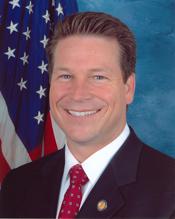 Rep. Connie Mack (R-FL)
Description
Amendment sought to remove all Davis-Bacon prevailing wage provisions from the bill.
Legislative Activity
Stay on top of the latest movement without scrolling through every action
House amendment offered
March 12, 2009
View full timeline
House amendment offered
March 12, 2009
Amendment failed in Committee of the Whole
March 12, 2009 • 2:01 PM
House amendment not agreed to: On agreeing to the Mack amendment (A002) Failed by recorded vote: 140 - 284 (Roll no. 122).
March 12, 2009 • 2:01 PM
Roll call votes on amendments in House
March 12, 2009 • 2:01 PM
House amendment offered/reported by : Amendment (A002) offered by Mr. Mack.(consideration: CR H3361-3365, H3374-3375; text: CR H3361)
March 12, 2009 • 12:04 PM
Amendment (A002) offered by Mr. Mack. (consideration: CR H3361-3365, H3374-3375; text: CR H3361)
March 12, 2009 • 12:04 PM
On agreeing to the Mack amendment (A002) Failed by recorded vote: 140 - 284 (Roll no. 122).
March 12, 2009 • 2:01 PM
Votes
1 roll call on this amendment
Text
Offered
WATER QUALITY INVESTMENT ACT OF 2009
The Committee resumed its sitting.
Mr. BOOZMAN. Mr. Chairman, I yield 2 minutes to the gentleman from
California (Mr. Bilbray).
Mr. BILBRAY. Mr. Chairman, I appreciate the bill here today, and I
would just like to highlight the issue that, as we commit taxpayers'
funds to addressing the environmental issues that face this country,
that we recognize that outcome is what really matters when we talk
about spending money to clean up the environment.
Chairman Oberstar has worked with me for years on a problem that we
have got to address, and I am not saying we as my district, I am saying
nationally; that we have sent funds all over the country and looked at
process, rather than how a city or a community may impact the
environment.
{time} 1145
A good example is the fact that you may have a city of Chicago that
was outrageous in saying they were worried about polluting Lake
Michigan, because they were polluting their own water. But they built a
canal so they can dump the water into the Illinois River and pollute
all the waters of the Mississippi.
I think one of the things that we have got to recognize is being
smart with our money and addressing the fact that these funds should go
to where is the best environmental benefit. And a good example would be
the fact that there are certain areas where the treatment of the sewage
at its existing level has no net negative impact, but there are other
areas which have highly sensitive environments that are being polluted,
even though the Federal law technically is being protected, things like
the secondary mandate, where we should be putting our resources into
tertiary and reclamation, where you end up having areas like deep-water
discharge places, where right now scientists will tell you there is no
net degradation.
So I would just ask the majority to take a look at when we focus
these funds, that we focus it where the most benefit to the environment
can be given, much like we have done in California. We have gone beyond
the process issue and gone to the outcome-
[[Page H3351]]
based environmental review, the Clean Oceans Project, so that we spend
every cent in a manner that protects the environment and not just
fulfill a regulatory problem. And so I think it is absolutely essential
that we avoid situations like we have run into in southern California,
where the environmental impact report says that----
The CHAIR. The time of the gentleman has expired.
Mr. BOOZMAN. I yield the gentleman another 2 minutes. I think he
makes some excellent points.
Mr. BILBRAY. The example is, Mr. Chairman, where you have got an
environmental impact report that says that if you execute the letter of
the law, you would be hurting the environment. And no one ever meant
that to happen. I want to make sure that as we move forward that the
letter of the law reflects protection for the environment first, not
just following a regulation blindly. The law should always be reminded
that it is here to protect the environment first, not just blindly move
forward in spending taxpayers' funds.
And that is where I would ask that the committee take a look at these
situations. I think Hawaii is in a situation where we may be sending
funds to Hawaii to build facilities that do not have a net positive
impact on the environment. I don't think any of us ever meant for clean
water funds to be diverted into an area that is not helping the
environment when you have areas that desperately need these funds.
And that is one of those things I think we have to recognize, the
environmental community, the days of just caring being enough, are
over. It is essential that those of us who want to protect the
environment need to be smart and make sure that every cent spent, both
local and Federal, go toward helping the environment, not just
fulfilling a regulatory guideline and not just providing a threshold
that somehow looks good on paper but doesn't protect the environment.
And I look forward to working with the chairman and making sure that
every dollar spent in this program helps the environment, cleans up the
environment, and does it in a manner that we maximize the benefit,
because there are not enough funds to go around to waste it. And that
is why I look forward to working with the chairman in making sure that
every dollar does the best it can for the American people and the
environment we live in.
Mr. OBERSTAR. I yield myself 5 seconds to thank the gentleman from
California for his enthusiasm and assure him that we will work for full
funding.
I yield 2 minutes to the distinguished gentleman from New Mexico (Mr.
Teague), a member of the committee.
Mr. TEAGUE. I rise today in support of Chairman Oberstar's manager's
amendment to H.R. 1262, the Water Quality Investment Act. The manager's
package includes my amendment to the bill, the Teague-Green wastewater
amendment.
My amendment is simple. It allows wastewater utilities to use
resources from the Clean Water State Revolving Funds to implement
renewable energy production and energy-efficient projects in their
plants.
Wastewater treatment plants are large consumers of power. Along with
drinking water facilities, they consume approximately 35 percent of the
energy used by municipalities. Together, they constitute 3 percent of
national energy consumption, sending approximately 45 million tons of
greenhouse gases into the atmosphere each year.
We need to give our wastewater infrastructure an energy makeover.
With my amendment to the eligible activities associated with the Clean
Water SRF, the revolving funds can become prime motivation for energy
conservation and energy generation at wastewater plants across the
country. Employing resources from the SRF, plants can generate power
from in-circuit hydro turbines, biogas produced through anaerobic
digesters, and solar panels and wind turbines, all offsetting
electricity purchased from the grid.
The Teague-Green Wastewater Amendment will reduce the amount of
energy consumed by wastewater plants, create green jobs, reduce
greenhouse gas emissions and save money for taxpayers. It is what I
like to call common sense.
I want to thank the chairman for including my amendment in the
manager's package and for crafting this excellent piece of legislation.
Mr. BOOZMAN. Does the gentleman have any more speakers?
Mr. OBERSTAR. We have no more speakers. I will close on our side if
the gentleman is prepared to close.
Mr. BOOZMAN. Mr. Chairman, I wanted to associate myself with the
remarks of our ranking member, Mr. Mica, in regard to Davis-Bacon. I
have some real concerns with the extension there. But I do rise in
support of the bill. I believe the underlying bill is a very, very good
bill.
I was visiting with former Member John Paul Hammersmith, one of my
predecessors who was here for many, many years with Mr. Oberstar. I had
lunch with him. And he asked me what was on the agenda. And we talked
about the water issues and things. And he, like Mr. Oberstar, gave me
the history and again related how hard you all had worked together, Mr.
Oberstar, to get these things done. And we do thank you for your very
hard work for many, many years really laying the groundwork. So we have
a tremendous amount to do, but we need to get it done. So we do
appreciate that, Mr. Chairman.
The other thing is I would like to thank Mr. Ehlers for his hard work
in the Great Lakes. Again, he has dealt with this for many, many years.
And as you said, this truly is a model for this type of bill. The other
thing I would like to do is thank Ms. Johnson for her leadership as my
chairman on Water Resources, for her shepherding this through committee
and now shepherding it through the House. And then, as always, Mr. Mica
in his position as ranking member, again, for doing the same thing. I
also want to thank the staffs for their hard work on both sides. They
do a tremendous job. And we appreciate their efforts.
I do support the bill and urge its passage.
And I yield back the balance of my time.
Mr. OBERSTAR. I yield myself the balance of time on our side.
I appreciate the reflection of the gentleman from Arkansas about Mr.
Hammersmith. He was one of the giants of this House, a truly
distinguished person. He approached every issue thoughtfully,
reflecting on the substance of the matters, never a tone of
partisanship in his presentation in committee or on the floor. And a
particularly touching experience for me was some years ago, Mr. Shuster
was chair of the full committee, and we moved the first authorization
of EDA in years. And as the bill was moving toward final passage on the
floor, I got a message from the Republican cloakroom that Mr.
Hammersmith was on the phone. So with trepidation in my heart, I
marched into the Republican cloakroom and picked up the phone. And John
Paul Hammersmith was on the other end of the line laughing. And he
said, ``I have always wanted to get you over here in our cloakroom.
Congratulations on passage of the bill.'' It was so typical of John
Paul Hammersmith. He cared about the substance, and still does, of our
work here, as does his successor, Mr. Boozman.
Mr. Chairman, this package of legislation is not a jobs bill,
although it follows on the Economic Recovery Act, which provides
funding for these projects for water, for sewer and sewage treatment
facilities, and water infrastructure financing. This isn't a list of
projects from the State of Minnesota. I have one here for wastewater
infrastructure needs for the State of New York. There are thousands,
thousands--6,900 such projects--by the various water infrastructure
agencies across the Nation that are ready to go, ready to be built.
Minnesota has prioritized these in the Minnesota Public Facilities
Authority from 1 through 261 on wastewater projects.
And the need is enormous. We have 12.5 million people out of work in
the United States. Of that number, 2 million in the construction trades
are out of work. And the unemployment rate of 8.1 percent nationwide
for February is the highest in 25 years. By passing this legislation
and putting to work the funding that the administration has indicated
in its budget for the fiscal year that starts in October, we can make a
serious dent in the unemployment numbers that I just cited, along with
[[Page H3352]]
what will be accomplished with the roughly $5.6 billion in stimulus,
half of which is in grant money and half of which is in loan funds. But
we will create jobs in both packages, both this legislation and the
stimulus need.
As to Davis-Bacon, I will save my remarks for the amendment to be
offered by the gentleman from Florida (Mr. Mack). Suffice it to say
that at a time of high unemployment, of desperate need across this
country, an economy that needs people with income and ability to spend,
to buy and to stimulate this economy, why would you tell folks, work
for less? Why would you tell people, work for just at or below the
minimum wage? Prevailing wage is not the union wage. Robert Reich,
former Secretary of Labor, said in a radio statement just the night
before last, ``right now we need people working at union wages. We need
people with money in their pocket to buy, to stimulate this economy.''
And with the stimulus package, we will be putting people to work,
paying them for work, not paying them unemployment checks for not
working. We will discuss that at more length.
I now urge the passage of H.R. 1262.
Ms. JACKSON-LEE of Texas. Mr. Chair, I rise today with great
enthusiasm for H.R. 1262, the ``Water Quality Investment Act of 2009'',
which renews the Federal commitment to addressing our nation's
substantial needs for wastewater infrastructure by investing $18.7
billion over five years in wastewater infrastructure and other efforts
to improve water quality. H.R. 1262 increases investment in wastewater
infrastructure, reduces the cost of constructing and maintaining that
infrastructure, and promotes energy- and water-efficiency improvements
to publicly owned treatment works to reduce the potential long-term
operation and maintenance costs of the facility.
Mr. Chair, from my perch as Chairwoman of the Subcommittee on
Transportation and Infrastructure Protection I have promoted shoring up
our water infrastructure. Indeed, in the last Congress I introduced
Chemical Facility Security Improvement Act of 2007, which prohibits
federal funds from being used by the Secretary of Homeland Security to
approve a site security plan for a chemical facility unless the
facility meets or exceeds security standards and requirements to
protect it against terrorist acts established by the state or local
government for the area where it is located.
Although much progress has been made in achieving the ambitious goals
that Congress established more than 35 years ago to restore and
maintain the physical, chemical, and biological integrity of the
nation's waters, long-standing problems persist, and new problems have
emerged. Water quality problems are diverse, ranging from pollution
runoff from farms and ranches, city streets, and other diffuse or
``nonpoint'' sources, to ``point'' source discharges of metals and
organic and inorganic toxic substances from factories and sewage
treatment plants. And many of these problems need funding--and frankly
cannot wait. The quality of our water supply is at stake.
My bill also amended the Department of Homeland Security
Appropriations Act, 2007 to: (1) repeal a provision prohibiting the
Secretary from disapproving a site security plan based on the presence
or absence of a particular security measure; (2) require vulnerability
assessments and site security plans to be treated as sensitive security
information; and (3) repeal a provision limiting to the Secretary any
right of action against a chemical facility owner or operator to
enforce security measures. The connection is that water facilities use
chemicals to ensure safety and eliminate harmful elements.
The main law that deals with polluting activity in the nation's
streams, lakes, estuaries, and coastal waters is the Federal Water
Pollution Control Act, commonly known as the Clean Water Act, or CWA.
It consists of two major parts: regulatory provisions that impose
progressively more stringent requirements on industries and cities to
abate pollution and meet the statutory goal of zero discharge of
pollutants; and provisions that authorize federal financial assistance
for municipal wastewater treatment plant construction.
Both parts are supported by research activities, plus permit and
enforcement provisions. Programs at the federal level are administered
by the Environmental Protection Agency (EPA); state and local
governments have major responsibilities to implement CWA programs
through standard-setting, permitting, and enforcement.
The water quality restoration objective declared in the 1972 act was
accompanied by statutory goals to eliminate the discharge of pollutants
into navigable waters by 1985 and to attain, wherever possible, waters
deemed ``fishable and swimmable'' by 1983.
Although those goals have not been fully achieved, considerable
progress has been made, especially in controlling conventional
pollutants (suspended solids, bacteria, and oxygen- consuming
materials) discharged by industries and sewage treatment plants.
I have noted that progress has been mixed in controlling discharges
of toxic pollutants (heavy metals, inorganic and organic chemicals),
which are more numerous and can harm human health and the environment
even when present in very small amounts--at the parts-per-billion
level. Moreover, efforts to control pollution from diffuse sources,
termed nonpoint source pollution (rainfall runoff from urban, suburban,
and agricultural areas, for example), are more recent, given the
earlier emphasis on ``point source'' pollution (discharges from
industrial and municipal wastewater treatment plants). Overall, data
reported by EPA and states indicate that 45% of river and stream miles
assessed by states and 47% of assessed lake acres do not meet
applicable water quality standards and are impaired for one or more
desired uses. In 2006 EPA issued an assessment of streams and small
rivers and reported that 67% of U.S. stream miles are in poor or fair
condition and that nutrients and streambed sediments have the largest
adverse impact on the biological condition of these waters.
Approximately 95,000 lakes and 544,000 river miles in the United States
are under fish-consumption advisories (including 100% of the Great
Lakes and their connecting waters), due to chemical contaminants in
lakes, rivers, and coastal waters, and one-third of shellfishing beds
are closed or restricted, due to toxic pollutant contamination. Mercury
is a contaminant of growing concern--as of 2003, 45 states had issued
partial or statewide fish or shellfish consumption advisories because
of elevated mercury levels.
The last major amendments to the law were the Water Quality Act of
1987. These amendments culminated six arduous years of congressional
efforts to extend and revise the act and were the most comprehensive
amendments since 1972. Authorizations of appropriations for some
programs provided in P.L. 100-4, such as general grant assistance to
states, research, and general EPA support authorized in that law,
expired in FY1990 and FY1991.
Authorizations for wastewater treatment funding expired in FY1994.
None of these programs has lapsed, however, as Congress has continued
to appropriate funds to implement them. EPA, states, industry, and
other citizens continue to implement the 1987 legislation, including
meeting the numerous requirements and deadlines in it.
The Clean Water Act has been viewed as one of the most successful
environmental laws in terms of achieving its statutory goals, which
have been widely supported by the public, but lately some have
questioned whether additional actions to achieve further benefits are
worth the costs.
Criticism has come from industry, which has been the longstanding
focus of the act's regulatory programs and often opposes imposition of
new stringent and costly requirements. Criticism also has come from
developers and property rights groups who contend that federal
regulations (particularly the act's wetlands permit program) are a
costly intrusion on private land-use decisions. States and cities have
traditionally supported water quality programs and federal funding to
assist them in carrying out the law, but many have opposed CWA measures
that they fear might impose new unfunded mandates.
Many environmental groups believe that further fine-tuning is needed
to maintain progress achieved to date and to address remaining water
quality problems.
I am committed to ensuring that I continue to do my part as the
Chairwoman of the House Homeland Security Subcommittee on
Transportation and Infrastructure Protection.
Mr. COSTELLO. Mr. Chair, I rise today in strong support of H.R. 1262,
the Water Quality Investment Act. We must provide means for local
communities to address wastewater treatment needs. H.R. 1262 seeks to
provide $13.8 billion over five years for the clean Water State
Revolving Fund and provides low interest loans to communities for
wastewater infrastructure. The bill also provides $250 million in
grants over five years for alternative water source projects and
authorizes $1.8 billion over five years in grants to municipalities and
states to control sewer overflows.
This legislation is critically needed to help meet America's clean
water needs.
H.R. 1262 also renews Davis-Bacon on projects, which requires that
contractors and subcontractors that receive federal funds on wastewater
treatment projects be paid at least the prevailing local wage rate.
I firmly believe it is necessary that the Davis-Bacon prevailing wage
requirement applies to all construction projects with federal funds.
I commend Chairman Oberstar and Chairwoman Johnson for reestablishing
what Congress clearly intended.
Davis-Bacon is as important now as it was in the 1930s. It prevents
competition from ``fly-by-night'' firms that undercut local wages and
working conditions and compete, unfairly, with local contractors for
federal work.
[[Page H3353]]
It helps stabilize the industry to workers and to employers. In
addition, Davis-Bacon may help ensure better craftsmanship and it may
reduce both the initial cost of federal construction through greater
efficiency and decrease the need for repair and/or rehabilitation.
I oppose any such motion to strike the Davis-Bacon provisions and
strongly urge my colleagues to do the same.
With that, Mr. Chair, H.R. 1262 is very important to our communities
because it is another avenue for them to use for improving water
quality across the country. Again, I strongly support H.R. 1262 and
urge my colleagues to as well.
Mr. MITCHELL. Mr. Chair, I rise today in support of H.R. 1262, the
Water Quality Investment Act of 2009.
This is an important bill that will help close the approximately $3.2
to $11.1 billion gap between our nation's wastewater infrastructure
needs and our current levels of federal assistance.
This bill is especially important for Arizona, because it will
finally begin to address a grossly inequitable funding formula that
long plagued our state.
Inexplicably, and unfairly, the formula used to distribute federal
assistance to State Clean Water Revolving Funds (SRFs) remains linked
to Census data from 1970.
While, obviously, this is not a problem for states that have lost
population, or whose population has remained stable, it's a huge
problem for states like Arizona, whose population has grown
dramatically.
Since 1970, Arizona's population has more than tripled.
As a result, we've been getting massively short-changed.
Arizona ranks 9th in the nation in terms of need, but we rank 37th in
receipt of federal funding for SRFs. On a per capita basis, Arizona
ranks 53rd. Even the territories do better than we do.
This is a disparity that belies any pretence of fairness, and it
needs to change.
If enacted, the Water Quality Investment Act of 2009 will begin that
process.
I want to thank Chairman Oberstar for his leadership on this issue,
and for his continued commitment to fairness.
I urge my colleagues to support H.R. 1262, and I look forward to its
final passage.
Mrs. McCARTHY of New York. I rise today in support of H.R. 1262, the
Water Quality Investment Act of 2009.
The legislation makes important investments in our nation's water
systems and strengthens the environmental protections of our waterways.
I want to thank Chairman Oberstar and the Transportation Committee
staff for working with me to include my amendment in the manager's
amendment to the bill.
I also want to thank Representatives Baldwin, Schwartz, and Inslee
for joining with me as cosponsors on the amendment and for their
continued efforts to work with me to make our waters safe.
Our waterways provide a source of recreation and impact the food
supply for all Americans.
And, perhaps most importantly, our waterways are the source of our
drinking water.
In 2008, the Associated Press found pharmaceuticals in the drinking
water supplies of approximately 46 million Americans.
In my state of New York, health officials found heart medicine,
infection fighters, estrogen, mood stabilizer and a tranquilizer in the
upstate water supply.
Six pharmaceuticals were found in the drinking water right here in
Washington, D.C.
We don't know how the pharmaceuticals enter the water supply.
It is likely that some enter the water supply through human waste,
runoff from agricultural operations, and the improper disposal of
unused pharmaceuticals.
In addition to antibiotics and steroids, EPA has identified over 100
individual pharmaceuticals and personal care products in environmental
samples and drinking water.
As a nurse, I am concerned that the presence of the pharmaceuticals
in our nation's waters may have negative effects on human health and
wildlife.
This amendment requires EPA to conduct a study on the sources of
pharmaceuticals and personal care products in our waters and the effect
that they have on the environment and human health.
Upon completion of this study, EPA is required to issue a report
detailing their findings.
The study also requires that EPA identify methods that can be used to
treat the water and remove the pharmaceuticals if we need to, and to
prevent them from entering the water in the first place.
Pharmaceuticals and personal care products include prescription and
over-the-counter therapeutic drugs, fragrances, lotions, and cosmetics,
as well as products used to enhance growth or health of livestock.
The results of this study will prompt responses from the scientific
community which can help form the basis for future research.
The report from the study will be used as part of the government's
efforts to better understand the effects that pharmaceuticals in our
waters have on human health and wildlife and to craft appropriate
legislation that addresses the issue in a responsible manner.
I want to stress that this effort is not intended to make any
presumptions or accusations.
We are just looking for more information so that we can make better
informed choices and eventually move forward on sensible policies.
Hopefully, the study will give us more information about the
presence, source, and effects of pharmaceuticals in our waters so that
we can begin efforts to ensure that the water is safe.
We must begin to better understand the impact pharmaceuticals have on
our environment and on our health. It is especially important that we
make sure that our constituents can feel confident that they are
drinking clean, safe water.
We need to find out how these contaminants got in the water, what the
risks are and what steps we need to take to solve the problem.
It is vital that Congress take up and champion the cause of keeping
our waterways and drinking water safe.
This is a public health issue, an environmental issue, and an
economic issue.
I urge my colleagues to support the manager's amendment and the
underlying bill.
Ms. MATSUI. Mr. Chair, I would like to begin my remarks today by
thanking Chairman Oberstar for his work on this critical issue.
He has been a champion for our country's infrastructure.
Whether it is wastewater, roads, bridges, dams, or levees, Chairman
Oberstar has been the one to fight for the funding we need to keep our
country running smoothly.
When it is working properly, our wastewater system is not something
that we think about very often.
But the minute something goes wrong, wastewater instantly becomes the
most important issue of all.
In my hometown of Sacramento, the city has invested hundreds of
millions of dollars to upgrade the combined sewer system in our central
city.
Using funding provided from the Federal Government, Sacramento has
renovated older pumps, built treatment plants, and increased storage.
The price of clean water and healthy ecosystems is high, Mr. Chair.
But the benefits they provide to our society are even greater.
And that is why I am so supportive of the legislation before us
today.
It authorizes $13.8 billion worth of wastewater infrastructure
projects that will help keep my district's streets and waterways free
of sewage and sludge.
This funding will help make Sacramento even more livable than it
already is.
It will also create quality jobs in my district which are sorely
needed.
For too long, we have lived off the infrastructure built in decades
past.
Now it is our turn to invest in the future of our infrastructure, in
the health of our communities, and in the quality of our water.
I urge support for the rule and for the underlying bill.
Mr. CUELLAR. Mr. Chair, I rise today to encourage my colleagues to
support the manager's amendment to the Water Quality Investment Act of
2009.
The manager's amendment I support builds upon the strong nature of
this bill, and addresses several additional needs.
I thank the distinguished Chairman for including 2 of my amendments
in the manager's amendment. These important amendments will go a long
way towards helping communities along the southern border.
My first amendment, included in this manager's amendment, authorizes
the EPA to Study wastewater treatment facilities that discharge into
the Rio Grande River, develop recommendations for improving monitoring,
information sharing, and cooperation between the Unites States and
Mexico.
Last EPA study of pollutants in the Rio Grande River took samples
from November 1992 to December 1995.
Since 1992 Laredo alone has doubled in population.
I applaud inclusion of this requirement because knowing the dangers
that exist in pollution in the River is the first step in protecting a
national treasure.
I also wish to offer my support for the Manager's amendment's
recognition of the ongoing crisis that exists on the United States'
southern border with impoverished families living in Colonias.
Colonias can be found in Texas, New Mexico, Arizona and California,
but Texas has both the largest number of colonias and the largest
colonia population.
According to the State of Texas, about 400,000 Texans live in border
colonias.
The development of Texas colonias dates back to at least the 1950s,
when developers
[[Page H3354]]
created unincorporated subdivisions using agriculturally worthless land
or land that lay in floodplains or in other rural properties.
They divided the land into small lots, put in little or no
infrastructure, and then sold them to low-income individuals seeking
affordable housing.
The manager's amendment includes my plan to direct the Government
Accountability Office to present to Congress a blueprint to properly
address the problems that exist in these low income communities.
Mr. Chair, I applaud you on this important Manager's amendment, and I
urge all my colleague to vote ``yes.''
Ms. HIRONO. Mr. Chair, I rise in strong support of H.R. 1262, the
Water Quality Investment Act. I commend my House Transportation and
Infrastructure Committee Chairman James Oberstar for introducing this
vital legislation that makes much-needed investments to improve water
quality and better ensure safe, clean water for communities throughout
the country.
The central focus of the bill is reauthorization of the Clean Water
State Revolving Fund, which provides low-interest loans and grants to
local communities for construction of wastewater treatment facilities
and other water pollution abatement projects. The Clean Water State
Revolving Fund was last reauthorized in 1987, although the program has
been funded every year, albeit at inadequate levels. For years, the
amount of available funding has been far below the demand for funds
from local governments.
Much of the clean water infrastructure in our nation is rapidly
approaching or has already exceeded its projected life. This aging
infrastructure must be repaired or replaced soon. The gap between
wastewater infrastructure needs and current levels of spending has been
estimated at between $3.2 billion to $11.1 billion a year.
If the authorized levels of funding provided in this bill are
appropriated, Hawaii will see a four-fold increase in the annual level
of funding received under the Clean Water State Revolving Fund--from
$5.3 million in FY2009 to an estimated $21 million each year from
FY2010 to FY2014. In addition to improving our infrastructure, this
amount of funding could create or sustain some 700 jobs a year in
Hawaii.
This funding is critically needed in our state. Just this week, I met
with members of the four county councils in my district. All have
concerns about the condition of wastewater infrastructure in their
districts and the inability of local governments to fund the level of
investment that is urgently needed. Lack of this funding is having
serious environmental consequences and, in some areas, is actually
preventing development of much-needed housing.
I urge my colleague to support this bill, which will stimulate
employment and all of our local economies while protecting the
environment.
Mr. CLEAVER. Mr. Chair, H.R. 1262, The Water Quality Investment Act,
renews the Federal commitment to addressing our nation's substantial
needs for wastewater infrastructure. Several provisions in the bill
provide federal assistance for improving this capability--through
grants, subsidies, loans, and other assistance. Part of the impetus
behind this assistance is the current severe economic situation that
communities of all sizes across the nation are facing.
Jackson County, Missouri, in my district, is one example of a
community caught between a rock and a hard place. The County is trying
to provide services for its constituents at two lakes--Longview and
Blue Springs--while balancing its dwindling budget. The Army Corps of
Engineers built both lakes in the 1980s to help control flooding issues
in the Little Blue River region, watershed run-off, wetlands
restoration, and to provide a recreational benefit to the public. The
Corps entered into a lease contract with Jackson County, Missouri with
a 50 year repayment contract (1986-2035). The County, during these
tough economic times, is having a significant problem paying back the
interest plus the regular principal each year.
These lakes, though owned by the Corps, are operated and maintained
by Jackson County. Both Lakes are in need of significant repairs,
maintenance, and upgrades to bring them up to standards of today's use.
The properties critically need repairs to infrastructure like roads,
electrical upgrades, facility repairs, and needed silt control along
the watersheds feeding into the Lakes. The County is struggling during
this economic downturn, to make the payments as well as make the
necessary repairs and upgrades that the Lake property needs for
continued use by the public.
The following are examples of the capital improvement needs
identified by Jackson County in their 5 year Capital Improvements Plan
(CIP): Marina Renovation, upgrades and maintenance--$858,980; Roof
repairs--$125,000; Road repairs--$589,962; Shelter house repairs,
upgrades and maintenance--$215,240; Campground upgrades, replace pads
and electrical capacity upgrades--$1,023,093; Sediment, spillway and
watershed control and improvements--$433,304; Trail replacement,
repairs and upgrades--$1,132,000; Maintenance facility upgrades and
repairs--$2,264,000; Playground upgrades and replacement--$414,400;
Beaches improvements and upgrades--$226,400.
This is why I was proud to submit this week an amendment for
consideration to H.R. 1262 that would have allowed the County to
alleviate the strains on its budget, while maintaining its commitment
to the Army Corps as well as its commitment to citizens using the
Lakes, plus providing jobs for making the improvements. My amendment
would have modified the leases for Longview Lake & Blue Springs Lake to
allow the County to reinvest 50 percent of its outstanding payments
over the rest of the lease for capital improvements on the property.
This is not a default or forgiveness, but rather a reinvestment in lieu
of payment so that they can continue to function in both their flood
control and recreational capacities.
Even with the redirection, the plan would provide the Army Corps with
over $6.5 million ($6,504,447.80) in surplus over the course of the
lease. From this reinvestment, Longview Lake would receive $5.3 million
($5,294,483.88) of redirected payments and Blue Springs Lake would
receive $4.3 million ($4,302,127.74) as part of the plan. The Corps of
Engineers would be fully reimbursed for its initial outlay of funds
with interest, and the County would be able to re-invest some of the
funds it is contractually obligated to pay into these two greats
Jackson County assets.
Mr. Chair, though my amendment was deemed to have a budgetary impact,
I wanted to raise this issue. This is a national issue, hitting many
communities and counties during these difficult economic times and they
deserve Congress's help. The idea makes a great deal of sense and I
look forward to working with my fellow Members and my local County
Executive as we continue to think outside the box to make this idea
work.
Mr. LUJAN. Mr. Chair, the Water Quality Investment Act is a renewed
commitment to address our nation's substantial needs for water and
wastewater infrastructure. The ability of cities, rural water systems
and tribal communities to ensure water quality for our nation's
families is critical to the health of our country and will help create
jobs. Today, our business in this House is to transform the way we
think about water.
All living systems need water. People need it. The climate needs it.
Plants and wildlife need it. We are all part of the same living system,
and we all need water.
I know the importance of water to rural economies across America.
Without a reliable water supply, we cannot improve human health,
preserve natural ecosystems, or grow economies. It is a critical
prerequisite for life, and we must ensure proper drinking water and
wastewater systems will be available to every community in America. The
absence of adequate water infrastructure in a community creates
enormous health disparities, but also entrenches the severe poverty
that is already widespread in these communities.
Tribes across the nation have many difficulties ensuring water
quality for their communities. Often water and wastewater systems are
hard to construct or maintain due to a lack of availability of funding
for tribal governments. Language I proposed, which was included in
Chairman Oberstar's manager's amendment, will authorize new grants for
technical assistance on water and wastewater infrastructure to the
tribal communities and people who so desperately need it.
I urge all my colleagues to support this bill.
Mr. OBERSTAR. I yield back the balance of my time.
The CHAIR. All time for general debate has expired.
Pursuant to the rule, the amendment in the nature of a substitute
printed in the bill shall be considered as an original bill for the
purpose of amendment under the 5-minute rule and shall be considered
read.
The text of the committee amendment is as follows:
H.R. 1262
Be it enacted by the Senate and House of Representatives of
the United States of America in Congress assembled,
SECTION 1. SHORT TITLE; TABLE OF CONTENTS.
(a) In General.--This Act may be cited as the ``Water
Quality Investment Act of 2009''.
(b) Table of Contents.--
1. Short title; table of contents.
2. Amendment of Federal Water Pollution Control Act.
TITLE I--WATER QUALITY FINANCING
Subtitle A--Technical and Management Assistance
1101. Technical assistance.
1102. State management assistance.
1103. Watershed pilot projects.
Subtitle B--Construction of Treatment Works
1201. Sewage collection systems.
1202. Treatment works defined.
Subtitle C--State Water Pollution Control Revolving Funds
1301. General authority for capitalization grants.
[[Page H3355]]
1302. Capitalization grant agreements.
1303. Water pollution control revolving loan funds.
1304. Allotment of funds.
1305. Intended use plan.
1306. Annual reports.
1307. Technical assistance; requirements for use of American
materials.
1308. Authorization of appropriations.
Subtitle D--General Provisions
1401. Definition of treatment works.
1402. Funding for Indian programs.
Subtitle E--Tonnage Duties
1501. Tonnage duties.
TITLE II--ALTERNATIVE WATER SOURCE PROJECTS
2001. Pilot program for alternative water source projects.
TITLE III--SEWER OVERFLOW CONTROL GRANTS
3001. Sewer overflow control grants.
TITLE IV--MONITORING, REPORTING, AND PUBLIC NOTIFICATION OF SEWER
OVERFLOWS
4001. Monitoring, reporting, and public notification of sewer
overflows.
TITLE V--GREAT LAKES LEGACY REAUTHORIZATION
5001. Remediation of sediment contamination in areas of concern.
5002. Public information program.
5003. Contaminated sediment remediation approaches, technologies, and
techniques.
SEC. 2. AMENDMENT OF FEDERAL WATER POLLUTION CONTROL ACT.
Except as otherwise expressly provided, whenever in this
Act an amendment or repeal is expressed in terms of an
amendment to, or repeal of, a section or other provision, the
reference shall be considered to be made to a section or
other provision of the Federal Water Pollution Control Act
(33 U.S.C. 1251 et seq.).
TITLE I--WATER QUALITY FINANCING
Subtitle A--Technical and Management Assistance
SEC. 1101. TECHNICAL ASSISTANCE.
(a) Technical Assistance for Rural and Small Treatment
Works.--Section 104(b) (33 U.S.C. 1254(b)) is amended--
(1) by striking ``and'' at the end of paragraph (6);
(2) by striking the period at the end of paragraph (7) and
inserting ``; and''; and
(3) by adding at the end the following:
``(8) make grants to nonprofit organizations--
``(A) to provide technical assistance to rural and small
municipalities for the purpose of assisting, in consultation
with the State in which the assistance is provided, such
municipalities in the planning, developing, and acquisition
of financing for eligible projects described in section
603(c);
``(B) to provide technical assistance and training for
rural and small publicly owned treatment works and
decentralized wastewater treatment systems to enable such
treatment works and systems to protect water quality and
achieve and maintain compliance with the requirements of this
Act; and
``(C) to disseminate information to rural and small
municipalities and municipalities that meet the affordability
criteria established under section 603(i)(2) by the State in
which the municipality is located with respect to planning,
design, construction, and operation of publicly owned
treatment works and decentralized wastewater treatment
systems.''.
(b) Authorization of Appropriations.--Section 104(u) (33
U.S.C. 1254(u)) is amended--
(1) by striking ``and (6)'' and inserting ``(6)''; and
(2) by inserting before the period at the end the
following: ``; and (7) not to exceed $100,000,000 for each of
fiscal years 2010 through 2014 for carrying out subsections
(b)(3), (b)(8), and (g), except that not less than 20 percent
of the amounts appropriated pursuant to this paragraph in a
fiscal year shall be used for carrying out subsection
(b)(8)''.
(c) Small Flows Clearinghouse.--Section 104(q)(4) (33
U.S.C. 1254(q)(4)) is amended--
(1) in the first sentence by striking ``$1,000,000'' and
inserting ``$3,000,000''; and
(2) in the second sentence by striking ``1986'' and
inserting ``2011''.
SEC. 1102. STATE MANAGEMENT ASSISTANCE.
Section 106(a) (33 U.S.C. 1256(a)) is amended--
(1) by striking ``and'' at the end of paragraph (1);
(2) by striking the semicolon at the end of paragraph (2)
and inserting ``; and''; and
(3) by inserting after paragraph (2) the following:
``(3) such sums as may be necessary for each of fiscal
years 1991 through 2009, and $300,000,000 for each of fiscal
years 2010 through 2014;''.
SEC. 1103. WATERSHED PILOT PROJECTS.
(a) Pilot Projects.--Section 122 (33 U.S.C. 1274) is
amended--
(1) in the section heading by striking ``WET WEATHER''; and
(2) in subsection (a)--
(A) in the matter preceding paragraph (1) by striking ``wet
weather discharge'';
(B) in paragraph (2) by striking ``in reducing such
pollutants'' and all that follows before the period at the
end and inserting ``to manage, reduce, treat, or reuse
municipal stormwater, including low-impact development
technologies''; and
(C) by adding at the end the following:
``(3) Watershed partnerships.--Efforts of municipalities
and property owners to demonstrate cooperative ways to
address nonpoint sources of pollution to reduce adverse
impacts on water quality.
``(4) Integrated water resource plan.--The development of
an integrated water resource plan for the coordinated
management and protection of surface water, ground water, and
stormwater resources on a watershed or subwatershed basis to
meet the objectives, goals, and policies of this Act.''.
(b) Authorization of Appropriations.--Section 122(c)(1) is
amended by striking ``for fiscal year 2004'' and inserting
``for each of fiscal years 2004 through 2014''.
(c) Report to Congress.--Section 122(d) is amended by
striking ``5 years after the date of enactment of this
section,'' and inserting ``October 1, 2011,''.
Subtitle B--Construction of Treatment Works
SEC. 1201. SEWAGE COLLECTION SYSTEMS.
Section 211 (33 U.S.C. 1291) is amended--
(1) by striking the section heading and all that follows
through ``(a) No'' and inserting the following:
``SEC. 211. SEWAGE COLLECTION SYSTEMS.
``(a) In General.--No'';
(2) in subsection (b) by inserting ``Population Density.--
'' after ``(b)''; and
(3) by striking subsection (c) and inserting the following:
``(c) Exceptions.--
``(1) Replacement and major rehabilitation.--
Notwithstanding the requirement of subsection (a)(1)
concerning the existence of a collection system as a
condition of eligibility, a project for replacement or major
rehabilitation of a collection system existing on January 1,
2007, shall be eligible for a grant under this title if the
project otherwise meets the requirements of subsection (a)(1)
and meets the requirement of paragraph (3).
``(2) New systems.--Notwithstanding the requirement of
subsection (a)(2) concerning the existence of a community as
a condition of eligibility, a project for a new collection
system to serve a community existing on January 1, 2007,
shall be eligible for a grant under this title if the project
otherwise meets the requirements of subsection (a)(2) and
meets the requirement of paragraph (3).
``(3) Requirement.--A project meets the requirement of this
paragraph if the purpose of the project is to accomplish the
objectives, goals, and policies of this Act by addressing an
adverse environmental condition existing on the date of
enactment of this paragraph.''.
SEC. 1202. TREATMENT WORKS DEFINED.
Section 212(2)(A) (33 U.S.C. 1292(2)(A)) is amended--
(1) by striking ``any works, including site'';
(2) by striking ``is used for ultimate'' and inserting
``will be used for ultimate''; and
(3) by inserting before the period at the end the
following: ``and acquisition of other lands, and interests in
lands, which are necessary for construction''.
Subtitle C--State Water Pollution Control Revolving Funds
SEC. 1301. GENERAL AUTHORITY FOR CAPITALIZATION GRANTS.
Section 601(a) (33 U.S.C. 1381(a)) is amended by striking
``for providing assistance'' and all that follows through the
period at the end and inserting the following: ``to
accomplish the objectives, goals, and policies of this Act by
providing assistance for projects and activities identified
in section 603(c).''.
SEC. 1302. CAPITALIZATION GRANT AGREEMENTS.
(a) Reporting Infrastructure Assets.--Section 602(b)(9) (33
U.S.C. 1382(b)(9)) is amended by striking ``standards'' and
inserting ``standards, including standards relating to the
reporting of infrastructure assets''.
(b) Additional Requirements.--Section 602(b) (33 U.S.C.
1382(b)) is amended--
(1) in paragraph (6)--
(A) by striking ``before fiscal year 1995'';
(B) by striking ``funds directly made available by
capitalization grants under this title and section 205(m) of
this Act'' and inserting ``assistance made available by a
State water pollution control revolving fund as authorized
under this title, or with assistance made available under
section 205(m), or both,''; and
(C) by striking ``201(b)'' and all that follows through
``513'' and inserting ``211 and 511(c)(1)'';
(2) by striking ``and'' at the end of paragraph (9);
(3) by striking the period at the end of paragraph (10) and
inserting a semicolon; and
(4) by adding at the end the following:
``(11) the State will establish, maintain, invest, and
credit the fund with repayments, such that the fund balance
will be available in perpetuity for providing financial
assistance in accordance with this title;
``(12) any fees charged by the State to recipients of
assistance that are considered program income will be used
for the purpose of financing the cost of administering the
fund or financing projects or activities eligible for
assistance from the fund;
``(13) beginning in fiscal year 2011, the State will
include as a condition of providing assistance to a
municipality or intermunicipal, interstate, or State agency
that the recipient of such assistance certify, in a manner
determined by the Governor of the State, that the recipient--
``(A) has studied and evaluated the cost and effectiveness
of the processes, materials, techniques, and technologies for
carrying out the proposed project or activity for which
assistance is sought under this title, and has selected, to
the extent practicable, a project or activity that maximizes
the potential for efficient water use, reuse, and
conservation, and energy conservation, taking into account
the cost of constructing the project or activity, the cost of
operating and maintaining the project or activity over its
life, and the cost of replacing the project or activity; and
[[Page H3356]]
``(B) has considered, to the maximum extent practicable and
as determined appropriate by the recipient, the costs and
effectiveness of other design, management, and financing
approaches for carrying out a project or activity for which
assistance is sought under this title, taking into account
the cost of constructing the project or activity, the cost of
operating and maintaining the project or activity over its
life, and the cost of replacing the project or activity;
``(14) the State will use at least 10 percent of the amount
of each capitalization grant received by the State under this
title after September 30, 2010, to provide assistance to
municipalities of fewer than 10,000 individuals that meet the
affordability criteria established by the State under section
603(i)(2) for activities included on the State's priority
list established under section 603(g), to the extent that
there are sufficient applications for such assistance;
``(15) a contract to be carried out using funds directly
made available by a capitalization grant under this title for
program management, construction management, feasibility
studies, preliminary engineering, design, engineering,
surveying, mapping, or architectural related services shall
be negotiated in the same manner as a contract for
architectural and engineering services is negotiated under
chapter 11 of title 40, United States Code, or an equivalent
State qualifications-based requirement (as determined by the
Governor of the State); and
``(16) the requirements of section 513 will apply to the
construction of treatment works carried out in whole or in
part with assistance made available by a State water
pollution control revolving fund as authorized under this
title, or with assistance made available under section
205(m), or both, in the same manner as treatment works for
which grants are made under this Act.''.
SEC. 1303. WATER POLLUTION CONTROL REVOLVING LOAN FUNDS.
(a) Projects and Activities Eligible for Assistance.--
Section 603(c) (33 U.S.C. 1383(c)) is amended to read as
follows:
``(c) Projects and Activities Eligible for Assistance.--The
amounts of funds available to each State water pollution
control revolving fund shall be used only for providing
financial assistance--
``(1) to any municipality or intermunicipal, interstate, or
State agency for construction of publicly owned treatment
works;
``(2) for the implementation of a management program
established under section 319;
``(3) for development and implementation of a conservation
and management plan under section 320;
``(4) for the implementation of lake protection programs
and projects under section 314;
``(5) for repair or replacement of decentralized wastewater
treatment systems that treat domestic sewage;
``(6) for measures to manage, reduce, treat, or reuse
municipal stormwater, agricultural stormwater, and return
flows from irrigated agriculture;
``(7) to any municipality or intermunicipal, interstate, or
State agency for measures to reduce the demand for publicly
owned treatment works capacity through water conservation,
efficiency, or reuse; and
``(8) for the development and implementation of watershed
projects meeting the criteria set forth in section 122.''.
(b) Extended Repayment Period.--Section 603(d)(1) (33
U.S.C. 1383(d)(1)) is amended--
(1) in subparagraph (A) by striking ``20 years'' and
inserting ``the lesser of 30 years or the design life of the
project to be financed with the proceeds of the loan''; and
(2) in subparagraph (B) by striking ``not later than 20
years after project completion'' and inserting ``upon the
expiration of the term of the loan''.
(c) Fiscal Sustainability Plan.--Section 603(d)(1) (33
U.S.C. 1383(d)(1)) is further amended--
(1) by striking ``and'' at the end of subparagraph (C);
(2) by inserting ``and'' at the end of subparagraph (D);
and
(3) by adding at the end the following:
``(E) for any portion of a treatment works proposed for
repair, replacement, or expansion, and eligible for
assistance under section 603(c)(1), the recipient of a loan
will develop and implement a fiscal sustainability plan that
includes--
``(i) an inventory of critical assets that are a part of
that portion of the treatment works;
``(ii) an evaluation of the condition and performance of
inventoried assets or asset groupings; and
``(iii) a plan for maintaining, repairing, and, as
necessary, replacing that portion of the treatment works and
a plan for funding such activities;''.
(d) Administrative Expenses.--Section 603(d)(7) (33 U.S.C.
1383(d)(7)) is amended by inserting before the period at the
end the following: ``, $400,000 per year, or \1/5\ percent
per year of the current valuation of the fund, whichever
amount is greatest, plus the amount of any fees collected by
the State for such purpose regardless of the source''.
(e) Technical and Planning Assistance for Small Systems.--
Section 603(d) (33 U.S.C. 1383(d)) is amended--
(1) by striking ``and'' at the end of paragraph (6);
(2) by striking the period at the end of paragraph (7) and
inserting a semicolon; and
(3) by adding at the end the following:
``(8) to provide grants to owners and operators of
treatment works that serve a population of 10,000 or fewer
for obtaining technical and planning assistance and
assistance in financial management, user fee analysis,
budgeting, capital improvement planning, facility operation
and maintenance, equipment replacement, repair schedules, and
other activities to improve wastewater treatment plant
management and operations, except that the total amount
provided by the State in grants under this paragraph for a
fiscal year may not exceed one percent of the total amount of
assistance provided by the State from the fund in the
preceding fiscal year, or 2 percent of the total amount
received by the State in capitalization grants under this
title in the preceding fiscal year, whichever amount is
greatest; and
``(9) to provide grants to owners and operators of
treatment works for conducting an assessment of the energy
and water consumption of the treatment works, and evaluating
potential opportunities for energy and water conservation
through facility operation and maintenance, equipment
replacement, and projects or activities that promote the
efficient use of energy and water by the treatment works,
except that the total amount provided by the State in grants
under this paragraph for a fiscal year may not exceed one
percent of the total amount of assistance provided by the
State from the fund in the preceding fiscal year, or 2
percent of the total amount received by the State in
capitalization grants under this title in the preceding
fiscal year, whichever amount is greatest.''.
(f) Additional Subsidization.--Section 603 (33 U.S.C. 1383)
is amended by adding at the end the following:
``(i) Additional Subsidization.--
``(1) In general.--In any case in which a State provides
assistance to a municipality or intermunicipal, interstate,
or State agency under subsection (d), the State may provide
additional subsidization, including forgiveness of principal
and negative interest loans--
``(A) to benefit a municipality that--
``(i) meets the State's affordability criteria established
under paragraph (2); or
``(ii) does not meet the State's affordability criteria if
the recipient--
``(I) seeks additional subsidization to benefit individual
ratepayers in the residential user rate class;
``(II) demonstrates to the State that such ratepayers will
experience a significant hardship from the increase in rates
necessary to finance the project or activity for which
assistance is sought; and
``(III) ensures, as part of an assistance agreement between
the State and the recipient, that the additional
subsidization provided under this paragraph is directed
through a user charge rate system (or other appropriate
method) to such ratepayers; or
``(B) to implement a process, material, technique, or
technology to address water-efficiency goals, address energy-
efficiency goals, mitigate stormwater runoff, or encourage
environmentally sensitive project planning, design, and
construction.
``(2) Affordability criteria.--
``(A) Establishment.--On or before September 30, 2010, and
after providing notice and an opportunity for public comment,
a State shall establish affordability criteria to assist in
identifying municipalities that would experience a
significant hardship raising the revenue necessary to finance
a project or activity eligible for assistance under section
603(c)(1) if additional subsidization is not provided. Such
criteria shall be based on income data, population trends,
and other data determined relevant by the State.
``(B) Existing criteria.--If a State has previously
established, after providing notice and an opportunity for
public comment, affordability criteria that meet the
requirements of subparagraph (A), the State may use the
criteria for the purposes of this subsection. For purposes of
this Act, any such criteria shall be treated as affordability
criteria established under this paragraph.
``(C) Information to assist states.--The Administrator may
publish information to assist States in establishing
affordability criteria under subparagraph (A).
``(3) Priority.--A State may give priority to a recipient
for a project or activity eligible for funding under section
603(c)(1) if the recipient meets the State's affordability
criteria.
``(4) Set-aside.--
``(A) In general.--In any fiscal year in which the
Administrator has available for obligation more than
$1,000,000,000 for the purposes of this title, a State shall
provide additional subsidization under this subsection in the
amount specified in subparagraph (B) to eligible entities
described in paragraph (1) for projects and activities
identified in the State's intended use plan prepared under
section 606(c) to the extent that there are sufficient
applications for such assistance.
``(B) Amount.--In a fiscal year described in subparagraph
(A), a State shall set aside for purposes of subparagraph (A)
an amount not less than 25 percent of the difference
between--
``(i) the total amount that would have been allotted to the
State under section 604 for such fiscal year if the amount
available to the Administrator for obligation under this
title for such fiscal year had been equal to $1,000,000,000;
and
``(ii) the total amount allotted to the State under section
604 for such fiscal year.
``(5) Limitation.--The total amount of additional
subsidization provided under this subsection by a State may
not exceed 30 percent of the total amount of capitalization
grants received by the State under this title in fiscal years
beginning after September 30, 2009.''.
SEC. 1304. ALLOTMENT OF FUNDS.
(a) In General.--Section 604(a) (33 U.S.C. 1384(a)) is
amended to read as follows:
``(a) Allotments.--
``(1) Fiscal years 2010 and 2011.--Sums appropriated to
carry out this title for each of fiscal years 2010 and 2011
shall be allotted by the Administrator in accordance with the
formula used to allot sums appropriated to carry out this
title for fiscal year 2009.
``(2) Fiscal year 2012 and thereafter.--Sums appropriated
to carry out this title for fiscal
[[Page H3357]]
year 2012 and each fiscal year thereafter shall be allotted
by the Administrator as follows:
``(A) Amounts that do not exceed $1,350,000,000 shall be
allotted in accordance with the formula described in
paragraph (1).
``(B) Amounts that exceed $1,350,000,000 shall be allotted
in accordance with the formula developed by the Administrator
under subsection (d).''.
(b) Planning Assistance.--Section 604(b) (33 U.S.C.
1384(b)) is amended by striking ``1 percent'' and inserting
``2 percent''.
(c) Formula.--Section 604 (33 U.S.C. 1384) is amended by
adding at the end the following:
``(d) Formula Based on Water Quality Needs.--Not later than
September 30, 2011, and after providing notice and an
opportunity for public comment, the Administrator shall
publish an allotment formula based on water quality needs in
accordance with the most recent survey of needs developed by
the Administrator under section 516(b).''.
SEC. 1305. INTENDED USE PLAN.
(a) Integrated Priority List.--Section 603(g) (33 U.S.C.
1383(g)) is amended to read as follows:
``(g) Priority List.--
``(1) In general.--For fiscal year 2011 and each fiscal
year thereafter, a State shall establish or update a list of
projects and activities for which assistance is sought from
the State's water pollution control revolving fund. Such
projects and activities shall be listed in priority order
based on the methodology established under paragraph (2). The
State may provide financial assistance from the State's water
pollution control revolving fund only with respect to a
project or activity included on such list. In the case of
projects and activities eligible for assistance under section
603(c)(2), the State may include a category or subcategory of
nonpoint sources of pollution on such list in lieu of a
specific project or activity.
``(2) Methodology.--
``(A) In general.--Not later than 1 year after the date of
enactment of this paragraph, and after providing notice and
opportunity for public comment, each State (acting through
the State's water quality management agency and other
appropriate agencies of the State) shall establish a
methodology for developing a priority list under paragraph
(1).
``(B) Priority for projects and activities that achieve
greatest water quality improvement.--In developing the
methodology, the State shall seek to achieve the greatest
degree of water quality improvement, taking into
consideration the requirements of section 602(b)(5) and
section 603(i)(3), whether such water quality improvements
would be realized without assistance under this title, and
whether the proposed projects and activities would address
water quality impairments associated with existing treatment
works.
``(C) Considerations in selecting projects and
activities.--In determining which projects and activities
will achieve the greatest degree of water quality
improvement, the State shall consider--
``(i) information developed by the State under sections
303(d) and 305(b);
``(ii) the State's continuing planning process developed
under section 303(e);
``(iii) the State's management program developed under
section 319; and
``(iv) conservation and management plans developed under
section 320.
``(D) Nonpoint sources.--For categories or subcategories of
nonpoint sources of pollution that a State may include on its
priority list under paragraph (1), the State shall consider
the cumulative water quality improvements associated with
projects or activities in such categories or subcategories.
``(E) Existing methodologies.--If a State has previously
developed, after providing notice and an opportunity for
public comment, a methodology that meets the requirements of
this paragraph, the State may use the methodology for the
purposes of this subsection.''.
(b) Intended Use Plan.--Section 606(c) (33 U.S.C. 1386(c))
is amended--
(1) in the matter preceding paragraph (1) by striking
``each State shall annually prepare'' and inserting ``each
State (acting through the State's water quality management
agency and other appropriate agencies of the State) shall
annually prepare and publish'';
(2) by striking paragraph (1) and inserting the following:
``(1) the State's priority list developed under section
603(g);'';
(3) in paragraph (4)--
(A) by striking ``and (6)'' and inserting ``(6), (15), and
(17)''; and
(B) by striking ``and'' at the end;
(4) by striking the period at the end of paragraph (5) and
inserting ``; and''; and
(5) by adding at the end the following:
``(6) if the State does not fund projects and activities in
the order of the priority established under section 603(g),
an explanation of why such a change in order is
appropriate.''.
(c) Transitional Provision.--Before completion of a
priority list based on a methodology established under
section 603(g) of the Federal Water Pollution Control Act (as
amended by this section), a State shall continue to comply
with the requirements of sections 603(g) and 606(c) of such
Act, as in effect on the day before the date of enactment of
this Act.
SEC. 1306. ANNUAL REPORTS.
Section 606(d) (33 U.S.C. 1386(d)) is amended by inserting
``the eligible purpose under section 603(c) for which the
assistance is provided,'' after ``loan amounts,''.
SEC. 1307. TECHNICAL ASSISTANCE; REQUIREMENTS FOR USE OF
AMERICAN MATERIALS.
Title VI (33 U.S.C. 1381 et seq.) is amended--
(1) by redesignating section 607 as section 609; and
(2) by inserting after section 606 the following:
``SEC. 607. TECHNICAL ASSISTANCE.
``(a) Simplified Procedures.--Not later than 1 year after
the date of enactment of this section, the Administrator
shall assist the States in establishing simplified procedures
for treatment works to obtain assistance under this title.
``(b) Publication of Manual.--Not later than 2 years after
the date of the enactment of this section, and after
providing notice and opportunity for public comment, the
Administrator shall publish a manual to assist treatment
works in obtaining assistance under this title and publish in
the Federal Register notice of the availability of the
manual.
``(c) Compliance Criteria.--At the request of any State,
the Administrator, after providing notice and an opportunity
for public comment, shall assist in the development of
criteria for a State to determine compliance with the
conditions of funding assistance established under sections
602(b)(13) and 603(d)(1)(E).
``SEC. 608. REQUIREMENTS FOR USE OF AMERICAN MATERIALS.
``(a) In General.--Notwithstanding any other provision of
law, none of the funds made available by a State water
pollution control revolving fund as authorized under this
title may be used for the construction of treatment works
unless the steel, iron, and manufactured goods used in such
treatment works are produced in the United States.
``(b) Exceptions.--Subsection (a) shall not apply in any
case in which the Administrator (in consultation with the
Governor of the State) finds that--
``(1) applying subsection (a) would be inconsistent with
the public interest;
``(2) steel, iron, and manufactured goods are not produced
in the United States in sufficient and reasonably available
quantities and of a satisfactory quality; or
``(3) inclusion of steel, iron, and manufactured goods
produced in the United States will increase the cost of the
overall project by more than 25 percent.
``(c) Public Notification and Written Justification for
Waiver.--If the Administrator determines that it is necessary
to waive the application of subsection (a) based on a finding
under subsection (b), the Administrator shall--
``(1) not less than 15 days prior to waiving application of
subsection (a), provide public notice and the opportunity to
comment on the Administrator's intent to issue such waiver;
and
``(2) upon issuing such waiver, publish in the Federal
Register a detailed written justification as to why the
provision is being waived.
``(d) Consistency With International Agreements.--This
section shall be applied in a manner consistent with United
States obligations under international agreements.''.
SEC. 1308. AUTHORIZATION OF APPROPRIATIONS.
Section 609 (as redesignated by section 1307 of this Act)
is amended by striking paragraphs (1) through (5) and
inserting the following:
``(1) $2,400,000,000 for fiscal year 2010;
``(2) $2,700,000,000 for fiscal year 2011;
``(3) $2,800,000,000 for fiscal year 2012;
``(4) $2,900,000,000 for fiscal year 2013; and
``(5) $3,000,000,000 for fiscal year 2014.''.
Subtitle D--General Provisions
SEC. 1401. DEFINITION OF TREATMENT WORKS.
Section 502 (33 U.S.C. 1362) is amended by adding at the
end the following:
``(26) Treatment works.--The term `treatment works' has the
meaning given that term in section 212.''.
SEC. 1402. FUNDING FOR INDIAN PROGRAMS.
Section 518(c) (33 U.S.C. 1377) is amended--
(1) by striking ``The Administrator'' and inserting the
following:
``(1) Fiscal years 1987-2008.--The Administrator'';
(2) in paragraph (1) (as so designated)--
(A) by inserting ``and ending before October 1, 2008,''
after ``1986,''; and
(B) by striking the second sentence; and
(3) by adding at the end the following:
``(2) Fiscal year 2009 and thereafter.--For fiscal year
2009 and each fiscal year thereafter, the Administrator shall
reserve, before allotments to the States under section
604(a), not less than 0.5 percent and not more than 1.5
percent of the funds made available to carry out title VI.
``(3) Use of funds.--Funds reserved under this subsection
shall be available only for grants for projects and
activities eligible for assistance under section 603(c) to
serve--
``(A) Indian tribes (as defined in section 518(h));
``(B) former Indian reservations in Oklahoma (as determined
by the Secretary of the Interior); and
``(C) Native villages (as defined in section 3 of the
Alaska Native Claims Settlement Act (43 U.S.C. 1602)).''.
Subtitle E--Tonnage Duties
SEC. 1501. TONNAGE DUTIES.
(a) In General.--Section 60301 of title 46, United State
Code, is amended by striking subsections (a) and (b) and
inserting the following:
``(a) Lower Rate.--
``(1) Imposition of duty.--A duty is imposed at the rate
described in paragraph (2) at each entry in a port of the
United States of--
``(A) a vessel entering from a foreign port or place in
North America, Central America, the West Indies Islands, the
Bahama Islands, the Bermuda Islands, or the coast of South
America bordering the Caribbean Sea; or
``(B) a vessel returning to the same port or place in the
United States from which it departed, and not entering the
United States from another port or place, except--
``(i) a vessel of the United States;
``(ii) a recreational vessel (as defined in section 2101 of
this title); or
[[Page H3358]]
``(iii) a barge.
``(2) Rate.--The rate referred to in paragraph (1) shall
be--
``(A) 4.5 cents per ton (but not more than a total of 22.5
cents per ton per year) for fiscal years 2006 through 2009;
``(B) 9.0 cents per ton (but not more than a total of 45
cents per ton per year) for fiscal years 2010 through 2019;
and
``(C) 2 cents per ton (but not more than a total of 10
cents per ton per year) for each fiscal year thereafter.
``(b) Higher Rate.--
``(1) Imposition of duty.--A duty is imposed at the rate
described in paragraph (2) on a vessel at each entry in a
port of the United States from a foreign port or place not
named in subsection (a)(1).
``(2) Rate.--The rate referred to in paragraph (1) shall
be--
``(A) 13.5 cents per ton (but not more than a total of 67.5
cents per ton per year) for fiscal years 2006 through 2009;
``(B) 27 cents per ton (but not more than a total of $1.35
per ton per year) for fiscal years 2010 through 2019, and
``(C) 6 cents per ton (but not more than a total of 30
cents per ton per year) for each fiscal year thereafter.''.
(b) Liability in Rem.--Chapter 603 of title 46, United
States Code, is amended by adding at the end the following:
``Sec. 60313. Liability in rem for costs
``A vessel is liable in rem for any amount due under this
chapter for that vessel and may be proceeded against for that
liability in the United States district court for any
district in which the vessel may be found.''.
(c) Conforming Amendments.--Such title is further amended--
(1) by striking the heading for subtitle VI and inserting
the following:
``Subtitle VI--Clearance and Tonnage Duties'';
(2) in the heading for chapter 603, by striking ``TAXES''
and inserting ``DUTIES'';
(3) in the headings of sections in chapter 603, by striking
``taxes'' each place it appears and inserting ``duties'';
(4) in the heading for subsection (a) of section 60303, by
striking ``Tax'' and inserting ``Duty'';
(5) in the text of sections in chapter 603, by striking
``taxes'' each place it appears and inserting ``duties''; and
(6) in the text of sections in chapter 603, by striking
``tax'' each place it appears and inserting ``duty''.
(d) Clerical Amendments.--Such title is further amended--
(1) in the title analysis by striking the item relating to
subtitle VI and inserting the following:
``VI. CLEARANCE AND TONNAGE DUTIES.........................60101'';....
(2) in the analysis for subtitle VI by striking the item
relating to chapter 603 and inserting the following:
``603. Tonnage Duties and Light Money......................60301'';....
and
(3) in the analysis for chapter 603--
(A) by striking the items relating to sections 60301 and
60302 and inserting the following:
``60301. Regular tonnage duties.
``60302. Special tonnage duties.'';
(B) by striking the item relating to section 60304 and
inserting the following:
``60304. Presidential suspension of tonnage duties and light money.'';
and
(C) by adding at the end the following:
``60313. Liability in rem for costs.''.
TITLE II--ALTERNATIVE WATER SOURCE PROJECTS
SEC. 2001. PILOT PROGRAM FOR ALTERNATIVE WATER SOURCE
PROJECTS.
(a) Selection of Projects.--Section 220(d)(2) (33 U.S.C.
1300(d)(2)) is amended by inserting before the period at the
end the following: ``or whether the project is located in an
area which is served by a public water system serving 10,000
individuals or fewer''.
(b) Authorization of Appropriations.--Section 220(j) (33
U.S.C. 1300(j)) is amended by striking ``$75,000,000 for
fiscal years 2002 through 2004'' and inserting ``$50,000,000
for each of fiscal years 2010 through 2014''.
TITLE III--SEWER OVERFLOW CONTROL GRANTS
SEC. 3001. SEWER OVERFLOW CONTROL GRANTS.
(a) Administrative Requirements.--Section 221(e) (33 U.S.C.
1301(e)) is amended to read as follows:
``(e) Administrative Requirements.--A project that receives
assistance under this section shall be carried out subject to
the same requirements as a project that receives assistance
from a State water pollution control revolving fund under
title VI, except to the extent that the Governor of the State
in which the project is located determines that a requirement
of title VI is inconsistent with the purposes of this
section.''.
(b) Authorization of Appropriations.--The first sentence of
section 221(f) (33 U.S.C. 1301(f)) is amended by striking
``this section $750,000,000'' and all that follows through
the period at the end and inserting ``this section
$250,000,000 for fiscal year 2010, $300,000,000 for fiscal
year 2011, $350,000,000 for fiscal year 2012, $400,000,000
for fiscal year 2013, and $500,000,000 for fiscal year
2014.''.
(c) Allocation of Funds.--Section 221(g) of such Act (33
U.S.C. 1301(g)) is amended to read as follows:
``(g) Allocation of Funds.--
``(1) Fiscal year 2010.--Subject to subsection (h), the
Administrator shall use the amounts appropriated to carry out
this section for fiscal year 2010 for making grants to
municipalities and municipal entities under subsection (a)(2)
in accordance with the criteria set forth in subsection (b).
``(2) Fiscal year 2011 and thereafter.--Subject to
subsection (h), the Administrator shall use the amounts
appropriated to carry out this section for fiscal year 2011
and each fiscal year thereafter for making grants to States
under subsection (a)(1) in accordance with a formula to be
established by the Administrator, after providing notice and
an opportunity for public comment, that allocates to each
State a proportional share of such amounts based on the total
needs of the State for municipal combined sewer overflow
controls and sanitary sewer overflow controls identified in
the most recent survey conducted pursuant to section 516.''.
(d) Reports.--The first sentence of section 221(i) (33
U.S.C. 1301(i)) is amended by striking ``2003'' and inserting
``2012''.
TITLE IV--MONITORING, REPORTING, AND PUBLIC NOTIFICATION OF SEWER
OVERFLOWS
SEC. 4001. MONITORING, REPORTING, AND PUBLIC NOTIFICATION OF
SEWER OVERFLOWS.
Section 402 (33 U.S.C. 1342) is amended by adding at the
end the following:
``(s) Sewer Overflow Monitoring, Reporting, and
Notifications.--
``(1) General requirements.--After the last day of the 180-
day period beginning on the date on which regulations are
issued under paragraph (4), a permit issued, renewed, or
modified under this section by the Administrator or the
State, as the case may be, for a publicly owned treatment
works shall require, at a minimum, beginning on the date of
the issuance, modification, or renewal, that the owner or
operator of the treatment works--
``(A) institute and utilize a feasible methodology,
technology, or management program for monitoring sewer
overflows to alert the owner or operator to the occurrence of
a sewer overflow in a timely manner;
``(B) in the case of a sewer overflow that has the
potential to affect human health, notify the public of the
overflow as soon as practicable but not later than 24 hours
after the time the owner or operator knows of the overflow;
``(C) in the case of a sewer overflow that may imminently
and substantially endanger human health, notify public health
authorities and other affected entities, such as public water
systems, of the overflow immediately after the owner or
operator knows of the overflow;
``(D) report each sewer overflow on its discharge
monitoring report to the Administrator or the State, as the
case may be, by describing--
``(i) the magnitude, duration, and suspected cause of the
overflow;
``(ii) the steps taken or planned to reduce, eliminate, or
prevent recurrence of the overflow; and
``(iii) the steps taken or planned to mitigate the impact
of the overflow; and
``(E) annually report to the Administrator or the State, as
the case may be, the total number of sewer overflows in a
calendar year, including--
``(i) the details of how much wastewater was released per
incident;
``(ii) the duration of each sewer overflow;
``(iii) the location of the overflow and any potentially
affected receiving waters;
``(iv) the responses taken to clean up the overflow; and
``(v) the actions taken to mitigate impacts and avoid
further sewer overflows at the site.
``(2) Exceptions.--
``(A) Notification requirements.--The notification
requirements of paragraphs (1)(B) and (1)(C) shall not apply
to a sewer overflow that is a wastewater backup into a
single-family residence.
``(B) Reporting requirements.--The reporting requirements
of paragraphs (1)(D) and (1)(E) shall not apply to a sewer
overflow that is a release of wastewater that occurs in the
course of maintenance of the treatment works, is managed
consistently with the treatment works' best management
practices, and is intended to prevent sewer overflows.
``(3) Report to epa.--Each State shall provide to the
Administrator annually a summary of sewer overflows that
occurred in the State.
``(4) Rulemaking by epa.--Not later than one year after the
date of enactment of this subsection, the Administrator,
after providing notice and an opportunity for public comment,
shall issue regulations to implement this subsection,
including regulations to--
``(A) establish a set of criteria to guide the owner or
operator of a publicly owned treatment works in--
``(i) assessing whether a sewer overflow has the potential
to affect human health or may imminently and substantially
endanger human health; and
``(ii) developing communication measures that are
sufficient to give notice under paragraphs (1)(B) and (1)(C);
and
``(B) define the terms `feasible' and `timely' as such
terms apply to paragraph (1)(A), including site specific
conditions.
``(5) Approval of state notification programs.--
``(A) Requests for approval.--
``(i) In general.--After the date of issuance of
regulations under paragraph (4), a State may submit to the
Administrator evidence that the State has in place a legally
enforceable notification program that is substantially
equivalent to or exceeds the requirements of paragraphs
(1)(B) and (1)(C).
``(ii) Program review and authorization.--If the evidence
submitted by a State under clause (i) shows the notification
program of the State to be substantially equivalent to or
exceeds the requirements of paragraphs (1)(B) and (1)(C), the
Administrator shall authorize the State to carry out such
program instead of the requirements of paragraphs (1)(B) and
(1)(C).
[[Page H3359]]
``(iii) Factors for determining substantial equivalency.--
In carrying out a review of a State notification program
under clause (ii), the Administrator shall take into account
the scope of sewer overflows for which notification is
required, the length of time during which notification must
be made, the scope of persons who must be notified of sewer
overflows, the scope of enforcement activities ensuring that
notifications of sewer overflows are made, and such other
factors as the Administrator considers appropriate.
``(B) Review period.--If a State submits evidence with
respect to a notification program under subparagraph (A)(i)
on or before the last day of the 30-day period beginning on
the date of issuance of regulations under paragraph (4), the
requirements of paragraphs (1)(B) and (1)(C) shall not begin
to apply to a publicly owned treatment works located in the
State until the date on which the Administrator completes a
review of the notification program under subparagraph
(A)(ii).
``(C) Withdrawal of authorization.--If the Administrator,
after conducting a public hearing, determines that a State is
not administering and enforcing a State notification program
authorized under subparagraph (A)(ii) in accordance with the
requirements of this paragraph, the Administrator shall so
notify the State and, if appropriate corrective action is not
taken within a reasonable time, not to exceed 90 days, the
Administrator shall withdraw authorization of such program
and enforce the requirements of paragraphs (1)(B) and (1)(C)
with respect to the State.
``(6) Special rules concerning application of notification
requirements.--After the last day of the 30-day period
beginning on the date of issuance of regulations under
paragraph (4), the requirements of paragraphs (1)(B) and
(1)(C) shall--
``(A) apply to the owner or operator of a publicly owned
treatment works and be subject to enforcement under section
309, and
``(B) supersede any notification requirements contained in
a permit issued under this section for the treatment works to
the extent that the notification requirements are less
stringent than the notification requirements of paragraphs
(1)(B) and (1)(C),
until such date as a permit is issued, renewed, or modified
under this section for the treatment works in accordance with
paragraph (1).
``(7) Definitions.--In this subsection, the following
definitions apply:
``(A) Sanitary sewer overflow.--The term `sanitary sewer
overflow' means an overflow, spill, release, or diversion of
wastewater from a sanitary sewer system. Such term does not
include municipal combined sewer overflows or other
discharges from the combined portion of a municipal combined
storm and sanitary sewer system and does not include
wastewater backups into buildings caused by a blockage or
other malfunction of a building lateral that is privately
owned. Such term includes overflows or releases of wastewater
that reach waters of the United States, overflows or releases
of wastewater in the United States that do not reach waters
of the United States, and wastewater backups into buildings
that are caused by blockages or flow conditions in a sanitary
sewer other than a building lateral.
``(B) Sewer overflow.--The term `sewer overflow' means a
sanitary sewer overflow or a municipal combined sewer
overflow.
``(C) Single-family residence.--The term `single-family
residence' means an individual dwelling unit, including an
apartment, condominium, house, or dormitory. Such term does
not include the common areas of a multi-dwelling
structure.''.
TITLE V--GREAT LAKES LEGACY REAUTHORIZATION
SEC. 5001. REMEDIATION OF SEDIMENT CONTAMINATION IN AREAS OF
CONCERN.
Section 118(c)(12)(H) of the Federal Water Pollution
Control Act (33 U.S.C. 1268(c)(12)(H)) is amended by striking
clause (i) and inserting the following:
``(i) In general.--In addition to other amounts authorized
under this section, there is authorized to be appropriated to
carry out this paragraph--
``(I) $50,000,000 for each of the fiscal years 2004 through
2009; and
``(II) $150,000,000 for each of the fiscal years 2010
through 2014.''.
SEC. 5002. PUBLIC INFORMATION PROGRAM.
Section 118(c)(13)(B) (33 U.S.C. 1268(c)(13)(B)) is amended
by striking ``2010'' and inserting ``2014''.
SEC. 5003. CONTAMINATED SEDIMENT REMEDIATION APPROACHES,
TECHNOLOGIES, AND TECHNIQUES.
Section 106(b) of the Great Lakes Legacy Act of 2002 (33
U.S.C. 1271a(b)) is amended by striking paragraph (1) and
inserting the following:
``(1) In general.--In addition to amounts authorized under
other laws, there is authorized to be appropriated to carry
out this section--
``(A) $3,000,000 for each of the fiscal years 2004 through
2009; and
``(B) $5,000,000 for each of the fiscal years 2010 through
2014.''.
The CHAIR. No amendment to the committee amendment is in order except
those printed in House report 111-36. Each amendment may be offered
only in the order printed in the report, by a Member designated in the
report, shall be considered read, shall be debatable for the time
specified in the report, equally divided and controlled by the
proponent and an opponent of the amendment, shall not be subject to
amendment, and shall not be subject to a demand for division of the
question.
Amendment No. 1 Offered by Mr. Oberstar
The CHAIR. It is now in order to consider amendment No. 1 printed in
House Report 111-36.
Mr. OBERSTAR. Mr. Chairman, I have an amendment at the desk.
The CHAIR. The Clerk will designate the amendment.
The text of the amendment is as follows:
Amendment No. 1 offered by Mr. Oberstar:
In section 1101(a)(3) of the bill, in the matter proposed
to be inserted as section 104(b)(8) of the Federal Water
Pollution Control Act--
(1) in subparagraph (A)--
(A) insert ``and tribal governments'' after ``small
municipalities''; and
(B) insert ``and tribal governments'' after ``such
municipalities''; and
(2) in subparagraphs (B) and (C) strike ``rural and small''
and insert ``rural, small, and tribal''.
In section 1103(a)(2) of the bill, amend subparagraph (A)
to read as follows:
(A) in the matter preceding paragraph (1)--
(i) by striking ``for treatment works'' and inserting ``to
a municipality or municipal entity''; and
(ii) by striking ``wet weather discharge'';
In section 1103(a)(2)(B) of the bill, in the matter
proposed to be inserted in section 122(a)(2) of the Federal
Water Pollution Control Act, strike ``technologies'' and
insert ``technologies and other techniques that utilize
infiltration, evapotranspiration, and reuse of storm water on
site''.
In section 1103 of the bill, amend subsection (b) to read
as follows:
(b) Authorization of Appropriations.--The first sentence of
section 122(c)(1) is amended--
(1) by striking ``and''; and
(2) by striking the period and inserting ``, such sums as
may be necessary for each of fiscal years 2005 through 2009,
and $100,000,000 for each of fiscal years 2010 through
2014.''.
In section 1303(a) of the bill, in the matter proposed to
be inserted in section 603(c) of the Federal Water Pollution
Control Act--
(1) in paragraph (7) strike ``and'' after the semicolon;
(2) in paragraph (8) strike ``section 122.'', the closing
quotation marks, and the final period and insert ``section
122; and''; and
(3) add after paragraph (8) the following:
``(9) to any municipality or intermunicipal, interstate, or
State agency for measures to reduce the energy consumption
needs for publicly owned treatment works, including the
implementation of energy-efficient or renewable-energy
generation technologies.''.
In section 1303(f) of the bill, in the matter proposed to
be inserted as section 603(i)(2)(A) of the Federal Water
Pollution Control Act, strike the last sentence and insert
the following: ``Such criteria shall be based on income data,
population trends, and other data determined relevant by the
State, including whether the project or activity is to be
carried out in an economically distressed area, as described
in section 301 of the Public Works and Economic Development
Act of 1965 (42 U.S.C. 3161).''.
Amend section 1306 of the bill to read as follows:
SEC. 1306. ANNUAL REPORTS.
Section 606(d) (33 U.S.C. 1386(d)) is amended--
(1) by striking ``(d) Annual Report.--Beginning'' and
inserting the following:
``(d) Annual Reports.--
``(1) State report.--Beginning'';
(2) in paragraph (1) (as so designated) by striking ``loan
amounts,'' and inserting ``loan amounts, the eligible
purposes under section 603(c) for which the assistance has
been provided,''; and
(3) by adding at the end the following:
``(2) Federal report.--The Administrator shall annually
prepare, and make publicly available, a report on the
performance of the projects and activities carried out in
whole or in part with assistance made available by a State
water pollution control revolving fund as authorized under
this title during the previous fiscal year, including--
``(A) the annual and cumulative financial assistance
provided to States under this title;
``(B) the categories and types of such projects and
activities;
``(C) an estimate of the number of jobs created through
carrying out such projects and activities;
``(D) an assessment of the progress made toward meeting the
goals and purposes of this Act through such projects and
activities; and
``(E) any additional information that the Administrator
considers appropriate.''.
At the end of title I of the bill, add the following (with
the correct sequential provision designations [replacing the
numbers currently shown for such designations]) and conform
the table of contents accordingly:
SEC. 1309. UNITED STATES-MEXICAN BORDER WATER INFRASTRUCTURE
STUDIES.
(a) Study of Infrastructure Along the Rio Grande River.--
(1) In general.--The Administrator of the Environmental
Protection Agency shall conduct a study of wastewater
treatment facilities that discharge into the Rio Grande
[[Page H3360]]
River and develop recommendations for improving monitoring,
information sharing, and cooperation between the United
States and Mexico.
(2) Consultation.--The Administrator shall conduct the
study in consultation with the Secretary of State,
appropriate representatives of the Mexican government, and
the International Boundary Waters Commission.
(3) Report.--Not later than 12 months after the date of
enactment of this Act, the Administrator shall submit to
Congress a report on the results of the study, together with
the recommendations developed under paragraph (1).
(b) Study of Water Infrastructure Along the United States-
Mexico Border.--
(1) Study.--The Comptroller General shall conduct a study
on water infrastructure along the border between the United
States and Mexico to augment current studies relating to
colonias development.
(2) Contents.--In conducting the study, the Comptroller
General shall examine the comprehensive planning needs
relating to water and wastewater infrastructure for colonias
along the border between the United States and Mexico.
(3) Report.--Not later than 12 months after the date of
enactment of this Act, the Comptroller General shall submit
to Congress a report on the results of the study.
In section 1501 of the bill, strike subsection (b) and
redesignate subsections (c) and (d) as subsections (b) and
(c), respectively.
In section 1501(c)(3) of the bill (as so redesignated)--
(1) in subparagraph (A) insert ``and'' after the semicolon;
(2) in subparagraph (B) strike ``; and'' and insert a
period; and
(3) strike subparagraph (C).
Strike section 3001(b) of the bill and insert the
following:
(b) Authorization of Appropriations.--Section 221(f) (33
U.S.C. 1301(f)) is amended to read as follows:
``(f) Authorization of Appropriations.--
``(1) In general.--There is authorized to be appropriated
to carry out this section $250,000,000 for fiscal year 2010,
$300,000,000 for fiscal year 2011, $350,000,000 for fiscal
year 2012, $400,000,000 for fiscal year 2013, and
$500,000,000 for fiscal year 2014. Such sums shall remain
available until expended.
``(2) Minimum allocations.--To the extent there are
sufficient eligible project applications, the Administrator
shall ensure that a State uses not less than 20 percent of
the amount of the grants made to the State under subsection
(a) in a fiscal year to carry out projects to control
municipal combined sewer overflows and sanitary sewer
overflows through the use of green infrastructure, water and
energy efficiency improvements, and other environmentally
innovative activities.''.
At the end of title V of the bill, add the following (with
the correct sequential provision designations [replacing the
numbers currently shown for such designations]) and conform
the table of contents accordingly:
SEC. 5004. GREAT LAKES WATER QUALITY.
(a) Study.--The Administrator of the Environmental
Protection Agency, in consultation with the Secretary of
State and the Government of Canada, shall conduct a study of
the condition of wastewater treatment facilities located in
the United States and Canada that discharge into the Great
Lakes.
(b) Contents.--In conducting the study, the Administrator
shall--
(1) determine the effect that such treatment facilities
have on the water quality of the Great Lakes; and
(2) develop recommendations--
(A) to improve water quality monitoring by the operators of
such treatment facilities;
(B) to establish a protocol for improved notification and
information sharing between the United States and Canada; and
(C) to promote cooperation between the United States and
Canada to prevent the discharge of untreated and undertreated
wastewater into the Great Lakes.
(c) Consultation.--In conducting the study, the
Administrator shall consult with the International Joint
Commission.
(d) Report.--Not later than 12 months after the date of
enactment of this Act, the Administrator shall submit to
Congress a report on the results of the study, together with
the recommendations developed under subsection (b)(2).
At the end of the bill, add the following (with the correct
sequential provision designations [replacing the numbers
currently shown for such designations]) and conform the table
of contents accordingly:
TITLE VI--PHARMACEUTICALS AND PERSONAL CARE PRODUCTS
SEC. 6001. PRESENCE OF PHARMACEUTICALS AND PERSONAL CARE
PRODUCTS IN WATERS OF THE UNITED STATES.
Section 104 (33 U.S.C. 1254) is amended by adding at the
end the following:
``(w) Presence of Pharmaceuticals and Personal Care
Products in Waters of the United States.--
``(1) Study.--The Administrator, in consultation with
appropriate Federal agencies (including the National
Institute of Environmental Health Sciences), shall conduct a
study on the presence of pharmaceuticals and personal care
products (in this subsection referred to as `PPCPs') in the
waters of the United States.
``(2) Contents.--In conducting the study under paragraph
(1), the Administrator shall--
``(A) identify PPCPs that have been detected in the waters
of the United States and the levels at which such PPCPs have
been detected;
``(B) identify the sources of PPCPs in the waters of the
United States, including point sources and nonpoint sources
of PPCP contamination; and
``(C) identify methods to control, limit, treat, or prevent
PPCPs in the waters of the United States.
``(3) Report.--Not later than 12 months after the date of
enactment of this subsection, the Administrator shall submit
to Congress a report on the results of the study conducted
under this subsection, including the potential effects of
PPCPs in the waters of the United States on human health and
aquatic wildlife.
``(4) Pharmaceuticals and personal care products defined.--
In this subsection, the terms `pharmaceuticals and personal
care products' and `PPCPs' mean products used by individuals
for personal health or cosmetic reasons or used to enhance
growth or health of livestock.''.
The CHAIR. Pursuant to House Resolution 235, the gentleman from
Minnesota (Mr. Oberstar) and a Member opposed each will control 5
minutes.
The Chair recognizes the gentleman from Minnesota.
Mr. OBERSTAR. The manager's amendment incorporates several important
policy changes to the Clean Water Act, principally to promote
transparency and accountability following on the committee's portion of
the Economic Recovery Act, in which we require across the spectrum of
our portion of the stimulus package openness, accountability reports
every 30 days, the first of which will be received on April 3 by this
committee from the whole range of Federal agencies and State agencies
that are receiving recovery funds. We take that principle and
incorporate those concepts of openness and accountability for the
future of this program.
{time} 1200
A review of the types and categories of projects, the activities
carried out under the State Revolving Fund, the jobs estimated to be
created from the funds that States will use and cities will borrow
from, we want to know the jobs created, the type of project, the
category of projects, activities carried out, receive that information
and make it public.
We also provide additional criteria for States to determine
affordability for wastewater infrastructure projects and activities,
and tribal governments to be eligible for technical and management
assistance for small, publicly owned sewerage agencies.
I reserve the balance of my time.
Mr. BOOZMAN. Mr. Chairman, I ask unanimous consent to claim the time,
although I am not in opposition.
The CHAIR. Without objection, the gentleman from Arkansas is
recognized for 5 minutes.
There was no objection.
Mr. BOOZMAN. Again, we very much support this amendment and thank the
chairman for bringing it forward, and I yield back the balance of my
time.
Mr. OBERSTAR. I thank the gentleman for his comments. The balance of
the manager's amendment includes proposals that we folded in from
Representatives Cardoza, Cleaver, Cuellar, Edwards of Maryland, Lujan,
McCarthy of New York, Stupak and Mr. Teague, and I will not go into all
the details, but I will include in the Record under general leave my
complete statement covering those provisions. I ask support for the
manager's amendment.
I yield back the balance of my time.
Mr. BOOZMAN. Mr. Chairman, I ask unanimous consent to reclaim a
minute of my time.
The CHAIR. Without objection, the gentleman from Arkansas is
recognized for 1 minute.
There was no objection.
Mr. BOOZMAN. I yield 1 minute to the gentleman from California (Mr.
Bilbray).
Mr. BILBRAY. Mr. Chairman, I am not in opposition to the amendment. I
think the amendment is actually appropriate. My concern about it is,
and I will say this to the chairman of the committee, I totally, coming
from local government, totally support the openness here. I think at a
time when we still have storm water diversion going over and polluting
our rivers, it is crazy that we don't do more.
But I would ask the chairman to be aware of the fact that although we
will
[[Page H3361]]
be able to tell the public, and the public will be able to know, where
their money is going and how it is being spent, there is still that
issue the American people are very upset about, what the Senate did to
the stimulus package, and that is the issue that the public will not
know: Are the people who are getting the jobs legally in the country?
Do their Social Security names and numbers match? And will the public
be able to know how many legal residents and Americans got this job as
opposed to somebody who is in violation of our immigration status? The
E-Verify was a great bipartisan effort here in the House. For us to
abandon that as a minimum standard to allow the public to know, I
disagree with that.
Mr. CLEAVER. Mr. Chair, I rise today in support of H.R. 1262, the
Water Quality Investment Act of 2009, which my good friend Chairman
Oberstar introduced. In particular, I am very proud to support the
Oberstar Amendment, containing provisions to ensure that no less than
20 percent of all sewer overflow control grants allocated through this
legislation will be spent on projects that incorporate green
infrastructure practices.
H.R. 1262, the Water Quality Investment Act authorizes significant
federal investment aimed at reducing sewer overflows in the, United
States--a problem that threatens human health and the environment
across the country.
Currently, most cities that have created EPA-mandated plans to reduce
their sewer overflows have relied on the increase of treatment and
storage capacity, and the separation of sanitary and stormwater
sewers--so-called ``grey solutions.'' However, research and
demonstration projects have shown promising results for the use of
``green infrastructure'' to help solve the sewer overflow problem.
Green infrastructure takes nature as its guide, using plants and
natural systems to infiltrate stormwater into the soil before it enters
the sewers, taking pressure off of cities' collection and treatment
systems.
I was proud to contribute a provision in the Oberstar Amendment that
will ensure that no less than 20 percent of grant funds made under this
bill for sewer overflow control will be spent on projects that
incorporate green infrastructure approaches and practices. This strikes
a reasonable balance between green infrastructure and traditional
control systems, as both have a role in creating a sustainable and
workable solution to sewer overflows.
Green infrastructure has significant advantages over grey solutions.
These strategies reduce stormwater runoff, relieving combined sewer
systems of large quantities of stormwater that contribute to sewer
overflows. At the same time, these natural systems can filter
stormwater, removing pollutants that otherwise can be conveyed to
streams and lakes. By holding stormwater runoff in the watershed where
it falls, green infrastructure helps recharge groundwater sources that
many cities rely on for drinking water. Green infrastructure also
provides more greenspace to our concrete-covered cities. These open
areas allow for recreational uses as well as reducing the urban heat
island effect, which reduces energy needs. This reduced energy use
combined with greater sequestration of carbon in trees and plants helps
mitigate the effects of climate change. Building and maintaining these
natural systems create green jobs as well. Finally, by reducing runoff,
green infrastructure can alleviate flooding issues.
Perhaps most importantly, given the size of the federal contribution
that this water quality financing bill represents, green infrastructure
can be more cost effective than traditional grey solutions, even
without considering the ancillary benefits listed above. Numerous
demonstration projects have shown that green infrastructure can achieve
the same level of runoff control for less money. For example, studies
of new residential developments have found that green infrastructure
can control stormwater for $3,500 to $4,500 less per lot than
traditional stormwater controls. At the same time, the developments
with green infrastructure have higher property values. Moreover,
retrofitting existing urban spaces for green infrastructure is
competitive in cost with conventional stormwater controls, especially
when viewed as a component of a coherent watershed approach. When the
additional benefits of green infrastructure are included, it becomes a
very attractive alternative.
No one argues that green infrastructure alone can solve the enormous
sewer overflow problem. But my amendment recognizes the growing
consensus that green infrastructure deserves a place among the suite of
tools used by watershed managers in an increasingly environmentally
conscious society. Americans are demanding that we as lawmakers account
for and take steps to reduce the footprint that we make on our fragile
planet. This bill is a step toward meeting those expectations.
Indeed, America's cities are already moving in the direction of
making green infrastructure an integral part of sewer overflow control
strategies. Green roofs cover more than 1 million square feet in
Chicago, thanks in part to grants of $5,000 the city offers to building
owners that install a green roof. Chicago is also aggressively pursuing
permeable pavement along its 2,000 miles of alleyways. In the face of
rising costs and economic challenges, the Metropolitan Sewer District
of Greater Cincinnati in 2007 took the bold step of re-examining its
EPA-mandated combined sewer overflow (CSO) control plan, proposing that
an aggressive stormwater management strategy using green infrastructure
be implemented to reduce the burdensome cost of conventional grey
solutions in their original plan. Washington, DC has investigated the
stormwater benefits of green roofs and trees, and estimated that
aggressive implementation of green roofs and tree planting could reduce
CSOs by 1 billion gallons annually.
Kansas City, Missouri, which I proudly represent, has decided as a
community that green infrastructure must be a main component of its
sewer overflow control strategy. To that end, Kansas City's plan
allocates tens of millions of dollars toward implementing green
infrastructure solutions. The plan continues and expands the City's
award-winning ``10,000 Rain Gardens'' campaign, which educates citizens
about the benefits of installing rain gardens and provides resources to
residents who want to plant a rain garden. The program will be expanded
to help residents disconnect their downspouts. Recognizing the economic
benefits of green infrastructure to the long term local economy, Kansas
City is also allocating significant resources to developing the green
collar workers that are needed to build green infrastructure. In tough
times, these jobs will provide an economic stimulus to distressed
areas. Finally, Kansas City has kicked off the largest demonstration of
green solutions for CSO control in the nation, in the Marlborough
neighborhood. Covering 100 acres, the project will be designed to store
500,000 gallons of stormwater. This project will replace the original
plan for management of this area--two underground storage tanks that
would have contributed no additional benefits to the neighborhood or
the environment.
This bill will help cities adopt these and other innovative
strategies, and it is in keeping with the New Direction this Congress
has charted: one in which economic prosperity, environmental
protection, and social well-being are not mutually exclusive. That is
why I am proud to support H.R. 1262, particularly the amendment by my
good friend Chairman Oberstar. I urge all my colleagues to support this
vital piece of legislation.
Mr. INSLEE. Mr. Chair, the recent discovery of pharmaceuticals in our
nation's waters has increased concern over how these drugs may affect
the surrounding environment. That is why I am proud to have worked with
Congresswoman McCarthy, Congresswoman Baldwin and Congresswoman
Schwartz to secure an amendment in the Water Quality Investment Act of
2009 that would require the EPA to study the presence of
pharmaceuticals and personal care products in our waters. This
amendment is extremely important in advancing our understanding on how
to cleanup these potentially hazardous materials. I would also like to
thank Chairman Oberstar for inclusion of this amendment in the
manager's amendment. It is my hope that Congress will continue to
examine the issues surrounding the presence of pharmaceuticals in
dangerous settings and work to pass the Safe Drug Disposal Act of 2009
in the near future.
The CHAIR. The question is on the amendment offered by the gentleman
from Minnesota (Mr. Oberstar).
The amendment was agreed to.
Amendment No. 2 Offered by Mr. Mack
The CHAIR. It is now in order to consider amendment No. 2 printed in
House Report 111-36.
Mr. MACK. Mr. Chairman, I have an amendment at the desk.
The CHAIR. The Clerk will designate the amendment.
The text of the amendment is as follows:
Amendment No. 2 offered by Mr. Mack:
In section 1302(b)(4) of the bill, in the matter proposed
to be inserted as section 602(b)(14) of the Federal Water
Pollution Control Act, insert ``and'' after the semicolon.
In section 1302(b)(4) of the bill, in the matter proposed
to be inserted as section 602(b)(15) of the Federal Water
Pollution Control Act, strike ``; and'' and insert a period.
In section 1302(b)(4) of the bill, strike the matter
proposed to be inserted as section 602(b)(16) of the Federal
Water Pollution Control Act.
The CHAIR. Pursuant to House Resolution 235, the gentleman from
Florida (Mr. Mack) and a Member opposed each will control 10 minutes.
The Chair recognizes the gentleman from Florida.
[[Page H3362]]
Mr. MACK. Mr. Chairman, I would like to yield myself such time as I
may consume.
I would first like to thank Chairman Oberstar and Ranking Member Mica
for all of their efforts to promote clean water and infrastructure
investment. Despite these good efforts, I find it hard to believe that
the majority would include a job-killing provision known as Davis-Bacon
in this legislation.
With Davis-Bacon and the majority's introduction of the Card Check
legislation earlier this week, the Democrat leadership is telling big
labor that they are open for business and it is time to cash in on the
backs of hardworking American taxpayers.
As Members of Congress, one of our jobs is to make certain that our
country has safe, accessible and modern infrastructure. It is our
responsibility as legislators to foster a competitive environment that
enables businesses to hire the workers they need and to meet these
goals.
Sadly, this is a bill we should all be able to support. But with the
poison pill of the Davis-Bacon provision, this becomes unacceptable
legislation, and I in good faith cannot support it.
The Davis-Bacon Act passed in 1931 is a throw-back to failed
Depression-era economic policies and is fiscally irresponsible. Davis-
Bacon is basically a federally mandated super-minimum wage provision
that applies to federally funded infrastructure projects. Davis-Bacon
provisions force construction projects to deal with unnecessary red
tape and lead to higher construction costs. It ensures that wages are
artificially set by bureaucrats, not by the free-market forces.
Currently 18 States, including my home State of Florida, have no
prevailing wage laws. With the inclusion of Davis-Bacon, my
constituents, along with 17 other States, will see increased costs of
public construction, thereby reducing the volume of projects and jobs.
Mr. Chairman, I stand up for Florida and other States today. Do not
burden them with this reckless policy. This bill today represents an
unprecedented expansion of Davis-Bacon. The Clean Water Investment Act
mandates that any project funded even in part by the State Revolving
Fund is subject to the prevailing wage requirements.
To be blunt and simple, Davis-Bacon is fiscally irresponsible policy
and should not be included in this legislation. Repealing Davis-Bacon
would save taxpayers billions in construction and administrative costs.
These numbers may seem trivial to some of my colleagues, especially in
this time when the majority has spent more than a trillion dollars in
the last few months, but to my constituents, this is completely
unacceptable.
If we repeal Davis-Bacon, we could use these savings to create more
jobs and improve our water supply, rather than just lining the pockets
of big labor. I cannot believe that Members can sit back and allow this
provision to be part of the underlying legislation. Our taxpayers
deserve better.
Mr. Chairman, I reserve the balance of my time.
Mr. OBERSTAR. Mr. Chairman, I rise to claim the time in opposition to
the amendment.
The CHAIR. The gentleman from Minnesota is recognized for 10 minutes.
Mr. OBERSTAR. Mr. Chairman, I yield myself 2 minutes.
It is always astonishing to me, over the going on 35 years that I
have served in the House, on those few occasions when prevailing wage
has become an issue of discussion on the House floor, it is
characterized as ``job killing'' and ``union boss wages'' and other
such, not that the gentleman from Florida used such language, but it
has been used on other occasions.
This is far from job killing. Good Lord, this was a provision signed
into law by Herbert Hoover on March 3, 1931, in response to an appeal
from contractors who said that job-stealing contractors from other
parts of the country were coming into New York on Long Island, where a
federally funded hospital was being built, and undercutting their
wages--and that was pretty hard to do in those days, because the wage
was only about 25 cents an hour--and setting up tents on the property
where the construction project was underway to undercut the local
contractor who then appealed to the administration for help. Didn't get
any, but the local Republican member of the House, Mr. Bacon,
vigorously protested that practice.
The Assistant Secretary of Commerce, Mr. Davis, left the
administration, went back to Pennsylvania, was elected to the United
States Senate, and in 1931 joined with Mr. Bacon, moved this
legislation through the House and Senate, and Herbert Hoover signed it
into law. It has not killed jobs in over 70-some years.
I reserve the balance of my time.
Mr. MACK. Mr. Chairman, I yield 2 minutes to the gentleman from
California (Mr. McKeon).
Mr. McKEON. Mr. Chairman, I thank the gentleman for yielding, and I
rise in strong support of this amendment.
Inclusion of the Davis-Bacon mandate in H.R. 1262 represents both bad
policy and bad process, and I support this effort to correct it.
First on process. The Education and Labor Committee, the committee
with jurisdiction over Davis-Bacon, never considered the bill's Davis-
Bacon provision, not in a hearing, not in a markup, not in any
procedure whatsoever. If we had, we would have weighed the impact of
this provision on the projects themselves, on local economies, and
indeed, on the American taxpayers. That brings me to my second
objection, the policy.
By inflating labor rates, Davis-Bacon typically increases the cost of
Federal projects by anywhere from 5 to 38 percent. Furthermore, the
costs of Davis-Bacon are particularly burdensome for small businesses.
This mandate can saddle private companies with literally millions of
dollars in excess administrative work every year. Small, locally owned
businesses can't afford this type of bureaucracy. They rarely have the
resources to comply. As a result, large companies are more often
rewarded government contracts, even for small projects. At a time when
the economy is hurting as it is and small businesses are the ones
creating jobs, give them the opportunity to do it. Federal law should
not have a built-in bias against small businesses.
I urge my colleagues to support this amendment and remove the costly
and burdensome Davis-Bacon requirement.
Mr. OBERSTAR. Mr. Chairman, I yield 2 minutes to the distinguished
gentleman from New York (Mr. Bishop), a member of the committee.
Mr. BISHOP of New York. Mr. Chairman, I rise in opposition to the
amendment. I rise particularly noting that Congressman Bacon at one
point represented the district that I have the honor of representing.
I want to be clear on what our friends on the other side of the aisle
are fighting for. The prevailing wage for a bricklayer in Lee County,
Florida, is $8.34 an hour. That is an annual rate of $17,000 a year.
The Federal poverty level for a family of four is approximately $21,000
a year. Does this Congress really want to go on record as imposing a
wage rate that consigns the hardworking people of our communities to
living under the Federal poverty level? I would hope not.
The prevailing wage for a backhoe operator in Madison County,
Arkansas, is $12.17 an hour. Is that a wage that we can find
indefensible? Is that a wage that is going to bankrupt the companies
that hire these people? Absolutely not. An annual rate of $25,000 a
year, how do we help our families get their piece of the American dream
when we consign them to wages as low as $17,000 a year or $25,000 a
year.
So I would urge my colleagues to both reject this amendment and to
make a statement that we want to support the working families of our
communities. We want to see to it that they are paid a livable wage.
And we want to ensure, frankly, that we don't give opportunity to
unscrupulous contractors who will not be bound by Federal prevailing-
wage requirements, and they will then access a workforce that is
willing to accept the subsistence wages and no benefits that would go
along with such a job.
Mr. MACK. Mr. Chairman, I would like to yield 3 minutes to the
gentleman from Iowa (Mr. King).
Mr. KING of Iowa. Mr. Chairman, I thank the gentleman from Florida
for yielding.
This is an issue that will bring me to this floor every opportunity I
get. I believe I would be the one Member of this Congress who has lived
under the oppressive burden of the Davis-Bacon Act
[[Page H3363]]
the longest and been impacted by it the most.
{time} 1215
There is a second-generation King Construction that is impacted by
this now, not of my interest.
The gentleman from Minnesota knows how much respect I have for him. I
appreciate him bringing up Herbert Hoover. Herbert Hoover did sign this
Davis-Bacon Act bill. It was about the same time that he was initiating
the beginnings of the old New Deal. And I don't agree with either one
of those decisions of Herbert Hoover, but I will defend his legacy when
he's right.
This time, Herbert Hoover was wrong, and here is the reason: that we
should, as consenting adults, have a protected right to enter into an
agreement of our choice. If two consenting adults sit down and decide--
if I want to work for my neighbor for $10 an hour, what business is it
of this Congress to tell me and my neighbor that I can't do that job
for $10 an hour?
Under the 10th amendment, the Federalism concept, the powers that
belong to the States stay with the States. This reaches across into the
Constitution and it says to the States, this revolving fund, even if
it's your own money, you can't make those decisions any longer at the
State level, you have to let the people in Congress make that
decision--which I know they're going to go back and say, well, this is
a prevailing wage. Well, no, it's a union scale. If it were a
prevailing wage, you wouldn't need to have the Department of Labor
looking in to keep all of these records. I have had them come and ask
me what are we paying our people. Sometimes it's more than union scale,
sometimes it's less than union scale; it depends on where the job is.
But if you report the prevailing wage as a merit shop contractor--which
I have spent nearly 30 years doing--you can bet that the union
organizers will show up at your door. And so for that reason, smart
merit shop contractors don't submit themselves to that kind of
organization. They just don't report the prevailing wage, so it becomes
de facto union scale. That is the reality of this.
And my numbers are this--this is out of King Construction's books:
The additional cost, when we go into a Davis-Bacon job, is between 8
and 35 percent. It depends on the region, and it depends on the amount
of materials. This reaches down into this and tells the States, you're
going to have to pay this for the remaining States that do not have
many Davis-Bacon laws, like Florida, like Iowa. It imposes a Federal
Davis-Bacon wage scale on all of us.
I have not heard a rational argument that upholds the side of Davis-
Bacon from proponents of it. I stand in support of this amendment. We
cannot take away the 10th amendment rights of our States to do business
as they see fit with their money. That is a violation of the
Constitution, in my view. There has to be a rational argument.
But I will add one more argument to this, and that is: Herbert Hoover
may have signed the bill, but this is the last Jim Crow law that I know
that's on the books, and that can't be defended.
Mr. OBERSTAR. Mr. Speaker, I yield 2 minutes to the distinguished
gentlewoman from Michigan, a member of the committee.
Mrs. MILLER of Michigan. I thank the gentleman for yielding.
Mr. Speaker, I rise in strong opposition to this amendment because,
quite simply, Davis-Bacon works.
Some might say that Davis-Bacon is nothing more than a giveaway to
unions, but nothing in Davis-Bacon actually requires government
contractors to hire union labor. All Davis-Bacon actually does is to
require that a local prevailing wage be paid to employees who do work
on government infrastructure projects. And it just so happens that in
many cases, when Davis-Bacon is applied, that union labor is hired
because they have outstanding training that warrants the wage that is
being paid is paid to them. And in the end, most importantly, good work
is done on public projects.
Let us also remember for a moment what actually happened after
Hurricane Katrina when then-President Bush suspended Davis-Bacon during
the emergency rebuilding. During that time, Mr. Speaker, we saw local
workers turned away in favor of immigrant labor from other areas, many
of them workers who were in this country illegally. It got so bad after
Katrina that I joined a number of my Republican colleagues in going to
President Bush to implore him to restore Davis-Bacon protections.
President Bush then rescinded his earlier order and the people of the
gulf coast got the jobs they needed and the rebuilding went much
smoother. And I will say this: When government work is being done in
Michigan, I want highly skilled Michigan building trades workers to get
those jobs.
Mr. Chairman, again, very simply, Davis-Bacon works. And I would urge
my colleagues to reject this amendment.
Mr. MACK. Mr. Chairman, I yield myself the remaining time.
Mr. Chairman, in listening to the arguments, earlier a gentleman
spoke about Lee County, Florida. Well, let me tell you what he didn't
say. He didn't talk about the thousands of people that are out of work
and that would like to have a job, that lost their job maybe in the
construction industry and that would like to go back to work. With the
Davis-Bacon provision in this bill, we won't be able to hire as many
people as we would like. That means fewer jobs and fewer opportunities
for the families that live in southwest Florida and all over this
country.
Mr. Chairman, at a time when we are debating solutions to jump-start
our economy and the importance of job creation, the Democrat majority
has incorporated a provision in this bill that would do just the
opposite. Repealing Davis-Bacon would create jobs, save money, and
allow for more critical projects to be completed.
Including this provision in the bill means fewer jobs for fewer
workers at a time when we want more people to have more opportunity.
But Mr. Chairman, it comes as little surprise that in the same week the
majority would ram through these Davis-Bacon provisions, they would
introduce the Card Check bill. These reckless policies promote
inefficiency and end up hammering all of our constituents. I hope this
Congress will once and for all eliminate the outdated barrier to job
creation.
Mr. Chairman, we need to leave Davis-Bacon and these failed
Depression-era policies where they belong--in the history books.
I urge all Members to vote for my amendment to strip the Davis-Bacon
provisions and to stand up for the American people, not Big Labor.
Mr. Chairman, I yield back the balance of my time.
Mr. OBERSTAR. I yield 1 minute to the distinguished gentleman from
Oregon (Mr. Blumenauer).
Mr. BLUMENAUER. I appreciate the comments from my colleague from
Florida, who talked about the Employee Free Choice Act in the same
breath as the Davis-Bacon, because it is part and parcel of the same
issue.
There has been a concerted war against organized labor for years.
Workers have been discriminated against when they have tried to
organize, they have been cheated, they have been fired for exercising
their rights with little penalties.
And look at what happened during Katrina when the Davis-Bacon
provisions were suspended. That didn't trickle down to provide more
family wage jobs. It provided more minimum wage jobs, but profit all up
the food chain. I invite people to look at the disaster that resulted
from suspending these worker provisions.
Mr. Chairman, we in Oregon had a spirited, robust State-wide
referendum on this issue. By a 60-40 vote, our citizens, supported by a
conservative Republican Governor, decided they wanted these worker
provisions. This protection for working people is important, and I hope
we keep it.
Mr. OBERSTAR. I thank the gentleman for his statement. I yield myself
the balance of the time.
This is the kind of debate we should have, based on facts, based on
reality in the workplace, the deeply felt views on issues, and it's why
I insisted in committee and at the Rules Committee that the gentleman
from Florida be allowed to offer this amendment in place and early on
in consideration of this bill. It is appropriate to have this
discussion.
I have great respect for the gentleman from Iowa (Mr. King) who spoke
earlier; we have worked together on a great many issues. He, too,
speaks from the heart and from his experience
[[Page H3364]]
on a range of business matters. And far be it from me to defend Herbert
Hoover. But there are a few things in Hoover's repertoire that are
worthy to note. He launched aviation security as Secretary of Commerce
in 1926. He signed Davis-Bacon. He established the Reconstruction
Finance Corporation. Not all of Hoover was bad, as he is associated
with the Great Depression.
The gentleman from Iowa has left the floor, but I couldn't help
noting that the prevailing wage in Sioux City for iron workers,
$20.95--that's not the union wage, that's prevailing wage. And for a
truck driver, it is $18.25 in Sioux City, compared to a truck driver
prevailing wage in Minnesota, in my district, in Lake County, $10.86.
The prevailing wage varies all over the country, depending on what
the local labor survey shows. This is not a national wage, this is not
a negotiated wage; this is the best they do in that particular area in
this particular skill.
For the gentleman from Florida (Mr. Mack), a backhoe operator
prevailing wage is $11.04. A backhoe operator in northeastern Minnesota
gets $14.64. A backhoe operator in Mr. Mica's district gets $10.35.
Union wage is about double that.
These are not confiscatory wages--they are just barely staying ahead
of the minimum wage. I know what it's like to work as a laborer. I
worked on laborer jobs when I was going through college, carrying a hod
of mud for a bricklayer, puddling concrete on a street-laying job,
laying pipe for the sewage treatment plant in my hometown at $1.25 an
hour. That was below the minimum wage because we didn't have a union
contractor on the job.
We ought to pay people a decent wage, a living wage. All we're asking
for is the prevailing wage. And when the gentleman from Florida, the
ranking member, said earlier, this is an expansion. Technically, yes,
because the law expired. The Republican majority allowed this
legislation, State Revolving Loan Fund, to expire. It was last
authorized in 1994, and they allowed it to expire and it hasn't been
authorized since then. So technically you can say, yeah, it is new,
it's new legislation. We are just restoring what was.
This amendment should be defeated.
Mr. MACK. I ask unanimous consent to reclaim my 30 seconds to thank
the chairman.
The CHAIR. Is there objection to the request of the gentleman from
Florida?
There was no objection.
Mr. MACK. Mr. Chairman, I failed to mention earlier that, in the
committee, when I brought this amendment forward, Chairman Oberstar was
gracious and kind to allow this debate to happen on the floor, and I
think that shows great character. I want to thank him for his efforts
to have the debate on the floor so we can let the people in the United
States hear what the Congress is up to on this amendment. Thank you so
much.
I would first like to thank Chairman Oberstar and Ranking Member Mica
for all of their efforts to promote clean water and infrastructure
investment. Despite these good efforts, I find it hard to believe that
the majority would include a job-killing provision known as Davis-Bacon
in this legislation.
Mr. Chairman, with Davis-Bacon and the majority's introduction of the
card check legislation earlier this week, the Democratic leadership is
telling Big Labor that we're open for business and it's time to cash in
on the backs of hardworking American taxpayers!
As Members of Congress, one of our jobs is to make certain that our
county has safe, accessible, and modern infrastructure. It is our
responsibility as legislators to foster a competitive environment that
enables businesses to hire the workers they need to meet these goals.
Sadly, this is a bill we should all be able to support, but with the
poison pill of the Davis-Bacon provision, this becomes unacceptable
legislation and I in good faith cannot support it.
The Davis-Bacon Act, passed in 1931, is a throwback to failed
Depression-era economic policy and is fiscally irresponsible. The act
was originally passed with the intent of preventing nonunionized and
immigrant laborers from competing with unionized workers for very
scarce jobs. This provision forced communities to hire workers at
higher prices and completely eliminated the pool of competition and
competitive wages.
Davis-Bacon is essentially a federally-mandated, super-minimum wage
provision that applies to federally-funded infrastructure projects.
Many studies have concluded that Davis-Bacon provisions force
construction projects to deal with unnecessary red tape and lead to
higher construction costs.
Davis-Bacon requirements ensure that wages are artificially set by
bureaucrats not by free market forces.
Currently 18 states, inducting my home state of Florida have no
prevailing wage laws. With the inclusion of Davis-Bacon, my
constituents, along with the 17 other states will see increased costs
of public construction, thereby reducing the volume of projects and
jobs.
Mr. Chairman, I stand up for Florida and other states today--do not
burden them with this reckless policy.
In 1987, the Clean Water Act stated that Davis-Bacon rates would only
apply to contracts where direct federal dollars were used.
This bill today represents an unprecedented expansion of Davis-Bacon.
The Clean Water Investment Act mandates that any project funded even in
part by the State Revolving Loan Fund, is subject to the prevailing
wage requirements.
To be blunt and simple, Davis-Bacon is a fiscally irresponsible
policy and should not be included in this legislation.
Repealing this Act would save federal taxpayers billions on
construction and administrative costs. These numbers may seem trivial
to some of my colleagues--especially in this era where the majority has
spent more than a trillion dollars in the last month--but to my
constituents this is completely unacceptable! If we repealed Davis-
Bacon, we could use this savings to create more jobs and improve our
water supply rather than just lining the pockets of Big Labor.
According to the Associated Builders and Contractors, Davis-Bacon has
been shown to increase public construction costs by as much as 38
percent. A recent estimate from the Beacon Hill Institute suggests
Davis-Bacon costs taxpayers $8.6 billion per year. I cannot believe
that Members can sit back and allow this provision to be part of this
underlying legislation.
Our taxpayers deserve better.
Mr. Chairman, at a time when we are debating the solutions to
jumpstart our economy and the importance of job creation, the
Democratic majority has incorporated a provision in this bill that
would do just the opposite.
Repealing Davis-Bacon would create jobs, save money, and allow for
more critical projects to be completed. Including this provision in
this bill means fewer jobs for fewer workers at a time when we want
more people to have more opportunity.
It comes as little surprise that in the same week the majority would
ram through these Davis-Bacon provisions, they introduce the card check
bill. These reckless policies promote inefficiency, and end up harming
all of our constituents.
I hope this Congress will once and for all eliminate this antiquated
barrier to job creation in the private sector.
We need to leave Davis-Bacon and these failed Depression-era policies
where it belongs: in the history books!
I urge all members to vote for my amendment to strip the Davis-Bacon
provisions and stand up for the American people, not Big Labor.
Ms. EDDIE BERNICE JOHNSON of Texas. Mr. Chair, I strongly oppose the
amendment offered by the gentleman from Florida (Mr. Mack).
This amendment would strike the language renewing Davis-Bacon
prevailing wage protections for construction projects funded under the
Clean Water State Revolving Fund.
Since 1931, the Davis-Bacon Act has provided a living wage for
America's workers.
As the authors of the Davis-Bacon Act knew then, and as we continue
to know today, the greatest way to improve the quality of life for our
nation's workers and for the nation as a whole is to provide workers
with an honest wage for an honest day's work.
One of the unfortunate effects of today's economy and cost-of-living
is that many families find themselves struggling to make ends meet.
In fact, today, many families either have both parents working or one
wage-earner working multiple jobs just to afford a decent living for
themselves and their families.
I believe that is important for the Federal government to help
working Americans. It has been well documented by this Committee that
every $1 billion invested in transportation and water infrastructure
creates over 35,000 jobs.
In addition, the Davis-Bacon provisions have increased the numbers of
minority and women construction workers nationwide, providing valuable
wage protections and training opportunities for groups that might
otherwise be left behind.
As of today, twenty-nine states have enacted their own prevailing
wage laws for publicly funded construction projects. In some of these
states, the prevailing wage laws result in even higher wages for
workers than if the Federal Davis-Bacon provisions, alone, were in
effect.
However, for those States without prevailing wage protections, the
Davis-Bacon Act is essential to protecting America's workers.
[[Page H3365]]
I have heard statements from opponents of the Davis-Bacon Act who
claim that the government would save money if the Davis-Bacon
provisions were not included.
In fact, such a move would be penny-wise and pound-foolish, because
such a move would not reduce the cost of construction projects.
Studies have shown that the prevailing wage protections offered by
the Davis-Bacon Act, in fact, attract better workers with more
experience and training who are more productive than less experienced,
and less trained workers.
This increase in productivity often results in the completion of
construction projects ahead of schedule, reducing the overall cost of
the project, and offsetting any increased costs due to higher hourly
wage rates.
Removing the Davis-Bacon protections would, however, have a
significant downward impact on the Federal budget, since lower wages
for construction workers would result in an estimate decline of $1
billion in Federal tax revenues.
I strongly oppose this amendment, and urge my colleagues also to
oppose the amendment.
Ms. MACK. Mr. Chairman, I yield back the balance of my time.
The CHAIR. The question is on the amendment offered by the gentleman
from Florida (Mr. Mack).
The question was taken; and the Chair announced that the noes
appeared to have it.
Mr. MACK. Mr. Chairman, I demand a recorded vote.
The CHAIR. Pursuant to clause 6 of rule XVIII, further proceedings on
the amendment offered by the gentleman from Florida will be postponed.
Amendment No. 3 Offered by Ms. Markey of Colorado
The CHAIR. It is now in order to consider amendment No. 3 printed in
House Report 111-36.
Ms. MARKEY of Colorado. Mr. Chairman, I have an amendment at the
desk.
The CHAIR. The Clerk will designate the amendment.
The text of the amendment is as follows:
Amendment No. 3 Offered by Ms. Markey of Colorado:
In section 1302(b)(4) of the bill, in the matter proposed
to be inserted as section 602(b)(14) of the Federal Water
Pollution Control Act, strike ``10 percent'' and insert ``15
percent''.
The CHAIR. Pursuant to House Resolution 235, the gentlewoman from
Colorado (Ms. Markey) and a Member opposed each will control 5 minutes.
The Chair recognizes the gentlewoman from Colorado.
Ms. MARKEY of Colorado. Mr. Chairman, I rise today to urge my
colleagues to support my amendment to require States to use at least 15
percent of each capital grant under the State Water Pollution Control
Revolving Funds for municipalities of less than 10,000 people.
The State Water Pollution Control Revolving Funds have been a
successful source of capital for wastewater treatment projects. The
State Revolving Funds receive Federal money in the form of grants. Each
State uses the fund to issue long-term, low-interest loans for publicly
owned wastewater treatment construction. Loans are repaid to the fund,
thereby ensuring a perpetual source of financing for capital projects.
According to the EPA, communities of less than 10,000 people often
have a harder time building and maintaining wastewater treatment
facilities due to financial limitations. This leaves small communities
at a disadvantage for keeping up to date with water quality standards.
In my district, the town of Brush, Colorado, population 5,500, has a
wastewater treatment facility that is 44 years old. While this facility
is currently meeting water quality standards, it is in need of an
overhaul to replace fatigued equipment and stay ahead of ever-changing
water quality standards.
Replacement of the wastewater treatment plant is likely to cost Brush
between $16 to $18 million. With a median household income of $31,000,
the town of Brush simply cannot afford to finance the project with the
rate increases alone. Brush is seeking funding through the State Water
Revolving Fund program.
The needs of Brush are not unique to small communities around the
country. The town of Wray, in Yuma County, Colorado, needs to expand
their current wastewater treatment facility. This project is projected
to cost up to $5 million. Wray has a population of 2,300 people, with a
median household income of $29,000.
{time} 1230
My provision would help small communities like Brush and Wray have
reliable access to capital loans to sustain their long-term water
quality goals. The 15 percent requirement would be in place only to the
extent that there are sufficient projects in need of funding. In dry
States like Colorado, where every drop of water is accounted for, it is
important that rural wastewater treatment facilities are given the
funding they need to ensure water supplies are safe.
I urge all Members to support my amendment to H.R. 1262.
Mr. OBERSTAR. Will the gentlewoman yield?
Ms. MARKEY of Colorado. Yes.
Mr. OBERSTAR. We accept the amendment.
Mr. Chair, I rise in strong support of the amendment offered by the
gentlewoman from Colorado (Ms. Markey) and the gentleman from Maryland
(Mr. Kratovil).
H.R. 1262 requires States to use at least 10 percent of their Clean
Water State Revolving Fund capitalization grants for small and rural
communities (communities that have populations of fewer than 10,000) to
the extent that there are sufficient applications for assistance. The
Markey-Kratovil amendment increases this percentage from 10 percent to
15 percent.
This amendment addresses the reality that many States have small and
rural communities that have demonstrated clean water needs. For
instance, 19 percent of Colorado's total wastewater needs are made up
of systems that serve small communities. Similarly, in Maryland, 12
percent of the total needs are for small communities. In my own state
of Minnesota, the figure is a staggering 39 percent.
Given the economic straits that currently grip the nation, it is
increasingly difficult for small and rural communities to generate
resources on their own to address their wastewater needs. This
amendment provides the tools for small communities throughout the
country to repair the wastewater infrastructure that we as a nation
depend on for clean water.
I urge my colleagues to join me in supporting the amendment offered
by the gentlewoman from Colorado and the gentleman from Maryland.
Mr. BOOZMAN. Mr. Chair, I also ask the gentlewoman to yield.
Ms. MARKEY of Colorado. Yes, I will yield.
Mr. BOOZMAN. We also do not oppose the amendment.
Ms. MARKEY of Colorado. Thank you.
Mr. Chair, I yield such time as he may consume to the gentleman from
Maryland (Mr. Kratovil).
Mr. KRATOVIL. I would like to thank the gentlewoman from Colorado for
yielding.
Mr. Chair, I rise in support of the Markey-Kratovil amendment because
this Congress needs to do more to ensure that rural communities receive
an equal share of the funds needed to protect our environment, reduce
pollution, and provide clean water.
Of the top 15 Clean Water Fund priorities in Maryland, eight of them
are located in my district, the First District. Of those eight, six
serve municipalities with populations under 10,000. Despite their
relatively small populations, these small towns play one of the largest
roles in protecting the Chesapeake Bay, our Nation's largest estuary
with a watershed spanning six States and 64,000 square miles. By
increasing the percentage of funds set aside for rural communities from
10 to 15 percent, we are taking a giant step forward in the repair of
aging infrastructure, improvement of failing septic systems, and
prevention of nutrients entering the Chesapeake Bay. These funds not
only benefit the local communities by lessening their financial burden
and helping to improve their infrastructure, but they benefit every
family within the expansive watershed that relies on the bay for
everything from commerce to recreation.
Oftentimes larger population centers are given funding priorities
with the assumption that the benefits will find their way towards
smaller suburban and rural communities. In the case of the Chesapeake
Bay, the funding needs to focus on smaller, more rural areas that are
on the front lines of protecting our environment.
The Clean Water State Revolving Fund is especially important to the
Chesapeake Bay watershed, where nitrogen pollution degrades habitat for
[[Page H3366]]
key plants and animals in the bay's ecosystem, including underwater
grasses, crabs, and oysters. As a result of nitrogen pollution, the
Chesapeake Bay now functions at barely one-quarter of its estimated
potential.
The funding also plays an integral role in upgrading sewage treatment
plants that receive the majority of SRF funds. Wastewater discharged
from sewage plants is the second largest source of nitrogen pollution
to the Chesapeake Bay. When approximately 12 million of the 16 million
residents of the watershed flush their toilets, the wastewater goes to
sewage treatment plants and is discharged into the Chesapeake Bay and
its tributaries. To date, more than two-thirds of those plants do not
use any technologies to remove nitrogen pollution, and only 10 plants
are currently reducing nitrogen pollution to the state-of-the-art
levels, according to the most recent data available.
The Clean Water State Revolving Fund is the primary Federal funding
mechanism to reduce water pollution and some of the more rural areas,
especially those in my State and district, are the primary defenders of
the environment. When allocating these funds, it's important to look
past population and toward priorities so that the funding is more
targeted for our long-term environmental health.
The CHAIR. The question is on the amendment offered by the
gentlewoman from Colorado (Ms. Markey).
The amendment was agreed to.
Amendment No. 4 Offered by Mrs. Miller of Michigan
The CHAIR. It is now in order to consider amendment No. 4 printed in
House Report 111-36.
Mrs. MILLER of Michigan. Mr. Chairman, I have an amendment at the
desk made in order under the rule.
The CHAIR. The Clerk will designate the amendment.
The text of the amendment is as follows:
Amendment No. 4 offered by Mrs. Miller of Michigan:
At the end of the bill, add the following (with the correct
sequential provision designations [replacing the numbers
currently shown for such designations]) and conform the table
of contents accordingly:
TITLE VI--MISCELLANEOUS
SEC. 6001. TASK FORCE ON PROPER DISPOSAL OF UNUSED
PHARMACEUTICALS.
(a) In General.--In furtherance of the national goals and
policies set forth in section 101 of the Federal Water
Pollution Control Act (33 U.S.C. 1251), the Administrator of
the Environmental Protection Agency (in this Act referred to
as the ``Administrator'') shall convene a task force (in this
Act referred to as the ``task force'') to develop--
(1) recommendations on the proper disposal of unused
pharmaceuticals by consumers, health care providers, and
others, which recommendations shall--
(A) be calculated to prevent or reduce the detrimental
effects on the environment and human health caused by
introducing unused pharmaceuticals, directly or indirectly,
into water systems; and
(B) provide for limiting the disposal of unused
pharmaceuticals through treatment works in accordance with
the Federal Water Pollution Control Act (33 U.S.C. 1251 et
seq.); and
(2) a strategy for the Federal Government to educate the
public on such recommendations.
(b) Membership.--The task force shall be composed of--
(1) the Administrator (or the Administrator's designee),
who shall serve as the Chair of the task force;
(2) the Commissioner of Food and Drugs (or the
Commissioner's designee); and
(3) such other members as the Administrator may appoint.
(c) Report.--Not later than 1 year after the date of the
enactment of this Act, the task force shall submit a report
to the Congress containing the recommendations and strategy
required by subsection (a).
(d) Staff of Federal Agencies.--Upon request of the task
force, the head of any department or agency of the United
States may detail any of the personnel of that department or
agency to the task force to assist in carrying out its duties
under this section.
(e) Termination.--The task force shall terminate 180 days
after submitting the report required by subsection (c).
The CHAIR. Pursuant to House Resolution 235, the gentlewoman from
Michigan (Mrs. Miller) and a Member opposed each will control 5
minutes.
The Chair recognizes the gentlewoman from Michigan.
Mrs. MILLER of Michigan. Mr. Chairman, last year a constituent of the
mine, Gail St. Laurent, told me of a story surrounding the passing of
her mother, who had a long battle with cancer. Fortunately, her mother
had very good insurance, so she was able to get many, many drugs
administered to help her manage pain during the final days of her life.
Gail was there when her mother passed away, and before her mother was
taken out of the room, Gail watched as an official took all of the
remaining drugs that her mother had, including OxyContin, Marinal, and
liquid morphine, and then this person flushed them down the toilet.
Then Gail had to sign a form that she had witnessed them being flushed
down the toilet. Now, not only were those drugs sent down the toilet
and into our water system, but they were perfectly good, including two
vials of liquid morphine delivered just that day, and could have been
used to help other patients.
This is not an isolated incident. Only about 1 year ago, the
Associated Press reported the results of a 5-month investigation into
America's water, and their results were shocking. A vast array of
pharmaceutical products were found in the water supplies and the water
systems that serve millions of Americans their drinking water supply.
These drugs were found in water systems all across our country, from
Detroit to southern California, from San Francisco to New Jersey. These
drugs, which included treatments for high cholesterol, sex hormones,
and anti-depressants, have also been found to be causing havoc on our
ecosystems, resulting in mutated plant and animal life.
Now, there are a number of ways pharmaceuticals can end up in our
lakes or our rivers and our water supplies. But the most direct route
right now is when health care facilities and individuals flush unused
drugs down the toilet. As this issue began to get more attention, I
learned that Federal agencies have issued varying guidelines on how to
dispose of drugs that are no longer needed. The AP actually noted that
the government has an inconsistency in this area, and this is a follow-
up story from September of 2008, and I quote:
``Federal agencies don't have a consistent message. For example, the
Fish and Wildlife Service says do not flush unused medications, while
the White House, backed by the FDA and the EPA, says flush prescription
drugs down the toilet if they are on the list in the special
guidelines. Meanwhile, the Drug Enforcement Administration says there
is no safe, secure, and reliable disposal system for some narcotics.''
Mr. Chairman, if we are to begin the process of cleaning up our water
and safely disposing of these drugs, the Federal Government's message
needs to be consistent in telling consumers what to do.
My amendment very simply directs the EPA to convene a task force of
the relevant Federal agencies to develop uniform recommendations on the
proper disposal of unused pharmaceuticals. These recommendations would
be designed with the goal in mind of reducing the detrimental effects
caused by unused pharmaceuticals entering our Nation's water supply.
The task force would also develop a strategy to educate the public on
these recommendations. And I would hope that the task force could also
find a safe way to allow for unused drugs to be given to other patients
who would benefit from their use.
A year from enactment, the task force would then be required to
submit a report to the Congress on their findings, and 6 months later,
the task force would be disbanded.
So while I do not expect that this problem will be solved overnight,
I feel strongly that we must begin paying proper attention to this
issue because of its impact on our environment and its potential impact
on public health. This amendment can get us started on working toward a
solution. And if we can get everybody on the same page in terms of how
to dispose of these products properly, then perhaps we could take a
very significant step forward towards protecting our Nation's drinking
water supply.
I certainly want to thank my friend Gail St. Laurent not only for the
loving care that she gave to her mother but also for bringing this
serious issue to my attention. Gail has really endeavored to make
something good happen from that instance in her life.
I would urge my colleagues to support this amendment.
[[Page H3367]]
Mr. OBERSTAR. Will the gentlewoman yield?
Mrs. MILLER of Michigan. I yield to the distinguished chairman.
Mr. OBERSTAR. The gentlewoman has brought to the committee and to the
House a very, very important amendment. To establish a Federal task
force, Federal agency task force, to develop recommendations for proper
disposal of pharmaceuticals, to educate the public on the effect of
those pharmaceuticals on the environment. The Fish and Wildlife Service
has reported over a period of years the effect of estrogen on aquatic
life, disrupting the condition of frogs and fish not only in inland
waters but also in the Great Lakes waters.
This is a critically important issue, and I thank the gentlewoman for
bringing it forward and urge its adoption. We support the amendment on
our side.
Mr. OBERSTAR. Mr. Chair, I rise in support of the amendment offered
by the gentlewoman from Michigan (Mrs. Miller).
This amendment will move us forward in addressing a growing issue of
concern in our nation's waterways--the presence of pharmaceuticals.
Congresswoman Miller's amendment convenes a Federal agency task force
to develop recommendations to properly dispose of unused
pharmaceuticals, as well as to develop a strategy to educate the public
on those recommendations.
Every day, individuals and healthcare facilities improperly dispose
of unused pharmaceuticals by pouring them into drains or flushing them
down toilets. Presently, our wastewater treatment systems are either
unable to properly treat many of these substances, or must expend large
resources to capture some of them. As a result, pharmaceuticals are
being detected throughout our nation's rivers, lakes, and streams. In a
series of recent studies, the United States Geological Survey has
identified substances such as acetaminophen, caffeine, hormones such as
estrogen, and steroids throughout water bodies. While present in very
small quantities, the short- and long-term impacts of these substances
on human and aquatic health are largely unknown. However, it only makes
sense that changing the manner in which we dispose of these substances
may well result in fewer pharmaceuticals in lower concentrations ending
up in our nation's waters.
The Federal task force that will be convened pursuant to
Congresswoman Miller's amendment will provide recommendations that will
help to limit the improper disposal of pharmaceuticals.
I urge that my colleagues join me in supporting the amendment offered
by the gentlewoman from Michigan
Mrs. MILLER of Michigan. I thank the chairman for his comments. And I
would certainly yield to our ranking member from the subcommittee as
well.
Mr. BOOZMAN. Thank you very much for yielding.
We appreciate the gentlewoman's bringing this forward, and we
certainly don't oppose it.
Mrs. MILLER of Michigan. Mr. Chairman, I urge my colleagues to adopt
the amendment, and I yield back the balance of my time.
The CHAIR. The question is on the amendment offered by the
gentlewoman from Michigan (Mrs. Miller).
The amendment was agreed to.
Amendment No. 5 Offered by Mr. Flake
The CHAIR. It is now in order to consider amendment No. 5 printed in
House Report 111-36.
Mr. FLAKE. Mr. Chairman, I have an amendment at the desk, designated
as No. 5 in the resolutions providing for consideration under H.R.
1262.
The CHAIR. The Clerk will designate the amendment.
The text of the amendment is as follows:
Amendment No. 5 offered by Mr. Flake:
In section 1308 of the bill, in the matter proposed to be
added as section 609 of the Federal Water Pollution Control
Act, before paragraph (1), insert the following:
``(a) Authorization of Appropriations.--''.
In section 1308 of the bill, in the matter proposed to be
added as section 609 of the Federal Water Pollution Control
Act, add after paragraph (5) the following:
``(b) Prohibition on Earmarks.--None of the funds
appropriated pursuant to subsection (a) may be used for a
congressional earmarks as defined in clause 9d, of Rule XXI
of the rules of the House of Representatives.''
The CHAIR. Pursuant to House Resolution 235, the gentleman from
Arizona (Mr. Flake) and a Member opposed each will control 5 minutes.
The Chair recognizes the gentleman from Arizona.
Mr. FLAKE. Mr. Chairman, this amendment is noncontroversial in
nature. It would simply ensure that the Federal capitalization grants
for State water pollution control revolving funds remain formula-based.
These Federal grants to the States haven't historically been earmarked,
and this will simply ensure that that remains the case for the next 5
years.
I would submit that just because an account or a program hasn't
previously been earmarked doesn't mean it won't be in the future.
We all remember that when the Department of Homeland Security was
created in 2002, we were told this will not be earmarked. This is going
to go out formula-based. It will be grants, merit based, just to
protect the Nation. And that held true for about 5 years. However, in
the past couple of years, it's been earmarked heavily, particularly the
funding for FEMA's pre-disaster mitigation program. This was a program
intended to save lives and reduce property damage by providing funds
``for hazard mitigation planning, acquisition, and relocation of
structures out of the floodplain.''
But rather than continuing the practice which had been to allow these
grants to be given out on a merit-based basis, Congress decided to
earmark this, and in 2007, nearly half of these funds were earmarked.
In fiscal year 2008, about 128 earmarks worth $400 million were
included in the Homeland Security funding.
So this is not an idle concern, I think, that some of us have. Here's
a program that I think by all accounts is working and working quite
well, and we simply can't afford to have money in this program being
drained off through earmarks.
Mr. Chairman, I reserve the balance of my time.
Mr. OBERSTAR. Mr. Chairman, although I do not oppose the amendment, I
ask unanimous consent to claim the time in opposition.
The CHAIR. Without objection, the gentleman from Minnesota is
recognized for 5 minutes.
There was no objection.
Mr. OBERSTAR. Mr. Chairman, there are no earmarks in this bill. There
are no earmarks in the stimulus provisions that were part of the
Recovery Act covering the State Revolving Loan Fund, because we
specifically opposed using any individual designation for projects
within the stimulus.
The money appropriated for the State Revolving Loan Fund from 1987
on, and actually it started in 1981, there were no earmarks at that
time. But we made it very clear in 1987 in our committee that these
funds would go out by a statutory formula in section 205(c) of the
Federal Water Pollution Control Act.
The State of Arizona, for example, receives its statutorily defined
share of .6831 percent. It's not an earmark. It's a statutorily
determined amount that goes to the gentleman's State of Arizona, where
the decisions are made by the counterpart agency, the Water
Infrastructure Finance Authority, counterpart to our Minnesota Water
Infrastructure Financing Authority.
{time} 1245
And every State has a similar such authority. I would further say,
Mr. Chairman, to the gentleman, that at no time in the history of the
22-year length of this program has there been any earmarking for any
project.
But if the gentleman wishes to offer this amendment, we are happy to
accept it to make a further statement that we have confidence over the
years of operation of this program that States rank their projects,
that State agencies rank their projects, as in the State of Minnesota,
1 through 261, on a merit basis. They have a point system. Other States
have something similar.
There is no reason for Members of Congress to sigh that the executive
branch isn't doing its job properly in allocating the funds authorized
for their respective States. It's only where States aren't attending to
the needs of Members that they come to the Appropriations Committee or
to our committee and say, ``Oh, well, look, we are not being well
served. Could you designate something?''
We don't do that in aviation, we don't do that in the clean water
program, we don't do that in other programs. So I think the gentleman's
amendment is quite appropriate here.
[[Page H3368]]
I reserve the balance of my time.
Mr. FLAKE. I thank the chairman. I appreciate the discussion. I
appreciate the fact that it has not been earmarked. As I mentioned, I
noted that, and I just hope that this is the case in the future.
The problem is with other accounts--in the Homeland Security, for
example--we were told these will not be earmarked, and they, in fact,
have been. And so I hope the chairman is successful in beating off
attempts to earmark.
And I hope, further, that he is successful in other legislation as
well, such as the highway bill that we will be doing before long.
Because I think that States like Arizona, particularly a lot of the
donor States, would be a lot better off.
Many of us would be better off if people in a local capacity are made
to make that decision rather than somebody here. I think we find the
case that those who are in a position of authority here sometimes take
the lion's share of the funding, and it sometimes isn't fair to many of
us, and we know that----
Mr. BOOZMAN. Will the gentleman yield?
Mr. FLAKE. I will yield.
Mr. BOOZMAN. We appreciate you bringing forth your amendment. We
understand your concern, and we will certainly not oppose your
amendment.
Mr. FLAKE. Thank you.
I yield back.
Mr. OBERSTAR. How much time do I have remaining?
The CHAIR. The gentleman from Minnesota has 2 minutes remaining.
Mr. OBERSTAR. Just very briefly, and I appreciate the gentleman from
Arizona taking a very principled stand on this issue of earmarks, but
it's just, as a matter of historical note, there was a time when the
Congress, the House and the Senate together worried about and raised
questions about inappropriate spending by the Executive Branch.
It was a Senator from Wisconsin, Mr. Proxmire, who every Sunday night
would issue his Golden Fleece Award to a government Executive Branch
agency that was inappropriately using taxpayer dollars. And over time
someone shifted it to take aim at the House or the Senate and shoot
ourselves in the foot.
This is not the point for a broader discussion of the matter of
constituent-inspired initiatives in Federal legislation, but there will
be another time when I will welcome the opportunity to discuss with the
gentleman from Arizona the upcoming surface transportation bill and how
these matters are managed in that context. I ask support of the
amendment.
Mr. Chair, I rise to speak on the amendment offered by the gentleman
from Arizona (Mr. Flake).
While I will not oppose the amendment offered by the gentleman from
Arizona, I think it is fair to point out that the gentleman's
amendment, however well intentioned, does not fit well within the
context of the Clean Water State Revolving Loan Fund (``Clean Water
SRF'').
Since its inception in 1987, funds from the Clean Water SRF are
distributed directly to the States through a statutory formula--found
in section 205(c) of the Federal Water Pollution Control Act.
These funds--of which the State of Arizona receives a statutorily
defined share of 0.6831 percent--are distributed directly to the
gentleman's home state, where funding decisions on individual projects
are determined by the Water Infrastructure Finance Authority of
Arizona.
To the best of my knowledge, at no time during the 22-year history of
this program, have funds been statutorily ``earmarked'' for a certain
project, in any state. Nothing in H.R. 1262 would change that history.
There is not a single earmark in this bill, and the Committee does not
contemplate changing the process for distributing funding to the States
via statutory formula.
I understand that the gentleman is doggedly-focused on his concern
about Congressional earmarks, but this is an amendment in search of a
problem.
Given the history of the Clean Water SRF, and the certainty that this
amendment will have no impact on the traditional operation of the
program, I urge my colleagues to join me in supporting the amendment
offered by the gentleman from Arizona.
I am hopeful that, unlike last year, our acceptance of the
gentleman's amendment will make him more likely to support final
passage of this vital investment in our nation's clean water
infrastructure.
Mr. FLAKE. I yield back the balance of my time.
The CHAIR. The question is on the amendment offered by the gentleman
from Arizona (Mr. Flake).
The amendment was agreed to.
Amendment No. 6 Offered by Mr. Oberstar
The CHAIR. It is now in order to consider amendment No. 6 printed in
House Report 111-36.
Mr. OBERSTAR. Mr. Chairman, as the designee of the gentleman from
Colorado (Mr. Polis), I offer an amendment.
The CHAIR. The Clerk will designate the amendment.
The text of the amendment is as follows:
Amendment No. 6 offered by Mr. Oberstar:
In section 1103(a)(2)(C) of the bill, in the matter
proposed to be inserted in section 122(a)(4) of the Federal
Water Pollution Control Act, strike the closing quotation
marks and the final period and insert the following:
``(5) Municipality-wide storm water management planning.--
The development of a municipality-wide plan that identifies
the most effective placement of storm water technologies and
management approaches, including green infrastructure, to
reduce water quality impairments from storm water on a
municipality-wide basis.''.
The CHAIR. Pursuant to House Resolution 235, the gentleman from
Minnesota (Mr. Oberstar) and a Member opposed each will control 5
minutes.
The Chair recognizes the gentleman from Minnesota.
Mr. OBERSTAR. The amendment authorizes the use of Clean Water Act
section 122 grant funds for municipality-wide stormwater management
planning, a very, very important initiative. We have discussed it many
times in years past. If the gentleman had raised it in the course of
our consideration of this legislation, we would have included it in the
base of our bill, but our bill moved along much faster than most
Members anticipated.
He has presented it to the Rules Committee, it was made in order. We
support the amendment on both sides of the aisle.
Mr. Chair, I rise in strong support of the amendment offered by the
gentleman from Colorado (Mr. Polis).
This amendment authorizes the use of Clean Water Act section 122
grant funding for municipality-wide stormwater management planning.
Congressman Polis' amendment will provide municipalities across the
nation the means to evaluate, and then plan for, effective and
comprehensive stormwater response strategies. Central to this amendment
is the incorporation of ``green infrastructure'' technologies and
approaches into a municipality's stormwater system
Developing an effective response to stormwater should occur from a
system-wide perspective. In too many instances today, municipalities
try to address their stormwater needs on an ad hoc, piecemeal basis.
This approach doesn't make sense from either a cost or effectiveness
perspective. Providing funding for communities to do system-wide
analysis and planning will result in the placement of the best
technology and approaches in the most effective locations. Cities will
be able to target their resources at the most valuable sites.
Currently, municipalities have a number of options of stormwter
technologies and approaches. They can construct traditional, or grey,
stormwater infrastructure, such as pipes and deep tunnels; or they can
develop ``green infrastructure'' technologies and approaches, such as
swales, green roofs, and rain gardens. These green infrastructure
approaches actually result in less stormwater entering the traditional
stormwater system, through the use of infiltration and evapo-
transpiration technologies. Congresman Polis' amendment will provide
municipalities with the means to choose the best mix of technologies
and approaches for their distinctive localities. This comprehensive
approach will result in better water quality at lower cost.
I strongly urge my colleagues to join me in supporting the amendment
offered by the gentleman from Colorado.
I yield to the gentleman from Arkansas.
Mr. BOOZMAN. Thank you, Mr. Oberstar.
Mr. Chairman, we have no problems with the amendment.
Mr. OBERSTAR. Developing effective response to storm water is the
purpose of this amendment. It incorporates green infrastructure
technologies and
[[Page H3369]]
approaches into developing municipal stormwater systems.
I urge support of the amendment and yield back the balance of my
time.
The CHAIR. The question is on the amendment offered by the gentleman
from Minnesota (Mr. Oberstar).
The amendment was agreed to.
Amendment No. 7 Offered by Mr. Roskam
The CHAIR. It is now in order to consider amendment No. 7 printed in
House Report 111-36.
Mr. ROSKAM. Mr. Chairman, I have an amendment at the desk.
The CHAIR. The Clerk will designate the amendment.
The text of the amendment is as follows:
Amendment No. 7 offered by Mr. Roskam:
At the end of the bill, add the following (with the correct
sequential provision designations [replacing the numbers
currently shown for such designations]) and conform the table
of contents accordingly:
TITLE VI--OMB STUDY
SEC. 6001. EVALUATION USING PROGRAM ASSESSMENT RATING TOOL.
(a) Study.--The Director of the Office of Management and
Budget shall conduct a study to evaluate the programs
authorized by this Act, including the amendments made by this
Act, under the Program Assessment Rating Tool (PART) or a
successor performance assessment tool that is developed by
the Office of Management and Budget.
(b) Report.--The Director shall transmit to Congress a
report on the results of the study.
The CHAIR. Pursuant to House Resolution 235, the gentleman from
Illinois (Mr. Roskam) and a Member opposed each will control 5 minutes.
The Chair recognizes the gentleman from Illinois.
Mr. ROSKAM. You know, in a nutshell, this is an effort--and I don't
know of any controversy about it, I think it enjoys quite a bit of
support--but it's an effort to create a tool to evaluate the success of
the program.
Let me just read the amendment. It's very, very brief. It says, ``The
Director of the Office of Management and Budget shall conduct a study
to evaluate the programs authorized by this Act, including the
amendments made by this Act, including the Program Assessment Rating
Tool (PART) or a successor performance assessment tool that is
developed by the Office of Management and Budget.''
You know, the genesis of this was really coming out of President
Obama's inaugural speech, where he said let's look at programs that are
working and get behind them. If they are not working, then let's make
some decisions and abolish those programs, quite frankly, that are not
working.
So this would simply require all the programs authorized under the
legislation to be reviewed by OMB and their Program Assessment Rating
Tool, and that is just an effort to rate the effectiveness of Federal
agencies and programs by assessing purpose, planning, management and
accountability.
And in the interest of transparency, it will ensure that the
authorizations of H.R. 1262 are analyzed for effectiveness. Really, in
this area where Americans, I think, are trying to look with confidence
about what their government is doing and how things are being spent
this, I think, serves everybody's interest.
I reserve the balance of my time.
Mr. OBERSTAR. Would the gentleman yield?
Mr. ROSKAM. Yes.
Mr. OBERSTAR. We accept the gentleman's amendment. It's a thoughtful,
useful, important tool. The committee has always insisted on
transparency and accountability, and we welcome this recommendation of
a study and a review and recommendations from OMB.
Mr. Chair, I rise in support of the amendment offered by the
gentleman from Illinois (Mr. Roskam).
The gentleman's amendment directs the Director of the Office of
Management and Budget (``OMB'') to conduct a study of the programs
authorized by this Act using the Program Assessment Rating Tool
(``PART''), or a successor performance assessment tool that may be
developed by OMB in the future.
I welcome the independent review of Federal programs to make sure
that they are meeting the goals and purposes for which they were
created. This independent review of agency actions and programs
provides policymakers with valuable insight into agency performance, as
well as the opportunity to make changes to improve the overall
operation of Federal programs.
The Committee on Transportation and Infrastructure has a long history
of ensuring proper oversight of Federal programs and activities. For
example, in the Water Resources Development Act of 2007, the Committee
established an independent review process for the development of
project studies performed by the U.S. Army Corps of Engineers.
Independent review of projects should ensure the development projects
that are justified both on the basis of costs and benefits, but also on
the best scientific and engineering analyses currently available. We
should all welcome the opportunity for such scrutiny.
Mr. Chairman, I am heartened by President Obama's commitment to
transparency, accountability, and oversight, and I am hopeful that this
review will demonstrate the overall effectiveness of the Clean Water
authorities contained in this legislation.
I urge my colleagues to join me in supporting the amendment offered
by the gentleman from Illinois.
Mr. ROSKAM. Mr. Chairman, reclaiming my time, I yield to the
gentleman from Arkansas.
Mr. BOOZMAN. Thank you, Mr. Roskam.
We appreciate you bringing this amendment forward. I think it will be
a useful tool that we can evaluate in the future. We appreciate your
hard work and certainly do not oppose it and will support it.
Mr. ROSKAM. I want to thank Chairman Oberstar and the members of the
committee.
I yield back the balance of my time.
The CHAIR. The question is on the amendment offered by the gentleman
from Illinois (Mr. Roskam).
The amendment was agreed to.
Amendment No. 8 Offered by Mrs. Dahlkemper
The CHAIR. It is now in order to consider amendment No. 8 printed in
House Report 111-36.
Mrs. DAHLKEMPER. Mr. Chairman, I have an amendment at the desk.
The CHAIR. The Clerk will designate the amendment.
The text of the amendment is as follows:
Amendment No. 8 offered by Mrs. Dahlkemper:
In section 1303(c) of the bill, in the matter proposed to
be inserted as section 603(d)(1)(E) of the Federal Water
Pollution Control Act--
(1) strike ``and'' at the end of clause (ii);
(2) redesignate clause (iii) as clause (iv); and
(3) insert after clause (ii) the following:
``(iii) a certification that the recipient has evaluated
and will be implementing water and energy conservation
efforts as part of the plan; and
The CHAIR. Pursuant to House Resolution 235, the gentlewoman from
Pennsylvania (Mrs. Dahlkemper) and a Member opposed each will control 5
minutes.
The Chair recognizes the gentlewoman from Pennsylvania.
Mrs. DAHLKEMPER. I yield myself such time as I may consume.
I want to thank Chairman Oberstar and the committee on bringing this
important legislation to the floor. I also want to thank Chairwoman
Slaughter for allowing this amendment.
Mr. Chairman, my amendment to H.R. 1262 helps ensure that
conservation of both water and energy are elements in water and sewer
system planning as these elements of our infrastructure are upgraded
both now and in the future. Under the legislation, water treatment
works operators are required to develop and implement a fiscal
sustainability plan to be eligible for assistance.
Specifically, my amendment requires an assurance that both energy and
water conservation are considered in an operator's fiscal
sustainability plan. As water and energy costs continue to pose
challenges for much of the country, we can help ensure that consumers
are getting the most economical service by assuring that those
responsible for providing water to our communities incorporate
conservation explicitly into plant repair, replacement or expansion
plans.
More efficiency in our water structure is desperately needed, as we
learned in a recent Science and Technology hearing. Chairman Gordon
cited how cities like Chicago lose upwards of 60 percent of their water
in transit from treatment facilities to faucets, and that water rates
have increased 27 percent over the past 5 years throughout the United
States.
I believe conservation of water and energy are natural components of
a fiscal sustainability plan, given their impact on an operating
authority's structure, and that conservation of both
[[Page H3370]]
also serves broader national conservation policies. This amendment will
promote greater taxpayer savings and increase efficiency in our
Nation's water quality system, and I urge a ``yes'' vote.
I reserve the balance of my time.
Mr. OBERSTAR. Would the gentlewoman yield?
Mrs. DAHLKEMPER. I would yield to the chairman.
Mr. OBERSTAR. I thank the gentlewoman for yielding.
We accept the amendment on this side.
Mr. Chair, I rise in strong support of the amendment to H.R. 1262
offered by the gentlewoman from Pennsylvania (Mrs. Dahlkemper).
This amendment requires a certification be completed that Clean Water
State Revolving Fund loan recipients conduct energy- and water-
efficiency reviews and implement conservation measures that are
forthcoming.
It is only fitting that the Member who represents Titusville,
Pennsylvania, would offer this amendment. It was in Titusville, in
1859, that oil was first successfully drilled in the United States. It
is fair to say, then, that energy has been a central part of the life,
history, and culture of the residents of Pennsylvania's Third District.
In offering this amendment, Mrs. Dahlkemper has demonstrated the
importance of energy to all facets of modern life, including the
operation of wastewater treatment facilities. These operations are
typically among municipalities' largest users of energy. Requiring that
wastewater treatment facilities undertake a robust assessment of their
energy usage and operations can ultimately result in less energy being
expended, decreased energy bills for local governments, and fewer
greenhouse gas emissions. The amendment will apply 21st century energy
solutions to 20th century technologies.
I urge my colleagues to join me in supporting the amendment offered
by the gentlewoman from Pennsylvania.
Mr. BOOZMAN. Will the gentlewoman yield again?
Mrs. DAHLKEMPER. I yield to the gentleman.
Mr. BOOZMAN. We also accept the amendment.
Mrs. DAHLKEMPER. I would now like to yield 1 minute to the gentleman
from Colorado.
Mr. POLIS. Mr. Speaker, I rise today in support of the amendment and
express my gratitude to the House for approving my amendment to improve
the cleanliness of our waterways and strengthen our towns and city
stormwater management.
Everyone knows when it rains, the excess rainwater that runs down our
streets and sidewalks and into the drainage pipes that line our city
streets eventually ends up in our streams and rivers.
The pollutants include toxins from our cars, such as unburned
hydrocarbons, soot particles, copper from brake pads, zinc, cadmium,
rubber from tires and other petroleum products. It also includes
pesticides and herbicides from our yards.
My amendment addresses this problem by encouraging the use of
bioswales and other sustainable stormwater management systems. A
bioswale relies on vegetated natural systems alongside roads and
parking lots to slow and filter the water before it ends in our
drainage systems. Vegetation enhances both interception and evaporation
of rainfall through its leaves.
Studies show that natural landscaping in a residential development or
along streetways can reduce annual stormwater runoff volume by as much
as 65 percent. It's no wonder that cities are starting to realize the
benefits of bioswales and green infrastructure, including my City of
Boulder, Colorado; Portland, Oregon; and Seattle, Washington, among the
leaders in this area.
The increased interest is a response to mounting infrastructure costs
of new development or redevelopment projects, but also more vigorous
environmental regulations.
The CHAIR. The time of the gentleman has expired.
Mrs. DAHLKEMPER. I yield the gentleman an additional 15 seconds.
Mr. POLIS. This amendment recognizes the relationship between the
natural environment and the built environment and manages them as
integrated components of a watershed.
{time} 1300
Mrs. DAHLKEMPER. I yield back the balance of my time.
The CHAIR. The question is on the amendment offered by the
gentlewoman from Pennsylvania (Mrs. Dahlkemper).
The amendment was agreed to.
Amendment No. 9 Offered by Mr. Wittman
The Acting CHAIR (Mrs. Capps). It is now in order to consider
amendment No. 9 printed in House Report 111-36.
Mr. WITTMAN. Madam Chairwoman, I have an amendment at the desk.
The Acting CHAIR. The Clerk will designate the amendment.
The text of the amendment is as follows:
Amendment No. 9 offered by Mr. Wittman:
At the end of the bill, add the following (with the correct
sequential provision designations [replacing the numbers
currently shown for such designations]) and conform the table
of contents accordingly:
TITLE VI--CHESAPEAKE BAY ACCOUNTABILITY AND RECOVERY
SEC. 6001. CHESAPEAKE BAY CROSSCUT BUDGET.
(a) Crosscut Budget.--The Director, in consultation with
the Chesapeake Executive Council, the chief executive of each
Chesapeake Bay State, and the Chesapeake Bay Commission,
shall submit to Congress a financial report containing--
(1) an interagency crosscut budget that displays--
(A) the proposed funding for any Federal restoration
activity to be carried out in the succeeding fiscal year,
including any planned interagency or intra-agency transfer,
for each of the Federal agencies that carry out restoration
activities;
(B) to the extent that information is available, the
estimated funding for any State restoration activity to be
carried out in the succeeding fiscal year;
(C) all expenditures for Federal restoration activities
from the preceding 3 fiscal years, the current fiscal year,
and the succeeding fiscal year; and
(D) all expenditures, to the extent that information is
available, for State restoration activities during the
equivalent time period described in subparagraph (C);
(2) a detailed accounting of all funds received and
obligated by all Federal agencies for restoration activities
during the current and preceding fiscal years, including the
identification of funds which were transferred to a
Chesapeake Bay State for restoration activities;
(3) to the extent that information is available, a detailed
accounting from each State of all funds received and
obligated from a Federal agency for restoration activities
during the current and preceding fiscal years; and
(4) a description of each of the proposed Federal and State
restoration activities to be carried out in the succeeding
fiscal year (corresponding to those activities listed in
subparagraphs (A) and (B) of paragraph (1)), including the--
(A) project description;
(B) current status of the project;
(C) Federal or State statutory or regulatory authority,
programs, or responsible agencies;
(D) authorization level for appropriations;
(E) project timeline, including benchmarks;
(F) references to project documents;
(G) descriptions of risks and uncertainties of project
implementation;
(H) adaptive management actions or framework;
(I) coordinating entities;
(J) funding history;
(K) cost-sharing; and
(L) alignment with existing Chesapeake Bay Agreement and
Chesapeake Executive Council goals and priorities.
(b) Minimum Funding Levels.--The Director shall only
describe restoration activities in the report required under
subsection (a) that--
(1) for Federal restoration activities, have funding
amounts greater than or equal to $100,000; and
(2) for State restoration activities, have funding amounts
greater than or equal to $50,000.
(c) Deadline.--The Director shall submit to Congress the
report required by subsection (a) not later than 30 days
after the submission by the President of the President's
annual budget to Congress.
(d) Report.--Copies of the financial report required by
subsection (a) shall be submitted to the Committees on
Appropriations, Natural Resources, Energy and Commerce, and
Transportation and Infrastructure of the House of
Representatives and the Committees on Appropriations,
Environment and Public Works, and Commerce, Science, and
Transportation of the Senate.
(e) Effective Date.--This section shall apply beginning
with the first fiscal year after the date of enactment of
this Act for which the President submits a budget to
Congress.
SEC. 6002. ADAPTIVE MANAGEMENT PLAN.
(a) In General.--Not later than 1 year after the date of
enactment of this Act, the Administrator, in consultation
with other Federal and State agencies, shall develop an
adaptive management plan for restoration activities that
includes--
(1) definition of specific and measurable objectives to
improve water quality;
(2) a process for stakeholder participation;
(3) monitoring, modeling, experimentation, and other
research and evaluation practices;
[[Page H3371]]
(4) a process for modification of restoration activities
that have not attained or will not attain the specific and
measurable objectives set forth under paragraph (1); and
(5) a process for prioritizing restoration activities and
programs to which adaptive management shall be applied.
(b) Implementation.--The Administrator shall implement the
adaptive management plan developed under subsection (a).
(c) Updates.--The Administrator shall update the adaptive
management plan developed under subsection (a) every 3 years.
(d) Report to Congress.--
(1) In general.--Not later than 60 days after the end of a
fiscal year, the Administrator shall transmit to Congress an
annual report on the implementation of the adaptive
management plan required under this section for such fiscal
year.
(2) Contents.--The report required under paragraph (1)
shall contain information about the application of adaptive
management to restoration activities and programs, including
programmatic and project level changes implemented through
the process of adaptive management.
(3) Effective date.--Paragraph (1) shall apply to the first
fiscal year that begins after the date of enactment of this
Act.
SEC. 6003. DEFINITIONS.
In this title, the following definitions apply:
(1) Adaptive management.--The term ``adaptive management''
means a management technique in which project and program
decisions are made as part of an ongoing science-based
process. Adaptive management involves testing, monitoring,
and evaluating applied strategies and incorporating new
knowledge into programs and restoration activities that are
based on scientific findings and the needs of society.
Results are used to modify management policy, strategies,
practices, programs, and restoration activities.
(2) Administrator.--The term ``Administrator'' means the
Administrator of the Environmental Protection Agency.
(3) Chesapeake bay state.--The term ``Chesapeake Bay
State'' or ``State'' means the States of Maryland, West
Virginia, Delaware, and New York, the Commonwealths of
Virginia and Pennsylvania, and the District of Columbia.
(4) Chesapeake bay watershed.--The term ``Chesapeake Bay
watershed'' means the Chesapeake Bay and the geographic area,
as determined by the Secretary of the Interior, consisting of
36 tributary basins, within the Chesapeake Bay States,
through which precipitation drains into the Chesapeake Bay.
(5) Chief executive.--The term ``chief executive'' means,
in the case of a State or Commonwealth, the Governor of each
such State or Commonwealth and, in the case of the District
of Columbia, the Mayor of the District of Columbia.
(6) Director.--The term ``Director'' means the Director of
the Office of Management and Budget.
(7) Restoration activities.--The term ``restoration
activities'' means any Federal or State programs or projects
that directly or indirectly protect, conserve, or restore
water quality in the Chesapeake Bay watershed, including
programs or projects that promote responsible land use,
stewardship, and community engagement in the Chesapeake Bay
watershed. Restoration activities may be categorized as
follows:
(A) Physical restoration.
(B) Planning.
(C) Feasibility studies.
(D) Scientific research.
(E) Monitoring.
(F) Education.
(G) Infrastructure Development.
The Acting CHAIR. Pursuant to House Resolution 235, the gentleman
from Virginia (Mr. Wittman) and a Member opposed each will control 5
minutes.
The Chair recognizes the gentleman from Virginia.
Mr. WITTMAN. I yield myself such time as I may consume.
I am honored to represent Virginia's First Congressional District.
Improving the health of our Chesapeake Bay is a priority to me and to
my constituents.
The First District has more miles of shoreline than any congressional
district in the United States, and the Chesapeake Bay is
extraordinarily important to those of us in that district, as well as
to other people up and down the basin.
This bill's underlying commitment to improving water quality in our
Nation's waterways is commendable. My district and the Chesapeake Bay
has significantly benefited from investment in wastewater treatment
infrastructure in the past and will so into the future.
I believe there's a deep sense of frustration in the Chesapeake Bay
watershed about the progress we've made to restore the Bay. Yes, there
have been successes. I don't want to belittle what has been done.
However, with all the Federal, State, local and private partner
investment, we would like to see more accomplishments.
Our Chesapeake Bay is extraordinarily important. We have heard
conversations here about jobs, and certainly jobs related to building
sewage treatment plants and water quality improvements are
extraordinarily important. But improving the water quality in the Bay
also has job ramifications.
By increasing water quality, improving water quality, we create a
greater realm of natural resources in the Bay. And we hear about issues
of sustainability in the Bay; we hear about oyster populations being at
1 percent of historical levels; we hear about reduction in crab
harvests by 70 percent; we hear about problems with our fin fish
populations.
Folks, the men and women that make their living off of the water
continues to decline. And it is those natural resources that create
sustainable jobs. I would suggest that by improving water quality, we
also grow jobs, both in the seafood industry and by those that make
their living off of the water, whether it's through commercial
interests or through leisure and sport interests. These are all
extraordinarily important, and those resources are directly tied to
water quality.
My amendment to this bill is similar to H.R. 1053, the Chesapeake Bay
Accountability and Recovery Act. I have authored this legislation to
help clean up the Bay because I believe that it is very much a matter
of national importance that this national treasure be restored.
My amendment would implement and strengthen management techniques
like crosscut budgeting and adaptive management to ensure that we get
more bang for our buck and continue to make progress in Bay restoration
efforts.
Both of these techniques, I believe, will ensure that we are
coordinating how restoration dollars are spent, and that we make sure
everyone understands how individual projects fit into the bigger
picture. That bigger picture is making sure that we restore the
Chesapeake Bay. That way we know that we are not duplicating efforts,
spending money that we don't need to, or worse, working at cross
purposes between agencies, both at the Federal, State and local levels.
My amendment would require OMB, in coordination with State and
Federal agencies involved in the Bay, to report to Congress on the
status of Chesapeake Bay restoration activities. My amendment would
also require EPA to develop and implement an adaptive management plan
for the Chesapeake Bay and all of the related restoration activities.
Adaptive management relies on rigorous scientific monitoring,
testing, and evaluation, and also provides for the flexibility to
modify management policies and strategies based on changing conditions.
Folks, the Chesapeake Bay continues to change, and we should also
change along with it how we manage the restoration activities therein.
Crosscut budgeting and adaptive management should be key components
for the complex restoration activities that are occurring presently
within the Chesapeake Bay Basin.
Madam Chairwoman, I want to thank the Rules Committee for making this
amendment in order, and thank Chairman Oberstar and Ranking Member Mica
for their consideration. I also ask my colleagues to support my
amendment to help restore the Bay.
I reserve the balance of my time.
Mr. OBERSTAR. Madam Chair, though I do not oppose the amendment, I
ask unanimous consent to take the time in opposition.
The Acting CHAIR. Without objection, the gentleman is recognized for
5 minutes.
There was no objection.
Mr. OBERSTAR. Thank you.
I support the amendment of the gentleman, and I also want to note
that all amendments requested by Republican members of the Rules
Committee have been made in order, though not all Democratic requests
were made in order.
I just want to make that little observation to ensure that our
committee is being fair and open and, more importantly, inclusive.
The gentleman's amendment is extremely important, as was the offering
by the gentleman from Maryland, Mr. Kratovil, along with Ms. Markey.
The Chesapeake Bay is not just a Virginia-
[[Page H3372]]
Maryland resource, it is a national and international treasure. It is
an estuary.
The estuaries of the world are the places where the meeting of fresh
water and salt water creates new forms of life. They are resources for
the future. They are a window on the past. And the Chesapeake Bay,
perhaps the greatest of all estuaries in the world, has been
deteriorating at an alarming pace.
There was a time when the oysters of the Chesapeake Bay turned over
that water once every 24 hours. There were millions of oysters. They
are down to 1 percent of their number. Shad are down; rockfish are
coming back; crabs are down. Why? It's not the watermen who are taking
too much, although they are taking more than they probably should be,
under these deteriorating, declining conditions of fish and shellfish
in the Bay.
But it's the waters from as far as New York, Pennsylvania, and West
Virginia, as well as Maryland and Virginia, that come in the
Rappahannock and the Shenandoah and others that discharge into the Bay,
along with the Potomac and the Anacostia, that are bringing pollutant
loads and toxic materials into the Bay that are killing the fish and
the shellfish and the life of this Bay.
I was very pleased when President Obama designated Lisa Jackson to be
administrator of EPA. I had a conversation with her before her
confirmation. And after her confirmation she said, ``I will make the
Chesapeake Bay a priority consideration during my service.'' And she
has already designated a special advisor to deal with the needs of the
Chesapeake Bay and the Anacostia River.
I want to assure the gentleman and all of our colleagues that the
Committee on Transportation and Infrastructure will consider
reauthorization of legislation governing the quality of waters of the
Chesapeake Bay, but we are going to do this in due course after
extensive review and consideration of nonpoint source pollution. And
the recommendations from the OMB from the gentleman's amendment will be
important in making sure that we take the right policy choices to bring
back this Bay, to restore this quintessential estuary and protect
future forms of life that can be created in this great meeting place.
I thank the gentleman for his amendment, and I urge its support.
Mr. Chairman, I rise in support of the amendment offered by the
gentleman from Virginia (Mr. Wittman).
This amendment requires the Director of the Office of Management and
Budget to submit to Congress a financial report containing an
interagency crosscut budget for restoration activities that protect,
conserve, or restore water quality in the Chesapeake Bay watershed. It
also directs the Administrator of the U.S. Environmental Protection
Agency to make management decisions on an adaptive and ongoing basis.
I commend Congressman Wittman for making a good and initial step on
addressing the ongoing, water quality problems in the Chesapeake Bay. I
appreciate his raising this issue at this time.
This magnificent estuary has occupied a central place in our nation's
history. The English explorer, John Smith, established the first
permanent English settlement in North America, Jamestown, on the shores
of the Chesapeake. And while the Chesapeake Bay watershed transcends
only six states, it is the collective context of its history, its vast
recreational outlets, and its important fisheries that sum to add to
our economy and culture as a whole. Therefore, the degradation of the
Chesapeake Bay must be perceived as a national problem--and not simply
a regional one. For example, many of the Bay's fish and shellfish
populations are below historic levels. Just this past year, both
Maryland and Virginia announced stringent catch limitations on blue
crabs due to significant declines in populations. Oysters are at less
than one percent of historic levels, and the abundance of shad is only
at 22 percent of the targeted recovery goal.
It is only through a renewed Federal and congressional commitment to
the Bay that we will be able to make the necessary changes to address
its varied problems. To this end, the Obama administration has already
begun moving in the right direction. The EPA Administrator has already
selected a special advisor who will focus on rehabilitation of the
Chesapeake Bay and the Anacostia River and the Administrator's
appointment signals the agency's commitment to this special region.
The Committee on Transportation and Infrastructure will consider
reauthorization of the Chesapeake Bay Program in this Congress and the
OMB analysis of a crosscut budget will help ensure that we make the
right policy choices to rehabilitate the Chesapeake Bay.
I urge my colleagues to join me in supporting the amendment offered
by the gentleman from Virginia.
I reserve the balance of my time.
Mr. WITTMAN. I'd like to yield to the gentleman from Arkansas (Mr.
Boozman).
Mr. BOOZMAN. I would like to associate myself with the chairman's
remarks. I can't say it as eloquently as he did, but I think that we
are all very much in agreement that this is a very, very important body
of water that needs to be protected, and we appreciate the gentleman
from Virginia stepping forward with this amendment. And we certainly
will support it.
Mr. OBERSTAR. I yield back the balance of my time.
Mr. WITTMAN. I would like to thank, again, the chairman for his
remarks. He is indeed correct. The Chesapeake Bay is a national
treasure and an international treasure. It has tremendous economic
value, but it also has tremendous cultural value. It is a symbol of not
only the eastern part of the United States, but the United States in
general.
I don't think any of us have misgivings about wanting it to be back
where it was when Captain John Smith landed here. We certainly would
like for it to be there, but I'm a realist and know that it may not get
to that point.
I think it's realistic to expect that we can get it back to where it
was in the middle part of this century, in the 1950s, when it was, by
far, the most productive body of water in the world. It is critical not
only economically, but culturally to this country.
I do thank the chairman, again, and the members of the Rules
Committee for consideration of this.
The Acting CHAIR. The question is on the amendment offered by the
gentleman from Virginia (Mr. Wittman).
The amendment was agreed to.
Amendment No. 10 Offered by Mr. Driehaus
The Acting CHAIR. It is now in order to consider amendment No. 10
printed in House Report 111-36.
Mr. DRIEHAUS. Madam Chair, I have an amendment at the desk.
The Acting CHAIR. The Clerk will designate the amendment.
The text of the amendment is as follows:
Amendment No. 10 offered by Mr. Driehaus:
Section 3001(b) of the bill is amended to read as follows:
(b) Authorization of Appropriations.--The first sentence of
section 221(f) (33 U.S.C. 1301(f)) is amended by striking
``this section $750,000,000'' and all that follows through
the period at the end and inserting ``this section
$500,000,000 for each of fiscal years 2010 through 2014.''
The Acting CHAIR. Pursuant to House Resolution 235, the gentleman
from Ohio (Mr. Driehaus) and a Member opposed each will control 5
minutes.
The Chair recognizes the gentleman from Ohio.
Mr. DRIEHAUS. I yield myself such time as I may consume.
I want to take this opportunity to thank the chairman of the
committee for his tremendous work on this bill. I bring before the
House a simple amendment, and that amendment simply increases the
authorization for combined sewers and sewer overflow grants from $1.8
billion to $2.5 billion over the 5-year period. I think this is
critically important, and I think we need to put this in perspective,
Madam Chair.
The EPA estimates that the total need for combined sewer overflow
systems in the United States is $54.8 billion. The need for improvement
in sanitary sewers, as estimated by the EPA, is $88.5 billion. That is
a total, Madam Chair, of $143 billion in needed investment for sewer
infrastructure in these United States.
I hail from Cincinnati, Ohio. In Cincinnati, it's estimated that the
cost to fix the sewer problem is almost $3 billion. My colleagues
around the Midwest and the east coast share our pain. So this is a
simple amendment that would simply increase the amount to $2.5 billion.
Just as a point of information that I think is important: Since 2003,
the United States has allocated $2.7 billion for water and wastewater
infrastructure improvement in Iraq. I would think that we could do at
least this much in the United States.
I would yield 1 minute to my friend and colleague from New York (Mr.
McMahon).
[[Page H3373]]
Mr. McMAHON. I rise today as a cosponsor of the amendment offered by
my good friend, the gentleman from Ohio (Mr. Driehaus) to increase the
amount for sewage control grants in this bill to $2.5 billion. I also
commend the great chairman of the Committee on Transportation and
Infrastructure, Congressman Oberstar, for his great work, and commend
him for the great spirit of bipartisanship which he's engendered in
this room today.
H.R. 1262 provides critical assistance to communities across the
Nation for sewage water runoff, watershed restoration, and other water
infrastructure projects. As a former New York City councilman and head
of the sanitation committee for New York, I know that municipalities
rely on these funds.
As the gentleman from Ohio said, there's a backlog of $140 billion
worth of projects. Imagine this. In Staten Island, houses were built
without sanitary sewers. This needs to be resolved. The Federal
Government has to help us.
So that is why this amendment is so important. It will increase
support that is so badly needed across this country and in my district.
Mr. DRIEHAUS. I thank the gentleman from New York, and I would yield
1 minute to my colleague from Ohio, from northern Ohio, who also shares
this problem with his constituency, the gentleman from Ohio (Mr.
Boccieri).
(Mr. BOCCIERI asked and was given permission to revise and extend his
remarks)
Mr. BOCCIERI. I rise in support of this bill and this amendment, and
I applaud the chairman of our distinguished committee for his efforts
to make this a bipartisan bill. This bill makes key investments to
improve water quality, and could create approximately 480,000 jobs over
the next 5 years. This will also bridge the gap of our local
communities--who experience significant financial trouble--$3.2 to $11
million annually in trying to fill the gap to modernize their water
needs.
{time} 1315
The Driehaus amendment would further improve our ability to manage
wastewater infrastructure by increasing funding for sewer overflow and
control programs.
Sewage overflow is dangerous to all of our constituents, but these
days our communities are facing tight budgets that prevent them from
addressing these serious and most basic infrastructure needs. We know
our country's wastewater infrastructure is old and crumbling, and we
must do our part here in this legislation to improve that. Adequate
funding will not only preserve the environment and our local political
subdivisions to help them modernize their aging sewer infrastructure.
It will protect lives. If we did it in Iraq, we should do it here in
America.
I rise and support this amendment of the gentleman from Ohio.
Mr. DRIEHAUS. Madam Chair, I reserve the balance of my time.
Mr. OBERSTAR. Would the gentleman yield?
Mr. DRIEHAUS. I yield to the gentleman from Minnesota.
Mr. OBERSTAR. We support the gentleman's amendment. It is vitally
important to deal with combined storm and sanitary sewer overflows.
Seven hundred million dollars is peanuts compared to a whole lot of
other expenditures that have been made in the TARP and the rest. So
this is a real investment whose benefits we and future generations will
see.
Mr. BOOZMAN. If the gentleman will yield, I also support the
amendment.
Mr. DRIEHAUS. I reserve the balance of my time.
Mr. BROUN of Georgia. Madam Chair, I rise to claim the time in
opposition to this amendment and reserve my ability to object.
The Acting CHAIR. The gentleman is recognized for 5 minutes.
Mr. BROUN of Georgia. I know there are many sewer projects all around
this country that need funding. There are two that have been already
authorized through the Water Act of 2007 that are in my district that
we are trying to find funds for. But what I have an objection to is, we
are continuing to build greater and greater debt for our children
across the country, and not only our children, but our grandchildren. I
think their standard of living is going to be much lower than ours
today if we don't stop this borrowing of funds from our grandchildren.
We see budget after budget that continues to increase the Federal
debt, and we have just got to stop the spending. We are spending too
much, we are taxing too much, we are borrowing too much, and at some
point we have got to stop that, because our grandchildren are going to
pay a very heavy price for us doing so. So I call upon my colleagues on
the Democratic side for us to work together to try to find some ways to
bring forth these worthwhile projects, but to stop borrowing from our
grandchildren and our children. It is absolutely critical for the
future of this Nation that we do so.
The Democratic budget that has been presented by the administration
does nothing but increase the debt, and we have got to stop it. It is
absolutely critical for the future economic well-being of this Nation.
Republicans have presented many, many ideas that have not been
considered by the leadership of this House nor by the Senate nor by the
administration. I call upon my Democratic colleagues to work with us,
to consider the things that we bring forth as potential solutions to
the economic woes we have as a Nation.
American people are hurting. They are hurting tremendously. We are
hurting small business, which is the economic engine of America. We are
taxing and we are overregulating them, and we have got to stop it. We
have got to build a strong economy in America, and just stop this idea
that we can spend more and more money. Consequently, I have objections
to continuing to build greater debt for our Nation.
So I call upon my colleagues on the Democratic side, let's work
together, consider alternatives, consider ways of solving this economic
crisis we have as a Nation, and not continue down this road that I
believe is going to lead to not only lengthening the recession and
deepening the recession, but, as Warren Buffett just said yesterday and
the day before, off the cliff. And I think we may very well be headed
to a deep depression, deeper than we saw even in the thirties, if we
don't stop the spending that we are doing here in this Nation.
So I call upon my colleagues on the Democratic side, please, let's
work together. Let's find some commonsense solutions to these economic
woes that we have as a Nation, and do some things for the American
people, not for government. Government is not the solution. The private
sector is the solution. Small business is the solution. We have got to
find those solutions that make sense economically for this Nation.
Socialism never has worked, never will work, and it won't work today.
With that, I withdraw my objection, and I yield back the balance of
my time.
Mr. DRIEHAUS. Madam Chairman, we certainly are hurting. And this
country is hurting because of a failure, a failure to invest in basic
infrastructure over decades and decades. That is why this country is
hurting.
I would remind my colleagues on the other side of the aisle that this
is an authorization. This is an authorization to say we in the United
States, the people that inhabit our cities, deserve as much attention
as the folks in Iraq. This actually doesn't even get up to the level of
spending on sewers and water projects that we have spent in Iraq over
the last 5 years.
So I would remind my colleagues that this is an authorization, not an
appropriation, and that the appropriate committees can determine the
prioritization; because this is about priorities. We are saying through
this amendment that infrastructure and sewer spending is a priority of
this Congress, and I would hope that the Appropriations Committee would
take the time to validate that and move forward. This is not about
spending more; it is about identifying priorities.
Mr. BROUN of Georgia. Would the gentleman yield?
Mr. DRIEHAUS. I yield to the gentleman from Georgia.
Mr. BROUN of Georgia. I thank the gentleman for yielding.
I understand this is an authorization. There is no question in my
mind what this stands for. And, frankly, in my opinion, we have spent
too much money not only since we have had a Democratic majority in the
House and
[[Page H3374]]
the Senate, but also the previous administration.
Mr. OBERSTAR. Madam Chair, before proceeding with the vote, I ask
unanimous consent to proceed for 2 minutes, equally divided, between
the Democratic side and the Republican side, for the purpose of
offering a technical amendment to the amendment of the gentleman from
Ohio (Mr. Driehaus).
The Acting CHAIR. Is there objection to the request of the gentleman
from Minnesota?
There was no objection.
Mr. OBERSTAR. We have discovered during the consideration of the
gentleman's amendment that there is a technical phrasing of language in
the gentleman's amendment that could affect the underlying bill, and we
have consulted with the Parliamentarian about the proper phrasing of
the language which is now being drafted.
While that language is being written, I would assure the
distinguished gentleman, Mr. Broun, that we will work together in the
appropriations process. We worked together in our committee on both
sides of the aisle to incorporate views of both parties in shaping the
bill we bring to the House today, and this will be one of many
considerations reviewed by the Budget Committee and later, when the
real decisions are made by the Appropriations Committee.
I share the gentleman's concern. We are spending an enormous amount
of money, Madam Chair, on this asset recovery plan that started last
August and September of 2008. We have seen money go out the door, and
we have no idea where some of that money has gone that is supposed to
stabilize the domestic and international financial structure. And maybe
it has done that. But the increasing demands to support this bank and
that bank and this insurance agency and that, and now to an
international global financial meltdown. The gentleman is right, we
have to take stock and balance our equities. But we also have to get
this economy moving. We have to put people to work. When people have a
job and have incomes and we are paying people to work and not paying
them for not working with unemployment compensation, then maybe we can
get this economy back on track and get people consuming, and we can
start the flow of capital.
Madam Chair, I ask unanimous consent to modify the amendment of the
gentleman from Ohio. The Driehaus amendment inadvertently struck a
subsection of the manager's amendment adopted earlier today. The
amendment to accomplish my request is pending at the desk.
The Acting CHAIR. The request for modification will need to be made
by the gentleman from Ohio, the author of the amendment.
Modification to Amendment No. 10 Offered by Mr. Driehaus
Mr. DRIEHAUS. Madam Chair, I ask unanimous consent to modify the
amendment. The amendment, as stated, inadvertently struck out
subsections of the manager's amendment adopted earlier today, and I
would ask for conformity.
The Acting CHAIR. The Clerk will report the modification.
The Clerk read as follows:
Modification to amendment No. 10 offered by Mr. Driehaus:
Section 3001(b) of the bill follows:
In the matter proposed to be inserted as section 221(f)(1)
of the Federal Water Pollution Control Act strike
``$250,000,000'' and all that follows through ``expended.''
and insert ``$500,000,000 for each of fiscal year's 2010
through 2014.''.
The Acting CHAIR. Is there objection to the modification?
Mr. BOOZMAN. No, Madam Chair. We understand that the amendment
created a technical problem, and we agree with this solution.
The Acting CHAIR. Without objection, the amendment is modified.
There was no objection.
The Acting CHAIR. The question is on the amendment offered by the
gentleman from Ohio (Mr. Driehaus), as modified.
The amendment, as modified, was agreed to.
The Acting CHAIR. Pursuant to clause 6 of rule XVIII, proceedings
will now resume on the amendment printed in House Report 111-36 on
which further proceedings were postponed.
Amendment No. 2 Offered by Mr. Mack
The Acting CHAIR. The unfinished business is the demand for a
recorded vote on the amendment offered by the gentleman from Florida
(Mr. Mack) on which further proceedings were postponed and on which the
noes prevailed by voice vote.
The Clerk will redesignate the amendment.
The Clerk redesignated the amendment.
Recorded Vote
The Acting CHAIR. A recorded vote has been demanded.
A recorded vote was ordered.
The vote was taken by electronic device, and there were--ayes 140,
noes 284, not voting 13, as follows:
[Roll No. 122]
AYES--140
Aderholt
Akin
Austria
Bachmann
Bachus
Barrett (SC)
Bartlett
Barton (TX)
Bilbray
Bilirakis
Bishop (UT)
Blackburn
Blunt
Boehner
Bonner
Bono Mack
Boozman
Boustany
Brady (TX)
Broun (GA)
Brown (SC)
Buchanan
Burgess
Burton (IN)
Buyer
Calvert
Camp
Campbell
Cantor
Cao
Carter
Cassidy
Chaffetz
Coble
Coffman (CO)
Cole
Conaway
Crenshaw
Culberson
Davis (KY)
Deal (GA)
Dent
Dreier
Duncan
Ehlers
Fallin
Flake
Fleming
Forbes
Fortenberry
Foxx
Franks (AZ)
Frelinghuysen
Gallegly
Garrett (NJ)
Gingrey (GA)
Gohmert
Goodlatte
Granger
Graves
Guthrie
Hall (TX)
Harper
Hastings (WA)
Heller
Herger
Hoekstra
Hunter
Inglis
Issa
Jenkins
Johnson, Sam
Jones
Jordan (OH)
King (IA)
Kingston
Kline (MN)
Lamborn
Latham
Latta
Lee (NY)
Linder
Lucas
Luetkemeyer
Lummis
Lungren, Daniel E.
Mack
Manzullo
Marchant
McCarthy (CA)
McCaul
McClintock
McHenry
McKeon
McMorris Rodgers
Mica
Miller (FL)
Moran (KS)
Myrick
Neugebauer
Nunes
Paul
Paulsen
Pence
Pitts
Platts
Poe (TX)
Polis (CO)
Posey
Price (GA)
Putnam
Roe (TN)
Rogers (AL)
Rogers (KY)
Rogers (MI)
Rohrabacher
Rooney
Royce
Scalise
Sensenbrenner
Sessions
Shadegg
Shuster
Simpson
Smith (NE)
Smith (TX)
Souder
Stearns
Sullivan
Terry
Thompson (PA)
Thornberry
Tiahrt
Wamp
Westmoreland
Whitfield
Wilson (SC)
Wittman
Wolf
Young (FL)
NOES--284
Abercrombie
Ackerman
Adler (NJ)
Alexander
Altmire
Andrews
Arcuri
Baca
Baird
Baldwin
Barrow
Bean
Becerra
Berkley
Berman
Berry
Biggert
Bishop (GA)
Bishop (NY)
Blumenauer
Boccieri
Bordallo
Boren
Boswell
Boucher
Boyd
Brady (PA)
Braley (IA)
Brown, Corrine
Brown-Waite, Ginny
Butterfield
Capito
Capps
Capuano
Cardoza
Carnahan
Carney
Carson (IN)
Castle
Castor (FL)
Chandler
Childers
Christensen
Clarke
Clay
Cleaver
Clyburn
Cohen
Connolly (VA)
Cooper
Costa
Costello
Courtney
Crowley
Cuellar
Cummings
Dahlkemper
Davis (AL)
Davis (CA)
Davis (IL)
Davis (TN)
DeFazio
DeGette
Delahunt
DeLauro
Diaz-Balart, L.
Diaz-Balart, M.
Dicks
Doggett
Donnelly (IN)
Doyle
Driehaus
Edwards (MD)
Edwards (TX)
Ellison
Ellsworth
Emerson
Engel
Eshoo
Farr
Fattah
Filner
Foster
Frank (MA)
Fudge
Gerlach
Giffords
Gonzalez
Gordon (TN)
Grayson
Green, Al
Green, Gene
Griffith
Grijalva
Gutierrez
Hall (NY)
Halvorson
Hare
Harman
Hastings (FL)
Heinrich
Herseth Sandlin
Higgins
Hill
Himes
Hinchey
Hinojosa
Hirono
Hodes
Holden
Holt
Honda
Hoyer
Inslee
Israel
Jackson (IL)
Jackson-Lee (TX)
Johnson (GA)
Johnson (IL)
Johnson, E. B.
Kagen
Kanjorski
Kaptur
Kennedy
Kildee
Kilpatrick (MI)
Kilroy
Kind
King (NY)
Kirk
Kirkpatrick (AZ)
Kissell
Klein (FL)
Kosmas
Kratovil
Kucinich
Lance
Langevin
Larsen (WA)
Larson (CT)
LaTourette
Lee (CA)
Levin
Lewis (CA)
Lewis (GA)
Lipinski
LoBiondo
Loebsack
Lofgren, Zoe
Lowey
Lujan
Lynch
Maffei
Maloney
Markey (CO)
Markey (MA)
Marshall
Massa
Matheson
Matsui
McCarthy (NY)
McCollum
McCotter
McDermott
McGovern
McHugh
McIntyre
McMahon
McNerney
Meek (FL)
Meeks (NY)
Melancon
Michaud
Miller (MI)
Miller (NC)
Miller, George
Minnick
Mitchell
Mollohan
Moore (KS)
Moore (WI)
Moran (VA)
Murphy (CT)
Murphy, Patrick
Murphy, Tim
Murtha
Nadler (NY)
Napolitano
Neal (MA)
Norton
Nye
Oberstar
Obey
Olver
Ortiz
Pallone
Pascrell
Pastor (AZ)
Payne
Perlmutter
Perriello
Peters
Peterson
Petri
Pierluisi
Pingree (ME)
Pomeroy
Price (NC)
Rahall
Rangel
Rehberg
Reichert
Reyes
Richardson
Rodriguez
Ros-Lehtinen
Roskam
[[Page H3375]]
Ross
Rothman (NJ)
Ruppersberger
Rush
Ryan (OH)
Ryan (WI)
Sablan
Salazar
Sanchez, Linda T.
Sanchez, Loretta
Sarbanes
Schakowsky
Schauer
Schiff
Schmidt
Schock
Schrader
Schwartz
Scott (GA)
Scott (VA)
Serrano
Shea-Porter
Sherman
Shimkus
Shuler
Sires
Skelton
Slaughter
Smith (NJ)
Smith (WA)
Snyder
Space
Spratt
Stark
Stupak
Sutton
Tauscher
Taylor
Teague
Thompson (CA)
Thompson (MS)
Tiberi
Tierney
Titus
Tonko
Towns
Tsongas
Turner
Upton
Van Hollen
Velazquez
Visclosky
Walden
Walz
Wasserman Schultz
Waters
Watson
Watt
Waxman
Weiner
Welch
Wexler
Wilson (OH)
Woolsey
Wu
Yarmuth
Young (AK)
NOT VOTING--13
Bright
Conyers
Dingell
Etheridge
Faleomavaega
Hensarling
Miller, Gary
Olson
Radanovich
Roybal-Allard
Sestak
Speier
Tanner
{time} 1401
Ms. WASSERMAN SCHULTZ, Messrs. BAIRD, DELAHUNT, NADLER of New York,
RUPPERSBERGER, DAVIS of Tennessee, ABERCROMBIE, RUSH, WEINER, MINNICK,
Ms. DeGETTE, Ms. EDWARDS of Maryland, and Ms. WATSON changed their vote
from ``aye'' to ``no.''
Messrs. BILIRAKIS, TERRY and POLIS changed their vote from ``no'' to
``aye.''
So the amendment was rejected.
The result of the vote was announced as above recorded.
Stated against:
Mr. POLIS. Madam Chair, I would like the Record to reflect that on
rollcall 122, I inadvertently voted ``aye'' when I intended to vote
``no.''
The Acting CHAIR. The question is on the committee amendment in the
nature of a substitute, as amended.
The committee amendment in the nature of a substitute, as amended,
was agreed to.
The Acting CHAIR. Under the rule, the Committee rises.
Accordingly, the Committee rose; and the Speaker pro tempore (Mr.
Weiner) having assumed the chair, Mrs. Capps, Acting Chair of the
Committee of the Whole House on the State of the Union, reported that
that Committee, having had under consideration the bill (H.R. 1262) to
amend the Federal Water Pollution Control Act to authorize
appropriations for State water pollution control revolving funds, and
for other purposes, pursuant to House Resolution 235, she reported the
bill back to the House with an amendment adopted by the Committee of
the Whole.
The SPEAKER pro tempore. Under the rule, the previous question is
ordered.
Is a separate vote demanded on any amendment to the amendment
reported from the Committee of the Whole? If not, the question is on
the amendment.
The amendment was agreed to.
The SPEAKER pro tempore. The question is on the engrossment and third
reading of the bill.
The bill was ordered to be engrossed and read a third time, and was
read the third time.
The SPEAKER pro tempore. The question is on the passage of the bill.
The question was taken; and the Speaker pro tempore announced that
the ayes appeared to have it.
Recorded Vote
Mr. OBERSTAR. Mr. Speaker, I demand a recorded vote.
A recorded vote was ordered.
The SPEAKER pro tempore. Pursuant to clause 8 of rule XX, this 15-
minute vote on passing H.R. 1262 will be followed by a 5-minute vote on
suspending the rules and adopting House Resolution 224.
The vote was taken by electronic device, and there were--ayes 317,
noes 101, not voting 13, as follows:
[Roll No. 123]
AYES--317
Abercrombie
Ackerman
Adler (NJ)
Alexander
Altmire
Andrews
Arcuri
Baca
Baird
Baldwin
Barrow
Bean
Becerra
Berkley
Berman
Berry
Biggert
Bilbray
Bilirakis
Bishop (GA)
Bishop (NY)
Blumenauer
Boccieri
Boozman
Boren
Boswell
Boucher
Boyd
Brady (PA)
Braley (IA)
Brown, Corrine
Brown-Waite, Ginny
Buchanan
Butterfield
Buyer
Calvert
Camp
Cao
Capito
Capps
Capuano
Cardoza
Carnahan
Carney
Carson (IN)
Cassidy
Castle
Castor (FL)
Chandler
Childers
Clarke
Clay
Cleaver
Clyburn
Coffman (CO)
Cohen
Connolly (VA)
Cooper
Costa
Costello
Courtney
Crowley
Cuellar
Cummings
Dahlkemper
Davis (AL)
Davis (CA)
Davis (IL)
Davis (KY)
Davis (TN)
DeFazio
DeGette
Delahunt
DeLauro
Dent
Diaz-Balart, L.
Diaz-Balart, M.
Dicks
Doggett
Donnelly (IN)
Doyle
Driehaus
Duncan
Edwards (MD)
Edwards (TX)
Ehlers
Ellison
Ellsworth
Emerson
Engel
Eshoo
Farr
Fattah
Filner
Forbes
Fortenberry
Foster
Frank (MA)
Fudge
Gerlach
Giffords
Gonzalez
Goodlatte
Gordon (TN)
Graves
Grayson
Green, Al
Green, Gene
Griffith
Grijalva
Guthrie
Gutierrez
Hall (NY)
Halvorson
Hare
Harman
Harper
Hastings (FL)
Heinrich
Herseth Sandlin
Higgins
Hill
Himes
Hinchey
Hinojosa
Hirono
Hodes
Hoekstra
Holden
Holt
Honda
Hoyer
Inslee
Israel
Issa
Jackson (IL)
Jackson-Lee (TX)
Johnson (GA)
Johnson (IL)
Johnson, E. B.
Jones
Kagen
Kanjorski
Kaptur
Kennedy
Kildee
Kilpatrick (MI)
Kilroy
Kind
King (NY)
Kirk
Kirkpatrick (AZ)
Kissell
Klein (FL)
Kosmas
Kratovil
Kucinich
Lance
Langevin
Larsen (WA)
Larson (CT)
LaTourette
Lee (CA)
Lee (NY)
Levin
Lewis (CA)
Lewis (GA)
Lipinski
LoBiondo
Loebsack
Lofgren, Zoe
Lowey
Luetkemeyer
Lujan
Lynch
Maffei
Maloney
Markey (CO)
Markey (MA)
Marshall
Massa
Matheson
Matsui
McCarthy (NY)
McCollum
McCotter
McDermott
McGovern
McHugh
McIntyre
McMahon
McNerney
Meek (FL)
Meeks (NY)
Melancon
Michaud
Miller (MI)
Miller (NC)
Miller, George
Minnick
Mitchell
Mollohan
Moore (KS)
Moore (WI)
Moran (VA)
Murphy (CT)
Murphy, Patrick
Murphy, Tim
Murtha
Nadler (NY)
Napolitano
Neal (MA)
Nye
Oberstar
Obey
Olver
Ortiz
Pallone
Pascrell
Pastor (AZ)
Paulsen
Payne
Perlmutter
Perriello
Peters
Peterson
Petri
Pingree (ME)
Platts
Polis (CO)
Pomeroy
Price (NC)
Putnam
Rahall
Rangel
Rehberg
Reichert
Reyes
Richardson
Rodriguez
Roe (TN)
Rogers (KY)
Rogers (MI)
Rohrabacher
Rooney
Ros-Lehtinen
Roskam
Ross
Rothman (NJ)
Ruppersberger
Rush
Ryan (OH)
Salazar
Sanchez, Linda T.
Sanchez, Loretta
Sarbanes
Schakowsky
Schauer
Schiff
Schmidt
Schock
Schrader
Schwartz
Scott (GA)
Scott (VA)
Serrano
Shea-Porter
Sherman
Shimkus
Shuler
Shuster
Sires
Skelton
Slaughter
Smith (NJ)
Smith (WA)
Snyder
Space
Spratt
Stark
Stupak
Sutton
Tauscher
Taylor
Teague
Terry
Thompson (CA)
Thompson (MS)
Tiberi
Tierney
Titus
Tonko
Towns
Tsongas
Turner
Upton
Van Hollen
Velazquez
Visclosky
Walden
Walz
Wamp
Waters
Watson
Watt
Waxman
Weiner
Welch
Wexler
Whitfield
Wilson (OH)
Wittman
Woolsey
Wu
Yarmuth
Young (AK)
Young (FL)
NOES--101
Aderholt
Akin
Austria
Bachmann
Bachus
Barrett (SC)
Bartlett
Barton (TX)
Bishop (UT)
Blackburn
Blunt
Boehner
Bonner
Bono Mack
Boustany
Brady (TX)
Broun (GA)
Brown (SC)
Burgess
Burton (IN)
Campbell
Cantor
Carter
Chaffetz
Coble
Cole
Conaway
Crenshaw
Culberson
Deal (GA)
Dreier
Fallin
Flake
Fleming
Foxx
Franks (AZ)
Frelinghuysen
Gallegly
Garrett (NJ)
Gingrey (GA)
Gohmert
Granger
Hall (TX)
Hastings (WA)
Heller
Herger
Hunter
Inglis
Jenkins
Johnson, Sam
Jordan (OH)
King (IA)
Kingston
Kline (MN)
Lamborn
Latham
Latta
Linder
Lucas
Lummis
Lungren, Daniel E.
Mack
Manzullo
Marchant
McCarthy (CA)
McCaul
McClintock
McHenry
McKeon
McMorris Rodgers
Mica
Miller (FL)
Moran (KS)
Myrick
Neugebauer
Nunes
Paul
Pence
Pitts
Poe (TX)
Posey
Price (GA)
Rogers (AL)
Royce
Ryan (WI)
Scalise
Sensenbrenner
Sessions
Shadegg
Simpson
Smith (NE)
Smith (TX)
Souder
Stearns
Sullivan
Thompson (PA)
Thornberry
Tiahrt
Westmoreland
Wilson (SC)
Wolf
NOT VOTING--13
Bright
Conyers
Dingell
Etheridge
Hensarling
Miller, Gary
Olson
Radanovich
Roybal-Allard
Sestak
Speier
Tanner
Wasserman Schultz
Announcement by the Speaker Pro Tempore
The SPEAKER pro tempore (during the vote). Members are reminded that
there is 1 minute remaining in this vote.
{time} 1419
So the bill was passed.
The result of the vote was announced as above recorded.
[[Page H3376]]
A motion to reconsider was laid on the table.
____________________